EAST LONGMEADOW — ArchitectureEL Inc. (AEL) recently welcomed a new member, Marco Crescentini, to its team as senior project architect.
ArchitectureEL Inc. provides professional design services on a wide range of projects, including both new buildings and renovations to existing structures. AEL has significant experience in accessibility, historic preservation, educational and commercial design as well as extensive experience in both private and multifamily residential development.
“I am thrilled to hold a position on the AEL team, as they are a group of creative and hard-working individuals,” said Crescentini. “I hope to contribute to the success of the company, and to collaborate on some of the intriguing and influential jobs we have before us.”
“AEL is made up of a staff of committed, hard-working professionals who focus their attention on the critical details of every design/build. It is imperative we meet the functional needs of our clients as well as aesthetics of the project,” said Owner and Principal Architect, Kevin Rothschild-Shea. “Marco is a wonderful fit for our team and I look forward to working with him on a wide range of projects. Marco has years of experience in the field, and we are confident he will contribute to the success of the AEL team and our clients.”
SPRINGFIELD — Leadership Pioneer Valley (LPV) announced new campaign co-chairs for the LEAP 2023 Campaign, Jason Randall and Ayanna Crawford. Both are alumni of the Class of 2013.
They will be leading the effort to connect with businesses and potential applicants about the benefits of LPV’s LEAP Program. LPV will begin accepting applications in April with an application deadline of July 1st for the region’s premier community leadership program.
“I am thrilled to give back to a program that made a huge difference in my professional and personal life. Building community starts at work and we want to equip future leaders,” said Crawford.
Randall is director of Human Resources at MGM Springfield and a current LPV Board Member. He is involved with Springfield Works and Springfield Business Leaders for Education. Crawford is the AC Consulting and Media Services president and specializes in communications workshops in the New England area. She currently leads an afterschool program for girls and positions herself as an educator in the Springfield Public Schools and works for State Rep. Orlando Ramos.
In its 11 years running, more than 300 individuals representing more than 100 companies, organizations, and municipalities have participated in LEAP. The program has filled a critical need for a leadership program that builds a network of emerging leaders to address the challenges and opportunities of the region.
SPRINGFIELD — Since 2009, BusinessWest has been recognizing the work of individuals, groups, businesses, and institutions through a program called Difference Makers. The 14th annual Difference Makers celebration will be held at the Log Cabin in Holyoke on Thursday, March 24 from 5 to 8:30 p.m. Tickets cost $75 and can be ordered online by clicking here.
The 2022 Difference Makers include Tara Brewster, vice president of Business Development at Greenfield Savings Bank; the Community Foundation of Western Massachusetts; Heriberto Flores, president of the New England Farm Workers’ Council; John Greaney, retired State Supreme Court justice and senior counsel at Bulkley Richardson; Ruth Griggs, president of the Northampton Jazz Festival and principal at RC Communications; Ted Hebert, owner of Teddy Bear Pools and Spas; I Found Light Against All Odds and Its Founder and CEO, Stefan Davis; and Roca Holyoke and Springfield. Their stories are told in the Feb. 16 issue of BusinessWest and at businesswest.com.
The sponsors for this year’s program are Burkhart Pizzanelli, the New England Farm Workers’ Council, the Royal Law Firm, TommyCar Auto Group, and Westfield Bank.
HOLYOKE — Holyoke Community College is launching a free training program for individuals who want to get started in the manufacturing industry.
HCC’s free Introduction to Manufacturing Techniques program begins Feb. 28, with options for both morning and afternoon sessions over two or three weeks. Group 1 classes meet Monday through Thursday from 9 a.m. to noon until March 10; Group 2 meets Monday through Thursday from 1 to 3 p.m. until March 17.
All classes meet in person at HCC’s downtown location, the Picknelly Adult & Family Education Center (PAFEC) at 206 Maple St., Holyoke.
A second round of two- and three-week classes (Groups 3 and 4) begins March 28.
The program, designed in collaboration with area businesses, will provide entry-level knowledge and skills for employment in the manufacturing sector in the Holyoke area. Classes are geared for students already employed by area companies or those looking to gain entry into the industry.
The course will cover general manufacturing processes and principles, math skills for manufacturing, problem-solving strategies, quality-control standards such as Lean and ISO 9000, and career expectations and professional behavior.
A $50,000 allocation in the state budget provided the seed money for the program.
“Holyoke employers need a trained workforce and Holyoke constituents need career-track jobs,” state Rep. Pat Duffy (D-Holyoke), who advocated for the funding, said last year.
According to labor and workforce data, 9.7% of jobs in Holyoke are in manufacturing compared to 6.7% statewide.
Participants will also be connected to area employers and receive job placement assistance through HCC and MassHire Holyoke.
“We believe the program will benefit jobseekers, incumbent workers, and businesses of Holyoke and the region alike,” said HCC President Christina Royal. “Ultimately, the goal is to help lift individuals out of poverty and meet the needs of the business community.”
Proof of COVID-19 vaccination is required to attend on-campus classes at HCC, including those held at PAFEC.
WESTFIELD — The Westfield Athenaeum continues its three-concert chamber music series on Thursday, April 14, at 7 p.m., with Musicians of the Springfield Symphony Orchestra, known as MOSSO, providing the music. A woodwind quintet of MOSSO musicians will be showcased, and Guy McLain, executive director of the Westfield Athenaeum, will offer a pre-performance talk at 6 p.m., which is free to ticket holders.
Ann Bobo, principal flute, and Nancy Dimock, principal oboe, will be joined by their colleagues Ian Greitzer, clarinetist, Ron Haroutunian, bassoonist, and horn player Robert Marlatt, in a program that includes: Franz Danzi’s Quintet in B-Flat, Op.56, No. 1; Hedwige Chretien’s Wind Quintet; Darius Milhaud La Cheminée du roi René and Igor Stravinsky’s Pulcinella Suite.
The MOSSO season at The Westfield Athenaeum opens March 10, with the Aryaloka Quartet, Violinists Mark Latham and Beth Welty, violist Noralee Walker, and cellist Sandi-Jo Malmon performing William Grant Still’s Lyric String Quartet; Charles Ives’ String Quartet #1 Op.57 “From The Salvation Army: A Revival Service”; Beethoven’s String Quartet in C major, op. 59 #3; and an additional piece to be announced at the performance. The season will conclude with a concert on May 19, with a program to be announced soon.
“We’re thrilled to bring classical music back to downtown Westfield,” said McLain, “and we are glad that the musicians of MOSSO have chosen to partner with us to make this kind of music programming available.”
Tickets for the concert, $20, must be purchased in advance at The Westfield Athenaeum during business hours, or online at https://www.westath.org/. Audience members will be required to wear masks.
MOSSO is a 501(c)(3) not-for-profit organization, which is not a subsidiary of nor affiliated with the Springfield Symphony Orchestra Inc. MOSSO was organized by the musicians this year to produce and perform concerts in Greater Springfield and Western Massachusetts, and to date, they have presented their musicians in pop-up concerts throughout the area, performances with local ensembles including the Springfield Jazz and Roots Festival; a full orchestral performance with Maestro Kevin Rhodes in Springfield’s Symphony Hall; and the recent series of chamber ensemble concerts in Longmeadow. For further information about MOSSO’s programs, visit MOSSO at SpringfieldSymphonyMusicians.com, or find MOSSO on Facebook at Facebook.com/mossomusicians.
SPRINGFIELD — A long-time champion for social change and equality and sports icon Billie Jean King will deliver the 2022 Springfield College commencement address at the 136th Springfield College Commencement Exercises on May 15 at the MassMutual Center in downtown Springfield.
“Welcoming Billie Jean King to Springfield College to address our graduates speaks volumes to the commitment Springfield College has made to equity, inclusion, diversity, and to advancing opportunities for girls and women in sport,” said Mary-Beth Cooper, Springfield College president. “In honoring a pioneer, an advocate, an athlete, and a visionary, we also honor the incredible women and men who have made a difference through education and sport. There is no finer choice to commemorate the 50th anniversary of the passing of Title IX. Billie Jean King represents the best of all that Springfield College values, especially leadership in service to others.”
King’s appearance kicks off a year-long celebration at Springfield College of 50 Years of Title IX. The celebration commemorates the anniversary of the landmark federal law signed in 1972 that prohibits gender discrimination in educational programs and activities receiving federal financial assistance.
Named one of the ‘100 Most Important Americans of the 20th Century’ by Life magazine, King is the founder of the Billie Jean King Leadership Initiative, founder of the Women’s Tennis Association and the Women’s Sports Foundation, and part of the ownership group of the Los Angeles Dodgers, Angel City FC, and the Philadelphia Freedoms.
King created new inroads for all genders in sports and beyond during her legendary career and she continues to make her mark today. She is an advocate for LGBTQ rights and was awarded the Presidential Medal of Freedom — the highest civilian honor in the United States — in 2009. In her legendary tennis career, she ranked as the top female tennis player in the world.
King captured 39 Grand Slam singles, doubles, and mixed doubles titles, including a record 20 Wimbledon championships. Her historic win over Bobby Riggs in the 1973 Battle of the Sexes, is one of the greatest moments in sports history.
In September 2020, King became the first woman to have an annual global team sports event named in her honor when Fed Cup, the women’s world cup of tennis, was rebranded as the Billie Jean King Cup. The National Tennis Center, home of the US Open, was renamed the USTA Billie Jean King National Tennis Center in 2006 in honor of her accomplishments on and off the court.
SPRINGFIELD — The Public Health Institute of Western Mass. (PHIWM) recently announced several new staff and board members. New staff members are:
Lynley Rappaport, a coalition and evaluation manager at the PHIWM, where she provides evaluation and technical assistance for grassroots recipients of Baystate Health’s Better Together funding and oversees the Pioneer Valley Healthy Air Network; and
Gabriela Vieyra, a senior research associate. She conducts research and evaluation for the COVID Community Impact Survey (CCIS) and Springfield Healthy Homes Asthma project.
New board members are:
Gloria Caballero Roca, an academic, educator, researcher, and activist for more than two decades. Her publications and international talks focus on the intersectionality of diaspora, anti-imperialism, social justice, and transnational experience;
Kimberly Lee, vice president of Resource and Development Branding at MHA. She is an experienced builder of collaborative relationships that support strong, inclusive, and productive communities;
Sarah Morgan, assistant general counsel and interim director of Human Resources at Health New England. She provides strategic leadership and employment law advice to the Human Resource team, including Employee Relations; and
Ilana Steinhauer, executive director of Volunteers in Medicine Berkshires. Along with the standard ED responsibilities, she also acts as director of medical services- coordinating patient care across all medical service areas, as well as providing acute and chronic care.
We are excited to announce that BusinessWest, in partnership with Living Local, has launched a new podcast series, BusinessTalk. Each episode will feature in-depth interviews and discussions with local industry leaders, providing thoughtful perspectives on the Western Massachuetts economy and the many business ventures that keep it running during these challenging times.
George Interviews Brian Houser, general manager of Balise Hyundai and Ready Credit Used Cars in Springfield
On this installment of BusinessTalk, BusinessWest Editor George O’Brien has a lively, wide-ranging discussion with Brian Houser, general manager of Balise Hyundai and Ready Credit Used Cars in Springfield. The two talk about the current state of the auto industry on President’s Day weekend, and why this all-important, season-starting event will certainly be different in these challenging times of pandemic, inventory shortages, and long waits for desired models. It’s all must listening, so join us on BusinessTalk, a podcast presented by BusinessWest in partnership with Living Local and sponsored by PeoplesBank.
Robin Wozniak says the chamber’s grant program is part of a broader effort to expand and diversify its support programs for businesses.
Like most area communities, Agawam continues to cope with the COVID-19 pandemic, while also making plans for the day when it is history.
That sentiment applies to the business community, the school system, infrastructure projects, and the local chamber.
“As we find our way back to a normal life, we are also trying to help people find new opportunities for success going forward,” said Robin Wozniak, executive director of the West of the River Chamber of Commerce (WRC), as she talked about the present and the matter of preparing for the future. “These are times when we are all learning and growing together.”
With that statement, she summed up the sentiments of many in this community of roughly 29,000, which, like most area cities and towns, has suffered greatly through the pandemic, but has also seen COVID yield some opportunities, which have come in many forms.
These include American Rescue Plan Act (ARPA) funds, which the city plans to use mostly on infrastructure projects (more on that later), some new businesses, and even an acceleration of the timetable for reconstructing the Morgan-Sullivan Bridge, which connects Agawam with West Springfield. The bridge work was to be completed later this year, but wrapped up more than six months ago, due in large part to a $1.5 million bonus from the state to incentivize the general contractor, Northern Builders, to get the work done sooner.
But gaining the roughly four weeks on what would have been shutdown time if the 2020 Big E had not been canceled certainly helped in those efforts.
The bridge project was undertaken to improve traffic flow in and out of the city and, ultimately, spawn new business opportunities in that section of the community, Mayor William Sapelli said. Time will tell what ultimately transpires, but already there are plans to develop a large vacant lot just over the bridge and a block from City Hall.
Colvest Group purchased the property several years ago, used it to park cars during the Big E, and leased it to the contractors as a staging area for the bridge-reconstruction work. Soon, it will advance plans to develop the property into three business parcels, including an office building and a Starbucks location.
“We could get a new roof and a good boiler and better windows, but the facility will still not be appropriate to meet our education needs for the 21st century.”
As for the chamber, it plans to step up its support of small businesses impacted by the pandemic through a grant program, Wozniak noted, adding that the WRC plans to begin awarding business grants starting in June and extend them through the end of the year.
“We’re planning to announce five $1,000 grants at our annual meeting in June and continue awarding grants into the summer and fall,” she said. “We’re excited to start the application process.”
Getting Down to Business
Before he became mayor in 2018, Sapelli was the long-time school superintendent in Agawam. And while his list of responsibilities is now much broader, the schools remain a primary focus.
And among the many issues to be addressed is the city’s high school.
A recent assessment of Agawam High School recommended $26 million in repairs to the building. Since 2002, the town has applied to the Massachuetts School Building Authority (MSBA) for consideration of a new high school. The MSBA looks at building conditions, as well as demographics and population trends, as part of its approval process.
While Sapelli has seen West Springfield, Chicopee, and Longmeadow all build new high schools, he’s encouraged because those projects actually help move Agawam up the list.
Mayor William Sapelli says Agawam is putting federal money to good use on everything from infrastructure to small-business support.
“One reason we’ve been overlooked was all the investments we’ve made over the years to maintain the building,” he said. Rather than continue to spend on the current high school — built in 1955 — he favors new construction.
“We could get a new roof and a good boiler and better windows, but the facility will still not be appropriate to meet our education needs for the 21st century,” he went on. If approved, the new school would be built on the practice fields adjacent to the current building.
A few years back, a new high-school building was proposed for the former Tuckahoe Turf Farm located near Route 187 and South Westfield Street. Now owned by the city, the 300-acre parcel will be developed into a passive recreation park for Agawam. Construction will begin in the spring to provide roads, parking areas, and access to a pond that will accommodate fishing, kayaks, and canoes.
A solar-energy installation is part of the parcel and will occupy nearly 50 acres of the land near South Westfield Street.
“The city will receive income from the solar array, which will help mitigate the costs to develop and maintain the property,” said Marc Strange, director of Planning and Community Development for Agawam. “The solar panels will occupy one small area of the parcel, leaving more than 200 acres for recreation and trails.”
While developing this long-vacant site, city leaders will continue to take steps to make the community more attractive for new business development.
As part of these efforts, infrastructure work is planned at the intersection of Springfield Street, North Street, and Maple Street, an area known as O’Brien’s Corner. This project, scheduled to start in the spring, will involve paving, adding curbs, and upgrading the traffic signals in the area.
Agawam received just over $8 million in funding from the American Rescue Plan Act (ARPA), which Sapelli plans to use on several stormwater infrastructure projects in town. Culverts on North Street and North Westfield Street have been temporarily repaired, but the state has made it clear both areas need a permanent solution. In addition, heavy rains are causing flooding problems on Meadow Street and Leland Avenue.
“Some of the puddles are so bad, people sent us photos of their neighbors going out in kayaks,” Sapelli said, adding that the photos helped emphasize the need for fixing these storm drains. “We are using the ARPA funds for what they are intended. These are projects that need to be addressed where we did not have the funding to do so.”
Agawam at a Glance
Year Incorporated: 1636 Population: 28,692 Area: 24.2 square miles County: Hampden Residential Tax Rate: $16.11 Commercial Tax Rate: $30.58 Median Household Income: $49,390 Family Household Income: $59,088 Type of government: Mayor; City Council Largest Employers: OMG Inc., Agawam Public Schools, Six Flags New England, Whalley Computer Associates * Latest information available
Beyond infrastructure, the city is using funds from various COVID-relief efforts to help the business community. Indeed, it secured a $200,000 Coronavirus Aid, Relief and Economic Security (CARES) grant designed to help micro-enterprises — five or fewer employees — in Agawam.
“These grants are designed to help these small-business owners with some relief until they can open their doors again,” Strange explained. “The grants help businesses that didn’t have access to other funds to help them.”
Meanwhile, the community is looking to support its beleaguered restaurants with an ordinance that will allow outdoor dining on a permanent basis.
“In the early days of the pandemic, outdoor dining was a lifesaver,” Sapelli said. “Now, going into the third year, it’s so popular, we are proposing an ordinance to make it permanent in Agawam.”
Giving Back
As for the chamber, its grant program is part of a broader effort to expand and diversify its support programs for businesses. For the past two years, the chamber has put its focus on keeping members up to date on health regulations, helping them identify grants they might qualify for, and any other information to keep them going.
“The last couple years have been all uphill for many of our members,” Wozniak said. “The chamber board feels the need to start giving back to our small businesses.”
Staying connected through events has been a long-time business model for chambers of commerce. Wozniak said she has reintroduced networking events with a hybrid twist where people can attend in person or take part remotely.
“We welcome those who feel comfortable going in person, and for those not yet ready, we offer a remote option so they can log on and enjoy the whole event from the safety of their home, remote office, or wherever.”
Wozniak reported the hybrid meetings have been successful because they help bring people face-to-face.
As she mentioned earlier, these have been times when business owners have been “learning and growing together.”
These efforts will hopefully yield dividends for the day when ‘normal’ is not a goal, but a reality.
An architectural rendering from Kuhn Riddle Architects of the second-floor performing-arts and community space at Old Town Hall.
With the financial support from the Massachusetts Cultural Council Cultural Facilities Fund and the Easthampton Community Preservation Act, CitySpace is beginning the first phase of a multi-million-dollar project to restore Easthampton Old Town Hall, the majestic brick building centrally located in the city’s downtown, as a center for the arts.
The $511,000 first phase, a portion of the total $6.9 million restoration, will prepare the building’s air systems for energy-efficient use, add new HVAC systems, and upgrade the historic building’s electrical system. Phasing the project will provide system upgrades and prepare the building for its next phase: completing the renovation of a 3500-square-foot, 350-seat arts and entertainment venue equipped with theatrical lighting, sound and projection systems, flexible staging and seating, and full accessibility.
“This is not a new project; it’s something we’ve been talking about for a long time. I consider it the single most important, impactful project this city has going forward for economic development … I’m excited that we are starting it,” Easthampton City Councilor Dan Rist said at a Community Preservation Act Committee meeting in November. The committee and Easthampton’s City Council unanimously voted to push forward $255,576 of reserved funding.
“This is not a new project; it’s something we’ve been talking about for a long time. I consider it the single most important, impactful project this city has going forward for economic development … I’m excited that we are starting it.”
CitySpace originally intended to build the $6.9 million project in one stage. However, this past summer, the organization explored the option of phasing the building project with the help of Kuhn Riddle Architects of Amherst, and found that dividing the scope of work was feasible. Other than the addition of an energy-recovery ventilator, the infrastructure improvements entirely reflect the established 2018 architectural plans created for the rehabilitation project.
In 2019, CitySpace was awarded $200,000 from the Massachusetts Cultural Council through its Cultural Facilities Fund in support of the restoration of the Old Town Hall. In collaboration with MassDevelopment, the Cultural Facilities Fund provides important funding for capital projects of creative spaces, “in recognition of their profound economic impact on communities across Massachusetts,” according to the council’s website. These funds will go toward this project located in Easthampton’s Main Street corridor, with an expected ripple effect to the region’s businesses.
“The incomparable support of the Massachusetts Cultural Council, MassDevelopment, the Easthampton Community Preservation Act Committee, and the generosity of our Western Massachusetts friends, neighbors, and businesses is why we are able to make these infrastructure improvements,” said Burns Maxey, president of the board of CitySpace. “This project will have extraordinary impacts on our economy while providing affordability and access to space for the arts and people in our region. I am so thrilled to see this project begin.”
The infrastructure improvements are expected to be completed by the end of 2022. Subsequently, with funding secured by the end of 2022 for phase 2, construction is planned to begin in 2023.
To date, more than $4 million in grants and contributions have been received for the $6.9 million project. Most recently, the Mabel Louise Riley Foundation awarded CitySpace $100,000 in support of the project’s second phase, creating the 350-seat space for performances, concerts, and community events. Besides seating, lighting, and sound, renovations also will include a new box office, elevator, and entryway. CitySpace is seeking further support for the project and has naming opportunities available.
“As we embark on this year, momentum is building to complete this campaign,” Maxey said. “The incredible support from the Mabel Louise Riley Foundation is a windfall for CitySpace and our upcoming plans for Old Town Hall. We are so very thankful.”
CitySpace is a nonprofit that serves to restore, preserve, and manage Easthampton Old Town Hall as a center for the arts. Old Town Hall was built in 1869.
Construction employment dipped by 5,000 jobs between December and January even though hourly pay rose at a record pace in the past year, according to an analysis by Associated General Contractors of America of government data released last week. Association officials said future job gains are at risk from several factors that are slowing projects.
“Contractors are struggling to fill positions as potential workers opt out of the labor market or choose other industries,” said Ken Simonson, the association’s chief economist. “In addition, soaring materials costs and unpredictable delivery times are delaying projects and holding back employment gains.”
Simonson noted that average hourly earnings in the construction industry increased 5.1% from January 2021 to last month, the steepest 12-month increase in the 15-year history of the series. The industry average of $33.80 per hour exceeded the private-sector average by nearly 7%. However, competition for workers has intensified as other industries have hiked starting pay and offered working conditions that are not possible in construction, such as flexible hours or work from home.
Since January 2021, the industry has added 163,000 employees despite the decline last month. But the number of unemployed job seekers among former construction workers shrank by 229,000 over that time, indicating workers are leaving the workforce altogether or taking jobs in other sectors, Simonson added.
Ken Simonson
“Contractors are struggling to fill positions as potential workers opt out of the labor market or choose other industries.”
Construction employment totaled 7,523,000 last month, which was 101,000 (1.3%) fewer jobs than in the pre-pandemic peak month of February 2020. However, he noted, the totals mask large differences between residential and non-residential segments of the industry.
Non-residential construction firms — general building contractors, specialty trade contractors, and heavy and civil engineering construction firms — lost 9,000 employees in January. Non-residential employment remains 213,000 below the pre-pandemic peak set in February 2020. In contrast, employment in residential construction — comprising home-building and remodeling firms — edged up by 4,400 jobs in January and topped the February 2020 level by 112,000.
Association officials said the Construction Hiring and Business Outlook survey it released in January showed most contractors expect to add employees in 2022 but overwhelmingly find it difficult to find qualified workers.
“Construction firms are struggling to find workers to hire even as they are being forced to cope with rising materials prices and ongoing supply-chain disruptions,” said Stephen Sandherr, the association’s CEO.
Speaking of which, construction materials jumped nearly 20% in 2021 despite moderating in December, according to an an association analysis released last month. An association survey shows that contractors rate material costs as a top concern for 2022.
“Costs may not rise as steeply in 2022 as they did last year, but they are likely to remain volatile, with unpredictable prices and delivery dates for key materials.”
“Costs may not rise as steeply in 2022 as they did last year, but they are likely to remain volatile, with unpredictable prices and delivery dates for key materials,” Simonson said. “That volatility can be as hard to cope with as steadily rising prices and lead times.”
In the association’s 2022 Construction Hiring and Business Outlook Survey, material costs were listed as a top concern by 86% of contractors, more than any concern. Availability of materials and supply-chain disruptions were the second-most-frequent concern, listed by 77% of the more than 1,000 respondents.
The producer price index for inputs to new, non-residential construction — the prices charged by goods producers and service providers such as distributors and transportation firms — increased by 0.5% in December and 19.6% in 2021 as a whole. Those gains topped the rise in the index for new, non-residential construction — a measure of what contractors say they would charge to erect five types of non-residential buildings, Simonson noted. That index climbed by 0.3% for the month and 12.5% from a year earlier.
Prices moderated for some construction materials in December but still ended the year with large gains, Simonson observed. The price index for steel-mill products rose 0.2% in December, its smallest rise in 15 months, but soared 127.2% over 12 months. The index for diesel fuel declined 5.3% for the month but increased 54.9% for the year. The index for aluminum mill shapes slid 4.9% in December but rose 29.8% over 12 months, while the index for copper and brass mill shapes fell 3.3% in December but rose 23.4% over the year.
Some prices accelerated in December. The index for plastic construction products climbed 1.3% for the month and 34.0% over 12 months. The index for lumber and plywood rose 12.7% for the month and 17.6% for the year.
Association officials said rising materials prices threaten to undermine what is otherwise a strong outlook for the construction industry in 2022. They urged the Biden administration to reconsider its plans to double tariffs on Canadian lumber and leave other trade barriers in place that artificially inflate the costs of key construction materials.
“Making lumber and other materials even more expensive will not tame inflation, boost supplies of affordable housing, or help the economy grow,” Sandherr said. “Instead, the administration should be removing tariffs and beating inflation.”
They Provide Investment, Retirement-planning Opportunities
By Garrett Kelly, CPA
Many people understand that a health savings account (HSA) is a tax-advantaged medical savings account that is paired with a high-deductible health plan. Contributions are tax-deductible, and the funds can be distributed out tax-free for qualified, out-of-pocket medical expenses. If used for non-medical expenses, the distributions are taxable and face a 20% penalty.
However, many do not understand the investment opportunities and retirement-planning opportunities that an HSA provides.
Most people who have an HSA are unaware that you can invest the funds in various stocks, bonds, mutual funds, etc. (depending on the HSA provider and HSA balance). An HSA invested over a decade or two can generate some significant earnings that can be utilized for future medical expenses and/or treated as an additional retirement account.
Once the owner of an HSA turns 65, the funds can continue to be distributed out tax-free and penalty-free for out-of-pocket medical expenses. However, once turning 65, the funds can be distributed out for non-medical expenses as taxable distributions, similarly to how distributions from a traditional IRA would be treated.
Common Scenario: Couples Seeking Additional Tax-advantaged Retirement or Medical Savings
A common situation couples in their 40s or 50s find themselves in is having the desire for additional retirement savings and/or additional savings for medical expenses that will be incurred during retirement. If a couple, both age 50, contribute each year the maximum contribution limit to their family HSA, and never invest the funds, the balance after 15 years would be $118,000 (based on the 2021 annual family-plan contribution limit of $7,200, plus an additional $1,000 catch-up contribution once 55 or older).
However, if invested with an average annual rate of return of 8%, the balance, including earnings, would be $209,983. Not only would this couple receive a pre-tax payroll deduction, or above-the-line deduction, on their tax return for each year’s contribution, but they have multiple options as to how they can spend these funds after age 65.
Planning Tips Q&A
Q: Reimbursing prior-year medical expenses: I’ve had out-of-pocket medical expenses in prior years, but never reimbursed these through my HSA. Can I still receive these reimbursements?
A: Yes, if you had an HSA open during a year that you incurred unreimbursed, out-of-pocket medical expenses, and never used your HSA to refund you for those expenses, you can still refund yourself with your HSA for those prior-year medical expenses. This can be done for any year that the HSA account was open. The HSA reimbursements do not need to be reimbursed in the same year that the out-of-pocket medical expenses were incurred.
Q: Contribution deadline after year-end: It’s past 2021 year-end, and I did not maximize my 2021 HSA contributions. Can I still contribute and deduct my contribution?
A: Yes, you can make contributions for a prior year up until the April 15 filing deadline (similar to IRA contribution deadlines). Don’t miss out!
Q: Maintaining cash reserves and taking the deduction: I had unreimbursed qualified medical expenses in 2021. Can I make a 2021 contribution and then immediately take a distribution for these unreimbursed expenses?
A: Yes. This is a great tax-planning opportunity. For example, if you incurred $2,000 of unreimbursed qualified medical expenses in 2021, you could contribute $2,000 to your HSA as a 2021 contribution and immediately distribute this $2,000 back out as a qualified medical-expense reimbursement. (It is important to consider annual contribution limits and deadlines.)
Long story short: HSAs are underutilized, especially for investment and retirement purposes. If you have an HSA and would like to take advantage of the tax deductions, investment opportunities, or retirement-planning opportunities, reach out to your tax professional, and they can walk you through the options you have.
Garrett Kelly is a CPA with Melanson, which has offices locally in Greenfield.
SPRINGFIELD — Since 2009, BusinessWest has been recognizing the work of individuals, groups, businesses, and institutions through a program called Difference Makers. The 14th annual Difference Makers celebration will be held at the Log Cabin in Holyoke on Thursday, March 24 from 5 to 8:30 p.m. Tickets cost $75 and can be ordered online by clicking here.
The 2022 Difference Makers include Tara Brewster, vice president of Business Development at Greenfield Savings Bank; the Community Foundation of Western Massachusetts; Heriberto Flores, president of the New England Farm Workers’ Council; John Greaney, retired State Supreme Court justice and senior counsel at Bulkley Richardson; Ruth Griggs, president of the Northampton Jazz Festival and principal at RC Communications; Ted Hebert, owner of Teddy Bear Pools and Spas; I Found Light Against All Odds and Its Founder and CEO, Stefan Davis; and Roca Holyoke and Springfield. Their stories are told in the Feb. 16 issue of BusinessWest and at businesswest.com.
The sponsors for this year’s program are Burkhart Pizzanelli, the New England Farm Workers’ Council, the Royal Law Firm, TommyCar Auto Group, and Westfield Bank.
GREENFIELD — Upright Education and Greenfield Community College (GCC) are partnering to provide award-winning career-enhancement programs in technology in Western Mass. and beyond.
The new partnership is being provided through GCC’s Workforce Development Office and will give learners a unique chance to participate in boot camps that help them quickly learn marketable skills in technology, including software development and user interface (UI) and user experience (UX) design. Participants will be able to attend the programs virtually and can complete them in as few as 10 weeks.
With Upright’s national partner network and suite of curriculum offerings and GCC’s access to the area’s working population and robust higher-education system, this partnership aims to significantly augment efforts to develop the technology workforce in the region.
“We’re very excited to have GCC partner with Upright to provide top-rate, intensive software-development training and UI/UX design,” GCC interim President Richard Hopper said. “Such skills and industry-recognized certifications are in high demand and are an ideal path for self-employment right at home. Together we are working to ensure the people in our region are career-ready, helping to make Greenfield and surrounding areas a hub for technology-career training.”
All courses are fully accessible to online participants and offered with a variety of pricing models. For more information on available Upright offerings, visit bootcamp.gcc.mass.edu, or attend an upcoming information session on Wednesday, March 9.
In the past decade, the technology sector in the Pioneer Valley has grown steadily, with new startups and nonprofits working to accelerate the technology workforce emerging or moving into the market on a consistent basis. Upright has a proven track record of developing growing tech workforces in emerging markets like Western Mass.
“We are thrilled to partner with GCC to support their workforce-development program with our bootcamps in software development and UX/UI design,” Upright CEO Benny Boas said. “Massachusetts has seen record job growth in the tech industry. Through our partnership, we will be able to help GCC continue to turn out highly skilled workers in a fast-changing higher-education landscape, with new demands for workforce-development training.”
PITTSFIELD — Berkshire Bank was recently presented the Gold Community Champion Award from Banking Northeast magazine in the economic-development category. This award recognized the bank’s comprehensive efforts to foster economic resilience in its communities.
Banking Northeast established the Community Champion Awards to honor the banks and credit unions who went beyond the call to aid their community in a special time of need or whose cumulative effort has made a substantial, positive impact. Winners were presented at the magazine’s Gala Awards last month at Mohegan Sun.
Berkshire Bank’s Gold Community Champion Award recognized its efforts to harness its core business activities, pandemic response, community involvement, philanthropic programs, and innovative financial solutions such as MyFreedom Checking and the Futures Fund to strengthen its neighborhoods. Berkshire helped deploy nearly $1 billion in PPP funding to assist small businesses during the pandemic and helped more than 180,000 individuals with financial-wellness programming. According to an independent third party, Berkshire reinvests at a rate nearly 70% higher than the industry average.
“Berkshire has been an engine for positive change in our communities for more than 175 years, and this honor is a reflection of the collective efforts of our employees and community partners,” said Gary Levante, senior vice president of Corporate Responsibility. “We always have our customers’ and communities’ backs on their worst days and help make the best ones possible. Stronger, more economically resilient communities require a better approach to banking, and we’ve accelerated that work with the launch of our BEST Community Comeback this past September.”
Through its BEST Community Comeback, the company expects to lend and invest $5 billion over the next three years to lift up its communities across four key areas: fueling small businesses, community financing and philanthropy, financial access and empowerment, and funding environmental sustainability. The plan is expected to result in more businesses and jobs being created, more families achieving the dream of owning a home, more quality housing in neighborhoods, and investments in activities that reduce greenhouse-gas emissions.
AGAWAM — OMG Inc. has added to its Technical Services department with the addition of a technical-support specialist in its OMG Roofing Products division.
In his new role, Curtis Haines will provide the roofing sales team with expanded technical product training and technical support in the field. Additionally, he will work with the new-product-development team to assist in expanding the company’s product lines. He reports to Stephen Childs, Technical Services manager.
Haines comes to OMG Roofing Products with eight years of technical and product management experience from ITW/Permatex in Hartford, Conn. Most recently, he was involved in inside technical sales. Earlier, he had been a technical services manager and an associate innovations manager for the company. He holds a bachelor’s degree from Southern Connecticut State University.
SPRINGFIELD — The American International College (AIC) board of trustees announced that Hubert Benitez, DDS, PhD has been unanimously selected as the 12th president of the 137-year-old institution. Benitez will succeed President Vince Maniaci, who is retiring after 17 years of service.
Hubert Benitez
“We believe Dr. Benitez is a leader who embraces the mission and strategic vision of American International College,” said Frank Colaccino, board of trustees chair. “Although these are challenging times for higher education, in the institution where Dr. Benitez previously served as president, he successfully expanded enrollment and developed new programs, while he increased the financial health and sustainability of the institution. He did this in a spirit of teamwork, ownership, and accountability, along with dedicated community outreach and engagement. As evidenced by his own career path, Dr. Benitez is an advocate for diversity, equity, and inclusion. He is committed to providing access, opportunity, and pathways for student success.”
Benitez will join American International College on April 11.
“I am extremely humbled to have been selected as AIC’s new president and cannot be more excited to join an institution with such a rich history and strong commitment to access and opportunity,” he said. “I am looking forward to working with the AIC faculty, staff, and students, as we, together, envision how to further impact the communities we serve. I am grateful for this opportunity and consider it the honor and privilege of my lifetime.”
In his most recent position, Benitez served as vice president for Strategic Initiatives and Academic Innovation and as acting chief inclusion officer at Rockhurst University (RU) in Kansas City, Mo., a comprehensive institution of higher learning that offers educational programs to a diverse student population in business, communications, education, engineering, healthcare, humanities, performing and visual arts, science, and mathematics. Among his responsibilities, Benitez had direct oversight of strategic planning, institutional effectiveness, accreditation and assessment, distance education/e-learning, and the Prosperity Center for Financial Opportunity.
Prior to Rockhurst, Benitez served as president and CEO of Saint Luke’s College of Health Sciences in Kansas City for almost five years, where he provided visionary and strategic leadership that included growing and diversifying the college’s academic portfolio; promoting a culture of assessment; increasing the visibility of the institution through community presence, engagement, and outreach efforts; engaging in recruitment and enrollment-management practices that increased the college’s population while meeting the needs of a new and diverse demographic of students; and implementing a financial strategy that increased the institution’s fiscal stability and outlook.
Benitez received his first doctoral degree in dentistry from Pontificia Universidad Javeriana in Latin America. He subsequently completed a post-doctoral fellowship at the University of Connecticut Health Sciences Center, later earning a PhD in higher education administration from Saint Louis University’s College of Education and Public Service. He is a graduate of the Institute for Educational Management at Harvard University’s Graduate School of Education, and he completed the Executive Leadership Program at the University of Pennsylvania’s Wharton School of Business. He has dedicated the last two decades to higher education as an academic and administrator, and 15 years prior as a clinician.
A member of numerous academic organizations, boards, and advisory committees past and present, Benitez currently serves on the board of directors for the Hispanic Chamber of Commerce of Kansas City and the board of trustees for Cristo Rey Kansas City, a Sisters of Charity of Leavenworth high school; is a peer reviewer for Middle States Commission on Higher Education; is a member the Hispanic Advisory Committee for Kansas City Public Schools; and is a member of the KC Rising Steering Committee, a body of the KC Rising initiative, composed of business and community volunteers from across the Kansas City metropolitan area who are committed to regional collaboration. His professional associations include the President’s Alliance on Higher Education and Immigration, the American Assoc. of Hispanics in Higher Education, the American Dental Assoc., and the Golden Key International Honor Society, among others.
In addition to an extensive selection of published works, Benitez has been a guest lecturer in the U.S. and abroad and has been the recipient of federally and privately funded research grants. His work ethic and commitment has been recognized by Univision Kansas City for his ongoing support for Hispanic heritage and by Universidad Piloto of Colombia for forging international and interdisciplinary exchange programs. He has been a recipient of the Hispanic Heritage Award and received special recognition for service to the community through Excellence in Education. His contributions to Suffolk County from the Office of Minority Affairs have been praised, in addition to being selected as one of the Top 25 Advocates for Latino Empowerment in Long Island, N.Y.
SPRINGFIELD — The Advertising Club of Western Massachusetts is seeking nominations from throughout Hampden, Hampshire, Franklin, and Berkshire counties for the Pynchon Award, which recognizes Western Mass. citizens who have rendered outstanding service to the community.
The Order of William Pynchon was established by the Advertising Club in 1915 to recognize and encourage individuals whose lives and achievements typified the ideals of promoting citizenship and the building of a better community in Western Mass. Past recipients include community volunteers, social activists, teachers, journalists, public servants, business leaders, philanthropists, historians, physicians, and war heroes — a diverse group united by their passion for this region.
Pynchon nominees are passionate about their community or cause and give selflessly of their time, talent, or treasure (sometimes all three). Pynchon recipients are recognized for giving a little more and doing a little more, making them role models for community involvement. Though nominees may serve in a leadership role, they are just as likely to work anonymously or behind the scenes.
The Pynchon Award is also not a recognition of lifetime achievement — age and length of service are unimportant — rather, it is depth of dedication and influence on the community that matters. A nominee’s impact need not be regionwide, just meaningful and impactful within the community. A complete list of recipients since 1915 can be found at www.adclubwm.org/pynchon-awards.
To nominate an individual, submit a letter explaining why the nominee should be considered, including biographical information, outstanding accomplishments, examples of service to the community, organizations he or she is or has been active in, and the names, phone numbers, and e-mail addresses of at least three people who can further attest to the nominee’s eligibility for induction into the Order of William Pynchon. The Pynchon trustees reserve the right to eliminate nominations from consideration due to insufficient information.
Qualifying nominees will be considered and researched by the Pynchon trustees, composed of the current and five past presidents of the Advertising Club. Nominations must be submitted by March 31, 2022 to William Pynchon Trustees, Advertising Club of Western Massachusetts, P.O. Box 1022, West Springfield, MA 01090-1022 or by e-mail to [email protected].
Pynchon medalists are chosen by unanimous decision of the Pynchon trustees. The 2022 recipients will be announced in June, with an awards ceremony tentatively scheduled for the fall.
SPRINGFIELD — Rocky’s Ace Hardware, one of the country’s largest family-owned Ace Hardware dealers with 38 locations in eight states, will host a round-up fundraising campaign in eight of its Western Mass. stores, with 100% of money raised going to benefit local Habitat for Humanity chapters. Customers can round up their totals to the next dollar the week of Feb. 18-25 at the Island Pond Road and Liberty Street stores in Springfield, and the Agawam, East Longmeadow, Westfield, Ludlow, Palmer, and South Hadley stores.
“Habitat for Humanity continues to do amazing things in the community,” Rocky’s Ace Hardware President Rocco Falcone said. “Everyone deserves a warm, safe place to live. Habitat is working to make that happen for families in our region and beyond. We are proud this round-up will support their efforts building and renovating homes for deserving families.”
Habitat for Humanity helps qualifying families obtain a home of their own with an affordable mortgage, partnering with people in the community to help them build or improve a place they can call home. To donate through this campaign, simply make a purchase at one of the participating Rocky’s Ace Hardware locations and round up the total.
NORTH ADAMS — MCLA’s Division of Graduate and Continuing Education (DGCE) will hold a virtual information session at on Tuesday, Feb. 22 at 5 p.m. for community members interested in the college’s master of education and teacher-licensure programs, MBA, graduate certificate in business administration, Leadership Academy, and bachelor’s-degree-completion programs.
Community members interested in pursuing a graduate degree, or finishing their bachelor’s degree with evening classes at MCLA’s location in Pittsfield, are encouraged to attend. Representatives from each program will answer questions related to academics, the application process, education timelines, and more.
To register, visit mcla.edu/infosession, or e-mail [email protected] for more information. This information session is free and open to the public. Additional information sessions are planned at for March 29 and April 26 at 5 p.m.
For 14 years now, BusinessWest has been recognizing the work of individuals, groups, businesses, and institutions through its Difference Makers program, with one goal in mind: to show the many ways one can, in fact, make a difference within their community. Their stories are sure to enlighten and also inspire others to find their own ways to make a difference.
Tickets cost $75 and can be ordered at businesswest.com. The sponsors for this year’s program are Burkhart Pizzanelli, the New England Farm Workers’ Council, the Royal Law Firm, TommyCar Auto Group, and Westfield Bank
Rocky’s Ace Hardware President and CEO Rocco Falcone II
The Falcone family have been innovators since 1926, when Rocco Falcone II’s grandfather opened his first hardware store in Springfield — and later doubled his profits with a foray into tool rentals. Now part of the Ace Hardware co-op, the family business has made plenty more pivots since then, adopting the home-center model in the ’70s and then shifting to a more targeted, customer-service-focused model in the ’90s to combat the rise of Home Depot. And today, at a time when the pandemic is crushing small, independent stores, Rocky’s is still growing, to 38 stores and counting.
Rocco Falcone II didn’t need a pandemic to tell him his business is essential.
His family business, Rocky’s Ace Hardware — helmed for the past 30 years by Falcone, its third-generation president and CEO — has been proving that for more than 95 years.
But when businesses of all kinds were shuttered almost two years ago, during the early days of COVID-19, hardware stores were, indeed, among the ‘essential’ businesses the state allowed to remain open.
And it’s a good thing, judging by the surge in demand that followed.
“What really took off with COVID, the first area we saw a spike, was home-improvement projects. When people were suddenly staying home, the biggest thing they were buying was paint. They wanted to be productive working at home, and have a nice home office.”
“We’re fighting with Home Depot and Lowe’s for these products, and you want to get your fair share, but there’s a disruption in the supply chain.”
When the weather warmed up, the next spike was backyard grills. “Everyone wanted to get outside because of COVID, and they were buying Weber and Traeger grills and the Big Green Egg — gas, charcoal, smokers, pellet grills … that business remained strong, and still is.”
He paused for a moment. “But we’ve had our challenges, too.”
The biggest have emerged during the second year of the pandemic, and affect industries of all kinds: namely staffing and supply-chain issues. At Rocky’s, the former involves making sure everyone is healthy.
“We employ more than 500 people,” Falcone said. “I would say not a day goes by when someone in the company isn’t out on quarantine with COVID. It’s a challenge staffing stores. We have a great staff, though, and people are willing to help out. If a store’s assistant manager is out, or two assistants are out, we have someone from another store hop over to that store.”
Rocky’s has grown from a single store in downtown Springfield to a 38-location chain in eight states.
The supply issue, however, is more complex, and doesn’t necessarily involve the same products month to month. When Texas froze over in February 2021, paralyzing manufacturing and trucking down south, the situation crippled the supply of PVC piping and glues and adhesives — products produced in great volumes in Texas, a state most people associate more with oil and energy, Falcone said.
“The freezing created a big shortage in PVC, which you’d see when you’d go down the PVC aisles. The whole supply got disrupted.”
Oh, and back to those grills — it’s been very difficult at times to stock them, especially when big-box stores responded to the shortage by buying up six months’ worth. “That disrupted the supply chain even more. We’re fighting with Home Depot and Lowe’s for these products, and you want to get your fair share, but there’s a disruption in the supply chain.”
Or Stihl leaf blowers. “We’d be ordering at 8 in the morning, going on every day, seeing what they have. All our store managers were trying to reserve leaf blowers and other things. By 8:05, they were gone.”
All of which has spurred inflation, so store owners are seeing vendors push through price increases of 5% or 10% across the board, Falcone noted. “These are crazy times with the supply chain; now we’ve got price increases, and we’ve got to stay on top of that. It’s different for everyone. I know in the car business, new cars have gone up 5% to 10%, but used cars went up 25%. It’s kind of crazy. And we’re seeing that inflation in our prices, too.”
But here’s the thing: two years of economic disruption and shifts in customer expectations aren’t going to slow down a family business that has endured even more dramatic changes over the years — including, perhaps most notably, the rise of the big boxes starting in the early ’90s.
Tools for Success
The Rocky’s story begins much earlier that that, however — in 1926, to be exact — when Falcone’s grandfather, also named Rocco, opened a 500-square-foot hardware store at the corner of Main and Union streets in Springfield, soon relocated into larger quarters across the street, and later opened a rental center that would soon match the hardware store for annual revenue — just one of the family’s many smart ideas over the past century.
The original operation was a classic mom-and-pop operation, run by Rocco and his wife, Clara. Later, their son, Jim Falcone, would pitch in after school and on weekends. The venture survived the dark days of the Great Depression, and Rocco eventually expanded the operation in the early ’40s. When he passed away in 1965, his son, Jim Falcone, took the helm of the family business and, with his sister, Claire, as vice president, steered it toward steady growth.
“We started with rentals, hardware, paint, and wallpaper. By the ’60s and ’70s, when my father ran it, they were converting the stores to home centers, with kitchen cabinets, windows, lumber, and sheetrock.”
Rocky’s became a chain with the acquisition of a small hardware store on the corner of White Street and Belmont Avenue in Springfield, with another location soon to follow on the corner of Breckwood Boulevard and Wilbraham Road in the 16 Acres section of the city. The chain became regional with the acquisition of a small hardware store on Walnut Street in Agawam, owned by a longtime family friend.
In the mid-’70s, Jim recognized a shift in the hardware retail realm, one that would ultimately change the size and scope of the stores, increasing their size and shifting to a ‘home center’ model.
“We started with rentals, hardware, paint, and wallpaper,” the younger Rocco told BusinessWest. “By the ’60s and ’70s, when my father ran it, they were converting the stores to home centers, with kitchen cabinets, windows, lumber, and sheetrock.”
By the late ’80s, the Rocky’s chain had grown to seven locations and launched an affiliation with the Ace Hardware co-op, which offered Rocky’s the buying power of a national chain, national advertising, and the computerization of accounting and inventory procedures while still maintaining its identity.
“We really focused on automation, computerizing the business, streamlining inventory,” he recalled. “These individual-owner stores weren’t able to do that; they were still ordering with pencil and pad in the ’70s and ’80s. We got everything automated, and it took a lot of labor out of the process. That way, we could focus more on sales and customers, and spend less time ordering stuff.”
The Ace Hardware co-op offers Rocky’s the buying power of a national chain, national advertising, and other advantages while still maintaining its identity.
Rocco II, who moved up the ladder from store manager to director to vice president of store operations, eventually took over as president and CEO in 1992, during the rise of Home Depot — a painful time for Rocky’s and all other small hardware chains, which coincided with a long recession that impacted home buying and remodeling.
When the Falcone family was honored by BusinessWest as its Top Entrepreneur for 2006, Jim told the magazine that these larger, national chains, rather than chasing Rocky’s from the scene, provided a much-needed wake-up call, one that would ultimately make the company more efficient, competitive, and service-oriented.
“When I became president in ’92, I said, ‘hey, wait a second,’” Rocco said, and seriously reconsidered the company’s place in the industry — specifically, where they could compete most effectively on price, and where they couldn’t. So they got rid of the kitchen-cabinet business, as well as doors, windows, insulation, sheetrock, and other staples of large-scale projects.
“We got out of the building materials, and a lot of stores got smaller. In the ’90s, when Home Depot came in, we got out of new construction and focused more on maintenance and repair.”
“No one wanted to come buy sheetrock from us,” he said. “We got out of the building materials, and a lot of stores got smaller. In the ’90s, when Home Depot came in, we got out of new construction and focused more on maintenance and repair.”
Yet, the footprint kept growing. In the late ’90s, Rocky’s acquired eight stores from a chain in Eastern Mass. that was experiencing financial problems, doubling the size of the operation. Today, with 38 stores in Massachusetts, Connecticut, Florida, Maine, New Hampshire, New Jersey, Pennsylvania and Rhode Island, Rocky’s is the largest family-owned Ace retailer.
Working on Additions
While the pandemic may have tested Rocky’s, it convinced others, mainly single-store operators, to leave the game, and Rocky’s has picked a few of those stores up.
The two most recent additions are Karp’s Hardware in Stamford, Conn. and Clarke’s Ace Hardware in New London, N.H. “In both those cases, individuals owned them, they were family businesses, and they didn’t have other family members ready or willing to take over the business when the owners were stressed out with COVID and wanted to sell,” Falcone said.
Those acquisitions followed expansions into Bath, Maine; Washington, N.J.; and Forks County, Pa. over the past five years.
“We’re in a growth mode now; we’re looking to continue to grow our business, continue to expand business,” he said. “There is this little pocket of hardware stores, where the people who own them are in their 60s and 70s, and this whole COVID situation has done them in. They’re just stressed out; they’ve created a nest egg and want to unlock the capital they’ve created in their business by selling.”
Rocky’s, on the other hand, thrives in an attractive niche between the big boxes and those individual owners, with an economy of scale that allows it to roll with industry change, always innovating, while focusing on customer service in ways Home Depot and Lowe’s aren’t necessarily known for, and which are impossible on the internet.
“People don’t want to buy paint online,” Falcone told BusinessWest. “You could, but you want to match the right color, and you want someone to reassure you that you’re making the right decision. We have high-service, high-touch paint experts.”
Then there’s power equipment. “We teach the customer how to use it and not hurt themselves, how to use the right fuel, the right mixture, things like that. People don’t want to buy chainsaws on the internet.
“And some gas grills are big and bulky,” he went on. “We assemble them, and assemble them right, so the gas connections are done properly. Now we’re coming up with white-glove delivery; instead of dropping it at the mailbox, for a slight added fee, we set it up on your deck and take away the old grill.
“We’re finalizing that now,” he added, along with the ability to buy from Ace online and pick up the product at a store (and get that lesson in how to use it, too).
Even the way stores are laid out has changed over the years, Falcone added, noting that making it easy to find products is part of customer service, too.
Hammering It Home
The fourth generation has joined the Rocky’s team, Falcone said: his son Johnny currently works in merchandise and buying — as noted earlier, a job with some added challenge these days.
Staffing can be a challenge as well, and it varies by store. “We try to treat people fairly,” Falcone said, and that goes beyond pay and benefits, and involves a culture of training.
“Our people tell us amazing stories: ‘I’m a homeowner, and now I know how to fix all these things — a light fixture, toilet, under-sink repair — where I’ve never done that type of thing before.’ That great training helps people grow over time as individuals. You can’t understate the value of that.”
It’s another way Rocky’s Ace Hardware is making people’s lives a little easier. Its success in doing so, and continued growth as it approaches a century in business, is a testament to a model — and a willingness to change it when necessary — that has seen this family business survive recessions, the big-box home-improvement boom, and a whole lot more.
Christoper Burger, president of Inglewood Development, on site at a 12-unit apartment-complex project for the Holyoke Housing Authority.
How do you plan a construction project when you don’t know if all the supplies will be available, and even if all the workers will be ready to go — and stay healthy? Very carefully, said contractors who spoke with BusinessWest about the uncertainties of the construction trade these days. Demand and workflow are solid, they say — but the supply-chain and workforce challenges of the pandemic era continue to inject an element of frustration into many projects.
By Mark Morris
As the national economy continues to improve, local construction managers are telling BusinessWest they have plenty of work and a solid pipeline of projects for the immediate future.
That’s the good news.
The bad news, and there’s a good amount of it, comes in the form of a growing number of challenges, but especially supply-chain issues, inflation, and workforce matters, all of which are seeing varying degrees of improvement but nothing that is dramatic in nature.
Together, these factors make it difficult to make intelligent bids and do what every contractor wants to do — bring in a project on time and on budget.
“Everyone is tired of hearing about issues with the supply chain, but it’s a real thing,” said Christopher Burger, president of Inglewood Development in Longmeadow, noting that these issues stem from a variety of factors, everything from production challenges to problems getting materials shipped and then distributed to suppliers, to growing demand as the economy rebounds from the pandemic.
And they are prompting a wide array of colorful analogies — from hitting a moving target to shopping in a grocery store, COVID-style.
In addition to longer delays in securing needed materials, Burger said, even when materials are available, there are still glitches. As an example, an architectural roofing shingle manufacturer usually offers about a dozen colors of their product. After one of his customers made their selection, Berger had to tell the customer to pick another color from one of the three colors the company currently offers.
Trying to keep up with what’s available and what isn’t is like hitting a moving target, according to Carl Mercieri, vice president of South Hadley-based Marois Construction.
“Lumber is more available than it was six months ago, and while the price is still high, it’s leveled off for now,” he said. “On the other hand, rigid insulation is hard to get right now.”
Kevin Perrier, president of Five Star Building Corp. in Easthampton, said everyone in this sector is feeling the impact of COVID on finding available products. He compared purchasing construction materials to what shoppers are finding at the grocery store.
Kevin Perrier
“You walk in one day, and for some reason there is no pasta on the shelf; the next week, you go in, and maybe the cereal aisle is empty — it’s the same in this business.”
“You walk in one day, and for some reason there is no pasta on the shelf; the next week, you go in, and maybe the cereal aisle is empty — it’s the same in this business,” he said, noting that there is a similar hit-or-miss quality and inability to product availability that only increases the frustration level.
Indeed, Mercieri noted that, while lumber is available right now, that luxury (and, yes, it can be called that) may well be short lived. The recent protests among Canadian truckers over vaccine mandates may soon cause a shortage of lumber coming to the U.S. from Canada, he said.
After running his company for 22 years, Perrier said he could not have imagined the problems he has experienced with building materials over the past two years.
“There have always been long lead times for certain products, but generally most materials were readily available,” he explained. “This is a new experience, where lead times are no longer predictable, and some of the most common building materials are now delayed by weeks and months.”
For this issue and its focus on construction, BusinessWest takes an in-depth look at how several issues, most all of them COVID-related, are making this a good time, but also a very challenging time, for area contractors.
‘Lumber’ Curve
As he talked about supply-chain issues — and how the unavailability of needed materials is causing no end of frustration in his sector — Perrier noted that his crew had to install FRP interior wall paneling for a recent project. The adhesive used to secure the panels — easily available everywhere before the pandemic — was nowhere to be found when they needed it.
“We searched the whole country, multiple suppliers. We were told it would be 16 to 20 weeks before we could get the adhesive,” he said, with discernable exasperation in his voice.
Burger said products like overhead garage doors can have wait times of up to 14 months. Mercieri concurred, noting that his company was trying to finish a project for Yankee Candle, but the overhead doors caused a delay. “We had ordered the doors in May, and we just installed them in January.”
Carl Mercieri says hiring remains a challenge, as few applicants have the experience the job requires.
A market environment of scarcity and price hikes also invites unethical practices. Perrier said he knows of subcontractors who have been approached by suppliers offering to reduce wait times if they are willing to pay more for the product. “If a product had a 40-week wait time, they could get it in 20 weeks if they were willing to pay 20% more for it.”
Situations like this beg the question, how does a contractor bid on a project and see it through completion with so many variables? The contractors who spoke with BusinessWest said they add in extra time for each job and keep a conversation going with their clients, most of whom are understanding of the times everyone is in and the challenges they present.
Open communication is key because it’s a given that timetables and prices will change during the project.
“When we need relief on the cost of material increases, we do what all good contractors do,” Mercieri said. “We open our books and show our client the original price from the vendor against the current price.”
While access to materials can be unpredictable, stockpiling them when available isn’t a feasible option, according to Perrier, because that would require large amounts of storage space that most contractors simply don’t have. Also, a big investment in materials today might become a losing proposition once supply catches up with already-considerable demand and prices move even slightly downward.
“There have always been long lead times for certain products, but generally most materials were readily available. This is a new experience, where lead times are no longer predictable, and some of the most common building materials are now delayed by weeks and months.”
As general contractors, Burger, Mercieri, and Perrier all remarked they are fortunate to have a core group of longtime employees. Problems arise, they said, as new projects get scheduled and they want to add new people, because, here again, there is ample demand but inadequate supply.
“As many ads as we run looking for workers, we don’t get much response,” Mercieri said. “Out of the 50 or 60 applications we receive, maybe one person has the experience we’re looking for.”
Subcontractors who do the plumbing, electrical, and other work on a building project have their own labor shortages that become even more pronounced when COVID strikes. By working as a team, subcontractors can be vulnerable to the easily transmissible virus, and one worker with a positive test can force the whole group into COVID protocols, causing another delay to a project.
“We’ve had jobsites where the subcontractor had COVID issues among their workers,” Burger said. “Out of precaution, they can’t show up for 2 or 3 days, at best, so that certainly hurts your schedule.”
Despite all the challenges, the three contractors have an optimistic outlook for the rest of this year and into 2023. They all have a mix of public and private projects, with some jobs bringing real satisfaction. Mercieri’s company is wrapping up a renovation project for the Mullins Center at UMass, and Burger discussed a building expansion nearing completion for Jewish Family Services in Springfield.
A rendering of the apartment complex Kevin Perrier says will change the facade of downtown Easthampton.
“They’re expanding their facility to accommodate Afghan refugees who will be coming in,” Burger said. “That was a nice project to work on, and we’re glad to be part of it.”
As an Easthampton native whose business is located there, Perrier admitted he has a soft spot for his hometown. One recent project involved his company designing and building a 30-unit apartment complex in downtown Easthampton at the corner of Cottage and Adams streets.
“Anything we can do to improve downtown means a lot to me,” he said. “That building will change the façade for downtown Easthampton.”
When BusinessWest caught up with Burger, his crew was in the early stages of building a 12-unit apartment complex for the Holyoke Housing Authority on South East Street. He said working with familiar clients like the Housing Authority makes it easier to get jobs done during these uncertain times.
“Repeat business is great because we all understand each other,” he said, also pointing to upcoming projects for longtime client Hot Table restaurants. In addition to just opening one in West Hartford, he is excited about working on new Hot Table locations planned for Westfield and Chicopee.
The aviation industry makes up a big part of Perrier’s business, with Delta airlines as a significant client. He is pleased to see things start to improve for the airlines. “From the second quarter of this year into 2023, we will be doing a massive amount of work at Logan and other New England airports for Delta.”
He also appreciates working with clients who understand the current climate and are moving ahead with their projects despite supply and labor challenges.
Nailing It Down
Perhaps the most frustrating thing about the current pricing, supply-chain, and workforce issues is the unpredictability surrounding them and an inability to project when or even if matters will improve, said those we spoke with.
In that respect, the construction industry is like every other business sector.
“Product shortages and price hikes are not unique to us or our industry,” Perrier said. “Most folks are experiencing them at the grocery store or just trying to find car parts.”
This shared pain doesn’t make the situation any more tolerable, said Perrier and others, adding that all they can really do is hope the economy continues to improve, the pandemic continues to recede, and the current ‘new norm’ will revert to a pre-pandemic norm.
In the meantime, life for contractors will continue to be like a trip to the grocery store. They just don’t know what will be on the shelves and when.
What Are the Risks, Rewards, and Unknown Tax Implications?
By Brendan Cawley, EA and Ian Coddington, CPA
While cryptocurrency has been around since 2008, its popularity has soared over the past two years as people dove into new interests during the pandemic. Whether you used your time in lockdown to learn how to bake banana bread or mine Dogecoins, it’s important to note that the latter may have come with some tax implications.
If you dipped your toes in the virtual currency waters, you may now be wondering — how will my transactions during the year affect my tax return? Our goal here is to give some basic insight into the crypto market, decentralized finance (‘DeFi’), and how the transactions along your cryptocurrency journey can affect your tax return this year and beyond.
What Is Cryptocurrency?
The IRS currently views cryptocurrency as a type of virtual currency. Virtual currency, such as Bitcoin, Ether, Roblox and V-Bucks, to name a few examples, is a digital representation of value, rather than a representation of the U.S. dollar or a foreign currency (‘real currency’), that functions as a unit of account, a store of value, and a medium of exchange.
Brendan Cawley
Ian Coddington
Cryptocurrency uses cryptography to secure transactions that are digitally recorded on a distributed ledger, such as a blockchain. The blockchain technology allows participants to confirm transactions without the need for central clearing authority.
“The landscape of cryptocurrency and digital assets is evolving daily. The variety of investment options continues to expand, as does the number of investors.”
With that in mind, decentralized finance (DeFi) has quickly become the hottest trend in blockchain technology, but it comes with its own uniquely complicated and confusing tax situations. And if learning how to navigate cryptocurrency and DeFi wasn’t complex enough, you have to do so with very little IRS guidance.
What Is Decentralized Finance?
When you think of centralized finance, you might think of banks, such as Bank of America or JPMorgan, which traditionally offer savings, lending, and investment options for their customers. Services often come with fees and can result in delays to accessing or withdrawing funds.
By using blockchain technology, users can validate transactions from peer to peer within a matter of seconds. Transactions can take place all around the world across computer networks without the need of a central authority. This is where DeFi comes in, where users can engage in contracts for lending, borrowing, and other financial services at the click of a button. These contracts are created through algorithms, rather than underwritten by a loan officer. Additionally, fees associated with central banks and the delay in completing certain transactions are no longer an issue.
There are several popular DeFi platforms, such as UniSwap, PancakeSwap, Fantom, Aave, and SushiSwap, to name a few. These platforms offer different services to consumers: staking, liquidity pools, yield farming, along with traditional lending and borrowing. Investors who have gotten in at the initial stages have been seeing massive returns on their investments. Services such as yield farming and liquidity pools lock in cryptocurrency assets to facilitate blockchain transactions and pay participants rewards in the form of cryptocurrency. However, the IRS has not determined specific guidance on the treatment of specific transactions within the DeFi space.
Consumers and investors are tempted to participate in the Defi market by varying annual percentage yields (APY) of 3% to 15%, sometimes even more. This is a far cry from the 0.01% APY that you might get in your local bank’s saving account or the 1% APY in a certificate of deposit. The riskiness involved in these transactions, as well as the potential tax implications, might scare off some investors, but with a $114 billion market cap in 2022, there are plenty more who are ready to enter the DeFi space.
How Complicated Can It Get?
With the DeFi foundation laid, let’s color the conversation through a real-life example with some surprising complexities. When exploring the world of DeFi, it is unlikely you’ll venture far without hearing about OlympusDAO. What is OlympusDAO? It is a decentralized reserve currency protocol based on the OHM token.
Hopefully, this example will illustrate just how quickly crypto can get complicated.
“While some trends at the beginning of the pandemic, such as whipped coffee and banana bread, seemed to dim their lights, the cryptocurrency market is continuing to blaze new trails.”
Participants seek returns through staking and bonding strategies. ‘Stakers’ stake their OHM tokens into a pool with other like-minded individuals. Those OHM tokens are then put to work on the blockchain and earn rewards in the form of more OHM. Alternatively, those choosing to engage in the bonding strategy provide liquidity in the form of other crypto assets or DAI tokens to the Olympus Treasury. These assets are the necessary backing for new OHM minted and help to provide stability to the value of OHM. To compensate the participants for bonding, the protocol makes OHM available for purchase at a discount after a vesting period.
Now suppose the staking option sounds appetizing. You open your account, you ensure you have sufficient funds, and you navigate to a centralized exchange in search of OHM. Oh no … OHM is not currently traded on a centralized exchange. So what do you do? You take a deep breath and turn to Google.
Quickly, you will recognize that OHM can only be purchased through a decentralized exchange (DEX) and you need the appropriate cryptocurrency, Ethereum (ETH), to participate. You purchase ETH on the centralized exchange for USD, which is a non-taxable event. With the ETH in hand (in your crypto wallet), you navigate to a DEX such as SushiSwap and exchange ETH for OHM. This exchange is a capital event, and gain/loss should be calculated. The cost basis of the newly acquired OHM should consider this gain or loss. OHM can now be staked on OlympusDAO in exchange for sOHM (‘staked’ OHM).
When OHM becomes sOHM, there is an argument to say this is a property exchange and taxable again as capital gain/loss. The sOHM earns more sOHM over time, which is ordinary income upon receipt. Eventually, you might decide to cash out your sOHM. When sOHM is exchanged back to OHM, a taxable exchange has occurred again. Finally, you convert your new pool of OHM back to ETH, which, as you likely guessed, is taxable as capital gain/loss.
While this example is considered fairly simple and common, this journey alone noted five different taxable events. Keep in mind the software currently available often struggles to appropriately track the tax basis of your crypto property and ordinary income received through each of the steps. Furthermore, trading fees can be challenging to track. When preparing for the 2021 filing season, consider reaching out to a qualified CPA.
Now What?
The landscape of cryptocurrency and digital assets is evolving daily. The variety of investment options continues to expand, as does the number of investors. As you consider joining the cryptocurrency marketplace, there are a few things to keep in mind.
First and foremost, investors should consider investing in cryptocurrency-tracking software. Subscriptions vary in price and quality. Providers are racing to improve their systems and close the reporting gaps for DeFi, NFTs, and play-to-earn. Staying apprised of new developments in this space is key for taxpayers as the IRS increases oversight for cryptocurrency.
Starting in 2023, the IRS will require that 1099-Bs are issued to taxpayers who invest in cryptocurrency. These forms will capture the proceeds and cost basis from the cryptocurrency investments. Taxpayers should be mindful of tracking these items independently to ensure accuracy.
The IRS is already issuing an increased number of notices to taxpayers who are known or suspected to invest in cryptocurrency. These notices typically are numbered 6174, 6174-A, and 6173. Only notice 6173 requires a response, but each notice indicates that the IRS is watching the taxpayer for cryptocurrency investments. In addition, the IRS requires that Form 8300 be filed by a taxpayer who receives more than $10,000 in digital assets starting after Jan. 1, 2023. Failure to report these details could result in civil penalties or felony charges.
Finally, please remember that the IRS’s definition of cryptocurrency and digital assets could change dramatically in the coming years. In fact, as of this past week, there has been a new court case that resulted in a decision that contradicts the IRS’s previous position on staking rewards.
Additionally, while cryptocurrency is currently viewed as property, if the IRS recharacterizes these investments as securities, then that could result in significant tax implications. For example, cryptocurrency is currently not subject to wash-sale rules presently due to its classification as property. This is an ever-evolving environment and requires prudence.
While some trends at the beginning of the pandemic, such as whipped coffee and banana bread, seemed to dim their lights, the cryptocurrency market is continuing to blaze new trails. It’s important to work with a qualified tax preparer to navigate the complex tax situations that come with entering the cryptocurrency marketplace.
This material is not intended to serve as tax or finance advice. You should obtain any appropriate professional advice relevant to your particular circumstances by consulting an advisor.
Brendan Cawley, EA, is a tax supervisor with the Holyoke-based accounting firm Meyers Brothers Kalicka, P.C., and Ian Coddington, CPA, is a senior associate with MBK. Lauren Foley, MSA, and Anthony Romei, MBA, both associates with the firm, also contributed to this article.
This Community Within a Community Is a Constantly Changing Picture
Back in 1997, Will Bundy and his wife, Paula, had a vision for the sprawling vacant mill in downtown Easthampton that had most recently been home to Stanley Home Products — to not only lease space to wide array of businesses, but create both a destination and a community. That vision has become reality, but this canvas, known as Eastworks, is still being filled in.
By Elizabeth Sears
The mill at 116 Pleasant St. in Easthampton was looking for a new purpose when Stanley Home Products shut down after 40 years of operation. The former mill had seen a variety of owners throughout the century, starting with West Boylston Manufacturing Co. in 1908. General Electric and even the U.S. Department of War had at one point called this building theirs.
Over the past quarter-century, 116 Pleasant St. has transformed into something entirely new, and it is a picture that is constantly changing and adding new dimensions.
“When we started, 25 years ago this March, the idea of the mill district was a very distant thought and idea, and so I feel like the artists and businesses and residential tenants who took a chance on Eastworks in its bare-bones stages really helped to form and define what the mill district could become,” said Will Bundy, owner and managing partner of Eastworks, referring to the broader effort to transform a number of Easthampton’s old mills into a home for artists and an eclectic mix of businesses.
When Bundy and his wife, Paula, bought the property, their vision was a broad one, and it involved not only filling its vast spaces, but creating both a destination and a community. And while the vision has become a reality, it is still very much an intriguing work in progress.
Heather Beck says she’s developed not only a gratifying business at Eastworks, but many meaningful relationships.
Certainly one appeal of Eastworks, where it all started, is the sheer amount of space offered in the building. The former mill has nearly 500,000 square feet of space, most all of it with high ceilings and large windows, many with views of nearby Mount Tom. The property has become home to a wide range of businesses looking for room to grow in unique, comparatively inexpensive spaces.
Ventures like Easthampton Clay, a pottery school and studio that set up at Eastworks late last year. It offers classes, individual and private group lessons, workshops, and memberships that rent out shelf space and allow people 24-hour access to the studio.
“When we started, 25 years ago this March, the idea of the mill district was a very distant thought and idea, and so I feel like the artists and businesses and residential tenants who took a chance on Eastworks in its bare-bones stages really helped to form and define what the mill district could become.”
“We had four studios at one point, but they were all little spaces, and I just felt like that wasn’t conducive to community,” said Liz Rodriguez, owner of the venture. “I wanted us all together; I felt like the students really benefited from seeing what the members were doing. We occupy a lot of space in the building now.”
Eastworks is assuredly more than just an awe-inspiring building. What really brings the structure to life is the people who are occupying the space — a quality that has continued to grow and thrive throughout the years — as well as the sense of community that prevails, as we’ll see.
And while Eastworks has become a unique success story, there are chapters still to be written, said Bundy, noting that he still has roughly 100,000 square feet to be developed.
Efforts to bring that space to life are gaining momentum, most notably with the addition of another restaurant, Daily Operations, which opened its doors on Feb. 11.
“The mill district is becoming so vital and is changing so much that we, at least Eastworks, were looking at how do we finish our work,” said Bundy, noting that he is looking to meet an emerging need within the region by adding more residential units at Eastworks, complimenting the artists’ lofts on the top floor.
“We have a model that works; we have a very dynamic arts and entrepreneurial community, we have a significant nonprofit community,” he said of the current mix of tenants. “The next phase is … trying to create some additional housing in Easthampton, which is a really critical and important issue. Somewhere on our property, we’re looking at bringing in up to 150 units of housing.”
The large amount of space available was a big selling point in bringing Easthampton Clay to Eastworks.
For this issue and its focus on commercial real estate, BusinessWest revisits Eastworks 25 years after it was conceptualized to see how this community within a community continues to grow and evolve.
Golden Opportunity
Heather Beck is a fine jeweler, metalsmith, and educator who runs Heather Beck Designs at Eastworks. A highlight of Beck’s business is something she calls “legacy jewelry” — made from family heirlooms that are repurposed into new pieces. Her clients get to carry the memory of their loved one with them through the new piece of jewelry while also helping to positively contribute to the environment through ethically sourced, recycled jewelry.
Beck is one of many tenants who spoke of the closeness that can be felt in the Eastworks community, and how she is aware that many tenants have become friends with each other and have stuck together through all the happenings of both the pandemic and regular work life.
“Erin McNally of Tiny Anvil, she’s down the hall, she’s one of my best friends … I get to have lunch with her and Trevor of Healy Guitars,” she said. “We get together almost every day for lunch, and we talk about our days, what’s going on with clients. We call ourselves the ‘lunch bunch.’ It’s an invaluable resource to have them in the building and down the hall for support.”
Beck said most of her custom clients are people who were referenced to her from other businesses at Eastworks or people she was able to meet at the property.
“Eastworks has such a great vibe … you’re always meeting new and interesting people,” he said. “I also love to ask people if they’ve been to Eastworks, because if you haven’t been here and seen the grandness of this old mill building that’s been converted into all these spaces, it’s just a really neat space to walk through.”
After a single visit and a few conversations with tenants at Eastworks, what becomes clear is a synergetic relationship between the businesses and their clienteles. The strong community aspect of Eastworks is abundantly apparent and reflects the spirit of the city of Easthampton itself.
“There are a lot of very dynamic parts in the puzzle that make us even stronger. That has to do with Easthampton, and it also happens to do with us having the kind of space people are seeking out,” said Bundy, adding that the unique, wide-open spaces have attracted many different kinds of businesses, many of them not exactly arts-related.
Like YoYoExpert, which has been at its Eastworks location for almost a decade. This venture brings yo-yo toys in from all over the world and teaches people how to use them through the internet.
André Boulay of YoYoExpert spoke enthusiastically of both the lively community experience at Eastworks and the impressiveness of the physical building itself.
“Eastworks has such a great vibe … you’re always meeting new and interesting people,” he said. “I also love to ask people if they’ve been to Eastworks, because if you haven’t been here and seen the grandness of this old mill building that’s been converted into all these spaces, it’s just a really neat space to walk through.”
The wide range of businesses at Eastworks lends itself to visitors enjoying a one-stop trip to complete many of their day’s errands.
“I get my hair cut in the building at the Lift. If I’m hungry, I just go upstairs to Riff’s,” Beck said. “I get my acupuncture done at the Easthampton Community Acupuncture with Cassie. I go to yoga classes upstairs at Sacred Roots.”
Passing the Test
The community at Eastworks has certainly been tested by the pandemic. Many of the businesses rely on foot traffic, and they have been impacted by a distinct lack of it since March 2020. And while the pandemic may have slowed the pace of new arrivals and expansions to some degree, there have been some notable additions, such as Peacock’s Nest Studio, a henna and body-art business at Eastworks that moved into the building in March 2020, right at the start of the pandemic. Since then, it has actually expanded its offerings, including a line of body-care products and different fabric projects like face masks.
“Coming out of COVID, one of the more vital parts of the building seems to be our creative community,” Bundy said. “Our maker community is very solid … it’s a reflection of the Easthampton arts community.”
André Boulay, who has been at Eastworks for almost a decade, praised the facility’s physical features, community experience, and “great vibe.”
After a long stint of ghost-town hallways and virtual everything, the maker portion of the Eastworks community came together for a vibrant event in early November of last year: Open Studios. This is an annual event during which all the art studios at Eastworks come together for an open house, allowing the public to come in and experience the breadth of what the local artists at Eastworks are doing by participating in a variety of activities.
Easthampton Clay’s first open-house event at Eastworks was part of Open Studios; it was an Empty Bowls event for the Easthampton Food Bank that drew more than 300 participants.
“We had lines out the door waiting for people to come in and throw bowls for charity, which was so sweet and amazing … it was really a mind-blowing experience,” Rodriguez said.
Lauren Grover, owner of Peacock’s Nest Studio, fondly recalled selling masks at Open Studios and spoke about how nice it was to finally have an in-person event after everything was held up by the pandemic for so long.
“It was a lot busier than I expected it to be; it was lovely,” she said. “As the pandemic eases, I look forward to having more events like that.”
Grover also noted the abundant amount of precautions that were taken by Eastworks to prevent the spread of COVID-19, which was echoed by Rodriguez of Easthampton Clay.
Another sentiment shared by several tenants at Eastworks was that the Open Studios event was important because it helped them gain more exposure to Western Mass. locals after the pandemic hampered their visibility in the community for a long time.
“No one had seen my work in almost two years, and then we finally did Open Studios in the fall,” Beck said. “I had a lookbook created, and our entire community came out for that event. It was probably the best-attended Open Studios we’ve ever had … people were able to finally see the work that had been hidden away behind my doors for two years.”
She noted that the exposure she received from Open Studios led to a complete turnaround in her business, and now she is busier than she has ever been, with a waitlist of orders.
Art of the Matter
What started as a vision for a vacant, 500,000-square-foot mill building back in 1997 has become a reality.
As it turns 25, Eastworks has become everything Will and Paula Bundy had hoped it would. It has become a destination, certainly, and a community — a bustling space for artists, entrepreneurs, innovators, and more — within a community.
The best part is the fact that the picture keeps changing, and the canvas continues to add more features and more color.
This Unique Nonprofit Helps At-risk Youths Find a Way Out of Darkness
Leah Martin Photography
Stefan Davis has a scar on his leg.
The mark was left by his stepfather, who lashed at him with a hook of some sort, as he recalls, tearing at the skin. While Davis remembers that physical attack, one of many he endured, he also never forgot what his stepfather then said — and the emotional trauma it created: “if you ever tell anyone about this … you’ll never say anything to anyone again.”
Actually, Davis has several scars. There’s also one above his right eye from when he was beaten out of the gang he joined — the Bloods. And there’s another one on his right wrist from when things became so dark in his life, he attempted suicide.
“I was done … I was ready to give up,” said Davis, now an educator, football coach, and behavioral interventionist for at-risk students and families at Springfield High School of Science and Technology. “And I show this scar to people who are in darkness and think there is no other way out.”
Davis made it out of his dark place — through the help of others, but mostly his own strong will — and into the light. And today, he helps others bearing different types of scars — everything from homelessness to physical, emotional, and sexual abuse, to seemingly insurmountable life challenges — do the same through a nonprofit agency he created called, appropriately enough, I Found Light Against All Odds.
“He always gave me that push that no other teacher would. And he’s been there for hundreds of students. There’s a lot of kids that were in his program who looked at him not as a teacher or as a coach, but as a father figure.”
Its stated mission is to “provide high-risk youth and families with the tools and opportunities to break the cycle of poverty, desperation, and dependence that dominates their lives, enabling them to become contributing members of our society.”
These tools vary, but the most important one is the sheer will and determination it takes to overcome the often very long odds against finding the light. And when you talk to people who have been helped and guided by Davis, or ‘Coach,’ as they all call him, they say he essentially coaxes it out of them, compelling them to find strength and determination they didn’t know they had.
That was certainly the case with Destiny Cortez, who, as she was entering her senior year at Sci-Tech, found out that she was six weeks pregnant. Graduation now became a much steeper climb, she said, but ‘Coach’ helped her find the will to press on and handle all that life was throwing at her.
Stefan Davis is seen here with a group of Sci-Tech students at a recent visit to the Basketball Hall of Fame in Springfield.
“He always gave me that push that no other teacher would,” she recalled. “And he’s been there for hundreds of students. There’s a lot of kids that were in his program who looked at him not as a teacher or as a coach, but as a father figure.”
Ethan Deleon, a current student at Sci-Tech, tells a similar story.
“Coach gives you that little sense of hope,” he said, adding that hope is often a missing ingredient in the lives of many young people having trouble seeing the light.
Before he launched the nonprofit agency, Davis created a the aptly named Fresh Start program, which would eventually draw praise from President Obama for its work to help students on the verge of dropping out of school. And he also hosted a show on Focus Springfield Community TV called Against All Odds. The show allowed young people and families to share encounters they had during a time in their lives when they overcame and conquered serious issues. The goal was to inspire others, and Davis and his guests accomplished that with shows on topics ranging from teen fathers to incarceration to bullying.
Desiring to reach, inspire, and help a larger audience, Davis launched I Found Light in 2016. The agency has succeeded in gaining the support — both financially and from a volunteer perspective — from a number of area businesses, including Monson Savings Bank.
MSB President Dan Moriarty said the agency’s mission, to help young people with social, emotional, and economic issues in their lives, resonates with the institution, and fits into its broader strategy for giving back to the community.
“That mission really hits home for us,” he told BusinessWest. “Helping out young people, in general, is important, but also, giving the youths who have a difficult situation an opportunity to overcome that and achieve a capacity to do the best they can — that’s very important to us, and this the difficult and important work that I Found Light Against All Odds is doing.”
Such sentiments certainly help explain why this inspiring, life-changing nonprofit has become a true Difference Maker — for young people, families, and this region.
‘I’m Them’
Before telling the story of I Found Light Against All Odds, one must first tell Davis’s story — and for many reasons,
He is the founder of the nonprofit and its heart and soul. But beyond that, his story echoes that of so many others he has helped over the years, from the perspective of how one can move from the darkness and into the light.
“I’m them,” Davis said, adding that he was the victim of physical and emotional abuse in his youth, and was in the foster-care system for two months before being sent to live with his grandparents in Beacon, N.Y. He developed a passion for football — “I hid the trauma through sports,” he said — and eventually won a full scholarship to play at American International College.
The problem was … he didn’t know exactly where the school was located.
“I was leaning toward Syracuse, and my coach called and said, ‘come on up to Springfield,’” he recalled. “I said, ‘Springfield, Illinois?’ and he said, ‘no, Springfield, Massachusetts.’”
Davis eventually found his way to the campus on State Street, but found his way into trouble as well.
“I lost that structure — for whatever reason, my past caught up to me.”
“I lost that structure — for whatever reason, my past caught up to me,” he told BusinessWest, adding that, while he eventually lost his scholarship, he stayed all four years, with his grandmother paying for his education. He left with 69 credits and, later, an associate degree, but in the meantime, the ‘street,’ as he called it, started taking over his life.
“It was really dark,” he explained. “I didn’t want to go back home to live because I felt that my grandmother raised me — she did her job — and it is was up to me to deal with my life on my own. Which wasn’t good.”
He joined the Bloods, and gang life led to many problems, but he eventually moved on from the gang (with the scar over his eye to prove it) and landed a position with the Westover Job Corps working with young people to help them find employment opportunities, and then with Brightside for Families and Children.
“And that’s where I found myself,” he went on, “because those young kids I saw every day, and the abuse, the trauma … reminded me of myself, and there was a connection. When people couldn’t connect with a child who was highly at-risk, I went in, and there was like something from God — the child just felt safe and started talking about their issues with me.”
Fast-forwarding a little, Davis would eventually land at the Center School, an alternative school for at-risk youths. He became a liaison to public schools, going to a number of different districts to work with students who were losing their way. Later, he coached at Cathedral High School and Western New England University (WNE), while still battling depression and eventually attempting suicide.
He fought his way through those dark times and landed more coaching opportunities, first during a two-year internship with the NFL’s Houston Texans, and then at WNE, before taking a job at Springfield’s Sci-Tech as a paraprofessional and coaching the football team.
He was encouraged to go back to school to get the degree he needed to teach — and he did. And while teaching, he continued his work with at-risk young people, launching Fresh Start, a credit-recovery program that successfully turned around dozens of students who were close to dropping out of school.
“The program was based around at-risk youths who were about to get kicked out of high school. I was their last alternative; if they couldn’t make it with me, they were going to be kicked out of mainstream and put into the alternative school,” said Davis, adding that these were young people involved with gangs who were skipping school, getting into fights, and landing in trouble.
School of Thought
Fresh Start would eventually evolve and expand into I Found Light Against All Odds, which helps today’s young people address social, emotional, and economic issues. The agency acts as a multi-faceted resource, providing information; referrals to partnering agencies such as Mental Health Associates, the Center for Human Development, Unify Against Bullying, and many others; and assistance that comes in many forms, including:
• Individualized trauma-informed care;
• Education counseling and coaching;
• Assistance with employment opportunities;
• Reinforcement of effective daily-living skills;
• Skill development for financial literacy; and
• Creation of a robust ‘transition plan’ for each individual as they move on with the next steps in life.
The agency steps in to help young people and families in all kinds of ways, from scholarships and help finding employment to providing families with turkeys at Thanksgiving and gifts for children — and even Christmas trees — during the holidays.
As she talked about Davis, I Found Light, and how the agency helps those in need, Jenny Lebron, Ethan’s mother, said the agency has helped both her sons find the motivation to move beyond depression and other issues and get to a better place. For her older son, this place was a high-school degree and, now, a solid job as a corrections officer. For Ethan, it was a place where he simply wanted to go to school to do the work needed to graduate.
“He had no motivation left — I couldn’t get him motivated for school, or anything else,” she recalled. “Every time he went to school, his teachers would call; he felt no one understood him, and in his mind, everyone was against him and didn’t understand what he was going through.”
In part because he did know what Ethan was going through, Davis was able to get him motivated.
“He understands my son, and he’s such a big motivation for him,” Lebron said. “Since Coach has been in his life, he talks differently, he acts differently, and he brings everything that Coach tells him and teaches to others.”
Stefan Davis is seen with recent Sci-Tech graduates Cassandra Rivera, left, and Destiny Cortez.
An emerging next chapter for the agency is the I Found Light Against All Odds Lighthouse project, which will support homeless girls in the region. The goal is to create a transitional home for such girls, while also providing a variety of resources to the residents and assisting in the development of self-sufficiency and independent living, said Davis, adding that there is a story behind Lighthouse — or a story that inspired it, to be more precise.
It’s about a girl he identified only as ‘Faith.’
“She was homeless … a beautiful young girl,” said Davis, pointing her out in a photograph of several young girls on display in his office. “She was living in the port-a-potties at Blunt Park — she was homeless for a year and a half. There’s a Dunkin’ Donuts near Sci-Tech … Faith would crawl in the dumpster there to eat.”
Unfortunately, there are more people like Faith in Springfield and other are communities than most people can imagine, he said, adding that there is a real need for a facility where they can not only live, but get the many other types of support they need.
“There’s another type of pandemic that’s going on right now, and that involves homeless teen girls,” Davis said. “And I wanted to be a beacon, or a voice, for those girls, and give them an opportunity to find their potential in themselves, and not worry about whether they’re going to be able to eat tomorrow. I want to be able to give them a home where they’ll have the proper tools to become successful young women. And that’s what the Lighthouse will do for these young women.”
Plans for the Lighthouse are in the formative stage, he said, adding that I Found Light is looking to partner with other agencies to identify potential participants in the program and with area businesses to secure a site and finance the initiative.
Overall, he said his goal is to continually grow I Found Light and expand both its mission and impact across the region — because there are many now in the dark and looking for a way to bring some light into their lives.
Shedding Some Light
Davis, both while while speaking to large audiences during motivational talks or conversing with students one-on-one, will talk about the scar on his leg. All of his scars, actually.
He does so to drive home the point that most young people, and especially those who are at risk, have scars themselves, whether they are visible or not.
Such scars are permanent, he stressed, but they can be overcome. He’s living proof of that, and through I Found Light Against All Odds, he has created considerably more proof.
Overcoming challenge, especially in the form of physical and emotional trauma, is never easy, Davis said in conclusion, and no one can really do it alone. A strong, reliable support system is needed, and I Found Light has become one.
He’s Always Made a Difference, but Not a Very Big Splash
By Mark Morris
Leah Martin Photography
When discussing his favorite movies, Ted Hebert includes the Frank Capra classic and holiday tradition It’s a Wonderful Life.
He says he’s always been inspired the movie’s message about how one person’s life can impact so many others — and he sees a little (or maybe more than a little) of himself in the film’s main character, George Bailey. Indeed, their lives took some similar paths, as we’ll see.
Like Bailey, Hebert — the founder and president of Teddy Bear Pools — has spent his life serving his community and being a Difference Maker for thousands of his neighbors.
Hebert’s office is located above the Teddy Bear Pools and Spas store in Chicopee. Recognition plaques, thank-you notes, and photos cover nearly every inch of every wall in the area leading to his office, where those walls are covered, too.
It’s not unusual for community leaders to devote all or most of their philanthropic efforts to one specific cause or organization. Hebert does not have one favorite, saying “I love all the causes we’ve supported.” Indeed, the walls are lined with dozens of plaques recognizing years of support for the Children’s Miracle Network, the Jimmy Fund, the Make-A-Wish Foundation, and several animal-welfare groups.
“As human beings, I feel we have a responsibility and an obligation to take care of our furry friends,” Hebert said, noting that his efforts on behalf of animals have included support of and involvement with agencies ranging from the MSPCA to the Thomas J. O’Connor Animal Control and Adoption Center to the Zoo in Forest Park, which he serves as a board member, an invitation he accepted as a tribute to his mother.
“My mom grew up in the Great Depression, and to earn money for the family, she would babysit neighborhood kids and bring them to Forest Park,” he recalled. “When I was young, she brought me to the zoo, so I have those special memories as well.”
Hebert’s position on the Forest Park Zoo board goes well beyond sitting around a conference table. On the day he spoke with BusinessWest, the zoo had enlisted his help to repair the metal bucket on its Bobcat tractor. Just before this interview commenced, Hebert was making calls to enlist Tom O’Sullivan, a welder friend, to take on the job. When the repair to the bucket was successful, Hebert contacted Bernie Croteau, another friend, and arranged to put four new tires on the tractor.
“I’m blessed to be part of a circle of friends who are good people and whom I respect,” Hebert said. “It’s not about me; they simply helped solve a problem for the zoo. It’s all about helping people.”
For all the high-profile and public contributions that Hebert makes in the community, there are just as many that are, like that fixing of the tractor at the zoo, efforts that are out of the spotlight but critically important to those involved.
“I always share with the audience that I used to stutter and that I still battle insecurity and low self-esteem. All of a sudden, people connect with you because many of them are facing similar struggles.”
When Hebert takes part in community activities, he is often accompanied by his wife, Barbara, who also does a great deal of work in the community. For many years, the couple volunteered to deliver Thanksgiving meals at a senior center in West Springfield.
Rather than just dropping off the food and moving on to the next apartment, the Heberts would introduce themselves, start up a conversation, and spend time with each resident. That extra attention became something the residents looked forward to every year, and they would remark on how the couple made Thanksgiving special for them. Hebert said he and Barbara enjoyed the visits as much as, if not more than, the seniors.
“What does it cost to give your time?” he asked, adding that he’s spent a lifetime finding ways to give back that go above and beyond writing checks — although he’s done a lot of that, too.
For all these efforts, and for the way he has inspired others to follow his lead, Hebert has certainly earned his place in BusinessWest’s Difference Makers class of 2022.
Diving Right In
While many residents know that Hebert started Teddy Bear Pools from his parents’ carport and built it into a hugely successful business, fewer know the insecure kid with the stutter.
Hebert described himself as someone with low self-esteem who felt good only when he was working.
“Whether it was mowing lawns, washing cars, or doing my paper route, having a job made me feel better about myself,” he said. “I liked the feeling, so I kept trying hard to challenge myself. I still do that to this day.”
Hebert’s “first real job” came at age 14 as a busboy at the Hu Ke Lau restaurant after he told the owners he was 16. “They didn’t question my age because my friend worked there.”
In his early 20s, Hebert signed up for karate lessons, which provided another big boost to his self-esteem and self-confidence. All these experiences contributed to gradually overcoming his stutter.
A lifelong car aficionado, Hebert joined a local Corvette club and found himself voted in as the youngest president of the group. One time, at a gathering of Corvette clubs in Vermont, he found his voice.
Clubs from around the Northeast had come to Thunder Mountain racetrack for the event. When announcements were taking place, Hebert wasn’t pleased with the way they were handled and decided that, since he was a good ad-libber, he would take on the emcee role.
“Sure, we’ve had our challenges, but it’s like being in a boxing ring. You take your punches, you get knocked down, and then you get back up.”
“I felt comfortable because these were all racing people just like me,” he recalled. “When I finished, it suddenly hit me — ‘oh my God, I was speaking in front of all these people.’”
Now a confident speaker in demand at settings ranging from swimming-pool industry conferences to local schools, Hebert said his goal in speaking is not to motivate, necessarily, but to inspire others to succeed in their lives.
“I always share with the audience that I used to stutter and that I still battle insecurity and low self-esteem,” he told BusinessWest. “All of a sudden, people connect with you because many of them are facing similar struggles.”
During his college years, Hebert spent his summers as a subcontractor working day and night on installing swimming pools — he literally worked at night with spotlights to finish some installations. It’s hard to believe now, but Hebert’s career in swimming pools almost didn’t happen.
After attending Holyoke Community College (where he is currently a trustee), then Springfield Technical Community College, Hebert completed his degree at Worcester State College, and then committed himself (sort of) to continuing a family legacy; 11 generations of Heberts, before his father, were doctors.
Ted had studied pre-med and had above-average scores on his medical boards. He applied to 15 medical schools and received 14 rejections. The University of Southern California extended an invitation only after another candidate dropped out. But Hebert had conflicted emotions about leaving for Los Angeles.
“I had started a little business, I had a girlfriend, and I had planned to travel the country,” he said. The decision became clearer one day, while working at a friend’s house, when he received a call that his mother had been taken to the hospital with an aneurysm.
“I never left, and I have no regrets,” he said.
Like George Bailey, Hebert put off his dreams of traveling to take care of family matters. As his business outgrew the carport, Hebert rented space in a former car wash on Memorial Avenue in Chicopee. When the owner was foreclosed upon, Hebert then bought a vacant building on East Street that once housed a Studebaker dealership back in the 1940s. Today, customers from all over Western Mass., as well as parts of Connecticut and Vermont, know the East Street location as Teddy Bear Pools and Spas.
Since the pandemic hit, homeowners have invested much more in their backyards, which often means adding a swimming pool or hot tub. Business at Teddy Bear has skyrocketed with Hebert’s main challenges, which involve a lack of products due to supply issues and finding installers for all the orders when they arrive.
Though his business is booming, Hebert is quick to empathize with the many businesses that have struggled to survive in the COVID era. “We’ve been blessed to be buried with business,” he said.
It’s easy to look at Hebert’s success today without appreciating the many challenges he faced along the way. Most notably, back in the 1980s, several employees embezzled more than $1 million dollars from the business in two separate incidents. Experiences like this can leave a person cold and cynical, but not Hebert.
“Sure, we’ve had our challenges, but it’s like being in a boxing ring. You take your punches, you get knocked down, and then you get back up.”
For Hebert, it all starts with a belief that, if you have faith, then you can find hope. “I don’t necessarily mean religious faith, but a belief that there is something bigger than us.”
He called being chosen as a Difference Maker one of the more important honors he has received.
“In some ways, Difference Makers brings together all the community efforts Barbara and I have been involved in,” he said. “As much as we appreciate it, we don’t do this for recognition, but because we feel it’s our responsibility as people in our community.”
The Deep End
Among the inspirational sayings posted in Hebert’s office is one that reads: “Nobody can go back and start a new beginning, but anyone can start today and make a new ending.”
From the busboy who battled his stutter to the successful businessperson and community leader, Ted Hebert exemplifies the ability to make a new ending and reflects the spirit of a Difference Maker.
“I know it’s a cliché,” he said, “but I believe, as long as you are a good person and treat others like you want to be treated, how can you go wrong?”
Yes, he does sound a whole lot like George Bailey. And he has had a wonderful life.
This Unique Program Proves That Meaningful, Lasting Change is Possible
When BusinessWest first caught up with Trevor Gayle in the winter of 2015, he was a relatively new employee of Chase Management in Springfield.
A recent ‘graduate’ of the Roca program, which helps high-risk individuals — those who have been incarcerated, are in gangs, have substance-abuse issues, or have dropped out of school — Gayle was handling a wide range of duties for Chase, a property-management firm, from painting to snow removal to apartment-turnover work.
He was also learning what it took to be a good employee and putting to work lessons learned while in Roca that would help him keep his past — he spent six months in jail for sitting in the seat next to a friend who shot and wounded an individual as he approached their vehicle — from becoming his future.
Today, he is superintendent of a huge — as in 447-unit — apartment complex in Groton, Conn., and has several people working under his supervision.
As he reflects on his Roca experience and how it helped him get from where he was — behind bars — to where he is today, he said simply, “I learned how to be my own leader.”
Not all Roca stories have such positive trend lines, but many of them do. And it is transformations like this that Molly Baldwin had in mind when she started Roca in Chelsea in 1988 to help transform the lives of young, at-risk men. The concept, as summed up in the marketing slogan “less jail time, more future,” is simple — use street outreach, data-driven case management, stage-based education, and employment training to reduce individuals’ involvement in crime, keep them out of jail, and help them get jobs — and perhaps a career.
In recent years, the program has been expanded to include young mothers facing challenges ranging from a lack of education and work experience to gang involvement, drug and alcohol use, violence, abuse, trauma, and more. And the goals for this constituency are the same — to help participants heal from their hurt and anger and gain the tools needed to achieve success later on.
“Our mothers’ program is really about parenting,” said Christine Judd, the indefatigable director of Roca’s programs in Springfield and Holyoke. “It’s helping them be better parents. It’s helping them overcome substance abuse. Many of them are victims of domestic violence, and some are victims of sexual violence. These are trauma-based services aimed at making them better parents.”
Roca’s official mission is to “disrupt the cycle of incarceration and poverty by helping people transform their lives,” Judd said. And it does this through an intense, three- or four-year intervention model (more on it later) that, at its core, recognizes that meaningful, lasting change does not happen overnight.
Hampden County District Attorney Anthony Gulluni says Roca works to help people “disentangle” themselves from the trauma in their lives.
And it also does it through partnerships — with constituencies ranging from law-enforcement officials to private business owners and managers who employ participants — that essentially involve the entire community in the work to keep young people on a path to success.
Hampden County District Attorney Anthony Gulluni is one of those partners. Over the years, and especially through a new program he created, the Emerging Adult Court of Hope (EACH), he has helped many at-risk young people find the Roca program.
And what they find, he said, is a support system like none other in this region, one committed to helping them traverse the whitewater in their lives and get on a course that enables them to be productive members of society.
“Our young people, and the young people in EACH in particular, have had so many disadvantages and so many hurdles put in front of them, from day one — lack of parenting, lack of mentorship, lack of positive role models, lack of opportunity — just tough environments,” Gulluni explained. “They’ve suffered so much trauma, and that’s stuff that lives with people. And Roca works to disentangle that and works to support these young people and help them see better things and do better things.”
As noted, a number of area employers have also become partners with Roca, providing employment opportunities to participants. Several area companies, large and small, have hired graduates or have plans to do so. They include manufacturers such as Meredith Springfield in Ludlow, maker of plastic products, and McKenzie Vault in East Longmeadow, which produces cremation urns; distributors such as J. Polep in Chicopee; landscaping firms; municipal public-works departments; and Baystate Health, which expects to soon have some graduates of the program for young mothers working in its Hospitality Department.
AnnaMarie Golden, director of Community Relations at Baystate Health, said the system was already a partner with Roca, with members of its trauma and social-work teams meeting with participants, including those in the young mothers’ program. Through that involvement, the system became aware of another need — for employment opportunities for these women.
“One of the entry doors at Baystate is our Hospitality department — food services and guest services,” she explained. “Our goal is to have them get their foot in the door at Baystate, but the ultimate goal is to have them think about what the next steps might be and consider career steps within the organization if there is interest to stay in the healthcare field.”
Trevor Gayle says Roca has helped him put his past — and the streets — behind him.
It is sentiments like these that certainly help explain why Roca is worthy of that designation Difference Maker. It is making a huge difference in the lives of participants in its programs, and a huge difference in this region as well.
Change Agents
Judd told BusinessWest that, while words can be used to sum up Roca’s mission and its importance to the region, numbers tell the story effectively as well. And she has plenty of them at the ready. Here are some, courtesy of a recent study involving participants:
• While more than 85% of Roca’s young men come to the agency with a violent record, four out of five stop engaging in violent crime;
• Only 33% of Roca’s young men who served from 2012 to 2019 recidivated within three years, compared to the state’s recidivism rate of 47% to 56%;
• 54% who practiced cognitive behavioral therapy (CBT) made measurable emotional-regulation gains;
• 74% who completed the first two years were placed in jobs, and 71% held their job for six months or longer; and
• 95% who completed the first two years were not reincarcerated.
As for the programming involving young mothers:
• 52% of open child-welfare (MA-DCF) cases closed;
• 85% demonstrated workforce-readiness gains;
• 74% who completed the first two years placed in outside jobs; and
• In Springfield, between 2010 and 2020, the program served 761 participants and boasts a 78% employment-placement rate; 82 of participants retained employment for three months or longer, 74% had no new arrests, and 88% had no new incarcerations.
Together, these numbers back up what Gulluni, Golden, Judd, and others said about Roca’s ability to make all-important change possible for its participants.
It does this, Judd said, through an intervention model that is rooted in evidence-based practices of community corrections, deep studies of behavior-change models (stages of change and CBT, among others), brain development, and three decades of critical data collection and on-the-ground work with young people.
“They’ve suffered so much trauma, and that’s stuff that lives with people. And Roca works to disentangle that and works to support these young people and help them see better things and do better things.”
The model, she explained, has five core components: relentless outreach, transformational relationships, tailored programming designed to withstand relapse and the comings and goings of young people in traditional learning or work environments, an engaged-institutions strategy to support young people and help them move out of the criminal-justice system, and performance-based management.
One of the keys to the program, Judd said, is that cognitive behavioral theory, which she described as a way to understand how situations affect what people think and say in their heads, what they feel in their bodies, and what they do in response. Practicing CBT helps individuals identify a cycle, stop, use a skill, and make a choice instead of reacting.
Gayle credited CBT with helping him put street reflexes to situations — those that often lead to violence and incarceration — behind him, to be replaced by more measured, reasoned responses. And he continues to practice CBT in his current position in Connecticut.
Finding Hope
Perhaps the best way to fully appreciate how Roca is changing lives is to talk with current participants in the program.
People like Tyreice Harper, 25, from Springfield.
He’s actually in his second stint with Roca. The first came when he was 17, and he admits that he just wasn’t ready for the regimen and the “environment” at the time, and wound up reverting back to a life that landed him in several different Department of Youth Services (DYS) facilities across the region.
“I was locked up … for armed robbery,” he said, adding that, after a three-and-a-half-year stint at the state’s maximum-security prison in Shirley, he was ready to give Roca another try, especially after conversations with ‘lifers’ at the ‘max’ — those who would never be going home — left him yearning for another chance.
“My whole mindset is that I’m not a child anymore, so I want to do better, not just for myself, but for the community and for my child,” he told BusinessWest. He’s now part of a work crew at Roca, handling snow removal and other odd jobs, while also working toward his high-school equivalency.
When asked where he can see himself in a few years, he paused and eventually said, “maybe buying a home and working a real good job,” in a voice that revealed that he knows there’s plenty of hard work ahead to achieve those goals.
And he believes the intervention model at Roca can help him get where he wants to go.
“Roca helps us young men after incarceration to not only get back on our feet, but to keep out of trouble by having work programs and having work crews for us to go on,” he said, adding that there are layers of accountability he has never encountered before, and they are helping him to remain focused.
Mabbie Paplardo agreed. She’s a young mother, age 17, from Holyoke, who found out about Roca from some friends already in the program. She said her advisor helps her with everything from getting her to driving lessons to studying for her HiSET test, or simply to get to the store for formula or diapers.
“There really isn’t a program like this,” she said. “I’ve been in a lot of programs that say they’re going to help, but they really don’t; Roca is different — it’s a support network that is helping me be a much better parent.”
One of the keys to creating real, lasting change for people like Paplardo and Harper is securing employment opportunities, said Judd, adding that the Roca offices in Springfield and Holyoke work with a number of area employers to create such opportunities, and anticipate working with more as the workforce crisis in the region continues.
Many of them, like J. Polep in Chicopee and Meredith Springfield, have hired several Roca participants over the years and have had good success, in part because the program strives to prepare these people for the world of work, stressing the importance of both hard and soft skills, starting with showing up on time, ready to work.
Evelyn Arroyo, a recruitment and retention specialist at Meredith Springfield, agreed. She said the company currently has two Roca graduates currently working as inspector/packers.
“What I like about Roca is that it’s there to not only advocate for these men, but to support them and prepare them for the workforce,” she explained. “They prepare them for what to expect in an interview and what do expect on the job. And, for the most part, those they refer to us are better-prepared than other individuals.”
Golden agreed. “Roca has an approach like no other,” she told BusinessWest. “It works to set up the participants for success long-term.”
Taking the Lead
Summing up Roca and its impact within the region, Gulluni said it is meeting a critical need at a critical time.
“We have a young population, young adults and juveniles in this region that need a lot of help,” he noted. “And we are not going to incarcerate our way out of the problems we have in cities like Springfield, Holyoke, and elsewhere. We need organizations and leaders to think creatively and put forth the effort and work to help young people find themselves through so many challenges.”
Roca is an organization that has become a leader in these ongoing efforts to provide that needed help. The numbers listed above regarding everything from recidivism to job placement show that Roca is clearly making a difference.
But it’s stories like Trevor Gayle’s that rise above the statistics. As he said, the program has gone beyond keeping him out of trouble and in a good job. It has shown him how to be his own leader, and as a result, he has been able to change his life in profound ways.
By Reviving a Beloved Event, She’s Creating a More Vibrant Downtown
Leah Martin Photography
Ruth Griggs was having coffee with Amy Cahillane one day in 2017, when Cahillane, who had recently taken charge of the Downtown Northampton Assoc., posed a question.
“She said, ‘what do you think about the Jazz Festival?” Griggs recalled. “I said, ‘what do you mean?’”
Cahillane told Griggs that, in her interactions with people downtown, she kept getting asked questions like, “can we have the Jazz Festival back? We miss live music downtown. What happened to the festival? Can you get it back?”
Griggs had been involved in the first incarnation of the Northampton Jazz Festival, from 2011 to 2015, after returning to her hometown following a three-decade marketing career in New York City. “I went to the shows, and once they got to know I was a marketing professional, I kind of was an advisor to them. I was never on the board, but I was definitely an advisor and helped them out quite a bit, the last two years in particular.”
Then the festival went away for two years, and Cahillane was angling to get Griggs and others who had supported it in the past to bring it back to life, promising to help build stronger relationships between the festival and city leaders and boost marketing and fundraising efforts.
“Having a strong presence downtown and good relationships downtown was really important to me, and I also know all the jazz people who knew how to put on that festival, some of whom had been involved in previous festivals,” Griggs said. “So I set to work to rally some support.”
The biggest challenge at the time, she said, was not losing the event’s 501(c)(3) status, which had been achieved right before the final festival in 2015. “If you let a 501(c)(3) go without any kind of documentation to the feds or the state for three years, it’s gone. And I could not let that happen.”
So Griggs and others formed a board, pulled the festival back from the brink, and started planning for the return of the event in 2018. Oh, and that board put Griggs in charge.
“I really care about the vitality and the economy of Northampton. I’m hoping the Northampton Jazz Festival will continue to reaffirm and reinforce the unique entertainment value that Northampton offers.”
It made sense — since returning from New York in 2011, she had built a marketing firm, RC Communications, that focused on small to mid-sized businesses and especially nonprofits, which are, in many ways, the lifeblood of the region. She has also been a board member with the Greater Northampton Chamber of Commerce for the past six years and is currently its immediate past vice president.
“I am a marketing strategist by trade, and, as such, I am good at seeing the big picture, keeping my eye on the vision and mission of an organization,” Griggs told BusinessWest. “When you combine that with my work in nonprofits over the last 15 years, that adds up to the type of experience that enables me to lead a nonprofit, which, of course, is what the Jazz Fest is at the end of the day.”
Her leadership in the chamber and her role as an entrepreneur with RC Communications have helped her build a wide network in the business community, she added.
Ruth Griggs announces from the stage of the Academy of Music in Northampton during the headline Jazz Festival concert last October. Photo by Julian Parker-Burns
“I also just have a knack for getting things done; I am a doer,” she went on. “Fundraising for the Jazz Fest, which is a big part of what I do, benefits from these relationships. As president of the board, I oversee all operations of the festival and keep everyone’s eye on the ball, but I have a particular focus on marketing and fundraising and community relations, with the help of Amy Cahillane.”
Within that model, she leaves the choosing and booking of the musicians and the running of the performances to five producers who serve on the board. And the model works, with the two-day October festival roaring back to life in 2018 and following that with successful outings in 2019 and 2021 as well; pandemic-disrupted 2020 saw a series of virtual performances instead.
But that success isn’t contained to the festival, or even to jazz lovers. As a two-day event held in locations scattered throughout the downtown (more on that in a bit), the event promotes the downtown corridor and boosts its businesses, making the festival’s success a true economic-development story, and Griggs a Difference Maker.
“I really care about the vitality and the economy of Northampton,” she said. “I’m hoping the Northampton Jazz Festival will continue to reaffirm and reinforce the unique entertainment value that Northampton offers.”
Taking It to the Streets
One key factor in the festival’s growing impact on downtown Northampton is a change in how it’s staged. From 2011 to 2015, it was presented in the Armory Street Parking Lot behind Thornes Marketplace. Along with the music stage was a beer tent, food vendors, a chef competition, and an art fair. It was a fun, multi-activity event, and attendees enjoyed it, Griggs said.
“What I felt was lacking was, if you were on Main Street, you had no idea anything was going on,” she explained. “It was tucked behind Thornes. It was efficient in that everything took place in one place, but there wasn’t a lot of space for an audience.”
Then, Cahillane and board member Paul Arslanian both came up with the same idea independently for the 2018 festival.
“In order to keep the cost down, which had gotten very high, and to be more all around town, they said, ‘let’s stage it in different places,’” Griggs said of the decision to schedule music acts inside downtown businesses, requiring attendees to move around to see them all.
The Art Blakey Centennial Celebration last October featured five original Jazz Messengers, including Robin Eubanks on trombone, Brian Lynch on trumpet, and Bobby Watson on saxophone. Photo by Julian Parker-Burns
“The idea was to get people to walk from place to place and stop in at a gallery or stop in at a restaurant or stop in at a café, and we would leave time in between shows so people could do that,” she explained. “Half the mission is supporting the economy of Northampton and bringing vibrancy back, which is what people said they wanted.”
Saturday’s slate of performances ends with the only ticketed show of the festival, a nationally known headliner at the Academy of Music. In recent years, that show has featured the Paquito D’Rivera Quintet in 2018, the Kurt Elling Quintet in 2019, and the Art Blakey Centennial Celebration in 2021, featuring five original members of Blakey’s Jazz Messengers.
The model has worked well, Griggs said, although the board has talked about streamlining it by bringing the venues closer together. One thing that won’t change, however, is the Friday Jazz Strut, which features local and regional bands, including student bands, and overlapping performance schedules.
“We stage the music a half-hour apart, and every band plays for two hours,” she noted. “That definitely gets people all over town, patronizing the restaurants and breweries and cafés. And that’s important.”
Speaking of students, the festival board also supports jazz education through a program called Jazz Artists in the Schools, in which Arslanian secures jazz artists from big cities across the Northeast to workshop with local high-school jazz bands.
“It’s an incredible opportunity for students to learn from musicians who make music, who have successfully made music their life — active, performing musicians,” Griggs said.
While “the board is the Jazz Festival,” she said, noting that it’s certainly a working board with year-round responsibilities, the festival itself also pulls in dozens of young volunteers each year, and she’s been moved by the sentiments they’ve expressed.
Cocomama performs at Pulaski Park in Northampton in October, one of many female-fronted acts who played last year’s Jazz Festival.
“One said, ‘I’ll do whatever you need me to do. I’ll be a runner, whatever you need for this to run smoothly; this is important,’” she recalled. A woman who had recently moved from Brooklyn said, “when I found out that Northampton has a jazz festival, I thought, ‘wow, this is a cool down, I want to live here, this is really cool.’
“That’s important for me to hear,” Griggs noted, adding that one vocalist who took part in the Jazz Strut clamored for more involvement and is now serving on the board.
“That’s critically important to me,” she went on. “I want this to last. I’ve been at this now since 2017, and I’ll be darned if, when I step down, it dies. That cannot happen. I would feel I failed if that happened. It’s critically important. So we need to keep bringing in the younger players and the younger musicians and the younger people who really care about keeping it alive. I think the Jazz Festival is now, and will be, an important feather in Northampton’s cap.”
Community Focused
Another volunteer and musician noted the 2021 festival’s increased slate of women performers, telling Griggs that was a definite plus for such an event in Northampton. She was impressed by young jazz enthusiasts pointing that fact out. “The goal is to continue to showcase women in jazz.”
Griggs has certainly shone over the years as a woman in marketing. As noted, she worked in New York City for 30 years, marketing for dot-com firms, mutual funds, and large corporations like American Express and Coca-Cola. She and her husband actually owned a firm for eight of those years, doing mostly financial-services marketing.
“That was lucrative, but totally intangible,” she said. “I got so tired of marketing credit cards and things like that.”
Then, while taking her teenage sons on college tours, she fell in love with higher education and the idea of “marketing people.” So she segued into higher-ed marketing for Queensboro Community College in the city.
“It totally changed my life. I felt like I got a crash course in nonprofit marketing and fundraising, because I reported to Development.”
When she returned to Northampton in 2011, she carried that experience with her into her new firm, RC Communications, working with a host of nonprofits in the Valley. She was also part of the Creative, a marketing enterprise she formed with Janice Beetle and Maureen Scanlon.
“But I was getting so involved in the chamber and the Jazz Festival, I felt like I needed to pull back and be semi-retired,” she told BusinessWest. While she still works with a few long-time clients, the rest of her time is split between the Jazz Festival, the chamber, her role chairing the investment committee at Edwards Church, and also Valley Jazz Voices, a group, formed in 2015, of 30 vocalists who sing exclusively jazz throughout region. “I just have so many initiatives I’m doing in the community, I just feel fortunate that I can spend more time doing them.”
She sees a symbiosis in these roles, just as she does between the Jazz Festival and the downtown environment it lifts up, and gets a lift from in return.
“The relationships I’ve made in the chamber are helpful to my business, and also helpful to the Jazz Festival, which is, in turn, helpful to the town. It’s a complete full circle.”
And a full life, one with the controlled, yet exciting, rhythm of a jazz performance — a life of true impact, note by note.
“I feel like I’m making a difference that people see most visibly — in the Jazz Fest — because of all the other things I do,” Griggs said. “It’s all of those things that I think make a difference together.”
His Decisions, and His Actions, Have Helped Move Society Forward
Leah Martin Photography
It wasn’t the most compelling moment in John Greaney’s long and distinguished career behind the bench. And it certainly wasn’t the most controversial.
But it was poignant, and it spoke volumes about who he is and how he does things.
As the opposing sides in a bitter power struggle for control of the Boston Red Sox gathered in Room 1006 of the Massachusetts Court of Appeals on Feb. 14, 1984, Greaney, the recently appointed chief justice of the Appellate Division, and his fellow justices could feel the tension rising.
“We had practically every major lawyer in Boston there either observing or arguing,” Greaney, currently senior counsel at Bulkley Richardson, recalled. “[Justice] Ami Cutter, who was sitting next to me, said, as the whole thing ended, ‘this was very tense; can you say something?’”
He did. Speaking specifically to the lawyer in front of him, but also all those present, he said, “it may take into the baseball season before a decision is rendered, so I Ieave you with this thought. I urge all of the disputing parties in the meantime to at least get together to do something about the pitching.”
The next day’s story on the court session in the sports section of the Boston Globe carried this headline:
May They Please the Court
Judge Offers Red Sox Litigants Advice on Pitching as Appeals Are Heard
The episode also found its way into Sports Illustrated, said Greaney, who said that, while his tongue may have been in cheek, he was speaking for all Sox fans thirsty for a pennant, and with a sense of humor that became a trademark.
Indeed, whether it was while he sat on the state Supreme Judicial Court — his next stop after the Appeals Court — or at the table for a meeting of the Noble Hospital board of directors, Greaney usually had a one-liner (or three or four) and a way of relieving tension in whatever courtroom he was serving in. And that’s just one of his many talents.
Only a small percentage of lawyers enter the profession with the hard goal of one day sitting on the bench, but Greaney did. He said he was influenced in a profound way by his experience serving working for Westfield District Court Judge Arthur Garvey the summer after his first year at New York University School of Law.
“I was basically just hanging around, observing the court,” he recalled. “So every morning, I sat and observed the court, and I was bewitched because he seemed to handle the cases that would come in — driving while intoxicated, small burglaries, those kinds of things — with relative ease. And he had a good demeanor about giving defendants a break; usually, if they had a job and had a family, he didn’t want to incarcerate them, so he’d give them warnings, tell them to behave, and maybe give them probation.
“I said ‘jeez, he’s certainly doing something worthwhile here,” he went on, adding that he went back to law school in the fall committed to finding a career path that would enable him to do the same.
And to say that he did would be an understatement. After serving in the military and then working for a decade at the law firm Ely and King in Springfield, Greaney was appointed the presiding judge of the Hampden County Housing Court, the second such court in Massachusetts. In 1976, the was appointed a justice of the Massachusetts Superior Court; in 1978, he was appointed a justice of the Massachusetts Appeals Court; and in 1984, as noted, as that court’s chief justice.
“He had a good demeanor about giving defendants a break; usually, if they had a job and had a family, he didn’t want to incarcerate them … I said, ‘jeez, he’s certainly doing something worthwhile here.’”
In 1989, he was appointed to the Supreme Judicial Court, and during his two decades on the court, during which he famously rode a Peter Pan Bus to work most days so he could work during his commute, he participated in many significant decisions, including the landmark Goodridge v. Department of Health, in which he wrote the concurrence to the opinion establishing Massachusetts as the first state to legalize same-sex marriage (more on that later).
He also wrote many other significant decisions, including the 1993 decision that recognized the rights of gay couples in Massachusetts to adopt children, a 1997 decision affirming the unconstitutionality of a statute prohibiting panhandling, and a 2007 decision upholding a $2 million libel verdict against the Boston Herald.
Slicing through all those cases and work on each of those courts, Greaney said he remembered what he learned back in Westfield District Court in the early ’60s and tried to make the same overall kind of impact on people’s lives.
Daniel Finnegan, managing partner for Bulkley Richardson, who nominated Greaney for the Difference Maker award, summed up Greaney’s career, and his broad impact, this way:
“Throughout each phase of his career, Justice Greaney has earned tremendous respect for his intellect, professional integrity, and commitment to the community. He has demonstrated compassion and understanding as an advocate to so many in need of a voice, influenced our societal values and ways of thinking, and continues to be a valuable mentor, sharing wisdom and insight deemed from his impressive career. Greaney has proven that he is a trailblazer, an agent of social change, and a true difference maker.”
Court of Opinion
Long before imploring those fighting for control of the Red Sox to get some pitching help, Greaney was making his mark in a different kind of setting.
That would be this region’s housing court, an assignment that would in many ways set the tone for all that would come later.
Indeed, Greaney would essentially create the Housing Court from scratch, making it into what he called a true ‘Peoples Court,’ with the help of an advisory committee that included another member of this year’s Difference Makers class, Herbie Flores (see story on page 30).
“People who came in were not going to be intimidated, if we could help it,” he recalled. “We were going to design simple, plain-English forms to be used in evictions and other actions, and we were going to print them in two languages, Spanish and English, and we were going to allow people to be pro se as much as we could. And I decided in Small Claims that I would write a decision in every case.
“I then took the court on the road, which was unheard of at the time,” he went on, adding that he had sessions in public buildings, such as city halls, schools, and other facilities, to make the court more accessible. Its home base, though, was the courthouse in Springfield, which had no room at the time, he recalled, noting that a small courtroom was eventually secured, and for a clerk’s office, “a janitor was kicked out, and we took that space — but it was a heck of a fight.”
As noted, that Housing Court assignment would enable Greaney to make his mark and forge a reputation as an imaginative, hard-working, people-oriented jurist. And these were some of the qualities that caught the attention of Mike Dukakis, who would play a huge role in his career trajectory.
The two first met when Dukakis was running for lieutenant governor and Greaney, long active with the state’s Democratic party, was a state delegate. Greaney backed Dukakis in that election, and he won the nomination, but the Democratic ticket lost the election. Two years later, Dukakis ran for governor and won, and not long after appointed Greaney to the state’s Superior Court. Later, he would appoint him to the Appeals Court, where he later became chief justice.
“Then he lost the next election to Ed King, and I thought, ‘that’s the end of that,’ Greaney recalled. “But he was back four years later, and he later appointed me to the Supreme Judicial Court, so I owe a lot to Mike.”
Looking back on his career and his legacy, Greaney said he carried on in the spirit of Judge Garrity, and with the same philosophy that defined his work when building the Housing Court.
“Simple principles of decency dictate that we extend to the plaintiffs, and to their new status, full acceptance, tolerance, and respect. We should do so because it is the right thing to do.”
“I was motivated by helping the little guy and helping society move forward, and the SJC gave me a great opportunity to do that,” he said, referring to several of those groundbreaking cases he heard and helped decide.
One was the 1993 decision that recognized the rights of same-sex couples to adopt children, and another was the historic Goodwin v. Department of Public Health case that led to Massachusetts becoming the first U.S. state to allow same-sex couples to marry, a ruling that has influenced many other states that have followed suit and the U.S. Supreme Court as well.
The wording used in his concurring opinion has not only brought tears to the eyes of many gay-rights activists, but they have reportedly found their way into the wedding vows used by many same-sex couples:
“I am hopeful that our decision will be accepted by those thoughtful citizens who believe that same-sex unions should not be approved by the state,” he wrote. “I am not referring here to acceptance in the sense of grudging acknowledgment of the court’s authority to adjudicate the matter. My hope is more liberating … we share a common humanity and participate together in the social contract that is the foundation of our Commonwealth. Simple principles of decency dictate that we extend to the plaintiffs, and to their new status, full acceptance, tolerance, and respect. We should do so because it is the right thing to do.”
Throughout his career, Greaney has demonstrated the right thing to do, whether it was on the bench or in service to the community — on the board of Noble Hospital and the Westfield Academy or while serving on commissions such as the Massachusetts Housing Partnership, the Alternative Dispute Resolution Task Force, and the Massachusetts Gender Bias Study Committee.
Today, he is back where he started with his career — sort of. As senior counsel at Bulkley Richardson, he’s been involved with a number of cases, including some involving some area colleges; and some mediation, although there is less call for it now with most courts still being closed; and even some work on the firm’s COVID-19 Response Committee to advise clients on the latest status of the law and matters ranging from vaccines to aid from the federal government.
He works two days a week on average, more if he has active projects he’s working on, and even works remotely on occasion, although he much prefers to be in the office. At 83, he’s still committed to staying busy — and making a difference in any way he can.
Bottom Line
While Greaney’s request probably wasn’t the reason, Red Sox ownership did eventually do something about the pitching, and the team delivered an American League pennant in 1986.
That plea for help doesn’t have much to do with Greaney being a Difference Maker, but, then again, it does. Looking back, he was able to seize that moment, as he was with so many other moments over the past 60 years, whether they were in Hampden County’s first Housing Court, on the Supreme Judicial Court, or as a professor of law at Suffolk University after his forced retirement from the bench at age 70. Suffice it to say, he wasn’t ready to leave.
As Finnegan noted, Greaney has demonstrated compassion and understanding as an advocate to so many in need of a voice. And that has made him worthy of inclusion in the Difference Makers class of 2022.
She’s Put Her ‘Superpowers’ to Use to Help Those in Need
Leah Martin Photography
Tara Brewster says she’s probably bought more than 100 copies of the children’s book — and given them all away. She joked that she’s waiting for the author to call and thank her for her consistent support.
It’s called The Three Questions, and it’s based on a story by Leo Tolstoy. It’s about a young boy named Nikolai who sometimes feels uncertain about the right way to act. So he devises three questions to help him know what to do:
• When is the best time to do things?
• Who is the most important one?
• What is the right thing to do?
He then commences asking several different animal characters for the answers, and by book’s end he’s still asking, although one of those characters, a turtle, points out that, through the course of some recent actions — and especially his efforts to save an injured panda and its child — Nikolai had answered the questions himself.
Those answers are: ‘there is only one important time, and that time is now,’ ‘the most important one is always the one you are with,’ and ‘the most important thing is to do good for the one who is standing at your side.’
And these, the turtle notes, are the answers to “what is most important in this world — why we are here.”
Brewster says the book and its message are more than a fun, informational, and inspirational story. The Three Questions sums up quickly and effectively how she has lived her life to this point — and what drives her, if you will, to lend her time and talents to several area nonprofits as a board member, cheerleader, and relentless fundraiser.
“These are questions that I really fall back on a lot in a day,” she explained. “They’re really simple, and they just help me think about what am I doing, who am I impacting, and when am I supposed to be doing the thing that matters most. When I get really stressed out and start thinking, I should do doing this, and I should be doing this, I realize that I can only focus on one thing at a time, and it’s the thing that you’re doing that you should be putting your heart and soul into.”
Brewster, who seems to possess enough energy to power all of Northampton by herself, is involved as a board member with several nonprofits in that area, ranging from the Downtown Northampton Assoc. (DNA) to the Hampshire Regional YMCA; from Double Edge Theatre to Cutchins Programs for Children and Familes.
“I can honestly say that I have never met anyone so dedicated to helping those that are less fortunate in our community than Tara. I’ve seen so many people join local not-for-profit boards for networking opportunities or to strengthen one’s résumé. Unlike anyone I’ve ever met, Tara works tirelessly to gain support and funding for the organizations that she serves.”
But she also volunteers for, and helps fundraise for, the Food Bank of Wester Massachusetts and Monte’s March, Tapestry Development Committee, Safe Passage and its Hot Chocolate Run, and the Cancer Connection and its Mother’s Day Half Marathon.
But it’s not what she does that makes her a Difference Maker, although that’s part of it, but how she does it. Bill Grinnell, president of Webber & Grinnell Insurance, who nominated her for this honor, explained it this way:
“I can honestly say that I have never met anyone so dedicated to helping those that are less fortunate in our community than Tara. I’ve seen so many people join local not-for-profit boards for networking opportunities or to strengthen one’s résumé. Unlike anyone I’ve ever met, Tara works tirelessly to gain support and funding for the organizations that she serves.”
To get some perspective on those comments, one needs only to listen to Brewster as she talks about how she set out to become the top fundraiser for the Hot Chocolate Run, and then made the goal reality.
Tara Brewster, right, poses for a promotional photo for the Treehouse Foundation’s ‘Stir Up Some Love’ fundraiser with A.J. Bresciano, first vice president and commercial lender at Greenfield Savings Bank, and Julie Kumble, director of Strategic Partnerships & Development for the foundation.
“Safe Passage has a leaderboard every year, and since I started doing the Hot Chocolate Run in 2009, it’s been my goal to be number one on the leaderboard,” she said. “And two years ago, I finally got there. How did I do that? I asked, and I asked, and I asked people that I knew — friends, family, those in the community — to donate to Safe Passage to help deal with domestic violence.
“That’s what it comes down to: doing what you can, and using your superpowers to help others,” she went on. “And everyone has the power to do something, some good, every day.”
Because she uses her power every single day, it seems, Brewster has earned her place in the Difference Makers class of 2020.
Buy the Book
Brewster grew up Florence, not far from where she lives now, which was certainly “not the plan,” she said.
She told BusinessWest that many of those she grew up with were firm of the belief that one had to leave this area to achieve whatever dreams they had made for themselves. And she came to that belief herself.
But her desired next destination was certainly different than most others had in mind.
“I wanted to go to Montana — I think Wyoming and Montana are my two favorites,” she recalled, adding that she had already been to several states by the time she was in high school, and had determined that the Rocky Mountain region was where she wanted to go to college. “I thought I would like Big Sky country and being out in the wilderness; I wanted to be a pediatrician, and I wanted to go the University of Montana Bozeman.”
But fate would keep her closer to home.
Indeed, her mother was diagnosed with stage-4 ovarian cancer when Tara was just 15, a turn of events that would not only alter her plans for college, but inspire her to continuously review how she was living her life, with the goal of reaching higher — professionally, but also in the way she was using her considerable talents to help others who were less fortunate.
“That completely changed the course of my entire life; I have no idea where I would be had that not happened. She fought like hell, and ultimately lost the fight,” she said, adding that, long before her mother died, she gave up the dream of going to Montana, knowing she could not leave her father and brother at that critical time.
Tara Brewster works a United Way annual campaign event with Markus Jones, senior Major Gifts officer at Northfield Mount Hermon School.
Brewster would eventually graduate from Smith College, majoring in government and anthropology, and found her way into the men’s clothing business. She started at Taylor Men, which had a store in Thornes Market, while she was at Smith, and would later be regional sales manager for seven stores in the Northeast before moving to Manhattan and working for a men’s wholesale apparel company and becoming what she called a “road warrior.”
Eventually, the road took her back to Northampton and where she started — sort of. Taylor Men in Thornes Marketplace had closed, and she began contemplating owning her own store on that site.
Later, she and partner Candice Connors would open Jackson & Connor, an entrepreneurial venture that would — with her already-significant involvement in the Greater Northampton community — earn Brewster her first honor from BusinessWest: a 40 Under Forty plaque. It would also help set the tone when it comes to how she would be “all in,” as she put it, with both her career and her involvement in the community.
“I call that business my ‘first child,’ because I gave it my all,” she said. “And Jackson & Connor really helped me understand purpose and place of myself as a human, as a community member, and as a business owner; it gave me a clear direction of how I wanted to be in my community and in my region, and how I wanted to use my resources, my influence, and my power to lead and have an impact. And from the epicenter, I’ve grown as a human, as a person, as an employee, as a member of a team.”
The Plot Thickens
Eight years after launching Jackson & Connor, the two partners sold the enterprise, which is still operating today, and commenced writing their own next chapters. Brewster segued into consulting before Mark Grumoli, senior vice president and commercial loan officer at Greenfield Savings Bank, who years earlier had helped the partners secure funding to launch Jackson & Connor when he was with Florence Bank, convinced her to become the new vice president of Business Development.
She recalls friends and family members saying she wouldn’t last long in that role, but five years later, she’s still in it. That’s because it gives her what she desires most in a job — a situation where each day is different, a role where she can flex her entrepreneurial muscles, and a position that gives her the time and opportunity to be ‘out in the community,’ in every aspect of that phrase. And it has allowed her to take both her career and her civic endeavors to a bigger stage.
When asked what a typical day is like for her, she said there is no such thing. Each day is different. But each one is filled with conversations — phone calls, e-mails, texts, and some old-fashioned, face-to-face meetings. And only some of them have to do with banking.
“They pertain to connection, encouragement, engagement, assistance, and more,” she explained. “I serve on five boards, and there are probably five boards that I do other things for. So a lot of my conversations are with community members, and nonprofits in particular.
“These nonprofits have a real piece of my heart because I believe that, if you focus on and encourage and support the nonprofits, then more of the people who need help in this world and this region will get the help they need, because they are the helpers,” she went on,” she went on. “The nonprofits, first and foremost, are the ones that are doing the professional helping in a day, so if you want to do something and you don’t feel you have the time or whatever, support a nonprofit — that’s the easiest way to ensure that you’re creating some impact for the people who need it most.”
Brewster has certainly lived by these words, assisting nonprofits in many ways, especially through leadership as board member and with the all-important task of fundraising, which is always critical, but particularly during COVID, when the need is greater and many nonprofits have been hurt financially.
As she does so, she said she draws inspiration from others who, like her, balance work, family, and giving back, and somehow find the time and energy for all three. She mentioned Monte Belmonte, the host and program director at WHMP radio, the creator of Monte’s March, and a Difference Maker himself in 2020.
“He has a job at the radio station that he gets paid for, but then he has this other thing that he doesn’t get paid for — it’s his heart desire, it’s his calling, it’s how he uses his day job to be more and do more, to make a larger stage, to make a greater impact for a call to action,” Brewster said. “I have some people in my life who I’ve looked to for guidance on how to live and how to make a greater social impact with the talents that we have, because we all have these spheres of influence, whether it’s connections, or an employer, or social awareness.
“We all have these superpowers that we have to tap into in order to do greater good, in order to make a difference,” she went on. “And people think, ‘oh, I don’t have anything, I don’t have the time, I don’t have the resources.’ But we do. We all do. We all have connections, we have have these superpowers. We just have to use them.”
The Last Word
When asked to list her superpowers, she mentioned ‘connectivity,’ ‘engagement,’ ‘compassion,’ ‘awareness,’ and even ‘caretaking,’ and she traces them to when her mother got sick and after she died.
“For me, I’m acutely aware of sorrow and pain and hardship and loss, and what that means to being a whole self and a whole person — how you show up and how other people show up,” she explained. “It’s impacted the way I serve the community and serve on boards.”
Brewster serves in a way that enables those fundraisers to carry on that work they do and provide the many kinds of help that are needed.
“There’s an old saying … “you only get one life to live, and if you do it right, one is enough,’” she said in conclusion.
She has certainly done it right, and because of that, she has earned her place as a Difference Maker.
He’s Spent a Lifetime Investing in His Community — and People in Need
Leah Martin Photography
Herbie Flores could have become hardened, even embittered, by a tumultuous youth.
Instead, he’s spent a lifetime helping people overcome their own difficulties.
“I came from a very poor family in Puerto Rico,” he said, raised by his mother early on after his father died. “At some point, my uncle told my mother and sister it would be better if I had a male role model. That’s a cultural thing. So I ended up in Delaware with my uncle, who was a hardworking guy.”
Back in the ’60s, Delaware wasn’t the liberal bastion it is today, as it grappled, as all states did, with school desegregation and other racial issues. So he learned early on about race relations and the futility of racism.
After moving to Springfield in 1965, Flores entered the Army and shipped off to Vietnam, where certain images stick with him to this day. “It’s not a good feeling killing a human being. But as George Patton said, the mission is to go from point A to point B, and whatever gets in the way, get rid of it.”
He remembers servicemen being spit on and called baby killers back stateside, but he was more haunted by the sheer numbers of U.S. wounded and dying. “You just put that someplace, everything goes to a compartment — it’s the only way. You continue moving on. There were a lot of drugs. Many of my friends did not sleep.”
After his war experience, though, Flores wanted to focus on bettering lives, not dwelling on a war that ruined so many of them.
“Life is short, when you put it in perspective. And the time you have here, what do you do to make it better — not only in a selfish way, but for the next person?”
Specifically, his affinity with migrant farm workers that led to the development of an agency — the New England Farm Workers’ Council (NEFWC) — to help them out with various needs, from fuel assistance to job skills to education.
That agency, launched in 1971, eventually morphed into Partners for Community, a nonprofit with multiple departments under its umbrella, including the Corporation for Public Management, which seeks solutions to welfare dependency, chronic joblessness, and illiteracy, and also focuses on providing services to those with physical and developmental disabilities; and New England Partners in Faith, which seeks to provide sustainable development and capacity building for small faith-based organizations throughout New England through technical assistance and job-related training.
Herbie Flores’ office walls are filled with proclamations, awards, and photos of his interactions with state and national leaders.
“All those experiences, from there to here to Vietnam, helped me see that things are bad, but they’re not real bad,” Flores said. “Life is short, when you put it in perspective. And the time you have here, what do you do to make it better — not only in a selfish way, but for the next person?
“I’ve been homeless, I’ve been without food, but you move forward,” he added. “Many people get stuck in the same place, but you can’t stay stagnant.”
For helping people move forward from adversity over the past 50 years, while continually investing in the vitality of Greater Springfield, explains why Flores is certainly a Difference Maker.
Taking Root
Established in 1971 as a small organization to support farm workers, NEFWC has become a multi-faceted human-services agency dedicated to improving the quality of life for thousands of low-income people throughout the Northeast.
Among its chief programs are home-energy assistance for income-eligible families in Hampden and Northern Worcester counties; emergency shelter assistance for at-risk families throughout Massachusetts; employment and job training for migrant seasonal workers in Massachusetts, Connecticut, New Hampshire, and Rhode Island, as well as welfare-to-work populations in Connecticut; and youth programs providing services to at-risk, low-income youth both in and out of school in Massachusetts, New Hampshire, and Connecticut.
And its programs, both under the NEFWC name or the Partners for Community umbrella, continue to evolve.
“We have different organizations still tied up with us,” he said, citing, as one example, Gándara Center, which arose from Partners for Community because a population of Latino and Puerto Rican veterans were struggling with heroin. “We were not trained psychologists, but we wanted to help those guys. So we started bringing people in who could.”
Many of the organization’s services, like its fuel-assistance program that helps low-income households with utility bills through subsidies and discounts, and its three homeless shelters for families eligible for emergency assistance, found growing need throughout the pandemic, but a more challenging environment to deliver services.
“I brought life to this building; it was a historical building, but it was empty. I like to use old buildings because you bring back the history.”
Take fuel assistance, for example. “There are federal regulations, paperwork, we give to people who give us money. But a lot of people in state government took off and were working at home. Before, you could talk to a human being. Now, you’re not talking to a human being — they give you a number, you call it, but the telephone is ringing all the time. For days, that information wasn’t transmitted,” he recalled.
“I’d have 1,600 applications here for fuel assistance ready to go, but I can’t get to the right person,” he went on. “And it’s not just me; all the state nonprofit agencies were dealing with that. The bureaucrats went home.
In other words, he said, communication broke down just as needs were rising. “It was tough, but we survived.”
Flores knows something about need. He was intimately acquainted with poverty as his family struggled for sustenance throughout his childhood in Puerto Rico. It was there, he said, that he began to identify himself with economically deprived groups and devote himself to service on their behalf — just as his experience in the military has spurred him to stay active in veterans’ causes; he was named Springfield Veteran of the Year in 2001.
Yet, through all his work with NEFWC and Partners for Community — whose services also extend to young people through HiSET support and mentoring programs, workforce-training programs for job seekers, and programs for adults with developmental disabilities or acquired brain injury — he remains humble.
“Everything we have done … I’m the figurehead, in a sense,” he said. “I have a whole team that works with me.”
Growing Recognition
This is the second time BusinessWest has honored Flores with one of its coveted awards; he was named Top Entrepreneur for 2011 for all his community-investment work, but particularly his real-estate projects that focused on urban renewal, housing, and other forms of economic development.
These included the Borinquen project in the impoverished North End of Springfield, which involved the renovation of 41 units of low-income housing, as well as six commercial spaces. The $11 million project combined federal tax credits, private-investment tax credits, Massachusetts Department of Housing and Community Development funds, city of Springfield HOME funds, and private financing — a good example of the tapestry of players Flores must weave together to turn one of his visions into reality.
“I brought life to this building; it was a historical building, but it was empty,” he said. “I like to use old buildings because you bring back the history.”
About 35 years ago, Flores made his first forays into real estate through Brightwood Development Corp. (BDC), a nonprofit formed with the goal of providing housing and economic development on the north side of Springfield. As president and CEO of the BDC, he developed a $2.5 million shopping center, La Plaza del Mercado, on Main Street in 1995, followed by a $3 million neighborhood medical clinic, El Centro de Salud Medico Inc., the next year. That was immediately followed by a $2 million rehabilitation of blighted, multi-family houses in the North End.
A more current project, a $38 million effort to transform Springfield’s historic Paramount Theater, which opened in 1926, into a performing arts center — and the adjoining Massasoit building, which was constructed before the Civil War, into a boutique hotel — has run into debt issues and delays in recent years, but remains a significant part of Flores’ downtown vision.
In addition to his other endeavors, he is president of the North End Educational Development Fund, which administers the largest Hispanic scholarship fund in New England, providing college scholarships for underprivileged, inner-city Springfield residents — and, hopefully, starts them on their own journeys of success.
All this earned him yet another honor in 2019, the prestigious Pynchon Medal from the Advertising Club of Western Massachusetts and the Pynchon trustees. Now, being named a Difference Maker soon after NEFWC marked 50 years of service is especially gratifying.
“I feel honored and proud to have been chosen by BusinessWest as one of the 2022 Difference Makers,” he said, noting, again, that his board of directors and staff deserves much of the credit for what he’s been able to accomplish. “Our longevity and success is a direct result of their dedication to our clients and our organization. All that I have accomplished is with the assistance of those around me.”
He also credited a number of regional business and nonprofit luminaries; throughout a broad interview, he dropped names like Janis Santos, Dick Stebbins, Leon Pernice, Bill Dwight, Paul Doherty, Joe LoBello, and Ronn Johnson as examples of mentors, supporters, and influences.
“I needed to produce something positive, not for me or for a little group, but for all of society,” he said. “In doing that, you develop relationships.”
He’s also been willing to lend a hand — and his acumen — to other organizations. “I sit on Janis Santos’ board,” he said, referring to the recently retired leader of HCS Head Start. “It’s about the education of children. People like that ask, ‘can you give us some time and help us open some doors?’ Yes, I can.”
Or, as another example, “Sister [Mary] Caritas asked me, ‘Herbie, can you come sit on my board? I need some advice for only three months.’ And three years later, I’m still there.”
Harvest of Success
He’s still there, all right — fighting the good fight to help folks who are struggling, and raising the profile and well-being of Springfield as well.
“You might change something a little bit,” he said of his philosophy of taking on new projects. “But it’s better than nothing. If you have a vision, you have to see where it will go.”
Springfield, and its environs, are certainly better off because of the difference Herbie Flores has made over the past half-century.
“It’s our city,” he told BusinessWest. “Let’s make it better, and leave it better for the next generation.”
This Organization Has Harnessed the Exponential Power of Working Together
Leah Martin Photography
Convene and connect.
Those are the two words you hear most often when it comes to the mission of the Community Foundation of Western Massachusetts, and how the agency carries it out.
Together, those words explain how and why this organization — one of hundreds of community foundations across the country — does much more than write checks to nonprofits and provide scholarships and interest-free loans to students — although those are certainly parts of what it does.
More crucially, by convening groups, individuals, and institutions from across the 413, and connecting those constituencies as well as donors with resources and opportunities, the Community Foundation is working to identify the issues and challenges confronting the region, and acting as a leader in ongoing work on matters ranging from helping students complete college to helping children get a solid start to their education; from assisting the creative-arts community to helping agencies addressing issues related to diversity, equity, and inclusion.
Katie Allan Zobel
“Our whole mission is to improve quality of life for everyone in the Valley and create opportunity and equity for all members of our community.”
Add another word — partner — and one can understand the full impact of the foundation. It doesn’t merely support nonprofits and students, it partners with them to improve outcomes — and quality of life — on myriad levels to become what its president and CEO, Katie Allan Zobel has called a “catalyst for change.”
“Our whole mission is to improve quality of life for everyone in the Valley and create opportunity and equity for all members of our community,” Zobel said, noting that most of the foundation’s funding comes from individuals, not large entities. They contribute both while they’re alive and in their wills and estate plans because they recognize how this organization’s model of convening and connecting multiplies the impact of their dollars.
“If they want to support an arts organization that’s much beloved by them, they can do that themselves; they don’t need the Community Foundation,” she explained. “But if they want to support reducing poverty in a particular area, well, that’s hard for one person to do on their own; you have to pool resources. And that kind of effort isn’t going to take a year or two; it’s going to take a sustained effort. We provide an option to individuals to do something they can’t do on their own.”
Paul Murphy
“We were able to distribute funds without a formal grant-application process because we had to constantly get the money out the door so we could meet those needs.”
Paul Murphy, chair of the Community Foundation’s board of trustees, noted that the pandemic has not changed the agency’s mission, necessarily, but merely spurred it to pivot, as all businesses and nonprofits have, and look at ways to meet new and emerging needs within the community, including food insecurity, eviction prevention, and mental healthcare.
“The foundation had just completed development of a new strategic plan, and it was all set for adoption by the board of trustees in March of 2020, which was just as the pandemic was hitting,” he recalled. “And part of that strategic plan that we wanted to implement was around leadership, flexibility, and community engagement, and suddenly, even before the plan was officially adopted, we had to put all those things into play because of the pandemic.”
Elaborating, he said the Community Foundation was able to secure what he called “an outpouring of funds” from a variety of sources, and it went about calling nonprofits and elected leaders in the region to identify areas in need. Simultaneously, it streamlined its grant-funding process so it was able to manage applications more quickly — and effectively.
“The foundation brings together philanthropists and helps them understand what the needs are in our community.”
The result was a quadrupling of grant funding over a typical, pre-pandemic year, Zobel said, adding that the team called on partners at organizations like the Women’s Fund and the Davis Foundation and borrowed their program officers to help make decisions, while recruiting volunteers to pitch in as well. “This was a huge collaborative effort. But I’ve always felt the work of the Community Foundation is a total team effort, not just with the staff, but volunteers.”
Once the foundation had the information it needed, Murphy explained, “we were able to distribute funds without a formal grant-application process because we had to constantly get the money out the door so we could meet those needs. That was an example of how the pandemic forced us to pivot, act more quickly, listen more closely to the community, and make sure the needs were met.”
Listening has always been one of the more important qualities at the foundation, said all those we spoke with, and it is just one quality that helps it explain why it has been named a Difference Maker for 2022.
“We’re moving away from being transactional and just handing someone a check.”
Beyond listening, it has acted on what has heard, and in many areas, but especially education and the needs of area students, said Christina Royal, president of Holyoke Community College, a trustee of the foundation, and chair of its education committee. But perhaps its greatest quality, she and others noted, is as a connector.
“That’s a huge piece because there are a lot of organizations and a lot of great work happening in our region, and the foundation acts a connector between donors, students, and nonprofit agencies,” she explained. “The foundation brings together philanthropists and helps them understand what the needs are in our community.”
Denise Hurst, the foundation’s vice president for Community Impact and Partnerships, agreed, saying it’s her job, and the foundation’s mission, to not only write checks, but work to make sure such grants are used in ways that are, in a word, “transformational.”
“We’re engaging with nonprofits and having deep conversations about how the work can be more transformative and impactful,” she explained. “We’re moving away from being transactional and just handing someone a check for money but not necessarily ensuring that they have all the tools and the resources they need to make that money transformational for the region.”
“We came to understand that the majority of arts organizations in our region are quite small, they have really small budgets, a fair amount of turnover … and there was, and is, a real need for capacity support.”
Connecting the Dots
The headlines placed atop recent press releases issued by the agency go a long way toward helping to quantify and qualify its impact within Western Mass. and explain why it is a Difference Maker:
• “Community Foundation Awards $1.3 Million in New Grants for Eviction Prevention, Mental Health, Food Insecurity Programs” (Feb. 11, 2021)
• “Community Foundation Awards $860,000 in New Grants for Immigrant Populations Impacted by COVID-19” (March 5, 2021);
• “Over $818,000 in Grants Distributed by Community Foundation in Latest COVID-19 Response Rounds” (June 22, 2021);
• “Community Foundation Deepens Partnership to Support BIPOC Arts and Creativity Across Massachusetts” (Oct. 20, 2021); and
• “Community Foundation Announces $150,000 Grant to Healing Racism Institute” (June 10, 2021).
Funding for these projects and so many others have increased significantly during the pandemic, Zobel said. “It’s an anomaly, but people have really been incredibly generous. We’ve even received a lot of contributions from outside the community.”
The foundation reported that its FY21 contributions to the community, across all endeavors, totaled $24.6 million and involved 1,668 total donors. That number includes $16.7 million in grants and $1.6 million in scholarships and interest-free loans to 848 students.
Becky Packard
“We’re not just looking at scholarships, but also looking at what kinds of mentoring and supports can help people cross the finish line.”
Beyond these numbers, and those press-release headlines, are copious amounts of convening, connecting, and partnering, said Zobel, adding that, to properly serve the region and responsibly distribute the funds it raises, with an eye on both today and tomorrow, the Community Foundation must do a lot of listening and then acting on what it hears.
This applies to many of the traditional areas of focus for the foundation, especially education, but also some new ones, such as the arts, through creation of the ValleyCreates program, which serves to connect (there’s that word again) the arts and creative communities across Franklin, Hampden, and Hampshire counties.
“We started with a seed, a planning grant from the Barr Foundation, and we did a number of focus groups and surveys and interviews with key stakeholders in the arts sector in our three counties to understand what kind of support they needed, and also how best we can utilize our dollars to support that sector,” said Nicole Bourdon, program officer for ValleyCreates.
Elaborating, she said those research efforts revealed the need for not only grant writing — and the foundation has awarded hundreds of $1,000 grants that are combined with coaching and business-resiliency webinars — but also collaboration, across counties and across disciplines, to build capacity and enable this important sector to speak with a louder, more effective voice.
“We came to understand that the majority of arts organizations in our region are quite small, they have really small budgets, a fair amount of turnover … and there was, and is, a real need for capacity support,” said Bourdon, adding that the foundation continues to monitor and survey the sector to learn what tools it can offer so it can be what she called a “repository for artists and arts organization where they can gather resources and connect and collaborate.”
Zobel said Western Mass. doesn’t have as many large foundations or private philanthropy as the eastern part of the state, so corraling more support from outside Western Mass., such as the Boston-based Barr Foundation, is critical.
“There isn’t a large source of funding for the arts here,” she added. “That was a place the foundation felt we could be useful. We’ve been building that out and supporting not just the arts, but artists, especially artists of color.”
Degrees of Success
In many ways, ValleyCreates illustrates just how the Community Foundation works, said Zobel, adding that it first arms itself with information, then works with various constituencies to develop strategies for addressing region-wide issues and challenges.
Perhaps the best example of this process is the Western Mass Completes program, created with the understanding that it’s not enough to help students enter college — the bigger priority, for them and the region, is to see them to the finish line.
Faced with statistics that the average graduation rate at four-year institutions is 60% — and a staggering 25% at two-year institutions — the foundation commissioned a study and recruited Becky Packard, a trustee and professor of Psychology and Education at Mount Holyoke College, and a leading expert in research on factors that contribute to higher-education persistence, to lead it.
Ten local colleges and universities joined the endeavor, delving into the last eight years of student data on Community Foundation scholarship awardees, gathering information on the resources and systems in place at these schools, and collecting findings from national research and articles.
What became clear is that students often need more time and more resources to complete degrees; many are working full-time while in school and taking a reduced course load, while others are balancing school, work, and family responsibilities. Financial roadblocks create barriers that result in ‘stopping out,’ especially for high-need, first-generation students.
One example, Packard told BusinessWest, is a proliferation of “almost nurses” — nursing students who are close to a degree, “but have to sit out because they can’t afford licensing exams or can’t take the last set of courses because someone in their family lost their job. We’re not just looking at scholarships, but also looking at what kinds of mentoring and supports can help people cross the finish line.”
Royal agreed, noting that the foundation’s work to research the issues related to college completion has been critical in ongoing efforts regarding the direction of scholarships and who would benefit most from the scholarships that are awarded.
“You connect people, they apply, they get a scholarship … but then, what happens to them after?” she asked. “Did it contribute to increased retention or persistence within their educational pursuit? Did they go on to graduate? Being able to look at the impact beyond the scholarship is also really critical. That research contribution is also an important piece.”
Packard said data is still being gathered, and strategies formulated, to boost those graduation rates. She characterized Western Mass Completes as an economic-development issue at a time when companies of all kinds are in dire need of workers with specialized training.
“Usually foundations are charitable organizations and don’t always try to be catalyzers in the region like this, and that’s what I’m excited about.”
In every case — including its annual Valley Gives initiative, which focuses the region’s attention on nonprofits that need support — the foundation is doing this necessary work of convening and catalyzing, in so many critical areas.
“My role is to help convene the nonprofits in the three counties that we serve to help ensure that we are able to help provide them with funding to strengthen organizations that are doing the important work of helping to mitigate food insecurity, to stabilize housing, to provide our residents with opportunities for education, as well as workforce development training,” Hurst explained. “In addition to that, we are really committed to making sure we’re helping these nonprofits thrive and sustain themselves so they can do that important work.”
No Time to Rest
Zobel spends a lot of time thinking about inequity — not only in society, but in the philanthropic landscape of Western Mass.
“This is my life’s work: service to community. So I often see what’s missing and where the gaps are, what we’re not doing,” she told BusinessWest. “I guess it’s my job to keep my eye on who’s not part of this and who needs to be, and how to include others. I’m often thinking that way.”
That’s not to say she’s not gratified by this work. But she’s not satisfied, either, and there’s a difference.
“I’m proud of being a part of something that’s a movement for good, and for improvement and change and equity. I’m really proud of that,” she said. “Yet, I know there’s so much more work to do, so I stay focused on that.”
HOLYOKE — Girls Inc. of the Valley’s Teen Advocacy Board (TAB) has launched a T-shirt sale fundraiser to bring awareness to survivors of sexual assault and abuse. All proceeds from this fundraiser will go to the Survivor Theater Project, an organization that supports survivors of sexual violence.
The teens of Girls Inc. of the Valley have created Project TEAL to let survivors know they are not alone, and that the community wants to support them and hear their voices. A local shop, La Diáspora, will host a pop-up shop for this fundraiser on Tuesday, Feb. 22 from 5 to 7 p.m. at 234 Exchange St., Chicopee. Those who contribute a $20 minimum donation will receive a T-shirt.
“I find hypersexualization to be an extremely important topic because, even though I am not the ‘average size,’ I can still be easily hypersexualized,” said TAB member Kaitlyn J. “It can happen to anyone, and we’re here to bring awareness to that.”
The fundraiser location, La Diáspora, is a collaborative space for local creators, run by local creators. All its merchandise has been designed by creatives from Chicopee and neighboring areas. The T-shirts for Project TEAL were created by teens to bring awareness to the reality of sexual violence and sexual harassment toward many, especially women and girls.
“It’s been so powerful to see our Teen Advocacy Board members come together to craft this campaign from the very beginning,” said Becca Neubardt, Girls Inc. of the Valley’s director of Middle and High School Programs. “Many of the TAB members have been affected by sexual harassment and sexual violence either personally or in their close contacts. They have a really clear analysis that the problem is not how someone presents themself, it is the way that our culture and media often treat women and girls as sexual objects and nothing more.”
MONSON — Monson Savings Bank provides $28,000 in scholarships to local graduating high-school seniors annually. The bank’s 2022 scholarships are now available to graduating seniors in the Monson, Ware, Hampden-Wilbraham, and East Longmeadow school districts. The purpose of the Monson Savings Bank scholarship is to promote the attainment of higher education for graduating seniors who reside within the communities the bank serves.
“Monson Savings Bank is always proud to be an integral part of its greater community,” said Dan Moriarty, Monson Savings Bank president and CEO. “Providing local high-school graduates with scholarships to help them with the cost of continuing their education is just one of the ways we demonstrate this. We are happy to help these hard-working young people continue their education and find success in this next chapter of their lives.”
To qualify, graduating seniors must be planning to attend an accredited college, technical school, or certification program.
Scholarship awards will be based on the applicant’s financial need, academic performance, and extracurricular activities. A candidate for this scholarship should have also demonstrated a commitment to their community. In addition to an application, applicants should include an essay outlining the service that they have generously given to their community and the impact achieved through this contribution.
If students are interested in applying for the Monson Savings Bank scholarship, they should contact their high-school guidance department for an application. The deadline for application acceptance is April 5.
SPRINGFIELD — Western New England University’s (WNE) College of Engineering Laboratory for Education and Application Prototypes (LEAP@WNE) in Springfield is the first to offer the latest hands-on integrated photonics training in collaboration with Spark Photonics to enhance the Electrical & Computer Engineering (ECE) Department’s optics/photonics bachelor of science in electrical engineering degree sequence.
Spark Photonics, an independent commercial photonic integrated circuit-design house based in Waltham, recently delivered its first commercially available education and workforce development (EWD) photonic integrated circuit (PIC) kit to the Western New England University College of Engineering Laboratory for Education and Application Prototypes. LEAP@WNE is a state-of-the-art optics/photonics training center established through the Massachusetts Center for Advanced Manufacturing to advance innovation and job growth throughout the state.
Steve Adamshick, associate professor and director of LEAP@WNE, said there will definitely be a shift in the program as a result of the EWD PIC kit.
“Starting in the fall of 2022, WNE will officially include an integrated optics/photonics sequence within their electrical engineering program using learning modules from the EWD PIC kits,” he said. “This is a far more effective way of communicating critical integrated photonics concepts to students. Before, we relied heavily on computer-simulation tools to visualize abstract concepts such as guided wave modes and how they contribute to key parameters such as waveguide loss and confinement. Now, with the EWD PIC kits, we can provide the hands-on learning experiences to demonstrate these concepts in action and, more importantly, close the loop from design to fabrication to test.”
Unlike other established industries, few education and workforce-development programs focus specifically on the integrated photonics industry in the U.S., and only a handful of those offer students the type of hands-on experience that they will face in a real-world manufacturing environment.
Neeraj Magotra, chair of the Electrical and Computer Engineering Department, applauded the development of more hands-on learning tools for students and educators. “The hands-on learning experience is a critical and key component of all ECE offerings, including embedded systems, digital signal processing, cybersecurity, artificial intelligence/robotics, wireless communication, and now integrated optics/photonics.”
The hands-on difference at WNE has resulted in the ECE department placing 99% of its students in jobs with a median salary of $103,390 or full-tuition scholarships at prestigious R1 institutions (those with very high research activity).
“Integrated photonics is just the latest technological advancement that enhances core ECE fundamentals,” Magotra said, “and we look forward to innovating joint projects/collaborations across the College of Engineering.”
LONGMEADOW — The Willie Ross School for the Deaf (WRSD) will unveil its new Rigamajig, granted by the Morgan Stanley Foundation and the national nonprofit KABOOM!, at an event this Friday, Feb. 18 from 10 a.m. to noon in the Wing Hall at the school, located at 32 Norway St., Longmeadow. Students will get to play with the new system at the fun-filled event. Representatives from the Morgan Stanley Foundation and Willie Ross will be in attendance.
An interactive set of wooden planks, wheels, and pulleys, Rigamajig allows children to develop language, communication, and problem-solving skills that are key to cognitive development and STEM learning. WRSD will incorporate the Rigamajig play set into its school programming, providing a unique, year-round play element for kids.
WRSD provides deaf and hard-of-hearing students access to comprehensive, evidence-based education and support services in the classroom and in the greater community. The school works to maximize each individual’s intellectual, social, and emotional growth from the early-childhood level through high school.
Play is essential to the physical, social, and emotional health of every child. However, far too many kids lack access to safe and fun play opportunities. The impact of the COVID-19 pandemic on kids has created an even more urgent need to ensure that all kids have opportunities to play where they live and learn.
The partnership with KABOOM! is part of the Morgan Stanley Foundation’s commitment to give kids a healthy start to life. Safe places to play are vital to that commitment. Since the beginning of this long-standing, successful partnership in 2011, Morgan Stanley and KABOOM! have built 25 playgrounds and awarded 42 Imagination Playground and Rigamajig grants, serving more than 36,000 children in communities across the U.S.
Email ‘Picture This’ photos with a caption and contact information to [email protected]
Trees of Hope
Ronald McDonald House of Springfield and partnering sponsor Gary Rome Hyundai surpassed their fundraising goal for the inaugural Trees of Hope event held in November. The effort raised $126,823 and included a total of 46 trees and displays. Gary Rome plans to host Trees of Hope at the dealership each year, including Nov. 4-18, 2022. “We are going to make this event bigger and better every year and be able to help so many families stay close while their children are receiving medical care,” Rome said.
Quick Results
Baystate Noble Hospital was able to purchase a portable X-ray machine (pictured, with X-ray tech Katie Unsderfer), thanks to funds raised through the 2021 Baystate Noble Ball. Now, rather than patients being transported to another area of the hospital and waiting for results, the portable X-ray machine brings the technology to the patient’s bedside, providing a high-quality image immediately, so the attending physician can read it and provide guidance on the patient’s course of care quickly.
Special Delivery
Advanced Vein Care Center in Springfield recently donated 33,000 medical-grade face masks to schools in Western Mass. The Springfield, Holyoke, and Chicopee school systems, as well as Veritas Prep Charter School in Springfield, received the masks to distribute to students and staff. Pictured: Advanced Vein Care Center Medical Director Dr. K. Francis Lee delivers boxes of masks to Nicole Gauthier, director of special projects at Veritas Prep Charter School.
Through March 1: After a two-year delay caused by the pandemic, the Greater Springfield Convention and Visitors Bureau (GSCVB) announced that the 2022 Howdy Awards for Hospitality Excellence will be held on Monday, May 16 at the MassMutual Center in Springfield. The Howdy Awards were first celebrated in 1996, designed to acknowledge the essential role that superior customer service plays in creating positive visitor encounters, and encouraging return trips, glowing online reviews, and positive word of mouth. Thus, Wydra pointed out, the 2020 event would have formally marked the prestigious program’s 25th anniversary. Anyone can nominate a candidate who’s demonstrated outstanding customer service in the categories of Accommodations, Beverage, Attractions, Banquet, Food Casual, Food Tableside, Public Service, Retail, and Transportation. Nominations must be received by Tuesday, March 1. Enter online at www.explorewesternmass.com/howdy-awards.
Nominations for 2022 Ubora and Ahadi Awards
Through March 31: The Springfield Museums announced a call for nominations for the 31th annual Ubora Award and the 12th annual Ahadi Youth Award. These prestigious awards, conferred by the African Hall Subcommittee, honor African-American people from Greater Springfield who have — above and beyond — demonstrated commitment to the fields of community service, education, science, humanities, and/or the arts. The African Hall Subcommittee is a volunteer group comprised of educators, business people, and community leaders from the African-American community. The nomination deadline for both awards is Thursday, March 31. True to the Swahili word that comprises its name, the Ubora Award recognizes an adult of African heritage who exemplifies excellence in their commitment to creating a better community through service. In 2021, the Ubora Award was given to Robert “Cee” Jackson as an exemplary philanthropist and humanitarian. Named for the Swahili word for promise, the Ahadi Youth Award is presented to a young African-American who excels in academics and performs admirable service to the Greater Springfield community. Eligible candidates must be age 19 or younger, live in or have strong ties to the Greater Springfield area, and be currently enrolled in grades 10, 11, or 12. In 2021, the Ahadi Award honored Tigist Dawit Terefe for her remarkable civic-minded volunteerism and outstanding academic record. The Ubora and Ahadi awards will be presented at a ceremony at the Springfield Museums in September. Nominations forms can be downloaded by visiting springfieldmuseums.org/ubora. Nominations may be e-mailed to [email protected] or mailed to African Hall Subcommittee, c/o Karen Fisk, Springfield Museums, 21 Edwards St., Springfield, MA 01103.
Black Experience Summit
Feb. 17: In celebration of Black History Month, Elms College will hold its fifth annual Black Experience Summit from 12:30 to 4:30 p.m. The event is hosted by the Elms College President’s Office and Office of Diversity and Inclusion. Due to COVID-19 protocols, this event will be held virtually via Zoom. This year’s theme is “Stories of Our Becoming: the Shoulders on Which We Stand,” and the event will feature two keynote speeches. The opening keynote address, “Freefalling and Finding Self: Meditations on Blackness and Rasanblaj,” will be given by Gina Athena Ulysse, a Haitian-American feminist and artist-anthropologist. The closing keynote address, “Witness and Withnessing: the Archive of Black Freedom Struggles,” will be given by Treva Lindsey, a black feminist historian and co-founder of the Black Feminist Night School at Zora’s House in Columbus, Ohio. Two interactive panels are also part of this year’s summit. “The Art of Storytelling” will examine why the stories about black history are so central to black experiences. The second panel, “Lifting as We Climb,” involves a discussion on the career paths of three presidents from colleges and universities in New England. The free event is open to the public. For a full schedule, information about the speakers and panelists, and to register, visit www.elms.edu/events/bes. A Zoom link will be sent to all attendees prior to the summit.
YPS Third Thursday
Feb. 17: The Young Professional Society of Greater Springfield (YPS) will host its signature Third Thursday event series at Fred Astaire Dance Studio in West Springfield from 5:30 to 7:30 p.m. Presented by event sponsor Canna Provisions, the networking event will support and encourage young professionals to become more involved and invested in their local communities. February’s Third Thursday event will include a 30-minute ballroom-dance lesson, networking with fellow young professionals, complimentary snacks, samples from Hardwick Vineyard & Winery, and more. Guests do not need a partner or take a lesson to attend. Fred Astaire Dance Studio is located at 54 Wayside Ave. in West Springfield. Pre-registration is not required, but highly recommended. Registration is free for members and $10 for non-members. Visit www.springfieldyps.com/events to register.
Healing Racism Institute Sessions
Feb. 23-24: The Healing Racism Institute of Pioneer Valley (HRIPV) has slots open for its February two-day in-person session. To register, visit www.healingracismpv.org/seminars. The two-day seminar is held from 8:30 a.m. to 4 p.m. both days at STCC Technology Park in the Corridan Center Conference Room, 1 Federal St. in Springfield. HRIPV also has openings for its five-part virtual series. For more information and to register, visit www.healingracismpv.org/seminars. Scholarships are available to those with financial need. E-mail Vanessa Otero at [email protected] for more information. The Healing Racism Institute of Pioneer Valley was formed in 2012; since then, more than 1,000 people from Western Mass. and throughout the Commonwealth have participated in its signature two-day Healing Racism program.
Game Month and Hunter’s Dinners
Feb. 24: Wild-game dinners started decades ago at the Student Prince and the Fort as a treat for the regulars. Former owner Rupprecht Scherff heard the call of the wild from his customers and started game-night dinners to please local hunters and anyone with a curious palate. The tradition continues in 2022 as the Student Prince and the Fort present Game Month throughout February. The second of two Hunter’s Dinner Nights will take place on Thursday, Feb. 24. A special Game Month menu (in addition to the house menu) will be available all month and feature appetizers such as deep-fried frog legs. Entrées include a game wurst trio with pheasant, rabbit, and venison; bison; buffalo ribeye; and the locally famous student Prince veal shank. Hunter’s Dinner menus include an assortment of table appetizers and a six-course dinner. Courses include deep-fried frogs legs, pheasant and venison sausage, duck legs, poussin, and buffalo ribeye, followed by a flaming dessert. Reservations are recommended and can be made online at www.studentprince.com or by calling (413) 734-7475.
MOSSO Chamber Music Series
March 10, April 14, May 12: The Westfield Athenaeum will present a three-concert chamber music series beginning Thursday, March 10 at 7 p.m., with Musicians of the Springfield Symphony Orchestra (MOSSO) providing the music. MOSSO violinist Beth Welty is bringing her ensemble, the Aryaloka Quartet, to the Athenaeum to kick off the series. Guy McLain, executive director of the Westfield Athenaeum, will offer a pre-performance talk at 6 p.m., which is free to ticket holders. Violinists Mark Latham and Beth Welty, violist Noralee Walker, and cellist Sandi-Jo Malmon will perform William Grant Still’s Lyric String Quartet, Charles Ives’ String Quartet #1 Op. 57 “From the Salvation Army: A Revival Service,” Beethoven’s String Quartet in C Major, Op. 59 #3; and an additional piece to be announced at the performance. Tickets for the concert cost $20 and must be purchased in advance at the Westfield Athenaeum during business hours, or online at www.westath.org. Audience members will be required to wear masks. Two additional concerts are planned for Thursday, April 14 and Thursday, May 12.
Difference Makers
March 24: Since 2009, BusinessWest has been recognizing the work of individuals, groups, businesses, and institutions through a program called Difference Makers. The 2022 Difference Makers include Tara Brewster, vice president of Business Development at Greenfield Savings Bank; the Community Foundation of Western Massachusetts; Heriberto Flores, president of the New England Farm Workers’ Council; John Greaney, retired State Supreme Court justice and senior counsel at Bulkley Richardson; Ruth Griggs, president of the Northampton Jazz Festival and principal at RC Communications; Ted Hebert, owner of Teddy Bear Pools and Spas; I Found Light Against All Odds and Its Founder and CEO, Stefan Davis; and Roca Holyoke and Springfield. Their stories are told in this issue of BusinessWest. The 14th annual Difference Makers celebration will be held at the Log Cabin in Holyoke from 5 to 8:30 p.m. Tickets cost $75 and can be ordered at businesswest.com. The sponsors for this year’s program are Burkhart Pizzanelli, the New England Farm Workers’ Council, the Royal Law Firm, TommyCar Auto Group, and Westfield Bank.
Springfield Symphony Orchestra Spring Concerts
April 22, May 13: The Springfield Symphony Orchestra (SSO) Board announced two spring concerts will be hosted at Springfield Symphony Hall with former SSO Music Director Mark Russell Smith serving as guest conductor. Smith is music director and conductor of the Quad City Symphony Orchestra. He previously served as music director for the SSO from 1995 through 2000. He has worked as director of New Music Projects for the St. Paul Chamber Orchestra and artistic director of Orchestral Studies at the University of Minnesota, and has also served as music director for the Richmond Symphony Orchestra and Cheyenne Symphony Orchestra. Details about the concerts, program, and availability of tickets will be forthcoming and available at springfieldsymphony.org.
The following is a compilation of recent lawsuits involving area businesses and organizations. These are strictly allegations that have yet to be proven in a court of law. Readers are advised to contact the parties listed, or the court, for more information concerning the individual claims.
HAMPDEN SUPERIOR COURT
Henry Schein Inc. v. Smiley Dental LLC and Bank of America
Allegation: Money owed for goods sold and delivered: $70,157.95
Filed: 11/2/21
Catherine Shea v. MGM Springfield Redevelopment LLC and Blue Tarp Redevelopment LLC d/b/a MGM Springfield d/b/a MGM Resorts Springfield
Allegation: Negligence; slip and fall causing personal injury: $100,000
Filed: 12/30/21
Susan Hansen v. Tri-PBJ Enterprise LLC
Allegation: Negligence; slip and fall causing personal injury: $31,685
Filed: 1/3/22
28 Commercial Drive LLC v. St. Clair Landscaping Services Inc.
Allegation: Breach of contract, unjust enrichment: $250,000
Filed: 1/4/22
Anne G. Jacque v. Trinity Health Of New England a/k/a Mercy Medical Center a/k/a Mercy Specialty Physicians
Allegation: Employment discrimination
Filed: 1/4/22
Jeffery P. Donnelly v. Red Robin Gourmet Burgers and Round Robin LLC
Allegation: Intentional infliction of emotional distress, reckless infliction of emotional distress, negligence, negligence hiring, negligence training, negligence supervising, wrongful termination, slander/defamation, Wage Act violation, and employment-law violation: $40,000+
Filed: 1/5/22
Jeffery P. Donnelly v. MGM Springfield
Allegation: Intentional infliction of emotional distress, reckless infliction of emotional distress, negligence, negligence hiring, negligence training, negligence supervising, battery, assault, and slander/defamation
Filed: 1/5/22
Jeffery P. Donnelly v. McDonald’s Corp. and McDonalds, 360 Main St., Springfield, Mass.
Allegation: Intentional infliction of emotional distress, reckless infliction of emotional distress, negligence, negligence hiring, negligence training, negligence supervising, and unfair trade practices
Filed: 1/5/22
Abir Eldada v. City of West Springfield
Allegation: Motor-vehicle negligence causing personal injury: $11,009.50
Filed: 1/5/22
Sandra Meagher v. Eastfield Associates LLC and Mountain Development Corp.
Allegation: Negligence; slip and fall causing personal injury: $24,695
Filed: 1/10/22
Keith Nunes v. Leoni Wire Inc.
Allegation: Negligence; slip and fall causing personal injury: $89,123.01




 We are excited to announce that BusinessWest, in partnership with Living Local, has launched a new podcast series, BusinessTalk. Each episode will feature in-depth interviews and discussions with local industry leaders, providing thoughtful perspectives on the Western Massachuetts economy and the many business ventures that keep it running during these challenging times.








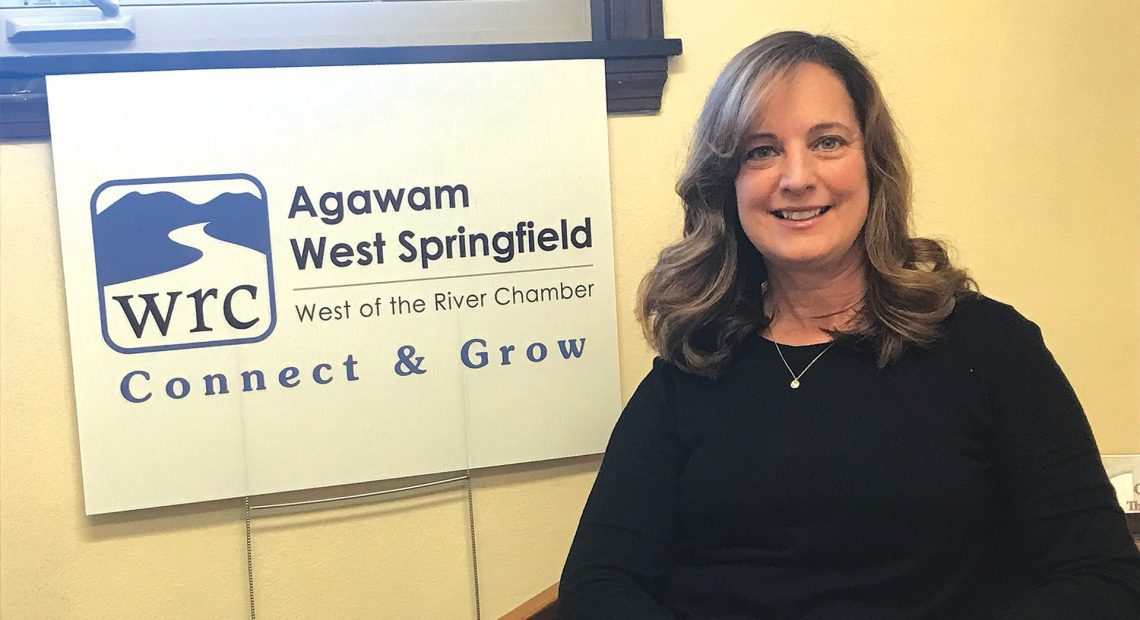
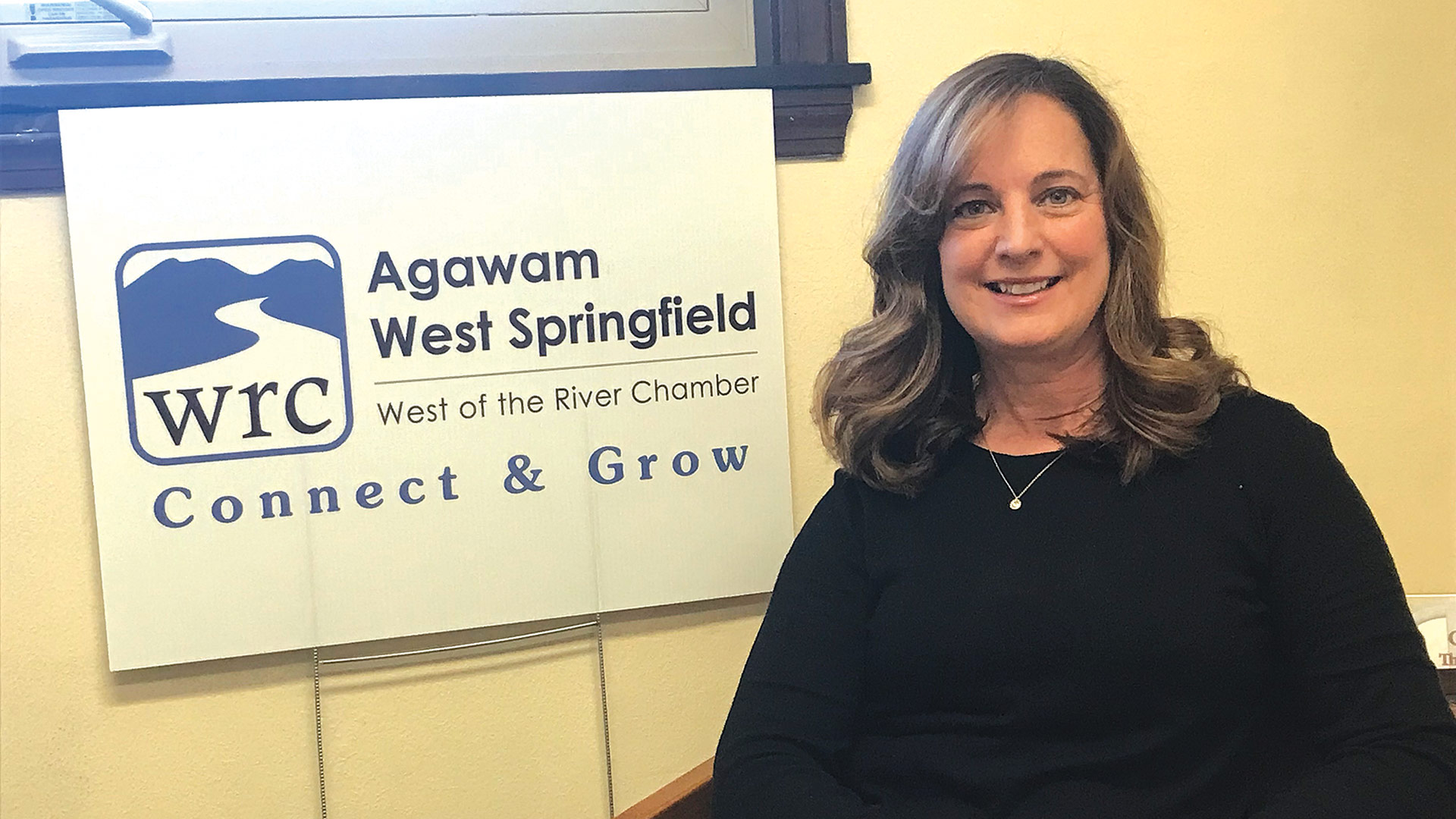
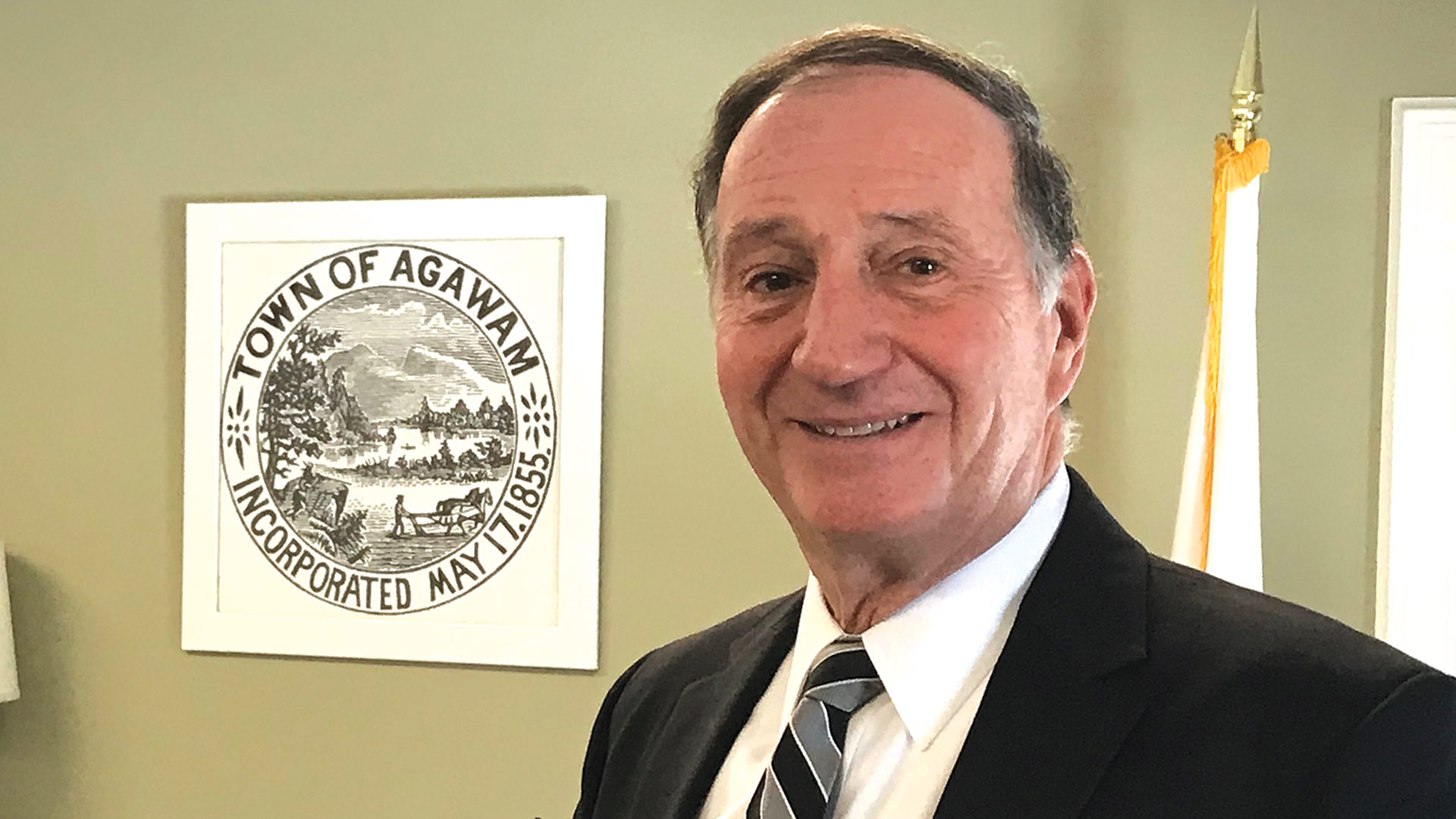
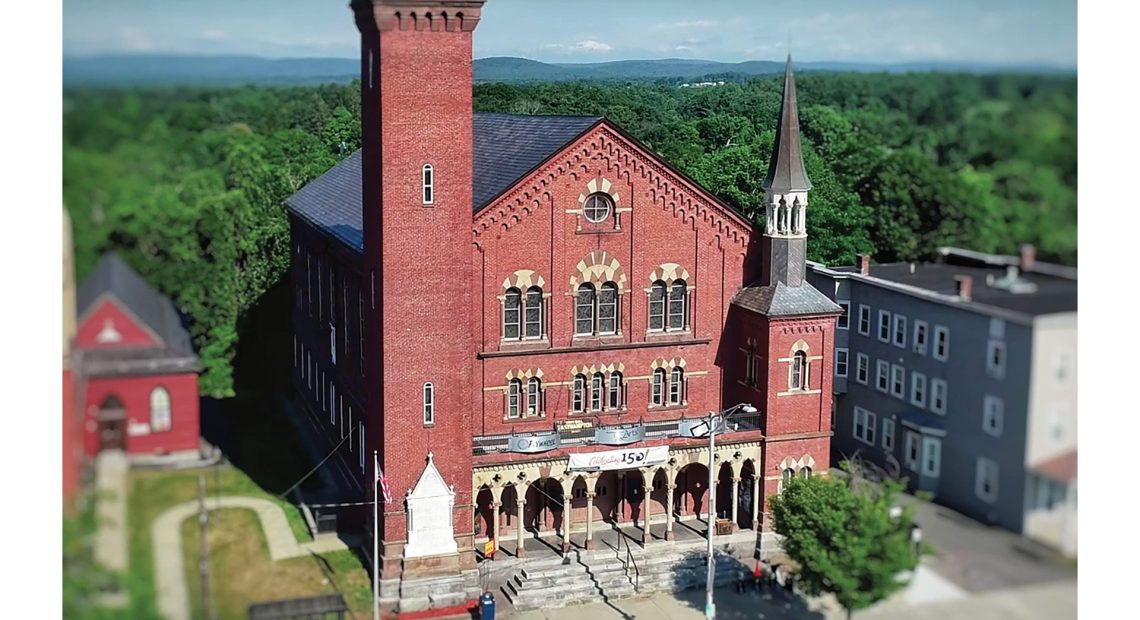
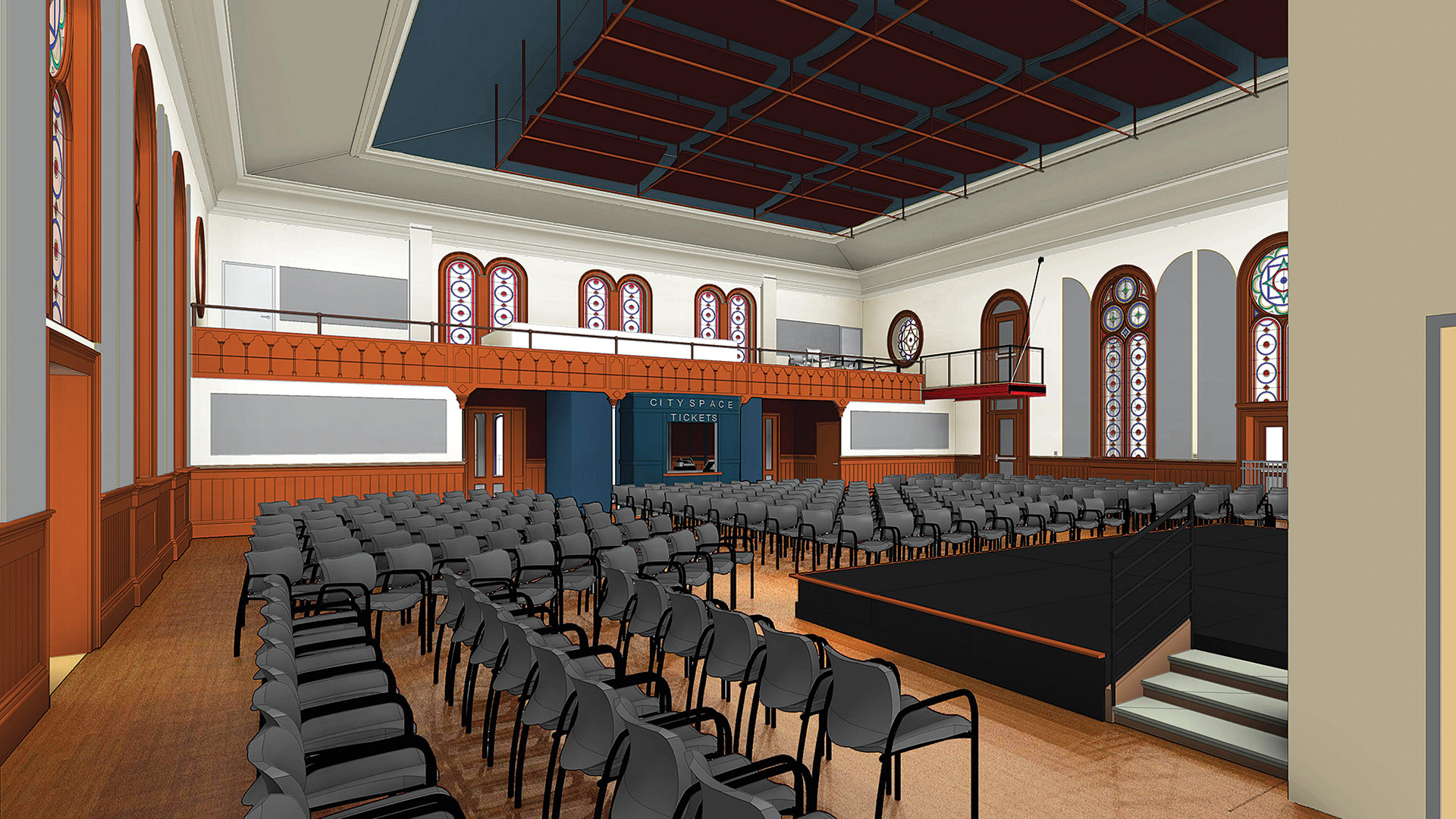
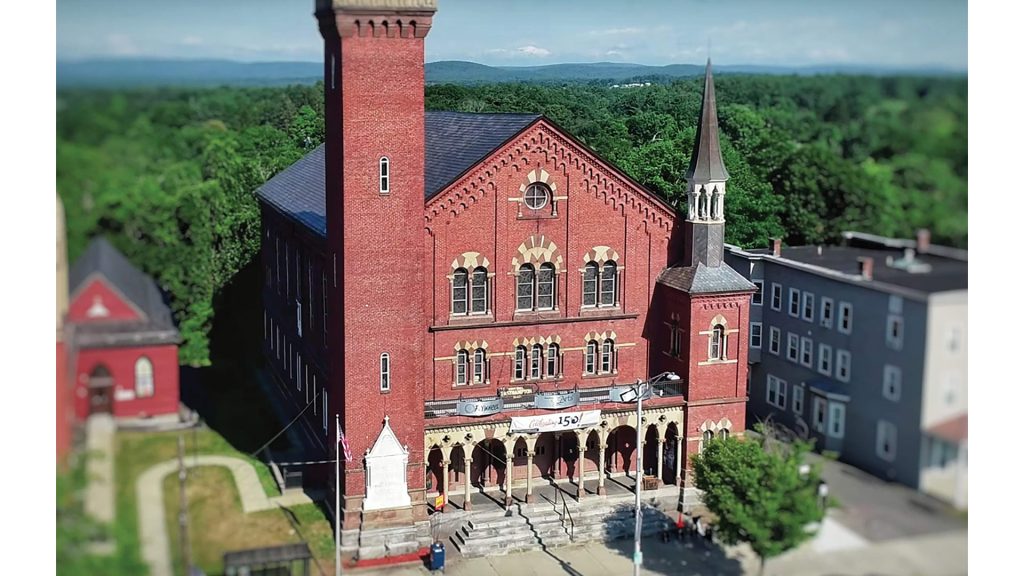



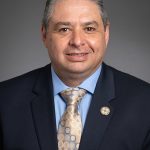




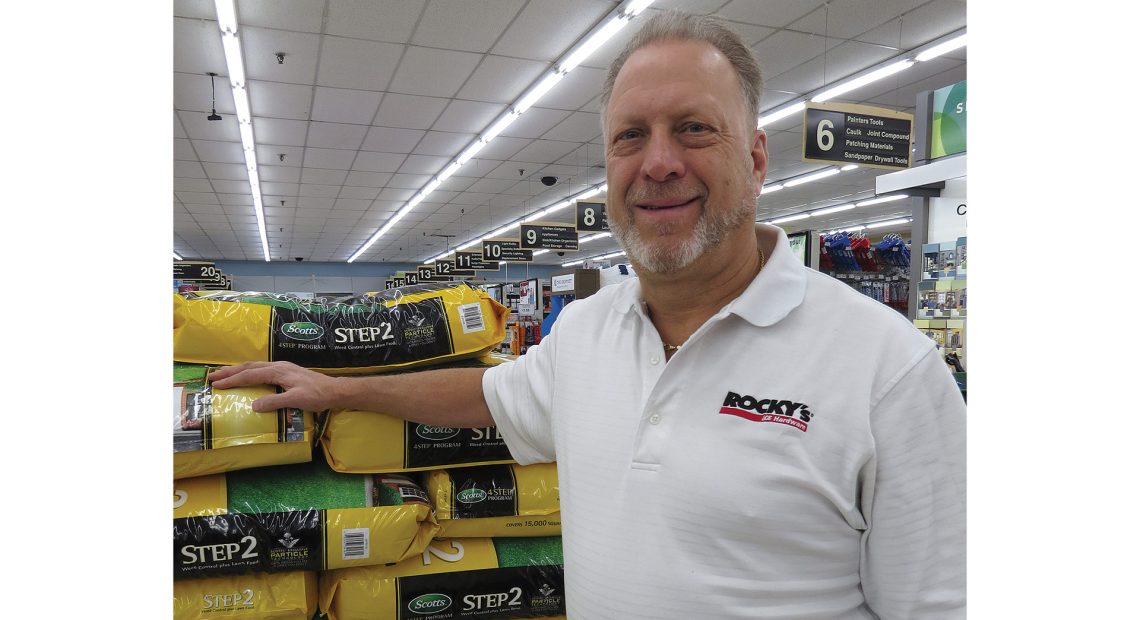
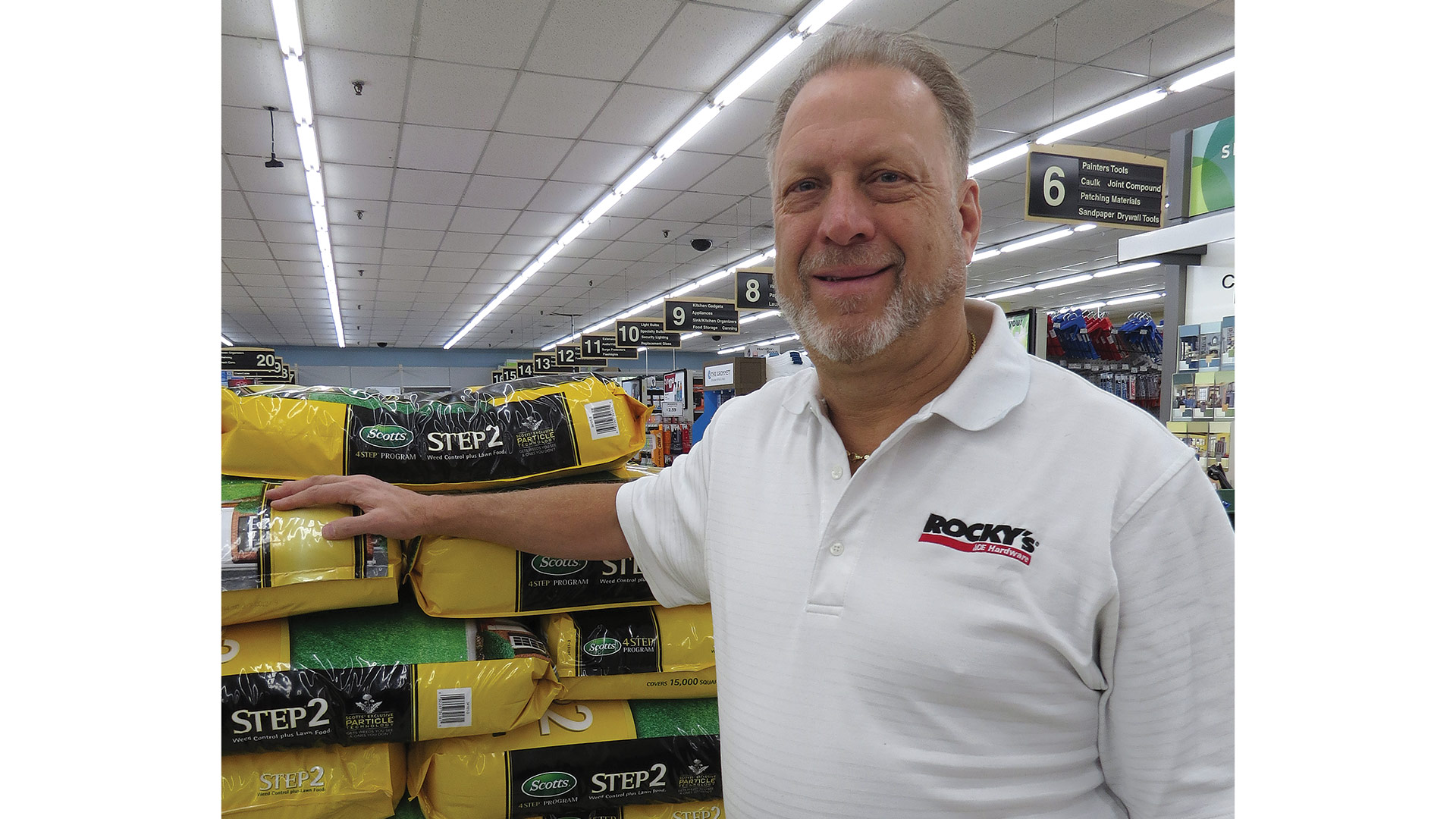
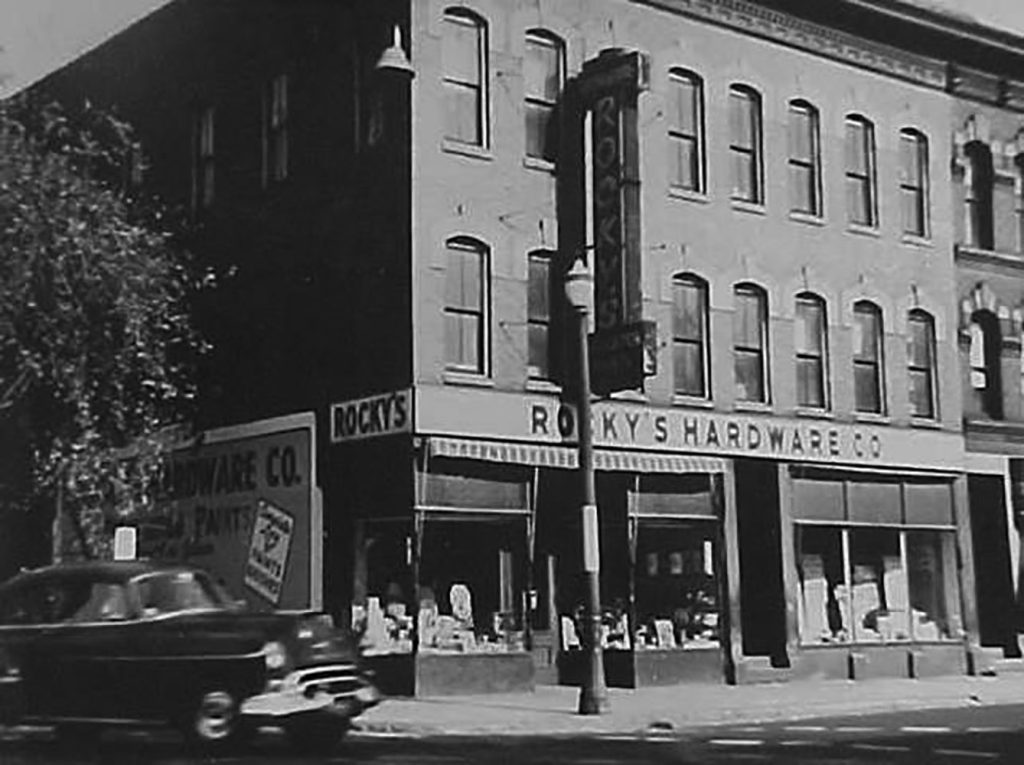
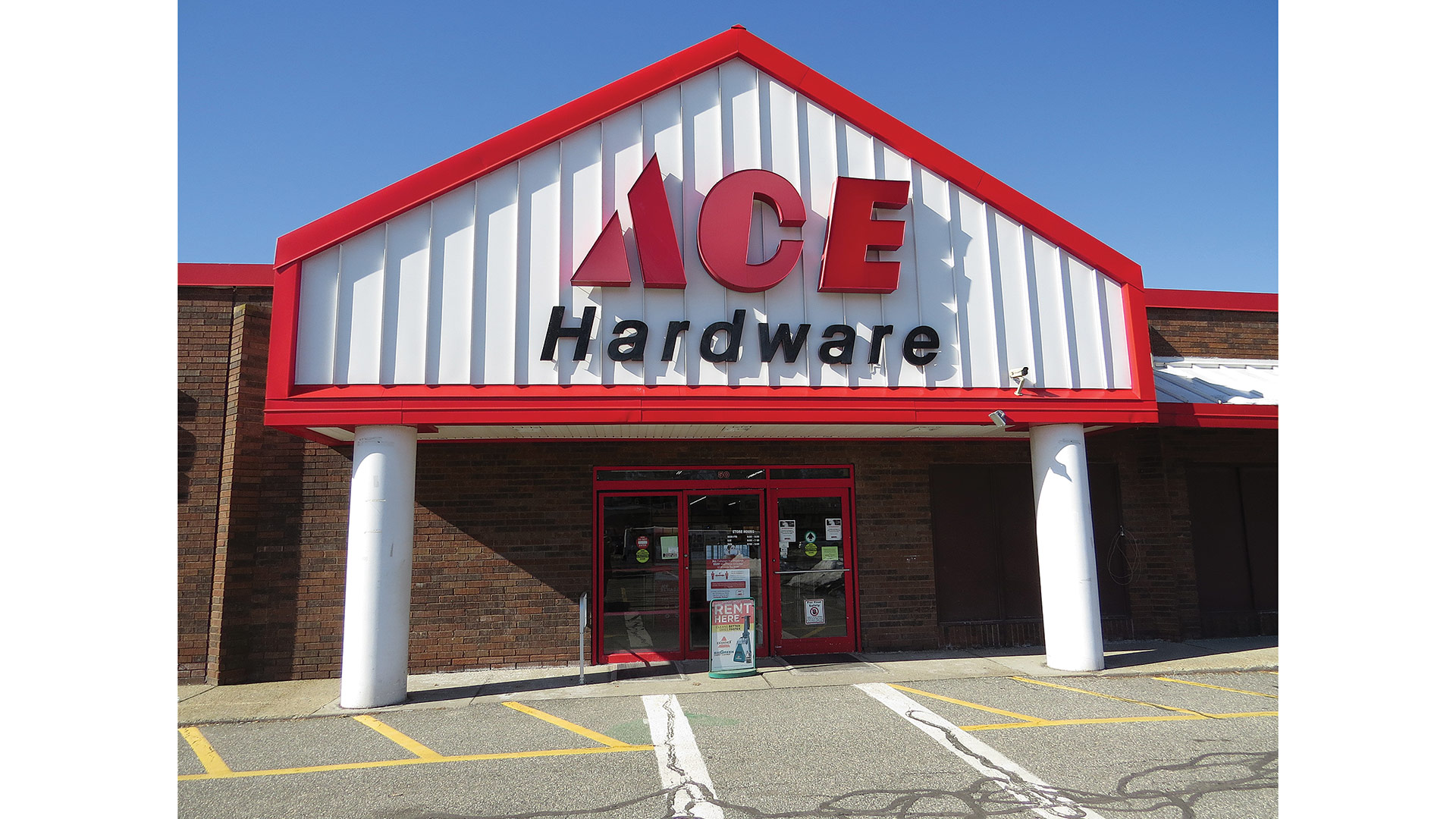
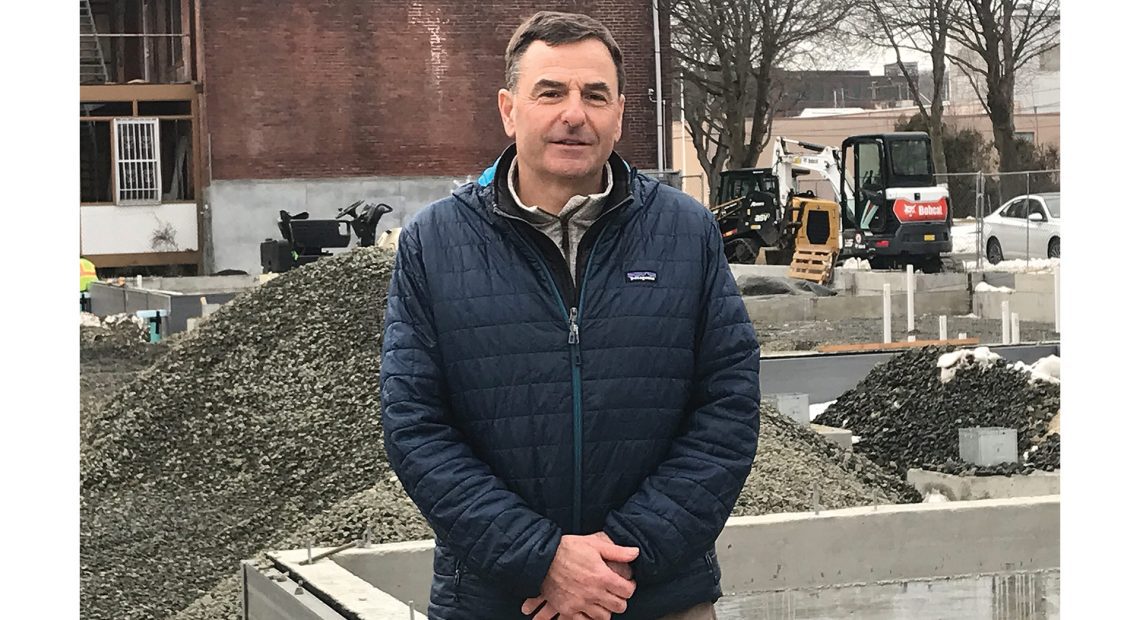
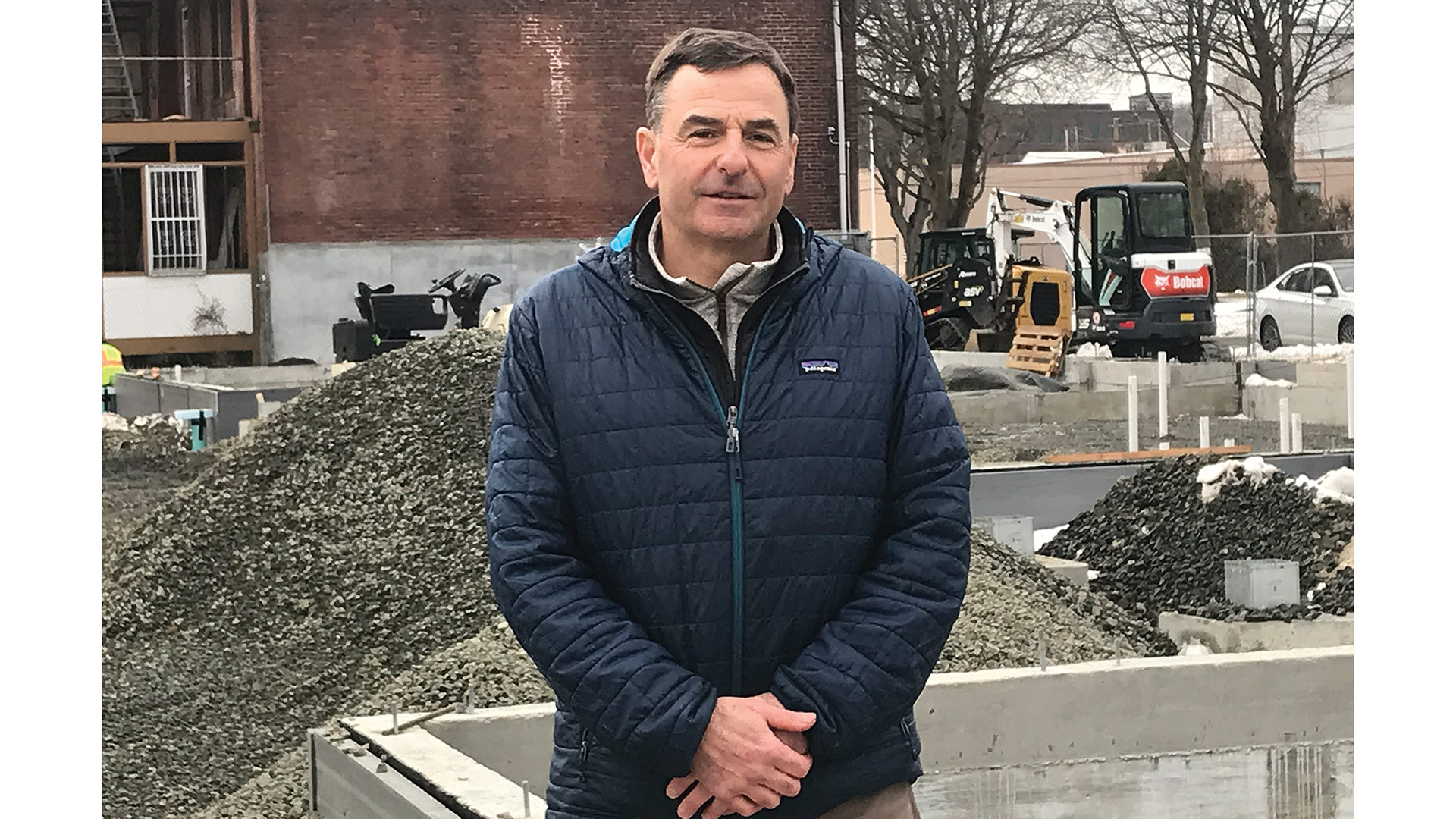





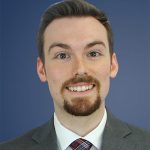

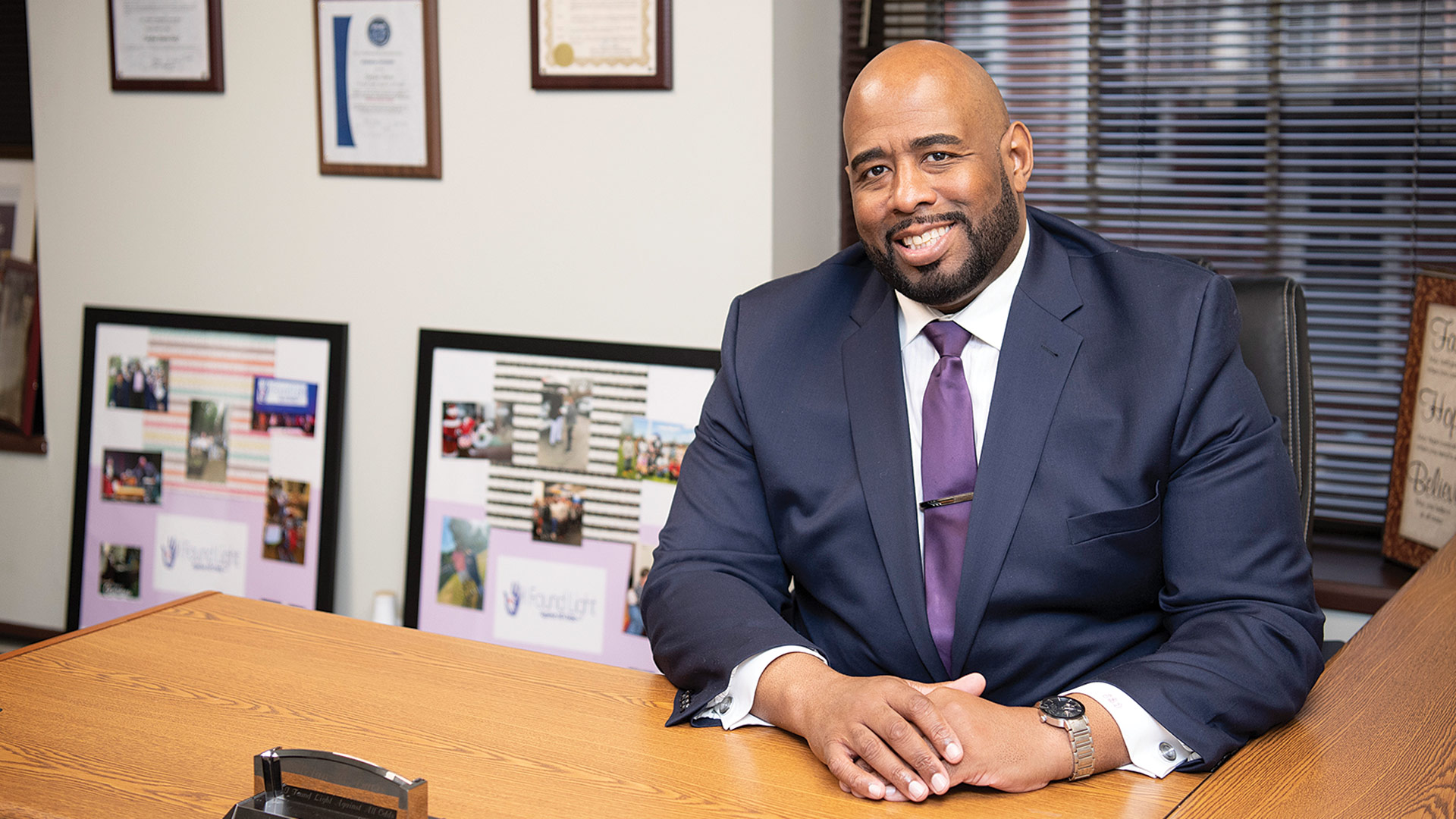
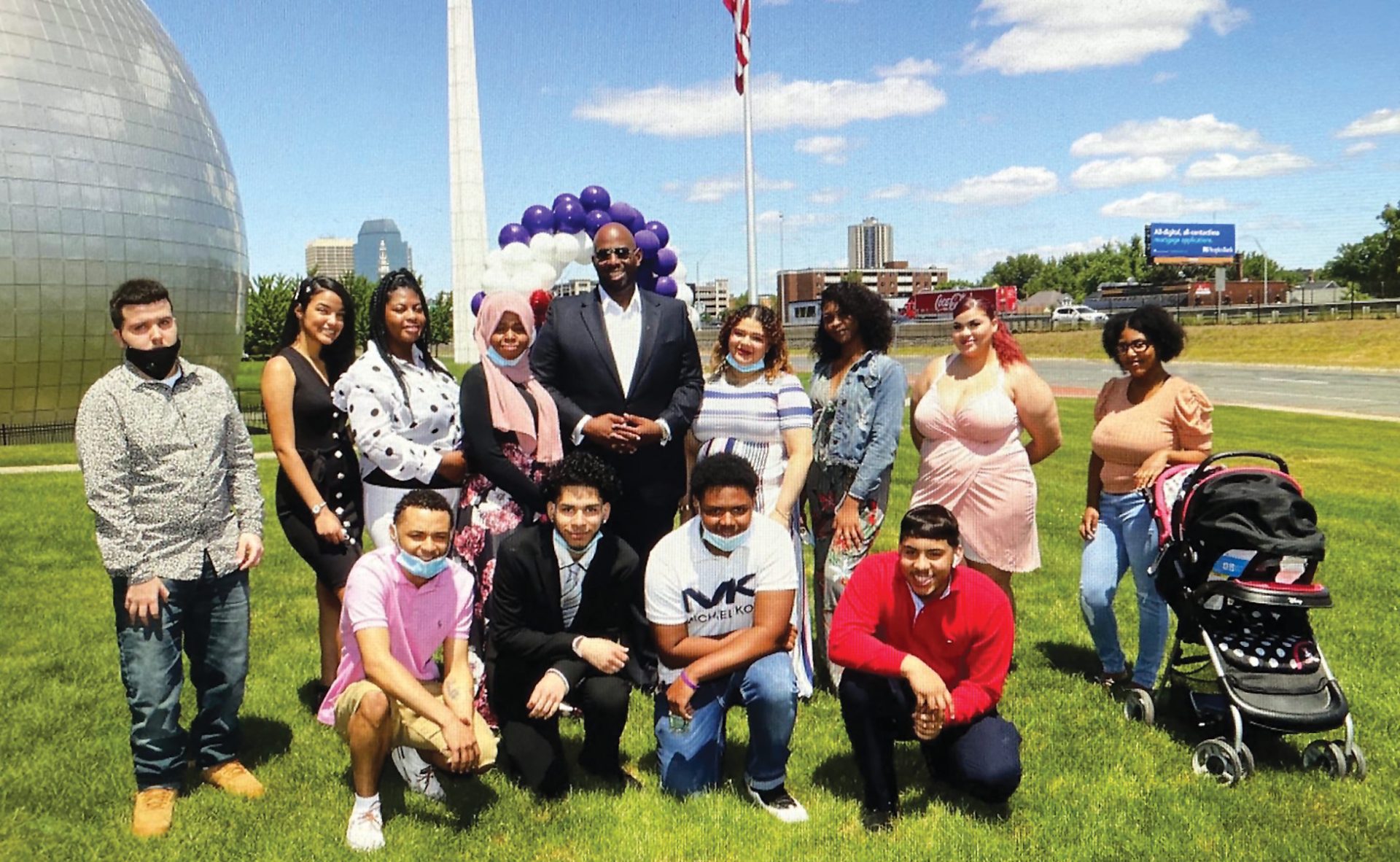
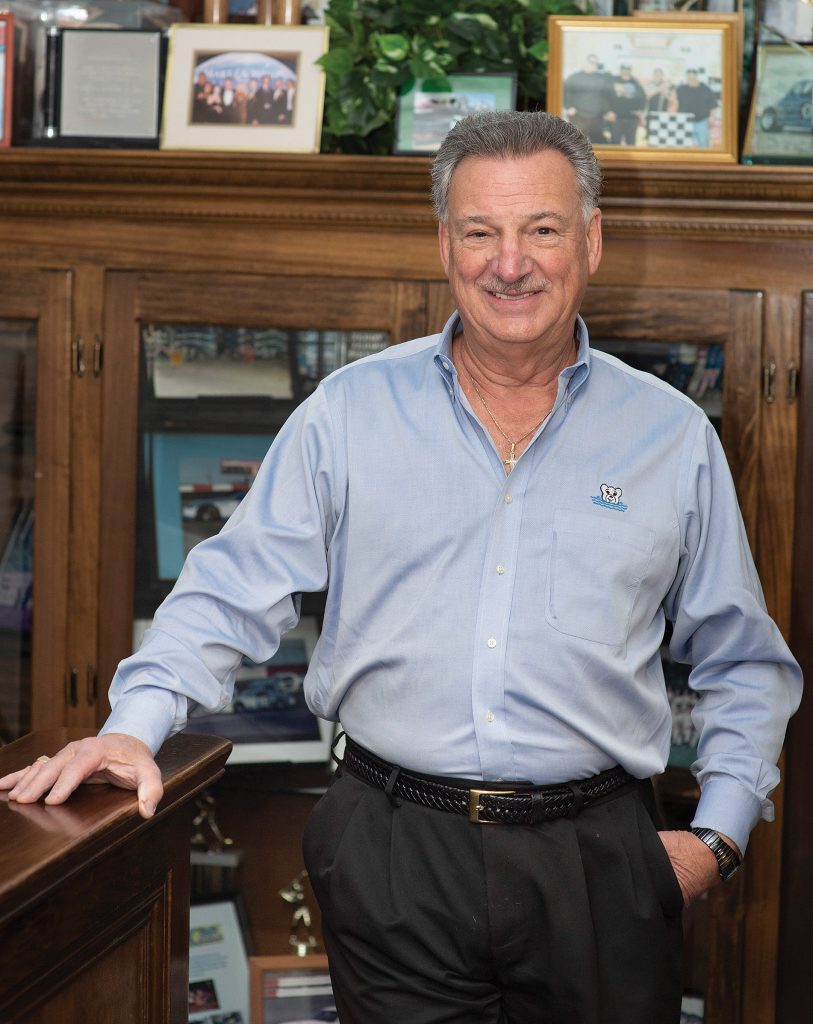
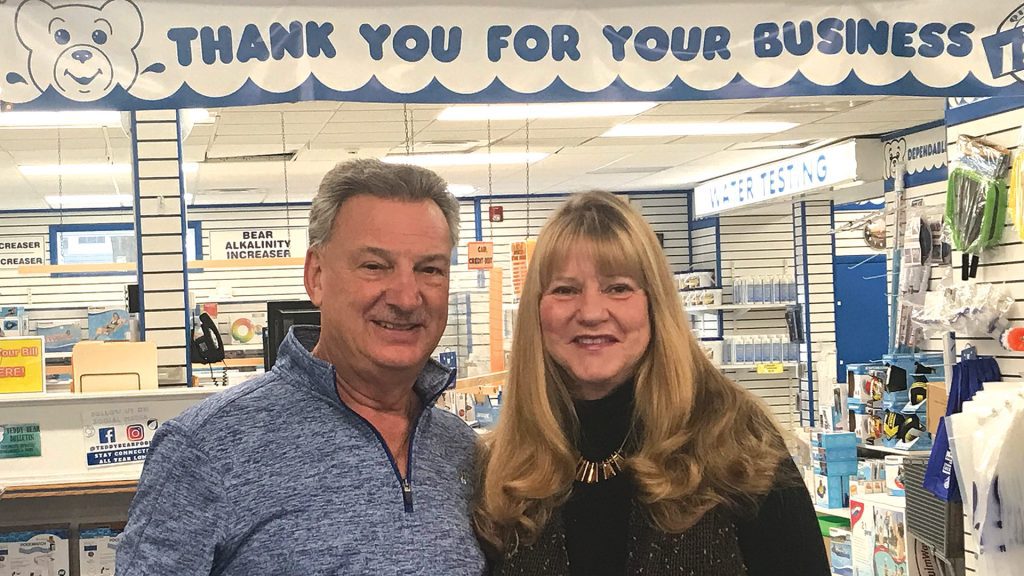
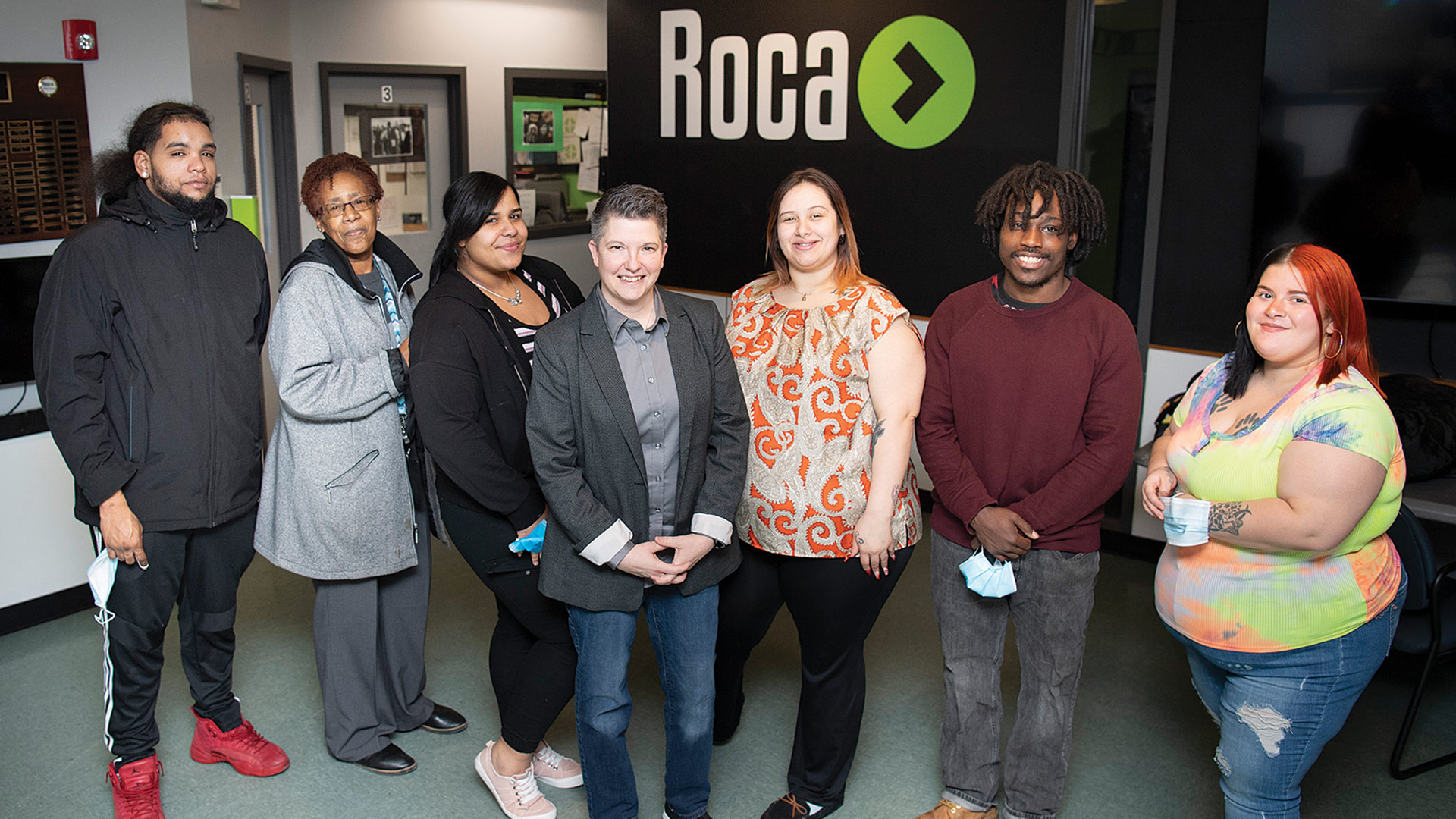


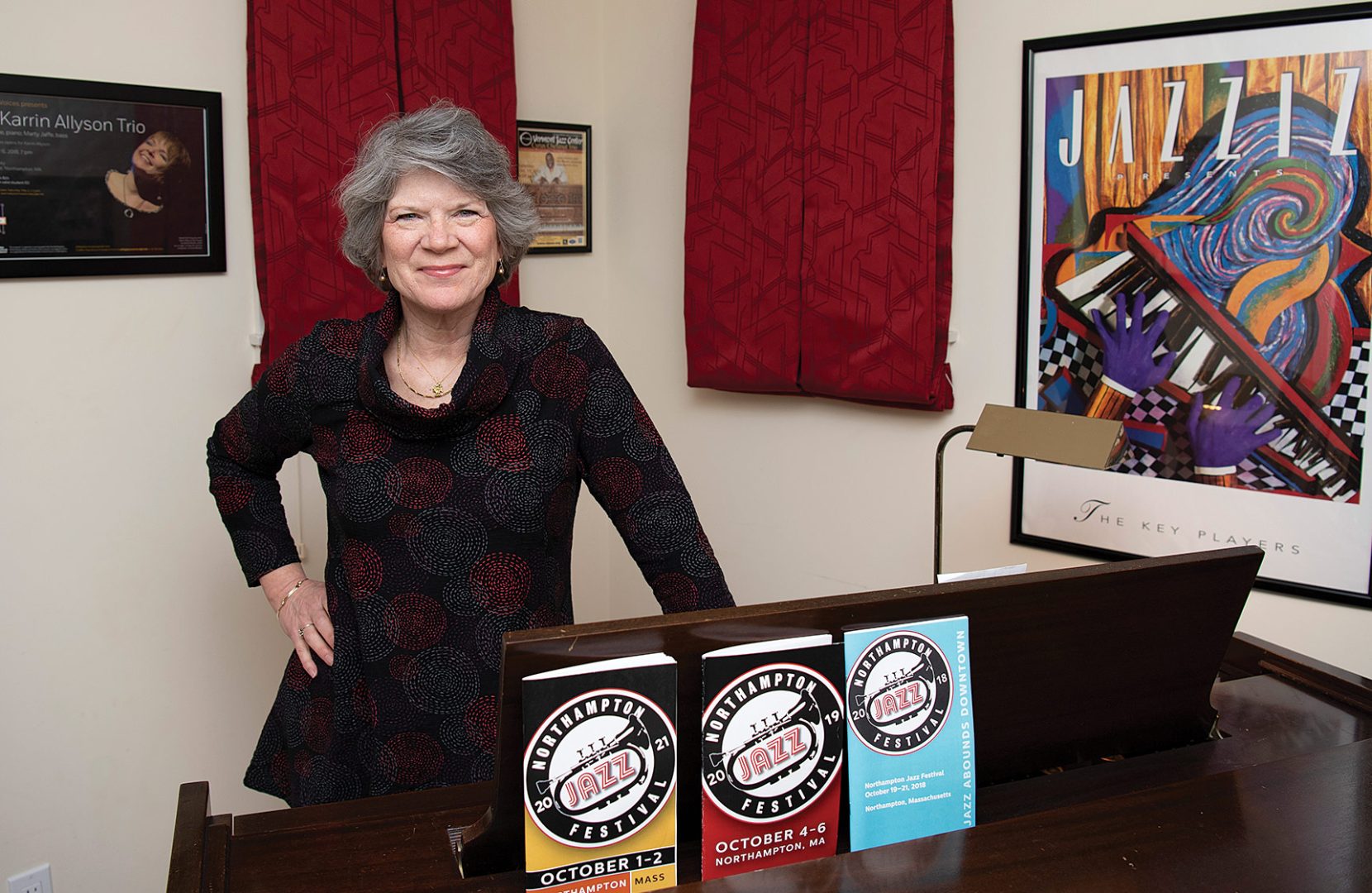


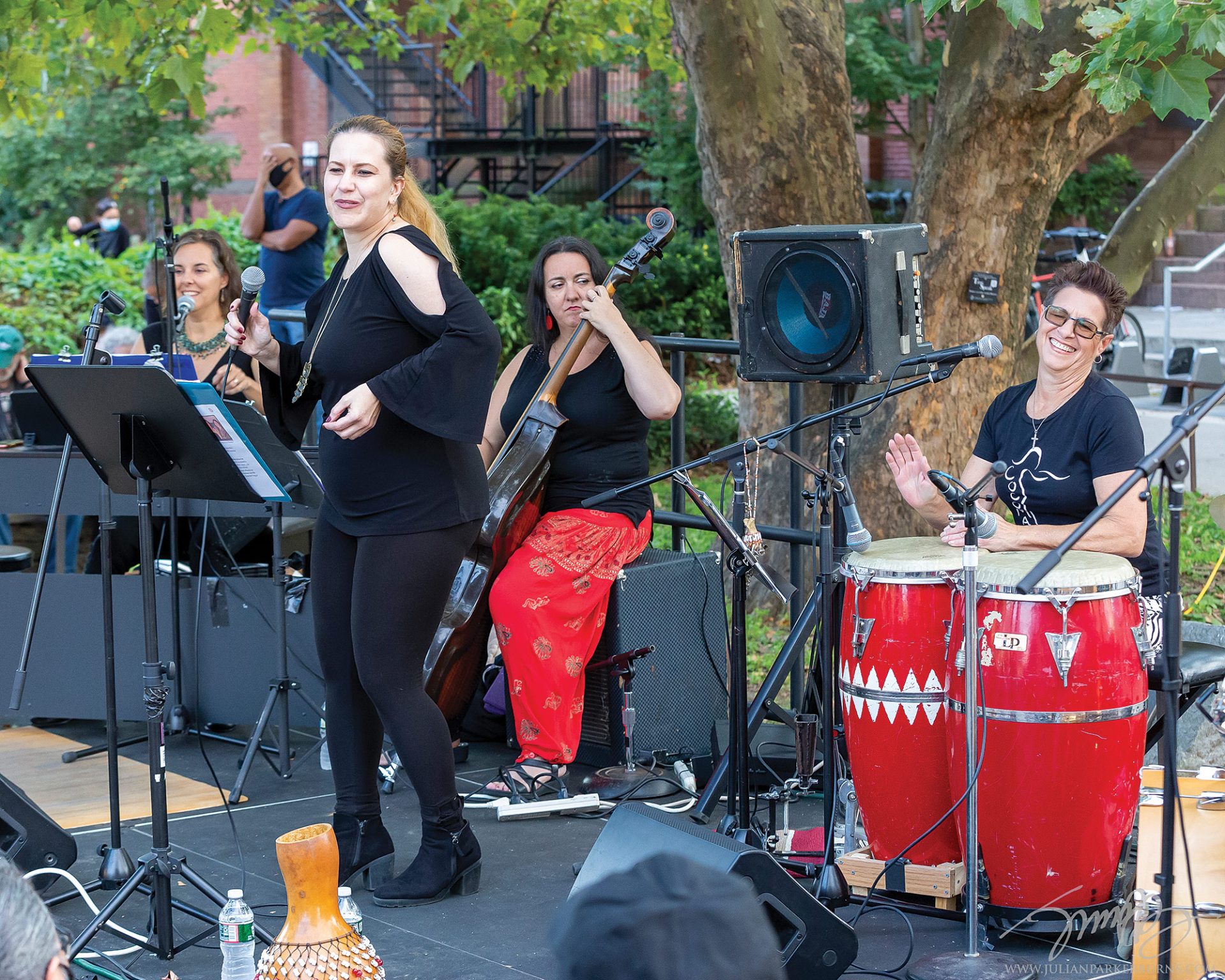
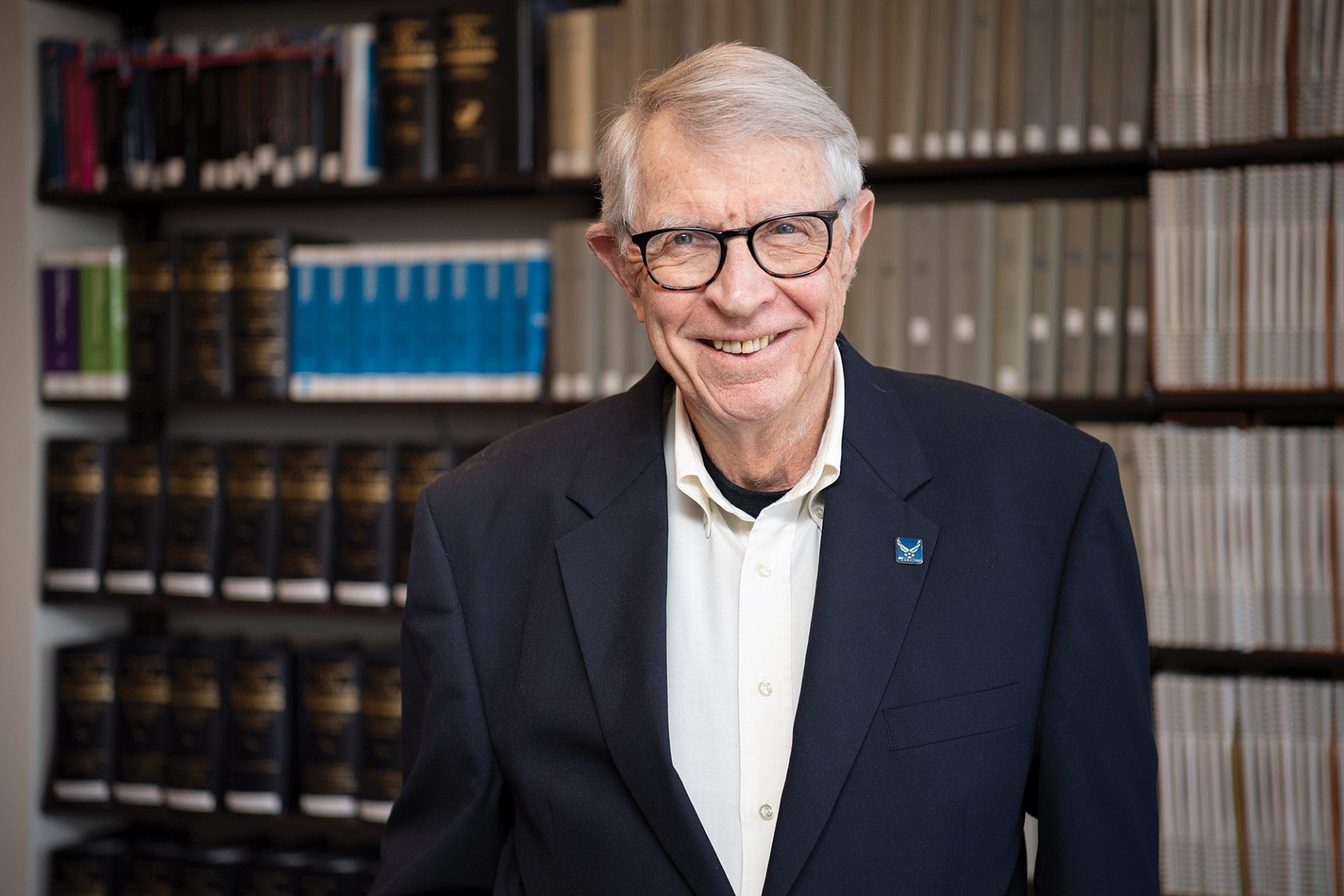
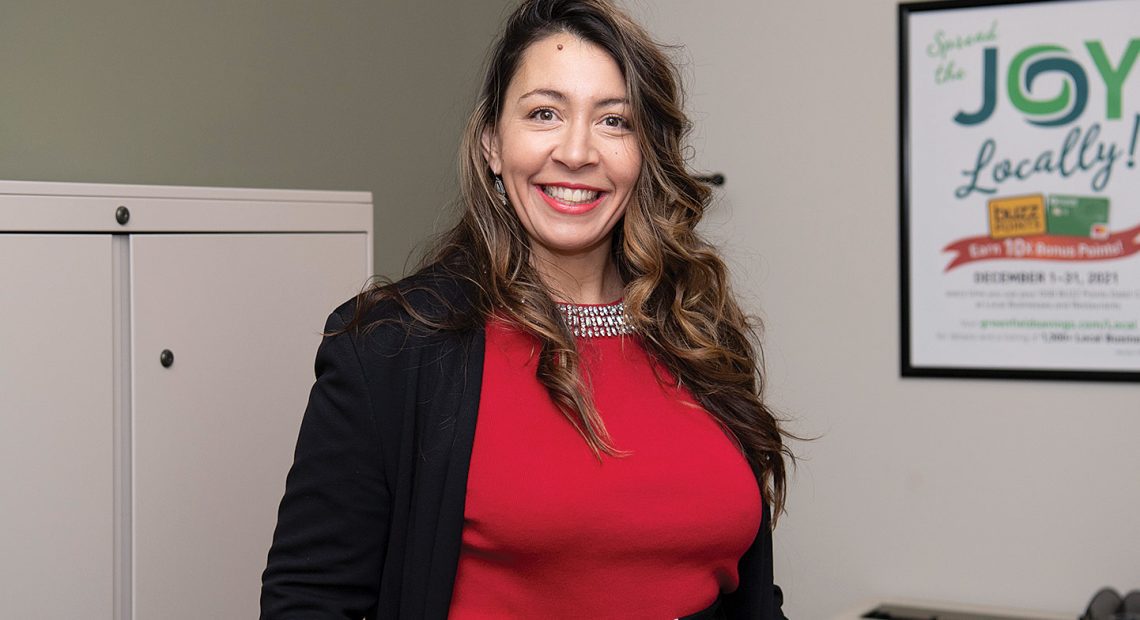
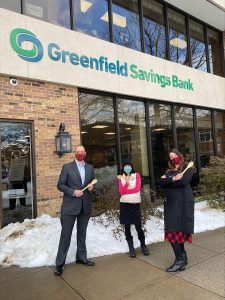

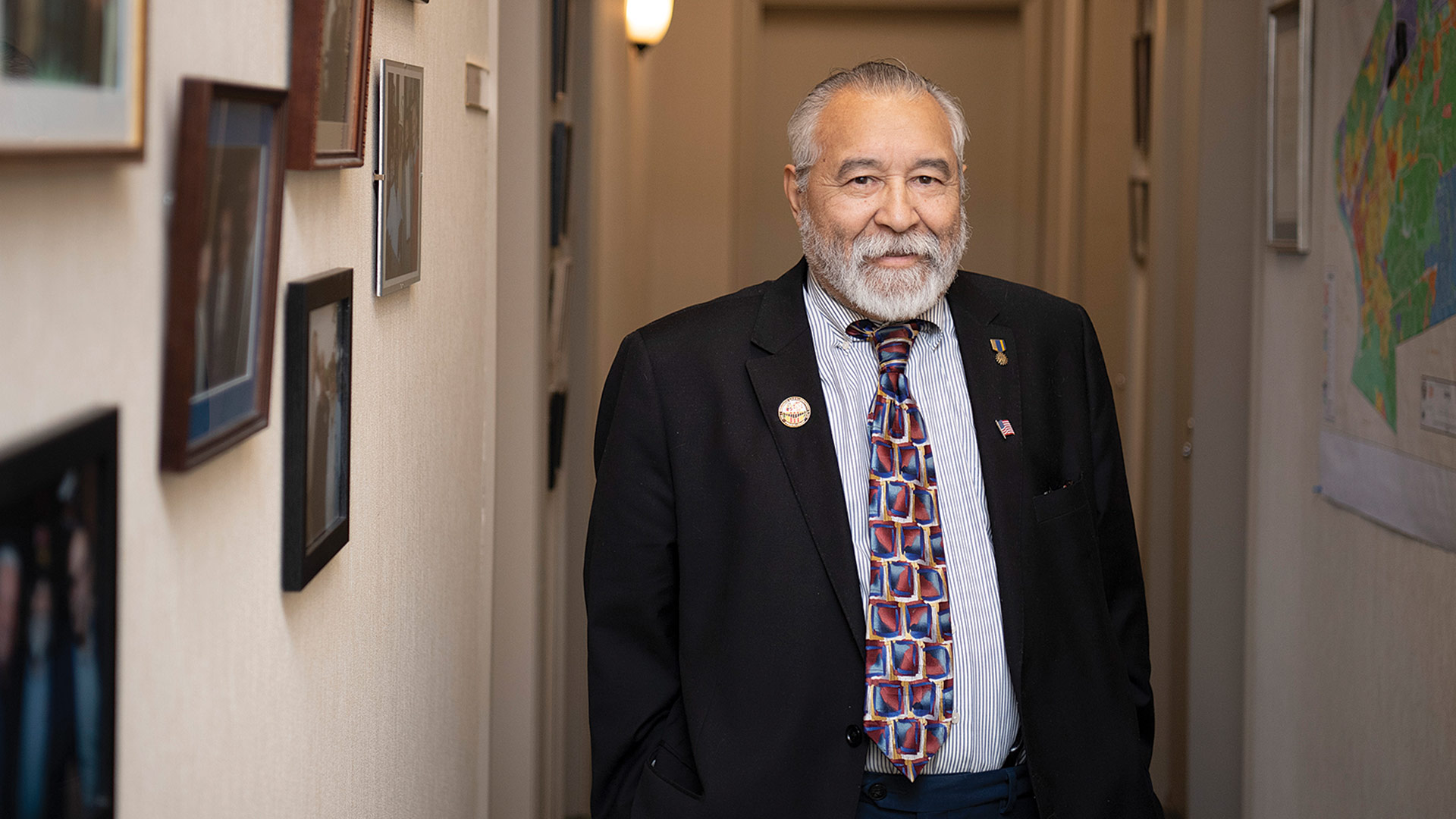
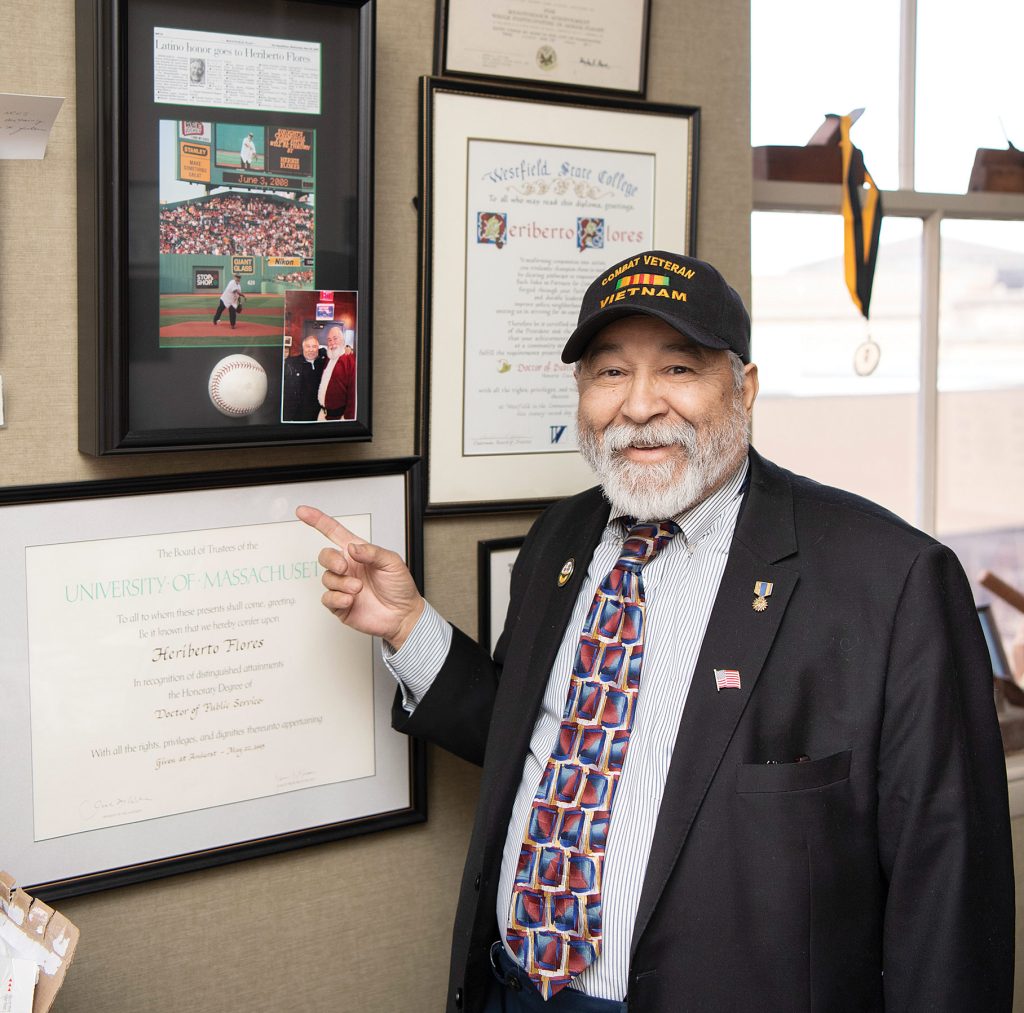
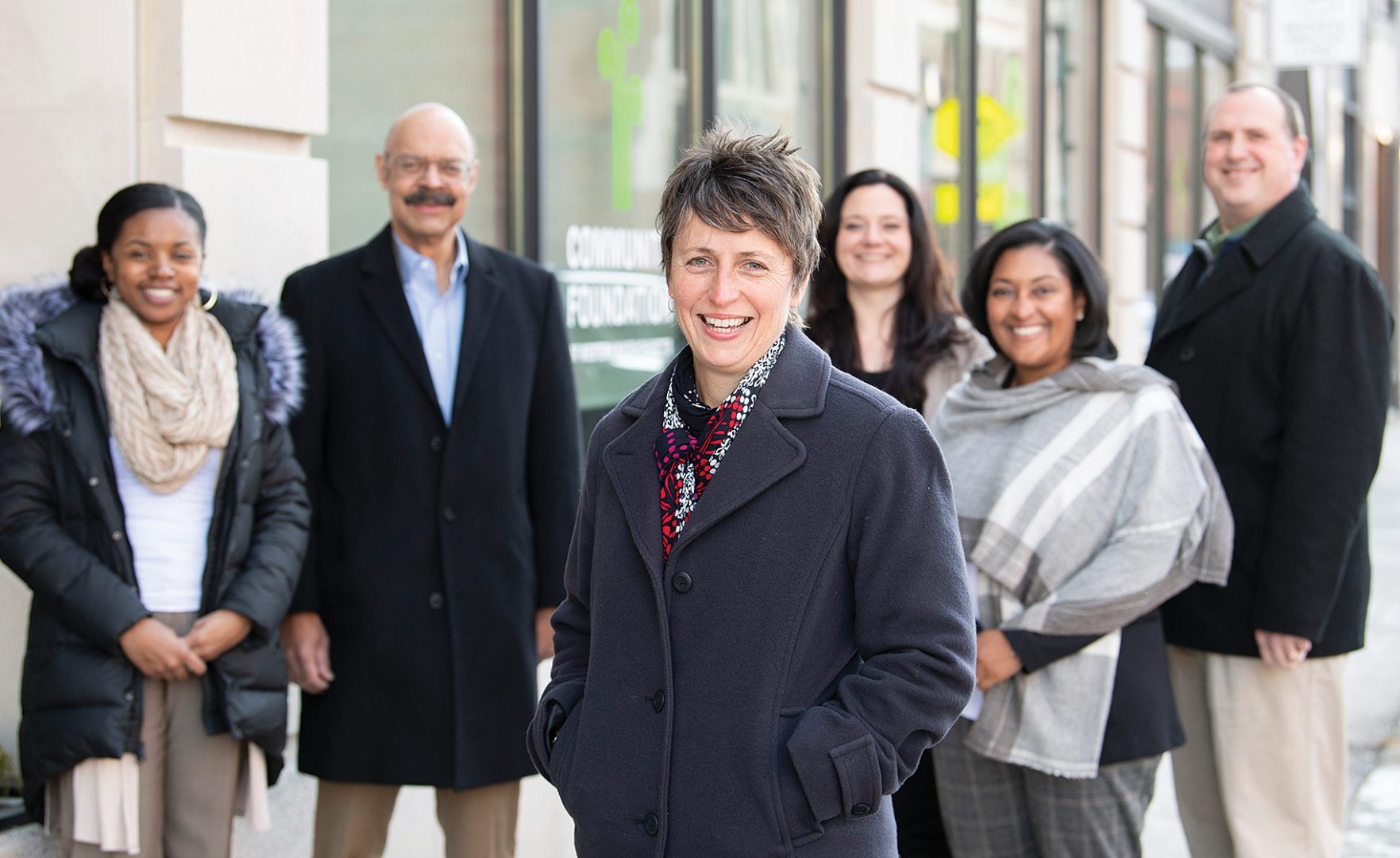

 “The foundation brings together philanthropists and helps them understand what the needs are in our community.”
 “We’re moving away from being transactional and just handing someone a check.”
 “We came to understand that the majority of arts organizations in our region are quite small, they have really small budgets, a fair amount of turnover … and there was, and is, a real need for capacity support.”