Home 2014 (Page 34)
Departments People on the Move

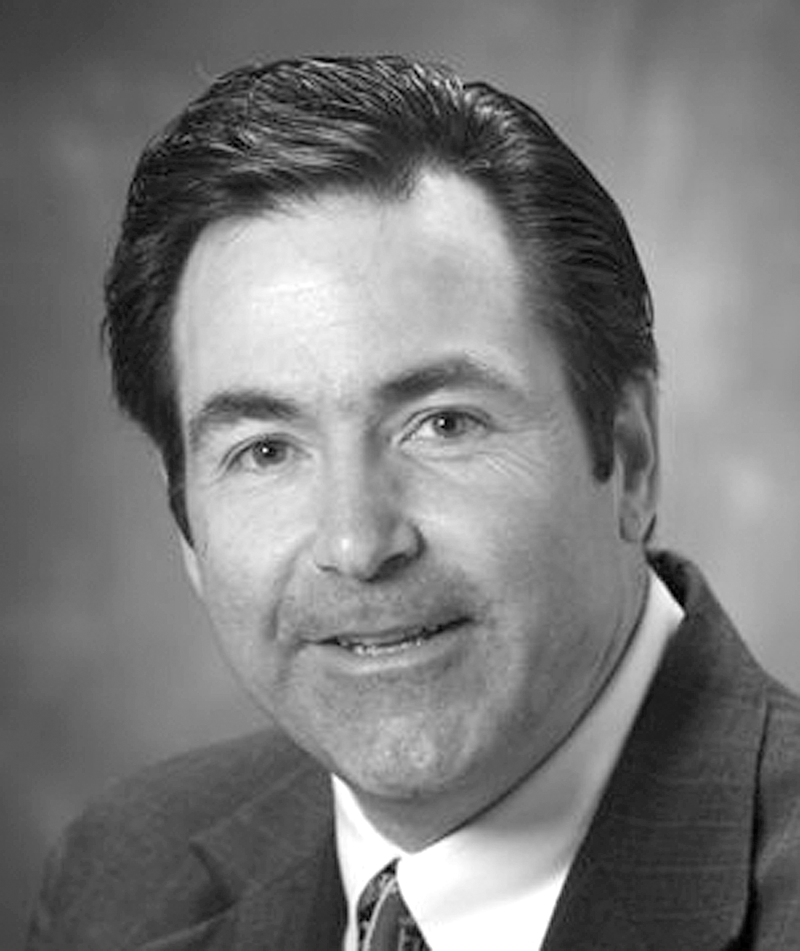
Michaelene Cronin

Michaelene Cronin

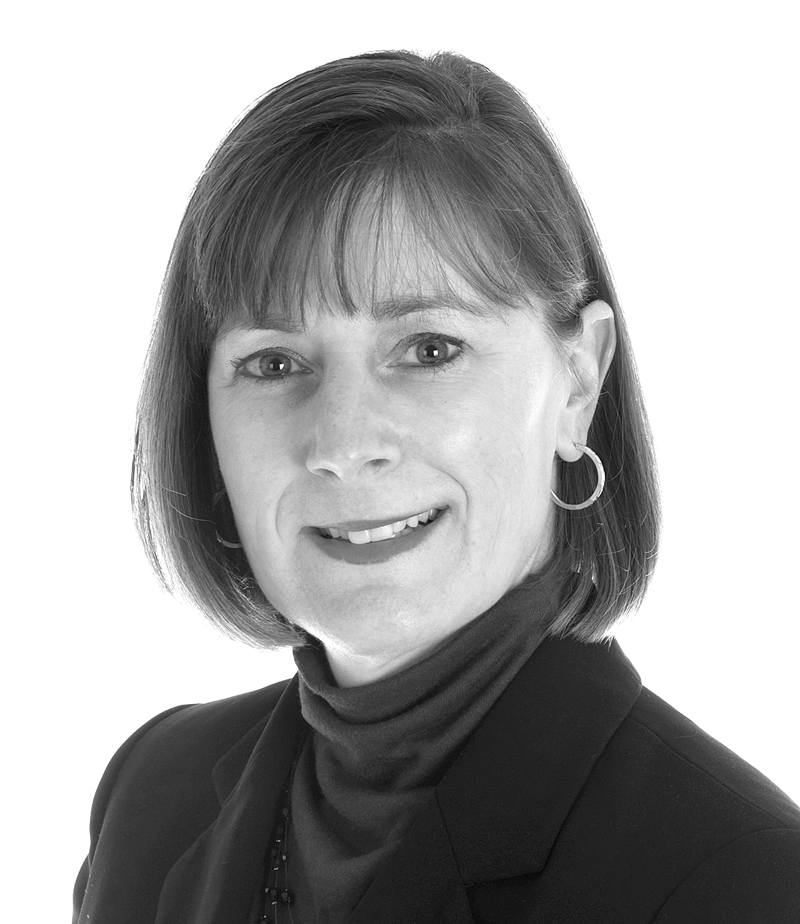
Michaelene Cronin has been named Executive Director of the Curtis Blake Center at American International College. Cronin will play a pivotal role in developing, solidifying, and expanding center services; serve as the liaison between the center and the college; and oversee the Curtis Blake Day School, Tutorial Services, AIC Supportive Learning Services, Diagnostic Services, and a summer instructional clinic. She will be responsible for designing and implementing new initiatives in order to broaden the center’s reach and enhance and strengthen its current programming. Cronin comes to AIC from Goddard College in Plainfield, Vt., where she served as the Associate Academic Dean for Undergraduate Studies. She earned her B.A. in English from the University of Michigan and her J.D. from the University of Detroit School of Law. Cronin has been a member of the National Academic Advising Assoc., the Autism Society of America, and the Aspergers Assoc. of New England.
•••••
Easthampton Savings Bank announced the following promotions and additions:
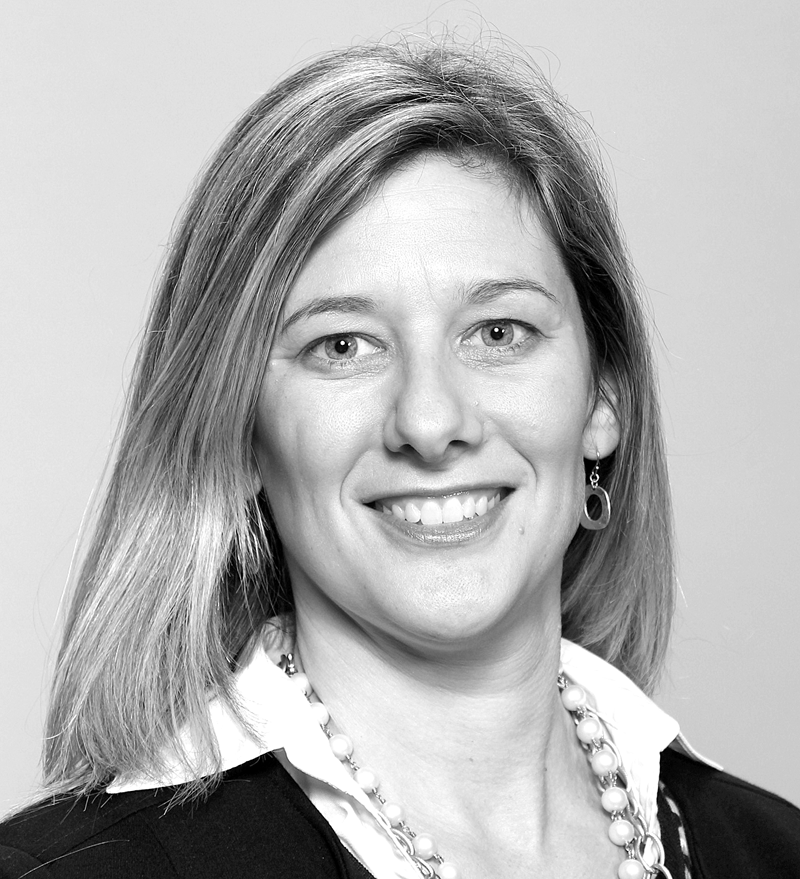
Emily Drapeau

Emily Drapeau

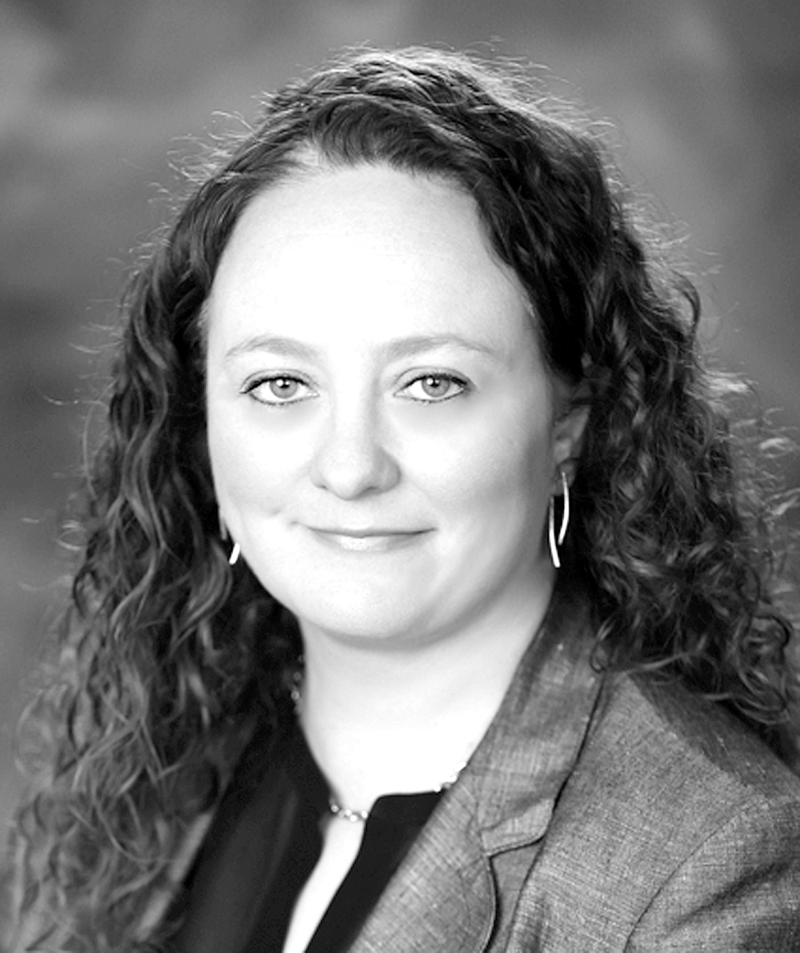
Emily Drapeau has been promoted to Deposit Operations Officer. Drapeau joined the bank as a Teller in 1995 and was promoted to Customer Service Representative in 1997, Senior Teller in 2000, Deposit Operations Specialist in 2001, and Deposit Operations Supervisor in 2004 before being promoted to Deposit Operations Manager in 2011. She graduated from the New England School for Financial Studies in June 2012;


Stacey Laliberte

Stacey Laliberte

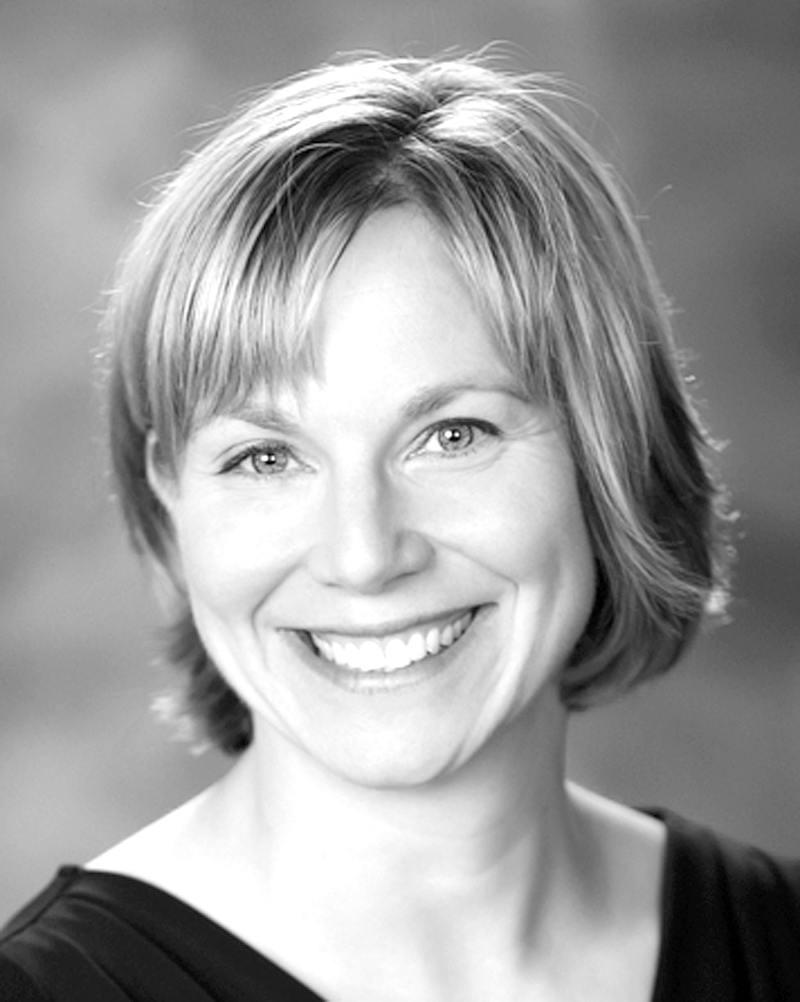
Stacey Laliberte has been promoted to Project Management Officer. Laliberte joined the bank as a Teller in 2001 and held the positions of Customer Service Assistant, Deposit Operations Assistant, Teller CSR, and Project Coordinator before being promoted to Project Manager in April 2011. She graduated with an associate’s degree from Holyoke Community College and with honors from the New England School for Financial Studies in June 2012;


Michael Fitzgerald

Michael Fitzgerald

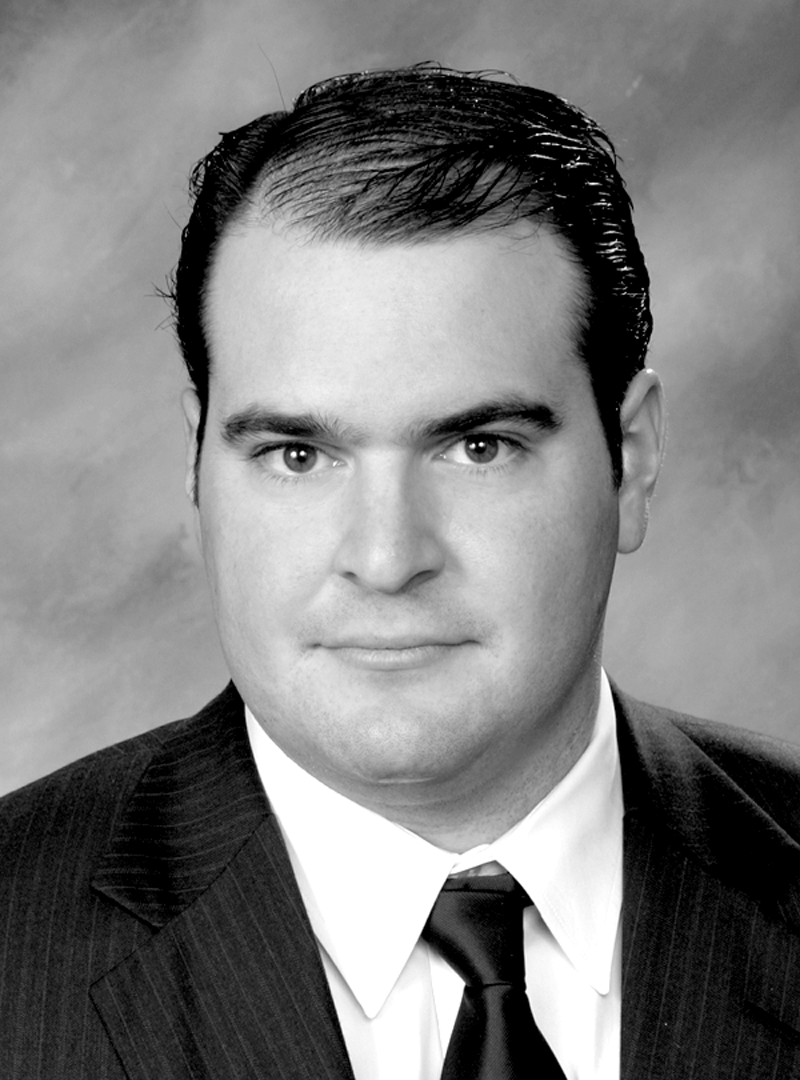
Michael Fitzgerald has been promoted to IT Officer. Fitzgerald started with the bank in 2004 as a Systems Administrator and was promoted to IT Manager in November 2011. He graduated from the Graduate School of Banking’s Bank Technology Management School in April 2013; and


Jeffrey Hutchins

Jeffrey Hutchins

Jeffrey Hutchins, who boasts more than 25 years of local banking and real-estate experience, has been hired as a mortgage originator. Hutchins opened Hutchins Realty in 1991, which later merged with Jones Town & Country to form Jones Group Realtors. Hutchins graduated from Babson College with a degree in Business Marketing. He also completed a Center for Financial Training Mortgage Training class. Hutchins is a member of the Realtor Assoc. of Pioneer Valley and Nationwide Mortgage Licensing System.
•••••


MassMutual’s Retirement Services Division recently announced the following additions to its sales and client management organization:
Jason Bouldin, based in Atlanta, joined MassMutual as Managing Director covering Alabama and Georgia. Bouldin brings more than 15 years of industry experience to the company and previously served with Great-West Financial and the Hartford;
John Cunningham

John Cunningham

John Cunningham, an 18-year veteran of MassMutual, has been appointed Regional Sales Director covering Western Mass., Vermont, and Eastern Upstate New York. Cunningham previously served the past nine years as Regional Sales Director focused on strengthening career agency sales across the Northeast;


Lauren Drapeau

Lauren Drapeau

Lauren Drapeau rejoined MassMutual as Regional Sales Director covering Connecticut (excluding Fairfield County). Drapeau has more than 13 years of industry experience and previously served as an Annuity Wholesaler with MassMutual before her most recent role with MetLife;


Jon Ogren

Jon Ogren

Jon Ogren has been named Regional Sales Director covering Kansas, Nebraska, and Western Missouri. Based in Overland Park, Kan., Ogren has more than 15 years of experience in the retirement-services industry, previously serveing with the Standard and Northwestern Mutual; and


Mary Kay Zoulek

Mary Kay Zoulek

Mary Kay Zoulek joined MassMutual as Regional Sales Director for Western Michigan. Based in Grand Rapids, Mich., Zoulek brings more than 12 years of industry experience to her new role, all of which was built serving advisors across Western Michigan. Before joining MassMutual, Zoulek served with John Hancock and Principal Financial Group.
•••••


Janice Mazzallo

Janice Mazzallo

PeoplesBank has announced the promotion of Janice Mazzallo to Executive Vice President and Chief Human Resources Officer. Mazzallo previously served the bank as Senior Vice President of Human Resources, and has more than 30 years of human-capital-management experience, including serving as Second Vice President, Human Resources, at the Phoenix Companies in Hartford. Since joining PeoplesBank in 2005, she has partnered with management to drive change and develop strategies that achieve strong business results. She planned and directed the bank’s three-year strategic-planning process, developed human-resource programs that support a high-performance culture, and implemented a best-in-class Leadership Development Program that benchmarked Ritz Carlton Business Practices, as well as a Management Development Program. During Mazzallo’s tenure, PeoplesBank has been named a Top Place to Work by the Boston Globe on two occasions and was selected as an Employer of Choice by the Massachusetts Chamber of Commerce.
•••••
Dmitriy Mayboroda

Dmitriy Mayboroda

Dmitriy Mayboroda recently joined the Pioneer Valley Planning Commission as a Transportation Planner. Mayboroda holds a bachelor’s degree in Civil and Environmental Engineering from UMass Amherst. Previously, he was a transportation intern at PVPC, working on traffic-data collection and various projects for the Pioneer Valley Transit Authority. Mayboroda will focus on assisting transportation staff with a variety of transportation-related congestion and safety-improvement projects.
•••••


Marc Richards

Marc Richards

Marc Richards has rejoined Tighe & Bond Inc. as the engineering firm’s newly appointed Vice President of Environmental Services. A Licensed Site Professional (LSP), Richards has more than 20 years of brownfields redevelopment, environmental assessment and cleanup, hazardous-building materials abatement and demolition design, and construction management experience. He offers both public- and private-sector clients tailored expertise and solutions for complex environmental challenges. Besides LSP and Massachusetts Contingency Plan (MCP) services, Richards’ expertise includes oversight of environmental permitting, as well as above- and below-ground site cleanup, throughout the Northeast. His portfolio includes a wide variety of land-development projects where he has worked with stakeholders to advance improvements while protecting the environment and its natural resources. Richards earned his MS in environmental engineering from Tufts University and his BS in civil engineering from UMass Amherst. Richards is a licensed professional engineer in Massachusetts and New Hampshire and is active in the American Society of Civil Engineers, the Licensed Site Professional Assoc., the Environmental Business Council, the National Assoc. for Industrial and Office Parks, and the National Demolition Assoc. Richards will work primarily out of Tighe & Bond’s Worcester office, but his involvement will be region-wide.

Chamber Corners Departments

AFFILIATED CHAMBERS OF COMMERCE OF GREATER SPRINGFIELD
www.myonlinechamber.com
(413) 787-1555
• Feb. 24: ACCGS Outlook 2014, 11:30 a.m. to 1:30 p.m., at the MassMutual Center, 1277 Main St., Springfield. The annual event will feature Ed Henry, chief White House correspondent for Fox News. Reservations are $50 for members, $70 for general admission. Deadline for reservations is Feb. 17. Presented by Health New England and sponsored by Eastern States Exposition, MassMutual Financial Group, PeoplesBank, United Personnel, and Western Massachusetts Electric Co. Reservations may be made online at www.myonlinechamber.com or by contacting Cecile Larose at [email protected].
• March 5: ACCGS Business@Breakfast, 7:15-9 a.m., at La Quinta Inns and Suites, 100 Congress St., Springfield. The breakfast will feature the program The Economic Engine Called Tourism — a panel discussion with some of our region’s top contributors: Gene Cassidy, Eastern States Exposition, and Judy Matt, Spirit of Springfield. Reservations are $20 for members, $30 for general admission.  Reservations may be made online at www.myonlinechamber.com or by contacting Cecile Larose at [email protected].
• March 12: ACCGS After 5, 5-7 p.m., at Crestview Country Club, 281 Shoemaker Lane, Agawam. “Get in the Swing of Things!” is the event’s theme. Reservations are $5 for members, $10 for general admission. Reservations may be made online at www.myonlinechamber.com or by contacting Cecile Larose at [email protected].
• March 25: ACCGS Pastries, Politics and Policy, 8-9 a.m., at the TD Bank Conference Center, 1441 Main St., Springfield. This event is designed for the political and policy junkie, featuring a policy expert and member of the Patrick administration. Reservations are $15 for members, $25 for general admission. Reservations may be made online at www.myonlinechamber.com or by contacting Cecile Larose at [email protected].

AMHERST AREA CHAMBER OF COMMERCE
www.amherstarea.com
(413) 253-0700

• Feb. 26: Chamber After 5, 5-7 p.m., at Cowls Building Supply, 125 Sunderland Road, Amherst. Tickets are $10 for members, $15 for non-members.
• March 19: Amherst Area Chamber of Commerce Brown Bag Lunch, noon to 1:30 p.m. at the Jones Library (Woodbury Room). Nationally renowned green architect Mary Kraus will give a presentation called “Net Zero: At Home with No Energy Bills.” Learn how to reduce your home’s energy usage so that all of the building’s energy needs — heat, hot water, ventilation, lighting, and appliances — can be served by a solar array on the roof. Outlining a practical, step-by-step approach to reaching net zero — a building which produces as much energy as it consumes over the course of the year — she will also show how this is a compelling opportunity with a strong return on investment. She will share many images illustrating examples from her practice, including both renovations and new homes. This lively presentation will be followed by a question-and-answer session. Admission is free and open to the public
• March 27: Taste a variety of margaritas and vote for your favorites, 5:30-7:30 p.m., at the Eric Carle Museum of Picture Book Art, 125 West Bay Road Amherst. Step into the tropics and pretend you’re on a Caribbean island. This is a Division One competition between restaurant and business margaritas. Your votes will determine who will take home the coveted AACC trophies. Restaurant margaritas presented by  Hadley Farms Meeting House and Bridgeside Grille. Business Margaritas presented by Amherst Laser and Skin Care, New England Promotional Marketing, Scandihoovians, and Applewood at Amherst. Admission is $20 pre-paid, $25 at the door.

CHICOPEE CHAMBER OF COMMERCE
www.chicopeechamber.org
(413) 594-2101

• Feb. 26: February Business After Hours, 5-7 p.m., at Elms College, 291 Springfield St. Chicopee. Tickets are $5 for members, $15 for non-members. Reservations may be made online at www.chicopeechamber.org.
• March 7: Shining Stars Banquet 2014, 6 p.m., at the Castle of Knights, 1599 Memorial Dr., Chicopee. Honoring the Business of the Year, PeoplesBank; Citizen of the Year, Gail A. Sherman; and Chamber Volunteer of the Year, Corey Briere of Complete IT Solutions. Tickets are $60. Reservations may be made online at www.chicopeechamber.org.
• March 19: March Salute Breakfast, 7:15-9 a.m., at La Quinta Inns & Suites. Tickets are $20 for members, $26 for non-members.
• March 25: 20th Annual Table Top Expo and Business Networking Event, 4:30-7 p.m., at the Log Cabin Banquet and Meeting House, 500 Easthampton Road, Holyoke. Exhibitor cost: $125 for a table. Admission: $10 in advance, $15 at the door. To register, contact the chamber at (413) 594-2101.

GREATER EASTHAMPTON CHAMBER OF COMMERCE
www.easthamptonchamber.org
(413) 527-9414

• March 13: March 2014 Networking by Night, 5 p.m. Stay tuned for more details on the March Networking by Night. If you are interested in sponsoring or hosting a networking event, call (413) 527-9414 or e-mail [email protected]. Admission is $5 for members, $15 for non-members.
• March 14: St. Patrick’s Day Annual Luncheon, noon at Southampton Country Club. Guest speaker: Easthampton Mayor Karen Cadieux. Honored guest: the 2014 Distinguished Young Woman of Greater Easthampton. Call (413) 527-9414 for more information. Additional details to follow.

GREATER HOLYOKE CHAMBER OF COMMERCE
www.holycham.com
(413) 534-3376

• Feb. 26: Holyoke Chamber Economic Development Breakfast, 8-10 a.m. Location to be determined. Cost is $26 for members, $35 for non-members. A buffet breakfast is included in the price. Call the chamber at (413) 543-3376 to register or visit holychamber.com to sign up. Hear about local projects and how they will affect local businesses.
• March 6: Chamber Table Top Workshop (postponed from Feb. 13), 8:30-10 a.m, at the chamber office, 177 High St. A no-nonsense informational session on how to set up your booth, how to add visual interest, and what to do to keep potential customers engaged. Admission: $10 for members, $20 for non-members.
• March 12: St. Patrick’s Day breakfast, 7:30-10 a.m. Event sponsors: PeoplesBank and the Holyoke Mall at Ingleside.

GREATER NORTHAMPTON CHAMBER OF COMMERCE
www.explorenorthampton.com
(413) 584-1900

• March 5: Arrive@5, 5-7 p.m., at Riverside Industries, One Cottage St., Easthampton. Arrive when you can, stay as long as you can. A casual mix and mingle with colleagues and friends. Cost: $10 for members, $15 for non-members.
• March 7: 2014 Annual Meeting and Luncheon, noon to 2 p.m., at the Hotel Northampton. A fun wrap-up of 2013 and preview of 2014. Tickets: $25 for members, $30 for guests/non-members. RSVP to the chamber at (413) 584-1900 or e-mail [email protected].
• March 18: 2014 Workshop: “Your Multi-channel Marketing Plan,” 8:30-9:30 a.m. Presented by Tina Stevens, principal of Stevens 470. Business growth requires an intelligent marketing plan that you can successfully execute. We will start this series by discussing marketing plans and how to best use them to reach your business goals. Utilizing a comprehensive plan will provide your business with the best return on your marketing investments. Your marketing plan should incorporate offline and online channels and include a detailed calendar of events and activities. We will go over the steps to create your plan and discuss how to build out your working calendar. The workshop is free, but pre-registration is required, and space is limited. To register, visit [email protected].
• March 21: 2014 HIBU Marketing Seminar, 8-10:30 a.m., at the Clarion Hotel & Conference Center, One Atwood Drive, Northampton. Presented by HIBU in partnership with the Greater Northampton Chamber of Commerce. Full breakfast will be served. Seating is limited, and registration is required. Topics include local online visibility, websites, search-engine optimization, social-media marketing and reputation management, local listings and maps, pay-per-click advertising, and mobile search. The workshop is free, but pre-registration is required, and space is limited. To register, call (413) 584-1900 or e-mail [email protected].
• March 25: 20th Annual Table Top Expo and Business Networking Event, 4:30 -7 p.m., at the Log Cabin Banquet and Meeting House, 500 Easthampton Road, Holyoke. Exhibitor cost: $125 for a table. Admission: $10 in advance, $15 at the door. To register, call (413) 584-1900 or e-mail [email protected].

GREATER WESTFIELD CHAMBER OF COMMERCE
www.westfieldbiz.org
(413) 568-1618

• March 3: Mayor’s Coffee Hour, 8-9 a.m., at Genesis Health Center, 60 East Silver St., Westfield. For more information, contact the chamber at (413) 568-1618, or e-mail [email protected].
• March 12: After 5 Connection, 5-7 p.m., at Nora’s Restaurant, 106 Point Grove Road, Southwick. Tickets are $10 for members, $15 for non-members; cash at the door. Your first After 5 is free. For more information, contact the chamber at (413) 568-1618, or e-mail [email protected].
• March 14: St. Patrick’s Day Breakfast, 7:15-9 a.m., at Scanlon Hall at Westfield State University. Platinum sponsor: Noble Hospital; gold sponsor, Westfield Gas & Electric; silver sponsor, FieldEddy; coffee bar, Sunshine Village. Tickets are $25 for members, $30 for non-members in advance. To register, contact Pam at the chamber office at (413) 568-1618, or e-mail [email protected]. More information to follow as event draws nearer.

NORTHAMPTON AREA YOUNG PROFESSIONAL SOCIETY
www.thenayp.com
(413) 584-1900
• March 1: Springfield Symphony Orchestra “Bond and Beyond” Concert, 7:30 p.m., at Springfield Symphony Hall. Enjoy classic Bond music that spans generations. The SSO is offering NAYP members a deep discount on ticket prices. Visit the SSO website for more information. To redeem this discount, purchase through the SSO Box Office (in person or over the phone) and mention the discount code, BOND-NAYP.

PROFESSIONAL WOMEN’S CHAMBER
www.professionalwomenschamber.com
(413) 755-1310

• March 19: Professional Women’s Chamber Headline Luncheon, 11:30 a.m. to 1 p.m., at the Carriage House, Storrowton Tavern, 1305 Memorial Ave., West Springfield. The program will be “Three Professional Women: Three Lessons Learned,” featuring Maura McCaffrey of Health New England; Andrea Luppi of Columbia Gas of Massachusetts; and Anne Bruce of Smith & Wesson. Reservations are $25 for PWC members, $35 general admission. Reservations may be made online at www.myonlinechamber.com or by contacting Cecile Larose at [email protected]

WEST OF THE RIVER CHAMBER OF COMMERCE
www.ourwrc.com
(413) 426-3880

• Feb. 26: West of the River Chamber of Commerce Legislative Breakfast, 7-9 a.m., at Storrowton Tavern’s Carriage House, West Springfield. Cost: $25 for chamber members, $30 for non-members. For more information, contact the chamber office at (413) 426-3880 or e-mail [email protected].

YOUNG PROFESSIONAL SOCIETY OF GREATER SPRINGFIELD
www.springfieldyps.com
• March 15: 2014 Young Professionals Cup Dodgeball Tournament, 10 a.m. to 5 p.m., at Springfield College, Dana Gymnasium, 263 Alden St., Springfield. For more information, visit springfieldyps.com/2014-young-professionals-cup-dodgeball-tournament.

Agenda Departments

Soul Food & Jazz Luncheon
Feb. 27: Springfield Technical Community College will present its annual Soul Food & Jazz Luncheon from 11:30 a.m. to 2 p.m. on the seventh floor of Scibelli Hall. The event will feature the smooth sounds of Rohn Lawrence. Tickets are $5 per plate at the door. All proceeds will benefit the STCC Warms Hearts Fund. The event is sponsored by the Diversity Council at STCC.

Dark Dining Room House Concert Series
March 1, April 5, May 3: This winter and spring, Dark Dining Room brings the warmth and coziness of your living room to the grandeur of Wistariahurst. Concert curators Matthew Larsen and Greg Saulmon will serve up several courses of local and national musicians over the first Saturdays of March through May. While no dinner will be served, there will be light refreshments provided by Tony Jones Catering, as well as a cash bar. Doors open at 7 p.m. for all shows. Reservations are suggested. Tickets cost $18 ($15 for members) and can be purchased online at wistariahurst.org or by calling the museum at (413) 322-5660. The March 1 concert features Heather Maloney, who boasts influences and roots in adventurous folk. Rosary Beard, whose intricately intertwined acoustic guitars skate a thin line between melancholy reflection and uplifting release, will open the show. On April 5, Dark Dining Room introduces Colorway, a power trio fronted by Western Mass. native F. Alex Johnson. Introspective songsmith and acoustic guitarist Mark Schwaber opens the show. The final concert on May 3 features acoustic guitarist David Berkeley, a Santa Fe-based troubadour who brings his version of Americana to the stage. Matthew Larsen and the Documents open the show with introspective piano pop layered with careful instrumentation and thoughtful harmonies. For more information about the Dark Dining Room House Concert Series, go to darkdiningroom.com. This program is supported in part by a grant from the Holyoke Cultural Council, a local agency which is supported by the Massachusetts Cultural Council.

Celebrate Springfield Dinner Event
March 12: DevelopSpringfield will host its third annual dinner event in celebration of Springfield and the many accomplishments the community has achieved over the past year, along with the exciting new initiatives underway. The event will take place from 6 to 9 p.m. at the MassMutual Center in Springfield. Festivities will include a reception with live music by the Eric Bascom Trio and a silent auction, followed by dinner, a brief program, and presentations. Specifically, DevelopSpringfield will present its Partner in Progress Award to recognize the outstanding contributions of three individuals toward revitalization in Springfield: Colleen Loveless, executive director of Rebuilding Together; Terry Powe, principal of Elias Brookings Elementary School; and Mark Tolosky, president and CEO of Baystate Health. Platinum sponsors of the event are MassMutual Financial Group, Baystate Health, and Health New England. All proceeds will support DevelopSpringfield’s redevelopment initiatives, projects, and programs. About 400 attendees — including federal, state, and city officials; leaders from the business and nonprofit communities; and local residents — are expected to come together in support of ongoing efforts to advance development and redevelopment projects, stimulate and support economic growth, and expedite the revitalization process in Springfield. Registration information is available at www.developspringfield.com or by contacting Paige Thayer at (413) 209-8808 or [email protected].

Difference Makers 2014
March 20: The sixth annual Difference Makers award program, staged by BusinessWest, will be held at the Log Cabin Banquet & Meeting House, honoring these five individuals and organizations: the Gray House; Colleen Loveless, executive director of the Springfield chapter of Rebuilding Together; the Melha Shriners, Paula Moore, teacher at Roger L. Putnam Vocational Academy and founder of YSET Academy; and Michael Moriarty, attorney and director of Olde Holyoke Development Corp. Their stories are told in the Feb. 10 issue of BusinessWest and online at www.businesswest.com. More details on the gala event will be published in upcoming issues of the magazine, but tickets cost $60, and tables of 10 are available. Difference Makers is a program, launched in 2009, that recognizes groups and individuals that are, as the name suggests, making a difference in this region. Event sponsors include Baystate Medical Center, Health New England, First American Insurance, Meyers Brothers Kalicka, Northwestern Mutual, Royal LLP, Sarat Ford, and Six-Point Creative. For more information, call (413) 781-8600.

Employers Assoc. Management Conference
April 2: Accountability is a hot issue in today’s business world. At the Holiday Inn in Enfield, Conn., the Employers Assoc. of the NorthEast (EANE) will hold its 10th annual management conference, called “It’s All About Accountability.” The conference will address personal accountability and responsibility in achieving organizational results, based on Linda Galindo’s bestselling book, The 85% Solution. EANE is bringing to the area Kathleen Kelly, a master certified facilitator in ‘the Accountability Experience.’ She will teach supervisors and managers how to develop accountability and learn to accept no less than 85% responsibility for the outcomes of their actions. Conference breakout sessions will include: “The Five Dysfunctions of a Team,” “Taking the ‘Difficult’ out of Difficult Conversations,” “Tom’s Fired: Where Did Things Go Wrong?” “Taking Ownership for Your Own Professional Development,” “Digging Deep: Performance Improvement Through Real Coaching,” and “Ethical and Legal Obligations of Managers in Solving Workplace Issues.” For more information about the conference, contact Karen Cronenberger at (877) 662-6444 or [email protected]. To register, call (877) 662-6444 or visit www.eane.org.

Court Dockets Departments

The following is a compilation of recent lawsuits involving area businesses and organizations. These are strictly allegations that have yet to be proven in a court of law. Readers are advised to contact the parties listed, or the court, for more information concerning the individual claims.

CHICOPEE DISTRICT COURT
Gabriel Davila v. FDAS Corp., d/b/a Car Credit 1st, and Frank DeCaro
Allegation: Breach of warranty pertaining to the sale of a used vehicle and violation of the Mass. Consumer Protection Act: $15,000
Filed: 2/3/14

HAMPDEN SUPERIOR COURT
Mark A. Larace, et al v. Wells Fargo Bank, N.A., as trustee for ABFC 2005-OPT1 Trust, et al
Allegation: Wrongful foreclosure:
$7.7 million
Filed: 1/6/14

Paul J. Dellatorre v. Springfield Florists Supply Inc., Arthur Dellatorre, David Dellatorre, and Risa Teall
Allegation: Conversion of property: $306,520
Filed: 1/17/14

Scott Dunbar v. Accutech Insulation and Contracting Inc.
Allegation: Failure to pay wages, breach of contract, and retaliation: $150,000
Filed: 1/14/14

HAMPSHIRE SUPERIOR COURT
Granby Heights Assoc. Inc. v. SVE Inc. d/b/a SVE Associates
Allegation: Plaintiff retained defendant to design wastewater-treatment system which repeatedly failed state environmental-permitting requirements: $250,000
Filed: 12/30/13

Safety Insurance Co. as subrogee of Marion Kennedy v. S.E. Sulenski Roofing & Siding Co. Inc.
Allegation: Subrogation action against contractor for negligence and breach of contract for building collapse: $89,000+
Filed: 1/29/14

HOLYOKE DISTRICT COURT
Sandra Nomakeo v. Fazzi Associates
Allegation: Breach of contract and unpaid wages: $614+
Filed: 12/31/13

NORTHAMPTON DISTRICT COURT
Jessica Morris v. Dunkin Donuts
Allegation: Unpaid wages and overtime: $6,600
Filed: 1/27/14

Teagno Construction Inc. v. McCarthy Properties Inc.
Allegation: Breach of construction contract: $3,493
Filed: 1/16/14

PALMER DISTRICT COURT
Linda Johnson v. Phil’s Transportation Inc., Konstantin Tikhonov, and Svetlana Tikhonov
Allegation: Failure to pay wages and overtime, misclassification as independent contractor, and unjust enrichment: $20,000+
Filed: 1/8/14

SPRINGFIELD DISTRICT COURT
Atlantic Charter Insurance v. J. Hatchett Masonry, LLC
Allegation: Non-payment of insurance premiums: $29,269
Filed: 1/30/14

Departments Picture This

Send photos with a caption and contact information to:  ‘Picture This’ c/o BusinessWest Magazine, 1441 Main Street, Springfield, MA 01103 or to [email protected]

Camping for Chicken
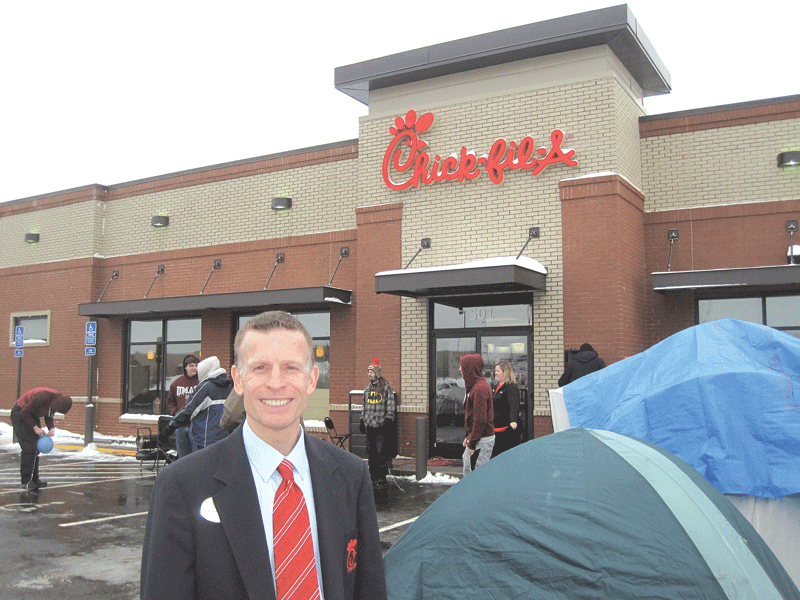
ChicFilA-GuyChickFilA-TruckThe day before Chick-fil-A opened its doors at 501 Memorial Dr. in Chicopee, hardy Chick-fil-A followers from as far away as Philadelphia were pitching tents in a wet, snow-filled parking lot with hopes that they’d be one of the first 100 in line for the Feb. 20 grand opening at 6 a.m. The quick-food restaurant is known for giving away free Chick-fil-A for a year to the first 100 adults on site when the doors open to each new store. The new restaurant, which recently filled 90 new jobs, provided security, entertainment, games, and, of course, plenty of fresh Chick-fil-A for those in line. At left, owner/operator Robert Hewes stands in the parking lot-turned-campground. Right, the tents start to take over parking spaces, awaiting opening day.

Crowd Catering
Skin-Catering-210Skin-Catering-53-2A crowdsourcing event to support SkinCatering, a spa in downtown Springfield and South Hadley, owned by Leanne Sedlak, was staged recently at 180Fit Gym at One Financial Plaza in Springfield.  The event, Cater to Your Entrepreneurial Spirit, was organized to help Sedlak raise $3,500 for materials and setup costs for relaunching her all-natural skin-care line nationally and continue building her customer base. Left, supporters pose for a group shot. At right, from left, are Pam Thornton, Business Development manager, United Personnel; Sedlak; Michelle Crosby, Business Banking branch manager at PeoplesBank; and Elizabeth Ginter, president of Ellis Title Company.
Photos by Dani.Fine Photography

Shop and Talk
Photo-Feb-11,-5-53-30-PMPhoto-Feb-11,-6-09-36-PMNetworking and shopping, not necessarily in that order, were the missions of the night as the Professional Women’s Chamber of Western Massachusetts celebrated Ladies Night at Kate Gray Boutique in Longmeadow.  New and existing members packed the elegant boutique, above, and, at left, stopped long enough to pose for a group picture.

Wine and History
WistariahurstWine2More than 100 people attended the annual I Love Wine event on Feb. 15 at Holyoke’s Wistariahurst Museum, the historic 26-room mansion and former home of two generations of the prominent Skinner Family, manufacturers of nationally renowned silks and satins. A focal point on the Holyoke landscape since 1874, the museum offers a permanent collection of decorative arts, paintings and prints, and textiles, in addition to a wide variety of educational and musical programs and events. The event proceeds will support the museum’s ongoing endeavors. Here, Christine Johnson, a representative from Carolina Wine Co., pours Dave Griffin Jr. and his wife, Corinne, a sample of fine wine.
Photos courtesy of Joseph Aberdale

Cover Story
Yasir Osman Has Taken a Long, Twisting Ride to Entrepreneurship

COVER-0214bWhen Yasir Osman arrived in New York from his homeland of Sudan in 1989, he had $100 in his pocket and very limited knowledge of English.

“I knew ‘yes,’ ‘no,’ and had a good smile,” he said in a still-thick accent. “That was essentially it.”

Actually, he brought a few other things with him, although it would take several years before some would emerge. One was a basic understanding of business he gained while doing the books for his father, the owner of a butcher shop in Sudan’s capital city of Khartoum, starting at age 6. Another was an entrepreneurial spirit he believes he acquired from his time spent in that shop, watching his father work for himself, enjoy it, and take great pride in it.

And then, there were the business values that he would also take from his father, especially transparency and honesty, terms he would use early and often as he talked about how he runs what has become a multi-faceted operation.

Indeed, he has put all of the above to extremely good use as he’s made the shift from employee to business owner — and in a big way.

Osman, who would relocate to Springfield a few years after arriving in Brooklyn — only a few months after meeting his future wife, who grew up in the City of Homes — has taken an intriguing ride from being an attendant in a parking garage on East Court Street to working his way up with that enterprise to regional manager, to starting his own company, Executive Parking. That venture now manages more than a dozen garages and surface lots and hundreds of metered spaces for the parking authorities in Springfield and Holyoke. Osman also owns taxi operations that operate in both communities, and serves as a chaplain for the state Department of Corrections.

And he makes it abundantly clear that this entrepreneurial ride, which began just over five years ago, is really just getting started.

He wants to make Executive Parking more of a regional force, perhaps expanding it into Hartford, New Haven, and other New England cities, and then, perhaps, becoming a national player.

“There’s really no limit to where we can go from here,” he said, adding that he believes he has the know-how, the lean business model (more on that later), and the entrepreneurial drive to take this venture well beyond Springfield and the Northeast.

The Columbus Center Garage in downtown Springfield

The Columbus Center Garage in downtown Springfield is one of many facilities now managed by Executive Parking and its president, Yasir Osman.

But while casting a wide net in terms of hopes and aspirations, Osman is keeping a hard focus on his home of Springfield. In addition to basing two of his businesses here, he lives just a few blocks from downtown in the Hill-McKnight neighborhood, and is becoming increasingly vested in — and involved in — a city he believes is awash in potential and bound for better days.

“I love it here — I love being in Springfield,” he said. “I’ve been in the city for 22 years, and I’ve seen many ups and downs. But I’ve seen a lot of progress, and I think the city is heading in the right direction, especially with the economy; Springfield will see a lot happen in the next year or so.”

By that, he was referring to the casino slated to be built in the South End — a development that certainly has the potential to impact both of his business enterprises — but also other developments in and around downtown.

And as he looks ahead to a brighter future for the city, and himself, he has become one of the faces of a new breed of entrepreneur — minority business owners who are creating jobs as well as momentum in a city still trying to reinvent itself.

For this issue, BusinessWest talked at length with an individual who is still mastering English, but has become an entrepreneurial success story in any language.

His Lot in Life
As he wrapped up his talk with BusinessWest, and the conversation turned to the weather, as it often does in this winter that seemingly won’t end, Osman clicked on his phone to check the conditions in Khartoum, something he does regularly enough to have his device programmed to do so.

“It’s 72 degrees and sunny there,” he said with a nod of his head and a smile on his face, adding that he keeps tabs on much more than the forecast for the city he left 25 years ago. He still has family in Sudan, including his mother, whom he visited recently. In fact, his gray hair was mostly black from the dye job that his mother insists that he get before returning to what is still, in many respects, home.

By the late ’80s, though, it was a home that Osman knew he had to leave — and soon.

“The economy was very bad, and I was one of 10 children,” he said. “I saw my family struggling, I saw my father struggling, so I decided that something needed to be done.”

Osman Yasir

Osman Yasir says he has the team, and the experience, to take his parking venture regional and then national.

Picking up and leaving for the U.S. — something a growing number of people in that East African country were doing, or thinking about doing — was not an easy proposition, nor one without a good deal of risk. But it was certainly preferable to staying put.

Osman scraped together enough money to get a plane ticket to New York, and soon, with the help of a fellow countryman he connected with, was introduced to the city’s subway system. He would ride the train to Queens each day and actively pursue work, especially in realms where one could get by with just a little English — or very little, in his case — such as construction and security.

And while securing a succession of jobs, Osman was also working to gain a foothold with the English language. He took a few classes on the subject in New York, but has picked things up mostly from interacting with others — a broad constituency that has included everyone from his wife and children to customers in various parking garages.

“In my language [Sudanese], we move from right to left,” he explained. “In English, we move from left to right. That’s the hardest thing about learning the language; you have to think it in your mind before you speak it.”

He eventually saved enough money to buy a car, and was getting by in the Big Apple, when, through the intervention of another Sudanese native — a woman who was asked by Osman’s mother to help him find a wife — he met Asilla Eubanks. Five months later, they were married, and soon thereafter, the dateline for this story shifted to Springfield.

After relocating here, Osman soon took a job as a parking attendant at a small lot on East Court Street, working for a Hartford-based outfit called Professional Parking. He would stay with that firm for more than 15 years, serving in roles ranging from maintenance person to location manager; supervisor to city manager, meaning he oversaw all the lots and garages in Springfield.

The last title he had was regional manager, he noted, but in 2008 he was laid off from that post, a development that ultimately kick-started the next chapter of his career — as an entrepreneur.

The Space Race

He started by buying, at auction, a closed gas station with an accompanying convenience store on Allen Street in Springfield, and immediately began applying lessons in business not only from his youth and his father’s butcher shop, but also from the classroom, specifically the one at Cambridge College, where he earned a master’s degree in business management.

With a loan from NUVO Bank, he put the gas station back in operation and soon launched a taxi service and ran it out of a trailer on the Allen Street property. He now operates Ace Taxi, with eight cars, in Springfield, and Metro Taxi, with five vehicles, in Holyoke.

But the business he knew best was parking, and toward the end of 2008 he created Executive Parking.

“I just thought it was common sense to get into the business I understood most — and that’s parking,” he told BusinessWest, adding that his venture got a huge boost roughly a year ago, when it captured the contract to service the garages, surface lots, and metered spaces controlled by the Springfield Parking Authority (SPA) after submitting a bid $2.5 million lower than the company that previously had that assignment — Republic Parking.

When asked how he was able to submit such a number — and then convince the parking authority that service would actually improve — Osman laughed.

“Like I said, I know how to do parking,” he told BusinessWest. “Plus, I’m the owner of the company and the general manager of the company. I work … we don’t have a lot of overhead, like those other companies do.”

He’s also been applying those aforementioned lessons he learned while watching, and working for, his father all those years ago.

“You need transparency and to be honest in everything that you do — that’s what he taught me,” he explained, noting that his father passed away in 2007. “Communication is also important — communication with the people in the city, with your employees, with the managers, and with the public.

“Also, dedication — when you do something, give it 200%, not 100%,” he went on. “That’s another thing I learned from watching my father.”

Looking ahead, Osman is focused on what he called smart, controlled growth.

His first priority has been to bring stability to the lots and garages operated by the SPA, something he believes he’s done.

“We’ve stabilized the operation in Springfield — right now, things are going smooth,” he went on. “In the last year, since we’ve taken over the operation, we haven’t had even one complaint.

“Our plan is to take this operation to the next level and make it more customer-friendly, actually,” he went on. “We have training for our employees every three months, we talk to them about being more customer-friendly, and we talk to them about being sensitive to customers’ needs; we’re drilling into their heads the need to put customers first, and we’re getting results.”

The next challenge will be to expand regionally and, in essence, replicate the success registered in Springfield and Holyoke. And he believes there are opportunities to do so within New England.

“There are many possibilities with neighboring cities, such as Hartford, New Haven, Stamford — wherever we can help stabilize operations and make money for the city, we’ll be there,” he said. “We can do for them what we did in Springfield, where our low-cost, efficient operations enabled the Springfield Parking Authority to give $300,000 a year to the Springfield Police Department to put more officers downtown.”

Venturing Forth

Osman said he’s not sure how far he can take Executive Parking. But he is sure that, wherever this venture goes, Springfield will still be the base of the operation — and, more importantly, his home.

The Hill-McKnight neighborhood is nearly half the globe and worlds apart from the still-struggling country he left 25 years ago, but the same business principles that worked there are creating results — and opportunities — here.

In short, Osman has done quite a bit with that $100, those two words of English he knew, and those all-important lessons from his father.

And, as he said, the ride is really just getting started.

George O’Brien can be reached at [email protected]

Community Spotlight Features
Farms, Open Space Shape Belchertown’s Outlook

Doug Albertson

Doug Albertson says most residents don’t want big-box stores or other large-scale commerce, so even though Belchertown has grown, its bucolic character has largely remained unsullied.

The sun shone brightly on almost a foot of snow as Steve Lanphear pruned apple trees in his Belchertown orchard. Although the temperature hovered in the mid-20s, the owner of Sentinel Farms enjoyed the hours he spent working outside.

“I love doing this,” said Lanphear, who, with his wife, Meg, began cultivating the fruit trees on their land and running a maple-sugaring business after they retired.

Today the couple numbers among an active group of small farmers whose efforts continue the town’s agrarian history. “Belchertown has always been a place with a huge amount of open space, and our small farms play a role in maintaining agricultural activity in it,” Steve said. “It’s very important to keep that alive.”

William Shattuck concurs. His property includes about 200 acres of farmland, and he says customers who frequent the family’s two businesses — Devon Lane Farm Supply and Devon Lane Power Equipment — often tell him, ‘you have it all right here,’ as they talk about the woods, hayfields, brooks, and open space that are highly visible throughout the town.

Douglas Albertson says most Belchertown residents don’t want big-box stores or other commerce in their neighborhoods, so although the population has doubled since the ’70s, when people began moving from nearby cities such as Springfield and Chicopee, its bucolic setting remains largely unsullied.

“House building is the biggest industry in town, but we have done a lot to preserve and protect the character of the town — the rural look and feel of the community and its open space and farms. We are also working to promote agriculture and viable industry,” he said, speaking about the large number of loggers and licensed foresters who have businesses in Belchertown. “Plus, we have a very active agricultural commission that works to boost local farm products, which include organic vegetables and maple syrup.”

Shattuck, who co-chairs that commission, told BusinessWest that “it’s a different community than it was 30 years ago due to the huge number of new homes that have been built, but our farmers and suppliers hope to see a resurgence of farming here. There is a lot of interest in small startups and self-sufficient food supply.”

He noted that many students from the five nearby colleges want to farm in Belchertown using new technology. It’s possible due to plentiful acreage in the south end of town.

“It’s important for the long term to have enough viable agricultural land to produce more food,” Shattuck said, “and although politics can drive agricultural possibilities away, there are still many farmers here working their land.”

Judith Gillan, founding director of the New England Small Farm Institute, which promotes the development of small farms, said residents have differing opinions about what is best for Belchertown’s future. “But one thing that engages the whole community is a sense of its history and the desire to protect its rural look and feel. Even though the town needs businesses and more discussions about the future, this issue brings people together across demographic lines.

Bountiful Opportunity

The grounds of the former Belchertown State School offer the potential for growth, and MassDevelopment is taking steps to remediate the tillable acreage on the property. “It will give the town an opportunity to meet many of its objectives, including commercial business development,” Gillan said.

The first project will be an assisted-living center, and the agency recently put out an informal request for offers to build the residence on several acres that sit behind the town’s senior center. “People agree there is a demand and believe it is an acceptable and desirable use for the property,” Albertson said.

In addition, there are approximately 50 more acres, currently dotted with old buildings and a network of underground steam tunnels from the school’s steam plant, which offer potential for redevelopment.

That parcel does not include land once used as the farm for Belchertown State School, which was originally designed and operated as a self-reliant community in terms of food production.

But Gillan and other groups, including the town’s agricultural commission, have a vision for that part of the property. “We are in discussion with the state and want to establish a small enterprise zone on the farm parcel which would include small farms and also host food- and energy-related businesses,” she said. “We would like to see people take advantage of the opportunity to assist the town with conservation through small businesses.”

Judith Gillan

Judith Gillan says striking a balance between economic development and environmental and social values is key to Belchertown’s future.

Suitable examples she suggested include a small biodiesel operation or a business producing energy from recycled biomass. “We also want to create a discovery center which would tell the story of the town’s agricultural history and attract visitors.”

Shattuck spoke about how critical farming is to food production in the U.S. “We are trying to increase the food supply produced by local farms. It’s very important.”

Gillan concurred. “Balance is key, and if there was ever a time to be thoughtful about the future, it is now,” she said. “We want to offer economic-development opportunities and at the same time protect the environment and social values through open space and land conservation. For many years, Belchertown State School was off limits to the community, and our hope is that our efforts will result in a combination of economic development and preservation of environmental resources.”

Albertson said economic development has already begun to occur in the area, particularly on State Street. About a month ago, Easthampton Savings Bank moved into a newly constructed building situated at the entrance to the state school property, and a new diner not far from the site is set to open soon.

Shattuck added that people looking to open or relocate a business may find Belchertown attractive because four major roadways — Routes 9, 181, 21, and 202 — intersect at points in town and are well-traveled. “A railroad also runs through town, which adds to the possibilities.”

Quality of Life

Belchertown was one of the first ‘green’ communities designated by the state, and the Department of Public Works and the school system operate energy- conservation programs in all their buildings.

“We are a fairly progressive community,” said Albertson. “We put solar panels on the fire station in the last five years, and are continuing to plan as we step into the future and try to get away from using fossil fuels.”

Other projects in line with conservation include a sewer-treatment plant and a commercial solar operation slated to go online soon. “It’s a good, clean, quiet project on 11 acres,” Albertson said.

Cold Spring Country Club opened two years ago, offering an 18-hole, semi-private course and restaurant, all with panoramic views. UMass also operates a horticultural research station in Belchertown, which Shattuck calls the premier center in New England for research on orchards and fruit trees.

In fact, UMass is integral to the town’s vitality and has been the main employer for townspeople during the past decade. “The UMass transit system, which is operated by the Pioneer Valley Transit Authority, runs from Amherst into Belchertown, and a lot of students, faculty, and staff live here,” Albertson said.

Meanwhile, Quabbin Reservoir, which covers one-fifth of the town’s 54 square miles, offers ample space and opportunity for people to enjoy the outdoors via pursuits such as hiking and fishing.

Albertson reiterated that residents want to preserve open space for recreation, which includes hunting and snowmobiling. “Hunting is still important to many people, and we have a very active snowmobile club that maintains a number of trails,” he said. “We want to make sure we have a good balance.”

Unified Effort

Albertson said MassDevelopment will continue working on a plan for the former Belchertown State School property, which could include a mix of retail establishments, space for offices, some light research and development, and perhaps some small-scale residential development, although the latter will not be the focus. In addition, a set of commercial design guidelines created for the entire town, presented to the board of selectmen in November, is on the agenda for the spring town meeting.

So, growth will continue to move Belchertown into the future, but some things will remain unchanged, including the residents’ appreciation for the landscape that surrounds them. Although they may travel to other communities to shop, many feel their town does ‘have it all’ as a sanctuary from the stressors of city life.

“The people in Belchertown are very friendly,” Shattuck concluded. “It’s a great place to live.”

Belchertown at a Glance

Year Incorporated: 1761
Population: 14,649 (2010); 12,968 (2000)
Area: 55.4 square miles
County: Hampshire
Residential Tax Rate: 17.72
Commercial Tax Rate: 17.72
Median Household Income: $52,467
Family Household Income: $60,830
Type of government: Board of Selectmen, Town Administrator, Town Meeting
Largest employers: Town of Belchertown, Hulmes Transportation, Super Stop & Shop
* Latest information available

Opinion
Cloud of Uncertainty Hangs Over Casinos

This should be a time of great anticipation and, yes, celebration for some players in the casino industry — and, likewise, in communities like Springfield, where there seems to be little that can prevent MGM Resorts International from winning a license to build and operate an $800 million resort facility in the city’s South End.

But it isn’t — at least to the extent that it could be.

That’s because there’s a very dark cloud of uncertainty hanging over gaming in Massachusetts, and it comes in the form of a lawsuit pending before the state Supreme Judicial Court. That suit was filed by the backers of efforts to repeal the state casino law passed in 2011. They gained enough signatures to place a referendum question on this November’s ballot, but then saw Attorney General Martha Coakley rule that the petition was unconstitutional because it would “impair the implied contracts between the [gaming] commission and gaming license applicants” and illegally “take” those contract rights without compensation.

Repeal backers then took their case — quite literally — to the SJC, which is slated to take up the matter in the late spring and render a decision by June or July. That should be a few months after the commission chooses the winning applicant for the lone slot-parlor license, and several weeks after it issues licenses for resort casinos in Boston (where there are two contenders) and Western Mass., where MGM is the only player standing.

Suffice it to say that, if all goes as expected and MGM wins this region’s license, most of the celebrating will be muted, if not postponed entirely, until the SJC settles what will be one of the most closely watched cases to come before it in years, and one where some experts are saying it’s hard to predict the outcome.

To say that there is a lot of stake would be a huge understatement. If the repeal backers win in court, and a majority of voters support their effort at the polls, then there will likely be no casino era in Massachusetts and, thus, no $800 stimulus to the Greater Springfield economy. And the millions, if not tens of millions, spent by the casino companies to bring their proposals to this stage would be wasted.

That explains why there is deep concern in the casino camps, and also why a coalition involving these players (including MGM) and the backers of casino gambling in this state has been formed to fight the repeal effort.

It is the coalition’s basic contention that the repeal initiative is, as Coakley ruled, unconstitutional, and amounts to the illegal taking of contract rights. In addition, they contend that the casino law passed in November 2011 is essentially working the way legislators intended it to, meaning that communities that don’t want a casino within their borders can vote such a proposal down (and many have), while residents who do support them can also control their fate at the ballot box, as voters in Springfield did.

Michael Mathis, head of the MGM’s so-called ‘Springfield initiative,’ summed things up nicely in recent comments to the press. “Our plan was endorsed by an overwhelming majority of voters,” he remarked. “It would be devastating to roll back all that has been accomplished and take away the promise of what it is to come.”

Citing a recent poll conducted by the Western New England University Polling Institute showing that 61% of Massachusetts adults support the establishment of casinos in the state (roughly the same number as in 2009 and 2010), some casino backers and gaming executives are confidently downplaying the likelihood that a repeal effort would succeed should it reach the ballot.

These individuals shouldn’t ever underestimate the ability of voters in this state to surprise them, or to attempt to rule by referendum. It happened with nuclear power plants, which were banned in 1988, and with dog tracks 20 years later.

It could happen with casino gambling, but we don’t believe the measure should come before the voters at all. It is our hope that the SJC concurs with Coakley and declares this bid unconstitional.

Unless or until it does, that dark cloud of uncertainty will continue to hover over the casino era in the Bay State.

Opinion
Cost Report Creates False Impressions

By LYNN NICHOLAS

The state’s Health Policy Commission (HPC) just released its latest Cost Trends Report, in which it claims Massachusetts healthcare providers — primarily hospitals — waste somewhere on the order of $14.7 billion to $26.9 billion by providing ‘unnecessary’ medical care.

Some of the report’s concerns regarding unnecessary medical care are valid, but the report glosses over some of the non-hospital systemic problems that help drive unnecessary care, and many of the very real improvements that hospitals in Massachusetts have already achieved. Some of the report’s claims also foster misunderstanding about cost variations among different kinds of hospitals, which makes for provocative sound bites but ultimately fails to highlight the real issues.

Despite critics’ claims to the contrary, there are some valid and necessary reasons for higher costs at academic medical centers, though it’s also true that some of the cost disparities warrant much closer scrutiny and should require justification if they are to continue. That is all part of the reform that is underway in Massachusetts. Ultimately, what should guide the decision-making process is a commitment that each patient should receive the right care in the right setting.

It’s hard to keep a scorecard on the progress of healthcare reform in Massachusetts. This is partly because there is so much happening and because a lot of it is not yet visible to the public. Meanwhile, current data to measure progress is not available. Data from 2009, extensively relied upon in the HPC report, doesn’t fully reveal the hard work being done to improve the way care is delivered and paid for.

Most important is that, even as we at the Mass. Hospital Assoc. (MHA) study the report, hospitals are working collaboratively with each other, non-hospital providers, government, and other stakeholders to improve care while becoming even more cost-efficient, including in the areas identified in the HPC report as examples of wasteful spending.

For example, 10 Massachusetts hospitals have hosted an MHA educational program on ‘lean’ continuous-improvement techniques since 2010. As a result, more than 240 healthcare leaders have joined other lean experts in deploying these techniques in hospitals.

The Massachusetts hospital community has also been making quality and patient safety improvements on many fronts. The MHA’s board of trustees and all our member hospitals’ boards unanimously endorsed an association-wide initiative to make measurable, concrete improvements in hospitals’ performance, focusing on reducing readmissions and hospital-acquired infections. In addition, most Massachusetts hospitals are enrolled in a national quality-improvement collaborative aimed at improvements in 10 patient-safety areas. And the 29 Massachusetts hospitals that are enrolled in the MHA-coordinated Hospital Engagement Network have collectively experienced a 30% reduction in five adverse healthcare events: catheter-associated urinary-tract infections, central-line-associated bloodstream infections, pressure ulcers, ventilator-associated events, and early elective deliveries.

It is true that hospitals can become more efficient and improve the delivery of care — but that’s only one piece of the overall healthcare costs scenario, as hospitals comprise less than 40% of overall healthcare expenditures. There is ample evidence that underinvestment in behavioral-health issues adds to the cost of the overall healthcare system, with preventable readmissions being just one example.

The HPC report is correct in its conclusion that prime areas of opportunity for improvement moving forward include fostering a value-based market; promoting an efficient, high-quality healthcare delivery system; advancing alternative payment methods; and enhancing transparency and data availability.

But there are market practices that impede progress, like the broken behavioral-health system that takes such a toll on our families and communities. Its impact on cost can be seen in the number of patients readmitted to hospitals with behavioral-health diagnoses.

It’s important to realize that hospitals are already pursuing many of the strategies cited in the HPC report as opportunities to reduce costs and improve efficiency, although more certainly can and will be done. But cost isn’t solely a problem of providers, and not all cost differences among providers are wasteful.

Lynn Nicholas is president and CEO of the Mass. Hospital Assoc. This article first appeared on the MHA blog.

Features
Difference Makers to Be Feted on March 20 at the Log Cabin

BizDiffMakrsLOGO2011You might call this the ‘Home Depot class.’

Indeed, there are some notable building, or home-restoration, stories involving this year’s roster of Difference Makers, as chosen recently by the staff at BusinessWest.

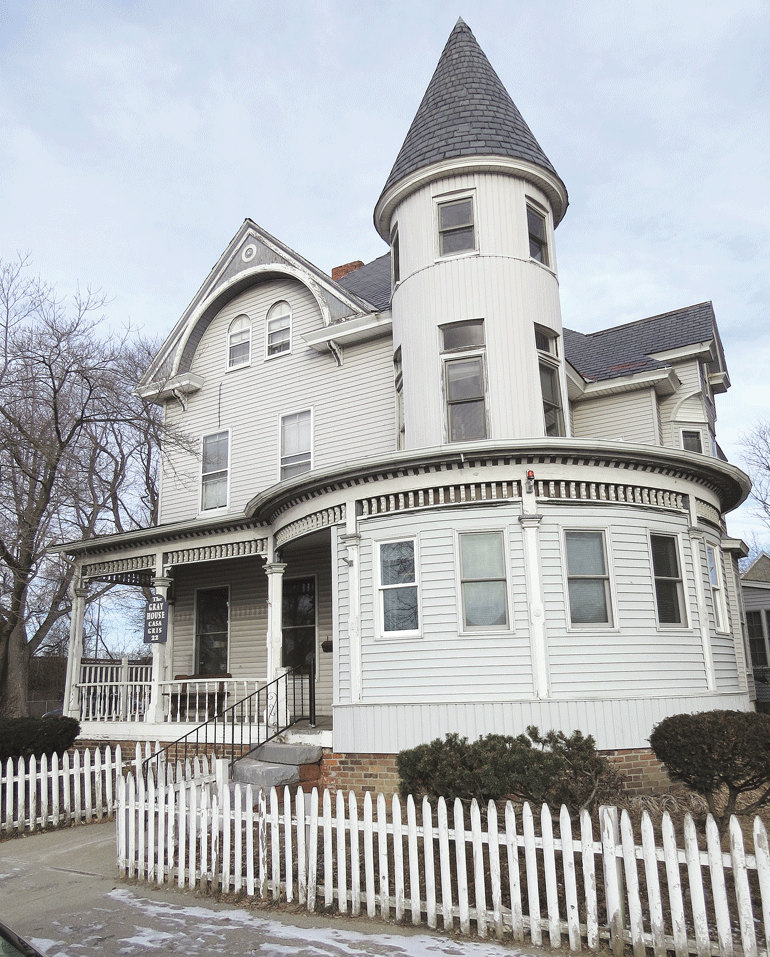
For example, there was the massive effort 30 years ago to restore and repurpose an old Victorian on Sheldon Street in Springfield, a structure — and a nonprofit — that have both become known as the Gray House. There was also the extensive work needed to convert the former School Street School in Springfield into the Youth Social Educational Training (YSET) Academy, created by Paula Moore to help keep young people off the city’s streets and out of trouble.

And then, there’s the ongoing work being carried out by Colleen Loveless, the first executive director of the Springfield chapter of Rebuilding Together, a national organization committed to helping low-income homeowners stay in their homes.

But beyond these literal building projects, the Difference Makers Class of 2014 has been figuratively building momentum in a number of realms — everything from early literacy to vital support for low-income residents, to high-quality healthcare for young people — and thus giving this region a stronger foundation on which to build for the future.

These stories will be told — and the Class of 2014 will be celebrated — at the annual Difference Makers Gala on March 20 at the Log Cabin Banquet & Meeting House in Holyoke.

Tickets for the event are $60 each, with tables of 10 available. For more information, or to order tickets, call BusinessWest at (413) 781-8600, ext. 100, or visit here.

The Difference Makers program was launched by BusinessWest in 2009 as a different kind of recognition program. It was created to show the many different ways that groups and individuals can make a difference and improve quality of the life for the residents of Western Mass., and it has, by all accounts, succeeded in that mission.

Past recipients have been honored for work across many spectrums, from fighting crime in Holyoke to creating a hugely successful fund-raiser to combat breast cancer; from tireless work on behalf of the homeless to a 40-year effort to keep professional hockey alive and well in Springfield; from a creative initiative to give residents of Springfield’s North End their streets back, to inspiring work to fill the shelves of area school libraries.

This year’s class, as profiled in the Feb. 10 edition of the magazine (viewable here), certainly adds to that legacy of stepping up and giving back.

The honorees are:

The Gray House, which, for three decades now, has provided a range of services — from food and clothing to adult education programs — to not only residents of Springfield’s North End, but those who live in other sections of the city and other communities as well;

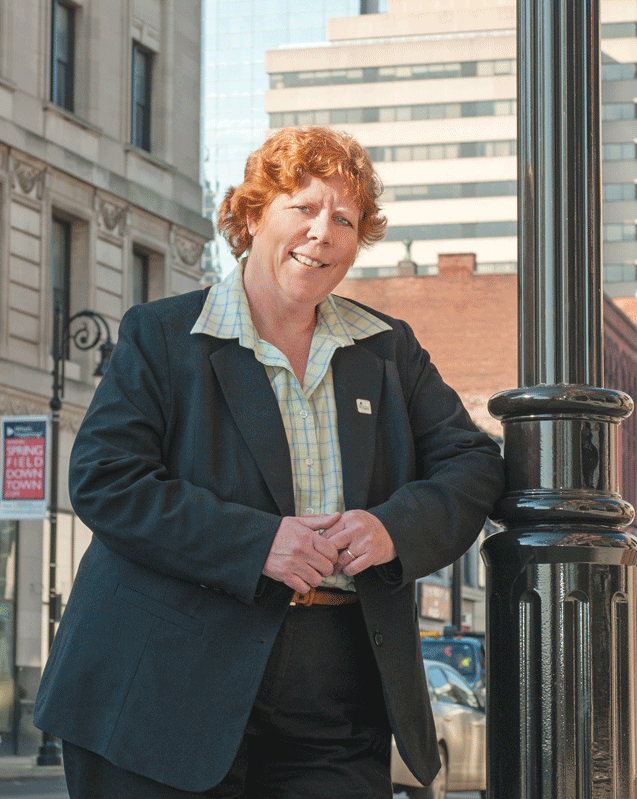
• Colleen Loveless, who, as the first executive director of the Springfield Chapter of Rebuilding Together, has put that organization on the path to continued growth, and positioned it to have a deep impact on both individual homeowners and entire neighborhoods within the city;

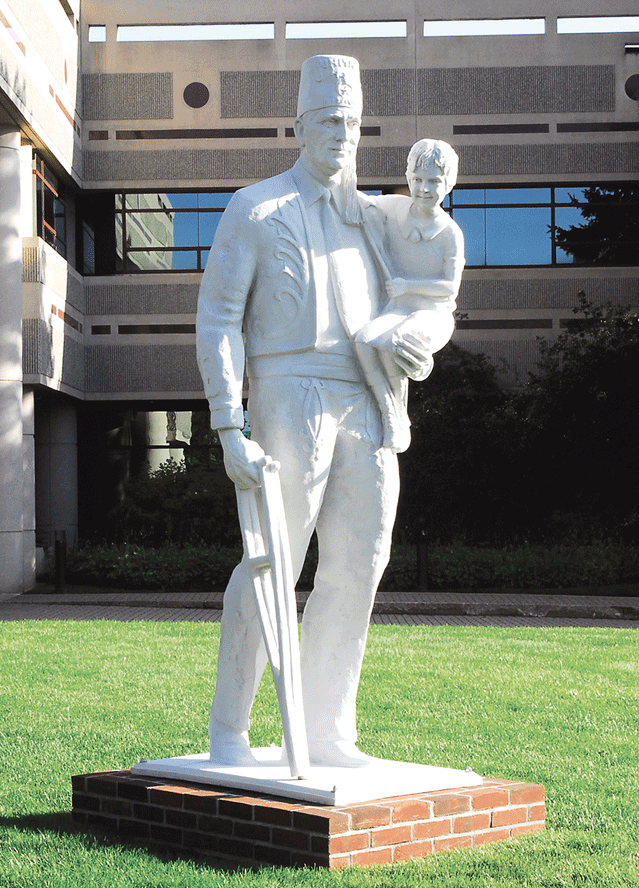
• The Melha Shrine Temple, the first fraternal organization recognized as a Difference Maker. It is changing lives in many ways, but especially through its efforts to fund the many Shriners Children’s Hospitals operating in the U.S., Mexico, and Canada (including the one on Carew Street in Springfield), and also by raising awareness of these facilities and thus bringing more children and families in need to their doors;

• Paula Moore, who started Youth Social Educational Training (YSET) Academy as a way to keep at-risk youths off the streets. And when the church that hosted the program decided it couldn’t do that any longer, she personally secured a loan and purchased the former School Street School to keep the initiative alive. Today, it provides a host of services, from preschool to after-school workshops on a wide variety of subjects; and

• Michael Moriarty
, an attorney, current director of the Olde Holyoke Development Corp., and now-former school committee member, who has been at the forefront of efforts to improve early-literacy rates in one of the Commonwealth’s poorest and most challenged communities.

The March 20 gala will feature entertainment, butlered hors d’oeuvres, lavish food stations, introductions of the honorees, and remarks from the honorees. Over the years, the gala has become one of the region’s best networking opportunities, and an event not to be missed.

This year will be no exception.

Insurance Sections
At Webber & Grinnell, the Devil Is in the Details

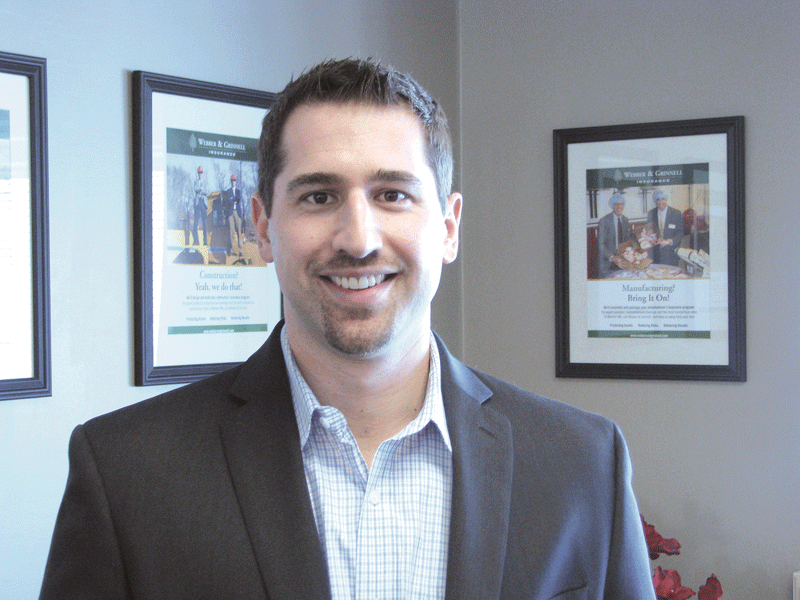
Bill Grinnell

Bill Grinnell says his job is to protect businesses, and education is a big part of that.

The sales pitch at Webber & Grinnell Insurance often comes down to one simple question: what are you not covered for?

“That’s part of our renewal process, focusing on what coverage is lacking,” said William Grinnell, who, along with Richard Webber, has led this Northampton-based insurance agency to steady growth for almost two decades. “Business owners get a sense of where they’re exposed, and what they really want to know is what they’re not covered for.”

Take, for example, the broad realm of business-practices liability.

“That’s a huge one,” said Mat Geffin, vice president of business development. “They think, if they’re sued by an employee, their general liability coverage protects them. It won’t. There are exclusions for employment-practices types of claims, like sexual harassment and wrongful termination — those are a totally separate type of policy, completely excluded under your general liability.”

And, in an ever-more-litigious society, that’s no small matter for an employer.

Those suits are frequent; my clients have seen a lot of those this year,” Geffin said. “The more employees you have, the more turnover, the more likely it is that these suits will occur.

“It’s a huge risk,” he added. “I’ve had clients who have done all the right things in terminating a problem employee, but nothing’s stopping them from going to Mark E. Salomone and filing a lawsuit. That’s where that employment-practices policy steps up to protect the company.”

Sometimes, Grinnell noted, employers think they’re doing everything right and don’t believe they’re exposed. “But anyone can sue for any reason, and defense is very expensive and time-consuming” — often to the tune of thousands of dollars small businesses just can’t spare.

Fortunately, he added, the agents at Webber & Grinnell are trained to think like underwriters; in fact, even the most dynamic salespeople won’t get hired if they aren’t able to dig into the fine print of an 80-page policy, understand its strengths and weaknesses, and make sure clients understand them, too (more on that later).

“We help them understand that everyone out there has different risk tolerances,” Grinnell told BusinessWest. “Our job is to help them make an informed decision about what insurance they’re going to purchase.

“Our obligation is, obviously, to protect those businesses,” he added. “They had better be protected right, or we’re exposed, too.”

Digging Deep

Grinnell said his agency focuses on the property/casualty market. “Our main lines of coverage are workers’ compensation coverage, commercial property, and general liability,” as well as home and auto insurance.

On the business side, he said, some nuances have changed the game over the past decade or so. For example, workers’ compensation has become much more complex, and many employers’ policies are fraught with mistakes in classification or experience modification calculations — although companies are becoming more savvy on these matters.

Mat Geffin

Mat Geffin says cyber liability is one of the hot insurance trends that companies of all kinds need to be aware of.

From a liability standpoint, said Geffin, there’s more of a trend toward cyber liability, with more companies, especially retailers, doing business online. “It’s an area of growth in the insurance industry — you see all these lawsuits; you see Target losing millions of customer records,” he noted. “What happens when small businesses in this area are being hit with some of those exposures? They’re not all covered for it, and that’s the new thing we’re talking to people about.”

On the personal-lines side, Grinnell said business is always changing. “It’s been ever-more competitive with the introduction of competitive auto rates several years ago, so we battle with that.”

In the midst of such competition, Geffin said, “I do believe a differentiator for us is our knowledge, being a pure coverage insurance agency. We’re not out there just hawking prices. We really do take a hard look at the coverage, talk intelligently, take an underwriter’s approach to it. Bill and Rich were both underwriters, and were trained to look at risks like underwriters.”

Indeed, Grinnell’s first job after graduating from college in 1984 was with United States Fidelity and Guarantee Insurance in Boston. He received in-depth training there, which provided him with advanced knowledge of how policies are constructed. Webber had similar training experience at Aetna as an underwriter, and Grinnell attributes most of the company’s success to an ability to carefully examine policies, because, while clients are expected to read their policies, he realizes that they don’t always understand them.

Grinnell purchased his father’s agency, then known as Woodward and Grinnell, in 1997, and soon after teamed up with Webber. Their relationship has been synergistic, with Grinnell focusing on sales, and Webber spearheading office adminstration, technology, and relationships with larger carriers. Last fall, Grinnell became the company’s sole owner, and Webber is now vice president of operations.

Unlike insurance agencies that use a cookie-cutter approach to policy writing, Grinnell said, his salespeople are required to take a highly individualized approach.

“Everyone has different problems, and you’ve got to identify what the issue is and then capitalize on it,” he explained. “It might be a service issue, it could be a problem they had with a claim, a coverage issue … any of these things.”

One of the firm’s advantages is the number of commercial markets it represents, he added, and the leverage that brings. “As opposed to a smaller agency, we have dozens of different commercial insurance companies to approach, and we can get a good, competitive package from one of them.”

Knowledge Is Power

But Webber & Grinnell brings knowledge and information to its clients beyond crafting their policies.

Significantly, the company sends clients something called Business Digest, a national insurance newsletter agencies personalize according to their own needs. “Sometimes it contains timely topics concerning insurance coverage,” Grinnell said, “and sometimes it focuses on insurers and best practices and what we’re doing well to manage a particular risk they might have in their business.”

Over the years, the firm has also established informational hotlines for OSHA and human-resources matters, a workers’ compensation hotline staffed by an attorney in that field, and seminars on topics ranging from sales fundamentals to hiring rights to corporate leadership — all these efforts geared toward moving beyond the insurance relationship and becoming more of a partner with clients, to help their businesses run smoothly.

All those efforts are part of growing Webber & Grinnell, both in size and in scope of services, Geffin said. “We have a lot more competition that has come in with the direct writers, like Geico and Progressive. But we’re trying to grow.”

One reason that’s a challenge, Grinnell said, is that the agency is extremely cautious in its hiring process. “We’re very selective about who we take on. We’re trying to find a salesperson who fits our culture, and it’s very difficult. We get a lot of people in the door, but we don’t take many.”

The reason has to do with the dual nature — personal and technical — of what the company demands.

“You’ve got to be bright, and you’ve got to work hard,” he told BusinessWest. “And you’ve got to be a person who’s able to handle the technicalities of the insurance world and all the little details in the policy, and, at the same time, get along with people, communicate well with people, and build firm relationships.”

Geffin agreed. “It’s very much a hybrid type of role,” he said. “A lot of salespeople are not good at the technical standpoint, that other side of reading the contract language and interpreting the contract language. There might be hundreds of pages, and 100 ways you can write it depending on the risk. You need a very special person, and it’s very hard to find that mix.”

Even for employees who don’t deal directly with clients, the standards are high, Grinnell said. “Internally, we’re looking for a slightly different skill set, but, again, we test everyone who comes in here, interview them several times, check their references. We’re very selective about hiring. And I think that gives us an advantage.”

Giving Back

With so many human needs in Western Mass., the company also has to be selective about its charitable efforts, which Grinnell said have long been a part of the agency’s culture. These days, for example, Webber & Grinnell heads up campaigns for United Way of Hampshire County and United Way of Pioneer Valley, among other efforts.

“I don’t know if this is true for a lot of agencies, but we do a lot philanthropically in the Valley,” Geffin said. “It’s a huge commitment. Bill and Rich have always led by example, by giving back to the community that supports us. I think that’s a good message.”

It’s just one more detail that this insurance company strives to get right.

Joseph Bednar can be reached at [email protected]

Insurance Sections
Phillips Insurance Agency Specializes in Surety Bonds

Joseph Phillips

Joseph Phillips says the bonding process, while complex, should be considered an opportunity for businesses, not an obstacle.

Joseph Phillips is drawing a triangle to illustrate how a surety bond works. One leg is upheld by a contractor, and the other is held by a bonding company. The business owner, city, or agency that hired the contractor sits at the top.

The president of Phillips Insurance Agency in Chicopee explained that a surety bond is a type of guarantee, and if the contractor fails to complete a project, the owner can go directly to the surety bonding company to remedy the situation. “Surety is defined as a third-party guarantee, and the surety bonding company guarantees that the contractor will perform the work as stated in the contract,” he said, adding that this includes paying subcontractors and suppliers.

Although the concept is not difficult to understand, Phillip says confusion and misperceptions exist about the prequalification process required to post a bond. He admits it takes time and can be frustrating, but contractors who complete it have an edge in an industry that has become increasingly competitive. Bonds allow contractors to work in both public and private sectors and thus weather changes in the economy during an era in which more and more owners and banks require that projects are bonded.

Phillips is passionate about his work, and he and his 18 employees have spent close to two decades educating and helping clients complete the bonding process, which many don’t attempt because they consider it too complex or difficult.

But Phillips says it is a good investment of time. “People should not consider it an obstacle, but an opportunity to expand their business,” he told BusinessWest.

He has been dealing with surety bonds since he graduated from college, and today, due to his efforts, Phillips Insurance has become one of the largest bond and construction insurance writers in the Northeast. “We have the same expertise in surety bonds and risk management for contractors as our competitors in New York and Boston, and can respond to needs whether they are simple or complex,” he said.

Although his agency also writes automobile, home, and business insurance policies and serves 150 clients in 12 states, 80% of its work is with bonds.

Phillips does what it takes to attract and retain clients, and that includes meetings at 5:30 a.m. in a wide variety of places, including airports. “I’ve written bonds for contractors in Las Vegas whom I have never met,” he said.

Jocelyn Keech

Bond Administrator Jocelyn Keech is one of 20 employees at Phillips Insurance Agency in Chicopee.

He takes great pride and satisfaction in connecting clients with the companies that offer these third-party guarantees. What sets the company apart from the 38,000 other insurance agencies in the U.S. is that it is a member of the National Assoc. of Surety Bond Producers, Phillips said, adding that the organization has fewer than 500 members due to the difficulty of fulfilling its requirements. He is past president of the Surety Assoc. of Massachusetts, and has earned both his AFSB (associate in surety and fidelity bonding) and CRIS (construction risk and insurance specialist) designations.

Phillips advises contractors who are unfamiliar with the bonding process to visit his agency’s website — www.phillipsinsurance.com — and read the publication link titled “Your First Bond,” as well as other educational material posted there.

Changing Direction

Phillips Insurance Agency celebrated its 60th anniversary last year by giving $1,000 each to 10 nonprofits that were nominated by their clients, then voted on by the public. Winners included the Boys & Girls Club of Chicopee, the Constanza Medical Mission, the Assoc. for Community Living, the Sisters of St. Joseph, Camphill Village USA, and others. In addition, the agency donated $1 to Shriners Hospital for every ‘like’ it received on its Facebook page.

The company dates back to 1953, when Joseph’s father, Cornelius Phillips, purchased the William J. Fuller Agency in Chicopee. The Fuller Agency had been in business since 1898, and Cornelius renamed it and chose to focus on auto and home insurance.

A major shift occurred when Joseph took the helm after his father’s death in 1997 and put his focus on the surety bond market.

He had worked for Fidelity and Deposit Co., which is the oldest bonding company in the U.S, after graduating from college, then was employed as a bond writer for Liberty Mutual before he returned to Chicopee to join his father in business.

The company has always valued its employees, and when Joseph joined his father, there were only two employees. They included 52-year-old Jeanne Jones, who was employed by Cornelius at age 16 and is still working at the agency.

“We also have three employees who work remotely,” Phillips said, noting that he chose to keep these individuals when they moved from Western Mass. to distant states.

Phillips also places a high value on education, so the agency’s website contains a wealth of information about the bonding process. In fact, he finds great satisfaction in helping people obtain their first bond.

“It’s intimidating for small companies — the process can be confusing, and many people don’t think they can get a bond,” he said, adding that the agency receives a number of referrals from local certified public accountants and commercial lenders. “But if the person goes through the steps and understands what is required, they leave behind a slew of competitors who failed to do what is required to bid on public projects.”

Phillips said surety bonds resemble an extension of a line of credit at a bank, and the practice of issuing them dates back to ancient Egypt. They have been used throughout U.S. history as well. In fact, Franklin Delano Roosevelt was bond manager for Fidelity and Deposit Co. in New York from 1921 to 1928 before he was elected president in 1932. Three years later, passage of the Miller Act in the U.S. made it a legal requirement for a bond to be issued for all federal public works projects that exceed $100,000.

Phillips admits that trying to get a bond for the first time can be a frustrating process for people who don’t understand what is needed. “When a surety company underwrites a new account, they are looking for the three Cs  — capital, capacity, and character — or the moral and ethical nature of an individual or business entity,” he said. He defines ‘capital’ as a measure of the contractor’s ability to do the work, their working capital, and bank support; ‘capacity’ as their ability to perform a job, which includes their experience, people, and equipment; and ‘character’ as the contractor’s moral or ethical nature and reputation.

In order to gather that information, his agency becomes deeply involved with clients. “We learn the history of their company, their financials, their capabilities, and their failures and successes. We become trusted advisors, like certified public accountants or attorneys, and we have a very high retention rate,” he said.

After the agency gathers all it needs from the person or company, employees analyze and review the material. When that is complete, Phillips determines which bonding company will best serve the client’s needs. “We have the experience to see that the client is placed with the bonding company that matches up best with their type of construction, size, program, and financial position,” he said.

The final step involves submitting a recommendation and the required documents to the chosen bonding company and working out a program for the client. Phillips has access to most of the top 25 surety companies in the country and also offers complimentary products such as builders’ risk, railroad protective coverage, pollution liability, and more.

Projects for which Phillips Insurance recently executed bonds include:

• An $11 million bond guaranteeing the reconstruction of the William F. Davitt Memorial Bridge in Chicopee on behalf of the Mass. Department of Transportation;
• A $10 million bond for the Central Campus infrastructure project at UMass Amherst;
• A $35 million bond for a state utility company for an infrastructure project;
• An $11 million bond written for the masonry portion of the $100 million Commonwealth Honors College Complex at UMass Amherst; and
• A $12 million bond written for a HUD housing project in Greenfield.

Phillips has also written bonds for clients on projects nationwide. They include various clients at the $10 billion Global Foundries project in Malta, N.Y., as well the granite contractor at the Cosmopolitan in Las Vegas.

“We’ve bonded projects from $100,000 to $50 million, and have written bonds for subdivisions, landfills, and solar projects,” he said.

And new work is expected after a license to build a casino in Western Mass is issued, as widely expected. “We’re excited about it. It will be a $500 million-plus project, and if the owner decides to protect the project by bonding the contractors working on it, we will benefit,” said Phillips. “We’ve also seen a lot of activity in solar-field construction, which we expect to be a big part of our bond writing over the next three years.”


Promising Outlook

The Phillips agency’s business in surety bond premiums increased by 30% last year from the year before, and it continues to acquire new accounts.

Phillips wants to expand across the nation, and to that end, he is creating a new website — mybonddept.com — to help agencies that lack the expertise to serve clients who need bonds. “We want to split the commission without taking the business away from them.”

He acknowledges that bonding is a rigorous underwriting process and says an annual review is important. “But I tell new clients to hang in there, because once you accomplish this, you have an unlimited ability to work. It opens up so many doors.”

Insurance Sections
If the Answer Is ‘No,’ the Consequences Could Be Costly


By MICHAEL LEVIN

When it comes to cyber security and data breaches, no system is infallible. Some of the largest companies in the world have been victims of data breaches.  Recently, the Swansea, Mass. Police Department contracted the CrytoLocker computer virus, and paid ransom to gain access to their files.

While large breaches like those at Target, Neiman Marcus, and Yahoo! receive great media attention, smaller breaches occur daily without much fanfare. A common misconception is that malicious hackers target only large companies. However, small and mid-sized companies are often perceived — for good reasons — as easier targets due to their limited IT resources.

What is the incentive for criminals to steal data? There is a large black market for stolen identities. Some estimates put the value of stolen personal identifiable information (PII) and personal health information (PHI) at $5-$10 per record, depending on the information. Malicious hackers who gain access to computer systems have the potential to modify accounts-payable data and change bank routing numbers.

Human Error

Another common misconception is that most breaches result from a hacker sitting behind a computer in some foreign country. Malicious hacker activity has and will continue to occur; however, some studies estimate that approximately 50% to 60% of breaches result from simple human and system errors.

For example, unencrypted laptops and smartphones that are lost or stolen pose a large threat, as do data backups brought home by an employee for off-site storage. Lost or weak passwords continue to be an issue as well. It’s fairly common to see a sticky note on an employee’s computer monitor with their username and password to access the enterprise software system (hopefully not the controller).

In addition, people often mistakenly send e-mails to someone other than the intended recipient. How many times have you replied to an e-mail that started with, “I think you meant to send this to another person?” If the e-mail contains PII or PHI, this may be a breach.

Not understanding the technology in your office can also result in a breach. Affinity Health Plan Inc. settled with the U.S. Department of Health and Human Services (HHS) for $1.2 million when it returned leased photocopiers with 344,579 personal health-information records on the copier’s hard drives (yes, modern copiers have hard drives that store data).

Human error breaches are not limited to digital data. Improper disposal of documents that contained PII or PHI has led to breaches. The list of exposures on the human-error side alone is limited only by one’s imagination.

Cyber Risk Management

Implementing preventative measures, best practices, and a strong backup solution help reduce, but not eliminate, the risk. An incidence-response plan that details responsibilities and vendors is crucial to quickly address a breach and to avoid panic buying. Many state laws have time deadlines for certain actions.  The clock is ticking once a breach has been identified. A written policy and plan detailing security measures will be of assistance should you be interviewed by the Office of Civil Rights, HHS, or the state attorney general.

Potential Cost of a Cyber Incident

Expenses from a data breach or a cyber incident vary and can be quite high. Beyond the intangible cost associated with the loss of consumer confidence, organizations may face lawsuits, regulatory expenses, regulatory-defense costs, notification costs, and business-interruption losses.

In order to limit the damage, organizations often hire public-relations firms, outsource call centers, provide credit monitoring for at least a year (required by law in some states), and provide identity-fraud insurance.

Forensic specialists may be required to identify and remediate the source of a breach that results from an organization’s computer systems. Again, the clock is ticking. Not finding and resolving all the issues with a system creates further exposure down the road.

As discussed earlier, part of a comprehensive cyber risk-management program is to have a good backup solution and to monitor it regularly to ensure that data is consistently backed up. Without a solid backup strategy, organizations may incur data-restoration and computer-program-restoration expenses — assuming the data and programs can be restored.


Cyber-liability Insurance

It is important to understand that a general-liability insurance policy typically does not respond to cyber exposures. Available cyber-liability insurance coverages include network and information-security liability, security-breach remediation and notification, hacker damage, crisis-management expenses, business interruption, cyber extortion, media, data restoration, and computer fraud.

Today’s cyber-insurance policies are flexible so that you can choose coverages based on your unique needs, exposures, and risk tolerance. Developing a meaningful cyber-insurance program requires an understanding of an organization’s IT systems, data-security best practices, and level of employee education.

In Summary

Whether or not they realize it, most organizations, no matter the size, have some sort of cyber-security or data-breach exposure. If you store personal identifiable information or personal health information, your risks increase exponentially. And these risks are here to stay.

There are far too many cyber-security exposures to be covered in a single article. It is important to work with an insurance agent who is capable of understanding your exposures and who can match insurance coverages and carriers to meet your unique needs. A properly structured cyber-liability insurance policy can be an important element to an organization’s overall cyber-risk-management program and long-term sustainability. n


Michael Levin is an account executive at the Dowd Insurance Agency, a full-service agency providing personal, commercial, and financial-planning needs, with six offices in Western Mass.; (413) 538-7444; [email protected]

Sales and Marketing Sections
Partners at chikmedia Say Marketing Shouldn’t Be Stressful

Meghan Rothschild, left, and Emily Gaylord

Meghan Rothschild, left, and Emily Gaylord, partners at chikmedia.

Meghan Rothschild was taken aback by how Bob Lowry, owner of Bueno y Sano, described her new marketing firm’s work: “zany things that make lasting impressions on people.”

“I said, ‘wow … that’s the best endorsement I’ve ever heard of our company since we started,’” said Rothschild, who partnered with Emily Gaylord to launch their business, chikmedia, about six months ago.

Perhaps some agencies would recoil from a word like ‘zany,’ but Rothschild and Gaylord embrace it.

“When we started, we made this silly video dancing in a frozen-yogurt shop, and we posted the thing on Facebook,” Gaylord said. “We figured, if we’re going to do this, if we’re going to be successful, we’re going to be ourselves from day one. Our clients know, from the first meeting, that this is who Meghan and Emily are — and that it’s going to be fun. That’s a huge part of our business. Being effective is the other part.”

Rothschild has been in marketing for eight years, first as marketing and promotions manager at Six Flags, then development and marketing manager at the Food Bank of Western Massachusetts, and, later, as director of marketing and communications at Wilbraham and Monson Academy (WMA). She and Gaylord worked together at those last two stops and found they hit it off in more ways than one.

Meghan Rothschild

Meghan Rothschild says chikmedia caters to women-run businesses, but serves plenty of male clients as well.

“We were constantly doing outside favors for folks — writing press releases, designing logos,” Rothschild said. “One day, I said, kiddingly, ‘we should start a company and start charging for this.’ She said, ‘OK, I’ll start today.’ She got a website up and running, we launched a Facebook page, and the rest is history.”

Said Gaylord, “we were both doing freelance work on the side. She was doing freelance marketing, and I was doing freelance design, and we thought, why not go into business together? It would be more productive, more lucrative, and, frankly, more fun, because we get a kick out of working together. About 48 hours later, chikmedia was born. I made a logo that day.”

With about two dozen clients, including Bueno y Sano, UMass Dining, Papa John’s, ArchitectureEL, Energia Fitness, SkinCatering, and Lioness magazine, to name just a few, “we got really busy very quickly, and we didn’t anticipate how successful it would be in such a short period of time,” Rothschild said. “We were just overwhelmed with how many people started reaching out to us and wanted our services.”

Gaylord said their strong relationship has contributed to their quick start. “I think a lot of businesses fail when friends start a business together. We’re different; we became friends because we work so well together. We’ve always had the same kind of vision, the same tastes. Honestly, it’s just been a very good, very positive relationship.”

By the end of 2013, Rothschild added, “we decided we either have to pull back and stop accepting new clients, or make this thing bigger. We decided there’s so much potential with the company, we had to pursue it.”

Girl Power

Rothschild said the company’s name reflects that vision. “We decided on chikmedia because we wanted to focus on women-run businesses and organizations, although we cater to both men and women.”

“The goal was to be a female-focused business,” Gaylord added. “We have plenty of male clients, but female entrepreneurs are becoming a force to be reckoned with, and we believe in that; we want to see more women in charge, and the only way that will happen is if women start taking leadership roles. But we have a wide variety of clients.”

That women-focused niche, Rothschild said, is attractive to both men and women. “Men feel a little special when we’re taking them on, and women know we get it; we get who they’re trying to market to. They know that women hold the purse strings in households. They’re the ones dictating the weekend plans, managing the books, dealing with finances — they’re making the decisions.”

Rothschild handles the PR and marketing end of the business, while Gaylord is the creative force, handling design work. “She’s a genius — it’s amazing what she comes up with,” Rothschild said.

Emily Gaylord

Emily Gaylord says chikmedia’s wide umbrella of services, including marketing, PR, and design, appeals to its clients.

“We worked together for years,” she added. “She was my intern at the Food Bank, and I recruited her at WMA. We work so well together — similar in some ways, but polar opposites in the way we do work. I’m more nuts and bolts — ‘here’s the deadline; let’s meet it.’ She’s more creative — ‘here’s what I envision for the client.’ We work incredibly well together because we complement each other.”

Part of chikmedia’s appeal, Gaylord said, is the broad umbrella of its services. “Some companies just do marketing, or just PR, or just design. We do it all. That way, everything is cohesive; everything matches. The message is the same.”

And if a client has design or marketing elements in place that are working, she added, chikmedia won’t try to toss those aside. “If the client likes red and black, we’re not going to introduce teal. But we look at the message and make sure the message is consistent. We’re not trying to change who you are; we’re trying to show you off — and it’s something we do very well.”

The firm offers flexibility for clients who hire it for only one element, Rothschild said. “A lot of our clients want us for public relations; they want us to be their publicist — that’s one of the most popular options.”

She particularly enjoys this side of the business, noting that she has built a large network of media contacts from her time at Six Flags and, more recently, as a spokesperson for the Melanoma Foundation; she’s a 10-year survivor of skin cancer and a passionate advocate for sun safety and against tanning beds.

“My favorite part is pitching people in a way that works for the source you’re pitching to. That’s the most fun — finding ways to both help the media source, which needs content, and help the client. To find synergy, you need to make this easy for the media; they’re being pulled in 15 different directions.”

“You’re paying for our reputation in this field,” Rothschild continued. “If a reporter gets 80 to 100 press releases a day, Joe Shmoe is going to get lost in the mix. But we send you something, you at least look at it. We genuinely care about our partners, both the media and the client, and we want everyone to be happy. That’s important to us. No one ever looks at us and goes, ‘oh, not these people again.’ They know it’s going to be something fun, something cool, that will get their attention.”

To reach the media and the buying public, she added, “there isn’t just one template. We have to determine, who’s talking about this product? Who are the decision makers buying this product? Who’s got a stake in this game? That’s how we develop campaigns for women. It’s acknowledging they’re the power in their households and finding fun ways to get them interested in our clients’ products.”

Not Laying an Egg

Gaylord is still somewhat surprised by chikmedia’s first six months of growth. “I’ve studied entrepreneurship in college, and there are so many failed businesses,” she said. “Not only are we not losing a ton of money, but we’re making money, and that’s kind of shocking.

“Part of that, I think, is that people were waiting for it,” she added. “Meghan and I both grew up in this community, so we have some very strong roots here. As soon as we started the business, a lot of people seemed to be waiting for us to take that step — ‘of course, if I’m going to hire somebody, it’s gonna be you guys!’ We owe everything to the clients who took a chance on us right off the bat.

“So far, we’ve had very positive results,” Gaylord continued. “At first, it was a lot of networking, people introducing us to other people. Lately, we’ve been getting more calls out of the blue. It’s really exciting.”

The partners have expanded chikmedia’s reach beyond Western Mass., with clients in the Boston and Hartford areas, and plan to break into the Providence market, too. That sounds ambitious, Rothschild said, but much of it is based simply on treating people right.

“I always try to leave a lasting impression on people, try to be cordial and accommodating. A lot of customer service is being pleasant and responsive and quick to get back to clients. These are people who only want their business to succeed, and need you to help them.

“We’re definitely taking it slowly,” she added. “But you reach this point of critical mass where you have to bring someone on board. We just hired an intern, and we have a new business-development individual. But we’re getting at least one new client a week, and there’s no way we’ll be able to sustain that without bringing more people on board.”

Gaylord said she tries not to think too far ahead, but it’s hard not to be excited.

“I don’t have kids right now; this is my baby, what I spend my time and resources on. I’m like any new parent who wants to see their child thrive and succeed. OK, maybe I’m taking that metaphor too far,” she said with a laugh.

“We see a real future in it,” she added, “but we’re thinking practically. We’re not thinking that, in 30 years, we’ll be the hippest company on the planet — which will probably be true — but just making sure our clients right now are cared for. That’s why we’ve been so successful in six months. We’re thinking from a practical place first.”

Well, practical and fun.

“One of the things that sets us apart is that we want you to have fun,” Gaylord said. “Working with us is a positive experience, and when people take that step and say, ‘I’m not a marketer; I want to invest in some marketing,’ we want them to have a good time with it. We’re silly, but in the most amazing way possible.”

Rothschild agreed. “We’re extremely passionate about what we do,” she said. “We have a lot of fun doing it and make sure our clients have a lot of fun doing it. If we’re just another stressor in their day, we’re not doing it right.”

Joseph Bednar can be reached at [email protected]

Sales and Marketing Sections
Springfield-based TSM Design Opens Second Office in Hartford

Deb Walsh, Nancy Urbschat, and Janet Bennett of TSM Design

Deb Walsh, Nancy Urbschat, and Janet Bennett of TSM Design will now have a marketing and design presence in two anchor cities.

Nancy Urbschat recalls the moment she and her team at TSM Design saw the small yet attractive office space in the historic former G. Fox & Co. department store building in downtown Hartford, and knew they’d found a home.

Or, to be more specific, a second home.

Indeed, the cozy, 475-square-foot space at 960 Main St. officially became the second location for Springfield-based TSM on Jan. 8. The office provides the company with opportunities to better serve clients based in Northern Conn. or who do business there, said Urbschat, principal of the firm since 2005, and also greater capacity to expand a client list that already includes a number of businesses across several sectors.

“To have a presence in two anchor cities felt great,” she told BusinessWest as she talked about the decision to expand. “I’ve long believed that Hartford-Springfield is a very robust market.”

And it’s a market that can better be served with a visible presence in each municipality, said Janet Bennett, the firm’s director of marketing since 2005.

“We were going down for meetings all the time, and the more we discussed it, we felt that if we were really going to do this, we needed to put ourselves in Hartford for real and have a real presence here,” she said.

With that presence, the marketing and design firm expects to take full advantage of the robust business climate in Connecticut’s capital, and also seize momentum from what those at TSM describe as an improving economy on both sides of the border.

Urbschat said marketing and advertising budgets are among the first things to be cut during a downturn like the recent recession, and they’re also some of the last things to be restored. But she’s seeing definite signs of progress.

“That’s the natural order of economic downturns and recovery, and I feel we’re in recovery,” said Urbschat, who speaks from the experience gained from living through several recessions. “That’s the beauty of being a small business — we’re lean; we can make adjustments as needed and respond. We took appropriate measures, and now we’re off to a fantastic start in 2014.”

For this issue and its focus on sales and marketing, BusinessWest talked with the team at TSM about their move into Hartford and what it means for the firm moving forward.

Capital Idea

Urbschat has long noted — and taken great pride from — the fact that her firm is not merely based in Springfield, specifically the historic Stearns Building on Bridge Street.

Instead, it has long been quite involved in efforts to help market the city and tell its story — both to those who live within it and those who would need a map to find it — while also promoting it as a great place to live, work, and do business.

TSM Design

A second office at 960 Main St. in Hartford will allow TSM Design to take full advantage of the robust business climate in Connecticut’s capital.

For example, Urbschat and her team launched Pro Springfield Media, a nonprofit organization dedicated to changing the conversation about the City of Homes, asking residents and officials to “say something nice.” She also chaired the Art & Soles project a few years ago, an initiative that saw the downtown decorated with colorful, five-foot-high sneakers in a nod to its history with the sport of basketball.

But while Springfield has been, and will remain, both the firm’s base and its passion, there was a clear need to expand to the city 20 miles to the south.

“We’re Springfield believers, and this is our anchor,” she noted. “Our footprint is solidly in Springfield, but we were ready for a new challenge, and there’s opportunity in Hartford.”

And as the TSM team looked for a base from which to pursue those opportunities, one of the first stops was the former G. Fox building, the art-deco landmark that has become home to Capital Community College and dozens of other tenants large and small.

Bringing the TSM name there ushers in a new chapter in the colorful history of the firm created by Leslie Lawrence and first called The Super Market.

Urbschat joined the venture a few months after it was launched and became a partner in 1990. The firm’s name was rebranded to the acronym TSM in the late ’90s to reflect the development of a wider range of work, especially design and branding. When Lawrence retired in 2004, Urbschat bought the business.

Using subcontractors — or partners, as Urbschat calls them — for specific needs in video production and web development, the current four employees have specific strengths in marketing, design, and creative thought and application. Urbschat is keeping the operation lean by having one team operate both locations.

Bennett, who is now spending much of her time at the Hartford facility — which Urbschat calls a ‘mini-me’ office, due to its similar contemporary, TSM-style decor — explained that growth is certainly attainable, and the vibe in the capital city is palpable.

“It feels like it’s hopping,” she told BusinessWest. “Even the sense on the street when you’re walking around, there’s a lot of buzz, and it’s exciting.”

Urbschat agreed, noting that some 80,000 people work in downtown Hartford, maybe 10 times the number that work in Springfield’s central business district. Some of those 80,000 work in marketing and advertising, she acknowledged, but while there is plenty of competition, there is also ample opportunity for growth for TSM.

With 15 active clients, the firm’s team is selective about whom they work with, and will keep that same philosophy in Hartford. While the company handles many types of businesses, it targets second-stage, ‘best-in-class’ companies with 150 or more employees and that share TSM’s core values. And there many of these in the Greater Hartford area.

One example is the Eastern States Exposition in West Springfield. That landmark, which includes a number of buildings and facilities, has seen its identity superseded by the 17-day fair that takes place there every fall — the Big E. TSM has been contracted to help rebrand the operation and tell what Urbschat calls the “amazing story of the history of the Eastern States Exposition.”

Over the years, it has done similar work for businesses and organizations ranging from Springfield Technical Community College to the Springfield Falcons, and currently boasts clients such as Barr & Barr Construction, Westfield Bank, and Baystate Health.

Right Place, Right Time

While some might view the Hartford office as a fresh, new start for the TSM team, Urbschat is quick to say that there’s nothing new about what TSM will offer businesses in Connecticut.

“This is an extension of what we already do, and we have a well-honed process; we’re just doing it in a new city,” she said, adding that she still enjoys coming into work every day. “When it stops being fun, we’ll probably just say, ‘OK, it was a great ride.’”

But for now, talk about the ride is restricted to the present and future tenses, and, with this expansion into Hartford, it is getting much more exciting.

Elizabeth Taras can be reached at [email protected].

Sections Technology
New York Sound and Motion Invests in the Big Picture

Ed Brown

Ed Brown recently invested in the Sony F55 digital camera, and has targeted Hollywood film productions in Massachusetts as future clients.


When Ed Brown interned for a neighbor’s lighting and gaffing business during one of his college summers home on Long Island, it proved to be a turning point in his life.

He spent the summer of 1989 on the set of the movie Quick Change, starring Bill Murray, Geena Davis, and Randy Quaid. “I worked as a production assistant, and I caught the bug,” recalled Brown, who is now owner of New York Sound and Motion (NYSM), a West Springfield-based, high-end video, TV, and radio production studio.

With almost 25 years of experience under his belt in lighting, filming, and editing, Brown handles production for local clients such as Marcotte Ford, the Eastfield Mall, Rocky’s Ace Hardware, Gary Rome Auto Group, and UTC Aerospace (maker of spacesuits for NASA), as well as educational and healthcare systems, political campaigns, and specialty productions for events like the Naismith Memorial Basketball Hall of Fame’s enshrinement ceremony. He recently invested thousands of dollars in a state-of-the-art digital camera and the necessary support equipment in what he calls a “calculated move” that will bring him full circle, back to the movie-production process that started it all.

Indeed, NYSM is poised, and equipped, to position Brown as a cinematographer, in addition to offering elite production services to some of the largest companies in the world. As his NYSM promotional demo on YouTube states to prospective clients, “you can make it here in Western Massachusetts!”

“I’m going after all the big guns here, and I want them to realize that there is a lot of talent with the right equipment in their backyard; they don’t need to run to Boston or New York for ultra-high-end production,” said Brown, adding that his work is also his hobby, which means he’s always reading and researching the newest products, even on his limited days off.

“I’m able to talk the talk and walk the walk with the big boys,” he told BusinessWest, “but I’m just in a little pond.”

Coming from perhaps the biggest pond — New York City — Brown, like many entrepreneurs, started his production company in the basement of his home in 2002. After spending more than a decade on the road as a videographer shooting and editing for ESPN programs such as NFL Countdown, College Gameday, and Outside the Lines, which had him working mostly weekends, he said he was missing his children’s early years.

By 2006, he’d moved to an office with a large studio in Springfield, and his client base grew, just as technology in both cameras and editing software was advancing.

After a short-lived move to West Springfield, Brown is moving NYSM back to Springfield this spring to take advantage of more energy-efficient space as he embarks on a new chapter in his company’s history.

For this issue’s focus on technology, BusinessWest visited NYSM to gain some insight and perspective concerning the many breakthroughs in lighting, cameras, and editing software that will enable Brown get back to movies and attract the kind of corporate clients he covets.

Light Year

Superior lighting is one of the most important aspects of Brown’s business, and he admits that the biggest challenge in his industry is just keeping up with technology, which has advanced in just the last two years at the speed of, well, light.

He gets most of his education about the newest video-production technology at the National Assoc. of Broadcasters (NAB) convention, the world’s largest electronic media show covering filmed entertainment, video, and sound production, held each spring in Las Vegas.

“It’s the go-to place for technology; I keep up with what constitutes the latest and greatest, and this year, my main reason for attending is to convert all my studio lighting to LED lighting,” he said, noting that LED (light-emitting diode) systems require less power (from 20 amps to 2.5 amps) and produce near-zero heat, which helps with air-conditioning usage and, ultimately, his shop’s electricity expenses. “It’s the right move, and I want to see what’s out there.”

However, Brown explained to BusinessWest that LED lighting technology is still in its infancy; some inexact color-temperature differences, he explained, can seriously affect the cool or warm tinted outcome of a commercial shoot, both indoors and outdoors.

“Color temperature has to be so exact for television shoots, and I don’t care what fandangle camera you have; if the color temperature is off, you’re going to see it,” Brown explained.

New York City

Correct lighting, indoors as well as outdoors, is vital for a quality commercial production, as seen at one of Ed Brown’s recent commercial shoots on the streets of New York City.

The higher the color temperature, the bluer, or cooler, the light will appear, he explained, while the lower the temperature, the warmer the light will appear. When filming commercials indoors and outdoors, Brown’s cameras are extremely sensitive to light, which requires him to set his lights at the same temperature to keep the subject matter and background setting the same tone from edited frame to edited frame. It’s the reason for his concern about the advancements in precise LED lighting.

Brown’s meticulous attention to detail, talent, and accrued equipment add up to production costs that can run 20 times more that they would be for a small local TV-commercial producer, but the result is what he calls “New York-quality commercials.”

A recent shoot for a Connecticut-based bank ran $10,000 for a two-day shoot that involved more than $250,000 worth of equipment on set, and that’s before he hit his editing suite to cut the commercial, at $225 per hour.

However, he said those rates are far less expensive than what high-end production would cost in a large city, and he’s raising the bar even further with his recent purchases.

“I’ve been trying get that Madison Avenue thinking here in Western Mass.,” Brown noted in reference to a strategic initiative that he believes will put NYSM on par with any large-city production house.

Resolution Revolution

Brown’s new production-equipment package, which includes a single digital camera, a powerful new computer, upgraded editing software, and other accessories, cost him just under $80,000.

The main item is the Sony F55 digital camera, which boasts the ability to shoot in ultra-high definition, or what’s known as 4K, which is what ultra-high-definition televisions (UHDTV) require for excellent picture quality. The 4K resolution, he explained, is a generic term for display devices or content having horizontal resolution (DPI, or dots per square inch, which are distinct pixels in the smallest addressable visual element) on the order of 4,000 pixels. While many movies are still shot with 35mm cameras, more and more cinematographers are switching to digital cameras, like the Sony F55 and Red Epic (a competing brand).

But most television stations where Brown’s commercials air are currently high-definition (HD) only, as many home televisions are still only HDTVs.

So, does a 4K camera make sense? His answer is a quick and emphatic ‘yes,’ stressing that it’s all about quality compression — and the future of his industry.

Television broadcasts operate only in HD, or 1080×1920 pixels, but commercials shot in 4K, or four times larger, are compressed and reduced, and the picture quality is still extremely precise, meaning every pore and every hair of the person in the commercial is extremely obvious — “which produces a really big problem,” he said. “I now really need a great makeup artist.” But with makeup professionals experienced in film production working for him, Brown has that base covered.

However, he explained, commercials shot in HD lose their DPI quality every time they are saved in an edited format before being sent to TV stations. One hour of filming in 4K can result in 500 gigabytes of raw footage, which he then edits through a process called color grading. This process maintains the UHDTV integrity until the spot is completed and image size is finally reduced on a file (600 MB or less when sent to TV stations) for airplay.

“It’s why national commercial spots, which are the same quality as what I do, look so much more rich than what is typically regionally produced,” Brown explained.

Editing software has also advanced considerably. Three software programs are currently being used: Apple’s Final Cut Pro; Avid (with which 80% to 90% of all motion pictures are edited); and Adobe Premier Pro Creative Cloud, which Brown prefers. Deciding to spend more time developing smartphones, Apple recently suspended production of Final Cut, but the software and hardware giant isn’t out of the film-editing business, as it’s producing quality computers with power that is “screaming,” he said — “a ton of horsepower in a tiny little box.”

Brown’s newest purchase, the MacBook Pro with Retina Display, is more than a  “glorified iPad,” he noted. With almost no produced heat and 16 GB of RAM, an Intel i7 quad core (four central processing units), and terabyte solid-state storage, the slim machine has plenty of power, allowing Brown to process huge amounts of 4K raw video data in conjunction with the Pegasus R6 Raid System connected via Thunderbolt.

All these powerful pieces have Brown excited, but, at times, just a bit overwhelmed.

“It’s such new technology that is so new and so different … that I’m actually a little afraid of it,” he said, adding quickly that, since the holidays, he’s been working with it all daily, and his comfort level is about 100%.

Lights, Camera, Action!

Brown’s next purchase is what he calls the $9,500 trashcan, because it literally looks like a small black trashcan. The new 2013 Mac Pro, a sleek, cylindrical computer as tall as a typical coffee thermos and just a bit wider, offers 12 cores of processing ability (the typical MacBook Pro has only two cores), and even more RAM and processing power, assuring that no future project will be too massive.

He believes these investments will allow NYSM to secure more Fortune 500 clients and take on the brighter lights of Hollywood.

To that end, Brown has been rubbing shoulders with members of the Berkshire Film and Media Commission, which is closely tied to the Mass. Film Office. More than a dozen films were shot in Massachusetts last year, creating revenue of more than $359 million, and Brown, as a cinematographer, wants a piece of that action.

As his investments in expensive technology keep him ahead of the curve, he’ll also target one of the most interesting new prospective businesses in Western Mass. — MGM Springfield, which could become a constant source of high-tech 4K video productions.

“4K technology will be here sooner than you think,” Brown said as he pointed to his large UHDTV screen. “As fast as HD has taken over the market, that’s how fast 4K is going to take over the market … and I’m going after the big fish.” n

Elizabeth Taras can be reached at [email protected]

Sections Technology
As Speech-recognition Technology Improves, More Applications Emerge

SpeechRecogSpeech-recognition technology, which instantly translates human speech into a digital document or command, has been around in some form for about two decades. But constant improvements in performance — as well as a broading of its applications — have users excited about the future.

That performance is typically measured in accuracy and speed, but various factors have complicated the former, from the vocabulary size of the software to the rate of speech; from accented or disjointed speech to background noise.

Dragon NaturallySpeaking, produced by software developer Nuance, has long been considered the gold standard in minimizing such issues.

“At first, speech-recognition packages were more like frustrating toys with maddening limitations, but they have steadily improved over time,” writes Lamont Wood in Computer World, in a discussion about NaturallySpeaking 12, the newest Dragon product. He said the utility of speech recognition didn’t outweigh its limitations until about a decade ago, but even then, speech recognition was more reliable with long words than with short ones, misinterpreted words were often rendered as commands, and the software occasionally got confused to the point that it stopped listening.

With version 12, he notes, “these factors have faded into the background (although they they haven’t entirely disappeared). For example, you can dictate effectively at about half the speed of an auctioneer — should you prove able to do so. Assuming that you stay focused while dictating, the error rate is now trivial.”

That’s important for people who use speech recognition in a variety of fields, including:

Healthcare. The technology speeds up the transcription process by allowing a medical professional to dictate into a speech-recognition engine and cleaned up by an editor on the back end.
Military. Speech recognition has been tested successfully in fighter aircraft, with applications including setting radio frequencies, commanding an autopilot system, setting steer-point coordinates and weapons-release parameters, and controlling flight display.
Air-traffic control. Many air-traffic-control training systems require a person to act as a pilot and dialogue with the trainee. Speech recognition could potentially eliminate the need for that pseudo-pilot, thus reducing training and support personnel.
Aerospace. NASA’s Mars Polar Lander used speech recognition in some applications.

Other uses are common as well, including court reporting; assistive devices for automobiles, such as OnStar and Ford Sync; hands-free computing; robotics; video captioning for television; and interactive video games — just to name a few.

Taming the Dragon?

Dragon isn’t the only player in the field, however. “Simpler or less expensive (if not quite as powerful) options are carving out little fiefdoms,” writes Mark O’Neill in PC World. “The more choices, the better, too, given that using voice commands can stave off or reduce repetitive strain injuries. The spoken word also suits some projects better than typing.”

Among the lesser-known options are:

Windows Speech Recognition, which arrives preinstalled with newer versions of Windows. “Performance could stand some improvement,” O’Neill notes. “I found the accuracy level dipped when I dictated long texts into a MS Office doc. Nor did it respond well to my German accent, so other accents may stymie it as well.”
Google Voice Search, which works on a Google Chrome browser, which is “fairly good at recognizing what you said.”
TalkTyper, an online app with far fewer features than Dragon. “Even when I spoke clearly, it tripped up on some of the words, and I wasn’t exactly dictating rocket science. TalkTyper should be used only for simpler stuff, shorter spoken content — maybe an email or a tweet here and there.”
Tazti, an app that goes beyond simple transcription. “Rather than taking dictation, Tazti takes orders. It helps you control games, open apps, and even use the command line,” O’Neill notes. “However, Tazti’s one big drawback is it won’t let you dictate text to a document. It’s not that kind of voice recognition.”

Using voice recognition for commands is increasingly common in automobiles. Although these systems are largely user-friendly, drivers still have to rely on set commands when summoning a phone number or searching through music. But Nuance says systems that recognize true natural language with 95% accuracy are probably no more than three years away.

“I believe the biggest gains to be made are going to be in conversational speech and understanding the intent of what the user is trying to accomplish,” Brian Radloff, the company’s director of Automotive Solution Architecture, told Satellite Radio Playground. “We’re starting to see that in telephony in the mobile space.”

He said strides will come when car makers treat their infotainment systems more holistically, with screen graphics properly tying into speech control. “The bulk of the focus over the next five years in the automotive space, and in voice in general, is going to be, how do we take this experience that is very good for a certain group, and make it very good for a large swath of the car-buying public?”

Meanwhile, Wells Fargo recently began testing voice-recognition technology that banking customers can use to check their spending habits and account level. In addition, U.S. Bank has been testing the technology among its employees, and some insurance companies, including Geico and USAA, have incorporated voice recognition in their applications, according to the Charlotte Observer.

Shirley Inscoe, a senior analyst with Aite Group, a national research and advisory firm, said such advances are closely tied to the rise in mobile devices and consumers demanding to do more with them. “There’s a big desire to improve customer service. They know we as consumers don’t go anywhere without our mobile phones. It really is a way to tie a customer more closely to the financial institution.”

Other advances in voice recognition go well beyond finance and leisure activities. For instance, two MIT students recently spent their winter break in New Jersey developing a device that could give paralyzed people the ability to call for help with the sound of their voice or change the settings on their wheelchair when no one is around. They were inspired by retired physics professor Michael Ogg, who has multiple sclerosis.

“My real limitation now is because of MS. I’m completely quadriplegic. I’m just not able to move my arms and legs at all,” Ogg told the Asbury Park Press.

He relies on home health aides for daily assistance, but when he is alone, he cannot reach an alarm by his bed to summon aid. “In the case of … being able to call for help,” he said, “this is potentially life-saving technology.”

Speak Clearly

Whichever voice-recognition software one uses, Wood offers a few tips to make the technology easier and more effective, including enunciating carefully and speaking slowly enough so that each word gets its due; watching the results on the screen as you go along, which can enhance accuracy; and taking heed of background sounds.

“Background silence is best, but droning ventilators hurt recognition more than office chatter,” he writes. “Meanwhile, if you don’t mind being overheard on the phone, then you won’t mind being overheard while dictating. You can use about the same volume for the phone and for speech recognition.”

Put that way, the ever-improving realm of speech recognition can be thought of as just another office function, as it’s increasingly assimilated into many corners of the world, from gaming to aviation to healthcare — a life enhancer for some, but for others, potentially a life-saving development.


— Joseph Bednar

Class of 2014 Difference Makers
From the Beginning, This Nonprofit Has Been a Neighborhood Enterprise

Gray House Executive Director Dena Calvanese.

Gray House Executive Director Dena Calvanese.

The Gray House turns 30 this year.

The specific anniversary date comes sometime in October, said Dena Calvanese, the long-time director of the facility (yes, a house painted gray) on Sheldon Street in Springfield’s North End, who admitted that she didn’t know it offhand.

Nor did she or Mike Walsh, chairman of the agency’s board of directors, know what the organization might do to mark the occasion, or when.

“There has been some talk, but nothing much, really,” said Walsh, adding quickly that, while this unique nonprofit agency is quite proud of its history and its heritage — there are several pictures of the founders and their early work to renovate the home covering one wall of the front hallway — there are far more pressing matters to attend to than planning round-number celebrations.

Indeed, the cold, harsh winter of 2013-14 is impacting many area residents — especially those living at or below the poverty line — and, therefore, several of the individual programs at the Gray House. And it is forcing the staff to be diligent and imaginative in crafting responses.

Indeed, the extreme cold has prompted a continuous run on warm clothing in the facility’s thrift shop. There, clients can fill a large plastic bag for the suggested contribution of $3 (if they have it), said Calvanese, adding that the agency has struggled to keep an adequate supply of coats, hats, gloves, mittens, sweaters, and sweatshirts.

“This is the emptiest I’ve ever seen our store,” she said, adding that, in addition to the cold, there have been many fires this winter that have left victims tasked with rebuilding wardrobes, and some home-heating allotments have been reduced. “We typically struggle to keep up with sorting our donations — we can’t sort fast enough because we get so much — but we’re really at a low this year.”

Meanwhile, in the facility’s food pantry, there’s a similar story.

Cuts to the federal Supplemental Nutrition Assistance Program (SNAP) that took effect last fall have left many families running out of food long before they run out of month.

“A family of four receiving food stamps was cut $36 a month,” said Calvanese. “For a lot of folks, that doesn’t sound like much, but $36 a month, when you’re shopping economically on a low-income budget, amounts to almost a full week’s worth of food; that’s a drastic reduction.”

The Gray House is responding to these developments with everything from urgent calls to its many community partners, including churches, colleges, and other nonprofits, for donations of warm clothing, to efforts to fill in some of what Calvanese called “nutritional gaps,” especially with regard to foods rich in protein, created by the cuts to the SNAP program.

These are examples of how the agency stays attuned to the many, and frequently changing, needs within the community, and adjusts, often on the fly.

Gray House

Restoration of the old Victorian that became the Gray House, and the successful operation of the nonprofit agency that took that name, have both been community undertakings.

It has been this way since the mid-’80s, roughly two years after five members of the Sisters of St. Joseph — two of whom still live on the property — made the high bid of $500 for a run-down Victorian that had a tree growing through one of its 17 rooms.

What’s taken root in its place is a small but far-reaching nonprofit agency that started as what one founder called a “neighborhood enterprise” and has morphed into a regional phenomenon, one that epitomizes the phrase Difference Maker.

It does so with programs ranging from the food pantry and thrift shop — which serve 8,000 to 10,000 people each year — to community education programs involving hundreds of adults annually, to the Kids Club, which provides a host of after-school activities, most all of which come complete with learning opportunities.

These programs are run by the agency’s small staff, but they are made possible by a large army of volunteers, whose ranks include everything from college and high-school students to retired school teachers, as well as a number of partnerships with area schools and colleges, churches, and other nonprofits, and an active board of directors.

Together, these constituencies have helped the Gray House take its mission well beyond the North End, to all areas of Springfield and bordering communities.

As it recognizes the Gray House as a Difference Maker, BusinessWest takes a look back at how it all started, before returning quickly to the present to examine how this agency continues to carry out that broad mission.

Making Their Bid
Sr. Cathy Homrok described herself as the “realist,” and the woman sitting across the kitchen table from her, Sr. Jane Morrissey, as the “visionary.”

Those are the terms that have been consistently attached to these co-founders of the Gray House over the past 32 years or so as stories are recounted about how the property at 22 Sheldon St. was acquired, and how the nonprofit agency named after it came to be.

“She [Morrissey] just kept saying, ‘we should do something with that house,’” Homrok, who joined the Sisters of St. Joseph in 1959, recalled. “And I was the voice of reason. I kept saying things like, ‘what are we going to do with that house?’ ‘Where are we going to get the money?’ ‘We don’t know anything about renovating houses’ And ‘it’s a nice dream, but how can we do it?’”

‘That house’ was, at the time, a 110-year-old Victorian that was at least mostly gray — Morrissey remembers it being two-toned — and had been abandoned since a fire broke out in 1976 in the second-floor apartment that she and Homrok now occupy. Morrissey used to walk by the home every day while she and other members of the Sisters of St. Joseph lived in an apartment building just a few hundred feet or so down Sheldon Street, and she had a good view of it out her bedroom window after they moved to Huntington Street, one block to the north.

Sr. Cathy Homrok, left, the ‘realist,’ and Sr. Jane Morrissey

Sr. Cathy Homrok, left, the ‘realist,’ and Sr. Jane Morrissey, the ‘visionary,’ are two of the founders of the Gray House, and still live on the second floor.

Discussions about doing something with the house eventually turned to opportunistic action. Most efforts at reflection are focused on the auction, which occurred one cold day in January 1982, but Morrissey, who joined the order in 1963, said the ball started rolling months before.

Indeed, she recalls that the six founders — there were three other Sisters of St. Joseph, Kathleen O’Connor, Joan Roche, and Eileen Witkop, as well as Julie James, a layperson — created the nonprofit agency The Gray House Inc. well before the auction. In fact, Morrissey had applied to the Community Foundation for a grant to rehabilitate the property and create programming before the group had assumed ownership.

They didn’t get the grant, but did get some sage advice from Robert Van Wart, director of the foundation.

“He told us we were overreaching in what we asked for, considering that it was a request from a nonprofit that was named after a house we didn’t own,” said Morrissey with a laugh, adding that this oversight, if it could be called that, was corrected at the auction.

She recalls that there were initially a number of bidders at the site that day, but the herd thinned considerably, and almost completely, when her brother, an attorney who was on hand to assist however he could, approached some of the rivals and informed them that they would be competing with a group of nuns bent on community activism.

“I think they were members of the legal community representing property owners,” Morrissey said of the rival bidders. “My brother said something to one of them, and that person said something to another person, and they all got in the cars and drove away; we were the only ones left.”

There’s a picture hanging in the front hallway that captures the moment just after the sisters prevailed at the auction. Several of the founders are beaming and rejoicing in their triumph. But in reality, they had a much more difficult fight ahead, because the house was in terrible condition, and resources to complete Morrissey’s dream were scarce.

But the project soon became what Homrok called a “neighborhood enterprise.” The owner of a nearby lumberyard who was also in the construction industry pledged both supplies and technical support. Meanwhile, Kathleen O’Connor’s father, also in construction, lent his assistance, as did others from across the North End of the city. A former colleague of the sisters from their years teaching at Elms College helped with fund-raising. Even neighborhood children pitched in and helped with painting and other tasks.

“It was great to see the community come together and help us get off the ground,” said Morrissey. “Sometimes, walking down Main Street, you’ll bump into someone who helped, and they’ll say, ‘remember me? I lived across the street from the Gray House.’”

As the work to rehab the Gray House went on, so, too did the task of finalizing a mission statement and creating programs.

“Having lived in that neighborhood, we knew well what the needs were — food, clothing, and education,” said Homrok, adding that, beyond those basic necessities, some people simply needed a place where they could find peace and support. The Gray House has become all that.

Life Lessons
Just as creating this sanctuary was a neighborhood, or community, enterprise, the task of carrying out its mission has become much the same thing, said all those who spoke with BusinessWest.

This became evident as the two sisters provided a quick tour of the first-floor operations on a busy Tuesday morning.

Indeed, there were several volunteers, most of them retired individuals, working with people of various ages and many different nationalities as part of the Gray House’s Community Education Support Program, otherwise known as CESP.

Under the direction of Glenn Yarnell, the program offers English for Speakers of Other Languages (ESOL) services, basic skills (reading, writing, and math) tutoring, and English conversation classes.

Michael Walsh

Michael Walsh, chairman of the board at the Gray House, says the nonprofit has always been responsive to changing needs within the community.

There are 75 adult learners enrolled at any given time, said Calvanese, adding that the program has grown to include literacy development for resettled refugees, and has become an important addition to region-wide efforts to help individuals break through the barriers to employment and inclusion in the community.

“About 85% of our learners are doing English as a second language, but quite a few are doing English and literacy simultaneously,” she explained. “That’s because they grew up speaking another language, but didn’t have access to education in that language. So not only do they not know English, but they’ve never held a pencil before.”

Many of the participants are refugees, said Calvanese, listing Somalia, Burundi, Myanmar, and Iraq as just some of the countries of origin. Meanwhile, the adult leaders run the gamut, education-wise, with many having no formal schooling whatsoever, while others have advanced degrees but need to learn English.

Tutoring comes in one-to-one form or in small groups so people can learn at their own pace, she went on, adding that the ethnic and cultural diversity in the learning areas gives the Gray House a unique look and feel.

“It’s incredible to see the diversity we have and also have people be at peace with each other,” she said, adding that participants probably speak 20 different languages. “We may have people from two different African nations who were at war with one another not long ago. They come here, and they get along, and we have Muslims sitting beside Christians; it’s really beautiful to see the diversity at the house and have it be so peaceful.”

The Kids Club, meanwhile, provides after-school activities for two hours, Monday through Thursday, for students in grades 2 through 6, many of whom stay with the program for several years. There are 16 participants, signed up on a first-come, first-served basis, who have what amounts to a daily regimen carefully designed by the staff.

It starts with a snack and continues with 45 minutes for homework and other school-related work, with a heavy accent on reading, but also flash cards, creative writing, and educational games. There is then activity time, which always includes a learning component.

“Somers Academy donated some pumpkins for the kids to paint,” said Calvanese, providing an example of how it all works. “But before we let them paint them, we had them measure their circumference, height, and weight, and make charts to see which team had the biggest pumpkin. And then they got to paint.

“What we know about poverty is that a big reason why people end up in that state is a lack of education, so we really push that with our kids,” she went on. “And what we try to do with our activities is sneak in education in a fun way so they start to realize that learning can be fun.”

And while there is consistency to all programming at the Gray House, there is also much-needed flexibility, because the community is constantly evolving, said Calvanese, and so are its needs.

“Every time there are changes in the community, we try to adjust to meet them,” she told BusinessWest. “It never gets too stagnant around here, because as different populations come in, we’re adjusting.”

Home — Safe
Today, the Gray House, as reconstructed, is showing many signs of its age. The distinctive turret is deteriorating, said Calvanese. Meanwhile, the porch and chimney need help, and the flooring in the bathroom is in need of replacing.

Doing some quick math in her head, she said that maybe $75,000 worth of work is needed — and soon.

But like the 30th-anniversary celebration, these repairs and upkeep projects are going to have to wait, she told BusinessWest, because there are simply more important things to do with available time and resources.

The work will eventually have to be done, said Walsh, adding quickly that, while the facility’s board has thought about the high cost of operating in this rambling Victorian — and also about possibly moving someplace more modern and practical — those thoughts have been fleeting.

After all, the Gray House (or Casa Gris in Spanish) is more than a name on a nonprofit organization. It’s a place, a landmark, and a refuge of sorts in what remains, statistically, one of the poorest neighborhoods, if not the poorest, in the Commonwealth.

Returning to the subject of that 30th anniversary of the Gray House, Walsh said the agency actually just finished celebrating its 25th last fall.

“We don’t do big celebrations, just long ones,” he joked, noting that the organization had four of the surviving founders on hand for the dedication of a remembrance garden on the property, complete with a patio and bricks commissioned to honor founders and donors. It was three years in the making, he said, adding, again, that there is nothing yet in the works for the 30th, although something will probably come together. “We may try to do something appropriate in the fall, mostly to honor our founders and take a moment to reflect on what they’ve done.”

In the meantime, he and Calvanese said the very best way to celebrate is to simply find ways to do more to help a huge constituency in need.

That’s been the real mission since those sisters prevailed in that auction on Sheldon Street.

George O’Brien can be reached at [email protected]

Class of 2014 Difference Makers

Executive Director of the Springfield Chapter of Rebuilding Together

This Administrator Is Certainly a Momentum Builder
Collen Lovelace

Colleen Loveless

The large whiteboards in the conference room/kitchen of the Springfield office of Rebuilding Together are mostly clear at the moment.

The period from the holidays through the first few weeks of the new year are comparatively quiet at this agency — which touts itself as the “nation’s leading nonprofit working to preserve affordable homeownership and revitalize communities” — so there are only a handful of jobs, or projects, listed on the boards.

But that will change soon, said Colleen Loveless, executive director of the Springfield office, which is ramping up for what she expects will be another huge year. And as the calendar inches closer to the last Saturday in April, or National Rebuilding Day, as it’s called, those boards will be filled from top to bottom with projects, sponsoring groups, volunteer units, and other pertinent information.

It was that way last year, when the agency marked the occasion with a tightly coordinated campaign, aided by an army of 1,000 volunteers and 70 sponsors and donors, that changed the face of Tyler Street in Springfield’s Old Hill neighborhood. This ‘cluster rebuild’ — also called a Green-N-Fit project because of its focus on ‘green’-related initiatives such as converting heating systems from oil to natural gas — featured efforts to renovate, repair, and refurbish 25 homes on that street, most all of which were close to a century old, tired, and energy-inefficient.

The rebuild brought a new look to Tyler Street, but also new enthusiasm, new hope, and some unexpected consequences.

“One positive outcome from last year that we hadn’t anticipated was that neighbors who didn’t really know each other — everyone kind of sticks to themselves — did get to know each other,” she said. “And they’re now looking out for each other; there’s much more of a sense of community.”

The crowded whiteboards in the conference room have become one indicator of what Loveless has accomplished since she became the first executive director of this office more than four years ago and promptly began taking it to another, much higher level. But there are many others.

The Rebuilding Together brand

The Rebuilding Together brand, not to mention its reach, have been taken to a new level under the leadership of Colleen Loveless.

Most are to be found in the office’s front lobby. There hang collections of photographs chronicling last April’s cluster rebuild, as well as a recent project to rehab a transitional facility for 12 homeless veterans on Maple Court, and another to repair and refurbish 25 homes damaged by the June 2011 tornado that tore a path of destruction through the city. There’s also a shot of Loveless being presented with the Booze Allen Hamilton Management Excellence Award in 2012 as the top affiliate among the more than 200 chapters nationwide.

Beyond the photos, though, there are numbers, and many of them, to quantify what Loveless has accomplished in her tenure. She has grown the affiliate from being the 149th largest of the agency’s chapters to the 18th largest, and from nine home projects and a $130,000 budget to a high of 71 rebuilds (in 2012) and a $612,000 budget. Using a formula of leveraging an additional $4 in monetary and in-kind donations for every dollar spent, that adds up to an annual investment of more than $3 million in Springfield’s housing stock, which has made the City of Homes more deserving of that historic moniker.

But if current events and those of the recent past have prompted generous amounts of optimism, enthusiasm, and energy, one could make a strong case that the future looks even brighter.

Indeed, Loveless and her staff are putting the finishing touches on an ambitious strategic plan for the organization. It has a long name — ‘Rebuilding Together: Green-N-Fit 10 in 10; Maximizing Cluster Builds to Benefit the Old Hill Neighborhood, the State Street Corridor, and the City of Springfield’ — but a broad, yet simple, objective.

This endeavor will continue the work started last April for the next nine years, revitalizing contiguous blocks from Tyler Street to Hickory Street (see map, page A12) thus changing the look — and, in many ways, the fate — of what is statistically one of the poorest neighborhoods in the country.

Green-N-Fit 10 in 10

This map shows the battle plan for Green-N-Fit 10 in 10, which will change the face of several blocks within the Old Hill neighborhood.

While building on the impressive set of numbers compiled in her first four years at the helm of the agency, Loveless has some other work to do in the months and weeks to come, especially in the realm of awareness and telling the nonprofit’s story.

Indeed, there are many who are not aware of what Rebuilding Together does, how, or why, she noted, and there is also considerable confusion with regard to other agencies with like-sounding names — DevelopSpringfield and Rebuilding Springfield are just a few — and other nonprofits with housing-related missions, such as HAPHousing and Habitat for Humanity.

“Our brand is resonating, but we have to work harder to get the word out. We don’t build new houses, and we don’t do extreme makeovers,” she said, referencing the missions of other nonprofits (or TV networks). “Our goal is to preserve existing home ownership and help people stay in their homes.”

And because of the effective manner in which she has articulated, communicated, broadened, and carried out that mission, Loveless is clearly worthy of the designation Difference Maker.

Board Meetings
Photographs of the massive National Rebuilding Day effort last April certainly help tell the story of how this agency has evolved and grown over the past several years, and changed the landscape in Springfield — figuratively and quite literally — in the process.

One aerial shot (see below) conveys the scope of the effort, the high level of coordination, and the large amounts of energy, camaraderie, and good will that were generated by convening so many volunteers and supporting businesses to bring new life to one small but significant corner of the city.

“It was truly a community effort — many different groups and individuals were involved with making it all happen,” said Loveless, who spent much of the day choreographing the production, which was compared by many to a movie set because of the sheer volume of people, not to mention the drama that was unfolding, on site.

It was a world — or several worlds, to be more accurate — apart from what the local affiliate of Rebuilding Together was doing back in the early ’90s, when the national agency was called Christmas in April.

That’s because it only did projects on that one day each April, said Loveless, adding that the organization was launched locally by three banks — SIS (now TD Bank), Hampden Bank, and BayBank Valley — and had no paid staff, just a volunteer board that would work on perhaps a half-dozen houses a year, focusing on painting, landscaping, and other small projects.

As the nonprofit expanded into a year-round initiative, a name change was obviously necessary, she went on, and Rebuilding Together, which accurately and succinctly sums things up, was chosen.

It was in 2009, she said, that the board decided that the Springfield affiliate needed to respond to consistently growing need within the community and expand its mission and scope. Demographics played a big part in that decision, she told BusinessWest, adding that the population of Springfield, as in all cities, was aging, and individuals were finding it more difficult to remain in their homes and keep them properly maintained.

“Many of these people had lived in their homes for dozens of years, decades and decades,” she said. “Now, they’re on Social Security, and they want to stay in their home. So we would build them a handicap ramp or fix their leaking roof.

“The board saw this growing demand and decided it was time to open an office, hire staff, and make it a year-round program to serve more people in need,” she went on, adding that the opportunity to manage that office appealed to her, professionally and otherwise.

At the time, Loveless was operating her own category-management company, called Popmax (short for point-of-purchase maximization) International, which she launched 15 years earlier, while also venturing into commercial real estate with a small portfolio of rental properties. She also built her own home.

“I really enjoyed what I was doing, and it was a successful business, but I was looking for something different,” she said. “And this was a good match for me, because I could use my marketing, sales, and business skills; after all, a nonprofit is a business as well. I love doing this more than running my own business, and not many people can say that.”

Loveless first set up shop in the Scibelli Enterprise Center (now the Business Growth Center) in the Technology Park at Springfield Technical Community College, but quickly outgrew that space and moved into the Colonial Block on Main Street in Springfield, just a block or so from where the tornado tore through the South End on that fateful June day.

Bringing It Home
Over the past few years, Loveless has expanded the agency in a number of ways, from the number of projects to the types of endeavors to the work done on the houses chosen as projects.

“When it was an all-volunteer organization, it was just painting and landscaping,” she explained. “Now, we’ll do anything to a house — mold issues, pest control, lead abatement, roofs, energy-efficiency … anything that focuses on safety, health, and the well-being of the owner.”

She related the story of one individual who pressed the agency for a fence, something that would ordinarily fall outside its purview because it doesn’t meet those criteria listed above.

“He said, ‘those crackheads are cutting through my backyard, and I really don’t feel safe; I really want a fence so I can lock up the gate and they can’t cut through,’” she recalled. “It was a safety issue, and our mission statement says ‘a safe and healthy home for everyone,’ so we did it.”

Funding from the agency comes from a number of sources, said Loveless, listing national retailers such as Sears and Home Depot, which target funds for specific constituencies, as well as regional and national foundations, corporations such as MassMutual and Columbia Gas, and a number of area banks.

Meanwhile, volunteers come from all corners of the community, she said, adding that individuals and groups have found the work rewarding because they can not only see where their money, time, and energy is going, but they meet the people they’re assisting and see how they’re making a difference.

“You’re transforming someone’s life,” she said. “And that’s the best feeling at the end of the day.”

The budget for the local affiliate has swelled in recent years simply because the need has grown, and for reasons ranging from weather calamities to a still-lingering recession that has kept many out of work, to the simple graying of America, she said, adding quickly that, while the agency has broadened its reach, it can serve only a fraction of those who qualify and request assistance.

“That’s the hardest part of this job,” she said of the decisions about which projects to undertake, a process that involves matching requests with funding, available volunteers, and other tangibles. “There has been such a huge need, and the economy has made it worse for families with children and people who have been out of work.”

Therefore, the agency works diligently to allocate its resources in ways that will maximize their impact and improve quality of life for those who are served.

Tyler Street

Many have compared the scene at last April’s cluster rebuild on Tyler Street to a movie set.

Tornado victims comprise a constituency that clearly falls into that category, she said, adding that the agency responded to obvious need with a project that repaired and rehabbed 25 homes across the damaged sections of the city in five days.

But there are other, usually smaller examples of how Rebuilding Together is putting resources to work in different and far-reaching ways, everything from work to renovate a playground at a Square One facility to that aforementioned project at the facility for homeless veterans.

“We did extensive work inside and out — we invested $150,000 in that one house,” she explained, adding that the project was funded in part by a grant from Sears and its Heroes at Home program, which assists veterans. “We had volunteers from Westover and Barnes … there wasn’t a part of that house that we didn’t touch. We put in new floors, paint, a new roof, a new kitchen and baths, carpeting, curtains. At the end of the day, Bob’s Discount Furniture brought in all new furniture.

“It was incredibly rewarding to see the veterans come in at the end of the day and see that transformation,” she went on. “Moments like that make this the best job in the world.”

And it is with the goal of maximizing resources that the agency focused all of its National Rebuilding Day efforts on one street last April, and also why the plan for the next decade is to continue focusing on the Old Hill neighborhood, even while there are many areas of the city that need assistance.

“To really, truly revitalize a city, you have to take it block by block,” she told BusinessWest. “Yes, it’s house by house, but to have a large, profound, sustainable impact, it has to be block by block.”

“We’re going to go block by block for the next 10 years,” she continued. “And we believe it will have a profound impact on the Old Hill neighborhood.”

The next block will be Pendleton Street, she said, adding that she expects that the agency will be able to duplicate the intensity — and the results — recorded last year, in large part because of the momentum generated that day and the positive energy created by a collaborative effort that involved church groups, several businesses, the roughly 100 people involved with the Western New England College football team, and especially the people who live on Tyler Street.

Finishing Touches
After Pendleton Street, moving southwest, Green-N-Fit 10 in 10 will focus its resources and energy on Pickett Place, King Street, Lebanon Place, Nelson Avenue, Prince Street, Merrick Avenue, Lebanon Street, Monson Avenue, Green Place, Greene Street, Alden Street, Manhattan Street, Searle Place, Marshall Street, Crosby Street, Walnut Street, Melrose Street, Hickory Street, and Eastern Avenue, said Loveless, conceding that, to those not from Springfield, those are merely words on a map.

But to the families who live on those streets, it’s home, and it’s been their home for more than 20 years, on average. And they want it to be home for many years to come.
Helping them accomplish that goal has been Rebuilding Together’s ongoing mission. It’s a broader, more impactful mission now, and because of that, this agency, and especially its first executive director, are truly Difference Makers.

George O’Brien can be reached at [email protected]

Class of 2014 Difference Makers
Their Investments in the Lives of Children Are Paying Huge Dividends

Al Zippin, left, past potentate, and current Potentate William Faust.

Al Zippin, left, past potentate, and current Potentate William Faust.
Photo by Denise Smith

Howard Newman was relating the story of how he and his wife, Cindy, ultimately decided to adopt a 2-year-old Russian boy suffering from what’s known as ‘limb deficiency’ — the child was born missing part of his thigh bone and fibula, and had a foot where his short leg ended.

He started by recalling what he could of a conversation the couple had with an orthopedic specialist practicing not far from where they lived in the Albany, N.Y. area. Essentially, the Newmans were looking for insight into what this boy was up against, what care he would need, and what kind of life he could expect.

And the doctor answering their questions wasn’t exactly filling them with hope and optimism.

“He tried to discourage us from doing this,” Howard recalled. “He said that a boy like this may never walk. He was giving us all the negatives, saying things like ‘think about having to carry a 20-year-old up and down steps.’”

But the Newmans were not to be easily deterred. They had the same discussion with more specialists, and eventually gained enough confidence to buy two plane tickets to Russia — and three for the ride home.

When they picked up the child, they had a talk with the Russian doctor administering the physical that was required to complete paperwork for the American embassy. He had what amounted to a question wrapped in the form of a plea.

“He said, ‘you are taking him to Shriners, aren’t you?’” said Howard.

To make a long story somewhat shorter, they did. Specifically, they took him to the Shriners Hospital for Children on Carew Street in Springfield, and they’ve been bringing him back periodically for more than 16 years.

His care there started with the amputation of his foot, leaving young Isaac in a body cast for six weeks. He was then fitted for a prosthetic leg, the first of several he’s needed over the years.

“As I grow, I need new legs,” said Isaac, adding that there were years when he went through two.

As he talked with BusinessWest on a cold Friday morning in late January, he was at the hospital to be fitted for the latest of these prosthetic limbs, all provided free of charge.

“I’ve pretty much stopped growing now — they’re replacing this one because it’s faded,” said Isaac, who walks with a slight limp and can run with his fellow classmates during gym class.

He leads what Dr. David Drvaric, who performed the amputation surgery and has cared for Isaac since he first arrived at the hospital, called a normal life. “He just has to put his leg on every day.”

Howard Newman said Isaac’s experiences with Shriners went a long way toward convincing he and Cindy to adopt another Russian child with similar problems, a girl named Chloe. She is also a regular visitor at the hospital, and, like her brother, has gone through a number of prosthetic limbs.

Isaac Newman, seen here with his father, Howard

Isaac Newman, seen here with his father, Howard, has been coming to the Shriners Hospital for Children in Springfield for more than 16 years.

It isn’t written down anywhere, but it is the unofficial mission of the Melha Shrine Temple, based on Longhill Street in Springfield, to help script more success stories like those involving Isaac and Chloe.

The Melha Shriners, like other temples across the U.S. and around the world, raise money to fund the 22 Shriners Childrens Hospitals in this country and now also Canada and Mexico. But equally important, they work tirelessly to raise awareness of these facilities and the critical, compassionate work that goes on at each one, while also dispelling the misperceptions that exist concerning them.

And there are many, said Chuck Walczak, administrator for both the Springfield hospital and another facility in Erie, Pa., starting with the commonly held belief that the hospitals care only for the children of Shriners, or that there are other limitations on who receives services. There’s also the notion that, because the care provided is free — although the hospitals will now ask patients’ families to use their insurance, if they have it — it is not of the highest quality. Even physicians practicing behind the former Iron Curtain know that’s not the case.

“Unfortunately, we’re a best-kept secret, and that’s not what we want to be,” said Walzcak, who credited the Melha temple with excellent, and ongoing, work to help rid the facility of that distinction.

And as the Shriners carry out that important work, they do it with a distinctive style and attitude, if you will — one focused on fun. The most visible manifestations of this are the annual Shrine Circus at the Big E and the ever-present clown unit, but those qualities permeate each of the 14 units, from bands to the many motorized vehicles, and each parade they appear at.

Al Zippin, long-time member of the Melha Temple, past potentate, and unofficial historian, summed it all up nicely.

“As Shriners, we’re investing in the future, and the reason I say that is our investment is in children — if we improve the quality of their lives, the future gets brighter for everyone,” he said, striking at the heart of the reason why the Melha group has been chosen as a Difference Maker for 2014.

Fun — with a Purpose
As he talked with BusinessWest at the Shriners facility, one of the many mansions on Longhill Street that have been retrofitted for other purposes, Zippin said the Melha Temple is now 115 years old.

It boasts members from across Western Mass., from the New York border to Worcester, and also from Northern Conn. There are roughly 1,400 members now, down from about 3,500 three decades ago, and perhaps 5,000 in the ’60s, he noted, adding that, like many fraternal organizations and service clubs, the Shriners are challenged with the task of convincing members of the younger generations to make the requisite commitments of time and energy to the organization.

But while smaller in size, the Melha Temple remains very active and quite impactful, said Zippin, who used that term to describe everything from the many forms of support given to all Shriners hospitals, and especially the Springfield facility, to participation in events and the staging of the circus, to the way in which this organization inspires its members to continually find ways to give back to the community.

“Once you get a taste of this,” he said, deploying that word to describe all of the above, “you don’t restrict yourself to the Shriners.

“That’s what happened to me,” he went on, adding that he became involved with groups and causes ranging from the Children’s Study Home to the Greater Springfield Convention & Visitors Bureau. “Masonry’s lessons lead you down that path — being aware of the needs of other people, being tolerant of others, and maintaining values and standards.”
There are 14 units within the Melha Temple, including the clowns (some of whom will make more than 100 appearances a year); a number of bands, including the popular Highlanders (bagpipers), a military band, a drum corps, an oriental band, and others; a host of motorized teams; and other units assigned specific projects. One orchestrates the circus, for example, while another, the so-called Directors Staff, offers tours of the Springfield hospital each weekend.

The performing units take part in a number of parades, including the Holyoke St. Patrick’s Day Parade, the July 4 event in East Longmeadow, and many others, said current Potentate William Faust, adding that the latest addition to the calendar is one in Winchendon.

There are also a number of events, such as the Chowder Bowl Football Classic involving local high-school stars, the annual Springfield Carnival, the temple’s annual game dinner, and others, all of which are designed for family involvement.

And that’s especially true of the annual Shrine Circus at the Big E.

The four-day spectacle, which debuted in the ’30s and has now continued for 60 consecutive years, draws thousands of attendees annually, said Zippin, and boasts a number of ongoing traditions.

Chief among them is the so-called Community Services Show, the Friday-afternoon performance, for which the Shriners donate all 4,700 tickets to area human-services agencies that work with children.

The Shriner clowns

The Shriner clowns have historically been one of the most visible manifestations of the Melha Temple’s huge presence in the community.

Zippin noted that he’s now seen three generations of the same family grow up with the event — and often come back together each May.

“People ask me what I do at the circus,” he said. “I tell them by the time it starts, my work is essentially over, so what I do is walk around and just look at the generations, the families, just having a great time; it’s incredibly rewarding.”

But while the circus and the parades bring revenue to the Melha Temple and, in turn, its units entertain and inspire people of all ages, such community outreach is undertaken for one reason — to bring important exposure to the Shriners’ philanthropy, its children’s hospitals.

“I’m a nut about exposure and PR, and I look at the circus and the parades as ways to simply remind people we’re here and that we have a great purpose,” said Zippin. “People will say, ‘boy, you have a lot of fun,’ and we can have fun because we look at the hospital up on Carew Street, and we know why we’re here.”

This mindset applies to the circus as well, even though the proceeds from those shows go toward operating the temple and the Longhill Street facility, not the hospital.

“The more visible we can be, the more we can bring the hospital story out to everybody,” he told BusinessWest. “And we need to keep doing that, and the circus really puts us in the public eye.”

Faust agreed. “Each year, the potentate has to come up with a slogan for the year,” he said. “My slogan is ‘Melha Shriners: having fun and helping kids,’ and that really says it all. We go out there and have fun at all our events, but it’s fun with a purpose.”

Care Package
When asked to put the Shriners — meaning the organization and its mission — into perspective, Zippin relayed a sentiment he’s probably expressed hundreds of times and in front of all kinds of audiences.

“When we have people who are thinking of becoming Shriners or who just recently joined, I always say to them, ‘how many organizations do you know where you can go in, and simply by being a member and paying your dues, you can have an impact on a child’s life — indirectly, but an impact?’” he said, while shifting the conversation about the organization back to where he thought it belonged: the hospitals.

There are 22 of them, 19 in the U.S. The operation in Springfield, one of two in Massachusetts, was originally opened in 1925. That hospital was replaced by the current facility on Carew Street in 1990. There are three major components to the Springfield facility:

• The Orthotics and Prosthetics Department, which custom-designs prosthetic adoption devices;
• The Motion Analysis Laboratory, which is involved in the study and application of biomechanics and gait analysis, including the use of a 3-D body scanner to measure body shape; and
• The Cleft Lip and Palate Clinic, which follows 360 patients through treatment options for cleft lip and palate repair.

Overall, the Springfield hospital, one of several that focus on muscular-skeletal disorders, has 12,000 active patients, who can receive care there until they are 21. They are treated for everything from chest-wall deformities to hip disorders; knock knees to limb deficiency; scoliosis and other spine deformities to spina bifida. As with both Isaac and Chloe Newman, patients are offered care over a number of years, said Walczak.

One ongoing challenge for the hospital, as he mentioned, is creating awareness of its presence, specialties, track record, and policies for admitting anyone whose condition meets its scope of services, free of charge.

“We’re narrowly scoped, but steeped in our expertise — we’re a specialty hospital,” he explained. “We don’t have the same resources and market identity as larger facilities.”
There is a new national marketing slogan — “Love to the Rescue” — that has been created to help brand and promote the hospitals as a group, he went on, “but within each of our markets, it’s very difficult to get the word out in a way that reaches everyone the way we would like.

“We don’t put a lot of money in our marketing budgets — we try to put every dollar toward patient care,” he continued, adding that this is why the multi-faceted support of the many Shrine temples, and especially Melha, is so critical to the hospital’s success moving forward.

The statue outside the Shriners Hospital

The statue outside the Shriners Hospital in Springfield pays homage to the Shriners and their work with children.

Shriners serve the facility in a number of ways, Walczak said — everything from those aforementioned tours to serving as volunteer drivers to pick up and drop off patients, to serving on the hospital’s board of governors.

“It’s a very collaborative relationship,” he said of the temple and the hospital, adding that tours are just one example of this phenomenon, but an important one because they usually bring out the passion the organization has for the hospital.

“We have a contingent of gentlemen who know this place inside and out, and they love to come here on weekends, nights, whenever, and show off this facility,” he said. “The gentlemen of Melha and the other shrines are so proud of these places; I’ve seen them come into this place crying because they’re just so proud of it. The passion, the loyalty, and the intensity is like something I’ve never seen in any place I’ve been in.”

Life and Limb

Isaac Newman will be graduating from high school next year.

That orthopedic specialist in Albany with whom his parents-to-be consulted all those years ago could not have been more wrong about his fate and the quality of life he would enjoy. And the same is true for his sister.

As Dr. Drvaric noted, Issac’s is a normal existence, apart from having to put his leg on every day. He and his family owe that to the Shriners around the world, and especially those at the Melha Temple, who have made the children’s hospitals their philanthropy — and their reason for being.

And for that, all those who have served the organization are worthy to be called Difference Makers.

George O’Brien can be reached at [email protected]

Class of 2014 Difference Makers

Teacher, Roger L. Putnam Vocational Technical Academy, and Founder, Youth Social Educational Training (YSET) Academy

This Educator Has Been a Driving Force in the Lives of Young People

Paula Moore

Paula Moore
Photo by Denise Smith

Paula Moore had officially made up her mind.

She was not going to jeopardize her credit, or her livelihood, for that matter, to purchase a home for the after-school program she started in Springfield in 2003 to help keep young people off the streets, out of trouble, and on a better path to gainful employment.

For several years, the historic South Congregational Church in the Maple Heights neighborhood had provided her with space, free of charge, to operate this initiative that she would eventually call the Youth Social Educational Training Academy, or YSET, as it’s commonly known, and give it what Moore called “legitimacy.” However, by 2009, there were so many kids involved, church leaders told her she would have to take the program elsewhere.

But there was no convenient ‘elsewhere,’ and Moore, while committed to the endeavor, its mission, and the young people it served, simply wasn’t going to commit her own money to buy a building for a program that generated no revenue.

Eventually, though, she said she felt “forced” to change her mind, and told BusinessWest there were many reasons she uses that particular word when she recounts this critical chapter in YSET’s history.

For starters, she said young people involved in the program just didn’t want to give it up after the church told organizers to move on. “Teenagers kept calling me … they wanted to come to my house, they wanted to meet at the mall, they just wanted to always be together,” Moore, a teacher of English and special education at Springfield’s Roger L. Putnam Vocational Technical Academy, explained. “And it was just exhausting.”

Meanwhile, her efforts to convince city officials to give her space — somewhere, anywhere — met with only frustration. “I couldn’t even get an old crack house for a dollar,” she recalled.

But maybe the biggest reason for the change of heart was that she started seeing some bad things happen to people because the group wasn’t together. And there was one individual, one case, that stood out in her mind.

“One of my young people had gotten arrested for robbing the Domino’s delivery guy at gunpoint,” she told BusinessWest. “He said he didn’t do it, but he went to jail, and this was at a time when he was asking, ‘when are we going to get together?’ ‘When are we going to have dinner, Miss Paula?’ I remember I was just trying to put him off.

The former School Street School

The former School Street School, a reclamation project in every sense of that phrase, is now home to YSET Academy.

“And then, it was like, ‘OK, I have to do something,’” she went on, fast-forwarding the story to the point where she arrived at the downtown Springfield offices of NUVO Bank looking to secure a mortgage on the long-vacant, century-old School Street School building, which was a reclamation project in every way imaginable, but also her best option.

Dale Janes, president of the bank and the officer who would eventually handle this application, remembers two things about Moore — her smile and her determination.

“What’s so impressive about her is that she did this on her own,” he said. “She took on the risk of borrowing money for that building because she believes so much in her program. We felt that she not only qualified on a credit basis, but her enthusiasm around what she was doing was simply infectious.”

As it turned out, getting the mortgage would be exponentially easier than making the former school ready for prime time. What followed was two years of hard work during which Moore would get to know those in Springfield’s Building Department on a first-name basis, take out loans from her credit union to finance portions of the multi-faceted restoration project, become the quintessential do-it-yourselfer, and essentially beg, barter, and negotiate with countless contractors to get the doors open (more on all that later).

What exists at that location now is still very much a work in progress, what Moore calls a “mini-vocational school,” a place where young teenagers can learn everything from culinary arts to karate; from dance (which Moore teaches herself) to drama, all in what she calls a “place of refuge.”

There is also a preschool, one of two revenue streams (a few churches also lease out some space), and opportunities for many young people to grow through jobs as junior staffers.
More than 2,000 young people have participated in the program since it was launched, and that number should rise considerably over the next several years, said Moore, adding that her not-so-long-term goal — she doesn’t know how long it will take to meet it — is to make YSET considerably more self-sustaining, financially and otherwise, which would enable her to get some of her life back. Indeed, she not only oversees the operation and sets the tone, but also drives the van to collect students for the after-school programs and picks up supplies on an almost daily basis.

When that self-sufficiency arrives is anyone’s guess, but for now, Moore is, for the most part, at least, enjoying the ride, both literally and figuratively, and making a difference in every sense of that phrase.

Steering Kids Straight
Moore was behind the wheel of the van for one of several meetings with BusinessWest for this article. Her schedule is packed — she’s at Putnam starting at 7 a.m. and usually involved with YSET in some capacity until 10 p.m. most weekdays — so for this interview, as with many aspects of her life, work, and life’s work, she was multi-tasking.

“The total focus was to get students off the street,” she said while explaining the genesis of YSET and also maneuvering the ramp to access the South End Bridge. “The 12- and 13-year-olds up to 18-year-olds … they didn’t have a place to go to. A lot of the programs in this area are geared toward children who are under 13. I saw that it was important to give those older kids a place to come to, and as the need presented itself and more and more people came, I worked with other people to figure out how to accommodate the needs of all these teenagers. And over the past 11 years, it’s just grown into a school.”

Backing up a bit — with her story, not the van — Moore said she was substitute teaching in Springfield at the time she conceptualized her after-school program. She had been teaching at Charter Oak Preparatory Academy in Connecticut, but it closed its doors, and she found some work in the city where she grew up and attended both Cathedral High School and Western New England College, and is now pursuing a doctorate at American International College.

“I just saw students who were hanging out after school,” she explained, noting that some were in gangs, but most were students at Springfield high schools who were trying to avoid trouble, not cause it. “And this wonderful church, South Congregational Church, opened its doors free of charge to the young people I invited to meet with me on Monday nights. Some kids were out doing mischief, and I thought it would be good to help them get on the straight and narrow, and the church allowed me to do that with countless young people.”

Paula Moore wears many hats at YSET Academy

Paula Moore wears many hats at YSET Academy, from administrator to dance teacher to van driver, a role she took on to help keep costs down.

In the beginning, the program was mostly about getting kids off the streets and helping them with the many aspects of becoming employable and then getting employed.

“At first, we were doing résumés and eating pizza,” she explained. “And kids kept coming. When you feed kids, for free, they’ll come back, and they did, in droves.”

Eventually, these young people started articulating wants and needs that were later translated into the full slate of developmental workshops and summer learning programs at the academy.

You could call all this a labor of love, but Moore said YSET was never her life’s ambition, or dream — she saves those terms for when she talks about teaching. Instead, both the program and its new home came about out of necessity and frustration. “This isn’t something I always wanted to do,” she said.

But within a few years of starting YSET, Moore was putting about 40 hours a week into the initiative and digging septic tanks for builder Dan Roulier, whom she described as a friend and mentor, to help make all the ends meet.

“He told me I was crazy working all those hours at YSET and that I had to get back into teaching,” she said, adding that she took that advice and eventually landed at Putnam. “This type of work takes a lot out of you, but it’s so rewarding, it doesn’t feel like work. I was working 40 hours a week at this and didn’t really realize that I didn’t have time for anything else.”

By 2009, when the number of program participants had become too large for the church to handle comfortably, officials there gave Moore six months to find a new home for the initiative. She remembers that her initial reaction was that she had done her “good deed” for six years and it was time to essentially shut things down.

“I’ll never forget the time I tried to say, ‘hey, we had a good run, the church wants to do some other things with its facility, so we’re not going to be meeting here anymore — but you guys have enough knowledge to move forward,’” she recalled. “Then one of the girls said, ‘what, we can’t come here anymore?’

“That’s when people started calling me and coming over to my house, and I knew I just had to find a place for them to go,” she went on, adding that she was further inspired by that incident involving the pizza-delivery person. After a lengthy and unsuccessful search for a small home in which to relocate YSET, the School Street property presented itself, and she eventually found herself in Janes’s office at NUVO.

The rest, you might say, is history in the making.

Turn Signals
Moore doesn’t have any ‘before’ pictures of YSET’s headquarters facility.

She said taking them was too depressing an exercise, so she didn’t bother. And she doesn’t really care to be reminded of what it looked like then.

Indeed, looking back on those days is a painful exercise, although the rehab effort was in many ways a rewarding and educational experience.

Indeed, she said she watched a number of home-improvement videos, became proficient at a number of skills she never imagined she would, and, perhaps most importantly, honed the fine arts of partnership building and negotiation.

With the former, she said she managed to create sponsor relationships with several area banks, the Regional Employment Board of Hampden County, and even Bob’s Discount Furniture. As for the latter, well, as one example, she pointed to the parking lot she just eased the van into.

Original estimates to pave a large portion of the property were $90,000, she said, adding that she quickly reduced the scope of the project by half, and then, over the course of several months, whittled the price of the work from $45,000 to roughly $8,000.

“I just kept going back and going back, trying to get that price down,” she said. Through a variety of tactics — from bartering to doing some of the work herself — she managed to get roughly $100,000 work of renovations for a fraction of that amount.

“I dealt with every kind of contractor — plumbers, electricians, carpenters, roofers, lead abatement people — and bartered and bartered with all of them,” she told BusinessWest. “I’ve written business plans for companies so they would give me work there. There were a lot of different negotiations I went through, on top of learning how to do some of their work; I’ve even torn down walls with their crew.”

These days, Moore is focused much more on what goes on inside the building, everything from shaping programs and schedules to training staff.

The after-school component of the academy now boasts developmental workshops in everything from “math adventures” to résumé and cover-letter writing; dance, drama, and theater to “reading exploration”;  video production to fitness.

There is also a summer camp that provides a host of activities, including fishing, hiking, swimming, and paddleboating, but also learning opportunities through the study of marine life, exploring the ecosystem, and water testing.

The lessons are interactive, hands-on, and project-based, said Moore, adding that they help explain the academy’s motto — “learn more to earn more” — and its mission to help young people not only get off the streets, but start on a path to employment. And there have been a number of success stories.

Na’kyia Slater is still in the process of scripting one of them.

Now 24, she started attending those Monday sessions at South Congregational Church a decade ago after Moore, or Miss Paula, as staffers and young people call her, spoke at her church.

“It gave us something to look forward to, and it helped keep teens off the streets,” she said of the program, adding that, through Moore’s help, she was able to secure several summer jobs through her high-school years.

Today, she’s a preschool teacher at YSET, a development she likened to “coming home.”

“It’s great working here; I love it,” she told BusinessWest. “It’s a great environment, and you can see that you’re making a difference in people’s lives.”

Moving forward, Moore said there are many things on her to-do list to secure long-term stability and growth for YSET. She would like a larger board of directors, for example, and hopefully one that includes bankers and accountants that could help bring more order to the agency’s finances. Securing additional revenue sources is another priority, she said, as is some long-term strategic planning.

And then, there are those efforts to make the organization more self-sufficient, in every sense of that phrase. Elaborating, she said she wants the agency to grow up, mature, and be able to stand on its own — much like the young people YSET serves.

“I’d like to be able to step back and not be needed so much,” she said of her immediate goal. “You want your child to be able to grow up in such a fashion that he or she can survive on their own, and that’s where I’m at with YSET — I want it to survive on its own, and it’s getting there; it’s getting its legs underneath it.”

On the Right Road
Returning to the saga of that individual sent away for allegedly robbing a pizza-delivery person, Moore said he recently got out of prison.

“I picked him up and took him to get some clothes,” she recalled. “And I told him not to go back to those kids he was hanging around with or go back to the things he was doing.”

Apparently, he is not heeding that advice.

He didn’t go to a job interview Moore set up for him, and sources tell her that he is, in fact, hanging out with those she instructed him to avoid.

“When I see him, I’m going to wring his neck,” she said with a voice that embodied that sense of dedication and enthusiasm that so impressed Dale Janes and everyone else who has encountered Miss Paula.

She has no intention of giving up on that young man — and that’s just one of many reasons why she’s worthy of the title Difference Maker.

George O’Brien can be reached at [email protected]

Class of 2014 Difference Makers

Attorney and Director of Olde Holyoke Development Corp.

He’s Taken Early Literacy to the Forefront in the Paper City

Michael Moriarty

Michael Moriarty
Photo by Denise Smith

Michael Moriarty was searching for the right words to describe how he felt when he learned how Holyoke’s third-graders fared in the reading portion of the MCAS test last year, and found an analogy that works on a number of levels.

“I kind of know what a farmer feels like when his crops fail,” said Moriarty, who has been the main architect of ongoing initiatives to bring about improvement in early literacy across the city, as he talked about his reaction to the community going backward, not forward, when it comes to third-grade literacy rates.

Officially, Holyoke went from having 20% of its third graders reading at level (the state average is just over 60%) to 13%, said Moriarty, noting that, while most other communities across the Commonwealth went down in the tests taken last spring, Holyoke’s fall was far more precipitous, leaving ample reason for conjecture and concern.

But as with the farmer and his field, when it comes to Holyoke’s participation in the national Campaign for Grade Level Reading, or GLR, which Moriarty serves as community leader, he believes the difficult work of preparing the ground and sowing seeds has been done, and now it’s time to continue the even harder work needed to cultivate positive results.

Moriarty, a third-generation attorney and former School Committee member who recently became president of Olde Holyoke Development Corp., is firmly committed to achieving those positive results, and he believes the pieces are falling into place to reverse recent trends.

These pieces include personnel, infrastructure, and a set of strategic initiatives, he said. In that first category are administrators, including new Superintendent of Schools Sergio Paez, who led Worcester’s GLR initiatives, and the city’s new early literacy coordinator, Rosemary Hernandez, who assumed her post late last month.

Holyoke, the nation’s first planned industrial city

Michael Moriarty says there are many signs of life in Holyoke, the nation’s first planned industrial city, but true revitalization won’t happen unless chronically low literacy rates are reversed.

As for the infrastructure, he went on, it is modeled after Springfield’s highly touted Read for Success program, put in place by the Irene E. and George A. Davis Foundation. It has put early literacy on the front burner in the City Homes and kept it there, and, more importantly, it has improved third-grade literacy rates from 20% to 40% through aggressive programming and creation of bridges between the community and the school department to address the matter.

And the strategic initiatives? They center around the three critical elements in poor reading proficiency — chronic absenteeism, summer learning loss, and kindergarten school readiness.

“When you look at why children aren’t reading at grade level by the fourth grade, they tend to have come to school as kindergartners not well-prepared for school or learning, they tend to not have a lot going on in the summer, so they go backwards, and they tend to be the kids who are most absent, because obviously you’re not learning a whole lot if you’re not showing up,” said Moriarty, who clearly conveyed his passion for his work as he spoke to BusinessWest. “And very often, with the kids who aren’t reading proficiently, all three of those things turn out to be true.

“When that child, for whatever reason, is not prepared for school between the ages of birth to 5, it’s already predetermining the high likelihood that they’re not going to finish high school and they’re going to be economically hobbled for the rest of their life,” he went on, effectively stating the problem — and the consequences — that drive him to find solutions to this dilemma. “And Holyoke’s got the biggest problem with early literacy of any community in Massachusetts.”

And perhaps for that reason, those involved with this initiative set a probably (most would say ‘certainly’) unrealistic goal of 80% proficiency by this year. At his last school board meeting, Moriarty introduced a motion to slice that goal to 40%, which he believes is still “crazy ambitious.”

Still, he believes the community can and will move the needle.

There are a number of examples of community activism on Moriarty’s résumé. In addition to his work on the School Committee, he’s been involved with everything from the city’s Rotary Club to the Holyoke St. Patrick’s Day Committee to the public television station WGBY. He’s also been a strong supporter of the arts and arts education, and in 2008, he and a group of community members formed Friends of Holyoke Public Schools Inc., which has funded the Summer Strings program, a free music camp for Holyoke public-school students.

But it is his work to bring the issue of early literacy into the forefront — and to be a prime mover in the effort to draft and execute a battle plan to address the problem — that puts him firmly in the category of Difference Maker.

“His advocacy has ensured that early literacy is a priority in the Holyoke public schools,” said Mayor Alex Morse, who has worked with Moriarty on many of the GLR initiatives. “The stars are starting to align, and I believe we’re going to see real progress.”

Early Chapters
Moriarty graduated from Holyoke High School in 1979, which means he can easily recall when this city, and especially its downtown, were still bustling.

“I’m one of those guys who can remember Thursday nights in downtown Holyoke,” he said with a broad smile, noting that this was payday at most of the remaining paper and textile mills and other businesses. “You would walk from one end of the street [High Street] to the other, and the sidewalks would be packed; it was not unlike being in Manhattan.”

He remembers a number of restaurants and clubs that were booming.

“There were so many places to go in downtown Holyoke at that time,” he said. “My dad’s law office was around the corner from Gleason’s Town House on Suffolk Street. I remember it was a high-end piano bar and quite a fancy place to go to.

“I got engaged at the Golden Lemon,” he went on, referring to the former restaurant on Appleton Street. “And there was a big family dinner spot called Kelly’s Lobster House, where I learned most everything I know about politics. When I was a kid, those were just three of many places to go; this was a thriving commercial center.”

But Moriarty’s timeline in the nation’s first planned industrial city means he’s also seen the climax of a slow, painful decline that actually began just after the start of the Great Depression.

By the 1970s, most all of the mills that had given the city its identity had closed or moved south. Meanwhile, in Moriarty’s junior year in high school, the Holyoke Mall opened its doors to considerable fanfare.

Those Thursday nights he recalled so fondly have continued — sort of — at the mall, he said, but downtown slowly started changing and retreating, and it has really never been the same.

Indeed, there are now vacant lots where the Golden Lemon and Kelly’s Lobster House, which burned down in the ’80s, once stood. And the city’s daily newspaper, the Transcript, which once operated on High Street and won Pulitzer prizes for its coverage of a city in decline and the issues that changed its fate, closed in 1995.

Many of the people Moriarty graduated from high school with — as well as a good number of those who came before and after — knew there were few opportunities for them in their hometown, so they left.

“I saw many of my friends’ older brothers and family members move away, because the mill jobs and the construction jobs they thought they were going to have here were out in Colorado and Florida,” he told BusinessWest. “It was a pattern I saw when I was still a kid.”

But Moriarty stayed.

Indeed, while he was tempted to stay in the Washington, D.C. area after graduating from Catholic University with a degree in Education, he ultimately decided to come back home. “I loved living in Holyoke, and I’ve never regretted coming back.”

And almost since the day he returned, he’s been involved with the community and, more recently, efforts to revive its schools. He first ran for the school board in 2000 and served 13 years.

“Education has always been a vocation for me, and I will always have some way of being engaged in that realm,” he said. “Being on the school board gave me an oversight position for a district that had a lot of issues. It was never boring, not even for a minute; there was some important work or initiative that had to be done, and I enjoyed all of it.”

He began his professional career teaching social studies at Peck Junior High School, but was laid off in 1989. With some encouragement from his wife, a lawyer, he attended Western New England University Law School and essentially carried on the family law practice started by his grandfather and continued by his father, focusing on business law, family law, and estate planning.

Roughly two decades later, in the early spring of 2013, he was recruited by the board of directors of Olde Holyoke Development Corp. to succeed long-time president Richard Courchesne, whom Moriarty credits with effectively carrying out — and broadening — the agency’s mission to develop real estate, manage low- to moderate-income housing, and provide financial assistance to Holyoke residents.

“I thought I’d written enough wills,” he joked when asked about his career course adjustment. “If you get a call every 20 years or so to change what you’re doing, say ‘yes’ — it’s good for you.”

He told BusinessWest that he’s enjoying his new challenge, as well as his Monday nights, which he got back after opting not to seek another term on the school board so he could focus on his new job and his early-literacy responsibilities.


Reading Between the Lines

Michael Moriarty

Michael Moriarty says the recent decline in literacy rates is discouraging, but he believes the pieces are in place to achieve real improvement.

Today, Moriarty sees many signs of life, and hope, in his hometown.

These include a growing arts community, new businesses in many of the old mills, the arrival of some young professionals, and a somewhat renewed sense of civic pride.

“A coffee shop just opened on High Street recently, and there’s a lot of buzz here,” he told BusinessWest. “There’s a sort of arts center that’s popped up on Race Street, and other things happening; you just hope that one of those things becomes the spark that’s going to make all the rest of what you want to see in a vibrant downtown come to life.”
But he acknowledges that there has historically been a rather large barrier to further improvement, additional economic development, and more complete revitalization — those intolerably low rates of third-grade reading proficiency.

It was this recognized need to change this equation that prompted him to take a lead role in early-literacy initiatives and act as Holyoke’s liaison with the national Campaign for Grade Level Reading.

In that capacity, he wrote and submitted a community-solutions action plan, one that borrows heavily from Read for Success, but is far more embedded with the school department, which should, in theory, make it easier to generate change and improvement.

Like similar programs, Holyoke’s initiative recognizes the importance of that third-grade MCAS test as a milestone in young people’s lives.

“When you transition from the third grade to the fourth grade, you’re also transitioning from that part of your life when you’re learning to read to where you’ve got to read to learn,” he noted. “And so, everyone who goes into the fourth grade not doing that is automatically behind the eight ball, in need of remediation, and not going to stay on grade level for at least part of that year while they get caught up — if they get caught up. And when almost nine out of 10 kids in a class need remediation, that tends to be the whole curriculum, which is not a good thing.”

So, in simple terms, Holyoke’s early-literacy program is designed to position young people so they don’t have to catch up.

This is much easier said than done, as evidenced by the results of last year’s third-grade MCAS reading test, which Moriarty said professionals describe as being “for real.”
“Children who are illiterate are not passing third-grade MCAS,” he told BusinessWest, adding that, if anything, it’s the other way around.

Moving forward, he is optimistic that the numbers will begin to improve and perhaps someday approach that very aggressive goal set years ago for 80% third-grade proficiency.
Part of that optimism is based on the hiring of Paez, who was assistant superintendent of English Language Learners (ELL) students in Worcester, and significantly improved the percentage of those students who read at grade level.

“He recognized the importance of this work there, and he was able to use most of the elements of a vibrant literacy campaign as we were going through the hiring process,” he said, “and as far as my vote was concerned, that went a long way toward his getting his job.

Overall, those involved in this endeavor need to focus on the future and continuous improvement, he added.

“We have to take all the lessons learned, use all of the best things we’ve put in place in terms of policies, data gathering, and classroom practices, and redouble our efforts to see results,” he told BusinessWest. “I think we have a community that recognizes the problem and is fully committed to doing a lot about it. I think we can look forward to seeing a real change in third-graders, hopefully in a really short period of time.”

Today, Moriarty still wears a number of hats with this initiative. For example, he represents Holyoke at meetings of the Mass. Reading Proficiency Learning Network, a group comprised of representatives from Boston, Holyoke, Pittsfield, Springfield, and Worcester who have committed to learning and sharing best practices to ensure that young people have access to high-quality early education and become proficient readers. Meanwhile, he also co-chairs a facet of the broad initiative called Attend for Literacy, which, as the names suggests, oversees a policy to identify children who are chronically absent from school and puts good practices in place to address that issue.

And occasionally, he reads to young people in the classroom. He does this to engage the students in reading and also show them that people are willing to get involved in their education.

He usually reads the same book, Animalia, by Graeme Base, which combines colorful artwork with alliteration to teach the alphabet.

“There will be a giant gorilla eating gorgeous green grapes in a glass house,” he said, adding that he enjoys these assignments because they give him perspective on the challenge and bring him even more into the process of crafting solutions.


The Last Word
Moriarty recently appeared before the school board, complete with several new members, including one occupying the at-large seat he relinquished last month, and informed it that Holyoke was to be recognized nationally as a “pacesetting community” by the Campaign for Grade Level Reading, an honor resulting in large part from his many efforts.

While obviously proud of this accomplishment, Moriarty made it abundantly clear that his goal is to one day break much better and far more important news — that Holyoke is making clear progress toward meeting those ambitious goals for reading proficiency.

He’s not sure when he’ll be able to do that, but he suspects that it won’t be long — if this community remains committed to early literacy and to all the hard work that is involved with moving Holyoke from the very bottom of the charts to somewhere near the top.

If that happens, then Moriarty will know what it feels like to be a farmer with a bumper crop.

George O’Brien can be reached at [email protected]

Features
Western Mass. Is Fertile Ground for Dog Businesses

Joanne Nunes, a therapist at Fitter Critters

Joanne Nunes, a therapist at Fitter Critters, helps Crash, an English springer spaniel who injured a leg last year, regain strength in the pool.

Twenty years ago, Beth Ostrowski-Parks’ career went to the dogs.

“I was in property management, and I hated it,” she said. “I hated everything about it.”

Around the same time, she and her husband, Wayne, had become involved in rescuing greyhounds. “That was my entry into the dog world. I had heard a lot of sad stories and did a lot of rescues. We went up to Hinsdale and took dogs out of the track who were ready to go.”

Her first greyhound was an obedient, extremely easygoing dog, but the second was the polar opposite. “She was in tough shape and full of traumas. We had to do some searching to figure out how to solve some of those problems. I knew nothing about dogs; I wasn’t one of those people who had been involved with dogs their whole life.”

The experience of training that dog, paired with her dissatisfaction with her job, led Ostrowski-Parks to start thinking about starting her own dog-training business. So she became certified at a training school in Connecticut, and she and Wayne started their enterprise in a 1,000-square-foot storefront in Easthampton, all the while looking for something more permanent.
“We looked for a property where we could build a small — a small — building to have a few classes a week,” she said, jokingly emphasizing that word because her current site, which features 5,000 square feet of training floor and additional space for grooming and day camp, is anything but. Today, the business — known as It’s PAWSible! — sits on a formerly undeveloped five-acre plot in Westhampton; they also built a home next door, where they board clients’ dogs overnight.

A few years before Ostrowski-Parks got the itch to change careers, Debbie Guntly and a friend were looking for an indoor area to train their own dogs. They came across a much bigger space than they needed, in a large industrial building in Chicopee, and decided to forge a business venture.

Beth Ostrowski-Parks

Beth Ostrowski-Parks has seen steady growth in her training, grooming, boarding, and especially day-camp services.

“We figured we could offer classes to pay the rent, and have a nice indoor facility to train,” she said. “What started as a place to train our own dogs ended up as a training center. In the beginning, it was beginner obedience and confirmation.”

Later, the business she called Exercise Finished was the first in the area to offer classes in puppy training, followed by forays into breed handling, agility, and, most recently, the scent-and-search activity known colloquially as nose work.

“It hasn’t grown as much as I would have liked,” Guntly said of the business, “but when we started, we were the only game in town. So many training centers have opened up since then — but we’ve held our share of the market.”

In fact, she said, demand for training services has grown in near-direct proportion to the number of enterprises cropping up across the region. “We wouldn’t be able to serve such a demand ourselves.”

Monica Percival has also seen interest surge in dog training — in her case, training for the sport known as agility, in which dogs navigate a timed obstacle course. During a sabbatical from her job in 1988, she signed her puppy up for a class in the then-obscure activity. Soon, she was competing in weekend trials and training other dogs on the side.

In 1995, that turned into a business called Clean Run Productions. At first, the business had a single revenue stream: a weekly newsletter — Xeroxed and hand-stapled — for agility enthusiasts. The initial subscription base totaled 30. “But we slowly built it into a magazine,” she said, serving well over 10,000 subscribers.

Soon after launching Clean Run magazine, Percival started producing books and DVDs, as well as a small-scale operation selling dog toys and other products at competitions. “We used to fit it all in a car, in little boxes. Then we got a little trailer. And when it didn’t fit anymore, we got a bigger trailer.”

In effect, she said, “we went from a wagon to a 20,000-square-foot warehouse” on Industrial Drive in South Hadley.

Percival is far from the only dog enthusiast to trod new business ground in Western Mass., however. In 1999, Jody Chiquoine launched the first canine rehabilitation facility in Massachusetts, and one of only a handful across the U.S.

Then a family nurse practitioner who had built a varied, 13-year career in various rehab settings in Greater Springfield, she, like Ostrowski-Parks, was actively looking for a career change.
“I wanted to step away from the healthcare system and see if there was something else I could do with the second half of my life,” Chiquoine said. “And I started spending more and more time with my dogs. I’ve had dogs all my life, and I’ve always been interested in the health aspects of dogs … I guess I really wanted to do something with dogs.”

One day, she had a brainstorm — “I told my husband, ‘I want to put an addition on our house, and put in a swimming pool and gym, and do rehab for dogs.’ It was a completely original idea for me.”

The growth of that endeavor, called Fitter Critters and based in Lee — and the success of the other business owners who spoke with BusinessWest — speak to a growing canine culture in the region over the past two decades, one that has brought with it some real opportunities for dog lovers willing to take a chance and turn their passion into a career.

Course of Action
Much of that culture centers around the sport of agility, which was born in England in the 1970s and gained a small foothold in America about 30 years ago, leading to the development of several governing bodies and an explosion in competitive events in all skill levels.

In agility, a handler guides a dog through a series of jumps, tunnels, tire jumps, weave poles, and ‘contact’ obstacles like a seesaw, dog walk, and A-frame. The sport’s rise certainly vindicated Percival’s decision to launch Clean Run magazine.

Still, “what caused the biggest leap in growth of this company was when we started to publish outside the magazine — DVDs and books that supported dog agility,” said Pam Green, the company’s accountant, noting that the late ’90s represented the sport’s most significant surge of interest. “People were reading any information they could get their hands on about the sport, then the magazine began to advertise products we were carrying in the store.”

Percival said agility clubs were popping up, but few people knew how to lead classes, and many clubs started relying on the magazine for lesson plans. “We started getting people in different parts of the country communicating with each other.”

That initial growth continues today. “We used to go to trials once a month. Now you can go to multiple trials on the same weekend in the same area,” she said, adding that the availability of open land in Western Mass. — as well as many rentable horse barns and indoor soccer facilities — has made the region especially fertile ground for the sport.

Aided by a robust Internet arm, Clean Run’s retail business has grown consistently each year — not surprisingly, as the average competitive agility handler enters between 12 and 18 events per year and spends more than $4,000 annually on their hobby. “Initially the magazine drove the business, and then we started to identify products that people couldn’t get easily elsewhere,” Percival said, “So now, really, the retail business drives everything.”

Green added that “most people come to this warehouse based on word of mouth, and of course, we have a great support system with all the pet-related companies in the area. In that respect, this has been a good location, because there are a lot of us around here.”
It’s PAWSible! is certainly one of those, and Ostrowski-Parks calls Clean Run her “idol,” noting that the two companies’ websites are hosted by the same company.

Before building the Westhampton facility, she and her husband traveled across the Northeast looking at different dog-training centers, adopting ideas such as her rubber flooring laid over tamped gravel. “I knew I wanted to have agility, but I didn’t know anything about it,” she said, so she eventually hired trainers.

“The agility, actually, is such a small part of this business. If I didn’t do agility with my dogs, I probably wouldn’t even have it anymore because it’s not a money maker — at least not here,” she said, noting that she teaches the classes herself these days. “Our main focus is the pet owner bringing their dogs for the day for our day camp; that’s well over 50% of our business. It feeds everything — the grooming, the boarding at our house, it feeds so many things.”

She said that business model has bred success beyond her expectations. “Every year, we’ve increased our income. Part of it is because I take it and put it right back into the business. We just did a computer upgrade for $2,000, and made an $85,000 purchase of a grooming van for our mobile grooming service. You have to keep spending money.”

She also credits a reputation for customer service and how she treats the staff — “I’ve got several people who have been here for five years or more” — as well as strict rules about which dogs are allowed at the day camp.

“For me, it’s safety first — we have packs of dogs playing, but we’ve never had a bad incident in 14 years. I think it’s pretty amazing. It’s all selection — no aggression, no problem behaviors.”

Human Touch
As a rehab professional, Chiquoine deals with different kinds of dog problems. She said the seed for Fitter Critters was actually planted five years before she decided to go into business.

“I had a Newfoundland who fractured her humerus. I remember the vet saying, after it was pinned, ‘take her home and give her good, supportive care.’ I said, ‘what supportive care?’” she recalled. “If you’re a rehab client, they tell you what to do. I thought, there should be therapists for dogs.”

Dogs train at Exercise Finished

Dogs train at Exercise Finished in sports like agility (pictured) and nose work, but also in basic manners, puppy obedience, and much more.

Intent on providing some kind of post-surgical therapy, she took her dog swimming and worked out some exercises based on her experience with people. The dog had a good outcome, and the idea was born.

Chiquoine visited a number of human rehabilitation facilities and envisioned through a dog’s eyes what her gym would need. Later, she found a canine rehab class in Concord, N.H. “I thought, ‘oh my God — there’s someone else on the planet who has thought about this.’ So I went to the class.” Later, she was certified, through programs based in Tennessee and Florida, as a certified canine rehabilitation therapist.

Fitter Critters helps dogs with medical conditions of all types, from hip, knee, and other joint issues to surgery recovery and early muscle development. In addition to the indoor therapeutic pool, which uses different levels of current for resistance, she installed a water treadmill three years ago, which is especially effective for dogs that fear being completely immersed. Clients are also given home exercises, like stretching and massage, to continue their dogs’ progress during the week.

“Our claim to fame — why people come here — is that we use water a lot differently than most places,” she said. “We use all the physical properties of water to affect the therapy of dogs. The dogs are not just swimming around the pool. We use the pool like other people use the gym. If we think doing circles will improve a limb, we’ll work on circles. We work on neurologically impaired dogs that can’t stand; we’ll do standing exercises in the pool, because they can do things easier in the pool than they can on land, which speeds recovery. It’s not like we get dogs in the water and just let them swim for awhile.”

Like the other company owners who spoke with BusinessWest, Chiquoine said people in Western Mass. do seem to be more dog-focused than they used to be, but she also credited a regional openness, at least in the Berkshires, to complementary therapies.

“As more and more people see the benefit of physical therapy for themselves, especially people who have had water therapy, they figure, ‘why wouldn’t you do this for your dog?’

“When we started, it was a very, very novel concept. Veterinarians would say, ‘why do they need rehab? We’ve done surgery like this for years.’ Well, it’s not like dogs won’t heal, but with therapy, there are fewer complications, less risk of injury,” she continued, noting that, when she began, data was largely anecdotal, but since then, plenty of research has backed up the value of canine rehabilitation. “Today, we have at least as many vets telling people to call us as people who find us by word of mouth.”

Building a Bond
Guntly said she also enjoys seeing dogs improve — in her case, improve their manners and sporting acumen. “I like seeing their relationships with their owners, especially when someone might be having a hard time, struggling, and then seeing them turn around and have a positive relationship with their dog.”

She cited one student — among many similar stories — who came to Exercise Finished to teach her Labrador retriever basic manners, then started playing around with agility just for fun. “The dog started doing well, and now she’s competing in agility and having a blast doing it.

“Dog sports, especially agility, are growing by leaps and bounds; you see it on TV and hear about it more,” she continued, adding that it’s not just agility growing in popularity, but also training of all types. “It seems like more people are getting involved just for the basic beginning obedience. Years ago, they didn’t think about going to places for training.”

Ostrowski-Parks agreed. “The world has changed; this region has changed,” she said. “It’s very dog-friendly.”

For a business owner, that breeds competition, but she’s survived so far. “I’ve seen three or four places in this area come and go. When at first somebody opens, you feel that gnawing in your stomach. But our reputation is stellar.

“Honestly,” she added, “it’s because Wayne and I are workaholics. We’re driven. We’re very proud when we look around here and think about how this place was just grass before. It’s pretty cool.”

Joseph Bednar can be reached at [email protected]

Community Profile Features
Greenfield’s Location, Technology Aid Reinvention

Bob Pyers

Bob Pyers says developments ranging from expanded Amtrak service to new broadband infrastructure will help Greenfield grow and prosper.

As a former economic-development director for 13 years with the Economic Development Council (EDC) of Western Mass., Robert Pyers was consulted several times by various Greenfield municipal employees about growing the town at the intersection of Interstate 91 and Route 2. The answer was always the same.
“We told them you’re not going to get any traction on anything until you change your system of government,” said Pyers, now Greenfield’s economic development director, a position he’s held since Mayor William Martin unseated Greenfield’s first mayor, Christine Forgey, in a write-in campaign in 2009.
Forgey served two terms after the town applied for, and was granted, a city form of government in 2003; under her leadership and, now, with four full years under Martin’s guidance, the city’s unemployment rate has fallen from 8.3% to 6.7% — lower than both the Commonwealth and the nation, Pyers said.
“We’ve been very successful since converting from the selectman style of government to mayoral; it changed things because you have greater impact in terms of designing your business plan,” he said, noting that a mayor’s decision comes much faster than the colliding opinions of select board members and their executive council. “In the old system, it was very difficult for decisions to be made because there was always a naysayer.”
The critics are far fewer these days, Pyers continued, because the city is seeing traction in many areas, like a visible solar farm on a capped landfill and the invisible addition of underground broadband for high-speed Internet, VoIP, (voice over Internet protocol, which facilitates multi-media sessions over online networks), and future wireless Internet for businesses and residences.
“Reinventing itself” is how Martin characterizes Greenfield’s current efforts to become self-sustaining, just as it used to be just after the Civil War through its own gas and electric companies, which were sold to larger corporations in the 1930s. The mission is to now return to that efficient and environmentally sound existence.
Mayor William Martin

Mayor William Martin says Greenfield’s efforts to become more self-sustaining are nothing short of a reinvention.

“We’ve always had this opportunity, surrounded by rivers, roads, and land,” he said, “and we’ve got quite a population that is interested in sustainability and active in cooperatives — in fact, we’re the city with the most number of cooperatives in Massachusetts — so everyone contributes to the economy, the culture, and the governance. It’s wide-open; every opinion is valued.”
The reinvention of Greenfield, which is central to almost a half-million residents within a 25-mile radius, is possible, both told BusinessWest, because of the city’s best natural attribute: its location.
Greenfield has historically prospered in its Upper Pioneer Valley setting as a nexus for walking the famous Mohawk Trail — which became the well-traveled Route 2 that crosses over I-91 — and connecting with roads that lead to Boston, Springfield, Albany, and even Montreal, Martin said.
Revitalized Amtrak passenger service coming online along the Connecticut River in the next year, Pyers added, will help the city — the administrative center of Franklin County — continue to act as a net importer of diverse forms of labor, including manufacturing, retail, tourism, and public-services jobs.
“In the old-fashioned sense, Greenfield is the county seat,” Pyers explained. “We’re the center of the population and the center of all public services, as well as employment.”
For this issue’s Community Spotlight, Martin and Pyers explained how those in Greenfield are using this central location, and the transportation and new technology it supports, to spur future growth in a number of different ways.

Investing in the Future

Of Greenfield’s 9,500-strong workforce, 8,500 of those live in town, Pyers said. But a couple of years ago, the town lost a growing IT firm called HitPoint that moved to Amherst because the infrastructure it needed just wasn’t available in Greenfield. Once in Amherst, HitPoint grew from 10 employees to 35. Pyers said that isn’t going to happen in Greenfield again.
To that end, Greenfield, in partnership with the Department of Public Utilities, is in the last stages of approval to create what’s called a Municipal Aggregate Plan, providing the town with affordable high-speed Internet, broadband, and VoIP, preparing a level, high-tech playing field on which new and existing businesses can grow.
The project is being tackled in conjunction with the Massachusetts Broadband Institute (MBI), a division of the Massachusetts Technology Collaborative. Martin said the MBI has the authority to invest up to $40 million in state capital funding for broadband-related infrastructure and improvement projects. The MBI works closely with municipalities like Greenfield, broadband service providers, and other key stakeholders to create new, statewide digital opportunities. To that end, the MBI has ‘ringed’ Greenfield with seven miles of broadband, with access to about 25 large buildings, said Martin.
The three-phase effort will begin with updating the town’s current IT infrastructure; phase two will expand that hard-wired infrastructure to 25 more major businesses, and the third will benefit the public in the form of free wi-fi — downtown first, and then further outside the town center. Part of that effort involves a promising study by the Franklin County Council of Governments regarding the feasibility of a proposed Internet interconnect facility for a city-owned, 100-acre brownfield-turned-industrial park abutting I-91 — essentially a server farm and switching station for other providers.
As the city solicits private developers, Pyers said, there are two benefits: spinoff businesses that need to be located near high-speed connectivity, and the fact that the extremely expensive mechanics on the property would be privately owned — and the largest taxpayer in Greenfield.
Additionally, when Martin was elected in 2009, he immediately took advantage of the Green Communities Act of 2008, legislation that encourages investment in renewable energy. During the recession, Greenfield was able to build a revenue-generating, 17-acre solar farm on a capped landfill, and is instituting new energy upgrades for residential properties through a Community Development Block Grant (CDBG) program by working with the Department of Energy Resources. By mid-spring, the plan will allow Greenfield to purchase all the electricity for the town’s businesses and residences.
“It won’t cost the town anything, just our investment in looking for the best deal, which should be lower than any other entity, and our distributor, Western Massachusetts Electric Co., will handle house calls and billing,” Martin explained.
While a small community like Greenfield can’t influence the economy, it can prepare its infrastructure and sustainability efforts for when the national and state forecast picks up, said Pyers. “So we’re concentrating on making our investments in things that will make the cost of production in Greenfield, and for service industries, much more competitive.”

Smart Crossroads

Regardless of the industry, businesses take seriously both cost of production and availability of high-tech services, and both Martin and Pyers said several Greenfield firms will immediately benefit from the city’s investments.
They include New England Natural Bakers, producer of granola and tofu; Real Pickles, producer of naturally fermented pickles; PV2, an installer of solar farms and solar applications for business and residential use; Argotec, producer of plastic film for other manufacturers’ applications; Bete Fog Nozzle Inc., a high-precision maker of spray guns and devices used in industrial applications; and the Sandri Company, which provides a diverse combination of energy products (its leader, Tim Van Epps, was named BusinessWest’s Top Entrepreneur for 2013).
While Country Hyundai recently moved to brand-new headquarters in Northampton (see story on page 31), Dillon Chevrolet and Toyota of Greenfield have recently expanded in the west end of the city. More retail business development includes more than 200,000 square feet on the Mohawk Trail; a possible 100-acre parcel on French King Highway, targeted for manufacturing in the power-services industry; and a 40,000-square-foot expansion of an existing food-service business in town.
The renovation and expansion of the Franklin County Courthouse from 60,000 to 96,000 square feet is another bright spot, but one challenge will be to fill the 48,000-square-foot vacancy on Main Street left by the Juvenile Court when it moves to the larger courthouse, Martin added.
Wilson’s

A new hotel above Wilson’s is an example of how Greenfield is growing in myriad ways.

But it’s the renovation of a still-to-be-named, 52-unit boutique hotel on the upper floors of the former Greenfield Hotel, above Wilson’s department store on Main Street — one of the last remaining privately owned general-merchandise department stores — that has many excited about more rooms for business travelers and tourists, and the smart reuse of 30,000 previously empty square feet.
Scheduled to open within the next two years, the hotel will help support a new cultural-district initiative centered around the stately, but vacant, First National Bank building right off the Town Common, and the many events that the Greenfield Business Assoc., a division of the Franklin County Chamber of Commerce, produces each year, including the three-decade-old Green River Festival on the grounds of Greenfield Community College, which attracts thousands each July.
Residents take much pride in Greenfield Community College, Martin noted, adding that, while the city is surrounded by public and private schools, the newest addition to that list is the Massachusetts Virtual Academy, or ‘MAVA @ Greenfield,’ the first of only two distance-learning schools of its kind in the state.
As part of the Commonwealth of Massachusetts Virtual School, the MAVA is a K-12 public school, similar to a charter-school model, that operates independently under a board of trustees. Its 28 certified teachers primarily teach from a remote location using the Internet, Martin explained. Now serving 500 students, MAVA has the ability to serve up to 2,500. The state has indicated that there are approximately 19,000 resident students that would want to participate who are international musicians or athletes, have health issues, or are home-schooled students requiring hybrid classes.
Meanwhile, the MAVA is joined by the new $66 million (80% reimbursed by the state) Greenfield High School, which replaces the original 1950s structure. Classrooms will open this September to 500 students, allowing for growth up to 685, he explained. The entire new school will be fully complete by September 2015, and the original structure demolished.
“We’ll now have a combination of a 1,000-seat auditorium in our new high school and a Cultural Arts District in the downtown,” Martin added. “It’s going to be another catalyst for creating and maintaining momentum in Greenfield.”

Spreading the Word

After the high-school completion, a possible consolidation of public-safety departments, the need for a new senior center, and refurbishment of other 75- to 110-year-old structures are all up for discussion. As those plans develop, the return of improved Amtrak passenger service — for trains topping 75 mph, running between New York’s Grand Central Station and Montreal — will allow more people to discover a reinvented Greenfield.
“When people come into Greenfield, they have that ‘wow, this is quite an interesting place’ type of response,” said Martin. “We’re hearing that more and more, and that spreads the word.”
While the physical changes in Greenfield include new building facades on Main Street that replaced older ones, the city’s biggest changes in the works can’t be seen because they’re either underground, in the form of broadband, or soon to be in the air, as wireless Internet.
“There’s a new vitality, and we’re moving at a different speed now,” Martin said. But while he’s always striving to create a more efficient city, Greenfield — true to its heritage as a county seat — also continues to benefit in every way from its advantageous natural setting.
“Obviously, the Mohawks, the Iroquois, the settlers, and the colonists all noticed the location,” the mayor said. “It’s location, location, location — so let’s use it.”

Greenfield at a Glance

Year Incorporated: 1753
Population: 17,456 (2010); 18,168 (2000)
Area: 21.9 square miles
County: Franklin
Residential Tax Rate: 20.72
Commercial Tax Rate: 20.72
Median Household Income: $38,219
Family Household Income: $46,412
Type of government: Mayor, City Council
Largest employers: Baystate Franklin Medical Center, Greenfield Community College, Argotec, Bete Fog Nozzle Inc.
* Latest information available

Elizabeth Taras can be reached at [email protected]

Law Sections
Clerk of Courts Laura Gentile Has a Lot on Her Docket

Clerk of Courts Laura Gentile

Clerk of Courts Laura Gentile

For almost two decades, Laura Gentile has been exposed to plenty of things she’d rather not think about — violent crimes, sex offenders, families torn apart, and much more. As a parent, it affects her.
“My son says I worry about him too much,” she told BusinessWest, “but it’s because I’ve seen so much over the years.”
That boy was just a toddler when Gentile left her position at her family’s law firm 18 years ago to become an assistant clerk in Hampden County Superior Court.
“That’s how I got my start in the field of law,” said Gentile, who earned her law degree at Western New England College. “I initially worked with my father and brother at a law firm called Santaniello, Posnik & Basile. It was great fun, but then the opportunity came up to be an assistant clerk. My son was 2 at the time, and it provided more regular hours. So I decided, even though I loved practicing law, that it was in his best interest that I take more stable hours.”
And 16 years later, she decided it was time for another change — this one rather unexpected — when Clerk of Courts Brian Lees decided in early 2012 not to run for that position again. Gentile believed her many years in that office qualified her for the clerk’s job, and those sentiments were supported by collegues who encouraged her to run.
She did, and eventually prevailed in a crowded Democratic primary before running unopposed in the November election. All through that often-contentious campaign, she said that experience — not just in managing an office, which some of her opponents had, but as a lawyer — was the key to handling the position effectively.
And 13 months into her tenure, she believes she’s more than validated that argument.
She said her experience both as a lawyer and in the clerk’s office has helped her make some needed changes — in matters such as cross-training personnel, for example — and with some issues that some might consider out of the clerk’s purview.
At the top of that list has been her recent, and persistent, efforts to convince the Legislature, the press, and anyone else who will listen that the 35-year-old Hampden County Hall of Justice must be replaced with a more modern, better-located facility.
In reference to the former, she said many courtrooms are too small and the technology being used is old and obsolete. As for the latter, she said the probable construction of a $1 billion casino across State Street from the Hall of Justice is a nightmare in the making.
“MGM is going to be built,” she said, adding that, between the probable highway reconstruction and then constant casino traffic, she worries about accessibility issues for the courthouse. “I think it will be very problematic. I’m not sure the powers that be have focused on that enough, to find out what our impact will be. Before they start to build the casino, I think somebody needs to look at that. That’s my first concern.”
For this issue’s focus on law, BusinessWest sits down with Gentile to talk about the expansive responsibilities of her office, the physical limitations of the courthouse, and the kinds of cases she has dealt with closely over the years — and have caused her so much parental anxiety.

Face of the Court

Hampden County Hall of Justice

Laura Gentile has been busy persuading legislators and others that the 35-year-old Hampden County Hall of Justice would be seriously and negatively impacted by a Springfield casino, and should be replaced.

Looking back over her first year at the helm of the clerk’s office, Gentile said her transition has been a relatively smooth, easy one, and for those reasons she mentioned earlier.
“I knew what the job entailed,” she explained. “What has been challenging for me, but in a good way, an exciting way, is dealing with the administrative, managerial aspect of it. And I know that my experience as an assistant clerk for 16 years provided me with the skills to effectively manage this office.”
It’s an office that those with law degrees understand and greatly respect, but one that most not in that profession need a primer on. So Gentile offered one.
“The Superior Court clerk’s office in Springfield is, essentially, where every case, criminal and civil, begins and ends,” she explained. “If it’s a civil case, it begins with the lawyer filing a complaint and us taking it over the counter. We keep all the records, anything that goes into the court or comes out of the court. On the criminal side, it begins with an indictment; we take the indictments and we process them. Again, we start a file, and anything that goes into court or out of court comes through us.
“Once the case goes to trial, we are responsible for assisting the court, and we’re the conduit between the court and the jury for many things,” she continued. “We keep all exhibits, all evidence; we’re responsible for storing it. When the case is concluded, whether it’s civil or criminal, we close it up. And we’re always a conduit between the lawyers and the court. We’re the face of the court, basically.”
When she moved into the clerk’s office, she recognized some things that needed changing.
“One thing I set about doing was cross-training employees,” she said, noting that this initiative was launched out of sheer necessity — there are currently nine assistant clerks doing the work once handled by 12.
“Over the years, I realized that work came to a halt if someone was on vacation or out sick because only that person did that particular job,” she explained. I didn’t think that was an effective or efficient way to run an office, so one of the first things I did was cross-train employees, so now the work continues to flow.”
Another problem, she explained, was that bail monies were not always accounted for when transferred between courts. “For instance, bail that should be in Superior Court was still in the outlying district court, and there was no procedure in place to make sure that bail got transferred to this office. So I completely revamped that procedure.
“Again, it’s the knowledge I had being in this office for many years that gave me the skills to do all those things and make these different changes,” she added. “I hardly consider myself any kind of bookkeeper or anything like that, but just knowing the procedure and the legal aspect of how bail goes from one court to another made it very easy for me to come up with a procedure and policy to follow to make sure we’re getting the bail money that needs to be transferred here.”
Those are just two examples, Gentile said, in a job that offers something new to tackle every day.
“That’s what I like about the job. This morning, walking in, someone stopped me and said, ‘I can’t believe the way the office is being run.’ Everyone is so happy and more efficient, and it makes me feel good to hear that. From the feedback I’m getting, the people who work here seem much happier. My philosophy is, if you’re happy at work, you’re going to come to work and do a good job. And I think that’s what’s happening here.”

Assisting the Assistants
Gentile said she can still do the work of an assistant clerk, in a pinch, but they have their own broad set of responsibilities. There are eight courtrooms in Superior Court — six criminal and two civil — and a judge is assigned to each courtroom. “I assign an assistant clerk to each judge for the month, or a session; a session begins the first Monday of the month. Each clerk is responsible for his or her session.”
Assistant clerks prepare cases for trial, work with the judge to select and empanel the jury, and handle all the evidence and exhibits — and the paperwork attendant to all these roles.
These days, “I spend most of my time in the office because there are duties I have to attend to every day for the managerial, administrative aspect of the job. In the courtroom, you’re primarily dealing with the judge,” Gentile said, noting that the assistant clerk is responsible for bringing motions for the judge to rule on, then getting the responses back to the office so they can be processed.
Cases run the gamut — including serious crimes such as murder, home invasion, assault and battery, and robberies.
“We deal with life felonies all the time,” she said, noting that last year’s murder trial involving a Domino’s pizza driver wound up in both criminal and civil court, when the victim’s family sued the pizza chain for wrongful death. “In that case, the criminal case is the underlying basis for bringing the civil action against Domino’s; in their contention, Domino’s was negligent in carrying out their responsibility to their employee.”
Civil cases can include some serious matters as well, including ‘Mary Moe’ cases involving minor girls seeking the permission of the court to have an abortion. “We talk them through that procedure,” Gentile said.
Superior Court also processes SDPSs, or sexually dangerous person cases, which deal with the question of releasing someone convicted of a sexual crime back into the community, and a judge must determine whether that person is still a public risk. “Even though it feels like a criminal case, and it’s sort of administered as a criminal case, technically it’s a civil case,” Gentile explained.
Often in such cases, the district attorney’s office is the plaintiff, trying to block an impending release, but many times, the convicted individual initiates the process. “They’re entitled to ask for a review periodically to have their case presented, and they hope to have some new information that would allow them to be released.”

A Gamble for the Court?

Gentile has recently added a new line to her job description — that of being a vocal advocate for building a new Hampden County Hall of Justice. She’s working with state Sen. Gale Candaras and other legislators to bring courthouse issues to the state’s attention, and has won considerable attention in the local press.
“There are some really compelling issues that I feel warrant us getting a new courthouse,” she told BusinessWest. “I know people say, ‘this courthouse is only 30 years old; why do we need a new courthouse?’ What people don’t understand is, the money is there for new courthouses; it’s just a matter of, is it going to be built someplace where they need it more than we do, or built someplace where it’s not needed as much as we do? That’s the reason for advocacy — not because, ‘hey, we need a newer, prettier building.’”
To Gentile, the question comes down to MGM’s plans to build a casino across the street. If the plan is approved by the state’s Gaming Commission — and most observers believe it will — there will be traffic problems during a construction process expected to take at least two years, and then more when the resort casino opens.
But it’s not her only issue. Space has become a problem as well; five of the six criminal courtrooms aren’t big enough by modern standards, a dearth of elevators leads to waits of 15 to 20 minutes in the morning, and security isn’t state of the art.
“Our court officers are not allowed to carry guns or weapons, and there’s really no mechanism in place, no technology in place, to be able to alert other officers when there’s a problem. They have to rely on these antiquated radios,” she said.
“And there’s no technology in the building as far as wi-fi and things of that nature. In the courtroom, we still have a DVD player with knobs on it,” she said, adding that modern courthouses rely much more on cutting-edge, wireless technology, rather than grappling with cords and plugs.
In addition, “the lockup facility is way too small, and that segues into constitutional issues; there’s really no place a lawyer can have a private conversation with his client,” she said, while space to store evidence is tight as well.
But the casino remains her number-one concern. “I like it here, but I just don’t think anyone has taken a look at what the impact of the casino is going to be if we remain in this location.”

Great Escapes

Modern courtrooms are designed for safety for a reason, Gentile said, noting that it’s a running joke among her colleagues that she always seemed to be the clerk when a defendant totally lost his composure.
“I’ve been in the courtroom on a number of those occasions when a defendant was found guilty,” she said. “Two cases come to mind immediately, both murder cases, where the defendant flipped out. Both times it was because he heard his mother crying, and that was the trigger, and he went crazy.
“I remember one case where it took something like three court officers and two police officers that had been in the courtroom because they were involved in the case, plus the defendant’s lawyer, to subdue this man, who was a really big guy,” she recalled. “He was literally right next to me, and I had nowhere to go; I was basically trapped, unless I wanted to jump over the desk — and I would have, had he gotten any closer to me.
“In these situations,” she continued, “you need to know how to act quickly and calmly, and you have to know how to assist the judge and how to assist the jurors, who are very, very frightened. You need to look out for the court staff and make sure that you can get help.”
She praised her courthouse’s officers as being particularly adept at analyzing situations and recognizing when additional security needs to be on hand.
“We don’t have nearly as many melees as we would if we didn’t have such good court officers,” she said. “But as an assistant clerk, your responsibility is to the entire courtroom.”
She doesn’t get the same opportunities these days, of being in the courtroom and making sure proceedings run smoothly and justice is done — a role that extends from responding to those occasional melees to informing the judge if a juror is falling asleep.
“The clerk is a conduit between the judge and everyone else in the courtroom,” Gentile said. “Everything goes through the clerk.”
And now, the whole office goes through her. It’s a challenge she courts every day.

Joseph Bednar can be reached at [email protected]

Departments Picture This

Send photos with a caption and contact information to:  ‘Picture This’ c/o BusinessWest Magazine, 1441 Main Street, Springfield, MA 01103 or to [email protected]


Meat and Greet

LuxeNEWLuxeBarLuxeRibbonCuttingThe former Springfield Visitors Center has been transformed into a meeting place for those who enjoy lavish burgers with ‘bling’ toppings and a bar menu that’s as extensive as the build-your-own food menu. The new, 186-seat Luxe Burger Bar, in its second month of business on the Connecticut Riverfront’s Hall of Fame Avenue, recently celebrated a formal ribbon cutting with representatives of Rhode Island-based Chow Fun Restaurant Group, which operates the original Luxe restaurant in Providence. From a top left: partners Richard Bready, CEO, Chow Fun Restaurant Group; Raipher Pellegrino, developer; and John Elkhay, restaurateur and senior food designer. The interior of the redesigned burger restaurant. Taking part in the ribbon-cutting ceremony are, from left, Bready; Kathleen Pellegrino, general contractor; Brian Conners, Springfield deputy director of Economic Development; Pellegrino; Springfield Mayor Domenic Sarno; Elkhay; Orlando Ramos, city councilor; and state Sen. James Welch.

Top two photos courtesy of Atwater Studios

Building Permits Departments

The following building permits were issued during the month of January 2014.

AGAWAM

Dragon Paradise, LLC
90 Merrill Road
$37,500 — Build snack bar and interior renovations

Six Flags New England
1623 Main St.
$10,000 — Frame new building

CHICOPEE

JMDH Realty of Chicopee
132 First Ave.
$206,000 — Interior renovation

South Hadley Realty Trust
45-48 Dakota Ave.
$11,000 — Strip and re-roof

The Westmoreland Company
170 Lonczak Dr.
$2,640,000 — Office and warehouse addition to existing building

GREENFIELD

Center for Human Development
140 Montague City Road
$284,000 — Renovate building

Christopher Ethier
76 Hope St.
$10,000 — Rebuild roof over stairway

Girls and Boys Club
35 Pierce St.
$3,000 — Replace front door

Sander Greenfield LLC
367 Federal St.
$7,000 — Install fire alarm system

PALMER

AAH Corporation
1559 North Main St.
$12,000 — New roof

Maple Leaf Distribution Services
14 Third St.
$7,000 — Install concrete pad for a generator

SOUTH HADLEY

Mount Holyoke College
50 College St.
$22,000 — New ceilings in Clapp Hall

SPRINGFIELD

Armory Plaza
405 Armory St.
$15,000 — Split existing space into two

Colvest Springfield, LLC
1259 East Columbus Ave.
$15,000 — Interior renovations

DERF Realty
190 Carando Dr.
$600,000 — Renovations to expand police lab

WMECO
282 Cottage St.
$1,950,000 – A 12,980-square-foot solar module installation supported on a ground mount

WESTFIELD

BDMG, LLC
1134 Southampton Road
$570,000 — Construction of a new convenience store

Savage Arms Inc.
100 Springdale Road
$262,000 — Renovations for new offices

WEST SPRINGFIELD

Angelica Properties, LLC
646 Westfield St.
$8,000 — Renovate residential housing

Quality Inn
1150 Riverdale St.
$38,000 — Renovations on third floor

Departments Real Estate

The following real estate transactions (latest available) were compiled by Banker & Tradesman and are published as they were received. Only transactions exceeding $115,000 are listed. Buyer and seller fields contain only the first name listed on the deed.

FRANKLIN COUNTY

DEERFIELD

4 Industrial Dr. East
Deerfield, MA 01373
Amount: $1,200,000
Buyer: Pro PEL East LLC
Seller: Bryson Realty Corp.
Date: 12/30/13

GREENFIELD

95 Country Club Road
Greenfield, MA 01301
Amount: $144,000
Buyer: Alex L. Kapitan
Seller: Barry E. Richer
Date: 01/10/14

58 Freeman Dr.
Greenfield, MA 01301
Amount: $630,000
Buyer: PRB LLC
Seller: Freehigh LLC
Date: 12/30/13

65 Harrison Ave.
Greenfield, MA 01301
Amount: $167,000
Buyer: Clark S. Mitchell RET
Seller: Birute A. Hanley
Date: 12/30/13

29 Norwood St.
Greenfield, MA 01301
Amount: $161,000
Buyer: Stuart P. Dusenberry
Seller: Erin J. Baldwin
Date: 12/31/13

MONTAGUE

61 4th St.
Montague, MA 01376
Amount: $165,800
Buyer: Bayview Loan Servicing LLC
Seller: Matthew L. Robinson
Date: 01/09/14

161 Industrial Blvd.
Montague, MA 01376
Amount: $675,000
Buyer: Deerfield Valley Realty
Seller: Turbosteam LLC
Date: 01/10/14

4 Old Sunderland Road
Montague, MA 01351
Amount: $212,000
Buyer: David E. Reilly
Seller: Diane L. Andersen
Date: 01/07/14

NORTHFIELD

177 Main St.
Northfield, MA 01360
Amount: $210,000
Buyer: Norman A. Miller
Seller: David A. Bonnett
Date: 01/09/14

181 School St.
Northfield, MA 01360
Amount: $486,720
Buyer: Edward H. Foster
Seller: Ross W. Smythe
Date: 01/06/14

SUNDERLAND

Bull Hill Road
Sunderland, MA 01375
Amount: $165,000
Buyer: Delta Sand & Gravel Inc.
Seller: Stanton F. Brown
Date: 01/10/14

260 North Main St.
Sunderland, MA 01375
Amount: $219,000
Buyer: Travis J. Lamothe
Seller: David G. Goodrich
Date: 12/30/13

50 South Silver Lane
Sunderland, MA 01375
Amount: $185,000
Buyer: Jason W. Shea
Seller: Marion C. Markwell
Date: 01/10/14

HAMPDEN COUNTY

AGAWAM

228 Adams St.
Agawam, MA 01001
Amount: $370,000
Buyer: William D. Corbin
Seller: Patricia Greene
Date: 01/08/14

404 Adams St.
Agawam, MA 01001
Amount: $248,000
Buyer: Douglas E. Glenn
Seller: George F. Hagan
Date: 01/06/14

50 Herbert P. Almgren Dr.
Agawam, MA 01001
Amount: $2,000,000
Buyer: Sound Seal Inc.
Seller: F2B LLC
Date: 01/10/14

39 Ottawa St.
Agawam, MA 01001
Amount: $155,000
Buyer: Benjamin P. Avery
Seller: Theodore F. Waterman
Date: 12/30/13

BLANDFORD

34 Nye Brook Road
Blandford, MA 01008
Amount: $150,000
Buyer: Erica E. Slayton
Seller: Josephine J. Taudel
Date: 01/08/14

BRIMFIELD

109 East Brimfield Holland
Brimfield, MA 01010
Amount: $180,000
Buyer: Leanne M. Russo
Seller: Brian Jolin
Date: 01/02/14

CHICOPEE

187 East Main St.
Chicopee, MA 01020
Amount: $175,000
Buyer: Hoda M. Hamdan
Seller: Abbas M. Hamdan
Date: 01/08/14

200 Exchange St.
Chicopee, MA 01013
Amount: $252,000
Buyer: Peoples United Bank
Seller: Gene J. Demski
Date: 01/06/14

Frontenac St. #5
Chicopee, MA 01020
Amount: $162,500
Buyer: Tiffanie C. Weaver
Seller: Edward C. Brunelle
Date: 01/10/14

88 McDonald Dr.
Chicopee, MA 01020
Amount: $300,000
Buyer: Robert J. Lafrance
Seller: James C. Leonard
Date: 01/07/14

89 Oakwood St.
Chicopee, MA 01020
Amount: $189,000
Buyer: Paul M. Stawasz
Seller: Joshua Kusnierz
Date: 12/30/13

518 Pendleton Ave.
Chicopee, MA 01020
Amount: $185,000
Buyer: Christopher P. Zukowski
Seller: Waycon Inc.
Date: 01/07/14

781 Pendleton Ave.
Chicopee, MA 01020
Amount: $152,500
Buyer: Douglas J. Karbouski
Seller: Bernard F. Deorocki
Date: 12/31/13

788 Sheridan St.
Chicopee, MA 01020
Amount: $800,000
Buyer: Timdee Rainey Investment LLC
Seller: John M. Bardzik
Date: 01/02/14

10 Union St.
Chicopee, MA 01013
Amount: $122,000
Buyer: Liam P. Reynolds
Seller: Christine Sullivan
Date: 01/06/14

18 Walnut St.
Chicopee, MA 01020
Amount: $115,000
Buyer: David Matias
Seller: Kevin Clement
Date: 01/09/14

EAST LONGMEADOW

1 Apple Blossom Lane
East Longmeadow, MA 01028
Amount: $250,000
Buyer: Joseph Chapdelaine & Sons
Seller: East Longmeadow Group Investment
Date: 12/30/13

38 Hillside Dr.
East Longmeadow, MA 01028
Amount: $205,000
Buyer: Megan E. Bobianski
Seller: Kevin H. Morris
Date: 12/30/13

27 Skyline Dr.
East Longmeadow, MA 01028
Amount: $409,000
Buyer: Teresa P. Demange
Seller: MC AC MC LLC
Date: 12/31/13

HAMPDEN

19 Fairfield Mannor
Hampden, MA 01036
Amount: $200,000
Buyer: Raymond C. Ung
Seller: Robert H. Sabbides
Date: 01/06/14

59 Meadow Brook Lane
Hampden, MA 01036
Amount: $156,000
Buyer: George A. Romano
Seller: Dieckmeyer, Hazel R., (Estate)
Date: 01/10/14

HOLYOKE

7 Franklin St.
Holyoke, MA 01040
Amount: $160,000
Buyer: 7 Franklin Street RT
Seller: Bayview Loan Servicing LLC
Date: 12/30/13

25 Grandview Ave.
Holyoke, MA 01040
Amount: $170,000
Buyer: Diane L. Garvey
Seller: Judith A. Saraceno
Date: 01/06/14

1114 Hampden St.
Holyoke, MA 01040
Amount: $155,000
Buyer: Michael B. Tetreault
Seller: Vision Capital LLC
Date: 01/10/14

810 Homestead Ave.
Holyoke, MA 01040
Amount: $125,000
Buyer: Andrea White
Seller: FNMA
Date: 01/10/14

11 Linden St.
Holyoke, MA 01040
Amount: $139,000
Seller: Robert S. Killin
Date: 01/06/14

57 Longfellow Road
Holyoke, MA 01040
Amount: $312,500
Buyer: Joseph P. Dutsar
Seller: Rhoades, Warren A., (Estate)
Date: 01/10/14

52 Suffolk St.
Holyoke, MA 01040
Amount: $308,000
Buyer: Whiting Building LLC
Seller: Suffolk Realty Assocs.
Date: 01/08/14

56 Suffolk St.
Holyoke, MA 01040
Amount: $308,000
Buyer: Whiting Building LLC
Seller: Suffolk Realty Assocs.
Date: 01/08/14

LONGMEADOW

116 Benedict Terrace
Longmeadow, MA 01106
Amount: $319,000
Buyer: Ean James
Seller: Jerome E. Noonan
Date: 01/06/14

609 Laurel St.
Longmeadow, MA 01106
Amount: $284,000
Buyer: Jon Leander
Seller: Lawrence R. Fitzgerald
Date: 12/30/13

1142 Longmeadow St.
Longmeadow, MA 01106
Amount: $213,000
Buyer: Dominick C. Braiotta
Seller: James B. Bright
Date: 12/30/13

LUDLOW

30 Brunelle St.
Ludlow, MA 01056
Amount: $125,000
Buyer: Terri L. Jurkowski
Seller: Kevin Jurkowski
Date: 12/30/13

345 Holyoke St.
Ludlow, MA 01056
Amount: $217,500
Buyer: So Cool Realty LLC
Seller: Joseph R. Malvinni
Date: 01/06/14

57 Kirkland Ave.
Ludlow, MA 01056
Amount: $124,000
Buyer: Deutsche Bank
Seller: Mark A. Fernandes
Date: 01/09/14

190 Moody St.
Ludlow, MA 01056
Amount: $940,500
Buyer: Croteau Realty LLC
Seller: Gary A. Barber
Date: 01/06/14

Rosewood Dr. #15
Ludlow, MA 01056
Amount: $120,000
Buyer: Thomas J. Jendrysik
Seller: Rosewood Meadows Inc.
Date: 01/06/14

MONSON

39 Crest Road
Monson, MA 01057
Amount: $163,900
Buyer: Joel A. Zera
Seller: WKB RT
Date: 01/10/14

PALMER

15 Alden St.
Palmer, MA 01069
Amount: $234,703
Buyer: PNC Bank
Seller: Lisandro Padua
Date: 01/09/14

298 Emery St.
Palmer, MA 01069
Amount: $281,000
Buyer: Kevin F. Joyce
Seller: Richard F. Kelleher
Date: 12/31/13

65 Robinson Road
Palmer, MA 01069
Amount: $115,000
Buyer: Carolyn I. Baldyga
Seller: Bradley, Patricia A., (Estate)
Date: 01/06/14

164 Stimson St.
Palmer, MA 01069
Amount: $221,000
Buyer: Scott A. Tourville
Seller: Edward Czech
Date: 12/30/13

SPRINGFIELD

25 Amore Road
Springfield, MA 01109
Amount: $129,000
Buyer: Robert Murphy
Seller: James W. Fiore
Date: 12/31/13

44 Burns Ave.
Springfield, MA 01119
Amount: $169,493
Buyer: MHFA
Seller: Gisele C. Nascimento
Date: 12/30/13

131 Clement St.
Springfield, MA 01118
Amount: $119,900
Buyer: Bao Vu
Seller: Thanh Nguyen
Date: 12/31/13

17 Dana St.
Springfield, MA 01104
Amount: $130,000
Buyer: Awilda McKinney
Seller: Michael P. Lavin
Date: 12/31/13

48 Donbray Road
Springfield, MA 01119
Amount: $185,091
Buyer: FNMA
Seller: Julianne L. Proulx
Date: 12/31/13

43 Eckington St.
Springfield, MA 01108
Amount: $166,500
Buyer: Kenneth D. Lafleche
Seller: Wilbraham Builders Inc.
Date: 12/30/13

40 Ellery St.
Springfield, MA 01129
Amount: $160,000
Buyer: Jose A. Lopez
Seller: Michael Lasorsa
Date: 12/30/13

120 Entrybrook Dr.
Springfield, MA 01108
Amount: $164,900
Buyer: Rebecca A. Cabana
Seller: Jeffrey Schneider
Date: 01/10/14

30 Firglade Ave.
Springfield, MA 01108
Amount: $122,000
Buyer: Mildred J. Horensky
Seller: Paula M. Young
Date: 12/31/13

111 Goodwin St.
Springfield, MA 01151
Amount: $118,000
Buyer: Talisha M. Moore
Seller: Irene Makuch
Date: 01/06/14

71 Hadley St.
Springfield, MA 01118
Amount: $177,000
Buyer: Israel Lagos
Seller: Francesco A. Carrano
Date: 01/06/14

355 Maple St.
Springfield, MA 01105
Amount: $127,000
Buyer: Mark R. Clink
Seller: Gary S. Watson
Date: 01/10/14

80 Norman St.
Springfield, MA 01104
Amount: $132,000
Buyer: Brian Phillips
Seller: Sapphire Property Development
Date: 01/09/14

10 Old Brook Road
Springfield, MA 01118
Amount: $159,900
Buyer: Alexander Hamilton
Seller: Cedar Investment Group LLC
Date: 01/06/14

264 Island Pond Road
Springfield, MA 01118
Amount: $185,500
Buyer: Amanda A. Sullivan
Seller: Gary G. Decoteau
Date: 12/31/13

146 Kensington Ave.
Springfield, MA 01108
Amount: $218,000
Buyer: Mister Mister LLC
Seller: Raul G. Fraga
Date: 12/31/13

35 Lenox St.
Springfield, MA 01108
Amount: $124,900
Buyer: Luis M. Torres
Seller: Marta Leander
Date: 12/30/13

1078 Liberty St.
Springfield, MA 01104
Amount: $130,800
Buyer: Nadine I. Allen
Seller: Carlos Rodriguez
Date: 12/31/13

22 Marchioness Road
Springfield, MA 01129
Amount: $164,000
Buyer: Michael Montanez
Seller: William J. Musiak
Date: 12/31/13

340 Oak St.
Springfield, MA 01151
Amount: $130,000
Buyer: Greater New Life Christ
Seller: Brenda E. Reyes
Date: 12/30/13

36 Oak St.
Springfield, MA 01151
Amount: $140,000
Buyer: Develop Springfield Corp.
Seller: Wayne Street LLC
Date: 12/31/13

29 Pelham St.
Springfield, MA 01109
Amount: $144,000
Buyer: Christopher D. Martinez
Seller: JNB Property Investment Inc.
Date: 12/31/13

94 Rochford Circle
Springfield, MA 01128
Amount: $150,000
Buyer: John R. Barbieri
Seller: Suzanne E. Clewes
Date: 01/09/14

1566 State St.
Springfield, MA 01109
Amount: $230,000
Buyer: 1566 State Street LLC
Seller: New HB Acquisition
Date: 12/31/13

80 Tamarack Dr.
Springfield, MA 01129
Amount: $169,000
Buyer: Lindsay B. Hackett
Seller: Keith B. Lee
Date: 12/31/13

100 Tilton St.
Springfield, MA 01109
Amount: $149,950
Buyer: Carlos J. Santini
Seller: Ivette Martinez
Date: 12/31/13

2132 Wilbraham Road
Springfield, MA 01129
Amount: $145,000
Buyer: RHL Properties LLC
Seller: Kenneth C. Wood
Date: 12/30/13

103 William St.
Springfield, MA 01105
Amount: $259,000
Buyer: Roman Catholic Bishop of Springfield
Seller: Louis F. Bonavita
Date: 12/30/13

167 Wrentham Road
Springfield, MA 01119
Amount: $145,000
Buyer: Van H. Nguyen
Seller: USA HUD
Date: 12/31/13

SOUTHWICK

78 Davis Road
Southwick, MA 01077
Amount: $263,000
Buyer: Jonathan A. Letourneau
Seller: Sanford, Dexter E., (Estate)
Date: 12/30/13

7 Deer Run
Southwick, MA 01077
Amount: $246,000
Buyer: Nadia Grushetskiy
Seller: FNMA
Date: 01/10/14

17 Fernwood Road
Southwick, MA 01077
Amount: $154,900
Buyer: Robert W. Ziemba
Seller: Marjorie J. Arnold
Date: 01/08/14

42 Granville Road
Southwick, MA 01077
Amount: $180,000
Buyer: Michael R. Burns
Seller: Italia M. Cecchini
Date: 12/31/13

16 Lakeview St.
Southwick, MA 01077
Amount: $190,000
Buyer: CRA Holdings Inc.
Seller: JRSR Associates LLC
Date: 12/31/13

43 Lexington Circle
Southwick, MA 01077
Amount: $430,000
Buyer: Peter E. Flynn
Seller: William F. Borecki
Date: 01/06/14

WESTFIELD

128 Crane Ave.
Westfield, MA 01085
Amount: $282,000
Buyer: Corey J. Hinckley
Seller: Edwin D. Bishop
Date: 01/07/14

11 Crescent Circle
Westfield, MA 01085
Amount: $299,500
Buyer: Sean P. Young
Seller: James P. Pashko
Date: 12/31/13

3 Crown St.
Westfield, MA 01085
Amount: $180,000
Buyer: Richard E. Clark
Seller: Edward W. Laudato
Date: 12/30/13

26 Denise Dr.
Westfield, MA 01085
Amount: $175,000
Buyer: Marat Mkrtchian
Seller: Beatrice R. Mazut
Date: 01/06/14

163 Elizabeth Ave.
Westfield, MA 01085
Amount: $230,000
Buyer: Ralph E. Thresher
Seller: James M. Spavins
Date: 12/31/13

79 Glenwood Dr.
Westfield, MA 01085
Amount: $285,000
Buyer: Mohammed Najeeb
Seller: Lynn M. Poulin
Date: 01/09/14

29 Heritage Lane
Westfield, MA 01085
Amount: $376,500
Buyer: Leigh A. King
Seller: Vincenzo Tirone

708 North Road
Westfield, MA 01085
Amount: $215,000
Buyer: Michael J. Szewczhynski
Seller: Robert J. Lafrance
Date: 01/07/14

730 North Road
Westfield, MA 01085
Amount: $221,000
Buyer: Viktor Shokov
Seller: FNMA
Date: 12/31/13

333 Paper Mill Road
Westfield, MA 01085
Amount: $218,000
Buyer: Ivy A. Beltrandi
Seller: Lynn D. Hastings
Date: 01/10/14

4 Putnam Dr.
Westfield, MA 01085
Amount: $135,000
Buyer: Leonard J. Latshaw
Seller: Marthajane Peck
Date: 12/30/13

5 Reservoir Ave.
Westfield, MA 01085
Amount: $155,000
Buyer: Robert Norton
Seller: Jennifer M. Simmons
Date: 12/30/13

124 Sunset Dr.
Westfield, MA 01085
Amount: $192,000
Buyer: Jeffrey M. Collingwood
Seller: Morris, Vernon H., (Estate)
Date: 12/30/13

5 Whispering Wind Road
Westfield, MA 01085
Amount: $420,000
Buyer: James P. Pashko
Seller: Peter J. Luksas
Date: 12/31/13

WILBRAHAM

31 Brooklawn Road
Wilbraham, MA 01095
Amount: $210,000
Buyer: Anita E. Richard
Seller: FHLM
Date: 12/30/13

5 Brookmont Dr.
Wilbraham, MA 01095
Amount: $165,000
Buyer: Edward C. Hough
Seller: Whitney E. Harris
Date: 01/06/14

5 Danforth Farms Road
Wilbraham, MA 01095
Amount: $765,000
Buyer: Jennifer A. Thorn
Seller: Lise M. Boilard
Date: 01/09/14

17 Danforth Farms Road
Wilbraham, MA 01095
Amount: $750,000
Buyer: Nick V. Hastain
Seller: James M. Parrish
Date: 01/09/14

400 Main St.
Wilbraham, MA 01095
Amount: $490,000
Buyer: Elizabeth Pacosa-McEvoy
Seller: E. A. Pacosa McEvoy RET
Date: 01/06/14

33 Mountainbrook Road
Wilbraham, MA 01095
Amount: $282,000
Buyer: Kevin H. Morris
Seller: Carol Forward
Date: 12/30/13

18 Wandering Meadows
Wilbraham, MA 01095
Amount: $440,000
Buyer: Hampden Bank
Seller: Linda R. Lata
Date: 01/02/14

6 Woodland Road
Wilbraham, MA 01095
Amount: $200,000
Buyer: Christopher Ryan
Seller: Martha A. Lyman
Date: 01/09/14

WEST SPRINGFIELD

56 Hillside Ave.
West Springfield, MA 01089
Amount: $225,000
Buyer: Muzaffar Taksilov
Seller: Kevin J. Longo
Date: 12/30/13

24 Larivee Lane
West Springfield, MA 01089
Amount: $147,500
Buyer: Stanislav L. Nester
Seller: Brian F. Gendreau
Date: 12/30/13

194 Morton St.
West Springfield, MA 01089
Amount: $142,500
Buyer: Emilio E. Olivo
Seller: Wright, Leon A., (Estate)
Date: 12/31/13

134 New Bridge St.
West Springfield, MA 01089
Amount: $175,000
Buyer: Shakhmardan Shakirov
Seller: Viktor Shokov
Date: 12/31/13

334 Park St.
West Springfield, MA 01089
Amount: $120,000
Buyer: B&G Automotive Services
Seller: Sandri Realty Inc.
Date: 01/10/14

1267 Riverdale St.
West Springfield, MA 01089
Amount: $1,000,000
Buyer: 1267 Riverdale Street LLC
Seller: Pride Convenience Inc.
Date: 12/30/13

142 Southworth St.
West Springfield, MA 01089
Buyer: Shawn J. Smith
Seller: Ann M. Lollio
Date: 01/10/14

29 Webster Ave.
West Springfield, MA 01089
Amount: $156,058
Buyer: Timothy V. Flouton
Seller: Ivonne Ortiz
Date: 12/31/13

36 Worthen St.
West Springfield, MA 01089
Amount: $115,000
Buyer: Duc Truong
Seller: Chapman, Justine J., (Estate)
Date: 12/31/13

HAMPSHIRE COUNTY

AMHERST

Lindenridge Road
Amherst, MA 01002
Amount: $190,000
Buyer: Yuriy Brun
Seller: Tofino Associates LLC
Date: 01/06/14

22 Nutting Ave.
Amherst, MA 01002
Amount: $481,700
Buyer: Worcester Campus Corp.
Seller: Richard D. Waskiewicz RET
Date: 12/30/13

28 Nutting Ave.
Amherst, MA 01002
Amount: $481,700
Buyer: Worcester Campus Corp.
Seller: Richard D. Waskiewicz RET
Date: 12/30/13

65 Pine St.
Amherst, MA 01002
Amount: $251,500
Buyer: Susanne M. Michel
Seller: Laura B. Robinson
Date: 12/30/13

BELCHERTOWN

609 Federal St.
Belchertown, MA 01007
Amount: $177,000
Buyer: Eileen R. Welly
Seller: Nancy J. Putnam
Date: 12/31/13

30 Metacomet St.
Belchertown, MA 01007
Amount: $195,000
Buyer: James A. Thiemann
Seller: Keith R. Michel
Date: 12/30/13

17 Moss Lane
Belchertown, MA 01007
Amount: $187,285
Buyer: FNMA
Seller: Garry L. Young
Date: 01/10/14

45 West St.
Belchertown, MA 01007
Amount: $320,000
Buyer: John P. Budz
Seller: David J. Jagodowski
Date: 01/02/14

CHESTERFIELD

202 South St.
Chesterfield, MA 01012
Amount: $209,000
Buyer: Brett A. Carpowits
Seller: John B. Roberts
Date: 01/08/14

EASTHAMPTON

166 Line St.
Easthampton, MA 01027
Amount: $150,000
Buyer: Revampit LLC
Seller: Anne-Marie T. Rivest
Date: 01/10/14

4 Mckinley Ave.
Easthampton, MA 01027
Amount: $300,000
Buyer: Thomas M. Garvey
Seller: David Garstka Builders
Date: 01/08/14

9 Summer St.
Easthampton, MA 01027
Amount: $160,000
Buyer: Thomas W. Brown
Seller: Easthampton Savings Bank
Date: 12/31/13

11 Summer St.
Easthampton, MA 01027
Amount: $160,000
Buyer: Thomas W. Brown
Seller: Easthampton Savings Bank
Date: 12/31/13

GRANBY

235 Carver St.
Granby, MA 01033
Amount: $354,000
Buyer: Joseph E. Clark
Seller: Howard B. McCready
Date: 12/31/13

HADLEY

3 Aqua Vitae Road
Hadley, MA 01035
Amount: $180,000
Buyer: Perrin Hendrick
Seller: Lesko, Stanley H., (Estate)
Date: 12/30/13

12 Highland Circle
Hadley, MA 01035
Amount: $247,000
Buyer: Colleen A. Coughlin
Seller: Thomas, Vernon, (Estate)
Date: 01/10/14

251 Russell St.
Hadley, MA 01035
Amount: $440,000
Buyer: Modestow LLC
Seller: Gush Realty LLC
Date: 12/30/13

424 Russell St.
Hadley, MA 01035
Amount: $750,000
Buyer: Pizza Hut of America Inc.
Seller: Alan 2 LLC
Date: 01/07/14

HATFIELD

104 Pantry Road
Hatfield, MA 01088
Amount: $356,000
Buyer: Eliza R. Fischer
Seller: Norma R. Adler
Date: 01/10/14

NORTHAMPTON

9 Bancroft Road
Northampton, MA 01060
Amount: $385,000
Buyer: Aaron Knapp
Seller: Standick TR
Date: 01/09/14

14 Brierwood Dr.
Northampton, MA 01062
Amount: $245,000
Buyer: Anna A. Pertzoff
Seller: Bruce D. Sylvia
Date: 01/06/14

44 Cherry St.
Northampton, MA 01060
Amount: $318,750
Buyer: Chelsea S. Kline
Seller: Margot F. Zalkind
Date: 12/31/13

131 Chestnut St.
Northampton, MA 01062
Amount: $300,000
Buyer: Jonathan R. Sass
Seller: Anna A. Pertzoff
Date: 01/06/14

10 Ford Xing
Northampton, MA 01060
Amount: $617,671
Buyer: Estate Kokosadze
Seller: Wright Builders Inc.
Date: 12/31/13

107 Franklin St.
Northampton, MA 01060
Amount: $360,000
Buyer: Mark W. Erba
Seller: Sven Huggins
Date: 01/06/14

16 Garfield Ave.
Northampton, MA 01062
Amount: $226,000
Buyer: Katherine J. McCusker
Seller: Connor FT
Date: 01/10/14

34 Hastings Heights
Northampton, MA 01062
Amount: $225,000
Buyer: Richard M. Quackenbush
Seller: Cynthia R. Stone
Date: 01/08/14

23 Hayes Ave.
Northampton, MA 01060
Amount: $204,000
Buyer: Lisa E. Orenstein
Seller: Michael W. Hogan
Date: 01/08/14

268 Prospect St.
Northampton, MA 01060
Amount: $490,000
Seller: Nathaniel Y. Arai
Date: 01/10/14

278 Riverside Dr.
Northampton, MA 01062
Amount: $270,000
Buyer: Stephanie A. Smith
Seller: Karen A. Sanguinet
Date: 01/06/14

11 School St.
Northampton, MA 01060
Amount: $205,000
Buyer: 11 School Street LLC
Seller: John P. Mistark
Date: 01/09/14

63 Sheffield Lane
Northampton, MA 01062
Amount: $405,000
Buyer: Lisa Chodos
Seller: Jonathan R. Sass
Date: 01/08/14

PELHAM

12 Shutesbury Road
Pelham, MA 01002
Amount: $194,732
Buyer: Wells Fargo Bank
Seller: Phyllis E. Aldrich
Date: 01/08/14

SOUTH HADLEY

8 Berwyn St.
South Hadley, MA 01075
Amount: $290,000
Buyer: Joshua R. Gelinas
Seller: Dean T. Sudyka
Date: 01/08/14

68 Columbia St.
South Hadley, MA 01075
Amount: $126,000
Buyer: MERS
Seller: USA VA
Date: 01/06/14

14 Hadley St.
South Hadley, MA 01075
Amount: $270,000
Buyer: Walter J. Selkirk
Seller: Sandra L. Selkirk
Date: 01/07/14

47 Mountain View St.
South Hadley, MA 01075
Amount: $171,000
Buyer: Patrick Moynahan
Seller: Sal J. Canata
Date: 12/31/13

N/A
South Hadley, MA 01075
Amount: $205,000
Buyer: Gurbinder Singh
Seller: Joshua R. Gelinas
Date: 01/08/14

12 Spring St.
South Hadley, MA 01075
Amount: $210,000
Buyer: Dean T. Sudyka
Seller: Frank Bogdanovich
Date: 01/09/14

3 Wilson St.
South Hadley, MA 01075
Amount: $165,000
Buyer: Meghan A. Campbell
Seller: Jean B. Campbell
Date: 12/31/13

SOUTHAMPTON

186 County Road
Southampton, MA 01073
Amount: $199,900
Buyer: Dennis P. Camolli-Simmons
Seller: Cheryl A. Bissonnette
Date: 12/30/13

38 Gunn Road Ext.
Southampton, MA 01073
Amount: $135,000
Buyer: Harold R. Gilbert
Seller: Murphy, Helen J., (Estate)
Date: 01/08/14

26 Katelyn Way
Southampton, MA 01073
Amount: $455,000
Buyer: Leonard Goldberg
Seller: Linda E. Hiesiger
Date: 12/30/13

196 Pomeroy Meadow Road
Southampton, MA 01073
Amount: $250,000
Buyer: Gregory R. Muttelman
Seller: Angela Barbar
Date: 12/31/13

WARE

96 Coffey Hill Road
Ware, MA 01082
Amount: $250,000
Buyer: Joshua A. Kusnierz
Seller: Anita E. Richard
Date: 12/30/13

152 North St.
Ware, MA 01082
Amount: $178,000
Buyer: Joseph Lanouette
Seller: Paul J. Beauregard
Date: 01/10/14


Bankruptcies Departments

The following bankruptcy petitions were recently filed in U.S. Bankruptcy Court. Readers should confirm all information with the court.

Alba, Carlos A.
a/k/a Alba-Aguasvivas, Carlos A.
Henriquez, Daris M.
29 Allen St.
West Springfield, MA 01089
Chapter: 7
Filing Date: 01/06/14

Ask Us Travel
One Of A Find Gifts
Kamenides, Michael Paul
Kamenides, Daphne Lynn
a/k/a Harvey, Daphne Lynn
143 East St.
Granby, MA 01033
Chapter: 7
Filing Date: 01/14/14

Baez, Nelida
53 Bristol St.
Springfield, MA 01109
Chapter: 7
Filing Date: 01/07/14

Bluemer, Paul E.
Bluemer, Patricia A.
a/k/a Prefontaine, Patricia
a/k/a King, Patricia
275 Apremont Highway
Holyoke, MA 01040
Chapter: 7
Filing Date: 01/10/14

Bowdridge, Todd M.
Bowdridge, Jennifer C.
1900 Main St.
Athol, MA 01331
Chapter: 13
Filing Date: 12/31/13

Briere, Paul R.
5 Wells Park Road
Sturbridge, MA 01566
Chapter: 7
Filing Date: 01/08/14

Chambers, Manuel
16 Hall St.
Springfield, MA 01108
Chapter: 7
Filing Date: 01/14/14

Chiusano, Nicholas J.
P.O. Box 420
East Longmeadow, MA 01028
Chapter: 7
Filing Date: 01/07/14

Clark, John H.
PO Box 159
Westfield, MA 01086
Chapter: 7
Filing Date: 12/31/13

Connelly, Michael J.
Connelly, Lori Jean
117 Hope St.
Greenfield, MA 01301
Chapter: 13
Filing Date: 01/07/14

Cruz, William
100 River Boat Village Road
South Hadley, MA 01075
Chapter: 7
Filing Date: 01/02/14

DeMotta, Carol A.
414 Chestnut St.
Springfield, MA 01104
Chapter: 7
Filing Date: 01/13/14

Dewinkeleer, Aaron M.
Dewinkeleer, Tanya L.
185 Vining Hill Road
Southwick, MA 01077
Chapter: 7
Filing Date: 12/31/13

Dimitropolis, Jesse R.
103 Commercial St.
Adams, MA 01220
Chapter: 7
Filing Date: 01/07/14

Dostie, Philip P.
Dostie, Louise R.
5 Beekman Place
Agawam, MA 01001
Chapter: 7
Filing Date: 01/07/14

Doyle, Gerald S.
979 West St.
Pittsfield, MA 01201
Chapter: 13
Filing Date: 01/07/14

Dulude, Judith L.
30 Cottage St.
West Springfield, MA 01089
Chapter: 7
Filing Date: 01/10/14
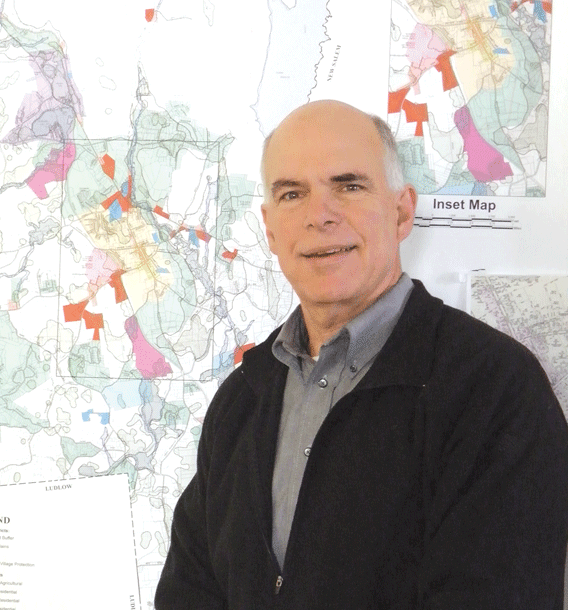
Edwards, Melissa C.
27 Winter St.
Northampton, MA 01060
Chapter: 7
Filing Date: 01/03/14

Faria, Bruce Alan
Faria, Holly Beth
19 Spring St.
Westfield, MA 01085
Chapter: 7
Filing Date: 01/06/14

Febus, Diana M.
70 Walnut St., Apt 502
Holyoke, MA 01040
Chapter: 7
Filing Date: 01/10/14

Gajewski, David Michael
18 Wildermere St.
Chicopee, MA 01020
Chapter: 7
Filing Date: 01/11/14

Gonzalez, Ruben
40 Erline St.
Chicopee, MA 01013
Chapter: 7
Filing Date: 01/07/14

Hosek, Mark K.
36 Rivers Ave., Apt. 1L
Chicopee, MA 01013
Chapter: 7
Filing Date: 01/06/14

Johnson, Steven T.
3168 Chestnut Hill Ave.
Athol, MA 01331
Chapter: 7
Filing Date: 12/31/13

Jones, Natasha Chistene
122 Chestnut St., Apt. #408
Springfield, MA 01104
Chapter: 7
Filing Date: 12/31/13

Kennedy, John C.
24 East St., Apt. 1
Lee, MA 01238
Chapter: 13
Filing Date: 12/31/13

Kleszczynski, Matthew C.
9 Hillside Ave.
South Hadley, MA 01075
Chapter: 7
Filing Date: 01/14/14

Lacross, Melanie L.
Lacross, Keith B.
168 Eastwood Dr.
Westfield, MA 01085
Chapter: 7
Filing Date: 12/31/13

Langlois, Joseph P.
89 River Road
Agawam, MA 01001
Chapter: 13
Filing Date: 01/06/14

LaRoche, Marianne Frances
408A Bridge Road
Florence, MA 01062
Chapter: 7
Filing Date: 01/03/14

Lozada, Neftali L.
a/k/a Otero, Neftali L.
Rivas, Ana I.
87 Wilbraham Ave.
Springfield, MA 01109
Chapter: 7
Filing Date: 01/10/14

Martino, Antonio
193 Millbrook Dr.
East Longmeadow, MA 01028
Chapter: 7
Filing Date: 01/14/14
McComb, Robert King
McComb, Barbara Ann
74 Dole Road
Gill, MA 01354
Chapter: 7
Filing Date: 01/08/14

McGregor, Stuart
McGregor, Jessica L.
156 Northwest St.
Feeding Hills, MA 01030
Chapter: 7
Filing Date: 01/14/14

Morin, Paul J.
Morin, Carol
30 West St.
Granby, MA 01033
Chapter: 7
Filing Date: 01/07/14

O’Connor, Catherine E.
54 Providence St., 3rd
Chicopee, MA 01020
Chapter: 7
Filing Date: 01/13/14

Pastreck, Joseph T.
143 Kibbe Road
East Longmeadow, MA 01028
Chapter: 7
Filing Date: 01/02/14

Punderson, Peter S.
191 Pease Road
East Longmeadow, MA 01028
Chapter: 7
Filing Date: 01/11/14

Roy, Penny A.
576 Crescent St.
Athol, MA 01331
Chapter: 7
Filing Date: 12/31/13

Saia, Frank R.
a/k/a Saia, Francisco R.
502 Frank Smith Road
Longmeadow, MA 01106
Chapter: 7
Filing Date: 01/13/14

Sharrow, Charles
Sharrow, Mary Ann
1530 Southampton Road
Montgomery, MA 01085
Chapter: 7
Filing Date: 01/08/14

Sickler, Linda Grace
a/k/a Sickler-Richard, Linda Grace
184 Stebbins St.
Belchertown, MA 01007
Chapter: 7
Filing Date: 01/08/14

Siniscalchi, Michelle M.
a/k/a Moore, Michelle M.
165 Wilbraham Road
Hampden, MA 01036
Chapter: 7
Filing Date: 12/31/13

Son, Sothy S.
392 Paige Blvd.
Springfield, MA 01104
Chapter: 7
Filing Date: 01/06/14

Walker, Linda A.
269 Stony Hill Road
Building G3, #101
Wilbraham, MA 01095
Chapter: 7
Filing Date: 01/06/14

Wheelock, Kenneth A.
54 South St.
Three Rivers, MA 01080
Chapter: 7
Filing Date: 01/15/14

DBA Certificates Departments

The following Business Certificates and Trade Names were issued or renewed during the month of January 2014.

AGAWAM

Kondreanu Family Promoter
19 Harding St.
G & D Kondreanu

S & H Daily Music
124 Main St.
Maria Duducal

Trend Sound Promoter
33 Valley St.
Vyacheslav Sholopa

CHICOPEE

Chicopee Urgent Care
1505 Memorial Dr.
Ahmed Elmogy

Concierge Enterprise
92 Stonina Dr.
Felix Maldonado

Lamode
619 McKinstry Ave.
Joslie Otero

GREENFIELD

Adam & Eve
18 Main St.
Scott McGregor

Alan’s Auto
10 Montague City Road
Alan Owseichik

Currie’s Lawn Care
104 High St.
Michael Currie

Extreme Styles
395 Federal St.
Linda Peters

Fitz, Vogt, & Associates
1 College Dr.
Mark Fortino

Hillside Woodworking
1173 Bernardston Road
Robert Callahan

New England Camper Repair
1399 Bernardston Road
Jeffrey Ennis

Prospective Planning
3 Grinnell St.
Wendy Marsden

HOLYOKE

City Pizza, LLC
420 High St.
Adam Kaplan

Coamo Fashion
343 High St.
Alberto Berrios

Westfield Wealth Management & Insurance Group
330 Whitney Ave.
Sean A. Torres

PALMER

2000 Food and Fuel
1239 Park St.
Muhammad Waseen

Chmura’s Bakery
1240 Park St.
Rocky Salundor

Cutting Corner Inc.
1372 Main St.
Carol Henriques

Des Woodworking
1132 Thorndike St.
Dustin Smith

Healing Hands for Body & Mind
54 South St.
Patricia Wheelock

SPRINGFIELD

Bay Street Bottles
836 Bay St.
Khanh H. Nguyen

Baystate Builders
44 Bither St.
Gino Decesare

Beyond Shoes & Accessories
10 Kendall St.
Vito C. Resto

Big Daddy Boomerangs
88 Coral Road
Jeffrey N. LeBeau

Bosslife Inc.
2383 Main St.
Rafael Nazario

CCNE
27 Carver St.
Monica J. Caldwell

Concentra Advanced
140 Carando Dr.
Joan O. Lenahan

Fragrant Elegance
13 Lawn St.
Malachi Tresch

Holyoke Nail II
471 Boston Road
Tho H. Nguyen

J. Horne Photography
143 Main St.
Jesse E. Horne

J.J. Knox Food Market
17 Knox St.
Jabir Khan

Jay Harland Corporation
504 St. James Ave.
Richard M. Black

Knots Indeed
63 Lakevilla Ave.
Rita F. Bartholomew

Lizet Land Photography
219 Gifford St.
Lizet Land

M.S.M. Enterprises Inc.
766 Liberty St.
Mark Flagg

WESTFIELD

Alla’s
3 Scarfo Dr.
Alla Y. Khivuk

Cadence Aerospace
35 Turnpike Industrial Road
Larry Resnik

EMN
19 Oakdale St.
Nadia Mocan

Genkas Trend Sound
33 Buschmann Ave.
Gennadiy Laba

KG Heating & Air Conditioning
44 Forest Ave.
Kenneth Garrett

iLab Trend Sound Promoter
30 Buschmann Ave.
Inna Laba

J. Shea Enterprises
243 Elm St.
J. Shea Enterprises

Lurii Covileac
21 Parkside Ave.
Lurii Covileac

Valentin Trend Sound
77 George St.
Valentin Bidyuk

WEST SPRINGFIELD

Akim Construction
455 Union St.
Timofiy Akimov

Bel-Air Inn
387 Riverdale St.
Richard Harty

Boosted Shades
193 Cayenne St.
Devan C. French

Bueno Y Sano
935 Riverdale St.
Robert A. Lowry

China Bodywork Center
2009 Riverdale St.
Xiuping Gao

Epco NBF Group
10 Central St.
James Marcus

La Prestiges Salon and Spa
553 Union St.
Tatyana Gitsman

Larry’s Painting
79 Lathrop St.
Lawrence P. Kelly

Make it Yours
237 Morton St.
Valentina Shyshla

Supreme Brass and Aluminum
210 Windsor St.
Domenico R. Rettura

YNS International
1521 Westfield St.
Yegor Stefanstsev

Departments Incorporations

The following business incorporations were recorded in Hampden, Hampshire, and Franklin counties and are the latest available. They are listed by community.

BELCHERTOWN

Krunali Inc., 134 South St., Belchertown, MA 01007. Hemant Kumar Patel, same. Recycling services.

EAST LONGMEADOW

Lingualinks International Online Inc., 117 Millbrook Dr., East Longmeadow, MA 01028. Katherine Delaney Chung, same. Internet-based program designed to teach world cultures and languages to children around the world.

GRANVILLE

Little Birch Inc., 33 South Lane, Granville, MA 01034. Susan L. Brzoska, same. Acquire, buy, own, maintain, lease, rent and sell real property.

MONSON

Metamorphosis Place Inc., 23 Munn Road, Monson, MA 01057. Judy A. Van De Geer, same. Non-profit organization designed to assist people to grow in mind, body and spirit.

NORTH ADAMS

Northern Berkshire Interfaith Action Initiative Inc., 43 Eagle St., North Adams, MA 01247. Food pantry.

NORTHAMPTON

Infusion Institute Inc., 40 Fort St., Apt. 1, Northampton, MA 01060. Dennis George Lomax, same. Non-profit organization designed exclusively for educational purposes.

Inner Imager Productions Inc., 45 Olander Dr., Northampton, MA 01060. Peter Halperin, same. Multi-media entertainment business consultants.

Lange Chiropractic Inc., 300 Pleasant St., Suite 2, Northampton, MA 01060. Kimberly A. Lange, 7 Pheasant Lane, South Hadley, MA 01075. Chiropractic office.

Laurie E. Herzog, PH.D., P.C., 155 Main St., Northampton, MA 01060. Laurie E. Herzog, 367 Prospect St., Northampton, MA 01060. Clinical social work services.

PITTSFIELD

M & T Auto Sales Inc., 376 Tyler St., Pittsfield, MA 01201. Taylor Barlett,
56 Barlett Ave., Pittsfield, MA 01201. Auto sales.

Mickle Electric Inc., 489 Dalton Ave., Pittsfield, MA 01201. Patrick W.
Mickle, 6 Park Dr., Lanesboro, MA 01237. Master electrician.

WEST SPRINGFIELD

It’s West Springfield Inc., 10 Central St., Ste 20, West Springfield, MA 01089. Roberta Page, 117 Upper Beverly Hills, West Springfield, MA 01090-0423. Non-profit organization designed to plan, encourage, support, establish and promote community activities and events.

J Shea Enterprises Inc., 95 Poplar Ave, West Springfield, MA 01089. James Shea, same. Barber shop.

JX2 Productions Inc., 80 Windsor St., Suite C, West Springfield, MA 01089. Event production services. Andrew P. Jensen, same.

Raising Hope Together Inc., 61 Upper Church St., West Springfield, MA 01089. Emil Farjo, 323 Rogers Ave., West Springfield, MA 01089. Established to provide for the needs of West Springfield residents who are affected by natural or man-made disasters.

WESTFIELD

Ray of Hope International Church, 15 Summer St., first Floor, Westfield, MA 01085-3104. Parlad Gurung, same. Church.

SPRINGFIELD

La Minita De Kelsey Inc., 84 Woodside Terrace, Springfield, MA 01108.
Eugenio Valdez, same. Grocery market.

Minot Peak Management Inc., 14 Larkspur St., Springfield, MA 01108.
Jennifer P. Metsch, same. Real estate acquisition, ownership, leasing and management.

Money Squared Inc., 97 Florence St, Apt. 2, Springfield, MA 01105. Daniel C. Becker, same. Manufacturing of digital currency.

Ramani Inc., 1534 State St., Springfield, MA 01109. Kiesha R. Edmondson, 206 Miller Way, Windsor, CT 06095. Restaurant and bar.

Rexco Inc., 1082 Page Boulevard, Springfield, MA 01104. Holly E. Ferris, same. Ownership and operation of a property.

Company Notebook Departments

Paragus IT Sets Up Shop Temporarily in Springfield
SPRINGFIELD — The staff of Paragus IT is currently operating out of an office at Harrison Place in downtown Springfield while waiting for a new, state-of-the-art headquarters to be built in Hadley. “It’s great to be part of the vibrant business culture downtown,” said Paragus CEO Delcie Bean. “Many of our clients
and friends are here, and we’re always looking to connect and network with other area businesses.” Paragus brings a staff of more than 35 technicians and business professionals into the downtown economy, and takes on new hires every six to eight weeks.  For the past two years, the company was were named in Inc.’s annual ranking of the 5,000 fastest-growing businesses. With a 546% growth rate since 2008, Paragus is the second-fastest-growing outsourced IT firm in New England. After eight years at its Russell Street headquarters in Hadley, Paragus will be moving to a new commercial office building, also in Hadley, later this year. The new space is 8,000 square feet, nearly four times the size of the former location. Bean has indicated that, if things go well downtown, he may consider maintaining a permanent satellite office there.

North Brookfield Savings Bank Named a Preferred Lender by SBA
NORTH BROOKFIELD — North Brookfield Savings Bank (NBSB) has been awarded status as a Preferred Lender for the Small Business Administration (SBA), which can mean faster loan approval for customers.
“To be awarded the SBA’s Preferred Lender status is a privilege, and we are proud to recognize North Brookfield Savings Bank for their lending performance and reputation,” said Massachusetts SBA Director Robert Nelson. “We look forward to working more closely with them and their customers now and in the years ahead.” As a member of the SBA’s Preferred Lender Program, NBSB has the authority to issue an SBA-guaranteed loan without prior SBA review and approval. Membership in the program is given only to financial institutions that have a proven capability and commitment to small-business lending, and strict adherence to SBA guidelines. “The SBA Preferred Lending designation gives us the ability to streamline our commercial-loan process, which in turn will allow us to approve and close SBA loans more efficiently,” said Anthony Piermarini, senior vice president and senior commercial loan officer. “We are proud of our membership in the Preferred Lender Program. The NBSB Commercial Lending team has worked diligently to provide loans to businesses in our community, and achieving this status demonstrates our commitment to small-business lending and our business community.” Rick Egan, NBSB vice president and commercial loan officer, will serve as the bank’s SBA loan specialist.

Briefcase Departments

Community Partnerships Created to Promote Health
BOSTON — Gov. Deval Patrick’s administration recently announced more than $40 million in grants to nine community-based partnerships — including networks in Holyoke and Pittsfield — to help fight chronic illness and improve health outcomes while reducing healthcare costs. Part of the Prevention and Wellness Trust Fund, this first-in-the-nation effort is part of a $60 million grant over four years created by the Legislature and administered by the Department of Public Health (DPH). “In Massachusetts, we believe that healthcare is a public good, and every resident deserves access to affordable, quality care. These grants will help us reach that goal by funding the intervention strategies proven to work,” Patrick said. The fund supports community-based partnerships in achieving measurable health goals through research-based interventions. Working together, municipalities, healthcare systems, community organizations, businesses, regional planning organizations, and schools design community-specific programs addressing issues such as hypertension, smoking, falls prevention among older adults, and pediatric asthma. As a condition of funding, each partnership must achieve specified health and cost-saving benchmarks on at least two of the four health issues prioritized by the trust. “As a registered nurse, I’ve seen the power of prevention in improving health outcomes, and the importance of local partnerships in driving change at the community level,” said DPH Commissioner Cheryl Bartlett. “These Prevention and Wellness Trust Fund grants will promote both of these worthy objectives in cities and towns across the Commonwealth.”  Funded partnerships will work to reduce rates of the most prevalent and preventable health conditions, advance healthy behaviors, increase the adoption of workplace wellness or health-management programs, and address health disparities. Each of the nine grantees will receive up to $250,000 for the first phase of their work. As grantees demonstrate their readiness to implement interventions in community and clinical settings, they will receive additional funding between $900,000 and $1.5 million for each of the next three years. The amount each partnership receives depends upon population covered and the number of conditions addressed. The two local coordinating organizations are Berkshire Medical Center (partnering with Berkshire County Boards of Health, Berkshire United Way, Berkshire Regional Planning Commission, Berkshire Public Health Alliance, Fairview Hospital, North Adams Regional Hospital, North Berkshire Community Coalition, and Tri-town Health Department District); and Holyoke Health Center (partnering with the city of Holyoke, Greater Holyoke YMCA, Holyoke Medical Center, River Valley Counseling Center, and Western Mass Physician Associates). For more information on the Prevention and Wellness Trust Fund, visit mass.gov/pwtf.

Markey, Warren Press for Release of Heating Assistance
WASHINGTON — With millions of families facing harsh weather and economic conditions and nearly $490 million still remaining this year for the nation’s low-income heating-assistance program following recent passage of the omnibus spending bill, U.S. Sens. Edward Markey and Elizabeth Warren called on the Obama administration to immediately distribute those energy assistance benefits to Massachusetts residents. In a letter sent to Health and Human Services Secretary Kathleen Sebelius, the senators argue that budgetary certitude created by passing the 2014 appropriations bill allows the department to immediately distribute the almost $490 million remaining in the Low Income Home Energy Assistance Program (LIHEAP). Temperatures have fallen in recent weeks to dangerous levels, but home heating prices have risen more than forecast. “A combination of frigid temperatures and higher than anticipated energy prices is creating a dire situation for many New England households,” according to the letter. “Releasing the nearly $490 million in remaining LIHEAP funds for this year as soon as possible is imperative to ensure that families who have already been stretched to the limit by these cuts can continue to pay their heating bills. We urge HHS to immediately release Massachusetts’ share of all remaining heating-assistance funds for the current year.” LIHEAP funding has also been cut by about one-third over the last four years, leading to a reduction in benefits and the number of families receiving assistance in many states. Markey and others have called for a restoration of full funding for the LIHEAP program to $5.1 billion per year.

Massachusetts Adds 10,300 Jobs in December; State’s GDP on Rise
BOSTON — The Executive Office of Labor and Workforce Development (EOLWD) recently reported that the Bureau of Labor Statistics’ (BLS) preliminary estimates show that Massachusetts added 10,300 jobs in December, and the total unemployment rate was 7.0%. Over the year, the unemployment rate was up 0.3% from the December 2012 rate of 6.7%. The private sector added 10,400 jobs in December as professional, scientific, and business services; trade, transportation, and utilities; leisure and hospitality; financial activities; and other services all added jobs. Over the year (December 2012 to December 2013), Massachusetts added 55,500 jobs in total, 54,500 of which were in the private sector. The December 2013 estimates show 3,237,600 Massachusetts residents were employed and 243,800 were unemployed, for a total labor force of 3,481,300. The December labor force decreased by 1,900 from 3,483,200 in November 2013, as 100 more residents were employed and 1,900 fewer residents were unemployed over the month. The labor force was an estimated 500 below the 3,481,800 December 2012 estimate, with 10,600 fewer residents employed and 10,300 more residents unemployed. Meanwhile, Massachusetts real gross domestic product grew at an estimated annual rate of 5.5% in the fourth quarter of 2013, according to the MassBenchmarks Current Economic Index. MassBenchmarks is the journal of the Massachusetts economy published by the UMass Donahue Institute based in Hadley in collaboration with the Federal Reserve Bank of Boston. It reports that the state’s economy is growing faster than the nation’s as a whole. The U.S. Department of Commerce reports national real gross domestic product grew at an annual rate of 3.2% during the same period. In 2013, state economic growth outpaced that of the nation in three of four quarters, according to the report. “The Massachusetts economy appears to be benefiting from improving conditions in national and international economies, and by increasingly confident households who are demonstrating a willingness to spend,” writes Alan Clayton-Matthews, MassBenchmarks senior contributing editor and associate professor of economics and public policy at Northeastern University.

Departments People on the Move

Christopher Marini

Christopher Marini

Theresa Glod

Theresa Glod

Teresa Perkins

Teresa Perkins

Meyers Brothers Kalicka, P.C. recently hired two new Associates, Christopher Marini and Theresa Glod, and announced the promotion of Teresa Perkins. Marini and Glod will work closely with clients in the firm’s Accounting and Auditing department.  Before coming to MBK, Marini interned for two years at Pignatare and Sagan, LLC, Certified Public Accountants, and earned a BBA from UMass Isenberg School and Commonwealth Honors College. He is currently pursuing his MSA at UConn, and is a member of the Mass. Society of CPAs. Glod worked previously at PricewaterhouseCoopers in New York City, and holds a BBA in Accounting and an MS in Accounting from Western New England University. She is currently sitting for her CPA exam.  Perkins was promoted to Senior Associate in the Audit and Accounting division; she was previously a Staff Audit Associate and, before coming to MBK, was a staff accountant at Big Y Foods. Perkins is a graduate of Western New England University, earning a bachelor’s degree in 2006 and an MS in Accounting in 2009. She is currently studying for the CPA exams.
•••••
Lori Gazzillo

Lori Gazzillo

Berkshire Bank recently announced that Lori Gazzillo has been promoted to Vice President and Director of the Berkshire Bank Foundation. Gazzillo will oversee the bank’s two foundations, one of which provides grants to nonprofit organizations in the communities served by Berkshire Bank, and the other in which the foundation administers the bank’s extensive employee volunteer program and scholarship program. Gazzillo has served for the past year as the foundation’s Assistant Director and assumed the key leadership role with the retirement of Peter Lafayette as former director after eight years of service on Dec. 31, 2013. Lafayette will continue in an advisory capacity. Gazzillo joined Berkshire Bank in July 2011 from Legacy Banks after Berkshire Bank and Legacy merged. While at Legacy, she served as Vice President of Community Relations. Prior to her banking career, Gazzillo worked for nine years at Massachusetts College of Liberal Arts (MCLA), overseeing the institution’s public relations. Currently she serves on the Berkshire Chamber of Commerce Board of Directors, Multicultural BRIDGE, and Berkshire Business and Professional Women. She holds a BA in Journalism from Keene State College and a M.Ed. from MCLA.
•••••
The Westfield-based engineering firm Tighe & Bond recently promoted five employees who have demonstrated exceptional performance, client service, and leadership. Three of the five have been promoted to Associate within the firm’s stock ownership program; they are:
Briony Angus

Briony Angus

• Briony Angus, AICP, a project manager who joined Tighe & Bond’s Westfield office in 2008. Angus is an environmental and land-use planner with 15 years of experience managing development projects that require approvals from local, state, and federal regulatory agencies. A certified land-use planner, Angus is a member of the American Planning Assoc., and Chair of the Amherst Conservation Commission. Angus has a BA from McGill University and a MA in Urban and Environmental Policy and Planning from Tufts University;


Susan Guswa

Susan Guswa

Susan Guswa, P.E, a senior engineer who joined Tighe & Bond’s Westfield office in 2003. She has more than 18 years of experience, serves as a project manager and design engineer for major wastewater upgrades throughout New England, and is Tighe & Bond’s Wastewater Technical Practice Group Leader. Guswa holds a BS in Civil and Environmental Engineering from Duke University and a MS in Civil and Environmental Engineering from Stanford University. She is a member of the Water Environment Federation and the New England Water Environment Assoc., and


David Popielarczyk

David Popielarczyk

David Popielarczyk, P.E., a senior engineer who joined Tighe & Bond’s Westfield office in 1986, and has more than 27 years of experience in the planning, evaluation, design, and construction management of water resources and wastewater projects. Popielarczyk received his BS in Civil Engineering from the University of Hartford, and a MS in Environmental Engineering from UMass Amherst.  He is a member of the American Society of Civil Engineers, the New England Water Works Assoc., the New England Water Environment Assoc., and the Water Environment Federation.
Also promoted into the stock ownership program were:
• Gary Roberts, an environmental scientist in the firm’s Westfield office; and
• Joseph Persechino, P.E., LEEP AP, a project manager in the firm’s Portsmouth, N.H. office.
•••••
The Springfield-based regional law firm of Bacon Wilson, P.C. announced the following:
Benjamin Coyle

Benjamin Coyle

Benjamin Coyle has been named a shareholder. He is a member of the firm’s business and corporate, estate planning and elder, litigation, municipal departments, and is a five-time recipient of the SuperLawyers Rising Stars distinction and a board member of the Western Mass. Council of the Boy Scouts of America. Coyle earned his J.D. from Western New England University School of Law and his B.S.B.A. from Western New England University.


Adam Basch

Adam Basch

Adam Basch has been named a shareholder of the firm. He is a member of the litigation department, practices in the areas of construction litigation, personal injury, general litigation, and commercial litigation. He is the former secretary of the Hampden County Bar Association, a six-time recipient of the SuperLawyers Rising Stars distinction, and serves as a member of the Wilbraham Planning Board and the United Way Allocation Committee. He teaches litigation and business law at Bay Path College and is the author of numerous construction and general litigation articles. Basch earned his J.D. from Western New England University School of Law and his B.A. from Union College.

Agenda Departments

YMCA Annual Dinner
Feb. 12: Community members will gather at Mill 1 at Open Square for the Greater Holyoke YMCA’s 2014 Annual Dinner. The dinner celebrates and honors those who give unselfish gifts of time and energy to the community. This year’s Louis F. Oldershaw Community Service Award recipient is Attorney Mark Beauregard. The Oldershaw Award is given to an individual who has made significant volunteer contributions to the community and emulates a high standard of excellence in his or her life, professional achievements, and community service. The Y will also recognize the generous volunteer contributions of Joanne and Scott Harper of South Hadley, recipients of the Y’s 2014 Distinguished Service Award. The Harpers have volunteered with the Y’s Viking Swim Team for many years and have been instrumental in the team’s success. The Annual Dinner is $40 per person. Those interested in attending may either call the Y to register at (413) 534-5631, ext. 126, or visit the Y’s website at www.holyokeymca.org to register and pay in advance.

ACCGS Outlook Luncheon
Feb. 24: Join the Affiliated Chambers of Commerce of Greater Springfield for the region’s largest legislative event, discussing the most pressing local, regional, and federal issues of the day. The luncheon is slated for 11:30 a.m. to 1:30 p.m. at the MassMutual Center. The keynote speaker is Ed Henry, White House correspondent for Fox News. Presented by Health New England and sponsored by Eastern States Exposition, MassMutual Financial Group, PeoplesBank, United Personnel, Western Massachusetts Electric Co., Chicopee Savings Bank, and Verizon, as well as reception sponsors Comcast, the Sisters of Providence Health System, and the Republican, Outlook typically attracts more than 700 guests. Area elected officials will also be in attendance to participate in this discussion of front-burner issues. Tickets are $50 for ACCGS members and $70 for general admission. Reserved tables of 10 are available. Reservations must be made in writing and in advance by Feb. 14. Reservations may be made online at www.myonlinechamber.com, by e-mailing Cecile Larose at [email protected], or by faxing a reservation request to (413) 755-1322.

Dark Dining Room House Concert Series
March 1, April 5, May 3: This winter and spring, Dark Dining Room brings the warmth and coziness of your living room to the grandeur of Wistariahurst. Concert curators Matthew Larsen and Greg Saulmon will serve up several courses of local and national musicians over the first Saturdays of March through May. While no dinner will be served, there will be light refreshments provided by Tony Jones Catering, as well as a cash bar. Doors open at 7 p.m. for all shows. Reservations are suggested. Tickets cost $18 ($15 for members) and can be purchased online at wistariahurst.org or by calling the museum at (413) 322-5660. The March 1 concert features Heather Maloney, who boasts influences and roots in adventurous folk. Rosary Beard, whose intricately intertwined acoustic guitars skate a thin line between melancholy reflection and uplifting release, will open the show. On April 5, Dark Dining Room introduces Colorway, a power trio fronted by Western Mass. native F. Alex Johnson. Introspective songsmith and acoustic guitarist Mark Schwaber opens the show. The final concert on May 3 features acoustic guitarist David Berkeley, a Santa Fe-based troubadour who brings his version of Americana to the stage. Matthew Larsen and the Documents open the show with introspective piano pop layered with careful instrumentation and thoughtful harmonies. For more information about the Dark Dining Room House Concert Series, go to darkdiningroom.com. This program is supported in part by a grant from the Holyoke Cultural Council, a local agency which is supported by the Massachusetts Cultural Council.

Difference Makers 2014
March 20: The sixth annual Difference Makers award program, staged by BusinessWest, will be held at the Log Cabin Banquet & Meeting House, honoring the five individuals and organizations featured in the special section of this issue. More details on the event will be published in upcoming issues of the magazine, but tickets cost $60, and tables of 10 are available. Difference Makers is a program, launched in 2009, that recognizes groups and individuals that are, as the name suggests, making a difference in this region. Event sponsors include Baystate Medical Center, Health New England, First American Insurance, Meyers Brothers Kalicka, Northwestern Mutual, Royal LLP, Sarat Ford, and Six-Point Creative. For more information, call (413) 781-8600.

Chamber Corners Departments

ACCGS
www.myonlinechamber.com
(413) 787-1555
• Feb. 12: ACCGS Lunch ’n’ Learn, 11:30 a.m. to 1 p.m., at Lattitude, 1338 Memorial Ave., West Springfield. “Yabba Dabba Doo: the Art of the Brand.” The creative team at the full-service marketing and advertising agency of Andrews Associates will take attendees through a comprehensive look at branding, best practices to create an effective and compelling brand, and how to win customer loyalty through branding. Reservations are $20 for members, $30 for general admission, and may be made online at www.myonlinechamber.com or by contacting Cecile Larose at [email protected].

• Feb. 24: ACCGS Outlook 2014, 11:30 a.m. to 1:30 p.m., at the MassMutual Center, 1277 Main St., Springfield. Featuring Ed Henry, Fox News Channel’s chief White House correspondent. Reservations are $50 for members, $70 for general admission. Deadline for reservations is Feb. 17.  Presented by Health New England and sponsored by Eastern States Exposition, MassMutual Financial Group, PeoplesBank, United Personnel, and Western Massachusetts Electric Company. Reservations may be made online at www.myonlinechamber.com or by contacting Cecile Larose at [email protected].

AMHERST AREA CHAMBER OF COMMERCE
www.amherstarea.com
(413) 253-0700

• Feb. 12: Chamber Breakfast, 7:15-9 a.m., at the Hadley Farms Meeting House, 41 Russell St., Route 9, (in the Hampton Village Barn Shops). Sponsored by the Franklin Hampshire Career Center. Cost is $15 for members, $20 for non-members. To register, e-mail [email protected], or call (413) 253-0700.
• Feb. 26: Chamber After 5, 5-7 p.m., at Cowls Building Supply, 125 Sunderland Road, Amherst. Tickets are $10 for members, $15 for non-members.

CHICOPEE CHAMBER OF COMMERCE
www.chicopeechamber.org
(413) 594-2101

• Feb: 19: February Salute Breakfast & Annual Meeting, 7:15-9 a.m., at the MassMutual Learning & Conference Center. Cost is $20 for members, $26 for non-members. Reservations may be made online at www.chicopeechamber.org.
• Feb. 26: February Business After Hours, 5-7 p.m., at  Elms College, 291 Springfield St., Chicopee. Cost is $5 for members, $15 for non-members. Reservations may be made online at www.chicopeechamber.org.

GREATER HOLYOKE CHAMBER OF COMMERCE
www.holycham.com
(413) 534-3376

• Feb. 13: Chamber Table Top Workshop: “How to Get People’s Attention and Attract Them to Your Table,” 8:30-10:30 a.m., in the chamber conference room. A no-nonsense informational session on how to set up your booth, how to add visual interest, and what to do to keep potential customers engaged. Cost is $10 for members.
• Feb. 19: Chamber After Hours, 5-7 p.m., at Wistariahurst Museum, 238 Cabot St., Holyoke. Admission is $10 for members, $15 cash for non-members.
• Feb. 26: Holyoke Chamber Economic Development Breakfast, 8-10 a.m. (Save the date. Location to be determined.) Hear about local projects and how they will affect local businesses. Cost is $26 for members, $35 for non-members, which includes a buffet breakfast. Call the chamber at (413) 543-3376 to register, or visit holychamber.com to sign up.

GREATER WESTFIELD CHAMBER OF COMMERCE
www.westfieldbiz.org
(413) 568-1618

• Feb. 12: After 5 Connection, 5-7 p.m., at Armbrook Village, 551 North Road, Westfield. For tickets and more information, call the chamber at (413) 568-1618.
• Feb. 13: Men Are from Mars, Women Are from Venus, 6:30 p.m. Spend Valentine’s Eve at CityStage with your date — the chamber. Enjoy complimentary food and a cash bar in the CityStage Member’s Lounge, get great seats to the performance, and parking is free in the Columbus Center Parking Garage, all for the discounted price of $30 per ticket. Chamber reception, catered by Nora’s Restaurant of Southwick, begins at 6:30 in the CityStage Member’s Lounge. Show begins at 7:30. You can also take part in a drawing for a necklace, valued at $120, donated by Andrew Grant Diamond Center. Sponsored by Comcast Business and Andrew Grant Diamond Center. Thanks to our sponsors, 100% of the $30 ticket cost goes back to the Greater Westfield Chamber of Commerce. For tickets, contact Pam at the chamber office at (413) 568-1618, or e-mail [email protected].

NORTHAMPTON AREA YOUNG PROFESSIONAL SOCIETY
www.thenayp.com
(413) 584-1900

• Feb. 13: February Networking Social, 5 p.m., at the UMass Amherst Fine Arts Center.

PROFESSIONAL WOMEN’S CHAMBER
www.professionalwomenschamber.com
(413) 755-1310

• Feb. 11: Professional Women’s Chamber Ladies Night, 5-7 p.m., at
Kate Gray Boutique, 749 Maple Road, Longmeadow. Seize an opportunity to network socially with other female professionals in a casual and unique setting. Reservations are required; contact Dawn Creighton at [email protected]. The Professional Women’s Chamber is an affiliate of the Affiliated Chambers of Commerce of Greater Springfield.
WEST OF THE RIVER CHAMBER OF COMMERCE
www.ourwrc.com
(413) 426-3880

• Feb. 26: West of the River Chamber of Commerce Legislative Breakfast, 7-9 a.m., at Storrowton Tavern’s Carriage House, West Springfield. Cost: $25 for chamber members, $30 for non-members. For more information, contact the chamber office at (413) 426-3880 or e-mail [email protected].

YOUNG PROFESSIONAL SOCIETY OF GREATER SPRINGFIELD
www.springfieldyps.com

• Feb. 20: Third Thursday, 5-7 p.m., at Samuel’s at the Hall of Fame. This is one of our most well-attended Third Thursdays. Check out the restaurant’s recently revamped menu, which now offers 51 tapas dishes to choose from, at samuelssportsbar.com. Community spotlight: Voices from Inside. For 15 years, Voices from Inside (www.voicesfrominside.org) has been helping women who are or were incarcerated to find their voice, connect with the community, and become leaders. This event is open to everyone. Feel free to invite your friends by clicking ‘Select Guests to Invite’ in the top left corner of the event page. This event, as always, is free for YPS members and $10 for non-members, which includes food and a cash bar.