Daily News

BOSTON — Business confidence continued to rebound during June as Massachusetts methodically reopened its economy and COVID-19 cases surged elsewhere in the country.

The Associated Industries of Massachusetts (AIM) Business Confidence Index rose 6.9 points to 49.0, just a point shy of the level that denotes an optimistic outlook among employers.

The increase, which came three months after the index suffered the largest one-time decline in its history, reflected the relatively smooth rollout of the state’s four-step reopening plan and progress in containing the COVID-19 pandemic.

Confidence was closely linked to where a company was on the reopening schedule. Manufacturing companies, many of which have operated throughout the pandemic as essential businesses or were among the first companies to reopen, were more confident than retail companies and restaurants that had to wait until late June to welcome back customers.

“Companies certainly want to reopen as soon as possible and hire back some of the 1 million Massachusetts residents who lost their jobs during the pandemic. At the same time, the flareup of COVID-19 cases in states that opened aggressively seems to underscore the value of moderation,” said Raymond Torto, professor at the Harvard Graduate School of Design and chair of AIM’s Board of Economic Advisors (BEA).

The constituent indicators that make up the Business Confidence Index were uniformly higher during June. Employers’ confidence in their own companies rose 5.9 points to 51.6, moving into optimistic territory for the first time since the COVID-19 shutdown.

The Massachusetts Index assessing business conditions within the Commonwealth increased 9.4 points to 46.8, leaving it 14.4 points lower than in June 2019. The U.S. Index measuring conditions nationally gained 7.7 points to 43.7, a drop of 14.3 points during the year.

The Current Index, which assesses overall business conditions at the time of the survey, surged 10.2 points to 46.3. The Future Index, measuring expectations for six months out, rose 3.6 points to 51.8. The Employment Index increased 1.8 points in May, while the Sales Index, a leading indicator, gained 11.4 points to 51.7.

Manufacturing companies (49.4) were slightly more confident than non-manufacturers (47.8). Small companies (50.1) were more optimistic than medium-sized companies (49.2) or large companies (46.3). Companies in Eastern Mass. (49.4) were more optimistic than those in Western Mass. (48.5).

Michael Goodman, professor of Public Policy at UMass Dartmouth and a BEA member, said the Massachusetts job picture brightened slightly during the past month as employers began to resume business operations, but that the state economy continues to face significant challenges and uncertainty.

“In addition to its massive disruption to our daily social and economic life, the pandemic presents a significant threat to what are typically two of the Commonwealth’s most stable counter-cyclical employers — healthcare and higher education,” Goodman said. “This will make it more difficult to recover quickly this time, even if we manage to avoid a projected second wave of the COVID-19 virus later this year.”

AIM President and CEO John Regan, also a BEA member, said employers hope Massachusetts can continue to reopen its economy without the surge in COVID-19 cases being seen in states like Texas and Florida.

“Essential companies and early-stage reopening companies continue to operate in a safe and efficient manner,” he noted. “The manufacturing sector in particular has adapted to new safety regulations in a way that should allow business to remain open and put people back to work.”

Daily News

NORTHAMPTON — Levi Smith, owner of Captain Candy in the lower level of Thornes Marketplace, announced he is opening a second store in the Holyoke Mall at Ingleside.

“I’ve survived the COVID-19 shutdown, and I’m excited to be opening a second store in Holyoke,” Smith said.

Captain Candy offers eclectic candies that are not the norm in grocery and convenience stores — everything from gumballs to candy cigarettes, wax bottles full of juice, Turkish taffy, Pop Rocks, and Zotz.

Smith was contacted in January by the owners of Pyramid Management Group, which owns more than a dozen malls in the Northeast, including the Holyoke Mall. “They thought Captain Candy would be a good concept to expand into the mall,” he said, noting that his shop will be located next to the Apple store on the mall’s top floor.

Smith’s Holyoke store opening comes a little over a year after he purchased the Northampton shop from former owner Nolan Anaya. Smith was 18 at the time. Currently, he is a business student at Holyoke Community College.

In the early months, Smith will operate the new store to ensure a smooth start, and then he will hire as needed. Currently, he and six part-time employees operate the Thornes location, which opened in 2013.

After he purchased the Thornes location for an undisclosed amount, Anaya served as a mentor to Smith. “He’s still a resource to me,” Smith said. “He’s been very helpful, but he doesn’t have an active role anymore.”

Smith’s grandfather, Roger Fuller, owns R&R Window Contractors Inc. in Easthampton, and his family has long been involved in the business.

Daily News

WATERBURY, Conn. — Webster Bank became one of the first financial-services companies nationwide to introduce Frontline Heroes, a program for essential healthcare workers and first responders that enhances the financial well-being of those who are on the front lines of the COVID-19 pandemic.

In gratitude for their selfless service, Webster’s new Frontline Heroes program offers a range of financial benefits, including checking accounts free of a monthly maintenance fee and free checking withdrawals at any ATM through December 2021. The program provides new customers with the ability to earn a cash incentive, as well as additional discounts and benefits.

“Our Frontline Heroes deserve to receive financial benefits for all of the sacrifices they have made during this extraordinary time of need,” said Nitin Mhatre, executive vice president and head of Community Banking. “This program is just one small way Webster is saying ‘thank you.’ Our communities are forever indebted to these heroes and their families.”

Frontline Heroes includes any full-time or part-time employee currently in essential healthcare, including hospitals, nursing homes, medical and dental practices, and home healthcare. The program is also available to first responders.

For every new Frontline Heroes customer, Webster will also donate $250 to United Way COVID-19 Response Funds, making a minimum donation of $100,000.

Daily News

SPRINGFIELD — Michael Paysnick, CEO of Springfield Jewish Community Center (JCC), has announced his retirement. Initially intending to retire in September, Paysnick has agreed, in light of COVID-19, to remain until a replacement is hired or until the end of the year.

“We are confident that we will situate an effective CEO to lead us in the years to come,” said Jonathan Goldsmith, president of the Springfield JCC board of directors. “We are fiscally solid; known for our amazing programs, services, and staff; as well as situated in a wonderful geographic location. As such, we are confident we will be hearing from many qualified applicants.”

Paysnick began his career at the JCC as assistant executive director in 1988. In 2008, he succeeded Mark Dindas, now executive director emeritus.

During his tenure, Paysnick helped establish the JCC as the central meeting place of the Jewish and general community. He set the organization on a path to financial sustainability, a goal achieved by working closely with the board of directors. “My work with the board has always been a partnership in which our vision and goals have been developed together and shared,” he said. “Their passion, support, and commitment to the J have inspired my work.”

Paysnick’s formula for accomplishing his leadership goals included a solid support staff. “I believe in hiring the best people, giving them space to create, challenging their ideas, and then providing the support they need,” he said. “Involving stakeholders in the decision-making process is critical to success.”

Goldsmith noted that “Michael was instrumental in expanding existing programs, as well as overseeing the initiation of new and creative programs and services, in a fiscally responsible manner. He successfully achieved the creation of the special-needs program Kehillah. He oversaw the expansion of the after-school program and infant program in the Early Learning Center. In 2011, he achieved the successful hosting of the 2011 JCC Maccabi Games held at the Springfield JCC. During his time at the helm, Michael presided over numerous renovations and infrastructure improvements to the center’s facility.”

The Springfield JCC received several recognition awards under Paysnick’s leadership, including one from Human Resources Unlimited (now Viability), which recognized the JCC for its employment practices of hiring individuals with special needs. The JCC also received the Brianna Award for its commitment to providing quality programs and services for individuals with special needs and their families.

Goldsmith announced that a committee has been formed to assist in the search for a CEO. Chaired by Richard Goldstein and vice-chaired by Sally Schneider, the committee also includes Goldsmith, Sue Kline, Betsy Bertuzzi, Harvey Schrage, Amy Anderlonis, Liz Cohen Rappaport, Lindsey Pratola, and Adam Deutsch.

Cover Story Women in Businesss

In the Right Mold

Pia Kumar

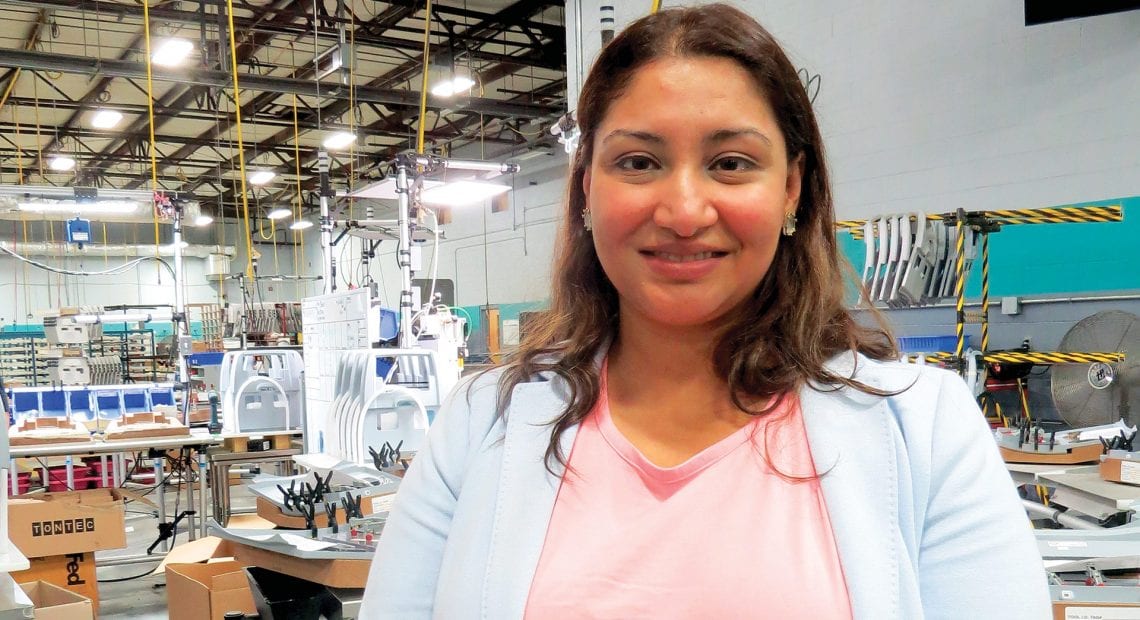
Pia Kumar, ‘chief strategy officer’ at Universal Plastics.

Back in mid-March, Pia Kumar recalls, at the height of the first wave of the COVID-19 pandemic, there was a good deal of absenteeism at the five plants within the Universal Plastics fold — maybe 40% by her estimate, a number that spoke volumes about the high levels of fear and anxiety within the workforce.

So Kumar, who co-owns the Universal family of businesses with her husband, Jay, and has the title ‘Chief Strategy Officer’ printed on her business card, did what she says comes naturally to her.

She got on the phone.

“I called every single employee that was not here and talked to them about their concerns,” she told BusinessWest, noting that this was maybe 200 people across the five facilities. “In some cases, I talked to their wives, their husbands, their children; I wanted to understand what we could do together as a business to make sure they could come back in and do the essential work we were doing.

“We make the diagnostic machines used to test for COVID, so we needed to come back in and get working, but we needed to keep people safe,” she went on. “There was a lot of uncertainty, and we needed to establish trust.”

The company earned it by taking painstaking steps to comply with work regulations put in place in four different states — everything from masks and face shields to social-distancing measures and temperature checks, with most ideas coming from employees. And in a matter of a few short weeks, absenteeism all but disappeared.

“It’s strange — in some ways, I feel more connected to people these days. I think it’s because there’s been so much uncertainty and so many questions. There’s so many things we don’t know; it’s almost as if it [the pandemic] has given us a way to come together closer and talk about things more openly.”

Kumar’s phone calls, and those subsequent actions taken by the company, provide some valuable insight into not only her management style — although it certainly does that — but also into her approach to business and her specific, and very broad, role with the company.

Indeed, while she’s certainly involved with strategy, as that business card would indicate, and she is involved in virtually every aspect of the business, she’s predominantly focused on people and their well-being. And that goes for the community, as well as the Universal ‘family.’

This is evidenced by something she calls ‘office hours.’ These are the twice-monthly Zoom meetings she conducts with employees at each plant to help them feel more connected at a time when traveling to those plants is far more difficult and, well, people need a connection.

And she’s finding that, while Zoom is certainly a different experience than the in-person office hours she had been conducting until the pandemic (more on those later), they’re in some ways more effective.

“It’s strange — in some ways, I feel more connected to people these days,” she noted. “I think it’s because there’s been so much uncertainty and so many questions. There’s so many things we don’t know; it’s almost as if it [the pandemic] has given us a way to come together closer and talk about things more openly.”

It’s also on display in a number of programs and initiatives she’s helped introduce at the company that are designed to help individuals overcome barriers to employment and success in the workplace — and in life itself.

“We have someone in our HR department whose whole job is to make sure that we make people successful outside of work, so that they can be successful at work.” she said of efforts to help employees with everything from attaining a driver’s license to securing day-care services.

Pia Kumar shows off some of the company’s new face shields

Pia Kumar shows off some of the company’s new face shields with ‘skirts,’ one of many new products it has developed in the wake of the pandemic.

As for her own efforts in the realm of work-life balance, she said, simply, “I work at it.”

By that, she meant that she finds time for work, family, and to be alone for a few moments each day, early in the morning — time she spends meditating and planning, for the most part.

“I need to get my planning done to feel prepared for my day,” she explained. “I do a 10-minute meditation, then I spend 30 minutes planning, and then I take my dog for a walk; it works for me.”

For this issue and its focus on women in business, we talked at length with Kumar about her work with her husband to grow and expand Universal. But mostly, the talk was about people and helping them handle all that work and life can throw at them — even a global pandemic.

Clear Intentions

As she talked with BusinessWest in the company’s recently opened corporate offices, located next door to the Holyoke plant on Whiting Farms Road, Kumar showed off a display of one of the latest additions to the company’s portfolio of products.

These are face shields — which the company started making a few months ago to help meet demand for personal protective equipment within the region — that feature what she called ‘skirts.’

Designed specifically for teachers, these customized products allow for open communication without muffling the voice or hiding expressions — things masks can’t do — while providing more protection than a common face shield.

“You can wear it all day — you’re fully covered, you’re fully sealed,” she said while demonstrating the product, noting there are several styles, including models invoking Halloween and Christmas, and another promoting breast-cancer awareness. Response has been good, she noted, and there are ongoing discussions about perhaps making such shields for children.

These PPE products are part of the company’s pivoting efforts during the pandemic, she explained — a way to assist the community and especially the healthcare and education sectors while also keeping employees working at a time when many traditional customers, including those in aerospace and medical-device manufacturing, have scaled back as a result of the pandemic.

And such efforts are among the current focal points for the Kumars, who acquired Universal Plastics roughly eight years ago — she dates the transaction to the birth of their first child — from long-time owner Joe Peters. Flashing back to that purchase, Pia said the couple, who met while they were both working in finance in New York after graduating from college, were looking for a challenge they could undertake together.

“We had always had this dream to someday own and run a small business together,” she said. “We just liked the idea of building something, we liked the idea of having autonomy, we liked the idea of taking something, growing it, and making it our life’s work.”

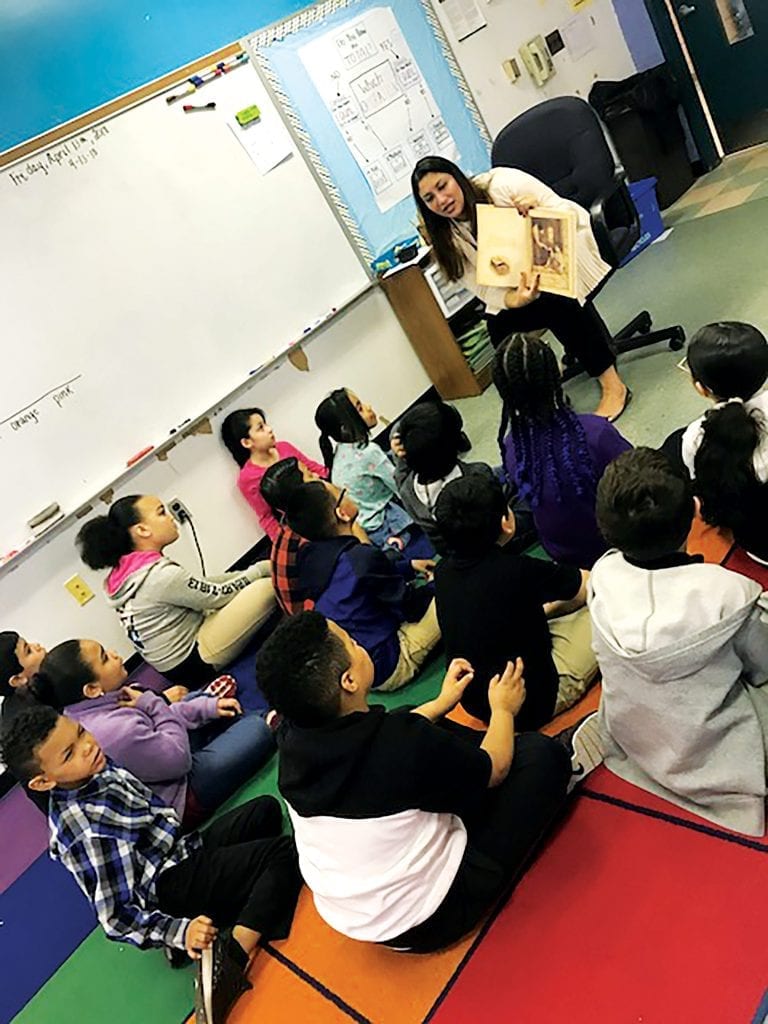
Pia Kumar, seen here reading to children at the Morgan School in Holyoke

Pia Kumar, seen here reading to children at the Morgan School in Holyoke as part of the company’s Link to Libraries sponsorship, says her discussions with employees have helped her understand the many barriers that people face when it comes to succeeding in the workplace.

And that’s exactly what has happened with Universal, a company launched by Joe Peters’ father in Chicopee and eventually moved to Holyoke.

Indeed, the Kumars have added four other companies over the past several years, with the goal of attracting different types of customers and doing more for them. Expansion efforts started with the acquisition of a competitor, Mayfield Plastics in Sutton (since renamed Universal), an operation similar to the one in Holyoke.

“We offer a product called custom thermoforming,” she said of the Holyoke facility. “It’s good for small volumes, but as some customers ramped up, we would lose those customers. Then we started thinking about how we could keep that customer for a longer life cycle, and we started looking at injection molders.”

This led to the acquisition of Sajar Plastics in Middlefield, Ohio in 2018, and the subsequent addition of a blow-molding facility in Pennsylvania that had a strong focus on medical-equipment manufacturing — steps that have greatly diversified the corporation and opened the door to new types of opportunities.

While Pia is certainly involved with all aspects of the company, especially short- and long-term strategy, she told BusinessWest that people are her main focus, and it’s a role she believes she’s well-suited for.

“I try to spend a lot of time with employees; it’s part of what my focus is with the company,” she explained. “I like to really get out there and talk to people and really understand what our people are saying and thinking, and what their fears are.”

She traditionally did this through those aforementioned office hours — the in-person variety, especially in Holyoke, where she would walk the floor every day and talk with people. With the other plants, she would make a point of getting out to each at least once a month.

But COVID-19 changed all that, as it has many other aspects of this business — from the products being made, like those face shields with skirts and plastic dividers for automobiles (similar to those found in cabs), to the precautions being taken to keep employees safe.

Shaping Core Values

What hasn’t changed, especially during these trying times, is the company’s — and especially Pia’s — efforts to help employees overcome those barriers she mentioned.

And there are many of them, she went on, adding that a good percentage of the company’s employees are single mothers, who faced a number of hurdles before the pandemic and now face even more. She came to understand these hurdles over time, she said, and it was a real learning experience.

“Before we came here, we lived in New York City, we worked in finance, we worked in venture capital,” Kumar explained. “We were doing things with a group of people who had a lot of opportunities; they went to certain schools and had the right types of jobs and the right kind of résumés. Coming here and working in manufacturing gave me an understanding of the barriers that people face that I never had.

“I was in many ways taking for granted things like childcare and transportation and having access to affordable education,” she went on. “These are really, really good people who want to come in every day and do a really good job, but these are real barriers that they face. It’s not a question of how motivated they are or how ambitious they are — there are just structural barriers that people face that I became attuned to when I talked to my employees.”

“We had always had this dream to someday own and run a small business together. We just liked the idea of building something, we liked the idea of having autonomy, we liked the idea of taking something, growing it, and making it our life’s work.”

This understanding of the issues has translated into policies regarding attendance and other matters that Kumar considers worker-friendly.

Elaborating, she said the company has explored such things as ride-sharing and on-site day care and have encountered significant barriers to success. What has worked, she noted, is talking with people to understand their specific situations, and then making accommodations when and where they are practical.

“Our single mothers are some of our best workers,” she told BusinessWest. “And understanding that and working with that population to make sure that they have the tools they need to be set up for success became personally important to me.”

It was through her work with employees to understand and then help remove barriers that led to her involvement with a number of area nonprofits and institutions.

That list includes Link to Libraries, the nonprofit that fills school library shelves and encourages reading by placing area community leaders in the classroom to read — Universal Plastics sponsors the Morgan School in Holyoke, which many of the company’s employees attended — as well as the Women’s Fund of Western Massachusetts, Bay Path University, and Springfield Technical Community College, which she serves as a foundation board member.

She’s become so enamored with STCC manufacturing graduates that she has a standing rule with her operations manager: “if someone comes to us from STCC, you have to give me a reason not to hire them, because they’re all people who have pulled themselves up by their bootstraps, and they just need an opportunity. And that’s the kind of company we are; that’s the kind of company we need to be. We need to be the kind of company that gives people a chance, and we need to do it over and over again.”

As for her own professional development, Kumar said she doesn’t have a coach, per se, although her husband might count as one. But she does read quite a bit on the subject.

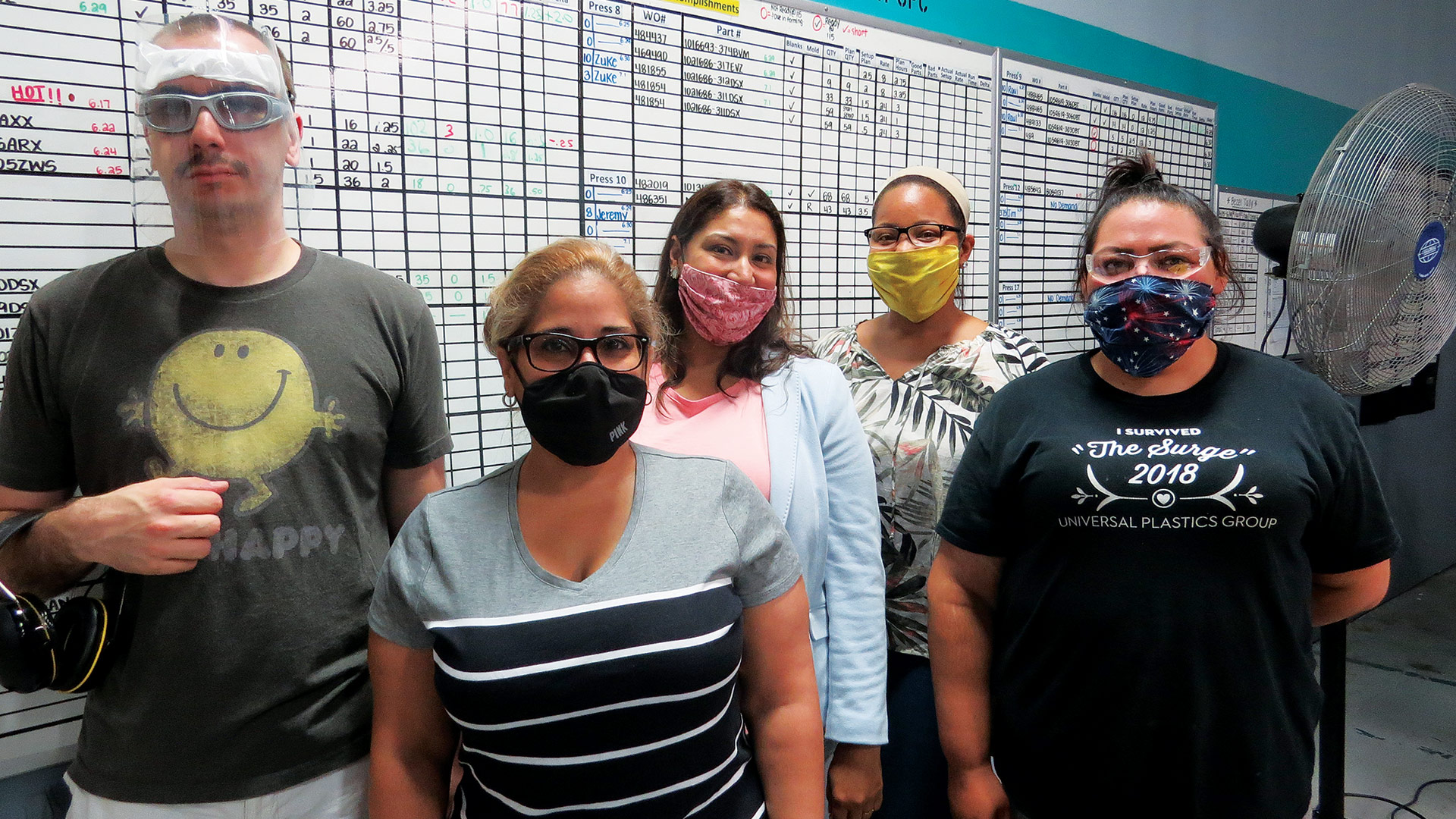
Pia Kumar, seen here with coworkers at the company’s Holyoke plant

Pia Kumar, seen here with coworkers at the company’s Holyoke plant, says that, while she’s focused on all aspects of the business, connecting with employees and helping them address challenges has become her primary focus.

What she does have are mentors. She listed Susan Jaye Kaplan, founder of Link to Libraries, and Dianne Fuller Doherty, retired business owner and director of the Massachusetts Small Business Development Center’s Springfield office — both winners of BusinessWest’s Difference Makers award.

“I’m not afraid to ask for help; I’m not afraid to admit I don’t know something,” she said, adding that she believes good managers share these traits. “Feedback is a gift, and I firmly believe, if you don’t want to know the answer, then don’t ask the question. But if you ask the question, you need to be able to stomach the answer.”

When asked about how she approaches the broad assignment of achieving work-life balance, she said simply, “I work at it.”

“These are really, really good people who want to come in every day and do a really good job, but these are real barriers that they face. It’s not a question of how motivated they are or how ambitious they are — there are just structural barriers that people face that I became attuned to when I talked to my employees.”

“I spend a lot of time planning, I delegate a lot, and I am very comfortable with having a list of things I wanted to get to but didn’t at the end of the day,” she explained. “There are days when the company is the most important thing — when COVID first happened, we needed to make our employees safe. And then, there are other times when it’s more important that we’re there for our children. My mother is having surgery next week, so that will be the focus then.

“I feel very lucky that I have a supportive partner who helps me manage all these things,” she went on. “But we also have a really great team. We’re not the experts — we didn’t come in with a deep background in manufacturing, and that’s why we keep people from our acquired businesses. Our job is to take all the information and provide the right vision.”

Parts of the Whole

Summing up her approach to her broad role at Universal Plastics, Kumar said, “my biggest failure as a leader is when someone can’t tell me what they really think; if they can’t tell me what they really think, we have a problem.

“I encourage people debating and saying ‘no, this is how we should be doing it,’” she went on. “And when there is that open communication, there’s trust, and that allows me to do more, and the more we can grow as a business.”

Open communication. Trust. Helping employees overcome barriers. These are the keys to success at this company — and any company, said Kumar, stressing, again, that four-word phrase she used in connection with all these matters: ‘we work at it.’

George O’Brien can be reached at [email protected]

Banking and Financial Services Special Coverage

Pandemic Lessons

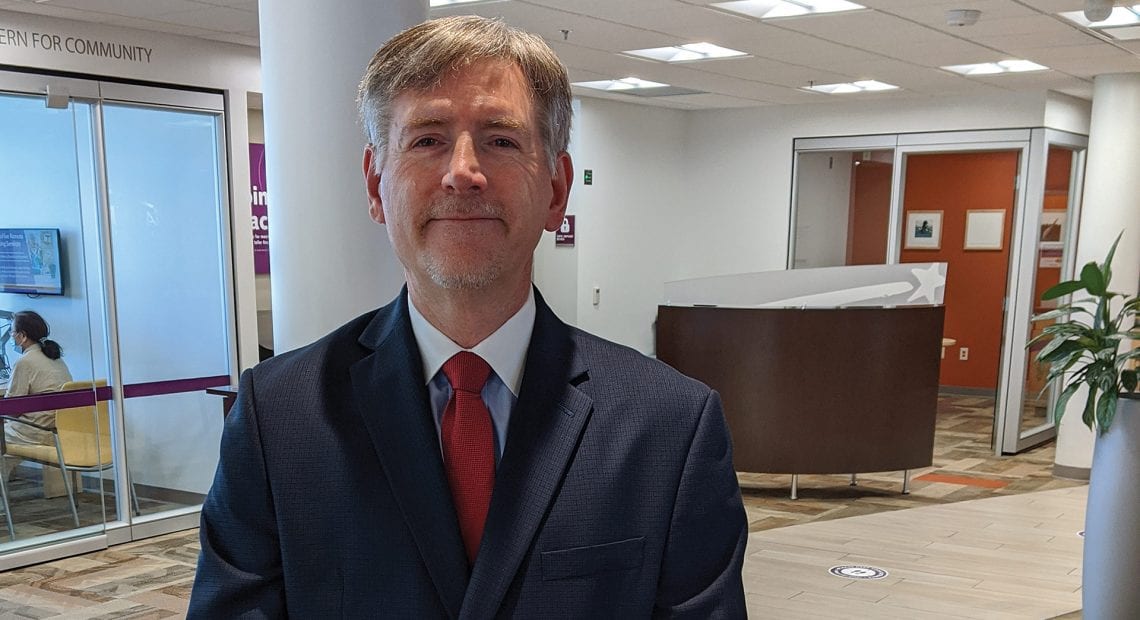
Rich Kump

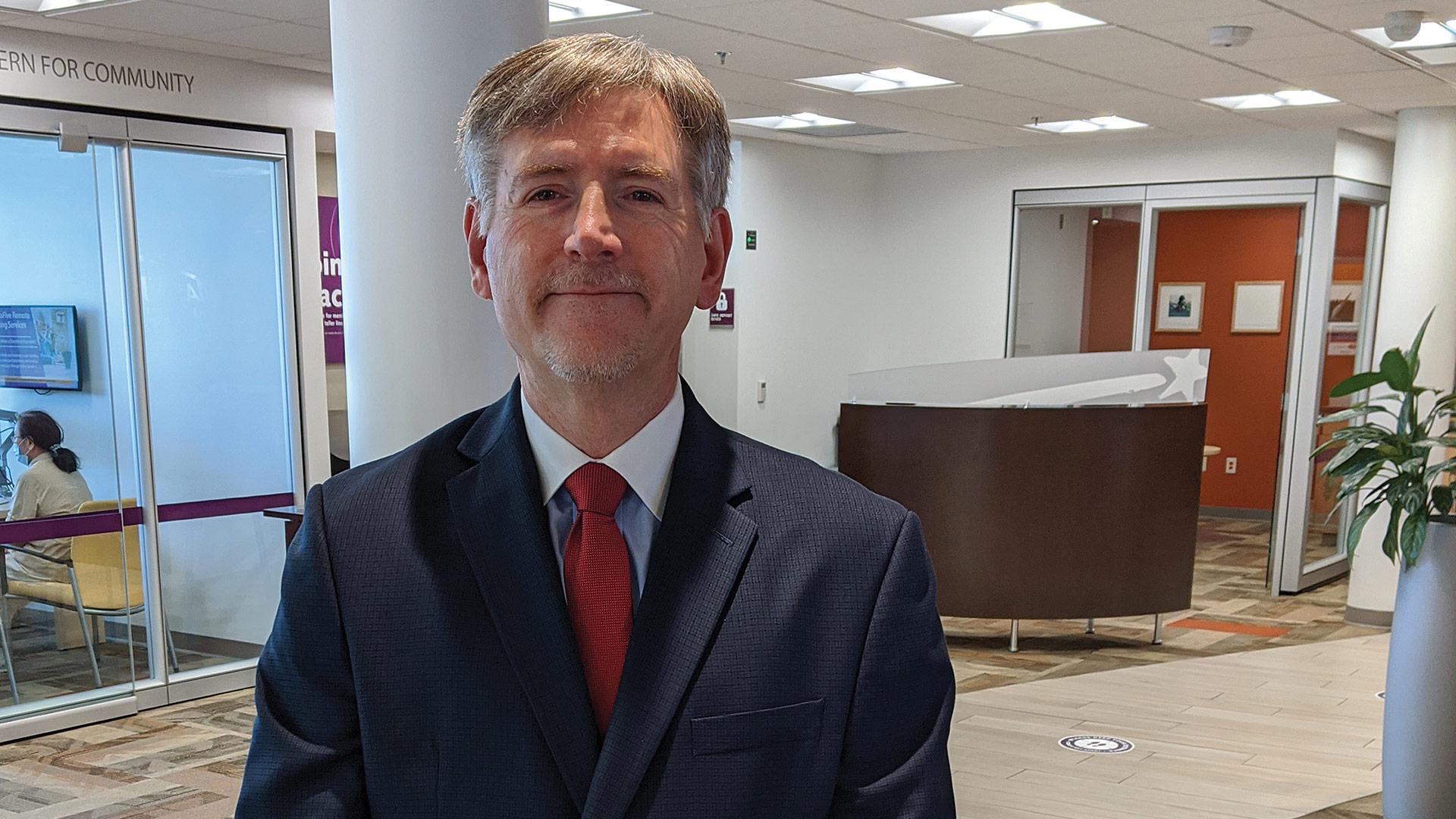
Rich Kump says the pandemic has forced people who had been reluctant to bank remotely to give it a shot.

It’s the wave of the future, Rich Kump said — and the COVID-19 pandemic simply cast that wave in sharper relief.

“We’ve had a goal of moving routine transactions out of the branch,” the president of UMassFive College Federal Credit Union told BusinessWest. “We’ve been educating our members for three years, trying to move them out of the branch, and there’s still a percentage of America who just likes to everything in person. You need to take a thoughtful approach; you can’t force people into it … although COVID did that, to some extent.”

A widely held vision of the bank (or credit union) branch of the future — one shared, to some degree, by other local banking leaders we spoke with — does indeed promote robust online and mobile tools for routine business like deposits and withdrawals, leaving less traffic in branches, but a greater percentage of that traffic given over to more complex or consultative matters.

“We’ve had a goal of moving routine transactions out of the branch.”

And many people who have long resisted online banking are singing a different tune, said Paul Scully, president of Country Bank.

“Customers, just because of the nature of the pandemic, with people staying at home, started exploring technology,” he noted. “An amazing number of people are using technology who, for a number of years, fought it.”

In most cases, it’s just a matter of breaking old habits, Scully said — “and old habits are comfortable habits. But I think people are becoming better acclimated to technology and getting over their fears. There are still people who think, ‘I have to go into the bank to make that transaction because what if the money doesn’t get there?’ But as an industry and as a bank, we’ve been able to alleviate the concerns some people have.”

Florence Bank President Kevin Day agreed.

“Banking in general is going to change. The stuff you need to do is the same, but how you’re going to do it will change,” he said, noting that lobby traffic has been declining for years, and what was already a high adoption rate of mobile tools only accelerated over the past three months as banks closed lobbies to most routine business. “People are starting to realize it’s probably more secure, so they’re getting more comfortable. It’s also way more convenient.”

And gaining momentum in these shuttered times.

“Customers realized they really can do all their banking online,” Scully said. “We’re no different than Macy’s or Amazon. You realize you can sit down with your laptop or phone and purchase something from a retail outlet, and you can also do your banking that way. People are becoming more comfortable with it — so we need to keep upgrading and enhancing it.”

That’s not all they’re doing. Banks and credit unions, despite a much higher reliance on drive-up lanes and mobile platforms lately, never really closed during the pandemic, and while they continued to serve customers — in some cases, helping them navigate sudden financial hardships — they were also learning lessons and conducting internal conversations about where the industry is heading and what the bank of the future should look like.

Some were discussions that had begun years ago but, again, were suddenly cast in sharp relief as the wave known as COVID-19 came crashing down.

Staying Connected

People have been starved for human contact, Kump said. He knows that from UMassFive’s call center, as calls over the past three months are 25% longer, on average, than last year.

“A lot of it is, people just want to talk,” he noted. “Yes, they call for a reason, but then they want to talk. It’s a bit of a community.”

Bolstering the call center was one of the success stories of late March, which he recalls as a tough time.

“I don’t think anyone was ultimately prepared for this; we were scambling,” he said, explaining that many retail personnel in the branches began covering the phones, often from home. “Within two weeks, 70% of our staff was working from home. That’s when the chaos evolved into routine.”

Like the other institutions we spoke with, UMassFive didn’t close completely, staying open by appointment for services that couldn’t be done remotely, from notary signings to certain loan closings to instant-issue debit cards. The week Kump spoke with BusinessWest, the credit union was operating a soft opening of sorts before announcing a shift to walk-in business.

“Financial wellness isn’t just for people with means; it’s everybody, from somebody with an entry-level job to someone doing college planning or estate planning.”

Day recalls a similar experience.

“In that first week, everything was shutting down, and people were saying, ‘you’re a bank. You can’t shut down,’” he said. But Florence transitioned to drive-up service where possible while witnessing an expansion of remote banking — as well as phone-call volume that was up 100% early on.

“We helped a lot of people transition to mobile and computer options. People have used the drive-ups. We opened the lobbies for people who needed to do something in person. We went out to cars in some cases,” he recalled. “You couldn’t come and go as you wanted, but we never really closed. If you called and the only way to do something was in person, we did it in person.”

Kevin Day

Kevin Day says shifting most employees to remote work was one of the smoother transitions necessitated by COVID-19.

Still, the sudden, in many ways forced expansion of remote banking is just an extension of where the industry was already headed, Day explained. “We had already seen trends toward online, mobile, people doing much more on their computers and phones. The pandemic just really accelerated that.”

Scully said the transition to employees working remotely was one of the easier shifts.

“It wasn’t that difficult for us. We had all the technology in place that allowed us to immediately have all our non-branch staff working remotely, literally overnight. So that fell into place nicely for us; we didn’t miss a beat. Business was never impacted.”

For example, he said Country processed about 450 Paycheck Protection Program (PPP) loans remotely, while Zoom calls and Webex meetings became the order of the day. It has worked so well, in fact, that non-branch employees will continue to work from home until Aug. 31, even as branches begin opening up this week, which is a boon for parents still uneasy about — or unable to access — camps and day-care services.

“We closed a day or two before other banks, just recognizing what was happening, and moved people to drive-up or leveraging technology,” he said, noting that lines were sometimes long, but customers were able to access the services they needed, in some cases using interactive teller machines (ITMs) at two locations.

“We’ve walked a lot of people through the technology, and the customer care center reached out directly to help them. We had curbside service at some locations, and we also used that as an opportunity to talk about technology.”

Branch of the Future

All this enhanced technology goes hand in hand with what many banking leaders say is an evolving role for branches.

Branches are certainly needed, said Jeff Sullivan, president of New Valley Bank, which is opening a new branch on the ground floor of Monarch Place in downtown Springfield this summer. Like every other area bank branch, it will stress pandemic safety, with a mask requirement, six-foot distancing, and glass partitions between customers and employees.

But it will also reflect a move toward a role for branches that emphasizes financial wellness and consultative services more than routine business.

“That’s going to be the bigger component of what a community bank does — trying to help people navigate a lot of things,” he explained, before adding that there will be plenty to navigate in the coming year, when more customers than usual will be struggling to achieve stability. “Financial wellness isn’t just for people with means; it’s everybody, from somebody with an entry-level job to someone doing college planning or estate planning.”

The bank of the future will put greater emphasis on this consultative role, through personal interaction that can’t occur online.

Paul Scully

Paul Scully

“Customers, just because of the nature of the pandemic, with people staying at home, started exploring technology. An amazing number of people are using technology who, for a number of years, fought it.”

“Obviously, if it was just about technology, the big-city, money-center banks could meet the needs of every single person,” Sullivan said. “If you don’t have the technology, you’re going to fall behind, but the extra, community-focused efforts are what’s really going to make an impact.”

Kump said UMassFive has eliminated tellers — or, more accurately, it has eliminated branch employees who handle only that role. Instead, employees are trained to be “universal agents,” able to tackle multiple roles, from traditional teller business to loans and other matters.

To achieve that, the credit union has tripled its training budget over the past few years, seeking to identify not only financial skills, but empathetic personalities with a real desire to help people.

“The face of banking is changing permanently. Branches in the future won’t be as critical, with fewer transactions coming in. But they will always be needed for key parts of financial life,” he explained, citing anything from home and auto loans to opening memberships to simply seeking financial advice.

“We won’t need the huge teller line anymore. We won’t need as many branches, and the services we’re providing in the branches are changing, he added, noting that customers are also discovering they can conduct routine business face to face — sort of — through ITMs. “Someone could be at the Northampton drive-thru, talking to someone working from home in Belchertown.”

That raises the question of how many workers need to be on the premises, both while COVID-19 is still a threat and afterward, considering how effectively operations have continued during the pandemic.

Jeff Sullivan

Jeff Sullivan

“Obviously, if it was just about technology, the big-city, money-center banks could meet the needs of every single person. If you don’t have the technology, you’re going to fall behind, but the extra, community-focused efforts are what’s really going to make an impact.”

“From a back-office standpoint, about half are working remotely,” Day said. “Can they continue to do that long-term? Yes, but there’s still the human element, and people can feel isolated. Feeling part of a team is important to some people, while some people are loners. But technology is certainly giving us some options.”

And the bank, which recently broke ground on its third Hampden County branch, this one in Chicopee, has certainly been discussing those options.

“More transactions are going online, but when you want to talk to a person to problem solve, especially with more complex transactions, that can certainly be done over the phone — and has been during the pandemic — but the way we’ve designed our branch of the future, there’s more consulting. If you want to come in and consult, we’ll talk to you — a lot. So frontline people will still need to be there to handle questions and solve problems.”

Getting Through the Pain

In fact, banks and credit unions never stopped solving problems over the past few months. Scully said Country, like other banks, was able to accommodate deferrals of loan payments for individuals who has been furloughed or were generally dealing with greater financial stress.

“I felt like this was a watershed moment,” Day added, noting that more than 200 mortgage borrowers and 200 commercial borrowers took advantage of three-, six, or 12-month deferrals, the latter being the most popular option. “Having been through downturns in my career, I knew that we needed to give people some time. People are resilient, businesses are resilient, but they needed some time. So we worked with residential and business customers on deferred payments.”

Kump said UMassFive issued forebearance on nearly 1,000 loans for people who were “furloughed or just worred,” as well as launching a small-loan program for those who just needed a little cash. “If you were furloughed, that didn’t change the decision to make a loan for you.”

That was in addition to PPP loans, which the credit union approved for members and non-members in the community alike, 96% of those loans issued to employers of five workers or fewer. It also looked for other ways to support community needs, such as donations to food banks and organizations like Community Involved in Sustaining Agriculture, as well as donating meals to first responders.

Although those needs still exist, banks and credit unions are beginning to get back to normal operations, expanding branch operations under enhanced safety protocols — “it’s a great time to be in the plexiglass business,” Scully said — while considering the lessons learned during the months when most business was conducted remotely.

“Was there frustration at first? Absolutely,” he added. “At first, people were like, ‘what do you mean, a bank is closed?’ But as every industry started to close and people started working remotely, people began to understand.”

After all, a bank that saw a fire ravage its headquarters in 2008 and a tornado rumble through its home region in 2011 has no problem posting social-distancing reminders and directional arrows and getting back to branch business. “This is bigger than a tornado,” Scully said. “The lesson we’ve learned is to always be prepared and remain nimble.”

Even as it moved from a soft-opening week to broader branch service — where walk-in traffic is allowed but appointments are still advised to reduce the wait — Kump marveled at how the credit union’s members have adjusted to remote business. Especially new members, 90% of whom have been joining online, compared to 40% to 50% in a typical year.

“There’s a percentage of customers who will still be reluctant to walk into a business,” he added. “We’re seeing that with restaurants opening and people still not coming.”

It helps, of course, that many have discovered the power of digital banking.

“For a lot of folks, it’s generational; they’ve been intimidated by technology, of depositing a check with a picture on their phone,” Kump continued. “Now they’ve been forced to do it, and they’re asking, ‘why was I taking time out of my day to run over to the credit union to get cash or transfer money? I don’t have to do that.’”

Day also expects people to keep using those tools, but for those ready to return to the branch, even for matters as basic as depositing a check, they’ll do so protected by masks, shields, and any number of other precautions. “The pandemic isn’t over, and people are still going to get sick. We want to keep people safe.”

Bottom Line

Usually, when BusinessWest talks to local banks and credit unions, it’s about their own business outlook for the year ahead, but this is not a typical year, and talk of asset growth and loan portfolios has been pushed aside to some degree by the need to simply stay afloat — and keep customers afloat, as well.

“The outlook is generally positive, but it will not be without pain,” Day said, speaking for both Florence Bank and its customers. “We know it will get better. It’s just a matter of when.”

Joseph Bednar can be reached at [email protected]

Coronavirus Special Coverage

For every business in Western Mass., there is a story about coping with the COVID-19 pandemic. Each one, as we’ve noted before, is different. But there are many common themes, especially the need to deal effectively — somehow — with those things that one can control, and cope — again, somehow — with the things one can’t control. And that latter list is, unfortunately, long and complicated. It includes everything from navigating the state’s rules (and short timelines) for reopening to losing large and important clients, like MGM Springfield, to not knowing what the future holds. Here are six more COVID stories.


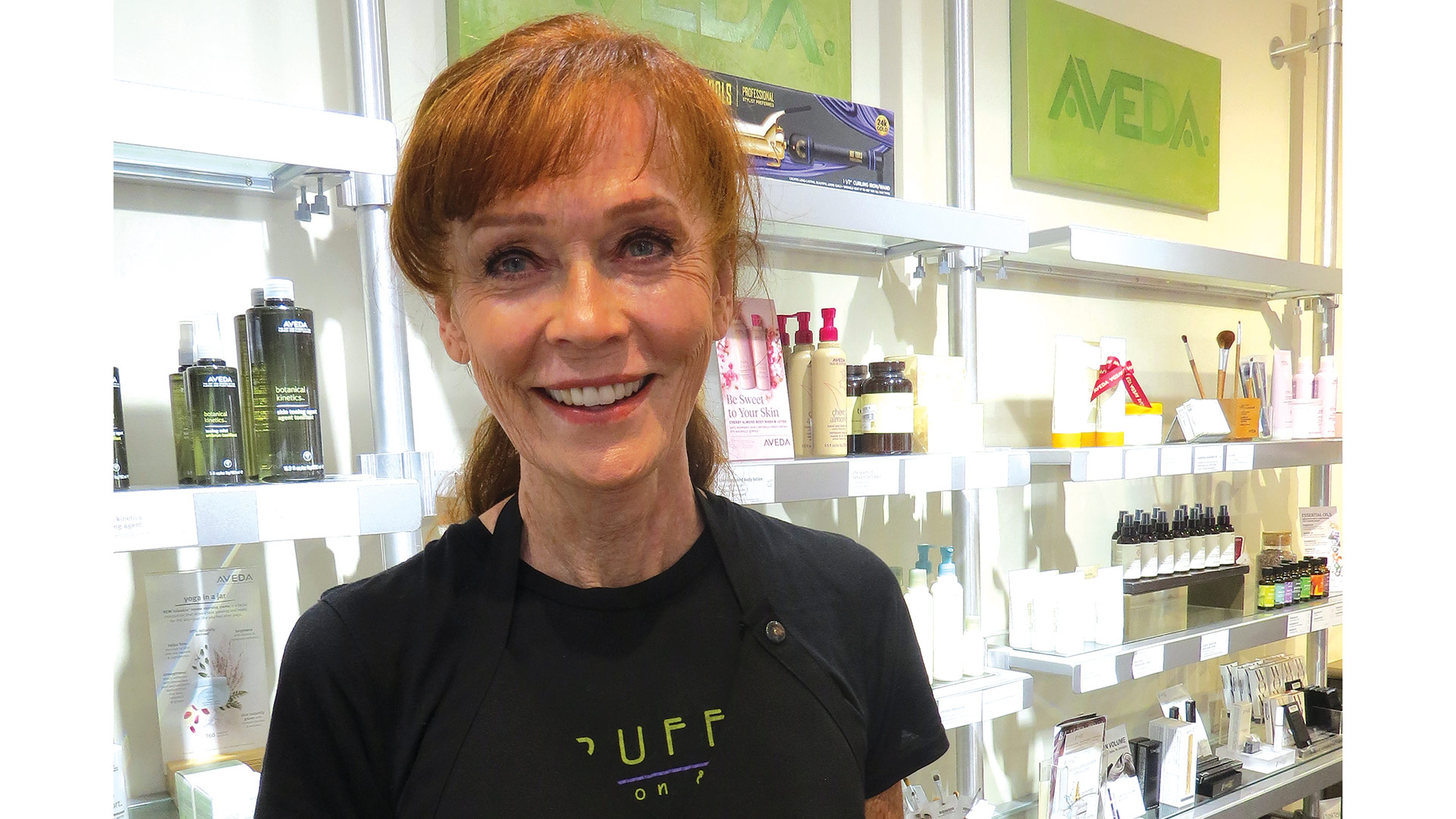
Judy Puffer

Puffer’s Salon & Day Spa

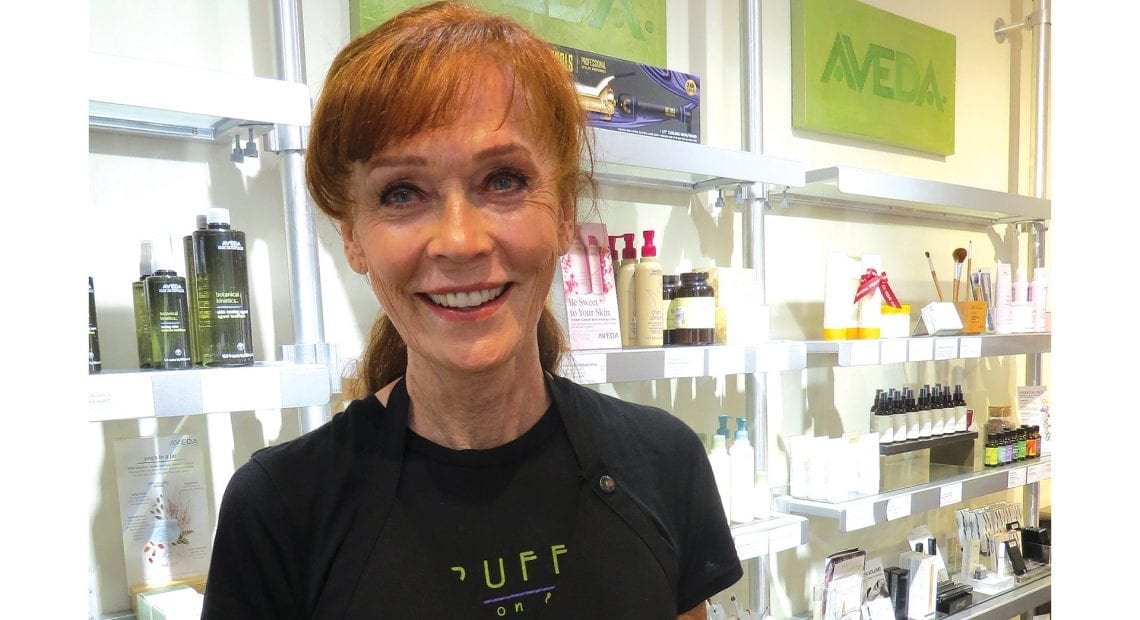
Responding to COVID-19 has been hair-raising to say the least   Read More >>


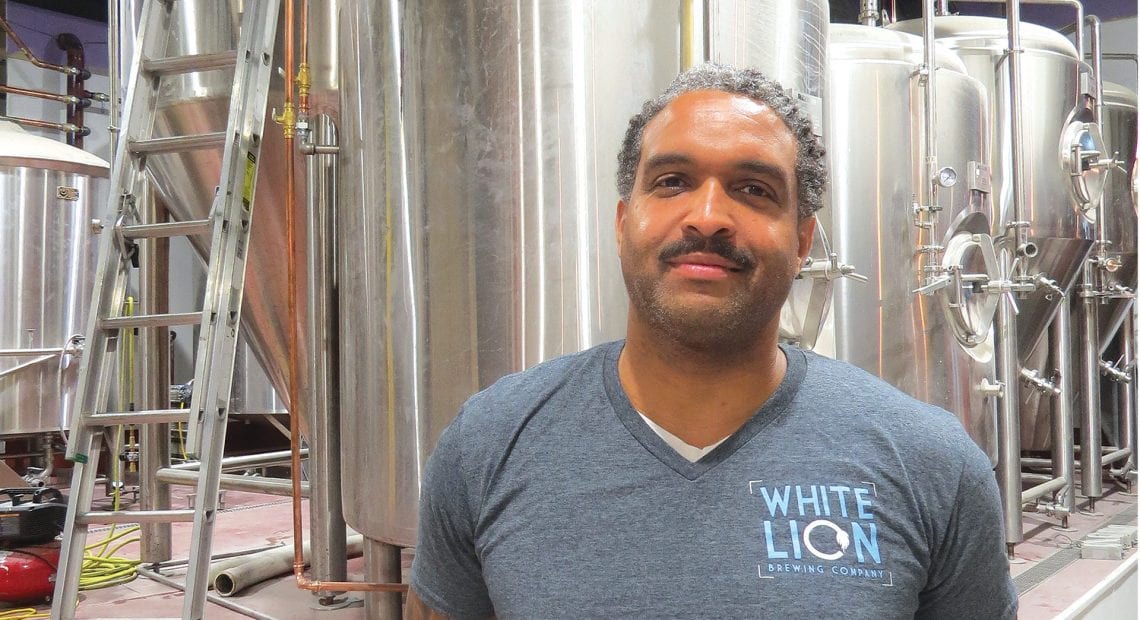
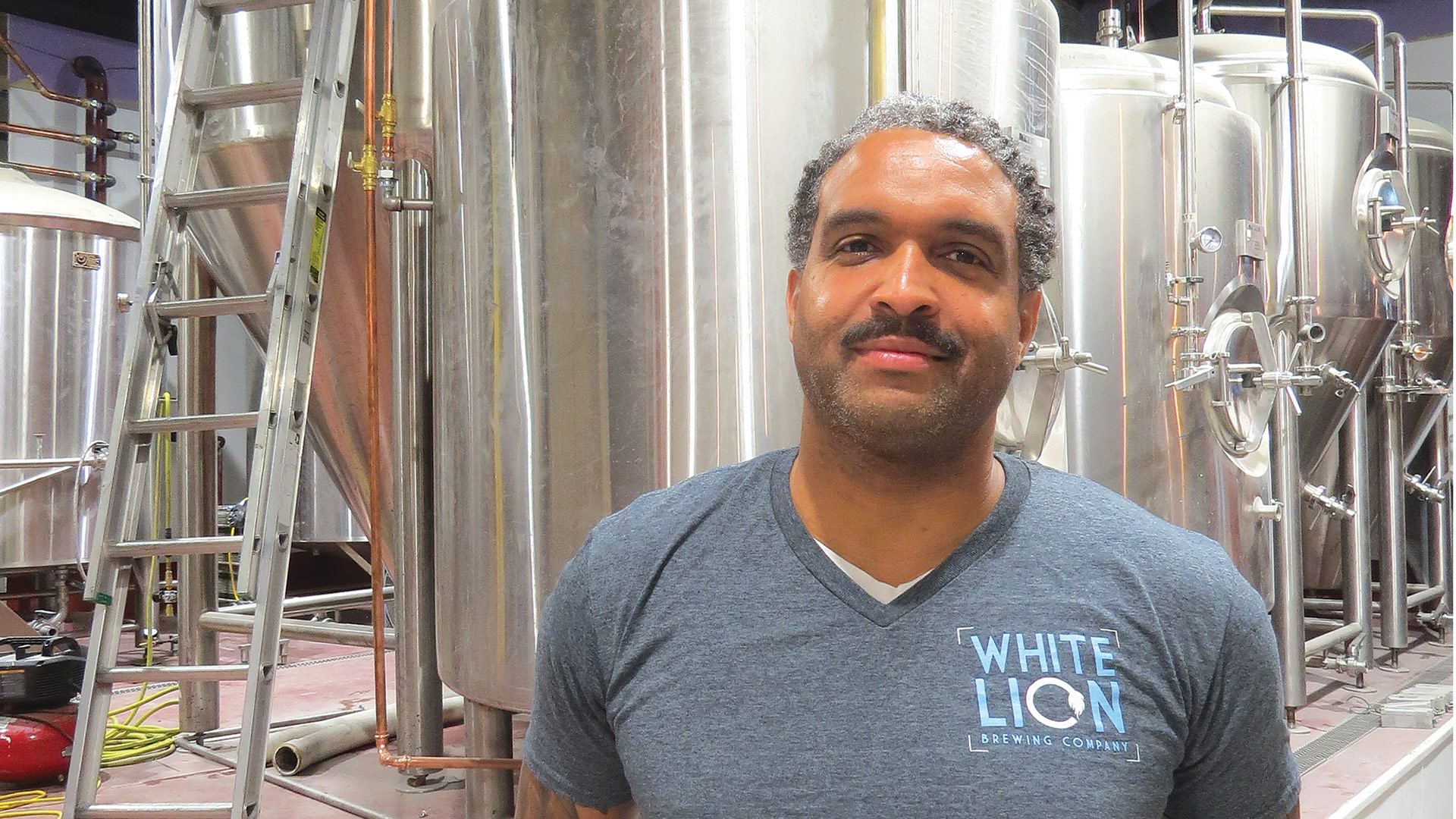
White Lion Brewery

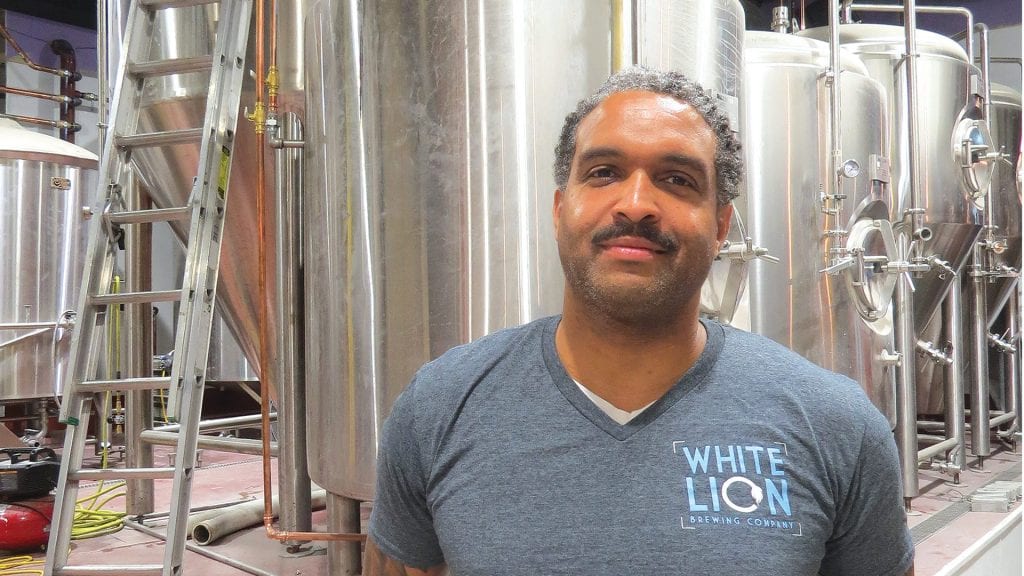
For this Springfield business, better times are on tap   Read More >>


Wilbraham Monson Academy

At this school, pandemic has been a real learning experience    Read More >>


Jerome’s Party Plus

Growing need for tents is helping company through a trying year   Read More >>


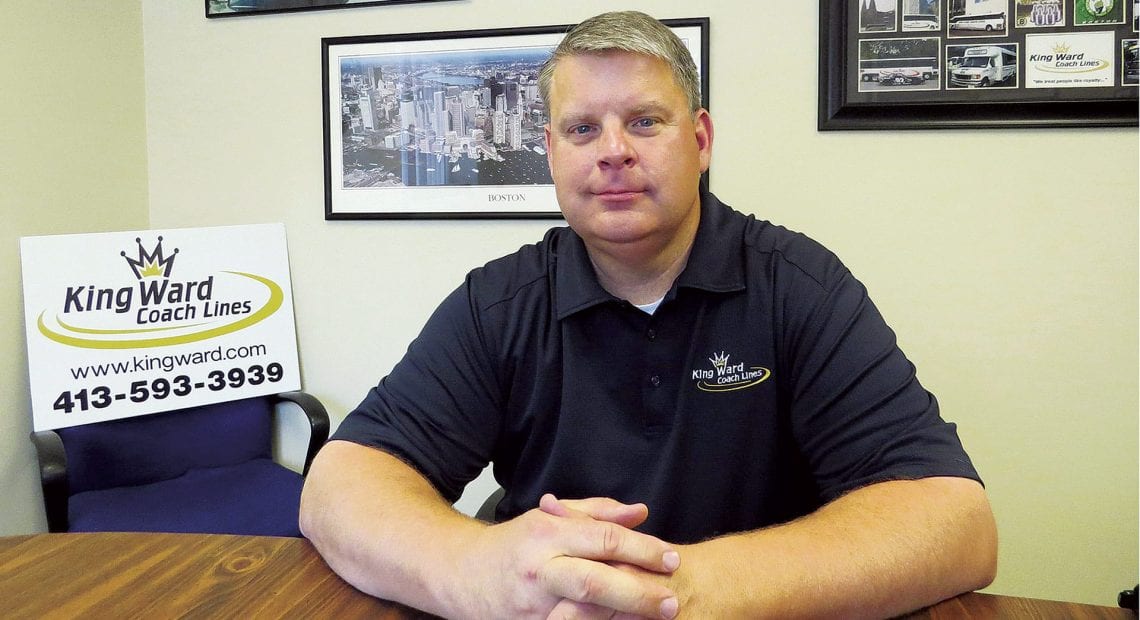
King Ward Bus Lines

Chicopee-based company is still trying to get out
of first gear   Read More >>


Park Cleaners

‘The place where COVID goes to die’ is still in recovery mode   Read More >>


Back on the Clock

COVID-19 era presents unique challenge for older workers   Read More >>

Community Spotlight Franklin County Special Coverage

Waiting Game

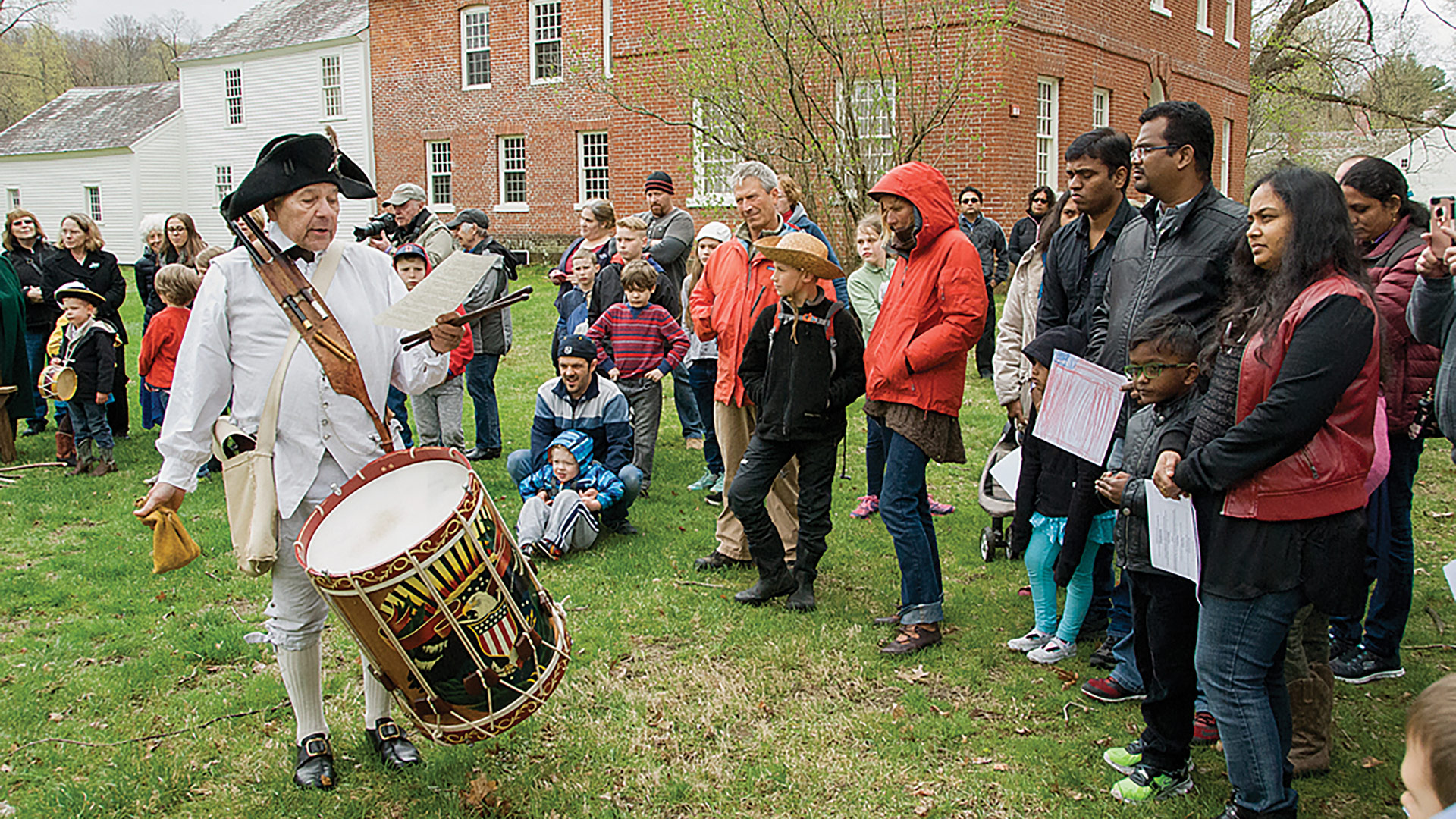
Scenes like this one are nowhere to be found right now at Historic Deerfield

Scenes like this one are nowhere to be found right now at Historic Deerfield, which is developing plans for a September opening.

Magic Wings is a year-round operation, Kathy Fiore said — even when its doors are shut.

“This is different from a clothing store,” said Fiore, who co-owns the butterfly conservatory in Deerfield with her brother. “When we closed our doors, we still needed to have staff here, because we have to take care of whatever is happening. Butterflies are laying eggs every day. Caterpillars are hatching out every day. We need to feed and care for the lizards, tortoises, birds, fish … all sorts of animals have to be taken care of.”

And that means expenses that don’t disappear when no visitors show up — which they haven’t since the facility closed to the public in mid-March, part of a state-mandated economic shutdown in response to COVID-19.

“We kind of saw it coming, and then it just happened,” she said of the closure. “As owners of the business, we’ve tried to remain positive and upbeat and assure our staff, assure our customers.”

As for when Magic Wings will be allowed to reopen, phase 3 looks most likely, which means very soon. But the state’s guidance is only one consideration. The other is keeping visitors safe and helping prevent a viral flareup in a region that has effectively depressed infection rates, as opposed to states like Florida and Texas that were more lax about regulating crowds — and have seen cases spike in recent weeks.

“When we closed our doors, we still needed to have staff here, because we have to take care of whatever is happening. Butterflies are laying eggs every day. Caterpillars are hatching out every day. We need to feed and care for the lizards, tortoises, birds, fish … all sorts of animals have to be taken care of.”

“My brother and are watching how things are going,” Fiore said. “We’re certainly watching other businesses open back up, but we’re also hearing about the resurgence in certain places, about people getting together and going right back to a situation we don’t want to be in.”

Historic Deerfield, which shuttered its buildings to the public a few weeks before the start of its 2020 season, doesn’t expect to reopen most of them until September.

“We had a lot of different challenges and things to figure out,” said Laurie Nivison, director of Marketing, explaining why the organization’s leadership isn’t rushing back before they feel it’s safe. “Just thinking ahead to when it might be possible to open again, we decided to move some bigger things to the fall. The fall season is always a big time for us. That’s when people start thinking they want to come to Deerfield, so we said, ‘let’s look at opening around Labor Day weekend.’”

Losing an entire spring and most of summer is a considerable financial hit, of course, and the center was forced to lay off dozens of staff. But at the same time, it has looked to stay relevant and connected to the community in several ways, including putting a series of ‘Maker Monday’ workshops online, taking a virtual approach to teaching people how to stencil, make their own paper, or building a decoupage box, to name a few recent examples.

Meanwhile, museum curators have been sharing plenty of interesting artifacts from the collection online, while the director of historic preservation recently took people on a virtual tour of the attic of one of the historic houses.

“People never have the opportunity to do that, so that was great,” Nivison said. “We’ve become really creative trying to think of what we can do to bring Historic Deerfield to people when they can’t come here. Being closed down, we still want to have people engaged.”

Many Franklin County attractions, especially of the outdoor variety — such as Zoar Outdoor and Berkshire East in Charlemont, where people can engage in ziplining, biking, kayaking, and other outdoor activities — are already open. But indoor attractions face different challenges and are on a different reopening pace, due to both state guidelines and their own sense of caution.

But a wider reopening is the goal, as area tourism officials consider the region a connected ecosystem of activity that draws visitors to take in multiple sites, not just one. In short, the more attractions are open, the more each will benefit.

Kathy Fiore says Magic Wings won’t reopen

Because it’s an indoor attraction, Kathy Fiore says Magic Wings won’t reopen until she’s confident visitors will be safe.

“We’re talking a lot about how we can convince visitors to come back when the time is right because there’s so much outdoor fun you can have here,” said Diana Szynal, executive director of the Franklin County Chamber of Commerce. “We have hiking, cycling, fly fishing, regular fishing, walking trails — there’s so much opportunity for things to do here that are perfectly safe and healthy.”

Safety First

Szynal was just scratching the surface when she spoke to BusinessWest. From retail destinations like Yankee Candle Village to museums, golf courses, wineries, and covered bridges, it’s a region that has plenty to offer, and attractions like Magic Wings and Historic Deerfield certainly sense anticipation among fans and potential visitors when they connect with the community on social media.

But they also don’t want to jump the gun and see the region turn into another Houston.

“It’s been a little unnerving, but from the beginning, my brother and I didn’t want to reopen until we feel it’s safe, even if the government lifts the regulations for businesses like Magic Wings. We don’t mind waiting it out a little bit to make sure everything is safe,” Fiore said.

“We normally can take in a lot of people, but we’re different because we’re an indoor facility,” she added, noting that Magic Wings will follow the state’s guidelines for social distancing, masks, and crowd count, while considering options like visiting by appointment as well. “We’re trying to think of all the different things we can do to make sure people are really safe but still have a pleasant experience.”

It helped, she said, that the conservatory procured a Paycheck Protection Program loan to keep its staff paid, and now that reopening approaches, she’s hoping to get everyone back on the regular payroll. “We’re responsible for the livelihood of a lot of people.”

But the shutdown also posed an opportunity, she added. “It’s beautiful here — it’s in pristine shape, because we were able to do some cleanup things, different projects, that we don’t have the opportunity to do when we’re open every single day. We hope to welcome people back to a nice, fresh environment that’s better than they remember.”

While the museum houses of Historic Deerfield remain closed for now, the organization got a boost from the reopening of Deerfield Inn and Champney’s Restaurant & Tavern. The week she spoke with BusinessWest, Nivison said the restaurant already had more than 100 reservations lined up for the following week.

Those facilities will benefit from September’s museum reopening, but this fall may still look a little different than most, as tours may be limited — or be smaller, self-guided experiences — while outdoor tours may be expanded. Demonstrations of trades like blacksmithing may be moved outdoors, while the annual Revolutionary muster event, typically held on Patriots’ Day in April, will likely happen this fall as well.

“We’ve become really creative trying to think of what we can do to bring Historic Deerfield to people when they can’t come here. Being closed down, we still want to have people engaged.”

“We want to be able to give a good experience to folks and really take advantage of all the outdoor things they can do,” Nivison said. “There are a lot of things we can do.”

One thing people aren’t doing as much as they normally would is getting married — with crowded destination receptions, anyway. Because Magic Wings is a popular spot for weddings and receptions, that was another significant revenue loss this spring and summer, Fiore said.

“Couples had to shift everything, and a couple bumped their weddings into 2021. One couple canceled altogether,” she told BusinessWest, noting that weddings already have a lot of moving parts, and couples are simply unsure right now how many guests they’ll be allowed to include until the state offers more guidance.

All Aflutter

That said, Fiore has been buoyed by the number of people calling since the closure. In addition to its social-media presence, Magic Wings also recently ran a television commercial featuring soothing sights and sounds inside the conservatory — to put a smile on viewers’ faces more than anything.

“It was an opportunity for people to take a deep breath,” she said. “We’re all in the same boat, we’re all experiencing something totally new, and we’re all concerned and feeling anxious about what’s going to happen — what’s safe and what’s not.

“People love butterflies, and they do come see us from all around,” she added. “But they also want to know it’s not going to be a huge health hazard, and that’s what we’re working toward.”

Szynal understands the concerns, too.

“People are taking this seriously,” she said. “I see the masks. When people are out on errands, walking through stores, they’re giving each other space. As long as this behavior continues, people will feel better moving around a bit more” — and that includes visiting Franklin County attractions.

“I feel people respect this virus and respect each other,” she concluded. “So far, they’re taking the steps they need to keep Massachusetts on the right track.”

Joseph Bednar can be reached at [email protected]

Franklin County Special Coverage

View from Main Street

Diana Szynal

While economic activity is still slow, Diana Szynal says, she senses a resilient spirit in Franklin County.

Diana Szynal is encouraged by what she sees on Main Street in Greenfield as restaurants and retail continue to emerge from months of closed doors.

“I certainly see people making the changes they need to make,” she said, referring to Gov. Charlie Baker’s guidance for how — and at what capacity — to open businesses safely. “We’ve seen these business making the effort to reopen and get their staffs back to work and welcome back their customers.”

But no one is fooling themselves into believing everyone is ready to go out again, said Szynal, executive director of the Franklin County Chamber of Commerce.

“Certainly it seems like businesses are open — like restaurants with outdoor seating or limited indoor seating — and I think there are people really wanting to get out there, but some people aren’t ready yet,” she told BusinessWest.

“Realistically, things have slowed down, but I feel a very resilient spirit here,” she continued. “People in Franklin County are tough. And you see that not only in Greenfield’s downtown, but the area as a whole — downtown Deerfield, downtown Shelburne … I think you’re going to see them bounce back for sure.”

What will make the difference, she and other economic leaders increasingly say, is consumer confidence, which is being driven right now almost exclusively by health concerns — and that’s a good thing, considering that Massachusetts is one of the few states in the U.S. consistently reducing instances of COVID-19.

“For the typical consumer, making decisions about going out for the day or just going to a restaurant or retail shop, creating confidence is the key,” Szynal said. “And focusing on those [infection] numbers is really critical. That’s really how we’ll build confidence. Some people will take a little longer than others because they have different health concerns. But I think, if we can stay the course, we’ll be heading in the right direction economically as well as from a public-health standpoint.”

Associated Industries of Massachusetts (AIM) polls its 3,500 members each month to produce a Business Confidence Index that was firmly entrenched in positive territory for years — until it suffered the largest one-time decline in its history a couple months ago. However, it began to rebound slightly last month as Baker announced the four-phase process for re-opening the state economy under strict workplace-safety guidelines, and in the report due this week, it’s expected to creep up again amid positive news regarding infection rates.

“What makes this whole situation unique — and a little bit mystifying for employers — is that the economic situation is still being driven by a public-health situation,” said Chris Geehern, AIM’s executive vice president of Public Affairs and Communications. “Typically in an economic downturn, business people know exactly what to do. Now, it’s wholly dependent on what the daily numbers are from the state and nationally. I think that’s been a big challenge.”

“Certainly it seems like businesses are open — like restaurants with outdoor seating or limited indoor seating — and I think there are people really wanting to get out there, but some people aren’t ready yet.”

That said, he told BusinessWest, “our members have been satisfied with the state process. It has certainly been a challenge to meet all the requirements, but for most employers, the big issue isn’t what the government tells you to do, but what you know you have to do to ensure that employees, vendors, and customers feel comfortable coming in. It’s going to be a slow recovery whether the government requires these steps or not because people won’t come to your restaurant if you haven’t taken the appropriate safety steps.”

Growing Optimism

Employers hope a timely return to business will allow them to re-hire some of the 1.2 million Massachusetts residents who have filed for unemployment since the onset of the pandemic.

“From a broad perspective, I’m not getting a super pessimistic view from anyone I’ve spoken to,” Szynal said. “Certain people are concerned — they’ve had to make some changes, and they’ve had some struggles. People don’t expect those struggles to end instantly. But people are pretty optimistic for the long term.”

Again, that likely depends in part on the public-health data remaining on a positive track.

“Employers are encouraged that Massachusetts has been able to moderate the number of new COVID-19 cases. We have said all along that the current economic crisis is being driven by the public-health crisis, and that’s what we see here,” Raymond Torto, chair of AIM’s Board of Economic Advisors, noted in the latest business-confidence report.

Chris Geehern

Chris Geehern

“Typically in an economic downturn, business people know exactly what to do. Now, it’s wholly dependent on what the daily numbers are from the state and nationally. I think that’s been a big challenge.”

AIM President and CEO John Regan added that Baker’s deliberate, four-phase plan has so far been an effective way to reopen the state economy in a safe and efficient manner.

“We realize that every employer in Massachusetts would love to hear that they can reopen immediately. But we also acknowledge that a phased reopening balances the need to restart the economy with the need to manage a public-health crisis that continues to claim many lives a day in Massachusetts,” Regan said, adding that employers, “will in many cases need to reconfigure workplaces for social distancing and determine how to implement other safety measures, such as the wearing of protective equipment, continuing work-from-home policies, and ensuring the health of workers and customers.”

While AIM employers have been satisfied with the pace of the rollout, Geehern told BusinessWest, there was some frustration early on, particularly in the retail, restaurant, leisure, and hospitality sectors, which weren’t included in phase 1. “Some thought we should be moving faster. To be honest, I think the events going on down south persuaded most people that slow and safe is still the best way to do all this.”

He conceded that many AIM members are manufacturers, and they were able to return to work in phase 1 — and many were deemed essential workers from the start and never shut down operations. That partly explains why their business confidence has been slightly higher than non-manufacturers.

“They were, in fact, dealing with issues of workplace safety right along — processes like how to create six-feet separation, sanitize common areas, and monitor the health of people coming in,” he said. “This is something they’ve had a lot of experience with. For our group of manufacturers, it’s been a fairly smooth process.”

All Eyes on the Numbers

That said, Geehern noted that if COVID-19 cases began spiking and the governor paused or slowed the reopening, business confidence would clearly suffer.

“It’s still volatile and changeable, but I think it’s fair to say companies in general are satisfied with the pace of the rollout. Believe me, every employer in Massachusetts wishes Governor Baker could wave a magic wand and everything would go back to the way it was, but everyone knows that’s not the case.”

“The numbers are fairly optimistic, and I think the most important thing right now is confidence. That’s what’s going to help those businesses bounce back.”

How schools handle students’ return this fall — and what that does to the child-care picture — is a factor as well, he said. “There are a bunch of different elements to the whole picture. They’ll all eventually become clear.”

Part of that clarity is the sad reality that some businesses will be left behind. According to one AIM survey, slightly more than half of companies that furloughed employees will want them all to return when they’re able to bring them back, but some said they won’t be taking any of them back, because they’re planning on going out of business or running a skeleton staff for a while.

“It’s going to be a slow recovery, but our members still think the fundamentals of the economy that existed in February still exist, and I think that’s going to help us,” he noted, adding, however, that leisure and hospitality, as well as mom-and-pop shops of all kinds — two types of businesses that are important to the Franklin County economy — are especially vulnerable right now.

Knowing all of this — the tentatively good health news and the more uncertain economic outlook — Szynal chooses to take the glass-half-full view.

“The numbers are fairly optimistic, and I think the most important thing right now is confidence,” she said. “That’s what’s going to help those businesses bounce back.”

Joseph Bednar can be reached at [email protected]

Banking and Financial Services

More Relief from the CARES Act

By Lisa White

On March 27, the Coronavirus Aid, Relief, and Economic Security (CARES) Act was signed into law. Since its inception, much of the focus has been on the establishment of additional funding sources, such as the Paycheck Protection Program (PPP), or on the creation of new tax credits, such as the Employee Retention Credit.

However, the act also made some significant revisions to existing tax law to provide additional relief to affected businesses. This article takes a closer look at two of these provisions and delves into how the related benefits associated with the changes might be derived.

Technical Correction for Qualified Improvement Property

The Protecting Americans from Tax Hikes (PATH) Act of 2015 created a new category of asset called ‘qualified improvement property’ or QIP. This term referred to any improvement to an interior portion of non-residential real property, but excluded expenditures for elevators or escalators, enlargements, and interior structural components. Although this category of asset technically had a 39-year cost-recovery period, it was specifically identified as being eligible for bonus depreciation.

When the Tax Cuts and Jobs Act (TCJA) was signed into law at the end of 2017, the intention was to assign a shorter, 15-year recovery life to qualified improvement property, thus ensuring its eligibility for the enhanced 100% bonus depreciation provision also included in the TCJA. Unfortunately, the necessary wording was not included in the final bill, resulting in qualified improvement property retaining its 39-year cost-recovery period, but excluding it from being eligible for bonus depreciation.

Lisa White

Lisa White

“With proper planning and timely tax-advisor consultation, realizing additional relief during these unprecedented times can be achieved.”

Not only did the CARES Act include the technical correction necessary for QIP to have its originally intended 15-year cost-recovery period, but the correction was directed to apply retroactively to all eligible assets placed in service after Dec. 31, 2017.

Then, in mid-April, the IRS provided guidance on how to capture this additional benefit from the change in the depreciable life and the possible eligibility for bonus depreciation. Primarily, the two methods are to either file amended returns for the impacted year(s) or to file a Change in Accounting Method (Form 3115), which allows a ‘catch-up’ for the differences in the recovery periods and applicable depreciation methods.

Here’s an example: A business holds commercial rental property and operates on a Dec. 31 year-end. On July 15, 2018, the business incurred expenses of $150,000 in costs that meet the QIP definition. Assume Section 179 expense was not taken. Due to the technical error in the law, only $1,763 of depreciation expense was allowed in 2018, and $3,846 of depreciation expense would be allowed in 2019. With the technical correction, bonus depreciation can now be taken on the entire amount of the qualified improvement property even though it was placed in service in 2018:

• If the 2019 tax return has already been filed, an amended return should be filed for both the 2018 and 2019 tax years. Taxable income in 2018 will be reduced by the additional $148,237 ($150,000 – $1,763) of accelerated depreciation expense, and taxable income in 2019 will be increased by the removal of the $3,846 of depreciation expense originally recognized.

• If the 2019 tax return has not yet been filed, filing a Form 3115 might provide the easier option. Instead of filing two years of returns, only the 2019 tax return is filed, and the $148,237 of additional accelerated depreciation expense not captured in 2018 is included in the 2019 tax return as a section 481(a) adjustment.

It is important to note that there are certain circumstances where either an amended return or an administrative adjustment request (AAR) must be filed. It is important to consult with your tax advisor to determine the best course of action.

Changes to the Business Interest Limitation

Although most of the provisions enacted as part of the TCJA were intended to be favorable to taxpayers, some new components had the opposite effect. One of these was the revision and expansion of the business-interest-limitation rules. If subject to the new rules, the regulation essentially limited the amount of business interest expense to 30% of taxable income adjusted for, among other things, depreciation.

The interest expense in excess of this 30% threshold would not be deductible in the current year but would instead be carried forward to the following tax years.

The TCJA also included an option for certain businesses to elect out of having this regulation apply. Instead, these businesses that met the definition of a ‘real property trade or business’ could make an irrevocable election to realize a longer recovery period for the cost of real property and to forego any bonus depreciation that would otherwise be allowed on that real property.

Prior to the retroactive change under the CARES Act, the differences in the recovery periods were not substantial, and none of the real property was eligible for bonus depreciation. However, with the CARES Act’s retroactive fix to qualified improvement property, that property is now eligible for bonus depreciation. The loss of being able to take that accelerated depreciation, in addition to another CARES Act provision increasing the limitation threshold from 30% to 50% (for all businesses except partnerships) for 2019 and 2020, might now result in the impact of the irrevocable election having an undue, unfavorable result.

To provide relief to those businesses that made the irrevocable election and that could now benefit from the shorter recovery period, and the applicable depreciation methods, the IRS has issued guidance that provides for the irrevocable election to be rescinded for tax years 2018 or 2019. This is accomplished by filing an amended return for the year the election was made. If 2018 was the election year, and 2019 has already been filed, 2019 must be amended as well to reflect any changes to taxable income resulting from withdrawing the election.

So, What Now?

The CARES Act provides several relief provisions, including a number that can be realized through proper tax planning. Owners of non-residential (i.e. commercial) real property should review any expenditures that were capitalized in 2018 and 2019 to see if any of these costs can be realized now under the new qualified improvement property measures.

Also, it would be prudent to review any elections made during those tax years that might need to be revisited to make sure those elections still result in the most favorable tax position.

As with most things related to the tax code, the final answer is usually complex and nuanced and somewhere in the grey. But with proper planning and timely tax-advisor consultation, realizing additional relief during these unprecedented times can be achieved.

Lisa White, CPA is a tax manager at Holyoke-based accounting firm Meyers Brothers Kalicka, P.C.; (413) 536-8510.

Women in Businesss

Critical Tools

As women continue to experience the devastating impact of unemployment due to COVID-19, representing close to 60% of all lost jobs this spring, the food-service, hospitality, retail, and travel industries have been some of the hardest hit.

Further delivering on its mission of empowering women, at a time when many are forced to reimagine their lives, Bay Path University is offering a free three-credit online undergraduate college course in August. The course, “Fundamentals of Digital Literacy,” will help women expand their digital technology skill set and be better prepared for the workforce of the future. The course is offered through The American Women’s College, Bay Path University’s fully online division designed to fit busy women’s lives.

“We hope this free course inspires women to look to a better future through education at a time when they are experiencing such uncertainty,” said Carol Leary before her recent retirement as Bay Path president. “This is our way to offer women an opportunity to discover the benefits of online learning. We have deep experience serving women in a proven college format resulting in a graduation rate that is 20% higher than other adult-serving online programs.”

“Fundamentals of Digital Literacy” is a six-week, three-credit course in which students will examine best practices for utilizing social-media and digital-communication tools in the workplace. In addition, they will learn practical skills for a digital world and gain an increasing awareness of the risks of digital communication essential in all fields. By mastering the fundamentals of computing technology and demonstrating digital literacy, women who complete the course will have developed the computer skills needed to thrive in a 21st-century workforce that is continually changing.

“We hope this free course inspires women to look to a better future through education at a time when they are experiencing such uncertainty. This is our way to offer women an opportunity to discover the benefits of online learning. We have deep experience serving women in a proven college format resulting in a graduation rate that is 20% higher than other adult-serving online programs.”

Leaders in the Women in Travel and Hospitality and Women in Retail Leadership Circle organizations are sharing this free course opportunity with impacted employees impacted. The course offering is not exclusive to these groups, however, and any woman in sectors affected by COVID-19 are welcome to enroll.

“At a time when the retail industry has been dramatically impacted, it is refreshing to see Bay Path University, an institution dedicated to advancing the lives of women, provide an opportunity for women in our industry to gain a valuable skillset and college credits,” said Melissa Campanelli and Jen DiPasquale, co-founders of the Women in Retail Leadership Circle.

Unlike other online degree programs, students enrolled in classes through the American Women’s College at Bay Path University are able to get immediate feedback on individual academic performance. They also get the support they need to excel in the program, such as coaching, counseling, virtual learning communities, and social networking. The courses are designed to help provide the flexibility women need to engage in their studies, while still balancing their daily lives, jobs, and families.

As a result of the innovative approach to learning offered through the American Women’s College, women successfully earn degrees at higher rates than national averages, the institution notes. The model has been widely recognized by industry experts, the federal government, and granting agencies since its inception in 2013. Most recently, the American Women’s College was awarded a $1.6 million grant from the Strada Education Network to use its unique model to close the digital-literacy gap for women.

Enrollment in this six-week, three-credit course is subject to availability. This offer is intended for women who are first-time attendees of Bay Path University. Active Bay Path University students and those enrolled within the past year are not eligible for this offer.

Any student enrolled in this course who wishes to officially enroll into a certificate or degree program at the American Women’s College or Bay Path University must submit the appropriate application for admission and be accepted according to standard admissions guidelines. 

To register for the course, visit bpu.tfaforms.net/41. The registration deadline is July 20, and enrollees will have course access on July 27. For more information, visit www.baypath.edu/baypathworks.

Events Features

Meet the Judges

With nominations now closed for BusinessWest’s Alumni Achievement Award, it now falls to three judges — Vince Jackson, Keith Ledoux, and Cheri Mills — to study the entries and determine the sixth annual winner.

The award, sponsored by Health New England, was launched in 2015 as the Continued Excellence Award, an offshoot of BusinessWest’s 40 Under Forty program, which recognizes young professionals for their career accomplishments and civic involvement. Rebranded this year as the Alumni Achievement Award, it is presented annually to one former 40 Under Forty honoree who, in the eyes of the judges, has most impressively continued and built upon the track record of accomplishment that earned them 40 Under Forty status. The award will be presented at this year’s 40 Under Forty Gala. The date and location of the event are still to be determined due to reopening guidelines.

For each application, the judges have been asked to consider how the candidate has built upon his or her success in business or service to a nonprofit; built upon his or her record of service within the community; become even more of a leader in Western Mass.; contributed to efforts to make this region an attractive place to live, work, and do business; and inspired others through his or her work.

The judges will first narrow a broad field of nominees to five candidates, who will be informed that they are finalists for the coveted honor — an accomplishment in itself. They will then choose a winner, the identity of whom will not be known to anyone but the judges until the night of the event.

Past winners include: 2019: Cinda Jones, president, W.D. Cowls Inc. (40 Under Forty class of 2007); 2018: Samalid Hogan, regional director, Massachusetts Small Business Development Center (class of 2013); 2017: Scott Foster, attorney, Bulkley Richardson (class of 2011), and Nicole Griffin, owner, ManeHire (class of 2014); 2016: Dr. Jonathan Bayuk, president, Allergy & Immunology Associates of New England (class of 2008); 2015: Delcie Bean, president, Paragus Strategic IT (class of 2008).

The judges are:

Vincent Jackson

Vincent Jackson

Vincent Jackson is executive director of the Greater Northampton Chamber of Commerce, a role he took on last year. He is also the founder and CEO of the consulting company Marketing Moves, which provides companies — from Fortune 500 corporations to small businesses — with strategic and innovative marketing support. Before founding the company in 2000, Jackson worked for a decade as a senior product manager at PepsiCo, two years as an assistant product manager at Kraft Foods, and three years as a senior systems analyst at Procter & Gamble Company.

Keith Ledoux

Keith Ledoux

Keith Ledoux is vice president of Sales, Marketing and Business Development at Health New England. He has more than 25 years of experience in the insurance industry and has a background in sales, healthcare information technology, and strategy development. Prior to joining HNE in 2019, he served as senior advisor and board member for MiHealth in Medway. He began his career at Tufts Health Plan in Waltham, where he rose to become regional sales manager, and also held senior leadership positions at Fallon Health in Worcester and Minuteman Health and Constitution Health, both in Boston.

Cheri Mills

Cheri Mills

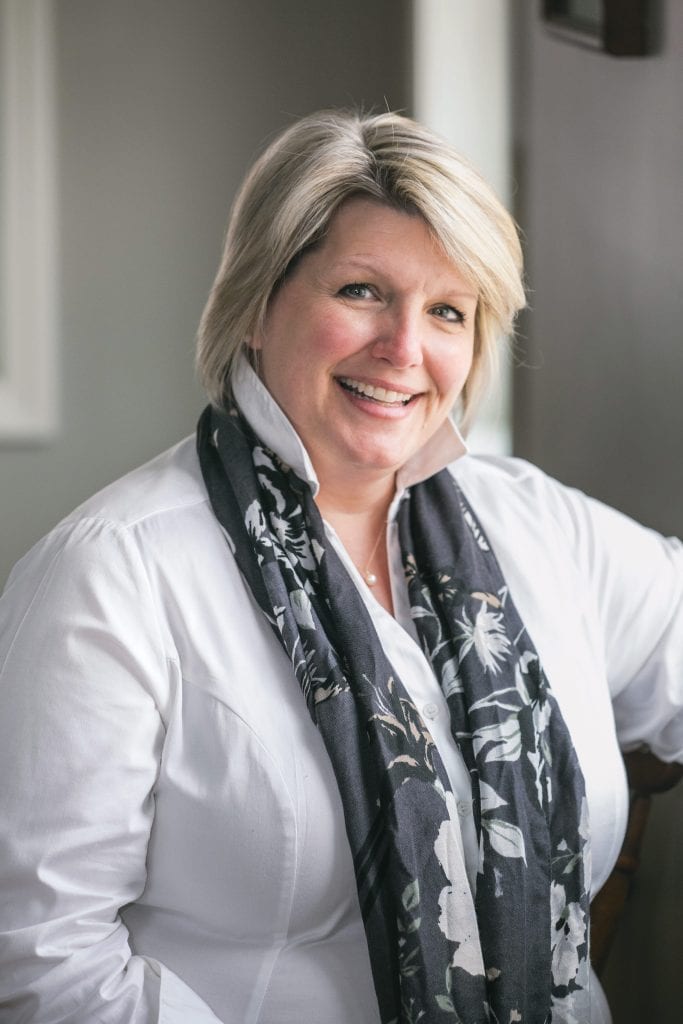
Cheri Mills is a business banking officer with PeoplesBank, and has worked in banking for 32 years. She began her career in 1988 as a mail runner, working up to banking center manager in 1997, and eventually discovered a love of business banking. She takes pride in assisting business owners with achieving financials goals. She is currently the president of the Rotary Club of Chicopee, treasurer of Junior Achievement of Western Massachusetts, and a board member with the Minority Business Council in Springfield.


Law

A Landmark Ruling

By Amelia J. Holstrom, Esq. and Erica E. Flores, Esq.

Amelia J. Holstrom, Esq.

Amelia J. Holstrom, Esq.

Erica E. Flores

Erica E. Flores

Businesses in Massachusetts have to comply with both state and federal anti-discrimination laws that prohibit discrimination in employment based on what are referred to as protected characteristics. Some examples that people commonly think of are sex, age, and religion, but there are many more.

Massachusetts’ anti-discrimination laws have prohibited employment discrimination on the basis of sexual orientation since 1990 and gender identity and expression since 2012. However, many other states either don’t have employment-discrimination laws at all or don’t include sexual orientation or gender identity as protected characteristics under the laws they do have. So what about the federal law?

Title VII of the Civil Rights Acts of 1964 prohibits discrimination in employment based on specified protected classes. That statute, however, does not list sexual orientation or gender identity in its list of protected characteristics. Although Title VII prohibits discrimination on the basis of ‘sex,’ because it did not expressly list sexual orientation and gender identity as protected classes, federal courts had been left to grapple with whether discrimination on the basis of either of those characteristics is prohibited as a form of sex discrimination under Title VII. That is, until the Supreme Court of the U.S. issued its ruling in Bostock v. Clayton County, Georgia on June 15, 2020.

In a landmark ruling, the Supreme Court held that Title VII of the Civil Rights Act of 1964 prohibits discrimination based on sexual orientation and gender identity. The court’s decision resolved three separate but similar cases pending before the Supreme Court: Bostock v. Clayton County, Georgia; Altitude Express Inc. v. Zarda; and R.G. & G.R. Harris Funeral Homes Inc. v. EEOC.

Each of the three cases began the same way: Gerald Bostock worked for Clayton County, Ga. and was terminated for conduct “unbecoming” of a county employee when he began to participate in a gay softball league. Donald Zarda worked as a skydiving instructor at Altitude Express in New York. After mentioning that he was gay, he was terminated just days later after several years of successful employment. Aimee Stephens worked at R.G. & G.R. Harris Funeral Homes in Garden City, Mich. When hired, Stephens presented as a male. After five years of employment, she informed her employer that, after she returned from an upcoming vacation, she planned to “live and work full-time as a woman.” She was fired before she even left.

Bostock, Zarda, and Stephens each filed a lawsuit against their employer alleging that they were discriminated against on the basis of their sex in violation of Title VII. Bostock’s case was dismissed by the Eleventh Circuit Court of Appeals, which held that sexual-orientation discrimination is not a form of sex discrimination under Title VII. Zarda and Stephens’ cases had a different outcome. The Second and Sixth Circuit Courts of Appeals found that discrimination based on sexual orientation and gender identity, respectively, are prohibited under Title VII as forms of discrimination based on sex.

“An employer has two employees — one female and one male — both of whom are attracted to men. If the employer fires the male employee because he is attracted to men, the employer discriminates against him for traits or actions it tolerates in his female colleague.”

The Supreme Court of the U.S. agreed to review all three decisions to resolve the issue that had divided the lower courts: whether discrimination on the basis of sexual orientation and/or gender identity is prohibited under Title VII as a form of discrimination based on sex. The Supreme Court answered in the affirmative.

In the 6-3 majority opinion, which was authored by Justice Neil Gorsuch, the court focused on the ordinary meaning of the language used by Congress in Title VII at the time the law was passed back in 1964. Specifically, Title VII states that it is “unlawful … for an employer to fail or refuse to hire or to discharge any individual, or otherwise to discriminate against any individual with respect to his compensation, terms, conditions, or privileges of employment, because of such individual’s … sex.” The court noted that, in 1964, ‘sex’ was defined as one’s “status as either male or female [as] determined by reproductive biology; that the statute uses the term ‘because of’ that status to define when an action is discriminatory; and that it focuses on discrimination against an individual, not a group.

Based on this language, the court found that, under the plain meaning of Title VII, “an individual’s homosexuality or transgender status is not relevant to employment decisions … because it is impossible to discriminate against a person for being homosexual or transgender without discriminating against that individual based on sex.” The court went on to explain its reasoning using two examples:

• An employer has two employees — one female and one male — both of whom are attracted to men. If the employer fires the male employee because he is attracted to men, the employer discriminates against him for traits or actions it tolerates in his female colleague. Accordingly, he was singled out based on his sex, and his sex is the reason for the discharge.

• An employer employs a transgender employee who was identified as a male at birth but who now identifies as a female. If the employer continued to employ someone who identified as female at birth but terminated the individual who identified as male at birth, the employer intentionally penalizes a person identified as male at birth for traits or actions that it tolerates in an employee identified as female at birth.

The court agreed that sexual orientation and gender identity are, in fact, distinct concepts from sex. However, the court determined that “discrimination based on homosexuality or transgender status necessarily entails discrimination based on sex; the first cannot happen without the second.”

With this landmark decision, every employer that is covered by Title VII anywhere in the country will now be subject to the same prohibitions that have protected LGBTQ+ employees in Massachusetts for the last eight years, and will be subject to civil penalties and civil liability under Title VII for discriminating against employees on the basis of their sexual orientation or gender identity. This includes every private employer and every state or local government agency that has 15 or more employees.

Amelia J. Holstrom and Erica E. Flores are attorneys at the firm Skoler, Abbott & Presser, P.C., in Springfield; (413) 737-4753; [email protected]; [email protected]

Opinion

Big E Cancellation a Major Blow

Going back to the early days of the pandemic, one of the overriding questions on the minds of many in this region, and especially its business community, was: will there be a Big E?

Late last month, we finally learned the answer: no.

In many ways, that verdict, arrived at after lengthy discussions between Big E organizers and officials in West Springfield, was not unexpected. Looking at the situation objectively, one had to wonder how organizers could possibly stage a fair that draws more than 100,000 people on a good day and keep not only these visitors safe, but also the workers, vendors, and area residents.

It just didn’t seem doable, even to those who really, as in really, wanted the Big E to happen.

And that’s a large constituency, especially within the business community, where many different kinds of ventures benefit greatly from the 17-day fair and the 1.5 million people drawn to it annually. That list includes hotels, restaurants, tent-rental companies, transportation outfits, food vendors, breweries, and many, many more. These businesses have already lost so much to the pandemic, and now they’ve suffered perhaps the biggest loss of all.

Canceling the Big E was certainly the right move from a public-health perspective, and it makes sense on so many levels. But that doesn’t soften the blow for constituencies ranging from large corporations to homeowners near the fairgrounds who turn their driveways and lawns into parking lots.

Indeed, the year-long (at least) challenge of surviving the pandemic just became a little sterner for all kinds of businesses within the 413.

And the community loses out as well. The Big E isn’t just an annual event, it’s a century-old tradition that has become part of the fabric of this region.

Canceling the Big E was certainly the right move from a public-health perspective, and it makes sense on so many levels. But that doesn’t soften the blow for constituencies ranging from large corporations to homeowners near the fairgrounds who turn their driveways and lawns into parking lots.

Meanwhile, the cancellation of the Big E provides more evidence — not that anyone needed any — of just how cruel this pandemic has become for business owners, most of whom have worked diligently to abide by the rules and do everything they can to position themselves to survive COVID-19.

Indeed, so much of this fight to survive involves matters far out of the control of these business owners — from orders to shelter in place to the many details and deadlines (often coming without any real warning) with regard to reopening the economy, to the loss of key customers, such as the Big E and MGM Springfield, which is due to reopen soon after being closed for nearly four months.

As the stories that begin on page 6 clearly show, business owners have done whatever they can do to pivot, create new revenue streams, and simply try to weather this storm. But the pandemic keeps throwing more challenges at them, with the Big E’s cancellation being the latest.

The silence on Memorial Avenue this September will be deafening. And the blow to the region will be significant.

Opinion

Moving Beyond the Blame Game

Family members of veterans living at the Holyoke Soldiers’ Home didn’t need a 174-page review by a former federal prosecutor to tell them that something went terribly wrong at that facility in March and April, leading to the deaths of 75 residents.

But the report did what it was commissioned to do — analyze the facts concerning what happened at the home and come to a conclusion as to how this tragedy was allowed to play itself out and answer what was, for a time, the most pressing question about all this: ‘who is to blame?’

Indeed, in the wake of the deaths and hospitalizations at the Soldiers’ Home, Gov. Charlie Baker and the Legislature both used the phrase ‘get to the bottom of this’ (unofficially or unofficially) as the scope of the tragedy grew, as did the thirst for answers. And the report has certainly identified some people to blame.

Starting with state officials for not only giving the job of running the home to a veteran (Bennett Walsh) who had no experience leading a long-term-care facility, but then failing to provide adequate amounts of oversight to Walsh and others charged with the care of veterans. But Walsh is also singled out for triggering a series of decisions that allowed COVID-19 to race through the home, affecting residents and staff members alike.

With language that can only be described as heartbreaking, the report recounts the thoughts of one staff member after management merged two locked dementia units on March 27, a decision investigators described as a catastrophe: “[I] will never get those images out of my mind — what we did, what was done to those veterans … my God, where is the respect and dignity for these men?” Other staff members were quoted as saying, “all in this room will be dead by tomorrow.”

While the report is certainly a valuable document, the veterans who died, their families, and staff members who lived through this horrible tragedy want so much more than a document that chronicles what happened and assigns blame. They want and need for this catastrophe to lead to meaningful and permanent changes that will ensure that no one will ever say, ‘where is the respect and dignity for these men?’ again.

That is our hope as well, and while the governor and legislators sound sincere when they say this is their overriding concern with the regard to the Soldiers’ Home, we know from history that when stories disappear from the front pages of newspapers, the will to implement meaningful change dissipates.

We can’t allow that to happen in this case.

Changes proposed by the governor, including several not in the report, include creation of a consistent policy at Holyoke and its sister facility in Chelsea for the hiring of a superintendent; creating more oversight by hiring an assistant secretary within the state Department of Veterans’ Services who would serve as an executive director for the state’s two soldiers’ homes and report directly to the secretary of Veterans’ Services; expanding the board of trustees at both the Holyoke and Chelsea facilities from seven to nine and requiring that the two additions each have either a clinical or administrative background in healthcare; and, most importantly, perhaps, making immediate and long-term capital improvements to modernize residential units and furnishings to address infection control — renovations are currently underway on one floor, but a more comprehensive plan of modernization and improvements is certainly needed.

History also shows us that, following some of the worst tragedies in history — the Triangle fire in New York City, the Cocoanut Grove fire in Boston, and even the Titanic’s sinking — reviews that initially focused on laying blame eventually led to serious, and often historic, reforms.

If that can happen with the case of the Holyoke Soldiers’ Home tragedy, then perhaps those veterans who bravely served their country will not have died in vain.

Picture This

Email ‘Picture This’ photos with a caption and contact information to [email protected]


Celebrating 40 Years

Robert MacDonald, executive director of Work Opportunity Center Inc. (WOC) was recently honored with a Zoom anniversary celebration for his 40 years of leadership. WOC provides services to individuals with developmental challenges, including community integration, work skills, and community employment. Agawam Mayor William Sapelli, Springfield Mayor Dominic Sarno, and West Springfield Mayor William Reichelt all offered proclamations. Pictured, from left: Mary Akers, assistant executive director; Dale Lapointe, board secretary; Joanne Roberts, board member; MacDonald; Steve Robinson, board president; and Rick Hanchett, vice president.


Sharing and Caring

Cooley Dickinson Health Care employees recently donated hundreds of personal-hygiene products ranging from hair brushes and razors to deodorant, soap, and toothpaste to the Amherst and Northampton Survival Centers and the Easthampton Community Center. Pictured, from left: Jeff Harness, Cooley Dickinson’s director of Community Health and Government Relations; Robin Bialecki, executive director of the Easthampton Community Center; and Angela Belmont, chief Nursing officer at Cooley Dickinson Hospital.


Service Above Self

Last month, John Doleva, president and CEO of the Naismith Memorial Basketball Hall of Fame; and Frank Colaccino, Hall of Fame governor, CEO of the Colvest Group, and chair of the Westfield Bank 2019 Service Above Self luncheon committee, presented a check for $6,500 to the Rotary Club of Springfield, which is planning to award $10,000 in grants to Springfield-based nonprofit organizations that benefit the Greater Springfield community, particularly during the COVID-19 pandemic. Pictured from left: Paul Lambert, Rotarian and vice president of Enshrinement Services & Community Engagement at the Hall of Fame; Doleva; Colaccino; and Sue Mastroianni and Jack Toner, past presidents of the Rotary Club of Springfield.


Special Delivery

Amid COVID-19, the need for organizations such as Open Pantry Community Services has grown. Matt Ogrodowicz of Meyers Brothers Kalicka, P.C. led a charge to collect food and donations at MBK over a two-week period. He shared Open Pantry’s mission as well as its high-demand items, including cereal, pasta, canned goods, peanut butter, and spaghetti sauce. Staff at MBK donated food and/or money, which Ogrodowicz used to shop for additional items on the high-demand list. With the combined efforts, MBK was able to donate 279 pounds of food to Open Pantry.

Agenda

Big E 2020

Canceled: For the safety of fairgoers, staff, vendors, entertainers, exhibitors, sponsors, suppliers, and the broader community, the leadership of the Eastern States Exposition have canceled the 2020 Big E. “We know our faithful fairgoers will be disappointed,” a statement noted. “This decision was difficult and complex, but we all know in our hearts that it’s the right thing to do for the health and safety of the 1.6 million people who support us each year. Our staff has spent the last few months working tirelessly to figure a way to bring our annual New England tradition to everyone this fall. Despite exploring all our options and planning extensively, we realized that the Big E experience that everyone has come to know and love would not be the same.” Next year’s edition of the Big E is scheduled for Sept. 17 to Oct. 3, 2021.

Café Creations

July 8, 15, 22: Café Creations, an interactive learning program designed by transition specialist Kelsey Poole in conjunction with the Mental Health Assoc. (MHA), will provide opportunities for creativity, friendship, and increasing independence for 15 adults ages 18 to 22 with autism or developmental disabilities. The program was made possible through a grant provided by the Doug Flutie Jr. Foundation for Autism Inc. Café Creations will run for three consecutive Wednesdays from 3 to 4 p.m. via the Zoom virtual meeting platform. To participate, students need access to an internet-enabled computer or tablet that can connect to Zoom. Interested individuals should sign up no later than Friday, July 3 by contacting Poole at (413) 454-7112 or [email protected]. Café Creations is designed to provide adults with autism or developmental disabilities a virtual, interactive, and fun learning experience that enables them to walk away with something they created. Along the way, students have the opportunity to connect with others outside of their community, mostly in towns in Western Mass, while focusing on recreational and educational activities that incorporate meaningful connections and sustainable friendships. To finish each weekly session, students play interactive games with incentives and prizes. Materials required for each session’s creative project will be delivered to each student’s residence in time for each session. These materials include vision boards, which enable students to get to know something about themselves and then share that with others in the group; food ingredients for students to make their own pizzas; and materials to create a lava lamp. Students are encouraged to have a job coach or parent nearby to assist with some activities, notably making pizza, which involves using an oven. According to Poole, the program promotes independence and builds friendships through creation. “Folks with autism or developmental disabilities don’t always know how to meet others like themselves in their community,” she said. “I designed Café Creations to be an alternative way of learning and, at the same time, an alternative way of connecting with others. It provides that linkage and does so in a manner where there’s something creative happening. With this population, it’s important to peel back the support and get them to spread their wings.”

Asnuntuck Information Sessions

July 13, 22, 28; Aug. 6: Asnuntuck Community College has scheduled several virtual information sessions with the Admissions and Financial Aid departments during the summer. The sessions will be held on Monday, July 13 at 5 p.m.; Wednesday, July 22 at 3 p.m.; Tuesday, July 28 at 5 p.m.; and Thursday, Aug. 6 at 3 p.m. Prospective students need to attend only one of the sessions. Participants will be able to learn about the admissions and financial-aid process. The July 13 session will feature information regarding Connecticut’s community-college debt-free scholarship, Pledge to Advance Connecticut (PACT). Students must apply and be registered for a full-time schedule of courses by July 15 to be eligible for PACT. It is free to apply to the college. The sessions will also include time for questions and answers. To register for a session and learn how to register for classes, visit asnuntuck.edu/admissions/how-to-enroll. Registration for the fall semester is now open.

Healthcare Heroes Nominations

Through July 17: BusinessWest and its sister publication, the Healthcare News, will pay tribute to the heroes of COVID-19 by dedicating their annual Healthcare Heroes program in 2020 to those who are have emerged as true heroes during this crisis. The deadline for nominations is July 17. Healthcare Heroes was launched by the two publications in 2017 to recognize those working in this all-important sector of the region’s economy, many of whom are overlooked when it comes to traditional recognition programs. Over the years, the program has recognized providers, administrators, emerging leaders, innovators, and collaborators. For 2020, the program will shift its focus somewhat to the COVID-19 pandemic and all those who are working in the healthcare field or helping to assist it at this trying time. All manner of heroes have emerged this year, and we invite you to nominate one — or several — for what has become a very prestigious honor in Western Mass.: the Healthcare Heroes award. All we need is a 400- to 500-word essay and/or two-minute video entry explaining why the group or individual stands out as an inspiration, and a truly bright star in a galaxy of healthcare heroes. These nominations will be carefully considered by a panel of independent judges, who will select the class of 2020. For more information on how to nominate someone for the Healthcare Heroes class of 2020, visit businesswest.com/healthcare-heroes/nomination-form. Videos can be sent via dropbox to [email protected]. Healthcare Heroes is sponsored by Comcast Business and Elms College.

Nominations for Humane Awards

Through July 31: Dakin Humane Society is accepting nominations from the public for its Dakin Humane Awards until July 31. Nominees should be people who go out of their way to care for animals in need, people who volunteer to help animals, or people and/or animals who have provided significant public service or shown courage in a crisis. Finalists in each of the award categories will be picked from among the nominees and notified of their selection in August. The award ceremony will be livestreamed at a later date in the fall, and one winner in each of the categories will be announced. There are five awards to be bestowed: the Frances M. Wells Award, given to an individual recognized for notable contributions to the health and welfare of animals; the Youth Award, honoring a hero, age 16 or younger, whose extraordinary care and compassion makes a difference in the life of an animal, and makes the world a kinder and gentler place; the Champion Award, given to a public servant who makes life better for tens of thousands of animals and people in their community, and recognizing their dedication and compassion on behalf of animals and people in need; the Richard and Nathalie Woodbury Philanthropy Award, paying homage to an individual who displays a remarkable sense of stewardship in sharing time, talent, and financial resources to improve the lives of animals and people who love them; and the Animal Hero Award, recognizing an exceptional animal and handler (when applicable) whose valor and extraordinary devotion to people proved life-saving in disastrous or challenging heath circumstances. Nominations are being accepted online only at bit.ly/2NOcgps. Mail-in nominations will not be accepted. Nominees should be residents of Central or Western Mass. or Northern Connecticut.

MCLA Gallery 51 Virtual Artist Series

Through Aug. 8: MCLA Gallery 51 will continue its online program, the G51 Virtual Artist Series, live via Zoom at noon on alternating Saturdays. Local, regional, national, and international artists will give virtual tours of their studios and discuss their practices. Discussions with the artists will also be recorded for later viewing. The series kicked off on May 16. The gallery’s full spring programming schedule is available on its website. Upcoming artists include Sula Bermudez-Silverman (July 11), whose conceptual work intertwines multiple issues, investigating and critiquing the issues of race, gender, and economics; Kim Faler (July 25), a local, multi-disciplinary artist working in painting, drawing, installation, sculpture, and photography, whose art practice unpacks the emotional weight found within everyday objects and architecture; and Anina Major (Aug. 8), who works with topics of identity, slavery, the female body, Bahamian culture, and more. She considers her creative practice to be a response to continuous erasure and a culture that is constantly being oversimplified.

Submission Period for Virtual Art Show

Through Aug. 13: Due to the COVID-19 pandemic, NAMI Western Massachusetts will present a virtual art show this year, and is now accepting artwork for the show. Submissions are limited to individuals living with a mental-health diagnosis, and the artwork will be displayed on the organization’s website and social-media pages for a limited time, then switched out for new artwork. To submit, e-mail a picture of the art to [email protected]. Note the size of the piece, the medium, and the price if it is for sale. The artist should also specify if they want their name used. The deadline for submissions is Aug. 13.

Elms College Executive Leadership Breakfast

Sept. 22: Elms College has rescheduled its third annual Executive Leadership Breakfast due to state-mandated caution regarding large crowds and coronavirus. U.S. Rep. Richard Neal is still slated to be the keynote speaker for the event, which was originally scheduled for April 9. As the coronavirus pandemic continues to unfold, the college will announce more details as necessary. This annual event features talks by the region’s leaders on topics of relevance that impact all sectors of business and the economy in Western Mass. Speakers at past events have included Dennis Duquette, head of Community Responsibility at MassMutual and president of the MassMutual Foundation, and Regina Noonan Hitchery, retired vice president of Human Resources at Alcoa.

People on the Move

Theresa Jasmin

The board of directors of Big Y Foods Inc. announced the appointment of Theresa Jasmin as CFO following the recent retirement of William Mahoney. She is responsible for the company’s strategic planning, finance, accounting, treasury, and tax functions. As a senior member of the executive team, she reports to Charles D’Amour, president and CEO, along with Big Y’s board of directors. She also represents the first woman to be appointed to the company’s C-suite. Jasmin has more than 25 years of experience in the food industry. She began her career at Friendly Ice Cream Corp., where she held senior management positions in both Treasury and Accounting. She joined Big Y in 2005 and held several positions of increasing responsibility in accounting and finance. She became controller in 2010. In 2014, she was appointed senior director of Finance, followed by vice president of Finance in 2016 until her new appointment. Jasmin holds a BBA from the Isenberg School of Management at UMass Amherst and an MBA from Western New England University. In 2014, she was named a Top Woman in Grocery by Progressive Grocer magazine and was a founding member of Big Y’s Women LEAD (Leaders Engaged in Action and Development), the company’s first-ever employee-resource group charged with inspiring and empowering women. She currently serves on the executive committee and as treasurer for the YMCA of Greater Springfield. She also serves on the finance committees for both the Massachusetts and Connecticut Food Associations.

•••••

Erin Chrzanowski

Erin Chrzanowski

Bacon Wilson announced that attorney Erin Chrzanowski has joined the firm as an associate and a member of the firm’s business and corporate practice group, where she works on matters related to commercial real estate and financing. In addition, she was recently elected to serve on the board of Revitalize Community Development Corp. in Springfield. Prior to joining Bacon Wilson, Chrzanowski attended Syracuse University College of Law, earning her JD in 2019, and UMass Amherst’s Isenberg School of Management, earning her BBA cum laude in 2017. She is licensed to practice in both Massachusetts and New York.

•••••

Dawn Harrington

Dawn Harrington

Florence Bank announced that Dawn Harrington was recently selected as a recipient of its President’s Award. The President’s Award was established by the bank in 1995, affording employees the annual opportunity to nominate their peers for this prestigious honor that recognizes outstanding performance, customer service, and overall contribution to Florence Bank. Harrington was nominated by numerous colleagues. Harrington, a senior mortgage underwriter in the main office’s Mortgage Origination department, joined Florence Bank in 2016 and has 19 years of banking experience. She earned her associate degree in legal studies from Bay Path University.

•••••

CISA (Community Involved in Sustaining Agriculture) recently welcomed three new board members: Myra Marcellin, vice president and senior loan officer at Farm Credit East; Tessa White-Diemand, of Diemand Farm in Wendell; and Elizabeth Wroblicka, environmental consultant at Conservation Works. The three were voted in during CISA’s annual meeting, held virtually on May 21, and will serve three-year terms. CISA, a South Deerfield based nonprofit, strengthens farms and engages the community to build the local food economy. CISA’s board is made up of both farmers and community members who represent a range of business and community ties. These three board members have expertise in a variety of topics directly related to CISA’s work, including firsthand farming experience, land conservation, and farm financing. Marcellin serves in the local community, participating in the music ministry at her church, and she had served on the board of directors of the Boys & Girls Club Family Center until mid-2019. She has served in the agricultural community as well, representing Farm Credit East in various capacities and previously serving on the Massachusetts Agriculture in the Classroom board of directors. She currently serves as a regular trustee to the Eastern States Exposition, representing the state of Massachusetts. White-Diemand returned to her family farm in 2017 after working in the social-work field for many years. She is the third generation to work the Diemand Farm in Wendell, raising grass-fed beef cattle, broiler chickens, cage-free laying hens, and pasture-raised turkeys. The farm also has a small commercial kitchen that produces value-added products which are sold at their small farm store and across the Pioneer Valley. Wroblicka has dedicated her more than 25-year career to protecting important natural resources, including many farms and forests in the Pioneer Valley. Currently, as part of a team of environmental consultants at Conservation Works, LLC, she specializes in land-conservation transactions and helping landowners figure out the best way to protect their land. She has served as chief of Wildlife Lands for the Massachusetts Division of Wildlife, on staff at several land trusts, and as an attorney in private practice.

Company Notebook

UMass to Expand Online Educational Opportunities

BOSTON — The University of Massachusetts and Chapman University System announced their intent to form an exclusive strategic partnership between UMass Online and Brandman University to expand educational opportunities for adult learners in Massachusetts and across the nation. This partnership, expected to be finalized later this year, will be launched as millions of adults in Massachusetts and across the U.S. need flexible, high-quality, and affordable online-education alternatives now and as they recover from the economic dislocation caused by COVID-19, which has disproportionately impacted communities of color. Based in Irvine, Calif., Brandman was established in 1958 by Chapman University, a 159-year-old private institution in Orange, Calif. Originally founded to deliver high-quality education to active-service military, Brandman has evolved into a widely recognized leader in online education, with a strong record of serving veterans and a diverse range of adult learners. The partnership will augment UMass Online, which now supports more than 25,000 students, strengthening its technology platform and student-support services tailored to adult learners. UMass President Marty Meehan recently cited dramatic declines in the number of high-school graduates and employers’ need for a highly skilled workforce in announcing plans to scale up online programming at UMass. He also cited the “troubling lack of economic mobility” among African-Americans and Hispanics. The economic disruption caused by COVID-19 has accelerated these challenges, and the need for new online education programs that remove the obstacles adult learners often face is now even more urgent. A key target group for the partnership will be adult learners in underserved communities. According to a Strada Network survey of 4,000 adults, most Americans (62%) are concerned about unemployment, but African-Americans are moreso (68%), and their Latinx and Asian counterparts are even more worried (72%). The same study indicated that 53% of adult learners prefer online education opportunities.

HMC Submits Proposal to Expand Psychiatric Bed Capacity

HOLYOKE — Holyoke Medical Center (HMC) has submitted a letter of intent and project proposal to the Massachusetts Bureau of Health Care Safety and Quality to expand psychiatric bed capacity. The letter, sent on June 19, notified the Determination of Need Program that HMC will be completing an application for an additional 64 psychiatric beds. If approved, this will increase the hospital’s total capacity to 84 psychiatric beds, which will serve adult and geriatric populations. The 68,000-square-foot Holyoke Medical Center Behavioral Health Pavilion proposal includes 48 adult psychiatric beds, 36 geriatric beds, and 4,000 square feet of shell space for future expansion or uses to be determined later. Population statistics and competitive analysis suggest that there is a need within a 14-mile radius of Holyoke Medical Center for 52 adult psychiatric beds and 36 geriatric psychiatric beds. The proposal also includes a parking analysis and parking-garage study, which could provide an additional 60 to 180 parking spaces. Holyoke Medical Center is partnered with Signet Health Corp., assisting the hospital in the delivery of behavioral-health services by providing management and consulting services. The Leo Brown Group, a full-service healthcare real-estate development and solutions company, will design and build the facility. It is estimated that, once approved by state and local officials, the new facility will take 18 months to complete and become operational.

Monson Savings Bank to Open New Branch in East Longmeadow

EAST LONGMEADOW — Monson Savings Bank announced the expansion of its branch network into East Longmeadow. This new office, located at 61 North Main St., is expected to open in late summer. The full-service branch will offer an extensive array of consumer and commercial products, traditional banking products, wealth-management products, and several robust digital solutions that have grown more important in today’s environment. It has been the bank’s goal to further expand the markets it serves.

Royal, P.C. Moves to Springfield

SPRINGFIELD — The law firm of Royal, P.C. has moved to Springfield. Founded by attorney Amy Royal in 2008, Royal, P.C. is now located in the Indian Orchard section of Springfield, at 819 Worcester St., Suite 2. “Springfield is where I grew up, so it felt natural to relocate my law firm here,” Royal said. “Indian Orchard, with its unique history, has always felt like a special place within the city to me, and its geography otherwise places us in a more centralized location with respect to our Central and Eastern Massachusetts and Northern Connecticut clients.” The telephone and fax numbers of (413) 586-2288 and (413) 586-2281 remain the same. For more information about the firm, visit www.theroyallawfirm.com.

Bay Path Launches Risk Management Degree

LONGMEADOW — Bay Path University is expanding its focus in the rapidly growing area of cybersecurity — and helping to bring more women into it — with the introduction of an undergraduate major in risk management. In addition, the university will offer scholarships to women looking to obtain degrees in cybersecurity. Made possible by Strada Education Network, these scholarships will help offset the cost of fall 2020 enrollment in cybersecurity programs. The term ‘risk management’ applies to the forecasting and evaluation of risks alongside the identification of procedures to avoid or minimize their impact. This new program concentration will include coursework in data privacy, project management, crisis management, and incident recovery. With nearly 80% of the organizations surveyed for the 2019 Marsh Microsoft Global Cyber Risk Perception Survey ranking cyber risks as a top-five concern, but only 11% feeling adequately prepared to assess and address those threats, the need for risk managers in the cybersecurity sphere is more important than ever. Within those responding organizations, the majority of board members and senior executives responsible for their organization’s cyber risk management reported that they had less than a day in the last year to spend focused on cyber risk issues.

ValleyBike Share Launches 2020 Season

PIONEER VALLEY — ValleyBike Share — the electric-assist bike-share program of the Pioneer Valley that includes Amherst, Easthampton, Holyoke, Northampton, South Hadley, Springfield, and the UMass Amherst campus — has launched the 2020 season in select locations. Remaining stations will be opened over the following weeks. ValleyBike boasts more than 40,000 active members, who have ridden more than 280,000 miles on 126,940 trips. Due to the situation with Covid-19, ValleyBike is urging members to sanitize the handles, seat, and PIN pad before and after using the bikes. Every time the maintenance team touches a bike, it will be fully sanitized, but the public can do their part to keep themselves and others safe. Visit www.valleybike.org for more information and to find out how to become a member.

Art Therapy/Counseling Program Accredited at Springfield College

SPRINGFIELD — The Springfield College Art Therapy/Counseling master’s-degree program has been granted initial accreditation by the Commission on Accreditation of Allied Health Education Programs (CAAHEP), effective immediately. Awarded after a peer review by the Accreditation Council for Art Therapy Education and the CAAHEP board of directors, this accreditation determined the Springfield College Art Therapy/Counseling program was in substantial compliance with nationally established accreditation standards. Students enrolled in the program will have the option to either pursue a master of science or master of education degree. Graduates are master’s-level clinicians who can jump right into the workforce or pursue additional licensure opportunities, which will allow them to earn a license in the mental-health field after graduation and to obtain board certification as an art therapist.

Applied Mortgage Giving Makes $45,000 Regional Donation

NORTHAMPTON — Applied Mortgage Giving announced a new campaign, the Vitality Grant, which will be donated to six local community organizations: Downtown Amherst Foundation (Amherst Area Chamber of Commerce and Amherst Business Improvement District), Franklin County Chamber of Commerce, Greater Easthampton Chamber of Commerce, Greater Northampton Chamber of Commerce, United Way of Franklin County, and United Way of Hampshire County. These organizations will each receive a portion of the gift to use at their discretion to support their work in the community. The Vitality Grant — sponsored by Applied Mortgage Giving, the charitable arm of Applied Mortgage, a d/b/a of HarborOne Mortgage, LLC — is designed to positively influence and provide opportunities for the success of small businesses and nonprofits in Hampshire and Franklin counties. Applied Mortgage Giving will be partnering with the local chambers and United Ways, hoping to enhance these organizations’ opportunities to meet the specific needs of their communities. For more information or questions regarding the Vitality Grant, e-mail LaBonte at [email protected].

Westfield State Accepting Applications for Addiction Counselor Education Program

WESTFIELD — Westfield State University’s College of Graduate and Continuing Education is accepting applications for the 2020-21 addiction counselor education (ACE) program. Classes will be held evenings and weekends starting in September 2020 and ending in May 2021. The goal of this non-credit certificate program, offered at the university since 1991, is to provide students with the knowledge, skills, and techniques necessary for the successful treatment of individuals and families afflicted by alcoholism and/or other drug addictions. This program has been highly instrumental in the professional development of individuals in Western Mass. who are either working or interested in the growing healthcare field of addiction services. To help with this mission, Westfield State also offers the ACE program at a satellite location, in Pittsfield, to help train potential counselors in the Berkshires area to fill critical positions in treatment facilities that are understaffed and unable to fill open positions. Applications for both programs are available online at www.westfield.ma.edu/ace. For more information, or to receive an application by mail, contact Brandon Fredette at [email protected] or (413) 572-8033.

Pittsfield Cooperative Bank Supports Resilience Fund

PITTSFIELD — Berkshire Agricultural Ventures (BAV) announced it has been awarded a $5,000 grant from Pittsfield Cooperative Bank to support its Resilience Fund for Farmers. This new fund was established in response to the COVID-19 crisis and the resulting impact on local farmers, who are hurting right now as stores, restaurants, and other income-generating avenues like farmers’ markets and CSA are closed or operating in different, logistically challenging ways due to the virus. Despite these challenges, many farmers are reaching out to contribute healthy food to the neediest among us and sell as much as they can directly to consumers. The goal of the BAV Resilience Fund for Farmers is to support those who are experiencing business challenges as a result of COVID-19. Zero-interest, forgivable loans and grants will be provided to help farmers adapt to new realities, overcome significant income challenges, and ensure that farms remain viable and sustainable so they continue to meet demand for healthy, local foods. In addition to working with individual farmers, BAV also hopes to support strategies that avoid costly duplication of effort among farmers, such as developing coordinated delivery services. The first grant from the fund helped Roots Rising to pivot and establish the Berkshire County-wide Virtual Farmers Market, which in its first eight weeks served 1,400 households, gave $18,000 to neighbors in need, and generated $50,000 in sales to support the local food system. The grant from Pittsfield Cooperative Bank represents the first corporate support to the fund, which was established with a grant from a local family foundation. J. Jay Anderson, president and CEO of Pittsfield Cooperative Bank, added that the bank “is proud to support the work of the Berkshire Agricultural Ventures and the Resilience Fund for Farmers during this extraordinary time. At a time when local food systems and healthy food is important to our communities more than ever before, we thank them for their work.”

MCLA Receives Two Awards from Council for Advancement and Support of Education

NORTH ADAMS — Massachusetts College of Liberal Arts (MCLA) announced it has received two awards from the Council for Advancement and Support of Education (CASE), a global nonprofit association dedicated to educational advancement. The college received an Educational Fundraising Award for Overall Performance in the category of Public Liberal Arts Institutions and a Circle of Excellence Award for its 2018-19 President’s Report. This is the first year MCLA has been recognized by this program. The annual Educational Fundraising Awards recognize exemplary development programs based on a blind review of data submitted to the CASE Voluntary Support of Education survey. Winners are selected based on factors and variables that include, but are not limited to, patterns of growth, overall breadth of fundraising, amount raised per student, and alumni participation. The Circle of Excellence Awards recognize institutions whose staff members advanced their institutions through innovative, inspiring, and creative ideas. The awards acknowledge superior accomplishments that have lasting impact, demonstrate the highest level of professionalism, and deliver exceptional results. CASE judges commended the 2018-19 President’s Report, which was developed by MCLA’s Department of Marketing and Communications staff, on its theme and narrative flow, effective use of vintage and modern photographs and design elements, concise but not spare use of color, and the overall feeling of community it expressed, among other praise.

Incorporations

The following business incorporations were recorded in Hampden, Hampshire and Franklin counties and are the latest available. They are listed by community.

CHICOPEE

Taifa Foundation Inc., 1981 Memorial Dr., Suite 201, Chicopee, MA 01020. Joseph N. Kariuki, 245 Senator St., Springfield, MA 01129. We bring together, Kenyan diverse communities without regard to tribal, ethnic, political, or religious backgrounds and empower them to build a great future in western Massachusetts and beyond while maintaining and promoting our rich and diverse culture.

ZB Consulting Inc., 161 Hampden St., Apt 1L, Chicopee, MA 01013. Ashley M. Martinez, same. Provide holistic, client-centered representation to indigent persons in civil and criminal matters.

GRANBY

The Friends of Granby’s Parks and Recreation, 152 Harris St., Granby, MA 01033. Louis M. Barry, same. Support and improve the town of Granby parks and the recreation programs.

HADLEY

The Coop Education Integrity Board Inc., 105 Honey Pot Road, Hadley, MA 01035. Patrick John Leighton, same. To promote and fund the development and dissemination of a pre- K-12, three-dimensional model of curriculum, instruction, assessment, teaching, and learning in which learning outcomes are organized into the three categories of transferable concepts, specific content information, and kinesthetic/intellectual skills and processes.

HOLYOKE

Starzwireless Inc., 48 Holy Family Road, Apt 116, Holyoke, MA 01040. Boris Mordukhaev, same. A store that repairs electronic devices.

PITTSFIELD

Tamarack Equipment Sales Inc., 850 Tamarack Road, Pittsfield, MA 01201. Daniel P. Burke, 845 Tamarack Road, Pittsfield, MA 01201. Used car dealership.

SOUTHAMPTON

US Cannabis Corp., 111 Strong Road, Southampton, MA 01073. Michael Jaeger, same. Apply for cultivation license with CCC.

SPRINGFIELD

Pioneer Valley House of Labor Inc., 640 Page Blvd., Springfield, MA 01104. Michael Harazmus, 36 Mason Road, Holyoke, MA 01040. The purchase, construction, lease and/or maintenance of a building or portion thereof for the use, occupation and management of Western Mass. labor organizations affiliated now and hereafter with the Western Massachusetts area labor federation.

R R Enterprise Inc., 121 Albemarle St., Springfield, MA 01109. Ronald Ruell, same. Paper sales recycle.

SPP Investments Inc., 25 Chesterfield Ave., Springfield, MA 01118. Mike Lemelin, same. Own, rent, and manage real estate.

T Transportation Inc., 170 Switzer Ave., Springfield, MA 01109. Andriy Tanchev, same. Transportation.

W.W. Hispanic American Wrestling Alliance Corporation, 62 Governor St., Springfield, MA 01104. Guillermo R. Negron, same. Entertainment, sports events, and music concerts.

WEST SPRINGFIELD

Sprintway Trans Inc., 51 Wistaria St., West Springfield, MA 01089. Dimitar Dimitrov, same. Trucking.

Through Ebony’s Eyes LLC, 900 Riverdale St., #116, West Springfield, MA 01089. Larshell Curley, 40 Hawthorne St., Springfield, MA 01105. Provide scholarship and financial aid support to young people pursuing post-secondary education.

WESTFIELD

Pioneer Valley Pt & Sport Rehab Inc., 20 Hunters Slope, Westfield, MA 01085. Anatoliy Pavlyuk, same. Physical therapy & sports rehabilitation services.

Road Mass Transportation Corp., 50 Medeiros Way, Westfield, MA 01085. Dale Unsderfer, 48 Sunset Dr., Westfield, MA 01085. Trucking business.

WESTHAMPTON

Quotient Education Inc., 75 Montague Road, Westhampton, MA 01027. Andrew M. Hilnbrand, same. Tutoring and test preparation service.

Building Permits

The following building permits were issued during the month of June 2020. (Filings are limited due to closures or reduced staffing hours at municipal offices due to COVID-19 restrictions).

CHICOPEE

Baystate Medical Center Inc.
451 Center St.
$45,000 — AT&T to remove and replace three antennas and three remote radio units on existing cell tower

James Legrand
3 Muzzy St.
$3,875 — Roofing

Republic Services
845 Burnett Road
$205,995 — Roofing

LEE

Travis Cabral, Rian Dowd
165-1 Water St.
$34,000 — Fix up barn to turn into automotive repair shop

The Cohen Group, LLC
10 Railroad St.
$1,000 — Demolish interior, remove interior wall and ceiling cover, remove bar

LENOX

490 Pittsfield Road, LLC
490 Pittsfield Road
$87,000 — Change Mascots bar layout into deli and retail space

SPRINGFIELD

Ali Syed Bakhtiar Ali, Nasir Awan
762 Boston Road
$8,000 — Alter restroom for accessible compliance and repair delivery ramp railings in vacant restaurant

City of Springfield
15 Catharine St.
$20,000 — Demolish block partition walls to combine two classrooms into one and relocate sink; turn 36 classrooms into 18 at Early Childhood Education Center

The Colvest Group
1340 Boston Road
$10,300 — Install fire-alarm system

Eastco Realty
30 Magaziner Place
$53,000 — Install six windows to front and side of building at Enfield Enterprises Inc.

Jijay Gaddam
1410 Carew St.
$13,500 — Convert two rooms into new hygiene rooms at 7 Hills Dental

Realted Management
115 Dwight St.
$3,371 — Replace fire-alarm panel

Sims Enterprises, LLC
1201 Parker St.
$230,000 — Alter tenant space for Family Dollar

Springfield Tower Square
1500 Main St.
$30,000 — AT&T to remove and replace three roof-mounted antennas and three remote radio heads

DBA Certificates

The following business certificates and/or trade names were issued or renewed during the month of June 2020. (Filings are limited due to closures or reduced staffing hours at municipal offices due to COVID-19 restrictions).

BELCHERTOWN

Priveasy
21 Two Ponds Road
Noah Troy

DEERFIELD

The Deerfield Fly Shop
8A Elm St.
Brian Comfort

NHF
16 Yankee Candle Way
Bradford Turner

Stillwater Farms, LLC
5 Stillwater Road
Peter Melnik, Mark Melnik

Bankruptcies

The following bankruptcy petitions were recently filed in U.S. Bankruptcy Court. Readers should confirm all information with the court.

Brown, Olivia M.
a/k/a Conte-Brown, Olivia M.
8 Foss St.
Westfield, MA 01085
Chapter: 7
Date: 06/011/2020

Chisholm, Nicole M.
74 Partridge Dr.
Springfield, MA 01119
Chapter: 7
Date: 06/01/2020

Cruz, Licenia
21 Lawndale St.
Springfield, MA 01108
Chapter: 7
Date: 06/02/2020

Fox-Bryant, Molly Ellen
4- A Maple View Lane
Agawam, MA 01001
Chapter: 13
Date: 06/04/2020

Houston, Brenda D.
a/k/a Houston-Leslie, Brenda D.
45 Willow St.
Springfield, MA 01103
Chapter: 7
Date: 06/08/2020

LeBlanc, Robert
75 Judson St.
Springfield, MA 01104
Chapter: 7
Date: 06/10/2020

Millan, Jose L.
301 Dwight Road
Springfield, MA 01108
Chapter: 13
Date: 06/09/2020

Pouliot, Melissa J.
22 Marguerite St.
Chicopee, MA 01020
Chapter: 7
Date: 06/08/2020

Randolph, Darryl Eugene
3 Eastwood Dr.
Springfield, MA 01129
Chapter: 7
Date: 06/02/2020

Robinson, Marie L.
485 South St., Apt. 217
Holyoke, MA 01040
Chapter: 7
Date: 06/05/2020

Tavares, Maria G.
340 Holyoke St.
Ludlow, MA 01056
Chapter: 13
Date: 06/09/2020

Real Estate

The following real estate transactions (latest available) were compiled by Banker & Tradesman and are published as they were received. Only transactions exceeding $115,000 are listed. Buyer and seller fields contain only the first name listed on the deed.

FRANKLIN COUNTY

ASHFIELD

876 Beldingville Road
Ashfield, MA 01330
Amount: $380,000
Buyer: Darius Marder
Seller: Janet L. Castleman
Date: 06/16/20

BERNARDSTON

34 South St.
Bernardston, MA 01337
Amount: $205,750
Buyer: Jess E. Schulte
Seller: Cameron A. Schmitz
Date: 06/15/20

GREENFIELD

179 Green River Road
Greenfield, MA 01301
Amount: $204,900
Buyer: Alexander J. Fullerton
Seller: Mary E. McEneany
Date: 06/12/20

284 High St.
Greenfield, MA 01301
Amount: $265,000
Buyer: JLS Enterprises LLC
Seller: Green Man Enterprises LLC
Date: 06/08/20

57 Silver St.
Greenfield, MA 01301
Amount: $219,000
Buyer: Amanda Mullen
Seller: Newcomb INT
Date: 06/05/20

21 Spring Ter.
Greenfield, MA 01301
Amount: $270,000
Buyer: Danielle M. Bonsanti
Seller: Anne M. Platzner
Date: 06/08/20

49 Vernon St.
Greenfield, MA 01301
Amount: $223,000
Buyer: Ciaran C. Kelahan
Seller: Dennis M. Parrott
Date: 06/11/20

HAWLEY

58 Forget Road
Hawley, MA 01339
Amount: $791,500
Buyer: Meadowsweet Farm LLC
Seller: Paul M. Lacinski
Date: 06/04/20

59 Forget Road
Hawley, MA 01339
Amount: $350,000
Buyer: Kyra M. Cressotti
Seller: Paul M. Lacinski
Date: 06/04/20

HEATH

62 Long Hill Road
Heath, MA 01346
Amount: $245,000
Buyer: Angela M. Taylor
Seller: Sheila D. Urban
Date: 06/10/20

Rowe Road
Heath, MA 01346
Amount: $173,000
Buyer: Nancee Bershof
Seller: York INT
Date: 06/03/20

MONTAGUE

75 Turnpike Road
Montague, MA 01376
Amount: $200,000
Buyer: Jordan Kozloski
Seller: Frances C. MacPhail
Date: 06/05/20

ORANGE

69 Prescott Lane
Orange, MA 01364
Amount: $226,000
Buyer: Aaron Moore
Seller: Thavath Sayarath
Date: 06/04/20

48 West Main St.
Orange, MA 01364
Amount: $177,500
Buyer: Paul Theisen
Seller: Laelia LLC
Date: 06/09/20

111 West Myrtle St.
Orange, MA 01364
Amount: $310,000
Buyer: Jason R. James
Seller: B. Peter & M. A. Holmes FT
Date: 06/05/20

1

Dell Road
Rowe, MA 01367
Amount: $173,000
Buyer: Nancee Bershof
Seller: York INT
Date: 06/03/20

SHUTESBURY

295 Montague Road
Shutesbury, MA 01072
Amount: $364,000
Buyer: Jennifer M. Cheever
Seller: Robert L. McCormick RET
Date: 06/11/20

SUNDERLAND

192 Hadley Road
Sunderland, MA 01375
Amount: $288,600
Buyer: Yan Y. Ma
Seller: Steven C. Kennedy
Date: 06/09/20

50 South Silver Lane
Sunderland, MA 01375
Amount: $281,500
Buyer: Michael Kline
Seller: Jason W. Shea
Date: 06/15/20

WHATELY

239 State Road
Whately, MA 01373
Amount: $258,000
Buyer: Jill Skowronek
Seller: Jordan M. Bean
Date: 06/05/20

HAMPDEN COUNTY

AGAWAM

Blacksmith Road
Agawam, MA 01001
Amount: $308,000
Buyer: Michelle S. Butler FT
Seller: Christine A. Calabrese
Date: 06/15/20

251 Cooper St.
Agawam, MA 01001
Amount: $236,000
Buyer: Michael Korolev
Seller: Ahmed AlZuhairi
Date: 06/12/20

12 Cosgrove Ave.
Agawam, MA 01001
Amount: $235,000
Buyer: Zachary Matys
Seller: Eugene Beauchemin
Date: 06/05/20

15 Ellington St.
Agawam, MA 01001
Amount: $166,950
Buyer: Marco A. Scibelli
Seller: Bank New York Mellon
Date: 06/10/20

35-37 Federal St.
Agawam, MA 01001
Amount: $314,000
Buyer: Husam A. Alugaidi
Seller: Mack A. Lynch
Date: 06/15/20

119 Florida Dr.
Agawam, MA 01001
Amount: $210,000
Buyer: Michael Lapointe
Seller: Colby, Brian X., (Estate)
Date: 06/04/20

338 Meadow St.
Agawam, MA 01001
Amount: $8,000,000
Buyer: Pynchon LLC
Seller: Donna M. Dreyer
Date: 06/15/20

109 Paul Revere Dr.
Agawam, MA 01030
Amount: $315,000
Buyer: Sean P. Riley
Seller: Paul Giusto
Date: 06/05/20

304 Silver St.
Agawam, MA 01001
Amount: $168,542
Buyer: Plata O. Plomo Inc.
Seller: Mark Leblanc
Date: 06/05/20

BRIMFIELD

1154 Dunhamtown Brimfield Road
Brimfield, MA 01010
Amount: $325,000
Buyer: Jonas Vandebroek
Seller: Cory S. Lapan
Date: 06/11/20

CHESTER

67 Middlefield Road
Chester, MA 01011
Amount: $185,000
Buyer: Cora Boudreau
Seller: John R. Buikus
Date: 06/09/20

CHICOPEE

89 6th Ave.
Chicopee, MA 01020
Amount: $260,000
Buyer: Kristian Hennessey
Seller: Robert E. Archambault
Date: 06/12/20

36 Cambridge St.
Chicopee, MA 01020
Amount: $222,500
Buyer: Jose E. Padilla
Seller: Nasser Zebian
Date: 06/05/20

945 Chicopee St.
Chicopee, MA 01013
Amount: $700,000
Buyer: Navin Patel
Seller: CLT Realty Inc.
Date: 06/08/20

29 Dorrance St.
Chicopee, MA 01013
Amount: $247,000
Buyer: Mykola Nikulin
Seller: Paul Troy
Date: 06/12/20

163 East St.
Chicopee, MA 01020
Amount: $159,999
Buyer: Anacelis Molina
Seller: Corey J. Black
Date: 06/09/20

50 Edbert St.
Chicopee, MA 01020
Amount: $270,000
Buyer: Dorothy Jacques
Seller: Premier Home Builders Inc.
Date: 06/09/20

107 Edward St.
Chicopee, MA 01020
Amount: $180,000
Buyer: NAR Realty LLC
Seller: Lorraine A. Cote
Date: 06/04/20

29 Emerson St.
Chicopee, MA 01013
Amount: $139,900
Buyer: Westwood Estates LLC
Seller: Exchange Management TR
Date: 06/03/20

41 Fernhill St.
Chicopee, MA 01020
Amount: $131,000
Buyer: Seweryn W. Grabowski
Seller: US Bank
Date: 06/16/20

9 Hampden Ave.
Chicopee, MA 01013
Amount: $214,000
Buyer: Jorge L. Aponte
Seller: David Larkin
Date: 06/16/20

29 Jean Circle
Chicopee, MA 01020
Amount: $405,000
Buyer: Ernest W. Hayden
Seller: N. Riley Construction Inc.
Date: 06/05/20

14 Kowal Dr.
Chicopee, MA 01020
Amount: $238,000
Buyer: Justin L. Veillette
Seller: Wilmington Trust
Date: 06/05/20

218 Lafayette St.
Chicopee, MA 01020
Amount: $300,000
Buyer: David A. Assarian
Seller: Paul R. Samson
Date: 06/12/20

23 Marten St.
Chicopee, MA 01020
Amount: $138,722
Buyer: Works Of Art LLC
Seller: Jerod R. Laflamme
Date: 06/04/20

80 Munger Road
Chicopee, MA 01020
Amount: $236,000
Buyer: Samuel B. Sharpe
Seller: Rehab Home Buyers LLC
Date: 06/05/20

28 Orchard St.
Chicopee, MA 01013
Amount: $222,500
Buyer: Joseph D. Julio
Seller: Gregory Bernat
Date: 06/11/20

47 Richelieu St.
Chicopee, MA 01020
Amount: $197,000
Buyer: Paul Racine
Seller: Debra Kolnicki
Date: 06/12/20

38 Shepherd St.
Chicopee, MA 01013
Amount: $180,000
Buyer: Nathan Moreau
Seller: Marc A. Labrie
Date: 06/12/20

17 Sunnyside St.
Chicopee, MA 01020
Amount: $341,300
Buyer: Ryan P. McEwan
Seller: Green Fields Inc.
Date: 06/15/20

81 Syrek St.
Chicopee, MA 01020
Amount: $186,000
Buyer: Nicholas Bernier
Seller: Rudolph P. Piotrowski
Date: 06/15/20

88 Wallace Ave.
Chicopee, MA 01020
Amount: $244,000
Buyer: Janisse Bonilla-Pedraza
Seller: Maureen E. Boutin
Date: 06/10/20

59 West St.
Chicopee, MA 01013
Amount: $245,000
Buyer: Albert E. Paone
Seller: Anthony Alvaro
Date: 06/12/20

EAST LONGMEADOW

18 Bayne St.
East Longmeadow, MA 01028
Amount: $235,000
Buyer: Sandra Wainwright
Seller: Kenric D. Gallano
Date: 06/08/20

462 Chestnut St.
East Longmeadow, MA 01028
Amount: $260,000
Buyer: Arvind K. Sundaram
Seller: Robert T. Scott
Date: 06/04/20

141 Country Club Dr.
East Longmeadow, MA 01028
Amount: $545,000
Buyer: Michael Donskoy
Seller: Keun S. Han
Date: 06/11/20

131 Dwight Road
East Longmeadow, MA 01106
Amount: $150,000
Buyer: Luke Paull
Seller: Ruby Realty LLC
Date: 06/03/20

51 East Circle Dr.
East Longmeadow, MA 01028
Amount: $326,000
Buyer: Kimberly Lord
Seller: Seth M. Fiore
Date: 06/15/20

5 Judy Lane
East Longmeadow, MA 01028
Amount: $366,750
Buyer: Kim A. Ainsworth
Seller: Joseph A. Conant
Date: 06/05/20

114 Lasalle St.
East Longmeadow, MA 01028
Amount: $238,000
Buyer: Jonathan Coyne
Seller: Jerry E. Gray
Date: 06/11/20

228 Maple St.
East Longmeadow, MA 01028
Amount: $227,000
Buyer: Georgiana C. Gibson-Daw
Seller: James M. Mott
Date: 06/16/20

321 Pease Road
East Longmeadow, MA 01028
Amount: $214,000
Buyer: Colon Franco-Aristides
Seller: George R. Sullivan
Date: 06/12/20

295 Prospect St.
East Longmeadow, MA 01028
Amount: $355,000
Buyer: Kenneth Cooper
Seller: Anthony G. Richards
Date: 06/10/20

12 Susan St.
East Longmeadow, MA 01028
Amount: $300,000
Buyer: Jonathan C. Thomas
Seller: Lisa K. Patnode
Date: 06/12/20

HAMPDEN

3-9 Allen St.
Hampden, MA 01036
Amount: $2,175,000
Buyer: MJCEL LLC
Seller: Roha Enterprises 2 LLC
Date: 06/12/20

14-20 East Longmeadow Road
Hampden, MA 01036
Amount: $2,175,000
Buyer: MJCEL LLC
Seller: Roha Enterprises 2 LLC
Date: 06/12/20

50 Woodland Dr.
Hampden, MA 01036
Amount: $220,000
Buyer: Daniel Berg
Seller: Christopher E. Hagen
Date: 06/15/20

HOLLAND

2 Clark Road
Holland, MA 01521
Amount: $140,000
Buyer: Paul E. Holloway
Seller: FNMA
Date: 06/12/20

48 Leno Road
Holland, MA 01521
Amount: $120,000
Buyer: Patricia Reece
Seller: Brian McDonnell
Date: 06/08/20

HOLYOKE

33-35 Brookline Ave.
Holyoke, MA 01040
Amount: $133,041
Buyer: Fens Co. LLC
Seller: Wells Fargo Bank
Date: 06/12/20

291 Elm St.
Holyoke, MA 01040
Amount: $780,000
Buyer: NCA Properties LLC
Seller: Sic Infit LLC
Date: 06/04/20

32 Florida Dr.
Holyoke, MA 01040
Amount: $195,000
Buyer: Dmitriy Y. Bazukin
Seller: Bethany I. Labelle
Date: 06/09/20

21 Hillview Road
Holyoke, MA 01040
Amount: $183,000
Buyer: Nuriye Kartal
Seller: Louise F. Millane-George
Date: 06/12/20

50-52 Hitchcock St.
Holyoke, MA 01040
Amount: $223,000
Buyer: Efrain Tirado
Seller: John P. Brunelle
Date: 06/04/20

283 Linden St.
Holyoke, MA 01040
Amount: $206,000
Buyer: Daniel Rose
Seller: Michael Siciliano
Date: 06/15/20

68 Lynch Dr.
Holyoke, MA 01040
Amount: $190,000
Buyer: Joshua Riberio
Seller: Amanda Wellman-Gomez
Date: 06/04/20

55 Nonotuck St.
Holyoke, MA 01040
Amount: $205,000
Buyer: Corey Flanders
Seller: Kenneth C. Kiontke
Date: 06/08/20

31 North Branch Pkwy.
Holyoke, MA 01040
Amount: $198,000
Buyer: Kyle Rivera
Seller: Katherine R. McCabe
Date: 06/12/20

323 Sargeant St.
Holyoke, MA 01040
Amount: $274,000
Buyer: Bartlett M. Doty
Seller: David Mathes
Date: 06/03/20

510 South Bridge St.
Holyoke, MA 01040
Amount: $411,123
Buyer: Next Realty Inc.
Seller: Bridge Street Equities
Date: 06/12/20

12 Scott Hollow Dr.
Holyoke, MA 01040
Amount: $289,900
Buyer: Kerry M. Mikalchus
Seller: Dawn L. Blyda
Date: 06/11/20

LONGMEADOW

81 Benedict Ter.
Longmeadow, MA 01106
Amount: $550,000
Buyer: Paul M. Thompson
Seller: Geordie S. Kinnear
Date: 06/09/20

96 Birchwood Ave.
Longmeadow, MA 01106
Amount: $303,000
Buyer: Nathaniel O. Waugaman
Seller: Andrew Barbosa
Date: 06/03/20

15 Converse St.
Longmeadow, MA 01106
Amount: $270,000
Buyer: James H. McClintock
Seller: Mark T. Langone
Date: 06/12/20

167 Dwight Road
Longmeadow, MA 01106
Amount: $4,750,000
Buyer: Workers Credit Union
Seller: Longmeadow Park LLC
Date: 06/03/20

171 Dwight Road
Longmeadow, MA 01106
Amount: $4,750,000
Buyer: Workers Credit Union
Seller: Longmeadow Park LLC
Date: 06/03/20

175 Dwight Road
Longmeadow, MA 01106
Amount: $4,750,000
Buyer: Workers Credit Union
Seller: Longmeadow Park LLC
Date: 06/03/20

10 Eastham Lane
Longmeadow, MA 01106
Amount: $691,000
Buyer: Steven Berger
Seller: Holland TR
Date: 06/05/20

12 Erskine Dr.
Longmeadow, MA 01106
Amount: $600,000
Buyer: Frohmund K. Burger
Seller: Ian L. Goldsmith
Date: 06/08/20

42 Laurel Lane
Longmeadow, MA 01106
Amount: $430,000
Buyer: Kyle Chambers
Seller: Paula C. Tredeau
Date: 06/11/20

249 Lynnwood Dr.
Longmeadow, MA 01106
Amount: $320,000
Buyer: Patti G. Glenn
Seller: Roy FT
Date: 06/12/20

23 Meadow Road
Longmeadow, MA 01106
Amount: $160,000
Buyer: Jesus Escobar
Seller: Juan C. Escobar
Date: 06/12/20

LUDLOW

60 Clearwater Circle
Ludlow, MA 01056
Amount: $455,000
Buyer: Corey Day
Seller: Mel K. Kwatowski
Date: 06/05/20

99 Edgewood Road
Ludlow, MA 01056
Amount: $285,000
Buyer: Jason A. Chelo
Seller: Scott R. Johnson
Date: 06/05/20

146 Highland Ave.
Ludlow, MA 01056
Amount: $235,000
Buyer: Robert McRobbie
Seller: Meghan Lynch
Date: 06/03/20

148 Highland Ave.
Ludlow, MA 01056
Amount: $235,000
Buyer: Caitlin G. Pestana
Seller: Corey S. Day
Date: 06/05/20

115 Laconia St.
Ludlow, MA 01056
Amount: $205,000
Buyer: Dominick A. Corsetti
Seller: Boyko, Stanley S., (Estate)
Date: 06/08/20

21 Main Blvd.
Ludlow, MA 01056
Amount: $213,100
Buyer: Garrett M. Richard
Seller: George A. Hapcook
Date: 06/08/20

434 Miller St.
Ludlow, MA 01056
Amount: $265,000
Buyer: Todd M. Nareau
Seller: Henry E. Gaviglio
Date: 06/04/20

66 New Crest St.
Ludlow, MA 01056
Amount: $260,000
Buyer: Samuel J. Acevedo-Nichols
Seller: Jason Gagnon
Date: 06/08/20

MONSON

14 Crest Road
Monson, MA 01057
Amount: $275,000
Buyer: Eric T. Alexopoulos
Seller: Douglas K. Dehanas
Date: 06/05/20

71 Maxwell Road
Monson, MA 01057
Amount: $364,000
Buyer: Kalli Arbour
Seller: Pamela J. Arbour
Date: 06/09/20

8 Palmer Road
Monson, MA 01057
Amount: $230,000
Buyer: Christopher Glista
Seller: David A. Proulx
Date: 06/11/20

MONTGOMERY

30 Mountain Acres
Montgomery, MA 01085
Amount: $575,000
Buyer: Alfred G. Ames
Seller: Nina D. Fountain
Date: 06/11/20

PALMER

8 1st St.
Palmer, MA 01069
Amount: $500,000
Buyer: Double R. Enterprises LLC
Seller: Atlas Die LLC
Date: 06/03/20

49 Charles St.
Palmer, MA 01080
Amount: $228,750
Buyer: Andrew McCabe
Seller: Charles E. McCabe
Date: 06/12/20

4037 Hill St.
Palmer, MA 01069
Amount: $296,000
Buyer: Peter J. Kuzontkoski
Seller: Dianne L. Lefebvre
Date: 06/08/20

26 Homestead St.
Palmer, MA 01069
Amount: $350,000
Buyer: Alexander C. Aghjayan
Seller: Paul K. Clinton
Date: 06/10/20

Mechanic St.
Palmer, MA 01069
Amount: $228,500
Buyer: Lisa D. Gagnon
Seller: Edward T. Moynihan
Date: 06/11/20

125 State St.
Palmer, MA 01069
Amount: $125,500
Buyer: Kevin J. Czaplicki
Seller: Cascade Funding 2017-1 Al
Date: 06/05/20

RUSSELL

96 West Main St.
Russell, MA 01071
Amount: $188,500
Buyer: Tracy Shaw
Seller: Kevin P. Kennedy
Date: 06/03/20

SPRINGFIELD

20 Alderman St.
Springfield, MA 01108
Amount: $230,500
Buyer: Noel Soto-Cruz
Seller: Diep T. Lam
Date: 06/15/20

125-127 Alderman St.
Springfield, MA 01108
Amount: $228,000
Buyer: Luis E. Izquierdo
Seller: TM Properties Inc.
Date: 06/15/20

1174 Allen St.
Springfield, MA 01118
Amount: $150,000
Buyer: Shawn M. Hyland
Seller: Donna M. Houser
Date: 06/10/20

41 Arthur St.
Springfield, MA 01104
Amount: $176,900
Buyer: Mark R. Theriaque
Seller: Norman Mercier
Date: 06/12/20

155 Ashbrook St.
Springfield, MA 01118
Amount: $201,500
Buyer: Hem B. Bhattarai
Seller: Richard C. Ericksberg
Date: 06/09/20

9 Beauregard St.
Springfield, MA 01151
Amount: $182,000
Buyer: Luis Comas-Mejia
Seller: KEC Properties LLC
Date: 06/08/20

88 Benton St.
Springfield, MA 01109
Amount: $251,900
Buyer: Pedro A. Joubert-Collazo
Seller: Adeleke Thomas
Date: 06/16/20

71 Bernard St.
Springfield, MA 01109
Amount: $184,000
Buyer: Yamaira Gonzalez
Seller: H&N LLC
Date: 06/03/20

47 Biltmore St.
Springfield, MA 01108
Amount: $185,000
Buyer: Thang Nugyen
Seller: Raith P. Son
Date: 06/16/20

77 Biltmore St.
Springfield, MA 01108
Amount: $117,000
Buyer: Khari Crittendon
Seller: John T. Thompson
Date: 06/12/20

220 Birchland Ave.
Springfield, MA 01119
Amount: $212,800
Buyer: Ann Hughes
Seller: Lorraine M. Strain
Date: 06/15/20

41 Blaine St.
Springfield, MA 01108
Amount: $215,000
Buyer: Carlos Deleon
Seller: A&D Property Group LLC
Date: 06/12/20

81 Brickett St.
Springfield, MA 01119
Amount: $116,000
Buyer: Grosz RT
Seller: Bettie R. Young
Date: 06/05/20

88 Butternut St.
Springfield, MA 01128
Amount: $232,500
Buyer: Kathleen A. Flynn
Seller: Deborah A. O’Brien
Date: 06/08/20

15 Cass St.
Springfield, MA 01104
Amount: $220,000
Buyer: Edgardo E. Terrero
Seller: Amat Victoria Curam LLC
Date: 06/09/20

111 Clydesdale Lane
Springfield, MA 01129
Amount: $207,000
Buyer: Irmgartd Camacho
Seller: Mariam Saleh
Date: 06/08/20

266 Corcoran Blvd.
Springfield, MA 01118
Amount: $169,000
Buyer: Matthew S. Casey
Seller: Richard G. Martin
Date: 06/12/20

Davenport St. (NS)
Springfield, MA 01101
Amount: $116,000
Buyer: Grosz RT
Seller: Bettie R. Young
Date: 06/05/20

131 Dwight Road
Springfield, MA 01108
Amount: $150,000
Buyer: Luke Paull
Seller: Ruby Realty LLC
Date: 06/03/20

1446-1450 Dwight St.
Springfield, MA 01107
Amount: $179,500
Buyer: Garey Allen
Seller: Amat Victoria Curam LLC
Date: 06/08/20

32 Elaine Circle
Springfield, MA 01101
Amount: $365,000
Buyer: Erich S. Driscoll
Seller: Grahams Construction Inc.
Date: 06/04/20

1 Florentine Gardens
Springfield, MA 01108
Amount: $325,000
Buyer: Natalie C. Cotton-Nessler
Seller: Joanne Goubourn
Date: 06/04/20

32 Forest St.
Springfield, MA 01108
Amount: $268,000
Buyer: Alejandro F. Marrero
Seller: London Realty LLC
Date: 06/05/20

186 Garland St.
Springfield, MA 01118
Amount: $145,000
Buyer: Jeremy Skiba
Seller: Alexis N. Warth
Date: 06/08/20

61 Garland St.
Springfield, MA 01118
Amount: $220,000
Buyer: Alexandra M. Otero
Seller: Jennifer Holloway
Date: 06/05/20

127 Garnet St.
Springfield, MA 01129
Amount: $211,000
Buyer: Nikeya L. Lowery
Seller: Jeffrey W. Provost
Date: 06/10/20

180 Garvey Dr.
Springfield, MA 01109
Amount: $182,000
Buyer: Andrea Punch
Seller: Borgy LLC
Date: 06/16/20

43 Gertrude St.
Springfield, MA 01118
Amount: $165,500
Buyer: Krystal M. Vega
Seller: James F. Vandyke
Date: 06/12/20

41 Hayden Ave.
Springfield, MA 01109
Amount: $297,500
Buyer: Nolava LLC
Seller: Valley Castle Holdings
Date: 06/16/20

69 Hood St.
Springfield, MA 01109
Amount: $180,000
Buyer: Jose E. Vargas-Baez
Seller: Enrique Ortiz
Date: 06/12/20

132 Hudson St.
Springfield, MA 01118
Amount: $171,500
Buyer: Robert P. Hanrahan
Seller: Sean D. Mangan
Date: 06/15/20

15 Irene St.
Springfield, MA 01108
Amount: $225,000
Buyer: Christopher Reeve
Seller: Elizabeth A. Scanlon
Date: 06/05/20

103 Kirby St.
Springfield, MA 01101
Amount: $177,379
Buyer: Bryan W. Punderson
Seller: Theodore J. Czepiel
Date: 06/10/20

19 Lamont St.
Springfield, MA 01119
Amount: $235,000
Buyer: Luiz A. Perez
Seller: Yanibel Vasquez
Date: 06/12/20

72 Larkspur St.
Springfield, MA 01108
Amount: $178,000
Buyer: Andrew J. Bennett
Seller: Luis Gonzalez
Date: 06/11/20

41 Lloyd Ave.
Springfield, MA 01119
Amount: $199,000
Buyer: Jeannette Smith
Seller: Notre Dame Properties LLC
Date: 06/05/20

101 Lowell St.
Springfield, MA 01107
Amount: $35,920,000
Buyer: Edgewater Tower LLC
Seller: Pynchon 2 Apartments LP
Date: 06/09/20

1163 Main St.
Springfield, MA 01103
Amount: $625,000
Buyer: Cedar Green LLC
Seller: Ahap LLC
Date: 06/09/20

72 Mapledell St.
Springfield, MA 01109
Amount: $125,000
Buyer: B9 Industries Inc.
Seller: Hedge Hog Industries Corp.
Date: 06/05/20

89 Maynard St.
Springfield, MA 01109
Amount: $164,000
Buyer: Edmanuel Collazo
Seller: Vincent B. Shorte
Date: 06/15/20

46 Midway St.
Springfield, MA 01151
Amount: $187,000
Buyer: Jose M. Ramos-Rosado
Seller: Jaimie L. Standing
Date: 06/05/20

43 Montmorenci St.
Springfield, MA 01107
Amount: $139,000
Buyer: Sue Kuang
Seller: Ventura Carrasco
Date: 06/09/20

80 Northampton Ave.
Springfield, MA 01109
Amount: $126,000
Buyer: Alycar Investments LLC
Seller: US Bank
Date: 06/11/20

13 Notre Dame St.
Springfield, MA 01104
Amount: $125,000
Buyer: MNB Builders LLC
Seller: Robert C. McElligott
Date: 06/15/20

1302 Page Blvd.
Springfield, MA 01104
Amount: $149,400
Buyer: Fernando Matos
Seller: Michael Lapointe
Date: 06/05/20

83 Parkside St.
Springfield, MA 01104
Amount: $169,900
Buyer: Roel J. Burnett
Seller: A. Geovannni Bernal
Date: 06/08/20

202 Plainfield St.
Springfield, MA 01107
Amount: $40,080,000
Buyer: Pynchon Townhomes LLC
Seller: Pynchon 1 Apartments LP
Date: 06/09/20

69 Prentice St.
Springfield, MA 01104
Amount: $185,000
Buyer: Roshanda Yates
Seller: Ivette Diaz
Date: 06/15/20

206 Prentice St.
Springfield, MA 01104
Amount: $196,000
Buyer: James J. Ryan
Seller: Sarah K. Delisle
Date: 06/15/20

112 Quaker Road
Springfield, MA 01118
Amount: $124,054
Buyer: US Bank
Seller: Wilmington Savings
Date: 06/11/20

79 Quincy St.
Springfield, MA 01109
Amount: $297,500
Buyer: Nolava LLC
Seller: Valley Castle Holdings
Date: 06/16/20

31 Ravenwood St.
Springfield, MA 01119
Amount: $181,000
Buyer: Carlos Aguasvivas
Seller: Greg A. Pease
Date: 06/05/20

2001 Roosevelt Ave.
Springfield, MA 01104
Amount: $7,000,000
Buyer: Friends Of Baystate Academy
Seller: Polman Realty LLC
Date: 06/11/20

260 Roy St.
Springfield, MA 01104
Amount: $250,000
Buyer: Tyler M. Feinstein
Seller: Elke H. Davidson
Date: 06/15/20

251 Senator St.
Springfield, MA 01129
Amount: $123,000
Buyer: Stoney RT
Seller: Olga Jagiello
Date: 06/08/20

24 Sidney Place
Springfield, MA 01109
Amount: $158,000
Buyer: Marcia Levonne-Tate
Seller: Anthony Bourget
Date: 06/03/20

1427 South Branch Pkwy.
Springfield, MA 01129
Amount: $220,000
Buyer: Alfred J. Long
Seller: Jennifer M. Darcy-Guertin
Date: 06/15/20

1072 State St.
Springfield, MA 01109
Amount: $175,000
Buyer: Elghani Sons Inc.
Seller: RIJO Enterprises LLC
Date: 06/05/20

103 Superior Ave.
Springfield, MA 01151
Amount: $209,000
Buyer: Christine D. Johnson
Seller: Thomas G. Newell
Date: 06/16/20

23 Washington Road
Springfield, MA 01108
Amount: $319,000
Buyer: Debra Distefano
Seller: Jon A. Sandman
Date: 06/16/20

190 West Allen Ridge Road
Springfield, MA 01118
Amount: $177,500
Buyer: Jeffrey Robinson-Beattie
Seller: Caitlyn D. Kelleher
Date: 06/09/20

2416 Wilbraham Road
Springfield, MA 01129
Amount: $215,000
Buyer: Jose Perales
Seller: Kyle G. Roy
Date: 06/08/20

238 Winterset Dr.
Springfield, MA 01129
Amount: $255,000
Buyer: John D. Slavick
Seller: Lindsay Tanguay
Date: 06/05/20

19 Yale St.
Springfield, MA 01109
Amount: $297,500
Buyer: Nolava LLC
Seller: Valley Castle Holdings
Date: 06/16/20

SOUTHWICK

509 College Hwy.
Southwick, MA 01077
Amount: $170,000
Buyer: Whalley Properties Inc.
Seller: Norman H. Storey
Date: 06/05/20

24 Woodside Circle
Southwick, MA 01077
Amount: $308,000
Buyer: Garrett W. O’Keefe
Seller: Charles G. Berthiaume
Date: 06/08/20

TOLLAND

331 Hartland Road
Tolland, MA 01034
Amount: $156,000
Buyer: Brian K. Falcetti
Seller: Wayne Simeone
Date: 06/15/20

WALES

32 Reed Hill Road
Wales, MA 01081
Amount: $338,000
Buyer: Donna M. Szolusha
Seller: Sandra A. Wilk
Date: 06/12/20

WESTFIELD

10 Canterbury Lane
Westfield, MA 01085
Amount: $400,000
Buyer: Kara M. Krupa
Seller: Oak Ridge Custom Home Builders
Date: 06/15/20

27 East Bartlett St.
Westfield, MA 01085
Amount: $215,000
Buyer: Louis J. Siano
Seller: Theodore J. Kopyscinski
Date: 06/03/20

47 East Silver St.
Westfield, MA 01085
Amount: $291,250
Buyer: FHB Realty LLP
Seller: Ernest C. Gardner
Date: 06/12/20

26 Frederick St.
Westfield, MA 01085
Amount: $197,000
Buyer: Shawn M. Mahue
Seller: Ashley A. Hebda
Date: 06/08/20

63 Gary Dr.
Westfield, MA 01085
Amount: $510,000
Buyer: Petro Levchyk
Seller: Joan W. Konefal
Date: 06/15/20

129 Glenwood Dr.
Westfield, MA 01085
Amount: $329,900
Buyer: Litza M. Luna-Bermudez
Seller: Maria A. Scott-Smith
Date: 06/12/20

188 Munger Hill Road
Westfield, MA 01085
Amount: $380,000
Buyer: Matthew Christy
Seller: Jonathan Queenin
Date: 06/15/20

345 Russellville Road
Westfield, MA 01085
Amount: $350,000
Buyer: Kristopher R. Kelley
Seller: Wayne S. Cunningham
Date: 06/12/20

8 Whitaker Road
Westfield, MA 01085
Amount: $390,000
Buyer: Michael S. Knurek
Seller: John F. Hoyt
Date: 06/15/20

WILBRAHAM

16 Bellows Road
Wilbraham, MA 01095
Amount: $459,900
Buyer: Heydi F. Podadera
Seller: Stephanie Eagles-Fox
Date: 06/12/20

3 Bonair Dr.
Wilbraham, MA 01095
Amount: $396,000
Buyer: Rebecca Smith
Seller: Shane M. Bruscoe
Date: 06/04/20

27 Brentwood Dr.
Wilbraham, MA 01095
Amount: $340,000
Buyer: Stephanie Eagles-Fox
Seller: Maurice G. Murphy
Date: 06/12/20

5 Bulkley Road
Wilbraham, MA 01095
Amount: $349,900
Buyer: David P. Allum
Seller: David C. Weeks
Date: 06/10/20

288 Burleigh Road
Wilbraham, MA 01095
Amount: $289,900
Buyer: Steven M. Crochiere
Seller: Richard Schroll
Date: 06/15/20

115 Chilson Road
Wilbraham, MA 01095
Amount: $535,000
Buyer: Felix Y. Malinkevich
Seller: Roberts, William R., (Estate)
Date: 06/15/20

10 Hemingway Road
Wilbraham, MA 01095
Amount: $338,000
Buyer: Dayna Mahan
Seller: Amy J. Porter
Date: 06/04/20

188 Main St.
Wilbraham, MA 01095
Amount: $410,000
Buyer: Michael C. Gouin
Seller: Joseph B. Doran
Date: 06/04/20

64 Old Boston Road
Wilbraham, MA 01095
Amount: $184,900
Buyer: Keegan A. Voigt
Seller: Nelson Garcia
Date: 06/12/20

33 Pleasant View Road
Wilbraham, MA 01095
Amount: $240,000
Buyer: Robert J. Schroeter
Seller: Sandra K. Belcastro
Date: 06/15/20

400 Springfield St.
Wilbraham, MA 01095
Amount: $210,000
Buyer: Alexandr Kaletin
Seller: Jeffrey A. Levasseur
Date: 06/15/20

Stonegate Circle
Wilbraham, MA 01095
Amount: $395,000
Buyer: Derek J. Pelkey
Seller: William J. Giokas
Date: 06/16/20

42 Stonegate Circle
Wilbraham, MA 01095
Amount: $439,000
Buyer: Jeffrey W. Hamer
Seller: Michele T. Agahigian
Date: 06/15/20

3 Westernview Dr.
Wilbraham, MA 01095
Amount: $250,000
Buyer: Ethan J. Eady
Seller: Holda, Edward A., (Estate)
Date: 06/08/20

WEST SPRINGFIELD

167 Althea St.
West Springfield, MA 01089
Amount: $176,500
Buyer: Meghan Provost
Seller: Sherry, Catherine M., (Estate)
Date: 06/16/20

232 Ashley Ave.
West Springfield, MA 01089
Amount: $242,500
Buyer: Theodore E. Fydenkevez
Seller: Revitalized Properties
Date: 06/15/20

191 Baldwin St.
West Springfield, MA 01089
Amount: $1,250,000
Buyer: Palpum Raw LLC
Seller: Dasare Properties LLC
Date: 06/16/20

97 Cass Ave.
West Springfield, MA 01089
Amount: $173,000
Buyer: Robert A. Murphy
Seller: Mary A. Fitzgerald
Date: 06/04/20

25 Clyde Ave.
West Springfield, MA 01089
Amount: $183,982
Buyer: MTGLQ Investors LP
Seller: Susan M. Muzzy
Date: 06/11/20

47 Hewitt St.
West Springfield, MA 01089
Amount: $228,000
Buyer: Alexandra D. Dupuis
Seller: Sean P. Riley
Date: 06/05/20

67 Hewitt St.
West Springfield, MA 01089
Amount: $247,000
Buyer: Branden Patitucci
Seller: John J. Theriault
Date: 06/05/20

189 Hillcrest Ave.
West Springfield, MA 01089
Amount: $199,500
Buyer: Andrew D. McMahon
Seller: 189 Hillcrest Avenue RT
Date: 06/05/20

95 Janet St.
West Springfield, MA 01089
Amount: $232,000
Buyer: Olivia M. Schrader
Seller: Mark M. Salamon
Date: 06/12/20

5 Lennys Way
West Springfield, MA 01089
Amount: $475,000
Buyer: Jonathan Dominik
Seller: Javed A. Naqvi
Date: 06/05/20

176 Lower Beverly Hills
West Springfield, MA 01089
Amount: $190,000
Buyer: Sarah B. Long
Seller: MAA Property LLC
Date: 06/10/20

81 Monastery Ave.
West Springfield, MA 01089
Amount: $212,000
Buyer: Grisel Vargas
Seller: Gia Z. Catanzarite
Date: 06/08/20

772 Morgan Road
West Springfield, MA 01089
Amount: $256,000
Buyer: Lalit Ghalley
Seller: Jonathan Dominik
Date: 06/05/20

36 Southworth St.
West Springfield, MA 01089
Amount: $202,000
Buyer: Dylan Brochu
Seller: Michael A. Krupa
Date: 06/11/20

156 Upper Beverly Hills
West Springfield, MA 01089
Amount: $199,900
Buyer: Marina Otero
Seller: Manchester Enterprises
Date: 06/12/20

HAMPSHIRE COUNTY

AMHERST

20 Clifton Ave.
Amherst, MA 01002
Amount: $377,000
Buyer: Elena S. Davis
Seller: Susan E. Cormier
Date: 06/10/20

135 Mill Lane
Amherst, MA 01002
Amount: $340,000
Buyer: Richard A. Weinberg
Seller: Daniel E. Boudreau
Date: 06/05/20

320 South East St.
Amherst, MA 01002
Amount: $272,500
Buyer: 302 Realty LLC
Seller: Margaret T. Costa
Date: 06/10/20

15 Sunrise Ave.
Amherst, MA 01002
Amount: $230,000
Buyer: Dickinson Street LLC
Seller: Richard J. McKeown
Date: 06/05/20

BELCHERTOWN

221 Boardman St.
Belchertown, MA 01007
Amount: $452,000
Buyer: Carla Sterling
Seller: Eilean L. Attwood
Date: 06/15/20

218 Franklin St.
Belchertown, MA 01007
Amount: $313,000
Buyer: Pedro Torres
Seller: Elizabeth McNamara
Date: 06/11/20

45 Lake Dr.
Belchertown, MA 01007
Amount: $140,000
Buyer: John Bowler
Seller: Glen Hupfer
Date: 06/03/20

227 North Liberty St.
Belchertown, MA 01007
Amount: $245,500
Buyer: 809 College Highway LLC
Seller: Josephine M. Fontaine
Date: 06/15/20

EASTHAMPTON

7 1st Ave.
Easthampton, MA 01027
Amount: $327,000
Buyer: Jeanette Paluh
Seller: Aimie J. Sullivan
Date: 06/05/20

89 Autumn Dr.
Easthampton, MA 01027
Amount: $252,000
Buyer: Nina Rogowsky
Seller: Edward J. Gallivan
Date: 06/12/20

15 Beyer Dr.
Easthampton, MA 01027
Amount: $245,000
Buyer: Christopher D. Madsen
Seller: Samuel R. Maule
Date: 06/03/20

40 Carillon Circle
Easthampton, MA 01027
Amount: $405,850
Buyer: Anna M. Leue
Seller: Andrew C. Keller
Date: 06/04/20

20 East Green St.
Easthampton, MA 01027
Amount: $259,900
Buyer: Noah Cooper
Seller: Timothy J. Garceau
Date: 06/05/20

3 Monska Dr.
Easthampton, MA 01027
Amount: $280,000
Buyer: Walter J. Graff
Seller: Lynn A. Helems
Date: 06/05/20

21 River Valley Way
Easthampton, MA 01027
Amount: $398,750
Buyer: Angelo D. Intile
Seller: Robert Solosko
Date: 06/03/20

74 Williston Ave.
Easthampton, MA 01027
Amount: $223,969
Buyer: First NLC TR
Seller: Alice Knox-Eaton
Date: 06/08/20

GOSHEN

30 Lake Dr.
Goshen, MA 01096
Amount: $135,000
Buyer: David A. Damsky
Seller: Susan C. Bourque
Date: 06/15/20

GRANBY

12 Deerbrook Dr.
Granby, MA 01033
Amount: $345,000
Buyer: Chevy J. Kelker
Seller: Cecilia M. Laporte
Date: 06/09/20

277 East State St.
Granby, MA 01033
Amount: $281,400
Buyer: Andre D. Pelletier
Seller: Saunders N. Whittlesey
Date: 06/03/20

62 West St.
Granby, MA 01033
Amount: $217,000
Buyer: Hannah Larrabee
Seller: Jacob G. Callery
Date: 06/08/20

HADLEY

68 Huntington Road
Hadley, MA 01035
Amount: $268,750
Buyer: Ashleigh K. Malinowski
Seller: Joseph B. Malinowski
Date: 06/12/20

2 Indian Pipe Dr.
Hadley, MA 01035
Amount: $698,000
Buyer: Bruce D. Tyler
Seller: Whyte FT
Date: 06/15/20

HATFIELD

166 Main St.
Hatfield, MA 01038
Amount: $465,000
Buyer: Jason W. Shea
Seller: Strong, Teresa M., (Estate)
Date: 06/15/20

MIDDLEFIELD

163 Arthur Pease Road
Middlefield, MA 01243
Amount: $200,000
Buyer: Raymond J. Bressette
Seller: Jonathan Horning
Date: 06/05/20

NORTHAMPTON

72 Austin Circle
Northampton, MA 01062
Amount: $235,000
Buyer: Lisa M. Lamere
Seller: Christopher B. Nearey
Date: 06/05/20

137 Emerson Way
Northampton, MA 01062
Amount: $128,000
Buyer: Rosemund LLC
Seller: Mary E. Just
Date: 06/09/20

155 Emerson Way
Northampton, MA 01062
Amount: $130,000
Buyer: MRC Enterprises LLC
Seller: Emerson Way LLC
Date: 06/10/20

595 Haydenville Road
Northampton, MA 01053
Amount: $370,000
Buyer: Seth H. Gregory
Seller: Helen E. Symons
Date: 06/12/20

40 Spring St.
Northampton, MA 01062
Amount: $230,000
Buyer: Sarah L. Gilleman
Seller: Grosz RT
Date: 06/08/20

52 Winterberry Lane
Northampton, MA 01062
Amount: $520,000
Buyer: Jonathan Roberts
Seller: Shelly L. Rifken
Date: 06/12/20

PLAINFIELD

27 Broom St.
Plainfield, MA 01070
Amount: $600,000
Buyer: Almond Property Mgmt. LLC
Seller: Farmhouse Properties LLC
Date: 06/10/20

23 Mountain St.
Plainfield, MA 01070
Amount: $298,000
Buyer: Alix Daguzan
Seller: June M. Lynds
Date: 06/15/20

SOUTH HADLEY

57 Dartmouth St.
South Hadley, MA 01075
Amount: $186,000
Buyer: Joshua J. Rondeau
Seller: Derek M. Brin
Date: 06/10/20

8 Marcel St.
South Hadley, MA 01075
Amount: $285,000
Buyer: Tucker Bixby
Seller: Rosinski Realty Inc.
Date: 06/12/20

49 North Main St.
South Hadley, MA 01075
Amount: $337,500
Buyer: Todd Grover
Seller: Maurice R. Laflamme
Date: 06/12/20

14 San Souci Dr.
South Hadley, MA 01075
Amount: $490,000
Buyer: William P. Barry
Seller: Michael Brown
Date: 06/15/20

26 Tampa St.
South Hadley, MA 01075
Amount: $221,000
Buyer: Susan K. Narey
Seller: Gagnon, Doris R., (Estate)
Date: 06/09/20

136 Woodbridge St.
South Hadley, MA 01075
Amount: $373,000
Buyer: Flannery L. Merideth
Seller: George R. Dempsey
Date: 06/08/20

SOUTHAMPTON

133 Pomeroy Meadow Road
Southampton, MA 01073
Amount: $200,000
Buyer: Joseph G. Lafreniere
Seller: Alfred J. Albano
Date: 06/08/20

119 White Loaf Road
Southampton, MA 01073
Amount: $415,000
Buyer: Luis O. Maisonet
Seller: Alan D. Kitch
Date: 06/08/20

WARE

3 Meadow Heights Dr.
Ware, MA 01082
Amount: $179,900
Buyer: Matthew P. Thibodeau
Seller: Brenda L. Scibelli
Date: 06/08/20

WILLIAMSBURG

28-R Fairfield Ave.
Williamsburg, MA 01039
Amount: $375,000
Buyer: Rory Zononi
Seller: Laurie B. Farkas
Date: 06/05/20

WORTHINGTON

159 Cummington Road
Worthington, MA 01098
Amount: $250,000
Buyer: Andrew J. Royer
Seller: Richard G. Higgins TR
Date: 06/12/20

570 Dingle Road
Worthington, MA 01098
Amount: $295,000
Buyer: Tina J. Crotty-Vandoloski
Seller: Michael P. Frazier
Date: 06/04/20

Coronavirus

Responding to COVID-19 Has Been Hair-raising to Say the Least

Judy Puffer

Judy Puffer, founder and owner of Puffer’s Salon & Day Spa in Westfield

Judy Puffer knows she’s ready for a vacation. What she doesn’t know is whether she’s going to get one any time soon.

With that, she speaks for the vast majority of business owners and managers coping with everything the COVID-19 pandemic is throwing at them. In short, shutting down the economy was anything but a break for most people in business, reopening was exhausting on many levels, and doing business now is … well, anything but business as usual or what life was like before any of us heard of that now infamous name followed by a number.

“I was working hard behind the scenes — probably harder than when we were open,” said Puffer, founder and owner of Puffer’s Salon & Day Spa in Westfield, who told BusinessWest that the past three and a half months have easily been her most trying in business. And while most all aspects of that business are now open again, getting here wasn’t easy, and challenges remain.

Replaying the tape from the past 100 days or so, she recounted challenges ranging from shortages of needed supplies and encounters with price gouging to lack of guidance from the state and federal governments regarding how and when reopening would occur, to clogged phone lines once the ‘open’ sign was back on the door.

Some of this she could see coming, like those busy phone lines, but most of it she couldn’t, and as she retells her story, one can sense the exhaustion, exasperation, and, yes, relief in her voice now that most of the really hard stuff is in the past tense. Or so she hopes.

Turning the clock back to March 23, Puffer said from the day the shutdown order was given, the focus turned to reopening. And there were challenges everywhere, including this state’s slow, cautious approach — which actually turned out to be a kind of blessing in disguise, although she didn’t use those exact words.

“It was obstacle after obstacle after obstacle just trying to get set up to open. Governor Baker did a great job with all this, but he gave us very little notice; he said, ‘OK, you can open, but you have to have these protocols in place.’ It was like setting up a whole new way to do business, and we weren’t given much time to do it.”

“One of the things that really helped me was being part of the Aveda Corporation,” she said, referring to the Minneapolis-based supplier of high-end health and beauty products that has affiliated with salons across the country. “The company immediately started owner calls, two a week that ran for an hour to an hour and a half; what they would do is get people from a variety of states on these webinars. That was huge because we were getting feedback from people who were opening in Georgia about the challenges they were facing; we were getting people from California who were still closed, talking about what they were doing to get open; we heard from people in Florida, Colorado, Minnesota, New York.

“All this really helped me,” she went on, “because there wasn’t really any guidance from this state from anyone. Getting that help from Aveda was huge because I could then take what these states were doing and put it into my culture and kind of be prepared.”

Elaborating, she referenced everything from shampooing customers — some states allowed it, while others didn’t — to blow-drying hair (again, some allowed it, others didn’t); from taking customers’ temperatures when they walked in the door to learning about a company that came up with plexiglass dividers on wheels to place between stylists’ stations.

The goal was to be as prepared as possible, and all those webinars certainly helped.

What also helped was some advice to think outside the box when it came to needed supplies, which she did after finding that items she ordered in March were simply not going to arrive. She managed to buy some alcohol for cleaning from another business in Westfield, spray bottles from another business owner, and a timely referral from an area dentist on where to procure thermometers in just a few days.

“It was obstacle after obstacle after obstacle just trying to get set up to open,” she recalled. “And we started the minute we closed. Governor Baker did a great job with all this, but he gave us very little notice; he said, ‘OK, you can open, but you have to have these protocols in place.’ It was like setting up a whole new way to do business, and we weren’t given much time to do it.”

The company reopened its salon the day after Memorial Day, with the salon aspects of the businesses opening a few weeks later, under the second stage of phase 2 — again, with very little time to prepare. Now, all but a few of the many services are available, with the rest, like the sauna, to come in phase 4.

Puffer says she’s managed because she was able to learn from others through those webinars and by anticipating what would come next so she could be ready for it.

It’s been a trying — and very tiring — experience. And that’s why she’s more than ready for the vacation she’s not likely to get any time soon. u

—George O’Brien

Coronavirus

For This Springfield Business, Better Times Are on Tap

Ray Berry

Ray Berry, seen here at the site of White Lion’s new facility in Tower Square, now under construction, says the pandemic impacted virtually every aspect of his business.

From the beginning of the pandemic, Ray Berry’s White Lion Brewery was deemed an essential business by the state’s governor.

That means it was allowed to remain open when many others had to close amid efforts to flatten the curve and relieve the tension on the region’s healthcare system.

But as any other venture on that large list can attest, ‘essential’ does not mean free of challenges, headaches, anxiety, and uncertainty about what might come next.

Indeed, there’s been plenty of all of those things for this Springfield-based company that was looking toward 2020 as a watershed year, and still is in at least some respects.

Especially with plans for a much-anticipated taproom and accompanying restaurant in Tower Square — specifically the former Spaghetti Freddy’s site — now moving forward again after a halt to most forms of construction during the spring.

“Pre-COVID, we were really ramping up and starting to fire on all cylinders relative to sales and construction — we were about to onboard another salesperson and were also looking to obtain another vehicle and perhaps another part-time person to deliver our product,” he told BusinessWest. “And then … the pandemic hit.”

And it hit hard, impacting the company from “front to back,” as Berry put it.

“Pre-COVID, we were really ramping up and starting to fire on all cylinders relative to sales and construction — we were about to onboard another salesperson and were also looking to obtain another vehicle and perhaps another part-time person to deliver our product. And then … the pandemic hit.”

By that he meant virtually every aspect of the business, from the closure of the hundreds of bars and restaurants (as well as MGM Springfield) that sold White Lion to a halting of construction work on the brewery; from the canceling of high-profile events where the brand had a presence, such as the Holyoke Road Race, to the suspension of the beer gardens the company has hosted in downtown Springfield and Westfield during the summer and fall months.

“It was just like a crash — it all happened at once within a 48-hour period when the state and federal governments stepped in and put restrictions in place,” he noted, adding that, as sales plummeted (only liquor stores, also deemed essential, remained as a distribution point), the company had to lay off some of its employees in stages and figure out how to manage with those who remained.

White Lion has been helped by assistance programs on a number of levels, from the federal Paycheck Protection Program to the local Prime the Pump initiative created by the Development Department in Springfield, said Berry, adding that this help, coupled with the remaining business from liquor stores, enabled the company to stay on its feet during those brutal spring months.

And as the state continues to reopen businesses, the outlook for White Lion continues to brighten. Restaurants have reopened across the region, and the state’s casinos have been given the green light to open their doors, although MGM Springfield has not given a specific date when it might do so. And work has resumed on the project in Tower Square, and Berry is projecting that his crew can be in and brewing beer by the end of this month.

“The taproom component is under construction now,” he went on, “and we hope that by mid-August, the taproom piece, as well the kitchen piece, will be complete, and that by the end of August or early September we can start welcoming people into the space.”

Meanwhile, White Lion has recalled most of its seven employees and expects to be “whole” in that regard by late July, he said.

Projecting beyond the next few months is difficult, but Berry believes the company will be able to open its beer gardens in late August or early September, noting that these ventures will be part of phase 3 of the state’s reopening plan.

Looking back — and ahead — Berry, echoing countless other business owners across every sector of the economy, said the pandemic has provided a stern test, one he believes his team is passing through determination and imagination.

“It’s been a challenge in every way you can imagine,” he told BusinessWest. “It’s just a predicament that we’re in, and we have to pivot and continue to find ways to remain resourceful and efficient for the benefit of the sustainability of the company.

“I always said that we’re all resilient as people,” he went on. “And there’s always going to be a light at the end of the tunnel. We don’t know how long that tunnel may be, but there will be a light, and we’re starting to see some of that that now.”

—George O’Brien

Coronavirus

At This School, Pandemic Has Been a Real Learning Experience

Brian Easler says Wilbraham Monson Academy

Brian Easler says Wilbraham Monson Academy was perhaps better prepared for the pandemic than some other institutions, but pivoting to online learning was still a stern challenge.

Brian Easler still recalls the name of the briefing staged by the Centers for Disease Control in Washington, D.C. more than a decade ago: “The Impending Pandemic.”

Actually, what he remembers even more was the subtitle to the program: “It’s Not a Matter of If, It’s a Matter of When.”

He took the content to heart, and because of that, he believes Wilbraham Monson Academy (WMA), which he serves as head of school, was in some ways better able to handle the arrival of COVID-19 in mid-March.

“We had prepared pretty well for something like this, actually,” he told BusinessWest. “That was a three-day workshop I attended in Washington led by some of the country’s leading epidemiologists. I came back to the school with a lot of good information on how to prepare.”

Elaborating, he said that, because of that warning, the school was well-stocked with what everyone knows now as PPE, and there were plans already in writing for several different scenarios depending on when in the school year the pandemic actually hit.

Such preparation certainly didn’t make the closing of the campus to all but a few international students who simply couldn’t get home, or the transition to remote learning, easy. But it probably made it easier, said Easler, comparing what has transpired over the past several months to a military operation — and he should know, having served in the Army Airborne Rangers.

“You’re getting swept up in something bigger than yourself, where there’s risk involved and a degree of planning,” he explained. “And the decision making — the emergency decision-making process — is much different. During normal times, a decision might be very difficult to make; during an emergency, that decision becomes very easy. We wouldn’t normally turn our school meeting space into a second dining hall — that would be a big decision during normal times. But under these conditions, it was an easy decision to make.”

“We had prepared pretty well for something like this, actually.”

Flashing back to March — and then further back to what he heard all those years ago — Easler said the pandemic did not hit quite like those experts projected it would.

“What tripped up us a little bit is that the CDC was anticipating a pandemic that would be fast-moving,” he explained. “We were prepared for three weeks; that was fine when it came to PPE because all the students went home. But it didn’t help us with transition to an online education program; we had to literally make that up on the fly during spring break.

“In the end, it’s a good thing it wasn’t a fast-moving pandemic, because fast-moving also means really deadly,” he went on. “We were planning for a three- or four-week event, as opposed to a 12-month event, which is more like what we’re looking at. But as a school we saw the signs early, and we paid attention to the right things and the right information. When the students were getting ready for spring break, we told them to bring their laptops and books home with them and to be prepared in case we were not able to return for classes.”

Overall, that transition to remote learning went smoothly, he went on, because of the tight, close-knit nature of the WMA community and the hard work and dedication of staff and students. And these elements are also facilitating efforts to plan for the fall semester, which will start at its traditional time in early September and feature a hybrid model that mixes in-class and remote learning.

“We can simultaneously run classes on campus for the faculty and students who can be on campus, while students and faculty and who cannot be on campus can still synchronistically participate in the same program,” he explained. “It’s fluid, it’s very flexible, and, quite honestly, it’s the future of education anyway. We wish it didn’t take an event like this to move us in this direction, but we’re happy to be moving in this direction — it’s good teaching.”

Looking ahead to the fall, Easler said enrollment, which is traditionally roughly 400 students, remains steady, and, overall, the school may see its numbers rise due to uncertainty among parents about just what the public-school environment might look like come late August or September.

“We’re seeing a little bit of an uptick in local interest,” Easler noted. “I’m speculating, but I think the public-school systems are going to face some significant challenges, and they don’t necessarily have the space resources that we do — we’re structured much like a small college campus with multiple buildings, lots of outdoor space, and a number of spaces that, even though they’re not used as classrooms, can be used as socially distanced classrooms; we have a lot of advantages over public schools.”

Whether this interest locally translates into a bump in enrollment remains to be seen. But what is already clear is that early and effective planning has paid off for this venerable institution.

And it was necessary because the planners of that program in Washington all those years ago were right; it was a question of when, not if, a pandemic would arrive.

—George O’Brien

Coronavirus

Growing Need for Tents Is Helping Company Through a Trying Year

Greg Jerome stands by one of the tents

Greg Jerome stands by one of the tents his company supplied to the High Street Clinic in Springfield, an example of how the pandemic has created some opportunities while robbing the company of many others.

Greg Jerome didn’t want to get into any specific revenue numbers, but he made it clear that the COVID-19 pandemic has made this a year to forget for his business, Westfield-based Jerome’s Party Plus.

But he also made it clear that, if not for certain aspects of the pandemic, the numbers would be even worse.

Indeed, for this venture, and others like it, tent rentals are a big part of the portfolio. And while the pandemic has wiped all kinds of tent-worthy events off the calendar — from weddings to graduation parties to town gatherings like ‘taste of’ events — it has also driven considerable need for this item, especially over the past several weeks as sectors of the economy and specific types of businesses began to reopen.

That list includes restaurants, summer camps, and even churches, said Jerome, president of this family-run business that has 200 tents in its inventory, noting that his crews have been kept busy putting up tents in recent weeks, and not so much taking them down, because this year, when a tent goes up, it stays up for a while —perhaps the whole summer and beyond.

“We have more than 8,000 chairs, 800 tables, stages, dishware, glassware, flatware, linen, and many other items that have all been collecting dust for three months now.”

“And that’s just one of the things that makes this year very different,” he told BusinessWest, noting that going back to March, when he first installed a tent for Baystate Health for COVID-19 testing, the company has been involved with some unique undertakings.

However, he made it clear that, while he’s renting out tents, there is still a good supply available in the warehouse. Meanwhile, he’s not renting out much of anything else.

“We have more than 8,000 chairs, 800 tables, stages, dishware, glassware, flatware, linen, and many other items that have all been collecting dust for three months now,” said Jerome, adding that, while there is hope that some of these items may soon get back into circulation, the picture was further clouded by the cancelation of the Big E for 2020.

“The Big E cancellation will be our greatest loss of revenue this year,” said Jerome, noting that the Eastern States Exposition is his biggest customer and the fair is by far his biggest single event. “The cancellation of the fair certainly took the wind out of our sails; we always get excited during the push to install 150 tents and 3,500 chairs.”

For now, Jerome said his company is trying to make the most of the sudden, and still-surging, need for tents as businesses and institutions search for ways to carry on during the pandemic — often by moving activities and services outdoors. And his large inventory, especially when it comes to the bigger models, has certainly helped in this regard.

New and certainly non-traditional tent clients include several restaurants, including Shortstop Bar & Grill in Westfield, Tucker’s in Southwick, Captain Jimmy’s in Agawam, and Masse’s in Chicopee, among many others, as well as Blessed Sacrament Church in Westfield, which held services outdoors for several weeks and still uses a tent for those uncomfortable with going inside. The company has already supplied tents for several nonprofits with summer day programs, including the Greater Westfield YMCA and a few Boys and Girls Clubs, as well as the West Springfield Parks & Recreation Department.

It has also provided tents and other items for a number of drive-in COVID-testing sites operated by Baystate Health, including facilities in Westfield, Ware, Greenfield, and three locations in Springfield. This work goes back to mid-March when the company was hired by Baystate Health to create what Jerome called “cubicles” inside the new triage facility erected just outside the emergency room.

Elaborating, he said the company provided the piping, and another vendor supplied corrugated boards that were attached to the framework to create 33 private spaces.

For the drive-in sites, the company created a model that was eventually used at all six locations, facilities that also included a greeters’ tent and a heated tent-within-a-tent with clear sides that served as a type of nurses’ station.

These intriguing projects have certainly helped, but those thousands of items gathering dust and not seeing the light of day are the bigger story.

And they explain why this is certainly a different kind of year, when the pandemic has generated some business, but taken away so much more.

—George O’Brien

Coronavirus

Chicopee-based Company Is Still Trying to Get Out of First Gear

Dennis King

Dennis King says the pandemic brought bus travel to a near standstill, impacting every type of customer in the company’s portfolio.

Dennis King says he’s experienced a number of subtle, but mostly not-so-subtle, cruelties stemming from the COVID-19 pandemic.

Starting with those low gas prices from a few months back and the fact that no one could really take advantage of them.

“Gas was $1.25 … and you had nowhere to go,” said King, president of Chicopee-based King Ward Bus Lines, who used that statement in reference to individuals and families — and just about every one of his customers.

Indeed, ‘nowhere to go’ applied — and still applies — to college and high-school sports teams, an important client base in the company’s portfolio. And to people seeking to visit one of the region’s casinos. And to groups heading to Red Sox games. And to people looking to go to a show in the Big Apple. And to classes going on school field trips.

All those sources of revenue dried up, seemingly overnight, for this family-owned business, said King, adding that the last bus left King Ward’s garages on March 14, and the company’s busiest time of the year was essentially wiped off the calendar.

“And our July is kind of on hold, because we don’t have any trips booked, unless something happens with the casinos,” he told BusinessWest, noting that, while the Connecticut gaming palaces are open, they are currently not accepting bus groups. The Bay State’s casinos are set to open early this month, but it isn’t known if they will accept bus groups.

As for the future … it is a giant question mark, he said, noting that, while the Red Sox may start playing again, it’s not known if there will be any fans in the stands. Meanwhile, Saratoga Raceway in New York and countless other venues that people travel to by bus are closed for the summer or the rest of the year. Meanwhile, no one really knows if there will be any high-school and college athletics this coming fall, or any school field trips.

“Gas was $1.25 … and you had nowhere to go.”

And then, there’s the Big E, another important source of revenue for the company. It’s been canceled for 2020, leaving another huge hole in the budget that will be difficult to fill .

Faced with idle buses, King said he laid off or furloughed all but a few of his employees back in the spring. He’s looking to bring some office staff and mechanics back on Aug. 1 and hopes things get busier come September.

“We’re banking on college athletics coming back,” he noted. “If there is a light at the end of the tunnel — and that’s if — it would be schools getting back in session.”

As for the casinos, and especially MGM, King Ward was given what was at the time (the summer of 2018) thought to be a game-changing contract to bring people to the casino from various destinations across the region. To say things haven’t worked out as planned would be an understatement, said King, noting that the service — subsidized by MGM at the start — was scaled back only six months after the casino opened in August 2018, and it eventually evolved into a door-to-door service using vans rather than buses, with those choosing this option getting credits for the gaming floor and lunch — what amounted to what King called “a free ride to the casino.”

“But it never really took off,” he said, adding quickly that the service does have the potential to grow, and, like many others, he’s watching and waiting to see if and when the casino will reopen.

There will be a lot of watching and waiting for this company, which, like so many others, is dependent on other businesses and institutions for its livelihood. The pandemic has impacted all of them, and, as noted earlier, the trickle-down, in this specific case, was much more like a torrent.

So much so that King was one of many within the bus industry who ventured to Washington, D.C. several weeks ago to lobby elected leaders for financial assistance for a sector he said is often overlooked within the larger transportation industry.

“I don’t expect to be busy again until Labor Day, unless something happens and the casinos start accepting buses,” he told BusinessWest, adding that ‘busy’ is certainly a relative term in 2020, and there are myriad factors that will determine when, and to what extent, the buses start rolling again.

Still optimistic, despite a gloomy year to date, King said people are calling and asking about service to the casinos.

“People are ready to get out — they’ve been cooped up for a long time,” he said, adding that he hopes there will soon be places to take people.

Gas certainly won’t be as cheap as it was back in March, but all things considered, that’s certainly one of the more subtle cruelties stemming from the pandemic.

—George O’Brien

Coronavirus

‘The Place Where COVID Goes to Die’ Is Still in Recovery Mode

Rebecca Merigian

Rebecca Merigian says the pandemic, by canceling all kinds of events and shuttering businesses like MGM Springfield, put a huge dent in dry-cleaning volume.

Rebecca Merigian can’t find too many silver linings in this COVID-19 pandemic.

But at least people still need clean shirts for those Zoom meetings. Dress pants? Not so much.

“We’ve seen a lot of shirt business, and we’ve actually picked up quite a few new shirt customers,” said Merigian, owner of Springfield-based Park Cleaners, adding quickly that most of her other steady supplies of business have run dry or mostly dry over the past three and half months.

That includes MGM Springfield, which awarded her a lucrative contract just before it opened nearly two years ago — one that sends uniforms for all its employees her way — that effectively tripled her business volume. The casino closed in mid-March, as did a host of other businesses, and Park Cleaners was just one of many local vendors to take a huge hit when it did.

“We’ve heard from them … they’re starting to bring some employees back, so we’re on call,” she said, adding quickly that she’s not sure how many will be back and just how much work will be coming back in.

But the fallout goes well beyond the casino, said Merigian, second-generation owner of this family business. As large numbers of people continue to work at home she noted, there is far less need to get dress clothes cleaned and pressed. But beyond workplace clothes, the company has been hit by the almost complete stop to many types of events for which people needed clothes cleaned and pressed.

“There’s been no weddings, no funerals, no graduations, no work … no anything to prepare for,” she said, adding that overall, she projects that business if off a whopping 85% to 90% from a year ago, with MGM’s closure being easily the biggest hit.

She has been helped by the stay-at-home trend in a few respects, though; she reports that people are being more diligent about cleaning in general, and especially about cleaning linens, bedding, and other items. Meanwhile, some don’t want to spend their time doing the wash, so they’re sending it in to be cleaned and folded.

“There’s been no weddings, no funerals, no graduations, no work … no anything to prepare for.”

“Cleanliness has definitely been on people’s minds through all of this, and that’s helped keep us going,” she said, adding that she’s also noted an uptick in work cleaning uniforms for first responders, in part because there’s a nice discount forwarded to those frontline workers.

But even healthcare-related business is down, she noted, adding that many practices have only recently reopened and are seeing fewer patients. So if they dropped off items to be cleaned twice a week before the pandemic, now they’re down to once a week.

In the meantime, there are now a host of new protocols and safety precautions to follow at this business that has, informally, marketed itself as “the place where COVID goes to die,” Merigian said.

“It’s like starting over or starting a new business, with a very uncertain future — the risks are very high,” she said when asked to explain what the past several months have been like. “There are new rules, and we have to make sure that anyone who deals with contaminated laundry is fully prepared; we’ve had to change the way we do business, and that’s just one of the challenges.”

Like many business owners we spoke with, Merigian said that, while the focus has been on companies reopening — and that’s important — the issue isn’t whether they’re doing business, it’s whether they can make any money if they are. And for ventures in many sectors, the quick answers are either ‘no’ or ‘yes, but not enough.’

And there are obvious questions about when those answers will change.

Merigian says she’s heard from officials at MGM who tell her that some employees will be coming back ‘soon,’ and that some business will follow. But how much business remains to be seen.

Meanwhile, questions remain about when gatherings like weddings, business functions, and even funerals will return. And working from home may become a long-term proposition for many workers — if not something approaching permanent.

But, like most business we’ve spoken with in recent weeks, Merigian is looking optimistically toward fall and the possible return of something approaching ‘normal.’

“The fall definitely looks good, so long as COVID subsides or they find a vaccine,” she said. “I see a very good fall, but then I tend to be optimistic.

“It’s a waiting game,” she went on, referring specifically to MGM, but also to all those other events — and sources of business — she mentioned at the top. Until weddings and funerals resume and more workers return to the offices they left in early March, generating business will be a challenge.

In the meantime, at least people will need clean shirts for all those Zoom meetings.

—George O’Brien

Coronavirus

Back on the Clock

By Mark Morris

Meredith Wise

Meredith Wise says companies should regard older workers as valuable assets that can help them ramp up.

David Cruise knows how to help people navigate tough economic times, but admits COVID-19 is a different kind of event.

“Quite frankly, we’re doing this live,” he told BusinessWest. “We have no playbook.”

Since February, more than 1 million workers in Massachusetts have lost jobs as a result of COVID-19, according to the U.S. Department of Labor (DOL). Cruise, president of MassHire Hampden County Workforce Board, said nearly 35,000 workers filed new unemployment claims between February and May in Hampden County alone. One group in particular, workers age 55 and older, accounted for 20% of those new claims.

Job loss due to COVID-19 presents particular challenges for the 55-plus crowd. On top of the concern about finding a new job as an older worker, many worry that, because of their age, they face a higher risk of serious illness if they catch coronavirus.

Cruise expects many older workers will have an opportunity to go back to their prior jobs, but it may take time for that to happen. Because COVID-19 is still actively infecting people, he noted, career conversations with older workers must take into account a “fear factor” many have about returning to work.

“Our staff are trained to help people develop their career plans, and while they can be supportive, they’re not psychologists,” he said, adding that it can be a tough decision whether or not to return to work — one that’s ultimately up to each individual.

Cruise expects there will be more job search activity in July by older workers, but their prospects will depend largely on how successful the phased reopening has been and if employers are ready to start hiring again.

“Going forward, the whole notion of doing work away from the workplace could benefit many older workers, especially in industries where that type of work is encouraged and fostered. It could extend a person’s career and help maintain their financial, as well as their personal, health.”

As a first step, he recommends workers talk to the employer they recently separated from to see what kind of opportunities might be there, even in a different role. If it’s not possible to return to that employer, openings in other industries might be available.

“There are certain industries where I think older workers will find themselves in significant demand, if not full-time, certainly part-time,” he said.

He also thinks many people will seek out training in new fields, including ones that allow working from home. Those who have health concerns about returning to the workplace may find their next opportunity in a remote job. Cruise said this would be good fit for older people with a good work ethic, time-management skills, and self-discipline.

“Going forward, the whole notion of doing work away from the workplace could benefit many older workers, especially in industries where that type of work is encouraged and fostered,” he said. “It could extend a person’s career and help maintain their financial, as well as their personal, health.”

With so many Baby Boomers retiring, experienced workers are wanted and needed, according to Tricia Canavan, president and CEO of United Personnel. Hiring managers recognize that workers in their 50s still have 10 to 15 years of good work ahead of them.

“Employers are interested in people who bring a good work ethic, have skills, and are reliable,” Canavan said. “We have no issue placing older workers because our clients want employees who have those characteristics.”

Cruise advises older workers to think about who in their personal and professional networks are in a position to help them, or at least provide some guidance to finding work. “It’s essential for people to stay connected and to not leave any person untapped who might be helpful, even your dentist or your barber.”

Maintaining technology skills are another key for older workers. If a person was using technology before being laid off, Cruise said their skills are most likely in good shape. On the other hand, those who did not use technology in their job and now only use it socially may want to consider training to boost their skills and expand their job prospects.

“Technology keeps changing, and it’s possible that we all may need to develop new skills in the way we work because of the pandemic,” he added.

Because these skills can be easily updated, Canavan said a person’s “tech savvy” should not be a deal breaker when they are looking for work. “The hiring philosophy I share with my clients is: hire smart, hire the right person for the job. You can teach someone how to use Slack, but finding someone with initiative and the right mindset is harder to teach.”

When to Return?

For now, many careers are up in the air, at least until the state’s reopening progresses further. And in many cases, some are choosing not to return to work immediately.

At the beginning of the pandemic, the DOL encouraged some flexibility with unemployment claims to make it easier to comply with social-distancing guidelines. As a result, the Massachusetts Department of Unemployment Assistance (DUA) put in place emergency regulations that allowed those who could return to work to keep receiving unemployment benefits for personal health reasons or concern about the health of others in their home, even if they had not been diagnosed with COVID-19.

That emergency regulation expired on June 14. As shuttered businesses begin to reopen, workers who are offered their jobs by their prior employer are expected to accept them. Refusal — unless that refusal is deemed reasonable — would mean losing their unemployment benefits and termination by their employer. The DUA said determining what’s reasonable involves a fact-specific inquiry into the person’s health situation and whether they work with or near other employees or the public.

In addition to fear, finances are another disincentive to return to work. Those who lost jobs at the beginning of the pandemic could apply for traditional unemployment benefits, which cover roughly 50% of a person’s average earnings. Then in March, Congress passed the Coronavirus Aid, Relief, and Economic Security (CARES) Act, which added $600 a week in addition to state unemployment benefits.

Business owners who depend on seasonal workers during the spring and summer months have told BusinessWest they are having trouble filling open positions because of the generous payments from the CARES Act. They say it creates a situation where people can make more money unemployed than if they took the seasonal jobs that are available. Unless it’s reauthorized by Congress, however, the CARES Act is scheduled to expire at the end of July.

A company’s ability to reopen — and quickly get back up to speed — may depend in part on how they acted before COVID-19 hit. Meredith Wise, president of the Employers Assoc. of the NorthEast, said some of her organization’s member companies are easily getting people to come back to work because of a well-established culture that keeps people engaged.

“The leaders have stayed in touch with people, they respect their employees, and they’re trying to do everything they can to create a safe environment for them,” she said, adding that, when employees are engaged, they want to be back at work because there is a mutual trust.

It’s a different story when a company has not communicated well and has allowed distrust to take root.

“For example, if a company has done a shoddy job of keeping up their facilities before COVID hit, why should employees trust them with proper cleaning and sanitizing now?”

Canavan echoed the importance of paying attention to worker safety. After visiting several manufacturing clients, she was impressed with the transformation they’ve done to comply with pandemic-related guidelines.

“They’ve completely retooled their facilities to ensure social distancing, and when that’s not possible, they’re putting up physical barriers,” she said. “Many have extensive policies in place regarding hygiene at work, frequency of washing your hands, and even how to get water out of the water cooler.”

Added Value

The impact of COVID-19 on older workers’ employment is something Cruise predicts will become clearer over the next six months. He is concerned that not just older workers, but younger ones — in the 18-to-24 group — may be more likely to permanently lose their jobs due to the pandemic than other groups.

With three and even four generations in some workplaces, Canavan stressed the opportunity to take a collaborative approach and learn from each other. “The members of my team are of different ages, and they all contribute different strengths based on their life and work experience,” she said.

Might companies use COVID-19 as an excuse to shed older workers? Wise said a few might, but many companies will not because they need the institutional knowledge that older individuals bring to the job. She said very few companies have effective succession planning or make a concerted effort to transfer knowledge, so they need experienced workers to get them back up to speed.

“Whether it’s an operator who knows the ins and outs of a machine or a salesperson who knows what certain customers like, companies need these people to come back to the workplace.”