Home 2020 July
Daily News

BOSTON — On Wednesday, state Sen. Eric Lesser joined colleagues in the Massachusetts State Senate in passing a sweeping economic-recovery and development bill providing much-needed support to businesses, investments in infrastructure, and creating new jobs in the wake of the COVID-19 pandemic.

The ENDURE Act, co-authored by Lesser, includes provisions for small-business competitive grant programs, housing production, local economic-development projects, capital funding for vocational schools and community colleges, and investments in infrastructure. It also provides support for the tourism and cultural sectors and restaurant industry. Further, to promote equity and protect borrowers and workers across the Commonwealth, the ENDURE Act establishes a Future of Work Commission and creates a Student Loan Borrower Bill of Rights.

“Since this crisis started, more than 1 million people have applied for unemployment assistance, and our economy was put into a coma to stop the coronavirus,” said Lesser, Senate chair of the Joint Committee on Economic Development and Emerging Technologies. “Half of low-income workers at our small businesses have lost their jobs, and the challenges we have faced have been even more pronounced in our Gateway Cities and for our immigrant communities. This legislation gives us the opportunity to rebuild our economy from the bottom up, and from the middle out. It includes vital investments in small businesses, our tourism and cultural sectors, infrastructure, manufacturing, technology, education, and housing development. We need bold solutions that meet this moment and chart a path for a brighter, more inclusive future that works to benefit the entire Commonwealth.”

The legislation also includes new protections for entrepreneurs by enforcing a ban on making bad-faith assertions of patent infringement, a practice known as ‘patent trolling.’ Such claims often entangle new small businesses in costly lawsuits that hamper the companies’ productivity and sap their early seed-stage funds.

“The ENDURE Act will provide a much-needed boost to our economy as it recovers from the dire effects of COVID-19,” said Senate President Karen Spilka. “In crafting this bill, the Senate recognized the need to be bold when addressing the challenges facing restaurant and small-business owners, the clean-energy sector, cultural attractions, and other key sectors that keep our economy humming. I am particularly pleased this bill includes the long sought-after housing production reforms that the Senate has supported for years.”

Daily News

BERKSHIRE COUNTY — The city of North Adams, 1Berkshire, and ProAdams have made a collective decision to cancel the 2020 Fall Foliage Parade, Greylock Ramble, and RambleFest events.

Due to gathering restrictions in place as a result of the COVID-19 pandemic, it would not be possible for the 65th Fall Foliage Parade, along with the 53rd Greylock Ramble and ninth annual RambleFest to take place this October in a way that ensures the safety of residents, visitors, and participants. Combined, these annual events have the potential to draw more than 20,000 participants across the Northern Berkshires.

“Every decision we have made in the interest of protecting public health and public safety in response to the COVID-19 pandemic comes at a cost to our community,” said North Adams Mayor Tom Bernard. “Whether it’s summer events, Fourth of July fireworks, or now the Fall Foliage Parade and other fall traditions in the Northern Berkshires, I share everyone’s disappointment at canceling events that mean so much to our community. I know we all will miss the floats, the great school marching bands, and the chance to see our friends and neighbors along the parade route, but I also look forward to seeing that energy and spirit on display next year when North Adams hosts our next parade.”

Raymond Gargan, ProAdams co-chair, noted that “the volunteers of ProAdams are disappointed that we will not be able to continue these traditions in 2020. However, we will continue to market Adams and Northern Berkshire as a great place to enjoy our beautiful fall foliage season. We look forward to bringing these events back in 2021.”

Adams Town Administrator Jay Green added that “I appreciate the difficult decisions made by the dedicated volunteers who are committed to making Adams and the North Berkshires a better place through annual events such as the Ramble and RambleFest.”

Despite these difficult decisions, the Northern Berkshires welcomes residents and visitors to adhere to the safety precautions and social-distancing guidelines and enjoy the natural beauty, culture, and cuisine offered in the region each fall. Each organization is looking forward to the fall of 2021, when they can once again bring these beloved events back to the community.

“It is disappointing for this region of the Berkshires, but a necessary decision. While we’re encouraged by the return of many important activities in our region, these popular events simply cannot be done responsibly in the current social-distancing world that we reside in,” 1Berkshire President and CEO Jonathan Butler said. “We’re hopeful that 2021 will return these traditions in even bigger and better ways.”

Daily News

BOSTON — For the week ending July 25, Massachusetts had 19,179 individuals file an initial claim for regular unemployment insurance (UI), an increase of 1,025 over the previous week. Increases were widespread throughout all sectors. From March 15 to July 25, a total of 1,144,983 workers have filed an initial claim for regular UI. For the sixth week in a row, continued UI claims at 502,471 were down 8,235 or 1.6% over the previous week.

Pandemic Unemployment Assistance (PUA) initial claims filed for the week ending July 25, at 14,850, were 2,448 more than the previous week. Since April 20, 2020, 691,298 claimants have filed an initial claim for the PUA.

The Pandemic Emergency Unemployment Compensation (PEUC), which provided up to 13 weeks of extended benefits, was implemented on May 21. For the week July 18 to July 25, 4,155 PEUC initial claims were filed, 612 lower than the previous week, bringing the total of PEUC filings to 79,278 since implementation.

Daily News

SPRINGFIELD — The Springfield Museums will present “Heroes in Healthcare: Celebrating Springfield’s Medical Community” at the Wood Museum of Springfield History from Aug. 3 through Jan. 24, 2021.

As a complementary exhibit to Hall of Heroes, located on the first floor of the Wood Museum of Springfield History, “Heroes in Healthcare” pinpoints the deep appreciation we all feel for those who put themselves in harm’s way in order to help others.

From the Civil War through present day, doctors and nurses, public-health employees, social workers, and philanthropists have contributed significantly to improving the health of this community with their skills, compassion, and vision. This exhibit examines that history in Springfield.

As stewards of the Baystate Medical Center archives, including materials from its Training School for Nurses, museum staff were able to gather a rich history of healthcare in Springfield, said Maggie Humberston, curator of Library and Archives for the Springfield Museums. “We drew on that collection with its assortment of photographs and institutional history to recount a story of outreach and care, and a long history of striving to meet the public need.”

The Visiting Nurses Assoc. archives are also held at the Wood Museum. Humberston delved into that collection to share remarkable stories of how visiting nurses traveled to the homes of people of all economic backgrounds to not only treat disease, but also to offer wellness training, childcare advice, and, often, a sympathetic ear.

As she researched the local response to the Spanish influenza of 1918, Humberston discovered similar efforts to our own today as we work together to stem the spread of COVID-19 by wearing masks and maintaining social distance. “Gauze masks and open air were deemed very important in combating the Spanish influenza,” she said. “Social distancing was practiced, and people were encouraged to walk to reduce crowding in railroad and streetcars, while streetcars were disinfected every night. The clergy decided to close the churches, and the Board of Health closed just about everything else.”

With the World Health Organization’s declaration of 2020 as the International Year of the Nurse and Midwife, the museums dedicate a part of this exhibit to specifically celebrating the city’s nurses. The museums will also present a Wall of Healthcare Heroes to honor the courageous and dedicated work of area hospitals’ frontline responders.

“When we brought the Hall of Heroes to the Museums, we knew how important it would be to celebrate real-life heroes with a complementary exhibit,” said Kay Simpson, president and CEO of the Springfield Museums. “Our healthcare heroes are helping us all face these unprecedented times with endless examples of heroic service and compassionate care. Thank you to our Healthcare Heroes!”

The Springfield Museums are also grateful for the assistance of Mercy Medical Center and the archives of the Sisters of Providence in documenting the history of their organization.

Daily News

NORTH ADAMS — In partnership with the Berkshire Cultural Resource Center at the Massachusetts College of Liberal Arts (MCLA), the MCLA Institute for the Arts and Humanities plans a two-part webinar series on consecutive Thursdays, Aug. 6 and 13, from 5:30 to 6:30 p.m., featuring Aruna D’Souza, Genevieve Gaignard, and Ben Ripley, who will address conversations on race and transformation within art institutions.

This webinar series is free and open to the public. Participants can register by clicking here.

In part one on Aug. 6, artists Ripley and Gaignard will participate in a live Zoom conversation where they will introduce each other with images of their work to explore the intersections between their artistic practices. Each artist will pose questions to one another to establish a conversation around ‘unlearning’ socially conditioned ways of being; they will then open up the space to invite participant inquiry and dialogue.

Both artists are committed to exploring this platform and using it as a vehicle to address difficult questions around inclusion, diversity, equity, and access in the context of the art world as well in the Berkshires.

This joint session will be the basis for a follow-up panel discussion on Aug. 13 to be moderated by writer D’Souza, who will moderate a panel discussion between Gaignard and Ripley; each artist will continue the conversation by talking about how they address themes of race and transformation within their work while also expanding the conversation beyond art to involve inquiry from the audience.

Following the webinar series, participants will receive additional resources and suggested readings selected by D’Souza to continue the conversation within their own communities.

Daily News

NORTHAMPTON — Whalen Insurance, located at 71 King St. in Northampton, now has six new electric-vehicle (EV) chargers installed beneath and powered by its solar canopy. These charging stations are operational and available for public use, charge up to 7.2 kW of power at a cost of $2 per hour, and require no parking fees to access them.

The EV chargers and 62.64 kW solar canopy were both installed by PV Squared, a local solar design and installation company based in Greenfield. The EV project was funded primarily by a grant from the Massachusetts Department of Environmental Protection, as a result of the Volkswagen diesel-emissions settlement.

In 2015, Volkswagen admitted to secretly and intentionally installing software in vehicles to cheat state emissions tests, which raised the levels of smog-causing nitrogen oxides up to 40 times higher than permitted. Massachusetts received a partial settlement, and the money is being used to increase the amount of EV charging and infrastructure and promote more electric-vehicle usage throughout the Commonwealth. The goal is to increase air quality and reduce particulate pollution by creating a cleaner transportation sector.

The EV charging station at Whalen Insurance is contributing to the larger environmental goals of the state, while also directly benefiting the local community. Peter Whalen and Janna Ugone own the EV chargers. In addition to the EV charging station, Whalen has invested in six solar projects, totaling 127.92 kW, on various properties in Northampton. On an annual basis, these solar arrays produce a combined 141,591 kWh of electricity, which is equivalent to 110 tons of carbon dioxide (CO2). This translates to an environmental offset of CO2 emissions from 11,265 gallons of gasoline consumed and 110,308 pounds of coal burned. Whalen also loves driving his electronic vehicle.

“I first started investing in renewable-energy projects in 2014, and plan to continue supporting clean energy and clean transportation in the coming years,” he said. “My goal is to be almost completely independent of the use of fossil fuels. I’m really excited about the new EV chargers behind the Whalen Insurance office for the community to use.”

Daily News

SPRINGFIELD — It’s a difficult decision to make, and there isn’t much time left. Should my son or daughter head off to college this fall with the coronavirus pandemic still prevalent in communities everywhere?

Some colleges will be offering online classes only, but others are welcoming freshmen and other students to a campus which should look much different than in the past, to protect the student body and staff.

One thing is for sure: college environments are high on social contacts, and large gatherings are prime for the spread of COVID-19. What precautions should be taken in classrooms, dorms, and dining halls at college? Dr. Armando Paez, chief of the Infectious Disease Division at Baystate Medical Center, answers these questions and more.

What questions should parents and students be asking their college about safety before returning to the classroom? It is important to ask your college about the policies and procedures they will implement to promote safe behaviors throughout the college environment, as well as their plans to prevent the spread of COVID-19. For example, you should ask about the college’s policies on students violating preventive measures, such as not wearing face coverings or practicing social distancing. Also, what are the guidelines for teachers and students when calling in sick for class, so that there is no fear of reprisal for not coming to class? How is the cafeteria set up to encourage physical distancing? What modifications have been made in the cleaning and disinfecting procedures of classrooms, toilets, and common places on campus?

What are the biggest risks for students heading off to college? The biggest risk is actually becoming infected with COVID-19 while at college, setting off an outbreak in the dormitories and at home and local communities when leaving campus. It is already known that young individuals can get infected, spread the virus, and they can also become severely ill from COVID-19. The risk increases significantly when students do not follow preventive measures, such as maintaining physical distancing.

What would you advise students about their social life at college? It is best at this time to avoid large gatherings, especially indoors, including bars. It is important to keep informed of new guidelines and recommendations from the college, state, and public-health organizations to protect you.

What considerations should there be if you are sharing a dorm room with someone? In light of what we know about COVID-19 transmission, the current dormitory setup will need to be modified for safety. Most dormitories will likely not be operating at full capacity, and single rooms may be available. However, for those sharing rooms, it is important to follow recommended preventive measures, including face coverings, frequent handwashing, and regular disinfection of shared spaces and commonly touched objects and surfaces. If the student or roommate feels sick, the dormitory administration should be notified immediately, and the protocol for isolation and COVID-19 testing, if suspected, should be followed.

What items should parents consider sending their children off to college with that they might not normally think of? Hand sanitizers and disinfectants approved or known to deactivate SARSCoV2, face coverings or masks, and a thermometer.

What about eating in the college dining hall? If eating in the college dining hall can be avoided, I would recommend you eat elsewhere, especially if necessary precautions have not been taken. Any congregation of individuals, such as in a dining hall, always poses a risk of COVID-19 transmission if just one individual is infected. However, most college dining halls, much like dormitories, likely will be modified in such a way that it will be reasonably safe for students to dine in with physical distancing at least six feet apart as much as possible. Other measures that should be adopted include limiting the number of individuals per table, assigning students specified times to come to the dining hall, use of disposable items, and more ‘grab-and-go’ options.

What would you advise a college student with comorbidities, such as diabetes or pulmonary problems, to do? If online learning is an option, this will be the best alternative for someone with comorbidities. If this is not an option, choose activities at the college that require little physical interaction or gathering. Also, avoid being near individuals who do not have face coverings. I cannot overemphasize strictly following preventive measures, such as frequent handwashing, physical distancing, face coverings, and more. If you feel sick or think you may have COVID-19, contact your healthcare provider within 24 hours and follow the school’s recommendations for those who think they might be sick with COVID-19.

Is living in a fraternity or sorority safe? Outbreaks of COVID-19 have been reported in fraternities and similar off-campus quarters. Similar to dormitories, these living quarters should have modifications, rules, and regulations to help prevent the spread of COVID-19. Fraternity and sorority parties have been linked to COVID-19 outbreaks and should be avoided.

Can students safely participate in college sports? Yes, I think students can play sports safely following some guidelines. The Centers for Disease Control and Prevention website (cdc.gov) has posted guidelines for playing sports. A player who feels sick or believes they may have COVID-19 should not play and alert their coach. In addition to frequent handwashing, there should not be any sharing of equipment. Handshakes, high fives, and fist bumps are discouraged. The risk of contracting COVID-19 increases depending on the physical closeness of the sport and whether competitions involve teams from different geographic areas. Coaches and spectators should wear face coverings, and coaches must decide if players need to wear them.

Daily News

BOSTON — The Massachusetts Department of Agricultural Resources (MDAR) has been notified that several Massachusetts residents have received unsolicited packages that appear to have originated in a foreign country and contain seeds. While the exact types of seeds in the packages are unknown, the seeds are thought to be invasive plant species that — while not believed to be harmful to humans or pets — could pose a significant risk to agriculture or the environment.

MDAR encourages Massachusetts residents that receive or have received an unsolicited package of seeds to not plant the seeds and immediately complete a form on MDAR’s website to provide information to state plant regulatory officials.

Residents that receive a package should hold on to the seeds and all packaging, including the mailing label. A representative from the U.S. Department of Agriculture or MDAR will be in contact with instructions regarding the collection or disposal of the seeds.

Invasive plant species can threaten the integrity of local ecosystems and displace native plants, including rare and endangered species. The most effective approach to mitigating the risk of invasive plant infestation is to take steps to ensure they are not planted.

Unsolicited packages of seeds have been received by people in several other states across the U.S. over the last several days. On July 28, the U.S. Department of Agriculture (USDA) issued a press release announcing it is working with state plant regulatory officials to investigate the situation. The USDA urges anyone who receives an unsolicited package of seeds to immediately contact their state plant regulatory official or plant health director.

Daily News

AMHERST — Beginning with the spring 2021 term, and continuing for each spring and fall term through spring 2023, UMass Amherst will make standardized tests optional for its first-year entering applicants.

For the past several months, the university has monitored how possible, safe, and secure it will be for students to take the SAT or ACT. In recent weeks, said James Roche, vice provost for Enrollment Management, it has become obvious that the challenges to testing presented by the coronavirus pandemic will persist in the months ahead.

“UMass Amherst draws applications from throughout the world, and few, if any, states and countries currently offer testing sites that provide the access and safety that students, families, and schools have come to expect,” he said. “This is especially true for students who already encounter barriers in pursuit of a college education, including under-represented minority, first-generation, and low-income students. Given all these considerations, going test-optional is clearly the right choice.”

Historically, UMass Amherst has used a holistic review to evaluate applicants. The quantitative assessment component of that review was done using a formula that combined the applicant’s high school GPA and the best combination of test scores. Roche said the university’s research shows that, of the separate components, the high-school GPA is a stronger predictor of student performance, persistence, and success; however, it is also known that the combination of the two components provides an even stronger predictor than either the GPA or test score alone.

The university has analyzed three years of data and more than 100,000 applicant records to develop a formula for its test-optional assessment that uses the high-school GPA as the base. For applicants who either have or will submit test scores, UMass Amherst will compare the result of the formula with and without the test score included and give the applicant the highest value of the two. This test-optional approach applies to all majors. As it always has, UMass Amherst will continue to consider the rigor of students’ high-school coursework in its assessment, especially for courses that apply most directly to the applicant’s intended major.

“UMass Amherst has committed to being test-optional for the next three years,” Roche said. “As one of the country’s top 25 public research universities, we look forward to using the test-optional approach during this period to learn more about the relationship between high-school grades and standardized test scores, and to develop even better models for predicting student success in college. Our mission is to identify and recruit students who can grow and thrive at UMass Amherst, progressing to earn their degree as effectively and efficiently as possible.”

Daily News

SPRINGFIELD — Springfield Technical Community College (STCC) will offer an online course this fall to prepare students for careers in the drinking-water industry and to help those working in the field enhance their skills.

The course, called “Concepts & Practices of Drinking Water Distribution,” is being offered through the Workforce Development Center at STCC in partnership with the Massachusetts Water Works Assoc. and the Springfield Water & Sewer Commission. The training, which runs from Sept. 14 to Dec. 4, is free for students enrolled in any community college in Massachusetts. Individuals not enrolled at a community college, as well as employees at water utilities, can register for the class for a fee.

This is the second in a series of courses designed for careers in the water industry. Last fall, a water-treatment course was offered in a similar self-paced online format. Students who completed the training last fall touted the course’s effectiveness and flexibility. The water distribution course will include weekly videos, readings, discussion topics, and quizzes.

Instructor Daniel Laprade, of the Massachusetts Water Works Assoc., has been working in the drinking-water field for more than 35 years and has been an instructor for more than 15 years. He said demand for trained employees in the drinking-water industry continues to grow as older workers retire.

“It’s an exciting and rewarding career,” he said. “Workers will face challenges as communities deal with aging infrastructure. Training such as the type we offer with STCC and the Springfield Water & Sewer Commission is critical to attracting new individuals to the field and enhancing the skills of new and existing employees.”

The 12-week training will help prepare students to take the Massachusetts Drinking Water Operator Grade 2, 3 and 4 Distribution license exams. Licensure is necessary for beginning a career in the drinking-water industry. This course is approved by the Massachusetts Board of Certification of Drinking Water Operators.

Material covered includes hydrology, source waters, basic math and chemistry, regulations, water sampling, hydraulics, distribution-system components (pipes, valves, pumps, tanks, meters), equipment operation and maintenance, safety, and administrative duties.

Someone with a Massachusetts water operator distribution license can work in such positions as water construction and repair technician; construction foreman; equipment operation and maintenance specialist; water-quality technician; SCADA, GIS, or instrumentation specialist; or water-systems manager.

Students who complete the water course can consider continuing their education in fields such as civil engineering, urban studies, software development, business administration, and more.

To enroll online, visit stcc.edu/water. To enroll in person or for more information, call (413) 755-4225 or e-mail [email protected].

Daily News

SPRINGFIELD — The Community Foundation of Western Massachusetts announced new grants totaling $725,000 to 26 local nonprofits through the COVID-19 Response Fund for the Pioneer Valley, targeting employment assistance, food insecurity, homelessness and foreclosure prevention, and other immediate needs during the COVID-19 pandemic.

Including this latest round, the Response Fund has awarded more than $5.5 million in grants to nonprofits in Western Mass. that are on the front lines of serving vulnerable populations affected by the crisis. The statewide Massachusetts COVID-19 Relief Fund has provided $4.3 million in funding to support the Community Foundation’s response to the pandemic crisis in this region.

The 26 nonprofits that received the most recent grants from the COVID-19 Response Fund from the Pioneer Valley include Amherst Community Connections, Amherst Survival Center, Brick House Community Resource Center, Center for New Americans, Chicopee Boys & Girls Club, Community Upliftment Program, Dress for Success of Western Massachusetts, Franklin and North Quabbin Children’s Advocacy Center, Franklin County Community Meals Program, LifePath, Mary Lyon Education Foundation, Mental Health Assoc., Montague Catholic Social Ministries, Pioneer Valley Project, Pioneer Valley Workers Center, Project New Hope, Public Health Institute of Western Massachusetts, Rivera and Rivera Acts Against Foreclosure, Safe Passage, Springfield Partners for Community Action, St. Mary’s Parish, Sunshine Village, United Service Organization of Pioneer Valley, Valley Opportunity Council, Wheelhouse Farm, and Westfield State Foundation.

The Response Fund has raised $7.6 million from 650 donors, including foundations, businesses, and individuals, as well as resources from the statewide Massachusetts COVID-19 Relief Fund.

According to Katie Allan Zobel, president and CEO of the Community Foundation of Western Massachusetts, “the pandemic is adversely impacting individuals, families, and communities in the region. This round of grants includes funds to address the economic instability that many are facing.”

The Community Foundation welcomes additional donations to the COVID-19 Response Fund for the Pioneer Valley. One hundred percent of donations go to community needs. Gifts can be made online at www.communityfoundation.org/covid19.

Daily News

SPRINGFIELD — Mayor Domenic Sarno and Chief Development Officer Tim Sheehan announced the awarding of 14 grants totaling $240,000 in a fourth round of the city of Springfield’s Prime the Pump grant program, assisting nonprofits that are responding to critical community needs related to the COVID-19 pandemic. The latest grants bring the total provided by the Prime the Pump program to more than $1.5 million.

The nonprofit grants typically range between $10,000 and $25,000. The focus of this round of funding was on small, community-based nonprofits that were addressing critical community needs in Springfield neighborhoods that have been disproportionately impacted by the virus, as well as its secondary impacts, both physical and economic. The scoring criteria also heavily weighted the diversity of the applicant’s governing board, as well as its employment of Springfield residents.

“The nonprofit community is a critical part of Springfield’s economy, and the services that these organizations and institutions provide are even more essential at this time of enormous need,” Sarno said. “I am pleased that Springfield could assist many of the organizations that have tirelessly assisted our city.”

The Prime the Pump Program is funded with Community Development Block Grant funding provided to the city by the CARES Act.

“At a time when the services of our local nonprofits are needed most, they are seeing their revenue generation completely disappear,” Sheehan said. “For many organizations, their doors remain open only by their collective grit, determination, and their belief in the importance their mission. The services these organizations provide to our community are essential, and their importance to our economy cannot be overstated.”

The latest grant recipients include Arise for Social Justice, Morris Child Care, and YMCA Springfield ($25,000); Rivera and Rivera, South End Community Center, Springfield 5A Bulldogs, Springfield Housing Associates, Springfield Vietnamese Cultural Assoc., and Stone Soul ($20,000); Chess Angels Promotions, Christina’s House, Greater New Life Christian Center, and Make It Springfield ($10,000); and MORE ($5,000).

Business Talk Podcast

We are excited to announce that BusinessWest, in partnership with Living Local, has launched a new podcast series, BusinessTalk. Each episode will feature in-depth interviews and discussions with local industry leaders, providing thoughtful perspectives on the Western Massachuetts economy and the many business ventures that keep it running during these challenging times

Episode 14: July 29, 2020

Thom Fox interviews Pia Kumar, Co-Owner and Chief Strategy Officer of Universal Plastics

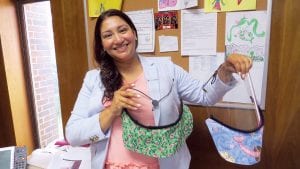
Pia Kumar shows off some of the company’s new face shields

Thom Fox interviews Pia Kumar, Co-Owner and Chief Strategy Officer of Universal Plastics on how empathy, employee engagement, and people-centric leadership are helping her essential-business meet the challenges, and demands, of the COVID-19 pandemic.

Sponsored by:

Also Available On

Daily News

SPRINGFIELD — State Sen. Eric Lesser was joined by Mary Kay Wydra, president of Greater Springfield Convention & Visitors Bureau, and John Doleva, president and CEO of the Naismith Memorial Basketball Hall of Fame, on Monday to announce $250,000 in funding for tourism marketing in the Pioneer Valley.

“This funding for tourism marketing will help us begin to rebuild and bring business to our restaurants, attractions, and hospitality industry across the board,” Lesser said. “This grant is meant to promote Western Massachusetts for socially distanced activities, and hopefully, when visitors are here, they’ll fill up their gas tanks, buy dinner, buy souvenirs, and help us hire back workers for the many jobs that were lost. This funding is a vital measure to begin putting money back into the local economy and back into our local families.”

Added Wydra, “with abundant opportunities for outdoor and socially distant recreation as well as iconic attractions, Western Massachusetts is well-positioned to welcome visitors. The tourism industry has been particularly hard-hit by the effects of COVID-19, and this funding will provide a much-needed boost to our marketing efforts to safely reopen our industry, generate economic activity for our region, and put people back to work.”

Doleva noted that “Senator Lesser’s work on securing this very important grant to aggressively restart the tourism industry in Western Massachusetts demonstrates his willingness to listen, analyze, and respond to the real need of getting thousands of workers and hundreds of businesses back up and running, which are a major contributor to our local economy. Western Massachusetts is well-positioned to tell the story of safe, serene, fun, and engaging family activities not only for this period as we emerge from the COVID-19 pandemic, but for years to come. This grant will elevate tourism in our region to a new level permanently, and his efforts are appreciated.”

This funding is part of a $1.1 billion coronavirus-response package adopted by both the Senate and House and signed into law on July 24 by Gov. Charlie Baker.

Daily News

LONGMEADOW — Bay Path University has put together a unique course for recent high-school graduates looking to explore ways they can impact movements for social justice. The course, “Exploring Pathways to Social Justice,” will combine lectures, discussions, videos, readings, and virtual, experiential learning through the context of history, legal studies, and communications. In addition, the students will participate in presentations by professionals who have channeled their visions for a more just world into careers advocating for social justice and leading their communities.

The three-credit course runs from Sept. 21 to Dec. 21 and is open to recent high-school graduates and college students, whether enrolled at Bay Path University; its online program, the American Women’s College; or any other institution, as well as students who are taking a gap semester while they evaluate their college options. Registration runs until Sept. 16.

The class is a collaboration between several faculty members and will explore social-justice movements, trace the historical roots of the civil-rights struggle, investigate how race factors into the contemporary criminal justice system, and consider strategies for change. Students will be challenged to apply their passion for social justice while learning to express themselves and developing practical skills for academic and professional settings. Through the course material and ongoing opportunities for conversation, they will connect with other students and become part of an inspired, motivated network.

“We created this class for students who may be using this time away from their schools to contemplate how and where to channel their voice and their passion for social justice, as they begin to think about their long-term goals, personally and professionally,” said Gwen Jordan, director of Bay Path’s Justice and Legal Studies department. She will be teaching sections on the criminal justice system, including a focus on the movement devoted to exonerating the wrongly convicted and reforming the system.

“The course really speaks to what we’re striving to do at Bay Path,” Jordan said. “As educators, we look to give our students a larger, deeper picture of the world we’re living in, while also helping them set concrete goals and acquire practical skills to achieve them.”

Additional course information and a registration link are available here.

Daily News

WEST SPRINGFIELD — Johnson & Hill Staffing will present its latest webinar today, July 28, from 1 to 2 p.m. “Leading in Turbulent Times” will be presented by Richard Fagerlin.

If the last few months have taught us anything, it’s the power, impact, and importance of strong leadership. HR leaders are often the gatekeepers of culture — and a culture of high trust is more important now than ever before. This session will present an effective model for achieving a high-trust culture and getting results, the top seven reasons for the trust gap, 10 practical solutions for building high-trust relationships, and a simple model for evaluating trust that participants can use to measure trust in their organizations.

To register, click here.

Daily News

FLORENCE — Florence Bank announced that Rebecca Albro was recently selected as a recipient of its President’s Award.

The President’s Award was established by the bank in 1995, affording employees the annual opportunity to nominate their peers for this prestigious honor that recognizes outstanding performance, customer service, and overall contribution to Florence Bank.

Albro, who was nominated by numerous colleagues, is a teller operations manager and customer-service representative in the main branch in Florence. She began work at Florence Bank in 2014.

“For nearly six years, Becky has been a reliable asset to our organization,” Florence Bank President Kevin Day said. “Her ability to manage and encourage others is admirable. Becky is the consummate employee to receive the President’s Award.”

COVID-19 Daily News

BOSTON — Gov. Charlie Baker announced that, effective Saturday, Aug. 1, all travelers entering the Commonwealth, including both out-of-state residents and Massachusetts residents returning home, will be required to comply with a new travel order. The full order and other information is available at www.mass.gov/matraveler.

Starting Aug. 1, all visitors and Massachusetts residents returning home, including students returning to campuses for the fall semester, must fill out a Massachusetts Travel Form and quarantine for 14 days unless they are coming from a COVID-19 lower-risk state or they can produce a negative COVID-19 test result administered no more than 72 hours prior to arriving in Massachusetts, or they are included in one of the other, limited exemptions.

Individuals who get a test must remain in quarantine until they receive their negative test results. Failure to comply may result in a $500 fine per day.

Travelers are exempt from this requirement if they are coming from a state that has been designated by the Department of Public Health as a lower-risk COVID-19 state or fall into another narrow exemption category. Based on current public-health data, those lower-risk states currently include New York, New Jersey, Connecticut, Maine, Rhode Island, Vermont, New Hampshire, and Hawaii.

Traveler exemptions include people passing through the state, people commuting across state lines for work, people traveling to Massachusetts for medical treatment, people complying with military orders, or people traveling to work in federally designated critical infrastructure sectors (essential services).

Prior to travel, people should visit www.mass.gov/matraveler to fill out the Massachusetts Travel For or text ‘MATraveler’ to 888-777.

The list of lower-risk states is subject to change based on public-health data, and states may be added or taken off the list at any time.

Daily News

SPRINGFIELD — Western New England University (WNEU) School of Law Dean Sudha Setty announced the appointment of nationally renowned legal scholar and advocate Jennifer Taub to the School of Law faculty.

An authority on the 2008 mortgage meltdown and related financial crisis, Taub’s research and writing centers on ‘follow the money’ matters, promoting transparency and opposing corruption. Her new book, Big Dirty Money: The Shocking Injustice and Unseen Cost of White Collar Crime, will be published on Sept. 29. Taub was a co-founder and organizer of the April 15, 2017 Tax March, where more than 120,000 people gathered in cities nationwide to demand President Trump release his tax returns.

She will join the School of Law faculty in August, teaching white-collar crime, civil procedure, and other commercial and business law subjects.

Taub’s 2014 book, Other People’s Houses: How Decades of Bailouts, Captive Regulators, and Toxic Bankers Made Home Mortgages a Thrilling Business, was praised by Nobel Laureate Robert Shiller in his 2015 edition of Irrational Exuberance and won a “must-read nonfiction” honor at the Massachusetts Book Awards. She is also a co-author of the sixth edition of Corporate and White Collar Crime: Cases and Materials.

Taub’s scholarly writing on corporate governance, financial market regulation, and banking law reform has been published in law journals and peer-reviewed volumes, and she has testified several times before U.S. congressional committees as an expert, including as an invited witness for the Senate Banking Committee and a House Financial Services subcommittee.

Taub has been the Bruce W. Nichols Visiting Professor of Law at Harvard Law School, and a visiting professor at the University of Illinois College of Law and the University of Connecticut School of Law. She also served as a visiting fellow at the Yale School of Management. Before joining Western New England University School of Law, she was a professor at Vermont Law School.

Prior to joining academia, Taub was an associate general counsel with Fidelity Investments. She received her bachelor’s degree, cum laude, from Yale University, with distinction in the English major, and her juris doctor, cum laude, from Harvard Law School, where she was the Recent Developments editor at the Harvard Women’s Law Journal.

“We are delighted to welcome Jennifer Taub to the WNE School of Law community,” Setty said. “Her groundbreaking scholarship on economic justice and good government, her dedication to the craft of teaching, and her commitment to serving the community are some of the tremendous attributes that she brings to the School of Law.”

Taub has appeared on cable news programs including MSNBC’s Morning Joe and CNN Newsroom to discuss legal matters, including the special counsel investigation into links between Russia and the Trump presidential campaign. She has written opinion pieces for a variety of platforms, including the Washington Post, the New York Times, the CNN opinion page, Dame Magazine, the Baseline Scenario, Race to the Bottom, Pareto Commons, the Conglomerate, and Concurring Opinions.

Daily News

CHICOPEE — First American Insurance Agency, an independent insurance firm, announced it has acquired Morin & Foy, a property and casualty firm situated in Brimfield.

Located on Route 20, Morin & Foy serves its surrounding communities by providing clients with personal and commercial insurance. The joining of the two companies allows for the growth of First American Insurance Agency’s portfolio and building the business client groups. First American Insurance Agency is acquiring only the Brimfield location.

“When I first met Sharon and the team in Brimfield, it was clear from our very first conversation that First American Insurance Agency could build on what we both have in common: the client-first mentality,” said Corey Murphy, First American president.

Added Sharon Morin, manager at Morin & Foy, “we are a dedicated team committed to serving our community and treating people with respect and kindness. I know that First American Insurance will continue to build and grow that culture.”

Daily News

GREENFIELD — Innovation and the long desire to serve more youth from the outlying areas of Franklin County has led to the launch of a new, fully virtual mentoring program from Big Brothers Big Sisters (BBBS) of Franklin County.

“Our goal is always to keep kids connected, and nothing drives this home more than a pandemic,” said Jennifer Webster, executive director of BBBS. “Youth are shouldering so much of this global crisis, their school lives disrupted, their home lives changed dramatically, and the uncertainty of their future. We knew we had to find a way to serve even more kids and keep them connected, right now.”

The new Big Brothers Big Sisters virtual mentoring program will utilize rising high-school juniors as well as community-college students to act as mentors to youth ages 6 to 12 from Franklin County. The matches will meet virtually once weekly with guidance and support from the BBBS trauma-informed case-management team and will last for a duration of one year.

“It’s an incredible opportunity for young adults to have a big impact in their community,” Webster noted. “Who better to help guide a youngster than someone who has just been through the same developmental stages and has community insight?”

Big Brothers Big Sisters is currently recruiting and enrolling for this program. If you are, or know, a rising high-school junior and/or community-college student who would like to serve as a mentor, or you know a youth age 6 to 12 who could use a community mentor and friend, BBBS encourages you to reach out. Program information can be found by visiting www.bbbs-fc.org.

Business Talk Podcast

We are excited to announce that BusinessWest, in partnership with Living Local, has launched a new podcast series, BusinessTalk. Each episode will feature in-depth interviews and discussions with local industry leaders, providing thoughtful perspectives on the Western Massachuetts economy and the many business ventures that keep it running during these challenging times

Episode 13: July 27, 2020

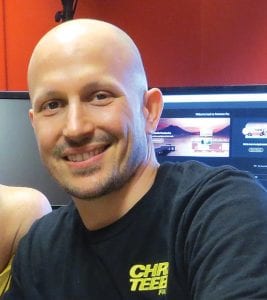
George Interviews Chris Thibault, Owner, Writer & Director for Chris Teebo Films

George interviews Chris Thibault, owner, writer and director for Chris Teebo Films and discusses his navigation, along with his wife Missy, through his cancer fight. Chris also gives insight on his company, Chris Teebo Films, what they provide, and how the COVID pandemic, and his health, has affected business. 

Sponsored by:

Also Available On

Daily News

GREENFIELD — Prudence Blond has been promoted to vice president and trust officer at Greenfield Savings Bank. In her new position, Blond, as a client service officer, oversees the administration and tax departments and also works with the Bank’s internal and external auditors.

Blond joined the bank after graduating from Greenfield Community College in 1997 as a teller. In 1999, she was promoted to trust operations associate with responsibility for processing operational work along with administrative assistant tasks of the GSB Trust Department. Over the next 10 years, she began to work directly clients and was promoted to assistant trust officer, then trust officer, then to assistant vice president and trust officer before her new promotion to vice president and trust officer.

After graduating from GCC, she earned a personal trust diploma through the American Bankers Assoc. in 2011 and a general financial services diploma through the Centre for Financial Training. She has continued to take educational classes in administration, personal tax preparation, trust and estate-tax preparation, financial planning, and IRAs. She earned her certified trust and financial advisor (CTFA) designation in 2012 through the Institute of Certified Banks.

Blond is currently serving on the board of directors, personnel committee, and nominating committee at LifePath Inc. (formerly known as Franklin County Home Care Corp.). She is a member of the annual campaign team at Greenfield Community College. She has previously served on the board of trustees, as treasurer, and as Sunday school superintendent at Robbins Memorial Church.

Daily News

SPRINGFIELD — Leadership Pioneer Valley (LPV) recently welcomed Lidya Rivera-Early of Springfield Technical Community College (STCC) to its board of directors. Rivera-Early has a demonstrated history of serving on various boards and committees within the community. As an LPV LEAP alumna, she also brings a passion for both the mission of the organization and the continued success of the Pioneer Valley.

“We are delighted to have Lidya join us,” said Lora Wondolowski, Leadership Pioneer Valley executive director. “Lidya understands firsthand the value of LPV. She will bring her voice, skills, and experiences to the board and will help LPV to fulfill its mission of building and connecting more diverse, committed, and effective leadership for the Pioneer Valley.”

The Board also announced that Russell Peotter and Annamarie Golden will continue for an additional year in their current roles as chair and vice chair, respectively. Francia Wisnewski will continue as clerk, and Callie Niezgoda as treasurer.

Daily News

CHICOPEE — Elms College announced it has been awarded a $240,000 grant from the Davis Educational Foundation (DEF) in support of its Experiential Learning Mastering Success (ELMS) – Real World Ready! learning initiative. The grant will be dispersed over the next three years.

“Experiential Learning, through the ELMS – Real World Ready! learning initiative, will provide all of our students with the framework to be career-ready, community-minded graduates,” said Joyce Hampton, associate vice president of Academic Affairs, Strategic & Global Initiatives. The overall goal of the ELMS – Real World Ready! learning initiative is to provide at least one high-impact experiential learning opportunity to every student during their college career.

Experiential learning is one of the five pillars of the college’s 2020-23 strategic plan. Students can participate in internships, research, study-abroad trips, and service learning opportunities.

“In making the award, the trustees of the Davis Educational Foundation recognized the merits of the proposed project, in particular the commitment from institutional leadership, the strong link to the strategic plan, and the clearly articulated assessment framework,” said Edward MacKay, chair of the DEF board of trustees. The Davis Educational Foundation was established by Stanton and Elisabeth Davis after Stanton’s retirement as chairman of Shaw’s Supermarkets Inc.

The first-year disbursement of the grant will support hiring a director of Experiential Learning, providing professional development for faculty and staff, and broadening of the college’s third annual Innovation Challenge (IC). The IC is a three-day event in which students work in teams and explore the intersection of social relationships, business economics, public education, and social justice. Over the past two years, Elms students have developed creative ideas to alleviate homelessness and address bullying. The upcoming Innovation Challenge in the fall 2020 semester will expand participation from 60 students to the entire first-year class.

“I’m looking forward to working with our experiential learning committee and helping our faculty and staff embed experiential learning into our curriculum and co-curricular activities, so that every student can benefit from this opportunity,” said Beryl Hoffman, co-chair of the Natural Science, Mathematics and Technology Division, associate professor of Computer Science, and project director for the grant.

The ELMS – Real World Ready! learning initiative and the DEF grant build on the philanthropic scholarship funding currently available to students through the donor-funded Keating Schneider Experiential Learning Fund and the Elms Advantage Internship program.

Daily News

SPRINGFIELD — The Zoo in Forest Park will host a virtual Trivia Night on Wednesday, July 29 at 7 p.m.

The event will take place on Zoom and will consist of four rounds of 15 questions. All questions are animal-themed, to some extent, but cover a wide range of topics including TV, film, literature, sports, music, and more. Players can use either a smartphone or a second browser to submit answers during the game.

“We want to provide safe and engaging activities for the community during this time when people are staying home,” said Gabry Tyson, development associate at the Zoo in Forest Park. “Our goal with this Trivia Night is to offer a fun alternative to a night out.”

To play, participants are encouraged to donate what they would spend on a typical Saturday night out; the zoo is recommending $25 per player. Donations can be made at www.forestparkzoo.org/events-1/trivia-night and will help pay for animal care as the zoo continues to struggle with limitations related to COVID-19.

Pre-registration is required. E-mail Tyson at [email protected] to register a team. Players can opt to play as an individual or on a team of up to six people. Registration is capped at 50 teams. The zoo will award prizes to the top teams.

For more information, contact Tyson at (413) 733-2251, ext. 304 or [email protected].

Daily News

FLORENCE — Florence Bank donated $7,500 to the Easthampton Community Center to support its Food Pantry Program that serves 22 towns throughout the Pioneer Valley.

The Easthampton Community Center’s Food Pantry currently provides food each month to 6,000 food-insecure individuals in need, including more than 600 children in the greater Easthampton area through the Kid’s Summer Pantry Program.

The Easthampton Community Center has been a dependable resource in the Easthampton community for 46 years. The core of the Community Center’s mission is to provide services and assistance to residents through its Food Pantry, Community Care Kitchen, and Clothing Closet programs. Additionally, the Community Center serves as a meeting space for community groups and celebratory gatherings.

“We are pleased to be able to contribute to the Easthampton Community Center so they can continue to serve the people of the Greater Easthampton area with the essential resources offered through their Food Pantry,” said Florence Bank President and CEO Kevin Day.

Added Robin Bialecki, Easthampton Community Center’s executive director, “since the onset of the COVID-19 pandemic, the Easthampton Community Center has seen a huge influx in the number of individuals in need. Donations like this from Florence Bank will help keep our mission sustainable and strong during this challenging time.”

Daily News

SPRINGFIELD — Dress for Success of Western Massachusetts announced a partnership with the Greater Springfield chapter of the Links Inc. Founded in 1946, the Links Inc. is an international, not-for-profit organization that brings together professional women of color to serve their communities through volunteerism and philanthropy. Its ultimate goal is to sustain the culture and economic survival of African-Americans and people of African ancestry.

Formed in 1986, the Greater Springfield Chapter of the Links Inc. is one of 288 chapters. Greater Springfield chapter President Danielle Williams noted that “the goals of Dress for Success of Western Massachusetts align well with the chapter’s operations in five facet areas: services to youth, the arts, national trends and services, international trends and services, and health and human services.”

Pia Flanagan, chair of the chapter’s national trends and services facet, has identified a partnership with Dress for Success of Western Massachusetts as an endeavor that would benefit the chapter’s target community.

The work of the Links Inc. aligns well with the mission of Dress for Success, specifically the Margaret Fitzgerald Mentor Program. This program, named for a Physics Department secretary from Mount Holyoke College who provided help and encouragement for women entering that male-dominated field in the 1970s, pairs women who are overcoming great odds to achieve economic independence with professional women who volunteer to work with them one-on-one. Together, they establish individual goals and work on self-esteem, résumé building, workplace etiquette, interview skills, work/life balance, and more. By establishing a trusting rapport and sharing the wisdom of experience, mentors helps move their mentees from career readiness to action. Though the mentorships last one year, the impact lasts a lifetime.

Beginning on Aug. 14, women from the Greater Springfield chapter of the Links Inc. will serve as mentors to women of color who have been recruited to the Margaret Fitzgerald Mentor Program from both Dress for Success programs as well as their partners in the community.

“This is a unique opportunity for the mentees that we are recruiting,” said Dress for Success of Western Massachusetts Executive Director Margaret Tantillo. “Being able to learn from the accomplished, dynamic, and compassionate women of the Links Incorporated will bring them opportunities to establish or further their careers in ways that they might not have been able to otherwise.”

The mentorships will continue until August 2021, when the mentees will be invited to join the Dress for Success Professional Women’s Group.

Daily News

BOSTON — The Baker-Polito administration announced more than $3.6 million for 12 projects — two of them in Western Mass. — in its fourth annual round of Site Readiness Program awards. These awards provide resources to municipalities, private-sector businesses, and nonprofit economic-development entities to help overcome obstacles to developing otherwise prime locations.

The funding announced this week will finance feasibility studies, master planning, environmental work, strategic land acquisition, and site improvements, resulting in critical additions to the Commonwealth’s inventory of large, development-ready sites.

“The Site Readiness Program is a key tool to help communities reach local and regional economic-development goals,” Gov. Charlie Baker said. “These awards will assist in community-stabilization efforts, including downtown revitalization, helping advance prime locations to shovel readiness to spur investment and job growth.”

Among the two local grants is $265,000 to Carriage Grove in Belchertown. The Belchertown Economic Development and Industrial Corp. will use the funds to partially match the U.S. Economic Development Agency’s $550,000 grant for infrastructure improvements in Carriage Grove’s industrial district, supporting the construction of new roadway, sidewalks, utilities, and stormwater improvements.

The other local grant is $80,000 to Ludlow Mills Market in Ludlow. The Westmass Area Development Corp. will use the funds to update marketing data, prepare a strategic marketing plan, and prepare specific redevelopment buildout concepts for individual mill buildings and districts within the Ludlow Mills complex.

Administered by MassDevelopment, the Site Readiness Program aims to boost Massachusetts’ supply of large, well-located, project-ready sites; accelerate private-sector investment in industrial and commercial projects; and support the conversion of abandoned sites and obsolete facilities into clean, actively used, tax-generating properties.

“As outlined in our economic-development plan, ‘Partnerships for Growth,’ the Baker-Polito administration is committed to building vibrant communities in every region,” Housing and Economic Development Secretary Mike Kennealy said. “In the long term, the Site Readiness Program will help communities in recovery as they prepare sites for development projects that help build vibrancy in their neighborhoods, on main streets, and in industrial areas.”

Daily News

BERNARDSTON — On Friday, Aug. 21 at Crumpin-Fox Club in Bernardston, the Greenfield Knights of Columbus Council #133 will host its seventh annual charity golf tournament. This year, the Greenfield Council #133 recognizes the United Arc as its tournament partner.

The event will be an 18 hole, four-person scramble with tee advantages for senior golfers. The entry fee of $125 per person includes greens fees, carts, use of the practice range, and prizes for the winners. A $35 gift card will be given to all golfers, which can be used at any time for meals, merchandise, or golf-related items.

Raffle tickets will be sold, with prizes including a three-day Cape Cod vacation,  a sports package, golf certificates, a ‘mystery box’ provided by the United Arc, restaurant certificates, auto packages, and much more. A hole-in-one contest will offer a chance to win a new car or other significant prizes.

In addition to the United Arc, the proceeds from the event will be used to fund a number of Council #133’s worthy causes in Greenfield and Franklin County, including the Pan Mass Challenge, Baystate Franklin Medical Center’s Wheeling for Healing, Farren Hospital’s Gift of Light, the Greenfield Homeless Shelter, monthly community meals, high-school scholarships, honoring veterans on Memorial Day and having Wreaths Across America wreaths placed on graves at Christmas, several youth sports programs, and more.

To sign up or for more information, call Lou Grader at (413) 774-2848, Dan Arsenault at (413) 774-5258, Bob Wanczyk at (413) 774-2465, Paul Doran at (413) 522-1800, or Joe Ruscio at (413) 768-9876.

Daily News

SPRINGFIELD — Western New England University (WNEU) announced the addition of a new master of science program in construction management to the list of graduate-degree offerings.

“Construction management is defined as a professional service that uses specialized project-management techniques to oversee the planning, design, and construction of a project, from its beginning to its end,” said Kenneth Lee, founding chair for the Construction Management department, as well as professor and chair of Civil and Environmental Engineering at WNEU.

U.S. News and World Report ranks construction manager first in “Best Construction Jobs” and 43rd in “100 Best Jobs” with a low unemployment rate of 2.3%. The Bureau of Labor Statistics website shows that the job outlook growth (2016-26) for Construction Managers is 11% (faster than average), with a median salary of $93,370 per year.

“Construction projects can range from improving intersection traffic flows to massive, multi-billion-dollar infrastructure projects with a decade-long development environment, each [needing] specialized people with specialized skill sets to manage,” said Christian Salmon, assistant professor of Industrial Engineering and Engineering Management at WNEU.

With courses rooted in civil engineering, industrial engineering, and engineering management, the program strives to provide a well-rounded knowledge base in engineering as it pertains to construction management. Elective opportunities in business and management will give students a perspective into the business world that will prepare them for management and leadership roles.

“The MS in construction management is a great fit with our existing undergraduate and graduate programs offered by our College of Engineering,” said Matthew Fox, executive director of Graduate Admissions. “We continue to accept applications for new graduate candidates, and those starting the construction management program this fall will be able to earn their master’s in as few as 18 months studying part-time or in one year studying full-time.”

The program is tailored for students to choose from three options to complete the degree. The all-course option allows students to complete the 10 graduate courses that include open electives, choosing from courses in civil, electrical, and mechanical engineering as well as engineering management and business. Through the project or thesis options, students will work with a faculty advisor to take a deeper dive in a topic of interest, culminating in a final report and presentation.

Applications are now being accepted for the MS in construction management program. Classes begin Sept. 28. To learn more, call the Office of Graduate Studies at (413) 782-1517 or e-mail [email protected].

Daily News

HOLYOKE — Holyoke Community College President Christina Royal and Amanda Sbriscia, HCC’s vice president of Institutional Advancement, will kick off a reimagined monthly Women’s Leadership Luncheon Series on Wednesday, July 29.

The 2020 Women’s Leadership Luncheon Series, postponed from spring due to COVID-19, will now take place virtually over Zoom on the last Wednesdays of July, August, September, and October from noon to 1 p.m.

The series is sponsored by HCC and Training and Workforce Options (TWO), a collaboration between HCC and Springfield Technical Community College.

“Women leaders and up-and-comers will be joined by panels of like-minded women each month for small group discussions and open dialogue,” said Tracye Whitfield, TWO’s director of Business Development. “Participants will have the opportunity to form a supportive network of women leaders, discuss topics of interest, and enjoy a brown-bag lunch, virtually. Professional development, networking, and socialization over a delicious meal — does it get any better?”

Each lunchtime event will feature two presenters leading discussions on different topics, as follows:

• July 29: “Leading Through Change,” with Royal and Sbriscia.

• Aug. 26: “Empowering Women in the Workplace,” with Denise Jordan, executive director, Springfield Housing Authority; and Julie Quink, managing partner, Burkhart, Pizzanelli, P.C.

• Sept. 30: “Comfortable in Your Own Skin, Finding Your Voice,” with Tanisha Arena, executive director, Arise for Social Justice; and Pam Victor, owner, Happier Valley Comedy.

• Oct. 28: “Women Leaders in Non-Traditional Businesses,” with Colleen Loveless, president and CEO, Revitalize Community Development Corp.; and Nicole Palange, vice president, V&F Auto.

The July 29 session is free. The remaining three sessions are $20 each, or $50 for the full series. Registration is required. Space for each luncheon is limited to 25. To register, visit hcc.edu/womens-leadership.

Daily News

BOSTON — Fraudulent text messages are being sent claiming to be from the Massachusetts Unclaimed Property Division (UCP). The texts say there are available funds under the recipient’s name, and they should visit the link provided. According to state Treasurer Deborah Goldberg, these texts are a scam and have not been sent by UCP.

“It has come to our attention that text messages claiming to be from the Massachusetts Unclaimed Property Division have been sent to residents across the state,” Goldberg said. “Our goal is to ensure that no Massachusetts citizen is taken advantage of as part of this scam.”

Despite the fraudulent text, UCP does in fact currently hold more than $3.4 billion in unclaimed property; 10% of Massachusetts residents are owed money. To search to see if you have unclaimed money, visit findmassmoney.com. If you have questions, contact the Unclaimed Property Division at (617) 367-0400.

Business Talk Podcast

We are excited to announce that BusinessWest, in partnership with Living Local, has launched a new podcast series, BusinessTalk. Each episode will feature in-depth interviews and discussions with local industry leaders, providing thoughtful perspectives on the Western Massachuetts economy and the many business ventures that keep it running during these challenging times

Episode 12: July 22, 2020

Thom Fox interviews Tricia Canavan, President of United Personnel Services

Thom Fox interviews Tricia Canavan, President of United Personnel Services. With hundreds of jobs to fill, United Personnel has not slowed down during COVID.  Thom and Tricia discuss the evolving world of work, innovations brought about by the pandemic, and the types of talent WesternMA employers are seeking.

Sponsored by:

Also Available On

Daily News

SPRINGFIELD — Baystate Health and Kindred Healthcare, LLC announced plans to form a joint venture that will build and operate a $43 million, state-of-the-art behavioral-health hospital in Western Mass.

The 120-bed facility will address the shortage of behavioral-health beds in the region, increasing patient access to Baystate Health’s specialty inpatient behavioral healthcare for adults (including geriatrics), adolescents, and children by more than 50%. Kindred will manage day-to-day operations of the hospital, and Baystate Health psychiatrists and advanced practitioners will provide care under the medical leadership of Dr. Barry Sarvet, chair of Psychiatry at Baystate Health.

The hospital will be designed specifically for behavioral-health services to foster a better healing environment for patients. The hospital will feature distinct units to meet patients’ varying treatment needs and is expected to employ more than 200 direct caregivers and ancillary staff.

“In building a state-of-the-art behavioral-health facility to serve the area’s most vulnerable patients, we recognize that such a major undertaking could not be achieved without a quality partner,” said Dr. Mark Keroack, president and CEO of Baystate Health. “Kindred’s strength in building and operating specialty hospitals, coupled with Baystate’s behavioral-health clinical expertise, is the perfect fit. We are looking forward to creating an unparalleled community resource dedicated to the needs of all behavioral-health patients.”

Baystate had planned last year to partner with US HealthVest, LLC on a $30 million behavioral-health hospital, but ended that relationship in November following news reports alleging substandard care at other HealthVest facilities, and began searching for a new partner.

“Our partnership with Baystate creates a unique opportunity to expand access to high-quality behavioral-health services in Western Massachusetts,” said Rob Marsh, senior vice president and chief operating officer for Kindred Behavioral Health (KBH). “Kindred is a leader in treating medically complex and rehab-intensive patients, leveraging partnerships and innovation to enhance care. Through KBH, we are building upon our existing clinical and operational capabilities to address the unmet need for behavioral-health services.”

Baystate Health remains interested in a centrally located Holyoke location and is in discussions with the city of Holyoke regarding the potential acquisition and development of a property on Lower Westfield Road.

It is anticipated that, from the time the site is secured, it will be at least two years before the new hospital is operational, pending regulatory and other approvals. Until the new hospital is completed, Baystate will continue to operate its inpatient behavioral-health units at its community hospitals — Baystate Franklin Medical Center, Baystate Noble Hospital, and Baystate Wing Hospital. Upon completion of the new facility, those units will be closed.

Emergency-care services will continue to be provided at all Baystate Health hospitals, and the treatment of medically complex patients will continue at Baystate Medical Center in its Adult Psychiatric Treatment Unit.

Daily News

BOSTON — Responding to the financial hardships many Massachusetts families are facing, the University of Massachusetts board of trustees voted to freeze tuition rates for in-state undergraduate and graduate students for the 2020-21 academic year.

Across the Amherst, Boston, Dartmouth, and Lowell campuses, tuition will average $14,722 for the nearly 48,000 in-state undergraduate students before financial aid is provided. This keeps UMass mandatory charges nearly $1,000 lower than the average for New England public research universities.

Students will continue to receive nearly $1 billion in federal, state, private, and university-funded financial aid in 2020-21. University-funded financial aid, primarily scholarships and grants, has been increased by $99 million, or 38%, over the last five years, with 94% going to Massachusetts residents.

Tuition for the 9,500 graduate students will continue to range from $14,590 to $18,433 at the four campuses. The board set tuition rates for UMass Medical School at its April meeting.

“Holding the line on tuition is simply the right thing to do this year as so many students and families are facing stress and uncertainty created by an unprecedented national health emergency and economic downturn,” UMass President Marty Meehan said. “That means controlling student charges and supporting financial aid so our students are able to pursue their dream of earning a UMass degree.’’

In freezing tuition this year, the university is setting aside its recent practice of increasing tuition at the rate of inflation, forgoing $18.6 million in revenue for the coming year. The loss of revenue is offset, in part, by ongoing efforts of the university to reduce administrative costs. For example, a procurement-consolidation effort launched in January is projected to save $15 million to $20 million by the end of this fiscal year, and an ongoing ‘efficiency and effectiveness’ program started in 2013 has saved $124 million.

“Even as UMass, like higher-education institutions across the country, faces significant budget cuts due to pandemic-related financial challenges, we need to do all that we can to keep a high-quality UMass education within financial reach of Massachusetts students,” said Rob Manning, UMass board of trustees chairman. “I commend President Meehan, the campus chancellors, and their teams for making this possible through sound and innovative management.”

UMass trustees also approved a $3.3 billion operating budget that is $171 million less than last year’s budget.

Meehan said the budget, which funds university operations for the fiscal year that began on July 1, “is in balance at a time when many other colleges and universities, public and private, find themselves in great financial jeopardy. This required the university leadership to make difficult choices, but we take these actions to preserve stability and meet the long-term needs of students. We are continuing to advocate for the highest possible level of state funding and passage of the federal HEROES Act, which could translate into $119 million in emergency funding for UMass.”

Daily News

GREENFIELD — Michael Tucker, president and CEO, announced that Kevin Bowler has joined Greenfield Cooperative Bank as the new senior vice president of Loan Resolution. He began working in the Northampton office on July 1.

“Kevin brings to us over 30 years of lending experience,” Tucker said. “We are lucky to have someone with his level of experience in handling and working with commercial and residential credits to help them through these times.”

Bowler, who will report directly to Tony Worden, executive vice president and chief operating officer, previously worked for Peoples United Bank (the Bank of Western Massachusetts). He has a bachelor’s degree from Westfield State University.

Daily News

WEST SPRINGFIELD — With government-mandated social-distancing restrictions in place, the West of the River Chamber of Commerce (WRC) will hold its annual job fair virtually this year on Tuesday, Aug. 4.

“We feel we need to continue to move forward in this new environment and show our business community that we are here, active, and supporting our members during this time,” Executive Director Robin Wozniak said.

With the extra unemployment money individuals are receiving about to expire, and local businesses beginning to reopen, the WRC is looking to help its members in any way it can. The Zoom event will take place from 5:30 to 7 p.m. This is a free event for attendees, and vendors and attendees can both register online.

“Times are different now, and many businesses are struggling. We understand this and want to help,” Wozniak said.

Each vendor will have the opportunity to speak to the attendees as a whole group about their company and what positions they are looking to fill. At the conclusion of the group session, each vendor will have a breakout room where attendees can ask more detailed information and exchange contact information. The event is sponsored by Reminder Publications.

For more information and to register, visit www.westoftheriverchamber.com.

Daily News

LONGMEADOW — Adam Berman, president of JGS Lifecare, announced that Mary-Anne Schelb has rejoined the JGS Lifecare team as director of Business Development for the Western Mass. market.

“We are very happy to announce the return of Mary-Anne Schelb to the JGS Lifecare campus,” Berman said. “Mary-Anne worked with us several years ago as our director of Sales and Community Relations and, in her own words, feels as though she is returning home. Mary-Anne brings a great breadth of experience, knowledge, and understanding of business development, sales, and customer services, as well as a wide range of key community relationships that will support her success in this new and expanded role. We are excited to have her back on our team.”

Prior to returning to JGS Lifecare, Schelb led marketing operations at Encompass Health Rehabilitation Hospital in Ludlow. In her prior role at JGS Lifecare as director of Sales and Community Relations, she developed strategic partnerships and spearheaded the efforts that succeeded in making Longmeadow a dementia-friendly community. Prior to that, she headed up sales, marketing, and community relations at Monastery Heights Assisted Living in West Springfield.

Schelb is very active in numerous community organizations. She is a Rotarian, a board member of the East of the River Chamber of Commerce, and a member of the West of the River Chamber of Commerce, the Retirement Marketing Directors Assoc., the Western Massachusetts Eldercare Professionals Assoc., the Women Business Owners Alliance, the Western Mass. Elder Care Conference steering committee, and the Tri-County Partnership, just to name a few.

She began her career with an accounting certification from St. John’s School of Business and worked in the mainstream until continuing onto a more wellness-based path as a Holistic Health Practitioner, holding master/teacher certifications from the International Center for Reiki Training. She is also a certified cranial sacral therapist in Profound Neutral from the Neurovascular Institute.

“We are thrilled to have Mary-Anne back,” said Susan Kimball Halpern, vice president of Development and Communications. “Not only is she an expert in her field, but she brings a tremendous rolodex of invaluable relationships and is highly respected by her colleagues and peers for her commitment to excellence and for advancing the well-being of the people she serves. Her positive energy and enthusiasm is not only contagious, but helps drive results.”

Cover Story Education

Entrance Exam

Come back to campus, or don’t — either way, you’ll learn.

Just don’t expect campus life to be anything like you’re used to.

That’s essentially the message from UMass Amherst, by far the region’s largest of roughly 20 colleges and universities grappling with how to welcome students back to campus this fall — or setting them up for online instruction, as the case may be. Or, in some cases, both.

“We heard loud and clear from our student body that, even if they’re taking courses remotely, they would really like to be on campus or around campus,” Chancellor Kumble Subbaswamy said during a recent conference call discussing the university’s fall plans.

In a nutshell, the vast majority of students will not be required to return to Amherst, with most courses offered remotely. But they may return — for residence-hall life and in-person instruction — if they’d like.

“Our communication will be very explicit about what the campus might look like and what our expectations are, and what we will hold all of our students responsible for,” he continued. “With all of that knowledge, if they still want to come to campus and live in campus housing, they’re most welcome to. And whether they come back to campus or not, we will really provide a rich and rewarding academic experience with not only remote courses but also advising and lots of peer-to-peer interactions and faculty-to-student interactions and so forth.”

In other words, Subbaswamy noted, “we’re prepared to serve our community to the best possible extent in terms of providing all the college experience can under these different circumstances because of the pandemic. That’s the bottom line.”
Bryan Gross says WNEU’s mission prioritizes on-campus education

Bryan Gross says WNEU’s mission prioritizes on-campus education, but the university is ready to pivot if the pandemic worsens.

That said, life in the residence halls will be altered to include pedestrian-flow guidelines, restrictions on group gatherings, and limited face-to-face contact. No guests will be allowed in residence halls, at least at first. Most student services will be offered remotely. The Recreation Center will be open — with limits and restrictions placed on activities.

In short, things have changed since COVID-19 arrived in Massachusetts. Leaders at the region’s higher-education institutions have been meeting since … well, pretty much since they sent students home in mid-March, to hash out what classrooms and the campus experience will look like come late August, when the fall semester begins for most.

“We need to make sure we’re providing them with some sense of security, and do everything that we can to make this experience one where they are able to continue their studies and get to graduation.”

None of the schools’ plans are exactly the same, with some emphasizing on-campus instruction, some — including most of the community colleges — opting for an online-heavy approach, and others landing somewhere in between, with students choosing between in-person, online, and hybrid programs (see box on page 19).

Western New England University, touting its ample space and small classes, has decided to conduct the vast majority of classes fully on-campus this fall, while a small number of courses will be delivered in a hybrid or online format.

“We keep coming back to discussions regarding our mission, which is to provide a highly personalized educational experience inside and outside class,” said Bryan Gross, vice president for Enrollment Management and Marketing. “For the faculty and staff working on this plan, any time we get stuck on details, we come back to that mission.”

Students will be required to wear a mask or face shield, practice social distancing, and maintain a high standard of hygiene. In addition, plexiglass barriers will be installed throughout campus, including classrooms. Most buildings will be one-directional to minimize hallway contact, buildings will be cleaned more frequently, and residence halls will be limited to single and double rooming options, among other measures.
Walter Breau

Walter Breau

“We learned a lot in the spring when we had to go online — we understand what we did well and what we can do better. If a second surge happens and everyone decides to move online, the Elms flex model allows that to happen.”

“We watch the news every day,” Gross told BusinessWest. “Things are constantly changing in terms of safety, and we have to follow state and federal regulations, but based on the information we currently have, we feel confident our plan is doable — that it meets our values and protects the health and safety of students. But if things change, we also have to be open and honest, and we are willing and able to change.”

That’s why WNEU, like many colleges and universities, has actually been planning for three different scenarios — most students on campus, online learning, and a hybrid of the two.

“The majority of our families are ready for their children to be on campus and have the campus experience,” he added, “They trust our Health Services and know, if it’s ever not safe to be here, we’re going to make the right decision in the best interest of our students.”

That’s the COVID-19 world colleges and universities must grapple with — with every day bringing changing news and more moving targets. As enrollment planning goes, it’s unprecedented, at least within living memory. And students aren’t the only ones who will be learning something.

Course Corrections

At Elms College, classes will be taught this fall in a hybrid, flexible model that gives students the option of attending sessions in the classroom, online, or both. Students can move between the options based on their personal preferences, while international and non-local students will be able to continue their coursework from afar.

“We know some students are high-risk or living with someone high-risk and don’t feel comfortable being in a classroom, but we also know students want an in-person experience,” said Walter Breau, vice president of Academic Affairs. “So they can choose when to be in the classroom.”

The usual mix of masks, distancing, and plexiglass will be in play, and on-campus students will be expected to monitor and record any COVID-like symptoms they might have. As is the case at other campuses welcoming students this fall, any positive symptoms must be reported to the Health Center for consultation, and the college will have a separate living space for any student in need of quarantine.

Fall 2020 Plans … for Now

Leaders at 20 area colleges and universities continue to discuss plans for how academic programs will be delivered fall. Those plans might change, and even schools planning on a mostly on-campus experience will likely offer some programs remotely. Here are the latest plans, grouped by categories that may not capture all the nuances of each plan; readers are encouraged to visit the schools’ specific websites for more information.

• All courses delivered online, but students have option of attending in person: UMass Amherst.

• All online, with students in some programs (such as healthcare and culinary arts) on campus part of the time: Asnuntuck Community College, Cambridge College, Greenfield Community College, Holyoke Community College, Springfield Technical Community College.

• Blend of on-campus, online, and hybrid instruction: Bay Path University, Berkshire Community College, Elms College, Mount Holyoke College, Springfield College, Westfield State University, Williams College. American International College is discussing this model as well.

• Blend of on-campus and online instruction with students on campus for either fall or spring: Amherst College, Smith College.

• Mostly on-campus instruction: Bard’s College at Simon’s Rock, Massachusetts College of Liberal Arts, Hampshire College, Western New England University.

“Safety is our number-one priority,” Breau told BusinessWest. “We know students want to come back. How to keep them safe while doing that has been the prime goal of reopening. Our task force made sure safety was always number one on the list.”

To that end, students will need to review safety-training materials when they return to campus. “It’s going to be a team-based effort. It’s not just administrators, faculty, and staff, but students have to be a part of the process as well. We’ll certainly rely on them to help us stay safe.”

There’s a safety net built into the ‘HyFlex’ model as well, Breau noted, in that it wouldn’t be difficult to transfer all learning online if the region’s infection rates soar.

“We learned a lot in the spring when we had to go online — we understand what we did well and what we can do better. If a second surge happens and everyone decides to move online, the Elms flex model allows that to happen; it’s built into the syllabus and the way instructors plan the courses.”

American International College is also seriously considering a HyFlex model, and plans to announce its detailed fall strategy by the end of July, said Nicolle Cestero, chief of staff, senior vice president for Human Relations, and Title IX coordinator. She said a group of campus leaders has been meeting for several months and are doing all they can to give students an on-campus option.

With more than half of its undergraduate student body first-generation college students and more than 50% also Pell Grant-eligible — meaning they come from low-income families — AIC doesn’t want to add additional challenges to their lives, she noted.

“We need to make sure we’re providing them with some sense of security, and do everything that we can to make this experience one where they are able to continue their studies and get to graduation,” Cestero said, noting that the HyFlex option is an ideal model in that it allows students to access their education in a way that best serves their needs in this most difficult year.

Plus, there’s value in the on-campus experience that can’t be replicated remotely, she added. “Maybe your roommate becomes your best friend for life. Or you’re participating in a conversation that you never would have participated in — on race or gender or power and privilege, or whatever it is — and you don’t necessarily get to do that if you’re not on campus. You develop so much in these years — it’s your first time away from home, and you’re teaching yourself how to do things, how to manage your own time and finances, all that stuff.”

In a letter to the Springfield College family, President Mary-Beth Cooper detailed a blend of in-person, remote, and hybrid instruction, with all learning moving online after Thanksgiving. But she emphasized that new safety measures — from masks and distancing to a contact-tracing program and isolation spaces — are key to making the plan work.

“Successfully remaining on campus throughout the fall semester will depend on the degree to which we, as a community, work together to reduce the possibility of the virus appearing on campus and, if it does, responding quickly to limit its spread,” she explained.

Brandi Hephner LeBlanc, vice chancellor for Student Affairs at UMass Amherst, noted that the university will distribute a student agreement that details the testing and symptom self-monitoring they’re asked to do, as well as the need to carry hand sanitizer and face coverings when moving about, among other safety measures.

“We’re really asking them to be a responsible community member, first and foremost, and to be a part of the bystander intervention,” she said. “When you see someone without a mask, remind them.”

And if students don’t comply?

“There is going to be what I would term an escalation of intervention,” she explained. “We’ll have public-health ambassadors on campus that will help remind folks, and there will be a lot of communication to find out if there’s a problem. This is not going to be an immediate referral to the Conduct Office, unless it’s something so egregious that that’s necessary. But this is something that takes a lot of reminding to manage the behavior. And we’re prepared to do that.”

Catalog of Options

A few institutions across the region have emphasized the value of returning as much activity to campus as possible. Massachusetts College of Liberal Arts President James Birge cited recent survey data collected from 10,000 high-school and college students; 78% of respondents find the experience of in-class learning this fall appealing, while one-third would transfer out of their institution if the college shifted to online course delivery.
Nicolle Cestero

Nicolle Cestero says the value of the campus experience shouldn’t be minimized, but a hybrid flex model might be the smartest way to go this fall.

“We know the residential and in-person class experience is important to our students, students at state universities across the Commonwealth, and nationally,” Birge said, which is why MCLA is moving ahead with an ambitious on-campus approach. “Although returning to campus this fall presents some risk, we will work to make the campus experience as safe as possible for everyone. Of course, this means we will have to significantly shift our way of learning, teaching, and working.”

Other campuses, like Amherst College and Smith College, are looking at having roughly half the students on campus for the fall, to better achieve physical distancing, with the ones sent home for remote learning having on-campus priority for the spring.

“We know that any scenario short of bringing everyone to campus will be bitterly disappointing to those who will have to wait until the spring,” Amherst College President Biddy Martin wrote in a letter to students and families. “With this structure, we can provide the opportunity for every student who wishes to be on campus to spend at least one semester here and, if things go well, both semesters for a large number of those students.”

Meanwhile, Springfield Technical Community College is among a handful of area institutions — several community colleges among them — to continue with an online model this fall, though some programs in STCC’s School of Health and Patient Simulation will include low-density, on-campus labs adhering to social-distancing, PPE, and sanitizing protocols.

“STCC has no intention of becoming a fully online institution,” said Geraldine de Berly, vice president of Academic Affairs. “The pivot to online is driven by a health pandemic. COVID-19 has forced the college to adjust, and we do hope in the future to return to the robust utilization of campus facilities.”

In some instances, STCC will use synchronous teaching strategies, with students gathering at a specific time through videoconferencing. But most of the classes will be taught using an asynchronous approach, which gives students flexibility to set their own hours to complete their studies and assignments.

“Many of our students have childcare obligations, work commitments, and a host of other complicated circumstances,” President John Cook said. “We know that our students benefit from having flexibility in their classwork, and online is yet another way STCC lives its mission of ensuring access to higher education.”

Flexibility, in many ways, has become a key word in the region’s higher-education sector, which suddenly offers a wide array of learning models heading into perhaps the most unusual fall semester for American students in generations.

What these schools have in common is an emphasis on safety, and on making sure students know their own responsibilities in keeping COVID-19 infections low — and keeping the campus experience alive, in whatever curtailed form it might take.

WNEU’s Gross is confident it’s a message they will understand.

“You’re not doing it for yourself, but for other people. And that’s such a positive message we can send,” he told BusinessWest. “That’s why human beings are on this earth, to care for one another and take actions that help the community. We hope that value is something that’s embraced by our students. It’s an amazing opportunity to learn and grow and take actions to help others.”

Joseph Bednar can be reached at [email protected]