Home 2020 (Page 25)
Daily News

SPRINGFIELD — The board of directors of Big Y Foods Inc. announced the appointment of Theresa Jasmin as CFO following the recent retirement of William Mahoney. She is responsible for the company’s strategic planning, finance, accounting, treasury, and tax functions. As a senior member of the executive team, she reports to Charles D’Amour, president and CEO, along with Big Y’s board of directors. She also represents the first woman to be appointed to the company’s C-suite.

Jasmin has more than 25 years of experience in the food industry. She began her career at Friendly Ice Cream Corp., where she held senior management positions in both Treasury and Accounting. She joined Big Y in 2005 and held several positions of increasing responsibility in accounting and finance. She became controller in 2010. In 2014, she was appointed senior director of Finance, followed by vice president of Finance in 2016 until her new appointment.

Jasmin holds a BBA from the Isenberg School of Management at UMass Amherst and an MBA from Western New England University.

In 2014, she was named a Top Woman in Grocery by Progressive Grocer magazine and was a founding member of Big Y’s Women LEAD (Leaders Engaged in Action and Development), the company’s first-ever employee-resource group charged with inspiring and empowering women. She currently serves on the executive committee and as treasurer for the YMCA of Greater Springfield. She also serves on the finance committees for both the Massachusetts and Connecticut Food Associations.

Daily News

NORTH ADAMS — Massachusetts College of Liberal Arts (MCLA) Gallery 51 will hold an online conversation about artist Titus Kaphar’s painting “Analogous Colors,” which graced the June 15, 2020 cover of Time magazine. The gallery will explore this piece through the lens of the nation’s recent events on Wednesday, June 24 from 5 to 6:30 p.m., using VTS Visual Thinking Strategies.

During this event, art will be the vehicle to create and sustain non-judgmental dialogue, with an opportunity to learn from one another’s observations.

Gallery 51 is committed to creating safe spaces for discourse and dialogue with, about, and through art. If not now, gallery leadership asserts, then never will people be able to engage in honest discussion about race and the experience of black and brown people in the U.S.

To register for this event, click here. For more information about upcoming programs, click here.

Daily News

WESTFIELD — Westfield State University’s College of Graduate and Continuing Education is accepting applications for the 2020-21 addiction counselor education (ACE) program. Classes will be held evenings and weekends starting in September 2020 and ending in May 2021.

The goal of this non-credit certificate program, offered at the university since 1991, is to provide students with the knowledge, skills, and techniques necessary for the successful treatment of individuals and families afflicted by alcoholism and/or other drug addictions. This program has been highly instrumental in the professional development of individuals in Western Mass. who are either working or interested in the growing healthcare field of addiction services.

To help with this mission, Westfield State also offers the ACE program at a satellite location, in Pittsfield, to help train potential counselors in the Berkshires area to fill critical positions in treatment facilities that are understaffed and unable to fill open positions.

Applications for both programs are available online at www.westfield.ma.edu/ace. For more information, or to receive an application by mail, contact Brandon Fredette at [email protected] or (413) 572-8033.

Daily News

SOUTH HADLEY — Associated Builders recently welcomed Daniel Bradbury into the newly created position of director of Sales and Marketing for Massachusetts Operations. Sales Associate Scott Downie will remain with Associated Builders and focus on sales and business development in the Connecticut market.

Bradbury comes to Associated Builders with 20 years of experience working in the construction industry, having previously worked with several premier custom home builders and remodeling companies in Western Mass.

“Despite the challenges of starting a new sales position during a global pandemic, I am excited to join the strong team at Associated Builders and hit the ground running,” he said. “It is my belief that clear communication and follow-through are the keys to building a trusting business relationship, and my goal is to provide exceptional customer service. In my new role, I hope to facilitate our customers’ business growth by helping them realize the full potential of their existing work environment or paving the way for expansion into a new, purpose-built facility.”

Daily News

AMHERST — Nearly 100 colleagues recently joined an online celebration to honor Professor Hava Siegelmann of the UMass Amherst College of Information and Computer Sciences (CICS), as she received the rarely awarded Meritorious Public Service Medal from the Defense Advanced Research Projects Agency (DARPA) of the U.S. Department of Defense. It is the third-highest honor the Department of the Army can bestow on a private citizen.

“The distinctive accomplishments of Dr. Siegelmann reflect great credit upon herself, DARPA, and the Department of Defense,” reads the citation in part.

Added Siegelmann, “I didn’t know that anyone was noticing what I do. It was so touching, and a complete surprise. I feel honored to be contributing. I think UMass should get credit for supporting me to run a very advanced AI lab such that the government wanted to invite me, and for allowing me to join what is literally the world’s most advanced and sophisticated AI initiative.”

CICS Dean Laura Haas added that “I am extremely proud of Hava’s service to DARPA and the nation. Our college is dedicated to a vision of computing for the common good, and Hava’s work at DARPA has helped to advance AI for us all.”

Siegelmann went to DARPA as a program manager in July 2016, where her charge included “that the United States needs to stay on top in AI,” she recalled.

Her citation noted that “she created and managed some of DARPA’s largest and most advanced AI programs, including L2M — developing next-generation advanced AI systems capable of learning in real time and applying learning to environments and circumstances not specifically trained for.”

Siegelmann, whose career is characterized by thinking outside the box, created a different atmosphere for the L2M project than is usual at DARPA. With its support, she insisted that the large, diverse teams of scientists she chose from the nation’s top university and industry research organizations must actively collaborate. “Such a large leap in AI technology can only be achieved when we top researchers all put our strengths together and learn from each other,” she said.

The medal cites another major DARPA program Siegelmann created called GARD (Guaranteeing AI Robustness Against Deception), which aims to establish the theoretical machine-learning system vulnerabilities, characterize properties that will enhance system robustness, and encourage the creation of effective defenses. As systems become more advanced, these advancements open new avenues by which they can be attacked. GARD identifies often-obscure, technically complex vulnerabilities and builds new-generation defenses for them, she noted.

DARPA also points out that Siegelmann’s “exceptionally productive” term included developing a system that administers insulin plus dextrose to maintain glucose at safe levels for patients in critical care and those with diabetes; sensors to identify dangerous chemicals from a safe distance; collaborative, secure learning systems that allow group collaboration without revealing sensitive data; and methods to identify attacks by reverse engineering to secure the system and find the attacker.

“L2M has had major success in creating systems capable of learning and improving in real time,” Siegelmann said.

Daily News

STOCKBRIDGE — The venerable Red Lion Inn in the heart of the Berkshires has reopened, and is ready to welcome guests back to the iconic front porch to relax in rocking chairs after a day spent outdoors soaking in the region’s fresh air and open spaces.

“The Berkshires are an ideal destination for travelers to truly get away and reconnect with nature,” said Max Scherff, general manager at the Red Lion Inn. “Several months of strategic planning have led to the creation of safeguards that ensure the highest levels of hygiene and cleanliness are met. We look forward to warmly, and safely, welcoming our guests to the Red Lion Inn.”

The Red Lion Inn will offer alfresco dining daily in the Courtyard starting with breakfast from 7 to 10 a.m. on weekdays and until 10:30 a.m. on weekends. Lunch will be served from noon to 2:30 p.m. Dinner service is from 5:30 to 9 p.m. Sunday through Thursday and until 9:30 p.m. Friday and Saturday. Limited menu items will be offered from 2:30 to 5 p.m. Takeout and room-service options are also available.

Daily News

LUDLOW — The novel coronavirus has sparked a public-health emergency that has required frontline workers like doctors and nurses, first responders, and pharmacists to work tirelessly to keep the public safe. With this in mind, Ludlow-based Pioneer Valley Financial Group and Mill’s Tavern & Grille formed a partnership to cook and deliver food to the frontline workers who need the community’s support the most.

Starting on April 10, each week, PV Financial donated $350 to Mill’s Tavern to help pay for the cost of food and delivery, while also relying upon donations from the community through a GoFundMe campaign that raised more than $2,280.

“This is my way of giving back to those frontline workers who are sacrificing and contributing so much to keep us safe during these tough times,” said Paul Marques, owner of Mill’s Tavern & Grille.

Donations to the GoFundMe campaign have allowed Mill’s Tavern and PV Financial to deliver more than 400 meals to hospitals, police and fire departments, and pharmacies all across Western Mass. These locations include the Soldiers’ Home in Holyoke, Baystate Mary Lane in Ware, and CVS Pharmacy in Ludlow.

“Delivering to local doctors, nurses, pharmacists, and National Guard members working diligently during these uncertain times means more than just providing free meals,” PV Financial Managing Partner Edward Sokolowski said. “It’s a show of support to members of our community fighting an unspeakable tragedy, putting themselves at risk to keep others safe.”

Daily News

SPRINGFIELD — Today is the last day to submit nominations for BusinessWest’s sixth annual Alumni Achievement Award. The deadline is 5 p.m. — no exceptions.

When BusinessWest launched its 40 Under Forty program in 2007, it did so to identify rising stars across our region — individuals who were excelling in business and through involvement within the community — and celebrate their accomplishments.

In 2015, BusinessWest announced a new award, one that builds on the foundation upon which 40 Under Forty was created. It’s called the Alumni Achievement Award (formerly the Continued Excellence Award). As the name suggests, it is presented to the 40 Under Forty honoree who, in the eyes of an independent panel of judges, has most impressively continued and built upon his or her track record of accomplishment.

To nominate someone for this award, visit businesswest.com/40-under-forty/40-under-forty-alumni-achievement-award. Only nominations submitted to BusinessWest on this form will be considered. Candidates must be from 40 Under Forty classes prior to the year of the award — in this case, classes 2007 to 2019.

Past winners include: 2019: Cinda Jones, president, W.D. Cowls Inc. (40 Under Forty class of 2007); 2018: Samalid Hogan, regional director, Massachusetts Small Business Development Center (class of 2013); 2017: Scott Foster, attorney, Bulkley Richardson (class of 2011), and Nicole Griffin, owner, ManeHire (class of 2014); 2016: Dr. Jonathan Bayuk, president, Allergy & Immunology Associates of New England (class of 2008); 2015: Delcie Bean, president, Paragus Strategic IT (class of 2008).

The 2020 honoree will be announced at the 40 Under Forty gala later this year. The presenting sponsor of the Alumni Achievement Award is Health New England.

Daily News

WESTFIELD — Eversource has completed construction of the Westfield Reliability Project, installing a three-mile-long electric circuit on an existing 115-kilovolt overhead transmission line in Westfield to help ensure the continued and safe delivery of reliable power. Part of the energy company’s work to ensure reliability for customers, the Westfield Reliability Project is one of many transmission upgrades to help meet the electric system’s evolving needs to support a clean-energy future.

“With many people continuing to work and learn from home, the safe and reliable delivery of power has never been more essential than it is during these uncertain times,” said Eversource President of Transmission Bill Quinlan. “The completion of the Westfield Reliability Project is an exciting development in our efforts to serve our customers and to support economic growth in the future. As restoration and landscaping continue through the spring and summer, we will maintain close communication and collaboration with our host communities, property owners, and businesses while adhering to social distancing and other best practices to safeguard health and prevent the spread of COVID-19.”

The power lines have been installed on existing structures along the right of way from the Pochassic substation, near Oakdale Avenue, to the Buck Pond substation near Medeiros Way. The Westfield Reliability Project also includes constructing new equipment adjacent to Eversource’s existing Pochassic substation and related upgrades to the Buck Pond substation.

Eversource representatives have been working closely with city officials. As the energy company’s crews and contractors work to complete final construction activities, including environmental monitoring and reporting, they continue to follow strict safety precautions, including practicing social distancing, wearing face coverings, and using enhanced sanitation practices.

“We are grateful to our host communities for their input and partnership throughout the planning process, as well as their understanding and patience, as we work together to serve the public during the pandemic,” Quinlan said. “We remain committed to being a good neighbor and environmental steward as this project will deliver benefits to the region for years to come.”

This project is one of several designed to strengthen the electric system serving Pittsfield, Greenfield, and surrounding areas.

Daily News

NORTHAMPTON — Learning to be an active bystander and interrupting racism before it escalates is critical to creating cultural change in the workplace, schools, and communities. Human in Common is poised and ready to help. This innovative business teaches individuals to effectively interrupt bias and discrimination and create policies and practices that amplify racial equity.

The Greater Northampton Chamber of Commerce has invited Human in Common to offer its timely training, “Interrupting Racism: Policies, Practices, and Everyday Acts of Solidarity for Businesses and Nonprofits.” This two-part Zoom training will occur on Thursday, June 25 from 1 to 4 p.m., and Monday, June 29 from 1 to 4 p.m.

This training begins with a timeline of the history of racism in the U.S. to bring awareness to the conditions that have led to systemic racism. Participants will develop a diversity mission statement, practice six ‘ethical upstander’ methods for interrupting racism in the workplace, explore policies and practices to amplify racial equity, and engage in small breakout groups to practice anti-racism skills using real-life scenarios.

Human in Common Director Deborah Cohen noted that the Harvard Business Review and the Equal Opportunity Opportunity Commission (EEOC) found that, after 30 years of legislation, racial and sexual harassment and discrimination in the workplace are still at epicemic levels, and traditional diversity trainings don’t seem to be working. The EEOC, Harvard Business Review, and now Forbes are recommending active bystander training to prepare workers with the skills to appropriately intervene.

“Too often, well-intentioned people want to do the right thing, but are afraid of saying or doing the wrong thing, and as a result remain silent,” Cohen said. “This workshop breaks it down, teaching specific skills and providing opportunities to practice in a supportive environment. The result is greater awareness, confidence, and ability to nip problems in the bud. Participants leave with a diversity mission statement, language for effectively and respectfully interrupting bias, and specific policies and practices to amplify racial equity.”

The event webpage is bit.ly/2MMrNmr, or visit www.facebook.com/events/193655011884223.

Daily News

BOSTON — Massachusetts had 44,660 individuals file an initial claim for standard unemployment insurance (UI) from May 31 to June 6, an increase of 17,626 over the previous week. Since March 15, a total of 968,899 initial claims have been filed for UI. At 565,898, continued UI claims decreased by 9,964 or 1.7% over the previous week, the second consecutive week of decline.

There were 20,991 Pandemic Unemployment Assistance (PUA) initial claims filed for the week ending June 6, 33,290 fewer than the previous week. Since April 20, 2020, 594,068 claimants have filed for PUA.

The Pandemic Emergency Unemployment Compensation (PEUC), which provided up to 13 weeks of extended benefits to individuals who have exhausted or expired their regular unemployment compensation since July 2019, was implemented on May 21. For the week ending June 6, 3,692 PEUC claims were filed, bringing the total of PEUC filings to 46,945 since implementation.

Daily News

PITTSFIELD — Mill Town, a community-impact investment firm, announced it has acquired Bousquet Mountain, one of the oldest ski areas in the country and a training ground for many top U.S. ski racers, from the Tamarack Ski Nominee Trust and owners Sherry and P.J. Roberts.

The sale includes 155 acres across four parcels, including the summit of Yokun Ridge, 22 trails, multiple buildings, and operational equipment.

“We are excited to keep Bousquet as a vital recreational resource for the region,” said Tim Burke, Mill Town’s CEO and managing director. “A significant focus of our work is to invest in and improve businesses, real estate, and outdoor recreational assets in Pittsfield to make it a stronger city and an appealing place for families and employers. Bousquet met all of these criteria. We plan to invest in the ski-operation infrastructure and the lodge, and we are excited to work with strong partners to enhance the on-mountain experience.”

On that front, Mill Town and Berkshire East Mountain Resort of Charlemont announced a collaboration agreement. As part of this agreement, Berkshire East and Catamount management, including owners Jon and Jim Schaefer, will advise Bousquet on capital and operational decisions and investments. Bousquet will also be a component of the Berkshire Pass, joining Berkshire East and Catamount as the third mountain to be featured as part of this season-pass program.

“We are thrilled to partner with Mill Town to ensure Bousquet will be a respected skiing and outdoor-recreation asset for years to come,” Jim and Jon Schaefer said. “Positioned between Berkshire East and Catamount, we feel that Bousquet will provide significant value to Berkshire Pass holders as another great skiing and riding option in Western Massachusetts. We think there is a great future here.”

Daily News

HADLEY — With uncertainty surrounding whether colleges will reopen this fall for in-person classes, and new financial realities brought about by the ongoing pandemic, many families will be facing difficult decisions about higher education in the coming weeks. UMassFive College Federal Credit Union, in collaboration with Credit Union Student Choice (CUSC), is rising to meet this challenge by providing clear guidance and flexible funding solutions for college-bound students and their families.

“Planning and paying for college is stressful for families even in the best of times,” said Craig Boivin, vice president of Marketing at UMassFive. “With so many unanswered questions about the upcoming fall semester, we’re expanding our offerings to include a new online hub of timely articles and resources, as well as an even more flexible college-funding solution with our private education line of credit.”

UMassFive’s application process now allows borrowers to establish a line of credit without requiring them to specify a school or input a specific loan amount. This innovative approach is unique in the private student-loan marketplace and will give borrowers peace of mind, knowing they have secured funding regardless of their decision for this fall. Additionally, this setup means borrowers know what funds they have available now, and in the future, without the need to reapply each year. Once they have decided on attendance at a particular school and/or determined the exact loan amount needed, borrowers can easily return to their account to finalize their funding request.

“UMassFive has offered a private education line of credit through our partner, Credit Union Student Choice, for the past 11 years to help families responsibly fill funding gaps that remain after other sources have been exhausted,” Boivin said. “Our solution features competitive interest rates, in-school deferred payment, and a graduated repayment option. Now more than ever, we recognize that families are seeking both financial support and trusted experts to turn to for information. As their local credit union, we are here to fulfill those needs.”

In addition to the online information hub, UMassFive members can receive one-on-one advice about planning and paying for college from a college access and repayment counselor and access an online library of self-paced webinars.

To learn more about UMassFive’s private student lending solution, visit umassfive.studentchoice.org.

Daily News

SPRINGFIELD — Big Y Foods Inc. announced the appointment of Stephen Creed to the new position of senior director of Distribution and Logistics. Creed is responsible for leading Big Y’s distribution teams as they transition into their newly expanded, 430,000-square-foot space. He reports to Michael D’Amour, executive vice president and chief operating officer.

Creed has more than 40 years of experience in the distribution industry, mostly within the supermarket realm. He began his career in 1979 with Stop & Shop Inc., where he held various positions, including produce and grocery receiving and operations. Throughout his career, he’s held positions of increasing responsibility at companies such as Spartan Stores in Michigan, where he was the assistant warehouse manager.

At C&S Wholesale Grocers Inc. in Massachusetts and Vermont, Creed started as facility manager and then became director of Perishables Distribution. In 1997, he was appointed director of operations for Quality King Distributors Inc. in New York, where he managed nationwide distribution from five separate warehouses consisting of food, pharmaceuticals, health and beauty care, fragrances, and general merchandise. He later became director of distribution for Supervalu in Suffield, Conn., before being promoted to project director for Corporate Distribution at its headquarters in Minnesota and later promoted to general manager, Logistics Services in its Midwest Regional Headquarters Distribution Center in Kenosha, Wis.

Returning to his roots in New England from 2005 to 2019, Creed joined Associated Grocers of New England in Pembroke, N.H. He started as vice president, Warehousing and Transportation, and became senior vice president, Warehousing and Transportation until his most recent position there as senior vice president, Supply Chain Management.

Creed has served on the New Hampshire Motor Transport Assoc. and the Ryder National Food & Beverage Advisory Board. His professional training includes the Cornell University Executive Food Management Program along with Dale Carnegie Executive Management and Zenger-Miller Quest Training.

COVID-19 Daily News

SPRINGFIELD — Students from the Springfield College health science major have been working on a national project to track the spread of the COVID-19 outbreak in the U.S.

Students Yue Li, Ashley Tanner, Alexandra Christine Jones, Brenna Keefe, Dhruvi Patel, and Callie Dowd have been taking part in an internship to assist with this project. Participating students are responsible for tracking historical data and collecting daily data, as well as participating in special-interest team projects that include computer-based automation, data visualization, infectious disease, policy, social media, and fundraising.

This internship is part of BroadStreet’s COVID-19 Data Project, a collaboration of more than 200 students, statisticians, epidemiologists, healthcare experts, and data scientists throughout the country, Springfield College Assistant Professor of Public Health Sofija Zagarins explained.

The project is a collaboration of more than 40 colleges and universities throughout the U.S., bringing together people who are committed to having the most accurate, community-level data about COVID-19 positive tests and fatality rates. Along with Springfield College, colleges and universities also taking part include Harvard University, Yale University, Boston University, Temple University, and Duke University.

Through BroadStreet’s COVID-19 Data Project Internship, healthcare professionals have access to data that can help them to improve how they spend their time and resources on improving community health.

“We have been humbled by the outpouring of support, especially from the collegiate community,” BroadStreet co-founder Tracy Flood said. “We know that, right now, students have a unique set of challenges trying to navigate these difficult times. Despite this, we wanted to recognize students who have graciously donated their time and talent to our project.”

For more information about the project, visit covid19dataproject.org to follow along with information and updates from the participants.

Daily News

SPRINGFIELDBusinessWest, in partnership with Living Local, the area nonprofit dedicated to promoting locally owned businesses, will launch a podcast on Monday, June 15 called “Business Talk,” a name that speaks volumes about its overall mission.

“We’ll be talking about business — and with business owners and managers,” said George O’Brien, editor and associate publisher of BusinessWest, who will be one of the show’s co-hosts, along with Thom Fox, a strategy consultant and former host of “The Engine,” aired on WHYN NewsTalk 560. 

Elaborating, O’Brien said the twice-weekly podcast will feature guests from across the broad spectrum of business — from CEOs of major corporations to the owners of small businesses on Main Street, to leaders of business-focused agencies such as area chambers of commerce and the Economic Development Council of Western Massachusetts — all talking about the issues of the day

“And as the region and its business community confront the COVID-19 pandemic, there are many issues to discuss,” said O’Brien, adding that the podcast’s first installment, sponsored by UMassFive College Federal Credit Union, will feature an interview with Nancy Creed, president of the Springfield Regional Chamber of Commerce. O’Brien and Creed will discuss a wide range of issues, from the reopening of the economy to the impact of the pandemic on downtown Springfield, to the future of chambers of commerce.

As noted, the first episode will premiere on Monday, June 15 and can be accessed at businesswest.com/business-talk-podcast-series. It will also be available to stream on radio.com (WMAS, WEEI, Nash Icon, Spotify, Apple Podcasts, and Google Podcasts).

Daily News

SPRINGFIELD — Way Finders’ board of directors announced that Keith Fairey will serve as its next president and CEO, succeeding Peter Gagliardi, who will retire on June 30 after nearly 30 years of service with the organization.

Way Finders began a national search for its new CEO following Gagliardi’s retirement announcement in December. The search process was led by six members of Way Finders’ board of directors in partnership with consultants from Marcum LLP.

Fairey most recently served as senior vice president at Enterprise Community Partners Inc., where he led the management, oversight, and strategic guidance of Enterprise’s 11 regional market teams across the U.S. Fairey has extensive experience in community development and real-estate finance, organizational development, and strategic planning. Enterprise Community Partners is a national nonprofit organization that brings leaders in policy and investment together to advance local affordable-housing development. Since its inception 35 years ago, Enterprise has created more than 660,000 homes nationwide with more than $50 billion in investment.

Prior to joining Enterprise, Keith was chief operating officer of Mount Hope Housing Co. in the Bronx, N.Y. He has also served as the assistant director of Community Pride, the community-building program of the Harlem Children’s Zone.

Fairey has a master of public administration degree with a concentration in public finance and financial management from New York University’s Robert F. Wagner Graduate School of Public Service, and a bachelor’s degree in history education from the University of Delaware.

“I am thrilled to be joining Way Finders as its next president and CEO,” he said. “I am also extremely grateful to Peter Gagliardi for his tireless, compassionate, and transformative leadership in the region and Commonwealth. I look forward to working with the exceptional staff and committed board on furthering the organization’s mission of lighting pathways and opening doors to homes and communities where people thrive. I believe our programs and services that support housing stability, economic security, and upward mobility are critical during this time of crisis and will be essential to an equitable recovery for our clients and communities.”

Daily News

NORTHAMPTON — Now that the Paycheck Protection Program (PPP) Flexibility Act of 2020 has been signed into law by President Trump, companies may have questions about how to modify their approaches while staying in compliance. Royal, P.C. is offering guidance to help with that.

This new act amends the original PPP by providing additional flexibility in how and when loan funds are spent while retaining the potential of full forgiveness. Changes under the new act include new extension periods, loan-use requirements, payroll-tax deferrals, loan forgiveness, and extension of repayment.

Under the new amendments, borrowers of the PPP loan now have 24 weeks to spend the funds provided to them by the loan, up from eight weeks under the original act. To be eligible for full loan forgiveness for such funds, borrowers must spend at least 60% of the funds toward payroll cost, down from 75%. For borrowers who use less than the required 60%, partial loan forgiveness will remain as long as the loan is spent toward payroll costs. Furthermore, borrowers of these loans are able to defer payroll taxes as provided under the CARES Act with potential deferral dates extended to 2022.

Additional extensions included under the act include the time period in which employers who have obtained a PPP loan must either rehire or eliminate positions to reduce their workforce. The new extension period grants an additional six months to employers with an end date of Dec. 31.

Moreover, extensions of repayment have been extended to five years, up from two years, from the minimum maturity date for the loan balance for loans made after June 5. Borrowers may also be able to defer loan payments until their debt-forgiveness date has been determined. For borrowers who do not meet the requisites for loan forgiveness, the first loan payment will become due 10 months after the last day of the covered period.

The deadline to submit PPP loan applications is June 30.

If you have any questions about the Paycheck Protection Program, or any other labor and employment-law matters, feel free to contact the attorneys at Royal, P.C. at (413) 586-2288.

Daily News

HOLYOKE — Holyoke Medical Center announced the appointment of Mark Dunn as director of Health Information Management (HIM).

“With nearly 20 years of experience, Mark brings a broad range of knowledge to the organization, and we are glad he has joined us,” said Michael Koziol, chief financial officer of Holyoke Medical Center. “As the director of Health Information Management, he will ensure efficient and compliant handling of all patient records and related documents.”

In addition to his role at Holyoke Medical Center, Dunn is also an adjunct instructor of Health Information Management at both Manchester Community College and Charter Oak State College in Connecticut.

“I am honored to have been selected to join the Holyoke Medical Center team and am looking forward to ensuring that the privacy and accuracy of our patients’ records are maintained at all times,” Dunn said.

Most recently, Dunn served as corporate director of HIM and privacy officer at Masonicare, a senior-health and retirement-living organization in Connecticut. His prior experience included information-management positions with Cornell-Scott Hill Health Corp., Yale New Haven Hospital, and Smart Document Solutions, all in New Haven, Conn.; Montefiore Medical Center in the Bronx, N.Y.; and Phelps Memorial Hospital Center in Sleepy Hollow, N.Y.

Dunn is a registered health information administrator. He received his bachelor’s degree in administration from SUNY University at Stony Brook, N.Y., and his master’s degree in health services administration from Iona College in New Rochelle, N.Y. He also holds a post-master’s certificate in long-term post-acute care, and a post-baccalaureate certificate in health information administration.

Daily News

SPRINGFIELD — When BusinessWest launched its 40 Under Forty program in 2007, it did so to identify rising stars across our region — individuals who were excelling in business and through involvement within the community — and celebrate their accomplishments.

In 2015, BusinessWest announced a new award, one that builds on the foundation upon which 40 Under Forty was created. It’s called the Alumni Achievement Award (formerly the Continued Excellence Award). As the name suggests, it is presented to the 40 Under Forty honoree who, in the eyes of an independent panel of judges, has most impressively continued and built upon his or her track record of accomplishment.

To nominate someone for this award, visit businesswest.com/40-under-forty/40-under-forty-alumni-achievement-award. Only nominations submitted to BusinessWest on this form will be considered. The deadline is Friday, June 12 at 5 p.m. No exceptions. Candidates must be from 40 Under Forty classes prior to the year of the award — in this case, classes 2007 to 2019. Past winners include: 2019: Cinda Jones, president, W.D. Cowls Inc. (40 Under Forty class of 2007); 2018: Samalid Hogan, regional director, Massachusetts Small Business Development Center (class of 2013); 2017: Scott Foster, attorney, Bulkley Richardson (class of 2011), and Nicole Griffin, owner, ManeHire (class of 2014); 2016: Dr. Jonathan Bayuk, president, Allergy & Immunology Associates of New England (class of 2008); 2015: Delcie Bean, president, Paragus Strategic IT (class of 2008).

The 2020 honoree will be announced at the 40 Under Forty gala later this year. The presenting sponsor of the Alumni Achievement Award is Health New England.

Daily News

WORCESTER — A total of 25 Central and Western Mass. nonprofits have received nearly $230,000 from the Harvard Pilgrim Health Care Foundation for COVID-19 relief efforts.

Most organizations in the region received a $10,000 grant for supporting community needs during the pandemic, such as food access and meal delivery, services for older adults and immigrant families, social and community services, and emergency response.

“Now more than ever, it is so critical to support our communities and organizations who are providing services to those residents of Central and Western Mass. impacted by COVID-19,” said Patrick Cahill, vice president and Massachusetts market lead for Harvard Pilgrim Health Care, the foundation’s parent company. “The impact of this pandemic is enormous, and right from the start, we responded to the immediate needs facing nonprofit partners and communities. We are very grateful to all who are helping to feed and care for our community members, and we are committed to supporting them in the weeks and months ahead.”

Among the 25 recipients, the following 10 Western Mass. organizations received funding as part of the Harvard Pilgrim Foundation’s COVID-19 Assistance Fund: Berkshire County Arc (Pittsfield), Gardening the Community (Springfield), Greater Springfield Senior Services (Springfield), Grow Food Northampton (Northampton), Just Roots Inc. (Greenfield), Lorraine’s Soup Kitchen & Pantry (Chicopee), Nuestras Raices Inc. (Holyoke), Rooting Rises (Pittsfield), Stone Soup Café Inc. (Greenfield), and UMass Amherst.

The Harvard Pilgrim Health Care Foundation committed more than $3.5 million in initial grants for COVID-19 relief efforts in Massachusetts, Maine, New Hampshire, and Connecticut.

Daily News

SPRINGFIELD — When Dress for Success Western Massachusetts was forced to shut down its boutique due to social distancing, staff and volunteers sprang into action to see how they could continue to serve the women in their programs. They quickly learned that many of the women were at a distinct disadvantage because they either lacked connectivity or did not know how to use the tools needed for things like Zoom meetings or online learning.

To remedy this, Dress for Success put together a digital-literacy task force to provide outreach and individual support during this critical time. On Thursday, June 18, the organization will host a 24-hour Day of Giving. The goal of the Day of Giving is to purchase at least 20 laptops — complete with software and internet access — to help women bridge the digital divide.

“Not surprisingly, those who are already challenged by socioeconomic barriers are being even more severely impacted by this pandemic,” said Jessica Dupont, Dress for Success board president. “While we are all transitioning to a heavily digital world, we want to make sure women who do not have the financial means to own a computer or have internet access are not left behind.”

Dress for Success Western Massachusetts is part of a worldwide nonprofit organization dedicated to the empowerment of women as they take control of their personal and professional lives. Programs include Foot in the Door, a professional women’s mentorship group, and the Margaret R. Fitzgerald Mentoring Program. At the completion of such programs, each woman receives free professional attire and accessories at the Dress for Success suiting boutique at Eastfield Mall in Springfield. Prior to the pandemic, women were also referred to the boutique by social-service agencies throughout the region.

People can visit Dress for Success Western Massachusetts at westernmass.dressforsuccess.org and donate online at any time, but the organization hopes they will do so on June 18 during the Day of Giving. Call Margaret Tantillo, executive director, at (860) 638-8980 for additional details.

Daily News

EASTHAMPTON — Janice Beetle of Janice Beetle Books will launch a 20-day series of free podcasts for children and families on her website, janicebeetlebooks.com, starting June 22.

Called Poem Pods, the homegrown broadcasts are narrated by Beetle and her feisty 11-year-old grandson Eli.

A blog that will post on June 22 will offer a complete Poem Pod schedule, outlining posting dates, the names of interviewees, conversation topics, and that day’s activities. The pods themselves will begin on June 23 and post daily through July 12.

“As Eli and I say in our homegrown broadcasts, Poem Pods are fun poems and fun stories for fun people,” Beetle said. “My hope is that they give children encouragement, entertainment, and inspiration to get them thinking creatively as a summer without camps and public swimming pools begins.”

Poem Pods are theme-based and explore concepts like family, friendship, inspiration, vulnerability, fears, and asking for help. When the day’s poem is about family, for instance, Beetle and her grandson discuss the importance of family, and they interview a family.

At the start of each segment, Beetle and Eli talk about Beetle’s writing inspirations and education, starting when she was 6 years old and her grandmother gave her a notebook.

The poems, written by Beetle years ago for her two daughters, are short and silly and cover topics from dogs and cats to family, raindrops, love, and friendship. They follow the introductory conversation and are in the middle of the podcast — “much like a pea is in the center of a pea pod,” she said.

After the day’s poems are read, Beetle and her grandson have lively and interesting conversations on that day’s theme and offer children an activity. In 11 of the pods, they bring on a guest, and Eli conducts an interview that extends the discussion.

The interviews also offer a closer look at the inspirations of others, along with an education into what it’s like to be a writer, a medical professional, or an air-traffic controller, for instance.

Along with each audio post, each episode will also feature a written transcript in the blog feed for those who would rather read than listen. Or, some could choose to listen while reading along.

To receive an e-mail when the Poem Pod schedule posts, and to receive each day’s new Poem Pod post, sign up for the blog at janicebeetlebooks.com.

Coronavirus Cover Story

Shell-shocked Businesses Respond with Grit, Determination

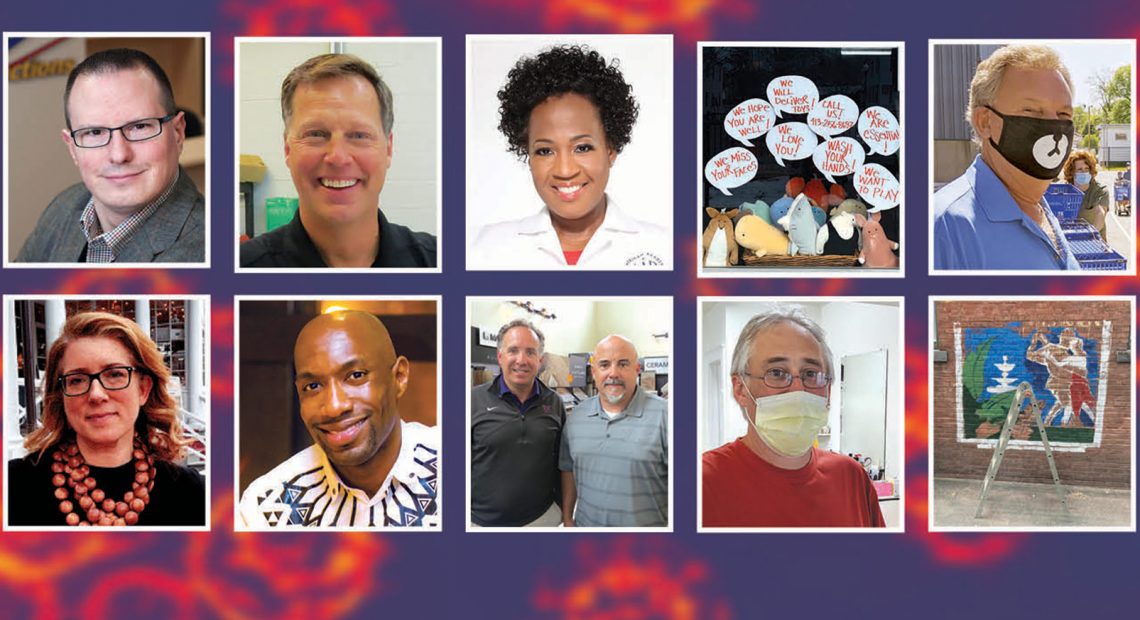
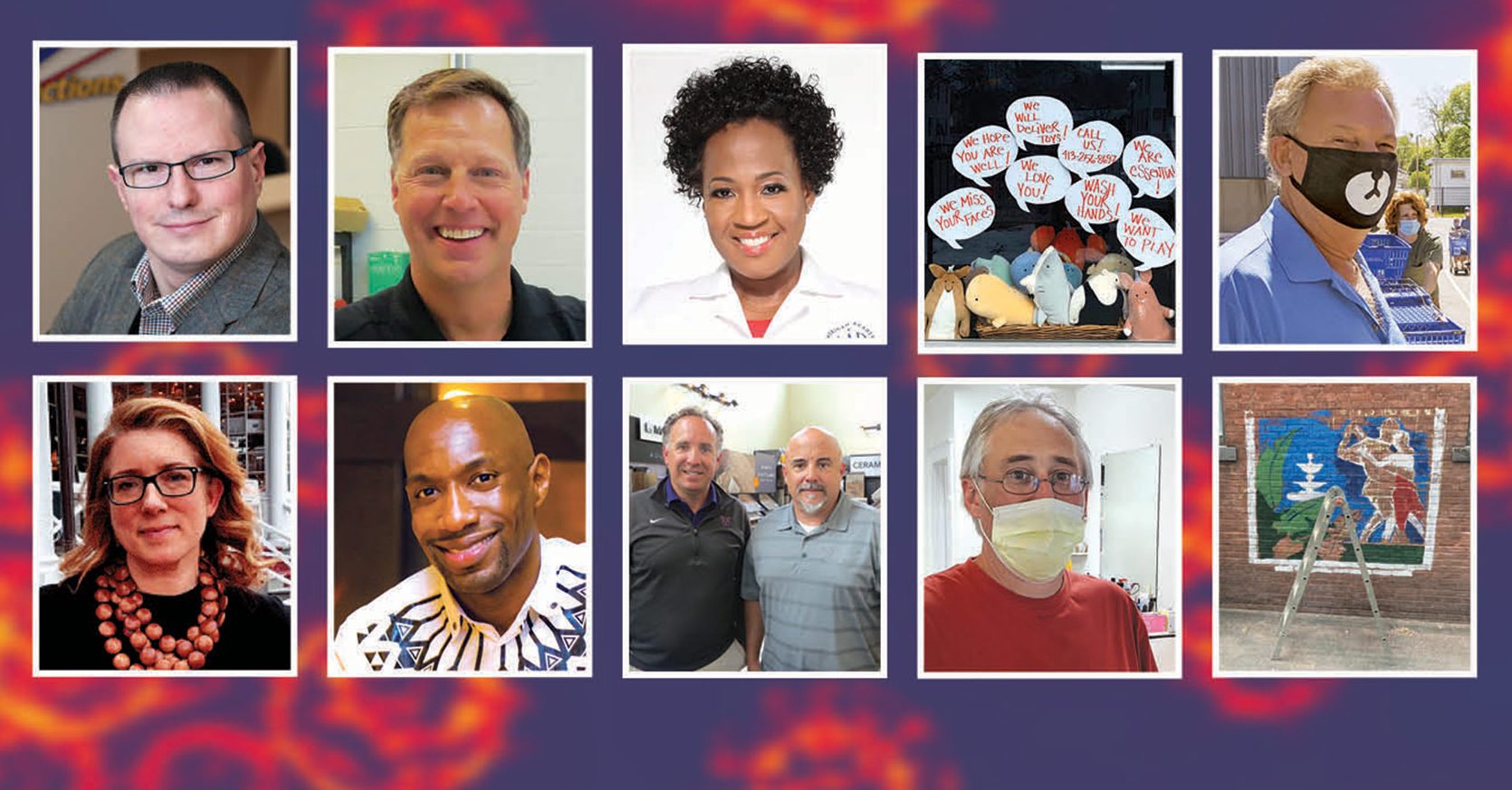
The COVID-19 pandemic has rocked businesses large and small in virtually every sector of the economy. The individual stories vary somewhat, but there are several common themes — lost revenue streams, struggles to make payroll and pay the bills, and large amounts of uncertainty about what the future holds. But there are other commonalities as well, including a willingness, born of necessity, to respond to this crisis — the worst situation any of these business owners have faced — with determination, imagination, and the will to find a way to get to the ‘other side.’ For this issue, BusinessWest talked with 10 business owners about what has happened since the pandemic arrived with brutal force three incredibly long months ago, and how they’re battling back. These are their COVID stories.

Zasco Productions

Event company works to pivot, position itself for the long term

Jim White says business at Go Graphix is down considerably

Go Graphix

In a sign of the times, this company has pivoted into new products

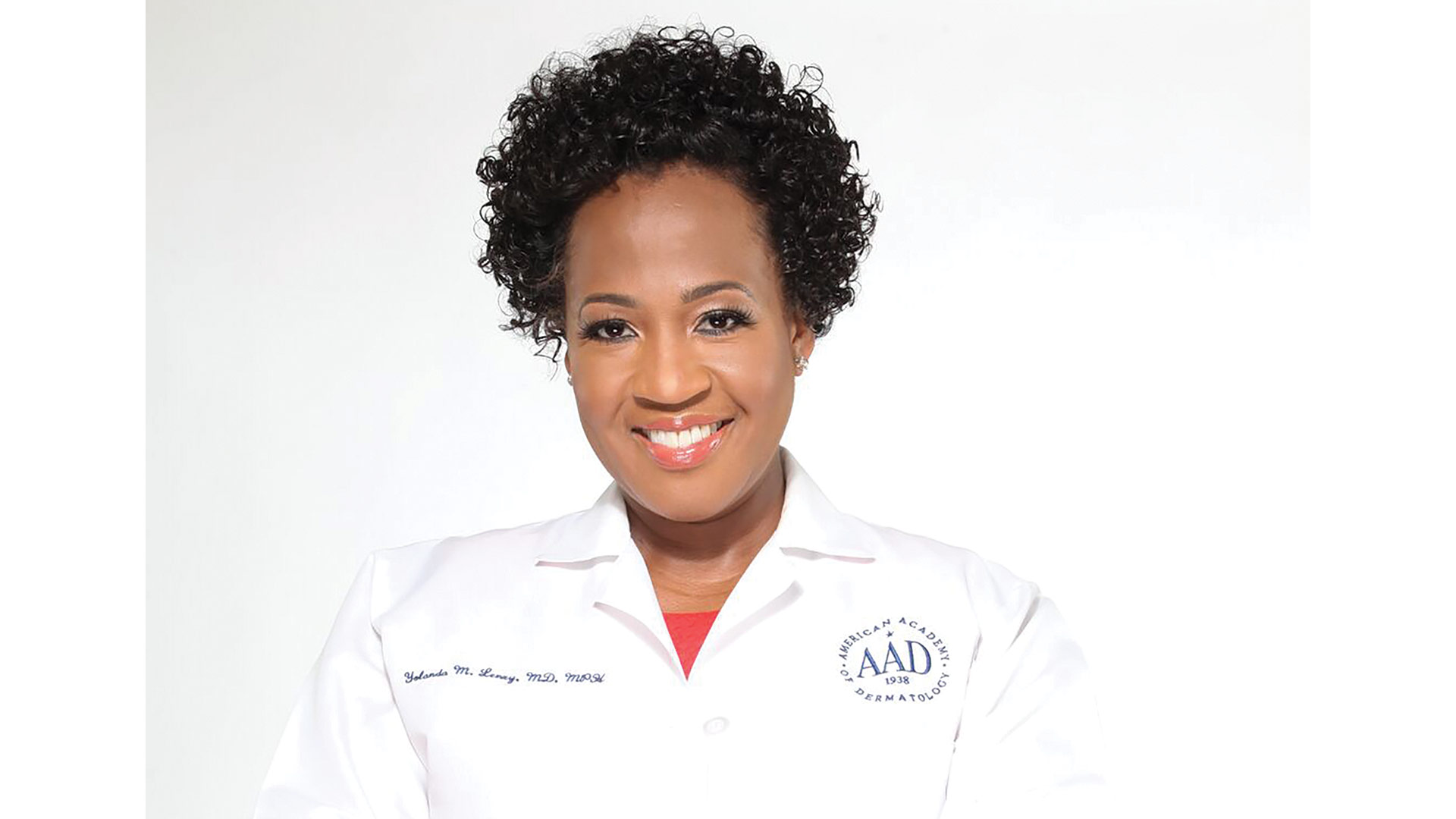
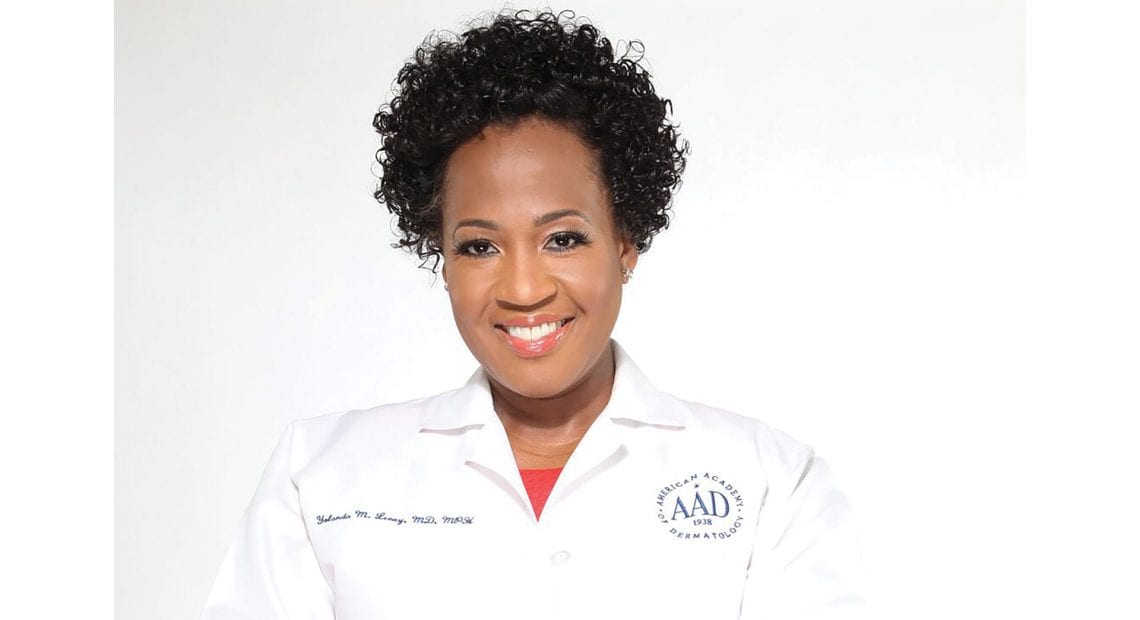
Dr. Yolanda Lenzy

Lenzy Dermatology

Practice owner says many patients still wary of returning to her office

Liz Rosenberg

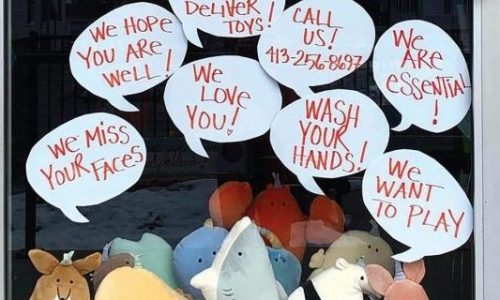
TheToy Box

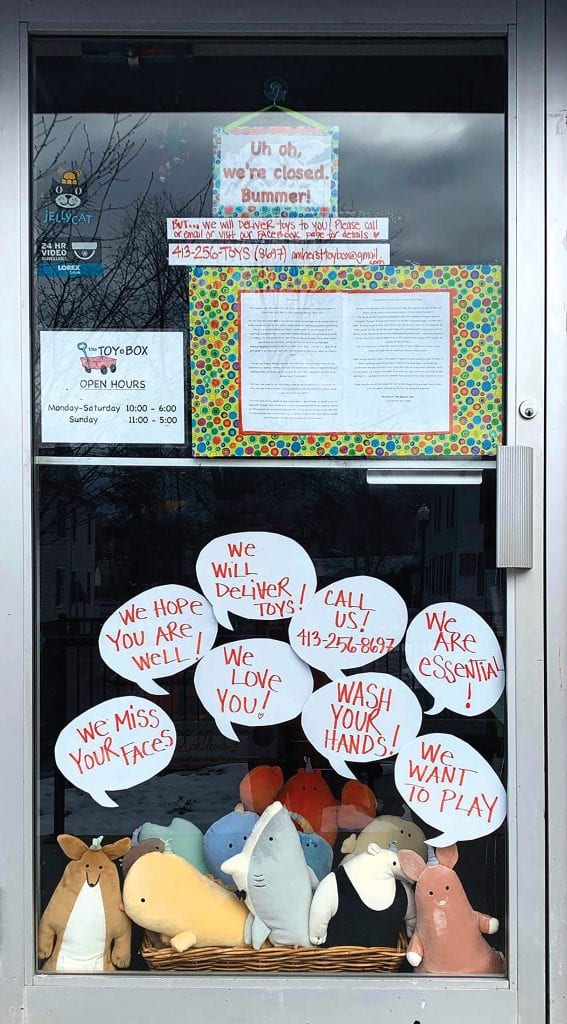
Shop owner finds ways to share joy at a time when it’s badly needed

Teddy Bear Pools

During peak season, this area fixture is making up for lost weeks

Sarah Eustis

Main Street Hospitality

Hotel group continues to grow through an uncertain time

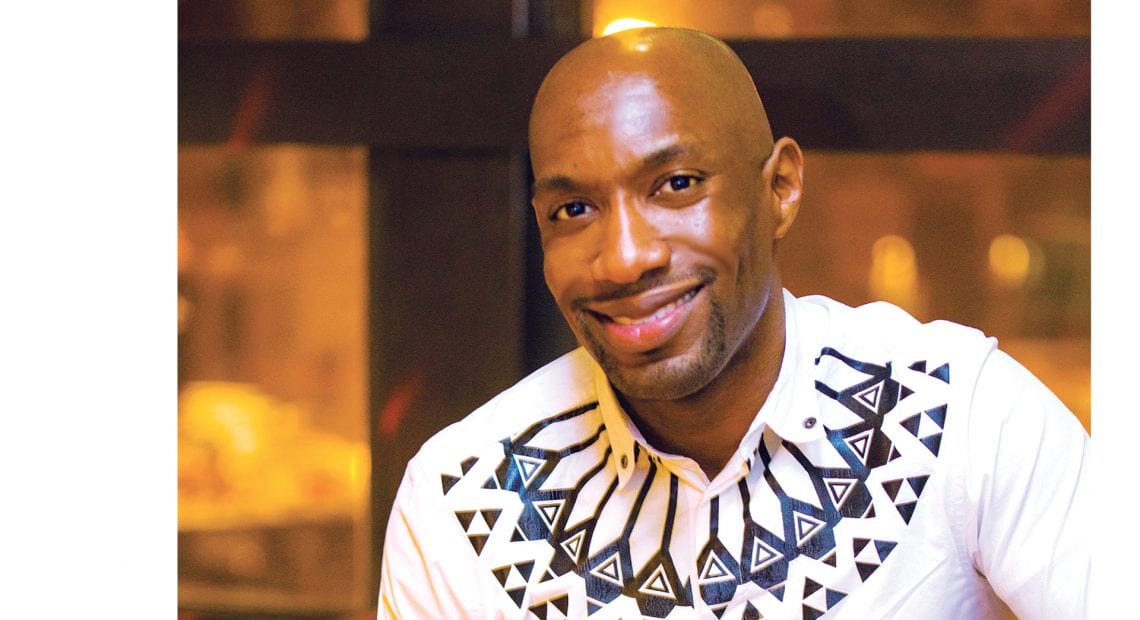
Lenny Underwood

Lenny Underwood

For this photographer and sock maker, the pandemic is a developing story

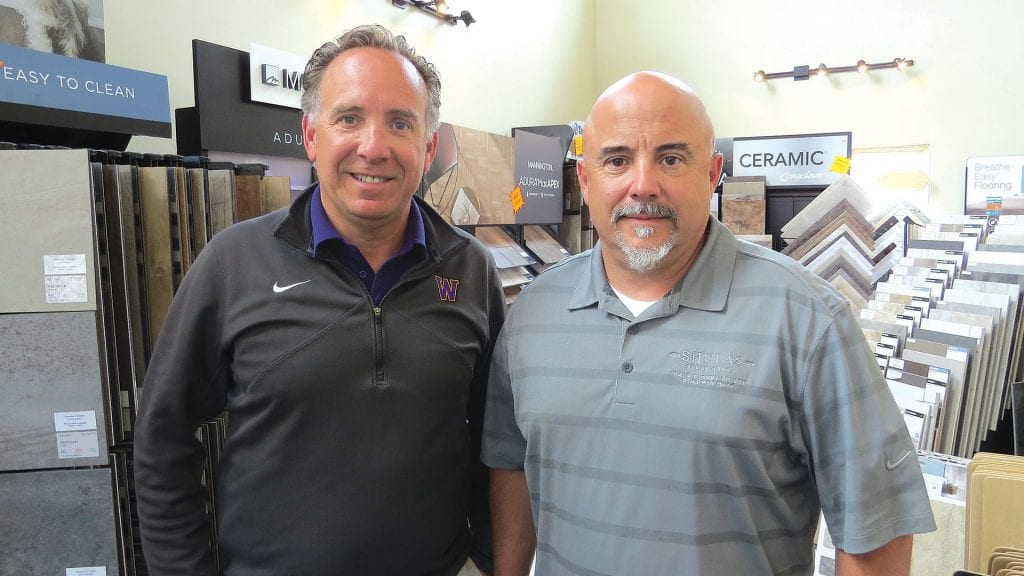
Doug Mercier, right, with brother and partner Chuck

Mercier Carpet

Pandemic poses challenges, opportunities for flooring company

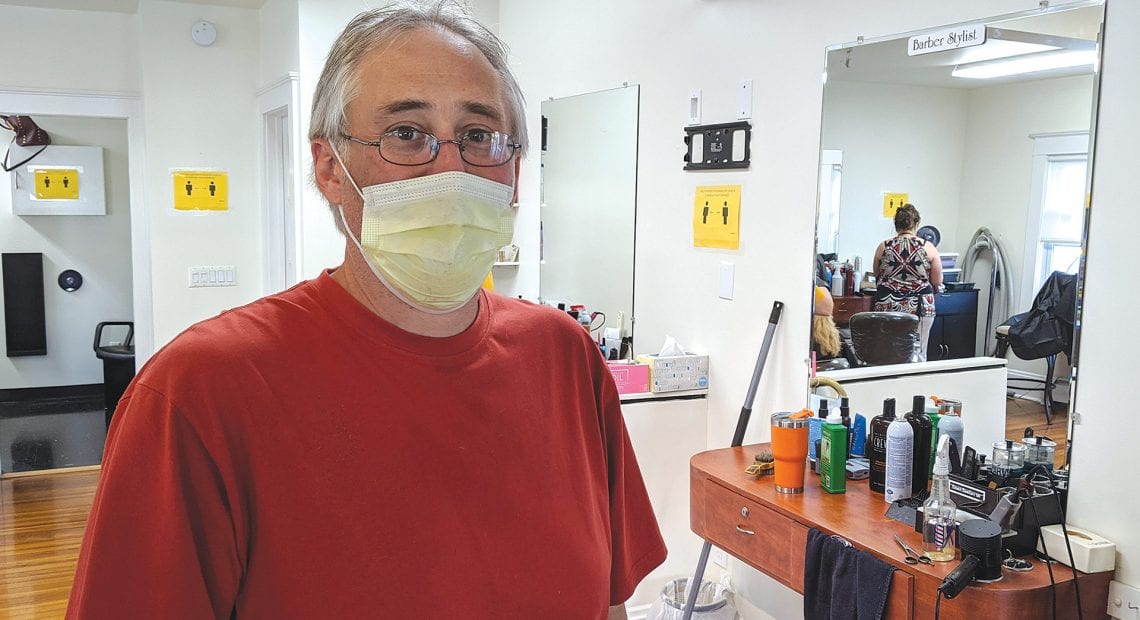
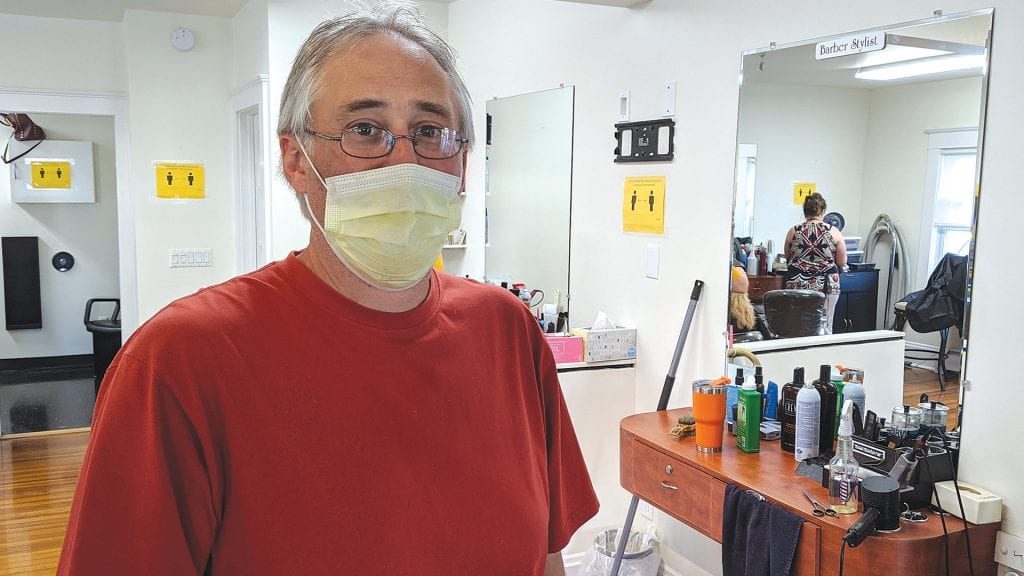
Bernie Gelinas said his appointment book has been full

Cuts Plus

Salon owner says he missed the relationships the most

Eastside Grill’s new outdoor seating area

Eastside Grill

Restaurant owner says reopening will be exciting, but scary, too

Modern Office Special Coverage

The Shape of Things to Come

Mark Proshan says predicting what’s coming next in his business — office furniture and design — has always been a difficult assignment.

But now … it’s even more of a complicated guessing game.

Indeed, in a sector where the landscape can change quickly and profoundly, and for a number of reasons — from a declining economy to changing tastes — the pandemic has produced an even greater sense of uncertainty about what lies around the bend, said Proshan, president of West Springfield-based Lexington Group.

“For the first time ever, I don’t even pretend to be smart enough to see what’s coming down the road,” he told BusinessWest, noting that this applies to both the short and long term. “We don’t know when bigger places of business will open back up, what their attitude is going to be toward spending money, and what things will look like down the road.”

Tyler Arnold, a principal with Holyoke-based Conklin Office, who spoke with BusinessWest from the company’s office in Northern New Jersey, agreed. He noted there are many variables that will affect decision making at individual companies when it comes to if and when employees return to work, how many return, and how much space they’ll take up when they do return.

“The number-one priority for people right now is to bring back fewer people, spread things out … and then see what happens,” he explained. “They might look at their footprint and say ‘we’ve got 1,000 employees, and we’re occupying 100,000 square feet.’ They may decide to only bring back 500 employees — but does that mean they need 50,000 square feet or 75,000 square feet? I think there will be a lot of that going on.”

But there are some things that are known. It seems certain that the collaborative, open spaces that companies have developed over the past several years will change — perhaps significantly.

Arnold said the old 10-by-10 private offices that dominated the business landscape years ago and are still favored by some banks and law firms won’t make an immediate comeback — they’re very expensive and still somewhat impractical. But there will certainly be a move to create more privacy and shield employees from one another and the public.

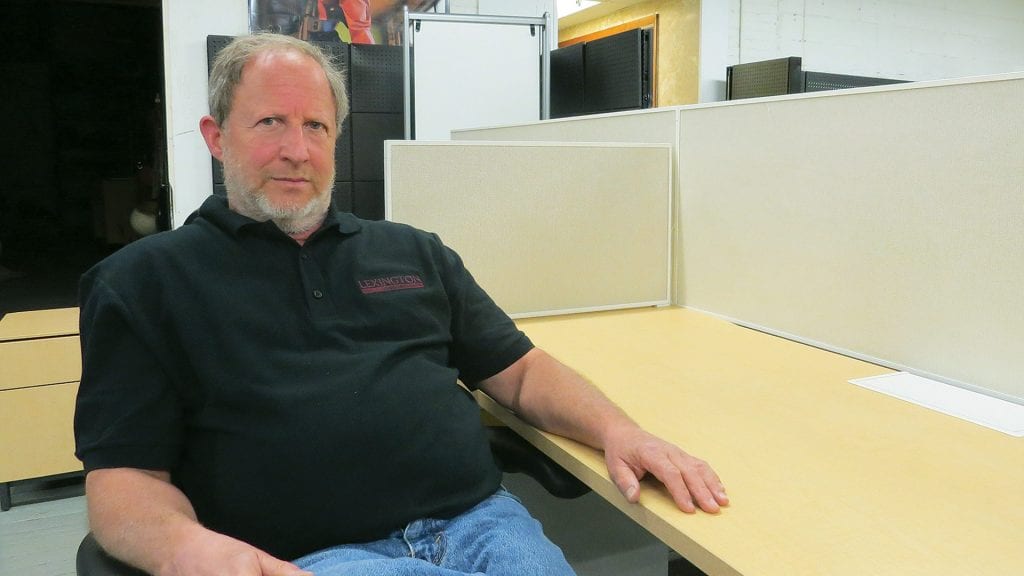
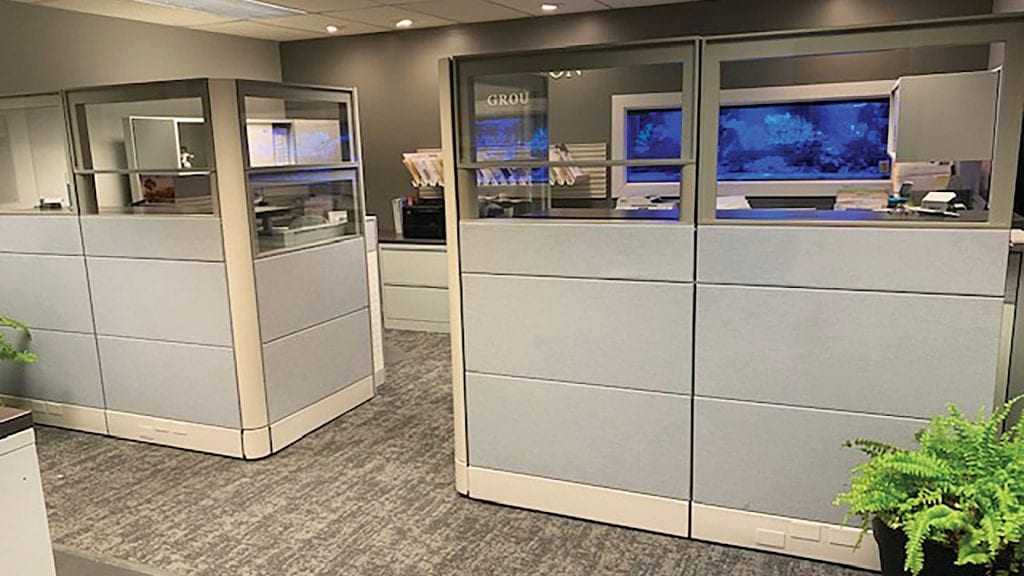
Mark Proshan sits at benching sporting a higher divider

Mark Proshan sits at benching sporting a higher divider than models popular just a few months ago. He says these units are among the items now in demand as businesses work to increase privacy in the workplace.

This has been made apparent by the number of calls both companies are taking from business owners and managers looking to adjust their spaces for a pandemic.

That’s especially true in New York City, said Arnold, where many financial-services companies and corporate headquarters had moved to benching to place as many people in as small an area as possible. Now, many of those benches are being outfitted with dividers, or higher dividers, as the case may be.

“Right now, the immediate demand is for adding privacy screens, be that acrylic material or fabric,” Arnold told BusinessWest. “So much that has been built out over the past 10 years has an open plan, open feel to it. What’s the easiest, quickest, least costly way to give people a sense of detachment from the person sitting next to them? It’s some kind of privacy screen.”

“A lot of people are continuing to stay home, and I’m not sure if that will continue to be the case.”

Proshan agreed. “We do have inquiries from people as to how to modify their spaces to make them more private, making walls higher, making plexiglass partitions and glass partitions, where possible,” he noted. “Meanwhile, a lot of people are continuing to stay home, and I’m not sure if that will continue to be the case. If it is the case, the need for higher-end furniture will likely not go hand in hand with staying at home; it may well be the Staples of the world and the Costcos of the world that will be selling those items because people might be paying for it out of their own pocket.”

As for companies bringing people back, the plan of action for many companies is not to put anyone immediately next to or across from someone else, even if there is a screen, said Arnold, adding that many businesses are ramping up slowly and in waves. How big the waves will get remains to seen.

Actually, that’s just one of many things that remain to be seen, as we’ll see as BusinessWest talks with these experts about how the pandemic might reshape the modern office as we know it.

Space Exploration

As he talked with BusinessWest about the physical changes that will come to the modern office in the wake of COVID-19, Proshan said it would probably be easier to do a little show and tell.

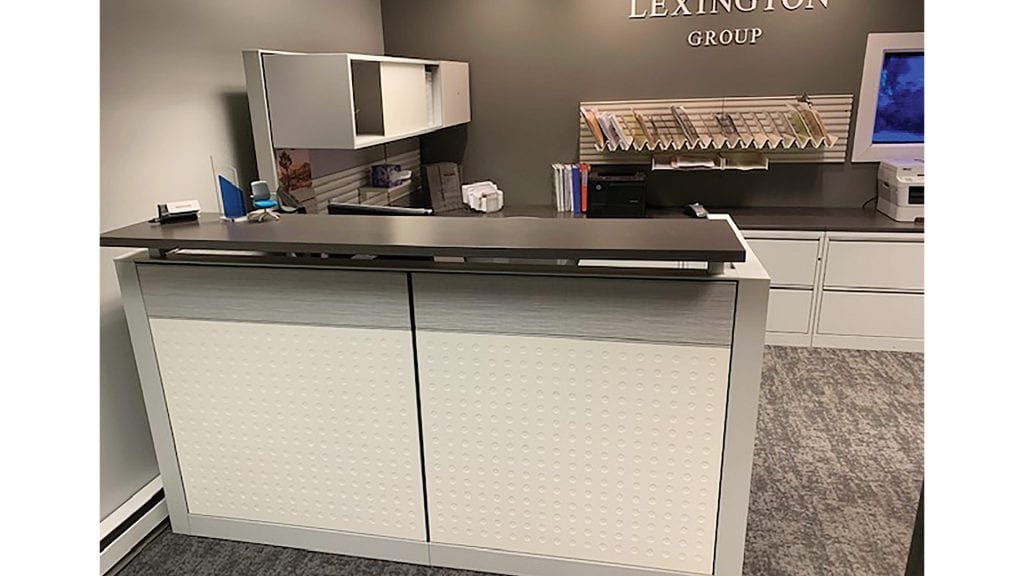
With that, he walked to the front lobby of the company’s spacious headquarters on Union Street. There, two workstations are outfitted with what would have to be called pandemic-era features.

Before discussing them, though, Proshan reached for his phone and scrolled to images of what used to be there, because this is where the discussion had to start (see photos, page 24). Before, there were fairly low structures that were wide open. They’ve been replaced by units of similar height topped by plexiglass panels on two sides, with narrow openings in front to keep those behind them safe.

“This is the kind of thing we’ll be seeing — this is the direction we’re going in,” said Proshan, adding that, for the foreseeable future, the focus will be on privacy and keeping people safe. Collaboration? Well, not so much.

Tyler Arnold

Tyler Arnold

“People will see where the economy goes; they’ll want to see how it comes back before they make any big decisions.”

At least not as much face-to-face collaboration, he went on, as he took BusinessWest on a walk to the showroom, where he sat down at benching that sports those higher walls that can’t be seen over and are designed with privacy and protection in mind.

While orders for such products come in, the larger questions looming over the industry concern the longer term. But while contemplating the future, those we spoke with are also coping with the present, which is challenging on many levels.

Indeed, Proshan said a number of projects that were in the pipeline have been paused as companies and institutions try to absorb what has happened and what it all means moving forward. He mentioned a $1.2 million library project at one of the area colleges and several other initiatives that have been put on hold because the plans that were blueprinted months ago may no longer be viable in the COVID-19 world.

“When you think about what may change when people go into a public space like that, you can certainly understand how and why these institutions might want to pause,” he said. “We have lots of repurchased and paid-for inventory that, because the colleges and universities are shut down, we can’t even get in to deliver this product.

“And the policy for a lot of these places is that they can’t pay for product until it’s delivered and installed,” he went on. “But, unfortunately, my manufacturers insist on getting paid once the product is received by me — so you can see the dilemma when you’re talking about a large volume of merchandise.”

There are other challenges to contend with as well, such as reopening their own offices, which were ‘essential’ in some cases — Lexington earned that designation in West Springfield because it delivers to healthcare providers — and also dealing with various employment issues, and trying to serve customers in remote fashion, a somewhat difficult task when many consumers like to see, touch, and kick the tires on the products they’re contemplating.

Arnold, like Proshan, said the phones essentially stopped ringing during the month of March. Then commenced a period of speculation and webinars about when offices would reopen and how. And then, things got busy again as companies started gathering information and proposals for those protective shields and dividers for benches, with a decent percentage of those proposals turning into orders.

The new workstations

The new workstations in the lobby at Lexington Group contrast sharply with what existed before, and speak volumes about current efforts to keep workers and visitors safe and increase privacy.

What concerns Arnold at this point is what happens when this ‘bubble,’ as he called it, is over and companies, now getting comfortable as employees slowly return to the office, contemplate their future needs, and their footprint.

Indeed, his company is currently working on projects involving leases that were signed months ago. The question is, will new leases be signed?

“I think that, when we get to the middle of the summer, there will be a pretty good slowdown at that point,” he said. “People will see where the economy goes; they’ll want to see how it comes back before they make any big decisions.”

There are already strong signs that some companies will not go back to their former offices, and if they do, they’ll probably do it gradually, with many seeking smaller footprints for fewer employees, which means less office furniture to be sold, said those we spoke with.

Arnold said he’s seeing a lot of this in New York, which is still very much in lockdown mode.

“Initially, people couldn’t wait to get back to work,” he noted. “But at this point, many corporations are taking their time and making decisions. The mentality is that, ‘we’re turning a profit, everyone’s working remotely, everybody’s safe; until we’re really comfortable that we can put them in an environment where we can minimize risk and people can focus on what they do, we’re in no rush to return to the office.’”

Mass transit certainly plays a big role in what’s happening — or not — with people returning to the workplace, he went on, adding quickly that, in many markets, and with businesses across many sectors, the question concerning such returns is increasingly ‘if,’ not ‘when,’ and also ‘how many will return?’

Whether this changes or not in the short or long term is yet another of those questions that are difficult to answer at this juncture.

Again, about the only thing that’s relatively certain is that the past will become prologue when it comes to privacy and how the office might look and feel moving forward.

“Ten years ago, everyone had tall walls, lots of privacy — people had their own space,” said Proshan. “‘Collaboration’ became the buzzword the last few years, and the walls came down, and shared space became the big thing. And while I think people will still have the need to collaborate, I think they’re going to be doing it in a much more enclosed environment.”

Bottom Line

Returning to the place where they started this discussion, Proshan and Arnold said that, while some things are known at this juncture, many more are not. And speculation might not be a fruitful exercise at this point.

“I don’t think there are whole lot of crystal-ball gazers who really know what’s going to shake out from all this,” Proshan said. “No one really knows.”

Arnold concurred. While the focus for now is on privacy and spreading people out, he noted, the landscape may be altered again. “All this can change on a dime if there’s good news about a vaccine or something like that. For now, everyone’s planning like this a year or so off.”

A year seems a long way off in a business where predicting the future is difficult — and has now become much more so.

George O’Brien can be reached at [email protected]

Coronavirus

Event Company Works to Pivot, Position Itself for the Long Term

Mike Zaskey says his ‘spreadsheet of doom’ includes more than $1.2 million in lost events for this year, but he’s pivoting with virtual events and other initiatives.

Mike Zaskey calls it his “spreadsheet of doom.”

And for good reason.

It chronicles what he estimates to be $1.2 million in lost business since early March, when the phone started ringing … and kept on ringing. On the other end were representatives of corporations, colleges and universities, and nonprofits calling Zaskey to let him know they were canceling or postponing — in most all cases, the former — the large events his company, Chicopee-based Zasco Productions, has come to specialize in.

“After a while, I was afraid to answer the phone, because every time I did there was a cancellation,” said Zaskey, noting that more than 40 major events, including 20 college commencements, have been erased from the calendar. In fact, when he talked with BusinessWest just after the Memorial Day weekend, he was lamenting how what was normally a very busy week for him — clients Holyoke Community College, Springfield Technical Community College, and the Rhode Island School of Design traditionally schedule their commencements for the final days in May — was now anything but.

Indeed, a business leader who rarely has time on his hands, especially at this time of year, now has way too much of that commodity. And he’s devoting it to everything from finding ways to somehow pivot — some more successful than others, as we’ll see in a minute — to advocating for an industry that is large and impactful, but often flies under the radar.

“The Live Events Coalition has put together some interesting statistics, and by their estimates, the live-events industry employs 12 million people and contributes more than $1 trillion into the U.S. economy,” he said, adding that few understand the size or importance of a sector that includes everything from venues to caterers to companies like Zasco. “If live events were a state, we’d rank seventh in population.”

Turning the clock back to early March, Zaskey said that’s when he first started getting calls from “six-figure clients,” as he called them, inquiring about cancellation terms in their contracts.

“It was around Friday the 6th,” he recalled, noting that some dates stick in his mind, for obvious reasons. “I got a few e-mails before that, but things really started to get scary on March 6. We had a team meeting at the end of that day, and I said, ‘something’s going on here, and we all need to be aware of this.’ And it just ballooned from there.”

The calls kept on coming, he went on, adding that the events, as noted earlier, have been canceled, not postponed.

“Most of these events are not being postponed — it’s revenue lost; it’s not coming back,” he told BusinessWest. “If there’s an annual event, a 2020 gala or conference, the 2020 event is not taking place, and they are going to have one in 2021. But the event in 2021 is the 2021 event.”

Despite these losses, one of the first decisions Zaskey made was to work with clients when it came to deposits and existing balances.

“A number of clients have multi-year contracts with us, so their deposits were paid two or three years ago, depending on the terms of the deal,” he explained. “Technically speaking, our contract says that, when an event is canceled, the deposits are non-refundable, and, in some cases, the client would still be liable for the cost of the event. But, in looking at the situation going on in the world, we decided that the right thing to do would be to apply those deposits to future events for clients, and that’s exactly what we did across the board.

“Most of these events are not being postponed — it’s revenue lost; it’s not coming back. If there’s an annual event, a 2020 gala or conference, the 2020 event is not taking place, and they are going to have one in 2021. But the event in 2021 is the 2021 event.”

“While it’s not the greatest for our financial position,” he went on, “it’s the best for our customers, and we’re looking to build long-term relationships with those customers and keep those customers.”

And a few customers have returned the favor by essentially paying balances due for next year’s event now, to help the company with cash flow.

Faced with its spreadsheet of doom, Zaskey said his company, which eventually had to lay off most of its 12 employees, looked to pivot in an effort to create some revenue streams. And upon taking a hard look around, he said one early option that presented itself was to put Zasco’s large fleet of trucks to work as couriers.

“But it doesn’t generate as much revenue, and we would probably actually lose money if we tried to turn into a delivery company — we’re not set for that,” he told BusinessWest. “We did actually try it — a friend of my owns a courier service, so we did a day of deliveries. But the revenue we generated versus the hassle of trying to pivot into an industry we weren’t suited for just didn’t work out.”

The company has had more success pivoting toward the staging of virtual events.

“A virtual event is more than just a video webstream or livestream,” he explained, adding that he’s now working with several clients on such initiatives. “We’re trying to capture the elements of a live event that can be held across multiple sites and make them feel like they’re at the actual event.”

Summing up what’s happened and what might happen moving forward, Zaskey summoned a phrase put to use by just about every business owner in Western Mass.: “we’ve never experienced anything like this before.”

Indeed, and while the short term (and that spreadsheet) looms ominously, this company, which put itself on the map by pulling off big events, continues to position itself for the long term — and, more specifically, a time when Zaskey won’t be afraid to pick up the phone.

—George O’Brien

Construction Special Coverage

Constructing a New Way Forward

By Mark Morris

Essential.

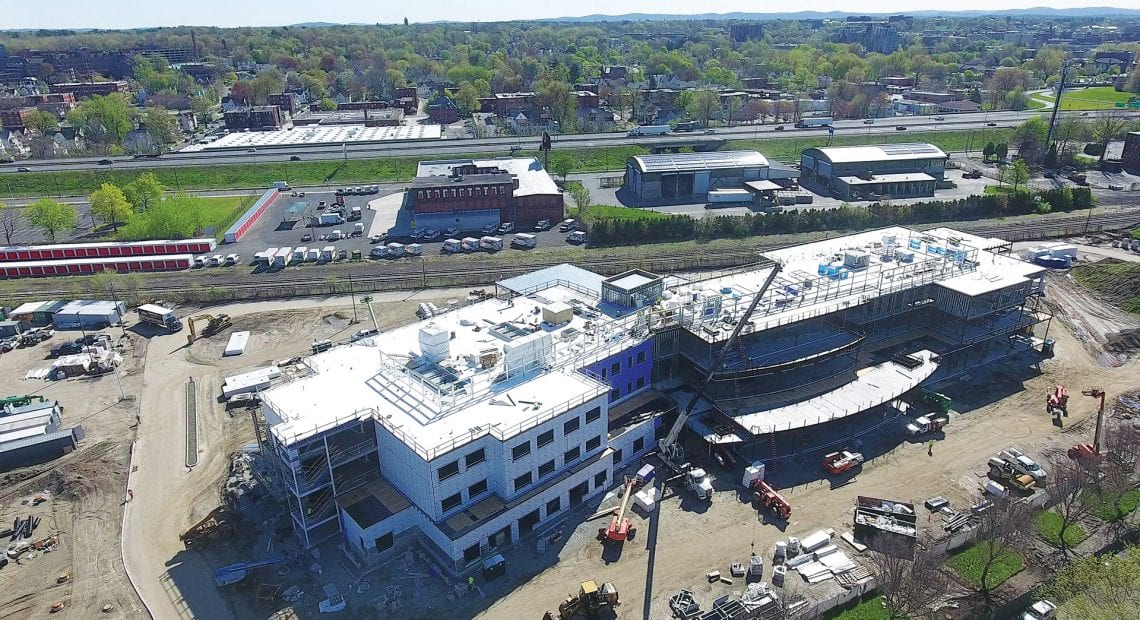
Brightwood-Lincoln Elementary School

Brightwood-Lincoln Elementary School is an $82 million project currently being built by Daniel O’Connell’s Sons.

That one word made all the difference for the construction industry as most sectors of the economy shut down, except for a handful deemed ‘essential’ by the state, construction among them, and thus able to continue working.

But to do that work, they had to quickly adjust to a new reality, as construction managers adopted new guidelines and procedures to prevent workers from catching the virus on the job site.

“At that time, building the project became secondary,” said Joe Imelio, project executive for Daniel O’Connell’s Sons. “The first item on our list was the health and well-being of everyone on the job.”

On March 25, Gov. Charlie Baker issued an order outlining COVID-19 guidelines and procedures for donstruction sites. In addition to reinforcing CDC guidelines on frequent handwashing, wearing face masks, and maintaining social distancing, the guidelines detailed specific procedures for construction sites.

In addition to providing workers with personal protective equipment (PPE) such as face masks and face shields when social distancing is impossible, the mandate also imposed a “100% glove policy” while on the job site.

Another guideline emphasized zero tolerance for sick workers on the job. The guidelines stated in all caps: “IF YOU ARE SICK, STAY HOME!” Every day, each person reporting to work is expected to self-certify their health status by completing a brief questionnaire to confirm they are healthy enough to work for that day. If the construction work is inside, known as a “closed building envelope,” a medical professional must take everyone’s temperature before they can enter the building.

BusinessWest spoke with several construction managers about the adjustments they have made to maintain a safe environment for workers and keep their projects moving.

David Fontaine Jr., vice president of Fontaine Brothers, said he began preparing pandemic protocols in February, before the guidelines were established, to make sure his company could continue to operate safely.
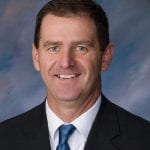
Joe Imelio

Joe Imelio

“At that time, building the project became secondary. The first item on our list was the health and well-being of everyone on the job.”

“In our industry, many of the products in the supply chain come from overseas, so we saw ripples of this a little earlier than others,” he noted.

In early February, Nate Clinard, vice president of safety for Daniel O’Connell’s Sons, began purchasing more PPE than the normal stock, as well as hand sanitizer and disposable rags and towels. He also tried to buy hand-washing stations for outdoor job sites, which were selling fast.

“Because they were difficult to get from vendors and suppliers, we built our own portable wash stations,” he said.

But, despite the hurdles, at least firms were working, and continue to work, although the long-term economic impact from the pandemic and the shutdown — and what that means for the volume of projects contractors will compete for down the line — remains to be seen.

Starts and Stops

Within some niches, the pandemic offered opportunity. For example, in mid-March, as much of the state began shutting down, the Massachusetts Department of Transportation (DOT) accelerated its scheduled projects for the roadwork season that was about to begin in a few weeks.

Janet Callahan, president of Palmer Paving, which has many DOT contracts, said her crews would normally work on large road projects at night when traffic is lighter. As stay-at-home orders resulted in empty roads across the state, the DOT allowed paving crews to switch to daytime construction.

“For the same number of hours, we are able to work safer and more efficiently,” Callahan said. “You just get more done in daylight.” She noted that daytime paving is a big reason DOT projects across the state are 25% ahead of schedule.

Other construction managers saw several projects delayed at the outset of the coronavirus. Stephen Killian, director of New England Operations for Barr and Barr, said a number of his company’s projects were pushed back by as much as 12 weeks.

“Our people worked on the jobs as best as they could remotely, but if you can’t put it in the ground, you’re not moving the project forward.”

Killian added that, even when projects begin again, it’s not as simple as bringing all the workers back and resuming the job. Among the governor’s guidelines is a mandate that construction managers devote one day as a “safety stand down” to make sure everyone understands the new protocols. Combined with CDC guidelines restricting meetings of no more than 10 people, restarting a job can become a logistical challenge.

David Fontaine Jr.

David Fontaine Jr.

“In our industry, many of the products in the supply chain come from overseas, so we saw ripples of this a little earlier than others.”

“If you have 130 people on a job site, the ramp-up is slow because everyone needs to have the stand-down meeting to understand their responsibilities,” Killian said. “Doing that for all 130 workers in one day isn’t possible now because you can’t meet in groups larger than 10 people.”

One concern cited by several managers involves the uncertainty and anxiety about a virus that everyone is still trying to understand.

“Everyone seems rattled, and tempers are shorter because people constantly feel under pressure,” said John Rahkonen, owner of Northern Construction Services.

Callahan agreed. “Managing people’s anxiety and insecurity is something we work on every day, even before workers start their shifts.”

To try to ease some of the anxiety, Clinard and his staff made themselves available at all the company’s job sites to answer questions and listen to concerns.

“Early on, a lot of people just needed to talk,” he said. “We were there to help educate and provide an ear for them.”

As the owner of his company, Rahkonen said he feels a real responsibility to his employees. He described the decision to continue working during the pandemic as a scary one.

“There were a lot of people who thought we should shut down, but I don’t think that would have been beneficial to the families of our workers,” he said. “So far, knock on wood, we’ve been right.”

Trial and Error

As might be expected, suddenly adapting to new protocols is a process of trial and error. Killian noted a problem with getting accurate temperature readings back in March when it was still cold outside. “People were running temperatures of about 86 to 90 degrees because they were walking to the site after they parked their cars.”

To get more accurate readings, Killian said they changed the protocol to a drive-up system where everyone’s temperature is taken while still in their vehicles.

On face masks, Killian said his safety director found a contradiction in the state regulations. Guidelines for the construction industry say masks must be worn when social distancing is not possible. The regulation that covers all businesses, however, says face coverings must be worn by all workers. While Killian supports wearing masks near other workers, requiring masks at all times may cause problems. He’s concerned about worker fatigue and potential health issues on those summer days when 90-degree temperatures are common.

“We have to be mindful that the average age of the tradesmen and construction workforce is over 45 years old,” he said, adding that he has reached out to state officials seeking clarification on the requirement.

Palmer Paving crews

As more people stayed home and off the roads, Palmer Paving crews switched to daytime work.

Clinard said his job sites are using technology to make the daily self-certifying questionnaire work better. By assigning a QR code to each project, workers simply hold their phone cameras to the code to launch the questionnaire. Once completed, the information is loaded to a master document for that project.

“This gives us a real-time read of who’s on site and that they are healthy,” Clinard said.
“If any responses to the questionnaire suggest issues with that person’s health, they are not allowed on the job site that day.”

Requiring people who aren’t feeling well to stay home contributes to what Imelio called a “culture change in the construction industry,” adding that, “for many of the workers, if they stay home when they’re sick, they don’t get paid.”

On the flip side, Killian said many healthy workers who would normally be on the job are instead filing for unemployment out of a concern they may bring the virus home. “Unfortunately, that affects the daily number of men and women on site. Even the union halls are having a difficult time getting additional staff.”

Several managers addressed the real costs that come with COVID-19 mandates that didn’t exist a few months ago. Fontaine said his company’s staff is able to address many of the requirements but not all of them.

“There are definitely additional costs associated with COVID, such as the increase in labor to sanitize the site and bringing in medical professionals for temperature screening,” he noted.

Killian said building owners have agreed to pay for many of these extra costs, but they’re not happy about it because it’s an added expense they could not have anticipated when budgeting the project.

Factoring in all the added expense from the COVID-19 protocols creates another challenge when bidding on future projects as well. “If you bid on a job and put the cost of all the mandates in your bid, you may not be competitive,” Killian said.

In recent meetings on future projects, Imelio said he was asked about the impact of COVID-19 going forward. “It’s like asking, ‘what do you think interest rates will be in a year?’”

Fontaine’s company is currently building South High Community School, a $200 million project he described as the largest public project in the history of Worcester. He’s concerned that projects like these, which depend on tax revenue from state and federal sources, will be hit hard in the future. In the past, the company has adjusted by taking on more private construction when public projects slow down.

“The biggest question for us is how will COVID affect the 2021 and 2022 workload,” Fontaine said. “We may have to refocus our project mix for a couple years if we go through another significant downturn.”

Hit the Road

If nothing else, Callahan said, the pandemic is a reminder of the important role infrastructure plays in the region’s safety and economy. “Essential service providers such as hospital workers, firefighters, power-company crews, and delivery people all depend on our road system to get to their jobs and to help people.”

Despite the extra steps to start each day, all the managers said they are adapting to the new requirements. The trick now is to stay diligent.

“Our processes are in place, and they work well for the personal protection of all our employees,” Imelio said. “It’s different than the old way of doing business, but we’re making progress.”

“Managing people’s anxiety and insecurity is something we work on every day, even before workers start their shifts.”

Even though their work is outdoors, Callahan said it’s important for her crews to remain diligent. “It would take only one person to affect the jobs of 25 people, and that’s only one crew. We’ve made it clear to our staff, there is no relief from these guidelines.”

Strict compliance is worth it, she went on, because it gives her company the opportunity to repair roads for the DOT and municipalities around the state.

“We are so grateful to be working and employing people,” she said. “We are not part of the 41 million people who have suffered a job loss during the pandemic.”

Fontaine said his workers have had a great attitude during a time of difficult adjustments.

“Being in an essential industry, you know it’s important to be cognizant of your safety and the safety of those around you,” he told BusinessWest, “and you know it’s important to keep moving forward.”


Coronavirus

In a Sign of the Times, This Company Has Pivoted into New Products

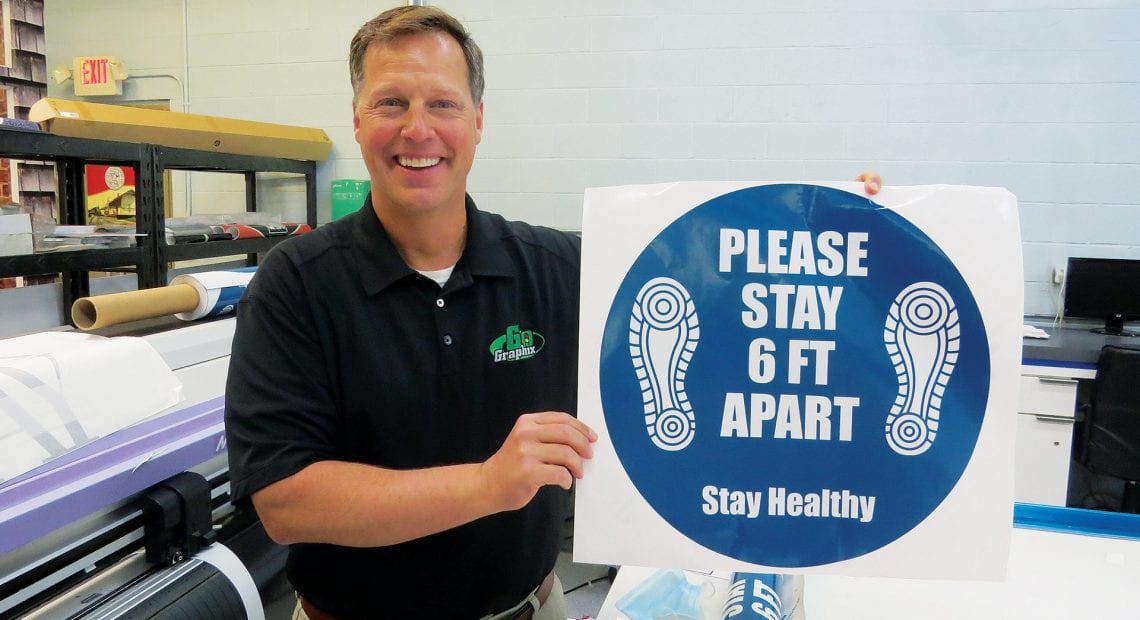
Jim White says business at Go Graphix is down considerably

Jim White says business at Go Graphix is down considerably because major clients like MGM Springfield have shut down, but he’s managed to pivot and get work like these social-distancing signs.

Jim White says it took him 15 years to go from zero to 60 with his business. And 15 days to go from 60 to zero.

That’s how the co-founder of East Longmeadow-based Go Graphix, a maker of signs, vehicle wraps, and a host of other marketing products, described that two-week period back in March when business came to a near standstill.

That’s because most all of the company’s major clients — MGM Springfield, the MassMutual Center, sports teams like the Thunderbirds — came to a complete halt.

It seems like years ago now,” White said of those days in March. “It was tough — probably the toughest times I’ve experienced in business.”

With many of those businesses still shut down, Go Graphix has pivoted into other niche products that could be described as ‘COVID-related,’ said White, adding that it now has what could be called a line of ‘back-to-work’ products, including social-distancing graphics — those ‘Please Stay 6 Feet Apart’ signs now appearing across the region — as well as the protective barriers that are also appearing almost everywhere.

Still, revenues for April and May of this year are down roughly 80% from their levels of a year ago. The company, which had to lay off a few workers and cut most employees back to four days a week, has been helped by federal assistance, specifically the Paycheck Protection Program (PPP) — and White’s ‘save for a rainy day’ philosophy, passed down by his parents.

“That’s what you get with the son of a commission-only heavy-equipment sales rep,” he said. “We knew every recession, because it was a depression. And my parents saved, and I learned from them.”

Flashing back to early March, White said that’s when a number of major clients had to shut down operations, which brought operations at the Benton Road facility to something approaching a standstill.

Those clients include MGM Springfield, for which the company makes a wide variety of promotional items, from signage for upcoming events to the dasher-board advertisements for the skating rink.

“That’s what you get with the son of a commission-only heavy-equipment sales rep. We knew every recession, because it was a depression. And my parents saved, and I learned from them.”

“They’ve been one of our best customers,” said White, noting that his company was one of many fortunate local businesses to become vendors for the casino operator. “Throughout the casino, you see a lot of promotional graphics, and we were doing things on a weekly basis — work that came to screeching halt.”

But even clients that weren’t shut down and were actually doing well had put work given to Go Graphics on hold, said White, citing the example of beer distributors, for which the company provides vehicle wraps.

“They were so busy, they couldn’t leave the trucks with us for a day to be wrapped — they needed them on the road,” he explained. “They were hitting all the package stores, which were doing really well during all this. That was tough one for us; we’re thinking, ‘even the guys who are doing great can’t do any business with us.’”

Beyond the PPP loan, what has helped the company through the crisis has been its ability to adapt and create new product lines. White calls this the “great pivot.”

It involves making plexiglass shields for a number of clients, including Baystate Health, Monson Savings, J. Polep, Hartford Hospital, and others, as well as social-distancing signage now seen in virtually every sector of the economy.

As he talked with BusinessWest at the plant, he stopped to display the round ‘Please Stay 6 Feet Apart’ signs bound for Staples’ corporate headquarters, a contract that has provided a good amount of work for the company.

As for the plexiglass partitions, most of them are custom orders, and the work is intricate, which is why a number of businesses across several sectors have decided on Go Graphix for the work.

“We’re not just providing an off-the-shelf solution,” he said, while pointing to some models bound for Baystate Health. “And the orders keep coming in — we’ve pivoted, and we’re going for it.”

And White has to hope that the orders keep coming in, because plexiglass is now a commodity; amid fears that short supplies would become even shorter, he ordered a lot of it.

“It’s kind of toilet paper in the early days of this pandemic,” he said with a laugh. “Everyone’s looking to get it, and it’s becoming harder to find. But we have some good suppliers, and I’ve made the investment in a good amount, even though it scares me to the core. I figured, ‘I’d better be the guy who has it on hand,’ and just pray that we sell it.”

All indications are that he probably will as companies scramble to take the necessary steps to reopen, a process likely to play itself out over the next several months.

As White said repeatedly, this isn’t work he could have imagined doing just four months ago, but he’s very grateful to have it — an attitude that’s understandable after watching a company go from zero to 60 to 15 years, and 60 to zero in just a few painful weeks.

—George O’Brien

Cybersecurity Special Coverage

Risk and Reward

If the COVID-19 pandemic has taught businesses anything, it’s that employees, in many cases, can do their jobs from home — which can, in theory, lead to cost savings. But also expenses — the type of expense that, if ignored, can lead to much bigger losses.

We’re talking about data security. And what remote workers need depends, in many cases, on how long they plan on staying home, said Sean Hogan, president and CEO of Hogan Communications in Easthampton.

“We have some clients investing in the home office and planning on shrinking their bricks and mortar, so they’re going to save money on bricks and mortar or the lease,” he told BusinessWest. “But then they have to invest in bandwidth and security for the remote office. It’s a huge issue.”

And a sometimes messy one. In a shared workplace, Hogan noted, “you might have great security, firewalls, routers, you have security installed, you make sure all the security is updated, you constantly have the latest patches and revisions.”

But working from home poses all kinds of issues with the unknown, the most pressing being, what programs are running on home devices, whether those devices are loaded with viruses, and whether they can infect the company’s servers when they connect remotely.

“We’re trying to control security at someone’s own bandwidth at the house, where three, four, or five people may be trying to jump on at the same time,” he added. “It’s not shaped at all; it doesn’t prioritize any applications or traffic. Now, there are ways to do that — we can install SD-WAN software that allows us to monitor the connection and prioritize traffic like Zoom, Microsoft Teams, or GoToMeeting. That way, you don’t have everyone breaking up and having issues.”

Sean Hogan

Sean Hogan

“We have some clients investing in the home office and planning on shrinking their bricks and mortar, so they’re going to save money on bricks and mortar or the lease. But then they have to invest in bandwidth and security for the remote office. It’s a huge issue.”

But that doesn’t solve the issues of security holes in the home wi-fi — which have weaker protocols, allowing hackers easier access to the network’s traffic — as well as the human element that makes workers vulnerable to phishing scams, which are the top cause of data breaches, and insecure passwords, which allow hackers easy access to multiple accounts in a short period of time.

“The Internet has become the Wild West over the last 10 years,” said Jeremiah Beaudry, president of Bloo Solutions in Chicopee, starting with scam e-mails — from phishing attacks to realistic-looking but nefarious sites that try to wrench passwords and data from users and install malware on their computers.

“I get e-mails from clients three or four times a day — it used to be once or twice a week — saying things like, ‘I got this e-mail asking me to wire money to a client,’” he noted. “You can’t stop people from pretending to be someone else, and the language is getting more and more clever.”

That combination of possibly flawed technology and human errors make the home office a particular concern in the world of cybersecurity.

“Nobody has the exact answers right now for how to make the most secure connection at a remote office,” Hogan said, adding that going to the cloud has been an effective measure for many businesses, while others have taken the more drastic step of setting up physical firewalls at remote sites for key employees — say, for the CEO or CFO. “We’ll lock them down if they’re actually connecting to files and servers that are really confidential.”

Possible solutions are plenty, he said — but it all begins with knowing exactly what equipment remote employees are dealing with, and what threats they pose.

Viral Spread

COVID-19 isn’t the only fast-spreading infection going around, Hogan said. In fact, “45% of home computers are infected with malware. That’s an eye opener for many people. It’s a huge issue, and removing it is a huge challenge.”

One problem is the human element — specifically, how users invite threats in by not recognizing them when they pop up. Take the broad realm of phishing — the setting in which people receive such pitches can actually make a difference in how they respond, Beaudry said.

“It’s harder to sift through it when working from home; it’s not natural. You’re out of your element when you’re sitting at our desk in your pajamas, as opposed to being in your office at work. You may not be reading your e-mail as carefully as you normally would. You may not be on alert.”

A big piece of the puzzle is end-user awareness, he said. “You want to have your employees educated about what’s out there, so they know how to spot forgeries.”

Alex Willis, BlackBerry’s vice president of Sales Engineering and ISV Partners, recently told Forbes that companies trust their employees to do the right thing, and workers are generally honest, but trust can be a dangerous thing.

“The problem with just trusting people is that employees don’t always do this on purpose,” Willis said. “Sometimes, it’s just purely unintentional. They are working on a home machine that’s riddled with malware. They need access to corporate data. For instance, if the company issues a slow laptop to an employee and the employee has to get their job done, they are going to use their home computer that is faster to do the job. In that scenario, the home computer might not be as secure.”

Jeremiah Beaudry

Jeremiah Beaudry says home networks aren’t typically built to run as efficiently — or safely — as those in a workplace.

Again, it’s that issue of the unknown, Beaudry told BusinessWest. “You don’t know what they have going on with their home networks. We didn’t set up the home connection, we don’t know what they have, and everyone has different people on it. Some are borrowing it from their apartment complex or sharing it with the neighbors, and they expect the internet to work perfectly. It’s not going to.”

In an office, on the other hand, everyone is using the same network, running at the same speed, with the same level of security and firewall protection. “Then, when they go home, there are so many variables.”

The best-case scenario is to give employer-owned devices to employees so they can remotely manage information.

“You can put antivirus on an employer-owned device; when they’re using their own devices, you don’t know what they’re doing to protect it,” Beaudry added. “And if the employee is laid off or fired, you would have the ability to control any employer-owned data.”

At the very least, he said, companies should encrypt the traffic between their network and individual users’ home computers.

“We put monitoring agents on remote clients that monitor for any viruses or malware and will update their antivirus and malware protection in some cases,” Hogan added.

Vigilant Approach

None of this completely addresses the speed and efficiency issues of home devices. “Usually, in a home office, they pay for their own bandwidth, and the business can’t say, ‘we don’t want your kid playing Fortnite,’” Hogan said. “That’s the challenge.”

“I get e-mails from clients three or four times a day — it used to be once or twice a week — saying things like, ‘I got this e-mail asking me to wire money to a client.’ You can’t stop people from pretending to be someone else, and the language is getting more and more clever.”

“Some clients will pay for a second, business-only connection for remote workers, he added. “But that’s pretty extreme; not many are doing that.”

More popular — and effective — is the move to a virtual environment. Working in the cloud, he noted, means not worrying about the hub-and-spoke relationship between physical servers and computers that’s the biggest weak point for security. “Most of my clients have eliminated that weakness.”
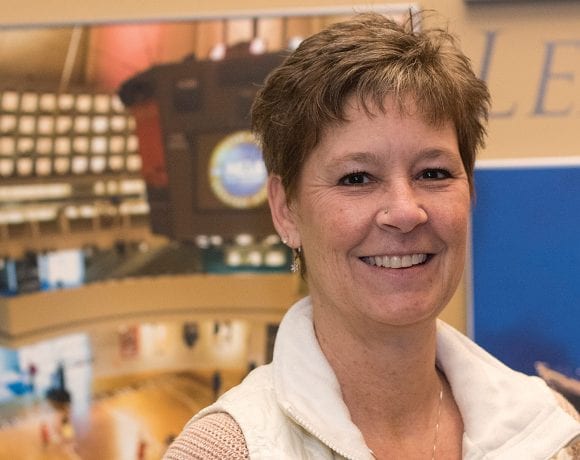
For some clients, the cybersecurity issue is especially critical — take medical businesses, for whom privacy is paramount in the HIPAA era. “That changes the game completely,” Hogan said, noting that one resource for companies handling sensitive data is a SOC, or security operations center.

“Clients who really value security can sign up with a SOC team that responds in case of a breach,” he explained. “It’s a lot of monitoring, detecting, and responding.”

Delcie Bean, CEO of Paragus IT, said any investment in platform migration and remote work has to be accompanied by investment in strong security tools — and education.

“The legacy tools and technologies used to secure networks for the past 10 years need not apply for this next wave of mobile workers,” he told BusinessWest. “Security of the future will be a lot more about multi-factor authentication, deep encryption, and will involve a lot more end-user training as well as testing than the command-and-control style approach of the past.”

Hogan agreed. “Password management is so massive,” he said, noting that people resist simple protections like multi-factor authentication, or even just using complicated passwords, or different passwords for different sites.

“We are also dark-web monitoring pretty consistently,” he added. “The dark web has been on fire lately — a lot of breaches.” Once data fall into those hands, the damage is done, he added, “but the important thing is to know what got breached, and if you can tell what credentials are out there, so you can change them.”

The bottom line, Beaudry said, is to make sure employees use unique passwords and encrypt connections remotely, and not using tools that are potentially vulnerable.

“And there’s a long list of tools known to be exploited by hackers, so it’s good to check with an IT professional before using any remote desktop method,” he added. “Some methods require you to open firewall ports that can leave you vulnerable to ransomware and all sorts of awful data breaches. The main thing is to make sure your firewall is locked down and no unnecessary ports are open, and you have backups of all data.”

That’s a lot to consider when moving into an era of expanded remote work — some of which comes at a cost. But the cost of ignoring it is much higher.

Joseph Bednar can be reached at [email protected]

Coronavirus

Practice Owner Says Many Patients Still Wary of Returning to Her Office

Dr. Yolanda Lenzy

Dr. Yolanda Lenzy, like many healthcare practitioners, says many of her patients are reluctant to come to the office out of fear of contracting COVID-19, leaving overall volume down considerably.

Dr. Yolanda Lenzy admits to not knowing exactly what would happen when she officially reopened the doors to her Chicopee-based dermatology practice on May 18.

She knew what she was hoping to see — that patients who had put off coming to see her for more than two months out of fear of the virus would start scheduling appointments and getting their concerns and even routine checkups addressed.

And while that’s happening to some degree, the numbers are not what she hoped, although Lenzy would be the first to say that two weeks’ worth of data is probably not enough to make a definitive statement on what it all means.

“Last week was better than this week,” she said toward the tail end of May, adding quickly that she wasn’t sure just how this was attributable to the Memorial Day holiday or other factors. “We’re still not reaching the numbers we set as a goal — even the reduced numbers we established by limiting the number of office visits to half what they would be normally to allow social distancing.”

Lenzy, who opened her practice in 2014 and quickly built up a clientele of some 30,000 patients, believes her venture is typical of most others in the broad healthcare realm when it comes to the impact of the pandemic and the ways in which it has changed business — in some cases for the long term.

This is true of everything from the emergence of telehealth as a way to evaluate patients remotely (more on this later) to the manner in which the crisis brought the practice to a precarious place, where Lenzy, who has a staff of nine, wasn’t sure if she was going to able to make payroll.

With some relief from the CARES Act, specifically in the form of a Paycheck Protection Program (PPP) loan, Lenzy has been able to pay people and keep all her staffers employed — although that money can only be used for another few weeks.

She — like just about every small-business owner who has received such a loan — is already starting to think about what happens when that money runs out. That’s because normal, as in life in mid-February before the pandemic reached Western Mass., still seems a long way off.

Flashing back to the pre-pandemic days — that’s a phrase all business owners and managers have added to their lexicon — Lenzy said hers was a very busy practice. And while deemed essential because of the services it provides, the office closed on March 18 — again, like most all healthcare practices in the region — and shifted to seeing patients virtually.

And, for the most part, this move to telehealth went smoothly.

“It was definitely a generational piece,” she explained. “Some of our older patients had some difficulties, but they were able to get people to help them; some people don’t have smartphones or don’t have computers with cameras, so we did so some phone visits. But some people preferred to wait until we were back in the office.”

As for the business, while Lenzy she kept all her employees on, she cut back hours from 40 to 30 a week. “That was still a stretch,” she said. “But I wanted to keep everything going.”

“Even with seeing people virtually, we were barely able to meet payroll, let alone all our other expenses. That program did exactly what it was designed to do.”

The PPP money arrived her account in the beginning of May, and it provided some desperately needed breathing room.

“Even with seeing people virtually, we were barely able to meet payroll, let alone all our other expenses,” she said, adding that there are many of those, including rent and supplies. “That program did exactly what it was designed to do.”

The practice reopened exactly two months after it closed, but this was and is a phased reopening, she explained, noting that, to maintain social distancing, roughly half the staff works at home a few days each week and continues to see patients virtually.

“There’s always one provider in the offices at a time to see patients,” she said. “And we’re limiting the number of patients per hour that are in the office; with our specialty, we do a lot of procedures, like biopsies and freezing, so a lot of the patients that we’ve seen virtually needed to come into the office and have something done.”

They’re coming in, but, as noted earlier, not in the numbers this practice needs to get back on secure financial footing.

“We cut our volume in half, but we haven’t been able to even do that,” she said, adding, again, that she’s working with a small sample of data. “In talking to our front desk, we have some people who still don’t want to come out, so we’re trying to convert those people to virtual care.”

As for when things will get better and those numbers will improve, Lenzy said that will happen when and if more people feel comfortable enough to go back to the office.

“Our success and how we fare depends on peoples’ comfort levels,” she told BusinessWest. “And right now, it’s too early to say when people will reach this comfort level. My front desk is telling me that now, many people are saying, ‘I just want to wait.’”

—George O’Brien

Modern Office Special Coverage

Views from a Distance

In the middle of March, employees of companies across Massachusetts — and many other regions of the U.S. — suddenly began working at home. In some cases, it was a matter of setting up a team of four or five people in their home offices.

Then there’s MassMutual, which suddenly had to do that for 7,500 employees.

“We communicated the transition on a Thursday, and by Monday, we had gone from about 20% of our workforce being remote to more than 95%,” said Susan Cicco, MassMutual’s head of Human Resources & Employee Experience. “On top of the need for that speed and agility, this particular situation created unique challenges in that employees are working remotely while, in many cases, fulfilling many additional roles — as employees, caregivers, and even teachers.”

But the experiment — if one can call it that, since the government was forcing the company’s hand — has been largely successful, to the point where, with the COVID-19 pandemic still a threat, MassMutual has told its employees to keep working remotely, at least into September.

“We decided to share with employees that we would start returning to the office no earlier than the beginning of September as we continue to focus on their health and safety, as well as allow them to be able to plan family and life commitments amidst continued uncertainty around things like childcare and camps,” Cicco told BusinessWest. “I’m not sure anything particularly equates for the scale and magnitude of this crisis. That said, we relied on and built upon our strong cultural foundation and focus on flexibility, balance, and well-being.”

“This particular situation created unique challenges in that employees are working remotely while, in many cases, fulfilling many additional roles — as employees, caregivers, and even teachers.”

Which brings up a question many companies of all sizes are likely asking — once the pandemic is in the rear-view mirror, what have we learned about the potential of remote work in the future? And how many employees do we really need under one roof?

“I am sure that just about every business is going to be impacted both positively and negatively by this COVID-19 pandemic,” said Delcie Bean, CEO of Paragus IT. “My sincere hope is that the negative impacts are short-term and the positive impacts are long-term. In terms of those positive impacts, I think the most obvious is that many businesses learned that is it possible to conduct business remotely.”

Elaborating, he noted, “I know many companies that, ahead of the pandemic, said it wouldn’t work for them, but when push came to shove and they were forced into it, they found that it actually did work better than they could have imagined. That said, I know many businesses are finding that their technology is not well-suited for a predominately remote workforce, and therefore if they wish to make those changes permanent, they will need to make further investments in their technology platforms.”

The big takeaway, however, is that it’s possible, and the technology Bean mentions is widely available. But other questions need to be answered as well.

Lives in the Balance

One deals, quite simply, with employees’ mindset, Cicco said.

“Our colleagues have been amazingly resilient and committed through all this, and a major focus has been on ensuring we are keeping a pulse on employee well-being — physical and emotional — to provide the relevant support and resources,” she noted. “We’ve also been working to communicate continuously as things evolved — both when we had answers and, as importantly, when we didn’t.”

They learned that employees’ biggest stressor was the ability to effectively balance their work and personal lives, whether that’s caring for elderly loved ones, helping children with school, or taking time for themselves while still maintaining work commitments.

Susan Cicco

Susan Cicco says the biggest stressor for those working from home has been balancing their work and their personal lives, whether that’s caring for an elderly loved one or helping children with school.

In response, the company rolled out additional tools and resources for employees. In addition to existing benefits, time off, and leave policies, employees could access up to 80 hours of additional paid time off related to COVID-19.

“This time is not limited to those who are sick or taking care of kids or loved ones, although those circumstances apply,” Cicco said. “The intent is really to help everyone work through personal challenges that come up in dealing with the pandemic.”

To promote wellness in the home, MassMutual launched online fitness classes, webinars dedicated to dealing with stress, meditation programs, as well as virtual yoga, stretch breaks, and more.

It also expanded its Employee Assistance Program, which offers free sessions with counselors to help people through a range of needs, from managing anxiety and stress to juggling the demands of parenting, to grieving the passing of a loved one. 

“And, working with our eight Business Resource Groups, we’ve continued our commitment to diversity and inclusion,” Cicco continued, “providing a safe space for employees to share what’s on their minds and connect through online conversations on how different segments of society are impacted by the pandemic.”

If companies decide they can manage employees’ needs remotely and see no reduction in efficiency, they might indeed move in that direction permanently, at least for some workers, Bean said.

“The impact of this, or the ripple effect, is what is most interesting,” he told BusinessWest. “In talking to clients, peers, and friends, I know companies that will forever reduce their physical office space — focusing more on meeting rooms and less on offices, with the philosophy that the office is somewhere we come to collaborate or meet up, but when we are working independently, we do so from home. Changes like that will have all kinds of effects on traffic, real estate, even the carbon footprint of an organization.”

However, at the same time, businesses are starting to realize that the technology required to make this work, and to make it work securely, is different than the tech they have been investing in for the past 10 years, he explained.

“Platforms like Microsoft 365 become essential, but not just for e-mail; it is my opinion that, during this pandemic, while we were all running around applying for PPP loans and trying to learn Zoom, somewhere over in a corner, the concept of having a file server died a quick and quiet death,” he explained. “Businesses will need to move to platforms that are much more device-agnostic, where control, management, and data are decentralized and largely migrated to the cloud, and where collaboration is dramatically enhanced through tools like Microsoft Teams.”

Expanding those tools will need to be accompanied by enhanced cybersecurity at home, Bean added.

Best of Both Worlds

Taking the broad view, Bean said the potential clearly exists for more remote work and home-based employees.

“In the end, everything that is going to happen was going to happen anyway,” he noted. “However, five years was just shaved off of the schedule that was otherwise going to play out, dramatically accelerating that process.”

After all, he added, the core value of technology today is that it moves quickly — often before people are ready.

“It’s hard for anyone to truly know the future when still in the midst of something unprecedented like this,” Cicco added. “I have no doubt that this forced work-from-home experience has validated the potential of flexibility and how productive an organization can be working remotely, while, at the same time, reinforcing the importance of people coming together in the same space to achieve common goals.”

So maybe there’s room for both models.

“I am certain the learnings from all this will undoubtedly move us forward in providing the best of both worlds,” she said, “supporting employees working from home when it makes sense for them and their work, along with continuing to foster the right work environment that safely draws people together to collaborate and innovate.”

Joseph Bednar can be reached at [email protected]

Coronavirus

Shop Owner Finds Ways to Share Joy at a Time When It’s Badly Needed

Liz Rosenberg

Liz Rosenberg says customers appreciate the messages on the front door of the Toy Box, as they wait for her to reopen that door.

One of Liz Rosenberg’s favorite games — to both play and sell — is called Lion in My Way.

“It’s for ages 5 and up,” said the owner of the Toy Box in Amherst. “You’re presented, in card form, with obstacles, like a lion in your way, a giant wall, all sorts of things. And then you have a hand of cards that are ideas how to get past this obstacle — maybe a catapult or balloon or a sandwich to feed the lion. You have to create the story. I feel like this is the greatest game.”

And not just because she feels like she’s living it every day.

“It’s a great lesson in, ‘ugh, yes, this is awful, but what do I have in my pocket that I can use to get past the awful part and start making progress?’” she continued. “It’s all here in this game.”

Retailers across Massachusetts being told, three months ago, to close their doors indefinitely? That’s no game — but Rosenberg has been playing some effective cards.

Like morphing into a delivery service.

She recalls shuttering her shop on Sunday, March 15. “But I knew I was going to be in the next day to figure something out, and by the end of Monday, I was delivering toys,” she said. “I’ve heard a lot of people say, ‘building the airplane as you fly it.’ It felt a lot like that.”

The strategy was to offer delivery within 20 minutes of the store — which gave her some solid territory to cover without infringing too much on similar stores in the region.

“It allowed me to get in my car in the morning and drive to the store and open it up, work all day, and at 2:00 make a route map and deliver to people’s driveways, and then go home,” she explained. “I didn’t have to interact with anyone.”

She soon found this model was actually functional, and used the Toy Box’s Facebook page to showcase as many items as possible to keep customers engaged. “My website is under construction, and now isn’t the time to focus on that, and people require visuals,” she said of her Facebook photo albums.

She also spends plenty of time offering gift ideas over the phone. “I find myself absolutely cracking up, standing here trying to describe something, my hands moving, hoping they get a visual on this. It’s really entertaining.”

The result hasn’t been anywhere near normal sales volume, but it has kept the shop afloat.

“But I knew I was going to be in the next day to figure something out, and by the end of Monday, I was delivering toys. I’ve heard a lot of people say, ‘building the airplane as you fly it.’ It felt a lot like that.”

“I didn’t know what it would bring in; I didn’t really think about success,” Rosenberg told BusinessWest. “I just thought about day by day, and at the beginning of this, that’s where everyone’s head was — ‘it’s 10 in the morning; where is life going to be at 11?’”

Another card she drew on was humor — “because that’s how I live.” For example, the first day the doors were closed, she arranged a group of stuffed animals in the store window, with speech bubbles offering messages like “we miss your faces” and “we will deliver toys” and “we love you!”

“I can’t tell you the number of people I’ve seen from behind the register, taking pictures outside the front door. It makes me giggle.”

In the past couple of weeks, Rosenberg has played the curbside-pickup card — well, parking-lot pickup, “because we don’t have a curb” — and continued a popular gift offering known as ‘mystery bags,’ for which customers provide the recipient’s age and pay a discount price for a surprise assortment of goodies, such as putty, markers, stickers, mini-games, bouncy balls, and more.

“People trust our judgment on things their children or grandchildren or friends’ children might like,” she explained. “People tell me the age of the child and a couple things about them, and I put together little activities to keep them busy, keep them curious, and keep them educated. It’s gone over really well.”

Rosenberg is hoping to reopen the Toy Box in mid-June, depending on the guidance she gets from Boston, and is mulling ideas like shorter hours — perhaps half-days, or full days by appointment only — so she can manage staffing and sanitizing in a safe manner.

“As much as we’d like to be open for business, I only want to do it safely — against the virus and against unnecessary worry and anxiety,” she noted. “Anxiety is a real thing, and I don’t want people feeling forced to come into the store. So I will continue with deliveries and parking-lot pickup because, in my mind, that’s the safest way.”

One of the speech bubbles in the window reads, “we are essential.”

That may not be true in the eyes of Gov. Baker, but Rosenberg is quick to note how important it is for kids — who have, after all, been cooped up in their homes for about three months now — to experience joy through play.

“We are essential — not necessarily from the government’s perspective, but from families’ perspective. Parents are being required to stay home and work and be parents at the same time. That’s a challenge beyond all challenges. To be able to assist with that … that’s my job. I’m lucky to be in a position where I can bring some joy.”

—Joseph Bednar

Coronavirus

During Peak Season, This Area Fixture Is Making Up for Lost Weeks

Ted Hebert surveys the line outside his store — well, roughly one-third of it, anyway.

When BusinessWest recently caught up with Teddy Bear Pools and Spas owner Ted Hebert, he was surveying a line of customers around his Chicopee property that ran roughly 40 deep.

The wait to reach the premises was about 45 minutes — typical on most days recently, Hebert said, although it can reach an hour or more. And it would be longer still if the store was still letting just 10 customers in at a time, but Teddy Bear was recently approved for 20.

“We worked with the Health Department and got it up to 20 customers at a time, and we have not seen a letup since we opened on March 18,” he noted. “I’ve never seen it like this. It’s nuts.”

Compare that to the middle of March, when the governor’s orders forced Teddy Bear to close its doors.

“That didn’t really kill us because it wasn’t pool season yet. But it hurt us a little bit — we have hundreds, if not thousands, of spas and hot tubs out there, and those people do need water chemistry.”

So customers would leave water samples outside the door, and Teddy Bear employees would conduct the water chemistry and then deliver whatever products they needed to their homes — sometimes 70 or 80 deliveries a day. Hebert jokingly referred to this period as ‘TedEx.’

“We weren’t making a lot of money; we were charging 10 bucks per delivery, as far as Palmer and Monson, and we grouped them up,” he recalled. “We had a lot of fun meeting customers.”

From a safe distance, of course. In fact, Hebert put off the start of pool-installation season, which usually begins in April, out of concern for customers — not just their physical health, but their anxiety about being around other people.

“Our reputation means more to me than money, and I didn’t want to have my trucks out there,” he recalled. “A lot of customers — a lot of citizens — are scared of the unknown, so I didn’t want my trucks out there, guys doing construction, and we held off. We probably could have been out there, but we didn’t want to take a chance. So we started in May, four weeks behind.”

May brought a gradual opening of the retail store as well. “We were trying to figure out how to open, and we were able to do curbside for a few days, but it was still a lot of work. People had to go online and pay for it,” he explained.

“Our reputation means more to me than money, and I didn’t want to have my trucks out there. A lot of customers — a lot of citizens — are scared of the unknown, so I didn’t want my trucks out there, guys doing construction, and we held off.”

But then he started working with local officials — entities like the City Council, Mayor John Vieau, the Health Department, and the Police Department — on what it would take to be deemed an essential retailer so he could open the store to foot traffic. Through the city, he appealed to the governor’s office and was indeed deemed essential. The key selling point, he said, was the water-chemistry testing service.

“We ended up putting together what you see at the store now — this line with every six feet marked,” he said. “We have signage everywhere and a sanitizing station as you go in and go out.”

Meanwhile, carriages are sprayed with disinfectant after every use, employees interact with customers from behind plastic shields, Hebert himself greets people in line to answer their questions before they enter, and everyone, of course, must wear a mask. “If you don’t have one, which is seldom, we’ll offer you a free mask,” he said. “We’re doing everything we can to make it safe for them — the customers and my employees. We just want them to be healthy and safe.”

The first few days, traffic was parked up to a quarter-mile away; it didn’t help that roadwork narrowed East Street that first week. “Traffic was bad the first week, so we rented the church parking lot around the corner,” he added, noting that the store plans to make a donation to the church.

Sales of new pools are slightly down, partly because people were buying hot tubs and pools online during the shutdown — “I’m old school; I never thought I’d see that day,” he said of this more impersonal sales experience — but that’s not necessarily a bad thing, as the late start has installers scrambling. “I’m paying my guys extra to work Saturdays. I’m running 60 people servicing pools.”

And 2020 could see some later-than-normal action — as families cancel vacations, they might be inspired to invest in a backyard experience. “Even if you get a pool at the end of July, you still get four to eight weeks out of it.”

As noted earlier, the traffic subsided a little when the state approved a 20-customer capacity, but lines still regularly stretch into the dozens, as BusinessWest discovered.

“I’ve never in my life seen anything like this,” Hebert said. “But I have very considerate customers. No one’s fighting. It amazed me. They’ve been very patient and understanding.”

—Joseph Bednar

Coronavirus

Hotel Group Continues to Grow Through an Uncertain Time

Sarah Eustis

Sarah Eustis says the Berkshires has plenty to offer, even when arts and culture attractions are closed, and the Red Lion and other hotels await whatever uptick in business arrives this summer.

Sarah Eustis has some visions for the Courtyard, an outdoor dining area at the Red Lion Inn in Stockbridge.

“It will be a really active force — we’re thinking of new, creative ways to use it,” she told BusinessWest. “We’re ramping up menus, we’ll have music outside, maybe screen movies with a projector, ping-pong, cocktails … just some relaxation and fun for people in a world that isn’t very fun right now. That’s our goal.”

It’s an ambitious goal for Eustis, CEO of Main Street Hospitality, and her team as they navigate how to move forward with the group’s roster of Berkshire-area hotels while launching two more in Rhode Island, at a time when hotels are just starting to fully reopen, and no one knows how the traveling public will respond.

That’s especially true in the Berkshires, whose economy is so reliant on tourism. Several major players, including Jacob’s Pillow, Tanglewood, Williamstown Theatre Festival, and Shakespeare & Company, have canceled their summer season, and more might follow. Others are planning shortened seasons, like Barrington Stage Company, which will open on Aug. 5 with social-distancing practices in place.

Hence, Eustis’ emphasis on the other Berkshires draw: being outdoors, whether it’s hiking in nature or enjoying a breezy meal at the Courtyard.

“All the demand drivers, from a cultural standpoint, at least — with a few exceptions — have been moved to next year,” she said, adding, however, that some theaters are still looking for ways to accommodate performances, and museums are considering creative options like open, timed visitations.

But with vacation planning on hold for so many, Eustis knows she has to be realistic.

“The traditional reasons for coming to the Berkshires are massively impacted this summer, so that means we have to focus on other reasons people might come, and look at how we can provide a great experience,” she said. “We can play to the strengths of the Berkshires, which have a lot to do with being outdoors and natural beauty — we’ve got that in spades, and we will be well-served to promote that as a reason to come out and spend some time.”

Hotels weren’t forced to close by the mid-March mandate from Gov. Charlie Baker’s office, although business certainly dried up almost immediately across the country. Main Street Hospitality made decisions about its Berkshires properties on a case-by-case basis. For example, Hotel on North in Pittsfield, with its proximity to Berkshire Medical Center, has been used regularly by essential healthcare workers.

On the other hand, the Porches Inn in North Adams shut its doors completely. With little business expected there during the pandemic — it’s located across the street from the pandemic-shuttered MASS MoCA — the closure was an opportunity to tackle some needed construction and maintenance, and that site will reopen later this summer.

Meanwhile, the Red Lion Inn has maintained a robust, popular takeout program, as well as preparing meals for essential workers throughout Berkshire Health Systems and for Main Street employees who had been laid off.

“The traditional reasons for coming to the Berkshires are massively impacted this summer, so that means we have to focus on other reasons people might come, and look at how we can provide a great experience.”

Briarcliff Motel in Great Barrington and Race Brook Lodge in Sheffield were effectively closed, but have partnered with Volunteers in Medicine Berkshires to provide housing for essential workers and also people recovering from COVID-19.

“So, we’re trying to deploy each property within the mandated guidelines and leverage the characteristics of each property to the best of our ability,” Eustis said.

It wasn’t enough to keep about 300 employees working, however; layoffs reduced the company to about 25, with the discomfort spread throughout all properties and the administrative office.

“It was definitely the hardest thing I’ve ever been through as a leader, to be sure,” she said. “However, we took it week by week, with a very thoughtful approach.”

The plan now is to begin ramping the team back up again. On June 12, Main Street plans to reopen the Red Lion and Briarcliff within the safety parameters mandated by the state, as well as expanding reservations and culinary service at Hotel on North. Porches will reopen, somewhat refreshed, on Aug. 1, while two new Rhode Island properties are set to open as well: Hammetts Wharf Hotel in Newport in June 26, and the Beatrice Hotel in Providence on Aug. 9.

So, the company certainly sees a strong future.

“We are all trying to develop our strengths and skills without knowing what’s going to happen,” Eustis said. “This is the hardest thing I’ve ever had to do, but I do believe it will make us stronger as business people and hospitality providers.”

Part of that is reopening in a safe manner, with attention paid to everything from the cleaning and sanitizing strategy to what kind of voice and body language to use with guests from behind those ubiquitous masks.

“We’ve got a 40-page COVID manual guiding our preparation,” she said. “We want to check all the boxes, so when guests visit with us, they don’t have to give it a second thought. We’ve got you covered.”

As summer approaches, this should be a time of happy anticipation at a hotel group synonymous with visiting the Berkshires — but this is totally uncharted territory, Eustis said, so optimism must be tempered by reality. But she’s still optimistic.

“We will come out on the other side, although there are days it doesn’t feel that way,” she told BusinessWest. “It’s such a massive tactonic shift. But we’ve got a really talented team that’s super committed, and we will be here to tell the tale.”

—Joseph Bednar

Coronavirus

For This Photographer and Sock Maker, the Pandemic Is a Developing Story

Lenny Underwood

Lenny Underwood says both his photo studio and sock business have been greatly impacted by the pandemic.

Lenny Underwood started off by talking about how the COVID-19 pandemic has put a huge dent in both his businesses — a photography studio and an intriguing venture called Upscale Socks, which has become one of the many intriguing stories of entrepreneurship being written in the region. But then he put those losses into their proper context by changing the subject to his grandmother.

“She died from this virus,” he said slowly and deliberately for additional emphasis, as if it were needed. “Her name was Queeie Brown, and she died late last month [April] — it was awful.”

So Underwood, a member of BusinessWest’s recently announced 40 Under Forty class of 2020 — honored for his entrepreneurial exploits as well as his work within the community, such as donations of socks to area groups — has seen the virus alter his life in probably every way imaginable. Right down to his socks.

His designer socks, a venture he started dreaming about in 2014, became a reality the following year. He now has several dozen styles, including a popular ‘Springfield Firsts’ sock that came out last year and continues to draw orders. The products are manufactured by a partner in China, said Underwood, adding that production had to be halted for a time earlier this year when the virus was spreading through that country.

“I don’t foresee people having the kind of birthday parties they want to have — the sweet-16 parties or graduation parties they want to have with large amounts of people. Maybe down the road, but I’m not sure when.”

But as this year has progressed, that setback has turned out to be just one of many ways the pandemic has changed the landscape for Underwood — and perhaps one of the more minor ones.

Indeed, like most all photographers, Underwood has seen the virus rob him of a number of jobs and reliable revenue streams — everything from proms to weddings to family gatherings.

“Most of my photography is event-based, but I do some head shots and senior portraits as well,” he told BusinessWest. “Mainly, though, I’m on the scene, on location for different celebrations.”

And there certainly haven’t been many of those over the past three months, and those that have been staged have been smaller and decidedly different, he went on; after searching his memory bank, he determined that the last event he worked was the second Saturday in March.

The following Tuesday, he recalls getting seven cancellations for jobs that day alone. “I was looking forward to four proms, a lot of graduations, and weddings,” he went on, adding that he has one wedding still scheduled for late in July — and he’s somewhat dubious about that — but everything else has been wiped off the calendar.

Overall, he estimates that business is off 65% to 70% from what it was a year ago, a precipitous decline that has forced to him to seek — and eventually receive — unemployment benefits. However, they are due to run out in 20 weeks. He has also applied for a number of grants through various agencies, and is awaiting word on whether he’ll receive any.

Underwood has managed to find some work — a few of those ‘parade birthdays,’ for example, a photo shoot for a newborn, a few ‘senior-announcement photos,’ as he called them — where soon-to-be high-school grads announce where they’ll be going to college — and some other scattered assignments.

Meanwhile, the virus has generated some needed, but somewhat macabre work. Indeed, there has been a noted increase in funerals across the area, and for some of them, Underwood has been hired by families to scan photos of the deceased for slideshows and memorial tributes.

Still, like most photographers, he has seen his business devastated by the virus and doesn’t have any real idea when things might start turning around.

As for his socks … he’s still getting orders — someone recently purchased 20 pairs of the ‘Springfield Firsts’ style, for example — and some specials he’s been running have helped to generate more of them. But overall sales volume is down because he’s not able to sell them at large events, which generated a good deal of sales prior to the pandemic. Overall, sock sales are down by roughly 50%.

As he talked with BusinessWest near the tail end of May, Underwood said he had a few events on the books — an outdoor church service, for example. But the longer view is clouded by uncertainty and some doubts about whether the large events that have become his livelihood will be staged any time soon.

“I don’t foresee people having the kind of birthday parties they want to have — the sweet-16 parties or graduation parties they want to have with large amounts of people,” he said. “Maybe down the road, but I’m not sure when.”

For now, he’s maintaining his focus and looking for opportunities whenever and wherever he can find. For him, the pandemic is a developing story — in all kinds of ways. u

—George O’Brien

Coronavirus

Pandemic Poses Challenges, Opportunities for Flooring Company

Doug Mercier, right, with brother and partner Chuck

Doug Mercier, right, with brother and partner Chuck, says that, while business is off because of the pandemic, the crisis has led to some opportunities on the commercial and residential sides of the ledger.

Doug Mercier was talking about how sales for March, April, and May are off probably 30% from what they were a year ago at the flooring company started by his parents a half-century ago.

And while that’s certainly not what he had in mind for quarters one and two, he quickly put those numbers in perspective.

“Look at restaurants,” said Mercier, president of the company that bears the family name. “Many of them are down … 100%; they’re not seeing any business. This has hit us hard, certainly, but it’s actually created a few opportunities as well.”

Indeed, some institutions and businesses — from area colleges to some of those aforementioned restaurants, most already in the portfolio of clients, but some others as recent additions — have taken advantage of unwanted time and a closed building to do some work on those properties, including new flooring.

“We’ve done work for a number of restaurants in this area,” said Mercier, listing projects in several area communities. “They were sitting idle; the business was empty. Then they started cleaning and painting, and realized that the flooring really needed to be replaced.”

Meanwhile, several medical facilities have been forced to renovate or repurpose space, creating other opportunities, and on the residential side, time at home has convinced people that they need to move ahead with some planned projects, said Mercier, adding that, at this time, there are a good number of projects (again, not as many as in a typical year, but a good number) in the proverbial pipeline.

“Residential clients are calling — they’re trying to see what we can do to enable them to see samples online,” he said, noting another change in how business is being done as fewer people are willing or able to visit the showroom on Riverdale Street. “With people spending more time at home, they’re paying more attention to those jobs that need to be done.”

“We’ve done work for a number of restaurants in this area. They were sitting idle; the business was empty. Then they started cleaning and painting, and realized that the flooring really needed to be replaced.”

But, as noted, there have been a number of challenges to contend with, including the matter of taking on these commercial and residential assignments while keeping crew members safe, Mercier told BusinessWest, adding that social-distancing requirements necessitated some adjustments when it comes to when and especially how work is done.

There is also the matter of keeping those trained installers — valued employees that were a challenge to find and retain before the pandemic hit — on the payroll.

“We don’t want to lose installers,” said Mercier, noting that, thanks to a Paycheck Protection Program loan secured early last month, the company has been able to rotate crews in and out — as a safety measure, but also because there is less work overall — but still manage to pay everyone. “We’ve been doing a ‘week on, week off’ kind of thing and have kept everyone on.”

Meanwhile, Mercier, like many service businesses of this kind that are sending crews into the field, started offering employees hazard pay, an additional expense largely covered by the PPP loan funds.

Mercier was quick to note that a number of projects planned by commercial clients were shut down as the pandemic hit, including some at colleges and prep schools in this area and just outside it — Assumption College in Worcester, for example, as well as a large job at a housing project. And they are being handled now, creating more work for crews.

Meanwhile, new projects are coming into the pipeline, many in response to the pandemic itself. Indeed, he cited the example of a cafeteria in one of the area hospitals.

“They’re trying to rework the space so it will be more conducive to halting the spread of disease and bacteria,” he explained. “So they’re taking out the carpeting and putting in a more resilient surface. The pandemic has created some business for us.”

Looking ahead, Mercier sounded an optimistic note when he said he expects a relatively steady supply of work in the pipeline. He said the company recently took a few residential orders, and some on the commercial side as well.

“Since these businesses have been sitting idle, a lot of plans and blueprints have been worked on, and, looking forward, it seems like there will be an uptick in projects,” he said, adding quickly that there are number of question marks concerning the longer term, especially when it comes to the colleges.

Perhaps the best sign that better times are ahead comes in the form of the delivery trucks pulling in almost daily at the company’s storefront and showroom.

“They’re coming in fuller, and we know that’s a good sign with what’s going on with the economy,” Mercier told BusinessWest, referring to vehicles that would make several stops on a route delivering product that’s been ordered. “When the trucks arrive and there’s very little in them, you know no one is ordering. But when you see the trucks stacked pretty full … that’s a good sign.”

—George O’Brien

Coronavirus

Salon Owner Says He Missed the Relationships the Most

Bernie Gelinas said his appointment book has been full

Bernie Gelinas said his appointment book has been full, but he can’t see as many customers in one day as he used to because of strict sanitizing rules.

It may be a song lyric and a cliché, but for Bernie Gelinas, the waiting really was the hardest part.

“After we closed in March, it was hard because we really didn’t know what to expect — what the governor was going to say, and what we needed to do to reopen,” said Gelinas, owner of Cuts Plus, a small hair salon in South Hadley. “From that aspect, it was frustrating, so it was nice when he came out said they’re going to open us up.”

The nine-week closure was, in one sense, an opportunity to take on projects that had been back-burnered — a common story we’ve heard from other business owners deemed, fairly or unfairly, non-essential during the pandemic.

“While we were closed, we took advantage — we painted, we had some things done to the shop we wouldn’t have been able to do, kind of update it a little bit, because the shop is basically open six or seven days a week,” he explained. “We tried to use the time as effectively as we could.”

Gelinas wasn’t the only one affected, of course — three full-time stylists and two part-timers in his salon were out of work, too, and while he was able to access a tiny piece of the federal stimulus, it wasn’t nearly enough to make up for the lost weeks. So May 18 — the day Gov. Charlie Baker said salons could open the following Monday — was a good day.

“We got the news like everyone else,” he said. “We watched the governor’s press conference online. On our time off, I listened to his briefings every afternoon and tried to read into what he had to say. And when we learned we were going to reopen, we had a week to somewhat prepare.”

“The big test will be in three or four weeks, once we’re caught up, to see where business goes from there. We’ll see at that point how many clients we have back and how many are holding out. It’s a wait and see.”

And prepare he did. There’s no waiting area at Cuts Plus right now — the furniture is gone — because no one is allowed to wait; only one customer per stylist is allowed inside. The bathroom is closed off, too.

“We put reminders on the walls — that was part of the protocol, to post things to remind people to be aware of their surroundings; we complied with that,” he said. “And we took out the magazines and anything else that would encourage customers to touch things that other people touch. We realigned the shop as much as we could.”

Part of that realignment was moving one booth — typically used by one of the part-timers — to a different room, one normally used for nails, a service that salons can’t offer yet. “There’s more planning involved, more careful scheduling to have the minimum amount of people here,” he said — and keep as much distance between them as possible.

That doesn’t apply to the stylist and his or her customer, of course — no one’s cutting hair with six-foot-long scissors. That’s why everyone wears masks, and why Gelinas can’t trim facial hair, for the most part. He says working around the mask straps while trimming was an adjustment, especially since masks come in several different configurations, but he has adjusted.

When asked if he’s been busy, he offered a measured “yes, but no.”

Elaborating, he explained, “when we reopened, we had to spread people out — it takes longer in between customers to follow the protocol, which is fine because it’s for the safety of all. We’re always wiping down things, and every three to five haircuts, I’ve got to take everything out and sanitize the whole station. I sanitize the doorknobs throughout the day, wipe down any common areas, wipe down the tables.”

At the same time, a good deal of his customer base has been clamoring for haircuts after more than two months away, so his schedule has been packed.

“We’re trying to get people in and take care of them and get them back on track,” he told BusinessWest. “The big test will be in three or four weeks, once we’re caught up, to see where business goes from there. We’ll see at that point how many clients we have back and how many are holding out. It’s a wait and see.”

That’s because not everyone has called back, and older customers in particular may be hesitant to sit in the chair. “That’s perfectly sensible,” he noted.

That said, customers have been “phenomenal” when it comes to following the new guidelines. And they’ve made Gelinas consider what he was missing during the weeks when he couldn’t cut hair.

“The beauty of coming back to work is you realize all the relationships you build throughout the year. You miss those people, and when you finally see them and talk to them, you realize that’s what this business is all about — it’s not just giving haircuts, but more the one-on-one. It’s more than a professional relationship; it’s very personal. You kind of miss that.”

In fact, it made him realize that, when he eventually retires from his full schedule, he’ll still want to cut hair.

“So it was a learning experience for me also. Yes, we used those weeks as best as we could, to do different projects. But it was a mental project, too — to kind of answer the question of what the future will bring. It’s one of those things where you don’t miss it until it’s gone.”

—Joseph Bednar

Coronavirus

Restaurant Owner Says Reopening Will Be Exciting, but Scary, Too

Eastside Grill’s new outdoor seating area

A new mural starts to take shape in Eastside Grill’s new outdoor seating area, as restaurants anticipate outdoor seating becoming much more prominent under state reopening guidelines.

There’s a little alleyway beside Eastside Grill in Northampton that used to hold a few dumpsters and parked cars, but not anymore — it’s been converted into an outdoor dining space. Last week, local artists painted a mural of the Big Easy there, to reflect the restaurant’s New Orleans influences.

Reopening the restaurant’s doors is certainly big. But nothing about it has been easy.

“When they shut us down, I’ve never been so anxious in my life,” owner Debra Flynn said. “This is my life. This is my employees’ life; they depend on this income to pay their bills. It was really scary at first, and it still is, actually, because we don’t know what’s going to happen once we open up. We won’t be making as much money as we once did, and there are so many restrictions. What’s going to happen when we open?”

For that outdoor seating area, Flynn has a bistro feel in mind, with eight high-top tables, spaced at least six feet apart, that seat two diners each; she doesn’t want more than two to a table at first. The space is adorned by large donated urns, and local landscaper Justin Pelis donated some plants.

“Everyone has really come together,” she said. “I have an incredible staff. The executive chef has refined the menu to keep costs down, yet it’s creative and inventive, and my general manager has been running back and forth to Restaurant Depot to get things we need.”

They’ve both been multi-tasking for some time; in fact, a team of only four, including Flynn, have been maintaining a robust curbside-pickup and delivery service five days a week since early in the shutdown.

“It was very popular,” she said, before drawing on some hyperbole. “We went from zero to a million in two seconds. We’ve never done anything like that, and that first week we opened, we were going very quickly.”

At first, the restaurant offered its fare through curbside pickup — the customer would pay over the phone, and the food would be handed through the passenger-side window — or delivery, to Northampton destinations initially, but that’s being expanded to Hatfield, Florence, Leeds, and Easthampton.

“I don’t know if delivery is ever going to go away,” she added. “For people who don’t want to sit at a table, they can take it home. Especially for the elderly, it’s been great.”

Flynn was able to access a Paycheck Protection Program (PPP) loan, but even that was fraught with anxiety.

“No one was telling us how it worked; nobody knew anything,” she said, adding that she was thrilled when the PPP guidelines were changed last week, extending their use by an additional eight weeks — which is critical for restaurants that had little or no work available for their teams over the first eight weeks of the loan.

She had the aforementioned skeleton crew making and delivering takeout, but what about the bartenders? “The bar is closed right now — sure, you can take out beer and wine in bottles, but you don’t need a bartender to grab a bottle. The bar won’t be open until phase 3 — maybe phase 4. No one’s allowed to set up a bar.”

When the governor says restaurants can open, Eastside’s hours will shift again, to Wednesday through Sunday, with a longer day on Sunday: noon to 8 p.m., marking the first time Eastside Grill has effectively served lunch.

“I cannot wait to reopen, even if it’s going to be 16 seats on one side of a small patio. It just generates people being out and being happy and being able to have a drink again — come in, have a cocktail, have an appetizer and dinner, and relax.”

It’s all part of being creative at a difficult time, one she knows isn’t exclusive to restaurateurs.

“Retailers are having it bad, too,” Flynn said. “With curbside pickup, nobody can try anything on because they can’t go into the building. So retailers have it as bad as restaurants do.”

Still, she noted, the restaurant industry is in many ways unique in the challenges it will face when it can once again serve guests.

“I cannot wait to reopen, even if it’s going to be 16 seats on one side of a small patio,” she said. “It just generates people being out and being happy and being able to have a drink again — come in, have a cocktail, have an appetizer and dinner, and relax.”

After all, dining out is an experience, one that can’t be replicated by takeout food, no matter how tasty.

“It’s the feeling of being served — that’s what it’s all about,” she told BusinessWest. “We were never a takeout business, and it took a while to make the food look nice. We’re used to putting it on a plate and making it look appetizing. Takeout is a whole different ballgame; people eat with their eyes, and a lot of times takeout doesn’t look as pretty.”

Flynn was quick to add, however, that the takeout ‘plating,’ if one could call it that, did begin to look nicer as the weeks wore on. Not as good as reopening the doors will look, when she and her team can begin serving up that New Orleans culinary spirit in person once again.

—Joseph Bednar

Business Talk Podcast Special Coverage

We are excited to announce that BusinessWest, in partnership with Living Local, has launched a new podcast series, BusinessTalk. Each episode will feature in-depth interviews and discussions with local industry leaders, providing thoughtful perspectives on the Western Massachuetts economy and the many business ventures that keep it running during these challenging times

Episode 1: June 15, 2020

George interviews Nancy Creed, president of the Springfield Regional Chamber

Nancy Creed

George O’Brien interviews Nancy Creed, president of the Springfield Regional Chamber of Commerce. O’Brien and Creed will discuss a wide range of issues, from the reopening of the economy to the impact of the pandemic on downtown Springfield, to the future of chambers of commerce.


Sponsored by:

Also Available On

Opinion

PPP: The Feds Need to Do More

As you read the accounts of individual companies grappling with the pandemic in the June 8 issue of BusinessWest — we call them ‘COVID Stories’ — a number of themes and similarities emerge.

The first is that virtually every business in every sector of the economy was hit, and hit extremely hard by this. We talked with people in healthcare, service, tourism and hospitality, the sector known as ‘large events,’ marketing, retail, and more, and all of them said the same thing — that the floor was virtually taken out from under them back in mid-March.

Another theme is that businesses have responded with imagination and determination, finding new revenue streams, new products to develop, new ways to do things, and new opportunities wherever they arise.

Still another theme is that these new revenue streams and opportunities haven’t produced results that come anything close to what these companies were doing before the pandemic, a time that now seems like years ago, but was really only three short months ago.

Which brings us to one more common thread among the stories presented this month in a series that will continue into the summer — the fact that these companies needed help, received it, and will very likely need more help if they are going to fully rebound from this crisis.

Indeed, most all the companies we spoke with received support in the form of loans from the federal Paycheck Protection Program, or PPP, an acronym now very much part of the current business landscape.

“Most of the companies we spoke with are not even close to being out of the woods. In fact, some are counting down the days until the PPP runs out with a certain amount of dread and a painful question: ‘what happens then?’”

Some struggled to get it and waited nervously for the money to land in their accounts. Others haven’t really touched it yet and don’t know exactly what to do with it because they can’t bring their people back to work because there is, as yet, no work to do.

The program isn’t perfect, and there are some bugs to be worked out, but overall, this measure has done exactly what it was designed to do — provide a lifeline to businesses that desperately need one. PPP has enabled companies to meet that most basic of obligations — meeting payroll — at a time when so many would not have been able to do so.

But as these stories make painfully clear, most of the companies we spoke with are not even close to being out of the woods. In fact, some are counting down the days until the PPP runs out with a certain amount of dread and a painful question: ‘what happens then?’

What should happen is the government offering another round of support to companies that can demonstrate real need — and, again, that’s most of them. The recovery is not going to be V-shaped or even U-shaped. It may be several months before there is, in fact, real recovery.

And the federal government has an obligation to help businesses get to that point. When the PPP was first conceptualized, the thinking was (we presume) that, in eight weeks, the worst would be over and things would start to return to normal. It’s still early in the game, but mounting evidence suggests that is not the case.

‘Normal’ is still a long-term goal, and it’s clear that companies will need additional support to be able to keep paying people and staying upright until better days arrive.

As one business owner we talked with said, and we’re paraphrasing here — ‘the government caused this problem by ordering a shutdown … so now, they own the problem.’ He’s right.

Already, there are far more ‘for sale’ and ‘for lease’ signs on properties across the region than there were three months ago. A number of businesses, many of them in the broad realm of hospitality and tourism, have already failed. Many more will fail in the months to come if they don’t get the support they need — not only from local consumers, but from the federal government itself.

PPP isn’t perfect, but it works. And we’ll likely need at least one more round of it to enable businesses to survive this pandemic.