Home 2024 February (Page 4)
Daily News

BOSTON — Moderating inflation, sustained economic growth, and the prospect of lower interest rates boosted confidence among Massachusetts employers during the first month of 2024. Not every sector of the economy, however, broke out the party hats.

The Associated Industries of Massachusetts (AIM) Business Confidence Index gained 0.9 points to 53.5 in January, hitting an 11-month high that left it comfortably in optimistic territory. The Index was 0.3 point higher than in January 2023.

The strengthening of business confidence came as the U.S. economy grew at a 3.3% annual rate during the fourth quarter of 2023, labor markets remained strong, and inflation steadied at about one-third of its high point in June 2022. The Federal Reserve held its federal funds rate steady last week as Chair Jerome Powell said the Fed seeks a “true signal” that it is time to reduce rates.

“The U.S. economy grew at a surprisingly robust pace in the second half of 2023, outpacing the economies of Europe and other developed countries,” said Sara Johnson, chair of the AIM Board of Economic Advisors (BEA). “Businesses expect more subdued U.S. growth in 2024 amid multiple geopolitical risks.  Thus, Massachusetts employers are becoming more cautious in their hiring decisions.”

The AIM Index, based on a survey of more than 140 Massachusetts employers, has appeared monthly since July 1991. It is calculated on a 100-point scale, with 50 as neutral; a reading above 50 is positive, while below 50 is negative.

The January results highlighted a growing confidence gap between manufacturing companies and non-manufacturers. Confidence among Massachusetts manufacturers fell 3.4 points to 46.4 in January, while companies outside the manufacturing sector registered a 3-point jump to 57. Analysts believe manufacturers remain concerned about weakness in residential investment, business fixed investment, and motor-vehicle purchases, driven in part by the lagged effects of higher interest rates.

The Central Massachusetts Business Confidence Index, conducted with the Worcester Regional Chamber of Commerce, fell from 50.0 to 49.1. The North Shore Confidence Index, conducted with the North Shore Chamber of Commerce, surged from 52.1 to 57.3. The Western Massachusetts Business Confidence Index, developed in collaboration with the Springfield Regional Chamber of Commerce, rose from 48.9 to 50.4.

The constituent indicators that make up the Index were mixed during January. The confidence employers have in their own companies gained 1.7 points to 54.5, ending the month 2.0 points less than in January 2023.

The Massachusetts Index assessing business conditions within the Commonwealth declined 0.6 point to 54.0, leaving it 3.8 points higher than a year earlier. The U.S. Index measuring conditions throughout the country ended the month at 50.4, which is 3.7 points better than a year ago.

The Current Index, which assesses overall business conditions at the time of the survey, climbed 1.3 points to 52.5. The Future Index gained 0.6 points to 54.6 as employers saw improvement ahead in the first half of 2024.

The drop in the Manufacturing Index left that measure 4.4 points below the level of a year ago. Meanwhile, the Employment Index lost 0.9 points to 51.6, leaving it 4.7 points less than in January 2023. Large companies (55.4) were more optimistic than small companies (54.0) and medium-sized companies (51.0).

Michael Goodman, professor of Public Policy at UMass Dartmouth and a BEA member, said the Massachusetts economy has been remarkably resilient in the face of the Fed’s 18-month campaign to moderate inflation.

“Solid job creation and robust consumer spending helped the state economy expand at an estimated 3.8% annualized rate of growth during the third quarter,” Goodman noted. “And the Census Bureau recently reported that the state’s population grew during 2023, underscoring the Commonwealth’s growing reliance on international immigration as a source of population and labor-force growth.”

AIM President Brooke Thomson, also a BEA member, said Gov. Maura Healey’s announcement at the January AIM Executive Forum that state government will eliminate unnecessary educational requirements for many jobs highlights a trend among private employers working to create new opportunities for people who may not have degrees or diplomas.

“We celebrate the fact that Massachusetts has the best higher-education system on the planet,” Thomson said, “but we also have to create opportunities for that half of the population who have tremendous skills and the potential to contribute to the economic future of the Commonwealth.”

Daily News

NORTHAMPTON — Dee Dice, the owner of the Northampton-based marketing and consulting business Constant Growth, will offer a workshop series on enewsletter production Wednesdays from Feb. 14 through April 24, from noon to 1:30 p.m., via Zoom.

“From Concept to Inbox” is for business owners who have dabbled with distributing enewsletters and want better results in less time. Participants will learn to enhance the readability, effectiveness, production time, and engagement of their communications. Checklists and templates will be provided.

Each week will focus on a specific topic, technical aspects, hands-on activities, demonstrations, and Q&A sessions to ensure participants can apply the new concepts and technology to their email newsletters.

Dice is an experienced small-business consultant who excels at entrepreneurship, strategic and vision planning, budget development, and community relations, and is a certified solutions provider for Constant Contact, the email marketing platform.

She is a consultant with the Hilltown Community Development Corp. and formerly was the small business director for Valley Community Development. She also has worked as a business advisor for the Center for Women and Enterprise and Small Business Strong, and she serves these organizations that provide free business consulting: Hilltown Community Development Center, Center for Women and Enterprise, Small Business Strong, and Sphere Northampton.

To register or learn more, email Dice at [email protected].

Daily News

HOLYOKE — On Feb. 1, Gary Rome Hyundai and the Ronald McDonald House of Springfield announced that together they raised $180,333.05 for the Springfield nonprofit at the third annual Trees of Hope Event held Nov. 3-17 at Gary Rome Hyundai in Holyoke.

“I am excited to announce that I will be partnering with Springfield House once again in 2024 to host Trees of Hope at our dealership,” said Gary Rome, the dealership’s owner. “Especially during these challenging times, Ronald McDonald House of Springfield plays a crucial role in supporting families. Therefore, I hope that our community will join me in celebrating the holiday season by supporting them.”

Now in its 32nd year, the Ronald McDonald House of Springfield provides a critical link that brings together specialized medical treatment and the children who desperately need it. By providing lodging for families, the nonprofit makes it possible for children from around the state, country, and globe to access essential medical care.

Daily News

WESTERN MASS. — Lisa Zarcone, an author, speaker, and child mental-health advocate honored in December as one of BusinessWest’s Women of Impact for 2023, has released her second book, titled The Book of Joann: A Novel Based on Her Life Story, and the Lifetime Battle She Endured with Mental Illness and published by Joshua Tree Publishing of Chicago.

The Book of Joann is a powerful story of darkness and light, defeat and victory, hope and faith,” said Zarcone, whose first book, The Unspoken Truth, is a memoir of her experiences with — and overcoming — years of abuse.

“Joann, my mom, wanted her story to be told. As her daughter, I promised her that one day I would share her story with the world, and people would finally understand the true meaning of what mental illness can do to not only the person who is struggling, but to a whole family and beyond,” she added. “I had the honor and privilege of walking in her shoes, as I was able to bring her story to life. This experience gave me a deeper understanding toward my mother’s struggles.

“Our goal is to help people understand the reality of mental illness,” she added. “Not only will this story educate others, but it will offer a voice for all who continue to struggle silently. Joann now has a voice. The silence needs to be broken on this important subject that continues to be considered taboo in our society.”

Zarcone is currently the Massachusetts National Ambassador for the National Assoc. of Adult Survivors of Child Abuse. She is dedicated to spreading awareness of child safety/abuse, as well as mental illness and the stigma that surrounds it. She is committed to educating people and promoting change in a flawed system as too many children continue to fall through the cracks. This is her passion, mission, and goal: to break the silence.

She is also a public speaker, radio personality, social-media influencer, and blogger on her own website, lisazarcone.net. The Book of Joann can be found on both Amazon (click here) and Barnes & Noble (click here).

Daily News

Claudia Pazmany

AMHERST — The Amherst Area Chamber of Commerce announced the resignation of Executive Director Claudia Pazmany, effective Feb. 28. Pazmany has led the chamber for the past five and a half years, growing it to over 400 members while leading it through the pandemic. The chamber will launch a search for its next executive director immediately.

“I believe in the power of a chamber, its ability and power to connect, collaborate, and be a true catalyst for change and growth in the business community. I especially believe in our Amherst Area Chamber and all its capacity to connect the communities it serves,” Pazmany wrote in announcing her resignation. “I arrived to this position with a commitment to bringing the chamber to its full potential. Together, we have accomplished that while redefining what true partnership looks like. I look forward to seeing its next stages of growth while I return to the field of philanthropy, to which I am steadily drawn.”

With Pazmany’s help, the Amherst Area Chamber has built a strong foundation with deeply rooted partnerships year after year and a dedicated staff focused on meeting the needs of its members and the business community. The chamber has hosted valuable events for members and the broader community to network, enjoy locations in the Greater Amherst area, and meet new people. Events such as Margarita Madness, the annual golf tournament, and the A+ Awards have all grown in recent years.

Under her leadership, the chamber also established a diversity, equity, and inclusion task force and has advocated with local town governments on items of interest to its members. The chamber has continued its outreach to members in an effort to promote their businesses through workshops and monthly Arrive at 5 networking events.

In 2023, Pazmany and Gabrielle Gould from the Amherst Business Improvement District were recognized by BusinessWest as Difference Makers for their joint work on pandemic relief for small businesses. Pazmany brought in critical funding to support the chamber and area tourism, launching the “What’s Next Greater Amherst” marketing campaign.

Heidi Flanders, president of the chamber’s board of directors, assured members and the community that the chamber remains dedicated to its mission throughout this leadership change.

“As the chamber works through the transition, the office will be fully staffed, and we expect all programs and events to continue as scheduled,” Flanders noted. “The chamber board and our robust committees will be assisting the chamber staff to ensure continuity. We want to wish Claudia the best as she pursues the next chapter in her journey and returns to her roots in philanthropy.”

Anyone interested in applying for the executive director position should inquire at [email protected].

Daily News

HOLYOKE — Local businessman Cesar Ruiz, leader of the USA International Sport Complex Group, and Holyoke Mayor Joshua Garcia will host a press conference on Tuesday, Feb. 6 at 9 a.m. at the International Volleyball Hall of Fame to announce a major initiative to build a sports complex in the city of Holyoke.

Garcia will also announce a plan to explore moving the Volleyball Hall of Fame to the complex, building on Holyoke’s renown as the birthplace of volleyball and the sport’s worldwide growth.

Details of the plan and possible location, size, and scope of the project will be shared at the press conference.

Daily News

WEST SPRINGFIELD — Registration for Hooplandia, the second annual 3×3 basketball tournament and festival, opens Thursday, Feb. 15 at www.hooplandia.com. The event, slated for June 21-23, includes levels of play for all ages and divisions.

Hooplandia launched in 2023 and was a resounding success. Taking place in the heart of Greater Springfield, the birthplace of basketball, the event is hosted by Eastern States Exposition (ESE) in West Springfield and the Naismith Memorial Basketball Hall of Fame in Springfield. Most games will be played on the ESE grounds, with special games held at the Hall of Fame. Seventy-five basketball courts will be set up to accommodate more than 650 games played by approximately 2,100 participants of all ages.

Divisions of play have been created to provide an all-inclusive environment for players of all ages and playing abilities. The diverse divisions include young girls, boys, women, men, high-school-level, college-level, OGs, veterans, and more.

Players are invited to build teams of four, create their own unique team name and uniforms, and register at www.hooplandia.com. Team fees range according to age, and children in the under-8 category are free of charge.

Hooplandia will once again partner with Boys and Girls Clubs throughout the region as its designated philanthropic partner, providing $10 from every paid team registration to support the mission and programs of the clubs.

“The Exposition is a longtime supporter of Boys and Girls Clubs, and we are pleased to continue that support through this sports-based environment for youngsters,” ESE President and CEO Eugene Cassidy said. “We are committed to building Hooplandia into a cornerstone of the community.”

Sponsorship opportunities are available. For inquiries, email [email protected].

Daily News

HOLYOKE — Feroza Sherzai holds the distinction of being the first Holyoke Community College (HCC) student to apply for a scholarship through the school’s new Scholarship Resource Center.

Sherzai arrived at the center on Jan. 31, just as the open house celebrating its grand opening got underway, and sat down at one of the center’s three computer workstations.

“This is a very good opportunity for students,” said Sherzai, a student in HCC’s academic English as a second language program. “I came here to fill out the application. I had a lot of questions.”

On hand to answer those questions was Laura Freeman, manager of Stewardship and Donor Relations for HCC and coordinator of the center. “She was very good,” Sherzai said. “She was very patient with me.”

The Scholarship Resource Center is the first of its kind among community colleges in Massachusetts. Its purpose is to make it easier for students to apply for scholarships available through the HCC Foundation.

“We’re here 9 to 5, Monday through Friday, to help with all things scholarship-related,” Freeman said. “It’s great to have this very warm, inviting, and inclusive space where students can come and get the assistance they need.”

Scholarship season for the 2024-25 academic year opened on Jan. 29 and continues through March 3. Each year, the HCC Foundation awards hundreds of scholarships worth about $350,000 to more than 300 incoming, current, and transferring HCC students. Students must be currently enrolled at HCC or have been accepted for the upcoming academic year to be eligible.

The center saw a steady stream of students throughout the four-hour open house, which culminated with a ribbon-cutting ceremony at noon led by President George Timmons.

“This is such an exciting time for HCC, and we’re excited to continue to provide services that remove barriers to education,” he said. “What a great way to start your academic career and journey than here in this wonderful, new, lovely space. Not only is it functional, but it’s also social.”

Among the other students who came to the open house to apply for a scholarship was first-year student Sunrise Iaim Smith.

“I read that HCC had created a new facility where we can get support in applying and be able to ask questions during the application process,” Smith said. “I figured that’s a nice support to have. It’s not always easy navigating financial aid or understanding expectations when you’re filling out an application. Just having people who know the process there to support you makes it feel a little better, especially since it’s my first time.”

The Scholarship Resource Center is located on the first floor of the Donahue Building. The center is open Mondays through Fridays from 9 a.m. to 5 p.m. Students in need of assistance can drop in any time during office hours or schedule an appointment to meet with center staff.

Applicants need to fill out only one online form to be automatically matched with the scholarships they are most qualified to receive. There are scholarships for new students, current students, and students transferring to other institutions; scholarships based on financial need; scholarships for students in specific majors; scholarships for residents of certain communities; and scholarships that recognize academic achievement.

For more information or for assistance, email [email protected] or visit the center in Donahue 158. To view scholarship opportunities and begin the application process, visit www.hcc.edu/scholarships.

Daily News

SPRINGFIELD — Market Mentors, LLC, a fully integrated marketing, advertising, and public-relations agency, recently added two new specialists to its multi-disciplinary team. Jack Antkowiak joined the agency as a digital marketing specialist, and Paige Auger started her role as a financial administrator.

Jack Antkowiak

“We are excited to add to the depth and breadth of our in-house talent with the expertise Jack and Paige offer,” said Michelle Abdow, president and CEO of Market Mentors. “They both hit the ground running and are already making notable contributions.”

As a digital marketing specialist, Antkowiak manages, reports on, and optimizes paid digital ads and SEO campaigns. This involves taking deep dives into ad performance and website analytics data to uncover actionable insights and trends that can be used to improve both campaign performance and the overall user/customer journey. A graduate of the University of Connecticut, Antkowiak combines tried-and-true best practices with a deep understanding of the target audience to build engaging and impactful campaigns.

Paige Auger

With a degree in business administration as well as management experience in accounting, Auger joined the Market Mentors finance team to handle accounts payable, accounts receivable, billing, reconciliation, and 1099 reporting. She collaborates across departments to ensure accuracy in data input and is skilled at summarizing large amounts of data and presenting meaningful information for review. A graduate of Western New England University, she received the 2017 Lawrence H. Nath Management Award.

Market Mentors continues to expand and currently has opportunities for an account director, media director, and college interns.

Daily News

SPRINGFIELD — The Zoo in Forest Park & Education Center has received a $3,000 community grant from the Springfield Rotary Club to upgrade its website.

While the new website will include advanced booking capabilities, more intuitive registration forms, and the addition of an online store, the upgrade is also designed to enhance the guest experience at the zoo.

With the money awarded through the community grant, the zoo plans to expand the educational material available on its website through the addition of interactive webpages for each animal. QR codes will be available at each exhibit, linking guests to a corresponding page for the animal they are viewing. Visitors will have access to photos and videos as well as more in-depth information about the species, including its conservation status, threats in the wild, and coexistence efforts.

“Education is a key part of our mission,” said Sarah Tsitso, executive director of the Zoo in Forest Park. “This upgraded website, made possible by the Springfield Rotary Club, will provide access to a wide range of information on the native wildlife species in our care.”

The Zoo in Forest Park has been a part of the Springfield community for 130 years. With 225 animals in its care, it is dedicated to inspiring the community to respect and value the natural world through education, conservation, and rehabilitation.

Community Spotlight

Community Spotlight

Facemate property

An architect’s rendering of the mixed-use facility planned for the last remaining parcel on the Facemate property, one that will bring more than 100 units of affordable housing to the city.

Like most other cities and towns, Lee Pouliot says, Chicopee has a housing shortage.

It’s evidenced by everything from lengthy waiting lists at apartment complexes and skyrocketing rents to rising prices for single-family homes, said Pouliot, the city’s planner, adding that there are several projects in various stages of development that may bring some relief.

One is long-anticipated new construction at the last remaining parcel from the former Facemate complex, a project that will add an anticipated 106 units of affordable (workforce) housing to the city’s inventory.

“Housing is a huge issue here and around the Commonwealth, so to get construction of 106 new units is very significant for us,” he said, referring specifically to the Facemate project. “And this is new construction from the ground up, so it will be a fairly significant change to that area; we’re pretty excited.”

There’s also progress on the remaining buildings at the former Uniroyal complex, which has been closed and mostly vacant for more than 40 years. Pouliot said the city is close to naming a preferred developer for a project that will make housing the focal point of redevelopment of the former manufacturing buildings.

“Chicopee is really the crossroads of the region. It’s easy to get here from anywhere, which attracts many different kinds of businesses.”

Then there’s the massive — as in nearly 1 million square feet — Cabotville complex in the center of the city. Now vacant for more than four years, the property will likely be going to auction again shortly, said Pouliot, adding that the city is hoping that a buyer experienced with mill conversions will obtain the property and make housing its primary new use.

But momentum on the housing front is just one of the developing stories in this city of more than 55,000 people, the second-largest city in the region.

Indeed, Melissa Breor, director of the Chicopee Chamber of Commerce, cited everything from some new businesses, all minority-owned, in the city’s center — including Island Spice restaurant, specializing in Sri Lankan cuisine, and a new location for Hot Oven Cookies — to renovation of the former city library into space for community events, to progress with her own chamber, which, like most all others in the region, has had to downsize and battle back from the difficult COVID years.

“There’s many exciting things happening here,” said Breor, who grew up in the city, left, and returned to get more involved in the community. Overall, she noted, Chicopee continues to take full advantage of its many assets, and especially its location and accessibility; there’s not one, but two Mass Pike exits funneling traffic into the city, which also has I-91 and Routes 291, 391, and 33 running through it.

“Chicopee is really the crossroads of the region,” she said. “It’s easy to get here from anywhere, which attracts many different kinds of businesses.”

Other assets include Westover Metropolitan Airport and several industrial parks created on surplus land at the massive Air Reserve base, both now overseen by Andy Widor, president and CEO of Westover Metropolitan Development Corp. (WMDC), which operates the airport.

Melissa Breor

Melissa Breor says Chicopee has many tangible assets, especially its location along several major highways.

He said the airport is somewhat of a hidden gem, and one of its priorities is to make it less hidden. The facility is home to maybe 20 aircraft of various sizes. Meanwhile, many chartered flights, such as those for area sporting events, and private jet flights, including many for the Basketball Hall of Fame induction ceremonies each fall, will use Westover as an entryway to the region. It also hosts public charters to Atlantic City operated through Sun Country Airlines, service that started last August.

“We like to say that the airport connects Chicopee to the world,” said Widor, adding that a recent study undertaken by the UMass Donohue Institute shows that the airport and airparks operated by the WMDC are an “economic-development engine for the region,” contributing more than $2.2 billion in economic output and roughly 8,500 jobs around Massachusetts annually.

For this, the latest installment of its Community Spotlight series, BusinessWest takes an in-depth look at Chicopee and the many forms of momentum in evidence there.


Progress Report

Pouliot told BusinessWest that redevelopment of the Uniroyal complex, once one of the city’s largest employers, has been a story with many twists and turns, with its first chapters written when Ronald Reagan was patrolling the White House.

The latest chapter holds enormous promise for helping alleviate Chicopee’s housing crisis while bringing new vibrancy to the Chicopee Falls section of the city, he said, adding that the city issued a request for proposals for the four remaining buildings on the site last year, received proposals from two different groups, and has seen one of them recommended by an evaluation team.

Negotiations continue with that group on a land-disposition agreement, he went on, noting that, by spring, the city should be in a position to announce both a plan for the property and the group that will carry it out.

“The city’s hope is that a developer gets control of this property that has experience with mill conversion from the ground up. These are challenging projects, and experience is critical in navigating everything from building codes to financing strategies.”

“We’re anticipating mixed use, with a significant housing component,” he said, adding that negotiations continue on the number of units that will be created in what will be a massive undertaking that will likely take several years to complete.

The timeline is much shorter for redevelopment of what’s known as the Baskin parcel at the Facemate complex, a project being undertaken by Brooklyn-based Brisa Development.

Plans call for a mixed-use development which, in addition to the 102 units of workforce housing, will also include a restaurant and a sports complex that will include indoor and outdoor athletic fields, batting cages, elevated running tracks, climbing walls, and outdoor spaces “encouraging community engagement,” according to the Brisa website.

The residential portion of the project, new construction, will commence first, said Pouliot, adding that ground will likely be broken this spring or summer.

As for Cabotville, the property that casts a huge shadow over the city’s center, literally and figuratively, Pouliot said the property has had several owners over the past few decades, with none of them able to advance projects to create housing or other uses. The property is vacant — the last remaining commercial tenants were evicted as the building was closed due to code violations in 2022 — and secure, but the clock is certainly ticking.

“From an engineering perspective, it’s structurally sound, but the longer a building sits vacant, the greater the risk of its condition deteriorating,” he said, adding that, while there has been discussion of the city potentially acquiring the property, as it did with the Uniroyal complex in 2009, officials are leery about taking on another huge development project until the Uniroyal project advances.

Andy Widor

Andy Widor is working to build out all aspects of Westover Airport.

“The city’s hope is that a developer gets control of this property that has experience with mill conversion from the ground up,” Pouliot told BusinessWest. “These are challenging projects, and experience is critical in navigating everything from building codes to financing strategies.”

While those initiatives unfold, some municipal projects are moving forward as well, he said, referencing long-awaited work to renovate the former library, closed since 2004.

Bids have been received for the project, estimated at $18 million, with the goal of transforming it into programming space to host everything from Chamber of Commerce business training events to programs staged by nearby Elms College. It will also be the permanent home of the Center Fresh Market, a farmer’s market that traditionally sets up in the plaza outside the building.

The city is also close to bidding the next phrase of City Hall renovations, he said, adding that this phase involves renovation and modernization of office suites.


Changing Landscape

As she talked with BusinessWest in the chamber’s tiny office on Center Street, just a few hundred yards from City Hall, the library, and Cabotville, Breor said Chicopee is a community seemingly in a constant state of change.

Whether it’s new businesses, many of them national chains, on Memorial Drive, the city’s main commercial throughfare, or new or growing local entrepreneurial ventures, such as the new tenants just a block away on Center Street in property redeveloped by the Valley Opportunity Council — Hot Oven Cookies and Island Spice — the business landscape is always changing, she said.

Chicopee at a Glance

Year Incorporated: 1848
Population: 55,560
Area: 23.9 square miles
County: Hampden
Residential Tax Rate: $14.76
Commercial Tax Rate: $31.78
Median Household Income: $35,672
Median Family Income: $44,136
Type of Government: Mayor; City Council
Largest Employers: Westover Air Reserve Base; J. Polep Distribution Services; Callaway Golf Ball Operations; Dielectrics; MicroTek
* Latest information available

Breor came to the chamber in the summer of 2022 after working at UMass and, before that, with the Greater Northampton Chamber of Commerce as Hampshire County tourism coordinator. Desiring to return home — she grew up in Chicopee Falls — she originally applied for an open position at the chamber handling marketing. But while interviewing for that job, the director’s position became open, and she adjusted her sights.

She now presides over a chamber, that, like most all others in the region, has become smaller in just about every way, from the size of its office to the number of members (currently about 250) to the size of its staff — at present, it’s just Breor and a one-day-a-week staffer focused on marketing and social media.

But the chamber remains a powerful force for a business community that is diverse in every sense, she said, whether it’s providing technical assistance, staging networking events, or collaborating with other area chambers on larger projects.

One such event, slated for March, will benefit the Food Bank of Western Massachusetts (recently named BusinessWest’s Top Entrepreneur for 2023). The rice-and-beans drive and fundraiser will also involve the Springfield, Holyoke, Westfield, ERC5, and West of the River chambers, said Breor, adding that there are other collaborative efforts on the calendar or in the planning stages, including legislative events and a softball tournament to be undertaken with the Holyoke chamber to be called the Battle of the Bridge.

At Westover Airport, meanwhile, Widor is working to build out all aspects of that operation, from planes based there to flights in and out, and he believes there is great potential to do so.

Renovation of several hangars on the property, an ongoing initiative, presents the opportunity to house more planes of all sizes, including the largest private jets, at the airport, he noted.

Meanwhile, the airport’s location — close to Springfield and Hartford as well as the many colleges in the region — is an asset, as is the relatively new pilot-controlled lighting at the facility, which enables it to remain open for landings 24 hours a day.

Widor said the airport, which shares runways with the Air Reserve base, serves a number of businesses and institutions — bringing guests for Hall of Fame induction week and headliners for performances at MGM Springfield facilities to the region, for example, as well as organs for transplant at Baystate Medical Center — and there is considerable room for growth.

Chicopee’s leaders believe the same is true for the city — and its diverse business community — as a whole.


Professional Development

Professional Development

Jennifer Law

Jennifer Law says the class in effective business writing has been a benefit to employees across the O’Connell Companies.

Jennifer Law recalls that, when she scheduled a course in effective writing for employees at the O’Connell Companies, there was some skepticism and a few moans and groans.

“I think many of them went into this thinking, ‘this is going to suck,’ or ‘I have to sit through this for a day,’” she said, adding that, as the course unfolded, and certainly when it was over, the responses were much different.

“They were all very thankful, and we got some great emails on how much they learned and how much they enjoyed the class,” said Law, controller for the company, adding that many of these emails were certainly better-written than those in the weeks, months, and years before this class, which was titled “Business Writing Excellence.”

And that was the point of the exercise.

Indeed, Law, who remembers emails and other correspondences being red-inked (literally) by a supervisor at a previous employer who spent years as a teacher, said she certainly became a better, more effective communicator because of those experiences.

“I learned so much from his doing that; it got ingrained in my brain,” she explained. “And when I read something from someone else that’s not right, that’s bouncing back and forth from tense to tense, isn’t cohesive, that doesn’t answer all the questions — that frustrates me.”

Enough for her schedule “Business Writing Excellence,” offered by the Employers Assoc. of the NorthEast (EANE), last summer. The class drew 20 employees from all levels of the company, including Matt Flink, president of Appleton Corp., one of the O’Connell Companies, as well as accountants, site managers, and others.

“When I read something from someone else that’s not right, that’s bouncing back and forth from tense to tense, isn’t cohesive, that doesn’t answer all the questions — that frustrates me.”

The common denominator was that each wanted to understand how to communicate better and more effectively, said Law, adding that this need crosses generations, but is perhaps more apparent with younger generations that have grown up texting and, quite often, taking shortcuts when trying to get their message across.

And in the business world, shortcuts can lead to poor communication, misinterpreted messages, lost time, lost productivity, and more, she noted.

That’s why EANE offers this course, said John Henderson, director of Learning and Development for the agency, as well as another titled “Emails: That’s Not What I Meant,” an aptly named, increasingly popular course on a subject of growing importance to companies of all sizes — helping employees craft better, more effective emails.

“That class gets into not just content, but also the tone of the email and understanding who your audience is,” Henderson explained. “We all know that emails are often misread or misinterpreted by the reader, so we have a specific course on email writing.

John Henderson

John Henderson says the biggest mistake most make with email is hitting the ‘send’ button too soon.

“With any kind of communication, whether it’s email, writing, a phone call, face-to-face,” he went on, “to be an effective communicator, it helps to know who your audience is and be able to create the message in a way that will effectively work with as many people as possible.”

For this, the latest installment in its series on professional development, BusinessWest takes an in-depth look at this specific need, but also at the broader issue of communication in the workplace and why employees at all levels need to find the ‘write’ stuff.


The Latest Word

Law said the O’Connell Companies invest a considerable amount of time and energy hiring the right individuals for positions at all levels of the organization.

But the investments don’t stop there, she said, adding that the company is focused on ongoing training and education aimed at giving employees the tools and the means to do their work — and serve its many different kinds of clients — effectively.

This training covers many areas, including communication and the EANE course in business writing, she said, adding that the class dealt not in the abstract, but rather with actual emails and other correspondences sent by participants, which were reviewed and critiqued, with an eye on grammar, but also on tone and simply getting the intended message across.

As noted earlier, problems with all of the above are common with employees of all ages, said Law, but especially the younger generations that grew up texting.

“These are people who always lived in that world of technology and texting and short, cut-off responses,” she said. “When you come into the business world, that doesn’t work anymore, and you see that this is how they’re communicating — very short, unclear, not thorough … and then the receiving person gets that message, and they’re confused, and it spirals into miscommunication.”

Elaborating, she said tone can be lost not only in texts, but also in emails, and improper tone can lead to a number of problems.

“These are people who always lived in that world of technology and texting and short, cut-off responses. When you come into the business world, that doesn’t work anymore.”

Henderson agreed, which is why EANE offers both the “Business Writing Excellence” class, one that more than 20 area companies have presented to employees, and “Emails: That’s Not What I Meant.”

The latter was created prior to COVID, but it became more timely, and even more important, during the pandemic, when face-to-face meetings became all but impossible and email became the chosen way to communicate — and often do business.

Henderson told BusinessWest that people make many mistakes with email, but perhaps the biggest is hitting the ‘send’ button too soon. By that, he was referencing everything from checks on grammar to a review of content to making sure the email is going only to its intended recipients.

“People rely on email as a rapid response, and they don’t put as much thought into writing an email as they would a letter,” he explained. “People hit the send button too soon rather than go back and reread what they’ve written.”

And when they do go back and reread, email senders should certainly focus on grammar — typos are embarrassing and do not convey professionalism — but they should also look hard to make sure the proper tone is set and that words and phrases cannot be misinterpreted by the recipient.

“If I’m writing an email, before I send it, I should think, ‘the person I’m sending this to, or the people I’m sending this to … how they are going to read this, and are there nuances in there that someone might take to a different interpretation?’” Henderson said. “Or they might look at it as me being rude because I didn’t start the email with ‘good morning.’”

Indeed, one of the bigger mistakes people make is simply not knowing the intended recipient for an email, he noted, adding that understanding the audience is critical to getting the message across and conveying the proper tone.

Elaborating, he said some recipients will like a reference to the weather or a question about how one’s day is going — ‘fluff,’ as he called it — while others are all business and don’t want or need pleasantries.

“Do they want something direct, or do they want something that’s more personable?” he asked rhetorically, adding that the sender should try to know the answer to that question. “We need to think about the recipient and how they want to receive that message; it’s an interesting dynamic when you’re trying to communicate through email.”

When in doubt — and there is a good deal of doubt with many in business who sends dozens of emails a day, often to people they don’t know well — it’s best to be pleasant and throw in a little of that fluff, he told BusinessWest, because not doing so might set the wrong tone.


Getting It Write

Flashing back to the class last summer and a group review of writing samples sent by company employees, Law said it was a tremendous learning experience.

“Everyone was able to reflect back, get those ‘a-ha’ moments, and say, ‘oh, yes, if I only had I said it this way, maybe I would have gotten my point across better.’”

Getting the point across clearly and concisely is one of the more important, if still underappreciated, aspects of doing business, she added.

And it should be an critical component of any employee’s overall professional development.


Features

It’s Not Going Away

By Linn Foster Freedman

Consumers have embraced the use of artificial intelligence (AI) tools in their everyday lives since ChatGPT was introduced into the economy last year. Employees are using AI technology in their workplaces, which causes risks to companies. In addition, third-party vendors are embedding AI technology into their products and services, often without companies’ knowledge, and are using company data to teach AI tools.

This article provides practical tips to evaluate the use of AI tools within an organization and by third-party vendors, how to minimize that risk, and how to approach the use of AI tools as technology advances.

Although AI technology has been in existence for decades, it has become mainstream over the past year with the arrival and novelty of ChatGPT’s use by consumers. When consumers embrace technology before companies, it is only a matter of time before consumers start to migrate that use into the workplace, whether it is approved or not.

Companies are struggling with how to introduce AI tools into their environment, as the risks associated with AI tools have been well-documented. These include copyright infringement, use and disclosure of personal information and company confidential data, bias and discrimination, hallucinations and misinformation, security risks, and legal and regulatory compliance risks.

These risks are real and compelling, especially when employees are sharing company data with AI tools. Once employees upload company data to an AI tool, that data may be used by the AI tool developer to teach its AI model, and the company’s confidential data may now be publicly available. Further, many companies are embedding AI into their products or services, and if you are disclosing confidential company data to vendors, they may be using your data to teach their AI tools or feeding your confidential data to other third-party AI tools.

Linn Foster Freedman

Linn Foster Freedman

“Companies are struggling with how to introduce AI tools into their environment, as the risks associated with AI tools have been well-documented.”

The risk is daunting, but manageable with strategy and planning. Here are some tips on how to wrap your arms around your employees’ use of AI tools in your organization. Tips to manage the risk of vendors using AI tools will be addressed later on.


Tips for Evaluating Your Organization’s Use of AI Tools

1. Don’t put your head in the sand. AI is here to stay, and your employees are already using it. They don’t understand the risk, but it seems cool, so they are and will continue using it. They will use any tool that will make their jobs easier — that’s human nature. Embrace this fact and commit to addressing the risk sooner rather than later. Ignoring the issue will only make it worse.

2. Don’t prohibit the use of AI tools in your organization. AI tools can be used to increase efficiencies in the workplace and increase business output and profits. Prohibiting its use will put you behind your competition and be a failed strategy. Your employees will use AI tools to make their work lives more efficient, so getting ahead of the risk and communicating with your employees is essential to evaluate and develop the use of AI in your organization.

3. Find out who the entrepreneurs and AI users are in your organization. Encourage the entrepreneurs in your organization to bring use cases to your attention and evaluate whether they are safe and appropriate. There are many uses of AI tools that do not present risks. The use cases should be evaluated, and proper governance and guardrails should be implemented to minimize risks.

4. Develop and implement an AI governance program. While AI tools are developing rapidly, it is essential to have a central program that will govern its use, internally and externally. Gather an AI governance team from different areas in the organization that will be responsible for keeping a tab on where and when AI is used; a process for evaluating uses, tools, and risks; putting guardrails and contractual measures in place to reduce the risk; and processes to minimize the risk of bias, discrimination, regulatory compliance, and confidentiality. The team will start slow, but once processes are in place, they will mature and pivot as technology develops.

5. Communicate with your employees often about the risks of using AI tools, the company’s AI governance program, and the guardrails you have put in place. Companies are better now than ever at communicating with employees about security risks, particularly email phishing schemes. Use the same techniques to educate your employees about the risks of using AI tools. They are using ChatGPT because they saw it on the news or one of their friends told them about it. Use your corporate communications to continually educate your employees using AI tools in the company and why it is important that they follow the governance program you have put in place. Many employees have no idea how AI tools work or that they could inadvertently disclose confidential company information when they use them. Help them understand the risks, make them part of the team, and guide them on how to use AI tools to improve their efficiency.

6. Keep the governance program flexible and nimble. No one likes another committee meeting or extra work to implement another process. Nonetheless, this one is important, so don’t let it get too bogged down or mired in bureaucracy. Start by mapping the uses of AI in the organization, evaluating those uses, and learning from that evaluation to become more efficient in the evaluation process going forward. Put processes in place that can be replicated and eventually automated. The hardest and most important work will be setting up the program, but it will get more efficient as you learn from each evaluation. The governance program is like a mini-AI tool in and of itself.

7. Be forward-thinking. Technology develops rapidly, and business organizations can hardly keep up. This is an area on which to stay focused and forward-thinking. Start by having someone responsible for staying abreast of articles, research, laws, and regulations that will be important in developing the governance program. Right now, a great place to start is with the White House’s Executive Order on the Safe, Secure, and Trustworthy Development and Use of Artificial Intelligence. It gives a forward-thinking view of the development of regulations and compliance around AI that can be used as a prediction of what’s to come for your governance program.

8. Evaluate the risk of the use of AI tools by vendors. The AI governance team should be intimately involved with evaluating vendors’ use of AI tools, which is discussed in more detail below.


Tips for Evaluating the Risk of Use of AI Tools by Vendors

1. Carefully map which vendors are using AI tools. It might not be readily apparent which of your vendors use AI tools in their products or services. Team up with your business units to question which vendors are or may be using AI tools to process company data. Then, evaluate what data is disclosed and used by those vendors and determine whether any guardrails need to be put in place with the vendor.

2. Implement a process with business units to question vendors upfront about using AI tools. Business units are closest to the relationship with vendors, providing services to the business unit. Provide questions for the business units to ask when pursuing a business relationship with a vendor so you can evaluate the risk of using AI tools at the start. The AI governance team can then evaluate the use before contract negotiations begin.

3. Insert contractual language around the disclosure and use of company data and using AI tools. Companies may wish to consider developing an information security addendum (ISA) for any vendor with access to the company’s confidential data if they do not have one in place already. As the AI governance team evaluates the disclosure and use of company data to new vendors and the use of AI tools when processing company data, vendors should be questioned on the tools used, security measures used to protect company data (including from unauthorized use or disclosure of AI tools), and contractual provisions on the use of AI. Contractual language should be clear and concise about the vendor’s obligations and the remedies for a breach of the obligations, including indemnification. This language can be inserted in the ISA or the main contract.

4. Evaluate and map existing vendors’ use of AI tools. There may be some vendors you have already contracted with that are using AI tools to process confidential company information of which you are not aware. Prioritize which vendors have the highest risk of processing confidential company data with AI tools and review the existing contract. If applicable, request an amendment with the vendor to put appropriate contractual language in place addressing the processing of company confidential information with AI tools.

5. Add the evaluation of AI tools to your existing vendor-management program. If you have an existing vendor-management program in place, add the use of AI tools into the program going forward. If you don’t have an existing vendor-management program in place, it’s time to develop one.


Conclusion

Now is the time to implement a strategy and plan around the use of AI tools within your organization and externally by your vendors. It seems daunting, but the risk is clear and will be present until you address it. Hopefully, the tips in this article will help you start taking control of AI use in your organization and by your vendors and minimize the risk, so you can use AI to make your business more efficient and profitable.


Linn F. Freedman is a partner and chair of the Data Privacy + Cybersecurity Team at Robinson+Cole.

Health Care Healthcare News

Off on the Right Foot


Did you include better health in your New Year’s resolutions?

Health experts at Baystate Health suggest setting realistic goals and prioritizing what is most important to you, taking small steps, and remembering not to beat yourself up if you encounter a setback in your health goals for 2024. Here are three goals to consider as you continue on your journey:


Improve Your Blood Sugars

From Dr. Cecilia Lozier, chief of the Division of Endocrinology and Diabetes, Baystate Health:

There are three important approaches to improve your blood-sugar numbers as we start the new year. First, moderate your carbohydrate intake. No dramatic approach is needed. If before you would take two scoops of potatoes, now consistently take one and fill the empty space with non-starchy vegetables.

Dr. Cecilia Lozier

Dr. Cecilia Lozier

“Moderate your carbohydrate intake. No dramatic approach is needed. If before you would take two scoops of potatoes, now consistently take one and fill the empty space with non-starchy vegetables.”

Second, increase your physical activity. Using your muscles will push sugar into your cells and out of your bloodstream. The more you move and are physically active, the better your numbers will look. Third, modest weight loss. Losing between 5% and 10% of your body weight will have a dramatic impact on how you metabolize sugar. Speak with your healthcare provider to personalize this approach for you.


Address Sleep Problems

From Dr. Karin Johnson, medical director, Baystate Health Regional Sleep Program and Baystate Medical Center Sleep Laboratory, Baystate Health:

Stress levels are higher today in the world we live in. While stress can make sleeping well more challenging, it is important to prioritize sleep, which is necessary for health and well-being. Most adults function best with seven to eight hours of sleep, and teenagers need around nine hours.

Good-quality sleep is important for preventing infections and keeping your immune system working well. Studies have shown that sleep-deprived people don’t mount the same immune response after vaccinations as good sleepers, so it is important to make sure you get a good night’s sleep prior to getting a flu or COVID vaccine, for example.

Keeping a regular sleep schedule will allow your body’s internal clock to help you get the best night’s sleep. If you are having difficulty sleeping or show signs of poor-quality sleep with loud snoring, difficulty staying asleep, urinating frequently at night, or daytime sleepiness or tiredness, you may benefit from a sleep-medicine evaluation.


Control Your Weight

From Eliana Terry, registered dietitian, Baystate Noble Hospital:

Is your New Year’s resolution to eat healthier, exercise more, or achieve another health-related goal? The new year brings with it the opportunity to start on a path toward wellness or, if you’ve already done so, to maintain healthy habits. However, it can be difficult to make these goals stick with all the challenges the year throws our way. What is the best way to be successful in achieving your health resolutions? Consider the following.

• Be specific with your goals. Instead of ‘I will eat healthier,’ consider something like ‘I will replace four sodas per week with water.’ Setting a more specific goal can help you actually check whether you have completed the goal each day and, thus, be successful long-term.

• Make sure your goals are measurable. If your goal is weight loss, for example, set a measurable amount with a time frame to reach your goal by. For example, ‘I want to lose 10 pounds by April 2024’ and ‘exercise for 30 minutes, three times per week’ are more measurable goals than ‘lose weight this year.’

• Make your goals realistic for you. For example, if you travel daily for work, ‘no longer eat on the go’ as a resolution may be unrealistic for your lifestyle. You may find yourself giving up by February if you have purchased any meals out. This hinders any progress you could have made in a longer period. Instead, try a more realistic and flexible goal such as ‘pack a healthy lunch to keep in a cooler four times per week.’

Set yourself up for success this year with specific, measurable, realistic resolutions. Otherwise, you may find yourself quickly frustrated by your inability to stick to and achieve your goals.

Insurance

Change at the Top

Manny Lopes

Manny Lopes

Fallon Health, a not-for-profit healthcare services organization with a focus on improving access, quality, and affordability in government markets, announced that its board of directors has appointed Manny Lopes as its next president and CEO, effective July 1, 2024. The selection of Lopes follows a comprehensive national search that began after the organization announced the planned retirement of President and CEO Richard Burke.

The board also appointed Chief Financial Officer Todd Bailey to serve as interim CEO from Burke’s retirement on Jan. 31 through June 30.

“I am honored and grateful to the Fallon Health board of directors for the opportunity to be the next president and CEO of this exceptional organization,” Lopes said. “I look forward to leading the organization and its dedicated, passionate, and caring employees in pursuit of its vision to be the leader in providing exceptional, coordinated care and coverage that meets the unique, diverse, and changing needs of its members.”

A seasoned executive with experience across the healthcare industry, Lopes is currently the interim CEO of Fenway Health, one of the first healthcare organizations in the country to specifically address the healthcare needs of the LGBTQ+ community. Prior to that, he was executive vice president of Public Markets and Government Relations for Blue Cross Blue Shield of Massachusetts (BCBSMA), with responsibilities for the company’s Medicare division, achieving growth through innovation while also improving consumer experience and health outcomes.

“I look forward to leading the organization and its dedicated, passionate, and caring employees in pursuit of its vision to be the leader in providing exceptional, coordinated care and coverage that meets the unique, diverse, and changing needs of its members.”

Before joining BCBSMA, Lopes was president and CEO of East Boston Neighborhood Health Center, a large, nationally recognized primary-care provider and insurer that offers a Program of All-inclusive Care for the Elderly and a Senior Care Options plan, both core programs in Fallon Health’s portfolio.

“Manny’s extensive and highly relevant experience make him the ideal person to lead Fallon Health at this point in its history and in support of its strategy to predominantly focus on government markets,” said Frederick Misilo, Fallon Health board chair. “Throughout his career, he has developed a deep and empathetic understanding of the healthcare needs of the communities that Fallon Health serves today and in the future. Manny and Todd are committed to ensuring a seamless transition for Fallon Health’s employees, members, and provider, business, and community partners.”

Deborah Enos, Fallon Health board member and chair of the search committee, added that “the board’s search committee worked diligently to find the right person to lead Fallon Health and continue to move the organization forward in its strategy to be the leading healthcare-services organization committed to government-sponsored health-insurance programs. Manny has a deep understanding of and commitment to all that Fallon Health stands for: its mission, vision, values, and its strong support of the community. His proven track record and passion for innovation, equity, and improving health outcomes is unparalleled.”

Misilo added that Bailey’s leadership has put Fallon Health in a strong financial position and played a key role in the organization’s strategic decision to focus predominantly on government programs, and that his 30-plus years of experience in the health-insurance and healthcare fields, and his unique vantage point in the business, have helped drive strategic and critical decisions in support of members’ care, the workforce, and the community.

Following a 25-year career at Fallon Health, including the last eight as president and CEO, Burke will retire at the end of the month.

“Under Richard’s distinguished leadership, Fallon Health has successfully pivoted to a predominant focus on government programs, experiencing unprecedented growth in several products and historically strong financial results, and receiving continued exemplary national ratings for quality and service,” Misilo said. “The board congratulates him on his retirement, thanks him for all he has done to expand the impact of Fallon Health’s mission, and wishes Richard well as he embarks on this next journey.”


Daily News

PITTSFIELD — The Dulye Leadership Experience (DLE), which offers professional-development programs for emerging leaders, is carving out a new niche: generating a dialogue between its members and politicians.

The organization has begun hosting open, in-person exchanges, called Listening Sessions, to bring political leaders together with DLE’s Gen-Z and Millennial members. The next session is set for Monday, Feb. 5. The goal is to facilitate an exchange that can help political leaders better understand the issues that are important to this key constituency.

The Listening Sessions program was hatched from a conversation last summer between DLE founder and President Linda Dulye and Pittsfield Mayor Pete Marchetti, who at the time was a candidate for mayor. Marchetti wanted to broaden his outreach and hear from a critical group of citizens whose voices needed to be amplified: the under-40 residents, professionals, and business owners of the city.

For this, he looked to DLE, which has been building an extensive, diverse community of next-gen leaders through its free professional-development and networking programs since 2008.

The debut DLE Listening Session, held July 24, 2023, resulted in an open, interactive learning experience for Marchetti, who praised the 15 participants for being “forward-thinking rather than focusing on the past.” He added, “If we are going to move forward, we must engage in more of these types of conversations.”

State Rep. Tricia Farley-Bouvier is the next political leader to headline a Listening Session. Farley-Bouvier, like Marchetti, contacted Dulye with a request to meet with DLE members to broaden her perspective on issues that matter to next-gen leaders in the Berkshires. The 85-minute exchange will be held Feb. 5 at 5:15 p.m. at the DLE headquarters in downtown Pittsfield. DLE members who live or work in Pittsfield and have an interest in joining the conversation should contact Dulye at [email protected]. Attendance will be limited to 15 participants to ensure the group’s full engagement with Farley-Bouvier.

“The first job of a legislator is to listen,” Farley-Bouvier said. “I welcome the opportunity to hear from young professionals in Pittsfield about their experiences and how they think the Commonwealth can be a better partner in making our community one in which everyone can thrive.”

As chief designer of the format and flow of the moderated Listening Session, Dulye set one overarching ground rule: “the sessions are strictly for education, not endorsement.”

They are conducted without cost to the political leaders and participants, with Dulye underwriting all advance preparation and operational expenses. “As a crusader for conversations and building connections in our community, I am committed to making these educational experiences available to civic, business, and government leaders who want to learn from the members of a talent pool that we must grow and fortify in the Berkshires. Next-gen leaders are a powerful engine for economic revitalization.”

Dulye’s commitment to civic engagement is evidenced by her leadership role on the Pittsfield Economic Revitalization Corp. board and her active engagement in Downtown Pittsfield Inc. volunteer cleanup projects. Her management consulting and professional-development firm, Dulye & Co., operates out of a North Street office.

Daily News

SPRINGFIELD — With a focus on energy equity, environmental-justice communities, and transparency, Eversource submitted to the Massachusetts Department of Public Utilities (DPU) its final Electric Sector Modernization Plan (ESMP) to modernize the electric distribution system and help meet the Commonwealth’s decarbonization goals after incorporating feedback from the Grid Mod Advisory Council (GMAC) and dozens of stakeholders.

The energy company’s ESMP is a comprehensive roadmap to transform the region’s power grid, enhance its resiliency, and strengthen reliability for customers by increasing renewable-energy production and electrifying the heating and transportation sectors. Focused on achieving both equity and clean-energy objectives, the ESMP also establishes a Community Engagement Stakeholder Advisory Group (CESAG) and expands efforts for proposed clean-energy infrastructure projects to engage all potentially impacted stakeholders.

“In order to meet decarbonization goals and help customers fully realize the benefits of the unprecedented clean-energy transition we’ve embarked upon together in Massachusetts, we must modernize our electric distribution system to increase capacity in support of the push to electrification, enhance reliability, and make the grid more resilient to the impacts of climate change,” said Digaunto Chatterjee, Eversource’s vice president for System Planning.

“Focused on equity and transparency, our Electric Sector Modernization Plan offers the most comprehensively detailed and ambitious roadmap yet to make that vision a reality and importantly incorporates feedback from a wide variety of stakeholders while bolstering community-engagement efforts for all proposed clean-energy infrastructure projects moving forward,” Chatterjee added. “We cannot leave any customer behind in this transition, particularly those in environmental-justice communities, and we look forward to engaging with all stakeholders early and often to meet these goals as we undertake the important work of siting and building critical clean-energy infrastructure, which will require collective buy-in and effort from all of us.”

Eversource’s 10-year plan helps meet the Commonwealth’s decarbonization milestones through 2040 by achieving a 180% increase in electrification hosting capacity, which will provide additional capacity to enable 2.5 million electric vehicles statewide, 1 million residential heat pumps within the company’s territory, and an incremental 2.2 GW of additional solar hosting capacity, bringing the total distributed energy resource hosting capacity systemwide to 5.8 GW.

The energy company’s system engineers predict an approximately 20% increase in electric demand in the next decade driven primarily by imminent economic growth and a 150% electric demand increase by 2050, driven by electrification of heating systems (50%) and transportation (25%), as well as normal load growth (25%).

To safely and reliably meet the needs of its customers and the Commonwealth’s clean energy goals, Eversource has proposed building new clean-energy substations and conducting significant upgrades on existing substations, which are all critical components of the electric delivery system. These investments will be complemented by improvements to the grid to better withstand the impacts of major storms, flooding, and other threats increasing due to climate change. Integrated gas-electric planning is also a critical component of the ESMP.

As part of its commitment to an equitable clean-energy future, Eversource actively engaged with the GMAC over the last eight months to inform the public and solicit feedback to the draft ESMP filed with the DPU last September, conducting technical conferences and hosting two stakeholder meetings that were recorded and made available publicly, as well as providing language interpretation services.

With the establishment of the CESAG, community-based organizations will help inform and enhance Eversource’s stakeholder and community engagement through the development of a governing framework that will ensure the company’s diverse communities are engaged early and often in the decision-making process, offering greater opportunity for conversation and collaboration.

Daily News

EASTHAMPTON — Matthew Sosik, president and CEO of bankESB, announced that the bank’s third annual Neighbors Helping Neighbors fundraising drive raised $35,000 for local food pantries. This brings the program’s three-year total to nearly $110,000.

The appeal is part of bankESB’s charitable giving program, the Giving Tree, which reflects the bank’s commitment to making a difference in the neighborhoods it serves. Throughout November, the bank invited customers, employees, and members of the community to donate at bankESB branches. All donations received were matched, dollar for dollar, by bankESB and the total divided among food pantries in Western Mass. communities the bank serves.

Each of these participating food pantries received $2,500: the Best Life Food Ministry, Agawam; BUCC Helping Hands Cupboard Food Pantry, Belchertown; the Chicopee Cupboard; Easthampton Community Center Food Pantry; Easthampton Congregational Church Food Cupboard & Oasis Kitchen; the Food Bank of Western Massachusetts, Chicopee; the Hadley Food Pantry; Hilltown Food Pantry, Goshen; Margaret’s Pantry, Holyoke; Neighbors Helping Neighbors Inc., South Hadley; Northampton Survival Center; Not Bread Alone, Amherst; Southampton Community Cupboard; and Westfield Food Pantry.

“On behalf of bankESB, I’d like to thank all those who generously donated to our Neighbors Helping Neighbors fundraiser to help fight food insecurity in our communities,” Sosik said. “We’re pleased to host this annual appeal and that so much was raised to help families in need this past holiday season and into this new year.”

Daily News

SPRINGFIELD — Through Feb. 29, Freedom Credit Union is inviting its members, employees, and community to “Paws for a Cause” and make cash donations to benefit the Foundation for TJO Animals in Springfield and Franklin County Regional Dog Shelter in Greenfield.

“These amazing institutions provide food, water, shelter, and a variety of critical services for thousands of animals in our region every year,” Freedom Credit Union President Glenn Welch said. “They rely on donations to help fund everything from veterinary care to toys and bedding for the animals’ comfort and enrichment as they wait to find their forever homes.”

The Thomas J. O’Connor Adoption Center provides animal shelter and adoption services for the cities of Springfield, Chicopee, and Holyoke. The Foundation for TJO Animals was formed to allow the group to better serve the shelter animals in its care through medical treatments and rehabilitation. This veterinary care allows pets to be brought to the adoption floor to hopefully find their forever homes.

The Franklin County Regional Dog Shelter is a volunteer-led group serving the communities of Franklin County. Its mission is to protect and improve the lives of stray, lost, and unwanted dogs by offering a welcoming facility, providing care, and finding good homes for each animal.

“We encourage you to donate directly to these organizations or at any of our branches through Thursday, February 29,” Welch said. “Let’s make those tails wag.”

Cover Story Creative Economy

Music Will Live Again

By Emily Thurlow

Chris Freeman

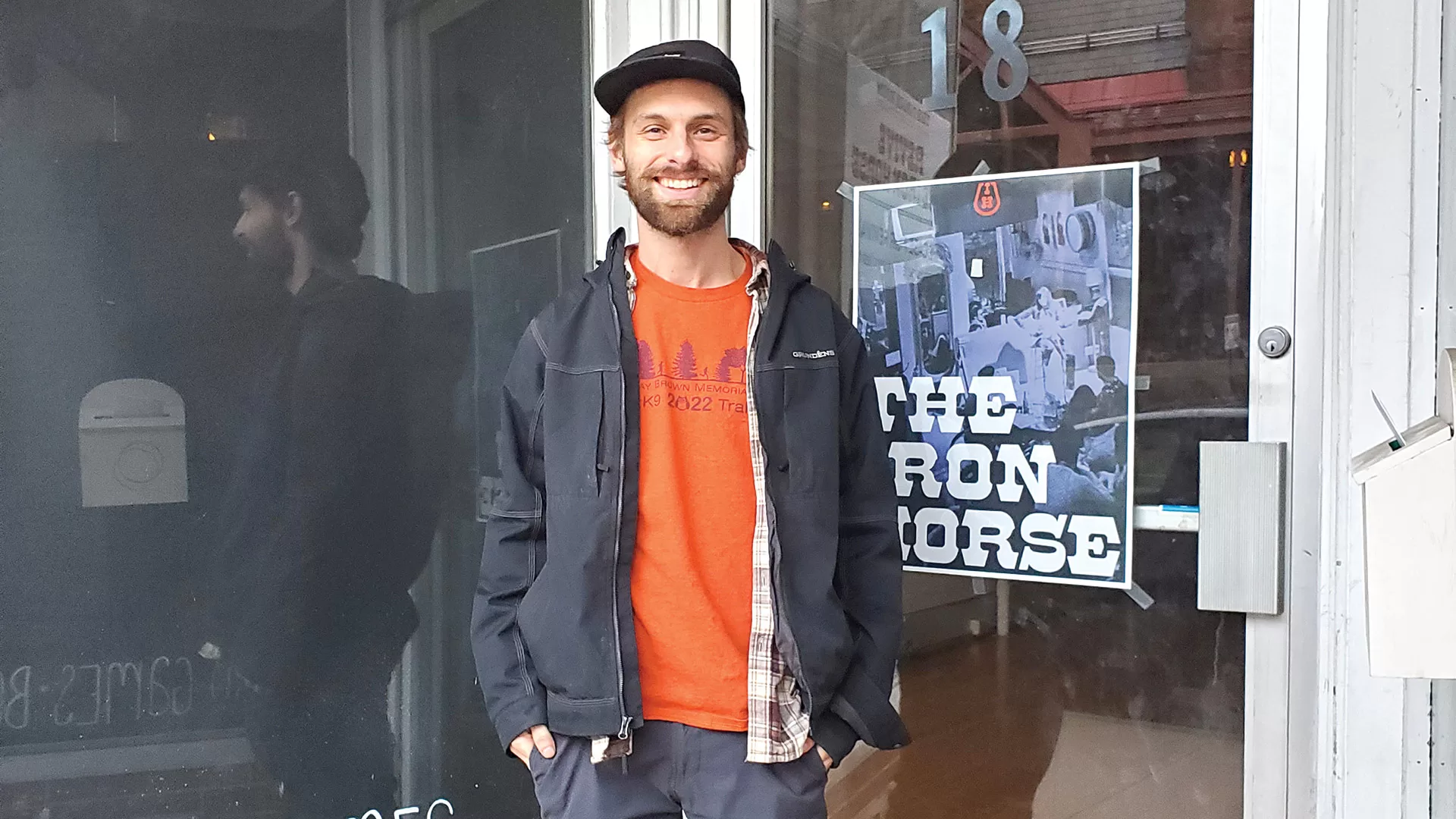
Chris Freeman, executive director of the Parlor Room Collective
Photo by Emily Thurlow

There’s a lot to love about the Iron Horse Music Hall.

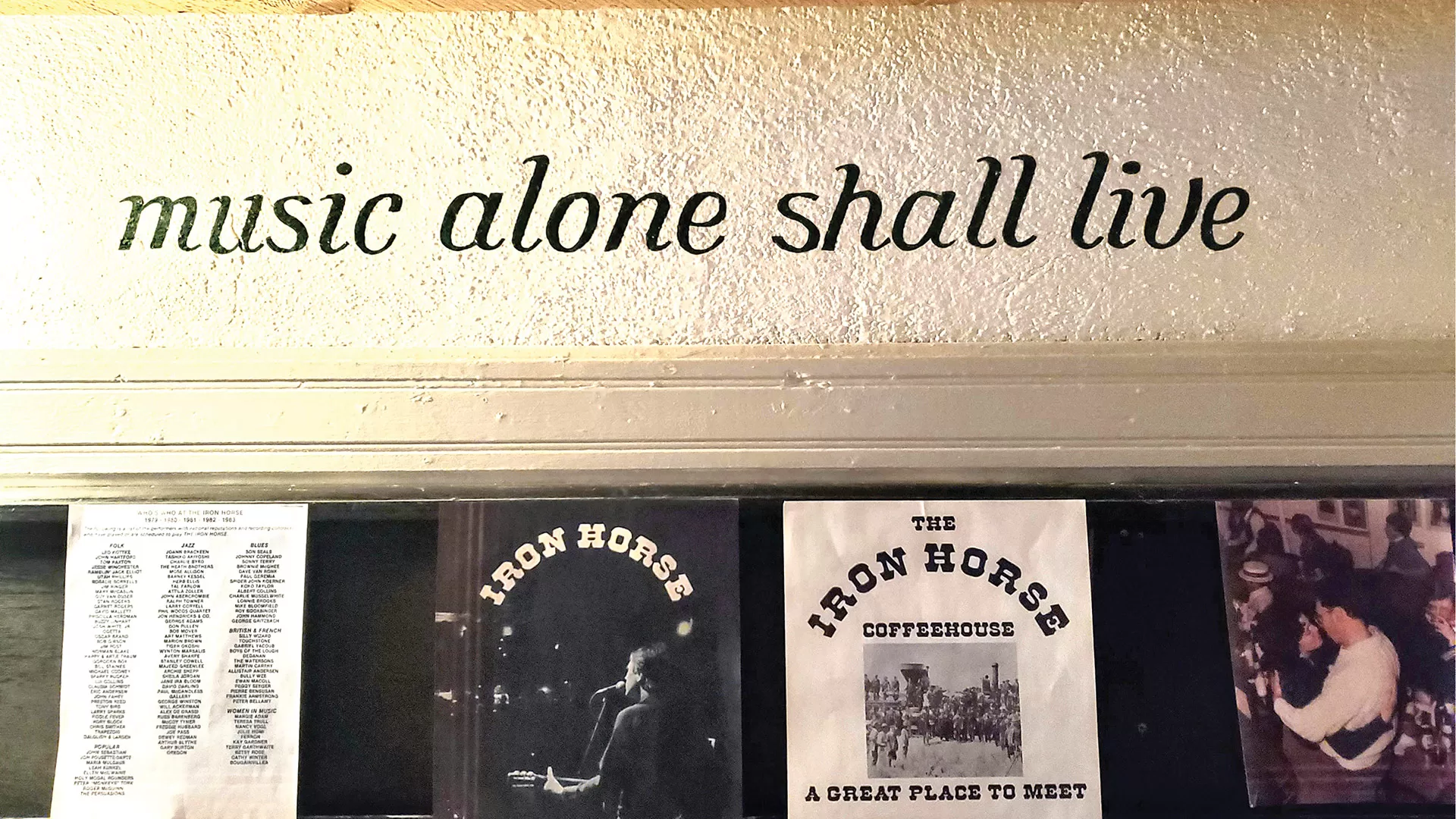
Though it’s not as apparent from the outside, with its large storefront windows covered in layers of tape holding up posters advertising myriad performers and upcoming shows, the downtown space holds countless special memories for lovers of live music in Western Mass., as reflected in its venerable slogan, “music alone shall live.”

Over the course of its more than four decades in existence, thousands of musical acts have graced the stage at the historic Northampton venue — one of a handful of hotspots, in fact, that helped define the city as an entertainment destination.

Whether leaning on the balcony railing or sitting at a table, or swaying from side to side at the edge of the stage, audiences of multiple generations have been entertained time and time again by artists like jazz musicians Freddie Hubbard and Bobby McFerrin, singer-songwriters from Brandi Carlile to Robyn Hitchcock, rockers like Graham Parker and the Smashing Pumpkins, and contemporary folk icons like Dar Williams and Dan Bern.

And while concertgoers and performers alike cherished the intimate atmosphere within the historic walls, it’s no secret that the Iron Horse also carries a less-pleasant legacy with regard to uncomfortable room temperatures, underwhelming bathrooms, and a poorly maintained green room — not to mention labor complaints and an extended closure that marred the last few years of the venue’s previous ownership by Eric Suher.

The the new owner, however — a nonprofit called the Parlor Room Collective that operates other small, local performance spaces — has plans to make those less-appealing accounts a thing of the past and reopen the Iron Horse this May.

“This is a living place. You can have people seated around the outside on the balcony or standing, and you could have college kids moshing and dancing in the pit while you have all of their parents eating a nice meal around the outside. Everyone feels safe.”

Nearly halfway to the $750,000 goal of a capital campaign launched in November, the Valley-based nonprofit continues to call on the public to invest in the Iron Horse Music Hall. The Parlor Room Collective will use that investment to expand and renovate the facility’s footprint to enhance the overall experience for patrons and improve the space for artists, which will, in turn, bring people together through music as it did not so long ago, said Chris Freeman, executive director of the Parlor Room Collective.

“Our mission at the Parlor Room Collective is to enhance the health and vitality of our community through the power of music. We have witnessed the magic of our local music scene and its ability to fuel the engine of our economy, enhance the overall well-being of our community, and contribute to our cultural vitality,” Freeman said. “And now we stand at a pivotal moment in our journey as a nonprofit arts organization. We have a unique opportunity to revive a local treasure that has resonated with music lovers for generations: the Iron Horse.”


The Good, the Bad, and the Disgusting

Many who have entered the music industry at a grassroots level have performed at one point or another at the Iron Horse, Freeman said.

Take singer-songwriter Tracy Chapman, for example. Prior to taking home numerous Grammy awards for her eponymous 1988 debut, Chapman played at the Northampton venue, long before it was the multi-level experience it is today, Freeman noted.

“From John Mayer and Wynton Marsalis to Allen Ginsberg and Beck … the amount of performers that have played here goes on forever, and in every genre,” he said.

Before earning that reputation, the 20 Center St. mainstay was known as the Iron Horse Coffeehouse. At the time of its opening in 1979, the club’s capacity was limited to 60 people. Co-founded by Jordi Herold and John Riley, the venue was named for a work of sculpture that Herold’s mother had created.

About a decade — and a few expansions — later, the club could accommodate 170 seats and had became known as the Iron Horse Music Hall. Suher, a notable Northampton developer, purchased the venue in 1995 and owned it until its sale to the Parlor Room Collective in 2023.

Though he’s spent considerable time in the space, Freeman still marvels at how the unique venue lends itself to an eclectic, multi-generational experience. “This is a living place. You can have people seated around the outside on the balcony or standing, and you could have college kids moshing and dancing in the pit while you have all of their parents eating a nice meal around the outside. Everyone feels safe.”

At the same time, the venue has presented some unpleasantness for its guests. In recent years, some artists have publicly addressed such issues. Freeman recalled attending a show for Vanessa Carlton, who talked about how cold she was during her 2017 performance at the venue.

Carlton, best known for her 2002 hit single, “A Thousand Miles,” publicly thanked an audience member who loaned her fingerless gloves via a post on Twitter, stating, “it was freezing on stage” and Suher’s Iron Horse Entertainment Group “wouldn’t turn the heat up.”

In response, Suher denied Carlton’s assertions and told the Daily Hampshire Gazette at the time that “the performer was cold on the stage. The venue temp was 70 degrees.”

Carlton further spoke of the disarray in the green room, which was also located in the basement. On Twitter, she posted a photo of furniture with ripped and torn fabric and cushions collapsing and urged owners to toss it, so that she would return to the venue again in the future.

Though the space allowed fans to get close to artists, the space wasn’t especially welcoming, Freeman noted, adding the green room was known in the area for its poor condition, and the basement was the only place on site equipped with bathrooms. “These two disgusting bathrooms are supposed to serve 250 people — including the artists. They’re so, so gross.”

“Understanding its history, I kept thinking about how it’s just such an important place for our whole community, and I thought that somebody has to reopen this place.”

As for the HVAC unit, Freeman said the Iron Horse is in need of a serious upgrade. He explained the challenges of trying to keep a packed house well-regulated, whether the meant warm enough or cool enough. “There are tons of famous artist complaints of playing in here with it being 90 degrees — and 20 degrees outside.”


Music and Memories

Freeman’s knowledge of the Iron Horse goes well beyond his time as a board member for the Parlor Room. Growing up in Farmington, Conn., he would often attend shows at the Iron Horse with his father. The Valley’s music scene was especially attractive to him and made him want to move to the area, he said.

“Northampton was kind of like a grungy, artsy, cool place where people knew about artists. People had an understanding of bands that ran a little bit deeper than whoever’s on the big country radio station or the big pop stuff,” he said. “I remember the first time I came here. I knew I wanted to be a musician, and I thought that if I could just open a show at the Iron Horse, I’ll have made it.”

By his 10th or 11th visit to the Iron Horse, Freeman did just that and performed with the Americana/folk-rock group he helped found, Parsonsfield.

His band, which was signed to the Signature Sounds record label, was among the first artists to perform at the Parlor Room, located at 32 Masonic St. — just a block away from the Iron Horse. The Parlor Room was founded by Signature Sounds Recordings in the fall of 2012 as an “artist-and-audience-friendly” listening room, performance space, and school of music, he explained.

Chris Freeman

Chris Freeman sits on the Iron Horse’s prominent stairs to the second level, where the new restrooms will be located.

Freeman spent roughly a decade touring with Parsonsfield at venues throughout the U.S. In February 2022, he transitioned into the role of executive director of the Parlor Room and played a critical role in helping the organization transition into a nonprofit music venue and school last January.

On a near-daily basis, Freeman, who is now a resident of Northampton, would find himself walking by the Iron Horse, seeing the legendary venue remain dark.

“Understanding its history, I kept thinking about how it’s just such an important place for our whole community, and I thought that somebody has to reopen this place,” he told BusinessWest. “This was a place that is the heart of the whole Western Mass. music scene. The culture and the city around it made me want to move here.”

Freeman’s understanding of the value of the property led him to reach out to Suher. This past September, the Parlor Room announced it had reached an agreement with Suher to purchase the business, which includes the venue’s liquor license.

The Parlor Room signed a 15-year lease to not only operate the business at its current space at 18 and 20 Center St., but also to expand into 22 Center St. Connecting the adjacent storefronts will allow the Iron Horse to have a dedicated bar and community space and will increase the venue’s overall square footage by 40%, he explained.

Once renovations are completed and the Iron Horse has reopened, the Parlor Room will be, as its name suggests, a collective that encompasses three projects: the Iron Horse, the Parlor Room, and the Parlor Room School of Music. The original Parlor Room venue on Masonic Street will live on as the headquarters for the School of Music and an intimate performance venue.

“My main goal is, I wanted this place to come back, and I wanted to live in a city that has music — that’s why I moved here in the first place. My secondary goal is to make the Parlor Room become just as big of a part of this community,” Freeman said. “The ability to merge these together and to make sure that this place comes back — in the right way and with the right mission and in line with the community’s goals — felt like a really important thing to do.”


What’s the Plan?

With the aim of reopening this spring, the Parlor Room has set an ambitious renovation timeline that’s already underway, while the capital campaign continues. To date, the campaign has surpassed $317,500.

Among the biggest costs will be an upgraded sprinkler system and HVAC unit, Freeman said. The first phase of renovations also encompass updates to flooring, a new sound and lighting system, and stage and bar enhancement funded in part by a $73,000 American Rescue Plan Act grant from the city of Northampton.

The nonprofit has also partnered with Dave Schrier, co-owner of Easthampton’s Daily Operation, to redesign the dining and bar experience at the Iron Horse.

Phase two of the renovations will focus on accessibility and other upgrades. Instead of the two basement bathrooms, the new space will include 10 bathrooms that will be relocated for increased accessibility. This also includes two bathrooms accessible for those who use wheelchairs, in compliance with the federal Americans with Disabilities Act. A wheelchair lift will also be installed to make the stage accessible for all.

The Parlor Room Collective will also establish a brand-new green room that includes private bathrooms with a shower. A new floor layout will allow for 300 people for standing-room-only events and variations of more than 200 people seated in new furniture.

“There is no better investment in our community — and what, historically, has seen Northampton as a community thrive, business-wise — than bringing back the Iron Horse and having this place open 250 nights a year with a bar, with the way that it impacts other restaurants and tourism in the area,” Freeman said.

To donate to the “Revive the Iron Horse” capital campaign, visit ironhorse.org.

Features Special Coverage

A New Era Dawns

Mick Corduff

Mick Corduff


Mick Corduff calls it his “research and development time.”

It comes early in the year, when things are slower in the hospitality sector. It’s a time to reflect, drill down on what happened the year before, and ramp up the planning for the year ahead.

“I look back and measure all that was good and all that wasn’t good,” he said. “Menus that worked and didn’t work, staffing and structures that worked, management positions that worked and didn’t work; we always try hard to raise the bar.”

This year, research and development time is more than a little bit different … because last year, there were a few distractions, as he put it.

Indeed, 2023 saw a long partnership — more than two decades — between Corduff and Peter Rosskothen come to an end when Rosskothen sold his shares in the company that owns the Log Cabin Banquet & Meeting House, the Delaney House restaurant and D. Hotel Suites & Spa to Corduff and his new business partner, Frank DeMarinis.

The end to the business relationship, which had been talked about for several years and then finalized over the course of 2023, came in late September, ushering a new era for a group of businesses that comprise one of the pillars of the region’s hospitality sector, and for which Rosskothen had long been the face.

“The past four months have definitely been very hectic, but I like to think that I’ve handled pressure well over the years. It’s something that a chef has to do.”

Corduff now becomes the new face, moving from what was mostly, but not entirely, back-of-the-house operations to back and front of the house, although he’s taking steps to delegate some of his many responsibilities to other managers.

For now, and for the foreseeable future, he has a lot on his plate — literally and figuratively. There are the day-to-day operations and coping with challenges ranging from the still-rising cost of food to an ongoing workforce crisis to meeting the many needs of today’s marrying couples. He’s also overseeing the return of Sunday brunch at the Delaney House, planning for the upcoming St. Patrick’s Day parade events and a ‘sister-city’ trip to Ireland later this year, and advancing some ambitious plans for the future. While doing all that, he’ll spend some time in the kitchen cooking as well.

In a candid conversation with BusinessWest about all of the above, and especially the many responsibilities he now handles, Corduff said he brings to his new and expanded role what he calls a chef’s mentality.
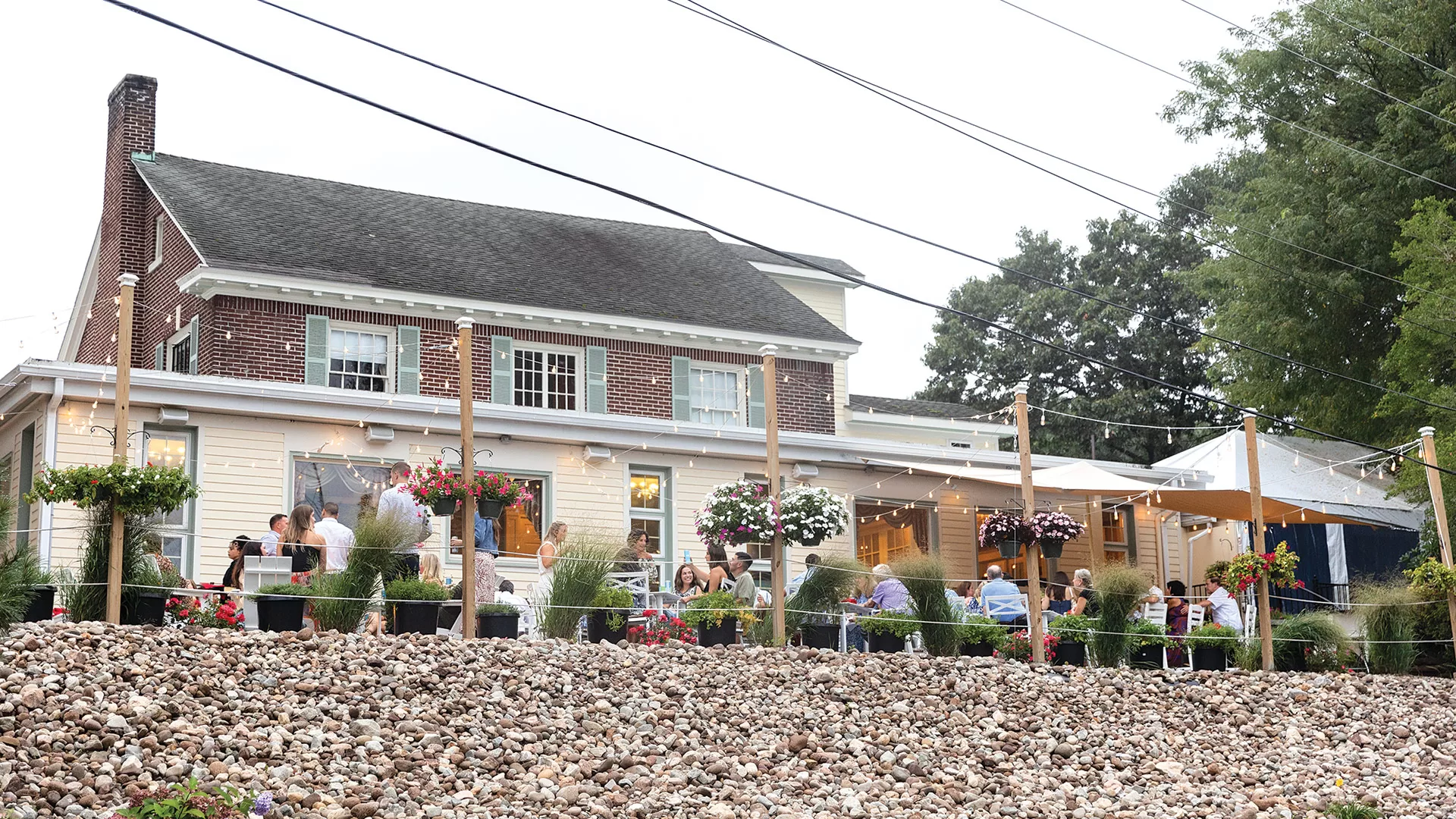
Sunday brunch at the Delaney House

The return of Sunday brunch at the Delaney House has been just one item on the plate for the new ownership team.

“The past four months have definitely been very hectic, but I like to think that I’ve handled pressure well over the years,” he noted. “It’s something that a chef has to do. What I’ve learned in my years of experience in the back of the house — and in the front of the house as well, especially over the past four or five years — is the importance of keeping a level head and just knowing that, at the end of the day, we’re dealing with people, whether it’s waitstaff or a contact for the bride and groom; they’re people, and you want to treat them with respect.

“I learned a lot from Peter over the years — we always worked in tandem,” he went on. “We always talked about the best way to handle things and put our best foot forward and maintain the integrity of the business. We always had the same message — excellence is what we’re all about, and we try to promote that across the board.”

As for those plans for the future, they are, indeed, ambitious, and include a possible new hotel and restaurant to be built on a portion of the upper parking lot at the Log Cabin.

“We’re dreamers — that’s what entrepreneurs are,” Corduff said. “And we have some dreams that we want to make reality.”


Food for Thought

As he talked with BusinessWest at 10 a.m. on a recent Tuesday morning, Corduff had his chef’s coat on, one announcing him as ‘chef owner.’

He wasn’t doing any cooking at that moment, nor was he planning to do any soon, but the chef’s coat was still the attire of choice. To paraphrase Bill Belichick, it is who he is.

“I don’t think I’ll ever the leave the kitchen — I love what I do,” he said, adding that he has a few business suits … somewhere. He had more years ago, when he served as front-of-house manager at the Log Cabin and wore one every day. But he ruined some of them of them when wandering back to the kitchen, where he feels most at home, and getting food stains on them.

“We’re known in the community as a quality product, and we aim hard to maintain that standard.”

Ever since, the chef’s coat has been the uniform, if you will, and Corduff wears it everywhere and for everything, from planning for the Big E (the group has a huge presence there) to meeting with the media, an assignment that mostly fell to Rosskothen years ago, although Corduff did it, too; from reviewing accounts payable to doing long-range planning.

These are now mostly, if not entrely, Corduff’s purview, and it’s a change, that, as noted, has been years in the making.

That’s how long the two partners talked about Rosskothen moving on and focusing his time and energies on one of their latest entrepreneurial ventures — Delaney’s Market, which now has four locations across the region — with Corduff taking the lead at three Holyoke establishments: the Log Cabin as well as the Delaney House restaurant and the adjoining D. Hotel Suites & Spa.

The main ballroom at the Log Cabin

The main ballroom at the Log Cabin, one of several properties in the group now owned and managed by Mick Corduff and Frank DeMarinis.

He’s doing so with new partner DeMarinis, president of Sage Engineering and Contracting Inc. in Westfield and a local developer, builder, owner, and manager of more than 25 commercial real-estate properties in Massachusetts and Connecticut. He is also the founder and owner of Roots Sports complexes in Westfield and East Longmeadow, as well as Roots Learning Center in East Longmeadow.

For Corduff, this is the intriguing next chapter in a story that began when he came to this country from Ireland in 1989, working first as a banquet chef at the Marriott in Springfield and later as a member of its quality-management team.

Eventually, he started doing some catering on his own and began looking at getting into business for himelf. While pursuing those dreams, he also interviewed to be head chef at Twin Hills Country Club. The interview was with Larry Perrault, who was at that time finalizing plans to join Rosskothen in a venture to reimagine the old Log Cabin restaurant property, in the shadow of Mount Tom, into a banquet facility.

They went to lunch at Friendly’s, where the discussion wasn’t about Twin Hills, but about the Log Cabin.

“I met Larry, I met Peter, we walked around the old Log Cabin, whipped out the drawings, and started our dream,” he said. “The rest is history.”

More than a quarter-century of colorful history, in fact, involving change, evolution, expansion (the Delaney House, then the the hotel, then Delaney’s Market), innovation, and overcoming challenges that ranged from the Great Recession to the pandemic. Over the course of that time, Corduff moved from chef to partner when the relationship with Perrault dissolved — a partnership that lasted 20 years.

The buyout came in late September, one of the busiest times for this group of businesses, leaving Corduff “without much time to stop and think,” he said — something he’s able to do now. Early on, he’s spent considerable time and energy reassuring the large staff that the business is stable and ready to maintain its standing as a market leader.

“A lot of what I do now, mapping out the year and planning out the seasons that are coming, is making sure that we have the right people in the right places, making sure everyone’s ready to do whatever it takes and trained in the art of war and the art of optimization.”

Moving forward, in the role of chief operator and executive chef, he will work in partnership with DeMarinis, who will focus on the construction and infrastructure sides of the equation, while Corduff will be handling day-to-day operations.

While doing so, his primary mission is to maintain the group’s reputation for quality — at all levels of its operation, from weddings, which are perhaps its hallmark, to a Friday-night dinner at the Delaney House, to a weekend stay at the hotel, now managed by Corduff’s wife, Dana.

“We’re known in the community as a quality product, and we aim hard to maintain that standard,” he said. “We have to adapt because the business is constantly changing and evolving.”


More Growth on the Menu

Looking back on the past 25 years or so, Corduff said that, for much of that time, he was back-of-the-house and more behind the scenes than the colorful, always-quotable Rosskothen. But later on, he started becoming more visible, and people could put a face with a name.

Or a voice with a name.

Indeed, Corduff was prominent in radio spots for the Log Cabin and Delaney House, specifically their steaks, made famous by the word ‘marbling,’ which Corduff would pronounce slowly for added effect. Later, he became more known through the opening of the Mick, a tavern of sorts within the Delaney House providing casual dining and live music.

With the change in ownership consumated last fall, he now assumes more responsibilities, especially in the big-picture planning for the future.

“My managers know that I will run into the hottest fire,” he told BusinessWest. “So whoever needs me, I’m there. And a lot of what I do now, mapping out the year and planning out the seasons that are coming, is making sure that we have the right people in the right places, making sure everyone’s ready to do whatever it takes and trained in the art of war and the art of optimization.

“In the catering world, you can be doing a wedding in a tent under a tree out in the woods, no power, no water, so we have to plan it all out,” he went on, using that example as metaphor for business in general and the need to be ready for anything.

And, as noted earlier, the two partners are entrepreneurial, intent on expanding this business group and making more changes.

One ongoing project is to essentially separate the front (lower) parking lot at the Log Cabin from the rest of the property, with the intention of it becoming home to a Dunkin’ Donuts and the fifth Delaney’s Market, an operation that will be Rosskothen’s domain as part of the buyout agreement.

The larger and more ambitious plan, however, calls for redevelopent of the upper parking lot.

“The vision is to build a hotel in the upper lot,” Corduff said, adding that DeMarinis, the engineer, is developing plans to move dirt and create more space to park cars in that area while also identifying a footprint for a hotel and acompanying restaurant. The hotel would be a smaller, boutique facility, similar to the D. Hotel at the Delaney House, with maybe 60 to 80 rooms.

“We really want to bring to it some of the Log Cabin character, some of the New England character, with some of our own touches,” he said, adding that a rooftop restaurant, one with dramatic views down the mountain, is also within the plan, one that will likely take shape over the next three to four years.

As he talked with BusinessWest, Corduff recalled what he called a “sendoff” for Rosskothen the night before at the the Mick. It was an occasion to mark the end of an era, the end of a business relationship, and the start of the next chapter.

“It was a kind of a thank you and sendoff, and it was cool to see,” he said. “We had some staff that don’t work here anymore that came to say ‘hi’ and ‘bye.’ There was a lot of gratitude in the room last night; there’s been a lot of years of hard work together.”

And many more to come, Corduff added, noting that, with the passage of one era, another has begun. And as it does, he will certainly fall back on that chef’s mentality (not to mention the chef’s coat) he mentioned earlier.

And that means keeping a level head and always treating people with respect.

 

Healthcare News Special Coverage

One Workout at a Time

By Emily Thurlow

Steve Conca

Steve Conca, owner of Conca Sport and Fitness

Between platefuls of coma-inducing turkey, complete with all the fixings, and palatable pies and pastries, it’s safe to say that many people are happy to see the hearty overindulgences of the 2023 holiday season firmly in the rear-view mirror.

For many, the start of the new year provides an opportunity to start out on the right foot, by developing better habits and establishing goals. Through myriad resolutions, one theme that tends to stand out year after year is health.

Notably, an October 2023 survey from Forbes Health/OnePoll revealed that 48% of U.S. adults say improving fitness is a top priority for them in 2024. Google Trends also released data showing that some of the top health-related searches in January include meal preparation, healthy meal ideas, and gym memberships.

And while some say they resolve to lose weight or improve their health in January, it often takes another month before they will deliver, said Danny Deane, who owns two local F45 Training franchises with his wife, Jessye.

“February is the number-one month in the fitness industry, with September being second,” he said. “In January, everybody starts to think about it, and then, by the time February rolls around, they’re really making good on their promise.”

Whether it’s during the winter doldrums or as the leaves begin to turn in the fall, local fitness studios and gyms continue to see positive gains in this post-pandemic climate — in both their business and their clients.

“I think people are realizing that putting an investment into themselves pays big dividends.”

“I think people are realizing that putting an investment into themselves pays big dividends,” said Steve Conca, owner of Conca Sport and Fitness in West Springfield.

During the pandemic, gyms and fitness centers were severely challenged by shutdowns and limitations on the amount of people in a space at any given time. For some, the impact was minimal. For others, it’s been rather extreme.

F45 Training

One key to success at gyms like F45 Training is accountability with a workout partner.

In fact, 25% of fitness studios and gyms have closed permanently since the onset of COVID-19, according the National Health & Fitness Alliance, an industry group.

However, Jon Davis, owner and performance director of Powerhouse Training in East Longmeadow, said business is “as good as it ever has been.”

Powerhouse Training, which Davis founded in 2010, offers sports-specific lessons for baseball and softball athletes as well as general performance training in speed, agility, strength, and mobility. The majority of his clientele includes athletes between age 8 and pro-rank levels.

Because Powerhouse Training provides more of a specialized kind of exercise regimen, Davis said he didn’t see the decline in attendance that many commercial gyms did. He said he’s also found that parents are valuing their children’s access to being physically active.

“I think a lot of parents realize the importance of having their kids get outside and socialize and stay active, for not only their physical health, but also their mental health,” he told BusinessWest. “Since we provide more of a specialized training, the kids really can’t train on their own, and they need assistance as well as special equipment, and they need a lot more space. So I think we were a necessity for them, which has certainly helped out.”

The group training, which involves youth athletes coming in two to three times a week, costs between $145 and $195 per month. Prices range between $50 and $90 for baseball lessons and $50 and $75 for fitness training.


Investing in Health

For the most part, Conca’s entire membership stuck with his gym. He expressed gratitude for the tight-knit community, or “family,” that is Conca Sport and Fitness, which first opened in 2009.

For months, all the personal training and small-group training was done outside. Unlike more recent weather patterns, the forecast remained relatively sunny, with little precipitation. And once the clouds of the pandemic restrictions cleared, he actually saw a slight resurgence.

“People are always going to want the newest, latest, and greatest thing — and, certainly, some of those innovations are really helpful — but honestly, I think learning good form and focusing on staying balanced, working mobility, and strength training will never get old.”

“I think it’s opened people’s eyes to realize, ‘I really wasn’t taking great care of myself,’ so it’s led them to want to invest in themselves,” he said. “Here, we call investing in yourself a health savings account. The more you can put in now, the more you can reap the benefits.”

In addition to personal training and group training, Conca Sport and Fitness also offers health nutrition and wellness coaching. Memberships range between $209 to $349 a month, with individual sessions ranging between $20 to $37.

“When people come here, they aren’t just going to bang out a few workouts, high-five, fist-bump, and ‘see ya later,’” he said. “It’s a whole process that includes teaching people how to take better care of themselves as they age.”

As for the Deanes, the couple, who opened their first gym, F45 Training Hampshire Meadows in Hadley in 2018, decided to open a second location in West Springfield in 2020.

“A lot of doors closed throughout the last couple years in the fitness world, but we are lucky enough to be on the other side of it and are actually above pre-COVID numbers at Hampshire Meadows,” Danny said. “We made it through.”

The 45 in F45 stands for 45 minutes of functional fitness, with sessions led by two personal trainers in a motivating team environment, said Jessye Deane, who is also executive director of the Franklin County Chamber of Commerce and Regional Tourism Council.

F45 Training does not employ heavy equipment or machinery

F45 Training does not employ heavy equipment or machinery, but it does include the use of kettlebells, free weights, and body-weight-based movements.

“The goal is really functional fitness. It’s scalable and adaptable, so it fits every fitness level,” she said. “A lot of times, what we hear is that folks go to the gym and want to get healthier, want to be able to move better, and want to be able to feel better, but they don’t quite know how to work the machines or they don’t know what they’re doing, and they get hurt, or they get frustrated. And this is kind of the answer to that. All you have to do is walk through the door, and we will take it from there.”

Every day, the gym features a different workout. F45 Training does not incorporate heavy equipment or machinery, but it does include the use of kettlebells, free weights, and body-weight-based movements.

The workouts for the Australian-based franchise combine elements of high-intensity interval training, circuit training, and functional training. The West Springfield location also currently offers a free seven-day trial, and the Hadley location is offering a seven days for $7 offer.

Trends come and go, but according to the area gym owners BusinessWest spoke with, having a healthier lifestyle comes down to the basics.

“People are always going to want the newest, latest, and greatest thing — and, certainly, some of those innovations are really helpful — but honestly, I think learning good form and focusing on staying balanced, working mobility, and strength training will never get old,” Davis said. “I think those tend to produce the best results.”

Conca agreed, noting that, as people age, he explained, they lose strength, muscle mass and function.

“Father time just begins chipping away,” Conca said. “That’s why maintaining muscle mass and strength levels — the fundamentals — is super important. I’d argue that it’s more important than so-called cardio, because you can get a good cardiovascular response with some very good strength training.”

According to the National Institutes of Health, muscle mass decreases approximately 3% to 8% per decade after age 30. After age 60, the rate of decline is even higher.

While F45 workouts have the adaptability to pull in emerging trends, Jessye Deane emphasized that trends are not the mainstay of the gym.

“We want you to feel great now, and we want you to feel great in 20 years — that’s our motivator,” she said. “The focus of our programming is to make sure that we’re providing people the safest, most effective functional fitness workout they can have.”

One way F45 workouts tap into recent trends is through supersets, she added. A superset includes performing a set of two different exercises back to back with little to no rest in between. One example of this would be doing a set of 10 push-ups, followed immediately by pull-ups.


Sticking with It

Finding motivation to stick with any new habit can be difficult, of course. It can potentially be even harder when the only opportunity to dedicate time to fitness is before the sun rises or well after it sinks below the horizon. That time crunch, combined with inclement winter weather, can make someone want to shed their new goal before they even begin.

One way Conca and the Deanes have seen clients stick with their fitness routines is by not doing it alone.

“Accountability is key. Having a group of people that you’re excited to see every day helps,” Jessye Deane said, adding that her husband is her workout partner. “Danny is my accountability partner. He wakes me up every morning whether I want to or not.”

At Powerhouse, Davis coaches each athlete differently based on their personality. Some kids may require more positive affirmation to help build their confidence, while others require him to be blunt and upfront and tell them directly what they’re doing incorrectly.

“It’s getting to know these athletes — getting to know what they like, what they don’t like, what motivates them, and then trying to find out what makes them tick and make sure that, when it’s time to push, we know what button to push,” he explained.

Throughout his tenure, Davis has produced more than 100 All-Western Mass. high-school all-stars, 13 All-Americans at the high-school and collegiate levels, and three Western Mass. Players of the Year in football, baseball, and girls lacrosse. He’s also helped produce 10 Major League Baseball draft picks out of the high-school ranks, including Isan Díaz and Seamus Curran.

At Conca’s gym, motivational phrases festoon the walls, including quotes from famous folks ranging from Wayne Gretzky to Amelia Earhart. The gym also features a so-called ‘strong wall’ that includes one-word motivational phrases that clients create to help drive their personal success. At the time of this interview, Conca was still tinkering with the specifics of the acronym LIFT, with the goal of lifting others up.

For those looking to dip their toe into the fitness and exercise pool, Jessye Deane said anytime is a good time to start.

“There is nothing more important than your health,” she told BusinessWest. “Whether you’re working out at an F45 or you’re doing yoga or you’re visiting any of the wonderful studios in the Valley, we really want people just to feel better and be healthier.”


Insurance Special Coverage

Driving Up the Cost


Wondering why auto insurance is much more expensive now than it was a couple of years ago? You’re not alone.

There are a number of reasons why, but Joe Phillips starts with an unprecedented series of changes in driver behavior brought on by COVID-19.

“Companies started adopting safe-driver points and rebate offers, and when 2020 hit, everyone stopped driving, they stayed home, nobody was going to school, the roads were empty, and people got a lot of money back because accidents were way down,” said Phillips, president of Phillips Insurance Agency in Chicopee.

“That situation, with less activity, went on for more than two years: a reduction in driving, reduction in accidents, lower repair costs,” he went on. “But in late ’22, 2023, more people were back to work, everyone was back to school, distracted driving is on the rise, and claims have gone through the roof.”

John Dowd, president and CEO of the Dowd Agencies in Holyoke, said an increase in accidents after the pandemic caught insurance companies “flat-footed.”

“Insurance companies set their rates in advance for the year; they have to file with the state. So by the time claims started coming in and hitting their books, they could see that they were underwater in terms of seeing a profit.”

“Insurance companies set their rates in advance for the year; they have to file with the state,” he explained. “So by the time claims started coming in and hitting their books, they could see that they were underwater in terms of seeing a profit. So they’ve reacted to that, and this past year, the rates went up significantly.”

“So they’ve reacted to that, and this past year, the rates went up significantly — and in this current year, it’s still going on,” he continued. “It’s a challenge for brokers like ourselves; we’re getting quotes from different companies to try to mitigate some of these increases, but we’re finding they’re all pretty much raising the rates. It’s not isolated.”

Dowd explained a concept well-known in the insurance world, but perhaps not to many customers: the loss ratio. The break-even figure is 100%, meaning that, for every dollar a carrier collects in premiums, it’s paying that much back in claims and administrative costs.

“So, obviously they want to be at least a few points under that to be able to make a profit,” he said. “On the automotive line alone, we’re seeing loss ratios of 110%, 115%. When that happens, they have no choice but to raise their rates because these losses eat into their profits and cause all kinds of problems for companies.”

Why they got caught flat-footed is a story with several different factors, which Dowd and Phillips shared with BusinessWest for this issue’s focus on insurance.


Parts of the Problem

Among the ways the pandemic has continued to affect the insurance world are two terms everyone is weary of by now: inflation and supply chain.

“When you’ve got a damaged car and you have supply-chain problems because of COVID, you can’t get parts, and then you had a stimulus from the federal government that just caused inflation. So now you can’t get a part, and they’re more expensive, so these claims have gone through the roof,” Phillips said, citing electric vehicles in particular. He noted that the average cost to repair the bumper of a Rivian electric truck after a collision is $4,200, and the Tesla is the most expensive car to insure in the U.S.

Joe Phillips

“When you’ve got a damaged car and you have supply-chain problems because of COVID, you can’t get parts, and then you had a stimulus from the federal government that just caused inflation.”

Dowd agreed. “All the technology is more expensive. What used to be a $1,500 bumper repair is now $2,500, and that’s because of the sensors. It looks like there’s not much damage, but when you have to replace all the sensors, all of a sudden, you’re asking, ‘how did this bill escalate to this level? It didn’t look like that much damage to me.’ But it was in a bad spot where you had to replace the sensors.”

Beyond the availability and complexity of parts is the sophistication of technicians themselves, who understand the electronics in today’s high-tech cars, Dowd added. “With a lot of technologies built in, the technicians that do these repairs have to be trained properly, and there’s a shortage of them. So it’s the cost of products and labor, it’s the availability, the supply chain, qualified technicians … they’re sort of coming together at once.”

And it’s no myth that accidents are up, Phillips added. “The distracted driving is huge. Not to sound like the old guy, but these kids can’t put their phones down. When you get to a stop sign, you see these young people getting on their phone for 15 seconds, and you have to beep at them. And then the reaction … oh boy.”

Severe weather events in recent years have also played a part in rising insurance rates for every type of coverage, from home and auto to commercial, he noted.

“It’s a real confluence of things coming together to create almost a perfect storm,” Dowd added. On one hand, everyone knows about inflation and what that’s done to prices, whether at the grocery store, the gas pump, anywhere. The cost of parts to repair cars, the cost of materials to repair homes, everything has gone up, and it’s gone up in rather a dramatic fashion over the last 12 to 18 months.”

He noted that inflation has begun to wane, “but there still supply-chain challenges, and that creates delays getting parts, which creates delays in getting the car back, which means you’ve got to rent a car … these are all ripple effects of what’s going on.”

And it’s caused concern in the insurance industry, Phillips said, as evidenced by recent waves of layoffs at national carriers like GEICO and Liberty Mutual. “They’re not making the money they once did because of increased claims.”

Meanwhile, Dowd said, the retail market — which is the realm in which he and other local agencies deal with clients — is being pressured by the reinsurance market, which, as the name suggests, is populated by companies that reinsure much of the risk from retail carriers, which pay a premium to the reinsurer to limit their exposure to catastrophic loss.

“The reinsurance market has been tested financially in the last couple of years, like they haven’t been in a long time,” he explained. “Judgments are higher, the juries are awarding higher payouts to injured people, and it’s starting to get into the reinsurance layer, so the reinsurers have raised their rates; they charge their retail carriers higher premiums, and the retail carriers pass along some of these increases to their customers. For us, that’s another factor.”

With weather events alone contributing to $95 billion in insurance claims last year, much paid out by reinsurers, Dowd said, “they’re scrambling to make their profit.”


Risk and Reward

In short, there’s a lot going on, and it’s not a Massachusetts problem, Dowd said. “It’s a nationwide issue, and as brokers, we’re the ones that have to deliver the bad news. We certainly understand the level of concern the customers have, and we don’t want to deliver that news any more than they want to hear it.

John Dowd

John Dowd

“The reinsurers have raised their rates; they charge their retail carriers higher premiums, and the retail carriers pass along some of these increases to their customers.”

“We’re doing the best to find alternatives for them to keep increases to a minimum; sometimes we can, but sometimes we can’t,” he went on. “Every change you make to a policy to try to reduce cost, whether a huge deductible or less coverage, it’s all a gamble. It’s like going to the casino. When you take on a higher deductible or reduced coverage, you’re betting on not having a claim. And that can work for you, but it can work against you.”

Phillips agreed. “Everyone wants the lowest cost until they have a claim. When people come in for a quote, they say, ‘I don’t need that, I don’t need this.’ And when they have a claim, they say, ‘oh, I definitely would have taken that.’ Well, it would have only cost $32 a year.

“We never sell the lowest limits,” he went on, but sometimes clients will insist on saving a couple hundred dollars to raise a $500 deductible into the four-figure range. “People think they can tolerate a $2,000 collision deductible until they have the accident.”

Those who want to keep their costs down should not only shop prices, Phillips added, but be aware of their credit score and their driving record — “even a failure to stop or a speeding ticket can add hundreds of dollars of premium” — but also be aware of the type and make of the vehicle they buy, which greatly impacts coverage, based on average theft rate and repair costs.

Dowd said certain people, who have a long track record of safe driving, may be fine taking a higher deductible.

“There’s obviously no guarantee. And if you take the savings and take a little more risk, you still need the catastrophic protection in case something serious happens,” he stressed. “You don’t want to cut into the muscle of the coverage where the catastrophic protection isn’t there, which can really hurt people financially.”

After all, insurance is all about protecting against the most severe losses — even if purchasing it makes a bigger dent than it used to.

Architecture Special Coverage

Professional Development — by Design

Clockwise from top: CFO Tina Gloster and Principals Kevin Riordon, Lee Morrissette, and Jason Newman

Clockwise from top: CFO Tina Gloster and Principals Kevin Riordon, Lee Morrissette, and Jason Newman (Photo by Paul Schnaittacher)

To explain what it means to be named an Emerging Professional Friendly Firm, Jason Newman offered some background on what it’s like to be an aspiring architect.
‘Aspiring,’ because simply earning a degree and going to work at an architecture firm doesn’t make one an architect; other requirements are experience — a certain number of hours worked in the field — and a series of examinations.

“Part of the experience piece is the hours worked in this office, and those hours are not just a lump-sum number of hours worked — it’s a number of hours worked in specific categories of the profession, like drawings, construction administration, and practice management,” said Newman, a principal at Dietz & Company Architects in Springfield.

“One of the things we pay attention to, very thoughtfully for every employee, is that, if you’ve got all your drawing hours satisfied, we’re not going to make you do drawing for another two years,” he went on. “That’s not going to move you forward to your license. So you won’t come to the end of the road here at Dietz and feel, ‘I’m just getting drawing. I have to go somewhere else where I can get construction-management experience.’

“If you’ve got all your drawing hours satisfied, we’re not going to make you do drawing for another two years. That’s not going to move you forward to your license.”

“This is not Boston, where 100 qualified architect candidates are at our door. We have to take care of the people here because we want them to stay,” he went on. “We want to make sure that they feel growth opportunities are here.”

That’s precisely the philosophy behind the Emerging Professional Friendly Firm program overseen by the New England components of the American Institute of Architects (AIA). A handful of firms in each New England state are so recognized each year — Dietz among them for several years running — for promoting the advancement of young team members through professional development and personal growth opportunities.

“A few years back, AIA New England came out with programs to encourage companies to adopt policies and procedures and training and internal education programs that would further develop the younger generation of architects fresh out of school, to take them in and help them grow professionally toward architecture licensure, which is what everyone refers to as the ‘stamp.’ That’s when you officially call yourself an architect,” Newman explained.

“This is a program to encourage firms to get away from the old methods of pigeonholing, where, in many cases, your first experience on an architecture job was drawing bathrooms for three years, being tucked into one thing because you’re brand new,” he went on. “The goal of this program was to incentivize firms to be more supportive, to promote emerging professional development.”

Lee Morrissette, another principal, spent more than a decade in Boston before coming to Dietz, and said he has always appreciated its emphasis on mentorship, continuing education, and lifelong investigation of the profession. “It’s a much more transparent firm, in the way the business goes on, than anywhere I’ve been.”

Jason Newman

Jason Newman

“A lot of the junior staff see when we get praise for our designs — or criticized for our designs. It gives them a fuller perspective on what’s happening beyond the drawings.”

It certainly made an impression on Newman, who came to Dietz as a student intern 13 years ago and “never found a reason to leave,” as he put it. “So I’m an example of someone to wants to stay with this firm because they feel this is a good, long-term place for them.”

 

Drawing Up a Strategy

According to AIA New England, the Emerging Professional Friendly Firm program “has an ability to attract and retain employees by sending a message to current employees, future employees, and other regional firms that the firm has evaluated their policies from an emerging professional lens, the firm recognizes emerging professionals at their firm, and the firm values emerging professionals’ development to sustain the future growth of their practice.”

That resonates with Newman, who noted that the aim is for young professionals to think, “that’s a great place for me to be. That’s a great place for me to grow. I know, when I go to other firms, my development will be of value not only to me, but to the company and the people I’m working with.”

To earn that designation year after year has involved a series of proactive steps, Morrissette said, including that emphasis on diverse experiences that move staff toward licensure more quickly.

“Many larger firms get a bad reputation for being the kind of firm where you get stuck in a position, doing that function for a long time, falling between the cracks,” he noted. “We call ourselves a mid-sized firm — at 25 people, we’re the largest in Western Mass., but still a mid-sized firm for the country — so we get a lot of face time with the staff. It’s hard for someone to fall through the cracks here.”

In addition, Newman said, “we make sure entry-level people are getting the whole experience. We include the whole team in project meetings. I’ve been in the industry 13 years, and back then, the architect and the project manager went to the meeting, and they came back and told you what happened.”

Lee Morrissette

Lee Morrissette

“Over the past two years, we’ve spent more time doing creative designs. That’s what makes us happy as professionals — being able to stretch our creative muscles and push ourselves.”

But the rise of remote meetings made it more common to include everyone, and now it’s simply firm policy at Dietz.

“A lot of the junior staff see when we get praise for our designs — or criticized for our designs. It gives them a fuller perspective on what’s happening beyond the drawings,” Newman explained. “Twenty to 30% of what we do as architects is management of expectations, helping people pull their own creativity into the designs, helping them express ideas that they don’t know quite how to express. Well, this gives the junior staff exposure to that earlier than what they have been given traditionally.”

All staff members are also given a stipend each year, called an educational allowance, which can be used for anything they feel will better their professional development.

“Architecture is a mixture of art and science, and we want to create buildings that are beautiful and people want to look at, but also stand up and are good, strong structures,” Newman noted. “So we allow a very broad interpretation of what is an activity or class or training someone might feel would better their professional growth. It might be as simple as a painting class, targeting the artistic side, or a business of architecture class, or project management class, or they might want to buy books because they’re studying for an exam. People use it in very creative and interesting ways.”

Morrissette and Newman also value the culture of mentorship they’ve seen — and helped cultivate — at Dietz & Company.

“We both love teaching. We both participated in university reviews of student works in a volunteer way,” Morrissette said, adding that he has taught at Wentworth Institute of Technology in Boston as adjunct faculty. “I loved being involved. But we’ve found, with this focus on teaching and mentoring in the office, we can do that teaching here. For me, it satisfies the reward I get from teaching and mentoring professional staff, and I get to do it as part of my job.”


Something to Build On

That job has expanded since Newman, Morrissette, Principal Kevin Riordon, and Chief Financial Officer Tina Gloster began easing into leadership roles last year as part of the firm’s transition from a single owner — President and Trustee Kerry Dietz — to one with an employee stock-ownership plan, or ESOP. Meanwhile, the firm has continued to expand its footprint, including more work outside the 413.

“It’s been a really great year. We’ve had a tremendous amount of work,” Newman said, adding that, while not every project is exciting from a creative perspective, he’s gratified to work on anything that benefits a community or a client. But some of this past year’s work has, indeed, been on the “cool” side. “We’ve shown we can get in with the Boston guys and compete. It’s really encouraging. It shows our model is working and we’re getting better and better every day.”

Morrissette agreed. “As an architecture firm, we’re always looking for more work. You want to do everything; the company wants to pay the bills. But over the past two years, we’ve spent more time doing creative designs. That’s what makes us happy as professionals — being able to stretch our creative muscles and push ourselves.

“You know, we feel creative success at the end of a project that no one knows about for a year or two until it’s built. Then they say, ‘that’s a great project.’ We have projects we’re proud of, and we can’t wait for the public to see them.”