Home Archive by category Sections (Page 64)

Sections

Autos Sections

Groundbreaking Event

As they took to the podium placed near the front door of the hotel known long ago as the Schine Inn (it’s had many names since), several politicians reflected on the important place the site has had in Chicopee’s history, especially its political and business history. And they noted that this legacy will certainly continue as the site is prepared for its new life — as home to a Mercedes dealership to be operated by Springfield Automotive Partners. Ground was broken for the ambitious, $12 million project on Sept. 21. The dealership, highly visible from the exit 6 tollbooth of the Mass Pike just a few hundred yards away, is due to open in just under a year, said Peter Wirth, managing partner of Springfield Automotive partners, who is undertaking the project with his wife, Michelle, and partners Rich and Amy Hess.

An architect’s rendering of the 37,000-square-foot Mercedes dealership

An architect’s rendering of the 37,000-square-foot Mercedes dealership

A large group of officials take up shovels for the groundbreaking

A large group of officials take up shovels for the groundbreaking

Managing Partner Peter Wirth

Managing Partner Peter Wirth addresses the large gathering for the ceremonies

Community Spotlight Features

Community Spotlight


Kate Phelon and Joe Mitchell

Kate Phelon and Joe Mitchell say the new Pioneer Valley Transportation Authority Intermodal Center will add to the revitalization of downtown and the Gaslight District when it opens next March.

Joe Mitchell says critical components of the Elm Street Urban Renewal Plan that was approved in 2013 by the state and Westfield City Council are finally coming to fruition.

“The plan is something that had been considered in one form or another for the past 20 years, but we’re finally making tangible and visible progress,” said the city’s advancement officer.

The plan is focused on revitalizing 4.88 acres in a two-block area in the heart of downtown Westfield that runs along both sides of Elm Street, which is the main commercial thoroughfare. There has also been a major effort made to revitalize the Gaslight District adjacent to it.

The efforts are critical because neglect and disinvestment has plagued the downtown area since 1986 when a fire destroyed the J.J. Newberry Department Store on the west side of Elm Street. Over the years, there were several attempts to redevelop the parcel and adjacent sites, but they failed, and additional buildings were vacated or torn down.

But the scene is changing rapidly. The city has spent $6 million over three construction seasons on infrastructure improvements to make the area attractive to shoppers and people dealing with area businesses.

In addition, the City Council recently allocated $509,000 to Westfield Redevelopment Authority to purchase four parcels that adjoin the new Pioneer Valley Transportation Authority’s Intermodal Center in the Gaslight District. The funds will also pay to demolish an old bowling alley on one of the sites, as well as legal fees associated with the purchases.

When that is done, a request for proposals will be issued for the construction of a four- to six-story, multi-use building on Elm Street. The first floor of the building will have space for retail establishments and a restaurant, while the upper floors will contain office space and market-rate housing. The final phase of the project will involve construction of a smart parking lot near the building, which is part of the Urban Renewal Plan.

The Gaslight District has also undergone dramatic change, and Kate Phelon, executive director of the Greater Westfield Chamber of Commerce, took BusinessWest on a tour of the district, where she pointed out new pillars with the words ‘Gaslight District’ engraved on them, new sidewalks, lighting, signage, reconfigured parking lots that contain islands with trees and brightly colored plantings, and pocket parks with fountains, large concrete planters, and other streetscape enhancements that are expected to be finished before winter hits.

Mitchell said business owners are taking more interest in their properties as a result of the enhanced infrastructure. “In the past, they didn’t have any incentive to make improvements because the area was blighted, but the Urban Renewal Plan is expected to increase property values and encourage investment.”

Construction on the new, $6.6 million PVTA Intermodal Center is also underway, and when it opens next March, it is expected to increase the use of public transportation and spawn related economic development. The state-of-the-art center will include parking space for four buses with bicycle racks, as well as a bicycle-repair station, which are important because the Columbia Greenway Rail Trail is only a block away.

Phase I of the rail trail has been completed, and Phase II will be finished next June, but at this point, bicyclists can access the trail from Main Street and ride all the way to New Haven, Conn.

However, it’s a complex project because the elevated, 3.5-mile trail will cross seven bridges when it is finished.

“But the economic impact will be significant; we expect tens of thousands of travelers to use it, including cyclists on multi-day trips and organizations that plan bicycling vacations,” Phelon said. “Retail stores and eateries will benefit, and the area will become a perfect spot for bed-and-breakfast operations.”

She added that the city has joined forces with Don Podalski of Horizon Sports to get funding for bicycle racks in the shape of black squirrels installed throughout the area. (Westfield is known for its large population of the rodents.)

Mitchell said the PVTA design team incorporated infrastructure elements and materials that are identical to the Gaslight District accents, such as matching pavers and lampposts that will make the revitalization of both areas appear seamless.

Indeed, the city and chamber are both on an upward trajectory in terms of growth and have a number of other projects on the drawing board to help existing businesses, attract new ones to Whip City, and advance workforce-development efforts.

Broad Base of Expansion

A ribbon cutting was staged Sept. 20 for a new, $6 million solar farm at 219 Russell Road that was developed by ConEdison and sold to Westfield Gas & Electric.

The new facility, which features 8,864 solar panels and is capable of producing 3 megawatts of power that will be consumed by the community, is set on 10 reclaimed acres of a 30-acre site that was a former sand pit and dumping ground for construction debris.

Mitchell said the city worked to help make the project possible by providing a 20-year tax incentive; ConEdison will pay Westfield $10,000 a year for the first 10 years of operation, then pay $26,000 a year for the following 10 years in lieu of taxes.

The property was once home to Kohls Construction Co., but had been vacant for 10 years and contained environmental hazards due to construction debris.

“The solar farm is a win-win for an underutilized piece of real estate,” Mitchell said, adding that it allowed a former liability to be turned into an asset.

Another ribbon cutting was held the week before at Prolamina Corp., a division of ProAmpad that manufactures packaging for the food and medical industries, including individual sugar packets.

“The 31,000-square-foot expansion allowed them to keep 256 jobs in Westfield,” Mitchell said, adding that another special tax agreement was formed to make the expansion possible, which included signing a new, 20-year lease with the landlord, and adding $2.9 million of state-of-the-art equipment, which will lead to 12 new jobs.

“Every city wants to grow, but we’re looking at smart growth that fits in well with the community,” he noted, explaining that Westfield is the third-largest municipality in the state in terms of geography, and is a gateway city composed of urban, industrial, residential, and agricultural sections.

“We’re at the intersection of the Mass Pike and Interstate 91, have rail service, and are home to Westfield-Barnes Regional Airport, which we see as an economic engine for the city,” he continued.

Westfield has a 66-acre industrial park and is in the process of creating a second industrial park on city-owned land adjacent to Barnes Regional Airport.

“We’re doing permitting activities to advance it to a shovel-ready site,” Mitchell said, explaining that he receives two to three phone calls every week from people looking for buildings or land to build on, and since the city doesn’t have a large inventory of buildable industrial land, the new, 40-acre industrial park will provide property developers and large companies with the space they are seeking in the Whip City.

Mitchell says it would be an ideal site for industrial or aviation tenants, but at present, city officials are working with the state’s Natural Heritage and Endangered Species program to determine if there is sensitive habitat on the property.

In addition, many businesses are expanding. Gulfstream Aerospace Corp., which is a unit of Virginia-based General Dynamics, has completed a $23 million expansion in Westfield Industrial Park, which will lead to the creation of more than 100 new jobs.

Meanwhile, Jarvis Surgical is planning to almost double the size of its facility, and Advance Manufacturing and Tell Tool number among the city’s precision manufacturers that have expanded or have plans to do so.

Coordinated Efforts

Phelon has worked hard to retain and grow the number of businesses who are members of the chamber of commerce. Although she says this is a problem that every chamber faces, the executive director has taken a proactive stance to help members and work with the city to support them.

For example, Phelon and Westfield Public School Superintendent Stefan Czaporowski have met numerous times to discuss workforce-development initiatives and a gap in technical skills noted by chamber members.

The former Westfield Technical Academy principal, who was named superintendent in July, wants to develop a task force composed of representatives from each school as well as business leaders, who would work together to identify areas where collaboration can take place.

Czaporowski said many businesses already participate in a cooperative education program at Westfield Technical Academy, which allows 60 seniors to alternate a week of academics with a week of internship at local firms, but he would like to expand programs for middle- and high-school students that would allow them to get an inside look at how businesses operate and gain real-world experiences.

He noted that 38% of students from the academy go directly into the workforce after graduation, while 7% of students from the high school choose that path.

“The task force will allow us to find out what schools need to do to prepare students to work in local businesses,” he said.

Phelon said the idea has generated enthusiasm and endless possibilities. “If we can keep the dialogue going, our businesses and our school department can help each other,” she told BusinessWest, adding that the academy was recently named one of three high schools in the country that have a program certified by the Federal Aviation Assoc. Gulfstream donated $200,000 to advance the school’s airframe and power-plant program several years ago, and recently donated an additional $100,000.

Gov. Charlie Baker recently appointed Phelon a member of the Mass Advanced Manufacturing Collaborative, which is a statewide initiative aimed at increasing advanced manufacturing in the Commonwealth.

“Westfield has more than 40 manufacturing companies, and I’m excited to do my part to keep the initiative moving forward so we can remain competitive globally,” she said.

Phelon also just completed the first four-year Institute of Management program for executives who run nonprofit organizations, which will increase her skill base and help her to develop programs to benefit membership in the chamber by increasing its value.

To that end, the Greater Westfield Chamber has already begun implementing practices identified in a Horizon Initiative: Chambers 2025 report.

The chamber’s 2017 calendar has two new dinners, but two fewer breakfasts, and the board of directors now meets quarterly instead of nine times a year.

“We realize that people’s time is valuable, and although the board sets policies, much of the work has shifted to committees,” Phelon explained.

In addition, there is no longer a charge for members to attend After 5 networking events, and the number of them has increased: one will be added in December, and two will be held for the first time next summer.

The chamber also plans to work with the city on the Shop Small American Express Small Business Saturday event, which is held on the last Saturday of November.

Phelon has been named a Neighborhood Champion each year, and as a result, small participating businesses will receive free doormats, shopping bags, balloons, banners, bandannas for animals, and pins to give out.

“Our tagline used to be ‘To Inform, Educate, and Advocate,’ but we have changed it to ‘We Focus on the Most Important Economy. Yours,’” Phelon noted. “We want to be viable, valuable, and vibrant in the year 2025.”

Promising Future

Real progress is taking place in the Whip City, and efforts to promote the growth of new businesses as well as the success of existing ones will continue.

“We’re on the cusp of great change, and the potential for the future is unlimited,” Phelon said, adding that Westfield is great place to live, work, and play.

Mitchell agreed. “Westfield has a bright future. We have many resources and attributes that are attractive to businesses as well as residents, and expanding our industrial base will help to keep the local economy vibrant,” he said.

All this has involved a tremendous amount of time and effort that is finally resulting in concrete change.

Law Sections

Firm in Its Resolve

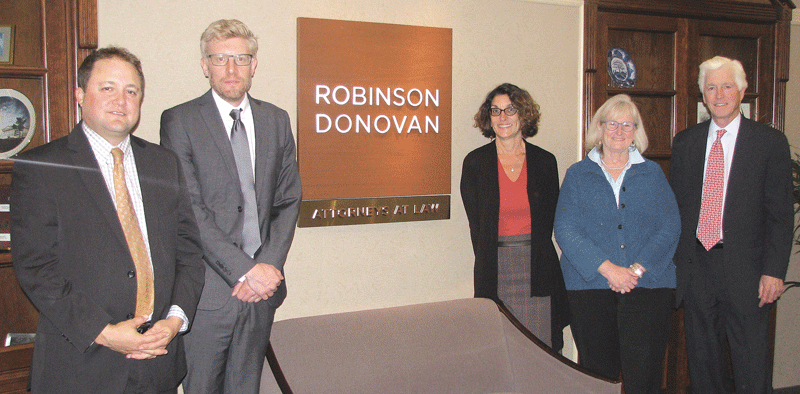
five of Robinson Donovan’s partners

From left, five of Robinson Donovan’s partners: Jeffrey Trapani, Michael Simolo, Nancy Frankel Pelletier, Carla Newton, and Managing Partner Jeffrey Roberts.

Robinson Donovan has experienced plenty of changes in its 150-year history, from shifting economic cycles to constantly evolving laws, to the evolution of its home city of Springfield. But one thing has remained a priority since its founder, George Robinson — who was also a high-school principal, state legislator, and governor — hung out a shingle in 1866. That is a focus on community — not just in a business sense, but through charity and volunteerism. And that’s how the firm is choosing to mark this significant anniversary.

Attorneys who have been with Robinson Donovan for any amount of time are fluent in its history, which stretches back 150 years — an anniversary the firm chose to celebrate by giving back.

Specifically, the firm traces its roots back to former Gov. George Robinson, who began practicing law in the Springfield area prior to serving as a member of the state House of Representatives and then Senate.

His contributions to the Springfield region extended beyond his appointments to public office. He was also the principal of Chicopee High School and a founding member of Chicopee Savings Bank, in addition to his law practice, now known as Robinson Donovan.

As the anniversary approached, said Carla Newton, a partner with the firm, one topic of discussion was the importance of place — how Greater Springfield itself, and its network of residents, businesses, and nonprofits are critical to the Robinson Donovan story.

“George Robinson was a public servant himself, and certainly served the public in a very direct way, so we began thinking about how to give back, rather than just celebrate internally,” she told BusinessWest. “And we began looking around at all the different nonprofits, many of which have board members and volunteers within our office. We thought it was appropriate to go beyond our own personal commitments to the community, and be a little more demonstrative and provide actual contributions.”

We all live here. We all benefit from the nonprofits that operate here, whether it be Providence Ministries or an educational institution like Bay Path University. We’ve raised families in this community and benefit from the fact that these organizations exist and make our community a better place to live.”

In lieu of some grand party or other event, that’s precisely how the firm chose to celebrate its anniversary year — with a sizable donation each month to a local nonprofit.

“We solicited input from everyone at the firm,” said Partner Michael Simolo. “As Carla said, a lot of us are involved in these organizations, and we know very well the people involved in them. It was kind of a collective effort from everyone to choose the organizations we donated to.”

“We all live here,” Newton added. “We all benefit from the nonprofits that operate here, whether it be Providence Ministries or an educational institution like Bay Path University. We’ve raised families in this community and benefit from the fact that these organizations exist and make our community a better place to live.”

Besides those two organizations, the firm has also donated to Friends of the Homeless, the Food Bank of Western Massachusetts, Cutchins Center for Children, Big Brothers Big Sisters, Community Legal Aid, Dakin Humane Society, and the Gray House — with three more to be chosen before the calendar turns.

Looking Back

That calendar has turned 150 times since Robinson first set up shop, and Newton acknowledged that it’s difficult to determine all the reasons it has survived so long. But she had a few theories.

One is simply pride among the attorneys in how the firm does business. She recalled arriving at the firm — at the time much smaller than its roster of 17 lawyers — and getting the sense they cared about leaving the firm in good hands when they were gone — which involved not only treating clients with professionalism, but mentoring the younger lawyers. “There was a culture of continuation, and people like me ended up getting adopted into that culture.”

Nowadays, she added, growth comes from meeting specific needs. “We bring in someone to support a particular area, and we inculcate them into the culture, and it continues on. There’s no reason to believe this isn’t going to keep going, as the younger lawyers coming in here realize, ‘hey, someday this will be our firm.’”

Managing Partner Jeffrey Roberts added that longevity requires a strong reputation in the community as well. “Ultimately, there has to be some recognition of quality. People want service, they want value, and they want to feel they’re getting the best product available.”

That reputation translates into referrals, he added. “They say your clients come from your clients. Other lawyers say, ‘I don’t do that kind of work, but you should go to that lawyer.’ In the end, it’s a small community, and if you don’t carry your practice properly and honestly, word gets around. If people understand who we are, we’ll have no shortage of business.”

That culture, again, extends to its community outreach, Newton said. “We’re not a firm that says to people who come in, ‘you must find a place to volunteer.’ Everyone here, whether it’s administrative assistants, lawyers, paralegals, they all do volunteer work because it’s important to them. That just seems to be the type of individual who comes to work at Robinson Donovan. Our people are really committed to doing volunteer work.”

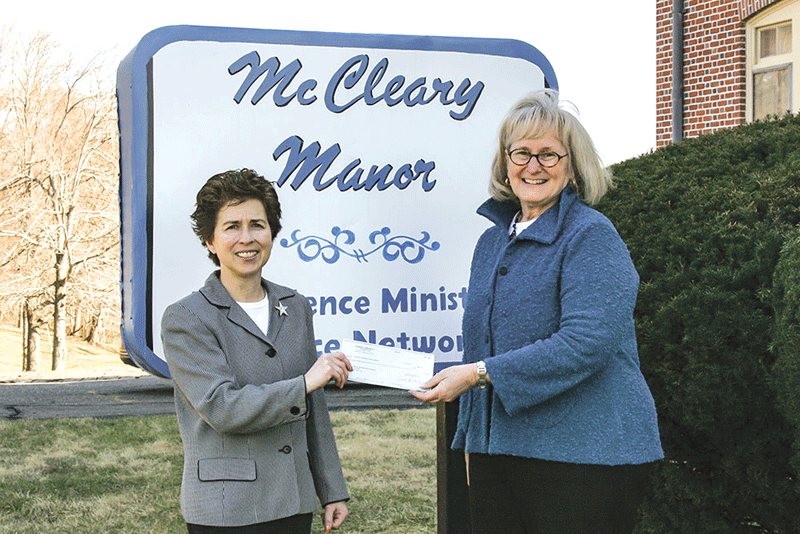
Service Network, receives a check from Carla Newton

Karen Blanchard, left, executive director at Providence Ministries Service Network, receives a check from Carla Newton, partner at Robinson Donovan, earlier this year as part of the law firm’s year-long series of donations to mark its 150th anniversary.

Partner Nancy Frankel Pelletier agreed. “It’s definitely part of the culture of the firm,” she said. “We encourage people to be active in things they have an interest in or a passion for. It’s never imposed on anyone or done out of obligation, but it’s what everyone does.”

Roberts noted that community involvement isn’t a one-way street, and firm members reap benefits beyond feeling good about themselves. “If you contribute to an organization, they benefit; on the other hand, you benefit because you learn about what the organization does, and you meet a lot of different people, and you get invested more in the community, rather than just getting in your car, going to work, taking care of your client matters, and going home. There’s a networking component that can lead you to other organizations.”

New hires, especially those coming from outside the area, are encouraged to find organizations that speak to them, as a way to get a real sense of what’s happening outside the walls and glass windows high above Main Street in Tower Square.

“Then it tends to build,” Roberts said, “because you’re recognized, and then someone else might ask you to help out at a function or support a cause or go to a dinner, and it builds on itself. It’s part of your education in the community.”

Looking Ahead

A general-practice firm, Robinson Donovan specializes in a number of legal niches, including corporate and business law, commercial real estate, estate planning and administration, divorce and family law, employment law, and litigation. After a period of rapid contraction — more than 30 lawyers worked there as recently as 15 years ago, when it was known as Robinson Donovan Madden & Barry — business has been steadily growing in virtually all those specialties, and the practice is on the rise again, hiring eight attorneys over the past several years, bringing the current roster to 16, with plans to possibly expand further.

“The firm is very dynamic and forward-thinking,” Simolo said. “We are celebrating our 150th, but at the same time, the firm is making some big investments in the future.”

Partner Jeffrey Trapani said the fact that economic development has been on the rise in Springfield, and the surrounding region is a quality-of-life draw, are added enticements when hiring.

“People get down on Springfield, but this region, I think, attracts people,” he told BusinessWest. “People enjoy coming to this area. We have city centers, things to do, you can see art, hear music, get outside, and still be close to Boston and New York.”

Trapani and Simolo count themselves among the former newcomers mentored by Roberts and his peers, but are now part of a middle generation rising to leadership and taking on much of that mentoring responsibility for new attorneys. That perpetuates the firm’s constant evolution, with some of the more recent hires chosen to match growth fields, including trusts and estates, corporate transaction law, labor and employment, domestic relations, and subspecialties like green energy.

“There’s such a broad scope of experience in this office,” Newton said. “So I can go to one of the associates and talk to them about something. They’ll learn from me, but I’ll also learn from them. When I sit in Jeff’s office or Nancy’s office, cross-learning takes place. Every single day, there are opportunities to sit down and talk about an issue with someone else. Not a day goes by that I don’t learn some new nuance that’s helpful to something I’m working on.”

It’s an environment some find unusual at first, Frankel Pelletier said, “but it’s the only environment I’ve ever known my entire career. We are just an open-door, collaborative community of lawyers.”

In short, Robinson Donovan has come a long way since its early days, when it was best known for George Robinson’s successful defense of Lizzie Borden on double murder charges in 1892. These days, the firm is recognized in a host of ways, such as the citations many of its attorneys have received from organizations like Best Lawyers, Super Lawyers, and Martindale-Hubbell.

“Unlike some other firms from the area, we really maintain a statewide presence,” said Frankel Pelletier, who was the firm’s first-ever female attorney. “We have always maintained that statewide presence and attained regional and, in some senses, national recognition. Our attorneys are constantly being recognized by organizations they belong to. That is who we are.”

Well, that and a law firm with a strong commitment to the community that has helped it thrive for 150 years.

Joseph Bednar can be reached at [email protected]

Law Sections

2016 or 1984?

By Stefanie M. Renaud


Stefanie Renaud

Stefanie Renaud

Imagine a piece of technology, so small it could be mistaken for a credit card, that tracks every movement an employee makes, analyzes every conversation that employee has, and could tell an employer when that employee was in need of a day off. What if that technology could identify patterns and traits that you could use to increase productivity by 23%? Would employers want to use this technology? Of course!

But what about the employees? Isn’t using technology like this an invasion of their privacy? We were shocked to learn, and we bet you are too, that, because of the way this technology is currently being used, employers actually can monitor every word and movement an employee makes without running afoul of the law.

Boston-based company Humanyze recently made headlines when it announced the success it has had analyzing data collected by employee ID badges, developed at the Massachusetts Institute of Technology, that track employees’ movements and analyze their voices during conversations. Contained within each badge are Bluetooth, radio frequency identification (RFID), and infrared technologies, as well as two microphones.

Each of these particular technologies has a different function and gives Humanyze different information that it can use to identify trends or patterns. Bluetooth and RFID technology are used to monitor the employee’s physical movements and location within the office. The microphones allow Humanyze to conduct real-time analysis of the speaker’s voice, including the frequency of speaking and interrupting, and how the tone and pitch of the voice change, which can be indicator of stress, although the badge does not record the content of the employee’s conversations. Finally, infrared technology monitors the wearer’s physiology for signs of stress.

Humanyze analyzes all of the collected data and identifies patterns or trends common to a specified group, such as top performers. Humanyze then works with companies to explore these trends and use them to the business’ advantage. For example, Humanyze helped Bank of America save millions of dollars by suggesting that they restructure employee breaks, which increased social interaction between employees and led to a 23% increase in employee productivity.

So, given how invasive this level of employee monitoring is, how could it not be an invasion of privacy? First of all, this isn’t an invasion of privacy because Humanyze only gathers data from employees who voluntarily offer to be tracked. Second, the individual’s data is their own; employers cannot see individual data and only receive information about aggregate data trends. According to Massachusetts General Laws, employees are protected by statute from “unreasonable, substantial, or serious interference” with their privacy.

However, in order to prove an invasion-of-privacy claim, the employee must show that the employer gathered and then disclosed information “of a highly personal or intimate nature.” While it is arguable that the data collected by these badges could be deemed highly personal in nature, in this case it’s Humanyze, and not the employee’s employer, who collects and analyzes the information.

For this same reason, Massachusetts employers do not need to worry about personnel-records law violations, because the employer is neither creating the records, nor is it the owner of the data. And, because the badges do not record audio, there is no concern about violating the Massachusetts wiretapping statute.

So are there any legal hurdles stopping an employer from implementing this type of employee monitoring? Only one: a workforce governed by a collective bargaining agreement. Employers with unionized workplaces will almost certainly need to bargain with the union before implementing a new employee tracking system.

Indeed, in another, related circumstance, the Boston Police Department engaged in negotiations with the union representing its police officers over whether or not the officers would be required to wear body cameras, ultimately agreeing with the union that, at least initially, the department would ask for volunteers. When no one volunteered, the BPD was allowed to assign the cameras to police officers, but that was after months of negotiations and subsequent litigation. So, if you have a unionized workforce, you can expect both union negotiations and substantial pushback on any requirement that members of the collective-bargaining unit wear these badges.

Employers in or with locations outside of Massachusetts that are inclined to experiment with this new employee-tracking system should check with labor and employment counsel in those jurisdictions, because state privacy laws can vary widely. Meanwhile, we’ll keep an eye on this new technology and let you know if there are any new developments.

Stefanie M. Renaud is an associate with Skoler, Abbott & Presser; (413) 737-4753; [email protected]

Business of Aging Sections

Difficult Decisions

Dr. Richard Alexander says screening for prostate cancer has become controversial

Dr. Richard Alexander says screening for prostate cancer has become controversial, but at least one study shows it extends longevity in people with the disease.

While much of what is known about prostate cancer is fact — including the fact that 99% of the men diagnosed with the most common forms of the disease will survive more than five years after diagnosis — there is still a good deal of conjecture. That’s especially true when it comes to screening for the malady.

One in seven men will be diagnosed with prostate cancer at some point in their lifetime.

“It’s a complicated disease, and a lot of issues surround it; doctors have devoted their entire careers to one subset of prostate cancer,” said Dr. Adam Tyson, a urologist at Urology Group of Western New England in Springfield.

Although it’s the second-most-common cancer in men and the second-leading cause of cancer deaths (skin and lung cancer, respectively, are number one), routine testing for the disease, which typically has no symptoms until it advances to the lymph nodes and bones, has become very controversial.

Screening involves a digital rectal exam and a simple blood test that measures the level of prostate-specific antigen, or PSA, which is a protein shed into the blood by the prostate gland that becomes elevated when cancer is present.

But in 2012, the U.S. Preventive Services Task Force declared that PSA testing should be abandoned. The reason is twofold: many men with elevated levels of PSA and an abnormal digital rectal exam have had biopsies that turned out to be negative, which caused unnecessary stress and did more harm than good; and arguments have been presented about whether routine testing increases survival rates.

Dr. Richard Alexander, a urologist at Baystate Medical Practices – Greenfield Urology, says a randomized study that followed a group of American men for 10 years found no difference in survival rates in men that were screened versus those not screened for the disease. But the problem with the study was that 70% of the men assigned not to be screened did indeed get screened outside of the study.

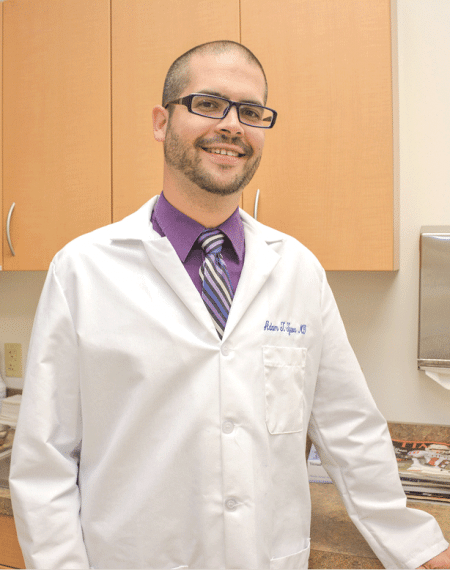
Dr. Adam Tyson says most prostate cancers are non-aggressive

Dr. Adam Tyson says most prostate cancers are non-aggressive, so the doctor and patient have to work together to figure out the best way to treat the disease, which depends on a number of factors.

In contrast, a very large European study conducted in many countries showed routine screening did lead to an increase in overall survival.

“It is not an easy thing to determine, and the results were astonishing,” Alexander said, noting that prostate cancer is found most commonly in men age and 60 older who often have two or more other diseases as well due to their advancing age, among other factors.

It can only be diagnosed by a biopsy of the prostate, which is done in a doctor’s office through the rectum using ultrasound guidance.

Alexander noted that an elevated PSA level increases the chance that cancer could be present, but it can be elevated by other factors that range from an enlarged prostate to inflammation of the prostate gland.

Neither the digital rectal exam or PSA level is a perfect test, but the American Urological Assoc. feels screening can be valuable for men between the ages of 55 and 70, especially if they are at high risk for the disease due to a family history, as it has a strong genetic component.

“I don’t think all men should be tested. But at age 50, they should have a conversation with their doctor about it, and if they ask for my recommendation, I tell them to get it done,” Tyson said, explaining that, since it is often a slow-growing cancer, it doesn’t make sense to test men over the age of 75.

“A lot of the cancers are non-aggressive and may or may not catch up with people, so the question is how to find men with aggressive cancer and treat them. Many men get biopsies who don’t need them, but if they don’t, the only other time the cancer will be found is in the late stages. And although most men with prostate cancer are more likely to die with it, rather than from the disease, there are still 26,000 men who die every year from it, and if it doesn’t kill you, it can keep you from being able to urinate, or spread to the bones and lead to fractures.”

He noted that a biopsy can be recommended with an abnormal PSA or abnormal exam.

“Often, the PSA will be repeated to confirm accuracy if it is elevated. But depending on many factors, a urologist may recommend a biopsy with a single abnormal PSA or an abnormal digital rectal exam,” he continued, explaining that, although prostate cancer is rarely found in men under the age of 40, he has seen it in men in their 50s with some degree of frequency.

Personal Decisions

The American Cancer Society says about 180,890 new cases of prostate cancer will be detected this year, and about 26,120 deaths will result from it. However, if it is caught in the early stages, it is treatable, and 2 million men who are alive today are prostate-cancer survivors. In fact, 99% of men with the most common types of prostate cancer will survive more than five years after diagnosis, and when the disease is localized to the prostate or just nearby, which occurs 90% of the time, the prognosis is even better; almost 100% will live at least five years.

But there is a great deal of fear surrounding the disease as well as myths associated with it, including the perception that prostate-cancer surgery means an end to a man’s sex life.

“When I tell someone they have cancer, that word is almost always the only thing they hear during our first conversation,” Tyson said. “It’s a life-changing event, so people with the disease need to work closely with their doctors.”

Alexander says men have choices about what will happen to them, but they need to have a clear understanding of the issue before making any decisions.

“People are terrified of the word ‘cancer,’” he said. “But many men can live with prostate cancer their entire life, while in others it progresses, and although there is no way to accurately predict the future, predictions have become more accurate than they were in the past.

“I encourage men to be aware of their options and make informed decisions,” he continued, adding he frequently hears horror stories from men who had a relative with the disease. Their initial instinct is to base their decisions on anecdotal evidence about what happened to that person, but decisions need to be made carefully, and both he and Tyson believe in seeking second and even third opinions after a cancer diagnosis.

“There is a risk in doing anything, but there is also a risk in doing nothing,” Alexander noted.

Symptoms that occur when the disease has advanced include problems with urination, loss of appetite, weight loss, and metastatic disease, which is the name given to a cancer when it has spread to the lymph nodes or bones.

But the disease has different stages as well as grades, which refers to how the cells in the biopsy look under the microscope and can indicate whether the cancer is likely to progress.

There are four treatment options available today: radical surgery, radiation therapy, hormone therapy, and active surveillance, which can include additional biopsies every year or several years. The age of the patient and their overall health and willingness to be treated help determine what choice is best. But they all have their own risks.

“A radical prostatectomy removes the entire prostate and attached glands, and the main risk is urinary incontinence and erectile dysfunction,” Alexander said, adding that the surgery is done if the cancer is still confined to the prostate, and the success rate is high. As to side effects, although most men have some incontinence following surgery, few are left with a permanent problem.

Radiation therapy can be done with machines over a period of weeks, and side effects include more frequent urination, burns to the bladder or rectum, and erectile dysfunction. The therapy can also be delivered by implanting radioactive seeds into the prostate. The radioactivity is gone within a year, but the metal seeds remain. The procedure requires anesthesia and takes about an hour.

“But not everyone is a good candidate for the seeds,” Alexander said, adding that whether someone is a candidate depends on the stage of the disease and how likely it is that the cancer will spread.

Hormonal therapy is reserved for more advanced cases, but this treatment has come a long way: decades ago, it involved removing the testicles, while today it is administered through injections. Possible side effects include hot flashes, muscle loss, fatigue, and loss of bone density.

“In some cases, hormonal therapy is combined with radiation,” Tyson said, noting that is usually done only in the case of advanced disease.

And although some treatments do cause erectile dysfunction, the problem has been mitigated by drugs such as Viagra and Cialis, which can improve the quality of a man’s life.

“The way a man urinates after any treatment will shift, and since the nerves and blood vessels involved in an erection are attached to the back of the prostate, any treatment will affect it. Sometimes there is only an occasional weakening, but most men will need medications to regain potency,” Tyson explained.

The final option for men with cancer is to do nothing other than be followed closely, and this choice is becoming more popular in cases where the disease is considered low-risk. “We are finding that prostate cancer can often be watched for years and never progress,” Alexander said, adding that hundreds of thousands of men who have the disease may never know about it.

Final Recommendations

Despite conflicting opinions, Alexander believes men with abnormal PSA levels should have biopsies. “I would rather know I had the disease and make a decision not to have any treatment than not know I have it,” he said, adding that the decision is an individual one, and although in most cases prostate cancer is slow-growing, that’s not always the case, as evidenced by the number of deaths from it each year.

Advances in the field have been made, such as robotic surgery, which is less invasive, involves less blood loss, and allows men to recover more quickly than they did before it was invented.

“When people hear the word ‘cancer,’ they go into panic mode, but it’s important to understand the nature of the cancer because every cancer has its own way of behaving,” Tyson said. “Most prostate cancers do not spread rapidly and are non-aggressive, so the doctor and patient have to work together to figure out what is right for the patient. There is no single right answer; some people absolutely need treatment, and in others, it is less clear.”

Indeed, there is a lot of choice involved in the matter, but the first step — which is to get tested — is something every man should consider and talk to his doctor about.

Business of Aging Sections

Lighting a Path


pathlightSPRINGFIELD — In a time of change for what, until recently, was known as the Assoc. for Community Living, the organization’s passion and innovative spirit will remain constants, its executive director says.

But it needed a name change, Ruth Banta went on, one that underscores the scope of the services it has provided to people with intellectual disabilities in the community — from youth through the senior years — since 1952.

That new name is Pathlight.

“What we’re hoping with the new name is that people will associate it with the breadth of the services that we offer,” she said. “When people hear that a service is a Pathlight program, we want them to know that means it is a caring, high-quality service backed by high-level expertise.”

Banta also announced that, in continuing the organization’s innovative spirit, Pathlight has partnered with Valley Venture Mentors (VVM) to offer the Pathlight Challenge. The two organizations have put out a national call to startup entrepreneurs to develop technology aimed at increasing independence for people with intellectual disabilities.

It’s expected that at least two proposals from startups will be accepted by Pathlight. Those entrepreneurs will be enrolled in Valley Venture Mentors’ four-month, intensive Accelerator Program in January.

“It’s a great partnership,” Banta said. “We’re tying our history of innovation and our passion for the people that we serve to entrepreneurs’ passion for innovation and breaking barriers.”

Paul Silva, chief innovation officer at Valley Venture Mentors, said what’s key in the Pathlight Challenge is that startups will have access to people in the populations they are hoping to serve as they produce their innovations.

“Interfacing with stakeholders is normally hard to do,” he said. “We have created a way in which companies that are worthy can get the access they need. If they want to develop something for parents, Pathlight can connect them to parents. If they want to gain access to staff, we can connect them to staff. This will allow them to troubleshoot problems as early as possible and allow their ideas to evolve more quickly. Pathlight is giving these startups a chance to be more competitive and, thus, more likely to survive.”

New Era

Formerly vice president of administration and chief financial officer at the organization that serves people with disabilities across Western Mass. from infancy through end of life, Banta said the name change to Pathlight was part of a rebranding that began last fall as a means of solidifying the agency’s persona and outlining its key values.

“Our mission is to help people on their own unique journey to experience the life they want to live,” she noted. “We weren’t being literal when we chose the new name, but we hope that it conveys that we shine a light on those journeys.”

Banta is excited about the partnership with Valley Venture Mentors, as it highlights the organization’s long-standing history of innovation. She noted that Pathlight’s history of advances dates back to its roots. “We were the first to open a community residence for people with disabilities and the first to create a shared living model for families.”

Now, she added, “we’re looking at how we serve the Millennial population of people with developmental disabilities and autism and looking at how technology can give these young adults the independence that they and their families want for them.”

The Pathlight Challenge is especially seeking solutions to issues regarding health, safety, and transportation.

“Transportation is often a big hindrance to the people we serve in terms of getting to jobs and recreational opportunities,” Banta said. “We’re looking to see how technology can offer assistance there.”

Silva said he is excited about the national call for proposals that will now be launched via both organizations’ databases and online connections. The selection process will continue through October.

The Accelerator Program is a four-month, intensive program held over one long weekend a month, offering startups connections to subject-matter experts, investors, and highly engaged and collaborative peers. Those competing in the program can win up to $50,000 in grants to develop their business or product.

The Pathlight fellows will graduate from the Accelerator Program in May, when they will also unveil their new technology, Silva said.

“To our knowledge, this challenge is the first of its kind,” he added. “There are hundreds of accelerator programs in this country running every year, but I haven’t run across any that are focused on assistive technology. Assistive technology is a new focus.”

One he and Banta — and plenty of clients — hope will continue to light a path to greater independence.

Holiday Party Planner Sections

The ‘Wow’ Factor

hallroof

Just over a year ago, the Starting Gate, the banquet component of the GreatHorse golf and lifestyle club, was merely studs on a foundation. But weddings were already being booked for the facility, said GreatHorse General Manager Bryan Smithwick, because those who saw what was done with the course and clubhouse understood that the same attention to detail would prevail in the banquet hall. And the view from the top of the mountain didn’t hurt, either.

As he talked about the Starting Gate, the banquet-facility component of GreatHorse, the exclusive golf and lifestyle club in Hampden opened in 2015, Bryan Smithwick drew a straight line to Disney.

Well … maybe it wasn’t a straight line, but he nonetheless got his point across.

“Disney World is out in the middle of a swamp, the middle of nowhere; yes, there are 10,000 interstates that lead there, but it’s still the middle of nowhere,” he explained, referring to the Orlando area that the entertainment giant chose for its massive developments a half-century ago. “But it’s a destination, a place people want to come to, and then come back to.”

And it is, or will be, like that with the Starting Gate, he predicts, acknowledging that this analogy is far from perfect, but for the purposes of this discussion, it works.

GreatHorse and its banquet facility are, indeed, off the beaten path. The road in front of the picturesque club has two lanes with a solid yellow line in the middle, and if you’re starting from virtually anywhere but Hampden, Wilbraham, East Longmeadow, or Somers, Conn., it takes a while to get to that road.

But when you get there…

This is where that Disney analogy comes in, said Smithwick, Greathorse’s general manager, adding that this facility is well worth the trouble of getting to. It starts with the view from the top of the hill and then out the windows of the Starting Gate, he told BusinessWest, and it continues with the hall itself, its large decks with retractable roofs and side panels, the on-site wedding garden, the extremely spacious bridal suite, the food, a ‘Cadillac golf cart’ to help get the bridal couple around, and … on he went.

As did Cathy Stephens, director of catering sales for GreatHorse, who, like Smithwick, said a number of constituencies are discovering this unique facility. They include engaged couples, meeting and event planners, business owners looking for a site for a retreat, holiday party schedulers, and more.


See: Banquet Facilities in Western Mass.


Opened just before the holidays last year, the facility started attracting clients when it was little more than studs on a foundation, said Smithwick. And the course and clubhouse then surrounding the building under construction — not to mention those stunning views (it was early fall by then) — were big reasons why.

“After having the opportunity to see the clubhouse, people felt confident that the same quality would be distilled into the Starting Gate,” he explained, adding that couples were putting non-refundable deposits down for weddings months before the structure was ready for occupancy.

The Starting Gate would go on to book nearly 30 weddings for 2016, a solid start, according to its managers, with 22 already on the books for next year, a few for 2018, and even one for 2019. But while weddings will be a major focus for this business, the Starting Gate is looking to host a wide range of events.

They include holiday parties — many are already booked for this December — as well as corporate outings, business meetings (the East of the River Chamber has already staged a lunch there, for example), and more.

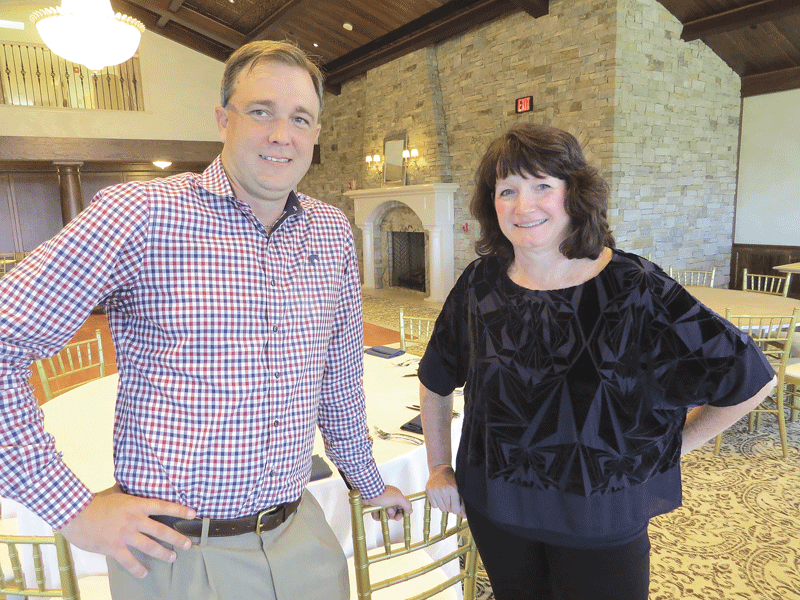
Cathy Stephens and Bryan Smithwick

Cathy Stephens and Bryan Smithwick say the Starting Gate is off to a fast start in the region’s highly competitive market for banquets and weddings.

And while the facility boasts one-stop shopping as one of its assets, especially for weddings, as we’ll see later, management plans to complement this by marketing the Starting Gate in conjunction with nearby Sonny’s Place (in Somers), another venture owned by the Antonacci family, said Smithwick.

Sonny’s Place, a family entertainment center featuring everything from go-carts to ziplines to miniature golf (an elaborate laser-tag park is next), could serve as the site of team-building exercises, for example, with the Starting Gate as home for corporate meetings and dinner. Likewise, Sonny’s Place could host a wedding rehearsal dinner while the Starting Gate could be the site for both the ceremony and reception.

Such possibilities have already played themselves out, said Stephens, and more are expected in the future as couples, families, companies, and nonprofit agencies discover this remote gem.

For this issue and its focus on holiday party planning, BusinessWest takes an in-depth look at the Starting Gate, inside and out, because that’s what’s necessary to grasp the proverbial big picture.

Optimistic View

As they offered BusinessWest a tour of the Starting Gate facilities, Smithwick and Stephens, who have done this countless times already, started in the bridal suite.

But most don’t recognize it as such, Stephens noted, because of its large size and amenities.

“A bride could literally spend her whole wedding day here, right up until it’s time to march down the aisle,” she said while gesturing with her hands, adding that some already have done just that. “It offers the bride her own space for the day.”

The bridal suite is the first opportunity for those taking the tour to say ‘wow,’ said Smithwick, adding that there are many others as the visit continues.

The wedding garden at the Starting Gate

The wedding garden at the Starting Gate, complete with stunning views, has already hosted a number of ceremonies.

They include the views from the aforementioned decks, which can be covered during the day and then opened at night to allow views of the stars; the wedding garden, which looks out on the scenery below; the grounds themselves; and the banquet hall (described by Smithwick as a “Colorado-resort-style venue”), which can seat close to 300 for a wedding and can be configured in a number of ways.

Eliciting ‘wows,’ not just during tours, but especially during the events themselves, is what the Antonacci family had in mind when it invested more than $45 million in what is now a Hampden landmark, said Smithwick.

Indeed, while much of the initial focus in the spring of 2015 was on the golf course — a stunning transformation of the former Hampden County Club track into one of the elite layouts in the Northeast — and the massive stone clubhouse, banquets and events were always intended to be a big part of this business, he explained.

Elaborating, he said while the club itself is very private — there’s a huge gate at the entrance at the foot of the hill — the banquet facilities are open to the public. Which means those attending events are treated to the same views — and most of the same amenities — as members.

This is how the Starting Gate is marketing itself, said Stephens, noting that these efforts have become quite aggressive through exposure in everything from regional and national wedding publications (and there are many of those) to media outlets in this region and well outside it, with a heavy focus on Boston, Hartford, and New Haven.

“We sell it for its view, the fact that it’s a gated, exclusive facility, it’s uniqueness, our innovative event planning, and our food,” said Stephens, noting that such efforts are already generating results, with couples from the Boston area, for example, booking weddings there.

But perhaps the best marketing tools available to the Starting Gate are word-of-mouth referrals and first-hand experience, she noted, adding that a good number of inquiries about the facilities have come from those who ventured past that aforementioned gate for an event a month, a week, or even the day before they picked up the phone or ventured onto the facility’s website.

While the views and specific amenities elicit the lion’s share of ‘wows,’ Smithwick and Stephens said the ultimate goal is to evoke them through the service and the experience, and the Starting Gate is earning those as well.

That one-stop nature of the facilities mentioned earlier is part of this equation, said Smithwick, noting the wedding garden has become a very popular site for ceremonies themselves — he estimates that 70% of the couples have chosento be married in the garden — leaving wedding-party members to walk only a few yards to get to the reception.

“You don’t have to get married off site and then get all your guests over to the venue, losing time in the process,” he explained. “You can literally do a 20-minute ceremony or a one-hour ceremony and then step 30 feet to the facility where you’ll be enjoying the rest of your evening.”

drive up the mountain to the Starting GateBut beyond convenience and those often-mentioned views, there is a focus on creativity and attention to details that has certainly helped the Starting Gate become a player in a strong field of competitors locally, said Smithwick.

“The ability to help a client envision what we can create for them is something we’re very talented at,” he explained, citing, as one example, a client who wanted to do a s’more station for a bar mitzvah.

“Obviously, we can’t build a fire out on the deck here,” he explained. “So we got creative and built a custom s’more station, a long table with a fairly skinny wooden box. At the bottom of that box we laid down bricks, and put sternos on top of the bricks. So the kids were able to enjoy this s’more experience without potentially burning the building down.”

There have been other examples of such creativity, he told BusinessWest, adding that the overall goal is to create events that are unique and memorable.

And when it comes to today’s young people and their weddings, this is a must.

“What people wanted 10 to 15 years ago from a wedding was something very much traditional,” Smithwick said, acknowledging that he was generalizing and didn’t want to do so too much. “When you look at the modern couple, the Millennial couple, which we’re dealing with a lot, they want something completely different.

“They don’t want to be just another number, and they don’t want to just have a filet being served on the table to their guests,” he went on. “They want us to create a robust experience for their guests to enjoy, and we’re able to do that. This isn’t a venue that you’re going to come to and have your traditional event.”

Stealing the Scene

Summing up what GreatHorse and the Starting Gate will offer those who choose it for an event, Smithwick summoned a word put to heavy use by those in this particular field — an experience.

To describe it, he relayed both his perceptions of a visitor’s thoughts and some of his own observations.

“It’s a magical arrival — you get to the gate, and you begin climbing, gaining altitude, and you end up on top of the side of this mountain,” he said. “You can see it all in the expressions of the wedding guests; as they make their way down from the parking lot, they stop at the first set of stairs, pause for a moment, and look out over the venue.

“This is not your typical wedding venue,” he went on, adding that this magic, as he called it, should help the Starting Gate make tracks in a highly competitive banquet field locally — and perhaps even draw some comparisons, from a business perspective anyway, to another company that uses that word in its marketing.

George O’Brien can be reached at [email protected]

Holiday Party Planner Sections

The Party Line

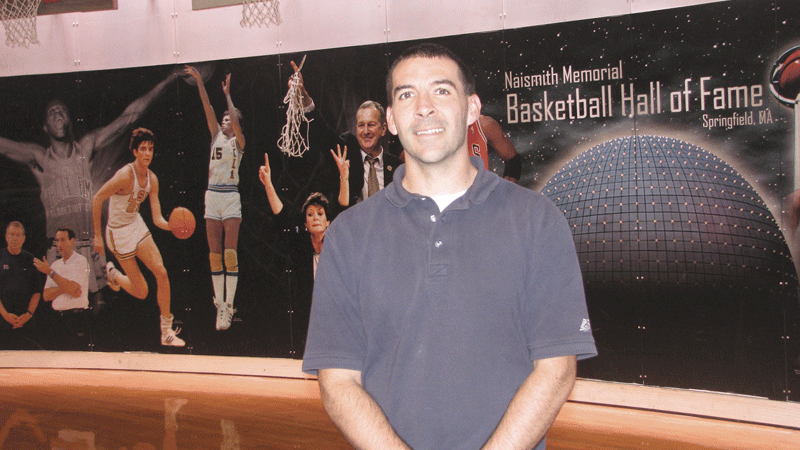
Josh Belliveau venues

Josh Belliveau says businesses planning holiday parties are drawn to the unique atmosphere of the Basketball Hall of Fame.

Anthony Barbarisi recalls the years when large companies would splurge on huge holiday parties for 1,000 employees or more.

The Great Recession put a damper on the holiday-party business in general, denting sales for banquet facilities and restaurants across the region. Those very large parties haven’t really come back, said Barbarisi, sales manager at Chez Josef. But, over the past several years, most other types of parties certainly have.

“The smaller groups are coming out in force,” he said, adding quickly that companies are not only booking parties again, but have become more creative and demanding. “Menus have become really interactive. It used to be that you sat down, got your steak, and the DJ played. Now, there are a lot more exciting options out there.”

As part of the International Caterers Assoc., Chez Josef strives to keep up with the cutting edge of industry trends, he added. “We follow very closely what’s trending in the Chicagos and LAs of the world, and we try to bring it here to Agawam. And there are some very exciting trends in cooking and parties.”

The main party trend, he said, may simply be a greater focus on quality and variety of food.


See: Banquet Facilities in Western Mass.


“We do plenty of holiday parties for companies that want to book our space for the evening, and we’re finding they’re replacing the party-favor aspect of it and using that portion of the budget to enhance the menus,” Barbarisi said. “We’re doing unique stations, like a Korean noodle bar, and a lot of phenomenal dessert stations, like sundae bars. One of the newest, hottest stations is a chocolate station — it’s over the top, with all sorts of homemade chocolate concoctions; the chefs like to get really creative and push that to the limit.”

In fact, he told BusinessWest, food stations are the hot trend in the past couple of years, taking the place of sit-down dinners and traditional buffets. “With stations, it takes the best aspect about buffets — you get to pick what you like — and breaks it up into small plates. The long lines are eliminated. Guests just love it; it becomes very informal. You’re up and about picking and choosing. A lot of times they’re chef-attended, and they’ll put your plate together for you.”

Josh Belliveau, corporate sales/event manager at the Basketball Hall of Fame, said businesses planning holiday parties are asking for the full gamut of options, from formal sit-downs to buffets to cocktail parties with heavy hors d’oeuvres. The Hall handles corporate events for businesses in Western Mass. and Northern Conn., ranging anywhere from 25 guests to 300.

Most bring in their own entertainment — DJs or live bands — but many access the facility’s in-house audio system. Meanwhile, Max’s Catering, the Hall’s catering partner, handles the food service. But what really draws many clients, he said, is the atmosphere, with parties hosted on center court, surrounded by basketball history.

“Coming here is convenient and safe, and I think it’s different from other places because of the location; it’s a unique place for guests,” Belliveau said. “We have a great product that we showcase, Max Catering has a great service that they showcase, and the location is ideal. Those things not only bring companies back, but then they spread the word about what we have to offer.”

Something Different

Speaking of unique facilities, when Vitek Kruta and Lori Divine bought the Holyoke building four years ago that would become Gateway City Arts, they saw something in the dirty, empty warehouse along the city’s canals. Now, the facility functions as an artists’ workspace during the day and an event space on nights and weekends, one with a decidedly artsy, funky vibe.

“We have three different large spaces, and we’re just about to finish a fully functional commercial kitchen; right now, our food is operating out of a tiny kitchen space. That will give us the ability to prepare lots of good food,” Kruta said. Meanwhile, he and Divine are opening a restaurant on the site called Gateway City Bistro.

Still, Gateway has been hosting events for some time — weddings, fund-raisers, concerts, bar mitzvahs, birthday parties, memorial services, and more, including, yes, holiday parties for businesses.

“We’re constantly booking,” he told BusinessWest. “The demand is greater than we can actually handle at this point, but because we’re nearing completion [of the kitchen], we’ll be able to cover much more demand. We are looking at three or four events every week, at least, and all sorts of activities during the week.”

He said the calendar is well-booked into next year, and that the facility hosts corporate parties of all kinds — socials, cocktail parties, and sit-down dinners.

One of the event spaces at Gateway City Arts boasts a fully equipped stage with state-of-the-art lighting for concerts and other performances. Meanwhile, a patio Beer Garden and grill area provides an opportunity to host events outdoors as well, and the facility hosts a popular Sunday brunch as well.

During the week, the building is full of artists who rent studio space and shared resources, like woodworking and ceramics shops. “We have people here making jewelry, developing toys, puppeteers, painters, writers,” Kruta said.

Gateway City Arts’ outdoor Beer Garden venue

Gateway City Arts’ outdoor Beer Garden is one of several unique, funky spaces the facility offers.

That contributes to a specific vibe that appeals to companies looking for somewhere a little different for parties, he went on. “It’s very artistic — a big loft space in the old mills, and it’s very tastefully finished with art. People say it reminds them of Brooklyn or Paris or some other place. That’s what we had in mind when we developed this facility.”

He called Gateway a huge addition to downtown, drawing close to 20,000 people a year — some in unexpected ways.

“On St. Patrick’s Day, we had 500 state troopers here getting ready to run in the marathon. We fed them all and provided space for them to change,” he said. “We’re just a multi-function place; it can be used for so many different occasions. We’re definitely open to all sorts of events.”

For small companies looking for a big-party experience but lacking the budget (not to mention the head count), large, themed holiday parties for multiple businesses at once have become a popular trend at many venues in recent years, including Chez Josef, said Barbarisi.

“And it’s not just businesses, but clubs and even groups of friends — anybody who wants to put a couple of tables together, or just one table, and come out and celebrate the holidays. We’ve had some interesting themed parties the last couple of years that have been well-received.”

For instance, this year’s roster of parties includes a country Christmas event, with a western-themed menu and entertainment by local country band Trailer Trash; a Hawaiian luau event with a tropical menu, island décor, and music from Jimmy Buffett tribute band Changes in Latitudes; as well as a comedy dinner featuring a dueling pianist performance and interactive singalongs. For its New Year Around the World event, Chez Josef will treat participating businesses and groups to food stations featuring a wide range of global cuisine.

In contrast, Belliveau said the Hall of Fame focuses more on events for individual companies than multi-group parties. “We like to take that individual client and make them and their employees feel special.”

Bottom Line

Whatever the case — and the facilities who spoke with BusinessWest for this issue all offer something unique from the others — corporate holiday parties are certainly on the rise, and have been for several years now.

“It’s started picking up a little more,” Belliveau said. “It all varies — every company works differently based on how their year goes and what they’re able to offer. The economy is improving, but you just never know. But we have a good number of parties coming.”

It doesn’t even need to be an evening-long dinner, he said, as some companies are opting for cocktail parties that last a couple of hours and give their employees a chance to relax in a different setting.

“It just feels nice,” he said, “to recognize employees during the holiday season.”

Joseph Bednar can be reached at [email protected]

Features

Plane Speaking

Jorge Morgado

Jorge Morgado says the saga of Flight 1549 has lived on well past the proverbial moment, through books, reunions, and, most recently, the movie Sully.


Jorge Morgado acknowledged that the words ‘based on a true story’ give film writers, directors, and producers a large degree of latitude when they’re telling a story.

Still, he went to one of the area’s first showings of Sully with the almost singular goal of seeing if Hollywood, and specifically Clint Eastwood, would get it right, meaning an accurate portrayal of the events of Jan. 15, 2009 and thereafter.

And he was pleased to report that — even though, for starters, his golf group of six that was such a significant part of the so-called ‘Miracle on the Hudson’ was reduced in size by half for this movie (and he wasn’t part of it) — they did.

At least when it comes to the part about the ditching of the plane and the subsequent rescue of all aboard.

“I thought they did a great job of telling the story without exaggerating,” said Morgado, vice president of Baystate Rug & Flooring in East Longmeadow and Chicopee. “I went to see if they would add ‘Hollywood’ to it, and for the most part, they didn’t.”

Jim Stefanik, who is one of the three written into the script, agreed, while noting, as one might expect, that it is quite the experience to see an actor, in this case, Max Adler (Glee, Love and Honor), play you in a movie and see his name next to yours as the credits roll.

“It’s definitely weird, and that’s been one of the more interesting things about this whole experience,” he said, adding quickly that Adler looks nothing like him and is almost a foot taller, but he doesn’t mind Hollywood taking those liberties.

“I’m five foot, five, and he’s about 6’4,” Stefanik, the former golf pro turned Chicopee firefighter, explained with a laugh, adding that it’s certainly difficult to describe the sensation of watching a movie depicting a scene from your life, and he has struggled with that assignment.

The simple exercise of trying to articulate these experiences explains how Sully has in some ways put the six golfers, all from Western Mass., back in the spotlight, even though some have kept a very low profile for years now and have every intention of keeping it that way.

And it also helps explain how a story like this lives on long after the proverbial ‘moment’ — in this case, it was literally only 10 or 12 minutes — is over. Indeed, there have been books, reunions, consistent contact on social media among the passengers, a gathering when the now-famous Airbus A320 was moved into a museum in North Carolina a few years ago, and other happenings to keep the story in plain view.

But in most respects, keeping this saga front and center hasn’t been a burden, emotionally or otherwise, because it is in many ways different from other newscast-leading events in recent years, many of them also turned into movies (Deepwater Horizon is now in theaters, for example, and there are two films on the Boston Marathon bombing now in production).

Indeed, this is a feel-good saga in about every way imaginable, one where no one can be described with the word ‘victim’ — except maybe in reference to an unyielding media blitzkrieg, as we’ll see later. There were no fatalities, only one serious injury (to a flight attendant), no real blame to be laid, and hardly a hint of controversy, although, according to many accounts, Eastwood felt the necessity to create some.

And when we all survived … from then to now, I think I realize just how good I have it. I think I appreciate it more than I would if I wasn’t on that plane that day.”

Specifically, in the film, National Transportation Safety Board officials make the case that the pilots could have flown the plane back to LaGuardia Airport instead of ditching in the Hudson River, but Morgado says he’s heard rumors that the NTSB is not at all happy with this depiction of events.

No, the story of Flight 1549 has a happy ending in seemingly all ways, and that’s why Morgado, Stefanik, and Dave Carlos didn’t mind going over all this ground one more time nearly eight years after they were unwittingly thrust into the spotlight.

“When people ask me, I say this whole experience was a blessing in disguise,” said Carlos, chair of the Math Department at Springfield’s Central High, soon to open his own business on the side, a pizza shop. “I have an 8-year-old and a 6-year-old, and the 6-year-old wasn’t born when this happened. When Sully said ‘brace for impact,’ what I thought about was not being able to see my daughter and what she looked like, and not being able to see my son again or my family again.

“And when we all survived … from then to now, I think I realize just how good I have it,” he went on. “I think I appreciate it more than I would if I wasn’t on that plane that day.”

For this issue, the three talked about that fateful day in January — again — but mostly about what’s happened since, and how events of this nature can change someone’s life in ways that couldn’t be imagined.

Last-ditch Efforts

“It was like sneakers in a clothes dryer.”

That’s how Morgado chose to describe the sound of a flock of geese getting in the way of the engines on both sides of the Airbus he and his golfing buddies were scattered throughout. Only no one actually knew that this is what it was.

All that would soon become apparent is that something was clearly wrong, he recalled, adding that the cabin, which he was near the front of (window seat, row 5 in coach) was soon filling with smoke.

“The cabin started shaking and it smelled like burnt bird —   you could tell something was wrong,” he said, adding that, like all those around him, he spent the next few minutes trying to simply absorb what was happening around him.

Backing up a little — kind of like a movie flashing back several hours — Morgado said he and the rest of his golf party were not supposed to be on this flight. Instead, they had chosen to fly on Spirit Airlines for their regular winter-season trip to Myrtle Beach in South Carolina. But that Thursday morning came up white, and the light show was enough to ground smaller planes, but not larger airliners.

So Morgado and his companions — Stefanik,  Carlos, Rick Delisle, Rob Kolodjay, and Jeff Kolodjay— would secure the last six tickets for US Airways Flight 1549, a number that, like most everything else about this story, no one will ever forget.

Returning to that moment when Morgado heard the sneakers in the dryer, he said that noise, which occurred only a few minutes after the plane lifted off LaGuardia’s runway, was followed by general silence. There was nothing, he said, until the man the world would soon come to call by his nickname said those words have become so famous — “This is the captain; brace for impact.”

By the time those words came, though, passengers could see that the plane was out over the Hudson and ever closer to the water, said Carlos, adding that stewardesses began saying the phrase that would come to dominate the movie trailer: “heads down … brace yourselves.” And as much as the words themselves, it was what he thought they meant that has stayed with him all these years.

“They kept chanting it over and over again,” he recalled, that it was an agonizing, terror-filled three minutes before the plane actually hit the water. “I kept thinking, ‘is this the last thing I’m going to hear? This is awful.’”

Eventually, although very quickly, it seems — “you were just in survival mode,” said Morgado — passengers made their way out of the aircraft, with most of them winding up on the wings, as captured in those iconic photographs, one of which now graces the wall of his office at the Chicopee location. What those pictures don’t effectively convey is how quickly the plane began to settle into the icy Hudson.

“When I stepped onto the wing, the water was only ankle-deep, but by the time the boats came, I was waist-deep in water — the plane was sinking pretty quickly,” said Morgado, adding that, while he was having a hard time comprehending and coping with all that was going on around him, he still had the presence of mind to keep his cell phone dry.

Because he did, he got his first real taste of how immediate, intense, and sometimes infuriating the media assault on Flight 1549 and everyone involved with it that day would be.

“I called my wife to tell her I was in a plane crash; she didn’t even know I was on that plane,” he explained. “I said, ‘I’m OK; I’ll call you when I get on dry land.’ I then hung up, and she turned on the TV to see what was going on.

“She later called and said that, just after I hung up, the home phone started ringing off the hook — it was all these New York and Boston media people calling,” he went on. “She remembers talking to Diane Sawyer’s producer, who said, ‘let me know where your husband is; we know he’s asthmatic, and we’ll get him treatment.’ They knew my medical history, and I was still standing on the wing of that plane. That was how quick they were able to get my information and get to my house. They were all out to get a story.”

Overall, Carlos, who joked that he wasn’t written out of the script, he just wasn’t written into it, said the movie made the rescue appear easier and less traumatic than it actually was.

“In the movie, the rescue seemed very nonchalant; they made it look easy to just climb on those boats and get out of there, that everything was just standing still,” he noted. “In real life, we were floating down the Hudson; the plane was moving, the boats were moving, the hulls of the boats were 15 to 20 feet above the water, not the five feet like they depict in the movie.”

Wing and a Prayer

Fast-forwarding a little, Morgado and the others said what happened on the Hudson was certainly just the first chapter in this story. Others involve what happened after they returned to dry land and, later, their families, their businesses, and other facets of their lives.

Highlights, and there are many, include:

• Morgado being told that media members had snuck into his office in pursuit of … whatever, and wound up taking photos of pictures of his children and printing them (that’s a lowlight, actually);

• Getting to go on that Myrtle Beach trip eventually, with the Golf Channel in tow to record the occasion, and with new equipment and bags courtesy of Titleist, which wanted its name omnipresent during this outing, and succeeding with that goal (Morgado remembers the dozens of courses at Myrtle vying hard for the privilege of hosting them);

• Taking part in the book Miracle on the Hudson, featuring passengers telling their stories (Morgado leads off a chapter titled “Night in New York” talking about his phone call to his wife while out on the wing); and

• Relaying the story untold times to family members, friends, business customers, fellow Rotarians, and, yes, the media, a broad constituency (we’ll include TV talk-show hosts) that induced a wide range of emotions from those we spoke with — everything from fascination to incredulity.

Indeed, beyond his aforementioned experience on the wing, Morgado related another episode involving the fifth estate in the book Miracle on the Hudson.

As he relates the story, the six golfers were due to appear on the Today show the morning after the crash and rescue. They were to meet the show’s producer in the lobby of the Crowne Plaza hotel, and were told specifically by him not to leave the lobby, because competing networks, positioned outside with their own vans, would essentially hijack the story.

“It was insane,” said Stefanik of the media coverage, in terms of its depth and voracity. “They kept trying to find out everything they could about you; they were calling my mother-in-law, my mother, all in pursuit of a story. They can find out anything about you that they want.”

The movie Sully has brought the media back, but not with anything approaching the ferocity witnessed in the weeks and months after the crash. Overall, the film has simply brought some new questions to be answered — everything from ‘how accurate was it?’ (perhaps the most common query) to ‘how did Tom Hanks do in the title role?’

“He was incredible as Sully,” said Morgado while answering the latter. “He captured him perfectly.”

And while that same adjective probably can’t be used for the sum of the film and its attention to accuracy, said those we spoke with, it does an adequate job of capturing the heart of the story — the courage and skill of the pilots.

Roll the Credits

Spoiler alert: Morgado said Sully starts off in an intriguing way — by showing what might have happened if Sullenberger and co-pilot Jeffrey Skiles hadn’t pulled off the miracle on the Hudson (let’s leave it at that).

The powerful footage has to leave audience members, not to mention survivors like Morgado, Stefanik, and Carlos, more cognizant of how lucky everyone was that day.

Carlos enjoyed and appreciated the movie, but didn’t really need it to appreciate his good fortune and remember never to take anything for granted.

“The incident helped open my eyes to things, and it’s enabled me to enjoy what I have more than I used to,” he told BusinessWest.

This is a sentiment that — like the story of Flight 1549 itself — lives on well past the moments that made history.

George O’Brien can be reached at [email protected]

Columns Sections

Be Ready to Launch

By Carolyn Bourgoin, CPA


Carolyn Bourgoin

Carolyn Bourgoin

Crowdfunding has become a popular vehicle to raise money for personal, charitable, or business endeavors due to its ease of use and accessibility. However, many businesses and individuals who enter into a crowdfunding campaign have not considered potential tax implications prior to launching a campaign.

Here’s how it works. Websites such as Kickstarter, Indiegogo, and GoFundMe provide a forum for persons seeking funds (i.e. project initiators) to present their project or products in order to attract potential contributors, referred to as ‘backers.’ Project initiators may offer contributors rewards of nominal value, such as T-shirts, in exchange for a contribution, while others may offer sample products or rewards based on the level of contribution.

Campaigns can be set up with a fixed funding goal where the project initiator receives contributions only if funding goals are met, or with flexible funding goals that allow the initiators to keep funds even if the funding goal is not met. The websites charge initiators a fee per transaction; fixed funding goal campaigns are charged a lower fee.

Contributions are made via credit cards, so the crowdfunding websites often use financial intermediaries like PayPal or Amazon Payment to track the credit-card transactions. If more than 200 separate transactions worth more than $20,000 are generated by a campaign, the intermediary has to file a Form 1099-K to report the proceeds. Though a 1099-K is not required in many cases, this does not mean that the funds received are excludable from the recipient’s taxable income.

Tax Treatment of Crowdfunding Revenues

Under general income-tax principles, gross income is broadly defined to include income from all sources. Only items specifically exempt can be excluded from income. Based on these principles, most crowdfunding revenues will be includible in the recipient’s gross income unless he or she can show that the funds are excludible as: (1) contributions to capital in exchange for an equity interest in the entity, (2) loans that must be repaid, or (3) gifts made with donative intent where the donor does not receive a tangible economic benefit in return for his contribution.

Proceeds from donation-based campaigns may qualify as non-taxable gifts if the funds are for the benefit of an individual or a public charity, depending on the purpose and intent of the payment. For instance, if a campaign is to help an individual with unanticipated medical bills due to a tragedy, then the contributions might qualify as a gift. Where a gift exceeds the annual gift-tax exclusion of $14,000 (2016 exclusion amount), the donor may have a gift-tax filing responsibility.

Whether the proceeds from a reward-based campaign should be included in the recipient’s gross income is more difficult to determine because the value of the ‘reward’ must be determined. Crowdfunding often involves the project initiator providing a new product to the contributor in exchange for their ‘contribution.’ If the reward given to the contributor equals or exceeds the amount of the pledge, then the full payment is considered gross income to the recipient.

In essence, the contributor has paid for the reward, and there is no donative intent. Where the value of the reward is less than the ‘contribution,’ then the difference between the contribution and the value of the reward must be evaluated to determine whether it qualifies as a gift or some other type of contribution. In this situation, only a portion of the payment received by the recipient may be characterized as gross income.

Newer to the crowdfunding scene are equity-based campaigns, where crowdfund contributors are provided with an ownership stake in a startup venture in exchange for their contribution. These payments are a contribution to capital and are not gross income to the startup entity. However, there may be tax implications to the investor depending on the valuation of the interest, which is beyond the scope of this article.

Tax Treatment of Crowdfunding Expenditures

Once it has been determined that crowdfunding revenues should be included in federal gross income, the project initiator must determine what expenses, if any, are deductible. A detemination must be made whether the activity is a trade or business or a hobby. Distinguishing between the two is based on a fact-and-circumstances determination that looks to a series of nine factors.

In addition, the timing of when crowdfunding expenditures may be deducted can be an issue. The crowdfunding activity must be considered an active trade or business for the expenses to be eligible for deduction.

Tax Treatment of Contributions to Crowdfunding Campaigns

The tax treatment of a contribution made by a backer to a crowdfunding campaign depends on the motive of the backer as well as whether he or she receives anything in exchange for the payment. If the backer is making a campaign contribution out of disinterested generosity and does not receive anything in return, he has most likely made a gift. Only if the gift is to an approved public charity will it be deductible as a charitable contribution. A gift to a private individual seeking funds is not going to qualify as a charitable contribution even though it may be to help defray medical costs.

Contributions made to a campaign where the contributor receives goods or services of equivalent value in return are not tax-deductible. If a backer wants to make a significant contribution to a cause or project, it may be worth consulting with an advisor as to whether there are more beneficial or efficient ways to provide support.

Other Tax Issues

State and local taxes as well as sales and use taxes are other areas of concern for crowdfunding campaigns. Advance consideration should also be given to the most beneficial accounting method and best form of doing business for project initiators in a startup trade or business. Proper planning before entering into a crowdfunding campaign can help avoid undesirable tax consequences and surprises to project initiators.

Carolyn Bourgoin, CPA is a senior manager with Holyoke-based public accounting firm Meyers Brothers Kalicka, P.C.; (413) 322-3483; [email protected]

Features

Building on a Legacy

BizDiffMakrsLOGO2011

It was a moment — actually, several moments — that no one in attendance would soon, if ever, forget.

David and Marisa Balise had moved to the microphone at the Log Cabin Banquet & Meeting House to offer reflections on how their father, Mike, who had succumbed to stomach cancer just a few months earlier, had lived a life dedicated to family, the New England Patriots, and philanthropy.

“It was a special moment for everyone,” said BusinessWest Associate Publisher Kate Campiti. “Several people had already talked about Mike’s contributions to the community and the myriad ways he gave back, but no one did it in a more powerful, more thought-provoking way than his own children.”

There were a number of powerful moments at the Difference Makers celebration staged last March, such as the introduction of retiring Hampden County Sheriff Michael Ashe, which was punctuated by a rousing standing ovation from those in attendance, including many members of the area’s law-enforcement community. And then, there was the tribute to Bay Path University President Carol Leary, marked by the passage “no one has been a more effective, more impactful, and more important leader for their organization.”

There have been countless other memories like these since BusinessWest inaugurated its Difference Makers recognition program eight years ago. And now, it’s time to begin the process of making some more.

Indeed, nominations (HERE) are now being sought for the class of 2017, members of which will be feted at the Log Cabin late next March.

Nominations, which must be submitted to BusinessWest by Nov. 16, should, in very simple terms, explain why the individual or group in question is a Difference Maker within the community called Western Mass.

And as the list that follows reveals, there are many ways to fit that description. Last year’s class of honorees, which also includes Big Brothers Big Sisters and John Robison, president of Robison Service and advocate for individuals on the autism spectrum, provides ample evidence of this. But over the years, those honored include other college presidents, leaders of a host of nonprofits, and business leaders known as much for what they do within the community as for their respective companies.

“We chose that name ‘Difference Makers’ for a reason,” said Campiti.  “It speaks to what these groups and individuals do, of course, but it doesn’t put any limitations on how those words can be interpreted.

“As we’ve seen over the years, there are countless ways to make a difference,” she went on. “The common denominator is that these individuals and and groups make this region a better place to live, work, and conduct business.”

Submissions will be reviewed by the team at BusinessWest, with the class of 2017 to be introduced in late January.

Details on the March Difference Makers celebration will be presented in upcoming issues of the magazine.

For the record, go HERE for a list of previous honorees.


Autos Sections

Waiting to Leave

Carla Cosenzi

Carla Cosenzi says her newest dealership was designed to give the customer a positive experience and not waste their time.

There’s no one way to design an auto dealership, but increasingly — driven by both manufacturer requirements and an ever-more-demanding clientele — newer stores boast a number of specific features, from spacious, drive-in service departments to comfortable, well-stocked lounges; from energy-efficient touches to an emphasis on openness and transparency in the showroom. At a time of fierce competition for business, dealers say these elements are necessary to attract buyers — and keep them coming back.

Gary Rome summed up the experience of most of his customers succinctly and bluntly.

“When people are waiting for a car, they’re waiting to leave,” said the president of Gary Rome Hyundai. And that goes for both people in the market for a vehicle purchase and those bringing their rides in for service — in either case, no one wants to spend any more time at a car dealership than they have to.

On the other hand, sometimes it takes a while to, well, leave. Which is why so many aspects of his new facility on Whiting Farms Road in Holyoke, which opened last month, are designed to keep customers occupied and … let’s just say in less of a hurry to go home.

“One of the most important things to customers is time,” Rome told BusinessWest. “If you value their time and make it easy to purchase a car or have their car serviced, you’ll get loyal, repeat customers. So I want to make the process as enjoyable as possible by offering all the amenities I think are reasonable for our customers.”

Gary Rome car dealer

Gary Rome says energy-efficient touches throughout his new dealership are aimed squarely at reducing his carbon footprint.

To that end, the customer lounges — there’s one for watching TV, another for quietly doing business, and a play area for kids — border a coffee bar with free coffee, fruit, and muffins, as well as vending machines loaded with healthy snacks. Beside the TV is a screen detailing the status of every repair job currently underway, and the lounges overlook the service department so people can watch their cars being worked on.

Northampton Volkswagen and Country Hyundai, two neighboring stores in TommyCar Auto Group, opened their doors in 2014 with a similar focus on the customer experience. People bringing their cars in for service are met with high-speed doors followed by a porter who shows the way to a waiting room decked out with a TV, wi-fi, business workstations, smartphone jacks, free drinks and snacks, and even complimentary bicycles outside in case customers would rather take to the nearby bike trails instead of waiting indoors.

“We designed everything for the comfort and convenience of the customer,” said Carla Cosenzi, president of TommyCar. “We’re doing everything with the customer in mind.”

To that end, the facility has improved the employee experience as well, incorporating air conditioning, high ceilings, large windows, and LED lights in the service department — a far cry from the hot, cramped workspaces of old. Productivity has soared under those conditions, she said, which means, yes, less waiting for customers.

“They’re set up for efficiency, so they can be more productive and make the best use of customers’ time while they’re here. That’s where the majority of our focus was while building this.”


See: Area Auto Dealers in Western Mass.


Damon Cartelli agreed that efficiency, as it impacts the customer experience, is paramount — and a major design trend in the auto industry. His company, Fathers & Sons, opens its new, connected Audi and Volkswagen dealerships this week on Memorial Avenue in West Springfield, which boast the same type of high-speed doors — which trap air inside, keeping the space cool during warm days and warm during cold ones — that Cozensi spoke of. The driver then parks, gets out of the car, and walks directly into the shop, where a lounge with a TV area and workstations awaits.

“That’s now standard across the industry,” said Cartelli, the company’s president. “New dealerships have an area that’s comfortable and quiet so you’re able to work or sit in a lounge and have coffee and watch TV.”

While comfortable lounges and drive-in service bays may be among the more obvious hallmarks of the modern auto dealership, other trends — from a focus on transparency in the sales area to environmentally friendly features — are surging as well. For this issue’s focus on auto sales, BusinessWest explores three dealerships, two of them brand new, to talk about what dealers are doing to move customers out quickly — and get them to return, time and again.

No Secrets

Cartelli noted that many features of a new dealership — particularly Volkswagen, which demands uniformity in new dealerships with their nameplate — are blueprinted by the manufacturer, and many of the touches, including the high-speed doors, the finished service driveway (as opposed to a concrete look), the high-tech customer lounges, and display areas where customers can buy clothing, branded items, and vehicle accessories are required elements.

Damon Cartelli car dealer

Damon Cartelli says the prominent use of glass inside and outside his Volkswagen and Audi dealerships promote transparency, in both design and customer dealings.

So is the transparency. To look around the showroom is to see office walls of glass, so sales associates and managers are never hiding from customers. Cartelli said the look reflects his own philosophy of doing business in a transparent way.

“We have a transparent pricing model. We’re transparent with everything we do, with how you buy a car. We don’t want customers asking, ‘what is he doing back there?’ You can see what he’s doing. We have nothing to hide. That’s part and parcel with how we do business, which is nice.”

Cosenzi had to deal with the same demands from VW, although Hyundai was more flexible in its requirements. But she agreed with Cartelli that openness is a positive for customers.

“Sales managers are no longer in big podium stations; they’re approachable, in the middle of the showroom, and all the salespeople work in an open environment at their desks,” she said. “As you walk through the dealership, you see the open sales stations, the glass. When you’re in the finance office, you constantly see and follow what’s happening with paperwork and flow.

“We worked really hard to make the customer experience great,” she went on. “You see a lot of light when you walk in, and you’re immediately greeted by a warm, friendly body at the greeter station. We made sure all the customer parking was up front, made it really easy for them. We want customers to feel like they’re getting the VIP treatment all the way around.”

Cartelli said the best way to make customers feel important, quite simply, is to not waste their time. “If you can increase efficiency in how you do business, that’s important — the speed with which business gets done is second only to price. People want a fantastic customer experience, and they want to know how quickly you’ll get it done.”

Rome incorporated elements of transparency in his new dealership as well. “It’s important for me that customers come inside the building and are able to watch their cars being worked on,” he said, pointing out the line of sight between customer lounge areas and the spacious service department. “Some dealerships take the car around back to some black hole, and you don’t know what thery’re doing or when it will be ready. This is a much better experience.”

In this day and age, customers expect this treatment. If you don’t have it, there are other dealerships out there that do, and you’ll be missing out.”

But Rome also wanted a dealership that’s cutting-edge in environmental ways as well, incorporating a number of green elements aimed squarely at reducing the store’s carbon footprint, from energy-efficient LED lights to insulated windows to a car wash that reclaims and recycles water. All the oil collected during oil changes isn’t discarded, but rather stored in drums and pumped back into the heating system and used to heat the service department, while oversized fans circulate air in that area and control temperature. He even installed electric car-charging stations on the premises that anyone — not just customers — can stop by and use.

“Simple things like automatic faucets and toilets, motion-sensing lighting in the offices, reduces our carbon footprint,” he said. “In addition to that, we’re putting a 650-megawatt solar array on the back of the property. We’ll be generating energy.”

Lots of Options

There’s one other feature the new dealerships share: more space.

“The main feature is being able to display every model Hyundai makes,” Rome said, noting that the new showroom holds 15 cars, an outdoor canopy houses eight more, and the vast property contains hundreds more vehicles than could have been displayed at the former location on Main Street.

Cartelli’s new property is designed to handle 200% growth. “We’re in growth mode, and we have the ability to grow into it,” he said. “We’ve overbuilt for today’s business, so we can overserve the customer.”

That service begins right away when a driver enters the wide indoor bay and a device instantly tests the vehicle for alignment — a feature at the other new dealerships as well. Once out of the car, customers notice the tiled floors, which are slip-resistant and easier on the feet than cement.

In short, everything is geared to giving customers an enjoyable experience while they wait to leave. At Gary Rome, people leaving with a new car are able to fill out their paperwork in a glass-walled business office looking out over a covered area where their new car sits beside a red carpet. From the moment they walk in, he said — his rule is that associates greet any customer within 10 feet of them on the showroom floor — to that roll outside on the red carpet, everything is designed with the customer in mind.

Cosenzi said such touches are more important now than ever.

“In this day and age, customers expect this treatment,” she told BusinessWest. “If you don’t have it, there are other dealerships out there that do, and you’ll be missing out.”

Joseph Bednar can be reached at [email protected]

Features

Moving Forward

wmassbusinesslogo2016

Workforce development and entrepreneurship.

Many issues, developments, trends, and concerns have come to the forefront — and dominated the headlines in BusinessWest — in recent years, but none more than these two.

Virtually every business sector and individual company in the region is faced with the considerable challenges of closing the skills gap, replacing the retiring Baby Boomers, and coping with multiple generations in the same office or manufacturing floor.

Meanwhile, the region is seeing a surge in entrepreneurial energy that is helping startups get off the runway, climb to a cruising altitude, or pick up needed speed on their way to a desired destination.

Thus, the floor of the Western Mass. Business Expo on Nov. 3 will, among other things, put these intriguing developments into sharp focus.

Of course, there will be plenty of other things to occupy the time and imagination of Expo-goers, from breakfast and lunch programs to educational programming on sales and marketing, tech trends, Big Data, and other topics; more than 100 exhibitors; and the day-capping Expo social, one of the best networking events of the year.

“This will be a day packed with activity from start to finish,” said Kate Campiti, associate publisher at BusinessWest, which is now in its sixth year of producing the Expo. “Business owners and managers need to circle Nov. 3 on their calendars and clear whatever was on for the date so they can spend the day at the MassMutual Center.”

But now, back to the future — as in the future of the region’s workforce and the future of the area’s business community and some of the companies that may shape it. These will be two of the main focal points of the Expo.

It’s called the Workforce of Tomorrow Hub, and that name speaks volumes about what will take shape on this large segment of the Expo show floor.

The Hub will be, well, a hub, with activity all morning and afternoon. It will include everything from robotics demonstrations and training initiatives involving area vocational and technical high schools to booths featuring businesses and agencies focused on workforce development, to a seminar series focused on today’s multi-generational workforce.

Individual seminars will focus on the art and science of recruiting, training, and retaining top talent; motivating the Millennial generation; methods for getting the four generations at work today to function cohesively, and much more.

“Every business is struggling to attract and retain top talent; the skills gap is a formidable challenge,” said Campiti. “The Expo will bring together experts on the subject of workforce development to offer timely and invaluable insight into how to build, maintain, and maximize a company’s best asset — its workforce.”

Meanwhile, in other corners of the show floor, the focus will be on entrepreneurship and various initiatives taking place across the region.

Programming includes a panel discussion on ongoing efforts to build and refine an entrepreneurial ecosystem, a ‘where are they now’ panel featuring several high-profile participants in Valley Venture Mentors’ accelerator program, and a pitch contest, conducted by SPARK Holyoke, featuring several area startups.

“The efforts to stimulate entrepreneurship and mentor startups is one of the most important components of the region’s economic-development strategy,” said Campiti. “The Expo will shine a light on these efforts, while also providing attendees an opportunity to meet and hear about some of the entrepreneurs they’ve read and heard so much about.”

The Western Mass. Business Expo will again be presented by Comcast Business. Other sponsors include Express Employment Professionals, Health New England, the Isenberg School of Management at UMass Amherst, Johnson & Hill Staffing Services, MGM Springfield, Wild Apple Design, the Western Mass. Economic Development Council, Savage Arms, the Better Business Bureau, and the Regional Employment Board of Hampden County. The event’s media partners are WMAS, WHMP, and Rock 102/Laser 99.3. Additional sponsorship opportunities are available.

Exhibitor spaces are also available; booth prices start at $725. For more information on sponsorships or booth purchase, call (413) 781-8600, ext. 100. For more details, go HERE

Education Sections

A New Test

John Cook

John Cook

John Cook, who only recently became ineligible for BusinessWest’s Forty Under 40 program, took the reins at Springfield Technical Community College last month. Beyond youth — he’s not that much older than many students on this historic campus — he brings energy and a leadership style grounded in being a good listener.

As one passes through the ornate main entrance to Springfield Technical Community College, to the right is a small parking lot with a few reserved spaces. John Cook’s name is on one of them.

Well, not literally, but there is certainly a spot set aside for the president of the institution, a title Cook assumed just a few weeks ago. But he has made up his mind that he won’t be using it.

Instead, he might, like some of the college’s students themselves, try to find a spot reasonably far up the steep Pearl Street hill, several hundred yards away from that choice space, and walk through the campus to the main administration building.

He fully understands that this is a symbolic gesture, and one that certainly won’t impact the school’s persistent parking issue/challenge/problem — whatever one chooses to call it — in any significant way.

But he nonetheless considers it an important gesture because it indicates how he intends to manage — by listening closely and responding to what he hears. Far more meaningful answers to the parking situation will eventually become reality, he told BusinessWest, and in the meantime, he intends to be part of the solution is some small way — and also do some more listening while getting from Pearl Street, or wherever he finds a spot, to Garvey Hall.

“During the interview process, people asked about my style, my approach, and for me that’s a very difficult question,” he said while answering essentially the same question when put to him by BusinessWest. “Because for me, a lot of that approach is demonstrating appreciation for others and being a good listener. And it’s hard when you’re asked the question and are asked to respond, because what I really want to do is go around and ask questions of other people and give them a chance to be heard.”

The young Cook — he only recently became ineligible for BusinessWest’s Forty Under 40 program — has been doing plenty of listening for the past six months or so, through that interview process and then during his first few weeks on the job, and he’s intent on continuing that habit.

In fact, he has already put in motion some plans to open the lines of communication between himself and a host of constituencies — and keep them open. One involves blocking off time each week for open office hours — they started last week — while the other entails scheduling what he calls ‘town-meeting’ sessions.

The former, as the name implies, is time when his office door is open, literally and figuratively, to anyone who wants to go through it. That includes faculty, staff, students, and “the community,” he said, adding that he’ll make himself available from noon to 1, but also in the early evening (5:15-6:15) for those who would be on campus those hours.

From left, John Cook, state Sen. Eric Lesser, and STCC trustee Eric Hagopian

From left, John Cook, state Sen. Eric Lesser, and STCC trustee Eric Hagopian, president of the Mass. Center for Advanced Design & Manufacturing, tour ‘Building 19,’ the future home of STCC’s Learning Commons.

As for the town meetings, these will involve the entire college community, he explained, and will feature an open, interactive format, one where he will share the microphone and welcome input.

“Rather than having me stand and deliver for a period of time,” he explained, “we’ll have our vice presidents up there giving updates on critical projects, and we’re going to take questions.”

Cook, most recently the vice president of Academic Affairs at Manchester (N.H.) Community College (MCC), takes the helm in Springfield during a milestone moment in the school’s history — a year-long 50th anniversary celebration. And while acknowledging that this might be a good time to look inward and set new goals, he said this occasion is better suited for reaffirming established goals and recommitting the institution to its simple, but at the same time complex, mission statement: ‘STCC supports students as they transform their lives.’

I didn’t look at many schools, and in my search, this was the only one where there seemed to be an early match, an early fit. I’m lucky that STCC and I found one another.”

Support comes in many forms, obviously, but mostly in the realm of helping students arriving at the historic campus — carved out of the Springfield Armory — see their way through to graduation or whatever goal they set when they enrolled.

For this issue and its focus on education, BusinessWest talked at length with STCC’s new president about new his career challenge and the start of the school’s proverbial next 50 years.

Setting the Scene

To say that Cook’s office on the second floor of Garvey Hall takes on a Granite State look and feel would a large understatement.

Parked against one wall is his first pair of skis (they’re wooden and considerably older than he is, although he doesn’t know exactly how old). Meanwhile, photos of snow-capped peaks adorn other walls, and a map of New Hampshire, where he had spent the sum of his professional career, hangs behind his desk.

“It provides a sense of place,” he said of this collection. “Where we went to college matters, and where we grew up matters. These are little reminders of where I’m from.”

But while his office speaks of where he’s been personally and professionally and provides that sense of place, he says he feels right at home with what he can see outside his windows, as well.

And by that, he was referring to everything from the community college atmosphere, to the similarities between MCC and STCC (more on those later), and even to the century-and-half-old buildings that give the school its unique flavor.

“I have a real healthy appreciation for historic structures,” he explained with a laugh, using those words in reference to both architecture and the high cost of upkeep. “Because I’ve helped to renovate two antique houses, both dating to the late 1700s. These buildings (at STCC), they’re oldies, but goodies; you just can’t build that kind of character any more.”

These were just some of the many motivating factors that prompted Cook to zero in on STCC as an attractive landing spot as he initiated his quest for a college president’s job — a search that began only a year ago, or just after the ink was dry on his doctorate diploma, earned at the University of New Hampshire. (A Ph.D. is considered almost a pre-requisite for presidents’ jobs today).

Elaborating, Cook said that while he wasn’t sure if his next career challenge would (or should) be a chief academic officer’s position at a larger institution or a presidency, he certainly felt qualified — and ready — for the latter.

Especially at a community college, because of work in everything from new-degree-program development to efforts to forge pathways — from high school to college, and then from MCC to four-year institutions.

Those are just some of the accomplishments listed on his resume, which notes that upon graduating from St. Lawrence University in Canton, N.Y., and then earning a master’s degree in community/social psychology at UMass Lowell, Cook started his career at Granite State College, part of New Hampshire’s public university system, as a research and evaluation coordinator in 2000. He would later become faculty coordinator at the school, and eventually serve as assistant dean of Faculty.

In 2012, he became vice president of Academic Affairs at MCC, a small community college (at least when compared to STCC) with just under 3,000 students and 55 full-time faculty.

At MMC, he took a lead role in the development of a number of new dregree and certificate programs across several academic realms, including Health Science, Life Science, Robotics, and Cyber Security. He also collaborated with a number of parties to create early-college pathway programs for high schools, encouraged faculty to embrace STEM pathways, and worked to build a culture that, as he put it, “embraces data and an analytical approach to decision-making.”

With this background, buffeted by that aforementioned doctorate, as well as some strong encouragement from MCC President Susan Huard, Cook began looking at college president positions. And as things turned out, he didn’t have to look very long or hard before coming across an opportunity that seemed worthy of that adjective ‘perfect,’ both professionally and personally (this job allows him to remain very close to his two young children from a previous marriage, who are still living in New Hampshire).

“I feel very fortunate — people who have been there, people who have been presidents of multiple institutions tell me that often, you’re looking for months, sometimes years, for the right institution,” he told BusinessWest. “I didn’t look at many schools, and in my search, this was the only one where there seemed to be an early match, an early fit. I’m lucky that STCC and I found one another.”

By that, he meant that he identified the school as the focal point of his quest for a president’s job, and the search committee, following an intense, six-month exploratory and interview process, deemed him the best candidate to take it into the next half-century, following the 12-year tenure of Ira Rubenzahl, who succeeded Andy Scibelli, who spent 21 years in the president’s office.

Those two leaders have taken the school to new and lofty heights, said Cook, adding that he considers it his responsibility to continue and build upon this legacy.

Course of Action

Looking back on the lengthy search process for STCC’s next president, Cook said he was asked a number of intriguing questions during several interviews — and, as might be expected based on what he said earlier, he had several for those on the other side of the table.

STCC during its 50th anniversary

John Cook takes the helm at STCC during its 50th anniversary, a time, he said, to recommit to its message of helping students succeed.

One of them was a rather direct query about what members of the search panel were looking for in the next leader of the school. Words and phrases that came back repeatedly were ‘accessible,’ ‘approachable, ‘forward-thinking,’ and someone willing to be a “champion” for the school and community colleges in general.

He intends to be all of the above with actions that go well beyond giving up his parking space.

For starters, he noted his open office hours and planned town meetings, as well as that leadership style of listening and demonstrating appreciation.

Through such initiatives, and with such skill sets, Cook feels he’s ready and able to lead efforts to address the many challenges facing the school moving forward and outlined in a recently drafted strategic plan. They include:

• That aforementioned parking problem. It’s not exactly a recent phenomenon, in fact the challenge is in many respects as old as the school. But it remains a constant and is always a consideration with the next item on the list;

• Enrollment. It soared during the Great Recession, as it did at all area public schools, but has retreated since, for reasons ranging from a vast improvement in the economy to smaller high school graduating classes;

• The ongoing restoration and renovation of the structure known as Building 19, a huge, 700-foot-long former storage house for the Armory that is being converted into a campus center that will host a wide array of offices and programs. Conceived and nurtured by Rubenzahl, the project will reorient the campus and shift most activity from the main administration building to ’19,’ as it’s called, on the north side of the campus;

• Continuing the collaborative efforts between STCC and Holyoke Community College, forged by Rubenzah and his counterpart at HCC (now also retired) Bill Messner. Formerly, and in many ways still, rivals (at least when it comes to enrollment and athletics), the schools have come together on many projects in recent years, especially the TWO (Training and Workforce Options) program that has helped area companies develop talented workers and close a recognized skills gap. Cook said it will be one of his priorities to continue the collaborative efforts and initiate new ones.

But the broader, overriding assignment will be to certainly carry out the school’s mission and help students succeed, he said, adding there are many elements to this equation.

Indeed, the college needs to not only help students with academics and put them on a track to success, but keep them on it.

“Some of it, in fact a big part of it, is life — how do we help students with those issues, not just education,” Cook explained, noting that many STCC students cannot be described with that industry term ‘traditional.’ “They’re working a lot, they’re raising families, there’s transportation issues; all those things influence our students, regardless of their age.”

Cook said that the recently announced Commonwealth Commitment program would certainly help with this assignment.

The initiative incentivizes individuals (through rebates on tuition and fees and a $30,000 cap on the cost of a four-year degree) to enter a community college, graduate in two and half years or less, move on to one of the state universities or UMass campuses, and wrap up a baccalaureate degree in no more than four and a half years.

“This really helps incentivize students to not just go part time,” he explained. “If you can find the wherewithal to go full time, you’re going to earn that associate’s in two years, tuition has been frozen for you, and that really helps see them through to that bachelor’s.”

Thus, the program also further escalates the role community colleges are playing in preparing individuals for today’s technology-based economy, he noted, adding that these institutions are ready for, and well-suited for, this heighted responsibility.

“One of the things community colleges, and especially STCC, have is the ability to respond quickly and nimbly to changing needs within the community,” he explained. “If a community college partner says ‘we have a need,’ we can help with that assessment, and sometimes, in a short time, have a training program ready for them.”

Hot Spot

Returning to the matter of where his car will reside, Cook acknowledged, again, that his gesture was not intended to solve the problem.

“We’ve got creative an innovative ways to put that spot to better use,” he explained. “It’s one spot for our hundreds of staff and faculty and thousands, but it’s not much for me to park on Pearl Street and walk on over.”

By doing so, he gets to demonstrate his sensitivity to the issue, and, more importantly, do something he likes much more than answering questions: Asking them.

George O’Brien can be reached at [email protected]

Education Sections

Unequal Rights?

Bill Spirer

Bill Spirer says ballot Question 2 is about expanding charter schools in underperforming districts where students historically have had few options.

Todd Gazda stopped along the Riverwalk in Ludlow to admire the view a week ago and began talking with a senior citizen who was relaxing at the site.

“As soon as he found out who I was, he asked me what I thought of Question 2,” said the Superintendent of Ludlow Public Schools, adding that the gentleman was extremely interested in the issue.

Indeed, the question that will appear on the November ballot is significant because it is the first time in state history the public will have the opportunity to voice their opinion about school choice.

If passed, Question 2 would give the state Board of Elementary and Secondary Education the authority to approve 12 new charter schools or expand existing charter schools as a result of increased enrollment every year beginning Jan. 1, 2017. Priority would be given to applicants in public-school districts that score in the bottom 25% on standardized tests two years before their application. In addition, the Board of Elementary and Secondary Education would establish standards by which annual performance reviews would be judged.

The question has generated strong feelings, heated arguments, and major fund-raising campaigns: when BusinessWest went to press, proponents had raised $18 million and opponents $12 million, most of which will be spent on TV ads.

The debate began in earnest last year after Gov. Charlie Baker, who is a strong a proponent of charter schools, introduced a bill to increase their number in the Commonwealth. The Senate revamped the proposal before passing it, but it was rejected by the House, which didn’t support the changes that had been made.

Lawmakers continue to be heavily divided on the issue, but after the House rejected the bill, the Mass. Charter School Assoc., Great Schools of MA, and Democrats for Education Reform led an effort to get the question on the ballot to increase options for the 32,000 students on charter-school waiting lists.

Both sides have powerful arguments. Opponents say charter schools don’t serve the same number of English-language learners (ELL) and students with profound special needs who require costly services; the admissions process is unfair to students whose parents are not interested in their education or don’t have the skills needed to seek information or enrollment in alternate schools; the state has failed to provide the level of reimbursement promised to public schools when a student leaves their district for a charter school; building and staffing costs don’t decrease when students leave; and charter schools are not subject to the same standards as district public schools, which makes it easy for them to eliminate students with behavior problems.

Todd Gazda

Todd Gazda says the amount of money Ludlow loses every year to charter schools is more than the amount allotted to run an elementary school.

Proponents argue that they admit students by lottery and serve a diverse population; their behavioral standards are strict but fair; their academic results are higher than urban and suburban schools; they offer students in low-performing districts a chance to get a high-quality education; the funding formula does not discriminate because money allocated to each student in a district simply follows them; and they are actually public schools that are open to all students and don’t charge tuition.

But both charter- and public-school directors and superintendents agree that money is an important issue because schools across the state are grossly underfunded.

“My fear is that the debate over charter schools will divert attention from the bedrock issue of school funding in general,” said Northampton School Superintendent John Provost, referring to a study conducted last year by the Foundation Budget Review Commission, which looked at the formula used to fund public schools and found a $1 billion deficit.

The Mass. Assoc. of School Superintendents thinks the amount is closer to $2 billion, and Provost argues that the ballot question is secondary to financial problems facing all public schools, which include charters.

“I feel it’s the wrong policy to be voting on at this time,” said Provost. “Charter schools were created when the education budget was growing, but in many communities funding has been stagnant since 2008, and it’s a matter of diverting money from a pie that is not growing.”

Karen Reuter

Karen Reuter says charter schools were founded to model innovation and specialization, and were not meant to replace public schools.

Sabis International Charter School Director Karen Reuter agrees that state funding for education is inadequate. “If we could raise the bar for every student, maybe we wouldn’t have to have such an oppositional agenda,” she noted.

But she says the issue comes down to access to quality education, which makes the ballot question important.

For this edition and its focus on education, BusinessWest looks at arguments on both sides of the question and what will be at stake when voters go to the polls.

Shortchanging Students

Barbara Mandeloni, president of the 110,000-member Mass. Teachers Assoc., says $450 million diverted from district public schools to charter schools has had considerable consequences, and some schools have had to cut support services to children with special needs, while others have cut teachers or language classes and other extra curricular programs.

“Public schools represent the best of who we are and contribute to the common good; they are not about individualism, but about a shared sense of purpose and something bigger than ourselves,” she said, adding that the New England NAACP is a leader in its coalition and Black Lives Matter has called for a three-year moratorium on charter schools because, critics say, they are creating a two-tiered system that is resegregating schools.

“We need to defeat this bill, then have a conversation about funding so we can give every child the opportunity to have a broad and rich curriculum and access to resources,” she said, adding that many charter schools have discipline standards that force students with behavioral issues out.

Daniel Warwick

Daniel Warwick says charter schools have a large, negative impact on Springfield’s public schools.

Springfield School Superintendent Daniel Warwick says adequate funding for urban schools has always been a problem, and they barely make the minimum net school spending needed to educate each child. And the impact of charter schools on the Springfield district has been tremendous; they lose $41 million each year to charters and are reimbursed only $6 million, but still have to educate an extremely diverse population that includes many refugees who have undergone tremendous trauma in refugee camps, as well as a large number of students with profound special needs, including some who enter the ninth grade after never spending a day in a school.

“We have the most difficult students to educate. There are a lot of English-language learners and students with special educational needs who are the most difficult and costly to educate in terms of achievement results,” he said, noting that, although charter schools say they do outreach, the percentage of high-need special-education students they serve doesn’t rival that of the sending district, which is a nuance in achievement levels that hasn’t been addressed.

He thinks equal access to education would mean that charter schools hold lotteries that include all students in their district, not just those whose parents are motivated to fill out application forms, which is often prohibitive due to language and socioeconomic barriers.

“If we are going to continue the charter-school movement, there are issues that need to be addressed, and making sure their populations match their sending communities in every way is one of them,” he said, adding that, if charter schools are not educating the most needy students, their achievement results need to be called into question.

“It’s a lightning-rod issue on either side, but from the perspective of public-school funding and student-assignment structure, it is particularly troubling because once you go to a lottery system you are dealing with a different population,” Warwick continued, noting that the demographics in the city’s magnet schools also differ, especially in terms of parent involvement.

Springfield schools had to cut $13 million from a budget this year that was already underfunded by $10 million, and the loss was increased by a $3 million shortfall from the state’s failure to reimburse them appropriately for students lost to charter schools. Another $5 million was lost to school choice, which doesn’t account for the fact that Springfield has to provide transportation for these students.

“We have had to cut direct services to kids and 56 positions from our central office,” he said, “and class sizes will continue to grow if the funding stream isn’t changed.

“If we were funded according to the findings of the Foundation Review Commission’s recommendations, we would have $25 million more this year to adequately address the students we serve,” he went on, adding that this is a social-justice issue.

Gazda agrees, and says proponents argue that Question 2 comes down to school choice.

“But when you dig deeper, the facts below the surface reveal a different picture; we are one of relatively few districts who lose very few students to charter schools, but geography does make a difference,” he explained. “Charter schools are being held up as a better alternative, and that narrative is just not true; their students don’t perform remarkably better than most public-school students.”

The state is supposed to reimburse district schools 100% of the money they lose the first year a student switches to a charter school, and 25% for each of the following four years. But not only has it cut school funding in general, it has not come close to meeting those numbers.

Ludlow lost 19 students to charter schools in FY ’16, which cost $434,878, but was reimbursed only $122,467.

“It had a marked impact on us and the things we could do. In a school system the size of Ludlow, $300,000 can go a long way,” Gazda said, adding that there is no way for local school boards to judge whether charter schools are using funds efficiently.

In addition, charter schools were originally created to have the flexibility to be innovative in creative ways and share their best practices with local school districts, which Gazda says has not happened.

“The way the system is set up is competitive and almost adversarial, because of the flow of resources away from district public schools. It has the effect of creating a tiered education system, particularly in urban areas,” he continued, noting that parents in urban areas often cannot afford to move to towns with better school systems; Ludlow has a wait list of 350 students for school choice, and the vast majority are from Springfield.

He said a single mother who wants the best for her child often views charter schools as a place where the child can be saved. “But my answer is to fully support public schools so we can change the environment in all schools.”

Northampton recently commissioned a survey of charter-school parents to learn why they were opting out of their neighborhood schools.

“It showed the charter-school population is very unique in terms of demographics; 100% of the parents said they had a college degree, the majority had graduate degrees, and their household incomes were far above the incomes of local families,” Provost said.

Last year, Northampton Public Schools received about $644,000 less from the state than in 2010. The city has 200 students in charter schools, which equates to $2 million in lost revenue each year, and although none of their elementary schools is that small, $2 million is far more than the amount appropriated to each school.

“The main impact is the loss of programs we can provide,” Provost said, adding that more than 20% of their students have disabilities.

Different Agendas

Dominic Slowey says the governor modeled his original bill on a draft ballot question put together by charter advocates.

“The majority of charter schools are in urban districts that are underperforming, and the ballot question is their last resort,” said the spokesperson for the MA Charter School Assoc. “Springfield only has room for one more charter school with 400 to 500 seats, and many cities, including Holyoke, Lawrence, Lowell, and Fall River, have reached their cap. In many cities, parents don’t have enough high-quality public-school options, but charter schools have worked to fill that gap and put them on an even keel with communities like Longmeadow, Wellesley, and Amherst.”

He added that charter schools have reached out to low-income African-American and Latino families, and by every independent measure, the schools have outperformed not only urban schools, but suburban schools.

There are 72 charter schools operating in the state, and the approval process is difficult, so only three to four schools a year make the grade.

Proponents also explain that charter schools are heavily regulated by the state; their finances and academic progress are monitored annually and they must continue to set new goals. In addition, they are subject to a five-year review, and if they fail to live up to their charter, they can be placed on probation or closed, which has happened to two Springfield charter schools.

Sabis International Charter School in Springfield serves children in kindergarten through 12th grade who reside in the city. It has won national awards since it was founded in 1995 and has a waiting list of 2,900 that is rigorously combed every year to ensure it is accurate, which has been done in response to arguments that the waiting lists for charter schools are outdated and inaccurate.

As at other charter schools, admission at Sabis is by lottery for the 100 kindergarten seats each year, and since its retention rate is 90%, there are few backfills.

Sabis is housed in a beautiful facility backed by Sabis Educational Systems, but Reuter says some charter schools are financially challenged and have to engage in considerable fund-raising.

“But money doesn’t guarantee positive outcomes,” she said, noting that she has served in a variety of educational settings, including a stint as a union teacher in New York City. “Education is a changing landscape with new standards and assessments, and this bill is really about whether students can access quality education. But it’s a shame that we have gotten to a place where people have to vote, because we all want the same thing: to provide the best education possible for every student.”

Historically, the school’s population has been equally divided between Caucasian, Hispanic, and African-American students, but recently the number of Hispanic students has increased, and the Asian population is growing. Its ELL population is very small, and only 14% to 16% of those students have special-education needs, but Reuter said they are seeing an increase of students with profound special needs and had to create a separate classroom setting for them last year.

“We don’t serve the same range of special-education students as public schools, but charter schools were not meant to replace public schools,” she told BusinessWest. “They were meant to model innovation and specialization.”

Its sister school in Holyoke serves children in kindergarten through grade 8, and although parents would like to see it expand to the high-school level, the city has reached its cap.

However, Reuter says graduates outperform their peers in Holyoke High School, and it’s unfair that parents and students can’t continue their education at the school of their choice.

Springfield Prep Charter School opened in Springfield last year with a kindergarten and first grade. A second grade was added this year, and founder Bill Spirer’s hope is to expand to grade 8 by the 2022-23 school year.

There are two full-time teachers in every classroom, and the school has an extended day that runs from 7:50 a.m. to 4 p.m. and a slightly extended school year. All students come from Springfield, and outreach efforts are done in English and Spanish at Head Start programs by volunteers, who also knocked on doors in the city’s South End last January distributing flyers about the school, which has a one-page application.

“Massachusetts has one of the strongest records of charter-school performance in the county, and the data in this state is really clear; charter schools are very effective, especially in urban areas where there haven’t been many good options for parents,” Spirer said, adding that his facility’s demographics mirror those in Springfield Public Schools and nine out of 10 students are from economically disadvantaged families

Richard Alcorn, executive director of Pioneer Valley Chinese Immersion School in Hadley, says it provides a unique curriculum and wants to expand to a fully articulated K-12 program.

“The charter schools in Hampshire and Franklin counties really serve as alternative schools,” he noted, adding that his school serves students from 30 districts and 17.5% are from low-income families, which is lower than urban centers, but higher than the school’s host community, where 13.2% of students fall into that category.

But he agrees that funding is inadequate for all schools. “People need to step back and look at what is going on in public education. The impact of charter schools is very small and has nothing to do with the real problem of funding and what is going in terms of demographics,” he told BusinessWest.

Far-reaching Implications

Charter schools all have different missions and leadership, and serve different communities, so Spirer says they can’t be classified with the same adjectives.

“It’s a very complicated issue that has different implications for districts of different sizes. But the ballot question is still about the most underperforming districts,” he explained.

Gazda says perception is reality, and right now the narrative coming from Boston and Washington is that public schools are failing, which is not true.

“However, we need new solutions rather than garnering old ones that don’t work,” he said.

These wide-ranging observations and opinions only scratch the surface when it comes to the high levels of debate and controversy that define ballot question 2. About the only certainty is that the matter is now in the hands of voters.

Modern Office Sections

Exercise in Problem Solving

The managing partners at ECG, from left, Joe Kessler, Susan Lachowski, and Patrick Carley.

The managing partners at ECG, from left, Joe Kessler, Susan Lachowski, and Patrick Carley.

A quarter-century ago, Joe Kessler and Patrick Carley were working together to create cutting-edge solutions to problems with workplace injuries at East Longmeadow-based Hasbro (now Cartamundi). Later, after Carley left a position in academia, the two continued to collaborate on projects to identify and resolve issues in a wide array of workplaces. Today, with third managing partner Susan Lachowski, they are taking these efforts to a higher plane with a venture called Ergonomic Collaboration Group, a name that speaks volumes about what this company does — and how it does it.

When Shaun McConkey arrived at South Deerfield-based Pelican Products as director of operations a year ago, he found a company on the move.

As we reported back in May, this enterprise, long known for making hard-plastic cases for commercial, government, and military applications, was successfully diversifying into everything from coolers to suitcases to backpacks.

But amid all these green lights, McConkey saw a red flag. It took the form of a mounting number of soft-tissue injuries resulting from the processes (especially the literal heavy lifting) required to manufacture such products.

Desiring to ward off such injuries, he knew he would need some help, and also knew just who to call — meaning this wasn’t exactly a phone number he had to search to find.

That’s because he’d called it more than a few times before. Indeed, McConkey, Joe Kessler, and Patrick Carley go back a ways. The three were at Hasbro’s (now Cartamundi’s) sprawling manufacturing facility in East Longmeadow in the early ’90s. McConkey was director of manufacturing, Kessler was the in-house ergonomist, and Carley, a practicing physical therapist, joined him when the company decided to establish a physical-therapy clinic inside the plant to respond to the growing number of musculoskeletal-related injuries, now referred to as musculoskeletal disorders, or MSDs.

Shaun McConkey

Shaun McConkey, currently director of operations at Pelican Products, has called on the team at ECG on many occasions during his career in manufacturing.

Fast-forwarding a little, Carley left the clinic at Hasbro in 1996 to take a full-time faculty position at American International College. But the two continued to work together — often with Carley’s students — on projects to improve work processes and reduce the potential risks for MSDs.

One of their collaborative efforts was at the U.S. Tsubaki Automotive, LLC timing-chain-manufacturing facility in Chicopee, where McConkey, who was by then with that company as operations manager, sought their help with reducing and perhaps eliminating the threat of injuries related to the cleaning of a machine known as a ‘nut former.’

Their involvement led to the creation of a chest-resting bench — one we’ll hear much more about later — that speaks volumes about how a venture now known as Ergonomic Collaboration Group (ECG), LLC goes about its work.

It takes a scientific approach, said Dan Oliveira, environmental health and safety specialist at U.S. Tsubaki, one that engages employees in every step of the process and therefore achieves a critical volume of buy-in.

“They involved employees and helped them facilitate this change,” he explained. “That’s better than simply making a change and saying, ‘this is the way we’re doing things now.’ You’re having employees understand why that change is being made.”

The team at ECG, which now includes a third managing partner — Susan Lachowski, one of Carley’s students, who possesses a PhD in exercise physiology — intends to use this approach to extend its business portfolio well beyond Hasbro and Shaun McConkey’s career ladder.

And it is already moving strongly in that direction, adding clients ranging from the postal service to Merrill Lynch; from Hamilton Sundstrand to Riverside Industries.

Such growth is partly explained by the fact that ECG offers the right services at the right time — when employers, faced with ever-advancing technology and the ever-rising cost of doing business, want to fully exploit the former while perhaps reducing the latter, especially workers’ compensation costs.

For this issue and its focus on the modern office, BusinessWest talked with the team at ECG, as well as with some of those they’ve worked with and for, to identify potential problems and orchestrate solutions. You might call their endeavors in the field — as well as current efforts to grow their business — works in progress.

Stretching — the Truth

Kessler calls it simply the ‘blinking program,’ and no, it’s not what you might think.

Just as one’s eyes blink to keep them lubricated, the body’s muscles should blink to keep them from becoming stressed, or injured, he noted. But while eye blinking is mostly a reflex, or semi-automatic action, muscle blinking is not; it must be orchestrated, if you will.

Hence that word ‘program,’ which in this case refers to a regimen of movements designed just over a decade ago for employees at Hasbro while Kessler was still there and collaborating with Carley and some of his students on various projects.

The ‘chest rest’

The ‘chest rest’ at U.S. Tsubaki’s timing chain plant in Chicopee is an example of ECG working with a client to solve a potential problem.

“If you stretch five minutes before your shift starts and then don’t stretch for the rest of the day, how effective can that be?” Kessler asked. “So we instituted a ‘blink’ program; we designed a whole series of stretches that the employees could do discreetly, like when the line came down for a minute or if they were going to their break area.

“These were simple things, like shrugging the shoulders,” he went on, “just to stretch your muscles out and give them a break and let them breathe. The point was to do this several times a day, and we did it for the entire factory.”

Together, Kessler and Carley initiated a number of programs and initiatives for the game maker, many of them worthy of the descriptive phrase ‘state-of-the-art.’ That includes the physical-therapy clinic itself.

“We put it right inside the plant — if people got hurt, they went to medical, they were cleared and sent to physical therapy, which was right on the factory floor,” Carley said of the facility, established in 1991. “It was pretty forward-thinking stuff.”

And there was more of that to come, he went on, adding that he and Kessler were eventually assigned to the same committee at Hasbro that was charged not only with treating people after they were injured, but with developing strategies to keep them from getting injured in the first place.

“The committee tasked us with going out to the different work areas and try to determine what it was about the work process, the machine, or whatever it might be, to reduce exposure to injury,” he explained, adding that most problems were, contrary to popular belief, not with the back, but with upper extremities and arms.

“People were putting those packages of little green houses in boxes something like 4,000 times a day,” he told BusinessWest, before being corrected by Kessler, who said the number was probably closer to 15,000.

To reduce those injuries, the company, working on the advice of Kessler, Carley, and those they were working with, changed work processes (to reduce how far one would have to reach, for example), adjusted machines, instituted work rotations when needed, and, in some cases, changed or instituted policies, such as the limits placed on how many pounds employees would lift at a given time.

The initiatives at Hasbro would eventually yield accolades from OSHA , specifically, its Voluntary Protection Program (the company’s ergonomic program became the best practice in 2005). And in many ways, they laid the groundwork for the business that would become ECG.

“One thing led to another — we took some of the things we learned at Hasbro and applied them at Hamilton Sundstrand or at the post office, for example,” said Carley. “Other companies were calling us, and we started getting into office ergonomics.”

ECG-LogoOne of the companies that called was the Springfield office of Merrill Lynch, which was having some issues with new information technology.

“They changed over to flat screens, and when they put those screens up, they left the keyboards over here,” he said, using his hands to show there was some distance between the two. “And they were wondering why people’s necks were hurting them. They said, ‘you need to help us figure this out.’”

Documented success with helping a host of clients figure things out has been a key ingredient in the company’s efforts to grow its portfolio, he went on, citing U.S. Tsubaki’s chest-resting bench as a perfect example.

Body of Evidence

Bringing this seemingly simple piece of equipment to reality — meaning everything from its design to its implementation — came about through a scientific, or academic (but also collaborative) approach that enabled the employees who would be using it to play a huge role in its development.

Kessler calls it “engineering a problem out.”

It all begins with observation, interviews with employees, and other steps to pinpoint problems and also problems in the making — in every sense of that phrase. Then comes the work to devise a solution. As Oliveira mentioned, employees were front and center during that step as well.

Backing up a bit, he said employees were previously required to bend over these machines, unsupported, for long stretches as they cleaned them, presenting a risk for back injuries. Also, as they bent over, they were supporting themselves by putting one hand on an oily surface, presenting the possibility of acute injury.

“ECG enabled us to be proactive about this, rather than reactive,” he said, “and say, ‘there’s the potential for injury here, and we want to resolve it before anything happens.’”

The chest-resting bench not only reduces the threat to back injury, but it also improves productivity, said Carley, adding that Tsubaki now plans to put it into use worldwide.

But while responding to problems related to workplace injuries with engineering solutions is a big piece of ECG’s workload, keeping employees healthy, limber, and thus more out of harm’s way is also part of the equation, and it will only grow in significance in the future, said Carley.

And the addition of Lachowski, who focuses on using exercise science to improve work efficiency and safety, effectively “closes the circle,” as he put it, and enables ECG to provide a comprehensive roster of services, including prevention.

“My focus is on proper biomechanics and keeping the employee healthy through physical activity,” she explained. “If we can do that, we can reduce the threat of injury.”

As an example, she noted how ECG helped Riverside Industries — which provides services including life-skill development, rehabilitation, and employment options to adults living with developmental disabilities — to attain a grant from the Mass. Department of Industrial Accidents. It is being used for safety training for all employees involved in client handling, transfers, and transportation.

The program includes progressive stretching and exercising, in addition to a ‘train-the-trainer’ program to continue the safety efforts, she went on, adding that such efforts are critical to creating a culture focused on safety.

At Pelican, a train-the-trainer initiative will be part of a comprehensive response that is still in the formative stage, said Kessler, adding that stretching and exercise programs will likely be accompanied by changes in production processes to reduce exposure to injury.

In many ways, work at the Pelican plant illustrates the full range of ECG’s services and its efforts to customize solutions for clients.

“We have an educational approach to every project that we do, and we tailor each project to the company itself, because one size doesn’t fit all,” said Lachowski. “We really want to educate the workers, as well as the companies, and give them the tools to continue on after we’ve left.

“Our approach isn’t to go in and say, ‘this is the way to do it; you should it our way,’” she went on. “Many people don’t respond to that. That’s why we observe and ask questions, and do a comprehensive educational piece, so they’re in the driver’s seat.”

Looking ahead and toward where this company might go — in terms of what he anticipates will be controlled growth, but also specific assignments — Carley said the modern office and modern manufacturing facility are laden with potential ergonomic issues and potential problems.

Indeed, at a time when many professionals work with not one computer screen in front of them, but two or even three, attention must be paid to everything from where they’re positioned to their height off the desk.

And that’s just one small example of the importance of ergonomics today, said Kessler, noting that, as more individuals spend eight, 10, or 12 hours a day at a desk, attention must be paid to how they’re doing all that work and how it might impact everything from their vision to their back — to their productivity.

Which brings him back to that notion of ‘muscle blinking’ he described, a concept that encompasses everything from stretching before and during work to getting up and walking around, to perhaps not sitting at all and instead investing in a standing desk.

“When people are healthier, productivity is better, quality is better — if you’re sitting on a line and not feeling well, how good is the product? — it’s all interwined,” said Kessler in summing things up.

Limber Yard

As he talked about ECG, its reason for being, and its enormous potential as an entrepreneurial venture, Kessler summoned some numbers that put matters in perspective in a manner all business owners and managers could appreciate.

“There’s a rule of thumb out there that we used to use … if you have a $140,000 shoulder operation, and you’re a self-insured company, you have to sell 10 times that amount in product to make that up, because all that comes off your bottom line,” he said. “The most important thing is keeping people healthy, obviously, but by doing so, companies can save themselves a lot of money.”

Those numbers, and that reality, speak to why there is ever-increasing attention being paid to workplace wellness, if you will, and the broad realm of ergonomics.

And they also explain why the future appears extremely bright for a venture that has problem solving in the modern office down to a science — literally.

George O’Brien can be reached at [email protected]

Modern Office Sections

Tearing Down the Walls

The team at Aegis Energy Services

The team at Aegis Energy Services gathers together — something they’re used to in a workplace that encourages constant collaboration.

As Joe Hickson welcomed BusinessWest to Aegis Energy Services in Holyoke, he didn’t want to be the only one talking. So he called eight other team members to a large, oval table to pick their brains on the topic of modern office design.

“It’s how we do things here,” said Hickson, the company’s vice president of marketing and sales — a collaborative gesture that reflected the very topics he wanted to talk about. Take, for example, the office’s layout, with workstations bunched closely together in an open, high-ceilinged room in Open Square, the converted mill complex along Holyoke’s canals. What’s missing? Cubicles, walled-off desks, and private offices.

“I come from an era when everything was cubed and you shut your doors. I thought that was the way you do business,” Hickson said. “I don’t believe that way anymore. I believe an open office situation builds the team, and it builds an understanding of the people you’re working for and working with — as individuals and people, instead of just producers. We bounce a lot of things off each other. It’s a very informal office.”

It’s a setup that other Aegis employees respond to positively.

“I like this better,” said Michele Cummings, marketing and sales coordinator. “I’d worked in an office where the cubicles were eight feet tall, and when we had issues within our department that needed to be resolved, we were shouting over the cubicles. The president of the company came over to our department and said, ‘stop.’ He wanted silence; that’s why we had eight-foot cubicles. It was not a very friendly environment. I prefer this a thousand times over.”

Kaley Curtis, business development representative, agreed, noting that a workplace staffed by workers from both older and younger generations is an opportunity to learn from each other — with Gen-Xers and Boomers offering experience, and Millennials offering enthusiasm and a fresh way at looking at problems — and to pick each other up on a stressful day. An old-fashioned layout, she said, can hinder that.

Ross Giombetti, president of Giombetti Associates in Hampden, is a veteran of workplace change, consulting with businesses of all kinds on issues of leadership and culture. He says companies that are serious about attracting and retaining top young talent need to understand and even embrace the generational shifts in what workers want — from schedule flexibility to more interaction. Increasingly, they’re doing so.

“Collaborative workspaces are extremely important today, with an open, flowing floor plan with shared space. It’s very important for a lot of organizations to move in that direction,” he said. “But I don’t think it’s just coming from the younger generation. It’s coming from organizations that understand the benefits of working with each other and finding synergies. It’s being driven not only by young professionals who want to feel involved and have input in everything, but also by the business dynamic.”


Ross giombetti

Ross giombetti

Collaborative workspaces are extremely important today, with an open, flowing floor plan with shared space. It’s very important for a lot of organizations to move in that direction.”


These shifts are nothing new in the work world; in a recent article detailing the top eight trends in office design, Fast Company listed multi-purpose workspaces, designated lounge areas, and community tables — all speaking to the need for collaboration — as three of them. Business owners, both nationally and locally, are paying attention.

Seeking a Vibe

When Paragus Strategic IT outgrew its former headquarters in Hadley a few years ago, CEO Delcie Bean saw a move as an opportunity to craft a workspace that reflected his vision for the company — the ‘Paragus vibe,’ as he’s often put it. So as he sought a new location — eventually building on a plot a mile east on Route 9 — he approached the challenge of office design with a few philosophies in mind.

Design elements like a game area and funky wall décor

Design elements like a game area and funky wall décor help Paragus create the type of workplace environment fostered by innovators like Las Vegas-based Zappos.

For example, “we started looking at what the barriers can be to collaboration and communication, and one of them is, simply, walls and offices and hallways and doors. So we got rid of those.”

The idea was for employees to work within “high-fiving distance,” where it’s easy — encouraged, even — to jump into a conversation by simply rolling a chair over. “Our customers might think they’re working with one person on the phone, but in most cases it’s two or even three people. IT is such a wide field, and there’s so much to know, that no employee can know everything. If we want to provide efficient service to customers, we have to increase collaboration.”

Bean said Millennials value the idea of working together to achieve results, but Paragus throws in an element of equality as well. “We want everyone to feel like an important piece and that no one plays a more important role than anyone else. So everyone’s desk is the same size, and nobody has a private office. We’re all playing a valuable role in the company.”

Of course, sometimes privacy and quiet are important — on certain phone calls or one-on-one client meetings, for instance — which is why Paragus also features a number of small breakout rooms outfitted with a phone, desk, and whiteboard.

Nothing in the Paragus design was easy or obvious, Bean said, adding that it took three years to find a new home, build a structure, and move in, which was frustrating on one level, but on another allowed the company to tweak its ideas.

“We wouldn’t have gotten it right if we’d built the first version of this building. This is, like, version nine. That’s the advantage of taking three years. When we thought, ‘maybe this isn’t the right way to go,’ instead of tearing down walls, we just went through more blueprints.”

Bean said he was inspired by companies like Las Vegas-based Zappos, known for its funky vibe and employee-centric culture, when he added touches like a lounge, with TVs, video games, and four beers on tap; creative light fixtures and colorful carpet tiles; and the universal arming of the workforce with Nerf guns, meaning a pitched battle could break out at any time.

“We have a value here called ‘fostering fun,’” he said. “It helps people enjoy their work and not take themselves too seriously. Our work mandates that we’re careful and professional. Our customers are demanding and expect a lot of us, and we deliver in a professional and timely way. But the more fun they’re having, the better they are at doing their jobs. Zappos proved if you take care of your employees, they’ll take care of your customers.”

Aegis might not break out in volleys of foam bullets, but its open concept is still worlds away from traditional offices. For some, it’s been a slow transition.

“I hated it when I first got here,” said Dan Burke, director of national business development, who came from a workplace where the old cubicle-barrier structure reigned. “I got used to it and learned to appreciate it, but it did take a lot of time. I was used to a cubicle and privacy and making calls and doing my own thing. But this definitely fosters more of a team environment. It seems like there’s a lot fewer inter-office problems.”

Burke and Hickson both said they can step into the hallway to make a private phone call if they need to. But other team members said they value their workplace’s lack of privacy for its opportunities to grow and learn.

“I think the open office allows for top performers to influence people who may not be doing as well,” said Josh Velten, business development representative. “In a closed-off room, everyone keeps to themselves, and there’s probably less of a possibility for improvement.”

Change Agents

Workplace trends, especially those driven by Millennials, certainly don’t stop with a floor plan, Giombetti told BusinessWest. For instance, because they value work-life balance, they’re increasingly asking for, and getting, opportunities to work flexible hours, rather than the traditional, hard-and-fast, 8-to-5 shift. “That doesn’t work anymore, nor should it work. Organizations today should be more concerned with achieving goals than how many hours you’re on the job.”

Millennials are also keenly interested in mapping out a defined career path, with clear goals and milestones to hit along the way, he noted; they’re not satisfied with simply working hard and hoping to be promoted someday. And many have a strong need for recognition by their superiors — with raises and promotions, of course, but with other, less formal pats on the back as well. So, while building a more collaborative office is important in many businesses, it’s only one element in a wave of generational change.

“A lot of businesses embrace that — they know innovative means new, it means change, and if we don’t evolve and change, we die,” Giombetti said. “Some people are comfortable being challenged, and they embrace it, and other people don’t like it — they don’t like their authority being challenged; they don’t want something they’ve been doing for 30 years to be picked apart. But you have to be willing to have it picked apart. There may be a better way to do it.”

That said, not all change is necessarily good, he went on. But employers and employees must be willing to explore the unexplored together, and to communicate their needs. And, often, that process is helped along by a physical office design that fosters easy give and take.

Frank Luvera, a combined heat and power specialist with Aegis, agreed.

“We’re able to learn from each other,” said Luvera, a Millennial himself. “Every day is an opportunity to learn. Being new to it all, there’s a lot to learn, and you’re not able to do that if you’re closed off all day, not knowing what’s going on around you.”

Hickson said year-to-date sales have been up 116% in the new office, and that has to do with quality people, but also the ability to work together in a bright, airy space — it used to be a dance studio — where everyone is encouraged to keep the lines of communication open.

“Everyone here has an equal voice in this business,” he told BusinessWest. “That’s another advantage of an open office if it’s done right.”

Joseph Bednar can be reached at [email protected]

Retirement Planning Sections

Taking a Long View

Siobhan Matty

Siobhan Matty says Millennials understand their financial challenges, from a shaky job market to high college debt to uncertainty about Social Security, and are planning for the future accordingly.

Older generations hold quite a few negative stereotypes about the youngest cohort in the workforce. If surveys and statistics are to be believed, however, Millennials may be doing better than their predecessors at getting an early start on retirement savings. Much of this is simply a response to a barrage of anxieties thrown their way, from skyrocketing college debt and a sluggish job market to the disappearance of pensions and uncertainty about Social Security. Increasingly, young professionals understand that building a secure retirement is their responsibility — and the sooner they start, the better.

“They’re quite aware of what they’re going through.”

David Bowie’s famous observation about young people from “Changes,” illuminating the generation gap he observed, is still applicable 45 years after the song was written.

Take, for example, the issue of saving for retirement. If the older generations have an image of Millennials — the generation now between ages 16 and 36, and numbering more than 75 million — as flighty and irresponsible with their financial strategy, the raw numbers tell a different story.

According to the Transamerica Center for Retirement Studies, in its 2016 survey titled “Perspectives on Retirement: Baby Boomers, Generation X, and Millennials,” today’s Millennials started saving for retirement at a median age of 22, and 72% are currently saving through a company-sponsored 401(k) or similar plan, or a plan outside the workplace.

Perhaps more strikingly, 40% of Millennials actually increased their contribution to a 401(k) or similar plan in the prior 12 months, compared to 30% of Gen-Xers.

The numbers don’t surprise Siobhan Matty, a Millennial herself who works with numerous clients in her peer group as a relationship manager at St. Germain Investments in Springfield. She says young professionals are anxious about the solvency of Social Security — according to the Transamerica Center survey, 81% of Millennials believe the entitlement will not be there where they retire — as well as a difficult job market, the near-disappearance of company pensions, and what happened to their parents’ savings in the financial crash of 2008.

Quite aware, indeed.

A keen interest in retirement savings, Matty said, “goes hand in hand with the anxiety about not having a pension or the Social Security income their parents or grandparents may have gotten. They understand they can’t necessarily rely on the government to secure that kind of funding in retirement.”

Jean Deliso, principal at Deliso Financial and Insurance Services in Agawam, said it helps to understand the unique burdens Millennials are strapped with.

“The job market is terrible,” she said. “They’ve got crazy educational costs; they’re coming out of college with more debt than ever. It’s like a mortgage. And that puts more pressure on them to wait on housing. I feel bad for them.”

Deliso also noted the issue of Social Security, and the prospect of it not being available to today’s young workers when they retire decades from now. But there’s a silver lining to this cynicism because it forces Millennials to think more deeply about what they need to do to secure their own future.

Millennials get a bad reputation for being slackers, for not particularly having a good work ethic. But they came out of college into a weak job market, and they understand the importance of establishing savings, or at least working toward that goal.”

“They say, ‘I need to think more about myself because Social Security is not going to be stable,’” she explained. “Plus, the companies their grandparents worked for, and maybe their parents, had pensions; they worked for 35 years, then got a pension, plus Social Security, and they were safe. But a pension is hard to come by anymore. Millennials have some real challenges. So, what should they do about it?”

To help answer that question, several investment experts spoke with BusinessWest about what a 20- and 30-somethings should be considering as they ponder a retirement that isn’t as far away as it may seem.

Savings First

Matty’s simplest advice is to save as much as possible. But that takes discipline, and is easier said than done.

The stock market may be prone to short-term volatility, she said, but young people can feel confident of the longer-term view when considering whether to invest.

“The other thing would just be contributing to whatever plan you have at work,” she said. “We don’t usually have pension plans available to us, so if you can do anything in your workplace to contribute to a plan, that’s important to establishing that savings habit. If you have a habit in place, it’s a lot easier to continue doing it.”

One benefit of automatic deductions is psychological, she noted. “If you don’t see it, you can’t touch it. Then, you can look at what you need to pay your debts. After that, work on what else you can safely put away, and make a budget for what you can spend. Luxuries are great, but that’s what they are, luxuries; they’re not necessities.”

Jean Deliso

Jean Deliso says a key savings strategy — not just for Millennials, but for everyone — is to “pay yourself first.”

Deliso said any financial plan for young people — or anyone, really — begins with one basic step: “pay yourself first.” In other words, savings should be the first expense to come out of one’s earnings.

“Get into an employer-sponsored plan as soon as possible,” she said, “and if there’s a match, get that match, so you’re not losing free money.” Another option would be to open an IRA, preferably with a Roth component ensuring that withdrawals later in life aren’t taxed.

Millennials understand the importance of these vehicles; according to the Transamerica Center survey, 55% of them expect such self-funded accounts to be their primary source of retirement income, and 75% would like more information from their employers on how to achieve their retirement goals.

Deliso noted that people don’t keep one job anymore, but may hold seven, 10, or even more over a lifetime, and it’s important to keep rolling employer-sponsored plans into new plans as they change jobs.

The next step, after contributing to retirement savings, is to determine what bills must be paid each month and what expenses can be trimmed, and that takes budgeting and self-control, she went on. “The bottom line, and the most important thing for Milliennials or anyone else, is to live within your means. Don’t take an apartment that takes 75% of your income. You want to have positive cash flow, because that allows you to have savings, and that brings financial success.”


List of Financial Services/Brokerage Firms in Western Mass.


Positive cash flow can begin with the simplest of steps, Deliso added, such as not spending $4 on coffee four times a week. “Put that $15 in your 401(k) plan. Put it in right from your paycheck, and you’ll never miss it. Say, ‘I’m going to pay for my future first.’ Many people’s greatest fear is that they’ll run out of money. You don’t know how long you’re going to live. But you can push that fear away if you plan accordingly.”

It shouldn’t be a hard sell, said Kate Kane, managing director and wealth management advisor with Northwestern Mutual, who cited research showing that 25- to 34-year-olds are cautious, yet confident, and, more importantly, future-focused and resourceful. So while investment professionals need to take into account their short-term goals and the challenges of their current financial situation — which often include significant college debt — they also need to demonstrate how solid planning can positively impact their life both now and years in the future.

A starting point, she noted, addresses how saving and planning begins with a budget and eliminating debt. Then, moving forward, they can address mid- and long-term goals.

“Since most Millennials came of age or began their careers at the time of the Great Recession,” Kane added, “they tend to be more financially risk-averse than previous generations and are very connected to the idea of planning as a means to manage risk.”

The debt issue is a key one, she added. According to Bankrate, just 40% of Americans age 18-29 pay off their entire credit-card bill each month, compared with 53% of those 30 and up. Some of that may be chalked up to experience: a survey by the Financial Industry Regulatory Authority reveals that only 30% of older Millennials (ages 27 to 34) and just 18% of younger ones (ages 18 to 26) have an understanding of basic financial concepts, including how to manage their saving and spending.

Running Out of Time

To be sure, retirement savings are not a Millennial issue; they’re a problem for everyone. And ‘problem’ is the right word. According to a recent Economic Policy Institute survey, the median total retirement savings among the 56-61 age group is just $17,000. For the 50-55 group, it’s less than half that, $8,000. Americans simply aren’t saving enough — not even close. Millennials have a chance to start earlier and do a better job.

“Moreso than prior generations, Millennials experience more pressure to save,” Matty said. “Obviously, corporate pension plans don’t exist anymore, and there are questions as to whether Social Security will exist, or at what ages they’ll be able to take from it or how long they’ll need to work for it.”

But Millennials were also jolted by the crash of 2008, which occurred, for many of them, during their teen years. It was sobering for them, even though they weren’t yet in the work world, and established a foundation of mistrust in the entire economic system.

As a result, she said, Millennials are more likely than past generations to continue living at home into their mid- to late 20s — not because they’re lazy, but because they want to build a base of savings instead of piling more debt on top of their exorbitant college loans.

“It’s an interesting change,” Matty said. “Millennials get a bad reputation for being slackers, for not particularly having a good work ethic. But they came out of college into a weak job market, and they understand the importance of establishing savings, or at least working toward that goal.”

According to the Transamerica Center report, 22% of Millennials say they “frequently” discuss saving and planning for retirement with family and friends, compared with just 10% of Generation X and Baby Boomers — a counterintuitive statistic, to be sure. Indeed, starting the conversation too late has put many a 40-something worker — by now dealing with mortgages and college expenses for their own children — well behind the savings they need to achieve.

In this new world, Matty said, there’s no replacement for making — and sticking to — a plan.

“People don’t necessarily have the same career for 40 years anymore, and they don’t have the same pension they once had,” she reiterated. “In your mid-20s, you have 40 to 50 years to retirement. Start planning while time is on your side.”

Joseph Bednar can be reached at [email protected]

Retirement Planning Sections

Hard Lesson

T. Rowe Price’s 2016 Parents, Kids & Money Survey, which sampled 1,086 parents nationally and their 8- to 14-year old children, found that many kids (62%) expect their parents to cover the cost of “whatever college I want to go to.” Yet, most parents (65%) will only be able to contribute some to the cost of college.

The results also suggest that student loans can lead to increased anxiety and financial stress. Parents with their own student loans are more likely to lose sleep over college costs (49% vs. 40%) and are significantly more likely to have credit-card debt (67% vs. 54%) and payday loans (19% vs. 7%).

There are positive findings, however, as most parents are indeed saving for their kids’ college (58%) and recognize the need to begin saving when their kids are young, with 68% saying under age 10, including 47% who say under age 5. And while some parents may not be using the most appropriate type of account to save for college, which include low-interest savings accounts (42%) and retirement accounts that penalize savers for withdrawing money before retirement (27%), a significant percentage of the parents who are saving are getting it right by using a tax-advantaged 529 plan (37%) to save for their kids’ college.


Preparing for college entails more than studying for the SATs and should begin before kids have even started kindergarten. It starts with saving for college in a 529 account and having regular money conversations at a young age, so they’ll later be able to conceptualize the financial tradeoffs involved in selecting a college.”


“Preparing for college entails more than studying for the SATs and should begin before kids have even started kindergarten,” said Judith Ward, a senior financial planner at T. Rowe Price and mother of two college graduates. “It starts with saving for college in a 529 account and having regular money conversations at a young age, so they’ll later be able to conceptualize the financial tradeoffs involved in selecting a college.

“The benefits of a college education can become overshadowed by the burden of debt if parents haven’t saved towards a college education and had money conversations with their kids to manage expectations of how much of their college costs they can cover,” she added. “It’s surprising that most kids expect their parents to cover whatever college they want to go to — and presents a real opportunity to discuss family finances and make sure everyone is on the same page.”

T. Rowe Price encourages parents to invest in their kids’ futures by talking to them about money matters weekly and saving for their college. The survey found that parents who discuss financial topics with their kids at least once a week are nearly twice as likely to have kids who say they are smart about money (68% versus 36%). To help, the firm created MoneyConfidentKids.com, which provides free online games for kids and tips for parents that are focused on financial concepts such as goal setting, spending versus saving, inflation, asset allocation, and investment diversification, as well as lessons for educators.

Among the other survey results:

• Some kids think their parents are saving for their college when they are not: 67% of kids say their parents are saving for their college. But, nearly a quarter of those (23%) have parents who said that they actually are not saving for their college.
• That makes many parents feel guilty: 63% of parents agree with the statement, “I feel guilty that I won’t be able to pay more for their college.”
• Parents are willing to work more to cover college costs: 76% of parents would be willing to delay their retirement and 68% would be willing to get a second or part-time job to pay for their kids’ college education.
• Parents tend to underestimate college costs. While the total cost of a four-year education at an in-state university is currently about $80,000 on average, according to the College Board, only 35% of parents think that the total cost of a four-year education at an in-state university is $80,000 or more.
• Some parents are willing to take on considerable student-loan debt: 57% of parents are willing to take on $25,000 or more in debt to pay for their kids’ college education, with 19% willing to borrow $100,000 or more.
• They are also willing to let their kids take student loans: nearly half (47%) are willing to let their kids borrow $25,000 or more, with 14% willing to let their kids take out $100,000 or more in student debt.
• Parents who have their own student debt are more willing to take on higher levels of debt. Parents who are paying back their own student loans are more willing to borrow $100,000 or more themselves to pay for their kids’ college (24% vs. 18%).
• More parents have money saved for their kids’ college than their own retirement. While 58% of parents said they had money saved for their kids’ college education, only 54% indicated they had money saved for their retirement.

The eighth annual T. Rowe Price Parents, Kids & Money Survey, conducted by MetrixLab Inc., aimed to understand the basic financial knowledge, attitudes, and behaviors of both parents of children ages 8 to 14 and their kids. The survey was fielded in February 2016, with a sample size of 1,086 parents and 1,086 kids. The margin of error is +/- 3 percentage points.

Founded in 1937, Baltimore-based T. Rowe Price Group Inc. is a global investment management organization with $776.6 billion in assets under management as of June 30, 2016.

Community Spotlight Features

Community Spotlight

Peter Bryanton

Peter Bryanton says aggressive marketing efforts led to the speedy purchase of a large distribution center and development of plans for its reuse.

Last spring, Enfield officials were notified that the Hallmark Cards distribution center was consolidating its operations and planned to move to Kansas City, Mo. within a year.

Not only did that mean a loss of 500 jobs locally, but it left a huge footprint to fill. Indeed, the property on 25 Bacon Road contained a 1.1 million-square-foot building and three parcels totaling 324 acres in the northeast quadrant of town, which would be expensive to maintain and keep secure if the property was left vacant.

Hallmark asked for the town’s help in marketing the property, which was immediately granted, and after a tour, Community Development Director Peter Bryanton worked in collaboration with the broker on an aggressive marketing plan that proved so successful, it resulted in a bidding war.

WE 25 Bacon Road LLC, which was set up through Winstanley Enterprises LLC in Concord, purchased the site in June for $12 million, and its ambitious plans for the property are already underway.

Hallmark moved its operations at the end of June, and Winstanley has begun the first of a three-phase renovation plan that includes creating space for two Fortune 500 companies from outside Connecticut who are consolidating their operations and are expected to move in by the end of December.

“We couldn’t have asked for anything better,” Bryanton said, adding that phase I is expected to cost more than $7.5 million and will bring at least 90 full-time jobs to the town, while phase II will cost $12 to $14 million.

Director of Planning Roger O’Brien noted that a property at 80 Shaker Road known as the Parker Building, which was used primarily for industrial storage, also received multiple bids in the last month.

“The commercial-industrial market here has become very active over the last year,” he said, adding that he initially was working with a company in the industrial park who wanted to put on an addition and was interested in the site. But it was purchased by Camerota Truck Parts, which will gain enough space to double in size when it moves from its current location on Shaker Road.

A number of other sites that sat empty for years were also recently filled, and the town is definitely on an upswing in terms of economic growth and development.

Bryanton attributes this surge to several factors. The first is the town’s location; it sits along the I-91 corridor that connects Springfield to Hartford and New Haven. The second is the comparatively attractive price of land that has good access to rail and highway transportation, and the third is the fact that the economy is rebounding.

“Winstanley told us the Springfield-New Haven corridor has become a distribution center for the Northeast,” Bryanton said, noting that Amazon built and opened its first new England distribution center in Windsor last June, containing 1.3 million square feet, and Dollar Tree built a new, $104 million distribution facility in that town several years ago.

Meanwhile, the former Hallmark distribution site in Enfield has seemingly unlimited potential.

“When Winstanley heard the property was being vacated, they launched into action very quickly and did a thorough examination of the site and how it relates to their business model,” said Valarie Ferro, principal of Good Earth Advisors and development advisor to Winstanley Enterprises.

“It’s truly a signature property that grabs people’s attention, and they liked the fact that Enfield is positioned on the I-91 corridor with proximity to regional markets in Massachusetts and Connecticut, as well as its position between Boston and New York,” she continued, adding that the property was industrially zoned and already set up for warehousing and distribution, which is one of the areas Winstanley concentrates on developing.

For this edition, BusinessWest looks at the work that is planned for the site as well as other developments that have brought new life to Enfield in the past year and filled the majority of its empty commercial and industrial spaces.

Surge in Growth

Ferro said Winstanley has the right posture, sources of equity, and technical capacity to execute the plans for the former Hallmark site.

The first phase of renovations, which was approved early last month, is focused on a 697,533-square-foot building that contains 48 loading docks and is referred to as the low-bay section.

Work will include installing a new HVAC system; a state-of-the-art fire-suppression system; new LED lighting; a new, five-foot-wide, bituminous-concrete sidewalk along the east side that will provide a pedestrian connection from the parking lot; repairs to the loading docks on the building’s west and north sides; and improvements to the parking lot itself.

Phase II will include significant renovations to the high-bay section of the building, and the company’s plans will be presented to the Wetlands Commission Sept. 20 and the Planning and Zoning Commission Sept. 22. The two areas of the building are attached and sit on 133 acres.

“The high-bay section is 80 feet tall and was constructed for Hallmark operations,” Ferro said, explaining that it contains racking systems that are holding the roof up, making the building functionally obsolete. So renovations to the 350,000-square-foot area will include installing a lower roof that will bring it up to code and make it usable for a new client.

Phase III will include construction of a new, 700,000- to 800,000-square-foot warehouse/distribution building on the northern part of the site.

“The company is making a significant investment in the property, and they feel strongly about Enfield and the marketplace. It will be a great project,” Ferro said.

The town has held two special meetings that included all the department heads agreeing to move it along quickly. “We are trying to show we are nimble and responsive and have pooled our limited resources to get projects like this done,” O’Brien said. Although approvals are sequential, if everything is laid out ahead of time, it can speed up the permitting process without shortchanging any regulations.

Meanwhile, there are other developments taking shape within the community. Enfield Memorial Industrial Park is a popular site for businesses, and Phoenix Manufacturing at 80 Shaker Road is adding several thousand square feet to its South Street location.

“We’re seeing new people move in and existing businesses expand, which speaks well for the community,” O’Brien said.

In addition, another former Hallmark facility at 35 Manning Road that sat vacant for a number of years has been filled. The 286,800-square-foot building was purchased by Enfield Distribution Center in 2014, and in the last year, Ashley Furniture and Namco Pool Supply took up the remaining available space.

“The building went from being completely unoccupied two years ago to being completely filled,” Bryanton said, noting that the town’s website does not contain a listing of available commercial and industrial properties, but people who call town officials are not only guided in the right direction and put in touch with owners, they are helped through the permitting process.

The former 19,600-square-foot Namco Pool supply store at 1551 King St. was also recently sold and purchased by Secure Energy Additions, which just received the approvals to convert it into office space and warehousing for solar panels and supplies.

“It’s another example of a site that was underutilized, but had four different proposals,” O’Brien told BusinessWest.

New jobs were also gained when World Color Printing’s site at 96 Phoenix Ave. was purchased by Conval Inc. The mid-sized valve manufacturer relocated 90 jobs from its former Somers location, and plans to expand operations in the near future.

And another site at 1559 King St. has finally regained its former vibrancy. Although United Laboratories took over 40,000 square feet in 2012, the remaining 144,200 square feet remained vacant for the past eight years.

But it has become home to three new companies in the last year. All-Phase Electric Supply took 25,000 square feet, CED Greentech solar equipment took 35,000 square feet, and most recently, A.H. Harris & Sons Construction Supply took 67,500 square feet, Bryanton said.

In addition to industrial warehousing and manufacturing companies, the town is home to a number of medical facilities located on a mile-long stretch of Hazard Avenue, a short distance from Enfield Mall.

“It’s become an impressive corridor and hub for medical facilities within the past 10 years,” Bryanton said, noting that Hartford Hospital, Johnson Memorial Hospital, Community Health Resources, and other groups have facilities there.

The newest venture is being undertaken by developer Huntington Chase, who broke ground several weeks ago on a new 49,500-square-foot medical facility at 160 Hazard Ave. that is expected to open in the spring of 2018.

The town has been highly successful in filling much of its empty space, but one area that continues to struggle is Enfield Mall. Bryanton said the previous owner purchased it around 2000 when the market hit a peak and could not afford to drop lease prices or make any renovations when it crashed a few years later.

“The owner wasn’t investing in the property, and the rents are high, which precipitated the departure of a number of tenants and led to a foreclosure in February; the bank is working with the management company to do some renovations and bring the leases in line with the current retail market and is looking for a new buyer,” he said, noting that anchors Target and Sears own the spaces they occupy, and the mall property consists of the adjoining hallways.

However, there are seven malls and plazas in the area that contain many retail shops, so despite Enfield Mall’s vacancies, the area remains a thriving hub for retail operations and draws shoppers from a wide range of towns in Connecticut and across the border in Massachusetts.

Changing Landscape

Many people bemoan the fact that a multitude of white-collar jobs have been lost in Connecticut, but Bryanton simply views it as a paradigm shift.

“Connecticut used to have a lot of office jobs, and you hear a lot about out-migration in Connecticut because many companies are leaving the state,” he said, citing, as one example, General Electric, which moved its 1970s-style corporate campus in suburban Fairfield to downtown Boston’s Seaport District earlier this year.

“That move created a lot of angst, and some people are worried, but space in Enfield is filling up. There are a lot of goods being moved around, and we are poised to take advantage of that situation. We may be losing jobs in insurance and financing, but it is simply a shift because we are gaining logistical, warehouse, and transportation jobs in places such as the former Hallmark site,” Bryanton continued. “It all goes back to our location.”

That should translate to success for the firms that have chosen to locate there, and with millions of dollars worth of work planned at the former Hallmark site, the future is bright.

“Winstanley is preparing buildings in Enfield for the next generation of business,” Ferro said. “There is a lot involved in the project, but it’s work that must be done to stay competitive.”


Enfield, Ct. at a glance

Year Incorporated: 1683 in Massachusetts; annexed to Connecticut in 1749
Population: 44,654 (2010)
Area: 34.2 square miles
County: Hartford
Residential Tax Rate: $36.86 (plus fire district tax)
Commercial Tax Rate: $36.86 (plus fire district tax)
Median Household Income: $68,356
Type of government: Town Council, Town Manager
Largest Employers: MassMutual, Retail Brand Alliance, Lego Systems
* Latest information available

Sections Women in Businesss

Another Step in the Right Direction

On Aug. 1, Massachusetts Gov. Charlie Baker signed into law something called “An Act to Establish Pay Equity.” And from the minute the ink dried, people have been asking, or trying to answer, the question, ‘just what does this mean?’

It’s an important exercise, because there is not exactly clarity on that matter, regardless of which angle the questioner is coming from.

From a pragmatic point of view, said Chris Geehern, executive vice president for marketing for Associated Industries of Mass., the pay-equity measure means that employers can no longer ask those sitting across the table from them in a job interview about their pay history — and this is not an insignificant development, as we’ll see later.

But beyond that, things are far less cut and dried when it comes to the bill’s impact. At its core, the new law will prevent pay discrimination for comparable work based on gender — and, yes, employment-law specialists are already going into overdrive when it comes to the phrase ‘comparable work,’ what that means, and how a judge might interpret it. In addition to that prohibition on asking job candidates about their salary history, the bill allows employees to freely discuss their salaries with co-workers.

Also, under new law, employers are permitted to take certain attributes of an employee or applicant into account when determining variation in pay, such as their work experience, education, job training, or measurements of production, sales, or revenue.

Again, what does it all mean?

Well, it doesn’t mean that, starting July 1, 2018, when the bill goes effect, the discrepancy between what men and women get paid for doing the same work — the number varies by city, region, and who does the research, but the most commonly cited figure in the Commonwealth is that women get 82 cents on the dollar that men earn — will be magically erased.

What is does mean, said Betsy Larson, vice president for Compensation at MassMutual, is that the state will have taken another step toward closing that gap.

How? By bringing more attention to the matter of equal pay and making employers think more carefully about such matters to avoid intentional and unintentional discrepancies.

Betsy Larson

Betsy Larson

“In the macro sense, the bill is not going to impact MassMutual,” said Larson, noting that the company has long been on the leading edge when it comes to the broad subject of equal pay, because it’s the right thing to do and the necessary thing if a company wants to attract and retain top talent. “This legislation forces the issue for companies that are not as focused on ensuring equal pay.”

Elizabeth Barajas-Román, president of the Women’s Fund of Western Mass., agreed. She noted that the 18-cent gap between what men and women get paid for doing the same work adds up to a whopping $14 billion in annual income.

“That’s pretty dramatic, and it means a lot for women to close that gap — this is a pretty expensive state to live in,” she told BusinessWest.

Elizabeth Barajas-Román

Elizabeth Barajas-Román

Both Larson and Barajas-Román emphasized repeatedly that while the Act to Establish Pay Equity is a big step in the right direction, it is merely one step in broader efforts to close the gap.

Others include ongoing efforts to educate women on how to negotiate effectively, and initiatives to prompt businesses of all sizes to adopt best practices employed by companies like MassMutual and commit to true pay equity.

One such initiative is the so-called Boston’s Women’s Compact, a first-in-the nation, public-private partnership in which businesses pledge to take concrete, measurable steps to eliminate the wage gaps in their company, and to report their progress and employee demographic and salary data anonymously every two years. More than 150 companies have signed on, and MassMutual is one of the lead sponsors.

For this issue and its focus on women in business, we take an in-depth look at the pay-equity bill and attempt to provide some different answers to that question, ‘what does this mean?’

To Wage a Campaign

When asked about the need for the bill signed last month — and then given the specific question ‘just how unequally are women compensated when compared to men?’ — Larson paused for a moment.

She understood that the query required some type of quantitative response, and she did acknowledge that the numbers vary: 83 cents on the dollar is the number used for the Boston market, she explained, but she’s seen it as low in 78 cents in other regions of the country.

But she quickly noted that the size of the discrepancy, whatever it is, isn’t the real issue; it’s the fact that one exists at all.

“Whether it’s 82 cents or 78 cents, or whatever, it’s unequal, and why is it unequal?” she asked. “As a woman myself, I don’t want to be thinking that I’m not going to get paid the same as a man for doing the same job and performing at the same level.”

And the measure signed into law last month is another step toward eliminating the wage gap, said Larson, who told BusinessWest that work in this regard has become a passion for her.

Indeed, she has been part of a number of panels addressing the issue of pay equity, while also preaching best practices and policies.

Larson was thus a strong proponent of the pay-equity act, which went through a few rounds of revisions before eventually gaining the support of business groups like AIM.

Geehern told BusinessWest that earlier iterations were vague and created more questions than they answered.

Overall, members are not certainly not opposed to equal pay, especially at a time when all employers struggle to attract and retain top talent, he stressed repeatedly. But they were concerned about legislation that was in many ways unworkable.

“It contained enough uncertainty that we thought it might potentially cause some real problems for employers,” he said. “The language of the original bill, for example, created the possibility that an employee of a company could go into the human resources office and ask for the compensation of everyone else who worked there.”

There were also issues with the bill’s definition of ‘comparable work,’ as well as real concerns that employers would no longer be able to reward star performers, he went on, adding that legislative leaders reached out to the businesses community, and parties then rolled up their sleeves and fashioned a bill that did work.

Overall, said Larson, the measure as passed will likely help close the pay gap by simply prompting business owners and managers to pay more attention to the matter and thus avoid what she believes are mostly unintentional discrepancies in compensation along gender lines.

“I’m not saying that companies would intentionally pay women or minorities differently,” she explained. “But this measure really focuses on the analysis and the processes that are in place.”

She points to the provision forbidding employers from asking about previous salary history as one example of how the measure will likely prove effective.

For various reasons, such as starting at a lower salary or taking time off to start a family, a woman may arrive at a job interview with a lesser salary history than the next person to sit in that chair, or lower than the employer might be expecting.

“Women are often not very good negotiators, and they come from a different place,” she explained. “Sometimes, if someone’s got a lower salary, the thought process is, ‘I can get them for really cheap,’ when you should be paying them for the job that they’re doing and what you would pay others, even if they’re starting at a different point when they come in the door.

“It’s an unconscious bias,” she went on. “I don’t think you would do that intentionally, but the thought process becomes, ‘if I don’t have to pay ‘x,’ I’ll pay ‘y,’ because I can.”

Elaborating, she said MassMutual goes well beyond the provisions in the new law — and did so long before it was conceptualized — and undertakes extensive reporting and analysis aiming to ensure there are no discrepancies in terms of salary and all other forms of compensation, including bonuses and benefits. She expects the measure to at least move the needle in that direction at many companies, which is the intent of its passage.

Barajas-Roman agreed, and said the legislation is expected to bring a needed measure of transparency to compensation policies and practices and, as a result, a more level playing field.

But as she and Larson noted, the legislation is not, by itself, going to erase pay gaps. Other steps are needed, said Barajas-Roman, including programs to help women develop and sharpen negotiating skills, and also initiatives to provide data to help them understand what they should be paid for the work they’re doing.

“A lot of women might think they’re OK, and they’re getting paid what they should be getting paid — but they’re not sure,” she explained, adding, for example, that the state treasurer’s office has a website — www.equalpayma.com — with a calculator that enables them to become sure. “A lot of women are surprised to find that they’re not getting paid equally.”

As for building negotiation skills, there is currently a pilot program underway in Boston — a five-year partnership between the city and the American Assoc. of University Women — with the goal of training roughly half Boston’s working women (roughly 85,000 people) over the next five years, said Barajas-Román, adding that, if it is successful, there will be efforts to develop similar initiatives statewide.

MassMutual already has such training programs in place, said Larson, adding that the company has a number of resources for women (and all employees), including career-development initiatives, mentorships, and tools that enable them to compare their compensation to what’s happening across the market.

And when it comes to documenting and analyzing compensation practices, the company hires an outside firm to ensure objectivity.

All these steps constitute going well above and beyond what is required, she said, adding, again, that the legislation may prompt more companies to at least move in these directions.

“For those that aren’t as focused … now they have to pay more attention to it,” she said in conclusion. “In and of itself, that’s a good thing.”

The Bottom Line

Speaking from the standpoint of employers and AIM members, Geehern had still another answer to the question, ‘what does all this mean?’

“Keep calm and carry on … that’s what it means,” he said, referring to the attitude that business owners should take, specifically when it comes to whether they need to make changes in policies to become compliant. “There’s a lot of time between now and when this bill takes effect.”

Keeping calm and carrying on may be the short-term response. But the longer-term result should be a sharper focus on the pay gap, with the ultimate aim of making it history, said Larson.

That won’t happen overnight, she stated repeatedly, but it can happen if more people become aware of the issue and become committed to doing something about it.

And that’s the real answer to the question, ‘what does all this mean?’

George O’Brien can be reached at [email protected]

Health Care Sections

Joint Concerns

PotEdible

By all accounts, the medical-marijuana industry in Massachusetts is booming, and now voters must decide whether to take the next step, and legalize the drug for recreational use. While the measure — appearing as a ballot question on Election Day — applies to users age 21 and up, doctors worry that easy access for adults will trickle down to teenagers, while candy-like marijuana ‘edibles’ could find their way into the hands of kids. Meanwhile, they wonder whether the state, already in the grips of an opioid-addiction crisis, is walking into an entirely new set of public-health problems.

Vermont Gov. Peter Shumlin makes no secret of his stance on marijuana. He’s long promoted legalization of the drug for recreational purposes, as Colorado, Washington, Oregon, and Alaska have done and other states, including Massachusetts, are considering, and he’s spoken and written at length about why pot possession shouldn’t be a crime, but an open, regulated activity.

In short, he’s as pro-marijuana as a governor can be.

Yet, he thinks Massachusetts has a terrible ballot question on its hands.

The marijuana-legalization bill up for referendum on Question 4 of Massachusetts’ Election Day ballot, Shumlin argues on his blog, “would allow edibles that have caused huge problems in other states, smoking lounges, home-delivery service, and possession of up to 10 ounces of marijuana. Vermont’s bill allows none of that. If Massachusetts moves forward with their legalization bill while Vermont delays, the entire southern part of our state could end up with all the negatives of a bad pot bill and none of the positives of doing the right thing.”

If a pro-pot governor has such harsh words for the Massachusetts bill, it’s not hard to imagine what medical professionals think.

“We’re concerned for a number of reasons — about recreational marijuana in general and this particular ballot question,” Dr. James Gessner, president of the Mass. Medical Society (MMS), told BusinessWest. He noted that the human brain is still developing throughout one’s 20s, and among the late-developing areas of the brain are those governing judgment issues.

Dr. JameS Gessner

Dr. JameS Gessner

“Marijuana is the single most commonly used drug among adolescents and has significant effects on the developing brain, impairs memory and judgment, and, with early, prolonged use, can have a distinct, negative effect on intellectual development,” he went on. “My concern is really with the unexpected consequences on youth and adolescents. At a time of risk taking in their lives, this drug really blunts judgment.”

If that’s true, then what the Massachusetts bill does, opponents argue, is make it far easier for adults — and children — to get their hands on a harmful substance they might have avoided before simply due to fear of legal consequences. The bill would also lend a veneer of respectability to marijuana, said Dr. Robert Roose, chief medical officer, Addiction Services, for the Sisters of Providence Health System.

“The main concern is providing access to psychoactive substances that have negative consequences for some individuals, and sending a message that marijuana products are safe and beneficial, when there’s really not strong evidence to suggest either of those things may be true,” Roose told BusinessWest.

Some of the state’s top leaders echo this view. In an opinion piece in the Boston Globe earlier this year, Gov. Charlie Baker, Attorney General Maura Healey, and Boston Mayor Martin Walsh argued that marijuana is not safe — citing risks like impaired brain development, disinterest in school, and motor-vehicle accidents — and increasing access to it makes little sense at a time when the state is already grappling with a well-documented opioid-addiction epidemic.

“There are serious and immediate implications for public safety,” they wrote. “In the year after the drug was legalized in Colorado, marijuana-related emergency-room visits increased nearly 30%, as did traffic deaths involving marijuana. Edible marijuana products — often in the form of brownies, candy, or soda — pose a particular threat for children, who may mistake them for regular treats.”

They cited a report from the Rocky Mountain High Intensity Drug Trafficking Area, which found that marijuana use has decreased among minors nationwide in recent years, but Colorado youths are 20% more likely to have used the drug regularly since it became legal for adults two years ago. “Many believe that, since the drug is legal for adults, it must be safe to use.”

That trickle-down impact on young people is one key driver — though far from the only one — in a growing movement in the medical community to convince voters to defeat the marijuana-legalization measure in November. Time will tell whether those efforts will bear fruit.

Opposition Mounts

Earlier this year, the MMS joined the Campaign for a Safe & Healthy Massachusetts, a coalition of health and community leaders established to oppose the ballot question allowing commercial sale of marijuana for recreational use. Other members include the Mass. Hospital Assoc., the Assoc. for Behavioral Healthcare, the Massachusetts Assoc. of Superintendents, the Massachusetts Chiefs of Police, all Massachusetts district attorneys, and an array of state leaders including Baker, Walsh, and House Speaker Robert DeLeo.

While a vote four years ago to legalize medical marijuana hasn’t been without controversy — doctors still worry about prescribing a product that’s still illegal under federal law — recreational pot presents a completely different set of issues.

“There’s a lot of data about kids that use marijuana heavily and face school failure, failure to graduate, difficulty keeping a job,” Gessner said. “Plus, it’s smoked. We’ve spent 50 years talking about the dangers of smoking. This is simply another form of lung attack.”

Gessner also raises the potency issue, arguing that the active ingredient in marijuana — known as tetrahydrocannabinol, or THC — typically comprised about 5% of marijuana in the 1970s, while the current potency can approach 30%, though it varies from batch to batch. In Colorado, the average THC percentage has been around 17%.

Dr. Robert Roose

Dr. Robert Roose says it makes little sense to legalize marijuana while the state combats an ongoing opioid crisis.

But even recreational-marijuana supporters, like Vermont’s governor, find the bill currently up for referendum in the Bay State to be a deeply flawed one, favoring potential pot producers and sellers but including no provision for education, counseling, or treatment for users. It also allows a wide range of marijuana products — not just the smoked variety, but waxes, resins, and ‘edibles,’ often indistinguishable from common candy. The latter concerns 120 state legislators who recently voiced their opposition to the ballot question.

They note that edibles account for 50% of marijuana sales in Colorado, and the number of children under age 10 who suffered from marijuana exposure has increased by 150% in Colorado since the state legalized commercial marijuana, including edibles.

“This a bill for producers that allows for one of the most dangerous exposures in edibles,” Gessner said. “These are manufactured products branded to look exactly like legitimate food products. If edibles are available, they will wind up in the hands of the least suspecting groups: babies, infants, children. I can see a fourth-grader eating a brownie laced with marijuana, then riding a bicycle, or an eighth-grade girl eating a candy bar, and who knows what happens?”

The Campaign for a Safe & Healthy Massachusetts recently won a victory in the state Supreme Judicial Court, which ordered the ballot question amended to make clear that edibles, not just smoked marijuana, would be legalized.

“We are pleased the SJC has recognized that this ballot question would usher in an entirely new marijuana-edibles market and that voters must be informed of that fact,” coalition spokesman Corey Welford said in a press statement. “Under this proposal, the marijuana industry would be allowed to promote and sell these highly potent products, in the form of gummy bears and other candies, that are a particular risk for accidental use by kids.”

Since becoming the first state to legalize marijuana for adults, the coalition notes, Colorado has also become the number-one state in the nation for teen marijuana use. Use by teens aged 12-17 jumped by more than 12% in the two years since legalization, even as that rate declined nationally. In Washington, the group notes, the number of fatal car crashes involving marijuana doubled in the one year since legalization.

“When we think about addiction — whether to alcohol, cannabis, or opiates like heroin — it’s appropriately described as a chronic disease of the brain,” Roose noted, “and we know very well, with many years of evidence, that the more accessible a substance with a psychoactive component is, the more likely it is to be used.”

Shumlin — again, an enthusiastic supporter of recreational marijuana — laments the fact that the Massachusetts bill will allow edibles that have caused problems in other states, smoking lounges, home delivery service, and possession of up to 10 ounces of pot, while a bill he is promoting in Vermont allows none of that.

“If Massachusetts moves forward with their legalization bill while Vermont delays,” he wrote, “the entire southern part of our state could end up with all the negatives of a bad pot bill and none of the positives of doing the right thing.”

Reversal of Fortune

For doctors like Roose who have been on the front lines of the state’s battle against rampant opioid addiction, opening the doors wide to recreational marijuana would be a blow against the progress being made against drug abuse and its often-tragic effects.

“The earlier you have someone hooked or identified as a user of your product, the greater market share you can expect down the line,” he told BusinessWest. “That’s the converse of what we’re trying to do in public health; we want to delay the start of something that can affect their brain.”

In their opinion piece, Baker, Healey, and Walsh noted that emergency departments and drug-treatment centers are beyond capacity, and first responders are stretched to their limits.

“We should not be expanding access to a drug that will further drain our health and safety resources,” they wrote, arguing that any tax revenues from marijuana sales would be vastly insufficient to cover the added public-health costs legalized pot would bring, and that almost all the financial benefits would go directly to pot producers and their investors.

Roose isn’t as concerned with the financial costs as the human ones, so he comes back repeatedly to the question, what does substance abuse of any kind do to a society in terms of illness and premature death?

“When we look at alcohol, nicotine, all drugs, we should take an approach that effectively mitigates those risks. That’s what treatment providers in the medical community should be looking at,” he said. “The brain can develop into the 30s, and when we delay the onset of someone experimenting with these substances, we’re looking at benefits to society from less recurrence of mental illness, improved educational attainment, and lowered rates of addiction — very approachable goals for the medical community.”

Conversely, he went on, the more accessible a state makes those substances, and the less the risks to young people are recognized, the more problems arise. It’s similar, he said, to the past cultural belief, long disproved, that prescription medications are somehow safer than street drugs, leading to lax oversight and the addiction problems ravaging the Commonwealth today.

Of course, the effects of legalized marijuana won’t be an issue if voters defeat Question 4. A Boston Globe survey in July found 51% of respondents opposed to the measure, 41% in favor, and the remainder unsure.

Gessner worries that a burgeoning market for marijuana in all its forms would find the most purchase in socioeconomically disadvantaged neighborhoods, and wonders why provisions for addiction counseling and treatment weren’t included in the bill’s language, as they were when casino gambling was legalized in Massachusetts. “Those things are completely missing. The bill doesn’t recognize the unintended consequences, especially for youth.”

Roose stressed that he doesn’t support further criminalizing pot possession and creating new punishments for users. “That’s not shown to have a positive outcome. We would rather intervene with education and provide comprehensive treatment for those substance-use disorders.”

That job will certainly become more difficult if marijuana sales are allowed to emerge from the shadows, easily accessible to adults — and, most likely, young people, too.

Joseph Bednar can be reached at [email protected]

Health Care Sections

Overcoming the Phobia

Dr. James Dores

Dr. James Dores says patients need to know their dentist will stop a treatment if they experience any pain.

The smell of freshly baked cookies wafts through the office at Dores Dental in Longmeadow, and a ‘comfort menu’ on the wall of the waiting room offers patients heated spa towels, movies, noise-canceling headphones, hot and cold drinks, and other items designed to help them relax before, during, and after a treatment.

The menu and idea of overcoming the smell associated with a dentist’s office by baking cookies all day are measures that Dr. James Dores and his staff use to help people overcome dental phobia, a severe, debilitating fear of having any type of dental work done.

And indeed, it’s a significant problem: the National Institute for Health reports the majority of people become anxious before getting dental treatment, and 10% to 20% have dental phobia. It tends to affect more women than men and can be detrimental to health as well as appearance.

People with dental phobia have fewer fillings and more decayed and missing teeth than their peers and typically contact a dentist only when they have pain that becomes unbearable, or when a major life event such as a divorce inspires them to do something about the condition of their mouth. However, waiting until that point often results in the need for complicated and traumatic procedures such as a root canal, which can further exacerbate and reinforce fear.

“About 75% of the population has some fear in regard to dental work. But there are definitely different tiers of it,” Dores said, adding that dental phobia can be resolved, but it takes caring and patience as it often stems from a traumatic, painful experience that occurred during childhood.


Health and Dental Plans in the region


Dr. Jane Martone has seen patients whose mouths are in terrible condition because of their fears regarding dentistry. “Some people are so afraid you will hurt them that just walking through the door is a major step,” said the founder of Westfield Dental Associates Inc., who teaches at the Medical College of Georgia School of Dentistry one week each month.

Dr. Vincent Mariano, a board-certified prosthodontist and co-founder of EMA Dental in Northampton and East Longmeadow, has seen patients who need work done on their entire mouth, and may need as many as a dozen crowns.

“If they have neglected their mouth for years, they can have problems with functionality. Some people have worn down their teeth so much that they can’t chew, or they have teeth that are so loose, they’re just moving around in their mouth,” he said.

As a result, people spend hours in his chair, so it is critical for him to develop a relationship with them and make sure they understand exactly what will be done before any work begins.

“I treat patients with very complicated dental needs, so the relationship is of the utmost importance for success,” he said, explaining that, in addition to fearing pain, many people with dental phobia are embarrassed about neglecting their oral health, but once a patient knows he is not judgmental, there is a much greater chance of success of rebuilding their mouth or treating their problem.

Martone concurs, and has talked to people at length on the phone to allay their anxiety before they work up the courage to visit the office. But since most are in pain, the first step is to eliminate it, although it’s equally important to reduce their overall fear, as preventive care can reduce the likelihood of future problems.

Dr. Vincent Mariano

Dr. Vincent Mariano says establishing trust with a patient is key to alleviating fear.

“People have died from infections because they didn’t seek dental treatment at the appropriate time,” Dores said, adding that gum disease starts out as gingivitis (inflammation) which can easily be addressed in the early stages, but if it progresses into periodontal disease, it can destroy structures in the jawbone that support the teeth.

Researchers are also finding links between gum disease and heart disease, stroke, premature births, diabetes, and respiratory disease, and Martone has discovered medical problems during an office visit and referred people to their primary-care doctor to treat high blood pressure or other health issues they were not aware of.

In this issue, BusinessWest looks at what local dentists are doing to help people overcome dental phobia and how advances in technology help to alleviate pain.

Treatment Choices

Dentists take different approaches to treating patients with irrational fears. They all believe it’s critical to establish a solid, trusting relationship, but some prescribe drugs to relax patients before a visit, while others offer sedation during procedures.

Dores calls every new patient the night before their first visit to welcome them to the practice, allay any fears they might have, and answer questions, and since he caters to people with dental phobia, the conversations can be lengthy.

“Some people have told me they are terrified and really appreciate the call because it shows that someone cares,” he said, adding that many prospective patients read online reviews that help boost their confidence in his practice.

When they do arrive, they are greeted warmly, then given a tour of the office, and before a treatment plan is drawn up, Dores talks to them about their previous dental experiences, taking note of things they didn’t like.

Many report an instance when they tried to tell a dentist they were experiencing pain, but were ignored. “I have had people tell me they were in tears and the dentist kept going,” Dores said, adding that, since people like to talk about bad experiences, it’s easy to have negative experiences validated and reinforced by friends, family members, or co-workers.

Certified dental assistant Diane Harvey, who works with Dores, assesses each patient’s body language before and during treatments, and says talking about their family or pets and using humor helps alleviate anxiety.

“It only takes one bad experience for a person to become scarred for life, and I have seen people shaking and crying before the dentist even comes into the room,” she recalled, explaining that she tries not to leave phobic patients alone in the room and reassures them if they tell her the the work will result in pain.

“I tell them that dentistry has come a long way, and in this day and age there should be no discomfort,” she said.

Mariano says patients need to know that if they raise their hand, the dentist will stop working on their mouth, which is critical, as fear of loss of control is almost as great as the fear of pain. To that end, he not only explains procedures in advance, but gives patients all of their treatment options and lets them choose what they want to have done.

“If a patient is going to lose a tooth, treatment could be a removable replacement or extend to a dental implant. But the patient needs to help make the decision,” he said, adding that he tells people not to focus on the procedure, but to think about the outcome, and since he is doing restorative work, that often means a beautiful smile.

Dores and Mariano sometimes prescribe mild sedatives for patients with dental phobia, which can be taken the night before a procedure and an hour before they arrive at the office. It means they need someone to drive them to and from the appointment, but Dores said their visits are always booked early in the morning so they don’t have time to upset themselves.

Martone said she is the only general dentist in the area who is board-certified in implant surgery, and is also trained and certified in intravenous sedation. She told BusinessWest that many patients with dental phobia seek her services because they want to be sedated even for simple treatments, such as filling a cavity.

Surveys show that IV sedation eliminates embarrassment about the condition of teeth, as well as the fears of gagging, injections, not becoming numb when injected with a local anesthetic, pain, and drills.

However, before it can be administered, the person’s medical history is taken to make sure there are no contraindications, and while they are under sedation, their vital signs are tracked, and they are put on a cardiac monitor.

Since they are not under general anesthesia, Martone noted, people are able to talk and follow commands while they are sedated, but feel no pain and have no memory of what took place when the procedure is finished.

She believes IV sedation is safer than oral medications, as the onset is very rapid, and the dose and level of sedation can be tailored to meet individual needs.

“This is a huge advantage compared to oral sedation, where the effects can be very unreliable,” she told HCN.

Technological Advances

State-of-the-art equipment also helps eliminate pain or discomfort that might occur during a diagnosis or treatment.

Martone uses a DEXIS CariVu device that uses near infrared light to detect cavities. “It allows the dentist to see decay without having to take an X-ray,” she said, explaining that some people can’t tolerate having to hold film in their mouth, and the device eliminates that problem.

Martone and Mariano also have CT-scan machines in their office that allow them to take X-rays without having to put anything in the person’s mouth, and Martone adds that small things can make a difference. For example, she uses a numbing topical anesthetic before giving an injection so there is no pain from the needle. And since rapid injections can also be painful, she makes sure she administers local anesthetics slowly.

Dores employs a DentalVibe Oral Injection System to administer local anesthetics. The handheld device was created by a dentist and sends soothing vibrations to the brain that block any sensations of pain.

He also uses laser therapy to fill cavities and says he is the only dentist in the area with the machine to do so. The device he employs never touches the tooth and delivers anesthesia, eliminating the need for numbing injections, along with wavelengths of light that evaporate the tooth enamel. A drill still may be needed for refinements, but Dores said the majority of the work is done with the laser.

Still, dentists agree that one of the most critical factors in treating fearful patients is a good relationship. “Technology helps, but it is secondary to the main component,” Mariano said. “Pain control begins outside of the office.”

Things like sleep matter: if a patient does not get a good night’s sleep before a treatment, it has an enormous affect on their pain threshold.

Mariano recalled a patient he had worked on before without a problem, but during a visit where she had had three sleepless nights in a row, “she was such a wreck I couldn’t do the procedure. Many times the anxiety and pain patients feel in a dentist’s office is not related to the significance of the treatment,” he told BusinessWest. “The patient’s state of mind is of the utmost importance in successful treatment.”

Which means if the person is going through a divorce, has lost their job, or has another major problem in their personal life, the anxiety they feel will be exacerbated, so they need to be comfortable talking to their dentist about anything that is affecting their state of mind.

Slow but Steady Progress

Dentists say they do their best to have their staff go above and beyond and take extra time with people with dental phobia.

“You have to gain their confidence, as somewhere along the way someone has hurt them,” Martone said, recalling a time when a patient traveled from Orange to see her and started crying as soon as she walked into the office. Another came from Sunderland, and although they had a long discussion about her dental fears, she was afraid to even sit in the chair.

“It takes time to get a person to trust you, and sometimes all you can do is treat their emergency. My goal is to win them over, but it’s not always possible,” she continued. “Their fear never really leaves them, but it is reduced each time they come in.”

Still, the goal is to develop a relationship where the patient feels safe and secure.

“The relationship is a life-long investment,” Mariano said. “It’s all about changing the quality of their life.”

Health Care Sections

Bridging the Gap

Cesarina Thompson

Cesarina Thompson says AIC’s new post-professional doctoral program for occupational therapists takes 16 months to complete and is almost entirely online.

Imagine the following scenarios:

• A mother with multiple sclerosis is too weak to hug her children and wants to find other meaningful ways to demonstrate her love.
• A teen who habitually cuts herself needs to develop new coping skills and find a healthier, satisfying way to get sensory feedback.
• An elderly woman who is unsteady on her feet wants to walk down the aisle when her granddaughter gets married.
• A young person who can’t throw a ball overhead due to a disability wants to be able to play basketball.

There is a specialty in healthcare that finds solutions every day to myriad unique challenges like the ones just presented. It’s called occupational therapy, and the need for this type of individual service is growing.

“OTs work in many settings; some look at people’s cognition, others work in behavioral health with people who have learning disabilities or substance-abuse disorders, and still others help clients relearn skills after an accident or injury,” said Allison Sullivan, assistant professor in the Division of Occupational Therapy at American International College in Springfield.

She added that AIC has created a new, post-professional doctoral program for occupational therapists working in the field to meet the future demand for teaching professionals or individuals who possess the qualifications needed to assume high-ranking positions.

And the need is certainly there: the Bureau of Labor Statistics cites occupational therapy as one of the fastest-growing healthcare fields. It projects 29% growth by 2024 and estimates that 30,400 new jobs will be added to the 114,600 that already exist. In addition, jobs such as occupational therapy assistants are expected to rise by 40% during the same time period.

The job pays well: the median salary in 2015 was $80,150 for OTs and $54,520 for OT assistants. “But in order to produce more occupational therapists, we will need more faculty members who can teach the next generation,” said Cesarina Thompson, dean of the School of Health Services at AIC.

“Our new program will do that and will also prepare people to take on leadership roles or engage in research,” she continued, adding that the new program will start during the 2016-17 academic year and can be completed almost entirely online.

Allison Sullivan

Allison Sullivan says occupational therapists who want to become educators must learn to translate their experience into classroom lessons that students find meaningful.

She noted that many college instructors are Baby Boomers who are likely to retire in the next decade, so planning for the future is critical.

“It takes years of experience and study to become a credible faculty member,” she said, explaining that instructors typically have a specialty and draw on their experience in the workplace, and although many local educational institutions, including AIC, Springfield College, and Bay Path University, offer master’s degrees in occupational therapy, it can be difficult to find a doctoral program.

Sullivan said it takes dedication and commitment to become an instructor, especially since the pay may not be much different than what experienced providers working in the field can earn. But it does require additional education.

“Teaching involves far more than just determining what students need to know. You have to figure out the best way to teach the information,” she said, adding that AIC’s doctoral program will provide OTs with the tools they need to teach, which will be equally important for people who assume leadership positions, as they are often required to conduct training in the facilities where they are employed.

Students in the new, 30-credit program will also learn how to conduct research, which can be very involved and is done in the field as well as in academic settings.

The program has been approved by the National Assoc. of Schools and Colleges, and although the majority of learning will be done online, students will be required to participate in an orientation and three residencies on the AIC campus that will include six hours of direct instruction and at least 12 hours of outside work.

Individualized Work

Sullivan said 30% of OTs are employed in schools, 30% work in skilled-nursing facilities, 30% are in rehabilitation facilities, and 10% have jobs in other places.

But need is growing in every area due to a variety of factors. Baby Boomers are aging, and many require help to remain independent; the rise in the number of children diagnosed with autism-spectrum disorder continues to grow; and public awareness campaigns, such as ones directed at helping people identify the symptoms of stroke, are bringing more people to hospitals who need a continuum of care.

Baystate Rehabilitation Services at Baystate Medical Center reports it is seeing an increase in the number of patients who need treatment, ranging from infants in the hospital’s neonatal unit to elderly people who receive treatment in outpatient centers.

“Our volume continues to grow; we’re serving more physicians in the community and seeing more patients throughout all units of the hospital as well as in our outpatient locations,” said Manager Jim Maloney.

Supervisor Erin Jarosz concurred, noting that, as this healthcare discipline gains increasing recognition, the need for qualified practitioners continues to grow.

Amy Lamb added that changes in the Affordable Care Act have also led to an increase in demand for OT specialists. “The changes were designed to enhance the quality of the client experience, improve efficiency, and decrease cost, and AIC is working to prepare occupational therapists to enter different practice arenas that will allow them to do all of those things,” said the president of the American Occupational Therapy Assoc., or AOTA.

Indeed, OTs take a holistic approach to healthcare as they help children and adults address issues that include improving health and wellness, mental health, productive aging, rehabilitation and disability, and the world of work.

“They help older people live independently and manage health conditions on their own, and also work with children and youth on a wide range of issues that include stress management and weight management,” Lamb noted.

However, what really sets the profession apart from other disciplines is the fact that practitioners address the quality of life a person leads, which includes their psychosocial needs as well as their physical health.

“It’s one of the important aspects of their job,” Sullivan noted, explaining that, when people are in an accident or have physical or mental impairments that hinder their ability to interact with others in a meaningful way or take part in activities that are important to them, it is critical to their well-being to address the problem.

Due to the complexity of the situations occupational therapists encounter on a daily basis, most employers require them to have master’s degrees.

The AIC program has the same requirement, although Thompson noted that OTs with a bachelor’s degree can take 12 credits of bridge courses, then start the new doctoral program.

“The field of occupational therapy will celebrate its 100th birthday next year, and our new program is grounded in the centennial vision of the AOTA,” Thompson said, adding that it states that all OTs in the future will need skills that include leadership, the ability to research, knowledge of best practices, and an understanding of legal and ethical issues. Students will be able to use experiences from their own practice as they examine leadership and management theories and concepts and learn how to apply them.

Sullivan told BusinessWest it’s important for future faculty members to teach students not to make assumptions about their clients and instill the belief that they won’t know what is possible until they work with a person to create solutions to challenges they want or need to overcome.

It’s hard to know what these goals are if they aren’t expressed, but an OT’s creativity can change lives in unexpected ways. As one example, Sullivan conducted her doctoral research on attitudes that healthcare providers have toward people with intellectual disabilities, and set up a program that brought consumers from Human Resources Unlimited in Springfield to the AIC gymnasium to play basketball or engage in other physical activities with a class of OT students.

When they arrived, a man in a wheelchair began crying. “He said it had always been his dream to be in a college gym, and he never thought it would happen,” she recalled, adding that the students learned that seemingly small things can make an enormous difference in the quality of people’s lives.

Future Outlook

As the AOTA and the profession head toward that 100th anniversary, Lamb said, OTs will continue to work to make sure that people have access to services that help them accomplish the things they want to do.

“Our profession focuses on what is important to each individual, which is distinctly different than other professions. We know there is a growing demand for what OTs do, but we need to look at new ways of delivering services,” she noted, adding that AIC’s doctoral program will help graduates identify and develop programs in the community to meet the increasing demand.

Thompson said students will undertake group projects involving case studies that will involve critical reflection and will be able to employ what they have learned in their own practice. “It’s important because graduates may need to create new curriculums and figure out the best way to teach things, or find ways to motivate their staff to do a better job,” she told BusinessWest.

Sullivan hopes the program will encourage more OTs to consider teaching.

“As the profession enters its centennial year, I hope more therapists will think about the future of our field. We can’t meet demands if we don’t translate research into teaching and conduct research in clinical settings that validates the benefit and value of what we do,” she said. “We’re the new kid on the block in terms of treatment compared to healthcare professions such as nursing, but we have a unique approach that differs from what is offered by other service providers.”

Health Care Sections

Getting to the Nut of the Problem

Introducing peanut-containing foods during infancy as a peanut-allergy prevention strategy does not compromise the duration of breastfeeding or affect children’s growth and nutritional intakes, new findings show. The work, funded by the National Institute of Allergy and Infectious Diseases (NIAID), part of the National Institutes of Health, was published in the June 10 issue of the Journal of Allergy and Clinical Immunology.

These findings are a secondary result from the Learning Early About Peanut Allergy (LEAP) clinical trial, which was conducted by the NIAID-funded Immune Tolerance Network and led by researchers at King’s College London.

Primary results from the LEAP trial, published in 2015, showed that introducing peanut products into the diets of infants deemed at high risk for peanut allergy led to an 81% relative reduction in subsequent development of the allergy compared to avoiding peanuts altogether. The goal of the current analysis was to determine whether eating high doses of peanut products beginning in infancy would have any adverse effects on infant and child growth and nutrition.

“The striking finding that early inclusion of peanut products in the diet reduces later development of allergy already is beginning to transform how clinicians approach peanut-allergy prevention,” said NIAID Director Dr. Anthony Fauci. “The new results provide reassurance that early-life peanut consumption has no negative effect on children’s growth and nutrition.”

At the beginning of the LEAP trial, investigators randomly assigned 640 infants aged 4 to 11 months living in the United Kingdom to regularly consume at least two grams of peanut protein three times per week or to avoid peanut entirely. These regimens were continued until the children were 5 years old. The researchers monitored the children at recurring healthcare visits and asked their parents and caregivers to complete dietary questionnaires and food diaries.

In the current analysis, investigators compared the growth, nutrition, and diets of the LEAP peanut consumers and avoiders. Many of the participants were breastfeeding at the beginning of LEAP.

“An important and reassuring finding was that peanut consumption did not affect the duration of breastfeeding, thus countering concerns that introduction of solid foods before six months of age could reduce breastfeeding duration,” said lead author Mary Feeney, a registered dietitian with King’s College London.

In addition, the researchers did not observe differences in height, weight, or body-mass index — a measure of healthy weight status — between the peanut consumers and avoiders at any point during the study. This was true even when the researchers compared the subgroup of children who consumed the greatest amount of peanut protein with those who avoided peanut entirely.

In general, the peanut consumers easily achieved the recommended level of six grams of peanut protein per week, consuming seven and a half grams weekly on average. They made some different food choices than the avoiders, investigators noted. For example, consumers ate fewer chips and savory snacks. Both groups had similar total energy intakes from food and comparable protein intakes, although the peanut consumers had higher fat intakes and avoiders had higher carbohydrate intakes.

“Overall, these findings indicate that early-life introduction of peanut-containing foods as a strategy to prevent the subsequent development of peanut allergy is both feasible and nutritionally safe, even at high levels of peanut consumption,” said Dr. Marshall Plaut, chief of the Food Allergy, Atopic Dermatitis and Allergic Mechanisms Section in NIAID’s Division of Allergy, Immunology and Transplantation, and a co-author of the paper.

This work was supported by NIAID with additional support from Food Allergy Research & Education, the Medical Research Council & Asthma UK Centre, and the UK Department of Health.

This article was prepared by the National Institute of Allergy and Infectious Diseases, which conducts and supports research — at the National Institutes of Health, throughout the U.S., and worldwide — to study the causes of infectious and immune-mediated diseases, and to develop better means of preventing, diagnosing, and treating these illnesses.

Banking and Financial Services Sections

Lending Optimism

Glenn Welch (left) and Jeffrey Smith

Glenn Welch (left) and Jeffrey Smith say Freedom Credit Union has built a name in local lending, but much more opportunity exists to expand the portfolio.

Banks and credit unions know all too well that the health of a commercial-loan portfolio is often dependent on the economic climate. Several years of improvement on that front has bolstered the portfolios of many regional lenders, some dramatically. But the added opportunity has brought little relief from fierce competition in the sector, both for loan business and the talent to procure it.

When asked about commercial lending, Matt Sosik doesn’t talk in terms of dollars and cents, but of relationships.

“Building long-term relationships brings value on both sides of the table,” said the president and CEO of Easthampton Savings Bank (ESB). “It allows us to transcend the pricing pressures and competitive pressures and focus on the relationship and the importance of it.”

Those relationships have become critical to banks trying to build their commercial-loan portfolio simply because, well, it’s a borrower’s market out there. A generally positive economy has businesses investing — perhaps not at pre-Great Recession levels, but close — yet the competition for those loans has only become more fierce.

“My back ground is in commercial lending, and it’s always been competitive,” said Glenn Welch, president and CEO of Freedom Credit Union. “Nobody wants to lose any deals in their portfolio. But every new loan out there … at least three institutions are looking at it. We’ve seen pricing get pretty skinny. We’ve walked away from some deals because we didn’t think they were appropriately priced for the risk in them.”


List of Banks in Western Mass.


But Freedom is making plenty of deals, too. Vice President and Chief Lending Officer Jeffrey Smith told BusinessWest the credit union’s gross volume in commercial loans is currently doubling from year to year. “We’d generally average $10 to $12 million in commercial lending each year, but in the 12 months that ended in July, we had more than $23 million.” Meanwhile, he added, the business-loan portfolio has grown from $30 million to $50 million.

Matt Sosik

Matt Sosik says a strong commercial-lending portfolio begins with strong relationships with area businesses.

“That’s still really small in a balance sheet of a half-billion,” Welch said, adding that he sees plenty of opportunity to ramp up business loans even further. “Also, commercial lending is the most profitable line of business. You can grow your balance sheet much quicker because generally the loans are larger. We service the small-business market, and we’re mostly comfortable in the $2-$3 million range, but we will go up to $5 million.”

Westfield Bank is another institution seeing significant lending growth, with higher ceilings for individual loans to boot. The bank was long known mainly as a residential lender before James Hagan’s tenure as president and CEO. But over the past two decades, the bank has significantly expanded its commercial-loan portfolio, said Allen Miles, executive vice president and senior lender — a process that will continue with the institution’s acquisition of Chicopee Savings Bank, which, once approved, will increase WB’s lending capacity from $20 million to $35 million.

“We have a small-business team, a middle-market team, and a commercial real-estate team,” Miles explained. “Our sweet spot is businesses with $5 to $10 million in revenues, but we’ve done loans for businesses with $80 to $100 million in revenue. We handle everyone differently.”

Ramping Up

While all banks were hit hard when companies pulled back on capital investments in the wake of the recession, smaller community banks were presented with opportunities as well. The nation’s larger institutions, awash in toxic debt, were having liquidity issues and pushed back on borrowers, many of whom took their business elsewhere, and community banks that had laid some groundwork and build relationships were able to take advantage.

Borrowers also appreciate locally based lenders who can make decisions quickly, Hagan explained, and Westfield became adept at turning credit applications around in 24 to 48 hours for loans up to $750,000, Miles noted. Larger loans are turned around in under a week.

“That has helped us grow,” Hagan said. “Potential borrowers appreciate that we can move things forward quickly.”

ESB, like many community banks in Western Mass., finds that lending to small to mid-size businesses is its bread and butter.

Jim Hagan

Jim Hagan says recruiting talent from area colleges has helped Westfield Bank build a formidable commercial-lending team.

“It’s a very important part of our balance sheet and, increasingly, on most community banks’ balance sheets,” Sosik said. “Commercial lending has become a priority we focus on, and we’ve grown the commercial portfolio over the past three years in particular. We’re trying to approach a level that gives us about a 50% loan mix — in other words, about 50% of the loans in the portfolio being commercially oriented.”

But he returned again to the importance of building long-term relationships with clients, rather than one-time transactions. “It’s easier for us to do that when we focus on medium to smaller businesses and geographically local businesses, for sure.”

Freedom Credit Union’s loan growth has been aided by its designation as a low-income credit union, which allows it to avoid the cap on commercial lending — 12.5% of assets — that most credit unions must adhere to. This, and an aggressive commercial-loan push in recent years, has seen the institution recognized as a top SBA lender in the region.

“The real growth has been over the last couple of years,” Welch said. “We’ve really matured into being more of a business lender than we originally started out. We do have a low-income designation, which does not put a cap on us, and that’s a big advantage to us in the market we’re in.”

Smith called the institution’s portfolio a “nice mix,” boasting clients ranging from IT companies, a construction firm, and commercial real-estate projects to social services and nonprofits. “We have a nice niche right now in the marketplace, with so many institutions in this market, headquartered in Springfield. Many times, we get phone calls based on the fact that we are a local player in this market.”

Valley’s Got Talent

Just because businesses are borrowing these days and plenty of opportunity seems to exist doesn’t mean growing a portfolio is easy, Sosik told BusinessWest.

“Commercial lending is a focus not just here at ESB, but across the community-bank sector, even on the credit-union side. There are a lot of players all vying for a finite group of customers, and that makes for a very competitive environment.”

Indeed, Welch noted that the local lending landscape has been rife with movement, with banks poaching talent from their competitors and even, in a few cases, entire teams moving from one bank to another.

Hagan said Westfield Bank has been fortunate to retain its top talent, and with the acquisition of Chicopee Savings will have three lending teams headquartered in Westfield, Springfield, and Chicopee.

“We have not lost lenders to our competitors,” he said. “But what we’ve also done is, we’ve actively recruited at colleges and universities. We interview folks and bring them on as credit trainees and groom them in-house. They get to know our culture and our customer base, and in so doing, we’ve created a way for them to grow in their career and for us to develop our own lending team. It’s been highly successful.”

It’s one way Westfield Bank has been able to continually grow its commercial-lending team and its book of loans, especially among small to mid-size, family-owned and closely held businesses that form the core of its portfolio.

As for Welch, he certainly thinks continued growth is sustainable. He noted that Springfield was recently named by CNBC as one of America’s “10 Most Overlooked Cities,” meaning cities where economic development — and, presumably, capital investments by companies — are on the rise, though not many people outside their regions are aware of it. And Springfield is only one part of a region currently booming with entrepreneurial life.

“There’s definitely more opportunity for growth, all the way up to Franklin County,” he said. “With our size and capital, we can compete pretty well. We’re trying to get our name out now, but I think there’s a lot of opportunity up and down the Valley.”

And that’s lending a measure of optimism to the region’s growing ranks of commercial lenders.

Joseph Bednar can be reached at [email protected]

Features

Moving Beyond the Heavy Lifting

CEO John Maguire

CEO John Maguire says Friendly’s has achieved its first real mission — to once again be competitive in the marketplace.

As he talked with BusinessWest  roughly four years ago, soon after assuming the title of president and CEO, John Maguire said his assignment, while complex in nature, came down to two simple words: fixing Friendly’s.

There were, of course, many things that needed to be fixed, and Maguire, then, as now, summed them all up by reciting comments attributed to a woman from New Jersey who was part of a focus group assigned the task of gaining valuable input concerning the restaurant chain, its food, and service. Yes, he knows the passage by heart, because he’s lost track of how many times he’s quoted it.

“She said very eloquently, ‘the problem with Friendly’s is … your people aren’t friendly, your food is mediocre, your restaurants are dirty, and you don’t fix things when they break,’” he noted. “And that was all you needed to know to sum up what had happened to the brand.”

To make a long, four-year story much shorter, the menu has been simplified, the food has been upgraded from mediocre, the restaurants have been cleaned and renovated, and perhaps, most importantly, the people are, indeed, friendly. (If they’re not, they don’t work there for long, if at all.)

Despite all this, Maguire isn’t remotely ready to retire the present tense as he talks about what is still his assignment. Indeed, he is most definitely still fixing Friendly’s. But sufficient progress has been made now for him to summon the phrase “we’re competitive now,” and he did so quite often. The implication was clear; for years, this chain that was started in Springfield in 1935 and has been a part of the landscape ever since, wasn’t competitive.

“You never say that work is done — that’s not how it is with brands; fixing and improving is a continuum,” he explained. “But we are competitive in the marketplace once again, and we’re taking market share from other restaurants.”

The work to achieve competitiveness was described as the “heavy lifting” by Maguire, who was quick to add, however, that there is still plenty of that to do.

And the company will use the capital gained from the sale several months ago of its large and quite successful manufacturing division to Dean Foods to continue to move the needle in the right direction.

Initiatives include everything from new restaurants to continued renovations of existing venues, to the installation of drive-thru facilities at some locations where infrastructure permits it.

For this issue, BusinessWest talked at length with Maguire about the progress that’s been recorded at Friendly’s and the considerable work still to do to return the chain to the prominence it once enjoyed.

Recipe for Success

Retracing the steps that led to the sale of the manufacturing division, what he called a “powerful transaction,” Maguire said that in some ways it was a difficult decision to make. After all, the unit had been enjoying steady growth, and was, in some respects, the top-performing business within the company.

But this strong track record is also what made it quite attractive to the many large companies that dominate that realm and have been searching for additional, and potential-laden, growth opportunities.

So, with a need for additional capital, Friendly’s leaders eventually saw the sale of that division as a means to an end.

“As I looked at the total business, we had this gem called the retail and manufacturing business,” he told BusinessWest. “The first year I was there, we grew the business maybe 45% and launched our novelty business as well. What became evident to us fairly quickly was that we could use the growth from that business to give us the capital, but also the time and the space, to do the things we needed to do on the restaurant side.

Friendly’s

Giving restaurants a new look and feel and has been one of the primary missions at Friendly’s.

“So we put a full focus on that division, and as a result of those efforts, four years later, we ended up with a business that had grown more than 105% over that time,” he went on. “We were in more than 9,000 grocery stores, we were in 49 states, and had really a national footprint.”

The question then became what to do with this tremendous asset, he went on, adding that one option was to expand it, perhaps by opening one or more new plants in different parts of the country. The other was, as they say in business, to ‘sell high.’

It was decided to canvas the market to see if there was any interest in it. The response was overwhelming, to say the least.

“We were blown away by the response we got, both from private-equity companies and the ‘strategics,’ the people who were in the ice-cream business,” he explained. “We got back such a response that we believed that what made the best sense was exiting that retail and manufacturing business.”

John Maguire said one of the needed steps is his efforts to ‘fix Friendly’s’ was to revise and simplify the menu.

John Maguire said one of the needed steps is his efforts to ‘fix Friendly’s’ was to revise and simplify the menu.

The company will buy all its products from Dean, which acquired the division for $165 million, while continuing to own the recipes and setting the standards for quality, said Maguire, adding that Dean has made it clear it has no intention of moving the operation from Wilbraham or downsizing that workforce. In fact, it has plans to grow the division and expand those facilities.

Meanwhile, the transaction allowed the company to retire debt on the restaurant side and continue to gain momentum in the drive to make the restaurant side not only competitive, but a sector leader, and, in the process of doing all that, change the narrative from people like that woman from New Jersey.

“We went to work on solving those issues she cited,” he said. “We made improvements with our people, for example; if you weren’t friendly, you couldn’t stay; if you didn’t want to take care of kids and families, you couldn’t stay; if you didn’t really want to be in the service business, you couldn’t stay; if you were a manager and you couldn’t be accountable for the results and deliver on the things we needed to deliver on, you couldn’t stay.”

But weeding out those who couldn’t provide the desired experience was just part of the equation, he went on, adding that a bigger piece was making the necessary investments in training so they could provide it.

If people were part 1 of the broad assignment to fix Friendly’s, then food, or improving it, to be more precise, was part 2.

“The food was mediocre,” said Maguire. “Over the years, Friendly’s had cut costs and stopped investing in food. We reduced portion sizes and cut back on the quality of the ingredients.”

So the company went back to fresh beef in its burgers, real ice cream in its shakes, haddock in the fish sandwiches, and extra large eggs and better bacon at breakfast. Just as importantly, it removed from the menu items that didn’t sell or that Friendly’s had no “credibility in serving,” as he put it — the ‘chicken-and-shrimp stir frys’ of this world.

Just Desserts

Such improvements were both needed and quite timely, said Maguire, a food-industry veteran who has a turn-around effort at Panera Bread at the top of his résumé’s list of accomplishments, adding that the burger and ice-cream business is flourishing, despite what amounts to rumors to the contrary.

“I know everyone talks about eating healthy, but there’s not much real evidence of that,” he said, adding that this assessment is buffeted by the strong performance recently of chains such as Five Guys, Steak ’n Shake, Dairy Queen and its ‘Grill & Chill’ concept, and relative newcomers such as Shake Shack. “The truth of the matter is, if you have a compelling product in the burger and ice-cream segment, you can be pretty darn successful.”

In most ways, Friendly’s is qualified to use that word ‘compelling,’ he went on, adding, again, that food is just part of the equation, and this brings him to what would be considered the third leg of the stool regarding the company’s return to competitiveness — the restaurants themselves.

Looking back only a few years, he said that woman from New Jersey was right on the money with her assessment.

“Our restaurants were, quite frankly, in deplorable shape; they hadn’t been remodeled in 12 to 15 years on average, and when things broke, we didn’t fix them,” he explained, adding that the company has made needed improvements and has remodeled 95% of the 130 company-owned locations, with the rest slated for work over the next 12 months. There are 130 more restaurants that are franchised; 60% of those have been remodeled, and the company has received commitments for the rest to be done by the end of 2017.

Add all that up, and the result is that measure of competiveness Maguire mentioned. And now that Friendly’s is competitive, it can do the things it needs to do to grow the brand, he told BusinessWest.

“Now that we’re competitive, the real work begins,” he explained. “Now, it’s about showing not only that Friendly’s can be viable — which I would say it can be — but that it can be a growth vehicle. And there’s a big difference between the two.”

Growth will come from improving the average unit volume of each location, or simply bringing more people to those sites, he said, adding that, while all the initiatives taken above are part of that equation, additional steps are being taken.

These include the addition of drive-thru windows, he said, adding that this additional convenience has proven its worth for countless other brands. And while Friendly’s doesn’t exactly fit the description of fast food, Maguire noted that it gets food to the drive-thru customer within four or five minutes on average.

“We’ve begun to retrofit some of our locations for drive-thrus,” he said, noting that the location in Westfield was the first to be done over, and six have been completed to date. “And those drive-thrus are seeing a 25% lift in sales volume.”

The company plans to be aggressive in this realm and add another 25 to 50 such retrofits in the coming years, with the goal of having one-third of the locations equipped with them.

Meanwhile, the company continues to expand with new locations, including one at Logan Airport, another in Merrimack, N.H., and two more in Southern New Jersey, with more planned for next year.

Shaking Things Up

If you visit a Friendly’s location, you won’t see a picture of that focus-group participant from New Jersey on the wall.

Still, Maguire gives her ample credit for the company’s turnaround efforts and return to competitiveness. In fact, he even called her “wise” as he relayed her sentiments, or previous sentiments, to be more accurate.

Making those observations dated constituted the ‘heavy lifting,’ as Maguire called it, in his efforts to change the company’s fortunes, and now the real work has commenced to become into an instrument of growth.

As happened in individual locations, Friendly’s has fixed what became broken — its brand. Actually, it’s still fixing it, because, as Maguire noted, such work is a continuum, and it’s never really done.

George O’Brien can be reached at [email protected]

BusinessWest White Paper Sections

 Presented by Health New England

By Dr. Laurie Gianturco

Dr. Laurie Gianturco

Dr. Laurie Gianturco

Telehealth is the use of telecommunications and information technologies to deliver clinical care, preventative services, wellness services, patient education, and other health care related services from a distance.

But what does that mean to health care members and why should they take notice?

Telehealth is transforming the way health care is delivered, expanding it beyond the traditional doctor’s office to virtual consultations over the phone and on smart devices. Members can request a phone or online video consultation with a telehealth physician to treat low-acuity medical issues such as a cold, the flu, rash, urinary tract infections, ear infections, and more.

Roughly 30% of family physicians in rural communities have embraced telehealth, according to research conducted by the Robert Graham Center. An aging population, increasing incidences of chronic disease, and rapid technology advancements are fueling growth in the market.

Health New England was the first Massachusetts health plan to offer telehealth services to its members through a company called Teladoc. Health New England began offering telehealth services to its members in August 2015 as a convenient, affordable alternative to costly emergency room visits for non-urgent care.

Teladoc providers are U.S. board-certified in internal medicine, family practice, emergency medicine, pediatrics, dermatology and behavioral health. They are U.S. residents and are licensed in Massachusetts, with an average of 20 years of practice experience. Since Teladoc was launched in 2002, they have provided 1.6 million tele-visits.

To ensure continuity of care, Teladoc providers share information from a member’s virtual visit with their Primary Care Provider (PCP) so he or she is aware of the visit and can follow up as needed. Another benefit is that a Teladoc visit typically costs a member around $40, significantly lower than the cost of visiting an urgent care center or Emergency Department.

Teladoc offers a convenient option for members who need care for occasional minor issues after hours as well as those on vacation, on a business trip or away from home. Teladoc is not intended to replace a member’s PCP for ongoing care and for managing chronic conditions.
If you have a non-urgent medical need after hours, and your health plan offers a telehealth program, it’s an option that could save you time and money while providing care coordination with your PCP.

Dr. Laurie Gianturco serves as Vice President and Chief Medical Officer of Health New England. Dr. Gianturco is board certified in radiology and nuclear medicine.

8.22 BusinessWestWhite

Community Spotlight Features

Community Spotlight

Lenny Weake

Lenny Weake says the Quaboag Hills Chamber of Commerce has partnered with QVCDC to promote resources available to startups and existing businesses in the region. 

In 2006, Nelson Rivera opened the Sharpest Edge Barber Shop on Main Street in Ware.

A few years later, he wanted to purchase a building on Pulaski Street to house his expanding operation, but didn’t think he could qualify for a commercial bank loan due to his poor credit score.

However, he found help at the Quaboag Valley Community Development Corp. (QVCDC), where he was referred to a bank that granted the loan he needed to buy the property.

“The QVCDC opened the door for me,” Rivera said, adding that he also took a QuickBooks class from the organization and recently got a loan from them that allowed him to make needed building improvements.

“The help they offer is amazing and if you have a good idea for a business, this is definitely a great place to launch it,” Rivera continued, as he told BusinessWest that business owners and residents in the area are very supportive of new and existing enterprises.

Lenny Weake agrees, and says the Quaboag Hills Chamber of Commerce has partnered with QVCDC to promote resources available to startups and existing businesses in the region. The chamber represents 15 towns: Belchertown, Brimfield, Brookfield, East Brookfield, Hardwick, Holland, Monson, New Braintree, North Brookfield, Palmer, Spencer, Wales, Ware, Warren, and West Brookfield.

“We want businesses to come to our area and stay here; we have a lot to offer and have established a cohesive network of resources to help them,” said the president of the chamber. “Anyone can open a new company, but it doesn’t mean they know the best way to market their product or service or have the financial knowledge they need to be successful.”

To that end, the chamber and QVCDC have coordinated their efforts and are working collectively to help new businesses as well as landlords with property to rent in the 400-square-mile rural region. “If a business in Ware does well, Palmer and Brimfield also benefit, and if we all work together, we can bring more businesses to the area, which will lead to more jobs,” Weake said, adding that, although some might question the desirability of setting up shop in this region roughly halfway between Springfield and Worcester, it is not as far away as people think. “Palmer is only 15 minutes from Springfield and has an exit on the Mass Pike,” he noted. “Spencer is 20 minutes from Worcester; Route 9 runs from Ware through West Brookfield, East Brookfield and Spencer; Route 20 runs from Palmer to Brimfield into Sturbridge; and the Quabbin Reservoir attracts hundreds of thousands of visitors each year.”

The area contains many former mill buildings that have been converted into office or light-manufacturing space, including the Palmer Technology Center and the Wrights Mill complex in West Warren, which is in close proximity to highways and freight-rail transportation systems.

“We’re a very vibrant region with beautiful open spaces, a rich history and culture, and wonderful people,” said Sheila Cuddy, executive director of the QVCDC and the Quaboag Valley Business Assistance Corp.

Indeed, Weake says some business owners have found that the Quaboag region is an ideal location. “Mike’s Party Rentals moved into space on Route 32 in Palmer several months ago because of its access to the Mass Pike and main roads,” he noted.

For this edition, BusinessWest takes a look at how organizations are working cooperatively to provide invaluable assistance  to businesses in the Quaboag region, which include a number of new programs, a workforce-training initiative, and education for landlords.

New Programs and Services

The QVCDC was formed in 1995, and it works in partnership with the Quaboag Valley Business Assistance Corp. and numerous community partners to provide a wide range of offerings. They include loans of $500 to $100,000 to businesses that are not bankable, job creation, and services designed to help businesses start, stabilize, and grow.

There is also help for outcome-driven projects, thanks to mini-grants of $300 to $750 and a network of professionals who offer their services at reduced rates to help business owners with legal issues, marketing, and more. For example, someone can get help with a logo or have an attorney review a contract or lease or provide assistance writing a contract for customers.

The QVCDC also offers classes on business topics not duplicated by other organizations, and Cuddy said a survey conducted in the region uncovered problems that the agencies are working collectively to address.

For example, many business owners reported they had trouble finding qualified employees, so a new program was designed to resolve that issue. QVCDC formed a partnership with Holyoke Community College, which led to the creation of the E2E (Education to Employment) program and the Quaboag Region Workforce Training and Community College Center in Ware.

The center contains two classrooms, private study areas, and office space, and has 10 computer workstations for people who want to enroll in HCC’s online credit classes.

Holyoke Community College President William Messner (far right), who recently retired, shakes hands with Tracy Opalinski during the opening ceremony for the new E2E (Education to Employment) program in Ware.

Holyoke Community College President William Messner (far right), who recently retired, shakes hands with Tracy Opalinski during the opening ceremony for the new E2E (Education to Employment) program in Ware.

In addition, there are non-credit classes in hospitality and culinary arts, and plans to expand course offerings in the future. Classroom education will be supplemented by hands-on training at Pathfinder Regional Vocational Technical High School in Palmer, and HCC will offer academic advising and career-counseling services on site beginning this month.

“This is the first installation of any education past high school in the Quaboag region,” Cuddy said, noting that it’s a public-private partnership that will provide critical help to low- to moderate-income residents and local employers.

Tracy Opalinski agrees. “Businesses in this area are starved for qualified employees, so we’re trying to create our own feeder program and build a base so people can live and work locally instead of having to move far away or commute to find employment,” said the trustee of the Edward and Barbara Urban Charitable Foundation, which provided support to the E2E program.

Other E2E community partners and supporters include Country Bank, Monson Savings Bank, the Donovan Foundation, Baystate Mary Lane Hospital, Quabbin Wire, Meredith Management, Otto Florists, and Carol Works for You.

In addition, QVCDC offers free computer-software training to incumbent employees and businesses in Worcester, Franklin, Hampshire, and Hampden counties. The training, which is funded by a state grant, takes place in Ware or at satellite training sites in Palmer or Brimfield. But if it is not feasible for employees to travel to those locations because of time, distance, or expense, the training sessions can be held at the businesses themselves.

“The program began last year and has been very popular; there are still slots available, but they are limited,” Cuddy noted.

She added that QVCDC’s most recent project is the Quaboag Connector, a regional initiative designed to transport people to and from work and the E2E program.

“One of the barriers to employment is the lack of affordable public transportation, and the creation of the E2E accelerated the need for it,” Cuddy told BusinessWest, adding that vans are being donated by the Pioneer Valley Transit Authority, and funding was provided by the Mass Dept. of Transportation and Baystate Wing Hospital in the form a $30,000 grant.

Another local initiative is the TRACK (Three Rivers Art Community Knowledge) program, which is using art as a catalyst to revitalize the downtown area and has been quite successful. Artwork is being displayed in empty and filled storefronts, there have been waiting lists for events for children and adults, and Workshop 13 in Ware held a business-planning session for artists that was attended by 15 aspiring entrepreneurs.

“We’ve recognized that we’re stronger when we form partnerships and work together,” Cuddy said, adding that the Quaboag Hills and Three Rivers chambers of commerce, the Ware Civic and Business Assoc., the Ware and Palmer Community Development Authorities, and the Palmer Historical and Cultural Center are among the groups that have joined forces to promote economic growth.

Their combined efforts have been enhanced by generous support from donors, which increased substantially over the past year after the QVCDC was selected to participate in the state’s Community Investment Tax Credit Program, which provides a 50% tax credit for donations to selected community-development corporations.

“We went from $126,000 in donations in FY 2013 to more than $208,600 in FY 2016,” Cuddy said. “Substantial support from our community partners has funded innovative new programs, sustained vital existing programs, and helped us leverage significant funding from state and federal sources.”

Ongoing Efforts

Weake said the Quaboag Hills Chamber of Commerce is also playing a vital role in economic-development efforts. For the past two years, its economic development committee has worked to match businesses that want to move to the region with available vacant space. It developed a form for them to fill out that provides information about their needs, and identifies suitable sites during monthly meetings.

“We have space available for $4.50 per square foot,” Weake noted, adding that this is very affordable compared to larger cities and towns.

The chamber’s efforts have extended to landlords; there are few commercial realtors in the area, and many property owners lack marketing experience and don’t know what to charge for available properties.

“We have landlords with space for rent who don’t put up signs, and we want to make people aware of what we have to offer,” Weake continued, noting that the chamber is working to become the central point for startups or businesses looking to relocate within the region.

Education is also being provided to landlords on a variety of topics, including the importance of forming and maintaining good relationships with tenants, because there has been a fair amount of turnover in the past.

Weake suggested that some landlords may want to consider measures such as graduated rents based on business profits or a number of other parameters. They are also being advised to provide new tenants with information about things such as rules and regulations regarding signage, and outline exactly what they are responsible for in a lease agreement.

Such education is critical, Weake said, citing the example of a business in Palmer that had to close when a leak in the roof caused damage it wasn’t prepared to fix because the owners hadn’t read the terms in their lease carefully enough.

“We’re doing all we can to work cohesively because we want small businesses to come here,” said Weake, referring to the sum of the many recent initiatives. “They’re the backbone of the community and give so much back to it, while adding life and energy to our towns.”

Banking and Financial Services Sections

What’s in a Name?

Mike Ostrowski

Mike Ostrowski says Arrha’s new name and logo reflect the concepts of trust and strength, two qualities that appeal to its members.

When Springfield Teachers Credit Union, after almost 75 years of exclusively serving teachers, decided to extend membership to anyone who lives or works in Hampden, Hampshire, or Franklin county, the institution’s leaders, led by then-President and CEO Gary Fishlock, shortened the name to STCU Credit Union.

It wasn’t enough, Michael Ostrowski said.

When he took the reins from Fishlock as president and CEO in early 2011, STCU had been accepting non-teachers as members for almost a decade, and the move had proven to be a wise one, growing the institution’s assets. But the name still didn’t reflect the wider community, he told BusinessWest. So he pushed for a more dramatic rebranding.

“When I got here, the board of directors expected me to make this place grow and thrive, but I was still hearing from lenders and staff that people thought you had to be a teacher to be a member,” he said. “They understood we needed a name change to better reflect what was going on.”

So STCU enlisted Cardinale Design, a Ludlow-based creative marketing firm, to rebrand the company. After considering dozens of possibilities, the leadership decided on Arrha, one of the oldest English words, meaning “money or other valuable things given to evidence a contract; a pledge in earnest.”

“It’s absolutely perfect,” Ostrowski said of the name change, which became official last year. “It says exactly what we do. I’m surprised no one picked up this name sooner. It’s an odd name, edgy, but not over the edge, and that’s what we wanted — something memorable, describable, but not over the top.”

The new logo — a stylized pyramid — is intended to convey strength and power over time, while its purple color reflects wealth, leadership, and trustworthiness. “These were all words that came back on member surveys. And ‘trust’ is one of the biggest words in banking. You have to trust where your money is,” he said.

“We want to tell a story,” he added, “and this is a great way to tell the story.”

It’s a story that begins at the dawn of the Great Depression, when many sector-specific credit unions planted roots. In 1929, 31 teachers — perhaps sensing the rough economic waters ahead — pooled their resources in an attempt to ensure their financial security. They named their institution the Springfield Teachers Credit Union and incorporated in late 1929 with just $2,160 in total assets.

For many years, the credit union operated out of a Commerce High School classroom, then purchased property on State Street in downtown Springfield. Again outgrowing its space, it purchased property on Industry Avenue in 1988 and moved its operations there the following year.

“They started in a room in Commerce and combined their assets and petitioned the government,” Ostrowski said, pointing to the original state charter hanging on his office wall. “My job is to protect that charter.”

From those roots has risen one of the larger credit unions in the region, with $127 million in assets, more than 11,000 members, three branches — in Springfield, Hadley, and the just-opened office in West Springfield — and an eye toward further growth driven by an ever-increasing public awareness of the role of credit unions in an age of big-bank consolidation.

Fueling His Fire

Ostrowski is a veteran of the region’s financial scene, but his lengthy career in banking came about by accident. He was fresh out of Springfield College, pumping gas on the Mass Pike, when Bud Doble, then president of United Co-operative Bank, pulled up. They chatted a bit, and something in Ostrowski’s demeanor impressed Dobel, who handed the young man a business card and asked him to call him. Ostrowski did, and was offered a job as a management trainee.

The problem was, he was making more money at the pump than the bank initially offered. When he told his father, the elder Ostrowski explained the difference between a job and a career, and told him to take the plunge.

As careers in banking go, it’s been a wide-ranging one, including stints at Ludlow Savings Bank, Multibank, and Pioneer Financial Co-operative Bank. He also spent nine years as vice president and chief lending officer at Freedom Credit Union in Springfield, and, more recently, senior vice president of lending at Barre Savings Bank.

With that much experience in what could collectively be called community banks, he knows a thing or two about what draws customers to those institutions, as opposed to, say the Bank of America or Santander type of institution. And credit unions like Arrha, he said, fill a similar role, though they have historically been “the best-kept secret in the Pioneer Valley.”

Still, the benefits are obvious to Ostrowski. “Our motto is ‘people helping people’ so our rates for loans are typically lower than at a bank, and deposit rates are higher,” he explained, noting that not having to answer to stockholders gives Arrha more freedom in those areas. “But we have our own difficulties — banks can go out and sell more stock to raise capital; we have to earn it on the job, which is a lot more difficult.”

But their ability to balance robust lending power with a community atmosphere is becoming more evident as so many smaller banks in the Northeast continue to merge with larger institutions, most recently Westfield Savings Bank’s acquisition of Chicopee Savings Bank.

“So many small, mutual banks that started in Massachusetts — Chicopee Savings, Ludlow Savings, Barre Savings — are gone now,” he said. “They were all great, small hometown banks where people went and trusted. Now they’re being taken over. Hopefully, Arrha is filling that void.”

Room to Grow

Most of Arrha’s programs are targeted at retail consumers, but the credit union plans to hire someone in the next six months to oversee an expansion of what, up to now, has been a limited portfolio of commercial loans. Like many credit unions, it sees plenty of opportunity in the small to mid-sized business customers that the larger banks neglect in their pursuit of $4 million and $5 million accounts.

“That’s not who we are,” Ostrowski said. “That’s not our niche. We want to help the smaller person succeed, with car loans, personal loans, student loans … we do excellent at home mortgages, with the lowest closing costs and rates in the Greater Springfield area. We have checking accounts that are dirt-cheap and don’t rip anyone off with fees. We’ve built a good foundation on those things.”

The foundation is fertile soil, he said, to grow the commercial-lending side over the next few years.

“We’re doing really well. We want to expand, but in this day and age, that’s very difficult. Do you build branches or build software? We want to have a few branches, but we don’t want to be inundated with buildings. Everything is electronic, and that’s where the money is, but we still need a physical presence, a few locations. Overall, the bank is very healthy and thriving.”

That progress puts Arrha at a sort of crossroads, he went on, but one marked by opportunity.

“We want to fill the void of the small, mutual savings banks people loved to go to. I’m positive we are doing that, but whether we can sustain it over the next five or six years and keep up with the Bank of Americas, that’s to be determined. I think we can find our niche, though. We always do.”

Joseph Bednar can be reached at [email protected]

Construction Sections

Centuries in the Making

Rendering of the library in the renovated Building 19.

Rendering of the library in the renovated Building 19. (Ann Beha Architects)

As Springfield Technical Community College commences a year-long 50th-anniversary celebration, a landmark historic restoration project is taking shape — with the accent on ‘landmark.’ So-called Building 19, a 700-foot-long warehouse that predates the Civil War, is being converted into a campus center, a project that will enable the past and present to co-exist in a powerful fashion.

Tom Duszlak says he’s heard all the rumors.

Actually, they’re more like legends. And some of them are fact.

Like the story related to him about the construction crews that, while working to set oil tanks at what is known as Building 32 on the campus of the Springfield Armory more than a half-century ago, unearthed bones belonging to soldiers from the War of 1812.

“They were digging out the floors to put in these storage tanks when they came across some skeletons,” said Alex Mac-Kenzie, curator at the Armory, noting that, in the early 19th century, Building 32 was a barracks. An influenza outbreak swept the region, killing several soldiers, and they were buried right on site.

There are many other stories concerning people finding bones, uniform fragments, tools, and other items on the grounds during various building projects, and the validity of some tales is a matter of conjecture. But Duszlak says there is absolutely no debating the underlying (pun intended) sentiment regarding this historic site, chosen more than two centuries ago by George Washington: that one never really knows what might be found in the ground there.

Tom Duszlak

Tom Duszlak says the Building 19 projects comes with a healthy list of challenges, including uncertainty about what crews may unearth at this historic site.

And that’s just one of the many challenges confronting Hartford, Conn.-based Consigli Construction, which Duszlak serves as project superintendent, as it takes the lead role in an ambitious, $50 million project to convert the cavernous structure known as Building 19 (right next door to Building 32) into a new campus center for Springfield Technical Community College.

Actually, crews have already unearthed some “artifacts” (Duszlak’s word) while undertaking some extensive infrastructure work at the site.

“We found some cow bones and a few pieces of metal that might be part of an old piece of manufacturing equipment,” he said, adding that the ‘we,’ in this case, is mostly a reference to the full-time archeologist — hired by the National Park Service, which manages the Armory site — who is on hand whenever crews dig deeper than four inches.

And there’s been a lot of digging to date, with most of it still to come — this building is 700 feet long, said Duszlak, adding quickly that, while a small part of him wants to unearth something intriguing — “I’d love to find an old cannonball or something like that” — the project superintendent in him is more pragmatic and fully understands that finding ordnance, let alone old soldiers’ bones, would mean potentially lengthy delays in an already-demanding project.

As mentioned, the fact that the Armory grounds could be described collectively as an archeological site is just one of the challenges facing Consigli, Ann Beha Architects, the state Division of Capital Asset Management and Maintenance (DCAMM), and STCC administrators as they proceed with this project. Others include the reality that this mammoth initiative must play itself out on a crowded college campus populated by 8,000 students and another 1,000 faculty and staff; that the site’s infrastructure, complete with some brick water lines, is quite old and mostly in need of replacement; that the work is taking place, in part, on a road system designed for horses and buggies; and that, with every bit of digging or restoration work, unforeseen problems may arise.

But the challenges ever-present in this project to convert what amounts to a 19th-century warehouse for walnut gun stocks into a thoroughly wired, 21st-century community-college nerve center, are also what make it so intriguing, and so rewarding.

“There’s history all around you here,” Duszlak noted. “Working in an environment like this — a functioning college campus — is logistically difficult, and this is demanding work. But it’s fun to blend the past with the present.”

Architect George Faber

Architect George Faber stands in the center of historic Building 19 as a multi-faceted restoration effort takes place around him

George Faber, project designer with Boston-based Ann Beha working on the Building 19 project, agreed.

“One of the main design goals here is respecting the building as it is, and as it was, while making it modern for contemporary use,” he said. “We’re obviously not trying to replicate the old; we’re trying to complement it in a way that might even teach someone about the history of this campus.”

For this issue and its focus on construction, BusinessWest talked with Duszlak, Faber, and others involved with this project — which is historic in every sense of that word — to get a sense for all that’s involved with an endeavor that has been centuries in the making — quite literally.

History Lessons

As he and others gave BusinessWest a quick tour of the Building 19 construction site, Faber stopped to point out a few of the original wooden shutters, or louvers, that graced the dozens of arches and curved windows that give the structure its unique identity.

Crews will replicate those features, and be meticulous in their efforts to match the material, look, and original color — something that was difficult to determine, Faber explained, adding that some of the originals that are in good shape will be restored and put back in place.

Thus, there will be an effective blend, or co-existence, if you will, of old and new, which, in a nutshell, is what this project is all about.

In construction circles, this kind work is considered a specialty, both for the architects and the contractors. And both Consigli and Ann Beha Architects have deep portfolios of similar projects.

Consigli, for example, has handled a number of projects in the category it calls ‘landmark restoration,’ including one unfolding just a mile or so, as the crow flies, from the STCC campus. This would be work on the headquarters building of the former Westinghouse complex on Springfield’s east side, now the home of the massive assembly plant being built by Chinese rail car maker CRRC MA.

Other projects in the portfolio include an elaborate restoration of New York’s historic Capitol Building, which dates back to 1867; restoration of the Smithsonian American Art Museum’s 19th-century Renwick Gallery; renovation of three historic buildings on the Trinity College campus in Hartford; and work to restore the exterior envelope of Maine Medical Center in Portland, opened in 1874.

Ann Beha Architects, meanwhile, has undertaken many historic preservation and restoration initiatives on college campuses, including MIT, the University of Chicago, Yale, Bates, and others.

“Ann Beha started her career doing historic-preservation work, so it’s always been a big focus for us,” said Faber, referring to the company’s founder. “We’ve done work in museums, colleges, and other institutions.”

This is the first project for both firms on the STCC campus, which means crews have undoubtedly absorbed a number of history lessons — and heard a number of stories, like the one about soldiers’ skeletons being unearthed — while taking on this ambitious undertaking.

They know, for example, that the buildings they’re using to stage and manage this project (as opposed to the traditional trailers that dot most construction sites) were once officers’ quarters dating back to the Civil War.

By then, of course, the Armory had accumulated almost a century of history, having opened its doors in 1777. Chosen by Washington in part because the site would be safe from naval bombardment — Springfield is located just north of a waterfall in Enfield that cannot be navigated by ocean-going vessels — the Armory did, nonetheless, come under attack. Sort of.

This was Shays’ Rebellion in 1787, a quickly crushed insurrection — one that nonetheless helped inspire the Federal Constitutional Convention — led by Pelham farmer Daniel Shays, a Revolutionary War solider who had gathered a number of rebels who, like him, were upset with their financial plight and thus the state’s government, and decided that seizing the arsenal in Springfield would certainly get someone’s attention.

Since arriving on site several months ago, crews might also have been learned about John Garand, the legendary Canadian-born firearms designer employed by the Armory who created the famous M1 Garand semi-automatic rifle, which Gen. George Patton would call “the greatest battle implement ever devised.”

building-19

Building 19,

Above, Building 19, as seen in the early 1930s; below, a rendering of what will be called the Learning Commons. (Ann Beha Architects)

At its height, during World War II, the Armory would employ more than 14,000 people making M1s and a host of other weapons, but two decades after that conflict ended, Defense Secretary Robert McNamara — earning himself an ignominious place in Springfield history — determined that private defense contractors could manufacture the nation’s weapons. He ordered the decommissioning of the Armory, putting more than 2,000 people out of work, a decision that would damage the local economy but also pave the way for the site’s next life.

Indeed, a group of area leaders, including then- (and also future) Springfield Mayor Charlie Ryan; Edmund Garvey, then-director of the Springfield Technical Institute; state Rep. Anthony Scibelli; and Springfield industrialist Joseph Deliso Sr. pushed for legislation that would create a “two-year college of technology.” (Their efforts, and their legacy, will be celebrated at STCC’s Founders Day festivities on Sept. 9, the first in a year-long series of events to mark the college’s 50th anniversary.)

Blueprint for the Future

The Founders Day speeches will be delivered in the gym in Building 2 on the STCC campus (a.k.a. Scibelli Hall). Those taking them in will need to look only a few dozen yards to the north to see the beehive of activity at ‘19,’ as it’s known colloquially.

Unlike other Armory structures, especially its main administration building, now named after Garvey, 19 has not had any significant role with the college since it was formed, other than as a warehouse for equipment that was no longer needed but couldn’t be discarded.

All that is about to change, though, and in a big way.

Indeed, the renovated structure, due to open in the fall of 2018, will be home to a wide array of offices and facilities now scattered across the campus, including the library, admissions, registration, financial aid, the bookstore, the welcome center, student government, the parking office, health services, student activities, a café, the IT help desk, meeting and conference space, and much more.

This collection of facilities will be called the Learning Commons, and if that sounds like a lot to put under one roof, remember that the roof of 19 covers a building longer than two football fields, complete with the end zones, and there are two full floors and a loft third floor.

As noted, converting a structure that large, built a century and a half before the Internet was conceived, 40 years before the lightbulb, 35 years before the telephone, and 80 years before air conditioning (and thus not designed for any of the above) — all while maintaining its original architectural elements and being on the cutting edge of energy efficiency (LEED Silver designation) — will be a stern challenge.

This will require, as Faber noted earlier, coexistence of the old and the new, because they’re both vital, but for different reasons.

“From a design standpoint, it’s really about respecting the tradition of the building,” he explained, adding that this can and will be done, while also making the facility ‘green’ and state-of-the-art with regard to information technology.

Duszlak said there are a number of stages to the project, many of which will be carried out concurrently.

Late this spring, work began in earnest on infrastructure, what he called the “enabling phase,” including water, sewer, and electrical lines. He added that crews made the very most of the three months when the student population is greatly diminished, with the goal of minimizing disruption when they return this week.

Maureen Socha, director of Facilities for STCC, said the project represented an opportunity for the college and DCAMM to greatly improve an aging, and often failing, infrastructure system, one that has been seized.

“A lot of our infrastructure is original to the Armory — we still have brick pipes and clay pipes everywhere,” she explained. “This was a huge opportunity to upgrade that system.”

renovated ‘19

An architect’s rendering of the forum section of the renovated ‘19.’ (Ann Beha Architects)

While infrastructure work continues on a smaller scale, restoration work on both the exterior and interior of the building have commenced, with the goal of preparing the structure for the extensive build-out work that will follow to create offices, a library, a café, and gathering spaces out of what was a cavernous warehouse.

“The roof gets brought up to current code, the second floor gets brought up to code, a lot of the existing joists get reinforced with structural steel,” Duszlak said. “There’s new elevators to be put in, new mechanical shafts to get cut through the building … a lot of it is just upgrading the skeleton of the building to get it ready for the tradespeople to create the spaces.”

There are many elements to this blend of restoration and renovation work, ranging from cleaning and repointing the hundreds of thousands of bricks to matching (after first determining) the original color of those louvers.

And in a way, the louvers are a microcosm of the project’s many challenges and the huge amount of research and even lab work that goes into such preservation and restoration efforts.

“We had a consultant who took paint chips off the building, took them to a lab, and, through use of a high-powered microscope, was able to pick out the different layers that had been painted over time,” he said. “We found four or five different colors layered on top of one another.” (A darker brown has been declared ‘original.’)

Research has involved poring over hundreds of old photos from not only the Armory but the Library of Congress, he went on, adding, again, the goal is a modern, energy-efficient facility that nonetheless pays respect to the building’s historic look and role.

Soon, work will commence on a 3D coordination of the space, said Duszlak, adding that this will enable crews to make sure all the mechanicals — plumbing, electrical, and HVAC services — are properly coordinated and there are no conflicts.

“There are a number of architectural elements that Ann Beha is concerned about,” he explained. “They want to keep a lot of the timbers exposed to give it some of the old-feel look, but keeping that much square footage exposed, and the ceiling, it limits where you can put duct work and electrical, which adds to the challenges and emphasizes the importance of the 3D coordination.”

Past is Prologue

Looking ahead, Duszlak noted that there is considerable digging (maybe 75% of the total for the project) still to be undertaken at 19 and its larger footprint.

“We have new structural upgrades that we have to dig foundations for,” he explained, “and we have electrical utilities that run the complete 715-foot length of the foundation. There’s new under-slab plumbing and drainage that services new bathrooms … we’ll be doing a lot of digging four to seven feet down.

“So there’s the potential for finding a lot of really cool artifacts,” he went on, adding that, while he doesn’t want to encounter anything that might hinder progress, he wouldn’t mind creating some new stories — or legends.

That’s what can happen when the past, present, and future come together in such dramatic, and historic, fashion.

George O’Brien can be reached at  [email protected]

Construction Sections

Raising the Bar

Roy family: Keith, his son Josh, his wife Jamie

From left to right, three generations of the Roy family: Keith, his son Josh, his wife Jamie, and their son Bentley.

The motto for the Keith G. Roy Construction Company is “When You Want It Done RIGHT.”

And those words are far more than a catchy phrase to Roy; they form the basis of a value system that pervades his company and leads to attention to detail that customers never know about because many of the things they do cannot be seen.

But the pride and satisfaction that Roy takes in “doing things the right way” has helped the company thrive during its 60-year history.

The business focuses on residential work that includes a handyman repair service; installing windows; installing and repairing roofing and siding; basement conversions; attic remodeling; home additions, remodels, and renovations; and other major projects.

“We work closely with each homeowner, and are willing to make changes at the drop of a hat,” Roy said, explaining that, after a project has started, people sometimes decide they want something different than they initially agreed upon or planned.

Such changes are not problematic, because one thing that sets the company apart from many of its competitors is that Roy does not use subcontractors, with the exception of licensed plumbers, electricians, and excavators.

His employees are paid by the hour, and since they remain at the job site until the project is done and meets his exacting standards, they don’t rush and never have to wait for a subcontractor to show up. Again, because Roy is focused on “doing it right,” his employees go above and beyond what is required or mandated by the building code.

For example, when they build a deck, which comprises a healthy share of their business, Roy insists on using ceramic-coated nails because he says new decking materials are corrosive to metal and the more-expensive nails prevent them from popping up later on. In addition, he uses copper flashing instead of using aluminum flashing where the deck meets the house because it doesn’t corrode.

“The building code doesn’t require it, but it’s the right thing to do,” Roy said, as he used the phrase that would occur repeatedly throughout the interview.

In addition, stainless-steel nails are used on cedar products instead of galvanized ones, as the latter can lead to black streaks as the wood weathers.

“The stainless-steel nails are four times more expensive, but we do things correctly with quality products while keeping the cost as reasonable as possible. It’s what people expect, but not what they always get, and it not only prevents future complaints, it satisfies the customer’s vision,” Roy told BusinessWest, adding that the company does a lot of repeat business and recently got a call from a customer he worked for 15 years ago who kept his contact information for more than a decade.

“You can’t please everyone, but I can’t sleep at night if I don’t do my best to make people happy,” he said. “I’ve stayed up many nights thinking about problem situations and the right thing to do to resolve them.”

Every employee must meet expectations, and although they must be qualified and experienced to be hired, Roy puts them through more training before they are sent to a job site.

His son, Josh Roy, is vice president of the company, and had to work his way up the ladder before he was put in charge of overseeing jobs. But he shares the same belief system.

“I like the satisfaction I get from making people happy,” Josh said. “We take pride in what we do, and many newly hired people have told me they are impressed by the quality of work we expect from them.

For this issue, BusinessWest takes a look at the history of this Westfield construction company, why it continues to grow, and how it has weathered several recessions and come out on top.

Changing Times

John L. Roy Construction was born in 1946 when Keith’s father returned home from the Navy after the end of World War II. He set up shop on Main Street in Springfield with his brother and began doing residential and commercial projects.

Keith’s mother, Elaine Roy, served as office manager, and although his uncle left the business after the first few years, his parents did well, and the construction firm thrived.

Keith began working at age 12, and already knew so much he was able to install a composite ceiling in his uncle’s home by himself.

The following summer, he built a treehouse that featured a Dutch door, paneling on the walls, and a linoleum floor, and continued helping his father with the business.

After graduating from high school, he earned a bachelor’s degree in accounting, became interested in marketing, and in 1980 was given the title of vice president of the company.

Three years later, John retired, and Keith changed the name of the business from John L. Roy Construction to Keith G. Roy Construction and took over for his father.

three-season room with a 12-foot knotty-pine ceiling

Keith G. Roy Construction created this three-season room with a 12-foot knotty-pine ceiling for a homeowner in Suffield, Conn.

When the recession of the late ’80s hit, Keith downsized in many respects, moved the office into his Southwick home, and began working as a sole proprietor.

Things improved considerably during the ’90s, and in 2008 Keith moved his business to its current location on Mainline Drive in Westfield. The Great Recession hit at about the same time, but he took the opposite strategy from most of his competitors and increased his advertising when others were cutting back, which not only worked but solidified his brand.

“We’ve been growing steadily since that time,” Roy said.

Josh Roy also began working in the family business at age 12 and joined the business in 2010.

“I take pride in the work that we do and the fact that we get it right the first time,” he said, echoing his father’s long-standing work ethic and adding that job sites are kept clean, and when a project is finished, the employees get on their hands and knees to make sure everything is immaculate so the homeowner has nothing to do but move their furniture into the space and enjoy it.

Part of the praise they frequently receive may be due to the fact that people understand what is taking place in their home, because sales manager Ken Faulker devotes time to educating each customer when he visits them to estimate a job or create a design plan.

“Our employees are motivated by quality, rather than speed, because they are paid by the hour,” Faulker noted, adding that, although this is a small company, it operates like a large one. All employees are certified in their trade and adhere to best practices, the company provides in-house training to supplement skill sets, it has its own warehouse, and is a distributor of the American-made Starmark cabinets, which it uses almost exclusively in its custom-designed kitchens and bathrooms.

Keith G. Roy Construction is also a dealer for Onyx countertops, which are made to order and look like marble or granite.

Additions are a big part of the firm’s business, and Keith takes pride in making them look like the rest of the house. The crew just finished a 22-by-22 addition with a breezeway-style area that will be used as an in-law suite. It includes a kitchenette, living room, full bathroom, bedroom, and deck.

However, the majority of the company’s recent work has been focused on remodeling kitchens and bathrooms and building decks.

Many of the decks are on local lakes with sweeping views and are multi-story structures with hidden or grand staircases that contain landings and seating.

For example, the company just finished a 700-square-foot deck over a walk-out basement that overlooks a lake and has a rain-removal system beneath it.

Josh Roy says that using their own crew rather than subcontractors allows them to address problems or concerns a homeowner may have immediately.

“They can talk directly to us instead of having to talk to a subcontractor who is only responsible for a specific part of the job,” he explained.

Continuing History

Keith G. Roy Construction was named “Best Contractor” and “Best Bathroom Remodeler” in the Republican’s 2015 Reader Raves, and has an A+ rating from the Better Business Bureau.

The Roys are proud of these ratings, like the challenge of knowing every job will be different, and enjoy giving customers more than they expect.

“There are many little things they never know about because a lot of what we do can’t be seen, such as gluing down subflooring,” Keith said. “But it’s important to us; we do things the right way and try to exceed our customers’ expectations.”

To that end, the company offers the Keith Roy Guarantee, which ensures on-schedule completion, a cost-effective process from beginning to end, a final product that exceeds expectations, and honesty, integrity, and great value.

“We want to form good relationships and are proud that our business is in its third generation, which helps us guarantee our work long into the future,” Keith said.

Josh agrees and says the company plans to keep growing. “We’ve met or exceeded our goals for the last four years and will continue to increase them.”

Cover Story Sections Women in Businesss

Bonding Agent

Liz Rappaport

Liz Rappaport says the camaraderie and support she has received from other mothers in the PWC will make leaving her baby daughter Ellie easier when she returns to work.

The Women’s Professional Chamber of Commerce is like most of the organizations with those three words in their title. But it is different in one important respect — the membership shares common challenges, issues, and emotions as they go about trying to balance work and life. This makes the WPC not only unique in character and mission, but also quite effective in providing needed support to members.

Jenny MacKay has not forgotten the first Women’s Professional Chamber (WPC) meeting she attended three years ago in Springfield.

It was a luncheon with a moderator and panel of speakers that included top female executives from Smith & Wesson, Columbia Gas, and Health New England.

An employee-benefits consultant for the Gaudreau Group in Wilbraham, and also a 2016 BusinessWest 40 Under Forty honoree, MacKay had attended events sponsored by many other local chambers, but this one was decidedly different.

“It was interesting and so inspirational to hear how these women talk about how they learned to balance the same life challenges I was facing or will have to face in the future,” MacKay said, adding that today she is a member of the WPC board of directors. “They talked about their biggest issues, which were things other women could relate to, and it was inspiring to hear that having a family won’t hold you back, that you don’t have to choose between a job or children. I’m afraid of what having kids will do to my career, but being part of the group makes me realize I am not alone.”

Liz Rappaport has also found the personal support she needed in the PWC.

The manager of Century Investment Co. in West Springfield and a 2014 BusinessWest 40 Under Forty honoree, she joined the group three years ago and said it has taught her invaluable lessons.

“Other women have told me you can never be perfect in your family life or on the job, but if you do your best; you can balance things out,” she noted, adding that she gave birth three months ago to a daughter named Ellie, and the advice she received helped her understand the challenges that will confront her when she returns to work this month.

“I’m eager to return to the PWC and talk to working moms because I have different questions now for my fellow cohorts,” she said, noting that she is the secretary of the group. “It helps knowing that they are juggling multiple roles, and if they can do it, I can do it, too.”

It was interesting and so inspirational to hear how these women talk about how they learned to balance the same life challenges I was facing or will have to face in the future.”

The PWC is a division of the Springfield Regional Chamber of Commerce, but is its own entity. Its 300 members are at different stages of life and career, and their jobs encompass a variety of professions in diverse fields. But they share a common theme: trying to balance their work with their personal life and obligations, a task most women struggle with on a daily basis.

Membership makes it easy for them to find other female professionals who can share stories and helpful hints about how to maintain a balance as they strive to fulfill their own expectations about being the best business professional, best mother, best wife, and best daughter, while playing an active role in their community and doing volunteer work.

It is this quality that sets it apart from other chambers. Women tend to network very differently when they are alone with their peers than they do in a mixed-gender group, and personal stories and situations are shared as readily as business cards. Although membership in the PWC can help them succeed in business through connections that are made, the ones they form usually result from bonding through intimate discussions.

For this issue and its focus on women in business, we take an inside look at the PWC and the ways in which women benefit from belonging to a group where dealing with personal and professional issues that intertwine is something they all relate to.

Appreciable Differences

The PWC was formed in 1953, and although its name changed from the Women’s Division of the Springfield Regional Chamber to the Women’s Partnership before it was given its current moniker in 2010, the group has always provided services to the community, local businesses, and its members.

Jenny MacKay

Although Jenny MacKay belongs to many local chamber groups, the Professional Women’s Chamber is the place where she gets the most support.

Education has always been paramount, and scholarships have been granted annually to non-traditional women students since 1965. The recipients are often returning to the workforce after years of being at home, and three individuals have each been selected to receive at least $1,000 in recent years.

The calendar runs from September to June, and since the chamber’s officers and members of its board of directors know how difficult it can be for a woman to juggle multiple roles, two meetings feature speakers who share first-hand accounts of the personal struggles and roadblocks they hit along the road to success.

There are also evening events, which are usually held at local retail establishments that allow members to shop while they network in a relaxed setting.

The year begins with a kickoff luncheon in September, which features a compelling speaker, followed by an After Hours Ladies Night in October and a PWC-produced luncheon event at the Western Mass. Business Expo (slated for Nov. 3 this year). A second Ladies Night is held in December.

The new year is heralded with a Tabletop Luncheon; there is a third Ladies Night in February, and the second headline speaker luncheon is held in March. A fourth Ladies Night is scheduled in April, and the year culminates in late May with an event held to honor the Woman of the Year.

“The Ladies Nights are held at local shops; we’ve gone to Cooper’s Gifts in Agawam, Kate Gray in Longmeadow, and Added Attractions in East Longmeadow,” said MacKay, naming a few noteworthy outings and adding that the shops provide wine and hors d’oeurves.

“We try to schedule things that women like to do that can provide them with some stimulus as well a break from the stressors in their lives,” Rappaport said, noting that the evenings help women achieve an effective work/life balance. “Networking can be mundane, but these nights out are a nice distraction, and we realize that if a woman is going to carve out time to attend a meeting, we had better make it worth her while.”

But while networking does occur during the Ladies Nights, business introductions and connections that are formed are secondary to the personal relationships that evolve when women are in an atmosphere they find fun and enjoyable.

“What someone does for business is not as important as the fact that you have made a new friend; we talk to each other and find commonalities,” Rappaport explained.

MacKay concurred. “Our Ladies Nights don’t involve the commitment of a sit-down dinner for two hours every month. We don’t want to add more commitments to a woman’s to-do list because we understand how busy women’s lives are,” she said.

The PWC also has a six-session mentorship program called Reaching Goals, aimed at giving students from Springfield Technical Community College the professional and personal skills they need to succeed in their chosen careers.

Rappaport is a mentor and has worked with women ranging in age from 18 to 38. She has spent time with some outside of the meetings and says that, in some cases, the program has resulted in a student landing a job due to the connections she makes.

Gender Issues

The majority of the group’s members are over the age of 40, so Rappaport and MacKay plan to reach out this year to Millennials who may not know about the PWC and what it has to offer, while continuing to provide programs that interest women of different ages at different stages of their careers.

MacKay says this initiative is important because Millennials are trying to establish themselves in their chosen careers, and many are experiencing conflicting emotions as they struggle to create a healthy work/life balance.

“They’re working hard, planning important events such as weddings, and also trying to figure out if they can handle having a child without fearing that something will suffer,” she said, adding that the benefits of membership are priceless and the relationships women form with each other are much more intimate than those that result from other chamber groups.

MacKay works in a male-dominated occupation, and has gotten valuable advice from PWC members about how to deal with a variety of situations as well as strategies for communicating with male co-workers, since they relate to each other very differently than women.

In addition, the group teaches women that failure isn’t an end and can lead to a new beginning, which became apparent during a luncheon where Tracey Noonan was the keynote speaker.

The founder of Wicked Good Cupcakes, who successfully won her bid for a partnership on the popular TV series Shark Tank, shared her story of how her business evolved after she started baking cupcakes in Mason jars with her daughter Dani in their South Shore kitchen in 2011.

“She was a single mom who took a baking class in order to bond with her daughter,” MacKay said, recounting how Noonan shared the hardships of being a single mom, what is was like to start a business — who she got help from and who refused to help her — and how success has affected her life.

The story resonated with women on a variety of levels, as did the personal tale told by Lisa Ekus of the Lisa Ekus Group LLC. The Hatfield entrepreneur, who represents cookbook authors and food products, spoke to the PWC in March about the struggles of balancing her personal and family life.

Other speakers have addressed issues of equal pay and the lack of qualified candidates to fill jobs in precision manufacturing, and what women can do to help fill the gap, and Rappaport says she has learned many valuable lessons, including the fact that each woman is her own best advocate.

But feeling and projecting confidence is not easily accomplished, because many women are self-deprecating, and even getting a compliment on one’s clothing can lead to an embarrassed answer and insistence that it was purchased on sale.

“Women don’t want to be thought of as pushy or too assertive,” Rappaport noted, adding that, although she has never heard of a man with those traits being referred to in a condescending manner, it’s not uncommon for women to suffer from such labels.

MacKay agreed, and said if she doesn’t smile all the time, people tell her to do so and add, “everything will be all right,” which she finds very frustrating.

Valuable Setting

Rappaport is looking forward to returning to assuming a professional role in the family business when she returns to work following her maternity leave. She knows it won’t be easy and she will worry about her baby daily, but she finds strength in numbers and the knowledge that her peers have learned to effectively juggle responsibilities in different arenas of their life without feeling they have to be perfect in every role.

But women agree that the unrealistic belief is pervasive in society today.

“When did the message, ‘you can have it all’ change to ‘you have to do it all’?” MacKay said. “It used to be inspirational, but it has become exhausting because it’s an unrealistic and impossible goal.”

Which is where the PWC comes in. It helps women understand there are others who share the same feelings and concerns who can provide each other with reassurance that doing their best each day is truly good enough.

Back to School Cover Story Sections

Learning Environment

Not long after arriving on the Hampshire College campus in 2011, President Jonathan Lash asked students how long they believed it would be before the school could accurately declare itself carbon neutral. Upon hearing that they thought it could be done in 25 years, he said, in essence, that this wasn’t nearly good enough. So the school set a new goal — 10 years — and with some dramatic recent developments, it is well on its way to meeting it, and in the process it is writing an exciting new chapter in a history long defined by progressiveness and unique approaches to learning.

President Jonathan Lash in the Kern Center

President Jonathan Lash in the Kern Center

Jonathan Lash noted that Hampshire College — that self-described “experiment” in higher education located on rolling farm land in South Amherst — has been operating for 46 years now.

That’s more than enough time to gather research, look at trends, and develop a composite, or profile, if you will, of the graduates of this small and in many ways unique institution.

And one has emerged, said Lash, the school’s president since 2011, noting quickly that individuality and independent thinking are perhaps the most common traits among students and alums, so it is impossible to paint them with one broad brush. But there are some common traits.

One of them is entrepreneurship. A quarter of the school’s graduates — an eclectic list that includes Stonyfield Farm chairman and former president and CEO President Gary Hirshberg, documentary filmmaker Ken Burns, actor Liev Schreiber, and countless others involved in the arts and literature — have started their own business or organization, placing the college on Forbes’ short list of ‘most- entrepreneurial colleges.’

Another is a passion for learning; the school is in the top 1% of colleges nationwide in the percentage of graduates who go on to earn doctorates.

“Our students have such a good time learning that they don’t want to stop,” said Lash with a laugh, noting that the desire to create unique learning experiences for students was one important motivation for two recent sustainability initiatives on the campus — construction of a so-called ‘living building,’ the school’s R.W. Kern Center, which will use zero net energy, and the announcement that the institution would take a huge step toward becoming the first private college in the country to go 100% solar powered.

Hampshire College

Recent initiatives in sustainability have added another intriguing chapter to Hampshire College’s history of progressiveness.

Indeed, professors in several disciplines have incorporated the Kern Center into their curriculum, said Lash, noting also that for a course he was teaching last fall in sustainability, he assigned students the task of reviewing the contract for the solar installation and explaining why the initiative was a sound undertaking for the school and the company building it.

“One of the ideas behind this building is to make sure you learn something every time you walk into it,” Lash said of the Kern Center.

As for the exercise involving the solar installation, he borrowed an industry term of sorts. “You could see the lightbulbs going on,” he said while relating how the students eventually grasped the many aspects of the concept.

But creating such learning opportunities is only one motivating factor. Indeed, this school that has been seemingly defined by that adjective ‘alternative’ since it was first conceived nearly 60 years ago, is adding another dimension to that quality. And in the process, it is living up to its own core beliefs while also taking on the character (and the mission) of its president, hailed by Rolling Stone magazine as one of 25 “warriors and heroes fighting to stave off the planet-wide catastrophe.”

And it is a dimension that Lash believes will inspire other institutions — both inside and outside the realm of higher education — to follow suit.

For this issue and its focus on education, BusinessWest traveled to the Hampshire College campus to talk with Lash — in the Kern Center — about how that building and a broader drive to become carbon neutral is adding another intriguing chapter to the school’s brief but already remarkable history.

Alternative Course

Hampshire’s distinct philosophy and pedagogy assert that: Students learn best when they are given the independence to direct their own learning under the advisement of faculty, and education should not be imposed on students.

Courses are not the only sites of learning for our students; instead they engage in a variety of learning activities and environments that challenge their creativity, problem-solving, and discovery of ideas and meaning, through independent study, internships, community engagement, social action, lab work, and teaching assistantships. Hampshire was founded by the leaders of four venerable colleges in Western Massachusetts to re-examine the assumptions and practices of liberal arts education.

At Hampshire, all students are challenged to perform serious independent work under the mentorship of faculty. The college’s goal is to graduate students who can identify significant questions, devise interesting ways to approach them, and follow through to a solution … we have no majors, each student designs their own program of study, commonly examining questions through the lenses of several disciplines. The student negotiates their studies with faculty advisers in a rigorous environment that supports student intellectual growth. The student learns to be a creator of knowledge, engaging in substantial independent research and self-directed projects as they explore the questions that drive them.


List of Colleges in Western Massachusetts


This language, taken directly from the school’s own literature — a fact sheet describing and explaining its academic program — does an effective and fairly concise job of explaining what this school is, and more importantly, what it isn’t.

It isn’t a college in the traditional sense of that term — as made clear in that passage about majors, grades, and set programs of study, or the distinct lack of them, to be more precise.

These are the foundations upon which the school was founded, and Lash admits that he knew very little, if anything about all that when he came across an e-mail titled ‘Hampshire College’ from a headhunter, one that would eventually lead to the most recent line on a very intriguing resume dominated by work in the environment and sustainable development.

But first, back to that e-mail. Lash wasn’t going to open it; he opened very few of the many he received from search firms looking for candidates for a host of different positions. But something compelled him to click on this one.

“I cannot tell you why I opened it — I just don’t know; but instead of just clicking ‘delete,’ like I did with all the others, I opened it,” he told BusinessWest, adding that upon reading it, he recalled that a friend, Adele Simmons, had served as president of the school in the ’80s. He called her, and she eventually talked him into meeting with the search committee.

Lash needed such prodding, because he didn’t even know where the school was, and also because higher education was somewhat, but not entirely, off the career path he had eventually chosen, with the accent on eventually.

Indeed, Lash, a graduate who earned both his master’s in education and juris doctor from Catholic University, started his career as a federal prosecutor in Washington in the mid-70s.

“At a certain point, it began to be less and less rewarding for me to send people to jail, and I wanted to have a different kind of impact on society,” he explained, adding that he left the prosecutor’s office for the National Environmental Defense Fund, at what turned out to be a poignant time in its history — just as Ronald Reagan was entering the White House.

“There was a period during the Reagan administration when environmental organizations were filing lawsuit after lawsuit to stop things Reagan was doing,” he noted. “It was like shooting at a Budweiser truck — you just couldn’t miss; they just didn’t bother with the law.”

Fast-forwarding a little, Lash eventually left that organization to run environmental programs for the new governor of Vermont, Madeleine Kunin, and later became director of the Environmental Law Center at Vermont Law School.

From there, he went on to lead the World Resources Institute, a Washington-based environmental think tank focusing on issues ranging from low-carbon development to sustainable transportation. Under his leadership, WRI quadrupled its budget and globalized its work, with offices in eight countries and partners in more than 50 nations.

It would take something compelling to leave that for the Hampshire College campus, and he encountered it at his interview before the search committee, a panel of 26, dominated by students.

“They asked very aggressive questions, they argued with all my answers, and they were absolutely passionate about it all,” he recalled. “And about 45 minutes into it, I thought to myself ‘I’ve been working on these environmental issues all my life; I’ve been really successful, and the things I care about are getting worse. If anyone’s going to change that, it’s going to be kids like these, and I should probably help them.’”

Entrepreneurial Energy

Lash said he did some research before he came to Amherst for his interview, and gleaned a general understanding of the school and everything that made it unique. But it didn’t really prepare him for what he found.

And it was only a matter of weeks after arriving that he said he found himself saying, ‘I wish I could have learned this way,’ or words to that effect.

Still, four decades after its doors opened, Hampshire College was facing a number of challenges, especially those that apply to a small school with a tiny endowment — $40 million. In many ways, the school needed to make some kind of statement, a reaffirmation of its core values — social justice and environmental sustainability — and an even stronger commitment to live them.

ground-breaking ceremonies for solar installations

Officials gather for the ground-breaking ceremonies for solar installations expected to save the college $8 million over the next 20 years.

The Kern Center is part of that statement, Lash said, referring to a structure that was carefully designed to make its own energy, harvest its own water, and treat its own waste, and thus become truly carbon neutral.

But that’s just one building, said Lash, who then related a conversation with students concerning the school’s participation in the American College and University Presidents’ Climate Commitment, under which institutions commit to implementing a comprehensive plan to achieve a carbon-neutral campus.

“The committee that was working on it came to me and said ‘maybe we can do it in 25 years,’” Lash recalled. “And I said, “I don’t think you understand how urgent this matter is; if Hampshire College says ’25 years,’ what is the world supposed to say?’

“So we switched it to 10 years, and that kind of forced us to think radically,” he went on, adding that such thinking included exploration of solar power.

But at that time, such a proposition was still financially untenable, he went on, adding that since then, the cost of photovoltaic collectors has gone down so much, and the efficiency of units has increased to such a level, that the proposition was not only feasible, but the school would save up to $8 million in electricity costs over the 20-year life of the project.

After months of cost analysis and negotiations with project partner SolarCity, which will construct the PV arrays and sell the electricity back to the college, work began earlier this month on the 15,000 solar panels, an installation that represents the largest known on any campus in New England and one of the largest in the Northeast.

It’s a groundbreaking development in many respects — again, Hampshire is the first residential college in the U.S. to go 100% solar — but it has been, and will continue to be a learning experience on many levels, in keeping with the school’s mission.

“The whole experience of reviewing proposals, shaping the contract, choosing where on our campus we were willing to put solar collectors, affirming the size of it and the ambition to go 100% solar, challenging and re-challenging the question ‘can you really do this in snow country?’ — students were involved in every step of that,” Lash explained, adding that this experience will serve them well.

“Students who have participated in this process and done this analysis, are going to go into the world really well prepared for answering the questions that society will need answered,” he went on. “If you take a highly entrepreneurial group of students who are already independent-minded and you give them this experience, they’re in a very good place.”

And moving forward, the installation can, and should, become both a classroom and an inspiration to those outside the institution who want to learn from it, he went on.

“Over the next 20 years, this is going to become a compelling environmental, but also business and technological question,” he explained. “The question of how we organize ourselves to provide low-carbon electricity will be central to the country.”

Which means he expects even more visitors to find their way to the Amherst campus in the years to come.

Kern20160715_0232-copyAlready, many have come to take in the Kern Center, he explained, adding that he is one of many who will give tours to those representing institutions such as Yale Divinity School, which is contemplating a village of buildings with similar credentials.

“Three or four other universities have come to look, and other nonprofits that were thinking of building something but thought this was out of their reach have toured and realized it’s not out of their reach,” he explained. “You can watch when people come in the building and begin to look around and understand what it says and what it does — it influences them.”

And he expects the same will happen with the solar installations.

Study in Progressive Thinking

As one traverses the long driveway to the campus off Route 116, one sees meadows on both sides of the road — and for a reason; actually several of them.

“We don’t see why we should use the thousands of gallons of gasoline necessary to keep all that as lawn,” Lash explained. “But it also creates a habitat for an incredible number of birds and other creatures, and our science students study that.”

Thus, those meadows become yet another example of the school’s unique approach to learning, as stated earlier — that section in the fact sheet about ‘engaging in a variety of learning activities and environments that challenge their creativity, problem-solving, and discovery of ideas and meaning.’

Today, there are more such environments, with others, especially the solar installations, now taking shape on the campus. They both exemplify and inspire those traits for which the school’s students and alums are noted — entrepreneurship and a desire to not stop learning.

And they are textbook examples, in every sense of the word, of how this experiment in higher education is adding new dimensions to its mission, uniqueness, and commitment to sustainability.

George O’Brien can be reached at [email protected]

Back to School Sections

Life Lessons

Jean Pao Wilson

Jean Pao Wilson homeschooled her son Dillan for six years until he chose to enter public school, and still homeschools her 13-year-old daughter Amelia.

Jean Pao Wilson will never forget the moment she decided to homeschool her children.

“I can still see the picture in my head; my children were sitting on my husband’s knees on the riding mower as the sun set behind them,” the Easthampton mother said, adding that she had returned home from running errands, and although it was past their bedtime, her son and daughter ran and jumped into their father’s lap as soon as they saw him.

“It was a deciding moment; my son was in kindergarten and I had been thinking about the idea, but that did it,” Pao Wilson said, explaining that her husband worked six days a week, her children were in bed every night when he got home, and she knew homeschooling would allow them to spend more time together.

Other local parents who homeschool may not have experienced a similar epiphany, but those who have chosen this route say the benefits outweigh the challenges, and they and their children have no regrets.

Indeed, 16-year-old Dillan Wilson, who made the decision to switch to a brick-and-mortar school in seventh grade after years of homeschooling, found his experiences with learning very different than many of his peers.

“I saw so many kids who were just trying to get a (grade of) 60 to pass a test, rather than really wanting to understand the material,” he explained. “If I hadn’t been homeschooled for so many years, I might have been one of them.

“Homeschooling was a good experience,” he continued. “It wasn’t over-structured and I always wanted to learn more because there was never any pressure or testing.”

Statistician Sarah Grady from the U.S. Department of Education’s National Center for Education Statistics said the organization’s most recent study on homeschooling has yet to be released. But there was a 74% increase in homeschooling from 1999 to 2003, a 36% increase over the next nine years, and by 2012, 3.4% of students in the U.S. were homeschooled, including 31,000 to 41,000 children in Massachusetts.

Grady said the majority of parents cited concern about the environment in schools as the primary reason they decided to homeschool. However, the numbers reflect a limited population; 83% are white, and the income for most households is $50,000 to $100,000.

But local parents say the benefits are numerous: Homeschooling can be tailored to meet each child’s need; each child has a one-on-one-tutor; they can learn at their own pace without being labeled, which is especially important if they are ahead or behind in a subject area; they learn to think more independently than their peers; they are not bored by subjects they lack interest in or have already mastered; the environment is safe and devoid of bullying; and unusually close family relationships are forged due to a lifestyle that incorporates learning at every level.

Which is not to say that parents never have doubts.

David Iacobucci of East Longmeadow is a middle-school vice principal, and when his wife Adriana told him she wanted to homeschool their children he was apprehensive because he lacked a true understanding of the possibilities.

But over the years, a series of small and consistent successes that began when he watched Adriana teach his children to read built a belief in homeschooling that exceeded anything he could have imagined.

It has involved a lot of lot of hard work; the couple has studied Massachusetts and Connecticut state standards, and David has provided Adriana with many resources gleaned from his own career. But ultimately, he discovered that what was taking place in his home was the ideal set for public schools: Student-centered learning with an unlimited opportunity for socialization through a full schedule of diverse activities.

But he admits he continued to have some reservations, although they diminished over time, until his oldest daughter, Lena, got her first report card in a brick-and-mortar high school.

Today, Lena is a senior and president of the National Honor Society in East Longmeadow High School; her younger sister Sofia, who entered public school in 7th grade, has also earned honors, including the Presidential Award for Academic Excellence in eighth grade; and 11-year-old Eliza and 8-year-old Luca are being homeschooled by Adriana.

For this edition and its focus on education, BusinessWest takes a look at homeschooling through the eyes of several local families who shared their fears, hopes, and dreams, and the challenges and rewards of this form of alternative education.

Unlimited Resources

Miranda Shannon of Amherst started homeschooling 16 years ago. Today, one of her children is in graduate school, two are in college, her 18-year-old just finished his high school homeschooling program, and her 14-year-old son is still being homeschooled.

“Homeschooling is a viable way to educate children that can be done successfully because it allows parents to take their children’s personalities and learning styles into account; the ultimate goal is to produce an educated, self-confident young person,” Shannon told BusinessWest, noting that it’s more accepted today than when she started more than a decade ago.

Shannon is the moderator for the Pioneer Valley Homeschoolers Group, an inclusive, eclectic, online support group started in 2000 by a handful of families in a playgroup who shared the same goals.

It’s a place where people can find resources, ask questions, get advice and support, and post events, classes, and other activities. The group also offers help on tasks that include how to turn in paperwork required by local school departments as well as other practical information.

“There are things that every family must do, but when it comes to actual teaching we all do things very differently,” Shannon said, noting that PVHG provides support at all stages of schooling, from preschool/kindergarten through high school, which is important; veteran homeschoolers, who schooled their teens through high school give advice to families who wish to do the same.

The help ranges from information about existing options to advice on how to create high school transcripts, and personal experiences with the college application process.

Adrianna Iacobucci

Adrianna Iacobucci helps 11-year-old Eliza and 8-year-old Luca with their studies.

Indeed, so many groups exist in which homeschoolers and parents collaborate that it’s not difficult for parents to find one with like-minded people; they include cooperatives where group learning and projects are the primary focus; clubs formed by parents; support groups; and a growing number of field trips, classes, and educational sessions.

Sophia Sayigh is on the board of directors for Advocates for Home Education in Massachusetts; the statewide nonprofit is based in the Boston area and designed to educate and support parents in the Commonwealth who want to homeschool their children.

She says each town or city is responsible for overseeing residents who are homeschooled, and parents must submit an annual plan for each child. However, there is considerable room for flexibility because homeschoolers are not required to take standardized tests, although they can take an exam similar to the GED if they want a traditional diploma.

But experts say that is not necessary for entrance to college, especially at private schools, and an article in the Journal of College Admission notes that homeschoolers’ ACT and SAT scores are higher than those of public school students, and home-educated college students perform as well as or better than traditionally educated students.

Although some parents use curriculums they purchase to help guide their daily lessons, many create their own based on state standards. The Internet also provides an unlimited trove of resources: Lena Iacobucci took a free college course in psychology when she was in 8th grade, and her sister Sofia took a college course in International Law while she in 6th grade, thanks to offerings on the website www.coursera.org.

Sayigh tells parents to consider their child’s interests and how they learn best and include that in their education plan, and notes that being able to cater to their individual needs is one of the benefits of homeschooling.

“Everything is interdisciplinary,” she said, explaining that although schools divide their day into periods with designated times for different subjects, taking a child who is fascinated by marine biology to an aquarium can lead to extensive reading, research, writing, and math exercises that the child finds interesting. And since children learn best when they are enthusiastic about a subject, it can result in advanced learning.

In fact, homeschooling is an experience far removed from what most people imagine.

“You do not have to recreate school at home; there is no school bus to catch, and if something isn’t working, you change it,” Sayigh said. “Plus, your child doesn’t ever have to struggle because their learning is not dictated by an outside institution.

“Although you need to be able show progress, they don’t have to be at grade level in every subject,” she continued, citing the example of learning to read; there is a continuum of normal, and if parents read to their children every day and take other measures that hold their interest, they attain competence in their own timeframe.

Shattering Misconceptions

Homeschooling parents agree that although it can be a lifesaver for some children, it is definitely not for everyone, and is unlikely to be successful if the parent’s and children’s personalities do not mesh well, or for those unwilling to make the effort required to ensure their children have a multitude of opportunities to interact socially with their peers.

“If the parent is on the quiet or shy side, it may be hard to provide enough socialization for their children,” said Pao-Wilson, a licensed clinical psychologist. “It takes energy and time to network and establish and build the relationships and support that you and your children need.”

Local homeschooling parents say they don’t sit at the kitchen table for six hours a day, and their schedules are much different than one would find in a traditional school setting. Most tackle academic subjects such as math and language arts in the morning, because children learn best when they are not tired.

But their afternoons vary; children meet and do projects or learn lessons with co-op groups, take field trips, do volunteer work, research, read, take part in organized sports, and participate in the many programs that have sprung up in recent years at local museums, nature centers, and other facilities offering programs expressly for home-schooled students.

Gary Pao Wilson and his son Dillan

Gary Pao Wilson and his son Dillan share a close relationship and many interests, which was the intent behind Jean Pao Wilson’s decision to homeschool their children.

For example, Springfield College started a free physical education program last year for homeschoolers that divides them by age and meets on Friday mornings.

“All aspects of the program are directly supervised by Springfield College faculty members,” said Springfield College PEHE Chairman Stephen C. Coulon. “The physical education instruction is offered in a supportive environment with the emphasis on achievement and enjoyment.”

Parents also start their own groups. Pao Wilson and another homeschooling mother received a STEM grant from 4-H to start a Science Club, and was helped by two friends; a molecular cellular biologist and a friend with a degree in astrophysics.

“I know it’s incumbent on me to find programs that will interest my children, and if something doesn’t exist, I need to create it or find resources that will help me,” she said.

Most children’s schedules are filled with activities and trips to places that interest them, and they also belong to Girl Scouts, Cub Scouts, local sports teams, and more.

Social skills are formed as they work on projects in homeschool cooperatives and through the many group activities they take part in. In fact, parents and children say that being in a classroom doesn’t mean you will make friends with the people around you, and that it’s easy for them to form friendships in a homeschooling environment.

“You don’t need to be with 30 kids a day to develop as a normal, happy person, and homeschooled children are often more comfortable with adults because they don’t view them as someone who is trying to keep them in order,” Sayigh noted, adding that she successfully homeschooled her two children.

Different Styles

Pao Wilson does not think of homeschooling as simply another way to master academics; instead she views it as a place to learn lessons about life; develop critical thinking skills; and share her personal values.

And since most homeschoolers engage in a wide variety of activities related to their schooling, that’s exactly what has occurred with her children.

Her daughter Amelia, has earned ribbons for science-related projects in 4-H; taken photography classes, and pursued other things that interest her.

And although Dillan chose to leave homeschooling for a traditional education, 13-year-old Amelia tried an English class, then decided she wants to continue learning at home.

“I can do things at my own pace at home. It’s easier than having a schedule,” she said, adding that she likes the flexibility of being able to take a break when she gets tired.

Her outside activities include horseback riding, but she says she is very self-motivated when it comes to schoolwork.

“My mom is always there if I have questions, and I don’t have to wait for an e-mail or a phone call to get the answer,” she continued, citing the benefits. “Some of my friends wish they were homeschooled.”

Pao Wilson and other parents say they were initially apprehensive about their ability to teach their children, but when doubt arises, she recognizes it’s something she has to make peace with.

But it quickly became clear that she had to spend time on her relationship with her children and their relationships with each other; they had to learn to negotiate and resolve conflicts with each other, express their emotions, and get along.

“I had to change my style of parenting, and by the time they were 10 and 8, I was talking to them like they were teenagers,” she said. “But they were able to develop their own thoughts about things without worrying about conforming to the norm or being subjected to the pressure of how others perceive them.”

Adriana Iacobucci, who has homeschooled for 13 years, said she and her husband David gave their children choices from the time they were toddlers, and the decision to homeschool evolved after their oldest daughter Lena returned from preschool and announced she could learn the same things at home.

“We wanted them to be self-directed learners,” she said, adding that homeschooling families learn quickly to respect and support one another even if their teaching styles are very different.

Like other parents, she has moments of doubt, but she also views it as a challenge that must be overcome. But she has been part of many co-op groups, and continues to make a concerted effort to involve her children in as many activities as possible.

“They have been in many situations with diverse families, so they’re open minded about other people and really accept them,” she noted. “Our children are also extremely independent; making decisions about their own academic studies has spilled over into how they spend their time and who they spend it with.”

She has enjoyed watching them learn, and says it’s a luxury to allow them the time and space they need to master subjects they find challenging.

Eliza is still at home, and the 11-year-old enjoys her lifestyle. “I like being homeschooled, although I definitely do want to go to high school,” she said.

Her 8-year-old brother Luca also likes being homeschooled. “You don’t have to be in class as long,” he said, reciting subjects he enjoys, including science and math.

Difficult Lessons

Pao Wilson says homeschooling requires parents to learn how to learn themselves, have a desire to examine their beliefs, and be willing to change.

It also requires personal and financial sacrifices, because one parent is home instead of working. “But whether you’re home or making money in the workforce depends on your values and whether your definition of success is measured in dollars,” she noted.

Her initial goal of giving her children more time to spend with their father has been met, and today they all enjoy close relationships.

“Any endeavor worth pursuing will have its share of challenges, and there will be good days and bad days,” she explained. “But in the end, even with the kids squabbling, the uncertainty and worry about whether I’m doing the right thing or if I’m doing enough; and the sacrifices in health, time, energy, money, and sometimes my sanity … I still believe that homeschooling is worth the sacrifice.”

Teen Sofia Iacobucci agrees. “I left homeschooling because I wanted to try something new, and a lot of homeschool friends were going to public school,” she said. “But it was a big change. I liked the freedom we had at home. We had a say in what we wanted to learn instead of being told what we had to do and it allowed me to take my education into my own hands and become independent.”

Which is indeed the goal of every parent; to raise a well-rounded, happy and independent child.

Employment Sections

Hire Expectations

Employment agencies, by nature of the work they carry out, can take an accurate read of the economy, the confidence exhibited by area employers, and the trends developing within various sectors. Their pulse-taking exercises reveal, among other things, that the economy has been growing steadily since the end of the recession, and that this remains, by and large,  a a job hunter’s market because businesses and start-ups are growing, and the demand for people with specialized skills is currently greater than the supply.

Tricia Canavan

Tricia Canavan says working with an employment agency can be beneficial to job seekers because such firms know what employers want and can help them hone their skills.

A client recently told Tricia Canavan that he didn’t know how she found the right person to fill an executive position in his firm.

“I told him it’s our sole focus, so it’s easier for us than it is for many small and mid-sized companies,” said the president of United Personnel in Springfield.

But it’s still no small feat: The state’s seasonally adjusted unemployment rate was 4.2% in June, for the third month in a row, and fewer people are searching for jobs.

“It is becoming increasingly difficult to find qualified candidates,” Canavan said.  “The economy in Western Mass. is really strong, the job market is very tight, and we’re seeing increased demand for direct hires as well as temp-to-hire positions.”


Chart of Area Employment Agencies


Indeed, although the market was flooded with job hunters during the recession, the pendulum has certainly swung in the opposite direction, creating new challenges for employers — and the staffing agencies trying to serve them.

“The field is rife with opportunity for people with the right skills,” said Jackie Fallon, president of FIT Staffing Solutions LLC in Springfield and Enfield, which specializes in the field of information technology. Historically, about 25% of their job openings have been for temporary positions, and although there was a rise in temp jobs from 2008 to 2010, today only two of 25 openings she is trying to fill fall into that category.
“It’s a job-candidates’ market; there is a gap between supply and demand,” Fallon continued, adding that people with IT skills are not afraid to quit jobs without notice due to the high demand for their skills, and this factor, combined with the fact that many baby boomers are retiring, has increased the number of openings in the industry.

“It is becoming increasingly difficult to find qualified candidates,” Canavan said.  “The economy in Western Mass. is really strong, the job market is very tight, and we’re seeing increased demand for direct hires as well as temp-to-hire positions.”

Ed Piekos notes the same trend in another industry. “Job openings continue to exceed hires for companies looking for financial professionals with well-rounded skill sets and strong soft skills,” said the vice president of Accountemps/Office Team in Springfield. The former specializes in accounting and finance professionals and their temporary jobs can last up to two years, while its sister division specializes in administrative support, where a business might need a receptionist for as little as a day.

Jackie Fallon

Jackie Fallon says there is strong need for employees who are proficient in information technology, and this pattern will continue.

Andrea Hill-Cataldo, president of Johnson & Hill Staffing Services in West Springfield, said the need for people in accounting and finance has grown so much that earlier this year she hired Tiffany Appleton to serve as director of the new Finance and Accounting division her firm created.

“We’re very busy, and there is a growing need for this type of expertise in both temp and temp-to-hire positions, although most of the jobs we’re trying to fill are temp-to-hire,” she told BusinessWest.

Appleton moved from the Boston area to Western Mass. to take the job, and was surprised to find the majority of vacancies in this region are newly created jobs.

“We’re not seeing a need for backfills; all of the positions we have exist because small and mid-size companies are growing and want to add to their teams,” she noted. “They’re creating permanent jobs and are fully committed; they are not testing the waters with a temp.”

Although she noted that larger firms still do employ temps, which some people prefer to call “contractors” due to the negative connotations associated with the term “temporary,” the majority of them keep these hires for a year or longer, which allows them to continuously adjust to economic demands without affecting their permanent staff.

“Temporary hires are a workforce-management tool because they can be used for projects, special needs, or uncertain demands,” Appleton explained.

Overall, who, when, and why companies are hiring are subjects still dominated by a host of questions marks. But many employment issues are coming into focus, and for this issue, BusinessWest talked with many staffing professions about what they’re experiencing, and what that means in terms of the proverbial big picture.

Meeting Diverse Needs

Although the demand for full-time employees is growing, Canavan said many companies have significant seasonal fluctuations and do need temporary workers. Decades ago they hired people to fill these jobs, then laid them off, but today they depend on employment agencies to fill their need for workers whose job duties can range from customer service to processing orders to even project management.

It’s a system that works well because local employment agencies retain pools of qualified candidates they deploy on a frequent basis.

Andrea Hill-Cataldo, left, and Tiffany Appleton

Andrea Hill-Cataldo, left, and Tiffany Appleton say that although large companies can offer rich benefit packages, small to mid-sized companies often can be more flexible or creative with benefits, which appeals to many job seekers.

The length of time they work depends on what they are hired for, but Fallon said her firm provides them with health insurance if they need it and keeps them on staff as W2 employees, because independent-contractor law in Massachusetts is the strictest in the country.

“And in our industry, many software developers want to go from job to job, which they can do in other states, but not in this one,” she explained.

Other agencies also see people who only want to work on a temporary basis. Some are retired, others are simply interested in challenging projects, a number want to gain skills and experience in a new field they are considering, and still others supplement their income by working part-time.

“They may have plans to move in a year, are re-entering the workforce, or are a recent college graduate who just wants to build a resume,” Canavan said.

She told BusinessWest there are also many part-time positions available, which is ideal for job applicants with another job or responsibilities that prevent them from working full time.

The options are unlimited, and the temp-to-hire route often works well for both employers and prospective employees, although people leaving a full-time job to take another usually want the security of knowing they have a job.

“Many companies want to try a candidate out to see if they fit well in their culture, but it’s also an excellent way for a person to see if they want to work for the employers,” Piekos explained, noting that a job placement needs to be a good fit; someone who has worked in corporate America may not be comfortable working in the construction industry.

Ed Piekos

Ed Piekos says companies seeking a highly skilled financial professional with strong soft skills must act quickly when they find one and be willing to negotiate.

That can be difficult to determine if the employer and their workplace constitute an unknown entity, which happens frequently when people search for a job on their own.

“It can be very frustrating for people to apply for jobs via the Internet. It’s like sending your resume into a black hole,” Canavan said, explaining that there is often no response and no feedback, which can be mitigated with an employment agency because they know their clients well.

In fact, Hill-Cataldo believes every job seeker should contact an employment agency.

“We can’t help everyone but we’re really honest about feedback and we offer specialized services. One interview with us can yield a lot of potential options, so it is a good investment of people’s time,” she explained.

Her agency also offers candidates they accept free assistance in polishing their resumes as well as their interviewing skills, and offers honed advice on how to turn a temp position into a permanent one.

Timing Issues

Star performers may be in demand, but Hill-Cataldo said their clients are not compromising their standards.

“They want the right person and are highly selective,” she noted, “But if they do find a top candidate, they act quickly because they know that quality people are being snatched up.”

Piekos has spent 18 years in the industry and been through three economic downturns and recoveries, and says the market right now for skilled employees is especially tight, so it is critical for employers to make offers quickly if they like a candidate.

“Companies need to be willing to negotiate quickly because a person may have a lot of offers on the table. They have to be ready to sell themselves and be willing to entertain things such as higher salaries and flexible scheduling or they could lose top performers,” he said. “We’re in a specialized economy, and skilled talent is becoming harder and harder to find, so candidates with the skill sets companies want often have multiple offers.

“Counter offers are common and hiring has become intensively competitive,” he went on, adding that the national unemployment rate is 1.8% for financial analysts, and 2.6% for bookkeepers, so there may be dozens of local companies trying to hire a senior accountant.

“It’s really a candidate’s market, and people with the right skill sets are so confident they are forcing employers to look at retention strategies and compensation plans,” Piekos continued, explaining that people are more willing to change jobs today than they were during the recession.

He believes the top items companies need to offer in order to acquire and retain top employees include a willingness to invest in their professional development; the ability to provide opportunities for career advancement; good salaries or hourly wages; and programs that reward or recognize employees for excellent work.

Many job seekers in this market, particularly millennials, are also concerned with the flexibility a job offers and want to be able to make their own work schedules.

“Candidates are definitely demanding and want to work for a company that offers them a good work/life balance. Many tell us the company’s mission is important and should allow them to take time off to volunteer, as well as allowing them to work from home as much as possible,” Fallon said, adding that employers who want to hire people competent in information technology need to keep pace with it themselves because college graduates won’t work for a company with old technology.
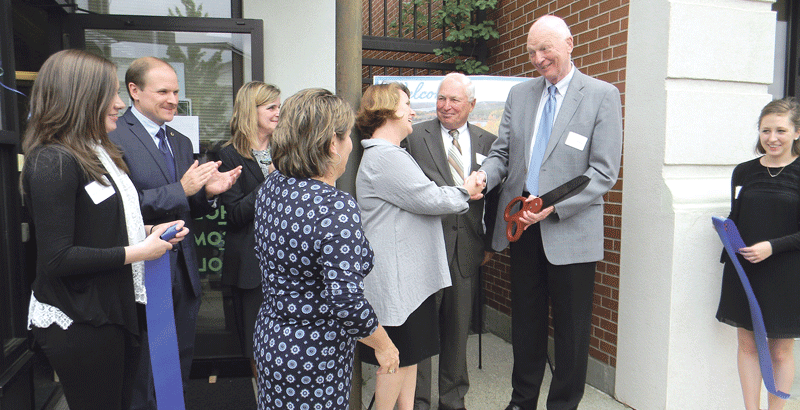
And since a good fit means understanding the needs of both the employer and the employee, Canavan says her firm interviews employers about what a typical work week is like, and talks to prospective employees about what they find acceptable.

There are other important factors, and one of them is that finding the right candidate for a job doesn’t necessarily mean they need all of the technical skills a company would like.

Job-placement specialists agree that skill sets are transferable, so soft skills are often more important than proficiency in a certain area and finding someone who fits well within an employer’s culture and has good soft skills can be the deciding factors in who they hire.

“Employers are more open to understanding this today than they were in the past,” Appleton said. “Many skill sets are transferable.”

Hill-Cataldo added four new employees to her own staff over the past 18 months, and followed that principle; her new placement coordinator was a legal assistant, and other hires came from the banking and retail industries.

“You can train someone on the technical aspects of the job, but you can’t train them to be passionate about their work,” she said.

Future Outlook

The need for qualified employees continues to grow, and more companies are taking measures to ensure that the people who already work for them are happy, which is critical to retention. They are also focusing on why their firm stands out so they can sell themselves to candidates they like.

Hill-Cataldo and other experts say this is especially important in the current competitive environment.

“It’s not your typical market, and we are so busy we can’t identify enough qualified candidates for the business we have,” she noted, adding that they are placing people in many high- level positions.

“It’s a good time to be looking for a job,” she said in conclusion. “There are lots and lots of opportunities.”

Employment Sections

Defining Issues

By Peter Vickery

Peter Vickery

Peter Vickery

At the end of June, the Mass. Commission Against Discrimination (MCAD) was the subject of a report by the state auditor that criticized the agency’s delays, accounting practices, and security controls. Nevertheless, in July the Legislature decided to entrust the MCAD with the task of drafting rules and regulations around the Act Relative to Transgender Discrimination (commonly, and somewhat disparagingly, known as the Bathroom Bill).

But it chose not to make the MCAD the starting point for complaints under the new Pay Equity Act. Both pieces of legislation will affect employers in Western Mass., as would any changes the MCAD makes to its operating procedures in response to the audit report. But first, an overview of a recent decision from the agency’s Boston office that may influence the way employers across the commonwealth handle temporary disabilities.

MCAD & Carta v. Wingate Healthcare Inc.

The MCAD recently awarded a formerly full-time employee $25,000 for emotional distress in part because her employer had done such a good job of accommodating her need to work part-time. When the employer argued that keeping a part-time employee in a job that needed a full timer was an undue hardship, the hearing officer pointed to the fact that the company had coped well enough for five months and could show no loss of revenue or operational burden. The employer may regret having accommodated the disability so effectively.

One might think that the MCAD would want employers to create financially viable workarounds and reward them — or at least not punish them — for providing reasonable accommodations that do not hurt the bottom line. Instead, if this case is anything to go by, an employer’s success in accommodating a temporary disability can count as a strike against it.

The case, MCAD and Carta v. Wingate Health Care Inc., is the decision of a single hearing officer, not the full commission, but it provides insight into the agency’s thinking.

Cecelia Carta was the admissions coordinator for Wingate Healthcare. During 2010, she was off work for health reasons for one week in August and then from September to December. She returned to work part-time Dec. 6, working four hours a day, initially three days a week and later four days a week. On May 12, 2011, Wingate terminated Carta’s employment, telling her that the company needed a full-time admissions coordinator.

They asked her stay in touch and suggested she apply for her old job if and when she could return to full-time work. But they had not warned her (or, rather, presented no evidence that they had warned her) that unless she returned to full time she would be let go. This was an important omission.

Perhaps the HR people were worried that if they told Carta that the company really needed a full-time admissions coordinator as opposed to a part-time one, their words could be construed as in some way discriminatory. Whatever their reason, the lack of notice carried a price tag of $25,000.

The hearing officer did not order Wingate to pay lost wages because Carta had received $116,000 in workers compensation and $181,000 from two injury-related lawsuits. But Carta was entitled to $25,000 for the emotional distress of being terminated without having been warned that her employer would like her to resume work on a full-time basis some time in the not too distant future.

Why did Wingate terminate Carta? The company’s decision-makers seem to have thought that the medical documentation put them on solid ground. After all, at the end of April, Carta’s primary care physician had cleared her to return to full-time work “from a medical perspective.” The doctor deferred to her orthopedic surgeon for orthopedic clearance, and the May 10 orthopedic opinion stated no date for a return to full-time work.

After accommodating the disability for five months, and with no medical opinion showing that Carta could ever return to full-time work, plus the knowledge that Massachusetts anti-discrimination law does not require an employer to keep a disabled employee’s job open indefinitely, Wingate’s decision seems reasonable. But the hearing officer deemed the termination precipitate.

How long should Wingate have continued to employ Carta part-time? According to the MCAD:

“At the very least, [Carta] should have been permitted to complete her physical therapy over the course of the next month, and if then there was no definitive prognosis for improvement, and no anticipated return to full duty, [Wingate’s] obligation to continue providing an accommodation in the form of a part-time schedule would likely have ceased.”

Terminating Carta in the month of May rather than waiting until June cost Wingate $25,000.

State Auditor’s Report

Just before the Fourth of July holiday, the state auditor published an official report on the MCAD. In addition to noting the commission’s four-year backlog and revealing the usual, garden-variety problems that bedevil state agencies (e.g. mismanagement, inefficiency, and poor book-keeping) it confirms a long-harbored suspicion: The MCAD asserts jurisdiction where it has none.

The statute that governs the MCAD clearly states: “Any complaint filed pursuant to this section must be so filed within 300 days after the alleged act of discrimination.” Nevertheless, the state auditor’s report reveals that in the three-year period of the audit (2012-2015) the MCAD processed more than 100 cases where it lacked subject matter jurisdiction because the applicable statute of limitations had run its course:

“[D]uring our audit period, MCAD accepted 123 complaints beyond the 300-day timeframe for complainants to file their complaints. MCAD regulations allow for this 300-day timeframe to be extended under certain conditions, but there was no documentation in the case files to substantiate that any of these complaints met those conditions.”

Out of curiosity I asked the state auditor’s office how they determined this fact. It turns out they simply had to review the data in the MCAD’s case-management system. Perhaps if the MCAD confined itself to cases over which it does have jurisdiction, it would not have a four-year backlog. In any event, employers charged with discrimination should check the calendar and take steps to preserve their objections on the grounds of late filing. Having the case dismissed on jurisdictional grounds may offer little consolation if the dismissal only occurs after four years of investigation.

Act Relative to Transgender Discrimination

This is the statute that opponents dubbed the Bathroom Bill. After much brouhaha, the Legislature passed it and Gov. Baker signed it into law. It provides:

“An owner, lessee, proprietor, manager, superintendent, agent, or employee of any place of public accommodation, resort, or amusement that lawfully segregates or separates access to such place of public accommodation, or a portion of such place of public accommodation, based on a person’s sex shall grant all persons admission to, and the full enjoyment of, such place of public accommodation or portion thereof consistent with the person’s gender identity” (emphasis added).

So what exactly is gender identity? The statute defines it as follows: “‘Gender identity’ shall mean a person’s gender-related identity, appearance or behavior, whether or not that gender-related identity, appearance or behavior is different from that traditionally associated with the person’s physiology or assigned sex at birth.”

Perhaps aware that the foregoing does little more than restate the term “gender identity” rather than actually defining it, and mindful of the potentially ticklish nature of proving any given individual’s gender identity, the Legislature chose to delegate the task of crafting evidentiary standards to a state agency. It selected one with an imaginative and expansive approach to statutory definitions, namely the MCAD. The report is due Sept. 1.

Pay Equity Act

Together with the Act Relative to Transgender Discrimination, the Legislature enacted the Pay Equity Act, which prohibits employers from discriminating upon the basis of gender. The previous statute declared that “no employer shall discriminate in any way in the payment of wages as between the sexes.” The new version provides: “No employer shall discriminate in any way on the basis of gender in the payment of wages.” So out with ‘sex’ and in with ‘gender.’

But isn’t gender the same as sex? No, not any more (see below).

As well as differing from the old equal-pay statute, the new law also differs from the Fair Employment Practices Act (Chapter 151B). Unlike employees bringing complaints under Chapter 151B, employees who wish to charge their employers with violations of the pay-equity statute will not have to start at the MCAD. They can go straight to court. Another novelty is that the new law encourages employers to conduct regular reviews of their pay practices.

If an employee sues, and the employer can show that it undertook a good faith self-evaluation of pay practices within the preceding three years (and made progress in remedying any discrepancies) it will have an affirmative defense. With an affirmative defense, the burden is on the party raising it, i.e. the employer. So with an eye to future lawsuits, employers may wish to keep in mind the need for persuasive evidence sufficient to prove that the good-faith evaluation took place.

But what exactly does the law prohibit? It forbids pay discrimination on the basis of gender, a word the Legislature chose not to define and whose legal meaning has changed over the past 20 years.

In 1996 the United States Court of Appeals for the Fourth Circuit was saying nothing controversial, let alone heretical, when it held that in Title VII cases the words ‘sex’ and ‘gender’ were interchangeable. Although the court observed that “some academic writers” were asserting “that ‘gender’ connotes cultural or attitudinal characteristics distinctive to the sexes, as opposed to their physical characteristics” and that the distinction might be useful “for some purposes,” it decided to stick with the practice of treating ‘gender’ as a synonym for ‘biological sex.’

A dozen years later, the Court of Appeals for the Third Circuit took a more flexible approach, noting that “gender, to some people, is a fluid concept.” After acknowledging that gender is “rooted in science and means sex — male or female — based on biology (chromosomes, genitalia)” the court noted that “the usage of the word is changing in some circles as a result of social and ideological movements that find the scientific meaning to be unsatisfactory or not sufficiently inclusive.” That usage is catching on.

Last year, Judge Mastroianni of the United States District Court for the District of Massachusetts stated that the statutory prohibition against discrimination “on the basis of sex” prohibits discrimination not only on the basis of “biological sex” but also on the basis of a “gender identity.”

As authority for this proposition he cited a First Circuit Court of Appeals decision from 2002 and a Supreme Court decision from 1989 that used the words ‘sex’ and ‘gender’ as synonyms, concluding that by using the words interchangeably those courts had interpreted ‘sex’ to encompass ‘gender identity.’ Of course, using the words interchangeably had led the Fourth Circuit to precisely the opposite conclusion, i.e. that the word ‘gender’ had its scientific meaning, namely biological sex. But that was way, way back in 1996.

Nowadays law must pay less heed to science, with its pettifogging attention to such trifles as chromosomes and genitalia, and more to the “social and ideological movements” that deem the scientific terminology “not sufficiently inclusive.” Therefore, so far as the judges are concerned, if a statute says that it prohibits discrimination on the basis of sex (a matter of biology) what the statute really prohibits is discrimination on the basis of gender (a matter of identity).

And what of a pay-equity statute prohibiting discrimination on the basis of gender (not sex); what does it forbid? We shall have to wait and see.

Peter Vickery practices employment law in Amherst; (413) 549-9933.

Employment Sections

Sexual Harassment in the Workplace

By Karina L. Schrengohst Esq.

Karina L. Schrengohst

Karina L. Schrengohst

“I think you and I should have had a sexual relationship a long time ago . . . sometimes problems are easier to solve” that way.  This statement is one of several sexually charged statements former Fox News host, Gretchen Carlson alleges were made by former chairman and CEO of Fox News, Roger Ailes.  Carlson claims, among other things, that she was subjected to sex discrimination and sexual harassment in the workplace. In addition, she alleges that her employment with Fox News was terminated after she reported this discrimination and harassment and rejected Ailes’ sexual advances.

Carlson’s lawsuit illustrates the two different ways sexual harassment claims arise. Most commonly, sexual harassment claims are based on hostile-work-environment harassment, which happens when sexual advances, comments, or conduct are severe and pervasive enough to interfere with an employee’s work environment and work performance.

Carlson claims that her co-host created a hostile work environment by treating her in a sexist and condescending way, shushing her, mocking her, shunning her, refusing to engage with her, and belittling her contributions. According to Carlson, after reporting this conduct to Ailes, he called her a “man hater” and “killer” and told her she needed to learn to “get along with the boys.”

Carlson also claims that Ailes ogled her and made comments about her body, including asking her to turn around so he could view her posterior, commented on certain outfits enhancing her figure, and commenting on her legs. In addition, this case illustrates quid pro quo sexual harassment, which occurs when something — a raise or promotion, for example — is promised in exchange for sexual favors or when an employee is fired for saying no to sexual advances.

According to Carlson, Ailes made it clear to her that the problems she was having at work would not have existed and could be solved if she had a sexual relationship with him.

Sex discrimination and sexual harassment is prohibited in the workplace by state and federal law. As such, employers have an obligation to take reasonable steps to prevent sexual harassment before it arises and to create a harassment-free workplace.

The first step employers can take toward prevention is creating and implementing a comprehensive written policy prohibiting sexual harassment, which has a procedure for reporting harassment. The proliferation of electronic devices and social media adds a layer of complication that did not previously exist in the workplace. As employees increasingly communicate electronically and via social media sites, there are even more opportunities for problems to arise — and to arise outside of the line of sight of supervisors.

This means that an employer’s policies should consider how harassment can arise in this context.

The next step employers can take toward eliminating sexual harassment in the workplace is ensuring that their policies are effective in practice. It is critical to communicate with employees about anti-discrimination and anti-harassment policies to ensure employees understand the company’s policies. In addition, employers should regularly train employees with supervisory roles to make certain they understand their obligations and know how to recognize and report sexual harassment when it arises.

This is particularly important because supervisors are a company’s first line of defense. What they do (or do not do) can prevent (or create) a problem. Providing the proper training to supervisors can help shield the company from costly and time-consuming employment litigation claims. Further, employers should establish an investigative process to promptly and consistently handle all complaints of discrimination and harassment. Any allegation of sexual harassment must be treated seriously, documented, and investigated in a timely manner. Finally, employers should take appropriate corrective action, as necessary.

Although in this instance Fox News has lucked out, that is not usually the case and employers typically find themselves named as a party. Employers would be wise to take proactive, preventative steps to eliminate workplace discrimination and harassment, which in turn helps to reduce the risk of liability when faced with a sexual harassment lawsuit.

Karina L. Schrengohst Esq. specializes exclusively in management-side labor and employment law at Royal, P.C., a woman-owned, women-managed, boutique, management-side labor and employment law firm, which is certified as a women’s business enterprise with the Mass. Supplier Diversity Office, the National Assoc. of Minority and Women Owned Law Firms, and the Women’s Business Enterprise National Council; (413) 586-2288; [email protected].

Business Management Sections

Anatomy of an ESOP

Delcie Bean recalls that he was advised — by more than one individual and on more than one occasion — that it might not be wise to initiate an employee stock ownership plan (ESOP) while the company was still very much in a strong growth mode. But he decided this self-described gamble was certainly worth taking — and for many reasons.

Delcie Bean

Delcie Bean

Delcie Bean likened an employee stock ownership plan, or ESOP, as one is commonly called, to an onion.

By that, he obviously meant that it has many layers of intrigue and complexity, as he found out while researching, planning, and eventually executing one for the company, Paragus Strategic IT, that he founded 17 years ago, when he was just 16.

“My initial understanding of an ESOP amounted to this 30,000-foot view,” he explained. “Over the past 2 ½ years, we kept peeling back the layers. I’ve learned more about this over the past few years than I could ever have imagined.”

Despite all these layers, Bean, as he explained why and how he went down this path, said there are two basic truths that he started with and that were still there when he peeled away all those layers: That this is, at least in his mind, the proper and fair course to take, and it is also (and this is in nearly everyone’s mind) a gamble.

“There’s a big part of me that believes that it’s the right thing to do — the fair and equitable thing to do,” he explained. “It’s not like I work that much harder than anyone else here, and there are people here who I’m sure work much harder than I do some days.

“To me, I always just felt uncomfortable with the fact that this young company was growing so fast and amassing a decent evaluation,” he went on, “but, for the most part, that was predominantly just to benefit me; I didn’t really like that.”

As for that second basic truth, Bean said he’s gambling that if he fast-forwards 10 years … 60% of the valuation of the business (as an employee-owned company) will be roughly the same or more as 100% of the valuation if he had remained the sole share holder in the venture.

“And I’ll never really know the answer to that, because we won’t be able to see both, obviously,” he told BusinessWest. “But it is something I really believe is possible. However, it takes a lot more than just forming an ESOP — there’s a lot of cultivation, education, and motivation needed. But if we get it right, then I think we can leverage the ESOP to grow the company, not only faster, but better, making it healthier, more stable, and more resilient than it could have been had I owned it and just had a bunch of employees.”

Referencing this ‘gamble’ part of the equation, Bean noted that he was actually advised — very early and quite often — against taking this step now, when the company is still very much in a growth mode, as opposed to full maturity or something approaching it, when ESOPs are a far more attractive option.

“They told me I might be leaving a lot of money on the table,” he said, adding that he didn’t want to wait 10 years or even 10 more months, because he thinks this gamble is well worth taking, and one he believes other business owners should take as well.

Paragus owners

Delcie Bean, third from right, joins other Paragus owners at a recent reception to mark the closing on the company’s ESOP.

Why? Primarily because giving employees an ownership stake in the company can — that’s the operative word here — bring advantages ranging from greater ability to recruit and retain talented workers, to improved morale, to an even sharper focus on growth and strategies to enable a company to function more effectively and more profitably.

And as one small, yet hopefully effective example, Bean pointed to … the company’s postage machine, or, to be more, precise, to the fact it’s been retired in favor of simply placing stamps on envelopes (no one has to lick them anymore).

“One of the employees pointed out that the cost of our postage machine we were renting, for the amount of postage we were using, just didn’t make sense,” he explained. “We thought ‘we’re a business, we’re supposed to have a postage machine; no one puts stamps on envelopes anymore.’ But she ran the math and figured out it would save us $1,800 a year to just pay for stamps and put them on, even with the labor added in.”

But overall, ESOPs are undertaken for more far-reaching, and more long-term, strategic thinking and implementation, he went on, noting that with ownership of the company comes what amounts to a greater stake in its success.

For this issue and its focus on business management, BusinessWest uses the Paragus ESOP as a window into this complex and often misunderstood business tool, and also at what Bean believes it will mean for his already-highly-visible company.

Taking Stock

To help explain just how onion-like and complicated an ESOP is, Bean said the plan to initiate one was actually announced to staff at a company retreat nearly three years ago, and he had undertaken preliminary research and calculations long before that.

Then, as now, the company was defined by strong growth (roughly 24% per year has been the average), as well as physical expansion — the company is already starting to feel snug in new quarters opened in Hadley just two years ago — a constantly growing staff, and the mounting challenge of finding and keeping talented help in that climate.

In all ways, the arrow was pointing decidedly up.

And this is not the time, as noted earlier, when business consultants advise ownership to go the ESOP route.

But Bean, who has generated headlines in recent years for all kinds of reasons — from almost-permanent residence on Inc. magazine’s fastest-growing companies list, to BusinessWest’s Top Entrepreneur award for 2014, to the opening of new businesses and a unique training facility to prepare people for careers in IT — decided it was time to generate one of a different kind.

And, again, he said there were many motivations, and primarily a desire to share the wealth — in part because it should be shared, in his thinking, but also because doing so would benefit the company.

Seeking to feel more comfortable with the manner in which the pie would be divided, Bean started doing some research.

It involved books, articles, case studies, and some recent examples, locally and nationally. As noted with the onion reference, he learned that ESOPs are quite involved and require planning, execution, and a large team to handle both.

As part of the exercise, Bean became closely acquainted with the ESOP undertaken by a Springfield, Ill.-based company that remanufactures and resells engines. That case was considerably different — the venture had been bought, the buyer announced its intention to sell it or shut it down, and the employees, fearing the loss of their jobs, secured the capital to buy it — but the machinations were similar enough to make it a learning experience.

There were others, including the ones at Harpoon Brewery and Chibone Yogurt, Bean went on, adding that his research revealed that in most cases, ESOPs are initiated by companies looking to raise capital for equipment purchases and other reasons, or by owners looking for an effective exit strategy.

“As Baby Boomers look to retire, if they don’t have a succession plan already created they may use ESOPs to help them with that challenge,” he said, adding that given current demographic trends and the lack of succession plans at companies large and small, it’s likely that there will be an uptick in ESOPs in the years to come.

Despite his aggressive research, though, Bean found it very difficult to find an ESOP quite like the one he was planning, for all those reasons stated earlier.

“I’m not looking to go anywhere,” he said, adding that this was a point he had to drive home to his employees over the course of the nearly three years it took to bring the plan to fruition. “Rather, it’s a commitment that I’m all in.”

ESOP’s Fable

And as he explained ‘all in,’ Bean offered some specifics as to how this ESOP works, and, more importantly, how he expects the company to leverage it in the years and decades to come.

He started by saying that unlike those cases where an ESOP is an exit strategy, no funding was raised by employees and no cash changed hands. In essence, 40% of Paragus (roughly $1.4 million) was gifted to the 40 or so employees in the form of a trust that is wholly owned by the employees of the company. And this share of the company becomes a type of retirement plan, or another retirement plan as the case may be (there’s a 401(k) program already in place).


“Once a year, employees will get a statement showing how many shares they have in their account, and what the valuation (of the company) is, and therefore what those shares are worth and what their account is worth,” he explained, adding that the ESOP becomes a perc — in his mind, a very attractive one.

We need to help the employees understand, from the context of their job, the things they can do to have an impact that matters and that can change the bottom line. We have an obligation to simplify the business down so that every position has a metric that they can understand, that is tracked, is clear, and that ties into our profitability, so they know what they can do.”

Indeed, the company has a 10-year goal for growth and valuation ($40 million to be specific), and if it is hit, he projects that the average ESOP account, governed by ERISSA, will be worth “in the low six figures.”

As for leveraging the ESOP, which closed June 8, Bean said the company had already generated a culture of ownership — reinforced with rewards — throughout its ranks, but the ESOP will hopefully take it to a higher level.

“In order for this gamble to work, there is an obligation on the part of the employee, but there’s also an obligation on us,” he explained, meaning company leadership. “We need to provide education, training, and motivation.

“We need to help the employees understand, from the context of their job, the things they can do to have an impact that matters and that can change the bottom line,” he went on. “We have an obligation to simplify the business down so that every position has a metric that they can understand, that is tracked, is clear, and that ties into our profitability, so they know what they can do.”

Elaborating, he said that each position has such a metric, and, therefore, steps, or operating strategies, that can improve profitability. Examples include everything from purchasing policies, to the level of customer service provided by service techs, to that postage machine.

At present, the company is looking at every position from the vantage point of creating a metric and providing employees with the tools, and motivation, to know where and how to work harder and better.

“If they don’t know where to invest the effort, then even if they want to, they won’t do it,” he explained, adding that one key through all of us is to take steps that improve profitability while not negatively impacting quality of service.

The Bottom Line

When asked if and how the company would begin to know if this gamble was paying off, Bean said a look at the numbers about 16 months from now would provide some clues.

“We’ve been averaging about 24% growth over the past seven years; if we can increase that number, I think we can be fairly confident that it’s because of the ESOP as the biggest factor,” he explained. “We’ll know at the end of 2017, when we’ve had a full year with this; we’ll see if we beat that 24% number.”

But the company is looking well beyond the end of next year, he added quickly, noting that the key isn’t achieving more-profound growth, it’s sustaining it.

“It’s not about a short-term bump, it’s about a long-term sustainable approach,” he said in conclusion, adding that he firmly believes an ESOP can help attain all that, and that’s why he took this gamble.

George O’Brien can be reached at [email protected]