Home Archive by category Special Coverage (Page 5)

Special Coverage

Community Spotlight Special Coverage

Community Spotlight

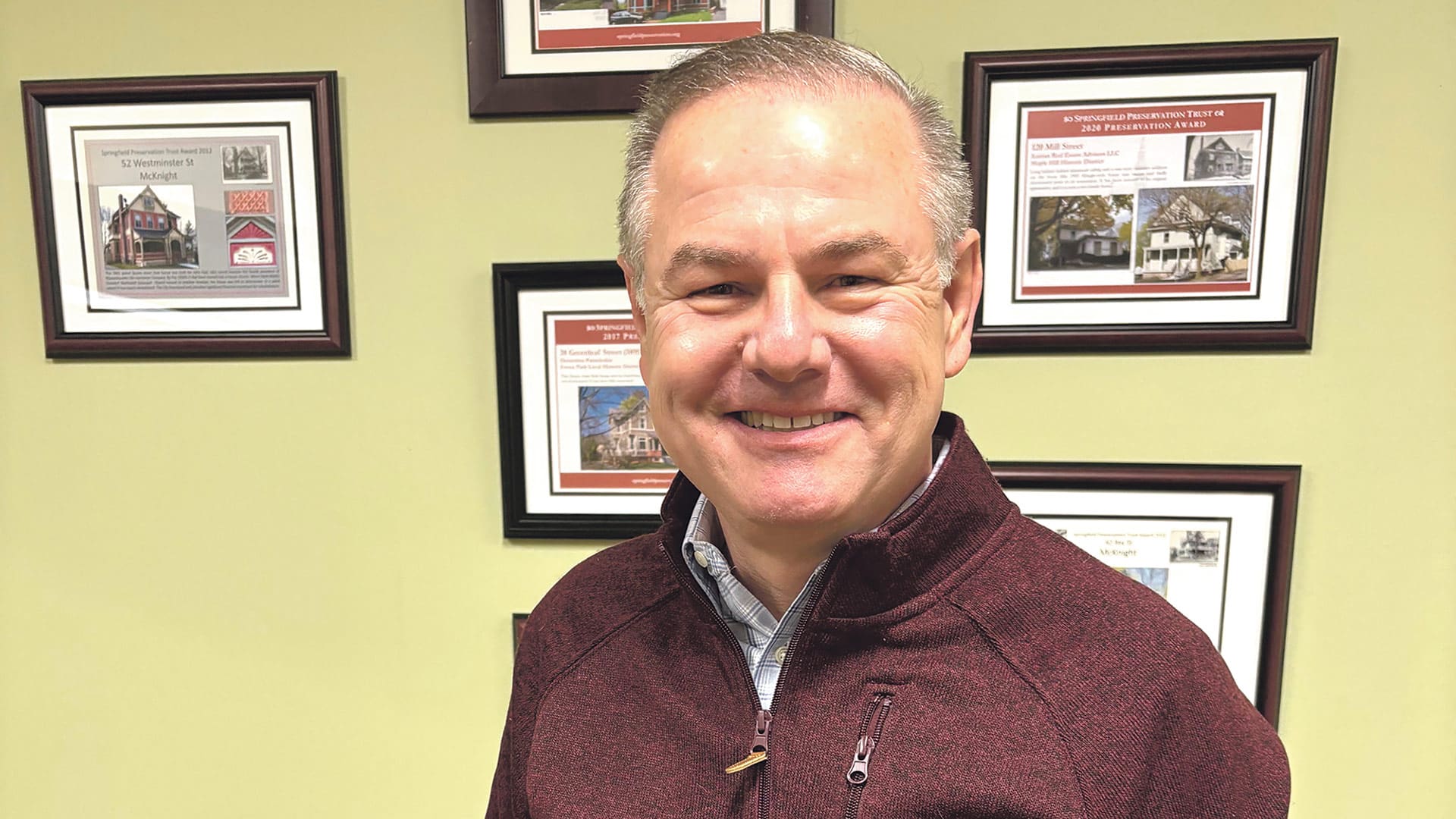
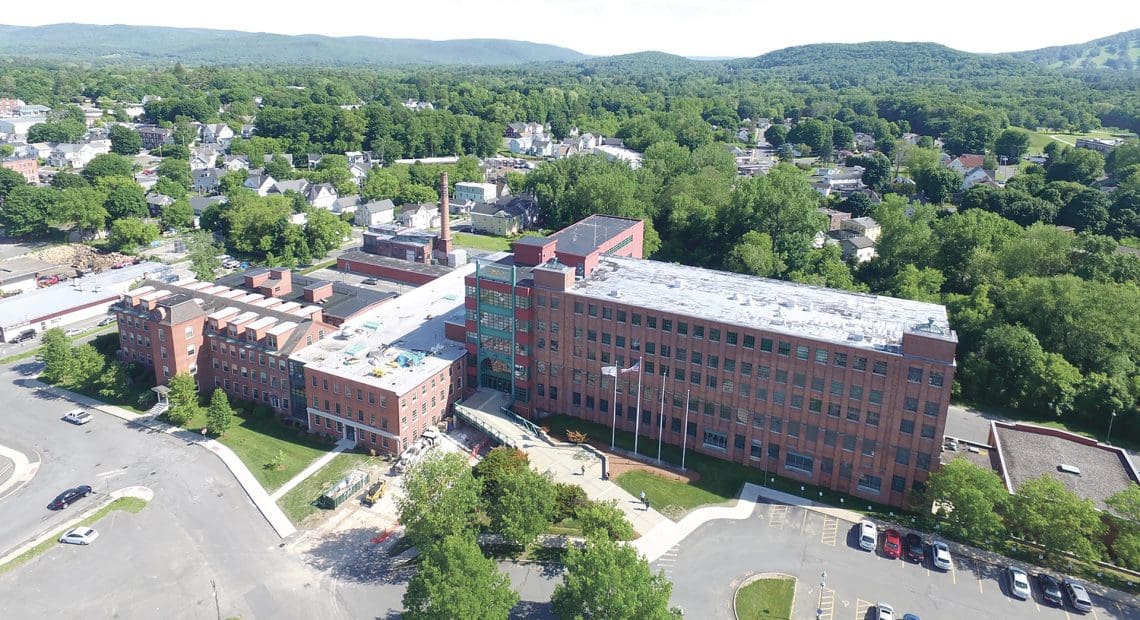
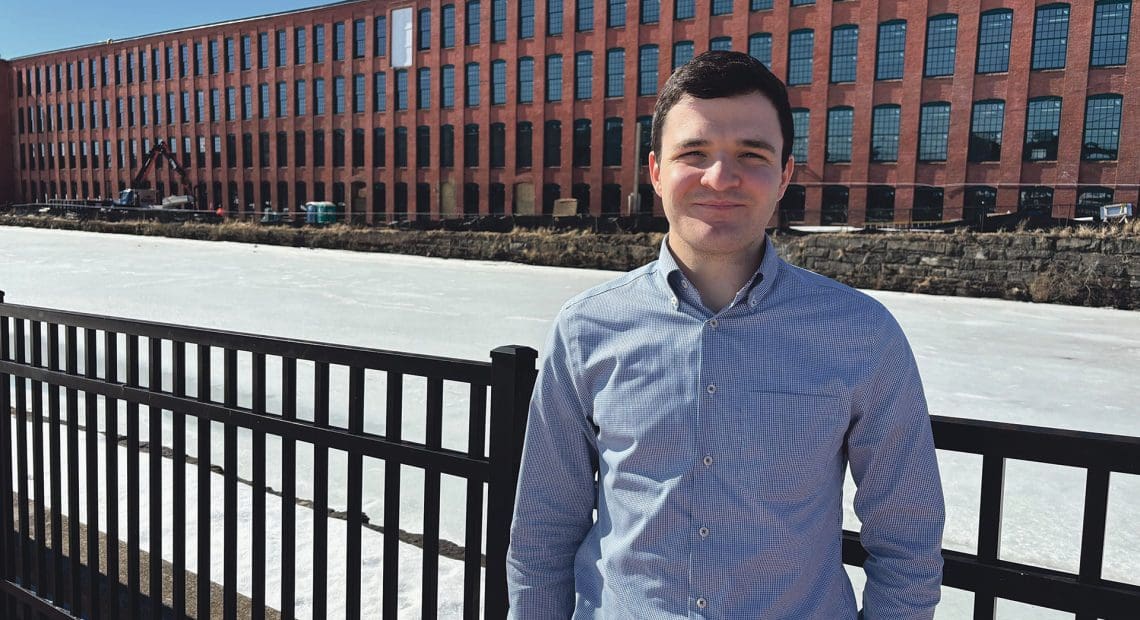
Hagop Toghramadjian stands outside phase one of the Residences on Appleton, which features 88 units of mixed-income housing.

Hagop Toghramadjian stands outside phase one of the Residences on Appleton, which features 88 units of mixed-income housing.

Aaron Vega calls them ‘meet and greets.’

And they are, well … just what that name suggests. They’re meetings between city officials and small-business owners, many of them representing ventures in the emerging ‘climate tech’ sector who have heard about Holyoke and the companies that now call it home, and want to hear more with an eye toward following them.

“They’re hearing about Clean Crop, they’re hearing about Sublime Systems, they’re hearing about Simple Pack, and they want to know what’s going on,” said Vega, director of the city’s Office of Planning and Economic Development, referring to three cutting-edge businesses we’ll get to back to later that are either already in Holyoke or advancing plans to locate there.

As city leaders listen to these business owners, a common thread — and a real challenge for the community — emerges.

“The biggest challenge for these companies that want to come to Holyoke as they move from their startup space is that there’s no built, ready space for them,” Vega noted. “There’s no white-box office space to move into. These guys don’t want to get involved in a rehab project; they want to be able to move in and get to work.”

“The biggest challenge for these companies that want to come to Holyoke as they move from their startup space is that there’s no built, ready space for them. There’s no white-box office space to move into. These guys don’t want to get involved in a rehab project; they want to be able to move in and get to work.”

Holyoke’s meet and greets and other aspects of its efforts to bring more small businesses to this former manufacturing hub — and early-stage efforts to create more spaces for them to move into — are just a few of the many converging storylines in Holyoke.

Others include:

• New housing projects, including a WinnDevelopment initiative at the former Farr Alpaca Co. complex — a $60 million endeavor that will create 88 units of mixed-income housing for adults 55 and over in phase 1 and another 70 in phase 2, while preserving a huge piece of the city’s past — and another project at Open Square that will create 80 units of market-rate housing;

• A cannabis cluster in flux: Holyoke welcomed the cannabis industry with open arms, and for a time, it looked like a large cluster of different businesses, from growers to dispensaries, would settle there. Some have, but as the sector faces growing pains and overall contraction, the city faces challenges, including businesses that are fighting to survive and one large grow facility, Trulieve, that has closed, with its huge plant sitting idle;

• New businesses and greater energy downtown. The city continues to ride a wave of entrepreneurship that has generated several new restaurants and storefronts in and around High Street, Vega said, adding that the new housing units coming online should generate more new-business activity;

• Those aforementioned companies in the green-energy and climate-tech sectors, headlined by Sublime Systems, which will manufacture environmentally friendly concrete at a plant on Water Street;

• A sports complex that is still in its early stages, with a site identified on Whiting Farms Road and other properties being assembled, as well as new ownership of Wyckoff Country Club (see related story on page 31).

• A reinvigorated Holyoke Community College, which has received a huge boost from MassEducate, the state’s free community-college program, and is making adjustments in the wake of a 24% rise in enrollment over the past two years;

• A new strategic plan for the city now being prepared, which is expected to help create a road map for continued progress in a city that has seen momentum on several fronts in recent years; and

• Existing businesses and traditions, especially the upcoming Holyoke St. Patrick’s Day Parade and Road Race.

Slicing through all that, Mayor Joshua Garcia, the Holyoke native now in his fourth year in the corner office, said the city is achieving progress with many goals and on several fronts, but there is still considerable work to do and projects to bring to the goal line.

These include everything from the sports complex to renovation of the historic Victory Theatre, a project now 40 years in the making. Those behind the effort are still struggling to close a significant gap between the funding that’s been raised and what will be needed to revitalize the landmark.
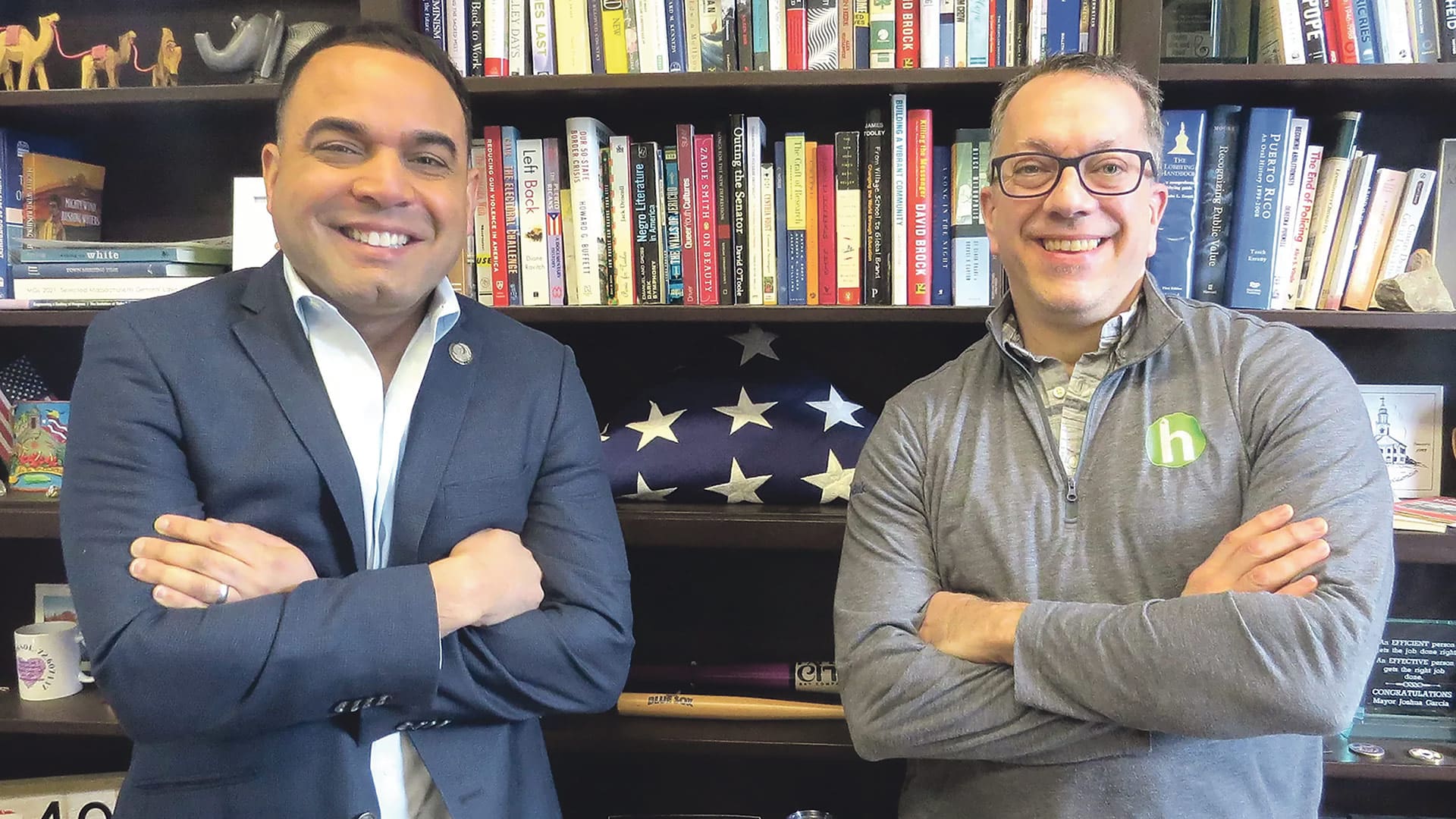
Mayor Joshua Garcia, left, and Aaron Vega

Mayor Joshua Garcia, left, and Aaron Vega say Holyoke continues to pursue — and add — new businesses in the broad realm of climate tech.

Garcia described economic development in the city as an ecosystem, one including manufacturing, small — and often very small — businesses, hospitality, the arts, food, and sports.

“The question is, how can we get all the boats to rise together so we’re establishing sustainability in our city?” he asked, adding that the answer to that question is the ongoing priority of his administration.


Not Your Run-of-the-mill Project

“Daunting.”

That’s the word Hagop Toghramadjian, a project director and development counsel with Boston-based WinnDevelopment, settled on as he was asked to describe the ongoing work at Appleton Street at the former Farr Alpaca complex.

Elaborating, he said he considers the project, called the Residences on Appleton, now far more than a decade in the making, to be the most challenging building-conversion initiative that WinnDevelopment has undertaken. And that’s saying something.

Indeed, the company has taken on many complex projects locally, including 31 Elm St. (Court Square) in Springfield and several buildings in the Ludlow Mills complex, and in numerous other communities as well.

But this conversion of the 125-year-old former mill complex into housing is on another level, said Toghramadjian as he talked with BusinessWest in the kitchen of one of the nearly finished units. He noted that there are several reasons why — from the extremely poor condition of the mill to the need to assemble property for parking and a three-story amenities building, to simply securing access to a building bordered on one side by a canal and the other by the Pioneer Valley Railroad.

As with all projects of this nature, there was also the challenge of pulling together the requisite pots of money, which, in this case, included everything from state and federal historic tax credits to state and federal low-income housing funds.

“We want to keep these small businesses local; we want to keep them here and give them an opportunity to grow their business.”

“Where we’re standing now … there was thin air, the floor had rotted through, the roof had rotted through — only the brick walls were still standing,” he said. “It was very dark, the air quality was bad … you would never dream that this could become comfortable, beautiful housing.”

But the various groups involved have persevered because this project is as important as it is difficult, he noted.

“Given its location and given how blighted it was, it cast a shadow on the whole downtown — it was a top priority for the city,” said Toghramadjian, noting that the site sits between Main and High streets, the city’s two main commercial districts, and directly across from Holyoke Heritage State Park and the Massachusetts Green High Performance Computing Center. “Because of that, they’ve been really good partners, and that’s why Winn came to Holyoke and made this investment here — it’s because the city knew what it took to make this kind of project happen.”

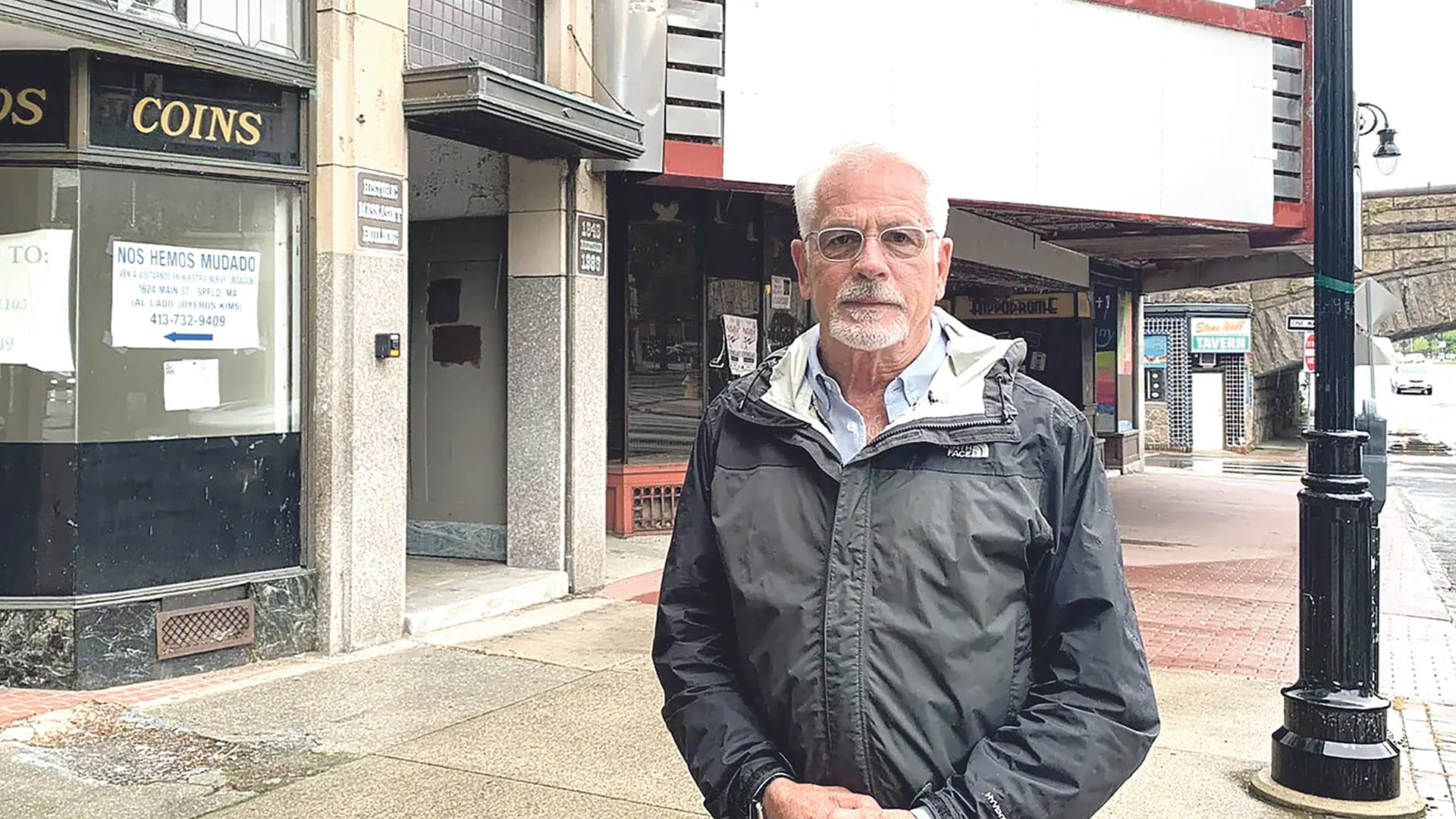
Jim Lavelle

Jim Lavelle

“We’ve been trying to promote not only the lower utility rates here, but the clean energy that customers can promote with their products and hopefully help with sales.”

As phase 1 continues, with leasing to commence and tenants due to start moving in this fall, Toghramadjian and others we talked with said that, while these 88 units will make a welcome addition to the landscape and help spur economic development in the area, they represent a drop in the bucket when it comes to the city’s overall housing needs.

Indeed, Garcia said a recent report put that need at roughly 1,600 units of new housing over the next 20 years across the broad spectrum of income levels, which is another key element in the equation because different types of housing, including market-rate and homeownership, enables residents to stay in the city as their financial situation improves.

“The Appleton Street project doesn’t address the magnitude of the problem, but we’re chipping away at it,” said the mayor, noting that there may be as many as 600 units already in the pipeline.

That includes phase 2 of the Appleton Street initiative, he said, noting that WinnDevelopment is currently assembling the required pots of money for that initiative, as well as the market-rate units planned for Open Square and other ongoing housing initiatives.

There are several smaller housing initiatives taking place, said Vega, including many involving the upper floors of properties along High Street, projects that provide a few or a few dozen units, all of which help meet growing need.

The problem, he went on, is the immense competition for limited state and federal support for such initiatives, with seemingly every community in the Commonwealth in need of housing.

“All the developers are going for the same pots of money, whether they’re in Holyoke, Springfield, Chicopee, or West Springfield,” he said, adding that, in this environment, having a solid mix of projects, large and small, in the pipeline is a must.


Current Events

As noted earlier, there are several projects in various stages of development in Hoyoke, and many converging storylines.

One of the most intriguing involves new-business development, especially in green energy and related sectors, where a cluster is emerging as companies eye Holyoke for location, available and relatively inexpensive real estate, and, especially, its lower-cost, clean electricity, said Jim Lavelle, general manager of Holyoke Gas & Electric (HG&E), which provides that energy.

“We’ve been trying to promote not only the lower utility rates here, but the clean energy that customers can promote with their products and hopefully help with sales,” said Lavelle, adding that Sublime Systems is just one of many businesses, large and small, that have chosen Holyoke for that reason, among others.

As an example, he cited Simple Pack, a company now located in Open Square that manufactures green food packaging to restaurants, schools, hospital cafeterias, and food distributors. Being able to say such products are produced with clean energy, in this case hydropower, is important to the company’s mission and a strong selling point with its clients, he said.

There are several similar examples, said Lavelle, who will gain a different title in a few days — grand marshal of Holyoke’s annual St. Patrick’s Day Parade.

While his father served in that role decades ago, Lavelle never expected to wear that hat himself because, while he’s long been somewhat involved in the parade, he has never served on its committee.

He considers the honor a nod to HG&E’s important role in the city, and is enthusiastic about fulfilling the many duties of grand marshal, including attendance at myriad events and, in accordance with tradition, responsibility for parade-day weather.

“I have a much greater appreciation for the effort that goes into all these different events that the parade committee puts on,” he said. “And I have a much greater appreciation for how strong a regional collaboration exists between the different communities’ parade committees and other civic organizations and the sponsors; they really work hand-in-hand on all these different events that happen across Western Mass.”

Putting his HG&E hat back on, figuratively if not literally, Lavelle said Sublime Systems, which he believes should be ready to starting building its facility later this year or early next, will soon become the utility’s largest customer, with 10 to 12 megawatts of demand. That’s a huge draw, but one it can easily absorb thanks to transmission-system upgrades, he went on, adding that the HG&E has the capacity to attract several more large users and dozens of smaller ones.

Attracting these businesses is one of many priorities for the city, said Vega, noting that there have been a steady volume of meet-and-greets in recent years, and more are on the schedule.

Many of these sessions involve early-stage companies, many of them in green-energy or green-manufacturing ventures, he said, adding that, in addition to city officials, the leaders of companies like Clean Crop, which uses electricity to revolutionize food safety, are often in the room to discuss Holyoke and its many selling points.

“If they’re a little further along and they have specific questions, we’ll bring in Holyoke Gas & Electric to talk about the energy portfolio they can provide,” the mayor went on. “We’re on people’s radar — we just need to put the package together to bring them in.”

Holyoke at a Glance

Year Incorporated: 1786
Population: 38,247
Area: 22.8 square miles
County: Hampden
Residential Tax Rate: $17.46
Commercial Tax Rate: $38.54
Median Household Income: $37,954
Median Family Income: $46,940
Type of Government: Mayor, City Council
Largest Employers: Holyoke Medical Center, Holyoke Community College, ISO New England Inc., PeoplesBank, Universal Plastics, Marox Corp.
* Latest information available

Which brings him back to that ongoing challenge of offering them spaces that are ready to move into. There aren’t many of them in the city, but he’s in discussions with some building owners about possibly partnering with the city to develop co-work, start-up, or innovation space.

“That’s a direction we want to go in,” he told BusinessWest. “We want to keep these small businesses local; we want to keep them here and give them an opportunity to grow their business.”


Bottom Line

As for businesses already growing in Holyoke, there are many in the cannabis sector, which, while it is experiencing strong growing pains, remains a force in Holyoke, Garcia said.

He noted that social consumption, or so-called cannabis cafés, constitutes the next frontier for this industry — the Cannabis Control Commission is taking up regulatory reforms on such facilities — and for some establishments in Holyoke, it could be a real lifeline in this time of growing challenge.

“In Holyoke, we want to be among the first communities to adapt and implement that opportunity for on-site consumption,” he said, likening these establishments to bars and restaurants in the sense of attracting people to the community. “If we can bring people into our city to spend money, that’s a plus.”

With cannabis, as with many of the other storylines unfolding in Holyoke, Garcia said he remains a “glass-full leader.”

That means he’s optimistic, but also realistic. It means he understands that, while much has been accomplished, there’s still much to do, and on many fronts.

It means he’s more bullish on his hometown than ever.

Business Talk Podcast Special Coverage

We are excited to announce that BusinessWest has launched a new podcast series, BusinessTalk. Each episode will feature in-depth interviews and discussions with local industry leaders, providing thoughtful perspectives on the Western Massachuetts economy and the many business ventures that keep it running during these challenging times.

Go HERE to view all episodes

Episode 229: March 3, 2025

Editor Joe Bednar talks to Girls Inc. Executive Director Suzanne Parker

Suzanne Parker
The mission of Girls Inc. is to inspire all girls to be strong, smart, and bold. But Girls Inc. of the Valley has certainly displayed those characteristics in other ways, including building out and opening a new, dynamic headquarters two years ago and expanding upon programs that immerse girls in STEM studies, career preparation, skills to overcome challenges and achieve mental wellness, and much more. On the next episode of BusinessTalk, Executive Director Suzanne Parker talks with BusinessWest Editor Joe Bednar about how the organization’s focus and programming continue to evolve in the service of helping girls succeed and thrive in myriad ways. It’s must listening, so tune into BusinessTalk, a podcast presented by BusinessWest.

Also Available On

Banking and Financial Services Special Coverage

Setting Its Sites

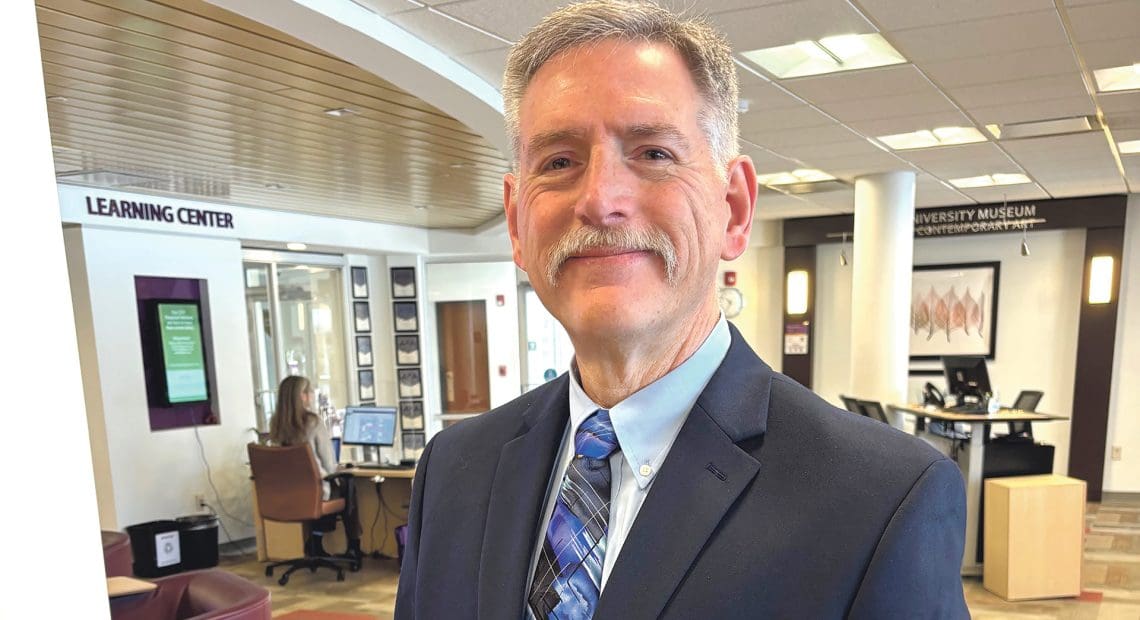
Rich Kump says UMassFive College Federal Credit Union is persevering

Rich Kump says UMassFive College Federal Credit Union is persevering through challenging times for this sector.

Rich Kump says UMassFive College Federal Credit Union is in a mood to “make up for some lost time.”

Elaborating, he flashed back more than two years, to when the institution was starting to move ahead with plans to move its flagship location in Hadley to a new location just down Route 9, while also advancing efforts to make a push into Hampden County with a location in or near Springfield and a smaller satellite office within Springfield that would serve one of the city’s many banking deserts.

Returning to today, he said the credit union — which he serves as president and CEO — has made very little, if any, progress on those fronts, due to issues with all three sites that we’ll get into later.

He summed it all up with some understatement, and a needed sense of humor, saying, “what I have surmised from all this is that we’re not very good at picking branch sites.”

Now, the institution is looking at 2026 for the Hampden County locations, and a longer timeline for the new Hadley location, which he admits is less of a priority now than it was back in late 2022, due primarily to remote-work options that have alleviated space concerns that were a prime motivator for relocating the flagship branch.

“Moving the Hadley branch does not generate a whole bunch of new loans and deposits and members.It provides some great visibility, but not many growth opportunities.”

These are all still priorities, but they have been supplanted by larger concerns and dramatically changing times — for all banks and credit unions, one in which the rising interest rates of 2023 and early 2024 tightened already-thin margins, reduced profits, and pushed many credit unions to the point where they needed to merge with another institution or close.

“It’s been a troubling time, with many credit unions posting losses,” Kump said, noting that there were 41 credit-union mergers nationwide in the fourth quarter of 2024 alone, some of them generated by a need for small credit unions to expand services, but many others prompted by poor financial condition.

UMassFive has been looking to move its flagship branch in Hadley

UMassFive has been looking to move its flagship branch in Hadley (pictured) to a new location down Route 9, but other priorities are currently more important.

UMass Five, which has six branches across Western and Central Mass., including one at its namesake, UMass Amherst, is not so imperiled, but it has seen deposits tumble and overall performance slide due to these colliding factors.

“We had to increase our rates to keep the deposits we had, and, of course, that increased our cost of funds quite a bit. And while the cost of funds increased, we still have a loan portfolio, much of which was at much lower than market rates,” he said, explaining, in simple terms, the main challenge facing all institutions.

UMass Five, with roughly $570 million in deposits and around $700 million in total assets, didn’t load up its balance sheet with large numbers of low-interest borrowings, he went on, but it certainly felt the pinch.

“Our net interest margin did shrink a little — not as much as others, but overall, we saw our net income decline,” Kump said, adding that the bank grew at just 0.24% in 2024, what would normally be considered an off year, but, under these circumstances, acceptable.

Moving forward, the credit union, like many other financial institutions, must balance life in these more difficult times with the need to grow, attain more deposits, and create economies of scale, and thus become better able to handle the ongoing headwinds.

UMassFive is not in a position to be acquired, and it is not exactly looking for opportunities to acquire others, although it will certainly consider them as they emerge, said Kump, adding that, for now, the preferred method of growth is organic.

Which brings us back to those branches that have been in the planning stages. They are important parts of the credit union’s overall growth strategy, and while the institution will move forward, it is not going to rush anything.

Indeed, while he regrets losing time with these initiatives, as he said at the top, the process of selecting new branch locations — an art and science that involves everything from visibility to the volume of other traffic-generating businesses, to the number of competing banks and credit unions in the general vicinity — is necessarily slow and involved, and UMassFive will take its time and get it right.

“We’re back to square one,” he said of the Hampden County locations. “But it’s more important to do this well then do it quickly.”

For this issue and its focus on banking and financial services, we talked with Kump at length about what’s in the business plan for UMassFive, and just how the institution will make up for that lost time.


Points of Interest

Recapping what’s happened with those three planned branches, Kump said not much has gone right, and each story is different.

In Hadley, the property where the credit union intends to go is occupied by an auto-repair shop and a small single-family home being rented from the property owner. Long story short (we’ll do a lot of that), that tenant has not gone quietly — the matter has wound up in Housing Court in a protracted battle — and won’t be out for another six months or so.

“We’re still interested in that site … we’re putting together a new purchase agreement because we hadn’t anticipated such a lengthy delay,” Kump said. “But it’s still in our future, and we do want to move our flagship location to that more visible site on Route 9.”

Meanwhile, in Hampden County, at a location in East Longmeadow near the Springfield line, a site chosen after extensive research, a new branch has been scrapped due to issues with the sewer system. And that satellite location? After more than a year of deliberations, the owner of that property ultimately decided not to sell or lease it.

So UMassFive is now essentially where it was two and half years ago on all three projects — waiting to get started in Hadley and trying to find the right sites in Springfield, Kump noted, adding that, over that time, the landscape for credit unions and banks has changed when it comes to liquidity, profitability, and, in this specific case, priorities and growth strategies.

“As many other financial institutions are doing, we’re managing our growth,” he explained. “Your income fuels growth, and when your income is down, you can’t grow as much.”

Elaborating, he said the Hadley initiative is certainly still important, just less so in the larger scheme of things, adding that the relocation of that flagship branch is now targeted for completion in 2028 at the earliest, for a few reasons, starting with logistics.

A few years ago, the plan was to close an operations center in Hadley and move the employers there into space created by moving the headquarters branch to that aforementioned location at the Amherst/Hadley line. But with heavy use of telecommuting and hybrid schedules, the credit union has moved the last department from the operations center into the flagship site, with the branch still operating.

Meanwhile, with a focus on gaining new members and growing deposits, the credit union’s top priority now is expanding into Hampden County.

“Moving the Hadley branch does not generate a whole bunch of new loans and deposits and members,” Kump explained. “It provides some great visibility, but not many growth opportunities.”

He expects these to come in Hampden County, where the credit union has a small presence — a branch in Mercy Medical Center — with intentions to become a larger player in that region, through further use of what he called a “hub-and-spoke” operating philosophy.

Elaborating, he said this model calls for a main facility, such as the one in Hadley, with smaller, satellite facilities around it, including those at UMass Amherst, downtown Northampton, and the Veterans Administration facility in Leeds.

There were plans to create something similar in Hampden County, starting with the property at the East Longmeadow/Springfield line, as the hub. But, as we’ve seen, that site didn’t work out, a huge disappointment for the institution.

“We were very excited … we did an extensive branch study, used lots of data, socio-economic factors, traveling routes, destination points at this one location, and it came up roses for us,” he explained, adding that the roses soon wilted amid sewer-backup issues that could not be resolved, forcing the credit union to walk away from the deal four months ago.

Now, as he said, UMassFive is back to square one, and it will take its time putting a new plan together. With that, he gave some insight into the complicated nature of finding sites for branches, an undertaking many institutions are familiar with as they seek out growth opportunities in a no-growth area with many communities that could only be described as ‘overbanked.’

“There is a lot that goes into this … for bank branches, you have to be visible, you have to be in high-traffic areas, and there have to be destination points around you,” he said, adding that, to find such sites, institutions must invest time, money, and resources — and then hope things go right with the sites they choose.

But as difficult as finding good branch sites can be, securing them is critical, said Kump, adding that, in this environment, pursuing growth and achieving size are critical for all financial-services institutions.

“Eventually, you have to grow again, and we feel that will happen,” he said, adding, again, that, while the organic route is preferred, the credit union will certainly look at merger opportunities as they emerge.

“We’re not aggressively seeking mergers, but if there is a credit union that has interest in merging into us, we would definitely consider that, and that’s really who we’ve been throughout our existence,” he said, adding that the institution’s locations at Mercy and the VA facility came about through mergers.


Location, Location, Location

Looking ahead to the balance of 2025 and beyond, Kump said it’s difficult to project what will happen — with both the economy and financial-services institutions.

Indeed, only a few months ago, the Fed was projecting several interest rate cuts in 2025; by December, it was anticipating few, if any.

“All bets are off,” he said. “We see employment numbers coming down, inflation numbers seem to be going up, and if inflationary pressures continue to push, it wouldn’t surprise me if, in 2025, we saw some rate increases again.”

In this climate, UMassFive will continue to work to manage its growth and align its priorities to that end.

It will also endeavor to make up for some lost time and find some better luck and good fortune when it comes to picking branch sites and taking full advantage of those new locations.

It is certainly overdue.

Home Improvement Special Coverage

All Under One Roof (Actually, Two)

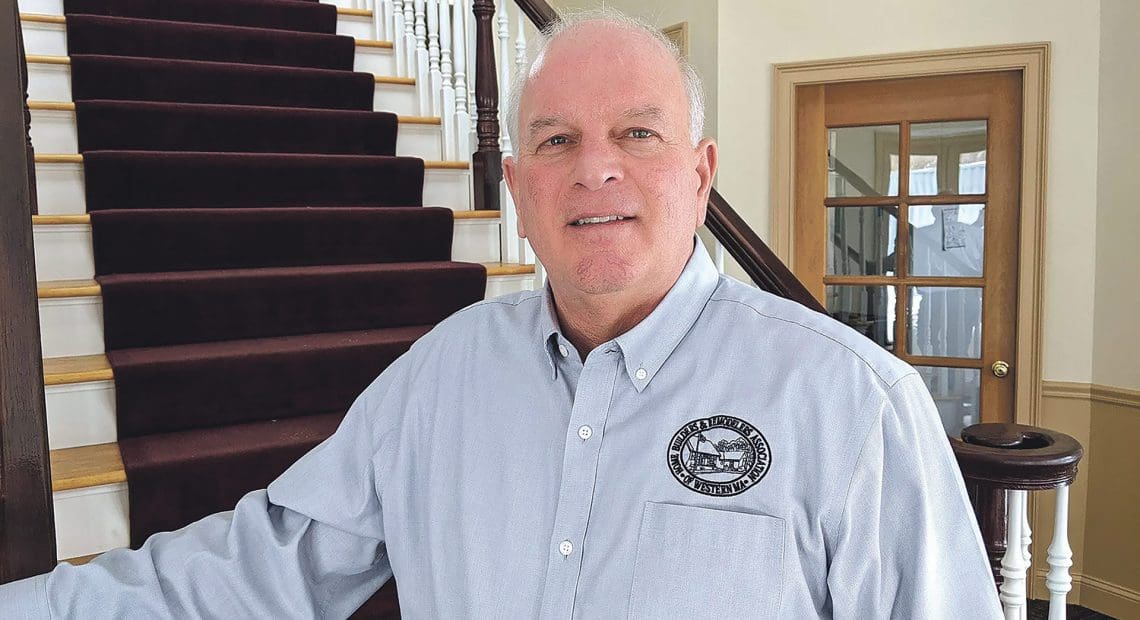
Andy Crane says the home show thrives

Andy Crane says the home show thrives, even in the internet age, because home-improvement business owners need to stay visible and put work into the pipeline.

Andy Crane acknowledged that many contractors and home-improvement companies are busy these days, thanks to a combination of factors, from people staying in their homes — due to higher interest rates and a shortage of inventory — to finding enough help to get jobs done.

They’re so busy that some — but certainly not all — are booking jobs several months out and even into next year, in some cases.

But even in this climate, where some contractors can’t touch new business for a few more quarters, it’s important to stay in front of consumers and continue to put business into the pipeline, said Crane, president of the Home Builders and Remodelers Assoc. of Western Massachusetts (HBRAWM).

And that’s why he’s not only expecting a sellout of booth space when it comes to this year’s Original Western Mass Home & Garden Show, taking place March 27-30 at the Eastern States Exposition — the 70th edition of this spring tradition — but also why the show is expanding into a second building this year, one dedicated almost exclusively to the ‘garden’ aspect of the event.

And with that move, the show is turning back the clock in some respects.

“Back in the day, we had two buildings, and a few years, we had three buildings,” Crane told BusinessWest. “This year, we’re going to have at least two and an outdoor area.”

The second building, known as the A Barn, will be geared toward yard equipment and accessories, plantings, and landscapes, with some details still to be finalized, he said, adding that this has been an element missing since COVID.

But getting back to his thoughts about contractors and why they want to be at this show, Crane said many aren’t coming to the Big E grounds looking for work — they already have enough. Instead, they want to make connections and enable consumers to at least get the process started.

“It gets the juices flowing — you might get some ideas and talk to some people,” he said. “Let’s say they can’t do it for a while … if you don’t get that process moving along, you’ll never get it done.”

Adam Quenneville, president of Adam Quenneville Roofing & Siding, agreed. His company has been part of the home show for roughly 25 years, and he comes back each year to help make sure the phones keep ringing.

“I would think that people still enjoy touching and feeling products and getting a sense for what they think that person is like. You can’t get that off a laptop; you just can’t.”

This is a quieter time of the year — although roof crews can work pretty much year-round — and a good time to make connections and add projects for the rest of the year, he said.

“It’s great to get out and see potential customers, and it’s an opportunity to get leads, give estimates, and secure business. A lot of people are going there because they have a home improvement in mind, and it’s nice to be able to let them see us in person, talk to us, get information, and go from there.”

With that, Quenneville spoke for every vendor at the show, including the ones who sell beer nuts and pickles, most of whom are focused not on making sales that day, but on the ‘go from there’ part of the equation.

It’s why the show has thrived for 70 years, and why the 2025 edition is shaping up as another opportunity to build back from the tumultuous COVID years and continue to grow.


Through the Roof

Crane said the home show, which annually attracts between 12,000 and 15,000 visitors and, recently, about 300 to 400 vendors, will be marking 70 years in some subtle ways, with additional giveaways and other promotions.

But mostly, this show will be like the 69 that have come before it, in that it presents an opportunity for the public to gather, see what’s new (or not so new, but still important), talk with experts, maybe finalize some plans for what they want to do, and put a face and business card with a person and company they’ve seen on the internet or heard about from neighbors, friends, or relatives.

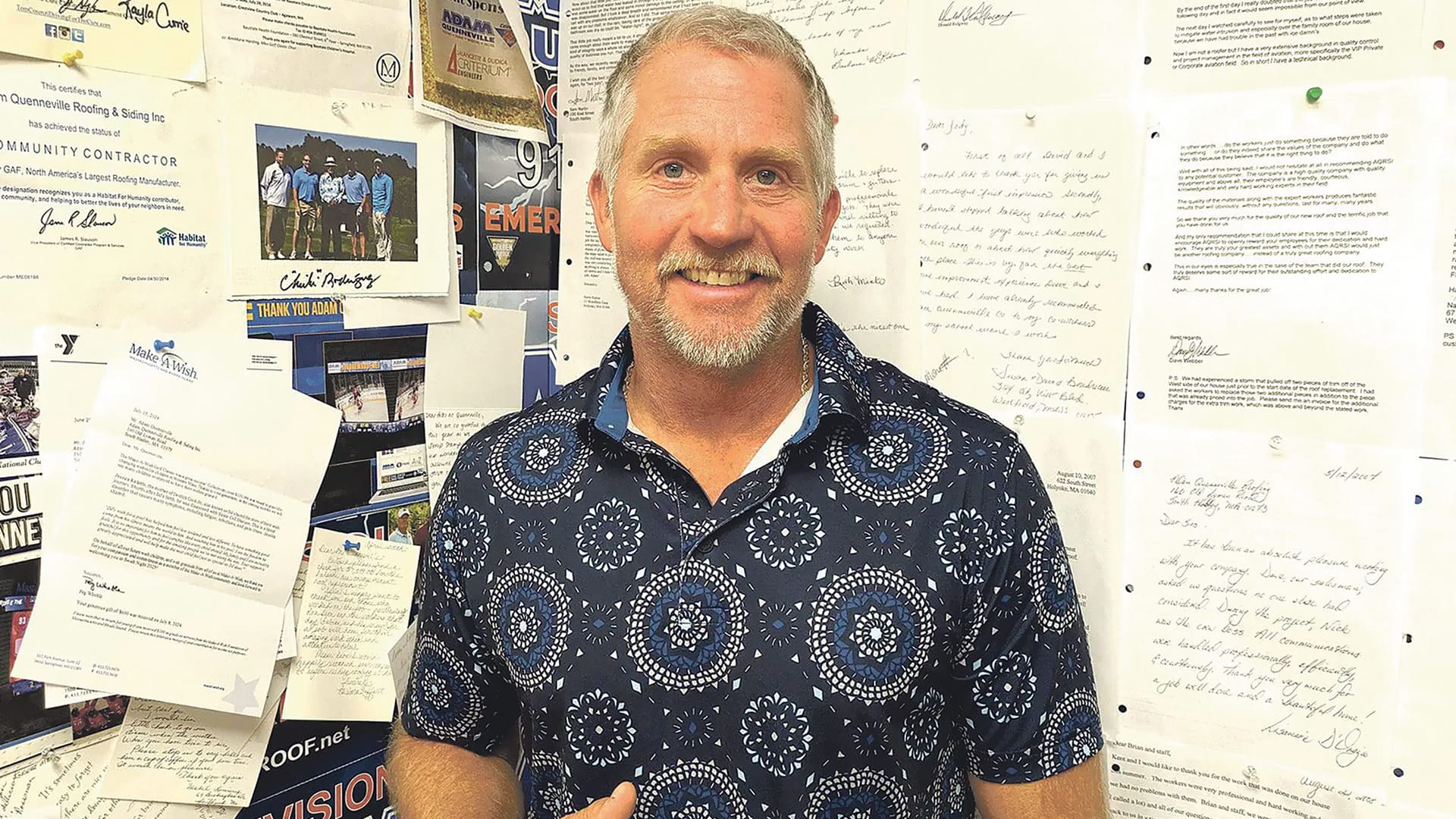
Adam Quenneville says he’s been coming back to the home show for 25 years

Adam Quenneville says he’s been coming back to the home show for 25 years because it provides valuable exposure and leads for new projects.
Staff Photo

It’s been this way since the mid-’50s — except that part about the internet, said Crane, adding that, before social media and before consumers could click on websites, contractors had to get out in front of people. The home show was created to give members of the HBRAWM an opportunity to show what they do, how they do it, and, yes, how much it will cost.

And while consumers can learn much about a product or contractor by visiting a website, and still more by following up with friends and neighbors who placed a specific contractor’s sign on their lawn, there is still much to be gained from seeing these professionals in person, Crane said.

“I would think that people still enjoy touching and feeling products and getting a sense for what they think that person is like. You can’t get that off a laptop; you just can’t. “If it’s a zero-turn mower, would you rather sit on one than look at a picture?” he asked rhetorically. “How about picnic tables and high-top tables … you might as well get the exact one you want and the exact color. As for sheds, isn’t it better to stand in the shed rather than look at a picture of one? You can visualize where your mower is going to go and where your pool equipment is going to go or the pellets for your wood stove. That’s what the show brings that computers don’t bring.”

It still does that, but it has become much more, he went on, adding that the event has become a rite of spring for many, and a social gathering for some, with friends and neighbors often gathering at the show and then going elsewhere for dinner.

“The show is still a great place to talk, shop, and get ideas about your home, your property, some of the things that people like to do in their homes,” he said, adding that, while some things have changed since Dwight Eisenhower was patrolling the White House, the best things about the home show are what hasn’t changed.

For 2025, there will be more of the same, said Crane, with the emphasis on more, especially when it comes to space for visitors to roam and take in the many exhibitors, who cross every spectrum of home and garden improvement, from who can do the work to how to pay for it.

Indeed, there will be several banking and finance institutions on hand, he noted, adding that the categories for vendors runs the alphabetical gamut, from air filtration to women’s clothing, with more than eight dozen in between, everything from awnings and canopies to foundation repair; kitchens and baths (huge items of interest) to mosquito protection; sheds and gazebos to wells and pumps.

It will all be under … well, two large roofs in 2025, said Crane, adding, again, that a second building is something the public has asked for, and something that’s needed to properly showcase vendors and products.

Fast Facts:

What: The 70th edition of the Original Western Mass Home & Garden Show
Where: Eastern States Exposition
When: March 27-30
Show Producer: Home Builders & Remodelers Assoc. of Western Massachusetts
Admission: General admission: $10; with coupon: $7; children under 12: free
For More Information: Call (413) 733-3126

As noted, the A Barn will focus on lawn and garden equipment, furniture, and accessories, everything from mowers and snow throwers to chairs, tables, firepits, and fountains — items that couldn’t be displayed as effectively in years past due to a lack of space.


Starting the Conversation

While the additional space provides room for more vendors and a chance to spread out, it also further activates the outdoor spaces at the Big E, said Crane, adding that there will now be traffic between the buildings — and opportunities to capture the attention of that traffic.

Over the years, those staffing the Adam Quenneville booth have succeeded in gaining the attention of visitors, said the company’s owner, adding that it has generated a steady flow of leads — and eventually customers.

“If I have to guess, I’d say we get about 100 opportunities,” he said, meaning actual estimates for potential customers. “We’ll probably give 90 people prices and secure about 50% of that — 45 to 50 jobs.”

That more than justifies the cost of the booth, he said, adding that the show has been one of the more successful methods of getting right in front of the public, telling the company’s story, and keeping the pipeline of work flowing.

Nick Riley, president of Chicopee-based N. Riley Construction, agreed. His firm specializes in home remodeling and new construction, and he’s been a regular participant at the show for the past 20 years because of the opportunities it provides to be visible, talk to people directly, and hand out business cards.

“We do really well at the home show, and that’s why we keep coming back,” he said, adding that he doesn’t take leads directly at the show, but instead instructs visitors to call and make appointments — and many of them do. “It’s about more than the eventual leads … it’s about getting in front of people, seeing them in person, and saying hello.”

Hundreds of other home and garden professionals can say the same thing, and they have — some of them for a half-century or more.

They keep coming back because the Western Mass Home & Garden Show has long been a spring tradition, a social event for some, a chance to gather ideas for most, and an opportunity, for those on the vendor list, to get down to business.

Healthcare News Special Coverage

More Than a Name Change

Executive Director Roseann Martoccia

Executive Director Roseann Martoccia

As WestMass ElderCare celebrated its 50th anniversary last year, its leaders decided a new name was in order for the next 50.

“We really wanted to look at where are we today as opposed to where we started, why are we doing what we’re doing, and what the community understands about us,” Executive Director Roseann Martoccia said of the effort that led to a new brand and strategy, under the name Access Care Partners.

“It was a process of talking internally and then talking with community partners, as well as having some focus groups, so we could better understand not only how people know about us, but what’s important to them, particularly caregivers,” she explained. “What are they looking for when they’re up at night, searching on the internet or thinking about, ‘how am I going to help mom when I have to go to work and I have to do all these other things?’ What’s important to them?”

Partnering with Davis Advertising of Worcester, WestMass ElderCare conducted one-on-one interviews, online surveys, and focus groups involving around 200 community members, as well as internal staff, to gather input on how the organization is perceived and how it can continue to meet the needs of the community.

“The agency had rebranded in the early ’90s, and ‘ElderCare’ is the term that they came to, which at the time made a lot of sense,” Martoccia said. “But if someone is 68 or 75 or … well, pick an age, do they want to be called a senior? Do they want to be called an elderly person? ‘Older adult’ seems to be what people want to be called. Also, the people in the community that we serve include children, adults, and older adults.”

The name Access Care Partners better reflects the organization’s mission of providing care and support to people of all ages and abilities, ensuring they have access to the services they need to live independently, noted Sarah Aasheim, the organization’s director of Community Programs, who broke each word down for BusinessWest.

“It’s not one-size-fits-all. Some people have chronic health conditions, other people have memory loss, other people have behavioral-health issues, or a combination of these things. So every situation is a little bit different, and we start by meeting people where they are, and then go from there.”

“We landed on Partners because one consistent bit of feedback we got from everyone we talked to was that the older adults that we serve, the people with disabilities that we serve, don’t want someone doing things for them; they’d like a partner to do something alongside. They want to have agency and choice in the decisions that impact them,” she noted.

“Access was also a common denominator because, no matter who you’re serving, whether it’s an older adult, a caregiver, or someone who’s younger, we’re trying to make things simpler for them,” she went on. “And Care is just integral to who we are. That was one carryover from our previous name.”

With about 200 full-time staff, in addition to around 40 part-time Meals on Wheels drivers, the rebranding process was an exercise in helping the entire team reflect and refocus on their roles and how they fit into the whole, Aasheim added.

Some of the individuals served by Access Care Partners

Some of the individuals served by Access Care Partners enjoy lunch at a Community Table site in Ludlow.
(Photo courtesy of Access Care Partners)

“You come into work, and you’re focused on ‘what do I have to do today? What is my role?’ But sometimes it’s good for all of us to lift up our heads and think, ‘oh, this is something else that’s happening,’ or ‘maybe this is within our scope as well, and we should have this integration and collaborative approach.’

In addition, Martoccia noted, when talking about clients, “it’s not one-size-fits-all. Some people have chronic health conditions, other people have memory loss, other people have behavioral-health issues, or a combination of these things. So every situation is a little bit different, and we start by meeting people where they are, and then go from there.”


Foundational Values

The services to meet those needs at Access Care Partners run the gamut from home care, adult family care, and personal care management to nutrition services, care coordination, benefits counseling, money management, behavioral health, housing services, and many more.

“Some of the things that we were founded on and started with are still with us today — services like Meals on Wheels, for example,” Martoccia said. “Our foundational values are still with us, which are to help people be independent in the community, with both the services we provide and supports that they get elsewhere — because we can’t do everything for everybody.

“And that speaks to how we interface with families and caregivers as well, because they can’t do everything, right?” she went on. “Yes, you live with someone, you do a lot for them, but you have to go out, you have to go work, you have to take care of your other business. Oftentimes, we can be a gap-filling support or peace of mind.”

The initial mission 50 years ago, which obviously continues today, is to work with older adults and caregivers, Martoccia explained, but over the years, that has expanded to working with younger people with disabilities. “It’s really the same — supporting people who want to be independent, supporting people who have some needs, and complementing the support and care they already have in their own lives.”

“Even before this recent change in the administration at the federal level and the potential impacts of that, we’ve recognized that we have to diversify our revenue sources and think about how to get a footprint in the private fundraising space.”

When clients are referred to Access Care Partners — from a hospital stay, by a rehabilitation facility, by family members, or through other means — the process to access services begins with a conversation around what they need, be it in-home care, helping with personal care, helping with household tasks and errands, or any number of other things, she noted.

“Money management is a great example of one of our programs that contributes to the mission of allowing people to stay at home,” Aasheim added. “We have a money-management director who provides supervision and support to a team of volunteers who support consumers in a couple of different ways.”

For example, “we have bill-payer clients, folks who might just need someone to visit them once or twice a month to make sure that their bills are getting paid, make sure their checks are coming in — providing the kind of support that a family member would provide,” she further explained. “That’s a game changer for a lot of people who otherwise might need a higher level of care and couldn’t stay in their own home. But with that level of support, it allows them to.”

There’s also a higher level of care called a representative payee program.

“These are folks who get a letter from their doctor basically saying that they have difficulty with capacity to manage their finances, so that authorizes the Social Security Administration to send their Social Security checks to us. We are the representative payees for those consumers, and we pay their bills directly,” Aasheim said. “When these individuals don’t have the sort of community or family support to help them with those things, it can really impair their ability to stay independent in their own home.”

Sarah Aasheim

Sarah Aasheim says each word in the organization’s new name, Access Care Partners, was chosen thoughtfully and deliberately.

The nutrition program is another example of a safety-net service that allows people to live independently.

“Sometimes it’s the only meal that our consumers who get home-delivered meals eat each day,” she noted. “So it ensures a certain level of nutrition, but at the same time, the delivery driver might be the only person that someone will see every day, too. For a caregiver, it’s immense peace of mind to know that someone’s going to lay eyes on mom or dad and make sure that they’re OK, they’re upright, they’re operating in their environment normally.

“Drivers get to know their consumers, and they notice subtle changes in their behaviors,” she added. “So that service offers, again, not just nutrition delivery, but really a safety check for those individuals to make sure that they’re OK. And if they’re not OK, that prompts a phone call back to our team here, followed by our case management.”

Sometimes, Martoccia said, the most important part of the process is the initial call from a caregiver who is overwhelmed and trying to understand their options.

“We’re not the answer for everyone, but we do connect people with other resources in the community. Maybe they have the resources to move to a different housing setting or pay for some services on their own, but they’re not sure where to start and how to get that ball rolling.

“Generally, when people come to us, they do have some chronic, ongoing conditions, but that’s not true in all cases. Sometimes it’s short-term,” she added. “But more often than not, it’s a longer term. There are many people receiving our services who would otherwise be in a nursing home.”


Time of Uncertainty

While clients and caregivers contribute to the cost of services, Access Care Partners also works with the Executive Office of Aging & Independence on state appropriations and MassHealth coverage, and works with third-party insurers as well.

But the new regime in Washington, D.C. — which so far has taken an aggressive approach to cost cutting and scaling back services in many areas of public life — has the organization’s leaders cautiously watching how that activity may eventually affect state funding, even though direct federal money accounts for just 10% of its revenue stream.

“Even before this recent change in the administration at the federal level and the potential impacts of that, we’ve recognized that we have to diversify our revenue sources and think about how to get a footprint in the private fundraising space. So we’ve invested here in the last couple of years in more capacity to do marketing and fundraising,” Aasheim said.

“We’re really just beginning that journey, but part of the education that we need to do in rolling out our new brand is to develop a partnership with the private philanthropic community to say, ‘we need support from the community to be able to continue to do what we’re doing.’ We don’t want to be in a situation where we’re having to take wait lists to deliver Meals on Wheels. But with the public funding crises that we may face, it may come to that.

“For people who are on a fixed income, the last few years have not been easy, and they’re not getting any easier,” Aasheim continued. “We help with health-related social needs in many ways and bring services into the home and into the community, but we’re not paying people’s food bills, their utility bills, their basics, their gasoline. This is something that, as a community, we’re all feeling, but it’s really playing out with people who are not in the workforce any longer and are living on a fixed income.”

Which is why the support services offered by Access Care Partners are so important, Martoccia said.

“Massachusetts has quite robust public and community-based systems, not only for our clientele, but across the board,” she told BusinessWest. “But as everyone is watching the federal landscape, we don’t know how that’s going to impact state appropriations in the future, and the rules. There’s a lot of integration between our state — any state — and the federal government. So as one thing shifts, we don’t know how things are going to play out. I think we’re just being cautious and watching every day to see what happens.”

Community Spotlight Special Coverage

Community Spotlight

Wendy Healey

Wendy Healey

When it comes to the subject of ghosts at Ventfort Hall, Wendy Healey is … well, decidedly “neutral.”

Roughly translated, that means that she’s never seen or otherwise encountered one. But she acknowledges that other people have experienced “something,” and she further acknowledges that ghosts are just one of the many intriguing storylines involving the cottage built by Sarah Spencer Morgan, J.P. Morgan’s sister, and her husband (and seventh cousin), George Hale Morgan, in 1893, and now home to the Gilded Age museum.

“We have what I would call friendly spirits in this house,” said Healey, the facility’s executive director, as she talked with BusinessWest in the billiard room, to which male guests would retire for cigars and brandy after one of the lavish dinners hosted by the Morgans.

The far bigger story, and the one she’d certainly prefer to talk about, is the comprehensive restoration of the landmark, now the site of a wide array of events, from weddings and teas to concerts and ghost tours. It has been ongoing for decades now, and at least another 20 years of work lies ahead, according to the most recent master plan.

“We are a restoration in progress — we are far from done,” said Healey, who assumed her role at the landmark two years ago. “We have millions and millions of dollars of work ahead of us.”

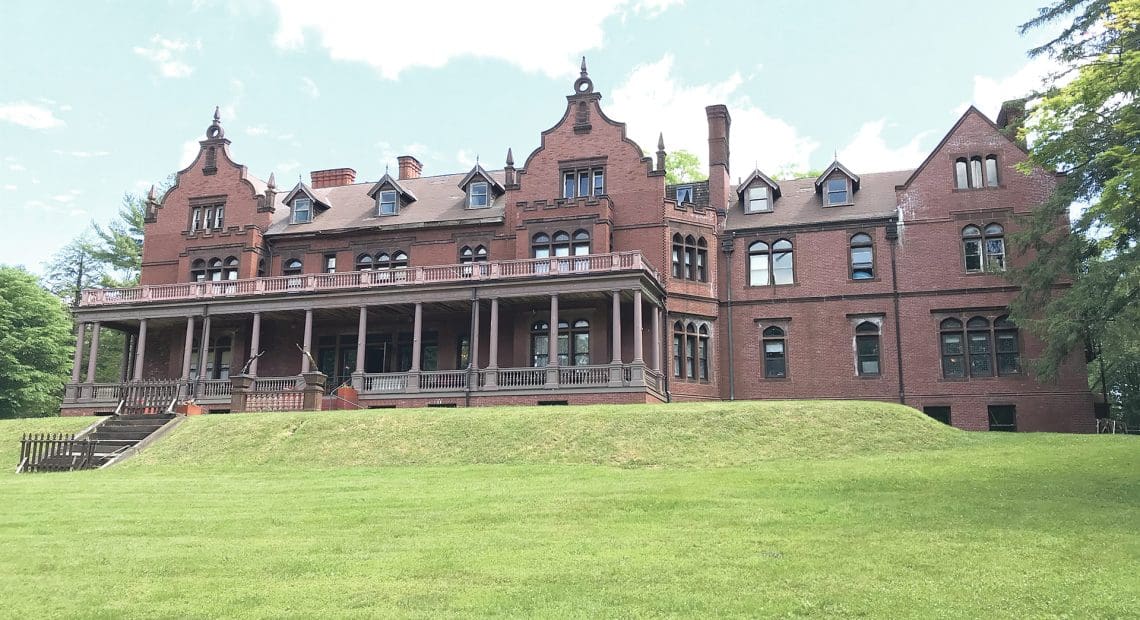
Ventfort Hall is a “restoration in progress.”

Ventfort Hall is a “restoration in progress.”

Ventfort Hall, its restorations and its ghosts, comprise one of the many storylines in Lenox, which has become a tourist destination and center of arts, culture, and healthcare, with many of the destinations located on the grounds of other Gilded Age cottages.

That list includes Tanglewood, summer home to the Boston Pops; Shakespeare & Company; the Mount, Edith Wharton’s home; and the resort spas Canyon Ranch and Miraval.

It is winter, which means most of these facilities are planning for the busier seasons to come, but some are busy year-round.

At Shakespeare & Company, an intriguing slate of shows is taking shape, said Jaclyn Stevenson, director of Marketing and Communications, noting that performances of Macbeth (with an all-female cast and a comedic touch) start in March, with most other shows taking place in the summer.

They will include a “Shakespeare Cabaret,” performances of Romeo and Juliet and The Taming of the Shrew, as well as August Wilson’s The Piano Lesson, with a few other performances still to be finalized.

“We have what I would call friendly spirits in this house.”

Equally busy these days is Gilbert Santana, general manager at the Miraval resort spa, which features the mansion known as Wyndhurst as its centerpiece. He the facility, which has been under the Miraval name since the fall of 2020, the height of COVID, has been improving overall visitation each year since, with that trend expected to continue in 2025.

Continually growing confidence among the guest population, which now includes virtually all age groups, is a big reason, he said, noting that there are now frequent bookings six months or more out, unusual in the spa universe. Meanwhile, new initiatives, such as so-called Family Connect weeks, where children can join their parents at the spa, have also helped.

The most recent Family Connect week came during the recent February school vacation week, said Santana, adding that it piggybacked a strong Valentine’s weekend to get this year off to a strong start.

“We wanted young people to start their well-being journey early, and it’s made an incredible impact; we’ve doubled the amount of guests this go-around than we had last year,” he said of the program, adding that Miraval is a true four-season resort spa that boasts more than 180 different kinds of programs — from meditation to a ropes course to yoga — and at all levels, beginner to expert.

A scene from The Comedy of Errors, performed in 2024 at Shakespeare & Company. (Photo courtesy of Katie McKellick)

A scene from The Comedy of Errors, performed in 2024 at Shakespeare & Company.
(Photo courtesy of Katie McKellick)

For this latest installment of its Community Spotlight series, we focus on Lenox and all that it has to offer.


In the Right Spirit

“This house was built for big parties.”

With that, Healey summed up the design philosophy behind the Elizabethan-style Ventfort Hall, as well as one of the enduring characteristics of the Gilded Age — large, lengthy gatherings.

Indeed, when guests came to a party at this home on Walker Street, they didn’t stay for a few hours and reach for their coats. Instead, they stayed for several days in one of the 14 guest rooms, said Healey, noting that, sadly, Sarah Morgan didn’t get to host many of these soirees: she died in 1896, only three years after Ventfort Hall was completed.

Slicing through the next 129 years in a concise yet effective manor, Healey said there was a succession of owners — and uses.

After being a private residence for a few decades, it later served as everything from a dormitory for Tanglewood students to a summer hotel known as Festival House; from a ballet camp to the home of Bible Speaks, a religious community that used the mansion for housing.

During this last chapter, the home fell into a serious state of disrepair, and was eventually slated for demolition for the construction of a nursing home.

“It was in such bad condition … no one wanted it, no one wanted to do anything with it, and it was, in the opinion of this developer, worth more flattened and to build a nursing home than to try to save it,” said Healey. “In the dining room, you could see daylight — you could see down to the basement, and you could see up through the roof.”

But in 1997, it was purchased by the Ventfort Hall Assoc., formed by Lenox residents dedicated to its restoration, which began soon thereafter.

Indeed, the building took a star turn in the movie The Cider House Rules, filmed in 1998, serving as the orphanage known as St. Cloud’s — its exterior, anyway (the interior shots were filmed at Northampton State Hospital), with its weathered condition being just what the film’s producers were looking for.

Gilbert Santana says Miraval celebrates its ability to promote wellness during all four seasons, and in many different ways.

Gilbert Santana says Miraval celebrates its ability to promote wellness during all four seasons, and in many different ways.

The movie — and there would be others to follow — provided both capital and momentum, said Healey, adding that restoration has a been a slow, very expensive undertaking over the past 28 years, with perhaps that many more still to come as the association works to ensure that the home will remain part of the fabric of Lenox for decades to come.

Phase 1A of a master plan launched in 2016 has been completed, said Healey, noting that it addressed critical building envelope and life-safety issues. Phase 1B is now underway, focusing on restoring the exterior masonry and roofing to ensure the long-term stability of the mansion.

One focal point of recent efforts has been shoring up of the east-end wall as well as the rebuilding and restoration of the mansion’s four chimneys, said Healey, noting that three have been painstakingly restored, and the fourth will be addressed this spring.

And in the years to come, many of the rooms on the upper floors, the massive basement, the carriage house, and other areas will be restored. That work, projected to cost more than $20 million, is to be funded through a combination of revenue from events, admission to the museum, and other programs, as well as donations and grants from organizations including the Massachusetts Cultural Council Facilities Fund, the Town of Lenox Community Preservation Committee, and others.

Lenox at a Glance

Year Incorporated: 1767
Population: 5,095
Area: 21.7 square miles
County: Berkshire
Residential Tax Rate: $9.05
Commercial Tax Rate: $13.18
Median Household Income: $85,581
Median Family Income: $111,413
Type of Government: Select Board, Open Town Meeting
Largest Employers: Canyon Ranch, Miraval, Boston Symphony Orchestra, Kimball Farms
* Latest information available

While the restoration work continues, the mansion hosts a growing number of events each year, welcoming guests who wouldn’t have been on the invite lists for the Gilded Age parties, said Healey, adding that there are several weddings each year, as well as concerts, tea-and-talks, a spring fashion fundraiser called Berkshique, and more.

There are also very popular ghost tours, at least once a month, led by Robert Oakes, author of Ghosts of the Berkshires. He provides a full tour of the house, by flashlight, while also relating both its history and the tales of those who say they’ve encountered a spirit on the property. And he’s heard many, from staff members and guests alike, Healey said.


Frame of Mind

It’s called ‘mindful golf.’

It’s … well, let’s call it golf with the edge taken off.

“We have a golf pro who walks you through the process of how you think when you swing and your intentions behind playing golf, which many times are jaded around winning and doing better,” Santana explained. “This helps you understand the purpose of playing your sport; it’s very well-defined and built around the person playing.”

Actually, the team at Miraval could put that word ‘mindful’ in front of almost everything they do, and that’s a long list, from activities such as kayaking and cross-country skiing to the weddings it hosts to the overall spa experience, which guests enjoy on visits lasting a day or several weeks.

Summing it all up, Santana said it’s about meeting people where they are.

Miraval, which also has resorts in Arizona and Texas, is coming up on five years in the Berkshires, although Santana said it’s more like three, with the first two greatly disrupted by COVID.

He said Miraval is continually looking at ways to bring wellness to more people across a wider age group. A good example is the two annual Family Connect weeks, which the facility test-drove last year to solid reviews that translated into bigger numbers this winter.

“We’re the only Miraval that does a Family Connection week where we allow kids to join their parents and other family members and experience it at a very young age,” he told BusinessWest. “One thing we do is make sure that everything we do has an educational purpose. Everything is defined here on growing your mindset — not necessarily redefining you, but giving an understanding of something that’s more than recreational.”

Education is a huge part of the mission at Shakespeare and Company as well, said Stevenson, adding that, in addition to the performances slated each year, the institution also schedules several actor-training programs as well as initiatives for young people and professional-development workshops.

These include Shakespeare in the Courts, a program staged in conjunction with the Berkshire Juvenile Court system, whereby adolescent offenders work with Shakespeare and Company artists and participate in classes, rehearsals, and performances of scenes from the Bard’s plays. During the six-week project, participants explore Shakespeare’s text and prepare their own performance pieces as part of their term of probation.

There’s also “Riotous Youth,” one-, two-, and three-week summer theater programs that introduce students (ages 7 to 17) to Shakespeare’s language, stories, characters, and themes using imaginative and playful methods.

As for actor-training programs, they take place in the spring and summer and are geared for those with different experience levels, from the novice to mid-career professionals, said Stevenson, adding that there are also several in-person workshops and online classes and workshops focused on everything from wit to movement and dance to public speaking.

Stevenson said Shakespeare and Company enjoyed a solid 2024, actually exceeding overall projections, continuing, as other venues in this community have, to build back from the COVID years, which took a serious toll on Lenox.

“We’re still working our way back a little bit, but we’ve come a long way,” she said of the COVID recovery. “It feels more in the rear-view mirror than ever before.”

Business Talk Podcast Special Coverage

We are excited to announce that BusinessWest has launched a new podcast series, BusinessTalk. Each episode will feature in-depth interviews and discussions with local industry leaders, providing thoughtful perspectives on the Western Massachuetts economy and the many business ventures that keep it running during these challenging times.

Go HERE to view all episodes

Episode 228: February 17, 2025

Joe Bednar talks to Emma deVillier, owner of deVillier Designs

Emma deVillier was just 19 when she launched her own event-planning business. Today, six years later, she creates both impactful moments and lasting memories with weddings, showers, parties of all kinds, and corporate events, with a growing list of major clients in and well beyond Western Mass. It’s the kind of success story born from being attuned to details small and large, and passionate about the end result. On the next episode of BusinessTalk, deVillier talks with BusinessWest Editor Joe Bednar about the challenges her enterprise, deVillier Designs, has faced along the way, how she continues to evolve the business and its geographic footprint, and more. It’s must listening, so tune into BusinessTalk, a podcast presented by BusinessWest.

Also Available On

Features Special Coverage

Tapping into Tradition

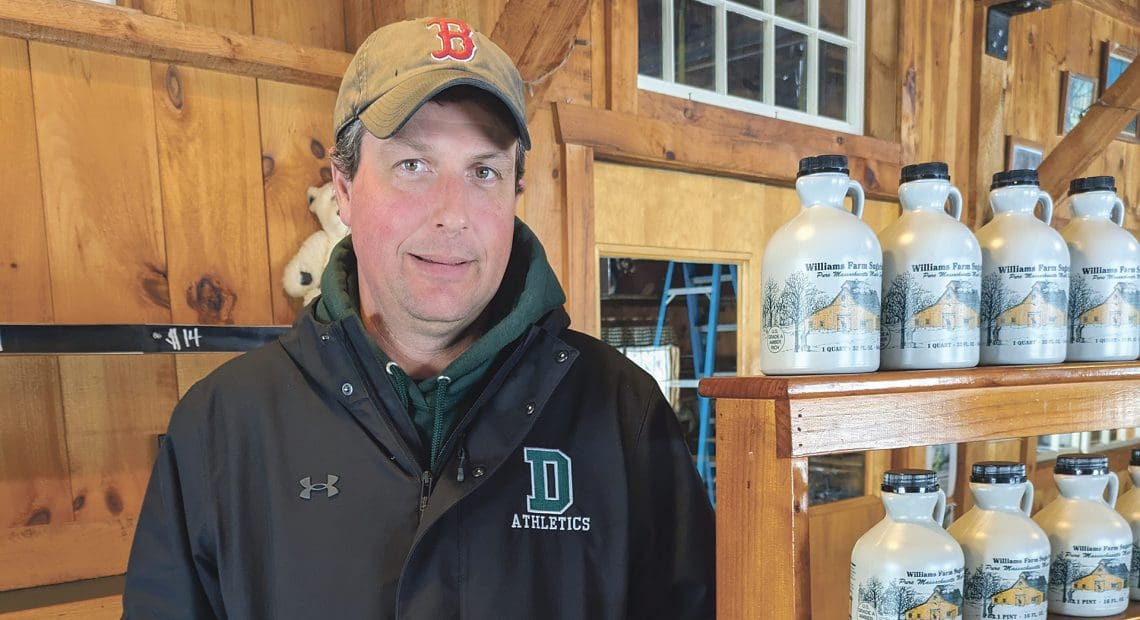
Chip Williams (pictured) and his sisters represent the fifth generation making maple syrup at the family’s sugarhouse.

Chip Williams (pictured) and his sisters represent the fifth generation making maple syrup at the family’s sugarhouse.


Chip Williams has his eye on the weather reports around Deerfield. He’s not looking for long stretches of mild weather, or cold, for that matter. He wants both. Every day.

That’s because sugar maple trees in this region are tapped beginning in late February, and temperatures are critical for sap production — specifically fluctuating temps, with the ideal conditions being nights in the low 20s followed by days in the 40- to 45-degree range. This freeze-thaw cycle is necessary because, as the temperature warms, the ice inside the trunk melts, and the ice-compressed gases expand, forcing the sap out of the trunk.

“It’s all temperature-dependent. We need the right weather, and when I say right weather, it’s the freezing and thawing cycles. If we have that for an extended period of time, we’ll have a decent season,” said Williams, who is part of the fifth generation operating Williams Farm Sugarhouse, which starts selling maple syrup — and breakfast — to the public on Feb. 21.

“What often happens is a week of warm and then a week of cold, longer cycles of ups and downs,” he noted, “but we really want a freeze at night, warm during the day, freeze at night, warm during the day, and not so much warm for a week and then cold for a week.”

The reason, he said, is that the sap flows only on a warm-up. “So, after a freeze, that next day, when it warms up, it’ll flow, but it’ll only flow for a certain amount of time before you need it to freeze again. If it warms up and stays warm, it’ll run for a little while, and then you won’t get anything.”

That thermometer watching is just one of many challenges he and his sisters, Kelly Scofield and Casey Williams, take on when they work at the sugarhouse every spring. They all have regular jobs — Chip is the athletic grounds supervisor at Deerfield Academy, while Kelly and Casey work in hotel management in Eastern Mass. — but the maple-syrup season is a labor of love for the siblings, who are also joined by their father, Sandy, who comes up from Florida during tapping and boiling season.

“After a freeze, that next day, when it warms up, it’ll flow, but it’ll only flow for a certain amount of time before you need it to freeze again. If it warms up and stays warm, it’ll run for a little while, and then you won’t get anything.”

It’s also a tradition for plenty of local families as well, in a region that boasts a number of sugarhouses, few with as long a history as this one. The facility is open Friday through Sunday for pancakes, french toast, waffles, and more, all topped with that fresh maple syrup. And if they like what they taste, they can bring home syrup, maple cream, maple candy, and more from the store.

“We see a lot of the same families every year,” Chip said. “And when we’re boiling, we invite people to come back and ask questions, and we’ll explain the process. It’s really interesting to get people’s feedback — a lot of people have no idea how you even start making maple syrup, and people are amazed you take this product that looks like water and make it into this all-natural sweetener.”

It’s a product that has brought some sweet times for the Williams family since Milton Hubbard Williams began the syrup tradition in the mid-1800s, followed by his son, Kenneth Sanderson Williams. The original Williams sugarhouse was one of 13 located on Mount Toby in Sunderland.

The Williams Farm Sugarhouse

The Williams Farm Sugarhouse has been at its current location along Route 5 since 1994.
Staff Photo

In his diary, Hubbard Williams wrote, “March 6, 1853, commenced sugaring. March 25, 1853, traded sugar for coat and pants in Amherst.” Thirty-six years later, he was still sugaring, and on April 1, 1889, he wrote, “Gathered 20 bls [barrels] sap for four successive days. Had the best week I ever knew … syrup sells readily.”

In the mid-1960s, amid growing success and realizing the need for a better retail location, Kenneth Williams Jr. and his brother, Milton, moved the third-generation sugarhouse off the mountain to Route 47 in North Sunderland. The final move came in 1994, when the family, led by fourth-generation operator Sandy Williams, built a sugarhouse on Route 5 in Deerfield, near its sweet-corn farm.

“The reason we moved here is our farm was just right up the road in Old Deerfield,” Chip said. “We would drive over to Sunderland every day to operate the sugarhouse during the sugaring season, so when this property here came up for sale, my family bought it, and we were able to move everything closer to our operation.”

“When we’re boiling, we invite people to come back and ask questions, and we’ll explain the process. It’s really interesting to get people’s feedback — a lot of people have no idea how you even start making maple syrup.”

In Sunderland, they served coffee, donuts, ‘sugar on snow,’ and the like, but the move to Deerfield saw the food-service operation expand to serving meals — first on weekends, then seven days a week for a while, and currently three days a week. They stopped growing corn up the road 2012, but the sugarhouse — and its almost two centuries of tradition — lives on.


From Tree to Plate

Some years are weaker than others because of the uncertainty of the weather, Williams said. Last year wasn’t particularly strong for sap production, but 2010 was much worse, with only about 20% of the normal crop.

“It just warmed up around the middle of March, and it never froze again. It just stayed warm. So we didn’t get any more sap,” he explained, adding that an early start to those cold-warm cycles are important. “Here at our sugarhouse, if we don’t make any syrup in February, a lot of years it’s hard for us to have a really good year; we find that whatever we miss early, we never make up on the other end.”

When tapping a sugar maple, it’s best to drill a taphole that can provide an ample amount of sap while maintaining the long-term health and sap production of the tree. In a good year, one tap can yield around 10 gallons of sap, or almost one quart of syrup. Sap is, on average, about 2% sugar, and it takes about 45 gallons of sap to make one gallon of syrup.

Sap flows best from the trees when freezing nights are followed by warm days.

Sap flows best from the trees when freezing nights are followed by warm days.
Staff Photo

The traditional method of gathering sap is to hang four-gallon buckets below the tap to catch the drip. The process is very labor-intensive, and buckets must be gathered and emptied up to once a day. The Williams Farm enterprise hangs about 3,000 buckets each season, tapping more than 1,000 trees in Deerfield and Sunderland.

A less labor-intensive way of collecting sap is through a tubing pipeline, which utilizes gravity to gather sap into holding tanks that are positioned lower than the trees or at a slope. While the initial cost of setting up lines is greater than that of buckets, once lines are established, they can hold for 15 to 20 years. The farm has about 1,000 taps on pipelines, but is looking to expand that number in the future.

As noted earlier, the sap gathered from a sugar maple tree is not the same as what’s poured on pancakes. Sap has a large concentration of water and a small concentration of sugar, and the additional water must be boiled off in an evaporator.

In the sugarhouse, sap is continuously fed into the evaporator, where it flows through a series of troughs. The sap is boiling the entire time, and when it reaches the proper density at 219 degrees, it can then be called syrup. The more water that is boiled away from the syrup, the thicker it gets. Products like maple cream, candy, hard blocks, and granulated sugar are all made by further reducing the syrup at higher temperatures.

Williams noted that the team starts boiling as soon as they begin to get sap into the sugarhouse, and the sap is processed at its freshest in order to ensure the highest-quality syrup.

They always try to boil on weekends so the visiting public can witness the process, although, because sap flow is so dependent on the weather, they can’t guarantee they will be boiling on any given day, so for customers who want to see the process, it’s best to call ahead or check the website for projected boiling times.

“We like to get started in February, but it doesn’t always pan out. We’re just at the mercy of Mother Nature,” Williams told BusinessWest. “That’s some of what makes it interesting too — you don’t know. People will ask, ‘how’s this year going to be?’ And it’s like, ‘well, we don’t know until April, once it’s all over.’ We almost always make enough syrup for our customers, and it’s always good syrup. So, any year we can do this is a good year.”


Sweet Moments

Williams said he looks forward to this season for a number of reasons, including being close to nature.

“As the days get longer and it starts to warm up a little bit, it’s nice just getting out in the woods and working on the lines. I don’t get to be out as much as I did when we were farming full-time. I’d be out all the time, if not for my full-time job, so we have some people that help us.”

The sugarhouse is open to the public from late February into early April, and those dates aren’t set in stone so much as dependent, as noted earlier, on the weather and the frequency of that freeze-thaw cycle.

“Traditionally, we would always start right around the week of school vacation. Growing up, I remember having that February break, going out with the guys tapping,” he recalled, adding that sugaring season has long been a community tradition as well. “Because this craft is native to this region, it seems like people really have a tradition of visiting these houses and looking forward to it.

“And it’s important to my sisters and me to keep the tradition going,” he added, noting that he has three sons of his own. “Obviously, I don’t want to put any pressure on them doing this, but they love it here, and they help out. My 11-year-old likes to run the register up front.”

Williams Farm Sugarhouse does some wholesaling as well, selling syrup to local farmstands and maple candy to Richardson’s Candy Kitchen, right across the street. There are online sales as well, “but that’s tricky; you’re just a small fish in a big ocean. But once you make a few sales and people like your product, they’ll keep buying.”

And the family will keep tapping, boiling, and serving breakfast.

“There are times, like on a busy Sunday toward the end of the year, when we’re just dragging, but it’s fun,” he said. “We have three generations of family helping us out, too, so that’s great. Everyone kind of chips in to get it done.”

Law Special Coverage

The Massachusetts Parentage Act

By Julie A. Dialessi-Lafley, Esq. and Britaney N. Guzman-Bailey, Esq.

The Massachusetts Parentage Act (MPA), a new law that went into effect on Jan. 1, revolutionizes how parentage may be legally recognized in the Commonwealth.

The MPA replaces outdated language with inclusive, gender-neutral language so that its provisions reflect the great diversity of families in Massachusetts. For example, ‘paternity’ is now ‘parentage,’ ‘mother and father’ is now ‘parents,’ and the statute is now titled “Non-marital Children and Parentage of Children” rather than “Children Born Out of Wedlock.”

Parentage is the legal relationship between a child and a parent of the child. Establishing parentage is important for the well-being of a child because the relationship is the foundation of various rights and responsibilities for the parent and child alike, including access to educational and medical records, tax benefits, health insurance, government benefits, inheritance rights, financial support, custody, and parenting time.

The MPA does not make changes to custody, parenting time, or child support. The changes pertain to who can be the legal parent of a child and how parentage can be established. Pathways to parentage include giving birth, executing a voluntary acknowledgement of parentage (VAP) with the birth parent, adoption, assisted reproduction and surrogacy, obtaining an adjudication of parentage, de facto parentage, and presumptions of parentage.

A VAP is a simple form that parents can sign in the hospital or later to voluntarily establish parentage. VAPs were previously available only to genetic parents. Now, the act codifies that, in addition to genetic parents, presumed parents and intended parents can establish parentage through a VAP.

This means that a person who utilizes assisted reproduction when building their family, or a person who does not have a genetic relationship with the child but receives the child in their home and openly holds out the child as their own, has new options to establish parentage.


New Protections

As a VAP is an equivalent to a court decree of parentage, this change is particularly important for the security of LGBTQ families who often face discrimination and worry about the status of their parent-child relationship. Prior to the MPA, LGBTQ families routinely relied on confirmatory adoptions, or second-parent adoptions, to establish parentage.

Julie Dialessi-Lafley

Julie Dialessi-Lafley

Britaney Guzman-Bailey

Britaney Guzman-Bailey

“As a VAP is an equivalent to a court decree of parentage, this change is particularly important for the security of LGBTQ families who often face discrimination and worry about the status of their parent-child relationship.”

Although a VAP may now be an easier route for LGBTQ families to establish parentage, it is important for individuals to speak with an attorney regarding the specific facts surrounding their family to obtain advice on whether a confirmatory adoption is still recommended as an additional level of protection.

A de facto parent is a parent that does not have a biological relation to the child but has meaningfully participated in the child’s life as a family member. Although Massachusetts courts have long acknowledged de facto parenthood, the common-law doctrine only permitted de facto parents to seek parenting time. The MPA now includes persons who establish de facto parentage within the legal definition of ‘parent,’ therefore permitting de facto parents to petition for all rights and responsibilities that may stem from the parent-child relationship. Accordingly, de facto parents may now obtain custody of their child if a court determines doing so is in the best interest of the child.

The person seeking to establish de facto parentage must demonstrate seven requirements: they resided with the child as a regular member of the child’s household for a period determined by the child’s age, they engaged in consistent caregiving of the child, they undertook full and permanent responsibilities of a parent of the child without expectation or payment of financial compensation, they held out the child as their own child, they established a bonded and dependent relationship with the child that is parental in nature, the child’s parent(s) consented to the bonded and dependent relationship, and adjudicating them to be the child’s parent is in the child’s best interest.

Consent can be implied when a parent has not engaged with the child directly or participated in decision making or provided regular financial support for at least two years. Notably, a parent cannot bring a de facto parentage action against another to request child support under the MPA; the act only authorizes the alleged de facto parent to commence the action.

The act also authorizes the court to adjudicate a child to have more than two parents if doing so is in the best interest of the child. This can happen when more than two people have competing claims to parentage of a child. The court will consider the child’s age, the length of time each parent has assumed the role of parent, the nature of the parent-child relationship, the basis for each person’s claim to parentage, the harm to the child if the relationship is not recognized, and any other factor arising from disruption of the relationship between the child and each person.


Further Implications

Assisted reproduction is a method of causing pregnancy other than sexual intercourse, including but not limited to artificial insemination; intrauterine, intracervical, or vaginal insemination; donation of gametes or embryos; IVF; and transfer of embryos. The MPA provides that a person who consents to assisted reproduction shall be a parent of the child.

Consent can be shown through a record signed by the birth parent and the intended parent on or after the birth of the child. If there is no written record, consent can be established through a finding by the court that, prior to conception or the birth, the parties agreed that they would be parents of the child, or the person who seeks to be a parent of the child, together with the person giving birth, voluntarily participated in and consented to the assisted reproduction that resulted in the conception of the child.

Now, a person who becomes a parent through assisted reproduction can obtain a pre-birth judgment declaring them to be the parent of the child immediately upon the birth of the child, ordering that parental rights and responsibilities vest immediately upon birth, and designating them as the parent on the child’s birth certificate.

Finally, the MPA provides clear instruction on the requirements of and enforceability of surrogacy agreements. Parties to a surrogacy agreement must be at least 21 years old. The surrogate must have previously given birth to at least one child and must undergo a medical evaluation and a mental-health consultation. The intended parent(s) must also undergo a mental-health consultation. The agreement must be signed by the surrogate, their spouse if applicable, and the intended parent(s), and all parties to the agreement must be represented by counsel.

The requirements relative to when the agreement is signed, and enforceability and validation of the surrogacy agreement by the court, depend on whether the surrogacy is a gestational surrogacy or genetic surrogacy. It is therefore important to consult with an attorney prior to attempting conception through surrogacy to ensure the requirements are met and for assistance in drafting the agreement.

The MPA offers families long-overdue rights and protections by providing updated paths to parentage, and is a critical step toward parentage equality for all.


Julie A. Dialessi-Lafley is a shareholder with the law firm Bacon Wilson, P.C. and chairs the firm’s Family Law department. She is a certified family law mediator and a member of the Springfield Women’s Leadership Council, and is licensed to practice law in both Massachusetts and Connecticut; (413) 781-0560; [email protected]


Britaney N. Guzman-Bailey is an associate with the law firm of Bacon Wilson, P.C. She is a member of the Hispanic National Bar Assoc., the Hampden County Bar Assoc., and the Massachusetts LGBTQ Bar Assoc. She concentrates her practice in the areas of domestic relations and family law; (413) 781-0560; [email protected]

Insurance Special Coverage

Insuring Against the Worst

Amid the wildfires that ravaged Los Angeles last month, the U.S. Department of the Treasury’s Federal Insurance Office (FIO) released the most comprehensive data on homeowners’ insurance in history, along with a report showing that homeowners’ insurance is becoming more costly and harder to procure for millions of Americans as the costs of climate-related events pose growing challenges to insurers and their customers alike.

The report draws data from more than 330 insurers and more than 246 million homeowners’ insurance policies. That data was collected through a first-of-its-kind effort by the National Assoc. of Insurance Commissioners, state insurance regulators, and FIO.

Among the report’s key findings:

• Homeowners’ insurance costs are rising quickly across the nation, although with significant variation by region and ZIP codes. Average homeowners’ insurance premiums per policy increased 8.7% faster than the rate of inflation from 2018 to 2022, according to the data analyzed. Some consumers faced substantially larger premium increases than the national average.

• Homeowners in communities affected by substantial weather events are paying far more than those elsewhere. From 2018 to 2022, consumers living in the 20% of ZIP codes with the highest expected annual losses to buildings from climate-related perils paid $2,321 in premiums on average, 82% more than those in the 20% lowest climate-risk ZIP codes.

• Policy non-renewal rates also are higher in areas with the highest expected losses from climate-related perils. Consumers in the highest-risk ZIP codes faced higher policy non-renewal rates, with average non-renewal rates about 80% higher than those in the lowest-risk ZIP codes. Moreover, average non-renewal rates increased more in the highest-risk areas than in the lowest-risk areas over this period, which indicates that consumers faced decreasing availability.

• Climate change is making it more costly for insurers to operate. Insurers’ costs in the 2018-22 period were higher in areas with the highest expected losses from climate-related perils. The paid loss ratio, which reflects how much insurers paid for claims relative to what they received in premiums, was highest in the highest-risk ZIP codes. These areas had a higher frequency of claims and severity of claims, about $24,000 on average compared to an average of about $19,000 for lowest-risk areas.


Storm Brewing

In a recent article about insurance trends and changes in 2025, Lisa Eugin, manager of Marketing and Administration at Encharter Insurance in Amherst, noted that costs due to increased frequency of natural disasters will likely continue to impact homeowners’ insurance premiums.

“The climate-related disasters are so large that insurance companies will spread the increased costs across the entire country, and this will affect us here in New England. Many companies will be introducing stricter underwriting guidelines or higher deductibles,” she wrote.

“In many cases, we may advise you to leave your policy with the current insurer to avoid a new company inspection with stricter guidelines leading to either cancellation or higher-than-expected pricing,” she added. “On a positive note, many insurers are expanding discounts for smart-home technology, such as security systems and water-leak detectors, which help mitigate risk.”

Financial Preparation Saves Time, Money, Heartache

Wildfires in California. Hurricanes in Florida. While natural disasters like these are less common here in Western Mass., blizzards, tornadoes, fires, and more still pose threats. The experts at Freedom Credit Union shared some advice to help residents prepare in advance to save time, money, and heartache if disaster strikes.

Glenn Welch

Glenn Welch

“Disaster, whether personal or widespread, can strike anytime,” Freedom Credit Union President Glenn Welch said. “The more you can prepare now, the better off you’ll be later. Just as you stock up on salt, shovels, and other supplies before a blizzard, you should anticipate your financial needs in an emergency, so you have what you need on hand.”

Compiling important documents and storing them in a safety deposit box at your financial institution — or another safe place that is waterproof and fireproof — is the first step. This includes:

• Savings and checking-account numbers;

• Tax statements;

• Insurance policies;

• Debit- and credit-card information;

• Pay stubs; and

• Legal documents, including birth, marriage and adoption certificates, deeds and titles, Social Security cards, military service records, wills, and other estate-planning documents.

Include a list of important contacts and phone numbers, such as your mortgage representative, landlord, healthcare providers, insurance agent, lawyer, and others you might need to reach in an emergency if you didn’t have access to your mobile phone.

“It’s also wise to have cash set aside in case you don’t have access to banks or ATMs,” Welch advised. “Think about what you might need to ensure you can access food and other necessities easily in a time of crisis.”

He added that photos and videos of valuables can also help make insurance claims proceed more quickly after a disaster. “Record a video of your home and its contents, and take pictures of items of special value. Store all the documents, contacts, cash, and images you gather in a single, safe place where you can easily access them if needed. Be sure to add a reminder on your calendar to review all the materials once a year and make any necessary updates.”

Homeowners insurance is important to U.S. consumers, the economy, and the financial system. For many Americans, their home is their largest financial asset, and the cost and availability of adequate homeowners’ insurance has a direct impact on housing expenses and the value of homes. The cost and availability of insurance can also have significant consequences for local governments whose tax bases rely on property values.

Moreover, homes are increasingly vulnerable to natural disasters. The National Oceanic and Atmospheric Administration reported that, from 2018 to 2022, 84 billion-dollar disasters (excluding floods) cost more than $609 billion, and costs for such disasters have continued to rise since then.

Last month’s report considers homeowners’ insurance costs in the context of nine types of climate-related perils, explicitly excluding flooding (which is not typically covered by homeowners’ insurance policies) and non-climate-related disasters like earthquakes.

Insurance in the U.S. is regulated at the state level. In March 2024, FIO announced it was engaging in a first-of-its-kind partnership with the National Assoc. of Insurance Commissioners on behalf of state insurance regulators to collect data on the homeowners’ insurance market. The NAIC shared a subset of the collected data with FIO, with regular meetings between both to collaborate, review, and assess the data.

This latest report and the data-collection effort complements the efforts that states and local communities are undertaking to understand and address market challenges from the higher costs of climate-related disasters and other factors weighing on homeowners’ insurance markets.


Weather or Not

A new study by First Street Foundation called “Property Prices in Peril” analyzes the effects of climate change on real estate, noting at the outset that residential real estate, valued at around $50 trillion, is the bedrock of the U.S. economy, nearly double the country’s $27.4 trillion GDP.

That said, the report noted that climate risk is reshaping real-estate fundamentals, transforming the U.S. housing market through two forces: soaring insurance costs and shifting consumer preferences.

Specifically, First Street estimates that unrestricted risk-based insurance pricing would drive a 29.4% increase in average premiums by 2055 — comprising a 18.4% correction for current underpricing and an 11% increase from growing climate risks.

Meanwhile, by 2055, 70,026 neighborhoods (84% of all census tracts) may experience some form of negative property-value impacts from climate risk, totaling $1.47 trillion in net property-value losses due to insurance pressures and shifting consumer demand.

These trends reach well beyond the U.S. According to a report from the Canadian Broadcasting Co., the Insurance Bureau of Canada recently reported that, as a result of events like that country’s Jasper wildfire and flooding in Eastern Canada, 2024 set a record for insurance payouts in Canada, at $8.55 billion.

This will inevitably lead insurers to raise rates as they try to manage the broader risk. But as premiums rise and some regions become uninsurable, it could have a cascading effect that could lead to a financial crisis, Gary Yohe, Huffington Foundation professor emeritus of Economics and Environment at Wesleyan University in Connecticut, told the CBC.

“What’s happening now is that the really, really dark [climate events] are just catastrophic and all in one place, happening at the same time,” Yohe said, adding that, in terms of insurance, “it creates a societal problem, not just an individual problem.”


Community Spotlight Special Coverage

Community Spotlight

In the last 12 months, Deerfield has attracted more than 1.1 million visits

In the last 12 months, Deerfield has attracted more than 1.1 million visits, with 48.5% of all visitors classified as tourists, with their home residence more than 50 miles away.
Staff Photo

While Deerfield is home to Yankee Candle Village, Historic Deerfield, the Magic Wings Butterfly Conservatory, and other tourist attractions, its economy is broad, covering sectors ranging from agriculture and manufacturing to retail, restaurants, and the arts.

That diversity is an asset, said Jessye Deane, executive director of the Franklin County Chamber of Commerce, which is based in Deerfield. And the community continues to add assets, thanks to a series of developments over the past few months.

Like the Golf Club, a new, 24/7, membership-based indoor golf simulator.

“I’m an avid golfer,” owner Frank Messana explains on his website. “When COVID forced-retired me from Comcast due to downsizing, I realized I wasn’t ready to sit around all day. So I decided to chase a dream I’ve had for many years of opening a state-of-the-art driving range when I retired.

“Then, I thought, what golf in this area really needs is a great place to go when the courses (and us golf nuts) are freezing cold for too many months. You know how it goes … spend all the warm months playing, practicing, and improving only to have to start at square one after the long, cold layoff from the game we love. I want to help golfers of all skill levels stay sharp over the winter season, when those bitter nor’easters keep us off the course.”

On the municipal front, development plans continue around the town campus, a collection of buildings including the current Town Hall, two churches, and a former elementary school.

Last month, the Zoning Board of Appeals granted the what’s known as the 1888 Building — that’s the former school, at 67 North Main St. — a variance to allow the structure to exceed the town’s 35-foot height limit. That clears the way for the 136-year-old building to be converted into a modern town hall, with a full renovation and a 2,600-square-foot addition. The $8 million project, funded by $3.8 million in Community Preservation Act money and a $4 million federal earmark, is expected to begin construction this summer.

Meanwhile, Deane said, “Tilton Library is being renovated and is a very involved, very impressive project.”

The project at 71 North Main St. will nearly triple the building’s space to 12,784 square feet and include expanded teen and children’s rooms, meeting and co-working spaces on the second floor, and what’s being called a ‘nighttime suite,’ which will be accessible after library hours and feature meeting spaces, a small kitchen, and bathrooms.

“Tree House Brewing is expanding their outdoor music concert series, and it has generated foot traffic.”

Nearby, Rivermoor Energy recently completed a new electric-vehicle (EV) fast-charging hub in downtown South Deerfield, in partnership with the town and the Federal Highway Administration. The project was funded by a $2.46 million federal Charging and Infrastructure grant, made possible by the Bipartisan Infrastructure Law. The EV-charging hub, located at 59 North Main St., is open to the public.

“This project is not only an impactful one for the environment and the advancement of clean energy, but it’s also a boost for the economic backbone of our town,” Town Administrator Christopher Dunne said at the opening. “With the added accessibility, climate-change mitigation, and new pedestrian walkways leading to downtown businesses, Deerfield can continue to thrive and serve its local business owners and attract new customers to our business community.”

Speaking of downtown development, a just-announced, $500,000 Complete Streets grant will fund the construction of a 10-foot-wide, shared-use path with plantings on the north side of Elm Street and a crosswalk on the south side. Other improvements will include curb ramps, flashing beacons, and bicycle racks.


Music in the Air

Just up Route 5, Tree House Brewing Co. has become a destination unlike any other in town — not only as a thriving brewery, but as host to a summer outdoor concert series that’s drawing big crowds to see some big names.

While the venue did generate some neighborhood noise complaints toward the end of its 2024 season, Tree House Compliance and Business Development Manager Allison Masley assured residents at a hearing last month that the venue has been trying to readjust the way its stage faces in an effort to mitigate the issue.

Attendees gather early for one of Tree House Brewing’s summer concerts last year.

Attendees gather early for one of Tree House Brewing’s summer concerts last year.

But, at the same time, Tree House Director of Finance Mark VanAtta noted that, with 62% of concertgoers living at least 50 miles away, the business generated about $8 million in revenue to the community, while Tree House itself contributed $137,000 in taxes and another $35,000 in meal taxes, as reported in the Greenfield Recorder.

“Not only are people coming and spending money at Tree House, but these are people that are coming from different communities to this community to spend money to have a good time,” VanAtta said.

Deerfield at a Glance

Year Incorporated: 1677
Population: 5,090
Area: 33.4 square miles
County: Franklin
Residential Tax Rate: $13.25
Commercial Tax Rate: $13.25
Median Household Income: $74,853
Median Family Income: $83,859
Type of Government: Open Town Meeting
Largest Employers: Yankee Candle Co., Pelican Products Inc.
* Latest information available

The chamber sees the concert series as a definite plus, Deane noted. “Tree House Brewing is expanding their outdoor music concert series, and it has generated foot traffic.”

Indeed, over the last 12 months, Deerfield has attracted more than 1.1 million visits. By the state’s definition, 48.5% of all visitors can be classified as tourists, meaning their home residence is more than 50 miles away.

During that time, Tree House’s South Deerfield location attracted 240,500 visits from 145,500 visitors. Of those visitors, 23.3% had a household income of $200,000 or more, 37.9% of all Tree House tourists stopped at least one local business before going to Tree House, and 42.9% visited a local business after their visit.

Meanwhile, back at the chamber, Deane said many Deerfield businesses are participating in a redesigned, relaunched Franklin County gift card, another reason for visitors to head to this town of just over 5,000 residents.

“Through our work as both Franklin County’s Chamber of Commerce and Regional Tourism Council, we are especially attuned to the critical role Deerfield plays in Franklin County’s economy, thriving on a diverse economic base and hosting businesses ranging from retail to advanced manufacturing,” Deane said. “With attractions like Historic Deerfield, Sugarloaf Mountain, Yankee Candle, Clarkdale Fruit Farms, Berkshire Brewing Company, Tree House Brewing Company, and more, Franklin County is fortunate to benefit from Deerfield’s vibrant mix of industries and a steady stream of visitors who contribute to our regional economy.”


Business Talk Podcast Special Coverage

We are excited to announce that BusinessWest has launched a new podcast series, BusinessTalk. Each episode will feature in-depth interviews and discussions with local industry leaders, providing thoughtful perspectives on the Western Massachuetts economy and the many business ventures that keep it running during these challenging times.

Go HERE to view all episodes

Episode 226: February 3, 2025

Joe Interviews DJ Tucker, executive director at the Children’s Museum at Holyoke

DJ Tucker understands the value of the Children’s Museum at Holyoke — after all, he grew up in the city and spent a lot of time there as a kid. Today, as the museum’s executive director, he has a much deeper understanding of its ties to the community, corporate supporters, and the families and kids who benefit from all that educational, interactive fun.  For the next episode of BusinessTalk, Tucker talks with BusinessWest Editor Joe Bednar about all that and much more, including why it’s important that “children discover how the world works by doing.” It’s must listening, so tune into BusinessTalk, a podcast presented by BusinessWest.

Also Available On

Construction Manufacturing Special Coverage

An Industry Leader — Hands Down

Bill Gagnon stands near one of the living walls

Bill Gagnon stands near one of the living walls in the environmentally friendly, and worker-friendly, addition to the company’s plant in East Longmeadow.


“David vs. Goliath.”

That was how Bill Gagnon chose to describe the ongoing fight between the still-emerging high-speed hand-dryer industry and the huge paper industry for the right to put their products in restrooms across the county and the around the globe.

It’s always been an uphill battle, said Gagnon, executive vice president and chief operating officer at East Longmeadow-based Excel Dryer, noting that the paper industry has spared no expense, and no energy, in its quest to portray hand dryers as unhygienic — essentially blowing germs around the bathroom and on one’s hands.

But through a series of commissioned studies and diligent work to educate consumers, the high-speed hand-dryer sector was making some real progress on the battlefront. That was, until … the pandemic.

Indeed, COVID hit many industries hard, and in different ways, from restaurants that saw business come to a virtual standstill to event venues that could no longer book gatherings. But COVID threw a huge wrench into the hand-dryer sector, Gagnon explained, resulting in several years of turmoil from which it is still emerging.

“I lost 10 years of my life those three years,” he said of the period from early 2020 to early 2023, when the dust started to settle somewhat.

And now, COVID may wind up being … not a blessing, but a benefit for this sector thanks to all the work done to promote the health of these products, to bring industry players together as they had never been before, and to weather a huge storm.

“We basically wanted to create a model for other people who are designing commercial spaces on how to achieve a sustainable and healthy workplace that could be both LEED- and WELL-certified.”

“I believe the pandemic, while it took the legs out from under us, will be a giant springboard for our entire industry globally and drive our success in the future,” he said, “because people realized there was so much conspiracy and snake oil and BS during the pandemic — knee-jerk reactions with nothing backed by science.”

Recovery from the havoc wreaked by COVID and its aftereffects — including the skyrocketing cost of new construction, which stalled or scrapped the building of many new facilities into which Excel products could be placed — is one of many storylines involving this company, which burst onto the scene nearly a quarter-century ago with the XLERATOR, a hand dryer that would do what its predecessors couldn’t: thoroughly dry one’s hands.

Others include everything from donating mobile hand dryers to relief sites in Turkey, where survivors are rebuilding from an earthquake 18 months ago, to an addition to the plant in East Longmeadow that is environmentally friendly and worker-friendly as well, featuring everything from ‘living walls’ to carpets made from used fishing nets to lights that follow the natural circadian rhythm of humans.

A mobile XLERATOR hand-dryer station in a Turkish container shelter community following the deadly earthquake in 2023.Photo courtesy of Excel Dryer

A mobile XLERATOR hand-dryer station in a Turkish container shelter community following the deadly earthquake in 2023.
Photo courtesy of Excel Dryer

“We basically wanted to create a model for other people who are designing commercial spaces on how to achieve a sustainable and healthy workplace that could be both LEED- and WELL-certified,” said Gagnon, referring to the Leadership in Energy and Environmental Design designation and a standard for delivering more thoughtful and intentional spaces that enhance human health and well-being, respectively.

“We’ve won a dozen awards on the design of this space in architecture magazines,” he went on, adding that more important than these accolades is the manner in which the space creates an attractive, healthy space in which to work.

Meanwhile, efforts to bring high-speed hand dryers into more restrooms continues, he said, adding that, in this country, hand dryers are included in only 10% to 15% of new construction. That’s an improvement over the 5% rate years ago, but there is still considerable room for improvement, which is another area of focus moving forward.

And one potential strong avenue for growth, said Gagnon, is hybrid systems make use of Excel’s sink systems — integrated products whereby users can wash their hands and dry them at the same sink — along with paper towels.

“That’s the best of both worlds; it doesn’t have to be one or the other — it can be both,” he told BusinessWest. “You put the dryer next to the faucet for hand drying, and if people need paper for anything else or just to dry their hands, it’s there.”

Such hybrid systems could be a viable alternative for the architects and business owners still favoring paper, he said, citing the case of the USDA headquarters in Washington, a 1 million-square-foot building where bathrooms with two sinks and two towel dispensers were switched to two sinks, one towel dispenser, and one high-speed hand dryer.

“Every single thing in this office I picked myself with the architect, and it has a story behind it. Whether it helps with health and wellness or it uses recycled materials, everything here helps in some way.”

“They ran the stats, and it led to one fewer full dumpster load of waste per week,” he noted. “That equated to a $30,000-a-year savings in waste alone, just from the dumpster fees, not even looking at the cost of buying, shipping, and installing paper towels, and this is something we’re educating architects on.”

For this issue and its focus on manufacturing and construction, we talked with Gagnon about the XLERATOR and its continued evolution, as well as the Excel company, how far it’s come over the past 25 years or so, and where the growth potential lies as David continues to battle Goliath.


Air Apparent

Turning block the clock to January 2020, Gagnon recalled watching the news on television, having his eyes diverted to a crawler at the bottom of the screen, and seeing some reference to a coronavirus in China.

He couldn’t have imagined what was to come, but he already knew that this was real trouble for his company and his sector.

And he was right.

Excel Dryer’s leaders aimed to make the recent office renovation both energy-efficient and human-centric.Photo courtesy of Excel Dryer

Excel Dryer’s leaders aimed to make the recent office renovation both energy-efficient and human-centric.
Photo courtesy of Excel Dryer

With the world soon laser-focused on controlling the spread of germs, the high-speed hand dryer was soon to come under more scrutiny than ever, with orders for the products slowing and long-time clients asking questions about just how safe they were to use.

“The pandemic was a gift that fell right into the paper industry’s lap,” Gagnon explained. “They’d been saying that hand dryers blow bacteria and germs all over the air, and here comes an airborne virus. There couldn’t be anything worse to happen to the high-speed hand-dryer industry; it bubbled that stuff back up, and we were in crisis mode during the pandemic.”

One low point, and there were many, came early on during the pandemic, when Denver International Airport, one of the largest and most modern in the country, placed stickers on its XLERATORs stating, “for your safety, these hand dryers have been turned off.”

“Think about all the traffic going in and seeing our product tied to coronavirus and that it wasn’t safe to use,” he said. “That was a killer.”

Meanwhile, the Centers for Disease Control, in its many messages urging people to wash their hands — and showing them how best to do so — featured paper towels as the drying method.

“Only in one place on one page did it say that you use either towels or a hand dryer — and I thought to myself, ‘we need to update this,’” said Gagnon, noting that he didn’t really know where to begin or whom to call to achieve change at Denver’s airport, the CDC’s public-service messages, and other fronts in this battle, but he went to work rallying the players in the industry and devising a strategy for digging out.

He commissioned a study on the company’s recently introduced HEPA filters and their ability to filter viruses — not knowing what the results would be. That study, which involved 3 million viruses going through the dryer to see what would come out the other end, revealed a striking 99.99% filtration of viruses.

“I said, ‘that’s great news — we have to market the heck out of this,’” he recalled. “That gave me something to work with, and I ended up reaching out to everyone that I knew in my network asking for help to get to the CDC and get this information to the right people.”

“Every single thing in this office I picked myself with the architect, and it has a story behind it. Whether it helps with health and wellness or it uses recycled materials, everything here helps in some way.”

In fact, he called this his new mission.

“I talked to a business coach of mine, and he connected me to someone who used to work for the government in the state of Massachusetts who knew a lobbyist who could help get you to D.C. and places — we had never used a lobbyist before,” he said. “And this is the short version of that story; I’m calling everybody and looking at everything to find some path. And I found a path.”

Indeed, eventually the stickers came off the dryers in Denver, he said, and, through the lobbyist, Gagnon was able connect with then-Vice President Mike Pence’s COVID team, which helped set up a call with the coronavirus team at the CDC it was working with.

“We found a way in, and by the end of the year, the CDC had updated all its hand-washing pages and its main images to show a paper towel and a hand dryer, and that was a huge win for us,” he said, adding that these developments helped save the business, although it was still a very challenging time.

“Every sale became harder, and every single person we talked to … we had to address the health issue,” he went on, adding that these ultra-trying times have ultimately helped put the product, and the company, in what could be called a better place — and give the hand-dryer industry a louder voice.


Net Results

While helping to create this better place and louder voice, the team at Excel has been making advances on other fronts as well, including the expansion of the plant on Chestnut Street in East Longmeadow.

This expansion became a labor of love for Gagnon, who, as noted earlier, wanted to create a model for other businesses to follow. And he spared little expense in doing so.

He said the various design elements were spurred by statistics showing that people spend 80% to 90% of their time indoors, putting an exclamation point on the need to improve what’s known as indoor environmental quality, or IEQ.

Excel produced custom XLERATOR hand dryers featuring designs by art students.Photo courtesy of Excel Dryer

Excel produced custom XLERATOR hand dryers featuring designs by art students.
Photo courtesy of Excel Dryer

“Every single thing in this office I picked myself with the architect, and it has a story behind it. Whether it helps with health and wellness or it uses recycled materials, everything here helps in some way,” he said, pointing to the carpet in the conference room as just one example.

“It’s made, 100%, from used fishing nets in third-world countries,” he explained. “They would either get thrown away, or they would just leave them in the water, which is really bad for the ecosystem; it’s bad for those nets to stay in the water.”

The carpeting, walls, lights, windows, and more all contribute to improved IEQ and provide a space people want to work in, he added. “I tasked the interior designer … I said from the beginning, ‘we are going to tell a story with this space, and we’re going to show people how to create the most beautiful, sustainable, and healthiest office space possible.’”

The space, which is outfitted with Excel products, also serves as a marketing vehicle, he said, adding that this helped justify the price tag.

Asked to look ahead to 2025, Gagnon started by saying that 2024 was a somewhat slow year as large corporations and small businesses alike waited to see what would happen with interest rates, inflation, the overall economy, and the presidential election. But he is already seeing signs that 2025 will be a much better year.

“It’s going to bounce back, and it’s going to bounce back fast — we’re starting to see it already,” he said, noting that Walmart has committed $5.5 billion to upgrades in Mexico and $8 billion to upgrades in the U.S. and Canada, with bathrooms bring a primary focus. And he expects other chains to follow suit as construction costs stabilize and even come down slightly, a new administration takes over in Washington, and there is ever-more focus put on the cleanliness of facilities, and especially restrooms.

If this bounceback comes as he expects, that will be yet another positive development for a company that has consistently broken new ground in this emerging sector and emerged as one of its clear leaders — hands down.


Cybersecurity Special Coverage

Bracing for Change

By Delcie Bean

In 2024, artificial intelligence (AI) achieved significant milestones that have set the stage for transformative developments in 2025.


Key AI Milestones of 2024

Regulatory Frameworks: The European Union finalized its comprehensive AI Act, establishing a framework that balances innovation with ethical considerations. This legislative milestone is expected to influence global AI policies and governance.

Technological Advancements: Breakthroughs in AI-powered scientific discoveries, particularly in biomedicine, were highlighted by DeepMind’s AlphaFold, which demonstrated remarkable progress in protein folding. This advancement opened new avenues for drug development and biological research, showcasing AI’s potential to revolutionize science and healthcare industries.

Consumer Technology: The launch of the first AI-native smartphone, equipped with a dedicated AI chip, marked a shift toward more intelligent and personalized mobile devices. This innovation pushes the boundaries of user experience and sets the stage for future advancements in consumer electronics.


The Outlook on AI in 2025

Artificial intelligence continues to be one of the most transformative forces of our time, and 2025 is shaping up to be a pivotal year. As the pace of innovation accelerates, industries, businesses, and individuals are grappling with the opportunities and challenges AI presents. Among the current trends are:

Advancements in Generative AI: Generative AI is expanding beyond text, venturing into video production and other media forms. Tools like HeyGen, Sora, and Runway ML enable the creation of realistic and personalized video content, democratizing video production for businesses and individual creators.

AI Integration Across Sectors: Industries are adopting AI at scale in fields like:

Healthcare: AI-powered diagnostics, personalized treatment plans, and drug discovery are becoming mainstream, enhancing patient care and operational efficiency.

Finance: Predictive analytics and fraud-detection systems are improving efficiency and security in financial operations.

Manufacturing: AI-driven automation and predictive maintenance are optimizing production lines, reducing downtime, and increasing productivity.


Predictions for AI in 2025

2025 promises exciting developments and disruptions:

Technology Breakthroughs: AI models will become more powerful, efficient, and accessible. Recent advances in energy-efficient AI, such as Google’s Pathways model, suggest that future systems will require less computational power while delivering superior performance. Moreover, multimodal AI — capable of processing text, images, and videos simultaneously — will enhance virtual assistants, enabling them to understand and respond in richer contexts.

For example, consider a smart-home system that can analyze both audio commands and video input to adjust lighting, recommend entertainment, or detect potential hazards.

Consumer-centric AI: Apple’s rumored ventures into AI are likely to materialize in 2025, potentially redefining personal technology. Imagine an AI-driven iOS system that not only anticipates user needs but also offers proactive suggestions, such as ordering groceries or suggesting health routines based on daily activity patterns.

Industry Disruptions: AI will reshape several sectors, with standout changes in:

Education: Adaptive learning platforms like Squirrel AI are expected to evolve, offering highly personalized curriculums that cater to individual student needs. AI tutors could become commonplace, providing real-time feedback and assistance across subjects.

Logistics: Companies like Amazon and FedEx are already testing AI-driven autonomous delivery systems. By 2025, we might see widespread use of drone deliveries and autonomous vehicles in urban centers.

Urban Planning: Smart cities will leverage AI for everything from traffic management to waste reduction. Projects like Sidewalk Labs in Toronto are early examples of how AI can transform urban living.

Challenges and Considerations: Despite its promise, AI’s growth is not without hurdles:

Data Privacy and Security: As AI systems handle sensitive information, ensuring robust data protection will be crucial to maintaining trust.

• Bias and Inclusivity: Addressing biases in AI algorithms remains a pressing issue. Inclusive development practices are essential to prevent perpetuating inequalities.

• Economic and Social Impact: The balance between innovation and job displacement will be a critical conversation. Preparing for AI’s impact on the workforce is imperative for a smooth transition.

Opportunities for Businesses and Individuals: AI in 2025 isn’t just about challenges; it’s also about immense opportunities:

• Leveraging AI for Growth: Businesses of all sizes can use AI to gain a competitive edge. From automating routine tasks to enabling new product innovations, the potential is vast.

• Upskilling the Workforce: Training and reskilling will be key. Organizations investing in their employees’ AI literacy will thrive in the evolving landscape.

• AI as a Partner, Not a Threat: Collaborative human-AI workflows can enhance productivity and creativity, showing that AI complements human capabilities rather than replacing them.


Conclusion

As we look to 2025, AI’s trajectory is clear: it will become more integrated, powerful, and impactful across all facets of life. However, with great power comes great responsibility. It’s up to businesses, governments, and individuals to steer AI’s development toward ethical, inclusive, and beneficial outcomes.

The future of AI is not set in stone — it’s a story we’re all writing together. By staying informed, adapting to change, and embracing innovation, we can ensure that 2025 marks another milestone in AI’s journey toward improving lives and transforming industries.


Delcie Bean is CEO of Paragus Strategic I.T.


Cannabis Features Special Coverage

Use Rising Among Older Adults Locally, Nationally

Senior living facilities like the Arbors have seen residents get together become educated about cannabis products.

Senior living facilities like the Arbors have seen residents get together become educated about cannabis products.

In the six-plus years since cannabis became legal for all adults in Massachusetts, all demographics have increasingly used the substance in its various forms. A 2024 study published by Statista reported that almost 30% of Massachusetts residents used cannabis in 2022, the fifth-highest rate of any of the 24 states where it is legal for recreational use.

But one group, while not among the highest-rate cannabis users, has been rapidly catching up, and that’s seniors.

“We talk about it with our residents,” said Karen Walters-Zucco, executive director of the Arbors Assisted Living in Amherst and Greenfield. “A lot of people are thinking about it for relaxation, for sleep, or just to feel good, mood adjustments. Some are using it to lower anxiety, and a lot of folks have been using it for pain relief, for arthritis in their hands and joints.”

That doesn’t surprise cannabis-industry veteran Meg Sanders, CEO of Canna Provisions, which has dispensaries in Holyoke and Lee.

“I can tell you that traditional medicine has failed them in lots and lots of ways,” she told BusinessWest. “They’ve done the surgeries, they’ve done the anti-inflammatories, they’ve done all of the cortisol shots. They’re trying everything that the medical profession throws at them. And in a lot of ways, it’s just not succeeding.

“The number-one thing we hear from seniors is the inability to get a full night’s sleep,” she added. “I would say that is probably the number-one reason why we see [older] people come through our doors. ‘Is there something that will help me calm down or something that will relax me or help me sleep through the night?’”

Another interesting factor in the trend toward older adults using cannabis is postmenopausal women, she added. “That is a fascinating demographic; they are going through aches and pains that they’ve never had before because of estrogen loss. So joints hurt, and muscles aren’t recovering as fast because their hormones are diminishing. So they’re turning to cannabis for relief of aching joints and different pains that they might have, as well as the sleep aspect.”

“A lot of people are thinking about it for relaxation, for sleep, or just to feel good, mood adjustments. Some are using it to lower anxiety, and a lot of folks have been using it for pain relief, for arthritis in their hands and joints.”

But they’re also turning on because, well, it’s enjoyable.

“We are finding in assisted-living communities that this has become a social aspect of their everyday life,” Sanders said. “So they’re having gummy parties and watching movies, they’re having tinctures in their drinks, or they’re buying seltzers or various things off the shelf, and they’re having fun little parties in their group.

“And I love that it’s becoming so social for them because, ultimately, isn’t that how cannabis got started? It’s all of us standing in a circle passing a joint, right? It makes us happy,” she went on. “They’re not passing joints, maybe, but they are passing gummies. I hope they’re having a lot of fun.”


Higher Numbers

National statistics bear out what Sanders and Walters-Zucco are seeing locally. According to the 2024 University of Michigan National Poll on Healthy Aging, about one in five people (21%) in the 50-plus age group said they used some form of cannabis — food, drink, flower, or another type — at least once in the last year, up from 12% in the 2021 poll. Meanwhile, 12% of respondents reported using cannabis at least once a month.

In 2015 and 2016, a time when cannabis was legal in very few places, about 3% of adults 65 and older were using it, according to research published in JAMA Internal Medicine.

According to AARP, older adults are increasingly turning to cannabis to alleviate pain, help them sleep, improve mental health, or cope with other medical conditions.

Specifically, according to the poll data, adults 50 and older are turning to cannabis to relax (81%), get help with sleep (68%), enjoy the effects or feel good (64%), get help with pain relief (63%), get help for mental health or mood (53%), treat a medical condition (40%), make a social gathering more fun or connect with others (31%), celebrate (26%), or experiment (18%).

Still, the AARP notes that, while many older adults are turning to cannabis to help with health issues, 44% of people who use it regularly have not discussed that use with a healthcare provider, which health experts say they definitely should.

Meg Sanders

Meg Sanders

“We are finding in assisted-living communities that this has become a social aspect of their everyday life. So they’re having gummy parties and watching movies, they’re having tinctures in their drinks, or they’re buying seltzers or various things off the shelf, and they’re having fun little parties in their group.”

“Even if your doctor, nurse practitioner, or pharmacist doesn’t ask if you’re using cannabis products, it’s important to offer this information, no matter whether you’re using it to address a physical or mental-health concern or simply for pleasure,” Dr. Jeffrey Kullgren, a primary-care physician at the VA Ann Arbor Healthcare System and director of the National Poll on Healthy Aging, said in a news release.

Walters-Zucco agrees.

“It has to be a coordinated effort with their primary-care physician,” she said. “They want to make sure that their PCP is aware and can effectively treat other conditions; they don’t want anything to be counteractive or interfering with other medications they’re taking.”

That said, she has spoken with doctors and communicated with residents on the topic, and she believes cannabis can be a way for older individuals to avoid the pitfalls of opioid use, which remains a massive problem in Massachusetts, among other health benefits.

“But, again, what we’re talking about with residents is, you have to have a conversation with your primary-care physician to make sure that, if you’re going to take certain dosages, it’s not going to counteract with other medications that you’re taking for, say, your liver or kidneys, and that your gut can process cannabis.”

The University of Michigan poll highlighted the types of cannabis products favored by older adults. Seventy-four percent reported consuming edibles and beverages, which, Sanders noted, offers a smoke-free alternative to those concerned about respiratory health. Meanwhile, 58% smoke the flower, 26% opt for vaping, and 19% use dabs, butane hash oil, or other concentrates.

She added that the rising trend of cannabis use among older adults presents an opportunity for dispensaries in a highly competitive market, and shops should educate their staff on the specific benefits and considerations of cannabis use for seniors, as well as curating senior-friendly products, creating gift bundles with seniors in mind, hosting educational events, and generally fostering a welcoming environment, which may include accessible facilities, comfortable seating areas, and staff training to engage respectfully with older adults.

“I have people that hug me on a regular basis, saying, ‘thank you, you’ve helped me finally sleep.’ That right there is a huge healing aspect. So I think that’s part of it.”

“Every single day, we see multi-generational shoppers come in together, and daughters are walking their mothers through, granddaughters are walking their grandparents through — ‘this is a really great thing, try this, I love this, you might love it,’” Sanders added, noting that family members are often influenced by the success and enjoyment experienced by trusted loved ones.

“I have people that hug me on a regular basis, saying, ‘thank you, you’ve helped me finally sleep.’ That right there is a huge healing aspect. So I think that’s part of it.”


Joint Efforts

Cannabis has taken hold across America, with those 24 states with legal recreational use joined by 14 more that have legalized for medical use. And that means more concern around using the substance safely.

In addition to possible contraindications from prescription drugs, medical professionals also caution about cannabis possibly affecting parts of the brain that are responsible for coordination and reaction time, according to the AARP, which cites a 2021 study in the journal Brain Sciences finding that older adults who used cannabis had a higher fall risk, worse balance, and slower gait speed than people who didn’t use cannabis.

The University of Michigan poll also found that 21% of older adults surveyed weren’t aware that many cannabis products available today are much stronger than they were decades ago, contributing to concerns about dose levels.

That’s why the Arbors has begun to take an educational role in residents’ cannabis use, even while acknowledging the potential benefits.

“They’re very interested in alternative medication and ways to treat diseases besides typical pharmaceuticals,” Walters-Zucco told BusinessWest. “So we ask them if they’re open to having a person come in and do a presentation about cannabis and answer any questions they may have.”

Many residents trying out cannabis have already used CBD products, she noted, but cannabis, which contains the psychoactive compound THC, is a much different animal. “We’re asking them to ask to talk to their primary-care physician before starting to take gummies, and dosages are definitely something they want to learn about.”

Walters-Zucco noted that, for some, it’s never too late to try something new.

“I talk to to residents, and one resident who’s 90 went to the pot shop for the first time — yes, she called it a pot shop. She said, ‘I can’t believe this.’ If it can help people with increased relaxation, better sleep, better pain relief, maybe elevate people’s moods, yes, absolutely — but it needs to be done safely and effectively with conversations with their primary-care physician.”


Business Talk Podcast Special Coverage

We are excited to announce that BusinessWest has launched a new podcast series, BusinessTalk. Each episode will feature in-depth interviews and discussions with local industry leaders, providing thoughtful perspectives on the Western Massachuetts economy and the many business ventures that keep it running during these challenging times.

Go HERE to view all episodes

Episode 226: January 20, 2025

George Interviews John and Chris DeVoie, founders and owners of the growing chain of Hot Table panini restaurants

In 1996, BusinessWest created its Top Entrepreneur award to pay homage to this region’s rich history of entrepreneurship and to recognize those that continue that tradition. The winners for 2024 are John and Chris DeVoie, founders and owners of the growing chain of Hot Table panini restaurants. For the next episode of BusinessTalk, contributing writer George O’Brien talks with the DeVoies about how they got started, how they’ve grown their business and their brand, where they want to go from here, and what this ride has been like. It’s must listening that will certainly make you hungry. So tune into BusinessTalk, a podcast presented by BusinessWest.

Also Available On

Features Special Coverage

Hammer Down

Bart Raser looks over the Carr Hardware location on North Street in Pittsfield.

Bart Raser looks over the Carr Hardware location on North Street in Pittsfield.

While he admits to practically growing up at the Carr Hardware store in Pittsfield, working beside his father, Marshall, during the summer and school vacations, Bart Raser says he had no real interest in living in the Berkshires or making the family business a career.

That all changed when, while he was working in Boston and studying for his MBA, his father became ill with cancer. Raser came home — meaning to the store on North Street — for what he thought might be several months.

“Instead, I kind of fell in love with it and never left,” he said. “It’s a good business. It’s been fun … and it’s still fun. It’s great when you can wake up and love what you do every day.”

Indeed, working beside his father, who was very active in the business until recently (and until he was in his mid-90s), Raser has helped write the latest chapters in an intriguing story that began almost a century ago when Sam Carr put his name over a hardware store that would soon become, and always has been, an institution as much as a place to buy paint, nails, and, more recently, a leaf blower.

An institution that has not only been part of the fabric of the community — in Pittsfield and now several other cities and towns where it has locations — but a force in those communities, with Raser and many of his employees getting involved on many different levels.

“If it wasn’t for our community, we wouldn’t be here, so we support a ton of organizations, we encourage our people to get involved, and we supply our people with the time, and the money if it’s needed, to get involved.”

“It’s a big part of our culture — we’re a community business,” he said. “If it wasn’t for our community, we wouldn’t be here, so we support a ton of organizations, we encourage our people to get involved, and we supply our people with the time, and the money if it’s needed, to get involved.”

As for the business itself, it has evolved and expanded its reach — moving into equipment rentals and a strong online component, and adding stores across Berkshire County and then beyond, with a location in Avon, Conn.

And there are certainly opportunities for more of this expansion, said Raser, especially as Baby Boomers move into retirement and look to sell some of the remaining small, independent stores still to be found in the region.

Bart Raser and his father, Marshall

Bart Raser and his father, Marshall, have grown Carr Hardware to a six-location chain (and counting) over the past 30 years.

“The challenge in our industry is there’s a lot of folks who own hardware stores who are late in their careers, and their kids have no interest in working the kind of hours that are required in retail today,” he explained. “And the business is not easy — it’s capital-intensive, the margins are tight, the competition is tough … you have to work hard.

“So there are plenty of opportunities today, and there are probably more coming,” he went on, adding that plenty of people are looking for such opportunities. “There are a lot of folks who want to buy these stores.”

With that, Raser — who now has his own children working summers and vacations doing everything from making deliveries to assembling grills — effectively summed up the state of this industry as well as the challenges and opportunities facing this nearly century-old business. For this issue, BusinessWest talked at length with him about all that and much more.


A Lightbulb Went Off

As he walked through the Pittsfield store with BusinessWest, Raser passed a row of snow throwers, an item that was in short supply and very hard to get at the height of the pandemic, but not so much the past few years.

“We have plenty of them … it hasn’t really snowed in two years,” he said with a voice that blended frustration with hard reality and an inability to do anything about it. “Let’s hope that changes this winter.”

Weather is just one of the myriad issues and challenges confronting those in the hardware business, a sector that, like many others in retail, has undergone tremendous change over the past few decades, in everything from the scope and nature of the competition — Sam Carr didn’t have Home Depot, Walmart, or Tractor Supply to contend with — to how business is done and what is sold or rented, from baby chicks in the spring to bounce houses.

“There’s all kinds of competition, and that competition has changed over the years,” he explained. “When I first came back, Sears was the big competitor, and that’s certainly evolved. Meanwhile, online is a huge competitor, Home Depot, Walmart, local chains — Rocky’s and Aubuchon — and the independents; there are several of them in the Berkshires.”

Like all Pittsfield-based businesses, this one had to cope with the downsizing of GE in the early ’90s and the huge impact it had, and still has, on the city’s central business district. And, like all retail businesses, this one faces the challenge of finding enough talent for its stores.

“The challenge in our industry is there’s a lot of folks who own hardware stores who are late in their careers, and their kids have no interest in working the kind of hours that are required in retail today.”

Before getting to all that, let’s go back to the beginning.

Calvin Coolidge was patrolling the White House when Sam Carr, a North Adams native who was working for someone else in the hardware sector, decided to go into business for himself. He started in a storefront just a few blocks down North Street, and eventually moved his venture into what had been a Sears Roebuck location, and before that a car dealership, at 547 North St., and the Carr name has been over the door ever since.

In 1962, Marshall Raser, who was already in the hardware business in Quincy with his brothers, met Sam Carr and decided to expand, if you will, into the Berkshires.

“My dad bought Carr Hardware, his brothers stayed in Quincy, and he ran Carr Hardware; together, they were all partners,” Raser noted, adding that the expansion into other Berkshire-area communities began in the ’80s with locations in Lee and Great Barrington. Eventually, what would become a chain had a presence in North Adams as well, before the venture moved into other area markets.

Including Avon in 2019, a Connecticut expansion that certainly wasn’t planned.

“I went in to buy their fixtures, and I walked out with the keys,” he said, referring to a store that was closing its doors, only to open again with a new name over the door. The search for fixtures was prompted by Carr’s purchase of an independent store in Longmeadow and the need to relocate it to make way for a Big Y expansion, a move that brought the chain to Enfield, Conn., a store that would close after seven years of operation.


Nailing It Down

As he talked about the company’s past expansion efforts — and also what might happen in the future — Raser referenced the attrition rate in this business, which has grown steadily higher over the years, even within his own family; indeed, in addition to the Enfield store, which suffered from a poor location, a store in Great Barrington operated by his cousins eventually failed, to be replaced by one opened by Bart and Marshall Raser.

employees take part in downtown Pittsfield’s annual spring cleanup

As part of Carr Hardware’s long tradition of being involved in the community, employees take part in downtown Pittsfield’s annual spring cleanup.

To survive and thrive these days, hardware ventures need several key ingredients, he said, starting with size. Indeed, chains have an enormous advantage over single, standalone stores when it comes to buying power and economies of scale, Raser said, adding that this is one reason why he is continually looking for expansion opportunities.

Meanwhile, a diverse portfolio of products and services is another must, he noted, adding that the company’s equipment- and event-rental business is a good example of such diversity.

“Rental is an important part of our business now,” he said. “If you had told my dad or Sam Carr that we would be renting bounce houses and cotton-candy machines, they’d think we were crazy, but it’s a great part of our business.”

The same can be said for small-engine repair and even the sale of chickens, which started in three of the stores several years ago and remains brisk.

Meanwhile, a large, effective online presence is also a must, and Carr has achieved that as well.

“It’s such a small part of our total volume, but it’s such a fast-growing piece; it grew by more than 100%,” he explained, adding that, while there’s a large volume of returns, consumers are becoming ever-more comfortable with buying hardware online.

Still, when it comes to most projects and products, consumers still need advice, which is why in-store service from qualified experts is another key to success, and Carr features that as well.

As for size, as he noted earlier, Raser said he’s continually looking for growth opportunities, but they have to make sense, and he isn’t looking to grow just for the sake of growth.

“I’ve walked away from far more than I’ve bought,” he said of stores that come on the market, adding that everything has to be right with an acquisition candidate, from the location to the condition of the store to the price, obviously.

“In many cases, people value their business for more than it’s really worth; with these small businesses, there are emotional connections, and they’re multi-generational,” he noted. “We have a lot of things we look at when considering an acquisition, and the biggest is culture, but the metrics have to make sense as well.

“We’re willing to go where there’s opportunity,” he went on, when asked where the company might go next. “But ideally, we would like to fill in the map; it would be great to have something between Great Barrington and Avon.”

Meanwhile, in the communities where it already has a presence, the company makes getting involved a huge part of its culture.

As Raser noted earlier, this is a top-down proposition. He has served, and continues to serve, on a number of different boards, and the company not only encourages employees at all levels to get involved, it gives them the wherewithal — the time off and whatever else they need — to do so.

“If they’re passionate about being a volunteer firefighter, or they want to coach a soccer team, or get involved in Little League, whatever their passion is, we really encourage them to do that,” he told BusinessWest. “And we’re happy to help them support the organization — that’s our starting point.”

It’s just one of many traditions, carried on for almost 100 years now, that promise to continue for decades to come.


Education Special Coverage

Learning Process

Executive Director Catherine Gobron

Executive Director Catherine Gobron

July 18 to Sept. 3. That’s 47 days. Not quite seven weeks.

That’s how much time LightHouse Holyoke, a non-traditional middle and high school celebrating its 10th year in operation, had between its purchase of the Gateway City Arts property on Race Street and the start of classes for the 2024-25 year.

Executive Director Catherine Gobron called that whirlwind of activity “amazing” as she gave BusinessWest a tour of the facility during the recent holiday break and reflected on the past few months; the school’s impact on students, many of whom thrive there more than they would a traditional public school; and how the new location opens up more educational programs — and potential career paths — for these teens.

Take, for example, a production academy integrated into two existing performance spaces, a small theater and a larger concert venue that has hosted national touring acts through the years; together, they will allow for training and internship opportunities for young people to learn the many skills associated with the entertainment and event-production industry, from lighting and sound to artist management and beyond. Isaac Eddy, a 12-year veteran of the Blue Man Group, is developing the theater program.

“Our expenses have gone up quite a bit, and we’re still really figuring out how that’s all going to work. But we’ve got a vision to grow it, and I can see it.”

“Different aspects of the work appeal to different students — some kids are really lit up by how to use the lighting board, and other kids are interested in learning sound. Some of these young people, we predict, will go on to careers in the music industry or in the production industry,” Gobron explained, adding that LightHouse is also developing partnerships with the Fine Arts Center at UMass Amherst and a local theatrical stage union, “so hopefully we can feed young people into the union. which would be a win-win.”

Similarly, the complex’s café will reopen to the public, with integrated courses and internships in all aspects of running a café, leading to paid work and future career opportunities. The complex also hosts an 8,000-square-foot community maker space, complete with a woodshop and ceramic studio, hosting classes and workspaces both for LightHouse students and accessible to the wider community.

LightHouse bought the Gateway City Arts complex

LightHouse bought the Gateway City Arts complex on July 18 and started classes on Sept. 3 — a whirlwind of activity Catherine Gobron calls “amazing.”

Gobron is also excited that the just-opened kitchen space will serve both the café and student lunches, meaning the school no longer has to rely on one of the large, national lunch suppliers.

“It’s really exciting that we’re going to have a real lunch program, and we’re going to eat together in the dining room every day,” she said. “Many of our young people are not arriving with strong skills or awareness or resources around healthy food choices, and that can have dire consequences.”

So there’s plenty of excitement at LightHouse — which currently enrolls about 75 students and could double that with more buildout — but also a sense of challenge.

Through what Gobron has called “a steady stream of community-supported miracles,” the school raised $1.5 million toward purchasing and renovating the 40,000-square-foot property, and borrowed another $2.5 million in partnership with Greenfield Northampton Cooperative Bank and MassDevelopment. Collaborators on the project included HAI Architects, Houle Builders, and Sarah Reid at Small Victories Interior Design. A second capital campaign aims to raise another $1.5 million; that’s on top of an annual budget that relies partly on tuition, but with philanthropy covering about one-third of the total.

“A lot of times, if a young person isn’t thriving in school, we think that’s the young person’s fault: they have ADHD, they have whatever. We often don’t talk about it as a systemic problem. Here, we don’t try to blame the kid.”

But the school’s mission is important, Gobron said, which is why these efforts are not just challenging, but gratifying. “Our expenses have gone up quite a bit, and we’re still really figuring out how that’s all going to work. But we’ve got a vision to grow it, and I can see it.”


Impactful Journey

Gobron’s life experiences led her to a non-traditional path in the world of education, and eventually to the launch of LightHouse in 2015 along with then-business partner Josiah Litant.

“High school was terrible for me, and I ended up leaving during my senior year. I was a strong student academically, but it was a really negative space for me in other ways,” she recalled. She started her career in alternative education at a Montessori school and eventually made her way to North Star Self-Directed Learning for Teens in Sunderland, where she stayed for 12 years.

While program director there, she dreamed of opening a school in Holyoke focused on self-directed learning that would serve a more urban, diverse population. She and Litant, an education consultant who had worked at Hampshire College, found a home in the Sustainability Technology Entrepreneurship Art Media (STEAM) building on Race Street, which, like Gateway City Arts, was owned by Vitek Kruta and Lori Divine.

Catherine Gobron stands in the school’s dining area, where students will benefit from a just-launched in-house kitchen.

Catherine Gobron stands in the school’s dining area, where students will benefit from a just-launched in-house kitchen.

Gobron said the model isn’t as radical as it sounds, as college students typically craft their own degree track within certain parameters. “But we typically don’t recognize the value in that when it’s teenagers.”

Especially those, like herself, who don’t feel they fit into a traditional high-school structure.

“A lot of times, if a young person isn’t thriving in school, we think that’s the young person’s fault: they have ADHD, they have whatever. We often don’t talk about it as a systemic problem. Here, we don’t try to blame the kid,” she said, noting that LightHouse’s opening coincided with Holyoke Public Schools entering state receivership (which was lifted in 2024). “There were so many kids struggling, we couldn’t blame them anymore. The system had to ask, ‘OK, what are we doing?’ And there was a window of openness to other possibilities that might have otherwise seemed kind of crazy.”

LightHouse actually has partnerships with the public school systems in Holyoke and other communities, taking in a handful of students who are technically enrolled with the city, but do their learning at LightHouse.

“The students they’re sending us are typically disengaged,” Gobron said. “A lot of times, we hear from parents, ‘I used to have a curious and excited kid, and somewhere, that went away.’ And now we have this child who’s kind of shut down and disengaged, thinks that they hate learning, or have any number of challenges.”

“A lot of times, we hear from parents, ‘I used to have a curious and excited kid, and somewhere, that went away.’ And now we have this child who’s kind of shut down and disengaged, thinks that they hate learning, or have any number of challenges.”

Each student has an advisor that becomes their point person, she explained, both for the student and their family — with ‘family’ being an adaptable term. “Some students have two parents; some students have four parents; some students have a grandmother, a social worker, and a probation officer. And the advisor creates a team of support around the student.”

Students are encouraged to pursue their own interests — sometimes with immediate, real-world applications, as with the burgeoning event-production and culinary programs — but still need to achieve the same graduation requirements, in terms of credits and testing, as public-school students in Massachusetts.

“We believe that young people can and should be supported to be the leaders of their own lives,” the school’s website states. “We know that learning is most successful when it is actively chosen and personally meaningful. For us, the purpose of education is to collaborate with young people to cultivate the skills, confidence, and vision to co-create the future.”


Success Stories

Incoming students tend to fall into one of several categories, Gobron noted: young people with passions and interests who seek more time, support, and flexibility to pursue them; those who come from negative schooling experiences, may learn differently, or be anxious, depressed, bullied, ostracized, struggling academically, or managing other challenges; and teens somewhere in the middle, who are open to the possibility of being inspired, but aren’t there yet.

One senior student recently wrote an essay on her experiences, and how she always liked learning, but faced a combination of bullying in middle school and struggles at home.

The stage where many locals have enjoyed concerts over the years will now showcase a blend of student training and community events.

The stage where many locals have enjoyed concerts over the years will now showcase a blend of student training and community events.

“I went from being an honor-roll student to skipping classes and not learning a single thing,” she wrote. “I was so consumed by depression and anxiety that I felt suffocated. I understand that it was a tough time for everyone when COVID hit, and school became completely different, but I’d never done worse in my life in terms of grades. COVID was my excuse. I hid all the parts of me that I deemed weak behind my face mask. I was at an all-time low, and I accepted it.”

Until she found LightHouse — very near her home, actually — and began to reclaim her passion for learning.

“LightHouse was very supportive of me. I’d been used to being treated in a lot of ways. I knew when I was being brushed off, neglected, or taken advantage of, so this feeling was very odd.”

“LightHouse was very supportive of me. I’d been used to being treated in a lot of ways. I knew when I was being brushed off, neglected, or taken advantage of, so this feeling was very odd,” she wrote, later adding, “I’ve been doing all kinds of things, and I’ve honestly never been more motivated in my life. I went from declaring that I was going to drop out to applying for college. That’s what LightHouse has done for me. I couldn’t be more grateful.”

Kruta and Divine are also grateful they were able to sell the Gateway City Arts complex — long a hive of arts, learning, performance, and community connection — to an equally mission-driven entity, and one with which they were already familiar.

“We couldn’t be happier to have LightHouse move into the space that we spent 12 years creating,” Divine said last year. “Our mission was always to create a space for education, community, creativity, and inspiration. This was carried out in our classes, meetings, theater, food, music, and gatherings. LightHouse Holyoke shares so many of our values. When it was clear that Gateway City Arts had to close, our hope was to find a buyer that would continue our vision merged with their own. We applaud what LightHouse brings to the lives of its students and their families and friends. We created a space for learning and sharing — LightHouse will continue that.”

Accounting and Tax Planning Special Coverage

A True Win-win

By Lauren Foley

What if there were a way to support a preferred sponsoring organization while also receiving a valuable tax benefit? Giving to a donor-advised fund (DAF) might be your answer.

DAFs offer a unique opportunity to make a significant impact while enjoying both the emotional satisfaction of giving and the financial benefits of charitable deductions. They are an ideal avenue for increasing community involvement and charitable giving, as well as obtaining a favorable tax deduction. Whether you’re an individual or a corporation, DAFs can help streamline your charitable efforts.

A donor-advised fund, or DAF, is defined by the IRS as “a separately identified fund or account that is maintained and operated by a section 501(c)(3) organization, which is called a sponsoring organization. Each account is composed of contributions made by individual donors.”

Funds are added to the account, and, like an investment, the value will fluctuate based on the stock market. This gives donors the potential to grow their charitable giving over time. When the DAF increases in value or reports a gain, the gain is not taxable to the donor.

The key benefit of investing in a DAF is that the donor does not incur taxes on the growth of their investment. This feature makes DAFs a great option for those looking to maximize their charitable contributions without the burden of additional taxes. Another benefit is that the donor can invest not only cash, but also non-cash assets such as stocks, bonds, and real estate, depending on the specific sponsoring organization, offering even more flexibility in how donations are made.


How Does a Donor-advised Fund Work?

The mechanics of a donor-advised fund are relatively simple, but the possibilities for giving are vast. The money deposited and invested into a DAF must be used to donate to a certified charitable organization. The taxpayer can recommend which charitable organization will receive the donation, providing a sense of control over where their funds go. Once determined, the sponsoring organization retains final authority over whether to accept the recommendation.

Lauren Foley

Lauren Foley

“Funds are added to the account, and, like an investment, the value will fluctuate based on the stock market. This gives donors the potential to grow their charitable giving over time. When the DAF increases in value or reports a gain, the gain is not taxable to the donor.”

However, it is important to note that the taxpayer loses legal control over the funds once they are added to the account. This is an important distinction, as the fund is ultimately governed by the sponsoring organization. In other words, a DAF is a low-cost alternative to a private foundation.


How Does a Donor-advised Fund Affect Your Tax Return?

If a taxpayer itemizes on their personal tax return (Form 1040), the DAF is a great way to increase charitable giving while simultaneously lowering taxable income. When itemizing, cash contributions made through a DAF will be deducted from the taxpayer’s taxable income.

Keep in mind that there are limitations on charitable contributions, including special limits on contributions to DAFs in one tax year, so it’s important to seek advice from a CPA or accounting firm to ensure you stay within the legal guidelines and make the most of your charitable contributions.

A taxpayer can avoid selling securities or non-cash assets and reporting a capital gain by donating them directly to a DAF. By donating the securities directly to a DAF, the taxpayer can avoid the capital-gains tax on the sale of securities. This can be particularly advantageous for individuals who have appreciated assets like stocks or real estate.

As mentioned earlier, the fair market value of donated securities can be deducted from the donor’s taxable income, up to 30% of adjusted gross income. Any amount that is limited during the year the donation is contributed to the DAF can be carried forward to future years. Any future appreciation — whether from dividends, interest, or further gains — while the securities are held within the DAF remains tax-free. Since the DAF is a tax-exempt entity, it does not pay taxes on these gains, either. This makes donating appreciated securities to a DAF an effective way to maximize both charitable giving and tax savings.

There is some control of itemized deductions when donating to charity as the state taxes are capped at $10,000, so investing in a DAF is a good way to group donations. It will allow the donor to take a large charitable donation deduction in one year and then recommend distributions to favorite charities over the next few years.

For corporations, charitable contributions are generally limited to 10% of the company’s taxable income for the year. In contrast, S-corporations and partnerships are pass-through entities, meaning they do not pay income taxes at the corporate level. Instead, income and deductions pass through to the individual owners, who can then deduct their share of the donation on their personal tax returns based on their ownership percentage. This makes DAFs an especially attractive option for business owners who want to incorporate charitable giving into their overall tax strategy.


The Act of Giving

The most important aspect of a donor-advised fund is that it allows taxpayers to invest in charities, support growth and culture for future generations, and give back to those in need. A donor-advised fund allows for the donor to plan and track their charitable donations over time. A DAF opens doors for increased giving and provides taxpayers the opportunity to reflect on their priorities while making a difference in the lives of others.

As always, when engaging in tax planning or investing in a new fund, working with an experienced financial advisor or tax professional can help you navigate donor-advised funds.


Lauren Foley is a senior associate at the Holyoke-based accounting firm Meyers Brothers Kalicka, P.C.


Commercial Real Estate Special Coverage

There’s a Place for Cautious Optimism

Evan Plotkin stands in the space at 1350 Main

Evan Plotkin stands in the space at 1350 Main now occupied by Tech Foundry, one of many new tenants in the downtown Springfield office tower.

Evan Plotkin has been in the business for more than 40 years now, but he can’t recall a time when he’s filled this much office space (150,000 or so square feet, by his estimate) in such a short time — roughly three years.

The president and CEO of Springfield-based NAI Plotkin has been helped in some ways in his efforts to fill empty spaces at 1350 Main St. in the city’s downtown, from state agencies needing new space to a high school seeking an imaginative new home.

But in other ways, he’s created his own luck by being proactive, proposing outside-the-box uses for traditional office and retail space, like a wellness center on the ground floor and a fitness center, and creating an environment that businesses want to be in.

“We’re creating an experience here,” he said. “The tenant is an emphasis for us, and it is throughout the commercial real-estate market. If you want to get the workforce to come back to the office, you have to create a different kind of experience.”

Plotkin’s success at 1350 Main has been somewhat of an outlier in the commercial real-estate sector, with most others describing 2024 as a mostly slower time and a transitional year, if you will, with many business owners and investors playing wait and see when it came to both the election and the interest-rate environment.

But with the election decided and the likelihood of at least slightly lower interest rates, investors are looking to get back in the game, said Demetrios Panteleakis, a principal with the Springfield-based Macmillan Group.

“My prediction for the next 18 months is that investors are going to come off the sidelines. With optimism comes real-estate investors looking for opportunities, and they create a great deal of volume. I’m starting to get the calls back from my usual clients asking me if I see any opportunities out there.”

“My prediction for the next 18 months is that investors are going to come off the sidelines,” he noted. “With optimism comes real-estate investors looking for opportunities, and they create a great deal of volume. I’m starting to get the calls back from my usual clients asking me if I see any opportunities out there.”

Meanwhile, there is optimism on perhaps the largest issue hanging over this sector — the future of remote work, hybrid schedules, and the impact they will have on individual buildings, downtowns, and communities.

Indeed, many of those we spoke with see the tide turning on remote work, pointing to major employers such as Amazon, Pratt & Whitney, and even the federal government ordering people back to the office — or moving in that direction — as evidence.

“A year ago, I predicted there would be a gradual return of people to the office, and we saw a lot of that in 2024,” said Jack Dill, a principal with Springfield-based Colebrook Realty Services, adding that this movement, if it can be called that, made this past year better than many in the industry expected it would be. It also gave brokers, real-estate management companies, and investors some confidence regarding the office market.

“Overall, we saw a pretty normal year — whatever normal is,” Dill went on, adding that, to him, that means pre-pandemic. “It was a year of a gratifying amount of activity; going into both 2023 and 2024, people were waiting for the recession to hit, and, gratefully, the economy seems to have achieved a soft landing.”

Demetrios Panteleakis

Demetrios Panteleakis says 2024 was a transition year, but expects 2025 to be better, especially as investors come off the sidelines.

Bill Low, president of Longmeadow-based L&P Commercial, agreed. He described 2024 as a “funny year,” one in which a white-hot market for industrial properties cooled substantially, but the office market picked up. “And I think that’s going to continue in 2025; it’s not going to be hugely robust, but it should continue to pick up.”

Meanwhile, there are other reasons for optimism among those in this sector, from progress on what could be the largest development deal this region, or this state, has ever seen — a data-center complex in Westfield (more on that later) — to retiring Baby Boomers putting their businesses, and their real estate, on the market.


Space Exploration

Recapping his success in filling a number of vacant spaces at 1350 Main, Plotkin said there were several factors contributing to those lease deals.

Circumstance was part of it, he noted, adding that Discovery Polytech Early College High School’s quest for a new home in the downtown area eventually prompted discussions that led to an outside-the-box reimagining of the top two floors in the building, once home to BankBoston’s regional headquarters, and a quick — as in 90 days — conversion of that space in time for the start of the school year.

Another factor has been businesses and nonprofits becoming frustrated with other property owners in the downtown and seeking what amounts to higher ground.

“Some properties are losing tenants to 1350; we’re building a better mousetrap,” Plotkin said. “It’s not the kind of growth I like to see in downtown, a kind of musical chairs with tenants, but we’re doing things here that are pretty aggressive, and it’s paying off.”

“It was a year of a gratifying amount of activity; going into both 2023 and 2024, people were waiting for the recession to hit, and, gratefully, the economy seems to have achieved a soft landing.”

Indeed, most of the success at 1350 stems from an effort to be creative and find, in many instances, non-traditional uses for traditional office and retail space. That was the case with the high school, and also with the Shops at 1350 Main, a collection of Hispanic-owned startups now occupying a large block of former retail space in the tower.

And while he’s proud of what’s been accomplished at his office tower, Plotkin said there is much work still be done within the city’s central business district, where he estimates there is at least 500,000 square feet of vacant space, much of it class B or C.

Finding creative reuse for this space is paramount, he noted, adding that housing has emerged as both a need and a possible solution — though it’s not suitable for many office structures — to the glut of space.

That has certainly been the case in Amherst, said Barry Roberts, a developer, property owner, and president of the Roberts Group. He noted that several projects in various stages of development, including his work to redevelop the former Hastings building on South Pleasant Street and the property behind it, involve housing components.

Bill Low

Bill Low says he’s seen an uptick in investor activity, but potential buyers remain cautious, especially amid uncertainty about the future of the office.

Another, much larger project is planned for the former Rafters sports bar property at the corner of University Drive and Amity Street, which will be transformed into 85 units of housing in two five-story buildings, as well as retail and office space.

Roberts believes this will barely make a dent in the town’s overall need for new housing of all kinds, but it’s a start.


Back to Normal?

Looking ahead to 2025 and beyond, those we spoke with there are many reasons for optimism — as well as progress on some important development projects.

At the top of that list is a major project near Barnes Airport in Westfield, which received a much-needed boost late last year when the state Legislature approved a measure that exempts data centers from the state’s sales and use tax.

The measure clears the last of many roadblocks to a development projected to cost more than $3 billion at full buildout — making it one of the largest private-sector projects of any type in the state — and involve major tech players like Microsoft, Amazon, and Alphabet in their never-ending quest for more computing power.

“In a normal environment, this project would have moved much more rapidly. This has now gone on for five years, we got hit by COVID … it’s been arduous to say the least. At times, people’s patience has dwindled — it’s been like herding kittens,” said Panteleakis, citing hurdles ranging from needed tax incentives to environmental issues to a power-purchase agreement.

All systems appear go to finalize the purchase of 10 parcels by the developer, Servistar Realties, he went on, adding that ground could be broken later this year on a project that could lead to other, similar developments in the years to come, especially in communities, like Westfield, served by municipal utilities.

Meanwhile, another project, one that has been much longer in the development stages, took a possible step forward in 2024. Indeed, the Paramount Theater and adjoining Massasoit Hotel in Springfield were acquired by Sacdev Real Estate Development of Suffield, Conn. at a highly anticipated auction last fall, said Low, adding that the acquisition could lead to progress at properties that have been vacant or underutilized for decades.

Overall, those we spoke with are looking at 2025 with optimism born from several factors, from confidence generated by the election results to slightly lower interest rates; from retiring Boomers selling their businesses (and real estate coming on the market) to what appears to be a surging retail sector.

Indeed, Ken Vincunas, president of Agawam-based Development Associates, recently returned from the International Council of Shopping Centers conference in New York, which was humming with activity among mall owners, prospective tenants, brokers, and more.

“They all say that market is on fire,” he told BusinessWest, adding quickly that the descriptive phrase doesn’t fully apply to this region, but he is optimistic, especially as he goes about trying to develop a retail center the company owns in East Granby, Conn., not far from Bradley International Airport.

However, while retail may be on fire — at least in other markets — but other sectors of the market are still struggling, and for different reasons, said Vincunas, noting that the industrial market is being hurt by a lack of inventory, and the office market is still trying to fully recover from COVID and remote work.

Still, more frequent headlines about major corporations ordering their employees back to work for at least three or four days a week are generating momentum. Dill believes the office market may never return to what it was pre-pandemic, but the pendulum is clearly swinging back in that direction.

“After a couple of years on the Zoom and Teams screen, I think a lot of folks are pleased to be back in the office,” he said, noting that this sentiment is reflected in lease renewals and the amount of space leased.

At 1441 Main St., the TD Bank Building, which Colebrook manages and Dill co-owns, several government agencies renewed leases, and some took additional space, while Balise Motor Sales moved its corporate headquarters to the third floor of the building, all of which not only fills square footage, but brings more vibrancy to the downtown.

As for investor activity, Low said his firm has also seen an uptick in that realm, although he noted that, given some lingering uncertainty about the future of the office, many are being more cautious than in years past.

“It’s harder to sell an empty building; people don’t take the same risks they did years ago,” he noted, speaking for everyone in this business, adding that, if interest rates continue to creep down, that will certainly help.

That ‘if,’ and many others, continue to put the caution in cautious optimism — but to those with a stake in this sector, it sure beats pessimism.


Business Talk Podcast Special Coverage

We are excited to announce that BusinessWest has launched a new podcast series, BusinessTalk. Each episode will feature in-depth interviews and discussions with local industry leaders, providing thoughtful perspectives on the Western Massachuetts economy and the many business ventures that keep it running during these challenging times.

Go HERE to view all episodes

Episode 225: January 6, 2025

BusinessWest Editor Joe Bednar welcomes back Canna Provisions CEO Meg Sanders

More than six years into legal cannabis sales in Massachusetts, the landscape is more challenging than ever for business operators, who are contending with a competition-driven squeeze on prices and profits, a continued disconnect between state and federal laws, and questions about the future of this maturing sector. On the next episode of BusinessTalk, BusinessWest Editor Joe Bednar welcomes Canna Provisions CEO Meg Sanders back to the program to talk about all this, but new opportunities in the industry as well, including the growing popularity of cannabis among older adults and what a move toward legalized public consumption might mean. It’s must listening, so tune into BusinessTalk, a podcast presented by BusinessWest.

Also Available On

Economic Outlook Special Coverage

The Local Business Community Offers Perspectives on 2025


Beyond the big-picture context provided by regional business leaders in the lead story on page 4, how do individual business owners and executives in Western Mass. see their own enterprises faring in 2025?

BusinessWest asked 27 of them to offer thoughts on that question, and about the trends, challenges, and opportunities they see arising in the coming year. Here’s what they told us.


James Birge, President, Massachusetts College of Liberal Arts

James BirgeAn education grounded in the study of the humanities provides the skills, insights, and wisdom to deepen our understanding of the human condition and to examine social phenomena through a variety of lenses. As a result, we can better respond to some of society’s most pressing and thorny issues. So it puzzles me that there exists an increasing lack of appreciation for the liberal arts and humanities.

MCLA graduates excel in their careers because of an education centered on courses that all students take in history, language, philosophy, literature, and more. This core distribution of courses that are integrated throughout the academic majors means nursing students are able to help patients hurdle the obstacles of cultural or economic barriers; music production students can curate music in such a way that it is accessible to people using a spectrum of technology platforms; history students research land-use laws that marginalize people and draft legislation to change the laws.

These, along with many other examples, amplify not just the application of a humanities-based education, but the real need for an educated citizenry that can respond to the needs and demands of our society.


Carlo Bonavita, Owner, Springfield Wine Exchange

Carlo Bonavita

My prediction is, based on the trending I see and feel now, that 2025 will be like a fine wine and will need to be decanted before you can really get the full experience.

Translation: the trends I am seeing and conversations I am having suggest a good business year ahead, but a slow start. In terms of anything to be excited about, that will come later in the year — I’m focusing on August through December. Using the language of wine again, the first half of the year will be like Chardonnay — dry but buttery notes, meaning not unpleasant at all, just not remarkable, either. But the second half of the year is going to be more exciting — like an awe-inspiring French Bordeaux.

By the way, for those who need to know, the wine of the year will be Pinot noir, and, yes, it’s back.


Emily Carlson, Owner, We Do Travel Right

Emily CarlsonThe ‘take the trip’ mindset is going to cause the biggest travel trend since 2022’s revenge travel. Experiencing the inability to see loved ones on demand due to a pandemic can really reset life’s priorities. Most people keep that scary limitation in the back of their minds and, in turn, have spent more time with family. But a lot of life can happen in five years. In addition to great joys, the past few years may have also delivered immense loss. Most of us learned from navigating tragedies. We know how precious the Rolodex of life’s moments can be.

Five years ago, we would have just traveled with our immediate families and sent funny drugstore postcards to our parents and grandparents back at home. Now we know better. In 2025, multi-generational travel will become the new norm as people begin to fully comprehend that life is short.

For those who still can, take the trip. I can promise you, it will be an adventure you will never forget.


Carla Cosenzi, President, TommyCar Auto Group

Carla CosenziThe automotive industry is entering an exciting year, and at TommyCar Auto Group, we’re eager to embrace the opportunities ahead. Supply-chain improvements have increased vehicle availability, and manufacturers are offering exceptional incentives, including strong rebates and low-rate APR financing. With favorable market conditions expected to continue into 2025, now is the perfect time to purchase your next vehicle.

Digital retailing is revolutionizing the car-buying experience, providing customers with a seamless transition from online browsing to the showroom. At TommyCar, we are dedicated to delivering personalized, transparent, and convenient service to build lasting customer loyalty. With stabilizing prices, enticing incentives, and an expanding selection of vehicles, the market is well-equipped to meet diverse needs and is poised for a promising 2025.


John Dowd, President and CEO, Dowd Insurance

John DowdAs we enter 2025, the impact of inflation on valuations continues to be a problem, along with challenges around policies covering older buildings and properties near water. We do expect this to level off in the coming year, as we recover from a significant spike in the cost of labor and materials.

AI is expected to create further efficiencies in the insurance industry, helping improve customer service. Investment in technology for insurance carriers and agencies is critical for maintaining a competitive edge. The growing threat of cybercrime has put a focus on stronger and more sophisticated protective measures.

Meanwhile, auto-insurance premiums have turned a corner, with pricing leveling off in 2025. But general liability remains a challenge in the absence of tort reform and growing jury awards due to ‘social inflation.’ Workers’ compensation is the most favorable of all lines of insurance as rates are falling across most industries.


Matt Farkas, Senior Vice President, Head of Fixed Income, St. Germain Investment Management

Matt FarkasThe wealth-management landscape is undergoing a significant transformation. Clients increasingly demand more than just investment management; they seek holistic financial planning and advice. Disillusioned by conflicts of interest and product-centric approaches, clients are increasingly voting with their feet, migrating toward independent firms that offer objective advice without the pressure to ‘sell’ products.

Advisors are responding by leveraging sophisticated technology to create tailored financial plans, personalized client portals, and customized reporting. This allows for a more proactive and comprehensive approach to wealth management.

Advisors are evolving into the central hub of their clients’ financial lives, coordinating with tax accountants and attorneys to ensure seamless integration of financial strategies. To meet these elevated expectations and navigate an increasingly complex financial world, advisors are pursuing specialized credentials that demonstrate a commitment to ongoing professional development and enhance their ability to provide sophisticated advice.

As the wealth-management industry continues to evolve, advisors who prioritize client relationships, embrace technology, and expand their service offerings will be well-positioned to thrive in this dynamic landscape.


Robert Fraser, President and CEO, MountainOne

Robert FraserThe failure of Silicon Valley Bank in 2023 resulted in a regulatory focus on balance-sheet management and liquidity for banks of all sizes. On balance, liquidity to fund growth will continue to be a challenge for many banks and will contribute to more mergers as a means of increasing efficiencies and creating more deposit-growth opportunities.

The Fed’s recent announcement regarding fewer-than-anticipated rate cuts in 2025 has dampened enthusiasm of significantly improving net-interest margins, but we should see some margin improvement in 2025. High long-term interest rates, along with minimal inventory, will continue to challenge the residential mortgage market.

Our company makeup, which includes a significant (and growing) bank-owned insurance agency and investment division, reduces our reliance on net-interest income for overall profitability. In 2024, we acquired two insurance agencies in the Pioneer Valley, G.W. Morisi Insurance and the McClure Insurance Agency. Looking ahead, we have the financial capacity to continue to acquire insurance agencies that fit our business model and culture. This strategy will continue to assist us in reducing dependence on net-interest margin.


Sam Hanmer, President and CEO, Rush Insurance Group

Sam HanmerThe property and casualty insurance industry in 2025 continues to navigate challenges stemming from climate change, inflation, and evolving technology. Catastrophic weather events, such as hurricanes and wildfires, have intensified claims, driving insurers to reassess risk models and pricing. Inflation has raised the cost of claims, particularly in auto and property sectors.

Rush Insurance Group is advising clients to reassess their deductible levels as a way to save on premium costs. Opting for a higher deductible means assuming greater out-of-pocket responsibility in the event of a claim, but often results in significantly lower monthly or annual premiums. This strategy is especially beneficial for policyholders with strong financial reserves who can cover higher deductibles. By balancing deductible levels with risk exposure, clients can better control insurance costs while still maintaining essential coverage.


Carolyne Hannan, Senior Vice President, Comcast, New England

Carolyne HannanComcast serves thousands of businesses and residents with Xfinity and Comcast Business products and services across Western Mass. Over the last three years, the company has invested nearly $909 million in our state-of-the-art network across Massachusetts.

In 2025, Comcast will introduce innovations like WiFi Boost, delivering gig speeds to Xfinity Mobile and Comcast Business Mobile customers, to support increasing demands to stream, game, chat, and surf at home and on the go. Comcast will also continue to invest in its network locally, delivering 2-gig download speeds and up to 10 times faster upload speeds to more Xfinity customers in Holyoke, Longmeadow, Southwick, Springfield, West Springfield, and Westfield.

Additionally, as cybersecurity threats evolve in 2025, businesses will need to establish a multi-layered approach to protecting their operations. Comcast Business has a full suite of solutions, including fast, reliable connectivity and advanced cybersecurity, to meet the needs of businesses of all sizes.


Sean Hogan, President, Hogan Technology

Sean HoganAs we look forward to 2025, Hogan Technology is poised for a year of growth and innovation. Building on the strong foundation of a successful 2024, we anticipate a significant 20% increase in revenue. Our IT sales team has already secured new business commitments extending into the second quarter, positioning us favorably for sustained growth.

The demand for enhanced cybersecurity tools continues to rise, driving our ongoing efforts to evaluate and integrate cutting-edge solutions for our clients. This proactive approach not only fortifies our existing client relationships, but also opens doors to new business opportunities.

Our strategic focus for 2025 includes expanding our portfolio of cybersecurity services and enhancing our technological capabilities to meet the evolving needs of our clientele. We are committed to investing in research and development to stay ahead of industry trends and deliver unparalleled value to our customers.

In short, 2025 promises to be a year of strategic growth and innovation for Hogan Technology.


Lisa Johnson, Chief Operating Officer, Encharter Insurance

Lisa JohnsonEncharter Insurance had an excellent year in 2024, and we anticipate that success to continue in 2025. The challenges faced by businesses and consumers due to increasing insurance premiums have brought many to our door, seeking alternative options and savings.

Finding the right insurance coverage at an affordable price has become more challenging than ever. Rising premiums are driven by catastrophic weather events across the country, higher repair costs, increased legal expenses, and a greater frequency of claims. Unfortunately, these trends show no signs of slowing down.

In response, we remain dedicated to educating our clients about the realities of the insurance marketplace and providing practical advice on how to manage costs. Our team is investing more time than ever in exploring tailored options for our clients, and this effort is paying off through increased customer loyalty.

The stability of our agency, the wide range of options we can offer, the expertise of our staff, and their unwavering commitment to each customer keep us optimistic about 2025 and beyond.


Emily Leonczyk, Executive Vice President and Chief Operating Officer, the Markens Group

Emily LeonczykIt looks like 2025 shaping up to be an exciting year for the Markens Group and the associations we serve.

Generational shifts are at the forefront as we work with our clients to realign their core purposes of balancing the needs of traditional members while attracting and retaining younger ones. Post-pandemic trends are reshaping meetings and events, driving a renewed focus on face-to-face engagement. Meanwhile, work-from-home dynamics have introduced new styles of digital engagement, which younger members not only embrace, but rely on.

At the Markens Group, we’re committed to helping associations thrive through enhanced strategic planning, purpose-driven leadership, and innovative solutions. Whether fostering growth via social-media channels, hosting impactful events, or advancing advocacy efforts, our clients are making meaningful strides. With tailored support in governance, financial management, and marketing, we’re proud to partner with associations to drive success and lasting value.


Timm Marini, President of Personal Lines Insurance, HUB International New England

Timm MariniIn today’s dynamic landscape, where geopolitical risk, climate change, rising healthcare costs, and the rapid advancement of AI are reshaping industries, our clients face constant challenges. The speed of change is dizzying, but those who embrace new approaches and solutions will improve their profitability, workplace vitality, and resilience.

To prepare for the upcoming year, HUB surveyed 900 business leaders across the U.S. and Canada.

The overall sentiment for 2025 is predominantly positive. Among the key insights from the HUB 2025 Outlook Executive Survey:

• Siloed teams put businesses at risk. Organizations with integrated risk management and benefits best practices are better equipped to achieve sustained profitability, workforce vitality, and resiliency.

• While risk and disruption will continue, successful business leaders are making constant shifts to navigate an increasingly complex world. With the right partners and analytic insights, they can gain an edge and remain resilient amid unforeseen disruption.


Mary McGovern, President and Chief Operating Officer, Country Bank

Mary McGovernWhile some challenges likely in 2025 are reminiscent of those faced in 2024, it’s important to note that Country Bank has shown remarkable resilience. While a considerable expense, the continued escalation of fraud is being effectively managed, both in actual dollars lost and in the cost of fraud-prevention systems.

Another challenge on the horizon is the uncertainty a new presidential administration brings regarding regulation. Even if there is a reduction in oversight, the bank’s risk and compliance divisions are well-prepared to adapt to any rule changes to ensure they are being adhered to.

The evolving interest-rate environment is a challenge in managing the balance sheet and projecting levels for the upcoming year. Many banks’ margins were squeezed when short-term rates remained high, but this pressure eased somewhat after the Fed cut rates by 75 basis points in 2024.

Country Bank is focused on expansion in Western and Central Mass. in 2025, with strategic positioning in key markets. As we celebrate our 175th anniversary in the new year, the bank has never been stronger.


Joel Mollison, President, Northeast IT

Joel MollisonAs we look ahead to 2025, we anticipate a remarkably busy year as we continue to collaborate with our customers to execute the timely replacement of thousands of computers and software packages ahead of the end of Windows 10 support deadline in October.

Our management team predicts continuous uptick in demand for improved cybersecurity posture, compliance services, and business continuity across all sectors as threats and compliance become more sophisticated. Grant funding will continue to push these objectives in the municipal sector.

Generative AI technologies will continue to be on horizon as many of our customers seek to utilize the capabilities of these technologies for data collection, analytics, automation, and specialized content creation. The feasibility and adoption rate of these technologies by smaller organizations is still widely unknown.


Peter Picknelly, Chairman, Peter Pan Bus Lines

Peter PicknellyThe future of public transportation, particularly intercity buses, appears bright. Fewer new driver’s licenses were issued last year than in the past 50 years, indicating a preference for public transportation. Inter-city buses are becoming increasingly popular due to their high frequency of service, reasonable fares, and onboard amenities that allow passengers to work, relax, and entertain themselves while traveling.

With rising fuel, insurance, and toll costs — and the introduction of congestion pricing in major cities like New York City and Boston — buses are becoming an even more attractive option. Additionally, apps like Uber make it convenient for passengers to get from the bus terminal to their destination.

As affordability, convenience, and sustainability take center stage, intercity bus travel is well-positioned to thrive.


Nicole Polite, CEO, the MH Group

Nicole PoliteIn 2025, workplaces will highly value being adaptable and open to learning so employees can quickly handle changes in their industries. Knowing how to use digital tools will be important as technology becomes part of daily work. Being able to think critically and solve problems will be essential for tackling complex challenges, working alongside AI and automation.

Understanding emotions and managing relationships will help with teamwork and leadership. Companies will encourage creativity and new ideas to stay ahead. Being able to communicate clearly, both digitally and in person, will remain crucial for effective collaboration.

Strong leadership and the ability to work well in teams will be needed to guide diverse groups. Understanding different cultures will be valuable in workplaces that are becoming more global, helping them work well with various perspectives. Lastly, being skilled at using data to make informed decisions will become crucial as data plays a bigger role in shaping business strategies.


Meghan Rothschild, President, Chikmedia

Meghan RothschildThe world of marketing and public relations has been ever-changing since its beginning, and this upcoming year will be no exception. Right now, we’re seeing a boom in the podcast industry and utilizing hosts as influencers and collaborators on social media to advance our clients’ expert positioning. Authenticity, ‘edutainment,’ and storytelling continue to be the priority for online content, with a heavy emphasis on video.

Perhaps one of the most concerning trends I see coming down the pipeline is a cut to marketing spends. I cannot stress this enough: cutting your marketing budget in a time of low sales is the kiss of death. You must prioritize sharing your company services to the public so you can build your customer database. As a general rule, 5% to 10% of your net revenue should be invested back into marketing efforts.

Quality over quantity continues to lead, and every post, advertisement, or blog entry should have intention behind it. Applying strategy to your external communication will be key in the new year, so reserve some time in Q1 to outline a plan.


Amy Royal, CEO, the Royal Law Firm

Amy RoyalA new year can feel like a reset, and many business professionals become reinvigorated and motivated to seek new opportunities upon its outset. Indeed, a new year creates momentum toward building business again. In looking for new growth opportunities for the Royal Law Firm in the new year, I have adopted a continued mindset of thinking outside of the box.

Over the last year, we have seen significant growth through collaboration with our competitors. That approach could seem strange or even antithetical to creating new business opportunities; however, it has generated a new revenue stream while also leveraging top talent. One three-firm relationship we’re part of gives our clients a deep bench from which to draw across practice areas and states. In an era of quality personnel shortages, another collaborative relationship has Royal Law Firm attorneys and paralegals serving as the backroom to a Los Angeles-based, management-side labor and employment firm.

Seeking out additional collaborative relationships in 2025 is a continued strategic goal of mine. It is also one that businesses in other industries can piggyback on.


Shannon Rudder, President and CEO, Martin Luther King, Jr. Family Services

Shannon Rudder

Shannon Rudder

In 2025, our pathway forward is clear — Martin Luther King, Jr. Family Services will shape futures and impact generations through strategic partnerships and programs, solid infrastructure and operations, and creating a diversified financial portfolio. We will continue to center youth voices, collaborate intergenerationally, and steep ourselves in addressing systemic challenges through a public-health and resiliency-informed lens.

With our collective reinvestment, MLKFS will grow as a cornerstone of Mason Square, continue to expand across the region, and be a beacon of Dr. King’s dream manifested throughout the Commonwealth.


Ashley Sullivan, President, O’Reilly, Talbot & Okun

Ashley SullivanRegardless of what 2025 brings, I am confident in OTO’s resiliency and ability to adapt as we have for the past 30 years. OTO will continue to focus on growth and strengthening our team by reinforcing company culture and values, while offering flexibility, a space for authenticity, and clear communication of responsibilities and goals; these are all essential in 2025.

Technology, AI, robotics, and data processing will continue to push us toward better solutions in the architectural engineering and construction industry. However, I believe people will seek trusted human professionals, and it’s an opportune time for building a strong network of peers, advisors, consultants, and contractors.

Finally, while uncertainties exist around potential changes to environmental regulations and policies, a value-driven and thoughtful approach to managing impacted or improving poor-quality soils will remain a key component for both brownfields redevelopment and new development projects.


Jeff Sullivan, President and CEO, New Valley Bank & Trust

Jeff SullivanBanking has always been about people and communication, and in today’s world, that has never been more apparent. One of our most important roles as bankers is to communicate with our customers about suspicious account activity, whether that includes potential cyber crime or low-tech frauds such as stolen checks. We at New Valley Bank recommend a few simple good habits for business owners:

• Check balances and activity frequently to ensure that all transactions on your accounts are proper. Tools such as Positive Pay add an additional layer of security.

• Online banking should allow you to set limits for each employee’s role, whether view-only or the ability to send the funds out.

• Having a separation of duties for payments of any type — checks, ACH, or wires — is an essential financial control.


Diana Szynal, President, Springfield Regional Chamber

Diana SzynalThe Springfield Regional Chamber is a business support organization that serves its 400 members through legislative advocacy, informative communications, and impactful programming. We are charging into 2025 with a full slate of events designed to inform, connect, and inspire our members. From Rise & Shine breakfasts to the Mayor’s Forum to the Fire & Ice reception, each event offers our members the chance to learn and network.

The Springfield Regional Chamber will also continue to advocate on behalf of the business community, and our member-driven agenda aims to ensure that policies that come out of Beacon Hill maintain a favorable business environment and contribute to the economic vitality of our region. Our legislative events such as Government Reception, Outlook, and Beacon Hill Summit give our members the opportunity to participate in this advocacy.


Aelan Tierney, President, Kuhn Riddle Architects

Aelan TierneyAs we head into 2025, conversations in our office are focused on energy codes, construction costs, and housing. Massachusetts is recognized as a leader in energy efficiency in large part due to our aggressive energy codes.

But the state’s new specialized opt-in energy code, while well-intentioned, is challenging, especially for our multi-family projects. The primary pathway for these types of projects to meet this code is to design and build to the Passive House standard. This standard focuses on super-insulated, airtight construction with minimal heating and cooling loads, energy-recovery ventilation, and renewable-energy sources such as solar panels.

In addition to the increased cost of building high-performance, energy-efficient buildings, there are concerns that construction costs in general may further increase in 2025 due to potential tariffs on foreign building materials and reduced labor forces with the possibility of fewer immigrant workers.

While it is an exciting time to be designing and developing high-performance, energy-efficient, resilient buildings, there is the counterweight of how to do it affordably. It’s a challenge we look forward to solving on several projects in 2025.


George Timmons, President, Holyoke Community College

George TimmonsThree words come to mind when I think about a community-college education in Western Mass. today: access, belonging, and possibility. When the Healey-Driscoll administration made community college free for eligible students in Massachusetts, we opened doors for thousands across our region. In Hampden County, where nearly 40% of residents lack post-secondary education, this access is crucial for economic growth. Our 12.6% enrollment increase in 2024 reflects this expanding opportunity.

The landscape is evolving: the county’s school-age population has declined 9% over the last decade, while the over-65 population grows. Seventy percent of our students study part-time, balancing work and family responsibilities, and more than one-third identify as Hispanic or Latino. At HCC, we embrace this diversity, creating a community where students feel they truly belong.

Looking ahead, we’ll continue adapting to meet our students’ unique and changing needs, ensuring their success remains our priority.


Glenn Welch, President and CEO, Freedom Credit Union

Glenn WelchIn 2025, financial institutions, especially credit unions, will navigate a landscape rich with both challenges and opportunities. Interest rates remain elevated, reducing people’s ability or willingness to borrow. High mortgage rates and a low number of homes on the market makes it difficult for our members to refinance or move into their next homes. Now there are fewer rate cuts expected in 2025 than previous predictions had indicated, so much-needed relief from high rates will not come to fruition.

With these issues, credit unions must prioritize financial literacy and member education, empowering individuals to make informed decisions in uncertain times. Freedom is proud of its financial-literacy programs, including fraud-prevention education at area senior centers, schools, and other venues. Teaching the public how to handle finances helps them navigate financial challenges.

In 2025, there will be a growing emphasis on community support. Credit unions have a unique opportunity to strengthen their local impact and foster stronger community ties.


Sasha Wilde, Owner, Sexton Roofing & Siding

Sasha WildeThis past year was one of growth and learning for Sexton Roofing & Siding. We expanded our offerings, strengthened our team, and gained invaluable insights along the way. Now, as we step into 2025, we’re ready to build on this strong foundation and push toward an even brighter future.

Looking ahead, we’re focused on growth — not just as a business, but as a community partner. We’re committed to finding new ways to support local initiatives and get more involved in the neighborhoods we serve. Additionally, we’re exploring more sustainable materials to offer homeowners eco-friendly options that contribute to a greener future.

Thank you for being part of our story. Here’s to building stronger homes, stronger communities, and a stronger future in 2025 and beyond.


Community Spotlight Special Coverage

Community Spotlight

A architect’s rendering of the planned new Agawam High School.

A architect’s rendering of the planned new Agawam
High School.

Chris Johnson called it “an easy fix.”

He was referring to his decision early in 2024 to put things back the way they were in City Hall — quite literally — the last time he occupied the corner office, some 24 years earlier.

Indeed, the three-office mayor’s suite in City Hall had been reconfigured in the intervening years, with the smallest space, which had been Johnson’s office, made into a closet; the middle space, which had been a conference room, devoted to staff; and the largest space, which had been home to the two-person staff, converted to accommodate the mayor’s office and a conference-room table.

Not long after returning to office, Johnson reshuffled the deck, claiming that the old arrangement made far more sense.

Other business hasn’t been resolved quite so easily, but Johnson has achieved progress on several fronts — especially with the building of a new high school, a project that has been discussed for decades and was resolved in resounding fashion at a special election last June, with roughly 70% of residents approving a three-stage project with a price tag of $226 million.

Johnson, who served three two-year terms in the mid- to late ’90s, and, more recently, served several terms on the City Council, sought a return to the corner office in the fall of 2023, in large part to resolve the issue of a new high school. He considers the new building (and a small saved portion of the old building) to be the best option for this community of almost 29,000.

“For the voters, it came down to this: do you want to make a significant investment and renovate what we have, or spend a few extra dollars and build a new high school?” said Johnson, in reference to what will be, by far, the largest capital-improvement project in the history of Agawam. “The right decision, from an education standpoint, but also a business and financial standpoint, was to invest in a new building that has a useful life of 50-plus years instead of major renovations in what we have that would have a useful life of probably 20 to 30 years.”

“The right decision, from an education standpoint, but also a business and financial standpoint, was to invest in a new building that has a useful life of 50-plus years instead of major renovations in what we have that would have a useful life of probably 20 to 30 years.”

The high-school vote is easily the biggest storyline in this community, but there are others, including ongoing work to transform the old HUB Insurance building on Suffield Street into the city’s new police headquarters, an intriguing conversion project that should be wrapped up next spring. There’s also the ongoing saga of the former Games and Lanes property on Walnut Street Extension — a new use for that parcel remains elusive years after the eyesore was torn down — as well as the need for new housing of all kinds, but especially the affordable variety.

There are some new businesses, including a Starbucks just over the Morgan-Sullivan Bridge from West Springfield that opened roughly a year ago, and some emerging ventures, including an urgent-care facility in a building now under construction just behind Starbucks.

As for existing businesses, the landscape is dominated — figuratively but also literally — by Six Flags New England, the giant amusement park near the Connecticut border that is not only the city’s largest employer, but a good corporate citizen, the mayor said.

The park, now 25 years under the Six Flags brand, is adding a new roller coaster and undertaking other significant expansion and improvement efforts, said Park President Peter Carmichael (see related story on page XX).

For this latest installment of its Community Spotlight series, BusinessWest turns its focus on Agawam, where momentum is building — in every sense of that phrase.


Early Returns

The framed newspaper front pages on one wall of Johnson’s office speak to how much has changed over the past 24 years — journalistically, and in some other ways as well.

The large headlines trumpet three of his five election victories, starting in 1989. The masthead at the top of each declares that this is the Agawam/West Springfield edition of the Union News. The Springfield newspaper is now called the Republican, and there is no longer an Agawam/West Springfield edition. Meanwhile, the large headlines from the ’90s were all about Johnson because West Springfield didn’t have a mayor in those days.

But while many things have changed in a quarter-century, in Agawam, many of the issues are the same, and Johnson has been dealing with them consistently because he served on the City Council for 12 years in the interim.

Mayor Chris Johnson

Mayor Chris Johnson says resolution of the high-school issue was one of the prime motivators for his return to the corner office.

At the top of that list is the high school, he said, noting that the original building, opened in 1995, has been renovated and expanded several times over the years, with the result being a sprawling, one-story complex that was in need of another facelift — or replacement.

Johnson has long been a strong advocate of the latter, and efforts to inform the public of the available options dominated his first several months back in the mayor’s office.

“I can’t even count how many presentations I made,” he said. “I pretty much said, ‘anytime, anywhere that anyone wants one, I’ll go’ — and I did a lot of them, while also putting together educational videos to put on the town’s website and social media. My goal was to make sure people had the information they needed to make an educated decision.”

“Whether it be aging roadways or storm-drainage issues, most of our infrastructure dates back 50, 60, 70-plus years.”

Dave Fontaine Jr., CEO of Springfield-based Fontaine Bros., the general contractor awarded the project, said it is unique in that it has three phases — new construction of a ‘community wing’ on fields adjacent to the current high school; an academic wing, which will involve demolition of much of the existing high school (some will be saved) and new construction; and additional demolition as well as conversion of some of the existing high school into an early-childhood center.

The building will also use geothermal wells for heating and cooling, said Fontaine, adding that the technology is becoming more common, but still fairly rare in school buildings. It will also have sloping metal roofs, which are more durable than flat roofs and will have a longer lifespan, he said, adding that they provide an intriguing architectural element.

Johnson said ground should be broken this spring, with work on phase 1 to be completed by the end of 2026, phase 2 by the fall of 2028, and phase 3 in 2029.

Fontaine will be building the new Agawam High School at the same time it constructs a new high school in East Longmeadow, a project roughly six months further along. That will be challenging in some ways, but the company traditionally has at least two large-scale school projects occurring simultaneously.

Meanwhile, another intriguing project, this one now well underway, is the conversion of the former HUB Insurance building (before that, it was the Oaks banquet facility) into the new police headquarters.

It’s unique, said Carl Mercieri, executive vice president with Marois Construction, the contractor handling the project, because most new public-safety facilities are built from the ground up.

Agawam at a glance

Year Incorporated: 1855
Population: 28,692
Area: 24.2 square miles
County: Hampden
Residential Tax Rate: $14.54
Commercial Tax Rate: $27.54
Median Household Income: $49,390
Family Household Income: $59,088
Type of government: Mayor; City Council
Largest Employers: OMG Inc., Agawam Public Schools, Six Flags New England
* Latest information available

Because the town was able to acquire the property at an attractive price, converting it for this use emerged as the most common-sense option, he went on, adding that transforming a large (36,000 square feet) office building into a public-safety facility has required complete interior gutting and creation of a wide range of new spaces, from offices to a dispatch room to six holding cells. Meanwhile, a large sallyport had to be added to the rear of the building.

“There are several different areas to create — a detective area, a sergeant’s area, a patrolman’s area, an armory, and the holding cells,” said Mercieri, adding that the completion date for the project, like the final price tag (around $9 million), is a moving target, but work is expected to be wrapped up by late spring.


Forward Progress

Between the new high-school project (the town’s share of that initiative is roughly $120 million) and the new public-safety complex, the town will have little to spend on other large-scale capital projects for some time, said Johnson, adding quickly that this can’t stop the community from planning.

And he summed up what’s next on the proverbial to-do list with a single word: ‘infrastructure.’

“Whether it be aging roadways or storm-drainage issues, most of our infrastructure dates back 50, 60, 70-plus years,” he explained. “But we need to come up with a plan, and then match a funding mechanism to a plan to be able to move forward so that we’re not faced with dealing with crisis situations.”

Coming up with these plans — while also building the new school — will be the next challenges for Johnson in what can be called a second tour of duty in the corner office.

Or corner offices, to be more precise.

He’s put things back the way they were before in that suite, but for other, much larger issues, there is no going back — just moving forward. In the larger scheme of things, that is the plan.

Banking and Financial Services Special Coverage

More Than Writing Checks


A community bank should be about, well, the community.

That’s the prevailing thought, anyway, among bank and credit-union leaders throughout the Western Mass. region when it comes to philanthropy, volunteerism, and other activities under the broad umbrella of corporate responsibility.

“It’s identifying the needs of the communities we serve. We’re very consistent with that mission,” said Matt Garrity, president and CEO of Florence Savings Bank, who was quick to name several areas of focus for the institution’s giving-back strategy, including affordable housing, food insecurity, financial literacy, education, substance abuse, health and human services, and community redevelopment. “These are issues that impact the lives of people in the communities we serve.”

To that end, Florence funded close to 400 requests in 2024, and it’s far from alone in meeting those needs.

“For mutual banks and community banks here in Western Massachusetts, giving back to the community really is a core value,” Garrity said. “And it’s local — the overwhelming majority of the giving we do is centered on supporting communities in Hampshire, Hampden, and Franklin counties.”

UMassFive College Federal Credit Union focuses on the word ‘wellness’ a lot, said Craig Boivin, vice president of Marketing.

“That can mean different things. Obviously, financial wellness is the biggest thing. We’re a credit union, so we’re making sure we educate people on financial matters, with webinars and workshops on budgeting, understanding credit, and paying down debt. But another bucket of wellness has to do with basic necessities.”

That’s why UMassFive works with local survival centers, helping them meet needs and spreading the word to others, like through an annual coat and winter clothing drive that brought critical supplies to Amherst Survival Center, the Gray House in Springfield, and Net of Compassion in Worcester.

In fact, UMassFive partners with a host of area nonprofits on various giving and volunteering initiatives, including Community Involved in Sustaining Agriculture, the Food Bank of Western Massachusetts (through participation in Will Bike 4 Food), and health-focused organizations like the UMass Cancer Center (through the UMass Cancer Walk).

Matt Garrity

Matt Garrity says Florence Savings Bank prioritizes community needs including affordable housing, food insecurity, financial literacy, education, health and human services, and community redevelopment.

Dan Moriarty, president and CEO of Monson Savings Bank, says his institution is dedicated to enriching lives in the cities and towns where it does business, and surrounding communities as well, helping organizations that serve a host of constituencies, from senior citizens to veterans to people in need of health services and basic needs.

“Obviously, a bank can’t solve all the area’s problems, but when we do things along with other good corporate citizens, we feel we make a difference in people’s lives,” he noted, noting that the bank has adopted “when we all give back, we all move forward” as its philanthropic tagline.

“We are a community bank, and we’ve been doing that for over 150 years now. As we continue to grow and expand our market footprint, we expect to help with more needs in the community.”

Matt Bannister, vice president of Marketing and Corporate Responsibility for PeoplesBank, has said many times that his bank’s guiding philosophy is to give a little to a lot of groups.

“Obviously, a bank can’t solve all the area’s problems, but when we do things along with other good corporate citizens, we feel we make a difference in people’s lives.”

“Some organizations will give a lot to a few groups. If a hospital is building a new cancer wing or an emergency room or something like that, those tend to be very large donations because they are very large projects. We take the opposite approach. We want to be in as many places as we possibly can.”

As a result, PeoplesBank gave away $1.6 million last year to 550 different nonprofits, Bannister noted. “You do the math, and it’s about $2,500 or $3,000 per grant, which doesn’t mean much to a large corporation that’s building a hospital … but it does mean a lot to a small nonprofit with a shoestring budget. So the ability to impact many organizations as possible is the route that we choose.”


Making the World Better

That said, corporate responsibility goes well beyond writing checks, Bannister explained.

“Corporate responsibility, to me, means standing for something that benefits the public at large. It’s a way to telegraph the values that a company has, and a consumer can use that information to make decisions. One of the factors when they’re purchasing a product or a service is, ‘who am I buying this from, and what do they do that makes the world a better place,’ as opposed to ‘what are they not doing, or what are they doing that makes the world a worse place?’”

So, that extends not only to philanthropy, but to what vendors and suppliers a bank partners with, and whether they share similar values.

“You might say a certain percentage of the vendors of a company should be minority-led organizations or women-led organizations. So it’s not only how you telegraph your values, but how you put them into action; are you, as a company, spending money to encourage what we think are beneficial programs for society?”

That approach extends to volunteerism as well — an area of community support that virtually every bank based in this region emphasizes.

Dan Moriarty (left, with Veronica Garcia, CEO of Latino Marketing Agency, and John Perez, project office manager at the Hispanic-American Institute

Dan Moriarty (left, with Veronica Garcia, CEO of Latino Marketing Agency, and John Perez, project office manager at the Hispanic-American Institute) enjoys taking many of these big-check photos each year with organizations that benefit from Monson Savings Bank’s giving.

“When employees of a company volunteer in the community, that’s another way the company adds value to the community,” Bannister said, which is why PeoplesBank — and the other institutions that spoke with BusinessWest — pays employees to take volunteer days.

“So United Way has Days of Caring, where teams [of volunteers] will come out, or Habitat for Humanity has a build, where teams will come out, and that’s good for team building. But the company is also saying, ‘you’re not going to do your job today; we’re going to pay you to do something out in the community.’”

That makes a statement about corporate values, which is why Monson Savings Bank recently codified it.

“We’re launching a community service day policy where we pay our full-time employees to donate eight hours of a day, or two half-days, to an organization or a nonprofit,” Moriarty said. “We’ve done that kind of unofficially; now it’s an official policy. We allow employees to donate their time during the work week, and we pay them to go out and support the community. It’s a great thing.”

Such activities also expose employees to the good work being done in the community, and they can be enjoyable, he added. “We’ve had fun helping Revitalize CDC on volunteer projects, or helping out organizations from the United Way to Martin Luther King Family Services to I Found Light Against All Odds, and many others.”

The bank also collects $5 donations from employees every Friday for the ability to wear jeans to work, and those donations are pooled and given to local organizations as well.

At Florence, “volunteerism is a big part of what we do. We encourage it highly in our organization, and we’ll continue to do that,” added Garrity, noting that employees have recently volunteered at organizations including Hampshire Regional YMCA, Greater Springfield Habitat for Humanity, Square One, Caring Health Center, and many more.

At UMassFive, Boivin said, “the level of engagement of our employees is high — it’s the culture here to support others in the community, especially with fundraising that we do with Will Bike 4 Food and the Cancer Walk and Run. We raised over 25 grand combined for those two organizations this year.

“And a lot of that comes from grassroots stuff the employees are doing,” he added. “They’re selling baked goods, they’re creating artworks and selling them in the branches, they’re talking to their families and friends, and they’re donating themselves. We really support the causes we care about.”

UMassFive’s community support also extends to elevating local businesses, as it did when it partnered with UMass Athletics and UMass Sports Properties on a recent contest to recognize a small business that demonstrates service, innovation, and community involvement.

The winner, Sexton Roofing & Siding, received an ad package worth $10,000, allowing it to be featured on digital displays, radio reads, email blasts, and tabling opportunities during and surrounding the university’s sporting events. “That’s another way to practice corporate responsibility, by amplifying other businesses,” Boivin said.


Moving the Needle

And then, there are the votes.

Two local banks — Florence Savings Bank, through its Customers’ Choice program, and Monson Savings Bank, through its Community Giving Initiative — just finished another annual round of voting by customers and community members on what organizations they’d like the banks to support with donations.

“We began this back in 2010. We’re aware of a lot of different nonprofits that are doing a lot of good work, but not all of them,” Moriarty said, and since its inception, the program has grown significantly. “It’s exciting — now we have nonprofits say, ‘hey, Dan, when do we launch the CGI initiative, so we can get the information to voters?’ It’s been a great program for us, and we’ve met a lot of great organizations across the Pioneer Valley.”

Florence Bank’s program is in its 23rd year, and the most recent round of voting drew more than 7,000 ballots, Garrity noted. “We’ve even tried to provide, for the benefit of a lot of our nonprofit organizations, tips on how to get the message out to their supporters around Customers’ Choice. It’s really been something the community has embraced.”

Readers have probably noticed the word ‘community’ repeated often throughout this article — more than two dozen times, in fact. But there’s a good reason for that.

“The word ‘community’ can be overused, but it really does feel like we’re a community of people helping others in the community,” Boivin said. “Our whole mission is set up to help people. The biggest way we do that is in the financial world, but there are a lot of other pillars here.

“When you think about the budgets we have for marketing and outreach, they are not as big as some of the community banks in our area,” he went on. “And, yes, we write checks and donate money, but a lot of it, for us, comes down to volunteer efforts and fundraising and spreading the word about events organizations are having, or participating in those events when they have them.

“A lot of it is a boots-on-the-ground effort,” Boivin added. “We don’t just write checks; we show up. That’s an internal mantra of ours.”

Healthcare News Special Coverage

Learning Experience

Glenmeadow President and CEO Kathy Martin

Glenmeadow President and CEO Kathy Martin

Kathy Martin had built an impressive career on higher education — first as a teacher, then as an administrator, most recently as assistant provost for Accreditation and Administration at UMass Amherst — when she saw an opportunity to make a sharp turn. And she took it.

“It was the right time for me to think about trying something else,” said Martin, who had been serving on the board of Glenmeadow, a senior-living community in Longmeadow, when the position of president and CEO opened up there in 2023. “Glenmeadow’s timeline for its presidential search coincided with my timeline for seeking a new opportunity because the provost I was working with at UMass got a new job, so she was leaving UMass anyway. So it was just an opportunity of timing.”

Her role on the board had been a great introduction to that venerable (as in 140-year-old) community, and to senior living in general.

“I was at a point professionally where I needed to make a decision about what I wanted to do. Did I want to continue to pursue a presidency in higher education, or did I want to try something else?” she told BusinessWest.

The shift — she’s been on the job 15 months now — has been dramatic in some ways, but rewarding as well.

“This is a new language for me in many ways, but I love learning new things. This was an opportunity for me to take on the challenge of learning and leading in a new sector. And there are more overlaps between higher ed and senior living than you might think,” Martin continued. “Some of the challenges and opportunities are the same, and leadership is leadership, but I have really enjoyed the pivot from working primarily with college students to working with seniors. It’s been a wonderful shift of perspective.”

“This is a new language for me in many ways, but I love learning new things. This was an opportunity for me to take on the challenge of learning and leading in a new sector. And there are more overlaps between higher ed and senior living than you might think.”

It has also been a process of learning about the day-to-day operations and everything the frontline staff and the leadership team do to keep a 24/7 operation working efficiently, she added.

“We think of it from our residents’ perspective first. What do they need? What are they interested in? What would make their Glenmeadow experience everything that they’ve always wanted it to be? And then there are all of the behind-the-scenes, operational decisions that we’re making; we’re looking at things like how reliant are we on paper processes, and can we move more things to the cloud, and how can we become more efficient in our operations?”

But most decisions come down to enhancing the resident experience, Martin said.

“Every decision that we make is based on what’s best for our residents and ensuring that we have enough programming, and the kind of programming that is meaningful for our residents,” she explained. “One of the things we’ve had a lot of conversation about in the last year is intellectual engagement, that it’s not just about playing mahjong, but it’s about having access to local speakers or a TED Talk or a guided discussion on a topic of interest. So we’re making sure we’re being responsive to what is interesting for the residents and engages their families as well in life at Glenmeadow.”


Long History

Glenmeadow traces its roots to 1884, when a group of civic leaders raised funds among themselves and other area families and purchased a house on Main Street in Springfield’s South End, establishing the Springfield Home for Aged Women. This residence opened in November 1886 and accommodated 16 women from the community without family or means.

Glenmeadow moved from Springfield to Longmeadow

Glenmeadow moved from Springfield to Longmeadow in 1993, right around the time the facility took its current name.

Fourteen years later, a new, larger home opened nearby, and in 1960, its name changed to Chestnut Knoll. In 1992, the facility began admitting men alongside the women.

In 1993, the organization purchased a 23-acre parcel in Longmeadow to build a new community that would provide both independent and assisted-living apartments with various common areas, and the name changed again, this time to Glenmeadow. In 2002, it unveiled Glenmeadow at Home, offering personal care, companionship, and home-care services to older adults living in their homes throughout Greater Springfield.

The home-care service is important for a couple of reasons, Martin said. “We recognize how important it is for seniors to stay at home as long as they possibly can. It can be very emotional to think about leaving your family home and making a move to a community like Glenmeadow, so we wanted to do everything we can to make it possible for seniors to stay at home a bit longer.”

In addition, she said, “home care is a nice gateway to Glenmeadow as a community. We do have residents who started as Glenmeadow at Home clients. We also have residents who use Glenmeadow at Home for some additional care. So it’s an important part of our business model, not only for what it provides our residents, but what we can give back to the local community to make home care more accessible.”

One crucial piece of the organization’s services is the concept of aging in community, she noted.

“One of the reasons that our residents thrive at Glenmeadow is because they’re with people who are having similar life experiences. We actively work to combat social isolation. And for those seniors who are staying at home and maybe increasingly infirm, it’s harder to maintain those social interactions. So a lot of our residents just enjoy being with people of the same age … it’s a social community as much as it is a residential one.”

“Home care is a nice gateway to Glenmeadow as a community. We do have residents who started as Glenmeadow at Home clients. We also have residents who use Glenmeadow at Home for some additional care. So it’s an important part of our business model.”

In 2024, Glenmeadow elevated the senior experience in a different way, by recognizing accomplished individuals over age 60 throughout the region in its first annual Age of Excellence awards program.

“That was really born out of a conversation among our board of directors about how we can have a hallmark event for Glenmeadow as a fundraiser,” Martin said. “We thought it was important to highlight the accomplishments and inspiration of those over 60.

“I think, too often, when you are approaching retirement, it feels like the end of something and that your best years are behind you,” she went on. “And we wanted to take the opportunity to highlight older adults that are doing amazing things. For some people, it’s a new career. For some people, it’s a new hobby. We wanted to be the ones to put a very appropriate spotlight on those individuals.”

The inaugural honorees, celebrated with a gala event in September, included Springfield Police Superintendent Lawrence Akers; Debbie Gardner of the Reminder; Jeffrey Greim of Jeff’s Granola; Ethel Griffin from Revitalize CDC; James Lagodich, who has been involved in local youth and adult sports; Maria Roy of the Indian Orchard Citizens Council; Patrick Sullivan, recently retired executive director of Springfield Parks; and Karen Tetreault of the Springfield Regional Chamber.

Kathy Martin (right) with the honorees at the inaugural Age of Excellence awards gala in September.

Kathy Martin (right) with the honorees at the inaugural Age of Excellence awards gala in September.

They were honored for a variety of reasons, from mentorship to volunteerism to leadership to simply inspiring change, and the selection process was challenging, Martin said, explaining that the public nominated individuals, and a small panel of local community leaders evaluated the nominations and made the selections.

“It’s been wonderful for us to hear people say, ‘oh, I wish we had done this 10 years ago,’ or ‘why hasn’t anybody had this idea before?’ And it was really inspirational, I think, for everybody who was involved in the selection process, but certainly everybody who went to the event in September. I think we all walked out of there with a little lift in our step from hearing what all of these honorees have accomplished.

“And there are dozens more like them, so we’re looking forward to the opportunity in 2025 to select the next class of Age of Excellence honorees,” she went on, noting that event will take place on Sept. 3.


Challenges and Opportunities

Senior living is a challenging field in many ways, Martin said, but right now, one of the biggest is the continued generational shift as the average age of Americans continues to rise.

“We have about 10,000 new Medicare subscribers every day with the Baby Boomers reaching retirement age. So, while we’re focused on how can we best serve the needs of our current residents, we’re also thinking about how to get ahead of what the Baby Boomer generation is going to be seeking in a community like Glenmeadow.”

To that end, the community is in the final stages of an $11 million renovation aimed to entice seniors interested in maintaining a wellness-focused lifestyle into retirement, she noted.

“Trying to forecast the needs of the next generation, I think, is certainly a challenge. And we’re a nonprofit, and maintaining a healthy revenue stream as a nonprofit is always a challenge. We focus on our occupancy, but we are grateful for the support that our residents and local members of the community and organizations make in supporting Glenmeadow financially so that we can continue to do what we do.”

Another industry challenge — one common to many industries these days — is recruiting and retaining a workforce, and on that front, Glenmeadow has been fortunate, Martin said.

“Through the pandemic and since then, our workforce has been relatively stable. We don’t have very many open positions,” she elaborated. “We focus a great deal on staff engagement, and I think that goes a long way toward that retention figure, but it’s also the interactions that our staff has with our residents.

“Every time I ask the staff what’s their favorite part about working here, they say the residents,” she went on. “And when I ask the residents what’s their favorite part about living here, they say the staff. So, it’s really a wonderful work environment for our staff, and we see that we’re all doing really good and important work, and it makes it much easier to come to work every day knowing about the positive impact that you have.”

Martin said that feeling extends to families, some of whom live far away, but many of whom live locally and stop by regularly for visits, meals, and events. “We love to see their interactions with our residents because it’s really their home. So we want our residents to treat it like their home and have their families here for holidays and other special occasions, or just to come watch a movie on a Thursday night.”

As for her own experience, Martin said she’s happy to have made this intriguing career shift — and she’s still learning.

“I love that it’s new every day,” she told BusinessWest. “There’s always something new that happens that I wouldn’t have anticipated. But I’ve loved getting to know the residents, their families, and our staff. It’s really the people that make a difference in this work, and getting to know the stories of the people who are here has been really inspiring and motivating and reinforcing of why this is such a great career path.”

Business Talk Podcast Special Coverage

We are excited to announce that BusinessWest has launched a new podcast series, BusinessTalk. Each episode will feature in-depth interviews and discussions with local industry leaders, providing thoughtful perspectives on the Western Massachuetts economy and the many business ventures that keep it running during these challenging times.

Go HERE to view all episodes

Episode 224: December 23, 2024

Joe Interviews Kathy Martin, president and CEO of Glenmeadow

Kathy Martin crafted an impressive career in higher education before pivoting, in the fall of 2023, to the world of senior living as president and CEO of Glenmeadow, a venerable Longmeadow facility that specializes in independent living, assisted living, and at-home care. It’s been an intriguing career change that gives this lifelong learner the chance to impact a much different demographic than college students. On the next episode of BusinessTalk, Martin talks to BusinessWest Editor Joe Bednar about challenges in senior care today, an exciting new program that recognizes accomplished individuals over age 60 around the region, and much more. It’s must listening, so tune into BusinessTalk, a podcast presented by BusinessWest.

Also Available On

Education Special Coverage

It Starts with a Plan

AIC interim President Nicolle Cestero

AIC interim President Nicolle Cestero

Amid a shifting landscape for higher education, Nicolle Cestero says, colleges that are unwilling to change will be left behind.

That’s the idea behind a new, expansive organizational business plan at American International College, announced last month, that will guide the college over the next several years, said Cestero, AIC’s interim president.

Dubbed Pathway to Progress, the document presents an array of changes to AIC’s operational model, including revising the academic portfolio, expanding degree options, launching new enrollment strategies, and streamlining athletic programming, including cutting programs and moving the men’s hockey team from Division I to Division II in the NCAA.

“There have been many changes in higher education over the course of the past 20 years, and even over the course of the past three to five years. And if institutions aren’t changing and being nimble, then they are finding themselves merging or closing,” Cestero told BusinessWest in a wide-ranging interview regarding the plan.

“This institution, in the opinion of myself and others — senior management, faculty, staff, board of trustees — believe that we are really important to the students that we serve and to this community, and we want to make sure that AIC is here for the long term,” she added. “So we had to look at ourselves and say, ‘what we’re doing right now isn’t sustainable. So what do we need to do in order to make sure that AIC is here three, five, 10 years from now?’ That’s where Pathway to Progress comes in.”

“There have been many changes in higher education over the course of the past 20 years, and even over the course of the past three to five years. And if institutions aren’t changing and being nimble, then they are finding themselves merging or closing.”

Among the shifts in the higher-education landscape, according to the plan’s designers, are disruptions caused by the launch of a new federal financial-aid model, changes in demographics across the Northeast, and the nationwide conversation around the value of a college degree.

“We can’t continue to do the same things that we’ve always done and expect the same results,” Cestero added. “So we needed to say, ‘what are we good at? What’s making us money? What’s not?’ — and then make the tough decisions to say, ‘we’re going to cut here, and we’re going to grow here in order to maintain the institution.’”

To get to those decisions, AIC contracted with a consulting company for a market analysis, financial analysis, and program analysis for athletics and academics. Then Cestero and Michael Dodge, executive vice president for Academic Affairs, put together a steering committee, including representatives from various constituencies.

After months of work, “it got to the point where it was pretty clear the direction the institution should go, and then Michael and I made those final decisions, obviously with the support of the board of trustees — and the board had responsibility for making a few of those decisions, too,” she added. “Then we rolled it out.”

Michael Dodge

Michael Dodge says AIC leadership engaged with faculty in determining where to build on areas of strength.

For this issue’s focus on education, we break down the three main pillars of AIC’s new organizational plan and how its leaders feel the college will benefit from each.


Academic Changes

First of all, AIC, is changing its degree offerings, embarking on a multi-year plan to launch new programs based on industry demand and market research, while discontinuing some undergraduate and graduate programs as well. Faculty positions will not be affected.

Following the previously announced launch of seven new online degree completion programs, the college plans to expand the number of program offerings beginning in the fall of 2025.

“I think, being a small institution, we can maybe run faster than some bigger schools or state institutions might be able to.”

“We looked at what makes sense for us to expand on, as opposed to just adding a program. What are we good at?” Cestero said. “But at the same time, we’re sunsetting programs. We’re saying, ‘OK, if we’re going to do all of this, we don’t have the resources to do all of this as well. So, unfortunately, this is going to have to go away. Those are hard decisions to make … but you have to recognize that those things need to happen in order for these other things to grow.”

For students who wish to earn an undergraduate degree more quickly, AIC will also begin offering three-year, 120-credit options for a variety of undergraduate programs, which make use of less expensive summer sessions, to provide time and financial savings to students (see related story on page 29). It will also launch a comprehensive re-enrollment campaign to engage and recruit former students to return to AIC and complete their degrees.

Thinking about how to refocus the academic program didn’t start only with Pathway to Progress, Dodge told BusinessWest.

“We’ve spent the last three years figuring out where are those areas where we can be really good, where we have some skills,” he said. “In the last couple of years, we’ve built a fully online master’s in criminal justice program. We’re getting into the degree-completion space, where students who’ve earned an associate degree at one of the amazing community colleges in the Commonwealth can come to AIC and have a seamless transition and convert that right over into their bachelor’s degree.

“We’ve also really tried to engage the faculty and build in the things that they are good at and that we can lean into,” Dodge added, as well as spaces AIC had not previously competed in, like computer science and data analytics, where market demand for talent is high — while also continuing to strengthen core areas where the college already excels.

Pathway to Progress includes launching a re-enrollment campaign to engage and recruit former students to return to AIC and complete their degrees.

Pathway to Progress includes launching a re-enrollment campaign to engage and recruit former students to return to AIC and complete their degrees.

“We’re really good at the health sciences, education, criminal justice. We have a number of our students in our business programs, so we always want to continue to improve those. But then, we also want to think about what else is out there, what’s the next thing. And I think, being a small institution, we can maybe run faster than some bigger schools or state institutions might be able to.”

Cestero said everyone impacted by decisions on academic programs was informed personally before the plan was announced, and then a town-hall event was held on campus for all parties — students, faculty, employees, vendors, and partners — to discuss them further.

“Any student that is in an academic program that is going away, we are teaching out those programs,” she explained. “All we’re doing is not bringing new students in, and they will have the same faculty. The faculty aren’t going away, either.”


Impacts on Athletics and Faculty

The big news in AIC athletics is the return of men’s ice hockey to Division II after the 2024-25 season, following 27 years in Division I. In recent years, the team has recorded significant success, earning national rankings from 2018 to 2021 and winning the Atlantic Hockey America conference regular-season title in 2019.

According to a press release on the Plan for Progress, the decision was made to position the program alongside the majority of AIC’s varsity programs in Division II, and that “this transition will provide a more equitable distribution of resources among all athletic programs and will allow ice hockey’s legacy to continue within the AIC Athletics portfolio.” All scholarships for affected athletes will be honored.

“When put it in the perspective of ‘what does this institution need to do to stabilize itself?’ I think it becomes a simpler decision,” Cestero said. “If this is siphoning off money that is leading to the institution not being stable financially and you want the institution here, it makes the decision easier than just ‘should we take it from DI to DII?’ I think the harder part is that the students have found a place here, and they are happy here, and knowing that you’re disrupting it, that’s the really hard part.”

“Because there were so many changes coming forward, we felt as though, if we aren’t clear about what the whole plan is up front all at once, then you’ve got a culture of fear, and that’s not good for anybody.”

It’s also tough for athletes in AIC’s women’s tennis and wrestling programs, which are being ended “to better meet industry demand and provide additional resources to other varsity sports,” the release notes. Again, all scholarships for affected athletes will be honored, though some may choose to use their remaining eligibility elsewhere.

“A freshman wrestler may want to go somewhere else because they have so much eligibility left, whereas a junior tennis player, if they were to transfer, they could lose out on transfer credits and things of that nature,” Cestero said. “Plus, you have your home here, right? You’ve got your circle of friends, you’ve got your major, you’ve got your faculty, your mentors, etc.”

Meanwhile, the Plan for Progress impacts faculty as well. To support the ongoing growth of AIC’s academic portfolio, the college will expand faculty options by introducing multi-year contracts, including a new ‘professor of practice’ role alongside the existing tenure-track pathway and adjunct/part-time faculty roles.

A professor of practice is a faculty member who typically has a non-academic background, but is successful and knowledgeable in their field, enabling them to improve students’ knowledge by providing a practical perspective, along with the theoretical perspective provided by an academic professor.

“We’re bringing these real-world experiences into the classroom, but these individuals that are going to become these teachers don’t necessarily have a doctorate, nor do they necessarily want one,” Cestero said. “But we’re allowing them a pathway to be a professor in higher education without needing to have that terminal degree. And it benefits the students at the end of the day.”

In addition, most full-time faculty will shift to a 5/5 teaching load, meaning five courses per semester instead of four, to better meet academic demands. In return, some tasks will move to staff advisors.

“We still have work to do. I mean, this is only a piece of what we need to do from a long-term perspective, but these are the things that we need to do now in order to become stable and then be able to grow.”

“Right now they teach 4/4, but then they have these other responsibilities for scholarship and community service and registering students for classes and things of that nature,” she explained. “And we said, ‘OK, they’re spread in many different ways. What if we were to take this responsibility and shift it over here? That would give them more time to focus on the actual teaching.’”


A Transparent Process

AIC has been out front with its plan, publicly detailing its various elements, including in this article. Cestero said there are three reasons for that.

“The first is, I’ve heard for years and years that people in leadership aren’t transparent, and specifically at AIC, that’s been said a lot. Secondly, you have to get everybody on board when you’re trying to do something this major, and if you’re not very open and direct and clear about what that is, then you’re not going to be able to get everybody on board.

“Three, when you’re not transparent, you create a culture of fear. Because there were so many changes coming forward, we felt as though, if we aren’t clear about what the whole plan is up front all at once, then you’ve got a culture of fear, and that’s not good for anybody.”

As a small, private college, AIC has challenges that differ from public universities and private colleges with much larger endowments. Cestero noted. But in the current climate, all institutions likely need to be strategizing about how to adapt.

“We still have work to do. I mean, this is only a piece of what we need to do from a long-term perspective, but these are the things that we need to do now in order to become stable and then be able to grow.”

That said, “I think that AIC is a really special place, and I want us to be able to continue to serve these students,” she said. “I think the students that we have are so amazing, and that’s why it’s important that we’re doing all of this.”

Special Coverage Wealth Management

Too Good to Be True

By Carlo Centeno

Some of the largest financial fraud schemes have taken place within the last 100 years. The truism “if it’s too good to be true, then it probably isn’t” has been pushed aside by those convinced that if they hesitate, they lose the opportunity.

Pride has a way of pushing a desire or perceived benefit into acceptance. The short version of that notion is commonly known as FOMO [fear of missing out]. White-collar criminals understand that, as investment tactics, strategies, and offerings become more complex, the easier it is to pull the wool over some eyes. For the unfortunate victims, the fear of missing out is all too real, but a greater fear comes to bear regarding their sense of self: in not wanting to appear naïve or uninformed, the ego takes over.

In the mid-1980s, Warren Buffet noted in a letter to Berkshire Hathaway shareholders about “two super-contagious diseases,” namely fear and greed. His analogy to disease — more specifically epidemics — made clear that uncertainty, time of discovery, duration, strength, along with other possible factors could compromise global economies and markets. Ultimately, this led to his aphorism, “we should be more fearful when others are greedy, and to be greedy when others are more fearful.”

According to psychologists, humans are motivated more to avoid pain than to seek pleasure. Put another way, studies have shown that, when it comes to fraud, fear is a stronger motivator than greed.

“According to psychologists, humans are motivated more to avoid pain than to seek pleasure. Put another way, studies have shown that, when it comes to fraud, fear is a stronger motivator than greed.”

Corporations and their minions take advantage of investors’ interests by feeding ‘data points,’ the kind of information most would like to hear. In a marketing sense, the perception is the reality; it’s not what investors are hearing, but what they believe they’re getting.


Investment Fraud

Investment reasoning is contrarian for most of us. We think that, when some assets are experiencing losses, we need to sell to reduce such losses, and then, when the market goes up, we should buy more of said assets. It’s been long documented that making investment decisions guided by emotions does not fare well. However well-intentioned the feeling might be, it’s usually not good in the long run.

Jim Ratley, president and CEO of the Assoc. of Certified Fraud Examiners (ACFE), notes that “there’s no such thing as small fraud, but fraud that has yet to reach their full potential.” The ACFE has reported that approximately 87% of first-time offenders have never been charged or convicted. In such cases, the idea of getting caught is real, but a sense of invincibility reinforces continuation of the tactics that keep money in the wrong hands.

Carlo Centeno

Carlo Centeno

“Investment reasoning is contrarian for most of us. We think that, when some assets are experiencing losses, we need to sell to reduce such losses, and then, when the market goes up, we should buy more of said assets. It’s been long documented that making investment decisions guided by emotions does not fare well.”

According to the Federal Trade Commission (FTC), consumers reported a record $10 billion in fraud losses in 2023. The amount represents an increase of 14% over losses in 2022. The top category: investment scams. The most used method of acquiring fraudulent cash was through bank transfers.

To be clear, this writer is not aware of any cohort consumer behavioral research which quantitatively ascertains why the losses are so high, though, based on the FTC findings, the means in acquiring fraud dollars can be attributed to a combination of factors: the increased use of online selling and buying, the growing sophistication of iterative websites that mimic actual sites, proficiency in acquiring personal information, in particular from social media, and trends in lifestyle resources appearing on tablet and mobile devices, in particular with health-related products and services, dating services, and financial management.

And the losses continue to grow. Here are some fraud examples that took place not that long ago.

• Lehman Brothers: When you hide $50 billion in loans and reassign them as assets, that’s bound to backfire. It did. The bank’s internal department discovered $3 billion in losses to investors; that money was bought by Cayman Island banks to be purchased later by Lehman Brothers. The majority of the first-timers involved with the scam had no prior criminal record. Due to lack of evidence, the SEC did not prosecute.

Enron: The Houston-based energy commodities corporation kept enormous amount of debt off the balance sheet. Clients and employees of the firm lost their retirement accounts, and shareholders lost a staggering $74 billion. Auditing firm Arthur Anderson was involved, CEO Jeff Skilling was sentenced to 24 years in jail, and CFO Andrew Fastow pleaded guilty and served jail time. Fastow forfeited $24 million and pleaded guilty to two counts of conspiracy. In a news interview, he said, “there are people who look at the rules and find ways to structure around them. The more complex the rules, the more opportunity. The question I should have asked is not what is the rule, but what the principle is.”

• Bernie Madoff: Running the largest Ponzi scheme ever, Madoff’s investment firm took $64.8 billion from investors. Any “returns” paid out came from money from other investors or even their own money. After he confessed to his sons about his fraud, the sons reported him to the SEC the following day. For all the technology available to the investment industry, the fraudulent information was stored in a 1980s-era IBM AS/400 server.

• Sam Bankman-Fried’s FTX Scam: One of the more recent scams involved cryptocurrency. The investment scam was Sam Bankman-Fried, with friends being his associates. Cryptocurrency, to this day, still poses a high level of risk (see related story on page XX). The securities platform called FTX was claimed to deliver higher rates of return in 2019. By 2022, it all came undone. Bankman-Fried was sentenced to 25 years in federal prison for the FTX fraud. At its zenith, FTX valuation reached $32 billion.


Bottom Line

Financial fraud is wrought with complexities in large part because of the size and scale of investments offered today. Adding to this depth and volume, the ongoing evolution of computers, satellite communications, storage, encryption, and verification (just to name a few factors) continues to develop ways to not only identify bad actors, but the means to identify transactions and activities that point to potential financial crimes.


Carlo Centeno is vice president and Marketing director at St. Germain Investment Management. Much of his career has been in corporate communications, primarily on the agency side, where he worked on a variety of projects with national clients. He has received both a Clio Award and a Golden Pyramid Award for strategic business-to-business communication programs. He received his bachelor’s degree in English literature from Boston University and an MBA from the Isenberg School of Management at UMass Amherst.

Commercial Real Estate Special Coverage

Hour Town

The Clock Tower complex in Pittsfield

The Clock Tower complex in Pittsfield

Sally Tiska Rice says she grew up in Pittsfield. As a child, and up through her high-school years until the plant started slowing down, she recalls going with her mother to visit aunts and other relatives working at the Sheaffer-Eaton paper mill in town. Later, as she entered the world of work herself, she became a hand-boarding artist working at Crane & Co. in Dalton (noted for making currency), painting stationery.

These chapters in her life help explain why she feels right at home as she continues writing the current chapter, as one of the so-called Clock Tower Artists, a diverse group of artists now renting lofts in part of the Sheafer-Eaton complex, renamed the Clock Tower Business Center because clocks were once made on that site.

“Immediately when I walked into the building, it reminded me of the place I worked at for my career,” said Tiska Rice, who specializes in portraits of homes, people, and pets. “The buildings were very similar — the big windows; the historic, brick New England mill … the whole structure just brought back a lot of memories.”

Beyond the memories, it offered her a north-facing window, what’s known as ‘north light’ — that’s important for artists because they don’t have to cope with the effects of the sun moving through the studio at different angles during the day — and the ability to be part of a community of artists.

“Immediately when I walked into the building, it reminded me of the place I worked at for my career.”

These artists, roughly 20 of them, are just some of the many tenants, large and small — including the Berkshire Eagle, which once owned the whole complex — that now have a South Church Street mailing address. Together, they help make the transformation of the Shaffer-Eaton complex a unique success story, one authored by North Adams-based Scarafoni Associates/CT Management Group, which acquired part of the complex in 2006 and the remainder in 2016. It has reshaped the property into a thriving mixed-use facility featuring residential units, a wide range of commercial tenants, those aforementioned artists, the Eagle and its massive printing presses, and more.

Dave Carver, a principal with CT Management Group/Scarafoni Associates

Dave Carver, a principal with CT Management Group/Scarafoni Associates

This is a story of imagination and especially perseverance, said Dave Carver, a partner with Scarafoni Associates/CT Management Group. He noted that the group has had to overcome the departure of major tenant Wayfair (much more on that later), the loss of Berkshire Medical Center offices, and the downsizing of the Eagle, while also enduring the pandemic and its impact on the office market and other stern challenges to lease out almost all the space in the complex.

“We got creative, we worked hard, we knocked on a lot of doors,” said Carver as he talked to BusinessWest in one of the conference rooms once used by Wayfair, now shared by several smaller tenants on one floor in a modified co-work arrangement that is just one of the successful components of this endeavor.

For this issue and its focus on commercial real estate, BusinessWest talked at length with Carver, Tiska Rice, and others about the transformation of the former Sheaffer-Eaton property into one of the more successful mill-conversion undertakings in this region, and how the evolution of this historic complex continues.


Success Stories

Tracing the history of the property, Carver said it dates back to the 1880s, when the Connecticut-based Terry Clock Co. was purchased by a group of investors from Pittsfield who brought the operation to that city and built a three-story building on Church Street.

Sally Tiska Rice, one of the Clock Tower Artists.

Sally Tiska Rice, one of the Clock Tower Artists.

The company’s tenure there was short-lived — it failed in the early 1890s — and the property was eventually sold to Arthur Eaton, who moved a paper mill there, later to be known as the Sheaffer-Eaton mill after a merger with Sheaffer Pen. In the late 1980s, the property was sold to the owners of the Berkshire Eagle, which were looking for a new home for the then-thriving daily paper.

The Eagle’s owners undertook a massive renovation of the main building on the property and leased out large sections of it, said Carver, noting that the recession of the mid-’90s hit the Eagle hard, and its operation, and the mill complex it called home, were sold to Media News Group, which eventually put portions of the property on the market.

“Because they had been struggling for so long, there was a lot to do. And we still have a lot to do; it never ends.”

This included roughly 100,000 square feet in some of the smaller buildings, including the original Terry Clock building, which were acquired by Scarafoni Associates/CT Management Group in 2006, and soon transformed into Clock Tower Condominiums.

In 2016, as Media News Group’s struggles escalated and it looked to jettison the remaining 200,000 square feet in the complex, Scarafoni/CT Management stepped in and acquired it, commencing a comprehensive initiative to modernize, retenant, and reimagine the property, which was maybe 50% occupied at the time, said Carver, adding that, over the past eight years, the property has certainly evolved and developed a unique look and feel.

The Clock Tower complex, where clocks and then paper were made, brings the past, present, and future together in an historic setting.

The Clock Tower complex, where clocks and then paper were made, brings the past, present, and future together in an historic setting.

“Because they had been struggling for so long, there was a lot to do,” he told BusinessWest. “And we still have a lot to do; it never ends.”

By that, he meant both upkeep buildings more than a century old, but also the many challenges confronting all those owning, managing, and leasing out office space today.

As an example of all of the above, he referenced what could be called the ‘Wayfair chapter’ of this story.

It started when the owners of the Boston-based home-furnishings company, who are from Pittsfield, commenced a search in 2019 for space in which to create a call center in the western part of the state.

That search focused on Pittsfield, said Carver, noting that several sites were considered before the company eventually zeroed in on the South Church Street property and 35,000 square feet in one of the buildings in the complex.

“We rolled up our sleeves and went to work — we immediately started knocking on doors and networking.”

Negotiations continued for roughly a year, he noted, adding that the company eventually came to terms that included a five-year lease, shorter than is common is such deals, but a needed concession given the size of the company’s investment and “City Hall encouraging us to make the deal.” A rapid buildout followed, the company started moving in that October, and it was ramping up to 200 jobs when the pandemic hit.

“And then, everything shut down, and that was for at least a year, and it could have been two,” Carver said, adding that, when the company finally decided to start bringing employees back, it struggled mightily to do so.

“A lot of employees had drifted away to other jobs, they were experimenting with a work-at-home model, and ultimately that went out, so they decided to close the facility,” he explained, adding that Wayfair opted out of its lease roughly a year ago, leaving a 35,000-square-foot hole at a challenging time for all commercial-property owners.


Art of the Deal

What happened next, Carter said, was that “we rolled up our sleeves and went to work — we immediately started knocking on doors and networking.”

And this hard work has paid off. Elder Services of Berkshire County, marking its 50th anniversary, moved into 19,000 square feet over the first two floors of the building previously occupied by Wayfair, while the third floor, with roughly 15,000 square feet, features smaller tenants with a shared common area; only a few spaces remain to be leased.

Wayfair’s departure has been one of the many challenges overcome by the Clock Tower complex’s owners and managers.

Wayfair’s departure has been one of the many challenges overcome by the Clock Tower complex’s owners and managers.

Tenants include Janney Montgomery Scott, a regional financial-services firm that desired a presence in Western Mass.; Teton Management, a real-estate management company; Keiter Builders, a general contractor based in Northampton that also sought a Berkshires location; Insights in Automation; Annie Schwartz Nutrition; and MassHire Berkshire Workforce. Together, they share what amounts to co-working space.

“We decided to leave the kitchen area Wayfair created and the open area,” Carver said. “So even though everyone has their own, independent space, it’s a modified co-working area.”

Its creation is one of the success stories at this historic property. The Clock Tower Artists, located on the third floor of the business center, comprise another.

The collective, or community, now includes more than 20 artists that work in various disciplines and often participate in open-studio events and community arts initiatives.

Tenants include Shanny Porras, a visual sound artist who translates music into abstract paintings; Caroline Kennedy, an abstract artist; Deborah Carter, a multi-media artist who creates upcycled, wearable art; Stefanie Webber, an action-based artist who specializes in dance, movement, and performance; Bruce Laird, a contemporary artist who creates pieces using acrylic, mixed media, and collage; and Linda Petrocine, who specializes in the ancient art of painting using hot wax on wooden panels.

Collectively, these artists bring vibrancy, energy, and people to the Clock Tower complex, said Carver, adding that there is room for more, and he expects the group to grow in the years to come.

Tiska Rice said she was among the first artists to visit and then sign on at the mill. She and others were impressed with everything from the parking to the open common area on the artists’ floor, which doubles as an art gallery; from the large windows, views, and north light to the elevator (Tiska Rice is disabled).

Tiska Rice was also impressed with what Carver and his team were doing with the mill, blending history with imaginative ideas, such as the artists’ floor. And she’s equally impressed with the community of artists that has emerged.

“It’s great to be with all these talented artists — it’s very encouraging,” she told BusinessWest. “Some people will refer to having the notorious artist’s block where you’ve finished your last project and you don’t know where to go from there. There’s so much encouragement here; everyone works with their own style, but it seems like everyone has a way to complement each other and bring out the best in each other.

“An artist’s world has also been described as a very lonely place,” she went on. “We’re a whole group of individuals that come together as a community.”

This community of artists is just one of many reasons why the Clock Tower complex has become a timeless mixed-use masterpiece, one that brings the past, present, and even the future together in stunning fashion.

Features Special Coverage

Reflecting on the Year That Was


George Timmons

George Timmons calls education “the great equalizer,” and MassEducate a very effective way to achieve that.

In many ways, 2024 didn’t provide much clarity regarding economic questions we posed a year ago in our annual year in review. Inflation and interest rates remain high (if not historically so), while remote work, a housing shortage, and some sector-specific challenges continue to make the news.

But there was some good news, too, and some encouraging progress on fronts ranging from rail development to educational access to some intriguing high-tech developments. As 2025 dawns, BusinessWest presents its year in review, noting some of the stories and issues that shaped our lives, and will, in many cases, continue to do so.


The High Cost of Everything…

The Federal Reserve has been on a mission over the past two years — to tame inflation without putting the country into recession. By and large, the latter part has been accomplished, but inflation remains a thorny challenge.

Consumer prices were up 2.7% for the 12 months that ended in November, but stubborn inflation in housing (up 0.3% for the month in November) and food (up 0.4%) continue to hit people where they notice it most, while the price of cars and energy also rose in November. Economists are also unsure how President-elect Trump’s promised tariffs will impact inflation.

Meanwhile, some economists expect some relief in interest rates, and a chance that the Fed may go as low as 4% in 2025.

Still, Bob Nakosteen, semi-retired professor of Economics at the Isenberg School of Management at UMass Amherst, recently told BusinessWest that “the economic numbers don’t look bad at all. The labor market has weakened a little bit, but it’s not weak; it’s just not as strong as it had been. And most of the other indicators are strong, including GNP. It’s about where it had been, and in some ways, it’s above trendline.

“This is not breaking news,” he added, “but the economy has held up really well in spite of a lot of pressure, especially from a rapidly rising interest-rate environment. The consumer has really rolled with the punches.”


…Except Community College

MassReconnect, a program the state launched in 2023 to fully fund tuition, books, and supplies at community colleges for students over age 25, has, to hear college presidents tell it, been a game changer, significantly boosting enrollment and getting more students into a pipeline that will hopefully bring more new blood to the region’s workforce.

“The economic numbers don’t look bad at all. The labor market has weakened a little bit, but it’s not weak; it’s just not as strong as it had been. And most of the other indicators are strong, including GNP.”

This past summer, state lawmakers went further by implementing MassEducate, a $117.5 million annual investment that covers tuition and fees for all students, plus books and supplies for some. The program aims to support both economic opportunity for students and workforce development across a Massachusetts economy that has struggled, sector by sector, to recruit and retain talent in recent years.

Importantly, the program is a ‘last dollar’ investment, meaning students will still access federal funds, like Pell Grants, as well as state aid and scholarships, and MassEducate will pay the costs that remain, so it’s not funding anywhere near the full cost of a student’s education.

“I’m so passionate about this work of education,” Holyoke Community College President George Timmons said. “It is the great equalizer. Once you have an education and all the rights and privileges of that degree, you can earn a livable, sustainable wage, you can take care of yourself and your family, and you can literally change the trajectory of a family.”


Productivity in Pajamas?

A report last year by McKinsey Global Institute suggested that remote work risks wiping $800 billion from the value of office buildings in major cities worldwide by 2030 as the post-pandemic trend pushes up office vacancy rates and drives down rents.

Large employers are fighting back. In September, Amazon President and CEO Andy Jassy informed tens of thousands of workers that they will be back in the office five days a week come January. That was good news for commercial real-estate owners and developers, who hope other employers follow suit.

But while remote-work critics claim improved collaboration and communication, as well as the learning opportunities that come when everyone is together, outweigh any benefits that might come from remote work and hybrid schedules, the fact is that the hybrid movement, at least, seems entrenched for now — and also puts employers who nix all remote work at a competitive disadvantage when recruiting in an already-tough talent market.

But Evan Plotkin, president of Springfield-based NAI Plotkin, told BusinessWest that he sees a partially offsetting force in east-west rail, which has the potential to drive development in areas near the rail stops, and even prompt some businesses to realize they don’t have to be in Boston anymore. “It could be transformative; in Springfield, for example, it could drive development in the Union Station area and make that area much more attractive.”


Working on the Railroad

So, is east-west rail finally becoming a reality, connecting Springfield and Boston? Well, the money being put behind what’s known as the Compass Rail project is certainly real.

At the end of October, U.S. Rep. Richard Neal announced the latest $36.8 Consolidated Rail Infrastructure and Safety Improvements (CRISI) grant by the Federal Railroad Administration, following a $108 million CRISI grant — the third-largest in the nation — late last year. Since Union Station reopened in 2017, more than $200 million has been allocated toward east-west rail, both from federal grants and MassDOT funding.

The latest funding will support the Springfield track-reconfiguration project, which is designed to increase capacity to accommodate both freight and increased passenger rail service. The project will include building new crossovers and layover tracks, upgrading platforms around Springfield Union Station, and modernizing track and signal systems.

“With the substantial progress that has been made with west-east rail, the Commonwealth is well-positioned to pursue additional funding for years to come.”

Since the station’s reopening, Neal said, “the investments that have been made in passenger rail have been extraordinary,” adding that, “with the substantial progress that has been made with west-east rail, the Commonwealth is well-positioned to pursue additional funding for years to come.”

Meanwhile, MassDOT is conducting a study focused on the restart of passenger rail along the Route 2 corridor, a project whose public advocates include dozens of municipalities, regional planning agencies, and state legislators.


SOC It to Springfield

Speaking of Union Station, in September, it officially became home to the Richard E. Neal Cybersecurity Center of Excellence, one component of a multi-million-dollar series of investments, announced in 2022, to bolster cybersecurity resilience — and the related workforce — across the state.

These awards included a $1,086,476 grant to support the launch of CyberTrust Massachusetts, a nonprofit that works with business and academia statewide to grow the cybersecurity talent pipeline while promoting local security operations.

U.S. Rep. Richard Neal joins a host of local dignitaries

U.S. Rep. Richard Neal joins a host of local dignitaries in September to cut the ribbon on his namesake cybersecurity center.

The state also awarded $1,462,995 award to Springfield Technical Community College (STCC) and $1,200,000 to Bridgewater State University to establish a security operations center (SOC) and cyber range in each city. The Neal Center at Union Station, managed by STCC, also benefited from $500,000 in ARPA funding from the city of Springfield.

Springfield’s 6,000-square-foot center — a collaboration between STCC, the Springfield Redevelopment Authority, and CyberTrust Massachusetts — aims to be a hub for advancing cybersecurity awareness, education, and innovation while battling global security threats. Its cyber range is a simulated, hands-on training environment, and its SOC is envisioned as a support service for Massachusetts municipalities, as well as regional businesses, to detect cybersecurity events in real time and respond quickly.


Tackling the Housing Crisis

One of the dominant stories of 2024 was a continuing housing shortage that touches virtually every community.

With that in mind, over the summer, Gov. Maura Healey signed into law the Affordable Homes Act, which aims to support the production, preservation, and rehabilitation of more than 65,000 homes statewide over the next five years. It is the largest housing bond bill ever filed in Massachusetts, at more than triple the spending authorizations of the last housing bill passed in 2018.

The legislation authorizes $5.16 billion in spending over the next five years along with 49 policy initiatives to counter rising housing costs caused by high demand and limited supply. Key spending authorizations and policy changes include allowing accessory dwelling units, an unprecedented investment in modernizing the state’s public housing system, boosts to programs that support first-time homebuyers and homeownership, incentives to build more housing for low- to moderate-income residents, support for the conversion of vacant commercial space to housing, and support for sustainable and green housing initiatives.

“The Affordable Homes Act creates homes for every kind of household, at every stage of life, and unlocks the potential in our neighborhoods,” Healey said. “We are taking an unprecedented step forward in building a stronger Massachusetts where everyone can afford to live.”


High Risks for Cannabis Operators

According to a new report in the Boston Business Journal, cannabis businesses are surrendering licenses at an alarming rate in Massachusetts. Since September 2023, four retail licenses have been either surrendered, not renewed, or revoked, and so have 26 non-retail licenses, which include growers and manufacturers. In the five years before that, just five retail and 11 non-retail licenses were surrendered.

The green rush is clearly over; more than 700 cannabis businesses have opened or received licensing approval, and prices have fallen sharply amid stiffer competition — which makes running a business much more challenging.

Springfield Mayor Sarno recently cut the ribbon opening EMBR Springfield, a cannabis dispensary at 461 Boston Road.

Springfield Mayor Sarno recently cut the ribbon opening EMBR Springfield, a cannabis dispensary at 461 Boston Road.

So does a still-unresolved disconnect between state and federal law that has thrown a number of wrenches into cannabis businesses, which, among other hurdles, grapple with an onerous tax burden since they can’t write off many of the costs other businesses can. Federal laws also impact elements from transportation to banking. And while federal rescheduling of cannabis has bipartisan appeal, it’s uncertain whether the next Congress will have the appetite for it.

There may be some potential good news for dispensary owners: a newly established regulatory framework for operating ‘social consumption sites’ in Massachusetts, potentially allowing public use of the drug. The Cannabis Control Commission is currently receiving public comment on the draft and will take the issue up in the new year.


Data Center Clears Tax Hurdle

Two years ago, Westmass Area Development Corp. helped Servistar Realties secure approval from the Westfield Planning Board, as well as a major tax break from the City Council, for a large, high-tech data center near Westfield-Barnes Regional Airport that could attract some of the largest tech companies in the world. Servistar even negotiated a power-purchase agreement with Westfield Gas & Electric allowing it to access below-market electric rates.

“The challenges in healthcare over the past five years have shifted, but they have not let up. And they ultimately result in financial challenges that are stressing the ways in which we collectively provide access to care in our communities.”

One hurdle remained to move the $3 billion project — which will feature 10 buildings going up over two decades — off the ground, and that was a state sales-tax exemption commonly offered to data centers in other states. Last month, that exemption became a reality as part of a larger economic-development bill on Beacon Hill, and because of it, the Westfield project could start progressing soon.

Analysis from McKinsey & Co. shows demand for data-center capacity in the U.S. more than tripling by 2030, according to the Boston Globe. Meanwhile, the sales-tax exemption could save the future Westfield park owners up to $30 million per year. Construction could start early in 2026, with the first building completed 18 months later.


Diagnosing the Problem

In a recent interview with BusinessWest, Mercy Medical Center president Dr. Robert Roose used the word ‘relentless’ to describe the current headwinds in medicine, which include everything from spiraling costs and inflation to persistently inadequate reimbursements from payers; from continuing workforce challenges to access and capacity issues — not to mention the overriding issue of caring for a population that is older and sicker than what has been seen historically.

“The challenges in healthcare over the past five years have shifted, but they have not let up,” Roose said. “And they ultimately result in financial challenges that are stressing the ways in which we collectively provide access to care in our communities.”

Baystate Health, in a remarkable show of transparency, recently went public to detail its struggles — including $300 million in operating losses over the past few years — and its response, which includes the sale of its lab, the pending sale of Health New England, and, most recently, the elimination of 130 administrative positions.

Those steps are part of what Baystate’s new president and CEO, Peter Banko, called a “transformation plan, one that calls for making hard decisions, relieving cost pressures, some cuts, but also investments in the years to come and greater financial stability.”

Expect more hard decisions across the healthcare spectrum in the year to come.


Music Lives Again at the Iron Horse

Finally, a positive note — many notes, in fact.

When music venues began to reopen in the wake of the pandemic, the Iron Horse Music Hall in Northampton was not among them, and owner Eric Suher didn’t have immediate plans to unshutter the venerable Center Street storefront.

Chris Freeman says he wanted to “bring back the glory days” of the Iron Horse.

Chris Freeman says he wanted to “bring back the glory days” of the Iron Horse.

In stepped the Parlor Room Collective, a nonprofit that operates the nearby Parlor Room music space, which purchased the Iron Horse and set about raising $750,000 to renovate it, maintaining its intimate feel but improving facets like its famously inadequate green room and restrooms, while expanding into adjoining space for a dedicated bar and community events. The venue reopened on May 15 and has hosted a robust lineup of concerts ever since.

“We have witnessed the magic of our local music scene and its ability to fuel the engine of our economy, enhance the overall well-being of our community, and contribute to our cultural vitality,” said Chris Freeman, executive director of the Parlor Room Collective.

“I live here, and part of the reason Northampton has become a great food scene and a great downtown culture is the arts,” he also told BusinessWest. “I’ve made it my life’s mission to make sure that never goes away, and we can bring back the glory days of such a legendary venue.”

Business Talk Podcast Special Coverage

We are excited to announce that BusinessWest has launched a new podcast series, BusinessTalk. Each episode will feature in-depth interviews and discussions with local industry leaders, providing thoughtful perspectives on the Western Massachuetts economy and the many business ventures that keep it running during these challenging times.

Go HERE to view all episodes

Episode 223: December 9, 2024

George O’Brien interviews Matt Bannister, senior vice president of Marketing and Corporate Responsibility at Holyoke-based PeoplesBank

Corporate responsibility. There’s a lot that goes into that two-word phrase — everything from writing checks to nonprofits to volunteerism within the community to the companies on a venture’s vendor list. And all of this makes a statement, according to Matt Bannister, senior vice president of Marketing and Corporate Responsibility at Holyoke-based PeoplesBank, who talks about this broad subject with BusinessWest contributing writer George O’Brien on the next episode of BusinessTalk. Increasingly, Bannister says, how a business conducts itself, and with whom, is of growing importance to consumers, investors, and employees. It’s must listening, so tune into BusinessTalk, a podcast presented by BusinessWest.

Also Available On

Event Galleries Special Coverage Women of Impact 2024

BusinessWest has long recognized the contributions of women within the business community and created the Women of Impact awards in 2018 to further honor women who have the authority and power to move the needle in their business, are respected for accomplishments within their industries, give back to the community, and are sought out as respected advisors and mentors within their field of influence.

Go HERE to view the 2024 Women of Impact Digital Section

The eight stories below demonstrate that idea many times over. They detail not only what these women do for a living, but what they’ve done with their lives — specifically, how they’ve become innovators in their fields, leaders within the community, advocates for people in need, and, most importantly, inspirations to all those around them. The class of 2024 features:

Alison Berman

Council director of Girls on the Run Western Massachusetts

Dianne Fuller Doherty

Co-founder of the Women’s Fund of Western Massachusetts

JoAnne Finck

President of Friends of Cooley Dickinson

Kimberley Lee

Chief of Creative Strategy and Development at MiraVista Behavioral Health Center

Megan McDonough

Executive director of Pioneer Valley Habitat for Humanity

LaTonia Monroe Naylor

Chief business educator at Monroe Naylor Consulting, LLC and president and CEO of Parent Villages

Kristi Reale

Partner at Meyers Brothers Kalicka, P.C.

Dr. Shirley Jackson Whitaker

Nephrologist, artist, and filmmaker

Presenting Sponsors

Partner Sponsor

Cover Story Giving Guide Special Coverage Special Publications

Regional Philanthropic Opportunities

Click on the image to view the PDF flipbook

The importance of giving to those in need — and to the organizations who help others secure their basic needs — doesn’t take a holiday, and there’s no season of the year when their work is not critical, especially at a time when an uncertain economy continues to pose challenges to so many individuals and nonprofits.

Still, there’s no doubt that people think about giving more around the year-end holidays, and that’s why BusinessWest and the Healthcare News publishes its annual Giving Guide around this time: to shine a spotlight on specific community needs and show you not only how to support them, but exactly what your money and time can accomplish.

These 25 profiles of area nonprofit organizations are just a sampling of the region’s thousands of nonprofits. These profiles are intended to educate readers about what these groups are doing to improve quality of life for the people living and working in the 413, but also to inspire them to provide the critical support (which comes in many different forms) that these organizations and so many others desperately need.

These profiles within the Giving Guide list not only giving opportunities — everything from online donations to corporate sponsorships — but also volunteer opportunities. And it is through volunteering, as much as with a cash donation, that individuals can help a nonprofit carry out its important mission within our community.

BusinessWest and HCN launched the Giving Guide to 2011 to harness this region’s incredibly strong track record of philanthropy and support of the organizations dedicated to helping those in need. This special section is designed to inform, but also to encourage individuals and organizations to find new and imaginative ways to give back. We are confident it will succeed with both of those assignments

Joseph Bednar, Editor
John Gormally, Publisher
Kate Campiti, Associate Publisher

Presented by:

Insurance Special Coverage

Real Talk on Artificial Intelligence

By Timm Marini

Timm Marini, president of Personal Lines Insurance at Hub International New England.

Timm Marini, president of Personal Lines Insurance at Hub International New England.

Artificial intelligence can help give nonprofits a leg up with donors and benefactors, but better AI safeguards may be needed to defend against potential cyber threats and other technology-related risks. Here’s what your organization needs to know.

Nonprofits are increasingly incorporating artificial intelligence (AI) into their operations and communication platforms, with their integration efforts actually outpacing their private-sector counterparts 58% to 47%.

AI enables nonprofits to enhance stakeholder engagement and can help them access solutions to social problems they are working to address. About 70% of nonprofits believe generative AI will help them achieve their organizations’ sustainable development goals by enhancing productivity, improving access to information, and increasing awareness to drive policy change.

But AI also presents risks that could threaten a nonprofit financially, reputationally, and operationally.


How Nonprofits Are Using AI

AI has surged since 2020 thanks to swift advances in technology to generate text, images, and videos. Nonprofits are tapping into generative AI and its large language model (LLM) subset to create text from big sets of data to enhance efficiency and expand their reach. Additionally, nonprofits can use AI to automate repetitive tasks, including certain administrative duties like scheduling meetings, data entry, or volunteer management, so they can instead focus their limited employee and volunteer resources on other important work.

“About 70% of nonprofits believe generative AI will help them achieve their organizations’ sustainable development goals by enhancing productivity, improving access to information, and increasing awareness to drive policy change. But AI also presents risks that could threaten a nonprofit financially, reputationally, and operationally.”

Savvy organizations are also leveraging predictive AI to analyze donor data and gain insights into potential future donors. These insights can guide generative AI to create personalized appeals through targeted communications such as letters, advertising, and other content. Some AI applications are even more ambitious by providing actionable information to people looking to get involved in a cause or mobilize resources.


The Risks in AI — and How to Combat Them

Despite AI’s benefits, risks abound, including errors in word choice, tone, or potential copyright infringement in AI-generated materials. It is critical that organizations have a process to fact-check AI-generated materials and develop usage rules and policies for employees or volunteers supported by awareness training. Organizations should also consider media liability insurance against AI content-related claims of personal injury, copyright/trademark infringement, and plagiarism.

Cybercrime is another concern. AI has enabled cyber criminals to improve the speed, scale, and automation of cyber attacks. The technology can turbo-charge schemes like phishing or ransomware and be used to mimic voices of real people ‘authorizing’ fraudulent activities, known as ‘deepfakes.’

AI systems can be targets as well. If a threat actor was able to compromise a language model and poison the information within it, the outputs generated by AI algorithms leveraging that model could be damaging.

“Savvy organizations are also leveraging predictive AI to analyze donor data and gain insights into potential future donors.”

Unfortunately, many nonprofits are resource-challenged and increasingly vulnerable to cyber threats. About 68% of nonprofits have had at least one data breach in the last three years, 75% don’t actively monitor their networks, and more than 70% don’t run vulnerability assessments.

Every organization using or considering AI technology needs best practices and policies to protect against the potential risks. Here are some steps to consider:

• Document AI use policies. Organizations need to determine who can use public AI tools, and for what purpose. For instance, can business or personal email accounts be linked to the programs? How will access be managed — and by whom?

• Perform due diligence. Third-party AI tools that organizations or its vendors can buy, license, or access cause more than half of all AI failures, which includes providing inaccurate or copyrighted information. Organizations must thoroughly evaluate AI tools and the AI practices of any potential vendors to ensure they are guarding against threats. Rigorous contractual risk management — including hold-harmless, indemnification, and insurance provisions — is a must.

• Conduct awareness training. All staff should be trained in the use of AI tools and general cybersecurity protocols.

• Ensure risk management. An experienced broker is an invaluable resource to help organizations assess their cyber risk. Organizations should work with their broker to ensure they have the right insurance for AI-related exposures, such as cyber insurance and intellectual-property coverage.

Contact HUB International’s nonprofit insurance specialists to learn more about how to protect yourself against AI-related risks and take full advantage of the technology.


Timm Marini is president of Personal Lines Insurance at Hub International New England.


Autos Special Coverage

Drive Time

Ben Sullivan, seen here with a Honda Prologue

Ben Sullivan, seen here with a Honda Prologue, says sales of all-electric vehicles, as well as hybrids and plug-in hybrids, have been rising as consumers become more familiar with them.


‘Almost normal.’

Those are the two words that Ben Sullivan, chief operating officer for Balise Motor Sales, used to describe 2024 when it comes to just about every aspect of the auto-sales industry.

After four years of relative turmoil generated by COVID and its aftereffects, things were back to normal — almost, said Sullivan. To get his point across, he referenced the southernmost end of the huge parking lot for Balise’s Chevy/GMC dealership on West Columbus Avenue in Springfield.

Even 18 months ago, it was so barren, several people asked Sullivan if Balise had sold the lot. Now, it is heavily populated with cars — especially the commercial vehicles that were visible several years ago but were simply not available due to supply-chain issues in the wake of COVID.

That’s the case in every one of the many dealerships Balise has in Western Mass., the Cape, and Rhode Island, said Sullivan, noting that, when it comes to inventory levels, things are almost back to what was seen pre-pandemic.

“Until this year, there were cars coming in and cars going out, but there was zero stock to walk in and say, ‘I want to take something home today,’” he told BusinessWest. “We’re not back to totally normal levels now, but it’s getting a lot closer to what people would say is normal.”

Carla Cosenzi, president of TommyCar Auto Group, which boasts Nissan, Volkswagen, Hyundai, Volvo, and Genesis stores, agreed. In fact, she said that, in some cases, inventories even exceed pre-pandemic levels.

“Until this year, there were cars coming in and cars going out, but there was zero stock to walk in and say, ‘I want to take something home today. We’re not back to totally normal levels now, but it’s getting a lot closer to what people would say is normal.”

Which helps explain some of the aggressive incentives being offered by some of those brands, including 0% financing on a Nissan Rogue and a $79-a-month lease deal on a Hyundai IONIQ 5 EV. And they help explain why, on the Monday of Thanksgiving week, normally a traditionally slower time, the TommyCar dealerships were “swamped.”

“I think they’re trying to build demand for the increased production,” Cosenzi said of the manufacturers, adding that these incentives were one of the key contributors to a very solid year.

Sullivan agreed that 2024 was a good year saleswise — better than most in the industry, and he puts himself in that category, were projecting roughly a year ago.

At Balise, sales were up roughly 10% (most years, 3% to 5% is the average), a performance he attributes to lingering pent-up demand from the COVID years and availability of most models and most trims, including the lower-priced options on cars and SUVs that manufacturers pushed to the sidelines in favor of the higher-priced trims during COVID.

“This year was the first time that you started to get what people would consider to be real availability back,” he said.

Mike Filomeno, left, and Mike Marcotte

Mike Filomeno, left, and Mike Marcotte show off a Mustang Mach-E, one of the many EVs now sold by Ford.

Mike Marcotte, president of Marcotte Ford in Holyoke, said his dealership has also recorded a nearly 10% increase in overall revenue in 2024, which he attributed to those same factors, particularly availability — on both the consumer and commercial sides of the ledger — with December, traditionally a big month, especially on the commercial side, still to go.

“Ford has put some great incentives out there to end the year out,” he said, adding that these cover everything from pickups to EVs that come with free chargers. “It’s been a good year, and we’re expecting to end it in strong fashion.”

Cosenzi said final numbers are obviously not in yet, but she is projecting 8% growth for 2024, and something along those same lines for 2025.

While things are returning to normal on most fronts, on the electric vehicle and hybrid segment, there isn’t really a ‘normal,’ because this is an emerging market, one that is building some momentum, although there are now real question marks about the future of the EV consumer tax credit.

“You’re seeing a big increase in customer demand for hybrids and plug-in hybrids,” said Sullivan, adding that many see them as an alternative to — or a bridge to — EVs, which are enjoying gradual growth in sales amid more options and better incentives, for the moment, anyway. “People might be scared to get into an electric, but they’re saying, ‘what can I do?’

“This hybrid technology has been out there for some time, it’s performing very well quality- and reliability-wise, and people are a lot more comfortable getting into these vehicles,” he went on. “The percentage of sales of hybrids versus non-hybrids continues to grow.”


To a Higher Gear

To get his points across regarding availability, getting back to normal, and even the EV and hybrid markets, Sullivan referenced Balise’s Honda dealership on Riverdale Road in West Springfield.

“During COVID and the post-COVID era, it was not unusual for us to finish the month with maybe 16 vehicles for sale,” he told BusinessWest. “Now that they’re starting to build more Hondas, I think we’ll finish this month [November] — and we had a very good month — with 80 to 100 to choose from if someone wanted to walk in and take one today.

“You went through three years of expecting to have to put a deposit down on something that was inbound on a ship, a train, or a truck,” he went on. “And now, you’re getting to the point where there’s a good chance you can find what you’re looking for available — not the same levels as before COVID, but at a level where the customer probably wouldn’t notice the difference.”

Elaborating, Sullivan said normal stocking levels would be 30 to 45 days of inventory, or maybe 140 cars in the case of this Honda dealership. At present, as noted, there are maybe 100, and they cover all trim levels.

“You went through three years of expecting to have to put a deposit down on something that was inbound on a ship, a train, or a truc. And now, you’re getting to the point where there’s a good chance you can find what you’re looking for available.”

It’s pretty much the same across the spectrum, he said, adding that inventory levels vary with the dealership, but most are working their way back to ‘normal.’

Improved availability is one of the key reasons why 2024 was a better year than most were expecting, said those we spoke with, noting that there is still a large amount of pent-up demand — and, now, many options for meeting that demand.

Indeed, during COVID and its immediate aftermath, manufacturers, hit with massive supply-chain issues, focused mostly on higher-end vehicles, driving up the average cost of a new car to levels many consumers were not willing to pay, said Cosenzi, adding that lots are now close to full with models across all trim levels, which has certainly helped drive sales.

“It was very hard to find middle and lower trim levels during that time,” she explained. “Now that things are opening back up again, it’s a lot easier to find a selection of low, middle, and high-end options of the same model. Buyers have more options than they’ve had in years.”

Meanwhile, other contributing factors include comparatively low unemployment, relatively strong consumer confidence, and those incentives from the manufacturers, Cosenzi said. “We’ve seen the manufacturers get more and more aggressive. Right now, we have 0% for 60 months — Nissan has it on its Rogue, which is a prime model, Volkswagen has it … 0% is back. Meanwhile, the Hyundai Tucson has 1.9%; those are examples of how aggressive the incentives are.”

Marcotte agreed, noting that these incentives come in many forms, including the Ford Power Promise, whereby those buying or leasing an EV become eligible for a complimentary home charger and standard installation.


Picking up Speed

With improved availability and overall sales up 10%, the question then becomes, ‘what are people buying?’

Some of everything is the obvious answer, but especially SUVs and crossovers — in part because there are simply fewer cars to buy — as well as trucks, EVs, and hybrids, said those we spoke with.

And commercial vehicles as well, noted Sullivan, adding that year end is traditionally a busy time for such sales as contractors and others look to take advantage of Section 179 tax deductions. But until recently, they simply weren’t available.

“We’re finally at the point where we can take care of those customers, and that’s making them happy, and it makes us happy,” said Sullivan, noting that the southern end of the crowded parking lot at the Chevy/GMC store reflects this reality. “The past several years, in many cases, people just said, ‘we’ll wait until next year.’ It was a very difficult time getting commercial vehicles.”

Mike Filomeno, Sales manager at Marcotte Ford, agreed, noting that truck sales, on both the commercial and consumer sides, remain solid as inventories grow. He cited, as one example, Ford’s Maverick, a small pickup with prices starting at $27,000.

“It comes in a hybrid and all-wheel drive, so it’s pretty popular; that’s a great price point,” he said, adding that Ford’s lineup of larger trucks is also performing well.

And used-car sales are also solid, said Filomeno, noting that inventories have improved somewhat, prices have returned to something approaching normal, and, as a result of both factors, sales are up, contributing to the dealership’s growth this year.

As for SUVs, they continue to dominate the market, with most manufacturers cutting back to one or two car models. Ford, for example, has just one, the Mustang.

But Sullivan said those in the industry are starting to see some movement among the younger generations toward cars.

“It’s too early to see if it’s a trend or just data, but there is some indication that the young people, the Millennials, don’t want to be in SUVs like their parents were,” he noted. “And you’re starting to see a lot of young people migrate into the sedan market.”

If that movement accelerates, then manufacturers may need to rethink their lineups and add more sedans, he went on. For now, the focus remains on SUVs. And larger numbers of these are coming in the hybrid, plug-in hybrid, and EV varieties, said those we spoke with, adding that sales of those vehicles are up across the board.

EVs still comprise only around 6% of all sales, said Sullivan, adding that the numbers continue to gradually improve as the options increase and consumers become more familiar with them.

To that point, he said Balise recently brought each of the 23 EVs sold across its stable of dealerships to an event at the Palmer Motor Sports Park, where consumers could get acquainted with the various vehicles — and drive them on a racetrack. More than 100 consumers turned out, and most all of them came away impressed with what they saw and experienced.

“I did not speak to one of them who didn’t say, ‘now that I’ve driven one, I believe it’s the car for me,’” he recalled, adding that familiarity breeds comfort.

Marcotte agreed, noting that Ford’s lineup of EVs includes everything from the Mustang Mach-E to the F-150 Lightning pickup to an E-Transit cargo van, and that, increasingly, consumers are becoming more comfortable with such vehicles.

Cosenzi concurred, noting that the Hyundai store put more than 30 people in the IONIQ 5 this month, thanks to the $79-a-month, 13-month lease deal. She said the outlook for continued improvement is generally positive, but much depends on whether the incoming Trump administration makes good on plans to kill the $7,500 consumer tax credit for EV purchases as part of broader tax-reform legislation.

“There’s a lot of speculation about what might happen with those incentives,” she said, adding that, at more than $10,000 in many cases, they certainly help some consumers get over the hump and into an EV.


Healthcare News Special Coverage

Beyond the Status Quo

Baystate Health is undergoing some pain now, including the loss of many leadership positions, but plans to be on solid financial footing by the end of 2025.

Baystate Health is undergoing some pain now, including the loss of many leadership positions, but plans to be on solid financial footing by the end of 2025.


Spiros Hatiras was looking for some wood to knock on.

The president and CEO of Holyoke Medical Center (HMC) had just told BusinessWest that his hospital had a solid year in 2024 and made progress with many of the challenges facing all providers, and he was generally optimistic about the immediate future.

“Knock on wood,” he added quickly, noting that he and others in this sector are always wary of the unforeseen — like a global pandemic, for example, or the extreme workforce challenges that came in its wake, or a cyber attack … or any changes to Section 340B of the Public Health Service Act, which requires pharmaceutical manufacturers participating in Medicaid to sell outpatient drugs at discounted prices to hospitals that serve many uninsured and low-income patients.

“That’s a program that’s a lifeline for hospitals, and it constantly gets attacked, usually by pharmaceutical companies who want to do away with it because they have to discount drugs at a very high rate,” said Hatiras, who, like and others we spoke with, is not expecting any real changes to the 340B program, but acknowledged they could happen. In the meantime, they stressed that, while the unforeseen is always concerning, the many challenges that are in plain sight are certainly daunting enough.

Indeed, ‘relentless’ was the word Dr. Robert Roose, president of Mercy Medical Center, used to describe these ongoing headwinds, which include everything from spiraling costs and inflation to persistently inadequate reimbursements from payers, especially those of the public variety; from continuing workforce challenges to access and capacity issues.

And then, there is the overriding issue driving all those listed above — caring for a population that is older and sicker than what has been seen historically.

Dr. Robert Roose

Dr. Robert Roose

“The challenges in healthcare over the past five years have shifted, but they have not let up. And they ultimately result in financial challenges that are stressing the ways in which we collectively provide access to care in our communities.”

“The challenges in healthcare over the past five years have shifted, but they have not let up,” Roose said. “And they ultimately result in financial challenges that are stressing the ways in which we collectively provide access to care in our communities.”

The many hardships facing hospitals large and small have been effectively encapsulated in recent headlines involving the Baystate Health system, which includes four hospitals.

The system went public recently to detail recent struggles — including $300 million in operating losses over the past few years — and its response.

That includes the sale of its lab (which helped stem the flow of red ink for the fiscal year that ended Sept. 30), the pending sale of Health New England, and, most recently, the announced elimination of 130 administrative positions.

Those steps are part of what Baystate’s new president and CEO, Peter Banko, called a “transformation plan, one that calls for making hard decisions, relieving cost pressures, some cuts, but also investments in the years to come and greater financial stability.

“Next year at this time, we’ll be talking about being in a growth mode,” he added. “Not contracting, not selling things, but investing $1.2 billion over the next six years.”

There has been a good deal of red ink within the industry — 75% of Bay State hospitals will lose money in 2024, according to the Massachusetts Hospital Assoc. — but Hatiras said HMC has been able to stay in the black, in part through help from the Commonwealth, which has been very supportive of its hospitals, but also by managing carefully.

“We don’t have a lot to fall back on, so we’re careful,” he noted. “We also try to think outside the box and be smart about the risks we take.”

As they looked ahead to 2025 and beyond, those we spoke with made heavy use of that phrase ‘guarded optimism’ when it comes to improvement of the overall bottom line as well as issues such as the workforce. But they also spoke of the need for real change when it comes to how people are cared for.

Peter Banko

Peter Banko

“We need to develop more personalized care. One-size-fits-all doesn’t work; someone who’s 85 needs different care than someone’s who’s 65 or 55 or 25. I’ve been in this industry for 40 years; we’ve never personalized care or personalized care models to each person — it’s ‘here’s our model, and you’re going to fit into it.’”

“We need to develop more personalized care,” Banko said. “One-size-fits-all doesn’t work; someone who’s 85 needs different care than someone’s who’s 65 or 55 or 25. I’ve been in this industry for 40 years; we’ve never personalized care or personalized care models to each person — it’s ‘here’s our model, and you’re going to fit into it.’”

For this issue’s look at the healthcare outlook for 2025, we talked with these hospital leaders about what’s happening today, and what needs to happen for tomorrow.


Age-old Problems

Nov. 2 at 4 a.m.

That’s when Mercy Medical Center flipped the switch, if you will, and converted to the Epic EHR electronic health records system. The conversion comes at a price tag “in the eight figures,” over the next several years, and has been, in general, both all-consuming and quite necessary, Roose said.

“This has been a journey for us for several years that intensified over the past year — it’s a transformational moment,” he explained, adding that the system will greatly improve coordination of care. “It’s been incredible investment in terms of time — tens of thousands of hours — and money.”

Conversion to systems like Epic, taking place across the country, comprise just one of the many challenges — and huge expenses — facing all healthcare systems today.

And those challenges have been, as Roose said, relentless — both since the start of COVID and, on many fronts, since well before that.

One of the larger issues facing all providers today is simply caring for a population that is older — the oldest Baby Boomers are approaching 80, and there are a lot of them — and, for reasons both known and unknown, sicker.

“There’s been a spike in things, which everyone is still trying to explain,” Hatiras said. “We’ve seen a spike in cancers, a spike in heart conditions, spikes in cardiovascular and stroke … people are very, very sick, sicker than in years prior.

Spiros Hatiras

Spiros Hatiras

“There’s been a spike in things, which everyone is still trying to explain. We’ve seen a spike in cancers, a spike in heart conditions, spikes in cardiovascular and stroke … people are very, very sick, sicker than in years prior.”

“People are still trying to figure out why this is happening,” he said, not wanting to speculate himself but while also listing theories ranging from long COVID to vaccines to people putting off needed care during the pandemic.

“The bottom line is, we’re a lot busier,” he went on, adding that this phrase applies to many constituencies, including employees. Indeed, the hospital, which is self-insured, has seen claims for such conditions as cancers, cardiac disease, and stroke up 30% to 40%, spikes that are certainly not normal.

Banko noted that, in many respects, what hospitals are seeing relates to demographics — a large percentage of the population reaching its 60s and 70s at the same time more people are living well into their 80s, 90s, and beyond — and the resulting consequences. Meanwhile, in Western Mass., there is virtually no growth among younger people, leaving an older, sicker population to care for.

“We look at our growth over the next five to 10 years … there’s a little in the 25-to-44 age range, the 45-64 range is declining, the zero to 25 is declining. The most rapid increase in our population here in Western Mass. and the Northeast is the 65 and older, and the largest increase is 75 and over.

“What that means is more complex care and more chronic conditions; today, we’re at 70% Medicare, and that’s only to increase moving forward,” he went on, adding that these statistics explain why hospitals in this region are under more financial stress than those in growth areas such as the Southwest and Southeast.

“People are living longer, and when they live longer, there are chronic conditions,” Banko continued. “Decisions made in your 30s, 40s, and 50s show up in your 70s and 80s … you’re probably going to experience cancer, and you may experience heart disease or stroke, and you may need a hip replacement or spine surgery.”


Work in Progress

This surge in business presents a host of challenges, including crowded emergency departments, with backlogs of people getting into beds, and then backlogs when those people are ready for discharge because there is a lack of beds in nursing homes and other facilities.

“We have access issues,” Banko said. “It’s hard to access primary care and specialists, we don’t have physicians and workforce to care for the needs of the community, we don’t have enough beds … we don’t have enough capacity.”

These capacity issues are compounded by financial struggles, which make it more difficult to make needed investments in facilities and personnel, he went on, adding that a big part of Baystate’s transformation plan is to invest and expand so that more people can be treated in this market and fewer people will have to go to Boston or other markets for care.

Looking ahead, he said 2025 and the years to follow will be “tough but invigorating.”

And these challenges come amid workforce issues, amplified by those aforementioned demographics — Boomer doctors, nurses, and other professionals are retiring — and the unprecedented levels of stress generated by the pandemic, which prompted some to leave healthcare for other sectors or retire early.

Those we spoke with said there has been some easing on the workforce front, especially as hospitals offer incentives to nurses and other professionals, as well as more flexibility with hours and work/life balance. But the challenge persists.

One of the reasons why is capacity, said Hatiras, noting that incentive programs, which all area hospitals have now implemented, mostly result in professionals moving from one hospital or system to another, with no general improvement in numbers across the sector.

“I wish that, rather than us trying to attract staff that works somewhere else — when we hire someone, that leaves a hole somewhere else — we could find some way to grow the pie rather than share it differently,” he said. “But if you’re a small player like us, in order to survive, you have to have staff. Unfortunately, the game we have to play is to make this place as attractive as possible to attract people here, even if it’s from other institutions, which I’d rather not do, but, unfortunately, I have to.”

To attract these professionals, HMC and other providers are focusing on culture, while also creating more flexibility with schedules, something that is in demand, especially from younger generations of workers.

“We find more people who don’t want to work weekends, or they don’t want to work nights,” said Hatiras, adding that someone has to work those shifts, and the challenge is to incentivize people to want to.

Roose agreed, noting that, through some creative initiatives involving schedules, compensation, and overall culture, Mercy Medical Center has recorded a 33% reduction in turnover rates over the past nine months.


Bottom Line

As they looked ahead, those we spoke with again referenced the unforeseen, which is always a concern in this sector — again, because the ongoing issues are stern enough.

Hatiras said that, in addition to ongoing attacks by Big Pharma on Section 340B, there is some concern about planned cuts to the amount of support given to disproportionate-share hospitals, as contained in the Affordable Care Act.

Those cuts, included in the landmark legislation on the assumption that more people would have health insurance and that the need for additional support would be reduced, have not been implemented, he told BusinessWest, adding that the program expires Jan. 1, and there are questions about whether this lame-duck Congress will continue to kick that can down the road.

“If those cuts go into effect, it’s a lot of money — in Massachusetts, I think it’s $600 million, maybe $800 million,” he said, adding that hospitals like HMC will certainly be impacted.

Banko isn’t predicting any cuts to 340B or Medicaid’s Disproportionate Share Hospital program, adding that reductions to either would be devastating to the state’s hospitals and, therefore, unlikely.

As for the longer term, he noted that the demographics he cited earlier will continue to challenge hospitals and healthcare systems in this region, underscoring the need for real change in how care is provided.

“How we get paid versus how we provide care are two different things,” he said. “We’re going to have to figure out new care models with physicians, advanced practice providers, how we provide nursing, more virtual care, more outpatient care. Compared to other parts of the country, we don’t have a lot of ambulatory outpatient access points, so not a lot of imaging centers, surgery centers, or urgent care.

“So now, we’re stuck going to the big-box hospital,” Banko went on. “So we have to find ways to offload care to community settings, less costly settings, and starting to develop personalized care.”

Roose agreed. He called this an inflection point for the sector, one that requires a call to action and a transformation in how care is provided, with more intervention earlier that may prevent real problems later.

“Personally and professionally,” he said, “I see a real calling to try move upstream and intervene earlier — not only with individual improvements through lifestyle changes that can attend to the factors that can contribute to chronic disease, be that movement, appropriate nutrition, or good sleep, but also thinking more systemically about how we support the decisions and the resources within the community to lead people toward better health, better wellness.”


Environment and Engineering Special Coverage

The Next Generation of Entrepreneurs

Sundar Krishnamurty

Sundar Krishnamurty says I-Corps speaks to the vision of building a culture of innovation and entrepreneurship on campus.


The U.S. National Science Foundation has named UMass Amherst a partner in the NSF I-Corps Hub: New England Region. The university will receive more than $1.4 million from the partnership, which will be led by the Massachusetts Institute of Technology (MIT).

The hub will receive $15 million over five years to promote entrepreneurialism among STEM researchers, with I-Corps trained faculty, researchers, and students working to transform deep technology inventions into marketable products.

“We train our researchers to apply their findings to create value. We call it Innovation 101,” said Sundar Krishnamurty, faculty lead of the I-Corps program at UMass, Ronnie & Eugene M. Isenberg distinguished professor in Engineering, and department head of Mechanical and Industrial Engineering. “The interdisciplinary program reaches into the whole STEM world. This speaks to the chancellor’s vision of building a culture of innovation and entrepreneurship on campus.”

UMass has expertise in translating research from scientific and technology domains that are key focus areas for the I-Corps Hub: New England Region. These areas are bluetech (advanced technologies and innovations related to the marine and maritime domains), forestry/sustainability, and biotech/life sciences.

UMass has been an I-Corps site since 2018, but this new award marks the NSF’s shift from individual sites to what the NSF describes as “a more integrated model, I-Corps Hubs, comprising a lead and partner institutions, that form the operational backbone of the National Innovation Network.”

Now, in addition to running these trainings for the UMass community, the UMass I-Corps team will be recruiting from other universities within the UMass system, as well as Western Mass. institutions such as Smith College, Mount Holyoke College, and Springfield Technical Community College. The outreach initiative aims to correct persistent gender, race, and geographic disparities in entrepreneurship.

“The goal of the I-Corps program is to deploy experiential education to help researchers reduce the time necessary to translate promising ideas from laboratory benches to widespread implementation that in turn impacts economic growth regionally and nationally.”

“Our prior I-Corps site was highly successful in providing essential tech translation training programs to UMass faculty and student teams,” said Sanjay Raman, principal investigator of the UMass Amherst New England Hub I-Corps effort, professor of Electrical and Computer Engineering, and dean of the College of Engineering. “In total, over 60 regional teams were trained, 15 went on to the national level I-Corps program, and 12 new ventures were formed. We are thrilled to join MIT and our other New England partner universities to expand our impact throughout the region, in particular underserved, more rural regions.”


Examples of Impact

Successful I-Corps participants from UMass include Myrias Optics, an emerging developer of nanopatterned structures on glass called metaoptics; Latde, a company that designs inexpensive diagnostic tests to guide antibiotic treatment, starting with urinary-tract infections; and rStream, a startup creating AI-based systems to sort recycling.

Sanjay Raman

Sanjay Raman

“Innovation is a core value for our campus. The I-Corps Hub and the opportunity to participate as a partner directly aligns with existing campus efforts to create an environment that supports the research, development, and mechanisms leading to deep technology ventures,” said Mike Malone, vice chancellor for Research and Engagement.

Ina Ganguli, professor of Economics in the College of Social and Behavioral Sciences and the Isenberg School of Management, and director of the UMass Computational Social Science Institute, is the hub research lead. She brings her expertise in how to effectively involve individuals with diverse experiences and identities in university innovation and commercialization activities and how to create more inclusive entrepreneurial ecosystems.

Laura Burnham will continue to serve as program director. She brings more than 20 years of experience leading the development, design, and delivery of early-stage science and technology programs in the U.S. and globally.

“The goal of the I-Corps program is to deploy experiential education to help researchers reduce the time necessary to translate promising ideas from laboratory benches to widespread implementation that in turn impacts economic growth regionally and nationally,” said Erwin Gianchandani, NSF’s assistant director for Technology, Innovation, and Partnerships. “Each regional NSF I-Corps Hub provides training essential in entrepreneurship and customer discovery, leading to new products, startups, and jobs. In effect, we are investing in the next generation of entrepreneurs for our nation.”

The NSF I-Corps Hub: New England Region is one of three new regional hubs, bringing the total number of higher-education institutions with an I-Corps site across the country to 128. Led by MIT, the hub also includes Brown University, Harvard University, Northeastern University, Tufts University, the University of Maine, and the University of New Hampshire.


Business Talk Podcast Special Coverage

We are excited to announce that BusinessWest has launched a new podcast series, BusinessTalk. Each episode will feature in-depth interviews and discussions with local industry leaders, providing thoughtful perspectives on the Western Massachuetts economy and the many business ventures that keep it running during these challenging times.

Go HERE to view all episodes

Episode 222: November 25, 2024

Joe Interviews Mick Corduff

Through Mick Corduff’s long association with the Log Cabin, Delaney House, and D. Hotel Spa, the respected family of hospitality businesses in Holyoke, he has gleaned plenty about what customers want. Over the past year-plus, since taking the reins of the properties, he has continued to learn, bringing fresh ideas and some intriguing growth plans to the company. On the next episode of BusinessTalk, Corduff talks to BusinessWest Editor Joe Bednar about the many challenges that restaurants and banquet facilities face today, the promise of a busy holiday party season, and how he and his team are keeping things fresh. It’s must listening, so tune into BusinessTalk, a podcast presented by BusinessWest.

Also Available On

Cover Story Special Coverage

Attorneys at Work

From left: John Gannon, Meaghan Murphy, Timothy Murphy, Tracy Belanger, Deanna Sears, Marylou Fabbo, Melissa Theriaque, and Amelia Holstrom.

From left: John Gannon, Meaghan Murphy, Timothy Murphy, Tracy Belanger, Deanna Sears, Marylou Fabbo, Melissa Theriaque, and Amelia Holstrom.


The website for Skoler, Abbott & Presser lists 23 distinct practice areas in the realm of employment and the workforce — everything from discrimination and harassment to handbooks and personnel policies; from employment litigation to labor relations; from immigration to workplace safety.

“It may look like it’s a very broad practice area, but it’s really not,” said John Gannon, one of the firm’s five partners. “I think it’s actually somewhat narrow, in that all we do is represent employers and businesses, and we represent them when they have issues related to their employees.”

Those issues fall into two buckets, he explained.

“There’s the labor side of things, if an employer has a union or is governed by a collective bargaining agreement; we have some folks in our office who specialize in that area. And for those employers that are non-union or not covered by a collective bargaining agreement, that’s general employment law, which is the other side of the house.”

John Gannon

John Gannon

“It may look like it’s a very broad practice area, but it’s really not. I think it’s actually somewhat narrow, in that all we do is represent employers and businesses, and we represent them when they have issues related to their employees.”

Elaborating, he noted that Skoler Abbott represents employers who are being sued by an employee or an administrative agency, like the Massachusetts Commission Against Discrimination.

“But we also provide a lot of day-to-day counseling on different issues. Like, ‘this employee requests an accommodation because they have a medical condition. What do we need to do? Do we need to give them time off? Do we need to give them a different type of computer software?’ Things like that. It’s broad in the sense that we represent everything in the employment context, but it’s really just employment law.”

That said, the legal landscape for workplaces has changed significantly over the past six decades, and as Skoler Abbott celebrates its 60th anniversary this year, four of its attorneys sat down with BusinessWest to talk about some of those changes.

“When I started out here, there was no such thing as a wage-hour claim. Now, that’s really a booming area for us, with the treble damages that Massachusetts affords to those claims,” said Marylou Fabbo, a partner who is coming up on 30 years with the firm. “There was also very little sexual harassment. There were no claims of disability discrimination. So it’s really evolved, and things have become more employee-friendly. There are more laws, and while many laws were on the books then, they weren’t really enforced.

“So, over the years that I’ve been here, employees have become much more knowledgeable about their rights, and employees’ attorneys are making sure that the employees’ rights are upheld,” she went on. “And we’re finding that a lot of our practice is now focused on preventive measures such as trainings to supervisors and management, more handbook reviews, things like that, whereas before, when I first started here, we were just defending cases, like breach of contract, very basic things. The issues we face have definitely gotten a lot more complex.”

Marylou Fabbo

Marylou Fabbo

“A lot of our practice is now focused on preventive measures such as trainings to supervisors and management, more handbook reviews, things like that, whereas before, when I first started here, we were just defending cases, like breach of contract, very basic things. The issues we face have definitely gotten a lot more complex.”

That has made the work more challenging, said Amelia Holstrom, another partner — and the ground is ever-shifting.

“I’ve been here since 2012, and when I first got here, there were very few leave laws. I mean, there was the federal Family and Medical Leave Act and a handful of others,” she noted. “But since 2015, we’ve added earned sick time and domestic-violence leave, and our parental leave act changed, and we have paid family and medical leave now.

“The majority of what I deal with, for phone calls from clients, is just walking them through: ‘I have an employee out, and I don’t know what to do next,’ or ‘is this job-protected time?’ and advising them on next steps and those statutes where it’s all job-protected leave. That’s been a challenge for employers, so I deal with that a lot.”


Brief Overview

Gannon and his fellow partners noted that aggrieved employees have more tools today, and more understanding of them. One, Gannon said, is a surge of fee-shifting provisions, through which a prevailing attorney can recover fees from the other side.

“That’s a big driver in some of these cases, particularly in wage-and-hour cases,” he noted. “The amount of unpaid wages may not be that much; it might be five or six thousand dollars. But the employee’s attorney knows, if they take the case all the way to trial, and they succeed, the attorney’s fees could be three, four, or five times that, maybe even more.”

Amelia Holstrom

Amelia Holstrom

“It has been personally gratifying building long-term relationships with clients over the years. I help them with their issues when they call, but I’ve also I’ve gotten to know them.”

The work environment has changed as well, Fabbo said.

“Back in the ’80s, when I was in high school, it was hard to even find a job. You’d go to the mall and walk around forever. So I think a lot of employees were afraid to assert their rights in fear of getting terminated or retaliated against because it wasn’t as easy as it is now to go find a new job.

“But I think, over the years, the work environment has changed,” she added. “There are a lot more opportunities for employees. And as John said, with the fee shifting, there are a lot of attorneys out there willing to represent them.”

Attorney Meaghan Murphy, who joined the firm in 2020, added that another evolution has occurred in the varying expectations different generations have in the workplace, particularly regarding what’s acceptable conduct and what employees are expected to deal with.

“Employees are more willing to assert their rights because there are no-retaliation provisions under most of the employment laws we deal with,” she explained. “So an employee who makes a complaint of sexual harassment, for example, cannot be retaliated against. There’s an added protection.

“But I also think, in the last 10 or 20 years, employees are coming of age expecting better behavior, more fairness, more equity in the workplace than generations before them, and that may be part of the reason why there’s an increase in claims against employers.”

Holstrom said the fact that everyone now has the internet in their pocket makes a difference as well, with employees able to quickly look up what the laws are.

Meaghan Murphy

Meaghan Murphy

“I don’t take personal offense that they have to call me and they’re not looking forward to that conversation. Sometimes they’re like, ‘no offense, but I hope I don’t have to call you again.’ I’m like, ‘none taken; that’s fine.’ I get it.”

“It isn’t always correct, depending on what they’re looking at, but it makes employees more likely to say, ‘oh, something happened.’ They’re a lot more knowledgeable than they were previously when they couldn’t look those things up outside of a book.”

Beyond that, Gannon added, “they’re not only going to look up on their phone what the law says, they’ll also probably be able to find something that says, ‘hey, this person got 10 million dollars as a result of this judgment.’ So the more information that’s out there, at a worker’s fingertips, the more they’re going to exercise their rights.”

Because of this new paradigm, Skoler Abbott’s work to be proactive with clients is more important than ever.

“We help employees craft their handbooks in a way that makes sure they’re fair to the employees, as well as including all the legal things they need to include in the handbook,” Fabbo noted. “We do a lot of training of supervisors and management, keeping them apprised of laws and best practices. We speak to a lot of employment groups, giving them updates on the law. We’ll speak to their members, and we’ll attend their breakfast briefings on a regular basis to hear what their issues are, too, which is good for us, so we know what issues employers are facing.”

Armed with that knowledge, she went on, “we’ll help employers draft policies, help them draft effective disciplinary action forms, let them know what they need to post, basically anything they need. And if they call us with a question — ‘someone’s intoxicated at work; what do we do?’ — we help them with that.”

While changing laws and a more empowered workforce certainly make things challenging, they have also created more awareness among employers of the need to do the right thing. And if litigation does develop, Gannon said, Skoler Abbott will work with clients to get cases resolved early, through mediation or just having conversations with the opposing side.

“They know that, when we go into court, we’ve done our homework. We’re not just showing up and making arguments just to make arguments.”

“The reality is, very few cases do end up going to trial, but some do. One of the things we tell our clients is, ‘you’re going to have disgruntled employees who are going to file claims. It just happens.’ A lot of businesses have to deal with these claims, and there are strategies that we work on with our clients, not only for avoiding litigation, but, if it does develop, how can we nip this in the bud early and reach a resolution that everybody’s happy with?”


Appealing Work

Over its 60 years of practice, Skoler Abbott has certainly had many notable wins in court, from a seminal case in the mid-’90s dealing with same-sex sexual harassment to the 2012 case that determined that indefinite leave of absence is not a reasonable accommodation for a disability.

The partners understand that many of their successful court cases aren’t exactly headline grabbers because they wind up with no big, million-dollar payout that catches the public’s attention. “A verdict for the defense means no money,” Murphy said. “So people don’t see them, but it’s a pretty big deal to us, and obviously to our clients.”

That’s gratifying, said Gannon, who has been with Skoler Abbott since 2011, but so is the day-to-day interactions with people. “Everybody has a job, and everybody has issues that come up at work. And I honestly do enjoy talking to clients about the everyday issues that come up.”

Meanwhile, he added, “we have a very collegial environment where I can go into Marylou’s office, or I can go into Amelia or Meaghan’s office, and say, ‘hey, have you ever had a case like this? Have you ever had an issue like this?’ And we talk about it and share our experiences and our opinions on things. I love working here, and I love what I do.”

Holstrom appreciates the personal interactions as well.

“It has been personally gratifying building long-term relationships with clients over the years. I help them with their issues when they call, but I’ve also I’ve gotten to know them. I know that they have kids, and I’ve heard about them growing up and going to college, and they also know about my kids. And I like working with them long-term and continuing to develop that relationship.”

Added Gannon, “there’s nothing more gratifying than when a client calls you up and says ‘thank you.’ Whether it’s because you defended them at trial successfully or because you helped them through a challenging situation with a particular problematic employee, we get it.”

Murphy said many dealings between employers and attorneys come at a stressful time, and they understand that.

“I don’t take personal offense that they have to call me and they’re not looking forward to that conversation,” she said. “Sometimes they’re like, ‘no offense, but I hope I don’t have to call you again.’ I’m like, ‘none taken; that’s fine.’ I get it.”

One thing the entire team prides itself on, Gannon said, is having a very good understanding of the law and then applying it to the benefit of clients.

“We’re not just telling them what the law is. We’re also giving them practical advice on what they need to do as a result of this law.”

The #MeToo movement of the late 2010s was one example of a shift in employer behavior. While the number of sexual-harassment claims didn’t spike in Massachusetts, the increased awareness of the issue in the public eye had employers acting proactively.

“Surprisingly, in Massachusetts, there’s no obligation to provide sexual-harassment training to your supervisors like there are in some other states,” Holstrom said. “But I did see a lot of clients, even through COVID, doing trainings for their supervisors on sexual harassment and what their obligations are to report it and take prompt steps to investigate and stop the conduct.”

Murphy agreed. “There’s more general awareness and less of an acceptance of certain workplace conduct than there used to be. And I think individual people are inclined to speak up in the moment more than they were before, maybe because there’s a sense that they’ll get more support than they used to.”

At the end of the day, Skoler Abbott represents employers, not workers, but understands that staying on the right side of the law is good for everyone — and certainly makes for less stressful, and more successful, workplaces.

“Agencies like the Massachusetts Commission Against Discrimination and judges in the area respect us,” Gannon said. “They know that, when we go into court, we’ve done our homework. We’re not just showing up and making arguments just to make arguments. They know that we counsel our clients well, and we do good work.”

Faces of Business Features Special Coverage Special Publications

Financial services is a broad and robust sector in Western Mass., running the gamut from banking and lending to insurance and accounting to wealth management.

On the following pages, meet leaders from two local institutions — Matt Lauro, senior vice president and Western Massachusetts Commercial Lending team leader at MountainOne, and Deb Esposito, senior vice president and Business Banking officer at Greenfield Cooperative Bank.

We asked these financial leaders to share why they were first drawn to their work, how their journeys brought them to their current leadership roles, how the rewards and challenges of banking and finance have evolved, and why this sector presents attractive options for young people seeking a meaningful career.

Faces of Finance is part of BusinessWest’s Faces of Business series, which was launched with Faces of Construction earlier this year. So read on as these hardworking and thoughtful professionals tell you what they love about their work, what they do for fun, and why they’re deservedly proud of the success they’ve built.

 

Matt Lauro

Senior Vice President, Western Massachusetts Commercial Team Leader, MountainOne

Matt Lauro, Senior Vice President, Western Massachusetts Commercial Lending Team Leader, MountainOne

Matt Lauro, Senior Vice President, Western Massachusetts Commercial Lending Team Leader, MountainOne

Matt Lauro says he’s the product of “outstanding mentorship.”

That started the summer before his junior year of college, when he interned at Fidelity Management and Research Co., which encouraged networking and collaboration, setting an example of the kind of leader he would eventually be.

“I fell in love with analyzing different industries and businesses and listening to executive management speak about all the changes that would exist in my career lifetime,” Lauro recalls. “I loved the hybrid challenge of communicating with people and utilizing analytic abilities.”

In 2021, his career brought him back to Western Massachusetts. Through his network, he was introduced to Robert Fraser, president and CEO of MountainOne. “Bob was looking to add depth to our commercial lending team. I met with Bob and Richard (Dick) Kelly, our senior commercial risk officer, and the rest is history.”

These days, as MountainOne’s commercial leader for Western Massachusetts, Lauro is responsible for motivating, managing, and expanding a team of commercial bankers, as well as growing the region’s commercial portfolio. In addition, he oversees a diverse portfolio of clients across the Commonwealth.

“I am lucky,” he says. “I have an incredibly talented team in place with many years of experience, and we have built an outstanding portfolio of high-quality companies and individuals.”

He has achieved this during a time of significant challenge and opportunity in the financial-services sector. “The economic environment and the industry are evolving rapidly. The key opportunity is for banks and bankers to lead these changes,” he explains. “For instance, a banker who stays updated on economic trends can engage in more informed conversations with clients, fostering stronger, long-lasting relationships. It’s not just about making loans; it’s about managing relationships over the long term and helping clients navigate through periods of uncertainty.

“Additionally,” Lauro adds, “investing in new technology, introducing innovative products, and enhancing the customer experience are crucial for offsetting the long-term trend of rising costs.”

In all, it’s been a gratifying career, one he says young people would be wise to consider. While there’s no straight-line path to success, he offered some advice to anyone pursuing this field.

“Maintain intellectual curiosity and a desire to learn from the right people. Create a network of individuals that you can rely on for advice and lean on for their own expertise. Create mentorship opportunities for yourself, and identify people that you look up to and aspire to have careers similar to. Work tirelessly to master the skills most important in your path.”

Lauro’s life is much more than his work at MountainOne, of course.

“My family is my biggest motivation, and spending time together is my favorite hobby, whether that be on long drives, walks, or dinners,” he tells BusinessWest. “Between my wife Susanna, my daughter Annie, and our dog Nipsey, we have created an incredible support system for one another, and we’re very grateful for our lives together.”

He added that his parents instilled a sense of civic involvement while growing up, and he saw how committed they were to causes they were most passionate about — an example he has followed with his own family. He and his wife serve on several nonprofit boards and donate countless hours to charitable foundations; Lauro currently sits on the boards of Grit & Gratitude Wrestling Academy, Pittsfield Affordable Housing Trust, and Berkshire County Education and Correction.

“Overall, we are interested in continuing our involvement with youth and animal-welfare causes across the Commonwealth,” Lauro adds. “We take tremendous pride as a family with our charitable giving, nonprofit involvement, and community involvement.”

While his long-term professional goal is to be president of a financial institution, Lauro says he’s focused on helping to make MountainOne the best commercial banking organization it can be, and takes pride in that work.

“Personally, I am most proud of the flexibility I have in my career. I have been a peak performer at every level and have been flexible and curious enough to be a part of multiple different banking teams with different goals and accomplishments,” he notes. “Professionally, I am most proud of our portfolio of clients that our team has built. We have developed an outstanding commercial portfolio comprised of accomplished business owners, investors, and developers. I have spent countless hours with many of these individuals and have learned a great deal from them myself.”

In short, “our team plays to win,” Lauro says. “We win when our customers excel, when we forge new relationships, and when we collaborate creatively to develop effective solutions. The most gratifying part of the job is working with our customers to find ways to add value. As a team, we take great pride in being able to create tailored solutions for each client.”


Deb Esposito

Senior Vice President – Business Banking Officer, Greenfield Cooperative Bank

Deb Esposito, Senior Vice President – Business Banking Officer, Greenfield Cooperative Bank

Deb Esposito, Senior Vice President – Business Banking Officer,
Greenfield Cooperative Bank

Young people have plenty of options when it comes to choosing a career. For Deb Esposito, the factors were simple.

“I had an interest in business and finance, and a passion for everyone to enjoy a better financial future,” she says of her entry into the world of financial services — a path that has led to her latest role as senior vice president and Business Banking officer at Greenfield Cooperative Bank (GCB).

“As a senior in high school in the Midwest, I was recruited out of a business program, hired into a local bank, and worked there until I graduated from college,” she recalls. “After my college graduation and my foundation in banking, it was a natural career path for me to continue in.”

In her current role — a newly created one at GCB — Esposito leads the growth and development of new and existing business relationships in partnership with the Commercial Lending, Government Banking, and Retail departments. She also takes an active role implementing marketing strategies to strengthen the bank’s brand awareness across Franklin, Hampshire, and Hampden counties.

The bank offers some explanation why that new role is important. “As a community bank, Greenfield Cooperative Bank strives to provide a full compliment of products and services to our customers. Debbie is a terrific addition to GCB’s team and will ensure we continue to provide excellent service to the businesses throughout Western Mass.”

That service, Esposito notes, includes “the ability to host consultative conversations with clients, companies, and organizations and walk away with a business plan of action for them. I’m able to guide them on banking solutions they need for efficiency, their cash flow and lending needs, challenges they may be facing, the growth or sale of their company, and so much more.”

To do that, she says, she needs to stay current in terms of financial matters such as the economy, the Federal Reserve and potential rate adjustments, stock-market activity, and banking regulation changes. “As a subject-matter expert, clients seek our guidance on managing their financial affairs, both on a personal level and business level.”

Esposito holds a bachelor’s degree in communications, public relations, and marketing from the University of Wisconsin – Whitewater and a nonprofit certification with a financial focus from the University of St. Thomas in Minnesota. With more than two decades of experience in the financial industry, she brings a wealth of expertise in business, commercial, and cash-management solutions. Prior to joining GCB, she served as vice president of Cash Management Sales for PeoplesBank and vice president, senior Treasury Management relationship manager for Citizens Bank.

She is also committed to community involvement, actively volunteering for various organizations across Western Mass.

“A recent favorite was our team build day for children play homes with Habitat for Humanity,” she notes. “An annual favorite includes my husband and I volunteering at the Boston Marathon finish line, scoring all runners and interacting with the press and media from various countries.”

It makes sense that she seeks roles that get her outside. “I am a outdoor enthusiast, originally from the Midwest, who loves the Northeast and the four seasons,” she tells BusinessWest. “Family time includes biking, hiking, traveling to Maine to enjoy the coastal beaches, Vermont and New Hampshire for the mountains, and so much more.”

In addition, “I’m an avid fan of all Boston sports as we are nicely spoiled by the success of our New England teams.”

That sense of gratitude extends deeply into Esposito’s work at GCB.

“I am pleased to have worked with a variety of excellent mentors who shaped my financial career to where I am today,” she says. “In my new role as senior vice president with Greenfield Cooperative Bank, I’m proud to be a part of a local community bank that mirrors my vision of helping people achieve their financial goals.”

It’s a challenging but satisfying career she says would be suitable for any young person with a desire to learn — and help people.

Her advice for them? “Be patient — very patient — in your career, and the rewards will follow. Enlist a good mentor and be a sponge to absorb knowledge in each of your roles. Enjoy being a professional networker and stay active in your community.”

Esposito’s recognition that each client is unique, and their banking services should never be one-size-fits-all, as well as her ability to listen to her customers and develop tailored financial solutions, is clearly the right fit for this important new position.

“We are thrilled to welcome Debbie to the Greenfield Cooperative Bank team,” says Tony Worden, president and CEO of GCB. “Her extensive experience and deep understanding of the local business landscape will be a tremendous asset as we continue to provide our customers with innovative financial solutions.”