Home Posts tagged Events (Page 11)
Healthcare Heroes

ICU Surgeon Takes Cutting-edge Approach to Help Crush Victims
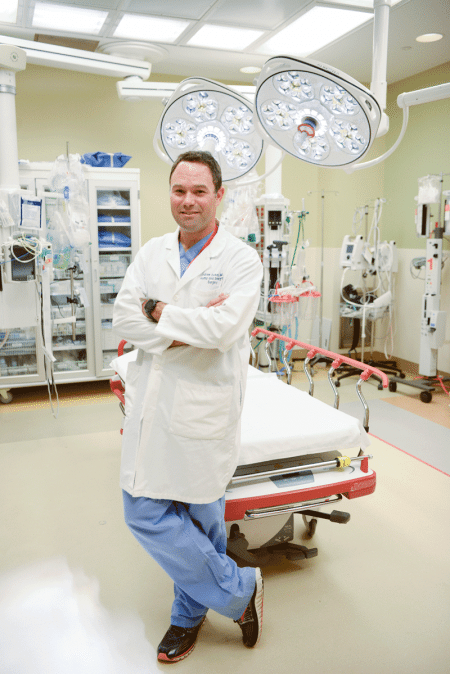
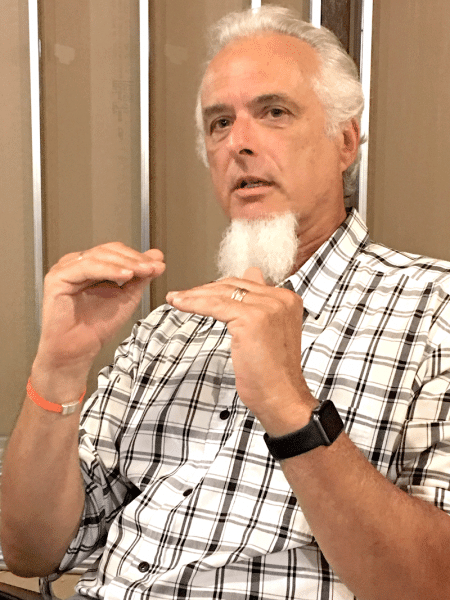
Dr. Andrew Doben

Dr. Andrew Doben
Dani Fine Photography

Dr. Andrew Doben has two real passions — beyond his family, of course.

Sailing and surgery. Not necessarily in that order, but probably.

They have been both pursuits and professions for Doben, and they are both well-represented on the walls and shelves in his small office at Baystate Medical Center.

Indeed, hanging next to his medical-school diploma is a poster from that famous (or infamous, depending on your point of view) 1983 America’s Cup, the one where Australia II, with its revolutionary winged keel, which Doben would describe in great detail, ended the New York Yacht Club’s 132-year hold on the cup. Not far from a shelf crammed with thick medical textbooks is a photograph of Doben and his children on his boat, a 41-foot Oceanis. And just across from a model of the titanium rib fixture he uses to save (and change) the lives of his patients, is another poster, this one complete with bits of sail flown by America3 in its successful America’s Cup defense in 1992.

“I know they’re genuine,” Doben said of these strips of sail, “because it looks like there’s some salt leaching onto the matting.”

Sailing and surgery; surgery and sailing. Doben can do more than talk about them with confidence and reverence in his voice. He can draw some stirring parallels and analogies between the two professions, as we’ll see. Together, they provide a window into how he views his work as director of the Surgical Intensive Care Unit at Baystate.

Which brings us back to that model mentioned earlier and a surgical treatment known as ‘surgical stabilization of rib fractures’ (SSRF), or rib fixation, which, as that name suggests, uses surgically implanted hardware to stabilize rib fractures. The procedure yields quicker recovery times, decreased mortality, reduced incidences of pneumonia, reduced use of ventilation after trauma to the chest, and less chest-wall deformity.

Doben explained. “With pretty much every bone in the human body, when you break it, you are, in some way, shape, or form, holding that bone stable while it heals, whether you put it in a cast, or you put some degree of fixation on it or through it — you stabilize that bone.

“And almost every bone in the body has had that to some degree, with the exception of the ribs,” he went on, adding that this is largely because they are always moving. “Fractures in motion will not heal.”

Years ago, surgeons would try casting or binding the ribs, Doben noted, but because they are so important to the respiratory process, this strategy is almost universally fatal. “People couldn’t take a deep breath, they got pneumonia, and they died.”

People trust a lot in you when you operate on them, and it’s very similar to the feeling you get when someone asks you to be their captain; they give you their boat, and they ask you to carry them through to safe passage; it’s very similar.”

Matters are further complicated by the fact that, if someone has endured an injury forceful enough to break several ribs, they have likely also damaged one or more of the organs that the ribs protect, he said, adding that for decades the hallmark of treatment of such patients was pain control, which led to slightly improved outcomes, with the emphasis on slightly.

Roughly 75 years of technical and medical developments, accelerated by several wars, have produced a fixation system, one that uses a combination of metal exoskeletal plates and pins to keep the ribs entirely immobile while damaged bone and tissue heal, resulting in reduced pain and a much shorter recovery time, as we’ll see later.

Doben’s emergence as one of the leading practitioners of rib fixation — he has performed the procedure more than 200 times, in his estimation — goes a long way to explaining why he is one of two winners in the Healthcare Heroes category called Innovation in Healthcare.

But that’s only part of the story. His tireless work to help make this surgical procedure more mainstream, thus saving more lives, is another big part. Indeed, while fib fixation is widely available in other countries, that is not the case in the U.S.; Doben is working to change that equation.

He noted that, while the number of rib-fixation procedures being performed in this country has risen, those numbers are skewed by the fact that most procedures are being undertaken at a handful of high-volume centers.

“Only a few dozen people in this country have performed as many as 100 of these operations,” he explained, adding that one of his goals moving forward is to create centers of excellence that will become referral centers for the treatment of people with such injuries and training centers for those who perform the procedure, with Baystate likely being one of the first of these centers.

Taking the High Road

As he talked about the start of his professional career — which saw him on the water, or ‘blue water,’ as it’s known to those who navigate it, and not in the OR — Doben made it clear that, while he misses some if not most aspects of that work, he has no regrets about wearing blue scrubs to work every day.

Nor does he have any regrets about not getting into finance, which would have been the most logical path to take with his degree in economics. Instead, he took, well, a different course, actually hundreds of them, as a professional sailor after being part of a nationally ranked sailing team at Connecticut College, a small liberal-arts school located across the street from the Coast Guard Academy in New London.

“I lived on boats and traveled all over the world,” he explained. “I was a captain and delivered sailboats; I did about 35,000 miles of open-ocean sailing prior to going to medical school.”

Elaborating, he said he was first employed by different companies that would lease out boats for sometimes lengthy excursions. It was his job to sail a boat back after a lessee was through with it.

“So someone might start in Tortola in the British Virgin Islands, and they’d finish in Antigua,” he explained. “Well … somehow that boat has to make it back to the British Virgin Islands. Someone has to have that horrible job of sailing that boat back.”

Later, Doben did well in the business of delivering sailboats to their owners. “Let’s say you live in New England and have a boat you keep in Newport, and you want it in the Caribbean for the winter, but you’re busy; you have a lifestyle where you can’t do it yourself. So you call someone up, and you pay them to bring that boat to you.”

They actually pay more than what he’s making now as a surgeon, Doben said with a smile on his face, noting that, while that life on the ocean sounds like something that would be difficult to leave, he did — and for several reasons.

For starters, life as a sailboat captain didn’t jibe with his ambitions for starting a family — “it’s a tough thing to step aside and say, ‘see you in 35 days,’” he noted. And despite the pleasing picture this lifestyle probably presents in one’s mind, reality is a little different.

“When you’re 600 miles from shore in 140 mile-per-hour winds wondering if your boat is going to sink, it’s not exactly the type of lifestyle most of us want to have in our mid-40s,” he told BusinessWest.
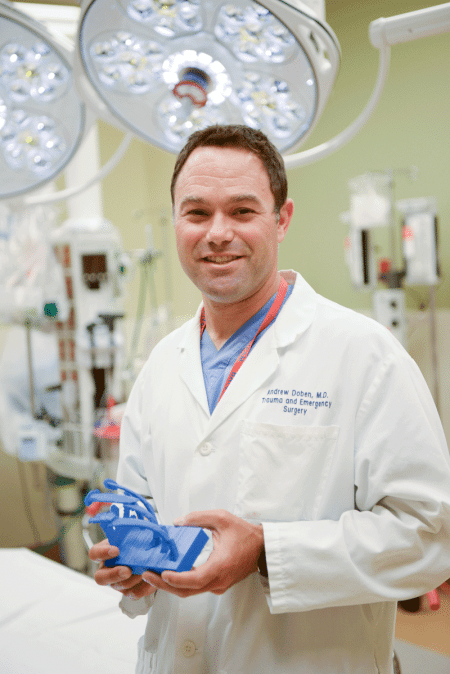
Dr. Andrew Doben

Dr. Andrew Doben can find many parallels between surgery and captaining a sailboat. In both cases, there is what amounts to a contractual agreement.

But, and this is a big but, he desired a lifestyle and a profession that would in many ways mirror what he found on the water.

“I wanted to find a career that was very dynamic, that was constantly changing,” he explained. “One of the things I love about being on the water and navigation is that you can study your whole life and still have things to learn about it.

“No matter what you think you know, things change so rapidly,” he went on, still referring to life on the ocean. “You can start out in the day in beautiful, sunny skies and finish in a tremendous storm, and you have to adjust to it. That dynamic part was something that was very important to me.”

And he’s found it in healthcare, and, more specifically, the operating room.

After going back to college and taking the requisite science courses, he enrolled in medical school at the University of Pittsburgh and quickly narrowed his focus to surgery. And in what couldn’t be considered an upset, he found some parallels between that specialty and being a sailing boat captain.

“I felt that there was a real connection to patients, and much more of what I would call a contractual agreement,” he explained. “People trust a lot in you when you operate on them, and it’s very similar to the feeling you get when someone asks you to be their captain; they give you their boat, and they ask you to carry them through to safe passage; it’s very similar.”

Current Events

Fast-forwarding a little, Doben came to Baystate and its 16-unit surgical intensive-care unit in 2010, a destination he chose because of the specific challenges and rewards it presented. And, once again, he can find similarities to life on the blue water.

“When I made the decision that I was going to this [surgery], I decided that I wanted to take care of the sickest of the sick,” he told BusinessWest. “I have the type of personality where … I was out with a friend sailing a few weekends ago, sailing in 40-miles-per-hour winds. I was having a blast.

“I’m not the sort who gets freaked out by bad things happening around me; I’m just sort of even-keeled,” he said, using terminology directly from his previous profession. “If something’s going wrong, I’m just going to focus and try to solve the problem.”

That phrase ‘sickest of the sick’ is often appropriate when taking about candidates for rib fixation. These are usually the victims of crush, fall, and explosive-force injuries and are often elderly, said Doben, adding that he considers himself at the forefront of efforts not only to perform this procedure, but to educate the medical community about its ability to save lives and improve quality of life, while dramatically reducing the overall costs of treating such patients.

“Most bones heal in six weeks, but with ribs, because they’re constantly moving, you’re talking about three to six months,” he said while explaining the many benefits to be derived from this procedure. “If you’re a contractor and you’re self-employed, and you have a raise a hammer over your head, six months to not be able to do that is a long time.

“Roughly 60% of the people who have a severe chest-wall injury remain unemployed for up to a year,” he went on. “We can get people back to work, full-time employment, in three to six weeks.”

He reports that some progress has been made in mainstreaming SSRF, but there is still considerable work to be done.

“In 2009, we wrote a paper on this during my fellowship, and we basically had tomatoes thrown at us when we were at the national meetings,” he recalled. “And now, we’re asked to come to the national meetings and talk about it; it’s been such a frame shift.”

Progress is reflected in the number of rib-fixation procedures being undertaken in this country, he went on, noting that there were maybe 100 cases performed in 2001; by 2014, that number had risen to more than 3,300.

But behind those statistics are some troubling trends, he went on, adding that there are only 20 surgical centers across the country that are performing this surgery more than 30 times a year.

“Most centers are doing one or two a year,” he explained. “And when you look at the patient pool and the injury-severity scores, meaning ‘how badly injured is this patient?’ the number is almost double at the high-volume centers. So the sicker patients are being treated at the high-volume centers, and the mortality is half what it is at the lower-volume centers. So the lower centers are seeing patients who aren’t as sick, with less frequency, and they’re having worse outcomes.

“And that makes sense,” he went on. “If you don’t do the operation a lot and you don’t have a lot of experience, your outcomes are not going to be the same. This is concerning to me, and we’ve been working on that.”

This work is largely focused on creating those centers of excellence he mentioned, adding that he and others with the Chest Wall Injury Society are working to establish the criteria for such centers.

And there is much more to this than having specialists who can perform the rib-fixation surgery, he explained.

“The operation is only one-tenth of the puzzle,” he explained. “The puzzle is the team that takes care of these people. The respiratory specialists, the ICU, anesthesia, the pain management, the post-op management, the physical therapists … it’s a whole host of people. The operation just helps accelerate that process.”

And while establishing these centers of excellence that the ill and injured can be referred to, Doben and others will work to greatly increase the number of surgeons who perform this procedure, with an eye toward improving care in currently underserved areas.

Elaborating, he said there are maybe two dozen facilities that may soon become centers for excellence, and most are clustered in the western part of the country, where there are higher incidences of motorcycling and skiing injuries. Other parts of the country are underserved, he went on, listing Boston, where there is only one surgeon who performs this procedure, as an example.

“There are many people who don’t even know this procedure is available,” he said, adding that his goal now is to not only change that equation, but make the procedure available to more people.

Stemming the Tide

Returning to his thoughts about why he chose surgery as a profession and the ICU as the place to call his professional home, Doben recalled something that a friend of his father and a cardiologist by trade once said to him — something that has obviously stayed with him.

“He said, ‘being a doctor is a great privilege, where you get to see people in their most vulnerable states,’ and there’s nothing more true about that than the ICU, both for patients and families. And I enjoy that relationship of being able to work with people to get them through all that, to get them to safe passage.”

“Sometimes they don’t get there; they don’t survive,” he went on, adding that helping people live out their final days and moments in dignity is often as rewarding as saving a life.

That reference to safe passage was yet another analogy to sailing, a profession Doben has left behind him. Yet the sailing mindset remains — to focus on the horizon and chart a course that will get where you need to go.

And with SSRF and the challenge of bringing that breakthrough technology to more of the people who can benefit from it, he has done just that.

George O’Brien can be reached at [email protected]
Employment Sections

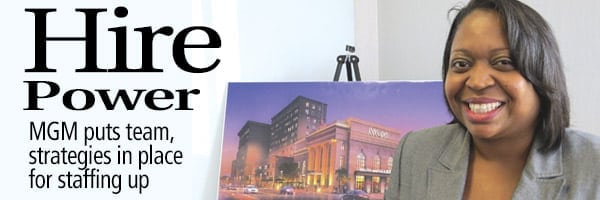
Hire Power

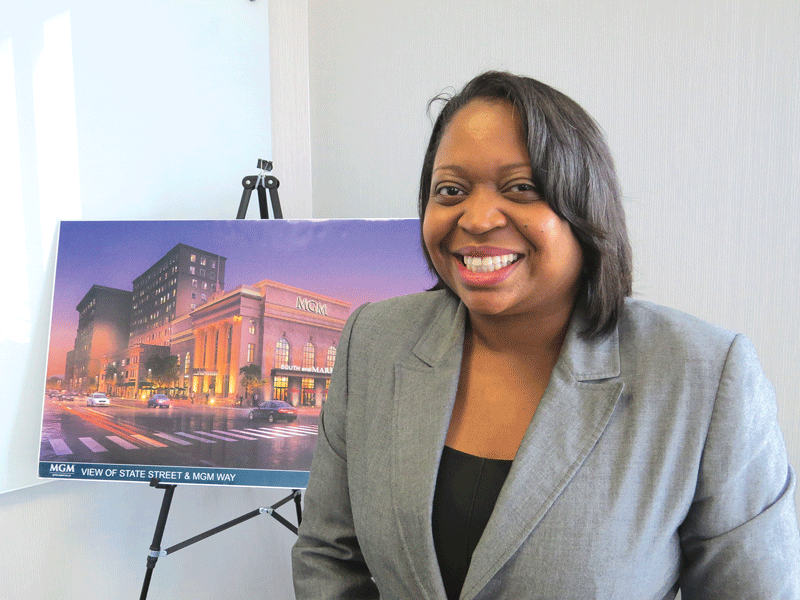
Wanda Gispert, regional vice president of Talent & Workforce Development for MGM Resorts International.

Wanda Gispert, regional vice president of Talent & Workforce Development for MGM Resorts International.

The final countdown has begun at MGM Springfield; the $950 million casino will be open for business in just over a year. That means roughly 3,000 people must be hired between now and then, a massive task that falls to a team that has already been hard at work for months.

126,000.

That’s the number of applications that Wanda Gispert is expecting for the 3,000 or so positions that MGM Springfield must fill between now and opening night roughly a year from now — actually, well before opening night.

Doing the quick math, Gispert, who takes the title of regional vice president of Talent and Workforce Development for MGM Resorts International, acknowledges that this number equates to just over 40 applicants per job.

That might be the average, but the number of applicants will vary wildly with the position, she told BusinessWest, adding that, for top-level positions, like vice president of table games, there might be hundreds of candidates.

And then, for some positions, 40 applicants for each posting would be a blessing, but certainly not a reality.

“Being a butcher is a lost art — a lot of people don’t have that specific skill,” she said, adding that the casino will need a handful of such individuals. The same is true of pastry chefs and security personnel specifically trained to work with canines.

Filling the hundreds of different kinds of positions needed to operate MGM’s $959 million casino in Springfield’s South End is now Gispert’s responsibility. Actually, she leads a team of people that will handle this assignment, one she is still building.

As she goes about her work, she will draw on years of experience with meeting the considerable workforce challenges of major corporations within the broad hospitality sector.

Her specialty is opening new properties, and her résumé includes considerable work within the hotel industry, specifically with Marriott Hilton, opening more than 200 properties within the U.S., Canada, Mexico, and the Caribbean, while serving on what is known as the ‘new-opening team.’

She later went to work for MGM Resorts International, and took the lead role in assembling the team of roughly 4,000 for the company’s National Harbor casino, which opened earlier this year.

She will also draw on a host of resources, everything from the area’s community colleges and workforce-related agencies to websites that can tell her which companies are downsizing across the country and, therefore, what types of talented individuals might be looking for work.

Overall, she said assembling a workforce for MGM Springfield will pose some challenges, but nothing out of the ordinary for such assignments.

The region boasts a large, qualified workforce, she noted, and it has the resources in place to train those who will need specific training, such as dealers. Meanwhile, MGM’s name and reputation within the gaming industry will bring a number of experienced workers into this market, giving the new casino ample talent to draw from as its fills out its team.

“With every market that we service, we see challenges in certain areas,” she explained, noting that this region would certainly not boast many experienced casino workers because legalized gaming only came to this state a year ago. “What’s encouraging about this area is that there are professions that easily transfer over to what we need; the banking industry is huge here, for example. From a cage-operations standpoint and how you run a casino behind the scenes — meaning accounting, finance, human resources, and other areas — we have a lot of positions there, but we know skills will transfer over.”

For this issue and its focus on employment, BusinessWest talked at length with Gispert about the hiring process for MGM Springfield and how things will unfold over the next year.

Surveying the Situation

As she assessed the challenge of staffing up at MGM Springfield, Gispert made a number of observations.

Among them is the fact this is a good time to be in a culinary-arts program, and for fairly obvious reasons made clear by her reference to pastry chefs and how hard it will be to find them. It’s also a good time to be a math teacher or a retired math teacher, for less-obvious reasons she would explain. And it’s a good time to be a bank teller, especially one who might be downsized in this time when there is need for fewer of those professionals.

As for math teachers and those who have retired from that profession, Gispert said they are the perfect sorts for the behind-the-scenes positions in surveillance.

“Those jobs are very different from security positions,” she explained. “Everyone in surveillance is given a math test; they have to understand all the games — poker, blackjack, craps, everything that we offer — and they need to be able to do math in their head very well, because if I’m watching a play, how do I know if an odd is being paid out properly?

“They catch mistakes; they catch possible cheating,” she went on. “They’re the eyes and ears of the casino. They must be really sharp, and their facial-recognition skills must be really strong.”

Loss-prevention specialists for major retailers would obviously be good candidates for such positions, she continued, but those math teachers and former math teachers are also ideal.

And teachers, in general, are good candidates for jobs through the casino, and for many reasons.

“They’re off every night, they’re off every weekend, they’re off for Christmas,” she said while listing some. “We love school teachers; many of our employers teach school because they have the perfect schedule.”

As noted, Gispert can talk about filling such positions from experience — lots of it.

A graduate of Georgia State’s respected hospitality program (the school is located in Atlanta, a popular site for conventions), she said she started her career on the front desk of a Holiday Inn at age 18 and has worked in a host of different positions within the hotel sector.

“I think that’s what’s given me my edge,” she told BusinessWest. “I’ve worked all of those jobs — I’ve washed dishes, I’ve made beds, I’ve worked in sales. You’re a jack of all trades at that point, and when you’re recruiting for those positions or training for them, you know what to look for, and you know how to train better because you’ve been in that position.”

Jason Randall

Jason Randall says the process of onboarding MGM employees is well underway.

As noted, she’s taken all that experience in hotels and added casino staffing to her résumé, assignments that are similar to hotels but have some additional wrinkles, such as host-community agreements, which stipulate commitments that the casino will make to hiring people from the specific host community and region surrounding it.

With MGM Springfield, that commitment is to have more than one-third (35%) of the workforce be comprised of people living in Springfield or from Springfield.

That last consideration is a very important one, said Gispert, adding that one of the things Springfield officials hoped to do by luring a casino here was to bring back some of those young people (with ‘young’ being a relative term) who decided they needed to go elsewhere to find fulfillment of their career aspirations.

That commitment to designate a third of the jobs to those with Springfield roots, as well as other commitments (to hire veterans, for example) is essentially a starting point for this assignment, said Gispert.

“That’s how I start crafting how I will approach my workforce-development game plan for the area,” she explained, adding that 90% of the workforce must come from this region, which is defined loosely as Greater Springfield.

Counting Down

Running down some of the numbers involved with her assignment (there are always lots of numbers to consider when talking about a casino), Gispert said the largest specific team, or department, will be dealers; roughly 600 of them will be needed for blackjack, poker, and other games. A large security force will also be needed, she went on, noting that roughly 200 individuals will be required for such work.

There will be a number of restaurants and catering operations, so about 150 culinary artists will be required, she said, adding that there are subsets within that broad realm (pastry chef, for example), and there will be about 80 cashier, or ‘cage,’ positions, as they’re called; these are people who will be handling money.

There are also a number of positions for which the casino will need just a few talented individuals, or perhaps even one. Butcher falls in that category, as does locksmith, security people that can work with dogs, and ‘master tailor’ (there will likely be just one of those).

When asked about the schedule moving forward when it comes to the process of putting a team in place, Gispert said the hiring has already begun in many areas, especially within the higher levels of management, meaning those who will lead the teams that will be assembled.

The matter of when specific positions will be filled will be determined by several factors, she went on, but especially how much training is involved and, obviously, when the employees in question will be needed.

As an example, she noted security personnel. This will be a large force, as noted, and one that will need extensive training. Also, in many cases, individuals will be needed long before the doors to the casino actually open.

“January is the month when a lot of positions will come on board,” she explained. “Because security and surveillance come in first; they take the longest to train, and you need them on the premises earlier than anyone else.

“Once equipment starts to be delivered, surveillance has to be there from that point on,” she went on. “Once slot machines and other equipment start to arrive, it cannot be left unsupervised; it’s 24 hours a day once they’re on the premises.”

And bringing someone onboard, if you will, is a lengthy process, said Jason Randall, who just went through it himself while being hired as director of Talent Acquisition & Development.

A veteran of the tourism industry in the human resources realm — he was a member of BusinessWest’s 40 Under 40 Class of 2014 as director of Human Resources for Peter Pan Bus Lines — he joined MGM in May. He said one of his primary responsibilities is taking new hires “from A to Z,” as he put it.

“Soon, we’ll start building out our human-resources team to start managing that on a volume scale,” he explained. “We’ll have a team that will take over halfway through the process to help initiate drug and background checks, complete offer letters, assisting with gaming-license processing, and eventually queueing everyone up for the big orientation dates.”

Those will be coming after some large hiring events late next spring and into the summer, he went on, leaving ample time for training before the casino opens.

As jobs need to be filled, the positions are posted on LinkedIn and job boards, said Gispert, adding that the response has thus far been solid, and it points toward overall numbers similar to what was experienced with National Harbor — thus that projection for 126,000 applications.

People can apply for as many as three jobs, and many do, she explained, which will be a factor in how many applications MGM receives, but overall, she’s expecting a very strong response, and from people of all ages.

“We reach out to AARP,” Gispert explained, “because a lot of people thought they wanted to be retired, then they retired and they decided, ‘no, I really want something back in the workforce.’”

Odds Are

As she talked about the process of creating a workforce for MGM Springfield, Gispert noted one challenge that might not be apparent to all.

“Not everyone will want to work for us,” she said with laugh, “because if you work for us, you can’t gamble here. Some people would rather be a customer than an employee.”

Perhaps, but she’s quite confident that this obstacle can be overcome as she goes about hiring dealers, security personnel, and even butchers and pastry chefs.

A year from now, roughly 3,000 people will be wearing ‘MGM Springfield’ nametags as part of the work attire. Getting to that point will be a challenge, but the casino and its workforce will be ready, she said.

You can bet on it.

George O’Brien can be reached at [email protected]
Briefcase Departments

Nominations Sought for Difference Makers Award

SPRINGFIELD — Nearly a decade ago, BusinessWest created a new recognition program called Difference Makers. That carefully chosen name sums up what this initiative is all about — identifying and then celebrating individuals, groups, and agencies in this region that are making a difference in our communities. And now, it’s time to nominate candidates for the class of 2018. The nomination form can be found at www.buisnesswest.com; click ‘Our Events,’ and then ‘Difference Makers.’ Nominations must be submitted by Nov. 3. Over the first nine years of the program, honorees have included a host of individuals and nonprofit agencies focusing on everything from childhood literacy to combatting homelessness; from reducing gang violence in Springfield to creating a walk to battle breast cancer. For a full list of previous winners, visit www.businesswest.com.

Those nominating candidates are encouraged to make their submissions detailed and explain why the individual or group in question is a true Difference Maker.

VVM Graduates 14 from Collegiate Accelerator

SPRINGFIELD — Valley Venture Mentors announced that it has graduated 14 startups from its inaugural Collegiate Accelerator Program. After nine weeks of intensive training, more than $20,000 in cash prizes was distributed to the entrepreneurs by accredited investors. Additionally, a $5,000 award was given to the startup that showed the most grit. Here is a rundown of the teams and the prize distribution:

• The Travel Unicorn, the LGBTQ+ travel guide that works to connect travelers to safe destinations based on their recommendations: $6,000, plus the $5,000 Grit Award;

• lymph + honey, which provides access to healthful, wholesome, and sustainable natural hair- and body-care products: $6,000;

• Vidvision, which helps marketers convert their video viewers into customers: $2,700;

• Zirui, offering innovative and stylish solutions for traveling with beauty and care products: $2,700;

• Mt. Mitho, bringing flavors from the highest peak on Earth: $1,350;

• redflowers, an online media platform that fosters community and dismantles societal stereotypes surrounding black identities and black women: $700;

• STEAMporio, training the makers of tomorrow by creating a passion for learning: $700;

• Boman, where a shipping container plus agricultural system equals a turn-key platform for growing any crop, anytime, anywhere;

• El Cherufe Chile Paste, an artisanal chile paste that offers a new flavor experience to lovers of spicy heat;

• INDI10.com, where you bid to wear it first;

• Lighthouse, which helps students with projects, no matter the size;

• Shesabelle Chandeliears, helping those with limited earring options experience the full range of expression earrings have to offer;

• Studio 26, a promotional service that offers underground musicians in Massachusetts tools and resources to help expand and build their brand; and

• The Black Enterprise Business Resource Center, which cultivates the empowerment and collaboration of black entrepreneurs in the Western Mass. area through quality business education and business services.

Leadership Holyoke 2017-18 Series to Begin

HOLYOKE — Leadership Holyoke is a comprehensive community-leadership and board-development program of the Greater Holyoke Chamber of Commerce. The series utilizes a combination of classes and practical experiences to help local business people develop their leadership skills, increase their knowledge of the community, and acquire the skills needed to serve as board members and community leaders. The 2017-18 Leadership series begins on Sept. 22, consists of a weekly series of eight seven-hour sessions, and concludes on May 2 with a graduation ceremony at Holyoke Community College (HCC) with a specialty luncheon prepared by the college’s culinary program students. All sessions will be held on Fridays (except for the Boston State House trip) and take place at HCC as well as other locations throughout the city. Each session will include a segment on organization and leadership skills, and a segment on community needs and resources. Faculty members from HCC will participate as instructors and facilitators, and community leaders will participate as speakers and discussion leaders in areas of their expertise. The Leadership Holyoke series is made possible by PeoplesBank. Tuition of $600 per participant is due at the start of the course and includes a continental breakfast each week, a bus trip to Boston, and the graduation luncheon. Sign up online at holyokechamber.com or call the chamber at (413) 534-3376 with any questions.

Departments People on the Move
Kristen Lemoi

Kristen Lemoi

Florence Bank promoted Kristen Lemoi to the position of vice president, Marketing manager. She joined Florence Bank in June 2011. Prior to her recent promotion, Lemoi had served as the assistant vice president, Digital and Merchandising manager for Florence Bank, and played an integral part in the 2014 launch of the bank’s new brand. In her new role, she will help steer the bank’s strategic marketing decisions. Lemoi received her bachelor’s degree in marketing from UMass Dartmouth. She is currently on the board of the Cancer Connection, and holds the title of certified financial marketing professional from the ABA Institute of Certified Bankers.

•••••

Max Kernizan

Max Kernizan

Facial Cosmetic & Maxillofacial Surgery, P.C. announced that Max Kernizan, DMD has joined its oral-surgery practice. Richard Fraziero, the practice’s owner, said Kernizan “is bringing to Western Mass. the excellent surgical skills that our patients have come to expect from our surgeons at FCMS. He will be performing full-scope OMF [oral and maxillofacial] surgery in our surgical office, as well as at Baystate Medical Center. We are very excited to have Max join the Valley’s premier OMFS practice.” Kernizan completed his undergraduate education at Philadelphia University, graduating magna cum laude, and earned his dental degree at Temple University in Philadelphia. While in dental school, he achieved the Oral Surgery Scholarship award and served as vice president of the Anesthesiology Honor Society. Following dental school, he completed his specialty training in oral and maxillofacial surgery as chief resident at Yale New Haven Hospital in New Haven, Conn. He will begin treating patients at 382 North Main Street, East Longmeadow, in September. Kernizan is trained in the full scope of oral and maxillofacial surgery. His primary clinical interests include orthognathic/corrective jaw surgery, wisdom teeth removal with sedation, dentoalveolar surgery, dental implants, and repair of traumatic facial injuries. He maintains certifications in BLS, ACLS, PALS; currently has affiliations with the American College of Oral and Maxillofacial Surgery and the American Assoc. of Cosmetic Surgery; and is an AO CranioMaxillofacial affiliate. To schedule an appointment with Kernizan, at (413) 525-0100. He will also be offering same-day emergency appointments based on the direction of the patient’s general dentists; area dentists may press option 1 to be directed to a front-desk coordinator.

•••••

The board of directors of the Springfield Regional Chamber (SRC) has elected officers to lead the organization: Tricia Canavan as chair, Mark French as vice chair, Barbara-Jean Deloria as treasurer and David Parke, Esq. as secretary. Canavan is president of United Personnel. A member of the boards of directors of the Affiliated Chambers of Commerce of Greater Springfield and the Springfield Chamber of Commerce prior to its merger, she most recently served as the vice chair of the SRC board of directors. Canavan lends her leadership to other boards of directors including the Baystate Health Foundation, Springfield Public Forum, and the Northampton Chamber of Commerce. French is the advertising director of the Republican/MassLive/El Pueblo Latino. He has been a member of the SRC board since its inception and served on the Springfield Chamber Board prior to its merger. He also served as chair of the Marketing and Advertising Council at New England Newspaper and Press Assoc. and in various leadership roles on the board of directors for the New England Newspaper Advertising Executives. Deloria is a senior vice president at Florence Bank. She has served as the SRC’s board treasurer since its inception. Prior to that, she was a member of the Affiliated Chambers of Commerce of Greater Springfield (ACCGS) board of directors since 2005 and served as its board treasurer. She is a past president of the West Springfield Chamber of Commerce and Dress for Success Western Massachusetts and serves on the Massachusetts Small Business Review Board. Parke is a partner with Bulkley Richardson and a member of its business and finance department, focusing on general corporate and business matters, mergers and acquisitions, and other transactional work. He, too, served in a leadership capacity on the ACCGS board prior to its merger and was instrumental in the formation of the Springfield Regional Chamber. He serves on Massachusetts Continuing Legal Education, Inc. Business & Commercial Curriculum Advisory Committee and is past chair and current member of the Friends of the Homeless board of directors. Also elected as new members of the SRC board of directors were Marc Criscitelli, senior vice president for HUB International New England, LLC; Lou Curto, financial consultant with Private Wealth Management Group; David Ference, vice president, Commercial Lending for TD Bank; Tejas Gandhi, chief operating officer for Baystate Health; Jeffrey Trapani, Esq., a partner with Robinson Donovan Madden & Barry, P.C.; and Jenny MacKay, representing the Professional Women’s Chamber.

•••••

The East of the River Five Town Chamber of Commerce inaugurated President Edward Zemba of Robert Charles Photography at its recent annual meeting at the Starting Gate at GreatHorse. Robert Charles Photography has been a member of the ERC5 since 1974, and Zemba has been participating in chamber events for more than 20 years. The annual meeting also ushered in First Vice Chair Charles Christianson of CMD Technology and celebrated the continued efforts of Treasurer Joe Lawler of the Gaudreau Group. Past President Dennis Lopata of Life Care Center of Wilbraham relinquished his responsibilities to Zemba.

•••••

Former state Rep. Benjamin Swan has been named the recipient of the 26th annual Ubora Award conferred by the African Hall subcommittee of the Springfield Science Museum. In Swahili, Ubora means “excellence.” Swan was nominated by Denise Jordan and Fred Allen Swan. As a civil-rights activist, Ben Swan was the Western Mass. coordinator for the monumental 1963 March for Jobs and Freedom, and he is recognized as the preeminent leader of the 1960s civil rights movement in the city of Springfield, and he served as president of the Greater Springfield branch of the NAACP. For 24 years, Swan served as state representative for the 11th Hampden District, retiring this past January. As a community leader, he helped launch a number of community-based organizations such as Northern Education Service and the former Springfield Action Commission. Swan provided moral, legislative, and financial leadership and support to the Springfield Schools, community-based organizations, minority veterans groups, substance-abuse treatment, cultural festivals, the Springfield Arts Council, Springfield Technical Community College, and the UMass Downtown Center.  As an artist and the creator of the long-standing Black Love Experience radio program, Swan provides community updates in educational and cultural activities and shares inspirational black classical music. Swan graduated from the former Springfield Technical High School. He received his bachelor’s degree from the Fashion Design Institute and his master’s degree in education from UMass. He completed advanced graduate work at UMass, and received an honorary doctorate from Westfield State University. He has received many awards and recognitions, including the 1990 “Eye on the Prize” Award.

•••••

The board of directors of the Professional Women’s Chamber (PWC), a division of the Springfield Regional Chamber, has elected its officers to lead the division:

Laurie Cassidy has been re-elected president. She has been executive director of the West Springfield Council on Aging/Senior Center since 2010. She is in the second year of her two-year term as president;

Gillian Palmer has been newly elected as vice president. Palmer, a PWC member since 2014, is Business Development coordinator at Eastern States Exposition. Palmer also serves as vice president of Finance of the Meeting Professionals International CT River Valley chapter, special events chair of the Rotary Club of Springfield, and a Bay Path University Alumni Council member. She is a member of BusinessWest’s 40 Under Forty Class of 2017;

Caron LaCour was re-elected as treasurer. She is a certified public accountant working with Burkhart Pizzanelli, P.C.;

Jeannie Filomeno was also re-elected as assistant treasurer. She is Human Resource manager at Marcotte Ford Sales Inc., her family business where she has worked since graduating college. She has served on the PWC board for three terms.

Liz Rappaport, a third-generation property manager at Century Investment Co., was re-elected as secretary; and

Janet Casey will continue to serve as past president for one more year.

•••••

Kelly Koch

Kelly Koch

Raipher, P.C. announced that Kelly Koch and Isaac Fleisher recently joined the firm. Koch began her career with a clerkship for judges in the Western Mass. Probate and Family Court. She then spent six years in the Domestic Relations department at Bulkley, Richardson and Gelinas, LLP. She is well-versed in domestic relations and probate law and has handled domestic and international custody disputes, multi-million-dollar divorces, and alimony modifications. She earned her bachelor’s degree from Brandeis University as well as a JD and an LLM in estate planning from Western New England University School of Law. She is a member of the Hampden and Hampshire County Bar Associations, the Massachusetts Bar Assoc., the Women’s Bar Assoc., and the ACLU. Fleisher comes to Raipher, P.C. with 10 years of in-house counsel experience at Tams-Witmark Inc. in New York City. He counseled corporate executives on business and legal issues, negotiated licensing agreements, and managed copyrights. At Raipher, P.C., he works with startups and entrepreneurs in a range of industries and has developed an expertise in the renewable-energy sector, helping investors and developers acquire, finance, and build commercial solar-power facilities throughout the Northeast. He earned his bachelor’s degree from Wesleyan University, graduating with honors, and his JD from Brooklyn Law, graduating cum laude. He is a member of the Massachusetts Bar Assoc., the Hampshire County Bar Assoc., the New York City Bar Assoc., and the New York State Bar Assoc. In his free time, Isaac volunteers with Legal Food Hub, a nonprofit providing free legal services to farmers and food entrepreneurs in New England. He serves on the board of the Lander-Grinspoon Academy.

•••••

Terry Poloski of Monson Savings Bank was recognized recently by the Warren Group, publisher of Banker & Tradesman magazine, in its its annual report of the top mortgage originators in Massachusetts. Poloski was named one of the top five mortgage loan originators in Western Mass. for the second straight year. Poloski has been with Monson Savings Bank as a mortgage originator for the past five years. She has more than 38 years in the banking industry, is a member of the RAPV Affiliate Group, and participates in BNI.

•••••

During the National Assoc. of Clean Water Agencies’ (NACWA) Utility Leadership Conference and 47th annual meeting in St. Louis, representatives of the association’s nearly 300 member utilities elected Joshua Schimmel, executive director of the Springfield Water and Sewer Commission, to a seat on its board of directors. NACWA, headquartered in Washington, D.C., is a national leader in clean-water advocacy, and Schimmel’s leadership will be instrumental in helping to shape and improve clean-water policy that impacts all states and cities. Schimmel has more than 24 years of experience at the Springfield Water and Sewer Commission, participating in all facets of the water and wastewater utility business, from operations to engineering to customer service to financial and regulatory issues. Appointed executive director in 2016, he worked proactively with the Board of Commissioners and commission staff to advance efforts to create financial stability, implement an aggressive capital-investment program, and develop a sustainable operating strategy while keeping rates affordable and service reliable.

Chamber Corners Departments

1BERKSHIRE
www.1berkshire.com
(413) 499-1600

• Sept. 14: Celebrate the Berkshires, 6-8 p.m., at Bloom Meadows, where we’ll recognize the Community of North Adams as our ‘Putting the Berkshires on the Map’ honoree and announce the winners of our Trendsetter Awards. These awards are our way of recognizing individuals and organizations whose outstanding achievements and commitment have strengthened our economy and helped the Berkshires grow. Register online at www.1berkshire.com.

FRANKLIN COUNTY CHAMBER OF COMMERCE
www.franklincc.org
(413) 773-5463

• Sept. 13: “Are You Making Money or Losing Your Shirt?” 11 a.m. to 1 p.m., hosted by TD Bank Greenfield, 324 Main St., Greenfield. Net profit gauges how well a business manages both revenue generation and expenses, assuming that owners are not taking out much cash in the form of distributions. Being profitable also means the company is building equity. What does this all mean? Join us to learn more about your financial statements and how you can use them to improve your profit picture. At the end of the workshop, each attendee will be entered into a drawing for a free copy of Quickbooks Pro, a $220 value. A light lunch will be provided. Register at www.franklincc.org.

GREATER CHICOPEE CHAMBER OF COMMERCE
www.chicopeechamber.org
(413) 594-2101

• Sept. 7: CEO Power Hour Luncheon with Nathan Costa, CEO of the Springfield Thunderbirds, 11:45 a.m. to 1 p.m., hosted by Collegian Court Restaurant, 89 Park St., Chicopee. Costa was well aware of the challenges the Thunderbirds faced, and he will share his strategy for turning things around, including improvements made in sales and marketing efforts, game-day experience, and community engagement. Join us for lunch with Costa and learn about the creation of a winning culture. Cost: $30 for members;, $35 for non-members. Register online at www.chicopeechamber.org.
• Sept. 14: Business After Hours presents Porter & Chester, 4:30-6:30 p.m., hosted by Porter & Chester Institute, 134 Dulong Circle, Chicopee. Cost: $10 for members, $15 for non-members. Register online at www.chicopeechamber.org.

GREATER EASTHAMPTON CHAMBER OF COMMERCE
www.easthamptonchamber.org
(413) 527-9414

• Sept. 14: Networking by Night, 5-7 p.m., hosted by Pioneer Landscapes, 223 Cardinal Way, Florence. Cost: $10 for members, $15 for non-members. Register online at www.easthamptonchamber.org.

GREATER HOLYOKE CHAMBER OF COMMERCE
www.holyokechamber.com
(413) 534-3376

• Sept. 6: Chamber Coffee Buzz, 7:30-8:30 a.m., hosted by Providence Place, 5 Gamelin St., Holyoke. The Coffee Buzz series is a morning networking program that provides chamber members and guests the opportunity to make new contacts and exchange business information over a light breakfast. The format includes a 30-second introduction of each guest, the host has a five- to 10-minute promotional opportunity, and rest of the event is mingling. Cost: free. Register online at www.holyokechamber.com.
• Sept. 13: Annual Clambake, 5-7 p.m., hosted by Holyoke Country Club, Country Club Road, Holyoke. We’re planning a feast of lobster, steamed clams, sweet corn on the cob, boiled red potatoes, tossed salad, and iced tea. Treat a client or make this your employee-appreciation gathering — there’s plenty of room. Grilled chicken will be available. Join Weld Management as a sponsor of this well-attended event. Cost: $38 for members, $40 for non-members. Register online at www.holyokechamber.com.

GREATER NORTHAMPTON CHAMBER OF COMMERCE
www.explorenorthampton.com
(413) 584-1900

• Sept. 11: “Financial Planning 101,” 5:30-6:30 p.m., presented by Streetlight Financial, hosted by Forbes Library. Cost: free. Register online at forbeslibrary.libcal.com/event/3442716.
• Sept. 13: Arrive@5, 5-7 p.m., hosted by Family Legacy Partners, 48 Round Hill Road, Suite 2, Northampton. Co-host: CheckWriters Payroll. Sponsored by Northeast Solar, Finck & Perras Insurance Agency Inc., and Coldwell Banker Upton-Massamont Realtors. Cost: $10 for members.

GREATER WESTFIELD CHAMBER OF COMMERCE
www.westfieldbiz.org
(413) 568-1618

• Sept. 11: Mayor’s Coffee Hour with Mayor Brian Sullivan, 8-9 a.m., hosted by Shaker Farms Country Club, 866 Shaker Road, Westfield. This event is free and open to the public. Call Pam at the Chamber office at (413) 568-1618 to register, so we may give our host a head count.
• Sept. 13: After 5 Connection, 5-7 p.m., hosted by Holiday Inn Express, 39 Southampton Road, Westfield. Bring your business cards and make connections. Refreshments will be served, and a 50/50 raffle will benefit two Citizen’s Scholarships. Cost: free for members, $10 for non-members (cash or credit card).
• Sept. 15: Chamber Workshop: “Employment Practices, Liability Insurance,” 8:30-10 a.m., hosted by Holiday Inn Express, 39 Southampton Road, Westfield. Join management-side labor and employment-law attorney Timothy Netkovick for this informational seminar on EPLI. Netkovick will provide an overview of the types of claims these policies generally cover and exclude. He will also identify the 10 most important considerations you should be aware of when assessing whether a particular EPLI policy is right for your company. When you leave this seminar, you and your team will be able to fully assess your needs in regard to whether or not you should invest in EPLI. Cost: free for members, $30 for non-members (cash or credit card). Contact Pam at the chamber office at (413) 568-1618 or [email protected] for more information or to register.
• Sept. 18: Chamber Workshop: “Go Mobile!” 8:30-10 a.m. hosted by Holiday Inn Express, 39 Southampton Road, Westfield. Join Kurt Lumpp of Russell Cellular for this informational workshop and maximize the use of your cell phone. Cost: free for members, $30 for non-members (cash or credit card). Contact Pam at the chamber office at (413) 568-1618 or [email protected] for more information or to register.

SPRINGFIELD REGIONAL CHAMBER
www.springfieldregionalchamber.com
(413) 787.1555

• Sept. 6: Business@Breakfast, at the Sheraton Springfield, One Monarch Place, Springfield. Featuring Pam Victor, president and head of happiness at Happier Valley Comedy, on “Two Magic Words to Stimulate Innovation.” Also saluting Elms College President Harry Dumay and Sunshine Village. Cost: $25 for members in advance ($30 at the door), $35 for general admission ($40 at the door).
• Sept 14: Professional Women’s Chamber Luncheon, Munich Haus, 13 Center St., Chicopee.

WEST OF THE RIVER CHAMBER OF COMMERCE
www.ourwrc.com
(413) 426-3880

• Sept. 6: Wicked Wednesday, 5:30-7:30 p.m., hosted by Carrabba’s Italian Grill, West Springfield. Wicked Wednesdays are monthly social events, hosted by various businesses and restaurants, that bring members and non-members together to network in a laid-back atmosphere. For more information about this event, contact the chamber office at (413) 426-3880, or register at www.westoftheriverchamber.com.
• Sept. 13: September Breakfast, 7 to 9 a.m., hosted by Chez Josef in Agawam. The event will bring members and non-members together for a morning of breakfast, debate, and town updates. Attendees will have the opportunity to connect with local business people over breakfast and listen to the Agawam mayoral candidates discuss their views and ideas on how they plan to stimulate local business success. The moderator for this event will be Robert MacDonald of Work Opportunity Center in Agawam. Questions from the public and businesses can be submitted to [email protected]. In addition, West Springfield Mayor Will Reichelt will be on hand to discuss business-development plans for his community. Event sponsors include United Bank and bankESB. Sponsorship opportunities are still available. Tickets cost $35 for members and $45 for non-members. To register or sponsor this event, visit www.westoftheriverchamber.com.

Daily News

SPRINGFIELD — Nearly a decade ago, BusinessWest created a new recognition program called Difference Makers. That carefully chosen name sums up what this initiative is all about — identifying and then celebrating individuals, groups, and agencies in this region that are making a difference in our communities. And now, it’s time to nominate candidates for the class of 2018.

The nomination form can be found at www.businesswest.com; click ‘Our Events,’ and then ‘Difference Makers.’ Nominations must be submitted by Nov. 3. Over the first nine years of the program, honorees have included a host of individuals and nonprofit agencies focusing on everything from childhood literacy to combatting homelessness; from reducing gang violence in Springfield to creating a walk to battle breast cancer. For a full list of previous winners, visit www.businesswest.com.

Those nominating candidates are encouraged to make their submissions detailed and explain why the individual or group in question is a true Difference Maker.

Daily News

SPRINGFIELD — The Gray House, a nonprofit organization in the North End of Springfield, is kicking off its third annual Fill the Plate, Feed a Family Challenge, an online fund-raising initiative set to run from Friday, Sept. 1 through Saturday, Sept. 30.

The organization has set a goal of raising $20,000 for the month of September and is asking the community to help them reach this goal. All proceeds will directly support its food-pantry operations, which serve an average of 80 to 120 households each week.

This year, the initiative has expanded to include additional events. The efforts will kick off at Hot Table at Tower Square in Springfield on Wednesday, Sept. 6, where 20% of proceeds from breakfast, lunch, and dinner sales will benefit the Gray House. Patrons must present the cashier with a fund-raising flyer, which can be found at grayhouse.org.

Mayor Domenic Sarno will be present at noon to make his annual donation in support of the Gray House Food Pantry. “Fill the Plate will continue to nourish great programs at the Gray House,” he said. “It will be your comfort food donation!”

Throughout the month, participants are asked to donate through razoo.com/ftp; post a photo of themselves with an empty plate, hashtag it #FillThePlate, and link to the donation page on social media; and tag the Gray House and any friends they want to encourage to donate.

In addition to raising funds, the goal of the fund-raiser is to raise awareness of the prevalence of food insecurity in the community.

“The empty plate represents all of those neighbors who would go hungry without groceries from our food pantry,” said Teresa Spaziani-Liberti, executive director at the Gray House. “In the past several months, we’ve seen a huge increase in need for food in our community, and we’re dedicated to meeting that need, but need the community’s support to do so. We encourage donors to post photos on social media and share with their networks so that we can reach an even greater number of people.”

She added, “monetary donations to our Food Pantry go a long way in feeding our neighbors. As a member of the Food Bank of Western Massachusetts, we can significantly leverage donations to obtain food.”

In 2017, the Gray House Food Pantry has made much progress in meeting the needs of its neighbors. This includes increasing the number of times households can receive food within a year; increasing the variety of healthy foods, including meat and produce; building new partnerships with local grocery stores and farmers; and hiring a pantry director, Benjamin Holt, to manage the operations and plan for future growth.

Daily News

BELCHERTOWN — SOAAR (Speaking Out About Addiction & Recovery) and Honest Beginnings, in conjunction with the Belchertown Police Department (BPD), announced that the second annual SOAAR Addiction & Recovery Awareness 5K and Music Festival will take place on Saturday, Sept. 9.

Music by local artists will begin at 3 p.m. on Belchertown’s town common, with final performances ending at 10 p.m. The 5K will kick off at 6:30 p.m. from the Park Street side of the common, with the route encompassing a portion of Belchertown’s historic district. A one-mile walk will also take place in that area.

Activities and events will take place on the common all afternoon and evening, including a BPD K-9 Unit demo, a chance to visit with Sparky the Fire Dog and the Belchertown Fire Department (BFD), face painting, mock firefighting with BFD, ‘kindness rocks’ painting, a vintage camper tour, and more. Refreshments will be available throughout the day, as will local vendors and recovery resources. Hampshire HOPE’s Wall of Hope and Remembrance will also be on site.

This year, proceeds will be used toward costs associated with providing much-needed sober housing, recovery-support programming, and first-month scholarships for those without the resources to access sober living, giving them the opportunity to focus on their recovery and find employment in their first 30 days after treatment.

For more information and to register for the 5k or 1-mile walk, visit www.honestbeginnings.org.

Daily News

AMHERST — The renovation of the historic Old Chapel at UMass Amherst has earned Leadership in Energy and Environmental Design (LEED) Gold Certification from the U.S. Green Building Council. The LEED rating system is the foremost program for buildings, homes and communities that are designed, constructed, maintained and operated for improved environmental and human health performance.

Built in 1885, the Old Chapel is the most iconic and significant historic building on the UMass Amherst campus. Designed by Steven C. Earle in the Richardsonian Romanesque style, the building originally housed a library, auditorium, natural history collections and classrooms. It was later used as a drill hall, departmental offices and finally as home to the Minuteman Marching Band in the 1960s, before officially closing its doors in 1999 due to structural deterioration.

The Old Chapel was placed on the National Register of Historic Places in 2015, and work began on a $21 million renovation, addition and preservation effort to restore the building to its original glory. After a thoughtful planning process to find a contemporary use for the building while preserving as much of the original fabric as possible, the revitalized Old Chapel now serves students, faculty and alumni as a campus resource: The first floor provides a flexible layout for student study, gallery exhibitions and community events; and the Great Hall on the top floor provides a large open space for performances, lectures, receptions, and weddings.

UMass Amherst and the UMass Building Authority hired Finegold Alexander Architects of Boston to design the restoration and demonstrate how aspects of historic preservation and sustainability can work together. The firm deployed an array of sustainability strategies to maintain the integrity of the original design and materials, while adapting the building’s structure and interior to modern use, access and building code requirements. The Old Chapel’s original structure consists of local timber and stone such as Pelham granite and Longmeadow sandstone. The design reused 83% of structural masonry, wood columns, beams, trusses and wainscoting trim, and 82% of new wood products were either locally sourced or Forest Stewardship Council (CSC) Certified. The addition of a contemporary glass entry pavilion at the south façade is integrated into a landscaped terrace that provides full accessibility while also incorporating water efficient landscaping and rainwater management that improves site ecology.

Meeting modern indoor environment and energy efficiency requirements within the original exterior wall assembly was a challenge: the design team used energy modeling to find the correct balance of masonry wall insulation, energy efficient glazing and stained glass restoration so that sustainability goals were in concert with historic restoration efforts. The building is designed to exceed code energy performance by 21% and to reduce potable water use by 34%, and it will follow a rigorous measurement and verification process that ensures those savings are realized post-occupancy.

The Old Chapel renovation is the first architecturally significant historic building on campus to achieve LEED Gold Certification, and the 11th project within a sustainable building program at UMass Amherst that includes 10 other facilities totaling approximately 1,155,000 gross square feet of LEED certified space. With six more registered projects undergoing certification, sustainably designed buildings are projected to make up 13% of the total UMass Amherst building stock.

Other projects that were recently awarded certification include the Paige Laboratory Renovations at LEED Silver, and the Integrative Learning Center at LEED Gold.

“The LEED Building program exemplifies our commitment to sustainable development principles by lowering carbon emissions associated with construction, and demonstrates our focus on healthy, energy efficient, and durable construction that reduces operating costs and prioritizes sustainable practices,” said Shane Conklin, associate vice chancellor for facilities and campus services. “Our campus and buildings serve as an invaluable educational tool for students to learn from innovative design, construction and maintenance practices that model community sustainability.”

Daily News

SPRINGFIELD — The board of directors of the Professional Women‘s Chamber (PWC), a division of the Springfield Regional Chamber, has elected its officers to lead the division.

Laurie Cassidy has been re-elected as president; Gilliam Palmer has been newly-elected as vice president; Caron LaCour was re-elected as treasurer; Jeannie Filomeno was also re-elected as assistant treasurer; and Liz Rappaport was re-elected as secretary. Janet Casey continues to serve as past president for one more year.

Cassidy is the executive director of the West Springfield Council on Aging/Senior Center and has served in that position since 2010. She is in the second year of her two-year term as president. LaCour is a Certified Public Accountant working with Burkhart Pizzanelli PC. Filomeno is the human resource manager at Marcotte Ford Sales Inc., her family business where she has worked since graduating college. She has served on the PWC board for three terms. Rappaport is a third-generation property manager at Century Investment Company.

New to the board as vice president is Gillian Palmer, a PWC member since 2014. Palmer is the business development coordinator at Eastern States Exposition, home of The Big E.  Prior to joining the Exposition, Palmer enjoyed a ten-year career with MassMutual Financial Group, which concluded as a relationship manager for the Blue Chip Circle, a concierge program supporting the finest producers in the company.

In addition to serving as the PWC board vice president, Palmer also serves as vice president of finance of the Meeting Professionals International CT River Valley chapter, special events chair of the Rotary Club of Springfield and a Bay Path University Alumni Council member. Palmer is a member of BusinessWest’s 40 Under Forty Class of 2017.

Daily News

Nearly a decade ago, BusinessWest created a new recognition program called Difference Makers. That carefully chosen name sums up what this initiative is all about — identifying and then celebrating individuals, groups, and agencies in this region that are making a difference in our communities.

And now, it’s time to nominate candidates for the Class of 2018.

The nomination form can be found on the magazine’s website, www.buisnesswest.com. Visit ‘Our Events,’ and then ‘Difference Makers.

Nominations must be submitted by Nov. 3.

Over the first nine years of the program, honorees have included a host of individuals and nonprofit agencies focusing on everything from childhood literacy, to combatting homelessness; from reducing gang violence in Springfield, to creating a walk to battle breast cancer.

The Class of 2017 epitomized such diversity. It featured the Community Colleges of Western Mass., Friends of the Holyoke Merry-Go-Round, Denis Gagnon, president and CEO of Excel Dryer, Junior Achievement of Western Massachusetts, and Joan Kagan, president the CEO of Square One.

For a full list of previous winners, visit www.businesswest.com.

Those nominating candidates are encouraged to make their submissions detailed and explain why the individual or group in question is a true Difference Maker.

Daily News Sections

HAMPDEN — The ERC5-East of the River Five Town Chamber of Commerce inaugurated President Edward Zemba of Robert Charles Photography at its recent annual meeting at The Starting Gate at GreatHorse.

Robert Charles Photography has been a member of the ERC5 since 1974, and Ed Zemba has been participating in chamber events for more than 20 years.

The annual meeting also ushered in First Vice Chair Charles Christianson of CMD Technology and celebrated the continued efforts of Treasurer Joe Lawler of The Gaudreau Group. Past President Dennis Lopata of Life Care Center of Wilbraham relinquished his responsibilities to Zemba.

“I am honored to have this opportunity and look forward to working with our spectacular board,” said Zemba. “Together, with other organizations such as the SRC, we can bring needed attention to businesses and communities of Western Massachusetts.”


Chamber Corners Departments

1BERKSHIRE

www.1berkshire.com

(413) 499-1600

• Aug. 23: BBQ Chamber Nite, 5-7 p.m., hosted by MountainOne!, 111 Silver Lake Blvd., Pittsfield. Remember to bring your business card so you can enter to win a door prize. Register online at 1berkshire.com/event/chamber-nite-15.

FRANKLIN COUNTY CHAMBER OF COMMERCE

www.franklincc.org

(413) 773-5463

• Sept. 13: “Are You Making Money or Losing Your Shirt?” 11 a.m. to 1 p.m., hosted by TD Bank Greenfield, 324 Main St., Greenfield. N et Profit gauges how well a business manages both revenue generation and expenses, assuming that owners are not taking out much cash in the form of distributions. Being profitable also means the company is building equity. What does this all mean? Join us to learn more about your financial statements and how you can use them to improve your profit picture. TD Bank wants to be sure that you have strong tools to understand and control your business. With that objective in mind, at the end of the workshop, each attendee will be entered into a drawing for a free copy of Quickbooks Pro, a $220 value. A light lunch will be provided. Register at www.franklincc.org.

• Sept. 22: Franklin County Chamber of Commerce Breakfast, 7:30-9 a.m., hosted by Franklin County Tech School. Register at www.franklincc.org.

• Sept. 27: “Start Your Own Business,” 8:30-11:30 a.m., hosted by Franklin County Chamber of Commerce, 395 Main St., Greenfield. Starting a small business requires more knowledge, skills, perseverance, and planning than meets the eye. This three-hour workshop will help you understand the details, challenges, opportunities, and rewards of owning and operating your own business through the real-life experiences of several highly successful entrepreneurs. This course is a suggested prerequisite for our Business Planning workshop. Cost: $25. Register at www.franklincc.org.

GREATER CHICOPEE CHAMBER OF COMMERCE

www.chicopeechamber.org

(413) 594-2101

• Aug. 25-26: Third annual Downtown Get Down! Noon to 9 p.m. on Aug. 25 and 10 a.m. to 9 p.m. on Aug. 26. Live music, local artists and crafters, entertainment actsm, and a variety of food vendors return to the streets of Chicopee Center this summer. This year’s event will feature a 5k race for the first time, starting at 9 a.m. on Aug. 26. Come downtown and celebrate Chicopee and all the community has to offer. For more information, visit www.chicopeegetdown.com.

• Aug. 29: The Next Five Years for You and Your Business Workshop Series: Session 4, “Leadership Perspective,” 8:30-10:30 a.m., hosted by Westfield Bank Conference Room, 70 Center St., Chicopee. Historic data may not help in the planning of the future, nor can the future be accurately predicted within the current pace of change. But you can plan for the next five years from where you are today. Cost: $40 for members, $50 for non-members. Register online at www.chicopeechamber.org.

• Sept. 7: CEO Power Hour Luncheon with Nathan Costa, CEO of the Springfield Thunderbirds, 11:45 a.m. to 1 p.m., hosted by Collegian Court Restaurant, 89 Park St., Chicopee. Costa was well aware of the challenges the Thunderbirds faced, and he will share his strategy for turning things around, including improvements made in sales and marketing efforts, game-day experience, and community engagement. Join us for lunch with Costa and learn about the creation of a winning culture. Cost: $30 for members;, $35 for non-members. Register online at www.chicopeechamber.org.

• Sept. 14: Business After Hours Presents Porter & Chester, 4:30-6:30 p.m., hosted by Porter & Chester Institute, 134 Dulong Circle, Chicopee. Cost: $10 for members, $15 for non-members. Register online at www.chicopeechamber.org.

• Sept. 28: Lunch & Learn with John Regan, executive vice president for Government Affairs for Asssociated Industries of Massachusetts, noon to 1:30 p.m., hosted by Delaney House, 3 Country Club Road, Holyoke. Come hear Regan discuss the matters that passed, those that didn’t, and what may be in store for the next legislative session. Cost: $30 for members, $35 for non-members. Register online at www.chicopeechamber.org.

GREATER EASTHAMPTON CHAMBER OF COMMERCE

www.easthamptonchamber.org

(413) 527-9414

• Sept. 14: Networking by Night, 5-7 p.m., hosted by Pioneer Landscapes, 223 Cardinal Way, Florence. Cost: $10 for members, $15 for non-members. Register online at www.easthamptonchamber.org.

GREATER HOLYOKE CHAMBER OF COMMERCE

www.holyokechamber.com

(413) 534-3376

• Sept. 6: Chamber Coffee Buzz, 7:30-8:30 a.m., hosted by Providence Place, 5 Gamelin St., Holyoke. The Coffee Buzz series is a morning networking program that provides chamber members and guests the opportunity to make new contacts and exchange business information over a light breakfast. The format includes a 30-second introduction of each guest, the host has a five- to 10-minute promotional opportunity, and rest of the event is mingling. Cost: free. Register online at www.holyokechamber.com.

• Sept. 13: Annual Clambake, 5-7 p.m., hosted by Holyoke Country Club, Country Club Road, Holyoke. We’re planning a feast of lobster, steamed clams, sweet corn on the cob, boiled red potatoes, tossed salad, and iced tea. Treat a client or make this your employee-appreciation gathering — there’s plenty of room. Grilled chicken will be available. Join Weld Management as a sponsor of this well-attended event. Cost: $38 for members, $40 for non-members. Register online at www.holyokechamber.com.

GREATER NORTHAMPTON CHAMBER OF COMMERCE

www.explorenorthampton.com

(413) 584-1900

• Sept. 11: “Financial Planning 101,” 5:30-6:30 p.m., presented by Streetlight Financial, hosted by Forbes Library. Cost: free. Register online at forbeslibrary.libcal.com/event/3442716.

• Sept. 13: Arrive@5, 5-7 p.m., hosted by Family Legacy Partners, 48 Round Hill Road, Suite 2, Northampton. Co-host: CheckWriters Payroll. Sponsored by Northeast Solar, Finck & Perras Insurance Agency Inc., and Coldwell Banker Upton-Massamont Realtors. Cost: $10 for members.

• Sept. 19: “How to Do Business with Different Generations,” 11 a.m. to 1 p.m., presented by SCORE of Western Mass., hosted by TD Bank, 175 Main St., Northampton. Cost: $5. Space is limited, and RSVP is required. To register, visit westernmassachusetts.score.org/content/take-workshop-38.

• Sept. 22: “Introduction to Mail Chimp,” 9-11 a.m., presented by Pioneer Training. MailChimp is a free e-mail marketing application similar to Constant Contact. This workshop will cover the basics of creating an e-mail campaign and tracking your results. You’ll learn how to set up an account, how to add lists of subscribers, and how to create a signup form so visitors to your website can sign up to be added to your lists. You’ll learn how to create a template, how to add content from MailChimp’s content manager, and how to design, preview, and test your template. You’ll also learn how to create an e-mail campaign and how to use MailChimp’s reports to track clicks, opens, and unsubscribes. Participants are encouraged to bring laptops and follow along with the instructor, but this is not required. Cost: $25 for members, $35 for non-members. Space is limited, and pre-registration is required. To register, visit goo.gl/forms/My7lF9Xk1aB7xg0Q2.

GREATER WESTFIELD CHAMBER OF COMMERCE

www.westfieldbiz.org

(413) 568-1618

• Sept. 11: Mayor’s Coffee Hour with Mayor Brian Sullivan, 8-9 a.m., hosted by Shaker Farms Country Club, 866 Shaker Road, Westfield. This event is free and open to the public. Call Pam at the Chamber office at (413) 568-1618 to register, so we may give our host a head count.

• Sept. 13: After 5 Connection, 5-7 p.m., hosted by Holiday Inn Express, 39 Southampton Road, Westfield. Bring your business cards and make connections. Refreshments will be served, and a 50/50 raffle will benefit two Citizen’s Scholarships. Cost: free for members, $10 for non-members (cash or credit card).

• Sept. 15: Chamber Workshop: “Employment Practices, Liability Insurance,” 8:30-10 a.m., hosted by Holiday Inn Express, 39 Southampton Road, Westfield. Join management-side labor and employment-law attorney Timothy Netkovick for this informational seminar on EPLI. Netkovick will provide an overview of the types of claims these policies generally cover and exclude. He will also identify the 10 most important considerations you should be aware of when assessing whether a particular EPLI policy is right for your company. When you leave this seminar, you and your team will be able to fully assess your needs in regard to whether or not you should invest in EPLI. Cost: free for members, $30 for non-members (cash or credit card). Contact Pam at the chamber office at (413) 568-1618 or [email protected] for more information or to register.

• Sept. 18: Chamber Workshop: “Go Mobile!” 8:30-10 a.m. hosted by Holiday Inn Express, 39 Southampton Road, Westfield. Join Kurt Lumpp of Russell Cellular for this informational workshop and maximize the use of your cell phone. Cost: free for members, $30 for non-members (cash or credit card). Contact Pam at the chamber office at (413) 568-1618 or [email protected] for more information or to register.

WEST OF THE RIVER CHAMBER OF COMMERCE

www.ourwrc.com

(413) 426-3880

nSept. 6: Wicked Wednesday, 5:30-7:30 p.m., hosted by Carrabba’s Italian Grill, West Springfield. Wicked Wednesdays are monthly social events, hosted by various businesses and restaurants, that bring members and non-members together to network in a laid-back atmosphere. For more information about this event, contact the chamber office at (413) 426-3880, or register at www.westoftheriverchamber.com.

• Sept. 13: September Breakfast, 7 to 9 a.m., hosted by Chez Josef in Agawam. The event will bring members and non-members together for a morning of breakfast, debate, and town updates. Attendees will have the opportunity to connect with local business people over breakfast and listen to the Agawam mayoral candidates discuss their views and ideas on how they plan to stimulate local business success. The moderator for this event will be Robert MacDonald of Work Opportunity Center in Agawam. Questions from the public and businesses can be submitted to [email protected]. In addition, West Springfield Mayor Will Reichelt will be on hand to discuss business-development plans for his community. Event sponsors include United Bank and bankESB. Sponsorship opportunities are still available. Tickets cost $35 for members and $45 for non-members. To register or sponsor this event, visit www.westoftheriverchamber.com.

• Sept. 21: Networking Lunch, noon to 1:30 p.m., hosted by Carrabba’s Italian Grill, West Springfield. Only members and guests of members may attend. Enjoy a sit-down lunch while networking with fellow chamber members. Each attendee will get a chance to offer a brief sales pitch. The only cost to attend is the cost of your lunch. Attendees will order off the menu and pay separately that day. We cannot invoice you for these events. Register online at [email protected].

YOUNG PROFESSIONAL SOCIETY OF GREATER SPRINGFIELD

www.springfieldyps.com

• Sept. 21: YPS Presents: Vote The Valley, 5:30-7:30 p.m., hosted by Sheraton Hotel, One Monarch Place. This event will bring together local elected officials and candidates for elected office in a business-networking environment. Join us to connect and engage with policymakers while learning more about your voting rights. Register at www.springfieldyps.com.

Departments Picture This

Email ‘Picture This’ photos with a caption and contact information to [email protected]
A photo essay of recent business events in Western Massachusetts

Fore a Good Cause

Sunshine Village

Sunshine Village held its 28th annual fund-raising golf tournament on Aug. 2 at Chicopee Country Club. The event sold out, with 38 teams participating. A reception with awards, raffles, and a silent auction followed at the Castle of Knights in Chicopee. The winning team was from Kellco Products. Charter Oak Insurance and Financial Services came in second, and a team helmed by captain Todd Rubner placed third. As it celebrates its 50th anniversary, Sunshine Village will use the funds raised to create opportunities to live and learn, work and earn, and give and grow for the more than 450 people in the organization’s day-services programs. Pictured, from left: Carol Laflamme, Ernest Laflamme Jr., Sunshine Village board president; Gina Kos, Sunshine Village executive director; Chicopee Mayor Richard Kos; and Marie Laflamme.

A Community of Music

The fourth annual Springfield Jazz & Roots Festival

The fourth annual Springfield Jazz & Roots Festival drew 16 acts across two downtown stages on Aug. 12. The all-day festival offered a festive atmosphere featuring locally and internationally acclaimed musical artists, including Miles Mosley (pictured), Lizz Wright, Rebirth Brass Band, Sarah Elizabeth Charles, Christian Scott, Zaccai Curtis & Insight, Natalie Fernandez, Jeremy Turgeon Quintet, Community Grooves, and more. The Springfield Jazz & Roots Festival was developed by Blues to Green, led by the efforts of founder Kristin Neville, along with Evan Plotkin, president of NAI Plotkin and director of Springfield City Mosaic, with the hope that people of many different communities could unite in Springfield, the urban center of Western Mass., to share their love for music and art.

Tru Stories

Tru by Hilton

Work continues at the Tru by Hilton property set to open in the spring of 2018 at 440 Memorial Dr., Chicopee. The 108-room, four-story hotel is owned by BK Investments, which also owns and operates Residence Inn by Marriott (500 Memorial Dr., Chicopee) and Hampton Inn by Hilton (600 Memorial Dr., Chicopee). The new hotel will be the first Tru by Hilton in Massachusetts, and only the second in New England.

Opinion

Editorial

In the dozen or so years it has been open, the MassMutual Center has a been a solid asset in Springfield — a great addition to the skyline and an important piece of the large, intricate puzzle that involves the revitalization of a city and its downtown.

But in most all respects, it has underperformed in its primary role — to bring new energy, vitality, and dollars to downtown Springfield and its businesses. You won’t hear elected officials or economic-development leaders use these exact words, but the center has, by most measures, been a disappointment as a ‘catalyst.’

Which is why MGM Springfield’s new role as sole venue manager at the facility should be greeted as very encouraging news for Springfield and this city moving forward. In simple terms, we feel, and the Mass. Convention Center Authority feels, that MGM Springfield has the ability to take the MMC, as it’s called, to a new and much higher level.

Alex Dixon, MGM’s energetic general manager, said it best, and very succinctly, when he told BusinessWest that the MMC is “a sleeping giant we plan to unleash.”

We think he’s right, and for many reasons. They include MGM’s connections in and reputation throughout the entertainment industry; its solid track record in managing similar venues (traditionally located within its facilities), continued progress in the revitalization of downtown Springfield, and, last but certainly not least, the $950 million MGM casino going up just across the street from the MMC, which will be a huge boost in efforts to bring meetings and conventions to Greater Springfield.

But let’s back up a minute. The MMC has not been a failed initiative in Springfield. Far from it, actually; it has been a much-needed addition to the region’s inventory of hospitality-related venues, and one that has brought a number of events to downtown Springfield, or back to downtown Springfield, as the case may be. And downtown hasn’t always been an easy sell for events.

Indeed, many of the significant events on the calendar — Bay Path’s Women’s Professional Development Conference, the Springfield Regional Chamber’s Outlook Luncheon, BusinessWest’s annual Business & Innovation Expo, Valley Venture Mentors’ Accelerator awards dinner, a host of college-commencement ceremonies, Springfield Thunderbirds games, and many other gatherings — now take place at 1277 Main St. And they will, in all likelihood, continue to happen at that address.

It’s the other 275-300 days of the year that have been the problem, for the most part. There have been some significant events, but, for the most part, it’s been smaller, budget-conscious groups that have been bringing their acts — literally and figuratively — to the City of Homes.

There is nothing wrong with cheerleader and dance competitions, basketball tournaments, and many of the other meetings and events that have been coming to the MMC, but this facility can and must do better. It’s an issue of both quality and quantity, and MGM Springfield will be of considerable help with both.

Regarding quantity, the casino will bring another dimension to Springfield’s already-successful efforts to sell itself to groups looking to convene for a day or a week. And quality does attract quality. MGM is a quality company that does quality work. Its name and reputation should be of enormous benefit in the ongoing work to prompt groups of all sizes to ‘think Springfield.’

Things are not going to change overnight — if only because many meetings and conventions are booked years, and even a decade or more, in advance. But certainly by the time MGM Springfield opens 13 or 14 months from now, there should be a discernable change in the quality and quantity of events coming to downtown Springfield.

A sleeping giant will be waking up.

Meetings & Conventions Sections

Meeting Expectations

mmcdpartOn July 1, MGM Springfield took over exclusive venue management at the MassMutual Center, thus beginning an intriguing new chapter in the history of a facility that was first opened almost a half-century ago and was expanded in 2005. The hope and expectation, locally and at the state level, is that MGM’s name, reputation, and strong track record in the entertainment industry will enable the facility to realize its considerable potential.

Alex Dixon calls it “a sleeping giant we plan to unleash.”

He was referring to the MassMutual Center, or the MMC, as it’s sometimes called, in downtown Springfield. And with those few words, Dixon, general manager for MGM Springfield, actually said quite a bit.

With ‘sleeping giant,’ he succinctly and poignantly noted both the MMC’s considerable potential as an event and convention venue — and the fact that, since it opened in 2005, not all of that potential has been realized. In fact, ‘underperforming’ is the word you often hear in relation to the track record for this facility, created through a $70 million investment from the state and now part of the portfolio of venues owned and overseen by the Mass. Convention Center Authority (MCCA).

We have an extremely walkable downtown, easy access off I-91, a great hotel product, and an emerging entertainment corridor. If you stand at the corner of State and Main streets and look to your left and right, you can see the palette that’s there for a bustling corridor over the next several years.”

And that reference to waking it up, to “unleashing” it? That was an equally effective and economical means to sum up the hope — most would actually categorize it as an expectation — that MGM, now venue manager at the MMC, will, through its name, reputation, resources, and the $950 million casino it is building across the street, enable the facility to elevate its game.

Dixon, who arrived in Springfield just a few months ago from the Horseshoe Baltimore Casino, understands these expectations, and believes they are realistic. More to the point, he knows that it is now part of his job description to make them reality.

And he believes a confluence of factors, from MGM’s track record in the entertainment business to the game-changing nature of the casino when it comes to drawing meeting and convention goers to Springfield’s broad, ongoing resurgence, will allow him to succeed with that mission.

“We have an extremely walkable downtown, easy access off I-91, a great hotel product, and an emerging entertainment corridor,” he said in offering a partial list of the city’s many assets. “If you stand at the corner of State and Main streets and look to your left and right, you can see the palette that’s there for a bustling corridor over the next several years.”

Nate Little, director of Communications & External Relations for the MCCA, agreed, and said MGM Springfield’s management — and the neighboring casino — should enable the MMC to improve its performance in what has always been an extremely competitive market for events and conventions in the Northeast.

Alex Dixon

Alex Dixon says MGM — and a host of other constituencies — are looking forward to the next chapter in the story of the MassMutual Center.

“With MGM’s pipeline of talent and leadership in the entertainment industry, we hope and expect that the company will bring an entirely new level of performance to the MassMutual Center,” he told BusinessWest. “And with the resort opening across the street, there is a good chance for a kind of symbiosis; we expect and hope that it will be a beneficial relationship.”

Both Dixon and Little said it will take time for the MMC to ramp up and dramatically improve its overall performance, in large part because many events are booked several years out. But Dixon noted that there are already signs of progress, especially when it comes to the number of inquiries about the facility and available dates.

“I’m pleasantly surprised by the number of in-bound calls already, well in advance of having a sales team in place,” he said. “There are a number of people expressing interest in the facility.”

For this issue and its focus on meetings and conventions, BusinessWest takes an in-depth look at MGM’s role as manager of the MassMutual Center and what it means for the future of that all-important regional asset.

Dates with Destiny

When it was announced back in February that MGM had finalized a deal to take over exclusive management of the MMC, staff members at the facility became some of the very first MGM employees in Springfield.

“They’re our first team members,” said Dixon, noting that the occasion was a milestone of sorts and part of an ongoing, quite comprehensive transition to put the MMC onto MGM’s systems and fully integrate that facility with the casino resort complex due to go online roughly 13 months from now.

We’re really getting our house in order so that we can put our best face forward once we begin to market the facility as one big campus.”

“We’re really getting our house in order so that we can put our best face forward once we begin to market the facility as one big campus,” said Dixon, adding that such work will continue for several more months.

It represents a key turning point in the history of the facility previously known as the Springfield Civic Center, which opened 45 years ago and underwent a significant expansion and renovation project starting in 2003.

That project, which included renovation of the arena and the addition of 100,000 square feet of meeting and convention space, was strongly supported by area legislators, especially those representing Springfield, on the theory that it would be a key component in efforts to bring greater vibrancy to the city’s downtown and become a catalyst for progress in a city suffering economic decline and on the brink of receivership.

But while the MMC has had its moments over the years and has played host to a wide variety of events and meetings — everything from college commencements to Bay Path University’s annual Women’s Leadership Conference to the Western Mass. Business & Innovation Expo (scheduled for Nov. 2) — it has not, by most barometers, performed as the MCCA hoped it would.

Indeed, Little said that other venues in the MCCA portfolio, such as the Boston Convention & Exhibition Center and the John B. Hynes Veterans Memorial Convention Center, are running events — or “are occupied,” as he put it — between 50% and 60% of the days in a year. That is roughly the industry standard and a good number, because many events require setup before and cleanup after they happen. Meanwhile, the MassMutual Center has historically performed well under those numbers, although he didn’t have exact figures at his disposal.

It was with an eye toward improving this track record that the MCCA awarded a contract involving joint management of the facility to MGM Springfield and Spectra (formerly Global Spectrum) last year, with the understanding that the former would eventually assume exclusive venue management, with Spectra continuing to handle the food and beverage side of the operation. That happened on July 1.

Earlier this year, employers at the MassMutual Center became the first MGM team members in Springfield

Earlier this year, employers at the MassMutual Center became the first MGM team members in Springfield, and there were was a ceremony at the MMC to mark the occasion. MGM Springfield President Mike Mathis is second from left; General Manager Alex Dixon is at far right.

Elaborating, Little said the market for events, meetings, and conventions, especially in smaller markets like Springfield, is extremely competitive. The hope and, again, the expectation, is that MGM Springfield’s management will provide a strong leg up in this marketplace.

“The huge advantage to having MGM on the scene is that there are very few venues of that regional size and quality that are attached to a name like MGM,” he said. “We think that’s going to be a huge benefit for us, and the goal all along was to maximize the performance of the MMC, which we think has huge potential as a venue.

“And we can’t imagine anyone better than MGM to help us unlock that potential,” he went on, adding that the simple goal is to have the building be used much more than it is currently being used.

Gathering Momentum

For his part, Dixon isn’t particularly interested in past performance at the MMC, although he is aware of it. Instead, he’s clearly focused on the present and future.

“We’re looking forward to the next chapter,” he told BusinessWest, adding that MGM has already commenced writing it.

As he discussed this next chapter, Dixon said there are many pieces to this puzzle, including work to ensure the highest quality for events already on the books — many were scheduled months if not years ago — while also going about filling more dates on the calendar.

And MGM will bring vast experience and resources to both sides of this equation, he said.

MassMutual Center employees celebrate their entry into the MGM family.

MassMutual Center employees celebrate their entry into the MGM family.

“This year, we’re really going to be enhancing what we already have,” he said, referring to everything from scheduled banquets to presentation of the Springfield Thunderbirds hockey team as it gets set to begin its second season. “And over the next year, we’ll be working to get the frequency and quality of events firing on all cylinders; we are working hard to make sure we get this right.”

By that, he meant both the quantity and quality aspects to this mission to improve the performance of MMC and fulfill an obligation within the host-community agreement to produce four marquee events a year in Springfield.

But Dixon said he considers those events to be merely a baseline, and he anticipates bringing more and better events to the city across the wide spectrum of entertainment. And he said the city has many things going for it in this regard, starting with the MMC itself, which has “great bones and a great staff.”

Beyond that, there is the casino complex itself, a comprehensive “downtown refresh,” as he called it, with many moving parts, and a partner at the state level (the MCCA) willing to invest time, talent, and resources into efforts to take the MMC to the next level.

“Considering all that, you can’t help but be positive about the days ahead,” said Dixon. “We’re getting ready to welcome people to the show — that’s our mantra.”

And the ‘show’ will take many forms, he said, adding that the facilities and amenities he mentioned could help attract a host of shows and conventions to downtown Springfield, and especially the latter.

“What’s great about our environment here is that, if you have a mid-size convention here mid-week, you can really take over the downtown core,” he explained. “Between the hotels, our facility, and the restaurant product, there’s a rollout that we can do that you just wouldn’t see in a bigger market.

“In Boston or some of the other larger markets, you’re a drop in the bucket,” he went on. “Here, we can roll out the red carpet. I’m a big believer in using what you have to the best of your ability. We’re going to hustle to find mid-week convention business, and we’re going to hopefully unlock some groups and businesses that have gone elsewhere.”

At the same time, he went on, MGM and partnering groups will work to convince area organizations that might historically look outside this region (and specifically downtown Springfield) for sites for corporate retreats and other gatherings to “conduct business at home.”

Conventional Thinking

This reference to ‘home’ brings Dixon to what would have to be considered the big picture, or at least the bigger picture.

“Everyone is not just rooting for the success of the building, the MassMutual Center, they’re rooting for the success of Springfield,” he explained. “And if you get that right, it creates a momentum that just builds on itself.”

Creating momentum is what state leaders had in mind when they invested $70 million in the expansion of the Civic Center almost 15 years ago. The facility has generated some of that precious commodity, but the expectation is that, with MGM’s name, reputation, and cache behind the facility, there will be much more in the years to come.

As Dixon said, ‘welcome to the show.’

George O’Brien can be reached at [email protected]

Meetings & Conventions Sections

Echoes from the Past

John Aubin

John Aubin says the space in Mill 1 at Open Square is modern, but also comfortable.

It’s called ‘industrial modern.’

That’s the phrase attached to a genre of interior design, one that takes cues from old factories and industrial spaces — or uses such facilities themselves — and blends them with modern fixtures and furniture to create a unique working and playing environment that blends the past with the present.

That look and feel — which John Aubin, owner, developer, and chief designer at Open Square in Holyoke, also described with the phrases ‘accessible modern’ and ‘comfortable modern’ — are becoming increasingly popular with a host of constituencies. They include people in business, and especially those involved in creative work, who find such spaces inspiring and conducive to imagination and forward thinking.

And Aubin believes this helps explain why Mill 1 at Open Square, the meeting and event space he carved out of one of oldest mill buildings in Holyoke, has become popular not only as a wedding-reception site — there are 40 to 50 of those a year — but also as a place for strategic-planning sessions and other types of corporate gatherings.

“A number of major corporations have rented this space for brainstorming,” he explained. “They’ll rent it for anywhere from one to three days, and sometimes it’s as few as 10 people. They find it a very creative space; they’ll set up whiteboards and displays, and they’ll just brainstorm.”

Indeed, over the past several years, several regional and national corporations, including Hasbro, PepsiCo, and the New York City-based global design firm IDEO, have found Mill 1, said Aubin, who put extra emphasis on the word found. That’s because there hasn’t been much, if any, direct marketing of this space to the business community, and many who have chosen it have done so after Internet searches of unique meeting facilities.

A number of major corporations have rented this space for brainstorming. They’ll rent it for anywhere from one to three days, and sometimes it’s as few as 10 people. They find it a very creative space; they’ll set up whiteboards and displays, and they’ll just brainstorm.”

Overall, the Mill 1 space, which came online roughly at this start of this decade, has shown itself to be quite versatile, hosting everything from performances of the Enchanted Circle Theatre to Common Capital’s annual meeting; from the EDC’s announcement of the new branding slogan for the region (‘Western Mass’), to induction ceremonies hosted by the Volleyball Hall of Fame, headquartered just a few blocks away. Deerfield-based Yankee Candle has even used it as a staging area for a photo shoot involving its products.

“Around this time of year, late July, they shot their Christmas catalog here,” said Maggie Bergin, communications director for Open Square Properties. “It was weird … you walked in, and there was a living room and a den; they created little scenes, and they had actors and models come in, and they’d shoot people enjoying Yankee Candle products.”

This versatility is due to the fact that the space is, in many ways, like a blank canvas to be filled in by those who rent it out for a day, or two, or for just a few hours. In fact, there is an actual blank canvas in the form of a white wall, 11 feet by 40, at one end of the room. Companies have used it to project images such as charts with sales projections, and marrying couples have used it to post pictures that tell the stories of their lives.

The International Volleyball Hall of Fame’s induction ceremonies

The International Volleyball Hall of Fame’s induction ceremonies have been one of many events and meetings staged at Mill 1.

“It’s a neutral canvas onto which people can apply their vision,” said Bergin. “Sometimes, a country-club feeling or something traditional works for businesses when it comes to conferences and social gatherings, but others want a more modern feel or something that isn’t already stamped with a particular look or feel. And I think that’s why we’ve had companies coming here for creative work with their staff.”

For this issue and its focus on meetings and conventions, BusinessWest paid a visit to the blank canvas that is Mill 1 to learn about the many ways that clients, and especially businesses, are coloring things in and thus bringing a new dimension to their corporate outings.

Weaving in Some History

When asked about the history of Mill 1 and, specifically, the space converted into a meeting and event facility, Aubin started by pointing to the floor — the one painstakingly refurbished and brought to an admired luster with the application of four coats of industrial-strength polyurethane.

“This was called the loom room; there were two holes in the floor where a belt looped through,” he explained. “And there were holes in the beam in the ceiling that held pulleys; the belts would loop up and back and connect to looms.

“There’s a loom room in Lowell that’s still active,” he went on, referring to the industrial city north and west of Boston that, like Holyoke, was a textile-manufacturing hub (paper making came later in Holyoke). “They have these massive machines with the original belts spinning; they give you earplugs, and the noise is deafening with earplugs — I don’t know how anyone could work there without them.”

The loom room at Mill 1 is quiet now, obviously, except during events, but there are echoes from the past that can be seen and felt. The brick walls, a foundation of the ‘industrial modern’ look, are obviously prevalent, and the many windows present views of today’s Holyoke, but also, and especially, its past, with mill buildings, canals, and the bridges over them coming into focus.

We chose Mill 1 at Open Square because it was a true taste of Holyoke’s history and a glimpse into what life was like back in the 1890s when Holyoke was heavy into manufacturing and volleyball just invented.”

The views at Mill 1 are a selling point, but it’s the interior space itself that draws clients, especially businesses like Pepsi and institutions like the Volleball Hall of Fame, said Aubin, adding that those two words, ‘industrial’ and ‘modern,’ coupled with the history that is so palpable, create a unique venue.

Consider these comments from George Mulry, executive director of the Volleyball Hall of Fame: “We chose Mill 1 at Open Square because it was a true taste of Holyoke’s history and a glimpse into what life was like back in the 1890s when Holyoke was heavy into manufacturing and volleyball just invented.”

This is what Aubin had in mind when he set about creating this space. Well, sort of.

The space inside what’s known as Mill 1 — then wide-open, not finished or polished — was being rented out on an occasional, informal basis, mostly for community-based endeavors and events, said Aubin. From these events, the team at Open Square saw considerable potential for a far more refined space that could host weddings and other gatherings and become an important revenue stream for the larger mill-redevelopment initiative.

Mill 1, with its ‘industrial modern’ look

Mill 1, with its ‘industrial modern’ look, has become a popular site for companies looking to do some brainstorming.

“But we knew we needed to make a considerable investment in that space,” said Aubin, adding that one was made, and it has certainly given the facility that ‘industrial modern,’ ‘blank canvas’ look and feel.

Work was undertaken including refurbished floors, new glass in the windows, construction of an accompanying kitchen, and other facilities, such as a bar (designed by Aubin) that was fashioned from cypress wood used to make a water tower that once sat atop one of the mills in the complex.

Like the bar, the Mill 1 space blends old with modern to create an environment that resonates with people, said Aubin.

“It’s modern materials and a modern look, but it’s very comfortable to be in,” he told BusinessWest. “A lot of modern stuff looks great in pictures, but then people think, ‘if I sat in there, I’d feel like I was from outer space.”

The venue has certainly become popular with marrying couples — Mill 1 made BuzzFeed’s list of the 15 best wedding venues in the country for under $3,000 in 2015 — but, as noted, the business community is finding it as well.

And, moving forward, Aubin says there are a number of factors that should inspire more corporate business.

They include affordability and the uniqueness of the space, he noted, but also Open Square’s status as a zero-net-energy venue (actually, it produces more energy than it consumes through use of hydroelectric generators), a character trait that may resonate with environmentally conscious businesses and business owners.

And then, there’s accessibility, in the form of the train service that has returned to Holyoke after being absent for several decades. The Vermonter, a north-south line, stops in the town once a day, and the city’s new train station is only a few hundred yards from Open Square.

The service is limited, although it is due to be expanded in 2018, Aubin noted, adding that the train does make Holyoke and Mill 1 more accessible to companies in the Northeast corridor, including those in New York.

“We’ve already had some companies come up to do some photo shoots — it’s much less expensive to do that here than in New York,” he explained. “And we’re hoping that the train makes it easier for people to get to us.”

Looming Large

Aubin and Bergin both noted that there are many unique spots within the broad Open Square complex for wedding photos. These include the bridges and canals, the wide-open hallways on the office floors in nearby Mill 4, the brightly painted doors on some of the mills, the stairwells in those facilities, and many more.

And not only do marrying couples and their bridal parties find all of them, but they identify new ones seemingly with every ceremony.

This is what happens when the past and the present come together in ways that inspire optimism about the future and foster determination to turn dreams into reality.

It works for couples on their proverbial big day, and, increasingly, it works for companies of all sizes trying to generate some creative thinking.

This is the power of ‘industrial modern,’ and it certainly bodes well for Mill 1 at Open Square.

George O’Brien can be reached at [email protected]

Cover Story Sections Tourism & Hospitality

Art of the Deal

By Kathleen Mellen

Crowds at Paradise City Arts Festival

Crowds at Paradise City Arts Festival

Linda and Geoffrey Post

Linda and Geoffrey Post say the festival’s early success snowballed and took on a life of its own.

It’s tough to make a living as an artist, and no one knows that better than Linda and Geoffrey Post, who made a go of it for 20 years, much of it on the art-show circuit, before deciding, in 1994, to switch gears. That’s when they founded the Paradise City Arts Festival.

Geoffrey Post, a fiber artist, and Linda Post, a painter, say they took an enormous leap of faith when they started the festival at the Three County Fairgrounds in Northampton. They gathered work from fellow artists, put notices in local newspapers, and set up in the Fair’s largest building, the Arena, whose lopsided dirt floor was better designed to show horses, pigs, and sheep than sculpture, ceramics, and fine jewelry.

And they wondered if anyone would come.

Well, people did. Now, 22 years later, the festival is one of the premier such events in the nation, with 250 artists and craftspeople and some 10,000 customers flocking to the site twice a year, in May and October, to immerse themselves in works by some of the nation’s finest craft makers and independent artists, along with a sculpture garden, fund-raisers for local charities, and a wide array of victuals from local restaurants — all to the accompaniment of lively jazz melodies.

Visitors to the award-winning festival have come from all 50 states, and five continents, to partake of what Boston Magazine calls “a unique visual arts institution.”

How it all came to be this institution, and how it continues to grow and prosper, is an intriguing story, one in which the Posts and a number of other players have remained focused on the big picture — figuratively, and quite literally.

Brush with Fame

The very first thing the Posts had to do, back in 1995, was to establish a working relationship with the fair, which was established in 1817 for the purpose of promoting agriculture, agricultural education, and agricultural science in the Commonwealth — a far cry from what the Posts were proposing.

Even with the fair’s blessing, which they received, there was much to be done before a single artist could set up — including making significant investments in the site so it could support such a venture. First up was the installation of an electrical system big enough to power the festival. Plus, they added, when it rained, the whole place, which sits in a floodplain, turned to mud, so they had to fix that.

“It was really an experience trying to transform that space,” Linda Post said. “It took a lot of time, effort, money, planning, faith, and hope.”

But, once they got started, things began to cook.

“In ’95, we were successful enough so that we could have a ’96, and ’96 was a little better than ’95,” Geoffrey said. Then, in 1997, things really took off, when they attracted the attention of the New York Times and the Boston Globe, which wrote features about the event.

“Things just exploded. It was one of those Woodstock-type scenarios, where they’re backed up on Route 91, all the way to Hartford,” Post said. “After that, it kind of had a life of its own.”

Terry Evans

Terry Evans

That success signaled to the city and the fairgrounds that there might be uses for the site other than traditional agricultural events. In 2010, a committee was formed, which included representatives of the fair, the city, and the festival, to consider improvements to the site, with an eye toward expanding its use as a year-round venue for events like the Paradise City Arts Festival. A consulting firm was hired to analyze potential economic gains of an upgrade to the fairgrounds, and the results were impressive: it was projected that such a shift would add 500 jobs and result in an economic output of nearly $63 million, up from $25.9 million.

That got the ball rolling. A $42 million expansion was planned for the 55-acre site, which would include two phases: first, the demolition of old stables and the construction of three new horse barns, and, second, the construction of an 80,000-square-foot exhibition hall, as well improvements to the stormwater drainage, roads, and sidewalks.

Phase one was completed in 2011, when the fair was awarded $4 million by the state to build the new barns and to improve drainage on the site. But then, things stalled, and plans for the exhibition hall were put on hold, says the fair’s general manager, Bruce Shallcross, especially in light of a changed local market, including the addition of a new casino in Springfield and a still-recovering economy.

“We’re not sure, now, that we can support an 80,000-square-foot hall, but the Redevelopment Committee is still looking at alternatives,” he said.

All the while, the festival has stepped up, Shallcross told BusinessWest, sharing expenses for infrastructure improvement, including paving part of the grounds to deal with the mud problem.

Nnamdi Okonkwo

Nnamdi Okonkwo

“They’ve been very good partners over the years,” he said. “They are our anchor event in the spring and the fall, and we have an excellent working relationship with them.”

The Posts also say they have a good relationship with the city of Northampton, and while there’s no official, fiscal partnership, they do enjoy a symbiotic relationship. For example, it is common for the city’s mayor to write a welcome letter for the festival’s catalogue, and the Posts hire police and fire details for security and traffic control. They also bring tens of thousands of patrons from around the region, and across the country, to Northampton.

Indeed, a marketing survey the festival requisitioned about 10 years ago showed that some 70% of the people who attend the show come from outside the Pioneer Valley.

“The restaurants are full, the hotels are full. We think it’s good for the fairgrounds, good for the festival, and good for Northampton,” Shallcross said.

In a gesture of thanks for the city’s support, the Posts offer the Greater Northampton Chamber of Commerce space at the festival each year, where they can promote the city, its restaurants, events, and tourist attractions. That’s a boon for Northampton and the chamber, says its executive director, Suzanne Beck.

“The festival draws thousands of people to Northampton, and once they’re here, people are naturally curious about the area,” Beck said. “By having a pop-up visitor center at the festival, we can share everything about cultural events, dining offerings —what to see and do in the area — and fulfill that curiosity.

In a Different Mold

Fast-forward to 2017.

Not content to rest on their laurels, in May, the Posts decided to “redo everything.” They moved out the 23-year-old Arena building into the three relatively new barns, which are better equipped to house artists’ display booths — although they are still mainly intended for agricultural use.

“At least they have concrete floors,” Linda Post said.

The festival also utilizes more of the surrounding, outdoor areas, for its sculpture promenade, a dining tent, and entertainment.

It’s a move that has paid off.

“Whenever you make a big change like that, it makes you nervous, but we got great feedback from the exhibitors and the customers,” Linda Post said. “People stayed longer, and they really enjoyed the new layout.”

After more than two decades, the Posts say, they have to work diligently to keep the festival fresh. Each year, they combine new artists with the old, always with an eye toward curating an event that includes different price points and aesthetics, and new trends.

“If we don’t get fresh new artists to every show, it gets stale,” Geoffrey Post said.

Turns out, that’s not a problem: Far more artists and craftspeople apply to the festival than the Posts can accept.

“Every year, we’re getting new generations of artists and new generations of patrons,” he noted. “It has a life of its own.”

Looking to the future, the Posts say, they are finding ways to use the Internet to their advantage. They recently developed the Paradise City Membership Program, a partnership which allows artists to market their work year-round, through the festival’s website.

They produce a glossy magazine that gets mailed out to 60,000 households, and they are developing email newsletters and other promotions that go out to patrons on their email list, which is more than 40,000 strong.

Finally, while they don’t have a Paradise City Arts Festival app, they’ve made sure their website is optimized for cellphone use.

“We’re trying to figure out the right model for using all the new technologies.” Linda Post said.

The next Paradise City Arts Festival in Northampton will be Oct. 7-9, when artists and craftspeople will have on the display, and for sale, a wide variety of mixed-media art, ceramics, furniture, jewelry, photography, works on paper, wearable fiber art, and much more.

As is their tradition, there will be a “show within a show,” which invites participating artists to create work related to a special theme: This year, it’s “Life of the Party.”

And, in keeping with another annual tradition, the Posts will invite participating artists to donate a piece for an auction to raise money for a local non-profit organization. Since 1996, more than $400,000 has been raised in support of such causes as the Cancer Connection, the International Language Institute, and the Breast Form Fund. This year, the money will go to WGBY Public Television for Western New England.

Nice Work, If You Can Get It

As the Posts prepare for the next show in Northampton (they also produce a smaller, sister festival in Marlborough), things are heating up at their offices in Northampton’s Industrial Park.

“People don’t realize how much work goes into the shows; we start preparing months in advance,” Linda Post said. But she doesn’t mind. “Every day, we’re surrounded by all these beautiful objects and creative people. That’s a really good way to have to work.”

If one were to call it work. The Posts prefer to call it their passion.

Sections Travel and Tourism

Strike Up the Bands


John Juliano and Anne-Alise Pietruska

John Juliano and Anne-Alise Pietruska say procuring musical talent for the Big E is a year-round challenge, and several acts have already been booked for 2018.

John Juliano has been booking entertainment at the Big E for almost 30 years, but his first job for the fair was a little less glamorous. Specifically, it was a part-time gig cleaning out horse stalls in 1982.

He didn’t mind, though, because it was money in his pocket, and a chance to be a part of a regional icon he’d loved from his childhood.

“It was always my favorite thing to do,” said Juliano, senior director of Sales, Marketing & Entertainment for the Eastern States Exposition. “When I was in junior high school, across the street in Agawam, I’d hop the fence and sit in the bleachers. My buddy would be chasing girls, and I was on the bleachers, waiting to see a show.”

Given his predilection for live music, it wasn’t surprising that Juliano moved on from the horse barn to a job in fair operations in 1984, and started booking acts five years later. It’s a role that affords him creativity and the ability to shape the musical atmosphere of the Big E, but also a challenging, year-round effort — some acts have already been booked for 2018 — that requires a good deal of hustle.

So, when fairgoers hear that Grand Funk Railroad, Cole Swindell, Cam, Smash Mouth, and Night Ranger will perform this year in the 6,300-seat Xfinity Arena, or peruse a list of 23 free concerts on the Court of Honor Stage, ranging from up-and-comers to big names like the Lovin’ Spoonful, Sheila E., and the Sugarhill Gang, they might not realize the amount of research, legwork, and networking it takes to secure them — particularly at a time when many artists are simply out of the Big E’s price range.

“Our budget, despite what most people believe, is not astronomical,” said Anne-Alise Pietruska, whose business card reads ‘brand content / entertainment,’ three words that don’t quite illustrate the number of hats she wears, from social-media marketing to graphic design to article writing. A few years ago, Juliano learned of her passion for — and knowledge of — the live-music realm, and welcomed her into his world — and gave her another hat.

If we feel an act will sell tickets, that’s somebody we’re going to go for. We sit here with issues of Pollstar and Billboard and go back and forth about every single act — where they’ve played, what their gross is, what their attendance is, and how they would play here. Some acts that wouldn’t play well in South Dakota will go over well here.”

“If we feel an act will sell tickets, that’s somebody we’re going to go for,” he said. “We sit here with issues of Pollstar and Billboard and go back and forth about every single act — where they’ve played, what their gross is, what their attendance is, and how they would play here. Some acts that wouldn’t play well in South Dakota will go over well here.

“We know our demographic pretty well. We’ll get an agent who’ll call and pitch us an act, but we know it wouldn’t work well. Or we’ll call them, and they’ll say, ‘that’ll work at the Big E?’ And I say, ‘yeah, I think it will work.’ We’re always trying to find something new,” he went on, singling out two of this year’s free acts — roots rocker Martin Sexton and R&B dynamos Vintage Trouble — as examples of artists who make up in stage presence what they may lack in the household-name department.

Even something as simple as last year’s decision to cover the Court of Honor stage with a tent is making a difference, as some acts would rather not play while exposed to possible — well, Pietruska almost said rain, before admitting that’s not a word folks like to say out loud in the Eastern States offices. She did call the tent a big hit, however, one that makes the venue more attractive to performers and attendees alike.

“It allows us to expand our lineup by bringing in more diverse bands covering all genres of music, and tap into artists who have strong followings in this area.”

But crafting each year’s musical lineup takes much more than a tent and some phone calls. It also requires plenty of foresight, a dollop of passion, and an occasional leap of faith.

The billboard at the West Springfield-Agawam line only scratches the surface of the variety of music on tap for this year’s fair.

The billboard at the West Springfield-Agawam line only scratches the surface of the variety of music on tap for this year’s fair.

Crystal Ball

The foresight and leaps of faith often collide, actually, in an annual game of ‘buying low’ on an act that’s just about to make it big.

That was the case with Cheat Codes, an electronic-music trio from California that was among the final acts booked for the 2017 fair; Juliano, who came across the band in Billboard, is convinced their fee will double by next year.

Sometimes, landing a band on the cusp of stardom for a reasonable price backfires. Take the country act Midland, with whom Juliano admits he became a little obsessed when he heard they would be at South by Southwest, the massively influential annual music festival in Austin, Texas (one of many he and Pietruska visit each year).

He scored a meeting with their manager, struck up a relationship, and nailed down a date for Midland to play in West Springfield. But two months later, their record label cancelled the gig.

“Their album was dropping the week they were going to perform at the fair, and the label would rather have them out at radio stations than playing before 6,000 people,” he recalled. “That was frustrating, to lose out on an act after putting in a lot of time and effort.”

Pricing itself has become frustrating in recent years, with some acts charging $50,000, $100,000, or more to play the fair, which is why the Big E — which, for generations, offered all concerts as part of fair admission — started charging extra for several shows each year (the vast majority remain free).

That said, as one of the most well-attended fairs in the country — typically ranking between fifth and seventh on that list each year — the Big E is a draw for many performers. A veteran of several music-association boards, like the Academy of Country Music, the Country Music Assoc., and the International Entertainment Buyers Assoc., Juliano knows from conversations with artists, managers, and agents that the Big E has plenty of credibility in their industry.

“If they didn’t want to play here, my phone wouldn’t be ringing off the hook,” he told BusinessWest, adding that performers are treated well, if not exactly in luxury, this being, after all, an outdoor agricultural fair. “We’re not a billion-dollar casino, so we can’t afford fancy dressing rooms, flatscreen TVs, and all those niceties, but when they come to the fair, we treat them like they’d want to be treated.”

In the end, however, it’s about the fan experience, and the Big E is tossing in a few extra wrinkles this year, like the Twine Country Fest in the Xfinity Arena on Saturday, Sept. 30, featuring four hot touring acts: Granger Smith, Parmalee, the Cadillac Three, and Lindsay Ell.

“It’s been exciting for me to add my marketing perspective and creativity and develop events that take on a life of their own under the Big E umbrella, and Twine is one of those,” Pietruska said. “Our country fans are so loyal.”

That loyalty to music can benefit the Big E in the long run, Juliano said, noting that more than  90% of fair attendees on any given year eventually come back. If the 17-day gala can draw a few newcomers because of a band they want to hear, perhaps they’ll have a good time walking around the fairgrounds, gorging on fried food, or perusing crafts and animal exhibits, and decide they want to be among that 90% who return.

“With any new show or event we bring in, we want to attract a new audience that might not typically come to the Big E, but might come for that particular entertainer,” Pietruska said. “And we’re seeing that pay off.”

Word of Mouth

Clearly, the Big E’s entertainment team members have put their hearts into a key aspect of New England’s famous fair, which is why it’s discouraging, Pietruska said, when critics read booking updates online and lash out as Internet trolls do; one, clearly unimpressed with the music slate, recently called Juliano “a waste of space.”

“Because I manage the social media, that can be painful for me,” she said. “But my focus is on making the Big E even more of an entertainment venue than it already is.”

Juliano agreed. “I get so much gratification from this, and we work so hard on this, you can’t let the critics get to you.”

Then it was back to the phones, chasing down 2018’s next big thing — before the price doubles.

Joseph Bednar can be reached at [email protected]

Departments People on the Move
Dr. Jennifer Mark

Dr. Jennifer Mark

Spiros Hatiras, president and CEO of Holyoke Medical Center and Valley Health Systems, announced the promotion of Dr. Jennifer Mark to chief medical officer at Holyoke Medical Center. “Dr. Mark is a highly skilled physician with a proven track record and expertise in leading a team to success. Her focus on patient satisfaction, in conjunction with high-quality care and open communication style, will continue to be an asset to HMC as she enters this new role,” said Hatiras. “Dr. Mark’s knowledge of the culture within the organization will continue to be appreciated and allow for a smooth transition to this position.” Added Mark, “I really like the fact that Holyoke Medical Center is very focused on patient-centered care in terms of our overall strategy and how we make improvements in safety and quality. The administration is aligned with providers and other caregivers, all of whom want what’s best for our patients.” Mark, whose extensive background includes both primary and emergency care, has been with HMC since 2008, serving for the past five years as Emergency Department (ED) medical director. During that time, patient satisfaction has increased by 85% for overall care in the ED, and the length of stay for discharged patients has decreased by about 30 minutes. These changes have been made despite increasing patient volumes and severe space constraints, which should improve in the new ED that opened earlier this month. “It is a beautiful new facility that will be wonderful for our patients,” Mark said. As director, Mark worked closely with the ED nurse manager to direct operations of the facility that treats over 44,000 patients per year, with oversight of 14 doctors and 12 mid-level providers. She also went through intensive communication training and then helped teach those skills to her team in the ED in order to raise patient satisfaction. Previously, Mark, who graduated from Yale University School of Medicine, served in various emergency and adult-medicine physician roles throughout Massachusetts. She was also a founding partner of a private Emergency Department physician group where she served as assistant medical director for five years.

•••••

Michael Oleksak

Michael Oleksak

Westfield Bank announced that Michael Oleksak has joined the bank as vice president, commercial loan pfficer. Oleksak brings more than a decade of banking experience to his new role. He previously served as assistant vice president, business banker at United Bank, where he was responsible for managing and developing small-business customer accounts and establishing new customer relationships. Oleksak is a graduate of Southern New Hampshire University, where he earned a master’s degree in business administration. He also completed LEAD NY, a leadership program through Cornell University. He currently serves on the board of the West Springfield Boys and Girls Club, and was previously on the boards of the Cooperative Development Institute and the Charlene Ann Foundation. “I’m pleased to welcome Michael Oleksak to the Westfield Bank team,” said James Hagan, president and CEO of Westfield Bank. “Over his career he’s demonstrated real skill at serving the needs of local businesses by understanding what makes them unique in order to help them realize their potential, and by relating to every customer as an individual person. He knows that better banking for local businesses requires outstanding communication, responsiveness, and the imagination to seek out opportunities for our customers.”

•••••

Calvin Hill

Calvin Hill

Springfield College announced that Calvin Hill, vice president for Inclusion and Community Engagement, is one of 24 senior-level administrators in higher education nationwide selected by the Council of Independent Colleges (CIC) to participate in the 2017-18 Executive Leadership Academy. Individuals chosen for the year-long program are vice presidents or cabinet officers in higher education who aspire to the presidency of an independent college or university. Starting this week, Hill will participate in two seminars in Washington, DC; the opening seminar will take place July 20-22, and the closing seminar will be held June 18-20, 2018. He will also engage in readings, webinars, and a mentoring program. In addition, he will develop and follow an experiential learning plan focused on specific areas of presidential responsibility. “Competition for the available places in the program was intense,” said CIC President Richard Ekman. “The review committee found the nomination materials to be most impressive. They (and I) believe that Dr. Hill has the potential for highly effective leadership as a college or university president.” In July 2015, Hill joined Springfield College as the vice president for Inclusion and Community Engagement. His responsibilities include promoting diversity and inclusion among all constituents of the college, and connecting and promoting the college’s resources to area communities. Hill arrived at Springfield College with more than 20 years of experience in higher education. Prior to his time in Springfield, he served as the university Diversity and Inclusion officer for the University of St. Thomas in St. Paul, Minn. Prior to that, he developed strong ties to higher education in Massachusetts working as assistant to the president and director of the Office of Diversity, Inclusion, and Equal Opportunity at Worcester State University. He also has served as associate provost and chief Diversity officer for MGH Institute of Health Professions in Boston and assistant dean and director of Diversity Programs at Worcester Polytechnic Institute. Hill is a consultant on diversity issues and presents nationally on issues of inclusion, where he focuses primarily on providing equal access to educational opportunities for underrepresented populations. Fifty-nine percent of participants in the first Executive Leadership Academy cohort (2009-10) have since advanced in the higher-education ranks, and 24% of participants in a recent cohort (2015-16) have already moved up in the ranks. “These indicators suggest that CIC is helping to meet the leadership needs of higher education by offering highly effective leadership development programs for modest fees to member institutions,” Ekman said.

•••••

John Henderson

John Henderson

The Employers Assoc. of the NorthEast (EANE) announced that John Henderson has joined the EANE team as director of Learning & Development, effective June 2017. John will lead a team to design, customize, and schedule the diverse array of more than 500 substantive training programs presented by EANE each year for members and non-members. Henderson brings more than 25 years of experience working for associations and nonprofits, much of it from a global, cutting-edge perspective. Most recently, was vice president of Industry Relations and Strategy for Fixation Marketing in Bethesda, Md. For more than seven years, he was vice president for Education, Training and Professional Development for the Alexandria, Va.-based International Assoc. of Amusement Parks and Attractions, the world’s largest amusement-industry trade association, representing more than 4,000 member facilities in 93 countries. In this position, he worked with the education committee to develop and launch a three-tiered, individual global certification program and continuously increased attendance at expo-education sessions. He also led the efforts of a task force to completely redesign the Institute for Executive Education. As an accomplished member-association executive, Henderson provides EANE with a proven track record of successful strategic planning and tactical leadership. His background in education and training includes a specific focus on communications skills. He has a bachelor’s degree in political science from Kent State University and a master’s degree in educational leadership from the University of Pennsylvania. He is a member of the International Assoc. of Exhibitions and Events and a past member of the American Society of Association Executives.

•••••

Christina Royal

Christina Royal

Holyoke Community College President Christina Royal has been appointed to the board of directors of the United Way of Pioneer Valley and the American Assoc. of Community Colleges’ Commission on College Readiness. Her appointment to the United Way board was unanimously approved at the regional nonprofit’s 95th-anniversary celebration and annual meeting on May 31. She began her three-year term on July 1. Her one-year appointment to the Commission on College Readiness also began July 1. The AACC, which is based in Washington D.C., is the principal advocacy group for community colleges in the U.S. Its Commission on College Readiness advises the AACC board and staff on matters related to preparing students for college-level academic work.

•••••

On the heels of a recent $1 million kitchen renovation, the Red Lion Inn recently welcomed new management and culinary talent with two strategic hires: Director of Food & Beverage Fabien Riviere and Sous Chef Jim Corcoran. Both will work with Vice President of Culinary Development Brian Alberg to continue to evolve the inn’s commitment to local sourcing and service excellence. “The continued success of the Main Street Hospitality Catering, with projects like Seeds Market Café at Hancock Shaker Village, calls for bringing in additional expertise,” said Sarah Eustis, CEO of Main Street Hospitality Group. “Fabien and Jim will help strengthen the Red Lion Inn, our culinary hub, and continue to heighten our quality, hospitality, and service.” With more than 20 years of restaurant-management experience, Riviere joins the Red Lion Inn from Studio Restaurant at the Montage Hotel in Laguna Beach, Calif. This marks his return to the Red Lion Inn, where he was sommelier from 2003 to 2005. Working stateside and abroad, Riviere’s résumé includes Felix Restaurant at the Peninsula Hotel in Hong Kong, Mix Restaurant by Alain Ducasse, and Restaurant Aureole at the Mandalay Bay Resort & Casino in Las Vegas, Nev. In his new role as Director of Food & Beverage, Riviere will manage all aspects of food and beverage operations, as well as the supervision and direction of all restaurant staff, among other responsibilities. Corcoran joins the Red Lion Inn culinary team from Allium Restaurant + Bar in Great Barrington, where his seasonal menus reflected his passion for locally grown ingredients and the diversity of his background. Corcoran has worked at restaurants throughout New York, including Manhattan’s Delmonico’s Restaurant, Brinkley’s Broome Street, Angolo SoHo, and April Bloomfield’s Breslin, before becoming lead chef of Allium Restaurant + Bar.

Chamber Corners Departments

GREATER EASTHAMPTON CHAMBER OF COMMERCE
www.easthamptonchamber.org
(413) 527-9414

• Aug. 9: “Find Your Strength – Know Your Power,” 9:30 a.m., hosted by Williston Northampton School, Reed Campus Center, Dodge Room. Are you curious why you make certain decisions? Do you wonder why some things are naturally easy for you?  Would you like to become more productive in your daily life? Gain an increased self-awareness of your unique strengths and find your natural talents and how to turn them into strengths. Learn how your strengths can enhance your ability to achieve your personal and work-life goals. Register at easthamptonchamber.org or call (413) 527-9414.

GREATER HOLYOKE CHAMBER OF COMMERCE
www.holyokechamber.com
(413) 534-3376

• Aug. 9: StrengthsFinder, 8-9:30 a.m., at the Reed Campus Center — the Dodge Room —at Williston Northampton School, 19 Payson Ave., Easthampton. Sponsored by Tandem Bagel and Williston Northampton. Become aware of the natural ways you think, feel, and behave through this StengthsFinder assessment test. Millions of individuals around the world have taken this test. The cost is $25 and includes a light breakfast. Sign up online at holyokechamber.com/events.

• Aug. 16: Chamber After Hours, 5-7 p.m., at Fiesta Café, 305 Main St., Holyoke. Sponsored by bankESB. Business networking event on the patio. Food, networking, and 50/50 raffle. Cost: $10 for members, $15 for non-member guests. Sign up online at holyokechamber.com/events.

GREATER NORTHAMPTON CHAMBER OF COMMERCE
www.explorenorthampton.com
(413) 584-1900

• Sept. 13: Arrive@5, 5-7 p.m., hosted by Family Legacy Partners, 48 Round Hill Road, Suite 2, Northampton. Co-host: CheckWriters Payroll. Sponsored by Northeast Solar, Finck & Perras Insurance Agency Inc., and Coldwell Banker Upton-Massamont Realtors. Cost: $10 for members.

GREATER WESTFIELD CHAMBER OF COMMERCE
www.westfieldbiz.org
(413) 568-1618

• Aug. 14: Network on the Deck, 5 to 7 p.m., hosted by Papp’s Bar & Grill, 110 Airport Road, Westfield. Join us for an After 5 event. Bring your business cards and make connections. The event will feature hors d’oeuvres, a cash bar, and a 50/50 raffle to benefit three chamber scholarships. Enjoy an August night on the Papp’s observation deck. Post-it notes will be provided so chamber members can make suggestions and comments as to what they’d like to see, do, or change, so come with ideas. Cost: free to chamber members, $10 general admission (cash or credit paid at the door). Visit www.westfieldbiz.org to register for this event, or call the chamber office at (413) 568-1618.

WEST OF THE RIVER CHAMBER OF COMMERCE
www.ourwrc.com
(413) 426-3880

• Aug. 14: Annual Golf Tournament, hosted by Crestview Country Club, 281 Shoemaker Lane, Agawam. A portion of the proceeds benefit the scholarship and business grants offered through the 501(c)(3) foundation. Register or sign up for sponsorships at www.ourwrc.com.

• Sept. 13: September Breakfast, 7 to 9 a.m., hosted by Chez Josef in Agawam. The event will bring members and non-members together for a morning of breakfast, debate, and town updates. Attendees will have the opportunity to connect with local business people over breakfast and listen to the Agawam mayoral candidates discuss their views and ideas on how they plan to stimulate local business success. The moderator for this event will be Robert MacDonald of Work Opportunity Center in Agawam. Questions from the public and businesses can be submitted to [email protected]. In addition, West Springfield Mayor Will Reichelt will be on hand to discuss business-development plans for his community. Event sponsors include United Bank and bankESB. Sponsorship opportunities are still available. Tickets cost $35 for members and $45 for non-members. To register or sponsor this event, visit www.westoftheriverchamber.com.

Daily News

AMHERST — The Amherst Area Chamber of Commerce has appointed Jerry Guidera to serve as interim executive director following the departure of Tim O’Brien from that role.

During his year as executive director, O’Brien oversaw the chamber’s move to the new Visitor Information Center in downtown Amherst, as well as the expansion of its policy-focused events through the BLAAST forums.

“We are grateful for Tim’s work as executive director over the past year,” said Georgia Moore, president of the Amherst Area Chamber of Commerce. “We look forward to continuing Tim’s work in building up our membership and planning new events, but we shall miss his leadership and ready wit.”

O’Brien thanked the chamber for the professional opportunity, noting that “the past 12 months have been deeply satisfying on the professional and personal level. I am thrilled to have had the opportunity to work with so many wonderful people, including the folks at the BID, and to participate in Amherst’s thriving business community.”

Daily News

AGAWAM — The Employers Assoc. of the NorthEast (EANE) announced that John Henderson has joined the EANE team as director of Learning & Development, effective June 2017. John will lead a team to design, customize, and schedule the diverse array of more than 500 substantive training programs presented by EANE each year for members and non-members.

Henderson brings more than 25 years of experience working for associations and nonprofits, much of it from a global, cutting-edge perspective. Most recently, was vice president of Industry Relations and Strategy for Fixation Marketing in Bethesda, Md.

For more than seven years, he was vice president for Education, Training and Professional Development for the Alexandria, Va.-based International Assoc. of Amusement Parks and Attractions, the world’s largest amusement-industry trade association, representing more than 4,000 member facilities in 93 countries. In this position, he worked with the education committee to develop and launch a three-tiered, individual global certification program and continuously increased attendance at expo-education sessions. He also led the efforts of a task force to completely redesign the Institute for Executive Education.

As an accomplished member-association executive, Henderson provides EANE with a proven track record of successful strategic planning and tactical leadership. His background in education and training includes a specific focus on communications skills. He has a bachelor’s degree in political science from Kent State University and a master’s degree in educational leadership from the University of Pennsylvania. He is a member of the International Assoc. of Exhibitions and Events and a past member of the American Society of Association Executives.

Environment and Engineering Sections

Keeping Current

A paddlers group celebrates today’s Connecticut River.

A paddlers group celebrates today’s Connecticut River.
Photo by Craig Norton Photography

When the Connecticut River Watershed Council was formed in 1952, its leaders brought attention to the river’s obvious problems, most notably the raw sewage floating in it. Sixty-five years later, the organization, which recently rebranded as the Connecticut River Conservancy, has assembled a long record of not only cleanup, but dam removals and other efforts to protect wildlife, advocacy for environmental issues at the state and national levels, and public engagement that has connected thousands of volunteers with efforts to create a healthier watershed. And they’re only getting started.

In 1959, seven years after helping to found the Connecticut River Watershed Council, Dr. Joseph Davidson embarked on a week-long source-to-sea trip — from the river’s source, Fourth Connecticut Lake in New Hampshire, near the Quebec border, to Long Island Sound — to highlight the problem of river pollution.

Dr. Joseph Davidson brought attention to the Connecticut River filth levels in 1959.

Dr. Joseph Davidson brought attention to the Connecticut River filth levels in 1959.

During its first decade, in fact, the CRWC spent much of its energy raising public consciousness about what was then described as “America’s best-landscaped sewer.”

Much has changed since then, both along the river itself and in the CRWC, which rebranded in April as the Connecticut River Conservancy (CRC). To celebrate those changes, the organization’s director, Andrew Fisk, is repeating Davidson’s 400-mile trek with what he’s calling the Jump In Journey, this time focusing on the many ways people enjoy the river, rather than reasons to actively avoid it.

“We’ve had a tremendous amount of success in 65 years, and we want to celebrate that, but also highlight the work that still needs to be done,” he told BusinessWest two days before beginning the trip, which began at the river’s source on July 16 and will end at the sound in Connecticut on July 30. “We’ll be traveling by many different modes to celebrate the ways people love the river.”

Fisk and a few traveling companions will navigate the river via canoes, kayaks, motorboats, dragon boats, sculls, handmade boats, swimming, scuba diving, even waterskiing, taking part in community events along the way. In addition, he’s organizing ‘splash mobs’ at various locations to draw in locals.

Andrew Fisk

Andrew Fisk with water samples from various spots along the Connecticut River watershed being tested in CRC’s lab.

The fact that Fisk can do all this without wading through raw sewage, as Davidson did, is reason for celebration, but the board of the CRC considers this rebranding year just the beginning, with plenty of work ahead.

“We’re the second-oldest watershed organization in the country — not environmental organization, but watershed organization,” Fisk explained. “We were started in 1952 by a group of local citizens, business leaders, and elected officials who thought they might be able to address quality of life and quality of the environment on a regional scale, by doing it from a watershed perspective. That was unique at the time.”

Those early years were largely informational, he explained, with members compiling reports, figuring out what they knew about the watershed — which covers 11,000 square miles in four states — and determining what issues they should be working on.

In the 1960s, the group became more active in specific projects, such as advocating for the creation of the Springfield Water and Sewer Commission, spearheading land-conservation efforts, and developing strategies for oil-spill control and cleanup at a time when barges moved huge amounts of crude up and down the river.

When Fisk arrived in 2011, the board had just completed a strategic plan for the coming years, which boiled down to growing into its mission and “doing good work well,” a concept he would come back to more than once during his talk with BusinessWest.

With the rebranding, Fisk said, the Greenfield-based CRC is putting a new face on the organization, one aimed at growing its work further and bringing more partners into the fold.

“That goes back to how this organization works,” he said. “It means collaborating and supporting other organizations and bringing a variety of people to the table to deal with these issues. We knew in 1952 we couldn’t do it all. We worked to create local watershed organizations, and today we do work with many smaller organizations and also collaborate with regional and national groups.”

All of that is aimed at turning the Connecticut River into a waterway that’s protective of wildlife, welcoming to migratory fish, and safe for swimmers and boaters. Davidson’s journey, after all, was just the beginning.

Rising Tide

With 10 full-time employees, and revenues that have grown from $480,000 in 2011, when Fisk arrived, to $1.8 million this year, the CRC has grown in myriad ways. “We have very generous supporters and believers in their river,” he said. “That’s the realization of the board’s aim to grow the organization and do more work and do it well. We’re definitely succeeding.”

It does so though three basic missions: Advocacy, public engagement, and restoration.

A deadbeat dam in Groton, Vt.

A deadbeat dam in Groton, Vt. is removed, one of dozens of similar projects the CRC has tackled to make the waterway more welcoming to wildlife.

“We’re an advocacy organization, so we argue for ambitious water-quality standards,” he told BusinessWest. “We certainly have high expectations for our rivers and streams, and that’s why we work hard to get public investment in things like sewer and water systems. We advocate for strong regulations because it’s important to recognize the rivers as a public trust.”

Fisk then explained what public stewardship of the river means to him.

The law says you, as a member of the public, can set the standards. Sixty-five years ago, we had recreational goals, but now, we’ve set the goals much higher. We’ve succeeded, and we know that when you have cleaner, healthier, and more abundant natural resources, your economy flourishes, and quality of life flourishes. We want to see both economic and ecological abundance, and we do that through advocacy.”

“The law says you, as a member of the public, can set the standards. Sixty-five years ago, we had recreational goals, but now, we’ve set the goals much higher. We’ve succeeded, and we know that when you have cleaner, healthier, and more abundant natural resources, your economy flourishes, and quality of life flourishes. We want to see both economic and ecological abundance, and we do that through advocacy.”

The second arm, engaging the public, involves giving people opportunities to collect information that can be used to improve the health of rivers and streams.

“We measure water quality for bacteria, provide people with opportunities to restore freshwater mussels, which do a tremendous amount of work in filtration, and help people remove invasive aquatic plants, the kind of plants that choke waterways and affect the ecosystem and recreation,” he explained. “We have 900 people on the e-mail list, and they’re people who want to do something.”

The “Is It Clean?” initiative, for example, solicits local groups, municipalities, schools, and individuals to monitor for bacteria and post information on a collaborative, interactive website that gives a color-coded bacteria reading for 150 different spots along the river, May through October. They can either test the water themselves or send it to the CRC’s in-house lab.

“You then make your own decision. We don’t tell people to stay out of the water,” he said. “Instead, we’re saying, ‘here’s the information; you take your own risk.’”

These public-engagement efforts, he said, can fill in the gaps where government agencies can’t reach, and also helps cultivate a more sophisticated public that understands environmental issues at the scientific level, are willing to engage in discourse on the issues, and are less likely to be swayed by pseudoscience and climate-change denial.

The CRC’s third point of focus, restoration, requires the most resources in terms of both money and time. One of the goals is to make the river a welcoming place for fish swimming up from the ocean to spawn and multiply. Many of the habitats they might use, however, have been blocked by dams and other barriers.

“The river doesn’t smell anymore — it’s not raw sewage — but what’s missing? There should be millions and millions of migratory fish moving up and down the river, but there aren’t,” Fisk said, due partly to defunct dams and improperly designed culverts. “These are impediments to migratory fish. So we do dam removals, upgrade culverts, repair riverbanks, and plant trees and native vegetation to rebuild the riverbanks.”

The dams are often abandoned mill dams, ranging from four to 20 feet tall. Municipalities are typically grateful for the CRC’s work, as dam-removal projects often lie dormant because there’s no budget for them. “We bid these projects out to excavators and contractors, and we do the final tree planting and restoration work. Basically, we offer turnkey services for these projects.”

These projects reconnect habitats and make communities and individual landowners more adaptable to a changed climate, Fisk said, as well as bringing beneficial flood impacts. “It’s not going to stop flooding, but it will reduce the damage from flooding and make property owners more resilient.”

Just Keep Swimming

The CRC’s next highly visible project will be its annual Source to Sea Cleanup — slated for Sept. 22-23 — which is a comprehensive trash cleanup of the Connecticut River system along the four-state watershed, including rivers and streams, shorelines, parks, boat launches, and trails.

Each fall, volunteer group leaders coordinate local cleanup sites where thousands of participants of all ages and abilities spend a few hours picking up trash. The CRC uses trash data collected during the cleanup to support legislation and other efforts to keep trash out of the environment. That might mean expanding bottle bills to put a deposit on more plastic bottles, making curbside recycling easier and more accessible, and requiring tire manufacturers to run free tire-disposal programs to discourage illegal tire dumping.

The Connecticut River Conservancy

The Connecticut River Conservancy, formerly the Connecticut River Watershed Council, has been based in Greenfield since its inception 65 years ago.

“We also do work to install and increase recreational infrastructure — opportunities for people to get to and enjoy the river in different ways, and help us build business opportunities through recreation,” Fisk said, efforts that include advocating for the completion of the Connecticut River Paddlers Trail, a network of campsites and access points to help lovers of the outdoors navigate the entire length of the river.

Meanwhile, the CRC continues to pursue affiliations with smaller watershed associations, providing the administrative and educational services that will allow affiliates to focus more on programming.

In short, the Connecticut River Conservancy isn’t slowing down. And with climate change presenting what Fisk calls “the most important issue that’s in front of us,” those efforts are more than justified.

“I think there’s a widespread understanding of climate change. People are invested in knowing what it means for them, what they can do, and, in this current political climate, what the initiatives coming out of Washington, D.C. might mean.”

It really boils down, he continued, to that idea of a public trust, of responsibility to each other.

“Living in a watershed means something you do at your home is going to have consequences for people downstream. A farmer in Vermont has an obligation to Long Island Sound. I think people understand that.”

If they don’t, Fisk hopes his current two-week journey — one far cleaner and more pleasant than the one Dr. Joseph Davidson took — will remind them.

Joseph Bednar can be reached at [email protected]
Creative Economy Sections

The Show Must Go On

Brian Hale

Brian Hale hopes an ambitious fund-raising plan will transform the Bing Arts Center into a widely known destination.

Folks who grew up in Springfield’s Forest Park area or near the X commercial district have fond memories of attending movies at the Bing Theater — at least, until it was shuttered in 1999 for non-payment of taxes. But a 13-year (and counting) effort to revitalize the site into a multi-purpose arts center has the place buzzing again, with a regular schedule of arts events. Now comes the bigger challenge — renovating the Bing’s main theater and turning it into a regional destination.

Brian Hale remembers growing up near Springfield’s historic X district and watching movies on Saturdays at the Bing Theater. Those excursions, he understands now, were helping to lay the foundation for a lifetime of appreciating the arts — not just film, but art in all forms.

“A lot of people today don’t realize the impact going to the movies had,” he told BusinessWest. “People today take them for granted; you can watch a movie on your phone or your computer. But back then, going to the movies on a Saturday — that was excitement.”

Hale, owner of Design WorkShop Inc. in Springfield and president of X Main Street Corp. (XMSC), the nonprofit that owns the Bing, spends a lot more time there these days than he did as a kid, not just appreciating the arts, but trying to raise their profile and make the facility the community centerpiece it once was.

It hasn’t been an easy road, and there’s still a long way to go, but there is once again a palpable buzz about what is now known as the Bing Arts Center.

“It’s very intimate, very sociable; it’s a listening room, not a bar,” he said of the unassuming structure on Sumner Avenue, which is slowly being renovated while hosting music and educational events in its small lobby, flanked by two small art galleries. “It’s a welcoming space where people can feel comfortable coming and meeting friends. This is about making the community a better place, and a good way to do that is through the arts.”

I get frustrated with the state of the world and the community as much as anyone. But I feel like nothing brings people together like the arts, and having a community space that attracts a wide variety of people from the city who might not otherwise run into each other.”

Since reopening for cultural and community events in 2010, the Bing has quietly built a busy schedule of performances, all of which take place in the building’s front lobby because the former theater space is in need of a serious remodel. But Hale’s vision, and that of his fellow board members and area arts supporters, is to see the entire venue open once again, with multiple spaces housing gatherings both large and small, indoors and outdoors, perhaps even on the roof — all of it, he told BusinessWest, aimed at bringing people together over shared passions during a time when Americans increasingly feel polarized by current events.

“I get frustrated with the state of the world and the community as much as anyone,” he added, “but I feel like nothing brings people together like the arts, and having a community space that attracts a wide variety of people from the city who might not otherwise run into each other.”

The Bing has achieved part of that goal already. The rest will take a lot more work — and money. But the end result, Hale said, will be one more attraction to further stamp Springfield as a city clearly on the rise.

Reel Life

The building wasn’t always a theater, but originally housed Kossaboom’s Service Station through the ’20s, ’30s, and ’40s. When it closed, the pumps were removed, the front of the building reconfigured, and an auditorium was built in the rear.

The Bing Theatre, named for then-superstar Bing Crosby, opened in 1950 with a showing of Samson and Delilah. For the next half-century, the movies kept coming, concluding that era with Gus Van Sant’s shot-by-shot remake of Psycho. That was in 1999, when the city of Springfield took the property for non-payment of taxes, and all activity ceased on the property.

the Bing hosts myriad concerts, lectures, films, and other activities in its lobby.

With the main theater currently unusable, the Bing hosts myriad concerts, lectures, films, and other activities in its lobby.

But before long, a group of arts advocates and business people held a series of meetings and suggested the theater should be used as an arts center.

“The city put out an RFP for some type of community arts use, and our organization, the X Main Street Corp., made up of local business people, got involved,” Hale said. “These Main Street corporations are all over the country, and are generally created to try to revitalize urban commercial districts like the X.”

The organization was formed in 1995 to help revitalize the Forest Park neighborhood, the X commercial district, and the Sumner Avenue corridor, with efforts like starting the Forest Park Farmers’ Market, operating a food-security program, and securing significant streetscape improvements for the area, including new streetlights, benches, planters, and other touches to make the neighborhood more attractive. The XMSC also managed a façade-improvement program and developed and presented a series of technical-assistance seminars for local businesses.

The Bing posed a more significant challenge — but a great opportunity as well.

“When I saw this space was available, I said to the board, ‘this would make a great arts center. We could stimulate development, get people here at night; it’ll be good for local restaurants.’”

In 2002, the board of directors decided to adopt the strategy of arts accessibility to strengthen the community culturally and economically. XMSC then became the preferred developer for the former Bing Theater and, in December 2004, finally convinced the city to sell the property to the nonprofit.

Plans were formulated to convert the storefronts to gallery space, bring everything up to code, and use the former lobby as a multi-purpose space. The marquee and façade were also renovated. After six years of planning, fund-raising, and work, the Bing Arts Center opened in June 2010, and now presents regular cultural and educational programming — everything from visual arts and film screenings to musical performances and art classes — in addition to hosting meetings for other community groups, serving as a neighborhood hub.

“We’ve made an impact. We wanted it to be an arts center and offer as much diverse, eclectic content as we could,” Hale said, rattling off some of the performers who had been through in only the past few weeks, ranging from local rock bands to chamber ensembles to a folksinger from Sweden. Meanwhile, local artists are invited to display their work in rotating exhibits in the storefront galleries that flank the lobby.

“We also have a pop-up gallery where anyone can put their art on the wall for an evening and sell it,” he added. “We have refreshments and music; it’s a fun thing. People who want to see their work in a public space can come in and do it.”

The center also promotes connections between artists and the public instead of building walls between them, he added.

“A filmmaker makes a movie and shows it here, and people enjoy talking to them — ‘how did you do this?’ ‘How did you shoot this scene?’ That’s a good way to experience the arts.

“Springfield does big arts pretty well,” he went on. “We have Symphony Hall, CityStage, the MassMutual Center, and Theodores’ is a great little club; there’s a lot of good things to do. But there isn’t really anything else like the Bing in the area.”

Coming Attractions

To reach Hale’s goal of restoring the large theater, with the goal of featuring national-release independent and art films, preparations for phase 2 are underway. The theater will initially be configured for 300 to 350 seats, including a mezzanine, which it did not have before. The original theater held more than 900 seats, but the plan, as designed by local architect Stephen Jablonski, will accommodate two separate spaces, the main room for larger audiences and a smaller, adjoining space for smaller events.

Phase 1 of the Bing’s revitalization

Phase 1 of the Bing’s revitalization saw its façade, lobby, and gallery space renovated, while phase 2 aims to bring back its large theater.

Achieving all that will take about $1 million in fund-raising, but Hale also envisions creating a roof space for outdoor events, which could also be rented out for parties and receptions. “It would be the coolest arts venue in the valley if we had that,” he said, but admitted that addition could push the price tag close to $4 million.

Support for the main theater restoration has come from unexpected places, including a woman Hale went to school with in Springfield; she lives in Arizona now, but the two have kept in contact on Facebook, and she has donated periodically to the Bing’s revitalization. Recently, she and her husband reached out with a request to purchase naming rights to a program, and after a $25,000 donation, her parents have been memorialized with the Richard and Ethel Hanley Arts Education Program.

Understanding that the valley is full of companies and individuals with the resources to make large gifts, Hale hopes it won’t be the last such naming opportunity. It’s an investment worth making, he added, noting that people talk about the rise of Springfield’s downtown, but only a few thousand people actually live there, while some 26,000 call the X and Forest Park area their home.

“Younger people are coming back to cities; they don’t want to live out in the suburbs, and this is definitely a crucial piece,” he said of attracting that new, younger generation of city dwellers.

“The arts can’t change a place by itself, but they are vital, no doubt,” he added. “A city has to think of itself as a business. You need residents moving into your city. There aren’t enough places for musicians to play, for artists to exhibit, places for arts education that bring artists and the community together, where they can actually interact. But it’s happening here.”

Joseph Bednar can be reached at [email protected]
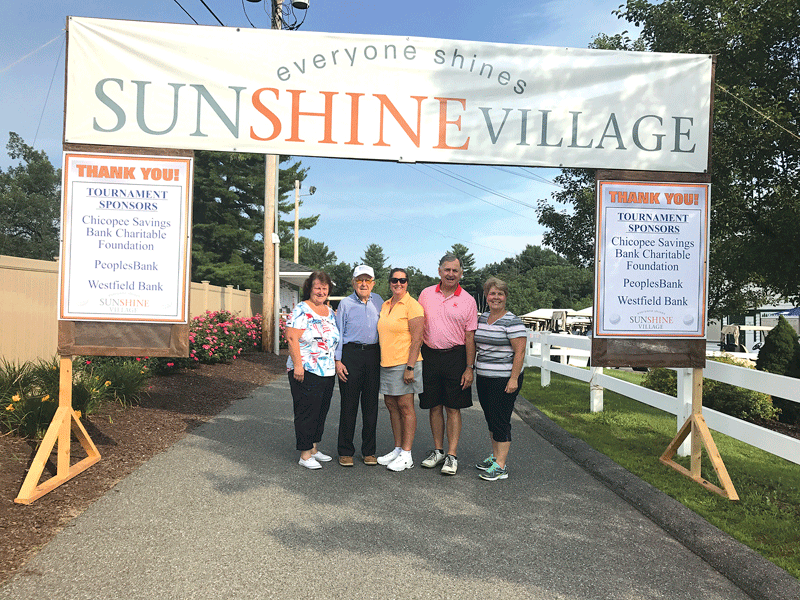
Creative Economy Sections

A Dream Home for the Arts

By Kathleen Mellen

An architect’s rendering of the new facility on Hawley Street in Northampton.

An architect’s rendering of the new facility on Hawley Street in Northampton.
Thomas Douglas Architects

It’s been four long years since the Northampton Center for the Arts had a place to call home. But that’s about to change.

In September, the center will become the first tenant of a building at 33 Hawley St. in Northampton, purchased in 2013 by Northampton Community Arts Trust, a nonprofit organization whose mission is to preserve space for use by artists. It was conceived on the principle of a land trust, in which land is purchased with a particular intention, such as preservation.

“The arts trust’s mission is to preserve, in perpetuity, spaces for the use of arts,” said Penny Burke, executive director of the Center for the Arts, who has been involved in the development of the trust since its inception. “We need a multi-purpose, multi-functioning community place for the arts.”

The need for such a space became abundantly clear in 2013, when the nonprofit Center for the Arts lost its home of nearly 30 years at the former D.A. Sullivan School complex in downtown Northampton, after its non-renewable lease expired.

As Burke searched for new space that could accommodate the center’s programming of music, dance, theater, and visual arts — a process that took far longer than she had anticipated — she was forced to mothball much of its equipment and programming, and run the operation out of a small office on Strong Avenue, or, at times, from her home.

After a number of disappointing false starts, Burke said, the center entered into a collaborative search for space with interested city residents and other arts organizations, including Available Potential Enterprises, Ltd. (APE), which, in 2006, had moved out of its 10,000-square-foot home in Thornes Marketplace after the building was sold. APE has since relocated to a much smaller space on Main Street, which doesn’t accommodate many of the performances that had been a major part of its programming.

interiorstairs

The spacious interior of the new facility in Northampton provides ample space for artists.

The spacious interior of the new facility in Northampton provides ample space for artists.

“Our interest is not in occupying the space,” said Gordon Thorne, the founding director of APE, “but we want to have input into programming in the building. We were looking for a way to replicate what we had in Thornes, to replace our performance capacity. This is really completing that goal for us.”

Northampton has long had a reputation as a premier arts town. It is home to scores of visual and performing artists who have been flocking to the city since the mid-’70s, when an economic downturn resulted in storefront vacancies and cheap rent. That was like a siren call to artists, who typically have limited economic resources.

With the resulting influx of creative individuals, by the early 2000s, the arts had become integral to the personality, character, and economic health of the city. Not only has it been dubbed one of the best small arts towns in the country, it has also been named one of the nation’s top 25 arts destinations.

Richard Wagner

Richard Wagner says artists need affordable space, and the new facility created by Northampton Community Arts provides it.

But all that has come at a price to the artists, says Richard Wagner, president of the Northampton Community Arts Trust’s volunteer board of directors. As the arts have helped propel the city’s renewed economic vibrancy, vacancies have been filled, and prices for space have exploded, leaving many of the artists to discover that they have unwittingly helped price themselves right out of their artistic homes.

“The end state of any creative economy is going to be where creativity has been pressed out of the market,” Wagner said. “Artists need space, and if you want to keep artists, if you want to keep the creativity, you’ve got to lock in affordability, or they go somewhere else. That’s what’s happening in Northampton.”

The Northampton Community Arts Trust aims to stem that tide.

Planning a Reboot

To be sure, Burke’s organization has not been dormant during the past four years, but programming has been minimal; she has continued to present the center’s annual chalk art, ice art, and en plein air painting festivals, as well as hosting Northampton’s First Night Celebration — a venture the center will turn over to the Northampton Arts Council this year after running it for 32 years.

Now, Burke says, she’s excited to have a home where she can reinstate the plethora of arts and community activities that have been the center’s hallmark. “It’s been a huge hole,” she noted.

The Center for the Arts will serve as an operational and managerial tenant of the Hawley Street building, and will facilitate much of the core programming. With that slated to begin right after Labor Day, Burke explained, she’s hustling to get her ducks in a row, reaching out to the center’s resident companies, including the Lisa Leizman Dance Co. and the Happy Valley Guitar Orchestra, and booking space for classes, rehearsals, and, eventually, performances. Other organizations are expected to follow the center into the space shortly, including Northampton Community TV, which will have an education and media center there.

We wanted to create a building with minimal operating expenses, where artists can actually afford to work, and that meant not borrowing money. I had the capital, so I paid it.”

The center’s move to Hawley Street is one step in a long journey that began in earnest with the $1.5 million purchase in 2013 of the former site of Northampton Lumber, a 25,000-square-foot building on 1.5 acres of land. Money for the purchase was initially raised through private donations and a short-term loan, but was ultimately paid in full by Thorne, who reimbursed the trust for the cost of the building.

“We wanted to create a building with minimal operating expenses, where artists can actually afford to work, and that meant not borrowing money,” Thorne said. “I had the capital, so I paid it.”

While some events were held in the building for several months after it was purchased, all that was put on hold in 2015, when construction began to build the trust’s dream home for the arts.

The $6.5 million project (which includes the purchase of the building) is being done in three phases, under the guidance of Thomas Douglas Architects. Phase one, with a cost of just over $1.86 million, is nearly complete, and has included an overall renovation of the building and indoor framing.

“We had to do basic development work because of the shape the building was in,” Wagner told BusinessWest. “We framed out the spaces, added an elevator … we took a beat-up box of a building and gave it a new skin.”

That work also included the addition of energy-efficient features, such as a highly insulated shell and roof, as well as a solar array, donated by Thorne, which should provide the building with essentially free electricity. “Our HVAC costs should be minimal,” Wagner said.

Phase 2 will be a complete build-out of the building’s interior, including a lobby and mezzanine, an 800-square-foot exhibit gallery, and space for performances, events, and workshops, as well as site work and landscaping. With an estimated cost of $2.5 million, that phase will have to wait while the trust secures further funding, but Burke and Wagner say they hope it will be completed by the end of 2018.

In the meantime, in order to accommodate an initial, limited public use of the building, the city awarded the trust a limited-occupancy permit to utilize space on the lower level of the two-story building, including a 1,200 square-foot multi-purpose studio for rehearsals, classes, and small performances, events, and meetings.

Burke has already booked some art classes and is working with local choreographer Kelly Silliman to create a dance program that will utilize a 900-square-foot dedicated dance studio that will be available for use on the upper level.

There will also be a series of outdoor events this summer, dubbed “Outside the Box,” that will feature film, music, and poetry presentations.

Looking Ahead

The current plan for phase 3 will be the creation of a 3,800-square-foot black-box theater on the lower level, capable of seating more than 200 patrons, as well as ancillary space, such as dressing rooms and a green room. That will be undertaken when the rest of the building is complete, Burke said, but only after members of the local theater community, including APE, have an opportunity to weigh in on its design.

We want to create a separate body of people who will take on the design and management of that space. We need to take into consideration not only technical aspects of theater, but to ask where that whole realm of creative work will be in the future.”

It’s a concept that still needs a lot of thought before a budget and timeline can be established, Thorne told BusinessWest.

“We want to create a separate body of people who will take on the design and management of that space,” he said. “We need to take into consideration not only technical aspects of theater, but to ask where that whole realm of creative work will be in the future.”

To date, the trust has raised roughly $4.38 million through gifts from individual donors, as well as government and institutional grants, including $50,000 from the Community Foundation of Western Massachusetts, $35,000 from the Beveridge Family Foundation, $25,000 from C&S Wholesale Grocers, $180,000 from the state Executive Office for Administration and Finance, and $140,000 and $300,000 in separate grants from the Massachusetts Cultural Council. The Center for the Arts contributed $400,000 — money that had been saved over the years from First Night revenue specifically to pay for a new home.

While what Wagner calls the “quiet” phase of the capital campaign continues, focusing on individual donors and other grant opportunities, he said a public capital campaign will be launched at a future date.

As those plans move ahead, Thorne said, it will be incumbent upon the trust to articulate its plans and its mission to the public. “We need to educate the community about what this is, our bigger mission.”

To that end, Wagner hopes the programming that will take place under the partial occupancy allowance will generate public awareness, and interest in supporting the space and the trust.

“One of the reasons we’re doing this is to get the building back into use,” he said. “We want to open it up to the public, so they can feel and taste the possibilities.”

Departments People on the Move
Harry Dumay

Harry Dumay

Harry Dumay, who boasts a long and distinguished career in higher education, officially took the helm of Elms College as its 11th president on July 1 (see story, page 17). Dumay was chosen after a nationwide search and has served in higher education finance and administration at senior and executive levels for 19 years. He holds a Ph.D. in higher education administration from Boston College, an MBA from Boston University, and a master’s degree in public administration from Framingham State University. “Dr. Dumay is a multi-faceted leader who understands Elms College and the importance of a liberal-arts education based in the Catholic intellectual tradition,” said Cynthia Lyons, chair of the board of trustees. “He has a collaborative style and a demonstrated record of strengthening organizational and academic effectiveness, and he is enthusiastic about the future of Elms College.” Dumay, who hails from Ouanaminthe, Haiti, most recently resided with his family in Framingham and worked as the senior vice president and chief financial officer at St. Anselm College in Manchester, N.H. Before that, he served as chief financial officer and associate dean at Harvard University’s Paulson School of Engineering and Applied Sciences, associate dean at Boston College’s Graduate School of Social Work, and director of finance for Boston University’s School of Engineering. Dumay also served as an adjunct faculty member at Boston College for nine years. Dumay’s inauguration will be held in the fall. The trustees are planning additional autumn events that will allow everyone to meet the new president. He succeeds Mary Reap, who retired June 30 after serving as Elms president for the past eight years.

•••••

Jessie Cooley

Jessie Cooley

Following last month’s retirement of long-time Director Renee Moss, Big Brothers Big Sisters of Hampshire County (BBBSHC) hired Jessie Cooley as its new director. Cooley has worked for 12 years with the BBBS organization, first in Boston and then in Franklin County, where she grew up. Most recently, she worked as the district director for state Rep. Paul Mark. She earned her master’s degree in education at UMass Amherst, and her bachelor’s degree in Spanish and secondary education from Northeastern University. She is a 2013 graduate of the Women’s Fund of Western Massachusetts’ Leadership Institute for Political and Public Impact. “I am truly honored to join the phenomenal staff of this great program, and to work with them and our dedicated advisory board to match more children in Hampshire County with caring ‘bigs,’” said Cooley. “Having been a Big Sister myself, and after working with Big Brothers Big Sisters for more than a decade, I know the powerful, positive impact our mentoring programs have on children, their families, their mentors, and the larger community. I couldn’t be more thrilled to have this opportunity.”

•••••

Keith Rhone

Keith Rhone

Friends of the Homeless, a program of Clinical & Support Options (CSO), recently welcomed Keith Rhone as the new director of Operations, overseeing day-to-day management of the Worthington Street facility. Most recently, Rhone served as assistant director of Safety and Crisis Management with ROCA Inc. of Springfield and established strong connections to community law enforcement and local program providers. He has also served as fiscal director with the Black Chamber of Commerce. Born and raised in Springfield, Rhone earned an associate degree in accounting from Springfield Technical Community College, and his bachelor’s and master’s degrees from American International College.

•••••

Katrina Anop

Katrina Anop

Tabitha Vianna

Tabitha Vianna

Bacon Wilson announced that Katrina Anop and Tabitha Vianna have joined the firm as associate attorneys. Anop is a graduate of the Western New England University School of Law. She is a member of Bacon Wilson’s real estate, family law, probate, employment, and immigration practice groups. Fluent in Spanish, she works primarily from the firm’s Springfield office. Vianna is a cum laude graduate of the Western New England University School of Law. She is a member of Bacon Wilson’s business and corporate practice group, where much of her work is devoted to assisting clients with commercial loan closings. She is licensed to practice in both Massachusetts and Connecticut.

•••••

Barbara Campbell

Barbara Campbell

Michael Tucker, president and CEO of Greenfield Co-operative Bank, announced that Barbara Campbell has been promoted to assistant vice president, Commercial Loans. Campbell has been with the bank since 2010, first as a credit analyst and for the past two years as a commercial loan officer. Prior to joining the institution, she worked at TD Bank, the Bank of Western Massachusetts, and People’s United Bank in various mortgage-lending roles. She is a graduate of Greenfield Community College with a degree in business management.

•••••

Richard Hanchett

Richard Hanchett

Westfield Bank announced that Richard Hanchett has been promoted to senior vice president/Commercial Loan officer. Meanwhile, six other Westfield Bank employees have been promoted to vice president, including Bryan Cowan, Cathy Jocelyn, William Judd, Sarah Medeiros, Kelly Pignatare, and Rick Zabielski.

A 34-year veteran of the local banking industry, Hanchett joined Westfield Bank in 2007 as vice president/Commercial Loan officer. As team leader of the bank’s Commercial Loan Division since 2015, he manages a group of seven lenders in addition to maintaining a large loan portfolio. Prior to joining Westfield Bank, he spent 24 years at the former Westbank, rising through its Commercial Credit Department to senior credit analyst before becoming a Commercial Loan officer in 1986. Civically engaged, Hanchett currently serves on the Springfield Chamber of Commerce legislative steering committee and education & workforce development subcommittee, and is on the board of the Work Opportunity Center in Agawam. He is a graduate of Western New England University.

Bryan Cowan

Bryan Cowan

Cowan, who has been promoted to vice president/Finance, started his career at Westfield Bank in 2001, advancing to accounting associate, then staff accountant by 2005. He was named assistant vice president in 2014 as he developed his skills in financial reporting, forecasting, interest-rate risk, liquidity management, and data analytics. He earned a bachelor’s degree from Westfield State University and an MBA and master’s degree in finance from Northeastern University.

Cathy JocelynJocelyn, now vice president/Marketing manager, joined the bank eight years ago as Online Banking coordinator; shortly after, she moved to the Marketing Department as Marketing coordinator, was promoted to Marketing manager, then assistant vice president/Marketing manager, in which position she holds responsibilities for bank advertising, branding, sponsorships, and charitable giving, among other duties. She has extensive experience in the banking industry, and holds an associate’s degree from Bay Path University.

William Judd

William Judd

Judd, who has been promoted to vice president/Credit Administration, started with the bank as a teller in 1997, moving to the Commercial Loan Group in 2001, becoming Credit Department manager in 2007. In 2012 he was promoted to assistant vice president/Credit Administration; in that role, he has been instrumental in the development of the bank’s commercial-credit underwriting process and in training new credit analysts. He holds a bachelor’s degree in business administration from Westfield State University and an MBA from Northeastern University.

Sarah Medeiros

Sarah Medeiros

Medeiros, now vice president/Commercial Credit, began her banking career in 2011 as a commercial credit analyst at Chicopee Savings Bank, quickly advancing to Credit Department manager, then assistant vice president in 2013. She has been instrumental in the development of a credit-administration structure to support Westfield Bank’s $1.1 billion commercial portfolio. A former CPA with PricewaterhouseCoopers, LLP and director in Risk Management for Forest City Enterprises, she holds a bachelor’s degree in Accounting with a minor in Finance from Providence College.

Kelly Pignatare

Kelly Pignatare

Pignatare, who has been promoted to vice president/regional manager, joined the bank in 2007 following five years of experience in the local banking industry as an online banking and cash-management specialist, branch-administration manager, and business-development officer. At Westfield Bank, she quickly advanced to assistant vice president, Small Business Sales manager, then regional manager and assistant VP, Sales Administration and market analyst. She attended Holyoke Community College.

Rick Zabielski

Rick Zabielski

Zabielski, now vice president/Underwriting and Processing manager, has been with the bank since 1996, holding a number of positions before his most recent role as assistant vice president/Underwriting and Processing manager for Retail Lending; he has experience as a consumer loan underwriter, mortgage originator, and manager of the bank’s loan center. In his new role, he is also responsible for underwriting and processing of residential lending, home-equity, and consumer loans. “I am delighted to announce these well-earned promotions,” said James Hagan, president and CEO of Westfield Bank.

•••••

Aimee Furaha Salmon, Harry Montalvo, and Markus Jones have joined the all-volunteer board of directors for the Northampton-based International Language Institute of Massachusetts (ILI). Salmon, currently a student in Greenfield Community College’s Health Science program, is the former administrator of CAMME DRC, a nonprofit organization that helps youth in the Democratic Republic of Congo (DRC) achieve lives free of exploitation. She is a former ILI student and is now the volunteer leader of the school’s International Club. Salmon has a degree in development management from Institut Superieur d’Informatique de Gestion, DRC. Montalvo, Community Development specialist at bankESB, has an extensive background in the private sector, with emphasis on human resources, safety, and business development. His career includes work in his home country of Puerto Rico and in Western Mass, where he founded the Western Massachusetts Hispanic Chamber of Commerce. Montalvo earned his bachelor’s degree in business administration from the University of Puerto Rico and is certified in readiness training, credit counseling, and computer operations. Jones, philanthropy officer at Baystate Health Foundation, brings more than 10 years of experience in fund-raising and the foundation world to ILI. His commitment to community building includes heading up United Way of South Mississippi rehab/rebuild projects for homes and nonprofit offices along the Mississippi Gulf Coast after Hurricane Katrina. He also provided United Way management support following the Deepwater Horizon oil spill. Jones holds a bachelor’s degree in advertising from the University of Southern Mississippi.

•••••

Beverly Orloski

Beverly Orloski

At the recent 2017 Mid-Year Mortgage Conference, the Warren Group, publisher of Banker & Tradesman magazine, released its annual report of the top mortgage originators in Massachusetts. Beverly Orloski, vice president and mortgage consultant at PeoplesBank, was named as the top loan originator by volume in Western Mass. She was listed as the top loan originator by volume in the market in 2015 and 2016 as well. Orloski has more than 30 years of financial and banking experience. She holds a bachelor’s degree from Elms College and is a graduate of the American Bankers Assoc. Residential and Commercial Lending School. She is a member of the Realtor Assoc. of Pioneer Valley.

•••••

Berkshire Bank announced the promotion of Joseph Marullo to senior vice president, Commercial Relationship manager from his current position of vice president. Marullo will continue to be responsible for growing both commercial and industrial business, as well as commercial real-estate lending. In addition, he will expand relationships with products and services offered through the bank’s other business lines, including cash management, wealth management, insurance, private banking, and retail banking. Marullo has 15 years of banking experience and has been with Berkshire Bank since 2006. Prior to joining the bank, he held the position of commercial credit analyst with TD Bank, where he received formal credit training. “For the past 11 years, Joe has been an integral part of the Pioneer Valley commercial team, making significant contributions to the bank’s growth and success in the local market,” said Jim Hickson, senior vice president, commercial regional president. Marullo holds a bachelor’s degree in finance from Quinnipiac University and an MBA from UMass.

•••••

Tanzania (Tanzi) Cannon-Eckerle

Tanzania (Tanzi) Cannon-Eckerle

Royal, P.C. congratulates Tanzania (Tanzi) Cannon-Eckerle on her honor as one of the Top Women of Law, as published by Massachusetts Lawyers Weekly. The award was presented for her efforts in the diligent practice of law, community involvement, and high ethical standards. Cannon-Ecklerle currently serves as owner, general manager, and general counsel for Brew Practitioners in Florence. She successfully balances this with her role as chief development officer at Royal, P.C. She is the third attorney from the firm to be bestowed this award; previous Royal honorees include Amy Royal (2012) and Rosemary Nevins (2013).

•••••

Alice Ferreira

Alice Ferreira

Webster Bank has named Alice Ferreira as senior vice president of Corporate Communications and Public Affairs. She is responsible for all external and internal communications, public relations, and government affairs for the bank, and will oversee the bank’s community-affairs and philanthropy efforts. She reports to Executive Vice President and Chief Marketing Officer Dawn Morris. Ferreira joins Webster from UnitedHealthcare, where she was vice president, Corporate Communications for its Medicaid Division, overseeing corporate media relations, internal communications, crisis management, and thought-leadership programs. Prior to that, she was director of corporate communications for HealthNet’s $10 billion Northeast Division. Ferreira serves as honorary chair of the Barnum Museum in Bridgeport, Conn., and is a member of the board of directors of the American Red Cross of Connecticut and Rhode Island.

•••••

Webster Bank announced that John Driscoll Jr. has been appointed regional market executive for Webster Private Bank’s Hartford and New Haven offices. Driscoll, senior vice president and senior relationship manager for Webster Private Bank, joined Webster in 2007. In his new role, he expands his responsibilities as the senior representative in the Hartford and New Haven markets for Webster Private Bank’s line of business and leading the Private Bank’s sales team. He will report to Peter Gabriel, senior vice president, head of Private Banking. Driscoll has more than 31 years of experience in investment, financial, estate, and
tax planning, and charitable giving. He is a tax attorney who is a certified
 financial planner, a chartered life underwriter, and a chartered financial consultant. A member of the Connecticut and American Bar Associations, he serves on the executive committees of the Estate and Probate section and of the Sports and Entertainment Law section of the Connecticut Bar Assoc. He holds a bachelor’s degree in economics from the University of Connecticut, a law degree from Penn State’s Dickinson School of Law, and a master of laws degree from Boston University School of Law.

•••••

Comcast announced the appointment of four leaders for the company’s Western New England region, which is headquartered in Berlin, Conn. and includes more than 300 communities in Connecticut, Western Mass., New Hampshire, Vermont, and New York. In the Human Resources department, Judith Rudge was named director of Talent Management, while Taissa Gawronski was named director of Human Resources. In Sales and Marketing, Matt Frascone was named director of Retail Sales, and in the Communications department, Elizabeth Walden was appointed manager of Public Relations. Rudge came to Comcast with more than 12 years of recruiting experience. In her new role, she oversees talent management and recruiting efforts for the company’s Western New England Region, which currently employs more than 1,800 individuals across five states. Prior to joining Comcast, she was the senior manager of talent acquisition at Verizon in Atlanta, where she owned the end-to-end recruitment of information technology, engineering, product, and sales positions for 86 national office locations. She graduated from Dickinson College. Gawronski joined Comcast with 10 years of human-resources experience. In her new role, she is responsible for the human-resources needs of the company’s retail and door-to-door sales channels, as well as those on the Comcast Business team and in Sales and Marketing administration. Before joining Comcast, she was director of Human Resources at C&M Corporate, a custom cable manufacturer in Killingly, Conn., where she evaluated and maintained the company’s organizational design, as well as oversaw its workforce-recruitment and retention efforts. She graduated from Framingham State College. Frascone recently relocated from Comcast’s Greater Chicagor to Comcast’s Western New England region to oversee 10 XFINITY stores and three service centers across Connecticut, Western Mass., and Vermont. He is also responsible for Indirect Sales, which involves Comcast’s partnerships with Walmart, Target, and Best Buy. Previously, he spent the last year as director of Comcast’s flagship XFINITY store in Chicago. He joined Comcast with 20 years of retail experience and, prior to Comcast, was a director for two Apple stores in Atlanta, where he managed a staff of 177 sales associates. He was also a U.S. Navy Reservist. Walden came to Comcast with seven years of public-relations experience. In her new role, she is responsible for helping shape the company’s image with external audiences across the Western New England region. Prior to joining Comcast, she was vice president at Quinn, a lifestyle public-relations firm in New York City, where she oversaw a team of public-relations executives who carried out day-to-day media and operations for a portfolio of 20 business, real-estate, and technology clients, in addition to being responsible for building the firm’s client base and developing strategic public-relations campaigns. She graduated from Clark University in Worcester.

•••••

Eric Lineback recently joined Country Business Inc. (CBI), a regionally based New England business-brokerage and merger-and-acquisition firm. He will be focusing his efforts serving clients in Western Mass. Lineback previously worked as a strategic management consultant with McKinsey & Co. in Chicago on projects for various Fortune 500 companies. He then went on to work as a senior analyst for a mid-size private-investment company in Houston and then Washington, D.C., helping to manage a $500 million diverse portfolio of assorted assets, including several operating companies, real-estate investments, equity buy-out funds, and marketable securities. In the mid-’90s, as the Internet was emerging commercially, he co-founded and managed for almost 20 years a successful boutique Internet design and development firm, helping clients create an engaging online and offline presence. Lineback’s work with CBI enables him to apply his entrepreneurial, investment, and financial-management experience in assisting business owners with their succession plans. “We are excited that Mr. Lineback has joined our firm,” said Philip Steckler, a principal with CBI. “While we have managed the sale of numerous businesses in Western Massachusetts over the years, his focus on that region enables us to enhance our services and broaden our client base.” Since 1976, CBI has managed the sale of more than 1,200 businesses, ranging in price from $500,000 to $30 million. The company has represented businesses across many industries and sectors, including manufacturing, distribution, retail, and hospitality. CBI is an industry leader in successfully completing sales of client businesses. The firm traditionally completes 80% to 90% of the businesses it is retained to sell — far higher than industry norms. “I’m excited to be working with such an established and successful company, one which has had a significant positive impact on the local economy,” Lineback said. “My passion has always been working with entrepreneurs and small-business owners.”

Chamber Corners Departments

1BERKSHIRE

www.1berkshire.com

(413) 499-1600

• July 25: Entrepreneurial Meet Up, 5-7 p.m., hosted by Shire Breu-Hous.

GREATER EASTHAMPTON CHAMBER OF COMMERCE

www.easthamptonchamber.org

(413) 527-9414

• July 28: The Chamber Island Golf Tournament, 9 a.m. to 5 p.m., hosted by Southampton Country Club, 329 College Highway, Southampton. Sponsored by BankESB, Polish National Credit Union, Finck & Perras Insurance Agency Inc., Taylor Real Estate, Westfield Bank, Applied Mortgage, Green Earth Energy Photovoltaic, and Richards Fuel & Heating Inc. Registration and breakfast at 9 a.m., shotgun start at 10 a.m., Fun Island Feast to end the day. Breakfast and dinner catered by Myers Catering. Come in your best island attire. Cost: $135 per golfer, $540 for a team. Visit www.easthamptonchamber.org for additional information.

• Aug. 9: “Find Your Strength – Know Your Power,” 9:30 a.m., hosted by Williston Northampton School, Reed Campus Center, Dodge Room. Are you curious why you make certain decisions? Do you wonder why some things are naturally easy for you?  Would you like to become more productive in your daily life? Gain an increased self-awareness of your unique strengths and find your natural talents and how to turn them into strengths. Learn how your strengths can enhance your ability to achieve your personal and work-life goals. Register at easthamptonchamber.org or call (413) 527-9414.

GREATER HOLYOKE CHAMBER OF COMMERCE

www.holyokechamber.com

(413) 534-3376

• Aug. 9: StrengthsFinder, 8-9:30 a.m., at the Reed Campus Center — the Dodge Room —at Williston Northampton School, 19 Payson Ave., Easthampton. Sponsored by Tandem Bagel and Williston Northampton. Become aware of the natural ways you think, feel, and behave through this StengthsFinder assessment test. Millions of individuals around the world have taken this test and have discovered how to use their strengths every day. Cost is $25 and includes a light breakfast. Sign up online at holyokechamber.com/events.

• Aug. 16: Chamber After Hours, 5-7 p.m., at Fiesta Café, 305 Main St., Holyoke. Sponsored by bankESB. Business networking event on the patio. Food, networking, and 50/50 raffle. Cost: $10 for members, $15 for non-member guests. Sign up online at holyokechamber.com/events.

GREATER NORTHAMPTON CHAMBER OF COMMERCE

www.explorenorthampton.com

(413) 584-1900

• Sept. 13: Arrive@5, 5-7 p.m., hosted by Family Legacy Partners, 48 Round Hill Road, Suite 2, Northampton. Co-host: CheckWriters Payroll. Sponsored by Northeast Solar, Finck & Perras Insurance Agency Inc., and Coldwell Banker Upton-Massamont Realtors. Cost: $10 for members.

WEST OF THE RIVER CHAMBER OF COMMERCE

www.ourwrc.com

(413) 426-3880

• Aug. 14: Annual Golf Tournament, hosted by Crestview Country Club, 281 Shoemaker Lane, Agawam. A portion of the proceeds benefit the scholarship and business grants offered through the 501(c)(3) foundation. Register or sign up for sponsorships at www.ourwrc.com.

Community Spotlight Features

Community Spotlight

By Kathleen Mellen

John Flynn

A third-generation selectman, John Flynn says the community desires to grow its commercial base, but not lose its small-town character.

In many ways, the town of Hampden seems like a throwback to an earlier way of life.

The Western Mass. community of just over 5,000 is just east of East Longmeadow and less than a 20-minute drive from the bustling metropolis of Springfield. But with its rural feel, old-fashioned New England charm, mom-and-pop businesses, and neighborly sensibility, it seems worlds away. There’s not even a traffic light in town.

“Heck, the bear population is exploding now; there are sightings every day,” said John Flynn, chairman of the town’s three-member Board of Selectmen. “Once people are in this town, they don’t like to leave it. It’s a great community. We’re still old-fashioned New England.”

Flynn knows whereof he speaks: he grew up in Hampden, where his great-grandfather, John J. Flynn, and his father, John M. Flynn, both served as selectmen before him.

“I’m a third-generation selectman,” said Flynn, who was elected in 2005. “My dad was the guy who’d get the phone call at 2 in the morning … now I get the texts and phone calls.”

While the population has remained fairly constant for decades, Flynn says, there have always been new faces, and they are welcome. Some have come to open businesses, or to work at the nearly four-decades-old Rediker Software, owned by Rich and Gail Rediker, another longtime Hampden family, or, more recently, at GreatHorse golf and country club, a relative newcomer that opened in 2015. Still others work out of town, but are drawn to live in Hampden by its Americana flavor.

“It’s just like Cheers,” Flynn said, referring to the NBC sitcom that ran in the late ’80s and early ’90s. “Everybody knows your name.”

A Cautious Approach

While much has remained the same in Hampden during Flynn’s lifetime, he said, growth and change are both inevitable and desired. But, he stressed, the town strives to ensure that its essential qualities will always be preserved.

“We’re happy to get that growth, but you have to be careful not to lose what made Hampden Hampden,” Flynn told BusinessWest. “You want to make sure that the reasons people are in Hampden are still there. We can’t sell part of ourselves just to give it away to business.”

That said, there is plenty of potential for growth in town, including in two already-established business districts, one on Main Street and one in the area of Rediker Software, the town’s largest non-municipal employer, located at the main intersection of East Longmeadow, Wilbraham, and Somers roads and Allen Street.

Andrew Anderlonis

Andrew Anderlonis says Hampden has been a great home for Rediker Software.

Founded in 1979 by Rich Rediker, the company’s CEO, Rediker Software provides administrative software to schools. It employs about 90 people at its headquarters on Wilbraham Road that was constructed in the 1990s and expanded in 2005, and designed to blend in with the New England character of the town.

“It’s built like a house,” said Andrew Anderlonis, the company’s president and Rediker’s son-in-law. “Rich didn’t want a corporate building; he wanted to build something that would really be a part of the town and the community.”

That’s what Flynn is talking about.

“We would love to expand more Rediker-type businesses — that’s the look we want,” Flynn said. “We want people to drive through Hampden and feel the old New England town.”

With customers in all 50 states and more than 115 countries, the family-owned Rediker Software is one of the 30 fastest-growing tech companies in the state.

Hampden at a glance

Year incorporated: 1878
Population: 5,296 (2016)
Area: 19.7 square miles
County: Hampden
Residential tax rate: $19.29
Commercial tax rate: $19.29
Median Household Income: $81,130 (2016)
Median family Income: $86,848 (2016)
Type of Government: Board of Selectmen
Largest Employers: Hampden-Wilbraham Regional School District, Rediker Software, GreatHorse
Latest information available

Theoretically, it could probably be headquartered anywhere in the world, Anderlonis said, but it started in Hampden, and it will stay in Hampden.

“We’re a small family business, so we really promote the family atmosphere here, and the town helps that effort,” he explained. “People like the small-town feel. There are local places they can go eat, it’s nice and green and lush, and they don’t have to fight for a parking spot in the morning. Hampden has been a great home for Rediker, and the road ahead looks really healthy.”

In return, the company gives back to the community through such things as its sponsorship of Link to Libraries, a literacy program that distributes some 100,000 books a year to schoolchildren. The company also collaborates with the Hampden/Wilbraham school district, offering internships and career placement.

“We’re also one of the town’s firewater suppliers. We have a 10,000-gallon tank in our parking lot that we maintain and service,” Anderlonis said. “We try to be involved where we feel we can help.”

Flynn says Rediker’s continued good health is good for the town, too. Indeed, that business, along with a new Northeast Utilities substation and the GreatHorse country club, have added to the town coffers through the property taxes they pay. It’s in large part thanks to those businesses that the town was able drop its tax rate last year from $19.36 to $19.29.

“I don’t think there are many communities in Western Mass. that were able to do that,” he said.

Mane Street

The 260-acre GreatHorse golf club, built on the site of the former Hampden Golf Club for a price tag in the neighborhood of $55 million, would be an asset to any town, said Bryan Smithwick, the club’s general manager. “We’re a major contributor of taxes to the town, and we play a major role in providing infrastructure support and community support.”

During its high season, the year-round facility employs 150 to 160 people, most from the local community, and about 75% of the club’s 300-and-climbing membership lives within a 20-minute drive, with a fair amount coming from Hampden.

Bryan Smithwick

Bryan Smithwick says the social fabric of GreatHorse and Hampden are very similar in that they are both tight-knit communities.

While it might surprise some to find the opulent facility in such a small town, Smithwick says the club is thriving not in spite of its location in the tiny burg, but because of it.

“The social fabric that makes up Hampden and the social fabric that is part of the GreatHorse culture are very similar to each other. Hampden is such a tight-knit community, and GreatHorse is the same,” Smithwick said. “Some of the members have known each other their entire lives. Some met last week and now play rounds of golf together. That small-town, family culture is a huge part of our success.”

GreatHorse, like Rediker, also gives back to the local community — through such things as sponsorship of benefit events and collaboration and internship programs with local schools.

With GreatHorse’s growing popularity, Smithwick said owner Guy Antonacci would like to add overnight lodging for its guests. But because the entire town is served by a well and septic system, the potential for such growth is limited.

The club has approached the town about the feasibility of bringing town water and sewer to the facility, something Flynn says is under consideration.

“That would be nice for them,” he said, “but anything we do has to be right for Hampden.”

That said, Flynn says he sees potential in the proposal, which would bring water and sewer into Hampden to service the western part of town, including the school, the senior center, the police station, and parts of the business district.

“If they were connected to city water, you could see some good growth there, and it’s a place people could work. People in town would love a five-minute commute,” he said. “If we could get the business district built up, the potential is staggering. I’m stunned at the possibilities.”

The goal, as always, will be to help the town fulfill its vast potential, while always meeting that mission Flynn mentioned earlier — maintaining what makes Hampden Hampden.

Community Spotlight Features

Community Spotlight

By Kathleen Mellen

Northampton Mayor David Narkewicz

Northampton Mayor David Narkewicz says the city has a solid foundation, but it is not about to rest on its laurels.

You could say Northampton has “good bones.”

Once dubbed “the paradise of America” by opera singer Jenny Lind, it is home to one of the nation’s premier colleges, it boasts a regional general hospital as well as one for military veterans, its population of nearly 30,000 is diverse and well-educated, its labor force is highly skilled and mostly employed, it has a crime rate that is lower than the state average, and it’s one of the hottest locales in the region for shopping, dining, and partaking of a multitude of performance and visual arts.

That’s a strong foundation, said Mayor David Narkewicz, that the city can seize upon to nurture and grow its economy. And, indeed, after weathering economic recessions and a housing bubble that burst, he noted, economic indicators, such as property taxes, meals-tax revenue, and the number of visitors to the city, show a sturdy economy.

But the city is not resting on its laurels.

One of its main engines for economic success, Narkewicz says, is its vibrant downtown area, home to an array of unique retailers, eclectic dining choices, and active arts organizations.

“The success of downtown businesses affects our property taxes and our tax base, which then affects the kinds of services we can provide, the schools we can provide. We all have an investment in it.”

The mayor said the city is making a number of strategic investments that take advantage of that strength.

Indeed, if you drive into Northampton from the south these days, you’re likely to join a long line of traffic as it makes its way slowly along Pleasant Street toward the city’s center. Think of it as a good thing.

The heavy traffic is the result of Northampton’s investment in its downtown infrastructure, which includes roadwork and utility upgrades. Funded by a $2.5 million MassWorks economic-development grant, the work is mainly in support of two housing developments that are going up on that street. The goal, said the city’s Economic Development director, Terry Masterson, is to make Pleasant Street an extension of Main Street and, in turn, to drive investment in that part of the city.

“If people see other people investing, they see the city investing, it creates a momentum,” he said.

The two housing developments are a 58,000-square-foot space at 155 Pleasant St., which will have 70 studio and one-bedroom apartments, as well as a 45,000-square-foot space at 256 Pleasant St., which will feature 55 living units. Both buildings will offer retail and office space, as well as a mix of market-rate and affordable housing. Narkewicz said centralized, affordable housing is an investment in the economic health of the city.

“We want to be a place where people of all income levels can live,” he noted, adding that many of the people who inhabit affordable housing are part of the city’s vital workforce. “That they can live and work in the same city is really important.”

What Makes Downtown Click?

Although its positive effects on downtown development might not be immediately evident, Narkewicz said the purchase in June of 114 acres on the outskirts of the city, which increases the amount of protected, open space to more than 25% of the city’s land, will not only bolster’s Northampton’s ongoing land-preservation and recreation programs, it will also help drive economic growth downtown.

“We want to concentrate development closer to the urban core where most people live,” he said. “So many studies show that one way to keep a downtown vibrant — to support small markets or small restaurants — is to have people living in it.”

The work along Pleasant Street will also include a small park, more parking spaces, and improved sidewalks and bike lanes.

“We’ve already created an incredible bike trail that runs through the city, which we know draws people here,” Narkewicz said. “Now the city is also looking at ways to become even more pedestrian- and bicycle-friendly, as a way to draw people into the downtown area.”

170 Pleasant St., erected in 2014.

One of the biggest boons to the city’s economy may well be the plan to expand the train platform at 170 Pleasant St., erected in 2014.

In order to improve the downtown district, Masterson said, it’s crucial to know what’s bringing folks in, and what keeps them coming back.

“We’re working on a complete list of every foot-traffic driver in the downtown area — hotels, train stations, arts and culture institutions, entertainment venues, special events, and regular events,” he said, which will be invaluable to the city in attracting new businesses. While the study is still ongoing, and under wraps for the time being, he says he already knows from past studies that the arts scene is a big downtown draw. For example, the Academy of Music, a live-performance, downtown venue, boasts 55,000 visitors and 116 performances a year.

“That’s like 1,000 people a week who are consistently coming into downtown,” Masterson said. “To know that you have a driver that’s bringing in people, that’s really, really impressive.”

Plans are now in the works to create an online map and calendar tool that will combine the activities of all the city’s arts organizations in one place, making it easier, Narkewicz said, for visitors to plan their outings. Beta testing is underway, and the calendar should be up and running later this summer. And, yes, there will be an app for that.

Coming Back for More

Finding ways to bring new business owners, residents, and guests to the downtown area, and keeping them happy while they’re there, is all part of the city’s master plan, Masterson said.

It’s no secret, for example, that parking in downtown Northampton can be a challenge, especially during the busiest hours. And how infuriating is it to run into a store to get change for a meter, only to return to find a ticket on your car?

That’s been taken care of, Narkewicz told BusinessWest. The city’s 25 parking kiosks were upgraded in late June with a pay-by-plate system that accepts credit cards as well as coins. So, instead of going to a kiosk, inserting money (assuming you have the correct change), then taking the ticket back to the car to be displayed on the dashboard, users can simply pay and be on their way.

Later this summer, there’ll be an app for that, too.

“These are the kinds of things people see when they go to other cities, the amenities people expect,” Narkewicz said. “It’s part of creating a customer-friendly environment for visitors.”

Another major development in downtown is the renovation of Pulaski Park in the heart of the city, which was completed last year and is already showing signs of stimulating a positive economic response; realtors and restaurateurs have told the mayor they have seen an uptick in foot traffic since the completion of the renovation.

“A realtor just sold a building across from Pulaski Park for $120,000 over asking price,” he said, adding that looking across the street at that scenic park, as opposed to what the grounds were like four years ago, made a huge difference.

Indeed, it’s crucial, Narkewicz said, for the city to maintain a clean, safe, well-lit, and attractive downtown, with prime spots like Pulaski Park; otherwise, its other efforts may be for naught.

Much of maintaining the welcoming downtown atmosphere is handled by the Downtown Northampton Assoc. (DNA), a voluntary organization open to property owners, businesses, and city residents, whose members work to improve the business and cultural strength of the downtown area through investments in programming, beautification, and advocacy.

It is associated with the Greater Northampton Chamber of Commerce, and works in collaboration with the city, which employs a full-time worker who cleans and maintains public property in the downtown business district.

The DNA handles such things as city plantings and holiday lights, and sponsors events that bring visitors to downtown, like the first annual Holiday Stroll, held in December, which drew hundreds of visitors to Main Street for a host of family-friendly activities, even as the temperature dipped to 20 degrees. It was so popular that a Summer Stroll is planned for July.

“The Summer Stroll should be a lot warmer,” Narkewicz quipped.

Riding in on a Rail

One of the biggest boons to the city’s economy may well be the plan to expand the train platform at 170 Pleasant St., erected in 2014 when Amtrak added Northampton as a stop on its Vermonter line.

Northampton at a Glance

Year Incorporated: 1884
Population: 28,483
Area: 35.75 square miles
County: Hampshire
Residential Tax Rate: $16.69
Commercial Tax Rate: $16.69
Median Household Income: $59,274 (2015)
Type of government: Mayor; City Council
Largest Employers: Smith College; Cooley Dickinson Hospital; U.S. Department of Veterans Affairs Central Western Massachusetts Healthcare System
* Latest information available

State Transportation Secretary Stephanie Pollack announced in June that her department will add to the existing, 46-foot-long boarding platform by next summer, extending it to a length of 120 feet — a response, Narkewicz said, to its use, which has exceeded all expectations. Projections had estimated that just over 10,000 passengers would use the platform in a year, but, according to the National Assoc. of Railroad Passengers, it was used by 17,197 passengers last year, making it the third-busiest stop on the Vermonter line.

The state has also agreed to a pilot program, scheduled for fall 2019, in which two morning trips and two afternoon trips will be added to Northampton’s train service.

The mayor said that activity will surely drive further growth in the city. “Having public transit that close to downtown — that’s critical.”

While the tax base is strong in Northampton, he told BusinessWest, the city’s two largest employers, Smith College and Cooley Dickinson Hospital, are nonprofit, and, therefore, tax-exempt, which has been a bone of contention.

“They consume, but don’t pay taxes for, city services,” said Narkewicz, who addressed the issue in 2015 with the institution of a PILOT (payment in lieu of taxes) program, in which the nonprofits agree to pay a portion of what they would be taxed if their properties were taxable. As a result, both Smith and CDH made three-year commitments to make voluntary gifts to the city.

Smith has since made investments in projects around the city that support affordable housing, as well as in public-safety features along Elm Street, where the college is located. CDH continues to be an important partner with the city relative to public safety and public health, teaming up to work on such things as disease prevention and breast-cancer awareness. It is also a key partner on the county’s opioid task force, on which the city has taken a leading role.

“We’ve had some collaboration there,” Narkewicz said. “There’s still more discussion to have.”

The Flavor of Northampton

While Northampton’s economic picture is pretty rosy, the mayor noted, there are challenges, of course, including the plethora of Internet companies that are cutting into brick-and-mortar profits. But there are some things, he adds, that one can’t buy online, like Northampton’s unique flavor and one-of-a-kind products.

Narkewicz says he’s mindful of the degree to which the hard work and persistence of downtown business owners have contributed to the city’s overall economic success.

“I have incredible admiration and thankfulness for the work they do, the sacrifices they make,” he said. “People tell me they want their downtowns to be like Northampton. That’s very flattering, but we can’t lose track of the fact that we have to work consistently to maintain that and build on it. It is an important part of our economy, so we want to make sure it continues to be successful.”

Banking and Financial Services Sections

Mid-year Tax Moves

By Kristina Drzal Houghton, CPA, MST


Kristina Drzal-Houghton

Kristina Drzal-Houghton

Most people don’t include tax planning on their summertime agenda, but maybe they should.

The problem with waiting until the end of the year is that you reduce the time for planning strategies to take effect. If you take the time now to do mid-year tax planning, you’ll still have six months for your actions to make a difference on your 2017 tax return.

In addition, proposed tax reform could be cause for additional changes to your tax plan. Planning now for 2017 taxes not only helps reduce your tax burden, but it can help you gain control of your entire financial situation.

This year may seem especially tricky with the uncertainty of potential changes in the tax laws. This article is going to focus on planning assuming there is no change, since executives, lobbyists and Wall Street analysts increasingly believe the administration — distracted by repeated crises while facing a short and crowded legislative calendar — will be unable to deliver on President Trump’s promise to slash corporate and individual tax rates this year and ignite significantly faster economic growth.

While Hill Republicans argue that ongoing issues related to the current administration will have no impact on tax reform, movement on Capitol Hill has slowed momentum and emboldened Democrats to try to block Republicans’ every move. And Wall Street analysts believe it will help push tax reform into 2018 and perhaps even beyond next year’s midterm elections.

Here are a few things you should consider.

Assess Changes That Affect Your Situation

Have you experienced any life events that can change your tax situation? Here are some examples:

• A job change. If you are eligible for a distribution from your former employer’s retirement-savings plan, consider rolling the money into another tax-favored plan or an individual retirement account (IRA) to avoid the receipt of currently taxable income.

• A home sale. You may exclude profit — within limits — on the sale of your principal residence from your taxable income if you meet the tax law’s requirements.

• A marriage or divorce. File a new W-4 withholding allowance certificate with your employer, or, if you pay quarterly estimated taxes, review the amount you are paying.

• A new child arrives. As a parent, you may be eligible for various tax breaks.

Size Up Deductions and Credits

Use last year’s tax return to estimate what your highest tax bracket will be and how you can reduce your tax liability through deductions and credits. For instance, you might make deductible charitable donations of money or property to reduce your marginal tax rate.

This might be particularly important for 2017 since rates are expected to decrease in the future.

Examine Your Investment Portfolio

You can harvest capital losses from securities sales to offset capital gains plus up to $3,000 of ordinary income each year. You may also use capital gains to offset capital losses from earlier in the year.

Planning your securities activities early will help you prepare for tax time.

Take Retirement Plans  into Account

When possible, boost contributions to retirement plans within the generous tax-law limits. You may also be able to supplement your retirement plan at work with contributions to an IRA plan.

On the flip side, you’re generally required to take annual required minimum distributions from retirement plans after reaching age 70½. Keep that in mind if you will reach that milestone this year.

Focus on Higher Education

If you have a child in college, you may be able to claim higher-education credits even if the child graduates this year. However, each credit is phased out for upper-income taxpayers. The tuition deduction expired after 2016, so make sure to plan for the best use of the remaining education tax benefits.

Update Your Estate Plan

Finally, review your estate plan to ensure you’re maximizing tax benefits. Currently, transfers between spouses are completely exempt from estate and gift tax, while other transfers are sheltered by a $5.49 million exemption in 2017 ($10.98 million for a couple).

While estate-tax reform remains a strong possibility, if not in 2017 then in a future year, waiting to plan may not be prudent.

Outside Collection Agencies

While many things in the tax arena remain uncertain at this point, two changes at the IRS have taken effect in 2017 that you should be aware of.

First, the IRS is now using outside collection agencies to collect unpaid tax obligations. This new program will start slowly, with only a few hundred taxpayers receiving mailings. The number will grow into the thousands later in the summer.

Taxpayers who are contacted will first receive several collection notices from the IRS before their accounts are turned over to the private collection agencies. The agency will then send its own letter to the taxpayer informing them that the IRS has transferred the account to the agency.

These agencies are required to identify themselves as working with the IRS in all communications. Unfortunately, a change like this can often lead to confusion among taxpayers, which gives scammers a new opportunity to steal taxpayer dollars. The IRS is aware of the potential fraud problems and plans to continue to help taxpayers avoid confusion.

The IRS reminds taxpayers that private collection companies, like the IRS, will never approach taxpayers in a threatening way, pressure taxpayers for immediate payment, request credit-card information, or request payments in gift cards, prepaid debit cards, or a wire transfer. A legitimate letter from a collection agency associated with the IRS will instruct taxpayers to write a check directly to the IRS.

Correspondence Audits on the Rise

The IRS is now handling many routine audit reviews through form letters called correspondence audits. These letters come from the IRS and ask for clarification and justification of specific deductions on your tax return.

Common issues that trigger a correspondence audit are large charitable deductions, withdrawals from retirement accounts and education-savings plans, excess miscellaneous deductions, and small-business expenses.

Don’t panic if you get one of these audit form letters. The IRS often uses computer programs to compare individual return deductions with the averages for a person’s income level or profession. If you’ve received a letter, you may have simply fallen outside the averages.

As long as you respond promptly, thoroughly, and with good documentation, it won’t necessarily become a contentious issue. The key is to keep proper, well-organized documentation under the assumption you may need it to support your deductions. If you do this right, the correspondence audit will end with a ‘no change’ letter from the IRS, acknowledging you’ve addressed their concerns.

These are just a few possible mid-year tax-planning moves to consider. In between summer picnics and family outings, take the time to review actions that might be beneficial to you at tax time next year. It will be here before you know it.

Kristina Drzal Houghton, CPA, MST is a partner and director of the Taxation Division at Meyers Brothers Kalicka in Holyoke; (413) 536-8510.

Sections Sports & Leisure

Keeping Score

Valley Blue Sox owner Clark Eckhoff

Valley Blue Sox owner Clark Eckhoff

As the region’s only collegiate summer-league baseball team, the Valley Blue Sox are surging both on the field and in the front office, which is celebrating league-topping attendance last year and a growing reputation for on-field success. Those victories didn’t come overnight, but result from both skilled roster building and a recognition that the product should be, above all, affordable and fun.

When Darth Vader or one of his stormtrooper henchmen roam the third-base line, it’s understandable that not every eye is fixed between the white lines of the diamond.

That’s OK, though, in the world of college-level baseball, and particularly the world of the Valley Blue Sox, who have turned MacKenzie Stadium in Holyoke into a bona fide summer destination.

“We have to be reaching out through promotions and engaging people who might not otherwise have interest in the game, but they’ll come out for a fireworks show or to see Star Wars characters,” General Manager Hunter Golden told BusinessWest. “There’s a hook, something other than the game.”

That’s true of minor-league and amateur baseball organizations across the country, a culture known as much for its mascot races and bobblehead giveaways — in short, family fun — as for the product it puts on the field. But the Blue Sox are garnering increasing attention in the New England Collegiate Baseball League (NECBL) for both the crowds it draws, thanks partly to those promotions, and the quality of the play itself, which is turning casual visitors into devoted fans.

It’s a success story that didn’t happen by accident.

This is truly a team that reaches the entire area; we have fans driving down from Northampton, Amherst, and Hadley.”

In fact, team owner Clark Eckhoff, a veteran of minor-league baseball who oversaw the revival of a team in the Great Lakes region before buying the then-Holyoke Blue Sox in 2013, saw potential in this team and its surroundings, and had a vision for how to grow its popularity.

“This is truly a team that reaches the entire area; we have fans driving down from Northampton, Amherst, and Hadley,” he said — not to mention the fact that Springfield itself is the largest metro area in the country lacking professional baseball. Consider the success of the AA-level Hartford Yard Goats, who are selling out most of their tilts, and it’s clear a regional appetite for baseball has long existed. The challenge was to field a product — on field and off — to sate it.

Blue Sox attendance ranked first in its league last year

Blue Sox attendance ranked first in its league last year, and 11th among 169 summer colleague teams.

So far, mission accomplished. Canny roster building (more on that later) resulted in a deep playoff run last year, and a hot start in 2017 that included a nine-game winning streak in mid-June. Off the field, the team’s heavy promotional schedule of giveaways and events, plus ramped-up efforts to engage with the community, have turned the Blue Sox into the NECBL’s top draw, ranking 11th nationally among 169 summer collegiate teams in 2016, and besting the turnout of 20 A-level professional teams — and three AA squads — to boot.

“I’ve enjoyed the opportunity to take something literally close to not even existing — based on where the team was trending in 2011 and 2012 — and seeing the fanbase grow,” Eckhoff said. “The majority of these kids will be in A ball in two years, so the quality of baseball is really good, and the other things we do provide a great family experience.

“I love going to Fenway Park,” he added. “It’s the most historic stadium; it’s iconic. But the majority of people can’t afford to go there more than once or twice a summer. Here, tickets are $7 — $5 for kids — with affordable concessions, and you can get autographs from guys who will sign pro contracts in a year or two.”

All that and stormtroopers? It’s proven to be a winning combination, both literally and figuratively.

Call of the East

Eckhoff previously owned the Wausau (Wisconsin) Woodchucks of the Northwoods League for 13 years, and was looking for a change of scenery when he bought the Blue Sox in 2013. When he bought the Woodchucks in 1999, the team was drawing some 600 fans per night. By his 10th year, attendance averaged 2,000. He attributes that to the team getting the word out about the quality of play — some 15 of his players eventually made the majors, including Ben Zobrist — but the fun factor as well.

Hunter Golden says building a winning roster means recruiting

Hunter Golden says building a winning roster means recruiting not only talented players, but those who will best fit into the culture of the team and its region.

“There was a study done showing that 80% of fans who walked into a minor-league baseball game were leaving the game in the sixth or seventh inning and couldn’t tell you the opponent or the score, but they knew it was bobblehead night, and that they had enjoyed an affordable night out,” Eckhoff said.

Golden arrived in the baseball-management world much more recently, after parlaying a passion for sabermetrics — an innovative way to analyze a baseball player’s potential by crunching his in-game performance into, essentially, hard math — into a nationally visible role as a blogger and speaker on the subject. That caught the eye of Eckhoff, who tapped Golden as an advisor early on and later offered him the GM’s chair.

They have proven to be a solid team, pairing Eckhoff’s nose for creating a memorable fan experience with Golden’s ability, tested on the fly, to turn his sabermetrics expertise into actual roster building.

It’s a blend of science and art, Golden said, that extends far beyond the numbers.

“The first is key is building the culture you want,” he said. “There’s a lot of great talent out there, but it’s not just about how much talent a kid has. It’s the best kid versus the right kid — finding not only a baseball player who has great ability, but also a kid who’s going to thrive in our area and culture.”

The NECBL has long competed regionally with the Cape Cod Baseball League, and good players concerned with the difference in scenery between the two won’t make good Blue Sox candidates, he went on.

“I tell college coaches, ‘I don’t have a beach. They won’t be taking their parents out to dinner at a nice restaurant on the boardwalk. Guys that prioritize that stuff won’t have success here.’ I want guys who wake up in the morning, and what they’re looking forward to most is grabbing a bat and glove and getting out there to play baseball. That first month, everyone is into it, but when you get into your second month of three-hour bus rides, the first type of kid starts to run out of gas, but the second type of kid wants to be on that bus. That’s what we’re looking for.”

In return, the Blue Sox offer players a robust array of host families — there’s currently a waiting list to house a player for the summer — and activities ranging from trips to Fenway and Cooperstown to gym memberships and opportunities to engage with the community through educational baseball clinics and other events.

It’s a model that makes recruiting easier each season, Golden said. “Schools want to send their guys to us when they see how they’re treated and how they enjoy their time here.”

College students are also paying attention to how successfully NECBL players transition to the pros. In the recent Major League Baseball draft, 11 former Blue Sox players were drafted, led by left-handed pitcher Aaron Leasher, a sixth-round pick of the Red Sox, followed by outfielder Garrett McCain (Tigers, round 10) and catcher Erik Ostberg (Rays, round 13).

Sound Investments

The city of Holyoke has noticed the recent run of Blue Sox success too, and has been making financial investments in the team, including $3,000 to improve the playing surface. The bullpens are also new, and the left-field fence — where long fly balls long went to die — was pulled in to boost home runs and, by extension, excitement.

Eckhoff also credited the businesses that are finding it increasingly rewarding to buy sponsorships in the club. “In the summer, we reap what we sow in the offseason,” he said of those relationships. “That’s what drives the engine — people buying billboards, community nights, ticket sales. It’s become easier for businesses to support you when you’ve got 2,800 fans out there for almost three hours, looking at the signage and hearing public-address announcements promoting businesses. It tends to multiply.”

Hopefully, he added, a new scoreboard is in the works for 2018. “You add some new pieces every year to improve the experience for fans. That’s our goal.”

The key, Golden said, is to take player development seriously, but also understand that families that show up at MacKenzie Stadium want to have a good — even silly — time. That’s where the bobbleheads and ketchup-and-mustard races come in. But the team doesn’t shy away from meaningful displays as well, such as a recent ceremony that honored the World War I hero for whom the stadium is named.

“What keeps the engine going is the fan experience,” Golden said. “The minor-league teams that fail appeal too much to the hardcore baseball guy. You should want as many people as possible to have access to baseball, and that means going out of your way to appeal to non-traditional fans.”

But the sabermetrician and lifelong baseball fan in him certainly appreciates the product he’s helping put on the field.

“There’s not a lot of difference between low-A ball and the best of college baseball,” he told BusinessWest. “It’s great that our community has access to that. It’s affordable entertainment families can enjoy on a Friday night. We’ve been able to do it the right way, and that’s the plan going forward.”

In other words, play ball.

Joseph Bednar can be reached at [email protected]

Sections Summer Safety

Hot Topic

By Meghan Rothschild and Dr. Antonio Cruz

Meghan Rothschild

Meghan Rothschild’s own skin-cancer scare started her on a path toward skin-health advocacy on the national level.

Many of us are far too familiar with the unsightly consequences of having too much fun in the sun (redness, possibly even swelling, blisters, and peeling of the skin), but what isn’t as obvious is the damage being done underneath the skin.

A sunburn is a preventable risk factor for accelerating aging of the skin and skin cancer. Dermatologists agree that the most effective way to keep skin looking young and healthy is to protect ourselves from the sun. With the season of long, sunny days upon us, let’s review why this simple bit of advice is important to adhere to.

A sunburn is an inflammatory response of the skin caused by excessive ultraviolet radiation (UVR) exposure. Both UVA (320 to 400 nm) and UVB (280 to 320 nm) wavelengths can induce a sunburn; however, UVB are the most successful at provoking erythema (superficial reddening of the skin) and DNA damage. The risk of a sunburn is inversely related to latitude; therefore, the greatest risk is closest to the equator, where UVB intensity is most significant. No matter how close to the equator you may find yourself this summer, remember that UVB intensity is highest everywhere between 10 a.m. and 4 p.m.

So what exactly is happening to the skin as it’s absorbing all this UVR? UV photons damage the bonds between the four nucleotides that make up cellular DNA (thymine, cytosine, adenine, and guanine). These damaged cells then undergo apoptosis (programmed cell death), which leads to a cascade of unfortunate events. Within 30 minutes, the superficial blood vessels under the skin begin to vasodilate. Blood, along with inflammatory mediators, rush to the site of damage to help with the healing process. As a result, we experience redness and painful inflammation of the skin.

Dr. Antonio Cruz

Dr. Antonio Cruz

The acute skin manifestations associated with sunburns typically resolve on their own within three to seven days. The damage that happens on the cellular level is not always as transient.”

The acute skin manifestations associated with sunburns typically resolve on their own within three to seven days. The damage that happens on the cellular level is not always as transient. Sometimes, UVR causes damage to the DNA repair process in a way that allows cells to mutate and acquire the ability to avoid dying, which leads to the disease process known as cancer.

Skin cancer is the most common form of cancer in the U.S. Susceptibility to a sunburn is a red flag for susceptibility to skin cancer; however, everyone, regardless of skin type, is at risk for the potential adverse effects of UVR. Therefore, the use of sunscreen should be a part of everyone’s daily skin-care routine. Broad-spectrum products with a sun-protection factor (SPF) of 30 or greater are recommended.

Sunscreen should be applied generously, repeatedly, and to all parts of the skin that are exposed to the sun. You can use the ‘shot-glass rule’ when applying sunscreen; studies have shown the average-size adult or child needs about the amount of sunscreen that it takes to fill a shot glass in order to evenly cover the entire body. Experts also agree that it is best for sunscreen to be applied 15 to 30 minutes before going out in the sun to allow formation of a protective barrier, and should be reapplied every two hours. Avoidance of the sun during peak daylight hours and the use of protective sunscreen are vital to keeping your skin young and cancer-free.

Melanoma, the deadliest form of skin cancer, is easily preventable. When sunscreen is used on a regular basis, we know that your chance of developing skin cancer decreases.

Here are some great tips on how you can ensure you and your family are being sun-safe:

• Wear SPF 30 or above regularly, especially when outdoors, using a full 1-ounce portion to cover all exposed parts of your body;
• Be sure to rub the sunscreen in thoroughly and to reapply every two hours;
• Wear a hat, protective clothing, and sunglasses; and
• Don’t forget the tops of your ears, feet, and back of the hands.

This summer, remember to protect yourself against the sun’s harmful UV Rays. Here are some great tips on how you can ensure you and your family are being sun-safe:

• Wear SPF 30 or above regularly, especially when outdoors, using a full 1-ounce portion to cover all exposed parts of your body;

• Be sure to rub the sunscreen in thoroughly and to reapply every two hours;

• Wear a hat, protective clothing, and sunglasses; and

• Don’t forget the tops of your ears, feet, and back of the hands.

IMPACT Melanoma, a national nonprofit aimed at reducing the incidence of melanoma, the deadliest form of skin cancer, is committed to sun safety. Recently, it conducted an independent national survey of 1,016 adults inquiring about frequency of sunscreen application by season, sunscreen preference, and opinions about free public sunscreen.

The results were in some ways anticipated, with 86% of participants always or sometimes using sunscreen during the summer months, but also surprising, finding a near-complete reversal of use between summer and fall, lower use of sunscreen in Southern states despite the warmer climates, and a concerning lack of use among African-Americans, even in summer months. Remember, is important to protect yourself all year, as the sun’s harmful UV rays are always present.

Meghan Rothschild is Marketing & PR manager for IMPACT Melanoma, and a 12-year melanoma survivor who started her own awareness organization, Surviving Skin, 10 years ago. She advocates for skin health through interviews with national media and by appearing as a speaker at various engagements across the Massachusetts. Dr. Antonio Cruz is a dermatologist with SkinPros in Providence, R.I., focusing his practice on Mohs micrographic surgery, dermatologic surgery, and cosmetic dermatology.

Departments Picture This

Celebrating Union Station

More than 550 civic and business leaders turned out at Springfield’s Union Station on June 24 for a black-tie gala to celebrate the four-decade struggle to renovate the landmark and return it to its former glory. The gala was part of a weekend-long series of events that marked the reopening of the station, which was built in 1926 and sat mostly vacant and deteriorating since the late ’70s.

Students from American International College

Students from American International College, dressed in period (late ‘20s) outfits and standing in front of a 1930 Cadillac V-16 Sport Phaeton loaned by owner George Holman for the event, served as greeters for the gala.

Gov. Charlie Baker

Gov. Charlie Baker addresses those gathered in the restored grand concourse.

Cutting the ceremonial cake

Cutting the ceremonial cake are, from left: William Hornbuckle, president of MGM Resorts International, one of the gala’s sponsors, Baker; Springfield Mayor Domenic Sarno; U.S. Rep. Richard Neal, who spearheaded efforts to renovate the station; Roger Crandall, chairman, president, and CEO of MassMutual, another of the gala’s sponsors; Maura McCaffrey, president and CEO of Health New England, another gala sponsor; and William Pepin, president and general manager of WWLP-22 News, another gala sponsor.

Neal makes his remarks, thanking a number of individuals and groups that made the restoration of the station possible.

Neal makes his remarks, thanking a number of individuals and groups that made the restoration of the station possible.


Daily News

CHICOPEE — Harry Dumay, who boasts a long and distinguished career in higher education, officially took the helm of Elms College as its 11th president on July 1.

“I am excited to start my presidency at Elms College,” Dumay said. “The board of trustees has put together a fantastic transition team, which has been working diligently during the past few months to make it possible for me to hit the ground running. I am eager to partner with the faculty, the staff, and the student body as we advance the work of making an excellent Catholic higher education accessible to a diversity of groups in a diversity of formats.”

Dumay was chosen after a nationwide search and has served in higher education finance and administration at senior and executive levels for 19 years. He holds a Ph.D. in higher education administration from Boston College, an MBA from Boston University, and a master’s degree in public administration from Framingham State University.

“Dr. Dumay is a multi-faceted leader who understands Elms College and the importance of a liberal-arts education based in the Catholic intellectual tradition,” said Cynthia Lyons, chair of the board of trustees. “He has a collaborative style and a demonstrated record of strengthening organizational and academic effectiveness, and he is enthusiastic about the future of Elms College.”

Dumay, who hails from Ouanaminthe, Haiti, most recently resided with his family in Framingham and worked as the senior vice president and chief financial officer at St. Anselm College in Manchester, N.H. Before that, he served as chief financial officer and associate dean at Harvard University’s Paulson School of Engineering and Applied Sciences, associate dean at Boston College’s Graduate School of Social Work, and director of finance for Boston University’s School of Engineering. Dumay also served as an adjunct faculty member at Boston College for nine years.

“Dr. Dumay strongly believes education is the best tool to lift people out of poverty, to encourage positive discourse, and to create pathways to successful employment, while also supporting opportunities for strengthening ethical and spiritual development. This vision fits perfectly with the mission of Elms College,” Lyons said.

Elms College’s most important goal is the success of its students, she added. “The value of a liberal-arts education, combined with career skills and a strong sense of the Elms’ values of faith, justice, community, and mission, is a defining strategy for our students now and in the future.”

Sr. Maxyne Schneider, president of the Congregation of the Sisters of St. Joseph and a member of the presidential search committee and board of trustees, noted that, “since its founding by the Sisters of St. Joseph in 1928, the College of Our Lady of the Elms has served those for whom Catholic higher education would be essential to a life rich in faith, learning, and economic opportunity. Dr. Dumay brings the professional and lived personal experience to continue this mission. We sense in him a spirit truly compatible with the charisma of our sisters, and will support him in his leadership with our prayer and good will.”

Dumay’s inauguration will be held in the fall. The trustees are planning additional autumn events that will allow everyone to meet the new president. He succeeds Mary Reap, who retired June 30 after serving as Elms president for the past eight years.

“Elms College is a special community, in which the Sisters of St. Joseph’s spirit of Catholic solidarity pervades the campus,” Dumay said. “I am honored and excited to lead Elms College as, together, we write the next chapter in the institution’s history.”

Daily News

SPRINGFIELD — The Springfield Thunderbirds were honored on Wednesday night with the Champion of Youth Award by the Springfield Boys & Girls Club.

The award was presented to the Thunderbirds in recognition of their outstanding commitment to the youth, community and Boys & Girls Clubs.

“We were thrilled with the way the (Springfield Thunderbirds) players and coaches embraced the youth at the club,” said Vincent Borello, the executive director of the Springfield Boys & Girls Club. “But it was the follow up that truly impressed me. From coming to the club to teach kids about hockey, to the players handing out teddy bears to more than 400 kids at Christmas and ‘Boomer’ attending several events giving kids hugs and happiness, the Thunderbirds are more than a hometown team. They are an extended family and true Champions of Youth.”

The Thunderbirds additionally were involved with the Boys and Girls Club in the winter months as defenseman Ian McCoshen joined the children for floor hockey, crafts, and other activities. For his involvement, McCoshen was awarded the 2016-17 Thunderbirds’ Man of the Year honor.

“We’re honored to be selected as the recipients of the Champion of Youth award; our team made it a priority to be a pillar of the Springfield community in our first season, and we could not be more pleased with the opportunities granted to us by the Springfield Boys and Girls Club,” said Thunderbirds Executive Vice President Nathan Costa. “We would like to thank Vinny Borello, the staff and children at the club for opening their doors to us, and we hope that this is just the beginning of a longstanding relationship in the years to come.”

Combining their efforts with the Boys and Girls Club and a wide variety of other community outreach ventures, the Springfield Thunderbirds raised more than $50,000 in charitable donations in their first year.

Features

Curtain Call

An architect’s rendering of what a renovated Massasoit Block might look like.

An architect’s rendering of what a renovated Massasoit Block might look like.

Like all those who have fond memories of taking in movies and shows at the Paramount Theater, Herbie Flores has long dreamed of the landmark’s revival. But nostalgia has never been enough of a force to generate a rebirth. What’s needed is a viable plan, financing, and a vibrant downtown that can fuel such an ambitious venture. Flores, who calls himself “a realist, not a dreamer,” believes the needed pieces to the puzzle are falling into place.


Herbie Flores doesn’t have to look far to find some inspiration as he moves forward with ambitious plans to restore the historic Paramount Theater complex in downtown Springfield.

All he has to do is glance across Main Street.

With a slight turn of the neck, one can see the parking garage attached to the massive, nearly $100 million renovation of Union Station, which has been enjoying a nearly two-month-long coming-out party this spring.

“How long did it take them to get that done?” he asked in reference to the station, knowing the answer was four long decades marked by doubts, conjecture, and countless starts and stops. “They didn’t give up on it … they kept at it, and they got it done.”

I’m a realist, not a dreamer. I know what it takes to make something like this a reality.”

For more inspiration, he can look farther north on Main Street and a project in his own portfolio. That would be the comprehensive, $14 million rehabilitation of the Memorial Square Apartments completed this spring.

But Flores, president of the New England Farm Workers Council, which owns the Paramount property among a host of others along that stretch of Main Street between Fort Street and the Arch, has never really lacked for inspiration when it comes to the Paramount and adjoining Massasoit Hotel.

Indeed, he has long been motivated to revitalize this landmark steeped in history, only he’s understood from the outset that proper motivation isn’t nearly enough.

“I’m a realist, not a dreamer,” he said, before admitting quickly that one probably has to be both when it comes to this project. “I know what it takes to make something like this a reality.”

the Paramount project

Herbie Flores says that, with the Union Station project completed and MGM Springfield set to open in 2018, the Paramount project takes on greater significance.

It takes a number of pieces to fall into place, he went on, adding that this is what is finally happening, starting with a City Council vote on June 19 to approve a $3.65 million loan application with the U.S. Department of Housing and Urban Development (HUD) to put a much-needed new roof on the property, replace windows, and undertake façade work, steps that will secure the structure, prevent further deterioration, and put a somewhat new, more modern face on the city landmark.

Another piece falling into place is the securing of private financing for what will likely be a $40 million project when all is said and done, said Flores, who believes the curtain could rise again at the Paramount in early 2019 or perhaps even earlier.

“I’m very confident that we’re going to make this happen — it’s real,” he said. “Over the years, many of Springfield’s older buildings have been torn down and replaced with new ones. But this is in the heart of the city, and we don’t need to tear it down; I think this could be a crown jewel for Springfield.”

As he talked about the Paramount and his plans moving forward, Flores said recent developments in Springfield, including Union Station, MGM Springfield, and others, have raised the stakes for the Paramount project, and in several ways.

Indeed, he said those initiatives underscore the need to get the Paramount project done, and they raise the bar in terms of the scope and character of the project.

“Now that we have this casino and the renovated Union Station, we have to take this project to a higher level,” he explained. “We need a project that reflects all the great things happening in Springfield.”

Kevin Kennedy, Springfield’s chief planning officer, agreed.

“With the bookend projects, MGM and Union Station, now done or nearly done, it only makes sense to move forward with what are arguably the two most difficult projects — the Paramount and 31 Elm Street,” said Kennedy, referring, with the latter, to long-discussed efforts to create new uses for a former hotel adjacent to Court Square.

“With 17,000 people coming to Union Station every day and another 10,000 people visiting MGM each day, it doesn’t make sense to leave that eyesore in its current condition,” Kennedy went on, referring to the Paramount.

Kennedy put the Paramount on the ‘most difficult projects’ list for a reason — actually, several of them. First, the landmark has become greatly deteriorated in recent years, as that leaky roof has allowed water to enter and wreak havoc. Also, the project needs to make sense from an economic perspective, meaning recovery of the huge investment needed to restore the property to its former state.

Flores firmly believes that a hotel/theater complex can and will be viable, especially as Springfield continues to stage its own revival. For this issue, he talked with BusinessWest about how the curtain may soon rise and usher in a new chapter in the history of the Paramount — and the city itself.

Marquee Performance

As he talked about the Paramount project, Flores, who never sits still for very long, got up from his seat and went to retrieve a book someone gave him a while back.

Titled After the Final Curtain, it’s a coffee-table book of sorts crammed with powerful photos of grand old theaters, most of them built a century or more ago during the heyday of such movie palaces, in various — and usually serious — states of decline.

While there are a few stories of successful restoration and reuse in this mix — the $90 million rescue of the Loews Kings Theatre in Brooklyn and revival of the Studebaker Theatre in Chicago may be the best examples — most of the facilities highlighted are beyond the point of return and continue to deteriorate. That list of notable landmarks includes everything from the Uptown Theatre in Philadelphia to Loews Canal Theatre in New York.

An architect’s rendering of what might be the new look of the Paramount’s interior.

An architect’s rendering of what might be the new look of the Paramount’s interior.

Springfield’s Paramount is not featured in the book, and Flores, like most area residents who can fondly recall seeing movies and shows there decades ago, doesn’t want it to become one of the theaters now referred to solely with the past tense.

But nostalgia has never been enough of a force to get the Paramount project done — just as in the case of those theaters mentioned above, said Flores, adding that there must be a workable business plan in place to secure not only the needed financing, but a viable future for the endeavor.

In many ways, he’s been working on such a plan — while also taking on a host of other projects, such as the Memorial Square Apartments — since the Farm Workers Council acquired the Paramount in 2011 for $1.7 million.

Since then, the theater has hosted a few shows and events, including a formal announcement in early 2013 of Penn National’s proposal (ultimately not chosen by the city, which favored MGM’s plan) to build a casino in the North End of Springfield. The Paramount was going to be one of the centerpieces of that plan, said Flores, who still has an architect’s rendering of a revitalized theater from that proposal in his conference room.

It’s been joined by a few newer renderings over the past few years as Flores has slowly forwarded what he believes is a workable plan for the landmark.

I’ve worked on enough historical buildings to know the time it takes to do things the right way. In the end, you want to end up with a good product.”

It calls for an 81-room hotel (with options to expand that number to 120) to provide a reliable revenue stream for the theater, which will be renovated and become host to different types of shows and programs.

Over the first 85-odd years of its existence, the Paramount — later called the Julia Sanderson Theater and then the Hippodrome — has played host to everything from rock concerts and boxing matches to ballet performances, and Flores projects the same kind of flexibility in the future.

Extensive renovation work is needed, said Flores and Jose Perez, development consultant for the project, as they provided a tour of the Paramount to BusinessWest. They stopped early and often to point to various areas where water has been coming in through the leaky roof.

Overall, though, the landmark has good bones and a solid infrastructure, they noted, adding that, physically, it can be restored to its original luster.

As for its prospects for once again being a successful business operation — and it’s been decades since it could claim such status — those we talked with said that goal is attainable, especially given the improving climate in the city.

Ultimately, Flores expects the restoration of the Paramount and the entire Massasoit Block, as it’s called, to be a catalyst for further development in what he called “Mr. Rogers’ neighborhood,” a reference to the other properties and storefronts along Main Street.

“There will be a focus on entertainment — if you have a hotel, you need bars and restaurants,” he said, making one of several references to “building blocks” and how a project of this type usually develops in stages.

“I’ve worked on enough historical buildings to know the time it takes to do things the right way,” he said. “In the end, you want to end up with a good product.”

When asked about a timeline for the project, Flores said the doors to the Paramount might be open in the spring of 2019. He then paused and offered that it might even be ready at about the same time MGM Springfield is set to open in September 2018.

He acknowledged that this was ambitious, but then said, “it’s better to dream big than not to dream at all.”

Those same sentiments could be applied to every aspect of this ambitious project.

Almost Show Time

As he wrapped up his tour of the Paramount, Flores pointed to one of the famous Tiffany chandeliers in the main lobby.

“I’ve been offered $150,000 for that,” he said matter-of-factly, repeating sentiments given to numerous press outlets over the years, adding quickly that he has never seriously entertained such offers.

Instead, he remains focused on the bigger picture, a complete restoration of the Paramount, not selling off its various pieces.

Both the dreamer and the realist in him believe the project is not only doable, but necessary as Springfield continues to add new chapters to its revival story.

Flores remains dedicated to making the Paramount the next chapter in that book, and not the one about majestic theaters still waiting, against all odds, for a chance to raise the curtain again.

George O’Brien can be reached at [email protected]
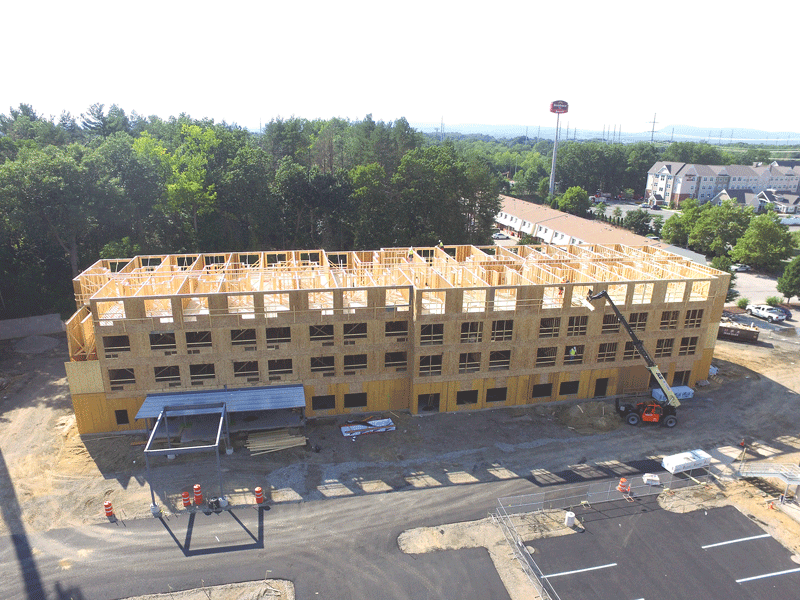
Chamber Corners Departments

1BERKSHIRE
www.1berkshire.com
(413) 499-1600

July 19: Chamber Nite, 5-7 p.m., hosted by United Cerebral Palsy.

July 25: Entrepreneurial Meet Up, 5-7 p.m., hosted by Shire Breu-Hous.

GREATER CHICOPEE CHAMBER OF COMMERCE
www.chicopeechamber.org
(413) 594-2101

June 29: Business After Hours, 4:30-6:30 p.m., hosted by Valley Blue Sox, Mackenzie Stadium, Holyoke. Game time: 6:35 p.m. Cost: $10 for members, $15 for non-members.

GREATER EASTHAMPTON CHAMBER OF COMMERCE
www.easthamptonchamber.org
(413) 527-9414

June 28: Speaker Breakfast: “Why Ping-pong Tables Do Not Define Your Business Culture,” 7:30-9 a.m., hosted by Williston Northampton School, 19 Payson Ave., Easthampton. Featured guest speaker: Tim Retting of Cincinnati-based InTrust. Sponsored by BusinessWest, Easthampton Savings Bank, Finck & Perras Insurance Agency Inc., Innovative Business Systems Inc., United Personnel, and Williston Northampton School. Cost: $25 for members, $30 for non-members.

July 13: Networking by Night featuring the Oxbow Water Ski Team, 5-7 p.m., hosted by Oxbow Marina, Old Springfield Road, Northampton. Sponsored by BusinessWest, Fleury’s Outdoor Equipment Inc., and American Boat Restoration. Cost: $10 for members, $15 for non-members.

July 28: The Chamber Island Golf Tournament, 9 a.m. to 5 p.m., hosted by Southampton Country Club, 329 College Highway, Southampton. Sponsored by BankESB, Polish National Credit Union, Finck & Perras Insurance Agency Inc., Taylor Real Estate, Westfield Bank, Applied Mortgage, Green Earth Energy Photovoltaic, and Richards Fuel & Heating Inc. Registration and breakfast at 9 a.m., shotgun start at 10 a.m., Fun Island Feast to end the day. Breakfast and dinner catered by Myers Catering. Come in your best island attire. Cost: $135 per golfer, $540 for a team. Visit www.easthamptonchamber.org for additional information.

GREATER NORTHAMPTON CHAMBER OF COMMERCE
www.explorenorthampton.com
(413) 584-1900

July 12: Arrive@5, 5-7p.m., hosted by Three Sisters Sanctuary, 188A Cape St., Goshen. Sponsored by BusinessWest. Cost: $10 for members.

Sept. 13: Arrive@5, 5-7 p.m., hosted by Family Legacy Partners, 48 Round Hill Road, Suite 2, Northampton. Co-host: CheckWriters Payroll. Sponsored by Northeast Solar, Finck & Perras Insurance Agency Inc., and Coldwell Banker Upton-Massamont Realtors. Cost: $10 for members.

GREATER WESTFIELD CHAMBER OF COMMERCE
www.westfieldbiz.org
(413) 568-1618

July 13: 40th annual Pancake Breakfast, 7-11 a.m., hosted by South Middle School, 30 West Silver St., Westfield. Premium event sponsor: Baystate Noble Health; youth camp sponsor: MedExpress Urgent Care; sausage sponsor: BMC HealthNet Plan; media sponsors: BusinessWest, the Westfield News; placemat sponsor: Appalachian Press; ticket sponsor: Puffer Printing; coffee sponsor: Dunkin Donuts, Mayor Brian Sullivan. This is a community event. Attractions include a bounce house, face painting, fire engine, music, live broadcast with WSKB 89.5 FM, and vendor bingo (win a $50 restaurant gift card).  Vendor tables are available: $75 for chamber members, $100 for non-chamber members (you must provide your own table). Cost: $6 for adults, $5 for seniors, and $3 for kids under 12. You may purchase tickets at the event or by visiting www.westfieldbiz.org.  For more information, to volunteer, and/or to reserve a tabletop, call Pam at the chamber at (413) 568-1618.

SPRINGFIELD REGIONAL CHAMBER
www.springfieldregionalchamber.com
(413) 755-1310

July 20: Annual Golf Tournament, 11 a.m., hosted by Crestview Country Club, 281 Shoemaker Lane, Agawam. Registration and practice greens open at 11 a.m., followed by lunch and a shotgun start at 12:30 p.m. The day concludes with a reception, buffet dinner, and awards ceremony. Cost: $600 per foursome, $150 for individual golfers. Sponsorship opportunities are available. Register online for events at www.springfieldregionalchamber.com or e-mail [email protected] for more information.

YOUNG PROFESSIONAL SOCIETY OF GREATER SPRINGFIELD
springfieldyps.com

July 20: July Third Thursday, 5-7 p.m., hosted by Dockside Restaurant at Brunelle’s Marina, 1 Alvord St., South Hadley, in partnership with Northampton Area Young Professionals and Young Professionals of Amherst.

Agenda Departments

Movie Premiere

June 29: The Basketball Hall of Fame will turn Columbus Avenue into Hollywood Boulevard for a premiere of Grey Lady, a new film by Springfield resident John Shea. This is a one-time, exclusive event, and Shea hopes to reconnect with local luminaries and old friends. Shea will be present at 6 p.m. for a benefit cocktail party before the audience moves into the theater at 6:45 p.m. He will also host an exclusive party after the film, and will take questions from the audience. Shea wrote and directed the film, and also plays a small role as an island police chief. This event is sponsored by Florence Bank. The bank’s president, John Heaps, has known Shea since the third grade at Holy Cross School. It was Shea’s idea to bring his film home to Springfield (he is a Cathedral High School graduate) and donate the proceeds to local charities. Tickets to the benefit are $100, and proceeds will go to Gray House, the Bing Arts Center, and the Community Foundation’s Dr. John V. Shea Scholarship Fund. Party entertainment will be provided by the Eric Bascom Trio. “The reason I’m doing this is to return as much as I can to the town where I grew up. I’m looking forward to renewing relationships with many of my Springfield friends,” said Shea, who calls Los Angeles home today. He has returned to the area many times; he helped with the campaign to establish the new Amazing World of Dr. Seuss Museum, has been a marshal in the Holyoke’s St. Patrick’s Day Parade, and sang with the Springfield Symphony. Tickets are available online at the Bing Arts Center box office or at www.bingartscenter.org.

HMC Cookout

July 1: Holyoke Medical Center (HMC) will open its new, $25.3 million Emergency Department early next month. As part of the grand-opening events, from noon to 2 p.m., the hospital will host a free community celebration and cookout. This will be an opportunity for families to come and tour the new Emergency Department. In addition to the tour, hamburgers, hot dogs, watermelon, and ice cream will be provided.

Nomination Deadline for Healthcare Heroes

July 10: Healthcare Heroes, an exciting recognition program involving the Western Mass. healthcare sector, was launched this spring by HCN and BusinessWest. Sponsored by American International College, Bay Path University, Elms College, and Renew.Calm, with additional sponsorships available, the program was created to shed a bright light on the outstanding work being done across the broad spectrum of health and wellness services, and the institutions and individuals providing that care. Nominations are now being sought — and will be accepted until July 10 — in the following categories: Patient/Resident/Client Care Provider; Innovation in Health/Wellness; Community Health; Emerging Leader; Collaboration in Health/Wellness; Health/Wellness Administration/Administrator; and Lifetime Achievement. The nominations will be scored by an independent panel of judges, to be announced in the coming weeks. The winners will be chosen in July and profiled in the September issue of HCN. The guidelines to consider when nominating individuals, groups, or institutions in these various categories are available HERE.

Jimmy Mazz Concert

July 19: The annual summer concerts at Orchard Valley at Wilbraham are underway. Local favorite Jimmy Mazz will perform at 6 p.m. on the front lawn at Orchard Valley, located at 2387 Boston Road in Wilbraham. The public is invited to enjoy his Vegas-style entertainment with a contemporary twist. The free community summer concerts are held monthly during the summer months and open to the public. Light refreshments will be available. For more information or to RSVP, call (413) 596-0006.

EANE Compensation & Benefits Conference

July 20: The Employers Assoc. of the NorthEast (EANE) announced that its annual Compensation and Benefits Conference, themed “The Game Has Changed,” will be held on Thursday, July 20 at the Publick House in Sturbridge. It will focus on trends in employee compensation and benefits. “The one-size-fits-all model no longer applies to employee compensation and benefits. Employers need to understand the demographic, legislative, and competitive dynamics that have created the trend toward personalization of employee benefits,” said Meredith Wise, EANE president. “Our conference this year is all about these outside influences that are game-changing.” The full-day program will feature Lauren Stiller Rikleen, a nationally recognized expert on developing a thriving, diverse, and multi-generational workforce. She is the author of You Raised Us – Now Work With Us: Millennials, Career Success, and Building Strong Workplace Teams. Additional conference presentations will include “How to Survive High-deductible Health Plans,” “Is the 40-hour Work Week Dead?” and “The Trump Effect on Employee Compensation and Benefits.” The cost for the program is $285 per person with discounts for three or more. Register at www.eane.org/special-events or by calling (877) 662-6444. The program will offer 6.25 credits from the HR Certification Institute and SHRM. Sponsoring the program are Johnson & Hill Staffing Services and the HR Certification Institute.

Babysitters Academy

July 22: Baystate Mary Lane will sponsor a Babysitters Academy in July to ready area youth for summer and fall babysitting responsibilities. The one-day program will be held from 9 a.m. to 3 p.m. The class will be held in the Main Conference Room located on the second floor. The Babysitters Academy is a certified babysitter program for young adults ages 11½ to 16. The Saturday session offers potential babysitters instruction in baby care, first aid, CPR, fire safety, home security, child behavior, and accident prevention. Participants are given a course booklet containing helpful tips and other information, and will receive a graduation certificate upon completion of the course. The program is offered by the Parenting program at Baystate Medical Center. There is a $75 fee per student, then $30 for each additional family or group member. Space is limited. For more information or to register, visit baystatehealth.org/parented and click on ‘Infant and Child Care,’ or call (413) 794-5515.

Brightside Golf Classic

July 24: More than 200 golfers are expected to participate in the 37th annual Brightside Golf Classic at Springfield Country Club in West Springfield. “This event raises funds to continue Brightside’s mission to support our community’s most vulnerable children and their families,” said Allison Gearing-Kalill, vice president of Fund Development for Mercy Medical Center and its affiliated services. Two tee times are available. Breakfast and registration for the morning session begins at 7 a.m. with a shotgun start at 8 a.m. Lunch and registration for the second session will begin at 11:30 a.m. with a 12:30 p.m. shotgun start. The evening reception will be held immediately following the tournament from 5 to 8 p.m. Prices include green fees, golf cart, breakfast or lunch, a gift and swag bag, and reception featuring cocktails, food stations, auction, networking, and live entertainment. On-course food and beverages will be provided by event sponsors throughout the day. Golfers will also be eligible for a chance to win prizes and participate in raffles during the day. The 2017 Golf Classic chairs are Hank Downey, vice president and Commercial Loan officer, Florence Savings Bank; John Kendzierski, president, Professional Drywall Construction Inc.; Matthew Sosik, president and CEO, Easthampton Savings Bank; and William Wagner, Chief Business Development officer and vice chairman of the board, Westfield Bank. Brightside for Families and Children provides in-home counseling and family support to more than 650 children and their families throughout Western Mass. Services include resource coordination, parenting-skills development, behavioral-technique instruction, community-support programs, and other programs tailored to prevent hospitalization from occurring. Specialized assessments such as neuropsychological evaluations and testing are also available. For more information on sponsorships, donations, and attending the event, contact Gearing-Kalill at (413) 748-9986 or [email protected]. Information is also available at www.mercycares.com/brightside-golf-classic.

Business & Innovation Expo of Western Mass.

Nov. 2: Comcast Business will present the Business & Innovation Expo of Western Mass. at the MassMutual Center in downtown Springfield, produced by BusinessWest and the Healthcare News. The seventh annual business-to-business show will feature more than 150 exhibitor booths, educational seminars, breakfast and lunch programs, and a day-capping Expo Social. Current sponsors include Comcast Business (presenting sponsor), Inspired Marketing (show partner), MGM Springfield (corporate sponsor), Isenberg School of Management at UMass Amherst (education sponsor), and the Better Business Bureau (contributing sponsor). Additional sponsorship opportunities are available. Exhibitor spaces are also available; booth prices start at $800. For more information on sponsorships or booth purchase, call (413) 781-8600, ext. 100.
Departments Picture This

Email ‘Picture This’ photos with a caption and contact information to [email protected]
A photo essay of recent business events in Western Massachusetts

To Their Health

picthistotheirhealth1

Springfield College recently partnered with the Canyon Ranch Institute to implement and evaluate a public-health project called Healthy Table. The goal of the program is to improve healthy eating, cooking, and shopping habits for individuals and families living in the vicinity of Springfield College. As part of the program, participants are able to speak with experts regarding nutrition, learn how to cook nutritional meals, and shop for healthy meals on a budget. Participants must be overweight, or at risk for or diagnosed with type 1 or type 2 diabetes, or have high blood pressure or high cholesterol. Each class is co-taught by a chef and a registered dietitian. At left, top: Springfield College Assistant Professor of Nutritional Sciences Donna Chapman and Catering Director Nick Testa lead participants through a healthy meal option in the kitchen at Cheney Hall. Bottom: Chapman leads the group through a trip to Big Y to talk about shopping for healthy food options.
Springfield College recently partnered with the Canyon Ranch Institute to implement and evaluate a public-health project called Healthy Table. The goal of the program is to improve healthy eating, cooking, and shopping habits for individuals and families living in the vicinity of Springfield College. As part of the program, participants are able to speak with experts regarding nutrition, learn how to cook nutritional meals, and shop for healthy meals on a budget. Participants must be overweight, or at risk for or diagnosed with type 1 or type 2 diabetes, or have high blood pressure or high cholesterol. Each class is co-taught by a chef and a registered dietitian. At left, top: Springfield College Assistant Professor of Nutritional Sciences Donna Chapman and Catering Director Nick Testa lead participants through a healthy meal option in the kitchen at Cheney Hall. Bottom: Chapman leads the group through a trip to Big Y to talk about shopping for healthy food options.

Taking Flight

Bradley International Airport

Bradley International Airport recently launched service between Hartford and Edinburgh, Scotland on Norwegian Air, Bradley’s second non-stop, trans-Atlantic addition in the past year. The airport welcomed the arrival of the aircraft with a traditional water-cannon salute and celebrated the inaugural flight with a ribbon-cutting ceremony. Passengers headed to Edinburgh were treated to a Scottish-themed sendoff at the gate, which included cupcakes, giveaways, and entertainment. Norwegian will operate year-round, three times a week, with a twice-weekly schedule during the winter season. The outbound flight leaves Bradley at 9:35 p.m., with an arrival of 9:30 a.m. in Edinburgh. The inbound flight departs Edinburgh at 5:15 p.m. and arrives at Bradley at 7:55 p.m. Charles Gray, board chairman for the Connecticut Airport Authority, noted that “this new international route highlights Bradley Airport’s continued growth and is a reflection of Bradley’s growing popularity among European carriers.”