Home Posts tagged Features (Page 7)
Chamber Corners Departments

AFFILIATED CHAMBERS OF COMMERCE OF GREATER SPRINGFIELD
www.myonlinechamber.com
(413) 787-1555
 
• July 13: 2015 ACCGS Golf Tournament, 11 a.m. to 7 p.m., at the Ranch Golf Club in Southwick. Schedule: 11 a.m. to noon: registration/practice, course-side lunch; 12:30 p.m.: shotgun scramble; 6 p.m.: reception/dinner buffet. Event sponsors: Robinson Donovan, P.C., TSM Design Inc., Western New England University, Berkshire Bank, and Hampton Inn Chicopee/Springfield. Lunch reception sponsor: MassMutual Center. Birdie sponsors: Barr & Barr Inc., Florence Savings Bank West Springfield Loan Center, HealthSouth Rehabilitation, Frank Webb’s Bath Center, Bacon Wilson, P.C., Insurance Center of New England, and Vanasse Hangen Brustlin Inc. Putting contest sponsor: Chicopee Savings Bank. Cost: Foursome supporter: $600; individual supporter: $150. To register or for more information, contact Sarah Mazzaferro at (413) 755-1313 or [email protected].
 
AMHERST AREA CHAMBER OF COMMERCE
www.amherstarea.com
(413) 253-0700
  
• July 20: Amherst Area Chamber of Commerce 12th Annual Golf Tournament, 10:30 a.m. at Hickory Ridge Golf Course, Pomeroy Lane, Amherst. Registration and lunch: 10:30 a.m. to noon; shotgun start at noon; social hour and cash bar, 5 p.m.; dinner, awards ceremony, and auction, 6 p.m. Hole-in-one, longest-drive, and closest-to-the-pin contests. Presented by Hampshire Hospitality Group. Co-scholarship sponsor: Cooley Dickinson Hospital. Gold sponsor: Applied Mortgage Services. Silver sponsors: Encharter Insurance, J.F. Conlon & Associates, Health Services Administrators. Dinner sponsor: Fallon Health. Lunch sponsor: Davis Financial Group. Bronze sponsor: Steve Lewis Subaru. Media sponsor: Daily Hampshire Gazette. Major gift sponsor: New England Promotional Marketing. Carts sponsor: Robert Stern Financial Services. Water sponsor: Atkins Farms Country market. Ice cream sponsor: Flayvors of Cook Farm. Towel sponsor: Hampshire College. Tee box and contest sponsors: men’s longest drive, Jones Group Realtors; women’s longest drive, Edward Jones, Tom McRae. Cost: $125 per golfer; $500 per foursome.

• Aug. 12: Chamber After 5 Lady Bea Riverboat Cruise, 5-7 p.m., at Brunelle’s Marina, 1 Alvord St., South Hadley. The Lady Bea features both inside seating and outside sun decks that attendees can explore while spending a wonderful evening on the Connecticut River. Sponsored by Alden Credit Union. Cost: $25 for members, $30 for guests.
 
FRANKLIN COUNTY CHAMBER OF COMMERCE
www.franklincc.org
(413) 773-5463
 
• July 10-12: Green River Festival, a celebration of world-class music, great local food, beer and wine, a handmade craft fair, and family games and activities, topped off with four hot-air balloon launches and a spectacular Saturday night balloon glow. Hosted by Greenfield Community College. Cost: $99.99 for three-day full-festival tickets; single-day tickets cost $19.99 for Friday, $59.99 for Saturday, and $59.99 for Sunday. For information, visit www.greenriverfestival.com.
 
GREATER CHICOPEE CHAMBER OF COMMERCE
www.chicopeechamber.org
(413) 594-2101
 
• July 22: Summer Sizzle, 4:30-7 p.m., at Elms College Quad, 291 Springfield Street, Chicopee. Rain date is July 23. Menu: strawberry salad, BBQ baked beans, steakhouse potatoes, coleslaw, biscuits with honey butter, BBQ chicken breast, pulled pork, corn on the cob, cookies, assorted soft drinks. Dunk tank, minute-to-win-it games, and more. Cost: $35, which includes food, drink ticket, and games.

• Aug. 20: Mornings with the Mayor, 8-9 a.m., at Porter & Chester Institute 134 Dulong Circle, Chicopee. Coffee and light refreshments will be served while Mayor Richard Kos provides updates about what’s happening in Chicopee and other topics that impact the Greater Chicopee area. Submit questions by Aug. 17 to [email protected]. This event is for chamber members only and is free, but registration is required.
 
GREATER EASTHAMPTON CHAMBER OF COMMERCE
www.easthamptonchamber.org
(413) 527-9414
 
• July 9: Networking by Night, 5-7 p.m., at the Oxbow Sports Complex, 375 Old Springfield Road, Northampton. Sponsored by Mantis Graphics Inc. and William Steplar Financial Services. Cost: $10 for members, $15 for non-members.

• July 13: Monday Morning with the Mayor, 8-9 a.m., at Strong Bus Corp., 40 O’Neil St., Easthampton. This event is free and open to the public.

• July 31: 31st Annual Golf Tournament, 9 a.m. to 4:30 p.m., at Southampton Country Club, 329 College Highway, Southampton. Features prizes, contests, and raffles. Sponsored by A-Z Storage and Properties and Easthampton Savings Bank. Sponsorship opportunities still available. Cost: $110 if registered and paid by July 4, $125 after July 4. Payment due by July 17. Pricing includes cart, gift, lunch, and dinner.

• Aug. 10:
 Monday Morning with the Mayor, 8-9 a.m., at A-Z Storage & Properties, 165 Northampton St., Easthampton. This is your opportunity to bring your questions to Mayor Karen Cadieux for casual conversation and direct answers. This event is free and open to the public.

• Aug. 13: Networking by Night, 5-7 p.m., at Freedom Credit Union, 422B Main St., Easthampton. Join us along with our hosts, Freedom Credit Union and Wireless Zone of Easthampton, for a night of networking. Cost: $10 for members, $15 for non-members.
 
GREATER HOLYOKE CHAMBER OF COMMERCE
www.holycham.com
(413) 534-3376
 
• July 15: Chamber After Hours, 5-7 p.m. Sponsored and hosted by Providence Place at Ingleside, 5 Gamelin St., Holyoke. Discover the beauty of Providence Place at Ingleside. Mix and mingle with friends and colleagues. Refreshments, door prizes, and 50/50 raffle. Cost: $10 for members, $15 for non-members and walk-ins.
 
GREATER NORTHAMPTON CHAMBER OF COMMERCE
www.explorenorthampton.com
(413) 584-1900
 
• July 8: July Arrive @ 5, 5-7 p.m., at Look Memorial Park, 300 North Main St., Florence. Sponsored by Pioneer Landscapes and Easthampton Electrical. A casual mix and mingle with colleagues and friends. This is a joint event with the Northampton Area Young Professionals. Cost: $10 for members.

• July 9: 2015 Workshop: “Tips, Tricks & Shortcuts in Microsoft Word.” Presented and hosted by Pioneer Training, 139B Damon Road, Northampton. This workshop contains a variety of quick tips and tricks in Microsoft Word that will save you hours of time. Topics covered include tips for selecting text, using the format painter, working with tabs and indents, wrapping text around pictures, using autocorrect and autotext, turning on or off automatic formatting, and options for viewing a document. Pre-registration is required, and space is limited. Cost: $20 for members, $30 for non-members. RSVP required, as space is limited. To register, visit [email protected].

• July 14: 2015 Seminar: “What Employers Need to Know About the New Sick-leave Law,” 4-5 p.m., location to be announced. Presented by attorney James Winston. This talk will center on how new regulations will affect employers, and what employers need to do so that they will not run afoul of the new law. It is important for all employers to understand their obligations, even if they have fewer than 11 employees. The presenter will also discuss various hypothetical situations under the new sick-leave law. Pre-registration is required, as space is limited. To register or for more information, e-mail [email protected].
 
GREATER WESTFIELD CHAMBER OF COMMERCE
www.westfieldbiz.org
(413) 568-1618
 
• July 9: 38th Annual Pancake Breakfast, 7-11 a.m., on the South Middle School Lawn, 30 West Silver St., Westfield. If it rains, the event moves to the cafeteria. Cost: $6 for adults, $5 for seniors, $3 for children under 12. Tickets are available at the chamber office, Flowers by Webster, and the Press Room.

• Sept. 9: September After 5 Connection, 5-7 p.m., at Tekoa Country Club, 459 Russell Road, Westfield. Refreshments will be served. Bring your business cards and make connections. Cost: $10 for members, $15 cash for non-members. To register, call Pam at the chamber office at (413) 568-1618.
 
NORTHAMPTON AREA YOUNG PROFESSIONAL SOCIETY
www.thenayp.com
(413) 584-1900
 
• July 8: July Arrive @ 5, 5-7 p.m., at Look Memorial Park, 300 North Main St., Florence. Sponsored by Pioneer Landscapes and Easthampton Electrical. A casual mix and mingle with colleagues and friends. This is a joint event with the Greater Northampton Chamber of Commerce. Cost: $10 for chamber members.
 
WEST OF THE RIVER CHAMBER OF COMMERCE
www.ourwrc.com
(413) 426-3880
 
• Aug. 17:
 West of the River Chamber of Commerce Annual Golf Tournament, at The Ranch in Southwick. Schedule: 11:30 a.m., registration; noon, lunch; 1 p.m., shotgun start, scramble format. Cost: $125 for golf and dinner. For more information and for tickets, contact the chamber office at (413) 426-3880 or [email protected].

Daily News

SPRINGFIELD — The Duryea Motor Wagon Co., the first American firm to build gasoline automobiles, had its beginnings in Springfield back in 1895. Now classic and antique cars are making their way back to Springfield for Cruise Night, occurring every Monday this summer.

June 22, was the first night of Springfield’s Cruise Night, offering not only classic and antique cars, but also great music and delicious food. The inaugural Cruise Night was a success, drawing 14 classic-car enthusiasts registering their vehicles. The antique cars lined the two parallel streets next to Stearns Square. No classic Duryeas were showcased; however, a variety of other classic cars showed up, including the first car to register, the infamous ‘Mad Max.’

“I was thrilled that downtown could play host to Cruise Night,” said Chris Russell, executive director of the Springfield Business Improvement District. “With all the history of the automobile in Springfield, we thought it only made sense to have a car show. If you love the classic automobiles as much as I do, please join us next Monday night. And if you have a classic car of your own, don’t forget to register, too.”

While checking out the antique cars, attendees listened to classic music from the ’50s and ’60s and enjoyed food from two downtown restaurants, Adolfo’s and Theodores’.

Cruise Night at Stearns Square features classic and antique cars that are 20 years or older. Individuals who want to register a car may do so beginning at 5 p.m. Registration is on Worthington Street across from Stearns Square. Registration fees are currently being waived. At the end of each night, trophies will be awarded. For more information, visit springfielddowntown.com/cruise-night.

Daily News

HOLYOKE — On Sunday, June 28 at 3 p.m., Wistariahurst Museum will host Allerton Kilborne, the last living Skinner descendent to have lived at the historic estate, for a talk and special tour.

Kilborne will share his memories of living at Wistariahurst with his grandmother, Katherine Skinner Kilborne, and a full-time staff. An historian himself, Kilborne will weave his personal memories into the broader narrative of Holyoke. The event, which will offer a lively mix of Holyoke history and personal memories, is open to the public, and tickets cost $12, or $10 for museum members.

Kilborne will lead a personalized tour of the house following his talk. Acquiring its name from the flowering vine, the 26-room mansion features parquet floors, vaulted ceilings, elaborate woodwork, and two marble lions that have guarded the entrance since the late 19th century. The estate was kept in the Skinner family until 1959, when it was gifted to the city of Holyoke for cultural and educational purposes.

Daily News

HOLYOKE — The ninth annual 40 Under Forty award program, staged by BusinessWest, will be held at the Log Cabin Banquet & Meeting House tonight. The sold-out event honors the region’s most accomplished and civic-minded professionals under age 40, and this year’s class was profiled in the April 20 issue.

This year’s winners represent virtually every sector of the economy — from financial services to manufacturing; retail to healthcare; technology to nonprofit management; education to law. They also show the seemingly innumerable ways people can give back to the community.

This year’s event features a new wrinkle — the Continued Excellence Award, presented to the previous 40 Under Forty honoree who has most impressively built upon their track record of excellence. The finalists are Delcie Bean, Kamari Collins, Jeff Fialky, Cinda Jones, and Kristin Leutz, and the winner will be announced at tonight’s gala.

The 40 Under Forty program and gala are sponsored this year by Northwestern Mutual (presenting sponsor), Paragus Strategic IT (presenting sponsor), Fathers & Sons, the Isenberg School of Management at UMass Amherst, Moriarty & Primack, and United Bank.

Community Spotlight Features
South Hadley Falls Rebound Gathers Momentum

Michael Sullivan says the newly opened Texon Mill Park in

Michael Sullivan says the newly opened Texon Mill Park in South Hadley Falls features a walking trail with beautiful views.

The village known as South Hadley Falls was the center of life and commerce in the town of South Hadley for more than a century. But over the past 60 years, major employers downsized or moved, and as buildings and lots were left vacant and underutilized, the village slowly lost its vitality.

But ‘the Falls’ is undergoing a revitalization, one that is a central feature of the community’s master plan. And efforts by town officials to realize a vision outlined in a report titled “The Rise of the Falls” are coming to fruition.

“When we first started down this path, we wanted to draw attention to South Hadley and the Falls,” said Town Administrator Michael Sullivan. “We are at the point where we are seeing some results, but talks with developers have pointed out other needs and opportunities, so the plan is evolving and changing.”

Indeed, officials are taking a holistic approach that includes a variety of measures. For example, several weeks ago, the South Hadley Redevelopment Authority, established last year, unveiled concepts aimed at changing the traffic pattern at the intersection of Main and Bridge streets and Main and Lamb streets. The SHRA would like to see roundabouts created, which Sullivan says are often referred to as “traffic-calming devices,” because they slow down traffic and improve pedestrian safety, while allowing vehicles to flow in an orderly manner.

In addition, the Redevelopment Authority is evaluating the use of several properties that are highly visible to drivers who enter South Hadley Falls from Holyoke via the Vietnam Veterans Memorial Bridge.

“Two are vacant, and two are occupied by businesses, but that may not be their highest and best use; there might be suitable and available space for them to move into elsewhere in South Hadley,” Sullivan said, adding that this would have to be negotiated, but one site contains an auto-repair shop that is an eyesore due to distressed vehicles sitting outside.

“We want to use these properties to make a statement. First impressions count, and they are on adjoining lots that encompass 7.3 acres,” the town administrator told BusinessWest, as he talked about the importance of how people view the Falls.

Another part of the redevelopment plan that plays into the way the area is viewed is abating vacant and blighted buildings, and combined efforts by the Planning Board, selectmen, and Redevelopment Authority to eliminate the problem have yielded some success.

Sullivan said the town was successful in its bid to get Mohawk Paper to open a new, 120,000-square-foot envelope manufacturing and distribution facility in the Falls in the former James River Graphics building, which had been vacant for more than 10 years. South Hadley competed against Chicopee for the business, but Mohawk chose the Falls and invested $2.5 million to retrofit the building. “They opened May 15, added 35 jobs, and told us they plan to add another 35 next year,” he said.

In addition, Presstek consolidated the manufacturing side of its New York and New Hampshire plants and expanded its business in South Hadley via a $2 million upgrade of machinery and improvements. “They also added 25 employees,” Sullivan said.

Expanding Horizons

These investments, coupled with the growth of other businesses, led town officials to realize they need more housing and transportation options if they expect to attract new residents to South Hadley Falls.

“We need to redouble our efforts to provide workforce housing,” Sullivan said, explaining that the hope is that new hires in South Hadley or the environs will want to move to the village.

Progress in that arena is already taking place. Via the tax-title process, the town took ownership of a home on 8 Graves St. that was in deplorable condition, and is hoping to auction it off at the end of the month.

South Hadley officials also worked with the Attorney General’s office to get the owner of an abandoned home on 10 Canal St. to sell it. They were successful, and it was purchased, renovated, then resold to a family that is now living there.

“We’re using a variety of tools to try to improve housing and are really positioning South Hadley for the new millennium,” Sullivan said.

The town’s efforts have been aided by developer Nicholay Dipon, who plans to construct three new buildings that will contain 12 condominiums on an empty lot owned by the town situated across the street from the new, $7.7 million South Hadley Public library on 2 Canal St., which opened in August.

The selectmen have also approved Dipon’s plans to convert the decommissioned library building on 27 Bardwell St. into six market-rate apartments, and Sullivan said all of these units will be steps away from the newly opened, $12 million Texon Mill Park, which features a 3.4-mile looped walking trail with breathtaking views of the Connecticut River and the Holyoke Electric Dam.

In addition, South Hadley applied for a 40R designation from the state, which would allow the town to substantially increase its supply of housing and decrease its cost by expanding zoning for dense housing. Sullivan said officials expect to find out if their bid was successful in the next few months, adding that, if South Hadley receives the designation, it will give the town access to grants and low-interest loans to meet the goal.

“But we’re trying to give thoughtful consideration as to where we would put any new housing,” he told BusinessWest, explaining that the town recently received a $15,000 Planning Assistance Toward Housing Grant, which will be matched by $21,000 from town coffers to determine how to improve the available housing stock and increase density while keeping the Falls safe from crime.

Access to recreation is important to young professionals, and the town appropriated $30,000 to have the Pioneer Valley Planning Commission determine the best way to establish a pedestrian/bicycle path that would connect the Village Commons to the Falls.

Sullivan said the path is necessary because the housing market has changed dramatically over the last decade, and graduate students and young professionals are looking to rent apartments of 900 square feet or less in walkable neighborhoods where they can recreate as well as live and work.

“They can climb the Mount Holyoke Range at one end of town and canoe or kayak on the river at the other end,” he said. “But young people today don’t want to put a bike rack on their car. They are very active and will want a bike path, so we’re trying to find a way to tie in the amenities we have and offer diverse recreational opportunities, which include things such as golf.”

Public transportation is another critical component that appeals to young professionals, and the new Holyoke rail platform slated to open in September is within a mile of the Falls.

Although residents will be able to bike or walk to the train when service begins, South Hadley officials realized they needed to offer alternate ways to get there. To that end, they worked closely with Pioneer Valley Transportation Authority and created a ‘Tiger Trolley,’ which will allow residents to use the bus to get to the high-speed train when service begins without having to use a vehicle, and travel to Big Y, the Village Commons, restaurants, and other attractions in town.

The trolley began operating in February and runs from the Mueller Bridge in Holyoke into the Falls, before looping through South Hadley to the Village Commons. In addition to regularly scheduled stops, there is a transit-access-point, or TAP, program, which allows people to get picked up at any one of eight additional stops if they call a half-hour in advance or use a smartphone app to schedule a stop. Five of the pickup points are in South Hadley, and three are in the Falls, and Sullivan noted that, once the high-speed rail service starts, it could eliminate the need for residents of the Falls to own a vehicle.

“The Tiger Trolley transportation system is the first of its kind in the state, and we plan to increase the number of stops as demand increases,” he said, explaining that people who are on the bus can ask the driver to drop them off at any of the access points.

Work in Progress

Town officials are doing all they can to make South Hadley Falls into a walkable, vibrant neighborhood, and will continue to expand their plan to realize that goal.

“We want to build on our strengths as we head into the future,” Sullivan said, “and although we are positioned well as a cradle-to-grave community, there is still room for improvement.”

South Hadley at a glance

Year Incorporated: 1775
Population: 17,961

Area: 18.4 square miles

County: Hampden

Residential Tax Rate: $19.38 to $20.26

Commercial Tax Rate: $19.38 to $20.26

Median Household Income: $46,678 (2010)

Family Household Income: $58,693 (2010)

Type of government: Town Meeting; Board of Selectmen
Largest Employers: Mount Holyoke College; Exopack Advanced Coatings; Big Y World Class Markets; Pioneer Valley Performing Arts School
* Latest information available

Sections Women in Businesss
Fast-growing, Women-led Company Aims to Clarify Health Information

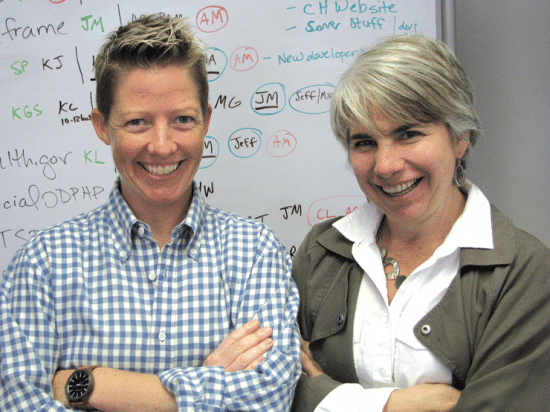
Stacy Robison, left, and Xanthi Scrimgeour

Stacy Robison, left, and Xanthi Scrimgeour saw a need for clearer health information, and turned that need into a fast-growing, multi-faceted business.

There’s a gap, Stacy Robison says, between the ability of the public to understand the copious amounts of health data they encounter, and how effectively that information is communicated.

But six years after she and Xanthi Scrimgeour launched CommunicateHealth in Northampton, that gap is narrowing — as quickly as their company is growing.

“We both come out of traditional public-health backgrounds,” Robison said of Scrimgeour, her partner in both life and business. “Xanthi was doing some health-education work for one of the bureaus for the state Department of Public Health. I did a lot of work at the federal level. I was doing some policy work around health literacy, looking at how people understand health information.”

On both levels, she said, “public health is historically underfunded. They don’t traditionally get cool design, creativity, technology.”

At the same time, data showed that people were increasingly struggling with health information at a time when society in general is shifting the burden, more than ever before, onto individuals to manage their health and seek relevant information.

“The other part of the equation is how poorly designed and poorly written information in public healthcare can be — it was a huge gap,” she told BusinessWest. “So that was really the vision for the company: let’s fill this gap. There was clearly a business case for this.”

So, in 2009, the two left their jobs and launched a startup business from their attic, with the goal of developing and rewriting health-information documents in a way that would be clear and engaging for all readers. By 2011, CommunicateHealth, as they called it, was approaching $1 million in revenue annually; it ended 2014 with just over $6 million. Meanwhile, a three-person operation six years ago now boasts a staff of 36 in Northampton and a second office in Rockville, Md. The Women Presidents’ Organization recently ranked the enterprise 44th on its list of fastest-growing women-owned companies.

That rapid success might surprise Robison and Scrimgeour, but only to a point. After all, they knew the vast health-information industry had a need for professionals who could clean up and redesign often-confusing communications.

“We consider ourselves a mission-based company,” Robison said. “We asked ourselves, ‘can we do this? Can we bring some creativity and new technology to a field that hasn’t had a chance to benefit from it? That’s really the mission — what can we do to make people’s lives better by simplifying the complexity of the public-health system? And, obviously, it was a good business model. We’ve done really well.”

Plain Speaking

Robison has been rewriting poorly presented health information since her previous career working with federal public-health agencies, and that was initially the bread and butter of CommunicateHealth. But as the startup has grown, it has also expanded its scope of services, moving from a subcontracting role to that of a prime contractor.

“We started doing content — focusing on how we can write this information more clearly. Since then, ‘plain language’ has become a buzzword in the federal arena. So we would do that and hand it off to a designer, and it was out of our our hands. But then we’d see it and say, ‘this is horrible.’ You can simplify the language, but if you put it in a 10-point Times New Roman font crammed onto a page with no pictures, you haven’t succeeded.”

So she and Scrimgeour introduced a design element into the firm, starting with one graphic designer and boasting four today, and will typically handle both content and design. Meanwhile, web-based health information was becoming more prominent — moving “beyond the brochure,” as Robison put it.

“It became more apparent that, if we’re going to do this well, we need to know how to make this interactive and work with technology, so we brought web developers onto the team,” she went on. “As we brought more and more resources in house, the business model expanded and became more full-service.”

With any project, Robison said, the team starts with determining who the audience is and how best to deliver the material, whether it’s pandemic information from the Centers for Disease Control and Prevention or childhood-obesity messages from the American Academy of Pediatrics, to name two past clients. And the process of determining the direction of a project is one that sets CommunicateHealth apart.

“One thing that makes us really different is our testing process. We involve the end users of our materials in the development process,” she said, using the example of a health-information app to explain. “Before we design a new app, we’ll go out and interview focus groups, ask what features people like, how they feel about this type of information. Once we get a prototype, we put it back in front of people. ‘Are we right on track? Would you use an app like this?’ Then we test it again, and ask, ‘did we accomplish what we wanted to accomplish?’ That process creates better products, but it also really connects us with people who will use them.”

Government agencies comprise about 70% of CommunicateHealth’s client base, with private entities, from large health plans to small health-information startups, making up the rest.

“We run a huge gamut,” Robison said. “One project right now is for parents of young children who may be worried their kids have some kind of motor delay or developmental delay. We’re looking to create information for parents that’s supportive but not overwhelming, and also really accurate.”

Part of that project involves creating web-based GIF animations to demonstrate what it means when a toddler has a wobbly gait or some other movement impairment. “Parents reading this online can see this is what it looks like. We’re testing it with parents, all in hope of delivering a tool that’s supportive and easy and clear — nothing that’s too complex.”

The company will also be handling some communications around upcoming dietary guidelines for Americans, which are updated every five years. “We’ll be supporting that work, so we’re doing a lot of work right now with surveys, focus groups, and background work,” Robison said of the federal-level project.

The ‘Show Me’ app developed by Communi-cateHealth

The ‘Show Me’ app developed by Communi-cateHealth helps people with hearing or language barriers ‘talk’ to first responders.

Meanwhile, on the state level, she and Scrimgeour took on a project for the Mass. Department of Public Health, developing an app for individuals with communication challenges, from deafness to language barriers, to use to ‘talk’ to first responders in emergencies.

“That’s our favorite kind of project, because it was a blank slate — there was nothing like it,” Robison said. “So it allowed us to do our process, talk to people, figure out what’s going to work. We ended up with a simple app, all icon-based. That was a fun project.”

Give and Take

Robison, in fact, kept coming back to that back-and-forth dialogue with end users and its importance to every project, whether it’s taking an agency’s jargon-filled content and simplifying it for public consumption or creating something brand new, as in the case of the emergency app.

She also gets plenty of input from editorial boards and educational review boards, who help ensure accuracy and consistent messaging, but even then, research gathered from the public can sway content. “They’ll inevitably push back on everything, but we can show them the user testing — that we put [the original material] in front of people, and they didn’t understand it. We say, ‘you have a choice — and if you’re going to communicate, this is how you do it.’”

To private companies like health plans, clear communication can affect the bottom line as well, she added.

“Large health plans sometimes bring us on to improve communication with their members. We’ll take a look at a handful of their communications — transactional letters about co-payments, welcome guides, enrollment materials — and work with them to create a voice that’s more appropriate for consumers. We’ll test it to find out what’s working and what’s not.”

Overall, Robison said, it’s rewarding to be a business owner with such a wide array of projects, so no one gets stuck in a rut. “We’re a mission-based company. The people who come to work here, come to work because of the mission. They ultimately care about the end product; they want to deliver high-quality products.”

At the same time, she and Scrimgeour have also experimented with work-life arrangements inspired by Silicon Valley that fosters employee growth, autonomy, and satisfaction, including an unlimited time-off policy. Also, Friday afternoons are mandatory “creative time,” where everyone gathers to brainstorm ideas and sometimes help fellow employees stuck at a critical point in a project.

“It has been interesting for us to find those models,” Robison said. “How can we engage people and do things differently, treat our employees differently? There are a lot of traditional business models, but not a lot of people shaking it up.”

CommunicateHealth has risen to prominence at a time when healthcare in general is being shaken up by shifts in how care is delivered and paid for — and when consumers are increasingly anxious about the issues they’re dealing with, and just want some clear answers.

At the same time, Robison and Scrimgeour have become active supporters of the National Women’s Chamber of Commerce in its efforts to increase the share of federal contracts awarded to women-owned businesses. The goal? Five percent of the tens of billions of dollars available. “So, yeah,” Robison said, “we haven’t evened out that playing field yet.”

Still, the continued growth of CommunicateHealth serves as an inspiring example of two women who turned a passion into a business plan, which then became a local success story with a national reach.

“If you’d asked me years ago if I’d be a business owner, I’d have said never in a million years,” Robison said. “But it’s really nice for us to be this mission-based company and do well, which ultimately means we can do well for our employees and be a provider of jobs and training and good things like that. There are not a lot of models for this in public health, so to be able to do this is really gratifying.”

Joseph Bednar can be reached at [email protected]

Autos Sections
Truck Sales Accelerate Due to Several Driving Forces

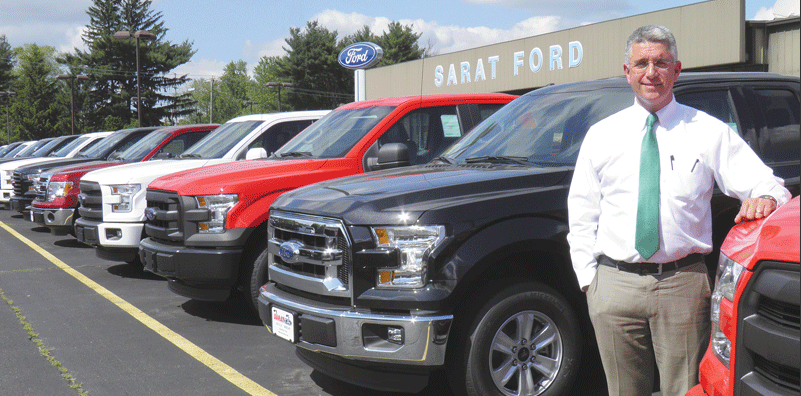
Jeff Sarat

Jeff Sarat says businesses that held onto their trucks during the recession are now upgrading their fleets.

Jeff Sarat predicts Sarat Ford Lincoln in Agawam will sell more trucks in 2015 than in any year since it opened in 1929.

That’s a bold statement, but he’s more than prepared to make it.

“Normally our busiest time of the year is October to December because companies make year-end purchases. It drops off to nothing from January to March, but this year there was no lull; we slowed a little, but sales are so high, we have doubled our inventory of super-duty trucks,” said the general sales manager, noting that a high percentage of buyers are businesses that put money into maintenance during the recession rather than replacing their fleets. But the combination of reduced gas prices and an upswing in the economy has changed that trend, and business owners and managers are finally trading in vehicles and buying new ones.

But they’re not the only ones creating this historic run on trucks.

Bill Peffer says most people want to own the largest and most expensive vehicle they can afford, and in today’s world, that translates to a truck.

“I can’t think of a better time in the past 10 years to buy one,” said the president and COO of Balise Motor Sales, as he listed interest rates, incentives, and lease options. “The industry has certainly returned to the level of pre-recession sales, the market is robust because the economy is getting healthier, interest rates are low, there is easy access to credit, and the option of leasing at an affordable cost have combined to drive truck sales.

“Passenger cars have limitations,” he added. “And part of the fabric of America is to utilize a vehicle in a way that fits your lifestyle.”

National reports show truck sales began climbing about two years ago and quickly gained traction. Manufacturers have introduced new models that are fuel-efficient, quiet, comfortable, and have room for a family, yet offer the versatility and utility that a truck with a towing package can provide.

“Trucks have come a long way, and the new ones ride like a Rolls-Royce — some models will even parallel-park themselves with a push of a button,” Sarat said, adding that industry forecasts predict more than 16 million new vehicles will be sold this year, and a significant percentage will be trucks.

Brett Starbard, sales manager for Metro Chrysler Dodge Jeep Ram in Chicopee, said the new, redesigned Ram 1500 was named Motor Trend’s Truck of the Year in 2014, and better technology and design have fueled demand.

Bill Peffer

Bill Peffer says the rise in truck sales has led to a highly competitive market, which translates into good deals for buyers.

“Our truck sales have gone up by 50% since we started carrying Chrysler Rams a few years ago,” he noted. “We’re seeing an increase in people who want a truck, but don’t necessarily need one. Gas prices are down, and people live on a budget; if they are spending $50 less a month on fuel, they can afford $50 more on a new car payment.”

Ed O’Grady, sales manager for Central Chevrolet in West Springfield, said 60% of the dealership’s new truck business can be attributed to the fact that they are a bargain. Used trucks are retaining their value, and the manufacturer is offering $3,600 discounts that, in the past, were available only to employees who worked for suppliers, such as US Tsubaki in Holyoke, which sells timing chains. “Another $6,250 in incentives and rebates brings the savings on new trucks to $10,000,” he noted.

In addition, the cost of leasing has come down. “We have 2015 Silverado double cabs with four-wheel drive that are leasing for as low as $259 a month,” O’Grady said. “Leasing protects the consumer from depreciation; if the value goes down in three years, they can drop the vehicle off without taking a loss. But if a person does choose to purchase a truck, they can get a better price on a new one than on a two-year-old model due to all of the incentives.”

Starbard says Metro leases the majority of its new trucks. “Our average MSRP is $40,000 to $45,000, so the payments on a five-year loan would be $600 to $700 monthly. A lease is about half of that because the residual [remaining value] when the lease ends is as high as 60 to 70%, which means the person who leases only has to pay 30% over the term. Plus, there is no cost for maintenance,” he explained, noting that trucks have retained their value as sales were slow throughout the recession, so there are fewer used trucks on dealer’s lots, which leads to higher demand.

Body of Evidence

Although most businesses kept their trucks when gas prices reached $4 in the summer of 2008, Sarat said, many of his customers who didn’t need them took them off the road and purchased vehicles that get good gas mileage, such as a Ford Focus, which averages 40 miles per gallon.

However, other dealers report that many people took real losses by trading in their trucks for fuel-efficient cars. “People were very concerned with operating costs and some made irrational decisions as they traded in trucks for something that was far more fuel-efficient,” Peffer said.

Ed O’Grady

Ed O’Grady says it often costs less to lease a new truck than to purchase a used one.

Starbard recalls contractors who begged him to take their truck on a trade-in. “It wasn’t a smart thing to do, and they took huge losses, but if they had a job 100 miles away and were getting 10 miles a gallon, they were spending more on gas than they were making,” he told BusinessWest. “Gas prices are cyclical, like stocks, and I advised people not to sell when prices got high, but many of my customers didn’t feel they had an alternative when gas went over $4 a gallon.”

O’Grady said the government’s Cash for Clunkers program helped fuel trade-ins, and the prospect of getting an additional $4,500 for a vehicle that got poor gas mileage motivated many people to get rid of their trucks between 2008 and 2010.

“But now that fuel prices have dropped, they want their trucks back, and they are buying models that are more fuel-efficient than ever before,” he said, adding that the new Silverado with a V-8 engine gets 18 miles per gallon around town and 21 to 22 miles on the highway.

Sarat concurred. “There is definitely a pent-up demand, and as the economy continues to get better and businesses expand, we expect them to add more trucks,” he said, citing the example of a man who bought a van last year and added another this year as his business is flourishing.

Manufacturers such as Ford are also doing whatever they can to motivate prospective buyers, which includes offering 0% financing or rebates of up to $4,000 for certain vehicles. And although leasing is popular at some dealerships, Sarat said the majority of his customers purchase new trucks.

“They tend to retain their value so well that sometimes people find they can get a new truck for about the same price as a used one,” he noted. “People hold onto their trucks, so it becomes an issue of supply versus demand. Since vehicles get more expensive every year, it makes it easier to sell a new truck when you can offer really good money for a trade-in.”

Trucks have become all-around vehicles, and people today want trucks with four doors and ample interior cabin space to accommodate a family.

“Ten or 15 years ago, most trucks had regular cabs, but you don’t see many of those today; they make up less than 5% of my inventory,” Starbard said. “Today, a gentleman who owned an SUV can replace it with a pickup with full-size doors; plus, the RAM can be purchased now with a six-cylinder diesel engine that is much better in terms of fuel economy.”

Another factor that attracts people to trucks is the fact that they can customized with accessories that range from running boards to side steps, different types of wheels, exhaust systems, bed covers, and cover liners. “The average truck buyer spends $1,000 to $2,000 in accessories after the purchase,” Starbard said.

New Models

Although there are five main competitors in the truck market, which Peffer lists as Ford, Chevy, Ram, Toyota, and Nissan, new products are coming on the market because manufacturers seek to attract new buyers and retain customers looking to upgrade.

“They don’t want to lose market share, so they have become very competitive, which is good for the consumer,” Peffer said. “For some buyers, a truck is a tool of their trade, but for a growing segment, it’s a want more than a need, and luxury features such as leather seats and navigation systems appeal to a wider audience.”

Ford recently introduced a new Econoline cargo van with a choice of three engine options. “You could never stand up in them before, but now they come in two lengths and three heights, and you can stand in the medium and large models,” Sarat said. “They are a phenomenal addition and have been very popular. We have been selling several every week, and demand is starting to pick up, so we are taking in as much inventory as we can get.”

Ford also introduced an all-aluminum F-150 this year that is fuel-efficient, Chevy brought a new Silverado model to market last year, and Nissan will introduce a new Titan in the next few months.

Chevrolet stopped producing small trucks in 2012, but demand is skyrocketing for its new 2015 Colorado, which gets 27 miles per gallon on the highway and was named Motor Trend’s 2015 Truck of the Year.

“It comes with a four- or six-cylinder engine, but can tow 7,000 pounds, and every dealership across the country is taking orders,” said O’Grady. “They sell the day they arrive.”

He noted that the trend is moving from trucks with clamshell doors to four doors, and Chevrolet’s offerings convince buyers to purchase new trucks. They include a five-year, 100,000-mile power-train warranty with two years of free maintenance; wi-fi Internet connectivity that comes in every 2015 Silverado; and Remote Link, a smartphone app that allows people to lock and unlock doors remotely, view tire pressures, and send directions to their truck with their phone, which are announced via OnStar navigation.

“Sales have been on the rise for the last few years, and we believe the numbers are sustainable,” O’Grady went on, explaining that GM used to stockpile vehicles to keep people working, but have stopped that practice and now fill orders.

Still, many dealers say leasing is the best deal available, due to the fact that trucks hold their value. “More vehicles are leased in New England than in any other part of the country,” Peffer said. “There are a lot of advantages, and manufacturers recognize it as an opportunity to grow or maintain market share.”


Revving Up

Sarat Ford’s truck sales continue to grow, and several years ago it expanded its service department to help its commercial truck customers.

“We added six new bays, and as we continue to sell more big trucks, we continue to need more room,” Sarat said. “This year our sales are up by 10% over last year, and the truck business is pushing the increases.”

O’Grady has been in the auto industry for 23 years and says this is “an exciting time for truck sales.” He pointed to a study conducted by Chevy last year with focus groups representing all ages and income brackets. Participants were shown two photos taken in the same location; the only difference was one had a man in front of a truck, and the other had him standing in front of a car. The groups rated the guy in front of the truck as more handsome, rugged, dependable, resourceful, and someone they would want to date their daughter.

Whether that image plays into the increase in sales is unknown, but Peffer says stiff competition makes it a great time to buy a truck.

“We are seeing an acceleration of people trading in all types of vehicles,” he noted. “There is a propensity to shift to a truck, and there have never been more product offerings and choices in the market.”

Daily News

SPRINGFIELD — The Springfield College Sports Communication Department was recently recognized by the American Volleyball Coaches Assoc. (AVCA) for its successful efforts in the advancement and promotion of the sport of volleyball. The college earned NCAA Division III Sports Information Director Women’s Volleyball Regional Honors for the New England area and also NCAA Division III Sports Information Director Men’s Volleyball Conference Honors during the announcement of the annual AVCA Grant Burger Media Award.

Led by Director of Sports Communication Brian Magoffin and Assistant Director of Sports Communication Jonathan Santer, Springfield College was the only institution in the country across NCAA Division I, II, and III, as well as the NAIA, to be recognized by the AVCA in both men’s and women’s volleyball. Their efforts included traditional releases and statistical coverage, in addition to enhanced web and video efforts to promote the success of the men’s and women’s programs, including highlight packages, postgame interviews, and features throughout the season.

“Brian and Jonathan have a knack for capturing the essence of what it means to be a student-athlete,” said Springfield College Director of Athletics Cathie Schweitzer, who will be retiring at the end of June after 15 years in her current role. “Our sports-information team creatively thinks of ways to keep Springfield College athletics at the forefront, and the coverage they provide promoting players, coaches, and the volleyball programs is unparalleled.”

During the 2014-15 season, the men’s volleyball team advanced to the national championship match for the seventh time in the past eight years, concluding the campaign with a 25-7 record. Springfield has captured nine Division III national championships as a men’s volleyball program, including winning the previous three NCAA Division III Championships after claiming the crowns in 2012, 2013, and 2014.

“All of our athletic teams at Springfield College are so fortunate to have the level of support and communicative expertise that Brian Magoffin and the Sports Communication office offer us — not only in marketing our teams, but the information we get from Brian’s office is second to none,” said Charlie Sullivan, men’s head volleyball coach. “Brian and his office make our job much easier, and we appreciate their level of support.”

The women’s volleyball squad finished with a 20-11 record this past season and made its fifth consecutive trip to the NCAA Division III Championship, the longest such streak in the program’s history.

“Brian Magoffin, Jon Santer, and the entire Sports Communication office are the gold standard of volleyball coverage in New England,” said Moira Long, women’s head volleyball coach. “They work tirelessly to support and represent Springfield College volleyball in the best ways possible: in game stats, postgame statistical breakdown, web streaming, postgame interviews, and feature pieces on the program. We are so fortunate to have such dedicated professionals at Springfield College who not only support Springfield College volleyball, but volleyball as a whole.”

The AVCA Grant Burger Media Award recognizes members of the media who have been involved in the advancement of the sport of volleyball, whether through consistent coverage in all mediums (sports information, print, broadcasting, web content, college student reporting, and social media), production of volleyball-specific publications, or extensive radio and/or television exposure.

Daily News

BOSTON — The Mass. Bankers Assoc. (MBA) and five banks, including Holyoke-based PeoplesBank, have launched Common Cents, a financial-education competition with participating high-school students from around the state. The program is featured online at www.masscommoncents.com.

Recorded last autumn, Common Cents is a quiz-show competition hosted by the MBA and the five bank partners located around the Bay State: Bank of America, BayCoast Bank, Cape Cod Five Cents Savings Bank, PeoplesBank, and the Savings Bank. The 80 high-schoolers compete for prizes and learn about important financial-education concepts and practices along the 

way.

The schools include Barnstable High School, Barnstable; Madison

 Park High School, Boston; Chicopee Comprehensive High School, Chicopee; Chicopee High School, Chicopee; Lynnfield High School, Lynnfield; Natick High School, Natick; Gateway to College Program, Fall River; Dennis-Yarmouth Regional High School, South Yarmouth; and Wakefield High School, Wakefield.

Common Cents is being introduced to every Massachusetts high school with a guide and special classroom instructions that can also be found on the website. In addition, a video of the program has been sent to public-access television stations across the Commonwealth, encouraging both students and the general public to

 engage and embrace the important financial information highlighted in the competition.

The 2015 Common Cents program, the third of its kind, was produced in support of the Financial Literacy Pilot Program established by the Massachusetts Legislature in 2012. This three-year pilot in 10 high schools in gateway cities throughout the 

Commonwealth is designed to test the potential viability of installing required

 financial-education programs in all Massachusetts high schools to give students the personal-finance skills necessary to succeed in life.

“Unfortunately, financial education is not currently required in all of Massachusetts’ high schools,” said Daniel Forte, president and CEO of the MBA. “The Common Cents quiz show provides an effective and engaging opportunity for high-school students — or just about anyone — to gain valuable financial knowledge, and could serve as a model for some of the subject matter that should be taught in our high schools. This innovative program is a fun way to learn personal-finance skills we all need throughout our lives.”

Hosted by New England Cable News anchor Latoyia Edwards, radio 

celebrity Ashlee Feldman of JAM’N 94.5, and financial expert Jeffrey Fuhrer, executive vice president of the Federal Reserve Bank of Boston, the program also features a special guest appearance by former New England Patriot Jermaine Wiggins. For more information and to view the program, visit www.masscommoncents.com.

Company Notebook Departments

Berkshire Hills to Acquire Firestone Financial
PITTSFIELD — Berkshire Hills Bancorp Inc. announced the signing of a definitive agreement for the acquisition of privately held Firestone Financial Corp. as an operating subsidiary of Berkshire Bank. Based in Needham, Firestone is a longstanding commercial specialty finance company providing secured installment loan equipment financing for small and medium-sized businesses. “Firestone is a terrific fit for Berkshire Bank,” stated Berkshire CEO Michael Daly. “The strength of the management team and their conservative approach to credit has made them a solid performing finance company. Our strategic decision to complement our strong asset based lending platform with this commercial lending business enables us to further diversify our assets while expanding our client offerings. We look forward to adding Firestone’s expertise to our organization, and taking advantage of the synergies available through this acquisition.” George Bacigalupo, Berkshire’s executive vice president of Commercial Banking, added, “We are pleased to expand our commercial platform with this attractive acquisition. The addition of Firestone enhances both the geographic and categorical diversification of our loan portfolio while providing a valuable additional growth channel for us.  The business will continue to be run by Firestone’s talented management team and their experience and conservative relationship-based approach makes this a great fit for our organization.” On March 31, 2015, Firestone had approximately $190 million in loans outstanding spread across multiple industries and market areas. Borrowers are widely dispersed with no state comprising more than 11% of the outstanding balance and the largest borrower representing just 1.2% of outstandings.  The weighted average yield on the portfolio at quarter end was 9.8% and its weighted average remaining maturity was 36 months.  The portfolio’s net charge-off rate has not exceeded 0.23% in any of the last three years. Firestone has been in business for 50 years and is led by industry veterans David S. Cohen and Scott A. Cooper, both of whom joined the company in the mid-1980’s. Firestone’s senior management team has extensive experience in the markets they serve and will continue to run the business following the closing.  The acquisition is priced at 130% of Firestone’s adjusted tangible book value. The deal value is estimated to be approximately $53 million, with 75% of the consideration to be paid in BHLB common stock and 25% to be paid in cash.  The acquisition is expected to be accretive to Berkshire’s 2016 earnings per share and to generate a return on equity in excess of 15%. The transaction is expected to be $0.08 dilutive to Berkshire’s tangible book value per share, with a related payback period of approximately 2.5 years. The transaction is subject to the receipt of regulatory approvals and other customary closing conditions and is expected to be completed during the third quarter of 2015. 
 
Log Cabin’s Upper Vista Hosts First Wedding
HOLYOKE — The Log Cabin has long been one of the region’s most popular outdoor wedding venues, due in large part to the panoramic mountain views from its Mt. Tom location. Over the past year, the facility has expanded its outdoor facilities on the uppermost clearing above the outdoor patio to create Upper Vista. On May 23, West Springfield couple Adam Hawley and Courtney Juday became the first bride and groom to be married at the new site. “We are offering couples something very unique,” said Peter Rosskothen, co-owner of the Log Cabin Upper. “Vista is on the highest point of the property; the view is breathtaking.” Upper Vista features a deluxe tent and building fully equipped with restrooms, a bridal suite, and a kitchen. “For some couples, there is a trend toward less traditional venues for weddings,” Rosskothen said. “With Upper Vista, our customers get the experience of the funky outdoor wedding without the logistical headaches of planning it all themselves. They know they can count on our expert wedding staff and excellent chefs to get all the details right.”

American Benefits Group Cited for Customer Service
NORTHAMPTON — American Benefits Group (ABG) of Northampton has been recognized as the 2015 Customer Service Champion by Alegeus Technologies, the industry’s largest healthcare provider of account-based, pre-tax benefits. ABG uses the Alegeus Consumer Benefits Account Management Platform as part of its core service administration system. The award was presented to ABG management on May 8 at the National Alegeus Client Conference in San Diego. “Through its longstanding partnership with Alegeus, American Benefits Group has continuously demonstrated superb business growth and outstanding customer metrics,” said Bob Natt, executive chairman of Alegeus. “American Benefits Group continues to raise the bar in advancing healthcare consumerism and delivering a truly innovative and excellent healthcare experience for all stakeholders.” Added ABG founder and CEO Robert Cummings, “with our relentless focus on customer experience and aggressive adoption of innovative technologies, ABG has grown into one of the industry’s top employee-benefits-administration companies. As a result, we have experienced record growth for the past six years and today are serving more than 1,000 employer clients who collectively have more than 150,000 employees.” American Benefits Group was founded in 1989 by Robert Cummings and provides employers with turn-key, third-party administration of a wide range of pre-tax employee benefits, including health reimbursement accounts, health savings accounts, flexible spending accounts, COBRA administration and compliance, and pre-tax commuter accounts. Customers include more than 1,000 companies — including international, iconic brands such as Ferrari Maserati, Wall Street giant Cantor Fitzgerald, and Mitsubishi — as well as many area employers, such as Mount Holyoke College and Florence Savings Bank. The company has 27 Northampton-based employees. It recently opened a satellite office in Columbia, Md., and is rapidly expanding in the mid-Atlantic marketplace.

Adam Quenneville Earns Top Honor
SOUTH HADLEY — Adam Quenneville Roofing, Siding & Windows announced that GAF, North America’s largest roofing-materials manufacturer, recently recognized the company with a prestigious 2015 Presidents Club Award for high-quality workmanship, safety, training, and reliability. Quenneville was one of five North American contractors to receive this award. GAF, North America’s largest roofing manufacturer, developed the Presidents Club Award for Master Elite contractors who excel in workmanship, service, and responsiveness. Adam Quenneville Roofing has been recognized for its long-standing support of GAF products, success in offering homeowners peace of mind in GAF warranties, and attention to detail in all GAF roofing systems. “Some people might think, after owning a business for 20 years, that the passion would dwindle,” Quenneville said. “I feel just the opposite. I am more excited than ever to help area homeowners with their roofing concerns. Having this many years of experience, I can offer unique solutions and recommendations.” He added, “I would like to take a moment and thank my team. I couldn’t have achieved this award or any of the success over the last two decades without them.” For more information about Adam Quennville Roofing, Siding & Windows, visit 1800newroof.net.

<strong>East Longmeadow Skilled Nursing Center Earns Perfect Survey Score
EAST LONGMEADOW
— East Longmeadow Skilled Nursing Center passed a recent state Department of Public Health (DPH) survey with no deficiencies, indicating perfect compliance with stringent state standards for skilled nursing care. A deficiency-free result in the state’s rigorous annual examination is one of the top indications of excellence for nursing facilities. Each facility is thoroughly surveyed and rated on core criteria including quality care, safety, administration, food service, nursing care, and patient rights. The unannounced inspections by representatives from the DPH are conducted annually, nine to 15 months following the prior survey. This evaluation, conducted by a team including at least one registered nurse and social worker, includes a review of residents’ and patients’ clinical records, a thorough tour of the facility, and interviews with residents, patients, family members, and staff members. This honor is the most recent in a series of outstanding accomplishments by East Longmeadow Skilled Nursing Center, including a Bronze Commitment to Quality Award presented by the American Health Care Assoc. and National Center for Assisted Living, based on the criteria of the Baldrige Performance Excellence Program. Other recent accolades include East Longmeadow’s scores in the top 5% in the nation for customer and workforce satisfaction, as measured by My InnerView and National Research Corp.

Smith Steps Down as CEO of YMCA of Greater Springfield

SPRINGFIELD — Kirk Smith has resigned from his position as CEO of the YMCA of Greater Springfield, and will continue his 17-year career with the YMCA at the executive level in Florida. Jeffrey Poindexter, the recently appointed board chair of the YMCA of Greater Springfield, announced that the board will establish a search committee to identify a permanent replacement to lead the organization. The search committee will likely consult YMCA of the USA, the national parent organization, to provide any necessary executive resources in the short term. Smith will continue to be available to the board to assist with the transition through July 3. “Kirk Smith brought unique talents in his leadership of the Y, and under his direction, the YMCA launched or expanded programming, including the building of the new Agawam YMCA Wellness and Family Program Center on Springfield Street,” Poindexter said. “He also was instrumental in maintaining the services of Dunbar Community Center, a vital asset to the Mason Square community. He expanded programming at the Scantic Valley YMCA in Wilbraham and represented the YMCA in a number of community organizations and causes.” He added, “Kirk also established the YMCA’s Diversity & Inclusion Committee and helped to secure an additional $4 million from the Department of Education for pre-school expansion and added educational programming sites, one of the YMCA’s key service areas. These initiatives, and Kirk’s leadership, were vital to the YMCA and the varied constituencies we serve. I know I speak for the entire YMCA board in expressing my appreciation for Kirk Smith’s stewardship of the Springfield YMCA, one of the oldest in the United States, and wish Kirk and his family great future success.” Since 1852, the YMCA of Greater Springfield has been a way of life for thousands of youth, teens, families, and seniors throughout the 14 cities and towns it serves.

Departments People on the Move

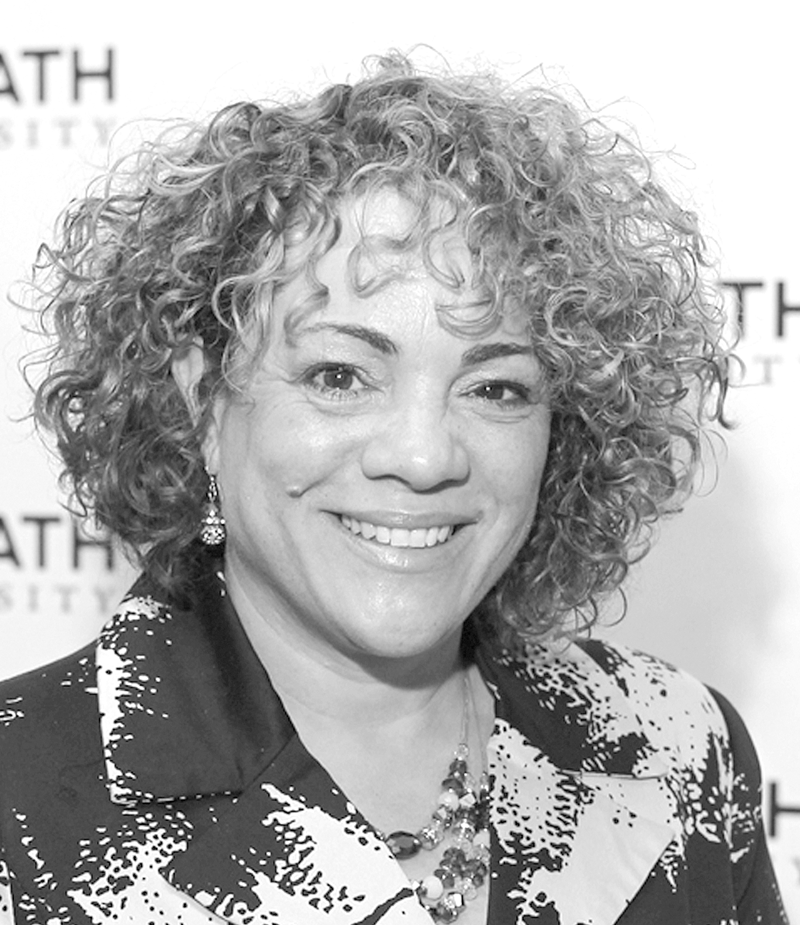
Elizabeth Cardona

Elizabeth Cardona

Bay Path University announced the appointment of Elizabeth Cardona as executive director for Multicultural Affairs, International Student Life, and assistant to the provost for Diversity and Inclusion. Cardona, the former senior director and civic engagement advisor to then-Gov. Deval Patrick, comes to Bay Path with extensive experience in state government, education, and nonprofit program management. In her position, Cardona will provide institutional leadership to support the needs of first-generation and underrepresented minority students by offering academic assistance, mentoring, coaching, and leadership programs to promote multi-cultural awareness, diversity, and inclusion in accordance to the mission of Bay Path University. In addition, she will work with international students to provide ongoing assistance with social and cross-cultural activities to support their immersion and academic experience. Bilingual in Spanish, Cardona also has a working knowledge of Arabic. “I am thrilled to join Bay Path University’s community to facilitate understanding of multi-culturalism, diversity, equity, and inclusion in an affirming space where students, faculty, staff, and leadership engage collaboratively to enhance academic and social development,” Cardona said. A graduate of the Women’s Pipeline for Change, an initiative that supports women of color as they enter leadership roles and public life, her expertise also includes serving on state Treasurer-elect Deb Goldberg’s transition team, as an advisory board member for the Women’s Fund of Western Massachusetts Leadership Institute for Political and Public Impact, and as a founding board member for the CHICA Project, a Massachusetts statewide Latina youth leadership, mentoring, and coaching program. Cardona holds an MPA and a certificate in conflict resolution from the Maxwell School of Citizenship and Public Affairs at Syracuse University, and a bachelor’s degree in American studies with a concentration in social issues from Springfield College.
•••••
Dress for Success Western Massachusetts announced that Dawn Creighton, Western Mass. regional director for the Associated Industries of Massachusetts, has been named board president. Dress for Success is a not-for-profit organization promoting the economic independence of disadvantaged women by providing professional attire, a network of support, and the career-development tools to help women thrive in work and in life. “As president of Dress for Success, strengthening our community with strong women will be my priority,” said Creighton. “Dress for Success isn’t just about the suit. It’s about the women that fill the suits. I am eager to work with partnering agencies and community leaders to ensure the women of Pioneer Valley have the tools they need to be successful in the workforce.” In addition to her role with AIM, Creighton serves on multiple committees and boards, including the Human Resource Management Assoc. of Western New England, Junior Achievement of Western Massachusetts, Internhere.com, the Hartford-Springfield Economic Partnership, United Way of Pioneer Valley, the Affiliated Chambers of Commerce of Greater Springfield, and the World Affairs Council. Also named to the board are Jennifer Brown, Jonencia Wood, and Natallia Furjan-Collins. Brown has more than 16 years of experience within the staffing industry and currently is assistant vice president of operations for United Personnel, supervising candidate recruitment, client relations, staffing support, and quality assurance. Prior to joining United Personnel, she was the managing director at Staffing Now. She is a member of the Human Resource Management Assoc. and the human resource roundtable with the Employers Assoc. of the NorthEast. Wood is senior director of programs for the alumnae association of Mount Holyoke College and has more than 10 years of experience focusing on the professional development and advancement of underrepresented individuals. Prior to joining Mount Holyoke, she served as a diversity specialist for Baystate Health and community action and communications coordinator for the Youth Empowerment Adolescent Health Network. Furjan-Collins is the human resources leader for MassLive. She brings with her an innovative and modern approach to employee relations in the digital environment. Prior to joining MassLive, her career spanned several years in human-resource management in her native Canada, including speaking publicly on topics such as workplace harassment and bullying. She is currently a community business partner in the sophomore business cohort program at Western New England University.
•••••
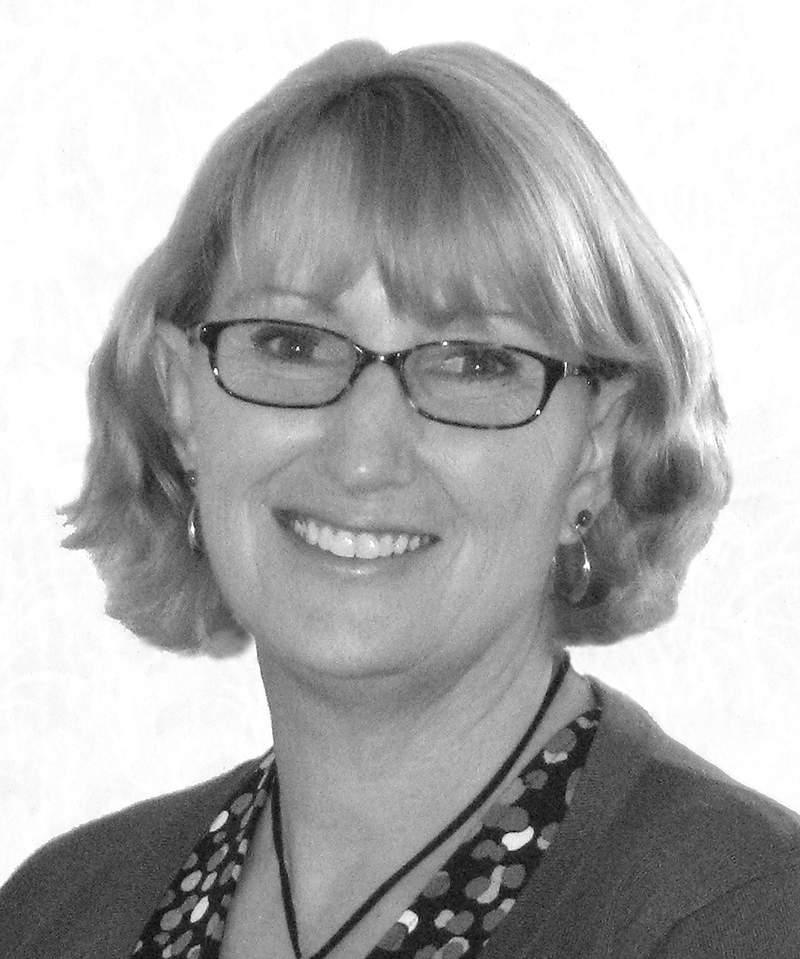
Dodie Carpentier

Dodie Carpentier

Monson Savings Bank (MSB) announced the promotion of Dodie Carpentier to assistant vice president of Human Resources. Carpentier joined MSB in 2006 as assistant branch manager and was promoted to branch manager in 2008. In 2012, she assumed a dual role as branch manager and education coordinator. With her growing interest in training and HR, she obtained certification in Supervision in Banking and Human Resources Management from the Center for Financial Training. In 2014, she was named human resources officer after an extensive search to replace her predecessor, who had retired. “There is nothing more important than our employee culture,” said Steve Lowell, president of Monson Savings Bank. “We work very hard to make sure our folks are knowledgeable and caring and that we work together as a team to make our customers’ lives easier and improve their financial future. Having a dedicated and strong leader in HR is an absolute must, and I’m very pleased to promote Dodie to assistant vice president.” Carpentier is a board member of River East School to Career and serves on the steering committee for Rays of Hope.
•••••
Calvin Hill

Calvin Hill

Calvin Hill has been named vice president for Inclusion and Community Engagement at Springfield College, following a national search. With more than 20 years of experience as a faculty member in higher education, Hill most recently served as the university diversity and inclusion officer for the University of St. Thomas in St. Paul, Minn. Previously, he developed strong ties to higher education in Massachusetts working as assistant to the president and director of the Office of Diversity, Inclusion, and Equal Opportunity at Worcester State University; serving as associate provost and chief diversity officer for MGH Institute of Health Professions in Boston; and prospering as assistant dean and director of diversity programs at Worcester Polytechnic Institute. Hill’s experience has included a commitment to providing equal access to educational opportunities for underrepresented populations, and to lead institutional compliance efforts around the ADA, Title VI, Title VII, VOWA, the Campus SaVE Act, and Title IX. “I am pleased to announce that Calvin will be joining the leadership team at Springfield College,” said Springfield College President Mary-Beth Cooper. “Springfield College recognizes that a diverse and inclusive campus community where different perspectives are recognized and celebrated is an integral part of educating students in the 21st century. In addition, we are proud of our collaborative partnerships with many community organizations, and we are committed to being a strong advocate for greater Springfield. Calvin’s experience in both academic and professional settings will enhance the college’s goals and vision in these areas moving forward.” Reporting directly to the president, Hill will work closely with a broad range of students, faculty, staff, and community constitutes to develop Springfield College as a model for diversity and inclusion in higher education. Striving to connect the college’s intellectual and cultural resources to area communities, his leadership will support the recruitment and retention of a diverse student population. In addition, he will monitor, document, and facilitate the college’s integrated governmental and community relations and serve as a liaison to local, state, and federal government agencies. “I am thrilled to join the Springfield College community in the position of vice president for inclusion and community engagement,” said Hill. “From what I have seen and heard, Springfield College is a special place, and I look forward to working with its dedicated faculty, staff, students, and community partners to not only shape, but to also gain a better understanding of the world around us.” Hill has a doctor of philosophy degree in political science from Howard University, a master’s degree in student personnel administration from Emporia State University, and a bachelor’s degree in history and political science from Bethany College.
•••••
Local law firm Shatz, Schwartz and Fentin, P.C. recently announced that attorneys Michele Feinstein, L. Alexandra Hogan, Carol Cioe Klyman, and Ann Weber have been selected to the Super Lawyers Top Women Attorneys in Massachusetts list. Klyman and Weber have also been selected to the 2014 Top 50 Women list. Super Lawyers is a rating service of outstanding lawyers from more than 70 practice areas who have attained a high degree of peer recognition and professional achievement. The selection process includes independent research, peer nominations, and peer evaluations. Super Lawyers magazine features the list and profiles of selected attorneys and is distributed to attorneys in the state or region and the ABA-accredited law school libraries. Super Lawyers is also published as a special section in leading city and regional magazines across the country, including the April 2015 edition of Boston magazine. “Beginning your search for legal counsel is no small feat; knowing where to start, researching attorneys, and finally selecting one you feel comfortable with can be overwhelming tasks,” said Super Lawyers Director of Research Julie Gleason. “All of the women lawyers in this special section have been named to a 2014 Massachusetts Super Lawyers or Rising Stars list. In creating our lists, Super Lawyers performs the type of due diligence that a highly motivated and informed consumer would undertake if he or she had the time, energy, and resources.”
•••••
Zachary Piper

Zachary Piper

Northeast IT Systems Inc. announced the hiring of Zachary Piper as a desktop specialist. Piper has a degree in computer engineering technology from Manchester Community College, where he served as head technician for the college’s volunteer Computer Repair and Share Club. In 2011, he constructed a computer lab for a Boy Scout camp in Connecticut, where he had served as a camp counselor. “The IT field brings unique challenges every day, and I find them to be intriguing. From a very young age, computers have fascinated me. I was able to build my first PC at age 11,” said Piper, adding that his favorite aspects of his job are helping customers, solving strange problems, and learning new things. “It has been great having Zac as a part of our team,” said owner Joel Mollison. “He works hard, and I can always count on him to help with any problem a customer faces.”

Daily News

HOLYOKE — The Log Cabin has long been one of the region’s most popular outdoor wedding venues, due in large part to the panoramic mountain views from its Mt. Tom location.

Over the past year, the facility has expanded its outdoor facilities on the uppermost clearing above the outdoor patio to create Upper Vista. On May 23, West Springfield couple Adam Hawley and Courtney Juday will be the first bride and groom to be married at the new site.

“The running joke is that no venue was good enough, so I made them build a venue,” said Juday. “While I realize some brides would probably be nervous about this, I have full confidence in the Log Cabin and their staff. I think it’s an honor to be the first wedding.”

Added Peter Rosskothen, co-owner of the Log Cabin, “we are offering couples something very unique. Upper Vista is on the highest point of the property. The view is breathtaking.” Upper Vista features a deluxe tent and building fully equipped with restrooms, a bridal suite, and a kitchen.

Hawley and Juday have many unique features planned for their big day, including a DIY photo booth, homemade props, and hundreds of Japanese cranes, a symbol of good luck. They have also worked closely with the chefs to create a menu that incorporates their favorite food — bacon — into the station concept.

“For some couples, there is a trend toward less traditional venues for weddings,” Rosskothen said. “With Upper Vista, our customers get the experience of the funky outdoor wedding without the logistical headaches of planning it all themselves. They know they can count on our expert wedding staff and excellent chefs to get all the details right.”

Daily News

SPRINGFIELD — Local law firm Shatz, Schwartz and Fentin, P.C. recently announced that attorneys Michele Feinstein, L. Alexandra Hogan, Carol Cioe Klyman, and Ann Weber have been selected to the Super Lawyers Top Women Attorneys in Massachusetts list. Klyman and Weber have also been selected to the 2014 Top 50 Women list.

Super Lawyers is a rating service of outstanding lawyers from more than 70 practice areas who have attained a high degree of peer recognition and professional achievement. The selection process includes independent research, peer nominations, and peer evaluations. Super Lawyers magazine features the list and profiles of selected attorneys and is distributed to attorneys in the state or region and the ABA-accredited law school libraries. Super Lawyers is also published as a special section in leading city and regional magazines across the country, including the April 2015 edition of Boston magazine.

“Beginning your search for legal counsel is no small feat; knowing where to start, researching attorneys, and finally selecting one you feel comfortable with can be overwhelming tasks,” said Super Lawyers Director of Research Julie Gleason. “All of the women lawyers in this special section have been named to a 2014 Massachusetts Super Lawyers or Rising Stars list. In creating our lists, Super Lawyers performs the type of due diligence that a highly motivated and informed consumer would undertake if he or she had the time, energy and resources — the very things that are in short supply in most people’s lives.”

Restaurants Sections
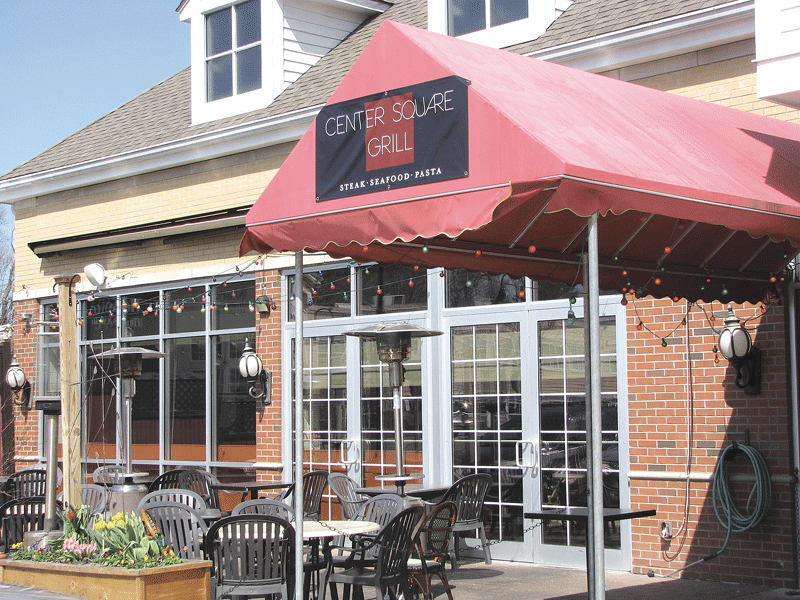
Center Square Grill’s Partners Celebrate an Eventful First Year

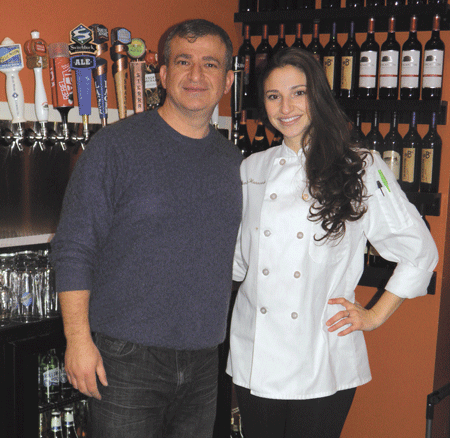
Michael Sakey, left, and Bill Collins

Michael Sakey, left, and Bill Collins say the lively tap room turns regulars into friends.

Michael Sakey said restaurants often conduct a soft open with family and friends to work the kinks out before opening the doors to the public.

In the case of Center Square Grill, the East Longmeadow eatery he and business partner Bill Collins launched last spring, the soft opening got a little out of hand. Of the 600 or so people they invited, only 250 said they would come — but 450 showed up.

“By 8 o’clock, we were out of vegetables; then we ran out of proteins,” Sakey said.

Yet, they were enthused by the response to the food that was served — and they’re still excited a year later.

“Sometimes I have to pinch myself,” Collins said. “It’s been a great ride. We’re psyched with our numbers, and the reviews have been great — four and a half stars on Yelp.”

The pair partially credits their success to their chemistry in the kitchen and business, forged over a 15-year friendship, during which they worked for Claudio Guerra, the serial restaurateur behind Spoleto and a broad array of other establishments.

“Not only have we been great friends for a decade, but in business, we both bring different things to the table,” Collins said, recalling how a chance conversation over glasses of wine about 18 months ago turned into a plan to launch their own enterprise. “When we started talking about doing this, it just snowballed.”

Their success in getting off the ground startled them, but also gave them confidence, he added. “We raised the money to buy the place in two and a half weeks. Once we got a ‘yes’ from one investor, we were more comfortable in the next meeting, and the next. By the last meeting, we were like, ‘are you kidding me? Why wouldn’t you invest in our business?”

Opening the doors was a leap into the unknown, but entrepreneurship has suited them so far.

“When we were first talking about a concept we liked,” Collins said, “we thought, ‘wouldn’t it be great if we opened this place, and it didn’t go out of business? That would be really cool. Then, once we got a little more secure, we started to think we’d actually make it. It’s been a ride, going from being salaried employees, getting a paycheck every week, to making sure everyone else gets their paycheck every week.”

For its annual Restaurant Guide, BusinessWest sat down with Sakey and Collins to talk about wine, local produce, restaurant reviews, and the mentor they both credit with giving them the confidence to succeed on their own.

Career Moves

“I always joke that I was an accidental restaurateur,” said Sakey, adding that he studied theater in college. Even then, though, he was a restaurant veteran, having worked at pizza, sub, and coffee shops from age 14. In early 2000, he took a job with Guerra, who was opening Spoleto Express at the time.

“I went in thinking, ‘it’s just going to be for now, until I figure out what’s next.’ Over the next 12 years, it spiraled into spearheading the catering division, helping open many restaurants for Claudio, and becoming really good friends with Bill.”

He was also starting to sense a connection between food and his other passion. “Restaurants can be theatrical,” he said. “It’s kind of like throwing a party every night. If you can make them all happy, that’s something really unique, not like any other industry I can think of.”

Collins knew at a younger age where his career was headed. “I’m an un-accidental restaurateur,” he said. “I joke that I wish being a doctor ran in my family, but, no, my family owned restaurants and hotels in New York.”

He started working in those businesses from a young age and rose through the ranks. “I was the youngest restaurant manager ever hired by Applebee’s,” he told BusinessWest. “The head of HR met with me, tapped me on the shoulder, and said, ‘please don’t tell anyone you’re under 21; I might lose my job.’”

Local art

Local art — fitting for the fare served up at Center Square Grill — livens up the restaurant’s interior.

Collins met Guerra in 1999, when he was 19. While holding down his managerial job at Applebee’s, he worked as a waiter at Spoleto, just to get his foot in the door in a company he had long admired. He eventually became director of operations. “I wound up opening six concepts with him — and we closed some concepts, too. I got to see the good, the bad, and the ugly. He’s been my mentor in the business.”

Sakey recalls how one location Guerra owned morphed from a fine-dining restaurant to something with a pub feel, then to what is now his flagship Spoleto location. “To have three different concepts in one location and still come out on top … it really does take a unique individual to weather the storms of this industry and know when to change and admit to himself that, even though he liked a concept, it wasn’t working as a business.”

As for Center Square Grill, the partners have broken away from the Italian fare Guerra specializes in. “We call ourselves a creative American grill, but we pull from South America, classic French cooking, New Orleans, Jamaica — we even had some Asian dishes,” Sakey said. “We try to do many things well.”

Collins noted that there are about a dozen Italian restaurants in a 10-mile radius, and families tend to go to their favorite. So he and Sakey wanted to bring more variety to the table.

“My favorite thing about the menu is, if you want to come in and get a cheeseburger and an IPA, you can do that,” Sakey said. “If you want to take your wife out and have oysters and a filet topped with crab Oscar, you can do that, too. The menu runs the gamut, and the atmosphere does, too.”

Indeed, the restaurant features a few different dining areas, from a formal dining room to a small room for private events to a lively bar area. “The tap room is where we meet the regulars; they’re actually friends now,” Sakey said, recalling how one regular and her mother were sitting at the bar, talking about making homemade ravioli, and he joked that they should bring him a couple. “The next day, they brought in two platters — one for each of us — and said, ‘dinner’s on us tonight.’”

Guerra himself has visited the restaurant on several occasions, and the partners said he has been supportive of their new venture. “He taught me the culinary side,” Sakey said. “I made my first roux working with him — ‘no, you’re browning it too much, you want that nutty smell’ — but he also taught me front of house. For a guy in chef whites to be just as good in front, that’s incredible.”

Collins agreed. “The guy doesn’t miss a detail in front of house. He burned a lot of that into us.”

The employees have picked up on that sense of pride, Sakey added. “I can’t speak more highly about the staff. Front of the house, back of the house — they take such ownership of what they’re doing. It’s unique and amazing.”

On the Menu

Collins said that Center Square Grill has stayed true to its original core of steak, seafood, and pasta, but the menu offers many iterations on dishes in those categories, and others.

“We’ve tried to change the menu seasonally,” he added. “Most restaurants, out of the gate, don’t change the menu often, but we wanted to change with the season, and use local produce when it’s available, local meat when it’s available. We bought a whole lamb from a farm recently and used every single piece of it.”

Changing the menu also keeps people coming back to try new things, he added. But the regulars do have their favorites, including a crispy duck confit with house-made tomato jam, butternut squash risotto, and seasonal vegetables; seared Maine diver scallops over asparagus risotto and finished with a lemon thyme beurre blanc; Jamaican jerk chicken thighs marinated in a Caribbean rub and served over dirty rice with black bean corn salsa and chiptle aioli; and a slow-braised lamb shank with creamy polenta and seasonal veggies, finished with a twice-reduced port wine demi-glace.

Collins has been on a mission to create lamb converts with the latter dish, arguing that people who say they don’t like lamb are thinking of their grandmother’s gamy-tasting lamb topped with mint jelly. So he created a lamb-based amuse-bouche to give reluctant diners a taste. “I’ve converted every single one of them. I have people who said ‘I don’t like lamb’ ordering the lamb shank.”

Sakey takes particular pride in the restaurant’s impressive — and affordable — array of wine, beer, and cocktails.

“I think our wine program is one of the things that makes us unique. Bill and I know what wine costs, and when we go out and see a bottle of wine being sold for five times the cost, it’s hard to take the leap,” he told BusinessWest, noting that some restaurants mark up the price three or four times what he does. “We want people to be able to try more than the house wine and not worry about getting taken.”

Added Collins, “it’s a matter of inventory — do I want to sell wine, or do I really want to sell wine? It’s no benefit for me to sit on one case of wine for years.”

the restaurant’s outdoor patio

Warmer weather means ideal conditions to enjoy a meal or drinks on the restaurant’s outdoor patio.

To make sure the food keeps bringing people back, the restaurant recent hired Andrew Brow as head chef. “He was chef at a French bistro in North Carolina, but had moved up here to be closer to his family,” Collins said.

Brow took a job as director of operations for Rachael’s Smoked Fish, a division of J. Polep in Chicopee. But his passion for the chef’s life eventually took over. “We wanted him to come in one or two nights, to keep his hand in it, and eventually he left Rachael’s and came here full-time. We’re fortunate — he’s been in the food business all his life.”

Collins characterized himself and Sakey as foodies, noting that they visit other restaurants regularly, keeping abreast of what’s happening in their industry. That passion for food, however, is balanced by what they call a refreshing lack of ego. “It’s collaborative; if Mike has the better idea for a dish, it goes on the menu. If I have a better idea, or if Andrew has a better idea, that goes on the menu.

“I’d be lying if I said there wasn’t a little ego, but it’s ego about getting the best product on the menu,” he went on. “It’s a full-on collaboration. It’s a great process, and it keeps us all energetic about finding new ideas. You don’t want to be the one guy at the table without an idea.”

Star Struck

It has been, by any measure, a strong first year at Center Square Grill. “I don’t think we’re just lucky,” Collins said. “It’s taken a lot of hard work. But we’re fortunate in the way the outcome has turned out.”

As for that four-and-a-half-star Yelp rating, Sakey likes it just where it is, noting that it’s a reminder that he, Collins, and Brow can always aim just a bit higher. “Nothing’s ever perfect,” he said, “but we can be really good.”

Collins disagrees, saying he wants that extra half-star.

“The drive for five fuels my passion for food,” he said, saying it’s a constant obsession. One day, he was telling a friend about a conversation he had with his fiancée, Julia, while lying in bed, telling her about an idea for a new dish.

“Someone overheard me talking about that, and they said, ‘that’s your pillow talk?’ But I’m always thinking about what I’m going to do next, what’s going to be on the table the next day.”

Joseph Bednar can be reached at [email protected]

Meetings & Conventions Sections
Great New England Air Show Set for May 16-17 at Westover

The U.S. Navy’s precision flying team, the Blue Angels

The U.S. Navy’s precision flying team, the Blue Angels, will be one of many star attractions at the Great New England Air Show later this month at Westover.

As he talked about the Great New England Air Show set for later this month, his expectations for large crowds, and even the clock that counts down the days, hours, minutes, and seconds until the show on its official website, Bud Shuback came back repeatedly to the phrase ‘pent-up demand.’

It explains quite a bit in a very succinct way, he noted, adding that there hasn’t been a major air show in this region for several years.

And by ‘major,’ he means a show featuring one of the military precision flying teams that have captivated audiences over the past several decades. Those demonstration teams were essentially grounded — at least for civilian shows such as this one — by federal budget sequestration in 2012. And there were other factors that kept such teams from performing regionally, such as a major runway reconstruction project at Barnes Municipal Airport, which has hosted an air show on even-numbered years for some time.

“We haven’t had one of those teams at Westover since 2008,” said Shuback, president of the Galaxy Community Council, which stages the Great New England Air Show, adding that the 2015 edition, which will help mark the 75th anniversary of Westover, will more than make up for lost time.

Indeed, the show will feature both the U.S. Navy’s Blue Angels and the Royal Canadian Air Force’s Snowbirds, as well as a host of other acts, in addition to traveling warbirds, including a B-17 Flying Fortress and an original, World War II-era C-47 transport plane, and a number of static displays.

“We’re expecting some very large crowds if the weather cooperates,” said Shuback. “We haven’t had a show like this in a while; we have quite a lineup, and people are very excited about this show.

“The demonstration acts were halted by federal budget cuts,” he went on, “but they’re back in full force again to inspire the next generation of aviation enthusiasts — and show what the taxpayers are spending their money on.”

The Blue Angels were scheduled to be in Rhode Island in early May, said Shuback, and the group placed a call to the Great New England Air Show organizers to see if they could perform in Chicopee the following week.

That opportunity prompted organizers to move the show from its traditional late-summer date, said Shuback, adding that the May weekend comes complete with a host of challenges — there are several college graduations slated, and hotel rooms are scarce — but the opportunity to book the Blue Angels was too attractive to pass up.

The air show will officially kick off with a breakfast on May 15 at Westover that raises funds to offset the cost of the event. Expected to draw 600 to 700 people, the breakfast will feature a salute to Korean War veterans and retired Air Force Col. Charles Brown as keynote speaker. A former B-52 pilot who was a prisoner of war after being shot down in North Vietnam, Brown completed his military career at Westover, where he served as logistics group commander for the 439th Airlift Wing before his retirement.

Breakfast attendees will have the opportunity to meet some of the military and civilians scheduled to fly over the weekend and also watch arriving aircraft and practicing teams until noon. Tickets are $30, and may be purchased in advance by visiting the show’s website, www.greatnewenglandairshow.com.

Those who choose to stay at the base following the breakfast might get an intriguing preview to the main event as the planes continue to arrive. The lineup features aircraft that cover several decades of aviation history, including:

• The C-47, named “Second Chance,” which was transferred to the Royal Air Force prior to D-Day and saw action in both Operation Overlord (the Normany invasion) and Operation Market Garden in the Netherlands. Show organizers are raffling off a flight on the plane;
• The B-17, one of the later models of that famous bomber, named “Yankee Lady”;
• The B-25 bomber named “Miss Hap,” one of the oldest of the surviving medium bombers used before and during World War II; and
• Other World War II-era aircraft, including an FG-1D Corsair, a TBF Avenger, a P-51 Mustang, and others.

The performing acts include the Blue Angels, who will be making their first trip to Westover, and the Canadian Snowbirds, precision teams that perform a host of maneuvers with the jets only inches apart; the U.S. Army parachute team the Golden Knights; a demonstration of the F-22 Raptor, the U.S. Air Force’s newest fighter aircraft; a demonstration of the Canadian CF-18 fighter; the GEICO skytypers airshow team; a flight squadron of six World War II-vintage U.S. Navy SNJ trainers; and the Sean D. Tucker & Team Oracle stunt flyers; Tucker has been named one of the Living Legends of Aviation.

There will also be several planes on static display, including a B-52 Stratofortress, a C-17 Globemaster, an A-10 Thunderbolt, a C-5 Galaxy, an F-15 Eagle, a C-130 Hercules, and others.

The event is made possible by a host of sponsors who help underwrite the costs of bringing the teams and displays to Chicopee, said Shuback. The sponsors of the 2015 show include Big Y, GE Aviation, Pratt & Whitney, and a host of local companies.

Admission to the air show is free. For more information, visit www.greatnewenglandairshow.com.


— George O’Brien

Agenda Departments

‘Victorian Opulence’ Exhibit
Through April 2016: On April 7, the Lyman and Merrie Wood Museum of Springfield History unveiled a new exhibit titled “Victorian Opulence: Springfield’s Industrial Elite.” The exhibit, which runs through April 10, 2016, features a representative selection of the kinds of luxury and everyday items that would be found in the typical upper-class Victorian homes, while also exploring the lives and values of many of these prominent families. Using beautifully ornate objects from the Springfield Museums’ own collections, this exhibit provides a window into the lives of America’s privileged classes both at home and at play during the Victorian era. Some of the fine clothing and personal items, like elegant men’s pocket watches and ladies’ jewelry and hair combs, will be familiar to fans of Downton Abbey. Objects like grandfather clocks and gentleman’s ceremonial items exhibit a level of craftsmanship no longer evident today. The items on view tell many stories about their owners, the time and place in which they lived, and the level of wealth that allowed them to possess such luxury items. The exhibit covers the period between 1840 and 1900, a time when Springfield was a powerhouse of innovation and industry. Wealthy industrialists like Everett Barney, the inventor of the clamp-on ice skate, and railroad president and Congressman Chester Chapin displayed their success through their philanthropic pursuits and by making their homes into showpieces for their newfound wealth. The spirit of philanthropy shown by individuals like James Rumrill and George Walter Vincent Smith helped create some of Springfield’s most venerable institutions, including Forest Park and the Springfield Museums themselves.

Speed-networking Breakfast
May 6: The Affiliated Chambers of Commerce of Greater Springfield’s (ACCGS) will hold its monthly Business@Breakfast with a speed-networking theme from 7:15 to 9 a.m. at the Colony Club, 1500 Main St., Springfield. Sponsored by United Personnel, the breakfast will provide attendees with a quick and entertaining opportunity to introduce themselves and pitch their company to other attendees. The core concept in speed networking is the ‘elevator speech,’ a short summary of an individual, business, organization, product, or service — a summary that a person could deliver in the time span of a short elevator ride. Attendees will be divided into two groups, seated across from each other. Each group member will have 60 seconds to give his or her elevator speech to the person seated directly across. Once each member has given their elevator speech, they will change seats, and the process will begin again with a new partner. This round-robin format of networking will continue until the event is over. The event will begin with networking and breakfast at 7:15 a.m. To accommodate the event, breakfast will not be served after 7:45 a.m., and no admittance will be allowed after 7:55 a.m. Reservations are $20 for members or $35 for general admission. Reservations must be made online and in advance at www.myonlinechamber.com or by e-mailing Sarah Mazzaferro at [email protected].

‘Life’s Impressions’ Exhibit
May 9-17: The Springfield Museums will host a community art show featuring creations by local students in grades 5 through 12. “Life’s Impressions” will be on view in the Special Exhibit Gallery of the D’Amour Museum of Fine Arts. The show is free with general admission. The exhibition is funded, in part, by the Michele and Donald D’Amour Fund, established in 2008 to bring world-class art exhibitions to the museum. The 36 featured works include drawings and paintings that were selected by museum staff from more than 65 entries from the following schools: Belchertown High School, Chicopee Comprehensive High School, Hatfield Elementary School, Longmeadow High School, Northampton High School, PV Chinese Immersion Charter School, Springfield Conservatory of the Arts, Springfield Central High School, West Springfield High School, and Westfield High School. In addition to the privilege of having their art displayed at a prestigious museum, the winning students will also receive free enrollment in one of the summer art courses offered through the Museum School. The opening of “Life’s Impressions” will be celebrated with a reception in Blake Court of the D’Amour Museum on May 9 at 2 p.m. 

EASTEC
May 12-14:
With manufacturing a driving force of economic growth in the Northeast, as well as across the U.S., more than 12,000 business owners, engineers, designers, production managers, and purchasing executives will gather at EASTEC, the East Coast’s premier manufacturing event. Produced by SME, the biennial event takes place at the Eastern States Exposition in West Springfield and features more than 650 exhibitors and three days of complimentary educational sessions. In its 34th year, the event showcases the latest manufacturing technologies from additive manufacturing/3D printing to waterjet cutting, and provides access to industry experts sharing insights on how to foster innovation, increase productivity, and improve profits. This year, attendees will also get to see more than 300 new products being highlighted at the show. “Since 1790, when the first cotton mill was founded in Rhode Island, New England has been a leader in our country’s quest to capitalize on American innovation and passion for making things,” said Kimberly Farrugia, senior event manager for SME. “EASTEC is committed to keeping New England manufacturers competitive by bringing the human ingenuity needed and manufacturing brilliance demanded together in a face-to-face environment.” At EASTEC, attendees will have the opportunity to connect with resources, research and purchase the latest technologies, and discover ways to improve productivity and increase profits. Meanwhile, the complimentary educational sessions will address trending topics such as automation innovations and Lean creativity, along with other major advancements in manufacturing. New features in 2015 will include keynote presentations from Carl Palme, applications product manager, Rethink Robotics; and Jason Prater, vice president of Development, Plex Systems, that will help with solving complex issues that U.S. manufacturers face today. EASTEC also will highlight the Bright Minds Program, designed to educate the next-generation workforce on the advancements in manufacturing that make it an exciting and rewarding career path. Winners of the Bright Minds Dream It! Do It! Student Challenge will be recognized at a special program during the three-day event. EASTEC is recommended for professionals in industries such as aerospace, defense, medical, automotive, commercial machinery, electronics, fabricating, and plastics. The event is nearly sold out, so SME encourages companies to reserve exhibit space before it’s too late. To learn more about EASTEC, view full conference and exhibit details, or register, visit easteconline.com.

Tailgate Party
May 13: The Affiliated Chambers of Commerce of Greater Springfield (ACCGS) will hold a tailgate party at its last After 5 of its 2014-15 season, at the Residence Inn, 500 Memorial Ave., Chicopee, sponsored by Get Set Marketing. The After 5 will create a tailgating atmosphere with food trucks serving tailgating cuisine, parking-lot games such as cornhole and ladder toss, networking around outdoor firepits, and more. Reservations for the After 5 are $5 for members and $10 for general admission. Reservations may be made online by visiting www.myonlinechamber.com or by e-mailing Sarah Mazzaferro at [email protected]

Striving and Driving Golf Tournament at GCC
May 18: In celebration of the 25th anniversary of the event, area residents and businesses are invited to participate in the Striving and Driving for GCC Scholars Golf Tournament at the Country Club of Greenfield. The tournament is an opportunity to enjoy golf while helping students attend Greenfield Community College. The tournament is an anchor fund-raising activity of the GCC Foundation 2015 Annual Campaign, “Investing in Students, Creating a Future.” “Striving and Driving is a win-win day for all,” said GCC President Bob Pura. “Golfers enjoy a day out on the course early in the season. People are just happy to be out after winter’s hibernation. The best part of the day comes when we all hear just how much has been raised for scholarships. You can feel the community’s goodwill and heart in that moment. It really is a wonderful day for the golfers, the community, the college, and especially the students.” Funds raised by the tournament go toward unrestricted scholarship funds for GCC students. Striving and Driving has raised $398,861 for scholarships since the tournament began. Lead sponsored by Cohn & Co. and Greenfield Savings Bank, and co-chaired by Terry Boyce and Princy Stotz, the tournament will include lunch, dinner, and prizes and awards. The field is limited to the first 144 players. Players may register either as individuals to be placed in foursomes by the tournament organizers, or as teams of four. The cost is $115 per player. “Striving and Driving combines the fun of playing golf with raising funds for scholarships for students in high need,” said tournament co-chair Terry Boyce, who teaches psychology at GCC. “I know that many GCC students depend on scholarship assistance to be able to attend college, just like I did when I studied at a community college in New York. I’m a first-generation college graduate, and scholarships made it possible for me to go to college. I’m glad that I can help others have the same opportunity that I did.” To register for the Striving and Driving Golf Tournament or for information about sponsorship opportunities, visit www.gcc.mass.edu/golf or call (413) 775-1470.

40 Under Forty
June 18: The ninth annual 40 Under Forty award program, staged by BusinessWest, will be held at the Log Cabin Banquet & Meeting House the evening of June 18. The event honors the region’s most accomplished and civic-minded professionals under age 40, and this year’s class was profiled in the April 20 issue. This year’s winners represent virtually every sector of the economy — from financial services to manufacturing; retail to healthcare; technology to nonprofit management; education to law. They also show the seemingly innumerable ways people can give back to the community. This year’s event will feature a new award — the Continued Excellence Award, presented to the previous honoree who has most impressively built upon their track record of excellence. Always one of the most anticipated events and best networking opportunities on the calendar, the gala will feature lavish food stations, entertainment, and the introduction of this year’s class. Tickets cost $65 each, with tables of 10 still available. Tickets can be ordered by calling (413) 781-8600, ext. 100, or by visiting HERE. The 40 Under Forty program and gala are sponsored this year by Northwestern Mutual (presenting sponsor), Paragus Strategic IT (presenting sponsor), Fathers & Sons, the Isenberg School of Management at UMass Amherst, Moriarty & Primack, and United Bank.

Valley Fest
Aug. 29: White Lion Brewing Co. announced that it will host its inaugural beer festival, called Valley Fest, at Court Square in downtown Springfield. MGM Springfield will be the presenting sponsor. The festival is poised to be White Lion’s signature annual event, introducing the young brand to craft-beer enthusiasts throughout New England and beyond. White Lion Brewing Co., the city of Springfield’s only brewery, launched in October 2014. Founder Ray Berry and brewmaster Mike Yates have released three selections under the White Lion brand and have been busy promoting their efforts in venues all over Massachusetts and other New England states. “Valley Fest will have the best of the best local, regional, and national beer and hard cider brands,” Berry said. “Even in our inaugural year, Valley Fest will be the largest one-day beer festival in Western Massachusetts. We expect to draw up to 2,000 enthusiasts from throughout New England. We are very excited to showcase the fourth-largest city in New England and all of its amenities.” Berry anticipates that more than 50 breweries and many local food vendors will converge on Court Square for two sessions. Enthusiasts will have an opportunity to sample more than 100 varieties of beer and hard cider alongside pairing selections by local chefs. Michael Mathis, MGM Springfield president, said his company “is excited to take the lead in sponsoring the inaugural Valley Fest. The local entrepreneurial spirit of White Lion Brewing, coupled with the historic Court Square setting, is a winning combination to start a new Springfield tradition. We look forward to Aug. 29.” A number of sponsors have already committed to the event, including MassMutual Financial Group, the Young Professional Society of Greater Springfield, the Dennis Group, Springfield Sheraton Monarch Place, Paragus Strategic IT, Williams Distributing, and the Springfield Business Improvement District (BID). “We are honored to sponsor Valley Fest and look forward to it being an annual event that shares in the facilitation of growth within the downtown community,” said Chris Russell, executive director of the Springfield BID. Visit www.valleybrewfest.com for event details, ongoing updates, and sponsorship opportunities. A portion of Valley Fest proceeds will support several local charities.

Western Mass.Business Expo
Nov. 4: Comcast Business will present the fifth annual Western Mass. Business Expo at the MassMutual Center in downtown Springfield, produced by BusinessWest and the Healthcare News in partnership with Go Graphix and Rider Productions. The business-to-business show will feature more than 100 booths, seminars and Show Floor Theater presentations, breakfast and lunch programs, and a day-capping Expo Social. Details about specific events, programs, and featured speakers will be printed in future issues of BusinessWest. Current sponsors include MGM Springfield, Expo Social sponsor; the Isenberg School of Business at UMass Amherst, education sponsor; DIF Design, silver sponsor; and 94.7 WMAS, media sponsor. Additional sponsorship opportunities are available. Exhibitor spaces are also available; booths prices start at $750. For more information on sponsorships or booth purchase, call (413) 781-8600, ext. 100.

Construction Sections
Union Station Project Moves to Critical Next Phase

Bob Aquadro

Bob Aquadro stands inside the gutted central concourse at Union Station. Inset: an architect’s rendering of the planned new concourse.

Springfield Mayor Domenic Sarno had probably been inside the old terminal building at Union Station a few dozen times since he was elected in November 2007, for press conferences, meetings with state officials, and assorted other gatherings staged to inform the public about its pending revitalization.

He had become quite familiar with the dark, dank interior of the old station, which has sat vacant and unused for more than 35 years, and many of its features, such as the terrazzo floor, some relics from the golden age of rail, the central concourse, and the famous clock stationed at its south end, its hands seemingly frozen in time.

So the mayor was somewhat taken aback when he walked in the 89-year-old building earlier this month as BusinessWest was offered a tour and update on the ongoing construction there.

He barely recognized the place, and for good reason.

The interior had been gutted right down to the brick walls and the structural steel support beams. The skeletal steel frame of the concourse, with its various-sized arches, was all that was left of the once-proud centerpiece. The clock was gone, and the tunnel that connected the terminal with Lyman Street and the rail platforms above was open for the first time in what is believed to be three decades. The mezzanine and third floors, also gutted to the walls, were inaccessible because the stairways to them had been torn down.

“Wow … this is really opened up,” said Sarno as he walked in the front entrance with Kevin Kennedy, the city’s chief development officer. “This place is huge.”

The work to gut the interior, revealing just how massive the landmark on Frank B. Murray Way is, represents some of the still-early-stage work in a massive, long-awaited, $76 million project to convert the long-dormant station into an intermodal transportation center and, hopefully, revitalize the area surrounding Springfield’s famous Arch. For Sarno and Kennedy, this is a multi-faceted economic-development initiative, one designed to restore a landmark but also create momentum and spur additional activity.

But for Bob Aquadro, senior project manager with Holyoke-based Daniel O’Connell’s Sons, it’s merely the latest — and also one of the largest, most challenging, and most complex — projects in a long career in construction.

Indeed, this multi-phase endeavor entails both new construction — especially a six-level parking garage and adjacent bus terminal — and historic renovation of both the station’s interior and exterior. Meanwhile, it also involves a host of constituencies, especially the two railroads — Amtrak and CSXT — that own the rails above the station and run several trains over them each day at speeds sometimes exceeding 40 miles per hour.

This project also features some rather tight deadlines and extremely difficult work — with both of those elements in evidence with efforts to waterproof that aforementioned tunnel area, one of the next steps in this intricate process.

“This is one of the most complex processes that I have seen in many years — there are a lot of players, and there’s a lot to put together to make this come off properly,” Aquadro said, referring to the tunnel work specifically, but also the project as a whole. “And once we get the railroads on board, we have a detailed phase-in plan for going through their yard and digging up that tunnel.”

There will be many other challenges involved with this endeavor, and for this issue and its focus on construction, BusinessWest looks at how, collectively, they will make this project as intriguing as it is historic.

UnionStationOldDays

Union Station

At top, Union Station not long after it opened in 1926. Above, an architect’s rendering of the renovated station, bus depot, and parking garage.


Platform Issues

Union Station wouldn’t be the first Springfield landmark that Daniel O’Connell’s Sons has constructed — or reconstructed, as the case may be.

Indeed, the company handled the massive rehabilitation of the of the Memorial Bridge in the early ’90s, and it also handled the $60 million initiative to build a new federal courthouse on State Street, a three-year project that was completed in 2008.

Aquadro served as project manager for the federal courthouse work, as he did for construction of the new, $80 million Taunton Trial Court, his most recent major assignment, and another endeavor that stretched through three building seasons.

“Projects I tend to get involved with are generally very lengthy,” said Aquadro with a laugh, adding that work to revitalize Union Station and build its related components will certainly continue that trend. By the time a ceremonial ribbon is cut in 2017, he will have spent close to four years on this assignment.

As he talked about the project, he and Clerk of the Works Leroy Clink stressed that there are many moving parts and a number of intriguing elements — starting with the station itself.

It is coming up on its 90th birthday, said Aquadro, and it is certainly showing its age — not to mention the fact that it has spent more than half its lifetime is serious decline or complete dormancy.

Indeed, like most all of the grand rail facilities, many of them called Union Station, built in the first two decades of the 20th century — many conceived to replace earlier structures that ushered in the era of rail travel — Springfield’s landmark fell victim to the rise of air travel and the nation’s interstate highway system, both of which began altering the landscape in the 1950s.

Changes in how Americans got from one place to another eventually led to the destruction of many of those stations, including, famously (or infamously as the case may be), New York’s Pennsylvania Station, torn down in the early ’60s. Others fell into serious decline and were eventually revitalized and often repurposed. That list includes Washington D.C.’s Union Station, New York’s Grand Central Terminal, Boston’s North Station, Worcester’s Union Station, and many others.

Springfield’s Union Station had to wait much longer than those facilities, but perseverance, especially on the part of U.S. Rep. Richard Neal and Kennedy, who once served as Neal’s senior aide, finally paid off.

Plans to convert the station into an intermodal transit center and mixed-use facility, which have been on the drawing board for more than 20 years, are finally becoming reality, although most of those mixed uses proposed over the years — everything from an IMAX theater to a day-care facility to various forms of retail — have been shelved or scrapped altogether.

What survived were plans to restore the station to something approaching its former glory — at least in terms of aesthetics — and outfit it to accommodate expanded rail service within the region, and also build a new facility that would handle intercity, and perhaps intracity, bus travel.

Work at the station has actually been underway for well over a year now, with much of it focused on asbestos removal — an intricate and time-consuming effort — and then demolition of the station’s former baggage area to make way for the new bus facilities.

Given the station’s advanced age and decades of dormancy, crews spent considerable time assessing its condition and looking for possible surprises, said Aquadro, adding that designers and engineers needed to know what they were up against moving forward.

“That’s one of the reasons we did all this work early, to help the designers see what’s here, because it is very difficult,” he told BusinessWest. “We had to remove a lot of asbestos, and just removing the roof gave us an awful lot of information. There were some surprises, but it goes along with the investigation; this structure was built under different building standards than what we use today, and all of that had to be looked at.”

The $76 million Union Station project

The $76 million Union Station project is a mix of new construction and historic renovation.

Dry Subject Matter

Until recently, most of the work at Union Station was conducted out of the public’s view, with asbestos removal and other steps inside the terminal, said Aquadro, adding that the physical landscape started changing with the demolition of the baggage building, which is not complete.

And it will continue to change in a number of ways over the next several months with the start of construction of the parking garage, the bus depot, and a new road that will connect Frank B. Murray Way with Liberty Street.

Still, much of the work will go on behind the scenes, said Clink, including the upcoming work to waterproof the tunnel area and safeguard the complex from rain water.

“The waterproofing that the original builders put on this facility has failed; for this to become a working train station, that water has to be stopped,” he explained, adding that decades ago there were efforts to restore the tunnel without dealing with the water problems, and they met with disastrous results.

“This passenger tunnel is such a challenging piece because there are so many parties involved,” he went on, listing Amtrak, CSXT, and the Mass. Department of Transportation as just a few.

Dealing with these parties has been time-consuming, frustrating, and, yes, expensive, he added, noting that rail officials charge the city (and therefore those budgeting this project) for the time and effort negotiating how the trains will continue running throughout this process.

But all that has occurred to date will likely be a relative walk in the park compared with what’s to come, said Clink, adding that the waterproofing work on the track level must be carefully orchestrated so as not to seriously disrupt rail service, while also keeping construction workers safe.

Elaborating, he noted, as Aquadro did, that all rail service cannot be halted while crews for the railroads essentially remove or raise track, and the construction company that wins the bid for this stage of the project builds what amounts to a waterproof membrane around the nearly century-old tunnel. Instead, the work will be done in five stages, one set of tracks at a time, with CSXT actually laying some new, temporary track — known as a shoo-fly track — so trains can effectively travel around the work in progress.

This work is called positive-side waterproofing, said Aquadro, and it cannot be done in cold weather, which means the clock is ticking. Winter is eight months away, but that time will go by quickly, and Aquadro estimates it will take perhaps five or six weeks to complete each of the five phases.

“It’s a very tight timetable — there is very little margin for error,” he told BusinessWest, adding that the original starting date was April 1, which is now well in the rear-view mirror.

On the Right Track

Making the terminal building itself more weathertight will be much easier, said Aquadro, adding that water problems there were caused by leaks in the roof which will soon be addressed.

“And once it’s watertight, it’s sheetrock and studs, and off we go,” he said, referring to work to build out the old train station and its central concourse, which will have new and appropriate finishes and of obviously a more modern look.

The exterior of the building, while it still appears solid, needs some work as well, he said, adding that, when this project is completed, Springfield will have a unique and functional blend of old and new.

Like the trains that run above it, this project is all about moving parts, he noted in conclusion, and making everything run on time.

It’s a challenge — actually, a series of them — that he’s attacking head on.


George O’Brien can be reached at [email protected]

Landscape Design Sections
Landscapers Transform Backyards, Public Spaces into Recreational Areas

Stephen Roberts

Stephen Roberts shows off a gas firepit that Elms College recently installed in a courtyard.

Last summer, a successful businessman asked Stephen Roberts to construct an edible forest on several acres of his backyard property.

“He said he wanted to go home after work and have a place where he could ‘devolve.’ He grew up on a farm and loves gardening and the outdoors,” said the owner of Stephen A. Roberts Landscape Architecture and Construction in Springfield.

The design Roberts created includes fruit trees, a trail, and a woodland area with plants that range from elderberry and pawpaw to wild ginger and wintergreen, that can be picked throughout the growing season.

Although the request was unusual and most people aren’t looking to create their own forest, local landscapers say a growing number of clients are spending money on backyard retreats that provide them with a place to entertain and enjoy the outdoors.

“Nature is very important to people’s well-being, and they travel great distances to experience mighty landscapes with mountains and oceans,” said Roberts. “But travel takes a lot of time and energy, and since people can create attractive spaces in their backyards where they can relax and spend quality time with families and friends, they are continuing to invest in outdoor rooms with amenities.”

Justin Pelis agrees.

“People are bridging the gap between their home and the outdoors,” said the co-owner of North Country Landscape and Garden Center in Westhampton. “Years ago, people simply planted shrubs and mowed their lawns. But today, they want to spend more time outdoors and are moving away from aesthetics to the experiential.”

Justin Pelis

Justin Pelis says people want the experience of growing fruits, vegetables, and herbs in their backyards with their families.

He added that an increasing number of young families want to grow vegetables and fruits with their children, watch birds and feed them, and cook outdoors in spacious kitchens boasting built-in, stainless-steel appliances.

“People are also looking to create wildlife habitats, and many want to grow wine-bearing grapes and hops,” he said. “Due to the large number of local microbreweries, people are being inspired to produce their own wine and beer, so we have been holding seminars in our garden center to teach people how to grow grapes.”

He noted that participants are taken on a tour of the nearby Blackbird Vineyard, where all of their questions are answered.

“Organic gardening and composting is also becoming popular, and we get many requests from people who want to grow their own food,” Pelis continued. “They are looking for an experience that begins with planting seeds and ends in harvesting what they have produced.”

Steve Prothers, who owns Amherst Landscape & Design Associates and has designed more than 3,000 commercial and residential landscapes, agrees that people want their backyards to be as pleasing, attractive, and fruitful as possible. Natural landscapes are in style, and he said swimming-pool areas are being updated by replacing concrete with natural stone or Travertine tiles, which come in white, tan, cream, and rust-colored varieties.

“They give the area an Old World look,” Prothers said, adding that his company specializes in hardscapes that includes patios, retaining walls, walkways, and pool surrounds. Many clients ask for a pergola, because its mini-roof gives an outdoor space the definition of a room.

“It’s a very decorative feature that frames in an area and creates an intimate space. But a pergola can also be functional because it can provide shade,” he said, noting that roof rafters can be placed close together to block the sun, or the structure can be planted with scented vines, such as wisteria or bougainvillea, that give it a tropical feel.

Pelis has built pavilions with roofs over patios that people use as sitting areas. “They put TVs in them, and the patio can extend beyond the sitting area,” he said.

In fact, patios are becoming more popular than decks because they require less maintenance. “Patios give people more flexibility to expand and can be built with pavers, which come in a wide variety of contemporary styles. Some look like wood, others look like granite, and some are very modular,” Pelis said.

Since landscaping is an ongoing process, many people have their yards done in phases and add a new area each year. However, the work often begins with creating new entryways to the house.

“Permeable pavers are being used to replace concrete,” Prothers said. “They have a softer look than concrete and allow water to be absorbed and carried away from the home.”

Nic Brown and Steve Corrigan

Nic Brown and Steve Corrigan say many towns and cities are adding spray parks for children and adults to enjoy.

Plans with a Purpose

The desire to create a backyard oasis gained momentum in 2008 when the economy tanked and so-called ‘staycations’ became a household word. But local landscapers say many people held off on projects due to uncertainty over jobs, and pent-up desires are more apt to be realized this summer than they were in the past.

“The recession impacted landscaping projects, but now that the economy is improving, I think we will get more requests,” Roberts said.

Coveted plans typically include backyard areas designated for specific activities. “It’s not unusual for a family to want a cooking area with a built-in grill, a place to sit and eat, a firepit, and another space with an outdoor couch and a coffee table,” Roberts said.

Stephen Corrigan agrees. “More and more people are spending money to create outdoor kitchens and living areas with TVs in a protected area,” said the owner of Mountain View Landscapes and Lawncare in Chicopee.

In fact, interest in outdoor cooking is heating up, and Roberts said his firm has built outdoor kitchens that include granite or faux-stone countertops and built-in appliances such as refrigerators, grills, and rotisseries. “People are taking grilling to the next level.”

Firepits have burned brightly for some time, but today, many people are turning to gas to light up the night. “People love to gather around a fire, and if they use gas, all they have to do is press a button,” Roberts said, adding that Elms College recently had his firm redesign a central courtyard that now includes a large gas firepit with Adirondack chairs. “It is turned on every afternoon and has become a popular gathering place for students and staff members.”

Another advantage of a firepit is that it can create a focal point in an outdoor living room. “People put furniture around it in the same way they would put it near a fireplace inside their house,” Prothers said.

Steve Prothers

Steve Prothers says many homeowners and businesses use pergolas to create an outdoor room, which can be aromatic if covered with flowering vines.

Water features are also in demand, but instead of swimming pools, most people are choosing simple but soothing options such as waterfalls. “They are beautiful and attract birds, but don’t require much maintenance,” Roberts said.

One client with a back problem installed a hot tub surrounded by beautiful plants with a waterfall a short distance away that could be lit up at night. “He could sit in the hot tub in the evening, enjoy the sight and sound of the waterfall, and get relief from his pain,” he noted.

Roberts added that small ponds or plunge pools are still popular. “But people don’t want to use chemicals in them. They want biological filters,” he said, explaining that the ponds he installs are typically four to five feet deep with ledges that people can sit on.

Pelis said his clients are getting away from ponds, but do want water features that look natural, and often choose a fountain or pondless waterfall that pours into a rock filtration system. “They want the sound and sight of water without having to do a lot of maintenance,” he explained, adding that another option is to have water flow from the undersides of raised patio walls into a decorative bed of stone, which filters it into a concealed basin, where it is recycled.

Plantings play an important role in landscape design, and Prothers said ground covers and plants that provide seasonal interest throughout the year are in fashion.

“But landscaping is an ongoing process, and many people do their yards in phases,” he said. “They establish an area, live with it, and then grow their plan. A good landscape design takes into consideration what things will look like five to 10 years down the road.”

Pelis added that native plants such as milkweed, which attracts Monarch butterflies, along with wildflowers and species that attract bees, have become popular as people seek to create natural environments.


Natural Alternatives

Local landscapers expect the season to begin late this year due to the volume of snow. “Spring is in the air, but people have just started to come out of hibernation,” Roberts said.

Corrigan agreed. Although his company is often working by mid-March, this year, the timeline will be pushed out until mid-April.

Most of his business is commercial, and trends are also emerging in that arena, with water conservation and stormwater runoff among the ingredients that weigh heavily in public projects today.

“Permeable pavers are an attractive, green solution that take the place of concrete and asphalt; they allow as much water as possible to be kept on the site,” said Project Manager Nic Brown.

In some cases, it is funneled into rain gardens, said Corrigan, adding that Mountain View has built parking lots with rain gardens at the perimeter where very porous soil absorbs and holds water before any overflow goes into the sewer system.

He cited the Massachusetts Green High Performance Computing Center in Holyoke and a new science building at UMass Amherst as examples of structures where water drainage has been curtailed, and said some systems are designed so rainwater and melting snow from the roof are channeled into a filtration system of tanks that feed rain gardens.

His company recently won a regional award for its work on the town square in Mansfield, Conn., in conjunction with the architect who designed it. The area is the focal point of a newly created neighborhood that contains four five-story podium buildings with 414 rental units and 101,553 square feet of commercial and retail offerings at street level adjacent to the University of Connecticut.

“We used gray and black permeable pavers in the park,” Corrigan said, showing off a photo of the attractive design. “Traditionally, pavers are installed tightly together over a gravel base with two inches of sand. These were placed three-eighths of an inch apart over a 12-inch base of crushed stone.”

Another growing trend is spray parks, and new ones will be built this year in Agawam, Springfield, Greenfield, and Northampton.

“Cities and towns are replacing swimming pools and wading pools with spray parks; they have become more and more popular in the last three to five years,” Corrigan said, adding that they provide safe, cost-effective areas where people can congregate and relax during the hot summer months.

The spray features can be programmed to go off during times set by the town, city, or organization that builds them. When someone presses the mechanism that activates the system during the specified time, the features begin to spray water in a preset sequence, and children quickly learn to run from one station to another.

“Some sprays come up from the ground, while at other stations, buckets set ten feet in the air fill with water and dump it on people beneath them,” said Corrigan. “There are hoops with water sprays that kids can run through, sprays that spurt like a geyser, and ones that look like flowers. They have come a long way in recent years.”

Growing Desire

The desire to spend time outdoors in public and private spaces continues to grow, and whether someone is planning a commercial or residential project, environmental concerns are taking an expanded role in today’s landscaping projects.

Roberts said his customers are requesting blueberry bushes, strawberries, and herbs as well as small plots where they can grow vegetables. Other landscapers report similar requests and agree that enjoying a backyard involves far more today than it did a decade ago.

“Whether people are outside watching birds, picking berries, or watching TV with their friends, they want an experience,” Pelis said. “It’s been a long, cold winter, and although we may get a later start on landscaping than we have in the past, we expect these trends to become more prevalent than ever.”

Landscape Design Sections
Sustainable Building, Remodeling Is an Investment in the Future

Andrew Crane

Andrew Crane says some clients are more environmentally sensitive than others, but they typically appreciate the long-term cost benefits of sustainability.

Andrew Crane says homeowners love the idea of energy efficiency and green construction — it’s the price tag they don’t always like.

“Whether building or remodeling, as far as energy efficiency and sustainable building, people all care about it; they all mention it, they’ve heard about it, and it’s advertised like crazy — ‘save this, low-flow that,’” said Crane, president of A. Crane Construction in Chicopee. “But it comes with a big cost. Everybody wants to include it, but many times, cost will prevent them from actually doing it.”

It’s true that, in most cases, switching from traditional to energy-efficient products will save money over time, the initial cost can be an obstacle to homeowners remodeling on a budget.

“One example would be LED lighting,” Crane said. “LED is great — it lasts forever, and it uses very, very little electricity, but the products themselves oftentimes are cost-prohibitive. The cost of regular incandescent lightbulbs might be 87 cents, fluorescent might be $2.50, but one LED bulb might be $22.50.”

Nick Riley, president of N. Riley Construction in Chicopee, agreed, but added that some energy-efficient home improvements are already becoming standard, including Energy Star-rated appliances and insulating window glass.

“As you get more in depth into remodeling, as far as ripping down walls and reinsulating, people are concerned about it and ask about ways in which they can do it — but cost sometimes can be a pretty big factor in whether they decide to do it or not,” Riley explained.

“We’re definitely seeing more people interested in ways they can make that happen,” he added. “But you want to be more energy-efficient, there’s going to be a little more cost, obviously.”

Still, sustainable building is on the rise. The National Assoc. of Home Builders (NAHB) recently surveyed members about the features they’re most likely to include in new homes this year, and the top 10 included Energy Star-rated appliances and windows and programmable thermostats. Meanwhile, the organization reports an overall uptick in construction that incorporates energy, water, and resource efficiency; improved indoor environmental quality; and sustainable and locally sourced products.

“More people care about the footprint, so we kind of have to feel that out,” Crane said. “Many clients come to us as environmentally sensitive people, and others don’t care. But there is a growing passion for protecting the environment, and they’re not afraid to spend more up front if that’s what it takes.”

Energy Stars

John Majercak understands sustainable building and remodeling. As president of the Pittsfield-based Center for EcoTechnology (CET), he helps clients — who include both contractors and homeowners — go green in their projects.

For example, “we do what’s called a home energy rating for homeowners; we work with builders and architects and try to figure out how we can make a home the most energy-efficient it can be,” he explained. “We predict how the home will perform from an energy perspective and whether the work being done will qualify for different code requirements or certifications, whether LEED or Energy Star or others. It really depends on the scale; a lot of those programs are set up for new construction, but they can be appropriate for remodels as well.”

Another resource is CET’s EcoBuilding Bargains store in Springfield, which sells reclaimed building materials.

“We have a lot of folks who — when they’re remodeling and need to throw away a lot of materials from their home — can donate them here and keep them out of the landfill, which is a very green thing to do,” Majercak said. “We’re also seeing more home builders and architects reusing green materials in their building and remodeling. It can be both visually appealing and green.”

Nick Riley

Nick Riley says today’s contractors feel a responsibility to explain sustainable options to customers.

Another resource, he noted, is the Mass Save program, which provides energy audits for homeowners and introduces them to incentives and rebates available for certain sustainable upgrades, from boilers and appliances to insulation and windows.

Those incentives make a difference in decision making, he added. “People are concerned — ‘what is this going to cost me? Is this super expensive?’”

But as more contractors become skilled in sustainable construction and building codes begin to move in that direction, growing competition should bring up-front costs down for customers, he said. “Everyone is paying attention these days. It’s a big concern for people; they want their home to perform in a way that uses a lot less energy. That’s a good long-term investment, and homes that are built better will last longer and have fewer problems.”

The NAHB survey revealed that nearly 25% of home builders have installed alternative-energy-producing equipment in new construction, including geothermal heat pumps and photovoltaic solar panels. The current 30% tax credit available for homeowners who install this equipment is set to expire at the end of 2016, which makes this a good time for interested buyers to consider purchases.

“Our builder members are telling us that more and more buyers are looking at new homes for their efficiency in design and functionality,” notes NAHB chairman Tom Woods. “Whether it’s improved insulation or sustainable building materials, today’s new homes can reach higher energy performance and greater durability than was possible even 20 years ago.”

Millennial buying trends suggest that sustainable building options should outlast any expiring rebates. Another NAHB survey revealed that Energy Star certifications are a priority for these young home buyers, and 84% of this group is willing to pay 2% to 3% more for an energy-efficient home as long as they can see a return on their power bills.

One example is spray-foam insulation (see related story, page 23). “Generally, it’s twice as expensive if not more,” said Crane, whose company uses the product in 90% of its residential projects.

“It adds a substantial cost — in a 2,000-square-foot home, it could be $5,000 just for insulation in the walls,” he said, noting that expenses like granite countertops are easier purchases for some people because they can see and enjoy them every day. “Insulation is behind the walls, so you don’t notice it once you pay for it. But when your house becomes energy-efficient, you notice it in the monthly bills.”

Code Green

There’s no doubt in Majercak’s mind that sustainable building and remodeling is poised for continued growth, if only because building codes are increasingly reflecting green priorities.

“That’s just upping the game for everybody, the same as if you or I buy a car or appliance, and it’s more energy-efficient because the standards are making it happen,” he told BusinessWest. “That’s what’s happening with building codes. I think a lot of requirements in codes are improving, and building contractors are complying with these. We offer a few workshops to builders about energy-efficient codes, what the changes are, and how to comply with them.”

At the same time, Majercak said, more homeowners today are doing their own research and recognizing the value of sustainable choices.

“I think there are a lot of reasons people want to build green,” he said. “One of them is to help protect the environment, but they also like the durability, having the house last longer, using better materials that resist moisture. Then there’s the comfort and performance inside the home, where it really feels comfortable in summer and winter. Another thing is indoor air quality and health. A lot of people want to make sure the house is successfully ventilated. So it’s not just environmental benefits.”

Reflecting that public mood, Riley said, builders today feel a greater responsibility to inform customers of ways they can make their homes more green and energy-efficient.

“I think it’s our responsibility as contractors to educate the homeowner and then leave it up to them,” he said. “The initial conversation usually includes something about how to make it happen.”

Meanwhile, even homeowners who aren’t remodeling can take steps to cut into their utility bills, Crane said.

“There are some simple things people can do, like wrapping heating pipes with insulation. That can be done by anybody. Or wrapping duct work for the bathroom fan, which is basically a hole in the ceiling letting heat out. You can get a little bit of energy savings there. Or low-flow showerheads and faucets.”

When remodeling homes, Crane said, his company donates as much “gently used” product as it can to organizations that recycle it. “Tubs, walls, recycled countertops, cabinets, flooring — they can be recycled, and you wouldn’t even know the difference.”

Meanwhile, “we’re careful about what we buy and where we buy it. We want to be that person that cares about their environment.”

At a time, it seems, when homeowners increasingly want to do the same.


Joseph Bednar can be reached at [email protected]

Daily News

HOLYOKE — Six local community banks will sponsor a live elevator-pitch competition at the 12th annual awards banquet for the Harold Grinspoon Charitable Foundation’s Entrepreneurship Initiative. Representatives from each institution — Berkshire Bank, Country Bank for Savings, First Niagara Bank, PeoplesBank, United Bank, and Westfield Bank — will also serve as judges at the annual event planned for April 22 at the Log Cabin in Holyoke.

An elevator pitch is an overview of an idea for a new business. The name reflects the fact that an elevator pitch can be delivered in the time span of an elevator ride. The term is used when an entrepreneur pitches an idea to a venture capitalist to receive funding.

The competition will feature a student representative from each of the participating local colleges: American International College, Amherst College, Bay Path University, Elms College, Greenfield Community College, Hampshire College, Holyoke Community College, Mount Holyoke College, Smith College, Springfield College, Springfield Technical Community College, UMass Amherst, Western New England University, and Westfield State University. The judges will pick the top three students, who will receive cash awards, with the winner receiving $1,000.

Other features of the banquet include keynote speaker Aaron St. John, co-founder and CEO of Springfield-based HitPoint; entrepreneur and awardee exhibits featuring 76 student entrepreneurs from area colleges; and recognition of the Grinspoon, Garvey & Young Alumni Award winner, Bill Goldfarb of Lefty’s Brewery.

For more information about the Harold Grinspoon Charitable Foundation, visit hgf.org or contact Cari Carpenter at (413) 335-3535 or [email protected].

Features
Toastmasters Helps Members Do More Than Talk the Talk

Toastmasters DPart0415aIn her role as a credit analyst for TD Bank, Alicia Raymond spends most all of her time crunching numbers and helping to gauge risk. She’s not often interacting with clients or making presentations.

But with an eye toward the future, she knows that, to advance into commercial lending and one day have her own portfolio of clients, she must build confidence and improve her communication skills.

And those are the primary reasons why, nine months ago, she joined he downtown Springfield chapter of Toastmasters International, an organization that, as the name implies, has 313,000 members in 14,650 clubs in 126 countries around the world.

“I never felt comfortable doing it,” said Raymond, using that collective to describe the broad range of what would be considered public speaking. “It was something I knew I needed to work on if I wanted to advance.”

She first entered the room — in this case, a donated conference room at Cambridge College’s downtown facility in Tower Square — with curiosity and trepidation (more of the latter, to be sure), but soon found the group the group to be laid back, and that put her at ease.

Still, she remembers being quite nervous for her first two-minute speech, on a topic she can’t even remember. That’s because there have been so many since, and in the process of giving them and participating in a host of other exercises, including the regular ‘Table Talk’ sessions, during which random topics are discussed, she has greatly expanded her comfort zone when it comes to speaking in front of other people.

Alicia Raymond

Alicia Raymond understood that she needed to gain confidence and improve her communication skills to advance, and has done both through Toastmasters.

Meanwhile, she’s gained critical feedback and can measure improvement in several ways — from her considerably more-relaxed state to a marked decrease in the number of times she says ‘um’ or ‘ah’ when speaking in general.

In all of these respects — from the reasons for joining to first impressions to the results — Raymond is very typical of the people who find Toastmasters and often stay with the organization for years, if not decades, said Shera Cohen, who certainly speaks from experience.

Indeed, she had those same sentiments, fears, and emotions when she first attended a Toastmasters meeting nearly three decades ago, and she’s watched hundreds of others experience them as well.

“I didn’t give a speech for nine months after I joined — I could have given birth in the time it took to finally give one,” said Cohen, who heads up In the Spotlight, a nonprofit group that promotes the arts, and also leads the Springfield Armory Alliance, another nonprofit. “I was nervous about being judged and that I would not be coherent at all, and that I would use all those filler words like ‘um’ or ‘ah’ or ‘er,’ and that I wouldn’t sound professional.”

She eventually overcame all that with the help of a good mentor within the club, started with a short speech, worked toward longer ones, garnered invaluable repetition, and improved continuously.

Shera Cohen

Shera Cohen says Toastmasters provides a positive environment where members can progress at their own pace.

That’s what the organization has helped thousands of people achieve worldwide, said Cohen, unofficial president and spokesperson for the downtown Springfield club. She told BusinessWest that, while common perception holds that Toastmasters will help members give speeches in front of 400 or 500 people, or, as the name implies, give a toast at a wedding (and it will do that), it is more focused on building confidence, making people more comfortable in a range of settings, and enabling participants to think on their feet — an important skill in many professions.

Membership has brought a number of benefits for Sharon Gates, who owns a franchise of Conference Direct and assists clients of all sizes with finding sites for meetings and conferences. In that role, she’s making presentations to business owners and making pitches to prospective new clients — skills she was looking to improve, and has.

“I would say the difference is substantial,” she said when comparing things before she found the Springfield chapter through a web search three years ago and now. “Before I arrived, there was a lack of confidence with public speaking, and the nerves took over. Now, I’m much more in control; the more you do something, the more comfortable you get.”

For this issue, BusinessWest talked with several members of the Springfield chapter about how Toastmasters has helped them overcome what is widely considered one of society’s greatest fears — public speaking is right up there with flying, death, heights, the dark, failure, rejection, and spiders — and gain needed self-confidence along the way.

Speaking Up

Ellen Freyman has been a practicing attorney for more than 30 years. She focuses primarily on real-estate and business law, which means she spends almost all her time at her desk or at the Registry of Deeds, rather than in the courtroom.

But when she’s not at work, she’s active with one of many groups she supports in various ways, including the Affiliated Chambers of Commerce of Greater Springfield, which she currently serves as board chairman.

When she took on that responsibility, she understood that it would place her behind the podium — not often, but enough. And not for major policy speeches, certainly, but for general remarks, such as welcoming an audience, introducing a speaker, or kicking off a program.

She knew she could do all those things, but also knew she wanted, and needed, to do them better, and especially without the prepared notes that made her remarks seem, well, scripted, which they were.

That’s the primary reason why, even though she’s probably less than a decade from retirement, she chose to join the Springfield chapter of Toastmasters, and why she’s going to make a strong commitment to improving her recent attendance at meetings; she wants to get better and become more comfortable behind a microphone, and when speaking in general.

“Every time I speak in front of people, I need to use a script, and I’d love to be able to be more extemporaneous,” she said, noting one specific goal. “Overall, I want to feel comfortable — and more confident — when I’m up there talking.”

This is a common theme among those who join Toastmasters, said Cohen, adding that the Springfield chapter is one of three public groups regionally — the others are in Northampton and East Longmeadow — along with several private chapters at MassMutual.

There is a one-time entry fee of $20, she said, adding that annual dues are $48, with that money going toward rent, advertising, manuals, and local, regional, national, and international competitions, among other expenses.

Membership in the downtown Springfield chapter is capped at 20, and it is around that number now, she said, adding that individuals join at all ages, represent a wide range of professions, and arrive with a singular goal of controlling and overcoming their fear of public speaking.

This is accomplished through a very structured format designed to ease people into speaking in front of others, she noted, adding that all meetings unfold in a similar fashion.

There are generally one or two formal speeches given each session, she said, adding that members progress through a series of speeches carefully outlined by Toastmasters International, starting with shorter ones and progressing to longer, more involved talks — and always at the member’s pace.

“We don’t rush people,” Cohen said, recalling her own hesitation with giving a speech. “When they’re ready, they’re ready.”

While some members give speeches, others handle a variety of other roles, including timing the speech, counting the ‘ums’ and related words, and providing feedback.

This last individual, the ‘designated evaluator,’ is coached to provide positive feedback, with the accent on positive, to help build confidence, not shatter it.

“Everything is done kindly — we start with something good to say, and we end with something good to say; we clap all the time,” Cohen explained, adding that feedback is offered to address everything from body language to the smoothness of the delivery, all with the goal of helping the speaker improve.

“We give the results at the end … some people might not want to know, but others want to know exactly how they did,” she said. “I say ‘so’ a lot, so I want to know how many time I say that word.

“People gradually get into it, and it really helps when there’s a mentor, whether a formal one or an informal one,” she went on. “Toastmasters encourage the experienced members to help the newbie; I had a mentor whom I didn’t ask for; he was a little tough on me. But it worked — he encouraged me.”

Each meeting also features a segment called Table Topics, which, as the name suggests, involves a topic — almost anything except politics or religion — discussed around the table.

People don’t know what the topic is until they hear it, said Cohen, adding that it could involve a current event, an upcoming holiday, asking someone to comment on their favorite vacation, or another topic that could generate a wide range of responses and encourage participants to think quickly.

“Some of the topics are really simple, like, ‘what are you going to do for Easter?’” she explained. “But the ones that ask you to think a little more are interesting; some of the answers are funny, and some are very serious.”

The Subject at Hand

These Table Talk sessions have been particularly helpful for Dave Malloy, client services manager for United Personnel in Springfield. In that role, he handles everything from client retention to improving the recruiting pool, and is often interacting with the many types of clients the company has.

Dave Malloy

Dave Malloy says Toastmasters has helped him most with extemporaneous speaking — getting him to think quickly on his feet.

Previously, he handled business development at National Ambulance in Springfield and worked for several manufacturers on the operations and logistics side of the business.

He’s been involved with Toastmasters since 2008, or roughly since he discovered that what he needed to improve his communication skills and ability to organize thoughts was repetition, something this organization provides in large quantities.

“What I first thought about Toastmasters was, ‘this will help me give presentations in public to 20 people, 50 people, or more — and that’s certainly something that someone can work on and polish,” he said. “But where it’s really helped for me is with Table Topics, which is more devoted to spontaneous speaking, or extemporaneous speaking, as opposed to having prepared comments.

“To me, that’s where I find more value, because it’s allowed me to be better in my work in terms of being more responsive to people,” he went on. “In the old days, when someone would come up to me at work and they’d have a question, I would feel like I’d have to go back to my desk, research things, and figure out what my answer is. Through Toastmasters, when someone asks me a question, I feel more comfortable, and I can draw from the knowledge I possess more readily, and I think that’s from practice.”

All that practice has made him a better, more valuable employee, he told BusinessWest, because he’s more efficient and can respond to people more quickly and effectively.

“That’s what comes from having to respond and comment on a topic when, a minute earlier, you didn’t know what that topic would be,” he continued. “It teaches you to think on your feet — and where else do you get the chance to practice that?”

Gates agreed, adding that, above all else, Toastmasters has provided her with needed self-confidence she’s gained through various speeches, but also from those spontaneous speaking exercises.

“I pushed myself to attend the meetings, number one, and when I attend, I do some speaking, whether it’s a short speech or Table Topics,” she explained. “And that really pushed me to get in front of an audience, get the feedback, and get the repetition, which has allowed me to be much more comfortable.

“So much so,” she went on, “that I recently gave a presentation to 200 people. I was a little nervous, of course, but it was fine. I was in control, where in the past, I would not have felt in control.”

Raymond can’t speak with as much experience, but she uses very similar language to describe how the group is helping her with a recognized need.

“I’m still nervous when I get up in front of people, but it’s a much more manageable level of nerves,” she explained. “I’ve become less reluctant to get in front of groups — I have the confidence that now I can do this, whereas before I started, when someone said, ‘we need someone to present for such and such,’ I would say, ‘pick someone else — not me, not me, not me!’”

Getting the Last Word

Malloy told BusinessWest that, although he’s been part of Toastmasters for eight years, he’s never considered his work with that group anywhere near done, because he needs to keep getting those reps he described as so valuable to his work and career.

“I will always need this. I know what the stats are — 98% of the public is afraid of speaking in public, or something like that; whatever it is, it’s a very large number,” he said. “I’m one of those people, and I’ll never not be one of those people. But what Toastmasters allows me to do is take this part of who I am and work on it.”

With that, he spoke for all those whose goal it is to speak more clearly and more effectively.

George O’Brien can be reached at [email protected]

Community Spotlight Features
Northampton Expands Housing and Its Downtown

Mayor David Narkewicz

Mayor David Narkewicz says Northampton officials are planning a major redesign of Pulaski Park.

For more than three decades now, Northampton’s downtown has been the envy of cities and towns in this region and well outside it.

It is known for — and in many cases has won awards for — its cultural community, inventory of dining establishments, vitality, diversity, liveability, driveability (with bicycles), and sustainability. And moving forward, said Mayor David Narkewicz, the goal is to essentially make this city, well, even more of all of the above.

Indeed, plans are underway or on the drawing board for additional housing (especially in the ‘affordable’ category), traffic improvements, a wide range of developments on Pleasant Street (Route 5), long-awaited revitalization efforts involving Pulaski Park in the heart of downtown, new retail, and more.

“Northampton has won awards for its walkability and for having the best Main Street in America,” said the mayor. “And I’m excited about the progress being made and am very bullish about our city.”

The net effect of these many initiatives will be to effectively expand downtown, enable more people to live in it — thus providing more foot traffic for existing businesses and potential new ones — and make the city even more of a destination.

And that’s an important factor in the casino era set to begin in Massachusetts and especially the South End of Springfield, just 20 miles to the south, said the mayor, and also at a time when rail service will improve across the region, making Northampton that much more accessible.

Overall, Narkewicz says Northampton’s initiatives to expand its downtown, add more affordable housing, and make infrastructure improvements is a “winning strategy,” one that should enable it to withstand whatever threat the casino presents to its vitality.

“We need to focus on how to prepare and position ourselves so that we can remain a successful and viable downtown destination,” he said, adding that this is a multi-pronged initiative.

For this, the latest installment in BusinessWest’s Community Spotlight series, we take an in-depth look at the many developments underway or planned for Paradise City, and how they are expected to improve what is already considerable quality of life.

At Home with the Idea

Narkewicz said one of the few downsides to Northampton’s three-decade-long resurgence has been consistently high property values that have had the effect of pricing some people out of the city and its downtown.

Plans to increase the inventory of affordable housing will not only help remedy that situation, but they could also result in a more diverse population.

Two major housing projects that will feature affordable units and are in different stages of development are part of a broad initiative to expand and improve the Pleasant Street corridor.

HAPHousing Inc. is purchasing the Northampton Lodging House and plans to transform the multi-story building from single rooms into 72 units of housing, with half of them affordable or subsidized. The new apartments will be built on the upper stories of the building, and the first floor will contain 3,500 square feet of retail space, enough for two storefronts.

In addition, the Northampton Lumber Site, which sits perpendicular to the Northampton Lodging House, is under contract negotiations. Valley CDC is planning to purchase it and convert the property’s 70,000 square feet into 55 affordable housing units, each with one to three bedrooms.

“It’s a plus for our future to have new housing near state-transit-oriented development; these two projects are on a route served by the Pioneer Valley Transit Authority and within a five-minute walk to the Amtrak passenger rail station,” Narkewicz said, adding that the rerouted Amtrak Vermonter train service is operational, and although there are only two trains stopping in Northampton each day right now, ridership is strong and will continue to grow.

“There are also other benefits associated with an increase in downtown housing, including more customers for retail stores and restaurants. The housing will also allow people to be within walking distance to jobs, and the affordability factor is important,” he continued. “We take pride in trying to make sure that Northampton remains affordable to people on every rung of the income ladder.”

New housing options will also become available this year for elders when construction on Christopher Heights is complete. The senior housing facility is being built on the grounds of the former Northampton State Hospital, and half of the 86 assisted units will be affordable.

“It is part of a continuum to try to provide affordable housing for people of all ages,” the mayor said, adding that the Christopher Grantham Group which is building the facility, applied for and received housing tax credits from the state, which were boosted by $250,000 in Community Preservation Act funding from the city.

In addition to new housing options, other developments are planned for that area of the city. The state will begin construction on a major reconfiguration of the intersection of Route 5 and Conz Street, and the fork in the road that people encounter when they enter Northampton from the south will become a roundabout.

“This is one of our busiest intersections, and many businesses are centered around it, so this will help to make the traffic pattern more efficient and will be a more aesthetically pleasing gateway from the south,” Narkewicz said.

The vitality of the roadway was enhanced when the Fairfield Inn by Marriott opened late last year on Conz Street and added 108 new hotel rooms within walking distance to downtown, increasing the city’s hotel space to 300 rooms.

Art of the Matter

Northampton touts a new initiative called “Pleasant Futures,” which Narkewicz describes as a “community re-visioning process for Pleasant Street,” and a number of public meetings have been held to get input from residents in surrounding neighborhoods about what needs to be done to increase density and expand the downtown area in the neighborhood in a way that is pleasing to everyone.

It kicked off last May and is a collaborative effort between the Office of Planning and Sustainability and the Ward 3 Neighborhood Organization. “The concerns expressed in the meetings focused on pedestrian safety and vibrancy along the corridor,” Narkewicz said.

To that end, the city filed an application for a MassWorks grant to install new sidewalks, increase on-street parking, and create an attractive streetscape that would make the roadway more walkable. Traffic-mitigation funds from a new medical-marijuana dispensary soon to open on Conz Street will be used to help fund the planning process, and the mayor said Yes Computer renovated a building there a few years ago, while the owner of the shops across the street has renovated several storefronts.

“One of the advantages of interjecting more housing is that it pushes Pleasant Street to be more walkable and increases downtown’s vibrancy, which we are looking to expand,” said Economic Development Director Terry Masterson.

Change is also occurring in the heart of downtown. The Academy of Music, the oldest municipally owned theater in America, has increased its programming, and a major capital campaign kicked off in the fall of 2013 to install new seating, repair damage to the building’s ornate plaster from a leaky roof, and return the interior to its original colors.

“The city partnered with the Academy to improve the exterior and replace the roof,” Narkewicz said. “Most of the work was done last summer when the academy went black, and the city installed a new fire-escape system in the building at that time. The Academy is a major driver for tourism and brings 45,000 to 50,000 people to the city every year.”

He told BusinessWest that arts and culture play a major role in Northampton’s success, and venues like the Calvin Theater and Iron Horse Music Hall, events such as First Night and a monthly Arts Night Out, and retail stores that showcase the work of artists and artisans are part of the thriving arts fabric.

“A really exciting development in the same realm is also taking place on the other side of town,” Narkewicz said. “The Arts Trust has purchased the Universal Fitness Center, and through fund-raising and grants, they are turning it into an arts center with a black-box theater and space for artists to work in, which is important because Northampton’s success and the growth in property values and rents has made it difficult for artists to find affordable studios to work in.”

Park Place

Meanwhile, another major development is the broad effort to revitalize Pulaski Park.

It sits in the center of the city’s downtown, and a $2.4 million renovation and addition is being planned that will create more green, open space for residents and visitors to enjoy.

“We think the park will become a crown jewel in our already-excellent downtown,” said the mayor. “It sits between City Hall and the Academy of Music and hasn’t undergone a major renovation since 1976.”

Although upgrades had been considered in the past, cost played into the equation. But revamping the park recently became a viable option due to a change in state law that allows cities to use Community Preservation Act funds for existing parks, rather than just for new ones.

As a result, last year Northampton sought and received a $400,000 Parkland Acquisitions and Renovations (PARC) Grant to help fund the construction, as well as some initial design money from the City Council.

Stephen Stimson Associates was hired to create a plan for the park, and after holding a series of open meetings with residents to determine what they would like to see done, “they produced a breathtaking new design,” Narkewicz said. It is pending approval from the Community Preservation Committee, and, if it’s granted, construction will begin in June and continue through July 2017.

“Sustainability is part of the design, and it features a unique bioswale that will collect rainwater runoff and process it in an environmentally friendly way. The park will also have a new nature play area that will replace the existing, dated play structure. It will incorporate rocks, logs, and platforms and have a small slide,” the mayor said.

However, additional funds will be needed to complete the project, and the city is seeking $1,675,000 in the next round of PARC grants. About $200,000 of that funding would be used to comply with state PARC requirements to move utilities and communications lines underground.

Narkewicz said his office, the Department of Public Works, the Recreation Department, and the Office of Planning and Sustainability are all committed to identifying construction funding through a combination of local monies and state grant opportunities.

Bottom Line

For decades now, downtown Northampton has set the standard when it comes to vibrancy, diversity, and, as mentioned earlier, overall liveability.

Mayor Narkewicz and other city officials believe that the overall impact of the many initiatives underway will be to set the bar even higher. And, in doing so, they will give new meaning to that nickname Paradise City.

Northampton at a glance

Year Incorporated: 1884
Population: 28,495
Area: 35.75 square miles

County: Hampshire
Residential Tax Rate: $15.81
Commercial Tax Rate: $15.81
Median Household Income: $57,991 (2013)
Family Household Income: $81,680 (2013)
Type of government: Mayor; City Council
Largest Employers: Cooley Dickinson Hospital; Smith College; Veterans Administration Medical Clinic
* Latest information available

Company Notebook Departments

Mercy Announces $1 Million Gift for Cancer Center Campaign
SPRINGFIELD — Mercy Medical Center announced that Cynthia and William Lyons have made a $1 million challenge gift to Transforming Cancer Care – the Capital Campaign for the Sister Caritas Cancer Center. The Lyons’ gift will support the 26,000-square-foot expansion of the Cancer Center and is particularly significant because it reflects the largest single gift for the Capital Campaign from members of the community. “We have been inspired by the high level of care and compassion that runs throughout the Sisters of Providence Health System,” said Cynthia Lyons. “The work being done at the Sister Caritas Cancer Center is especially exciting.” Added Daniel Moen, president and CEO of the Sisters of Providence Health System, “The tremendous support we have received from Cynthia and William Lyons is indicative of the importance and necessity of the services provided by the Sister Caritas Cancer Center. We are grateful for their generosity on behalf of the patients who will benefit from the expansion project.” Under the leadership of Dr. Philip Glynn, director of Oncology, the Sister Caritas Cancer Center staff has expanded significantly to meet patient need that continues to increase. By 2022, demand for outpatient cancer services is expected to grow by 26%. In addition to increasing treatment space, the $15 million expansion will bolster the cancer center’s already strong capabilities by enhancing communication among the oncology providers and facilitating ease of access to existing services. The design of new infusion bays will increase privacy for patients, as well as for a supporting family member or friend. “We are so impressed with the new leadership and forward thinking of Mercy Medical Center and its oncology center,” Lyons said. “The commitment and vision of the physicians directly involved with the growth of the cancer center speaks to the investment of the hospital community. The new plan unites state-of-the-art treatment, research, and clinical-trial opportunities with Mercy’s trademark mission-driven qualities of compassion and respect for the individual. “This expansion is important because, directly or indirectly, cancer touches all of us,” she continued. “People really do want to be part of something that is successful and meaningful. We sincerely hope our gift inspires others in our community to give as well.” To make a gift to Transforming Cancer Care – the Capital Campaign for the Sister Caritas Cancer Center, call (413) 748-9920 or visit www.mercycares.com.

Normandeau Receives Partner of the Year Award
WEST SPRINGFIELD — Normandeau Technologies (NTI) announced it has been awarded the 2014 Ericsson-LG Enterprise North American Partner of the Year Award at the Ericsson-LG Global Partner Conference held in Cancun, Mexico. The award celebrates the excellence Normandeau Technologies has achieved in helping to build the North American distribution channel for the iPECS communications platform and for its success in bringing IP telephony, unified communications, mobility, and call-center solutions to SMBs in industries such as manufacturing, insurance, realty, medical, education, government, and financial. Bob Rankin, general manager of Presence Management, the largest distributor of Ericsson-LG iPECS products in North America, noted, “NTI continues to expand sales of our award-winning iPECS LIK VoIP platform with the iPECS Unified Communications Solution (iPECS UCS) and iPECS Contact Center Suite Solution (iPECS CCS). We recognize and appreciate the continuous hard work NTI performs in their region, and we applaud their continued success with iPECS.” Successfully marketed worldwide with a dominant market share in South Korea, Australia, and South Africa, and significant market share in many other countries, the iPECS is a highly scalable and fault-tolerant platform that connects up to 1,200 endpoints per system and up to 300,000 endpoints with networking. It’s a versatile, premise-based IP phone platform with a competitive entry cost, five-year warranty, and one of the industry’s lowest total cost of ownership (TCO). The Ericsson-LG UCS is a collaboration platform for organizations of virtually any size that integrates voice, presence, video conferencing, and instant messaging on the IPECS platform. The Ericsson-LG CCS is a multi-channel call-center solution providing intelligent management of multiple communication mediums. “We’re honored to receive this recognition for our sales success with the Ericsson LG line of advanced communication applications in the Massachusetts area and for our success in bringing these new technologies to our clients,” said Brett Normandeau, president of NTI. “Solutions like the iPECS UCS and iPECS CCS offer a tightly integrated, next-generation communications environment for telecom resellers at a very compelling price point.”

Braman Termite and Pest Elimination Earns Award
AGAWAM — Braman Termite and Pest Elimination, a provider of pest-management services in Southern New England since 1890, has earned the service industry’s coveted Angie’s List Super Service Award, reflecting an exemplary year of service provided to the local marketplace, according to the consumer-review site in 2014. “We are honored at Braman Termite and Pest Elimination to have once again earned the Angie’s List Super Service Award, especially this year as we celebrate 125 years in business,” said Jerry Lazarus, third-generation owner. “I am confident that we provide a superior level of customer service that our customers have come to expect. This service is the result of our entire staff, but also under the leadership of several dedicated members that have been with Braman for decades.” Only about 5% of the companies in the Greater Springfield market have performed consistently well enough to earn the Super Service Award, said Angie’s List founder Angie Hicks. Service-company ratings are updated daily. Companies are graded in areas ranging from price to professionalism to punctuality. Angie’s List Super Service Award winners have met strict eligibility requirements, which include an ‘A’ rating in overall grade, recent grade, and review-period grade. The company must be in good standing with Angie’s List, pass a background check, and abide by Angie’s List operational guidelines.

BHS Partners with Ob/Gyn Practices
PITTSFIELD — In a move that will help to ensure long-term obstetric and gynecologic services throughout the region, Berkshire Health Systems (BHS) has announced that three key ob/gyn physician practices have joined together and formed Berkshire Ob/Gyn of BMC, which solidifies and stabilizes critical women’s health services for the community. The three practices joining under the Berkshire Health Systems Physician Practice Group are Berkshire Ob/Gyn Associates, located in Pittsfield and Lenox, and Northern Berkshire Ob/Gyn and Gyn Services of the Berkshires, located in Adams. This investment in ob/gyn stabilizes these essential physician services and supports consistent and reliable access to care. The partnership was partially precipitated by the 2014 closure of the former North Adams Regional Hospital (NARH) and the community need to provide ongoing maternal-child healthcare for residents of North Berkshire. A former NARH physician practice, Northern Berkshire Ob/Gyn was able to continue to provide care without interruption of service when Berkshire Health Systems assumed responsibility for the practice, and Berkshire Ob/Gyn provided coverage for the North Berkshire physicians and their patients. Growing changes in healthcare policy and in the health insurance reimbursement system have challenged the viability of private physician practices, which was a major factor in prompting Berkshire Ob/GYn to join together with the two BHS practices to form one unified service under BHS. At the same time, healthcare systems like BHS are increasingly relied upon to ensure current and future access to critical services for the community by investing in physician practices and ensuring they have the necessary support systems and financial stability and investment to succeed in the long term. Working together, the physicians of Berkshire Ob/Gyn of BMC can provide 24/7 coverage for maternity and routine, surgical, and emergency gynecological care throughout the region. Berkshire Ob/Gyn of BMC includes Drs. Andrew Beckwith, Daniel Barraez-Masroua, Robert Benner, Herbert Kantor, Joan Lister, Charles O’Neill, Cassandra Service, Michael Shreefter, Lauren Slater, and Susan Yates. In addition, the practice features the expertise of three certified nurse midwives: Robin Rivinus, Lydia Kelly, and Evelyn Resh. The practice will continue to provide services throughout Central and Northern Berkshire County, with offices in Pittsfield, Lenox, and Adams. O’Neill and Yates will primarily work out of the Adams office, but will also provide services in Central Berkshire County. Lister will provide urgent-care gynecological services. “The strength of this combined physician practice will allow us to continue to provide comprehensive ob/gyn and women’s-health services for all who need this care in the Berkshires,” Beckwith said. “Healthcare has become increasingly complex, and private physician practices are faced with significant challenges that threaten their long-term viability. By becoming part of Berkshire Health Systems, we have preserved these practices, and, as one unified provider, we can assure access to our patients to the best physician and healthcare services possible.”

<strong>Loomis House Nursing Center Earns Top Scores
HOLYOKE
— The Loomis Communities announced that the Loomis House Nursing Center has received perfect scores on surveys from the Mass. Department of Public Health (DPH) for the third year running. The DPH reviews all areas of care practices to make certain that all regulations are followed. These areas include resident rights, facility practices, infection control, quality of life, resident satisfaction, quality of care delivered, culinary services, all nursing and ancillary services, rehabilitation, physical environment, and administration. In addition, a second life-safety survey reviews the physical plant issues that make a safe living and working environment. “Deficiency-free surveys are a top indicator of excellence in nursing homes,” said David Scruggs, president and CEO of the Loomis Communities. “We are extremely proud of the dedicated staff at the Loomis House Nursing Center.” Loomis House Nursing Center was the first nursing home in Massachusetts to receive certification as a leader in providing person-centered care, a concept that adapts the way care is delivered to accommodate each resident’s preferences. “This holistic approach to successful aging and self-determination honors and respects the individual,” Scruggs said. The certification comes from the Commission on Accreditation of Rehabilitation Facilities International, an independent, nonprofit accreditor of health and human-services organizations. The Loomis Communities offers independent-living apartments and cottages, assisted living, and skilled nursing care at Applewood in Amherst, Loomis House in Holyoke, Loomis Lakeside at Reeds Landing in Springfield, and Loomis Village in South Hadley.

Agenda Departments

‘Victorian Opulence’ Exhibit
Through April 2016: On April 7, the Lyman and Merrie Wood Museum of Springfield History unveiled a new exhibit titled “Victorian Opulence: Springfield’s Industrial Elite.” The exhibit, which runs through April 10, 2016, features a representative selection of the kinds of luxury and everyday items that would be found in the typical upper-class Victorian homes, while also exploring the lives and values of many of these prominent families. Using beautifully ornate objects from the Springfield Museums’ own collections, this exhibit provides a window into the lives of America’s privileged classes both at home and at play during the Victorian era. Some of the fine clothing and personal items, like elegant men’s pocket watches and ladies’ jewelry and hair combs, will be familiar to fans of Downton Abbey. Objects like grandfather clocks and gentleman’s ceremonial items exhibit a level of craftsmanship no longer evident today. The items on view tell many stories about their owners, the time and place in which they lived, and the level of wealth that allowed them to possess such luxury items. The exhibit covers the period between 1840 and 1900, a time when Springfield was a powerhouse of innovation and industry. Wealthy industrialists like Everett Barney, the inventor of the clamp-on ice skate, and railroad president and Congressman Chester Chapin displayed their success through their philanthropic pursuits and by making their homes into showpieces for their newfound wealth. The spirit of philanthropy shown by individuals like James Rumrill and George Walter Vincent Smith helped create some of Springfield’s most venerable institutions, including Forest Park and the Springfield Museums themselves.

Employment-law Seminar
April 9: Due to the high volume of interest, Royal LLP will present an encore of its seminar pertaining to three major changes in employment law that every employer needs to be aware of for 2015. The seminar will take place from 8 to 9 a.m. at the company’s offices at 270 Pleasant St., Northampton. At this roundtable, the company will focus on sick leave, domestic-violence leave, and paternity leave, and will also flag an issue with respect to the Affordable Care Act relating to healthcare reimbursement, as well as minimum wage. The seminar will be led by principal Amy Royal. Cost is $30 per person; payments may be mailed to Royal LLP, 270 Pleasant St., Northampton, MA 01060. Advance registration is required, and seating will be limited. Contact Ann-Marie Marcil at [email protected] to register.

Remembrance Service
April 19: Families who have experienced the death of a child over the past year are invited to attend the annual Service of Remembrance held by Baystate Children’s Hospital. All family members and friends are invited to attend the event, which will be held at 1 p.m. at Baystate Medical Center’s Chestnut Conference Center at 759 Chestnut St., Springfield. It is also open to families with losses prior to 2014. Baystate Children’s Hospital staff will be in attendance at the event to remember and pay tribute to the children and families who were under their care. Families are asked to respond by April 13 with the number of adults and children planning to attend the event, as well as their child’s name, if they would like it printed in the memorial-service program. Families with earlier losses are simply asked to call and register. To respond, call Marge Bloom (413) 794-5559. “We hope that the Service of Remembrance and the reception that follows will provide a unique opportunity for a special group of families to come together to remember and honor their children,” said Bloom. The service will include readings, music, and a ceremony of light. Families can share a photograph or other memento of their child on a ‘table of memories’ at the event. They may also choose to have their child’s name printed in the program and read aloud during the service, regardless of whether they can attend. As part of the service, families will be given a piece of fabric which they can personalize in memory of their child before it is added, along with others, to create a memory quilt. The quilt will be displayed this September, along with other quilts created in past years, at Baystate’s annual Memorial Quilt Exhibit. For more information on Baystate Children’s Hospital, visit www.baystatehealth.org/bch.

Restaurant Week
April 23 to May 2: The Springfield City Council’s young professionals subcommittee, partnered with the Springfield Business Improvement District (BID), will serve up mouth-watering meals during Springfield Restaurant Week 2015. Many downtown and riverfront restaurants are featured in this event, including Chef Wayne’s Big Mamou, Currents (Marriott), Champions (Marriott), Luxe Burger Bar, Nadim’s Mediterranean, Panjabi Tadka, PICKS/MVP (Sheraton), Plan B Burger, the Fort/Student Prince, Theodore’s, Pizzeria Uno, Adolfo’s, McCaffrey’s Public House, Blackjack Steakhouse, and Shakago. Each restaurant will offer a special two- or three-course dinner menu for a set price of $20.15 per person. Further details and menus will be posted on springfielddowntown.com/dinespringfield. City Councilor Justin Hurst, who chairs the young professionals subcommittee, noted that the event “is an opportunity for not only young professionals, but families and the community at large to experience the unique spread the city has to offer.” Added BID Assistant Director Morgan Drewniany, “we’re proud to forge a partnership with the YP subcommittee to promote a vibrant downtown through supporting Springfield restaurants.” Event sponsors include Baystate Health, Williams Distributing, White Lion Brewing Co., Garten, LLC Landscaping and Services, Farmington Bank, MassLive, and Inspired Marketing Inc.

Bowl for Kids’ Sake
April 25: Big Brothers Big Sisters of Franklin County will host Bowl for Kids’ Sake, the mentoring organization’s biggest annual fund-raiser, at the French King Entertainment Center in Erving from 11 a.m. to 4 p.m. The 45 year-old, donor-funded organization challenges everyone — mentors and mentees, their friends and families, business people, community leaders, and others who may not have time to mentor, but still support Big Brothers Big Sisters’ mission — to join Bowl for Kids’ Sake help change the life of a child forever. For more than 40 years, Bowl for Kids’ Sake has supported Big Brothers Big Sisters agencies across the country, becoming its premiere fund-raising event and raising $20 million nationwide each year. People interested in forming a team should contact Big Brothers Big Sisters of Franklin County directly, via [email protected] or (413) 772-0915. Once a team is formed, each team member should starting soliciting donations from friends, colleagues, or family members. The minimum total pledge amount, per team member, is $75. In addition, Big Brothers Big Sisters of Franklin County is still accepting corporate sponsors for this event. Bowl for Kids’ Sake 2015 challenges bowlers to dress like a superhero. Prizes will be awarded to teams and individuals for creativity and team unity. In addition, all bowlers can qualify for gift certificates to area restaurants by raising $100 or more; all bowlers who raise $75 or more automatically receive a free T-shirt. The day will also include 50/50 raffles, a photo booth provided by Base Camp Photo, music, food, drink, and more.

Military Ball & Gala
April 25: The Pioneer Valley USO announced that the fifth annual Military Ball & Gala Honoring Our Troops will begin at 5:30 p.m. at the Log Cabin in Holyoke. Presenting sponsors include Steve Lewis Subaru and 1812 Auto Body, and the Purple Heart sponsor is Bay Path University. Music will be provided by the Bronx Wanderers. Tickets are available by calling the USO office in Chicopee at (413) 557-3290. The Military Ball & Gala is the largest fund-raising effort of the year and funds many of the Pioneer Valley USO’s programs and services. It was designed in keeping with the long-standing traditions of formal military balls while allowing the public to attend and participate in a gala evening. Military formal and business dress is required. The Pioneer Valley USO serves the needs of active military and their families through the efforts of volunteers, the board of directors, and the public.

Not Just Business as Usual
April 30: The Springfield Technical Community College (STCC) Foundation’s Not Just Business as Usual (NJBAU) event is one of the premiere networking events for business leaders in Western Mass. This annual celebration, in its sixth year, is a celebration of innovative thinking which gives participants the opportunity to learn from business experts while raising significant funding for the STCC WORKS scholarship program. The event will be held at the Naismith Memorial Basketball Hall of Fame. A cocktail and networking reception will be held from 5:30 to 7 p.m., with dinner and the keynote speaker, Google Engineering Director Steve Vinter, to follow from 7 to 8:30 p.m. Vinter has overseen the growth of Google’s Cambridge site from 15 software engineers in 2007 to more than 900 today. He is responsible for developing digital-publishing products such as Google eBooks, Google Play Newsstand, and Play for Education, and has over 20 years of industry experience working in the Boston area, focusing on building products and services for hundreds of millions of users of mobile and cloud computing. He also is the co-founder of MassCAN, a partnership of organizations which collaborate to inspire and educate students in Massachusetts to learn computing and prepare them to lead and innovate the future economy, which will be driven by computer technology. This year, NJBAU will feature interactive workstations featuring the STCC Mobile SIM and Engineering program. Tickets and sponsorship opportunities are now available. Tickets are $100 each, and sponsorships begin at $1,500. For additional information or to become a sponsor, contact Christina Tuohey, STCC director of Annual Giving and Alumni Relations, at (413) 755-4475 or [email protected]. To purchase tickets online, visit www.stcc.edu/njbau.

VVM Awards Ceremony
April 30: Valley Venture Mentors (VVM) will host its inaugural Accelerator Awards event at the MassMutual Center in Springfield. The event will honor recent graduates of its new Accelerator Program, which is currently grooming 29 startup teams from across the Pioneer Valley for success by imparting meaningful business knowledge, structure, and tools. During the awards ceremony, the organization will award grants of up to $50,000 each to startup teams selected as finalists. The event runs from 5 to 8:30 p.m. and will include a lively networking reception as well as a dinner and awards program, featuring startup teams and an address by John Harthorne, founder and CEO of MassChallenge. This year’s Accelerator Program is funded by MassMutual, the Community Foundation of Western Massachusetts, Irene E. & George A. Davis Foundation, the Commonwealth of Massachusetts, and the Massachusetts Technology Collaborative, with the mission to support an entrepreneurial renaissance in Springfield and the Pioneer Valley. According to VVM founder Paul Silva, “this event is the ideal opportunity to see firsthand the excitement that VVM and the Accelerator Program are generating, so we hope everyone who is interested in learning about VVM’s work will join us for an inspiring evening.” During the four-month Accelerator Program, each team is assigned to a peer-supported group, introduced to VVM advisors, and provided free co-working space in downtown Springfield. The teams engage in investment-readiness boot camps with hands-on training, expert-led lectures, peer collaboration, advisor meetings, and practice judging rounds. Teams also participate in VVM’s ongoing weekly workshops that cover strategy, innovation, marketing, sales, team building/dynamics, best practices, fund-raising, and introductions to term-sheet and valuation processes. “VVM takes a lovingly critical approach to training its startups,” Silva said. “We put the entrepreneur first in every endeavor.” The positive, rigorous training program is structured around the Lean LaunchPad curriculum, which emphasizes achieving the highest possible investment-readiness level and overcoming the three main causes of startup death: failing to achieve product-market fit, premature scaling, and team-member dynamics. “We provide comprehensive, effective resources for our teams,” Silva added. “Our real aim is to provide our groups with preparation beyond the presentation. We want them to build their businesses for the long term.”

EASTEC
May 12-14: With manufacturing a driving force of economic growth in the Northeast, as well as across the U.S., more than 12,000 business owners, engineers, designers, production managers, and purchasing executives will gather at EASTEC, the East Coast’s premier manufacturing event. Produced by SME, the biennial event takes place at the Eastern States Exposition in West Springfield and features more than 650 exhibitors and three days of complimentary educational sessions. In its 34th year, the event showcases the latest manufacturing technologies from additive manufacturing/3D printing to waterjet cutting, and provides access to industry experts sharing insights on how to foster innovation, increase productivity, and improve profits. This year, attendees will also get to see more than 300 new products being highlighted at the show. Attendees will have the opportunity to connect with resources, research and purchase the latest technologies, and discover ways to improve productivity and increase profits. Meanwhile, the complimentary educational sessions will address trending topics such as automation innovations and Lean creativity, along with other major advancements in manufacturing. New features in 2015 will include keynote presentations from Carl Palme, applications product manager, Rethink Robotics; and Jason Prater, vice president of Development, Plex Systems, that will help with solving complex issues that U.S. manufacturers face today. EASTEC also will highlight the Bright Minds Program, designed to educate the next-generation workforce on the advancements in manufacturing that make it an exciting and rewarding career path. Winners of the Bright Minds Dream It! Do It! Student Challenge will be recognized at a special program during the three-day event. EASTEC is recommended for professionals in industries such as aerospace, defense, medical, automotive, commercial machinery, electronics, fabricating, and plastics. The event is nearly sold out, so SME encourages companies to reserve exhibit space before it’s too late. To learn more about EASTEC, view full conference and exhibit details, or register, visit easteconline.com.

40 Under Forty
June 18: The ninth annual 40 Under Forty award program, staged by BusinessWest, will be held at the Log Cabin Banquet & Meeting House. Details on the event, which honors the region’s most accomplished and civic-minded professionals under age 40, will be published in upcoming issues. The class of 2015 will be revealed and profiled in the April 20 issue.

Valley Fest
Aug. 29: White Lion Brewing Co. announced that it will host its inaugural beer festival, called Valley Fest, at Court Square in downtown Springfield. MGM Springfield will be the presenting sponsor. The festival is poised to be White Lion’s signature annual event, introducing the young brand to craft-beer enthusiasts throughout New England and beyond. White Lion Brewing Co., the city of Springfield’s only brewery, launched in October 2014. Founder Ray Berry and brewmaster Mike Yates have released three selections under the White Lion brand and have been busy promoting their efforts in venues all over Massachusetts and other New England states. “Valley Fest will have the best of the best local, regional, and national beer and hard cider brands,” Berry said. “Even in our inaugural year, Valley Fest will be the largest one-day beer festival in Western Massachusetts. We expect to draw up to 2,000 enthusiasts from throughout New England. We are very excited to showcase the fourth-largest city in New England and all of its amenities.” Berry anticipates that more than 50 breweries and many local food vendors will converge on Court Square for two sessions. Enthusiasts will have an opportunity to sample more than 100 varieties of beer and hard cider alongside pairing selections by local chefs. Michael Mathis, MGM Springfield president, said “the local entrepreneurial spirit of White Lion Brewing, coupled with the historic Court Square setting, is a winning combination to start a new Springfield tradition.” A number of sponsors have already committed to the event, including MassMutual Financial Group, the Young Professional Society of Greater Springfield, the Dennis Group, Springfield Sheraton Monarch Place, Paragus Strategic IT, Williams Distributing, and the Springfield Business Improvement District (BID). “We are honored to sponsor Valley Fest and look forward to it being an annual event that shares in the facilitation of growth within the downtown community,” said Chris Russell, executive director of the Springfield BID. Visit www.valleybrewfest.com for event details, ongoing updates, and sponsorship opportunities.

Daily News

SPRINGFIELD — The Zoo in Forest Park is having its season opening on Saturday, April 4 at 10 a.m. This opening will include its Eggstravaganza from 10 a.m. to 1 p.m.

The opening day will feature the animals on display along with various activities for kids. Easter candy will be available as well.

The Zoo in Forest Park and Education Center is a nonprofit organization governed by the Forest Park Zoological Society. Situated in Forest Park, a 735-acre woodland park in Springfield, the zoo features exotic and indigenous animals representing a large variety of species found throughout the world and in North America. The zoo’s 2015 hours will be 10 a.m. to 3 p.m. daily when weather permits.

Daily News

SPRINGFIELD — On April 7, the Lyman and Merrie Wood Museum of Springfield History will unveil a new exhibit titled “Victorian Opulence: Springfield’s Industrial Elite.” The exhibit, which runs through April 10, 2016, features a representative selection of the kinds of luxury and everyday items that would be found in the typical upper-class Victorian homes, while also exploring the lives and values of many of these prominent families.

Using beautifully ornate objects from the Springfield Museums’ own collections, this exhibit provides a window into the lives of America’s privileged classes both at home and at play during the Victorian era. Some of the fine clothing and personal items, like elegant men’s pocket watches and ladies’ jewelry and hair combs, will be familiar to fans of Downton Abbey. Objects like grandfather clocks and gentleman’s ceremonial items exhibit a level of craftsmanship no longer evident today. The items on view tell many stories about their owners, the time and place in which they lived, and the level of wealth that allowed them to possess such luxury items.

The exhibit covers the period between 1840 and 1900, a time when Springfield was a powerhouse of innovation and industry. Wealthy industrialists like Everett Barney, the inventor of the clamp-on ice skate, and railroad president and Congressman Chester Chapin displayed their success through their philanthropic pursuits and by making their homes into showpieces for their newfound wealth. The spirit of philanthropy shown by individuals like James Rumrill and George Walter Vincent Smith helped create some of Springfield’s most venerable institutions, including Forest Park and the Springfield Museums themselves.

Daily News

PITTSFIELD — In a move that will help to ensure long-term obstetric and gynecologic services throughout the region, Berkshire Health Systems (BHS) has announced that three key ob/gyn physician practices have joined together and formed Berkshire Ob/Gyn of BMC, which solidifies and stabilizes critical women’s health services for the community.

The three practices joining under the Berkshire Health Systems Physician Practice Group are Berkshire Ob/Gyn Associates, located in Pittsfield and Lenox, and Northern Berkshire Ob/Gyn and Gyn Services of the Berkshires, located in Adams. This investment in ob/gyn stabilizes these essential physician services and supports consistent and reliable access to care.

The partnership was partially precipitated by the 2014 closure of the former North Adams Regional Hospital (NARH) and the community need to provide ongoing maternal-child healthcare for residents of North Berkshire. A former NARH physician practice, Northern Berkshire Ob/Gyn was able to continue to provide care without interruption of service when Berkshire Health Systems assumed responsibility for the practice, and Berkshire Ob/Gyn provided coverage for the North Berkshire physicians and their patients.

Growing changes in healthcare policy and in the health insurance reimbursement system have challenged the viability of private physician practices, which was a major factor in prompting Berkshire Ob/GYn to join together with the two BHS practices to form one unified service under BHS. At the same time, healthcare systems like BHS are increasingly relied upon to ensure current and future access to critical services for the community by investing in physician practices and ensuring they have the necessary support systems and financial stability and investment to succeed in the long term.

Working together, the physicians of Berkshire Ob/Gyn of BMC can provide 24/7 coverage for maternity and routine, surgical, and emergency gynecological care throughout the region.
Berkshire Ob/Gyn of BMC includes Drs. Andrew Beckwith, Daniel Barraez-Masroua, Robert Benner, Herbert Kantor, Joan Lister, Charles O’Neill, Cassandra Service, Michael Shreefter, Lauren Slater, and Susan Yates. In addition, the practice features the expertise of three certified nurse midwives: Robin Rivinus, Lydia Kelly, and Evelyn Resh. The practice will continue to provide services throughout Central and Northern Berkshire County, with offices in Pittsfield, Lenox, and Adams. O’Neill and Yates will primarily work out of the Adams office, but will also provide services in Central Berkshire County. Lister will provide urgent-care gynecological services.

“The strength of this combined physician practice will allow us to continue to provide comprehensive ob/gyn and women’s-health services for all who need this care in the Berkshires,” Beckwith said. “Healthcare has become increasingly complex, and private physician practices are faced with significant challenges that threaten their long-term viability. By becoming part of Berkshire Health Systems, we have preserved these practices, and, as one unified provider, we can assure access to our patients to the best physician and healthcare services possible.”

Added David Phelps, president and CEO of Berkshire Health Systems, “with the precarious state of the health-insurance reimbursement system, BHS has taken on an increasing role in helping to stabilize physician practices in order to guarantee continued access to these essential services, and that they are able to care for our community’s healthcare needs now and in the future. The integration of these three practices into one comprehensive service will provide the foundation for that continued access to high-quality care for the women of the Berkshires.”

Berkshire Ob/Gyn of BMC is accepting new patients and can be reached in Pittsfield at (413) 499-8570 or in Adams at (413) 664-4343.

Community Spotlight Features
Lenox Aims to Become a Year-round Destination

Town Manager Christopher Ketchen

Town Manager Christopher Ketchen says winter recreation in Lenox includes snowshoeing and cross-country skiing.

On March 5, Yankee magazine named Lenox the “prettiest winter village in New England.”

The accolade was not only timely, but in perfect alignment with recent efforts by the town and the Chamber of Commerce to market Lenox as a year-round tourist destination.

“Although we are known for what happens here in the summer, we want people to realize there is a lot to see and do in Lenox 12 months a year, especially in terms of recreation and culture,” said Town Manager Christopher Ketchen.

Ralph Petillo agreed. “Lenox used to be perceived as a summer resort, but today it attracts people in every season, and the winter is the perfect time to come here, enjoy the beauty of nature, and regenerate the mind and body,” said the chamber’s executive director. “There is value in that, and this is a wonderful place to live, work, and play.

“Lenox has great cross-country skiing and snowshoeing in Kennedy Park and three downhill ski areas within a 20-minute drive,” he went on. “We’re also home to Canyon Ranch, and Travel and Leisure magazine ranked it as the number-one health spa in the nation. Bill Clinton went there five times last year.”

A second high-end resort that will add to the mix is in the approval process. The palatial, Gilded Age mansion known as Elm Court, which sits on almost 90 acres in Stockbridge with frontage in Lenox, was purchased for $9.8 million in 2012, and Travassa Destination Resorts & Spas, which runs high-end destination spas in Maui, Hawaii, and Austin, Texas, is hoping to transform it into an elaborate, upscale resort/spa with a restaurant.

In addition, plans are moving forward for a $15 to $20 million renovation of the historic, 29-acre Spring Lawn property, which will be become a 95-room, 14-building resort with a unique twist. “It will be open to the public, but will also offer memberships that will allow people to stay there at a reduced rate; the goal is to incentivize return customers and attract new clientele who like to visit the Berkshires, but don’t necessarily want a second home here,” said Gwen Miller, town planner and land use director.

The buildout of the property will occur in two phases. During phase one, the mansion will be turned into a 20-room inn with a restaurant, and the carriage house will be outfitted as a fitness center. Phase two, based on market demand, will include construction of a dozen low-rise buildings that will house an additional 75 hotel rooms.

“A number of older structures will be torn down, and the new buildings will be carefully sited,” Miller said. “The membership option will make it easier for people to come here, as they will know exactly where they will be staying. Spring Lawn is within walking distance to downtown and contains hiking trails and a skating pond with views of Stockbridge Bowl. The master planners really took the historic landscape design into consideration, and the views and trails on the property help make it a desirable location.”

The town is also being promoted by a number of popular venues offering a wide range of wedding packages. They include Blantyre (Castle), the Brook Farm Inn, and Chesapeake Inn of Lenox.

Recreational Opportunities

The Lenox Chamber of Commerce launched a phone app in late December. It is updated daily and lists restaurant specials, store sales, and things to see and do, as well as school closings and other town-related information. A number of businesses are also offering loyalty programs and promotions through the app, such as giving a 10th lunch free at a restaurant.

“We’re helping to shape the future by changing with it,” Petillo said, as he spoke about the new app. “People age 50 and under are much more tech-savvy than they were in the past, so we deemed it prudent to create this app, which we linked to Facebook and to our chamber website. It becomes a personal guide to what’s happening every day in Lenox and even has a section on weddings that lists the places that are available and the contact people, as well as a service directory with plumbers, electricians, doctors, lawyers, real-estate agents and other professionals.”

Keeping up with the times is important because the face of Lenox continues to evolve. Petillo said that, although it was once a summer getaway for the upper 2% of Americans, including the Vanderbilt and J.P. Morgan families, after Tanglewood opened 75 years ago and General Electric left Pittsfield, Lenox became the perfect place to establish year-round cottage industries.

“The number of tourist attractions here is growing, and last year Shakespeare and Co. extended its season,” Petillo told BusinessWest. “The Mount is now open eight months a year, and the National Museum of the Gilded Age and Ventford Hall Mansion and Gilded Age Museum are both open year-round.”

Special events are also staged to attract tourists, and the summer season will kick off with the town’s annual Memorial Day Races, which start and end at Tanglewood and include a marathon, half-marathon, 10k, and 5k, as well as a 15k trail race.

Last year, participants came from more than 25 states and nations, including Florida, California, Canada, the Philippines, and Brazil. “We look forward to having folks take part in this great event, especially since it helps raise money for Team Red, White and Blue, which supports veterans,” Ketchen said.

The town has also focused on promoting Kennedy Park, which contains 500 acres, is used by locals 12 months a year, and boasts several different entrances.

“It’s the recreational gem of the town and is located right in the center, off of Routes 7 and 20. It’s a five-minute walk from our downtown, which contains boutique shops and galleries and a plethora of restaurants, and it’s not uncommon to see mountain bikers stopping to get a coffee or something to eat,” Ketchen said. “But the park is also an ideal place to go snowshoeing, cross-country skiing, hiking, and horseback riding. People can rent skis and snowshoes at the Arcadian Shop, and horses at Berkshire Horseback and Undermountain Farm.”

Meanwhile, efforts are being made to revive the man-made Baker’s Pond, which sits in a remote area of the park. “It served as a water source for the cottage known as the Dormers during the Gilded Age and was acquired by the town years ago,” Ketchen said. “A number of trails go into that part of the park, but the pond has slowly filled in over time.”

Last fall, the town received a $100,000 grant from the state to restore the area, and plans were made to dredge the pond to remove invasive species, then refill it. Access to the trails is being improved, and Berkshire Community College is working with town officials to develop an environmental curriculum that will allow students to study the ecology around the pond.

“The town also hopes to eliminate hardy kiwi from around the pond. It is an invasive plant, and we are working with the Mass. Natural Heritage Endangered Species Program, under the Division of Fisheries and Wildlife, to do this,” Ketchen said, noting that Lenox is seeking a $15,000 state grant that would be matched by an equal amount from the city, if the Board of Selectmen votes to move forward with the project during its May 7 meeting. He added that Massachusetts Audubon’s Pleasant Valley Wildlife Sanctuary, which offers hiking on seven miles of trails, along with a number of other activities, is right around the corner from Kennedy Park, and has joined the effort to mitigate the impact of hardy kiwi on the properties.

Four-season Getaway

Petillo said Lenox was called “A Gem Among the Hills” in a Chamber publication in 1921, and he noted that the Church on the Hill at the entrance to Kennedy Park is the most-photographed church in New England.

Visitors can find its exact location as well as a lot more to see and do by downloading the new phone app, and Petillo believes the new technology tool, coupled with efforts to promote events taking place throughout the year, will help increase tourism.

“Our fall season has become as busy as the summer. Our Apple Squeeze and Harvest Festival features phenomenal food, artisans, and crafts, and celebrates life in Lenox. It’s Americana at its best,” he said. “And our annual Tub Parade marks the end of the summer, while re-enacting an event held in the Gilded Age. The men used to go hunting right before the cottages were closed for the summer, and while they were gone, the ladies would decorate small, horse-drawn carriages, then drive them through town when they returned.

“Lenox is steeped in history,” he went on, “and we are doing all we can to draw the tourist of today and tomorrow and let them know all that we have to offer.”

Lenox at a glance

Year Incorporated: 1767
Population: 5,077
Area: 21.7 square miles

County: Berkshire
Residential Tax Rate: $12.33
Commercial Tax Rate: $15.18
Median Household Income: $51,089
Family Household Income: $74,531
Government: Town Manager; Board of Selectmen
Largest Employers: B Mango and Bird; Cranwell Resort Spa and Golf; Guidewire Inc.; Boston Symphony Orchestra

* Latest information available

Entrepreneurship Sections
Grinspoon Foundation Inspires Students’ Entrepreneurial Dreams

Bill Goldfarb and his wife, Melissa

Bill Goldfarb and his wife, Melissa, display products from Lefty’s Brewery at a Grinspoon conference.

Five years ago, Bill Goldfarb was a college student with an interest in making beer.

“I was going to Greenfield Community College, taking business classes,” Goldfarb said. “While I was there, a professor recommended I apply for a Grinspoon Foundation award, so we put together a presentation, and I was picked for a grant. That was the first funding I received for my company, and that helped me get my first set of brewing equipment. That was huge.”

These days, as Lefty’s Brewery celebrates its fifth anniversary, the Bernardston-based enterprise boasts 10 employees and about 250 clients — and can trace its success back to that one initial award from the Harold Grinspoon Charitable Foundation, the arm of the Harold Grinspoon Foundation that supports entrepreneurship efforts among young adults.

But the value of that $1,000 award went well beyond a dollar figure, he added.

“Obviously, the financial part was extremely helpful,” he told BusinessWest, “but just the encouragement from my professors, and the encouragement through the Grinspoon Foundation for student entrepreneurs, helped me lay the groundwork for a lot of business planning, as well as giving me the incentive that this was something I could do. It was my incentive to get the ball rolling.”

And roll it has. Lefty’s Brewery crafted 128 barrels in its first year; it’s on track for 2,000 barrels this year. “I’d say that’s decent growth, to say the least,” Goldfarb said. “Things are moving right along for us.”

His is not an isolated story.

Indeed, since launching his entrepreneurship programs in 2003, Grinspoon and his staff have supported more than 525 college students with more than $500,000 in grants, through a series of tiered programs aimed at different stages of the startup process.

“Harold’s vision is for college students to understand that entrepreneurship is not only a viable option, but also a prestigious one,” said Cari Carpenter, director of entrepreneurship initiatives at the Grinspoon Charitable Foundation.

“Over the past 12 years, we have engaged all 14 colleges in the Valley in an endeavor to collaborate to really support students exploring those career options,” she added. “I really think the fact that we have this intercollegiate collaboration, where each college has a faculty-member liaison on campus, and they encourage students to participate in our high-profile events, encourages business creation in the Pioneer Valley.”

Cari Carpenter

Cari Carpenter says the foundation encourages students to see entrepreneurship as a viable, even prestigious, career option.

For this issue’s focus on entrepreneurship, BusinessWest explores the many ways in which the Grinspoon Foundation and its programs are encouraging young men and women to turn their ideas and passions into viable businesses and gratifying careers — and, at the same time, give a boost to an emerging, and important, sector of the region’s economy.

From Idea to Reality

The foundation actually offers four types of awards each year, each aimed at a different stage of the startup experience: elevator-pitch awards for compelling ideas, concept awards for startups in the pre-revenue stage, Entrepreneurial Spirit awards for companies that have begun to generate revenue, and alumni awards for later-stage successes.

The foundation’s annual spring banquet — this year slated for April 22 at the Log Cabin in Holyoke, with keynote speaker Aaron St. John, co-founder of HitPoint Studios — attracts about 600 attendees, including budding entrepreneurs from all 14 colleges and universities. The event features the presentation of the Spirit awards and the elevator-pitch competition, which is financially supported by local banks and judged by commercial bankers.

Meanwhile, an annual fall event, typically drawing about 500 people, is positioned more as an educational program, with speakers and breakout sessions giving students an opportunity to learn more about entrepreneurship. “In many cases,” Carpenter said, “it’s their first professional conference.”

Parker Burr was one beneficiary of a Spirit Award, earning $1,000 last spring after being nominated by a professor at UMass Amherst. Combined with $200 he had won in a class competition, Burr put the funds toward his first piece of equipment — a hot-iron press — for a sock-making enterprise he calls Feat Socks.

“Feat Socks are printed by hand right here in Amherst,” he explained. “I’m basically trying to create a sock for every shoe; we don’t want to sell you a running sock, a dress sock, a business sock … we want your sock to go with any shoe. Our patterns and designs are a little more unique than the next company because we’re not printing hundreds of the same sock. These are handmade in Western Mass.”

Like Goldfarb, he said the Grinspoon award was critical to simply getting production rolling. “I’m still using the equipment I bought to print today. That’s what really got me going.”

Carpenter cited, as another example, Marcie Muehlke, who won an award several years ago that helped her launch Celia Grace, an Amherst-based company that sells fair-trade wedding dresses.

“She got married and couldn’t find anything in the parameters of fair-trade wedding gowns,” Carpenter explained, adding that Muehlke began working with seamstresses in Cambodia and India whose shops abide by safe working conditions, pay a living wage, and prohibit child labor. “Again, she called her award a vote of confidence that allowed her to get started.”

Many of the startups that benefit from Grinspoon’s programs were similarly born from a passion or an interest — everything from supporting overseas labor standards, as Muehlke does, to installing custom beer taps in bars, restaurants, and ‘man caves,’ as Audra Quintin decided to do as an MBA student at Bay Path University. Today, Wilbraham-based East Coast Taps continues to expand right along with the ever-growing craft-beer market.

“When I asked her how the Spirit Award helped her,” Carpenter recalled, “she said, ‘this really was one of the first votes of confidence in our idea. It allowed me to purchase some materials and make the first prototype and buy some marketing materials and really start to expand.’”

She returned to the concept of a ‘vote of confidence’ several times while talking with BusinessWest. “I think that’s a huge aspect of this. And when we do these high-profile events, and when students at the early stage of business see other students at the early stage, it’s very contagious to be part of all that energy.”

Reason to Believe

Lauren Way agreed.

“It’s not only money, but support,” said Way, director of the master’s program in Higher Education Administration at Bay Path University, who also advises students in Grinspoon entrepreneurship initiatives. “That money says people believe in you, and that alone has an emotional underpinning — ‘yes, this is real, what you’re doing is real, and we support it and applaud it, and we’ll give you money to advance it.’”

That’s a critical part of the foundation’s entrepreneurship initiatives, Carpenter said. “Mr. Grinspoon wants to reward them, not only with financial awards, but with public recognition.”

Not all ideas will be successful, of course, and some young entrepreneurs don’t find a winner with long-term potential until their third or fourth different attempt, she noted. And not every startup has designs on explosive growth.

“Lots of students have done less-scalable types of businesses — custom greeting cards, woodworking, we’ve had students start landscaping businesses … it just runs the gamut. When we go to events, we see the breadth of their ideas.”

Way said the Grinspoon programs have helped to cultivate a culture of entrepreneurship on campuses and collaboration among them.

Parker Burr

Parker Burr shows off some of the hand-printed offerings of Feat Socks.

“It’s a catalyst for the schools to work together in ways they otherwise wouldn’t work together and share best practices,” she told BusinessWest. “It’s also a catalyst for schools to make more of an impact on the community than they could do individually. Finally, it brings students together at these events in large numbers, where they get to know each other’s work as well as compete with each other.”

Way noted that grant applicants aren’t just young 20-somethings, but many are older adults with past business experience or startups well past the initial stages. She recalled one whose business was on track to make $1 million in its first year. “The [award] money doesn’t matter to her. But she really wanted that award.”

The reasons for such enthusiasm are varied. “Winning means you can put the recognition on your website and in press releases. You can call yourself an award-winning business. It’s huge. So, I feel like the foundation helps us reach students at both ends of the spectrum.”

At a time when local economic-development leaders are emphasizing the importance of entrepreneurship to the region’s vitality, Carpenter said, the collaborations being encouraged by these initatives is especially valuable.

“We feel like a critical part of this ecosystem. We are very closely tied into other initiatives and programs in the region,” she noted, making a point of crediting Valley Venture Mentors for its accelerator program, offering incubator support to burgeoning startups.

“College students have very developed mentoring programs, but once they graduate, once their businesses get to a certain stage, there isn’t a lot for them,” she went on. “[VVM] has created this mentoring program, and we have been a feeder with some of our awardees going into their mentoring programs, into their accelerator. They’ve been very supportive.”

VVM has also opened its doors to college students to work internships with companies in its accelerator — a win-win for the students to gain business experience, and the startups to gain low-cost assistance in taking their enterprises to the next level, Carpenter added. “We have a very nice relationship with them; they’re so supportive, and what they’re doing is so important.”

Dance Fever

Carpenter told BusinessWest how Grinspoon, after the spring banquet a few years ago, told her to add a dance competition. He wasn’t joking.

“So we give $100 awards for the 10 best dancers,” she said. “He was thinking, there’s so much positive energy at this event, and it dissipates when people walk out the door. So he wanted to capture that fun and energy. It’s really fun; the students love it.”

The exuberance of the spring event finds a counterpart in the nitty-gritty of the fall seminar, Way said, and together, they inspire and educate potential entrepreneurs — two ways of encouraging the next generation of business successes. “They come together with students from other schools, and say, ‘wow, this is a viable career path for me.’”


Joseph Bednar can be reached at [email protected]

Manufacturing Sections
Excel Dryer Gains Market Share by Touting Green Benefits

Denis (left) and Bill Gagnon show off XLERATOR

Denis (left) and Bill Gagnon show off XLERATOR models branded with company logos, one of the product’s aesthetic selling points.

If there’s one statistic that drives Excel Dryer, it’s this one: 85%.

That’s the percentage of commercial restrooms in the U.S. that eschew hand dryers for paper towels. That represents significant — and attainable — opportunities, said William Gagnon, vice president of marketing for the East Longmeadow-based company started by his father, Denis, in 1999. After all, when Excel launched its signature product, the XLERATOR, in 2001, that number was 90%. And it continues to shrink.

“Excel Dryer works with all commercial facilities because all businesses have restrooms,” he told BusinessWest, listing some segments that purchase the most hand dryers, including schools; the hospitality industry — including restaurants, hotels, resorts, casinos, and amusement parks — assembly areas like stadiums, convention centers, and concert venues; healthcare; government; retail stores; and transportation facilities like airports, DOTs, and public-transit centers. “We are very successful with all facilities that focus on saving time, money, and the environment.”

The challenge is educating people about the benefits of using high-speed, energy-efficient hand dryers, which improve the user experience compared to older dryers, he said, adding that the XLERATOR dries hands three times faster than conventional hand dryers.

But the education efforts are working, and so is word of mouth.

“Since this new category of hand dryers has become available, hand dryers have gained significant traction versus paper towels,” Gagnon said, citing a report from Dodge Data and Analytics that Excel Dryer products are now listed among the specifications in more than half of new commercial construction projects that include hand dryers. “This means that architects and interior designers working in the commercial-restroom field prefer Excel Dryer models to any others on the market.”

Indeed, the XLERATOR’s initial success — it burst onto the market with a 700% increase in sales between 2001 and 2008 — was no fluke; the company continues to record double-digit growth each year, and 2014 was the best year in Excel’s history.

In fact, Gagnon says Excel has done nothing less than revolutionize the hand-dryer industry, changing the environment in commercial restrooms in more ways than one.

Heating Up

Environmental concerns are, in fact, at the top of Excel’s marketing strategy, but Gagnon said it’s fighting a messaging war with paper-towel manufacturers.

Specifically, he noted that paper-industry giants fund studies claiming that recycled paper towels must be better for the environment than electric hand dryers. “That couldn’t be further from the truth,” he added, claiming that Excel’s high-powered dryers actually represent a 70% reduction in carbon footprint compared to recycled paper towels.

“The paper industry also likes to say that paper towels are more sanitary,” he went on, “but independent, third-party studies from leading academic and research organizations debunk this myth time and time again.”

He cited a study from the Mayo Clinic that found no difference between paper towels and hand dryers in removing bacteria from washed hands. However, another study published in the American Journal of Infection Control found 17 species of bacteria on unused, recycled paper towels, and noted that this may have implications in industrial and clinical settings, like hospitals, which house immunocompromised individuals. “When a leading publication about infection control warns against using paper towels in healthcare settings,” Gagnon said, “that’s a pretty strong statement.”

To further emphasize the company’s dual emphases on cleanliness and ecological impact, Excel Dryer recently launched a new product, the XLERATOReco, which uses what Gagnon calls “no-heat technology” to dry hands quickly using only 500 watts.

“It offers all the same features and benefits of the original XLERATOR hand dryer, except for the heating element,” he explained. “This hand dryer significantly reduces energy consumption and is the best choice for facilities looking to reduce costs and energy usage.” He added that it’s also an attractive choice for facilities in warmer climates where the heating element is not as beneficial.

Even the original XLERATOR, because it dries hands so quickly, uses 80% less energy than conventional hand dryers, Gagnon said, and provide a 95% cost savings versus paper towels, once the initial cost of installation is recouped — typically, within one year. Add it up, and the Excel team believes it has a winning formula for continued growth, and not just domestically.

“Approximately 25% to 30% percent of our sales are exported outside of the United States, and we are experiencing tremendous growth in international markets,” he told BusinessWest. “For example, the European adoption rate of energy-efficient technology is significantly higher than here in the U.S. They have much stricter energy restrictions and less room in landfills for waste, so high-speed, energy-efficient hand-dryer technology is much more prevalent there.”

In fact, he added, the ratio of hand dryers to paper towels in commercial restrooms in Europe is three to one, a stark reversal of the U.S. model. “As awareness for energy conservation increases, environmentally friendly, energy-efficient hand-dryer adoption rates will increase on a global scale. The United States is not as far down the path of adopting sustainable solutions, but the demand in European markets is a good indication that energy-efficient technology is the way of the future.”

At the same time, Gagnon said, Excel has managed to keep its manufacturing base in East Longmeadow, using Kaizen Cell procedures to become more efficient instead of cutting costs by moving operations overseas, like others in its industry have done. In doing so, Excel continues to add manufacturing jobs locally.

Giving a Hand

Despite its continued growth, Excel isn’t resting on its success. It has added adjustable speed and sound control for sound-sensitive areas, and a HEPA filtration system and Microban anti-microbial wall guards to support hygienic standards. Excel also recently unveiled a sixth-generation motor for longer lifespan. Now, the control assembly features error codes to make maintenance easier.

On the aesthetic side, the device’s custom digital image covers can feature corporate colors, logos, images, and taglines. “You can see our custom covers here locally at the Naismith Memorial Basketball Hall of Fame and all across the globe,” Gagnon noted.

“Big brands like Starbucks, Dunkin Donuts, Coca-Cola, and even the New England Patriots have them in Gillette Stadium,” he added. “It’s great to see companies support sustainable solutions and co-brand the XLERATOR hand-dryer models with their unique style. It says a lot when an organization like the Patriots believes in your brand enough to put their logo on your product.”

The covers can also feature sustainable messaging, including statistics from the EPA, explaining why hand dryers are a better choice for the environment than paper towels, Gagnon said, adding that customers have increasingly come to appreciate the green appeal of the product.

In fact, Excel is the first hand-dryer company to become affiliated with the U.S. Green Building Council (USGBC), which hosts the largest green-building trade show, and is the force behind LEED (Leadership in Energy and Environmental Design) certification for environmentally friendly buildings. “We don’t just talk the talk; we walk the walk,” Gagnon added. “Our latest Excel Dryer corporate office expansion was LEED Gold-certified.”

In addition, the company touts its membership in the Green Building Initiative and the Sustainable Buildings Industry Council, and endorsements by the Green Restaurant and Green Hotels Assoc. and a listing on the GreenSpec guide to ecologically conscious building products.

“According to the EPA, one ton of paper towels requires 17 trees, pollutes 7,000 gallons of water, and takes up 3.3 cubic yards of landfill space,” Gagnon noted. “This is just too taxing on our environment. We need to find better, sustainable solutions. Going green is no longer just a movement; it’s becoming the expectation, and we are proud to be a catalyst for positive change.”

In addition, Excel is an original seed sponsor of the Green Apple Day of Service, a program of Green Apple, a cause-marketing initiative of the USGBC Center for Green Schools.

“Three years ago, they launched a national day of service, challenging school officials to improve education facilities and promote a safer, healthier, and more sustainable place to learn,” he explained, adding that Excel has participated each year by donating custom-covered Green Apple XLERATOR hand dryers to schools around the world. The Green Apple dryers are available for any facility to purchase, and a part of the proceeds goes back to support the Green Apple initiative. The next day of service is scheduled for Sept. 25.

“As awareness of green industry has grown, so has our business,” he said, “and we look forward to continue partnering with green-industry thought leaders and organizations to continue building momentum.”

(Rest)room for Growth

To that end, Gagnon anticipates sharing more developments in the coming year, from a hand-dryer model compliant with the Americans with Disabilities Act to a new, integrated sink system that features the latest XLERATOR technology.

“We continue to focus on innovative solutions for the industry,” he told BusinessWest. And with so many commercial spaces still dependent on paper, he knows there are plenty of minds left to change.


Joseph Bednar can be reached at [email protected]

Daily News

WEST SPRINGFIELD — With manufacturing a driving force of economic growth in the Northeast, as well as across the U.S., more than 12,000 business owners, engineers, designers, production managers, and purchasing executives will gather on May 12-14 at EASTEC, the East Coast’s premier manufacturing event.

Produced by SME, the biennial event takes place at the Eastern States Exposition in West Springfield and features more than 650 exhibitors and three days of complimentary educational sessions. In its 34th year, the event showcases the latest manufacturing technologies from additive manufacturing/3D printing to waterjet cutting, and provides access to industry experts sharing insights on how to foster innovation, increase productivity, and improve profits. This year, attendees will also get to see more than 300 new products being highlighted at the show.

“Since 1790, when the first cotton mill was founded in Rhode Island, New England has been a leader in our country’s quest to capitalize on American innovation and passion for making things,” said Kimberly Farrugia, senior event manager for SME. “EASTEC is committed to keeping New England manufacturers competitive by bringing the human ingenuity needed and manufacturing brilliance demanded together in a face-to-face environment.”

At EASTEC, attendees will have the opportunity to connect with resources, research and purchase the latest technologies, and discover ways to improve productivity and increase profits. Meanwhile, the complimentary educational sessions will address trending topics such as automation innovations and Lean creativity, along with other major advancements in manufacturing.

New features in 2015 will include keynote presentations from Carl Palme, applications product manager, Rethink Robotics; and Jason Prater, vice president of Development, Plex Systems, that will help with solving complex issues that U.S. manufacturers face today. EASTEC also will highlight the Bright Minds Program, designed to educate the next-generation workforce on the advancements in manufacturing that make it an exciting and rewarding career path. Winners of the Bright Minds Dream It! Do It! Student Challenge will be recognized at a special program during the three-day event.

EASTEC is recommended for professionals in industries such as aerospace, defense, medical, automotive, commercial machinery, electronics, fabricating, and plastics. The event is nearly sold out, so SME encourages companies to reserve exhibit space before it’s too late. To learn more about EASTEC, view full conference and exhibit details, or register, visit easteconline.com.

Features
WNEU Students Tackle Crowd-funding Project for Russian Robotics Firm

discuss online marketing

From left, John Garvey, Harlan Spotts, Mark Manolakis, Matt O’Connor, and Dan Koval discuss online marketing.

John Garvey is in the business of making connections, which is how a small team of marketing students at Western New England University wound up launching an online fund-raising campaign for a small, Russian robotics firm.

“I work pro bono as a mentor with an organization called MassChallenge,” said Garvey, president of marketing agency Garvey Communication Associates, referring to the Boston-based startup accelerator program. “They contacted me and asked if I’d be interested in working with a variety of Russian startups.”

The one that interested him was a company called xTurion, led by CEO Sergey Kolyubin, which had developed an intriguing, multi-faceted home-security system that roves around the house like a Roomba.

“They were looking for digital marketing help,” Garvey said, and that brought to mind two people: Dan Koval, a Great Barrington-based marketer and inventor, who has some experience with online fund-raising campaigns through the crowd-funding site Kickstarter, and Harlan Spotts, a professor of Marketing in the College of Business at Western New England University, who is always looking for educational, real-world projects for his students.

“Harlan is a long-time friend of mine,” Garvey said, “so I thought it would be a neat project to get him together with the Russian startup to work on a Kickstarter campaign.”

Dan Koval

Dan Koval offered his expertise with marketing and crowd funding to the xTurion/WNEU project.

Spotts and two students in a class called Marketing Seminar — Mark Manolakis and Matt O’Connor — recently met with Koval to pick his brain on developing such a campaign, and the pitch is expected to go live in April.

But back up a moment — what, exactly, is Kickstarter? And why is crowd funding the latest buzzword in digital marketing and fund-raising?

“In the past, entrepreneurs with ideas for businesses relied on venture capital or raised seed funding from friends and family,” writes Amanda Barbara in Forbes. “Crowd funding offers an advantage traditional methods don’t by providing validation as well as money. A successful campaign shows that there’s a market for what you offer. Getting additional funding is easier once an idea is proven viable.”

Crowd-funding sites like Kickstarter, Indiegogo, and other, smaller entities essentially generate funds from the public to complete projects, from books, music, and movies to high-tech gadgets. Kickstarter is especially strong with cutting-edge inventions, Barbara notes. In return for their support, donors are offered rewards depending on their level of giving. The catch? The beneficiary sets a monetary goal and a time deadline; if the goal isn’t reached, no money is collected.

Kickstarter alone boasts that 8 million people have visited the site to back a project, while 284,000 people have backed 10 or more enterprises. In other words, crowd funding has reached the big time in the world of startups.

“In years past, crowd funding as a means of financing a business was a novelty, a rare exception to the traditional methods of bank loans, venture capital, and borrowing money,” writes Nicole Fallon, assistant editor of Business News Daily. “Today, announcing your crowd-funding campaign is just as common as any of these other options, if not more so.”

Spotts and his students, as well as the innovators at xTurion, hope to ride that wave to a successful campaign — and perhaps the next big thing in home security.

Keeping Watch

The xTurion robot features multiple sensors to detect flames and smoke, burglars, water leakages, and environmental factors, like the home’s temperature, humidity, and air quality. Homeowners can access the data ­— and camera images — remotely through their smartphones, which also helps separate genuine threats from false alarms.

“It’s a global home security system, and they chose us to market it,” Manolakism said. “It’s shaped like a dome, moves around the house, and is linked to your cell phone.”

He added that it’s a more effective system than the iCam Pro, another Kickstarter-aided home-security product, because it can move from room to room along a pre-programmed route.

“It’s a little robot that lives around the house; it’s basically a home-security system all in one,” O’Connor added. “It has tons of features — fire monitors, temperature sensors, all the environmental controls. And it runs all on wi-fi; you can have up to five users logged into it at once, with an app that goes with it. If it detects something, it calls you, then keeps calling down the line to whoever is logged in.

“And we’re marketing it,” he added. “Specifically, we have to figure out the best way to do a Kickstarter campaign. We just have to make sure the campaign is up and running by mid-April.”

The team is considering a goal of $150,000, which would allow xTurion to manufacture and start selling the product — hopefully by the end of 2015 — and generating enough profit to become self-sustaining, which is, of course, the goal of any crowd-funding campaign.

Koval was impressed. “The home-security industry is looking for new technology,” he said. Not that he’s a stranger to marketing intriguing products online.

“I always wanted to start a business,” said Koval, who studied marketing at UMass. But an opportunity with General Electric — which eventually saw him stationed in London and other European locales — proved irresistible, and he put his business dreams on hold for awhile. “Finally I quit and went to business school. That’s when you realize how little you really know about business.”

After his first Internet business “bombed,” Koval had an odd product idea around 2002 — a cuckoo clock with a cow replacing the bird. Convinced the MooCoo clock could be a hit, he set about finding someone to manufacture the product and then sold it through online retail channels. “It took off like crazy,” he said, and eventually expanded to other animals. “I didn’t get rich, but I bought a house and made a nice living. I sold maybe a little less than a million of those.”

From the giftware business, he moved on to something more serious. A chance conversation with a hotel-room attendant educated him about the risk of back, neck, and carpal-tunnel injuries associated with that job. “Considering how many occupational injuries there are, and how much it costs hotels to lose these people, and the cost to the workers themselves in quality of life, there was a huge incentive here for companies to reduce these injuries.”

Eventually, he developed the Duop mop, which uses a telescopic handle and a ball-and-socket mechanism to allow users to clean from ceiling to floor without too much bending and straining.

“We found that a lot of room attendants don’t use any mops; they just get down on the floor, on their hands and knees, and clean the floor,” he said, noting that the Duop eliminates the need to put that kind of strain on the body.

“So I’m in the mop business now,” he laughed, although he’s also staying active on Kickstarter by helping a friend launch a campaign for crafty housewares, in particular a candle in the shape of a cat; as the wax melts, it gradually reveals a metallic cat skeleton. “At first, I thought, ‘that’s ridiculous. Who would want something like that?’”

But the designer won him over. “We chose Kickstarter because they do a lot of design projects. I felt like the Kickstarter audience was most aligned to burning cats.”

Catch All

That’s the world of crowd funding — it’s a welcoming environment for a wide variety of products and artistic creations, and it’s hard to tell which ideas will, well, catch fire.

Among his initial advice to Spotts, Koval suggested hiring a professional videographer to shoot video of the device in action, and also to create a fund-raising goal that will get the product off the ground, but not much else. “You don’t want too much slack in there at all; you don’t try to get rich off Kickstarter.”

Rather, he noted, it’s a place to get started — a goal that applies equally to home-security robots, cat candles, or next-generation mops. n

Joseph Bednar can be reached at [email protected]

Insurance Sections
High-deductible Health Plans Find Fertile Soil

Jody Gross

Jody Gross says the percentage of insurance consumers using high-deductible plans is still small, but growing quickly.

Pay now or pay later?

Employers and consumers shopping for health insurance have to ask themselves a version of this question when considering the option known as high-deductible health plans (HDHPs), which offer lower premiums than traditional plans but much higher deductibles, or the expenses that must be paid out of pocket before the plan begins footing the bills.

HDHPs typically feature deductibles exceeding $1,200 for individuals or $2,400 for families — often by a lot. In fact, according to the 2014 Employer Benefits Survey conducted by the Kaiser Family Foundation Health Research & Educational Trust, the average deductible for individual coverage paired with a health savings account is $2,098, but 18% of workers have a deductible of $3,000 or more. For family coverage, deductibles average $4,059, with almost one-third topping $5,000.

“This makes for a potentially dramatic shift in patient behavior and thinking,” Leah Binder, president and CEO of the Leapfrog Group, wrote in Harvard Business Review. “In traditional plans, even if you have a deductible, you skim to the section of the bill that says ‘patient responsibility.’ It’s usually a nice, round co-pay like $25 or $50 — the same, predictable amount regardless of which services you received. In contrast, with an HDHP, the whole bill is yours to pay.”

Although HDHPs are not a new idea, Binder explained, they’ve received a jolt of life over the past decade, with George W. Bush’s administration pushing for employers to offer the option, and the Democratic-led Affordable Care Act greatly accelerating the adoption of such plans, as the new state insurance exchanges usually feature high-deductible options.

“The IRS has set up some specific qualifications for what constitutes a qualified high-deductible health plan,” said Jody Gross, vice president of Sales at Health New England. “We have a $2,000 high-deductible health plan for an individual, $4,000 for a family, and the premiums are typically much more affordable.

“In order for it to be a qualified plan,” he added, “by definition, all services need to go toward that deductible, whether it’s an inpatient stay, an office visit, prescription drugs … all services need to go toward that deductible. The exception is preventive services — your annual physical, a mammogram, things like that; the government has a list of items that don’t need to go toward that deductible. Even so, a person pays a lot out of pocket before the plan kicks in.”

Accompanying many HDHPs is a product called a health savings account (HSA), by which a plan enrollee — and, in some cases, his or her employer — contributes money tax-free to an account that can be used to pay healthcare expenses. Any unused balance at the end of the year is not lost, but rolls over into the next year.

High-deductible plans and health savings accounts go hand in hand and are often an effective way for consumers to take more control over their care by forcing them to weigh the actual cost of each treatment, visit, or medication, Gross said. “Health insurance — and healthcare in general — is expensive, so the federal government set these plans up, these health savings accounts, in order to drive people down that continuum of healthcare products.”

Meredith Wise, president of the Employers Assoc. of the NorthEast, said many employers are moving toward HSAs and high-deductible health plans.

“A lot of it is because of the rising premiums,” she noted. “As you look at the deductibles and the maximum out-of-pocket expenses of most plans these days, you’re just about at that high-deductible threshold, so going to high-deductible health plans is an easy move for companies to make.”

Seeking Savings

The national numbers bear out that trend. According to the Kaiser survey, one in five workers had an HDHP in 2013, up from nearly zero in 2006. Meanwhile, half of all firms with more than 5,000 workers now offer HDHPs.

“High-deductible plans are attractive to employers because they get to bear less of the insurance cost. Many economists also like the plans, because they’re supposed to make people spend more wisely on their healthcare,” noted Jason Millman in the Washington Post.

“The big question is whether employees are prepared to handle potentially big medical bills before they hit their deductible,” he continued, noting that enrollees in employer insurance typically say they’re happy with the services their health plans cover, “but they’re much less satisfied with what they’re paying out of their own pockets.”

That caution seems to be more prevalent in Massachusetts, Gross said.

“At Health New England, 5% to 6% of our membership is on high-deductible health plans,” he told BusinessWest. “In Western Mass., they haven’t taken off like wildfire. They may shortly, but they haven’t yet, because so many services go toward the deductible, and people aren’t willing to pay a lot less in monthly premiums to have all their prescription drugs and everything else go toward that deductible.”

Wise noted that Massachusetts was initially slow to approve HDHPs. “I think, when high-deductible health plans came out, the Division of Insurance was reluctant to approve a lot of them because of the concern over what the out-of-pocket costs could be for the workforce and people in the state, so they dragged their feet on allowing those to happen.”

But that’s changing, Gross said, noting that two or three years ago, high-deductible plans accounted for only 3% of Health New England’s offerings, about half what they are today. And a year or two from now, he expects the figure to be closer to 10% or 12%. “I do see high-deductible plans gaining more steam.

“I think employers are trying to partner with health-insurance plans to find affordable solutions,” he added. “Healthcare is expensive, and there are a lot of expensive medications out there. We all want the latest technologies, but those are expensive too. One way to think about these costs is to share them with individuals.”

In this way, he explained, HDHPs and HSAs fall under the broad category of consumer-directed health plans, which require patients to become much more actively involved in their own care because they’re always acutely aware of what it costs.

“They’re thinking, ‘do I need this service? Are there alternatives? Take prescription drugs, for example; people get tied into thinking, ‘I need this brand-name medicine.’ But if they engage in a conversation with their doctor about generic alternatives, maybe a generic will work in their situation. Another example would be someone with back problems. Do they go right in for surgery, or are there alternative therapies or physical therapy that might be effective? It’s really the consumer driving their own care.”

Employers might be moving toward high-deductible plans partly out of anxiety over the so-called ‘Cadillac tax,’ set to take effect in 2018, that will impose a 40% excise tax on the value of health-insurance benefits that exceed a certain threshold, starting with $10,200 for individuals and $27,500 for families, Binder noted.

“Employers are determined to avoid that tax, but that means slowing growth now or risk blowing the cap by 2018,” she wrote. “Employers used to hesitate to launch unpopular cost-cutting strategies like HDHPs so that they would remain competitive with plans offered by other employers. But pressure from the looming Cadillac tax is felt by all employers equally, so taking a risk on cost-cutting strategies now has less of a competitive disadvantage.”

Wise said the Affordable Care Act, for the most part, hasn’t scared employers, even small companies, off their current health plans, but the Cadillac tax is absolutely a concern.

“I think employers are concerned about the luxury tax coming up,” she said. “If premiums keep going up the way they are, and they would fall under the luxury tax, many of them are going to move to high-deductible health plans.

By All Accounts

At the same time, employers are finding more acceptance of HDHPs among individual consumers because of the combination of lower premiums and the availability of health savings accounts, which offer a number of tax savings, Gross said.

“As an example, I can deduct money from my paycheck and put it into my health savings account tax-free, and that money in the health savings account earns interest — some work like a regular bank account, and with others, you can invest the money. Those earn interest tax-free, and when you spend money [from the HSA] on qualified medical expenses, your payment is tax-free. That’s three ways, from a tax perspective, to save money.”

For consumers who don’t like being hit in the wallet for every single doctor visit and prescription up to their deductible, Health New England offers a hybrid plan — part of its “essential-products suite,” as Gross called it — that features lower premiums and higher deductibles (anywhere from $500 to $2,000) than traditional plans, but covers regular office visits and prescription drugs from the outset. “Because it’s not a qualified plan, you can’t have a health savings account with it, but people are migrating there; 30-40% of our business is in our essential-products suite.”

Gross uses a qualified HDHP and a health savings account himself and appreciates the flexibility it offers, he said. “I put money into it from my paycheck, and I use it as a way to save some money tax-free. I’ve used the savings account to pay for medical expenses — when I went to the doctor, instead of a co-pay out of pocket, I ran my card and paid the whole bill.”

These accounts are owned solely by the individual, and unfortunately, most employers choose not to contribute to them, he noted. “Some employers, a small percentage, may put money into health savings accounts to help employees get started. But the majority aren’t doing that.”

Companies, in fact, are more likely to opt for health reimbursement accounts, which the employer owns, and are typically a use-it-or-lose-it proposition; “if the person doesn’t use the health reimbursement account, the money goes back to the employer.”

Wise agreed, noting that “companies are moving to replace the HSAs, and many of the employers are not contributing to them.”

In short, employers are no different from individual consumers when it comes to seeking healthcare savings. And with high-deductible plans gaining acceptance against a backdrop of rising premiums for traditional plans, that trend looks likely to continue for the foreseeable future.

And that, for better or worse, puts the onus on patients to make decisions that are healthy for both their bodies and their bank accounts.

Joseph Bednar can be reached at [email protected]

Commercial Real Estate Sections
Former Auto Dealership Is Transformed into a Unique Retail Facility

architect’s rendering

This architect’s rendering shows current initiatives as well as future plans for the former Balise Ford dealership on Route 20 in Westfield.

The Balise Ford dealership on Route 20 in Westfield closed its doors in 2007, and as the years went by, it remained vacant, becoming somewhat of an eyesore in the city, visible to everyone traveling along that busy thoroughfare.

But while most saw a troubled property beset with challenges when it comes to reuse, Nabil Hannoush developed a far different view. The Westfield resident, vice president of the Hannoush Jewelers chain and serial entrepreneur, saw it as an ideal location for a retail plaza and home to many separate but nonetheless synergistic businesses that he and his wife, Julie, had created or were planning.

Today, thanks to that vision and a determination to make it reality, the 11-acre property is being transformed into a center that now houses several retail enterprises, many of them health-related, including a restaurant, a baseball-and-softball training center called Extra Innings, and fitness facilities. And there could be many more added in the years to come as the Hannoushes advance plans to expand the plaza through new construction.

“I drove by the property every day for years and always thought it was a great location,” said Nabil, adding that it is positioned at the gateway to the city near the border with West Springfield and is easily accessible.

Talk about the property turned to action last year when the Hannoushes closed on the former dealership. They soon relocated the Extra Innings franchise they had acquired in Agawam into the facility and commenced buildout for an eatery they would call ShortStop Bar & Grill, which opened late last fall. The couple is also renovating space in the building to house Expert Fitness Health Club, which they acquired three years ago and is currently located further west on Route 20, and has plans to move still another business they own, East Longmeadow-based All Team Apparel, onto the site.

The various enterprises will support one another, and in some cases they already are, said Nabil, noting that sports teams and family members coming to watch them train are supporting the restaurant, and those teams will likely patronize All Team Apparel. And this base of retail establishments should attract other businesses to that location for other phases of its development.

Overall, Hannoush envisions five phases, with two, Shortstop and Extra Innings, already completed. Phase 3 is the new Expert Fitness, while phase 4 will involve erecting a new, 6,000-square-foot retail center on the east side of the property, while phase 5 will see another 18,000-square-foot retail facility on the west side of the site, plans that have been approved by the city.

Hannoush hopes phases 4 and 5 will include health- and wellness-related businesses and possibly a bank branch.

For now, though, the Hannoushes are focused on driving business to the existing enterprises and continuing to find imaginative ways to repurpose the space that once housed a showroom, service bays, a parts department, and other features of an automobile dealership.

Indeed, the existing building held some unusual challenges, including a dozen oversized garage doors, built to allow vehicles to enter and exit the auto dealership and repair bays.

Hannoush’s original plans were to gut the interior, remove the doors, and fill in the space. “But one night, I thought, if kept them, we could have an indoor-outdoor facility that would allow people to walk through the building and enjoy the outdoors,” he said. “Teens and young people playing baseball or softball could enjoy the breeze when the doors were open or go outside and play catch or practice.”

Nabil Hannoush, seen here with his daughter, Monica

Nabil Hannoush, seen here with his daughter, Monica, the executive chef of ShortStop Bar & Grill, says the facility is not a typical sports bar.

So the garage doors remain, and last summer, parents were able to watch their children practice while they waited outside.

“My hope was to build something that Westfield and Western Mass. can be proud of,” said Hannoush. “But I had to keep thinking outside the box because I wanted to create something that is different.”

Driving Force

Barry Wadsworth, director of operations for the complex and general manager of ShortStop Bar and Grill on the property, said the project is an exciting venture that compelled him to get involved.

The founder of the Holyoke Blue Sox met Hannoush after selling 51% of the team, and was captivated by his plans.

“Nabil’s vision is very exciting because he wants to make this a place the entire community can enjoy,” Wadsworth said, adding that it was the ideal location for the Hannoush family to expand its health-related businesses.

“Expert Fitness has more than 2,500 members; they needed a bigger location, and this building is a perfect fit,” he explained. “It allowed them to consolidate the gym, batting cages, and sporting-goods store associated with Extra Innings into one location.”

The new, 10,000-square-foot Expert Fitness has been under construction for some time on the west side of the building and is expected to open March 1. However, the Cage, a facility housing programs that fall into the category of extreme fitness, is already operational in a different area of the building, and a protein-shake bar is being built outside the indoor entrance to the gym, a few steps away from the entrance to the restaurant.

“The Cage holds hardcore classes that include indoor and outdoor boot camps, spinning, and group fitness,” Hannoush said. “It is one of the first of its kind in the country, and from April to November, we have what we are calling ‘Muscle Beach Westfield,’ a weightlifting station outside.

“It’s something different,” he went on, as he alluded again to his efforts to “think outside the box.”

That phrase can certainly be used in conjunction with ShortStop, which opened Dec. 19. It is technically a sports bar, but one with a decidedly different look and feel.

A fireplace burns brightly as diners relax in a cheerful room with rich, mahogany furniture and three walls of enormous windows. And although 36 flatscreen TVs are placed strategically above the tables in the bar and dining area, Nabil said Julie designed it to be welcoming to women.

“Typical sports bars are not doing well throughout the country because they are not female-friendly; they are often too loud,” Nabil explained, adding that the décor was carefully chosen and the atmosphere is suitable for families. The menu, meanwhile, includes everything from filet mignon to burgers to a wide array of healthy choices, including different types of salads, along with gourmet desserts created by executive chef Monica Hannoush, the owners’ daughter.

The sound of bats striking baseballs and softballs can be heard within ShortStop, at least when the doors are open, because it is separated from Extra Innings by a 2,000-square-foot area known informally as Ball Park Seating.

It contains a 10-by-15-foot flatscreen TV with eight speakers, smaller flatscreens on another walls, and tables that overlook the batting-cage tunnels. Some families choose to eat there and watch their children practice, and it is the setting for live entertainment on Friday nights.

“The area was packed on Super Bowl Sunday,” said Wadsworth. “Groups of 10 and 12 came here to watch the game.”

Barry Wadsworth

Barry Wadsworth says Extra Innings offers a wide array of sporting goods for baseball and softball players.

ShortStop opened with little fanfare, and it has not done any advertising, but word has spread quickly, and business is brisk.

“Parents come here while their children are practicing and have lunch or order food to take home,” said Wadsworth, adding that Extra Innings provides a fairly steady stream of customers, and the new Expert Fitness is expected to do the same. “Many are here so frequently, we know their names.”

The sports bar features a bump-out with an 1,300 additional square feet that was added to the building to create the dining room. Garage doors that remain will open onto the patio, which is surrounded by a wrought-iron fence.

A new, 1,800-square-foot banquet room is also under construction to accommodate requests from teams. One side features the oversized doors, which will allow the room to be opened to the outdoors in the summer.

“We plan to use every inch of the 38,000 square feet in the building and have added an additional 2,500 square feet in the restaurant and patio,” Wadsworth said.

All Team Apparel will soon move into the building, creating more synergy, he noted. “Teams who come here to practice will be able to get shirts and uniforms. This will become almost a one-stop shop for youth leagues due to the sporting-goods shop associated with Extra Innings.”

Gearing Up

One of the primary goals the Hannoushes have set is to have the property become a gathering place for the community, a setting for everything from more big games like the Super Bowl to fund-raising events; from youth birthday parties to summer concerts that can take place on a stage being built in the ShortStop’s patio area.

And Wadsworth believes it can and will become just that.

“I want the community to think of this place first when they are trying to raise money for a good cause; we want to use the facility to help people, and the sheer numbers that drive by on Route 20 are huge,” he said. “Everyone who comes here has a really good time. It’s a lot of fun, and people meet each other when they are using the batting cages or eating in the restaurant. It’s becoming a destination.”

Not many people could have imagined such a fate for the old Ford dealership, but the Hannoushes certainly did.

And their vision has become not only reality, but an inspiration.

Daily News

AMHERST — The Amherst Area Chamber of Commerce announced the release of its 2015-2017 Relocation Guide, the go-to source for new residents to become familiar with Amherst-area businesses and resources. With 5,000 copies, the guide can be found at area real-estate professionals, hotels, campus residential-life programs, and at the chamber office, as well as several offices around the Amherst area.

The Relocation Guide serves as a convenient directory for town offices, churches, schools, transportation, and senior services. New additions have been made to this year’s guide. It features a new, 4-by-8-inch, easy-to-use format. In addition, area businesses which have underwritten the cost of publishing the guide are featured throughout the publication.

“The Relocation Guide is one of our most popular print pieces, both for our sponsors and for new residents to our area,” said Amherst Area Chamber of Commerce Executive Director Don Courtemanche. “This publication is a handy and convenient piece that gives newcomers a special welcome to the community.”

Daily News

SPRINGFIELD — The roots of Baystate Medical Center date back to the formative years of the modern American hospital, when, under the name of Springfield City Hospital in 1873, it was one of only 178 acute-care hospitals in the country. Today, that number has grown to more than 5,000, and along with it can be counted a number of contributions from Baystate Medical Center, which are now considered critical elements of everyday healthcare, including fast-track cardiac surgery and an innovative chronic-care floor.

Now those accomplishments and more are highlighted in a newly published history book, titled Baystate Medical Center. It traces the people, buildings, and events that form the basis of Baystate Medical Center and the important role it has played in the evolution of the healthcare industry from the 19th century through today.

Written by Dr. Thomas L. Higgins, vice chair of the Department of Medicine at Baystate Medical Center, and Linda Baillargeon, manager of the hospital’s Internal Medicine Residency Programs, the book features vintage images and facts that capture bygone times and help bring to life the people, places, and events that defined Baystate Medical Center and the Springfield community.

Published in December by Arcadia Publishing — the leading local history publisher in the U.S., with a catalog of more than 9,000 titles in print — the book is part of its Images of America series. Since its inception in 1993, the series has preserved and shared the history of hundreds of individual communities throughout the country. The Baystate Medical Center history book features more than 200 images, beginning from the late 1800s, gathered from hospital archives at the Lyman and Merrie Wood Museum of Springfield History and at Baystate Medical Center.

“The book was originally envisioned to be only about the Department of Medicine at Baystate. It was going to be a gift that we would give to our medicine residents to remember us by,” said Higgins. “As our research delved deeper into the department and the hospital, we discovered there were so many more stories worth telling, and the book grew in scope.”

He added, “during our research, I was inspired by the philanthropic history behind the establishment of Springfield Hospital, with major donations by Chester and Dorcas Chapin and monies from Daniel and Cynthia Wesson to support both the Hampden Homeopathic and Wesson Maternity hospitals. I was also fascinated with the architectural history of the buildings that make up Baystate, including the fact that the original Springfield Hospital is still standing as part of the medical center.”

Baystate Medical Center was established in 1976 with the merger of the Medical Center of Western Massachusetts and Wesson Memorial Hospital. Baystate’s long history can be traced back to its earliest origins as Springfield City Hospital, which was renamed Springfield Hospital in 1883 and later moved to its current location on Chestnut Street in 1889.

The book, priced at $21.99, is available at the Marketplace at Baystate Medical Center, as well as on amazon.com, or directly from the publisher at www.arcadiapublishing.com. All proceeds will benefit the hospital’s Internal Medicine Residency Education & Research Fund. For more information about Baystate Medical Center, visit baystatehealth.org/bmc.

Autos Sections
Area Auto Dealers Expect Sales to Accelerate in 2015

Carla Cosenzi

Carla Cosenzi says people who visit an auto dealership are often surprised at the advanced technology available in today’s models.

Carla Cosenzi doesn’t mince words when she talks about 2015 and her expectation that it will be a great year for auto sales.

“The economy continues to gain strength, interest rates remain low, and there are a lot of exciting new models coming out, so the outlook is really positive; the auto industry is predicting a record year,” said the president of TommyCar Auto Group, adding that sales have been on the rise in the past few years and the company was confident enough to build brand-new Hyundai and Volkswagen dealerships in Northampton over the past few years.

Jeb Balise agrees that sales are moving in a forward direction. “The industry is predicting a phenomenal year, but we had our best year ever last year,” said the chairman and CEO of Balise Auto Sales. “We sold just under 25,000 units, so any growth will be a bonus. But we are pretty excited about the future and continue to add new stores.”

Mike Marcotte said Marcotte Ford saw a 9% increase in new-car sales last year. “Sales were really strong, and we are hoping to be at 10% this year. We’ve hired new employees and ramped up our commercial sales department,” the company president told BusinessWest.

Such optimistic projections are in line with national forecasts. In fact, on Jan. 21, analysts at the American Financial Service Assoc. Vehicle Finance Conference in San Francisco said they expect the numbers to continue to grow in 2015 for the sixth consecutive year.

TrueCar and J.D. Powers are also optimistic and predict that sales of new vehicles should hit 17 million this year for the first time since 2005, a 3% increase over last year.

A number of factors are playing into the equation. Consumer confidence has risen, many vehicles can be purchased at low or 0% interest, gas prices have dropped dramatically, and consumers are impressed by the new features, gas mileage, and technology offered by manufacturers today, who find themselves in a highly competitive market with lean margins.

The reduction in gas prices has fueled the growth of SUVs and trucks, which slowed considerably nationwide when prices at the pump increased a few years ago.

Local dealers also noticed the trend. “People are very reactive to current circumstances, and we are already seeing sales of trucks and SUVs increasing because of low fuel prices; when gas prices went up, customers gravitated to hybrids,” Balise said. “But now, sales of mid- and full-sized SUVs and trucks are growing at a particularly fast rate.”

He believes the trend is exacerbated by the fact that construction jobs are increasing in the area, and with projects accelerating in Springfield, contractors and people in related businesses are buying the trucks they need to run their businesses. “There is a real demand for pickups again,” Balise said.

Marcotte concurred, and said the timing is serendipitous for Ford, due to its new, full-sized F-150 pickup, which has an all-aluminum body; redesigned Explorer and Edge SUVs; and a wide range of other new vehicles.

“We saw people trading in their big trucks for smaller cars three years ago,” he told BusinessWest, “But due to better gas mileage and the price of gas, there has been an upswing in sales of trucks and SUV’s.”

Marcotte Ford bulked up its inventory of 2014 F-150s last year to take advantage of the increase in demand, with the game plan of being able to offer attractive prices when the 2015 model came out. “There are great incentives for the 2014 models,” Marcotte said.

But the biggest factor in any sale is affordability, which has been a common denominator that is motivating people to purchase new vehicles.

“Transportation is less expensive today than it has been just about anytime in the past,” said Balise. “Low interest payments have exacerbated the advantages of new vehicles, and we are often able to offer people a lower payment than they had for their last vehicle.”

Jeb Balise, left, and Ken Maffia

Jeb Balise, left, and Ken Maffia say that providing exceptional service is a key component in repeat business.

Industry analysts say that, although people are borrowing more than they did in the past for a new vehicle, the fact that they are spreading payments over longer terms at low or 0% interest rates makes payments especially alluring. Experian Automotive reports the average new-car buyer financed approximately $27,799 in the third quarter of 2014, and although that was an increase of about 4% over the year before, their average monthly payment was only about 2.6% more.

“When people get a loan at 0% interest, it allows them to get more features and keep their payments the same,” Marcotte said.

Drumming Up Business

Auto dealers say that, although some people still trade in their vehicles every two to three years, most are keeping them for longer periods of time. “The average is 11 years, and the trade-ins we see have about 100,000 miles or more,” Marcotte said.

Balise agreed. “We’re seeing trade-ins with up to 270,000 miles. There are plenty with well over 100,000 miles that range between 175,000 and 205,000 miles, which is something we rarely saw prior to 2008.”

However, dealers say the fear of taking on new debt that existed during the recession has led to pent-up demand. “It’s greater today than it has ever been,” Balise said, adding that many people who put off purchasing new cars for several years are eager to buy again.

And since many haven’t entered a dealership for some time, they are wowed by what is being offered.

“Ford makes major changes every three years,” said Marcotte. “And people who visit a dealership for the first time in years are surprised by the technology and safety features in the vehicles.”

He told BusinessWest that Ford introduced two models that can be run on gas or electricity — the Fusion and the C-Max hybrid — to the market about three years ago. “People can plug into charging stations at dealerships and travel about 1,000 miles before they have to recharge. There are more options than ever before, so vehicles can really be tailored to suit people’s needs.”

Cosenzi agreed and noted that Volkswagen’s E-Gulf was named Motor Trend Car of the Year, and that vehicle, along with Nissan’s Leaf, another electric model, not only qualify for large state and federal rebates, but also ensure that buyers will never have to purchase gas again.

“We have a quick-charging station that fully charges a vehicle in under an hour, and more places are adding fast-charging stations so people can stop along the way when they want to take a long trip,” she continued, adding that customers who visit TommyCar’s dealerships often look for the latest safety features, including the BlueLink by Hyundai and Car Care by Volkswagen, which are similar to the OnStar system, which provides an emergency-response system, navigation, and diagnostics.

“BlueLink allows people to set a mileage parameter that alerts them if the driver goes outside of it or the speed limit, as well as step-by-step navigation. It also alerts them whenever the vehicle needs maintenance,” Cosenzi told BusinessWest. “But these features aren’t driving traffic, and people are not buying because they want the latest technology. They are just impressed by it when they come in.”

Balise agreed. “People are smart shoppers and more frugal than they used to be when it comes to options,” he explained. “They only want them if they see their value and know they will use them. They are more pragmatic and less emotional about purchases than they were in the past.”

Dealers are in agreement that most buyers know what they want when they enter the dealership because they have done research online. But they want to touch and feel the vehicle as well as test drive it, Cosenzi said.

However, due to fierce competition, they also know there is flexibility in pricing, and Balise said what used to be a painful transaction is now something that can be pleasant for the buyer.

“We’ve streamlined the process and discount vehicles in a forthright way with full disclosure so the customer is in control,” he said. “When they arrive, they are well-educated due to the Internet, so it behooves dealers to live up to the knowledge and understanding they have. Our success is based on high volume, so we are able to make transactions at low prices.”

Repeat business is important and is measured by manufacturers, and because the service people receive while they own a vehicle weighs heavily in their choice of where to go when they are ready to purchase a new model, dealerships are doing everything possible to make visits easy and pleasant.

“Manufacturers and dealers go to extremes to provide a great experience,” Balise said, adding that his dealerships’ customer-retention and loyalty rates are very high.

Marcotte explained that the trend of keeping vehicles longer than in the past led his dealership to outgrow its existing number of service bays. “So we are building new bays for commercial vehicles,” he said, adding that he will break ground next month on a new building with 16 bays. It will be positioned next to Quicklane on 933 Main St. in Holyoke, which services any make or model and was built by Marcotte six years ago.

He added that the dealership’s service department is open until midnight, and people who buy from Marcotte Ford can take advantage of its 150 free loaner vehicles. “We want to make things as convenient for customers as possible,” he noted. “We also offer breakfast catered by the Log Cabin Restaurant on Tuesdays and Saturdays so people can have a nice meal; some customers schedule visits at these times just because of the free meal.”

Balise said offering exceptional service is no longer an option, but a necessity. “Being good is not good enough today. Our growth is based on being customer-focused and is driven by that more than anything else. Standards have continued to rise over the last 10 years, and we are maniacal about being the absolute best in class.”

Optimism Prevails

Overall, Cosenzi said, consumers are more confident than they were a few years ago.

“Sales in the second half of 2014 really accelerated for us, and we are coming into our good months. Sales typically start to increase in February, and the outlook is really positive,” she noted, mentioning President’s Day specials and tax season because buyers who get large refunds often use them as a down payment for a new vehicle. “Plus, there are a lot of new models coming out.”

Balise concurs and said the company completed construction on four new dealerships last year and now has 19 in Massachusetts, Connecticut, and Rhode Island. “We are predicting a 2% to 4% increase in sales this year and feel pretty confident we will sell more than 30,000 units,” he told BusinessWest.

If interest rates and gas prices stay low, and the economy continues to improve, the numbers should add up to a good outcome for consumers and dealers alike.

Chamber Corners Departments

ACCGS
www.myonlinechamber.com
(413) 787-1555
 
• Feb. 12-March 26: Leadership Institute 2015, to be staged Thursdays, 1-4:30 p.m., between Feb. 12 and March 26. The opening session will be held at Sheraton Springfield, One Monarch Place, Springfield, and all remaining sessions will be held at TD Bank Conference Center, 1441 Main St., Springfield. In partnership with Western New England University, this seven-week program is designed to teach mid- and upper-level managers the crucial thinking and problem solving skills needed to enable them to be effective leaders in service to the community and in their workplaces and designed to develop high energy and high involvement leadership. Sponsored by MassMutual with scholarship support from the Irene E. and George A. Davis Foundation. For information, contact Kara Cavanaugh at [email protected].

• Feb. 27: Outlook 2015, 11:30 a.m. to 1:30 p.m., MassMutual Center, Springfield. Featuring Gov. Charlie Baker and special guests including U.S. Rep. Richard Neal. Presenting sponsor: Health New England. Platinum sponsors: Eastern States Exposition, United Personnel, MassMutual Financial Group, MGM Springfield. Program/reception sponsors: Comcast, Sisters of Providence Health System, the Republican, Eversource. Gold sponsors: BusinessWest and Chicopee Savings Bank. Tickets are $50 for chamber members, $70 for general admission. Tables of 10 are available. Reservation deadline: Feb. 20. No walk-ins accepted. No cancellations after reservation deadline. Reservations must be made in advance. To register, visit www.myonlinechamber.com or e-mail Sarah Mazzaferro at [email protected].
 
GREATER CHICOPEE CHAMBER OF COMMERCE
www.chicopeechamber.org
(413) 594-2101
 
• Feb. 11: CEO Luncheon, 11:45 a.m. to 1 p.m. Hosted by Collegian Court Restaurant, 89 Park St., Chicopee.
Tickets are $25 members, $30 for non-members.

• Feb. 18: February Salute Breakfast & Annual Meeting, 7:15-9 a.m., at the MassMutual Learning & Conference Center, Chicopee. Tickets are $23 for members, $29 for non-members. 

GREATER EASTHAMPTON CHAMBER OF COMMERCE
www.easthamptonchamber.org
(413) 527-9414
 
• Feb. 9: Getting Down to Business about Business, 8-9 a.m., on the second Monday of each month.  Mayor Karen Cadieux will be hosted by one of Easthampton’s businesses for casual question-and-answer sessions.
 
• Feb. 14: Second annual Easthampton WinterFest, starting at 11 a.m. The Nashawannuck Pond Steering Committee and Greater Easthampton Chamber of Commerce invite you to the second annual Easthampton WinterFest. This community-wide event features family-friendly winter activities held throughout the day, featuring an historical ice harvest on Nashawannuck Pond, horse-drawn wagon rides, snowshoeing, snow sculpture, a chili cook-off, a community bonfire, and much more. There will also be winter-themed indoor activities for all ages. Most events are free or by donation. A lineup of the day’s events will be posted on www.nashawannuckpond.org.
 
GREATER HOLYOKE CHAMBER OF COMMERCE
www.holycham.com
(413) 534-3376
 
• Feb. 18: Chamber After Hours, 5-7 p.m. Business networking event includes complimentary appetizers, 50/50 raffle, and door prizes. Sponsored and hosted by Gary Rome Hyundai, 1000 Main St., Holyoke. Tickets are $10 for members, $15 for the public. Call the chamber at (413) 534-3376 or sign up online at holyokechamber.com.
 
• Feb. 24:
“How to Start and Maintain Your Business: Marketing Your Business,” 5:30-7:30 p.m., at the chamber conference room, 177 High St. This program, the latest in a series, will provide all you need to know about designing a logo, branding your business, advertising opportunities, social media, and developing a website. Tickets are $20. Series sponsors: PeoplesBank, Common Capital, Mass Cultural Council/the Artery in partnership with Holyoke Creative Arts. Call the Holyoke chamber at (413) 534-3376 to sign up or online at holyokechamber.com.

GREATER WESTFIELD CHAMBER OF COMMERCE
www.westfieldbiz.org
(413) 568-1618
  
• Feb. 11: February After 5 Connection, 5-7 p.m., at Betts Piping Supply Co., 14 Coleman Ave., Westfield. For more information, contact the chamber at (413) 568-1618.

PROFESSIONAL WOMEN’S CHAMBER
www.professionalwomenschamber.com
(413) 755-1310
  
• Feb. 10: Ladies Night, 5-7 p.m., at It’s All About Me!, 2 Somers Road, Hampden. Enjoy complimentary wine and refreshments. 
Reservations are complimentary but required. Contact Gwen Burke at (413) 237-8840 or [email protected]. The Professional Women’s Chamber is an affiliate of the Affiliated Chambers of Commerce of Greater Springfield.

WEST OF THE RIVER CHAMBER OF COMMERCE
www.ourwrc.com
(413) 426-3880
 
• Feb. 19: Networking Lunch, noon to 1:30 p.m., at Lattitude, 1338 Memorial Ave., West Springfield. One must be a member or guest of a member to attend. Enjoy a sit-down lunch while networking with fellow chamber members. Each attendee will get a chance to offer a brief sales pitch. The only cost to attend is the cost of your lunch. Attendees will order off the menu and pay separately the day of the event. Please note that we cannot invoice you for these events.
 For more information, contact the chamber office at (413) 426-3880 or e-mail [email protected].
• Feb. 25: Legislative Breakfast, 7-9 a.m., at Storrowton Tavern,  1305 Memorial Ave., West Springfield. The breakfast will feature a panel of various leaders, including state Sen. James Welch, state Sen. Donald Humason, Agawam Mayor Richard Cohen, and West Springfield Mayor Edward Sullivan. Tickets are $25 for members, $30 for non-members. For more information on ticket sales, contact the chamber office at (413) 426-3880 or e-mail [email protected].
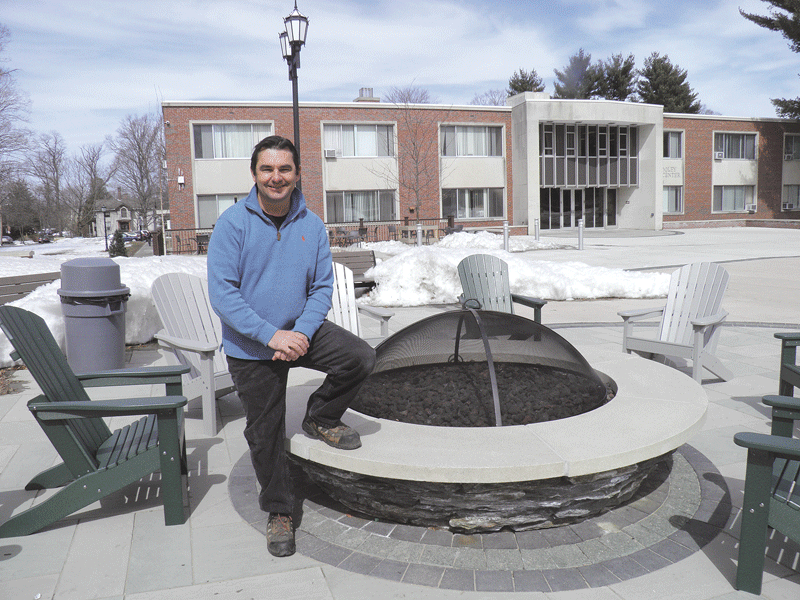
Daily News

SPRINGFIELDBusinessWest will unveil its seventh annual class of Difference Makers on Monday, in the Feb. 9 issue, which features lengthy, in-depth profiles of this year’s honorees — a can’t-miss issue. Difference Makers is a program, launched in 2009, that recognizes groups and individuals that are, as the name suggests, making a difference in this region.

The annual Difference Makers award program will be held at the Log Cabin Banquet & Meeting House on March 19. Tickets cost $60 per person, and reserved tables of 10 are available. To order tickets, call (413) 781-8600, ext. 100, or e-mail [email protected].

Construction Sections
Recreation of Monticello Was A Project for the Ages

S. Prestley Blake takes a photo of the replica of Monticello he had built in Somers.
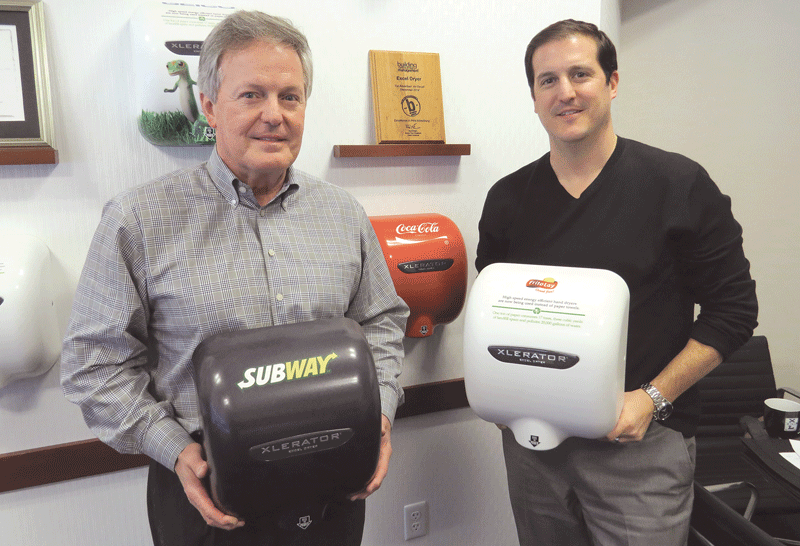
S. Prestley Blake takes a photo of the replica of Monticello he had built in Somers.

Bill Laplante remembers the phone call like it was yesterday.

That’s because it seemingly came out of nowhere, and also because it marked the unofficial start of easily the most intriguing — and also one of the more challenging — endeavors in his long career as a home builder, and what he would repeatedly call “the opportunity of a lifetime.”

On the other end of the line was S. Prestley Blake, the then-98-year-old co-founder of Friendly Ice Cream and admirer of both Jefferson and the Laplante company’s work — it built the home his daughter and son in law now reside in, and also the new residence for the president of Springfield College (erected a dozen years ago), for which Blake developed a deep appreciation regarding both its design and workmanship.

“He said ‘Bill … I’m thinking about building a replica of Monticello in Somers,’” said Laplante, president of the East Longmeadow-based firm launched by his father, Ray. “He said he wanted me to come over and assess the property, take a look at things, review the site plans … that’s how it all started.”

It all ended just a few months ago, with a black-tie party that was combination early 100th birthday bash and open house attended by more than 250 people at what would have to be called ‘Blake’s Monticello,’ although it’s highly unlikely that he’ll ever spend a night in it.

This Monticello, slightly smaller than the original, Thomas Jefferson’s home in Charlottesville, Va., is what Blake, reached by BusinessWest in Florida, called, alternately, a “gift to the community,” his “swan song,” and “something I’m doing for posterity, not profit.”

Indeed, he expects to certainly lose money on the home currently on the market with a sticker price of $6.5 million, roughly $1 million less than what it cost to buy the land, raze what was on it, and build the landmark. There have been a few inquiries, and those interested will have to eventually impress Blake, who has the final say on this sale and insists he’ll only sell to someone who has both the requisite financial wherewithal and the same commitment to the community that he does.

As for Laplante, his crews, and lead design consultant Jennifer Champigny (not to mention Prestley Blake and his wife Helen) the endeavor quickly became a labor of love, a project no one really wanted to see end, although everyone involved was firmly committed to getting things done before Blake became a centenarian last November. Overall, the huge undertaking was completed in an impressive 14 months, more than three decades less than it took Jefferson to complete the original.

“The whole project, from start to finish, was a lot of fun … everyone who worked on it, from day one, thoroughly enjoyed it,” said Laplante. “It truly was a once-in-a-lifetime opportunity.”

The building process, began in the spring of 2013, soon after Blake closed on the nine acres of land off Hall Hill Road, just a few hundred yards from the Massachusetts border, and the structures built on it (owned then by the estate of the late Big Y co-founder Gerry D’Amour and his wife Jeanne). It was preceded by a visit to the original Monticello by Laplante and his father.

They took hundreds of photographs, made volumes of notes, and purchased the book Monticello in Measured Drawings, which soon became invaluable.

Bill Laplante

Bill Laplante, standing in the foyer at the
Somers Monticello, called the project the “opportunity
of a lifetime.”

Using these resources, the Laplante company built an almost exact replica of the exterior of Jefferson’s home, and an ultra-modern, luxurious — and ‘green’ —interior. Both elements can certainly turn heads.

“I think this is the most prominent private house in the country,” Blake told BusinessWest in reference to his creation, noting that this assessment is based on aesthetics and the model that inspired it, not sheer size or features. “The White House is the most prominent house in the country, but that’s owned by the government. This is a private house I built on my own.”

For this issue and its focus on contruction, BusinessWest takes an in-depth look at why Blake’s Monticello came to be built and how. In the course of doing so, it became clear why those who view the house use the same word to describe it as those called upon to recount the building process: memorable

Landmark Decisions

They eventually dubbed it ‘Monticello Highway.’

That was the name given to the path that Blake had carved between the site of the Somers Monticello and his own home, just a few hundred yards away (the properties abut).

Blake would take that path on his small, four-wheel-drive motorized vehicle called a ‘Gator,’ said Laplante, adding that he was at the construction site by 7:30 a.m. almost every day he was in this region to observe, take photos, and offer both suggestions and commentary — mostly the latter, because he gave great latitude to the builders.

What the Blakes saw emerge on the gently rolling parcel is one of the few replicas of Monticello in this country — there’s a bank modeled after it in Monticello, Ind., and a chiropractor’s office in Paducah, Ky., for example — and certainly the most extensive and expensive.

The Monticello in Somers has a number of things the one in Charlottesville doesn’t, including:

• A three-car garage;
• A tiled patio atop the three-car garage, which was a very popular gathering spot during the party in October;
• An elevator;
• Laundry rooms on the first and second floors;
• A wine chiller;
• Wolf and Sub-Zero appliances;
• A pantry with floor-to-ceiling cabinets, a so-called library ladder to reach those heights, and leathered granite counter tops;
• Five full baths complete with walk-in showers, towel warmers, and other amenities;
• Coffee stations in most of the rooms and a second-floor kitchenette; and
• Geothermal heating and cooling.

It does, however, have many of the same exterior features, including the white columns, roof ballustrades, and signature dome at the front of the structure (or the back at the original Monticello; the back entrance was the main entrance in Jefferson’s time), and some interior elements as well, including a tea room, a lavish foyer (although the one in Somers has a double staircase), ornate hard-wood floors, and so-called great room.

DownHallRooms

At top, the dining room in the Somers Monticello, and above, the bathroom off the master bedroom.

At top, the dining room in the Somers Monticello, and above, the bathroom off the master bedroom.

Retelling the story of how it all came about, Laplante said Blake was never particularly fond of the large estate built by the D’Amours, and has always been enamored with Monticello, architecturally and otherwise, and conceived a project to replace one with the other and, in the process, build something memorable and lasting.

As Blake was finalizing his purchase of the site, he was also engaging Laplante on the undertaking to come.

The trip to Charlottesville was educational and therefore quite helpful, said Laplante, adding that this was his first visit to the landmark.

“We met with the people giving the tours of Monticello, we toured the entire facility, and took a number of photographs, including many detailed photographs,” he explained. “We were focusing on the exterior of the building, because the original plan called for building a replica of Monticello, especially with regard to the exterior façade, but make it into a modernized single-family home on the inside — something that someone would be interested in purchasing and living in.”

Monticello in Measured Drawings became a valuable resource, he went on, adding that it was assembled by an architectural group that recreated scaled drawings of the original.

“It was very difficult, because there were areas that were 1:32 scale, because of the size of the house and obviously the size of the book,” Laplante explained. “We were dealing with very, very small scale, but it was very helpful having that, as well as the photos we took of the original and the tours we took.”

Glory Details

Beyond the basic mission of reproducing the original Monticello’s exterior, the Blakes’ only real instructions to the builders were simple, said Laplante, adding that he was told not to spare any expense, to build a replica as exacting as possible, and, inside “to make every room spectacular.”

And by all accounts, he and his crews followed those instructions to the letter.

Attention to detail can be seen in many aspects of the recreation work, including the brick used. Bricks in the original were hand-made made on-site in Virginia, said Laplante, adding that those used in Somers were also hand-made and cast to look like what was used in the early 19th century.

The decision was made early on to place the dome at the front of the house, the side facing Hall Hill Road, said Laplante, adding that the ‘front’ façade of the replica is, by his estimation, 98% accurate to scale.

One of the main differences between the two Monticellos is that the one in Virginia has an open porch, complete with arched-brick openings, on the left side, while the one in Somers has an enclosed hearth room, located just off the kitchen, in that location.

Also, Jefferson’s Monticello had a room inside the dome, while the one in Somers does not, and the second-floor windows in the replica are larger than those in the original to meet modern building codes.

“Working around the windows was perhaps the biggest challenge in designing this, because we were designing an interior around an exterior that was built 200 years ago,” he said, adding that both the original and replica (at least from the ‘front’ view) are two-story homes that don’t look like two-story homes.

The kitchen in the Somers Monticello is certainly different than the one in Thomas Jefferson’s original in Charlottesville, Va.

The kitchen in the Somers Monticello is certainly different than the one in Thomas Jefferson’s original in Charlottesville, Va.

And while creating a modern interior within a two-century-old shell came complete with many challenges, that assignment gave the builders and designer plenty of opportunities to stretch their collective imaginations.

“From the beginning, the Blakes said, ‘we want every room we walk into to be spectacular,’” said Laplante. “But they didn’t micro-manage the design and the details; they let us come up with what we thought should be done.”

Some of the details were taken from the original, he went on, citing such things as floor patterns (although slightly different wood species were used), but the interior obviously bears little resemblance to the one in Charlottesville.

The kitchen in Jefferson’s Monticello was a simple facility in the basement. The kitchen in Somers is massive, with the most modern appliances and quartz countertops. The Monticello in Virginia had five outdoor privvys; the one in Somers has nine baths, many of then featuring Carrara marble.

The biggest difference between the two landmarks, however, is the ‘green’ nature of the replica. Jefferson heated with wood. The Somers home features geothermal heating and cooling equipment (which Laplante said is becoming increasingly popular due to attractive tax credits). It also has LED lighting, energy-efficient windows and doors, and icynene spray foam insulation. Meanwhile, raw materials from the site, including oak and cedar trees and red stone harvested from the parcel were used in the construction.

Overall, the buildings are worlds apart in terms of building materials and processes and creature comforts, but they look remarkably similar in large, framed photographs hanging side by side in the wood-paneled garage.

History in the Remaking

In addition to the party in October, the Blakes had a small gathering in the Somers landmark just before the holidays.

For the event, dubbed ‘Christmas at Monticello,’ the Blakes actually borrowed a few pieces of furniture and had some tables placed in the great room, said Laplante, who was among those invited.

The scene was a little strange, he recalled, but understandable because while the Blakes built the home, technically, it’s not theirs.

Soon, if the right buyer and right price come together, it will belong to someone. But it many respects, it will always belong to the community, said Blake, adding that, like the original, it was built to last and built to inspire.

And it is already doing just that.

George O’Brien can be reached at [email protected]