Home Posts tagged Features (Page 8)
Chamber Corners Departments

AFFILIATED CHAMBERS OF COMMERCE OF GREATER SPRINGFIELD
www.myonlinechamber.com
(413) 787-1555
 
• Jan. 28: January 2015 Lunch & Learn, 11:30 a.m. to 1 p.m., at Springfield College (Dodge Room in Flynn Campus Union), 263 Alden St., Springfield. The event topic is “Question 4: Mandated Sick Leave … Now What?” presented by Skoler, Abbott & Presser, P.C. Core concepts discussed include who is eligible and who isn’t, what it means for your workforce, and the subtle nuances of the law. Sponsored by Skoler, Abbott & Presser, P.C. Tickets are $25 for members, $35 general admission. For more information, contact Sarah Mazzaferro at (413) 755-1313.
 
• Feb. 4: Business@Breakfast, 7:15-9 a.m., at Crestview Country Club, 281 Shoemaker Lane, Agawam. Featuring: “You’re a Piece of Work! Celebrate Joy, Passion, and Influence,” presented by Dr. Steve Sobel, humorist and motivational speaker. Saluting: FIT Solutions — 10th anniversary; GZA GeoEnvironmental — 50th anniversary; and Shriners Hospitals for Children — 90th nnniversary. Sponsored by United Personnel. Reservations are $20 for members (in advance, $25 members at the door), $30 general admission. Reservations may be made online at www.myonlinechamber.com.
 
• Feb. 12-March 26: Leadership Institute 2015, to be staged Thursdays, 1-4:30 p.m., between Feb. 12 and March 26. The opening session will be held at Sheraton Springfield, One Monarch Place, Springfield, and all remaining sessions will be held at TD Bank Conference Center, 1441 Main St., Springfield. In partnership with Western New England University, this seven-week program is designed to teach mid- and upper-level managers the crucial thinking and problem solving skills needed to enable them to be effective leaders in service to the community and in their workplaces and designed to develop high energy and high involvement leadership. Sponsored by MassMutual with scholarship support from the Irene E. and George A. Davis Foundation. For information, contact Kara Cavanaugh at [email protected].
 
AMHERST AREA CHAMBER OF COMMERCE
www.amherstarea.com
(413) 253-0700

• Jan. 29: Chamber After 5, 5-8 p.m., at artALIVE, 35 South Pleasant St., Amherst. Ever try a Wine & Paint night? Here’s your chance to do so. Don’t know how to paint? Who cares, neither do we. We’re all on the same level, folks — that’s why we will have an instructor. Admission is $20, and the price includes wine and two and a half hours with a personal instructor.
 
GREATER CHICOPEE CHAMBER OF COMMERCE
www.chicopeechamber.org
(413) 594-2101
 
• Jan. 28: January Business After Hours,  5-7 p.m., at H & R Block, 1475 Memorial Dr., Chicopee. Tickets are $10 for members, $15 for non-members.

• Feb. 11: CEO Luncheon, 11:45 a.m. to 1 p.m. Hosted by Collegian Court Restaurant, 89 Park St., Chicopee.
Tickets are $25 members, $30 for non-members.

• Feb. 18: February Salute Breakfast & Annual Meeting, 7:15-9 a.m., at the MassMutual Learning & Conference Center, Chicopee. Tickets are $23 for members, $29 for non-members.
 
GREATER EASTHAMPTON CHAMBER OF COMMERCE
www.easthamptonchamber.org
(413) 527-9414
 
• Feb. 9: Getting Down to Business about Business, 8-9 a.m., on the second Monday of each month.  Mayor Karen Cadieux will be hosted by one of Easthampton’s businesses for casual question-and-answer sessions.
 
• Feb. 14: Second annual Easthampton WinterFest, starting at 11 a.m. The Nashawannuck Pond Steering Committee and Greater Easthampton Chamber of Commerce invite you to the second annual Easthampton WinterFest. This community-wide event features family-friendly winter activities held throughout the day, featuring an historical ice harvest on Nashawannuck Pond, horse-drawn wagon rides, snowshoeing, snow sculpture, a chili cook-off, a community bonfire, and much more. There will also be winter-themed indoor activities for all ages. Most events are free or by donation. A lineup of the day’s events will be posted on www.nashawannuckpond.org.
 
GREATER HOLYOKE CHAMBER OF COMMERCE
www.holycham.com
(413) 534-3376
 
• Jan. 30: Legislative Coffee Hour, 7:45-9 a.m., at the Summit View Banquet House, 500 Northampton St., Holyoke. Speakers will be state Sen. Donald Humason and state Rep. Aaron Vega. Tickets are $25 for members with reservations, $35 for non-members and at the door. Price includes a continental breakfast.
 
• Feb. 3: “How to Start and Maintain Your Business: Staff – Hiring and Firing,” 5:30-7:30 p.m., at the chamber conference room. This program, the latest in a series, will provide all you need to know about employee handbooks, insurance, performance evaluation, job descriptions, sexual harassment, sensitivity training, and human resources. Tickets are $20. Series sponsors: PeoplesBank, Common Capital, Mass Cultural Council/the Artery in partnership with the Holyoke Creative Arts. Call the chamber at (413) 534-3376 or sign up online at holyokechamber.com.
 
• Feb. 18: Chamber After Hours, 5-7 p.m. Business networking event includes complimentary appetizers, 50/50 raffle, and door prizes. Sponsored and hosted by Gary Rome Hyundai, 1000 Main St., Holyoke. Tickets are $10 for members, $15 for the public. Call the chamber at (413) 534-3376 or sign up online at holyokechamber.com.
 
• Feb. 24: “How to Start and Maintain Your Business: Marketing Your Business,” 5:30-7:30 p.m., at the chamber conference room, 177 High St. This program, the latest in a series, will provide all you need to know about designing a logo, branding your business, advertising opportunities, social media, and developing a website. Tickets are $20. Series sponsors: PeoplesBank, Common Capital, Mass Cultural Council/the Artery in partnership with Holyoke Creative Arts. Call the Holyoke chamber at (413) 534-3376 to sign up or online at holyokechamber.com.
 
GREATER NORTHAMPTON CHAMBER OF COMMERCE
www.explorenorthampton.com
(413) 584-1900

• Jan. 27: New Member Orientation at Northampton Chamber of Commerce, noon to 1 p.m. This is the chance to tell us more about your business and how the chamber can best serve you, meet other new members, and learn how to make to the most of your chamber membership. RSVP to (413) 584-1900 or [email protected]. Cost: free.

• Feb. 6: Google Docs for Nonprofits Workshop, 9-11 a.m., at the chamber office, 99 Pleasant St., Northampton. Presented by Pioneer Training. The class is an introduction to Google Docs and Google Drive, the online storage location for Google Docs. Since this software is available at no cost, many non-profit organizations are using it extensively for collaboration purposes and to supplement or even replace Microsoft Office. In this two-hour workshop, you’ll learn how to set up a local Google Drive folder, which automatically synchronizes with Google Drive on the Web.  You’ll learn to create new documents in the Google Docs format, as well as how to work with Word documents in Google Docs and how to convert Word documents to the Google Docs format. The class will focus on basic v and editing techniques in Google Docs, but will also cover best practices for using Google Docs. Since it is a collaboration tool that lets you share documents in real time with other users, you’ll need to be mindful of issues related to safeguarding confidential data. You’ll learn the difference between viewing and editing, and how to set permission levels for collaborators. You’ll also learn simple tips that will help you avoid accidentally overwriting data or accidentally publishing confidential data. Cost is $20 for members, $30 for non-members. Pre-registration is required; space is limited. To register: visit [email protected].
 
GREATER WESTFIELD CHAMBER OF COMMERCE
www.westfieldbiz.org
(413) 568-1618
  
• Feb. 2: Mayor’s Coffee Hour with Westfield Mayor Dan Knapik, 8-9 a.m., at McDonald’s, 182 North Elm St., Westfield. This event is free and open to the public. Call Pam at the chamber at (413) 568-1618 to register.

• Feb. 11: February After 5 Connection, 5-7 p.m., at Betts Piping Supply Co., 14 Coleman Ave., Westfield. For more information, contact the chamber at (413) 568-1618.

PROFESSIONAL WOMEN’S CHAMBER
www.professionalwomenschamber.com
(413) 755-1310
  
• Feb. 10: Ladies Night, 5-7 p.m., at It’s All About Me!, 2 Somers Road, Hampden. Enjoy complimentary wine and refreshments. 
Reservations are complimentary but required. Contact Gwen Burke at (413) 237-8840 or [email protected]. The Professional Women’s Chamber is an affiliate of the Affiliated Chambers of Commerce of Greater Springfield.

WEST OF THE RIVER CHAMBER OF COMMERCE
www.ourwrc.com
413) 426-3880
 
• Feb. 4: Wicked Wednesday, 5:30-7:30 p.m., at Flowers By Webster 82 Elm St., West Springfield. Wicked Wednesdays are monthly social events hosted by various businesses and restaurants. These events bring members and non-members together to network in a laid-back atmosphere. Free for chamber members, $10 for non-members. Event is open to the public; you must pay at the door if you’re a non-member. For more information, contact the chamber office at (413) 426-3880 or e-mail [email protected].
 
• Feb. 19: Networking Lunch, noon to 1:30 p.m., at Lattitude, 1338 Memorial Ave., West Springfield. One must be a member or guest of a member to attend. Enjoy a sit-down lunch while networking with fellow chamber members. Each attendee will get a chance to offer a brief sales pitch. The only cost to attend is the cost of your lunch. Attendees will order off the menu and pay separately the day of the event. Please note that we cannot invoice you for these events.
 For more information, contact the chamber office at (413) 426-3880 or e-mail [email protected].

• Feb. 25: Legislative Breakfast, 7-9 a.m., at Storrowton Tavern,  1305 Memorial Ave., West Springfield. The breakfast will feature a panel of various leaders, including state Sen. James Welch, state Sen. Donald Humason, Agawam Mayor Richard Cohen, and West Springfield Mayor Edward Sullivan. Tickets are $25 for members, $30 for non-members. For more information on ticket sales, contact the chamber office at (413) 426-3880 or e-mail [email protected].

Daily News

WESTFIELD — Noble Hospital is the major sponsor the Springfield Falcons’ “Pink in the Rink” event on Feb. 21 against the Portland Pirates. This annual event helps to raise funds for and awareness of breast cancer.

Falcons players wear special pink jerseys that will be autographed and auctioned off after the event. Visit www.ebay.com/usr/springfieldfalcons to bid on the pink jerseys after the game. In addition to the hockey game, breast-cancer survivors will be honored, there will be giveaways and raffles, and Noble Hospital will provide an information booth. Members of a support group, the Pink WAY, will also attend.

Noble Hospital’s Center for Comprehensive Breast Health, under the direction of Dr. Steven Schonholz, provides a wide range of options and services in a single location. Pink bracelets will be available for donations at the Noble table; funds raised will go towards Noble’s breast-cancer awareness programs and to help local patients going through treatments.

Area residents can support Noble Hospital by purchasing tickets to the game at give.noblehospital.org/pinkintherink. For more information, contact the hospital’s Community Development Office at [email protected] or (413) 568-2811, ext. 5520.

Noble Hospital’s Center for Comprehensive Breast Health encompasses aspects of women’s health from mammograms and bone-density testing to lumpectomies and cancer treatments. The center features a complimentary-medicine therapy room offering massage, Reiki, and other alternative treatments for those going through cancer treatments and recovery. In a new partnership with the YMCA of Greater Westfield, the center also offers a healthy-living and exercise program.

In addition, Noble Hospital has a partnership with Hartford Hospital to treat early breast cancer quickly with a procedure called accelerated partial breast irradiation, which takes a period of five days instead of many weeks. Money raised at the Falcons fund-raiser may help patients in any of these programs receive the treatment they need but may not be able to afford.

Features
Tattoo Shops Thrive as Industry Gains Acceptance

Tattoo Afterlife co-owners Timmy Barnes and Matt Olivieri

Tattoo Afterlife co-owners
Timmy Barnes and Matt Olivieri

When Timmy Barnes was busy drawing on his friends in high school, he never considered making a career out of tattoos.

But it wasn’t long before he was making a more permanent impression, tattooing customers out of his basement. Licensed in Massachusetts since 2005, he’s now known widely — internationally, actually — as Timmy B, and co-owns Tattoo Afterlife in Northampton.

“Most people get tattooed for the same reason they buy a certain type of clothing or get plastic surgery: it’s an expression of themselves,” he told BusinessWest. “When you see a tattoo, you instantly know a little more about that person without them having to say anything.”

At the custom shop he opened with business partner Matt Olivieri, customers don’t pick images from a book; the artists who work there, in a converted auto garage on Pleasant Street, are aiming for something more unique.

“You come in and tell us what you like, things about your life that you want to showcase, and we will make you something we feel best represents you,” Barnes said. “This is a shop that people seek out, rather than walk in and wing it.

“A lot of people can mimic what we do, but it’s not the same,” he added. “It’s like a pair of shoes you really like — you’re not going to pay for a knockoff; you’ll pay for the version you really want. There is a difference.”

Olivieri, who also owns a line of organic skin-care products (more on that later), isn’t a tattoo artist himself, but has long loved the craft.

“I’m somebody who gets tattooed because I like the art. Some of mine have personal meaning, but I’d say 80% don’t. I like to get tattooed by friends, people I trust, and I let them run with the art. Then again, some people only want something on their body that has meaning. It’s really all about you and how you want to express yourself.”

Scot Padgett, the resident artist at Living Art Studio on Main Street in Northampton, has been practicing body art for decades, and has seen attitudes toward tattoos shift dramatically over the years.

Scot Padgett

Scot Padgett, whose work is seen here, says custom tattoos have become increasingly popular as clients have become more savvy.

“Make no mistake, there was a lack of social acceptance years ago,” he said. “Today, if you walk down the street here, it’s not unusual to find arm sleeves and body pieces and even people with work on their faces, which a lot of us in the businesses don’t necessarily agree with. There is a level of social acceptance now. For that reason alone, there’s a whole additional clientele who, maybe 20, 25, 30 years ago, wouldn’t have even considered it.

“We used to deal with the 18-to-25, male demographic,” he continued. “Today, the median age is around 40, and 70% female. Before, people were covering stuff up so they wouldn’t give their mother a heart attack; now they’re coming in with mom — or grandma. I definitely think there’s been a lessening of the social stigma.”

Mary Bowen, shop manager of Off the Map Tattoo in Easthampton, sees the same, ever-widening range of customers.

“We have lots of 18-year-olds getting their first tattoos, and 75-year-olds getting their first tattoos … someone working on a full body suit to someone pretty committed to getting just one,” she said.

Bowen recalled a three-generation appointment, where a woman came in with her mother and her 89-year-old grandmother for matching tattoos. “When we say you’re never too old, we mean it literally.”

Padgett welcomes the new openness to tattoos, which first became legal in Massachusetts in 2001. “People ask how long I’ve been doing this, and I say, ‘since before it was cool,’” he said. “When I got into this, you were just as likely to be ostracized by your own family members than by the community at large.”

Moving the Needle

Padgett tattooed in Connecticut for more than a decade before the Bay State came calling in 2001, and he worked with Northampton’s Board of Health on the language regulating tattoo shops, which vary from community to community.

“Unlike many states, there’s no statewide regulation,” he said. “I think there should be a federal mandate that, if it’s legal in one state, it should be nationwide. Not only is that not the case, but our state has put the onus on individual municipalities.”

Like Barnes, he emphasizes custom tattoos, a philosophy that has gained a significant foothold in the industry.

“In the old days, you’d have what was known in the vernacular as ‘flash’ on the walls,” he said, referring to stock art that tattooers would reproduce on clients. “There would be commercially available flash that people would buy and sell and circulate around the industry. When you’d go into a shop, you’d see the same designs hanging on the wall, and typically people would come in and choose from the commercially available product. It was not unusual to see the same eagle or sailing ship on other people — hundreds of people.”

Not only are custom tattoos more gratifying for him, they also allow the customer to fully embrace the experience, which results in fewer regrets.

“You’re less likely to make an error in judgment if you take the time to think about it, make an appointment, show up for the appointment, talk about it, as opposed to walking in off the street on a whim and pointing to a piece of art,” Padgett said, noting that he emphasizes the education and information aspect of his trade. “I’d rather you call me Tuesday and say, ‘I’m not sure about Wednesday’s appointment’ than call me Thursday and say, ‘I’m not sure about Wednesday’s appointment.’”

After all, he added, “it’s not like getting a bad haircut.”

Padgett, a widely recognized artist, recently tattooed a customer from Iceland, and attracts repeat business from far-flung tattoo enthusiasts. “I have clients from all over the place. That’s not a ‘hooray for me’ thing; it’s just that people have a comfort level for certain people. We try to provide an experience. I think that’s what brings a lot of people back.”

Tattoo Afterlife is a much newer presence in Northampton, having opened just five months ago.

“Business has grown every single month,” Olivieri said, adding that the shop will soon offer the services of six artists. The other side of the business is Tranquillity Massage, with two full-time massage therapists offering five types of massage, for customers who want to relax before getting inked. “We try to take care of our clients, make it a whole experience for them. We want them to feel as comfortable as possible while they’re here.”

Tattoo Afterlife has also made connections with local businesses — a hotel, restaurants, a neighboring bar — to offer discounts to customers, especially those traveling to Northampton from far away. And many do — the weekend before speaking with BusinessWest, Barnes tattooed clients from New Jersey and Australia, who had come specifically to seek him out.

“It’s a huge thing, with people from all over the world seeking out their favorite artists and turning appointments into vacations,” Olivieri said. “At the end of the day, it’s permanent, so if you’re going to fly across the world, you might as well check out the scenery and what’s going on locally. We try to be a part of that whole process when people come to town. We want to bring something to the table.

“At the end of the day, this is a service industry,” he added. “We’re all about customer service.”

Global Outlook

Gabriel Ripley, who opened Off the Map nine years ago and has since expanded it to shops in Oregon and Italy, got into the field via a different type of customer service: by using his computer-programming expertise to launch tattoonow.com, which develops and designs websites for tattoo artists. From there, he branched out by opening a tattoo shop, which features seven artists in Easthampton alone.

Mary Bowen

Mary Bowen says today’s tattoo enthusiasts often seek out favorite artists, and appreciate the fact that Off the Map brings in guest artists regularly.

“We’ll also bring in guest artists regularly — from all over the country and overseas as well,” Bowen said. “It’s great for the tattoo artists here because everyone can continue to learn from each other, and it’s great for the clients, who get access to these artists close to home. As custom tattooing is becoming more popular, people are becoming collectors of tattoo artists. The old-school way was to buy from the same person forever; now people seek out a specific style for each tattoo.”

She said the people have myriad rationales for wanting body art. “Oftentimes it’s a celebration, or people get a memorial tattoo to deal with life changes, whether it’s dealing with grief or getting a new job or getting divorced. Everyone has their own personal catalyst.”

Olivieri tells a similar story. “The other day, we had a guy who fought in Vietnam, 60 years old, who had never gotten a tattoo but was intrigued by it. Timmy has tattooed rock stars, medical doctors, and kids who turned 18 and just wanted a tattoo. It used to be that, if your were tattooed, you were looked at as a certain genre of human being, but that has now vanished. It’s now mainstream and socially acceptable to get tattoos, so all those people who were on the fence all those years are making appointments. They know they won’t be frowned upon or looked at differently.”

Bowen agrees. “They might have been thinking about this for years, if not decades. But reality shows have brought tattooing to the forefront, and it’s become more socially acceptable; at this point, it’s almost more unusual to meet someone who doesn’t have a tattoo.”

Still, she added, it’s a decision that shouldn’t be rushed. “It’s important for people to look at websites, do some research, check out the quality of the work, call the studio or stop in. I’ve gotten comments here like, ‘you’re nicer than I expected; you’re not scary at all!’ There’s this old-school perception of bikers in leather and jeans, smoking cigarettes and doing tattoos.”

Though the reality, in most cases, is far more pleasant — and sanitary — “the anxieties about getting a foot in the door are pretty significant for people,” she continued. “It’s a lifelong choice, so we don’t want them to feel pressured.”

That said, “we’re definitely growing. We’ve officially maxed out our space. Most of our artists are booked out weeks, if not months, ahead of time. A lot of times, it’s the guest artists who take walk-ins. We have a large clientele and huge support in the Valley,” Bowen said, citing several best-of citations in Valley Advocate reader polls. “It’s wonderful to hear that positive reinforcement. And we’re certainly not slowing down.”

Piece in the Valley

Olivieri and Barnes opened their first venture on Long Island, but weren’t happy with the lifestyle there, so they opened Tattoo Afterlife in Northampton, not far from Barnes’ hometown of Belchertown, and put the custom nature of the shop’s art front and center.

“You can’t come in here with a photocopy and say, ‘put it on my body,’” Olivieri said. “Every single person here is an artist. Tattooers understand the trade and can take anything and put it on your body, but here, everyone has an art background; they strive to give you something 100% original and custom, one of a kind. They’re trying to create art every single day.”

Olivieri focuses most of his energies on running the business end of the shop and selling products, particularly Redemption Aftercare, an organic, vegan, petroleum-free balm designed to be applied during and after a tattoo. A New Yorker named Bili Vegas created the formula, and he and Olivieri own and market the product. He also sells tattoo and skin-care products from other companies, including Eternal Ink and Stencil Stuff.

Redemption Aftercare, Olivieri said, “is the only balm in the world that’s USDA-certified organic and contains no chemicals and no petroleum — both things that stop the healing process. There’s a huge niche for us, as people are starting to become more aware of what they’re putting in their bodies.”

That’s particularly true in progressive Northampton. “It’s a very liberal town, and it’s open to new ideas,” he said. “And, frankly, there are five colleges with 65,000 students within a 15- to 20-mile radius. With tattooing becoming more popular, kids want to get tattooed, and lot of kids here are well-off. It’s a very good market for what we do.”

Northampton, Barnes added, “has everything you want from a big city, but mom-and-pop versions of it. All the businesses know each other, and all the employees downtown know each other. It’s an easy place to market and cross-promote. Everyone is on each other’s team.”

In that spirit, Barnes wants Tattoo Afterlife to become known for more than body art, as he and Olivieri plan a series of community events and fund-raisers to boost the profile of their craft.

“Tattooing has always had this stigma, but it’s getting harder to stereotype us,” Barnes said. “How can you call us a bunch of gnarly drug addicts and bikers when we’re raising money for children’s charities? I want to take this thing to the next level, to push the boundaries. We’ll always do tattoos, but what else can we do?”

Cost and Effect

Bowen admits that tattoos can be a significant financial investment, but added that enthusiasts are willing to pay the artists they admire. “You have to keep your budget in mind, of course. But the choice shouldn’t be made solely on price; if someone is very inexpensive, there’s probably a good reason why.”

The other big anxiety, beyond price and permanence, is pain.

“Lots of people get nervous about the pain; it’s not a pain-free process,” Bowen said. “A lot of times, people have nerves, but in the end, it’s not nearly as bad as they thought it would be. The mental is often far more significant than the physical pain of it.”

Usually, a glass of water or coffee is enough to calm a new customer’s nerves, Olivieri said, but for others, “we have a good rapport with the bar across the street. If they need a couple of hours to think about it, they can go there and have a drink. There’s no pressure here. Our job is to make the client feel as comfortable as possible.”

That said, “people are more excited than nervous,” he noted. “Timmy has a six-month waiting list, and some customers have been waiting years to see him, so when they get here, it’s like Christmas morning. They say, ‘you don’t know how long I’ve waited,’ and we say, ‘no, we get it.’”

Bowen likes to quote Ripley, her shop’s owner, in explaining that kind of excitement.

“One of the phrases Gabe uses is ‘making the world better, one tattoo at a time.’ We hope, by creating art, we’re positively impacting people’s lives — helping them move their lives in a more positive direction.”

Making art, in other words, that’s much more than skin deep.

Joseph Bednar can be reached at [email protected]

Briefcase Departments

$5 Million Allocated to UMass Amherst for R&D Center at Westover
CHICOPEE — Gov. Deval Patrick recently released a business plan on growth opportunities at Westover Airport, outlining numerous steps the Commonwealth and Greater Chicopee region can undertake to grow the economy in Western Mass. and to support the mission of Westover Air Reserve Base (ARB), the joint user of the military and civilian airfield. As a result of the plan’s findings, Patrick announced four initiatives to benefit the Westover region, including the proposed creation of a UMass Amherst Research, Development, and Training Center in Chicopee. “Westover Airport and Westover Air Reserve Base are two stellar assets with so much potential for smart growth,” said Patrick. “To support the region’s economy and potential for more private and commercial air service, I commissioned this report to look at a wide variety of options. I’m pleased with the team’s effort and with UMass Amherst’s plan to open a research, development, and training center in Chicopee to tap into the innovative minds in the city and region.” Patrick has allocated up to $5 million to UMass Amherst to support the creation of a research and development partnership program at Westover ARB. This funding would be used to lease and renovate a vacant Westover ARB building to establish a National Aeronautics, Research, Development, and Training Center with UMass Amherst as the lead institution. UMass Amherst is in the process of partnering with NASA on several innovative research projects leveraging promising new technologies to promote efficiencies, safety, and economic growth in aviation. This research would be performed at the proposed center by UMass Amherst and its industry partner M2C Aerospace, a Massachusetts-based, woman-owned small business. The Commonwealth’s funding leverages $15 million in private investment and sponsored research to be conducted by UMass Amherst and benefiting federal agencies. This site would also host a school to train air-traffic controllers and pilots and provide aviation-related courses for the next generation of researchers and engineers to develop future technologies. The proposed aeronautics center will also serve as a nexus for government and industry to collaborate on future aviation initiatives. The Westover site will house state-of-the-art laboratories, including a high-fidelity, 3-D, simulation-based training capability that meets the FAA’s requirements for certifying air-traffic controllers at U.S. aviation facilities. A significant number of air controllers in the New England region are expected to retire in the next 10 years, which will increase the demand for a modern educational facility. This approach could be adapted for new civilian controllers, which — in combination with the transitioning military controllers — would help alleviate the FAA’s shortage of certifiable controllers and allow for joint military training with Westover’s staff. It is estimated that this partnership could generate millions of dollars annually in research, education, and training from a combination of government agencies, such as the Department of Defense, the Department of Homeland Security, NASA, the U.S. Department of Transportation, and the Federal Aviation Administration, as well as the aviation industry. This fall, Patrick celebrated the grand opening of the UMass Center in Springfield, and the Chicopee site will add to its already-strong educational assets in Western Mass. “This partnership involving UMass Amherst, NASA, and industry will address vital national needs in the aviation sector and help revitalize the Western Massachusetts economy,” said UMass Amherst Chancellor Kumble Subbaswamy, who also serves as a member of the Military Task Force. “This is a perfect match for our role as one on the country’s top research universities, applying our expertise to enhance the safety of air travel and foster economic opportunity.”

Feb. 6 Deadline Set for 40 Under Forty Nominations
BusinessWest is currently accepting nominations for the 2015 class of its 40 Under Forty program. Launched in 2007, the initiative identifies 40 rising stars in Western Mass., individuals excelling in business, nonprofit management, and service to the community. The process begins with nominations, which will later be sent to a team of five judges for scoring. Nominations should be thorough and essentially answer the question, ‘why is this individual worthy of a 40 Under Forty plaque?’ The winners (those with the highest total scores from those five judges) will be announced in BusinessWest’s April 20 edition, and they will feted at the annual gala on June 18 at the Log Cabin Banquet and Meeting House. Nomination forms can be found in the next few issues of BusinessWest and also online HERE.

Festival of Trees Breaks Fund-raising Record
SPRINGFIELD — The Springfield Boys & Girls Club’s 14th annual Festival of Trees had a record-breaking year, drawing more than 13,000 visitors and raising more than $116,000 to support the club’s mission. Featuring 141 trees in 2014, the hallmark holiday event for families and children raises much-needed funds for after-school and summer programs that serve 1,500 inner-city youth each year. The 2014 Festival of Trees officially kicked off on Nov. 28 and closed its doors for the season on Dec. 14. After the final viewing, volunteers made 141 phone calls to the lucky winners of the fully decorated trees that were raffled off as part of the event. All of the trees were donated by businesses, organizations, families, and individuals. The majority of the festival’s visitors participated in the raffle hoping to win one of the trees, valued between $200 and $2,000. The Springfield Boys & Girls Club provides youth-development programs for more than 1,500 children each year in the areas of recreation, educational enrichment, technology training, career development, substance-abuse prevention, health and fitness, and leadership. All of the proceeds from the Festival of Trees directly fund the club’s operations. For more information, visit www.sbgc.org or call (413) 785-5266. The names of all sponsors, and tree winners, can also be found on the website.

Unemployment Up Slightly in November, Down for Year
BOSTON — The state Executive Office of Labor and Workforce Development reported that the seasonally unadjusted unemployment rates for November were up in 20 labor market areas and two areas remained unchanged over the month, according to the Bureau of Labor Statistics. Over the year, unemployment rates were down in all the labor market areas. The preliminary statewide unadjusted unemployment rate estimate for November was 5.2%, up 0.1% from October.  Over the year, the statewide unadjusted rate was down 1.5% from the November 2013 rate of 6.7%. During November, eight of the 12 areas for which job estimates are published recorded job gains. The largest job gains were in the Boston-Cambridge-Quincy, Framingham, New Bedford, Peabody, Worcester, Brockton-Bridgewater-Easton, Lowell-Billerica-Chelmsford, and Leominster-Fitchburg-Gardner areas. Losses occurred in the Barnstable, Springfield, Haverhill-North Andover-Amesbury, and Pittsfield areas. Since November 2013, all 12 areas added jobs, with the largest percentage gains occurring in the Lowell-Billerica-Chelmsford, Worcester, Barnstable, Boston-Cambridge-Quincy, and Peabody areas. 

State to Strengthen Manufacturing Industry
AMHERST — Building on the Patrick administration’s historic commitment to strengthening the advanced-manufacturing industry in Massachusetts, Housing and Economic Development Secretary Greg Bialecki recently joined Labor and Workforce Development Secretary Rachel Kaprielian and State Senate Majority Leader Stan Rosenberg to announce nearly $2 million in funding to support manufacturing workforce training across the Commonwealth. The announcement was made at the Advanced Manufacturing Collaborative (AMC) Pioneer Valley Summit, held at UMass Amherst. “I am proud of the work the AMC has accomplished over the years, creating opportunities for workers with a range of skill levels that will strengthen our economy for years to come,” said Bialecki. “Collaborative efforts like this are a critical reason why Massachusetts is leading the nation in growing a 21st-century advanced-manufacturing sector.” Nearly $1.5 million of the total funding was awarded through the Advanced Manufacturing Pipeline Training Grants Program to support five regional workforce-investment boards throughout Massachusetts. This funding will help recruit and train approximately 280 unemployed or underemployed participants for careers in advanced manufacturing. The grants program is a cross-secretariat initiative between the Executive Office of Housing and Economic Development and the Executive Office of Labor and Workforce Development. Two Western Mass. organizations are among those receiving funding:
• The Hampden Regional Employment Board received $219,960 to conduct the Advanced Manufacturing Training Program, in partnership with the Western Mass. Chapter of the National Tooling and Machining Assoc. The Hampden Regional Employment Board will contract with local community colleges, part-time instructors from two vocational technical high schools, and an advanced-manufacturing company to train unemployed or underemployed adults of Hampden County.
• The Franklin/Hampshire Regional Employment Board received $276,705 to continue collaboration with employers from across the region, as well as community partners such as Greenfield Community College (GCC), the two area vocational-technical schools, and two adult-education sites, to enable the Regional Employment Board and GCC to offer three additional cycles of entry-level precision-machine training over the next two years in Franklin County. This will expand it from 220 hours to 300 hours and add skill building in the areas of blueprint reading, metrology, grinding, and lean manufacturing.
“The quick turnaround in awarding these grants reflects the urgency the Patrick Administration has adopted in scaling up these pipelines to help fill current job openings in advanced manufacturing all over the state,” said Kaprielian. “These awards will allow the grantees to build upon their proven successes and their capacity to work collaboratively through industry partnerships to increase the number of seats in their existing pipelines.” Through a separate grant program, the Industry Training Capital Equipment grant program, also aimed at supporting the manufacturing industry in Massachusetts, Smith Vocational and Agricultural High School in Northampton was awarded $400,000 to rebuild its precision-manufacturing training program. With the support of more than 25 regional manufacturing and workforce leaders in Hampshire County, the rebuilt training program will be a site for daytime students and evening adult learners, in partnership with the Franklin-Hampshire Regional Employment Board.

EDC Sounds Alarm on Rising Energy Costs
CHICOPEE — The Economic Development Council of Western Mass. recently voiced its concerns regarding the rising costs of natural gas and electricity in the region. “More expensive energy affects all of us negatively. All of us need to be concerned. Individuals face a reduction of disposable income and increased hardship,” the agency said in a prepared statement. “Businesses face reduced competiveness that threatens job growth and retention. Municipalities face increased energy costs while facing decreasing revenues. Hospitals and higher-education institutions must divert more resources to energy purchases, thus diverting resources from their core missions. Shrinking business and consumer spending reduces investments in those things that define quality of life in Western Massachusetts.” Through a series of meetings and discussions with entities familiar with the issues, the EDC infrastructure committee released the following findings:
• Recent and future closings of oil- and coal-fired plants have boosted, and will continue to increase, Massachusetts’ dependency on natural gas for electric power generation. Nearly 50% of all electricity in Massachusetts is generated by natural gas, and that proportion is rising. These conditions, when combined with inadequate supplies of natural gas, are resulting in dramatically increased power costs during the winter.
• Gas companies serving this region are reaching the limits of their capacity to serve new customers. Berkshire Gas will stop adding customers in Greenfield at the end of 2014, and in Amherst in 2016. Columbia Gas is reaching the end of its capacity to serve Northampton and Easthampton. It could serve 10,000 more customers in the region if it had additional capacity. The inability to serve new customers will negatively affect economic growth in the region.
• Kinder Morgan is proposing a pipeline-extension project through Northern Mass. that will increase natural-gas supply to Berkshire, Franklin, and Hampshire counties as well as Eastern Mass.
• NU/Spectra proposes an expansion of the Algonquin Pipeline that would increase natural-gas supplies available to the Springfield area and Eastern Mass.
• Several New England states have been working to bring electricity generated by Hydro Quebec to the region.
EDC Infrastructure Committee Chair Paul Nicolai summarized the committee’s work, suggesting that “supplying cost-effective, responsibly clean energy for our people and businesses is a complicated problem requiring balanced approaches and moderate thinking. EDC has struck that balance and encourages policymakers to do so as well.” At a recent meeting, the EDC board of directors approved a resolution supporting the following actions, which, if implemented, will help to provide an adequate, stable supply of energy at competitive prices:
• Increase natural-gas supply by permitting both natural-gas pipeline-expansion projects proposed for the region and state;
• Increase the sources of power generation by enabling the purchase of hydro-generated electricity from the north;
• Continue support of conservation and renewable-energy technologies; and
• Encourage a regulatory environment that promotes market stability and competitive outcomes.

Leaders Celebrate Springfield Park and Recreation Investments
SPRINGFIELD — State Energy and Environmental Affairs (EEA) Secretary Maeve Vallely Bartlett and Springfield Mayor Domenic Sarno recently celebrated Camp STAR Angelina, Mary Troy Park, and Balliet Park, all park projects reflecting the more than $7.7 million invested in parks and open space in Springfield by Gov. Deval Patrick’s administration. “Open space and outdoor recreation investments are a critical component of building robust, healthy communities,” said Bartlett. “Gov. Patrick has made urban neighborhoods a top priority, and the evidence of that is clear today in Springfield and across the Commonwealth.” Sarno thanked Patrick and Bartlett “for your continued vision in providing funding to increase and revitalize recreational and green spaces in urban areas. The legacy you are leaving here in Springfield is one of inclusion and opportunity, which is evidenced by the $3.5 million investment made here in Springfield, which demonstrates the Patrick administration’s commitment in creating strong and healthy communities.” Located in Springfield’s Forest Park and operated by the city, Camp STAR Angelina offers inclusive recreational programs for youth and young adults with and without disabilities, medical concerns, and hearing and visual impairments. EEA provided more than $1.325 million in capital funding to help fund the construction of a nearly complete, fully accessible pool and accessible bath house, as well as a universal outdoor amphitheater, construction of which will begin soon. As part of Monday’s celebration, Sarno announced that the pool and bath-house facility would be named after Gov. Patrick, in recognition of his efforts to increase access outdoor recreation for all children. North Riverfront Park sits along the northern end of Springfield’s portion of the Connecticut River Walk and Bikeway, a proposed 20-mile corridor that would run through Agawam, Springfield, West Springfield, Chicopee, and Holyoke. EEA invested $1.2 million in North Riverfront Park to transform a property surrounded by barbed wire into a welcoming, vibrant site that will better connect Springfield’s North End to the riverfront. The city’s design features a reduction of pavement, installation of picnic tables, and an increase of pervious lawn areas, plant beds, rain gardens, and additional trees to provide shade. The city is contributing an additional $300,000 toward the project, and construction will be beginning shortly. Mary Troy Park, a new park in the densely populated Liberty Heights neighborhood, will provide green space and access to outdoor recreation for residents. The park, set to be completed next spring, was made possible by a $400,000 Parkland Acquisition and Renovations for Communities (PARC) grant from the Patrick administration. The city will use this funding to design and build a new park, including a universally accessible series of free-standing play structures, including a water-spray feature and exercise equipment along a central pathway, as well as park amenities like drinking fountains and trash receptacles. The city of Springfield is contributing $380,000 in federal Community Development Block Grant funding toward the project. Balliet Park received a $400,000 PARC grant to renovate the baseball diamond and tennis courts, install a playground and swingset equipment, establish a picnic area, and improve access to park entrances and walkways. Springfield is using its Our Common Backyards Grant to construct a splash pad at the park, which will be completed by the year’s end. Springfield is one of seven cities to receive funding through the governor’s Signature Urban Parks program.

Construction Employment Expands in Most Areas
WASHINGTON, D.C. — Construction employment expanded in 224 metro areas, declined in 64, and was stagnant in 51 between November 2013 and November 2014, according to a new analysis of federal employment data by Associated General Contractors of America. Association officials said contractors in many parts of the country were benefitting from growing demand, yet labor shortages threaten to undermine the sector’s recovery. “It is good news that construction employment is now rising in two-thirds of the nation’s metro areas,” said Ken Simonson, chief economist for the association. “But now that the unemployment rate for construction workers has fallen to a seven-year low, it has become a major challenge to find qualified workers in many fields.”

Chamber Corners Departments

AFFILIATED CHAMBERS OF COMMERCE OF GREATER SPRINGFIELD
www.myonlinechamber.com
(413) 787-1555
 
• Jan. 14: Speed Networking, 3:30-5 p.m., at the Sheraton Springfield, One Monarch Place, Springfield. Meet up to 50 contacts in under an hour. Don’t miss this high-speed way of working the room. Tickets are $20 for members ($25 at the door), and includes complimentary admission to the After 5 immediately following so you can continue to network. For more information, contact Sarah Mazzaferro at (413) 755-1313.
 
• Jan. 14: After 5, 5-7 p.m., at the Sheraton Springfield, One Monarch Place, Springfield. Enjoy networking in a casual atmosphere and expect some surprises. Event sponsors: Wolf & Co. P.C.,  DevelopSpringfield Corp., Springfield Falcons Hockey Club, United Way of Pioneer Valley Inc., and BusinessWest. Tickets are $5 for members, $10 general admission. Complimentary with purchase of January Speed Networking. For more information, contact Sarah Mazzaferro at (413) 755-1313
 
• Jan. 28: January 2015 Lunch & Learn, 11:30 a.m. to 1 p.m., at Springfield College (Dodge Room in Flynn Campus Union), 263 Alden St., Springfield. The event topic is “Question 4: Mandated Sick Leave … Now What?” presented by Skoler, Abbott & Presser, P.C. Core concepts discussed include who is eligible and who isn’t, what it means for your workforce, and the subtle nuances of the law. Sponsored by Skoler, Abbott & Presser, P.C. Tickets are $25 for members, $35 general admission. For more information, contact Sarah Mazzaferro at (413) 755-1313.
 
• Feb. 4: February Business@Breakfast, 7:15-9 a.m., at Crestview Country Club in Agawam. The guest speaker will be Dr. Steve Sobel, humorist and motivational speaker, who will present “You’re a Piece of Work! Celebrate Joy, Passion, and Influence!” This presentation will illuminate all of life’s possibilities and provide attendees with the tools  to embrace all things coming their way and bring their ‘A game’ to their customers. Sponsored by United Personnel. Salutes: FIT Solutions, 10th anniversary; GZA GeoEnvironmental, 15th anniversary; and Shriners Hospital for Children, 90th anniversary. Tickets are $20 for members ($25 at the door), $30 for non-members. For more information, contact Sarah Mazzaferro at (413) 755-1313.
 
AMHERST AREA CHAMBER OF COMMERCE
www.amherstarea.com
(413) 253-0700
 
• Jan. 13: Business Buddies: Grow Your Business with Co-hosted Events, 8:30 a.m. to noon, at Hadley Farms Meeting House, 41 Russell St., Hadley. Join Liz Provo, authorized expert for Constant Contact, and Thom Fox, business advisor, for a free workshop. Learn how to plan, hold, and run successful events for your business. Special focus on collaboration, online registration tools, e-mail and social media. For more information, e-mail [email protected].

• Jan. 13: Chamber Brown Bag, noon to 1 p.m., at Downtown Mindfulness, 67 North Pleasant St., Amherst. Topic: “Rewiring the Brain For Success.” Start the new year learning skills to rewire the brain for success. The brain is naturally wired to be more sensitive to failure, which can limit people from knowing their full potential and power. What distinguishes successful people is their attitude toward failure. In this workshop, become familiar with your explanatory style — how you talk to yourself when you experience a setback — and learn mindfulness-based practices to overcome your negativity bias. Admission is free and open to the public. Register at downtownmindfulness.com.

• Jan. 14: Chamber Annual Meeting, noon to 1:30 p.m., at Chandler’s Restaurant. Guest speakers will be Kerry Miller, director of Membership Services, and Stephen Clark, director of Government Affairs. The meeting will also feature the formal election of the 2015 chamber board of directors, including the installation of Nancy Buffone as board president. Sponsored by the UMassFive College Credit Union. Tickets are $25. For more information, e-mail the chamber at [email protected].
 
• Jan. 29: Chamber After 5, 5-8 p.m., at artALIVE, 35 South Pleasant St., Amherst. Ever try a Wine & Paint night? Here’s your chance to do so. Don’t know how to paint? Who cares, neither do we. We’re all on the same level, folks — that’s why we will have an instructor. Admission is $20, and the price includes wine and two and a half hours with a personal instructor.
 
GREATER CHICOPEE CHAMBER OF COMMERCE
www.chicopeechamber.org
(413) 594-2101
 
• Jan. 21: January Salute Breakfast, 7:15-9 a.m., 
at the Munich Haus, 13 Center St., Chicopee. 
Tickets are $23 for members, $29 for non-members.

• Jan. 28: January Business After Hours,  5-7 p.m., at H & R Block, 1475 Memorial Dr., Chicopee. Tickets are $10 for members, $15 for non-members.

• Feb. 11:
CEO Luncheon, 11:45 a.m. to 1 p.m. Hosted by Collegian Court Restaurant, 89 Park St., Chicopee.
Tickets are $25 members, $30 for non-members.

• Feb. 18: February Salute Breakfast & Annual Meeting, 7:15-9 a.m., at the MassMutual Learning & Conference Center, Chicopee. Tickets are $23 for members, $29 for non-members.
 
GREATER EASTHAMPTON CHAMBER OF COMMERCE
www.easthamptonchamber.org
(413) 527-9414
 
• Jan. 22: Chamber Annual Meeting & Awards Dinner, 5 p.m., at Southampton Country Club. The event will feature presentation of Business of the Year awards and celebrate member milestones. For more information, contact the chamber.
 
• Feb. 9: Getting Down to Business about Business, 8-9 a.m., on the second Monday of each month.  Mayor Karen Cadieux will be hosted by one of Easthampton’s businesses for casual question-and-answer sessions.
 
• Feb. 14: Second annual Easthampton WinterFest, starting at 11 a.m. The Nashawannuck Pond Steering Committee and Greater Easthampton Chamber of Commerce invite you to the second annual Easthampton WinterFest. This community-wide event features family-friendly winter activities held throughout the day, featuring an historical ice harvest on Nashawannuck Pond, horse-drawn wagon rides, snowshoeing, snow sculpture, a chili cook-off, a community bonfire, and much more. There will also be winter-themed indoor activities for all ages. Most events are free or by donation. A lineup of the day’s events will be posted on www.nashawannuckpond.org.
 
GREATER HOLYOKE CHAMBER OF COMMERCE
www.holycham.com
(413) 534-3376
 
• Jan. 13: “How to Start and Maintain Your Business: Finding a Location,” 5:30-7:30 p.m., at the chamber, 177 High St., Holyoke. Join us in this workshop series as members of the chamber teach members of the community the steps it takes to build a successful business. Tickets are $20 per session or $175 for the series. Series sponsors: PeoplesBank, Common Capital, Mass Cultural Council/the Artery in partnership with Holyoke Creative Arts. Call the Holyoke chamber at (413) 534-3376 to sign up or online at holyokechamber.com.

• Jan. 30: Legislative Coffee Hour, 7:45-9 a.m., at the Summit View Banquet House, 500 Northampton St., Holyoke. Speakers will be state Sen. Donald Humason and state Rep. Aaron Vega. Tickets are $25 for members with reservations, $35 for non-members and at the door. Price includes a continental breakfast.
 
• Feb. 3: “How to Start and Maintain Your Business: Staff – Hiring and Firing,” 5:30-7:30 p.m., at the chamber conference room. This program, the latest in a series, will provide all you need to know about employee handbooks, insurance, performance evaluation, job descriptions, sexual harassment, sensitivity training, and human resources. Tickets are $20. Series sponsors: PeoplesBank, Common Capital, Mass Cultural Council/the Artery in partnership with the Holyoke Creative Arts. Call the chamber at (413) 534-3376 or sign up online at holyokechamber.com.
 
• Feb. 18: Chamber After Hours, 5-7 p.m. Business networking event includes complimentary appetizers, 50/50 raffle, and door prizes. Sponsored and hosted by Gary Rome Hyundai, 1000 Main St., Holyoke. Tickets are $10 for members, $15 for the public. Call the chamber at (413) 534-3376 or sign up online at holyokechamber.com.
 
• Feb. 24: “How to Start and Maintain Your Business: Marketing Your Business,” 5:30-7:30 p.m., at the chamber conference room, 177 High St. This program, the latest in a series, will provide all you need to know about designing a logo, branding your business, advertising opportunities, social media, and developing a website. Tickets are $20. Series sponsors: PeoplesBank, Common Capital, Mass Cultural Council/the Artery in partnership with Holyoke Creative Arts. Call the Holyoke chamber at (413) 534-3376 to sign up or online at holyokechamber.com.
 
GREATER NORTHAMPTON CHAMBER OF COMMERCE
www.explorenorthampton.com
(413) 584-1900

• Jan. 27: New Member Orientation at Northampton Chamber of Commerce, noon to 1 p.m. This is the chance to tell us more about your business and how the chamber can best serve you, meet other new members, and learn how to make to the most of your chamber membership. RSVP to (413) 584-1900 or [email protected]. Cost: free.
 
GREATER WESTFIELD CHAMBER OF COMMERCE
www.westfieldbiz.org
(413) 568-1618
 
• Jan. 14: January After 5 Connection, 5-7 p.m., at the Arbors of Westfield, 40 Court St. in Westfield. Sponsored by Susan Allen Financial. Cost is $10 for members, $15 cash for non-members. Refreshments will be served. Bring your business cards and make connections. To register, call Pam at the chamber office at (413) 568-1618.
 
• Feb. 2: Mayor’s Coffee Hour with Westfield Mayor Dan Knapik, 8-9 a.m., at McDonald’s, 182 North Elm St., Westfield. This event is free and open to the public. Call Pam at the chamber at (413) 568-1618 to register.

• Feb. 11: February After 5 Connection, 5-7 p.m., at Betts Piping Supply Co., 14 Coleman Ave., Westfield. For more information, contact the chamber at (413) 568-1618.

PROFESSIONAL WOMEN’S CHAMBER
www.professionalwomenschamber.com
(413) 755-1310
  
• Jan. 21: 2015 Tabletop Expo/Luncheon, 11:30 a.m. to 1:30 p.m., at Storrowton Tavern at Eastern States Exposition, 1305 Memorial Ave., West Springfield. Reservations are being accepted for the 17th annual Tabletop Expo. Last year’s successful Expo was a sellout. Sign up today to showcase your company’s products and services or to attend the event. Display price includes a draped table and lunch for one. General-admission tickets include specialty sandwiches, fruit, chips, and dessert. Please note on your reservation form if your exhibitor’s table will require electricity. Luncheon admission: $25 for members, $35 for non-members. Tabletop exhibitors (includes one luncheon ticket): $75 for members, $105 for non-members. For more information, contact Sarah Mazzaferro at (413)755-1313.
 
WEST OF THE RIVER CHAMBER OF COMMERCE
www.ourwrc.com
(413) 426-3880
 
• Jan. 15: Networking Lunch, noon to 1:30 p.m., at Lattitude, 1338 Memorial Ave., West Springfield. One must be a member or guest of a member to attend. Enjoy a sit-down lunch while networking with fellow chamber members. Each attendee will get a chance to offer a brief sales pitch. The only cost to attend is the cost of your lunch. Attendees will order off the menu and pay separately the day of the event. Please note that we cannot invoice you for these events.
 For more information, contact the chamber office at (413) 426-3880 or e-mail [email protected].
 
• Feb. 4: Wicked Wednesday, 5:30-7:30 p.m., at Flowers By Webster 82 Elm St., West Springfield. Wicked Wednesdays are monthly social events hosted by various businesses and restaurants. These events bring members and non-members together to network in a laid-back atmosphere. Free for chamber members, $10 for non-members. Event is open to the public; you must pay at the door if you’re a non-member. For more information, contact the chamber office at (413) 426-3880 or e-mail [email protected].
 
• Feb. 19: Networking Lunch, noon to 1:30 p.m., at Lattitude, 1338 Memorial Ave., West Springfield. One must be a member or guest of a member to attend. Enjoy a sit-down lunch while networking with fellow chamber members. Each attendee will get a chance to offer a brief sales pitch. The only cost to attend is the cost of your lunch. Attendees will order off the menu and pay separately the day of the event. Please note that we cannot invoice you for these events.
 For more information, contact the chamber office at (413) 426-3880 or e-mail [email protected].

• Feb. 25: Legislative Breakfast, 7-9 a.m., at Storrowton Tavern,  1305 Memorial Ave., West Springfield. The breakfast will feature a panel of various leaders, including state Sen. James Welch, state Sen. Donald Humason, Agawam Mayor Richard Cohen, and West Springfield Mayor Edward Sullivan. Tickets are $25 for members, $30 for non-members. For more information on ticket sales, contact the chamber office at (413) 426-3880 or e-mail [email protected].

 
YOUNG PROFESSIONAL SOCIETY OF GREATER SPRINGFIELD
www.springfieldyps.com
  
• Jan. 15: January Third Thursday, 5-8 p.m., at Nadim’s Mediterranean Restaurant & Grill, 1390 Main St., Springfield. All are welcome; admission is free for non-members. Community spotlight: Springfield Symphony Orchestra. Come learn more about SSO and their upcoming events. They’ll be raffling off pairs of SSO tickets at the event and selling tickets at a discount for YPS members.

Daily News

HOLYOKE — On Jan. 4 at 3 p.m., Allerton Kilborne will return to Holyoke to offer a special tour of his grandmother’s home and share his memories of living at Wistariahurst. When Kilborne enters the home on Cabot Street, it is like entering a time machine. Allerton lived at Wistariahurst with his grandmother, Katherine Skinner Kilborne, and a full staff, whom he remembers in detail and with great affection. So join him in a journey back in time as Wistariahurst comes alive with his memories. Acquiring its name from the flowering vine, the 26-room mansion features parquet floors, vaulted ceilings, elaborate woodwork, and two marble lions that have guarded the entrance since the late 19th century. The estate was kept in the Skinner family until 1959 when Katharine Skinner Kilborne and her three children gave Wistariahurst to the city of Holyoke for cultural and educational purposes. Registration for the event is suggested. Admission is $12 for the general public, and $10 members. For more information or to register visit wistariahurst.org or call the museum at (413) 322-5660.

Features
HitPoint Studios Brings Gaming Innovation to Downtown Springfield

The white rabbit in Fablewood

The white rabbit in Fablewood, a social game played on Facebook, is a fan favorite, says Paul Hake.


Aaron St. John says there are “three legs of the stool” that make a region fertile ground for businesses — and entire industries — to take root: access to talent, quality of life, and access to capital.

Until recently, he said, the perception among high-tech firms was that the Pioneer Valley had the first two in spades, but would always be trounced by the likes of Cambridge, New York, and Silicon Valley when it came to capital.

That perception is changing, he told BusinessWest, and HitPoint Studios is exhibit A.

The video-game-development company that he and Paul Hake started in 2008 has grown exponentially from its humble beginnings and now employs about 35 people. Based first in Greenfield, then Hatfield, and most recently in Amherst, the firm relocated to downtown Springfield last week, thanks to a commitment of $1.25 million by area investors to keep HitPoint local at a time when Boston and California were calling.

“Our entire round of funding is from the Valley,” St. John said. “We’ve had access to talent and good quality of life in this region — it’s a good place to live. But access to capital has been a challenge for this area. So I think it’s really encouraging that we didn’t need any outside funds.”

These investments in HitPoint’s future — about 40% of it from MassMutual’s Springfield Venture Fund and the rest from members of River Valley Investors — is a sign that the Valley’s reputation in this regard might be changing. The Venture Fund requires recipients to base their operations in Springfield, but regardless, St. John believes the city’s downtown is a natural spot for HitPoint to grow.

Aaron St. John

Aaron St. John says Springfield’s location, amenities, and rising profile make it an ideal place to grow HitPoint.

“Seeing all the entrepreneurship taking place in Springfield is very encouraging in a business where we rely on being innovative and finding creative solutions,” he said. “Being engaged by a city in that way, we got the feeling of an open door, of Springfield rolling out the red carpet, and asking, ‘what can we do?’ We felt this would be a good place for HitPoint.”

As they packed up boxes for the big move to the City of Homes, St. John and Hake talked with BusinessWest about what the move means for their company — and for the gaming industry in general.

Roads Taken

HitPoint’s founders traveled different roads to their eventual partnership. St. John’s older brother was an executive at Microsoft who introduced him to some of the big names in the game industry, and by age 16, he could see that making games — something he was passionate about — could be a viable career.

While still a teenager, on summer break from Earlham College in Indiana, St. John found himself interning for Monolith, a then-fledgling game company which is now one of the biggest online game portals. The company solicited game ideas from its people and got more than 100 back; of the three ideas deemed best, two were submitted by St. John. He was quickly hired on full-time.

That experience led to the development of Sanity: Aiken’s Artifact, which was brought to market by Fox Interactive. Later, St. John returned to his native Bay State to finish his degree at UMass Amherst; he launched his own design company, Golden Goose Games, soon after.

Hake, on the other hand, didn’t grow up playing video games; in fact, he wasn’t allowed to play console games at home. But he got hooked on computers after his father brought home an IBM PS2 and started teaching him how to program. Soon after, the family got another computer and a few PC games, and he played them all the time.

At UMass, he got more into gaming — not just playing them, but making them, using his programming background and the classes he was taking to build his skills in that arena. When the results of one assigment — he created a scrolling game with flying and shooting features — was particularly well-received, he decided this was what he wanted to do with his life.

So, after college, Hake landed a contract position with the Tiger Electronics division of Hasbro Toys. Eventually, he gained enough experience and contacts developing games that he was able to launch his own company, Paul Hake Productions, in 2004.

Having both attended UMass for a spell, the pair worked together casually from time to time and decided to go into business together in 2008. They began with eight employees — four from each company — but soon saw their enterprise take off.

HitPoint has long specialized in four lines of business: branded entertainment, which are games designed for companies’ Websites; casual games, which are also typically work-for-hire projects; social games, typically played through Facebook; and independent games, which the company designs and distributes on its own — a niche St. John and Hake have been working to expand.

Not that partnering with other companies hasn’t been lucrative.

“We were a first-party partner with Microsoft, one of two they chose to work with. We were developing their strategic titles for launch of Windows 8; we did about 12 titles for Microsoft, all featured in the App store, all top-grossing and top-ranked,” St. John said. “Then, just this past year, we worked on a product with Dreamworks to promote How to Train Your Dragon 2, a map-based explorer game, where you fly a dragon over a real, updating GPS map.”

In addition, HitPoint boasts several social games on Facebook — including Fablewood, Seaside Hideaway, and Jane Austen Unbound — with another set to release soon.

Facebook games and many mobile games are free to play, but are often monetized with ‘punch points’ in the game where there’s a significant time investment to get to the next level — and an option to get past those punch points faster by paying. The biggest hits of the genre can be extraordinarily lucrative. And with most people now playing games on their phones, mobile platforms represent an area of the gaming market that’s only expected to continue its surge in popularity.

Nuts and Bolts

Designing and developing each game is a painstaking process involving programmers, gameplay designers, graphic artists, sound specialists, and others. To coordinate them, St. John and Hake adhere to a software-development process known in the industry as ‘scrum,’ in which phases of a project are broken into short ‘sprints’ with specific goals. It’s the reason HitPoint can keep upwards of 15 projects in the air at one time.

Each must undergo a process of risk assessment and profit projection before being greenlit, which involves determining what’s achievable in the amount of time available and whether a project complements the company’s strategic goals — goals that will now turn heavily to independent projects, starting with a new product set to launch in the second quarter of 2015; they’re hush-hush on the details right now.

“We want to be focused around our own titles,” St. John said. “We work with other companies — we’re continuing our relationship with American Family Insurance, with one of the biggest insurance-based games, and we have relationships with some of the larger companies in the industry, like EA and a large Japanese company. But most of our effort is spent on games we’re launching and maintaining ourselves, where we own the game and the infrastructure.”

They’ll be entering this new phase in downtown Springfield — One Financial Plaza, to be exact — during a time of bustling activity in the neighborhood, with class A tenancy rates up in the towers; investments by a host of companies as well as UMass, Bay Path University, and Cambridge College; and, of course, the $800 million MGM Springfield casino set to open in 2017.

It definitely represents a more jarring change than HitPoint’s last move, from a retrofitted barn in Hadley to digs on University Drive in Amherst.

For that last move, “we mostly wanted to get out of the barn,” Hake said with a laugh. “It was getting a little old and crowded, and during the past few years, we’d been building up our own properties, including the suite of games on Facebook that we own and a couple of games on mobile as well.”

Then, starting early last year, he continued, “we discussed raising capital to continue our independent growth, and as part of that, we’re making this move to Springfield.”

St. John said there’s no reason why Springfield can’t be an attractive spot for companies such as his. “There’s easy access to [Bradley] airport, and we have several people that live close to Boston, who have much easier access to the office. I’m excited about all that. With the new-product innovation we have planned, we expect to grow quite a bit out of Springfield over the next two or three years.”

St. John has always been loath to look beyond Western Mass. as HitPoint’s headquarters, saying the the region’s colleges provide a solid pipeline of talent.

“We’ve gotten a lot of mileage out of being in Western Massachusetts,” he told BusinessWest. “Frankly, the game industry is pretty competitive, especially the competition for talent. We don’t have a warehouse, we don’t even have physical goods that we sell; the value of this company is in the people who work here. And the kinds of people we have to attract find the Valley a phenomenal place to live.”

He recognizes that being among the biggest players on the regional game-development block gives HitPoint, access to some of the top talent graduating from the region’s colleges and universities, but he also believes that, should the Valley become a hub for game developers as he believes it can, there will be plenty of talent to go around, because out-of-staters will be drawn by the quality of life. “We’ve found people who want to live here, people willing to move from California, New York, Texas.”

Downtown Dreams

The question, though, is can Western Mass. realistically become that video-game hub?

“That’s certainly my hope,” St. John said. “We’re hoping we can engage other entrepreneurs in area schools to look at the gaming industry, start game companies, and make their own games.”

He said HitPoint has been active with area colleges, and hosted two ‘game jams’ last year, at which students, with the help of faculty and HitPoint staffers, designed games for 24 hours straight.

“We saw a lot of talent and actually hired some people from those events; we’ve seen a few of them start their own projects on Kickstarter, things like that,” he noted. “It’s our hope — assuming we’ll be a successful presence in the area — that we’ll see a change in the perception students have about this area.

“That was certainly my perspective,” St. John continued. “I grew up in Amherst, and all I wanted to do was play games. We want to change people’s perceptions locally, but also change the industry perception, so people say, ‘why not Western Mass.?’”


Joseph Bednar can be reached at [email protected]

Law Sections
A Primer on the New England Compounding Bankruptcy Proceedings

By STEVEN WEISS

New England Compounding Pharmacy Inc. (NECC) was a drug-compounding facility located in Framingham. Beginning in the fall of 2012, reports began to surface that patients across the country who had been given an NECC-manufactured product had contracted fungal meningitis.

Steven Weiss

Steven Weiss

Health authorities soon determined that NECC’s products were, in fact, tainted, and NECC ordered a recall. However, considerable damage had been done. The Centers for Disease Control and Prevention eventually determined that, as of October 2013, 64 people had died, and 751 had become ill. At least 555 separate lawsuits have been filed against NECC, its officers, and others, which have been consolidated in federal court in Boston. Ultimately, approximately 3,350 people have filed claims for personal injuries allegedly resulting from the tainted pharmaceuticals.

Two weeks ago, 14 people, including the former owners of the company, were arrested on federal charges, including RICO charges under the Racketeer Influenced and Corruption Organizations law.

As a result of the outbreak, NECC could no longer operate, and on Dec. 21, 2012, it filed a Chapter 11 bankruptcy petition in the Massachusetts Bankruptcy Court (the case is being heard in the Springfield session of the court). Not long after the case was filed, NECC’s management was removed and a Chapter 11 trustee (Paul Moore) was appointed to oversee the liquidation of the company, to collect funds to distribute to victims and other creditors, and to establish a plan to distribute those funds. During the course of the case, the trustee and lawyers representing victims reached settlements with NECC, its officers and directors, several affiliated entities, several insurers, and others, through which as much as $135 million has been recovered for victims.

Recently, almost two years after the bankruptcy petition was filed, the Chapter 11 trustee and the unsecured creditors’ committee filed a joint disclosure statement and a plan of reorganization for NECC. Under the Bankruptcy Code, the disclosure statement is intended to be something like a stock prospectus; it is intended to provide creditors with sufficient information to enable them to make an informed judgment about whether to approve the plan. After the disclosure statement is approved by the Bankruptcy Court, it will be distributed to all of NECC’s creditors, who will have the opportunity to vote on whether or not the plan should be confirmed by the court. The vote is ‘weighted,’ because it has to be approved by a majority of creditors holding two-thirds of the dollar amount on the ballots of those who vote.

The plan, while complicated, is essentially a ‘liquidating plan,’ so-called because it does not contemplate that NECC will reorganize and ever operate again. Instead, it provides a process for estimating and determining the amounts of the victims’ claims, as well as a mechanism for making distributions to victims. If the plan is confirmed, all of the funds from the settlements will be transferred to a tort trust established under the plan.

One of the potentially controversial features of the plan is that, if confirmed, it will provide releases to parties not just to NECC and the insurers who have funded the settlements, but also to third parties who are not in bankruptcy, and enjoin further suits against those parties. Courts across the country have reached different conclusions about whether such broad injunctive provisions are beyond the powers of bankruptcy courts.

The plan provides for a ‘claims-resolution facility,’ under which victims’ claims are evaluated and ‘scored’ based on seven base-point categories, such as whether NECC’s products caused death and the extent of surviving victims’ injuries, then possibly adjusted based on individual victims’ personal circumstances.

That will enable the tort trustee to assign a dollar value to each victim’s claim. Those claims will then be eligible to receive pro-rated distributions from the pool of funds in the tort trust. Because there are so many claims, the disclosure statement does not provide any estimate of what the total amount of claims is likely to be, so the disclosure statement also does not predict what percent dividend victims are likely to receive on their claims. But for purposes of illustration, if there are total claims of $270 million, each victim with an allowed claim would receive a dividend of approximately 50% (less attorneys’ fees, of course).

The disclosure statement acknowledges that it may take several years to fully determine the amount of victims’ claims. Thus, the tort trust allows the tort trustee to make an initial interim payment to victims, followed by a final distribution once all of the claims have been calculated.

The Bankruptcy Court has scheduled a hearing on whether to approve the disclosure statement for Feb. 24. Once the disclosure statement is approved, it will be served on all of NECC’s creditors, along with the plan, a ballot, and voting instructions. A hearing on whether the plan should be confirmed — and be binding on NECC and all creditors — will likely be held in the spring.

Attorney Steven Weiss is a partner at Springfield-based Shatz, Schwartz and Fentin. He concentrates his practice in the areas of commercial and consumer bankruptcy, reorganization, and litigation. Weiss supervises the firm’s bankruptcy, reorganization, and workout practice; represents creditors, debtors, and others in both commercial and consumer bankruptcy cases throughout Massachusetts; and has been a member of the private panel of Chapter 7 trustees for the District of Massachusetts since 1987, and also serves as a Chapter 11 trustee; (413) 737-1131; www.ssfpc.com

Architecture Sections
Caolo & Bieniek Associates Has Designs on Innovation

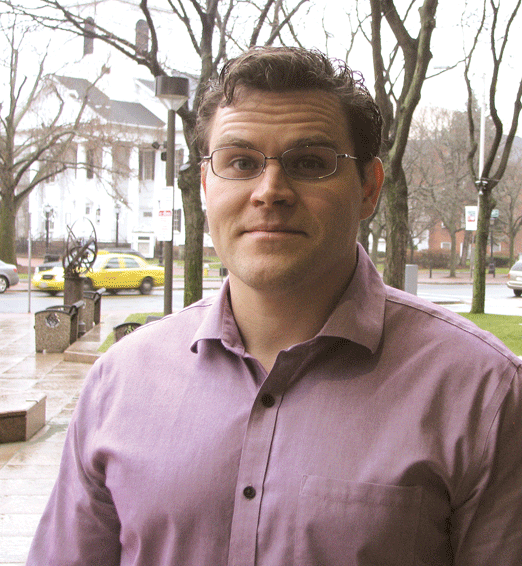
Curtis Edgin

Curtis Edgin, principal with Caolo & Bieniek Associates.

It’s not easy being green, but for today’s architects, it’s necessary.

“We’ve definitely had a mix of sustainable-design projects,” said Curtis Edgin, one of the principals of Caolo & Bieniek Associates in Chicopee, noting that some of them have been certified by the LEED (Leadership in Energy and Environmental Design) program, but not all.

“Some of our clients seek to pursue that,” he added, “but whether or not they go for that official recognition, they tend to pursue the same design practices.”

LEED, a federal program that lays out stringent, and often costly, guidelines by which new buildings can earn ‘points’ toward different levels of sustainability, has been a driving factor in making construction and renovation projects more environmentally friendly. It involves everything from air quality to the paints and furniture used; from ventilation to energy efficiency, and much more.

The emphasis on green design has seeped so thoroughly into the design and construction industries that even developers who aren’t seeking LEED status are demanding many similar elements, and this is certainly true for Caolo & Bieniek, which is no stranger to sustainable design, including the new Easthampton High School, which features bigger windows to maximize daylight, a photovoltaic array on the roof to harvest solar power, and LED lighting.

“Codes are getting more and more stringent, and continue to evolve,” Edgin said. “Plus, people are more concerned about energy use and will take a long view of things — sometimes pay a little more to have a more cost-effective building throughout its life. That’s what sustainable design is all about. It’s not just about recycling materials and conserving energy; there’s a whole list of things we can do that utilize those defining practices in all our projects.”

Caolo & Bieniek will celebrate 60 years in business next year, providing architecture, planning, and interior-design services across the Pioneer Valley. And Edgin understands the need to stay ahead of the curve when it comes to trends like sustainable design.

“It’s a more long-term view, rather than what’s cheapest on bid day,” he said. “Energy use is the first thing people think of, but it’s much more than that. You can insulate, insulate, insulate, but you still need to get ventilation into it, get fresh air into a very tight envelope.”

Then there’s long-lasting LED lightbulbs, which have become standard practice, replacing fluorescent bulbs. But green design and building extends to the work site itself, from efforts to reduce water runoff from the site to how materials are disposed of.

“When you’re doing demolition, does the debris end up in a landfill, or does it get separated?” Edgin said. “It used to be that everything got pushed off and sent to a landfill. Nowadays, we’re much more careful about what’s going on with these projects. Steel is sent off to be recycled, and maybe masonry is crushed and used for fill.”

The UMass police facility

The UMass police facility, designed by Caolo & Bieniek, was the first LEED-certified building on campus.

In theory, he added, a project like Easthampton can even turn its green features into an outdoor learning experiences, teaching students about bioswales and solar energy. “You can put a lot of technology into the building.”

For this issue’s focus on architecture, Edgin sat down with BusinessWest to talk about the going-green movement and also other challenges and opportunities posed by what has become a fiercely competitive, fast-moving industry.

Broad Palette

Although it has remained active in private development, Caolo & Bieniek wins about 75% of its work in the public sector, which includes plenty of public school construction and renovation. Besides the completed Easthampton project, Edgin said, “the old Chicopee High School is converting to a middle school, and we’re working with the Mass. School Building Authority on that. We also have a project with Phoenix Academy, a charter school in Springfield, up at the Tech Park, and a handful of smaller school projects for various communities.”

In addition, the firm has long been active with area municipalities, from the ongoing construction of the West Springfield public library to a number of public-safety jobs. “Police, fire, public safety … we have several projects ongoing, some in the study phase, some in the early construction phase,” he noted. Area colleges, including UMass, Westfield State University, and STCC, have also been a reliable source of work, from the UMass police station — the campus’s first LEED-certified project — to renovation and repair work on residence halls.

“We’ve also done projects for local public-housing authorities, and also some private, multi-family development in the Northampton area,” Edgin said. “And we’ve been keeping busy with work for financial institutions — banks and some investment companies.”

The sheer diversity of Caolo & Bieniek’s workload is a hedge against recessions, but Edgin admitted that the scale of the average project has decreased slightly over the past several years. That means more, smaller jobs, “which keeps you very busy meeting schedules, juggling multiple projects, and serving clients. We were very blessed to stay busy over the past 10 years. We attribute that to a good staff and good service. We continually strive to satisfy our clients.”

Caolo & Bieniek has taken jobs as far away as Ohio for a Veterans Affairs hospital, and conducted some far-flung work for the U.S. Postal Service, but most of its signature projects have been in or not far from the Pioneer Valley — from the aforementioned schools and colleges to work for MassMutual, Spalding, Raymour & Flanigan, Polish National Credit Union, Rocky’s, Boys and Girls Club of Chicopee, Subway, IHOP, and many others.

“We don’t go long distances away — generally within an hour or hour and a half radius,” Edgin said. “You can’t give good service in the car, so we stay close to home, and wind up seeing clients in the supermarket, in the hardware store, or out to buy a cup of coffee.”

The auditorium inside Easthampton High School

The auditorium inside Easthampton High School, a recent Caolo & Bieniek project with many ‘green’ features.

The firm has also performed historic-preservation work, which comes with two distinct, and often competing, challenges: restoring buildings according to a client’s demands, or working with a client who doesn’t care about a structure’s historical elements, but local and state historical commissions do.

“Phoenix Academy has been reviewed by the National Park Service, the Springfield Historical Commission, and the Mass. Historical Commission,” Edgin said. “Some of the challenges with these projects is getting everyone on the same page. It’s often about balance, what’s practical.”

Older buildings pose myriad questions, he added. “What are the requirements of the building code in order to reuse or renovate historic properties? What is the use? It may have been built at a time when the code requirements — what the building has to withstand from a seismic perspective, especially — were much different than what they are now. And, of course, what does it cost? There are a lot of noble gestures you can make, but somebody has to fund them.”

Issues with historic buildings have come to the forefront at a time when renovation is more popular than new construction, and investors are taking a hard look at older properties they can rehab, as opposed to building from the ground up. “Not everyone wants new construction or can afford it,” Edgin said. “Sometimes there’s value in older buildings, but you have to weigh the cost of meeting present needs, and that goes back to building codes and what the long-term cost is going to be.”

Old and New

Architects and contractors have long told BusinessWest that clients are more demanding than ever before, and time windows are often compressed. On the other hand, technology has improved project planning and communication.

“With the computers these days, the visualization tools we can use now, we’re no longer showing just flat plans. People often can’t read two-dimensional plans, but now we’re showing them three-dimensional images, what it will really look like,” Edgin said. “But you have to keep up with the technology and the new software, and so does your staff.”

It helps that most of Caolo & Bieniek’s 10 employees have been with the firm for many years, bringing consistency to operations. The same goes for customers. “A lot of our clients are long-standing. Even cities and municipalities, we’ll do multiple projects — it might be a school, a public-safety project, and a library project in the same city or town.”

Customer loyalty is critical at a time when firms from Boston and Connecticut are raiding the Pioneer Valley for work, a trend that has developed and intensified over the past 10 to 15 years.

To keep those clients happy, “you have to plan ahead. Everything moves so much faster these days, but you still have to allow time for the process. It doesn’t just happen. If you want a successful project, sometimes it takes years of foresight, and hopefully clients are thinking in the long term, too, rather than just today, what the present need is. Ultimately, that should shape your decision making.”

That forward thinking is one driving force behind sustainable building, but Edgin said it’s important in any project.

“You have to manage expectations, understand what’s possible and what’s not; you have to be honest,” he added. “People have very lofty goals, but cost is often the driving factor. You try to bring your experience — communicate your knowledge and understanding of the process — as early as possible to the client to determine what the end result will be.”

The goal, of course, is something everyone can live with — both literally and figuratively.

Joseph Bednar can be reached at [email protected]

Briefcase Departments

UMass President Robert Caret to Step Down
AMHERST — University of Massachusetts president Robert Caret has announced he will leave his job after four years to become the next chancellor of the University of Maryland system. Caret, who became president of the five-campus UMass system in July 2011, begins his new position in July. Before coming to Massachusetts, he had spent much of his career at Towson University, near Baltimore, where he worked as a faculty member, dean, executive vice president, president, and provost. “I could not say no to an offer to return to my home state, where I will be closer to my family,” Caret wrote in a statement. He will succeed chancellor William “Brit” Kirwan, who has led the 12-institution Maryland system for the past 12 years. In a statement, Kirwan praised his successor, saying, “I’ve known Bob Caret for several years. He has had significant positive impact on each institution he has led. The University System of Maryland and the state will benefit greatly from his leadership in the years ahead.” Caret, who will be formally introduced to the University of Maryland community at a news conference Friday, will earn $600,000 a year, and his contract will run for five years. At UMass, he was paid about $500,000 a year. He will be taking over a much larger system, with 162,000 students and an operating budget of $4.9 billion. UMass has half as many students and a budget of $2.9 billion.

MassBenchmarks Report Optimistic About Area’s Economic Prospects
HADLEY — The state’s workforce and job seekers have reason for optimism, according to the economists behind MassBenchmarks, a study of the state’s economy prepared by the UMass Donahue Institute. “State gross product growth has kept pace with strong national growth for the past two quarters,” according to the report. “State job growth has been steady, with software, information technology, and staffing-services sectors doing well. The Commonwealth’s labor force has grown consistently since June, as workers who were previously discouraged re-enter the labor market. And strikingly, Massachusetts has the fastest-growing population not only in New England, but in all of the Northeastern U.S. This is in large part due to international immigration and a lower level of domestic net outmigration than has been experienced in recent recoveries.” The state also appears to be benefiting from a national economic expansion that is gaining traction. The national jobs report for October was strong, with more than 300,000 jobs added, an increase in the average workweek, modestly rising wages, and upward revisions in job growth for August and September. Falling oil and gas prices are putting more money in the pockets of consumers and lowering business costs. Still, challenges remain, the report notes. “Electricity prices in Massachusetts are expected to rise steeply this winter largely as a result of the New England region’s ongoing difficulties in accessing a sufficient supply of natural gas to power its electricity generators. Rising electricity prices can be expected to partially offset the beneficial effects of the drop in oil prices and will create significant financial challenges for energy-intensive industrial users. Federal-government expenditures, long an important funding source for a variety of private-sector contractors and nonprofit research institutions (universities and hospitals), will continue to be squeezed. And, absent action on the part of the incoming governor and Legislature, state infrastructure spending will be significantly constrained in coming years now that state voters have determined that the gas tax will not be indexed to inflation.” In addition, housing production, especially single-family units, remains well below pre-Great Recession levels. “Despite these challenges,” the report goes on, “the Massachusetts economy continues to experience solid economic growth, particularly in the Greater Boston region, and the prospects for continued growth remain strong. After a weak first quarter of the year, the Massachusetts economy has rebounded strongly. While there continue to be serious concerns about the geographically and financially imbalanced nature of this recovery, the MassBenchmarks editorial board is as optimistic as it has been in some time and expects the state’s economic expansion to continue for the foreseeable future.”

Valley Gives Day Brings In More than $2.67 Million
SPRINGFIELD — Western Mass.-based nonprofits sent out the call, and their supporters gave — and gave and gave. In 24 hours, 14,189 donors made 28,824 gifts for a grand total of $2,676,595 at the third annual Valley Gives Day. In addition, a prize pool of $225,000 was distributed among several nonprofits. Organizations in three budget categories competed for bonus grants presented to the top three slots for ‘most unique donors.’ First prize was $5,000, second was $4,000, and third was $3,000. In keeping with a In addition, nonprofits in 12th place in each category were awarded a $1,200 bonus grant. In the category of large nonprofits, the winners were New England Public Radio (839 unique donors), Dakin Humane Society (739 donors), and the Food Bank of Western Massachusetts (696 donors). Among medium-sized nonprofits, the winners were New Spirit Inc. (641 donors), Whole Children (632 donors), and Pioneer Valley Symphony (384 donors). Among small nonprofits, the winners were Friends of the Hilltown Cooperative Charter School Inc. (437 donors), Grow Food Northampton (342 donors), and the Jackson Street School PTO Inc. (299 donors). Other awards were given in the category of money raised by first-time participants, with first place going to the Jackson Street School PTO Inc. with $24,356. Also, hourly beginning at 9 a.m., a randomly selected donation to a participating nonprofit had a $1,000 golden ticket added to the total. Throughout the day, there were five bonus power hours (10 a.m., noon, 4 p.m., 6 p.m., and 9 p.m.) when a total of $22,000 golden tickets were added to randomly selected donations. The full list of nonprofits and their totals raised is available at www.valleygivesday.org. 

Leadership Pioneer Valley Launches Leadership 2.0
SPRINGFIELD — Leadership Pioneer Valley (LPV) is offering offering a new series of bite-sized training sessions beginning in January to enhance leadership skills and understanding of the region. The sessions are open to LPV alumni and other emerging and established leaders. LPV recognizes that leadership is a lifelong process, and the Leadership 2.0 series features six two- to three-hour training sessions on a variety of topics with the goal of deepening leadership skills, creating new and diverse connections, and making an impact on the region. The sessions are open to LPV alumni who want to continue their learning or others who are unable to be part of LPV’s 10-month program. The intent is to diversify Leadership Pioneer Valley’s offerings and create new opportunities. Workshop topics include “Effective Communications,” “Becoming a Superhero Board Member,” and a field experience to explore the Agawam area. The series sponsors include Sisters of Providence Health System/Mercy Hospital, Appleton Corp., the Beveridge Family Foundation, and the Community Foundation of Western Massachusetts.

Springfield Chamber Opposes Recommended Tax Rates in City
SPRINGFIELD — The Springfield Chamber of Commerce, an affiliate of the Affiliated Chambers of Commerce of Greater Springfield, announced that it has reviewed the city of Springfield’s proposal for property taxes for fiscal year 2015 and has issued a position paper opposing the rates recommended. “The Springfield Chamber, on behalf of its more than 500 members, has consistently advocated for a reduction in the heavy tax burden that has been shifted from the residential community onto the backs of the business community,” said chamber President Jeffrey Ciuffreda. “While the recommended tax rates being proposed by Mayor [Domenic] Sarno reduces both classes of rates, his proposal actually increases the burden again onto the business community, and that is something the chamber cannot accept.” The chamber has a stated, long-term goal of reducing the heavy burden of taxes that has been shifted onto the business community, especially over the past 10 years, to a level that is more reasonable and one that has been used in past years, it said in its position paper. “In 2004, the business classification of properties paid 12.93% more in property taxes than its percentage of overall value. The chamber refers to this increased business-tax burden as the ‘gap.’ Businesses made up 26.86% of all property values in Springfield, yet paid 39.79% of all the property taxes, and used less municipal services. The gap provides for the business community to pay additional taxes so that the residential tax rate can remain lower. Since 2004, the chamber has consistently advocated for a reduction in the gap. Despite these efforts, that gap has seen a steady increase, to its current level of 15.37%.” Ciuffreda said that, while the chamber firmly believes that reducing this burden will spur economic growth, it recognizes the current economic fragility of the city and, for fiscal year 2015, is simply recommending a freeze in the extra level of taxes borne by the business sector. The chamber recommends that the difference between what the business community pays and the percent of value it comprises overall remain at the current level of 15.37%. Under the chamber’s recommendation, all classes of property taxes would be reduced (to $19.68 for residents and $38.72 for businesses), but, more importantly, the gap between the business tax rate and the residential tax rate would remain level. Under the mayor’s proposal, the tax rates would be reduced, but the business sector would pay an even higher rate of taxes, increasing the gap to 15.57%, again shifting more of an already burdensome tax level onto the business community, the chamber argues.

Red Cross Seeks Nominations for Hometown Heroes
SPRINGFIELD — Each year, the American Red Cross of Western Massachusetts hosts the Hometown Heroes Breakfast to honor local individuals and groups that have shown courage, kindness, and unselfish character when a friend, family member, or stranger faced a life-threatening situation, or who have had an extraordinary impact on his or her community. Next year’s breakfast will take place on Thursday, March 19 from 7:30 to 9 a.m. at the MassMutual Center in Springfield. Members of the community are invited to nominate local heroes for consideration by sharing their story. Honorees will be selected by a committee of individuals from the community, including former Hometown Heroes. Submissions for nominations are welcome from throughout Hampden, Hampshire, and Franklin counties. Nomination forms and criteria are available on the chapter website at www.redcross.org/news/event/ma/springfield. Nominations must be submitted online or postmarked no later than Dec. 31. This year’s event is being sponsored by Columbia Gas of Massachusetts, Channel 22 News, the MassMutual Center, and OMG Inc. Additional sponsorship opportunities are still available for this event. Hometown Heroes is the chapter’s largest annual fund-raising event and supports the ability to provide the resources necessary to serve its communities. The American Red Cross of Western Massachusetts serves Hampden, Hampshire, and Franklin counties, assisting families affected by disaster, helping military families relay emergency communications to their deployed loved ones, and providing life-saving training programs. For further information, contact Gina Czerwinski at (413) 233-1035 or [email protected].

State Issues $12.2M to Reduce Healthcare Costs
LOWELL — Secretary of Labor and Workforce Development Rachel Kaprielian awarded more than $12.2 million in the latest round of grants to help train healthcare providers to improve patient service and reduce healthcare costs. The funding goes to 53 organizations across the state as part of the Patrick administration’s effort to encourage economic growth by supporting innovation in the Commonwealth’s healthcare industry. “These grants will help ensure healthcare providers succeed in implementing new models of service delivery and adapt to new payment structures,” said Kaprielian. “By providing resources to develop new and innovative training and education programs, Massachusetts will continue to solidify its place as a leader in healthcare modernization and advances.” In 2012, Gov. Deval Patrick signed a law making Massachusetts the first state in the country to enact healthcare quality-improvement and cost-containment legislation. The act allocated $20 million to prepare the healthcare industry for the new demands and innovations called for in the legislation. Patrick announced the first round of grants in March, allowing businesses to assess their workforce and determine what skills and training they will need to change operations and deliver more efficient healthcare. For many of this week’s grantees, the training activity ahead builds on that planning work. All the grantees have identified a set of operational changes that are driving their need for increased workforce skills. The training activity will support new models for coordinating care across professions, institutions, and settings; focus on patient-centered care, stronger patient engagement, and health education to promote health and wellness; and spur the integration of primary care and behavioral health. In Western Mass., grants were awarded to Berkshire Health System ($249,286), Community Health Programs ($148,349), Baystate Medical Center ($249,682), Gandara Center ($250,000); Springfield Technical Community College ($156,338); and Carson Center for Human Services ($249,996).

Park with Ease Program Continues in Springfield
SPRINGFIELD — As the temperatures continue to drop, the Springfield Business Improvement District (SBID) plans to continue its Park with Ease valet program through the winter. “We are thrilled the community has responded so positively to our valet program,” said Chris Russell, executive director of SBID. “After many conversations with stakeholders downtown, including building owners, business owners, and community members, we kept hearing the same comment about parking issues, so we have addressed the concern.” Two valet stations are set up each Thursday, Friday, and Saturday along Main Street; simply look for the signs and valet kiosk. The first is at Court Square across from the MassMutual Center, and the other at the corner of Worthington and Main streets. Car acceptance runs from 5 to 9 p.m., with retrieval continuing until midnight. The SBID is underwriting the service, lowering the customer’s cost to just $5. For more information, visit www.springfielddowntown.com/parkwithease.

Company Notebook Departments

Easthampton Savings Bank to Acquire Citizens National Bank
EASTHAMPTON — Easthampton Savings Bank, the wholly-owned subsidiary of ESB Bancorp Inc., announced that ESB Bancorp has signed a definitive merger agreement with Citizens National Bancorp Inc., under which ESB Bancorp will acquire Citizens National Bancorp in a transaction valued at approximately $51.3 million. Citizens National Bancorp is the holding company for the Citizens National Bank, a $333 million bank located in Putnam, Conn. Following completion of the merger of ESB Bancorp and Citizens National Bancorp, the Citizens National Bank will merge with and into Easthampton Savings Bank. The transaction will expand Easthampton Savings Bank’s market presence into the Northeast Conn. and Central Mass. markets. Following completion of the transaction, ESB Bancorp will have consolidated assets of more than $1.3 billion and a branch network of 15 full-service offices. The transaction is expected to be accretive to ESB Bancorp’s earnings in the first year of combined operations. Easthampton Savings Bank will continue to be well-capitalized under applicable regulatory requirements following completion of the transaction. Matthew Sosik, president and CEO of Easthampton Savings Bank, stated, “we are very pleased to announce our acquisition of Citizens National Bank and to welcome the Citizens employees and customers into the ESB family. We are very familiar with Citizen’s market area, and we are excited to grow through an expansion into the Northeast Connecticut and Central Massachusetts markets. Given Citizens’ excellent reputation and franchise value in their market area, we expect to operate Citizens’ five branches under the Citizens trade name after the transaction is completed. That structure will allow us to remain acutely attentive to our existing customers and communities in the Pioneer Valley, while allowing us to expand and further develop Citizens’ market share.” Added David Conrad, president and CEO of the Citizens National Bank, “we believe this truly excellent opportunity to join ESB, a top-performing mutual bank, will serve our customers, employees, and communities very well.” The merger is subject to certain conditions, including the approval of the holders of at least a majority of the shares of Citizens National Bancorp and receipt of customary regulatory approvals. The merger is expected to be completed early in the third quarter of 2015.

Elms College Garners $27,000 Grant to Expand Mobile Healthcare
CHICOPEE — The Elms College School of Nursing’s caRe vaN has received a one-year, $27,000 grant from the Raskob Foundation of Wilmington, Del. to expand its mobile healthcare project, which offers free nursing services to the homeless and underserved of Chicopee. The caRe vaN is a mobile clinic run by Br. Michael Duffy, assistant clinical professor, coordinator of the Accelerated Second Degree in Nursing Program, and conventual Franciscan friar. He and nursing students provide free healthcare services, including blood-pressure checks and monitoring, blood-sugar checks, foot care, episodic first aid, minor wound care, and patient education. Since 2013, the van has set up shop on Sundays in the former CVS parking lot of the Exchange Street plaza and on Tuesdays at Lorraine’s Soup Kitchen and Pantry. With this grant, “we’ll be able to expand mobile healthcare to the homeless. It also provides ongoing maintenance of our 1988 vintage van, which has a leaky roof and leaky window seals,” Duffy said. “We could bring on board a psychiatric nurse practitioner a couple hours a week. We also could bring on a driver, which could let us expand to a third day a week on the street.” He also plans to use grant funds for monthly visits from a podiatrist and a barber, and even for monthly laundry vouchers for the van’s clients — all of which are services greatly needed by local homeless people. “Everyone who gets their blood pressure and blood sugar checked would get $5 toward laundry,” he said. Without the grant, expanded services would have had to wait, Duffy said. “We wouldn’t be able to contemplate having a psychiatric RN on board. We’d have to be begging elsewhere for funding to fix our particularly leaky windshield — the rubber is shot.” The caRe vaN helps Elms students prepare for their future nursing careers, he added. “Long-range, healthcare is somewhat headed out of the typical hospital-based model we saw years ago. It’s much more clinic-based and accessible.” Students with experience in this kind of setting will be more marketable upon graduation, too. “It’s real hands-on work,” he said. “They’re working with folks in the community where they are. And it makes them think on their feet. The homeless are with us for a short period; it’s a transient culture, so they’re there for five to 10 minutes. How much can we get done? Can we encourage them to stay longer than just blood pressure and blood sugar?” Working in the van also helps students live the Elms College mission of empowering students to effect positive changes in the community and in the world, Duffy said, adding it “teaches them creative ways to respond to the demands of their chosen profession — nursing — and allows them advocate for people in need. They go hand in hand, no doubt about it.”

Berkshire Bank Earns Community Impact Award
ALBANY, N.Y. — Berkshire Bank was recently honored by the Stakeholders Foundation in Albany, N.Y. with the 2014 Capital Region Community Impact Award. The foundation’s annual awards honor exemplary companies for their philanthropic and volunteer work in the Capital Region. Berkshire Bank received the Corporate Volunteer of the Year award recognizing its X-TEAM employee-volunteer program. The awards were presented in a ceremony at Proctors Theatre in Schenectady, N.Y. on Nov. 12. The Corporate Volunteer of the Year award was presented to Berkshire for its exemplary volunteer strategy that effectively integrated volunteerism into the company’s business culture, had a sizeable impact on the community, and served as an inspiration to others. Nearly 100% of bank employees in the Capital Region have participated in one of Berkshire’s company-supported projects over the last two years. With projects including fund-raising efforts for the Leukemia & Lymphoma Society’s Light the Night Walk, building homes with Habitat for Humanity, and work with the Regional Food Bank of Northeastern New York, Capital Region employees completed more than two dozen volunteer service projects in 2014, impacting thousands of lives and dozens of communities. Berkshire Bank’s X-TEAM provides all employees with paid time off to volunteer at company-supported projects. Bank employees help identify, select, plan, and execute all of the company’s volunteer work. This approach allows the bank to engage staff and choose volunteer opportunities that are important to local stakeholders. The program is also another way for Berkshire to give back to the community in addition to financial contributions of more than $2 million annually through its charitable foundations and corporate support.

WSU Names Presidential Search Committee
WESTFIELD — The Westfield State University board of trustees formally approved a motion at its Dec. 15 meeting naming campus and community leaders to serve as members of WSU’s presidential search advisory committee. The committee will be led by trustees Steven Marcus and Terrell Hill, who were appointed to serve as the chair and vice-chair, respectively, at the April board meeting. “The professionals selected for the presidential search committee offer a diversity of backgrounds, opinions, and experiences that will be essential when developing criteria, evaluating credentials, and identifying candidates for the university’s next president,” Marcus said. Committee members include Katheryn Bradford, director, Alumni Relations (APA); Junior Delgado, director, Career Services (APA); Evelyn Dina, SGA member, student representative; Joshua Frank, student trustee; Margot Hennessy, chair, Ethnic and Gender Studies, MSCA chapter president; Terrell Hill, trustee; Robin Jensen, chair, Foundation Board; Ron’na Lytle, administrative assistant, Ethnic and Gender Studies (AFSCME); Steven Marcus, trustee; Luis Perez, trustee; Carlton Pickron, vice president, Student Affairs (NUP); Henry Thomas, BHE representative; and Edward Welsh, associate professor, Mathematics (MSCA). The Presidential Search Committee members are responsible for selecting the university’s 20th president. The committee’s first task will be the selection of an executive search firm to assist in the process. A request for proposals (RFP) was posted nationally this fall, and four firms have responded. Marcus plans to convene the search committee in early January to review the four proposals and to select a finalist for presentation to the board at its next meeting on Feb. 5. As the search gets underway, a website will be established to to serve as the official resource for information and updates on the process.

G.M. Morisi Insurance Relocates to Longmeadow
LONGMEADOW — The G.W. Morisi Insurance Agency has moved to a new address after being in Springfield for 65 years. The current address is 175 Dwight Road, Suite 309, in Longmeadow. G.W. Morisi Insurance Agency is a full-service insurance agency that has been family-run for more than 65 years. It is a third-generation family business with extensive experience in a full range of personal lines and business insurance.
 
Q Smokin’ Good Food Opens in Springfield
SPRINGFIELD — It’s been said there’s no place like home for the holidays, which was a challenge for Craig and Chris Spagnoli, co-owners of the new Q Smokin’ Good Food in Springfield. Craig and his son, Chris, recently opened the restaurant, with a menu influenced by Chris’ wife, Sarah Anne, who is originally from South Carolina. Together, they saw an opportunity to fuse southern-style barbecue with local flavor in their restaurant on State Street. “Mason Square and the surrounding community is a really vibrant, diverse area,” said Chris Spagnoli. “There are college students and professors, businesses, public schools, and a well-established community, so we want to see the local flavor start to reflect that diversity.” The menu includes authentic, southern-style barbecue made daily from old family recipes that are complimented by local, artisan craft beers, not to mention fan favorites for the kids, including the ‘little piggy’ pulled-pork sandwich and macaroni and cheese. “The holiday season is a great time to get together and enjoy a family meal,” said Sarah Anne Spagnoli. “At Q Smokin’ Good Food, we have great gifts ready just in time for the holidays. From gift certificates to catering for your holiday events, we can do it all.” Gift cards are 20% off during the holidays. Q Smokin’ Good Food is available as take-out and delivery as well as dine-in. The restaurant regularly features vintage Indian Motorcycles, as it is located directly across the street from the Indian Motorcycle Apartments that were previously the old Indian Motorcycle factory.

Chamber Corners Departments

AFFILIATED CHAMBERS OF COMMERCE OF GREATER SPRINGFIELD
www.myonlinechamber.com
(413) 787-1555

• Jan. 7: ACCGS Business@Breakfast, 7:15-9 a.m., at Ludlow Country Club, One Tony Lema Drive, Ludlow. “Putting the PIONEER Back in Pioneer Valley” is the name of the program, to be led by Paul Silva, executive director of Valley Venture Mentors, and Natasha Clark, founder of LionessMagazine.com. Saluting: Dr. Mark Keroack, new CEO of Baystate Health, and Andrew Associates, celebrating its 30th anniversary. Cost: $20 for members ($25 at the door), $30 for general admission.

GREATER EASTHAMPTON CHAMBER OF COMMERCE
www.easthamptonchamber.org
(413) 527-9414

• Jan. 12:
“Getting Down to Business about Business,” 8-9 a.m., hosted by Web-tactics Inc., 83 Main St., Easthampton. Mayor Karen Cadieux will be available for casual question-and-answer sessions. RSVP to the chamber at (413) 527-9414 by Jan. 1.
• Jan. 22: Chamber Annual Meeting and Awards Dinner, 5 p.m., hosted by Southampton Country Club. The event will feature presentation of Business of the Year awards and celebrate member milestones. For more information, contact the chamber at (413) 527-9414 or e-mail [email protected]
• Feb. 14: 2nd Annual Easthampton WinterFest — Fall in Love with Winter, starting at 11 a.m. The Nashawannuck Pond Steering Committee and Greater Easthampton Chamber of Commerce invite you to the WinterFest, a community-wide event that features family-friendly winter activities held throughout the day. They include an historical ice harvest on Nashawannuck Pond, horse-drawn wagon rides, snowshoeing, snow sculpture, a chili cook-off, a community bonfire, and much more. There will also be winter-themed indoor activities for all ages. Most events are free or by donation. A lineup of the day’s events will be posted on www.nashawannuckpond.org.

GREATER HOLYOKE CHAMBER OF COMMERCE
www.holycham.com
(413) 534-3376

• Jan. 8: Winners Circle 2015 Reception, 5-7 p.m., at the Yankee Pedlar, 1866 Northampton St., Holyoke. Sponsored by Ross Insurance. We invite you to attend this enjoyable event where we honor all of our local and state elected officials. Tickets are $27. To sign up, call the chamber at (413) 534-3376 or visit holyokechamber.com.
• Jan. 13: “How to Start and Maintain Your Business — Finding a Location,” 5:30-7:30 p.m., at the chamber office, 177 High St., Holyoke. Join us in this workshop series as members of the chamber teach members of the community the steps it takes to build a successful business. Cost: $20 per session or $175 for the series.

GREATER NORTHAMPTON CHAMBER OF COMMERCE
www.explorenorthampton.com
(413) 584-1900

• Jan. 7: Arrive @ 5, 5-7 p.m., at McKenney Electric, 100 Northampton St., Holyoke. Sponsored by King & Cushman. Cost: $10 for chamber members.
• Jan. 27: New member orientation, 3-4 p.m., at the chamber office, 99 Pleasant St. This is the chance to tell us more about your business and how the chamber can best serve you. Meet other new members and learn how to make to the most of your chamber membership. Admission is free. RSVP to (413) 584-1900 or [email protected].

GREATER WESTFIELD CHAMBER OF COMMERCE
www.westfieldbiz.org
(413) 568-1618

• Jan. 5: January Mayor’s Coffee Hour, 8-9 a.m., at MoFroYo, Little River Plaza, 617 East Main St., Westfield. This event is free and open to the public. To register, call Pam at the chamber office at (413) 568-1618 or e-mail [email protected].
• Jan. 14: January After 5 Connection, 5-7 p.m., at the Arbors of Westfield, 40 Court St. Sponsored by Susan Allen Financial. Cost: $10 for members, $15 cash for non-members. Refreshments will be served. Bring your business cards and make connections. To register, call Pam at the chamber office at (413) 568-1618.

WEST OF THE RIVER CHAMBER OF COMMERCE
www.ourwrc.com
(413) 426-3880

• Jan. 15: Networking Lunch, noon to 1:30 p.m., at Lattitude, 1338 Memorial Ave., West Springfield. One must be a member or guest of a member to attend. Enjoy a sit-down lunch while social networking with fellow chamber members. Each attendee will get a chance to offer a brief sales pitch. The only cost to attend is the cost of your lunch. Attendees will order off the menu and pay separately the day of the event. Please note that we cannot invoice you for these events. For more information, contact the chamber office at (413) 426-3880 or e-mail [email protected].

Agenda Departments

Business@Breakfast
Jan. 7: The entrepreneurial spirit of the region will take center stage at the Affiliated Chambers of Commerce of Greater Springfield’s Business@Breakfast on Jan. 7, from 7:15 a.m. to 9 a.m. at Ludlow Country Club, One Tony Lema Dr., Ludlow. Paul Silva, executive director of Valley Venture Mentors (VVM), will discuss “Putting the PIONEER Back in Pioneer Valley.” He will be joined by Natasha Clark, founder of LionessMagazine.com, a Western Mass.-based, all-digital magazine for the female entrepreneur. VVM is a nonprofit based in Springfield that provides key support to the entrepreneurial ecosystem through its mentorship and accelerator programs. Silva is the manager of the River Valley Investors angel-investor network and co-founder of the Valley Venture Mentors entrepreneurship-mentoring program and All in Play, a company creating software that helps the blind socialize with their fully sighted friends and families as equals. He is the former president of the co-working space and incubator Click Workspace. The breakfast will also honor Dr. Mark Keroack on his new role as CEO of Baystate Health, and recognize Andrew Associates on its 30th anniversary in business. Reservations are $20 for ACCGS members in advance ($25 for members at the door) and $30 for general admission. Reservations are suggested and can be made online at www.myonlinechamber.com.

WNEU Mini-Law School
Feb. 10 to March 10: Western New England University School of Law will open its doors to the community with a five-week program focused on demystifying the law. Starting on Feb. 10, the Mini-Law School will be held on Tuesday evenings from 6 to 8 p.m. at the Blake Law Center, Room D, 1215 Wilbraham Road, Springfield. “Individuals interested in becoming better-informed and engaging in stimulating dialogue will find this program rewarding,” said Pat Newcombe, associate dean for Library and Information Resources. “No legal knowledge is necessary, just a curious mind.” Mini-Law School offers non-lawyers an understanding of legal topics that impact their everyday lives. Each class is taught by School of Law faculty and moderated by the Hon. Kenneth Neiman, magistrate judge, U.S. District Court, District of Massachusetts. Blending theory and practice, the classes will focus on family law, health law, constitutional law, and environmental law. The sessions include:
• Feb. 10: “Welcome to Mini-Law School: An Inside View of Law School and the Courts,” presented by Neiman and School of Law Dean Eric Gouvin;
• Feb. 17: “Family Law: What Defines a Family?” presented by 
Professor of Law Jennifer Levi and Neiman;
• Feb. 24: “Health Law: End-of-Life Choices,” presented by 
Professor of Law Barbara Noah and Neiman;
• March 3: “Constitutional Law: Real Law or Just Another Kind of Politics?” presented by Professor of Law Bruce Miller and Neiman; and
• March 10: “Environmental Law: Legal Solutions to Pollution Challenges,” presented by 
Professor of Law Julie Steiner and Neiman.
“After five weeks, you won’t be a lawyer,” said Western New England University Associate Dean for Academic Affairs Beth Cohen, “but you will be able to better understand laws that have an effect on your life, and, unlike traditional law school, there are no tests or homework.” Tuition is $35 for all five sessions, or $10 for each individual session. The program is free of charge for any high-school, college, or graduate student with a valid student ID. To register by phone or for more information, call Newcombe at (413) 782-1616. Registration will continue through Jan. 19. Learn more at www.law.wne.edu/minilaw.

Difference Makers

March 19: The sixth annual Difference Makers award program, staged by BusinessWest, will be held at the Log Cabin Banquet & Meeting House. Details on the event will be published in upcoming issues of the magazine. Difference Makers is a program, launched in 2009, that recognizes groups and individuals that are, as the name suggests, making a difference in this region. The magazine’s editor and publishers are currently reviewing nominations, and this year’s class will be profiled in the Feb. 9 issue.

Origami-inspired Art Exhibit
Through April 26: “Origami Interpretations,” an exhibit of 25 vibrant paintings, sculptures, and prints by New York artist Gloria Garfinkel, will be on view at the George Walter Vincent Smith Art Museum through April 26. The works, produced in the late 20th century, feature bold color, energetic patterns, and abstract compositions inspired by Japanese designs and origami forms. The artist, whose work combines complex geometry and painterly invention, is particularly fascinated by the kimono, the traditional dress of Japan, and the obi, the wide sash that is worn as a belt with it. She appreciates the “beauty and tenacity” expressed through the garments and notes that Japanese women continually recycle and layer fabrics to create unique looks and patterns. Garfinkel is also inspired by the color-field artists of the mid-20th century who explored different optical effects by manipulating their canvases. Garfinkel carefully arranges her forms in very specific ways to create a uniquely approachable and participatory aesthetic experience. The exhibition features pieces from Garfinkel’s series “Gingko Kimono,” collaged etchings from the late 1980s; paintings inspired by the obi; etchings from the “Kiku” (chrysanthemum) series; Kado woodcut prints; Hanabi maquettes; and aluminum flip paintings.

40 Under Forty
June 18: The ninth annual 40 Under Forty award program, staged by BusinessWest, will be held at the Log Cabin Banquet & Meeting House. Details on the event, which honors the region’s most accomplished and civic-minded professionals under age 40, will be published in upcoming issues. Nominations are now open for the class of 2015, and are due by the end of the day (5 p.m.) on Feb. 6. The nomination form can be found at HERE, in this issue, and in upcoming issues.

Daily News

HAMPDEN — Wingate at Hampden, a skilled-nursing and rehabilitation center, announced it has been awarded a deficiency-free survey from the Mass. Department of Public Health (DPH). The leading measure of nursing-home excellence, a deficiency-free survey is difficult to attain because of the rigor involved. On average, fewer than 25% of facilities in the Bay State receive this designation in a given year.

“The continual pursuit of excellence in each and every department within our facilities is a central part of Wingate Healthcare,” said Scott Schuster, founder and president. “We are thrilled to see their hard work and high level of patient care being recognized at the state level.”

The DPH inspects all nursing facilities annually on an unannounced basis. Over the course of several days, inspectors thoroughly analyze and rate each facility on core criteria including residents’ quality of care, quality of life, staffing, cleanliness, safety, food preparation, medication administration, and more, for a total of nearly 200 issues. A detailed review of records is also conducted, as are interviews with residents and families.

Wingate at Hampden is one of six Wingate Healthcare facilities in Western Mass. With a specialty in providing 24/7 personalized care for Alzheimer’s and dementia patients, the community consists of carefully planned living spaces, common areas, and a multi-sensory environment that has been proven to reduce problems associated with Alzheimer’s and dementia. In addition, many staff members have received advanced Alzheimer’s-care training to better meet the needs of residents and their families.

The facility features a number of unique amenities, including a music-therapy program, outdoor gardens, a spa and salon, a deluxe open kitchen, a fitness center, a theatre, a library, activity rooms, underground parking, and more.

Daily News

SPRINGFIELD — It’s been said there’s no place like home for the holidays, which was a challenge for Craig and Chris Spagnoli, co-owners of the new Q Smokin’ Good Food in Springfield. Craig and his son, Chris, recently opened the restaurant, with a menu influenced by Chris’ wife, Sarah Anne, who is originally from South Carolina. Together, they saw an opportunity to fuse southern-style barbecue with local flavor in their restaurant on State Street.

“Mason Square and the surrounding community is a really vibrant, diverse area,” said Chris Spagnoli. “There are college students and professors, businesses, public schools, and a well-established community, so we want to see the local flavor start to reflect that diversity.”

The menu includes authentic, southern-style barbecue made daily from old family recipes that are complimented by local, artisan craft beers, not to mention fan favorites for the kids, including the ‘little piggy’ pulled-pork sandwich and macaroni and cheese.

“The holiday season is a great time to get together and enjoy a family meal,” said Sarah Anne Spagnoli. “At Q Smokin’ Good Food, we have great gifts ready just in time for the holidays. From gift certificates to catering for your holiday events, we can do it all.”

Gift cards are 20% off during the holidays. Q Smokin’ Good Food is available as take-out and delivery as well as dine-in. The restaurant regularly features vintage Indian Motorcycles, as it is located directly across the street from the Indian Motorcycle Apartments that were previously the old Indian Motorcycle factory. The restaurant currently has a 1949 Indian Scout on display for a limited time, to be replaced in early January by a 1926 Indian Scout. Private collectors provide the bikes for display.

Business of Aging Sections
Hospice Brings Quality of Life to Dying Patients, Families

Sarah Jackson, left, and Carol Lewis

Sarah Jackson, left, and Carol Lewis say the team aspect of hospice care is one of its most important features.

There’s a big difference, Leslie Hennessey said, between giving up on life and accepting that the end is near.

“Hospice simply gives people more support toward the end of life,” said the volunteer coordinator for Holyoke VNA & Hospice Life Care. “It’s not giving up; it’s changing the way we look at life. Do you want to go to your beach house one last time? Do you want to go see the Red Sox? We’re really focusing on quality of life, not how many days, weeks, or months you have left. The perspective changes; what’s really important to you? Because now is the time to do it.”

In short, families that choose hospice care for their dying loved ones “aren’t throwing their hands in the air. They’re saying, ‘this is what’s really important to us.’ A lot of times, that’s just spending time together as a family, saying the things they need to say.”

Most hospice programs follow the same format, Hennessey told BusinessWest. “The family and the patient generally meet with their physician about the diagnosis they have, and the physician has to certify that they have less than six months to live if the disease follows its normal prognosis. When we get the referral, we can admit them to hospice.”

It’s also a team approach to care. “Every patient gets a hospice nurse. They can also have a social worker if they’d like, a home health aide, or volunteer services if they choose. On top of that, we have other complementary services; we have a therapeutic heart program, a harpist to play at the bedside for the patient, and a pet therapist who visits patients in nursing facilities. I have a couple of volunteers who practice Reiki and energy work; we can offer that to patients as well.”

Carol Lewis, director of hospice at Spectrum Home Health and Hospice Care in Longmeadow, explained that “we’re looking for patients who have a terminal diagnosis that requires symptom management by nurses who have expertise in that area, and are educated in taking care of the holistic needs of that community. That’s the broad picture of what we do.”

She also stressed the team aspect of hospice care. “That’s the unique aspect of it; it’s a team of trained professionals that address these needs, and it’s not only about the patient, but supporting the family as well.”

For this issue’s focus on the business of aging, BusinessWest takes a look at an area of healthcare that has been growing in prominence as America’s 65+ demographic soars to record numbers — and the many ways hospice care is providing, if not hope for recovery, a measure of peace and acceptance for those approaching the very end of life.

Rising Tide

Indeed, 2009 saw 1,341,391 patients access hospice care; last year, that figure had risen to 1,542,737, a 15% increase.

There’s some statistical evidence that palliative, or comfort-only, care brings real benefits to the dying or critically ill. A study several years ago at Massachusetts General Hospital divided a group of stage 4 lung cancer patients into two groups; all of them received traditional chemotherapy through a physician, but half also enjoyed the services of a palliative care team.

The results, published in the New England Journal of Medicine, showed a measurable difference in the amount of anxiety and depression, while patients who had received palliative care from the start averaged a three-month survival advantage.

While some palliative care includes curative treatment, however, hospice is reserved for patients who forgo all but comfort-centered care; in other words, they’re no longer fighting to get better.

Sarah Jackson, executive vice president of Spectrum, explained that patients can receive hospice care in any community setting.

“Wherever you are, you can select a hospice benefit,” added Paula Boss, executive director of Holyoke VNA & Hospice Life Care. “At home, a nursing home, assisted living, a friend’s home — you can receive hospice care.”

At the heart of hospice care, Hennessey said, is a cadre of volunteers who spend time with the patient, particularly when their loved ones aren’t able to do so.

Leslie Hennessey, left, and Paula Boss

Leslie Hennessey, left, and Paula Boss say hospice services are available to patients wherever they live, whether at home or in a community care setting.

“They can’t provide any personal care or give medications, but they can be a presence in the house, sitting vigil with hospice patients. When a hospice patient is considered to be in the last hours of their life, and especially in nursing homes, if the families are far away and traveling to get to the person, our volunteers will sit with them until their loved ones get there. Families don’t want their loved ones to be alone.”

She said Holyoke’s volunteers hail from all walks of life. “A lot of folks have had experience with hospice in the past and loved ones in a hospice program, and they felt like they wanted to give something back; they realized how important it was, that extra support, how much they appreciated it, and they want to do that for another family.”

Hennessey said she conducts trainings twice a year for people who want to help in this manner. “Sometimes they say, ‘I don’t know if I can do this, but I want to try.’ They’re very special people.”

After all, she noted, “if you’re a hospice volunteer, you have to understand that every patient will die. That’s what we tell them on the phone before we even send them the information packet; I need them to know that every person they meet will die, and I ask, ‘how do you feel about that?’ It’s something they really need to consider. They know what they’re getting into when they walk through that door. They’re amazing.”

Lewis said Spectrum’s program also offers the services of a harpist with a degree in thanatology, the study of death, as well as service dogs that provide comfort to patients and their families.

“We also have a chaplain as part of the team,” she said. “When I say holistic care, I mean we meet physical needs, emotional needs, and more. Sometimes the chaplain is looking at some life review with the patient and the meaning of life, providing some comfort, or maybe just some reading at the bedside.”

Whether it’s the nurse, social worker, home health aide, chaplain, or volunteer at the bedside — and families can call for help 24/7 — hospice care is just as much a benefit for the family as it is for the patient, Jackson said. “We can be helpful for families, giving the caregiver a little bit of respite, by sitting vigil with their loved ones, having a volunteer come in for an hour or two so the family can take a break.”

At the same time, Lewis said, hospice staff takes time to educate the family so they can provide more effective care when hospice workers and volunteers aren’t nearby. “That really helps in the grief process, to look back and know you helped provide the comfort.”

Typically, hospice care includes a full year of grief counseling for the family after the patient dies, Boss said. “Often, the grief really hits them after the funeral, and they have continuing needs.”

Setting the Record Straight

Lewis said families often have misconceptions about what it means to elect hospice care. For instance, “a lot of people think they can never go to the hospital. But any time they need a level of care that isn’t offered in hospice, an emergency situation where they might need short-term help, they can go to the hospital.”

Also, Boss noted, “some people think they don’t receive any medication anymore, but that’s not the case. Yes, we often discontinue medications that are not needed for comfort or pain. But some cancer patients receive chemotherapy if there’s a comfort purpose and not a treatment purpose. We’re very strong on keeping people comfortable.”

Hennessey told BusinessWest that hospice benefits are typically covered by Medicare and Medicaid, as well as most private payers. “It’s not always something you’re looking for in your benefit package when you sign up, but most insurances have a hospice benefit, and it can be a huge benefit to families.”

The question for those families is when to take that step and admit that quality of life is more important than fighting an uphill battle for recovery. The growing ranks of older Americans have made end-of-life care a hot topic these days, and a tricky one.

That’s because, while doctors can extend life, often by artificial means, to a greater degree than ever, that intervention is often prohibitively expensive, and the quality of that life often dubious. So, increasingly, patients, families, and caregivers face hard questions — not about whether doctors can add weeks, months, or years to the life of a dying patient, but about whether they should.

“Awareness of hospice has increased, but barriers are still there — a lot of cultural barriers,” Boss told BusinessWest. “Some cultures really don’t understand the hospice benefit; they don’t understand all the things we can bring to them. There’s still a long way to go. A large number of patients are eligible to benefit from hospice, but never elect it.”

Hennessey cited a statistic that about 21,000 patients receive hospice care annually in Massachusetts, about 40% of all deaths. “It’s a good number, but it would be great if it was all patients, or close to 80% of patients.”

She also noted that the median length of hospice care is only 23 days, which means patients and families are often opting for it much later than they’re eligible. “We’re working with doctors and facilities to identify folks who could really benefit from these programs,” she said. “The benefit is for a life expectancy of six months, but in 23 days, we’ve just got things arranged, and then, unfortunately, we lose the patient.”

Lewis agreed. “Unfortunately, some families wait until the very end to contact hospice, but we’re able to get involved six months before the end, when there’s time to develop relationships with the team and to provide quality of life while the person is still here.

“It’s a chicken-and-egg situation,” she added. “A lot of times, people call us at the end, so the community sees us coming at the end and think we’re heavily associated with the end of life. But it’s earlier in the process that hospice really has its true benefit.”

So hospice advocates continue to get the word out to doctors and the public.

“It’s not giving up hope, throwing your hands up, saying, ‘I can’t cure this,’” Hennessey said. “I want to put you in the hands of people who can manage your pain symptoms so you can get the best life you can out of your last months.’”


Joseph Bednar can be reached at [email protected]

Chamber Corners Departments

AFFILIATED CHAMBERS OF COMMERCE OF GREATER SPRINGFIELD
www.myonlinechamber.com
(413) 787-1555

• Jan. 7: ACCGS Business@Breakfast, 7:15-9 a.m., at Ludlow Country Club, One Tony Lema Drive, Ludlow. “Putting the PIONEER Back in Pioneer Valley” is the name of the program, to be led by Paul Silva, executive director of Valley Venture Mentors, and Natasha Clark, founder of LionessMagazine.com. Saluting: Dr. Mark Keroack, new CEO of Baystate Health, and Andrew Associates, celebrating its 30th anniversary. Cost: $20 for members ($25 at the door), $30 for general admission.

GREATER CHICOPEE CHAMBER OF COMMERCE
www.chicopeechamber.org
(413) 594-2101

• Dec. 17: December Salute Breakfast, 7:15-9 a.m., at the Castle of Knights, 1599 Memorial Dr. in Chicopee. Cost: $20 for members, $26 for non-members
• Dec. 18: Mornings with the Mayor, 8-9 a.m., at the MassMutual Learning & Conference Center, 350 Memorial Dr., Chicopee. Coffee and light breakfast refreshments will be served, while Mayor Richard Kos provides updates and news about what’s happening in Chicopee. The mayor invites chamber members to submit questions, concerns, or ideas for discussion by Dec. 16 to chamber President Eileen Drumm at [email protected]. This event is for Greater Chicopee Chamber members only and is free, but registration is required.

GREATER EASTHAMPTON CHAMBER OF COMMERCE
www.easthamptonchamber.org
(413) 527-9414

• Jan. 12: “Getting Down to Business about Business,” 8-9 a.m., hosted by Web-tactics Inc., 83 Main St., Easthampton. Mayor Karen Cadieux will be available for casual question-and-answer sessions. RSVP to the chamber at (413) 527-9414 by Jan. 1.
• Jan. 22: Chamber Annual Meeting and Awards Dinner, 5 p.m., hosted by Southampton Country Club. The event will feature presentation of Business of the Year awards and celebrate member milestones. For more information, contact the chamber at (413) 527-9414 or e-mail [email protected]
• Feb. 14: 2nd Annual Easthampton WinterFest — Fall in Love with Winter, starting at 11 a.m. The Nashawannuck Pond Steering Committee and Greater Easthampton Chamber of Commerce invite you to the WinterFest, a community-wide event that features family-friendly winter activities held throughout the day. They include an historical ice harvest on Nashawannuck Pond, horse-drawn wagon rides, snowshoeing, snow sculpture, a chili cook-off, a community bonfire, and much more. There will also be winter-themed indoor activities for all ages. Most events are free or by donation. A lineup of the day’s events will be posted on www.nashawannuckpond.org.

GREATER HOLYOKE CHAMBER OF COMMERCE
www.holycham.com
(413) 534-3376

• Dec. 17: Chamber After Hours, 5-7 p.m. Sponsored and hosted by the Delaney House in Holyoke. This business networking event includes a 50/50 raffle, door prizes, and money (scratch ticket) tree. Cost: $10 for members, $15 for the public. To sign up, call the chamber at (413) 534-3376 or visit holyokechamber.com.
• Jan. 8: Winners Circle 2015 Reception, 5-7 p.m., at the Yankee Pedlar, 1866 Northampton St., Holyoke. Sponsored by Ross Insurance. We invite you to attend this enjoyable event where we honor all of our local and state elected officials. Tickets are $27. To sign up, call the chamber at (413) 534-3376 or visit holyokechamber.com.
• Jan. 13: “How to Start and Maintain Your Business — Finding a Location,” 5:30-7:30 p.m., at the chamber office, 177 High St., Holyoke. Join us in this workshop series as members of the chamber teach members of the community the steps it takes to build a successful business. Cost: $20 per session or $175 for the series.

GREATER NORTHAMPTON CHAMBER OF COMMERCE
www.explorenorthampton.com
(413) 584-1900

• Dec. 10: Free Internet Marketing Seminar, 8:30-10:30 a.m., at the chamber office, 99 Pleasant St. Continental Breakfast will be served at 8 a.m. Admission is free. Topics include:
— How the world has gone mobile;
— The importance of responsive mobile sites;
— The power and accountability of search;
— The effectiveness of display, Facebook, and news feed ads; and
— Twitter, GooglePlus, and other social media.

• Dec. 15: New member orientation, 3-4 p.m., at the chamber office, 99 Pleasant St. This is the chance to tell us more about your business and how the chamber can best serve you. Meet other new members and learn how to make to the most of your chamber membership. Admission is free. RSVP to (413) 584-1900 or [email protected].
• Jan. 7: Arrive @ 5, 5-7 p.m., at McKenney Electric, 100 Northampton St., Holyoke. Sponsored by King & Cushman. Cost: $10 for chamber members.
• Jan. 27: New member orientation, 3-4 p.m., at the chamber office, 99 Pleasant St. This is the chance to tell us more about your business and how the chamber can best serve you. Meet other new members and learn how to make to the most of your chamber membership. Admission is free. RSVP to (413) 584-1900 or [email protected].

GREATER WESTFIELD CHAMBER OF COMMERCE
www.westfieldbiz.org
(413) 568-1618

• Dec. 19: Holiday Breakfast, 7:15-9 a.m., at Tekoa Country Club, 459 Russell Road, Westfield. Platinum sponsor: Westfield State University. Gold sponsor: Berkshire Bank. Silver sponsor: Easthampton Savings Bank. The guest speaker is Beth Cardillo, executive director of Armbrook Village, who will present “Westfield: A Dementia-friendly City.” The chamber will be collecting the following high-demand items for the Westfield Food Pantry: Pasta, pasta sauce, macaroni and cheese, canned fruits and vegetables, tuna, soup, rice, cereal, peanut butter, jelly, juice, coffee, and tea. A cash donation to the Westfield Food Pantry will also be accepted. Cost: $25 for members, $30 for non-members. For more information or to donate a raffle, contact Pam at the chamber office at (413) 568-1618.
• Jan. 5: January Mayor’s Coffee Hour, 8-9 a.m., at MoFroYo, Little River Plaza, 617 East Main St., Westfield. This event is free and open to the public. To register, call Pam at the chamber office at (413) 568-1618 or e-mail [email protected].
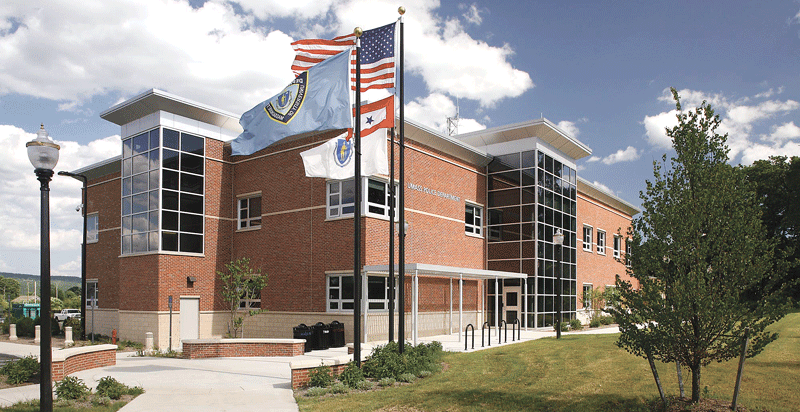
• Jan. 14: January After 5 Connection, 5-7 p.m., at the Arbors of Westfield, 40 Court St. Sponsored by Susan Allen Financial. Cost: $10 for members, $15 cash for non-members. Refreshments will be served. Bring your business cards and make connections. To register, call Pam at the chamber office at (413) 568-1618.

WEST OF THE RIVER CHAMBER OF COMMERCE
www.ourwrc.com
(413) 426-3880

• Jan. 15: Networking Lunch, noon to 1:30 p.m., at Lattitude, 1338 Memorial Ave., West Springfield. One must be a member or guest of a member to attend. Enjoy a sit-down lunch while social networking with fellow chamber members. Each attendee will get a chance to offer a brief sales pitch. The only cost to attend is the cost of your lunch. Attendees will order off the menu and pay separately the day of the event. Please note that we cannot invoice you for these events. For more information, contact the chamber office at (413) 426-3880 or e-mail [email protected]

YOUNG PROFESSIONAL SOCIETY OF GREATER SPRINGFIELD
www.springfieldyps.com

• Dec. 17: CEO Luncheon, 1:15 p.m., at Cambridge College, Tower Square, 1500 Main St., Springfield. The guest speaker will be Amy Scott of Wild Apple Design Group.
• Dec. 18: December Third Thursday, 5 p.m., at the Community Music School of Springfield, 127 State St., Springfield. CMSS is dedicated to inspiring people of all ages to begin or renew a lifelong journey into the joy of music and the arts, making this experience accessible and affordable to all people in our community. It offers instruction in classical, jazz, Latin, gospel, and other popular music styles to individuals and families of diverse backgrounds and cultures, ages, abilities, talents, and financial needs. During the event, tour the facility and listen to live music from the talented CMSS students. Parking is available in the CMSS lot on Stockbridge Street. Light refreshments and a cash bar will be provided by Elegant Affairs.

Daily News

SPRINGFIELD — The city of Springfield and the Springfield Redevelopment Authority have released a request for proposals (RFP) for more than 17 acres of land located on Pinevale Street in the Indian Orchard neighborhood of Springfield. The RFP was released on Dec. 3 and is available online through the city’s Office of Procurement website and at City Hall, Room 307.

“In the midst of $2.7 billion of economic activity in the city of Springfield, it is logical to market this property and attempt to add to the surging momentum being felt across the city,” said Mayor Domenic Sarno.

Added Kevin Kennedy, the city’s chief development officer, “with the success of the solar project immediately across the street, we believe there is a good opportunity for development at this site. It’s not often we have industrial-park-zoned sites of this size available in Springfield.”

Western Massachusetts Electric Co.’s 2.3-MW facility across the street from the property is an award-winning former brownfield site that has been transformed into one of the largest solar-energy facilities in the region. The Indian Orchard facility features 8,200 solar panels on 12 acres of land that formerly housed a Chapman Valve foundry.

The two development parcels being made available in the RFP were both historically part of the Chapman Valve complex as well, and are currently owned by the city of Springfield (parcel 09755-0086) and the Springfield Redevelopment Authority (parcel 09755-0070). This 17.675-acre site is close to the surrounding communities of Wilbraham, Ludlow, and Chicopee, and has easy access to Route 20, I-291, and I-90.

The RFP can be viewed at www3.springfield-ma.gov/finance/procurement. Proposals are due Jan. 15 at 2 p.m.

Daily News

SPRINGFIELD — On Monday, state Energy and Environmental Affairs (EEA) Secretary Maeve Vallely Bartlett and Springfield Mayor Domenic Sarno celebrated Camp STAR Angelina, Mary Troy Park, and Balliet Park, all park projects reflecting the more than $7.7 million invested in parks and open space in Springfield by Gov. Deval Patrick’s administration.

“Open space and outdoor recreation investments are a critical component of building robust, healthy communities,” said Bartlett. “Gov. Patrick has made urban neighborhoods a top priority, and the evidence of that is clear today in Springfield and across the Commonwealth.”

Sarno thanked Patrick and Bartlett “for your continued vision in providing funding to increase and revitalize recreational and green spaces in urban areas. The legacy you are leaving here in Springfield is one of inclusion and opportunity, which is evidenced by the $3.5 million investment made here in Springfield, which demonstrates the Patrick administration’s commitment in creating strong and healthy communities.”

Located in Springfield’s Forest Park and operated by the city, Camp STAR Angelina offers inclusive recreational programs for youth and young adults with and without disabilities, medical concerns, and hearing and visual impairments.

EEA provided more than $1.325 million in capital funding to help fund the construction of a nearly complete, fully accessible pool and accessible bath house, as well as a universal outdoor amphitheater, construction of which will begin soon. As part of Monday’s celebration, Sarno announced that the pool and bath-house facility would be named after Gov. Patrick, in recognition of his efforts to increase access outdoor recreation for all children.

North Riverfront Park sits along the northern end of Springfield’s portion of the Connecticut River Walk and Bikeway, a proposed 20-mile corridor that would run through Agawam, Springfield, West Springfield, Chicopee, and Holyoke. EEA invested $1.2 million in North Riverfront Park to transform a property surrounded by barbed wire into a welcoming, vibrant site that will better connect Springfield’s North End to the riverfront. The city’s design features a reduction of pavement, installation of picnic tables, and an increase of pervious lawn areas, plant beds, rain gardens, and additional trees to provide shade. The city is contributing an additional $300,000 toward the project, and construction will be beginning shortly.

Mary Troy Park, a new park in the densely populated Liberty Heights neighborhood, will provide green space and access to outdoor recreation for residents. The park, set to be completed next spring, was made possible by a $400,000 Parkland Acquisition and Renovations for Communities (PARC) grant from the Patrick administration. The city will use this funding to design and build a new park, including a universally accessible series of free-standing play structures, including a water-spray feature and exercise equipment along a central pathway, as well as park amenities like drinking fountains and trash receptacles. The city of Springfield is contributing $380,000 in federal Community Development Block Grant funding toward the project.

Balliet Park received a $400,000 PARC grant to renovate the baseball diamond and tennis courts, install a playground and swingset equipment, establish a picnic area, and improve access to park entrances and walkways. Springfield is using its Our Common Backyards Grant to construct a splash pad at the park, which will be completed by the year’s end.

Springfield is one of seven cities to receive funding through the governor’s Signature Urban Parks program. Through these projects, the Patrick administration seeks to revitalize urban communities by opening up or upgrading green spaces for outdoor recreation and improving access to natural resources such as waterways and historic neighborhood landmarks.

Daily News

SPRINGFIELD — Leadership Pioneer Valley (LPV) is offering offering a new series of bite-sized training sessions beginning in January to enhance leadership skills and understanding of the region. The sessions are open to LPV alumni and other emerging and established leaders.

LPV recognizes that leadership is a lifelong process, and the Leadership 2.0 series features six two- to three-hour training sessions on a variety of topics with the goal of deepening leadership skills, creating new and diverse connections, and making an impact on the region. The sessions are open to LPV alumni who want to continue their learning or others who are unable to be part of LPV’s 10-month program. The intent is to diversify Leadership Pioneer Valley’s offerings and create new opportunities.

Workshop topics include “Effective Communications,” “Becoming a Superhero Board Member,” and a field experience to explore the Agawam area. The series sponsors include Sisters of Providence Health System/Mercy Hospital, Appleton Corp., the Beveridge Family Foundation, and the Community Foundation of Western Massachusetts.

Daily News

SOUTH HADLEY — Play Date Place, a creative and interactive play and party experience for children ages 6 and under, is open for business. The vision of founder Darlene Sattler is to bring a kid-sized, interactive town to Western Mass., promoting imaginative play in a clean, safe, enclosed environment.

Children can interact with parents, grandparents, caregivers, and friends in a climate-controlled, camera-monitored facility, which includes a six-building town — fire station, market, restaurant, theatre, boutique, and gas station. The town also includes a train station, park, and ball-pit ‘lake,’ as well as an infant play area.

Play Date Place, which is located at 470 Newton St., also offers party packages, with the ability to host two parties simultaneously with the use of two party rooms. Party packages can be purchased, as well as private rental of the entire facility. Each weekend, Play Date Place has the capability to book eight parties plus 12 hours of open play. Operating hours are Monday through Thursday, 10 a.m. to 5 p.m.; Friday, 10 a.m. to 7 p.m.; and Saturday and Sunday, 10 a.m. to 4 p.m.

The facility features several amenities for parents and caregivers, too. A flat-panel television and free wi-fi are available along with a wall monitor showing camera views of the entire facility so children can be monitored at all times. Play Date Place is a socks-only facility and will have socks available for purchase for those who come without them.

“We aim to be the only facility of its kind promoting old-fashioned imaginative play, and encourage growing a strong family bond and social skills without the use of electronic devices,” said Sattler.

There is reason to support imaginative play. Dr. Scott Barry Kaufman, a cognitive psychologist specializing in the development of intelligence, creativity, and imagination in education, business, and society, noted in Psychology Today that “systematic research has increasingly demonstrated a series of clear benefits of children’s engagement in pretend games.” More specifically, imaginative play develops social and emotional skills, language skills, and critical-thinking skills.

Daily News

AMHERST — The University of Massachusetts created six new startup companies within the past year, its best-ever annual performance, and set new records for patent applications and the number of faculty members disclosing inventions, President Robert Caret said.

The new companies reflect the university’s increased focus on coaching, mentoring, and providing other services and support to help researchers start businesses. Also, for the eighth straight year, UMass generated more than $30 million in licensing income, enough to ensure that the university maintains its perch in national surveys of universities with the highest licensing income derived from academic research.

“Our success is proof that the leading-edge research performed by our distinguished faculty and the high-performing students who work alongside them is growing every day in relevance and importance,” Caret said. “We want to accelerate these efforts because this research — and the new treatments, products, services, and companies it spawns — adds tremendous value to society and impacts the quality of life in Massachusetts.”

In addition to the six new startups, the UMass recorded 157 patent applications and 180 faculty invention disclosures for fiscal year 2014, which ended June 30. In all three categories, it was the university’s best-ever yearly performance. The university also was granted 54 patents for ideas that have the potential to be commercialized. UMass generated more than $31 million in licensing revenue in fiscal year 2014. The six companies spun out of UMass inventions this year were:

• Felsuma, “Geckskin Adhesive Technology,” by Al Crosby and Duncan Irshick, professors at UMass Amherst. Felsuma is commercializing a new technology, Geckskin, licensed from UMass Amherst. Geckskin is a three-dimensional, transformational adhesive that can attach and release repeatedly from multiple surfaces with high bonding strength. It is based on technology developed in the laboratories of Crosby in Polymer Science and Irschick in Biology. The major markets are large and include clothing, shoes, households, medical devices, military, and construction. The company is headed by Rana Gupta, an entrepreneur and former venture capitalist.

• Aha! Productions/Innovation Accelerator, “Obscure Features Hypothesis,” by Joseph McCaffrey from UMass Amherst. The company licenses UMass software technology that is useful in creativity and invention processes. The firm’s first product, Analogy Finder, offers a software package that seeks to rationalize the process of creativity and invention. The software seeks out analogous solutions to problems by hunting through patent databases, research libraries, and other sources. Innovation Accelerator is headed by James Pearson, an alumnus of UMass Amherst’s Mechanical and Engineering Department.

• Sonation, “Expert System for Musical Accompaniment,” by Chris Raphael from UMass Amherst. The company is developing music software technology that transforms singing and playing instruments into a more interactive, fun experience. It is creating apps that simulate playing with a full band or orchestra that listens and responds to the user’s style. The first product, Cadenza, is available at the iStore for use on the iPad. The product, to be introduced in the next two years, will expand the application to other devices, instruments, and available music. The company is headed by Ann Chao, a Harvard MBA and former strategy consultant.

• Voyager Therapeutics, “RNA Interference,” by Phil Zamore, Guangping Gao, Neil Aronin, and others at UMass Medical School. The company is developing gene-therapy methods to treat several important neurological diseases, including ALS, Parkinson’s disease, and Huntington’s disease. Voyager will focus on adeno-associated virus as the vector and will try to effect gene replacement or gene knockdown to effect the relevant protein production. The company, financed by $45 million in funding from a venture capitalist, will be located in Cambridge.

• TATT, LLC, “Use of siRNA to Preserve Organs for Transplant,” by Timothy Kowalik and Marc Uknis, professors at UMass Medical School. The company is based on technology, developed by Kowalik and Uknis, that relates to the use of siRNA to improve organs being used for transplantation by minimizing organ rejection, transplantation-mediated transmission of viral infection, and the triggering of apoptosis in transplanted tissue.

• Agalimmune Ltd., “Cancer Immunotherapy,” by Dr. Uri Galili from UMass Medical School. The company is developing innovative immunotherapies for the treatment of solid tumors based on Galili’s work. The company is based in London and California and has received initial funding from Loxbridge Research, LLP and Animatrix Capital, LLP. Dr. Giles Whalen, professor of Surgical Oncology at UMass Medical School, is working with the company to bring its first product, Alphaject Technology, to clinics.

Sections Technology
High-tech Gadgets Battle for Market Supremacy

TechDPartAs religious wars go, this one’s fairly bloodless.

“Cellphones are deeply personal,” David Pogue writes at Yahoo Tech. “When you buy a phone, you’re making an expensive bet. You can’t easily switch between the Google and Apple worlds; you’ve invested a lot in accessories, you’ve bought apps, you’ve learned that company’s software conventions. And you never want to think your phone is inferior, because then you might feel inferior. So you wind up taking a side in this phone duopoly. You join a very silly — and unwinnable — religious war.”

That may rank among the more intriguing analogies to the decision Americans make between iPhone and Android culture, but it may not be too much of a stretch; smartphones have become an omnipresent part of our lives, and the war between the industry leaders is increasingly heated with each new release. So that’s where we’ll begin this year’s overview of what’s new, hot, and well-reviewed in the world of technology and gadgets.

The iPhone 6 ($199 with a two-year contract) has received mostly rave notices from the tech press, and made waves because of a jump in size from the iPhone 5. (The iPhone 6+, released around the same time, is even larger.)

1iPhone6“There is explosive demand for bigger smartphones. A 4-inch smartphone feels small now; somewhere around 5 inches is the new normal,” notes David Pierce at The Verge. “Yet, too many large-screen phones are cumbersome, awkward, and often just plain bad. And Apple has a long history of taking good ideas with obviously huge markets and being the first manufacturer to really nail the execution.”

The result is impressive, the site notes, but not revolutionary. “There’s nothing truly ambitious here, no grand vision of the future or of a new way of living in the present. Apple doesn’t have better ideas about how to make use of more display real estate, or how to help users navigate a bigger device.”

Still, “for a variety of reasons, from the camera to the app ecosystem to the hardware itself, the iPhone 6 is one of the best smartphones on the market. Maybe even the best. But it’s still an iPhone. The same thing Apple’s been making for seven years. A fantastically good iPhone, but an iPhone through and through.”

Ewan Spence at Forbes is slightly more critical, noting that the phone gets the job done, but it feels more like a necessary step to keep Apple’s marketing machine moving than a purposeful step forward.

“The iPhone 6 does not feel ‘magical’ to me. It does not feel like ‘something only Apple could do.’ It feels like Apple has done the bare minimum to update the handset for late 2014, but has not committed to any major changes,” he writes. “That said, the iPhone 6 is still one of the easiest smartphones to use.”

Meanwhile, Samsung’s Galaxy S5 ($199), its 2014 upgrade for the Android crowd, features a bright, striking display, a very fast processor, and an excellent camera experience, writes Jessica Dolcourt at CNET.

2SamsungGalaxys5“Here’s why the Samsung Galaxy S5 should grab your attention: it looks good, it performs very well, and it has everything you need to become a fixture in nearly every aspect of your life. But, like a candidate running for re-election, the GS5 gets where it is today based on experience and wisdom, not on flashy features or massive innovation,” she notes. “The S5 is more of a Galaxy S4 Plus than it is a slam-the-brakes, next-generation device; it makes everything just a little smoother and faster.”

So, in all, there were no truly game-changing advances among the top two names in smartphones. But adherents of both don’t seem to mind.

“Celebrate the iPhone’s excellence, even if you’re not in the Apple fold. And celebrate the best work of Samsung, HTC, and LG, even if you’re not part of the Android family,” Pogue writes. “Because, in the end, competition is what will make your phone better this time next year, or the year after that. The perpetual refinement of ideas, and the necessity to think up new ones, will benefit you — no matter which army you march with.”

Tablets, Laptops, and Printers

3KindleFireHDX8.9Smartphones are far from the only tech battlefield, however. Tablets are becoming more sophisticated and hotly contested as well. Engadget considers Amazon’s Kindle Fire HDX 8.9 ($379) the current best choice, buoyed by a crisp screen, considerably bumped-up processing power, a rear-facing camera, slimmer hardware, and strong tech support. “It’s a pretty big splurge for a holiday gift,” reviewer Brian Heater notes, “but it’s a reasonable sum to ask for a tablet that hardly cuts any corners.”

Apple is deeply invested in the tablet game as well, of course, and the iPad Air 2 ($499) gets an improved processor, better rear and front-facing cameras, an even thinner and lighter design, an anti-reflective screen, a Touch ID fingerprint sensor, and more built-in storage at higher configurations than last year’s model, according to CNET’s Scott Stein.

4AppleiPadAir2The Bad The Air 2 isn’t a big change from last year’s iPad in terms of overall function; battery life remains the same, although its battery life is already pretty good. Audio playback via speakers makes the thin metal body resonate more than before

“The iPad Air 2 is a nice refinement and finesse of last year’s model, with a bevy of tweaks, enhancements, a much faster processor, and the welcome addition of Touch ID. Simply put, it’s still the gold standard for tablets.”

5ToshibaChromebook2Today’s laptop computers — sleek, lightweight, and powerful — are constantly advancing as well. Laptop Magazine give its highest marks this year to the Toshiba Chromebook 2 ($329), praising its “stunning” display, “boisterous” sound, and compact design, while conceding that its graphics could be better.

“If you want a lightweight, stylish laptop that’s easy to use and tote around, this is a solid choice,” reviewer Valentina Palladino notes. “The Toshiba Chromebook 2 refreshes the original with a slimmer design, a gorgeous 1080p IPS display, and powerful speaker.”

6DellXPS13UltrabookTouchIn the windows category, PC World has plenty of praise for the Dell XPS 13. “It’s a bit pricey at $1,299 as configured, but that buys a sharp, nimble, and durable laptop with a fourth-generation Intel Core i5 processor, 8GB of memory, an SSD, and a 13.3-inch touchscreen display,” Bryan Hastings notes, while offering a demerit for its dearth of slots and ports, and battery life that leaves him looking for a wall outlet more often than he’d like. “But on the whole, it’s a terrific little machine.”

If laptops are available in a wide range of prices, the same is true of printers. PC Magazine gives top honors this year to the Dell B3465dnf Multifunction Laser Printer (now there’s a mouthful), which, at $970, is meant for a small to medium-size offices or workgroups.

7DellLaserPrinter“That said, if you have any doubts about its suitability for heavy-duty use, the rated maximum monthly duty cycle for printing, at 150,000 pages with a recommended maximum of up to 15,000 pages, should tell you everything you need to know,” writes reviewer David Stone. “Add in the fast speed on our tests, the reasonably high quality output, the 7-inch color touch-screen control panel, and the low cost per page, and it’s a compelling pick.”

For something less pricey, CNET is sticking with the HP Officejet 8600 Plus ($179), which has been around for two years but still tops the site’s ratings. “It prints professional-quality photos and documents quickly with versatile connectivity options and robust features like an auto-duplexer, cloud printing, and a legal-size scanning bay,” Justin Yu notes. “If you can find a desk to accommodate its large size, the … printer serves up top-shelf output quality at rapid print speeds, suitable for offices, home users, and photo enthusiasts hunting for an upgrade.”

Sights and Sounds

Whether for work or play, most Americans own a digital camera of some sort, but which to choose from the myriad options on the market?

8OlympusToughTG3PC Magazine especially praises the Olympus Tough TG-3 ($349), a mid-priced model it calls the best recreational camera it has tested, praising its wide-aperture lens, microscope macro mode, quick focus, burst shooting, waterproof capability, and more. Despite demerits for battery charging and audible zoom and focus on the soundtrack of videos, Jim Fisher writes, “the TG-3 is a worthy successor to its predecessor, and follows it as our editors’ choice for rugged compact cameras.”

9SonyCyberShotFor those with a significantly higher budget, the Sony Cyber-shot DSC-RX100 III ($799) is hard to beat, Fisher says, praising its high-ISO performance, a large image sensor, sharp wide-aperture lens, burst shooting, customizable controls, and large, tilting LCD.

“Sony’s RX series of compact cameras have wowed us with their small size and excellent image quality since the introduction of the original RX100. But that type of quality doesn’t come cheap, especially in a pocketable form,” he notes. “If you’re not quite willing to pay $800 for a pocket camera, the RX100 and RX100 II remain in the lineup and deliver similar image quality at a lower price.”

Finally, how about a personal soundrack for that photo shoot? News has been fairly quiet on the MP3-player front in 2014, although Apple is getting ready to unveil the sixth-generation iPod Touch in the coming months. Until then, the fifth-generation Touch remains a solid option, writes Tim Stevens at Engadget.
10iPodTouch
“The iPod touch is a comprehensively better package than the previous-gen unit, but at $299 to start, it certainly doesn’t come cheap,” he notes. “If you’re reasonably content with your fourth-gen, this is probably not worth the upgrade, but if you have an older iPod that’s ready for retirement, or are indeed just jumping on the iOS bandwagon for the first time and are happy with your current phone, this is a great place to start.”

For more reviews, just look them up on your smartphone. And give peace a chance.

Joseph Bednar can be reached at [email protected]

Sections Technology
Negotiating a Telecom Contract Is a High-stakes Poker Game

By GREG PELLERIN

Greg Pellerin

Greg Pellerin

The IT department at Company A signs a new three-year contract renewal for local, long-distance, and data-network services, providing for a 25% discount off published rates. The contract is expected to save hundreds of thousands of dollars over the current agreement, and the chief technology officer is commended for his hard-nosed, take-no-prisoners approach to negotiations.

Fast-forward six months. Company A’s CFO is having dinner with his counterpart at Company B. The subject of rising technology costs comes up in discussion, and Company A’s CFO is shocked to learn that Company B has just contracted to pay thousands of dollars less on its monthly telecom bill for essentially the same services, with the same provider.  

A call is placed to the telecom company, and the conversation goes something like this.  

“You told us if we signed this contract, we’d save 25%, but you didn’t tell us other companies were getting even bigger discounts, even though they spend less than we do.”

(Long pause)

“Uh…. yeah.  Well, you have two and a half years left on your contract, and we’ll see what we can do at that point.”

Company A will end up paying hundreds of thousands of dollars more than Company B for the same services even though they are a larger client.

Scenarios like this are playing out for businesses of all sizes across the country as skilled, in-house salespeople for the nation’s major telecommunications companies are front-loading renegotiated offers in an effort to lock businesses into new, long-term deals.  

“The carriers do this for a living, day in and day out,” says technology expert Darren DeMartino. “It’s a high-stakes poker game, and they’re dealing the cards. IT executives negotiate new telecom agreements only once every two or three years. It’s unrealistic to expect they’ll be as effective as someone who does it day in and day out. Carrier representatives are trained to maintain as much margin as possible and directed by a compensation plan that penalizes them for lowering prices.”  

The typical telecom contract covers three years, and much can change over the course of that term. If the past few years are any indication, pricing will continue to go down as new technology, features, and functionality become mainstream. DeMartino offers the following tips for approaching any telecom renegotiation process.

• Insist on eliminating auto-renewal language. Most telecom contracts (as well as some other agreements) have an auto-renewal clause that will lock you into another term period unless you notify the carrier within a predetermined window of time. Push for a month-to-month extension (guaranteed at the same rate), or accept removal of this language altogether.

• Look for agreements that provide significant revenue-commitment flexibility. If guaranteeing more than 70% of your current spend, you could be locking yourself into a situation that the carriers will take advantage of down the road.

• Shop around. The big boys (Verizon, Comcast, ATT) are not the only games in town, and, in fact, there are literally hundreds of telecom providers in the U.S. Universally, telecom costs have been decreasing more than 20% a year. The compounding effect over the course of a three-year agreement is significant, yet many businesses re-up at the first offer they get from their incumbent provider, leaving significant savings on the table.

• Negotiate co-terminous agreements wherever possible. It’s always to a company’s advantage to have the various types of service agreements terminate at the same time. Be leery of subcommitments (i.e. an overall commitment, and then a smaller commitment for each different service type). Failure to fulfill a small commitment in one category could result in significant penalties overall.

• When in doubt, hire an expert to handle negotiations. Bring them in from the start of negotiations or after you’ve done the heavy lifting. In most instances, they can evaluate an offer within 48 to 72 hours and ensure the absolute best deal is on the table.

You don’t have to wait until your contract is up in order to renegotiate better terms. The telecom world is more competitive than ever, and it may be easier to strike a deal well before a contract expires. It’s always easier for a provider to keep a current customer than find a new one. Use that knowledge to your advantage.

On the old Let’s Make a Deal show, contestants were always hesitant to take Monty Hall’s first offer for fear of getting ‘zonked.’ In today’s complex telecom environment, that fear is well-founded indeed.

Greg Pellerin is a 15-year veteran of the telecommunications and IT industries and a co-founder of VertitechIT, a Holyoke-based business and healthcare IT networking and consulting firm; (413) 268-1605; [email protected]

Daily News

PROVIDENCE, R.I. — For the second year in a row, Money magazine has selected Citizens Bank for its 2014 list of “the Best Banks in America.” Citizens Bank was recognized in the November issue for its level of customer convenience available through its customer-contact center, access to banking specialists via instant messaging, and its “robust physical presence,” with approximately 1,200 locations and approximately 3,200 ATMs.

“We are proud to once again be recognized by Money magazine as one of the best banks in America,” said Brad Conner, vice chairman of Consumer Banking for Citizens Bank. “Our customers choose to bank with us because of how easy it is to access their accounts when and how they want, through local branches, ATMs, and online and mobile banking.”

Citizens’ extended hours, which include seven-days-a-week supermarket branches, also were noted by Money. Citizens has invested significantly in delivering convenience for customers through recent enhancements to its mobile-banking apps. Mobile deposit offers customers the ability to deposit checks quickly by using the mobile device’s video camera, eliminating the need to tap a button and making check deposits quick and simple. The industry-leading ‘Fast Balance’ feature allows busy, on-the-go customers to view account balances without needing to log into their mobile-banking app account.

These features join other recent enhancements, including one-deposit checking, where just one deposit of any amount each statement period waives the monthly maintenance fee. In addition, the bank’s ATMs enable customers to make deposits as late as 10 p.m. local time on a business day and still have the deposits post the same day.

Daily News

SPRINGFIELD — “Origami Interpretations,” an exhibit of 25 vibrant paintings, sculptures, and prints by New York artist Gloria Garfinkel, will be on view at the George Walter Vincent Smith Art Museum from Nov. 18, 2014 to April 26, 2015.

The works, produced in the late 20th century, feature bold color, energetic patterns, and abstract compositions inspired by Japanese designs and origami forms. The artist, whose work combines complex geometry and painterly invention, is particularly fascinated by the kimono, the traditional dress of Japan, and the obi, the wide sash that is worn as a belt with it. She appreciates the “beauty and tenacity” expressed through the garments and notes that Japanese women continually recycle and layer fabrics to create unique looks and patterns.

Garfinkel is also inspired by the color-field artists of the mid-20th century who explored different optical effects by manipulating their canvases. Garfinkel carefully arranges her forms in very specific ways to create a uniquely approachable and participatory aesthetic experience.

The exhibition features pieces from Garfinkel’s series “Gingko Kimono,” collaged etchings from the late 1980s; paintings inspired by the obi; etchings from the “Kiku” (chrysanthemum) series; Kado woodcut prints; Hanabi maquettes; and aluminum flip paintings. The exhibit will also serve to complement the extensive collection of Japanese decorative art from the 18th and 19th centuries on view on the second floor of the museum, and masterpieces of Japanese arms and armor in the gallery at the south end of the building.

The Springfield Museums will also be hosting a related exhibit, “Above the Fold: New Expressions in Origami,” beginning Jan. 20 at the Michele and Donald D’Amour Museum of Fine Arts. “Origami Interpretations” was organized through Katharine T. Carter & Associates. MassMutual is the 2014 Premier Sponsor of the Springfield Museums.

Daily News

SPRINGFIELD — Dakin Humane Society has announced the launch of a matching challenge campaign to run through Nov. 15. Until then, every monetary donation to Dakin will be matched dollar-for-dollar by an anonymous donor up to a total of $100,000. Contributions can be made by mail or securely online at www.dakinhumane.org.

“This is a remarkable gift,” said Dakin’s executive director, Leslie Harris. “And it couldn’t come at a better time. We’ve had a very busy summer and autumn season with lots of animals brought in, and we’ve been incurring significant cost-of-care expenses. This campaign will help us offset these and other expenditures.”

In other news, Dakin unveiled a completely revamped website on Oct. 15. With a new domain name, www.dakinhumane.org, the site offers a more photo-centric design, easier navigation features, and, as with the previous site, up-to-the-minute photos and information about adoptable animals. The site was developed by Bright Cloud Studio in Westfield.

Daily News

HADLEY — Florence Bank, a mutually owned savings bank serving the Pioneer Valley through nine branch locations, will celebrate the official opening of its new Hadley location at 377 Russell St. on Nov. 8 between 10 a.m. and noon.

The public is invited to help celebrate the important milestone by joining officials from the bank for a grand-opening ceremony that includes a ribbon cutting, a weathervane dedication in memory of John Devine, refreshments, and entertainment. There will be a live remote from 93.9 the River, live performances from the bank’s ‘Always’ dancers, face painting, and balloon animals for the kids. One lucky grand-prize winner will end up with a new lawn tractor. And for all who attend, a number of valuable coupons will be distributed courtesy of Amherst Nurseries, Chery Nina Salon & Day Spa, Fitness Together, Flayvors of Cook Farm, Friendly’s, the Healing Zone, Monkey Business, North Hadley Sugar Shack, the Toy Box, Valley Bike & Ski Werks, Vision Showcase, and Wildwood Barbecue.

The opening of this branch culminates a construction project that began in the spring. The bank’s new home is only a few doors down from where it has been serving the town for nearly 20 years. “The bank owns the real estate at its new location, whereas we rented our previous space at 335 Russell St. It made sense for us to own the space and have control over renovations and upgrades as needed,” said John Heaps, Jr., president and CEO of Florence Bank. “Plus, this is a truly state-of-the-art facility that we believe will be very well-received and appreciated by our customers and friends.”

Amenities and features of the new, 3,150-square-foot branch include direct access from Route 9; a full-service teller line with state-of-the-art technology for quick cash handling; walk-up and drive-up ATMs with smart technology for easy depositing; three drive-up lanes, including a drive-up ATM; expanded private offices and a private conference room; an energy-efficient building to minimize the carbon footprint; and a comfortable waiting area with a coffee bar and free wi-fi.

Wright Builders Inc. and HAI Architecture worked on the design and construction of the new building in close cooperation with officials from the bank. Toby Daniels, vice president and current branch manager of the Hadley branch, will continue in that role in the new location.

Daily News

SPRINGFIELD — Gov. Deval Patrick announced on Tuesday that the MBTA will present to the board of the Mass. Department of Transportation (MassDOT) the recommended company to manufacture and deliver 284 new subway cars for the Red and Orange Lines, replacing decades-old vehicles.

Joined by MassDOT Secretary and CEO Richard Davey and MBTA General Manager Dr. Beverly Scott, as well as state and local officials, Patrick announced that the recommended company, CNR MA, will build a 150,000-square-foot facility in Springfield to assemble the vehicles, creating more than 250 new manufacturing and construction jobs in the region. The contract is pending approval by the MassDOT board, which is schedule to meet today to vote on the recommendation.

The contract with CNR MA will include the purchase of 152 new Orange Line vehicles and 132 new Red Line vehicles to replace the 44-year old Red Line cars and 32-year old Orange Line cars. The contract also includes the option to purchase an additional 58 Red Line cars. The new cars will provide improved reliability, accessibility, and energy efficiency. New car features include increased capacity and additional seating, wider and electrically operated doors, four accessible areas per car, LED lighting, modern HVAC systems, and advanced passenger-information and announcement systems.

“This is a critical investment in the future of public transportation in Greater Boston and in the economic well-being of Western Mass.,” said Patrick. “It will open up opportunities for the residents of the Pioneer Valley by creating quality construction and manufacturing jobs that will propel growth in the region for years to come.”

The design process will take approximately three years for the Orange Line cars and an additional 15 months for the Red Line. Pilot cars for the Orange Line are to be delivered in early 2018, and the Red Line pilot cars will be delivered about a year later. Delivery of production cars will occur at a rate of approximately four cars per month between winter 2018 and winter 2021 for the Orange Line and between fall 2019 and spring 2021 for the Red Line.

CNR MA intends to build a new manufacturing facility for final assembly of the Red and Orange Line vehicles at 655 Page Blvd. in Springfield. This facility will serve as CNR MA’s U.S. Headquarters. CNR MA plans to build a facility that includes more than 150,000 square feet of manufacturing and office space. The facility will also include a dynamic test track, which will enable testing prior to shipment of the vehicles to the MBTA. CNR MA plans to invest $60 million of its own resources into the facility. CNR MA estimates the new facility will create more than 150 new manufacturing jobs and 100 new construction jobs. Construction of the new plant is expected to begin in the fall of 2015.

“The awarding of this contract is the culmination of years of work and development by teams at MassDOT and the MBTA,” said Davey. “By making this important investment, and ensuring that it provides for new jobs and increases economic opportunity in Massachusetts, we are making a commitment to the future of sustainable, accessible public transit that is more reliable, more frequent, and better serves the needs of our Commonwealth.”

The new Orange Line cars will replace the entire current fleet that has an average of 1.5 million miles on them. On a typical weekday, the Orange Line fleet carries more than 200,000 people. The order will also increase the fleet size, allowing for increased passenger capacity and decreased passenger wait times by reducing headways from six minutes to four during rush hour. The Red Line order will replace the current fleet of ‘No. 1’ cars, and the additional contract option would allow for replacement of the 27-year old ‘No. 2’ cars. The ‘No. 1’ cars have an average of 2.3 million miles, and the ‘No. 2’ cars an average of 1.4 million miles; these cars currently run on the Red Line, which serves an average of 272,000 customers on a typical weekday.

“Today marks an important step in improving the daily commutes of hundreds of thousands of our MBTA customers,” said Scott. “By replacing the aging fleets of Red and Orange Line cars, we will be able to reduce travel and wait times, increase capacity, and improve accessibility, security, and the overall experience for our customers.”

The total project budget is approximately $1.3 billion, and includes the funds necessary to expand and improve the MBTA’s rail-car maintenance and storage facilities in Medford and Boston. Made possible by the passage of the Transportation Finance Law last year, the Orange and Red Line car-procurement project is funded entirely by state transportation bond funds. The request for proposals was released a year ago, and six companies submitted proposals. Of the six proposals, four of them met the minimum requirements and were rated on criteria including technical and manufacturing experience, past performance, quality assurance, and price. CNR MA submitted the lowest bid at $556.6 million.

Holiday Party Planner Sections
‘The Castle’ Focuses on Details That Make a Difference

David Sarrasin

David Sarrasin says he aims to meet the dietary needs of vegans, vegetarians, gluten-free diners, and guests with food allergies.


People who aren’t familiar with Chicopee might be surprised to learn the city, and specifically Memorial Drive, is home to a large castle, complete with two towers and parapets that line the edge of its roof.

Large lanterns on the building cast light into a parking lot with enough space for 400 vehicles, and massive doors open into a 10,000-square-foot Grand Ballroom illuminated by sparkling chandeliers and an enormous stone fireplace that burns brightly throughout every season of the year.

This building, owned by the Fairview Knights of Columbus Council No. 4044, has an interesting history, said the group’s treasurer, Ronald Belair. He noted that what is now known as the Castle of Knights Meeting & Banquet House, which hosts hundreds of functions each year, was once a strip mall that was home to a number of small, but well-known businesses.

But over the past three decades, it has been completely transformed, and today events staged there include chamber of commerce functions, banquets, weddings, bridal showers, baby showers, 16th-birthday parties, quinceañeras, anniversaries, and church functions.

Businesses also use it for meetings that run from a few hours to three or four days. “Our facility has wi-fi connectivity and state-of-the-art audio-visual equipment,” said Belair. “The entire building is on one level and is handicapped-accessible.”

It has become a tradition for many groups to hold their holiday parties there, and they are often booked a year in advance by companies and social-service agencies alike.

“People come back year after year, and we also have five companies that wait until January to hold their Christmas parties,” said Sales Manager Sandi LaFleche, citing a growing trend. She added that Chicopee Savings, the Arbors, Shriners Hospital for Children, and Hulmes Transportation number among the firms that choose the Castle for their annual holiday gatherings.

The Fairview Knights of Columbus established the Castle as a separate corporation 25 years ago, said Belair, and went about creating something that would be unique.

“When it was formed, we wanted it to stand out, so we changed the entire façade of the building — we put turrets at each end of the banquet hall to give it the look of a real castle, and had the roof designed to look like a moat,” he said. “It is a very unique, elegant facility that is lavishly decorated, and we do our best to treat our guests like kings and queens.”

In addition to this unusual setting, he stressed that the castle emphasizes attention to detail and a willingness to go the extra mile to meet client requests.

For example, it’s not unusual for Executive Chef David Sarrasin to prepare gluten-free meals, along with dishes for vegans, vegetarians, and people with celiac disease at a function in which the other guests are all eating the same food.

“Over the past five years, a growing number of people have been diagnosed with food allergies or put on strict diets,” he said. “We are very conscious of taking care of the needs of our guests, and we want people to be able to come to the Castle, enjoy a meal, and not worry about getting sick, so our menu has evolved considerably over the years.”

Moat Point

What visitors to the Castle see today is the result of a long and slow process of evolution, said Belair.

It began when the Fairview K of C purchased the strip mall at 1599 Memorial Dr. 35 years ago. At that time, a large storefront, which had housed a Big Y, was vacant, but the mall contained many other tenants who had leases that had to be honored. They included Giovanni’s Pizza, Dress Barn, Ray’s Hardware, Lewis & Clark Drugstore, Ray’s Barber Shop, and Rip’s Lounge, which was a popular watering hole frequented by those stationed at nearby Westover Air Force Base.

“The K of C purchased the mall to be its home — we moved from a very small facility on Montcalm Street into the space that had been occupied by Big Y, and over time we slowly renovated it to accommodate our own functions,” Belair said, noting that it was the organization’s third move, and after the former supermarket was gutted, two halls and a large kitchen were created in the space.

As the leases expired for neighboring tenants, the K of C slowly took over the empty storefronts, and Lewis & Clark and Rip’s Lounge were converted into a members’ lounge and meeting facility. As more space continued to open, again due to expired leases, the K of C allowed charitable organizations, ranging from its own youth association to Boy Scout and Girl Scout troops, to use it free of charge.

“But as time went on, a growing number of organizations began to contact us because they wanted to host functions in our hall,” he went on. “So the K of C formed a for-profit corporation that we called the Castle. It allowed us to provide services to the general public.”

At that point, the K of C hall was typical of what people would expect to find at a similar organization. “It had been used for our functions, and featured a wagon-wheel chandelier and red carpeting, which were popular at the time. Although it was attractive, we needed to bring it to another level,” said Belair, adding that the Knights wanted to provide an atmosphere that could compete with other banquet facilities.

Ronald Belair, with Sandi LaFleche

Ronald Belair, with Sandi LaFleche, says the building’s castle design was intended to make it stand out.

So, in addition to changing the façade of the building, an elegant interior with a more formal ambience was designed, which included large, crystal-style chandeliers. Space was also designated and used for offices, bathrooms, and storage and stock areas.

Eight years ago, a second major renovation was completed, which included new carpeting, dance floors, soundproof walls, drapes, and tastefully decorated restrooms that can accommodate up to a dozen people.

The Castle, which leases the space from the K of C, can accommodate groups of 40 to 700 people, and two functions can be held at the same time, thanks to soundproof room dividers.

“We have some of the largest dance floors in Western Mass., and each hall has its own bridal suite, which can also be rented separately for small, corporate meetings,” Belair told BusinessWest. “The rooms are large enough to accommodate live bands, and each hall also has its own stage for entertainers. We also have three large, full-service bars, and groups can choose a cash bar or from a variety of open-bar options.”

Belair said the Castle also boasts its own in-house florist, Flowers by Rebecca. “She is always available to create special items or honor special requests for weddings or wedding parties,” he said. “But our hall is decorated for every season, and we have floral displays on the walls as well as the mantel of the fireplace, which allows clients to save money if they don’t want something custom-tailored for their event.

“We also have a vast array of linen colors and chair covers,” he continued, adding that a full-time sales team, banquet manager, executive chef, and four additional cooks, as well as kitchen staff, make it possible to please every guest.

Focus on Food

Sarrasin is known for his artistic creations, which include ice sculptures of swans, enormous baskets, and even a Waterford crystal egg. They take hours to complete, but an equal amount of time is spent preparing unusual international cheese platters and fruit and vegetable crudités, as well as antipastos that are up to 4 ½ feet long.

“We also create rustic displays with different types of bread, cheese, and antipastos in baskets and on platters,” he said. “The presentation of food is very important to us, and people often tell us they have never seen anything like our food displays anywhere except on cruise ships. It’s what I wanted to do — create something to set us apart from everyone else. I wanted to create a ‘wow’ factor because it’s needed in this industry.”

The menu features a vast array of choices, although the main fare is French nouveau cuisine. “We offer buffets with carving and pasta stations as well as sit-down dinners and luncheons, with entrees that range from chicken dishes to beef Wellington, prime rib, and filet mignon, as well as our popular Castle cordon bleu and scrod,” Sarrasin said.

There is also a vegetarian menu, and it is not unusual for the kitchen staff to accommodate special requests, whether it is an ethnic food or a dish normally not on the menu. Ethnic dishes that have been requested and prepared include paella, kapasta, pierogies, and galumpkis.

Generations of people have worked at the Castle, and many started in the kitchen in their teens. Sarrasin said he creates a learning environment that allows his entire staff to work in any aspect of food preparation. “I try to share everything I know, and many employees have taken their experience and the knowledge they have gained here and gone on to become chefs or managers at other facilities.”

Events held there range from joyous to somber, but it is a popular setting for weddings, and LaFleche said about half of the brides who hold their wedding receptions there get married on the premises. “They often set up arches with flowers and have their guests seated in aisles or at tables,” she noted. Other affairs include beer and wine tastings as well as a variety of fund-raisers.

“The South Hadley Police Assoc. holds an annual comedy night here, and the Chicopee Chamber of Commerce and Holyoke Catholic High School host a lot of functions at the Castle,” said Belair. “The FBI recently held an awards banquet here, and J. Polep Distribution stages frequent seminars in the meeting hall.

“Because we’re not owned by an individual, we can offer the community a lot at a reasonable cost,” he went on. “We keep our prices modest while providing a superior product, and all of our profits are channeled back into the facility.”

Successful Venture

Although the Castle offers many amenities, one thing that makes it different from many other area banquet facilities is that it is governed by a board of directors who are all members of Fairview Knights of Columbus Council #4044.

They generously donate their time to serve on committees connected with the Castle, and the K of C uses it to host its own events, such a Valentine’s Day party and New Year’s Eve celebration, which are open to the public, along with monthly spaghetti suppers. The facility also hosts a free, annual Thanksgiving dinner that provides meals to more than 3,800 needy or lonely people, which earned it the International Family Service Award from the Supreme K of C in San Antonio, Texas last year.

Overall, the venture created more than two decades ago has been heralded as a success, earning recognition and praise from businesses, social groups, and families who return time and time again.

“The combination of a diversity of options, our location, and the consistent, high quality of our food are keys to the Castle,” Belair said.

Commercial Real Estate Sections
New Headquarters Facility Promotes Fun, Professionalism

Paragus Strategic IT founder Delcie Bean

Paragus Strategic IT founder Delcie Bean in ‘Beantown.’

Sherwin Williams calls it “outrageous green.”

That’s the exceedingly bright, neon-like shade that has come to define the company now known as Paragus Strategic IT since it changed its name from Valley ComputerWorks and embarked on an aggressive branding initiative several years ago.

And there’s a lot of it at this technology-solutions company’s new headquarters facility on Route 9 in Hadley, which was unveiled at an elaborate launch last week. There’s also a somewhat softer, muted version seen on some interior walls, carpeting, and other places, as well as a host of other exotic colors, including shades of orange, blue, and purple.

But the colors only begin to explain why this 8,200-square-foot facility is now among the most unique — and destined to be emulated — workspaces in the region.

There are also the small meeting rooms (there are no private offices at Paragus, so employees need spaces in which to gather and talk privately), including one with an image of founder Delcie Bean called Beantown, another called the Bat Cave (yes, there are images of bats on the wall), and still another called the Bullpen, with a Fenway Park backdrop.

Then there’s the game room, now outfitted with a ping-pong table, with a pinball machine on the way; a huge kitchen (called the Hatch) complete with a pub with several beers and wines on tap; an outdoor patio equipped with grills; a locker room complete with a shower for those who want to work out during the day; a large classroom for training dubbed Paragus University, and inspirational quotes from noted entrepreneurs and business consultants — such as Peter Drucker’s “the way to predict the future is to invent it” — hanging on the walls.

And don’t forget the weathervane on the roof. It’s a large representation of the company’s logo — an infant lifting a barbell, complete with a stainless-steel diaper — and it’s equipped with a large spotlight so it can be seen day or night.

Paragus University

Paragus University, like all areas in the new headquarters facility, reflects the company’s vibe — and prominently features the color green.

All these components and many more reflect what Bean, one of the region’s most celebrated entrepreneurs, called the “Paragus vibe,” which he described as a mix of fun and professionalism.

“That’s what our brand has become — these externally facing, very professional individuals who behind the scenes are a ton of fun and very relaxed,” he explained. “So we tried to create a space in a building that emulated that vibe.”

And he put very strong emphasis on that word ‘we.’ Indeed, this new workspace came about through a team effort, one involving a number of players, including employees at all levels.

Usually, things don’t go well when they are handled by committee, especially one with a number of subcommittees, but in this case, they did, said Bean, who told BusinessWest that several small groups of employees were given assignments ranging from the furniture to the pub to the décor in the conference room, or the war room, as it’s called. An interior designer was also hired, and there were many design contributions (including the weathervane) from the marketing firm Darby O’Brien Advertising, which orchestrated the Paragus branding efforts.

Roughly two years after they started, and with ideas inspired by companies ranging from Microsoft to the online shoe retailer Zappos, the new Paragus workspace is ready for prime time, and Bean believes it will succeed in its primary missions — to create a workplace that’s comfortable, inspires innovation, and helps the company with the critical assignment of attracting and retaining talent.

“Having a really cool space helps us recruit the really best employees, and that’s something that’s very important to us,” he said. “And it will help us retain them once we’ve got them.”

Gainer O’Brien, creative director at Darby O’Brien Advertising, also used that word ‘vibe,’ mixing it in with ‘culture,’ ‘brand,’ and ‘mentality’ to describe what the new facility was designed to capture — and amplify.

“We were trying to customize every inch of the place with the company culture and brand,” he said. “And we’ve done that, right down to the weathervane.”

For this issue and its focus on commercial real estate, BusinessWest toured the new Paragus space and talked with some of those who shaped it to gain some perspective on the many ways it reflects what this company has become — and where it might go.

Space Exploration

On a shelf in the front lobby of Paragus’s new facility sits the many plaques the company has earned by making Inc. magazine’s recent lists of the country’s fastest-growing companies.

They effectively, and succinctly explain why this expansion was necessary, but Bean offered some details. He told BusinessWest that the company, which he started as a one-person operation when he was 13, eventually settled in an old Colonial on Route 9 in Hadley. As it grew, it expanded into the Colonial next door, he explained, adding that his venture soon outgrew that combined space as well.

An employee hangs license plates

An employee hangs license plates identifying cubicle occupants by their first names — one of several design features borrowed from Zappos.

As the search for a site on which to create a larger facility commenced, the company moved into temporary quarters in Harrison Place in downtown Springfield, making the black-and-green-painted Paragus Mini Coopers common sites on the streets of the City of Homes.

Bean said the company considered a number of locations in and around Hadley for its new headquarters, and nearly closed on a site in Northampton before eventually opting for a site behind the county courthouse on Route 9. The existing structure there, which most recently had served as a school, was in poor condition and needed to be razed, he noted.

While that search was taking place, Bean and company employees began to visit other workplaces to gain perspective, insight, and ideas. Among the facilities toured were Microsoft’s NERD (New England Research and Development) Center in Cambridge; the Harvard Innovation Lab, or iLab, as it’s called; the Cambridge Innovation Center; and Zappos’ headquarters in what was once City Hall in Las Vegas.

From those visits, and especially the Zappos tour, participants absorbed ideas such as the inspirational quotes on the walls and the use of license plates to identify the occupants of cubicles (the registration sticker in the corner indicates what year he or she started with the company), said Bean.

But the broad goal was to create something unique, he added, something that “said Paragus” and reflected the company’s culture.

“We wanted something of our own that’s kind of a combination of what we saw at other companies,” he explained. “We definitely love our brand and our culture and the vibe that we’ve created, and we’ve never had a building that emulated that vibe because we’ve always been fitting into something that already existed. We had the opportunity to build it the way we wanted from scratch.”

From the beginning, there has been plenty of input from employees, because that is a big part of the company’s culture, said its founder.

“I’m a huge believer in getting staff buy-in at every level, so we formed what we called the New Building Committee and picked out the different assignments and created subcommitees,” he explained. “Every other week, we’d get together, and the subcommittees would report. It sounds very bureaucratic, but it was quite effective because the subcommittees were very focused on specific topics, and it was things that were going to affect them and things they were very interested in.”

Building Excitement

What all those subcommittees and others involved in this undertaking produced is space that, as Bean suggested, effectively mixes fun with professionalism, form with function.

Indeed, just around the corner from the game room is a wall that will soon host a huge screen that will enable the staff to monitor the servers at its dozens of clients and instantly spot trouble.

“If any glitch happens, immediately you’ll see the whole screen change and highlight what network is down,” he explained. “And we can drill down and see exactly what the problem is; we monitor about 126 clients and about 270 servers, and this will let us monitor them on one big screen.”

The weathervane

The weathervane with the company’s logo was perhaps the only opportunity for Paragus to fully express itself with the building’s exterior.

As for that game room/kitchen complex, O’Brien said it will soon be outfitted with a sign that reads, “once you enter this space, you can’t even think about work,” or words to that effect, a message that, like all other components in the facility, reflects the company’s culture, or the “Paragus mentality.”

Matt Dubard, art director for Darby O’Brien Advertising, agreed, and said the facility’s design captures and perpetuates a spirit of innovation and entrepreneurship.

“This company has a startup feel,” he said. “It’s not a startup — it’s been around in various forms since Delcie was 13, and a lot of the people have been working with each other for a long time. But it definitely feels like a startup; it has that excitement about it, and we wanted to capture all that in how it was designed.”

O’Brien used the word “youthful” to describe the company, its culture, and what needed to be conveyed in the various elements of the new facility.

“There’s a lot of youth, a lot of energy,” he explained. “And that energy definitely comes across in the design.”

As for the weathervane, well, it was perhaps the best, and only, chance for the company to express itself through the property’s exterior, said O’Brien, noting that it lies in an historic-overlay district that is heavily regulated when it comes to design. But there are no regulations that anyone knows about regarding weathervanes.

“There might be some soon after people see that one,” he said with a laugh. “I’d be curious to see what the town of Hadley feels about it. It’s not a weathervane; it’s a piece of art.”

The same might be said of the new facility as a whole, and Bean acknowledged that the company will likely be fielding some requests for visits to see the space. And while he expects to be leading some tours himself, he will let others at the company share that responsibility — and privilege.

“I’ll certainly do a fair share of them myself, but I believe there’s huge value in having the staff leading those tours,” he said. “This really is their building, built for them and, in many cases, by them.”

Workplace in Progress

One framed picture not up on the wall when BusinessWest visited Paragus (Bean’s not sure what he’ll do with it) depicts the downtown Springfield skyline maybe seven to 10 years from now, when the company is expected to have outgrown the new space on Route 9.

It shows a gleaming steel skyscraper, perhaps 40 stories high, with the Paragus name on the side — in huge ‘outrageous green’ lettering, of course.

This imagery was a gift from the O’Brien agency to indicate one possible future for Paragus and other small businesses that may be started by some of its employees in the years to come, said Bean, who’s not sure whether it represents anything approaching what might be reality.

What he does know is that the current home represents a big step forward for his venture — and a true reflection of its vibe.

George O’Brien can be reached at [email protected]

Commercial Real Estate Sections
Vodka Maker Has a New Home in an Old Hadley Church

Paul Kozub

Paul Kozub, the proud new owner of the former St. John’s Church in Hadley, wants to be in this location for the next 50 years.

Paul Kozub says he can draw a number of parallels between his experiences with creating his own brand of vodka and his recent work to pull up the tens of thousands of nails from the oak floor of the former St. John’s Church in Hadley, his new “world headquarters.”

“It’s a lot of hard work, and there are no shortcuts,” he said in reference to both vodka making and the small, stubborn nails, left behind when carpeting and laminate flooring were removed. “I asked a contractor whether there was some kind of machine or if you could sand over them, and he said, ‘Paul, you just have to put your head down and pull them out one nail at a time.’ And that’s how I’ve grown the brand — convincing one person at a time.”

He then proceeded to dive into a toolbox to the side of what used to be the altar, pull out a large pair of pliers — the only one of many tools he’s tried to handle for this project that has proven effective — and demonstrate.

As he did so, one could see that, as with his vodka label, V-One, rehabbing St. John’s into the new home for his venture is a labor of love — on many levels.

Indeed, for this devout Catholic, setting up shop in a former place of worship is something special, a privilege he explained using both humor and candor.

“My 39 years of going to church every Sunday finally paid off,” he said with a laugh, adding that he had to clear a number of hurdles for this dream to become reality and at times thought there might be too many to overcome. “I really feel blessed to be in here.

“As a practicing Catholic, I wanted to see this building in the hands of someone who would appreciate it,” he went on. “I’ve been here for a month and a half, and every time I come in, I remember that it was a holy place where there were Masses and baptisms and funerals.”

St. John’s, opened in 1902 and known to many in the community as the “Irish church,” was closed by the Diocese of Springfield more than 20 years ago after the town’s other Catholic Church (the “Polish church”) was closed, razed, and replaced with a larger structure, known as Most Holy Redeemer. It had served the diocese as what’s known as patronage space, said Kozub, and for years was crammed with statues, stained-glass windows, and other items from across the diocese that needed to be stored somewhere.

He said the church had been on his radar screen for years as a potential home for his business, now almost a decade old and expanding well beyond its Western Mass. roots, and that there were talks with the diocese off and on for most of this decade, after it became clear that a small office in his home was no longer suitable.

“I guess they got tired of me pestering them,” said Kozub, adding that he was finally able to negotiate a sale for $75,000. He then cleared some of those aforementioned hurdles, including everything from zoning (which needed to be changed) to parking, which was required for that zoning. (A survey revealed that there were seven spaces at the back of the property.)

Since moving into the church in August, Kozub has made steady progress with what he called phase one of his plans for the property. This includes a broad cleanup of the structure, fixing the front steps, painting several areas, repairing damage to the ceiling, and converting a small room off the altar, where the priest would prepare for Mass, into his office.

the church

Paul Kozub says the church, which has been closed since the early ’90s, has long been on his radar screen.

That space also had a hardwood floor, which has been restored to its former luster in a manner similar to that planned for the nave, or the central portion of the church, after all those nails are pulled out.

Phase two involves converting the 2,000-square-foot, 20-foot-high nave into a space for private meetings and seminars. Kozub said this facility would be ideal for meetings with area retailers who sell V-One and the bartenders who serve it, and also for introducing new products, such as his growing roster of flavored vodkas, the ongoing wave within the industry.

Over the past 18 months, Kozub has introduced vanilla-flavored vodka, then lime, and, just a few months ago, triple berry. And there are two more nearly ready for the marketplace, although those flavors remain top secret.

Meanwhile, the property, located on Route 9 in the center of Hadley, provides some great visibility for the company, he went on. “That was one of the biggest pluses for me,” he said. “Now I have exposure to about 45,000 cars a day that drive by here.”

Kozub said the church would inevitably be the site of Valley Vodka’s 10-year anniversary celebration coming up sometime in 2015. That milestone will provide an opportunity to assess where this company is and where it wants and needs to go, he noted, adding that he is mulling opportunities to take his vodka products, now sold only in Massachusetts and Connecticut, into other markets.

“Right now, we’re focused on growing the brand locally, and by the 10-year mark, I really want to start thinking about how we can duplicate the success we’ve had here in this area.”

Phase three of this project may eventually involve creating some type of vodka-making museum in the old church, said Kozub, adding quickly that such plans are in their infancy, and there will be many more hurdles to clear if they are to advance.

In the meantime, he’s focused on the next stage in the progression of his company and making the old church into a comfortable home — even though he’s already very comfortable there.

He plans to keep many of the features of the church, from the confessionals (although he has no idea what he’ll do with them) to the sink in his office used by the priest preparing for Mass, to the sign at the front entrance posting the times for the services.

They are part of the church’s glorious past, and Kozub wants to make sure they’re also part of its future — and his.

“I really would like to be here for 50 years,” he told BusinessWest. “There’s room for me to grow Valley Vodka, and this space will enable me to do that.”

Sections Sports & Leisure
Ski Resorts Aim for New Heights, No Matter the Weather

Matt Sawyer

Matt Sawyer not only works for Ski Butternut, he also enjoys gliding down the slopes there.

Tyler Fairbank has long understood the relationship between weather and a ski resort’s success, but last winter hammered home the message.

“The thing we learned — well, we’ve known it for years, but it was exacerbated last year — is that people hate to ski in rain or super, super cold,” said Fairbank, president of Jiminy Peak Mountain Resort in Hancock. “So we had an OK season — not a bad season, but OK.”

That’s because last winter, in case you’ve forgotten, was super, super cold, at least until a comparatively temperate March.

“March helped make up a little for what might have been a subpar season, and it turned out to be an OK season overall — again, not bad, but not great from a business standpoint,” he said. “We were really consistent with the rest of the country in that we dealt with some extreme cold for sure. And the timing of some early-season rain events didn’t help much. Followed by a midseason of really super-cold events, that had us behind the eight-ball.”

Fairbank explained further what he meant by timing. “Obviously, this is a weather-dependent industry, but when people talk about a cold winter or a rainy winter, that’s the macro picture. The micro picture is the timing of events. A rain event on Friday or Saturday can work against you, but if it rains on Monday, Tuesday, or Wednesday, we have an opportunity to recover later in the week. We can have a good season if the micro events cooperate.”

At Ski Butternut in Great Barrington, about 45 minutes south of Jiminy Peak, the weather, though bitterly cold, cooperated a little better, said Matthew Sawyer, director of marketing and sales, and the resort was able to maintain a consistent trail quality throughout the season.

“But that was due mostly to the fact that we have enhanced snow-making systems and can guarantee good-quality snow, despite what Mother Nature throws at us, good or bad,” he explained.

“Last year was actually a very good year for keeping snow on the mountain,” Sawyer continued. “We didn’t get a lot of new snow — 67 inches, when it’s usually 110 to 120 inches — but it was cold, so the snow we did get stayed around; it didn’t go through a lot of freeze-and-thaw cycles.”

In a typical season, he explained, a mountain deals with about five freeze-thaw events, which can wreak havoc on trail quality in the short term. But with so many days last winter topping out in the low 20s, or even the teens — perfect snow-making conditions — it didn’t matter that it didn’t snow very much, because the snow that did fall, or was shot through Ski Butternut’s state-of-the-art snow-making system, tended to stick around.

“Last year, by the second week of December, we were able to open every single trail,” Sawyer said. “Very few mountains on the East Coast did that, and we did it by snow-making alone. There was no natural snow during that time, but also no freeze-thaw cycle. When you get a rain or warm event, 55 degrees and sunshine, that obviously changes the conditions.

“People were raving last year about our good snow, despite not getting as much natural snow as we usually see,” he went on. “We put a lot of money into the snow-making guns and, more importantly, the pumphouse.”

He explained that temperatures below 26 degrees are ideal for making snow, because the water that emerges from the nozzles in tiny droplets are almost instantly supercooled to create the best-quality snow. “It used to be, everyone wanted to ski after a natural snowstorm, and you can still do that. It is the best snow going; Mother Nature has a lock on that market. But we can make some pretty good snow with just cold weather.”

Recognizing the importance of snow making, Jiminy Peak has also made significant enhancements to its equipment, Fairbank said.

“Here in Southern New England, you have to have a super-powerful snow-making plant, and we are constantly tweaking it year after year,” he told BusinessWest. “We’re a pretty major player in the region, and we’ve grown our market share, and we’re anticipating a very, very busy season. But we have to continue to invest in the resort.

“It’s a capital-intensive business,” he continued. “Twenty-five years ago, there were twice as many resorts. But people didn’t do the capital investments that are needed, and now they’re gone. It’s an important part of our approach — we invest about $1 million each year into all this stuff, and we hope it continues to add up to success.”

For this issue’s focus on sports and recreation, we check out the conditions at two Berkshires ski resorts — and the industry in general, one that faces some challenges in keeping people returning over and over for their downhill rush.

Growth Pattern

“As a general rule, skiing is growing,” Sawyer told BusinessWest. “We’re not seeing the growth we saw back in the ’60s, ’70s, and ’80s, but every sport is challenged right now; there are so many options, and kids are involved in so many sports.”

One thing keeping people coming back is an industry-wide emphasis on reducing prices. “It’s much more affordable. A season pass here is $300 for an adult. Sixteen years ago, it was $499. A midweek lift ticket is only $25.”

Sawyer said Ski Butternut has been at the forefront when it comes to making skiing more affordable, which has encouraged more families to give the activity a try. “Before, you had to ski 17 [weekend] days to justify a pass. We brought it down to five. We realize so many things are competing for people’s time, and this has made the commitment easier. We’re trying to reinvigorate people through a quality product and affordable pricing.”

Fairbank agreed. “I’m on the board of the National Ski Areas Assoc., and I spend a lot of time on this topic,” he said. “When you look at national trends and regional trends, from a long-term perspective, when you adjust for weather, we’re seeing slow and steady growth, if not enormous growth.

Jiminy Peak

Skiers and snowboarders take in the view as they glide down a hill at Jiminy Peak.

“That being said, however, there are some other dynamics happening within the industry,” he went on. “The number of people trying it for the first time, over the last few years, is starting to drop — not big numbers, but big enough to say, ‘hmmm … that’s not something we want to see.’”

The question that raises, of course, is where the growth is coming from if the number of first-time skiers is declining. The answer lies with the regulars.

“The core of people who love to ski, they really love to ski,” Fairbank said, and that includes the retirement-age crowd. But the older Baby Boomers are leaving the activity in large numbers — “there’s not enough Advil left on the planet to make some of those people want to ski anymore” — and the younger Boomers won’t be far behind.

The key, then, is to replace those who leave the sport with new blood — and both Gen-Xers and Millennials are skiing at healthy rates, Fairbank said. The worry, he said, is what’s known as the conversion rate, or the percentage of first-timers who embrace the slopes and return for more. That figure, nationally, currently stands at around 15%, and the industry needs to find ways to boost it, he said, to truly ensure its long-term growth.

“The conversion of first-time skiers to lifelong skiers is a big challenge for the industry, and that 15% conversion rate is a somewhat alarming statistic,” he went on, adding that Jiminy Peak and its sister resorts, Cranwell Resort in Lenox and Bromley Mountain Resort in Vermont, have set a goal of doubling that rate — with some very specific strategies.

It starts, he said, with creating realistic expectations for first-timers, which includes everything from maintaining a strong FAQ page on the website to moving newcomers through the lines efficiently and answering all their questions. “We want to educate people before they even get here, so their expectations are well-developed.”

The second step is to create educational programming that will encourage first-timers, not make the experience of putting on skis or a board for the first time a stressful one. To that end, Jiminy Peak uses an innovative training method called ‘terrain-based learning’ that uses shaped snow to teach elements of skiing before the rookie ever hits a hill.

“They’re able to relax and feel the sensations while learning, but do it in a controlled environment where they’re not fearful,” Fairbank said. “This seems to have really taken hold. People love it, and we’re seeing them get better quickly. That’s a big part of it. Skiing is not easy, and our emphasis on making it easier eliminates the barrier of frustration and replaces it with fun. In fact, ‘make it easy, make it fun’ is our whole approach to the business, and terrain-based learning is a big piece of it.”

Getting Board?

One trend that has caught the ski industry by surprise is a sudden decline in the popularity of snowboarding, according to a report published in the National Ski Areas Association Journal.

In its first decade of popularity, snowboarding grew from a 7.7% share of the skier market in 1991 to 32.6% in 2000, a surge that coincided with a slight decline in the popularity of skiing.

“Snowboarding lost some of its mojo around 2005 and 2006, and we’ve been running on fumes since then,” Nate Fristoe director of operations for RRC Associates, which tracks industry trends, wrote in the journal recently. “It’s like any kind of trend — full of all sorts of energy until it isn’t.”

On the other hand, Ski Butternut’s tubing park has grown in popularity every year, Sawyer said, noting that the area expanded from seven lanes to eight last year.

“What’s nice about tubing is, it’s usually a different clientele than skiers. Sure, we’re kid-friendly here, and often mom, dad, and a kid still have energy after a day of skiing, so to burn off more energy before dinner, they walk over to the tubing area,” he said. “But we have different customers there, too, who want to enjoy an outdoor, mountain experience but don’t want to learn to ski. Tubing takes no skill, and families can enjoy it all together. It’s not a competition; it’s a chance to have some fun and giggles. It’s a great social activity.”

Fairbank, whose resort also features an aerial park, mountain biking, and other activities during the warmer months, certainly understands that.

“As an industry, we don’t pay as much attention to the fun factor as we should,” he said. “What can we do to make it easier and more fun? It sounds so basic and so simple, but this is an industry that’s done it a certain way for a long time, and we need to take it to the next level.”

And hope the weather cooperates.

Joseph Bednar can be reached at [email protected]

Daily News

WEST SPRINGFIELD — A limited number of tickets are available for the 14th annual Fall Feastival benefiting Greater Springfield Habitat for Humanity. The event takes place Thursday, Nov. 6 from 6 to 9 p.m. at Springfield Country Club, 1375 Elm St., West Springfield. Courtesy valet parking is available.

The evening features a lavish menu provided by 12 of the area’s most popular restaurants, including Chez Josef, the Country Club of Wilbraham, Elegant Affairs, Heartfelt Fine Gifts, Lattitude, theLog Cabin/Delaney House, Nadim’s Mediterranean Restaurant and Grill, Pintu’s Indian Palace, Springfield Country Club, Tekoa Country Club, the Latin Gourmet, and the Magic Spoon.

Guests will have an opportunity to bid on silent and live auction items, including a Naismith Memorial Basketball Hall of Fame dinner for six prepared by Steve Jackson, former chef for the Chicago Bulls; a one-week Florida escape with four Disney one-day park-hopper passes; Red Sox/Yankees tickets in the Jim Beam Suite at Yankee Stadium; four VIP tickets and backstage passes to the Dropkick Murphys’ St. Patrick’s weekend concert at the House of Blues in Boston; a Napa getaway for two with luxury timeshare condo accommodations; and a backyard barbeque package catered by Log Rolling (Log Cabin/Delaney House) with musical entertainment provided by Pridefalls.

The event’s Gold Sponsor is Babson Capital Management, LLC, while the Silver Sponsor is PeoplesBank. Bronze Sponsors include Consigli Construction; Freedom Credit Union; the Home Builders and Remodelers Assoc. of Western Mass.; Hastings; Meyers Brothers Kalicka, P.C.; Nicholas LaPier CPA, P.C.; TD Bank; and TNG General Contracting. Additional sponsorship opportunities are available by contacting Jeff LaValley at (413) 739-5503, or [email protected].

Tickets cost $75 per person and are available by registering securely online using a credit card at www.habitatspringfield.org, or by calling (413) 739-5503.

In recognition of the 14th annual Fall Feastival, and of 27 years serving the community and aiding 58 families through home ownership and home-preservation opportunities, Springfield Mayor Dominic Sarno has proclaimed Nov. 6 Greater Springfield for Humanity Day.

Daily News

HADLEY — After two years of planning and construction, Paragus IT will cut the ribbon today, Oct. 16, on its new headquarters. The new commercial office building is located at 112 Russell St., just down the road from its previous location. The Paragus grand-opening party will begin at 5 p.m. The event is open to the public, but attendees must RSVP in advance by calling (413) 587-2666.

For the past year, Paragus has been operating out of an office in downtown Springfield while waiting for construction to be completed. “We have enjoyed being in Springfield,” said Paragus CEO Delcie Bean. “We’ve made great connections, and we will maintain a strong presence downtown with Tech Foundry, our technology-education program, and Waterdog Technologies, our IT-distribution company. But Hadley is home for Paragus, and we’re very excited for this new space. There are a lot of awesome features we can’t wait to unveil for everybody.”

These include employee perks such as a pub-style break room/lounge with local draft beer and cider, and a ping-pong table. A giant, custom-made weathervane featuring the Paragus baby logo adorns the top of the building. The new space is 8,000 square feet, nearly four times the size of the company’s previous location.

“We’ve really pulled out all the stops for this party,” said Bean. “From Big Head Ed’s barbecue to draft beer from our amazing keg-bot, a good time will be had by all.”

The headquarters upgrade is the latest in a strong pattern of growth for Paragus. Since Bean founded the company as Valley Computer Works at age 13, Paragus has grown from a one-man operation to a regional leader in business computer service, consulting, and information-technology support. Despite a sluggish economy, Paragus has continued to thrive and expand. In 2012 and 2013, it was named in Inc.’s annual ranking of the 5,000 fastest-growing businesses. In fact, with a 546% growth rate over six years, Paragus is the second-fastest-growing outsourced IT firm in New England.

Daily News

AMHERST — The Lord Jeffery Inn in Amherst has received the 2014 Sustainability Champion Award from Historic Hotels of America at the 2014 Awards of Excellence. The 2014 Annual Awards Ceremony and Gala Dinner took place at the Hotel Hershey in Hershey, Pa. on Oct. 2. The Lord Jeffery Inn is one of more than 250 hotels and resorts throughout the country that is recognized by Historic Hotels of America for preserving and maintaining its historic integrity, architecture, and ambience.

“We are delighted to honor the Lord Jeffery Inn in winning the Sustainability Champion Award,” said Larry Horwitz, executive director of Historic Hotels of America and Historic Hotels Worldwide. “This award-winning hotel represents the pinnacle of this distinct group of nominees in a number of categories. We give them congratulations and wish them best success.”

Award recipients were selected from nominees received from across America from historic hotels, historic-preservation supporters, and leadership from Historic Hotels of America. As the official program of the National Trust for Historic Preservation, Historic Hotels of America provides the recognition to travelers, civic leaders, and the global cultural, heritage, and historic travel market that member hotels are among the finest historic hotels across America.

“We are extremely honored to be recognized by Historic Hotels of America for our efforts to implement innovative green initiatives at the Lord Jeff while maintaining historic preservation,” said Robert Reeves, general manager of the Lord Jeffery Inn. “We are proud of the extensive, state-of-the-art green features throughout the facility that have dramatically improved energy efficiency and reduced the inn’s carbon footprint.”

The Lord Jeffery Inn is owned by the Amherst Inn Co., an affiliate of Amherst College. Waterford Hotel Group currently provides hotel management services for inn.

Education Sections
Greenfield Community College Emphasizes Collaboration

Robert Pura

Robert Pura touts a number of GCC’s notable academic departments, from art to nursing to a unique program in renewable energy.

They’re called ‘studios.’

While they vary slightly in design across the Greenfield Community College campus, they all have some features in common, most importantly tables and couches at which students work and talk, in a space surrounded by that department’s faculty offices.

“About 13 or 14 years ago, the math department convinced us they wanted to have a space near the faculty offices for students to come, to ensure there wasn’t a long wait to see a faculty member,” said GCC President Robert Pura. Since then, virtually every department has followed suit in creating a common study area surrounded by those office doors.

“It’s a space with tables and chairs, where students can learn from each other and support each other, and the faculty are right there,” he explained, recalling a time when a maintenance worker questioned a mass of students sharing pizza and studying in one of the studios late at night.

“They didn’t want to leave. I laughed and said, ‘that isn’t a problem.’ That’s the spirit we want to see — a community where people are encouraged to work together and learn independently, but also from each other. That’s the kind of attribute that will serve them well, whether they transfer to another school or head into a career right away.”

The studios are one of the more notable examples of a culture of connectivity fostered at GCC, Pura told BusinessWest — one further enhanced by an extensive renovation of the campus’s core building three years ago, which better connected each department and brought in much more natural light to boot.

“You can see our commitment to community in the design of the building, our commitment to interconnectivity,” he said. “You’re always feeling like you’re connected to people as you’re walking around — you feel those relationships and sense of community among students and faculty and staff.

“I’ve talked to a lot of alumni over time,” Pura added. “It’s not a lecture they remember; it’s not a formula or that one piece of poetry. It’s the relationships they had with people that makes a long-term impact. As a smaller college, we have an opportunity to make that the strength of the institution.”

Hand in Hand

The main role of an institution like GCC, of course, is to prepare people — both young learners and older career transitioners — for jobs in a still-difficult economy.

To that end, and perhaps more than ever before, the state’s community colleges are working closely with area economic-development bodies and local businesses to bridge the gap between education and career opportunities, to ensure that their graduates have the skills and training required to meet companies’ needs.

That’s especially important for GCC, Pura said, because of its position as the only community college in Franklin County — or neighboring Hampshire County, for that matter.

Robert Pura

Robert Pura says GCC’s recently remodeled core building is designed with both access and connectivity in mind.

“It is essential, especially up here in Franklin County, that we collaborate with regional employee boards, the Literacy Project, the Center for New Americans, Franklin County Technical School, Smith Vocational School … the more we’re able to collaborate, the more we’re able to do collectively.”

One notable collaboration involves Steve Capshaw, the owner of Greenfield-based Valley Steel Stamp, who raised $250,000 from private industry for new manufacturing tools for Franklin Technical School, then got legislators to match it. The result was an effort involving both Franklin Technical School and GCC to boost opportunity in the manufacturing sector.

“With Steve’s commitment, we developed a state-of-the-art lab. The technical school developed a curriculum for their students, and we developed curriculum to reach the worker in transition,” Pura said. “Steve Capshaw is really the reason that happened; he’s certainly a local hero.”

Noting that the Franklin Hampshire Regional Employment Board was involved as well, Pura said he is “proud of the way folks in Franklin County and Hampshire County understand collaboration. We really do more with less.

“Collaboration happens to the be the way of life up here,” he added. “I don’t know if it’s because we have an agricultural base, and farmers collaborate as a way of life. But the same is true of the industrial base here, the banks and healthcare, the education folks up here — we really know how to collaborate well.”

Having those ties, he went on, helps the college in terms of program and curriculum development. “We listen to business leaders, healthcare leaders, agricultural leaders of the community. They want people who can communicate effectively, think critically, and work well with others — and these are the outcomes of a GCC education.”

Those are skills, of course, that translate to a multitude of fields, which is important at a time when many graduates wind up shifting gears into fields they didn’t major in, or return to school later in life to learn a new career.

“Coming here gives folks the opportunity to change direction without significant cost to their family or themselves,” Pura said. “Changing careers is a hard decision because of the investment they’ve already made. It shouldn’t cost another $200,000 to figure out what they want to do.”

Signature Programs

Like most colleges, Greenfield has differentiated itself in several academic areas, including its programs in renewable energy and energy efficiency. Those caught the eye of Congress, which invited Pura and associate professor Teresa Jones to speak at a subcommittee hearing last spring titled “American Energy Jobs: Opportunities for Education.” Lawmakers in Washington were interested in hearing how to link education with the growing need for a solar-energy workforce.

“There is a great deal of opportunity for economic growth, job creation, and job attainment in the sustainable-energy field,” Jones said at the time. “There is a huge potential for domestic jobs in the area of energy-efficiency upgrades, but people need knowledge and advanced skills to do those jobs.”

The field, she added, is already much different than it was only five years ago, “so businesses and workers need to be able to adapt. The key piece for us is figuring out where the best job opportunities are and what people need to know to succeed in getting those jobs or starting businesses. We look to our business and other community partners to help guide that process.”

On a related note, Pura also touted the college’s farm-to-food program. “What it’s really about is how to get local farming into the restaurants and refrigerators of the community and make that a more mutually beneficial system,” he said. Meanwhile, the American Assoc. of Community Colleges recently gave GCC an award for its sustainable systems on campus, including an energy-neutral greenhouse built two years ago, which supplies produce to both the school’s dining service and local food pantries.

“That comes from our commitment to not wanting to see the work being done in the classroom and the work we’re doing on campus being too far apart,” Pura said. “We learn from students, and we all learn from each other. These are powerful programs.”

As is the college’s well-regarded graphic arts program, which decorates campus buildings with paintings, sculptures, and other installations, and attracts some of the top art schools in the country to an annual ‘portfolio day,’ Pura said. “The combination of our students’ life stories with the strength of their fundamentals makes them highly sought-after artists.”

He also talked up GCC’s nursing program, noting that its graduates are typically among the top scorers in their licensure exams and snatch up jobs quickly in a market that’s starting to ramp up demand for quality nurses again.

But other programs that don’t get as much press are just as key to the college’s success, Pura added.

“At the core of our institution, two departments that are not as recognized as many are English and math. But these two departments teach the communication skills and critical-thinking skills that are so sought after. For all the wonderful acknowledgement of some of our signature programs, it is really the English and math departments that are fundamental to our school’s success.”

Room to Grow

GCC is helping its students succeed in other ways as well, including a new child-care center currently being built, which will be staffed by Community Action’s Head Start program.

“It’s hard to focus fully on academics with a child in your hands,” Pura said with a laugh. “So having child care on campus will help our students succeed, and it is a great start for kids; the data about the number of children who start in college-based child care and go on to college is pretty strong.”

It’s just one more way Greenfield Community College is forging connections and giving students the foundation to succeed, no matter their stage of life.

“There’s no distance here between students, and the teaching space embraces that philosophy,” Pura said, referring not only to those studios but to the classrooms, where students typically sit together in groups, not at separate desks.

“Those students come in with dreams of what they want to do with their lives,” he added. “We give them an opportunity, and if they work hard, they can be successful in their career aspirations.”

Joseph Bednar can be reached at [email protected]

Briefcase Departments

Leadership Pioneer Valley Introduces Class of 2015
HOLYOKE — Leadership Pioneer Valley (LPV) officially kicked off its 2015 program year and introduced the Class of 2015, a group of emerging and established regional leaders, at a reception at the Wistariahurst Museum. The culturally and geographically diverse class of 32 men and women represent nonprofit, private, educational, and public organizations from Hampden, Hampshire, and Franklin counties. “The LPV Class of 2015 represents the best and brightest of our region,” said Leadership Pioneer Valley Executive Director Lora Wondolowski. “They bring a wide variety of experiences and skills to bear while all of them are committed to deepening their community involvement. With LPV in their toolboxes, they will go far.” Leadership Pioneer Valley is addressing the critical need to build a diverse network of leaders who aspire to work together across traditional barriers to strengthen the region. The members of the new class are taking part in a 10-month program of experiential learning that will take place at locations up and down the Valley. The regional curriculum is specifically designed to help the participants refine their leadership skills, broaden connections, and develop a greater commitment to community trusteeship and cultural competency. Last January, Class of 2014 member Isabel Serrazina passed away suddenly. To honor her memory and leadership, fellow class members, alumni, and the board created the Serrazina Scholarship Fund to enable potential participants to attend LPV. The first-ever Serrazina Scholarship was awarded to TracyLee Boutilier, an advocate for affordable housing in Amherst, who embodies Serrazina’s longtime work on housing and low-income family issues. “Leadership Pioneer Valley is actively cultivating an important resource in the Valley: compassionate and communicative leaders who want to make our Valley a more accessible and viable home for all who seek it,” said Kelsey Flynn of MassMutual, a Class of 2014 member. “This is your opportunity to cultivate yourself and make the most of this experience.” The Class of 2015 members are:
• Nathan Bazinet, Sisters of Providence Health System
• TracyLee Boutilier, community activist
• Nunzio Bruno, Disruptive Strategy Co.
• Caitlin Byrnes, Smith & Wesson
• Linnette Camacho, Springfield Public Schools
• Angelica Castro, Mount Holyoke College
• Demetrice Dawkins, MassMutual Financial Group
• Hayley Dunn, Western Mass. Electric Co.
• Patricia Gagnon, Baystate Health
• Dana Gillette, Connecticut River Watershed Council
• Nickolaus Haenchen, YMCA of Greater Springfield
• Patricia Hentz, Smith College
• Matthew Judd, Hampden Bank
• Matthew Leger-Small, Franklin County Regional Housing & Redevelopment Authority
• Caitlin Maloney, YMCA of Greater Springfield
• Terry Maxey, MLK Jr. Family Services
• Pamela McCarthy, Big Y Foods Inc.
• Kerry McGuirl, Springfield Public Library
• Terra Missildine, Beloved Earth
• Ronald Molina-Brantley, City of Springfield
• Lori Murphy, Partners for a Healthier Community
• Kimberly O’Connor, United Way of Pioneer Valley
• Jenny Papageorge, Community Foundation of Western Massachusetts
• Ashlee Picard Flores, Hampden Bank
• Maria Puppolo, City of Springfield
• Angie Rios, MassMutual
• Drew Sadowsky, Williams Distributing
• LyLy Salisbury, MassMutual
• Teresa Spaziani, Children’s Study Home
• Jennifer Turner, Delta Group
• Kathy Wicks, Partners for a Healthier Community
• Jeremy Winstead, Haydenville Woodworking and Design

Pro-casino Commercial Focuses on Job Creation
SPRINGFIELD — The first television commercial defending the state’s casino law focuses on Springfield and the prospects for thousands of new jobs if a gaming complex is built in the city’s South End. The ad, from the casino-backed Coalition to Protect Mass Jobs, was slated to debut Tuesday in Springfield and Boston. The 30-second spot features Jeff Ciuffreda, director of Affiliated Chambers of Commerce of Greater Springfield, as narrator. “Springfield voted overwhelmingly,” he says. “It’s an $800 million economic-development project, the largest one we’ve had in Springfield for decades.” He continues, “Springfield’s unemployment rate is in double digits. We need the 3,000 jobs; we want the 3,000 jobs.” The ad is the first of what is expected to be many in the coalition’s drive to defeat a proposed repeal of the 2011 state casino law, which authorized up to three casinos and a slots parlor.

Communities Awarded $7 Million for Municipal-resiliency Projects
BOSTON – Energy and Environmental Affairs Secretary Maeve Vallely Bartlett has awarded $7.4 million in grants to municipalities under the Community Clean Energy Resiliency Initiative. The funding will be used for six projects to implement clean-energy technologies to improve resiliency at critical facilities, including two in Western Mass. This is the first round of grants through the initiative, which is part of Gov. Deval Patrick’s comprehensive climate-change-preparedness effort. “This initiative is about being proactive and not waiting until the next severe storm to react,” the governor said. “These grants will assist communities in delivering critical services to residents, keeping people safer during times of danger.” Through the Community Clean Energy Resiliency Initiative, $40 million in state funding is available to cities and towns that identify the facilities in their communities where the loss of electrical service would result in the disruption of a critical public-safety or life-sustaining function, including emergency services, shelters, food and fuel supply, and communications infrastructure. Municipalities can use the funding to implement clean-energy technologies to keep their energy systems operable. “The Patrick Administration is committed to innovative solutions that both mitigate and prepare for climate change impacts in the Commonwealth,” said Bartlett. “We are proud to partner with municipalities to prevent disruption to critical facilities and services during times of emergency, while also continuing to secure our clean-energy future in the long term.” Projects eligible for funding include clean-energy generation, energy storage, energy-management systems, islanding technologies, and microgrids. The city of Springfield was awarded $2.79 million to develop, in partnership with Baystate Health, a 4.6-megawatt combined heat and power plant, which will provide electricity, chilled water, and steam to the hospital. The plant will include a gas turbine generator, heat-recovery steam generator, absorption chiller, black-start diesel generator, and load-management system. The plant will produce 80% of the hospital’s annual energy consumption, 68% of its electricity, and 97% of its steam. Meanwhile, the city of Northampton was awarded $525,401 to incorporate solar PV and batteries with existing diesel generation at the Northampton Fire Department Headquarters, the sole city facility capable of providing a significant number of critical municipal services. The project will allow for diversified fuel sources available for power production during an extended outage, prioritize new emergency power-generation systems, offset use of emergency fuel oil during long-term power outages, reduce the environmental impacts from power generation for the facility, and improve grid-tied power reliability by enabling peak-shaving and load shedding. Other communities to win awards through the Community Clean Energy Resiliency Initiative include Boston, Berkley/Taunton, the Greater Lawrence Sanitary District, and the South Essex Sewerage District.

Daily News

SPRINGFIELD — The first television commercial defending the state’s casino law focuses on Springfield and the prospects for thousands of new jobs if a gaming complex is built in the city’s South End. The ad, from the casino-backed Coalition to Protect Mass Jobs, was slated to debut Tuesday in Springfield and Boston.

The 30-second spot features Jeff Ciuffreda, director of Affiliated Chambers of Commerce of Greater Springfield, as narrator. “Springfield voted overwhelmingly,” he says. “It’s an $800 million economic-development project, the largest one we’ve had in Springfield for decades.” He continues, “Springfield’s unemployment rate is in double digits. We need the 3,000 jobs; we want the 3,000 jobs.”

The ad is the first of what is expected to be many in the coalition’s drive to defeat a proposed repeal of the 2011 state casino law, which authorized up to three casinos and a slots parlor.

Community Spotlight Features
South Hadley Leaders Seek Rebirth of the Falls

Michael Sullivan

Michael Sullivan says the Falls offers opportunities for investors, business owners, and developers.

Two years ago, South Hadley won a Communities by Design award from the American Institute of Architects, or AIA. In addition to the accolades, it earned town leaders a visit from a sustainable-design assessment team, which created a revitalization plan for the Falls section of town.

The committee that crafted the winning proposal is called the Rise of the Falls Facilitation Group, and part of its work involves implementing recommendations put forth in the report.

It has been updated with new ideas and adjustments, but the vision of a rebirth of the industrial neighborhood, which had fallen into a state of disinvestment, has become a focus for town officials.

“The Falls was once the center of life and commerce in South Hadley, and we want to restore that vibrancy today,” said John Hine, chair of the Board of Selectmen.

Frank DeToma agreed. “The Falls has enormous potential, and a lot of people are working to move the area toward that goal,” said the board’s vice chair.

The South Hadley Falls Neighborhood Assoc., which was formed two years ago in response to a recommendation by the AIA, has taken a proactive approach to improvement. It publishes a monthly newsletter, continuously lobbies the Select Board to take action that will help that section of town, and has created events that have brought thousands of people to the area.

Its efforts have been supplemented by the Rise of the Falls group, which is working to create a historic district in the neighborhood. Other initiatives are being undertaken by the four-month-old South Hadley Redevelopment Authority, which has been tasked with improving economic conditions in the Falls. The group has chosen a consultant to write a redevelopment plan, which it needs to move forward, and was in negotiations with the firm when BusinessWest went to press.

However, over the past year, these endeavors received a major boost from a number of noteworthy projects. A new library has been built at the corner of Main and Canal streets on a formerly vacant lot, and is slated to open this fall. Its brick façade is reminiscent of the industrial history of the Falls, and the public spaces inside have beautiful views of the Connecticut River.

The library is situated above a new, $12 million park slated to open this month. It is set on the banks of the river and overlooks the Holyoke Dam.

John Hine, left, and Frank DeToma

John Hine, left, and Frank DeToma hope the vibrant neighborhood that once existed in the Falls can be revived to meet 21st-century standards.

Work on the park began in April when the Texon factory building, which was an eyesore that had been vacant for 20 years, was torn down. “It was a very complicated demolition,” DeToma said.

But it is complete, and the park, which features a lookout platform, will be handicap-accessible and enhanced by attractive landscaping and plantings that will be installed in October.

Town officials don’t plan to hold a grand opening ceremony until next May, because the park must remain closed from Nov. 1 to April 1 due to a mandate by the Army Corps of Engineers. “But we will have limited access for special viewings if the conditions are right,” said Town Administrator Mike Sullivan. He explained that the park is being built by Holyoke Gas & Electric as remuneration to the town for using its half of the river, which came about through an agreement with the Federal Energy Regulatory Commission.

In addition to the breathtaking lookout platform, the park will feature walking areas and a quarter-mile pathway that will begin at the Vietnam Memorial Bridge.

“It is very much in keeping with the master plan of trying to link the village common with the Falls through a series of bike paths and walkways, and we are hoping that, in the future, this path can be linked to the beachgrounds below,” said Sullivan, adding that the town is working with the Pioneer Valley Planning Commission to create a comprehensive plan for a bicycle and pedestrian pathway.

“It’s all part of our efforts to redevelop the Falls,” DeToma said.

Innovative Measures

Work by the South Hadley Falls Neighborhood Assoc. is ongoing because it wants people to see what the Falls has to offer. The association has organized many activities, including a block party, a fall cleanup day, a tag sale, a winter luminary, and other social events.

The Falls Fest music festival, held at Beachgrounds Park in July, attracted more than 6,000 visitors, and Sullivan says the area has the potential to become a center for the arts.

“Many people don’t realize what a beautiful piece of earth it is,” he said. “It’s important for visitors to come here because there’s a rule of thumb that, if people visit a place eight times in a year who have not visited before, they are five times more likely to consider it as a place to live and establish a business.”

Other efforts to bring people to the Falls are being undertaken by the Rise of the Falls group. A few months ago, it met with representatives from the Bike/Walk Group, the Tree Committee, the Falls Neighborhood Assoc., and the Board of Health to discuss how to create a map that would showcase the walkability of the neighborhood. The meeting was fruitful, and maps will soon be published that will outline four self-guided walking loops.

Housing plays a vital role in revitalization, and officials are looking at opportunities to create a variety of new units. A property at 1 Canal St. owned by the town is large enough to house 14 units. “We think it would be an ideal place for commuter housing,” Sullivan said.

He explained that this type of housing, typically made up of apartments that contain 400 to 600 square feet, appeals to young people who are living at home but want to live independently while paying off student loans. “It’s an interesting new phenomenon and would be a way of putting more wallets in the Falls,” he said.

A developer wants to build three duplex homes very close together on Ludlow Street, and the former Carew Street School building, owned by Lake Star Development, could also be turned into housing. In addition, the town is working with the Pioneer Valley Planning Commission and the Department of Housing to create a 40R district that would increase the amount of land zoned for dense housing.

Currently, the Falls contains many two- and three-family homes. However, a number of owners had stopped renting their apartments, so last year the town held a symposium to educate them on best practices to attract good tenants.

“It was well-attended, and I think it made a difference,” Sullivan said. “If we can increase the number of people in the Falls, there will be a tipping point that makes it worthwhile for people to invest in small businesses, such as barbershops, dry cleaners, and the traditional services needed in a small village.”

Zoning changes may be needed, but the infrastructure is in place, and several initiatives are in the works, including an application for a grant that would make housing-rehabilitation funds available to qualified Falls homeowners.

The vision of recreating a walkable village will also be boosted, Sullivan said, when Amtrak’s Vermonter passenger train begins running from Springfield to St. Albans, Vt., because people from the Falls will be able to walk to the Holyoke station and go to New York or Montreal.

Another bonus is the fact that the Falls has a number of very successful restaurants, which officials say are an important part of creating a walkable, vibrant neighborhood.

“There is El Guanaco, the Vietnamese restaurant Sok’s, and Ebenezer’s, which has typical pub fare,” said DeToma. “Plus, The Egg & I and the Ruse are South Hadley institutions.”

Hine agreed. “The village has good bones. We just need to add meat and muscles to the skeleton that is there,” he said.

That will happen when new businesses make their home in the area. However, interest in the neighborhood is already beginning to rise. The new Patriot Care Corp. medical-marijuana cultivation center will create 30 jobs, and town officials have been working with other companies considering the location, Sullivan said.

Seemingly unlimited opportunity exists in a five-building complex on Gaylord Street that was once a bustling mill. “It has 270,000 square feet of unoccupied space, and some of it is in move-in condition; it would be ideal for a small manufacturer who needed 20,000 to 30,000 square feet,” Sullivan said, adding that Lake Star Development, which owns the property, is willing to subdivide it.

“We believe the complex is also an ideal area for startups or venture capitalists. One section contains 159,000 square feet that is wide-open space and could be converted to a research facility,” Sullivan said, adding that E Ink moved into a 45,000-square-foot space in a building there three years ago.

Potential also exists in the former library on 27 Bardwell St., and DeToma said residents have suggested ideas for the structure that range from a bed and breakfast to an art gallery.

Efforts are also being made to address neglected properties, and although Sullivan said some owners are less than cooperative, town officials believe their efforts will yield positive results.

“In the short term, it’s very painful as people shake their fists and call us names, but the reality is that, long term, it will result in a better appearance and draw more people who are willing to make investments,” he told BusinessWest.

Far-reaching Vision

Sullivan said South Hadley is using many tools to encourage investors, residents, and visitors to view the Falls as a great place to live and work.

“Everything we’re trying to do is inherently contained within the name of the committee, the Rise of the Falls,” he said. “And the area has so much to offer — riverfront property, a very affordable tax rate, and the influence of colleges and urban centers like Chicopee and Holyoke.”

DeToma agreed. “The Falls is getting lots of attention, and it’s going to pay off soon.”

South Hadley at a glance

Year Incorporated: 1775
Population: 17,514 (2010)
Area: 18.4 square miles
County: Hampden
Residential Tax Rate: $18.65 or $19.21
Commercial Tax Rate: $18.65 or $19.21
Median Household Income: $46,678 (2010)
Family Household Income: $58,693 (2010)
Type of government: Town Meeting; Board of Selectmen
Largest Employers: Mount Holyoke College, Loomis Communities, E Ink

Latest information available