Home Posts tagged Law (Page 23)
Daily News

SPRINGFIELD — The Springfield-based regional law firm Bacon Wilson, P.C. announced that the firm has been named as a 2015 Tier 1 Best Law Firm in rankings published by U.S. News & World Report and Best Lawyers.

Best Law Firms are recognized for professional excellence with persistently impressive ratings. The rankings are based on a rigorous assessment process that includes the collection of client and lawyer evaluations, as well as peer reviews from leading attorneys in their field. Achieving a tiered ranking signals a unique combination of quality law practice and breadth of legal expertise. Steven Naifeh, CEO and co-founder of Best Lawyers, noted that, “increasingly, clients tell us that ours are the most thorough, accurate, and helpful rankings of law firms available anywhere.”

Upon learning of the distinction, Bacon Wilson’s managing partner, Stephen Krevalin, himself a 2015 Best Lawyer award recipient, called the accolade “among the most prestigious in our industry. We are honored to be a 2015 Best Law Firm.”

The practice was also named to Best Law Firms for 2013 and 2014. Bacon Wilson, P.C. is one of the largest firms in Western Mass., with a total of 40 lawyers and approximately 60 paralegals, secretaries, and office support staff. The firm’s main office is located in Springfield, with regional offices in Westfield, Northampton, and Amherst.

Daily News

BOSTON — Running on a platform aimed at providing tax relief for small businesses and increasing state aid to cities and towns, Republican Charlie Baker rebounded from his 6-point loss to Gov. Deval Patrick four years ago by defeating Democrat Martha Coakley in this year’s governor’s race. The tally was 48.4% for Baker and 46.6% for Coakley. The remaining 5.0% of the vote was split between three independent candidates, Evan Falchuk (3.3%), Scott Lively (0.9%), and Jeff McCormick (0.8%).

On the campaign trail, Baker laid out an economic plan that would lower taxes for small business while increasing the earned income tax credit. He also stressed the need to increase state aid to communities, improve education, connect schools with job-training programs, and lift the cap on charter schools. Meanwhile, U.S. Sen. Ed Markey bucked the national wave of Republican victories by easily dispatching challenger Brian Herr, 62.01% to 37.99%.

The other high-profile vote of Election Day determined the fate of casinos in the Bay State. Voters turned back a measure that would have barred gaming resorts from the state, 60% to 40%. That means already-approved projects in Springfield (by MGM Resorts International) and Everett (by Wynn Resorts) will move forward, as well as a slots parlor in Plainville. MGM, which is developing an $800 million resort casino in Springfield’s South End, will now pay an $85 million licensing fee and move forward with the project, expected to open in 2017.

In other ballot questions, Massachusetts voters approved, by a 59.5% to 40.5% margin, a measure allowing workers at companies with at least 11 employees to earn paid sick time. When the law goes into effect in July, employees whose companies do not offer sick time as a benefit will be able to earn it incrementally. Workers at companies with fewer than 11 employees will be able to earn unpaid sick time. The measure was opposed by restaurant and retail associations.

Meanwhile, voters repealed, by a 52.9% to 47.1% margin, a law that automatically indexed the state’s gas tax to inflation. Going forward, gas-tax increases may be raised only through legislation. Finally, voters overwhelmingly rejected a measure to expand recycling fees to non-carbonated drinks. The vote was 73.4% to 26.6%.

Events Features WMBExpo
Scenes From the Fourth Annual Event

IMG_0169
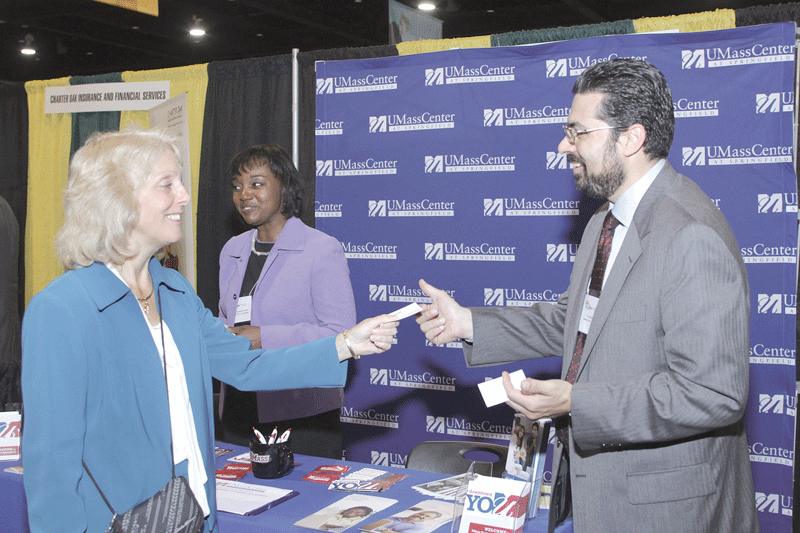
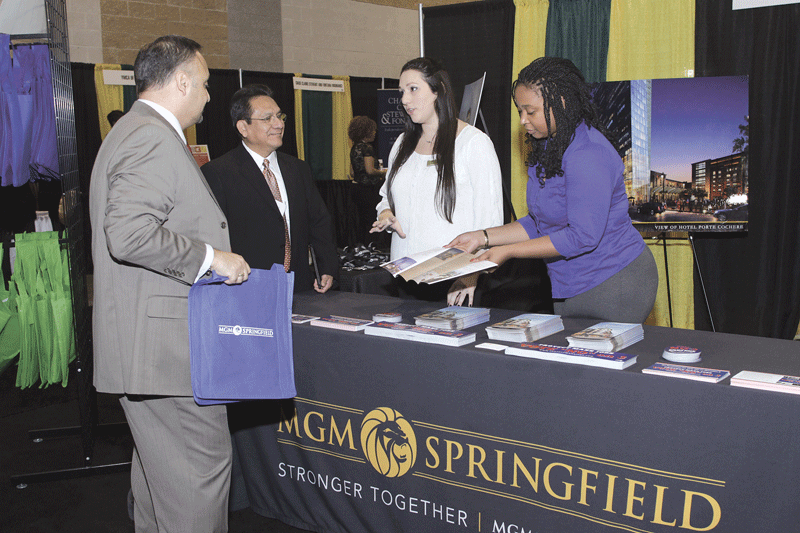
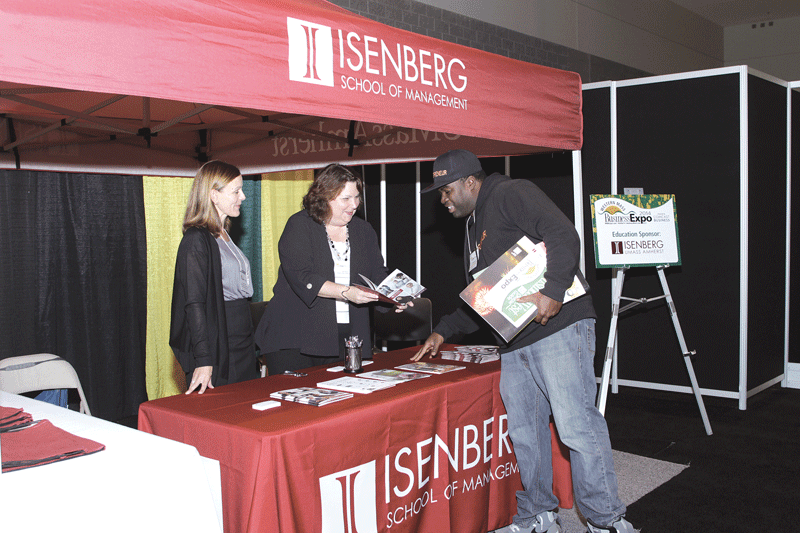
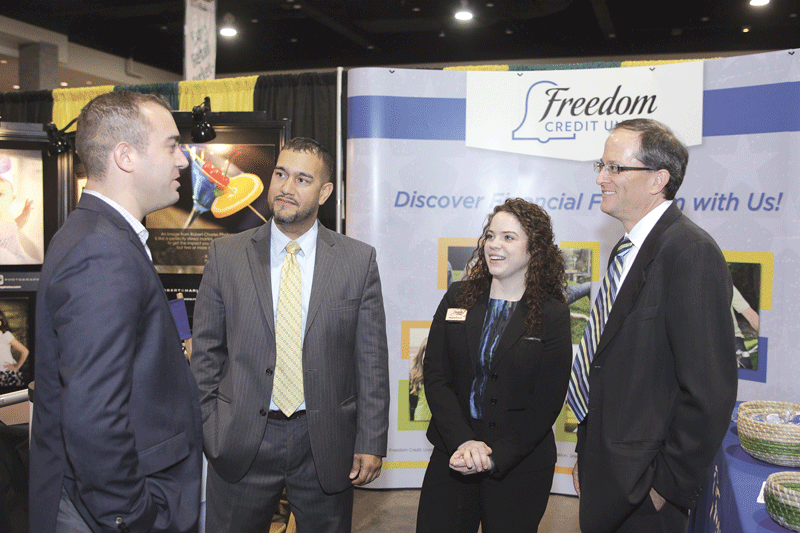
The fourth annual Western Mass. Business Expo, produced by BusinessWest and again presented by Comcast Business, was staged Oct. 29 at the MassMutual Center in downtown Springfield. More than 2,000 attendees passed through the doors, and they had the opportunity to visit more than 150 exhibitor booths, stroll the new Retail Marketplace, take in more than a dozen educational seminars, and watch several presentations on the Show Floor Theater, ranging from a discourse on overcoming one’s fear of public speaking to an update on the next-generation space telescope. The day’s programming started with a keynote address from Gov. Deval Patrick at the ACCGS kickoff breakfast. Later, Patricia Diaz Dennis, retired senior vice president for AT&T, presidential appointee to the Federal Communications Commission, and member of the MassMutual board of directors, was the keynote speaker at the luncheon program presented by the Professional Women’s Chamber. The day was capped off with a pitch contest by Valley Venture Mentors and the popular Expo Social. Below is a photographic look back at the Expo. Watch the video here.

Thank You to Our Sponsors

WMBExpoSponsors2014WEB

All names left to right:
AM7J6653Tim Paige, Stephanie Dumont, Laurie Deyette, Paul Salvos, Matt Strong, Robert Cortes, Charlene Johnson, and Kyle Wills from presenting sponsor Comcast Business;
AM7J6616
Dolly Werenski of Hampden Bank and Jamina Scippio-McFadden and Dr. William Davila of UMass Springfield;
AM7J7000
the Expo Retail Marketplace;
AM7J6962
Rachel Elliott from Baystate Children’s Hospital photographs Laurie Deyette from Comcast Business with Mr. Potato Head;
AM7J6763
Amanda Gagnon and Anita Bird from MGM Springfield greet visitors to the company’s booth;
AM7J7053
Tia Allen, Sharon Marshall, and Tim Steffen of Northwestern Mutual chat with Ryan Bouvier of Pioneer Valley Indoor Karting and Wilder Gulmi-Landy and Justin Roberts of American International College.

AM7J6932
Barbara Perry of Envision Marketing, Dawn Creighton of Associated Industries of Massachusetts, and Kristi Reale of Meyers Brothers Kalicka, P.C.;
AM7J6833
Jennifer Meunier and Judith Miller of the Isenberg School of Management at UMass Amherst with Mychal Connolly of Stinky Cakes;
AM7J6943
Trecia Marchand of Pioneer Valley Federal Credit Union chats with Andrea Hill-Cataldo, Jill Tower, and Peggy Popp of Johnson & Hill Staffing Services;
AM7J6955
Glenda DeBarge and Eric Harlow of Health New England share a moment with Alysia Cosby from the YMCA of Greater Springfield;
AM7J6937
Alfonso Santaniello of Creative Strategy Agency with Ed Nunez, Meaghan Parker, and Bill Russo-Appel from Freedom Credit Union;
AM7J6969
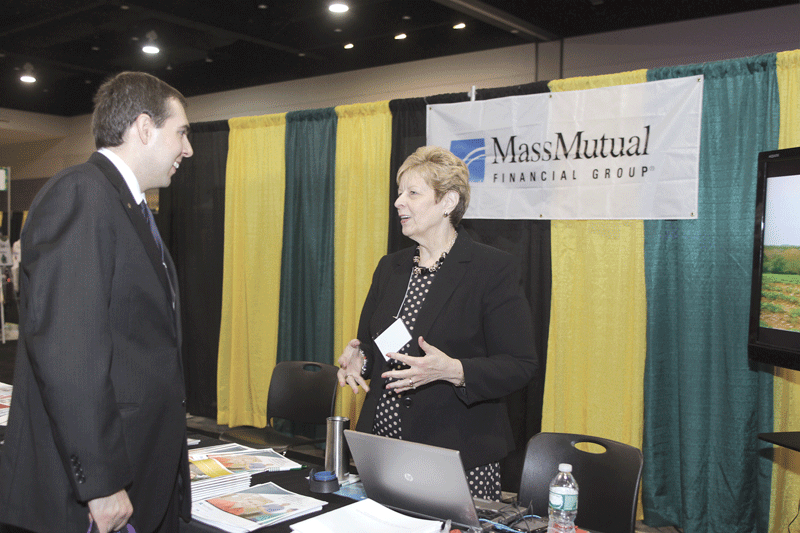
Kenneth Anderson from HazCommpliance, LLC and Joanne Gruszkos from MassMutual Financial Group.

The Expo featured a wide range of seminars and special presentations on the Show Floor Theater, as well as lively breakfast and lunch programs that gave attendees plenty to see, learn, and do.
AM7J6581
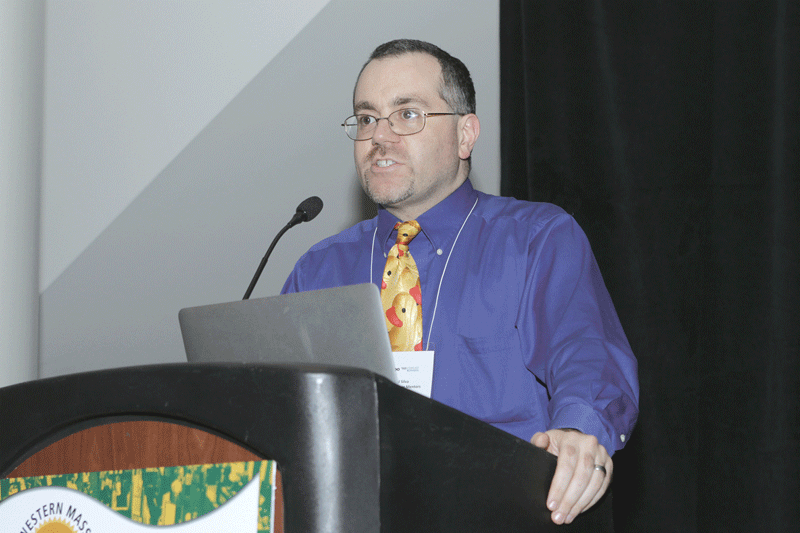
Jeremy Casey, vice president of Small Business Banking at First Niagara, presents a seminar “The Path to Building Name Net Worth.”
AM7J6534
From left: Gov. Deval Patrick, the breakfast keynoter, with BusinessWest Publisher John Gormally and his son, Hunter;
AM7J6565
Peter Rosskothen, co-owner and president of the Log Cabin Banquet & Meeting House, gives his Show Floor Theater presentation titled “The Entrepreneurial Process”;
AM7J6792
Carla Cosenzi, president of TommyCar Auto Group, presents the seminar “How to Delegate and Empower Your Management to Drive Employee Success”;
AM7J6674
Thom Fox, business advisor, philanthropist, and host of The Engine on NewsRadio 560 WHYN, gives his Show Floor Theater presentation titled “Nope, No Way, Never! How to Overcome Your Fear of Public Speaking.”
AM7J6684
Isa Deloge, area director of Best Buddies Massachusetts, presents a seminar titled “What Does Your Billboard Say”;
AM7J6805
Dana Barrows, JD, CLU, ChFC, AEP with Northwestern Mutual, presents his talk titled “Essential Strategies for Business Owners in the Current Environment”;
AM7J6589
Meghan Rothschild, co-founder and director of PR and marketing for chikmedia, presents a seminar titled “Public Relations 101: How to Get Your Message Heard”;
AM7J6711
Delcie Bean, founder of Paragus Strategic IT, presents a seminar titled “Win-Win Thinking”;
AM7J6876
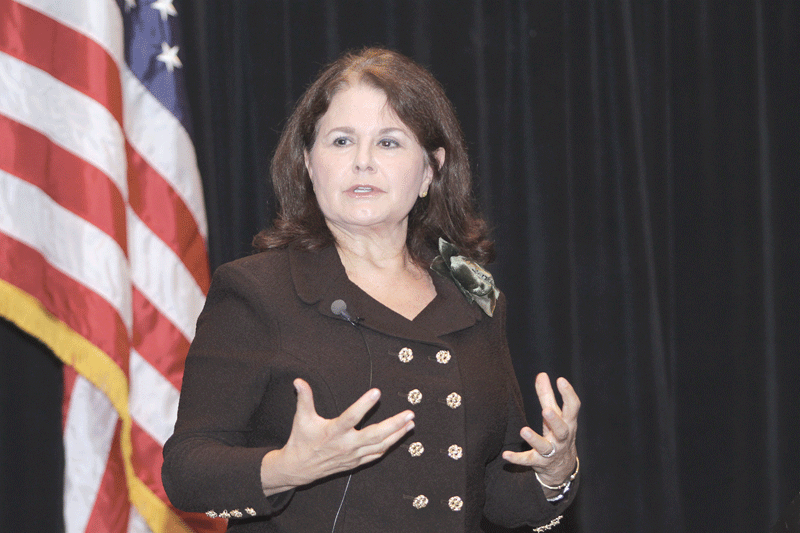
Patricia Diaz Dennis, retired senior vice president for AT&T, presidential appointee to the Federal Communications Commission, and member of the MassMutual board of directors, presents the keynote address at the luncheon program presented by the Professional Women’s Chamber.
AM7J7061
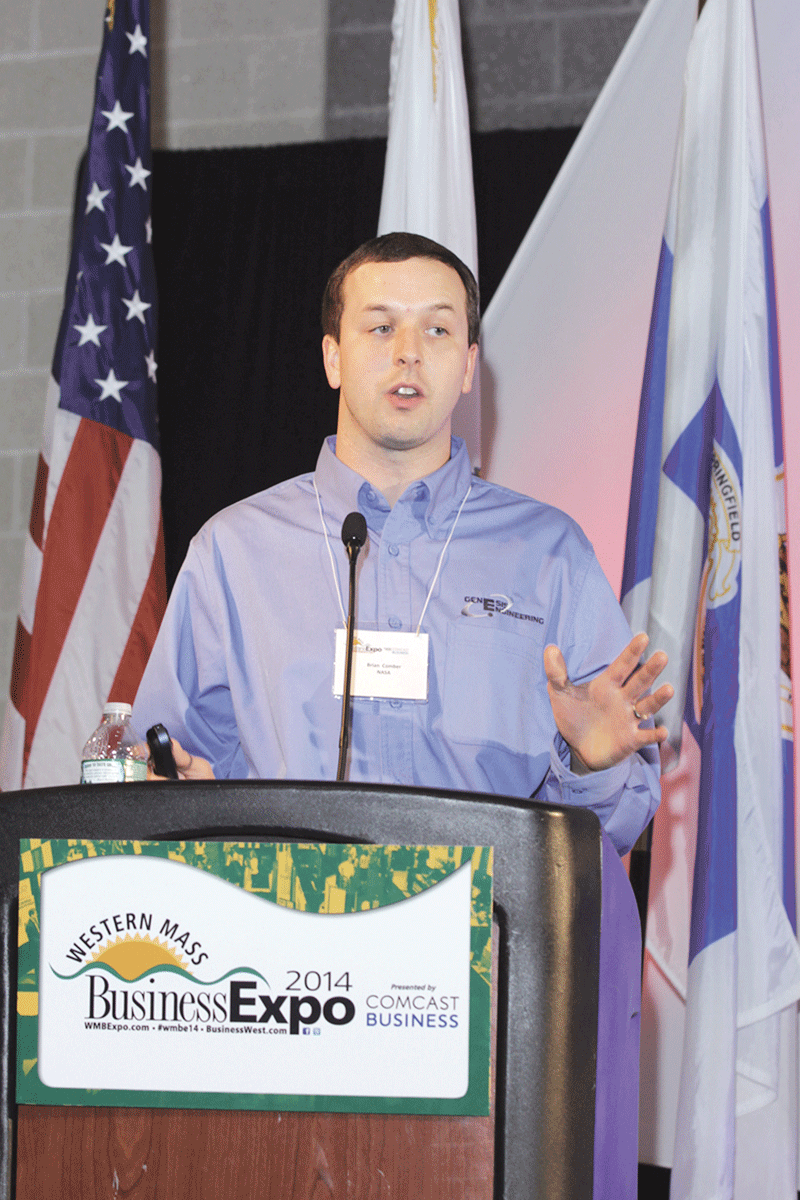
Brian Comber, NASA thermal engineer, gives his Show Floor Theater presentation titled “NASA Is Alive: Building the Next-generation Space Telescope.”
AM7J6920
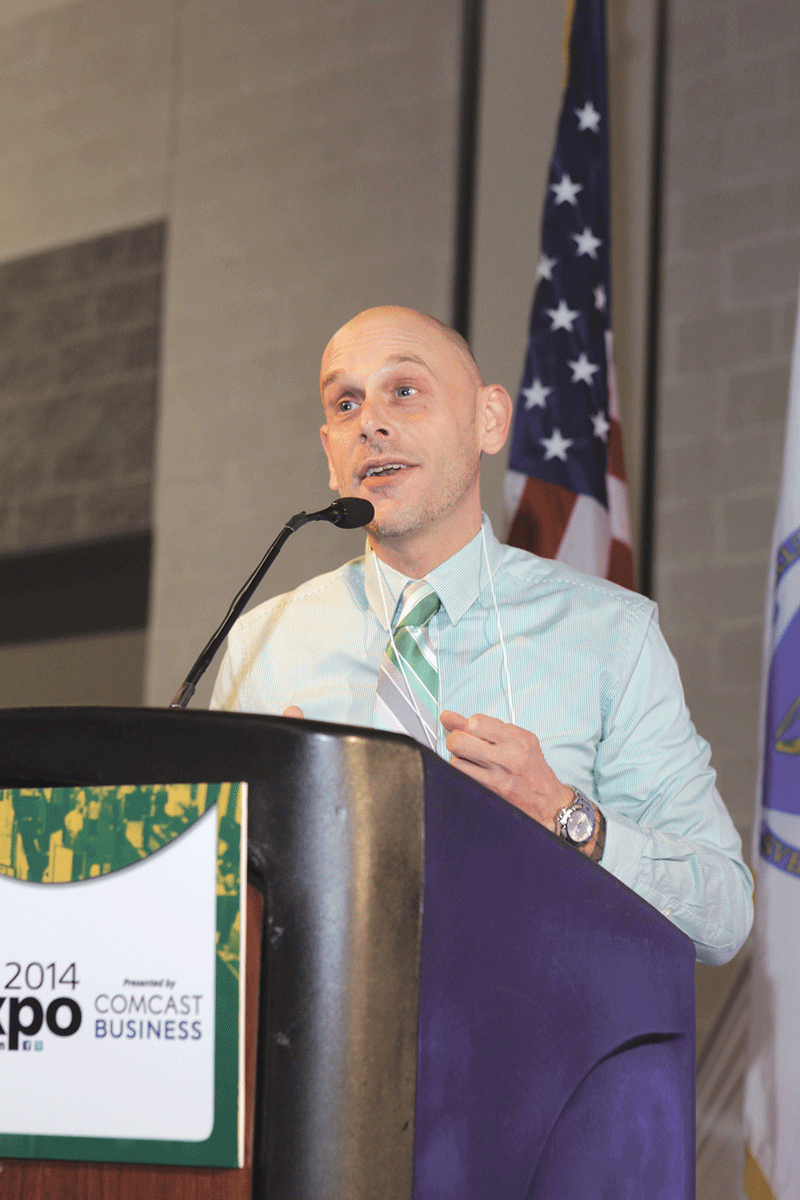
Kirk Smith, president and CEO of the YMCA of Greater Springfield, gives his Show Floor Theater presentation titled “Righteous Leadership.”

Valley Venture Mentors and BusinessWest invited VVM alumni and members of the current class to apply for a spot in the second annual Pitch Contest and Demo Day. The participating startups — Artifact Cider Project, Caswell Communications, CloudContacts, Nudger, and Piddx — made two-minute pitches to a panel of judges who offered immediate feedback.
AM7J7161
VVM Executive Director Paul Silva speaks at the event;
AM7J7207
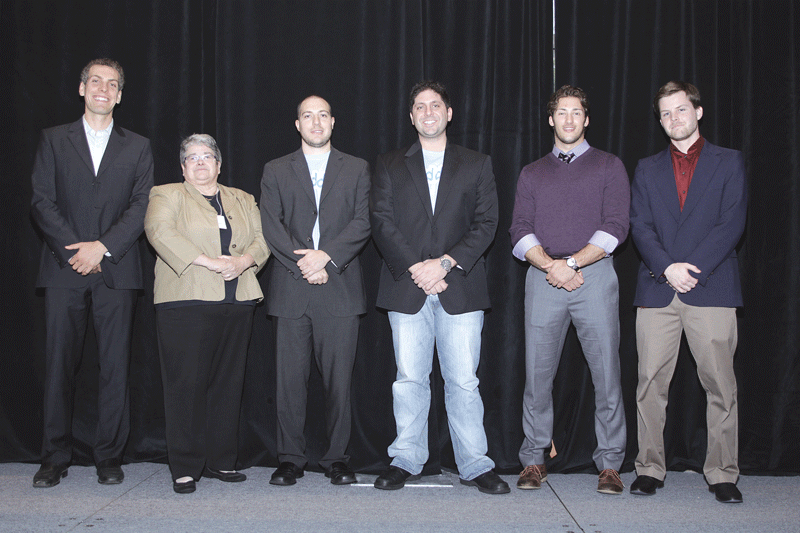
contestants (left to right) Jake Mazar, Jan Caswell, Ian Ricci, Spiro Marangoudakis, Mike Mullen, and Brian Lobdell;
AM7J7179
Pitch Contest winner Jake Mazar, developer of Artifact Cider Project.

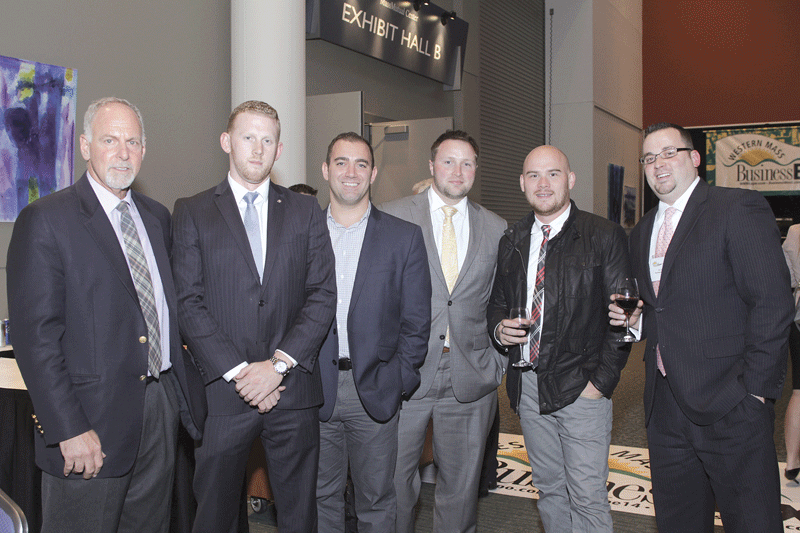
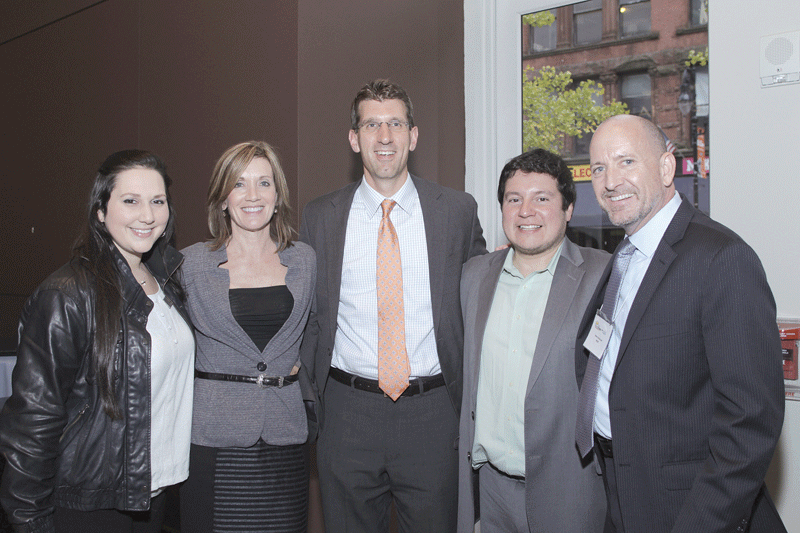
Plenty of folks stuck around for the annual Expo Social (all names left to right):
AM7J7248
Sarah Calabrese and Darcy Fortune of ABC 40 / Fox 6 with Mike Sarage of Valley Venture Mentors;
AM7J7246
Evan Plotkin of NAI Plotkin, Justin Roberts of American International College, Alfonso Santaniello of Creative Strategy Agency, Jeremy Casey of First Niagara, Peter Ellis of DIF Design, and Tim Steffen of Northwestern Mutual;
AM7J7210
Mike Mullen chats with Dianne Doherty of the UMass Small Business Development Center;
AM7J7223
Amanda Gagnon and Kelley Tucky of MGM Springfield, Seth Stratton of Fitzgerald Attorneys at Law, and Ed Marin and Mark Stolarczyk of MGM Springfield;
AM7J7241
Harry Georgiades and Bob McNamara of McNamara Waste Services with Chris Thompson of the Springfield Falcons.

View all the photos from the 2014 WMBExpo below:
Insurance Sections
The Line Is Blurry, but Employers Must Be Careful Not to Cross it

By BILL GRINNELL

Bill Grinnell

Bill Grinnell

As business owners, our quest for increased efficiency and cost-effective solutions has led many of us to hire subcontractors. It often makes sense to subcontract for work outside of your expertise or for extra work during abnormally busy times of the year.

From an insurance standpoint, subcontracting work has advantages. A sole proprietor with no employees is not required to have workers’ compensation insurance in Massachusetts. Thus, this cost is eliminated by subcontracting work within the law.

But subcontracting work within Massachusetts law is much easier said than done.

Massachusetts Is Tougher Than the IRS

The laws governing subcontracting are much more complicated and stringent in Massachusetts than they are on a federal level. The IRS is the government agency that determines whether a worker is an employee or an independent contractor, due to the tax implications of the determination.

The IRS has a list of 20 factors it uses to determine a worker’s status. The factors pertain to how, when, and where the work is performed. Some of these factors include:

• Whether a worker must comply with the employer’s instructions for the work;
• Whether the employer provides specific training;
• Whether the worker must comply with hours set by the employer; and
• Whether the worker is on the job full-time.

In Massachusetts, the law presumes that everyone you hire is an employee until proven otherwise. You’ve heard of innocent until proven guilty? Well, in Massachusetts, every freelancer you hire is an employee until proven an independent contractor.

Misclassification Is Costly

Misinterpreting the laws can have unexpected and costly consequences. Employers found to have misclassified an employee as an independent contractor may be subject to income-tax liability for withholding that should have occurred with wages that should have been paid, FICA and FUTA contributions, state unemployment-contribution payments, potential overtime and other wages owed, workers’ compensation insurance premiums, and civil and criminal liability.

Non-willful violations of the law can incur fines of up to $10,000 and imprisonment for up to six months for a first offense. For violations found to be willful, the fine can rise to $25,000, and imprisonment can last up to one year for a first offence.

To steer clear of these landmines, ensure that your subcontractors qualify as independent contractors.

Three Critical Tests for Independent Contractors

In Massachusetts, there are three critical tests workers must pass to be deemed independent contractors: They must be free from the employer’s control, they must work outside the employer’s usual course of business, and they must do the same work regularly for other companies.

Freedom from Control
A worker must be free from the presumed employer’s control and direction in performing the service, both under a contract and in fact. To be free from an employer’s direction and control, a worker’s activities must be carried out with independence and autonomy. For example, workers should provide their own tools, set their own hours, and take their own approach to completing a job.

In the old days, paper-delivery boys and girls were deemed independent contractors. Today they are considered employees, and we no longer see young kids delivering papers door-to-door.

Work Must Be Outside the Usual Course of Business
To qualify as an independent contractor, the worker’s job or service also must be performed outside the usual course of business of whothat performs work that is part of the normal service delivered by the employer may not be treated as an independent contractor.

Here’s where the lines get sketchy. I have seen nightmares created by insurance-company auditors. If a home builder hires a plumber, is that outside of his usual course of business? Some insurance auditors interpret this law very strictly and take the position that any construction activity performed for a general contractor is in the same course of business. Thus, the auditor makes a charge for any uninsured subcontractors.

Work Must Be Done Regularly for Others
Third, an independent contractor must represent himself or herself to the public as being in business to perform the same or similar services. Furthermore, an independent contractor often has a financial investment in a business that is related to the service he or she is currently performing for the employer.

For example, if a restaurant were to hire the same driver to pick up meats and fresh produce every day and that driver only drove for that one restaurant, an employee relationship would exist.

Make sure your subcontractors pass all three tests to ensure that you will not be hit with penalties and saddled with a higher head count than you wish.

If you have questions about your subcontractor relationships, contact an insurance professional.

Bill Grinnell is president of Northampton-based Webber and Grinnell Insurance Agency; [email protected].

Departments People on the Move

The Springfield-based regional law firm Bacon Wilson, P.C. announced that six attorneys have been named to the 2014 New England Super Lawyers list, and four attorneys have been named to the 2014 New England Rising Stars list. Only 5% of New England’s lawyers were honored as Super Lawyers. They were identified for their background, experience, professional achievement, and peer recognition. Rising Stars are under 40 years old or have been practicing law for less than 10 years. Fewer than 2.5% of New England lawyers were named Rising Stars. The following Bacon Wilson attorneys were honored as Super Lawyers:

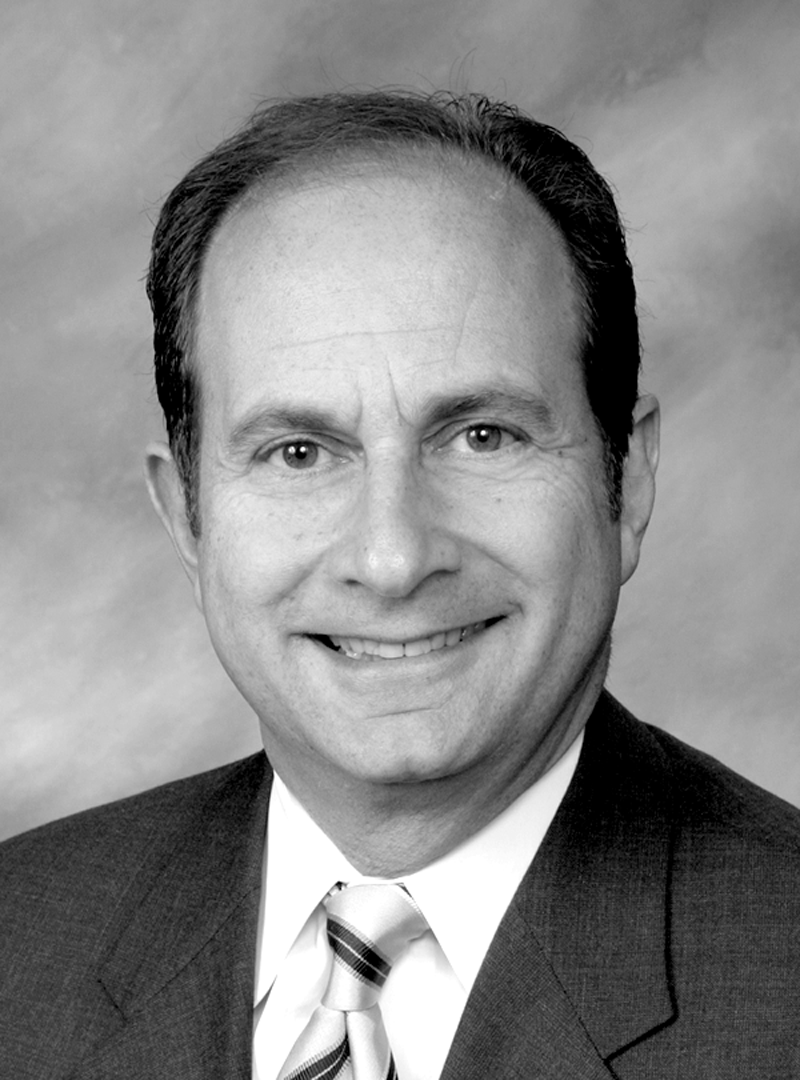
Gary L. Fialky

Gary L. Fialky

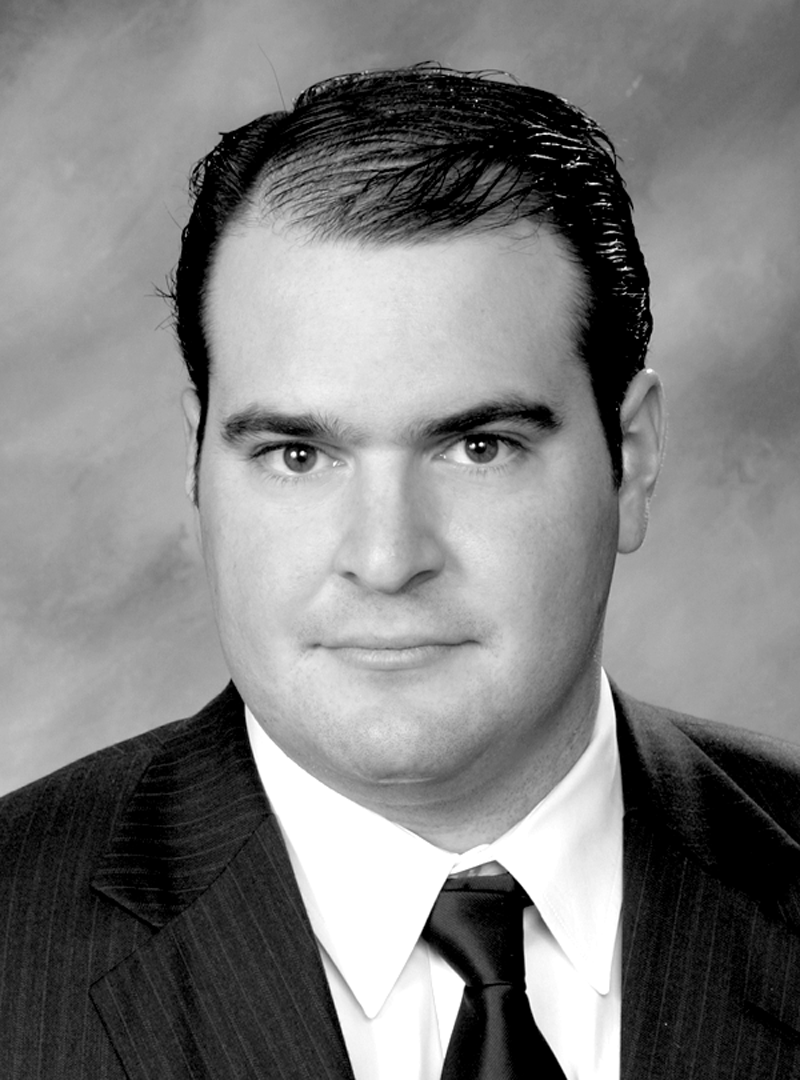
Michael B. Katz

Michael B. Katz

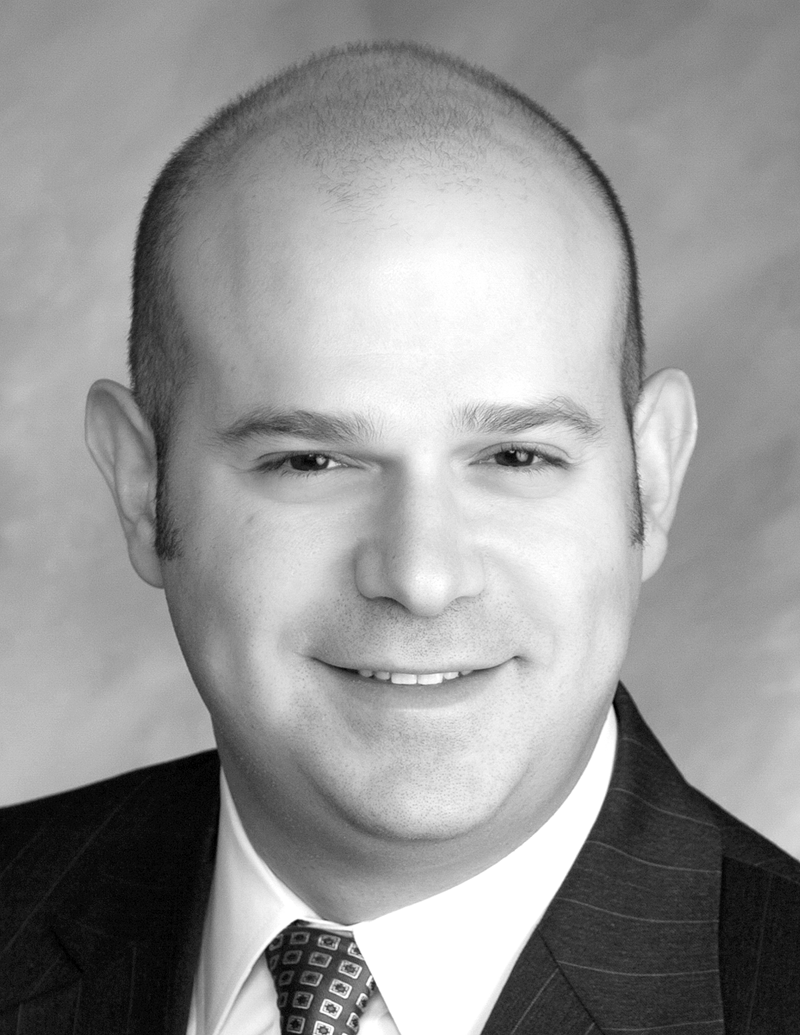
Paul H. Rothschild

Paul H. Rothschild

Stephen Krevalin

Stephen Krevalin

Hyman Darling

Hyman Darling

Gina Barry

Gina Barry

Adam Basch

Adam Basch

Todd Ratner

Todd Ratner

Kevin V. Maltby

Kevin V. Maltby

Spencer Stone

Spencer Stone

• Gary Fialky, business/corporate;
Michael Katz, bankruptcy and business;
Paul Rothschild, general litigation;
Stephen Krevalin, real estate;
Hyman Darling, estate planning and probate; and
Gina Barry, estate planning and probate.
The following Bacon Wilson attorneys were honored as Rising Stars:
Adam Basch, construction litigation;
Todd Ratner, estate planning and probate;
Kevin Maltby, employment and labor; and
Spencer Stone, business/corporate.
•••••
Donna George-Ebbeling

Donna George-Ebbeling

PeoplesBank has announced the appointment of Donna George-Ebbeling as First Vice President and Credit Risk Manager. She brings more than 32 years of banking experience to her new position. George-Ebbeling’s responsibilities include all aspects of credit and loan administration as well as the development of loan policies and procedures. She also manages the credit-analysis function and oversees the commercial-loan administration area. George-Ebbeling received a bachelor’s degree in English from Fairfield University. She also holds a master’s degree in finance from UMass Amherst.
•••••
Robinson Donovan, P.C., announced that eight of its attorneys have been named to the 2015 Massachusetts Super Lawyers list. In addition, three attorneys were named Rising Stars, a designation for attorneys 40 years old or younger or in practice for 10 years or fewer. No more than 5% of lawyers in a state are named to Super Lawyers, and no more than 2.5% are named to Rising Stars. “Super Lawyers is proud to provide visibility to outstanding attorneys,” said Julie Gleason, director of research for Super Lawyers. Added Jeffrey Roberts, the firm’s managing partner, “the number of attorneys receiving this award at Robinson Donovan highlights the quality of the firm’s lawyers and their dedication to the practice of law.” Robinson Donovan attorneys on the 2015 Massachusetts Super Lawyers and Rising Stars lists, and the practice areas in which they are recognized, are as follows:
Jeffrey Roberts, partner, estate planning and probate;
Jeffrey McCormick, partner, general litigation;
James Martin, partner, closely held business;
Nancy Frankel Pelletier, partner, civil litigation: defense;
Patricia Rapinchuk, partner, employment litigation: defense;
Carla Newton, partner, family law;
Richard Gaberman, of counsel, estate planning and probate;
Kevin Chrisanthopoulos, associate, general litigation;
David Lawless, associate, state, local, and municipal (Rising Star);
Jeffrey Trapani, associate, general litigation (Rising Star); and
Michael Simolo, associate, estate planning and probate (Rising Star).
Super Lawyers, a Thomson Reuters business, is a rating service of outstanding lawyers from more than 70 practice areas who have attained a high degree of peer recognition and professional achievement. The annual selections are made using a patented, multi-phase process that includes a statewide survey of lawyers, an independent research evaluation of candidates, and peer reviews by practice area. The result is a credible, comprehensive, and diverse listing of exceptional attorneys.
•••••
The Springfield-based law firm Sullivan, Hayes & Quinn announced the following:
Meghan Sullivan

Meghan Sullivan

Meghan Sullivan, managing partner, has been selected for inclusion in the 2014 New England Super Lawyers magazine. Super Lawyers, a Thomson Reuters business, is a rating service of outstanding lawyers who have attained a high degree of peer recognition and professional achievement. Sullivan has extensive knowledge in the areas of employment law, discrimination law, labor relations, affirmative action, OSHA compliance, personnel policy, and training. She has represented employers in numerous judicial proceedings, administrative hearings, and arbitrations in both the public and private sectors; before the National Labor Relations Board; and before state anti-discrimination agencies, the U.S. Department of Labor, in state courts, and in federal District Court. She has also conducted numerous seminars, supervisory training sessions, and management-development programs, and is a sought-after speaker for numerous organizations and entities on topics ranging from discrimination to wage-and-hour laws.
Layla Taylor

Layla Taylor

• Attorney Layla Taylor, a partner with the firm, has been selected to the 2014 Massachusetts Rising Stars list. Taylor, a partner at Sullivan, Hayes & Quinn, LLC, joined the firm in 2004. She is experienced in assisting clients with human-resource management and policy development, as well as advising both private- and public-sector clients on legal compliance and best practices in the workplace. She routinely assists employers in workplace immigration matters and in negotiating employment contracts and separation agreements;
Alice Pizzi

Alice Pizzi

• Attorney and Alice Pizzi has been selected to the 2014 Massachusetts Rising Stars list. Pizzi, a graduate of Western New England College School of Law, joined Sullivan, Hayes & Quinn, LLC in 2009 and has focused on the defense of discrimination and wrongful-employment cases filed against employers, employment litigation, employment benefits, and public-sector labor relations. Pizzi is listed on the Mass. Commission Against Discrimination (MCAD) panel of sexual-harassment and prohibited-discrimination trainers who have successfully completed the MCAD’s certified program for workplace trainers.

Court Dockets Departments

The following is a compilation of recent lawsuits involving area businesses and organizations. These are strictly allegations that have yet to be proven in a court of law. Readers are advised to contact the parties listed, or the court, for more information concerning the individual claims.

FRANKLIN SUPERIOR COURT
Dwayne St. Marie v. Michael Nelson d/b/a Franklin County Pumpkin Fest
Allegation: Negligence, trespass to land, and nuisance causing personal injury: $1,261,201.54
Filed: 10/10/14

Mutual Casualty Co. d/b/a Quality Inn, et al v. Western Mass. Electric Co. and Hanna Electric Inc.
Allegation: Breach of contract and negligence in the installation of a heater/AC unit causing fire: $200,000
Filed: 10/2/14

HAMPDEN SUPERIOR COURT
Diane Hebert v. Brinker Restaurant Corp. d/b/a Chili’s Restaurant and Baystate Medical Center
Allegation: Service of food not fit for consumption causing illness and resulting in serious infection while at Baystate Medical Center: $100,000+
Filed: 9/25/14

Ryder Transportation Services v. Bucklin Office Furniture, LLC, f/k/a D.D. Bucklin Inc.
Allegation: Breach of contract: $57,731.51
Filed: 9/26/14

HOLYOKE DISTRICT COURT
ValuMail Inc. v. J.D. Wal Inc. d/b/a Dino’s Pizza Restaurant
Allegation: Non-payment of advertising services rendered: $3,983.64
Filed: 9/24/14

SPRINGFIELD DISTRICT COURT
Lydia Rucks-Smith, a minor, by and through her mother, Olivia Watter v. Martin Luther King Jr. Family Services
Allegation: Negligence causing injury: $24,000
Filed: 9/27/14

Monson Companies Inc. v. Lansal Inc. d/b/a Hot Mama’s Foods
Allegation: Non-payment of goods sold and delivered: $7,998.70
Filed: 9/17/14

Springfield Plumbing Supply Co. v. Adriano Punis d/b/a Associated Plumbing and Heating
Allegation: Non-payment of goods sold and delivered: $18,083.73
Filed: 10/6/14

U.S. Foods Inc. v. 4 Our Fathers, LLC d/b/a The Islander and Joseph Dunn II
Allegation: Non-payment of goods sold and delivered: $9,707.12
Filed: 9/26/14

Daily News

SPRINGFIELD — The law firm of Cooley Shrair announced that Mary Hurley, Esq., retired first justice of the Chicopee District Court, has returned to private practice with Cooley Shrair. Hurley served 19 years as a judge, following 18 years as a practicing attorney. She was a principal with Cooley Shrair and served two terms as mayor of Springfield before accepting an appointment as a state court justice.

“We are thrilled to have Mary return to our firm following her impressive career outside of private practice. Her expertise and stellar reputation make her a terrific addition to our team,” said Cooley Shrair’s managing principal, Peter Shrair.

Added Hurley, “I may be retired from the bench, but I love the law, and I intend to use my expertise gained from many years in the courts of the Commonwealth to assist clients with their legal needs in the areas of litigation, family and probate, personal injury, and criminal law.”

Hurley actively serves as a member of the advisory board for the Elms College Criminal Justice Program and the College Club of Greater Springfield. Her background of community service includes work as a trustee of Elms College, the Springfield Library and Museums Assoc., Springfield College, and Holyoke Community College, as well as service on the boards of directors for such organizations as Sisters of Providence Health System, Springfield Symphony Orchestra, and Alcoholism and Drug Services of Western Mass. Inc. She is also a recipient of the Massachusetts Bar Assoc. Public Service Award.

Hurley earned her J.D. from Western New England College School of Law and her bachelor’s degree from Elms College, where she also obtained a teaching certificate and received an honorary doctorate degree.

Daily News

SPRINGFIELD — The Springfield-based regional law firm Bacon Wilson, P.C. announced that six attorneys have been named to the 2014 New England Super Lawyers list, and four attorneys have been named to the 2014 New England Rising Stars list.

Only 5% of New England’s lawyers were honored as Super Lawyers. They were identified for their background, experience, professional achievement, and peer recognition. Rising Stars are under 40 years old or have been practicing law for less than 10 years. Fewer than 2.5% of New England lawyers were named Rising Stars.

The following Bacon Wilson attorneys were honored as Super Lawyers:
• Gary Fialky, business/corporate;
• Michael Katz, bankruptcy and business;
• Paul Rothschild, general litigation;
• Stephen Krevalin, real estate;
• Hyman Darling, estate planning and probate; and
• Gina Barry, estate planning and probate.

The following Bacon Wilson attorneys were honored as Rising Stars:
• Adam Basch, construction litigation;
• Todd Ratner, estate planning and probate;
• Kevin Maltby, employment and labor; and
• Spencer Stone, business/corporate.

Daily News

NORTHAMPTON — Royal LLP, a woman-owned, boutique, management-side labor and employment law firm, is announced that Amy Royal, principal and founding partner of the firm, has been selected as one of the New England Super Lawyers and has been included in the 2014 issue of New England Super Lawyers magazine. Super Lawyers include attorneys throughout New England who are nominated by their peers as outstanding lawyers and then go through an extensive selection process.

With nearly 15 years of experience, Royal has successfully defended employers in both federal and state courts as well as before administrative agencies in a variety of areas of employment law, including employment discrimination and sexual harassment, unfair competition, breach of contract and wrongful discharge claims, workers’ compensation, and Family and Medical Leave Act, Employee Retirement Income Security Act, and Fair Labor Standards Act violations, with a special emphasis on wage-and-hour class actions. She regularly advises non-union clients on maintaining a union-free workplace and performs other preventive work such as wage-and-hour law compliance, record-keeping audits, drafting of employee manuals and affirmative-action plans, and management training. In addition, she assists unionized clients during contract negotiations, at arbitrations, and with respect to employee grievances and unfair-labor-practice charges.

Royal’s accolades also include Massachusetts Lawyers Weekly’s 2012 Top Women of Law award, recognizing her as a top female lawyer in Massachusetts, as well as BusinessWest’s prestigious 40 Under Forty award, recognizing her for outstanding leadership in the Pioneer Valley business community.

Daily News

SPRINGFIELD — Robinson Donovan, P.C., announced that eight of its attorneys have been named to the 2015 Massachusetts Super Lawyers list. In addition, three attorneys were named Rising Stars, a designation for attorneys 40 years old or younger or in practice for 10 years or fewer. No more than 5% of lawyers in a state are named to Super Lawyers, and no more than 2.5% are named to Rising Stars.

“Super Lawyers is proud to provide visibility to outstanding attorneys,” said Julie Gleason, director of research for Super Lawyers. Added Jeffrey Roberts, the firm’s managing partner, “the number of attorneys receiving this award at Robinson Donovan highlights the quality of the firm’s lawyers and their dedication to the practice of law.”

Robinson Donovan attorneys on the 2015 Massachusetts Super Lawyers and Rising Stars lists, and the practice areas in which they are recognized, are as follows:
• Jeffrey Roberts, partner, estate planning and probate;
• Jeffrey McCormick, partner, general litigation;
• James Martin, partner, closely held business;
• Nancy Frankel Pelletier, partner, civil litigation: defense;
• Patricia Rapinchuk, partner, employment litigation: defense;
• Carla Newton, partner, family law;
• Richard Gaberman, of counsel, estate planning and probate;
• Kevin Chrisanthopoulos, associate, general litigation;
• David Lawless, associate, state, local, and municipal (Rising Star);
• Jeffrey Trapani, associate, general litigation (Rising Star); and
• Michael Simolo, associate, estate planning and probate (Rising Star).

Super Lawyers, a Thomson Reuters business, is a rating service of outstanding lawyers from more than 70 practice areas who have attained a high degree of peer recognition and professional achievement. The annual selections are made using a patented, multi-phase process that includes a statewide survey of lawyers, an independent research evaluation of candidates, and peer reviews by practice area. The result is a credible, comprehensive, and diverse listing of exceptional attorneys.

Daily News

SPRINGFIELD — Gov. Deval Patrick announced on Tuesday that the MBTA will present to the board of the Mass. Department of Transportation (MassDOT) the recommended company to manufacture and deliver 284 new subway cars for the Red and Orange Lines, replacing decades-old vehicles.

Joined by MassDOT Secretary and CEO Richard Davey and MBTA General Manager Dr. Beverly Scott, as well as state and local officials, Patrick announced that the recommended company, CNR MA, will build a 150,000-square-foot facility in Springfield to assemble the vehicles, creating more than 250 new manufacturing and construction jobs in the region. The contract is pending approval by the MassDOT board, which is schedule to meet today to vote on the recommendation.

The contract with CNR MA will include the purchase of 152 new Orange Line vehicles and 132 new Red Line vehicles to replace the 44-year old Red Line cars and 32-year old Orange Line cars. The contract also includes the option to purchase an additional 58 Red Line cars. The new cars will provide improved reliability, accessibility, and energy efficiency. New car features include increased capacity and additional seating, wider and electrically operated doors, four accessible areas per car, LED lighting, modern HVAC systems, and advanced passenger-information and announcement systems.

“This is a critical investment in the future of public transportation in Greater Boston and in the economic well-being of Western Mass.,” said Patrick. “It will open up opportunities for the residents of the Pioneer Valley by creating quality construction and manufacturing jobs that will propel growth in the region for years to come.”

The design process will take approximately three years for the Orange Line cars and an additional 15 months for the Red Line. Pilot cars for the Orange Line are to be delivered in early 2018, and the Red Line pilot cars will be delivered about a year later. Delivery of production cars will occur at a rate of approximately four cars per month between winter 2018 and winter 2021 for the Orange Line and between fall 2019 and spring 2021 for the Red Line.

CNR MA intends to build a new manufacturing facility for final assembly of the Red and Orange Line vehicles at 655 Page Blvd. in Springfield. This facility will serve as CNR MA’s U.S. Headquarters. CNR MA plans to build a facility that includes more than 150,000 square feet of manufacturing and office space. The facility will also include a dynamic test track, which will enable testing prior to shipment of the vehicles to the MBTA. CNR MA plans to invest $60 million of its own resources into the facility. CNR MA estimates the new facility will create more than 150 new manufacturing jobs and 100 new construction jobs. Construction of the new plant is expected to begin in the fall of 2015.

“The awarding of this contract is the culmination of years of work and development by teams at MassDOT and the MBTA,” said Davey. “By making this important investment, and ensuring that it provides for new jobs and increases economic opportunity in Massachusetts, we are making a commitment to the future of sustainable, accessible public transit that is more reliable, more frequent, and better serves the needs of our Commonwealth.”

The new Orange Line cars will replace the entire current fleet that has an average of 1.5 million miles on them. On a typical weekday, the Orange Line fleet carries more than 200,000 people. The order will also increase the fleet size, allowing for increased passenger capacity and decreased passenger wait times by reducing headways from six minutes to four during rush hour. The Red Line order will replace the current fleet of ‘No. 1’ cars, and the additional contract option would allow for replacement of the 27-year old ‘No. 2’ cars. The ‘No. 1’ cars have an average of 2.3 million miles, and the ‘No. 2’ cars an average of 1.4 million miles; these cars currently run on the Red Line, which serves an average of 272,000 customers on a typical weekday.

“Today marks an important step in improving the daily commutes of hundreds of thousands of our MBTA customers,” said Scott. “By replacing the aging fleets of Red and Orange Line cars, we will be able to reduce travel and wait times, increase capacity, and improve accessibility, security, and the overall experience for our customers.”

The total project budget is approximately $1.3 billion, and includes the funds necessary to expand and improve the MBTA’s rail-car maintenance and storage facilities in Medford and Boston. Made possible by the passage of the Transportation Finance Law last year, the Orange and Red Line car-procurement project is funded entirely by state transportation bond funds. The request for proposals was released a year ago, and six companies submitted proposals. Of the six proposals, four of them met the minimum requirements and were rated on criteria including technical and manufacturing experience, past performance, quality assurance, and price. CNR MA submitted the lowest bid at $556.6 million.

Commercial Real Estate Sections
Eclectic Community of Businesses Populates Monkey Wrench Building

The Monkey Wrench Building

The Monkey Wrench Building was famously the longtime home of toolmaker Bemis & Call, then fine-funiture retailer Bottaro & Skolnick.

No one knows for sure how the monkey wrench got its name. Some say its original name was actually ‘Moncky wrench,’ after Charles Moncky, whom some believe invented the tool. Another legend says a worker was fooling around with a wrench when a supervisor told him to “stop monkeying with that wrench!”

What all accounts agree on, however, is where that wrench was invented — at what is now 143 Main St. in Springfield.

“I’m the proud second owner of this building,” said David Rothenberg, who bought the sprawling property — now called the Monkey Wrench Building — in the late 1990s. “It has an interesting history.”

That it does. In its early days, Rothenberg explained, a mile-long corridor along the Mill River was dotted with factories, including 143 Main, which were powered by water, which flowed beneath the building and activated a turbine. “You see that in Holyoke, but in Springfield, the Mill River was the source of the power. And this building was reportedly the first industrial site in Springfield.”

From the late 19th century, it was the home of Bemis & Call, a toolmaking plant that traced its origins to 1844. “It was one of Massachusetts’ 50 oldest companies until it went out of business in the ’90s. They owned this part of Main Street,” said Rothenberg, who discovered the building while working for his father-in-law, Si Skolnick, at Bottaro & Skolnick, a fine-furniture store.

“They were housed in this building for years and years. Eventually, Bemis & Call died out, and we took over the whole building,” said Rothenberg, who purchased the property from its original owner about 15 years ago.

But time was running out for Bottaro & Skolnick, as the public’s taste for $6,500 sofas dried up when cheaper, Chinese-made furniture started to dominate the market. So the business, which had been around since 1939, made it a few years past the turn of the 21st century before Si Skolnick called it a day.

“The market crashed, and the [pricing] disparity became too great,” Rothenberg said, adding that, decades ago, “your home reflected your grace and good taste. Nowadays, people say, ‘meet you at Applebee’s,’ or Chili’s or wherever. Back then, people visited each other’s houses.”

As a result, he said, “values have changed. You can say to young people, ‘see this piece of furniture? You can have it forever; your kids will have it forever.’ And it’s true; our furniture was heirloom quality. But people don’t want heirloom quality anymore; they want disposable furniture for their disposable lifestyle. We had to make a tough decision, and we killed Bottaro & Skolnick.”

The furniture store lives on, sort of, in an interior-design business that Rothenberg runs out of the first floor of the Monkey Wrench Building. But what to do with the rest of the architecturally striking, three-story edifice at the southern tip of Main Street?

“We decided to subdivide it,” Rothenberg said, adding that South Hadley-based marketing professional Darby O’Brien came up with the idea of naming the building after its signature invention. “I kind of kicked that around for three or four years. I wanted to develop the building, and I wanted it to be multi-tenant — but not just mixed-tenant; I wanted a clientele that reflects the urban setting. And some cool stuff has happened since then.”

Indeed, Rothenberg now manages an assortment of 37 tenants, and is busy fixing up and marketing the little space that remains vacant. He recently led BusinessWest on a tour of the building, which gives off the distinctly eclectic vibe of many disparate small-business owners coming together to form a sort of community.

“My goal was to fill the building, not with fancy-schmancy people, but the regular people of Springfield. It’s not a high-end clientele by any means; it’s an urban clientele,” he said. “But it’s been a frickin’ blast. I was in the furniture business all those years, but now I get to interact with all these different personalities. It’s so cool.”

More Than a Landlord

Those personalities run the gamut — artists, a music producer, a dance studio, training centers for boxing and wrestling, a screen-printing outfit, an upholstery company, a high-end antique store, a lawyer … the list goes on.

David Rothenberg’s display

David Rothenberg’s display of old wrenches tells part of the story of the 143 Main St. building.

“We’re just about full now. It’s a really eclectic mix of people, and they’re very nice,” he said, noting that he signed his first tenant only six years ago, making the Monkey Wrench Building a notable real-estate success story in Springfield. But he has also formed a personal bond with most of these businesses, many of them sole proprietors.

“I’m a mensch … a good guy. I don’t want to hurt anybody; I want to give people an opportunity for success,” he said. “A lot of these people don’t have any business experience. So I offer my services to them, mentor them. I’ve been a businessman my whole life, and I’ve seen it all.

“Incubator isn’t the right term for what we want to do,” Rothenberg added, while stressing that he truly wants his tenant businesses to grow, so if he can offer advice on, say, crafting a business plan, he will.

“I don’t just want their money; I want to see what they’re going to do,” he went on. “I hate the term ‘landlord’ — the status thing. I’m David, I happen to own this building, and I don’t have any other building; I’m not necessarily in it for the profit motive. If someone doesn’t have their rent, I’ll work with them. I’ve never evicted anybody. I want to see people succeed, and I want to facilitate that. I want to help.”

Fred Steinman, president of the Western Mass. franchise of Valpak Media Solutions — you might recognize the name from the blue envelope of coupons that regularly arrives in the mail — has found solid value from setting up shop at 143 Main about five years ago.

“We started out in the Scibelli Enterprise Center, in the incubator,” said Steinman, who had carved out a more than 30-year career in broadcasting, then radio sales and management, before buying one of 200 national Valpak franchises about eight years ago. But the Enterprise Center was never meant to be a permanent home. “It’s meant to help businesses start out, and then kind of grow out of it into the world, get a bigger place. That’s what we did.”

With a business that covers Hampden and Hampshire counties, Steinman said, the building’s location just off I-91 is convenient — a factor also cited by Lois Warren, who works for cheaptees.org, an Internet-based screen-printing company.

Steinman also takes pride in the fact that his office is reportedly the very room where the monkey wrench was invented. “Every time I bring somebody up here, they can’t get over the architecture and woodwork. We have mahogany wood, a fireplace in the office … it’s a very impressive building.

“Most people who come here are unfamiliar with the inside of the building, and they’re awed by it,” he went on. “When I was given a tour of the available space, this office was perfect — I loved it. And David has been very supportive — a great landlord. If there are any issues, he responds to them right away.”

Big Picture

Whether or not Springfield eventually gets a casino a half-mile from Rothenberg’s front door — an issue about which he has mixed feelings, because he’s not a casino fan, yet he thinks the development would generate some needed energy — he’s a firm believer in the city’s economic-development potential, and proud to play a small role.

“I was born here — 150 yards from here, in a four-story walk-up. I came back here as a kid to play,” he said, pointing out a window at the wooded rear of the building. “The city has been good to me, and I’m not going to abandon it.”

However, he added, “the perceptions of people can be horrible, and it can be self-perpetuating. Yes, of course the city has problems, but I’m happy to be here. I consider myself an anchor down here, and I want to keep the building beautiful.”

His son is a believer, too, investing in a storage facility across the street from the Monkey Wrench Building. He, too, has run into the same question his father has heard for many years — “why downtown Springfield?”

“Time will tell whether it comes back,” Rothenberg told BusinessWest. “But everything is a matter of perception. I perceived this building was an opportunity for me, and I stuck with it. I never thought I’d be a property guy — I was a furniture guy. But opportunities arose, and now I’m having a blast. I love the people. I even like dealing with their troubles. It’s all good.”

Joseph Bednar can be reached at [email protected]

Departments People on the Move

The Greater Easthampton Chamber of Commerce announced the hiring of its new Executive Director, Maureen Belliveau. She joins the chamber after two years as executive director of the Westfield Business Improvement District. Prior to that, she spent more than five years as co-owner of Optimum Health Therapeutic Massage, a small business also located in Westfield. “I am delighted to partner with the board of directors in raising the Greater Easthampton Chamber to the next level,” said Belliveau. “I am eager to get out and about within our communities and meet our members.”
•••••
UMass Amherst has hired veteran biopharmaceutical executive and researcher Peter Reinhart to be the Founding Director of the Institute for Applied Life Sciences (IALS). The institute was created in 2013 with $150 million in capital funding from the Massachusetts Life Sciences Center (MLSC) and additional contributions from the university to accelerate life-science research and advance collaboration with industry. Reinhart comes to the university from Alzehon, a Lexington, Mass. company where he most recently was the head of corporate development and new products for the firm, which is focused on brain health, memory, and aging and development of treatments for Alzheimer’s disease and other neurodegenerative disorders. Prior to that, he was chief scientific officer and then president at Proteostasis Therapeutics, and head of Neurodegeneration at Wyeth/Pfizer. He has also been an adjunct associate professor of Neuroscience at the Duke University Medical Center for the past decade and was a tenured professor at the center for nearly 13 years prior to that. Michael Malone, UMass Amherst’s vice chancellor for Research and Engagement, said hiring Reinhart is a significant milestone in developing the IALS. “His extensive experience in both academic and industrial biomedical research and training, and his passion for advancing life sciences, is the perfect background for leading the growth of the three IALS Centers.” Kumble Subbaswamy, UMass Amherst chancellor, noted that IALS is a critical part of the university’s strategy for innovation and impact in the life-sciences ecosystem in Massachusetts and beyond. “As founding director, Peter Reinhart will play a critical role in shaping and expanding our collaborations on campus with industry and with colleagues at other UMass campuses.” Reinhart said this is a position that is well-suited to his experience and skills. “Having spent significant time in large pharma, biotechnology companies, as well as in academia allows me to understand the strengths and needs of each of these organizations. This experience will be useful both in advancing alliances across the UMass campuses to combine assets and capabilities, and in utilizing such assets to develop industry partnerships.” The MLSC funding, a capital grant of $95 million, is the largest economic-development grant in the history of the UMass system and the largest grant the MLSC has awarded as part of the Commonwealth’s $1 billion, 10-year, life-sciences economic-development initiative.
•••••
Westfield State University President Elizabeth Preston announced that Madeline Landrau and Linda Slakey have been named the newest members of the WSU board of trustees. Their appointments complete the full, 11-member board.

Madeline Landrau

Madeline Landrau

• Landrau has worked at MassMutual for nearly 20 years, most recently in the office of Community Responsibility and as Marketing Director for multicultural market development, where she is responsible for leading the development and execution of marketing and recruiting strategies to help the company reach the U.S. Hispanic and Latino markets. Landrau’s community-service efforts include past and current roles as a board member of Habitat for Humanity and vice chair at ALMMA, MassMutual’s employee resource group. Previous roles include serving as board chair of the city of Springfield’s Personnel Department, commissioner of Springfield Libraries, and member of MassMutual’s Women Business Advisory Board. She earned her bachelor’s and master’s degrees in human services at Springfield College. Landrau is the first non-student Latina to serve on Westfield State’s board of trustees.
Linda Slakey

Linda Slakey

• Slakey serves as Senior Advisor for the Assoc. of American Universities STEM Initiative and as Senior Fellow for Project Kaleidoscope for the Assoc. of American Colleges & Universities. Her career in higher education and research began when she was appointed to the faculty of the Department of Biochemistry at UMass Amherst in 1973. Her scientific work focused on lipid metabolism and vascular biology, and was funded by the National Institutes of Health, the American Heart Assoc., and the National Science Foundation. During her time there, she served as head of the Department of Biochemistry (1986-1991) and dean of the College of Natural Sciences and Mathematics (1993-2000) and of the Commonwealth College (2000-2006). As dean of NSM and of Commonwealth College, she was active in supporting teaching and learning initiatives throughout the university. Slakey served at the National Science Foundation from 2006 through 2011 as the director of the Division of Undergraduate Education, and as a senior staff associate in the office of the assistant director for Education and Human Resources. She earned her bachelor’s degree in chemistry from Siena Heights College and her Ph.D. in biochemistry from the University of Michigan.
•••••
Tracey Gaylord

Tracey Gaylord

Easthampton Savings Bank announced that Tracey Gaylord has joined the bank as Vice President, Commercial Lending. Gaylord has more than 25 years of banking experience, primarily in commercial lending. Most recently, she was the regional vice president and commercial loan officer for Union Bank in St. Johnsbury, Vt. Gaylord obtained her bachelor’s degree from the University of Vermont in Burlington. She is a graduate of the Northern New England School of Banking, the New England School of Banking, the Stonier Graduate School of Banking, and the ABA Graduate Commercial Lending School. While living in Vermont, Gaylord had extensive affiliations with local nonprofits, including the Fairbanks Museum & Planetarium, where she continues to serve as a trustee, Northeastern Vermont Regional Hospital, Northeast Kingdom Human Services, and the St. Johnsbury Chamber of Commerce.
•••••
Holly Lawson Kresiak

Holly Lawson Kresiak

Berkshire Bank announced that Holly Lawson Kresiak has been hired as Vice President, Wealth Advisor, joining its Wealth Management team. In this position, Kresiak will be responsible for developing and maintaining personalized client relationships, irrevocable and revocable trust administration, and estate planning in Berkshire County and the Pioneer Valley. In addition, she will work with clients by providing investment management, trust administration, and asset-allocation services to help them achieve their long-term investment goals. She has 17 years of financial-management experience. Her areas of specialization are trust administration, estate planning, and client relations. Kresiak will be working out of Berkshire Wealth Management’s Berkshire County and Pioneer Valley offices located at 25 Main St., Lenox, and 1259 East Columbus Ave., Springfield, respectively. Prior to Berkshire Bank, Kresiak worked for TD Wealth Private Client Group, a division of TD Bank where she was vice president, trust advisor. She graduated cum laude from Bay Path College with a bachelor’s degree. She is also a graduate of the Cannon Financial Institute’s Trust School and holds a certificate from the American Banking Institute of Southern New England.
•••••
Lawrence Johnson

Lawrence Johnson

Lawrence Johnson has been named Director of Non-discrimination and University Compliance at Westfield State University. He officially joins the university on Monday, Oct. 20. “Using existing funds for a position that we have chosen not to fill, we have created this new position to assure that we are doing everything we must and can do to meet state and federal requirements and provide a safe environment for everyone in our campus community,” said Elizabeth Preston, president of Westfield State University. “Our recent audit by the Mass. Office of the Comptroller suggests that a better coordinated approach to risk management through a dedicated position will build on what is already in place and will ensure we are adhering to the highest ethical standards.” The position will focus on prevention and will include identifying any risks the university may face from internal policies or changes in local, state, or federal laws, as well as designing and implementing controls to minimize those risks and reporting the effectiveness of the controls. Johnson will also provide education and training, and is responsible for developing, implementing, and evaluating the university’s Equal Opportunity, Diversity, and Affirmative Action Plan and initiatives to promote an inclusive environment for students, faculty, and staff. A lawyer, Johnson currently holds joint positions as associate dean of students at Rider University in New Jersey, and dean of students for Rider’s Westminster Choir (Music) College. He is responsible for upholding many legal areas, including Title IX, risk management, the Family Educational Rights and Privacy Act, disability services, substance-abuse prevention, and multi-cultural affairs and community service. Johnson has worked closely with human resources to provide sexual-harassment training to all corners of the university and assisted in the development of Rider’s Title IX policy in compliance with the Office of Civil Rights’ 2010 “Dear Colleague” letter and Violence Against Women Act. In addition to his role as dean, Johnson is an adjunct professor of American Studies, where he has taught the course “Law and Ethics in Higher Education.” He has been honored as an Omicron Delta Kappa inductee and academic advisor, was the recipient of the Angel on My Shoulder award from the Black Student Union, and was on the Law School Honor Code Committee at Franklin Pierce Law Center. Johnson’s professional affiliations include memberships in the National Assoc. of College Student Personnel Administrators, the Delaware Valley Student Affairs Administration Assoc., the Delaware Valley Student Affairs Administrators Assoc., and the Assoc. of Independent Colleges and Universities of New Jersey. He holds a bachelor’s degree in American studies from Saint Michael’s College, a master’s degree in higher education administration from Michigan State University, and a juris doctor from the University of New Hampshire Law School.

Court Dockets Departments

The following is a compilation of recent lawsuits involving area businesses and organizations. These are strictly allegations that have yet to be proven in a court of law. Readers are advised to contact the parties listed, or the court, for more information concerning the individual claims.

CHICOPEE DISTRICT COURT
Atlantic Charter Insurance Co. v. Eagle Transit, LLC
Allegation: Non-payment of workers’ compensation premiums: $5,143
Filed: 9/19/24

Northeast IT Systems Inc. v. D & D Masonry & Chimney
Allegation: Non-payment of equipment and services: $1,300+
Filed: 9/18/14

HAMPDEN SUPERIOR COURT
Mark T. Laramee v. Lisa Mackechnie and Vesuvio, LLC d/b/a Carpaccio
Allegation: Default on agreement: $295,457.23
Filed: 8/14/14

Mary Ellen Morisette v. Westfield Meadows Corp. and John J. Shannon
Allegation: Failure to pay wages: $500,000+
Filed: 8/22/14

Victor Shibley, Kathleen Sweeney, and Canterbury Construction Inc. v. United Bank

Allegation: Violation of consumer protection, negligence, wrongful debit, and breach of contract: $815,000+
Filed: 8/13/14

HAMPSHIRE SUPERIOR COURT
Michael P. Kamenides, as personal representative of the estate of Mark P. Kamenides v. Ryder Funeral Home Inc. and William W. Ryder
Allegation: Breach of contract, interference with a corpse, negligence, and severe emotional distress: $29,305
Filed: 7/18/14

Safety Insurance Co., as subrogee of Thomas and Cynthia Downey v. Rowenta Inc. a/k/a Groupe SEB, USA
Allegation: Product liability causing fire: $585,522.62
Filed: 7/22/14

Saloomey Construction Inc. v. Jet Properties
Allegation: Non-payment of labor and materials: $39,940.60
Filed: 9/3/14

Todd McLeague v. One World Technologies Inc. and Ryobi Technologies Inc.
Allegation: Negligence in the design and manufacture of a circular saw causing injury: $64,900
Filed: 9/19/14

NORTHAMPTON DISTRICT COURT
Easthampton Savings Bank v. David A. Weise d/b/a Weise Design and Construction
Allegation: Breach of contract: $21,000
Filed: 8/11/14

Florence Savings Bank v. Zbignew Kosior d/b/a Kings Hill Construction
Allegation: Monies owed for overdraft and bounced-check fees: $3,016.21
Filed: 8/7/14

Paul Duga v. Bernard F. Shea d/b/a Shea Tree Service
Allegation: Failure to pay rent: $38,000
Filed: 8/5/14

SPRINGFIELD DISTRICT COURT
Liberty Mutual Insurance Co. v. NMR Associates Inc.
Allegation: Non-payment of workers’ compensation insurance: $9,261.69
Filed: 8/6/14

The Hartford Courant Co. v. Excellence Auto Exchange Inc.
Allegation: Non-payment of advertising services rendered: $3,365.00
Filed: 8/19/14

US Foods Inc. v. MGB Inc. d/b/a Electric Café and Margaret Boxold
Allegation: Non-payment of goods sold and delivered: $9,137.30
Filed: 8/1/14

Vanguard Mold Remediation Inc. v. DLP Hospitality, LLC and Shailesh D. Patel
Allegation: Non-payment of balance for mold remediation: $17,450
Filed: 8/27/14

Departments Picture This

Send photos with a caption and contact information to: ‘Picture This’ c/o BusinessWest Magazine, 1441 Main Street, Springfield, MA 01103 or to [email protected]

Gearing Up
FiveSomeDave’s Truck Repair recently celebrated the grand opening of its second facility at 649 Cottage St. in Springfield. Seen here, from left, are Hank Downey, senior vice president of Chicopee Savings Bank; Carol Brennan, director of Business Development for CDC New England; Ron Proulx, general manager of Dave’s Truck Repair; Dave Proulx, president of Dave’s Truck Repair; and Bill Wagner, president of Chicopee Savings Bank.

Welcome Back
ThreesomeFamily, friends, members of judiciary, and city officials gathered on Sept. 17 to celebrate Mary Hurley’s retirement from her position as first justice of the Chicopee District Court, and her return to the Springfield-based law firm Cooley Shrair. Hurley is seen here with Peter Shrair, Esq., left, and David Shrair, Esq.

Daily News

SPRINGFIELD — Meghan Sullivan, managing partner with Springfield-based Sullivan, Hayes & Quinn, has been selected for inclusion in the 2014 New England Super Lawyers magazine.

Super Lawyers, a Thomson Reuters business, is a rating service of outstanding lawyers who have attained a high degree of peer recognition and professional achievement. Super Lawyers selections are made annually using a patented, multi-phase process that includes a statewide survey of lawyers, an independent research evaluation of candidates, and peer reviews by practice area. The result is a credible, comprehensive, and diverse listing of exceptional attorneys. Only 5% of lawyers in each state are selected to the Super Lawyers list annually. These lawyers will be featured in the November issue of Boston magazine and the 2014 issue of New England Super Lawyers.

Sullivan has extensive knowledge in the areas of employment law, discrimination law, labor relations, affirmative action, OSHA compliance, personnel policy, and training. She has represented employers in numerous judicial proceedings, administrative hearings, and arbitrations in both the public and private sectors; before the National Labor Relations Board; and before state anti-discrimination agencies, the U.S. Department of Labor, in state courts, and in federal District Court. She has also conducted numerous seminars, supervisory training sessions, and management-development programs, and is a sought-after speaker for numerous organizations and entities on topics ranging from discrimination to wage-and-hour laws.

Daily News

SPRINGFIELD — Attorneys Layla Taylor and Alice Pizzi, both with Sullivan, Hayes & Quinn, have been selected to the 2014 Massachusetts Rising Stars list. Each year, no more than 2.5% of the lawyers in the state are selected by the research team at Super Lawyers to receive this honor.

Taylor, a partner at Sullivan, Hayes & Quinn, LLC, joined the firm in 2004. She is experienced in assisting clients with human-resource management and policy development, as well as advising both private- and public-sector clients on legal compliance and best practices in the workplace. She routinely assists employers in workplace immigration matters and in negotiating employment contracts and separation agreements.

Pizzi, a graduate of Western New England College School of Law, joined Sullivan, Hayes & Quinn, LLC in 2009 and has focused on the defense of discrimination and wrongful-employment cases filed against employers, employment litigation, employment benefits, and public-sector labor relations. Pizzi is listed on the Mass. Commission Against Discrimination (MCAD) panel of sexual-harassment and prohibited-discrimination trainers who have successfully completed the MCAD’s certified program for workplace trainers.

The Super Lawyers lists are published nationwide in Super Lawyers magazines and in leading city and regional magazines and newspapers across the country. The magazines also feature editorial profiles of attorneys who embody excellence in the practice of law. For more information about Super Lawyers, visit superlawyers.com.

Daily News

SPRINGFIELD — Beginning Monday, Nov. 3, the REALTOR Assoc. of Pioneer Valley will sponsor a 40-hour, 14-class sales-licensing course to help individuals prepare for the Massachusetts real-estate-salesperson license exam. The course will be completed on Dec. 8.

Tuition is $359 and includes the book and materials. The course curriculum includes property rights, ownership, condos, land use, contracts, deeds, financing, mortgages, real-estate brokerage, appraisal, fair housing, consumer protection, the Massachusetts License Law, and more.

Classes meet Monday, Wednesday, and Thursday evenings from 6 to 9 p.m. at the association office, 221 Industry Ave., Springfield. The course is taught by practicing area real-estate attorneys Gerald Berg, Mary Eaton, Tracie Kester, and Todd Ratner. For an application, contact Joanne Leblond at (413) 785-1328 or [email protected].

Daily News

WESTFIELD — Westfield State University will host lawyer Lauren Burke as part of its Guest Lecture Series on Thursday, Oct. 16 at 6:30 p.m. in Wilson Savignano Auditoriums A and B. Burke will present her lecture, “Disrupting the Status Quo: Creating a Youth Empowerment Model for Undocumented Immigrant Youth” as part of Latino Heritage Month.

Burke is the executive director of Atlas: DIY (Developing Immigrant Youth). Since graduating from New York University School of Law in 2009, she has focused her career on developing inclusive legal programs for immigrants and youth in various organizations throughout New York City. During a Skadden Fellowship, Burke developed the Immigrant Youth Peer Educator Program, and in 2010 she and three of her students worked together to create Atlas, an incubator of education, empowerment, and community for undocumented youth and their allies.

Fluent in Mandarin, Burke has an expertise in representing youth trafficked to the U.S. from China, though since founding Atlas she has become passionate about serving immigrants of all origins. Burke and Atlas have been profiled in Forbes, where she was also named among the “30 Under 30” in the law and policy category; one of “20 Millennials on a Mission” in the New York Times; and on NPR’s All Things Considered radio show. In 2013, Burke was named NYU’s Distinguished Young Alumna of the Year.

Katherine Walsh, professor of Social Work at WSU, said she organized the lecture in hopes of the Social Work department connecting with other disciplines on campus involved in discussions and work in the area of immigration and youth, and in promoting models of civic engagement that are bringing about system change.

“The issues related to documentation and immigration are of great concern to many people at Westfield State and surrounding communities, particularly this year,” Walsh said. “We were founded as an institution that is open to all, and understanding issues facing a segment of our population and searching for solutions will benefit both the students and the communities in which they reside.”

Walsh added that community members can learn from Burke as well. “Burke has tackled problem solving in a unique way and has an inspiring perspective on serving both children and families and the public interest. The cooperative empowerment model she has established at Atlas: DIY is an innovative approach to affecting change that all of us can learn from.”

The Guest Lecture Series is supported by funding from the Academic Affairs budget to enhance student learning and service to the larger community. An advisory committee with representation by faculty, librarians, staff, and students reviews proposals and recommends selections for the year. For more information on upcoming speakers, visit www.westfield.ma.edu/speakerseries.

Daily News

WESTFIELD — Lawrence Johnson has been named director of non-discrimination and university compliance at Westfield State University. He officially joins the university on Monday, Oct. 20.

“Using existing funds for a position that we have chosen not to fill, we have created this new position to assure that we are doing everything we must and can do to meet state and federal requirements and provide a safe environment for everyone in our campus community,” said Elizabeth Preston, president of Westfield State University. “Our recent audit by the Mass. Office of the Comptroller suggests that a better coordinated approach to risk management through a dedicated position will build on what is already in place and will ensure we are adhering to the highest ethical standards.”

The position will focus on prevention and will include identifying any risks the university may face from internal policies or changes in local, state, or federal laws, as well as designing and implementing controls to minimize those risks and reporting the effectiveness of the controls. Johnson will also provide education and training, and is responsible for developing, implementing, and evaluating the university’s Equal Opportunity, Diversity, and Affirmative Action Plan and initiatives to promote an inclusive environment for students, faculty, and staff.

A lawyer, Johnson currently holds joint positions as associate dean of students at Rider University in New Jersey, and dean of students for Rider’s Westminster Choir (Music) College. He is responsible for upholding many legal areas, including Title IX, risk management, the Family Educational Rights and Privacy Act, disability services, substance-abuse prevention, and multi-cultural affairs and community service.

Johnson has worked closely with human resources to provide sexual-harassment training to all corners of the university and assisted in the development of Rider’s Title IX policy in compliance with the Office of Civil Rights’ 2010 “Dear Colleague” letter and Violence Against Women Act. In addition to his role as dean, Johnson is an adjunct professor of American Studies, where he has taught the course “Law and Ethics in Higher Education.” He has been honored as an Omicron Delta Kappa inductee and academic advisor, was the recipient of the Angel on My Shoulder award from the Black Student Union, and was on the Law School Honor Code Committee at Franklin Pierce Law Center.

Johnson’s professional affiliations include memberships in the National Assoc. of College Student Personnel Administrators, the Delaware Valley Student Affairs Administration Assoc., the Delaware Valley Student Affairs Administrators Assoc., and the Assoc. of Independent Colleges and Universities of New Jersey. He holds a bachelor’s degree in American studies from Saint Michael’s College, a master’s degree in higher education administration from Michigan State University, and a juris doctor from the University of New Hampshire Law School.

Employment Sections
Tax Rules Make This Practice More Complicated Than Many Think

By CATHERINE CURRY, CPA

There are many reasons why an employer might buy life insurance for their employees: employee benefits, succession planning, buy/sell agreements, and debt protection, to name a few.

There are just as many ways to arrange the life-insurance contract, regarding the policy owner, beneficiary, and payment of premiums. As an employer, purchasing a life-insurance policy for an employee may seem pretty straightforward at first glance.

However, there are a number of tax rules that should be considered when purchasing these policies, as tax laws vary depending on the specifics of the life-insurance policy.

One of the most common types of employer-purchased life insurance is a group-term life-insurance policy that covers all employees. This is often used as part of the employee benefits package. Generally, the employer pays the entire premium for the group, but the employee gets to specify their own beneficiary on the policy. The life-insurance benefit is usually a multiple of the employee’s salary (i.e. one, two, or three times their annual salary).

The company and the employee need to keep in mind that, based on IRS uniform premium cost tables, the employee must include in gross income the cost of any insurance benefit in excess of $50,000 provided by the employer. This income inclusion is usually achieved by an adjustment to the W-2s at year end or when an employee terminates employment.

Companies might also purchase a life insurance policy on a specific employee or group of employees. These specific policies may have the company as the owner and beneficiary.

There are several reasons why a company would choose to insure the life of an employee. The person may be a key individual within the organization, and the insurance proceeds could be used for recruiting and/or the salary of a replacement, if necessary.

Life-insurance policies may also be used to provide supplemental funding in a buy/sell agreement or business-succession plan. Life-insurance policies are even sometimes used as supplemental funding for outstanding debt guaranteed by an officer/employee.

Over the past several years, there has been a lot of buzz about employer-owned life-insurance policies because there have been some recent tax-law changes. The general tax rule is that premiums for life insurance, where the company is the beneficiary, are not deductible. Premiums on policies where the employee names a family member as beneficiary are a taxable fringe benefit.

This benefit is includable in their W-2 and deducted as an employee benefit on the company’s tax return. Generally, life-insurance proceeds are not considered taxable income if collected upon death. However, if the policy is surrendered early, then the proceeds are taxable to the extent they exceed the premiums paid. Corporations must also consider any AMT preferences regarding life insurance in their ACE calculation.

The IRS has instituted new rules on documentation and reporting of employer-owned life insurance policies issued after Aug. 17, 2006. Here are some of the specifics:


Documentation

• Notice and consent requirements must be completed before the contract is issued.
• The employee must be notified in writing that the employer intends to insure the employee’s life. The notification must state the maximum face amount of the life-insurance contract to be issued.
• The employee must provide written consent to being insured and acknowledge that such coverage may continue if the employee were to terminate employment.
• The employee must be made aware that the employer will be a beneficiary of any proceeds paid under the terms of the contract. Usually this consent is prepared by the insurance agent, but it is important that a company retain a copy in its files.

Reporting

The IRS has issued Form 8925, Report of Employer-owned Life Insurance Contracts, which is now required to be filed with the employer’s business tax return. Information required for Form 8925 (on policies issued after Aug. 17, 2007) includes:

• Total employees;
• The number of employees with employer-owned life insurance contracts (with ‘employees’ including common-law employees, officers, directors, and highly compensated employees);
• The total value of all employer-owned life insurance contracts; and
• The number of contracts that do not have employee consent.

It is imperative that companies make their tax preparer aware of the existence of any of these policies. Proper completion of the documentation and reporting process is required to ensure that any death proceeds of an employer-owned life-insurance contract are received income-tax free.

Failure to comply with the mandated documentation and reporting requirements could result in the proceeds from these contracts, in excess of premiums, being considered taxable income, and the increase in taxes could be severely detrimental to the company, negating the original intent of supplemental funding.

Your tax advisor should be able to help you ensure that you have adhered to all of the necessary requirements, and also assist with any prior filings which may be required if information had been inadvertently omitted from prior-year tax returns.

Companies may also enter into life-insurance contracts called split-dollar life-insurance arrangements. These contracts are usually for specific employees, particularly higher-level employees, where this arrangement becomes part of the overall compensation package. The employee is generally the policy owner, and the company will generally pay the premiums for such policies.

In this instance, the employee chooses their beneficiary. The tax rules around recognizing the expense and benefits of these policies changed for policies issued after Sept. 17, 2003.

There are two different calculations required for taxing split-dollar life-insurance arrangements: an economic-benefit approach and a loan approach. If the employer pays the premiums, the premium payments are treated as a loan, with interest accruing until repaid at death or surrender.

The economic benefit arises from the employee’s interest in the current life-insurance protection. The nuances of these approaches can get complex, but a trusted tax advisor or insurance agent can assist with the details of these arrangements.

If a company is considering the purchase of life insurance for its employees, for any of the varied reasons, they should take the time to consult with their insurance agent and tax preparer to ensure the contracts are structured for maximum tax effectiveness.

Catherine Curry, CPA is a tax manager with the Holyoke based public accounting firm, Meyers Brothers Kalicka; (413) 322-3544; [email protected].

Business of Aging Sections
Things to Know When Your Child Is Also Your Caregiver

By GINA M. BARRY, Esq.

It is very common for a child to provide care to an aging parent in order to allow the parent to continue to live at home. A child is most commonly the caregiver because the parent will not agree to hire professionals to assist with the activities of daily life. Typically, the parent has concerns regarding privacy, and their child is the only caregiver they will trust.

Gina Barry

By Gina M. Barry, Esq.

When a child provides care to a parent, it is best to establish a care agreement. A care agreement is a contract that outlines the care to be provided, as well as any payment to be made for that care. The care is typically provided until the parent passes away or is in need of care that cannot be provided at home. Tasks performed by the child usually include personal-care assistance, grocery shopping, meal preparation, accounting services, transportation to and from appointments, housecleaning, and laundry services. It is recommended that the care be paid for on an ongoing basis as the care is actually provided.

The care agreement should set forth the exact services that the child will provide, as well as the location where the services will be provided. The parent’s ‘space,’ as well as any ‘common areas,’ should be detailed. Additionally, the agreement should set forth whether the parent or the child is responsible for paying monthly utility charges, as well as yearly expenses, such as property taxes and homeowner’s insurance. The agreement should also address responsibility for property maintenance, such as needed repairs, mowing the lawn, additional landscaping, and snow removal.

It is crucial to value the services to be provided in the care agreement. Services may be valued as a package or individually. The package rate is useful when the care provided is substantially similar to that of a facility, such as an assisted-living facility or nursing home.

When using the individual pricing method, the child must keep a record of the services performed and receive payment based on the actual amount of service provided. All payments to the child are taxable income to the child and should be reported on the child’s personal income-tax return. In this regard, it is also important to realize that most caregiving children will find their availability to work outside the home greatly reduced or eliminated.

The parent and child should also set forth the circumstances under which the child is willing to provide care for the parent and the terms upon which the agreement may be cancelled. In order to avoid the appearance of an illusory promise on the child’s behalf, the agreement should provide that cancellation will occur only upon the occurrence of specified conditions — for example, if it becomes unsafe to continue to provide care in the home. The agreement should also allow for written amendments, so that the agreement can be changed if the situation changes.

The impact of a care agreement with respect to the parent’s options for financing nursing-home care is substantial. Currently, nursing-home care costs approximately $13,000 per month and is most commonly paid for by accessing long-term-care insurance, privately paying, or obtaining MassHealth benefits.

When applying for MassHealth benefits, MassHealth will ask whether the applicant has made any gifts in the last five years. If gifts are found, MassHealth will assess a penalty that prevents the applicant from obtaining benefits for a certain time period based on the amount of the gift. When assets are transferred to a child as payment for care provided, it may be possible to avoid this penalty, as the money was transferred to pay for the services provided and was not a gift.

It should be noted that caregiver agreements are subject to intense scrutiny by MassHealth. If a MassHealth application is anticipated in the future, the care agreement must be carefully drafted and must take into account MassHealth’s current position as to these agreements.

Although there are many issues to address when establishing a care agreement, outlining the responsibilities of both the child and the parent will prevent most disagreements, as the agreement will lay the framework for success. A successful care agreement will allow the parent to remain at home much longer. In addition, a properly drafted care agreement can be financially beneficial to both the parent and the child. As such, the benefit of having such an agreement in place far outweighs the effort involved in establishing the agreement.

Gina M. Barry is a partner with the law firm Bacon Wilson, P.C. She is a member of the National Assoc. of Elder Law Attorneys, the Estate Planning Council, and the Western Mass. Elder Care Professionals Assoc. She concentrates her practice in estate and asset-protection planning, probate administration and litigation, guardianships, conservatorships, and residential real estate; (413) 781-0560; [email protected]

Court Dockets Departments

The following is a compilation of recent lawsuits involving area businesses and organizations. These are strictly allegations that have yet to be proven in a court of law. Readers are advised to contact the parties listed, or the court, for more information concerning the individual claims.


CHICOPEE DISTRICT COURT

DeMarys Nieves and Megan Seymour, through her father and next friend, Robert Seymour v. Lane Construction

Allegation: Negligence in repair of a manhole, so that its cover came off, striking the plaintiff’s car and causing personal injury: $5,647.12

Filed: 8/8/14


HAMPDEN SUPERIOR COURT

Andrew R. Shadduck v. GMAC Mortgage, LLC and GMAC Bank

Allegation: Wrongful foreclosure: $100,000

Filed: 9/3/14


Chicopee Concrete Services Inc. v. W.J. Mountford Co. and Western Surety Co.

Allegation: Breach of contract for concrete services provides: $83,693.75

Filed: 9/8/14


Garreb Cox v. Massachusetts Property Insurance Underwriting Associates

Allegation: Refusal to pay homeowners insurance claim: $200,000

Filed: 9/2/14


Ted Ondrick Co., LLC v. Sentry Services Inc. and Rehab. Institute of Western Mass., LLC

Allegation: Non-payment for labor and materials: $169,610.19

Filed: 8/26/14


HAMPSHIRE SUPERIOR COURT

Anthony Rodriques v. Mark Medaugh, DDS

Allegation: Dental malpractice: $1,200

Filed: 9/15/14


John Regish and CBR Realty Corp. v. Paul Savage, Esq. and Bacon Wilson, P.C.

Allegation: Legal malpractice and breach of contract: $437,636

Filed: 8/4/14


Marion Excavating Co. Inc. v. Mountainbrook, LLC

Allegation: Non-payment of services rendered: $89,755.36

Filed: 8/6/14


NORTHAMPTON DISTRICT COURT

Laurel Neathawk v. Southampton Housing for the Elderly Inc.

Allegation: Failure to maintain plumbing in safe and adequate manner causing second-degree burns: $5,067

Filed: 8/29/14


The Robert Baker Co. v. Angelo’s Golden Harvest Inc.

Allegation: Non-payment of goods sold and delivered: $7,169.01

Filed: 8/26/14


U.S. Foods Inc. v. Spoleto Inc. d/b/a Pizzeria Paradiso and Claudio Guerra

Allegation: Non-payment of goods sold and delivered: $25,000

Filed: 9/14/14


SPRINGFIELD DISTRICT COURT


Castella Imports Inc. v. Lansal Inc. d/b/a Hot Mama’s Foods

Allegation: Non-payment of goods sold and delivered: $10,985.26

Filed: 8/22/14


Nancy Rossi v. Northeast Specialty Corp. d/b/a Nescor

Allegation: Breach of contract and failure to perform work or refund deposit: $11,936

Filed: 8/28/14


New England Fire and Security Inc. v. Hub Electric Inc.

Allegation: Non-payment of services rendered: $4,908.31

Filed: 8/29/14


Perkins Paper, LLC v. Crust Pizza and Deli, LLC and Eleni and Nicholas Eliopoulos

Allegation: Non-payment of goods sold and delivered: $5,441.65

Filed: 9/15/14

Briefcase Departments

Leadership Pioneer Valley Introduces Class of 2015
HOLYOKE — Leadership Pioneer Valley (LPV) officially kicked off its 2015 program year and introduced the Class of 2015, a group of emerging and established regional leaders, at a reception at the Wistariahurst Museum. The culturally and geographically diverse class of 32 men and women represent nonprofit, private, educational, and public organizations from Hampden, Hampshire, and Franklin counties. “The LPV Class of 2015 represents the best and brightest of our region,” said Leadership Pioneer Valley Executive Director Lora Wondolowski. “They bring a wide variety of experiences and skills to bear while all of them are committed to deepening their community involvement. With LPV in their toolboxes, they will go far.” Leadership Pioneer Valley is addressing the critical need to build a diverse network of leaders who aspire to work together across traditional barriers to strengthen the region. The members of the new class are taking part in a 10-month program of experiential learning that will take place at locations up and down the Valley. The regional curriculum is specifically designed to help the participants refine their leadership skills, broaden connections, and develop a greater commitment to community trusteeship and cultural competency. Last January, Class of 2014 member Isabel Serrazina passed away suddenly. To honor her memory and leadership, fellow class members, alumni, and the board created the Serrazina Scholarship Fund to enable potential participants to attend LPV. The first-ever Serrazina Scholarship was awarded to TracyLee Boutilier, an advocate for affordable housing in Amherst, who embodies Serrazina’s longtime work on housing and low-income family issues. “Leadership Pioneer Valley is actively cultivating an important resource in the Valley: compassionate and communicative leaders who want to make our Valley a more accessible and viable home for all who seek it,” said Kelsey Flynn of MassMutual, a Class of 2014 member. “This is your opportunity to cultivate yourself and make the most of this experience.” The Class of 2015 members are:
• Nathan Bazinet, Sisters of Providence Health System
• TracyLee Boutilier, community activist
• Nunzio Bruno, Disruptive Strategy Co.
• Caitlin Byrnes, Smith & Wesson
• Linnette Camacho, Springfield Public Schools
• Angelica Castro, Mount Holyoke College
• Demetrice Dawkins, MassMutual Financial Group
• Hayley Dunn, Western Mass. Electric Co.
• Patricia Gagnon, Baystate Health
• Dana Gillette, Connecticut River Watershed Council
• Nickolaus Haenchen, YMCA of Greater Springfield
• Patricia Hentz, Smith College
• Matthew Judd, Hampden Bank
• Matthew Leger-Small, Franklin County Regional Housing & Redevelopment Authority
• Caitlin Maloney, YMCA of Greater Springfield
• Terry Maxey, MLK Jr. Family Services
• Pamela McCarthy, Big Y Foods Inc.
• Kerry McGuirl, Springfield Public Library
• Terra Missildine, Beloved Earth
• Ronald Molina-Brantley, City of Springfield
• Lori Murphy, Partners for a Healthier Community
• Kimberly O’Connor, United Way of Pioneer Valley
• Jenny Papageorge, Community Foundation of Western Massachusetts
• Ashlee Picard Flores, Hampden Bank
• Maria Puppolo, City of Springfield
• Angie Rios, MassMutual
• Drew Sadowsky, Williams Distributing
• LyLy Salisbury, MassMutual
• Teresa Spaziani, Children’s Study Home
• Jennifer Turner, Delta Group
• Kathy Wicks, Partners for a Healthier Community
• Jeremy Winstead, Haydenville Woodworking and Design

Pro-casino Commercial Focuses on Job Creation
SPRINGFIELD — The first television commercial defending the state’s casino law focuses on Springfield and the prospects for thousands of new jobs if a gaming complex is built in the city’s South End. The ad, from the casino-backed Coalition to Protect Mass Jobs, was slated to debut Tuesday in Springfield and Boston. The 30-second spot features Jeff Ciuffreda, director of Affiliated Chambers of Commerce of Greater Springfield, as narrator. “Springfield voted overwhelmingly,” he says. “It’s an $800 million economic-development project, the largest one we’ve had in Springfield for decades.” He continues, “Springfield’s unemployment rate is in double digits. We need the 3,000 jobs; we want the 3,000 jobs.” The ad is the first of what is expected to be many in the coalition’s drive to defeat a proposed repeal of the 2011 state casino law, which authorized up to three casinos and a slots parlor.

Communities Awarded $7 Million for Municipal-resiliency Projects
BOSTON – Energy and Environmental Affairs Secretary Maeve Vallely Bartlett has awarded $7.4 million in grants to municipalities under the Community Clean Energy Resiliency Initiative. The funding will be used for six projects to implement clean-energy technologies to improve resiliency at critical facilities, including two in Western Mass. This is the first round of grants through the initiative, which is part of Gov. Deval Patrick’s comprehensive climate-change-preparedness effort. “This initiative is about being proactive and not waiting until the next severe storm to react,” the governor said. “These grants will assist communities in delivering critical services to residents, keeping people safer during times of danger.” Through the Community Clean Energy Resiliency Initiative, $40 million in state funding is available to cities and towns that identify the facilities in their communities where the loss of electrical service would result in the disruption of a critical public-safety or life-sustaining function, including emergency services, shelters, food and fuel supply, and communications infrastructure. Municipalities can use the funding to implement clean-energy technologies to keep their energy systems operable. “The Patrick Administration is committed to innovative solutions that both mitigate and prepare for climate change impacts in the Commonwealth,” said Bartlett. “We are proud to partner with municipalities to prevent disruption to critical facilities and services during times of emergency, while also continuing to secure our clean-energy future in the long term.” Projects eligible for funding include clean-energy generation, energy storage, energy-management systems, islanding technologies, and microgrids. The city of Springfield was awarded $2.79 million to develop, in partnership with Baystate Health, a 4.6-megawatt combined heat and power plant, which will provide electricity, chilled water, and steam to the hospital. The plant will include a gas turbine generator, heat-recovery steam generator, absorption chiller, black-start diesel generator, and load-management system. The plant will produce 80% of the hospital’s annual energy consumption, 68% of its electricity, and 97% of its steam. Meanwhile, the city of Northampton was awarded $525,401 to incorporate solar PV and batteries with existing diesel generation at the Northampton Fire Department Headquarters, the sole city facility capable of providing a significant number of critical municipal services. The project will allow for diversified fuel sources available for power production during an extended outage, prioritize new emergency power-generation systems, offset use of emergency fuel oil during long-term power outages, reduce the environmental impacts from power generation for the facility, and improve grid-tied power reliability by enabling peak-shaving and load shedding. Other communities to win awards through the Community Clean Energy Resiliency Initiative include Boston, Berkley/Taunton, the Greater Lawrence Sanitary District, and the South Essex Sewerage District.

Chamber Corners Departments

ACCGS
www.myonlinechamber.com
(413) 787-1555
 
• Oct. 8: ACCGS Lunch ‘n’ Learn, 11:30 a.m. to 1 p.m., Lattitude Restaurant, 1388 Memorial Ave., West Springfield. Liz Provo, authorized local representative for Constant Contact, will present “Social Media for Small Business Success.” Cost: $25 for members, $35 for general admission. Reservations may be made online at www.myonlinechamber.com.
• Oct. 29: ACCGS Western Mass. Business Expo Breakfast, 7:15-9 a.m., MassMutual Center, 1277 Main St., Springfield. Keynote speaker: Gov. Deval Patrick. Cost: $25 in advance, $30 at the door. Reservations may be made online at www.myonlinechamber.com.
• Oct. 29: PWC Western Mass. Business Expo Headline Luncheon, 11:30 a.m. to 1 p.m., MassMutual Center, 1277 Main St., Springfield. Keynote speaker: Patricia Diaz Dennis, retired senior vice president and assistant general counsel for AT&T. Cost: $40. Reservations may be made online at www.myonlinechamber.com.
 
AMHERST AREA CHAMBER OF COMMERCE
www.amherstarea.com
(413) 253-0700
 
• Oct. 9: Chamber Brown Bag, 12:30-2 p.m. Hosted by the Jones Library (Woodbury Room). Topic: “The Entrepreneurial Equation.” This event will give you ideas for putting banking, retirement, and insurance tools to work so you can help build and protect your business according to your short-and long-term goals. Presenter: Tom McRae, Edward Jones. Event is free and open to the public. Bring a lunch.
• Oct. 9: Chamber Ribbon Cutting Ceremony, 12:30-1 p.m., at Downtown Mindfulness, 67 North Pleasant St., Amherst. Join us in welcoming Downtown Mindfulness to the Amherst area. Light hors d’oeuvres and refreshments will be served. Event is free and open to the public.
• Oct. 24: Legislative Breakfast, 7:15-9 a.m. Hosted by the Lord Jeffery Inn, 30 Boltwood Ave., Amherst. This is your chance to rub elbows with Amherst-area elected officials. Cost: $15 for chamber members, $20 for non-members. To RSVP, call Tammy-Lynn at (413) 253-0700 or e-mail [email protected].
 
GREATER CHICOPEE CHAMBER OF COMMERCE
www.chicopeechamber.org
(413) 594-2101
 
• Oct. 9: Taking Care of Business, Workshop #3, “Human Resources: Best Practices for Small Businesses,” 9-11 a.m. Hosted by Hampton Inn, 600 Memorial Dr., Chicopee. Learn about recruitment and hiring, employee benefits and labor laws, and unemployment Insurance. Presenter: Employers Assoc. of the NorthEast. Cost: $20 for members, $30 for non-members.
• Oct. 15:
Salute Breakfast, 7:15-9 a.m. Hosted by the Log Cabin Banquet & Meeting House, 500 Easthampton Road, Holyoke. Cost: $20 for members, $26 for non-members.
• Oct. 23: Auction/Beer & Wine Tasting, 6-9 p.m., Delaney House, 3 Country Club Road, Holyoke. The public is welcome to attend and enjoy tastings from Kappy’s Liquors and Williams Distributing Corp., and delicious gourmet food by the Delaney House. Take some photos in the complimentary photo booth and bid on auction items such as gift baskets and gift certificates to area restaurants.
• Oct. 30: Taking Care of Business, Workshop #4: “How to Retain Your Top Talent,” 9-11 a.m. Hosted by Hampton Inn, 600 Memorial Dr., Chicopee. Learn about recruitment and turnover costs, production loss, and retraining. Presenter: James Percy, Willard Financial Group, LLC. Cost: $20 for members, $30 for non-members.
 
GREATER EASTHAMPTON CHAMBER OF COMMERCE
www.easthamptonchamber.org
(413) 527-9414
 
• Oct. 9: Networking by Night Business Card Exchange, 5-7 p.m., hosted and co-sponsored by Eastworks & Riff’s Joint, 116 Pleasant St., Easthampton. Door prizes, hors d’ouevres, beer and wine. Cost: $5 for members, $15 for future members. RSVP requested.
• Oct. 20: Celebrity Bartenders Night, 6-9 p.m., at Opa-Opa Steakhouse & Brewery, 169 College Highway, Southampton. Join us for a night of fun with local celebrities mixing drinks. Let us know if you are interested in bartending! Cash bar, raffles, and fun. Tips and donations benefit the chamber’s downtown Holiday Lighting Fund. Admission: free. 
• Oct. 23: Workforce Training Speaker Breakfast, part of the chamber’s Speaker Series 2014. Hosted by Southampton Country Club, 329 College Highway, Southampton. Come and learn about available state funding for employee training and technical assistance for any size business. Cost: $15 for chamber members, $20 for non-members. Call the chamber to sign up. Seating is limited.
 
GREATER HOLYOKE CHAMBER OF COMMERCE
www.holycham.com
(413) 534-3376
 
• Oct. 7, 21: Nov. 5: Ask a Chamber Expert Series: “How to Start and Maintain Your Own Business.” Get your business on the right track and join us for this member-taught, 10-class workshop series. Workshop schedule: Oct. 7, “Creating a Business Plan”; Oct. 21, “Learning the Law”; Nov. 5, “Insurance.” All workshops are held from 5:30 to 7:30 p.m. at the Holyoke Chamber of Commerce at 177 High St., and include light refreshments. Cost: $20 per session for members, or $175 for 10 classes. To sign up, call the chamber at (413) 534-3376 or visit holyokechamber.com.
• Oct. 8: Autumn Business Breakfast, 7:30-9 a.m., at the Log Cabin. Sponsored by the Republican and Holyoke Medical Center. Recognition of new members and business milestones, and networking breakfast meeting. Cost: $22 for members in advance, $28 for non-members and at the door. For reservations, call the chamber at (413) 534-3376.
• Oct. 15: Chamber After Hours, 5-7 p.m., hosted by Westfield Bank, 1642 Northampton St., Holyoke. Business networking event to take place under the tent. Food, networking, 50/50 raffle, and door prizes. Cost: $10 for members, $15 for the public. To sign up, call the chamber at (413) 534-3376 or visit holyokechamber.com.
 
GREATER NORTHAMPTON CHAMBER OF COMMERCE
www.explorenorthampton.com
(413) 584-1900
 
• Oct. 8: “Make the Web Work for You,” 11 a.m. to 12:30 p.m. Hosted by Greenfield Savings Bank, Community Room, 325 King St., Northampton. Presented by Tina Stevens of Stevens 470. Cost: $20 for members, $25 for non-members. RSVP required; space limited.
• Oct. 10: “Tips, Tricks, & Shortcuts,” 9-11 a.m., hosted by the Greater Northampton Chamber of Commerce, 99 Pleasant St., Northampton. Sponsosr: Pioneer Training. Special guest: Don Lesser. This workshop contains a variety of quick tips and tricks in Microsoft Word that will save you hours of time. Cost: $20 for members, $25 for non-members. RSVP; space limited.
 
GREATER WESTFIELD CHAMBER OF COMMERCE
www.westfieldbiz.org
(413) 568-1618

• Oct. 8: After 5 Connection, 5-7 p.m., hosted by East Mountain Country Club, Westfield. Great connection opportunities, including speed connecting. Complimentary hors d’oeuvres, cash bar. Walk-ins welcome. Cost: $10 for members, $15 for non-members (cash at the door). To register, call Pam at the chamber at (413) 568-1618.
• Oct. 14: Lunch & Lecture Series #3, 11:30 a.m. to 1 p.m., hosted by Noble Hospital, Conference Room A, Westfield. Topic: “Retirement & Investments for Business.” Presented by Tim Flynn of Edward Jones Investments. Cost: free to chamber members, $25 for non-members. For more information, call Pam at the chamber office, (413) 568-1618.
• Oct. 20: Speaker Series (2 of 3), “Common and Costly Employment-law Mistakes Made by Small Businesses,” 8-9:15 a.m., presented by Royal, LLC. Hosted by Genesis Spiritual Life & Conference Center, Westfield. Cost: free to chamber members, $25 for non-members. For more information, call Pam at the chamber office, (413) 568-1618.
 
PROFESSIONAL WOMEN’S CHAMBER
www.professionalwomenschamber.com
(413) 755-1310
 
• Oct. 14: PWC Ladies Night, 5-7 p.m. Complimentary wine, refreshments, and networking. Reservations are complimentary but suggested, by contacting Dawn Creighton at [email protected] or (413) 530-0545.
 
WEST OF THE RIVER CHAMBER OF COMMERCE
www.ourwrc.com
(413) 426-3880
 
• Oct. 9: Agawam Candidates Forum, 6-9 p.m., hosted by Roberta G. Doering School, 68 Main St., Agawam. For the first half of this state representatives / state Senate debate, questions will be solicited in advance from WRC members and the general public. The second half of the debate will be performed in the Lincoln-Douglas format, where candidates will have the opportunity to pose questions to each other.
• Oct. 15: Networking Lunch, noon to 1:30 p.m., hosted by Crestview Country Club, Agawam. Enjoy a sit-down lunch while networking with fellow chamber members. Each attendee will get a chance to offer a brief sales pitch. You must be a member or guest of a member to attend. The only cost to attend is the cost of lunch. Attendees will order off the menu and pay separately that day. We cannot invoice you for these events.
For more information, contact the chamber office at (413) 426-3880 or email [email protected].
• Oct. 16: Breakfast Meeting, 7-9 a.m., hosted by Lattitude, West Springfield. The featured emcee is political consultant Anthony Signoli, speaking on the potential casino and how it may affect local business and the general public. Cost: $25 for chamber members, $30 for non-members. For more information, contact the chamber office at (413) 426-3880 or email [email protected].

Daily News

SPRINGFIELD — Skoler, Abbott & Presser, P.C., an employment-law firm serving the Greater Springfield area, announced that partner Susan Fentin will host a presentation regarding recent developments in the area of labor and employment law as part of the Human Services Forum (HSF) training series.

The half-day presentation will take place on Oct. 23 from 8:30 a.m. to noon at the Crowne Plaza in Pittsfield. The presentation, titled “Something Old, Something New,” will cover a number of recent developments in the area of labor and employment law, including the Equal Employment Opportunity Commission’s new enforcement guidance on the Pregnancy Discrimination Act, which was issued in July.

“The EEOC’s guidance contains a summary of the existing law, which is not actually new information but is an important reminder of employers’ obligations under this statute,” said Fentin. “Additionally, the guidance also includes some surprising interpretations of the law that may alleviate potential issues for employers with pregnant workers.”

Fentin will also cover recent Massachusetts legislation affecting employers, including the Bay State’s new domestic violence leave law, changes to the state’s minimum wage, and new rights for domestic workers. The program will allot a substantial amount of time for attendees to ask questions. The event is $55 for HSF members and $65 for non-members; the fee includes continental breakfast. Registration for the event can be completed online at humanservicesforum.org.

Fentin has been a partner at the firm since 2004. Her practice concentrates on labor and employment counseling, advising large and small employers on their responsibilities and obligations under state and federal employment laws, and representing employers before state and federal agencies and in court. She speaks frequently to employer groups, conducts training on avoiding problems in employment law, and teaches master classes on both the FMLA and ADA. She is routinely named as a Super Lawyer and, since 2010, has been ranked as one of the top labor and employment attorneys in Massachusetts by the prestigious Chambers USA rating firm.

The Human Service Forum was founded in 1986 as an association of nonprofit and public agencies as well as individuals providing human services in the Pioneer Valley. The forum was envisioned by its founders to be a vehicle for communicating the important contributions of human services to quality of life in Pioneer Valley communities, and for members to network, address problems of mutual concern, and discuss major trends and changes impacting human services.

Cover Story
Family Business Center Marks 20 Years of Dispensing Insight

Director Ira Bryck

Director Ira Bryck

There’s a small sign in front of a parking space near the front door of Notch Mechanical Constructors in Chicopee declaring that it is reserved for Roger Neveu, who founded the company 41 years ago.

He has rarely parked there in recent years, said his son, Steve, one of five siblings now managing the venture, noting that his father stops by once in a while, but considers himself fully retired. The parking space, he said, is a way to recognize the past and the elder Neveu’s vision and drive, and, in a way, it serves as a symbolic bridge between the generations — a way of saying that, while the company’s creator isn’t physically there most of the time, he still has an important place in the enterprise.

Of course, the process of building an actual bridge between the generations managing a business is much more difficult than creating a designated parking space, and this concept of having a ‘place’ is quite complicated as well. And it was these simple realities that helped drive the creation of what is now known as the UMass Amherst Family Business Center, which this month will celebrate 20 years of helping businesses like Notch achieve successful transitions — and also negotiate countless problems that arise when several people with the same last name are running an operation.

The center’s executive director, the colorful Ira Bryck, said the agency was founded through the inspiration of a number of professionals and business advisers, many of whom still serve as strategic partners, and was also part of a movement in the early and mid-’90s to establish university-based education programs for family businesses.

“It became clear to a lot of expert advisers that they needed a sort of safe-harbor environment to be able to talk with business owners about a lot of issues that they normally would not be able to talk with them about if they were just doing their taxes or helping them with some legal issue,” said Bryck, adding that the center has certainly filled this role effectively over the years.

And this is one of many reasons why, two decades or more after many family business centers were established, the UMass facility is one of a relatively few that are, well, still in business.

Other reasons include Bryck’s persistence and imagination when it comes to creating value for members, and his ability to enable the center to evolve over the years and broaden its scope. For example, the center is no longer exclusively for family businesses — it also assists closely held operations — and has extended its main focus to all that it takes for a business to succeed in a changing and challenging climate.

It does so mostly through the many dinner meetings staged annually, during which speakers with a wide range of backgrounds provide insight on the myriad issues facing businesses today, and attendees are given some thoughts — and inspiration — on how to take these lessons back to their plants and offices and implement them.

Roger Neveu, who founded Notch Mechanical Constructors

Roger Neveu, who founded Notch Mechanical Constructors and later was bought out by five of his siblings, sought out the UMass Amherst Family Business Center for help on succession issues.

But it’s also done through a new weekly radio program called The Western Mass. Business Show with Ira Bryck, blogs and other forms of social media, and a host of other media. Summing it all up, Bryck likes to borrow the phrase “marketplace of ideas.”

And it’s a unique marketplace, he went on, because membership crosses virtually all business sectors, from manufacturing to retail to technology, and while these industries have their unique challenges, there are issues and concerns common to all ventures.

“There have been many good conversations where people have gained a broader perspective because they’re talking to people who are not in their industry,” he explained. “Everyone would like to think that they can think outside the box, but what’s really helpful is to talk to someone who’s not in your box.”

Kent Pecoy, founder and owner of West Springfield-based Kent Pecoy Homes, and a long-time member, agreed. He told BusinessWest that he enjoys the diverse nature of the membership and the perspective provided by business owners facing similar issues.

Pecoy said he’s probably years away from dealing with succession issues at the company, but there are still plenty of matters for which he can use that aforementioned safe harbor, many of them involving his son, Jason, who has worked at the company since he was in high school and has been going to work with his father for as long as he can remember.

“Working with my son all the time is a blessing, but it’s not without its challenges,” he said with a laugh.

For this issue, BusinessWest pauses at the center’s 20th anniversary to discuss with Bryck and others how this organization has made an important difference within the local business community.

Public Relations

By now, most in this region know about Bryck’s background, and specifically the many years he spent working beside his parents at the children’s clothing outlet called Barasch’s Kids Store on Long Island.

Kent Pecoy

Kent Pecoy, a long-time member of the Family Business Center, says working with his son, Jason, is a blessing, but is “not without its challenges.”

What was supposed to be one summer at the family business turned out to be closer to 17 years, said Bryck, who has imparted lessons from his experiences at the store and with family businesses in general to center members — and a host of other audiences — in a number of ways.

These include the writing of three plays — A Tough Nut to Crack, based on his time at Barasch’s, as well as The Perils of Pauline’s Family Business and Wait Till Your Father Gets Home — which are still performed on occasion.

But while Bryck became proficient as a playwright, his greater talents have been selling the center to the region’s business community, connecting members with resources, and implementing change within the agency when necessary to maintain relevance.

Retracing the history of the center, Bryck reiterated that it was part of a national trend to create programs focused on family businesses and the issues facing them. MassMutual was at the forefront of that movement, eventually becoming involved with more than 50 centers, and one of its financial advisers, Charlie Epstein, president of Epstein Financial Services, was instrumental in getting the center off the ground.

Epstein’s company remains a strategic partner, along with First Niagara Bank, Giombetti Associates, the law firm Bulkley Richardson, the accounting firm Meyers Brothers Kalicka, and Touchstone Advisors. These partners provide financial and advisory support, as well as input on the center’s mission and the process of carrying it out, said Bryck.

Ross Giombetti, a principal with Hampden-based Giombetti Associates, which provides employee assessment, leadership training, recruitment, and other services, has been a strategic partner from the beginning. He said the center has been successful in fulfilling the safe-harbor role, and in providing a unique forum in which business owners can learn from each other and, in the process, often avoid costly missteps.

“We needed a forum where family business leaders — siblings, husbands, and wives — felt comfortable talking about their issues and the dynamics of operating their business,” he explained, “and also where they could learn from other successful family businesses and professionals, do things better, and perhaps avoid some of the mistakes they made.”

The center hosts six dinner forums each year as well as several workshops and roundtable discussions focused on strategic questions, said Bryck, adding that this year the schedule will include a 20th-anniversary party on Oct. 14 at the Log Cabin Banquet & Meeting House.

There will be much to celebrate at that event, said Bryck, adding that the center remains vibrant, with more than 60 member businesses, including several that have been involved from the beginning, and it continues to evolve and expand its role.

In fact, there was talk a few years ago of changing the name to the UMass Family and Closely Held Business Center, said Bryck, adding that a consensus emerged that the family business was still an effective niche, and the main point of emphasis. However, a new slogan — “a continuing resource for family and closely held businesses” — was adopted to drive home the broader mission, which has come about out of necessity in many ways, he said.

Elaborating, Bryck told BusinessWest that many operations that were family businesses — concerns run by multiple generations or several members of the same generation — are now sole proprietorships or concerns with one owner, with managers who still need the type of support and services the center has provided.

“There were a lot of family businesses that became non-family businesses,” he explained, adding that he’s not sure how national or global this phenomenon is, but does know it’s a pattern regionally. “There are still a lot of multi-generational families in business, but around here, parents retired or passed away, the kids took over … and sometimes the siblings or cousins in business realized that it wasn’t the same and they didn’t get along that well since the parents left. So a lot of family businesses went back to sole owner.

“So we said, ‘are all of these people who are suddenly sole owners or have brought in partners who are not family no longer our concern?’” he went on, adding that all those quickly determined that he answer to that question was ‘no.’ “There were many people who were still interested in what we do, so we started focusing more on the issues of small and medium-sized businesses in Western Mass. and what they needed to succeed.”

Mostly, what they need is insight into coping with the many challenges of doing business today, Bryck noted, adding that members get this through both the speakers he brings to the dinner forums and the other members in the room.

“A business owner or key manager who comes to the meetings gets as much out of the program from discussing issues with other business owners in the room as they might get from the presenter,” he explained, adding that, while speakers will devote most of their time to dissecting an issue, they will leave some for interactive discussion about how attendees can apply what they’ve learned to their operation.

“We’re working more and more on how companies are actually going to implement what they’ve learned, because someone could come in with a grand theory of some kind, and a very practical owner of a small or medium-sized company is going to say, ‘I could use this or that piece of it,’” said Bryck, adding that he’s considering an additional set of roundtable programs or follow-up workshops devoted to the process of implementation.

Not Child’s Play

Notch Mechanical Constructors had been a member for several years, and is now ‘member emeritus,’ a more limited type of membership, said Steve Neveu, who serves as president, adding that the center has played a significant role in what he described as a smooth transition in ownership from his father to the five siblings that take titles ranging from vice president to ‘crew leader.’

“It’s a nice division of labor,” he told BusinessWest, adding that all five worked in their business while their father was running it and they get along, two attributes that certainly help in the challenging environment that is the family business.

“We’re a close family,” he noted. “Like any set of partners, you don’t always see eye to eye on things, but we manage to work things out cleanly and get to the bottom of issues.”

Neveu doesn’t remember the specific circumstances that led to Notch joining the center — whether Bryck reached out to his father or vice versa, or whether a consultant recommended joining — but he can clearly recall a number of occasions when the agency, through its various programs, provided valuable insight to the family, not only about succession, but on a host of other issues as well.

“This was about the time when my father was starting to consider how to pass this on to the next generation and how to do that well,” he recalled. “I had been talking with him about it — I was his president, and he was CEO — and we thought joining the Family Business Center made sense on many levels.

“I have an MBA, but one of things you find is that they don’t talk about these kinds of issues in school,” he went on. “The center offered a unique forum, a way to learn about this whole process. We were a well-functioning family business at the time, but it’s different when you have one owner.”

Neveu said the center, through the speakers at its dinner forums, focused on issues both broad and specific, and in many cases, the subject matter involved something not covered in a textbook or in business school — such as the issue of whether to make siblings not involved in the family business shareholders.

“A lot of companies do that, but I remember a speaker at one of the dinner meetings saying that such a scenario is fraught with difficulty,” he recalled. “When a parent has two children in the business and two outside the business and gives them all equal shares, you can create a division there because there will be different perspectives, and you open up an area for complications when you do that.

“I remember meeting with my father and taking about it, and we decided it made sense to keep the business with those in the business,” he went on. “It was an understanding of what’s healthy, and example of how you really need to think things through when you make important decisions like that.”

Another matter the center has been helpful with is something Neveu called the “hat concept.” Elaborating, he said the owners of a family business like Notch will wear many hats representing their various roles — as employees, board members, and shareholders — and it’s important to remember to keep them straight.

“People need to know which hat they’re wearing and understand the authority and responsibility that goes with each hat,” he explained.

Neveu said speakers at the center’s meetings rarely provide direct advice, but they will explain the parameters of a specific issue and, thereby, help members make smart decisions.

Pecoy agreed, and told BusinessWest that, unlike most other business groups he belongs to or serves as a board member, such as a homebuilders association, the Family Business Center has members across a host of industries, all facing similar issues and challenges in an ever-more-competitive global economy. This mix, and the interactive dialogue it creates, has helped nurture a unique learning environment, one that provides attendees with both perspective and insight.

“This is more widespread and diverse,” he said of the center, “and you get to see how similar all businesses are. It doesn’t make any difference whether you’re in manufacturing or construction — it’s amazing how similar the issues are, and this has been a great takeaway from our involvement.

“And our employees get an entirely different take on things,” he continued, adding that several will attend the center’s dinner meetings over the course of a year. “They begin to see how difficult it is for a business owner and the many challenges he or she faces. It’s a great forum for them to listen to other business owners, which is important, because they see it on some level within my organization, but when you hear other business people in different organizations talk about the same thing, it solidifies it or brings more credibility.”

The Bottom Line

While Pecoy, 56, jokes that it might be 20 years or more before he gets around to transitioning his business to the next generation, he admits that he thinks about succession all the time, primarily because it is one of the main focal points for many of the center’s speakers over the years.

“One of the best lines I’ve heard goes something like, ‘when the owner of the business walks out, no one even hears the door close,’” he told BusinessWest, adding that this colorful wording refers to a completely seamless transition.

These rarely happen in business, but because of the Family Business Center and its informative programming, that complicated matter — and countless others — have become easier for dozens of businesses to negotiate.

George O’Brien can be reached at [email protected]

Law Sections
Law Firms Raise Their Profile Through Blogs, Social Media

Jeff Fialky

Jeff Fialky says consumers of all types of goods and services look for them on the Internet, and savvy law firms are taking advantage of that.

Kevin Maltby says few people buy anything without checking it out online first.

For example, millions check out Yelp reviews before making dinner reservations, or head to Amazon to read product reviews before making a purchase — even if they plan on buying the item elsewhere.

The legal world even has its own review site, Avvo, said Maltby, an associate with Bacon Wilson, P.C. in Springfield. “I would liken that to the comment section on any retail site, where people rate the lawyer and talk about the lawyer. To some degree, in the day and age we live in, no one buys anything without going online and looking at reviews.”

That’s why it’s more important than ever for attorneys to control their own image and messaging, and increasingly, firms are doing so through blogs and social media.

“I think it’s valuable,” said Jeff Fialky, a partner with Bacon Wilson. “First, it has value for marketing purposes. I think most consumers, when they’re looking for a professional service provider — like a law firm or any other good or service — is using the Internet, furthering that global marketplace.

“We get a fair amount of business from outside the area,” he continued, “from people looking for established law firms — from a business in another state, for instance, that needs a local transactional lawyer in this area — who go to the Internet to find an established attorney with relevant experience.”

What they often find is a post on one of Bacon Wilson’s four blogs — which deal with employment law, estate planning, bankruptcy, and family law — that piques their interest. That might lead to a phone call — and a new client for the firm.

Skoler, Abbott & Presser, P.C., an employment-law firm based in Springfield, also hosts a robust blog at its website called “The Law @ Work.” Recent topics include the Employee Retirement Income Security Act, protections for employees who ‘like’ Facebook comments critical of their employer, and Massachusetts’ new law granting domestic-violence leave (see related story, page 27).

“A lot of articles are geared toward providing some sort of information or guidance to employers, whether it’s HR professionals or other people in business,” said Kimberly Klimczuk, a partner with the firm. “Sometimes, we’re reporting on interesting cases.”

But if the blog is a marketing tool, she said, it’s not one intended to generate more phone calls, but rather one that raises the firm’s profile as an expert resource in the ever-changing world of workplace law, which is just as important.

“Although everyone likes to think we reach more clients through the blog, that’s not the primary purpose,” she said. “It’s a publication, primarily. You want to generate content for the blog that is of general interest. Of course, if more HR professionals and employers read it, that’s awesome.”

Peter Vickery understands the value of a regularly updated blog in boosting his professional profile — a particularly important consideration for a sole practitioner in Amherst.

“It does boost your Google ranking,” said Vickery, who focuses his practice — and his blog — in the areas of employment and discrimination, copyright and trademark, voting and elections, and public policy, among others. “That’s not the reason I started blogging, but it’s one reason I kept doing it. Every time I update the blog, Google’s algorithms boost my ranking.”

For instance, the blog can catch the eye of “people who are looking for anything in my practice areas, employers and landlords and people who have an interest in constitutional law. That third group is more amorphous — an audience of people who have an interest in First Amendment issues, separation-of-power issues. If someone is Googling, say, ‘Article 30, separation of powers, Massachusetts,’ one of my blogs should pop up. It’s a hard market to reach otherwise.”

For this issue’s focus on law, BusinessWest talked with some area law firms that are heavily invested in reaching the masses online through blogs and other forms of social media, like Twitter, LinkedIn, and Facebook, and examine why these channels, when managed correctly, help lawyers control their own reputation and generate business.

Information, Please

Various areas of Bacon Wilson’s sprawling practice lend themselves to social media, said Maltby who listed estate planning among others. Hyman Darling,  a partner with the firm, has recently taken to the “Estate Planning Bits” blog with posts on changes in estate- and inheritance-tax law, a change in how inherited IRAs are protected in bankruptcy, and whether religious marriages are valid for estate-planning purposes when no civil marriage license was issued.

“A lot of people read the estate-planning blog or the employment-law blog for their own information, and if they have questions, they might call,” said Maltby, who added that certain practices, like his own work in criminal defense, don’t lend themselves as well to blogs.

Klimczuk said arming clients and others with information from employment-law experts is the foremost reason her firm maintains a blog.

“If people read your blog, hopefully, if an issue comes up, they’ll remember the blog, think, ‘they seem to know what they’re talking about,’ and give you a call,” she told BusinessWest. But even if that never happens, “we think it’s a good way to share information with the public about our area of expertise.”

Fialky said Bacon Wilson’s public profile has certainly been raised through its blogging and other social-media presence, including Facebook pages for many of its lawyers,

“On the other hand, it’s valuable for individuals to educate themselves with respect to legal concepts,” he noted. “While legal concepts vary from jurisdiction to jurisdiction, others remain constant. For instance, issues facing a startup business are fairly universal across the country. Creating blogs provides us with accessibility to markets that word of mouth and geography would otherwise not provide.

“Just the other day,” he added, “one of my colleagues received a query from a company, very distant, from one of the western states, entirely on the basis of an article he had written and posted on one of the blogs. They had a specific need, and they called.”

If clients and the public are learning from reading legal blogs, Vickery said, he benefits in a similar way from writing them.

“I’m motivated partly by fear,” he said, only partly joking. “I have this fear of not knowing what the most up-to-date law is. A lot of attorneys have a recurring nightmare of being in court, and the opposing counsel drops this unfamiliar case on you.

“Keeping my blog up to date is almost self-discipline,” he continued. “If I have to read cases in a certain area of practice in order to maintain my blog, I can sleep easier and not get those nightmares so much.”

Other forms of social media can be effective either on their own or in conjunction with blogs, Klimczuk said. “We use Twitter more casually, sometimes to promote things, like a blog post. We find that, when we post something on the blog, then tweet about it, it directs more traffic to the blog. It’s our way of illuminating areas of the law that would be of interest to people.”

Twitter is also valuable for promoting events the firm is involved in, she said, while LinkedIn is used more for business contacts, “as a way for clients to keep in touch with what we’re doing.”

At Bacon Wilson, “certain lawyers have found success on Facebook,” Maltby said, offering the example of someone reaching out to an estate-planning attorney with his own issue or that of a friend, because of a relevant post they read.

“I’m a commercial transactional lawyer,” Fialky added, “so, for me, it’s unlikely that business owners outside the area, or even in this area, would be looking for a service provider by way of Facebook. But they may connect through a LinkedIn relationship or a blog. I’ve received inquiries over the years on articles I’ve written in blogs.”

Maltby noted that Bacon Wilson’s website, which hosts its blogs, is mobile-friendly, to make it easier for people who access the Internet on the go to find the information they need — and easily find a phone number if they want to call.

Open Book

Fialky understands he’s practicing law in a new world of consumer research, which is as true of law firms as it is of car shoppers and restaurant patrons.

“Very frequently, by the time I talk to a new client, they’ve already read my bio online,” he said. “Clients are good consumers and want to understand with whom they’re doing business.”

That’s why it’s critical to actively build that profile, rather than sit back and let sites like Avvo do it. Any additional business that arises from those efforts is just a bonus.

“It certainly helps me with the pipeline; I’ve gotten some business by way of the blog,” said Vickery, who has posted recently on campaign-finance law, Facebook defamation, and recent decisions by the Mass. Commission Against Discrimination. “I can draw a direct line from a couple of blog pieces to revenue, which is always encouraging. With advertising and marketing, it’s often difficult to see what works and what doesn’t work. Every now and again, things clearly work, and these were instances when it did.”

Most law firms don’t blog, and many have no social-media presence, but that could change, Klimczuk said.

“As more people get into social media, it’s kind of expected that firms are going to participate, which creates a scenario where firms that are not doing it are kind of at a disadvantage,” she said, adding that it’s not enough just to create a blog.

“If you’re doing a blog, you have to make sure it’s updated. If you post every two months, that’s super lame, and it makes you look bad. You have to update on a regular basis with relevant content, things people are interested in. It definitely adds a new dimension to the practice of law.”

Fortunately, Maltby said, it’s not difficult to find new topics to write about.

“Information is always changing, and the law is always evolving, so if you don’t keep your blog up, it gets stale,” he told BusinessWest. “There’s always new information, new cases. In the employment-law world, that could mean a new wage-and-hour case reinterpreting lunch breaks … stuff like that.

“It’s an excellent tool and another way to keep clients informed,” Maltby said of social media in general. “But I think it’s very important to make sure, whatever you’re posting, however you’re using those online tools, that it’s done in a professional manner. If you do, it will resonate with a large cross-section of clients.”


Joseph Bednar can be reached at [email protected]

Law Sections
How Individuals Can Avoid Conflicts Over a Parent’s Estate

By MIKE SIMOLO, Esq. and KATHERINE McCARTHY, Esq.

What will happen when my parents pass away?

It is a question most of us who have not yet faced the situation would rather avoid.

Unfortunately, avoiding the topic until the inevitable happens can be costly in many ways.

Mike Simolo

Mike Simolo

Kate McCarthy

Kate McCarthy

The death of a loved one is an incredibly emotional time. Such an event, of course, triggers sadness, but it can also cause frustration and anger to develop among family members. All too often, when the last living parent dies, adult children find themselves in conflict with their siblings and other family members over that parent’s estate.

This article will focus on the trials and tribulations faced by many well-meaning adult children attempting to navigate the often complicated and frustrating world of probate, and what individuals can do during their lifetime to help avoid a conflict over their estate.

The Sibling Divorce

We have found that the death of the last living parent can serve as something of a ‘sibling divorce.’ In a minority of cases, long-held animosities and distrust among siblings, or even simple misunderstandings about a parent’s estate plan, can lead to expensive, and often protracted, litigation. At that point, the divorce analogy becomes apt.

Such litigation can be emotionally charged, difficult for other family members, and chock full of recrimination, resulting in deep, long-lasting family faultlines. Even under the most clear-cut of circumstances, where one sibling has genuinely harmed the others, righting the wrong can be a difficult, expensive, and even traumatizing experience.

Joint Bank Accounts Raise Potential Problems

One of the more common scenarios that we have encountered involves the ‘end-of-life joint account.’ Assume mom’s will provides that all of her property is to be distributed to her three children equally. Six months before mom’s death, however, and perhaps during a time when mom’s mental competency is questionable, child 1 convinces mom to add his or her name to mom’s account as joint owner, or to have mom execute a ‘transfer on death’ designation naming child 1 as the beneficiary of the account.

At mom’s death, mom’s will is meaningless with regard to those assets, because they will pass directly to child 1 as surviving joint owner or as beneficiary. Child 1 claims that mom intended to give him the property, and that it is rightfully his. The remaining children could argue that, at best, mom put child 1’s name on the account for convenience only, without the requisite intent to make a gift, or, at worst, child 1 unduly (or fraudulently) induced mom to sign the document.

But to recover the funds absent child 1’s agreement, the remaining siblings would need to initiate costly litigation, the success of which cannot be guaranteed.

If this scenario is at all foreseeable, one possible solution is to place mom’s assets in a trust, with at least one neutral, independent trustee, who could monitor distributions in and out of the trust. However, even that solution is not foolproof. If that trust is ‘revocable,’ meaning that it can be changed or revoked entirely by mom, child 1 could bring mom to a lawyer, who could change the terms of the trust or assist mom in revoking it if he or she deems mom to be competent to do so.

This would leave the other siblings in the position of having to prove child 1’s undue influence (if, indeed, there was any) over mom.  

Issues with Powers of Attorney

Another issue involves the use — or, sometimes, the misuse — of powers of attorney. Estate-planning attorneys routinely, and rightly, encourage clients to execute a power of attorney, which gives the appointed agent broad (often very broad) power to act for the individual’s financial affairs. In general, executing a power of attorney is far preferable to undertaking a court proceeding to establish a conservatorship.

Agents appointed under a power of attorney have a fiduciary duty to follow the principal’s wishes to the extent known; however, unlike a conservatorship, the attorney-in-fact’s actions will not be subject to court oversight. In short, the document can, and sometimes is, abused by the agent, who is often a child of the principal. These abuses usually do not come to light until after the parent’s death, and rectifying them can involve the same drawn-out court process mentioned above.

We have also seen the opposite occur — that is, instances where an appointed child/agent, with no malicious intent and without benefit to the child, inadvertently exceeds his or her powers in the document. In the hands of a sibling looking to cause trouble, such a technical breach of the child/agent’s duty can give rise to a possible court surcharge against that child.

Again, risks associated with these issues can be lessened at the drafting stage. Choice of agent when considering executing a power of attorney is crucial. Similarly, the document should be carefully tailored to the principal’s needs so as to lessen the tendency for abuse. Finally, what an agent can or cannot do should be explained to the agent at the outset.

Other Potential Issues

Not every sibling divorce is quite as stark or clear on wrongdoing as those mentioned above. Often, there are genuine factual questions at issue. It is a common situation for one child to become the caretaker for his or her parent, with the other siblings being remote, either geographically, emotionally, or both. Sometimes, the parent will make extra provision for the caretaker child in his or her estate plan, or make gifts to the child during the parent’s life.

This can result in accusations and possible challenge from other siblings, particularly if the parent’s planning had previously called for an equal distribution.

Then there’s the very common undocumented-loan situation, where the last living parent provides, or has in the past provided, funds to one child but not to the others. The question can, and often does, arise: was that a loan, with repayment expected, or a gift? Usually, there is no evidence for either, other than one child’s recollection that the parent indicated it was a loan, and another child’s recollection that the parent indicated it was a gift. Both of those recollections may well be true: in order to appease the children, the parent told each child what he or she wanted to hear.

Reality Check

Unfortunately, while telling your children what they want to hear is perfectly understandable behavior from a family-harmony perspective while the last living parent is alive, it can lead to disastrous consequences after death. And that, really, is at the heart of minimizing the risk of a sibling divorce.

While one or both parents are alive and competent, an estate-planning attorney should encourage them to think openly and honestly about their family dynamic, and how that dynamic might change when they are gone. Such a reality check will greatly assist in properly structuring the parents’ estate plans, as well as in the organization of their assets and any additional steps that need to be taken.

No parent would relish the idea of their children publicly feuding in probate court after their death. An honest evaluation of potential issues, together with an estate plan addressing them, is the best defense against such a sibling divorce.


Mike Simolo and Katherine McCarthy are attorneys with Springfield-based Robinson Donovan, P.C. Simolo concentrates his practice in estate planning, probate matters, and business work. McCarthy focuses her practice on family law and probate matters; [email protected]; [email protected]

Law Sections
New Law Requires Employers to Provide Domestic-violence Leave

By KARINA L. SCHRENGOHST, Esq.

Massachusetts recently enacted new legislation related to domestic violence.

The new law, which was effective immediately when signed by Gov. Deval Patrick on Aug. 8, impacts some employers in the Commonwealth. Under this law, employers with 50 or more employees must provide up to 15 days of leave during any 12-month period if the employee, or a family member of the employee, is a victim of “abusive behavior.” This includes domestic violence, stalking, sexual assault, and kidnapping, and the employee is using the leave to: (1) seek or obtain medical attention, counseling, victim services, or legal assistance; (2) secure housing; (3) obtain a protective order from a court; (4) appear in court or before a grand jury; (5) meet with a district attorney or other law-enforcement official; (6) attend child-custody proceedings; or (7) address other issues directly related to the abusive behavior.

An “employee” is broadly defined as an individual who “performs services for and under the control and direction of an employer for wages or other remuneration.” This means that the law applies to any employee whether he or she is full-time or part-time and regardless of how many hours he or she works. There is also no requirement that an employee work for a particular period of time before becoming eligible to take leave.

Karina L. Schrengohst

Karina L. Schrengohst

This means that an employee is eligible for domestic-violence leave from the day he or she is hired. An employee’s family member includes a spouse, a partner the employee resides with, an individual the employee has a child with, a parent or stepparent, a child or stepchild, a sibling, a grandparent, or a grandchild. An employee, however, is not entitled to leave if he or she is the perpetrator of the abusive behavior.

As with other leaves of absence, employees must provide advance notice of the leave. However, when there is a threat of imminent danger to the health or safety of the employee or the employee’s family member, advance notice is not necessary, and the employee must notify his or her employer within three workdays that leave is being taken due to abusive behavior. Notably, a request for leave may come from an individual other than the employee, including a family member of the employee or the employee’s counselor, social worker, healthcare worker, member of the clergy, shelter worker, legal advocate, or other professional who has assisted the employee.
Employers may require that employees provide documentation supporting the need for domestic-violence leave. Documentation that will support leave under this law includes:

• A sworn statement by the employee or a counselor, social worker, healthcare worker, member of the clergy, shelter worker, legal advocate, or other professional;
• A court-issued protective order;
• A document on court, provider, or public-agency letterhead showing that the employee or family member sought assistance relating to abusive behavior;
• A police report or statement of a victim or witness provided to police;
• Documentation that the perpetrator has admitted to sufficient facts to support a finding of guilt, was convicted, or has been adjudicated a juvenile delinquent by reason of abusive behavior; or
• Medical documentation of treatment as a result of the abusive behavior. This documentation must be kept confidential and may be maintained only as long as is needed for the employer to determine whether the employee is eligible for leave.

Upon an employee’s return from leave, the employee must be restored to his or her original job or an equivalent position without loss of any employment benefit accrued before taking leave. Employers are prohibited from discharging or discriminating against an employee for exercising his or her rights under this law. Complicating matters, an employer cannot take any adverse action against an employee for an unscheduled absence if the employee provides documentation supporting the need for domestic violence leave within 30 days from the unauthorized absence (or within 30 days from the last unauthorized absence in the instance of consecutive days of unauthorized absences).

The good news for employers is that leave under this new law does not have to be paid. It is entirely an employer’s discretion whether the leave is paid or unpaid. Also, an employee must exhaust all of his or her vacation time, sick time, and personal days before they are eligible for domestic violence leave.

Employers must provide employees with notice of their rights and responsibilities under this new law. One step employers can take toward complying with this law is creating and implementing a domestic violence leave policy. Distributing this new policy will satisfy the requirement of notifying employees of their rights and responsibilities under this law. In addition, employees should review existing leave and attendance policies to ensure they are in compliance with the law and the new policy. Finally, employers should ensure supervisors and managers are trained to understand their obligations under this new law and how to handle requests for domestic violence leave. 

As always, with new legislation comes new challenges. One of the challenges employers will face is the intersection this new law will have with other employment laws. For instance, this measure does not address whether domestic violence leave may run concurrently with other leave such as leave under the Family and Medical Leave Act. In addition, there may be times when an employee who is a victim of domestic violence needs a reasonable accommodation under the Americans with Disabilities Act. Consequently, employers would be wise to consult with employment counsel to ensure compliance with this new law and when confronted with questions related to domestic violence leave.


Karina L. Schrengohst, Esq. is an attorney at Royal LLP, a woman-owned, SOMWBA-certified, boutique, management-side labor and employment law firm; (413) 586-2288; [email protected]

Law Sections
Check Your Homestead Protection Now to Prevent Problems Later

By DAVID K. WEBBER, Esq.

David Webber

David Webber

If you own a small business, you should carefully choose a business entity and buy good insurance. But a properly prepared homestead declaration can be the single most important tool in protecting your personal assets against the claims of creditors.

The rules have changed, so if you haven’t checked yours lately, now is a good time. The Massachusetts homestead statute, M.G.L. c. 188, became much more complex in 2011.  In fact, a bankruptcy judge recently called it a “statute of teeth-cracking complexity.”  This complexity means new opportunities for asset protection. But it also sets many traps for the unwary. Now, more than ever, the document must perfectly describe your home, its ownership, and its occupants.


What Is It?

A homestead declaration is simply a sworn, written statement that an equitable owner resides, or intends to reside, in a particular home. The document must be signed by the legal owner, notarized, and recorded in the registry of deeds where the property is located. Once recorded, it serves as legal notice to potential creditors that the equity in your home is off limits.

Why Do I Need It?

If, for example, you file for personal bankruptcy, default on a debt, or a court judgment enters against you, a properly recorded homestead declaration will protect your home equity against subsequent claims by unsecured creditors. The law limits this protection depending on who occupies the property. The general rule is that the exemption is limited to the first $500,000 in equity.

However, the individual exemptions for disabled individuals and owners age 62 or older can ‘stack’ to provide a $1 million exemption for a married couple, or $750,000 for joint owners where only one owner is over 62 or disabled. If you do not record a homestead declaration, an ‘automatic’ homestead protects only the first $125,000 of your equity, regardless of the number, age, or ability of the occupants.

Note that a homestead declaration will not protect against foreclosure under a mortgage or home-equity line of credit. In that case, the lender has priority over the homestead exemption. And if you recorded a homestead declaration years ago, consult a real-estate attorney before you decide to record a new one, just to be sure.

Many old homestead declarations are still effective, and recording a new declaration can unwittingly expose you to claims filed in the interim. A title search can usually detect any such problems.

What Property Is Eligible?

You can protect almost any kind of home, but at least one residential unit of the home must be your primary residence. It can be a single-family or multi-family home (up to four units), manufactured home, condominium, or cooperative housing unit. A vacation home can be protected as long either you or your spouse can establish it as your primary residence, but unless one or both spouses are over 62 or disabled, you will divide the exemption ($250,000 for each home). Note that an accurate property description and deed reference are critical, especially if your residence includes more than one building or one lot.

Under most circumstances, a homestead declaration also protects proceeds from the sale of, or damage to, your home. In the event that your home is sold or taken, the proceeds will be protected for up to one year or until you buy new home, whichever comes first. And if your home is damaged or destroyed by fire or other casualty, the insurance proceeds will be protected for up to two years, until it is repaired, or until you buy a new home, whichever comes first.


Which Owners Are Eligible?

No matter how you own your primary residence, you are likely to qualify for homestead protection. Section 1 of the statute defines an owner as being “a natural person who is a sole owner, joint tenant, tenant-by-the-entirety, tenant-in-common, life-estate holder, or holder of a beneficial interest in a trust.” In most cases, your deed will state which type of ownership applies to you.

The new definition of owner allows many homes held in trust to qualify for homestead protection. This opens up new estate-planning opportunities, both for devising the family home to your children without giving up control during your lifetime, and for avoiding probate. However, we are finding that many homes conveyed into trust before 2011 are not yet protected by a homestead declaration.

The rules are very specific. Section 5 of the statute requires the trustee of the trust to sign the declaration. The resident beneficiaries must each be named in the document, and will share the exemption in proportion to their shares of the trust.  Note that the exemption applies only to the primary, lifetime trust beneficiaries, not to remainder or contingent beneficiaries.

Unfortunately, homestead protection is not available when the residence is owned by a corporate entity, like a limited-liability company. If a corporate entity is the owner, and the home’s equity is at risk, it may make sense to retitle the property and record a homestead declaration. Leased property is also generally ineligible, unless you have an equity interest associated with it, such as a cooperative housing share linked to a particular residential unit and long-term lease.

How Do I Do It?

With so many ownership variations, there is no one-size-fits-all homestead declaration form. While the Mass. Real Estate Bar Assoc. and some registries of deeds provide sample homestead forms, they will not work in every situation. The attorney preparing the homestead declaration should begin with a careful inspection of your deed. The names on the homestead declaration must match the deed exactly, including any ‘also-known-as’ names. It should cross-reference the book and page of the deed or other ownership document. If only one spouse owns the home, the declaration should identify the other spouse as a benefitted party.

If the home is held in trust, be sure to record a declaration of trust, trustee’s certificate, or nominee trust, and include a registry cross-reference. If one owner is under 62 and the other is over 62, you each need a separate homestead declaration. Again, the purpose is to give legal notice to creditors that you are claiming the homestead exemption on your property.


Conclusion

When things go wrong, a homestead declaration can suddenly become very important. It is wise to confirm that ours is valid now, so that it is already in place in the unlikely event you need it. Because courts are reluctant to allow seizure of the family home, the law is construed liberally in favor of the homeowner. However, even the Supreme Judicial Courts will not “stretch that principle in a manner that fundamentally ignores the words of the statute,” according to Weiss v. Boyle, 461 Mass. 519 (2012).

Following the letter of the law gives the best chance of protecting the family home. Given the complexity of the law, this article is intended to be informative but should not be relied upon as legal advice. Consult your attorney if you have any doubts. n


David K. Webber is an attorney at Shatz, Schwartz and Fentin P.C. in Springfield, Massachusetts. He practices in the areas of real estate, business transactions, business planning, estate planning, probate, and bankruptcy; (413) 737-1131; [email protected]

Employment Sections
It Appears That These Contracts May Be Here to Stay

By PETER VICKERY, Esq.

Peter Vickery

Peter Vickery

There have been no TV specials, live re-enactments, or commemorative stamps, but the fact is, this year marks the 600th anniversary of Dyer’s Case, the first recorded legal decision about a non-compete agreement.

It did not go well for the employer, John Dyer. He was asking the court to enforce the agreement against his former apprentice, a young man who (in exchange for Dyer forgiving a loan) had promised to refrain from setting up his own shop for six months after the end of the apprenticeship. Not only did the judge rule for the young apprentice, he added that Dyer himself ought to go to prison for trying to stifle competition.

While Massachusetts Gov. Deval Patrick has no plans to jail employers who draft them, he would nevertheless like to make non-competes a thing of the past.

Six centuries after Dyer’s Case, the goal of non-competes remains the same: to help employers protect their businesses by temporarily preventing ex-employees from aiding, or becoming, the local competition. As in 47 other states, these contracts are legal in Massachusetts (with a few exceptions for particular professions, discussed below) so long as they are reasonable in terms of time and territory. Patrick wants to change that, but so far the Legislature has refused to go along. At the end of the last session — after legislators passed his economic-growth bill, minus the section that would have banned non-competes and rewritten the trade-secrets law — the governor said he would try again. What is at stake, and how would victory for the governor affect businesses in Massachusetts? Read on.

What Are Non-compete Agreements?

Non-competes have survived because creating intellectual property is like training an apprentice: it takes time and money. In business, our motive for investing such resources is profit, and most of us would not invest if other people could simply walk off with our profits.

Patent, copyright, and trademark law harness the profit motive by protecting most — but not all — forms of intellectual property. Trade-secrets law helps plug the gaps. Even after revealing a trade secret to an employee, an employer can retain some of the secret’s value via contracts, such as agreements not to disclose and not to compete.

If an employee with access to your trade secrets (e.g. customer data, expansion plans, and marketing strategy) quits and walks straight into a job with your nearest rival, you have reason to worry. Mindful of this possibility, some employers use non-disclosure agreements to prevent their trade secrets from falling into the hands of the competition. By signing non-disclosure agreements, your employees promise not to divulge confidential information to their new employer.

But how can you, the former employer, looking across the street at your ex-employees happily chatting away with your nemesis, be absolutely sure that they are abiding by this commitment and not using your information against you? As a practical matter, you cannot, at least not without resorting to electronic surveillance, which would likely generate many more difficulties — big ones, involving lawyers and judges — than it would solve. This is why non-competes are helpful.

Compliance with a non-compete agreement is easier to verify than compliance with a non-disclosure agreement. Although you may not be able to find out what your ex-employees are saying, you will find it comparatively easy to find out where they are working. So, to borrow a theological term, the purpose of the non-compete is to ensure that your employees avoid the occasion of sin, i.e. circumstances that entice or incite wrongdoing on their part.

Waiting for the harm to occur and then suing for damages would make little sense. After all, the most effective way to protect commercially valuable confidential information is to stop the harm from happening in the first place. Therefore, the typical non-compete allows the employer to ask a judge for an injunction prohibiting ex-employees from going to work for the local competitors or setting up a rival enterprise of their own.

But non-competes cannot go as far as some employers might wish. To imagine an extreme example, if the law allowed permanent, worldwide non-competes, ex-employees would be unable to pursue their livelihoods or start new businesses, commerce would stagnate, and the consumer would suffer. So to balance the employer’s interests against those of both the employee and society as a whole, the Massachusetts courts have gradually narrowed the purpose, geographic reach, and duration of non-competes.

This is how the Supreme Judicial Court has summed up the law: “a covenant not to compete is enforceable only if it is necessary to protect a legitimate business interest, reasonably limited in time and space, and consonant with the public interest.” In addition, the court will not enforce an agreement if, after signing it, the employee’s job undergoes substantial changes.

Each case is different, and the reasonableness of time and territory will depend on the particular facts, as will what sort of job changes are substantial, but one universal principle applies: if the agreement’s purpose is merely to prevent ordinary competition, the court will not enforce it.

There are at least five hurdles an employer has to jump over before a court will enforce a non-compete:

• The agreement must protect a legitimate business interest, e.g. trade secrets and good will;
• It must be reasonable in duration, e.g. up to two years;
• It must be reasonable in geographic scope, which depends on the extent of the employer’s business. The court might uphold a worldwide ban for a genuinely worldwide enterprise, but not for a business whose market extends only 50 miles from its store;
• The competition must be direct, i.e. for the same customers; and
• If the employee’s compensation or responsibilities change, the employee must sign a new agreement.

There is one more hurdle regarding current employees. If an employee is already working for the employer at the time she signs the agreement, the employer will have to provide her with separate consideration, meaning a benefit that is something more than the job itself, such as extra money. Otherwise, the non-compete is unenforceable.

As well as these significant hurdles, Massachusetts law prohibits non-competes for certain professions, namely physicians, nurses, broadcasters, licensed social workers, and attorneys. And the courts are inclined to relax the terms of non-competes that try to restrict the employment of financial advisors and brokers.

Even with all those caveats and provisos, non-competes make obvious sense for established companies. And therein lies the tradeoff dilemma for policymakers. A rule that protects existing businesses is also a barrier to entry, standing in the way of newcomers. If policymakers want to protect current jobs-makers, the environment will be less welcoming to insurgents. Conversely, if they want to create an ideal climate for startups, they will almost certainly hurt existing businesses and the people they employ.

The Case for Banning Non-competes

Patrick would like Massachusetts to follow California, where non-competes are illegal. Much of the lobbying has come from groups that believe the switch would encourage more innovation, making Massachusetts more like Silicon Valley.

Non-competes came into the crosshairs in the 1990s when academics started to blame them for discouraging startups. In 1994, AnnaLee Saxenian, a graduate of Williams College, Harvard, and MIT, credited Silicon Valley’s “culture of mobility” with enabling the rapid transfer of knowledge, and compared it unfavorably with the “buttoned-down” culture of Route 128 in the Boston area. Five years later, Ronald Gilson, a law professor at Stanford Law School, published an article that pointed to non-competes as the explanation for the success of Silicon Valley compared with Route 128. Gilson said that it was the presence of non-competes in Massachusetts and their absence in California that lay at the root of the different cultures.

Several scholars have buttressed this idea, claiming that non-competes impede entrepreneurship and job growth. For example, Matt Marx and Lee Fleming, the authors of Non-compete Agreements: Barriers to Entry… and Exit? (2012), found evidence of a “brain drain,” with talent moving from states that enforce non-competes to states that do not.

Patrick’s proposal is based on this notion. Specifically, he wants the Legislature to repeal Sections 42 and 42A of General Laws Chapter 93 (which allow damages and injunctions for the unlawful taking of trade secrets) and create a new Chapter 93K, a Massachusetts version of the Uniform Trade Secrets Act (UTSA). In a nutshell, the thinking behind the governor’s proposal is that ditching non-competes and adopting UTSA will help make Massachusetts more like California, increasing our allure for new, innovative, hi-tech enterprises.

Who Wants to Keep Non-competes?

Established, larger businesses tend to oppose the governor’s plan. Some report that confidential-information theft is common, not rare, and that abolishing non-competes would make it harder to deter the practice. More fundamentally, these employers sense that the bill threatens existing jobs without guaranteeing new ones. The promised gains are merely possible and general, whereas the losses are highly likely and specific.

Even some people who believe that non-competes impede startups recommend caution. For example, Marx and Fleming agree that non-competes “are responsible for a general exodus of talent [and] are driving away some of the best and brightest.” But they also point out the absence of some important data, and warn that there is still no “definitive answer regarding whether non-compete enforcement is a net positive or negative.” Clearly, when weighing the merits of a far-reaching policy proposal such as banning non-competes and signing up to UTSA, legislators need to bear in mind what we do not know.

But they should also look at what we do know, starting with two simple facts. First, 46 states have adopted UTSA in some form. The exceptions are Massachusetts, New Jersey, New York, and Texas. Second, 47 states enforce non-competes, and those that do not are California, Montana, and North Dakota.

So we know that (1) most states have a version of UTSA on their statute books and (2) most states enforce non-competes. This makes it difficult to determine how big a factor non-competes and UTSA are in encouraging innovative startups. Complicating matters further, in recent years several states have modified their non-compete rules. Idaho and Louisiana made it easier to enforce them, Oregon and New York made it harder, and Georgia moved closer to the Massachusetts approach. But, keeping these analytical challenges in mind, we can learn something valuable by looking at recent economic indicators and league tables of innovation and competitiveness.

One useful indicator is the unemployment rate. Looking at the states where non-competes are illegal, North Dakota’s rate is 2.8%, Montana’s is 4.7%, and California’s is 7.4%. Our unemployment rate in Massachusetts is 5.6%, higher than North Dakota’s and Montana’s but lower than California’s. The most likely explanation for the lower unemployment rates in Montana and North Dakota is not the absence of non-competes but the presence of a booming energy sector. And the fact that the unemployment rate is higher in California than in Massachusetts suggests that banning non-competes would not, in and of itself, boost our overall job growth.

Most of the states with UTSA — which are most of the states in the U.S. — have higher unemployment than Massachusetts. Of course, so do New Jersey and New York (non-UTSA states), which indicates that UTSA is not a determinative factor either way.

League tables of competitiveness and innovation tell a similar story. The Beacon Hill Institute’s 2013 State Competitiveness Index ranked Massachusetts top of the league, with Texas in ninth place and New York 26th.  California came in 29th and New Jersey 41st. As for the two states (other than California) where non-competes are illegal, the index gave second place to North Dakota and 36th place to Montana. Non-competes do not seem to be outcom-determinative, at least according to the way the Beacon Hill Institute measures competitiveness.

The University of Nebraska-Lincoln’s 2013 State Entrepreneurship Index ranks North Dakota first and California second, which would seem to support the contention that states without non-competes are more entrepreneurial than those with them, until you notice that, only two years before, California placed 11th, which was the ranking Massachusetts received in 2012, while New York held third place throughout. Between 2011 and 2013, the legal status of non-competes remained stable in California, Massachusetts, and New York, so any claim that this index proves non-competes stifle entrepreneurship falls flat.

Another index reinforces the lack of a connection, namely the 2014 State New Economy Index from the Information Technology and Innovation Foundation, which factors innovation capacity into its calculation of economic dynamism. On the one hand, California (where non-competes are illegal) ranks third, ahead of New York and New Jersey (where they are allowed). But, as for the two states other than California where non-competes are illegal, the index ranks North Dakota 36th and Montana 39th. The state winning first place? Massachusetts. Again, the presence or absence of non-competes fails to predict a state’s standing in the innovation rankings.

In summary, the UTSA states include many with high unemployment and low innovation, which suggests that UTSA is not a key ingredient to prosperity. Similarly, the states that enforce non-competes include some that lead the nation in terms of innovation, and some that bring up the rear. What we do know is that, so far, no one has been able to offer clear and convincing proof that banning non-competes and enacting a version of UTSA would lead to greater innovation and more jobs.

The Future of Non-competes

If Patrick or his successor should decide to rejoin the battle, legislators would have to consider the costs to present employers as well as the putative benefits to employers yet to come.

They might also consider some innovations of their own, such as expanding the motley list of vocations where non-competes are forbidden — currently physicians, nurses, broadcasters, social workers, and lawyers. Even though those professions cannot be subject to non-competes, they seem to thrive regardless. For example, nobody is complaining about a lack of lawyers in Massachusetts (or anywhere else).

On the other hand, the amorphous nature of the tech sector makes it difficult to draw lines around. The Legislature learned this lesson last year when it imposed, and then repealed, a tax on “computer-system design services.” Trying to define the kinds of high-tech jobs that would qualify for new exemptions from non-competes could become a legislative drafter’s nightmare.

Unless and until proponents can offer persuasive evidence that banning non-competes would create more jobs than it would destroy, this particular species of contract looks set to celebrate its 601st birthday — and maybe many more.

Peter Vickery practices law in Amherst; (413) 549-9933; www.petervickery.com

Daily News

SPRINGFIELD — Skoler, Abbott & Presser, P.C., an employment-law firm serving the Greater Springfield area, announced that the firm is celebrating its 50th anniversary by donating a $5,000 ‘Skolership’ to the Community Foundation of Western Massachusetts.

Since the firm’s founding in 1964, Skoler, Abbott & Presser has exclusively represented management and employers in the fields of labor relations and employment law. Partner Ralph Abbott Jr., who has been with the firm since 1975, said, “our mission has always been to educate local businesses about workplace law, so it makes sense to celebrate a momentous anniversary with a scholarship. By donating to the Community Foundation of Western Massachusetts, our gift will benefit the community that has helped us succeed for half a century. We have deemed our donation a ‘Skolership’ in honor of our founding partner, Martin J. Skoler.”

With two offices in Massachusetts — the main office in Springfield and a branch office in Worcester — and an additional office in Meriden, Conn., Skoler, Abbott & Presser is one of the largest law firms in New England specializing in the practice of labor relations and employment law solely on behalf of management. Skoler Abbott’s clients range from small, nonprofit agencies to national Fortune 500 companies, and include businesses in the healthcare, manufacturing, higher-education, and banking industries.

Attorneys are also approved defense counsel for many insurance companies that provide employment-practices liability insurance coverage to employers. In addition, attorneys regularly practice before administrative agencies in other states. Skoler, Abbott & Presser attorneys are admitted to practice in state and federal courts in Massachusetts, Connecticut, and New York, as well as federal courts in other jurisdictions, including the U.S. Supreme Court.

To apply for scholarships and loans at the Community Foundation of Western Massachusetts, all eligible applicants must complete an online application that will be available on the foundation’s website as of Jan. 1, 2015. In addition to completion of the online application, applicants must arrange for the submission of their most recent official academic transcript and submit a 2015-16 student-aid report. All required documents must be mailed or postmarked no later than March 31, 2015. The Community Foundation’s scholarship application will be available at www.communityfoundation.org/scholarships/application.html.

Last year alone, the Community Foundation of Western Massachusetts attracted approximately 2,500 applicants for scholarships and loan funds totaling $2 million, and 700 recipients benefitted from donations. The foundation’s scholarship and interest-free student-loan funds support students seeking access to the opportunities offered by higher education and play a substantial role in providing an educated citizenry. Some of the funds help students from a particular schools or areas; others provide financial assistance to those pursuing a specific field of study; still others assist students that are most in need. Scholarships and interest-free loan awards are reviewed by volunteer committees and approved by the board of trustees. Awards are made subject to availability and the policies of the Community Foundation.

Daily News

SPRINGFIELD — The first television commercial defending the state’s casino law focuses on Springfield and the prospects for thousands of new jobs if a gaming complex is built in the city’s South End. The ad, from the casino-backed Coalition to Protect Mass Jobs, was slated to debut Tuesday in Springfield and Boston.

The 30-second spot features Jeff Ciuffreda, director of Affiliated Chambers of Commerce of Greater Springfield, as narrator. “Springfield voted overwhelmingly,” he says. “It’s an $800 million economic-development project, the largest one we’ve had in Springfield for decades.” He continues, “Springfield’s unemployment rate is in double digits. We need the 3,000 jobs; we want the 3,000 jobs.”

The ad is the first of what is expected to be many in the coalition’s drive to defeat a proposed repeal of the 2011 state casino law, which authorized up to three casinos and a slots parlor.

Banking and Financial Services Sections
Government Secrecy on Cash and Credit Transactions Is Troubling


By PAUL MANCINONE

Back in May 2013, our firm wrote an article for Accounting Today, “Taxing Times for the Restaurant Industry.” We followed that up with another, “Taxing Times Two for the Restaurant Industry,” which was published last month. Most recently, the Kiplinger Tax Letter contacted us, and we shaped the 1099-K paragraphs published in the Aug. 29 issue of its biweekly Tax Letter. These articles focused on the use of Form 1099-K, the IRS-mandated procedure for reports issued by credit-card companies to taxpayers that accept credit cards for payment, which we’ll attempt to summarize herein.

While the articles were focused on the restaurant industry, an area where we do a lot of representation work, the issue is not at all exclusive to any particular industry, although the IRS and the Massachusetts Department of Revenue (DOR) do target restaurants heavily. This trend involves any retail enterprise that collects its revenues in both cash and credit-card transactions. Any small business that accepts cash and credit cards as payment is a potential target.

If you aren’t familiar with Form 1099-K, you should be. According to the IRS, “the 1099-K is an IRS information return for reporting certain payment transactions to improve voluntary tax compliance.” That’s for sure! The IRS has a mechanism to compare Form 1099-K to gross receipts reported on a tax return, which is then used to create audit leads.

As an example, let’s again look at the restaurant industry. Let’s say there are two restaurants, located in the same geographic area, both with $1 million in gross receipts. Restaurant 1 has 75% in credit-card sales, while Restaurant 2 has 95% in credit-card sales. The IRS and the state DOR can now very easily see that Restaurant 1 does 25% of its sales in cash, and Restaurant 2 does only 5% of its sales in cash. No need to guess which restaurant here is the audit lead — it’s Restaurant 2.

This type of analysis is happening right now, to all types of closely held retail enterprises, such as hair salons, restaurants, hardware stores, jewelers, ski shops, grocery stores, you name it. The IRS is compiling the data it receives from tax returns from these various industries, obtaining an acceptable ‘range,’ and using the data to compare with retail establishments that appear to be reporting less than what the IRS believes to be their fair share of cash sales, and going after them.

But what is a reasonable percentage of credit-card sales for a particular industry? If an auditor says, “your client’s credit-card-to-gross-receipts percentage is too high,” i.e., meaning not enough cash reporting, that is based on what authority? I would suggest that the 1980s are long past, and plastic here to stay. Everyone reading this knows the prevalent use of credit cards, even at low-price-point establishments like the local donut shop, where cash was king just 10 years ago. Yet, this is an audit approach used by the IRS and the DOR. Even worse, tax representatives, as well as all the targeted industries, are fighting with one hand tied behind their backs, and here’s why.

We submitted a Freedom of Information Act request to the IRS, specifically requesting research data related to credit-card-to-gross-receipts percentage as it relates to the restaurant industry, preferably allocated by region, if at all possible. Oh, we got an answer, all right. Our “request was denied for law-enforcement purposes.” So not only is the IRS targeting closely held retail establishments, using this 1099-K analysis as its tool, but it’s not going to share the results of its studies, which, by the way, were gathered from tax returns of U.S. taxpayers.

I believe this was very unfortunate, but not much of a surprise. The IRS is a little weak in public opinion right about now, and not exactly transparent. But this secrecy is shortsighted. Taxation in the U.S. is getting increasingly voluntary as the IRS gets its funding scrutinized (and diminished) in the wake of the Lois Lerner fiasco. One would think that releasing this data would be a wonderful aid. At least then it would get a dialogue going between accountant and business owner.

Maybe there are valid explanations for a high credit-card percentage. And if there isn’t a good explanation, having access to this ‘secret IRS data’ may raise revenues for the U.S. Treasury, as errant retail establishments can pay more attention to their income reporting (i.e. self-audit). The IRS refusing to reveal this data does nothing to help the voluntary compliance that is unquestionably more necessary with the IRS’s limited resources.

Maybe a business has been subject to theft — less cash. Perhaps it’s in a business area with patrons using credit cards almost exclusively — less cash. There are myriad explanations to address a variance. But there is no way to know if there is a variance if the IRS is not forthcoming with benchmark data.

I believe that this type of information will eventually be released via litigation. It seems to me that, at a tax-court adjudication level, if a taxing authority uses a credit-card-to-gross-receipts test as part of its analysis, that data will need to be produced at the litigation level and subject to review by the opposing side.

For retail establishments that find my thoughts a potential concern, I would urge them to get into contact with their trade associations to request this information and publish it for its members. From my experience, no one has as of yet. It is as important, if not more so, than the other multitude of trends these associations release — the vast majority of which are interesting, but much less relevant to income taxes.

We also urge the IRS to reconsider its poor decision to refrain from releasing this data, gathered from taxpayers, for the benefit of taxpayers.

Paul L. Mancinone is president of Paul L. Mancinone Co., P.C. in Springfield; (413) 301-8201.

Briefcase Departments

Baystate Celebrates Acquisition of Wing
PALMER — Team members and leaders from Baystate Health and Baystate Wing Hospital joined elected officials and members of the Palmer community Friday to celebrate Wing’s official entry into the Baystate Health community. Wing formally became part of Baystate Health at midnight on Monday, September 1. “Our community hospitals enable us to provide the right care, in the right place, at the right time for thousands of patients and their families,” said Dr. Mark Keroack, president and CEO of Baystate Health. “We expect the addition of Baystate Wing Hospital to have a major positive impact on quality, access, and affordability of healthcare in Western Massachusetts, and on our ability to continue to provide outstanding, high-value care for our patients close to where they live. Bringing two organizations together is a major undertaking, and doing it well requires vast amounts of teamwork and planning. Over the last several months, I have witnessed the outstanding commitment and expertise of both Wing and Baystate Health team members, who are driven by the common desire to ensure a smooth transition for patients and families. I thank all who have contributed their energy and expertise to this transition. We’re proud to bring Wing into our organization, and we’re grateful to be welcomed so warmly into the Palmer community.” Dr. Charles Cavagnaro III, president and CEO of Wing for the past 15 years and newly appointed president of Baystate Health’s Eastern Region, saluted his team’s grace in dealing with the change in ownership. “I’m so encouraged and so heartened by the way my colleagues at Wing have greeted this change with enthusiasm, open-mindedness, optimism, and hope — and by the way Baystate has eased the transition and greeted us with open arms. This new partnership has us well-positioned to meet the challenges of fulfilling our mission in a turbulent time in healthcare. It will take hard work, open minds, partnership, and commitment. And I believe our future is very bright.” Baystate Health’s Eastern Region encompasses Baystate Mary Lane Hospital in Ware, Baystate Wing Hospital, and its affiliated medical centers. Collaborations between Baystate Mary Lane and Baystate Wing will be a key element of improving the delivery of care in the region, said Keroack. “We are committed to the success of Baystate Mary Lane and Baystate Wing, and are eager to explore innovative ways of working together that also provide new and exciting opportunities for physicians and all Baystate team members in the region.” Baystate Wing Hospital is the third community hospital to join Baystate Health. Baystate Mary Lane Hospital became part of the health system in 1991, after Baystate Franklin Medical Center in Greenfield in 1986. Baystate Health acquired Wing Memorial Hospital from UMass Memorial Health Care, based in Worcester. The two health systems continue a collaborative relationship announced in September 2013. Baystate Wing Hospital has been serving patients in the Palmer, Quaboag Hills, and Pioneer Valley region since 1913. The 74-bed hospital and its five community medical centers in Belchertown, Ludlow, Monson, Palmer, and Wilbraham offer emergency, diagnostic, medical, surgical, and psychiatric services as well as outpatient services provided by more than 50 medical staff and 165 registered nurses. Baystate Wing Hospital’s network also includes the Griswold Behavioral Health Center and the Wing VNA and Hospice. Baystate Wing is fully accredited by the Joint Commission and is designated a Primary Stroke Service hospital by the Mass. Department of Public Health. It was also recently recognized by the Centers for Medicare and Medicaid Services as one of model hospitals promoting health and improving quality of life. Together, the hospital and its community medical centers are focused on high-quality, patient-centered care delivered by physicians specializing in 45 medical disciplines, including adult family medicine, internal medicine, geriatric medicine, ob/gyn, and pediatric medicine.

Business Growth Center Expands Programming
SPRINGFIELD — The Business Growth Center at Springfield Technology Park has received a grant from the Massachusetts Growth Capital Corporation (MGCC) to help underserved or disadvantaged business owners in the Pioneer Valley grow, or stabilize, their enterprises. The funds will enable the center to continue its Stronger Businesses Program, starting Oct. 7, and supplement funding for its staff. This is the second time the Business Growth Center has received this MGCC grant for the Stronger Businesses Program, which focuses on businesses with fewer than 20 employees. An assistant program manager will also be added to the center’s staff to support its Growth Advisory Program and seminars. The grant is part of the MGCC’s 2015 Small Business Assistance Grants Program, which is designed to complement and enhance the traditional public and private small-business assistance network. The Business Growth Center is one of 30 organizations statewide to receive 25 grants, and the only one in Hampden or Hampshire county to receive funding from the MGCC. “Businesses with fewer than 20 employees dominate the Pioneer Valley,” said Marla Michel, the Business Growth Center’s director. “They will benefit from this support, as it allows us to re-offer a proven business-growth workshop and build our capacity for other growth programs.” The Stronger Businesses Program is an eight-session, in-depth offering for motivated leaders of for-profit and nonprofit businesses aiming to strengthen their organizations and accelerate growth through better decision making, new-product introductions, and more efficient operations. The program starts on Oct. 7 and, after a five-week ‘homework’ period, runs from Nov. 12 to Dec. 23. Business owners can bring an associate at no additional charge to help absorb what they learn more effectively. Discounts are available to members of all the regional chambers of commerce and the Western Mass. chapter of the National Machine and Tooling Assoc., as well as clients of the Business Growth Center’s service providers: the Massachusetts Small Business Development Center Network, the New England Business Associates Business Development Center, and SCORE. Participants in last year’s program reported increased business stabilization or growth as a result of the program. “If I hadn’t taken this class, my company wouldn’t have been in as upward a position as it is,” said Kristin Maier, program participant and president of Peerless Precision Inc. in Westfield. Added Leslie Belay, senior program manager at MGCC, “we are pleased to have the Business Growth Center as one of our grantees in Western Mass. Their Stronger Businesses Program is compelling and will assist small-business owners in expanding their products and services to meet new growth opportunities in the Pioneer Valley.” Registration is open for the Stronger Businesses Program and available on the center’s website.

Women’s Fund Announces $240,000 in Grant Awards
EASTHAMPTON — The Women’s Fund of Western Mass. announced a total of $240,000 in grant commitments in Berkshire, Franklin, Hamden, and Hampshire counties. Working within its focus areas of educational access and success, economic justice, and safety and freedom from violence, partners in these communities will each receive $60,000 over three years to deploy innovative programs that will help shift the landscape for women and girls. Among the grantees, Berkshire United Way will spearhead a coalition effort titled Face the Facts Teen Pregnancy Prevention Coalition; in Franklin County, Greenfield Community College will launch the Franklin County Women’s GARDEN Project Collaborative; in Hampden County, the Prison Birth Project will continue its social- and reproductive-justice efforts for incarcerated and post-incarcerated mothers; and in Hampshire County, funding will go to the Treehouse Foundation’s project titled Re-envisioning Foster Care Together. “We have incredible partnerships with our grantees,” said Elizabeth Barajas-Román, who joined the Women’s Fund as its new CEO earlier this month. “By investing in these organizations, the fund is deepening our impact and strengthening our reach.” In addition to the financial award, the Women’s Fund is investing an additional $12,000 into the partnership by giving each organization the opportunity to select two of their staff, constituents, or board members as participants of the Women’s Fund’s Leadership Institute for Political and Public Impact (LIPPI). LIPPI, a program of the Women’s Fund, has equipped 200 women from across the four western counties to become civic leaders in their communities; impact policy on the local, state, and national levels; and seek and retain elected positions. Collectively, these four grantees will help leverage the Women’s Fund’s impact on the lives of women and girls in Western Mass. The Women’s Fund will also continue to convene skill-building sessions and support the programming of organizations that work on issues that impact women and girls. The Women’s Fund advances social-change philanthropy to create economic and social equality for women and girls in Western Mass. through grant-making and strategic initiatives. Since 1997, the WFWM has awarded more than $2 million in grants to more than 100 programs in the four counties of Western Mass. The WFWM is building its capacity to be the go-to organization for all issues related to improving the lives of women and girls.

State Touts Web Portal for Municipal Grants
BOSTON — Gov. Deval Patrick’s administration has unveiled a new web portal for cities and towns to easily identify grant opportunities that could benefit their communities. The Municipal Grant Finder (mass.gov/municipalgrants) is a one-stop web shop for local officials and residents to learn about grant opportunities across state government, regardless of which state agency manages a grant program. “Through the new Municipal Grant Finder, the Patrick administration is continuing its commitment to provide resources to help our municipal partners deliver core services to their communities,” said Secretary of Administration and Finance Glen Shor. The web portal will highlight what resources exist and where to find them, as management of these grants and resources is decentralized among a multitude of state government agencies. The Municipal Grant Finder will help them navigate state government by succinctly profiling more than 60 funding and support opportunities for cities and towns. Working together, the Patrick administration and the Commonwealth’s municipalities have already achieved real, meaningful savings and structural changes to keep costs down so municipalities can make the necessary investments in community services that keep them thriving. Municipal healthcare reform is providing significant and immediate savings to cities and towns, and 257 communities and school districts across Massachusetts have already collectively saved more than $247 million in health-insurance premiums over the past three years as a result of the landmark municipal healthcare reform law signed by Patrick in July 2011.

Departments People on the Move

Maria Burke

Maria Burke

JERICHO, the Bureau for Exceptional Children & Adults, has announced the appointment of Maria Burke as Associate Director. JERICHO is well-known for its programs and services, begun by Fr. Robert Wagner and continued by Sr. Joan Magnani, emphasizing inclusion for all people with disabilities in Western Mass. over the past 44 years. “I am delighted that Maria has been named associate director,” said Magnani. “Working with her allows us to move forward with new strategic-planning efforts focused on how we can best serve the families and individuals living with disabilities, as well as the professional agencies and staff who care for these people in Western Mass.” Burke brings expertise in many areas of nonprofit management and a substantial fund-raising history in the region, as well as a strong personal focus on the needs and challenges facing many families and individuals living with disabilities. “I look forward to continuing this important work,” she said, “as well as expanding our reach with new partnerships, training, and networking opportunities to serve the many families who face difficulties and challenges. It will be wonderful to include new people and provide services that make life at least a bit easier for all families and providers serving the disabled.”
•••••
The Professional Women’s Chamber, a division of the Affiliated Chambers of Commerce of Greater Springfield, recently honored Carol Campbell, president of Chicopee Industrial Contractors, as its 2014 Woman of the Year. The annual Woman of the Year Banquet was held at the Castle of Knights in Chicopee. The award is presented to a woman in the Greater Springfield area who exemplifies outstanding leadership, professional accomplishment, and service to the community. The Professional Women’s Chamber promotes the status of women professionals, working to empower career-oriented women through participation in leadership, education, and networking opportunities, and striving to strengthen the positive impact of women in the business community and on the economy.
•••••
Michael Gove

Michael Gove

Attorney Michael Gove, of Gove Law Office LLC in Northampton, recently announced that he has purchased a law practice in Ludlow and will open a second office in that community, his hometown. Gove’s 10-year-old practice concentrates on business and corporate law, real-estate transactions, and estate planning. On Sept. 2, Gove assumed ownership of Thompson & Bell of Ludlow, the business formerly operated by the late James “Jason” Thompson and his associate, Gregory Bell. Bell and Gove will work together to cover the Ludlow and Northampton offices; in addition, the Ludlow office will also handle bankruptcy and personal-injury law. Gove earned his law degree from Boston College School of Law in 2004, after graduating cum laude from UMass Amherst in 2001 with a bachelor’s degree in political science. He is a member of the Massachusetts Bar Assoc., the Hampden County Bar Assoc., the Hampshire County Bar Assoc., the Connecticut Bar Assoc., the Young Professional Society of Greater Springfield, and the Northampton Assoc. of Young Professionals. Gove has also served on many area nonprofit boards and presently serves as a corporator of the Horace Smith Fund, which grants scholarships for Hampden County residents pursuing a college or graduate education. He also volunteers for Cooley Dickinson Hospital and serves on the board of Best Buddies of Western Massachusetts. In 2012 and 2013, Gove was selected as a Massachusetts Rising Star by Super Lawyers, a designation earned by no more than 2.5% of lawyers in Massachusetts. Bell is a 1983 graduate of Western New England College School of Law. He concentrates in residential and commercial real estate, consumer bankruptcy, probate administration, and personal-injury law.
•••••
Dr. Thomas Cleary Sr. was recently recognized as a William McKenna Volunteer Hero by the Mass. Dental Society (MDS), a statewide organization serving nearly 5,000 member dentists. He was acknowledged by his peers for substantial contributions to organized dentistry at both the state and local district levels. Cleary is currently a member of the MDS Council on Dental Care and Benefits, and has served as a volunteer coordinator for the Yankee Dental Congress, New England’s largest dental meeting. Within the Valley District Dental Society, he has been chair of Dental Connections, an educational program for dental auxiliaries; co-chair of the education committee; and a member of the executive committee. He is also past president of the Hampshire Dental Society. Cleary is a graduate of Tufts University School of Dental Medicine (TUSDM). In addition to maintaining a dental practice in Easthampton, he is an assistant professor of operative and prosthetic dentistry at TUSDM. Several years ago, he was a member of a group of TUSDM faculty who went on a fact-finding trip to Cuba, and this summer he took part in a service mission to the Dominican Republic organized by students. He established his general dentistry practice in Easthampton in 1974. His son, Dr. Thomas M. Cleary Jr., joined him in 2008. The Volunteer Hero award is given in memory of the late Dr. William McKenna, who was a driving force behind the development of the Yankee Dental Congress and considered by many to have been a model of volunteerism within the MDS.
•••••
Craig Johnsen

Craig Johnsen

Loomis Communities announced the appointment of Craig Johnsen as Administrator at Loomis Lakeside at Reeds Landing. In this role, Johnsen is responsible for administering and overseeing the day-to-day operation of the retirement community in Springfield, as well as serving as a member of the Loomis Communities Senior Leadership Team. Johnsen is a licensed nursing-home administrator with more than 30 years working with older adults. Prior to joining Loomis Communities, he served as executive director of Eastview at Middlebury in Middlebury, Vt. He holds a bachelor’s degree in long-term-care administration and has completed a graduate fellowship in strategic and financial planning with Leading Age and Strategic Perspectives in Nonprofit Management at Harvard University. Loomis Lakeside at Reeds Landing offers independent-living cottages and apartments, assisted living, skilled nursing care, medical offices, and primary-care physician services, all under one roof.
•••••
Leadership Pioneer Valley (LPV) announced that Dawn Leaks has joined the LPV team in the newly created position of Program Manager. In this role, Leaks will be responsible for managing LPV’s signature 10-month regional leadership development program and helping recruit future participants. Leaks is a certified coach and speaker and adjunct professor of Business at Bay Path University. She joins Leadership Pioneer Valley after nearly five years in communications and development at the American Red Cross Pioneer Valley Chapter. As director of communications, she was responsible for public affairs, media relations, social media, and marketing communications. In previous roles, she worked as recruiter for a mid-size public school system and an account executive for MassLive.com. She is an active member of Delta Sigma Theta Sorority Inc. and has served on several boards of local organizations, including Next Level Development for Women of Color and Dress for Success of Western Mass. She is an active board member at the New England Public Radio Foundation Inc.
•••••
Christopher Marini

Christopher Marini

Meyers Brothers Kalicka, P.C. announced the appointment of Christopher Marini to the board of trustees for the Springfield Symphony Orchestra. In addition to serving on the board, Marini will also be serving on the audience development and education committee. Marini has been an audit associate with the firm for just over one year, specializing in nonprofits and HUD, reviews and compilations, and income-tax returns for individuals, nonprofits, corporations, and partnerships. Before coming to MBK, he worked for two years at a local public accounting firm. Marini earned a BBA from the UMass Amherst Isenberg School of Management and Commonwealth Honors College. He is currently pursuing his MSA at UConn. He is a member of the Beta Gamma Sigma International Business Honor Society and the Massachusetts Society of CPAs.
•••••
The Springfield Falcons
announced that Andy Zilch will join the organization as the team’s play-by-play broadcaster and Manager of Broadcasting. Zilch comes to the Falcons after spending two seasons with the Greenville Road Warriors of the East Coast Hockey League. While being the voice of the team, he also oversaw media relations and served as an account executive. The St. Louis native generated several corporate partnerships and was strongly involved in the community. The majority of his donated time was spent assisting the local children’s hockey program. Prior to his time with the Road Warriors, Zilch served two years in the National Hockey League as a broadcast intern with the St. Louis Blues. He also spent time with the National Football League’s St. Louis Rams on the team’s radio network. A 2009 graduate of Lindenwood University in Missouri, Zilch entered broadcasting as the play-by-play broadcaster for the men’s hockey team on KCLC, the student radio station. He has a bachelor’s degree in mass communications with an emphasis on radio and television.
•••••
Main Street Hospitality Group (MSHG) announced that Adam Brassard has been appointed to the position of Executive Chef of the Williams Inn. His responsibilities include all kitchen operations and menu development. Brassard’s appointment marks his return to the Williams Inn. In 2007, he began his professional culinary career as the Williams Inn sous chef. From there, he joined the Red Lion Inn as sous chef under the leadership of Red Lion Inn Executive Chef and MSHG Vice President of Food and Beverage Operations Brian Alberg. Brassard began his career as an intern in the McCann Technical High School Culinary Arts department and went on to graduate from the Culinary Institute of America in Hyde Park, N.Y., in 2007. Brassard has participated in numerous farm-to-table events and food and wine festivals throughout the Berkshires, Boston, and New York. Brassard also works with the Railroad Street Youth Project, demonstrating culinary techniques to young adults; is on the advisory board of the Culinary Arts department at McCann Technical High School; and takes part in judging projects for Skills USA, a competition among technical high schools. Brassard has cooked at the renowned James Beard House in New York City, working alongside Alberg.

Court Dockets Departments

ACCGS
www.myonlinechamber.com
(413) 787-1555
 
• Sept. 23: ACCGS Pastries, Politics & Policy, 8-9 a.m. An informal roundtable discussion, designed for political and policy junkies. Cost: $15 for members, $25 for general admission, which includes continental breakfast. Reservations may be made online at www.myonlinechamber.com.
• Sept. 30: Rake in the Business Table Top Showcase, 4:30-7 p.m. Hosted by Castle of Knights, 1599 Memorial Dr., Chicopee. Presented by the Affiliated Chambers of Commerce of Greater Springfield and the Greater Chicopee, Holyoke, and Westfield chambers of commerce. Network with more than 100 vendors. Cost: $5 in advance, $10 at the door.  Reservations may be made online at www.myonlinechamber.com.
• Oct. 1: ACCGS Business@Breakfast, 7:15-9 a.m. Hosted by Twin Hills Country Club, 700 Wolf Swamp Road, Longmeadow. Cost: $20 for members in advance, $25 for members at the door, $30 for general admission. Reservations may be made online at www.myonlinechamber.com.
• Oct. 3: ERC5 Golf Classic. Registration, 11 a.m.; lunch, 11:30 a.m.; shotgun start, 12:30 p.m. Wilbraham Country Club, 859 Stony Hill Road, Wilbraham. Cost: $500 per foursome. Proceeds benefit the Minnechaug Regional High School Youth Entrepreneurial Scholars Program and the ERC5 Scholarship Fund. Reservations may be made online www.myonlinechamber.com.
• Oct. 8: ACCGS Lunch ‘n’ Learn, 11:30 a.m. to 1 p.m., Lattitude Restaurant, 1388 Memorial Ave., West Springfield. Liz Provo, authorized local representative for Constant Contact, will present “Social Media for Small Business Success.” Cost: $25 for members, $35 for general admission. Reservations may be made online at www.myonlinechamber.com.
• Oct. 29: ACCGS Western Mass. Business Expo Breakfast, 7:15-9 a.m., MassMutual Center, 1277 Main St., Springfield. Keynote speaker: Gov. Deval Patrick. Cost: $25 in advance, $30 at the door. Reservations may be made online at www.myonlinechamber.com.
• Oct. 29: PWC Western Mass. Business Expo Headline Luncheon, 11:30 a.m. to 1 p.m., MassMutual Center, 1277 Main St., Springfield. Keynote speaker: Patricia Diaz Dennis, retired senior vice president and assistant general counsel for AT&T. Cost: $40. Reservations may be made online at www.myonlinechamber.com.
 
AMHERST AREA CHAMBER OF COMMERCE
www.amherstarea.com
(413) 253-0700
 
• Oct. 1: Chamber Ribbon Cutting Ceremony, 5-6 p.m., hosted by Unitarian Universalist Society of America, 121 North Pleasant St., Amherst. Rededication of the Tiffany stained-glass window. Light hors d’oeuvres and refreshments. Event is free and open to the public.
• Oct. 2: 2014 Annual Awards Dinner, 5:30-9 p.m. (after-party to follow). Hosted by Hadley Farms Meeting House, 41 Russell St., Hadley. Join us in honoring the Rotary Club of Amherst, Stephanie O’Keeffe, and Tony Maroulis. Emceed by Monte Belmonte, 93.9 The River. Tickets are $75 per person or $700 for a table of 10. For more information, call Tammy-Lynn at (413) 253-0700 or e-mail [email protected].
• Oct. 9: Chamber Brown Bag, 12:30-2 p.m. Hosted by the Jones Library (Woodbury Room). Topic: “The Entrepreneurial Equation.” This event will give you ideas for putting banking, retirement, and insurance tools to work so you can help build and protect your business according to your short-and long-term goals. Presenter: Tom McRae, Edward Jones. Event is free and open to the public. Bring a lunch.
• Oct. 9: Chamber Ribbon Cutting Ceremony, 12:30-1 p.m., at Downtown Mindfulness, 67 North Pleasant St., Amherst. Join us in welcoming Downtown Mindfulness to the Amherst area. Light hors d’oeuvres and refreshments will be served. Event is free and open to the public.
• Oct. 24: Legislative Breakfast, 7:15-9 a.m. Hosted by the Lord Jeffery Inn, 30 Boltwood Ave., Amherst. This is your chance to rub elbows with Amherst-area elected officials. Cost: $15 for chamber members, $20 for non-members. To RSVP, call Tammy-Lynn at (413) 253-0700 or e-mail [email protected].
 
FRANKLIN COUNTY CHAMBER OF COMMERCE
www.franklincc.org
(413) 773-5463
 
• Sept. 26: Chamber Breakfast Series, 7:30-9 a.m., hosted by Franklin County Tech School, Turners Falls. Special presentation on United Way program. Cost: $13 for members, $15 for non-members. Contact the chamber at (413) 773-5463 to reserve your tickets.
 
GREATER CHICOPEE CHAMBER OF COMMERCE
www.chicopeechamber.org
(413) 594-2101
 
• Sept. 30: Table Top Expo & Business Networking Event, 4:30-7 p.m., Hosted by: Castle of Knights, 1599 Memorial Dr., Chicopee. Presented by the Greater Chicopee, Holyoke, and Westfield chambers of commerce and ACCGS. Cost: $5 pre-registered, $10 at the door. Register online at www.chicopeechamber.org.
• Oct. 9: Taking Care of Business, Workshop #3, “Human Resources: Best Practices for Small Businesses,” 9-11 a.m. Hosted by Hampton Inn, 600 Memorial Dr., Chicopee. Learn about recruitment and hiring, employee benefits and labor laws, and unemployment Insurance. Presenter: Employers Assoc. of the NorthEast. Cost: $20 for members, $30 for non-members.
• Oct. 15: Salute Breakfast, 7:15-9 a.m. Hosted by the Log Cabin Banquet & Meeting House, 500 Easthampton Road, Holyoke. Cost: $20 for members, $26 for non-members.
• Oct. 23: Auction/Beer & Wine Tasting, 6-9 p.m., Delaney House, 3 Country Club Road, Holyoke. The public is welcome to attend and enjoy tastings from Kappy’s Liquors and Williams Distributing Corp., and delicious gourmet food by the Delaney House. Take some photos in the complimentary photo booth and bid on auction items such as gift baskets and gift certificates to area restaurants.
• Oct. 30: Taking Care of Business, Workshop #4: “How to Retain Your Top Talent,” 9-11 a.m. Hosted by Hampton Inn, 600 Memorial Dr., Chicopee. Learn about recruitment and turnover costs, production loss, and retraining. Presenter: James Percy, Willard Financial Group, LLC. Cost: $20 for members, $30 for non-members.
 
GREATER EASTHAMPTON CHAMBER OF COMMERCE
www.easthamptonchamber.org
(413) 527-9414
 
• Oct. 9: Networking by Night Business Card Exchange, 5-7 p.m., hosted and co-sponsored by Eastworks & Riff’s Joint, 116 Pleasant St., Easthampton. Door prizes, hors d’ouevres, beer and wine. Cost: $5 for members, $15 for future members. RSVP requested.
• Oct. 20: Celebrity Bartenders Night, 6-9 p.m., at Opa-Opa Steakhouse & Brewery, 169 College Highway, Southampton. Join us for a night of fun with local celebrities mixing drinks. Let us know if you are interested in bartending! Cash bar, raffles, and fun. Tips and donations benefit the chamber’s downtown Holiday Lighting Fund. Admission: free. 
• Oct. 23: Workforce Training Speaker Breakfast, part of the chamber’s Speaker Series 2014. Hosted by Southampton Country Club, 329 College Highway, Southampton. Come and learn about available state funding for employee training and technical assistance for any size business. Cost: $15 for chamber members, $20 for non-members. Call the chamber to sign up. Seating is limited.
 
GREATER HOLYOKE CHAMBER OF COMMERCE
www.holycham.com
(413) 534-3376
 
• Sept. 30: Table Top Showcase, 4:30-7 p.m., hosted by Chicopee Castle of Knights. Four area chambers — Greater Holyoke, Greater Chicopee, Greater Westfield, and the ACCGS — are getting together to present a table top mini-trade show. Tables cost $125. Visitor cost is $10 in advance, $15 at the door. Call (413) 534-3376 to secure a table, or sign up online at holyokechamber.com.
• Oct. 3: Manufacturing Business Breakfast, 8-10 a.m. (7:45 a.m. registration), PeoplesBank Conference Room, Kittredge Center, Holyoke Community College. Join us for a continental breakfast and networking opportunity to celebrate manufacturing. Guests include Eric Nakajima, assistant secretary of Housing and Economic Development; David Gadaire of CareerPoint, Jeffrey Hayden of Holyoke Community College, and state Rep. Aaron Vega. Cost: $10, which includes a continental breakfast. Call (413) 534-3376 to sign up, or visit holyokechamber.com.
• Oct. 7, 21: Nov. 5: Ask a Chamber Expert Series: “How to Start and Maintain Your Own Business.” Get your business on the right track and join us for this member-taught, 10-class workshop series. Workshop schedule: Oct. 7, “Creating a Business Plan”; Oct. 21, “Learning the Law”; Nov. 5, “Insurance.” All workshops are held from 5:30 to 7:30 p.m. at the Holyoke Chamber of Commerce at 177 High St., and include light refreshments. Cost: $20 per session for members, or $175 for 10 classes. To sign up, call the chamber at (413) 534-3376 or visit holyokechamber.com.
• Oct. 8: Autumn Business Breakfast, 7:30-9 a.m., at the Log Cabin. Sponsored by the Republican and Holyoke Medical Center. Recognition of new members and business milestones, and networking breakfast meeting. Cost: $22 for members in advance, $28 for non-members and at the door. For reservations, call the chamber at (413) 534-3376.
• Oct. 15: Chamber After Hours, 5-7 p.m., hosted by Westfield Bank, 1642 Northampton St., Holyoke. Business networking event to take place under the tent. Food, networking, 50/50 raffle, and door prizes. Cost: $10 for members, $15 for the public. To sign up, call the chamber at (413) 534-3376 or visit holyokechamber.com.
 
GREATER NORTHAMPTON CHAMBER OF COMMERCE
www.explorenorthampton.com
(413) 584-1900
 
• Oct. 1: Annual Open House, 5-7 p.m., hosted by the Greater Northampton Chamber of Commerce, 99 Pleasant St., Northampton. Cost: $10 for members, $15 for non-members.
• Oct. 8: “Make the Web Work for You,” 11 a.m. to 12:30 p.m. Hosted by Greenfield Savings Bank, Community Room, 325 King St., Northampton. Presented by Tina Stevens of Stevens 470. Cost: $20 for members, $25 for non-members. RSVP required; space limited.
• Oct. 10: “Tips, Tricks, & Shortcuts,” 9-11 a.m., hosted by the Greater Northampton Chamber of Commerce, 99 Pleasant St., Northampton. Sponsosr: Pioneer Training. Special guest: Don Lesser. This workshop contains a variety of quick tips and tricks in Microsoft Word that will save you hours of time. Cost: $20 for members, $25 for non-members. RSVP; space limited.
 
GREATER WESTFIELD CHAMBER OF COMMERCE
www.westfieldbiz.org
(413) 568-1618

• Sept. 30: 17th Annual Table Top Showcase, 4:30-7 p.m., hosted by Castle of Knights, Chicopee. Opportunities include sponsorships and exhibitor tables. Cost: $5 in advance through chamber, $10 at the door. For more information, call Pam at the chamber office, (413) 568-1618.
• Oct. 6: Mayor’s Coffee Hour, 8-9 a.m., hosted by Tekoa Country Club, Westfield. Join Mayor Dan Knapik for an informal talk on Westfield. Free and open to the public, but call Pam at the chamber to register, (413) 568-1618.
• Oct. 8: After 5 Connection, 5-7 p.m., hosted by East Mountain Country Club, Westfield. Great connection opportunities, including speed connecting. Complimentary hors d’oeuvres, cash bar. Walk-ins welcome. Cost: $10 for members, $15 for non-members (cash at the door). To register, call Pam at the chamber at (413) 568-1618.
• Oct. 14: Lunch & Lecture Series #3, 11:30 a.m. to 1 p.m., hosted by Noble Hospital, Conference Room A, Westfield. Topic: “Retirement & Investments for Business.” Presented by Tim Flynn of Edward Jones Investments. Cost: free to chamber members, $25 for non-members. For more information, call Pam at the chamber office, (413) 568-1618.
• Oct. 20: Speaker Series (2 of 3), “Common and Costly Employment-law Mistakes Made by Small Businesses,” 8-9:15 a.m., presented by Royal, LLC. Hosted by Genesis Spiritual Life & Conference Center, Westfield. Cost: free to chamber members, $25 for non-members. For more information, call Pam at the chamber office, (413) 568-1618.
 
PROFESSIONAL WOMEN’S CHAMBER
www.professionalwomenschamber.com
(413) 755-1310
 
• Sept. 24: PWC Headline Luncheon, 11:30 a.m. to 1 p.m., hosted by Yankee Pedlar Inn, 1866 Northampton St., Holyoke. Keynote speaker: Jane Iredale, founder, president, and CEO of Iredale Mineral Cosmetics. Cost: $25 for PWC members, $35 for general admission. Reservations may be made online at www.myonlinechamber.com.
• Oct. 14: PWC Ladies Night, 5-7 p.m. Complimentary wine, refreshments, and networking. Reservations are complimentary but suggested, by contacting Dawn Creighton at [email protected] or (413) 530-0545.
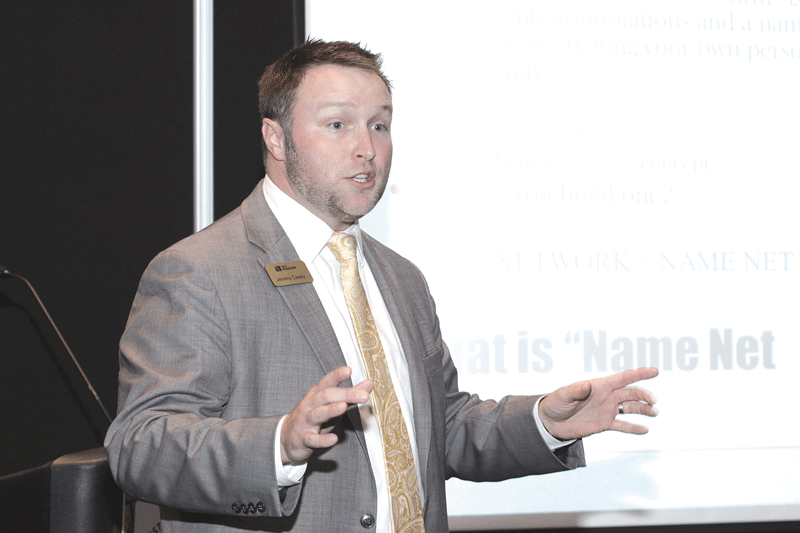
 
WEST OF THE RIVER CHAMBER OF COMMERCE
www.ourwrc.com
(413) 426-3880
 
• Oct. 1: Wicked Wednesday, 5-7 p.m., hosted by Westfield Bank, Agawam. Cost: free for chamber members, $10 at the door for non-members. Event is open to the public. Wicked Wednesdays are monthly social events, hosted by various businesses and restaurants, that bring members and non-members together to network in a laid-back atmosphere. For more information, contact the chamber office at (413) 426-3880 or [email protected].
• Oct. 2: West Springfield Candidates Forum, 6-8 p.m., hosted by West Springfield Town Hall, 26 Central St. For the first half of this state representatives debate, questions will be solicited in advance from WRC members and the general public. The second half of the debate will be performed in the Lincoln-Douglas format, where candidates will have the opportunity to pose questions to each other.
• Oct. 9: Agawam Candidates Forum, 6-9 p.m., hosted by Roberta G. Doering School, 68 Main St., Agawam. For the first half of this state representatives / state Senate debate, questions will be solicited in advance from WRC members and the general public. The second half of the debate will be performed in the Lincoln-Douglas format, where candidates will have the opportunity to pose questions to each other.
• Oct. 15: Networking Lunch, noon to 1:30 p.m., hosted by Crestview Country Club, Agawam. Enjoy a sit-down lunch while networking with fellow chamber members. Each attendee will get a chance to offer a brief sales pitch. You must be a member or guest of a member to attend. The only cost to attend is the cost of lunch. Attendees will order off the menu and pay separately that day. We cannot invoice you for these events.
For more information, contact the chamber office at (413) 426-3880 or email [email protected].
• Oct. 16: Breakfast Meeting, 7-9 a.m., hosted by Lattitude, West Springfield. The featured emcee is political consultant Anthony Signoli, speaking on the potential casino and how it may affect local business and the general public. Cost: $25 for chamber members, $30 for non-members. For more information, contact the chamber office at (413) 426-3880 or email [email protected].