Home Posts tagged Manufacturing (Page 15)
Opinion
Fueling the Next Wave of Biotech Growth

The staggering impact of the nationwide economic malaise has caused every state to examine what it can do to attract the industries that will drive sustainable growth over the long term. We were reminded once again of why the life-sciences industry in Massachusetts is the envy of states across the country — and why we can’t become complacent about it — when 15,000 biotech professionals from 65 countries descended on Boston for the BIO Convention last week.
The local economy has undergone a remarkable transformation in the past two decades, as industries that once dominated the local landscape have been reduced to a shell of what they once were, and newer, technology-driven industries have grown to fill the void. The life-sciences industry has experienced unprecedented growth during that time, buoyed by a unique combination of local assets, including world-class universities and hospitals; substantial federal funding for research; a strong, local venture-capital community that understands the vagaries of our industry; and, more recently, the active involvement and support of the Commonwealth.
Employment at Massachusetts biotechnology companies has grown more than 50 percent over the past decade, to nearly 50,000, and even managed to grow during the depths of recession from 2007 to 2010. The average salary of a biotech worker is more than $95,000, substantially higher than the estimated state average salary of approximately $54,000. And with construction cranes looming not just over Cambridge and the Boston waterfront, but also reaching well out into the suburbs, Central Mass., and the South Coast, it is clear that investment and optimism in the future of the industry in Massachusetts remain strong.
But it was evident at the convention how dangerous it would be to become complacent. Other states and countries were there competing to lure away our state’s biotech companies and talent. They have many tactics at their disposal, including strong financial incentives, tax breaks, lower labor costs, and, in some cases, a fairly convincing argument about quality-of-life benefits outside of our state.
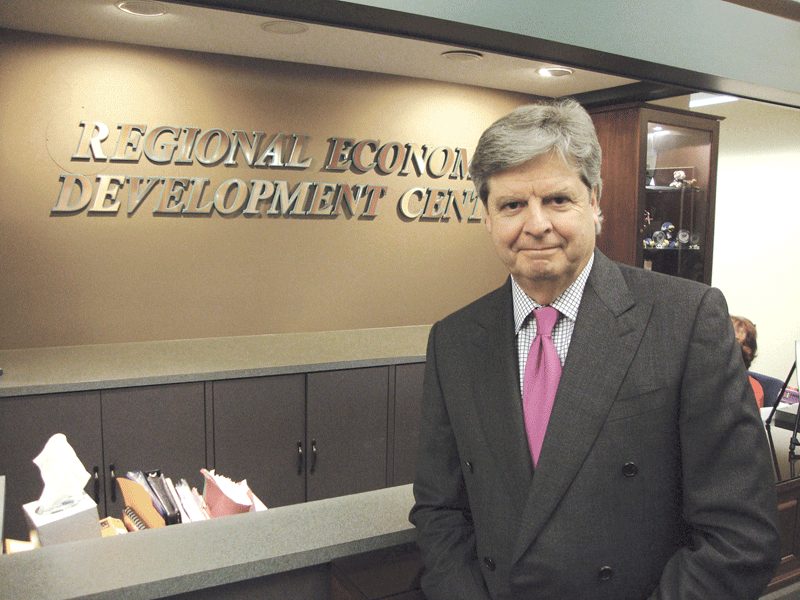
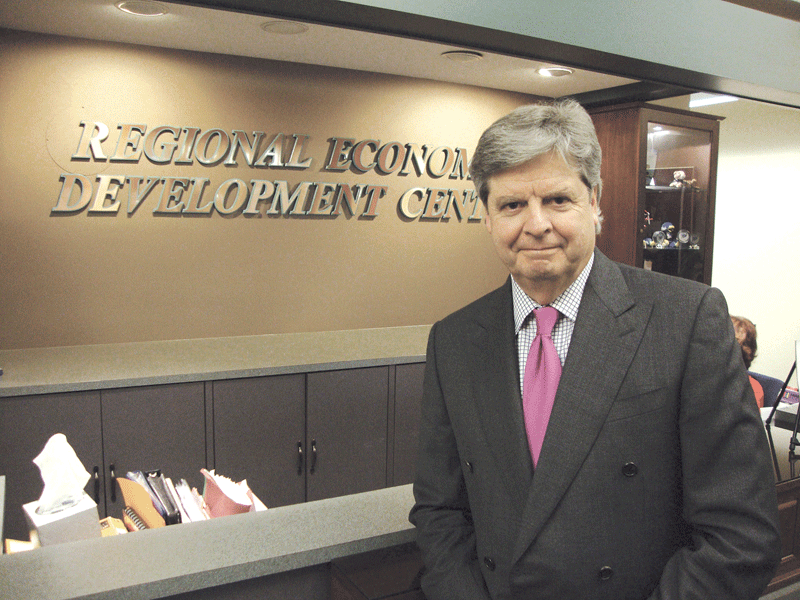
I experienced this first-hand as CEO of Organogenesis Inc., a biotechnology company based in Canton that has successfully developed two regenerative medicine products that use human cells to stimulate the body’s natural ability to repair and regenerate itself.
When we began planning five years ago to expand our operations, our top choice was Massachusetts. But when other states offered us incentive packages that topped what was initially offered here, we couldn’t help but listen. When we were offered a package of incentives that would potentially make us more competitive and more sustainable, we were set to leave the state and expand elsewhere.
A lot has changed since that time, for Organogenesis and for Massachusetts. We are now in the midst of a major, multi-year expansion that will more than triple the size of our presence in Canton, to more than 300,000 square feet. Our global headquarters, R&D, and manufacturing facilities will remain in Massachusetts. The decision to remain and grow here was driven primarily by incentives provided by the state under its 10-year, $1 billion Life Sciences Initiative, signed into law in 2008. Massachusetts has provided us with grants, low-interest loans, and a competitive tax rate, and we in turn have invested five times that amount to build our new facilities. We are delivering on the pledge to create hundreds of new jobs in the years ahead.
The state’s investment in the future of Organogenesis made a critical difference at a crucial time in our history. Dozens of Massachusetts companies are wrestling with the same questions about long-term growth and sustainability. The competitive race for growing industries like ours will only get tougher.
With all that has been done to make Massachusetts a more attractive magnet for biotechnology, we will constantly be challenged to stay one step ahead of the competition.

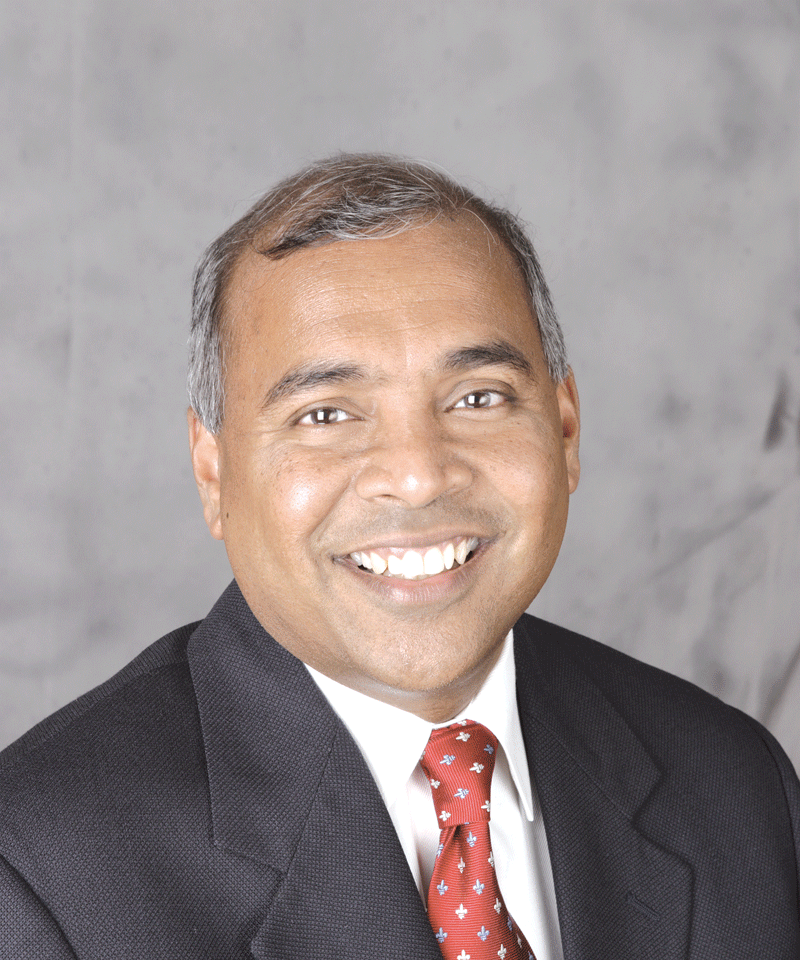
Geoff MacKay is president and CEO of Organogenesis Inc., and chairman of the MassBio board of directors.

Sections Workforce Development
One-stop Career Centers Rely on Partnerships to Fulfill Their Missions

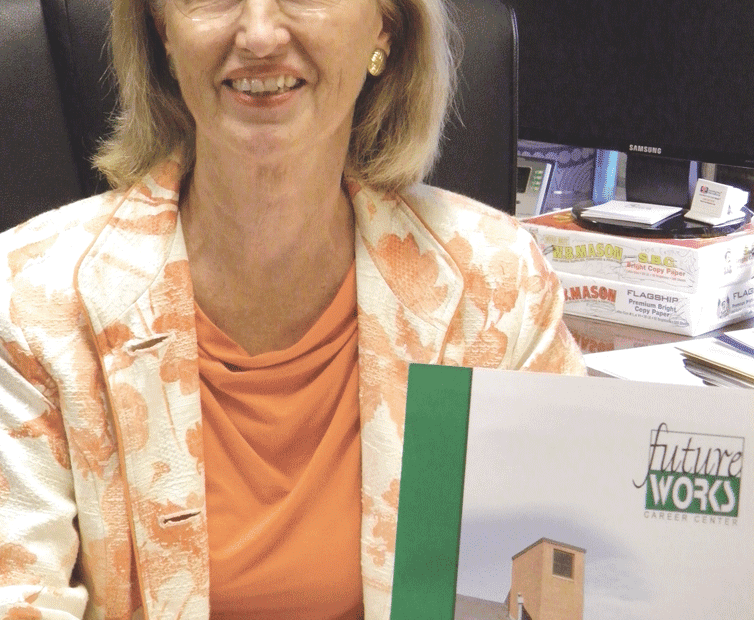
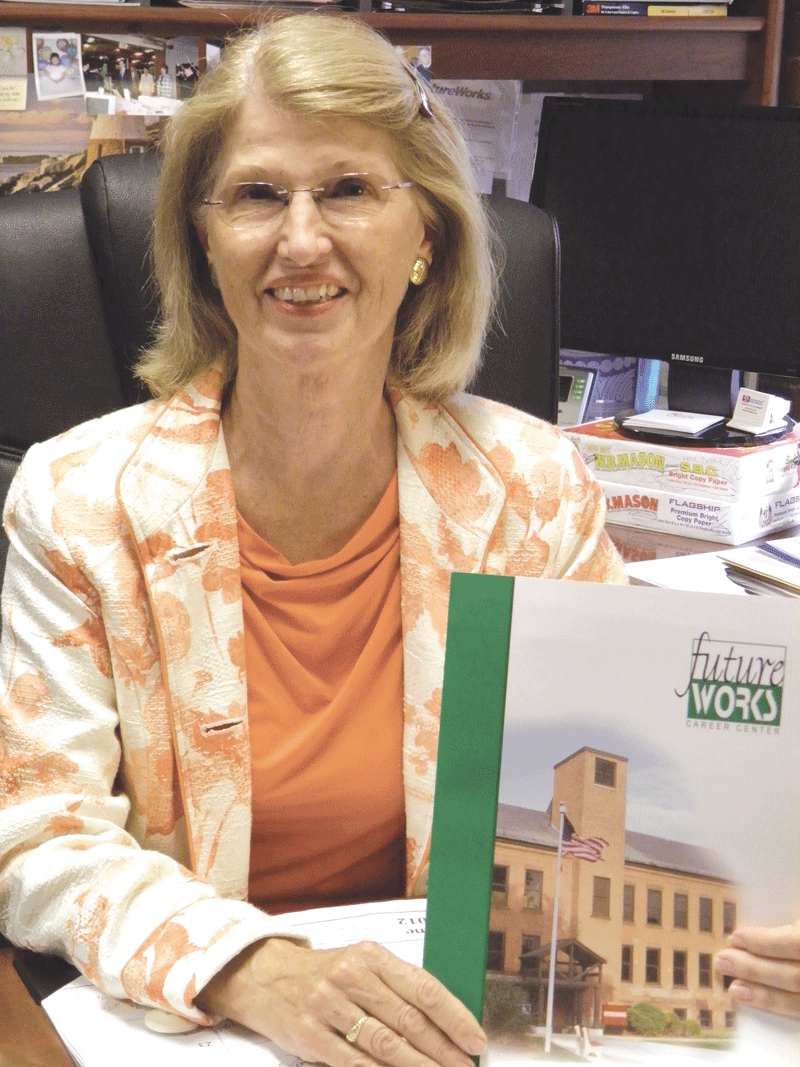
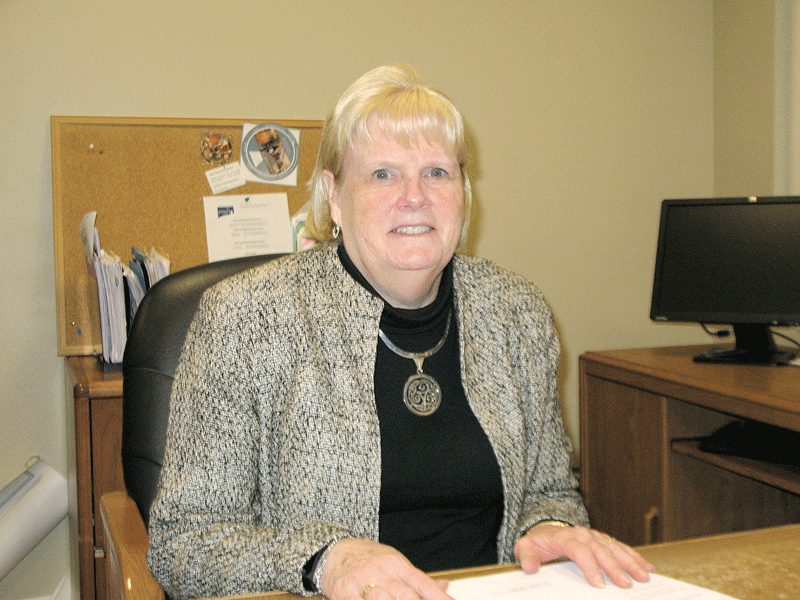
Executive director Rexene Picard

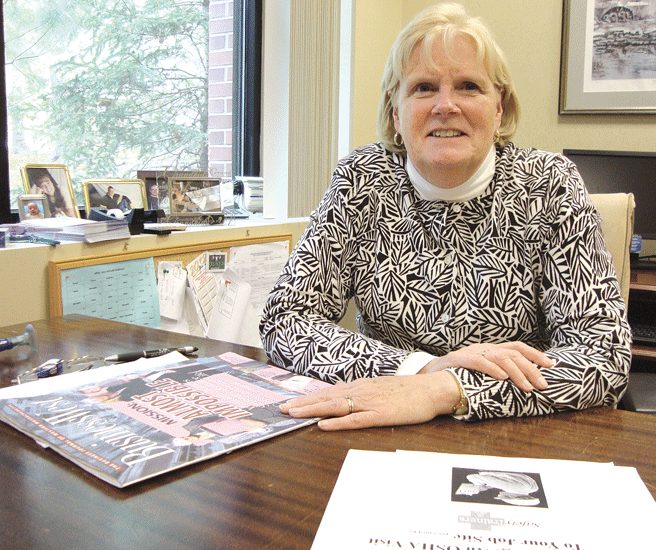
Executive director Rexene Picard says FutureWorks has made changes in the way the agency serves customers due to shifts in the economy and advances in technology.

When one-stop career centers began opening across the state 16 years ago, David Gadaire said, the mantra connected to them was “no wrong door.”
“The concept was one of universal access,” said the executive director of CareerPoint in Holyoke. “If someone needed to brush up on their skills, get help with writing a résumé, learn to network, or get more training, they could find it under one roof, whether they were a school-age person or an older worker.”
The concept was forward-thinking, but the funding was never in line with the complexity of need that job seekers brought to the table. Still, the problem wasn’t nearly as evident in the early years when the economy was flush.
“For the first few years we were open, 50% of the people we saw were employed,” said FutureWorks Executive Director Rexene Picard, explaining that many came to the center to brush up on skills or take a Saturday class.
Gadaire agreed. “In the beginning, we had enough resources. It was a different game then, and the funding we had supported people who needed to harness their skills,” he said.
FutureWorks and CareerPoint achieved national recognition in 1998 when they were selected as Career Centers of the Year by the National Alliance of Business.
“It was a tremendous honor, but the funding kept dissipating as the numbers grew,” Gadaire said. “We were originally chartered to serve 7,000 people a year, and last year we served between 14,000 and 18,000. The numbers have gone up steadily, and although they have plateaued in the last few years, it is only because our capacity is so overstretched.”
The unemployment office has a representative at both centers, and many people confuse the entities. But the former is run by the state, while the one-stops were established through competitive charters.
CareerPoint was chartered as a nonprofit and opened 16 years ago via a partnership that included the Greater Holyoke Chamber of Commerce, Holyoke Community College, the Department of Transitional Assistance, and the UMass Donahue Institute. “They joined together because there was a disconnect between the jobs that were available and the skills of the people available to fill them,” Gadaire said.
The story of FutureWorks is quite different. It was opened in 1996 as the first one-stop in the state by the Employment Training Institute in Ringwood, N.J., owned by Ken Ryan. Granting a charter to a private, for-profit corporation was controversial, but “it gave us a chance to think outside the box,” Picard said. “In the beginning, we said that what we did was not going to be about numbers, it was going to be about customer service. We had welcome centers and made people lifetime members. We could have fallen under the realm of social services, but we felt we were role models for job seekers and wanted to reinforce soft skills, so the center had the atmosphere of a business,” she told BusinessWest.
Although their evolution has been different, it soon became apparent that the needs of the people who came through the doors of both centers were complex, and the funding to help them was far from adequate. “In 1998 when the Workforce Investment Act was passed, the intent was that community partners would support the one-stops. But it never happened,” Picard said.
Still, they have found a way to meet a myriad of complex challenges. “We don’t tell our story well, and it’s a very impressive story,” said Gadaire. “But if 10,000 more people came to our door, I don’t know what we would do.”

Complex Situation
After CareerPoint received its award, it became even more committed to its mission, said Gadaire.
“Universal access meant we had to serve the older worker, the school-age person, professionals, and mid-level executives who found themselves out of work and needed to grow their skills, as well as people with a disability, those who had been incarcerated, homeless people, and individuals who didn’t have an education or didn’t speak English,” he explained. “All of those things required a more significant amount of time than the one-stops were prepared to address. But we realized that we were part of the answer for every one of those populations.”
Since the state did not have money to serve these subgroups, CareerPoint began writing grant proposals, seeking help from corporations and forming alliances with a wide variety of venues, such as the Hampden County Sheriff’s Office.
Today, it operates via seven or eight funding streams and grants that are continually changing. “We have a youth center due to six or seven grants, but we had to carve out a funding strategy,” Gadaire noted.
Finding sources of revenue is a constant struggle because the number of organizations looking to them for help continues to rise. “We’ve tried to create a marketing budget, but it keeps dwindling away. If the choice is marketing or helping a homeless person, the answer is obvious,” he said.
Although the agency initially provided free in-house training for businesses, it began to charge for those services. “We conduct sessions for businesses to help them manage their workforce. We’re giving a series of workshops right now to teach mid- to upper-level managers leadership skills — how to resolve problems, make their workers more productive, and avoid turnover,” Gadaire explained, adding that his organization is also set to launch a videoconference-training program to teach businesses how to conduct remote, face-to-face interviews, which he says will save them time and money.
Since the way people find jobs has changed, CareerPoint has two computer labs where people can become versed in new software and learn how to apply for jobs online. It also stages classes in networking, résumé writing, and a host of other topics related to finding employment.
When the one-stop center opened, it had 36 staff members, but that number has been reduced to around 30. However, it has compensated by forming alliances with many agencies and organizations. It has nine people from different agencies stationed within its office, and makes use of interns.
CareerPoint has also benefitted from countless hours of volunteer help from the Americorps Volunteers in Service to America program. VISTA volunteers have worked with youths involved with gangs as well as seniors, and include one volunteer who is the center’s information-technology manager. “We’ve also tried to build bridges with Westover Job Corps and agencies that offer veterans’ services,” Gadaire explained.
The agency’s staff members are so dedicated that, when they were told recently that two positions had to be eliminated, they offered to save them by taking a 10% pay cut for six months. Gadaire was against the idea, but finally agreed that everyone (including himself) would do it, and much to his surprise, it worked.
“These people are extraordinary; they believe in the community and want to make a difference,” he said. “But they are always exhausted, and I forever worry about burnout.”
Many sit on local nonprofit boards where they build partnerships. “Our partnerships are absolutely critical,” he said. “We are not experts in everything, but hopefully, if we do it right, we can expand our capacity. The community is better-served by our willingness to partner on just about every issue.”

Radical Changes
When FutureWorks opened, it was the only one-stop center in the state operated by a private company. Although profits were capped, Picard said many grassroots organizations and labor groups were upset that a private firm was operating with funds from the state and federal government.
So, in January 2002, after a series of meetings with then Springfield Mayor Michael Albano and Bill Ward, director of the Regional Employment Board of Hampden County, the owner agreed to turn over FutureWorks, with the caveat that it become a nonprofit agency. “The decision meant a lot in terms of restructuring,” Picard said, noting that the corporate headquarters of the Employment Training Institute handled the agency’s finances and human-resource issues.
“It was like starting a new company,” she said. “But having our own board of directors turned out to be one of the best things that happened; we had a very business- oriented team, and the community began viewing us differently.”
The change in status also allowed FutureWorks to pursue grants and funding unavailable to it as a private company. “We also began partnering with staff from other agencies,” Picard said.
One of its most profitable ventures was a shared contract that allowed the agency to work with welfare recipients in Hampden County. “We put more welfare recipients to work than in any other part of the state,” she said.
But despite such gains, the customer base continues to mushroom. “When we started, we saw between 3,000 and 5,000 people a year; last year, we served more than 16,000 individuals,” she noted, adding that FutureWorks consistently leads the state and serves more minorities, youths, and individuals with disabilities than any of the other career centers. “But in order to do so, we have had to look outward to other opportunities.”
These include a unique partnership with the Department of Revenue. The joint effort allows FutureWorks to work with non-custodial parents to help them get jobs so they can pay child support.
The program began as a pilot and expanded to include the family court system. In time, FutureWorks received a performance-based contract to extend the initiative. “It’s been a great program, and we have been told there is only one other place in the nation doing this. It’s in Tennessee, but we are unsure if we will be able to continue it,” Picard said, adding that they have not heard if their latest grant proposal will be extended.
Since Springfield is four times the size of Holyoke in terms of population, FutureWorks receives more funding than CareerPoint. But agency partners are equally critical to its ability to serve people and their on-site representatives. Those partners include Westover Job Corps, the Mass. Rehabilitation Commission, the Department of Education, the Resource Partnership, Hampden County Jail, the Mass. Commission for the Blind, the Commonwealth Corp., and state agencies such as the Department of Social Services and the Division of Employment and Training.
As the labor market has undergone change, FutureWorks has focused on health care and precision manufacturing, since those industries continue to experience growth.
The agency takes advantage of every opportunity, and was the second one-stop in the state to receive a national emergency grant related to a weather disaster. Picard said the Regional Employment Board received $3 million after the tornado on June 1, 2011 that allowed FutureWorks to hire people to do humanitarian work as well as clean-up, which in some instances led to full-time employment.
“We hired four staff people to administer the grant money; two focused on Springfield, and the other two focused on Monson and Brimfield,” Picard explained, adding that the agency has also deepened its link with Springfield Technical Community College.
“There is work taking place on both sides of the fence,” she said, adding that the agency has an STCC staff member on site.

Changing Tide
Gadaire said the one-stop career centers are opportunistic.
“Sometimes a program starts because we can easily fill a need, and sometimes the need has been there, and we finally find a way to fill it. But we don’t ever give up trying,” he said.
Picard agreed. “The one-stops have achieved a 50% rate of employment for the people they serve,” she said. “We’re here to give people hope.”

Manufacturing Sections
Instrument Technology Inc. Has an Eye on the Future

ITI

ITI has found a number of military and law-enforcement uses for its scopes.

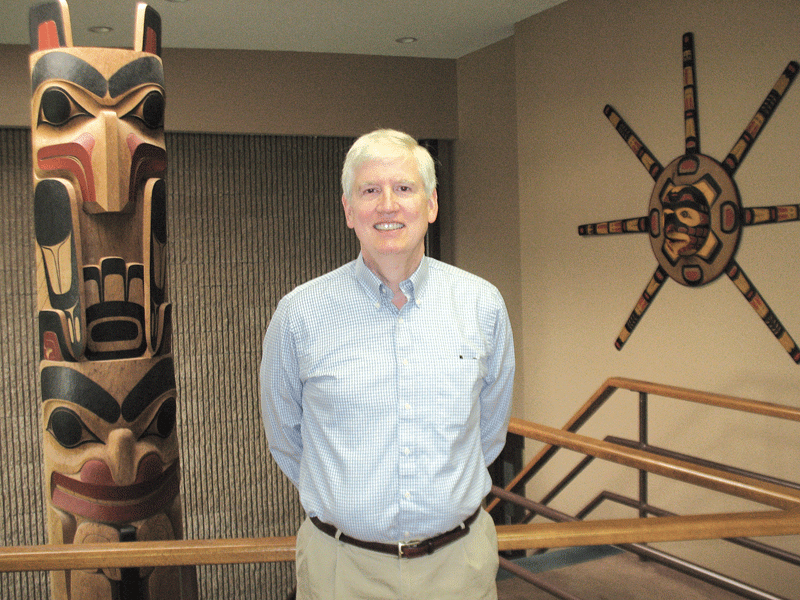
Walk inside the Westfield headquarters of Instrument Technology Inc., and the first thing you’ll notice is the totem pole. It’s kind of hard to miss, rising dramatically up two levels of the front atrium.

In fact, an abundance of Native American art graces many of the walls and offices of the facility. ITI President Greg Carignan says there’s a good reason for this, and it has to do with a hobby his father, Donald, stumbled upon by accident decades ago, shortly after founding the company.

“He was on the road, in very remote areas of the United States, calling on nuclear power plants that were usually out in the boonies,” Carignan said. “Usually, there was nothing around except Indian reservations. So, when he had time on his hands, he’d visit these reservations and meet artists, and he started growing an interest in Indian art. He started collecting it, and when his house overflowed, it started coming here. It’s quite a collection.”

Why nuclear power plants? When he launched ITI in 1967 as a manufacturer of optics equipment, the elder Carignan got heavily involved in the nuclear-energy market; “he started building underwater periscopes and wall periscopes to look at the spent fuel rods being stored underwater.”

Greg Carignan explained that, after a period of time, a nuclear fuel rod’s energy is spent, but it’s still radioactive, which has led to debate over the years about establishing a national repository for those spent rods in the Southwest, but bureaucracy and public opposition have made that all but impossible.

“So nuclear plants are required to store spent rods at their facility, mostly underwater, and they’re required to be inspected periodically,” he said. “Dad developed a large-diameter periscope that could go down underwater and look at those spent fuel rods and make sure they’re in good condition. He built quite a few of those scopes in the late ’60s and early ’70s.”

Greg Carignan

Greg Carignan says the company’s diversity has allowed it to thrive during societal changes, such as a shift away from nuclear power plants.

Today, Carignan, who, along with two siblings, took over the company from their father in 1990, oversees a 47-employee workforce designing and building cutting-edge optical equipment for a wide range of purposes, from peering around corners in war zones to helping doctors navigate inside the human body.

For this issue’s focus on manufacturing, BusinessWest pays a visit to Instrument Technology, which has been scoping out new opportunities in an intriguing field for the last 45 years — and shows no signs of slowing down the pace of innovation.


Solo Act

Donald Carignan, his son recalled, had a background in optics and worked as a project engineer for American Optical from 1960 to 1966. He then took a job with Kollmorgen Electro-Optical; “that’s where he got his experience building borescopes and periscopes.” Just a year later, he was ready to strike out on his own, launching ITI in Southampton.

“My dad was a pretty driven individual; he worked hard to make it a success,” Greg Carignan said, noting that the company was a bit gypsy-like during its first two decades, moving from Southampton to West Springfield, then to Westfield, and finally to the current facility on the other side of the city in 1985.

“We specialize in the design and manufacturing of remote-viewing instruments,” he explained, noting that the company employs designers and engineers, as well as a full machine shop and assemply department to build the products it designs.

“What is remote viewing? It’s the ability to view a photograph or video-record any area that’s inaccessible or hostile, as well as the ability to view covertly,” he explained. “We added that last portion over the past 20 years because, before that, it hadn’t been used for covert operations.”

But he backed up a bit to describe how ITI has branched into so many diverse fields.

It began with the nuclear-power plants, for which the company developed not only those underwater-viewing scopes, but wall periscopes that allowed workers to see past thick concrete walls into the ‘hot cells’ where radioactive materials were handled. But societal changes that impacted the nuclear-power industry would force ITI to shift its focus — and not for the last time.

“During the Carter years of the late 1970s,” Carignan said, “the nation saw a drastic decline in the number of nuclear facilities being built. And most facilities had our equipment in them. My dad was in need of business, so he looked elsewhere to try to continue moving ITI forward.

“He looked at the industrial market and saw that it was being served by medical endoscopes at the time, and nobody was building industrial borescopes,” he said, noting that the two words are essentially interchangeable, with ‘endoscope’ typically referring to a medical instrument and ‘borescope’ a non-medical one.

“Endoscopes for the human body came on the scene about 40 years ago, but it wasn’t until later on that people figured out they could use the same scopes to look into jet engines, castings, pipes, and other things in industry,” Carignan said. “My dad started working for companies like Pratt & Whitney and General Electric to build delicate industrial borescopes to inspect their engines. They called it the ‘jetscope.’”

Many years ago, he explained, the airline industry had to take apart engines to conduct inspections required by the Federal Aviation Administration — a very costly, time-consuming process. But the development of a flexible borescope that could be inserted into each end of the engine was a revolutionary and cost-saving change.

“Designers started designing points along the engine so they could look in the middle, too,” he said. “You take out a plug and stick in the scope to look at the different sections of the engine.”

During the ’80s and ’90s, the industrial market grew for ITI, and the scopes became more complex, with flexible shafts and articulated tips allowing for more flexible movement.


A Time to Kill, a Time to Heal

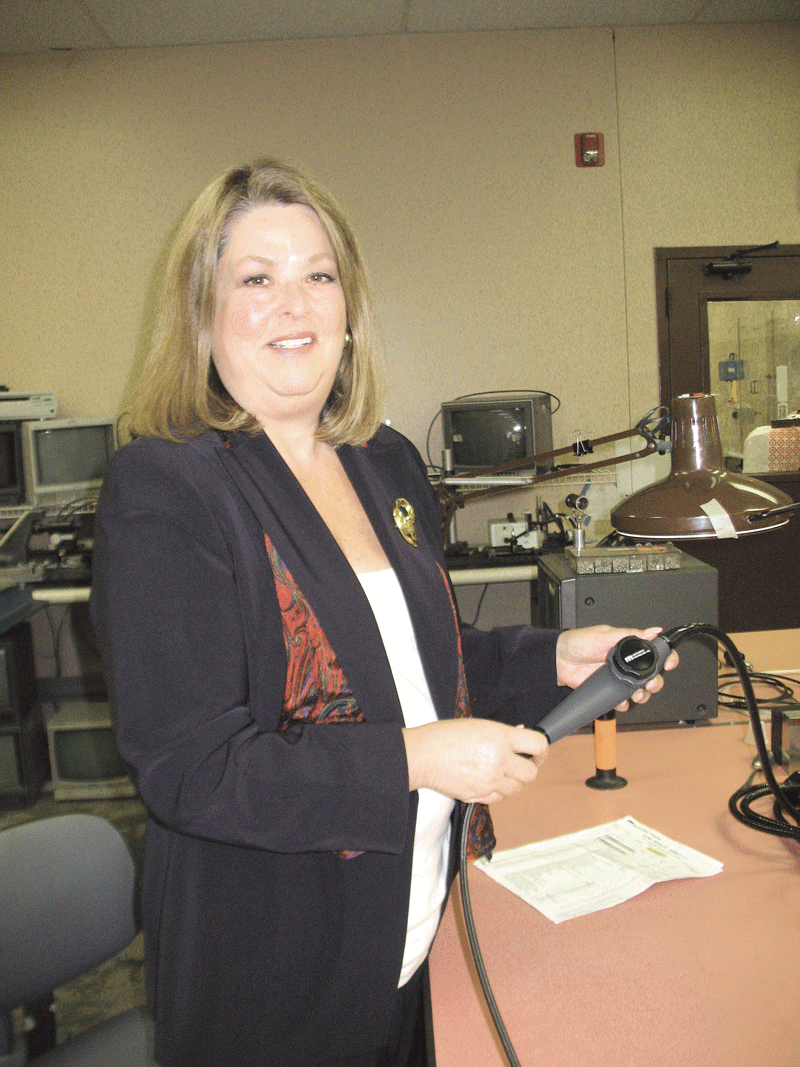
Dawn Carignan Thomas

Dawn Carignan Thomas holds one of ITI’s scopes used for medical applications.

Throughout this expansion, ITI hadn’t done anything in the medical market. “But that changed in the 1990s when a company on the West Coast — Accuscan in Mountain View, Calif. — knocked on our door and asked us to make what they called a gastroscope for them,” Carignan said.

“They didn’t want to see through it; they didn’t want fibers in it or optics of any kind,” he continued. “They were going to put a transducer in the tip and use it as an ultrasonic device for an esophageal probe down the throat to scope the heart, which is much easier than to try to do it externally and look through the rib cage and all the muscle and fatty tissue.

“We worked with them for a year and a half, and that’s when we started in the medical business,” he continued — a shift that has seen the company produce rigid arthroscopes, ureteroscopes, otoscopes, spine scopes, and laparoscopes; flexible gastroscopes, bronchoscopes, and colonoscopes; as well as equipment for video intubation.

“After 20 years, we’ve become a lot more selective about who we decide to work with,” Carignan said regarding the ideas potential customers pitch to ITI. “If it sounds like a very high risk, or a low chance of successfully bringing it to market, we may not get involved. If it’s a startup company or doctor/inventor that’s asking us to do it on our dime and pay for the development costs, oftentimes we’ll say no.

“The model we’ve come to develop,” he continued, “is companies that have some success already and are willing to share the developent costs of the product.”

Eventually, ITI expanded its offerings even further by getting involved in the law-enforcement and military markets, with products such as telescopic cameras that can see around corners and in darkness, under-door scopes, and scopes that see into rooms using tiny (as small as 2.6 mm) holes in the wall.

“We also needed non-conductive probes that could look into a package or parcel to check if there was anything explosive,” Carignan said. “You don’t want to stick in something metallic that could short the device and cause an explosion.”

The original models used infrared light to expose images, and “that was very successful — then the bad guys figured it out,” Carignan said. “So we were asked to find out new ways of seeing. So we developed a blue-light diode, with different characteristics that wouldn’t trigger detection devices. We always want to stay one step ahead of the bad guys.”

ITI also built a pole camera to look into second stories of buildings, down stairwells, into ceiling tiles, and even underwater. “This was a scope we sold quite a bit of to special-ops groups in Iraq, to clear buildings, streets, and neighborhoods, to look around corners and into rooms where the bad guys might be before clearing out a room. They were eventually used in caves to hunt down Al Qaeda in Afghanistan.”

The wars and Iraq and Afghanistan saw a surge in the production of such devices. Carignan showed BusinessWest a chart breaking down sales from 1999 through 2008, and while medical devices tend to make up the biggest percentage of the company’s sales in a typical year, the law-enforcement and military division took that spot from 2003 through 2006. Meanwhile, sales of industrial scopes have fallen off somewhat over the years, but are rebounding.


Next Generation

The three siblings — Greg, Controller and Purchasing Manager Dawn Carignan Thomas, and Manufacturing Manager Jeff Carignan — admit their devices don’t allow a clear view into the company’s future. With six kids among them, third-generation ownership is always possible.

“We’re wondering where the next generation might take us,” Greg Carignan said, “but it’s still early for that.”

For now, they continue to grow and innovate, scoping out new ideas to help people — manufacturers, surgeons, and soldiers alike — see a lot more clearly.


Joseph Bednar can be reached at  [email protected]

Company Notebook Departments

United Financial Bancorp Announces Acquisition

WEST SPRINGFIELD — United Financial Bancorp Inc., the holding company for United Bank, and New England Bancshares Inc., the holding company for New England Bank, recently announced the execution of a definitive merger agreement pursuant to which United Financial Bancorp will acquire New England Bancshares in a transaction currently valued at approximately $91 million, based on United Financial Bancorp’s 20-day volume-weighted average stock price of $15.89 per share as of May 30, 2012 and excluding shares used to terminate New England Bank’s employee stock ownership plan. United Financial Bancorp’s acquisition of New England Bancshares will add approximately $726.5 million in total assets, $557.9 million in gross loans, and $581.6 million in total deposits before acquisition-accounting adjustments. The transaction will expand United Financial Bancorp’s presence into Hartford, Tolland, New Haven, and Litchfield counties in Connecticut, where New England Bank operates 15 full-service banking offices and two administrative offices. Under the terms of the definitive merger agreement, at the effective time of the merger, each share of New England Bancshares common stock will be converted into the right to receive 0.9575 of a share of United Financial Bancorp common stock. The consideration received by New England Bancshares stockholders is intended to qualify as a tax-free transaction. United Financial Bancorp expects the transaction to be immediately accretive to its earnings per share, excluding one-time transaction expenses. The transaction represents 163% of New England Bancshares’ tangible book value and a core deposit premium of 7.4% at March 31. Richard Collins, chairman of the board, president, and CEO of United Financial Bancorp, said that “we are very pleased to announce our plans to partner with New England Bancshares. This combination presents a tremendous opportunity to expand our presence in Connecticut, where United Bank does not currently maintain any branches. Connecticut is an attractive and growing banking market, and one we have had our eye on for some time. Like us, New England Bancshares has deep roots in the communities it serves, and we look forward to introducing our brand of banking to this region. We believe the strategic value of this transaction will enhance our franchise and add value to our stockholders’ investment. We are excited about the future of our combined company.” David O’Connor, president and CEO of New England Bancshares, said, “we feel that this merger is an excellent opportunity for our customers and the communities we serve. Partnering with United Bank will allow us to continue providing our customers with a high level of personalized service and local decision making while preserving our community-bank atmosphere.” The transaction, which has been approved by the board of directors of both New England Bancshares and United Financial Bancorp, is expected to close in the fourth quarter of 2012. T


Research Spending Up 7% at UMass Amherst

AMHERST — According to UMass President Robert L. Caret’s office, research spending at the Amherst campus of UMass is up 7% over last year, while research spending at the five-campus system is up more than 8%. The funds, which helped the Amherst school reach a total of $181.3 million in research spending, come mostly from federal grants, with some private corporations also contributing to research projects. According to a report prepared by the UMass Office of Institutional Research, the university as a whole spent $586.7 million in fiscal 2011, up from $542.7 million in fiscal 2010. Some money on the Amherst campus has been spent developing new radar systems to provide earlier warnings of severe weather events such as tornadoes and hurricanes, while other funds were spent on nanotechnology.


Universal Plastics Acquired

HOLYOKE — The father-son team of Sunil and Jay Kumar has acquired Universal Plastics from the Peters family, pledging to serve as on-site managers and grow the business as the Whiting Farms Road company, founded in 1966 by James R. Peters, transitions from one family ownership group to another. Terms of the sale were not made public. Universal Plastics has gross annual sales of approximately $10 million, employs 70 people, and manufactures thermoforming plastics that include custom containers, protective covers, and enclosures for many large companies including Pratt & Whitney, General Electric, and BE Aerospace. The company also does work for the U.S. military. The new owners plan to keep senior management in place at the company and hope to expand and grow the product line. The Kumars also plan to serve as on-site owners and managers of the business. Sunil Kumar has an extensive background in manufacturing, having previously worked as president and CEO of International Specialty Products and GAF Materials Corp., and as executive vice president and member of the board of Bridgestone/Firestone Tires. His son Jay, who will join him in ownership, is a graduate of Cornell University and has worked extensively in the investment arena, most recently as managing principal at PAON LLC. According to Joseph Peters, president of Universal Plastics, closing on the sale of the business occurred this week, and the new ownership group has already reached out to many of Universal’s customers to inform them of the acquisition. Peters and his brothers Michael and Richard serve as senior managers of the company and will stay on for the foreseeable future to ensure a smooth transition.


HMC Earns Accreditation from Joint Commission

HOLYOKE — Holyoke Medical Center has earned the Joint Commission’s Gold Seal of Approval for accreditation by demonstrating compliance with the commission’s national standards for health care quality and safety in hospitals. The accreditation award recognizes Holyoke Medical Center’s dedication to continuous compliance with the Joint Commission’s state-of-the-art standards. The medical center underwent a rigorous, unannounced on-site survey in January. A team of Joint Commission expert surveyors conducted a full evaluation for compliance with standards of care specific to the needs of patients, including infection prevention and control, leadership, and medication management. “In achieving Joint Commission accreditation, Holyoke Medical Center has demonstrated its commitment to the highest level of care for its patients,” said Mark Pelletier, executive director of Hospital Programs, Accreditation, and Certification Services for the Joint Commission.

Features
A Passing of the Torch at the Greater Holyoke Chamber of Commerce

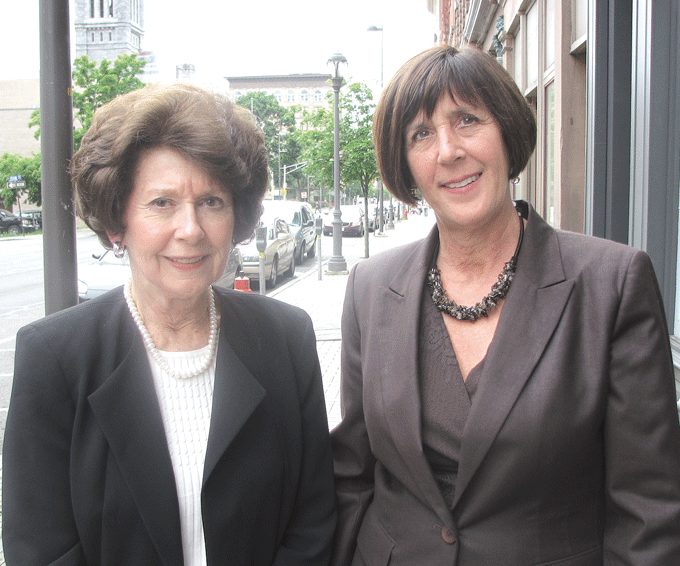
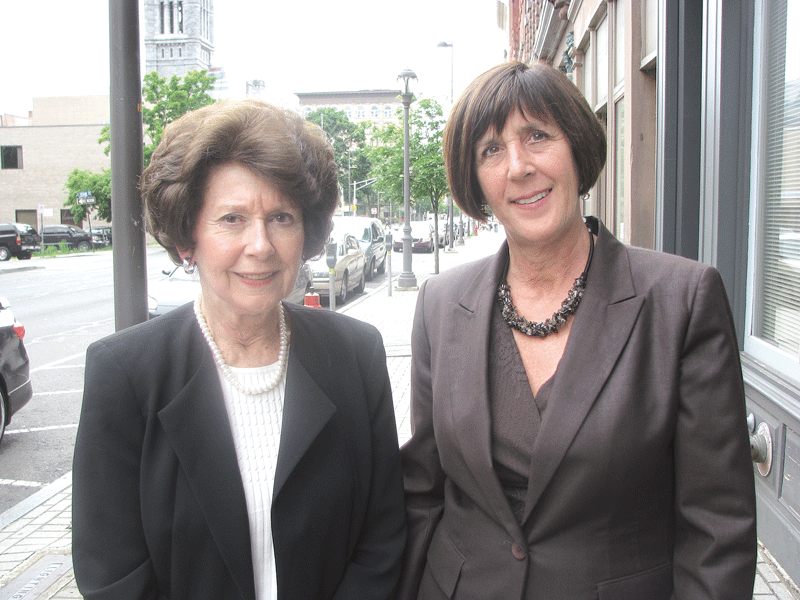
Kathy Anderson, right, has taken the reins of the Greater Holyoke Chamber from the retiring Doris Ransford.

Kathy Anderson, right, has taken the reins of the Greater Holyoke Chamber from the retiring Doris Ransford.

Doris Ransford was looking back on her 26 years as director of the Greater Holyoke Chamber of Commerce when she paused for a short while at one of the seminal moments in her tenure — the chamber’s 100th anniversary in 1990.
This was a time of celebration, but also a chance to reflect on the many changes that had come to the community over that century, said Ransford during an interview in her last week on the job before stepping into retirement, adding that the pace of change has only accelerated since that milestone.
“I was looking over a special supplement we did as part of the 100th anniversary,” she recalled. “We honored all the companies that were over 100 years old, and there were a lot of them, mostly manufacturers. And, sadly, the majority of them aren’t here anymore.”
But while the complexion of the Holyoke business community has changed markedly over the past several years and the manufacturing base that put the city on the map has dwindled, there have been many positive developments as well, said Ransford, listing everything from new retail to a host of new small businesses to successful revitalization efforts downtown.
And the chamber has played a significant role in many of them.
Some of its most significant contributions, she said, have been in the broad realm of workforce development, a key issue in a community where business owners have long struggled to find employees with the requisite skill sets. The chamber has taken a leadership role in such initiatives as the creation of the one-stop career center CareerPoint, continuation of programs administered by the Mass. Career Development Institute after scandal there a decade ago, and a host of training and placement programs.
“Companies had job openings, but couldn’t find skilled workers,” she recalled, adding that the challenge persists today. “For many years, we were actually placing people into jobs from this office.”
Meanwhile, the chamber has been involved in other endeavors, ranging from the transformation of the old central fire station into a multi-modal transportation center and adult-education facility, to the advancement of plans for the return of rail service to the center’s downtown.
And while doing all this, the organization has been steadfast in its primary mission — providing effective service to its membership, said Ransford just a few days before she turned over the keys to her successor, Kathy Anderson, a veteran economic-development leader in the city, serving most recently as director of the Holyoke Office of Planning and Development.
Looking ahead, Anderson said she plans to continue building on the foundation created by Ransford and those who came before her, while also broadening the organization’s focus somewhat to include more work to assist and mentor fledgling entrepreneurs and small business owners.
“I’d really like to find ways to support small businesses that aren’t part of a chamber, and don’t have a lot of outside contact with others they can network with or learn from with regard to running their business effectively,” Anderson said. “We have to better understand the needs of the young entrepreneurs, and then help meet those needs.”
For this, the latest installment of its Getting Down to Business series, BusinessWest uses the leadership change at the chamber as an opportunity to look at where this venerable organization has been, and where it wants to go next.

History in the Making
The walls in many of the rooms of the Greater Holyoke Chamber office on High Street are covered with portraits of past board chairs. When asked if her likeness would eventually join them, Ransford laughed and said, “I seriously doubt it.”
But even if her picture doesn’t end up on the wall, there is no doubting Ransford’s impact on the chamber, Holyoke’s business community, and the city itself. Indeed, while many of the jokes at a testimonial staged at the Delaney House on May 29 concerned the length of Ransford’s tenure — Mayor Alex Morse noted that he wasn’t alive when she started, and state Sen. Mike Knapik recalled that he was still in college — there was also high praise for a long list of accomplishments.
And also recognition of a career in chamber work that spans more than 45 years and assignments in the region’s two largest cities.
Ransford started working for the Springfield Chamber of Commerce in the  late 1960s, and eventually held a number of positions with that organization, eventually rising to senior vice president. She handled a number of responsibilities as well, from public relations to program development to running two affiliates, in Agawam and West Springfield.
When the director’s position came open in Holyoke in 1986, Ransford saw it as an opportunity to lead her own chamber, while also taking a leadership role in a city undergoing significant change as it continued the process of reinventing itself from its legacy as the country’s first planned industrial city.
During her lengthy tenure, she has presided over a number of initiatives, from support of Greater Holyoke Inc.’s efforts to revitalize downtown to the creation of a fall trade show that involved a partnership with the Chicopee Chamber. But perhaps the most noteworthy accomplishments came in the broad realm of workforce development.
Indeed, in addition to being one of five agencies that collaborated to create CareerPoint in the mid-’90s, the Holyoke Chamber was one of six chambers to receive grants for workforce efforts through a partnership involving the U.S. Chamber of Commerce, the National Assoc. of Manufacturers, the Ford Foundation, and the Annie E. Casey Foundation.
“That enabled us to put someone on staff and work with companies that were needing employees,” she explained. “We were doing a lot of work with employers at that time, especially in manufacturing and health care.”
Ransford, who announced her retirement several months ago, has spent the past several weeks working on transition issues with Anderson, who told BusinessWest that she sought the chamber job because it would enable her to continue working on many of the issues that have occupied her time and energy for the past 13 years, but also narrow what had been a very broad focus to local businesses and how to assist them.
“I saw this as a great opportunity to continue to work with the business community and support it in a different way than I did before,” said Anderson, who worked in the mayor’s office in Holyoke for several years before moving on to the Office of Planning and Development, where she succeeded Jeffrey Hayden as director in 2006.
Looking ahead, Anderson said she wants the chamber to continue to take active roles in economic-development and workforce-development initiatives. These include everything from support programs for young entrepreneurs and small-business owners to efforts to introduce young people to possible career paths and jobs within the city through summer internships and other programs.
She noted that the city has indeed lost many older, larger employers over the past several decades, and that one of the many strategies for replacing those lost jobs is to encourage entrepreneurship while also providing support and educational opportunities for small businesses with the hope that some will remain in the city and achieve solid growth.
“It comes down to understanding the needs of this new generation of entrepreneurs,” she said, “and try to tailor workshops, breakfast meetings, or speakers to help them understand how to run their businesses more effectively so they can grow.
“Also, funding is always an issue for businesses, especially small, startup businesses,” she continued. “The first part to get started is easy, but the next round, the one they need to grow their business, is much harder to attain, so I would like to put together programs that would help them understand their options for getting funding.”
Another priority is to continue work Ransford started to get city businesses more involved in the school system in what can be a mutually beneficial partnership.
“I’d like to get kids into internships, summer-job-placement programs, shadowing, and more,” she said, “so they can see what types of jobs are available here in Holyoke, and to get them thinking, ‘I can do that,’ and have have a focus, or goal, of getting back to that company to work someday.”
Overall, Anderson sees a number of positive developments in Holyoke, from the High-performance Computing Center to infrastructure projects such as the Canal Walk, to the plans for restoring rail service. These, coupled with a changing population that includes more young professionals and members of the creative economy, have many thinking positively about the city’s future.

Epilogue
Returning to that 100th anniversary celebration and all that’s happened since, Ransford said that, while looking back can be a somewhat painful exercise, it doesn’t have to be.
“There’s always been a ray of hope in this city, and people have always worked hard to make a difference,” she told BusinessWest. “So while people look back and see all that’s been lost, a lot has been gained, too; I think this is quite a different city from when I first came here.”
Ransford is one of those who made a difference, and because of what she and others have been able to accomplish, Anderson and the chamber can indeed look forward with optimism.

George O’Brien can be reached at [email protected]

Features
EANE Has Been a Resource for Nearly 100 Years

Meredith Wise

Meredith Wise says the Employers Association of the NorthEast acts as a partner with area business owners and managers.

It was well over a century ago when a group of business owners in manufacturing decided that, rather than hold on to the unique workforce solutions they had formed within their own firms, they would share this information and, in the process, benefit their entire industry.
This group of businessmen was originally based in Connecticut, but in 1913, a branch of similar visionary mill owners in Western Mass. saw the wisdom of this way of doing things and joined the movement. That, Meredith Wise told BusinessWest, is how the Employers Association of the NorthEast got its start.
“They felt that they could do better in their businesses if they shared all manner of interests, best practices, how they could be doing things,” said Wise, the group’s president. “Part of it at that point in time was to combat union organizations. But when you look back at the records, it wasn’t militant, or ‘keep the unions out at all costs.’ Instead, it was, ‘how do we make our workforce better so that they’re not interested in unions?’”
Today, the EANE has broadened both its member base and its geographic scope. Where once manufacturing was the only sector served, today the 830-plus members range across New England and into Eastern New York, with virtually every industry represented.
The smallest of companies on up to firms with a workforce numbering in the thousands benefit from the combined wisdom of the organization, which Wise said simply exists “to provide the best human resources, training and development information, and services to our members so that they can improve their business and meet their overall goals.”
That early mythology of ‘union busting’ is one that Wise again dismissed. “What we’re doing is trying to improve the relationship between an employer and their employees,” she explained, “so that there’s not a need for any third parties — whether that’s a union or an employee going to the Mass. Commission Against Discrimination, or to an attorney. What we want to do is work with our members to provide a better workplace for their employees.
“The idea,” she continued, “is to keep good communication, before something becomes a problem.”
In an increasingly volatile business climate featuring outsourcing, ‘rightsizing,’ fluctuations within the economy, and information technology entering the workplace at light speed, Wise said her organization is there to provide assistance and advice to its members, with the expectation of bolstering each company’s strengths and bettering its bottom line.
And that is where Wise and her staff at the EANE are getting down to business. Often a company lacks the ability to devote time or resources to changing compliance regulations and the complications of business in the fast-paced technology arena. While there are times she hears from new clients, more often, she works with businesses that understand the long history of EANE’s assistance, and seek to get their own share of its experience in the marketplace.

Motivational Speaker
While the agency’s name puts the spotlight on the employers themselves, Wise said that much of what her organization focuses on is the workforce.
“The thought is that, in order for companies to reach what they want to achieve, they have to make sure that they’ve got the right people in the right spots with the right talent and skills, all to do what needs to get done,” she explained. “Without those people, and without that motivation and competency, a business isn’t going to meet its bottom line.”
Here, she said the EANE is engaged to assist with the HR departments of its members to fine-tune industry, legal, and regulatory compliances, but without forgetting those individuals on the floor, and always with the goal of attracting, retaining, and motivating the employee base to keep the business moving in a progressive fashion.
“We do a lot of passing along of best practices in human-resource areas — what other companies are doing around retention, engagement, what they’re doing to keep people motivated in the economic climate that we’ve got, how they’re keeping people motivated when they’re asking them to do more with less,” Wise said.
To achieve such goals, she said the EANE spends a significant amount of time in training for leadership, management development, customer service, and teamwork — either in seminars or at roundtable discussions. “We provide all of the skills that people need in order to help their businesses grow,” she added.
But rather than an outsourced model of HR, she said the EANE acts as a partner, or addition, to the existing departments within member businesses.
“Everything has gotten so complicated, and changes so fast, that it’s hard for one person to have all the resources and all the skills that they need,” she continued, “even for a few people in the HR department. So we look at ourselves as augmenting that function within an organization.”
Such complications arise as the very nature of business hierarchy has been shifting away from a purely top-down model. In generations past, a president, CEO, CFO, or senior management team were the people who made all the decisions within a company.
“That fit the environment that was there,” Wise went on. “But nowadays, so much is changing in the business sphere that almost everyone within an organization has to have some decision-making capability. It is increasingly important to be sure that people have the training, the skills, that they’re onboard with the mission and vision of the organization, that they’re held accountable for their decisions, that they have the knowledge to make those decisions. That gets complicated for an organization to do.”
Sometimes, this can be a difficult decision for business leadership to make. But the EANE helps each client take a look at its practices, policies, benefits programs, and employee engagement, and shares the best practices from other employers as well as helping to design strategies unique to that organization.
It’s not always about putting out a fire, Wise said. “Lots of times where we get that call, it happens when a CFO, CEO, or an HR person is out in a group and they’re kibitzing with their peers. That person may ask their colleagues about pain points in their own business — starting to see some turnover, maybe losing some good people. Sometimes it’s just about a number of workers ready to retire. They’ll ask who you are using as a resource. Then our name comes up.”

Stock in Trade
There are still people who say the EANE aims to keep unions out of the workplace, Wise said. Further explaining her dismissal of this notion, an aim of her organization is instead to ensure that her clients’ workforce gets valued attention and recognition.
“We’re not stepping into the middle of that relationship — getting between the employer and the worker,” she continued. “We’re not the employer’s voice to the employee, or vice versa. What we’re trying to do is coach the employer so that their practices and procedures are positive.
“It’s not that we want to keep out unions,” she continued, “but to improve that relationship so that the employee doesn’t feel the need for a union, or that they don’t feel discriminated against, or that, if there’s a harassment issue, that the employee feels comfortable walking into that HR director’s office, the CEO’s office, and telling them about issues that are important to talk about.”
But that’s not as much of an issue, she said, as the nature of the modern workplace, which is evolving on a near-constant basis. And her advice to all business owners and managers is to work within the changes that have taken place rather than try make older ways of doing things work is this changed environment.
Speaking of the Baby Boomer generation as an example, she said that there are many who are nearing or at retirement age. “Some of them may not be able to retire now,” Wise said, “as their savings may have been decimated through the recession. But what is happening within the workplace is that those in their late 50s or 60s, maybe they’re not at a place where they can retire, but they can step back from the 50-hour workweeks. How can an employer meet the needs of that population?”
Here, the unfolding technology that increasingly drives the office could be utilized for Boomers to work from remote locations or work more flexibly outside of a traditional workweek. Such models are also advantageous to newly minted college graduates, for whom a 9-to-5, Monday-through-Friday schedule might not work effectively.
“This is an example of a good lesson from the last few years on how business needs to better leverage technology,” she said.
As she reflected on the long history of her organization and a century of providing assistance to area businesses, Wise said it’s important to note that the EANE is based in the region it serves.
“What we try to get across to our members is that we’re not just their partner, and not just their resource,” she said. “We’re local, and we’re tied into the communities that are here — which means we understand the environments in which they’re working.
“We’ve been here for over 100 years,” she added with a smile, “and I hope we can continue to be helping organizations for another 100.”

40 Under 40 The Class of 2012
Principal, Brainstream Design

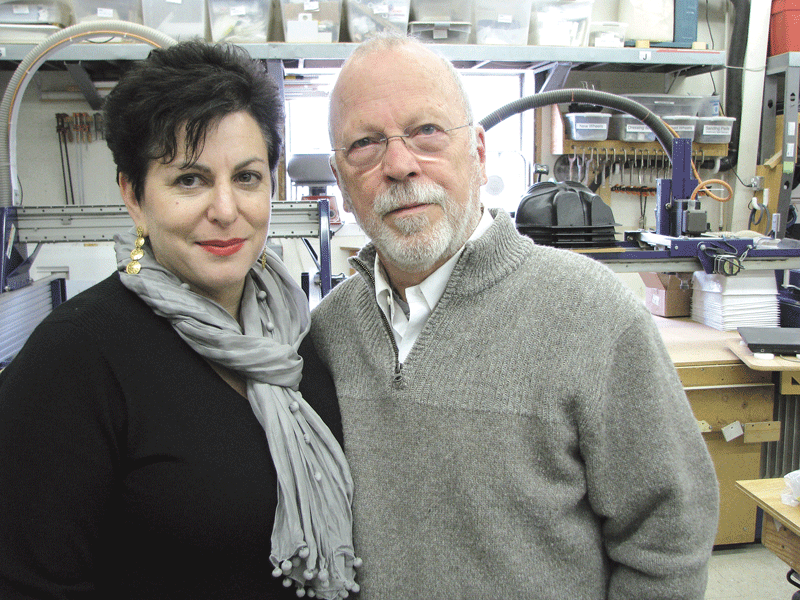
Einstein-BenBen Einstein says it takes “a certain kind of crazy” to work as he does.
And by that, he means the life of a combination serial entrepreneur and inventor, someone who has worked on virtually every aspect of product development, from concept initiation and refinement to prototyping; from small-scale production to full-scale manufacturing.
He does all this through a venture called Brainstream Design, which, Einstein says, brings ideas to life. Such concepts, developed in collaboration with clients looking to bring products to the marketplace, have included everything from a folding chair and ottoman inspired by pop-up books to something called the Unity Remote, a smartphone accessory that, as the name implies, allows people to operate a host of devices with a single remote. And then there’s the Wine Bottle Table, which is sold as a single piece of acrylic with no legs. It is the user’s responsibility to drink wine and to decide how to create their own table.
And Einstein is taking his entrepreneurial flair to another level with a new business venture called Bolt, a Boston-based accelerator program that will focus exclusively on entrepreneurs who want to design physical products, rather than Internet-related concepts.
Einstein cultivated his passion for entrepreneurship and inventing at the Hampshire College Lemelson Center, which focuses students on art, design, and “innovation for social change,” through concentration in such areas as applied design, social entrepreneurship, and art and technology. Einstein said this project-based learning process appealed to him and helped get Brainstream, now based in Northampton, off the ground.
And while he’s made his own serious strides in entrepreneurship, Einstein is also committing large amounts of time and energy to helping others get their start and promoting a culture of innovation in the region. Indeed, he’s taken a lead role with a program called Idea Mill, a conference staged last fall that showcased emerging young businesses and attracted more than 300 attendees from across the Northeast.
Many of them, like Einstein, have that aforementioned certain kind of crazy, which is good for a region striving to become an innovation leader and create jobs.
— George O’Brien

40 Under 40 The Class of 2012
President, TommyCar Auto Group

Consenzi-CarlaAs she talked with BusinessWest upon receipt of notification that she was not only a member of the 40 Under Forty Class of 2012, but the highest scorer, Carla Consenzi was making final preparations for a trip to Wolfsburg, Germany and the headquarters of Volkswagen.
This was to be a fast-paced, three-day visit that would include a tour of the company’s manufacturing facilities and several meetings with VW hierarchy about 2012 and 2013 models and the sales year ahead. The trip puts an exclamation point on the continued growth and expansion of the TommyCar Auto Group, which Cosenzi serves as president and main spokesperson, and, more specifically, the opening of Northampton Volkswagen earlier this year.
“We had been looking for opportunities to expand and to challenge ourselves,” said Cosenzi. “The timing was right, and the circumstances were right; it was too good to pass up.”
This addition to the lineup now gives TommyCar four dealerships in Western Mass. — the others being Country Nissan in Hadley, Country Hyundai in Greenfield, and Patriot Buick GMC in Charlton — and it adds another chapter to the compelling story being written by Cosenzi and her brother, Thomas, as they continue the legacy of their father, Thomas E. Cosenzi. He created TommyCar, and was grooming his children for the business when he was diagnosed with brain cancer in 2007, a battle he fought bravely, but would ultimately lose two years later.
Sharing responsibilities with her brother, Carla Cosenzi has played a lead role in promoting and expanding the TommyCar brand — she is the face and voice of the company in radio and TV commercials — and making the company one of the leaders in the local automotive market. Meanwhile, she remains active in the community, continuing the Thomas E. Cosenzi Driving for the Cure charity golf tournament, which has to date raised more than $200,000 in support of brain-cancer research.
She also lends her time and energy as a volunteer at Baystate Children’s Hospital’s cancer center, and supports a number of organizations and causes ranging from the Food Bank to Toys for Tots to the Ronald McDonald House.
— George O’Brien

Agenda Departments

MCDI Career Showcase
April 26: The Mass. Career Development Institute will host an open house from 3 to 7 p.m. to showcase its extensive training programs. The event, the MCDI Career Showcase, will take place at 140 Wilbraham Ave. in Springfield. Instructors and staff will provide demonstrations and information about job-placement assistance and financial-aid programs available. MCDI programs include culinary arts, nurse’s aide/home health aide, sheet-metal fabrication and welding, medical office professional, and precision machining and manufacturing. To register or for more information, call (413) 781-5640.

Walk of Champions
May 6: The Goodnough Dike area of the Quabbin Reservoir will be the setting for the seventh annual Walk of Champions in Ware. Participants walk in honor or in memory of loved ones affected by cancer, with the determination to make a difference in those affected by the disease. The event offers a five-mile or two-mile walk, with entertainment and refreshments along the route. For more information, visit www.baystatehealth.org/woc or e-mail Michelle Graci, manager of fund-raising events at Baystate Health at [email protected].

Small-business Seminar
May 16: Local business owners will talk about what they have done to keep ahead of the many demands on their time, and at the same time adjust for the economic environment, during a workshop titled “Adapt, Diversify, Reinvent & Grow” at the Scibelli Enterprise Center, 1 Federal St., Springfield. Presenters include Paul DiGrigoli of Digrigoli Salon & School of Cosmetology; Tara Tetreault of Jackson & Connor; Kate Vishnyakov of Kate Gray Inc.; and Rick Ricard of Larien Products. The 9 to 11 a.m. session is sponsored by the Mass. Small Business Development Center Network. The cost is $40. For more information, call (413) 737-6712 or visit www.msbdc.org/wmass.

Management Fundamentals Workshop
May 24: Lyne Kendall of the Mass. Small Business Development Center Network will present “Business Plan Basics” from 9:30 a.m. to 12:30 p.m. at Amherst Town Hall, first floor meeting room, 4 Boltwood Walk. The workshop will focus on management fundamentals from startup considerations through business-plan development. Topics will include financing, marketing, and business planning. The cost is $40. For more information, call (413) 737-6712 or visit www.msbdc.org/wmass.

NYC Bus Trip
June 30: The Chicopee Chamber of Commerce will host a bus trip to New York City, leaving the chamber parking lot at 7 a.m. and returning around 9:30 p.m. Participants are on their own for the day in New York City. Tickets are $45 per person. For more information, contact Lynn at (413) 594-2101.

40 Under Forty
June 21: BusinessWest will present its sixth class of regional rising stars at its annual 40 Under Forty gala at the Log Cabin Banquet & Meeting House in Holyoke. The June 21 gala will feature music, lavish food stations, and introductions of the winners. Tickets are $60 per person, with tables of 10 available. Early registration is advised, as seating is limited. For more information, call (413) 781-8600, ext. 100, or visit www.businesswest.com.

Western Mass.
Business Expo
Oct. 11: BusinessWest will again present the Western Mass. Business Expo. The event, which made its debut last fall at the MassMutual Center in downtown Springfield, will feature more than 180 exhibitors, seminars, special presentations, breakfast and lunch programs, and the year’s most extensive networking opportunity. Comcast Business Class will again be the presenting sponsor of the event. Details, including breakfast and lunch agendas, seminar topics, and featured speakers, will be printed in the pages of BusinessWest over the coming months. For more information or to purchase a booth, call (413) 781-8600, or e-mail [email protected], or visit www.wmbexpo.com.

Columns Sections
The Research & Development Tax Credit

Kristina Drzal-Houghton

Kristina Drzal-Houghton

During these challenging economic times, manufacturers may be overlooking a significant source of revenue for hiring additional workers, expanding operations, and improving their bottom lines: the research and development (R&D) tax credit.
Large companies have banked on these credits for years, feeding a misperception that the credit is limited to high-tech, cutting-edge research companies, multinationals, or Fortune 1000 firms. However, when the credit was enacted by Congress, one of the important goals was to fuel innovation and hiring in the area which produces the most jobs in America: small and mid-sized companies. Recent changes to the credit have helped further this goal dramatically.
Over the past few years, Congress reduced the documentation and qualification requirements to make this credit accessible to companies outside of the Fortune 1000. Court rulings have also boosted eligibility and provided much-needed clarification. In the last two years, five major R&D tax-credit court cases added additional guidance in this area. All of these cases resulted in taxpayer-friendly outcomes that provide a clear, consistent, affirmative message toward estimation and costs that can be claimed. One case involving an automotive supplier had broad implications for companies in the plastics and manufacturing industry as a whole.
Specifically, the court ruled that a company could capture supply expenses incurred for the development of tooling and dies sold to the client. Another case reaffirmed this decision and expanded its applicability toward manufacturers developing products sold to clients. Specifically, the court ruled that the taxpayer could capture all of the expenses related to some of the unique boats the company developed. When viewed through the prism of the manufacturing industry, this applies to the tooling and prototypes sold to clients. An example could be the plastic injection mold developed to make a plastic car part.
Today’s manufacturer may not realize that their activities may entitle them to generous R&D tax incentives, and even if they do, the traditional notions of R&D may cause manufacturers to limit qualified research expenditures to activities associated with new-product and invention developments. However, in many cases, manufacturers spend a considerable amount of time and effort to develop product designs that achieve optimized manufacturing process performance. Furthermore, many manufacturers, including ‘job shops,’ conduct extensive activities to design and develop the manufacturing processes themselves to achieve specific project requirements or to stay ahead of competitors in the marketplace.
All these activities may require time and money both in the engineering department and on the production floor itself, which may be captured as qualified research expenditures leading to significant tax benefits. If you think you have to be a large public corporation developing products and inventions to be conducting qualified activities as defined by the Internal Revenue Code, think again.
Manufacturers with qualifying R&D activities are entitled to a 20% research tax credit (potentially equaling hundreds of thousands of dollars), subject to certain limitations for previous years. The credit is much more powerful than a deduction because it offsets taxes owed or paid, dollar for dollar, as opposed to just reducing a company’s taxable income. Even better, a business can obtain the credit for all open tax years — generally the last three years plus the current year. Any credits not currently utilizable can be carried forward 20 years.
To fully capture the eligible costs for this credit and defend your calculations should you be audited, you need a group of experts with either scientific or engineering experience to help qualify, quantify, and substantiate the credit. A company I’ve dealt with which has such expertise is an organization called Alliantgroup, a national, specialty tax-advisory firm. They provide businesses with a no-obligation assessment of their eligibility for tax credits. With recent changes to these incentives, they have been able to bring extra value to our clients, making this a win-win proposition for everyone.
A noted supporter of the R&D credit, former IRS Commissioner and Alliantgroup Vice Chairman Mark Everson, has urged manufacturers and their CPAs to educate themselves about the credit.
“Manufacturing is a foundational component of the American economy. The R&D credit can be a lifesaver for small and mid-size businesses, and in particular manufacturers. It is critical that businesses capture these funds.”
The U.S. Congress and many state governments realize how critical innovation is to the future of America’s competitiveness in the world, and the R&D credit is an important incentive to nurture that innovation. They also know that the companies engaging in these activities are supporting millions of high-skilled, well-paying jobs.
In addition to manufacturing, Brian Aumueller, director for Alliantgroup, has seen first-hand a variety of industries that are benefiting from the credit, including architecture, engineering, and contracting. He notes, “the broadened applicability of the credit has enhanced the opportunity for companies in various industries across the country — New England is no exception. In 2011, we have seen local companies capture over $16 million in credits, and expect that pace to increase in 2012 and beyond.”
The following examples illustrate how more businesses are taking full advantage of this important tax incentive program, resulting in a new stream of income in these trying economic times and saving jobs.
A contract manufacturer with $20 million in revenues realized a credit in excess of $400,000 due to changes in law that enable the costs related to plastic injection molds and tools sold to customers to be claimed.
Similarly, a tire-mold manufacturer realized about $60,000 in credits from the design of tire molds and the related costs of tire-mold prototypes.
For these and other reasons, the R&D credit will be around for a long time, and any company with relevant products or services would be smart to realize its benefits. By taking a strategic approach to R&D tax credits, businesses can realize significant cost savings benefiting the company, its employees, and the economy as a whole.

Kristina Drzal Houghton, CPA, is partner in charge of Taxation for Meyers Brothers Kalicka, P.C.; 536-8510; www.mbkcpa.com

Features
Pieces Coming Together for Second Annual Business Expo

As she talked about the rapidly approaching Western Mass. Business Expo 2012, Kate Campiti put to use a phrase that has become an operating mantra for many businesses across this region: continuous improvement.
Indeed, while the inaugural expo surpassed all of its stated goals — from selling out the floor at the MassMutual Center to capturing the attention of the area’s business community (more than 2,300 guests took in the event), to providing thought-provoking seminars and special programs — the mission for year two is clear and simple: to improve upon that performance and bring more value to exhibitors, attendees, and sponsors.
And this is why a large steering committee, which began meeting earlier this year, has a lengthy list of assignments and items on its to-do list, said Campiti, associate publisher of BusinessWest, which is again presenting the expo, slated for Oct. 11 at the MassMutual Center.
Among them is the task of creating an even more compelling roster of educational seminars, designed for all levels of a company’s workforce, she said, adding that another involves bolstering two intriguing elements from last year’s show — health care and technology ‘corridors.’
Both were effective in spotlighting area businesses in those sectors, said Campiti, adding that the goal for 2012 is to make these corridors longer and, at the same time, more interactive.
“Technology is a matter that affects everyone and every business,” said Campiti. “We want to create opportunities for Expo guests to learn about the latest telecommunications technology and understand how it can help their businesses grow and become more efficient.
“Health care, meanwhile, is a vibrant, still-growing sector of the region’s economy,” she continued. “And we want to make people aware of how strong and diverse that industry is here in Western Mass.”
Another assignment for the steering committee is exploration of another corridor, one that would turn the spotlight on the region’s still-vibrant manufacturing sector, said Campiti, adding that one of the goals for organizers is to create an even larger, more diverse roster of exhibitors, one that truly reflects the depth of the business community.
And there will be more room for such exhibitors on the show floor, she said, noting that the event organizers will make use of more of the many facilities at the MassMutual Center for educational seminars and other programs, thus expanding the footprint for exhibitors.
These changes are among many developments that all point toward considerable momentum for the 2012 Expo, said Campiti, adding that another is the early return of many of last year’s sponsors, including presenting sponsor Comcast Business Class. Others that are returning are silver sponsors Health New England, Johnson & Hill Staffing Services, and Stevens 470.
There are many additional opportunities for sponsorship, she continued, adding that, by attaching its name to the Expo, a company can gain invaluable exposure on a number of levels — in print, online, and in many ways at the event itself.
For more information on the Expo or to reserve a booth, call (413) 781-8600, or visit www.wmbexpo.com or www.businesswest.com.

Opinion
Sending a Mixed Message on Jobs

There are more mixed signals from the Obama administration on jobs: a craven capitulation on regulation in the name of job creation, and a surprisingly good speech by a top official on the importance of American manufacturing.
President Barack Obama will shortly sign the so-called bipartisan JOBS Act. The law is neither bipartisan nor about creating jobs. It exempts an estimated 80% of new publicly traded corporations from the Securities and Exchange Commission’s (SEC) usual disclosure requirements for up to five years after their initial public offering (IPO). 
The law was promoted by investment bankers, venture-capital firms, and the Republican leadership, who were all alarmed that IPOs (not surprisingly) have declined in today’s distressed economy. The remedy? Gut investor protections, the better to promote new stocks. 
The premise is that, by facilitating new stock offerings, the law will create jobs. Mainly, it will create jobs for one set of lawyers working to exploit the loopholes and another representing ripped-off investors. 
The law is ‘bipartisan’ only to the extent that the administration, despite the opposition of SEC Chair Mary Schapiro, didn’t have the nerve to oppose it. This is what today’s bipartisanship looks like — take-no-prisoners Republicans intimidating Wall Street-oriented Democrats.
That’s the bad news. The good news is a terrific, little-noticed speech by the administration’s chief economic official, Gene Sperling, who heads the president’s National Economic Council. In the speech, delivered recently at the National Press Club to a conference on the renaissance of American manufacturing, Sperling made arguments that are standard in circles to the administration’s left, but are rarely embraced by centrist Democrats. “We do believe that, even if today only 12% of the U.S. private-sector workforce is employed in manufacturing, it is a sector that punches above its weight,” he said, “when you take into account the outsized role that manufacturing plays in innovation through R&D investment and patents, the tight linkage between innovation and manufacturing production, the higher-wage jobs it produces, its importance for exports, the spillover benefits that manufacturing facilities have on firms and communities around them, and the deeper economic harm that comes from allowing our manufacturing production capacity to be hollowed out.”
Well-put. Citing a number of studies that justify these conclusions, Sperling added, “more than any other industry, manufacturing firms account for a disproportionate share of innovative activity in the U.S. — 70% of private-sector R&D and over 90% of patents issued. As a country, it matters where these benefits occur.”
So what, exactly, is the administration doing to promote U.S. manufacturing, big time?
Well, Sperling touted the few billion dollars the administration has spent on advanced-manufacturing initiatives, its support for clean energy and related technologies, its efforts to give manufacturing firms tax breaks, its proposal for an $8 billion Community to Career Fund to train workers for high-skill manufacturing jobs, and recent complaints against China’s protectionism when it comes to export of ‘rare earths.’ The Administration also plans a new Interagency Trade Enforcement Center (to do what the office of the U.S. trade representative should have been doing all along.)
It’s a start, and an excellent case for a bolder industrial policy and a much tougher trade strategy against foreign mercantilism — neither of which the White House is pursuing. For the most part, our trade policy is on auto-pilot, promoting ‘free-trade’ deals that turn a blind eye to foreign subsidies and promote outsourcing of U.S. manufacturing jobs. The administration’s late manufacturing czar, Ron Bloom, got no staff and was not permitted to utter the words ‘industrial’ and ‘policy’ in the same sentence.
The challenge for Sperling is to persuade his boss to turn the welcome words of this fine speech into national policy. And to stop backing totally phony Republican ‘jobs’ measures like the JOBS Act.

Robert Kuttner is co-founder and co-editor of the American Prospect.

Opinion
Maintaining Momentum at UMass Amherst

There were no real surprises at the elaborate press conference staged last week to introduce Kumble Subbaswamy as the chancellor-elect at UMass Amherst (see story, page 10).
The current provost at the University of Kentucky, due to assume his new post in July, said all the things that one would anticipate him saying — about taking the flagship campus to the proverbial next level, improving town-gown relations, maintaining and possibly expanding the school’s work within Greater Springfield, and striving to improve access to the university. In the course of doing all that, he used the words you would expect him to use: challenge, opportunity, relationships, partnerships, collaboration, communication, and transparency.
But he also used a word that some might not expect to hear — momentum. And he used it early and often, in phrases like ‘maintaining momentum,’ ‘building on the existing momentum,’ and others like it. And he was right to do so.
In the wake of what amounts to the ouster of Chancellor Robert Holub, it would be easy to forget or overlook the existence of a good deal of momentum at the flagship campus of the state university. Subbaswamy was wise to acknowledge it, and, more importantly, he understands that one of his primary goals is to sustain the current momentum, and in the many forms it takes.
In recent years, UMass has made great strides in its efforts to win more federal research dollars, and also in the broad and all-important category of fund-raising. Meanwhile, the many cranes operating on campus are a compelling sign of expansion and modernization.
But perhaps the most impressive gains, we feel, have come in the realm of economic development, or making the Amherst campus much more the ‘economic engine’ that area business and civic leaders have long desired — and expected — it to become.
Indeed, for years the phrase heard in the Greater Springfield area was, ‘why isn’t UMass doing more?’ And you heard it in reference to everything from a physical presence in downtown Springfield to job creation; from putting the vast resources at the Amherst campus to work helping individual businesses and economic sectors grow and thrive, to efforts to enable more area residents to attain four-year degrees. Even the football team’s ascension to the bowl subdivision connotes upward movement.
The fact that you don’t hear that phrase nearly as often indicates that the school has become far more involved in those initiatives and has created a good deal of that aforementioned momentum.
Examples abound, and include:
• Expansion efforts at the Pioneer Valley Life Sciences Institute, a collaborative effort with Baystate Health;
• The university’s lead role in making the Green High Performance Computing Center a reality in downtown Holyoke, where it is generating enthusiasm about bringing related businesses to that city;
• A project to move the university’s Design Center into one of the buildings in Springfield’s Court Square;
• The Precision Manufacturing Regional Alliance Project, or PMRAP, as it’s known, a project being undertaken with the Regional Employment Board of Hampden County and the National Tooling & Machining Assoc. to transfer technology from two departments at the university (Polymer Science and Mechanical and Industrial Engineering) to area precision manufacturers; and
• An ongoing partnership with Springfield Technical Community College to reinvigorate the Scibelli Enterprise Center on the STCC campus and, in so doing, help more fledging business ventures get off the ground or to that next level.
Together, these initiatives and many others add up to progress and (here’s that word again) momentum, not only for the university, but for the region and especially its largest city.
Subbaswamy told the press that there are many aspects to his job description as chancellor — everything from promoting the university and strengthening its brand to making sure a host of constituencies, from lawmakers to alumni, understand its true value to the Commonwealth.
But he can put ‘maintaining momentum’ at the very top of his list, and, judging from his comments, he already has.

Opinion
Continuing the Search for Answers

State Rep. Jim McGovern hit the nail on the head — repeatedly.
In his comments to attendees at a recent symposium titled “Digital Games: Playing in the Valley” (see story, page 17), he said that few industries “can project the growth characteristics of the game industry.” And he’s right. He then said that, to get the regional economy back on its feet, video games comprise “one of the answers.” Right again.
And notice the use of the plural, because it’s important.
Indeed, there are still many people in this region looking for the answer, or the next big thing. After decades of searching, one would think that they would know by now that there isn’t one answer to this region’s problems when it comes to vibrancy, job creation, and overall reinvention from its days as a manufacturing hub. And there won’t be one big thing, either.
It must be many things, or many answers. Which brings us back to the symposium at Hampshire College earlier this month. It was there that speaker after speaker — from college professors to elected officials like McGovern to people like Allan Blair, president of the Western Mass. Economic Development Council — talked about how this region could be a hub for video-game-related businesses, and how it should be.
Not all, but most of the active ingredients are there to make this happen, the various speakers said, listing everything from cost of living to a critical mass of young college students, to a quality of life sought by the younger generations. The challenge, they said, is to foster this young, still-growing industry, and to overcome the hurdles, such as the lack of a solid reputation in this industry and also the incomprehensible lack of high-speed Internet access in some of the more remote but still-desirable areas of this region.
The day’s events and speeches could be summed up as a call to action, an effort to raise awareness when it comes to the job potential of a still-misunderstood subsector of the economy, and an attempt to rally the necessary support to convert something that most consider a longshot into something doable.
We need more events like this in Western Mass. because we need to tap a number of wells when it comes to innovation and job creation, in fields like video games, green energy, the biosciences, medical-instrument manufacturing, and more.
The first step is to acknowledge and understand the full potential of some of these emerging industries or clusters — and many speakers admitted that they hadn’t previously had such an appreciation of the video-game sector — and then to be carefully aggressive in creating an environment in which such ventures can thrive.
‘Carefully aggressive’ might sound like an oxymoron, but it’s not. Cities, regions, and states must indeed be aggressive when it comes to supporting potential jobs — Rhode Island was when it gave former Red Sox pitcher Curt Schilling’s video-game business, 38 Studios, a $75 million loan to get to the next level in the Ocean State — but they must also be prudent. Massachusetts learned the lesson the hard way when it gave huge incentives to Evergreen Solar, not understanding that market forces would soon drive production of such systems overseas.
No one could have imagined 30 years ago that video games would be a course of study in college and a source of many thousands of jobs worldwide. Likewise, no one knows what we’ll be saying these same things about 30 years from now.
What we do know is that the region must be diligent in its search for answers — in the plural — because it will take many of them to create the solid jobs our communities will need moving forward.

Banking and Financial Services Sections
The 401(k) Coach Gets Write to It

Charlie Epstein says that, as he was pondering a title for his recently released book, he was, for a very short time by his estimation, thinking about something Steven Covey-like — “maybe ‘Nine Habits of Highly Successful Savers.’”
But while those habits, or principles, as he calls them, are, indeed, the foundation of the book, and he has a patent pending on them, he opted instead for a phrase he started putting to use several years ago  — ‘paychecks for life’ — because he believes it’s far more forceful, attention-grabbing, and to the point.
And it also helps him in his quest to entertain as well as educate, a quality he maintains is missing from most everything else that has been written on the subject.
“When I was starting in the retirement industry and reading through what was available for educational material … it was absolutely atrocious,” Epstein, president of Epstein Financial Services and the 401(k) Coach, told BusinessWest. “The average person comes into a 401(k) meeting with the expectation that they’ll be asleep in 10 minutes. You have to create a Disney-like experience for people today; you have to entertain them.
“That’s hard to do, but the principles are engaging — and they’re simple,” he went on, while explaining his approach taken with Paychecks for Life: How to Turn Your 401(k) into a Paycheck Manufacturing Company, a detailed look at effective retirement saving — although Epstein doesn’t use the word retirement any more.
Well, he does, but only in an exercise he’s probably repeated several hundred times, in which he asks the person he’s sitting across from (be it a reporter, client, or potential client) to give Webster’s definition of the term. Usually he doesn’t wait long before giving the answer himself — ‘to be put out of use’ — and then asking, “do you know anyone who’s working to be out of use?”
So he’s created the phrases ‘desirement,’ ‘desirement plan,’ ‘desirement mortgage,’ ‘desirement years,’ and others, which are at the heart of his motivation to pen and then self-publish Paychecks for Life.
“My book is not about how to invest your money better,” he explained. “It’s about the nine principles to get you to save smarter, and then how to maximize this mechanism that the government calls the 401(k).”
Elaborating, Epstein said he wrote the book ($22.99 hardcover, available through Amazon and paychecksforlife.com) to change people’s attitudes about saving for the years after they’re done working. When asked what needs to be changed, he said many things, but especially the still-wildly held opinion that Social Security or a company pension will be there and be an adequate source of income, and also the sentiment among many people that they simply cannot afford to save for retirement — or save enough to create what Epstein calls a paycheck-manufacturing company.
Which brings Epstein to one of those nine principles, the ‘desirement mortgage’ (which he calls the centerpiece of the book), and the many parallels he makes between this and a traditional mortgage.
Indeed, Epstein advises individuals to follow what he terms the “home-ownership formula for success” when they craft a retirement-savings strategy, with the following thought processes:
• You identified your dream house and what it would cost;
• You committed to paying for your dream house within a certain period of time;
• You calculated what it would cost, i.e. what you could afford to finance each month as a mortgage payment;
• You saved for your down payment;
• You adjusted your plan and budget to overcome unforeseen financial obstacles that might prevent you from achieving your dream of home ownership;
• You never stopped believing you could save for and finace your goal of home ownership; and
• You achieved your dream (desirement) and purchased your first home.
For this issue, BusinessWest turns some of the pages in Epstein’s book, in a figurative sense, while talking with the author to gain some perspective about how he came to write Paychecks for Life, and why he firmly believes it will successfully change some mindsets.

Past Is Prologue
“Your Annual Eviction Notices.”
That’s the title Epstein put on one of the earlier, introductory chapters of his book, and it’s a phrase designed to grab some attention, but also to drive home his points about Social Security and company pensions.
He notes that, when most people get their annual Social Security statements in the mail, they immediately turn to the page that breaks down what they’ll receiving in benefits if they retire at 62, 65, and 67, respectively. What just about everyone neglects to do, Epstein goes on, is look at the first page, where the following notice is printed:
“Social Security is a compact between generations. Since 1935, America has kept the promise of security for its workers and their families. Now, however, the Social Security system is facing serious financial problems, and action is needed soon to make sure the system will be sound when today’s younger workers are ready for retirement. In 2015, we will begin paying more in benefits than we collect in taxes. Without changes, by 2037 the Social Security Trust Fund will be able to pay only about 76 cents for each dollar of scheduled benefits.”
While discussing this fine print, as he called it, Epstein digressed to talk about why he and many others believe the Social Security system must be changed — with wealthy Americans removed from it, among other adjustments — but quickly returned to the matter at hand, which was getting readers to think well beyond checks issued by the U.S. Treasury when they consider their desirement years.
And the same goes for pension plans, he writes. “In 2007, of all the Fortune 500 pension plans that existed in 1996, 25% had been terminated, closed, or frozen. Between 1996 and 2007, Fortune 500 plans were closed or frozen at the average rate of 3% per year. In 2006, Verizon and IBM shocked the corporate world by freezing their pension plans (managers only in the case of Verizon), which created a standard that others soon followed.”
Which brings Epstein back to the 401(k) — the vehicle that enables employees to put a portion of their current income (a contribution) into several investments on a pre-tax basis — which has been the victim of some negative PR in recent years. Examples include the term ‘201(k),’ used often during the height of the Great Recession, when participants were seeing their balances take hits of 30% or more, and also a Time magazine cover which came out in October 2009 with the headline, “Why It’s Time to Retire the 401(k) (and What You Can Do Instead).”
“That was the worst journalism I think I’ve ever seen in my life,” he said of the Time article, adding that such bad press helped inspire Paychecks for Life. But the seed had actually been planted well before, when the idea of the 401(k) as a paycheck-manufacturing plant started gelling in his imagination.
But merely having such a plan isn’t enough to meet that mission of providing paychecks for life, Epstein told BusinessWest, noting that this simple fact is what compelled him to draft his nine principles for carrying out that task — and then writing about them. They are, in order:
• Act like an entrepreneur;
• Determine your desirement mortgage;
• Use other people’s money to capitalize your business;
• Harness the power of compound interest;
• Use technology to save automatically;
• Manage risk by outsourcing;
• Control fees and expenses;
• Guarantee your paychecks for life with annuities; and
• Take advantage of tax benefits with a Roth.
All the principles are important, said Epstein, noting that, together, they send a clear message — that, for a 401(k) to work as designed, the participant must take full ownership of it. His book, in essence, explains how to do that.

The Plot Thickens
It all starts, literally and figuratively, with that part about thinking like an entrepreneur, writes Epstein, who adds to the generally used definitions of that term his own spin: “one who figures out what products and services are needed and then finds the people (talent) who can make the idea become reality, all the while spending less money than will be received. In other words, one who recognizes opportunities and seizes them.”
Elaborating, Epstein notes that, when he asks many business owners to identify their retirement plan, they almost always answer, ‘you’re sitting in it.’ The bottom line is that entrepreneurs work hard to create value in their business so they can later transform it into paychecks for life. Employees need to do the same thing, he writes, through a 401(k).
“Your employer is saying, in essence, ‘I’m going to give you an opportunity to build a business inside my business that you can sell someday,’” he explained. “The government calls it the 401(k); I call it your own personal paycheck-manufacturing company, the single greatest mechanism you have to accumulate wealth in the most tax-advantaged way — but you have to act like an entrepreneur.”
There are similar calls to action, supporting charts and graphs, acronyms (such as YEM, your employer’s money; and USM, Uncle Sam’s money), and what Epstein calls ‘paychecks-for-life action steps’ for each of the principles. Consider these as typical:
• “The dollars you invest in your PCM Co. are like the employees your boss hires to work in his or her company, only better. Your employees work 24/7/365 and never complain. Hire as many as you can as fast as you can.”
• “To act like an entrepreneur, you must practice marginal thinking. Always think and act in small increments. The results will be exponential.”
• “Uncle Sam’s money (USM) is offered to you interest-free. You can either take it now and invest in your PCM Co. or let Uncle Sam keep it, never to be seen again.”
• “Think of your desirement mortgage the same way you do your home mortgage. Use the lowest interest rate possible and sleep at night. Treat it with respect. Never gamble with it.”
• “Slow and steady wins the race. Compounding takes a while to get started, but once it does, the process accelerates, and your savings grow more substantially every year.”
Epstein also uses a number of catchphrases and mantras he hopes will become part of the reader’s vocabulary, such as the ‘10-1-NOW’ rule.
The ‘10’ stands for 10% of the participant’s pay — the number Epstein and other experts say is needed to generate those paychecks for life. As for the ‘1,’ if you can’t save 10% now, increase the contribution by 1% of your earnings until you get to 10%.
“If you can get a participant to increase their contribution by just 1% to 2% a year, the impact is hundreds of thousands of dollars,” he said, making use of the chart that appears on page 36 to drive home his point.
Overall, Epstein said he tried to make the book entertaining — and he believes he’s done that — “but you can’t get away from the numbers — although I made the numbers simple.”
As for his own numbers, Epstein said the initial printing of the book was for 5,000 copies, which are selling well thus far. There are two main audiences, he continued, listing the “advisor world” and individuals, with the former being the primary target at present.
More than 1,000 copies have been sold to date, with Legg Mason putting in an order for 500, he told BusinessWest, adding that Epstein Financial and the 401(k) Coach is in the process of packaging the nine principles so that advisers can effectively purchase material to teach them to clients and potential clients.
“There will be a video for each principle, and instructions on how to teach them,” he explained, “because advisors need to know how to teach these principles and educate and entertain people.”
As he talked about Paychecks for Life, Epstein — recently named one of the Top 100 Most Influential People by 401(k) Wire — repeatedly referred to it as his first book, with the clear implication that there would be more.
He gave no specifics on potential subject matter for future works, but hinted strongly that they will be similar in their intent to inform, educate, and help people enjoy a long, comfortable desirement.
And they will undoubtedly entertain as well, as Epstein strives to not only keep people awake through an intense discussion of effective 401(k) management, but firmly focused on his now-copyrighted and registered phrase ‘desirement planning.’

George O’Brien can be reached at [email protected]

Features
Artist’s Work Brings Heavy Metal to Downtown Springfield

James Kitchen with ‘Linear and Out the Other.’

James Kitchen with ‘Linear and Out the Other.’

It’s called “Linear and Out the Other.”
That name says a little about the large piece of sculpture — a collection of interconnected discarded metal parts, tools, and kitchenware ranging from gears to springs to an old egg beater — but much more about the artist.
Indeed, James Kitchen is a devotee of puns — each one worse than the next — as well as a lover of history and a fervent collector of such old junk, or what he tells his supporting wife is “inventory.”
And he names his pieces after what he sees in them, and imagines what others might see as well. There’s a horse-like creation titled “Why the Long Face?” A large-beaked, bird-like image that looks somewhat like a pelican, but not entirely, is called “Pelican’t.” Then, there’s what looks like a bouquet of flowers fashioned from pitchfork tines with large metal nuts welded onto the sharp ends. The name? Get ready to groan … “Steel Life.”
“I’ve learned that humor is your most important weapon in life — it ultimately gets you through most things,” Kitchen explained while discussing the whimsical titles. “A lot of the time, I make something, and then the name usually just happens. What I’ve found is that, if I don’t put a name on something, people are more prone to say, ‘I don’t get it, what is it?’ If I do, then they understand.”
As he looks at “Linear and Out the Other,” which he described as “busy and intense,” and has pieces welded in a grid-like fashion, Kitchen says he can see everything from “Springfield politics,” to a road map; from something exemplifying molecular science to the connections he’s made in the city since arriving on the scene a few months ago.
“I’m a voracious reader, and I’ve read about quantum physics,” he explained. “When you think about [Danish physicist] Niels Bohr, and how he and others talked about how everything’s random, and multiverses, and string theory … I made this thinking about all the interconnectedness of things, the entanglements. Life is like that; downtown Springfield is like that, with all the connections I’ve made.”
The curious can judge for themselves by visiting the main lobby at 1550 Main St. in downtown Springfield, where about 50 of Kitchen’s pieces of various sizes are on display (and for sale in a partnership with WGBY to help raise money for the public television station) as part of a three-phase initiative that is about much more than art — although that’s a big part of it.
It’s also about Springfield, its history, especially a proud manufacturing heritage, and about celebrating the city’s downtown and ongoing efforts to revitalize it. And it’s about using art to bring people — and attention — to the central business district.
This unofficial mission brings Kitchen to the German word denkmal. He heard it while in Austria in reference to the sculptures he saw on nearly every street corner — “I thought to myself, ‘this is how society should be.’” The literal definition of the word is ‘monument,’ or ‘memorial,’ but Kitchen says he’s heard it broken down to create a different meaning.
He said he’s been told that ‘denk’ means to think, and ‘mal’ means ‘for a minute.’ Add it up, and you get ‘think for a moment,’ which is what he wants people to do with his art — but also with downtown Springfield.
Kitchen says he hopes his art helps people see Springfield in a new light.

Kitchen says he hopes his art helps people see Springfield in a new light.

And while thinking, he wants people to appreciate the architecture, the green spaces, and the growing sense of energy he’s sensing during what have become twice-weekly visits to the city from his studios in Chesterfield.
Kitchen’s art will soon be gracing a number of buildings and landmarks in the downtown area (phases two and three), from the fountain in front of 1350 Main St. to some of the open spaces on or near Main Street, to the headquarters of WGBY. In the meantime, he’ll become more of a fixture himself, becoming the most visible personification of an effort to use art as an economic-development strategy.
For this issue, BusinessWest talks with Kitchen about his works — and his work to put art and downtown Springfield in the spotlight.

Portrait of the Artist
As he talked with BusinessWest about his work, Kitchen summoned a phrase he’s used often with the media over the years.
“It’s like doing a jigsaw puzzle without a box … you have to listen to the parts and pieces, and they often come together in ways you wouldn’t necessarily think at the beginning,” he said of his sculptures. “You take this cold, lifeless metal, and you animate it and give it a personality.”
Kitchen’s work falls into the genre known as ‘found art,’ or works created from objects, sometimes modified in one way or another, that are not normally considered art. In his case, what’s found are discarded metal parts, tools, and utensils, usually rusted out, the condition he favors due to the reddish/brown color.
He’s discovered such items at auctions and in basements, attics, barns, junkyards, and other locales. “I’m on a first-name basis with the people who work in recycling facilities,” he explained, adding that he always has a large pile of this inventory at his studio.
The components in his works range from automotive brake cylinders (often used as bases for the sculptures because of their size, shape, and weight) to shovels and rakes of all shapes and dimensions, to something common in his home state of Wisconsin, but not so much here — stanchions used in the process of milking cows. Often, what results is what he called a “where’s Waldo effect,” as people young and old search for and find things they recognize.
When asked when and why he started creating items like “Steel Life,” Kitchen flashed back to a vacation on the Maine coast many years ago, a much-needed break from his pressure-packed job in book publishing.
“I was in the book-production part, and that’s a very stressful job,” he explained. “That’s because everybody would be late — the writer would be late, the artist would be late, but it was my job to get a book out on a certain date; that date would be looming, and you’re trying to get people to focus — that’s where all the stress comes from.”
While at the beach, Kitchen started to take some of the many rocks strewn about at low tide and fashion them into vertical sculptures. The assorted works caught the attention of one passerby, an art teacher from New York State, who, said Kitchen, changed his life by asking the simple question “who’s the artist?”
Fast-forwarding a little, Kitchen said the moment provided an epiphany that compelled him to eventually ditch book publishing for found art, starting out with “something created from an old frying pan that wasn’t very good.”
Over the past 15 years, though, he’s obviously improved, as evidenced by the fact that his works, including the massive, 3,000-pound “Saturn,” have been displayed at venues ranging from Smith College to the Springfield Museums to the lawn of the Hampshire County Courthouse, and also sold at a number of art shows.
It was while displaying at one of these shows, the Paradise City Arts Festival in Northampton, that Kitchen made the acquaintance of Evan Plotkin, president of NAI Plotkin and an ardent supporter of efforts to revitalize downtown Springfield through the power of art, and started discussing possibilities for making the City of Homes, or at least its downtown area, a gallery for his work.

Heavy Metal
There’s an office of the Internal Revenue Service on the ground floor of 1550 Main St., and visitors to that facility comprise a good share of the audience viewing Kitchen’s work to date.
“It’s a tough crowd,” he joked, noting that many visiting the IRS are not in a good mood before, during, or after conducting business.
Still, many are prompting him to make use of that term denkmal. “They’re stopping, looking, and thinking for a moment,” said Kitchen.
And they’re doing so while taking in such works as “The Universe,” the largest of the pieces on display in the building at more than 800 pounds. Explaining the work and its name, Kitchen said the collection of parts, including a 150-year-old, star-shaped seeder, invokes (to him, anyway) thoughts of time, energy, and even the Big Bang Theory — hence the title.
There’s also a vertical, cubist-like piece he calls “Picasso Walking to Work.” Why? “Because when I look at it, that’s what I see — Picasso walking to work in the morning.”
And then, there’s “Salvador Dali’s Toolbox,” an actual metal toolbox filled with real, but very oddly shaped and designed, tools, many a century or more old, by Kitchen’s estimation. Explaining the work and the name is made more difficult, he said, because not many inquirers seem to know much, if anything, about Dali.
As he discussed the toolbox and other works, Kitchen gestured to his pickup truck parked on Main Street. In the back was a six-foot-high prototype of another bird-like sculpture (there are many in the portfolio) that will reach a height of 30 feet and, according to current plans, be erected near the fountain at 1350 Main St.
This is a big part of phase 2 of this endeavor, which involves larger pieces and a broader presence across downtown. Kitchen is currently working with Plotkin, Springfield Business Improvement District Executive Director Don Courtemanche, and others to establish venues for his work. Phase 3, meanwhile, involves the incorporation of some of Springfield’s manufacturing history in his creations.

James Kitchen’s creation called ‘The Universe’ is the largest on display at 1550 Main St. in Springfield.

James Kitchen’s creation called ‘The Universe’ is the largest on display at 1550 Main St. in Springfield.

“I marvel at how many things were invented here,” he said, adding that he intends to use monkey wrenches, ice-skate blades, auto parts, gun components, and other Springfield ‘firsts’ in his sculptures.
And while taking in the art, Kitchen and others involved with this initiative hope that people will also take in downtown Springfield, and perhaps see it in a different light — beyond the new art — which Kitchen already does.
“Six months ago, if I had talked about Springfield, I would have given you a completely different story,” he told BusinessWest. “As you watch the news, you get this sense of Northampton as this art town, and Springfield, well, that’s the place somebody got killed — that’s the sense you get. But now that I’ve been down here … what a wonderful city. I don’t think the news really portrays the excitement and the many things that are going on here.”
Meanwhile, he says being in downtown Springfield (as opposed to ultra-rural Chesterfield) is influencing his work.
“I’m building things taller,” he said, noting that he’s being influenced by neighboring office towers. “The bird will be 30 feet tall, and other pieces I’m planning will be pretty big. I’ll be up on a ladder, which is pretty daunting.”

All’s Weld That Ends Weld
Kitchen, who said his favorite piece is “always the last one that I make,” told BusinessWest that the prices on his creations vary, from a few hundred to several thousand dollars. Size has something to do with the figure sought, but bigger factors are the amounts of time and energy spent on a piece.
“And half of my time is spent out finding this stuff,” he continued. “Most of the time you’re getting it from some farmer who lived through the Great Depression and never threw anything away.”
Thus far, the works are doing what Kitchen intended — they’re getting people to stop and think, “which is what an artist does, really.”
Whether his found art can get people to stop, think, and perhaps better-appreciate downtown Springfield remains to be seen, but he certainly has a steely resolve — and in more ways than one.

George O’Brien can be reached at [email protected]

Departments People on the Move

Carole Desroches

Carole Desroches

Carole Desroches has been appointed Assistant Vice President/Investment Officer at Westfield Bank. She has 16 years of experience in the banking industry, and will work primarily out of the corporate office. She will work with Westfield Bank’s investment portfolio to develop new strategies and provide ongoing analysis.
•••••
EBTEC of Agawam recently recognized nine employees, each with more than 25 years of service, representing 255 years of combined employment at the high-energy-beam-manufacturing facility. Those honored were:
• Christopher English;
• Daniel Hebert;
• Cathy Anderson;
• Mark Modzeleski;
• Mathew Girouard;
• Vincent Mammano;
• Paul Krassler;
• David Maheu, and
• Brian Havens.
•••••
Carla J. Potts has been named Coordinator of Media Relations in the Marketing and Communications Department at Springfield Technical Community College.
•••••
Chicopee Savings Bank announced the following:
• Irene Alves has been promoted to Assistant Vice President of Retail Lending Operations;
• Gloria Faria has been promoted to Assistant Vice President of Retail Banking and also manages the bank’s Ludlow office;
• Clare Ladue has been promoted to Assistant Vice President of Retail Banking and is also managing the main office in Chicopee;
• Becky Elias has been promoted to Portfolio Manager; and
• Sarah Medeiros has been promoted to Credit Officer.
•••••
Dan Carstens, publisher of the Airport News & Bradley International Cargo Guide, will serve as Marketing Consultant to the Connecticut Airport Authority (CAA). His role includes identifying new routes and enhancements for Bradley International Airport and the state’s general-aviation airports. The CAA was established last July to develop, improve, and operate Bradley International and the state’s five general airports (Danielson, Groton/New London, Hartford Brainard, Waterbury-Oxford, and Windham).
•••••
Shaun Dwyer has been named First Vice President and Commercial Team Leader for Berkshire Bank in the Pioneer Valley.
•••••
MassMutual’s Retirement Services Division in Springfield announced the following:
• John Budd has been appointed National Practice Leader covering the division’s institutional retirement products. In this newly created role, Budd is responsible for leading MassMutual’s distribution strategy for its stable-value investment-only and defined-benefit businesses, working with the division’s managing directors and their key advisor relationships; and
• Brian Mezey has joined the division as Managing Director of Institutional Sales. In this role, Mezey is responsible for working with retirement-plan advisors in mid-sized and large markets, and is partnered with Andy Hanlon covering the Eastern New England region.
•••••
Market Mentors in West Springfield announced the following:
• Jessica Lemieux has joined the firm as an Account Executive. She is responsible for managing accounts and client expectations, as well as outreach for new business;
• Karin O’Keefe has joined the firm as Account Coordinator and Manager of Digital Advertising. She will coordinate various accounts and oversee all social networking and digital advertising; and
• Laura Stopa has joined the firm and will assist the Art Director with Web coding and design.
•••••
Charles Frago

Charles Frago

Charles Frago has joined Wolf & Co., P.C. of Boston as a Principal on the tax-service team of Wolf’s Financial Institutions group. Frago will focus on tax planning, compliance, mergers and acquisitions, stock-based compensation, and preparing clients for tax examinations.
•••••
John P. O’Rourke has been named Director of Electricity for the Hampshire Council of Governments. He will lead the Hampshire Electricity Program, and work to expand the customer base by providing lower-cost electricity to government entities, school districts, nonprofits, and businesses throughout Western Mass.
•••••
Syeda Maham Al Rafai has joined Hatch Mott MacDonald in Holyoke as an Engineer. She is experienced in AutoCAD and Risa2D beam-column design, and will enroll in the engineer-in-training program for the state of Massachusetts.
•••••
Michael Natale was recently named Vice President of Sales for Leonard E. Belcher Inc. He will oversee all sales operations of the multi-branded, multi-state distributor.
•••••
Thomas W. Barney, Certified Financial Planner, has joined Heaphy Trust Group and Heaphy Investments, which offer investment-management, financial-planning, and fiduciary services to individuals, nonprofits, and retirement plans.
•••••
Susan Barbiasz has been promoted to Manager of the Chicopee Savings Bank Ware branch. She will manage the day-to-day operations of the branch office located at Gibbs Crossing on Palmer Road.
•••••
Michele A. Rooke has been named a Shareholder with the law firm of Doherty, Wallace, Pillsbury & Murphy. Rooke joined the firm in 2002 after serving as an Assistant District Attorney for Hampden County. She represents plaintiffs and defendants in a variety of civil-litigation matters. Her practice also includes criminal defense.

Manufacturing Sections
Chamberlain Group Has Become a Model of Success

Lisa and Eric Chamberlain

Lisa and Eric Chamberlain say their immersion in all things anatomy-related was like going to medical school.

They were working in Hollywood special effects when someone suggested that they take their model-making talents and put them to use making lifelike body parts for medical training. That’s how Eric and Lisa Chamberlain entered an exciting new field with a world of growth potential. They’ve become a leader in that realm because of something they’ve taken from their days working on Arnold Schwarzenegger movies — what Lisa called a “propensity for invention.”

It’s called the ‘bullet-time effect,’ a term that has come to describe a filming technique that goes way, way beyond simple slow motion.
Perhaps the best-known example of this effect are the sequences in the movie The Matrix, where, for example, the character played by Keanu Reeves leaps in the air and appears to suspend there while the point of view rotates 360 degrees around him to reveal a series of improbable, hyper-slow-motion activities, such as bullets flying at and past him.
Eric and Lisa Chamberlain were part of the team that designed the camera system for those sequences, and, as it turned out, this was to be their last real work in Hollywood special effects. Indeed, by that time (1998), their talents with model making — on display in several other movies, including Judge Dredd, Eraser, and Starship Troopers — had caught the attention of someone in a completely different field: the making of physical models (body parts) for medical training.
That individual, Mark Curtis, a subcontractor who did staff training for medical-device makers, eventually gave the Chamberlains a few projects, such as one to build a human leg on which individuals could practice saphenous vein dissection. Before long, the two were hooked. And soon, they saw this emerging industry as a way to trade the erratic lifestyle of a special-effects artist — “it’s OK if you’re willing to live like a gypsy,” said Lisa, noting an inconsistency in work and thus cash flow — for something more potentially stable. Meanwhile, it was also as a way to remain in the Berkshires, a region they had come to love.
Fast-forwarding through the ensuing 12 years — and a steep learning curve on the broad subject of anatomy (more on that later) — the Chamberlain Group, the company formed by the couple, has become an industry leader in physical model making. Its customers include medical-device makers such as Johnson & Johnson, Boston Scientific, and Intuitive Surgical, as well as medical care providers ranging from Johns Hopkins to the Lahey Clinic to Baystate Medical Center.
The company currently does business in 48 states and 50 countries, supplying customers with everything from entire hearts (some that beat) to a synthetic bowl product, called Tactility, developed in collaboration with Baystate for use in the training of residents.
And when asked how this success was accomplished, both Eric and Lisa Chamberlain went back to their days with The Matrix and several Arnold Schwarzenegger movies to help find answers.
“When you work in special effects, you have a propensity toward invention,” said Lisa. “You’re essentially recreating something from scratch, without relying too much on the work you’ve done before. Doing something new was just part of the game, and that has kept us very open-minded to learning and developing.”
This open-mindedness, coupled with film work involving three dimensions, has transferred nicely to the making of body parts, said Eric, noting that the team at Chamberlain Group, like special-effects artists, are, in a nutshell, problem solvers and solution finders.
“Each project is different and has its own set of challenges,” he said, while drawing comparisons to his previous line of work. “You’re just diving in each time; the learning curve is different with every project.”
Lisa Chamberlain did not disclose sales figures, but growth for the Chamberlain Group has been steady, and the outlook is positive, despite predictions made years ago that the medical field would, like aerospace, come to rely on computer simulation for much if not all of its training.
For this issue, BusinessWest takes a look at what goes on inside the Chamberlain Group facilities in Great Barrington, and why the company’s operating slogan, “Bringing Practice to the Practice of Medicine,” has become a formula for success.

Body of Evidence
There’s a framed copy of the poster from the first Ghostbusters movie hanging on a wall just off the front lobby of the company’s headquarters. It’s one of many mementos from the days when the Chamberlains were working for R/Greenberg Associates in New York, where they met.
Eric was head of physical effects for the production company, specializing in miniature models, mechanical effects, and motion controls, while working on pictures ranging from Ghostbusters to Tootsie, while Lisa worked more on the promotions end, working on posters (like the one on the wall), trailers, and other forms of advertising.
Seeking to get away from the bustle of Gotham, the Chamberlains and others at R/Greenberg headed for the Berkshires to join a budding special-effects house called Mass Illusion, where they created a memorable explosion scene in Eraser, among many other credits.
By 1997, however, a number of circumstances were colliding to bring the couple into the medical field. Mass Illusion was in the process of migrating to the West Coast, Mark Curtis was starting to feed projects to the freelance model makers, and the Chamberlains were looking for more stability in their careers.
At first, they had no idea of what they were getting into with medical models, understanding only that it was work — which they needed.
“We said, ‘sure, what’s that?’” noted Lisa, when recalling Curtis’s initial inquiries. “We were like all good freelancers — you take the work first and figure it out after.
“Eventually, we saw this as a way to take our talents and put them to a different end, we felt, and a more meaningful end,” she said. “And the anatomy part became very attractive to us, so much so that we thought that, from an intellectual-curiosity standpoint, this would be a great opportunity, and from a wanting-to-stay-in-the-Berkshires standpoint, it would potentially make for a more even-keeled life.”
Near the end of 1998, the two had made up their minds to take their careers in this new direction — and they took several Mass Illusion artists along for the ride.
But first, they had to learn anatomy. Actually, they learned it as they went, burying their noses in Gray’s Anatomy and other 3-inch-thick volumes, while also asking myriad questions of physicians and even attending several surgical procedures to observe first-hand how and why physicians do what they do.
Eric joked that they thought about taking a college course or two on the subject, but couldn’t find the time because their business was growing so fast. “Anatomy was a real learning curve,” he said. “It was almost like going to med school.”
Lisa agreed. “There was a huge amount of learning,” said the college English major, who can now recite the names of hundreds of surgical procedures or the corresponding acronyms. “We learned a procedure, an anatomical sequence at a time, and we always tell our clients, ‘teach us as if you were teaching a resident or a physician about your new device.
“We know our stuff — because we have to,” she went on, “And we’re pleased when we hear surgeons say, as one did last week, ‘boy, you guys really know a lot of anatomy.’”

In the Right Vein

Lisa Chamberlain, seen here with one of the many heart models

Lisa Chamberlain, seen here with one of the many heart models made by the company, says a “propensity for invention” has helped drive consistent growth.

They’ve heard that phrase, or words to that effect, many times over the years, as they’ve introduced new products and added new lines to the client list, a process that gained some serious momentum after the Chamberlains attended a medical-device convention for the Society of Thoracic Surgeons in Fort Lauderdale in the winter of 2000.
“We went there essentially to see who the competition was, and what we found was that there was very little competition,” Lisa explained. “We got very excited and said, ‘there’s real potential here to make a business. We passed out business cards — we had no real sales/marketing plan or any experience in those areas — and started a contact at a time, and a project a time.”
Much of the early work was with hearts, which led to the development of several different models, including one that beats, as well as accompanying component parts such as small blood vessels for bypass-surgery training, radial arteries for harvesting, and many others. Eventually, though, the company branched out into other areas of the anatomy, and in each case, the products involved what she called “involved interaction.”
The basic operating strategy, she continued, is to “wait for the phone to ring” with requests from medical-device makers and health care providers for specific (and sometimes very specific) training aids.
Such was the case with Baystate and Tactility, she explained, noting that the product, developed in conjunction with Baystate with the help of a $150,000 grant from the John Adams Innovation Institute, represents a significant improvement over the pig intestine that had been used in resident training.
There is no catalog, per se, although several products are listed on the Web site, said Chamberlain, because the company believes it serves its customers better by engaging them in what they desire to purchase.
“Not every piece of anatomy is designed to do what it is that you want to do with it,” she explained, choosing the words carefully. “So we try to engage our clients to find out what their needs are, and then meet those needs.”
The company produces perhaps 100 different models of the heart, she continued, all with some standard equipment, but with variations on the theme depending on the intended subject matter for training.
When it comes to making trainers for medical-device makers, said Lisa, the company usually starts with a prototype sent by the manufacturer with the purpose of familiarizing Chamberlain Group artisans with the device’s use and “tissue interaction,” which she called a critical part of the learning process when it comes to manufacturing useful tissues that behave like the real thing.
This is part of what she called a “knowledge-extraction process” the company goes through with clients, and while discussing it, she again drew comparisons to movie special-effects work, and specifically those aspects of creating things from scratch — and working tirelessly to create a solution.
“We’re serious people taking a serious approach,” she explained. “You don’t get to the top of the industry in visual effects by working a 9-to-5 job. That was never our mode, and it’s not our mode today.”
One of company’s early clients (and still a steady customer) is Intuitive Surgical, maker of the da Vinci surgical robot, said Lisa, noting that, about a decade ago, the Chamberlain Group developed something called the ‘robotic trainer kit,’ a simple skills kit that has enabled the company’s products to reach markets around the world, and remains one of its best-selling items.
Word-of-mouth referrals, coupled with a high degree of mobility within the medical-device-manufacturing industry, have certainly helped the Chamberlain Group, she went on. “People move around a lot from company to company, and as they’ve moved, people who have had good experiences with us have brought us with them as a resource for their new company.”

A Leg Up on Competitors
As he talked about how the company’s products are taken from a phone call to conception to the training facility, Eric Chamberlain, who handles the design and development aspects of the business, stared at his computer, equipped with 3-D design software.
There, he demonstrated for BusinessWest how a model begins to take shape digitally, with scanned images from CT scans or MRIs. And he used, as an example, actual patient data, specifically an individual with an abdominal aortic aneurism, or AAA, as it’s known in medical circles, for use in creation of a kit to train people in how to treat that condition.
“It occurs when … the aorta passes through the diaphragm, and down lower it bifurcates into the fenurals,” said Eric, exercising some of that knowledge of anatomy he has absorbed over the years. “Right at that bifurcation, the aorta loses its resiliency, and it bulges, and depending on how much it bulges it can be very dangerous, because it can burst.”
As he deftly manipulated his mouse, Chamberlain was able to isolate the bulging aorta and create a 3-D view of it. This piece can then be exported, he explained, and the company can make a mold for it, machine it with milling equipment, or 3-D print it using state-of-the-art technology that uses thousands of thin layers of powder which adhere together.
Using these processes, the company has created the ‘liliac artery approach training model for AAA stenting, with replaceable aorta’ and several hundred other kits involving individual body parts and systems that look and feel like the real thing, and, more importantly, provide invaluable hands-on learning opportunities for those who will use them.
And to ensure that the products provide those experiences, the company works closely with its clients — and immerses itself in a learning process — to gain the complete understanding of the anatomy, mechanical interface, and procedure subtleties necessary for the product to fulfill its intended mission — that aforementioned involved interaction.
Lisa Chamberlain told BusinessWest there is no five-year plan for this business, primarily because the industry, the technology, and the needs within the medical community are changing at much too rapid a pace for that, as their first 12 years in business have clearly shown.
“The industry has changed tremendously — the whole field of what is called health care simulation is in its infancy still, but it’s a whole lot bigger infant than it was when we got involved; it was really embryonic in the early days, and it’s now emerged as a whole new field in health care education, and we were just lucky enough to be a part of it.”
And because this pace of growth is expected to only accelerate as the infant continues to grow, the Chamberlains see a bright future for their venture, in work for both medical-device makers — who will need trainers on which residents and physicians can become proficient with their instruments and robots — and health care facilities that want to train individuals in an environment that is as close to the real thing as possible.
Which brings Lisa Chamberlain back to the subject of virtual-reality simulators, and her contention that they have only limited application in the health care field. “This is a pedal-hits-the-metal problem,” she explained. “When you have an instrument in your hand and you are touching tissue, if you don’t have appropriate haptic feedback [software that gauges applied force], you can negatively train.”
Harkening back to the Chamberlains’ special-effects background one more time, she said their experience in that industry revealed to them the limitations of computer graphics, something that fuels optimism about their future in business.
“So when the industry said that all this will go computer-based,” said Lisa, gesturing to the work being done in their shop, “we didn’t really think so, and in fact there is a shaking out of that process that’s going on right now.”
Drawing an analogy to the architectural field, she said that, while computer animation is allowing those in the profession to see and understand how a building will look and function long before it’s built, many in that profession still draw by hand on drafting tables.
“Traditional apprenticeship-oriented professions, such as architecture, such as medicine, have had an inherent resistant to change,” she explained, adding that this phenomenon — coupled with the rapid pace of innovation in surgical technique and, therefore, the need to continually train physicians and residents — adds up to opportunities for those making physical models.

Roll the Credits
Beyond the Ghostbusters poster, there are few reminders of the Chamberlains’ “other life,” as Lisa called it, creating special effects for Hollywood.
On one wall, there’s a map of the world with push pins in every country and state the company has penetrated. Meanwhile, other wall space is devoted to images of anatomy more likely to be found in a physician’s office.
But while they’ve left the movie business behind, they’ve taken many important lessons with them, especially that “propensity for invention” that Lisa mentioned.
It has served them well, and helped create a model of entrepreneurship and business success — in more than ways than one.

George O’Brien can be reached at [email protected]

Agenda Departments

Headache Relief Lecture
Feb. 15: Dr. Karin Johnson from Baystate Medical Center’s Neurodiagnostic & Sleep Center will present a free lecture titled “Headache Relief,” as part of Bay Path College’s Kaleidoscope series. Johnson will discuss the causes and theories about the physiology of migraines, as well as headache-treatment options, including trigger prevention, myofascial release, and abortive and preventative medications, at the Springfield JCC, 1160 Dickinson St., Springfield. Pre-registration is recommended by calling (413) 739-4715 or sending an e-mail to [email protected].

Human Service Forum Breakfast
Feb. 16: The Human Service Forum, which recently released a report showing the impact of human, social, and health service organizations on the region’s economy, will share the data at its monthly gathering from 8 to 9:30 a.m. at the Delaney House, 1 Country Club Road, Holyoke. Victor Woolridge, vice president at Cornerstone Real Estate Advisors, will give the keynote address. The program cost is $25 for HSF members and $35 for non-members. To register or for more information, visit www.humanserviceforum.org.

Holyoke Chamber Legislative Luncheon
Feb. 17: State Sen. Therese Murray, president of the Massachusetts Senate, will be the keynote speaker at Issues 2012, the annual legislative luncheon of the Greater Holyoke Chamber of Commerce. The 11:45 a.m. event is planned at the Log Cabin Banquet and Meeting House in Holyoke. State Sen. Michael Knapik will also present remarks, as well as Holyoke Mayor Alex Morse and state Rep. Michael Kane. Tickets are $36 per person and may be obtained at www.holyokechamber.com or by calling (413) 534-3376. Tables may be reserved for groups of eight or 10.

Historical Lecture at Wistariahurst Museum
Feb. 20: Alan Swedlund, professor emeritus of Anthropology at UMass Amherst, will lecture on his 30-year research into the history of mortality in the Connecticut Valley as part of the Wistariahurst Museum’s Historical Lecture Series. Swedlund’s program is planned at 6 p.m., and a $5 donation is suggested. Swedlund’s approach incorporates medical history with social history, and he uses documents from valley towns to identify epidemics and causes of death. Diaries, letters, newspapers, and other sources combine to tell the story from any given town. The lecture will be accompanied by historical images from the area. Swedlund’s most recent book is titled Shadows in the Valley: A Cultural History of Illness, Death and Loss in New England, 1840-1916. The Wistariahurst Museum is located at 238 Cabot St., Holyoke. For more information on the event, call (413) 322-5660 or visit www.wistariahurst.org.

Anthropologist Lecture
Feb. 22: Susan Darlington, a professor at Hampshire College, will discuss her latest book, The Ordination of a Tree: The Thai Buddhist Environmental Movement, as part of the Ovations series at Springfield Technical Community College. Darlington has studied the work of Buddhist monks in Thailand who are engaged in rural development and environmental conservation. The science-based talks, at 10:10 a.m. and 11:15 a.m. in Scibelli Hall Theater, will also include insights into religion and social activism. The presentations are free and open to the public. For more information, call (413) 755-4233.

ACCGS Outlook Luncheon
Feb. 27: Congressman Richard Neal and Michael Widmer, president of the Massachusetts Taxpayers Foundation, are featured speakers at the Affiliated Chambers of Commerce of Greater Springfield’s annual Outlook Luncheon. The event is planned from 11:30 a.m. to 1:30 p.m. at the MassMutual Center in downtown Springfield. In addition to remarks by Neal and Widmer, Springfield Mayor Domenic Sarno will outline the recently unveiled Rebuild Springfield Plan. For more information or to register, contact Cecile Larose at [email protected] or visit www.myonlinechamber.com.

Manufacturing Seminar
Feb. 29: Presentations by the Economic Development Council of Western Mass., MassDevelopment, Massachusetts Offices of International Trade and Investment, and Associated Industries of Massachusetts will highlight a seminar titled “Promoting Manufacturing in Massachusetts,” from 4 to 7 p.m. at the Springfield Country Club, 1375 Elm St., West Springfield. A networking reception is also planned. For more information or to register by Feb. 4, contact Gloria Fischer at [email protected].

Difference Makers
March 22: BusinessWest will stage its Fourth Annual Difference Makers Celebration at the Log Cabin Banquet & Meeting House in Holyoke. The program recognizes area individuals and organizations that are truly making a difference in this region. The winners will be announced in the Feb. 13 edition of BusinessWest. The awards ceremony will feature entertainment, butlered hors d’oeuvres, and introductions of the winners. Tickets are $55 per person, with tables of 10 available. For more information or to order tickets, call (413) 781-8600, e-mail [email protected], or visit www.businesswest.com.

Women’s Leadership Conference
March 23: Keynote speakers Sister Helen Prejean, Marjora Carter, and Ashley Judd will share personal stories, as well as insightful advice and perspectives, during Bay Path College’s annual Women’s Leadership Conference at the MassMutual Center in downtown Springfield. The theme for the 7:30 a.m. to 4:30 p.m. event is “Lead with Compassion.” Prejean is a member of the Sisters of St. Joseph of Medaille and an anti-death-penalty activist; Carter, an eco-entrepreneur, is president of the Majora Carter Group; and Judd is a film and stage actor and human-rights activist. For more information on the conference or to register, log onto www.baypathconference.com or call Briana Sitler, director of special programs, at (413) 565-1066.

Bestselling Author Lecture
March 28: Internationally acclaimed author Tom Perrotta will read from his upcoming novel, The Leftovers, at 10:10 a.m. and 11:15 a.m. in Scibelli Hall Theater, as part of the Ovations series at Springfield Technical Community College. The talks are free and open to the public. Two of Perrotta’s books, Election and Little Children, have been made into movies, and five novels have been national bestsellers. For more information, call (413) 755-4233.

Not Just Business as Usual
April 5: Former NBA player and businessman Ulysses “Junior” Bridgeman will be the guest speaker at the Springfield Technical Community College Foundation’s third annual Not Just Business as Usual event at the Naismith Memorial Basketball Hall of Fame in Springfield. A cocktail and networking reception is planned from 5:30 to 7 p.m., followed by the dinner program from 7 to 9. Bridgeman spent most of his 12-year NBA career with the Milwaukee Bucks, but also played for the Los Angeles Lakers. He is the current franchise owner of more than 160 Wendy’s and 120 Chili’s restaurants. The event encourages local businesses to come together for an evening to network, learn from one another, and support student success. Funds from the event will provide students access to opportunities — through scholarships, technology, and career direction — to be successful future employees and citizens. “It’s a time to celebrate innovations, change, and our region’s success,” said STCC Foundation Interim Director Robert LePage. A variety of sponsorship opportunities are available, and individual tickets cost $175 each. For more information, contact LePage at (413) 755-4477 or e-mail [email protected].

Lecture by Author of Constitution Café
April 10: Author and philosopher Christopher Phillips’ latest book, Constitution Café, draws on the nation’s rebellious past to incite meaningful change today. He proposes that Americans revise the Constitution every so often, not just to reflect the changing times, but to revive and perpetuate the original revolutionary spirit. He will present a free lecture at 8 p.m. in the dining hall at Blake Student Commons on the Bay Path College campus, 588 Longmeadow St., Longmeadow. The lecture is part of the annual Kaleidoscope series. For more information, call (413) 565-1000 or visit www.baypath.edu.

Slam Poet Lecture
April 13: Taylor Mali, a former high-school teacher who has emerged from the slam-poetry movement as one of its leaders, will discuss his performances at 10:10 a.m. and 11:15 a.m. in Scibelli Hall Theater, as part of the Ovations series at Springfield Technical Community College. The talks are free and open to the public. For more information, call (413) 755-4233.

40 Under Forty
June 21: BusinessWest will present its sixth class of regional rising stars at its annual 40 Under Forty gala at the Log Cabin Banquet & Meeting House in Holyoke. Nominations are currently being sought for the popular program, which recognizes young people in realms including business, education, health care, nonprofit management, and government service. Nominations, which are due Feb. 17, will be scored by a team of five judges. The 40 highest scorers will be feted at the June 21 gala, which will feature music, lavish food stations, and introductions of the winners. Tickets cost $60 per person, with tables of 10 available. Early registration is advised, as seating is limited. For more information, call (413) 781-8600, ext. 100, or visit www.businesswest.com.

Construction Sections
Forish Construction Marks Another Milestone in Its Long History

Eric Forish says  he has always taken a slow and steady approach to growth.

Eric Forish says he has always taken a slow and steady approach to growth.

Eric Forish is a man of contrasts.
On the one hand, the man at play is a passionate and dedicated seeker of extreme winter sports. His adventures on ski slopes that few will ever traverse would give just about anyone a head of gray hair.
But the man at the helm of Forish Construction, the second-generation owner and current president, considers himself a conservative businessperson. “I always have been,” he told BusinessWest recently, “and I’ve always taken the attitude of slow and steady growth. That’s how we’ve been able to maintain ourselves over the last few years, which we have done despite the economy. We reinvest in our company — whether that’s tools or employees and staff. We continue in a controlled-growth mode.”
That approach to his family’s business is clearly a good blueprint for success in an industry that has taken some hard hits in not only this recession, but every other in its seven decades of operation. Since Forish Construction celebrated its last milestone, 60 years in business, the company’s founder (Forish’s father) passed away.
“That’s been the biggest change,” he said. “Dad’s no longer here. He was the one who created and developed this company, and of course there’s a void with his absence.” After the succession of operations to his son, Leonard Forish still came to work every day, and his legacy of how the business developed is one that the new generation credits for its success.
“Dad was always someone who embraced new technologies,” Forish explained. “But he did it with machinery and tools for doing certain operations. We always had the newest equipment to be able to increase productivity, to have the ability to do a better job, to be one step ahead of the next guy.
“And we’ve pretty much continued that tradition,” he continued. “When dad was here, he saw that, and I know he enjoyed that I was doing the same as he, in a different way — in my own field of interest.”
To that end, he said that, in construction, it is a mandate to stay current with not only the newest technology, but also training, education, regulations, licensures — all the products of an industry that is constantly changing.
“Staying current, no matter what your profession, is essential,” he said, “or else you really are moving backward.”
But as the company’s 65th year in business came to a close, and Forish looked ahead to his next milestone, it’s clear the business his dad built is headed onward and upward. “I know for a fact we’ll be here in another five years,” he joked. “So I guess the next milestone is 75 years.”

Industrial Revolution
Sitting in front of a wall of framed photographs showing the structures his firm has built over the last half-century, Forish said that a big difference in the scope of its work has come from the changing nature of the area’s business sector.
“We were living in a region of different industry,” he said. “There were still paper mills up and down the Connecticut River Valley. My dad focused on maintaining and working on all those paper mills and factories.
“We are still fortunate, though,” he was quick to add. “Our region has high-tech tooling, medical-related manufacturing, and many other types of industries that still prosper. And we still participate in activities at those sites and businesses. However, we have also focused and increased our volume of building construction over the years. Years ago, where we might have been more involved in a maintenance style of construction, now we have increased our volume of building-related activities.”

Framing goes up for the new Curry Honda in Chicopee.

Framing goes up for the new Curry Honda in Chicopee.

As an adjunct to building services, Forish has also added design services. “By self-performing the design aspect, we are able to keep a tight control on the final product and the ultimate cost. Design/build services often save time as well as money for the end user.”
Over the past decade, Forish has made a foray into publicly funded works, also. It is this facet of the construction industry that he said has not only helped his own firm, but, in many ways throughout this downturn, helped to keep his industry alive.
That changing face of the construction industry was a common refrain in his conversation with BusinessWest. And with so many years of growth and development, Forish said that his business has had a chance to perfect what it takes to not only get the job done right, but to get that job in the first place.
“Clearly in the private sector, the volume decreased,” he said. “Therefore, whatever activity is out there is highly sought. We’ve been successful because of the team we assembled over the years.
“As much as we’re diversified in our activities,” he continued, “my personnel is also diversified. Some are very well-versed in public sector, others in private, but overall, it’s a very strong team. That’s what is necessary in any business through difficult times. You need a strong staff to complement your organization.”
That team is vital to Forish’s own perspective on the concept of legacy. “I don’t have someone within my immediate family ready to follow me,” he said. “So what I’ve been doing is surrounding myself with good people, finding that team that can carry us forward.”

Solid Build
Forish cited another legacy that gives him a great deal of pride — the finished projects that dot the region.
“I’m proud to drive through areas and see buildings that my father completed, and then projects that we did after. Everyone in the organization feels a similar pride in our finished products. When they pass a facility that they worked on, they proudly tell their families, and their families proudly tell their friends. We all work together to create something that will last a very long time, and take great pride in doing so.”
He listed the names of several clients that have been repeat customers — Dirats Laboratories, Governor’s America Corp., as well as numerous auto dealers, public and private colleges, banks, municipal offices, and many others. Most recently, Forish completed the Steve Lewis Subaru expansion on Route 9 in Hadley, and is currently undertaking the full rebuilding of Curry Honda in Chicopee into that brand’s Generation 3 image program.
Like many other current owners of a family business, Forish said he knew early on that one day he would enter the profession of his father. The earliest address for Forish Construction was the homestead, he said, and his Tonka trucks were overshadowed by their real-life counterparts across the yard.
“I’ve always enjoyed being around construction projects and construction equipment,” he said. “It was just always part of my life. I became a civil engineer in order to gain the skills and knowledge to actually be able to go to the next level within the industry — to be the conductor of the orchestra, putting these projects together.”
He chuckled when he told the story of a recent late evening, when he stopped off at the School Street Bistro in Westfield for dinner before heading home. As he sat alone, “in walks John Reed, 95 years old, the owner of Mestek,” he said. “There’s a man who built himself a legacy.
“John told me again the story of how my grandfather worked for him, my father worked for him, and so did I,” he continued. “Not only has he used Forish Construction services for 65 years, but those of my grandfather, who was a stonemason before that.”
Forish clearly swells with pride in retelling and remembering the buildings that were built by his forebears. He calls it “an emotional connection” to the work and the region.
“Whether it’s the legacy of the family company,” he said, “or those who have worked with us, who helped us create these structures that go on for many years, I’m proud of what we do. Everyone here is proud of what we do.
“I’m thankful that we’ve had such good customers, good employees, and good opportunities,” he continued. “I’m thankful for everything that we’ve been blessed with in the past 65 years. Now let’s sit here and talk again in 10 years.”

Opinion
Workforce Training Is Good Business

There are 13 million unemployed Americans and approximately 3 million job openings in the U.S. today. According to the Mass. Department of Workforce Development, this 4:1 ratio of unemployed people to unfilled jobs is mirrored in our state as well. Despite high unemployment, a 2011 report found that more than half of business leaders, and 67% of small-business leaders, face a challenge recruiting employees with the right education and training. In Massachusetts, these unfilled jobs in the health care, education, and manufacturing sectors pay between $40,000 and $60,000 per year.
How can this be?
Primarily, it’s the result of a skills mismatch brought on by technological change, structural economic shifts, and decades of underinvestment in the types of basic skills and occupational training that are essential for a thriving economy. We need an education system that focuses not on a college degree, but on preparation for the jobs of today and tomorrow as identified by employers, not politicians and economic forecasters. And with the rapid evolution of technology, we need programs that continually train and retrain adults.
Middle-skill jobs across the country pay well and contribute similarly through income-tax revenues paid by employees and reduced unemployment payments. Many of these jobs involve specialized training on highly complex manufacturing machinery or in hospitals and labs. Regions can achieve economies of scale by partnering with vocational schools and community colleges to do this training on shared equipment with shared curricula.
Western Mass. faces a chronic shortage of skilled machinists in our high-technology, precision-manufacturing industry. This month alone, three companies in Hampden County are looking to hire more than 40 machinists at salaries that average $60,000. Without these workers, companies face unwelcome choices such as subcontracting the work to outside shops or expanding in other states with more skilled machinists.
We’ve had success in Western Mass. by developing public-private partnerships to support this type of skills training, but employers can’t do it alone. The partnership between employers in the Western Mass. Chapter of the National Tooling and Machining Assoc., the Regional Employment Board of Hampden County (REB), the state, and area school systems and community colleges has leveraged resources and created or retained good-paying jobs for over 1,000 Western Mass. residents.
Precision machinists, nurses, elevator mechanics, and EMTs require a foundation of advanced math, metrology, physiology, biology, etc. that employers cannot be expected to provide. Skills training by professional educators combined with on-the-job internships should be part of our public education system. And if properly aligned with available jobs by hiring employers, this will strengthen our economy by putting people back to work.
Congress should examine the business case for skills training:  the above-mentioned 3 million job openings, if filled, could generate over $9 billion in annual taxable income (assuming a low average salary of $30,000 per year). With a federal tax rate of 15%, this would provide more than $1.3 billion in annual payroll taxes as well as state tax revenues and reduced unemployment benefits. With estimated training costs of $2,500 per person, the government would recover its investment in less than a year.
Federal funding for workforce-training programs declined by almost 20% (adjusted for inflation) between 2002 and 2012, with a 29% decrease in funding for Workforce Investment Act programs for adults, dislocated (laid-off) workers, and youth.
Instead of improving the system to help workers enter or return to the labor market and match employers with skilled workers, Congress has proposed eliminating it or consolidating it to the point of elimination. Cuts to federally funded workforce training would hurt Massachusetts’ small-business owners, stifle job creation, and slow economic growth.
Our elected representatives, including Sen. Brown and Sen. Kerry, need to stop their colleagues from acting in direct opposition to the economic interests of Massachusetts and the needs of our state’s workers and employers.
These programs, when properly structured and administered, pay for themselves. The Western Mass. model developed by the local Machining and Tooling Assoc. and the REB can provide the case study for success. v

Larry Maier is president of Peerless Precision Inc. in Westfield and co-president of the National Tool and Machining Assoc. of Western Mass.; [email protected]

Banking and Financial Services Sections
It Acts as a Fiduciary ‘Get Out of Liability Free’ Card

Charlie Epstein

Charlie Epstein

In the game of Monopoly, no one ever wanted to get sent to jail and miss out on the $200. Everyone loved to get the ‘get out of jail free’ card. When it comes to managing their company’s 401(k) retirement plan, every plan sponsor fiduciary would love to stay out of the Department of Labor’s (DOL) crosshairs and have a fiduciary ‘get out of liability free’ card.
However, that’s becoming increasingly harder. The DOL has added 300 new employees focused on auditing qualified retirement plans to make sure you, the plan sponsor fiduciary, are meeting your responsibilities under ERISA. With increased government scrutiny, the value of this card has just gone up.
One such card does exist. It’s called a qualified deferred investment account (QDIA). It’s not only good for protecting you, the plan sponsor, but it’s even better for the average 401(k) participant who has little investment knowledge and should not be picking their investments and managing their money.
QDIAs have become all the rage in 401(k) plans, and may account for 60% to 70% of total assets in all retirement plans. So what is a QDIA, and why is it such a good alternative? The following Q & A is meant to assist you, as the fiduciary plan sponsor, to protect you, and to help your employees better manage their retirement outcomes.

Why is it important for plan sponsors to know about QDIAs?
ERISA section 404(c) and the corresponding DOL regulations define how a plan sponsor can establish protective relief as a fiduciary for investment decisions made by employees in participant-directed 401(k) plans. As introduced in the Pension Protection Act of 2006 and effective Dec. 24, 2007, plan sponsors have the option to designate a default fund, qualifying as a QDIA. If the plan complies with the requirements of the regulation, the fiduciary will not be liable for losses that result from investments in the QDIA (your fiduciary ‘get out of liability free’ card).

What is a default investment?
When participants fail to make investment elections and a decision must be made to invest their participant-directed contributions (either employer profit sharing or employee deferrals), plan fiduciaries must step into the decision-making role and invest their contributions in a default investment.

What is an approved QDIA?
The DOL has approved these types of QDIAs:
• Lifestyle or target-date fund: Creates an investment model based on a participant’s age, retirement date, and life expectancy. Is not professionally managed for individual investors.
• Professionally managed account: Is actively managed by investment managers. Provides an appropriate asset mix of equities and fixed income for each individual participant. Takes into account the primary decision factors of age, retirement date, and life expectancy.
• Balanced fund: Offers a mix of equity and fixed-income investments. Is based on group demographics of the plan as a whole. May not consider risk tolerances of individual participants.
A stable value fund, or money market, by definition is not a QDIA because it does not provide investments in equities and fixed income. The DOL was specific in its definition of a QDIA, noting that it is a long-term investment and therefore must have a percentage of its assets invested in equities and fixed-income securities to qualify for protection. A stable value fund product may be used for the first 120 days of a participant’s participation in the plan, but no longer to qualify for relief.

What happens if a plan sponsor doesn’t designate an approved QDIA?
Without an approved QDIA, plan fiduciaries remain potentially liable for losses when a participant fails to actively direct investments.

When is a QDIA appropriate for a plan?
A QDIA is appropriate for any plan with participant assets that lacks participant-investment direction. Plans with automatic enrollment features, obviously, have default investments, but situations frequently occur in the life of a 401(k) that may result in the need for a QDIA, including:
• Incomplete enrollment forms;
• Beneficiary/alternative payee balance;
• Qualified domestic relations order (QDRO);
• Removal of investment options;
• Rollovers;
• Missing persons; or
• Disputes.

What role do plan sponsors play in selecting QDIAS?
Plan sponsors are responsible for prudent selection of appropriate QDIAs for their plan, as well as for monitoring QDIAs. The plan sponsor should also be able to demonstrate the due-diligence process followed when selecting QDIAs. While QDIAs offer a ‘set it and forget it’ investment option for participants, this is not the case for plan sponsors.

How do plan sponsors determine what type of QDIA is appropriate?
Plan sponsors should consider either the age of individual participants or the average age of the group of participants. Participant investment knowledge and education, or lack thereof, is appropriate to consider as well. Today, target-date funds make up the largest percentage of QDIAs in 401(k) plans.

Are cost and fees, as well as performance, important QDIA selection criteria?
DOL regulations specify that cost and fees should be an important consideration in the selection of QDIAs. It is also important that the plan sponsor fiduciaries have an ongoing due-diligence process for selecting and monitoring their QDIA and documenting that process.

How can plan sponsors receive safe harbor relief from QDIAS?
Merely selecting a QDIA alternative alone does not give fiduciary relief to a plan sponsor. Plan sponsors can receive safe-harbor relief from fiduciary liability for default outcomes when default investments are of the three QDIA types discussed above and meet the following criteria:
• Participants and beneficiaries must have been given an opportunity to provide investment direction, but failed to do so;
• A notice must be furnished to participants and beneficiaries 30 days in advance of the first investment in the QDIA and 30 days prior to every plan year thereafter;
• All material — such as investment prospectus and other notices — provided to the plan for the QDIA must be provided to participants and beneficiaries;
• Participants and beneficiaries must have the opportunity to direct investments out of the QDIA as frequently as from other plan investments, but at least quarterly;
• The plan may not impose financial penalties or otherwise restrict the ability of a participant or beneficiary to transfer the investments from the QDIA to any other investment alternative available under the plan; and
• The plan must offer a broad range of investment alternatives as defined in the DOL’s regulation under section 404(c) of ERISA.

When it comes to managing your qualified retirement plan, no plan sponsor fiduciary should leave their fiduciary processes to chance. The QDIA option provides one of the few protective reliefs from liability-free cards under ERISA. Every plan sponsor should take advantage of a QDIA.

Charles D. Epstein, CLU, ChFC, AIF is the founder of the 401k Coach Program, which offers expert training to financial professionals to develop the skills, systems, and processes necessary to excel in the 401(k) industry and facilitate successful retirement outcomes for plan sponsors and participants. He is the author of the book Paychecks for Life, which offers nine principles for participants to turn their 401(k) plans into their paycheck-manufacturing company; [email protected]

Features
The EDC Focuses on Promoting the Region and Its Assets
Allan Blair

Allan Blair says quality jobs, public and private investment, and an increase in visitors to Western Mass. are keys to stimulating the regional economy.

Editor’s Note: This is the second in a series of stories spotlighting the work being done by area chambers of commerce and other economic-development-related agencies. For this issue, we profile the Economic Development Council of Western Mass.

The full measure of his organization, Allan Blair will tell you, is pretty straightforward. “Three goals,” he began.
Blair is president and CEO of the Economic Development Council (EDC) of Western Mass., and he explained that those goals to stimulate the regional economy are quality jobs, public and private investment, and bringing in additional visitors. “Those three goals,” he continued, “as broad as they are, contribute to increasing economic development, and there are a number of different strategies for how we go about that, a variety of methods to stimulate economic vitality, and a host of affiliated partners to help make that happen.”
The EDC was created in 1996, when a group of business leaders at some of the larger companies in the region came together in support of a unified organization to make Western Mass. more competitive on a variety of fronts.
“We had a lot of well-intentioned organizations doing a lot of hard work,” Blair said, “but there was little coordination or collaboration between the groups. Therefore, the feeling was that the region wasn’t acting efficiently — we weren’t speaking with one voice on the most important issues of the region.”
The business leadership charter group of the EDC created this organization that initially included the mayors of six cities (now nine) and the presidents of the colleges and universities. The idea was to have in one place a public-private partnership with the common goal of economic development. “We hear about the conceptual importance of such entities all the time,” he added. “They made it real.”
In addition to that group of individuals, a host of business-sponsored organizations were included that are now known as affiliated partners. The names may have changed a bit over time, but those partners now are the Affiliated Chambers of Commerce of Greater Springfield, Westmass Area Development Corp., the Greater Springfield Convention and Visitors Bureau, the Westover Metropolitan Development Corp., and the business-improvement districts (BIDs) in Springfield, Westfield, Northampton, and quite possibly soon to be a fourth in Amherst.
There’s also a board of directors, comprised of elected representatives from the EDC’s membership. Peter Straley, president and CEO of Health New England, is the current chairman of the board. In his assessment of the EDC, there’s never been a more important role for such an organization in this region. “At a time when the economy has not been worse in our lifetimes,” he said, “that’s a real challenge — to stimulate job growth, with good jobs, in our local economy.”
And that means it’s time to get down to business, something the EDC has been doing for more than 15 years in Western Mass. Speaking to BusinessWest recently, both Blair and Straley spoke of the importance of their organization and how its goals are accomplished. “It’s important that there’s a regionally focused board looking down over all of this,” said Blair. “The most essential thing is that we’ve got the right people looking at the potential here.”

Center of Attention
Each year, the EDC assesses the different projects it believes will affect economic development in the region in the year or years ahead, Blair noted, “and then we organize our efforts around those targets.”
And, as they say, there’s strength in numbers.
It’s here that the EDC excels in its mission, and both men described the expertise that so many different affiliate partners can bring to the proverbial table. For example, the convention bureau is the primary player in attracting visitors, Blair said, and the Westmass and Westover entities are the ones responsible for maintaining an inventory of industrial- and business-park land to be available and appealing to both outside investors and companies within the region who are expanding. The chambers of commerce are best in the support and promotion of smaller businesses, and the BIDs are essential in making those local businesses aesthetically attractive and well-kept.
Straley said that such a comprehensive look, from the largest issues down to the smallest details of downtowns, is a key aspect to giving the region a competitive advantage in attracting outside investment. The EDC not only strives to make those details manifest, but to showcase them as well.
Site selectors are employed by companies seeking to relocate or branch out into new markets, and the EDC knows how they operate. “When someone from outside the area is looking to relocate a business, they’ll typically use consultants that will do the legwork for them,” he explained. “Those consultants will start by gathering information about a region, starting with the broadest end of a funnel, and narrowing it down, based on their clients’ requirements.”
The EDC’s Web site is the only dedicated source of information in the region specifically targeting those consultants. “It turns out that it is the primary point of contact for site selectors,” Straley continued. “If a manufacturing or distribution company says it needs a Northeast location, let’s say, obviously they’ve got a lot of places to choose from. What we’re doing is presenting a good face to the outside world for those consultants. They’ll be looking at the demographics of the area, what kind of businesses are in the area, is there a trained workforce in the area that we can tap into, what are the education levels of people in the region … all before they are even going to consider coming to look.
“In a sense, we’re acting as the matchmaker,” he went on. “Quite frankly, in this business, it’s difficult to land a final account. It’s like any sales business; with the economy the way it is, the length of time companies are taking to make final decisions about relocating and expanding is lengthening. More than ever, you need to be on top of that follow-through.”

Focal Point
While each city has its own economic-development team, the EDC works with all of them to get those businesses into “the funnel,” as Straley called it. “They’re all going to be competitive with one another to secure those companies, but it’s our job to get them into this region.”
Civic leaders, college presidents, and CEOs move in and out of the EDC’s purview owing to their own professional trajectories, but Blair said that, almost without exception, each new, incoming leader realizes the organization’s importance. Meeting quarterly with mayors is typically one of the few times they all convene, and it allows them the chance to think about their cities from a macroeconomic perspective.
“The region is entirely interdependent,” Blair explained. “The reality is that every community is dependent on a business’s employees and how they spend money. Yes, the notion of municipal growth is hugely important to every mayor, and how they can make some tactical moves to attract that investment. But it’s just as important for a company to know that they are locating in a region with good regional school systems that are supporting a strong workforce pipeline as it is for the company to know about the taxes and the regulatory environment in its own community.”
There are a few initiatives on the EDC’s radar for the year ahead. The Holyoke Green High Performance Computing Center is an important initiative for not only the Paper City, but the region as a whole. The Ludlow Mills initiative and the Three County Fairgrounds in Northampton are both targeted areas of interest, and Blair said the term ‘Knowledge Corridor,’ now nearly a dozen years old, will be further developed as a brand.
“We need to turn that term into more of a positive action,” he said, “by providing a single point of contact where an outside interest can access everything within those 14 institutions that they would need to know, and to help them focus their attention on bigger issues within the region so that they could collectively make a contribution.”
While the EDC’s agenda has no small number of directives, stimulating the regional economy clearly has some specific targets, including the promotion of entrepreneurship.
“One of the things we all need to be reminded of is that most of the growth the region has had is by companies that were started here,” Blair said. “We’re not a region that has a lot of big companies move here. When you look at our biggest corporate presences — Peter Pan, MassMutual, Smith & Wesson, Milton Bradley — they all started here, and they grew into something important.
“At some point in their history it started as an entrepreneur who took a risk, and who built a culture,” he continued.  “Have we lost that? Do we still have it? And if we still have it, is there something we can do to stimulate it so that we have more innovators, so that there are more people willing to take these risks for the rewards that will come?”
If there’s anything that his organization has managed to do, he went on, it has been the ability to open everybody’s horizons to all the issues that are affecting economic development.
“Before, we could be in our little silos and could miss an awful lot of opportunities coming our way,” Blair said. “Now, everybody’s aware of the landscape and understands their place within it. They have a more wide-angle view, and that’s really an important thing for us to have, for the business leadership to have, to have a wide-angle view of what’s going on and then to focus on the things that need to be done.”

Court Dockets Departments

The following is a compilation of recent lawsuits involving area businesses and organizations. These are strictly allegations that have yet to be proven in a court of law. Readers are advised to contact the parties listed, or the court, for more information concerning the individual claims.

FRANKLIN SUPERIOR COURT
Edmund J. Demers v. Poet’s Seat Health Care Center
Allegation: Negligence and breach of duty of care causing injury: $16,638.93
Filed: 11/10/11

GREENFIELD DISTRICT COURT
Roma Food Service v. Bada Bings Bar and Pizzeria Inc. d/b/a Christina’s Pizzeria & Tavern
Allegation: Non-payment of goods sold and delivered: $5,307.21
Filed: 10/20/11

HAMPDEN SUPERIOR COURT
Adolfo’s Restaurant Inc. v. American Canvas and Aluminum and Lyman Conrad
Allegation: Non-payment of services, labor, and materials: $100,000
Filed: 10/28/11

Brunelle Electric v. Supermedia, LLC
Allegation: Failure to provide services: $250,000
Filed: 10/28/11

East Baking Company, Danny & Idalina Serra v. Irwin I. Weitz, Esq. and Weitz & Weitz
Allegation: Legal malpractice: $750,000
Filed: 10/31/11

Mark Machine Co. v. Bronx County Recycling, LLC and Salvatore Cascino
Allegation: Non-payment of services, labor, and materials: $25,529.55
Filed: 11/10/11

Uneco Manufacturing Inc. v. Dow Roof Systems, LLC and Christopher Maurice d/b/a Commercial Construction Services
Allegation: Breach of contract: $45,000
Filed: 11/9/11

Western Mass Environmental, LLC v. Stamford Wrecking Co. and Douglas P. Fleming, LLC and VAMC Bedford
Allegation: Breach of contract: $213,061.68
Filed: 11/12/11

PALMER DISTRICT COURT
Julie Szymanski v. Caceres-Ferez-Gomez Realty, LLC
Allegation: Breach of lease agreement: $7,000
Filed: 11/9/11

Meister Media Worldwide Inc. v. Hampden Structural Systems Inc. d/b/a Private Garden Greenhouse Systems
Allegation: Non-payment of previous judgment: $10,877.01
Filed: 9/17/11

SPRINGFIELD DISTRICT COURT
Cutter & Buck v. Fran Johnson’s Golf & Tennis
Allegation: Non-payment of goods sold and delivered: $3,757.32
Filed: 11/22/11

Seaboard Drilling Inc. v. Atlantic Environmental Technologies
Allegation: Breach of contract for drilling services: $12,552.94
Filed: 11/15/11

U.S. Foodservice Inc. v. Compari’s Inc. and Tracy v. Mountain
Allegation: Non-payment of goods sold and delivered: $2,928.75
Filed: 12/2/11

WESTFIELD DISTRICT COURT
Brian Bigelow v. City of Westfield
Allegation: Negligence in maintenance of sidewalk causing injury: $13,000
Filed: 11/30/11

Margaret Schimke v. Blanford Club Inc.
Allegation: Negligence in property maintenance causing injury: $20,132.16
Filed: 11/29/11

Modern Office Sections
Managing Different Generations Takes Insight, Sensitivity

Meredith Wise

Meredith Wise says understanding how employees from different generations are motivated and communicate is one key to managing a diverse workforce.


Staff meeting or e-mail?
It’s a simple question, but when posed to employees from different generations, it can turn into a thorny issue in the modern office.
Meredith Wise, president of the Employers Assoc. of the NorthEast, recalled talking to an older manager, from the Baby Boom generation, who was confounded by the casual way Gen-Xers preferred to have dialogue.
“He said, ‘I really don’t feel like I’m doing an effective job of managing, and I’m not giving them the respect they need, if I just send an e-mail or text. I want to sit down and talk with them, but that’s not what that person wants,’” she explained. “It’s hard when you have these differences.”
The opposite is also true, Wise added. “When a younger manager comes in and tries to manage Baby Boomers, they want that face time, they want to sit down and talk, but the Gen-Xer just wants to shoot off messages — ‘you’re doing a great job, Joe, thanks,’ or ‘Joe, I need you to correct this report’ — and the Baby Boomers think that’s not appropriate. It really works both ways.”
Differences in the work styles and priorities of each generation pose a number of challenges for managers. For instance, Generation X workers have come through the ranks with a desire for independence and flexibility not nearly as prevalent among their forebears.
But not every office is equipped to handle flex time, said Joe Ascioti, president of Reliable Temps; a good example is the many manufacturing companies he counts among his clientele.
“It has to work for both the employer and the employee,” he said. “There has to be flexibility from both sides. There seems to be a little, ‘why can’t you do that?’ from employees, when, in some cases, you can’t be flexible.”
In this issue, BusinessWest discusses the characteristics (and, in some cases, stereotypes) that define the four generations now in the workplace, and why their differences can be frustrating to align under one roof.

Connect Four
Though every generation is comprised of individuals with very specific traits, certain characteristics have come to define each group in the workplace. According to the American Management Assoc., they include the following.
The Silent Generation (born between 1925 and 1946), also known as the Traditionalists, has produced perhaps the most loyal and highly dedicated workers, as well as the most risk-averse. Their values were shaped by the Great Depression, World War II, and the postwar boom years. They are committed to teamwork and collaboration, and value interpersonal communications skills.
Baby Boomers (1946 to 1964) are the first generation to actively declare a higher priority for work over personal life. They generally distrust authority and large systems. Their values were shaped primarily by a rise in civil rights activism, Vietnam, and inflation. They are more optimistic and open to change than the prior generation, but they also have a reputation for pursuing personal gratification first.
Members of Generation X (1965 to 1980), often considered the ‘slacker’ generation, tend to question authority figures and are responsible for creating the work/life balance concept, valuing personal time away from work more highly than climbing the career ladder. They possesses strong technical skills and are more independent than prior generations. They also tend to be very adaptive to job instability in the shrinking job market.
Millennials, or Generation Y (born after 1980), comprise the first global-centric generation, having come of age during the rapid growth of the Internet and an increase in global terrorism. They are among the most resilient in navigating change while deepening their appreciation for diversity and inclusion. They’re the most educated generation of workers today, as well as the most team-centric, having been raised by parents who carefully programmed much of their lives with sports, music, and recreational activities. They’ve inherited their Boomer parents’ desire to work hard and set goals, but can also appear more demanding — some would say entitled — than previous generations.
Work styles can vary wildly between these groups, particularly when it comes to collaboration, Wise explained. “Millennials in particular work very well in team settings; they’re very good at attacking problems on a team basis. When a group of them need to work together on something, they do a great job of assigning roles as a team and turning out a great project.”
She added, however, that these personal differences shouldn’t obscure some basic managerial keys that apply to all employees.
“There are some things that cut across all generations — the basics of managing and motivating people, things like showing respect for them, listening to their suggestions and thoughts, and making them feel valued by the organization,” Wise said.
But even those basics can be tweaked depending on one’s office culture. Take, for example, the issue of motivation.
The Silents have always desired personal acknowledgment and compensation for a job well done, and value tangible symbols of loyalty, commitment, and service, Wise explained. Many have spent their entire careers with one company.
Boomers, on the other hand, are more likely to crave public acknowledgement and career advancement for their accomplishments. They also want to feel like they’re making a difference in their workplace or industry. Gen X, however, represents a shift in priorities from the previous two generations.
“The Gen-Xers are kind of caught in the middle, and really, one of the key motivators for them is that they want more free time,” Wise said. “Instead of climbing up the ladder for more money, they want more flexibility in their work schedule.” They also value autonomy at work, and will trade compensation for independence, schedule flexibility, and time off.
Millennials, like their Boomer parents, also crave public recognition of their achievements, but they’re far more likely to accept that praise as a group, she explained.
“The Baby Boomer wants to be singled out — ‘Joe, you did a wonderful job. Thank you; here’s your reward’ — while Gen-Xers and especially Gen-Ys are more likely to be on teams and are perfectly happy hearing, ‘you guys did great,’” Wise said.

Building an Image
Millennials, however, still battle the perception that they’re entitled to achieve their goals — which bumps up against the reality that many are leaving college unable to procure jobs in their chosen fields (see story, page 26), leading to widespread disillusionment.
“It’s a mentality of, ‘you’ll pay me, then I’ll do this,’” Ascioti said. “Wait a minute here — that’s not the way it works. I offer you a salary, you accept it, and you come in and show me what you can do.”
Setting out unrealistic demands makes it difficult to match career seekers with available jobs, he said.
“I’ve heard this from employers we service and some friends who own businesses — everyone they run into says, ‘you guys must have tons of people’” applying for jobs, Ascioti said.
“Now, we do have a good supply of applicants. But a person comes in, fills out an application, we interview them, go through the whole thing with them — what shift, what area — then we call them at home and say, ‘Jimmy, we have this job at XYZ client; it’s second shift, and it pays X an hour. The company is looking to hire you on a permanent basis; once your contract with us is up, they are looking to hire you.’ And there’s a pause on the phone, and the person says, ‘no, I’ll stay on unemployment.’
“It’s starting to affect our business,” he continued. “People sense that there’s this unending expansion of unemployment. It’s a very interesting phenomenon, and I hear it from a lot of people. You say to them, ‘this may not be perfect right now,’ but they’re waiting for that perfect job.”
In the workplace, however — particularly in a job they find fulfilling — Millennials have also built a reputation for working hard, multitasking effortlessly, and keeping their options open. They crave opportunities to broaden their skills, which managers can use to their mutual advantage, Wise said.
“With Millennials, it’s ‘let’s give you opportunities to train in this area, to send you to this program to enhance your skills and capabilities.’ They’re looking for new opportunities to grow and develop,” she explained.
And, of course, sometimes they don’t have the time or patience to talk about their progress outside of a quick e-mail.
“Baby Boomers want you to sit down and listen to them, to let them expound and give you their thoughts,” Wise said. “They want to have face-to-face conversations, but Gen-Xers and Millennials want to do something quickly. When they want face time, they want it very focused, very quick, and they would just as often have you do it electronically.”
That sometimes makes Baby Boomers, especially those not as savvy with the high-tech world, uncomfortable. “To manage that way can feel very weird and just not as effective for them,” she said.
Which is why that simple question — staff meeting or e-mail? — is actually not that simple at all.

Joseph Bednar can be reached at [email protected]

Opinion
Investment Key to a Resurgent Springfield

While visiting Grand Rapids, Mich. recently, several members of a delegation from Greater Springfield (see related story page 20) — participants in a program called City2City — engaged in a little game of ‘what if …’
“Suppose a group from Grand Rapids were to come to the City of Homes,” those initiating the exercise began. “Where would we take them, and what could we show them that would make them say, ‘wow!’”
There was some disagreement, but the general consensus was that such a delegation should certainly visit the Technology Park at Springfield Technical Community College and its Scibelli Enterprise Center, both unique facilities. Baystate’s Hospital of the Future (a $250 million initiative) would certainly be on a tour agenda, as well as the Pioneer Valley Life Sciences Institute, which the health system has developed in conjunction with UMass Amherst. The Quandrangle might warrant a visit (especially its new history museum, a tribute to Springfield’s industrial past). The Basketball Hall of Fame might make the itinerary, and perhaps the convention center, although every major city seems to have one of those.
So those playing this game concluded that, while Springfield has some things going on, there probably isn’t enough to fill a two-day visit with interesting stops, and thus certainly not enough to qualify Springfield for the same title Grand Rapids has earned: ‘resurgent city.’
It’s easy to see why Springfield is on the wrong end of the City2City tours: while those communities have successfully reinvented themselves and diversified their economies from strong manufacturing bases (or are well down that road), Springfield is still in the early stages of that process.
But there is something else missing as well. It was a word heard repeatedly in both Winston-Salem and Greensboro, N.C., visited by a City2City delegation a year ago, and again in Grand Rapids: investment. Individuals and corporations are investing in those three communities. Some are investing in Springfield (MassMutual, Baystate Health, and Big Y, for example, can’t be expected to do more), but simply not enough.
Instead, many businesses and individuals are dis-investing, by moving out of the city and especially its downtown, or by standing on the sidelines and hoping that someone else will take the lead in revitalizing Springfield. Such actions are still signs of the troubling times for the region’s largest city and unofficial capital.
The Grand Rapids city manager told the Springfield delegation that many of the professionals and businesses that had moved out of the Furniture City in the ’70s and ’80s have moved back in. The reason? Because they not only want to be there, but feel they need to be there. How many business owners can say the same about Springfield?
Not enough, certainly, and the reason is obvious: the city hasn’t given them enough cause to feel that way. Despite the many stops of interest listed above, Springfield is still lacking momentum, lacking what those in Grand Rapids called “game-changers,” and lacking investment.
The June 1 tornadoes and the vacant lots they’ve created in the South End and elsewhere provide opportunities for some investment, and the possibility for some true game-changers. In the meantime, there were plenty of vacant and underutilized properties before the twister struck, and a general lack of vibrancy on most days.
But Springfield is a classic chicken-and-egg case. Specifically, why would people invest in a city that lacks momentum and vibrancy? But how does a city gain vibrancy unless people are willing to invest?
Somehow, both things have to start happening at once. Most say this will occur when there’s a spark, something like the huge hotel renovation project in Grand Rapids or that city’s new downtown arena. Sparks are good, but what’s better is a general understanding that investments in Springfield are investments in this region — and investments in a better future for everyone.

Opinion
The Challenge for Domenic Sarno

When Springfield officials set the wheels in motion for a charter change that would double the length of mayoral terms in office to four years, we heralded the move as a tremendous opportunity for the city.
The sea change would enable the corner office holder to act and govern without the many pressures and limitations — real and imagined — that are part and parcel to running for re-election every two years.
Now, Domenic Sarno has that opportunity. We urge him to make the most of it, and we expect that he will. Indeed, he will welcome the breathing room and operating room that a four-year term provides, and in the meantime, we expect that he’ll be spending a lot less time over the next several years talking about how resilient the city is and how it plans to bounce back from the latest natural disaster;  the city is certainly due for a break.
Sarno’s four-year mission is rather simple, yet also quite complex: create real progress as this city, like many major Northeast urban centers that were once manufacturing centers, tries to reinvent itself. The main goal (again, simple to say but quite difficult to do) is make the City of Homes a place where people want to live and companies want to do business.
That’s it. There are myriad specific assignments and goals — improving schools and reducing a cripplingly high drop-out rate; making the streets safer; revitalizing neighborhoods; re-invigorating the downtown; and bringing more people out of poverty — but they are merely the means to accomplish those primary objectives.
Reversing a city’s fortunes certainly isn’t easy, but there is plenty of evidence that it can be done here. In the ’70s, Boston was one of the poorest cities in the nation, a community people were fleeing; now it’s among the wealthiest. Two decades ago, Cambridge was among the least-popular mailing addresses for businesses, and especially startups, in the state. Now, it’s one of the most popular. Only 15 years ago, Lowell was experiencing another in a seemingly endless string of declines. Now, it has become a model for urban revival that many cities are trying to emulate, following enormous success with those two basic missions listed above.
The common denominator in each case was hard work, effective planning, and realization that there are no short cuts and no silver bullets. In Springfield, this means resisting the inevitable proposals to place a casino here — perhaps even in the embattled, tornado-ravaged South End, where a casino will be billed as a savior  — and going about urban revitalization the old-fashioned way.
Jobs are at the heart of this assignment, as they are in every other city in this region, and across the country for that matter, and what the city needs is a multi-faceted approach to address this concern by focusing on several fronts: from workforce training, to creating a downtown that will attract and retain young professionals; from fostering a much stronger creative economy, to transforming the city’s ethnic diversity into a real asset.
There are other pieces to this puzzle — everything from effective marketing of the city and its attributes to increasing the inventory of market-rate housing in and around downtown — and they need to be addressed simultaneously.
The good news, as we said at the top, is that the mayor now has more time and freedom from the pressures of constant re-election campaigns with which to operate. That’s not a license to take one’s foot off the gas, but it is an opportunity to govern more effectively and aggressively.
It’s now up to Sarno to seize that opportunity.

Cover Story
Troy Industries Has Growth, Diversification In Its Sights

Steve Troy calls his venture, “the biggest company no one’s heard of.” And that’s largely due to his hard work to fly under the radar screen as he’s nurtured Troy Industries, a government contractor that designs, manufactures, and markets advanced small arms components and other products, into a diverse, cutting-edge company that will soon have 100 employees. But remaining anonymous is becoming increasingly difficult as this unique success story adds new and intriguing chapters.

Steve Troy already had plenty of evidence that his company was becoming a real force in the large but mostly unseen world of modern small arms design and manufacturing.
There were the soaring revenues, which had doubled nearly every year since the venture was started in 2003, as well as a rapidly expanding workforce, which stood at six only a few years ago, and is now approaching 100. And then, there was the growing collection of trade magazine covers featuring company products —  publications such as Guns & Ammo, Tactical Weapons, American Rifleman, Shotgun News, and SWAT magazine.
But then came some additional proof that made him pause and reflect.
Indeed, when Troy, a Massachusetts state trooper stationed in Lee (he calls that his “night job”) was issued his MP 15 semi-automatic patrol rifle roughly a year ago, he noticed that the Smith &Wesson-made product bore several components with the Troy Industries name on them.
“I looked down, and there they were, a Troy sight and a Troy handguard,” he said, adding that he was not involved in the procurement process, and, to the best of his knowledge, the state police didn’t know he manufactured the components. “For them to endorse that product was personally rewarding, and it also drove home the importance of the high quality standards we set here; I’m using this gun.”
Personal satisfaction has come in a number of forms for Troy since he started the company not long after a deployment in Kuwait as a security forces team chief with the  U.S. Air Force in 1998, during which he concluded that he could design and manufacture a gun sight better than the one on the weapon he was issued — and then set out to prove his point.
Since then, Troy Industries has seen its product catalog expand to more than 300 items — including sights, slings, upgrade kits for existing weapons (much more on that later), and a gun stock that comes complete with an embedded GPS device — and revenues skyrocket. (Troy, the sole owner of the venture, wouldn’t release specific numbers, but said sales are now in eight-digit territory and he believes they could hit nine in only a few years.)
The company is now a vendor for some of the best-known arms makers in the world, including Smith & Wesson, Sturm Ruger, Viking Tactics, LaRue Tactical, and many others, and its products are being used by U.S. Army Special Forces (Green Berets), SEAL teams, SWAT units, traditional law enforcement, government agencies, the Colombian National Police, and similar outfits in other countries.

Law enforcement is another market in which Troy Industries is looking for greater market share.

Law enforcement is another market in which Troy Industries is looking for greater market share.

Along the way, there have been several prominent success stories, probably the most significant of which is an upgrade kit, known as the “M14 modular chassis system,” that has enabled the U.S. military to take thousands of mothballed M14 carbines produced at the Springfield Armory in the years just prior to its closure in 1968 and put them back into productive use as a more attractive alternative to the smaller-caliber M16.
“We’ve taken a weapon that was 50 years old and transformed it into the front-line, tip-of-the-spear of American special operations and airborne brigades,” he said, adding that the chassis system reduces recoil, enabling users to fire more quickly and accurately, while also allowing users to add scopes and other hardware that transform the basic M14 into a sniper weapon. “These are being used all over Afghanistan and Iraq, and soldiers are doing very well with them.”
Meanwhile, the company has produced its own version of the M-4 carbine, one of the mainstays in the U.S. military today, and has submitted the entry in hopes of winning a large government contract to replace the current Colt product now in use.
At least that’s the ultimate goal.
At the very least, Troy Industries wants to use this exercise to showcase individual components of the product — everything from the sight to the magazine — with the hope and expectation that some of those parts will become specifications for the eventual weapon chosen for production.
As that project and a host of other initiatives are advanced, the main challenge for this company moving forward, said Troy, who is still a part-time CEO in this venture — he parks his state police car, No. 2061 in a designated spot behind the building — is to effectively control the growth of this rapidly expanding company and create an effective balance of on-site production and outsourced work.
“The growth has been phenomenal, but we need to carefully control growth going forward,” he explained. “The business is there for us because of the reputation we’ve built, and it’s easy to attract new business, but we want to make sure that we can deliver on what we promise.”

Taking His Shot
The Troy Industries logo says a little about the company, sort of, but a lot more about its founder.
And it’s not the design — a somewhat mean-looking Trojan horse with what appear to be heavily armed soldiers rappelling down it — that speaks volumes, as much as the time and energy Steve Troy says he put into it.
“I came up with it myself and I’m rather proud of it,” he said, adding that there was much thought and imagination that went into the concept, which is both a play on his last name and a nod to modern weaponry and technology, as well as great attention to detail.
And the same can certainly be said for every other aspect of this venture, which Troy started with a $10,000 home equity loan, some mechanical ability but no formal training in that area (he said he built that house himself), and certainly no shortage of confidence as he went about designing and manufacturing improvements over what he saw and experienced first-hand when it came to weaponry.
Retelling the story, Troy said that he was already involved in a different kind of entrepreneurial venture with a colleague from his deployment in Kuwait when he started to conceptualize what would become Troy Industries. That business was called Basher Tactical, which he started with Matthew Picardi, now a lieutenant colonel in Homeland Security. It provided training seminars for police departments and federal agencies seeking to learn how to handle so-called “active-shooter disturbances,” such as the incidents at Columbine in 1999, Heath High School in West Paducah, Ky., in 1997, and Virginia Tech in 2007.
“We’d set training scenarios for between 100 and 150 students,” he explained, “where we had both a classroom session and an active portion where we actually seize control of a school; we’d teach the history of active shooters, and some theories on response, touch on motivation, and then do a training scenario in which they’d be responding, containing, and assaulting the situation.”
Eventually, Picardi would opt to continue his work in training, while Troy would launch his own venture, focused on small arms components and accessories, that started with some R&D and crude prototyping in his basement.
“While I was in Kuwait, I saw some shortfalls in the weapons they had,” said Troy, an expert marksman, “pistol master,” and trained sniper. “I decided that I could do better; I saw what was out there, and no one was really hitting it right on the head, so I developed a set of folding sights for a federal contract that I responded to and won for internally silenced rifles for tunnel fighting for homeland security.”
To date, the company has delivered more than 500,000 of these or similar sights, while also expanding the product catalog to more than 300 products. These items come with names — such as ‘battlerail,’ ‘prograde sling adapter,’ ‘low-profile gas block,’ ‘mash hook,’ ‘NAV stock’ (that’s the GPS device), and ‘Medieval flash suppressor,’ to name just a few — that mean little to those not versed in automatic or semi-automatic weapons, and some sell for just a few dollars each.
But together, this roster of products has become a very effective niche for the company, and for a number of area manufacturers as well; while Troy produces some of these components and accessories at its facilities on Capital Drive in West Springfield, a former U.S. Postal Service processing facility, many others are outsourced to a host of businesses, all within 10 miles of the Troy plant.
Most all the products now in the catalog have come to fruition though the same basic formula, if you will, that Troy employed with the folding sight that he started with: observing, listening, and learning, and then applying that data to improve upon products already on the market.
And it has obviously been a winning formula, based on Steve Troy’s ambitious sales projections, as well as the amount of expansion going on at the company’s facility. And if the growth has come quickly and steadily, it has also come quietly. Indeed, with the exception of those trade-industry magazine covers and stories — seen by a relatively small percentage of the population — Troy Industries has flown effectively under the radar, especially in this region.
“We’re probably the biggest company no one’s heard of,” said Troy, adding that BusinessWest’s look inside is the first provided to local media. Nationally? Well that’s a slightly different story; Troy has been starting to get some attention, he noted, adding that one of the Hollywood studios has expressed interest in doing a television segment on the company and recently asked for background information with which to start preliminary research.

Staying on Target
While giving a tour of his facility — which included stops at everything from the injection molding area to the procurement warehouse, complete with razor wire (security is ultra tight here) to a new employee-wellness center now taking shape in an area being built out on the second level of the 55,000-square-foot complex — Troy stopped to pick up one of the M4s that he and his engineering team designed from scratch.
Moving his hands quickly across the weapon, Troy pointed out several features that he thought made the gun stand out, from the sight to the hand rest, and reiterated his hope that at least some of these individual components will catch the attention of those who will eventually award the contract.
“We’re competing against 60 other companies, and from what we understand, we’re in the top of the competition,” he said. “What we think the Army will do is say, ‘we’d like to take the features on these various weapons and combine them’; we’re just trying to enable the government to see our accessories, which is our main line, and our enhancements, and maybe incorporate them into the rifle of the future for the military.
“Right now, basically only commando forces are using our products,” he continued. “They’re choosing them over the general-issue items, because we’re superior to everything that is issued in the Army, but we’re not mainstream, or general issue.”
While gunning hard for such broader customer bases, Steve Troy is focused on many other aspects of a rapidly evolving business plan.
Chief among is them is the expansion of his operations and manufacturing facilities, a definite work in progress being undertaken with expected further growth, diversification, and new-product development in mind. Indeed, as he showcased different areas of the business, Troy noted that many were at some level of transition to new and larger quarters.
One in particular is the engineering department; 10 people are currently crowded into cramped quarters that will soon be replaced by a much larger suite of offices on that second level.
Meanwhile, in addition to an ongoing push to increase the quantity of items in the colorful product catalog, there is also a greater stress on quality and efficiency. The company recently received ISO-9001 status — Troy proudly displayed the plaque — and is engaged in an organization-wide ‘lean’ initiative.
“Most people in our industry choose not to do this,” he said of ISO certification. “It’s not required in our industry, but as a growing company working toward being different and unique among the competition, I chose that as a way of strengthening our quality and our processes.
“With this rapid growth that we’ve had, we just haven’t had time to slow down,” he continued. “With many things, we’ve just thrown money at them; we’ve characteristically had a high scrap rate, rather than really getting into the problems that were scrapping parts.”
The stronger focus on lean will enable the company to continue its insistence on only sending out parts that meet the highest of standards — “the user is betting his life that the product will perform properly,” said Troy — while also reducing waste and therefore cost.
Part of the quality initiative is to continue to increase the amount of work done on-site, he continued. “We’re not looking to take all our production in-house, but we certainly want to have more involvement in especially our military product line,” Troy told BusinessWest. “Doing so will only help ensure quality.”
Marketing is another area in which the company is sharpening its focus. While it is still somewhat press shy (and that is changing), Troy is being aggressive with getting its name and product list known across the broad market in which it operates. Initiatives include everything from a large, high-tech trade booth display, taken to several dozen shows a year, to an interactive Web site designed, in large part, to tell the company’s story.
There is also ongoing work in research and development, much of it following intensive research, consultation with customers and potential customers, and lots of hard questions about what’s needed in the field.
“There are some incredible things that are happening around the world that we’re involved in,” he said. “We’re doing consultation for governments, as well as counter-terrorism training, consultation on product design and development for larger weapons manufacturers, and other work that I’m passionate about.”

Bullet Points
‘Passion’ was the word Troy used to also describe his work with the State Police, and explain why he is still a part-time CEO at the company he started.
“I guess it’s one of the ways I give back the community,” he said of his police work, adding quickly that he is at least thinking about retirement and devoting more time and energy to Troy Industries.
For now, though, his police uniform still hangs on a locker in his cramped office (he’s also due to get larger quarters through the renovation project), where the walls feature photos, citations, and assorted memorabilia from his days in the military.
Those experiences helped provide the spark for the largest company that most people have never heard of, but will probably know much more about soon, because it’s going great guns — and in more ways than one.

George O’Brien can be reached at [email protected]

Chamber Corners Departments

Affiliated Chambers of Commerce of Greater Springfield
www.myonlinechamber.com
(413) 787-1555

• Nov. 9: ACCGS After 5, 5 to 7 p.m., Fran Johnson’s, 1050 Riverdale St., West Springfield. Network, build relationships, and forge strategic partnerships. The After 5 offers business professionals from diverse industries an opportunity to exchange business leads while socializing in a casual atmosphere. To register for the event, contact Cecile Larose at
[email protected]

• Nov. 9: PWC November Meeting, 11:30 a.m. to 1 p.m., Basketball Hall of Fame, Springfield. Speaker: Jamie Williamson, MCAD Commissioner, presenting “Up the Ladder, The Public Sector.” To register, contact Lynn Johnson at (413) 755-1310 or [email protected]

Amherst Area Chamber of Commerce
www.amherstarea.com
(413) 253-0700

• Nov. 16: After 5, 5 to 7 p.m., Chandler’s Restaurant at Yankee Candle Village, South Deerfield. Cost: $5 for members, $10 for non-members. Register online at www.amherstarea.com

Chicopee Chamber of Commerce
www.chicopeechamber.org
(413) 594-2101

• Nov. 16: November Salute Breakfast, 7:15 to 9 a.m., Summit View Banquet & Meeting House. Cost: $19 for members, $26 for non-members. Register online at www.chicopeechamber.org

Greater Westfield Chamber of Commerce
www.westfieldbiz.org
(413) 568-1618

• Nov. 7: Coffee Hour with Mayor Daniel Knapik, 8 to 9 a.m., Tiger’s Pride, Westfield Vocational & Technical High School, 33 Smith Ave., Westfield.

• Nov. 17: Greater Westfield Chamber of Commerce Annual Meeting and Awards Dinner, 6 p.m. cocktail hour followed by dinner and award presentations from 6:30 to 8:30 p.m., School Street Bistro, 10 School St., Westfield. Awards include: Large Business of the Year, Westfield State University; Small Business of the Year, Pioneer Valley Railroad; Businesswoman of the Year, Cathy Gendreau, owner of Peppermill Catering, LLC; Businessman of the Year, Bruce Turcotte, CFO of Columbia Manufacturing, Inc.; Don Blair Community Service Award, John Whalley III. Cost: $45 for members, $50 for non-members. VENTS

Opinion
Jobs: The Next Global Conflict

“As of 2008, the war for good jobs has trumped all other leadership activities, because it’s been the cause and effect of everything else that countries have experienced. This will become even more real in the future as global competition intensifies. If countries fail at creating jobs, their societies will fall apart. Countries, and, more specifically, cities, will experience suffering, instability, chaos, and eventually revolution. This is the new world that leaders will confront.”
This is a passage from a recently released book called The Coming Jobs War, written by Jim Clifton, chairman of Gallup. In it, he contends that the next great global conflict won’t be about ideology or religion or territory; it will be all about jobs, or, rather, what he calls “good” jobs.
He defines these as jobs with a paycheck from an employer and steady work that averages 30 or more hours per week. He contends that there are about 1.2 billion of these good jobs in the world right now, and Gallup polls show that roughly 3 billion of the 5 billion adults in the world work or want to work and need a good job.
That’s a roughly 1.8 billion shortfall. The cities, regions, and countries that fare well in closing this gap will prosper. As for those who don’t … what did Clifton say again? “Instability, chaos, and eventually revolution.”
Those are strong words, but they are pretty hard to argue with. About the only fault we find with Clifton’s argument is his persistent use of the future tense with regard to this global jobs conflict. It isn’t coming — it’s already here, and elected officials, economic-development leaders, and this region’s business community should definitely take heed.
For evidence of the severity of the situation, they need only review the latest data from the Census Bureau about the increasing number of people falling into poverty. There are now 46.2 million poor Americans, or 15.1%, the highest rate in nearly two decades. Of those, 2.6 million fell into poverty last year.
Some did so because they didn’t have a job, but for many, the cause was lack of one of those good jobs, which this region and this country as a whole are simply not creating in the numbers that they have in the past. The reasons are many, from the lingering recession and advancing automation to the migration of manufacturing to other regions and other continents, but the bottom line is that this country is failing on what is now the most important battleground of all.
How do we create good jobs? If the answer to that question came easily, 1.8 billion wouldn’t be looking for them today. The answer is complex, and it involves many components, starting with a greater focus on math and science, similar to what happened more than a half-century ago, a spark that did a lot more than put a man on the moon in 1969; it also helped inspire most of the advances in computer and information technology over the past 40 years.
What is also needed is continued emphasis on entrepreneurship, which is needed to take new ideas and transform them into producers of not only jobs, but those good jobs. And our region must be able to compete for the entrepreneurs and the companies and jobs they will create. This means a large, qualified workforce, costs that are at least in line with other regions, and an environment where ‘pro-business’ is more than a catchphrase — it’s a way of life.
In his book, Clifton compares the jobs conflict to World War II. The latter, he writes, was fought for freedom and for leadership of the free world. “It was for all the marbles … and a loss would have changed everything.”
The jobs war is also for all the marbles, and a loss will change everything.
And, as we said, that war isn’t coming; it’s already here.

Cover Story
The Challenge for Friendly’s is to Reinvigorate the Brand

Harsha Agadi, Friendly’s chairman and CEO, has presided over several brand-reclamation projects over a 25-year career in the restaurant industry, most notably the recovery at Church’s Chicken, and he’s confident he can steer the Wilbraham-based chain to a similar comeback. He said the recent Chapter 11 bankruptcy filing is a regrettable but necessary part of that process, which includes a multifaceted plan to reinvigorate the brand by giving it a new look, feel, and attitude.

Were it not for the Boston Red Sox, Friendly Ice Cream Corp. would easily be the most criticized, scrutinized, analyzed, and perhaps overanalyzed institution in New England this fall.
Since the Wilbraham-based company filed for Chapter 11 bankruptcy protection on Oct. 5, there has been seemingly endless speculation about went wrong for this company (as with the local 9), and a few Canadian forests felled to provide the newsprint for the voluminous speculation about what could — and should — come next (again, just like with the team that plays on Yawkey Way).
Roughly a week after the filing, for example, the Boston Globe carried a piece with commentary from five restaurant-industry executives about what they believe the company might do to improve its chances for success post-bankruptcy. Ideas ranged from hiring a ‘cleanliness concierge’ as part of a focus on being family-friendly, to shelving the restaurants and putting Friendly’s ice cream counters in Panera Bread outlets, to moving the kitchen back to the front of the store as part of a ‘return to short-order cooking’ approach.
Chief Executive Harsha Agadi says he’s read much of the commentary, criticism, and thoughts on the future. And he agrees with some of it. He openly acknowledged that Friendly’s must improve its food, its service, and its looks, and there are plans in place to do all of that and more.
What he doesn’t agree with are any and all suggestions that, moving forward, Friendly’s will only be talked about glowingly in the past tense. He admitted to BusinessWest that, once a restaurant chain develops a reputation for being tired, slow, inattentive to changes in the marketplace, and inconsistent — and Friendly’s has earned all those adjectives, by most accounts — it is certainly difficult to change the course of public opinion.

Harsha Agadi

Harsha Agadi says the process of changing a restaurant chain’s reputation is not a simple thing, “but at the same time, it’s not terribly difficult, either.”

But he believes it can be done, and, more importantly, he made it happen with another restaurant chain he’s managed, specifically Church’s Chicken.
“When I got involved with Church’s in 2004, it had declining sales, hadn’t franchised anything in three years, and was closing more stores than it was opening,” he recalled. “From 2004 to 2009, we grew stores and sales every year, and we expanded into many different countries.”
Friendly’s can make a similar comeback, he said in a wide-ranging interview a few weeks after the bankruptcy filing, noting that the Chapter 11 procedure was a necessary step in that direction.
It will give the still-profitable company relief from a massive debt burden, and especially from leases signed during boom years for the commercial real-estate market that have severely hindered the company as it has sought to make investments in its operation.
The company won’t be starting over, Agardi stressed repeatedly, using the term ‘business as usual’ early and often, but rather building on its core strengths — especially an ice-cream business that has grown exponentially over the past several years (more on that later) — and, in many ways, updating and reinvigorating the Friendly’s brand.
For this issue, BusinessWest looks at how Agadi plans to go about that assignment and how, by next spring, if not much earlier, people will be talking about his company using much more positive tones.

Any Given Sundae

The Friendly’s on Route 20 in West Springfield

The Friendly’s on Route 20 in West Springfield was one of the casualties as the chain sought relief in Chapter 11 bankruptcy and the closure of several dozen locations.

Mike Katz, an attorney with Springfield-based Bacon Wilson who has handled a number of Chapter 11 filings over the past few decades, including the much-chronicled fall and rise of Savage Arms in Westfield, told BusinessWest that much of the stigma, or embarrassment, once attached to bankruptcy proceedings is a thing of the past.
In recent years, he went on, Chapter 11 has become an effective and increasingly popular relief mechanism for companies burdened with heavy debt, large court settlements, severe cash-flow issues, and combinations of the above.
And this has been especially true in the restaurant industry, he continued, due in large part to the high volumes of risk involved with establishments of any and all sizes.
“As a business lawyer, I’ve always thought that an investment in a restaurant or a chain was the riskiest investment you could make,” he explained. “For starters, tastes change; what’s hot today may not be hot tomorrow. There’s also high overhead — generally you have to lease the space, and there are often multiple employees — and a huge element of theft, of both money and product. And there’s also the spoilage factor; if you’re a seller of clothing, that product may eventually go out of style, but it doesn’t go bad and have to be thrown out if you don’t sell in three days.
“You have all of these problems conspiring against you as you’re trying to keep 12 balls in the air,” he continued, adding that these factors coupled with intense competition are responsible for the high mortality rate across the sector.
All that said, the Friendly’s filing, while certainly not surprising to most industry watchers, was met with large degrees of sadness and disappointment, Katz continued, noting that many in this region especially were dismayed that years of ownership changes, a revolving door at the top leadership rung, and apparent missteps or lack of proper response to changes within the restaurant industry would lead to this.
And like many in this area who can talk nostalgically about the Awful Awful (a Friendly’s milk shake so named because it was ‘awful big and awful good’) Katz had his own thoughts and theories on what happened to the company.
He mentioned everything from his belief that the Friendly’s name doesn’t resonate as well in other regions of the state or country as it does in Western Mass. — where it was founded by Curtis and Prestley Blake, and where that surname appears on many college buildings and other facilities — to a general deterioration in quality and consistency.
Perhaps the biggest factor, he believes, has been the larger, more convoluted menus in the restaurants and other indications that Friendly’s was (and is) trying to be too many things to too many people in an age of heightened specialization.
“It had morphed itself into a business that no longer knew what it was,” said Katz, echoing the sentiments of some of the analysts in the Boston Globe and other publications. “Friendly’s management may disagree, but I’ve talked to former employers and former managers, and my own personal opinion is that for a number of years you could go to Friendly’s and get a burger, a hot dog, and good fries; there were friendly people, good prices, and always great ice cream. You had a good time with your family, and it was a reasonable place to go. It’s all different now.”

Friendly Pursuasion
Agadi hears such comments, and while he agrees that some changes must be made, he bristles at the notion that Friendly’s has somehow lost its way.
“If we were drifting, how is that I’m still serving 1 million customers a week, 52 million people a year?” he asked rhetorically, adding that he believes that many elements of the company’s model still work. However, there is that proverbial but, or several of them, as the case may be.
“We need to improve our service dramatically, there’s no question in my mind,” he said. “Our number-one issue is speed, and we’re addressing that speed of service every day.”
Looking back, Agadi said it was series of factors that brought Friendly’s to this point, everything from the soaring cost of butter — a huge factor for a company that makes 16 million gallons of ice cream a year — to those aforementioned albatross-like leases, to an economy that has many still cutting back on non-essentials, which includes ice-cream cones and Jim Dandys.
“There’s been a massive — and that word is massive — escalation in commodities costs over the past two years,” he explained. “And that’s driven by butter pricing; it’s gone up 57% in the past two years, while milk has gone up 22%. And if my commodity costs go up 57%, I can’t go and charge my customer almost half more overnight and expect him to pay it.
“That cost essentially evaporated a lot of profitability, which caused many of these issues,” he continued. “The company is still profitable, contrary to what everyone in the media is saying, but these commodity prices are having a huge impact on us. The other thing is the economy itself; the unemployment rate is 9% or 10%, and it’s even greater than that because it doesn’t take into account the number of people who are working part-time that used to work full-time, or the people who have had their hours cut back, and all that affects restaurants.”
On the real-estate front, Agadi went on, the company has been able to get relief from some leases sold when market conditions where much different — generally from landlords concluding that a tenant paying less rent is better than no tenant at all — but not in enough instances to make a real difference.
“When you’re locked into stores that don’t make money and have these high rents,” he said, “all you’re doing is bleeding.”
Considering all these factors, he said the company had little recourse but to take relief in the form of Chapter 11, and to take other steps as well, including the closing of 63 stores, a few of them in Western Mass. What the filing does, in essence, is provide the company with time and breathing room, and the ability to renegotiate more of those leases, he went on, adding that the company intends to take full advantage of this opportunity and eventually emerge a stronger, more vibrant chain.
And most initiatives have been in place for some time, he said, noting everything from an aggressive marketing campaign for the company’s so-called ‘High 5’ menu (items cost $5) to a move back to fresh, not frozen hamburgers (“I wish we had 10 years ago”), to plans for remodeling and updating the chain’s restaurants.
Meanwhile, the price of butter has actually started to come down.
“Many good things are starting to happen,” Agadi said, adding that the code word being used internally is ‘the American,’ the name given to some new-look, new-attitude stores that will start taking shape over the next several months.
“We’re making changes to the product,” he said, referring specifically to food, but also a broad spectrum of measurables. “And those changes, in many respects, are going back to who we are and how we did things; we’re going back to our classical roots.”

Just Desserts
And with that, he returned to the subject of Friendly’s prospects for altering public opinion about its products and services, and the skepticism voiced by many analysts about whether it can actually do that.
“It’s not a simple thing to change your reputation,” Agadi told BusinessWest, “but at the same time, it’s not terribly difficult, either. You need a plan, you need capital, which we have access to through our partner, Sun Capital, and you need to test a few stores and then start replicating the entire chain with the new look — very aggressively and rapidly.”
And by that, he meant both the menu, featuring the High 5 component, and the facilities themselves, a few of which will soon sport a new, contemporary look that will be “brighter and fresher,” and immediately send a message that this is not the same restaurant it was even a few months ago.
“When you walk in, there has to be a marked change,” he explained, “so people will say, ‘wow, that’s a different-looking Friendly’s.’”
The new look has to be backed up by better service and food, he went on, adding that there is already some hard data confirming improvement in at least that first department.
“Our speed of service and friendliness have improved dramatically over the past six months,” he said. “We track this religiously, every day, every store — my head of operations gets a report, we all look at the results and see how our stores are doing in service, hospitality, friendliness, accuracy of order, and more.
“And this is measured not by us, but by outside customers who go to the Applebees, the Dennys, the Ruby Tuesdays, and other chains,” he continued. “We’re starting to see a measurable change in our service level.”
By next spring, the new-look Friendly’s will make its debut in the Greater Springfield area, he said, adding that a few area locations will be made over, and the movement will then spread to other regions. Beyond the look, there will be new, slimmer menus with more healthy choices, changes in staff uniforms, and remodeled fountain areas that will pay homage to the chain’s ice-cream lineage.
“We want to bring back heritage items,” he said, “in a contemporary atmosphere.”
At the same time, the company will continue to build on what Agadi calls its “other business” — ice-cream items sold in the restaurants and now more than 7,000 supermarkets (up from 4,000 just a few years ago), including the recently added Wal-Mart. The surge has brought Friendly’s to 95% capacity at its Wilbram manufacturing facility and a search for alternatives to make ice cream — a good problem to have, actually.
“We’ve been around for 76 years and just set a record — 165,000 cases of 48-ounce cartons,” he said. “That’s an example of what I mean by business as usual.”
As for the far-more-problematic and image-impaired restaurant side of the business, Agadi is confident that he can continue a quarter-century-long track record of success with brand building and, in many cases, revitalization.
“I’ve had 100% success with moving the brand in the right direction, and I believe that, in this case, we can, and will, do the same,” he said, adding that, three years out, he expects to be selling ice cream in 10,000 supermarkets and have the restaurant chain back up to 500 stores, with maybe half of those redone into the ‘American’ model, and movement into markets in Canada and Mexico.
Those are ambitious goals, but he’s done it with Church’s Chicken and other chains he’s been involved with.

Stepping to the Plate
Red Sox fans will have to wait until at least next February, and probably next April or even midsummer, to gauge how the team is faring with its bounce-back initiative.
Agadi says the transformation and rebranding of his company is already well underway, and by about the time the Grapefruit League swings into high gear, people in this area will be able to see and experience a change for the better.
Chapter 11 bankruptcy is a regrettable part of the process, he told BusinessWest, but it’s also a big factor in this company’s efforts to enable people to stop using the past tense when they refer to the Friendly’s brand in a positive light.

George O’Brien can be reached at [email protected]

Briefcase Departments

Colleges Form Partnership on Workforce Training
SPRINGFIELD — Businesses throughout Hampden and Hampshire counties can now access custom-designed workforce training through a partnership between Holyoke Community College (HCC) and Springfield Technical Community College (STCC). TWO — Training & Workforce Options — is a joint endeavor that provides a single source for customized workforce development and training in the region. HCC President Bill Messner noted that the colleges have offered extensive workforce training and development for decades, but now there is one telephone number and easy Web access for this business resource. STCC President Ira Rubenzahl added that TWO will offer a wide range of training, from computer software and certification preparation to manufacturing; from management skills to ESL in the workplace. “Our goal is to make Western Mass. a more desirable place to grow your business,” said Rubenzahl. Messner added that “both colleges have a long-term track record; it makes sense for us to combine and offer greater efficiency.” Classes will be scheduled at the need and desire of the customer, whether immediately or at some preferred time in the future. TWO can also provide distance classes online if that’s more convenient for the individual employees, or provide an instructor at the business address. Debbie Bellucci, dean of the STCC School of Continuing Education and Distance Learning, noted that contract training can be designed based on an individual company’s specific needs and desired outcomes. For more information on TWO, call (413) 755-6100.

UMass Wins Grant to Host $7.5 Million Northeast Climate Science Center
AMHERST — U.S. Secretary of the Interior Ken Salazar recently announced that UMass Amherst has been chosen to lead a consortium of seven universities and host a major new endeavor, the Northeast Climate Science Center, through a five-year, $7.5 million grant. It will support federal, state, and other agencies by studying the effects of climate change on ecosystems, wildlife, water, and other resources in the region. UMass Amherst and partner institutions in Wisconsin, Minnesota, New York, and Massachusetts will together receive $1.5 million core funding each year for five years, with more project-specific funds available. The Northeast CSC is one of eight established by the Interior Department since Salazar founded the program in 2009. The region includes New England and states west to Minnesota and south to Maryland. “Selecting the locations for the final three of our eight climate science centers is a major milestone in our efforts to implement our department-wide climate-change strategy,” Salazar said. “The nationwide network of climate science centers will provide the scientific talent and commitment necessary for understanding how climate change and other landscape stressors will change the face of the U.S., and how the Department of the Interior, as our nation’s chief steward of natural and cultural resources, can prepare and respond.” Specific challenges could include climate impacts on water resources, agriculture and grazing, fish and wildlife responses to climate change, forest resilience, invasive species, protecting migratory fish and waterfowl, sea-level rise, coastal erosion, flood management, and water quality. Funded research is only one benefit of being named a CSC. The designation also positions the university for a future leadership role in regional and national climate research, according to Michael Malone, UMass Amherst vice chancellor for research and engagement. Principal investigator of the new CSC at UMass Amherst is Richard Palmer, head of Civil and Environmental Engineering, with co-principal investigators Raymond Bradley, distinguished university professor and director of the Climate System Research Center; Curt Griffin, professor of Wildlife Ecology and Conservation and co-director of the Environmental Sciences Program; and Keith Nislow, wildlife and fish team leader of the USDA Forest Service Northern Research Station. Bradley noted there is a pressing need for information on how climate change will affect conditions at the local level, which requires studies using high-resolution climate models. “Most studies so far provide broad-scale assessments at the national level,” he said, “but resource managers need more detailed information that is relevant to their specific problems. One of our goals for the new center is to develop this capability.” Palmer said that, to win this major federal recognition, UMass Amherst and its partner institutions demonstrated that they offer unparalleled research strengths and established multi-disciplinary collaborations spanning the Northeast region needed to carry out research on specific regional climate-change effects. Graduate students from many UMass Amherst departments and undergraduates in the Commonwealth Honors College will be involved in the Northeast CSC, including a possible exchange program with other regional centers. In addition to UMass Amherst, other Northeast CSC members are the University of Wisconsin Madison, the University of Missouri Columbia, the University of Minnesota, the College of Menominee Nation in Keshena, Wis., the Marine Biological Laboratory at Woods Hole, Mass., and Columbia University in New York City. According to the Department of the Interior, the eight regional climate science centers extend from a hub at the National Climate Change and Wildlife Center at the U.S. Geological Survey national headquarters. In addition to Interior Department bureaus such as the U.S. Fish and Wildlife Service and National Park Service, other federal cooperating agencies taking part in the CSC program are the U.S. Forest Service and NOAA. State, tribal, landowner, and non-governmental organization interests also will be engaged in identifying science priorities for the CSCs. Other climate science centers are located in Alaska, the Pacific Islands, and the Northwest, Southwest, North Central, South Central, and Southeast regions of the U.S.

UMass Amherst Cops $3M Grant for Science, Math Teacher Development
AMHERST — The School of Education at the UMass Amherst has received a six-year, $3 million grant from the National Science Foundation to create a network that helps train and retain science and mathematics teachers for middle and high schools in Western Mass. The project addresses the critical need for middle- and high-school science, technology, engineering, and mathematics (STEM) teachers through collaboration between UMass Amherst educators — and researchers from the School of Education and the colleges of Natural Sciences and Engineering — and mathematics and science administrators from regional school districts. The participating schools include the Springfield, Holyoke, and Greenfield public schools and the Mahar Regional School District in Orange. The Amherst-based Hitchcock Center for the Environment, a nonprofit organization focused on the professional development of teachers and the education of young people in the sciences, is a key partner in this project. The program is designed to encourage talented students and professionals to pursue teaching careers and develop long-term commitments to teaching students in high-needs secondary schools. This grant was accompanied by $1.5 million in matching contributions from the university and project partners. UMass Amherst faculty involved in the grant are Kathleen Davis, Sandra Madden, and Barbara Madeloni, all of the School of Education’s department of Teacher Education and Curriculum Studies; Stephen Schneider, head of the department of Astronomy in the College of Natural Sciences; and Paula Sturdevant Rees, from the Water Resources Research Center and the College of Engineering. The six-year project supports an engaged community of 20 master teacher fellows — teachers with master’s degrees and demonstrated excellence in teaching currently working in the partner districts — and 20 teaching fellows who are post-baccalaureate students and professionals holding STEM degrees who will earn a teaching credential and teach in a high-needs district. It provides these science and mathematics teachers with community support, licensure, graduate degrees and certificates, and salary supplements while they teach.

Massachusetts Public Higher Ed Enrollment Hits All-time High
BOSTON — The Mass. Department of Higher Education recently released data showing that the state’s public colleges and universities continue to experience substantial enrollment growth, hitting a 10-year record high in 2011. The 2011 Early Enrollment and Long-term Trend Comparisons, presented to the Mass. Board of Higher Education this morning, show a 23% increase in undergraduate enrollment at the state’s community colleges, state universities and University of Massachusetts campuses between fall, 2001 and fall, 2011. The report also shows that selected colleges and universities have witnessed dramatic fall-to-fall enrollment increases in the past year. Framingham State University’s enrollment increased 15%, while Worcester State University’s enrollment grew by 9%. These increases occurred despite a smaller pool of high school graduates across the state due to various demographic changes. “The data tell an important story, namely that our public colleges and universities continue to play a decidedly more important role in educating the future citizens and workforce of the Commonwealth,” said Richard M. Freeland, Commissioner of Higher Education for Massachusetts. “While the numbers are not as dramatic as in recent years, this new analysis shows that our enrollment growth remains consistent and our role in educating the state’s future citizenry and workforce continues to expand.” While the greatest growth in enrollment over the past few years has been at the community college level, this past year saw the highest enrollment increases in the state university segment. Framingham State University President Timothy Flanagan attributes the increase to the university’s own growth plan, accommodation of transfer students, and current economic realities. “Families are seeking value, which they define as high quality academic programs and world class faculty to prepare students for careers and further study,” said Flanagan.

School of Public Health Wins $2.5M Grant, National Recognition
AMHERST — Training to improve the nation’s public health system by strengthening the technical, scientific, managerial, and leadership competence of current and future public-health workers will soon be under way in Springfield, Holyoke, Pittsfield, and the Berkshires, supported by a four-year, $2.5 million grant to the School of Public Health and Health Sciences (SPHHS) at UMass Amherst. Dean Marjorie Aelion, with lead faculty investigators Dan Gerber and Stuart Chipkin, recently announced the U.S. Department of Health and Human Services award to the SPHHS at UMass Amherst, which creates a Public Health Training Center on the campus. Similar awards were also given to Yale, Columbia, and Johns Hopkins universities. Through the center, training will be available to 30 current community health workers in Springfield, Holyoke, Pittsfield, and the Berkshires each year over the next four years. Concurrently, 30 UMass Amherst SPHHS undergraduate student interns will be placed in some of the communities to help administer new programs each year.

Chamber Corners Departments

ACCGS
www.myonlinechamber.com
(413) 787-1555

• Nov. 2: Business @ Breakfast, 7:15 to 9 a.m., The Cedars, Springfield. The monthly breakfast pays tribute to individuals, businesses, and organizations for major contributions to civic and economic growth and for actions which reflect honor on the region. The breakfast gives your company exposure to business owners, upper management, and salespeople. To register, contact Cecile Larose at [email protected]

• Nov. 9: ACCGS After 5, 5 to 7 p.m., Fran Johnson’s, 1050 Riverdale St., West Springfield. Network, build relationships, and forge strategic partnerships. The After 5 offers business professionals from diverse industries an opportunity to exchange business leads while socializing in a casual atmosphere. To register, contact Cecile Larose at [email protected]

• Nov. 9: PWC November Meeting, 11:30 a.m. to 1 p.m., Basketball Hall of Fame, Springfield. Speaker: Jamie Williamson, MCAD Commissioner, presenting “Up the Ladder, The Public Sector.” To register, contact Lynn Johnson at (413) 755-1310 or [email protected]

Amherst Area Chamber of Commerce
www.amherstarea.com
(413) 253-0700

• Nov. 16: After 5, 5 to 7 p.m., Chandler’s Restaurant at Yankee Candle Village, South Deerfield. Cost: $5 for members, $10 for non-members. Register online at www.amherstarea.com

Chicopee Chamber of Commerce
www.chicopeechamber.org
(413) 594-2101

• Nov. 16: November Salute Breakfast, 7:15 to 9 a.m., Summit View Banquet & Meeting House. Cost: $19 for members, $26 for non-members. Register online at www.chicopeechamber.org

Greater Easthampton Chamber of Commerce
www.easthamptonchamber.org
(413) 527-9414

• Nov. 2: Taming the Social Media Beast, 5:30 to 7:30 p.m., UMass Amherst Campus Center, Room 1011. To register, contact Heidi at [email protected] or (888) 865-1244.

Greater Northampton Chamber of Commerce
www.explorenorthampton.com
(413) 584-1900

• Nov. 2: Arrive @5, 5 to 7 p.m., Northampton Brewery, 11 Brewster Court, Northampton. A casual mix and mingle with colleagues and friends. Register online at www.explorenorthampton.com

Greater Westfield Chamber of Commerce
www.westfieldbiz.org
(413) 568-1618

• Nov. 2: WestNet After 5 networking event, 5 to 7 p.m., Westfield Bank, 300 Southampton Road, Westfield. Great networking opportunity, so bring business cards. Cost: $10 for members, $15 for non-members.

• Nov. 7: Coffee Hour with Mayor Daniel Knapik, 8 to 9 a.m., Tiger’s Pride, Westfield Vocational & Technical High School, 33 Smith Ave., Westfield.

• Nov. 17: Greater Westfield Chamber of Commerce Annual Meeting and Awards Dinner, 6 p.m. cocktail hour followed by dinner and award presentations from 6:30 to 8:30 p.m., School Street Bistro, 10 School St., Westfield. Awards include: Large Business of the Year, Westfield State University; Small Business of the Year, Pioneer Valley Railroad; Businesswoman of the Year, Cathy Gendreau, owner of Peppermill Catering, LLC; Businessman of the Year, Bruce Turcotte, CFO of Columbia Manufacturing, Inc.; Don Blair Community Service Award, John Whalley III. Cost: $45 for members, $50 for non-members.

Commercial Real Estate Sections
Springfield’s Rebuilding Effort Comes at Intriguing Time for Urban Centers
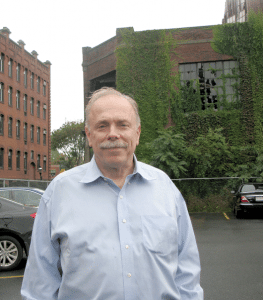
Dave Dixon

Dave Dixon says there is a surge in interest in urban living, which presents huge opportunities for cities like Springfield.

As local officials, hired consulting firms, and city residents combine forces to craft a rebuilding plan for Springfield in the wake of the June 1 tornado, they do so at a time of change and opportunity for many urban centers. Officials with the firms contracted to lead efforts to blueprint a revitalization strategy say there is a rise in the popularity of urban living, a trend that could facilitate the recovery process in many ways.

Dave Dixon was understandably wary about incorporating the phrase ‘silver lining’ into any statements he made concerning the June 1 tornado and its aftermath.
But he nonetheless put it to use as he talked about the efforts to rebuild Springfield and, more specifically, the work to revitalize the downtown and South End sections of the city. And that silver lining is all about timing and emerging trends in urban centers, he explained.
“If this tornado had struck 10 years earlier, let’s say, I think this would be a much grimmer task, because we’d be rebuilding in the face of continuing disinvestment in the city,” said Dixon.
He’s the principal in charge of planning and urban design at Goody Clancy, the Boston-based architecture, planning, and preservation firm now co-leading the efforts to blueprint a rebuilding plan for Springfield with New Orleans-based Concordia (see related story, page 62).
Elaborating, Dixon said that, over the past several years, there has been a discernable upswing in the popularity of urban living. Spawned by a number of factors, including a desire among aging Baby Boomers to live in places where they can walk rather than drive to most required destinations, the trend has helped transform a number of urban centers, many with the same social and economic challenges as Springfield’s central business district and South End.
“Ten years ago, the world didn’t look like this,” said Dixon, who has seen or helped orchestrate revivals in cities ranging from Baltimore to New Orleans to Wichita, Kan. “This disaster in Springfield, like the one in New Orleans, happened at a time when cities are changing and have opportunities that they haven’t had for 40 or 50 years.
“What has gone on, particularly over the past decade, has been a profound transition in demographics, in the way real-estate markets work, in the values that the folks who bring investment with them because they attract employers, have all undergone,” he continued, adding that there are more single individuals or couples (as opposed to families) than was the case a decade ago, and income levels for such people are higher. “There are simply more people that could decide they want to live in an urban environment. They may have wanted to in the past, but it didn’t work for them. And now they’re looking to make it work.”
Indeed, the real silver lining for Springfield, said Dixon, is an apparent, and growing, pent-up demand for downtown mailing addresses. To illustrate, he took out a piece of paper and sketched a simple chart showing the rising popularity of urban living.
The line moves upward at a steady clip, he explained while drawing, but the recession of the past several years has restricted the angle of ascent because, among other factors, homeowners looking to relocate to urban centers are still having trouble selling their homes, and market-rate housing builders are still being challenged in their efforts to finance such endeavors.
Like a dam holding back water, these factors are effectively bottling up demand, he continued, adding that, when conditions improve and that figurative dam breaks, cities properly positioned to capitalize on the trend could benefit significantly.
And in many ways, the tornado has helped put Springfield in such a position, he went on, acknowledging that the city still faces a number of challenges in this regard — including crime, the perception of same, and a concentration of subsidized-housing projects in both the downtown and South End — and that progress certainly won’t occur overnight.
But the city has many of the key ingredients to join the list of other success stories, he said, listing a decent “walkability index” — more on that later — a solid existing inventory of buildings that can be converted into market-rate housing, and, thanks to the tornado, some vacant acreage on which to build such housing, as well as businesses to sustain an urban population.
Dixon acknowledged that many are skeptical that such urban living could help transform Springfield’s downtown area, but he’s seen enough evidence of the trend in other parts of the country to believe it could certainly happen here.

Walking the Walk
As he talked with BusinessWest, Ron Mallis, a senior planner with Goody Clancy, was using his iPhone to see how well several downtown Springfield addresses fared on a Web site called walkscore.com. The site essentially assesses a location based on one’s ability to walk to amenities ranging from coffee shops to entertainment venues to banks, and gives it a score from 1 to 100, with the latter being the best.
The DevelopSpringfield office at 1182 Main St. earned an 89, while the Red Rose restaurant just a few blocks south notched an 82. Those statistics are not to be discounted, said Mallis, because many constituencies, from young artists to aging Boomers to business owners, are looking at such numbers with greater interest.
“People are more health-conscious than they were years ago,” he explained. “People have woken up to the fact that walking and health have a direct correlation, and that certainly plays a part in the decisions people are making about where they want to live.
Dixon agreed. “If you look at surveys about how much people want to drive, it used to be that, the younger you were, the more you liked getting in the car and driving; now it’s the reverse, and some of it is health-driven; it’s viewed as unhealthy to be in a car a lot.”
But there’s more to this trend than exercise, he continued, adding that many individuals within different age groups, when queried about what they want from a residential address, put that intangible ‘community’ high on their list. “And people think of urban areas as offering much more opportunity for community — to run into each other and meet each other.
“When you look at the top-10 criteria that people listed for where they wanted to live, from the ’60s up until probably 2003, or at least through the ’90s, it was golf courses, near golf courses, on a golf course, and as far away from work as possible,” he went on. “None of those are on the list in 2011. Surveys now show it’s proximity to Main Street, diversity, the ability to walk to work … and even telecommuters are much more interested in living in denser, walkable areas, perhaps because they spend the day by themselves.”
Dixon and Mallis have seen such trends emerge as they’ve helped Goody Clancy compile an extensive portfolio of work in older urban areas. The firm has taken part in a number of downtown projects, from guiding 12 million square feet of mixed-use development around the Massachusetts Institute of Technology to revitalization plans for communities as such as Baltimore, Akron, Ohio, Jamestown, N.Y., and, locally, Greenfield.
To illustrate his point on urban living and add a measure of credibility to the argument, Dixon pointed to Wichita, a city of about 900,000 and a downtown still fighting its way back from decades of disinvestment and an out-migration of people and businesses.
“Even the lawyers moved out of the downtown, which is unusual,” he said. “Compared to many parts of downtown Wichita, Springfield’s South End would look cool — it would look like an arts district. But downtown is beginning to take off; there are several hundred units of new, cool lofts — they’re rentals right now because the condo market isn’t there yet; one was rented out before it was finished, and another, more expensive building is almost rented out.
“Meanwhile, there’s another, more conventional project with larger, more expensive units that’s just sitting there because that’s not what the market’s going to come back to,” he went on. “The market’s about cool, urban, walkable living spaces. It’s more about living near a cool bakery than it is about giving a view.”
In Springfield, the firm has been assigned the task of coordinating efforts to develop strategic initiatives focused on the downtown and South End, one of three areas, or districts, of concentration involving neighborhoods impacted by the tornado. Since being hired in September, the firm’s representatives have undertaken a general inventory of this sector’s assets and liabilities, said Dixon, adding that there are more of the former than many people might think, and some could help the city take advantage of the pendulum moving back toward urban living.
And in many ways, the city is already making some strides, said Mallis, noting efforts to attract artists to the Morgan Square apartment complex (see BusinessWest, Aug. 29), and other initiatives to create more market-rate housing at several downtown-area properties.
As for the South End, Dixon said it has the potential to be “a hip place,” given its diversity, solid walk scores, proximity to many restaurants and cultural attractions, and decent inventory of properties that could, with some imagination, entrepreneurial flair, and requisite demand, be retrofitted into housing units.
As he walked with BusinessWest down Main Street, Dixon pointed out several such buildings near an already-thriving market-rate complex, the Willows, created from the former Milton Bradley manufacturing complex off Union Street. He gestured to everything from office and retail properties with large vacancy rates to abandoned or underutilized manufacturing and warehouse structures.
“You can just look at those properties and see that, if the market is there a half-block away,” he said, “it can be at those sites as well.”
There are also several currently vacant parcels, including the former Gemini site and some others created by the tornado, which provide opportunities for developers with vision.
Beyond vacant lots, though, the tornado has provided a spark for the city, said Dixon, when pressed about why market-rate housing and related developments haven’t happened sooner.
“As horrible and painful as the tornado has been for many people,” he said, “it has sort of galvanized the moment; it has the community focused, the city focused, everybody focused on how to rebuild better.”

Building Momentum
This combination of focus and determination has arrived at the intersection of rising interest in urban living and pent-up demand. It’s an intriguing situation that could make Springfield’s downtown the right place at the right time.
“Put all these things together, and Springfield, like many cities, has opportunities that it hasn’t had for a very long time,” said Dixon. “They don’t happen automatically, though. Cities have all these problems — fragmented land ownership, zoning, tax structures — which are not necessarily geared to the kind of development you want, and crime and the perception of crime.
“But there are lot of cities that have been very patient over the past 10 years, looking at what’s happening, removing the obstacles, investing in downtowns, and getting tremendous payoffs. Springfield has that opportunity; something like the tornado is a kind of wakeup call that it’s not just time to change, but to take stock. And when you take stock, you can take advantage of these opportunities.”
In other words, this could a silver lining that makes Springfield a shining example of how urban centers can be revitalized.

George O’Brien can be reached at [email protected]

Involvement, Strong Leadership Called Keys to Rebuilding Effort
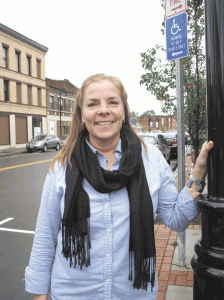
Bobbie Hill

Bobbie Hill says plans and process are important, but involvement and leadership are the keys to revitalizing a city.

Bobbie Hill was asked about process, plans, and potential projects.
And she said there will be all three when it comes to the task of rebuilding Springfield in the wake of the June 1 tornado. However, none will be the real key to a successful effort.
Instead, the most vital component — and she says she’s learned this from considerable experience — is getting the residents of the community in question to take a real ownership stake in the recovery initiatives.
“It’s the relationship-building, the community-capacity-building, the taking-ownership piece,” said Hill, a consultant with the New Orleans-based planning and architecture firm Concordia, which is heading the team of companies coordinating Springfield’s rebuilding-plan process. “Those are the keys; it’s ownership, and holding yourself, your neighbors, elected officials, and developers accountable to doing it and doing it right.
“That engagement component, that people component, is as important if not more important than individual concepts,” she continued. “This can’t just be about development projects; that’s not what transforms a community.”
What does, she stressed again, is a willingness on the part of residents to get involved and stay involved, and not give in to the theory, or temptation, that government will take care of things. And it comes through leadership, she went on, noting that, in most every community where the 11-person firm has lent its disaster-response, planning, and design expertise, leaders from the community have emerged.
The process of getting the community involved in the rebuilding effort began earlier this month with neighborhood meetings in the three identified sectors involving areas of the city damaged by the tornado. Sector 1 is the metro center (downtown) and the South End, while Sector 2 is composed of Six Corners, Upper Hill, Old Hill, and Forest Park, and Sector 3 includes Sixteen Acres and East Forest Park.
Those neighborhood meetings were followed up with a city-wide gathering a few days later, and two more sessions of neighborhood meetings and another city-wide session are scheduled for November and December, said Hill, adding that the four firms collaborating on the endeavor will present an implementation and financing plan to a community congress on Jan. 5.
That’s the process, in simple terms, she said, adding that it’s too early to discuss specific potential redevelopment projects, although plenty of suggestions — from a supermarket to market-rate housing projects to reforestation proposals — have come forth at the neighborhood sessions.
In subsequent neighborhood meetings, the suggestions will be discussed at greater length, and eventually priorities will be established, and consultants will “put numbers” to potential recommendations in an effort to determine which ones make sense and which ones don’t.
More importantly, though, the initial sessions have yielded evidence of the requisite level of involvement, leadership, and community spirit that will be necessary for a successful recovery effort.
“I was really encouraged by what I saw and heard the other night,” she referring to the neighborhood meeting in Sector 2. “There was definitely a strong sense of community, people really caring for other and celebrating diversity — that really came across.”
There are four firms involved in the process of coordinating the neighborhood meetings and compiling the report to be completed Jan. 5. They are:

• Corcordia, which, among other projects in its portfolio, led coordination for the Unified New Orleans Plan after Hurricane Katrina that included selection and management of 12 national, regional, and local planning firms that created plans for 14 planning districts and an overall city-wide recovery plan;

• Goody Clancy, a Boston-based urban planning and design firm that has coordinated revitalization efforts in a number of major cities (see related story, page 60);

• Berkebile Nelson Immenschuh McDowell Inc. (BNIM), considered the most experienced firm in the country when it comes to helping tornado-impacted communities engage in a transformative recovery planning process; and

• The Project for Public Spaces (PPS), a nonprofit planning, design, and educational organization dedicated to helping people create and sustain public places that build stronger communities.
For more information on the process or to submit ideas online, visit www.rebuildspringfield.com. The schedule for future neighborhood and citywide meetings is as follows:

• Six Corners, Upper Hill, Old Hill, and Forest Park: Nov. 15, 6:30 to 9 p.m. at the J.C. Williams Center, Florence Street;

• Sixteen Acres, East Forest Park: Nov. 16, 6:30 to 9 p.m. at the Holy Cross gymnasium, Plumtree Road;

• Metro Center, South End: Nov. 17, 6:30 to 9 p.m. at the Gentile Apartments Community Room, Williams Street;

• Metro Center, South End: Dec. 6, 6:30 to 9 p.m. at the Gentile Apartments Community Room, Williams Street;

• Sixteen Acres, East Forest Park: Dec. 7, 6:30 to 9 p.m. at the Holy Cross gymnasium, Plumtree Road;

• Six Corners, Upper Hill, Old Hill, and Forest Park: Dec. 8, 6:30 to 9 p.m. at the J.C. Williams Center, Florence Street;

• City-wide: Dec. 10, 8:30 to 11:30 a.m. at the MassMutual Center; and

• Community Congress: Jan. 5, 6:30 to 9 p.m. at the MassMutual Center.

— George O’Brien

Opinion
Idea Mill Points Way to a Vibrant Holyoke

“Being down at the bottom gives you the chance to come back.”
That was one of the many messages that John Geraci, who has launched several Internet-based startups, left with participants at Idea Mill (see cover story, page 38). He was addressing an audience of entrepreneurs, business leaders, city-planning experts, and others interested in seeing Holyoke make exactly that kind of comeback.
‘Down at the bottom’ may have been a harsh way to put it, but it’s undeniable that this unique community — one of the nation’s first planned industrial cities, with a central manufacturing district built along a series of canals — has seen better days; it still ranks among the poorest cities in Massachusetts, and many of those formerly bustling mills have been vacant for decades.
But change is in the air.
Local economic-development officials have been talking about the rise of an Innovation District along the canals, and city leaders are buoyed by the ongoing development of the high-performance computing center that won’t produce many jobs, but will surely raise the city’s profile in attracting other high-tech businesses.
Idea Mill, which brought together a few dozen visionaries to discuss Holyoke’s potential, further focused those goals by emphasizing, throughout the day, the concept of ‘entrepreneutial density,’ the idea that many innovative companies, startups and established firms alike, working in one area raises the bar for all of them — not just through competition, but collaboration as well.
The idea of CEOs discussing current projects and future ideas among one another wasn’t the paradigm 20 years ago, said Baer Tierkel, another serial entrepreneur, but that kind of shared passion can be the lifeblood for a growing economy — in this case, one that could spring up in the old mill buildings along the canals.
That’s why another recurring theme at Idea Mill was promoting those buildings themselves, and convincing entrepreneurs to see them not as relics from a long-ago past, but living real estate with a palpable sense of history mingled with a modern, funky vibe. Many businesses have already caught on — the success of Open Square, where the conference was held, speaks to that — but event organizers believe the Innovation District can be so much more.
There’s plenty to be excited about in the Paper City these days, from the high-performance computing center to the possibility of a large resort casino. But what the speakers at Idea Mill made abundantly clear is that the city’s fortune won’t rise on technology itself, or any individual building project, but on people with passion and a vision, competing with each other while collaborating on something greater: a new, vibrant Holyoke.
We’ve said many times that economic development and job growth in this region will come organically. It will happen the same way it happened 200 years ago, with entrepreneurs taking concepts for new products and turning them into businesses. There are many ways to foster entrepreurship, and one of them is to relate success stories that happened here (complete with the challenges and struggles that are part and parcel to each of those stories) with the hope that they will inspire others who want to choose that path, and convince them that they don’t have to move to Cambridge or Silicon Valley to achieve those dreams.
That’s what Idea Mill is all about, and we consider it an exciting addition to the many endeavors taking place in the Valley to inspire the vision and entrepreneurial daring it will take to transform Holyoke and the entire region.
And that’s an idea worth developing.

Features
New UMass President Says That’s a Big Part of His Job Description

UMass President Robert Caret

UMass President Robert Caret at the site of the high-performance computing center in Holyoke.

“On the Road Together.” That’s the name new UMass President Robert Caret and his staff gave to a four-day, 400-mile bus tour he took of the state and the university’s five campuses. It was called that to drive home the point that the state and university must travel together if they intend to get where they both want to go, said Caret. He emphasized repeatedly in an interview with BusinessWest that more support from the Commonwealth is needed to reverse an alarming trend that has seen the public institution increasingly take the look and feel of a private university, with possible limits on access.

Robert Caret said he was repeating a joke, and while his comments drew many laughs, overall, he finds little humor in what he was saying.
He was talking with business leaders in Greater Springfield about the medical school in Worcester, how it carries the name UMass in front of those two words, and wondering, sort of, why that’s the case.
“The medical school’s budget is almost $1 billion, and only 4% is state-supported,” Caret, the recently installed president of the five-campus University of Massachusetts, told his audience over breakfast at the Springfield Sheraton. “I joked to the governor’s team that I could get more than 4% if I sold the name to Gillette or EMC or Peter Pan. Why do we have Massachusetts on the label if Massachusetts isn’t paying for it?”
Obtaining better support from the Commonwealth is just one of the many goals and aspirations Caret brings with him to his office in Boston as he takes the helm at a public institution ranked as the 19th-best university in the world in the Times of London 2011 World Reputation Rankings, but one that has historically received much less respect (in the form of funding) from the state in which it plays such a key role in economic development and job creation — $5 billion annually, by his estimates.
Overall, only 23% of the roughly $2.6 billion for the system comes from the state, he went on, adding that options for the rest are few, with tuition being the primary source. And as tuition rises, which it has steadily over the past few decades, public schools must devote more resources to student aid, said Caret, while also contributing more to new capital projects and relying more on endowments to meet the bottom line.
“We’re becoming a private institution,” he explained, adding a pause for effect. “That’s the model of a private university — high tuition, high aid, build your own buildings, raise your own money, 70% of your revenue comes from tuition. That’s a private university, and that’s where we’re all going.
“And the problem if we all go private is we’ll all provide high quality,” he continued, “but a lot of people aren’t going to get in, because you can’t run a 70,000-student enterprise using that model. You can run Smith, Mount Holyoke, and Amherst using that model, but not a school this large.”
Efforts to change that equation and improve such numbers are part of a complex job description that Caret attempted to simplify down to a few overriding tasks, with “telling and selling” being perhaps the most important. “That’s a big part of what I do,” he explained. “It’s all about getting out and telling the story.”
He would add another action verb to that list — listening, which he says is an important attribute and a big part of the process of making the university more of the force that economic-development officials statewide, and especially in the regions near the five campuses, want and need it to be.
Caret did copious amounts of telling, selling, and listening on a recent four-day, 400-mile bus tour of the state that took him from Adams to Buzzards Bay. Called “On the Road Together,” so-named to drive home the point that the state and university must travel together if they intend to get where they both want to go, the bus tour made stops locally in Pittsfield, downtown Springfield, the Smith & Wesson facility on Roosevelt Avenue, the high-performance computing center and intermodal transportation center, both in Holyoke, and the Engineering Research Center for Collaborative Adaptive Sensing of the Atmosphere (CASA) on the Amherst campus.
BusinessWest rode on the bus for several legs of the junket, seizing an opportunity to talk with Caret about this latest stop on a 30-year career in higher education (all of it spent in the public arena), his vision for the university, and the strategic plan he’s creating to better tell the university’s story and drive home his points about the ominous trends unfolding.
“We need society to understand that they’re closing the doors to education,” he said. “If government doesn’t step up, we’ll continue to build quality, but as we build quality, we’ll become more privatized, and as we become more privatized, access becomes the thing that suffers, and we just don’t want that to happen.”

Back to His Routes
Caret calls it the “Rodney Dangerfield effect.”
That’s the phrase he summoned to describe the situations he’s found himself in at the three stops on his résumé, including the latest.
Elaborating, he said that, at Towson University in Maryland, which he served in many capacities and lastly as president for eight years, the school operated in the very large shadow of Johns Hopkins University, just 20 miles away. And at San Jose State University in California, which he served as president from 1995 to 2003, Stanford was just down the road.
In Massachusetts, Harvard is the iconic private institution, but there are more than a dozen other major private colleges vying for students, media coverage, research money, and the attention of the public.
At Towson and San Jose, Caret said he learned early on that the best strategy wasn’t to try to compete with those institutions, but to complement them. And he intends to take the same approach in the Bay State.
“We want to be in a state of complementation; society needs public, private, two-year, four-year, state universities, community colleges, and universities to handle all its economic and social needs,” he explained. “What we all need to do is decide what piece we do, and how we can do it with high quality.
“And if you look at schools like Johns Hopkins, Stanford, Harvard, and MIT, only about 20% or less of their graduates stay in the state in which those schools reside, because they’re playing largely to an international audience; they take people from all over the world, and they go back all over the world,” he continued. “The University of Massachusetts takes 80% of its students from the state of Massachusetts and 80% of them stay here; we graduate 13,000 or 14,000 new citizens a year who go into the workforce and pay taxes. And all those campuses I’ve been involved with … you may get more startups out of Hopkins, MIT, and Stanford, but 20 years from now, UMass graduates are going to be running those companies because we’re going to permeate the ranks of those companies.”
Beyond these complementation efforts, Claret presided over periods of significant growth at both of his previous stops, career-wise, and gained national acclaim for eliminating race-based graduation disparity at Towson.
Indeed, under his leadership, the six-year graduation rate for all Towson students rose from 60% in 2003 to 75% in 2010. What’s more, the six-year graduation rate for African-American students rose from 48% in 2003 to 76% in 2010.
Caret wasn’t necessarily looking for a new job — although he’s always been receptive to new challenges — when UMass commenced its search for a successor to Jack Wilson last fall. He said he was lured by the opportunity to lead a system, and especially one with a strong research component, something he hadn’t experienced previously. Meanwhile, Boston was also an attraction; he did his undergraduate work there and grew up in New England.

Road Map for Progress
Starting back in the interviewing process, Caret said he’s been doing a lot of “reading, Googling, and learning” about the university, its five campuses — Amherst, Worcester, Boston, Lowell, and Dartmouth — and specific initiatives at those campuses and the communities that surround them. That process has only accelerated since he was hired in July.
“I was given three briefing books on an iPad that were probably a total of 450 pages of briefings on every piece of the UMass system — from campuses to budgets to the high-performance computing center, the stem-cell bank, everything we were doing,” he said. After he was hired, he complemented this reading and learning with roundtable meetings on the various campuses with faculty senates, unions, vice chancellors, deans, student groups, and other constituencies.
The bus trip, which included 24 stops, was, in many ways, a continuation of those research efforts, while also serving as a vehicle — literally and figuratively — for doing more of that telling and selling.
At Smith & Wesson, for example, he learned not only about that company’s expansion initiative and the adding of more than 200 jobs, but also about the many challenges facing area manufacturers — recruitment of talent topping the list — and the university’s efforts to address them while also spurring innovation.
In Holyoke, he spent time with city leaders at the high-performance computing center — a prime example of the university partnering with both private colleges (MIT and Boston University) and the business community — and also learned of that community’s efforts to create an Innovation District and use public transportation to help achieve growth.
Other stops on the tour included the Emerging Energy Technology & Innovation Center at UMass Lowell, a biomanufacturing facility in Fall River, Venture Development Center at UMass Boston, and the medical school itself.
What has he learned?
“There are a lot of similarities in what people are looking for from UMass,” he explained, referring to just the first few legs of his trip in Western Mass. “In North Adams, Pittsfield, Lee, and Springfield, they want more help with economic development, especially with technology transfer; if they have startup companies, they want a workforce to continue to feed those ventures, especially in the new technologies areas like biotech, life sciences, IT, and clean energy. But the further you are away from the main campuses, the harder it is to maintain those relationships.
“The other piece we see is the educational piece itself, which also feeds into workforce,” he continued. “But it also feeds into advanced manufacturing. And the third one is basic quality of life; Springfield, for example, would like to have much more of a cultural linkage with Amherst, and have more of the kinds of things that happen on the campus — like plays and other kinds of performances — in Springfield.”

Moving in the Right Direction
At most of the stops on the tour there was at least one meeting with the local business community, which Caret described as one of the constituencies with which the university must build relationships — and draw support.
Indeed, as he wrapped up his remarks at the Springfield Sheraton, Caret asked those assembled for advocacy in several different forms.
“We’d like some financial advocacy,” he said, meaning monetary support. “But we also need political advocacy, which can be almost as important as financial advocacy. And we’d also like a little emotional advocacy; every once in while, give us a pat on the back or a hug — we’d like to feel good every day about what we’re doing.”
When asked to elaborate on what he wants to accomplish at UMass, Caret listed several of the things he’s achieved at Towson and San Jose State, everything from higher graduation rates to stronger partnerships with business, other colleges (public and private), and the state itself. He also listed stronger linkages between the individual campuses, the regions surrounding them, and individual cities.
Which brought the conversation to the link between the flagship campus in Amherst and Springfield, and efforts in recent years to bolster that relationship and leverage the university’s many assets in a city trying to revitalize and reinvent itself.
“I will be a strong advocate for all of our campuses being aggressive with their local regions — but then you have to define ‘region,’ which becomes more complex,” he explained. “But I do think Amherst and Springfield are a logical pairing.
“If you look at studies from the Brookings Institute and other groups, you’ll find that, in most instances, for a vibrant city, you need a university at the core of its economic focus,” he continued. “And we want to play that role.”
And when asked how he would measure his success rate with his many goals, he again referenced his previous stops and said, “when I’m done here, I want to be able to say the same things I’ve said at the other two campuses.”
Elaborating, he said that, at both Towson and San Jose State, he presided over a number of capital projects that changed the faces of both schools. “I’ve probably done $2 billion worth of infrastructure at the two schools, and more than $1 billion at the last one (Towson), and they hadn’t had a new building in 30 years; it was a transformational change.”
But he is more proud of his success with improving the image of both schools, both in their respective regions and globally.
“At both schools, I raised the image of the campus, I raised the sense of pride among the people working there and graduating from there, and got the world excited about those campuses again; these were schools that were among the best of their breed, but they just weren’t getting the recognition they deserved.
“The biggest thing I’ve done is to revitalize a school, make people feel good about it, and energize the campus,” he continued. “And I’d like to say that about UMass, because if I can do that, then all those other things will happen; the rankings will improve, the funding will improve, the political advocacy will improve, and all the rest will happen.”

Next Stop?
There is no simple strategy for energizing a campus, he told BusinessWest as the bus was pulling into downtown Holyoke for its next stop. But a big part of that equation is that ‘telling-and-selling’ component of his job description.
But it’s also the next step in that process — delivering.
“After the telling and selling, you come back and you produce something and you get people excited,” he said. “You do put your money where your mouth is.”
That’s something both the university and state need to do, adding that sometime soon he’d like to be able to stop making jokes — if that’s what they are — about selling the name on the medical school in Worcester.

George O’Brien can be reached at [email protected]
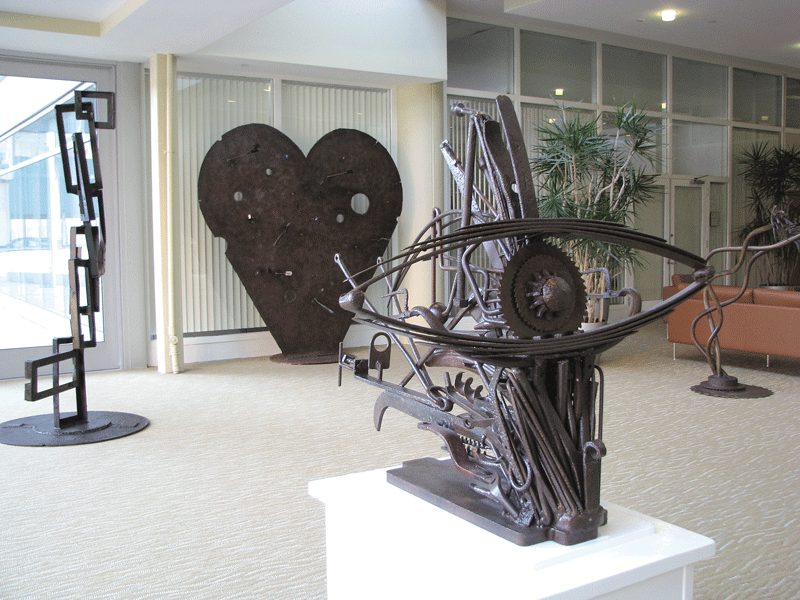
Banking and Financial Services Sections
Many Alternative and Supplemental Financing Sources Exist for Business

Gary G. Breton

Gary G. Breton

So, you’re looking for financing for your business to allow it to remain viable through these difficult and volatile economic times. But you find that all your traditional sources of financing have dried up. What can you do, and where can you look for such needed funding?
There are several non-traditional avenues of obtaining needed business capital that can be complementary to any existing financing that you may already have in place for your business. These alternative sources may include quasi-public bond financing, several federal and state tax-credit programs, and private financing. They each have certain advantages, but in order to receive them, you must relinquish something in return.
In the area of quasi-public bond financing, the Mass. Development Finance Agency (MassDevelopment) has a number of available programs that can be utilized to provide financing for both for-profit and not-for-profit business entities. For example, tax-exempt bonds, which are exempt from federal taxes and, in certain cases, state taxes, can provide the lowest-interest-rate option for certain types of projects, including real-estate development and new equipment purchases. In better economic times, these bonds were traditionally bundled into large-denomination packages and sold on Wall Street to institutional investors.
The more likely scenario in today’s marketplace is that such bonds would be purchased directly by your company’s current bank or possibly another area financial institution. The fact that the interest income received by the holders of these bonds is exempt from federal and (in many cases) state tax allows for a lower-than-market interest rate to be offered, which, depending on the amount of such bonds, can provide a substantial savings over the life of the bond.
According to information contained on MassDevelopment’s Web site, such financing must be eligible for tax-exempt financing under the federal tax code, which can include 501(c)3 nonprofit real estate and equipment, affordable rental housing, assisted living and long-term-care facilities, public infrastructure projects, manufacturing facilities and equipment, municipal and governmental projects, and solid-waste recovery and recycling projects.
Additionally, MassDevelopment has other available loan and guaranty programs, as well as specialty programs, that include financing for companies that either currently export or will be exporting their products or services internationally, and technology companies that may be commencing or expanding their business operations in Massachusetts; visit the Web site for further information.
A second alternative source of non-traditional financing is in the area of available federal and/or state tax-credit programs, which are available for certain projects and industries. For example, Low-income Housing Tax Credits (LIHTC) are dollar-for-dollar tax credits benefiting developers undertaking affordable-housing investments. This program was created under the Tax Reform Act of 1986, which provided incentives for the utilization of private equity in the development of affordable housing aimed at low-income Americans, and it accounts for the majority of all affordable rental housing created in the U.S. today. Tax credits are more attractive than tax deductions because they provide a dollar-for-dollar reduction in a company’s federal income tax, whereas a tax deduction provides only a reduction in its taxable income. In Massachusetts, LIHTCs are administered by the state Department of Housing & Community Development.
A second type of tax-credit program that has seen increased activity over the past several years is the New Markets Tax Credit (NMTC) Program, which was established in 2000 as part of the Community Renewal Tax Relief Act of 2000. The goal of this tax-credit program is to spur revitalization efforts of low-income and impoverished communities across the U.S. The NMTC initiative provides tax-credit incentives to business investors for equity investments in certified Community Development Entities, which have a primary mission of investing in projects located in low-income communities. The scope of the NMTC program can include the development of projects that could provide funding for project components, including real-property acquisition, building construction, and machinery and equipment purchases.
A third type of tax-credit program, which has provided fertile ground for available alternative financing, is the Federal Historic Preservation Tax Incentives program, which has been the largest, most successful, and most cost-effective federal community-revitalization program in recent memory. It seeks to preserve historic buildings, stimulate private investment, create jobs, and revitalize communities. This program has leveraged more than $58 billion in private investment to preserve and reuse more than 37,000 historic properties nationwide since 1976. This program is administered by the National Park Service and the Internal Revenue Service in conjunction with the Mass. Historical Commission.
Each of the above programs can provide either needed alternative financing or real incentives that will attract the necessary funding to undertake various types of projects. These projects, by their very nature, will generate activity for a multitude of allied businesses, such as general contractors, subcontractors, equipment vendors, insurance agents, accountants, attorneys, appraisers, and so on.
Finally, a company can seek the infusion of private capital, which will generally be provided as a mezzanine-type loan or equity investment. Depending on the nature of your business, you can seek out and, in many instances, obtain a private investor or group of investors that will provide what is essentially a commercial business loan normally secured by a junior lien position on certain specific collateral behind the company’s primary senior lender. Since taking a junior position results in a greater degree of risk for such investors, the rates of interest charged on such credit facilities is generally higher than a commercial business loan from a conventional bank lender, and any applicable financial covenants are more stringent.

Alternatively, such a private investor may elect to contribute its funds by way of an equity injection into your company so as to provide additional working capital, in return for which the investor will require an equity/ownership interest in the company. This equity interest may require certain perquisites, such as a preferential return on its investment to be made prior to any distribution to the holders of non-preferential equity interests; or perhaps take the form of a stock option, which will allow the investor, in its discretion, to convert such options to an equity/ownership interest at a future date; or an option whereby the investor has the right to require the company to repurchase its equity/ownership interest at a time of its choosing, based on an agreed-upon repurchase price formula.
The bottom line in undertaking such private financing is that it traditionally results in your relinquishing a certain degree of sovereignty in your control of your company.
One final suggestion is that, while it behooves you to research and fully evaluate any number of possible sources of alternative financing, once you have determined which you feel would be most beneficial for your company, you need to ask for it. Many times, business owners are reluctant to initiate a request for credit based on what they perceive are insurmountable obstacles to obtaining a favorable response, when in fact many such alleged obstacles may be able to be satisfactorily addressed and overcome by working in concert with professional advisers who can provide you with sophisticated counsel and bring both creative and fiscally responsible alternatives to the table.
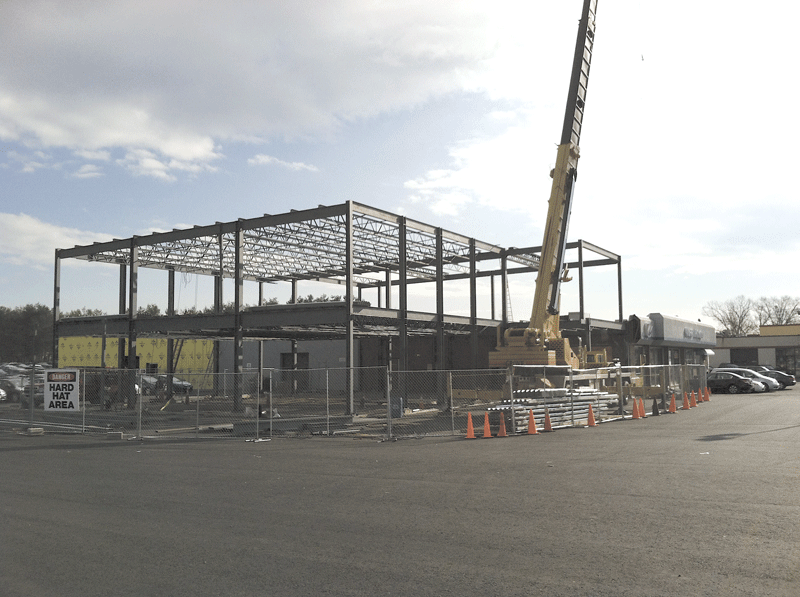
Gary G. Breton, Esq. is a partner with Bacon Wilson, P.C. and a member of its banking and finance department. His major emphasis of practice includes representation of financial lending institutions, as well as both individual and business borrowers. He also represents numerous business clients in startup and ongoing business operations as well as the purchase and sale of businesses; (413) 781-0560; [email protected]

Features
Easy Access to Highways Drives Business Success

Kathy Miro

Kathy Miro says she was impressed by how supportive the business community is, and how loyal customers are, after opening a pizzeria in Enfield.


Several months ago, Michael “Monte” Monteforte and Jay Bellamo opened Bellmont Kitchen and Bath in Enfield, Conn.
“This location is perfect,” Monteforte said as he stood in their gleaming new showroom on Hazard Avenue, otherwise known as Route 190, explaining that they looked at sites in Windsor Locks, East Windsor, and Enfield before finding exactly what they wanted in the former Video Galaxy Plaza.
“This is a key location because we wanted to be right off a highway,” Monteforte said. “Enfield has four exits off of Route 91, there are plenty of stores and restaurants which draw customers here, and Route 190 gets all of the traffic going to and from Somers.”
Ray Warren, Enfield’s director of Development Services, agrees that the town’s location makes it an excellent spot to own and operate a business. Since it is bordered on the north by Longmeadow and East Longmeadow, it draws traffic from Massachusetts as well as from Somers to its east, East Windsor and Ellington to its south, and Suffield and Windsor Locks to its west.
“Enfield has a population of 45,000 people, which makes it a good-sized small town. We have more than 1,200 small businesses along with many large operations. Lego, Hallmark, MassMutual, and the headquarters for Brooks Brothers are all here,” Warren said.
The majority of the retail sector is located along two main corridors, although Route 5 also has its share of entrepreneurs. They are Hazard Avenue and Elm Street, thoroughfares that run parallel to each other. “Our retail sector is in a very concentrated area with shopping on both sides of the streets,” said Mayor Scott Kaupin.
The town’s biggest constraint in terms of new development is lack of land. “We have turned away businesses due to lack of space,” Warren said. But there are still a number of businesses under construction, and the many stores in Enfield Mall and the adjacent shopping centers represent substantial investments.
“This year, we issued more than $43 million in construction value of building permits,” Warren said. “In FY 2011, the town estimated it would take in $350,000 in building-permit fees. But we took in more than $700,000.”

New Horizons
Although the town has little commercial land available, there is space available for renovation of existing properties and property zoned for industrial development.
Enfield has also seen growth in the professional sector, and both Hartford Hospital and St. Francis Hospital recently built medical offices there.

Michael Monteforte and Jay Bellamo

Michael Monteforte and Jay Bellamo say Enfield’s location alongside I-91 and Route 190 was a factor in locating there.

Larger companies are also expanding. “Lego did a 75,000-square-foot renovation to expand their operations. And Eppendorf Manufacturing, which is an international company that specializes in biosciences, has chosen Enfield as its growth center and made a $25 million investment here,” Warren said.
When Eppendorf moved to the town several years ago, it purchased a large campus. “They are just about to complete their first expansion, and we are already in conversation about a second expansion,” Kaupin said.
The company had access to a large, professional labor pool in New York, but executives have told Warren they found an equally capable and educated workforce here.
“We are part of what is known as the Knowledge Corridor,” Kaupin said of the stretch of land running from the Northampton/Amherst area past Hartford that contains a plethora of colleges and universities, which results in a large pool of well-educated people. In addition, Asnuntuck Community College in Enfield is a leader in the field of machine technology and has forged great relationships with local companies.
Warren said 30,000 people from Massachusetts work in Enfield, and most companies employ workers from the north and south. “The fact that there is a supply of labor which stretches from Springfield to Hartford in a two-state region makes this a very attractive place to do business.”
Enfield has been chosen as a stopping place on the proposed New Haven-Hartford-Springfield commuter-rail line. Its station will be located in the village of Thompsonville, an old mill area of Enfield which is in need of a great deal of revitalization.
Kaupin is hopeful that, when the project is complete, it will lead to a rebirth in the village, boosting demand for housing as well as for new businesses and restaurants that will be needed to provide service to commuters.

Helping Hands
Kathy and Michael Miro opened Mama Miro’s Pizzeria and Restaurant in January after spending $90,000 and eight months gutting and remodeling a building on Hazard Avenue that had sat empty for about two years.
Kathy said they have been impressed by how friendly other business owners have been since they opened their eatery. “Business owners here help each other,” she said, adding that the pizzeria is their first venture. They have also been surprised by how quickly they gained loyal customers. Although business was slow at first, their weekend breakfast offering has proved so popular, they recently expanded it to seven days a week.
The couple, who moved to Enfield from Brooklyn, N.Y. the fateful week of Sept. 11, 2001, said people come from as far away as Chicopee and Manchester, Conn. to enjoy their thin, New York-style pizza. “Our customers have become our friends, and we have made a lot of them since we opened. One woman comes here three times a day, three days a week, and we have a group of widows who met here and continue to come here for comfort,” Kathy said.
Although they could have located closer to the mall, they chose the site because it has its own parking lot and they will be able to hold fund-raisers there if and when they choose.
Kaupin said the Miros’ experience is not unusual, as the town has a very strong chamber of commerce which serves Enfield, Somers, Suffield, and East Windsor. “The North Central Chamber of Commerce is heavily weighted towards small business. Other chambers in the state are very large, but the members here are very good at networking and share their challenges as well as solutions to problems,” he explained.
Town officials are also doing all they can to encourage economic development, which has included freezing the tax rate for four years in a row. “This was a very deliberate effort which occurred without any reductions is essential services,” Kaupin said. “In the past, the town had been on the higher end of the tax structure, but now we are very competitive.”
The town also created an Administrative Review Team to expedite the permitting process. Team meetings bring everyone to the table who will be involved with a new business. “We meet with business owners, review their plans, and offer advice,” Warren said, adding that money and time are saved by identifying issues and addressing them in the planning stage. “And if they are on a tight timeline, they can go through the Land Review and Building Department simultaneously, which shortens the whole review process. It’s very important, as this is New England, where development is governed by a large body of rules, and we want people to succeed.”
Kaupin said their team approach provides “proverbial one-stop shopping” for new business owners, which is critical in this community, since there are five fire districts and a regional health district independent of the town. The retail arena continues to grow, and available space is always filled quickly. “First and foremost, we are known as a regional shopping area.”
And one that attracts businesses with a pitch that is very appealing — a location that literally drives customers right to their doors.

Departments Incorporations

The following business incorporations were recorded in Hampden, Hampshire, and Franklin counties and are the latest available. They are listed by community.

AMHERST

Craig’s Door — A Home Assoc. Inc., 69 South Pleasant St., Amherst, MA 01002. Gerald Gates, same.

CHICOPEE

Gerardo’s Transit Inc., 32 Mercelle St., Chicopee, MA 01020. Kellymar Alejandro, 47 Parkside St., Springfield, MA 01020. Passenger transport for hire.

FEEDING HILLS

Absolute Transport Inc., 24 Hickory St., Feeding Hills, MA 01030. Mazen Awkal, same. Vehicle transport

HAMPDEN

Gio’s Pizzeria Inc., 9 Allen St., Hampden, MA 01036. Giovanni Cirillo, 95 Wedgewood Dr., Ludlow, MA 01056. Restaurant.

HOLYOKE

Adult Community Employment Supports Inc., 30 Center St., Holyoke, MA 01040. Lizzy Ortiz, 32 Mansfield St., Springfield, MA 01108. Vocational programs for people over 18 with disabilities.

HPL Realty Corp., 335 Maple St., Holyoke, MA 01040. Terry Plum, 70 Pinehurst St., Holyoke, MA 01040. Nonprofit corporation to benefit the Holyoke Public Library.

International Laser Solutions Inc., 362 Race St., Holyoke, MA 01040. Edward Sordillo, 97 Lariviere Dr., Chicopee, MA 01020. Laser marking, etching and engraving.

LENOX

Good Vibes Distributing Inc., 172 Housatonic St., Lenox, MA 01240. Kevin Kirshner, same. Wholesaler.

NORTH ADAMS

Howling Inc., 135 Bonair Ave., North Adams, MA 01247. Jared Bruce Decoteau. Same. Restaurant.

PALMER

Advanced Precision Products Inc., 7 First St., Palmer, MA 01069. Jeffrey Buck, same. Precision component manufacturing.

PITTSFIELD

Erich Schmidt, 435 South St., Pittsfield, MA 01201. Erich Schmidt, 37 Bracelan Court, Lenox, MA 01240.

SOUTHWICK

Acclaim Properties Inc., 464 North Loomis Street, Southwick, MA 01077. David Tagliavini, 149 Prospect St., Suffield, CT 06078. Property management.

J & C Property Services Inc., 114 Granville Road, Southwick, MA 01077. Craig Filiault, same.

SPRINGFIELD

American Center for Immigrant Development Inc., 857 State St., Springfield, MA 01109-3103. Eskedar Ayehu Adamu, 33 Maple St., Malden MA, 02148. After-school program including job search and job training.

David Peck, DMD, 174 Worthington St., Springfield, MA 01103. David Peck, DMD 153 Prynwood Road, Longmeadow, MA 01106. General dentistry.

Forest Park Business Assoc. Inc., 185 Belmont Ave, Springfield, MA 01108. Daniel Morrissery, 119 Marengo Park, Springfield, MA 01108. Nonprofit organization.

Hispanic Mark Inc., 1145 Main St., Suite 501, Springfield, MA 01103. John David Perez, 247 Central St., Floor 2 Springfield, MA 01105. Business consulting.

WEST SPRINGFIELD

Ageo Tech Solutions Inc., 2042 Westfield St., West Springfield, MA 01089. Anthony Kashmanian, same. Computer technician.

Bertera Foreign Motors Corp., 657 Riverdale St., West Springfield, MA 01089. Aldo Bertera, 162 Forest Ridge Road, West Springfield, MA 01089. Foreign automobile sales and service.

Dijon Express Corp., 91 Hill St., West Springfield, MA 01089. Ildar Ismailov, same. Transportation services.

In Our hands Day Care Center Inc., 101 Belmont Ave., West Springfield, MA 01089. Joyce Roswess, same. Day care center for children.

WESTFIELD

Infiniti Logistics Inc., 108 Miller St., Westfield, MA 01085. Yaroslav Burkovskiy, same. Truck leasing.

WILBRAHAM

Bizcykl Inc., 8 Powers Dr., Wilbraham, MA 01095. Gregory Allan Pastore, same. Waste and recycling management.

Canosa Restaurants Inc., 5 Anvil Road, Wilbraham, MA 01095. Santiago Canosa, same. Restaurant

Manufacturing Sections
Company Makes Medical Instruments, Implants That Change Lives

John (left) and Steven Hicks

John (left) and Steven Hicks say they take pride in being on the leading edge of innovations in medical equipment.


When most people get together at a party or with friends and someone asks what they do, it sparks a brief conversation.
But when Steven Hicks, general manager of Thorn Industries Inc. in Springfield, tells people that he makes implants for knee, hip, and spine surgery as well as instruments used by doctors to perform the operations, people launch into detailed stories about their own medical histories.
“Someone will say, ‘I have one of those implants in my neck,’ ” he said, adding that he often shows them the tiny cervical plate that dangles from his keychain. “People have told me about big screws they have in their legs or other implants. The product may not be something we made, but is often something similar. My nephew had problems with his knees, and I was able to show him pictures of a cadaver part and the section of meniscus that was torn in his knee.”
In fact, Thorn Industries is a family business that Steven and his father, John Hicks, who gave birth to the company, take tremendous pride in. “We’re always on the leading edge of something new in the medical field, and we enjoy hearing these stories and being a part of this field,” Steven said. “It’s a very challenging business, but at the end of the day, you know that someone is using your products to better people’s lives.”
Thorn manufactures instrumentation and implantable surgical devices for the spine, knee, and hip using state-of-the-art computer numeric-controlled machinery. It also does its own laser marking, using a laser to mark parts for customers, as well as a process called passivation, which cleans instruments and implants with citric acid to remove imperfections in stainless steel or titanium.
“This business appeals to us, as it’s not something everyone can do,” Steven said. “You need the proper certification, which is difficult to obtain, and we work hand-in-hand with many design engineers on proprietary projects. We’ve done studies in our building on cadaver parts for knee surgery as well as on human feet and a cow’s spine.”

Taking Root
Thorn Industries was launched in February of 2002, after John moved from his job at the manufacturing company where he had worked for 33 years. “It was clear that it was time to go off on my own,” he said. He operated for a short period of time in Ludlow, but when Blackstone Medical Co. invited him to move his company into its facility at 90 Brookfield Dr. in Springfield, he embraced the opportunity for growth.
“They knew the medical business and needed someone to do small jobs for them,” John said, adding that he rented space in Blackstone’s modern plant, which contained state-of-the-art machinery.
At that point, his son Steven, who had started working at age 15 in the same company where his father spent three decades, joined him in the venture. Steven is a manufacturing engineer and had also worked in the field of research and development.
Their business included manufacturing parts for the aviation and firearms industries. But their medical knowledge, which was limited, grew quickly as they worked closely with Blackstone’s engineers and designers, and learned how to resolve issues that involved quality control with members of that firm’s engineering and quality department.
As time went on, Blackstone asked Thorn to expand its production manufacturing, which meant it had to make an investment in new and expensive computer numeric controlled machinery. The company received a grant for $36,000, which they triple matched in order to meet the stringent requirements it took to obtain an ISO13485 certification, which was necessary to allow them to produce medical devices used in the human body.
The added expense meant they needed to acquire more customers to make their investment worthwhile. But they have done so and met with real success.
Nine years later, Thorn is among leaders in the manufacturing of medical devices and instrumentation in Western Mass., and has less than a handful of competitors. Today, it works with about 15 clients and produces approximately 20,000 pieces each month.
The products they make are intricate and cross a wide range of needs within the health care field. In addition to tools used by physicians during surgery, “we work with people who harvest bone and tissue for transplants and want new instruments to do their work,” Steven said. “An engineer will call us and present an idea, and we help the firm develop it from prototype to production.”

Budding Venture
It’s not unusual for Thorn to have a request for a customized medical instrument to fit a specific doctor’s hand. The company also makes instruments and implants to accommodate different-sized patients, and Steven says the “fit, form, and function” of each piece must be precise.
“The size of a doctor’s hand can vary, and many want a tool that fits it exactly,” he explained, adding that physicians are concerned with aesthetics as well as fit and the ease of using a new instrument. “Engineers come to us with their wishes, and we are also called upon to make things in different sizes so they can accommodate surgeries in children as well as adults.”
This is no small feat, as every instrument or implant requires a new prototype. In addition, each one must undergo stringent testing to ensure that it meets those requirements for fit, form, and function without fail.
For example, screws used in surgery must fit exactly inside a stacked tolerance. “You can over-engineer something and still have the right fit and function. But if there is a design flaw, it could break if there is too much pressure put on by an instrument,” Steven said.
It takes two to five prototypes to create a finished design, with the number dependent on its complexity. Once that process is complete, the instrument or medical device is used in cadaver labs, and lengthy testing is required before it can be marketed.
This type of risk analysis is critical, John said, to ensure that accidents don’t occur during surgery.
John and Steven have both watched and worked alongside engineers who have performed surgeries under their roof on cadaver knees and feet, and figured out changes that needed to be made in an implant or instrument.
However, John makes it clear that the utmost respect is paid when cadaver parts are used.
“The people who work on them always take a moment of silence before they begin their surgery to appreciate the person,” he explained. “They will make a cut, then stop because they are extremely careful about what they do. We saw a surgery done on a knee that was scheduled to have four more surgeries after it left our company. It’s not as simple as people think.”
Nor is the production of these instruments and implants used in the human body.
After all modifications have been made to a design that are deemed necessary, it is frozen. “No changes can be made after that, which is why it is important to hash out problems so that, once it is being used in the field, the probability of failure is minimal,” Steven said.
At that point, doctors are trained in the use of the new equipment and/or implant. However, every piece that is manufactured must be marked by the manufacturer, so it can be traced in the event of a problem. “They need to be able to find out who made it and what processes and materials were used in the event that something goes wrong,” Steven said.
John explained that the tools used today are not much different than those used 100 years ago. But the designs have become more sophisticated, and custom fitting and new ideas make the industry one that continues to evolve.
For example, a medical device that has a history of becoming easily contaminated and has many different parts may be modified so it can be disassembled and the parts can be sterilized after each surgery. “Old designs are weaned out as engineers analyze how surgery can be done faster and more efficiently,” Steven said.

Scoping Things Out
The firm also continues to do work in the field of aerospace manufacturing as well as firearm production. But the bulk of its business is dedicated to helping improve people’s lives, which is accomplished with a staff of 12 employees and a team of support people.
“There are always new designs, and we have to keep a competitive edge,” Steven said. “We are always on the cutting edge in terms of equipment and personnel.”
Which makes for some really interesting conversations.