Daily News

ENFIELD, Conn. — Asnuntuck Community College will offer six- and eight-week online summer sessions. The six-week session will run from June 3 to July 14, while the eight-week session will run from June 3 to July 28. Registered medical-assisting classes will begin on May 26, with most classes completed by July 16.

Students from other institutions interested in transferring credits from these courses back to their home institution are advised to check with their institution prior to registering. Course topics include many disciplines, including art, accounting, biology, business, communications, early childhood, computer information systems technology, economics, English, history, human development, human services, medical assisting, philosophy, political science, psychology, and sociology.

Asnuntuck continues to offer admissions and financial-aid virtual information sessions to assist students interested in learning about the college’s affordable fall-semester opportunities. The semester begins on August 26.

Upcoming sessions include Tuesday, May 26 at 5 p.m. and Thursday, May 28 at 3 p.m. Potential students need only attend one of the sessions. Participants will be able to learn about admissions, the financial-aid process, and information regarding Pledge to Advance Connecticut (PACT) during the 60-minute sessions, which will also include question-and answer time.

Register for the session and learn more about summer and fall options by visiting asnuntuck.edu/admissions/how-to-enroll. For information regarding academic advising, visit www.asnuntuck.edu/advising.

Daily News

SPRINGFIELD — Since the phrase COVID-19 came into our lexicon, those working in the broad healthcare field have emerged as the true heroes during a pandemic that has changed every facet of life as we know it.

And over the past several months, the world has paid tribute to these heroes, and in all kinds of ways — from applauding in unison from apartment-complex windows to bringing hot meals to hospital and nursing-home workers; from donating much-needed personal protective equipment (PPE) to people putting hearts on their front lawns and mailboxes to thank first responders, healthcare workers, postal workers, and others.

BusinessWest and its sister publication, the Healthcare News, will pay tribute in their own way, by dedicating their annual Healthcare Heroes program in 2020 to those who are have emerged as true heroes during this crisis.

Healthcare Heroes was launched by the two publications in 2017 to recognize those working in this all-important sector of the region’s economy, many of whom are overlooked when it comes to traditional recognition programs. Over the years, the program has recognized providers, administrators, emerging leaders, innovators, and collaborators.

For 2020, the program will shift its focus somewhat to the COVID-19 pandemic and all those who are working in the healthcare field or helping to assist it at this trying time. All manner of heroes have emerged this year, and we invite you to nominate one — or several — for what has become a very prestigious honor in Western Mass.: the Healthcare Heroes award.

Here are some examples of those who have become real heroes:

• Doctors and nurses;

• Emergency-room personnel, including doctors, nurses, orderlies, techs, triage, receptionists, and others;

• EMTs;

• Police and firefighters;

• Nursing-home personnel, everyone from frontline providers to administrators;

• End-of-life care providers;

• Administrators leading the efforts to battle the pandemic;

• Behavioral-health practitioners helping people and families navigate this crisis;

• Individuals and groups from our community who have stepped up to help healthcare workers with everything from hot meals to PPE;

• Companies that have pivoted and commenced production of materials such as PPE to help those in healthcare confront the pandemic;

• Scientists working behind the scenes to develop a vaccine or new types of PPE; and

• Truck drivers delivering supplies to hospitals and other providers.

These are just a few examples, and there are myriad others. In truth, everyone who goes to work in a hospital, nursing home, assisted-living facility, or other healthcare facility, thereby risking their own health, and perhaps their life, is a hero.

In many respects, all these heroes will be honored at the Healthcare Heroes event, now scheduled for this fall at the Springfield Sheraton. And to honor all of them, we want to bring to the podium a number of individuals and groups that represent everyone who has become a hero in these trying times.

To assist those thinking of nominating someone for this honor, we are simplifying the process. All we desire is a 400- to 500-word essay and/or two-minute video entry explaining why the group or individual stands out as an inspiration, and a truly bright star in a galaxy of healthcare heroes. These nominations will be carefully considered by a panel of independent judges, who will select the class of 2020.

The deadline for nominations is July 1. For more information on how to nominate someone for the Healthcare Heroes class of 2020, click here. Videos can be sent via dropbox to [email protected].

Daily News

SPRINGFIELD — The directors of the Irene E. & George A. Davis Foundation announced the appointment of Paul Belsito as executive director of the foundation, succeeding Mary Walachy, who has served in the position for the past 23 years. Belsito will begin his new role on June 1.

Belsito most recently worked for the Hanover Insurance Group in Worcester, where he served as president of the Hanover Insurance Group Foundation and assistant vice president for Community Relations. In his nearly eight years at Hanover, Belsito led charitable giving, community relations, and employee giving and service in the company’s efforts to improve the lives of Worcester’s youth.

The Hanover Insurance Group Foundation places special emphasis on programs designed to strengthen schools and propel youth to higher levels of success. One of Belsito’s signature initiatives was supporting the Advancement Via Individualized Determination college readiness program in Worcester Public Schools.

During her tenure, Walachy guided the foundation in establishing several signature initiatives, including Cherish Every Child, the nationally-recognized Reading Success by 4th Grade initiative, the 413families/familias community texting initiative, and the advocacy group Springfield Business Leaders for Education. Most recently, she led the effort to establish and build the innovative Educare Springfield early-education center, which opened in the fall of 2019 near the campus of Springfield College and Brookings Elementary School.

Walachy will continue to represent the Davis Foundation in its role as philanthropic lead for Educare Springfield, the 24th Educare in the country and the first in Massachusetts, through the end of 2020.

“I am honored to join the Davis Foundation to advance our shared goals of improving the lives of children and families in Hampden County,” Belsito said. “In our present time, the commitment of the Davis family has never been more important, and I am excited to expand on the great foundation that Mary and the board have established. The legacy of Irene and George Davis remains vital as we rethink and reimagine how our community can best meet the needs of all of its residents. I am excited to listen, to learn, and build on this legacy in partnership with the board.”

A native of Worcester, Belsito has long been deeply involved in his community, serving on numerous nonprofit boards, including corporator of the Greater Worcester Community Foundation, associate trustee of the Nativity School of Worcester, and presently as chair of the board of the EcoTarium. In the last few months, he co-led the city of Worcester’s Emergency Operations Center (EOC) in support of COVID-19 pandemic response.

Belsito brings a diversity of professional experiences across higher education, politics, and government to the Davis Foundation in addition to his significant experience in philanthropy and community engagement. Prior to joining Hanover, he served in the Office of the President at Assumption College as executive assistant for Government and Community Relations, and as a district director in the Massachusetts State Senate. He holds a bachelor’s degree in management and an MBA, both from Assumption College.

Daily News

AMHERST — The Downtown Amherst Foundation’s grant review committee has selected the successful applicants from the first grant-giving cycle with businesses representative of several sectors, including restaurants and cafés, bars and pubs, retail establishments, and services. Nearly $150,000 was awarded to businesses in amounts up to $10,000.

Recipients included Amherst Coffee, Bistro 63, Crazy Noodles, Cushman Market, El Comalito, Fresh Side, La Veracruzana, LimeRed Teahouse, Miss Saigon, McMurphy’s Uptown Tavern, the Moan and Dove, Pita Pockets, Sibie’s, and Stackers for restaurants and bars; Amherst Books, Fretted Instrument, J. Austin Jewelers, M&M Links, the Bower Studio, the Toy Box, and Zanna for retailers; Cheryl Nina Salon, Matt’s Barbershop, Sei Bella Salon, Styles by Deborah, and the Lift Salon for salon/barbershop services; and Amherst Fitness, Amherst Inn, Center Dance Studio, Collective Copies/Levellers Press, Hope & Feathers Framing, the Laundry Club, and the Yoga Center Amherst for other services.

Contributions to the fund include donations from Amherst Insurance Agency, bankESB, Bueno y Sano, C&H Architects, Encharter Insurance, Felicity Hardee Law Practice, First Church Amherst, Greenfield Northampton Cooperative Bank, Howard E. Stark Charitable Foundation, Mom’s House Chinese Food Market, PeoplesBank, Stakeholders Capital, UMassFive College Credit Union, and the Amherst Business Improvement District. Donors helped the foundation reach half its $500,000 goal in only three weeks.

The Downtown Amherst Foundation anticipates another round of grants and plans on a more concrete announcement in coming weeks regarding this second round. That announcement will include information on eligibility, as well as timing and size offered in this grant cycle. With the Commonwealth’s announcement of a phased reopening strategy on May 18, these grants will be focused on helping businesses get up and running. Anyone who has an interest in maintaining a vibrant Amherst environment and business culture is invited to contribute to the fund at www.downtownamherstfoundation.org.

Daily News

AGAWAM — At an essential time for local farmers, a group of community philanthropic leaders and businesses have come together to fund the Local Farmer Awards for the sixth year in a row. More than 70 farmers in Western Mass. received checks of up to $2,500 for farm infrastructure improvements and equipment. In all, this year’s Local Farmer Awards totaled $157,500.

Over the past five years, the Local Farmer Awards have provided nearly $750,000 to support local growers, helping farmers expand their businesses, compete in the marketplace, and continue to provide the health and environmental benefits of local farming. As COVID-19 causes farmers to lose large customers such as restaurants and schools, the need for assistance is greater than ever.

“We are excited and honored to receive this award, and we are committed to growing healthy, organic food for our community,” said Casey Steinberg of Old Friends Farm. “People say that it takes a village to raise a child. Similarly, it takes a community to raise a farm and grow a vibrant local food system. We are honored and humbled by the outpouring of support from our customers and all the ways we are held and embraced.”

Local Farmer Award funders have come together because they recognize the importance of investing in local farms. They include the Harold Grinspoon Charitable Foundation in partnership with Big Y along with Ann and Steve Davis, Charles and Elizabeth D’Amour, HP Hood LLC, Farm Credit East, PeoplesBank, Baystate Health, Eastern States Exposition, and others.

“Now more than ever, our local farmers and their farms are an intrinsic and crucial part of our communities. We recognize their growing need for assistance,” said Big Y President and CEO Charles D’Amour. “For nearly 85 years, Big Y has been proud to support hardworking farmers and their families, and during this time we are pleased to partner with the Harold Grinspoon Charitable Foundation to provide one more way to help our local growers thrive.”

The Local Farmer Awards team notes that farmers are showing creativity and resilience in these challenging times by shifting how and where they sell their products. Director Cari Carpenter noted that “we have many great options for purchasing local farm products, and we can support our farmers by buying their products whenever and wherever we can.”

Berkshire Grown and Community Involved in Sustaining Agriculture, both advocates for farming and agriculture, have provided guidance for this program since its inception. A farmer celebration event will be held in late fall to recognize all applicants and promote local agriculture.

COVID-19 Daily News

AMHERST — The U.S. Food and Drug Administration announced that the Mechanical Ventilator Milano (MVM) is safe for use in the U.S. under the FDA’s emergency-use authorization, which helps support public health during the current COVID-19 pandemic.

An international team of physicists and engineers, including physicist Andrea Pocar at UMass Amherst, brought a simplified ventilator from concept to approval in just six weeks, from March 19 to May 1. It was conceived by physicist Cristian Galbiati of Princeton University and the Gran Sasso Science Institute in L’Aquila, Italy, who was in Italy when the pandemic hit that country.

Galbiati, Pocar’s long-time friend and fellow researcher on the DarkSide-20k project recalls, “the sense of crisis was palpable. It was clear that many patients would need respiratory assistance.”

Moved to help, Galbiati reached out to fellow researchers from the DarkSide-20k dark-matter experiment to develop a ventilator with minimal components that could be quickly produced using commonly available parts. Dark-matter researchers have extensive experience designing and using sophisticated gas-handling systems and complex control systems, the same capabilities required for mechanical ventilators.

Pocar noted that particle physicists “build our own stuff, one-of-a-kind instruments, and we have experience in developing unique electronics and software for our experiments.”

Soon engineers and physicists in nine countries, particularly in Italy, the U.S., and Canada, jumped in to help. Steve Brice, the head of the U.S. Department of Energy’s Fermilab Neutrino Division, noted that “there’s a huge benefit we’ve gained from the way particle-physics collaborations work. The structure already in place has large, international, multi-disciplinary groups. We can retask that structure to work on something different, and you can move much more quickly.”

The MVM is inspired by the Manley ventilator built in the 1960s. Its design is simple, cheap, compact, and requires only compressed oxygen or medical air and a source of electrical power. The team updated the electronics and control system. Stephen Pordes, a member of DarkSide stationed at the European Organization for Nuclear Research (CERN), noted that “we’re concentrating on the software and letting the hardware be as minimal as it can be.”

The team also worked with doctors, medical-device manufacturers, and regulators to make sure they were making something valuable and easy for medical staff to use, with a robust supply chain, and which could be quickly produced. Doctors tested the MVM prototypes on breathing simulators. Anesthesiologists from COVID-19 wards in a hard-hit region in Italy also offered detailed guidance on the design, the MVM team reported.

“MVM demonstrates that international cooperation that advances intellectual and technological innovation is possible not only in the academic arena, but also in areas where basic research impacts society and political decisions,” Pocar said, adding that the next step will be to facilitate the development of devices based on the open-source MVM in other countries, and to “try to facilitate as much as possible the seeding of entrepreneurship around this device. The intellectual property behind it would come for free for whoever wants to use it.”

Daily News

NORTHAMPTON — The Massachusetts Center for Employee Ownership (MassCEO) recently launched Keep the Doors Open, a resilience program for businesses in Massachusetts impacted by the COVID-19 pandemic. The program supports businesses facing an unprecedented risk of closure by transitioning them to employee ownership — helping to preserve jobs, build community wealth, and preserve owners’ retirement savings.

One in five Americans have lost their jobs due to COVID-19, and the pandemic is expected to exacerbate the silver tsunami, the looming wave of business owners 55 and older facing retirement that currently own 77% of closely held businesses. When faced with the choice to take on more debt or close their doors, business owners that likely would have retired in five to 10 years may instead close in five to 10 weeks. Owners of all ages will also likely close their doors when the Paycheck Protection Program and other forgivable loans and grants dry up.

Keep the Doors Open is designed to prevent businesses from closing or laying off their workers, helping owners secure a fair price and successfully retire without taking on additional debt. The program provides businesses with professional advising and financing assistance, legal and operational support, business tools, and workforce training.
Businesses in any industry in Massachusetts that employ seven or more people are eligible to apply to the program. Businesses in Gateway Cities, historically marginalized neighborhoods, and those owned or staffed by people of color, women, and immigrants are encouraged to apply.

Business owners interested in applying to MassCEO’s Keep the Doors Open Business Resilience Program should submit an application by Monday, June 1. More information is available at www.massceo.org.

Daily News

SPRINGFIELD — School districts across the region participated in a rigorous process to select the winners of the 2020 Pioneer Valley Excellence in Teaching Awards. The program, which is in its 18th year, celebrates outstanding educators who make a significant impact on their colleagues and school community. This past winter, the announcements were made in surprise visits — accompanied by balloons, flowers, and music — to the classrooms of 113 recipients across 30 school districts.

As plans were being finalized for the gala banquet to publicly honor this year’s winners, COVID-19 forced school closings and the cancellation of events statewide. Nevertheless, the award program partners — the Harold Grinspoon Charitable Foundation and the Irene E. & George A. Davis Foundation — took steps in this unprecedented year to ensure that 2020 winners were lauded and celebrated.

In early May, 96 teachers received prize checks of $500 each, and another 17 in the new-teacher category (those with up to three years of full-time experience) received $250. In July, each winner will receive an engraved plaque, free memberships to a local YMCA and the Springfield Jewish Community Center, and tuition-waiver certificates for graduate study at seven colleges and universities in the region, including a $10,000 scholarship toward a master’s degree at Mount Holyoke College. Other participating higher-education institutions include Elms College, Bay Path University, Springfield College, Western New England University, Westfield State University, and UMass Amherst.

“These wonderful teachers deliver truly superlative experiences to their lucky students each and every day,” philanthropist Harold Grinspoon said. “Our communities need role models and heroes more than ever right now, and each recipient of the 2020 Excellence in Teaching Award has proven that they display ideals in and out of the classroom that we can all be proud of.”

In addition, winning teachers were encouraged to submit plans for creative curriculum-related initiatives to carry out with their students, ones that adhered to the principles of project-based learning. In March, WGBH Boston and WGBY Springfield presented an expert-led webinar for Excellence in Teaching Award winners on the topic. From the many project submissions, 10 teachers were selected for an additional Classroom Innovator Prize of $250: Kayleigh Berger (Holyoke), Jillian Cook (Springfield), Karen Cree (Agawam), Michael Haas (Palmer), Qiana Johnson (Springfield), Samantha Morin (Holyoke), Victoria Munroe (Amherst), Angela Schatz (Mohawk Trail/Hawlemont), Sharon St. Pierre (Chicopee), and Joanne Weiser (Hampden-Wilbraham).

Additional supporters of the Excellence in Teaching Awards are Arrha Credit Union, Country Bank, Meyers Brothers Kalicka, Monson Savings Bank, and American International College, as well as the Springfield Jewish Community Center, the YMCA of Greater Springfield, and its five affiliate regional locations.

For more information about the 2020 Excellence in Teaching Awards and a complete list of winners, visit hgcf.org.

COVID-19 Daily News

CHICOPEE — Beauty Batlles Lounge is looking to the community to support a virtual fundraiser, the Hero Project. The funds raised from the Hero Project will be used to provide complimentary self-care services at Beauty Batlles Lounge, to treat the healthcare workers and first responders of the community with some self-care once this COVID-19 pandemic ends.

With a goal of thanking those on the front lines for the seemingly endless, emotional, and heartbreaking days they have had to endure during the pandemic, Beauty Batlles Lounge is hopeful the community will show their support by donating and helping raise funds for the Hero Project. The total funds raised will be reserved and used to provide complimentary self-care services for those real-life heroes at Beauty Batlles Lounge, located at 661 Front St., Suite B, in Chicopee. Each service provided from Beauty Batlles Lounge’ special Hero Project menu will be deducted from the balance until the amount is depleted. The funds raised will be available for use by healthcare professionals, police officers, firefighters, EMTs, and employees of sheriffs’ departments.

“My husband is a corrections officer who, along with many others, reports into work with the stress of potentially bringing this virus to work or bringing it home,” said Ashley Batlle, founder of Beauty Batlles Lounge and creator of the Hero Project.

Beauty Batlles Lounge is looking to the community to encourage donations to the Hero Project fundraising page and spread the word across social platforms. Fundraising pages are suggested to be made personal, by letting donors know why you’re fundraising and passionate about the Hero Project. Batlle is asking that, along with contributions to the fund, individuals also share their COVID-19 experience as an essential employee or as someone with an essential employee in their life.

The steps to donate and/or share the fundraising page are simple: visit www.beautybatlles.com/about.html, click on ‘the Hero Project’ in the header, and then click on ‘share’ or ‘donate now.’

A common theme across social-media platforms today is a continuous news feed of ‘mask looks,’ stories of COVID-19 experiences, and constant reminders for the general public to stay home and stay away. For many, this pandemic hits close to home as medical professionals, EMTs, police officers, and others are living in a constant state of stress because of this invisible, silent threat.

“We live in a world where self-care is so important,” Batlle said. “If we are not taking care of ourselves, how can we take care of others? I believe that the Hero Project will give our medical professionals and first responders a light at the end of this craziness.

“We all have had to deal with our own life changes during this pandemic,” she added, “but I believe that we should celebrate those that are fighting to keep us alive and safe at this moment.”

Daily News

SPRINGFIELD — During the COVID-19 pandemic, the Go Fresh Mobile Farmer’s Market project has pivoted to providing free fresh-produce boxes to older adults at housing and senior-center locations in Springfield.

Funded by the Trinity Health Transforming Communities Initiative, Tufts Health Plan Foundation, Beveridge Family Foundation, and Health New England, the Go Fresh emergency food-distribution program is a collaboration with Wellspring Cooperative, which helped get this program up and running by providing a location to store and sort the produce.

Additional community partners include Mass Senior Action Springfield Chapter, the Baystate Geriatrics House Calls Program, and the Springfield Healthy Homes Asthma Program. The project delivers produce boxes twice a month for two months to 200 older adults in Springfield. In addition, they will receive a social-isolation kit including toiletries, masks and gloves, arts and crafts, and cognitive puzzles and games.

Baystate Geriatrics reports that one team member commented that it brought tears to her eyes when one of her patients blew kisses of thanks from her doorway. ​ The next day, another patient called the office and left the following message: “I just called to thank you guys. You came to my house and left me some vegetables. And I appreciate that. Thank you for caring.”

Coronavirus

BOSTON — Today, the Baker-Polito administration released “Reopening Massachusetts,” the Reopening Advisory Board’s report, which details a four-phased strategy to responsibly reopen businesses and activities while continuing to fight COVID-19.

The Administration also released a new “Safer at Home” advisory, which instructs residents to stay at home unless engaging with newly opened activities, as a way to continue limiting the spread of COVID-19.

Who Can Open Now

Starting today, based on current public health data and trends, Massachusetts will begin Phase 1 of a cautious reopening, and workplaces that are permitted to open are required to follow new safety protocols and guidance.

Each phase of the reopening will be guided by public-health data and key indicators that will be continually monitored for progress and used to determine advancement to future phases. Industries, sectors, and activities that present less risk will open in earlier phases. Those that present more risk will open in later phases.

Based on the public health metrics, manufacturing facilities and construction sites may open effective today with applicable guidelines (more on those later). Places of worship will be able to open with guidelines that require social distancing, and they are encouraged to hold services outdoors.

Hospitals and community health centers that attest to specific public-health and safety standards can begin to provide high-priority preventive care, pediatric care, and treatment for high risk patients.

Who Can Open on May 25

Starting Monday, May 25, other businesses may reopen, including lab space; office space; limited personal services, including hair salons, pet grooming, and car washes; retail, with remote fulfillment and curbside pickup only; beaches and parks; drive-in movie theaters; select athletic fields and courts; many outdoor adventure activities; most fishing, hunting, and boating; and outdoor gardens, zoos, reserves, and public installations.

Additional sectors expected to open on June 1 as part of Phase 1 include office spaces in the city of Boston with applicable guidelines.

The goal of this phased reopening plan is to methodically allow businesses, services, and activities to resume, while avoiding a resurgence of COVID-19 that could overwhelm the state’s healthcare system and erase the progress made so far.

Each phase will last a minimum of three weeks and could last longer before moving to the next phase. If public-health data trends are negative, specific industries, regions, and/or the entire Commonwealth may need to return to an earlier phase.

The Commonwealth will partner with industries to draft sector-specific protocols in advance of future phases (for example, restaurant-specific protocols will be drafted in advance of Phase 2).

Success in earlier phases will refine criteria for future phases, including travel, sizes of gatherings, as well as additional retail openings, lodging and accommodations, arts, entertainment, fitness centers, museums, restaurants, youth sports, and other activities.

‘Safer at Home’

Effective today, the Department of Public Health also updated its stay-at-home advisory, replacing it with a new “Safer at Home” advisory, which instructs everyone to stay home unless they are headed to a newly opened facility or activity. It also advises those over age 65 and those with underlying health conditions to stay home with the exception of trips required for healthcare, groceries, or that are otherwise absolutely necessary. All residents must continue to wear a face covering in public when social distancing is not possible, and individuals are advised to wash their hands frequently and be vigilant in monitoring for symptoms. Restrictions on gatherings of more than 10 people remain in effect.

Protocols for Reopening

Businesses are not required to reopen, and may not do so if they are unable to follow safety protocols. Materials for the sectors eligible to open in the first phase of reopening are included on the mass.gov/reopening website. Guidance for sectors opening in later phases will be posted online in advance of those phases.

 In order to reopen, businesses must develop a written COVID-19 control plan outlining how its workplace will prevent the spread of COVID-19. Required materials are located on mass.gov/reopening, and include detailed sector-specific circulars and checklists to facilitate compliance.

Required materials for businesses to self-certify are located on mass.gov/reopening, and include a COVID-19 control-plan template, which must be retained on premises and provided in the event of an inspection; a compliance-attestation poster to be posted in a location visible to employees and visitors, indicating a completed COVID-19 control plan; and other posters and signs describing rules for maintaining social distancing, hygiene protocols, as well as cleaning and disinfecting.

Businesses providing essential services, as defined in the governor’s March 23 executive order and updated on March 31, April 28, and May 15, may remain open and have until May 25 to comply with the general workplace-safety standards, as well as their industry’s sector-specific protocols.

Healthcare

Effective today, hospitals and community health centers that attest to meeting specific capacity criteria and public health and safety standards will be allowed to resume a limited set of in-person preventative, diagnostic, and treatment services.

Effective May 25, other healthcare providers who attest to meeting these standards may resume limited in-person services.

Services that may be performed are limited, based on the provider’s clinical judgment to high-priority preventive services, including pediatric care, immunizations, and chronic disease care for high-risk patients, and urgent procedures that cannot be delivered remotely and would lead to high risk or significant worsening of the patient’s condition if deferred.

Before the phased in-hospital expansion and non-hospital reopening, the following statewide metrics must be met: 30% of hospital ICU beds (including staffed surge capacity) must be available; and 30% of total hospital beds (including staffed surge capacity) must be available.

In order to reopen or expand services, healthcare providers must attest to public-health standards and specific guidelines; ensure adequate personal protective equipment is on hand and a reliable supply chain and other supplies and policies are in place; maintain infection-control readiness (workflow, cleaning, social distancing, etc.); and institute workforce and patient screening and testing protocols. Also, hospitals must have at least 25% ICU and total bed capacity and must reopen pediatric ICU and psychiatric beds if they had been repurposed for surge capacity.

Childcare

Childcare and summer recreation camps will reopen in a phased approach. The state departments of Early Education and Care (EEC) and Public Health are developing guidelines that balance families’ need for childcare with health and safety. The initial reopening plan will focus on families who have no safe alternative to group care by increasing emergency childcare capacity. EEC will also partner with industries returning to work to develop options specific to their workplaces.

In March, the Baker-Polito administration stood up an emergency childcare system to support children of essential workers and vulnerable families with extra virus-mitigation protocols. During Phase 1, the emergency childcare system already in place will be utilized to meet the needs of people with no alternatives for care. Currently, only 35% of the 10,000-child emergency childcare capacity is occupied, and the system has the ability to serve more families to provide care options as more sectors come back online.

Transit

The MBTA has been and will continue to implement measures to slow the spread of COVID-19 across the system to keep employees and riders safer.

​Riders are required to wear face coverings and must make efforts to distance. Riders are asked to avoid riding transit if they are exhibiting symptoms of COVID-19. Employers are encouraged to stagger schedules and implement work-from-home policies to reduce demand, especially during rush hours.

The MBTA will continue to take protective and preventative measures such as frequently disinfecting and cleaning vehicles and stations and providing protective supplies to workers.

To mitigate risk while providing appropriate levels of service, the MBTA will support the transit needs of essential workers and those returning to the workplace in Phase 1 while continuing with limited service to maximize employee and rider safety. It will ramp up to a modified version of full service by Phase 3, although social-distancing efforts will limit effective capacity on vehicles even after full-service schedules are restored.

The MBTA will also actively communicate public-health guidance and schedule adjustments in-station, online, and over social media.

Supplies

In order to operate, all Massachusetts businesses will need to meet the mandatory workplace-safety standards and relevant sector-specific protocols published by the state. To support businesses, the state has developed a guide to educate business owners on what supplies are needed to return to workplaces, and a portal to connect businesses with manufacturers and distributors. These are now available to business owners at mass.gov/reopening.

Educational materials will be provided to define how an employer should prepare their workspaces to reopen and what products are appropriate for employees to protect themselves at work. While face coverings are critical, medical-grade face coverings are not necessary for non-healthcare workers.

Schools and Higher Education

As previously announced, Massachusetts’ K-12 school buildings will remain closed through the end of the 2019-20 school year, with remote teaching and learning in place. Schools will continue offering essential non-educational services to their communities. Plans are being made for summer learning programs and 2020-21 school year, and will be shared with the public in the weeks to come.

Massachusetts’ diverse higher-education institutions continue to foster teaching, learning, student support, and essential research remotely throughout this time. They are working together and in partnership with the state to ensure a safe and gradual return to campus life. In the upcoming weeks, institutions will develop customized reopening plans with safety of their communities in mind.

About the Reopening Advisory Board

The 17-member Reopening Advisory Board, co-chaired by Lt. Gov. Karyn Polito and Housing and Economic Development Secretary Mike Kennealy, consists of public-health experts, municipal leaders, and members of the business community representing many facets of the Massachusetts economy. Since its formation on April 28, the board met with a total of 75 stakeholder groups including industry associations, regional chambers of commerce, community coalitions, and labor organizations, representing over 112,000 different businesses and more than 2 million workers across the Commonwealth. The Reopening Advisory Board also considered written comments from more than 4,500 employers, organizations, and individuals in the development of its plan.

COVID-19 Daily News

BOSTON — Gov. Charlie Baker is expected to detail his four-phase plan to begin reopening the state today.

The first phase of the plan will allow places of worship, as well as the construction and manufacturing industries, to resume operations with safety measures in place, according to an e-mail sent to local officials obtained by various media outlets.

While specifics of the reopening plan were still being finalized by the COVID-19 Reopening Advisory Board over the weekend, Baker announced last week that he will take a four-phase approach to reopening the Massachusetts economy during the COVID-19 pandemic. The goal is to methodically allow certain businesses, services, and activities to resume, while protecting public health and limiting a resurgence of new COVID-19 cases.

• Phase 1 will be ‘start’: limited industries resume operations with severe restrictions.

• Phase 2 will be ‘cautious’: additional industries resume operations with restrictions and capacity limits.

• Phase 3 will be ‘vigilant’: additional industries resume operations with guidance.

• Phase 4 will be the ‘new normal’: development of a vaccine and/or therapy enables careful resumption of full activity.

Businesses and activities that provided ‘COVID-19 essential services,’ per Gov. Charlie Baker’s March 23 order, will continue to operate. Certain businesses and activities with a lower risk of COVID-19 transmission will open in earlier phases. Decisions and timing will be influenced by public-health metrics for when the first phase of reopening begins, as well as when it is safe to move into concurrent phases. If public health metrics worsen, the state may need to return to an earlier phase.

Daily News

CHICOPEE — Elms College announced that it intends to reopen campus for the fall 2020 semester following the COVID-19 pandemic.

Elms College President Harry Dumay has appointed a task force of campus leaders in academics, residential life, public safety, and other areas to assess the possible return of services, such as on-campus housing and dining. The task force will determine when the services can reopen while at the same time ensuring the health and safety of students, faculty, and staff. An official reopening date will be determined with the task force’s recommendations.

“We will only allow our students to return to campus by observing the COVID-19 health and safety guidelines and recommendations of state and national public-health experts,” Dumay said. “It is also likely that there will be a number of changes to the way we have operated in the past in terms of social interactions and other protocols.”

He noted that all summer-session courses will remain online. For additional information regarding Elms College’s monitoring, planning, and response to COVID-19, visit www.elms.edu/coronavirus.

Daily News

EAST LONGMEADOW — TRE Olive, located in East Longmeadow, is both a Gold and Silver award winner at this year’s 2020 New York International Olive Oil Competition.

The NYIOOC is held each spring in New York and is the world’s largest and most prestigious olive oil contest. Its annual listing of award winners is considered the authoritative guide to the year’s best extra-virgin olive oils, according to Joe Maruca, co-owner of TRE Olive.

TRE Olive won the Gold Award for Campo Dieci “Terra dei Nonni,” which means ‘land of our grandparents.’ The Silver was awarded for its TRE Olive Select.

“For us, the awards validate the improvements that we committed to over the last several years: investments in grove equipment, upgrades at our mill, and changing processes that have been in place for decades in order to improve quality,” Maruca said. “We are very excited and grateful.”

In addition to its award-winning extra-virgin olive oil, TRE Olive also offers a tree-adoption program. When an olive tree is adopted, the recipient will receive an adoption certificate, a gift box, a photo of their tree, a welcome brochure, and three tins of olive oil to get started. The tree is also tagged with the adoptee’s name for one year.

Daily News

SPRINGFIELD — To help relieve the boredom of Hampden County’s children during a difficult time, the United Way of Pioneer Valley has partnered with numerous community organizations to deliver more than 1,000 educational, age-appropriate to families hit hard by COVID-19.

The United Way’s Joe Mina moves a pallet of donated toys.

Thanks to its partnership with Good360, the toys arrived at the United Way’s office on May 13 and are being distributed to the following organizations who will pass them along to children in need: Boys & Girls Clubs of West Springfield, Boys & Girls Clubs of Greater Westfield, Boys & Girls Clubs of Springfield, Boys & Girls Clubs of Greater Holyoke, YMCA of Greater Springfield, and Holyoke Housing Authority.

Daily News

BOSTON — From May 3 to May 9, Massachusetts had 44,274 individuals file an initial claim for standard unemployment insurance (UI), a decrease of 10,949 over the previous week, and the sixth consecutive week of fewer initial claims filing over the previous week.

Since March 15, a total of 821,506 initial claims have been filed for UI. For the week of May 3 to May 9, there were a total of 576,172 continued UI claims, an increase of 3.6% over the previous week.

Since April 20, more than 255,000 claimants have filed for Pandemic Unemployment Assistance (PUA). Between both the UI and PUA programs, more than 1 million unemployment claims have been filed in the Commonwealth.

Daily News

SPRINGFIELD — Springfield Technical Community College (STCC) has named a higher-education administrator from New York as vice president of Student Affairs.

Darcey Kemp began her new post on April 27. She had served as the assistant vice president for Student Development, Leadership, and Completion Initiatives at the College of Saint Rose in Albany, N.Y. since 2015.

In her leadership role, Kemp will oversee the division at STCC charged with providing support that extends the classroom experience, including student governance and clubs, athletics, tutoring, advising, and student health and wellness.

From admissions to graduation, Students Affairs enhances opportunities for student development, involvement, and transformation at an institution known for degrees in science, technology, engineering, and mathematics (STEM), signature health programs, and a highly diverse student body.

STCC President John Cook called Kemp an outstanding leader who made an impression on the search committee. “Throughout the search process, Ms. Kemp demonstrated she has the qualities we were looking for in a vice president of Student Affairs,” he said. “I look forward to her serving as part of our team at STCC.”

Kemp said she was honored to accept the new role at STCC. “I am committed to fostering an inclusive and engaged community that puts students first. I look forward to getting to know the faculty and staff and building strong relationships with students to help them achieve success.”

Prior to serving at the College of Saint Rose, Kemp spent nearly a decade at Mercyhurst University in Pennsylvania. She served, respectively, as dean of students for the North East campus and as director of the Center for Student Engagement & Leadership Development at the Erie campus.

Kemp holds a bachelor’s degree and an MBA from Canisius College in Buffalo, N.Y.

Daily News

SPRINGFIELD — The Vann Group, LLC announced that Michael Vann has recently become a licensed practioner of the Predictable Success, a business-growth methodology that over the last 30 years has been used to scale hundreds of businesses and not-for-profit organizations.

Widely recognized as one of the most powerful organizational growth models available, Predictable Success was developed by Les McKeown, a successful entrepreneur and business-growth advisor. McKeown is the author of the bestselling book Predictable Success: Getting Your Organization on the Growth Track and Keeping It There, as well as the companion book, The Synergist: How to Lead Your Team to Predictable Success.

Until recently, access to the full model was available only through McKeown. Michael Vann is part of the first cohort of licensed practioners.

“I’ve been working with growth models for the past 20 years but have never come across one as powerful as Predictable Success. It isn’t an academic model or a hypothetical theory; it’s a proven, real-world process that enables any organization to scale successfully,” Vann said. “What I find really valuable about Predictable Success is its ability to get to the root cause of an organization’s issues rather than trying to solve symptoms. It integrates very well with our core methodology and tool set. It has been a great addition for our clients that are looking to grow and build value.”

Les McKeown, the founder and CEO of Predictable Success, noted that “I’m absolutely delighted to have Michael join our growing group of licensed practitioners. Michael’s background as a trusted advisor and consultant makes him a stellar addition to our group, and I know his existing client base will benefit enormously from his access to the Predictable Success growth model, especially in these precarious times.”

The Predictable Success model is intuitive and non-complex and can easily be implemented with the completion of a workshop. In conjunction with the Massachusetts Workforce Training Fund, the Vann Group has several Predictable Success workshops approved under the Express Grant Program. The program will reimburse eligible businesses for up to 50% of the actual cost of training. Contact the Vann Group for additional information.

COVID-19 Daily News

BOSTON — The Baker-Polito administration announced an expanded COVID-19 testing capacity and strategy. As required to secure COVID-19 testing resources allocated in legislation passed by the U.S. Congress on April 24, the administration will submit its plan to expand testing to the federal government this month.

The plan builds on previously expanded testing criteria, and calls for a boost in overall testing capacity to 45,000 daily tests by the end of July, and 75,000 daily tests by the end of December, with the goal of decreasing positivity rate to less than 5%. Lab processing capacity is also planned to expand, enabling preparedness for a potential testing surge in the fall.

Testing expansion for residents and patients in high-risk congregate settings like state hospitals, group homes, and correctional facilities will continue, and the administration will ensure testing for individuals who are symptomatic, close contacts of confirmed COVID-19 cases, and those whose employment places them at a high risk.

The strategy also calls for randomized testing for surveillance purposes to build on the Community Tracing Collaborative’s contact-tracing efforts, and improved testing turnaround time to provide same-day or next-day results.

When implementing the new testing proposed in this plan, communities with low testing availability, hotspots with high positive rates, and high density areas will be the priorities.

The Baker-Polito administration and CVS also announced the expansion of self-swab and send-testing sites at 10 select CVS drive-thru locations throughout the Commonwealth, which will enable on-the-spot COVID-19 testing at no cost, with results available in two to three days.

These sites are located in Bridgewater, Charlton, Carver, Danvers, Northampton, Raynham, Wellesley, Westport, West Springfield, and Worcester. Individuals who meet testing criteria may register in advance at cvs.com to schedule an appointment.

COVID-19 Daily News

AMHERST — Emergency federal financial-aid grants totaling $8.3 million were distributed to more than 7,700 undergraduate students this week by UMass Amherst, the latest in a number of steps the campus has taken to support students experiencing economic distress due to the coronavirus pandemic.

The funds were allocated through the Coronavirus Aid, Relief, and Economic Securities (CARES) Act. Grants were calculated based upon a number of factors, including financial need and an estimate of additional costs of food, housing, course materials, technology, healthcare, and childcare. To receive the grants, the law requires that students must be U.S. citizens or eligible non-citizens, according to guidance from the U.S. Department of Education. These are students who are eligible for federal aid under Title IV of the Higher Education Act. The grants provide additional financial aid to students and will not affect their existing financial-aid award.

Meanwhile, a $1 million pool of financial aid is being established for graduate students, a combination of CARES Act funds and university money.

UMass Amherst’s disbursement of CARES Act grants follows a series of previous measures taken to support students. These include issuing more than $40 million in room, meal, and parking refunds; $150,000 in COVID-19 hardship grants; support from the Student Care and Emergency Relief Fund; short-term emergency loans; approximately $300,000 to assist students returning from study abroad with airline-rebooking fees; and assistance offered by the Student Legal Services Office and the international Programs Office.

“We are appreciative of all the support provided by the Massachusetts congressional delegation, which pushed so hard for the inclusion of this funding that allows us to assist our neediest students in this time of crisis,” Chancellor Kumble Subbaswamy said. “Of course, we realize that, for some, even with the combination of these resources, there will still be hardships. We encourage them to seek additional counsel from our Dean of Students Office. We will steadfastly work with the state and federal governments, and our generous donors, to continue to help all our students pursue their studies and complete their degrees without delay or hindrance.”

Added UMass President Marty Meehan, “these grants will help keep the aspiration of a college degree alive for thousands of UMass students who will go on to make a valuable contribution to society. I am grateful for the skilled advocacy that our congressional delegation demonstrated in securing these funds, and the outstanding leadership that Chancellor Subbaswamy and his team have shown in rapidly getting these critical funds to students.”

Daily News

FLORENCE — Florence Bank announced that Matthew Pittenger was recently selected as a recipient of its President’s Award.

The President’s Award was established by the bank in 1995, affording employees the annual opportunity to nominate their peers for this prestigious honor that recognizes outstanding performance, customer service, and overall contribution to Florence Bank. Pittenger was nominated by numerous colleagues.

Pittenger is the senior information technology specialist at the main headquarters in Florence and has worked at Florence Bank for six years. He holds a bachelor’s degree in computer science from UMass Amherst. Pittenger also holds a Comptia A+ certification, which is the industry standard for establishing careers in information technology and the preferred qualifying credential for technical support and operational roles.

“Matt is a perfect example of how hard work and determination truly pays off,” said Kevin Day, president and CEO of Florence Bank. “His peers have praised his dedication, enthusiasm, and the impressive skill set that he brings to the job each day. We’re happy to have Matt as part of our team, and the President’s Award is the perfect milestone to showcase his service to the bank.”

Daily News

HADLEY — UMassFive College Federal Credit Union announced the recent promotion of two employees.

Gina Maroni has been promoted to vice president of Finance and chief financial officer. She has taken on the responsibility of financial oversight, strategizing, and budgeting for the credit union, and previously served as UMassFive’s assistant vice president of Finance and controller for 18 months. Prior to joining UMassFive, she was the senior vice president of Finance and chief financial officer at Athol Credit Union.

Alexis Miarecki has been promoted to manager of Marketing. Transitioning from her former role as graphic designer, she is now responsible for managing the day-to-day operations of the Marketing department, including oversight of the marketing team, creative direction, and developing and executing all marketing and promotional plans for UMassFive in collaboration with the vice president of Marketing.

Daily News

SPRINGFIELD — Since the phrase COVID-19 came into our lexicon, those working in the broad healthcare field have emerged as the true heroes during a pandemic that has changed every facet of life as we know it.

And over the past several months, the world has paid tribute to these heroes, and in all kinds of ways — from applauding in unison from apartment-complex windows to bringing hot meals to hospital and nursing-home workers; from donating much-needed personal protective equipment (PPE) to people putting hearts on their front lawns and mailboxes to thank first responders, healthcare workers, postal workers, and others.

BusinessWest and its sister publication, the Healthcare News, will pay tribute in their own way, by dedicating their annual Healthcare Heroes program in 2020 to those who are have emerged as true heroes during this crisis.

Healthcare Heroes was launched by the two publications in 2017 to recognize those working in this all-important sector of the region’s economy, many of whom are overlooked when it comes to traditional recognition programs. Over the years, the program has recognized providers, administrators, emerging leaders, innovators, and collaborators.

For 2020, the program will shift its focus somewhat to the COVID-19 pandemic and all those who are working in the healthcare field or helping to assist it at this trying time. All manner of heroes have emerged this year, and we invite you to nominate one — or several — for what has become a very prestigious honor in Western Mass.: the Healthcare Heroes award.

Here are some examples of those who have become real heroes:

• Doctors and nurses;

• Emergency-room personnel, including doctors, nurses, orderlies, techs, triage, receptionists, and others;

• EMTs;

• Police and firefighters;

• Nursing-home personnel, everyone from frontline providers to administrators;

• End-of-life care providers;

• Administrators leading the efforts to battle the pandemic;

• Behavioral-health practitioners helping people and families navigate this crisis;

• Individuals and groups from our community who have stepped up to help healthcare workers with everything from hot meals to PPE;

• Companies that have pivoted and commenced production of materials such as PPE to help those in healthcare confront the pandemic;

• Scientists working behind the scenes to develop a vaccine or new types of PPE; and

• Truck drivers delivering supplies to hospitals and other providers.

These are just a few examples, and there are myriad others. In truth, everyone who goes to work in a hospital, nursing home, assisted-living facility, or other healthcare facility, thereby risking their own health, and perhaps their life, is a hero.

In many respects, all these heroes will be honored at the Healthcare Heroes event, now scheduled for this fall at the Springfield Sheraton. And to honor all of them, we want to bring to the podium a number of individuals and groups that represent everyone who has become a hero in these trying times.

To assist those thinking of nominating someone for this honor, we are simplifying the process. All we desire is a 400- to 500-word essay and/or two-minute video entry explaining why the group or individual stands out as an inspiration, and a truly bright star in a galaxy of healthcare heroes. These nominations will be carefully considered by a panel of independent judges, who will select the class of 2020.

The deadline for nominations is July 1. For more information on how to nominate someone for the Healthcare Heroes class of 2020, click here. Videos can be sent via dropbox to [email protected].

Coronavirus

Opinion

By Thea M. Lee

This week, Democrats in the U.S. House of Representatives released the Heroes Act, which would provide critical relief and recovery measures to the U.S. economy and the people and businesses in it.

One of the most important features of the bill is that it would provide $875 billion in direct state and local aid, as well as targeted fiscal help for education and Medicaid spending for state governments. This is an essential step forward, given that state and local governments will need up to $1 trillion by the end of 2021.

The bill would also provide an extension of the unemployment insurance (UI) provisions in prior relief and recovery packages. This is excellent news from both a humanitarian and economics perspective — particularly the extension of the increased UI benefits of $600 a week, which was one of the most effective parts of the earlier packages. The bill includes many other key provisions, including investments in coronavirus treatment, testing, and contact tracing, which are necessary to reopen our economy.

Inevitably, some policymakers will express concerns over the price tag, which is estimated to be on the order of $3 trillion. This concern is utterly misplaced in this crucial moment. What are scarce in the economy right now are opportunities for workers to earn wages and demand for firms’ output.

Fiscal resources are not scarce — interest rates (our best real-time signal of scarcity of the federal government’s capacity to take on debt) remain historically low. We need to use what we have in abundance — fiscal resources — to relieve the crushing constraints imposed on families by the scarce opportunities to work and earn income. Investments financed by greater public debt will reduce the severity of the economic crisis and will help avoid a prolonged period of high unemployment that would do far more serious and persistent damage to the economy. In short, these investments will have a very high rate of return.

Further, the investments this bill calls for are the absolute minimum required to address the magnitude of the crisis we are facing. The Congressional Budget Office projects that, without additional relief, the unemployment rate will average 16% in the third quarter of this year and 10.1% for the entire calendar year of 2021. Those numbers, which were released two and a half weeks ago, are now looking overly optimistic, given that more than 30 million workers have already filed for unemployment insurance and millions more continue to pour in.

A deep concern in today’s legislation is the lack of ‘automatic’ triggers for the expiration of the bill’s provisions. There is an enormous amount of uncertainty around how the economic impact of the coronavirus will unfold. Assigning arbitrary end dates to provisions to sustain the economy, as the bill does, makes little sense when the process could be handled automatically, by having provisions phase out as the unemployment rate or the employment-to-population ratio are restored to near-pre-virus levels. Using automatic stabilizers would not be any more expensive than the cumulative cost of multiple extensions of the programs in the bill — but it would prevent destructive lapses in critical programs while Congress negotiates extensions, and it would alleviate corrosive uncertainty by giving businesses, states, and households crucial confidence around budgeting and planning.

Thea Lee is the president of the Economic Policy Institute.

COVID-19 Daily News

LAS VEGAS — MGM Resorts International released a report outlining the comprehensive health and safety protocols the company is implementing prior to reopening its domestic properties and resorts that were temporarily closed in March due to the COVID-19 pandemic, including MGM Springfield.

The report details MGM Resorts’ “Seven-Point Safety Plan,” a multi-layered set of protocols and procedures designed in conjunction with medical and scientific experts to deter the spread of the virus, protect customers and employees, and rapidly respond to potential new cases.

“Preparing for the moment we can reopen our doors, MGM Resorts focused on developing a plan that puts health and safety at the center of everything we do. Our ‘Seven-Point Safety Plan’ is the result of months of consultations with public-health experts and outlines our comprehensive approach to welcoming guests back safely,” said Bill Hornbuckle, acting president and CEO of MGM Resorts. “Our properties will not look the way they used to for a while, and that’s not only okay, it’s critically important. We will continue providing the hospitality experiences we are known for, but we must do so safely. We will continue working with experts and following guidance from the World Health Organization, Centers for Disease Control and Prevention (CDC), and government officials and regulators as we evolve these protocols based on the latest information.”

MGM Resorts is working with Dr. Shannon Magari as its lead health and safety advisor for this process. Magari is vice president of Health Sciences for Colden Corp., an occupational health, safety, and environmental firm. The plan’s seven points are as follows:

• Screening, Temperature Checks, and Employee Training. MGM Resorts has implemented employee-screening measures to assess signs and symptoms of infection and whether the employee resides or cares for someone who has recently been diagnosed with the virus. Employees will continue to go through temperature checks before entering properties.

Guests will be asked to abide by a similar self-screening protocol prior to arriving and during their stay. Guests who have reason to believe they may have been exposed to the virus are strongly urged to follow CDC guidelines for self-quarantine and not travel until the self-quarantine period is complete.

• Mandatory Masks and Personal Protective Equipment (PPE). All MGM Resorts employees will be provided and required to wear an approved mask when on the property. MGM will also strongly encourage guests to wear masks in public areas and offer masks to any guests who need one, free of charge. Gloves will continue to be worn by employees who require them to do their jobs, such as food handlers and employees who clean public areas. Additional categories of employees required to wear PPE will be identified by medical experts. 

MGM will ask guests to minimize the amount of time masks are removed when drinking on the casino floor, and will ask guests to refrain from eating on the casino floor to minimize the amount of time masks are removed.

• Physical Distancing. A six-foot physical-distancing policy will be in place, wherever feasible, with floor guides serving as reminders throughout MGM Resorts properties. From time to time, six-foot distancing will be challenging, and in those cases, reasonable mitigating protocols will be implemented, such as plexiglass barriers or eye protection for employees. Plexiglass barriers will be installed in areas throughout casinos and lobbies, where appropriate, for the safety of guests and employees. Signage will be installed throughout properties to guide employees and guests on how to safely practice physical distancing.

• Handwashing and Enhanced Sanitization. Prior to property closures in March, MGM Resorts implemented increased and enhanced routine cleaning, based on CDC guidelines, with a focus on high-touch surfaces in common areas. It will continue using proven cleaning products in accordance with EPA guidelines for coronaviruses, bacteria, and other infectious pathogens. Electrostatic sprayers will be used in many large areas to apply disinfectant more efficiently.

In addition, custom-built handwashing stations with soap and water, along with hand-sanitizing stations, will be readily available in high-traffic areas. Signage will be installed to remind employees and guests of the importance of proper handwashing protocols.

• HVAC Controls and Air Quality. MGM Resorts has always placed a high priority on air quality for guests and has reviewed the operation of HVAC systems to identify additional opportunities to enhance their effectiveness. Rigorous measures in accordance with established guidelines to help mitigate the risk of virus transmission have been taken throughout the properties.  

As scientific information becomes available about the virus, and as additional guidance from state and local authorities and medical experts evolve, MGM will continue to review and adjust the operation of its HVAC systems, fully recognizing the important role they have in keeping employees and guests healthy and safe. 

• Incident-response Protocols. MGM Resorts has protocols in place aimed at reducing the chance infection will spread. In the unfortunate event a guest or employee tests positive for the virus, MGM will activate incident-response protocols to ensure the infected individual has access to medical treatment, exposed areas are thoroughly sanitized, and, when possible, those who may have come in close, prolonged contact with the infected individual are notified. MGM Resorts has medical and security personnel on staff to respond quickly in the event of an incident.

• Digital Innovations. MGM Resorts is reimagining several aspects of the guest experience through technology to transition current processes into contactless options for guests that eliminates or reduces the need for waiting in line.

Guests will have the ability to complete the check-in process entirely themselves through the MGM Resorts mobile app. This includes the ability to process payment, verify identification, and obtain a digital room key, all through a mobile device. If preferred, physical keys will be available through self-serve key encoders. Employees will be available for guests who prefer check-in without using their mobile device, while still maintaining a line-reduced environment.

Digital food and beverage menus will be available to view on personal mobile devices via QR code. Virtual queues will be in place for guests when immediate seating is unavailable. Guests will receive a text-message notification when their table is ready.

Daily News

SPRINGFIELD — Jennifer Beineke has been named the recipient of the Excellence in Teaching Award at Western New England University (WNEU). She is a professor of Mathematics in the university’s College of Arts and Sciences. Winners of this prestigious award are nominated by students, faculty, and administrators for outstanding contributions as educators and advisors.

During the review process, current and former students praised Beineke as somebody who “made me see the beauty of mathematics” and “always pushed us to be our best.” Another added, “when I walked out of her classroom for the final time, I knew I was a different student and person than the one who had walked in.”

Faculty members describe Beineke as having “a natural gift for explaining challenging concepts,” and “using a variety of methods to engage students in thinking about and solving problems.”

Beineke, who has been teaching at WNEU since 2001, received undergraduate degrees in mathematics and French from Purdue University, and earned her master’s and Ph.D. degrees from UCLA. Her research is in the area of analytic number theory. In conjunction with the National Museum of Mathematics, she recently co-edited the three-volume series The Mathematics of Various Entertaining Subjects.

COVID-19 Daily News

BOSTON — The Baker-Polito administration filed a supplemental budget bill for FY20 that will authorize $1 billion in spending necessary to cover incurred and expected costs during the COVID-19 public-health crisis. It is expected that this spending will result in no net cost to the Commonwealth, after anticipated federal reimbursement and other federal funding sources.

These expenses include the purchase of personal protective equipment, rate adjustments for providers of congregate care and other essential human services, incentive pay for state employees on the front lines at certain facilities in operation 24 hours a day, costs of temporary field hospitals and shelters, National Guard pay, the first statewide contact-tracing program in the country, emergency child care for essential workers, and increased costs of local housing authorities and the family and individual shelter system.

This authorization will enable the Commonwealth to leverage federal financial support, most notably aid from the Federal Emergency Management Agency (FEMA), which can only reimburse state spending resulting from eligible disaster-response activities. This legislation would ensure that adequate state spending has been authorized to allow the Commonwealth to continue to protect the public unimpeded until the federal reimbursement process can be realized.

COVID-19 costs not supported by FEMA reimbursement will, to the extent possible, be matched to other available federal revenue sources, including the federal Coronavirus Relief Fund established in the federal CARES Act.

The bill would also attribute federal reimbursements to FY20 if they are associated with COVID-19 response costs incurred in FY20, allowing the use of revenue sources without putting the FY20 budget out of balance.

COVID-19 Daily News

SPRINGFIELD — Members of the Springfield College AmeriCorps program are partnering with Parent Villages Inc. and other local nonprofits to lead the Village Engagement Matters initiative, a program committed to providing community members with face masks at no cost to help prevent the spread of COVID-19.

The initial distribution of protective facemasks took place on May 12 at three meal-distribution sites located at Springfield elementary schools. Springfield College AmeriCorps members have been assisting with the production of the masks, and also helping with the planning of the distribution efforts.

“Giving back to our community is always something we have done in our family, and we are committed to helping with this project,” said Springfield College AmeriCorps member and social-work student Molly Glynn. “My mom and I started making masks for our family members, but that quickly has turned into helping our community as well. What I like about the Olson mask pattern we are using is, it provides a pattern to make masks for both adults and kids, and the pattern also allows for a pocket on the inside for a micron filter to help those individuals who are at a higher risk of contracting the virus.”

Added Parent Villages Inc. CEO Lakisha Coppedge, “the Parent Villages organization always tries to stay in touch and learn about items that community members really need, and obviously right now the masks are at a high demand. Springfield College stepped up to the plate to help, and we can’t thank the college enough to make this project a reality, and always being there to help our community members.”

During these challenging times of battling the COVID-19 pandemic, Springfield College AmeriCorps members continue to seek opportunities to serve the Greater Springfield area, including volunteering their time making sure the Village Engagement Matters initiative is a success.

“It really means a lot to have AmeriCorps members finding ways to support others,” said Springfield College AmeriCorps Director LaTonia Naylor. “We continue to live our Humanics mission at Springfield College of educating students in spirit, mind, and body for leadership and service to others. It brings me so much joy to watch people step up and show love and support for our community members.”

COVID-19 Daily News

MENTOR, Ohio — Avery Dennison announced it has entered into an agreement with Global Safety First, LLC (GSF) to produce and distribute a self-adhesive, NIOSH-certified N95 mask as part of the company’s efforts to provide innovative personal protective equipment (PPE) in response to the COVID-19 pandemic.

The N95 mask is a standard of safety in the healthcare setting and vitally important to protecting healthcare workers and patients. GSF’s ReadiMask self-adhesive NIOSH-certified N95 face masks are made with electrostatic particle filtration properties that make them more breathable. They adhere gently to the face with double-coated, skin-friendly adhesive, and are available for use in healthcare settings as a COVID-19 countermeasure.

According to GSF, ReadiMask is unique because it can form an air-tight seal providing maximum protection while allowing filtration during inhalation and exhalation. The mask is virtually weightless, convenient and easy to use. The design eliminates tight straps or ties that put pressure on the face or get caught in hair. Additionally, ReadiMask has no uncomfortable metal nose clip that can cause skin bruising. The ReadiMask was designed with a very low breathing resistance and may provide a cooler temperature than other similar masks.

“Our partnership with Global Safety First allows us to bring some much-needed safety and comfort to front-line healthcare workers who rely on N95 masks every day for protection. GSF’s unique design, along with our medical manufacturing capabilities and expertise in skin-contact adhesives, is helping to bring mask innovation to the healthcare market at a time when it is sorely needed,” said Kirsten Newquist, vice president and general manager of Avery Dennison Medical.

Production of the masks will begin shortly at Avery Dennison’s Mentor, Ohio facility pending NIOSH approval, with first shipments anticipated in June. The masks will be available for purchase by hospitals, nursing homes, and other healthcare facilities as well as group purchasing organizations and distributors nationwide exclusively through Avery Dennison Medical.

Daily News

SPRINGFIELD — The Springfield Thunderbirds, in conjunction with the American Hockey League (AHL) and CEO David Andrews, announced that the league’s board of governors has voted to cancel the remainder of the 2019-20 AHL regular season and the 2020 Calder Cup playoffs due to the ongoing COVID-19 public health crisis.

“After a lengthy review process, the American Hockey League has determined that the resumption and completion of the 2019-20 season is not feasible in light of current conditions,” Andrews said. “The league’s operational focus has turned toward actively preparing for the 2020-21 season. We are very grateful to the National Hockey League and its teams for their support and leadership in navigating through the challenges faced over the past two months. The AHL continues to place paramount importance on the health and safety of our players, officials, staff, and fans and all of their families, and we all look forward to returning to our arenas in 2020-21.”

The AHL’s standings — sorted by points percentage — and statistics as of March 12 are considered final and official, and will serve as the basis for determining league awards for the 2019-20 season.

“These truly are unprecedented circumstances, and though it is not the outcome that we all hoped for, we fully support the decision made today by the American Hockey League to cancel the remainder of the 2019-20 season,” said Nathan Costa, Springfield Thunderbirds president. “On behalf of the entire Thunderbirds organization, we would like to thank our great fans for their unwavering support this year, as well as the Florida Panthers for their commitment to our city during the first four years of our franchise. Please continue to adhere to all local and federal guidelines in an effort to stay safe, and I can’t wait to see all of you in a few short months to kick off our fifth-anniversary season at the MassMutual Center in 2020-21.

“Though the final standings will show the T-Birds on the cusp of a playoff berth for the first time in their history, we continued to make an impact in the Springfield community during our fourth season,” Costa continued. “We had nine sellouts through the shortened 20-21 season, the same number as all of last season, as well as eclipsing the 5,000-per-game attendance mark for the second consecutive season with an average of 5,262 per game. Next season will be a special one for the organization, as we begin a five-year affiliation agreement with the defending Stanley Cup champion St. Louis Blues to coincide with the club’s fifth year of existence.”

Daily News

SPRINGFIELD — Arrha Credit Union President and CEO Michael Ostrowski recently welcomed Anthony (Tony) Franco as the new vice president of Commercial Lending. Franco has more than 25 years of banking experience and been recognized throughout his banking-industry career for outstanding member service. Recently he was the vice president of Special Assets at United Bank.

“It is with great excitement that we welcome Tony to the Arrha team and begin offering commercial products and services. Arrha now has a complete array of all commercial deposit products and lending services,” Ostrowski said. “Tony is known for helping area businesses achieve their goals and direct them to what works best for them. He lives local and believes in the power of local business.”

Added Franco, “I am excited to be part of the Arrha Credit Union family and launch the Commercial Lending area to serve local businesses and its members. I look forward to providing caring service, offering rewarding business-membership benefits to existing and new members, and growing these relationships.”

COVID-19 Daily News

GREAT BARRINGTON — Charles Burger, director of the Southern Berkshire Regional Emergency Planning Committee, was struggling with how he could help local towns obtain the personal protective equipment (PPE) they need to protect poll workers from coronavirus.

Many of the 12 towns in the region will hold town elections soon. Several town administrators asked Burger, who is also the Great Barrington fire chief, for help in getting PPE. But that was problematic because the committee is charged with helping emergency responders in the region.

Then, unexpectedly, Scott Rote, president of Wheeler & Taylor Insurance, called him. Rote wanted to donate 2,000 surgical masks the insurance agency had purchased and then took it a step further. Rote had procured foam, elastic strapping material, and 200 sheets of polycarbonate plastic, and the staff of Wheeler & Taylor went to work constructing face shields as PPE.

“It was quite a pleasant surprise when Scott called,” Burger said. “The donation came at a perfect time. It would have been a very difficult need to fill otherwise.”

The face shields will be used by poll workers. Facemasks will be provided to poll workers and to ensure that all voters have proper masks on. Burger will allocate the PPE to the 12 towns in Southern Berkshire County — from West Stockbridge and Stockbridge down to the Connecticut border.

Egremont and Sheffield have elections coming up soon, and other towns will soon follow.

“It’s crucial to protect poll workers, who are often retirees volunteering their time, and we’re glad to help,” Rote said. “And I can’t say enough about our wonderful employees who gave their time to put together the face shields with their own hands using the materials we provided.”

Burger said that the situation caused by the pandemic does have a silver lining. “We’re seeing great community support from businesses and organizations that helps us get through this. The best in people is coming out.”

After the face shields are used for elections, they will be cleaned and repurposed, he added.

Wheeler & Taylor will unveil further COVID-19 charitable initiatives in the coming weeks.

Class of 2020 Cover Story

40 Under Forty Class of 2020

‘The class of 2020.’

That phrase will forever have special meaning at colleges, high schools, and even grammar schools across this country. Indeed, 2020 has been a different year in every way imaginable.

And the same is true of BusinessWest’s 40 Under Forty class of rising stars. When the JUDGES received their six-inch-thick packets of nominations — which detailed the credentials of more than 200 candidates — in February, COVID-19 hadn’t yet arrived in Western Mass. By the time the scores were tabulated and the winners were sent their letters of congratulations, the world had changed in a profound way.

These changes are reflected in this special edition of BusinessWest, and also in the scheduling of the gala to celebrate this year’s class. Traditionally slated for late June, it is now scheduled to be held Oct. 8 with location TBD.

As for this section, the biggest difference is the photographs. In past years, they were taken in the studio of photographer Leah Martin. With social-distancing guidelines in place and non-essential businesses (like photo studios) closed, that wasn’t possible.

So we improvised. Many members of the class of 2020 took their own photos, while Martin took to the road and photographed several honorees on their front porches and in their backyards — from a safe distance. Collectively, these photos speak not only to how different these times are, but to how people have used their imaginations and creativity to cope.

Overall, while the class of 2020 has had, and will continue to have, a different experience than those who preceded it, it is like those other classes in how it reflects the high levels of young talent now emerging in this region. And it paints an impressive picture of leadership for decades to come.

Let’s salute the class of 2020!

2020 Presenting Sponsors

2020 Sponsors

2020 Partner

2020 Exclusive Media Sponsor

Coronavirus Special Coverage

Climbing Out

It’s not easy for a business to be shut down — seriously curtailing or even eliminating all revenue — for any period of time. But it’s much more frustrating not to know how long that period of time will actually be. That’s where Massachusetts businesses deemed non-essential during the COVID-19 pandemic stand right now — in a limbo of treading water and being as flexible, creative, and patient as they can while they await word on when the state will reopen its economy, and what form that re-emergence will take.

At some point in early March, Ashley Batlle knew what was coming. And she knew what it meant for her health and wellness spa, Beauty Batlles Lounge, that she opened in Chicopee about a year ago.

“This is a personal, physical-contact business. You’re definitely in close proximity with the client, giving them a service that everyone looks forward to — something they’re accustomed to making part of their schedule,” Batlle said. Yet, the rumblings were that, at some point, the rising threat of COVID-19 was going to force businesses to shut their doors. “So we tried to get as many clients in as we could.”

And then, suddenly, those appointments that clients look forward to were cancelled, postponed until — well, nobody knows yet. And that’s the problem for businesses the state deemed non-essential: the unknown.

Toward the end of April, the Baker-Polito administration extended the statewide essential-services emergency order by two weeks, from May 4 to May 18. Businesses and organizations not on the list of essential services can only continue operations through remote means — if at all possible.

For Batlle, well … she can’t offer facials, waxing, microblading, and other treatments remotely. And she was unable to access benefits through the CARES Act and other government relief measures.

“My anxiety level has been very, very high. It hasn’t been fun, not knowing when we’ll begin to open and what kind of measures will be asked of us by the state and city to be able to reopen,” she said, noting that, as a one-woman operation, it will be easy to comply with social-distancing regulations sure to accompany any sort of reopening.

What’s less certain is how customers will respond — to all types of interactions, not just her services.

“I’m going to be able to open up my doors and get everyone in as quick as possible — that’s what I would love to do, but I think it’s going to be a soft situation, where, little by little, we’re getting back to business,” she explained, noting that some people will be leery of close contact at first, especially since the virus doesn’t tend to show symptoms for a while.

Still, most business owners shuttered by the pandemic would love an opportunity to at least try to get back to normal, even if they understand why the governor put the stay-at-home mandate in place.

Rick Sullivan

Rick Sullivan

“We may be seeing the number of cases plateauing, but [development of] a vaccine, or treatment medication, is still in its infancy, so the data still says go slow. I do think some businesses previously deemed non-essential could have protocols put in place to allow partial reopening. However, nobody wants to reopen prematurely and see worse spikes later in the year.”

“While we expected and understand Governor Baker’s decision to extend the stay-at-home advisory, that tough decision underscores the challenging circumstances we find ourselves in as a business community,” said Nancy Creed, president of the Springfield Regional Chamber. “We’re doing a balancing act between wanting to get back to work and getting back to work in a safe manner.”

Many of her members supported the two-week extension; a late-April chamber poll, right before the non-essential closures were extended by two weeks, asked what worried them more: the spread of the virus if restrictions were loosened too soon, or the negative economic impact of not reopening quickly enough. It also asked if Massachusetts was ready for a May 4 reopening.

“Seventy-seven percent responded that the spread of the virus was more worrisome, and an overwhelming number — 91% — responded that Massachusetts was not ready for a May 4 reopening,” Creed said, “clearly revealing that much of the business community is concerned about protecting those most vulnerable and stopping the spread of the disease, and demonstrating the commitment our business community has to the community as a whole.”

Rick Sullivan, president of the Economic Development Council of Western Massachusetts, took a similar outlook.

“I do not think that anyone is surprised that the shutdown has been extended, as the governor has been clear he will follow the data as to when to begin reopening the economy,” Sullivan said. “We may be seeing the number of cases plateauing, but [development of] a vaccine, or treatment medication, is still in its infancy, so the data still says go slow. I do think some businesses previously deemed non-essential could have protocols put in place to allow partial reopening. However, nobody wants to reopen prematurely and see worse spikes later in the year.”

All that may be true, but it’s still difficult — and, for many businesses, exceptionally concerning — to stay closed this long, and possibly longer. Businesses are doing what they can to be creative, in many cases opening doors of commerce they will continue to pursue after the COVID-19 threat passes, or even using the time to support other community members in need (more on that later).

But no one likes the uncertainty of not knowing whether May 18 is the real target for reopening, or just another can to be kicked down the road.

Waiting Game

Paul DiGrigoli would like to reopen, too.

“This has impacted us tremendously,” said the owner of DiGrigoli Salon and DiGrigoli School of Cosmetology in West Springfield. “We haven’t had a chance to reach out to all our clients; some we have. But we just have to wait until Charlie Baker gives us the green light, which hopefully will be May 18.”

He was able to secure a Paycheck Protection Program (PPP) loan, succeeding in the second round of that program’s disbursements after missing on the first round. That will help cover costs like utilities and mortgage interest while keeping his employees paid for eight weeks as well. “We went through Community Bank, and they were phenomenal,” he said.

And he’s getting ready for some anticipated changes when the salon does reopen.

“We bought a lot of hand sanitizer to put at the front desk in the school and the salon, we’ve gotten gloves and masks, and what we’re going to do initially is get the clients’ cell phone numbers and call them from the reception desk to let them know when their appointment is available. And we’ll stick with staying six feet apart, spreading out the stations. Both the stylist and the client will have to wear a mask until further notice. It’s going to be uncomfortable at first.”

As for the school, online training has been effective for theory, but students haven’t been able to practice what they learn.

In general, he told BusinessWest, “we’re really trying our hardest to get back to normal, but we’ve really been handcuffed. There has been frustration and anxiety because we don’t know what to expect.”

Or when to expect it, he added. “We don’t know when it will happen. They’re saying May 18, but who the heck knows? We’re hoping it doesn’t go beyond that, but thank God for the relief funds — that really saved us.”

Claudia Pazmany, executive director of the Amherst Area Chamber of Commerce, polled her members at the end of April and put some of that anxiety into raw numbers. For example, responding businesses are losing an average of $55,837 per month in revenue during the shutdown, and 61% have had to lay off or furlough employees. More than 20% have serious concerns about being able to reopen if the state of emergency extends beyond June 1.

“They’re worried,” she said. “Rent, utilities, and payroll are three areas that continue to be a struggle.”

Amherst is also in an unusual situation, as it’s a small town that loses more than half its population when UMass Amherst and Amherst College aren’t in session. The downtown businesses in particular rely heavily on students — and now there’s talk across the region that colleges might start the fall with distance learning only.
Claudia Pazmany

Claudia Pazmany

“On the flip side, this has stirred a lot of innovation from businesses who have been deemed non-essential or limited; they’ve pivoted or gone online. The creativity and innovation we’ve seen have been really exciting.”

“Initially, there hasn’t been a lot of grumbling, but they’re generally frustrated and just sad. Everything is unknown,” Pazmany told BusinessWest. “They’re fearful — so much is unknown, and delays keep coming. We don’t have a deadline or guidelines; they just keep pushing back the date, and that causes more fear and anxiety.”

Driving Innovation

And also a good deal of invention, driven by necessity.

“On the flip side, this has stirred a lot of innovation from businesses who have been deemed non-essential or limited; they’ve pivoted or gone online,” Pazmany said. “The creativity and innovation we’ve seen have been really exciting.”

Take Zanna, a clothing shop that has been a staple of Amherst’s downtown for decades, but has never had an online store. Until now.

“You have to look at the good in this crisis,” owner Amy Benson said. “In my case, it moved me — encouraged me — to get an online store open. I’ve only owned the store a year, so I didn’t have time to even think about an online store before. Now I did, so I took the time to get it up and going.

“Do I think it’s the wave of Zanna’s future? No, but I think it’s an extension. We’ll probably keep it going once we’re open,” she added, noting that it opens more opportunities. “We’re in a transient community. We see people from all over the country, between the university and Amherst College. We all want things to be the way they were, but we know we’ll have to adapt. Some of these new trends, like my online store, I’m not going to shut that off.”

Benson has been creative in other ways as well, from curbside pickup — with everyone wearing masks — to ‘virtual shopping,’ where she walks a customer around the store using an iPad and FaceTime, showing them tops and bottoms and coordinating outfits.

“We want customers to be engaged, and they want to hear from us because we form those kinds of relationships,” she said. “When we’re FaceTiming, we’re FaceTiming with a friend and shopping with a friend. It’s a really important way to stay connected.

“You have to do something,” she went on. “You can’t just close your doors and do nothing. Our customers are women who have supported us for over 40 years; we’re not going to just shut our doors and not communicate. I do whatever I can to stay engaged with our customers, they’re the lifeline of our business.”

In other words, Zanna has come a long way since last month, when Benson was in “full panic mode” and offering nothing but a gift-certificate promotion. “We’re not bringing in nearly the revenue we would normally, but we’re supporting what we’re able to do right now.”

She’s not alone, Pazmany noted, citing examples like restaurants revamping their online presence with expanded takeout menus to Amherst Books shipping and delivering items to customers, to the Amherst Area Chamber itself, which has been connecting with the business community through marketing seminars.

Doing Some Good

Or taking advantage of an unusual time to do some good in the community.

Dean’s Beans, based in Orange, has seen a surge in web sales as coffee drinkers are brewing more at home due to social distancing and telecommuting. With COVID-19 causing great economic hardship, the company has chosen to share the money from these web sales with the community by helping to fund school food programs — a total of $26,000, in fact, divided among seven Western Mass. school districts.

“Making sure children have access to food throughout this pandemic is crucial, and we are proud to support these essential programs in Springfield, Amherst, and Orange,” said Dean Cycon, founder and CEO of Dean’s Beans. “Part of a company’s profitability is the positivity it generates for others, and we are committed to helping our communities ease the pain of this crisis.”
Amy Benson

Amy Benson

“You have to look at the good in this crisis. In my case, it moved me — encouraged me — to get an online store open. I’ve only owned the store a year, so I didn’t have time to even think about an online store before. Now I did, so I took the time to get it up and going.”

Meanwhile, Batlle has launched the Hero Project, a virtual fundraiser designed to give back to those on the front lines fighting the pandemic. Funds raised will be set aside to provide complimentary self-care services at Beauty Batlles Lounge for healthcare professionals, police officers, firefighters, EMTs, and employees of sheriffs’ departments, once she can open her doors again. Visit beautybatlles.com to donate.

Considering the masks they’re wearing all day long, “they’re going to need facials when this is done,” Batlle joked, before getting serious.

“I reached out to my nurse friends and heard their stories, about the trauma they’re going through. One friend works in the ICU at a COVID unit — she goes into work one day and has four patients, and when it’s time to leave, she only has one. That has to do something to you. How can I give back to them? That’s where the idea for the Hero Project came in.”

It’s a way to pay it forward while anticipating the light at the end of the tunnel, she told BusinessWest. “This isn’t easy on anybody.”

It would be easier with some clarity from Beacon Hill, but that’s not coming right now. Instead, Baker convened a Reopening Advisory Board of public-health officials, representatives from the business community, and municipal leaders from across the Commonwealth. They are charged with advising the administration on strategies to reopen the economy in phases based on health and safety metrics, and are expected to develop a report by May 18.

That’s just the report date. So it’s easy to see why businesses might not suddenly be reopening on that date.

“Personally, every time Governor Baker gives us a date when we’re going to open, I think, ‘hmm, I don’t know if that’s going to happen,’” Benson said. “I’m always thinking, ‘what’s the worst-case scenario? June 1? They keep pushing it back.”

That’s why it bothers Batlle that some proprietors of businesses like hers continue to offer services from their home.

“We should all just be staying stationary; we’re all in the same boat,” she said. “That just puts more stress on business owners who are actually following the rules, and it’s could extend the time we’re going to be out of work.”

Which, for too many business owners and employees across Western Mass., already feels like too long.

Joseph Bednar can be reached at [email protected]

Special Coverage Technology

Drying Times

Excel Dryer

U.S. Rep. Richard Neal (second from left) gets a factory tour with Excel Dryer’s Denis Gagnon, Nancy Gagnon, and Bill Gagnon.

When it comes to the XLERATOR, his company’s signature hand dryer, filtration is nothing new, Bill Gagnon said.

“We’ve had an optional HEPA filtration system in it for years,” said Gagnon, vice president of Excel Dryer in East Longmeadow. “The typical HEPA filtration test you do is performed with bacteria, and it’s to particle sizes of .3 microns or larger. That’s standard in the industry. We’ve done that test; we already had it.”

But coronavirus isn’t bacterial, as its name makes clear. And its typical particle size is around 120 nanometers, or 0.12 microns — much smaller than the bacterial particles the filter had already been tested for.

“When we heard about coronavirus, we wanted to get ahead of this and wanted to test our product and its effectiveness against viruses, so we sent our product to our testing laboratory partner in Minnesota and said we want to do a virus-specific test,” Gagnon explained, adding that the lab put some 380 million virus particles through the system, “and basically zero came out the other end.”

Well, not exactly zero, but pretty darn close; the dryer’s filter lets through about one in 100,000 particles.

“This test shows our HEPA filtration system can filter [the virus] out of the airstream and gives the public assurance that it’s safe to use hand dryers — because it is,” Gagnon told BusinessWest. “Hand dryers are a hygienic way to dry your hands. This was something we wanted to test for — something we thought was important.”

Xlerator

One of the mobile units being delivered to the front lines of the COVID-19 fight.

On May 6, Excel Dryer hosted U.S. Rep. Richard Neal and local media to tour the company’s manufacturing facility and tout the XLERATOR’s virus-filtration capabilities — and an ongoing donation of 100 units, with HEPA filtration systems, to first responders and COVID-19 testing sites across the state.

“Talk about innovation and creativity — they established it,” Neal said of Gagnon and his father, Excel President Denis Gagnon, who invented the popular XLERATOR. “These are 52 domestic manufacturing jobs to compete with supply chains all over the world. If we’ve learned one lesson from a pandemic, it’s that relying on other parts of the world for our products and supplies is not a great idea.”

Neal and his aide, William Tranghese, were involved in early discussions establishing Excel Dryer as an essential manufacturer in Massachusetts, making hand dryers that play a critical role in achieving proper hand hygiene. After all, thoroughly washing and completely drying hands are listed as the top defense against the spread of germs — including the novel coronavirus, which causes COVID-19 — by both the World Health Organization and the Centers for Disease Control and Prevention.

“Proper hand hygiene isn’t just washing your hands, it’s completely drying your hands,” Denis Gagnon said following the factory tour. “When we originally added the HEPA filter as an option to the XLERATOR, we tested for bacteria. Because of the COVID outbreak, we retested the HEPA filter for its ability to filter viruses, and it literally filters 99.999% of viruses. So I think there’s going to be healthy demand for HEPA-filter XLERATORs going forward.”

Bending the Curve

Neal — who, like the Gagnons, Excel’s employees, and guests, wore a face mask during his visit to the plant — touted hand washing as well, and said it’s among the now-common practices, including social distancing, that are flattening the viral curve in Massachusetts.

“The CDC and the WHO have all talked about the notion of hand hygiene, how important it is. I think we’ve seen in Massachusetts the curve beginning to bend,” the congressman noted. “The stabilization — and a little bit of a decline — have had much to do with, I think, adhering to the recommendations of professional health people.”

He particularly praised Dr. Anthony Fauci, director of the National Institute of Allergy and Infectious Diseases, as “the most reliable voice in America” on coronavirus and related matters. “Whenever I’ve received an invitation over these years in Washington to an event where he was the speaker, I went to hear what he had to say.”

As for the COVID-19 progression, “there is some good news, but there is a ways to go,” Neal went on. “Hot spots seem to be declining in the larger urban areas, but they seem to be moving to new places. So while we have better news in Boston, New York, and even here in Western Massachusetts, other areas of the country are likely to go through the outbreak that we’ve all witnessed here.”

And if Excel can play a part in slowing the spread, all the better, Denis Gagnon said.

“We very much pride ourselves on making our product here in the United States,” he noted. “It didn’t take the inconvenience of disrupted supply chains to bring it back. We never wanted it to leave in the first place. As far as being a good corporate citizen, it’s in our blood. We’re happy to help in any way we can. This was kind of an impromptu solution, and I think it’s going to help on the front lines.”

Indeed, the 100 donated units are already being shipped out, Bill Gagnon said, to police and fire facilities, testing sites, and places like the first-responder recovery center being operated by the Hampden County Sheriff’s Office.

“If they test positive, they don’t want to bring it home, so they get quality food and bedding and a place to get healthy and stay away from their families,” he explained. “We’re donating units there. We’re just trying to find out where they’ll make the biggest impact.”

While the HEPA filters on the dryers are not new, the mobile units are. They came out of a conversation the Gagnons had with Neal and his staff about whether Excel’s work is considered essential.

“In that conversation, I was talking about getting mobile units out to the front lines,” Bill said, explaining that the company’s stainless-steel supplier had built a wall to show off the product in a trade show booth. “They said, ‘we can re-engineer that to be mobile, and we can get this thing out in the field.’ Two days later, the prototype was created, and they drove it up here and dropped it off — it was amazing. Two weeks later, we had the first units being used out in the field.

“So it was an amazing new product innovation,” he continued, “and we were working with the congressman’s office and just trying to figure out, how can we help? How can we get this virus-filtering hand-hygiene solution into these facilities? And now it’s here, and there’s a lot of interest in it, and we think it can make a big difference.”

“When we heard about coronavirus, we wanted to get ahead of this and wanted to test our product and its effectiveness against viruses, so we sent our product to our testing laboratory partner in Minnesota and said we want to do a virus-specific test.”

After all, he explained, while experts like the CDC and Fauci tout proper hand hygiene as the best defense against the spread of germs, it’s important to not forget the role of complete drying as well.

“Everyone talks about washing your hands for 20 seconds, but nobody talks about drying your hands,” Bill said. “You have to completely dry them. Wet hands are 1,000 times more susceptible to pick up or transfer germs. Drying hands is critical.”

Essentially Speaking

So are Excel’s operations, even in the midst of an economic shutdown, he added.

“We were in the same situation of a lot of other small businesses; when the federal guidelines came out and it was up to the states to put out their guidances, there were a lot of general categories” for what constitutes an essential service during the pandemic, he explained.

Excel seemed to fit multiple categories, Bill told BusinessWest; not only is hygiene important during a viral outbreak, but the company has contracts with the federal government to supply its product, which can boost a company’s chances to be deemed essential.

“There’s critical manufacturing, but for us, we’re such a niche market, no one calls out hand dryers specifically,” he went on. “But we felt like we fit under multiple categories, and that’s why we reached out to Congressman Neal’s office. We wanted to do everything we could to make sure we we’re doing the right thing, and they helped us with that. And when the state of Massachusetts put out their second round, a revision to the essential-services list, hygiene actually had its own category … and we’re certainly a critical part of that. So, yes, absolutely, we’re essential.”

And part of a mobile hand-drying solution that promises to reduce the spread of infection, Neal said. “There are simple things we can do in life to get through this, and they are going to be very important to us going forward.”

Joseph Bednar can be reached at [email protected]

Coronavirus Special Coverage

Proceeding as Planned

Gene Cassidy

Even if the fair goes on as scheduled, Gene Cassidy says, crowd counts could be way down.

Gene Cassidy likes to say those at the Big E ‘manufacture’ the 17-day annual fair that is by far the biggest single event on the region’s calendar.

“It’s like putting an automobile together,” he told BusinessWest. “You really can’t cut components out and expect the vehicle to run; it costs ‘X’ number of dollars to produce the fair, and we’re still going to spend that — we have to produce a fair that people are going to want to come to.”

And so, those planning the 2020 edition of the Big E are proceeding with the mindset of including all the parts that typically go into the Big E, despite the COVID-19 pandemic that is currently decimating the local economy and wiping events off the calendar in wholesale fashion.

But while Cassidy is currently certain there will be a Big E — that’s currently — he’s less certain about a great many other things. Perhaps most importantly, he doesn’t know how many people will come to the fairgrounds this September. He quoted at least one poll showing that 50% of respondents said they would not let the pandemic impact their decision to attend an event like the Big E, but another 40% said they wouldn’t attend such an event unless there was a vaccine for the virus.

And if attendance is down 20%, 30%, or even 40%? “It’s going to be a heavy lift to overcome that, but we can’t afford not to go forward.”

And if the fair should have to be canceled? That has happened a few times during the history of the fair — during World Wars I and II, to be specific — but Cassidy isn’t thinking in those terms, because the economic hit would be extremely difficult to absorb.

“I don’t want to say we’d close, but it would be a difficult, heavy lift to figure out how we would sustain ourselves so we could reopen in the future,” he told BusinessWest, adding that such a decision won’t have to be made for some time, and he is obviously hoping, and projecting, that enough progress can be made that he won’t have to take that course.

“I have confidence that we’re going to learn from this bug faster than we’ve learned from anything in the past,” he said. “And I have confidence that, by the time we get to the summer, things are going to start to loosen up; we’ve learned a lot, and we’re going to learn a great deal more — and we will open.”

As he talked about this fall’s Big E and the prospects for it, Cassidy joked that, for a change, the ongoing reconstruction of the Morgan-Sullivan Bridge, which links West and Agawam and abuts the Big E property, will not be the main topic of conversation this summer and fall.

It will still be a topic — two lanes will be closed until late summer 2021, according to the current schedule — but certainly not the topic.

“I don’t want to say we’d close, but it would be a difficult, heavy lift to figure out how we would sustain ourselves so we could reopen in the future.”

Indeed, the bridge is now largely an afterthought as the Big E and the region cope with the global pandemic and questions about both the short term and the long term that simply cannot be answered.

Already, the virus has had a huge impact on the Big E, as it has on any venue that hosts large gatherings. Searching his memory banks — and it was hard to remember back that far because so much has happened, or not happened, as the case may be — Cassidy said the last event event staged at the Big E was an antique and crafts show on March 7 and 8.

Everything since has been wiped off the calendar, including the huge home show scheduled for late in March and the planned Hooplandia, a 3-on-3 basketball festival slated to make its much-awaited debut in June.

Everything is cancelled or postponed through June, he went on, adding that he was not aware of any cancellations for July at this time. Aside from the basketball tournament, this summer was to be dominated by a number of horse shows and a few other gatherings.

But most of the attention has now shifted to the fair, which annually attracts more than 1 million people to the region and contributes more than a quarter-billion dollars to the local economy. At this point in time, the expectation is that the show will go on, said Cassidy, adding that adjustments can and will be made to help maintain the safety of visitors and employees alike.

These will come in such realms as ticketing and accessing the property, he said, adding quickly that, given the nature of fairs — putting a lot of people in very close proximity to one another as they do everything from ride on rides to eat fried dough to watch concerts — there isn’t much more that can be done to facilitate social distancing.

“The fact is … a fair is not the place where you can enforce social distancing,” he said. “We can be suggestive, but that’s not what a fair is. It’s uniquely the American way of life, and it just doesn’t lend itself to social distancing.”

These sentiments explain why there are questions — and concerns — about just how many people will make that pilgrimage to West Springfield this fall, and how many times they’ll make it.

“Citizens are going to decide how close they want to be to other people,” said Cassidy. “And I suspect that there’s a segment of society that may never return to a fair again.”

For now, those planning the fair are proceeding to ‘manufacture’ a fair like those that have come before it — but with some adjustments for the pandemic, obviously.

“We’re building a comprehensive plan for cleaning and disinfecting,” he told BusinessWest, adding that, given the fact that the Big E is an agricultural fair, it has rigorous policies in place for disinfecting the various facilities on the grounds.

Other changes will come with ticketing — there will be print-at-home ticketing, for example — as well as with access to the grounds in an effort to create some distance between people. Employees will wear masks and gloves, and visitors will be wearing masks as well, he said.

As for planning for the fair, it is, in most all respects, right on schedule.

“We’re going at the same speed as we always do,” Cassidy noted. “All the entertainment is booked; the concessionaires are lined up, although many of them are not working currently, and and I hope they can make to September. We’re going full-speed ahead — at this point, the fair is more than 90% ready to go.”

And, as noted earlier, it has all the components that the fairs have had in recent years.

“It costs us about $20 million to run the fair, and we hope to gross about $23 million or $24 million from the fair’s operation,” Cassidy noted. “We can’t produce an event that’s compromised, because people won’t come back.”

That said, one of his biggest concerns moving forward is the massive workforce needed to put on the fair, and the generational nature of that workforce.

“We have grandparents, parents, and grandchildren, all of whom participate in the workforce,” he explained. “And we have hundreds of people who volunteer at the Eastern States, many of whom are over age 65. My job is to protect my 65-year-old as well as any patrons who are in that demographic. That’s what our plan is focused on — how do we protect people who are most vulnerable?”

—George O’Brien

Coronavirus Special Coverage

For Many Impacted by the Pandemic, It Might Be a Viable Option

By Michael B. Katz, Esq.

One thing I’ve learned in my 45 years practicing bankruptcy law is that most individuals who wind up taking this course of action are good people who have found themselves in bad and unexpected circumstances, most often caused by things that were beyond their control.

People get sick, get divorced, lose employment, and have accidents. Likewise, businesses can be adversely affected by events over which they have no meaningful control. Outbreaks of disease, oil shortages, breaks in the supply chain, changing technology, interruption of their workforce, and many other factors can all cause a business or individual to be unable to stay financially afloat.

Which brings us the COVID-19 pandemic. It represents the epitome of unexpected circumstances and matters beyond our control. Indeed, in an effort to slow the spread the spread of the virus, the state has shuttered all non-essential businesses, leading to unemployment levels not seen since the Great Depression.

In these precarious times, individuals and businesses are finding themselves in dire financial circumstances they could not have foreseen, nor done anything to prevent. Given their predicament, some might be looking at bankruptcy as a possible recourse.

In order to help honest but financially burdened individuals make a fresh financial start, Congress has passed a number of bankruptcy laws. Here are the key types:


Chapter 7

This is the type of bankruptcy proceeding that allows certain qualifying individuals to eliminate most of their unsecured debts (those without mortgages) and to make a fresh financial start.

In order to qualify for Chapter 7, a person cannot have filed Chapter 7 bankruptcy within the prior eight years. The person filing, known as a debtor, must also pass a test which limits how much earned income the debtor had earned in the prior year. This is called the means test, and it varies based on the state in which the debtor resides, the number of dependents in the family, and whether there is any earned income generated by the debtor’s spouse.

For example, for a Massachusetts resident, the limitation is $67,119 for a single person, $84,125 for a couple (combined gross income), and then increases in different amounts for additional dependents. These limitations became effective as of April 1, 2020 and are subject to periodic adjustment. Similarly, in Connecticut, the individual cutoff is $66,689, and $88,594 for a couple.

Michael B. Katz

Michael B. Katz

In these precarious times, individuals and businesses are finding themselves in dire financial circumstances they could not have foreseen, nor done anything to prevent. Given their predicament, some might be looking at bankruptcy as a possible recourse.

While most unsecured debts can be eliminated in Chapter 7, there are some types of debts that cannot, including income taxes owed from the past three years, alimony and child support, student loans, and debts incurred due to an accident while driving under the influence. 

One of the major benefits of Chapter 7 for an individual obtaining a discharge is that not only are the debts — such as most credit cards, personal loans, foreclosure and repossession deficiency balances, and medical bills — totally wiped out, they are eliminated without incurring any phantom income, on which both federal and state income taxes would be owed.

Compare this to either making a direct settlement with a lender or credit-card company, or going through a non-judicial, multi-year debt-settlement plan, where anything that is settled with the creditors results in the person receiving a 1099 from the creditor and having to pay taxes on the forgiven portion of the debts. In Chapter 7, Congress has decreed that all discharged debts are tax-free, and therefore no hidden taxes are incurred.

The key aspect of Chapter 7 is that the Bankruptcy Court is trying to help an honest debtor make a fresh financial start. In regard to secured debts — for example, those debts that are secured by a lien or mortgage, most often vehicle loans or a home mortgage — in Chapter 7, the debtor gets to select whether they wish to keep the item and continue making the payments, or to surrender the item and wipe out any shortfall amount that might exist after the secured party sells the item after repossession or foreclosure sale.

While a corporate entity can also elect to file Chapter 7 and have the Bankruptcy Court liquidate its assets and distribute the proceeds to its creditors, it does not get to carry on its business affairs after filing. Only an individual qualifies for a discharge, so a corporate entity must cease all business after it files Chapter 7.


Chapter 13

In this type of proceeding, an individual is given an option to repay all or a portion of the debt, if approved by the Bankruptcy Court and Chapter 13 trustee, through a plan of reorganization that generally lasts for a period of three to no more than five years. There is no need to pass the means test to qualify for Chapter 13, and, unlike the restrictions in Chapter 7 that allow it to include only unsecured debts, Chapter 13 can also affect secured debts.

The most common application in Chapter 13 is to use it to stop a foreclosure sale of a debtor’s home or automobile, and it allows the debtor to pay the outstanding past-due amounts over the life of the plan, in addition to requiring the debtor to make the full current payment each month. 

For example, if a lender is owed $60,000 in back mortgage payments, requiring the borrower to pay it in full in order to prevent a foreclosure sale, in a Chapter 13, the debtor could propose to pay $1,000 per month for the 60 months of its Chapter 13 plan, plus pay the current mortgage amount each month so that debtor does not fall further behind. 

These are simplified examples, and the details of a Chapter 13 plan are more complex and would require you to consult with a qualified attorney for more specific advice.


Chapter 11

A Chapter 11 reorganization can be filed by an individual who owns a business and operates as a ‘DBA,’ but due to its complexity and expense, it is most often filed by a corporate entity.

The idea of a Chapter 11 is to grant the business a ‘time out’ and give it some element of time to figure out a plan of reorganization to allow it to continue in business. Under 11 USC 362(d), all lawsuits and claims against the debtor’s business are enjoined from proceeding, and the debtor gets time to meet with its creditors and to seek to formulate a formal plan of reorganization.

That plan may propose to pay unsecured creditors a percentage on the dollar, which must be found to be a greater percentage than the creditors would receive in an immediate liquidation of the business and its assets. In some cases, mortgage debts can be reduced to the actual value of the assets that secure the mortgage, so that if the debtor owes a lender $750,000 on a building that can be proven to be worth only $500,000, the debtor can seek to ‘cram down’ the mortgage to a reduced amount of $500,000, and the additional $250,000 gets treated as an unsecured debt, and paid at the same percentage on the dollar as the other unsecured debts.

This is a very simplified version of a Chapter 11, as there are many other requirements that must be fulfilled by a Chapter 11 debtor, and the cases are necessarily complex and sometimes expensive. However, the overall savings to the debtor can be substantial, and they are often the key to a business’ survival.

The court in a Chapter 11 is seeking to be fair to both the debtor and its creditors, as well as preserving the jobs of the employees of a business.


Non-bankruptcy Alternatives

There are sometimes options for a business to consider without the need to file a formal insolvency proceeding. They require a skilled and knowledgeable attorney to know how to handle these matters, and they include utilization under Massachusetts state law of an assignment for the benefit of creditors, trust mortgage, or sometimes just using a skilled negotiator to try to convince creditors to accept an informal settlement of their debt, rather than forcing the debtor to use funds to pay for a formal bankruptcy proceeding, when those same funds could be paid toward a voluntary settlement with the creditors. 

In reality, these voluntary settlements are often difficult to finalize because you need to negotiate with multiple parties, who sometimes will not agree to the same terms. In a Chapter 11, the creditors are legally required to accept whatever settlement is approved by the bankruptcy judge, after a plan is voted on and approved by the Bankruptcy Court.

It is important that you not let your pride prevent you from finding the best and most effective solution for your personal or business cash-flow problems. You cannot make an informed decision until you know and understand all of your options, as well as the positives and negatives of each option.

During this pandemic, many fraudulent parties are preying on people, so make sure to do your homework to get the name of a qualified person to advise you or your business. Contact the Hampden County Bar Assoc. Lawyer Referral Service, call your accountant, or do a Google search to find an experienced person to help you or your business. 

Working together, we can all find ways get through these uncharted waters.


Michael Katz is the chairperson of the Bankruptcy & Creditors Rights department of the law firm Bacon Wilson, P.C., with offices in Springfield, Northampton, Amherst, Hadley, and Westfield; (413) 781-0560.

Coronavirus

Analysis

By George O’Brien

As the Commonwealth begins the arduous task of turning its economy back on, the complicated situation conjures images from a scene in the movie Apollo 13.

That movie chronicled what became known as the ‘successful failure’ of that ill-fated flight to the moon almost exactly 50 years ago. Those familiar with the story know that, just over halfway to the moon, an explosion damaged the Odyssey spacecraft’s service module. Long story short, the crew had to abandon the Odyssey for the lunar landing vehicle Aquarius, and subsisted there while those at NASA figured out a way to get the crew home.

To get back to Earth safely, those at NASA had to eventually figure out a way to somehow start up the command module, which had been sitting idle for days, without power, in temperatures far below zero. If you’ve seen the movie, you remember a scene where one of the crew members, frustrated by the slow movement on a firm plan to restart the spacecraft, muttered ‘they don’t know how to do it’ to his colleagues.
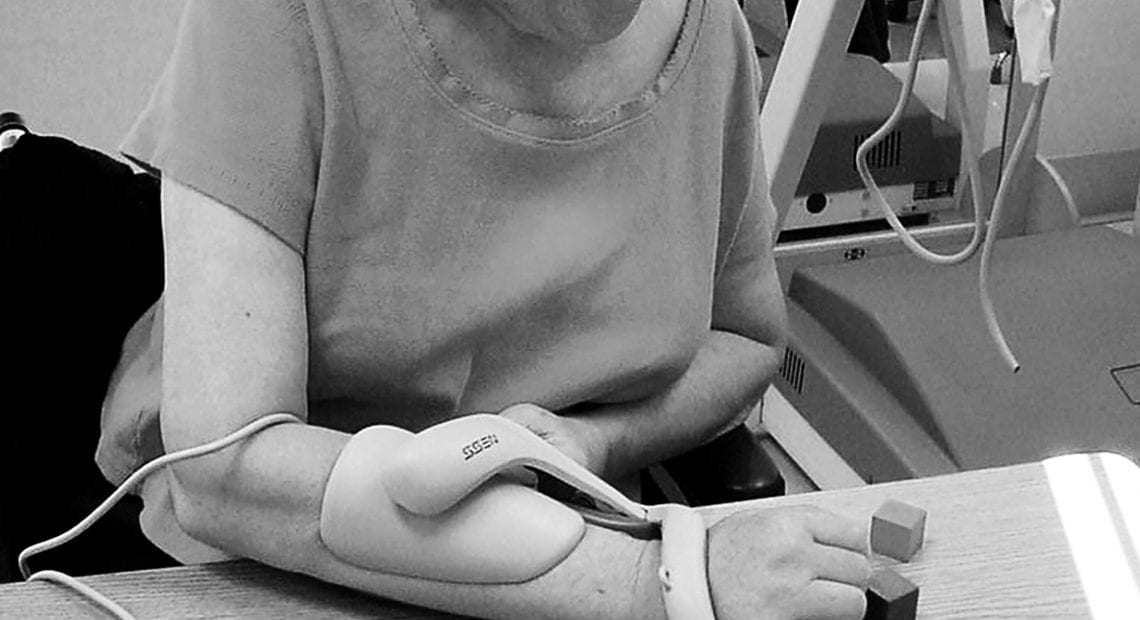
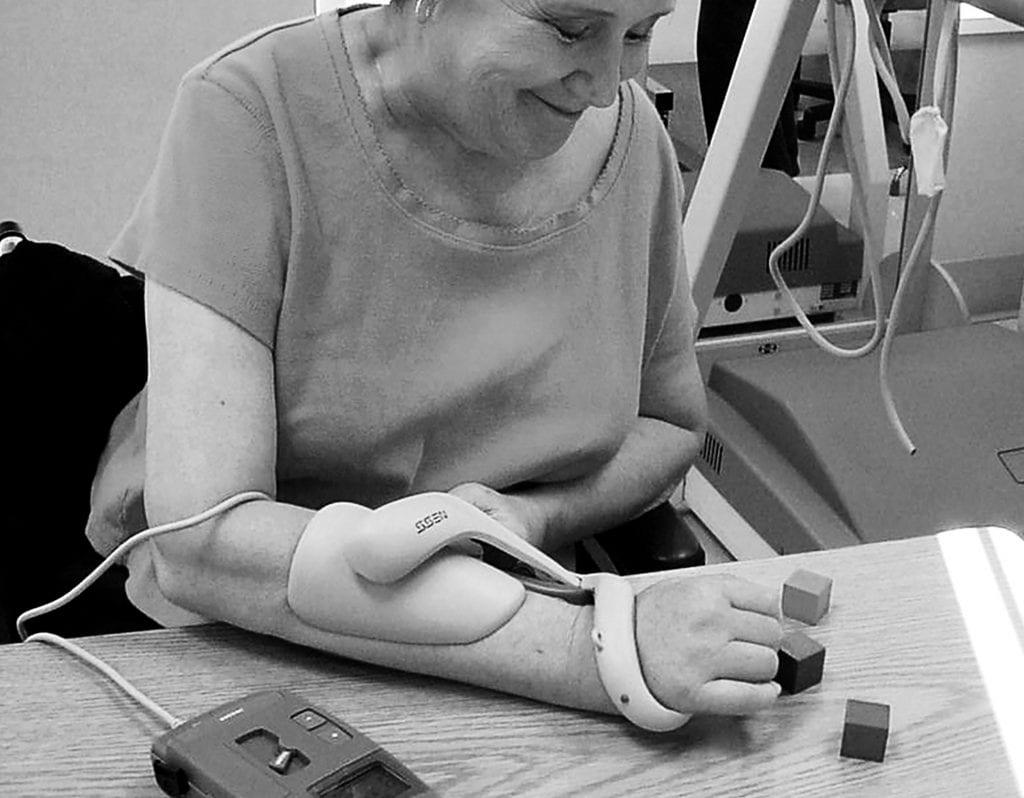
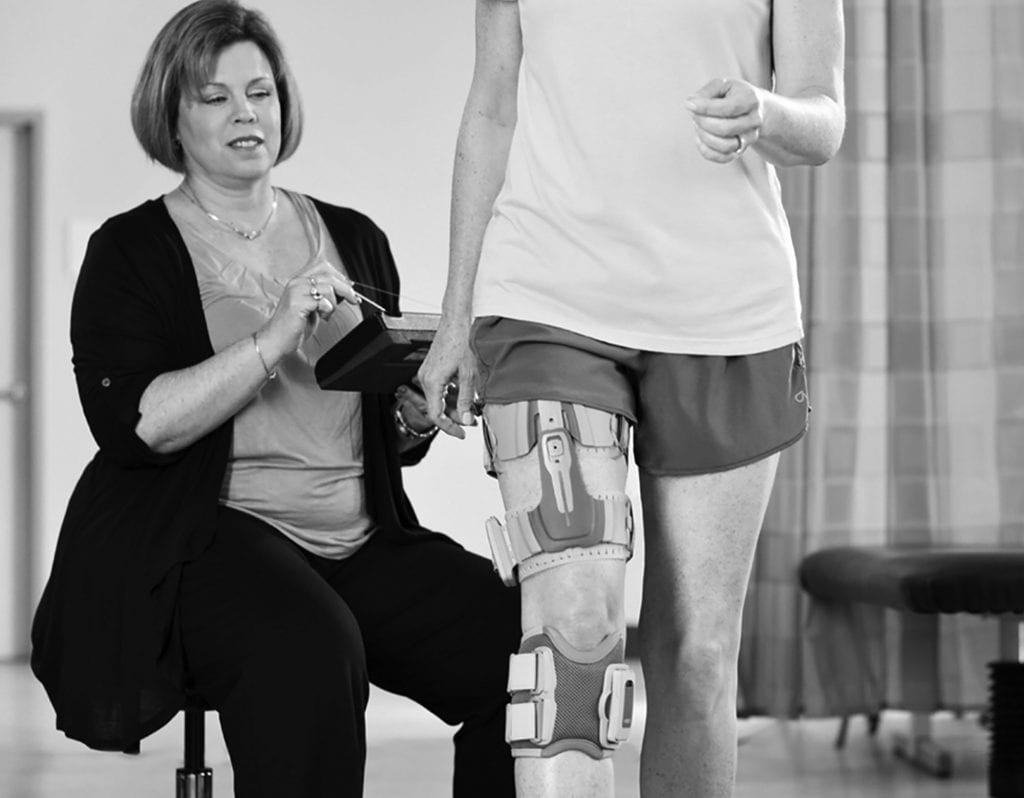
At this precarious moment in history, many in the Commonwealth are tempted to say the same thing. Like the Odyssey, the state’s economy has been essentially frozen for several weeks now. Unthawing and restarting it will be a complicated process, and, just as with Apollo 13, there is no shortage of Ph.D.s working on the problem and trying to find a solution.

And, just as with that flight, there is obviously a lot at stake. With Apollo 13, it was three lives. With this pandemic … well, according to a report from the Massachusetts High Technology Council, the jobs of at least 40% of workers making less than $40,000 a year are at risk. Already, nearly 25% of the state’s workers have filed for unemployment benefits over the past six weeks. That’s right — close to one worker in four has sought relief. And the numbers could go higher still.

“It will be different, and it will be different for quite some time. Anyone who still believes a switch can be flipped and we can go back to where we were is sadly mistaken.”

Suffice it to say this will be an extremely complicated process, and those undertaking it have to get it right. If they go too fast or move improperly, a setback will likely prove even more devastating for the state’s economy — an economy that was, as we all know, humming right along.

Indeed, just a few short months ago, the Boston-area economy was absolutely bursting at the seams. Cranes were everywhere, major corporations were moving to the city, and people were looking to high-speed rail as a way to somehow possibly relieve the congestion, sky-high prices, and intolerable commutes that were defining life inside Route 128.

It seems like those public hearings in downtown Springfield on high-speed rail options were years ago, not several weeks ago.

And the same can be said of the employment picture across the state and even here in Western Mass. It was only a few months ago that we were all talking about the skills gap and how companies with vacancies couldn’t fill them. The word ‘ghosting’ became part of the vocabulary, a term used, in some instances, to describe someone who, between the time they were offered a job and was scheduled to start, found something better. Every employer had a ghosting story — or several of them.

Not to carry the Apollo 13 analogy too far (too late), but the state’s economy was absolutely soaring, a rocket ship bound for new heights. And then … the explosion.

Now, the task at hand is to restart the economy and get people back home, to where they were. But that’s where the analogy ends. Home is much different than it was when we left, and there’s no just going back to it.

The return to something approaching normal, or a new normal, will be slow, as in painfully slow, and gradual. It will be to workplaces where people wear masks, work at least six feet apart, and get tested for the virus regularly. It will be to a casino where the slot machines are spaced widely, one might use a long, plastic stick to press buttons on those slots, and where thermal cameras monitor the temperature of patrons. It might well be a phased-in return where those who are older and most vulnerable, as well as those most able to work remotely, return last. It will be to a business community where the vast majority of ventures are simply fighting for their lives.

It will be different, and it will be different for quite some time. Anyone who still believes a switch can be flipped and we can go back to where we were is sadly mistaken. This is made clear by the stubbornly high numbers concerning cases and deaths in Massachusetts, and the fact that, just a few days ago, the governor ordered people to wear masks in public.

The state has to find a way to reopen the economy — it can’t stay closed much longer — and also keep people safe, not overwhelm the healthcare system, and not present a scenario where we take one step forward and two or three back.

Apollo 13 had a happy ending — even if the crew didn’t get to moon. But this isn’t a movie, and we don’t know how it’s going to end.

George O’Brien is the editor of BusinessWest

Business of Aging

Team Approach

By Mark Morris

the Bioness L200

This device, the Bioness L200, helps patients recovering from a brain injury to re-establish the use of their arms and hands.

In the U.S., 2.5 million adults and children sustain a traumatic brain injury (TBI) every year.

The Brain Injury Assoc. of America (BIAA) reports that more than 2 million of those injuries are treated in emergency departments, while approximately 50,000 result in death. Nearly 280,000 are admitted to hospitals, after which patients transition to inpatient rehabilitation, where the goal is to get back to their maximum level of function and independence.

But what’s involved in that rehabilitation process for brain injuries? It depends on the patient.

“Many people associate traumatic brain injuries with a younger population because they tend to engage in riskier behaviors. Older people who hit their heads from slips, trips, and falls are also susceptible to TBIs,” said Jennifer Blake, an occupational therapist with the inpatient program at Weldon Rehabilitation Hospital, adding, however, that anyone at any age can sustain a brain injury.

The Centers for Disease Control and Prevention (CDC) defines TBI as a “disruption in the normal function of the brain that can be caused by a bump, blow, or jolt to the head, or penetrating head injury.“

Traumatic brain injuries are evaluated on a spectrum, said Blake, noting that someone who experiences a concussion, also known as ‘mild traumatic brain injury,’ can usually return to normal with just limited therapy. On the other hand, people with moderate to severe brain injuries require medical care and more comprehensive inpatient rehabilitation. Often these patients need some level of supervision after discharge.

On occasion, someone may have a head injury and not immediately recognize it. For example, if a person is in a car accident and has a broken leg, that might get the primary treatment focus, Blake explained. Even after a CT scan, the brain injury may not initially show up. “It’s only after further investigation, when the person is having trouble concentrating or paying attention, that they discover the brain injury.”

“When they see their arm move and their hand open and close, it boosts their confidence and makes them feel more hopeful; you can see it in their faces.”

Because our brains are essential to all our physical and mental functions, therapists have found that taking a multi-disciplinary approach yields the best results in helping people recover from a brain injury. A team of physical therapists, occupational therapists, and speech pathologists, supported by 24/7 care by medical staff such as nurses, doctors, and pharmacists, make sure all the patient’s needs are addressed.

“We meet once a week to make sure we are all on the same page,” said Julie Bugeau, an occupational therapist for Encompass Health Rehabilitation Hospital of Western Massachusetts. “We have an open discussion to determine where the patient is in terms of therapy and function. We also ask questions outside of the therapy, such as, ‘how are they medically?’ ‘Are they eating well?’ We try to look at all the factors that can affect their rehab.”

What’s the Plan?

Blake said most admissions in the inpatient setting last only two weeks, so working as a team helps them determine the patient’s eventual discharge plan.

“By working together in an interdisciplinary team, we can figure out what’s working, what’s not, and make changes along the way.”

Blake said an individualized plan for rehabilitation is developed by therapists who work with patients in three key areas:

• The physical therapist studies a patient’s mobility: for example, how well they can get from one place to another, their balance, and how well their motor skills can function;

• The occupational therapist helps patients with self-care skills, such as eating, getting dressed, bathing, as well as tasks like cooking, cleaning, and managing medications; and

• The speech and language pathologist addresses higher levels of cognition, such as memory, attention, concentration, problem solving, and decision making. Sometimes the pathologist works with patients whose brain injury causes dysfunction in producing or understanding language.

Advancing technology offers therapists tools to aid in rehabilitation that were not available years ago. Bugeau discussed how devices such as the Bioness L300 and H200 help brain-injury patients regain the use of their legs and arms. The L300 attaches to the leg and, through electrical stimulation, can aid a person’s ability to walk.

“The idea is that, with repetition, those leg muscles will be able to move properly without the external stimulus,” she explained.

Meanwhile, the H200 helps re-establish the movement of arms and the grasping action of hands. Bugeau said using these devices results in positive responses from her patients.

help brain-injury patients

The Bioness L300 is used to help brain-injury patients regain their ability to walk through electrical stimulation.

“We’ll have patients who say, ‘my arm doesn’t work — I have a dead arm,’” she noted. “Then, when they see their arm move and their hand open and close, it boosts their confidence and makes them feel more hopeful; you can see it in their faces.”

By employing the different therapies, Bugeau went on, the hope is to maximize the patient’s abilities. But, she added, “while the therapy is important, rest is also an important part of the recovery.”

While many patients transition directly from inpatient to outpatient care, Bugeau said Encompass also offers a home-care component for those who are not yet ready to make the move.

“We will help patients settle into their home and continue training with them and their families to make sure they are safe and getting stronger,” she said. “It’s an option we recommend until the patient is ready to move into outpatient treatment.”

Blake added that the outpatient phase of care at Weldon involves working closely with families during outpatient therapy to help them manage that part of the process.

“Let’s say a patient is receiving all three therapies in an outpatient setting,” she explained. “We will try to schedule all of them on the same day to make it a little less overwhelming for the caretaker.”

Blake said it’s important for the injured person and their support group to understand that, when a person suffers a brain injury, it can be a difficult adjustment for everyone involved.

“You can’t see the residual impairments from a brain injury,” she said. “The person might experience a personality change, or a once-independent person may now need lots of assistance with daily life.”

That’s why Bugeau’s staff involves the patient’s family in training and education early in the process. She said the classes help the family understand how their loved one’s brain injury is progressing and how to properly handle behaviors that are out of the norm.

“We make sure to screen every patient with a brain injury for depression because it is a such a common symptom associated with brain injuries.”

Steady Improvement

While plenty of information and support are available for families, Bugeau said the trick is not to overdo it.

“We create a folder with specific, individualized information that is appropriate to the patient’s injury. We don’t want to overwhelm the family, but we want to make sure they have the information they need.”

Blake and Bugeau encourage families dealing with a brain-injured loved one to take advantage of the support groups available at their respective organizations. Weldon offers a faith-based group as well. Both therapists also cited the Brain Injury Assoc. of Massachusetts as a solid resource for families.

In all cases, the goal is helping patients with a brain injury get back to a maximum level of function and independence.

“It’s hard to say how much time each person needs,” Blake said. “And while things can change quickly or gradually, people do improve and get better.”

Business of Aging

Joint Effort

By Mark Morris

Brianna Butcher

Brianna Butcher says her main priority is to help the patient gain back their range of motion, and “to turn that new joint back into a normal joint.”

In daily life, it’s easy to ignore the important role our knees, hips, and shoulders play in walking, performing simple activities, and helping us get around in the world.

Most people notice these essential joints only when they are in pain. As we age, the onset of arthritis can bring excruciating pain even to the most basic tasks such as climbing stairs and walking.

If medication and physical therapy do not provide relief, then doctors will recommend joint-replacement surgery.

Considered a safe and highly effective surgery, more than 600,000 knee replacements and more than 300,000 total hip replacements are performed each year in the U.S., according to the Agency for Healthcare Research and Quality. The surgery involves replacing an arthritic or damaged joint with a prosthetic made of metal, plastic, or ceramic to replicate the movement of the joint.

Once the surgery is done, then the real work begins, said John Jury, head physical therapist at Weldon Rehabilitation Hospital, noting that “a successful outcome depends on how much effort the patient puts into their rehabilitation.”

The vast majority of patients Jury works with have had total knee or hip replacements, while those with partial knee and shoulder replacements comprise a smaller number. Candidates for joint-replacement surgery tend to be age 50 and up.

“It’s prudent to wait as long as possible to do the surgery so they only have to have it once in their lives,” he said, noting that, if someone in their 40s had a joint replaced, it could wear out in their 90s and when they may not be a good candidate for surgery.

Physical therapy begins on “post-operative day zero,” which means only a few hours after the surgery takes place. Jury said therapy on the same day is especially common for knee replacements. The main goal of this initial session is to initiate moving, standing, and weight bearing, typically with the help of a walker.

“Over the next couple of days in the hospital, we will continue to work with patients on their flexibility with the joint, range of motion, strengthening exercises, and mobility to help get them home,” Jury said.

Some medical centers around the country send knee-replacement-surgery patients home the same day as the procedure. In Western Mass., Jury said, most patients with a total knee replacement are discharged within a day or two, while hip-replacement patients may be hospitalized for up to three days. Both operations are followed up with two weeks of home therapy.

“It’s prudent to wait as long as possible to do the surgery so they only have to have it once in their lives.”

Rehab treatment differs for knees and hips. Jury explained that patients with a hip replacement don’t usually require outpatient therapy after their sessions at home. Knee-replacement patients, however, are almost always scheduled for outpatient therapy.

Moving Experiences

And it’s during outpatient therapy that people like Brianna Butcher, physical therapist and supervisor for Select Physical Therapy, take over joint-replacement rehabilitation.

“Our main priority is to help the person gain back their range of motion and their gait mechanics, which is especially important for knees and hips,” she said. “We’re really trying to turn that new joint back into a normal joint.”

In addition to traditional techniques, therapists are finding new ways to help people get back to day-to-day life with the help of technology. Butcher said one effective tool she has used is called an AlterG. She described it as an anti-gravitational treadmill that uses inflated air to support the body during therapy.

“For people who are tentative about putting weight on their joint, this is a good way to help them get back to normal walking,” she said.

Also finding their way into physical therapy are phone apps. A patient recently asked Jury if there was a way to measure his knee’s range of motion from home.

“We found a couple of apps you can download to your phone that will measure range of motion,” he said. “A family member has to hold the phone next to the patient’s knee, and their movement can be recorded.”

Tele-rehab is another development that is showing promise in several studies here and abroad. Jury said the idea is to share a video of rehab exercises with the patient and follow up by phone, FaceTime, or another video app. The studies compare tele-rehab with the gold standard of care, which is outpatient therapy after a knee replacement.

“They are finding that patients can achieve similar outcomes to outpatient,” he noted, “and they are reporting higher satisfaction scores because they don’t have to get out of the house to drive to a clinic.”

Butcher said her patients are usually driven to physical therapy by someone because they are still taking pain medication and cannot yet drive.

Once the patient arrives, she often observes their sense of fear about starting the therapy.

“For some, this is their first time seeing a physical therapist, and the process can be painful, especially for knees,” she said. “We try to work within that threshold to help the patient make progress while being mindful of the pain, which can be difficult for some.”

On occasion, patients who already have a replacement joint on one side of their body will need a second one, such as the opposite knee or opposite side of the hip.

Butcher said that, in her experience, at least one of those joints proves difficult and painful for the patient during physical therapy.

“The body always responds a little differently from left to right,” she said. “If, for example, therapy on the left hip went great, the right hip just doesn’t want to cooperate.”

In Butcher’s view, therapists often get a bad rap because of a false perception that they somehow enjoy putting people through pain.

“Our ultimate goal is to help patients get back to a better place than before their operation,” she said. “We’re on their side.”

Jury pointed out that therapists are a valuable resource in terms of guiding the patient on what to do, but it’s also up to the patient to follow through. “It’s not an easy rehab, but you’re only going to get out of it what you put into it.”

For those who make the effort, the results can be life-changing. The American Academy of Orthopaedic Surgeons uses the term “second firsts” to describe the experience when patients can once again enjoy things like hiking and other activities that were not possible before their surgery.

For many patients, Jury noted, their biggest revelation is the ability to move around in the world again without a walker or a cane.

“They are happy to be able to return to a certain normalcy of activity,” he said. “Of all the patients I’ve talked to, none of them have said they wished they waited longer for the surgery.”

Bottom Line

Butcher talked about a recent success story in which the patient had undergone a total replacement surgery in his left knee before working with her.

“All he wanted to do was to get back into bowling again, and he’s throwing harder now than before his operation,” she said.

After living with pain for many years, people who have joint-replacement surgery and follow through on their physical-therapy program can often succeed to a point that Butcher describes as almost like having a new life again.

And this new life is the result of successful teamwork — with the patient being a big part of that team.