Home 2011 (Page 9)
40 Under 40 The Class of 2011

Executive Director, Greater Springfield Habitat for Humanity

Jennifer Schimmel

Jennifer Schimmel

The plot of Jennifer Schimmel’s life has taken some unexpected twists.
“I actually had a degree in fine and performing arts, and I always envisioned I’d spend most of my life on stage,” she said. But when she took a job with Lenox-based Shakespeare and Co. in a fund-raising capacity, she found she had a knack for raising money.
That took her to similar positions at Hartford Seminary, an interfaith graduate school, and then the Hartford Area Habitat for Humanity, two faith-based organizations whose missions spoke to her own values.
She eventually accepted the position of executive director at the Greater Springfield Habitat, where she has used her fund-raising and event-planning background to oversee a 113% increase in unrestricted donations to support the mission of providing home-ownership opportunities to low-income families, as well as a 127% jump in special-event support and a 30% increase in volunteer participation.
Those are impressive results, but Schimmel insists she’s the one who is inspired.
“I love getting to know the families, knowing that our families work hard for what they achieve,” she said. “The motto at Habitat is ‘a hand up, not a handout,’ and I love being here; we’re cheerleaders, a support system, educators — but the families do it all for themselves. We guide them, but they really take control of the process.”
Schimmel is committed to supporting Habitat’s efforts internationally as well. She’s certified with the organization’s Global Village Program and will lead a group of 11 people to Guatemala this fall to work with a family in need of affordable shelter — her second such trip. “It’s a life-changing experience,” she said.
Overall, Schimmel simply wants to make a difference, and she was frank with board members of Greater Springfield Habitat when she interviewed for the job.
“I said, ‘if I’m not right for the position, that’s OK — I’d rather go and be a waitress and pay my bills that way and spend my free time devoted to community service if that’s the right thing to do,’” she said. “This job is not about making a paycheck; it’s about making a difference.”
— Joseph Bednar

40 Under 40 The Class of 2011
Development and Marketing Manager, Food Bank of Western Mass.

Meghan Rothschild

Meghan Rothschild

Melanoma, a common skin cancer, can kill quickly. Beating it gave Meghan Rothschild a new outlook on life — and a mission.
“I’m a stage 2 melanoma survivor,” she said. “I was diagnosed at age 20, in college, and basically, it was because of some poor decisions I made in my teenage years to be outside without sunblock and to use tanning booths.”
As a journalism student at Roger Williams University, Rothschild wrote about her experience in a Rhode Island newspaper, and that opened more doors.
“A year after the initial diagnosis,” she said, “I decided this had happened for a reason, and that it was an opportunity instead of a negative thing, and I started speaking out about my diagnosis.”
She eventually founded SurvivingSkin.org and has shared her message of sun safety in a variety of media, inclouding Marie Claire and Cosmopolitan magazines, various fitness publications, WebMD.com, Inside Edition, and World News with Charles Gibson, among other outlets. In her former marketing position with Six Flags New England, she founded an annual melanoma day that raised thousands of dollars for the Melanoma Foundation of New England.
“I’ve also done a lot of work with the American Academy of Dermatology as their national spokesperson. It’s been wonderful to speak at schools, mostly in New England, and at colleges across the country,” she said. “The whole point is to talk about making right choices and really paying attention to your skin. It’s the largest organ in the body, and we really don’t pay enough attention to it.”
As development and marketing manager at the Food Bank, Rothschild is bringing attention to yet another often-neglected need.
“I oversee all the special events and campaign fund-raising and try to bring in financial sponsorships to help us continue our mission. I do some corporate relations as well,” she said.
“Every dollar we collect brings in $13 worth of food. It’s been very rewarding work. All the money and food we raise stays local. To know that I’m investing my time every day in something that’s making a difference for Western Mass., it’s a really great feeling.”
— Joseph Bednar

40 Under 40 The Class of 2011
Assistant Vice President and Secondary Market Officer, PeoplesBank
Kristen Pueschel

Kristen Pueschel

Kristen Pueschel was talking about her first appearance in the Holyoke St. Patrick’s Day Road Race, but the words she chose to describe her successful completion of the 6.2-mile run would apply to just about everything she does at her job and in her life.
“It’s been a personal goal of mine to do it for years,” she said. “I don’t like being a spectator; I like to get out and do things, so I said to myself, ‘go do it, and do the best you can.’”
She certainly takes this attitude in her position as assistant vice president and secondary market officer at PeoplesBank, where she wears many hats, including that of founding member and current chairman of the Environmental Committee, and also in her extensive work within the community. This includes everything from service on the board of Girls Inc. in Holyoke to membership in Kiwanis International, to participation in the bank’s financial-literacy program in local schools.
And you could say it applies to her personal life as well: she’s engaged to PeoplesBank colleague Xiaolei Hua, with the wedding planned for November.
All this adds up to a complicated balancing act and an extreme exercise in time management, but Pueschel is more than coping — she’s excelling. At PeoplesBank, she started as an intern in the Commercial Loan Department and, later, while overseeing the department, was responsible for new-product development, rolling out a loan-origination software to the bank’s branch network and assisting in the launch of an online home-equity application for consumers. She has been a key contributor to the bank’s strategic plan and a valuable player in its Mortgage Think Tank initiative, which resulted in the revamping of the consumer-lending department.
With the Environmental Committee, she has taken charge of developing earth-friendly policies and procedures at the bank, and played a lead role in the creation of the LEED-certified branch in Springfield.
All this, plus her community work, is packed into each work week. “The weekends — they’re for family,” she said, meaning both hers and Xiaolei’s.
That doesn’t leave much time for spectating, which suits her just fine.
— George O’Brien

40 Under 40 The Class of 2011
Attorney, the Law Offices of Brooks and Powe

Maurice Powe

Maurice Powe

When Maurice Powe was a young boy, his grandmother made it her mission to feed seniors in their neighborhood. She sent him to deliver the meals she cooked and told him to sit down and talk with the recipients in their homes.
“I learned to meet people where they were and try to build a common ground of understanding,” he said. “My mother and father also made sure I understood the importance of giving back. It was always important in our home to help the less fortunate. We called it ‘doing the right thing.’”
Powe feels blessed because many people helped him to go to law school and become an attorney. Today, he gives back through his profession and his volunteerism. He is on the Board of Directors for the NAACP of Springfield, the Urban League of Springfield, and theaBrethren.
This father of three keeps photos on his office wall of several football teams he coached for the Springfield Academics Athletics Arts Achievement Assoc. He has also coached youth football and basketball teams in Longmeadow, and was a recipient of the 2010 Massachusetts Bar Assoc. Community Service Award.
When he works with young athletes, he strives to teach them teamwork, commitment, and an important life lesson: “although they may get beat up and knocked down in life, they have to get back up. I tell them they show a lot about who they are if they do that.”
Powe says everyone has a story and a past, which they bring to every situation. “It goes a long way in trying to understand them,” he said. “I just try to treat people with respect and dignity and work hard for them whether they are having good times or bad. I listen to them and hear them, which is the start of a good relationship between any attorney and client.” He is also a zealous advocate for civil rights in lawsuits that involve discrimination.
His accomplishments all stem from his core beliefs. He is definitely doing the right thing — for all the right reasons.
— Kathleen Mitchell

40 Under 40 The Class of 2011
Joint City Finance Director; City of Springfield; Chief Financial Officer, Springfield Schools

Timothy “T.J.” Plante

Timothy “T.J.” Plante

Timothy “T.J.” Plante’s interest in Springfield began when he was in graduate school and wrote his thesis on the state of the city’s finances.
Today, the father of a 2-year-old son and newborn daughter is dedicated to restoring “a great city — the economic engine of Western Mass.,” he said. “I am driven to continue to improve Springfield and its schools, and I want to make sure people look to us and emulate what we do.”
Plante manages a $624.5 million budget for the city and its public schools. Not only is he the first to hold both positions simultaneously, he made history by winning the Meritorious Budget Award from the Assoc. of School Business Officials for his most recent school budget, which was a first for Springfield. He also won the Distinguished Budget Award from the Government Finance Officer’s Assoc. for fiscal years 2009, 2010, and 2011, which the city had also never won before.
“My job entails a lot of responsibility,” he said. But he is passionate about his mission. As he works to continue to implement a financial turnaround of the city, he wants to maintain the improvements made to date.
Plante is especially motivated to make a difference in the School Department. “There are a lot of critical needs, as there is a high dropout rate and a low graduation rate,” he said. “It’s a special and unique challenge, but I am working to ensure that the district’s limited resources are spent on students to help close the achievement gap, improve education, and implement best practices in school finance.  I want to continue to build its reputation.”
Plante also serves on the Regional Employment Board, various committees of the Mass. Assoc. of School Business Officials, and the International City/County Management Assoc.
“Time management is the only way to get everything done. But this is a great city,” he reiterated. And one with a financial leader who has shown he can accomplish great things.
— Kathleen Mitchell

40 Under 40 The Class of 2011
Host and Executive Producer, The David Pakman Show

David Pakman

David Pakman

In the beginning, more than five years ago, the show was called Mid-week Politics. “It was on just once every other week, on Valley Free Radio,” David Pakman recalled. “I really just read articles on the air. It was … horrible.”
No one is using that adjective to describe The David Pakman Show, the current byproduct of a lengthy and quite successful course of evolution. Aired twice a week, it offers a steady diet of opinion, is aired on more than 100 radio and television stations, and features guests ranging from Richard Neal to Dennis Kucinich.
And then there was the show (an on-air confrontation, really) featuring the Westboro Baptist Church — known for its strong anti-gay stance and protests at the funerals of servicemen — and the hacking group called Anonymous. “We got them both on the air to sort of sort out whether Anonymous had threatened Westboro, and during that interview, Anonymous essentially seized the Westboro Web site and put up a message. It happened live on the show, about 10 a.m.; by noon, it was on more than 100 news outlets, and it received 1 million hits on YouTube.”
The show was a hobby when it started, he said, and it is now most definitely a business, one he is trying to grow through diversity — exposure via the radio, television, and the Internet — and creation of solid revenue streams, such as membership packages.
When asked about his style as a host and inquisitor, Pakman, a self-described liberal/progressive, said it’s not to be confrontational, necessarily, but to be direct, and ready with the right questions and commentary.
“My style is more to have researched well enough so that, simply by asking the right questions, I can expose that their position may be flimsy,” he explained, “or put into evidence the fact that the person may not be informed to the extent that they claim to be.
“I try to anticipate what the answers will be, and just be prepared — that’s my style,” he said, a characteristic of not only his show, but his approach to business in general.
— George O’Brien

40 Under 40 The Class of 2011
Founder and Executive Director, Western Mass. Development Collaborative

Donald Mitchell

Donald Mitchell

BusinessWest 40 Under Forty
Class of 2011
40 under Forty, Class, 2011, community, leaders, young, professionalThe most important thing in Donald Mitchell’s life is his family. The father of three daughters, ages 12, 9, and 5, lost his wife, Traci, to cancer two months ago, and says he wouldn’t be where he is today without her.
Providing for his family has always been important to Mitchell, and from 2000 to 2003 he was a budding entrepreneur with a cleaning business. Although it didn’t work out, the experience was valuable and planted the seed for the role the Western Mass. Development Collaborative plays today. The first is providing resources and support to small businesses, primarily in the construction field. The second is linking these small businesses with larger private and public entities in the community.
“They use us as a clearinghouse to find small-business contractors,” he explained. “One of their biggest problems is that they cannot find quality minority or women contractors, so we bring them together, making sure the small businesses have the capacity to do the job.”
Mitchell wants everyone to succeed, and says giving up is never an option. He has always worked with children, and became a Big Brother when he was still in college. He and Traci were also foster parents to more than 10 boys in a five-year period.
Mitchell was Big Brother Big Sister of the Year for Hampden County in 1997, plays an active role in Black Men of Greater Springfield, and is Polemarch of the Springfield Alumni Chapter of Kappa Alpha Psi Fraternity Inc.
This winter, he coached his daughter’s basketball team for the first time, and the team earned a division championship. But wins and losses aren’t as important to him as serving as a good example to his children — and to small businesses, helping them gain the tools they need to become more competitive and successful.
“Nothing comes easy, but you have to work as hard as you can and never, ever give up,” Mitchell said. “If I can do that in my professional and personal life, hopefully it will soak into my children’s spirits. Quitting is just not an option.”
— Kathleen Mitchell

40 Under 40 The Class of 2011
Director of Estate and Business Planning, MassMutual Financial Group; City Councilor, City of Holyoke

Todd McGee

Todd McGee

Todd McGee loves tax law. “That,” he said, “makes me probably the most boring person you’ll ever meet.”
Well, no. But he admits his career choice surprised him.
McGee originally wanted to work in criminal law. As a law student at Western New England College, he was required to take one class in tax law — “I figured I’d get my D and get out of there,” he said — but his professor managed to make the subject so engaging that he took another. And another. “For whatever reason, I fell in love with taxes.”
He went on to earn a master’s degree in Taxation at Boston University and to work in business planning for law firms in Connecticut and Massachusetts, including Bacon Wilson in Springfield. “Then MassMutual came calling,” he said.
Constant changes in his field are part of what appeals to McGee. “With tax law, you have a set of rules, but those rules can be changed by a revised ruling, or something that comes from the IRS changing estate-tax laws. And everything you’ve done, now you have to go back and see if you have to fix it. It’s always changing. Law is never stagnant for me; it’s always something fresh.”
He’s also putting his law skills to use in public service, now in his third term as a Holyoke city councilor.
“I’ve always been involved in politics,” he said, noting that his father and grandfather were also politically active. So when the incumbent councilor from his ward didn’t seek re-election, McGee threw his hat in the ring. During his second term, he was asked, because of his background, to be chair of the council’s Finance Committee.
“It’s a great job because I know the area — I was born and raised here — and I love helping people,” said McGee, who can be seen on weekends volunteering as a basketball or soccer coach.
“I’m a guy who loves to get involved where I can,” he added. “When I was young, my family and my friends in my neighborhood took care of me. I want to give back for what they did for me.”
— Joseph Bednar

40 Under 40 The Class of 2011
Manager, Stop & Shop

Joan Maylor

Joan Maylor

Joan Maylor used a picture of her parents in her 40 Under Forty portrait because, she said, “they truly represent who I am today.”
She recalled something her father always told her. “Once a task is begun, never leave it until it is done. Be the labor great or small, do it well or not at all.”
Well, Maylor certainly has lived up to that. She started her career with Stop & Shop as a bagger 21 years ago, “then worked every single department throughout the stores, through three levels of management, to the position I’m in now as store manager.”
When she started out in her entry-level position, she didn’t see supermarket work as a long-term career. But, she said, as she continued to grow and mature, she saw the many opportunities that can come to someone who sets her mind on a goal and works hard to achieve it.
Maylor is active in her church and, through her faith, committed to being a role model for younger generations. “I see that the young people these days can have trouble with focus or have a lack of purpose,” she said, “and I believe that, if I can show them how I grew up and became who I am, they can see possibilities.
“I’m hoping, through my position as store manager, that I can reach out to the community and get them interested in working in my field,” she told BusinessWest, “so they can see that there’s more to grocery stores than just stocking shelves.”
There were people at every stage of her career at Stop & Shop who would act as mentors, “teaching me what I didn’t know, but also what I needed to move on to the next step,” she said. “I still talk about all of them, and they have each given me a piece of who I am today.”
For Maylor, that’s what is most important, for her nieces and nephews and all the youths she works with: to help them understand, she said, “and to get the word out that you can make it.”
— Dan Chase

40 Under 40 The Class of 2011
Co-founder, Chief Strategist, and Creative Lead, Gravity Switch

Jason Mark

Jason Mark

In 1996, Jason Mark was a teacher. His future wife, Christine, worked for Microsoft, and another friend was making video games for Fisher Price and Nickelodeon. Together, they decided they’d rather work for themselves.
“We pooled our resources and decided we didn’t want to deal with bureaucracy,” Mark said of the origins of Northampton-based Web-development firm Gravity Switch. “It’s been a learning experience.”
The company, named after a Shel Silverstein poem — appropriate, since Mark has gone on to write two children’s books — at first concentrated mainly on animation and CD-ROM development, but quickly evolved to become one of the region’s most notable Web-design firms. “We’re on the forefront of defining what it means to develop a successful Web project,” Mark said. “And it’s been a really exciting time; over the past four years technology has taken a big jump.”
Gravity Switch has contributed its own advances, from creating the iBracket — used by hotels, museums, retail outlets, and others to securely lock an iPad in a public location — to developing Blitz Build, a patent-pending process that dramatically cuts the time required to create a Web site, thereby minimizing client time and expenses.
But Mark and his team have also been at the forefront of socially conscious business practices in the Valley, donating 15% of the company’s annual profits to various local and national charities.
“As a community member, that’s what life is all about,” he said. “You have to look at priorities; work is important, but you have to do stuff you believe in, and to give back in any way you can. That’s something that’s always been important to us.”
Gravity Switch is environmentally aware, too, with about 25% of its staff (including Mark) bicycling to work every day and about half carpooling. It’s another way he and his team live what they believe while doing what they love.
“As a business owner, you want to be around people who are inspiring, and we inspire each other,” he said. I’m a big believer in doing what you like. You have to follow your passion.”
— Joseph Bednar

40 Under 40 The Class of 2011
Attorney, Bulkley, Richardson and Gelinas, LLP

Kelly Koch

Kelly Koch

While recognition as part of the 40 Under Forty might be the latest addition to Kelly Koch’s trophy case, it certainly isn’t the first.
She laughed when describing the three things that she really wanted to do when she graduated from college. “I wanted to do sports TV, I wanted to teach — that was one of my minors — and at some point I wanted to do something with law. I’ll admit that I wasn’t really mature enough to do the last one, so I figured the sports route would be the best first choice.”
Apparently, it was.
While working at ESPN for nine years, she produced features for SportsCenter and worked on various documentaries. For her efforts, she won a CableACE Award and a Sports Emmy. While at ESPN, she coached and taught at a high school in Connecticut, but there was still that last goal to fulfill.
“I thought that a good time for a career change was right around when I turned 30,” she explained, “and when I was in law school at Western New England College, I had the luxury of getting involved in a lot of student activities.” That’s how she modestly described her role as president of the Student Bar Assoc. and winning the prestigious Dean’s Award for Outstanding Contribution to the Law School.
While the list of her successes sets Koch apart from the crowd, there is one award that doesn’t come with a statuette, yet it’s the one for which is most proud. For the past four years, she has been a Big Sister to a girl named Chelsea.
“After I took the bar and got settled,” she said, “I went over and signed up at Big Brothers Big Sisters. I wanted to have the interaction with a kid who needed someone to help with homework, or just to play sports with.
“She’s grown up to be a part of my family, and I’ve become part of theirs,” Koch continued, adding that this partnership has proven to be what she calls a “perfect match for both of us.”
— Dan Chase

40 Under 40 The Class of 2011
Assistant Executive Director of Management, Springfield Housing Authority

Nicole Contois

Nicole Contois

Nicole Contois is an executive at the Springfield Housing Authority, a Big Sister, and a dedicated Red Sox fan. She was hired out of college for a temporary position seven years ago, but quickly climbed the ladder of success.
“Once I started at this organization, I knew I wanted to play a bigger role and interact with our residents by making decisions and creating programs that will enhance their futures,” she said.
Today, Contois oversees the management of three public-housing districts with more than 1,400 apartments, as well as the Housing Authority’s resident services, human resources, and finance departments. Her goal at the agency is to help people launch their own pathways to success.
“We serve a very vulnerable population, and are able to provide them with housing, which is a basic need in life,” she said. “We provide families and elders with affordable housing and wraparound services that assist them in meeting their goals. For some, these goals include education, careers, and home ownership.”
Contois said seeing families overcome obstacles gives her a real sense of accomplishment. “We are able to help families advance and move forward toward success through all the services we provide,” she added. “We empower them, because many don’t think they can move past their situation.”
Contois is also dedicated to helping people outside of work. It’s been that way since she was a middle-school student and worked in the snack bar at Jewish Geriatric Services, where her great-grandparents lived. “I have always gained satisfaction knowing that I could make a difference in people’s lives,” she said.
Three years ago, through the Big Brothers Big Sisters organization, she became a Big Sister to a 7-year-old girl named Haley, who needed a female role model. “I felt I could be a positive force in her life,” she said. They enjoy ice skating, movies, and, most of all, Red Sox games together.
Contois also plays tennis and golf and hits the ski slopes. But in every arena she enters, her winning spirit leads the way for others.
— Kathleen Mitchell

40 Under 40 The Class of 2011
Project Manager, Tighe & Bond

Briony Angus

Briony Angus

Briony Angus admits to being a bit of a policy wonk when it comes to land use and the environment.
“I’ve always been interested in environmental issues,” said Angus, who started her career in the public sector, including a stint as a Mass. Environmental Policy Act analyst for the Executive Office of Energy and Environmental Affairs.
“I like law and regulations, and I liked administering laws and regulations and enforcing laws and regulations,” she said. “Now, at Tighe & Bond, I’m happy to be working on the other side of the table.”
Her interest in land-use planning started in graduate school; “I got a lot of very interesting work opportunities and internships that jump-started me into the field,” Angus said. Today, her role is equally varied. “I do an enormous amount of different things and wear a number of hats; it’s a pretty diverse work experience.”
Most notably, Angus is what Tighe & Bond calls its “wind-energy champion,” and is heavily involved in growing the firm’s renewable-energy market. She manages several wind-energy projects underway at the firm, including Holyoke Gas & Electric’s plans to develop a renewable-energy project on Mt. Tom, and she frequently provides expert guidance to clients on regulatory, technical, policy, and financing issues related to such efforts.
“My earliest start in the energy field came from when I did greenhouse-gas-emissions inventories for a couple of New England municipalities,” she said, “and there has always been an energy-efficiency or clean-energy focus to my professional career.”
Angus says she has been continually inspired by her mentors — “I’ve always been very lucky to have extraordinary bosses my entire career” — and is proud to be keying innovative projects at her firm during its centennial year.
“I’m excited to be helping the team expand into new areas like renewable energy,” she said. “The fact that Tighe & Bond is interested in developing these new services is a testament to how successful it’s been over the past 100 years. And it’s personally fulfilling to know that I’m at least getting people to think about their energy choices.”
— Joseph Bednar

Banking and Financial Services Sections
These Are Commercial Loans at Below-market Interest Rates

Gary Fentin

Gary Fentin


For business owners and nonprofit managers, there is a way to finance your next capital project from your own bank, on the same terms you would obtain conventionally — but at a reduced interest rate.
The vehicle is a tax-exempt bond issued by the Mass. Development Finance Agency (“MassDevelopment”), a product that comes in several forms, including industrial revenue bonds (IRBs), bonds for nonprofit organizations (501c3 bonds), and bonds for other eligible entities.
But what is a tax-exempt bond? What do they cost? How do you get one? Who is eligible? Are they more trouble than they’re worth?  These are all commonly asked questions.
This article is geared primarily to tax-exempt bonds that are purchased by a bank or single lending institution. Bonds that are publicly issued or credit-enhanced involve additional parties and additional cost. Here are the answers to those questions and several others.

What is a Tax-exempt Bond? It is a financing vehicle that works basically like a loan from a bank that satisfies certain federal tax and MassDevelopment requirements. From the borrower’s and the bank’s perspective, it looks and feels like a regular bank loan, typically with the same payment terms and collateral as the borrower would obtain generally, but with a lower interest rate.

What are the federal tax requirements? The primary federal tax requirement is that the project finance capital costs incurred for qualified initiatives. Although there are other federal tax requirements, if your project qualifies and you feel that a bond is cost effective, you should contact MassDevelopment or the author of this article to inquire regarding qualification.

What are the MassDevelopment requirements? MassDevelopment must approve the project and the applicant. This is a fairly straightforward process that includes speaking to the local MassDevelopment representative for Western Mass., Frank Canning, and completing and submitting an application. Canning will coordinate with one of the agency’s bond counsels to review the application and to prepare the forms of votes for the agency approval and notices of public hearing. Shatz, Schwartz and Fentin, P.C. is the only approved MassDevelopment bond counsel firm with offices located west of Worcester.

What is a qualified project? Tax-exempt bonds are available to finance eligible capital costs incurred in Massachusetts by manufacturing companies, 501(c)(3) entities, and certain assisted-living and long-term-care facility developers, affordable rental housing developers, and solid waste and recycling facilities.

What do they cost? The cost of an IRB includes the following: (1) the cost the borrower would otherwise incur to close a conventional loan for the same project with a bank (2) plus MassDevelopment’s issuance fee and the cost of bond counsel, which is generally $12,000 to $13,000. For a bond amount of $2 million, MassDevelopment’s fee would be $20,000 (1%) for a manufacturing project, or $10,000 (.5%) for a 501(c)(3) project, plus $13,000 bond-counsel fee, for a total of about $33,000 for a manufacturing project and $23,000 for a 501(c)(3) project.

Are they worth the money? Typically the interest rate on a bond is up to 2% or more less than conventional financing.  For a $2 million bond, the interest savings could be $40,000 in the first year, which would pay all of the extra issuance costs in one year. The savings on a $1 million bond ($20,000) would pay the extra issuance costs in about one year for a 501(c)(3) project, and in about 1.5 years for a manufacturing project.

What does bond counsel do? Bond counsel is responsible for filing the necessary federal and state approval and filing documents, drafting the basic bond documents, and issuing an opinion that interest payments received on the bond are exempt from federal taxation. The exemption from federal taxation of interest on the bond is the reason that the bank can charge a lower interest rate and still earn a similar after-tax yield as it would have received on a conventional loan.
Bond counsel is also allowed to represent the borrower or the bank, in addition to acting as bond counsel.

Who should you contact to see if you are eligible? Frank Canning at MassDevelopment, 1350 Main St. 11th Floor, Springfield, MA 01103; (413) 731-8848; [email protected]

How long do they take to get?  A bond can usually close on the same closing schedule the bank and the borrower would use for a conventional loan. Generally it takes about 4-6 weeks to close a bond from the issuance of a bank’s commitment letter, which is the time that the borrower and the bank generally need to prepare and submit their respective due diligence items.

Attorney Gary S. Fentin is a shareholder of Shatz, Schwartz and Fentin, P.C., and concentrates his practice in the areas of commercial and real estate finance and development, industrial revenue bonds, affordable housing, estate planning, business law, and business foreclosures and workouts. He is the only approved bond counsel for Massachusetts Development Finance Agency with offices located west of Worcester;  (413) 737-1131.

Banking and Financial Services Sections
This Plan May Have Attractive  Benefits for Many Individuals

Roth IRA conversions received a lot of press coverage in 2010 because the income limitation on these conversions disappeared. The Roth 401(k) has received much less attention, but offers similar tax-free growth advantages to a Roth IRA. Indeed, even if you decided a Roth IRA conversion was not right for you, Roth 401(k)s are worth a look.
A Roth 401(k) is a retirement savings plan that may be offered by employers in addition to a traditional 401(k) plan. Both of these plans allow employees to designate a portion of their current salary to be contributed to the plan with the intention of using it to pay for retirement expenses in the future. The essential difference between these two types of 401(k)s is that  unlike a traditional 401(k) plan, contributions to a Roth 401(k) are made with after-tax dollars. However, qualified withdrawals from your Roth 401(k) are not subject to income taxes, unlike withdrawals from a traditional 401(k).
The Roth 401(k) first became available in January 2006. According to a 2011 survey by benefit consulting firm Aon Hewitt, more than 36% of mid-to-large companies now offer a Roth 401(k) retirement plan, and this number is expected to reach 50% of employers by 2012. Non-profit and public employers that offer a 403(b) also have the option of offering a Roth 403(b), which follows most of the same rules as a Roth 401(k). So, chances are you currently have or will soon have the opportunity to contribute to a Roth 401(k) and may want to examine whether switching your contributions from a traditional 401(k) to a Roth is beneficial for you.

Let’s look at some important features of the Roth 401(k):

• There is no income ceiling for contributors — employees at all income levels are able to make contributions.
• Contributions are made with after-tax dollars, and “qualified distributions” may be withdrawn without tax or penalty.
• Contribution limits for 2011 are the same as a traditional 401(k) or 403(b) — $16,500 per year and $5,500 additional catch-up contributions if you are over 50.
• After age 59½ — and at least five years after the first contributions to a plan — investment earnings can be withdrawn tax-free.
• Minimum annual distributions must begin at age 70½, though a Roth 401(k) can be rolled into a Roth IRA, which does not require withdrawals.
• Employer contributions or matches will be made on a pre-tax basis (the same as a traditional 401(k)).

Perhaps the most crucial consideration in weighing a decision between a traditional or Roth 401(k) is your tax bracket — now and in the future. If you expect to be in the same or a higher tax bracket when you retire, a Roth 401(k) could result in greater savings. However, if you think you will be in a lower tax bracket after you stop working, it may be preferable to contribute to a traditional 401(k). The younger you are the more compelling the Roth 401(k) is likely to be.
Also, if you are a higher-income employee and are expecting tax rates in general to rise, you might also find a Roth 401(k) attractive because you will be paying the income tax on your contributions at today’s rates. If you are uncertain about tax rates in the future, you may want to stay with a traditional 401(k). As an alternative you might want to consider, separate annual contributions to a non-deductible IRA and then convert the non-deductible IRA to a Roth IRA. In this way, you have diversified your future tax burden by having both tax-deferred and tax-free income sources.
Let’s look at some situations that apply to managers and employees at all levels.
A young manager in her 30s and just starting out in the workforce may anticipate that her earnings will be much higher in the future and thus will be subject to higher tax rates. This person is likely to find contributing to a Roth 401(k) to be advantageous until she is in a higher tax bracket. She can fund the Roth 401(k) now with after-tax dollars and never have to worry about paying taxes on it in the future.
An executive in the middle of his or her career may currently be in one of the top tax brackets. In this case, contributing to a traditional 401(k) will allow him to defer taxes now when his tax rate is high and pay them in the future when his tax rate is lower.
A manager near the end of his career who will likely be in the same or higher income tax bracket during retirement may benefit from contributing to a Roth 401(k). Making contributions now to a Roth 401(k) using after-tax dollars will eliminate the possibility that these dollars would be subject to higher taxes in the future.
If you decide to move forward with a Roth 401(k), make sure you review how it will impact your net take-home pay. Most people select the amount they will contribute to retirement plans based on a percentage of salary. It is important to remember that if you currently contribute 10% of your salary to a traditional 401(k) and you switch to a Roth 401(k), your net take-home pay will decrease because you will need to start paying taxes on the amount contributed to your Roth 401(k). It is recommended that you ask your payroll department to calculate the difference in net take home pay from contributions to a Roth 401(k) vs. a traditional 401(k).

Doug Wheat, CFP, is a financial planner with Family Wealth Management; www.fwmgt.com.

Banking and Financial Services Sections
These Tools Can Help Secure Individuals a Paycheck for Life

Charlie Epstein

Charlie Epstein

We live in a world of automatic. From your coffee maker to your car, automatic makes our lives easier every day.
And since the Pension Protection Act of 2006, automatic has made its way into the world of the 401(k). This has greatly helped plan sponsors encourage their plan participants to save more and build their retirement accounts. There are four ‘automatic’ tools that can help ensure successful retirement outcomes for 401(k) plan participants: automatic enrollment, automatic increase, automatic default, and automatic open re-enrollment.
Here’s how they work:

Automatic Enrollment
This first automatic tool allows employers to automatically enroll their employees as participants in their companies’ 401(k) plans. This feature uses the inactivity of employees to their advantage. About 18% of large employers (companies with 1,000 or more employees) automatically enroll all employees (both new and existing workers). Considering that the opt-out rate in these employers’ plans is less than 10% of employees who are automatically enrolled, this feature does a great deal to boost enrollment.
If they do not opt out of participating in the plan, participants will begin saving for their future without even lifting a finger.

Automatic Increase
Automatic increase is another great feature to use in increasing the amount that each participant contributes to his or her plan. A 10% contribution rate provides for a successful retirement that also helps to offset inflation. However, many participants are currently saving on average well below this level. By automatically increasing contributions 1% each year up to 10%, plan sponsors can help to steer their plan participants in the right direction toward appropriate savings for retirement.

Automatic Default into a Qualified Default Investment Account (QDIA)
Today the majority of 401(k) plans allow individual participants to exercise control over the investment decisions of the assets in their 401(k) plan. But what happens if a participant enrolls in the plan but never elects where his or his employers matching contributions should be invested? In the past, this money was directed to a money market account, where it may remain for years. What happens if that employee is only earning a paltry 1% for 30 years? Who will be deemed responsible for that investment choice?
To provide protection to the plan sponsor fiduciary (think you, the business owner) from bearing the personal liability for an employee’s lack of interest in their 401(k) choice, ERISA allows the plan “fiduciary” protection to automatically direct 401(k) participants’ money to a qualified deferred investment account — typically a lifestyle fund, balanced fund, or target-date fund. This greatly relieves the plan sponsor of the burden of chasing down participants to make investment elections.
While the plan sponsor is still responsible for justifying the QDIA it selects and continuing the due-diligence of these funds, this feature provides fiduciary protection. When a participant is automatically defaulted into a QDIA, the plan fiduciary is protected against an employee lawsuit regarding that choice. This automatic feature not only protects plan sponsors and fiduciaries from a lawsuit, but it also protects employees from making poor investment selections.
The majority of 401(k) participants fall into the “don’t know and don’t want to know how to invest” group. For this reason, more than 70% of new 401(k) contributions go into a QDIA . By educating plan sponsors and fiduciaries, plan advisors can provide direction and confidence in their QDIA choice.

Automatic Open Re-enrollment
The automatic open re-enrollment keeps participants in a plan. Once a year, participants receive a letter stating that they will have 30 days to review their investment choices and, unless the plan sponsor receives notice otherwise, they will be automatically enrolled into a QDIA. The result of this feature has increased employee involvement in a QDIA, which, in turn, enhances the employer’s fiduciary protection.
It’s no secret that if employees and plan participants are left to their own devices, they will, most likely, not save enough for retirement. This retirement-savings auto-pilot program is attractive to plan sponsors and fiduciaries because of the liability protection it provides. It also pays dividends for the plan participants, because they are automatically positioned as intelligent savers, enrolling in their company’s 401(k) plan, automatically escalating their contributions, defaulting into a QDIA, and re-enrolling into that account. Automatic is a great innovation, and it has benefited and will continue to benefit the 401(k) industry well into the future.
Automatic enrollment has already been adopted by 40% to 50% of employers. However, many smaller and mid-size plans have been reluctant to add these features, for fear of negative feedback from their employees.
The benefits of these automatic features should not be overlooked by both small- and medium-sized businesses, and their employees. For the owner or an over-staffed administrative person, there is greater ease in gaining employee participation in a valuable benefit that you are sponsoring and paying for. In addition, the fiduciary protection afforded by ERISA makes these features even more enticing.
For the employees, ease of participation and in the end, greater employee success in replacing their future income and creating a paycheck for life make this a win-win feature for everyone.

Charlie Epstein, CLU, ChFC, AIF® is the founder of The 401k Coach® Program (www.the401kcoach.com), which offers expert training for financial professionals to develop the skills, systems, and processes necessary to excel in the 401(k) industry and facilitate successful retirement outcomes for plan sponsors and participants. Epstein has frequently been named to 401kWire’s Top 100 Most Influential People in the 401(k) Industry List and Top 300 Most Influential DC Advisor List and was recently named to the Legg Mason Retirement Advisory Council.

Banking and Financial Services Sections
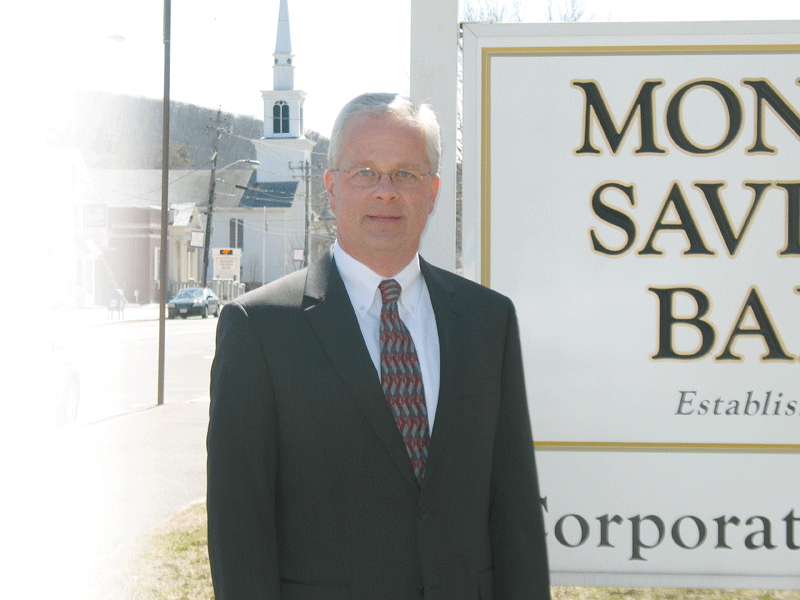
New Monson Savings Bank President Has Ambitious Plans

Steven Lowell

Steven Lowell says his primary goal is to continue Monson Savings’ strong growth pattern.

Under the leadership of just-retired President Roland Desrochers, Monson Savings Bank tripled its assets over the past 15 years while adding two branches, a loan center, and a host of retail and business programs. After he announced his retirement last year, the bank’s trustees launched a search for someone with the vision to take MSB to the next level. They think they’ve found that person in Steven Lowell, who says he wants to continue to grow market share while maintaining the community ties that customers have come to appreciate.

Steven Lowell knows something about growing community banks.
As chief operating officer and executive vice president of Cape Cod Cooperative Bank, he saw that institution expand from $150 million in assets to more than $580 million today.
He also knows something about long commutes, for years spending about three hours each day in the car between his workplace and his Central Mass. home.
In his new position as president of Monson Savings Bank, he plans on continuing one of those trends and drastically reducing the other.
“Commuting to Monson isn’t nearly as bad as going to the Cape,” he said. “This has cut my commute in half, so that’s been quite pleasurable.”
That should give Lowell plenty of extra time to contemplate ways to continue a similar growth pattern at MSB, which, under recently retired President Roland Desrochers, has seen its assets increase from around $80 million to $236 million in 15 years. The new man in charge says that’s only a start.
“I like building things, and clearly this bank is at a point where it needs to grow,” Lowell said. “Roland has done a great job growing it to the size it is, but it’s getting harder and harder for a small bank to be able to compete. The bank has built a great infrastructure; now we’ve got to build the size of the bank to fit that infrastructure.
“The opportunity to manage that growth is a huge appeal to me,” he continued. “I had the experience of doing that on the Cape, and I look forward to doing similar things here.”
Desrochers, who will stay on as CEO until June to oversee the transition in an advisory role, is pleased with who the bank’s trustees chose as his successor.
“I felt it was appropriate to provide as much time as possible for the board to make a decision about the individual who would replace me,” he told BusinessWest. “So I announced my retirement to the board last June, and we started the search process last September.”
The bank appointed a search committee and hired a search firm to manage the process and identify a number of candidates to interview. Eventually, they whittled the list to two, and in the end chose Lowell.
“He has a community-banking background, so he definitely fit into our culture,” Desrochers said. “He’s used to working in the community as well, which is an important facet. He’s knowledgable in business, and we felt he would work very will with the management team.”
Lowell said the transition has been smooth.
“Roland has been really helpful, introducing me to people in the community, helping me get ingrained in the culture of the bank,” he said. “We are a community-based organization, and that’s been my background, too. That part of the transition has been really easy. I think I’m the beneficiary of what Roland has set up here.”
Desrochers said the bank’s threefold growth in assets in the past decade and a half are a product of a deliberate, controlled growth plan. As opposed to the rapid branch proliferation of other regional institutions, MSB has added a loan center and expanded from one branch to three (adding sites in Wilbraham and Hampden) during his tenure.
“We’ve had pretty good growth, and it’s been profitable growth,” he said. “I think that’s an integral part of it. You just can’t grow for the sake of growth; you’ve got to make sure you have profitable growth and can maintain and increase your capital position.”
“It was challenging initially as an $80 million institution — talk about economies of scale,” Desrochers added. “We weren’t doing very many retail products at the time, there hadn’t been many loan products, so we needed to expand those areas. We were just a small, sleepy, small-town bank, and there’s nothing wrong with that by any means, but we needed to do something to make sure it existed longer-term.”
Now that Monson Savings has secured a stronger foothold, Lowell intends to shepherd the 139-year-old institution to the next level. For this issue, he spoke with BusinessWest about how he plans to do that, and why he’s feeling positive about much more than a shorter commute.

High Tech, High Touch
Lowell said one of the things that impressed him about MSB was the caliber of its management team — “a really positive sign for our ability to grow in the future” — but also its Internet offerings, from its online banking services to remote-deposit capture for businesses and a mobile-banking platform that’s in development.
“The use of technology is very impressive for a bank of this size,” he said. “They have done most of the things larger banks, including the one I came from, have done; for an organization of this size, we’re really ahead of the technology curve. It’ll be a challenge to continue to do that, but it’s very important. Customers are all about convenience, and technology allows you to be as convenient as the major banks.”
Community banks these days, he explained, must balance strong in-person customer service — traditionally one of their main selling points — with the ease of the online experience, Lowell added.
“That’s the challenge. We do a great job with customers in our lobby — that’s how we build relationships — but we also want to deliver that high level of service electronically. If we can do that, then everyone wins.”
The bank also uses an active Facebook page to reach out to customers. Desrochers recently spearheaded a project to ask customers on the social-networking site to identify nonprofits and charitable organizations they would like the bank to support; MSB made contributions to the top 10 vote-getters, on top of its other giving for the year.
“It was a great program and very well-received,” Lowell said, “and it helps bring us closer to our customers and the community.”
But philanthropy only goes so far in attracting and retaining customers, and Desrochers touts a number of retail initiatives introduced in recent years, such as First Rate Checking, a high-rate savings product tied to a checking account; Cash Back Checking, an account that pays the depositor back when they use their debit card; and NextGen Banking, which targets specific age groups with different features, such as enhanced online and ATM access for college-age customers.
“NextGen Banking has turned out to be quite popular,” he said. “Part of that is financial literacy and teaching younger people how to manage their money in a way that’s responsible and hopefully builds them into good customers for the future.”
Lowell also noted that the bank allows use of foreign ATMs and refunds the fees customers incur by using them — an appreciated service at a bank with only five of its own ATM locations. “A customer on the Cape may have trouble finding us, and it’s important that they have access to our products,” he said.
Desrochers agreed. “Everyone’s looking for convenience, what makes it easy for them,” he said. “That’s also true on the business side. We have cash management we’re able to offer through our technology. It really allows businesses to keep watch over their money and move money around electronically.”

Better Days

Roland Desrochers

Roland Desrochers described his 15 years at Monson Savings as a very exciting time for the bank.

These products are being offered at a time when banks are starting to see business tick up after some sluggish years, particularly in business lending.
“We’re starting to see a little more demand for commercial loans,” Lowell said. “We see signs that companies are willing to start reinvesting in their businesses and expanding — certainly not at a really fast level, but there are positive signs, and we haven’t seen those for awhile.”
Lending for home purchases, however, remains stagnant. “The big concern is that everyone has refinanced their mortgage, so the residential-mortgage business is really slow,” he said. “Unless we see property values go up and people looking to build new homes, that’s going to continue to be low for a little while.”
That trend is balanced by an ever-growing line of investment and insurance products that make Monson Savings, as Lowell put it, “pretty much a one-stop shop” for customers who want that.
“We have financial services available to both retail and commercial customers,” Desrochers added. “It’s nice to be able to say we have these mutual funds or annuity products. We can also help businesses with 401(k)s, life insurance, things of that nature. Those are important products to be able to offer.”
Overall, it adds up to a strong foundation on which to build, Lowell said.
“The primary goal is definitely to grow the size of the organization,” he told BusinessWest. “We know it needs to be larger in order to remain relevant in the marketplace, so we’re looking to do that.
“We’re also looking to expand commercial lending, and it doesn’t have to be limited to the three towns where we’re located,” he added. “We also need to keep a close watch on expenses; we need to remain profitable.”
Meanwhile, being a community bank, he stressed the importance of continuing the bank’s civic responsibilities.
“Right now, 10% of our bottom line goes back to the community in donations,” Lowell said. “That’s something the bank has done in the past that we’re looking to keep doing as we go forward. It’s a win-win for everyone; we get our business from the community, and for us to give back to the community, I think, completes that deal.”
As for Desrochers, he has no regrets upon leaving in June.
“This is why I’m retiring,” he said at one point, holding up the mug from which he had been sipping.
No, he’s not going into the coffee business. On the plastic container are several photographs of his grandchildren, a 6-year-old and a 3-year-old twins. Despite the regulatory and other challenges in banking today, he’s enjoyed his time at Monson Savings, but at this point in his life, he says he will enjoy the extra time with his family even more.
“I can’t believe it’s been 15 years already,” he said, “but it’s been an exciting time.”
Steven Lowell thinks the future can be just as exciting.

Joseph Bednar can be reached at [email protected]

Employment Sections
For Lower Insurance Premiums, it Pays to Keep Employees Fit

Healthier employees lead to lower premiums, according to numerous studies. If companies can help their workers improve their health without cutting benefits or shifting more premium costs to employees, where is the downside? After all, Fortune 1000 companies have been using wellness programs for years to combat the rising costs of health care.
So, the question is, why aren’t smaller companies using this proven method to lower their health care costs?
Randy Boss, a risk architect for Ottawa Kent Insurance in Jenison, Mich., helps companies implement successful wellness programs. And he says he can understand how employers feel.
“They’re frustrated because most likely they have tried things that didn’t work,” said Boss. “There seems to be a wellness vendor on every street corner these days and many use ROIs from Fortune 1000 wellness programs as their own, yet they had nothing to do with that program.”
All wellness programs are not equal! This is a very important problem and something companies need to understand when selecting the appropriate wellness program for their company.” Secondly, Boss says, “businesses tend to think short-term and not long-term, and expect to see solid and immediate savings on their health care costs.”
Yet, the benefits of having healthy workers transcend reduced health care costs, including workers’ compensation and lower absenteeism. Healthy workers are less prone to injury and when injured, they recover quicker than less healthy workers. Conversely, out-of-shape workers are at a higher risk for injury and healing is often delayed and complicated by other health factors. If workers change and modify their lifestyle and reduce their health risks, medical costs decline.
While this may seem intuitive, the connection between wellness and workers’ compensation has been slow to take root. The reasons appear to be separate risk-management departments overseeing workers’ comp and group health, concerns about expanding the employers’ liability for work-related injuries, a focus on workplace safety rather than workers’ health, and a number of small companies with high workers’ comp costs that do not offer health insurance have all been contributing factors. Still, one of the major areas of concern for employers is an out-of-shape employee.
According to a recent Duke University study, the cost of obesity among full-time employees is estimated to be $73.1 billion a year. This is the first study to quantify the total value of lost job productivity as a result of health problems, which is more costly than medical expenditures.
The report recommends that employers promote healthy foods in the workplace, encourage a culture of wellness from the CEO on down, and provide economic and other incentives to employees who show signs of improvement. And there is evidence that this plan can work for employers.
A University of Michigan study of a Midwest utility company’s workplace wellness program found that over nine years, the utility company spent $7.3 million for the program and reaped $12.1 million in savings. Medical and pharmacy costs, time off, and worker’s compensation factored into the savings. The study, which took into account a number of costs, including indirect costs of implementing wellness programs, such as recruitment and the cost of changing menus, showed that wellness programs work long-term even though employees aged during the course of the study.
Overall, the program cost the employer $100 per employee. The cost of lost work time, workers’ compensation, and pharmacy and medical expenses among employees who participated each year increased by $96, compared with a $355 increase among employees who did not participate.
This is good news for employers. Amid heightened cost pressures and leaner staffs brought about by the prolonged economic downturn, employers need to reduce all types of absences to help maintain productivity. While employers tend to focus their energies on controlling the highly visible health care costs, which are more easily shifted, there are significant opportunities to control other costs with wellness programs.
On average, employers can see a 30% reduction in workers’ compensation and disability claim costs, according to a review of 42 published studies involving the economic returns of wellness programs. Moreover, such programs will reduce the costs of absences that, according to the 2010 Kronos/Mercer Survey on the Total Financial Impact of Employee Absences, add up to 8.7% of payroll costs, more than half the cost of health care.
It stands to reason that healthier employees will use less sick time. But ultimately, companies need to make a commitment to helping their employees stay in better shape.
“Employers should focus on health and wellness at work,” says Boss. “Businesses should allocate 2% to 3% of their budget to an effective program that includes at least 90% participation by employees and a wellness coach on site to effect behavior change.”
Although budget and company size will dictate the type of program a company can undertake, there are five steps that companies should take before launching a wellness program:
Evaluate. Know your cost drivers. Analyze workers’ compensation, health care, and absenteeism data to identify common issues and trends. Understand the legal regulations governing wellness programs.
Do a workplace assessment. Examine the physical and cultural framework in which the wellness program will operate. Consider opportunities for on-site physical activity, partnerships with community wellness providers, local gyms or health and nutrition classes, on-site vending machines and cafeteria, etc. Identify the interests and motivation of employees as well as barriers to employee participation through surveys, wellness committees, along with an analysis of past efforts.
Educate. For several years, businesses have been shifting more of the costs of health insurance to workers through increased premiums and higher deductibles. Since 2005 workers’ contributions to premiums have gone up 47%, while wages have increased 18%. Employees are feeling the pinch. Show them how participating in a wellness program can affect premiums as a result of making less use of medical care.
Obtain management support. A wellness program will not succeed without the ongoing support of management. Communicate the goals of the program and assess the commitment of supervisors and management.
Identify goals and metrics for measuring success. When implementing a wellness initiative, senior management will want to see a return on investment. Establishing a consensus on the goals or metrics for measuring the success of the program will help shape the program and ensure its success.
When it comes to implementing a wellness plan at your place of business, it’s really all about risk versus reward. And the rewards can be huge, but only if the plan is properly implemented and the management team is committed to its success.

Preston Diamond is managing director and co-founder of the Institute of WorkComp Professionals (IWCP), based in Asheville, N.C. In 2010, IWCP created a sister organization, the Institute of Benefits & Wellness Advisors, that trains, tests and certifies select insurance professionals to apply the concepts of risk management to benefit; (828) 274-0959.

Employment Sections
Employment Board’s Strategic Plan Identifies Challenges, Game Plans

Bill Ward of the REB

Bill Ward says that one of the goals of REB’s new plan is to have the organization become known as the leading source of regional labor market information and innovative ideas.


The days when a college degree or training certificate combined with years of experience were enough to ensure job security and a steady path toward advancement have all but disappeared.
Today, rapid advances in technology and outsourcing have made job competition fierce. In fact, one of the key findings in the recently released Regional Employment Board of Hampden County Strategic Workforce Development Plan for Hampden County 2011-2013 is that life-long learning is essential to job creation, retention, and the economic health of the region.
The report, which took nine months to produce and involved partnerships, collaborations, a retreat, and data compiled over a six-year period, paints a clear picture of the state of the region’s economy, workforce trends, challenges, and opportunities for growth.
REB Executive Director William Ward says the plan also creates a framework for solutions to the identified challenges and covers a broad continuum, which begins at the pre-school level and runs into the future, addressing gaps that local businesses anticipate over the next decade.
“The REB is embarking upon a new and more expansive strategic direction, and we’re looking at workforce development in a more comprehensive way, because we want to build a more prosperous community,” Ward explained. “One of the essential components of a high quality of life is safe, secure employment with adequate pay.”
Meanwhile, he continued, there is a direct relationship between the number of people with the requisite skills to fill open positions and the strength of the economy in Western Mass.
“When a company inquires about moving to a new location, one of its top three questions is, ‘what is your workforce like?’ he told BusinessWest, adding, “people call it ‘talent management.’ So, the REB looks at jobs and their connection to human capital and views it in terms of supply and demand. We ask what employers are looking for and then look to see whether we are producing sufficient numbers of people to meet their needs, or overproducing them.”
Ward said many jobs have moved to Boston, which has an economy based largely on higher education, health care, and financial services, due to the abundance of qualified talent there.
REP staffers Kelly Aiken and David Cruise

REP staffers Kelly Aiken and David Cruise are focusing on training in health care and precision manufacturing, respectively, to meet the needs of businesses today and in the future.

Still, health care is the largest employer in Western Mass., and the area boasts a large number of precision manufacturing companies not found in the Boston region, he said. These two sectors play prominently in the report, along with the need for more education for people along the continuum.
Ward said that last year, more than 20,000 area residents sought employment assistance at the REB’s one-stop career centers in Springfield and Holyoke (FutureWorks and Career Point, respectively), but fewer than half were able to secure jobs. At the same time, many good-paying positions went unfilled, especially in health care, precision manufacturing, human services, and financial services. The reason? A lack of qualified candidates.
Kelly Aiken, the REB’s project director of Health Care Initiatives, said it’s critical that the curriculum at local schools and training centers is in line with both the needs of industry and job seekers. “Education doesn’t move as fast as industry, so we had to figure out a way to ensure a continuum for learners and career pathways. These are main threads that run through the report,” she said.
The REB doesn’t train people, but it is the “go-to place” for companies to find out how they can find qualified workers or obtain grants or other assistance to help them train their workforce or hire new people,” said Ward, adding that the organization uses federal dollars to set up training programs and facilitates the infrastructure between education and local companies.
“This is a business-led organization, and our role is to ensure that state and federal investments in workforce development are wisely spent and have a good return on investment,” he continued. “The REB’s new strategic plan is data driven and we aim to be the leading source of regional labor market information and innovative ideas for advancing workforce development.”
The REB develops, plans, and contracts with providers to hold workshops for people in the job market through its one-stop career centers, and also community colleges and training schools. It also works hand-in-hand with businesses to create internships and increase work-based learning opportunities that align closely with the needs of industry.
“The jobs that have left this region are not coming back,” Ward explained. “And if new jobs emerge, people will need new skills, so workforce training is integral to our mission.”

Learning Curves
Springfeld and Holyoke have been earmarked as Gateway Cities with high levels of poverty and comparatively high dropout rates within their school districts, and those figures play a significant role in the REB’s report.
Ward said recent research shows that 74% of students who don’t read well in third grade will continue to have difficulty, which can lead to dropping out of school and lost opportunities. And local MCAS scores show gaps in the areas of reading, science, and technology — areas directly related to the types of jobs that will be available to graduates in the future. The picture doesn’t get better at the community college level, where one of every three students drops out because their schooling is too costly or they need too much remediation.
“Although Massachusetts ranks number-one in public education and the use of technology, the problem is that we have pockets and gaps within the community with very low achievement,” Ward explained. “Springfield and Holyoke are two of those pockets, so we need to make an above-average investment to close the educational skill gap. That’s why a strategic plan for our area is very different than one for Boston or Cambridge would be.”
The REB has several initiatives in place to expand family literacy. One is a pilot program called “Talk, Read, Succeed,” which is a collaboration between Springfield Public Schools, the United Way, Springfield Housing Authority, and the Irene E. and George A. Davis Foundation. The goal of this early-literacy project is to help ensure that children from 200 families in two Springfield public housing developments are proficient readers by the end of third grade.
Ward said studies show that the vocabulary of first-grade students is directly related to their environment. Children from poor neighborhoods and homes are deficient in this area, and once they start school, they usually experience learning setbacks every summer.
The staff members in “Talk, Read, Succeed” will work with families to help them increase their children’s vocabularies, and will also provide programs to help improve the odds that students will retain what they learned in school. In addition to helping children, “we’re also going to set up literacy programs for parents who want to learn English or get a GED,” Ward said.
The Hasbro Summer Learning Initiative is another program with a similar goal. In its third year, it serves about 2,000 children up to age 12 during the summer. Ward said the data is very clear that students in the program are making gains every summer instead of losing what they learned.

Making Connections
The new workforce plan also reinforces the REB’s commitment to partnerships. Ward said government cannot pay the entire bill for ongoing education, and that local businesses need to make investments in workforce development to remain competitive.
“They need to see it as an investment, not as a cost. Although we focus on adults, youth is the pipeline of the future and that begins at the pre-kindergarten level and goes up to age 21,” he explained. “We have to find ways to prepare our youth, stem the dropout rate and increase the graduation rate. It’s not simple, but we need to manage our human capital because it is the only way to ensure that the supply will meet the demand.”
Precision manufacturing is one of the areas targeted in the new plan, and David Cruise, director of Business and Employer Services, has been working with the Western Mass. Chapter of the National Tooling and Machining Assoc. (WMNTMA) to make gains in this arena using data collected from 33 local employers over a period of six years.
Last year these employers added 103 new jobs, which represents a 8.6% increase over the previous year. In addition, their sales increased 9.5% over the previous year to about $21 million.
“The sector is growing, and the REB has targeted it as having significant long-term potential for the area,” Cruise said. “The work they are doing is not going offshore, so we are trying to have the Pioneer Valley become ‘Precision Valley.’ We have companies here with the technology, leadership, and the skilled workforce to become what can be known as a precision manufacturing hot spot.”
WMNTMA and REB have joined forces, and are offering 34 evening courses for incumbent workers. They are also working diligently to encourage junior high school students and even elementary school students to to consider manufacturing — a sector that that has taken some public relations hits over the years as plants have shut down and jobs have moved overseas — as a viable career option.
In addition, local employers are donating equipment to schools, staging workshops and conducting tours of their facilities to showcase the types of jobs and environments they offer, and attract young people.
“The continuum is important, so we have put together a training network that utilizes the resources at several local companies along with local vocational technical high schools and Springfield Technical Community College, which is a major venue because it has a mechanical engineering technology program,” Cruise said. “Incumbent employees are volunteering for this training, and classes are held at these sites four nights a week.”
The new workplace plan also recognizes the industry’s concerns over its graying workforce.  “The owners of precision machining companies are very concerned about how they will replace those individuals. They expect to lose 25% to 27% of their employees over the next decade,” Cruise said.
Health care is also a major focal point of the new strategic report. “The plan highlights the fact that we are actively engaged in convening and building partnerships to ensure the region has a quality health care workforce,” Aiken said, adding that there is a major focus on jobs in elder care that will open up due to the fact that Baby Boomers are aging.
In fact, the face of the medical field is changing, and Aiken said health care workers of the future will need to plan to work in long-term care, home health, and community based venues instead of setting their sights only on acute care facilities or hospitals.
“It is our job to consistently stay in front of industry needs, which we do through partnerships, data collection, changing curriculums, and matching people with jobs,” she told BusinessWest. “One of the key themes of the strategic plan is how to do a better job defining and promoting seamless career pathways. Health care is changing dramatically, and it is a challenge to marry sector initiatives with federal funds to build a system that will support people on their continuous lifelong journey.”
In short, cooperation and investment in education is critical, and strategic workforce collaborations are more important than ever before.

The Bottom Line
Officials at the REB recognize that their goals are ambitious, but they plan to measure their progress, and are guardedly optimistic about the future.
“What is new about our sector initiatives is the realization that people need to learn outside of their silos,” Aiken explained. “Ongoing, sustained partnerships are required to ensure that we are always ahead of the game.”
Ward agreed. “The report is a call to action,” he said. “Everyone in the community needs to work more closely so the size and preparedness of our current and future workforce will make us more competitive as a region.”

Employment Sections
Presenteeism Is a Growing Workplace Challenge

Bob Oldenberg

Bob Oldenberg says that in an era of two-income households, parents are bringing more stress and anxiety with them to the workplace.

Everyone knows what absenteeism is — staying home from work due to sickness or some other reason. Not everyone has heard of its counterpart, presenteeism — but anyone can understand the concept, which is basically coming to work but being too sick, distracted by personal issues, or just plain disinterested to get much done. It’s a major cost to employers — and a growing problem, as technology provides new ways to waste time on the job. While it’s impossible to eliminate presenteeism entirely, some human-resources experts say effective communication between management and workers can reduce its impact.

Virtually everyone has shown up at work under the weather, with nagging allergies, a nasty cold, or a more serious chronic condition.
Or they’ve spent the workday anxiously fretting over their failing marriage, their kids’ failing grades, or their parents’ failing health.
Or they’re just, well, failing to get anything done, arriving at the office more in the mood to post on Facebook and text their friends than earn the money they’re being paid.
All of these situations fall under the umbrella of presenteeism, which is a term not everyone has heard, yet is a concept anyone can understand.
Originally, presenteeism signified the opposite of absenteeism, explained Sandy Reynolds, executive vice president of the Employer’s Resource Group at Associated Industries of Massachusetts (AIM). “It meant somebody who came to work when they were sick because they wouldn’t get paid at home. And there is a cost to having people come to work when they’re sick, in terms of reduced productivity.
“Over time,” she continued, “in the business community, the definition has been expanded to people who are at work who are either not well or distracted by child-care issues, elder-care issues, marital problems, discipline issues with their kids — in general, people who are coming to work but are not fully productive because of some health-related or family-related issue.”
And for employers, it’s a monumentally costly issue. According to the Society for Human Resources Management, absenteeism costs U.S. companies $118 billion annually in medical expenses and lost productivity. But presenteeism — stemming from illness, stress, family and personal issues, and what the society calls an “entitlement mentality” — costs companies an estimated $180 million.
Other estimates are even higher, and most studies admit that it’s not an easy number to pin down. And it’s not a problem that can ever be totally eradicated — as long as human beings, and not machines, are doing the work.
“Many times in the traditional work world, things are happening in our lives that are out of our control,” said Patricia Guenette, vice president of Human Resources for Square One, the Springfield-based early-education provider. “They could be marital issues, financial issues, educational issues — a variety of things can happen in everyday life, regardless of your status.”
If this broader definition of presenteeism is a relatively new concept, that’s partly due to the fact that today’s professionals bring more personal baggage with them to work because no one’s at home to focus on these issues.
“In very many families, both parents are working,” said Bob Oldenburg, director of the Baystate Employee Assistance Program in Springfield, a department of Baystate Health.
“If you look back a generation ago, you typically had a working father and a mom at home, which freed up the dad to focus on work,” he continued. “Those days are long gone; even in intact families, quite often both people are breadwinners in order maintain a certain standard of living, and that creates pressure because neither may be available to deal with what’s going on at home.”
Reynolds, Guenette, and Oldenburg were among the panelists at a recent seminar on presenteeism sponsored by AIM and the Economic Development Council of Western Mass. They spoke to BusinessWest about reasons employers need to hear such a discussion, and what they can do to help workers who are struggling to balance work and life — and often falling short in both realms.

Present and Unaccounted For
Presenteeism is a fairly new concept, Oldenburg said.
“It was developed over the past 15 to 20 years or so, and while the term can sound pejorative, I think it’s important to point out that there’s a variety of demographic trends driving this issue. All of us can identify a time when we fell into the category of being at work but not being as efficient or productive as we could be.”
Indeed, the reasons for a notable uptick in presenteeism — and corresponding loss of productivity — are many, but most reflect changes in the modern workplace. They include:
• Two-income households and more working mothers. As Oldenburg noted, the past 40 years have seen a dramatic demographic shift in how families divide work and home duties. Where the 1950s model saw a working father and a mother holding down the home front and its attendant child-care duties, the modern family is more-often characterized by two incomes, or, in many cases, working single mothers.
This means that, when a child is too sick to go to school, or other household issues arise, one parent’s workday is often disrupted.
“One thing I urge employees to do is be better-prepared to deal with unexpected circumstances and have back-up plans for when a child suddenly becomes ill or a child needs to be picked up from school,” Guenette said.
If someone doesn’t have child-care plans they feel comfortable with, she added, “often their mental status isn’t there at all; while at work they’re thinking about the care of their child — is the child getting nurtured? Is the child eating? All those things reduce their level of productivity at work. If they had an appropriate backup plan, it’s an easier transition, and then they can really focus on going to work and giving it their all.”
On the flip side, many parents use their limited sick days to stay home when their children are home from school with an illness, and consequently don’t have any when they’re sick themselves — which risks the spread of illness throughout the office, thereby compounding the effects of presenteeism in its classic form.
• The ‘sandwich generation.’ This is a term that descibes people who are both raising children and providing some level of care to their elderly parents — while, in many cases, holding down full-time jobs. Needless to say, the distractions from the home front can mount quickly, Oldenburg noted.
“That’s a really new concept, the reality that we have a generation of people at work dealing with issues at both ends of the spectrum,” he said. “These pressures are pushing on people who are trying to work while meeting the challenges from two generations, above and below.”
• The ‘knowledge economy.’ “Before,” Oldenburg said, “many workplaces just needed your arms and legs; if you put the widget in the right place and didn’t stick your arm in the machine, that was fine. People were needed for what they could do, not their hearts and minds.”
But today, he continued, “the economy has moved in a direction where workplaces, in order to be most effective, need not only your arms and legs, but hearts and minds. That kind of engagement requires a higher level of attention and ‘presentness,’ if you will.” And that can magnify everyday distractions to the point of seriously hindering productivity.
At the same time, he said, the global economy has forced many companies to scale back and require greater productivity from each employee — making each distracted worker more of a liability to the business than he or she used to be.
• The rise of the Internet. A 1999 study sponsored by the Employers Health Coalition calculated that lost productivity from presenteeism is 7.5 times greater than that from absenteeism. That statistic has only risen since then, as the Internet — not to mention texting and other high-tech communications — has become a much more ubiquitous use of office time, and not just for work-related duties.
“It’s so much easier today to look busy because so much work is done on the computer, and unless you have all the computers facing your doorway, it’s a huge problem for employers,” Reynolds said. “Employees spend an unbelievable amount of time surfing the Web. It’s a lot easier to look busy when you’re not doing the work you’re supposed to be doing.”
• Everything else. It was easier to gauge the extent of presenteeism when it simply meant coming to work sick, but including every other distraction in the definition makes it tougher for employers to get their arms around.
“Whether it’s asthma, allergies, or chronic conditions, people might be at their desks but not productive because of how they’re feeling physically,” Oldenburg said. “But it’s more than that: anything that’s going on that keeps people from being active and engaged at work — including interpersonal or relational issues — may drive presenteeism.”

Human Resources
In the face of what must seem like overwhelming amounts of wasted time, many employers are asking what they can do to reverse the trend toward presenteeism. Equally important, Reynolds said, is what they should not do.
“Any time an employee is at work and is not able or willing to give 100% effort, it’s a problem for the employer,” she conceded. “But they can’t solve people’s personal issues. While they should give people information about resources available to them, and encourage them to take advantage of those resources, if they try to solve their problems, it’s a disaster.”
That said, any personal distraction is an issue for employers who are paying for time focused on the job.
“Ultimately the jobs have to be done,” Reynolds said. “Don’t be oblivious to what’s going on in the company, but be realistic about what you can provide and the ultimate reason the company is there and the employee is there. The best employers are not heartless; they care very much, but they realize they don’t have a magic pill, and they can’t solve everyone’s problems.”
So what can they do? She and others pointed to employee-assistance programs (like Oldenburg’s in the Baystate system) and other human-resources outreach efforts that can link employees with outside resources to help them deal with personal, financial, or family matters.
“There’s no way to eliminate presenteeism 100%, but you can diminish it greatly using a variety of different resources,” Guenette said. “Having resources to help in those difficult circumstances, and somebody to turn to on a consistent basis, is usually a big help for employees.”
Part and parcel of the employee-assistance process, Oldenburg said, is understanding the needs of the company’s workers.
“Because Baystate is a health care organization and we are a woman-dominated workplace demographically,” he explained, “in addressing presenteeism, Baystate wants to look at the kinds of issues showing up primarily for women. The goal is knowing what kinds of challenges are facing your workforce and the variety of ways you can get at that.”
Square One’s Guenette agreed. “You really need to know the demographics of your workplace, and understand the needs of your employees, to be able to respond to those needs,” she said. “If the workplace is mainly from the Baby Boom generation, their needs will be different than an organization where most employees are females and in their childbearing years.”
Another key factor, Oldenburg said, is knowing the difference between employee satisfaction and employment engagement. His organization and others are starting to move toward surveying workers on both.
“It’s management’s responsibility to know what’s going on when productivity or performance is suffering. It’s an issue,” Reynolds said. “It’s all about whether an employee is engaged and willing to give effort toward their job.
“You may have an employee who’s very satisfied; he likes the company and is paid adequately,” she added. “Yet, he may not be very engaged at all in the work he should be doing. I think that was an eye-opener to some people in the room” at last month’s seminar.
Guenette said good employers understand, for example, why parents (especially first-timers) will fret over leaving their child in the care of someone new, which is why it’s important that a working mother or father plan ahead for such contingencies. But, in the same way, employers can plan ahead too, by understanding the unique personal needs of their workforce.
“The sooner you begin to identify and address these issues, the better it’s going to go for the organization and the employee,” Oldenburg explained, adding that employers can also model good wellness habits — healthy snacks in vending machines, posted signs about handwashing and infection control — that cut down on the number of employees who come to work sick.
Meanwhile, he added, “there are many ways in which supervisors and managers can check in with employees and identify when there might be an issue, and point people in the right direction.”
Guenette agreed that communication is key.
“Our workforce knows they’re valued, and as an employer, you want to work with them to handle their issues,” she said. “When you give them opportunities and resources to choose from, it makes the whole situation much better for them, and for us as an employer.”
Meaning that life goes on — but the work gets done.

Joseph Bednar can be reached at [email protected]

Opinion
To Keep Jobs, Don’t Kill Tax Incentives

The debate about state economic policy has escalated in recent weeks, fueled by Fidelity’s decision to move jobs to neighboring states. While it’s good to have an honest and open conversation about state economic policy, we shouldn’t focus the discussion so narrowly that we miss the bigger picture.
Every month thousands of Massachusetts companies make decisions about adding, locating, or reducing jobs. The question is how to make more of those decisions go in our favor. The best way to do so is by sustaining the state’s leading industries, including financial services.
Financial services is a huge, under-realized contributor to Massachusetts’ economic strength, directly employing nearly 170,000 people and supporting one to two times that number of jobs in related industries.
The tax benefits from those jobs are immense — income tax payments representing 20% of total income-tax collections, hundreds of millions of dollars in state sales taxes, and hundreds of millions in property taxes.
How can this economic cluster be protected and nurtured in the face of competition and technological innovation that enables many of its functions to be performed anywhere in the world? A key answer can be found in a forward-thinking tax policy enacted in the mid-1990s — single-sales-factor apportionment.
The single sales factor bases firms’ state income tax on their sales in Massachusetts, instead of on a combination of sales, property, and payroll. It has been unfairly labeled a “Fidelity tax break’’ — unfair because it affects an entire industry, not just one company, and because it is not a tax break.
When Massachusetts passed a single sales factor law in the mid-1990s, it lowered the cost of employing people here. It spurred the creation of thousands of new jobs, preserved thousands more, and was fully complied with by the companies it affected.
More than half of all states have adopted some form of single-sales-factor apportionment. The adoption of single sales by neighboring and competitor states should lead us not to question its effectiveness or validity, but to strengthen our resolve to preserve it.
The financial services story — of large economic impacts, and tax policies that promote growth — applies equally to manufacturing, high technology, and other critical industries.
If we preserve the single-sales-factor, and take additional steps to lower the cost of job creation, we will win more than our fair share of battles for jobs and investment.
The future of the Massachusetts economy depends on it.

Michael Widmer is president of the Massachusetts Taxpayers Foundation. Jim Klocke is executive vice president of the Greater Boston Chamber of Commerce.

Opinion
Assessing the Job at Hand

The trends and statistics that form the basis of the Regional Employment Board of Hampden County’s latest strategic initiative are not exactly recent phenomena, and together, they would hardly be considered a news flash.
But they are still eye-opening, and comprise a significant challenge for this region moving forward.
Summing up what the report’s authors have noted, or recorded, there remains a significant gap in this region between what many employers are seeking in terms of requisite abilities and skill sets from their workers, and what is apparently available in the region’s workforce as currently comprised. This sobering realization can be drawn from the fact that we still have a rather high unemployment rate in Western Mass. — around 9% according to most estimates, with that number much higher in some metropolitan areas like Springfield and Holyoke — and yet there are many employers in several sectors of the economy, from health care to precision manufacturing, who have vacancies they can’t fill because they can’t find skilled workers.
This is a rather unique problem for this region, historically, and one that constitutes a major economic development agenda item, even if some still don’t understand that the phrases ‘workforce issues’ and ‘economic development’ can and must be put together in the same sentence.
Indeed, while most consider economic development to be luring new businesses to the region, building clusters of companies of specific sectors, such as green energy and biotechnology, and enabling existing companies to expand, none of that can really happen — even if the economic conditions were favorable — unless this area had the workforce to support such growth.
Which is why we’re glad that the REB has not only put a plan down on paper — it’s known officially as the ‘Strategic Workforce Development Plan for Hampden County 2011-2013’ — but has developed a game plan for addressing some of the major issues, and has the ability to keep these matters front and center, where they belong.
In short, the report concludes that closing that gap — the overriding mission beyond the strategic plan — will not be easy and it won’t happen overnight. But it must be done, and it will involve the continuation of several current collaborative efforts, and some new ones, to get the job done.
And the work encompasses many different elements, from promoting pre-school programs and helping young people gain the reading skills they need, to introducing junior high school students to the benefits of a career in precision manufacturing; from working with health care providers and area colleges to ensure that graduates have the skills necessary to succeed in specific careers, to the fostering of mentoring programs that will help curb the high drop-out rates in several areas cities.
For decades now, the REB’s unofficial mission has been to help create employment opportunities, anticipate where the jobs will be for the short and long term, and partner with area institutions to ensure that there is a match between the skills needed for those jobs and the skills possessed by those in the workforce. The mission hasn’t changed, but there is now a greater sense of urgency, because, in very simple terms, that aforementioned gap is getting wider, not narrower.
And unless that trend is reversed, cities and towns across the region will suffer in their efforts to attract new companies and diversify their bases of businesses.
Workforce development certainly would not be considered the glamorous side of economic development, which is reserved for those announcements of new companies or expansions of existing ones involving hundreds of jobs. But those announcements won’t come unless this region has workers of sufficient quantity and quality.
As we’ve said many times, and we’ll keep saying it— workforce development is economic development.

Features
He’s in the Business of Making “Entertaining Art”

Kevin Rhodes

Kevin Rhodes Music Director, Springfield Symphony Orchestra

Kevin Rhodes was on a tight schedule, but then … he usually is.
On the day he managed to squeeze in some time for BusinessWest,  Rhodes, the long-time music director of the Springfield Symphony Orchestra, had a lot on his plate, including everything from rehearsals to auditions for ‘first oboe.’
He was actually on break from the latter when he sat down for an interview in a tiny room off the box office at Symphony Hall, a site chosen to ensure that those vying for a job with the SSO would have complete quiet for their tryouts.
Candidate review — and the ultimate selections — in such searches are made by committee, Rhodes explained, adding that he is among several, including others in the orchestra who will play alongside the first oboe, who will listen to the hopefuls as they perform behind a curtain, so that the music — and only the music — is under consideration.
“These are completely anonymous … we’re careful not to use any gender-specific pronouns  — people will just say ‘candidate No. 5,’ or ‘the next candidate,” Rhodes explained, adding that the work of assessing hopefuls’ abilities to play music and perform as part of the SSO is a very subjective exercise, a blend of art, science, and entertainment.
Which makes it much like the profession of orchestral conducting itself.
“People ask me if what I do is art or entertainment,” Rhodes, now wrapping up his 10th season with the SSO, explained. “I like to tell them that I try to make it entertaining art.”
There is much more to the job description, of course, he went on, adding that, to one degree or another, conductors must be musicians, marketers, and, in many ways, promoters of the arts, and especially music, in the communities in which they work. Rhodes has woven all three into his tenure with the SSO, and is credited by many with bringing heightened energy and a greater sense of awareness to the 67-year-old orchestra.
Meanwhile, he has become the face of the SSO  — his image is used in most all of the orchestra’s marketing materials — and a fixture in the community, performing, guest lecturing, and teaching classes such as the one at the Community Music School on how to listen to music.
“There are several different ways to listen,” he said, adding that he explains them over the course of four sessions that are part of the school’s adult education extension program. “You can let the sound wash over you, like you’re taking a wonderful bath in it. But there is a more ultimately rewarding way, if one has just has a few tools to do that.
“It’s called ‘active listening,’ where while you’re listening to it, you’re sort of sorting through what’s coming at you,” he continued, gesturing with his hands in motions not unlike conducting, while noting that it would take several hours to explain exactly how one does such sorting.
For this, the latest in its ongoing series of profiles, BusinessWest did some active listening, and learning, as Rhodes discussed everything from his batons and how he needs to find another supplier — “I’m actually running low on them” — to how he’s reducing that tight schedule, or “calming the rhythm down,” as he put it,” in some respects, but still racking up the frequent-flyer miles.

Achievements of Note
On the day he spoke with BusinessWest, Rhodes was without his watch.
“I hardly ever forget it, but today I did, and I feel quite naked without it” he said, adding that, unlike those who rely on their cell phone for the time, he still looks at his wrist several dozen times a day.
And he needs to, given the schedule he keeps with just his two main professional assignments — as music director with the SSO and also with the Traverse Symphony Orchestra in Michigan. Consider this rundown of one recent stretch, which was, in most ways, quite typical.
“Three weeks ago, we had a big concert here with a huge reception after for my new contract signing,” he started. “The next two days were full of auditions, and the two after that were huge youth concerts, with thousands of kids. I then flew to Michigan, and the next day had a full day of meetings, a radio interview and a preview party for the upcoming season. The following days were filled with rehearsals with chorus and orchestra for Braham’s Requiem, then the performances and receptions. I did a radio commercial on Monday, flew home Monday night, and taught my class in listening to music on Tuesday.”
And while he’s forever looking at his watch, Rhodes also spends considerable time adjusting it for the time zone he happens to be in — or is flying toward.
Indeed, since leaving a host of concurrent assignments in Europe for his position with the SSO in 2001, Rhodes has crossed the Atlantic countless times for guest-conducting work at such venues as the Paris Opera, La Scala in Milan, the Verona Opera, and the Dutch National Ballet, among others. And in recent years, his plane rides have been longer; he toured Australia with the Paris Ballet in 2009, and last fall, he joined the Dutch National Ballet on tour in China.
Such locations, and assignments, are literally worlds away from Evansville, Ind., where Rhodes was born, spent many days (and also nights and early mornings) at his parents’ 24-hour “trucker diner,” and developed his passion for music.
“When I was in kindergarten, I was totally taken with the teacher playing the piano, so I started bugging my parents for lessons,” he said, adding that his family secured a piano from the same man who serviced the juke boxes at the family’s diner. “I found a young teacher — I think she was 16 when I started with her — and started playing in the school choir when I was 11.
“This led to playing for community theater when I was 13, and conducting for community theater when I was in high school,” he continued. “And by that time, it was pretty clear what I wanted to do.”
He received a bachelor’s degree in Piano Performance from Michigan State University, and later a master’s in Orchestral Conducting at the University of Illinois. He then served as music director of the Albuquerque Civic Light Opera, while also teaching piano at the University of New Mexico, before relocating to Switzerland in 1991.
His professional career unfolded in Europe, where he led many different orchestras, including the Vienna State Opera Orchestra (the Vienna Philharmonic), the Berlin Staatskapple, the Zagreb Philharmonic, the Dusseldorf Symphony, the Duisburg Philharmonic, the Swiss Chamber Philharmonic, the Symphony Orchestra of Madrid, the Basel Symphony Orchestra, and many others.
By 2001, he said, he and his wife made a conscious decision to return to the United States, and thus began what he called a quiet search for job opportunities. This can be a lengthy, laborious process, he continued, adding that positions like the one that opened in Springfield are filled at a “glacial pace.”
Citing the factors that brought him to Symphony Hall, he said geography played a small part — “Springfield is a perfect springboard to Europe” — but the institution and what people told him about it weighed much more heavily.
“I made some calls to people I knew in the Northeast,” he said. “They all raved about it, I applied, and it all worked out.”

Sound Strategy
As he talked about his work and job description, Rhodes returned to those words ‘art’ and ‘entertainment.’ They are both integral to what he does as music director.
But there is much more to it than that, he said, adding that he considers work to promote the orchestra, music, and the arts in general, to be a big part of his assignment.
And it’s a part he enjoys and feels quite comfortable doing.
“I seem to have an outgoing personality and I like people,” he explained. “I like meeting people and talking with people, and a love talking about music, so for me it’s an easy fit; I started going out in front of people at age 10 at kiddie talent shows, so I’m comfortable with the entertainment part of this and being the face of the orchestra.”
Rhodes said that not all conductors are as adept at, or comfortable with, the marketing aspects of this profession, and with larger orchestras those skills are certainly less necessary. But in markets like Springfield it’s what he called “a huge responsibility.”
And it takes many forms, from media interviews, to being highly visible in the community and doing what would be considered outreach work, to helping the public access and appreciate music.
“One of the messages I try to leave with people is that there’s so much that they can know about any piece of music that we play, but they can actually enjoy it without knowing any of that,” he explained. “It’s like listening to music — there are many ways to do it; you can listen to Beethoven knowing all about him, or you can listen to it, and enjoy it, thinking ‘that’s Beethoven, whoever that is.’
“I always try to make that point, because so often people think there’s no way they can enjoy it unless they know a whole ton about Beethoven,” he continued. “Once you get people over that fear, that concern factor, it’s amazing how it almost becomes a drug; they come more and more and they get more into it. It is infectious, and it’s great to see this curiosity inside of people that they didn’t know they had.”
Looking ahead, Rhodes, with that new contract signed, said his immediate career goals involve continuing the work he’s done in Springfield, Michigan, and elsewhere, specifically those efforts to introduce people across all social strata to music and essentially make them thirsty for more.
“I want to continue to expand our audience,” he explained, “but with the audience we have, which is very dedicated to us, I want to expand the concept of what is possible for them; I want them to expand their world and enable them to gain more from the experience of listening to what the orchestra plays.”
He’ll have plenty of opportunities to do that, because despite this talk of scaling back, schedule wise, he’s actually taking on more — at least on this side of the Atlantic.
In recent years, a typical schedule would look like the 2009-2010 slate, which included nine concerts in Springfield, six in Michigan, three productions with the Paris Ballet, or roughly 60 performances, two series of productions with the Dutch National Ballet in Amsterdam (another 30 performances), and a production at La Scala, with nine or 10 performances. And for this season, he took on the additional assignment of music director of the Pro Arte Chamber Orchestra in Cambridge, Mass., and four performances there.
To create some breathing room, he’ll pare the schedule in Europe slightly.
“There have been several occasions when I’ll be finishing the last performance in Europe on a Tuesday or Wednesday and get back either the night before, or even the day we begin rehearsals for a concert here,” he explained. “I’m calming it down from that.”

The Finale
As for those batons he uses … Rhodes said his supply came mostly via a “very colorful character” who hung around the Vienna State Opera in the 1990s.
“He had this music publishing and baton-making business, and it was all quite suspicious,” he said, choosing that last word carefully while noting that this was the middle man in the operation and the batons were actually made by someone else. “I am concerned, because I’m getting low on these, and I believe both of those characters are no longer with us.”
Finding a new supplier will be something else he’ll have to find room for in that  schedule that soon will be lighter but still quite crowded — in between teaching people how to listen to music, assessing first oboe candidates, and, most importantly, making art entertaining.

George O’Brien can be reached at [email protected]

40 Under 40 The Class of 2011
Owner and President, NRG Real Estate Inc.

Nick Gelfand

Nick Gelfand

Nikita Robert Gelfand’s parents didn’t plan on giving him initials that sound out a word, but he’s definitely had the ‘NRG’ to succeed.
Having immigrated to the U.S. from Russia at age 11 with his family, Gelfand said that he always liked real estate, and he knew, even as a child, that he wanted to own and operate properties. But he has always marched to the beat of a different drummer, he said, and after working for a larger realty company, he knew the time had come to hang out his own shingle.
“Maybe it was the hot market I got into in 2003,” he joked. “Those boom years were awesome. I realized it was something I could make a living at — which is nice, when you can do what you love.”
He’s equally committed to bringing the sum total of his professional experience to others in need.
“I think it’s important for everyone in a community to give back to the community,” he explained. “You always look for somewhere you can contribute that’s close to your heart. There are many great charities and nonprofits to be a part of, but Habitat for Humanity seemed right for me. Because I help people buy houses in my everyday life, it just seemed like a natural fit to help these folks who wouldn’t otherwise qualify for a mortgage in a traditional way.”
As a board member for the Greater Springfield chapter of Habitat, Gelfand also helps to coordinate the Fall Festival campaign, which last year raised more than $35,000.
Meanwhile, at work, Gelfand said that helping people get into their first homes is one of his proudest accomplishments — one he gets to enjoy on a weekly basis. “Some of my favorite clients to work with are first-time homebuyers, because I was in their shoes very recently.”
It’s the American Dream, he said, for a kid from Russia to own his own business. And with his energetic approach to real estate, he’s making that dream come true for others.
— Dan Chase

Commercial Real Estate Sections
Race Street Project Embodies Progress in Holyoke’s Innovation District

Martin Kane

Martin Kane says the Race Street building that has become the Holyoke Professional Arts Center has “great bones.”

It’s called the Holyoke Professional Arts Center, or PAC, a retrofitted old mill building on Race Street in Holyoke that was once home to a company that made slitter knives. Soon, the Providence Prenatal Center of Holyoke and Tapestry Health will be tenants and thus part of a revitalization that is helping to change the look and feel of the city’s downtown and a section known as the Innovation District.

The banner gracing the front of the building at 306 Race St. in Holyoke is 25 feet wide, and it needs every bit of that length to contain all the information crammed onto it.
If one has the time and inclination, he or she could stop, read, and learn that the more-than-century-old, two-story, 18,000-square-foot building is now called the Holyoke Professional Arts Center (PAC) at Mahoney Place, with the latter part of that name referring to family members of the property’s owner, Jeff Cunningham. One could also see the creative logo for this facility, with a flywheel, similar to the ones that can be seen in the ceiling on the second floor, inside the ‘C’ in PAC.
Reading on, one could learn that the Providence Prenatal Center of Holyoke, a component of the Sisters of Providence Health System, and Tapestry Health, an agency that provides a wide range of health services to women through several locations in Western Mass., will be the first new tenants in the center. And, when seeing the name of the brokerage firm (King & Newton) handling the building — as well as a phone number and Web site — one could surmise that there is still space to be leased — roughly 10,000 square feet of it, to be more specific. Reading still further, one would note that Southbridge Savings Bank financed this endeavor, and also see some commentary in the form of a line that announces this project as “a new era in the rebirth of Holyoke.”
But while this banner tells much of the story concerning this downtown landmark and what its reuse means in the larger scheme of things, it doesn’t tell it all. Indeed, there is a lot of history to this building, and an intriguing series of developments that led to an elaborate construction kick-off ceremony on April 7, said Martin Kane, the broker with King & Newton who has handled the building for years and worked with Cunningham to give it a new start.
Meanwhile, this project is just one of several that are changing the look and feel of this section of downtown Holyoke — a few nearby buildings have been converted into artists lofts and a new convenience store recently opened — and there is the promise of much more to come.
That’s because 306 Race St. sits directly across the canal from the property that will be transformed into the Green High Performance Computing Center that is expected to fuel additional development in the downtown area, across Holyoke, and perhaps well beyond.
“We’re seeing a lot of interest in properties in that section of the city,” said Kathy Anderson, director of the Holyoke Office of Planning and Development. “We’re meeting with people and talking, and in the meantime we’re looking at what we need to do to spark private development there.”
Anderson said there are more developments — from new stages of the city’s canal walk project to the possible reintroduction of commuter rail service after a more-than-40-year absence, that could spur more progress in the central business district of the Paper City and a section now known as the Innovation District. Taken together, the initiatives are a classic case of public-sector investments designed to inspire private-sector spending.
“There’s private development happening, and that’s what we were hoping for,” she said of the Race Street project and others like it. “The Innovation District Task Force is charged with creating ways to leverage the high-performance computing center, to take advantage of it and make something more happen in Holyoke and the region because of it.
“This is just one small project taking shape across the canal,” she said of the PAC. “They’ll be seeing what’s going on outside their windows; people are getting excited about this — there’s a lot of interest in downtown Holyoke.”
For this issue and its focus on commercial real estate, BusinessWest takes an indepth look at the Race Street project and how it is just one small example of progress in Holyoke’s downtown, and evidence of that new era in the rebirth of Holyoke that the banner announces.

Building Momentum
“Great bones.”
That was the descriptive phrase Kane used at least a few times to describe the L-shaped Race Street building as he gave BusinessWest a tour of all three levels. “Rock solid” was also tossed out a few times for emphasis.
Such language was deployed to convey the sentiment that while this property has seen better days, it certainly has intriguing ones ahead of it, and has the foundation, in more ways than one, for new and intriguing uses.
Tracing the history of the property, Kane said it dates back to the late 19th century, and has housed a number of different manufacturing operations over the years. Most recently, it was home to Service Machine, an outfit that made slitter knives, which was purchased by Cunningham, a Worcester-based real estate developer, several years ago.
After that business and its equipment were moved to another facility owned by Cunningham, the property stood vacant for some time, said Kane, adding that Cunningham approached him in early 2008 to explore new options for filling the square footage.
“He asked me what I thought the highest, best use was,” Kane recalled, “ and I told him I thought it would be a good location for offices and service businesses.”
Plans to lease out the property for such purposes hit a brick wall in the form of the Great Recession, which created a huge glut of manufacturing, office, and warehouse space in Holyoke and across the region. But when Kane offered the site as a possible option for administrators at the Providence Prenatal Center of Holyoke, who were looking to trade up from space on High Street, there was strong interest.
“We explored it, and it got to the stage where there were lease negotiations, but nothing came from them,” said Kane, adding that by the spring of 2010, Cunningham was ready to put the property on the market, when the SPHS was approached one more time.
This time, a deal was struck, he said, adding that several months later, Tapestry Health, which has an office on Main Street in Holyoke, signed a letter of intent to relocate to the Race Street facility. Those two agencies will occupy the first floor of the building, said Kane, adding that the 6,000 square feet on the second floor and roughly 4,000 square feet in the lower level have a number of potential uses.
As he gave his tour, Kane gestured out an open window on the second floor to the buildings across the canal that will become the high-performance computing center, and expressed the hope — and expectation — that the much-anticipated project would attract a number of technology-related ventures to the downtown area.
“This would be an ideal site for a Web-development company,” he said of the longer leg of the ‘L,’ which has several of those aforementioned flywheels in the ceiling. “The computing center could generate a lot of interest in this space.”
The same could be said for the whole of Holyoke’s so-called Innovation District, said Anderson, adding that the HPCC is the largest of several developments that could bring new businesses — and greater vibrancy — to the downtown.
Another is the potential for the return of commuter rail, last seen in Holyoke in the late 1960s, she said, adding that the Paper City would be part of service that would run from New Haven into Southern Vermont.
City officials are currently looking at two options for a train station — the former station on Bowers Street, designed by HH Richardson, built in 1883, now owned by the Holyoke G&E, and vacant for some time, and a site for new construction at the corner of Dwight and Main Streets.
“We’re trying to get a train station up and running by the time the train goes by,” said Anderson, adding that the larger mission is to make infrastructure improvements that will connect the recently opened intermodal transporation center on Maple Street, as well as the canal walk, to that train station, wherever it is located.
Meanwhile, the canal walk project is bringing more vibrancy to the downtown area, said Anderson, adding that open studios conducted by groups of artists now located in buildings on nearby Dwight Street are creating more foot traffic in the area. One goal, long term, is to utilize a section of Race Street between Appleton and Dwight Streets for open-air festivals.
Overall, city planning officials are talking with developers now making inquiries about downtown Holyoke and its Innovation District, while also working to determine what additional steps can be taken to inspire and facilitate private-sector spending.
“We’re looking at it from the prospective of what we need to do to create more growth in that area,” she explained. “What type of public investments do we have to make in order to spur private development? We’re looking under the street, on top of the street — do we need to work on our water-supply system or fiber optic infrastructure? We’re preparing for the future growth of the city for the next 30 to 50 years.”

Positive Sign
The banner across the front of the Race Street building provides some good reading, and the expectation is that there will be more of these to appear on downtown properties in the months and years to come.
In many ways, it is a sign of the times, a sign of progress, and a sign of how public investment can spur private development — in both a figurative and very literal way.

George O’Brien can be reached at [email protected]

Commercial Real Estate Sections
Tenants Must Beware of the Hidden Costs Often Found in Leases

Stephen Shatz

Stephen Shatz

In this day of concern about operating costs, tenants should be wary of hidden expenses in leases.
Basic rent is not the only cost. In fact, the items often labeled as “additional rent” may approach, if not exceed, basic lease payments.
Additional rent expenses such as real estate taxes, special district taxes, insurance, and other operating expenses are often charged and apportioned based on a tenant’s proportionate share of the square footage of a building. There are several items of concern with additional rent. Here are some that all business owners should be aware of, and they are often in the form of questions that must be answered:

• How is proportionate share calculated? If based on square footage, what system has been used (BOMA or other standard)? Has the space in fact been measured? Tenants should attempt to have the space measured or reserve the right to do so, and if there is a variance of say 3% of the lease square footage, the landlord should pay for the measurement, and, of course, the payments should be adjusted.
Also, are these costs to be calculated as an increase above an agreed base year and, if so, is it a calendar year or a tax fiscal year?
• Are “operating expenses” clearly defined in the lease? Are they for services provided by unrelated third parties? Not infrequently, these services are provided by a related company at costs that exceed market rates. Do operating expenses include depreciation or replacement of capital elements of the property? If they do, these costs might easily exceed basic rent.
What is of further concern is that the lease may say the landlord is responsible for capital repairs, but yet the additional rent provisions will attempt to pass on these costs to the tenant.  Furthermore, tenants should reserve the right to audit all operating expenses, and again, if there is a 3% or more variance, the cost of the audit should be paid by landlord, and, of course, the payments should be adjusted.
• Tenants need to be careful in negotiating maintenance, repair, and replacement obligations. The elements of the leased premises that the tenant is required to maintain need to be carefully detailed. Avoid provisions that say the “interior of the leased premises and all elements therein” as a standard for the tenant’s obligations. This standard could easily require maintenance and repair to major mechanicals and HVAC systems, the costs of which could far exceed basic rent.
Care should be taken not to agree to “replace” the interior elements, because the cost of doing so for plumbing, HVAC, and electrical equipment could be quite high. In addition, replacement provides a windfall for landlords, because the elements so replaced easily could have a useful life far exceeding the lease term.
• Lastly, but not finally, care should be taken when agreeing to have either basic rent or operating-expense rent increased by rises in the so‑called “cost of living.” The standard measures for these increases are published by the U.S. Bureau of Labor Statistics and vary by region and by a description of the items in the shopping cart that are being measured.  Energy costs and medical expenses tend to artificially inflate these indices, and every attempt should be made to use an index that does not use these highly volatile categories.

Though it is difficult to anticipate all potential hidden costs in a lease, a careful reading of the document and a successful negotiation can limit a tenant’s exposure to them and avoid unpleasant surprises.

Attorney Stephen A. Shatz, a shareholder with the Springfield-based firm Shatz, Schwartz, & Fentin, concentrates his practice in the areas of real estate development, real estate finance, and commercial leasing. He is a New England Super Lawyer in the field of real estate, 2004-present; (413) 736-0375.

40 Under 40 The Class of 2011
President, left-click Corp.

Kelly Albrecht

Kelly Albrecht

Kelly Albrecht is a problem solver.
It’s a skill he learned while majoring in philosophy at UMass, never dreaming he would open a computer-repair business that has grown from a tiny ad he put in the Yellow Pages to a million-dollar business with three locations in Amherst and Northampton.
In fact, Albrecht majored in philosophy because he didn’t want to take “a lot of boring entry-level courses,” and didn’t plan on a career in computer science. But he was already knowledgeable in the field because his brothers started programming at a young age. “The documentation of how computers work was easy for me to understand, and I found it interesting,” he said. “But I realized that wasn’t the case for everyone.”
Albrecht was attracted to the logic in philosophy, but when he became frustrated by philosophical problems, he turned to solving computer problems, an effort he found more gratifying. “In philosophy, you troubleshoot an issue where there is conflict and contradiction between what you see in reality and what you think to be true,” he said. “But you can never solve anything. The difference between philosophy and a technical problem is that the technical problem can be solved.”
Today, his background plays a role in the way he manages his company. In short, it helps him work well with people and understand the complexity inherent in teamwork. “The company has tripled in size in the last year,” he said, adding that he opened a second location in Northampton a year ago, and in November rented a third space for a Web-development team.
Albrecht is also the lead organizer for the Western Mass. Drupal Group, which held its first learning camp this year, attended by more than 200 participants.
He said he named his company left-click because the left button on the computer mouse is the one used to execute a course of action. “The right click is more exploratory, but a left click gets the job done,” said the father of three. Which is exactly what he and his team members do every day.
— Kathleen Mitchell

40 Under 40 Cover Story The Class of 2011
This Diverse Group Finds Ways to Stand Out and Give Back
April 25, 2011

April 25, 2011

The ‘club’ has now reached 200 members.
Indeed, with this announcement of the Class of 2011, there are now five groups of 40 Under Forty winners, each one distinct, but with several common denominators that run through all the classes.
The most important of these is a willingness to find the time, energy, and, yes, passion to not simply perform a job or manage a business or nonprofit — but also contribute to the community in some way, or several ways.
Like the groups before it, the Class of 2011 is diverse, with each story unique in some ways. Perhaps the most unique is that of a 16-year-old high-school student who became the youngest winner to date through his work in the community, which ranges from tutoring Somali refugees to work on the Web site for Link to Libraries; from involvement with a teen-philanthropy organization to membership in the aptly-named Don’t Just Sit There, a ‘good-works’ group that assists a number of causes.
Looking over this group of 40 individuals, it would be fair to say that none of them ‘just sit there,’ and most all of them could be considered truly inspirational. Here are some other examples:
• A lawyer who has also served for several years on the board of the Forest Park Zoological Society, but also recently helped initiate a new program to mentor fledgling entrepreneurs, thus improving their odds of survival and staying in Western Mass.;
• A melanoma survivor — and marketing manager for the Food Bank of Western Mass. — who founded SurvivingSkin.org and now actively promotes a message of sun safety while also helping to raise awareness and funds to fight the disease;
• A loan-review officer for a local bank who finds a number of ways to give back to the community, including work as a mentor to young women at the Mass. Career Development Institute;
• The regional director of the Mass. Office of Business Development, who helps area companies secure needed state assistance to grow and add jobs, while also helping young men learn life lessons (and a better jump-shot technique) as a high-school basketball coach; and
• A Web-site designer who has also created a recognition program that is inspiring Springfield-based businesses to become more earth-friendly in everything from how they make their products to how they build out their office space.
There are about three dozen more stories like these in this special section introducing the Class of 2011, which will be honored at BusinessWest’s annual 40 Under Forty Gala on June 23 at the Log Cabin Banquet and Meeting House.
We hope you’ll enjoy these stories and become inspired to find your own ways to stand out in the community and give back to it.

2011 40 Under Forty Winners:

Kelly Albrecht
Gianna Allentuck
Briony Angus
Delania Barbee
Monica Borgatti
Nancy Buffone
Michelle Cayo
Nicole Contois
Christin Deremian
Peter Ellis
Scott Foster
Stephen Freyman
Benjamin Garvey
Mathew Geffin
Nick Gelfand
Mark Germain
Elizabeth Gosselin
Kathryn Grandonico
Jaimye Hebert
Sean Hemingway
Kelly Koch
Jason Mark
Joan Maylor
Todd McGee
Donald Mitchell
David Pakman
Timothy Plante
Maurice  Powe
Jeremy Procon
Kristen Pueschel
Meghan Rothschild
Jennifer Schimmel
Amy Scott
Alexander Simon
Lauren Tabin
Lisa Totz
Jeffrey Trant
Timothy Van Epps
Michael Vedovelli
Beth Vettori

Photography for this special section by Denise Smith Photography


Meet Our Judges

This year’s nominations were scored by a panel of five judges, who accepted the daunting challenge of reviewing more than 110 nominations, and scoring individuals based on several factors, ranging from achievements in business to work within the community. BusinessWest would like to thank these outstanding members of the Western Mass. business community for volunteering their time to the fifth annual 40 Under Forty competition. They are:

Diane Fuller Doherty

Diane Fuller Doherty

• Diane Fuller Doherty, regional director of the Western Mass. Regional Office of the Massachusetts Small Business Development Center Network. Previously, she founded and served as president and CEO of Doherty-Tzoumas Marketing.  She is a founder of the Women’s Fund of Western Mass., and also serves on the boards of the Pioneer Valley Plan for Progress, Bay Path College, and the Community Foundation of Western Mass.

Eric Gouvin

Eric Gouvin

• Eric Gouvin, a professor of Law at the WNEC School of Law and director of WNEC’s Law and Business Center for Entrepreneurship. Previously, he practiced corporate, commercial, and banking law in Portland, Me. He founded the Small Business Clinic at WNEC School of Law, serves on the Board of Editors for the Kauffman Foundation’s eLaw web site, and is a member of the Board of Advisors for the Scibelli Enterprise Center and Harold Grinspoon Charitable Foundation’s Entrepreneurship Initiative.

Hector Toledo

Hector Toledo

• Hector Toledo, vice president and Retail Sales director for Hampden Bank, and member of BusinessWest’s 40 Under Forty class of 2008. He is currently chair of the Board of Trustees at Springfield Technical Community College (from which he graduated), and has long been active with the Juvenile Diabetes Foundation, Springfield’s libraries, his church, and a host of other nonprofit groups.

Jeffrey Hayden

Jeffrey Hayden

• Jeffrey Hayden, director of the Kittrredge Center for Business and Workforce Development at Holyoke Community College, which houses a number of workforce-development programs, the Mass Export Center, and WISER, the World Institute for Strategic Economic Research. Previously, he was director of the Holyoke Office of Planning and Development and the Holyoke Economic Development and Industrial Corp.

Michael Vann

Michael Vann

• Michael Vann, a principal with The Vann Group, a professional services firm that provides small-to mid-size businesses with solutions such as accounting and bookkeeping, human resources, recruiting and strategic advisory services. He handles day-to-day operations of the group’s strategic advisory services and merger/acquisition activities. He is actively involved in a number of charitable organizations, and is a member of the 40 Under Forty Class of 2007.

Building Permits Departments
The following building permits were issued during the month of April 2011.

AGAWAM

H.P. Hood
209 Main St.
$87,000 — Construct conference room and offices

Southgate Properties
846 Suffield St.
$85,000 — Revise existing layout to create pizza house

AMHERST

Mission Cantina
485 West St.
$20,000 — Interior renovations

Mission Cantina
485 West St.
$4,800 — New roof

CHICOPEE

Center for Human Development
65 Parenteau Dr.
$15,700 — Remodel

John Regish
21 Center St.
$670,000 — Remove materials from burned out building

Raymond & Colleen Rondeau
1329 Memorial Dr.
$256,000 — Construct 527-square-foot addition for restaurant

EASTHAMPTON

Interland
172 Pleasant St.
$7,000 — Install a 5 KW wind turbine on roof

HADLEY

CBR Realty Corporation
195 Russell St.
$27,000 — Second-floor office build out

Parmar Laxman
37-41 Russell St.
$7,000 — Framing partition walls for office space

HOLYOKE

Centro Properties Group
2251-2295 Northampton St.
$9,950 — Construct handicap accessible bathroom

John Hanley
254 Main St.
$14,200 — New roof at funeral home

NORTHAMPTON

120 King Street, LLC
122 King St.
$521,000 — Construct second-story addition

Clinical and Support Options Inc.
29 North Main St.
$13,000 — Repair and wrap fascia

Lathrop Community Inc.
76 Hawthorne Lane
$4,000 — Alterations to screen porch

M & B Holding Company, LLC
88 King St.
$6,500 — Remove partitions and construct two sound-resistant walls

Messer Investments Inc.
39 Carlon Dr.
$3,750 — Office renovations

Northampton Terminal Associate
1 Old South St.
$3,700 — Office renovations

Sequoia Properties, LLC
13 Munroe St.
$10,000 — Strip and shingle roof

Smith College
16 Paradise Road
$3,250 — Strip and shingle roof

Smith College
32 Paradise Road
$5,250 — Repair rear section of roof

Trident Partners, Inc.
8 Crafts Ave.
$4,650 — Interior renovations

PALMER

NECR
1 Depot St.
$6,000 — Renovations

SPRINGFIELD

Baystate Medical Center
3300 Main St.
$48,000 — Change existing offices to exam room on third floor

C & W Real Estate Company, LLC
101 State St.
$20,000 — Remodel second floor

H & S Olsen of Springfield, LLC
752 page Blvd.
$25,000 — Renovations

Pynchon Associates, LLC
1394 Main St.
$2,000 — Renovations

WESTFIELD

945 Southampton Road, LLC
945 Southampton Road
$40,000 — Framing out new walls for a showroom

Bankruptcies Departments
The following bankruptcy petitions were recently filed in U.S. Bankruptcy Court. Readers should confirm all information with the court.

Adorno, Jamie Nicole
a/k/a Cote’, Jamie Nicole
1071 North St.
Pittsfield, MA 01201
Chapter: 7
Filing Date: 03/29/11

Allard, Anita A.
Allard, David J.
14 Inglewood Ave.
Springfield, MA 01119
Chapter: 7
Filing Date: 03/31/11

Arcidiacono, Shawn R.
23 Homecrest Ave.
Ware, MA 01082
Chapter: 7
Filing Date: 03/18/11

Bak, Thomas
117 Glendale St.
Chicopee, MA 01020
Chapter: 7
Filing Date: 03/19/11

Barnes, Ronald Lee
110A Hillside Road
South Deerfield, MA 01373
Chapter: 7
Filing Date: 03/29/11

Bazan, Elizabeth A.
a/k/a Agravante, Elizabeth A.
129 Hope St.
Greenfield, MA 01301
Chapter: 7
Filing Date: 03/23/11

Bigos, Jamie M.
59 McDonald Circle
Ludlow, MA 01056
Chapter: 7
Filing Date: 03/21/11

Blackmer, Roger C.
38 George St.
Holyoke, MA 01040
Chapter: 13
Filing Date: 03/18/11

Boos, Bertha R.
27 Truran Lane
Pittsfield, MA 01201
Chapter: 7
Filing Date: 03/21/11

Boucher, Denise N.
25 Quail Dr.
Chicopee, MA 01020
Chapter: 7
Filing Date: 03/24/11

Breault, Robert L.
50 Edsons Court
Chicopee, MA 01020
Chapter: 7
Filing Date: 03/25/11

Brennan Woodworking
Brennan Builders
Brennan, James J.
Brennan, Joan H.
246 Meadow Road
Montague, MA 01351
Chapter: 7
Filing Date: 03/16/11

Breslin, Stephen M.
580 Fuller St.
Ludlow, MA 01056
Chapter: 13
Filing Date: 03/21/11

Brown, Bonnie
a/k/a Holland, Bonnie
36 Knollwood Dr.
Westfield, MA 01085
Chapter: 7
Filing Date: 03/28/11

Buhl, Jeffrey L.
203 Newbury St.
Chicopee, MA 01013
Chapter: 7
Filing Date: 03/17/11

Bunin, Aleksandr G.
Bunin, Alla V.
121 Otis St., Apt. A
Westfield, MA 01085
Chapter: 7
Filing Date: 03/18/11

Busener, Susan Jill
21 Stoddard Ave.
Pittsfield, MA 01201
Chapter: 7
Filing Date: 03/30/11

Cabrera, Michelle
a/k/a Fontanez, Michelle
PO Box 51136
Indian Orchard, MA 01151
Chapter: 7
Filing Date: 03/18/11

Calvanese, Giuseppe U.
228 Oakland St.
Springfield, MA 01108
Chapter: 7
Filing Date: 03/25/11

Carr Metal Products, Inc.
Campagna, Paul R.
Malone, Susan
118 Washington Road
Springfield, MA 01108
Chapter: 7
Filing Date: 03/30/11

Celmer, Karol R.
a/k/a Celmer, Karl R.
585 State St.
Belchertown, MA 01007
Chapter: 7
Filing Date: 03/25/11

Cerce, Amy L.
324 Scott Road
Oakham, MA 01068
Chapter: 7
Filing Date: 03/24/11

Chovance, Kevin L.
Chovance, Beata M.
475 Northampton St
Holyoke, MA 01040
Chapter: 7
Filing Date: 03/21/11

City Square Subway
Millbury Subway
Szenda, William J.
Szenda, Alicia M.
37 Old Farm Road
Palmer, MA 01069
Chapter: 13
Filing Date: 03/24/11

Coates, Marlene Lorraine
48 Forbes Court
Greenfield, MA 01301
Chapter: 7
Filing Date: 03/23/11

Cobb, Charles
105 Hampden St.
Indian Orchard, MA 01151
Chapter: 13
Filing Date: 03/25/11

Cole, Frankee Marsha
33 Dillon Ave.
Holyoke, MA 01040
Chapter: 7
Filing Date: 03/23/11

Copella, Steven Michael
8 Clyde Ave.
West Springfield, MA 01089
Chapter: 7
Filing Date: 03/26/11

Copson, Eric J.
89 Juniper Dr.
Springfield, MA 01119
Chapter: 7
Filing Date: 03/28/11

Cottengim, Laurina M.
P.O. Box 1444
Westfield, MA 01086
Chapter: 7
Filing Date: 03/24/11

Counter, James Bernard
23 Percy St.
Chicopee, MA 01020
Chapter: 7
Filing Date: 03/24/11

Cruz, Felix A.
a/k/a Cruz-Camacho, Felix A.
Martinez, Lydia
515 Bay St.
Springfield, MA 01109
Chapter: 7
Filing Date: 03/26/11

Cupillo, Lisa A.
182 Applewood Dr.
Chicopee, MA 01022
Chapter: 13
Filing Date: 03/23/11

Curran, Jacqueline M.
21 Dana St.
Westfield, MA 01085
Chapter: 7
Filing Date: 03/18/11

Dateo, Peter M.
323 Sunrise Ter.
Springfield, MA 01119
Chapter: 7
Filing Date: 03/16/11

Davis, Justin
64 Treetop Ave.
Springfield, MA 01118
Chapter: 7
Filing Date: 03/25/11

Delgado, Lucy
Martinez, Lucy
428 Page Blvd.
Springfield, MA 01104
Chapter: 7
Filing Date: 03/22/11

Dix, Kenneth A.
55 Carson Ave.
North Adams, MA 01247
Chapter: 7
Filing Date: 03/25/11

Doming, Aaron Joseph
6 Grant St.
Easthampton, MA 01027
Chapter: 7
Filing Date: 03/22/11

Dos, Pho Bun
454 Federal St.
Belchertown, MA 01007
Chapter: 7
Filing Date: 03/17/11

Dulude, Gloria M.
26 Magnolia Ave.
Holyoke, MA 01040
Chapter: 7
Filing Date: 03/21/11

Duncanson, David W.
81 Brattle St.
Athol, MA 01331
Chapter: 7
Filing Date: 03/22/11

Eastwood, Verna Leona
35 Victory Ter.
Adams, MA 01220
Chapter: 7
Filing Date: 03/31/11

Eddy, Arthur L.
40 Church St
Agawam, MA 01001
Chapter: 7
Filing Date: 03/29/11

Errichetto, Edward T.
9 Milan St.
Pittsfield, MA 01230
Chapter: 7
Filing Date: 03/29/11

Ferrier, Jacqueline K.
Koontz-Ferrier, Jacqueline
665 Center St., Unit 8
Ludlow, MA 01056
Chapter: 7
Filing Date: 03/22/11

Fitzgerald, Lynn Mae
a/k/a Fritscher, Lynn Mae
40 Park St.
Ware, MA 01082
Chapter: 7
Filing Date: 03/25/11

Gargiulo, William A.
Gargiulo, Marguerite K.
21 Green Meadow Lane
Granby, MA 01033
Chapter: 13
Filing Date: 03/22/11

German, Michael J.
P.O. Box 1014
Barre, MA 01005
Chapter: 7
Filing Date: 03/28/11

Gingras, Louis J.
Sawicki, Ellen N.
244 Haydenville Road
Leeds, MA 01053
Chapter: 7
Filing Date: 03/28/11

Goncalves, Joao C.
Goncalves, Kelly A.
30 Greenwich St.
Ludlow, MA 01056
Chapter: 7
Filing Date: 03/21/11

Greenhalgh, Yates
Greenhalgh, Corrine R.
282 Howard St.
Ludlow, MA 01056
Chapter: 7
Filing Date: 03/30/11

Greeson, Daryl L.
137 Rivera Dr.
Agawam, MA 01001
Chapter: 7
Filing Date: 03/25/11

Griffin, Patricia
205 Oak Grove Ave.
Springfield, MA 01109
Chapter: 7
Filing Date: 03/30/11

Guardino, James C.
220 Wildermere St.
Chicopee, MA 01020
Chapter: 7
Filing Date: 03/27/11

Guevara, Carmen Adelaida
a/k/a Aviles, Carmen
72 Pearl St.
Springfield, MA 01105
Chapter: 7
Filing Date: 03/26/11

Haddad, Veronica R.
26A Smith St.
Northampton, MA 01060
Chapter: 7
Filing Date: 03/29/11

Harvey, Stacey L.
198 Summer St.
Adams, MA 01220
Chapter: 7
Filing Date: 03/29/11

Hendricks, Jason David
28 Tokeneke Road
Holyoke, MA 01040
Chapter: 7
Filing Date: 03/19/11

Heuer, Heidi S.
211 Ridge Road
Athol, MA 01331
Chapter: 7
Filing Date: 03/22/11

Hewes, Louise Mary
117 South St.
Chesterfield, MA 01012
Chapter: 7
Filing Date: 03/24/11

Hill, Elizabeth
105 Hampden St.
Indian Orchard, MA 01151
Chapter: 13
Filing Date: 03/25/11

Hulse, James L.
25 Plum St.
Springfield, MA 01109
Chapter: 7
Filing Date: 03/21/11

Hutchins, Jeffrey Alan
Hutchins, Amy Elizabeth
444 Bridge Road
Florence, MA 01062
Chapter: 7
Filing Date: 03/24/11

J.T.’s Floor Refinishing
Baker, James T.
314 St. James Ave.
Springfield, MA 01109
Chapter: 13
Filing Date: 03/25/11

Jarvis, Dwight C.
59 Pioneer Circle
East Longmeadow, MA 01028
Chapter: 7
Filing Date: 03/17/11

Kairys, Ginger L.
138 Union St., Apt. 1
Westfield, MA 01085
Chapter: 7
Filing Date: 03/25/11

Kaleta, Stanley M.
Kaleta, Michelle M.
5 Little St.
Easthampton, MA 01027
Chapter: 7
Filing Date: 03/18/11

Kane, Kathleen Anne
209 Peterson Road
Palmer, MA 01069
Chapter: 7
Filing Date: 03/21/11

Kemp, Michael
Kemp, Carol
60 North St.
North Adams, MA 01247
Chapter: 7
Filing Date: 03/30/11

Kennedy, Faith Ann
107 West Hill Road
Mendon, MA 01756
Chapter: 7
Filing Date: 03/24/11

Kestler, Paul Edward
Kestler, Nicole Jeanette
a/k/a Zelez, Nicole
27 Summit Dr.
Westfield, MA 01085
Chapter: 7
Filing Date: 03/21/11

Kierstead, Debra A.
a/k/a Gabrenas, Debra A.
124 South Main St.
Orange, MA 01364
Chapter: 7
Filing Date: 03/28/11

Kline, Dustin
Kline, Jennifer
14 Tyler St.
North Adams, MA 01247
Chapter: 7
Filing Date: 03/31/11

Koske, Ann T.
46D Phins Hill Manor
Granby, MA 01033
Chapter: 7
Filing Date: 03/24/11

Kress, Walter Paul
69 Phelps St.
Easthampton, MA 01027
Chapter: 7
Filing Date: 03/17/11

Lamb, Linda A.
95A Cote Road
Monson, MA 01057
Chapter: 7
Filing Date: 03/17/11

Langevin, Eric A.
Langevin, Sandra L.
72 Melville St.
Springfield, MA 01104
Chapter: 7
Filing Date: 03/29/11

Lavertue, Michael Paul
Lavertue, Tara Nichole
a/k/a Polcetti, Tara Nichole
Polcetti, Tara Nichole
95 Posner Circle
Ludlow, MA 01056
Chapter: 7
Filing Date: 03/29/11

Leavens, Francis Merrell
Leavens, Helen Irene
57 Champagne Ave.
Williamstown, MA 01267
Chapter: 7
Filing Date: 03/30/11

Leitner, Amy C.
347 Hougton St.
North Adams, MA 01247
Chapter: 7
Filing Date: 03/30/11

Lemoyne, Marc G.
121 Lloyd Ave.
Springfield, MA 01119
Chapter: 7
Filing Date: 03/24/11

LePage, Nichole L.
57 Amherst St.
Chicopee, MA 01013
Chapter: 7
Filing Date: 03/28/11

Libiszewski, Joseph E.
484 Poole St.
Ludlow, MA 01056
Chapter: 7
Filing Date: 03/28/11

Lipari, Lawrence J.
P.O. Box 2753
Springfield, MA 01101
Chapter: 7
Filing Date: 03/22/11

MacNeil, L. Dorothea
38 George St.
Holyoke, MA 01040
Chapter: 13
Filing Date: 03/18/11

Magee, Sam H.
241 Franklin St.
Belchertown, MA 01007
Chapter: 7
Filing Date: 03/28/11

Mango, Joseph F.
PO Box 534
Thorndike, MA 01079
Chapter: 7
Filing Date: 03/30/11

Manzi, John
Manzi, Sandra M.
124 Braeburn Road
East Longmeadow, MA 01028
Chapter: 13
Filing Date: 03/22/11

Marion, Shawn Henry
195 East Otis Road
Otis, MA 01253
Chapter: 7
Filing Date: 03/30/11

Maziarz, Todd M.
Maziarz, Lynnette M.
119 Morgan St.
Granby, MA 01033
Chapter: 7
Filing Date: 03/18/11

McBride, Luke Doughty
78 East Main St.
Stockbridge, MA 01262
Chapter: 7
Filing Date: 03/29/11

McLeod, James E.
2045 Pleasant St.
Three Rivers, MA 01080
Chapter: 7
Filing Date: 03/16/11

Mix, Korie
17 Champlain Ave.
Springfield, MA 01151
Chapter: 13
Filing Date: 03/21/11

Morley, Jamie L.
65 Deborah Lane
Westfield, MA 01085
Chapter: 7
Filing Date: 03/24/11

Nadeau, Patrick R.
Nadeau, Jamie C.
441 Crane Ave., Apt. A
Pittsfield, MA 01201
Chapter: 7
Filing Date: 03/29/11

Neep, Kristen Lynn
192 Columbia St.
Adams, MA 01247
Chapter: 7
Filing Date: 03/31/11

Nelson, Raymond A.
Nelson, Rosemarie
1353 Main St.
Palmer, MA 01069
Chapter: 7
Filing Date: 03/29/11

Nelson, Thomas C.
49 St. Joseph Dr.
East Longmeadow, MA 01028
Chapter: 7
Filing Date: 03/25/11

Noujaim, Helwe M.
94 Maple St.
Lee, MA 01238
Chapter: 7
Filing Date: 03/18/11

Nunez, Marilyn
17D Hampshire Heights
Northampton, MA 01060
Chapter: 7
Filing Date: 03/23/11

O’Brien, John J.
41 Chestnut St., #412
Holyoke, MA 01040
Chapter: 7
Filing Date: 03/21/11

Ortiz, Jose Antonio
6 11th St.
Turners Falls, MA 01376
Chapter: 7
Filing Date: 03/18/11

O’Toole-Roselli, Jeffrey J.
O’Toole-Roselli, Maureen E.
118 Wait St.
Springfield, MA 01104
Chapter: 13
Filing Date: 03/22/11

Palgi, Elena
89 Belanger St.
Three Rivers, MA 01080
Chapter: 7
Filing Date: 03/24/11

Parent, Jamie E.
Parent, Heydi L.
77 Yorktown Court
Chicopee, MA 01020
Chapter: 7
Filing Date: 03/31/11

Peeso, Bruce J.
Pokorny, Judith M.
40 Bunyan Road
Monson, MA 01057
Chapter: 7
Filing Date: 03/30/11

Perez, Luis M.
72 Hall St.
Springfield, MA 01108
Chapter: 7
Filing Date: 03/25/11

Petlock, Wayne H.
Petlock, Marie A.
4 Duda Dr.
Easthampton, MA 01027
Chapter: 7
Filing Date: 03/16/11

Pfeffer, Richard L.
66 Clearbrook Dr.
Springfield, MA 01118
Chapter: 7
Filing Date: 03/30/11

Pirnie, Dale B.
Pirnie, Ann M.
41 Carver St.
Springfield, MA 01108
Chapter: 7
Filing Date: 03/24/11

Pratt, Patricia Louise
60 Columbus Ave.
Holyoke, MA 01040
Chapter: 7
Filing Date: 03/31/11

Pride, Christapher R.
318 Prospect St.
Chicopee, MA 01020
Chapter: 7
Filing Date: 03/30/11

Quinn, Elizabeth J.
23 Homestead Ave.
Indian Orchard, MA 01151
Chapter: 7
Filing Date: 03/29/11

Ramos, Doreen A.
57 Fuller St., Apt. 2
Ludlow, MA 01056
Chapter: 7
Filing Date: 03/25/11

Rios, George
Rios, Norma E.
23 School St.
Holyoke, MA 01040
Chapter: 7
Filing Date: 03/28/11

Rivera, Joshyan
108 Peer St.
Springfield, MA 01109
Chapter: 7
Filing Date: 03/29/11

Rodriguez, Evelyn
164 Abbe Ave.
Springfield, MA 01107
Chapter: 7
Filing Date: 03/16/11

Roman-Torres, Jose M.
20 Easthampton Road, Apt. C-5
Holyoke, MA 01040
Chapter: 7
Filing Date: 03/18/11

Santinello, Brian A.
Santinello, Amanda
a/k/a Medeiros, Amanda
33 Mosher St.
West Springfield, MA 01089
Chapter: 7
Filing Date: 03/24/11

Sears, Debra
a/k/a DesLauriers, Debra
71 Holly St.
Indian Orchard, MA 01151
Chapter: 7
Filing Date: 03/21/11

Sharpe, Robert A.
Sharpe, Becki-Lyn
7 Eastview Dr.
Belchertown, MA 01007
Chapter: 7
Filing Date: 03/28/11

Sotomayor, Alexander
Sotomayor, Elizabeth
73 Walnut St.
Holyoke, MA 01040
Chapter: 13
Filing Date: 03/26/11

Stasiowski, Ronald M.
60 Glendale St.
Chicopee, MA 01020
Chapter: 7
Filing Date: 03/31/11

Stone, Eric R.
229 Connecticut Ave.
Pittsfield, MA 01201
Chapter: 7
Filing Date: 03/25/11

Swindle, Jason W.
380 Springfield St.
Agawam, MA 01001
Chapter: 7
Filing Date: 03/28/11

Thibodeau, Kristin A.
a/k/a Williams, Kristin A.
175 Stebbins St.
Belchertown, MA 01007
Chapter: 7
Filing Date: 03/25/11

Thomson, James M.
104 Johnson Road
Unit 1209
Chicopee, MA 01022
Chapter: 7
Filing Date: 03/17/11

Thurber, Kathryn Louise
6H Park Villa Dr.
Turners Falls, MA 01376
Chapter: 7
Filing Date: 03/28/11

Trigilio, Christopher M.
Triglio, Penelope
70 Munger Road
Chicopee, MA 01020
Chapter: 7
Filing Date: 03/23/11

Tuminski, James A.
44 Randall Road
Montague, MA 01351
Chapter: 7
Filing Date: 03/29/11

Ung, Chhunthiem
a/k/a Ung, Thiem C.
a/k/a Lopez Ramos, Ana D.
P.O. Box 904
Chicopee, MA 01021
Chapter: 7
Filing Date: 03/16/11

Vickery, Harold W.
P.O. Box 755
Pittsfield, MA 01201
Chapter: 7
Filing Date: 03/31/11

Vlasyuk, Vitaly
Vlasyuk, Yelena
26 Felix St.
Chicopee, MA 01020
Chapter: 7
Filing Date: 03/31/11

Wightwood, Linda J.
28 Dartmouth St. #3
Pittsfield, MA 01201
Chapter: 7
Filing Date: 03/22/11

Wilkerson, Deborah J.
2470 Wilbraham Road
Springfield, MA 01129
Chapter: 7
Filing Date: 03/29/11

Woodward, Etheleen R.
218 Podunk Road
Sturbridge, MA 01566
Chapter: 7
Filing Date: 03/24/11

Young, Jeffrey R.
14 Upper Beverly Hill
West Springfield, MA 01089
Chapter: 7
Filing Date: 03/30/11

Zaitz, Peter M.
5 Harrison Ave.
Holyoke, MA 01040
Chapter: 7
Filing Date: 03/24/11

DBA Certificates Departments
The following Business Certificates and Trade Names were issued or renewed during the month of April 2011.

AGAWAM

Compassionate Dental
850 Springfield St.
Agawam Dental Arts

Country Cottage Construction
44 Thalia Dr.
James Ayotte Jr.

Currier
50 Center St.
Connie Danek

EZ Green Pest Control
320 North St.
Dennis Gaynor

Granny’s Place
844 Main St.
Rick Seldomridge

AMHERST

Arts for the People
157 Columbia Dr.
Anne Krauss

Bramble Hill Farm
593 South Pleasant St.
Gordon Thorne

Dolma Cleaning Service
401 Old Farm Road
Tsering Dolma

Etta Art Studio
534 Main St.
C.A. Ezzell

George N. Parks Drum Major Academy
98 Wildflower Dr.
Jeanne Parks

CHICOPEE

AAA Commercial Cleaners
367 James St.
Larisa Mironova

Adams Vending Service
77 Neill Ave.
Christopher Pudelko

Garcia Cleaning Service
59 New Ludlow Road
Jackeline Garcia

MJ Nails Spa
1893 Memorial Dr.
Gai T. Vo

EASTHAMPTON

Frost Graphics
116 Pleasant St.
Jonathan D. Frost

Healy Guitars
116 Pleasant St., Suite 59
Trevor Healty

Renew Pilates
116 Pleasant St.
Nicole Kutcher

Sage of the Seven Sisters
46 Ladville Road
Susan Flynn

Skull Factory
12 Matthew Dr.
Eric Talbot

Union Mart
123 Cottage St.
Abdul M. Buff

GREENFIELD

Aliber’s Bridal
18 Federal St.
Cristen Rosinski

Fresh & Local
80 School St.
Gary Schaefer

Heavenly Sweet Nut Spreads
324 Wells St.
Munib Wober

HOLYOKE

Christian’s
330 Whitney Ave.
Nicholas DelBuono

H & M Mini Mart
46 Franklin St.
Sajio Zaman

Health, Beauty, and Success
119 High St.
Brenda Davila-Pacheco

Invisible Shield at Holyoke Mall
50 Holyoke St.
Fahol Issa

North American Kiosk, LLC
50 Holyoke St.
Max F. James

Pooltech
238 Linden St.
Richard J. Dupuis

Ray’s Barber Shop
451 ½ High St.
Edwin DeJesus

Skillwright Associates
17A Arbor Way
Michael D. Wright

Today’s Nails
50 Holyoke St.
Charles Tran

NORTHAMPTON

Full Circle Bike Shop
44 Maple St.
Jason M. Graves

Get Lost
58 Belmont Ave.
Brian P. Foote

M.E.A.I.
36 Menhan St.
Robert Soliwoda

Pine Street Publishing
10 Pine St.
Fred Contrada

Racing Mart
54 Easthampton Road
Lubna Ahmed

Seth Gregory Design
14 Northern Ave.
Seth H. Gregory

Viva Fresh Pasta
249 Main St.
Paul Milani

PALMER

Baldyga Services, LLC
16 Walnut St.
Bruce Baldyga

PC 360
1009 Central St.
Mark Bailey

Syriac General Contracting
49 Belanger St.
Wyatt Syriac

The Cute Kids Daycare
24 Lawrence St.
Ghada Ghrear

SPRINGFIELD

Pop’s Biscotti and Chocolate
26 Middlebrook Dr.
Maria Elizabeth

Prime Service Inspections
175 Oak Grove Ave.
Ralph M. Ward

Procleannow
100 Ambrose St.
John Andrew

Racing Mart RJ
363 Main St.
Robert Kayrouz

Realistic Expectations
85 Sumner Ave.
Dara J. Bartlett

Scores
453 ½ Worthington St.
Helen Santaniello

Springfield Home Owners Association
261 Locust St.
Pascacio Reynoso

Studio VP Photography
80 Milford St.
Victoria J. Pierce

Swanson Meetings & Event
3 Peer St.
Diane Swanson

The Brim and Crown Shop
439 White St.
Richard D. Little

The Wright House Café
281 State St.
Donald A. Mitchell

TJX Companies Inc.
1379 Liberty St.
Katherine Titus

Vida Latina Mass
38 School St.
Mildred Montalvo

Wayne’s Chimney Sweeps
340 Cooley St.
Wayne A. Huntoon

Wire Wizard
199 Laconia St.
Antonio Afonso

WEST SPRINGFIELD

A & A Furniture Repair
32 Partridge Lane
Alan Archambault

A & R Cleaning Service
40 Labelle St.
Renata Bialas

Class General Contracting
21 Murray Place
Brian St. Amand

Homegoods #716
1150 Union St.
Katherine Titus

Lees Milex Auto Repair
413 Main St.
Ali B. Kitchell

Park Street Convenience Store
54 Park St.
Patel Pravinbhai

Precision Manufacturing
54 Myron St.
Peter B. Urbanek

R & L Enterprises
287 Piper Road
Richard Lapinski

Village Pizza
1164 Westfield St.
Eray Arslan

Briefcase Departments

State Adds 3,200 Jobs
in March
BOSTON — The Executive Office of Labor and Workforce Development recently reported the total unemployment rate in March was 8%, down two tenths of a percentage point from the February rate. The rate remains below the national rate of 8.8% and is seven tenths of a percentage point less than the rate in March 2010. The preliminary March job estimates show 3.213 million jobs in Massachusetts, an increase of 3,200 jobs. The private sector added 4,400 jobs. The largest gain in employment occurred in leisure and hospitality, while construction had the largest growth rate. Job gains were also posted in professional, scientific and business services, information, manufacturing, and education and health services. Trade, transportation, and utilities; government; financial activities; and ‘other services’ lost jobs. The March job gain follows a revised 14,400-jobs gain in February, previously reported as a 15,400-job gain. Over-the-year, jobs are up 34,100 (+1.1%) with private-sector jobs up 38,600 (+1.4%). Jobs have now been added in each of the past six months. The three-month average seasonally adjusted total unemployment rate was 8.2% and the six-month average was 8.3%. Over-the-year, 31,100 more residents were employed, and 21,500 fewer residents unemployed. Trends for the labor force, unemployed residents, employed residents, the unemployment rate, and jobs continue to indicate improvement for the Commonwealth’s economy. The March estimates show 3,221,700 Massachusetts residents were employed and 281,800 were unemployed, for a total labor force of 3,503,500.  The labor force increased by 2,100 from 3,501,400 in February, as 8,400 more residents were employed and 6,300 fewer residents were unemployed over the month.

$1.5M Gift Establishes Research Center at PVLSI
SPRINGFIELD — The Pioneer Valley Life Sciences Institute, a scientific partnership involving UMass Amherst and Baystate Medical Center, has received $1.5 million from the Rays of Hope Walk Toward the Cure of Breast Cancer to establish a new center devoted to breast cancer research. The donation to create the Rays of Hope Center for Breast Cancer Research will be delivered over five years beginning this year, and is intended to broaden and expand the breast cancer research already taking place at PVLSI. With new technology now in use at the institute, researchers can generate, capture, and analyze data on a much larger scale, making it possible to integrate and coordinate the work of multiple investigators for greater and more rapid progress in answering research questions. “The naming of this center is yet another indication of the enduring legacy that Rays of Hope and all its participants have created in our community,” said Carol Baribeau, director of annual fund and events for the Baystate Health Foundation, in a statement. “On the basis of their own experience, our Rays of Hope walkers are creating hope for future generations by supporting research that could take us much closer to a cure for the disease.” Breast cancer affects one in eight women. A major research goal of the new center is examining links between obesity and breast cancer. It is believed that obesity and metabolic syndrome, a complex illness whose symptoms include obesity, hypertension, and early indications of diabetes, can increase breast cancer risk; given increasing obesity rates in the U.S., there is concern about an accompanying increase in breast cancer diagnoses. “We are just beginning to unlock clues as to whether obesity and breast cancer may be linked, and what those links could mean for prevention, diagnosis, and management of the disease,” added UMass Amherst faculty member Joseph Jerry, science director for PVLSI and co-director of the new center. “With this more robust support to our continuing research, we are provided significantly improved tools for answering important questions about the cellular and metabolic processes that cause lesions and tumors to develop.” One of the strengths of the new center will be its multidisciplinary approach, combining Baystate Medical Center’s resources and expertise in medical specialties such as oncology, endocrinology, and pathology with UMass Amherst’s strengths in polymer and other sciences and bio-epidemiology. Bringing these strengths under one roof allows researchers to approach the complex and intertwined biological processes behind diseases like obesity, diabetes and breast cancer in an integrated and disease-focused fashion, rather than breaking out individual pieces and causative factors and looking at them one by one.

Constellation Energy Partnering with Holyoke G&E
HOLYOKE — Holyoke Gas & Electric Department (HG&E) and Constellation Energy of Maryland recently announced the development of a new 4.5-megawatt solar installation that will generate electricity for the municipally owned utility’s 18,000 customers in Holyoke. The system, which is scheduled for commercial operation this summer, will be among the largest solar installations in New England and the largest in Western Mass. Constellation Energy will build, own, and maintain the system, and HG&E will purchase all of the electricity generated from the solar panels under a 20-year power purchase agreement at a fixed cost that is less than projected market rates. “HG&E is committed to continuing to provide our customers with cost-competitive and clean electricity,” said James M. Lavelle, manager, HG&E, in a statement. “HG&E currently offers its customers some of the lowest retail electric rates available in the Commonwealth and has a carbon footprint that is 25% of the average New England utility. Through this solar-power-purchase agreement with Constellation Energy, we are able to ensure affordability and price stability for our customers, and promote Holyoke as a more attractive location for new and existing industry, with no upfront capital expenditure.” HG&E’s solar power system will be comprised of 18,400 SolarWorld photovoltaic ground-mounted panels at two locations, and is expected to produce nearly 5.5 million kilowatt-hours of electricity each year. Generating the same amount of electricity using non-renewable sources would result in the release of 3,950 metric tons of carbon dioxide or the equivalent emissions from 755 passenger vehicles annually. “Large-scale solar generation is an attractive option for municipal utilities to manage volatile energy costs for their customers and meet renewable energy goals,” added Michael D. Smith, senior vice president of green initiatives for Constellation Energy’s retail business. “In states like Massachusetts with strong market-based incentive programs, Constellation can provide solar power to municipal utilities at a rate that is significantly less than electricity from other generation sources, which benefits both the environment and power customers’ bottom lines.” Constellation Energy, a Fortune 500 company, currently owns and operates approximately 60 megawatts of solar installations that have been completed or are under construction throughout the country. For more information, visit www.constellation.com.

State Workers’ Compensation Rate Saves Businesses $65M
BOSTON — The Patrick-Murray Administration’s vommissioner of Insurance Joseph G. Murphy has signed an agreement that holds workers’ compensation rates at current levels, saving businesses $65 million in proposed increases. The agreement between the Workers’ Compensation Rating and Inspecting Bureau (WCRIB), the Division of Insurance’s State Rating Bureau, and the attorney general’s Office holds rates at current levels until at least September 2012. The WCRIB had originally asked for an overall 6.6% increase. “Our goal at the Division of Insurance is to make sure that these rates are fair, they protect workers, and that they do not overly burden employers,” said Commissioner Murphy in a statement. “This agreement does all of those things.” Last year, an agreement with WCRIB cut overall rates 2.4%, instead of increasing them 4.5% as originally requested. That agreement also saved approximately $65 million in annual workers’ compensation insurance premiums. Traditionally, WCRIB files rate proposals every two years, but last year’s agreement included a required filing in the next year. Holding down workers’ compensation rates complements other efforts by the Patrick-Murray Administration to bring down insurance costs. The administration’s work to contain health insurance costs saved small businesses and working families $106 million in the last year. The three-year-old reform of auto insurance has delivered hundreds of millions of dollars in savings to drivers across the Commonwealth.

MMWEC: Connecticut Energy Tax “Unfair Burden”
LUDLOW — A proposed Connecticut tax on electric generation is “at the very least unfair” because it would cost Massachusetts consumers more than $9 million a year while Connecticut consumers pay nothing, according to the Mass. Municipal Wholesale Electric Company (MMWEC), which owns 4.8% of Millstone Unit 3, a nuclear power plant in Connecticut. Proponents of the tax, which is being proposed to address a Connecticut budget shortfall, say that the tax will not be passed on to Connecticut consumers by the electricity generators required to pay it. The proposed tax, which is working its way through the Connecticut General Assembly, would tax nuclear generation from Millstone at 2 cents/kilowatt hour, raising about $330 million a year in tax revenue for Connecticut from Millstone. Other proposed taxes on power plants that use oil and coal would raise about $10 million a year.  MMWEC resells its share of electricity from Millstone Unit 3 at cost to 27 Massachusetts municipal utilities. Those 27 utilities provide electricity to approximately 265,000 customers in Massachusetts. Based on the electric output of Millstone Unit 3 and MMWEC’s ownership share of that output, the proposed tax on Millstone generation would cost MMWEC, its Millstone project participants and their consumers approximately $9.3 million a year, according to David Tuohey, director of communications and external affairs at MMWEC. Because MMWEC and its municipal utilities are nonprofit, public entities with no profits to absorb the tax, the Connecticut tax would be a direct pass-through to consumers, Tuohey said.

Howdy Award Finalists Named
SPRINGFIELD — More than 40 individuals from across the Pioneer Valley are finalists for the 2011 Howdy Awards for Hospitality Excellence, sponsored by the Greater Springfield Convention and Visitors Bureau (GSCVB). The finalists were recently honored at a reception to recognize front-line employees in the hospitality industry for providing outstanding service to their guests and customers. The finalists, who represent a variety of businesses, organizations and activities from throughout Hampden, Hampshire and Franklin counties, now move up to the next level of competition — judging by a group of recognized industry professionals from outside the region. The winners will then be announced and honored at a gala dinner and awards presentation on May 10 at the Log Cabin Banquet & Meeting House in Holyoke. A Spotlight Award, which recognizes individuals or organizations that have made a significant contribution to the tourism industry in the Pioneer Valley, will also be presented that evening. Tickets to the gala are $65 per person, and $625 for a table of 10. For more information, call the GSCVB at (413) 755-1345. The GSCVB, an affiliate of the Economic Development Council of Western MA, is a private, nonprofit destination marketing organization dedicated to promoting the Pioneer Valley for meetings and conventions, group tours and leisure travel. For more information, visit www.valleyvisitor.com.

Agenda Departments

CPA Workshop
April 26: Timothy F. Murphy, partner at Skoler, Abbott & Presser, P.C., of Springfield, will present a workshop titled “Continuing Legal Education” to certified public accountants from 3 to 5:40 p.m. at the Kittredge Center at Holyoke Community College, Homestead Avenue, Holyoke. For more details, visit www.skoler-abbott.com.

Not Just Business As Usual
April 26: Al Verrecchia, retired CEO and chairman of the board of Hasbro Inc., will be the keynote speaker for a program titled Not Just Business As Usual, presented by the Springfield Technical Community College (STCC) Foundation. The foundation will capture the energy and excitement of the college’s past, present, and future at the unique affair that will be staged at the Log Cabin Banquet and Meeting House in Holyoke. In addition, two past Entrepreneurship Hall of Fame inductees, Balise Motor Sales and Smith & Wesson, will be honored for their continued success and contributions to the local community. A cocktail and networking reception is planned from 5:30 to 7 p.m., followed by a dinner program from 7 to 9 p.m. Tickets are $175 each or $1500 for a table of 10. Proceeds raised from the event will benefit STCC. For more information, visit www.notjustbusinessasusual.net.

Understanding Financial Reports
April 27: Robb Morton of Boisselle, Morton & Associates will lead a workshop from 9 a.m. to noon on how to read financial statements. Following the presentation at the Scibelli Enterprise Center, 1 Federal St., Springfield, a lunch is planned as well as a question-and-answer session. The program is sponsored by the Massachusetts Small Business Development Center Network (MSBDC). The cost is $40. For more information, call the MSBDC at (413) 737-6712, or visit www.msbdc.org/wmass.

Elevator Pitch Competition
April 27: Six community banks will sponsor an elevator pitch competition at the awards banquet for the Harold Grinspoon Charitable Foundation’s Entrepreneurship Initiative. Representatives from each bank will also serve as judges at the annual event, which features an overview of an idea for a new business. An elevator pitch can be delivered in the time span of an elevator ride. The event will feature a student representative from American International College, Bay Path College, Elms College, Greenfield Community College, Holyoke Community College, Smith College, Springfield College, Springfield Technical Community College, UMass Amherst, Western New England College, and Westfield State University. The judges will pick the top three students, who will receive cash awards. All students will receive a stipend for participating. Program highlights also include keynote speaker Johnny Earle, founder of Johnny Cupcakes, an Entrepreneurs & Awardees Exhibit featuring 35 student entrepreneurs from area colleges, and the Grinspoon, Garvey & Young Alumni Spirit Award. For more information, visit www.hgf.org.

Destination Dine
April 28: The Greater Springfield Convention and Visitors Bureau will host a moveable feast that begins at 4:30 p.m. at the Museum of Springfield History. Attendees will be treated to appetizers from Adolfo’s Ristorante, and will listen to music by the Eric Bascom Trio while they tour the museum. Participants will then board Peter Pan motor coaches at 6 p.m. for their next stop, Holyoke’s Wistariahurst Museum. In Holyoke, attendees will be entertained by members of The Enchanted Circle Theatre and the Ted Wirt Jazz Quintet while indulging in dinner stations provided by the Delaney House. Northampton’s historic Calvin Theatre is next on the agenda, with desserts from local restaurants capping the night, along with live music and a disc jockey. Buses will depart the Calvin, returning to Springfield at approximately 10:30 p.m. The cost is $65 per person, and non-refundable reservations can only be made online at www.valleyvisitor.com. The fee includes all food and transportation costs (including driver’s tip), two complimentary beer or wine tickets, entertainment, and a hospitality bag. There is limited seating and no tickets will be sold at the door. Participants must be 21 or older.

Cash Flow Workshop
May 4: Robb Morton of Boisselle, Morton & Associates will present a workshop on the basics of cash flow, how to improve cash flow, the timing of cash inflows and outflows, how cash flow is different from profit, and how to determine your company’s cash flow. The cost is $40. The 9-to-11 a.m. program will take place at the Scibelli Enterprise Center, 1 Federal St., Springfield, and is sponsored by the Mass. Small Business Development Center Network (MSBDC). For more information, call the MSBDC at (413) 737-6712, or visit www.msbdc.org/wmass.

Online Tools Seminar
May 11: From FourSquare to YouTube, Yelp, Groupon, Facebook, Google Places, Twitter, MagCloud, and Issuu, there is an array of low-cost, easy-to-use online tools that allow small business owners to attract new customers and enhance relationships with existing ones. Larri Cochran of Fresh Table, LLC will present a talk from 9 to 11 a.m. at the Scibelli Enterprise Center, 1 Federal St., Springfield, on who is using which tools so you can identify where your customers are online and which tools fit your business. The seminar goal is to create an integrated marketing strategy that maximizes returns for manageable efforts. The cost is $40. The program is sponsored by the Mass. Small Business Development Center Network (MSBDC). For more information, call the MSBDC at (413) 737-6712, or visit www.msbdc.org/wmass.

Using New Media
May 18: Gretchen Siegchrist of Media Shower Productions and Robert Malin of Malin Productions will lead a presentation from 9 to 11 a.m. that will teach participants how they can use the new media to grow their social media reach and influence. After an overview of different types of online videos for businesses, they will look at various platforms for sharing videos online including YouTube. The cost is $40 for the presentation at the Scibelli Enterprise Center, 1 Federal St., Springfield. The Mass. Small Business Development Center Network is sponsoring the event. For more information, call the MSBDC at (413) 737-6712, or visit www.msbdc.org/wmass.

40 Under Forty Gala
June 23: BusinessWest will present its Forty Under 40, Class of 2011, at a not-to-be-missed gala at the Log Cabin Banquet & Meeting House, beginning at 5 p.m. The 40 Under Forty program, initiated in 2007, has become an early summer tradition in the region. For more information on the event or to order tickets ($60 per person, with tables of 10 available) call (413) 781-8600, ext. 10; or visit www.businesswest.com.

Summer Business Summit
June 27-28: The Resort and Conference Center of Hyannis will be the setting for the Summer Business Summit, hosted by the Mass. Chamber of Business and Industry of Boston. Nominations are being accepted for the Mass. Chamber, Business of the Year, and Employer of Choice awards. The two-day conference will feature educational speakers, presentations by lawmakers, VIP receptions, and more. For more information, visit www.masscbi.com.

Jazz & Art Festival
July 8-10: A Mardi Gras theme will kick off the 5th annual Hampden Bank Hoop City Jazz & Art Festival on July 8, featuring Glenn David Andrews with The Soul Rebels, and hosted by Wendell Pierce, star of the HBO series, TREME. The celebration, planned at Springfield’s Court Square on the Esplanade, continues throughout the weekend with a line up of world-class entertainment. On July 9, performances are slated by Marcus Anderson, the UK Kings of Jazz Groove, Down to the Bone, 17-year-old jazz newcomer Vincent Ingala, and Gerald Albright. On July 10, performances begin with The Eric Bascom Quintet, followed by Samirah Evans and Her Handsome Devils. Kendrick Oliver and The New Life Orchestra will also perform, and Latin jazz performer Poncho Sanchez will close out the festival. Organizers will also be increasing the number of merchandise vendors, artisans and crafters as well as food vendors. For more information, visit www.hoopcityjazz.org.

Western Mass. Business Expo
Oct. 18: Businesses from throughout Hampden, Hampshire, Franklin, and Berkshire counties will come together for the premier trade show in the region, the Western Mass. Business Expo. Formerly known as the Market Show, the event, produced by BusinessWest, and staged at the MassMutual Center in Springfield, has been revamped and improved to provide exposure and business opportunities for area companies. The cost for a 10-by-10 booth is $700 for members of all area chambers, and $750 for non-members; corner booths are $800 for all chamber members and $850 for non-members, and a 10-by-20 booth is $1,200 for all chamber members and $1,250 for non-members. For more information, log onto www.businesswest.com, or call (413) 781-8600, ext. 100.

Chamber Corners Departments

ACCGS
www.myonlinechamber.com
(413) 787-1555

• May 3: Springfield Chamber of Commerce Board of Directors Meeting, noon–1 p.m., TD Bank Conference Center, Springfield.
• May 4: Business@Breakfast, 7:15–9 a.m., Ludlow Country Club, Ludlow. Cost: $20 for member; $30 for non-members. To reserve tickets, visit www.myonlinechamber.com, or contact Cecile Larose at (413) 755-1313, [email protected].
• May 12: ERC5 Parking Lot Party, 5–8 p.m., Eastwood Shops, Boston Road, Wilbraham. Cost: $10 for members; $20 for non-members.For more information, contact Sarah Tsitso, (413) 755-1318 or [email protected].
• May 13: ACCGS Legislative Steering Committee,      8–9 a.m., TD Bank Conference Center, Springfield.
• May 18: ERC Board of Directors’ Meeting, 8–9 a.m., the Gardens of Wilbraham, Community Room, 2 Lodge Lane, Wilbraham.
• May 18: ACCGS Ambassadors Meeting, 4–5 p.m., EDC Conference Room, Springfield.
• May 18: Professional Women’s Chamber – Woman of the Year Banquet honoring Kate Kane, 6 p.m., Springfield Sheraton. Tickets: $50 per person. For more information or to reserve tickets, contact Lynn Johnson at (413) 755-1310; or [email protected].
• May 19: ACCGS Board of Directors’ Meeting, 8–9 a.m., TD Bank Conference Center, Springfield.

Amherst Area Chamber of Commerce
www.amherstarea.com
(413) 253-0700

• May 18: Chamber After 5, 5–7 p.m., Cherry Hill Golf Course, 325 Montague Road, Amherst. Cost: $5 members; $10 nonmembers. For more information, call (413) 253-0700.

Chicopee Chamber of Commerce
www.chicopeechamber.org
(413) 594-2101

• May 6: Global to Local; a Workshop Series/Part 1 ‘Trends & Opportunities,’ 8–11 a.m., the Hampton Inn, Chicopee. For more information and to purchase tickets, visit www.chicopeechamber.org.
• May 11: Global to Local;  a Workshop Series/Part 2 Reinventing Your Business Model, 8–11 a.m.,  the Hampton Inn, Chicopee. For more information and to purchase tickets, please visit www.chicopeechamber.org
• May 13: Annual Auction/Beer and Wine Tasting, 6–9 p.m., the Castle of Knights, 1599 Memorial Dr. in Chicopee. Presented by Chicopee Saving Bank. For more information and to purchase tickets, visit www.chicopeechamber.org.
• May 18: Salute Breakfast, 7:15–9 a.m., Elms College, 291 Springfield St., Chicopee. For more information and to purchase tickets, visit www.chicopeechamber.org.
• May 25: Business After Hours, 5–7 p.m., the Robert E. Barrett Fishway at the Holyoke Dam. Hosted by Holyoke Gas & Electric.
• May 27: Global to Local; a Workshop Series/Part 2 Growth Strategy: A New Approach, 8–11 a.m., the Hampton Inn – Chicopee. For more information and to purchase tickets, visit www.chicopeechamber.org

Franklin County Chamber of Commerce
www.franklincc.org
(413) 773-5463

n May 20: Monthly Breakfast Series, 7:30-9 a.m., Greenfield Grille, 30 Federal St., Greenfield. Member spotlight on the Sandri Company. Main speaker: Secretary of Executive Office of Housing and Economic Development Greg Bialecki. Sponsored by Greenfield Community College. Cost: Members: $12, Non-members $15.

Greater Easthampton Chamber of Commerce
www.easthamptonchamber.org
(413) 527-9414

Greater Holyoke Chamber of Commerce
www.holycham.com
(413) 534-3376

n May 3: Business Person of the Year Award Dinner Honoring Douglas A. Bowen, president and CEO of PeoplesBank. Social Hour at 6 p.m. followed by dinner at 7, Log Cabin Banquet & Meeting House. Tickets are $50. For reservations call the Chamber Office at (413) 534-3376 or register online at holyokechamber.com.
n May 16: 43rd Annual Chamber Cup Golf Tournament  2011, starting at 11 a.m., Wyckoff Park, 233 Easthampton Road, Holyoke. Registration and Lunch at 11a.m.; tee off at noon (scramble format); dinner following game with elaborate food stations catered by the Log Cabin. Cost: $125 per player includes lunch, 18 holes of golf, cart, and dinner. Winner awards, raffles, and cash prizes follow dinner. Tournament Sponsors: Log Cabin and PeoplesBank.
Corporate Sponsors: Dowd Insurance, Goss & McLain Insurance Agency, Holyoke Gas & Electric, Mountain View Landscapes, Holyoke Community College, Holyoke Medical Center, People’s United Bank, and Resnic, Beauregard, Waite & Driscoll. For reservations call  (413) 534-3376 or register online at holyokechamber.com.
n May 18: Chamber After Hours, 5–7 p.m., Pic’s Place/Highland Tap, 910 Hampden St., Holyoke. Sponsored by All Sales Consulting, LLC. Admission: $5 for members, $10 cash for non-members; (413)534-3376.
n May 25: Greater Holyoke Chamber of Commerce Annual Meeting, 4–7 p.m.,  Log Cabin Banquet & Meeting House. Business session, 4-5, followed by social get-together; (413) 534-3376.

Greater Northampton Chamber of Commerce
www.explorenorthampton.com
(413) 584-1900

n May 4: May Arrive @5, 5–7p.m., King & Cushman, 176 King St., Northampton. Sponsored by King Auto Body, Pioneer Saab Volvo & United Bank. Cost: $10 for members, $15 for non-members.

Northampton Area Young Professional Society
www.thenayp.com
(413) 584-1900

n May 12: Party with a Purpose, 5–8 p.m., the Delaney House, 1 Country Club Road, Holyoke. Free for members, $5 for non-members.

Quaboag Hills Chamber of Commerce
www.qvcc.biz
(413) 283-2418

South Hadley/Granby Chamber of Commerce
www.shchamber.com
(413) 532-6451

n May 20: Legislative Breakfast, 7:30 a.m., the Orchards Golf Club, South Hadley. Guest speakers: state Sen. Stan Rosenberg, state Rep. John Scibak, and others. Tickets: $15 per person. Space is limited. Must RSVP by Tuesday, May 17 to (413) 532 6451.

Three Rivers Chamber of Commerce
www.threeriverschamber.org
(413) 283-6425

n May 21: Palmer Pick-Up Day,  9 a.m. to noon; [email protected]. Contact Chamber President Fred Orszulak, 413-283-7400. Following the pick-up, the Three Rivers Chamber is sponsoring a lunch cook-out at noon at Hryniewicz Park (AKA the Three Rivers Common).

West of the River Chamber of Commerce
www.ourwrc.com
(413) 426-3880

n May 12: 2011 Annual Meeting and Breakfast, 7 a.m., Carriage House at Storrowton Tavern. Speaker: Jason Freeman, president of Six Flags New England. Presenting sponsor: Easthampton Savings Bank. Coffee bar sponsor: Environmental Compliance Services.  Cost: Members $25, non members, $30. Highlights: introducing Chairman-elect Remo Pizzichemi. For more information, learn about sponsorship opportunities, or to RSVP call (413) 426-3880; or email [email protected].

Greater Westfield Chamber of Commerce
www.westfieldbiz.org
(413) 568-1618

n May 11: WestNet after 5:00 Networking, 5–7 p.m., Tekoa Country Club. Putting Contest to benefit  GWCOC Scholarship Fund. Cost: $10 for members, $15 for non-members.
n June 20: 50th Annual Golf Tournament. Register now by contacting Sandy Sorel at (413) 779-0075.

Young Professional Society of Greater Springfield
www.springfieldyps.com

May 19: Great Golf Escape 2011!, Tekoa Country Club, Westfield. The YPS Great Golf Escape sells out each year, attracting 144 golfers along with 100+ additional attendees at our Third Thursday social event immediately following the tournament; 10:30 a.m. registration;  11:30 shotgun start; scramble format. Price: $50 per player includes 18 holes of golf, cart, greens fees, YPS golf shirt, goody bag, lunch, refreshments on the green, beer ticket, and admission to YPS Third Thursday immediately following tournament. Presented by: St. Germain Investment Management.

Court Dockets Departments
The following is a compilation of recent lawsuits involving area businesses and organizations. These are strictly allegations that have yet to be proven in a court of law. Readers are advised to contact the parties listed, or the court, for more information concerning the individual claims.

GREENFIELD DISTRICT COURT
Frederick and Helga Schmidt v. Shree Vinayak Inc.
Allegation: Negligence in property maintenance causing damage to neighbor’s roof: $50,000
Filed: 2/25/11
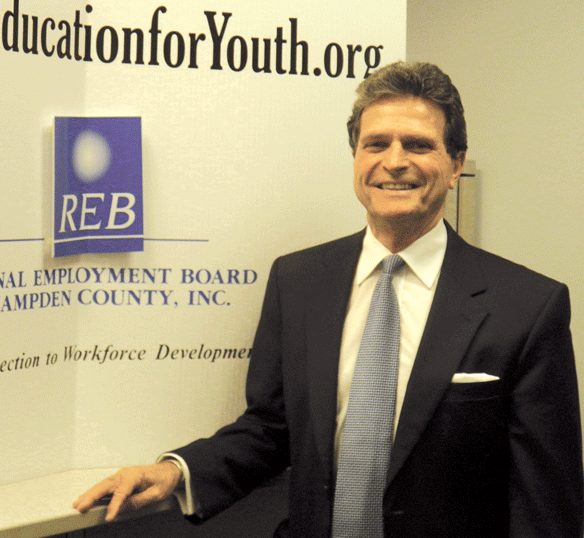
HAMPDEN SUPERIOR COURT
Barbara Lane, as Administrator of I.U.O.E. Local 98 Health and Welfare, et al v. HD Westfield, MA Landlord, LLC, Home Depot USA, Inc, and RIV Construction Group Inc.
Allegation: RIV has failed to pay for work performed on a construction project: $250,108.07
Filed: 2/2/11
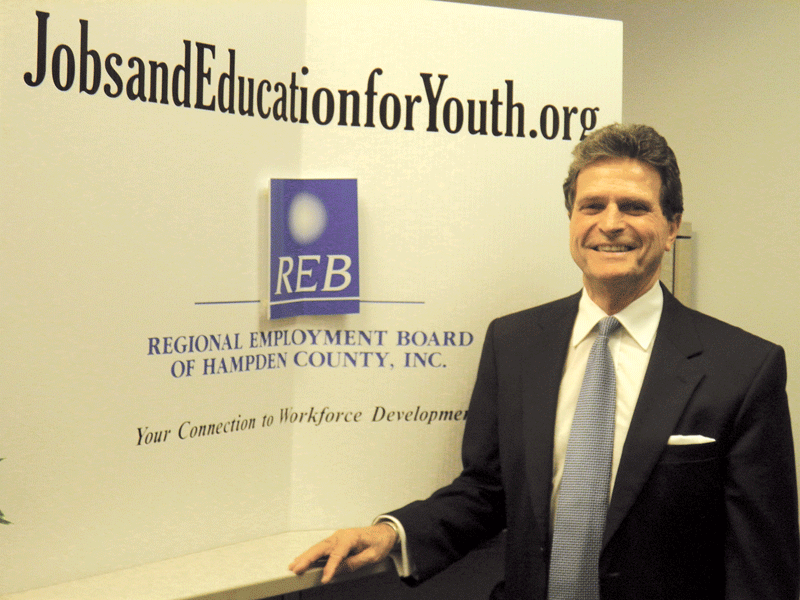
Chicopee Concrete Services Inc. v. Lampasona Concrete Corporation, RIV Construction Group Inc., and HD Westfield, MA Landlord, LLC
Allegation: Failure to pay under the terms of a construction project: $597,892.14
Filed: 1/13/11
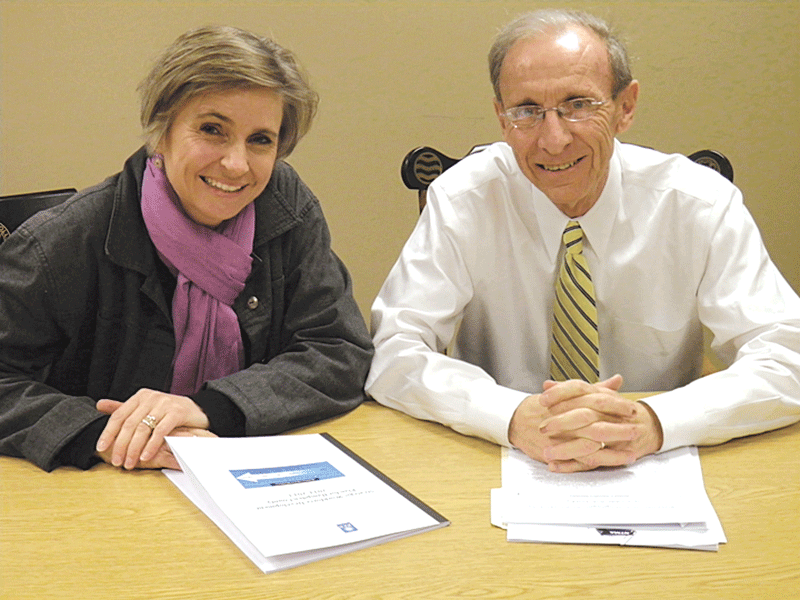
D.A. Sullivan & Sons Inc. v. City of Springfield
Allegation: Breach of a construction contract: $364,260.33
Filed: 1/26/11

Kenneth H. Stomski Sr. v. Tootsie Roll Industries Inc.
Allegation: Plaintiff was eating chocolate covered cherries manufactured by the plaintiff when he bit into rust particles causing injury to his teeth: $26,200
Filed: 2/1/11

HAMPSHIRE SUPERIOR COURT
Darren D. Powell and Paul S. Bargreen v. CBR Realty Corporation and John Regish
Allegation: Plaintiff claims that the defendant improperly conducted a foreclosure sale and dispensed monies from that sale: $295,474.41
Filed: 3/23/11

Moss Nutrition Products Inc. v. Everest Software Inc.
Allegation: Breach of contract and failure to perform software services: $91,662
Filed: 3/30/11

NORTHAMPTON DISTRICT COURT
American Express Bank, FSB v. Firehaus Studio Inc. and Liza Cunningham
Allegation: Non-payment of judgment: $10,468.04
Filed: 3/23/11

Land Air Express of New England Inc. v. Valley Marketing Inc.
Allegation: Non-payment of freight services: $45,405.17
Filed: 3/8/11

PALMER DISTRICT COURT
Gerald F. Belanger v. Stephens and Michaels Associates Inc., and World’s Foremost Bank
Allegation: Violation of consumer protection and fair-debt-collection practices: $6,000
Filed: 1/18/11

Western Mass Electric v. Pakam Warehouse Inc.
Allegation: Non-payment of utility services: $3,346.27
Filed: 12/3/10

SPRINGFIELD DISTRICT COURT
Bank of America, N.A. v. Thomas Daly Painting
Allegation: Non-payment on a small business loan agreement: $36,568.63
Filed: 2/25/11

Comcast Spotlight Inc. v. Dick’s Beantown Comedy Vault
Allegation: Non-payment of advertising services rendered: $4,622.60
Filed: 2/23/11

Comcast Spotlight Inc. v. Stingray Body Art
Allegation: Non-payment of advertising services rendered: $4,927.03
Filed: 2/17/11

Plimpton & Hills Corporation v. Riverstone Plumbing & Heating
Allegation: Non-payment of goods sold and delivered: $15,917.95
Filed: 2/17/11

Swenson Granite Company, LLC v. Maplescape Landscape, LLC
Allegation: Non-payment of goods sold and delivered: $4,529.41
Filed: 1/20/11

WESTFIELD DISTRICT COURT
CMC Joist & Deck v. Package Industries Inc., U.S. Builders, and Ronald E. Schortmann
Allegation: Breach of construction contract for services, labor, and materials: $24,847
Filed: 3/28/11

WWLP Broadcasting, LLC v. Aging at Home
Allegation: Non-payment of advertising services rendered: $14,180
Filed: 3/22/11

Columns Sections
Words to Live By

Speak To Be Remembered and Repeated:  7 Rules to Keep in Mind

“Speak to be remembered and repeated” is the advice I give my executive speech-coaching clients. Isn’t that the goal of every executive, professional speaker and sales professional — to be remembered and repeated?
However, it’s easier said than done. Here are some tips.
1. Speak in short sentences or phrases. Edit your sentences to a nub. Jerry Seinfeld said, “I will spend an hour taking an eight-word sentence and editing it down to five.” In comedy, the fewer the words between the set-up and the punch word, the bigger the laugh. In business communications, change the punch word or phrase to impact phrase.
2. Don’t step on your punch word. It should be the final word or idea in the sentence. (Yes, this works for Jerry Seinfeld and his comedian brethren, and it also works for business communicators.)
The otherwise-powerful word “today” can also be the biggest impact-diluting word in business communications if you use it wrong. For example, in the sentence, “You have to make an important decision today,” your punch word should be ‘decision.’ So switch it around and change the noun ‘decision’ to the active verb ‘decide.’ “Today, you have to DECIDE!”
3. Perfect your pause. Deliver your punch word and then pause … and pause … and pause. Give your listeners time to digest what you’ve just said. Get comfortable with silence, and don’t be tempted to rush on or fill it with “um’s.”
4. Repeat your key ideas more than once. Do not be afraid of being redundant. Instead, worry that tomorrow your audience members will not remember your key ideas.
5. Never read your speech. Remember the audience wants to hear from you. If someone is simply going to read a script or the titles off a PowerPoint slide presentation, you could have stayed home. (PowerPoint is a magnificent visual aid, but not a scripting aid.)
6. Use stories. Help your listeners to “see” your words. Statistics and facts are fine, but sell your message and make yourself unforgettable by getting listeners to make the movie in their heads. For example, you might say, “Drunk driving is a bad idea. Let me share with you some statistics on the loss of control drivers experience after even one beer.” Instead say, “Never, never, never drive drunk! Not even after one beer. I know. My friend Eliot Kramer was absolutely positive that two drinks couldn’t affect his timing and judgment.” (Hold up a single shoe, dangling from its shoelaces.) “Six months ago, he died.” Farther on, add some statistics and then conclude with a reference to your powerful story.
7. Say something memorable. Presidents have gifted speech writers to coin ringing phrases for the history books. You can be just as memorable in your field when you think about what you want to say and why. Here’s an example from the memorial for 60 Minutes’ Ed Bradley. Fellow reporter Steve Kroft said, “I learned a lot from Ed Bradley, and not just about journalism. I learned a lot about friendship, manners, clothes, wine, freshly cut flowers (which he had delivered to his office every week) and the importance of stopping and smelling them every once in awhile.”
Another example, from Mike Powell when he was a senior scientist at Genentech, giving a speech to the Continental Breakfast Club: “Being a scientist is like doing a jigsaw puzzle, in a snow storm, at night, when you don’t have all the pieces, or the picture you are trying to create.”
Remember to try out these seven key ideas as you prepare your next presentation so your words will be remembered and repeated. Why else would you go to all that effort?

Patricia Fripp is an executive speech coach, sales presentation trainer, and keynote speaker on sales, effective presentation skills, and executive communication skills. She works with companies large and small, and individuals from the C-Suite to the work floor. She is the author of Get What You Want!, Make It, So You Don’t Have to Fake It!, and is past-president of the National Speakers Assoc.; www.Fripp.com; [email protected].

Departments Picture This
Foundation Awards

Foundation AwardsPeople’s United Community Foundation recently announced that it awarded $30,000 in grants to nonprofit agencies in Western Mass. Six organizations received funding in support of their programs. Here, Tim Crimmins Jr., (fourth from left), officer of People’s United Community Foundation and Massachusetts President of People’s United Bank, presents award checks to, from left: Donna Barbieri, vice president of Business Banking for People’s United Bank, representing Gray House; Lynn Cantell, growth manager and senior vice president of People’s United Bank, representing Top Floor Learning Inc.; Jane Lennox, chief development officer for the Clarke School for the Deaf; Michael Abbate, director of Finance and Administration for the Western Mass. Enterprise Fund; Monica Borgatti, Resource Development and Communications director for Pioneer Valley Habitat for Humanity; Sandy Belkin, president of the Pioneer Valley Habitat for Humanity Board of Directors; Ron Willoughby, Springfield Rescue Mission executive director; and Joe Manna, development director for the Springfield Rescue Mission.

Transactional Law Meet

Transactional Law MeetWestern New England College School of Law students Isaac Mass and Julie McKenna (left), topped a field of 30 teams in the national Transactional Law Meet held in Philadelphia. Mass and McKenna received their first place award from judges (from left), Joan  Schwartz, associate general counsel of Airgas Inc.; Kenneth Young, partner at Dechert LLP; Jason Koenig, principal at Hale Capital Partners; and Charles Middleton, senior vice president and tax counsel at Oxbow Corp.

Send photos with a caption and contact information to: ‘Picture This’ c/o BusinessWest Magazine, 1441 Main Street, Springfield, MA 01103 or to [email protected]