Home 2021 February (Page 3)
Daily News

BOSTON — Massachusetts employers began 2021 by turning optimistic for the first time since the COVID-19 pandemic shut down large swaths of the state and national economies last spring.

The Associated Industries of Massachusetts (AIM) Business Confidence Index climbed to 52.4 during January, surpassing the 50 mark that denotes an optimistic view of the economy. The reading was 14 points higher than its 2020 nadir in April, but still almost 10 points below where it was in January 2020.

The confidence report comes as Massachusetts continues a halting and uneven economic recovery. The good news is that the state grew at a 7.9% annual rate in the fourth quarter, double the national pace. The sobering news is that the Massachusetts unemployment rate surged to 7.4% during December.

“Massachusetts companies continue to be optimistic about their own prospects, especially at a time when COVID-19 vaccines have arrived and the state appears to be making modest progress moderating the spread of the virus,” said Raymond Torto, professor at the Harvard Graduate School of Design and chair of the AIM Board of Economic Advisors (BEA).

“We are really looking at two economies — one dominated by finance, manufacturing, and technology that continues to grow, and a second made up of travel, tourism and other public-facing industries that are likely to struggle for some time to come.”

The AIM Index, based on a survey of more than 140 Massachusetts employers, has appeared monthly since July 1991. It is calculated on a 100-point scale, with 50 as neutral; a reading above 50 is positive, while below 50 is negative.

The constituent indicators that make up the Business Confidence Index were all higher during January. Employers’ confidence in their own companies rose for a fourth consecutive month, increasing 1.6 points to 54.7. The Massachusetts Index assessing business conditions within the Commonwealth also crossed into optimistic territory, gaining 1.9 points to 50.3. The U.S. Index measuring conditions nationally surged 8.7 points to 47.7.

The Current Index, which assesses overall business conditions at the time of the survey, was up 3 points to 48.4. The Future Index, measuring expectations for six months out, rose 3.1 points to 56.4, still 6.4 points below its reading a year earlier.

The Employment Index gained 3.1 points to 52.6, suggesting that cautious employers may be looking to expand payrolls as soon as pandemic-driven restrictions are eased. Many employers that have operated throughout the COVID-19 crisis as essential business have reported challenges with hiring skilled workers.

Confidence among manufacturing companies was virtually flat at 51.1. The manufacturing index has dropped 11 points during the past 12 months.

Medium-sized companies (53.2) were more bullish than large companies (52.3) or small companies (51.2). Companies in Eastern Mass. (53.0) have a brighter outlook than those in Western Mass. (51.4).

Edward Pendergast, managing director of Dunn Rush & Co. and a BEA member, said the fact that the outlook for conditions six months from now is a full eight points higher than the assessment of current conditions sends a strong signal about the potential for economic recovery. “The hope is that employer confidence in their own company prospects continues to strengthen and drives decisions to increase investment moving forward.”

AIM President and CEO John Regan, also a BEA member, noted that the economy remains fragile as officials continue to wrestle with the public-health crisis.

“Hundreds of thousands of our friends and neighbors in Massachusetts remain out of work because of the pandemic. Many have left the workforce altogether. And the number of small businesses operating in Massachusetts during November was 37% less than in January 2020,” Regan said. “The watchword for policymakers in Massachusetts remains caution. The Baker administration and the Massachusetts Legislature have a unique opportunity to maintain the kind of business conditions that will encourage economic recovery and stability in 2021.”

Daily News

AMHERST — The Amherst Board of Health issued an emergency order that will continue the mandatory early-closing order and continue certain sector capacity limits, both of which were set to expire on Feb. 8.

The order to extend the 25% capacity ceiling and the 9:30 p.m. closing time for many industries indefinitely was adopted on Sunday, just as UMass Amherst officials raised the university’s risk level and shuttered in-person activities in the face of more than 400 active cases of COVID-19.

The town has been in close communication with officials from the towns of Hadley and Sunderland, which are considering similar measures.

“This is not the direction that we, as a town, nor our businesses, want to go, but it is imperative that the town take decisive action immediately to address this increase in cases,” Amherst Town Manager Paul Bockelman said.

Added Public Health Director Emma Dragon, “it is in the interest of the health of our entire community that we continue the restrictions that are currently in place. Never has it been more important to follow those key public-health protocols of wearing a mask, washing hands, and maintaining social distance.”

Daily News

SPRINGFIELD — The Women’s Fund of Western Massachusetts (WFWM) announced upcoming grant opportunities, with up to $250,000 available for organizations that serve women and girls in Berkshire, Franklin, Hampden, and Hampshire counties.

Funding awarded during the next five months will be made available from the following programs: the Fund for Me Too Movement and Allies, Emergency Grants, the Young Women’s Initiative, and a general, open call for proposals.

“Grant funds provided through these programs position WFWM as a leader for gender equity, where people in our communities have the power to prosper economically, live safe and healthy lives, and thrive,” said Nicole Young, Community Investments manager. “Being able to make grant funding available at this time is critical as we are in a unique position to support our communities in meeting these urgent, unmet needs. Our board is committed to investing in the organizations serving women and girls who are equally as dedicated to addressing these disparities.”

WFWM is considering a renewal of the agreements made with organizations that received funding through the Fund for Me Too Movement and Allies, initially awarded in 2020. These programs deliver services and support across the four counties for prevention and intervention of sexual-based violence. Last year’s recipients include the Elizabeth Freeman Center, Human in Common, Root Studio, Safe Passage, and the Salasin Project. Funding from the renewal grants will total $50,000.

In response to the overwhelming needs of community organizations working to prevent homelessness and food insecurity, WFWM will disperse at least $100,000 in emergency funding immediately to empower organizations providing fast and direct economic aid to women and families. Potential recipients were vetted through an interview process using an anti-racist lens, with awards being determined based on immediate need.

The Young Women’s Initiative (YWI) of WFWM seeks to distribute $15,000 in grants to Springfield-based organizations whose programs address safety and anti-violence, economic security and prosperity, or leadership and visibility. Participants from the current cohort and alumnae of YWI make up this grants committee. They are given autonomy to select recipient organizations through participatory grantmaking, an approach that cedes decision-making power about grants to community members who will be directly impacted by funding decisions.

WFWM will also award grants totaling at least $70,000 through a general request for proposals. Women and girl-serving organizations based in Berkshire, Franklin, Hampden, and Hampshire counties whose work aligns with one of WFWM’s following strategic pillars of work may apply for consideration: economic security, parity in positions of power and leadership, and freedom from violence, harassment, and abuse. Grants will be unrestricted, and the application process will start with a letter of intent due by Monday, Feb. 28, with final decisions announced by June. More detailed information, including a grant timeline, letter-of-intent criteria, and submission guidelines are available at mywomensfund.org.

Daily News

NORTH ADAMS — Ralph Buehler, professor and chair of Urban Affairs and Planning at Virginia Polytechnic Institute and State University, will give a talk titled “Cycling for Sustainable Cities” as part of Massachusetts College of Liberal Arts’ (MCLA) Green Living Seminar Series on Wednesday, Feb. 10 at 5:30 p.m.

Green Living Seminar Series webinars are free and open to the public. Community members can register for each lecture at mcla.edu/greenliving. Seminars take place weekly on Wednesdays at 5:30 p.m. through April 14.

Most of Buehler’s research has an international comparative perspective, contrasting transport and land-use policies, transport systems, and travel behavior in Western Europe and North America. He is the author or co-author of over 70 articles in refereed academic journals, the books Cycling for Sustainable Cities and City Cycling, chapters in edited books, as well as reports to federal and local governments, NGOs, and for-profit industry organizations. Between 2012 and 2018, he served as chair of the Committee for Bicycle Transportation of the Transportation Research Board.

His presentation highlights that cycling is the most sustainable means of urban travel, practical for most short- and medium-distance trips — commuting to and from work and school, shopping, and visiting friends — as well as for recreation and exercise. The talk demonstrates that cycling promotes physical, social, and mental health, helps reduce car use, enhances mobility and independence, and is economical for both public and personal budgets. It highlights how cycling can be made feasible for everyone and not limited to especially fit, daring, well-trained cyclists riding expensive bicycles, and how to make city cycling safe, practical, and convenient for all ages and abilities.

Class of 2021 Difference Makers
DifferenceMakers-Logo-2020-11

Our 2021 Difference Makers will be announced in the February 17, 2021 issue of BusinessWest

Save the Date!

We will be virtually celebrating the 2021 Difference Makers on April 1, 2021.

The event will be 100% virtual and streaming using the REMO platform. Wondering what the REMO platform is like? Click HERE for this awesome tutorial video to help you learn about it!

Stay tuned for more details about our awesome and engaging virtual event that will take place on April 1, 2021.

Presenting Sponsors

Nonprofit Partner

Business Talk Podcast Special Coverage

We are excited to announce that BusinessWest, in partnership with Living Local, has launched a new podcast series, BusinessTalk. Each episode will feature in-depth interviews and discussions with local industry leaders, providing thoughtful perspectives on the Western Massachuetts economy and the many business ventures that keep it running during these challenging times.

Episode 51: February 8, 2021

George O’Brien talks with Spiros Hatiras, president and CEO of Holyoke Medical Center

Spiros Hatiras

BusinessWest Editor George O’Brien talks with Spiros Hatiras, president and CEO of Holyoke Medical Center, recently honored as one oof the magazine’s Healthcare Heroes for 2020. The two discuss the state of the pandemic and current trends with cases and hospitalizations, as well as the many ways COVID is impacting the bottom line at this and other hospitals. The two also discuss HMC’s ongoing, and now changing, plans to add more behavioral health beds in a region that sorely needs them. It’s must listening, so join us on BusinessTalk, a podcast presented by BusinessWest in partnership with Living Local.


Also Available On

Daily News

SPRINGFIELD — The Advertising Club of Western Massachusetts is seeking nominations from throughout Hampden, Hampshire, Franklin, and Berkshire counties for the Pynchon Award, which recognizes Western Mass. citizens who have rendered distinguished service to the community.

The Order of William Pynchon was established by the Advertising Club in 1915 to recognize and encourage individuals whose lives and achievements typified the ideals of promoting citizenship and the building of a better community in Western Mass. Past recipients include war heroes, social activists, teachers, volunteers, philanthropists, historians, clergy, physicians, journalists, public servants, and business leaders — a diverse group, each with a passion for this region and a selfless streak. A complete list of recipients since 1915 can be found at www.adclubwm.org/events/pynchonaward.

To nominate an individual, submit a one-page letter explaining why the nominee should be considered. Include biographical information, outstanding accomplishments, examples of service to the community, organizations in which the individual is or has been active, and the names, phone numbers, and e-mail addresses of at least three people who can further attest to the nominee’s eligibility for induction into the Order of William Pynchon. The Pynchon trustees reserve the right to eliminate nominations from consideration due to insufficient information.

Qualifying nominees will be considered and researched by the Pynchon trustees, who are the current and five past presidents of the Advertising Club. Nominations must be submitted by March 19 to William Pynchon Trustees, Advertising Club of Western Massachusetts, P.O. Box 1022, West Springfield, MA 01090-1022, or by e-mail to [email protected].

Pynchon medalists are chosen by unanimous decision of the Pynchon trustees. The 2021 recipients will be announced in June, with an awards ceremony tentatively scheduled for the fall. Recipients are presented with a bronze medal cast with the name and likeness of Springfield’s founder, William Pynchon, and bearing the inscription: “They honor us whom we honor.”

Daily News

WARE — Country Bank announced a $25,000 donation to the Quaboag Valley Community Development Corp. (QVCDC) to support various programs to help local communities in the region.

A portion of the donation will be used toward a matching grant for a senior-citizen outreach program. This project was funded through the U.S. Department of Housing and Community Development, Massachusetts CDBG Program. Projects are developed and administered by local officials with the assistance of the Pioneer Valley Planning Commission. Services for the outreach program include grocery shopping and prescription pickups for low-income seniors in Ware, Hardwick, Belchertown, and Warren.

“At highest risk are seniors with underlying medical conditions and a population who has been urged to shelter in place if possible,” said Shelley Regin, senior vice president of Marketing at Country Bank. “These two factors have significantly impacted their ability to get out safely to meet their everyday needs. The deliveries allow them to remain safely at home while addressing their critical needs.”

The QVCDC also offers various programs to assist businesses in the region with navigating these unchartered times. One of the latest programs includes companies with up to five employees that could be eligible to receive up to $10,000 in grant funding through a Microenterprise Assistance Grant.

“Thank you for the generous donation from Country Bank to support the activities of Quaboag Valley Community Development Corporation,” said Sheila Cuddy, executive director of the QVCDC. “This donation represents Country Bank’s continued investment in the economic growth and stability of the Quaboag region. It will help provide matching funding for initiatives to support the needs of our community, including the Senior Outreach Program, the rural transportation initiative, and work with microenterprises impacted by the COVID-19 pandemic.”

Daily News

LONGMEADOW — Bay Path University announced the Hero Scholarship, available to qualified prospective students who apply during February for summer or fall 2021 enrollment. The Hero Scholarship allows prospective students to earn up to 50% off at the undergraduate level and 10% off at the graduate level, depending on the program and study path.

“Our students are heroes, and we know there are many more heroes in the community looking to take the next step toward earning a college degree,” Bay Path University President Sandra Doran said. “From the high-school student hero adapting to a new way of learning to the mom hero supporting her child’s virtual-learning needs to our frontline and healthcare heroes, everyone has done their part, and now we want to provide an opportunity to secure an affordable education when needed most.”

To be eligible for a Hero Scholarship, in addition to applying in February with a summer or fall 2021 start, the individual must be a new applicant, and must remain enrolled at Bay Path in a continuous course of study to maintain the award. The award is spread out over the full period of study at the university and cannot be combined with other Bay Path scholarships. Certain programs are not eligible. For more information about eligibility criteria and to apply, visit go.crm.baypath.edu/heroes.

In addition, qualified, Pell-eligible students with a cumulative high-school GPA of 2.5 or higher who will be first-year, first-time, traditional students for fall 2021 are eligible for free tuition.

Daily News

SPRINGFIELD — Pioneer Valley Credit Union (PVCU) has partnered with the Cooperative Credit Union Assoc. and Clinical & Support Options’ (CSO) Friends of the Homeless program in Springfield for the 2021 Gift of Warmth Blanket and Clothing Drive. New toiletries are also needed.

Throughout the month of February, the hybrid drive will be contact-free and safe for all involved. Members and the surrounding community are encouraged to call Allison Weissman at (413) 364-1896 to arrange safe, contactless pickup. Or, if possible, mail to Friends of the Homeless, c/o Allison Weissman, 755 Worthington St., Springfield, MA 01105.

Due to the pandemic, Friends of the Homeless can accept only new donations. Those who are willing or able to donate are asked not to physically bring donations to the shelter, as CSO is trying to keep all guests safe and healthy. PVCU appreciates its members and the surrounding community who are willing or able to give to those in need, particularly during the pandemic.

Clinical & Support Options’ Friends of the Homeless (FOH) program provides a warm bed and hot shower to more than 1,000 individual men and women each year. It also assigns case workers to each guest. Case workers help FOH guests find work and permanent homes, navigate state and federal assistance programs, as well as provide access to behavioral- and mental-health supports.

Daily News

BOSTON — The Baker-Polito administration announced that, effective Monday, Feb. 8 at 5 a.m., businesses can operate at 40% capacity. This is an increase from an existing order limiting capacity to 25% for many businesses.

Affected businesses include arcades and recreational businesses, driving and flight schools, gyms and health clubs, libraries, museums, retail, offices, places of worship, lodging (common areas), golf (indoor areas), and movie theaters (no more than 50 people per theater).

In addition, restaurants and close-contact personal services will now be allowed to operate at a 40% capacity limit, which reflects an increase from the 25% limit imposed in December. Workers and staff will not count toward the occupancy count for restaurants and close-contact personal services.

The Commonwealth remains in phase 3, step 1 of the Baker-Polito administration’s reopening plan. Phase 3, step 2 businesses, including indoor performance venues and indoor recreation businesses like roller rinks and trampoline parks, remain closed.

Meanwhile, the current gathering limits, in place since Dec. 26, are being extended. Indoor gatherings and events will remain limited to 10 people. Outdoor gatherings and events will remain limited to 25 people. The gathering limits apply equally to private homes, event venues, and other public spaces.

Additionally, the administration announced that current restrictions limiting gathering sizes to 10 persons indoors and 25 persons outdoors will remain in place at the present time.

All other orders and safety guidance remain in place throughout the Commonwealth as the state continues to fight COVID-19 and vaccination ramps up in all regions.

Daily News

LONGMEADOW — Javier Padilla, a human-resources and talent manager with almost 20 years of human-resources experience and more than 10 years in management and leadership roles, has been named assistant vice president and director of Human Resources at Bay Path University. Padilla, who most recently served as the chief Human Resources/Talent officer for Norwalk (Conn.) Public Schools, assumed his duties in December.

Padilla brings many strengths to the position, including experience in change management, workforce planning, customer service, employee benefits and compensation, employee relations, contract negotiations, talent acquisition, diversity and inclusion, and HR analytics and technology, among others. In his career, he has worked in the fields of education, healthcare, industry, and insurance.

“There are multiple reasons for accepting the opportunity to serve Bay Path,” Padilla said. “As a first-generation college graduate, I know Bay Path is committed to providing educational access and opportunities to students. Its commitment to diversity, equity, and inclusion were a key component of the interview process, and this priority is consistent with my personal values. And certainly, Bay Path’s continued vision of innovation and transformation will create an indispensable value proposition to students and employees. It’s great to be a part of this organization.”

In his new role, Padilla will lead the Human Resources division in fostering collaborations and partnerships with departments and areas across the university in support of Bay Path’s mission and strategic plan. He will also implement HR policies, practices, and technologies; enhance customer service; support employee engagement; and build a diverse workforce.

“Javier Padilla brings an impressive background in human resources, and he also has substantial experience working with diversity initiatives and has a keen understanding of our commitment to inclusive excellence,” Bay Path University President Sandra Doran said. “His operational and strategic leadership experiences will be valuable in envisioning and implementing innovative human-resources services and systems that not only meet our strategic institutional goals, but, most importantly, enhance the lives of members of the Bay Path community.”

Padilla holds a juris doctorate from Western New England School of Law and a bachelor’s degree in political science and Spanish from the University of Connecticut. A member of the Society for Human Resource Management, he is also a certified professional co-active coach, accredited by the International Coach Federation, and a certified strategic workforce planner, accredited by the Human Capital Institute.

Daily News

NORTH ADAMS — The Berkshire Bank Foundation awarded Massachusetts College of Liberal Arts (MCLA) $20,000 to fund the Berkshire Bank STEM Academy, which accepts up to 20 incoming first-year students enrolled in a STEM major or who have expressed interest in STEM fields.

Designed to introduce incoming students to careers in STEM, the residential, five-day academy includes opportunities to network with STEM faculty, students, and staff in the interest of developing a deeper relationship with those involved in STEM careers in the Berkshires. The program’s ultimate goal is to encourage more students to secure jobs in the Berkshires and remain here after graduation.

This summer will mark the ninth year of the Berkshire Bank STEM Academy. Alumni of the program, which was developed to serve low-income and first-generation college students, have gone on to be leaders at MCLA as residential advisors, tutors, and supplemental instructors. Graduates have gone on to have careers at Raytheon, General Dynamics, Edge Pharma, and as public-school teachers.

Students are selected based on their responses to surveys taken upon their acceptance to the college. Interested students should e-mail program director Dr. Sara Steele, assistant professor of Psychology, at [email protected] to have their name prioritized in the selection process.

During the residential program, where the majority of the awarded funds are spent, students will explore concepts in biology, chemistry, computer science, mathematics, environmental science, psychology, and physics through laboratory work and meeting with faculty. Students will also be paired with an upper-level STEM major who will serve as a mentor. Field trips to local STEM employers, including Berkshire Health Systems, MASS MoCA, and General Dynamics, as well as a roundtable discussion and a dinner with STEM professionals will encourage students to begin thinking about internships and local career opportunities.

Other programming throughout the year will include career exploration, introduction to academic services and resources on campus, and presentations on study skills, time management, course advising, and financial planning. Sessions on preparing and understanding FAFSA applications, student loans, and personal financial responsibility will be conducted by the MCLA Office of Student Financial Services, with individual appointments for all participating students. Berkshire Bank STEM Academy students will be expected to attend special events during the year, such as visiting speakers, planned programs, and MCLA’s annual Undergraduate Research Conference.

Daily News

SHEFFIELD — Berkshire Taconic Community Foundation (BTCF) announced it is partnering with the Essex County Community Foundation (ECCF) in presenting the 2021 Institute for Trustees, an annual conference inviting nonprofit leaders to gather together for educational workshops and networking opportunities.

Building on the success of BTCF’s 2018 Board Leadership Forum and designed for board leaders and executive directors, the event features 24 virtual workshops from leading nonprofit experts and opportunities to connect with hundreds of peers equally committed to their leadership roles.

This partnership is part of a broader effort between BTCF and ECCF to leverage resources in support of building capacity and leadership within the nonprofit sector, given the challenges facing organizations due to the pandemic and its economic consequences.

The Institute for Trustees kicks off on April 7 with a keynote address by Phil Buchanan, president of the Center for Effective Philanthropy, titled “Leading for Nonprofit Impact Amid Unprecedented Challenge.” Beginning April 9, workshops and opportunities to connect with fellow attendees through topic-driven, informal peer discussions will be spread over the course of four weeks. Workshop topics include racial equity, endowment building, crisis planning, governance, advocacy, finance, and much more.

To register for the program, visit eccf.org/ift. Registrations will be accepted at a discounted early-bird rate of $110 until March 7. After that, registration will cost $130 and will close April 7.

Daily News

SPRINGFIELDBusinessWest is currently accepting nominations for the 40 Under Forty class of 2021. The deadline for nominations is Friday, Feb. 26.

Launched in 2007, the program recognizes rising stars in the four counties of Western Mass. Nominations, which should be as detailed and thorough as possible, should list an individual’s accomplishments within their profession as well as their work within the community. Nominations can be completed online at businesswest.com/40-under-forty-nomination-form.

Nominations will be weighed by a panel of judges, and the selected individuals will be profiled in BusinessWest in May and honored at the 40 Under Forty Gala in late June. Event sponsorship opportunities are available.

Daily News

SPRINGFIELD — Western New England University (WNEU) announced that Dr. John Pezzuto, dean of the College of Pharmacy and Health Sciences, has been recognized in Stanford University’s recently released list of “Top 2% of Scientists in the World.” The list names an elite group of scientists with criteria based on the citation impact of their publications.

“Faculty who take part in university research are actively participating in their field and have access to cutting-edge insight in their subject matter. By bringing that insight back into the classroom, they bring the academic world to life for our students,” said Curt Hamawaka, WNEU’s interim provost and vice president for Academic Affairs.

In the overall category of career impact, Pezzuto is ranked in the top 4% of the top 2% of scientists. His placement is even more remarkable in the discipline-specific ranking of medicinal and biomolecular chemistry, where he is placed 21st among 80,622 researchers in that field — the top 0.02% of the top 2%.

“It is a great honor for us to have such a distinguished scientist among our ranks,” university President Robert Johnson said. “We are pleased that Dr. Pezzuto joined us and will continue his research in addition to his other administrative and academic responsibilities. As WNE enters its second century, research, scholarship, and discovery will all assume greater and greater prominence. Building this into our very fabric is well-exemplified by the work of Dr. Pezzuto.”

Pezzuto joined Western New England University in August 2020 as professor and dean. Over the years, he has investigated natural products as drugs, with special emphasis on cancer therapy and prevention. He is well-known for his pioneering work concerning resveratrol, a component of grapes and grape products, that has been shown to mediate a raft of biological responses. His work on investigating the effect of grapes on health and longevity continues at WNEU.

“Nature provides many clues for the treatment and prevention of human disease. I have been blessed to work with many icons in the field, and to continue being active in research and discovery at WNE,” Pezzuto said. “It is heartening that my work has been recognized by colleagues and become integrated with the continuum of science searching for the truth. Academia provides the perfect environment for scholarship, and this is imbued by the spirit of WNE.”

Daily News

WARE — Country Bank reported that its donations and sponsorships for 2020 totaled $1.3 million. Through the bank’s philanthropic efforts, it provided support to local nonprofits throughout the communities it serves; in 2020, more than 400 of these organizations received donations.

The pandemic has left businesses and individuals facing continued looming uncertainties. Many nonprofits struggled from the economic fallout, and they looked to community partners like Country Bank for assistance. Country Bank donated more than $500,000 to area hospitals and first-responder housing efforts to provide the financial and tangible emergency resources needed to support their mission during the pandemic.

“We are so grateful to Country Bank for its most generous support and appreciate its continued partnership during this unprecedented time,” said Scott Berg, vice president of Philanthropy at Baystate Health and executive director of the Baystate Health Foundation. “This gift will directly support resources needed at Baystate Health as we continue to address the care our community needs as we face this worldwide pandemic.”

Other organizations receiving support included the Quaboag Valley Community Development Corp., Christina’s House, Springfield Rescue Mission, Ronald McDonald House, and Behavioral Health Network Inc.

Recognizing the importance and overwhelming need to help organizations that address hunger, Country Bank provided monetary donations to food programs throughout the region that exceeded $100,000. The recipients of these funds included Friends of the Homeless, Rachel’s Table, the Food Bank of Western Massachusetts, and many local food pantries.

“As a community partner, we care deeply about the sustainability of our communities,” said Paul Scully, president and CEO of Country Bank. “As such, and in recognizing the burdens that our communities have experienced throughout this year, we were honored to offer support during what has been the most stressful time in our history. Supporting and enriching our communities is not only a part of our mission, it’s simply who we are as an organization.”

The coming year will continue to pose challenges to the nonprofit sector, and organizations will once again rely heavily on their community-bank partners to help them with their mission to help those they serve. Community banks are a critical resource and will be called upon to continue with much-needed additional assistance in 2021.

Daily News

SPRINGFIELD — Ed Sunter, president of the Hampden County Estate Planning Council of Springfield; Julie Quink, treasurer; and John Arnold, past president, presented a check for $1,400 to Terry Maxey, executive director of Open Pantry of Springfield.

Sunter followed up last year’s inaugural fundraising event started by Arnold. “While we normally don’t meet in December, this year we made it a holiday event,” Sunter said. “Many individuals and businesses in our community have been adversely impacted by the pandemic. We, as an association, did not want to pass up the opportunity to help out our neighbors and the community we serve professionally. What better way to make a positive impact and all the while have some fun around the holidays? So this year I decided we would do a fundraiser via Zoom.”

Council members were invited to participate in a wine- and beer-tasting event sponsored by Baystate Brewing Co. of Sturbridge, Progression Brewery of Northampton, White Lion Brewery of Springfield, and Hardwick Winery. Members enjoyed beer and wine samples in their homes and offices.

“Representatives of each company participated and provided an overview of their products as they were enjoyed,” Sunter said. “It gave us a great opportunity to do something where we can have some fun and give back to the community we serve. $1,400 was raised by our council membership, and I am very pleased to donate it to Open Pantry of Springfield.”

Daily News

SPRINGFIELD — Bulkley Richardson will continue its CyberSafe series aimed at providing critical information to businesses and organizations on topics of cybersecurity.

On Wednesday, Feb. 10 at 4 p.m., cybersecurity attorney Lauren Ostberg of Bulkley Richardson will offer the virtual presentation, “Is Your WISP (or Lack Thereof) Putting Your Business at Risk?” She will discuss why a WISP (written information security program) is essential to businesses, assumed risks for not having or not following a WISP, preparing a WISP, and actions that can be taken today to help protect one’s company.

Registration is required by clicking here. Zoom will forward the webinar link directly to the attendee.

The CyberSafe series meets regularly to cover topics on preparation, assessment, implementation, and response to ensure businesses are aware of their legal obligations, safeguards to stay protected, and what to do in the event of a breach. Visit bulkley.com/practice-areas/cybersecurity for the full invitation and more about the series.

Daily News

SPRINGFIELDBusinessWest is currently accepting nominations for the 40 Under Forty class of 2021. The deadline for nominations is Friday, Feb. 26.

Launched in 2007, the program recognizes rising stars in the four counties of Western Mass. Nominations, which should be as detailed and thorough as possible, should list an individual’s accomplishments within their profession as well as their work within the community. Nominations can be completed online at businesswest.com/40-under-forty-nomination-form.

Nominations will be weighed by a panel of judges, and the selected individuals will be profiled in BusinessWest in May and honored at the 40 Under Forty Gala in late June. Event sponsorship opportunities are available.

Daily News

SPRINGFIELD — United Personnel Services was recently honored in the Best of Staffing Client, Employee, and Talent Awards from ClearlyRated, in recognition of high levels of satisfaction from customers, job seekers, and employees. Winners have proven to be industry leaders in service quality based entirely on ratings provided by their clients and staff.

Focused on helping to connect people with the right job opportunities, United Personnel Services received satisfaction scores of 9 or 10 out of 10 from 90.9% of clients and 78% of placed job candidates, significantly higher than industry averages. These ratings led to United Personnel’s fourth consecutive year of recognition as a Best of Staffing company from ClearlyRated.

“United’s team is both humbled and gratified to see the positive responses we received, especially given the challenges of the last year,” United Personnel President Tricia Canavan said. “We strive to go above and beyond to support customers, candidates, staff, and the community and remain committed to the professional growth of our employees and the success of our client partners.”

Added ClearlyRated’s CEO and founder, Eric Gregg, “after one of the most turbulent years in modern history, winners of the 2021 Best of Staffing award have proven their commitment to support their clients and placed talent. These service leaders have demonstrated their capacity to be agile, to be precise, and to prioritize the client and talent experience above all else.”

Daily News

ENFIELD, Conn. — The Advanced Manufacturing Technology Program at Asnuntuck Community College (ACC) received $15,000 in grant funding from the Gene Haas Foundation to use for student scholarships for tuition and books. The scholarship will be managed by the ACC Foundation, and awards will be given based on need and merit.

“The funding support that the Gene Haas Foundation has provided for our students is very much appreciated, said Mary Bidwell, interim dean of Advanced Manufacturing Technology. “These funds really assist our students and are available to help students pay for the program so they can gain the necessary skills to start a career in advanced manufacturing. Over the past five years, our program has been awarded more than $60,000. This donation really makes a difference in the lives of our students.”

The Gene Haas Foundation was formed in 1999 with the primary goal of building skills in the machining industry. The foundation provides an opportunity for schools to apply for funds annually, providing scholarships for computer numerical control machine technology students and National Institute for Metalworking Skills credentials. The Gene Haas Foundation has contributed more than $60 million to education since 2014.

Daily News

SPRINGFIELD — Springfield Partners for Community Action announced it will award a number of $1,000 scholarships that can help recipients with tuition and alleviate the cost of going back to school and investing in bettering themselves.

All applicants must be Springfield residents, and income-eligibility guidelines may apply. Scholarships will be awarded to those attending accredited/licensed schools in Massachusetts. Applications must be received by April 23. Late entries will not be considered. If selected, recipients must be available to attend an awards event (most likely virtual) in June.

Click here for the application form and information on how to apply.

Daily News

SPRINGFIELD — Martin Luther King Jr. Family Services Inc. (MLKFS) announced the addition of three new members to its board of directors.

“Our mission and services have expanded to meet in part the incredible needs of the community during this time of hardship,” said Calvin Hill, MLKFS board chair and vice president of Diversity, Inclusion, and Community Engagement for Springfield College. “Therefore, adding additional and talented hands to our leadership will assist us in fulfilling the words of Dr. King as we attempt to do more for others.”

The MLKFS Emergency Food Pantry now helps more than 500 people, and after-school and night-spot programs support literacy and academic achievement essential for the life success that disrupts the cycle of poverty. MLKFS also runs a historically black college-tour program. Funding for such socially focused programming continues to become increasingly limited at a time when needs are especially pressing.

At the regular meeting of the board on Jan. 21, the board voted unanimously to accept the three new nominees Rose Colon, John Garvey, and Dr. Allison Sullivan.

Colon is a criminal-defense and personal-injury attorney based in Springfield. She engages in all aspects of criminal-defense and civil personal-injury litigation. She earned her paralegal certificate from the American Bar Assoc., earned a bachelor’s degree with a concentration in legal studies at Bay Path University, and earned her juris doctorate at Western New England University.

Garvey is the founder of Garvey Communication Associates Inc., a Springfield-based digital public-relations and marketing agency. He is a graduate of Marquette University, where he earned a bachelor’s degree in arts and sciences with honors, and of American International College, where he earned a master’s degree in organizational development with an emphasis on strategic planning. He is a volunteer at Wild Care Cape Cod, a former board member of Valley Venture Mentors, and a past mentor for the startup accelerators MassChallenge and SparkHolyoke/EforAll.

Sullivan is lead faculty for the Occupational Therapy doctorate program at American International College. As an occupational therapist and educator, she has dedicated her 27-year career to improving the lives of individuals with intellectual and developmental disabilities across the lifespan, working in day-habilitation services, school-based occupational therapy, and residential settings. She is the chair of the MAOT Western Massachusetts Mental Health Special Interest Group, a certified group-exercise and yoga instructor, and the co-founder and leader of #OTalk2US, a Twitter chat for occupational therapists with tens of millions of views of tweets carrying this tag.

Sullivan earned a bachelor’s degree in fine arts from Amherst College, a master’s degree in occupational therapy from Springfield College, and a doctorate in occupational therapy from Temple University. She currently volunteers as an advisory board member for Lighthouse and a board member and social media committee chair for Allen Cognitive Network, and serves on the human rights committee for Viability.

Daily News

HOLYOKE — New to the beer and brewing industry, Ezra Bleau is introducing his business, Na Brews, with the launch of a Kickstarter campaign, “Na Brews (Nah Brooz) – Craft Beer for All People, for All Occasions.” This campaign will raise money for his mobile de-alcoholization production plan, increasing access to social, healthy alternatives nationwide.

“Na Brews is a craft solution to the ever-growing industry of non-alcoholic options in the market,” Bleau said. As a young professional, he wants to give independent breweries, not just the large production breweries, the power to produce quality non-alcoholic craft beer. At the same time, he wants to give consumers the chance to enjoy the social settings of being at a bar, taproom, or watching the big game on Sunday, and be able to enjoy craft beer without the hangover the next morning. Na Brews represents inclusivity, whether a 30-year-old man cutting alcohol for health reasons or the pregnant mom who wants to enjoy alcohol-free champagne on New Year’s Eve. “It’s all about substitution to promote a healthier lifestyle that anyone can enjoy,” he added.

The main draw of the campaign is a $20 pledge to be part of the “world’s largest non-alcoholic beer collaboration, which he intends to do during a livestreamed interactive event with his brewer. The company has been in contact with the Guinness Book of World Records and is working on certifying the event.

Bleau said he aims to “make the industry aware that there is a need for quality craft non-alcoholic beer, and we are tired of sitting in the penalty box waiting for it to happen. My company, Na Brews, is here to spark the N/A revolution and give the power to the independent brewer.”

Participants will be a part of this new craft beer every step of the way, selecting everything from style, grains, and hops to label design. With their $20 pledge, each participant’s name will be included in the collaboration can label for a future keepsake, and they will also be sent a can for their enjoyment and have exclusivity to purchase more before it is opened up to the general public.

NA Brews currently is an e-commerce operation based in Holyoke, offering online retail sales of non-alcoholic beer, spirits, and wine selections, including specialty boxes and subscription services for others to enjoy in the comfort of their own home or any social setting. Bleau also has a manufacturing and full alcohol-free production plan, partnering with independent breweries in surrounding communities to produce quality craft non-alcoholic beer.

Daily News

HOLYOKE — Meyers Brothers Kalicka, P.C. (MBK) announced a new website this week. The primary goal during the redesign process was to create a more user-friendly and valuable resource for clients and community alike. More specifically, the firm wanted users to easily locate information about accounting services, industries it serves, the firm’s story and team members, career opportunities, and community support.

MBK’s recent rebrand extends beyond a new style guide, logo, and aesthetic to include key concepts the website reflects upon: depth, drive, and experience. As the company notes, “we have the depth to provide a quality team to every client. We have the drive to deliver an excellent work product, every time. And we have the experience to solve our clients’ accounting and financial goals.”

Partner James Krupienski, CPA, noted that, “over the past few years, MBK has undertaken a significant transformation with a brand-new mission and vision statement. One of the ways that we are building on our tradition of excellence is by becoming a better online resource and authority for our clients and community. By updating our website, increasing our blog activity, and having a consistent presence on social media, we are making ourselves and our knowledge more accessible to others.”

MBK’s new website features an active blog with articles about taxation, accounting, advisory, news, and community. Additionally, the firm offers free newsletters centered around taxation, business, not-for-profits, and healthcare. These newsletters help readers stay informed on recent provisions and guidance, access articles, get invitations to special webinars or podcasts, and gain industry knowledge. You can subscribe to any or all of these newsletters for free by adding your e-mail address into the ‘subscribe’ feature located in the footer of the new website.

Daily News

LONGMEADOW — Bay Path University announce it was selected as a winner of the Virtual Innovation Awards: Excellence in Delivering Virtual Student Services hosted by NASPA – Student Affairs Administrators in Higher Education. Bay Path is among 10 schools recognized across the nation for exemplary virtual student support services, and one of only three schools to receive the top award of $50,000.

The award highlights the effectiveness of the work being done to support both Bay Path’s traditional undergraduates and adult students enrolled in its online undergraduate degree program, the American Women’s College. These best practices will serve as case studies to inform the field at large.

“Student-support services are essential to students’ progress in college,” said Maura Devlin, associate vice president and dean of Undergraduate Studies at Bay Path. “These supports include advising, orientation, emergency aid to help with textbook costs and other essentials, clubs and activities, academic and learning supports, and health and well-being programs.”

As Bay Path’s online program for adult women, the American Women’s College has been continually developing and enhancing its virtual support services since 2013. At the onset of the pandemic, university staff were able to put these supports into overdrive to ensure campus-based undergraduate students could easily access services despite the abrupt move to remote.

Some of the virtual services that have allowed Bay Path University to be responsive to its diverse student body, whether in person or online, include a virtual career-services hub; UWill, a telecounseling service; and Tutor.com, which provides access to online tutoring services 24/7. Similarly, programming related to orientation, peer-to-peer engagement, community building, and multi-cultural affairs was provided by a support team that was able to quickly pivot to virtual platforms and social-media tools.

“We are so honored to be the recipient of this award. Our focus is fully on the students we serve and how we can continue to meet them where they are, in even the most trying of times, to help them to achieve their educational goals,” said Anne Chapdelaine, Bay Path’s dean of students and director of persistence. “This award will allow us to continue to pilot new, responsive tools and expand our resource availability, to make sure that we can flex and bend with the complex lives of our students.”

Cover Story

In Demand

Tanya Vital-Basile

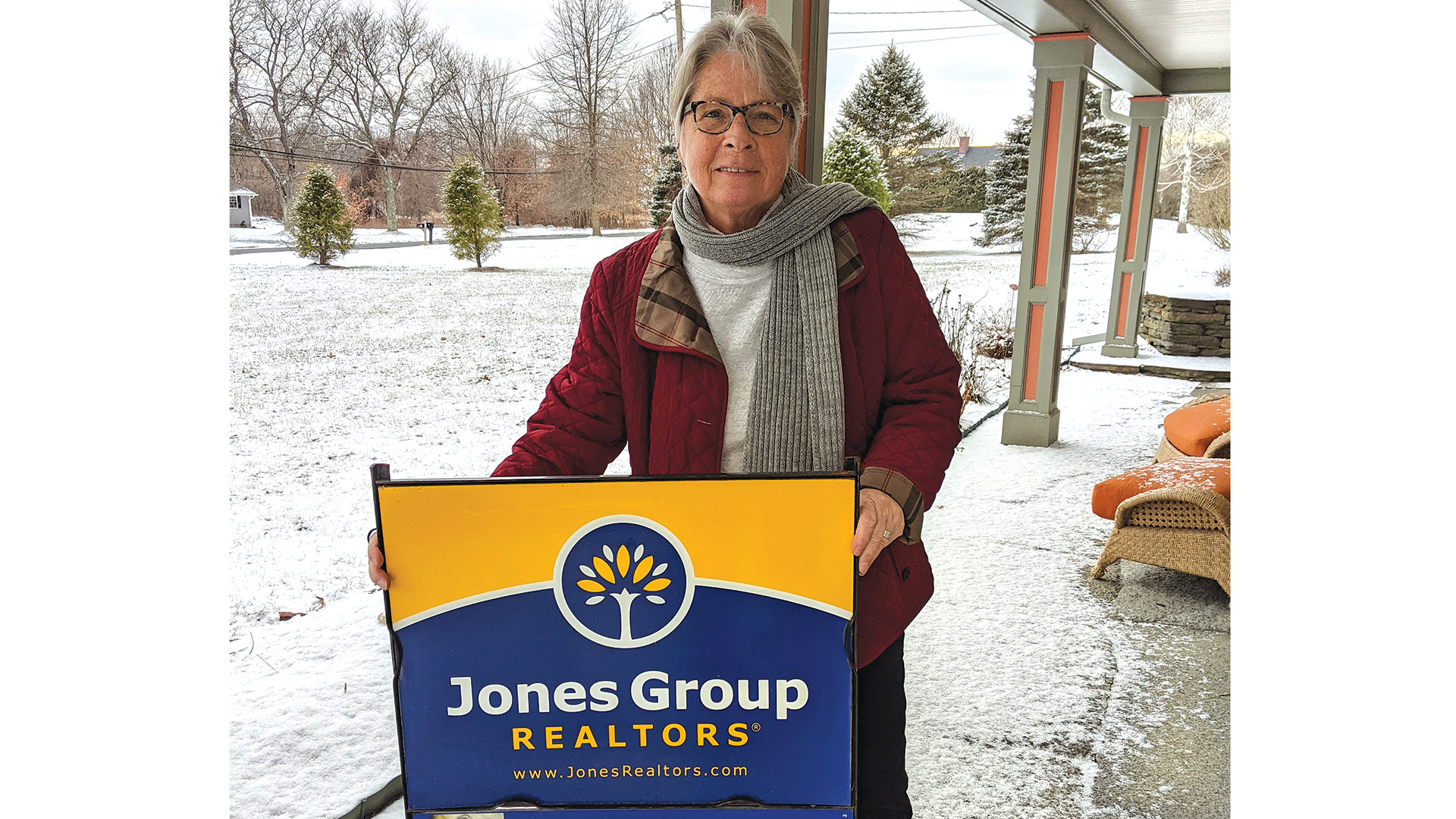
Tanya Vital-Basile with a common sight — a ‘sold’ sign.

Tanya Vital-Basile recently sold a house in Longmeadow to someone who might not have considered buying it a year ago.

But life changed — and so did the residential real-estate market. Considerably, in both cases.

Specifically, the buyer had lived in Boston for many years, and still has a job there, but she has been working remotely, and plans — like so many others these days — to continue doing so.

“She was paying $2,900 a month to rent in Boston, and here, she’s paying a $2,000 mortgage, and owning it,” said Vital-Basile, who heads a team at Executive Real Estate. “We’ve seen a lot of people moving out of Boston just because they don’t need to be out there anymore.”

It’s a story BusinessWest heard multiple times from area Realtors.

“It’s not unlike what we saw after 9/11 — a migration from the city to smaller towns and villages, a more rural environment,” said Kathy Zeamer of Jones Realty. “A lot of people today are looking for a place that gives them a little more space, private outdoor areas, home-office space, a place for their kids to do their schooling from home.”

“She was paying $2,900 a month to rent in Boston, and here, she’s paying a $2,000 mortgage, and owning it. We’ve seen a lot of people moving out of Boston just because they don’t need to be out there anymore.”

Call it the new normal wrought by a still-raging pandemic.

“COVID has a lot to do with it,” said Lesley Lambert of Park Square Realty. “People are working from home, and they’re realizing their home doesn’t work for their life. I’ve spoken to so many clients who want to continue working from home, even once all this clears, and they’re looking at their space and saying, ‘we thought we wanted a big, open floor plan, but what we actually want is a music room, a study, a home office.’”

All this demand — for a different home, but especially one far outside the metro areas — has created a serious imbalance with supply in Western Mass., creating a seller’s market like few this industry has experienced in recent decades.

“In Hampden County, the average days a house spends on the market is three. It’s crazy,” Vital-Basile said.

The most recent statistics from the Realtor Assoc. of Pioneer Valley bear this out. In December, home sales in the Pioneer Valley were up 29.2%, and median price was up 10.1%, from December 2019. Hampden County led the way (sales up 32.0% and median price up 11.5% from the previous year), but Franklin County (26% and 10.6%) and Hampshire County (20.4% and 9.1%) weren’t far behind.

Kathy Zeamer

Kathy Zeamer says the current climate is a supply-and-demand issue — with several factors driving that demand.

“It’s definitely a seller’s market, Zeamer said. “It’s all about supply and demand. The inventory is really low, and we have new people coming into the area, so we don’t have enough inventory to meet the demand we’re seeing.”

A few factors play into the supply challenge. Many families who might be thinking about moving out of the region are hunkering down instead because of uncertainties related to the pandemic. Meanwhile, home buyers aren’t putting their own houses on the market until they’ve got a new home nailed down.

As for demand, “I think people are trying to escape more urban areas,” she added. “We have people coming in from other parts of Massachusetts, including the Boston area. Most of my sales this year involve people from New York, California, Las Vegas, Chicago — more so than ever before. I’ve had several New York sales this year, which is more than I would typically see.”


Escaping the City

The lifestyle shifts driven by the pandemic aren’t the only factor driving demand, Vital-Basile said, noting that interest rates are still at historic lows, creeping below 3%.

“The rates are so low that a lot of people are realizing it’s much cheaper than renting,” she told BusinessWest, adding that sellers from the Hub find they can get much more living space for their money in the Pioneer Valley.

“It’s not unlike what we saw after 9/11 — a migration from the city to smaller towns and villages, a more rural environment. A lot of people today are looking for a place that gives them a little more space, private outdoor areas, home-office space, a place for their kids to do their schooling from home.”

“We’ve had a lot of buyers from Boston. My last three sales were from Boston — cash buyers. A lot of people are realizing they don’t have to work at their company’s location any longer; a lot of companies are letting them work from home. And this is a cheaper area — instead of a little condo for $700,000, you can get a good-sized house for $700,000.”

Zeamer said she’s also seeing an increased desire for multi-generational living experiences, which typically require a larger home than the buyer currently occupies. “They might have older parents or grown children, and they need more living space or in-law apartments.”

But the main driver for more space is simply the fact that families are spending much more time at home. “Because of the pandemic, they want more space, and different types of space,” Zeamer said. “Some people are moving because they feel cooped up in their existing homes; it’s too tight with the kids being home and partners working remotely from home.”

The pandemic has also generated a desire in some people to live more sustainably — to grow more food at home, for example, instead of relying totally on grocery stores, she noted. “They want to have a nice garden, and they’re thinking more about providing their own food sources.

“And I do think people are looking for more private outdoor space, where they can gather with their people, in their pod, without exposure from the neighbors,” she went on. “A lot of condos are coming on the market, perhaps because people in close living arrangements are looking to be more isolated.”

Lesley Lambert (center, celebrating another sale)

Lesley Lambert (center, celebrating another sale) says prime properties can get dozens of offers quickly — and over the asking price.


Lambert said the Berkshires and the Northampton/Easthampton area are both notable hotspots right now, but all of Western Mass., much like Cape Cod, is being seen as an attractive alternative to life in a metroplex.

“If they want to get out of their cities, it’s a good time, as a lot of companies are going with mobile workers. I think the brick-and-mortar concept is going to take a hit, and we’ll see more people realizing they don’t have to live where they work.”

Zeamer agreed. “I think Western Mass. is really appealing to a lot of urban types of buyers,” she said, noting, as tourism boards and chambers of commerce have for generations, that this region offers an urbane, progressive mindset in many corners, plus the kinds of cultural and recreational amenities city dwellers appreciate, but in a quieter, morte scenic setting with myriad ways to enjoy the great outdoors.

And, as noted, there are more seekers of such homes right now than sellers. As an example, Lambert recalled one house she sold last fall. “It was a lovely house, not a crazy McMansion. I had 50 showings in two days, and 15 offers — all over the asking price. From what I’m hearing from my teammates and fellow Realtors, it’s like that for everybody.”


Buying Time

While that makes for an exciting home-selling experience, it can be frustrating on the other side.

“There’s so much competition that people are struggling to secure a home,” Zeamer said. “And that’s keeping them from putting their own home on the market. It’s a great time to sell, but then you have to buy, and that part is very challenging right now.”

One of her colleagues at Jones recently got 18 offers on a property, some with cash in hand. “It’s hard to compete if there’s a cash offer in the mix. In urban areas, people are liquidating properties and have lots of cash in hand, and the prices here look pretty attractive compared to what they’re used to.”

“In Hampden County, the average days a house spends on the market is three .”

Also suppressing supply is the fact that some homeowners eyeing a move simply don’t want people in their houses during the pandemic, so they’re delaying a move, Vital-Basile said. “I ask sellers, ‘what makes you comfortable? Do you want a one-time showing, an open house with three families at a time, and after that, I’ll go and clean everything?’ It depends on the client.” Meanwhile, it can be especially tricky to sell a house with tenants if those tenants don’t want visitors due to COVID-19.

“Very rarely are you seeing open houses anymore. I can’t speak for all Realtors, but I switched to doing 3D home tours, where you can sit at your desktop and ‘walk’ through the house,” Lambert said, noting that in-person walk-throughs are reserved for houses the buyer is especially interested in.

In addition, “we can’t meet with clients like we used to,” she said. “We have to do a lot more remotely, talking on a phone call of Zoom call.”

The challenges of buying a house right now — both logistical and competitive — reinforce the need to have strong representation, said all the Realtors we spoke with. And to use common sense.

For instance, Vital-Basile said, some potential buyers are waiving appraisals and inspections to get a leg up, but she doesn’t recommend that. “I tell everyone, ‘don’t force the buy; you don’t want to be in a bad situation. Even if it’s the right house at the right price, don’t force it. Always have the agent negotiate.”

Lambert is certainly an advocate for the agent-client relationship — and not just any agent. “I tell them they need the strongest buyer’s agent they can find, and not just work with your cousin because he got his license six months ago. Sometimes that’s fine, but in this market, you have to know what you’re doing.”

That includes securing preapprovals and discussing beforehand what a competitive offer should looks like. “If the first time you talk to a buyer is when the boots are hitting the road, they’re going to freak out. It’s got to be a strategy you’ve developed with them regardless of the house they find.”

And it means, in many cases these days, being prepared to offer more than the asking price right off the bat, before someone else invariably does.

“I have a team of trusted affiliates who take great care of my clients, and when my clients listen to my well-erned advice, we have smooth sailing,” Lambert said. “I’m not the only realty team like that, of course. But it’s important to have advocates on your side right now.”

That said, the “crazy prices” sellers are getting don’t seem to be slowing up, Vital-Basile said. “I don’t think the market will tank anytime soon,” she said. “But a $180,000 house going for $275,000 … it can’t continue this way, or else the average homeowner won’t be able to afford a mortgage, and then the market will have to stabilize. Right now, though, there are too many buyers out there, ready to move.”


Joseph Bednar can be reached at [email protected]


Education Special Coverage

Portrait of a Graduate


The program is called ‘Portrait of a Graduate,’ and that name pretty much says it all.

But maybe an adjective is in order to get the complete picture, pun intended.

Indeed, what the Springfield Public Schools are focused on now is creating a portrait of a successful high-school graduate, through an initiative designed to gain feedback from a host of constituencies regarding the skills — as in all the skills — that young people will need to not only earn a high-school diploma, but thrive in an ever-changing, technology-driven economy.

And this portrait will become a valuable blueprint of sorts as school administrators go about creating a new strategic plan for the city’s public schools, said Superintendent Dan Warwick, who stressed repeatedly that Portrait of a Graduate is very much a community-driven process that will define success for Springfield students, including the values, knowledge, skills, and work habits they will need to thrive as learners, workers, and leaders.

Among those providing input are members of the business community, said Trisha Canavan, president of United Personnel and current president of Springfield Business Leaders for Education, adding that their commentary will be critical to creating that portrait and then inspiring needed changes to programming and curriculum.

Made possible by a grant from the Barr Foundation, this Portrait of a Graduate initiative is part of a broad movement across the country to involve the community in shaping a school system’s strategic plan and specific programming and curriculum for helping to ensure student success.

The list of communities that have embarked on such programs grows each year, and now includes Lowell, Shrewsbury, and other cities and towns in Massachusetts, as well as Hartford, Conn., Fairfax County, Va., and many others, said Warwick.

In most of those communities, Portrait of a Graduate is used as part of a strategic plan for a specific school system, said Paul Foster, chief information officer for Springfield Public Schools. Here, though, it will help guide development of a new strategic plan, which is an important distinction.

Dan Warwick

Dan Warwick

“Clearly, this has become a best practice — communities need to take a look at what everyone thinks our graduates should look like, not only the academic skills, but all the other skills as well.”

“Most communities make it one of the activities as part of creating a plan,” he explained. “It’s not as common to create that vision first and then build the plan based on the vision. I think it’s important that we not make decisions on how to change schools until we have that clarity of vision that a portrait provides.”

Warwick agreed. “Clearly, this has become a best practice — communities need to take a look at what everyone thinks our graduates should look like, not only the academic skills, but all the other skills as well.

“Other iterations of our strategic plans were mostly academic-focused, which is what you would expect for a school system to put forward in a strategic plan,” he went on. “But this piece is designed to take a wider look and really get the community to rally around what they want our graduates to look like and what attributes they’ll need, and then we’ll build the actual strategic plan from that profile.”

By most accounts, he noted, it has succeeded in its goal of garnering community interest in helping to create this portrait.

“I think it excited people,” Warwick told BusinessWest. “The community involvement has been tremendous — the breadth of the input from every sector of the community has been significant, and this new concept has helped us with that.”

The acknowledgment that needed skills for success in the 21st-century workplace extends well beyond academics is made clear in the six ‘pillars’ of the portrait — learn, work, thrive, lead, persist, and communicate, said Azell Cavaan, chief Communications officer for Springfield Public Schools, adding that the school system has received more than 1,400 responses to a survey regarding a draft portrait that reflects how these pillars will be addressed moving forward.

All those we spoke with noted that there are few real surprises in the feedback that has been received, and the skills and attributes identified as needed are included in most school systems’ strategic plans. However, it is important to have these sentiments reinforced, and equally important to gain input from a broad, diverse audience, one that reflects the community in question.

“We’ve had hundreds of meetings in every segment of the community, and folks have really stayed with this,” Warwick said, adding that the city has been able to maintain momentum for the initiative even in the middle of pandemic, a clear indicator of its importance to the future of the city and the region.

Paul Foster

Paul Foster

“Instead of traditional educators looking at this problem, we have a wider breadth of involvement from the community at large and the business community.”

For this issue and its focus on education, BusinessWest takes an in-depth look at the Portrait of a Graduate initiative, its goals, and why Springfield school officials believe it will pay dividends in their ongoing efforts to ensure that students not only graduate, but can succeed after they do.


Course of Action

Foster told BusinessWest that Portrait of a Graduate, or POG for short, is becoming an increasingly popular response to what has a national issue, or concern — helping students succeed beyond the classroom.

He said the movement, if it can be called that, started several years ago in the private-school arena, and was quickly embraced by public schools as well. The basic concept is to ask a question — what skills and attributes will students need to succeed years and decades down the road? — and ask a lot of different of people that question. It sounds logical, but it in many ways represents a new way of thinking about this issue, Warwick said.

“Instead of traditional educators looking at this problem, we have a wider breadth of involvement from the community at large and the business community,” he explained. “We’re getting a lot of input on the skills and attributes that people are looking for that, for traditional educators like myself, wouldn’t have been the first things we would be thinking about.”

What are these attributes and skills? The list includes financial literacy, problem solving, and perseverance — being able to stick with something until the problem is solved, said Foster, adding that what has been most important in this process has been not only hearing such comments, but hearing them over and over, and from different constituencies.

“What I thought was surprising, and important, was how aligned what we heard was,” he told BusinessWest. “We went from conversation to conversation and heard the same things over and over again. For example, we heard ‘financial literacy’ at every conversation. There wasn’t a group that we spoke with that didn’t say that was important.

“It was the same with things like problem solving,” he went on. “It wasn’t surprising that we heard those things; I think it was surprising that we were hearing the same things from every group; we were talking to business leaders, we were talking to parents, and we were talking to teachers, and they were identifying the same things, which is good.”

Canavan agreed, and said one of the broad goals of the initiative is to create a sense of ownership within the community when it comes to the city’s schools, or a stronger sense of ownership, as the case may be.

“Getting the collective wisdom of the community is important,” she said, “because I’m hopeful that one of the things that will come out of this is our community embracing that notion that this is our responsibility — that it’s not just the responsibility of the schools or just the responsibility of the parents — it’s our responsibility.”

The process of gathering feedback from these constituencies began in the fall of 2019, and the seeds were planted for the initiative maybe six months before that, said Foster, adding that the school department has been hosting what it calls ‘community conversations,’ a phrase chosen over ‘focus groups,’ which comes with some preconceived notions, not all of them good.

These conversations, organized by various stakeholders, have been going on continuously, he went on, adding that they have involved the business community, the refugee community, parents, educators, students, alumni, the faith community, and other constituencies. One was comprised of area business owners who are also alumni of Springfield Public Schools.

Traditionally, these groups, when involved in such conversations, focus on what needs to be done differently in the schools. For this exercise, they didn’t start there, but rather with two questions: ‘what are your hopes and dreams for children growing up in Springfield?’ and ‘what are the knowledge and skills that young people growing up in Springfield will need to realize those dreams?’

The feedback was intriguing, and in some cases powerful, said those we spoke with, especially when it came to students, what their dreams are, and what they need to make them reality.

This is reflected in those six aforementioned pillars and how the assembled feedback has shaped the working portrait with regard to how the school system must address each one.

Under ‘persist,’ for example, it notes that the Springfield Public Schools and the Springfield community will prepare students to:

• Remain focused on goals, using coping strategies and flexibility to overcome obstacles;

• Speak up for themselves and the issues that are important to them;

• Engage in self-reflection to build on strengths and weaknesses;

• Evaluate choices and outcomes when making decisions; and

• Give, receive, and respond to constructive feedback.

Under ‘communicate,’ the bullet points include ‘write and speak with clarity, evidence, and purpose’; and ‘know how to listen to others, ask questions, and seek to understand.’ And under ‘lead’ are these points, among others: ‘be curious, creative, open-minded, and flexible in new situations’; ‘advocate for themselves and for others’; and ‘seek opportunities to understand and serve the community.’

Now that the portrait is essentially complete, said Foster, those leading this initiative are pivoting from writing that document to writing a strategic plan, one that will attempt to prioritize what has been learned over the past year or so and create a blueprint for action and change moving forward. The aggressive timeline has the plan being completed in August, in time to implement changes for the next school year.

“We ended this with a recognition that there are some small ways and some big ways that we need to think differently and change schools,” he explained. “Schooling in the United States has been done in a relatively similar way for a very long time, and some pretty significant things need to change; some of those are going to be one-year changes, and others are going to be five-year changes.”


Drawing Conclusions

Moving forward, those we spoke with they expect the POG initiative to help introduce new performance measures and ways of evaluating whether students are ready to not simply receive a diploma, but succeed in what has always been the broader goal — success in the workplace and in life.

“You can have someone has mastered English and mastered math who is not ready for the workforce,” Foster said. “So part of the strategic plan will be introducing new performance measures that are not a replacement of but an addition to the ones we have today; we’re thinking about how you evaluate student performance differently.”

Where this thinking takes the school system is a question still to be answered. But the process begins with a portrait of a graduate, and in Springfield, this is still a work in progress and an important step forward.


George O’Brien can be reached at [email protected]

Hampshire County Special Coverage

Uncertainty on the Menu

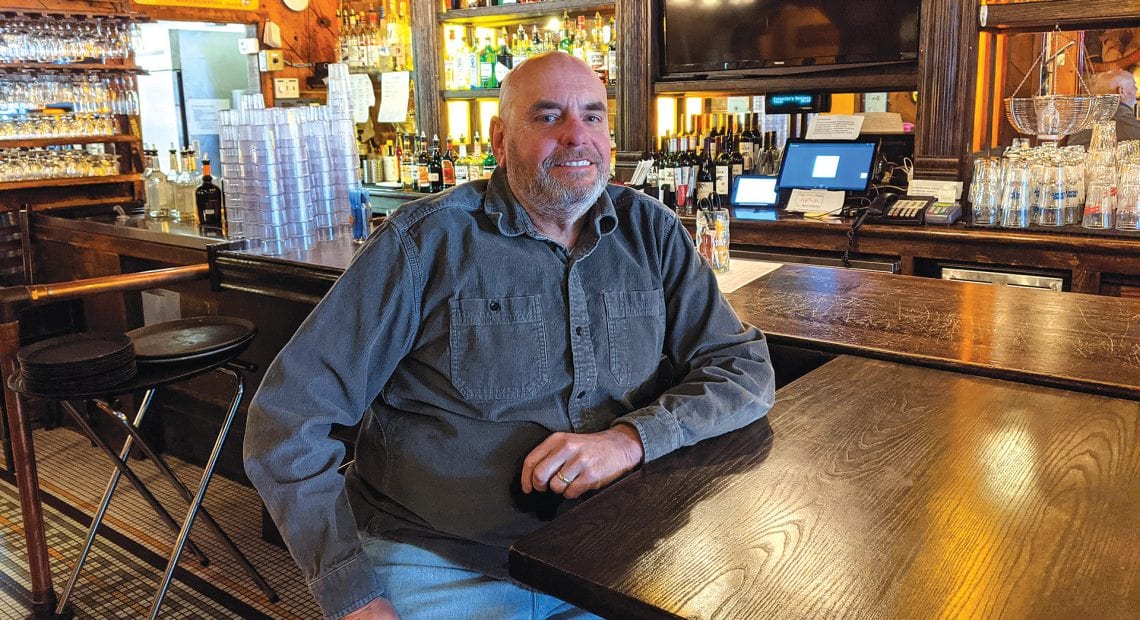
Fred Gohr says Fitzwilly’s shifted gears in a few ways last year, from expanded takeout service to outdoor dining under a large tent.

Fred Gohr says Fitzwilly’s shifted gears in a few ways last year, from expanded takeout service to outdoor dining under a large tent.

The weekend before March 17, Fitzwilly’s was gearing up for a great St. Patrick’s Day. That’s the day the Northampton St. Patrick’s Assoc. gathers for its annual breakfast, and then about 200 of them march on down to Fitzwilly’s and spend most of the day there.

“We have Irish bands, and we were sitting on 20 kegs of Guinness beer and a couple cases of Jameson’s Irish whiskey for a great big party — and it got pulled right out from under us,” owner Fred Gohr said.

Remember March 16? That’s the day restaurants — and most other businesses in the Commonwealth — were forced to shut down, on just two days notice, by order of Gov. Charlie Baker.

“It was awful,” Gohr went on. “We had a staff of about 75 people, and I had to tell them all, ‘we’re closed, and you guys have to go on unemployment for a while, and we’ll see what happens.’”

What happened, all across Hampshire County’s robust dining scene, has been a series of starts and stops, hope and despair, and especially two themes that kept coming up as BusinessWest sat with area proprietors: uncertainty, but also evolution.

“We were closed completely for a month or so, then we opened and started doing a little bit of curbside,” Gohr said. “And, honestly, when that’s all you’re doing — at least for us — it’s not very profitable.”

But takeout service, never a major factor in the business, has since morphed into a significant part of the model, accounting for about 25% of sales. Other restaurants have relied even more on pick-up service, because they don’t have the interior space or outdoor-dining opportunities that Fitzwilly’s has (more on those later).

“Last year, it felt like you were opening a new restaurant every single week. You had no historical data to compare; you couldn’t look at sales and ask, ‘how did we do this last time?’”

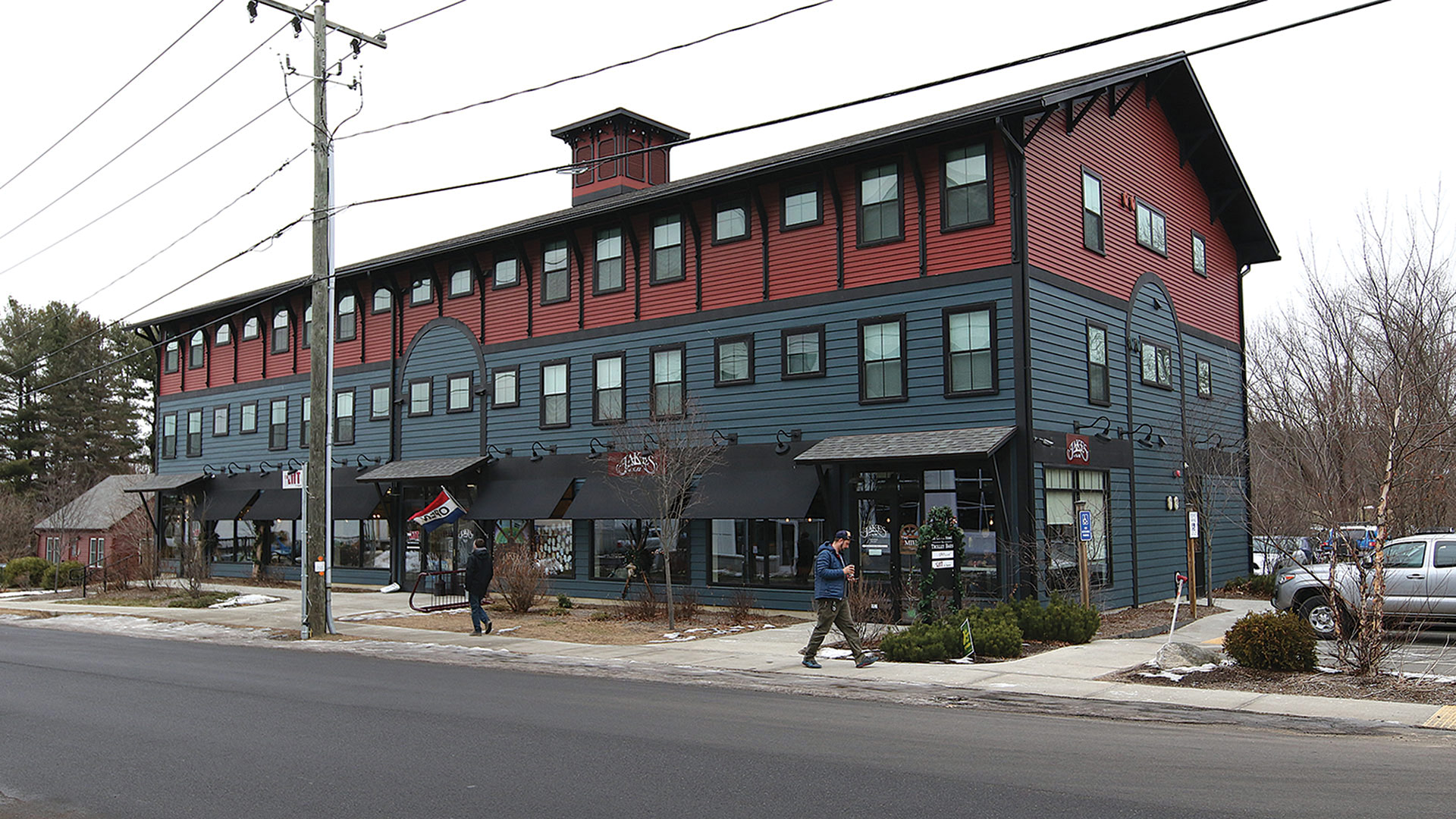
“It’s been such a whirlwind for small businesses the past 10 months, trying to get our bearings with all the changes,” said Alex Washut, who owns two Jake’s restaurants in Northampton and Amherst. “Last year, it felt like you were opening a new restaurant every single week. You had no historical data to compare; you couldn’t look at sales and ask, ‘how did we do this last time?’

That’s because there was no ‘last time’ — no comparable pandemic in the past century, anyway. “Everything was out the window,” Washut said. “We asked, ‘who are we going to be this week?’ Then there was a bunch of changes, and we had to conform to those, and then it was a new restaurant the next week.”

Like Fitzwilly’s, evolving to a takeout model early on was new territory for Jake’s. “We were never a takeout restaurant; maybe 3% of our gross was takeout food,” he said. “So we had no system for it.”

The various systems that area eateries developed, in the weeks last spring when takeout was the only option, involved details ranging from what containers to use to how to present food attractively and, for restaurants that opted for delivery, how to keep it warm in transit.

Casey Douglass

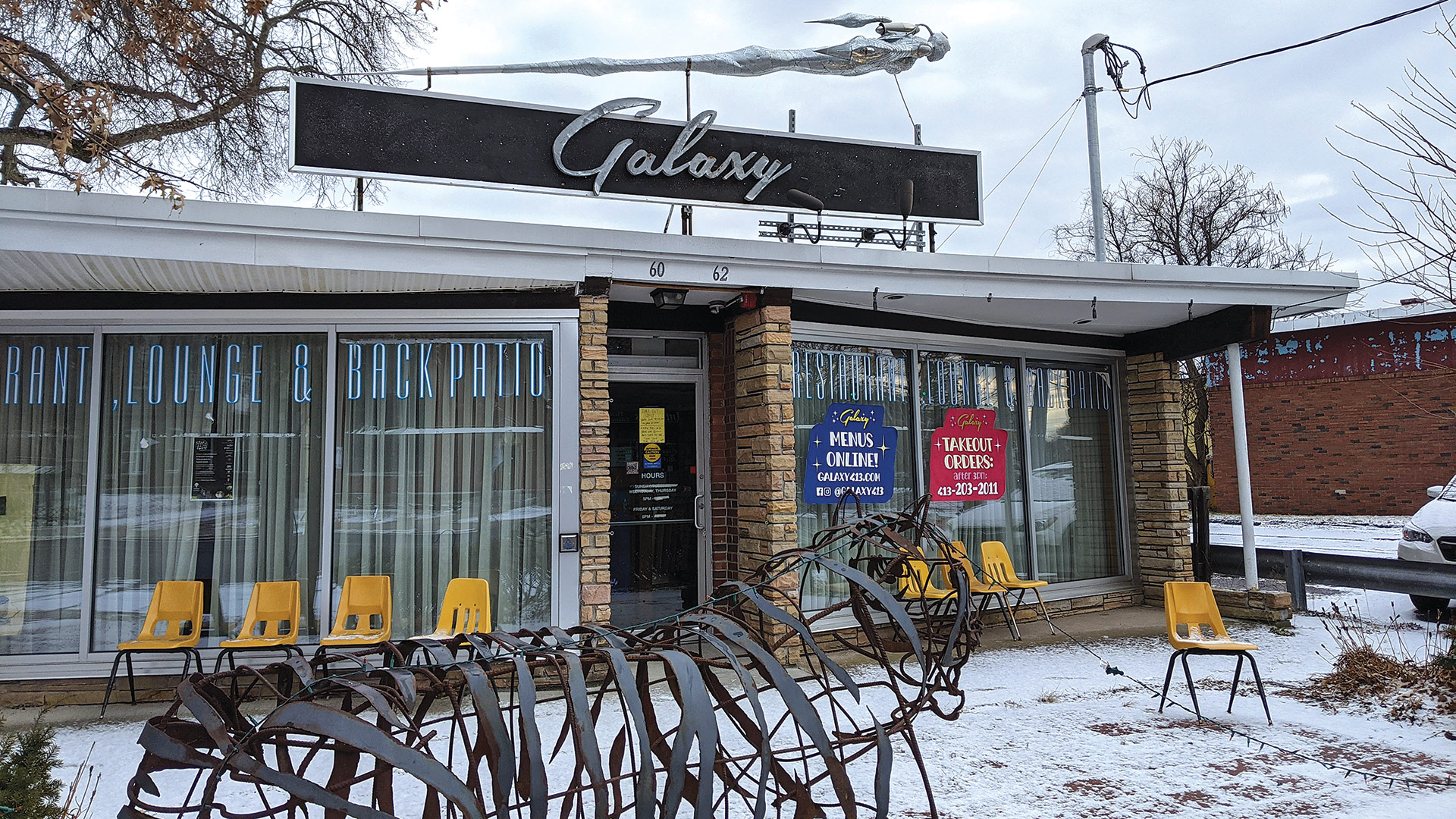
Casey Douglass with some of the supplies used in Galaxy’s takeout business, which has been its dominant model for almost a year.

“We were able to pivot quickly,” Washut noted. “From there, we moved to outdoor dining when that was allowed, but we had never had outdoor dining before” — and questions had to be answered regarding permitting, staffing, health and safety factors.

The positive, he noted, is that, if 2021 follows a similarly bumpy trajectory, “we know what’s expected, and we know how we’ll react in the spring, how we’ll react in the summer, and how we’ll react once the fall and winter come along.”

Indeed, the establishments that survived last year’s storm are, if not stronger for the experience, at least a little wiser, even as many are barely hanging on. The hope, of course, is that 2021 is nothing like 2020. But in this industry, so critical to the economy and cultural life of Hampshire County, nothing is certain.


Survival of the Fittest

“We’ve evolved a lot.”

Those were Casey Douglass’ first words when asked what this year has been like at Galaxy, the restaurant he’s operated in downtown Easthampton for the past five years.
The first evolution had to do with meeting customer needs. “We’re part of the food chain,” he said. “We have a lot of customers who don’t go to the supermarket. And we were like, ‘they’re going to be putting themselves at risk going to the supermarket as opposed to getting to-go.’

“So we went to the radio station and created an ad talking about ‘Casey’s comfort food,’” he went on. “And we switched to all a la carte, basic stuff — mac and cheese, mashed potatoes, roasted chicken, meatloaf — and we were cranking.”

So much that, when he secured a Paycheck Protection Program (PPP) loan, he first thought he wouldn’t need it. “Then a couple weeks went by, and we said, ‘thank goodness we got that.’ It changed so quickly.”

Sales dropped to about 45% of what they once were, but he kept 70% of the labor on board, because that’s the main purpose of the PPP program. That money got Galaxy through the end of June. Then things got rough.

Jake’s owner Alex Washut

Jake’s owner Alex Washut says it might be a while before his two locations (this one in Amherst) are packed with patrons again.

After losing a couple of cooks to unemployment, the restaurant cut back from five days a week to four, and when summer rolled around, fewer customers wanted takeout, but outdoor dining wasn’t a draw, either.

Fall brought a reprieve of sorts, with the milder, less-humid weather boosting outdoor dining, but the winter has been exceptionally tricky. Indoor dining didn’t prove to be a workable option; in a space that seats fewer than 50, the governor’s current 25% capacity mandate is especially onerous, and Douglass and his team also felt indoor dining might not be safe — or, at least, feel safe — for a clientele that skews older than some restaurants.

So as winter wears on, Douglass is pressing on with takeout only — now a hybrid of the comfort-food concept and the creative American meals he’s known for — a bank loan, and plenty of grit.

“We’re just looking at survival at this point,” he said, noting that costs like food, loan interest, utilities, and equipment leases don’t just go away when sales are down. “We’re efficient at what we do, but we’re losing about $15,000 a month. And that’s not going to be able to continue.”

However, he insisted, “I do think the spring will increase sales a couple thousand dollars a week, and that’s all it takes. We’ll be fine.”

Evolving to a takeout model was jarring at first to Washut, especially since his two locations — an 1800s-era building in Northampton and a new, modern structure in North Amherst’s Mill District — are so different, with a different set of clientele, and not cookie-cutter businesses like quick-service chains.

“We’re just looking at survival at this point. We’re efficient at what we do, but we’re losing about $15,000 a month. And that’s not going to be able to continue.”

“We didn’t know how to be a takeout restaurant. We were making $50 in sales a day — we were in shock,” he recalled. So he shut things down completely through April, secured a PPP loan and other grant funds, and reopened for takeout in early May, then outdoor seating a couple months later. Armed with the PPP, he was able to bring back the whole staff, and the breakfast-and-lunch establishment added dinners to generate more business. When funds ran dry, dinner went away.

These days, with takeout and limited indoor seating, Washut is bringing in about 30% of typical sales, and the combined staff is down from close to 50 to around 15.

Throughout all the changes, he has prioritized safety. Even if the governor’s 25% seating rule changes tomorrow, he said, “I’m not going to increase my dining room beyond 25%; my staff and I don’t feel that’s appropriate right now. There may be things we’re allowed to do but, in reality, we choose not to do.”

Gohr had a few advantages last year when it came to keeping people safe while generating business. One was a large parking lot next to Fitzwilly’s that he rented from its owner for tented outdoor dining. He could seat 70 there, while the city of Northampton’s decision to turn parking spaces on Main Street into dining space added about eight more tables to the restaurant’s existing sidewalk seating.

“We really had a great summer,” he told BusinessWest. “Through the summer, we had a capacity of 100-plus guests, the majority of them outdoors.”

Gohr’s other advantage is a large indoor space with a normal capacity of 280. The 25% mandate has hurt this winter, for sure, as did Baker’s 9:30 p.m. curfew, which was only recently lifted. But seating 70 — separated by plexiglass barriers — is better than seating a dozen.

“We’re very fortunate to have a lot of room in here, and we’re able to distance people. These places that have even 50 seats — and there’s a lot of places in town with just six tables — but even the ones with 50 seats, now you’re down to letting 12 people in. You can’t survive. So we’re fortunate given the size we have. Seventy people gets us by. We can survive on that if it doesn’t change.”

Casey Douglass is confident Galaxy will return

Casey Douglass is confident Galaxy will return to its go-to dining status in Easthampton once it’s safe to eat out again.

A mild winter, weather-wise, helps as well. “If you start getting snowstorms on weekends on top of all the other stuff, then we’d be in trouble. But we’ve had pretty good weekends.”

A PPP loan and other grants also helped, and he’s applied for a second PPP loan, with this round capping the disbursement for certain hard-hit industries, including restaurants, higher than the first, so he’s hopeful for another influx to carry him to the spring. He’s already in talks about renting the parking lot again, and the city has discussed moving outdoor seating into Main Street again as well.


Pressing Through

Still, Gohr, like every other restaurant owner, knows 2021 could be another year of upheaval. “We’re hoping everyone gets the vaccine and we get back to normal. But I don’t think it’s going to be real quick.”

He’s appreciative of customers eating in the restaurant, and said gift-card sales were strong over the holidays, although not to the level of a typical year, when more people are out shopping. And he does believe outdoor dining will be a hit again. But it’s harder to pin down when customers will flock to restaurants at pre-2020 levels.

“My gut tells me it’s not going to be in the spring; it’ll be late summer or fall before we get to that point,” he said. “The mindset that I see in the public is all over the place. I know people — friends and some of my regular customers — that have not been anywhere since March. And then there are others, the minute we opened the doors, they were back. Everybody’s obviously more careful, but everyone’s comfort level is completely different. It’s a wide spectrum.”

Douglass senses real community support for Galaxy, noting that some regulars stop by three times a week, and others drop big tips and cheerlead for the establishment among their peers.

“I feel like, at least in this community, [the pandemic] hasn’t hurt on a big scale economically,” he said. “We haven’t had factories shut down. I’ve heard people are paying their rents. And I think, come the spring, people are going to be pouring out. As much as people are still nervous, if the service staff has been vaccinated, if a majority of customers have been vaccinated, people will be coming out in droves. I think people are going to hunker down all February, and then in March, with the outdoor dining, people are going to be like, ‘sign me up.’”

If that’s especially optimistic, Douglass balances the thought by saying he’s had some dark days as well, wondering if it’s worth the effort to stay open right now, and fretting over the possibility of a snowy weekend that could wipe out almost an entire week’s worth of revenues. It’s his staff who have been most enthusiastic about staying open, believing it’s important to stay in the public eye, so that Galaxy is a go-to destination when people start emerging from winter hibernation.

Still, he said, “everyone wants to go back to what normal is, but if this goes on long enough, does normal shift?”

It’s a good question, and one Washut asks himself as well. “Every day, I’m thinking about my business, trying to find that crystal ball,” he said, meaning no one really knows how 2021 will go. But he’s hopeful.

“Once it gets warm again, once the outdoor dining opens up for food-service establishments, I think the initial rush of business will be great. Unfortunately, with restaurants, it’s really hard to be proactive; we’re constantly in a reactive mode.”

Specifically, it’s tough to staff up for a rush that might be around the corner, but restaurants also don’t want to be caught flat-footed if things pick up quickly. And things might not pick up much at all in 2021.

“This will be with us for a lot longer than we want to tell ourselves, and at some level, we have to come to terms with that,” he said. “I don’t think we’ll be hosting 60 to 80 people in our dining rooms this year; we won’t have that level of business for a while.”

Yes, the combination of warm weather — and outdoor dining — come spring, and the prospect of rising herd immunity from the vaccines, might inject some life into the industry, but next winter could be just as difficult as this one, depending on how the pandemic’s endgame goes — if an endgame even materializes in 2021.

Meanwhile, Washut appreciates any community support he gets. “If you only come in for gift cards, awesome. If you only get takeout, awesome. Maybe we’re not in a financial position to pass that goodwill on in an equal manner, but I’ll be damned if we won’t later on. If we all keep that attitude in every level of our life, we’ll get through this for sure.”


Joseph Bednar can be reached at [email protected]

Accounting and Tax Planning Special Coverage

Reading the Fine Print

By Julie Quink


The economic stress created by the COVID-19 pandemic compelled business owners and individuals to apply for the relief funds provided by the Small Business Administration (SBA) in the form of Paycheck Protection Program (PPP) loans and Economic Injury Disaster Loans (EIDL).

The rollout of these programs came at a time when the reality of the pandemic began to unfold, creating a frenzy for businesses and individuals to apply for the funding, in some cases, before the funding ran out.

Before the ink on the guidance and requirements for these stimulus funds was dry, applications for the funding were being processed, and funds were in the hands of businesses and individuals. To expedite getting funds to those who needed them, much of the clarification about the use of the funds, taxability of the funds, and criteria for forgiveness were ironed out after the funding was in hand and being spent by the recipients. What ensued was months of additions to the SBA’s frequently-asked-questions (FAQ) document clarifying the eligible uses of the funding to ensure forgiveness and further attempts by Congress and the SBA to adjust program requirements as the pandemic continued.

More than 50 FAQs were issued to clarify the PPP requirements, and 20 relating to the EIDL loans.

In the frenzy to obtain the funding for the PPP and EIDL loans, it became clear that not everyone read the fine print, or that the fine print changed as clarity was provided for these programs. The fine print provided recipients with additional requirements for the funding they may have been unaware of at the time of application or even during the spend-down period.

As trained professionals, accountants and business advisors spent months learning the requirements and pivoting as they changed. It would be unreasonable to assume that those who received the funding could keep up with the fast-paced changes that were occurring, including the fine print. For accountants, there have been times we could barely keep up with the changes.

Julie Quink

Julie Quink

“With the second round of PPP funding recently released and requirements more recently clarified, reading the fine print should hopefully not be such a daunting or surprising task.”

The result is that those receiving the funding need to be aware of those items in the fine print for the PPP funding and the EIDL loans that may impact them.


EIDL

Recipients of the EIDL loans, which could be up to $2 million in amount, were required to sign loan paperwork, outlining the terms of the funding. In the fine print of these loan documents are provisions that the borrower should look out for and be aware of. Some of the provisions are:

• For loans under $25,000, collateral is not required. For loans of more than $25,000, the SBA is provided collateral through business assets, current and future. Transfers or sales of collateral, except inventory, require prior SBA approval. In addition, prior approval is required by the SBA in the event these business assets will be used to secure other financing;

• Borrowers are required to keep itemized receipts, paid invoices, contracts, and all related paperwork for three years from the date of disbursement;

• Borrowers are encouraged to the extent feasible to purchase only American-made equipment and products with the proceeds of this loan;

• Borrowers must keep all accounting records five years before the loan and three years after in a manner satisfactory to the SBA;

• Borrowers must agree to audits and inspection of assets, if requested by the SBA, at the expense of the borrower;

• Borrowers have a duty to provide hazard insurance on collateral and may be asked to provide proof;

• Within 90 days of the borrower’s year end, financial statements, in the format specified by the SBA, are required to be furnished by the borrower;

• The SBA may require a review-level financial statement for a borrower upon written request by the SBA at the borrower’s expense;

• Prior approval from the SBA is required for distributions of the borrower’s assets to the owners or employees, including loans, gifts, or bonuses;

• Borrowers must submit, within 180 days of receiving a loan, an SBA certificate or resolution. For most borrowers, the SBA has followed up or is following up on this requirement now;

• Default under the provisions may result if a borrower merges, consolidates, reorganizes, or changes ownership without prior SBA approval; and

• The loans can be prepaid, without penalty, if the borrower does not need the funds or secures other financing.

For most borrowers, the requirements may be routine considerations, but for others, these may be new requirements.


PPP

In the fine print of the PPP loan documents are also provisions that the borrower should consider, as follows:

• For borrowers who received a PPP loan greater than $2 million, the SBA has indicated it will likely audit those borrowers for compliance with spending requirements;

• Although Congress has confirmed that the proceeds of the PPP loan are not taxable and the expenses paid with PPP are deductible, some states, such as Massachusetts, are not following the federal laws relative to forgiveness of the PPP loans as they have their own rules. For individuals in Massachusetts, the loan forgiveness is taxable income. This affects sole proprietors, S-corp shareholders, and partners of partnerships. A bill, co-sponsored by state Sen. Eric Lesser, state Rep. Brian Ashe, and five other co-sponsors, has been proposed to allow for non-taxability of the forgiveness amounts in Massachusetts;

• Depending on when the PPP loan was funded, the borrower may have a repayment term of two or five years for the loan; and

• Although forgiveness may be granted, the borrower should retain the records used for forgiveness. Generally, most records should be retained for seven years.


Bottom Line

Navigating the fine print is key for those who received the PPP and EIDL loans. The navigation becomes increasingly more difficult when the requirements continue to change and the funds have already been received and used to operate the business.

With the second round of PPP funding recently released and requirements more recently clarified, reading the fine print should hopefully not be such a daunting or surprising task.


Julie Quink is managing partner with West Springfield-based Burkhart Pizzanelli; (413) 734-9040.

Insurance Special Coverage

Are You Covered?

By Mark Morris

Christine Fleury

Christine Fleury says making alterations to the home — a common sight during the pandemic — could change insurance needs.

Call it the great migration indoors.

When the pandemic first hit, many people were forced to quickly convert their homes into offices, schools, and entertainment centers. Some in the insurance industry predicted this might lead to more homeowners insurance claims. In reality, it didn’t.

Similarly, as people spend more time in their homes, they also depend more on their water, electrical, and heating systems to work. While some insurance claims have been filed due to these systems failing after increased use, the increase has not been notable.

In fact, Christine Fleury, Personal Lines manager at Encharter Insurance in Amherst, said companies have actually seen a decrease in severe claims from homeowners. “As people spend more time at home, they are catching that large loss before it happens.”

Corey Murphy agreed, noting that, because people are home, they are noticing and taking care of seemingly minor problems like leaky gutters.

“As people spend more time at home, they are catching that large loss before it happens.”

“As people pay more attention to fixing the small issues, they prevent the larger problems from ever happening. A little preventive maintenance goes a long way,” the president of First American Insurance Agency in Chicopee noted.

Most homeowners insurance claims are the result of severe weather incidents. When COVID-19 first hit, winter was ending, and warm weather soon followed. Bill Trudeau, executive vice president and partner at HUB International New England in Agawam, said the mild winter this year has helped keep claims down.

“Other than a couple isolated wind events, the weather has behaved itself, and that means claims have tended to be in line with company projections.”

The pandemic has thrown a few wrinkles into the home-insurance picture this year, however.

For instance, many homeowners were motivated to invest in substantial improvements to their homes. Home construction and improvement contractors point directly to being cooped up in the house as the main motivator for people choosing to make improvements to their property.

What impact does all this renovation work have on the homeowners insurance carried on the house? The answer depends on what improvements are made and what kind of coverage is already in place.

Everyone BusinessWest spoke with agreed that, for small or cosmetic improvements, there is no need to contact an insurance agent. Some larger projects, however, may require altering or increasing a home’s coverage.

“Adding square footage to your home, doing a full remodel, or building a garage would all be reasons to consult your agent to make sure you have enough coverage,” Fleury said.

Even if they are not taking on home improvement projects, Trudeau advises people to call their insurance agent at least every couple of years so they understand the coverage that’s in place and whether they may need additional coverage.

“You can work with your agent to run a cost estimator,” Trudeau said. “It’s a software tool that takes the data from your home, including any upgrades, then shows you the current replacement cost if it was all suddenly gone.”

With the lifestyle changes wrought by the pandemic, it’s more important than ever to make sure the home — and everyone in it — are protected. Here are some key factors to consider.


Home Work

While they may not have set foot in the office in months, people who work from home are still protected from on-the-job injuries by workers’ compensation coverage. Office workers tend not to get injured on the job, but the coverage is in place if there is an incident.

“There has never been a distinction between whether employee actions emanate from an office at the company or from an office at the person’s home,” Trudeau said. “Because this coverage is broader in scope, COVID did not force us to make changes to workers’ comp plans.”

Bill Trudeau

Bill Trudeau says claims have been kept in check recently by a mild winter.

It’s not unusual for people working from home to have a computer, monitor, and even a printer that belongs to their employer. Murphy said some jobs may require employees to have additional business assets in the home, so it might be wise to make sure everything is covered. “Most policies will pay a little toward assets being home, but it’s usually a minimal amount.”

With homes serving as business offices and classrooms, more people — and their pets — are home at the same time. According to Trudeau, homeowners’ insurance policies consider any issues with an animal as a “strict liability event,” meaning there is no way to defend the action.

“If someone knocks on your door and your dog bites them, it generally means the insurance company pays the claim,” he explained, adding that, as people acquire more pets, the likelihood of claims increases. Most insurance companies keep a list of dog breeds they will not cover because those breeds have higher incident rates.

“You can work with your agent to run a cost estimator. It’s a software tool that takes the data from your home, including any upgrades, then shows you the current replacement cost if it was all suddenly gone.”

Murphy encourages pet owners to speak with their agent because these restrictions can vary widely among insurers. “Just because one company doesn’t want to cover your breed of dog, check with another company; it’s not a universal list.”

Whether they have pets or not, Fleury advises her clients to carry personal liability coverage, commonly known as an umbrella policy, that supplements both homeowners and auto coverage.

“When we write home and auto policies for a customer, we always recommend buying personal liability coverage as well because it gives you that additional safety net,” she said. A typical umbrella policy costs less than $200 but can provide up to $1 million in additional liability coverage when the limits of homeowners or auto coverage are exceeded.

While dog bites and leaking water pipes are obvious reasons to carry homeowners insurance, it can be much harder to detect a leak when personal data is compromised. A significant increase in identity theft has motivated insurance companies to begin offering identity-theft protection as part of their homeowners policies.

“With everyone at home and increased online activity, it’s more important than ever to safeguard your privacy from someone getting into your system and doing real damage,” Trudeau said.

Apart from identity-theft insurance, he advises everyone to follow best practices such as using multi-factor authentication. For example, when working on an important account online, a code is sent to the user’s personal phone that must be entered to gain access.

Corey Murphy

As people pay attention to small issues in the home, Corey Murphy says, they can prevent larger issues from ever arising.

When fraudsters accesses online bank accounts, they often add a payee into the account. Trudeau advises customers to check with their bank to make sure it uses multi-factor authentication to prevent an outsider from accessing their accounts and to make sure it’s turned on at home.

“If someone has logged into your computer and they don’t have your phone, they can’t get that code,” he said.

Fleury said her agency includes identity-theft coverage in all its homeowners policies. “We feel it is important insurance and recommend at least $5,000 worth of coverage for identity theft.”


From a Distance

The pandemic has changed the insurance business in other ways. Typically, when a homeowner files an insurance claim, an adjuster will visit the home and walk through to personally inspect the damage. With COVID-19 concerns, that’s happening much less often.

“In some ways, COVID is moving insurance companies along the digital side of things,” Murphy said. “They are allowing homeowners with a claim to submit photos and even have video calls if the insurer is set up for it.”

The trend toward relying on consumer photos rather than a visit by an adjuster follows what’s been happening on the auto-insurance side for some time.

“If someone knocks on your door and your dog bites them, it generally means the insurance company pays the claim.”

“Many auto insurers have created apps where the person making the claim takes a photo of the damage, uploads it for an adjuster to review, and then the payment is processed,” Fleury said.

The move toward more digital interaction is no surprise to Trudeau.

“Long before COVID, people e-mailed pictures and documents to us,” he said. “Companies have simply accelerated the move to modernization by using many tools they already had.”

Murphy likes to remind customers that every insurance company offers something a little different that their competitors. That’s why it’s important to put some thought into selecting a homeowners insurance policy.

“People need to assess what they have, in terms of their house and what’s in it, and then speak with an agent about what needs to be covered,” he said, adding that it’s about matching a person’s situation with the company that can best provide coverage for their needs — especially at a time when those needs, and demands on the home, are still in flux.

Community Spotlight

Community Spotlight

By Mark Morris

Jennifer Nacht

Jennifer Nacht says a heavy focus on outdoor experiences last year helped Lenox weather the economic impact of the pandemic.

For the past year, the town of Lenox showed what happens when uncertainty meets a can-do attitude.

Despite the formidable challenges of COVID-19, Town Manager Christopher Ketchen said, Lenox residents and businesses have been remarkably resilient.

“Throughout the pandemic, our residents demonstrated how much they love our town,” Ketchen said. “They make their homes here, and our businesses are invested in their customers and their community.”

What began as a normal year of planning events at the Lenox Chamber of Commerce was suddenly derailed in March. Once they realized the pandemic was going to last more than a couple months, Executive Director Jennifer Nacht said, chamber members and town officials quickly met to put together a plan to salvage at least some activity for Lenox.

“We went through each season and developed a general outline of things we could do,” Nacht said. “Even though we did not know what the year was going to look like, we were able to turn around some great activities.”

Like many towns, Lenox encouraged restaurants to offer tented outdoor dining and allowed them to expand outdoor seating into public parking spaces. The town also added covered dining terraces in public spaces around town.

“The select board lifted alcohol restrictions so people could bring a bottle of wine to Lilac Park, for example, where we had set up a dining terrace,” Nacht said.

“You couldn’t get a parking place at the trailheads in town. Even obscure trailheads that were once known only to a handful of locals were crowded.”

Some developments last spring were rough. In May, the town learned that, due to COVID-19 concerns, Tanglewood had canceled its 2020 season. For some perspective on the importance of Lenox’s largest summer attraction, a Williams College study in 2017 estimated the economic impact of Tanglewood to Berkshire County and Western Mass. at nearly $103 million annually.

Because they didn’t know what to expect when Tanglewood called off its season, Nacht said everyone concentrated their efforts on making Lenox a welcome and inviting place. Outdoor dining was a first step that helped to establish a more vibrant atmosphere, and it inspired further activities.

For example, the Lenox Cultural District and the chamber organized Lenox Loves Music, an initiative that featured live music performed at the Church Street Dining Terrace for seven straight Sundays in August and September. It was a hit.

“Because we were able to turn on a dime and get everything set up, we were able to make the outside experience fun,” Nacht said. “As a result, we were better able to weather the financial impact of the pandemic.”


Hit the Road

If entry points to walking and biking trails are any indication, Ketchen said the pandemic helped many people discover the town’s outdoor attractions for the first time. “You couldn’t get a parking place at the trailheads in town. Even obscure trailheads that were once known only to a handful of locals were crowded.”

For more than 40 years, Lenox has held Apple Squeeze, a harvest celebration that takes over much of the downtown area with 150 food and craft vendors. The event was canceled for 2020 because of concerns that, even with restrictions, too many people would gather, leading to unsafe crowd sizes.

Lenox Loves Music

Lenox Loves Music was a hit during a time when live music was in short supply.

As an alternative, the chamber and American Arts Marketing developed the Lenox Art Walk and scheduled it for the late-September weekend when the Apple Squeeze would have taken place. Forty artists set up in different areas around town in ‘artist villages,’ which were arranged so no more than 50 people could be in one area at a time. Foot-traffic flow was also designed to keep people moving through the exhibits.

Nacht said the Art Walk received great feedback, and the artists involved loved exhibiting their work. The event also led to phone calls from event organizers from several Eastern Mass. towns who wanted to know how to stage a similar event.

The old adage about necessity being the mother of invention definitely has proven true for Lenox. “We just tried some different things that we probably would have never attempted, or done so quickly, had it not been for the pandemic,” Nacht said.

In the beginning of the summer, traffic in town was about half of what it would be during a normal season. As the weather became warmer and travel restrictions eased around the state, both traffic and business picked up.

“We began seeing more day trippers, many from the Boston area who had never been out our way,” Nacht said, adding that good weather in the summer and fall extended the outdoor season nearly to Thanksgiving.

While lodging in the area was restricted by the number of rooms that could be offered, she noted, from September through November, inn and hotel rooms were booked to the capacity they were allowed.

As the owner of the Scoop, a Lenox ice-cream store, Nacht was one of many business owners forced to move customer interactions outdoors. She found a fun way to adjust.

“We did it sort of Cape Cod style, where people order at one window and pick up their ice cream at a second window,” she explained, adding that, while 2020 was not as successful as previous years, the Scoop still saw steady business throughout its season. Even non-food stores, inspired by all the outdoor activity, set up tents in front of their shops to add to the vitality.

In a normal year, Lenox Winterland is a tradition to kick off the holiday season that features a tree-lighting ceremony and Santa Claus meeting with children. In this very-not-normal year, Winterland was forced to cancel.

Instead of losing their holiday spirit, however, the Cultural District and chamber presented a creative alternative. Local businesses and artists teamed up to decorate 30 Christmas trees, which were displayed in a tree walk through town. Nacht said the inaugural Holiday Tree Walk was so well-received, plans are in the works to expand and make it an annual event.

“Despite the obstacles of COVID, we had a decent tourism business,” she said. “We’ll continue to offer more fun events to keep the vibrancy of the town going and improving.”


Passing the Test

Lenox has always been proud of its cultural amenities, such as Tanglewood, Edith Wharton’s house at the Mount, Shakespeare and Co., and others. As those were scaled back, Ketchen said, the town’s outdoor amenities gained exposure they might not have otherwise.

“Once we are allowed to enjoy our cultural institutions to their fullest again, people will also have more awareness of all the recreational opportunities Lenox has,” he told BusinessWest. “That’s a big positive for us as we look to the future.”

While Nacht hopes to see Tanglewood up and running, at least in some form, in 2021, she admits the past year was quite the learning experience. “We are so dependent on Tanglewood, it was an interesting test to see what we could do without Tanglewood there.”

Despite the challenges put on municipal budgets, Ketchen said Lenox was able to pursue several modest infrastructure projects in 2020, such as maintaining roads and public-utility infrastructure. “When folks are ready to come to Lenox for the recreation and the culture, the public utilities and infrastructure will be waiting for them.”

“We began seeing more day trippers, many from the Boston area who had never been out our way.”

In short, Lenox is not only weathering the COVID-19 storm, it’s finding ways to come out stronger on the other side. Indeed, when this community, which depends on cultural tourism, was challenged to find creative solutions to stay afloat, it answered the call. Nacht credited Lenox businesses for making quick and significant adjustments in their operations.

“It was really inspiring to see our businesses make the best out of a not-so-great situation,” she said. “It says a lot about their commitment to our town.”

Undaunted by the near future, Nacht noted several businesses are planning for April openings. And she looks forward to the new year knowing that Lenox can present all the outdoor events that worked well in 2020.

“With knowledge, you just learn to do things better, and we learned a lot last year,” she added. “Once the tulips come out, that’s when we start to see everything come alive again.”

Education

Balance Sheet

Dawn Forbes DiStefano

Dawn Forbes DiStefano

For Dawn Forbes DiStefano, it was the quintessential all-or-nothing proposition.

As the search for a successor to Joan Kagan, Square One’s long-time president and CEO, commenced last summer, Forbes DiStefano knew what few outside the organization — and probably few inside it, as well — knew: if she did not prevail in the nationwide search, she would no longer be working for the Springfield-based provider of childcare and other services for children and families.

That’s because the position she held at the time — executive vice president — was to be eliminated as the agency continued on a course of restructuring its top management.

But Forbes DiStefano, one of roughly 60 candidates to apply for the post, certainly had a leg up on the others — in large part because she was in that position. But also because she and Kagan had entered into what she described as a ‘shared management’ situation, one that familiarized her with all aspects of this operation and fully prepared her for the role she was seeking.

“I don’t think it was a shock that I was able to answer questions with more detail and probably more insight than other candidates, because I worked here,” she told BusinessWest. “But I worked really hard over the past 30 years to position myself to apply for a position like this.”

By that, she was referring to a lengthy career in the nonprofit realm, most of it at the YWCA of Western Massachusetts, but the past five at Square One, where she has displayed what she and others consider perhaps her best strength — an ability to combine a passion for the agency’s mission with a strong business sense and attention to the bottom line needed to make sure a nonprofit can survive and carry out that mission.

It’s a mindset that embodies a quote she attributes to Sr. Mary Caritas, the long-time president of what is now Mercy Medical Center, and uses often: “no margin, no mission.”

Her outlook on nonprofit management, and her take on her own management style and the need for that balance between business and mission, are further summed up as follows:

“My management style is direct, it’s collaborative, it’s mission-focused, with an acknowledgement that we’re running a business. And to a certain extent, as a nonprofit, that’s a tax status — it’s not a way to do business.”

Forbes DiStefano, who took the helm in late December, leads the agency at a time of perhaps unprecedented challenge — most of it brought on by COVID-19, although it was a difficult time for nonprofits even before the pandemic reached Western Mass. While coping with the pandemic and its day-to-day decision making, execution, and ongoing efforts to create an environment “not in crisis,” she is also planning for the long term and life after COVID.

“My management style is direct, it’s collaborative, it’s mission-focused, with an acknowledgement that we’re running a business. And to a certain extent, as a nonprofit, that’s a tax status — it’s not a way to do business.”

She admitting to disliking the word ‘normal,’ at least in the way many are using it now, and told BusinessWest she isn’t sure what ‘normal’ will mean moving forward. She will help create at definition, at Square One, anyway, while also continuing to build on the legacy and broad portfolio of programs she’s inherited.

“When Joan arrived, we were the expert in early education and care, and we remain the expert in early education and care,” she explained. “She knew that she wanted to focus on families and a holistic, family approach; she knew that children would thrive and families would stabilize and become self-sufficient if we were serving whole families. We have the foundation, and we want to keep building on it.”

For this issue and its focus on education, BusinessWest talked at length with Forbes DiStefano about her new role, her long career in nonprofit management, and how she intends to apply all she has learned to effectively write the next chapter in this agency’s long history.


School of Thought

In many ways, Forbes DiStefano said, her career has come full circle. Well, sort of.

Indeed, she went to Boston College and then UMass Amherst with the goal of becoming an elementary-school teacher, although she never really made it into the classroom as an instructor, as we’ll see in a minute.

But she is now leading an agency specializing in early-childhood education, but not devoted to that exclusively, as it was decades ago.

Dawn Forbes DiStefano

Dawn Forbes DiStefano wants to build on Square One’s foundation of serving whole families, not just children.

Flashing back to her college years, or just after she graduated in 1993, to be more precise, Forbes DiStefano said she encountered a challenging job market and had trouble breaking into the profession locally. She recalled a conversation she had with the superintendent in Southwick, who happened to be her high-school principal in West Springfield, about her struggles.

“He told me that it might have been worthwhile for me to do my student teaching here in Western Mass. instead of in Boston — we hire local.”

After spending some time at home thinking about what to do with her life and career, she decided to take what she could find, and this was a job at the YWCA of Greater Springfield as a receptionist. She didn’t take it expecting to stay more than 23 years, but that’s what happened, because, well, “I found my home … I found my calling,” she explained. “I was just smitten by being surrounded by women and girls whose mission — and passion — was to make life better for women and girls.”

Despite this enthusiasm, boredom quickly settled in. However, she would soon take on a new and rewarding role, somewhat by accident.

“We would get piles of mail every day with grant applications, RFPs, and proposals, and told the executive director at the time, Mary Reardon Johnson, ‘we should be applying for some of these grants; we’re doing amazing work here,’” Forbes DiStefano recalled. “She sort of flippantly said, ‘I don’t care what you do, just don’t lie too much; practice, do whatever you want to do, stay busy.’”

She did all of that and started responding to grant applications, and in short order, she started to get some approvals. And this eventually led to a role as grants manager, and then as director of Resource Development, playing a lead role in a capital campaign and raising funds for a number of building projects and new-program creation.

“It was an exciting time to be a part of the YWCA,” she said, adding that, while her teaching degree came in handy in many ways, she never did enter the classroom.

In late 2015, with a change of leadership at that agency, she decided it was time to seek a new challenge, and to get some advice on what the next chapter could and should be, she invited Kagan out for coffee.

“With 100% of our families experiencing something, whether it’s poverty, hunger, or homelessness, we know that the majority of our children have experienced some level of trauma at some point in their life.”

In that conservation, she told Kagan she liked grant writing and knew there were opportunities for people with that unique and coveted skill. But she said she couldn’t write grants for just anyone or anything.

“I told her that the magic of grant writing comes because it’s something I care deeply about,” she recalled. “I told her I wanted her help because I had been offered a few opportunities, but wasn’t sure I could make it with those agencies.”

She wasn’t expecting to be given a job offer, especially because the agency had recently hired Kris Allard as vice president of Development and Communications, and wasn’t — at least initially. But she credits Kagan with sensing, and then seizing, an opportunity to strengthen Square One by bringing her on as a full-time grants officer.

But her role would soon involve much more than that.

Indeed, she would take a deep dive into the agency’s financial status, which at that time was “very unique and somewhat worrisome,” as she put it, and would eventually take on a broader role as chief Finance and Grants officer.

Over the next several years, she and Kagan would guide the agency through some difficult but necessary steps to stabilize the agency financially. These included closing Square One’s early-childhood education center in Holyoke in early 2017 — the agency still has a presence in that city with other services — and also a consolidation of services focused on infants and toddlers, with a greater emphasis on preschool.

“It was a very methodical and financially driven decision-making process,” she recalled. “And this is where Joan and I started finding a balance between the two of us. Joan is a social worker; she understands people and the strengths people bring to an organization, and she is phenomenal at program development. I think what I brought to her is an equal understanding of people and certainly the same amount of passion for children, but I really came to it with a fiscal mindset that we need to get this business financially viable.”

Through a hard focus on maximizing enrollment, creating efficiencies, and reducing expenses (often, again, as a result of difficult decisions), the agency, which was seeing annual deficits of $1.5 million or more only a few years ago, was at the break-even point for fiscal 2019.

“We have seen a massive improvement in our financial stability,” she said. “And we did that while keeping children and families at the core of what we do.”


Successful Succession

Forbes DiStefano told BusinessWest that she credits Kagan with taking a number of steps to successful transition to Square One to new leadership, work she believes will create a seamless passage of the baton.

“Joan reorganized Square One back in the fall of 2019,” she explained. “One of the senior-level administrators was leaving, and she [Kagan] took the opportunity not to announce her retirement, but certainly organize and structure the agency so it would be ready for when she was ready to announce.”

As part of that organizing and structuring, Kagan created an executive vice president’s role for Forbes DiStefano, one she said would enable her to make a desired transition away from the finance side of the operation and into a shared leadership role.

“From the fall of 2019 to the summer of 2020, we enjoyed that relationship,” Forbes DiStefano explained. “Joan was very mindful, very practical, and extremely generous in that space; I think some leaders want to be in a shared-leadership position, but then, when it really comes to fruition, they don’t want to be. Joan really lived it.”

As noted, there was a nationwide search for a successor, something the agency’s board, Kagan, and Forbes DiStefano all thought was necessary. In the end, she said her 30 years of experience with nonprofits, her five years in Square One in roles that exposed her to all aspects of its operation, and especially that time in that shared-leadership role, positioned her to excel in that search.

Moving forward, she intends to use all that experience and learning, both on the job and in the classroom — over the years she has added a bachelor’s degree in nonprofit management and a master’s degree in nonprofit management and finance — to guide Square One through the next chapter in its long history.

While doing so, she must first contend with the pandemic, which has tested the agency in myriad ways. Overall, she said it has been Square One’s goal to create a calm, safe place in the midst of the pandemic, and in most all ways, it has been successful in that mission.

“We’re making decisions minute by minute about the health and safety of everyone at Square One,” she said. “What we have done very well is read, digest, interpret, and then operationalize all the CDC and DPH guidelines for health and safety. We don’t want you to be in crisis when you’re here at Square One. We understand that there’s a crisis going on our world, but our job, every single day from 7:30 to 5:30, is to create a stable, warm, non-crisis, non-traumatic environment for children to be able to learn and thrive.”

Meanwhile, Forbes DiStefano said she, Allard, and other members of the leadership team are focused on “expanding what we do well.”

That broad phrase includes early-childhood education, obviously, but also other services, including those focused on the mental health of children, needs that have only grown during the pandemic.

“With 100% of our families experiencing something, whether it’s poverty, hunger, or homelessness, we know that the majority of our children have experienced some level of trauma at some point in their life,” she explained, noting that Square One has, in recent years, expanded what would be considered traditional mental-health services — referrals to therapists — with an early-childhood mental-services center called Cornerstone.

Launched as a pilot program, the center has grown in size, scope, and services.

“It’s designed to be both a physical and a social/emotional space — you can’t help but feel calm when you walk in,” she explained. “And I think it’s the most outstanding achievement we’ve made at Square One in the last five years.

“What we’ve created is a space where children can come with their peers,” she went on, adding that, instead of one-on-one therapy, there are group activities, such as games and book reading. “Everyone is experiencing some level of healing; it’s children helping each other learn how to cope, have healthy reactions, and reduce the triggers. And teachers are learning as well; they’re watching the therapist engage with the children.”


Bottom Line

Moving forward, Forbes DiStefano said it’s her goal — and now her job — to build on the solid foundation that’s been built at the agency and continually look for new ways to carry out the overriding mission: to improve quality of life for children and families. And there are many aspects to that work.

“It’s my job to welcome everyone to the table, make sure that our services are working seamlessly, and then find opportunities to bring new partners, new donors, new investors, and new ways of thinking to build on the good work that exists here,” she said.

That’s all part of managing Square One with that mindset, and with that balance, she described earlier.

As she said, ‘nonprofit’ is a tax status; it’s not a way to do business.


George O’Brien can be reached at [email protected]

Education

Diversity, Equity, and Inclusion

Christina Royal

Christina Royal

Yves Salomon-Fernández

Yves Salomon-Fernández

Harry Dumay

Harry Dumay

Three local college presidents are among only 13 nationwide to be recognized last week for leadership in the areas of diversity, equity, and inclusion by the Assoc. of American Colleges and Universities (AAC&U) and the education-technology company Cengage.

Holyoke Community College President Christina Royal, Greenfield Community College President Yves Salomon-Fernández, and Elms College President Harry Dumay were among that select group of 13 to receive the AAC&U-Cengage Inclusion Scholarship, which recognizes college and university presidents whose outstanding leadership to advance liberal education has resulted in reduced equity gaps, improved inclusion and belonging for minority students, and reformed hiring practices to promote greater diversity.

“Growing up as a first-generation, low-income, multi-racial college student, I understand some of the challenges today’s students face and the importance of having an inclusive environment where everyone can thrive,” said Royal, who was also honored last week by BusinessWest as one of the 2020 Women of Impact. “These are very important issues to me personally and professionally, as well as to our college community, and I’m honored to receive this recognition on behalf of HCC.”

The recipients were announced on Jan. 22 at the AAC&U Presidents’ Trust Symposium, part of the organization’s virtual annual meeting. The symposium brings together higher-education leaders from all institutional types to explore the most pressing issues facing colleges and universities and to share strategies for success.

“I am honored by this recognition, and I am most proud of the work that my colleagues and I are engaged in at Greenfield Community College with and for our local communities,” Salomon-Fernández said. “We know that a more just and equitable world is most conducive to citizenship and democracy.”

The other recipients of the 2021 AAC&U-Cengage Inclusion Scholarship are Sandra Boham, president of Salish Kootenai College in Montana; Roslyn Clark Artis, president of Benedict College in South Carolina; Karrie Dixon, president of Elizabeth City State University in North Carolina; Alicia Harvey-Smith, president of Pittsburgh Technical College in Pennsylvania; Walter Kimbrough, president of Dillard University in Louisiana; Valerie Roberson, president of Roxbury Community College in Massachusetts; Ron Rochon, president of University of Southern Indiana; Ivy Taylor, president of Rust College in Mississippi; Dwaun Warmack, president of Claflin University in South Carolina; and David Yarlott Jr., president of Little Big Horn College in Montana.

“We are so excited to be able to support these amazing higher-ed leaders who are making a real difference by reducing inequities and increasing access to education. At Cengage, we believe learning transforms lives, and the work of these leaders is so critical in giving students the opportunity to better their lives and in creating an educated, informed, and just society.”

Four Massachusetts presidents made the cut, two more than any other state.

“AAC&U is proud to recognize and support these exceptional leaders in their efforts to advance equity and quality as hallmarks of a liberal education across a diverse range of campuses and student populations,” AAC&U President Lynn Pasquerella said.

The AAC&U-Cengage Inclusion Scholarship recognizes higher-education leaders who support and advance quality, equity, and student success in undergraduate education. This includes improving degree completion or transfer for students from underrepresented groups; closing equity gaps in student success; improving diversity in hiring practices and creating more equitable hiring policies; and increasing the sense of belonging, well-being, and inclusion among students from historically underserved populations (including racial and ethnic minorities, religious minorities, and LGBTQIA students).

“We are so excited to be able to support these amazing higher-ed leaders who are making a real difference by reducing inequities and increasing access to education,” said Fernando Bleichmar, executive vice president and general manager for U.S. Higher Education at Cengage. “At Cengage, we believe learning transforms lives, and the work of these leaders is so critical in giving students the opportunity to better their lives and in creating an educated, informed, and just society.”

In recognition of their accomplishments, the AAC&U-Cengage Inclusion Scholarship recipients will each receive a one-year, complimentary AAC&U campus membership and a one-year complimentary membership in the AAC&U Presidents’ Trust, a diverse network of CEOs who are committed to advancing the vision, values, and practices that connect liberal education with the needs of an increasingly diverse student body, a global workforce, and thriving communities. The trust provides members with access to dedicated resources and events as well as exclusive opportunities to promote their thought leadership.

Hampshire County

Growth Market

Elly Vaughan

Elly Vaughan with some of the trees that will blossom with life — and fruit — when the weather warms up.

Elly Vaughan knows a lot about the global food system — and the myriad problems it has posed over the decades.

“Local food is so important for so many reasons,” she said. “The global food system has a lot of issues — environmental issues, workers’ human-rights violations, the way the global agricultural food system tends to strip people of their water rights in some countries.

“Globalized food — a large, centralized food system — can really damage the environment and communities, and when we buy local, we break that cycle,” she added. And, as owner of Phoenix Fruit Farm in Belchertown, she’s certainly doing her part.

“We’re delivering money directly from the consumer to the farmer, so that eliminates the middleman — the consumer gets a fresher product, and the farmer gets a better price point,” she said. “The farmer can pay their workers living wages and can be conservative about environmental resources, which affects climate change, while offering affordable, high-quality food to local communities and families. That’s what a local food system does.”

Taking notice of how Vaughan has grown and diversified Phoenix since purchasing the property in 2017, the Amherst Area Chamber of Commerce gave her the Leader in Innovation Award at its 2020 A+ Awards, “for being instrumental in cultivating relationships with other local businesses to improve the economic climate of Belchertown.”

That’s gratifying for someone whose business motto is “fruit with a conscience.”

“Small farms are disappearing all the time in this country — it’s been a perennial struggle for the last 30 or 40 years,” she told BusinessWest. “You keep seeing more and more small farms going out of business as they succumb to the pressures of trying to compete with large agribusinesses that are the worst offenders in terms of environmental damage and pollinator collapse and workers’-rights violations.

“But I think that local food is a model for an alternative to that,” she went on. “Producing food and feeding people doesn’t like to look like this. It does not have to be actively harming the environment; it does not have to be actively exploiting workers and excluding low-income families from being able to afford healthy food. Small farms don’t have to struggle to compete in a wholesale marketplace when they can deliver directly to their community.”


Community Focus

Vaughan became interested in farming as a career while in college, and she worked on various organic vegetable farms for about a decade before becoming the orchard manager for Phoenix, which was then owned and operated by Amherst-based Atkins Farms.

When Atkins decided to sell the Belchertown property, Vaughan bought it, and renovated the 1935 horse barn on the property as her residence.

“When I first bought it, it was apples and peaches — and those are still my largest crops,” she said. “But I have replanted and started diversifying.”

New crops include more varieties of apples, as well as table grapes, strawberries, and other fruits. In 2018, she planted new blocks of peach, nectarine, and pear trees, and she’ll see the first harvest of peaches and nectarines from those trees this spring, with the pears coming along in subsequent years. She’s also begun planting more vegetables, including asparagus, tomatoes, kale, onions, and basil. “I want to ramp all that up, now that I have a store and an outlet for a diverse market garden.”

The nearby store on Route 181 was a dilapidated garage with no foundation, plumbing, or … well, much else, actually, when she decided to turn it into a country store.

“Small farms are disappearing all the time in this country — it’s been a perennial struggle for the last 30 or 40 years. You keep seeing more and more small farms going out of business as they succumb to the pressures of trying to compete with large agribusinesses that are the worst offenders in terms of environmental damage and pollinator collapse and workers’-rights violations.”

“It was just a shell of a garage,” Vaughan said. “It was a major, major undertaking to get it to where it is now. But it’s really starting to catch on, I think.”

Since opening in July 2019, the store sells locally produced fruits and vegetables, meats, dairy, eggs, bread, baked goods, and coffee, as well as prepared foods, like grab-and-go wraps, side dishes and soups to heat up at home, and plenty of pantry staples. “You can grab everything you need to make a meal for your family in the store.”

That’s been a plus for patrons who don’t want to go in supermarkets these days; in response to COVID-19 anxieties, the store launched curbside pickup last year and expanded its product lines — with items like cleaning supplies, toilet paper, and more staple foods — to minimize the need for shoppers to visit large stores.

Phoenix Fruit Farm’s country store

Phoenix Fruit Farm’s country store has been growing in popularity since its opening in July 2019.

“It was an effort to create a more comprehensive, one-stop grocery experience. They could get a lot of what they needed from us,” Vaughan said. “I think people really appreciated that.”

While offering an outlet for other local food producers, the country store is a critical element — along with a growing business in pick-your-own apples and peaches — in selling Phoenix’s own products directly to customers.

Vaughan wholesales apples to Big Y and a couple of smaller stores, for about $30 a bushel, because she produces too many — on more than 20 acres of apple trees — to sell on her own.

“But when I sell them in my store, I can get $50 to $60 for that same case because I’m eliminating the middleman, selling direct to the consumer, all while giving them a reasonable price point; it’s not a super expensive apple,” she explained. Direct consumer sales, in fact, are “the difference between me paying my bills and not paying my bills. As a medium to small-sized farm, it’s important to be able to market directly to people in a community-based system like this.”

Not that people should abandon the supermarket, she added. “You need to go to the supermarket for some things. You need paper towels; you need a big case of ramen noodles or whatever. But if you go to a local farmstand and get as many items as you can there instead of the store as part of your weekly or monthly routine, that makes a huge difference. And I wish people knew how much impact they can have just by including more locally oriented shopping in their routine.”

One benefit, of course, is fresher produce; while local chains like Big Y do buy from local farms, many of the fruits and vegetables they sell are not local, and, in many cases, not even in season in Massachusetts. So people are eating produce that’s been in transit for a week or two.

Switching exclusively to local produce requires some changed habits from consumers, she added, and occasionally some sacrifice.

“Part of it is people learning to eat in season and not expecting to have strawberries year-round and not expecting to have perfect, flawless-looking fruit if they want to eat organic; something grown with less chemicals is not going to look as picture-perfect,” she explained. “There needs to be somewhat of a shift with the way that people view what kind of produce they should have, and in exchange for making that shift, they can have high-quality, locally grown food that doesn’t break the bank and can support local farmers.”

While that education process is ongoing, it’s a culture that has taken root (literally and figuratively) in Western Mass. more than in many regions of the country.

“I think we are very fortunate in this community — people are really hip to local foods, and we have so much great local food in this region, and you don’t have to look very far to find everything you need to feed your family just with food produced in the Pioneer Valley,” Vaughan said. “There’s such a wealth of really great, locally produced foods around here. I’m really proud to be a part of that.”


Looking Ahead

Now in her fourth year running the farm, Vaughan has no intention of slowing down. As she waits for the first harvests from those new peach, nectarine, and pear trees and diversifies into vegetables, she’s also looking into new business opportunities, like making hard cider. For that, she’s been gathering equipment and trying to nail down the right recipe.

The store continues to grow, too. “It typically takes a few years for a business like that to optimize and settle into what it’s going to be like,” she said, adding that she also wants to expand the pick-your-own business.

“That’s another necessary piece of the business. Our fruit is the difference between being in the red and being in the black. We need direct markets through the store and pick-your-own to survive, and we’re still building those things up. Both need to continue to grow if the business will be sustainable.”

But, as evidenced by that A+ Award and, more importantly, the growing number of locals heading to Phoenix for something fresh, she’s on the right track.

“We’re not there yet,” Vaughan said. “It’s going to be a lifelong journey, shaping this place into what it’s going to be for the future.”


Joseph Bednar can be reached at [email protected]
 

Accounting and Tax Planning

Round 2

By Jonathan Cohen-Gorczyca, CPA, and Amila Hadzic

On Dec. 27, 2020, the Economic Aid to Hard-Hit Small Businesses, Nonprofits, and Venues Act was signed into law to assist businesses who have been financially impacted by the COVID-19 pandemic. As a result of the Economic Aid Act, the Paycheck Protection Program’s second-draw loan program was created.

This program will allow the U.S. Small Business Administration to provide eligible businesses with additional loans, similar to those from the original Paycheck Protection Program (PPP). The last day to apply for the second-draw loan is March 31, 2021, and there are eligibility and documentation requirements that need to be met during the application process.


Eligibility

This loan can only be made to a business that has received a first-draw PPP loan and has used the full amount of the loan on eligible expenses before the disbursement of the second loan. A business that was ineligible for the first loan cannot receive the second-draw PPP loan.

In order to be eligible for this second-draw PPP loan, the business must have 300 or fewer employees. The business must have also experienced at least a 25% reduction in revenue in 2020 compared to 2019. The revenue reduction can be calculated by comparing one quarter in 2019 with the same quarter in 2020. However, if the business was not in operation for the full year in 2019, there are other periods that can be used for this calculation. If an entity was in operation for all four quarters in 2019, then the annual revenue can be compared with 2020.


Loan Amount

The maximum loan amount for the second loan is the lesser of $2 million or two and half months of the business’ average monthly payroll. For those who are assigned a NAICS code with 72 or are a seasonal employer, the loan amount can be greater than two and a half months. The borrower can use either total wages paid in 2019 or wages paid in a 12-month period before the loan was made to calculate average monthly payroll. There is also the option to use 2020 wages.


Application and Documentation

In order to apply for this loan, the SBA Form 2483-SD needs to be completed. Form 941, state quarterly wage unemployment forms for the applicable quarter used, and other payroll records may be needed depending on the payroll period used to calculate the loan amount. For ease of applying for a second-draw loan, it is recommended that you apply using the same lender, as much less payroll documentation will be needed because it should already be on file with the institution.

The documentation requirements are similar to the first PPP loan. If the loan is greater than $150,000, documentation will be needed to show the revenue reduction at the time of application. Bank statements, annual tax forms, and quarterly financial statements can be provided as documentation. For loans under $150,000, this information can be submitted during the loan-forgiveness process.


What If I Did Not Receive a First-draw PPP Loan?

The SBA is also accepting applications for first-time PPP borrowers. The loan is capped at $10 million for eligible businesses. If the loan is used to pay for payroll and other eligible expenses during the eight- or 24-week period, it is eligible for forgiveness. Eligible costs for both the second-draw loan and first-draw PPP loan include payroll costs, business mortgage interest, rent, lease payments, utility payments, worker-protection costs, property damage costs due to looting and vandalism not covered by insurance, and other supplier and operation costs. Payments made to an independent contractor do not qualify.

As with the first-draw PPP loan, it is best to reach out to both your accountant and loan provider to find out if a second-draw PPP loan is right for you. They will be able to help you determine what is right for your business and help walk you through the application process.


Jonathan Cohen-Gorczyca, CPA, is a manager, and Amila Hadzic is a staff accountant with the accounting firm Melanson, which has offices in Greenfield and Andover, as well as Merrimack, N.H. and Ellsworth, Maine.

Accounting and Tax Planning

A Tax-planning Checklist

By Dan Eger


It is that time again, your favorite and mine, tax season!

As we have made it through hopefully the worst of the pandemic, dealing with all the ups and downs of learning this new normal in life, one thing will remain the same — the IRS still wants our money. At some things have not changed due to COVID-19.

Here are some steps to take now to help make filing for the 2020 tax season easier. Below is a list of items to gather. These are the most common required forms and items. The list is not all-inclusive, as everyone’s tax situation is different. Also included are a few other things for you to consider as you prepare to file your 2020 tax return.


Documentation of Income

• W-2 – Wages, salaries, and tips

• W-2G – Gambling winnings

• 1099-Int and 1099-OID – Interest income statements

• 1099-DIV – Dividend income statements

• 1099-B – Capital gains (sales of stock, land, and other items)

• 1099-G – Certain government payments

— Statement of state tax refunds

— Unemployment benefits

• 1099-Misc – Miscellaneous income

• 1099-S – Sale of real estate (home)

• 1099-R – Retirement income

• 1099-SSA – Social Security income

• K-1 – Income from partnerships, trusts, and S-corporations


Documentation for Deductions

If you think all your deductions for Schedule A will not add up to more than $12,400 for single, $18,650 for head of household, or $24,800 for married filing jointly, save yourself the time required to itemize deductions and just plan to take the standard deduction.


• Medical Expenses (out of pocket, limited to 7.5% of adjusted gross income)

— Medical insurance (paid with post-tax dollars)

— Long-term-care insurance

— Prescription medicine and drugs

— Hospital expenses

— Long-term care expenses (in-home nurse, nursing home, etc.)

— Doctor and dentist payments

— Eyeglasses and contacts

— Miles traveled for medical purposes


• Taxes You Paid (limited to $10,000)

— State withholding from your W-2

— Real-estate taxes paid

— Estimated state tax payments and amount paid with prior year return

— Personal property (excise)


• Interest You Paid

— 1098-Misc – mortgage-interest statement

— Interest paid to private party for home purchase

— Qualified investment interest

— Points paid on purchase of principal residence

— Points paid to refinance (amortized over life of loan)

— Mortgage-insurance premiums


• Gifts to Charity (For 2020, filers who claim the standard deduction can take an additional deduction up to $300 for cash contributions.)

— Cash and check receipts from qualified organization

— Non-cash items, which need a summary list and responsible gift calculation (IRS tables). If the gift is more than $5,000, a written appraisal is required.

— Donation and acknowledgement letters (over $250)

— Gifts of stocks (you need the market value on the date of gift)


• Additional Adjustments (Non-Schedule A)

— 1098-T – Tuition statement

— Educator expenses (up to $250)

— 1098-E – Student-loan interest deduction

— 5498 HSA – Health savings account contributions

— 1099-SA – Distributions from HAS

— Qualified child and dependent care expenses

— Verify any estimated tax payments (does not include taxes withheld)


Sole proprietors (Schedule C) or owners of rental real estate (Schedule E, Part I) need to compile all income and expenses for the year. You need to retain adequate documentation to substantiate the amounts that are reported.


Other Items to Consider

Identity-protection PIN

If you are a confirmed identity-theft victim, the IRS will mail you a notice with your IP PIN each year. You need this number to electronically file your tax return.

Starting in 2021, you may opt into the IP PIN program. Visit www.irs.gov/identity-theft-fraud-scams/get-an-identity-protection-pin to set up your IP PIN. An IP PIN helps prevent someone else from filing a fraudulent tax return using your Social Security number.


What If You Have Been Compromised?

How do you know if someone has filed a return with your information? The most common way is that your tax return will get rejected for e-file. These scammers file early. You may also get a letter from the IRS requesting you verify certain information.

If this does happen, there are steps to take to get this rectified:

1. File Form 14039 (Identity Theft Affidavit).

2. Paper-file your return.

3. Visit identitytheft.gov for additional steps.


New for 2021: Recovery Rebate Credit

Eligible individuals who did not receive a 2020 economic impact payment (stimulus check), or received a reduced amount, may be able to claim the Recovery Rebate Credit on their 2020 tax return. There is a worksheet to use to figure the amount of credit for which you are eligible based on your 2020 tax return. Generally, this credit will increase the amount of your tax refund or lower the amount of the tax you owe.


Who Will Prepare My Return?

Are you going to be preparing your tax return, or will you hire someone to file on your behalf? You might want to plan that out now so you know the required information you will need and the fee structure you can expect to pay for completion of all applicable forms. In addition to all the items listed above, the tax preparer will ask you for a copy of your last tax return that was filed. The IRS offers a ‘file free platform’ to file your tax return if your income is under $72,000. You can find this at irs.gov or the IRS2Go app. There are also some local tax-assistance and counseling programs, depending on your age and income levels (VITA/TCE).


Interactive Tax Assistant

The Interactive Tax Assist (ITA) is an IRS online tool (irs.gov) to help you get answers to several tax-law items. ITA can help you determine what income is taxable, which deductions are allowed, filing status, who can be claimed as a dependent, and available tax credits.


Be Vigilant

Finally, be especially careful during this time of year to protect yourself against those trying to defraud or scam you. The IRS will never — let me repeat that: NEVER — call you directly unless you are already in litigation with them. They will not initiate contact by e-mail, text, or social media. The IRS will contact you by U.S. mail.

However, you still need to be wary of items received by mail. Anything requesting your Social Security number or any credit-card information is a dead giveaway. Watch out for websites and social-media attempts that request money or personal information and for schemes tied to economic impact payments. You can check the irs.gov website to research any notice you receive or any concerns you may have. You can also contact your tax practitioner for help and assistance.


Dan Eger is a senior associate at Holyoke-based accounting firm Meyers Brothers Kalicka; (413) 536-8510.

Insurance

Expanding the Footprint

Lussier-Dowd’s new office

Lussier-Dowd’s new office at 181 Park Ave. in West Springfield expands the merged company’s footprint to six locations.

The Dowd Agencies and the J. Raymond Lussier Insurance Agency announced last week they have merged their operations and will be known as Lussier-Dowd Insurance.

The merger and addition of a branch in West Springfield expands Dowd’s footprint to six offices located throughout the Pioneer Valley. The new office, located at 181 Park Ave., is minutes from Routes 5 and 20, and Interstates 91, 291 and 391. An open house will be planned at a later date.

“We’re excited for the Lussier Agency to be part of our team. I have known the Lussier family for many years, and they have always been a highly professional, customer-driven insurance agency,” said John Dowd Jr., president and CEO of the Dowd Agencies. “We are also excited to have a location in the fine town of West Springfield.”

The West Springfield office will be a full-service insurance agency providing personal, commercial, wealth-management, and employee-benefits products and services.

A native of West Springfield, David Griffin Jr., vice president of the Dowd Agencies, said he is excited about his company planting roots in his hometown. “I was born and raised in West Side, so it is particularly exciting for me. More importantly, West Side is a great and vibrant town here in Western Mass.”

The Lussier-Dowd Insurance Agency is open Monday through Friday, from 8 a.m. to 4:30 p.m., and can be reached by calling (413) 737-5359.

A full-service agency, the Dowd Agencies has been helping individuals and businesses in Western Mass. with their personal insurance, commercial insurance, employee benefits, and financial needs for more than 120 years. Established in Holyoke in 1898, the Dowd Agencies is the oldest insurance agency in Massachusetts with operations and management under continuous family ownership.


Opinion

Editorial

The story of restaurants during the pandemic has not been a good one.

While that may be the most obvious of observations, it’s still important to keep at the forefront of any discussion of this industry — because restaurateurs will spin the past year as positively as they can. “We discovered a strong market for takeout.” “Outdoor dining was an unexpected success we’ll stick with.” “Our loyal customers tell us they can’t wait to dine out again.”

But don’t confuse those sentiments — which testify to the grit and resourcefulness of the region’s many dining establishments — with good news. There is no good news. Among the restaurant owners we spoke with for this issue, total sales over the past year have been significantly curtailed — in some cases halved, or worse.

Yes, they’ve done what they could to hang onto their dedicated staffs, with much-appreciated help from Paycheck Protection Program loans and state and local grants. And the pivots they made — one told us it was like opening a new restaurant every week — are admirable, as they were willing to change menus on the fly, install takeout and delivery, set up outdoor dining, and take any number of other steps to survive.

Some have not. And even among those that have, no one had a good year, and some are hanging by a thread. That 25% indoor capacity restriction, however needed to keep people safe, is just not going to cut it through a New England winter. That 9:30 p.m. curfew, only recently lifted, might pose an inconvenience to customers, but for a restaurant owner, those extra hours could be the difference between paying their bills and … well, not.

The economic impact on the region is massive; according to the Massachusetts Restaurant Assoc., the Bay State’s restaurants generated $18.7 billion in sales in 2018, while employing almost 350,000 workers. Meanwhile, every dollar spent on table-service dining contributes $1.87 to the state economy. And in a place like Hampshire County, where restaurants are such a key part of the culture and economy of Northampton, Easthampton, Amherst, and other communities, the damage of 2020 — which is clearly extending into 2021 — is even more dire.

A Pioneer Institute report lists a few steps local and state governments can make to ease the strain a little, from allowing alcoholic-beverage takeout and delivery on a permanent basis to allowing restaurants to sell fresh produce, meats, and other whole foods during the pandemic to compete with grocery stores; from prioritizing local permitting for food trucks owned by restaurants to allowing outdoor seating in parking lots and on sidewalks, as happened last summer in downtown Northampton.

But none of these steps, or the pivots restaurants have already made, will solve the main issue — that, even at reduced capacity, diners aren’t filling tables right now, and might not until they feel it’s safe, and that gets into vaccine distribution, a whole other story.

In the meantime, why not do what you can? Order more takeout. Buy more gift cards. Sit down for a meal if you feel safe doing so; area restaurants have been transparent about their sanitization procedures. And, once the COVID fog lifts and restaurants can open more fully, support them as much as possible.

The loss of more restaurants in Western Mass. would be a blow to our economy and a culture that values good food. But mostly, it would be a blow to some good, smart people who are tired of pivoting — but continue to do so, just to stay alive.