Home 2022 (Page 25)
Daily News

AMHERST — UMass Chancellor Kumble Subbaswamy, under whose leadership the commonwealth’s flagship campus experienced a decade of unprecedented success and momentum, today announced that he will retire at the end of June 2023. 

Subbaswamy arrived in Amherst in July 2012, and during his tenure the campus has excelled in a wide range of key areas, including attracting growing numbers of diverse, high-achieving students, steadily improving graduation rates, and conducting cutting-edge research with real-world impact. 

“It has been a privilege to serve as chancellor of this great university,” said Subbaswamy. “I will forever treasure the support and friendship of the faculty, staff, students and alumni whom I’ve come to know over the past decade and am grateful for all that we have accomplished together. By channeling our revolutionary spirit, we have become one of the fastest rising top-tier public research universities in the country and I am confident that, in its next chapter, the University of Massachusetts Amherst will soar even higher.” 

UMass President Marty Meehan said, “Chancellor Subbaswamy’s leadership of UMass Amherst over the last decade has been truly extraordinary by any measure. The university has grown in impact and national stature under his skillful guidance, while he has always remained focused on student success. That was never more evident than during the last two years of unprecedented challenge and change. It has been an honor to call Swamy a friend and colleague.” 

In the latest U.S. News & World Report Colleges Guide, UMass Amherst is ranked No. 26 among the 209 public universities included in the national survey. A rankings rise from No. 52 in 2010 marks a 26-step ascent, principally during Subbaswamy’s tenure. 

Robert Manning, chair of the UMass Board of Trustees, said, “UMass Amherst has blossomed with Chancellor Subbaswamy as its leader. That has required skilled management, the ability to recruit great people, a sense of humor, and an unyielding pursuit of the land grant mission to serve Massachusetts and the nation through excellent teaching, high-impact research, and powerful service.” 

Manning has named UMass Trustee and UMass Amherst alumnus Victor Woodridge as chair of the search committee that will be appointed to identify candidates to be the next UMass Amherst chancellor. 

Under Subbaswamy’s leadership, the university has played a pivotal and unique role in educating the commonwealth. UMass Amherst alone enrolls more first-year students from Massachusetts than do the commonwealth’s top eight private universities combined. In addition, UMass Amherst awards more undergraduate STEM degrees than any other college or university in Massachusetts, public or private. 

Meanwhile, the university’s research enterprise is driving innovative solutions to the world’s greatest challenges and boosting the state’s economy. In FY 2021, UMass Amherst totaled $213 million in research expenditures, and it ranked first among public universities in New England in National Science Foundation grant awards. 

UMass Amherst recently secured major investments in computer science, fueling the Massachusetts tech economy. An $18 million naming gift will endow the Robert and Donna Manning College of Information and Computer Sciences. A state investment of $75 million—along with $30 million from the Amherst campus—will enhance and expand the college’s facilities, enabling accelerated enrollment growth. 

The university is also playing a lead role to help address the commonwealth’s pressing health care needs supported by the largest gift in UMass Amherst history to the Marieb College of Nursing. The $21.5 million naming gift from the Elaine Nicpon Marieb Charitable Foundation is advancing the university’s innovative nursing engineering center, and it is also providing support for student scholarships, an endowed professorship, and mentorship and research initiatives designed to further access, equity and excellence in nursing education. 

Subbaswamy emphasized that much remains to be done in the coming months. “Over the next year, I will remain focused on fulfilling our mission as the flagship campus of the commonwealth,” he said. “Together, we will work on significant university efforts, such as expanding flexible learning; advancing our Carbon Zero, renewable energy plans; addressing campus issues of diversity, equity, and inclusion; and preparing for our new fundraising campaign.” 

Daily News

HADLEY Valley Vodka Inc. has announced the launch of its special edition Ukrainian flag colored labels. Two dollars for every bottle sold will be donated to the Help the Ukrainian Children Foundation. 

Only 500 cases have been produced, according to owner and founder Paul Kozub. 

“We have been successfully producing our 100% spelt based vodka in Eastern Poland for 17 years; our distillery is located less than two hours from the Poland-Ukraine boarder and we feel compelled to support Ukraine in this unjust war,” said Kozub. “I traveled to the Ukraine-Poland boarder in early March and saw, first-hand, women & children fleeing war and I heard many horror stories.  

“We feel it is our duty to support the Ukrainian refugees in Poland. So many Polish citizens have opened their homes, accepting more than 3 million refugees,” he went on. “Help The Ukrainian Children foundation in Zyrzyn Poland is doing such great work supporting these refugees and we are proud to work with them.” 

Daily News

SPRINGFIELD — Bacon Wilson, P.C. announced that Attorney Timothy M. Netkovick and Attorney Jennifer R. Sharrow have joined the firm. 

Netkovick is a member of Bacon Wilson’s Employment Law Practice Group. He is licensed to practice in both Massachusetts and Connecticut and has significant experience in matters including employment and commercial litigation. He has been practicing law for 20 years, having earned his J.D. from Western New England College School of Law in 2002, and a B.S. magna cum laude from American International College in 1999. He was recognized as the School of Law Academic Scholarship Recipient during his time at Western New England, and an All-American Scholar in 1998 at American International. He will be working from Bacon Wilson’s Springfield location. 

Sharrow is a member of Bacon Wilson’s Commercial Law Practice Group. She is licensed to practice in Massachusetts and New Hampshire. She has more than a decade of experience working in public service, with experience in federal programs where she focused on municipal, non-profit, and business development. She earned her J.D. in 2010 from the University of Connecticut School of Law and earned a B.A. summa cum laude from the University of New Hampshire in 2007. 

She has volunteered her time by serving as an AmeriCorps VISTA with Habitat for Humanity from 2010 to 2011 and participated in multiple pro bono programs including the Women’s Bar Foundation Family Law Project and the Hampden County Bar Association Lawyer for the Day Program. Currently, she serves as the Legal Chair for the Shoshin Ryu Martial Arts Association and is a member of the Belchertown Zoning Board of Appeals. She will work from Bacon Wilson’s Springfield location.  

Bacon Wilson’s Managing Shareholder, Kenneth J. Albano, welcomed the new attorneys to the legal family, “Tim and Jennifer provide significant depth and experience to their respective practice groups.” 

The firm also welcomed Alayna Anderson, as the marketing coordinator, who recently joined the firm at the Springfield location. She is a Cape Cod Native who since relocated to Springfield after earning her bachelor of Science degree in marketing as well as her master’s of Business Administration, both from Springfield College. She will work directly with Bacon Wilson’s Executive Director, Lisa Carpenter, on all aspects of managing the firm’s marketing and public relations for all five locations.  

Daily News

WINDSOR LOCKS, Conn. — Coinciding with its one-year anniversary at Bradley International Airport, Breeze Airways has announced that it is launching seven new flights at the airport — six over the course of three days, starting this Thursday, with the seventh starting after Labor Day. 

The new flights will be taking off this week to Nashville, Tenn.; Akron/Canton, Ohio; Savannah, Ga.; Richmond, Va.; Jacksonville, Fla.; and Sarasota/Bradenton, Fla., and, finally in September, to Las Vegas, Nev. 

“Over the past 12 months, Breeze has been a tremendous partner at Bradley International Airport,” said Kevin Dillon, A.A.E., executive director of the Connecticut Airport Authority.  “With the launch of the new flights, we have reached an exciting one-year milestone as their New England base and are thrilled to celebrate their network expansion which now includes a total of 11 destinations.” 

The majority of these new routes will be operated on Breeze’s fleet of new Airbus A220s once the airline begins the rollout of the new aircraft. Other than Nashville and Las Vegas, all the destinations are brand new routes to Bradley International Airport. 

“The addition of the Airbus A220-300 is a game-changer for us as we can now serve Hartford guests not only up and down the east coast but all the way to Las Vegas,” said Breeze’s founder and CEO David Neeleman.  “The A220 offers travelers the widest cabin, highest ceiling, largest windows and biggest overhead stowage in this class, while still managing to burn 25% less fuel, with half the noise footprint of past generations and everyone loves to fly on it.” 

Since making their debut at Bradley International Airport in late May 2021, Breeze Airways has named the airport one of its five national bases and has expanded its nonstop offerings to eleven destinations. 

In addition to the launch of the seven new routes, the airline currently operates nonstop service from Bradley International Airport to Columbus, Ohio; Norfolk, Va., Pittsburgh, Pa.; and Charleston, S.C.  

Daily News

SPRINGFIELDThe Springfield Regional Chamber will stage its annual meeting celebration on June 15, from 5:30 to 8 p.m. at the Sheraton Springfield. 

The evening, sponsored by Florence Bank with support from Health New England, will honor Evan Plotkin, president, and owner of NAI Samuel D. Plotkin and Associates, as the 2022 Springfield Regional Chamber Richard J. Moriarty Citizen of the Year. The event will also celebrate the chamber’s accomplishments from the year, recognize the 2022 Springfield Leadership Institute graduates, honor outgoing President Nancy Creed, and welcome incoming Chamber President, Diana Szynal. Creed will officially step down from her role as President on June 30 but will remain in a part-time capacity to support Szynal, who will assume the role on July 5.  

A cocktail hour with heavy hors d’oeuvres will begin at 5:30 p.m., followed by the program, which will include a champagne toast. Reservations are $75 for members in advance and $85 for general admission. Reservations must be made by June 10 and can be made online at the annual meeting event page. For additional information, reach out to [email protected]. 

Daily News

AMHERST — The Board of Trustees at Amherst College announced Wednesday that Michael Elliott, a 1992 graduate, has been named the next president of the institution. 

He will succeed Carolyn ‘Biddy’ Martin, who announced last year that she would retire from the presidency but continue teaching at the college. He is expected to begin work August 1. 

Elliott has been the chief academic and executive officer of Emory College of Arts and Science in Atlanta since 2016. 

He earned a doctorate in English and comparative literature at Columbia University in 1998. His bachelor’s degree from Amherst consisted of a dual major in Russian and English. 

Daily News

WINDSOR LOCKS, Conn. — The Connecticut Airport Authority (CAA) announced the return of Air Canada, Canada’s largest airline, at Bradley International Airport. The airline restored its nonstop service between Bradley International Airport (BDL) and Toronto Pearson International Airport (YYZ) on Wednesday. 

“We are thrilled to welcome back Air Canada to Bradley International Airport,” said Kevin A. Dillon, A.A.E., executive director of the CAA. “Air Canada’s long-standing partnership with our airport has been and continues to be key to our route network. The airline not only facilitates seamless connectivity between our regions, but it also offers a convenient gateway to the rest of the world via its Toronto-Pearson hub. As we celebrate Air Canada’s return, we look forward to once again offering our passengers an easy way to access Canada and beyond.” 

The airline has returned to Bradley International Airport after a two-year absence due to the international travel disruptions caused by the COVID-19 pandemic. The last Air Canada flights operated at the airport in the spring of 2020. 

“Connecticut is an extremely popular destination, appealing to Canadians and global customers alike who enjoy the leisure activities, recreation, arts and culture, tourism and hospitality the state is renowned for,” said Lisa Pierce, vice president, Canada & USA Sales for Air Canada. “With customer interest in travel resuming post pandemic, we are thrilled to launch our services connecting Bradley International Airport to our Toronto hub. In addition to enabling Canadians and global visitors to come visit Connecticut, our flights also make it especially convenient for area residents to visit and enjoy everything Canada has to offer, or to connect internationally beyond.”  

The newly launched service will utilize a 50-seat CRJ200 aircraft. It will operate daily and year-round, departing Bradley at 12:45 p.m. and arriving in Toronto at 2:07 p.m.; flights leave Toronto at 11 a.m. and arrive at Bradley at 12:14 p.m. 

The resumption of the service was celebrated with a ribbon-cutting ceremony and a festive send-off at the gate on Wednesday. 

Passengers interested in booking a flight should visit www.AirCanada.com. 

Daily News

SPRINGFIELD Kevin Conway, whose IT expertise spans both domestic and global markets, has been named Senior Vice President & Chief Information & Digital Officer (SVP/CIDO) of Baystate Health. 

His appointment becomes effective June 27.  

Conway, a strategic executive with more than 25 years of success in executive leadership, strategic planning, and consulting within large academic multi-facility healthcare IT systems, most recently served as client executive for Tegria Services Group, overseeing the clinical and digital transformation initiative for Northern Ireland. In his role, he was responsible for strategic direction and leadership of Epic Solutions deployment as part of the overall digital health strategy for acute, community, mental health, and social care services.  

Previously, Conway held the role of Chief Information Officer at the University of Pittsburgh Medical Center (UPMC) in Pittsburgh, Pa., where he managed all facets of IT operations of clinical and essential service departments at UPMC Presbyterian, UPMC Shadyside, and UPMC Mercy & UPMC Magee-Womens Hospitals. He also served as VP of IT Advisory Services, chief information officer, and director of IT at UPMC. 

Conway received his BA in Business Administration Health Management Systems from Robert Morris University. 

In his new role at Baystate Health, Conway will be a key senior executive responsible for the health system’s information and technology systems. His work will include system interoperability and optimization of IT systems, transformation of business processes, human-centered design, enhancements of patient-centered technologies, and focused work on cyber and information security. 

Daily News

Carolyn Coughlen and Kate Cheever, two of the three founders of Park Square Realty are celebrating 35 years with the company. 

The two were recognized at the recent Park Square Realty Awards and Recognition Event held at Tucker’s Restaurant in Southwick. They are still actively practicing real estate.  

Natives of Westfield, the founding brokers desired to use their real estate experience to open what many called a “boutique” real estate firm in 1987, to serve the area with excellent service to clients and a local connection. Over the years Park Square Realty has stayed true to the vision that the founders had and has grown with 56 agents and two offices in Westfield and West Springfield. 

Daily News

HOLYOKE — Springfield entrepreneur Mychal Connolly will be honored with a distinguished service award on June 4, as Holyoke Community College holds its 75th anniversary commencement exercises at the MassMutual Center.  

The ceremony begins at 10 a.m.  

HCC will confer associate degrees and certificates to more than 600 graduates from the class of 2022. Alumni from the classes of 2020 and 2021, who were not able to celebrate their graduations in person because of the COVID-19 pandemic, will also be recognized as HCC marks its 75th year as the oldest community college in Massachusetts.  

Sheila Gould, associate professor of Education and recipient of the 2022 Elaine Marieb Faculty Award for Teaching Excellence, will lead the procession of faculty, staff, and graduates into the MassMutual arena and give the keynote address.  

Biology major Yannelis Cruz ’22 of Springfield will give a speech to her classmates as student orator. Carolyn Sicbaldi ’22 of South Hadley will present the class gift. Liberal arts major Deanna Bach ’22 of Longmeadow and music major Elena Ciampa ’22 of Florence will both give musical performances of original songs.   

Connolly is an HCC alum from the class of 2004 and owner of Stand Out Truck, a digital mobile billboard company. In addition, Connolly has served as an alumni mentor for the HCC Alumni Champions Mentorship Network. In 2021, he established an annual scholarship through the HCC Foundation for business and marketing majors. He has also worked as a volunteer for HCC’s annual “Together HCC — Drive to Change Lives” fundraising campaigns.  

Gould, a Holyoke native and graduate of Holyoke High School who now lives in Chicopee, is coordinator of HCC’s Early Childhood Education program, co-host of HCC’s Itsy Bitsy Zoomcast, and one of the co-founders of HCC’s new Itsy Bitsy Child Watch program. This spring, she received the 2022 Marieb Award, which recognizes a full-time member of the faculty for outstanding classroom teaching. Award recipients serve for one year, receive a small stipend for professional development, lead the procession at Commencement, and also give the keynote graduation speech.  

HCC will also stream Saturday’s Commencement ceremony over the Internet. The live stream will be available both on Facebook and through a link on the main page of the college website, www.hcc.edu, where other details about this year’s Commencement can also be found. 

Daily News

The Royal Law Firm recently welcomed Attorney Kylie Brown to its team. 

Brown received her bachelor’s degree from Lasell College and her juris doctor from Western New England University School of Law. 

She is admitted to practice law in the state of Connecticut. Prior to joining The Royal Law Firm, she worked as a Law Clerk of Court at the Connecticut Superior Courts in Hartford, Rockville and New Britain. 

Daily News

SPRINGFIED — Bulkley Richardson has welcomed five law students to its 2022 Summer Associate Program. 

The robust program will introduce law students to the inner workings of a law firm, where they will receive mentorship from lawyers ranging from firm leaders and retired judges all the way through the ranks to junior associates, and gain exposure to real-life legal matters. 

This year’s Summer Associates are: 

  • Allison Laughner, who is currently attending Western New England University School of Law, where she is on the Law Review staff. She is also working toward an MBA at Western New England University College of Business and earned a B.A. from Smith College;
  • Jacob Cronin is currently attending Northeastern University School of Law. He earned a B.A. from Connecticut College with additional coursework at Carnegie Mellon University and Georgetown University; 
  • Sara Sam-Njogu is currently attending Western New England University School of Law. She earned a B.A., magnacum laude, from St. Lawrence University and participated in the Denmark International Study Abroad Program in Copenhagen, Denmark with a focus on international business;
  • Christa “Christabelle” Calabretta is currently attending the University of Connecticut School of Law and earned a B.A. from St. John’s University and an A.A. from Suffolk County Community College; and 
  • Mumina Egal is currently attending the University of Connecticut School of Law, where in addition to a juris doctorate, she is seeking certificates in both Intellectual Property and Transactional Practice. Egal received a bachelor of Social Sciences from the University of Ottawa. 

“The firm’s Summer Associate Program continues to thrive, and we are honored to have such a talented group of law students who chose to spend the next few months with us receiving in-depth legal training and exposure to a wide range of legal matters,” said Mike Roundy, head of Bulkley Richardson’s Summer Associate Program.”    

Bulkley Richardson continues to accept resumes from future summer associates, as well as recent law school graduates and attorneys considering a lateral move. Visit https://bulkley.com/summer-associates/ for more information. 

Daily News

NORTH ADAMS — On June 4, Massachusetts College of Liberal Arts Alumni Association will stage its annual Alumni Awards Brunch to recognize distinguished alumni and friends of the college for their accomplishments. 

The event will run from 10 a.m. to noon at Feigenbaum Center for Science and Innovation on the MCLA campus, with a special session for photos of awardees from noon to 12:30 p.m.  

The following recipients will be recognized:   


  • Ricardo Arroyo ’11, 2021 Vanguard Award;
  • James Casey ’00, 2020 Distinguished Alumnus Award;   
  • Mallory D’Aniello ’10, 2021 Outstanding Educator Award;   
  • Charlotte Degen ’73, 2020 Outstanding Service to the College Award; 
  • Mark Halloran ’77, 2020 Outstanding Educator Award; 
  • Robert Howland Jr. ’06, 2020 Community Service & Citizenship Award; 
  • George Jacobs ’83, 2021 Distinguished Alumnus Award; 
  • Celia Norcross, 2021 Outstanding Service to the College Award; 
  • Kimberly Roberts-Morandi ’91, ’01, M.Ed. ’00, 2021 Outstanding Educator Award;
  • Kaite Rosa ’10, 2020 Vanguard Award; 
  • Margaret (Meg) Skowron ’71, M.Ed. ’74, 2020 Outstanding Educator Emeritus Award;   
  • Darcie Sosa ’14, 2021 Community Service & Citizenship Award. 


This ceremony was deferred in 2020 and 2021 due to COVID-19, so this year, many alumni will be recognized for their accomplishments, as well as their contributions to the MCLA community.   


See descriptions of each award at https://alumni.mcla.edu/distinguished-alumni.   

Daily News

HOLYOKE — On June 3 at 6 p.m., The Holyoke YMCA will be hosting ‘The Leaders of Holyoke vs. The Future Leaders’ basketball game. 

This event will bring together the present and future of Holyoke with the hopes of creating bonds that will inspire our youth to continue the amazing work that our current leaders do and in return the youth will bring out the athlete or at least someone who resembles an athlete in our current leaders. 

The YMCA’s after school KIDDOS, teen staff and high school members will join forces and create the “Future Leaders” team. On the opposite side of the future leader’s team will be the “Leaders of Holyoke’ team, led by team captain, Mayor Joshua Garcia.  

Joining Garcia will be Anthony Soto (Superintendent of Holyoke Public Schools), Stephen Mahoney (Assistant Superintendent of HPS), Israel Rivera (city councilor at large), Juan Maldonado (Holyoke High School dean of students and varsity boys’ basketball head coach), Andrea Enright (Holyoke public school teacher and varsity girls’ basketball head coach), Marc Swygert (Donahue School principal), Emil Morales (Holyoke police officer), Juan Vazquez (local business owner) and many more. 

All the players will be sporting shirts that were proudly sponsored by Harry Melendez, owner of Train 42. 

This is not just a game; this is an event that will have something for everyone in attendance. At half-time, we will be having a “Zumba Demo,” and After Zumba, some of the leaders will be sharing their stories, talking directly to our youth about the impact they can make in our community. 

Daily News

HADLEY — The Amherst Area Chamber of Commerce will stage its 2022 New Member Expo, featuring businesses who have joined since 2020, on Wednesday, from 5 to 7 p.m. at Homewood Suites on Russell Street, Hadley. 

The event is presented by UMassFive College Credit Union, and includes Supporting Sponsor Steve Lewis Subaru and Contributing Sponsor Superior Plus Energy, features local nonprofit Children’s Advocacy Center Hampshire County, and is hosted by Homewood Suites, part of the Pioneer Valley Hotel Group. 

“When the doors went dark, we engaged with new members and new business owners in record numbers, but we missed out on this annual in-person tradition,” said Claudia Pazmany, executive director of the Amherst Area Chamber of Commerce. “And when the team at Pioneer Valley Hotel Group, who has generously opened up their Homewood Suites property to us, with expansive patio and BBQ and beautiful views of Hadley, and then UMass Five College Credit Union graciously stepped up to sponsor this important event, we knew it was going to be special. 

“Partners from every part of the community have stepped forward to make this a regional networking event,” she went on. “Food will be from Homewood Suites/Pioneer Valley Hotel Group, Texas Roadhouse, Herrell’s Ice Cream and Hamel’s Catering/SummitView Banquet & Meeting House; tastings from Four Seasons Liquors, Artifact Cider and V-One Vodka; and live music with Hayden Treble, an acoustic duo, will be the perfect backdrop to this event. As a Chamber, leading through partnership is what builds business and community and we are grateful to all who will make this event possible.” 

To register for the event, visit amherstarea.com 

Daily News

BOSTON — The Coalition for an Equitable Economy (CEE) announced the hiring of Tracye Whitfield as its new executive director. In this new role, Whitfield, named a Woman of Impact by BusinessWest in 2021, will lead the coalition’s efforts to ensure equitable access to capital for BIPOC small business owners across the state of Massachusetts. Whitfield will continue the coalition’s efforts in creating new programs and policy needed to change and dismantle racist structures preventing the equitable investments needed to support the growth and viability of these businesses. 

“I am thrilled to be joining CEE at this important moment in the coalition’s history,” said Whitfield. ”There is a lot of energy and momentum around efforts to create a more equitable economy, and I look forward to working with CEE members and partners to make real progress on this critical issue.” 

Prior to joining CEE, Whitfield was appointed as the Diversity, Equity, and Inclusion Officer by Mayor Reichelt for West Springfield. Her work in this role included promoting a diverse environment free from discrimination among employees as well as residents of their town — with an emphasis on racial equity when recruiting new people or hiring existing ones. 

In her 25-year career, Whitfield has served as a finance analyst for the city of Springfield and data analyst at Springfield Technical Community College. She also worked in various positions, including one with MassMutual Financial Group and youth advocacy at Martin Luther King Family Services. She served as the director of business development for Training And Workforce Options (TWO), a collaboration between STCC and HCC where she assisted employers in developing customized trainings to strengthen their workforces. She’s also the owner of T&J Tax and Credit Savers, focusing on individual and small business tax preparation, credit repair, and assisting clients on their journey to home ownership. 

In 2018, she became an elected official in her community as a Springfield city councilor at Large. She is now the first African American woman vice president of this position. For the past seven years, she’s served as co-chair of Mason Square C-3 Initiative. This position has allowed her to work closely with residents and local organizations and police officers to promote public safety while also improving the quality of life throughout the community. 

The Coalition for an Equitable Economy convenes and partners with a broad cross-sector coalition of stakeholders from across Massachusetts aligned around a shared commitment to building an equitable small business ecosystem and to the values of racial equity, collaboration, and shared leadership. 

Daily News


CHICOPEE — Caolo & Bieniek Architects (CBA) has been selected, and has begun work, on designing options for a public safety complex to serve the town of Northfield. 

The CBA design team boasts 60 years of experience working in Western Mass., with extensive knowledge in the construction of public safety complexes, police stations, fire stations, and emergency service facilities.  

The team will compose a feasibility study assessing program needs and developing Phase 1 – programing and conceptual design.    

The focus of the study is to explore design options that accommodate the town’s Fire Department, Police Department, and Emergency Medical Services Department. Each department’s current condition is in need of attention and redesign to better enable department members to effectively serve their community.  

Daily News

SPRINGFIELD The law firm of Pellegrini, Seeley, Ryan & Blakesley recently made a $3,500 donation to support Community Legal Aid of Central and Western Massachusetts. 

Community Legal Aid Executive Director Jonathan Mannina Esq., in accepting the donation said, “with the firm’s gift, PSRB is helping to pass on the American promise of equal justice under the law. With Pellegrini, Seeley, Ryan & Blakesley’s support, Community Legal Aid will be able to continue to serve some of the most vulnerable members of our community.” 

“It is critical to us as a firm, that the work of the Community Legal Aid continue,” said Charlie Casartello Jr., Managing Partner at Pellegrini, Seeley Ryan & Blakesley. “For 70 years, they have provided invaluable advocacy for and support to people who otherwise would not be able to afford legal representation in central and western Massachusetts. The impact they make is tremendous and we are proud that we can make a difference in their mission.”  

Business Talk Podcast Special Coverage

We are excited to announce that BusinessWest, in partnership with Living Local, has launched a new podcast series, BusinessTalk. Each episode will feature in-depth interviews and discussions with local industry leaders, providing thoughtful perspectives on the Western Massachuetts economy and the many business ventures that keep it running during these challenging times.

Go HERE to view all episodes

Episode 114: May 30, 2022

George O’Brien talks with Charlie Epstein, senior vice president of HUB International and Epstein Financial

BusinessWest Editor George O’Brien talks with Charlie Epstein, senior vice president of HUB International and Epstein Financial. The two discuss his upcoming show at Holyoke Community College — Yield of Dreams — and how it brings together his twin passions — acting and educating people about not just saving for retirement, but realizing their dreams. It’s all must listening, so join us on BusinessTalk, a podcast presented by BusinessWest in partnership with Living Local and sponsored by PeoplesBank.

Sponsored by:

Also Available On

Daily News

The most recent MassBenchmarks Board meeting showed a lapse in the economic recovery, as factors including the labor market, inflation, the Omicron variant, and the Ukraine conflict have fomented uncertainties. As a result, although Massachusetts continues to outperform the U.S. economy by most measures, there has been a notable slowdown in economic activity. 

In the first quarter of 2022, following six straight quarters of growth, both Massachusetts’ real gross state product and national real gross domestic product (GDP) saw reversals, declining by 1.0% and 1.4% percent at annual rates, respectively. This is a stark contrast to the last quarter of 2021 when annualized growth rates were 7.8% and 6.9%, respectively, according to the U.S. Bureau of Economic Analysis (BEA). 

In contrast to GDP, payroll employment in Massachusetts maintained its forward momentum and actually accelerated in the first quarter of 2022. Payroll employment, for example, increased at both the state and national levels, up 5.2% at an annual rate in Massachusetts in the first quarter, slightly higher than the 4.8% rate for the U.S. However, because Massachusetts experienced some of the most severe job losses and dramatic increases in unemployment rates in the nation during the early stages of the pandemic in 2020, employment remains 2.4% below peak (a deficit of 89,000 jobs). 

In contrast, the U.S. is now about 1.0% below its February 2020 jobs peak, according to the U.S. Bureau of Labor Statistics. The divergence of GDP and employment growth trends during the first quarter indicates a large decline in productivity — more people are working but output is decreasing. The productivity decline could be driven by the fact that low-wage sectors (with below-average productivity) are currently leading job growth, and/or by other factors such as supply constraints that are limiting production, and labor hoarding. The latter possibility is consistent with the historically low level of layoffs. 


In terms of GDP growth, Massachusetts and other states have followed national trends more closely than in previous business cycles, according to the board. This is likely due to both regional economies becoming more diversified over time as industries are less localized as well as the pandemic having a large economic impact on all states. For example, COVID-related stimulus spending is promoting greater convergence among the states in general — allowing most to ride the same wave towards fiscal recovery. As such, the national economic situation, including its endemic risks, have a great bearing on the Massachusetts economy. 

Daily News

SPRINGFIELD American International College (AIC) has signed an articulation agreement with Springfield Technical Community College (STCC), formally establishing a close academic relationship between the two-year college and the four-year institution. 

This accord between American International College and Springfield Technical Community College aligns academic programs that enhance the seamless transition of STCC graduates and qualified candidates from STCC, and promote a smooth, successful transfer to AIC. 

This articulation agreement offers time and cost savings for students by recognizing the coursework pursued at the community college and demonstrates the ongoing commitment of both AIC and STCC to the community and its students, by ensuring that educational pathways are created for all those who wish to consider a degree in higher education. 

At AIC, the program is referred to as Direct Connect. Direct Connect transfer students automatically receive a $4,000 scholarship in addition to their earned merit scholarship, before any need-based aid is awarded. This means Direct Connect students can earn up to $18,000 in financial gift aid, not loans, before being evaluated for additional need-based aid. And, unlike some other transfer articulation agreements, the Direct Connect program at AIC allows students to study and major in their area of interest while attending their community college. 

“We are honored to have entered into a partnership with Springfield Technical Community College,” said American International College President Hubert Benitez. The execution of articulation agreements with our community colleges, exemplifies AIC’s vision of expanding the services we provide to our students and to the communities we serve. In this time where the value of education is being questioned, we are ensuring that students not lose time or credits in the transition.”  

“We appreciate the continued collaboration between STCC and AIC, and welcome, in particular, the program-specific nature of this partnership,” said STCC President John Cook. “As neighbors just over a mile from one another, it is wonderful to continue our shared commitment to college access and affordability.”    

More information about American International College’s Direct Connect program and other undergraduate, and graduate degree programs can be found online at www.aic.edu. 

Daily News

SPRINGFIELDLara Sharp, dean of the School of STEM at Springfield Technical Community College, was named to the American Society for Engineering Education (ASEE) Engineering Technology Council. 

Sharp is the only community college representative on the council.  

The ASEE is a nonprofit organization of individuals and institutions committed to furthering education in engineering and engineering technology. The ASEE Engineering Technology Council is committed to promoting quality engineering technology education. 

“It is an honor to be voted on to the Engineering Technology Council,” Sharp said. “This will be an opportunity to share best practices and develop new ideas that we can use in our engineering technology programs at STCC.” 

Vice President of Academic Affairs Geraldine de Berly said Sharp’s membership benefits the School and STEM and students enrolled in the programs. 

“I’m delighted that Lara Sharp will be the STCC representative on the ASEE Engineering Technology Council,” de Berly said. “By serving in this position, she will have an opportunity to share ideas with distinguished colleagues in colleges and universities across the nation. We see this as a win for our students and faculty.” 

The only technical community college in Massachusetts, STCC offers a wide variety of programs in science, technology, engineering and math, many of which cannot be found elsewhere in Western Mass. The college offers affordable transfer options in engineering and science as well as two-year degrees and one-year certificates that prepare graduates for positions in the region’s workforce. 

Programs include civil engineering technology, electrical engineering technology, mechanical engineering technology, optics and photonics (laser technology), and more. 

Sharp was named dean of the School of STEM in 2021. Her professional experience includes six years at St. Petersburg College in Clearwater, Fla., as the program director for Engineering, Manufacturing and Building Arts and also serving as the acting dean of Natural Sciences, Engineering, Manufacturing, and Building Arts. 

From 2013-2015, she was at the Corporate College of Polk State College, in Winter Haven, Fla., managing National Science Foundation (NSF) and Department of Labor (DOL) grants in advanced manufacturing and engineering technology. 

Sharp spent more than 11 years teaching chemistry, natural science and engineering to high school students at various locations. 

Sharp also brings industry experience, having worked at Specialty Minerals Inc. as a process engineer and an operator technician as well as an educational consultant for PASCO Scientific. 

She has been recognized for her outstanding teaching as well as her community engagement including a STEM Woman of the Year Award from Girls Inc. STEM stands for science, technology, engineering, and math. 

Daily News

BOSTON — New technologies aimed at reducing patients’ and health-care workers’ exposure to drug-resistant bacteria, detecting important ocean data, and determining genetic disorders linked to autism and other medical conditions could get closer to market thanks to $250,000 in seed funding announced today by University of Massachusetts President Marty Meehan. 

Ten faculty research projects will each receive up to $25,000 from the Technology Development Fund, which helps to commercialize scientific breakthroughs throughout the five-campus University of Massachusetts. The fund is overseen by the Office of Technology Commercialization and Ventures (OTCV) at the UMass President’s Office in Boston. 

“As a public research university, UMass has a duty to drive innovation that strengthens the socio-economic fabric of our communities, nation, and world,” said President Meehan. “With these grants, we’re investing in world class faculty who are carrying out our mission through their cutting-edge discoveries, attracting the highest quality collaborators, and bringing the results of research to the marketplace.” 

The Technology Development Fund awards provide supplemental funding to help close the gap between UMass research discoveries and proven technology that address the most pressing issues facing the region, the nation, and the world, often laying the groundwork for major breakthroughs.  

“These faculty projects showcase how UMass continues to realize long-term growth and achievement in its commercialization enterprise,” said Carl Rust, Executive Director of Industry Engagement and Business Development, who oversees the OTCV initiative.  

The UMass system drives discovery and economic growth throughout the state, conducting $752 million in annual research and development in fields critical to the Commonwealth’s economy. Pre-pandemic, the university generated $7.5 billion in statewide economic activity – a 10-to-1 return on investment by the Commonwealth.  UMass supports close to 50,000 jobs in Massachusetts, including nearly 18,000 faculty and staff members and more than 30,000 private sector jobs.  

Since 2004, UMass has invested nearly $3 million in faculty R&D projects through the Technology Development Fund. Projects are chosen for their commercial viability, in hopes that development of the technology will lead to a startup company or licensing agreement. Funding for the annual awards comes from commercial licensing income on previous faculty discoveries.  

UMass continues to have a strong record of generating income from the commercialization of its academic research – $257 million over the last five years – and typically places among the top 25 universities in a national survey of income generated by technology transfer.  


This year’s recipients of the $25,000 Technology Development Fund awards include: 


Carlos Gradil, DVM, MS, PhD, DACT, Department of Veterinary & Animal Sciences — UMass Amherst: This project is advancinga new ‘frameless’ magnetic contraceptive intrauterine device (IUD) based on physics and specifically designed to conform to a female’s body. The long-acting magnetic device offers the same efficacy as current IUDs, but with greater safety, easy insertion and removal, and reduced pain risks without the need for strings. The modified devices will include traditional copper coatings to make these IUDs capable of providing a reliable, nonhormonal contraception option.  


Alexander Suvorov and Richard J. Pilsner, Department of Environmental Health Sciences — UMass Amherst:  The team is examining how advanced paternal age at fertilization is a risk factor for many health conditions in offspring, including neurodevelopmental and psychiatric disorders and different forms of cancer. Researchers have developed atherapeutic intervention that resets encoded epigenetic information of sperm into a younger state. Significant demand is anticipated for these therapies that will restore “young” epigenetic program in sperm of older men to ensure healthy offspring.  


Adam Grabell and Tauhidur Rahman, Department of Psychological and Brain Sciences — UMass Amherst: The team has created EarlyScreen, a lab-based game and algorithm that detects the presence of psychological disorders in preschool children with a high degree of accuracy compared to commonly used diagnosis tools. Psychological disorders emerging in the first few years of life often persist across later developmental stages and into adulthood, resulting in significant impairment and societal costs. The emerging signs of psychological disorders are difficult to differentiate from normative misbehavior in early childhood, creating a “when to worry” problem for caregivers and providers. EarlyScreen’s algorithm automatically extracts features such as facial expressions, gaze, and head movement from video footage.  


Jie Song, Department of Orthopedics and Physical Rehabilitation — UMass Chan Medical School 

The team has developed StaphShield, a metallic implant-coating capable of on-demand release of antibiotics to prevent biofilm formation and bone infection caused by S. aureus, a type of bacteria found on human skin. The technology provides timely release of antibiotics to kill the bacteria before they have a chance to colonize the implant or invade surrounding bone. Researchers aim to tailor the StaphShield formulation as off-the-shelf dip-coatings where the drug load could be conveniently adjusted based on different clinical needs and the coating could be consistently applied to commercial implants by medical staff without altering implant manufacturing. 


Joel D. Richter, Department of Molecular Medicine — UMass Chan Medical School: The Richter Lab team is researching Fragile X Syndrome (FXS), a genetic disorder that is the most common inherited form of intellectual impairment and most frequent single gene cause of autism worldwide. FXS is caused by a CGG triplet repeat expansion in the gene FMR1, resulting in the absence of the RNA binding FMRP. Children with FXS and an FMR1 mutation may have speech and development delays, hyperactivity, aggression, epilepsy, and other health issues. The team’s technology has discovered that white blood cells from FXS individuals 1 have altered RNA splicing, which serves as a statistically robust blood biomarker for the disorder that could facilitate the development of new therapeutic inventions to treat the disease. 

Daily News

WASHINGTON — More than two years into the pandemic,Americans report that gas prices and inflation will impact their summer travel decisions more than concerns about COVID-19, according to a new survey conducted by Morning Consult and commissioned by the American Hotel & Lodging Association. 

Memorial Day weekend marks the start of summer travel season, a traditionally busy time for the hotel industry. And this year, nearlyseven in 10 Americans (69%) report being likely to travel this summer, with 60% saying they are likely to take more vacations this year compared to 2020-21. 

New concerns about gas prices and inflation, however, are impacting Americans’ travel plans in a variety of ways. Majorities say they are likely to take fewer leisure trips (57%) and shorter trips (54%) due to current gas prices, while 44% are likely to postpone trips, and 33% are likely to cancel with no plans to reschedule. 82% say gas prices will have at least some impact on their travel destination(s). 

The survey of 2,210 adults was conducted May 18-22, 2022. Other key findings include: 

  • 68% of Americans agree they have a greater appreciation for travel because of missed experiences during the COVID-19 pandemic;
  • 57% are planning a family vacation this summer, a majority of which plan to stay in a hotel;
  • 46% are likely to travel overnight for a family event such as a wedding, birthday, anniversary, or family reunion;
  • 25% are likely to travel for Memorial Day; 32% for 4th of July; and 27% for Labor Day;
  • 60% say they are likely to take more vacations this year compared to 2020-21;
  • 60% are likely to attend more indoor gatherings;
  • 57% are likely to take longer vacations;
  • 56% are likely to take trips to farther-away destinations; and 
  • 90% say gas prices are a consideration in deciding whether to travel in the next three months (50% major consideration, 23% moderate consideration, 17% slight consideration, 10% not a consideration)

“The pandemic has instilled in most people a greater appreciation for travel, and that’s reflected in the plans Americans are making to get out and about this summer,” said Chip Rogers, president and CEO of AHLA. “But just as COVID’s negative impact on travel is starting to wane, a new set of challenges is emerging in the form of historic inflation and record high gas prices. We will be keeping a close eye on these issues and urging Congress and the administration to do the same in order to help ensure they don’t negatively impact hotels’ continued pandemic recovery.”

Community Spotlight

Community Spotlight

By Mark Morris

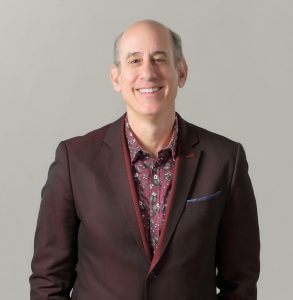
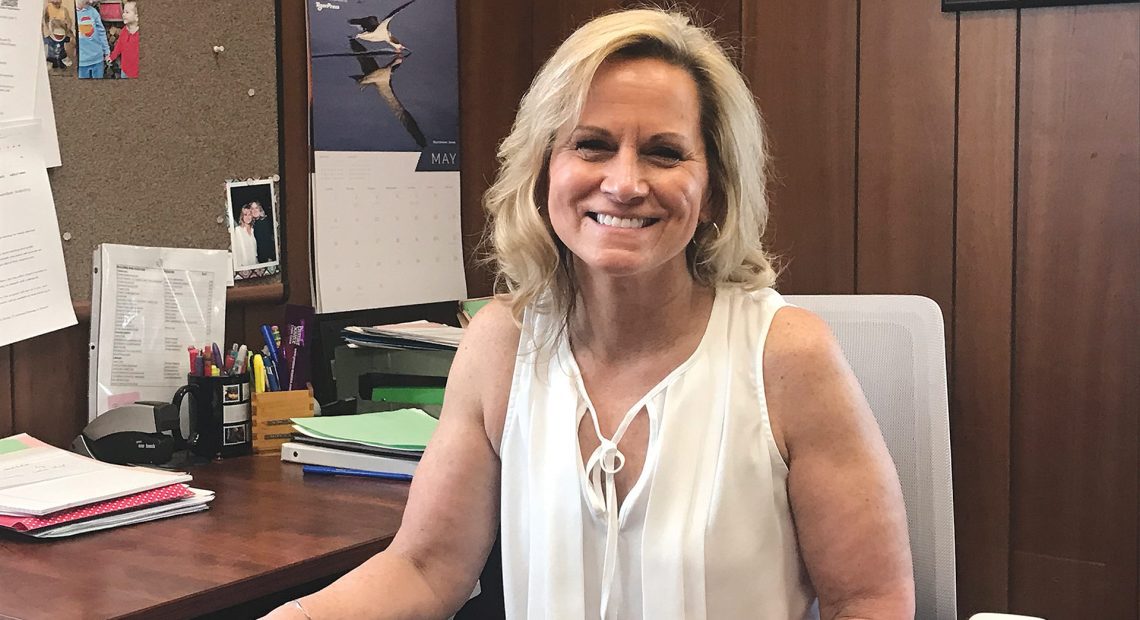
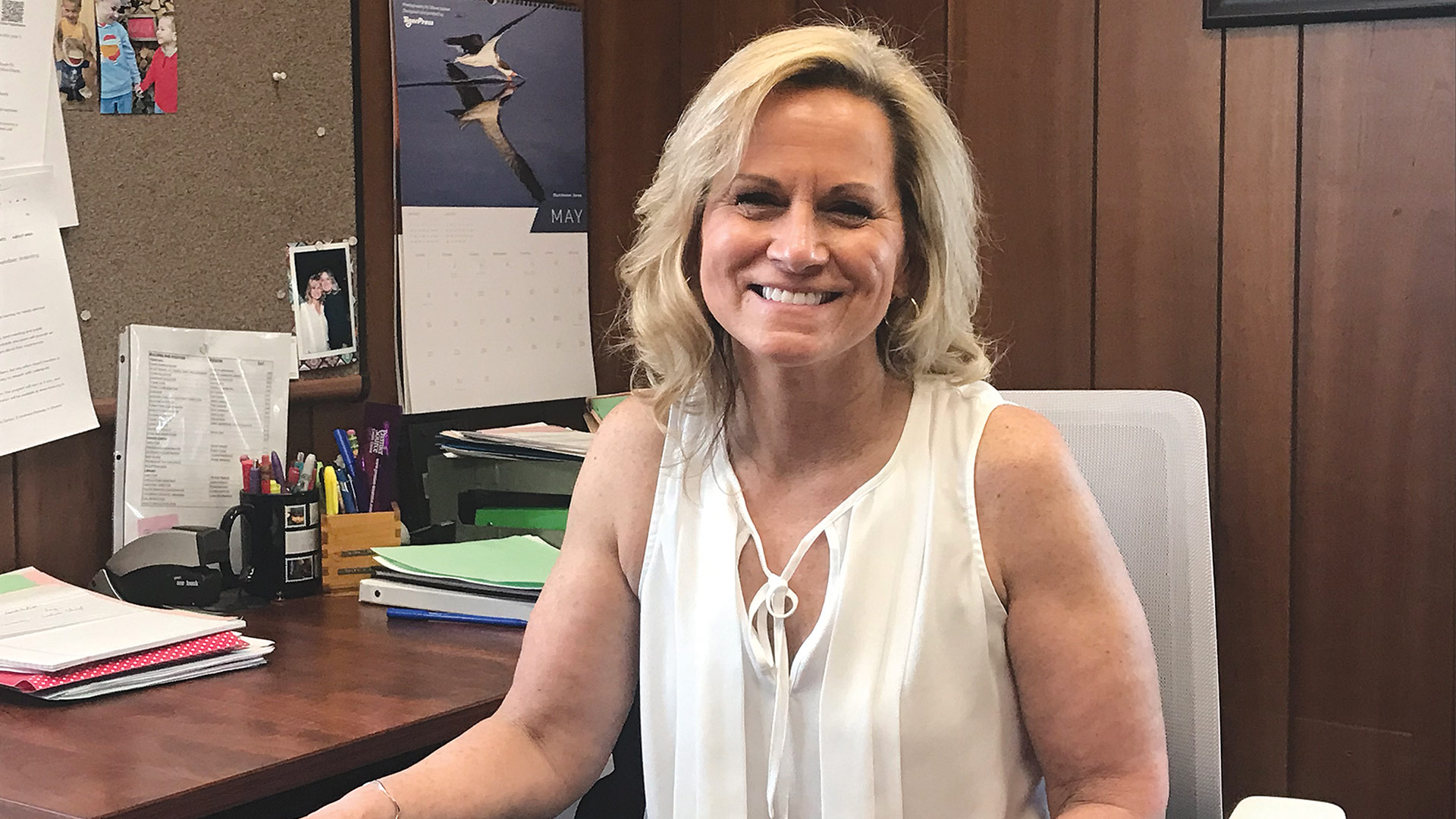
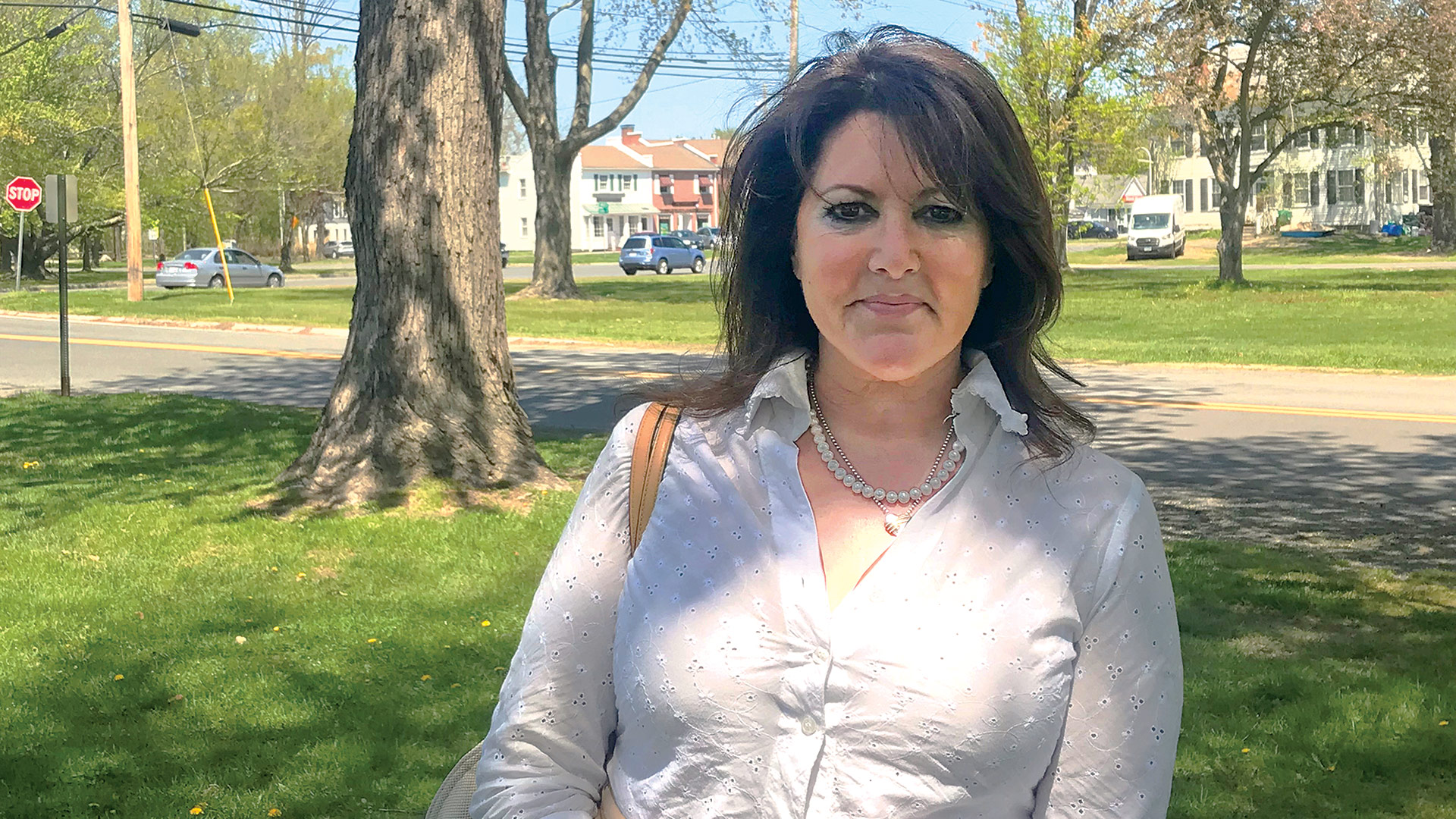
Carolyn Brennan

Carolyn Brennan says that while Hadley is a small town, the traffic and visitation it sees every day create some big-city challenges.

In some ways Hadley is a tale of two communities.

One is a small farming town, known locally — and even beyond — for its asparagus. The other Hadley exists on Route 9, the main artery running through town that can see up to 100,000 vehicles a day bringing people to shopping centers, universities, hotels — and neighboring towns.

This dual nature brings obvious opportunities and challenges — and many of both — to this Hampshire County community.

The opportunities are clearly evident all along Route 9 — retail outlets of every kind that bring people, and vital tax revenue, to the town. The challenges … they are clearly evident as well.

And one of the biggest is meeting the demands of those 100,000 vehicles using the town’s infrastructure with the staff and budget of a small town.

“The perception is that Hadley is a small town, but it really isn’t when you consider the number of people who are here during the day,” said Carolyn Brennan, town administrator.

In the first round of American Rescue Plan Act (ARPA) funding, Hadley received $1.5 million, which was used to address repairs to two culverts as well as repairs to the dike that runs next to the Connecticut River. The town sought separate funding for its largest infrastructure project, a 2¼-mile reconstruction of Route 9. When complete the road will be widened for additional traffic lanes and bus shelters, and storm drains will be upgraded.

Brennan said that because Route 9 is a state road, the Mass. Department of Transportation (MassDOT) is splitting costs with the town. Brennan explained that the town will open the road to fix the infrastructure below, and MassDOT will handle the widening and new pavement.

“The perception is that Hadley is a small town, but it really isn’t when you consider the number of people who are here during the day.”

“The initial phase of the work has begun, like clearing brush and marking utility poles that will be moved,” Brennan said. “There will be much more activity in the next few months as the town begins to replace storm water and sewer lines.” The project is expected to be completed by 2026.

According to Brennan, communication is essential to keep traffic flowing while construction is occurring. Baltazar Contractors stays in close contact with the town when road work is planned. This approach is already paying dividends, as Baltazar had initially planned road work for May 13, the day of the UMass commencement ceremony at McGuirk Stadium.

“We quickly notified them to not do any road work that day to avoid a traffic tie-up,” Brennan said. “It would have been insane.”

Claudia Pazmany

Claudia Pazmany says businesses and events in Hadley are returning to their pre-pandemic levels.

Brennan also shares the weekly construction schedule with Claudia Pazmany, executive director of the Amherst Area Chamber of Commerce.

“Hadley has been incredible with communicating when road work will be taking place,” Pazmany said. “It allows us to let businesses know what the traffic patterns will be.”

And lately, traffic has been heavier as the region returns to something approaching normalcy after two years of pandemic.

Indeed, business in Hadley is definitely picking up, with Pazmany reporting that more businesses are returning to pre-pandemic hours of operation and events like the Asparagus Festival (June 11) are back on the schedule.

“I’m hearing from our local hotels that weekends are booked solid from now through the end of the summer,” Pazmany said. “The hotel folks are also saying their receipts are back up to 2019 levels. That’s huge.”

For this, the latest installment of its Community Spotlight series, BusinessWest takes an in-depth look at a town that is much more than a bridge between Amherst and Northampton.


Fruits of Their Labor

Echoing Pazmany, Drew Perron, co-owner of Arizona Pizza at the Hampshire Mall said his business is vibrant, with numbers approaching those of 2019. He gave credit to his staff to help get through the worst of the pandemic.

“Many of our employees are long-termers and have been with us from seven to 12 years,” Perron said. “We made it through this entire ordeal thanks to their dedication.”

Once part of a chain, Arizona Pizza is now locally owned by Perron and his business partner. While its location is tucked around the back of the mall, customers have no problem finding it.

“I’m very thankful we have a number of regulars who kept us going through COVID and they continue to support us,” Perron said.

“I’m hearing from our local hotels that weekends are booked solid from now through the end of the summer. The hotel folks are also saying their receipts are back up to 2019 levels. That’s huge.”

With Cinemark theaters located next to Arizona Pizza, blockbuster movies help keep the restaurant busy.

“Doctor Strange came out last weekend, and that was a good weekend for us,” Perron noted. “I communicate with the general manager at Cinemark, because the more successful they are, the more successful we’re going to be.”

Perron and Cinemark working together is an example of the cooperative spirit that motivated Andrea Bordenca to locate two businesses in Hadley.

Bordenca is CEO for both Diversified Equipment Services & Consulting Organization (DESCO) and Venture Way Collaborative.

DESCO is a service company where technicians maintain and repair technology such as EKG machines, operating room tables, and similar equipment found in hospitals and other healthcare facilities. Founded by her father in 1970, Bordenca worked through the ranks of DESCO with positions in quality assurance and sales. While her dad taught her some basics of business, Bordenca realized she had no leadership skills and was motivated to enroll in the Institute for Generative Learning (IGL) an international leadership training and coaching organization.

“I wanted to create a higher leadership role for myself to carry on the legacy of my father and of DESCO,” she explained, adding that she credits IGL for teaching her how to be a leader and how to grow the company by centering DESCO’s focus on building and aligning teams.

“Over the past 15 years, we have more than doubled in size, doubled in revenue, and quadrupled in profitability,” Bordenca said.

Her training at IGL so inspired Bordenca that she now owns the U.S. affiliate for the training organization. Other affiliates are in Latin America, the United Kingdom and Asia, making her one of four owners and operators of IGL.

That brings us to her second business, Venture Way Cooperative in Hadley, where IGL is located. While DESCO had been in Eastern Mass since its founding, Bordenca moved the company’s headquarters to the Venture Way location in May 2020.

“When I came to Western Mass I saw lots of collaboration and a sense of commitment for each other to succeed,” said Bordenca. “I just didn’t see that kind of collaboration in Eastern Mass.”

The two organizations currently have 61 employees, with Bordenca serving as CEO for both entities. DESCO has a national presence with an office in Miami and field technicians who work from home in various states. She was able to coordinate the company’s move to Hadley without losing any employees.

“We’re looking to triple in size over the next five years,” Bordenca said. “We want to share our culture and our ability to build teams and create engagements to other states.”

When BusinessWest spoke with Bordenca she was planning a ribbon cutting and open house to introduce more people to IGL and DESCO. To illustrate what happens at DESCO, a service technician will hold a demonstration at the open house of how they service a sterilizing machine. The technician will also work with something more familiar to most people, an ice machine — DESCO also services ice machines for restaurants, hotels and surgery centers.

“On the training side of Venture Way, I’ve invited local speakers to talk about the work they’re involved in to begin a dialog about the ways community members can help affect change together,” Bordenca said. “This is the first of many events like this and we’ve begun lining up great local leaders to present in the coming months.”

One way Bordenca sees Venture Way helping DESCO is by training a more diverse workforce to step in as older workers retire. She admitted that technicians in the industry have traditionally been mostly white and male.

“We want to make sure our industry is visible to all genders and races,” she said. “At Venture Way we can expose people to what we do and even offer mini courses so more people can get a taste of this as a career.”

Large numbers of workers reaching retirement age is happening in all professions. Brennan said it’s an ongoing challenge for Hadley.

“In the next few years, we will see a significant number of highly skilled, intelligent workers retiring and leaving with lots of historical knowledge about the town,” Brennan said. “The real challenge is encouraging younger people to work in municipal government.”

Brennan is working on a more robust internship program between UMass and the town to introduce public policy majors to the workings of a municipality.

“Once people start working with a municipality, they’re hooked for life,” Brennan said, relating to her own experience where, after working in municipal government, she took a job in the private sector for a short time but could not wait to get back into municipal work. “I was hooked, and we just have to get new people hooked.”

Pazmany, who recently took part in a workforce-strategies panel, said a trend is emerging where modern workers want to be part of something bigger than just having a job and are more concerned about a community focus in their work.

In her role at the chamber, Pazmany makes many direct connections among area businesses and has found new ways to help employers fill positions.

“Members are allowed to upload job listings, which we then upload to our social media sites,” Pazmany said. “We’ve posted hundreds of jobs in the past several months.”


Experts in Their Fields

Bordenca said she’s excited about moving DESCO to Hadley, calling it the perfect location for what the company does.

“Hadley is more centrally located to serve customers throughout the Northeast in places like New York and Vermont,” Bordenca said. “This location makes us feel closer to our employees and our customers in lots of ways.”

Perron concurred, noting that Hadley is a town that works well for his restaurant. He also gave credit to the current Hampshire Mall management as the best he’s seen in well over a decade.

“I like being a tenant here because the mall managers are very good about working with us and caring about us,” Perron said.

He’s also encouraged by the continued growth of the Route 9 corridor and the number of people it brings to the town.

“I see an uptrend happening here,” said Perron, who is clearly not alone in that assessment.

Law

A Matter of Policy

By Michael Roundy


Since early in the COVID-19 pandemic, businesses small and large have been seeking insurance coverage for business losses incurred when the virus or governmental orders forced them to close their doors. Although policyholders have enjoyed mixed results, the outcome of insurance coverage lawsuits ultimately turns on the particular language of the policy at issue.

Two common provisions have become the primary focus of many of these suits: The physical damage requirement, and the virus exclusion. Cases continue to turn on the precise language used in these provisions, or on the absence of the provisions from the policy at issue. As more cases work their way through the state and federal courts, certain outcomes have become more predictable.

“Two common provisions have become the primary focus of many of these suits: The physical damage requirement, and the virus exclusion. Cases continue to turn on the precise language used in these provisions, or on the absence of the provisions from the policy at issue.”

Many cases have turned on the requirement, included in most but not all policies, that the coverage-triggering event must have caused “direct physical loss of or damage to” the property. Policyholders have argued that the physical harm or loss requirement is met in the COVID context because the virus itself is in the air at the business and physically changes the air, airspaces, property, and property surfaces, that require cleaning to remediate the harm, which has directly led to the loss of use of the property for its intended business purposes.

Insurers, on the other hand, have repeatedly argued that physical loss or damage must include some form of tangible damage or physical alteration to the property itself, rendering the property damaged or unusable such that it must be either discarded, replaced, or repaired.

For the most part, courts have agreed with the insurers on the interpretation of physical damage provisions, and have dismissed COVID coverage suits on the grounds that while the virus may contaminate surfaces, it does not damage them and therefore does not trigger the business interruption coverage that policyholders are seeking. Courts have held that even if the virus has contaminated certain surfaces, the contamination can easily be eliminated by ordinary cleaning and disinfection and the need for cleaning does not constitute a “direct physical loss.”

Even so, not all policies include the same “direct physical loss” language.

Courts, in their analyses, have placed emphasis on the immediacy of the word “direct” such that the absence of the term — a policy requiring only “physical loss” — may provide an opening for insured parties to argue for coverage despite the ever-expanding string of losses on the issue.

Other policies, less commonly, may lack the “physical loss” or “physical damage” requirement altogether. Careful and thorough analysis of policy language may reveal the availability of claims typically dismissed, depending on the specific language used.

However, even those cases that survive the physical-loss inquiry may often be dismissed by courts because of a so-called virus exclusion. In the wake of the SARS epidemic of 2002-2003, many insurers added specific virus exclusions to their policies, adopting language developed by industry groups.

Although SARS infected only a few thousand people, it led to millions of dollars of successful claims against commercial insurance policies for business-interruption coverage. Having been, in effect, forewarned, insurers were better prepared for the litigation arising from the COVID pandemic. Thus, even if a policyholder can demonstrate physical loss or circumvent the physical damage requirement, if there is one, many suits are also being dismissed on the basis of the virus exclusions that are now present in many policies.

Virus coverage cases have faced a particularly difficult time in federal courts, with almost half of them being dismissed on the basis of a lack of physical damage, the presence of a virus exclusion, or similar grounds. Roughly a third of the federal cases continue to work their way through the litigation process, and most of the remainder have been voluntarily dismissed. State courts have generally been more forgiving and provided policyholders with occasional victories.

For example, several state courts in Pennsylvania have either permitted claims to survive motions to dismiss or even granted plaintiffs summary judgment on the issue of the physical damage requirement, one finding that the loss of use was enough to satisfy the requirement. An Oklahoma court found that “direct physical loss” was satisfied where the property was rendered unusable for its intended purpose by the presence of the virus, without requiring any physical alteration of the property. Plaintiffs’ claims have survived dismissal in several California cases as well, where the courts concluded that the phrase “any physical loss” includes the loss of the ability to access or use the property.

Thus, it remains clear that the issues have not been definitively decided in all cases or all jurisdictions. Cases will still turn on the language used in the specific policy before the court and the court’s receptiveness to broader readings of the meaning of “loss.” Prosecuting and defending COVID coverage suits requires counsel adept at reviewing and interpreting policy contract language and conversant in the broader landscape of coverage suits playing out in multiple jurisdictions across the country. u


Michael Roundy is a partner in Bulkley Richardson’s litigation department; (413) 272-6200.

Innovation and Startups

Spinning Ideas into Gold

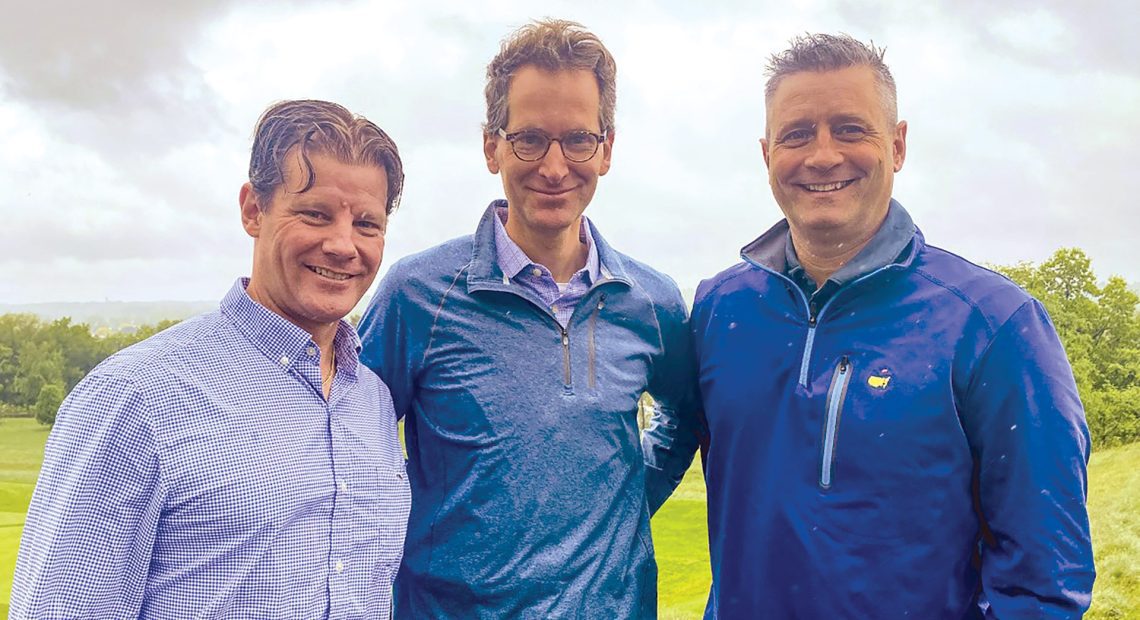
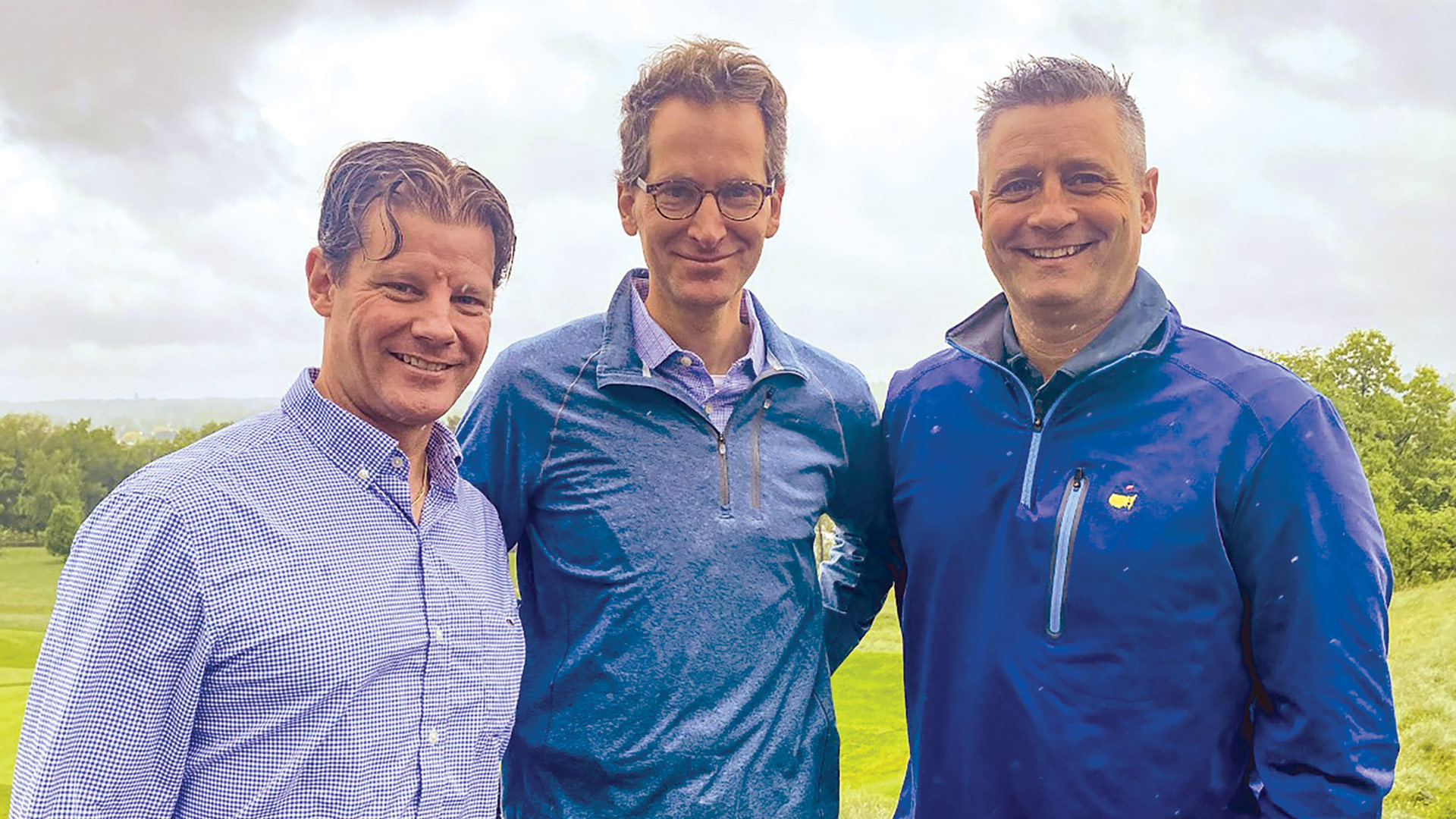
The three partners of the Alchemy Fund

The three partners of the Alchemy Fund, from left, Chris Bignell, Chris Sims, and Brett Gearing, say the Pioneer Valley has no shortage of entrepreneurs with ideas that can be turned into profitable companies.

When BusinessWest first spoke with the founders of the Alchemy Fund four years ago, their vision of helping entrepreneurs spin their ideas into profitable businesses by providing funds, advisory services, business acumen, and more, was itself just an idea.

And as the Alchemy partners started raising the fund, their idea was met with some skepticism, they recalled, noting that some wondered out loud if there would be real need for the services they wanted to provide — if there would be any deals to be made.

In the four years since, those doubts have largely been erased.

“It turns out there are a lot of people in this area who have the urge to innovate,” said Chris Sims, co-founder and partner of the Alchemy Fund. “We’ve found a bunch of people who are dreamers and ideas people, who saw opportunities and started to act on them.”

And with help from the fund and its founders, many are moving well beyond the concept state and into operation. Overall, Alchemy now has 13 portfolio companies across its two funds that together boast more 73 employees — the majority of which are local.

“It turns out there are a lot of people in this area who have the urge to innovate. We’ve found a bunch of people who are dreamers and ideas people, who saw opportunities and started to act on them.”

Holyoke-based Clean Crop Technologies, which produces technology that removes contamination from foods, is one of those companies. Clean Crop could have located anywhere — but chose to be in Western Mass. and is making it happen here through the help of many components to the region’s entrepreneurship ecosystem, including the Alchemy Fund.

“We were introduced through Forge, an innovation and manufacturing ecosystem support group with offices in Western Mass.,” said Dan White, the company’s CEO and co-founder. “They introduced me to Chris Sims. Chris and Alchemy were the first institutional capital commitment on Clean Crop’s seed-round raise.”

Alchemy helped Clean Crop create a battle plan to turn what it had, something that works in academic papers, into a working product — while also providing insight into how to bring it to customers. In the course of doing so, Clean Crop was able to do complete two rounds of major funding, both of which Alchemy participated in, from several investors, including the MassMutual Catalyst Fund.

“Chris is an extended part of the Clean Crop family; he has helped us sharpen our strategy at key intervals, and provides executive coaching and advisory office hours twice a month with our leadership team,” White explained. “He consistently helps sharpen our focus and prioritize resource deployment to the most relevant questions at that moment.”

There are several emerging success stories like Clean Crop in the Alchemy Fund portfolio, and together they confirm what the fund’s partners knew back in 2018.

“There’s some real validation to what we believed would happen,” said Brett Gearing, another of the founders. “We’re actually seeing and witnessing what we envisioned. It’s exciting for us for sure.”

Indeed, a lot has happened at Alchemy over the past years. For starters, its founders have launched two funds to invest in early-stage startups outside of the tech hubs of Boston and New York — with a focus on Western Mass. It has deployed all of the capital in the second fund, and will commence fundraising for its third fund soon.

“Within two years we will definitely have our third fund raised,” said Chris Bignell, Alchemy partner. “There might be some geographic expansion, and there might be a different mix of companies that we would invest in.”

Geographic expansions, yes, but Alchemy is keeping its focus local. Sims explained that in places like Boston or New York, venture capitalists typically end up chasing the same two deals as everyone else — in other words, they have an abundance of capital with a shortage of deals.

“Chris is an extended part of the Clean Crop family; he has helped us sharpen our strategy at key intervals, and provides executive coaching and advisory office hours twice a month with our leadership team. He consistently helps sharpen our focus and prioritize resource deployment to the most relevant questions at that moment.”

The reverse is true for Western Mass. Alchemy has run into what could be called a potentially good problem here — a situation where many companies are chasing a limited amount of capital. Competed deals like those in Boston are expensive, so by operating in Western Mass., Alchemy has been able to seize opportunities of the same caliber as those in major tech hubs for just a fraction of the cost.

Opportunities like Clean Crop, which has developed technologies that some are calling game-changers within the food industry.

“By definition, they are pushing the boundaries of something that hasn’t been done before,” said Sims, adding that as portfolio companies like Clean Crop grow and evolve, they attract top talent to the region.

“If you look at the folks we’re drawing into these companies, it’s not just the number — we’re creating a type of employment that literally didn’t exist here before,” he went on. “Now we’re saying you can go work at Clean Crop and help make Holyoke Massachusetts a stop on the road to the next green revolution.”

The seed-round raise White referred to was a start-up fundraising event in 2020 where Clean Crop Technologies raised $3 million — which was followed by a $6 million seed round in 2022, just two years later. He went on to explain that even before that commitment, Alchemy worked with Clean Crop for months to help sharpen its business strategy and target milestones in order to maximize its ability to raise capital.

This is an example of how the fund’s menu of services to portfolio companies extends beyond providing needed capital.

Similar to the way a sports coach would help out an up-and-coming athlete, Alchemy helps its clients upgrade their business model, assign veteran executives as mentors, add differentiating technology, and much more.

“It’s that first 10 yards that are the hardest for people who are disconnected from the norms that are obvious if you live in a major tech hub and everyone around you is doing this all the time,” Sims explained. “Here, it’s a pretty lonely experience because … who do you look to as an example?”

Alchemy has essentially bridged that gap. What the three Alchemy partners have found is that when they get entrepreneurs to the stage where their concepts can attract investments from a seed-round standpoint, they can then coach them all the way to the next level — and the next level, and the next. The companies they work with become competitive not just locally, but nationally.

“They are as good as anybody, which shouldn’t be a surprise,” said Sims.

And there’s another gap Alchemy is seeking to close. When Sims and Brett Gearing founded the Alchemy Fund, they identified a huge gap in venture dollars per capita in comparison to tech hubs like Boston and New York.

Sims, Gearing, and Bignell all concurred that startups like the ones they work with enhance and transform areas like Western Mass. into the type of place someone would want to live and do business. The Alchemy Fund sees the region between Boston and New York overflowing with opportunities, and aims to help make it just as alluring as those metro centers.

“There is something to be said for us getting in at the early stages so that these companies get a flag in the ground while it’s even harder for them to move to make the decision to go to Boston or New York at that point,” Bignell explained. “If we can get them in, get that flag in the ground… they start creating these jobs.”

And the jobs are generally well-paying jobs, he went on, the kinds of jobs that can bring people to an area like Western Mass. And as more of these jobs are created, and more people are drawn to the area, there is a snowball effect, seen in many areas around the country where startups flourish.

Yes, a lot has happened since the last time the Alchemy Fund and BusinessWest sat down together — and the story continues to generate new and exciting chapters.

“Whereas four years ago we got the reaction ‘there are no deals there, you’re wasting your time, you won’t find any entrepreneurs there,’ four years from now I hope we get the reaction, ‘of course there are deals there, why wouldn’t there be?’” Sims concluded.

Elizabeth Sears can be reached at [email protected]

Innovation and Startups

Cooking Up Sustainability

By Kailey Houle


UMass Amherst Dining is serving up a new dish. Sort of. It’s called sustainability.

The dining program, long ranked among the best in the country, if not the best, is adding a focus on foods and their carbon footprint to what has been a steady diet of information provided to students about how to make smart choices about what to eat each day.

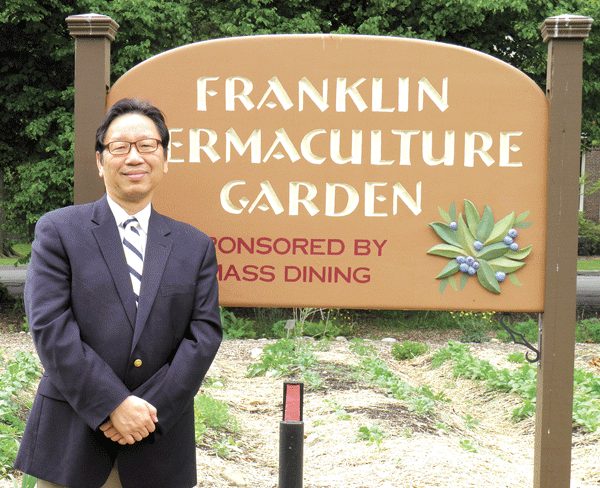
Ken Toong

Ken Toong says that by serving more plant-based dishes, UMass Dining is helping students on campus reduce their carbon footprint.

UMass Amherst Dining is teaming up with MyEmissions, a food carbon-label company, to bring a sustainability factor to the table, an initiative that could be considered part of a broader, campus-wide focus on carbon footprints — and how to reduce them.

Indeed, in April, UMass Amherst Chancellor Kumble Subbaswamy proposed a plan to be a net-carbon zero university by 2032. And a survey of UMass students conducted this spring shows 75% believing their food choices impact the environment, and 76% believing it is important to reduce their carbon footprint. But they didn’t know where to begin.

“We started incorporating kelp on the menu — talk about a superfood; it’s a carbon sink, meaning it puts carbon back into the atmosphere. We partnered with a group in Maine that works with off-season lobstermen to grow kelp, and it’s going really well. We’ve done research and development on it, and again, we’re educating students that not only is kelp a superfood for your health, but it’s also a climate superfood.”

Low-carbon dining — an experience UMass is striving to perfect — refers to making food choices that have low greenhouse gas emissions associated with their life cycle. Examples of low-carbon foods include nuts, soy products, local vegetables, and dairy alternatives; high- carbon foods include beef, lamb, cheese, chocolate, and coffee. To combat higher emissions UMass sources its high carbon foods locally, and all of the low-carbon foods offered are grown locally and, in some cases, on campus.

“My team and I researched the issue and we have partnered with MyEmissions,” said Kathy Wicks, director of Sustainability at UMass Amherst. “They analyze each recipe for its carbon footprint. So we export our recipe, they analyze it, and then they send it back to us so we can put it on the menu identifiers and on the app.”

Elaborating, Wicks said that such analysis involves giving a rating — A through E, with A being the highest, or best grade — to each individual recipe based on its carbon footprint. A carbon footprint, as it relates to food, is the amount of carbon emissions, methane, or carbon dioxide involved in the food’s production. It takes into account the life cycle of whatever one is measuring, its land use, processing, transportation, and packaging. UMass has been able to reduce some of its carbon emissions already by partnering with local farmers and facilities to feed their students.

MyEmissions has worked with European restaurants to help them reduce their carbon footprint, but UMass Amherst Dining is the first university program in the country to be introducing an initiative like this. And as an anchor institution in the region and a recognized leader and innovator among dining programs, UMass is looking to tell a story others will follow.

“Yeah it’s delightful that we did it first, but it’s a better feeling knowing we can help our students make a better choice,” said Ken Toong, executive director of Auxiliary Enterprises at UMass Amherst, which oversees the dining program. “Food matters and I think this is an important thing for the UMass community.”

Wicks agreed, and noted that through this new initiative, the university hopes to better inform students about foods and their impact on the planet and perhaps inspire them to consider options — like kelp.

“We started incorporating kelp on the menu — talk about a superfood; it’s a carbon sink, meaning it puts carbon back into the atmosphere,” she explained. “We partnered with a group in Maine that works with off-season lobstermen to grow kelp, and it’s going really well. We’ve done research and development on it, and again, we’re educating students that not only is kelp a superfood for your health, but it’s also a climate superfood.”

Overall, plant-forward dining, and that includes kelp, helps to reduce the overall carbon footprint. Low-carbon foods are able to be grown, prepared, sourced, processed, and transported in ways that emit minimal greenhouse gas into the atmosphere. Food production in the United States makes up 20% of overall greenhouse gasses and globally it’s about 30%. UMass Dining works with local fair-trade-certified farmers and rely on permaculture gardens to source their meals.

Kathy Wicks

Kathy Wicks says educating students on their food choices gives them the ability to take action to help the planet.

“We’ve been working with our local partners for a long time, we also work closely with companies around their practices and how they relate to sustainability,” Wicks said. “And this is a way we can help students practice everyday climate action with every food choice that they make.”

Wicks and others we spoke with stressed repeatedly that they are not trying to tell students what to eat. Rather, they are providing information that will help them make smart choices about what they might want to eat — information that goes beyond calories and ingredients and dives into a food’s overall impact on the planet

“We play a role in educating them on food literacy, but we also love to talk about food,” said Wicks. “We added this to the conversation because it is top of mind for so many people and the campus community as a whole.”

Carbon-use identifiers will be added to each menu, along with previous identifiers for allergies, ingredients, sustainability, plant-based, and locality.

“We have a very comprehensive menu system — we have identifiers for allergies, ingredients, and now they can assess it through the apps or on signs,” said Toong. “We just add it on the carbon calculator and put the rating on the menu.”

Toong said the Amherst campus is perhaps more diverse than ever, with many students, including those who are Asian, Latin, and Indian students seeking authentic cuisine that is mostly plant-based. More than 70% of the school’s menu items are already plant based, catering to vegetarians, vegans, and those with a more plant-driven diet.

“We’ve been working with our local partners for a long time, we also work closely with companies around their practices and how they relate to sustainability. And this is a way we can help students practice everyday climate action with every food choice that they make.”

“We know that plant-forward meals are going to be a trend; there is still meat, but smaller portions,” said Toong. “We only give three-to four-ounce red meat portions, and same thing with chicken. We’re selling more seafood and more plant-based dishes. This has really helped us make the decision to start the program.

“We’re not saying ‘don’t eat red meat,’ — we’re just suggesting smaller portion sizes,” he went on. “We don’t tell them what to eat — we provide them with information. But we want to promote more than just food, we want to promote culture and cuisine. Our goal is to work with students and the community to try to make the world a better place. We can do it by working together.”

Those we spoke with said the partnership with MyEmissions is merely another step in efforts to promote sustainability. They stressed the need to back up the information being provided with conversation about how to make smart choices.

“We’re not just going to put the information up there — we’re going to continue dialogue with our students about it and show them and give them tips that low-carbon dining is as easy as A, B, C,” said Wicks. “We’ve been dedicated to healthy, sustainable, delicious food for a long time. We always want to do more to enhance the student experience.

“We listen closely to what the students have to say,” she went on. “We listen closely to what they’re concerned about and what they are interested in and what their values are… the entire campus’ sustainability and the current issues with climate change are at the top of mind for everybody. So our expertise is food and customer service — that’s the area we want to do more. We know it has an impact on our environment.”

By making simple changes like trying out some new A-Rated dishes, anyone can help lower the carbon footprint — and those at UMass Dining know small changes like that can make a huge difference.

Technology

Protecting Yourself from IT Threats

By Charlie Christensen


As hackers, organized crime syndicates, and state-backed bad actors aggressively pursue ways to compromise the world’s data; business owners, leadership, and IT professionals continue to seek ways to counter these ever-growing threats to their information technology infrastructure. In this article, I will explore some of these threats, as well as the advancements in anti-virus/malware protection that are working to defend corporate and personal data every minute of every day.

Lastly, I will provide you with some key steps you should take to protect your business and data assets from attack.

Charlie Christensen

Charlie Christensen

The notion that you are just too small a company to worry about these threats, or that no one wants your data is a fallacy. Criminals are targeting small companies every day because they are easy targets.”

As someone who understands the threats we as IT professionals see every day, it is my hope that I can use this opportunity to provide the average businessperson with a better understanding of what they should focus on most urgently in today’s technology environment, and how they can better protect their business from being compromised.

• Ransomware: This is every company’s worst nightmare and is a topic that we could dedicate an entire article on. In short, ransomware is an extortion scheme that costs businesses billions of dollars per year. It most commonly spreads via malicious email attachments or links, software apps, infected external storage devices, and compromised websites.

Ransomware searches out every computer on the network and seeks to encrypt the data it finds. The only way to get the data back is to pay the extortion, usually via cryptocurrency which is largely untraceable. Not content with simple extortion, cybercriminals are now adding an additional element to the ransomware scheme.

Attackers will now download your data prior to encryption, and if you refuse to pay, they will threaten to release your data into the public domain. If the thought of this doesn’t lead you to a few sleepless nights, it should.

• Phishing, spear phishing, and whaling attacks: I think by now we all understand phishing. An attacker uses social-engineering techniques, like an enticing looking link, to get the end user to disclose some form of personal information such as a Social Security number, information, credentials, etc. Spear phishing, however, is a bit more focused and targeted. A spear-phishing message might seem like it came from someone you know or a familiar company like your bank or credit card company, shipping company, or a frequented retailer.

Whaling, on the other hand, goes after high-value targets such as C-level leadership or accounts payable. A whaling attack might look like an email from the CFO asking you to initiate a transfer to pay a large invoice. This is an incredibly common attack vector and one that relies on your team’s ability to identify it. Education and vigilance are your best defense.

• Advanced persistent threats: APTs happen when an intruder gains access to your systems and remains undetected for an extended period. They seek to quietly extract data such as credit card data, social security numbers, banking information, and credentials. Detection relies on the ability to identify unusual activity such as unusual outbound traffic, increased database activity, network activity at odd times. APTs also likely involve the creation of backdoors into your network.

• Insider threats: Although we are fixated on external threats, internal threats are more common and can be equally as damaging. Examples of intentional and unintentional threats include:

Intentional threats such as employees stealing data by copying or sending sensitive or proprietary data outside the company. This may occur via email/FTP, USB drive, cloud drive (One Drive, Dropbox, iCloud), or some other means. Often, these happen because someone fails to comply with security protocols because they are perceived to be inconvenient or “overkill.”.

Unintentional threats might include an employee clicking on a phishing email, responding to a pop up asking for credentials, not using a strong password, or using the same password for everything. It could also be a system that was not patched, a port that was left open on a firewall, or forgetting to lock a user account after termination.

• Viruses and worms: Frequently considered to be ‘old school’ threats, these still exist and can cause tremendous damage. Users should be careful about clicking on ads, file sharing sites, links in emails, etc. Their purpose is to damage an organization, systems, data, or network. However, traditional anti-virus software is usually effective at controlling them.

• Botnets: Simply put, a botnet is a collection of devices that have access to the internet like PCs, servers, phones, cameras, time clocks, or other commonly found networked devices. These devices are then infected by malware that allows criminals to use them to launch attacks on other networks, generate spam, or create other malicious traffic.

• Drive-by attacks: These are infected graphics or code on a website that gets injected into your computer without your knowledge. They can be used to steal personal information, or inject trojans, exploit kits, and other forms of malware.

While this list might seem exhausting, it only represents a few of the more common attack methods that we see daily. It also helps explain the emergence of a new generation of security products and platforms. To better understand how we look at information security, let me borrow one of the examples I commonly use when speaking to businesspeople and groups about building an effective Information Security Program.

Think of information security as an onion. Like an onion, information security programs are comprised of layers (firewall, backup, AV, email filtering, etc…) of protection surrounding the core (your data). As we build an information security program, we need to put layers of protection between the threat and the asset we are trying to protect. While the details of an information security program are outside the scope of this article, for the purposes of this discussion you only need to understand that there is no single magic product that can protect you from all threats. Anti-virus, or even the new generation endpoint detection and response (EDR) products are but one layer of protection in an over-arching strategy to protect your business from modern threats.

A brief history of antivirus (AV) products has them coming onto the scene in the late 1980s, with familiar names like McAfee, Norton, and Avast. These early products relied on signature-based definitions. Much like you look up a word in the dictionary, these AV products could catch defined threats, but they would easily fail to prevent attacks that had yet been discovered; or worse, that they had not yet downloaded an update for that would allow them to recognize the threat. Traditional AV changed very little until several years ago with the advent of Next Generation Antivirus. NGAV uses definitions coupled with predictive analytics driven by machine learning to help identify undefined threats.

The latest technology to hit the market is enhanced detection and response (EDR) or extended detection and response (XDR). These technologies continue to use traditional signature-based antivirus and NGAV, but they also introduce the use of artificial intelligence (AI).

AI is used to constantly analyze the behavior of devices so it can detect abnormal activities like high CPU usage, unusual disk activity, or perhaps an abnormal amount of outbound traffic. This new generation of software not only detects an attack and warns you that it is occurring, but it can also isolate the attack to the device(s) that are infected by automatically taking them off the network and protecting the rest of your network. Some EDR products like SentinelOne also have threat-hunting capabilities that can map the attack as it unfolds. This mapping aids IT professionals in the identification of devices involved in the attack; a process that can take days or weeks when performed manually. XDR even goes a bit further in that it looks beyond the endpoint (PC, laptop, phone) and looks at the network holistically.

A good example of how EDR systems are being used as a layer of protection is how SonicWall firewalls combine a physical firewall with a suite of security capabilities like content filtering, DPI-SSL scanning, geo-blocking, gateway antivirus, and more to filter traffic before it enters your network. Then, with the addition of their Capture Client product (a collaboration between SonicWall and SentinelOne), they integrate the power of SentinelOne EDR with the firewall’s rules. This allows you to extend protections beyond devices inside the network and include company devices outside the network as well. This helps to eliminate gaps in protection that can exist with remote users.

The notion that you are just too small a company to worry about these threats, or that no one wants your data is a fallacy. Criminals are targeting small companies every day because they are easy targets. Large companies have armies of highly educated and well-paid people protecting their networks. And while a large company might represent a big score, hackers can spend years trying to penetrate a large network. However, they know smaller organizations have limited budgets and staff to protect their network. This makes it far more lucrative to hit 50 or 100 small companies for $100,000 than a single large company for, say, $2 million.

Investing in modern security products, building a sound information security program, and educating your team will pay off in the long run, as the question is not if you will be attacked — but when. The cost of the systems to protect you is far less the frequently irreparable harm caused by a breach or infection.

Many people say, ‘I have cyber insurance,’ but fail to put the necessary precautions in place to protect their systems and data. Little do they know that when they filled out the pre-insurance questionnaire and answered ‘yes’ to all the questions, they gave the insurer the ability to deny the claim. If you do not have written policies, use EDR (or at least NGAV), have a training program in place, and use multifactor authentication to protect user logins, you could be sealing your own fate. Insurers are no longer baffled by today’s technology and are aggressively investigating cyber claims. In fact, we are seeing significantly increasing numbers of denied claims.

There is little you can do after the fact to offset missing protections or enforcement of policies. By taking the appropriate steps to protect your network and systems you can hopefully minimize the risk of falling victim to an attack and ensure that your insurer will cover such a claim. Insurance companies will go to great lengths to cover legitimate claims at great cost. In fact, they can be their own worst enemy. In many ransomware attacks, insurance companies will simply pay the ransom because it is more expeditious to do that than it is to pay for the actual remediation. This, of course, only encourages the criminals while leading to higher premiums and greater risk to our technology infrastructure.

To close, I’d like to leave you with a few things that you can do to better protect your systems, data, and network.

• Take the time to understand what protections you have in place and engage a professional to help you identify any gaps in your information security strategy;

• Educate your staff on information security best practices and the threat spectrum. An educated workforce is one of your best protections. There are several great training tools that are inexpensive and easy to implement, such as KnowBe4;

• Implement a next-generation firewall that utilizes deep packet inspection and take the time to dial in the suite of security features that are designed to stop threats before they get into the network;

• Move to an EDR system rather than relying on a traditional signature-based antivirus;

• Be sure that all systems with access to your networks (computers, network equipment, servers, firewalls, IoT devices, cameras, etc.) are patched regularly to eliminate vulnerabilities that can be easily exploited;

• Do not run unsupported operating systems, equipment, or applications;

• Establish a set of written information security policies, and make sure everyone understands that they need to live by them; and

• Limit those with administrative credentials on your network. If an administrative account is compromised, you have given away the keys to the kingdom. Make sure users only have permission to get to the resources they need to do their job.


Charlie Christensen is president of East Longmeadow-based CMD Technology Group; http://www.new.cmdweb.com/; (413) 525-0023.

Technology

The Best Defense Is a Good Offense

By Sean Hogan

In a recent study, Stanford University and a top cyber security organization found that more than 85% of all data breaches are caused by human error. The standard practice for prevention of breaches is enabling tools to detect and prevent breach attempts.

Most breaches are prevented with tools such as anti-virus, spam filtering, and edge protection. But what about the attempts that slip through these defense systems? That’s where education comes in to play.

Cyber criminals are constantly evolving and changing their methods for cyber-attacks. The best software and security tools can eliminate many of the known attack methods but there is no company, security, or software package that that can claim 100% success for eliminating threats. The game is constantly changing, and to keep up with unknown threats and techniques it is critical that we all educate and train ourselves to be hyper vigilant when it comes to cybersecurity.

Sean Hogan

“In a recent study, Stanford University and a top cyber security organization found that more than 85% of all data breaches are caused by human error.”

It is critical to teach your staff about cyber-attacks. I tell my clients to always question everything; if you aren’t expecting an email with a drop box link, then don’t open it, and certainly don’t click the link. Hackers have upped their game when it comes to disguising malicious content. Hackers will use credentials from sources on the dark web, and the more thorough hacker will do some social engineering and gather information about the targets on public websites and social media platforms.

The more believable they are, the more effective they can be. I recommend scanning tools to alert companies whenever there are credential breaches that have appeared on the dark web. This will allow security teams to know when credentials have been breached, where credentials were breached, and who will provide the credentials. These tools will reveal passwords, password policies, or lack thereof.

Common passwords are one of the easiest low hanging fruits to be used by hackers. Let’s pretend you use your business email to log into an online app like Uber. If Uber is breached, the hackers will have access to your Uber password, but if you use that same password or a similar password elsewhere, like in your banking app, the hacker can use scanning tools and password-hacking tools to easily get into your other accounts. The object is to make it as hard as possible to breach your accounts; don’t make it easy for a junior hacker to wreak havoc.

We recently had a client forward us an email that he thought might be a phishing attack. All the details were accurate, everything was spelled correctly. The ‘sent from’ address had one difference, it was sent from a registered .net domain not the company’s legitimate .com address. Other than that, everything was accurate. The hacker had the wherewithal to create a domain and register that domain as a .net. (Lesson learned, reserve all similar URL’s to prevent this from happening!)

This one example was a sophisticated attempt to convince the client to create a wire transfer; the client now has a policy of triple-checking and confirming any transactions with multiple steps.

The best way to teach your staff about attacks is to create a fake phishing attack. We create and run fake attacks to our staff and our clients. We have a library to choose from, and we can simulate a bank request, a Netflix credential reset, a credit card alert just to name a few. These attacks mimic real attacks. The recipient reactions are tracked, and reports are made available after the campaign has expired.

The email is delivered (allowed on purpose past our filters), the recipient can open, click, and provide data. We call this the trifecta! Normally opening an email is not malicious by itself; clicking the link can activate embedded malware. If a recipient does take the bait, then the training software will automatically play an educational video that teaches that staff how they were fooled and what to look out for in the future.

When the campaign has ended the results are tallied in a report. The report will tell you how many opens, clicks, and credentials. The report will also indicate whether the end-user sat through the educational video. This is a great tool to use from a cybersecurity perspective. Teach your staff, install best-in-class edge protection, spam filtering, end-point protection, anti-virus, dark-web scanning, and backup. Overall, don’t overlook the most important step: Promote awareness and create a strong anti-cyber culture in your office.


Sean Hogan is president of Hogan Technology Inc.; www.teamhogan.com; (413) 779-0079.

Opinion

Editorial


Lawyers representing the families that filed a class-action lawsuit against the state in the wake of the deaths of 84 veterans at the Holyoke Soldiers’ Home in the spring of 2020 — and family members themselves — contend that the state’s willingness to pay $56 million to those families is an admission that this tragedy, one of the worst COVID-19 outbreaks, was preventable and never should have happened.

And they are right in that assessment. While COVID presented a stern challenge to every long-term facility in the country, and deaths were recorded at most all of them, what happened at the Soldiers’ Home was different. What happened there was negligence — on many, many levels.

The 29-page lawsuit charged that the state “made a promise to its citizen-soldiers” to care for them after they served their country but failed to stem the spread of COVID-19 through the home, which it said, “was preventable.”

“The Commonwealth did not keep its promise to protect and keep them safe from harm when they were unable to care for themselves,” the complaint states. “Our veterans deserved better.”

This is an understatement. It was and is the state’s responsibility to place those soldiers in the hands of administrators capable of leading a healthcare facility, and it was and is the state’s responsibility to make sure that those placed in these positions are doing the jobs they were hired to do.

In the case of the Holyoke Soldiers’ Home tragedy, neither of these responsibilities were met.

The lawsuit repeatedly cited the findings of the state-ordered investigation by attorney Mark Pearlstein, who found that leaders at the Soldiers’ Home made ‘utterly baffling’ mistakes in responding to the outbreak. These mistakes were not the result of poor leadership — they were the result of unqualified leadership.

The consequences were catastrophic — 84 lives were lost, and countless other lives were shattered by those losses.

Families of the victims, and even Gov. Baker himself, have acknowledged that the money from the settlement — roughly $400,000 for each victim — doesn’t end the pain. But for many impacted by this tragedy, it will bring a sense of closure.

We’re hoping that it will bring something else — a deeper commitment on the part of this state and other states to uphold their promises to constituencies like the veterans in Holyoke and to take more seriously the responsibilities they have to place such facilities in the hands of people capable of running them.

It wasn’t long after the full scope of the tragedy in Holyoke revealed itself that it became clear that this calamity simply didn’t have to happen. Any doubts were erased by the state’s willingness to settle this lawsuit. The state did the right thing by settling and can do the right thing again by making sure that the lessons learned here are heeded and those in power remain vigilant in their efforts to ensure that something like this never happens again.

Opinion

Editorial


The Community Foundation of Western Massachusetts announced recently that Katie Allan Zobel will be stepping down from her role as president and CEO of that vital agency. A search for a successor has commenced and a transition should be completed by September.

We’re confident that a worthy successor will be named, but these will be big shoes to fill, indeed. During her tenure, Zobel took an already successful agency to new heights in terms of the work that it does and the lives that it impacts, and she is to be commended for all that she has done.

The Community Foundation was never just about writing checks and dispensing scholarships to students and funds to nonprofits. But on Zobel’s watch, the agency took philanthropy in many different directions, but especially the realm of working to solve problems in our community rather than simply throw money at them.

Under Zobel’s leadership, the Community Foundation of Western Mass. launched Valley Gives, which has raised more than $10 million through annual one-day, on-line fundraising campaigns for local nonprofits. Valley Gives has helped bring attention to the needs of hundreds of the region’s nonprofits, and it inspires more individuals and groups to give, because the foundation has made it easier to do so.

Another initiative launched during Zobel’s tenure is Valley Gives, a partnership with the Barr Foundation established to support a vibrant arts and creativity sector in Western Mass., an initiative that is already giving a louder, stronger voice to this important sector of the local economy.

Still another initiative launched during Zobel’s tenure is an effort to support research on college completion, with the understanding that it’s not enough to give a worthy student a scholarship; there is a need to help ensure that the student can successfully complete their college education and then put their degree to work.

And then, at the height of the pandemic, Zobel led efforts to create the Community Foundation’s COVID-19 Response Fund to support community members and nonprofit partners most severely impacted by the pandemic and its many side-effects.

It was initiatives like these and Zobel’s leadership efforts to create them that earned her the distinction of being named one of BusinessWest’s Women of Impact, and the Community Foundation itself being named a Difference Maker by the magazine this spring.

But for Zobel, it’s never been about awards, and it has never been about her. Instead, it’s been about her team, and a laser focus on how the foundation can make this region stronger and more resilient.

In short, she has helped take philanthropy to a higher plane in this region, and she is to be commended for the many accomplishments she has led.

Daily News

The Franklin County Chamber of Commerce board of directors has named Jessye Deane its next executive director. 

Deane, a lifelong Franklin County resident and Bernardston native, has served on the Franklin County Chamber board of directors since 2019. She will assume the role currently held by Diana Szynal, who plans to take over as president of the Springfield Regional Chamber in July. 

“The board is thrilled to have Jessye transition into this role at the chamber. Her ability to connect with the community and build business relationships is a tremendous asset for Franklin County and our membership,” said Shelby Snow Hasanbasic, chair of the chamber’s board of directors. “Jessye’s dynamic skillset will lead the Chamber into great success as we continue to adapt to deliver value to members in a changing economic landscape. Her vision for refining and building on the chamber’s role in Franklin County is exciting, and we believe her expertise in community collaboration will excel successful partnerships for the greater good of our members, our community, and our visitors.” 

As an entrepreneur with more than a decade of experience in volunteer, community, and nonprofit service, Deane has an accomplished background in business, marketing, and community building, which Hasanbasic says will serve her well in this position. 

Deane currently serves as the director of Communications & Development for the anti-poverty agency Community Action Pioneer Valley. During her 12 years at Community Action, the $36 million dollar non-profit has seen a 1,645.7% increase in private funding under her leadership. 

Simultaneously, she and her husband, Danny, also own and operate two award-winning fitness studios, F45 Training Hampshire Meadows in Hadley and F45 Training Riverdale in West Springfield, where Deane has spearheaded the businesses’ community impact program, benefitting more than 86 local nonprofits with nearly $100,000 in donations and in-kind services. 

“My passion has always been strengthening community through partnerships and creative collaboration, and I am incredibly grateful for the opportunity to continue that work and support business and tourism in the county I love,” said Deane. “I understand the economic challenges Franklin County faces, and I am looking forward to working with our legislators to advocate on behalf of all those who work, live, and vacation in Franklin County.” 

In 2019, Jessye was awarded the Chamber MVP Award for her work as an Amherst Area Chamber of Commerce Ambassador. The Franklin County Chamber of Commerce named Deane its first-ever Young Professional of the Year in 2020, and she was recognized as a member of BusinessWest’s 40 Under Forty 2021 class. 

“As someone who’s engaged with numerous Chambers up and down the valley as a business owner and as a nonprofit leader, I bring a widespread, community-minded perspective to this role,” said Deane, who presented the board of directors with a 14-page strategic planning proposal during the screening process. “I am excited to add to the already-impressive Franklin County Chamber team and its board of directors as we launch a strategic planning process to refine the Chamber’s priorities both as a business collective and as a Regional Tourism Council.”  

Daily News

FLORENCE — Florence Bank celebrated its 20th annual Customers’ Choice Community Grants Program gala last month, awarding $100,000 to 45 nonprofits across the valley. And at the close of the event, President and CEO Kevin Day drew cheers from the audience of nonprofit leaders, announcing that giving will increase to $125,000. 

“Some of you longtime recipients may recall when we began this great program back in 2002, we started by giving away $50,000,” Day said. “Years later we increased to $75,000 and then to $100,000. We’ve decided to increase the total grant amount again — to $125,000 — immediately, for grants to be awarded at next year’s gala. 

“My hope is that our customers continue to use this program to provide you with a vote of confidence, as well as some much-needed funding to help you continue your mission to serve the community,” he added. “All of us at Florence Bank truly appreciate everything you do to make our communities better places to live and work.” 

Day’s announcement was the second commemoration of the evening, the first coming as he called for bank and nonprofit staff and leaders to raise a glass to toast the event’s 20th year. “We can’t let that go without celebration,” he said.  

Florence Bank’s community grants program is an annual offering founded in 2002, and, through it, Florence Bank customers are invited to vote for their favorite local nonprofit in hopes it will receive a share of grant funding. 

Voting takes place all year long, online at www.florencebank.com/vote and in bank branches, and each customer has only one vote. To qualify for a community grant, organizations must receive at least 50 votes. In 2021, roughly 7,000 votes were cast, making 45 nonprofits eligible for a grant. 

Over the past 20 years, Florence Bank has tallied more than 141,000 customer votes and given grants to roughly 164 different organizations. 


At its 20th annual event, held May 19 at Frank Newhall Look Memorial Park, the bank offered awards to 45 nonprofits and celebrated a total of $1.4 million in community giving through this one channel. 

Six nonprofits received funding for the first time — some in Hampden County, where Florence Bank now has three branches and has established a presence as a good neighbor. Three recipients have accepted an award every year since the program launched.  

Four organizations received the maximum amount of $5,000 this year: Cancer Connection Inc., Dakin Humane Society, Food Bank of Western Mass., and Friends of Williamsburg Libraries. 

“The commitment of Florence Bank customers to all of you serving the needs within our community is awesome, and we couldn’t be prouder to be able to support the programs our customers believe in,” Day said.  

Organizations receiving awards range from police, fire, library, and school groups to nonprofits that provide food, shelter or support to people living with a serious illness or disability. 

In addition to the four top vote-getters, these other organizations received an award:  

Friends of Lilly Library, $4,097; Northampton Survival Center, $3,782; Amherst Survival Center, $3,588; Our Lady of the Hills Parish, $3,564; Friends of Forbes Library, $3,539; Goshen Firefighters Association, $3,370; Friends of Northampton Legion Baseball, $3,224; Easthampton Community Center, $2,909; It Takes a Village, $2,909; Williamsburg Firefighters Association, $2,642; Northampton Neighbors, $2,400; Pioneer Valley Chinese Immersion Charter School, $2,303; Belchertown Animal Relief Committee, Inc. (BARC), $2,230; Manna Community Kitchen, $2,109; Shriners Hospitals for Children, $1,988; and J.F.K. Middle School PTO. 

Also, $1,867; Kestrel Land Trust, $1,867; Northampton High School PTO, $1,794; Riverside Industries, Inc., $1,770; R.K. Finn Ryan Road School PTO, $1,648; Cooley Dickinson Hospital, $1,624; Safe Passage, $1,624; Northampton Community Music Center, $1,527; Therapeutic Equestrian Center, $1,527; Amherst Neighbors, $1,503; Friends of M.N. Spear Memorial Library, $1,455; Edward Hopkins Educational Foundation, $1,430; Grow Food Northampton, $1,430; Smith Vocational High School PTO, $1,333; Whole Children, $1,309; Easthampton Elementary Schools PTO, $1,164; Pioneer Valley Habitat for Humanity, $1,139; Hitchcock Center for the Environment, $1,115; Revitalize CDC, $1,091; The Parish Cupboard, $1,067; Belchertown Police K-9 Unit, $1,042; Cooley Dickinson Hospital VNA & Hospice, $1,042; Historic Northampton, $1,018; Granby Senior Center, $994; Leeds Elementary School PTO, $994; and Ludlow Boys & Girls Club, $970. 

Daily News

MONSON — In the spirit of its 150th Anniversary, Monson Savings Bank announced earlier this year that it will be launching its 150 Build-a-Bike campaign. The community bank has purchased more than $20,000 worth of bikes to donate to local children and they have partnered with various non-profits in the area to host Build-a-Bike events throughout the year. Most recently, Monson Savings delivered 10 bikes and 10 helmets to YWCA of Western Mass. 

Elizabeth Dineen, executive director of YWCA of Western Massachusetts Executive Director, and her team, welcomed Monson Savings Bank members to the YWCA campus. She expressed gratitude for the bank’s generosity and commented on the impact they are making in Western Massachusetts. 

“We are so happy Monson Savings Bank reached out to invite us to be a part of this wonderful campaign,” she said. “We are so thankful that Monson Savings is giving us bikes for our YWCA campus, allowing children using our services to enjoy some carefree time riding a bicycle. The continued support that the bank provides to Springfield and the surrounding communities is truly amazing.” 

Members of the Monson Savings team delivered the bikes that they helped to assemble with Ray Plouffe, owner of Family Bike Shop in East Longmeadow. Many members of the team expressed feelings of gratitude and a sense of fulfillment after building and delivering the bikes. 

“All of us were very excited to come together for the YWCA Build-a-Bike event. Our team had a great time getting to know the YWCA team and confirming our knowledge about all of the incredible ways they help those in need,” said Dan Moriarty, President and CEO of Monson Savings Bank. “Plus, it was wonderful to deliver the bikes and hear how the YWCA plans to make a safe, designated area for children to enjoy the bikes as they receive support from the organization.” 

Throughout the summer, Monson Savings Bank will also partner with I Found Light Against All Odds and the Springfield Housing Authority, South End Community Center, and Educare Springfield to host more 150 Build-a-Bike events, continuing to spread happiness to children and families throughout the area. 

To learn more about Monson Savings Bank’s 150th anniversary, the bank’s historical timeline, and to view a full schedule of events visit www.monsonsavings.bank/anniversary 

Daily News

WILBRAHAM — Katlyn Grasso, Founder and CEO of GenHERation®, a network where young women and companies connect, will be the 2022 Commencement speaker at Wilbraham & Monson Academy on Saturday on the WMA campus at 11 a.m. The 2022 graduating class at WMA consists of 99 graduates, all of whom will be attending college. 

In her role as CEO, Grasso has created GenHERation® Discovery Days, hosted the GenHERation® Summer Leadership Series, developed original GenHERation® webisodes, launched The GenHERation® Collection product line, and has grown the GenHERation® community to reach more than 500,000 young women. 

Grasso is a graduate of the Wharton School of the University of Pennsylvania where she received a B.S. in Economics with concentrations in finance and strategic globalization. She is one of the inaugural recipients of the Penn President’s Engagement Prize, which provides Penn students with $150,000 to develop ventures that have the potential to change the world. 

Grasso speaks internationally about entrepreneurship, technology, leadership and the advancement of women, and has been a featured speaker at more than 200 events. She is a frequent radio and television contributor and her work has been featured across national media outlets, including CNBC, NBC, Fast Company, Forbes, The Huffington Post, CBS, Yahoo! Finance, Seventeen Magazine and SiriusXM. 

Katlyn Grasso is such an enterprising young entrepreneur and supporter of young women in leadership, and we are proud to have her joining us for Commencement 2022,” said Head of School Brian P. Easler. “We were excited back in 2020, when Katlyn was originally scheduled to speak at commencement, so we were thrilled when she agreed to reschedule with us for this year. Katlyn has already been engaging with some of our students, and we look forward to her insights this Saturday. 

Grasso is a member of the Penn Fund Executive Board, the Penn Nursing Center for Global Women’s Health Advisory Board, the TCU Neeley Institute for Entrepreneurship and Innovation Board of Directors, and is the tri-chair of Momentum: The Power of Penn Women. She was named to the Forbes “30 Under 30” list in 2022 as one of the most influential leaders in education. 

Cover Story

Study in Determination
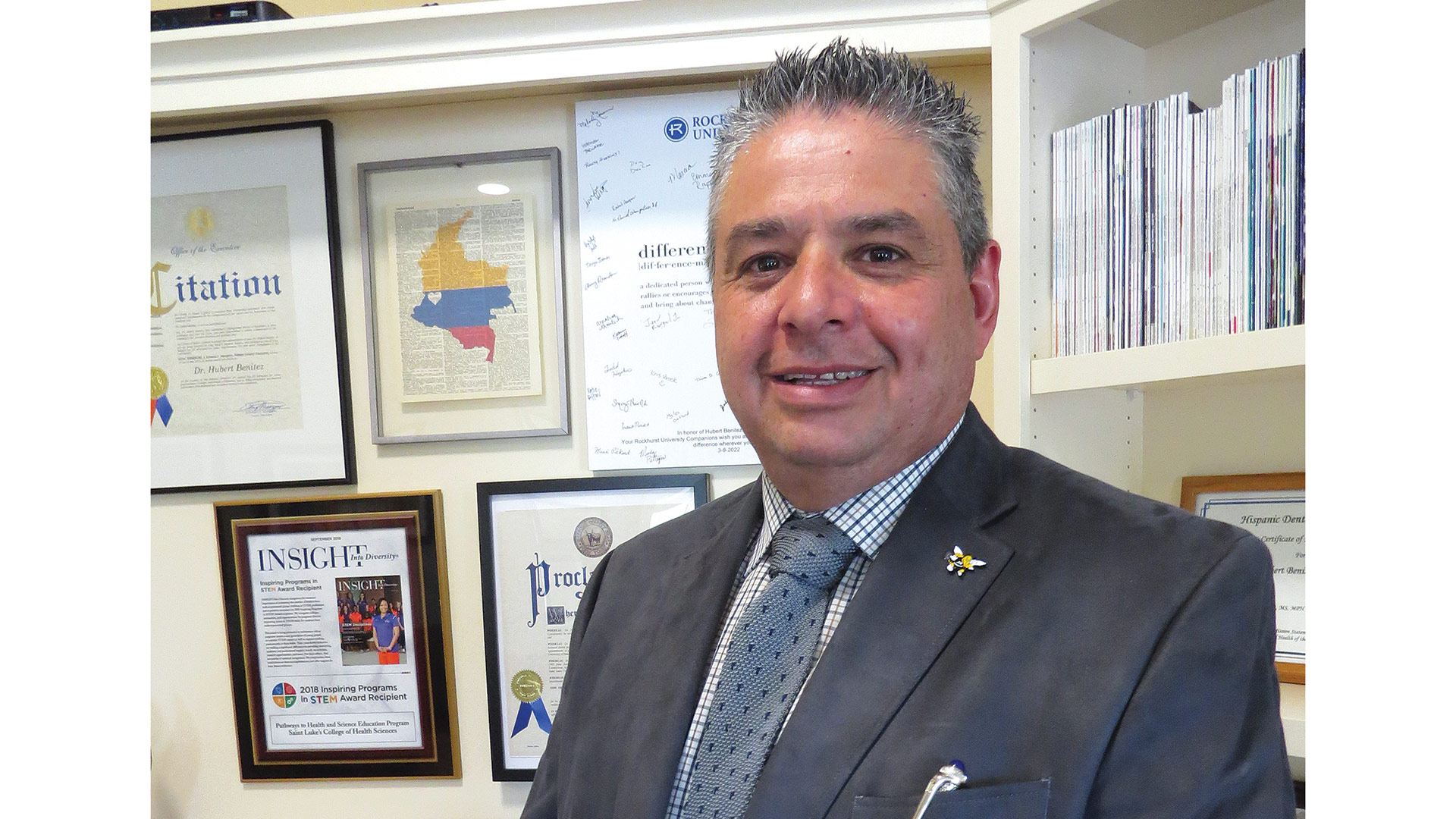
Hubert Benitez

Hubert Benitez

Hubert Benitez is a dentist by trade. He got into that field because he wanted to serve people — and because he wanted to make a difference. He eventually left dentistry for academia because … well, he still wanted to serve people and make a difference, but in an even more profound way, by creating pathways to higher education. This focus has become a passion, one that he brings to his new role as president of American International College.

At the recent commencement ceremonies for American International College, Hubert Benitez, DDS, the school’s president, was at the podium, handing out diplomas, and offering traditional greetings to the graduates — something along the lines of ‘congratulations, and good luck.’

And in what would have to be considered an unusual twist, many of them said the same thing back to him.

Indeed, Benitez had been on the job for only about a month before taking the stage at those ceremonies at the MassMutual Center — and delivering the commencement address while he was at it. Most all of the students accepting their diplomas knew that, and wanted to offer some words of encouragement.

“You don’t learn about an institution until you’ve talked to its people.”

Taking the helm just a few weeks before the end of a spring semester is highly unusual in higher education — most new presidents would prefer to start during the summer, when things are slower and they have time to ramp up, or at the start of a new school year. Benitez said he was given those options, but was also asked to consider starting in April by Board of Directors Chairman Frank Colaccino, a member of AIC’s Class of 1973 and member of the search committee that ultimately offered Benitez the job.

And he said he jumped at the opportunity, essentially because he couldn’t wait to get started with the next chapter in both his intriguing professional career — and in the history of the school, which first welcomed students in 1885.

“That is a non-traditional start date,” he acknowledged. “Because it’s a transitional phase — we’re closing, and also starting a new academic year. In retrospect, I think it’s been beneficial to start when I did, because I had the opportunity to work with my colleagues during a very stressful time — an academic year is ending, we’re close to commencement, we’re close to ending the fiscal year, and now we’re preparing the budget to present to the Board of Directors for approval.
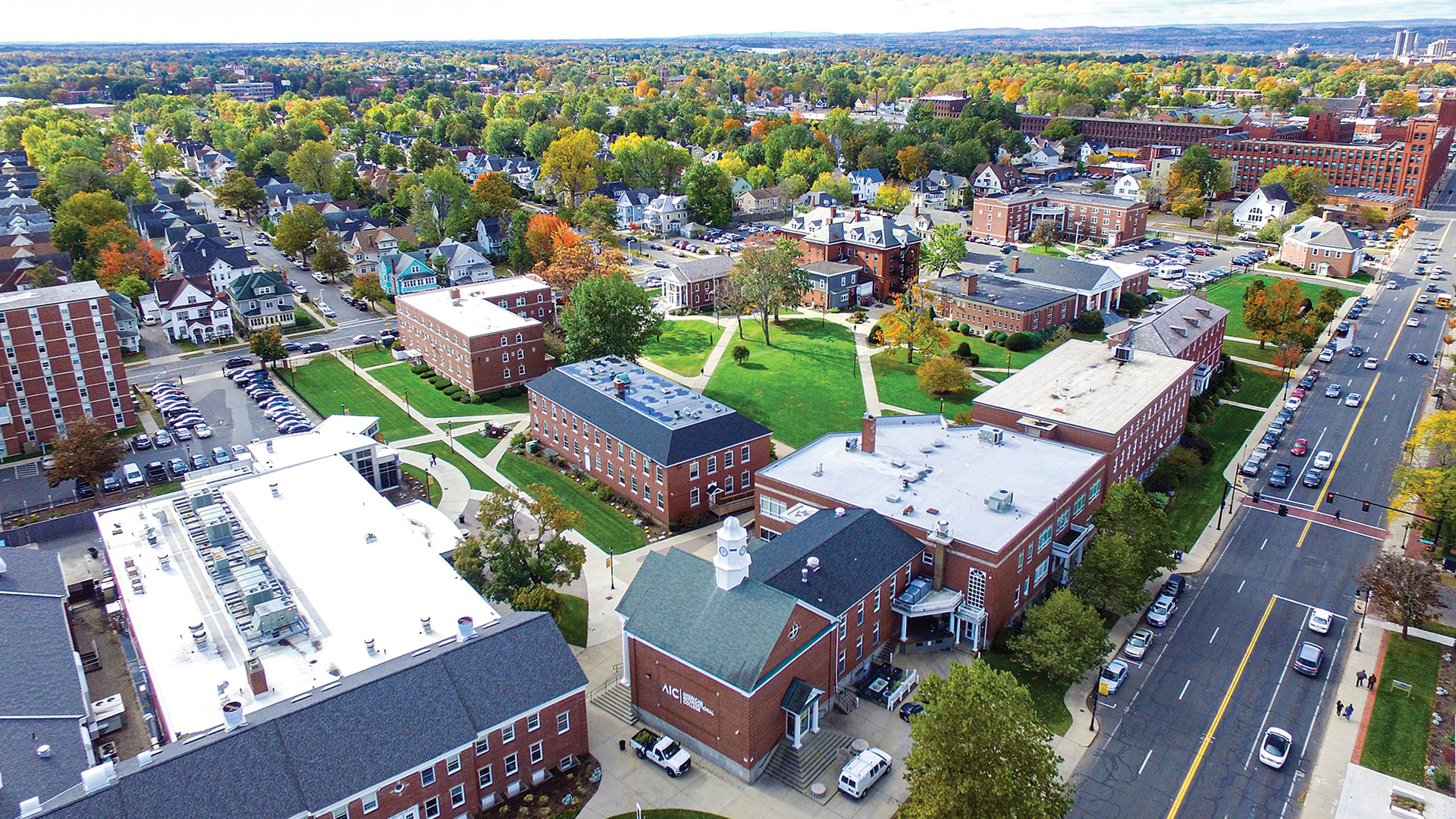
the AIC campus

Hubert Benitez says his first visit to the AIC campus left him convinced that he wanted to be the school’s next president.

“It’s almost unheard of to start at that time, but I wanted to take up the challenge,” he went on. “And, more importantly, my colleagues were willing to welcome a new president in that time of flux.”

Benitez was anxious to start, and before that, he was anxious to apply, because in every way he can imagine, the school’s mission and its ongoing focus on first-generation students and those who may need a second chance to further their education reflects his own resume and his own focus within higher education.

He said that, throughout its history, AIC has created opportunities for many individuals and he wants to continue and build on this mission, making the school ever-more diverse and responsive to the challenges facing both traditional and non-traditional students.

He brings to that assignment an intriguing resume. Indeed, those letters after his name, DDS, indicate that he is a dentist by trade. He had a practice for more than 14 years, but eventually decided he couldn’t see himself “taking care of toothache for the rest of my life.”

Instead, he opted to change course and pursue a career in higher education, or “the academy,” as he called it, because it met a life-long desire to serve others while presenting many different opportunities to grow as an individual and lead others.

“I always saw my colleagues in higher education as individuals who were trying to find new directions, trying to research, trying to find new directions for healthcare for education … and that was something that was intriguing to me,” he said.

In his most recent position, Benitez served as vice president for Strategic Initiatives and Academic Innovation, and as acting chief inclusion officer at Rockhurst University (RU) in Kansas City, MO. Prior to Rockhurst, Benitez served as president and chief executive officer for Saint Luke’s College of Health Sciences for almost five years, where he provided visionary and strategic leadership that included merging the school in Rockhurst (more on that later).
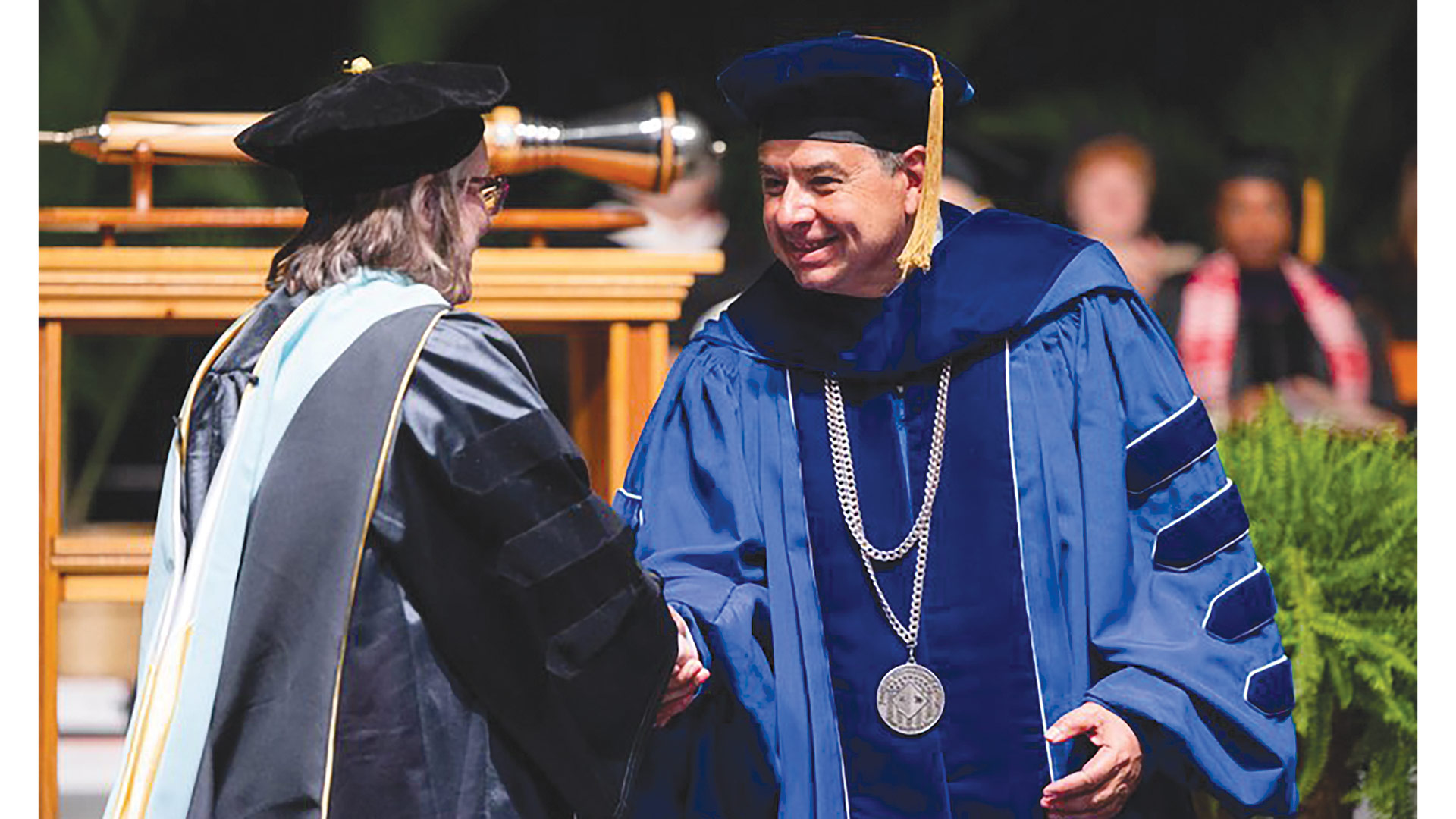
Hubert Benitez, right, was offering congratulations

While Hubert Benitez, right, was offering congratulations to students at commencement, they were offering it right back to him.

In his short but busy time at AIC, he has been “learning and doing,” as he put it and starting the hard work of creating an envisioning plan for the college, an effort involving many individuals and constituencies.

“Many people ask me, ‘what is your vision?’ he said. “I have a vision of what AIC will be, but the vision of AIC will be a shared vision, a vision created by faculty, staff, administrators, because I want to make sure everyone owns that vision.”


Something to Sink His Teeth Into

Benitez told BusinessWest that while he was at Rockhurst University, he was encouraged by recruiting firms to apply for various positions, most of them presidencies, across the broad spectrum of higher education. The presidency of AIC was not one of them.

“No one invited me to apply to AIC; I chose AIC, and I was hoping that AIC would choose me,” he said, adding that there were many things about the small, urban school that intrigued him, starting with the three words over the school’s banner: Access, Opportunity, and Diversity.

“When I see an institution that focuses on providing access to demographics of students, providing opportunities to students who haven’t been successful a first time, or a second time, and maybe this is their last opportunity, and when I see an institution that is working on maximizing the diversity of the future workforce … that is absolutely true to who I am, not only as a person, but as a professional.”

Elaborating, he said that the mission of AIC is true to his heart and a reflection of what he has devoted his career to in recent years. To understand those sentiments, we turn the clock back to his decision to transition from dentistry to higher education.

That transition occurred as he was pursuing a post-doctoral fellowship, when Benitez met a fellow DDS who became a mentor and eventually convinced him that his future shouldn’t be in dentistry.

“I believe in the value of mentorship, not only because it helps people move forward with their professional aspirations, but because mentors find in you what you may not have found in yourself,” he explained. “He saw in me a skill set, a desire for professional growth, a desire to work in higher education … he once told me ‘I don’t think you should stay in dental schools — I see you as a holistic administrator.”

This same mentor advised him that he would need a Ph.D., or another one, to be exact, this one in higher education administration, which he earned at Saint Louis University’s College of Education and Public Service.

He then “went through the academic ranks,” as he put in, serving in a number of capacities, including adjunct faculty, full-time faculty, program director, assistant dean, dean, provost, and chief academic officer, before becoming president and CEO of Saint Luke’s College of Health Sciences.

There, as noted earlier, he helped orchestrate a merger with Rockhurst, a union that was different from many of this type because Saint Luke’s was successful at the time, not struggling as many schools are when they look to merge with a larger institution.

“This was the case of two very strong academic institutions, financially healthy academic institutions, coming together with a common vision,” he explained. “Our merger became an example of how two strong institutions can come together, as opposed to traditional mergers, where one institution has troubles and the other one does not, and I was proud to be part of that process.”

As noted, he would go on to vice president for Strategic Initiatives and Academic Innovation, and as acting chief inclusion officer at Rockhurst.

He was in that role, when, without the encouragement of any recruiters, he applied for the position of president at AIC, earned the opportunity to interview for it, and eventually visited the campus in January. It made quite a first impression, as he recalled.

“Sometimes when you visit a campus, and I’ve had the privilege of visiting many, you get a feeling, or you get what I call a vibe when you visit an academic institution,” he said. “My wife and I left this college and we looked at each other, and we knew it felt right.”

During that visit, he said he met with a number of faculty, staff, and students, who collectively presented a picture of what they were looking for in the school’s next president.

“My focus has always been on creating opportunities for access, for diversity, for equity, for inclusion.”

He summed it all up this way: “They said they were looking for someone who could help them and help this institution become prominent in the community while continuing to serve that demographic of student, and continue to provide that access,” he recalled. “If you hear that, and I look back at my story, you can’t be more mission-aligned and vision-aligned; it’s an alignment of the mission to who I am.”


Course of Action

Getting back to his unusual start date, Benitez said it has been beneficial in a number of ways, especially in the manner in which it has enabled him to get a head start on his work, and do a lot of that ‘learning and doing’ he mentioned.

The ‘doing’ part concerns everything from commencement to putting the budget together for the new year, he said, adding that the ‘learning’ takes many forms and is ongoing.

For starters, it involves meeting with every employee on the payroll, he said, adding that this is what he did when he was president of Saint Luke’s College of Health Sciences, an exercise that became a tremendous learning experience.

“First and foremost, I need to know my colleagues’ aspirations — what are their needs?” he explained. “I always say that people come first, and if I can learn to understand each and every person’s personal and professional aspirations, I can serve them better. You don’t learn about an institution until you’ve talked to its people.”

Benitez said he’s already met with senior staff and many groups of employees, and has a schedule packed with one-on-one interviews for the next few months.

He’s also meeting with students, taking in events, meeting with the faculty senate and individual faculty members, all in an effort to learn more about the school, where its stakeholders want to take it, and how it will get there.

“But while learning, we’re also doing,” he said, adding that he and team members have been preparing for both the new school year and the first “envisioning exercise,” as he called it.

“We’re already gathering a group of faculty, staff, and administrators in a room and start to envision what the future of AIC is going to look like,” he said.

“There has to be ownership of the vision, “he went on. “It’s not ‘here’s the president’s vision and others will execute it’ — in my mind, that will never work; it will never have ownership. People need to feel that they belong and that they have a sense of ownership.”

As for his own vision for the school, Benitez said he wants an AIC that is heavily involved in the community and responsive to the constantly changing needs of its students, the community, and area businesses.

“It’s not ‘what can the community do for AIC?’ On the contrary; it’s ‘what can AIC do for the community?’” he explained. “I see an AIC that is vibrant, that creates an environment where, when I walk through the corridors of this institution, it feels like home for all. I should be able to walk the campus and say ‘do you feel at home here?’ If I hear everyone saying ‘yes,’ I think we’re doing our job.”

While working on the visioning process, and as part it, Benitez said he will continue and hopefully broaden AIC’s mission of providing access and opportunities, work that has become the focal point of his own career in higher education.

“My focus has always been on creating opportunities for access, for diversity, for equity, for inclusion,” he told BusinessWest. “It’s been on working with minority populations and creating pathways into higher education for demographics of students where higher education is not always seen as a viable option.

“Some of my colleagues will say ‘it makes sense to you — you come from a Latino background, a demographic group under-represented not only in the health professions but in education in general,’” he said. “And I say ‘yes, it does make sense to me, but it’s the right thing to do.’ And that’s why I’ve devoted the majority of my career to that work of creating transitions, pathways, and pipelines for students from under-represented backgrounds to arrive in higher education, earn a degree, and obtain a better way of living for themselves.”


Grade Expectations

Benitez said he shook more than 600 hands during those commencement exercises earlier this month, which he described as a humbling experience in many respects.

Most humbling were those wishes for good luck from the students, he said, adding that they certainly resonated with him.

He understands there are many challenges facing the school, from the uncertainties stemming from the pandemic, to ongoing enrollment issues stemming from smaller high school graduating classes and a host of other issues, to that ongoing task of creating more pathways to higher education.

He not only understands them, he embraces them and wants to tackle them head on. That’s why he took this job, and that’s why he took that early start. There’s plenty of work to do, and he wanted to get right to it.


George O’Brien can be reached at [email protected]

Law Special Coverage

Common Compensation Blunders

By John Gannon, Esq.

Wage-and hour-compliance is never easy for businesses, and a recent decision from the Massachusetts Supreme Judicial Court (SJC) just made things harder.

In ˆ, No. SJC-13121 (Mass. April 4, 2022), the Massachusetts Supreme Judicial Court (“SJC”) ruled that paying employees late is equivalent to not paying at all. This means employees are entitled to triple damages if they are not paid on time, because under the Massachusetts Wage Act, employers who fail to pay wages are liable for three times the unpaid wage amount (treble damages). With that case in mind, here are a few common compensation mistakes employers should avoid to ensure solid wage and hour compliance.

Failure to pay wages on time: The Massachusetts Wage Act requires employers to pay all wages, including any accrued, unused vacation time, to employees who are terminated on their last day of work. For employees who voluntarily resign, all wages are due on or before the next regularly scheduled pay date.

Too often, employers pay final wages a day or a week too late. This is especially common with unpaid commissions. The problem here is that under the Reuter v. City of Methuen case, those wages are not paid on time. Therefore, the employee is due triple damages under the Wage Act.

This is what happened to the City of Methuen; the city paid an employee her final paycheck of about $9,000 (including unused vacation time) about three weeks late. The court ruled that the employee was due almost $30,000 because the city paid the employee a few weeks late. Professional tip: Don’t make this same mistake. Make sure employees who are separated from work are paid all wages on their last day of work. If the final check is not ready the day you need to let someone go, have a process in place to suspend the employee while you work out cutting the final paycheck.

Misclassifying employees as independent contractors: It can be tempting to “contract” with an individual to provide services that are similar to what your employees do. This relationship has tax advantages, no need to worry about leave laws and other employment regulations, and a perceived sense of freedom to easily terminate the relationship if it does not work out.

“The Massachusetts Wage Act requires employers to pay all wages, including any accrued, unused vacation time, to employees who are terminated on their last day of work. For employees who voluntarily resign, all wages are due on or before the next regularly scheduled pay date.”

The problem is that classifying individuals as independent contractors (“I/C”) in this situation can be risky. This is because the I/C classification may violate the Massachusetts Independent Contractor statute, which requires workers to be classified as employees, not I/Cs, when the work being performed is similar to that of other employees.

The Massachusetts Independent Contractor statute also requires true contractors to: (1) be free from control and direction from the business (meaning, the contractors sets their own hours and performance standards); and (2) have their own independently established profession or business (meaning, the contractor has their own LLC, PC, or other established business entity). Even where an individual agrees to be classified as an independent contractor and paid via a1099, businesses run a risk of violating the Massachusetts Independent Contractor if all of the above-mentioned factors are not satisfied.

Travel time troubles: Both Massachusetts and federal law require employers to pay employees for non-commuting travel time during the day. This is commonly referred to as intraday travel. Here is the example provided by the federal Department of Labor: Barbara is a personal care aide providing assistance to Mr. Jones. Barbara drives him to the Post Office and grocery store during the workday. Barbara is working and the travel time must be paid.

What employers in Massachusetts might not know is that under state law you also have to reimburse Barbara for all “associated transportation expenses.” This means you need to pay her for costs like mileage, tolls, and parking (if applicable). It is unclear what employers have to pay for mileage, but the safe bet is paying in accordance with the IRS standard mileage rate, which is currently 58.5 cents per mile.

Meal break miscues: Massachusetts law requires employers to provide a 30-minute meal break to employees when they work more than six hours in a day. The break does not need to be paid; however, if an employee does any work during an unpaid break, the employee needs to be compensated for their time. This could be as little as answering a work-related phone call or making a few copies on the copy machine during a break.

Meal break time may be used by employees for activities other than eating, such as running an errand or taking a walk outside. The key here is that if the meal break is unpaid, workers must be allowed to use the time as they choose, including leaving the building/work premises.

Illegal deductions from pay: When it comes to paychecks, the general rule is that employers cannot make any deductions, with a few exceptions. Some deductions are federal or state mandated, such as any deductions for taxes or child support. Other deductions are consented to by employees, including money put toward insurance premiums and retirement benefits. Other than that, employers should not be deducting money from paychecks under almost any circumstances.

One common scenario where employers want to make a deduction is a situation involving a wage overpayment. In this case, a deduction might be ok if: (1) the employee agrees in writing to the overpayment and deduction; and (2) the deduction does not bring the employee’s earnings below minimum wage. Be sure to check in with employment counsel before making a deduction for an overpayment though, as it does have some potential risk. Also, be sure to never make deductions associated with damaging or failure to return company property (such as a cell phone or laptop). This is not allowed in any circumstances, and can lead to triple damages under the Massachusetts Wage Act.


John Gannon is a partner with the Springfield-based law firm of Skoler, Abbott & Presser, specializing in employment law and regularly counseling employers on compliance with state and federal laws, including the Americans with Disabilities Act, the Fair Labor Standards Act, and the Occupational Health and Safety Act; (413) 737-4753; [email protected].

Features Special Coverage

A Complicated Picture

John Regan says that, in many respects, it is difficult to reconcile the numbers from the latest Business Confidence Index (BCI) released by Associated Industries of Mass. (AIM) with recent headlines and the many strong headwinds facing business owners and managers today.

Indeed, the monthly confidence index continued an upward trend since the start of the year, rising to 58.1, a gain of 0.9 points, putting the index “comfortably within optimistic territory,” according to AIM, which Regan serves as president.

That optimism, though, comes as inflation remains at nearly historic levels, gas prices continue their upward climb, a stubborn workforce crisis continues, supply-chain issues persist, and the stock market is down double digits (almost 20%, in fact) from the start of the year. That’s why Regan acknowledges that the BCI’s trajectory seems illogical, if not contradictory to what’s happening.

“It’s hard to reconcile, but people feel confident,” he said. “And the Business Confidence Index is important because if you’re confident, you’re more willing to make investments in equipment, people, facilities, and new products.”

And a closer look at the landscape might reveal that there are, in fact, reasons for such optimism, he said, starting with a simple comparison to where things were two years ago — and even four months ago — with regard to the pandemic and its many side effects.

John Regan

John Regan

“Massachusetts is on track to end this fiscal year with more than $6 billion in the rainy day fund — it’s just incredible revenue performance.”

And then, there’s those soaring state revenues. The Department of Revenue took in more than $2 billion above what was expected in April, giving Gov. Charlie Baker cause to press his case for the Legislature to take up his proposals to provide roughly $700 million in tax relief to residents.

“Massachusetts is on track to end this fiscal year with more than $6 billion in the rainy day fund — it’s just incredible revenue performance,” he said. “If you match business confidence with the state’s own revenue performance, clearly positive things are happening.”

Overall, there are several factors, competing numbers, and varying opinions relative to just what is causing this record inflation that make it difficult to speculate about what will happen short- and long-term and whether the country is heading for a recession, as many are now projecting. GDP declined by 1.4% in the first quarter, and many economists are projecting that this trend will continue in Q2. And the matter is complicated further by the Fed’s ongoing efforts to slow the pace of inflation by raising interest rates — an aggressive strategy that is fueling speculation about a recession.

As Bob Nakosteen, a semi-retired professor of Economics at the Isenberg School of Management at UMass Amherst surveys the scene, he said it is largely without precedent, thus making analysis, let alone predictions, difficult.

“We live in complicated times,” he said, with a large dose of understatement in his voice. “It’s a complicated picture, more complicated than I’ve ever seen it.”

Brian Canina, executive vice president, CFO and treasurer at Holyoke-based PeoplesBank, agreed.

“This is a very unusual period of time,” he told BusinessWest. “Because there are so many different things going on, between supply chain issues driving costs up, the cost of gas being driven up by government regulation … it’s really hard to pinpoint whether it’s true economic growth that’s driving inflation or if it’s purely government-driven. So it’s hard to say exactly what’s going on.”

And even harder to project what will happen. Nakosteen does not anticipate continued decline in GDP for the second quarter, which, if it did happen, would be the technical definition of recession. But he’s not projecting strong growth, either.

Brian Canina

Brian Canina

“This is a very unusual period of time. Because there are so many different things going on, between supply chain issues driving costs up, the cost of gas being driven up by government regulation … it’s really hard to pinpoint whether it’s true economic growth that’s driving inflation or if it’s purely government-driven. So it’s hard to say exactly what’s going on.”

“My prediction is we’ll see growth in the second quarter,” he said. “Not robust growth, maybe 1% or 1.5%, but I don’t think you’ll see GDP decline again.”

Meanwhile, Regan said economists with AIM are projecting that recession is “more likely than not, but it won’t be a terribly long recession.”

For this issue, BusinessWest talked with these experts and asked them to slice through the complex confluence of issues and try to anticipate what will happen with the economy in the coming months and quarters.


On-the-money Analysis

It was the late U.S. Sen. John McCain who, in 2015, described Russia as “a gas station masquerading as a country.” Paying homage to that quote, Nakosteen, echoing others, said Russia is a “a gas station with an army.”

That classification, and the acknowledgment that Russia, and Ukraine, both export large amounts of wheat and fertilizer, speaks volumes about just one of the many forces — most of them unpredictable in nature — that are impacting the national and global economic scene. And they’re also making it difficult to determine what will happen in Q2, Q3, and well beyond, said Nakosteen, who, like Regan, said that despite those aforementioned headwinds, there are many positive signs when it comes to the economy.

Bob Nakosteen

“The job market is strong, retail sales are good … so the economy is actually pretty strong, and the Fed thinks it’s too strong.”

“The GDP decline in both the state and the nation was almost more a technical issue, because all the numbers that went into it, except those regarding inventory, were strong,” he explained. “The job market is strong, retail sales are good … so the economy is actually pretty strong, and the Fed thinks it’s too strong.”

Which prompted two interest-rate hikes this year, including a half-point increase late last month, designed to slow the economy. But with those rate hikes comes talk of inflation, said Nakosteen, adding that, historically, one has led to the other.

These factors add up to a lot of watching and analyzing for people like Canina, who said there is a lot to digest, including current loan activity, or the lack thereof, as well as inflation and the dreaded inverted yield curve — a successful predictor of many recent recessions — and the impact of rising interest rates on consumer spending as the cost of borrowing increases.

Starting with a look at loan activity, he said it has slowed markedly in recent months, with most all refinancing of home mortgages complete and commercial loans in the post-PPP era being relatively stagnant.

“For what should be a very robust economic environment, we’re not seeing the equivalent loan opportunities on either the commercial or residential side,” he said, adding that the rising interest rates, coupled with low inventory and soaring prices, are certainly impacting the latter. “We’re not seeing a lot of loan demand; we’re doing what we can to find it, but it’s challenging for us right now.”

And this lack of loan activity will certainly have an impact on interest paid on deposits, he said, noting that while one might assume that these rates will rise naturally as the Fed increases interest rates, they won’t if loan activity remains stagnant.

“We’re coming off a time when banks have a ton of cash because of all the government stimulus that’s been flooded into the market,” he explained. “So they have a ton of cash on their balance sheet and not a lot of loan demand, so it’s going to be very difficult for them to pay higher rates on deposits unless they can turn that cash into loans.”

And the loan market is just one of the many things to watch moving forward, he went on, adding that the sluggishness in that area is a symptom (one of many) that the inflation being witnessed is a product of government policy and other factors — supply chain issues, workforce shortages and resulting higher wages among them — rather than the economy being hot and in need of being cooled down.

“I don’t think gas prices or the cost of groceries are really being impacted by consumer spending,” he said. “I think those things have been impacted by government regulation, supply chain, and cost of wages — grocery stores paying $17 an hour for kids to bag groceries because they can’t hire people at lower wages because there’s no one to hire.”

“It’s all been reactionary to the pandemic — everything right now seems to be incredibly artificial,” he went on, adding that, for this reason, the Fed’s interest-rate hikes might provide a real, unfiltered look at what’s happening with the economy. “We have artificially driven rates on the short term, and the Fed also manipulating rates on the long end with their bond purchases. If they can start shrinking their balance sheet, and raising interest rates on the low end can normalize the yield curve, and then get out of the markets, then we can see what’s really going on.”

Still another thing to watch is how quickly and profoundly interest rates are increased, he said, adding that, in the past, when rates rise quickly and in large doses, the Fed has had to back off and reverse course in an effort to pick up a slowing economy.

Nakosteen agreed, and noted that there are many factors that go into inflation, some of which are likely to be impacted by rising interest rates — such as the spending spawned by government-awarded money in the wake of the pandemic — and some not.

“It’s a complicated picture,” he said. “And inflation is more complicated than I’ve ever seen it.”

Looking back to see if there was a time to compare all this to, Nakosteen said there were many similar attempts to slow the economy, but perhaps none at a time when there were so many issues clouding the picture.

“It’s a bizarre mixture of factors,” he said. “There’s COVID, the war in Ukraine, the aftermath of all the stimulus … it’s a strange mix.”

And despite this mix of factors, or headwinds, business owners are generally upbeat, as indicated in the upward movement of the BCI, which Regan explained this way:

“When things are going badly, the BCI usually predicts that. Despite all the negative stock market activity and the presence of significant inflation pressures, along with continuing supply chain issues and the challenge of securing a workforce, the index is in significantly positive territory.

“When you look at the BCI and some of the other things that are happening, it’s hard to reconcile, other than to say that the people who are responding to the survey feel very confident about how they are doing and how they perceive conditions for their own operation,” he went on, adding that the next reporting of the BCI will be watched with great interest.


The Bottom Line

Looking again at the complicated picture that is the national economy, Nakosteen said that, historically, efforts by the Fed to slow inflation by raising interest rates usually take six months or more to reveal their true efficacy.

But in this case, such initiatives have been designed to speed that process, he said, adding that he’s not at all sure whether they actually succeed in doing that — or whether they will succeed at all, given the many question marks concerning the nature of this historic inflation.

Overall, the always complicated task of projecting what will happen with the economy has become that much more difficult. In other words, stay tuned.


George O’Brien can be reached at [email protected]

Innovation and Startups Special Coverage

Celebrating Innovation

By Julie Rivers

The University of Massachusetts Donahue Institute (UMDI) turned 50 in 2021. It was a milestone, like many, that was marked in quiet fashion, and in this case, very quiet, because of the pandemic.

The actual celebration, in the form of an anniversary gala, came this year — May 3, to be precise. More than 150 people attended the event at the UMass Club in Boston, a gathering that offered UMDI and its supporters the long-awaited chance to reconnect, meet new people, and celebrate.

And there was, and is, much to celebrate.

Indeed, charged with social service, economic development, and community engagement, the Donahue Institute interfaces with many aspects of life in Massachusetts and beyond. In fact, UMDI has received global recognition for its economic research, program-evaluation capabilities, and workforce and educational initiatives.

Anticipating almost $25 million in revenues for fiscal year 2022, UMDI has about 175 employees with staff across the country, including all six New England states, Southern California, and Arizona. UMDI operates like a consulting firm, with 98% of its revenues being self-generated.

At the gala, recently appointed Executive Director Johan Uvin offered what amounted to a state-of-UMDI address, and in a Zoom call with BusinessWest that involved several leaders of the institute, he did the same, highlighting what’s changed over the years and, perhaps more importantly, what hasn’t for this vital resource.

“As someone coming in from the outside, this is a solid model — it’s not broken,” he said of the institute’s method of operation. “The Donahue Institute has the autonomy and intellectual freedom to pursue work that is meaningful to society but that also aligns with its mission and capabilities.”

Over the years, that work, has come in a variety of forms, including everything from housing to the national Census; economic data and ways to measure it, to office automation. And the institute’s work has often to led to changes in how things are done and how issues are addressed.

Johan Uvin addresses attendees

Johan Uvin addresses attendees at the recent gala marking the Donahue Institute’s 50th anniversary.

Slicing through it all, Mark Melnik, director of UMDI’s Economic and Public Policy Group, used terms not often applied to such an agency.

“We’re a dynamic organization, especially for a public-service institute,” he told BusinessWest. “While entrepreneurial mode can be exhausting, it allows us to push corners.”

This unique blend of public service and entrepreneurship provides the institute to recognize and seize what he called “opportunities that just make sense.”

For this issue and its focus on innovation, BusinessWest looks at these opportunities while reviewing the institute’s first 50 years of work and asking UMDI’s leaders what will likely come next.


History Lessons

In the beginning, the Donahue Institute focused on providing consulting services to state and local governments. Named for former president of the Massachusetts State Senate, the late Maurice A. Donahue, UMDI branched out in the mid-1980s by helping clients in the corporate and nonprofit sectors.

According to J. Lynn Griesemer, who served with UMDI for 31 years, including several as president, and still acts as a senior advisor, a breakthrough assignment in the early days of the institute was to assess how to most effectively introduce office automation into workplaces. While automation is incontrovertible today, back in the paper-laden manual task days of 1970s office life, the project was just one of many groundbreaking concepts the institute would help launch.

Another early assignment that would shape the future of the institute involved improving floor operations at the General Motors assembly plant in Framingham. However, while the project was underway, the plant began laying off shifts — but UMDI was already there as an implant that was well-positioned to lend a hand. Shifting focus, the institute helped the newly dislocated workers create resumes, get additional education, and ultimately find jobs or even start businesses of their own. Through this fortuitous timing, the institute quickly became the largest services provider to dislocated workers in the Commonwealth.

Donahue Institute

From left, former director of the Donahue Institute Eric Heller, former deputy director John Klenakis, former director Lynn Griesemer, Director Johan Uvin, and Associate Director Carol Anne McGowan

The federal government’s Department of Defense would then present the institute with an opportunity to help make systems uniform across military branches. This project allowed UMDI to develop the national credibility to successfully bid on the Head Start program, one of its core initiatives to this day.

From there, former Massachusetts Governor William Weld asked the UMass President’s Office to assist with an economic development initiative for the state. With the help of economic experts from across the UMass campus, UMDI worked with the Federal Reserve Bank of Boston to forge the MassBenchmarks project. To this day, MassBenchmarks assesses the Massachusetts economy through reports and analyses that it then produces and releases twice per year in journal form.  

These early projects laid the groundwork for UMDI to get approved as a vendor by the federal government’s General Services Administration (GSA). This designation allows the institute to bypass the lengthy bidding process usually required to win large federal contracts. 

Indeed, the institute’s keen eye for evaluating opportunities and strategically selecting those that will open doors has built the solid foundation it now stands on.

Today, the Donahue Institute is comprised of 10 business units. However, despite the ever-growing diversification of its core capabilities, a vibrant and robust research component remains at the backbone. This includes both UMDI’s Applied Research and Program Evaluation unit and its Economic and Public Policy Research group, led by Melnik.

This group operates as a project-oriented consulting firm, much like a think tank, bringing academic expertise and methods to real-world social problems. The group works with demographic, labor market, and economic data to help state and municipal governments, planning agencies, and nonprofits guide broad public policy discussions.

“Housing is the most central public policy question when we talk about Massachusetts.”

One current project examines how to leverage new apprenticeship models to minimize employee retention challenges. Another potentially groundbreaking study involves using data gathered for COVID-related purposes to develop new and more affordable ways of providing healthcare services to consumers instead of funneling people into highly complex systems that they have to navigate on their own.

A core assignment for Melnik’s group is its work with the Secretary of the Commonwealth preparing for census enumeration, which is the basis for federal funding allocation and congressional seats. With help from UMDI’s population- estimates program, the state’s census data is head of class in the nation. This is especially noteworthy since census data is relied upon heavily for resource allocations and predicting where jobs will be. It also informs decisions around population projections used by the MassDOT and Mass. School Building Authority for school district planning.

The group’s portfolio also includes a two-phase initiative with Way Finders that uses Greater Springfield as a case study on housing market affordability. With a focus on upward mobility and wealth creation, the study seeks to answer what it’s like for low- to moderate-income families to live in a high-cost state.

“Wages are so much lower in the Pioneer Valley that more than 54% of renters are housing cost-burdened,” Melnik says. Additionally, the majority of those burdened are people of color.

“Housing is the most central public policy question when we talk about Massachusetts,” he explains. This is because it tells the story needed to inform public policy, including the future of transportation.  

Another of the institute’s long-term projects is the Head Start program, which it has been involved with since 2003.

UMDI’s New England Head Start Training and Technical Assistance group is co-directed by Rosario Dominguez, M.P.A. Dominguez says that when people think of the Head Start program, early childhood education is often the only thing that comes to mind. However, that barely scratches the surface of what the program does, as it begins at pregnancy and continues to support families through college.

With this long-term intervention approach, the program addresses intergenerational poverty by using what goes on in the classroom as a lens for examining how families can reach their financial goals, ultimately strengthening entire communities. Through the partnerships it forms, the program has the reach to solve issues much larger in scale than early childhood development, including informing policies that move social equity and upward mobility forward by helping education and social service organizations improve their systems.  

Beyond its regional and national footprints, Ken LeBlond, Marketing Communications manager, said UMDI also handles international work. Funded by the United States Department of State, the institute has contributed to economic mobility at the global level since 2004.

This includes its exchange program in which groups of 20-30 people from about 60 countries, such as Argentina, Pakistan, and Eastern Europe, come to Western Massachusetts each summer. The groups travel the region engaging in active learning, helping at the Amherst food bank and senior center, and working on river cleanup projects.


A Look Ahead

In August 2021, the Donahue Institute welcomed Uvin as its executive director. Uvin had previously served as assistant secretary of Education under the Obama Administration. Working alongside Associate Director Carol Anne McGowan, Uvin holds the distinction of being the institute’s first executive director to be hired externally.

When asked what is ahead for UMDI, Uvin talked about alternative models for providing health care and exploring different educational models in challenged communities to lift entire neighborhoods through training and interventions.

Additionally, Uvin is interested in looking at both the supply and demand sides of regional economies to shape how employers and individuals work together to create wealth.

He explained that the engagement process might begin with going into neighborhoods and asking, ‘what are your aspirations?’ This is important because, according to Uvin, “we are moving headlong into a labor shortage with the babyboomers retiring,” making it critical to have intentional conversations around economic development across many different populations.

While this may be a current focus for UMDI, these issues are not new to the Pioneer Valley, where economists and policymakers have been wrestling with similar challenges for decades. Uvin says that while high-tech industry sectors have grown across the state, it has not been an equitable geographic or demographic spread, with Gateway cities such as Springfield and Holyoke — where nearly half of the region’s minority population lives — being left behind.

Part of Uvin’s vision for the future is to explore work in sectors such as life sciences, which play a key role in the success of Central Massachusetts’ biotech manufacturing and Greater Boston’s R&D and lab-based growth.

This, he says, would involve lifting up underserved communities, which is critical because, on the business side, there are simply not enough workers to grow unless we find ways to include all populations. Representation of people of color in the best-paying jobs of the higher-tech sectors lags severely. In terms of where UMDI is at this point in contributing to solving inequities that plague underserved populations, he says they are in the discovery phase, talking to others on the grassroots level.     

As for the future, the institute is positioned to make great strides. With an executive director from the outside, a new perspective brought on by the COVID pandemic, and an impressive 50 years of success to build from, the institute is at a nexus for bringing widespread change to the communities it serves.

“It’s an exciting time for reflection and renewal — to articulate what has happened, organically anyway, through the COVID crisis, which is the discourse around social equity and social mobility,” said Melnik. “This has been part of our work for a while now and has bubbled up even more.”

In reflecting upon how the institute has evolved over the past fifty years, Uvin and others said it is also important to highlight what hasn’t changed, especially the institute’s model and entrepreneurial approach to its work.

Dominguez adds that what was once called public service has evolved into economic mobility and social equity.

“Although we are further defining what we do, our core values will always be the same,” she said. “How can our work impact communities in need? That’s the core — and that won’t change.” 

Uvin concludes, “we’re not done evolving. COVID revealed what didn’t make sense, and business must respond.” Offering employee support, childcare, mental-health services, and other perks will be integral.

Perhaps what will carry the Donahue Institute forward another 50 years will be that which has stayed the same — a solid culture, a public service-focused mission, and the keen ability to find opportunities that align with core values while also having the potential to open doors.