Home Archive by category Sections (Page 35)

Sections

Business of Aging

Building Momentum

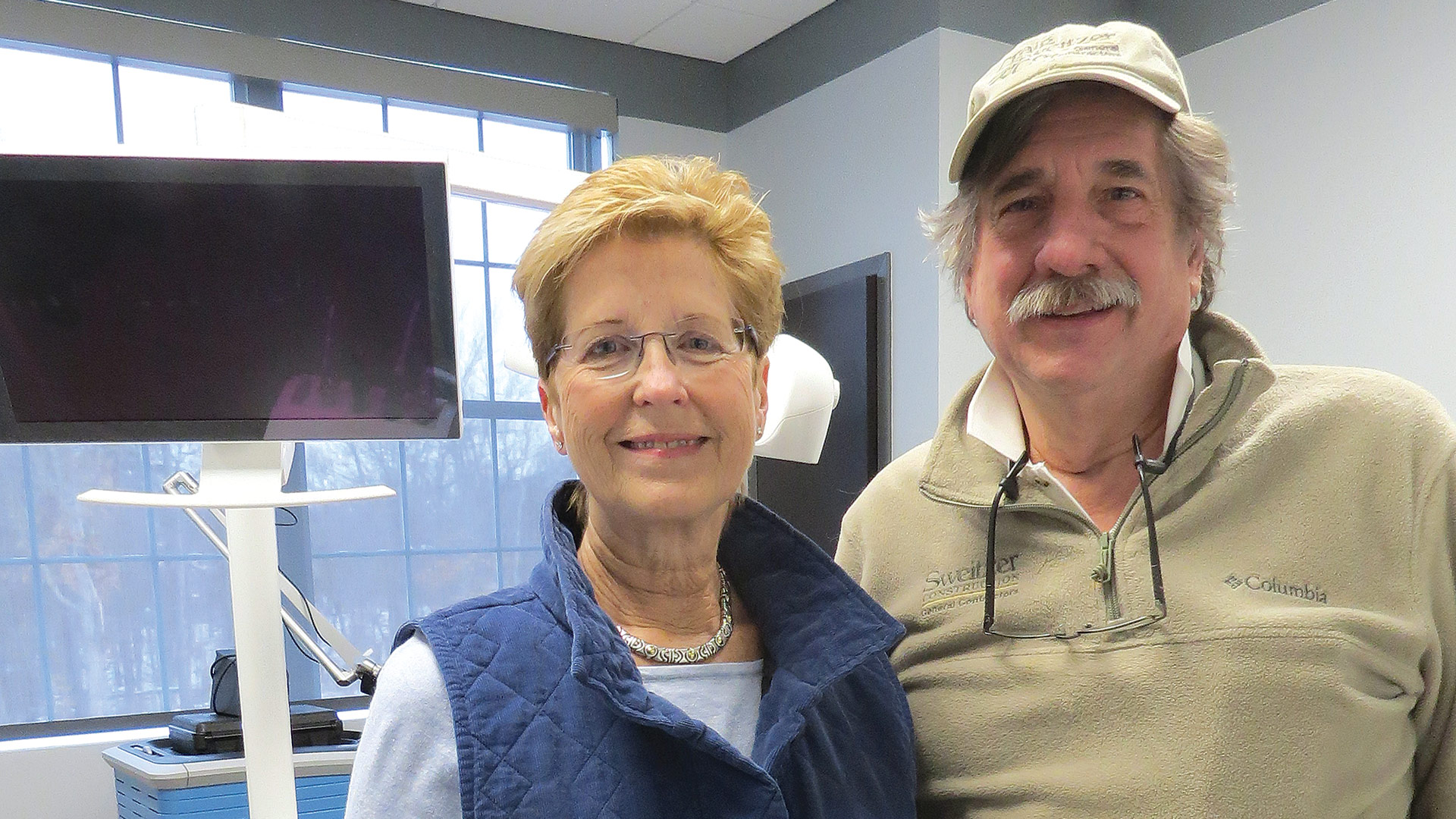
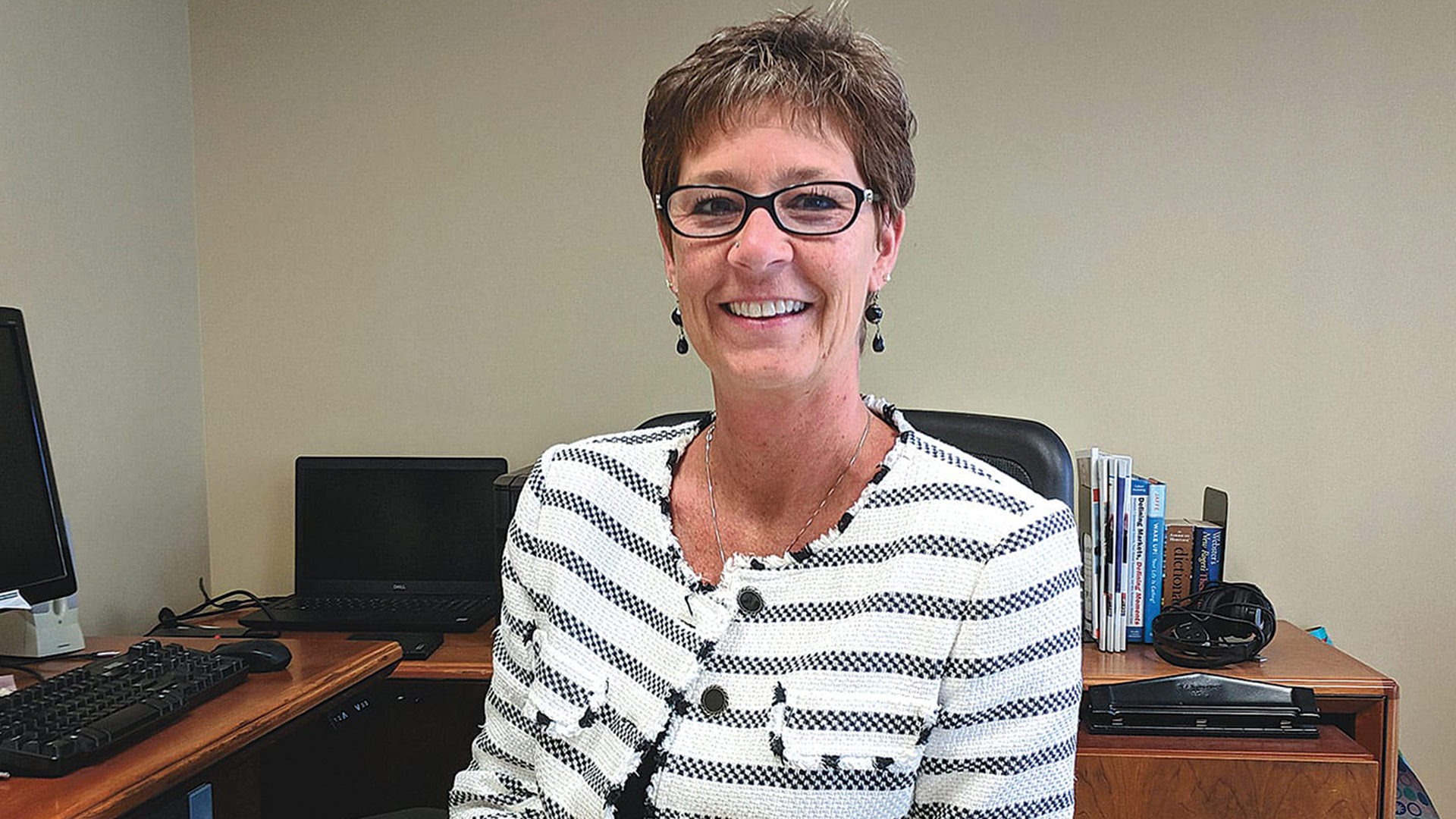
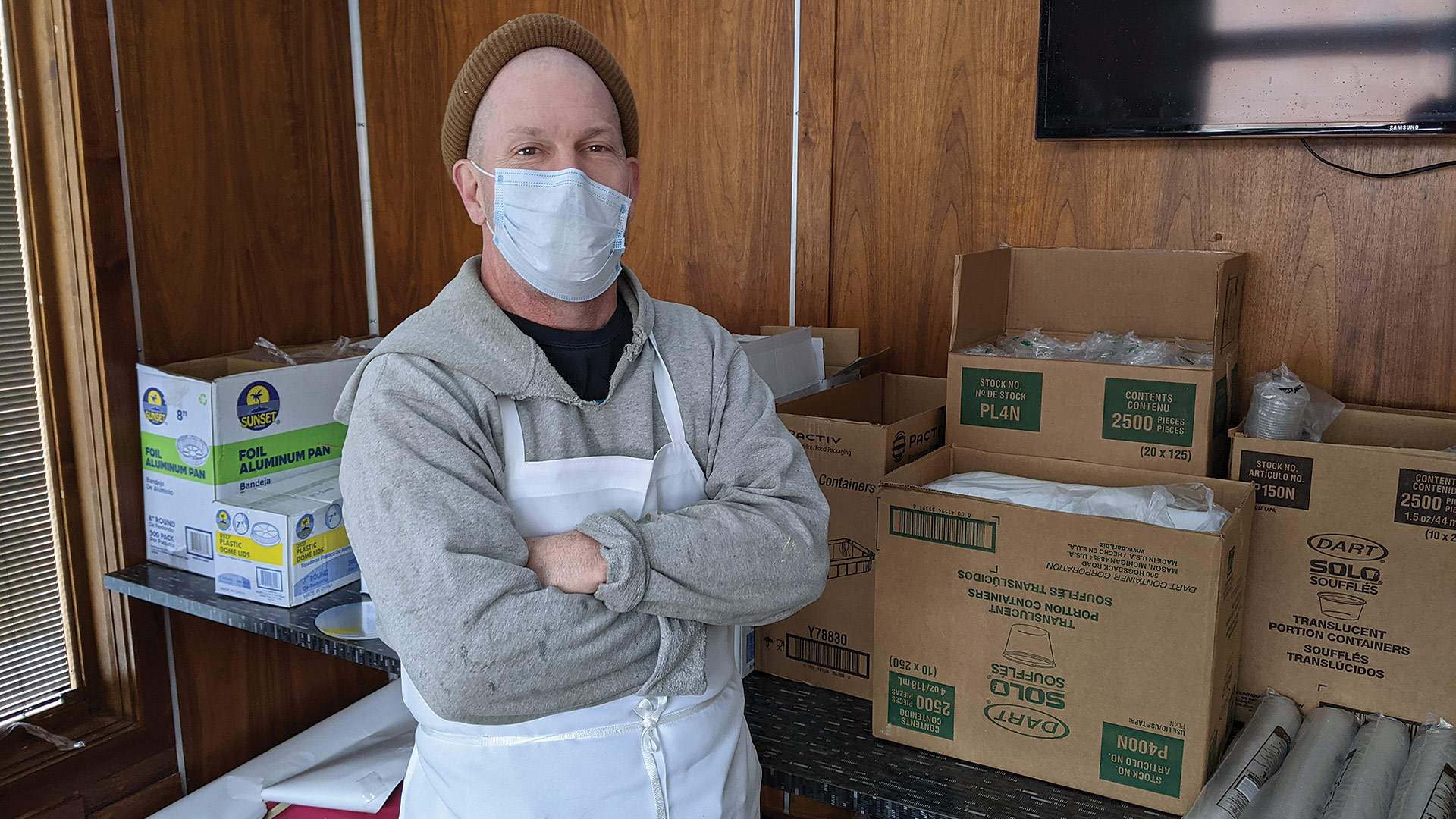
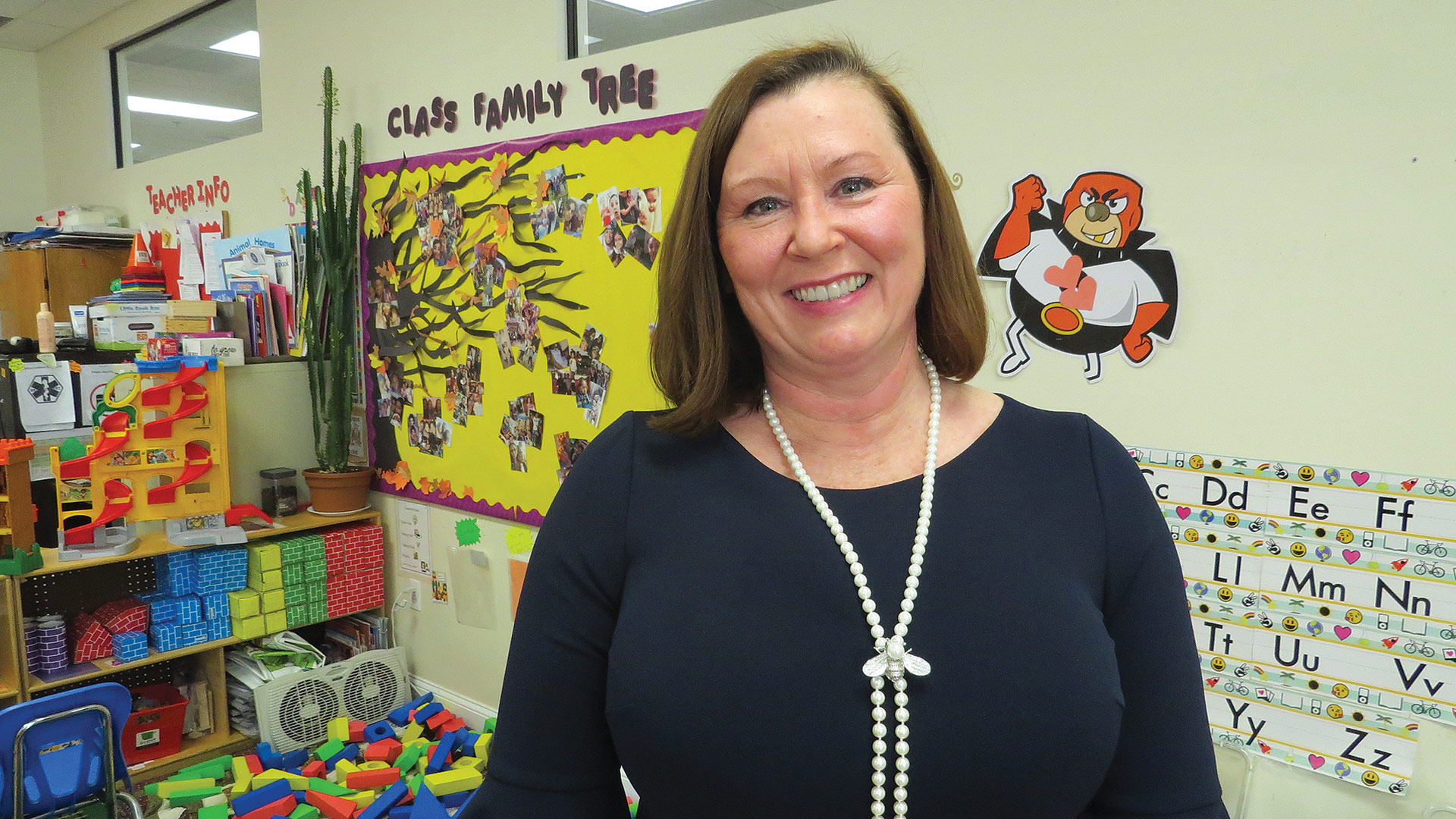
Pat and Craig Sweitzer

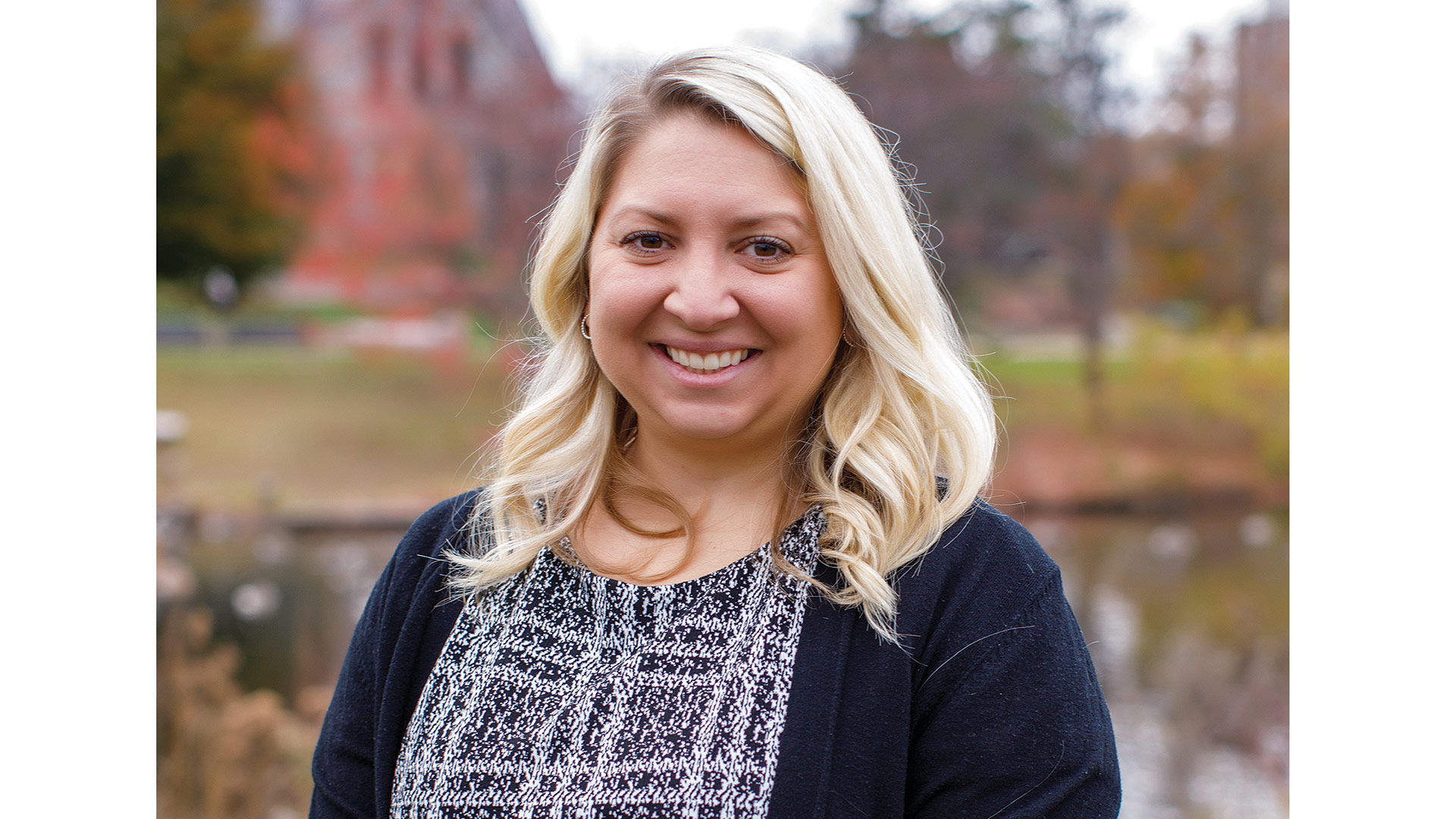
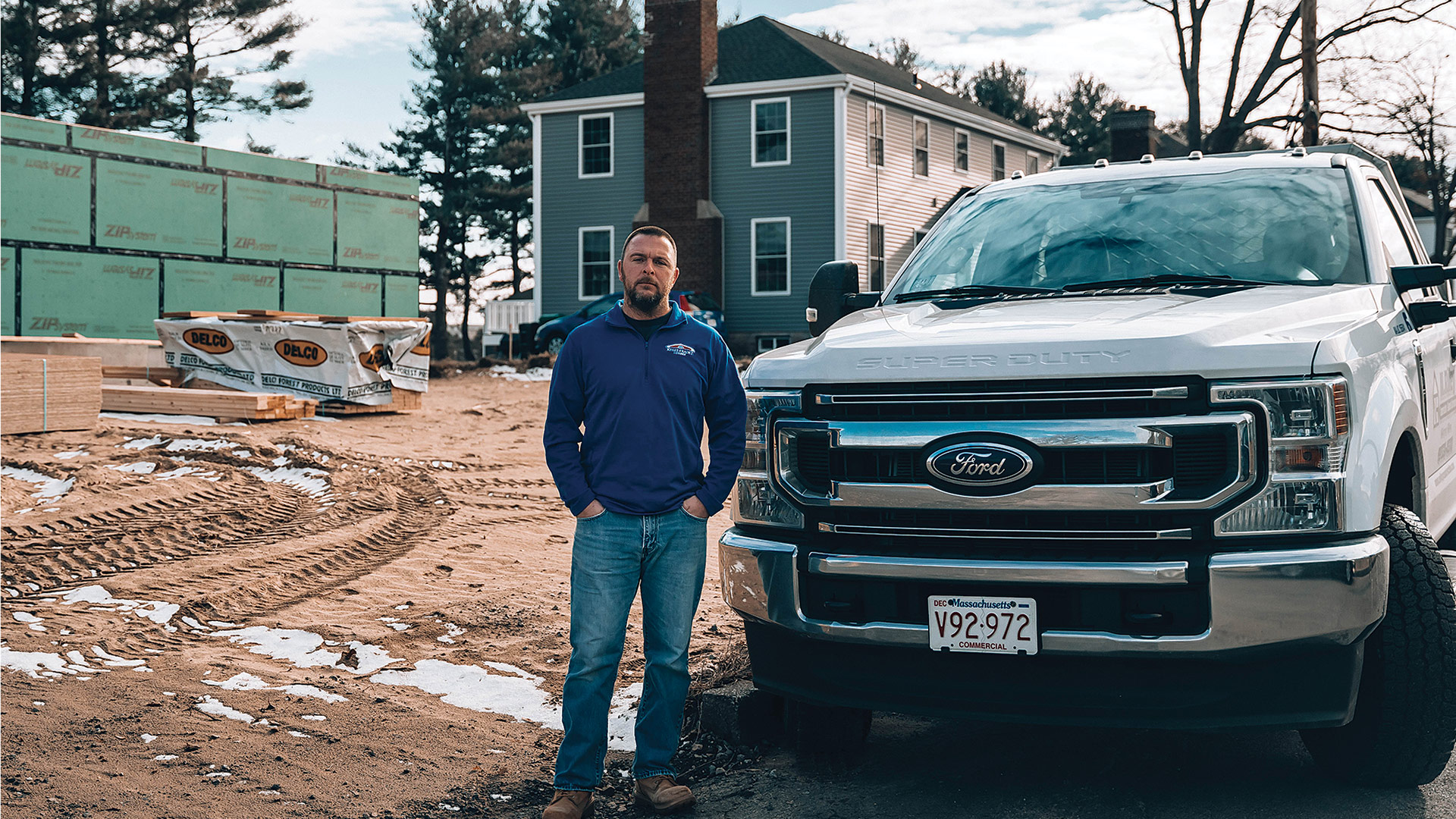
While their workload is like a typical year, Pat and Craig Sweitzer say, the way facilities are designed in the age of COVID-19 is not.

Ryan Pelletier says that, while it was “scary at times,” he believes life has returned to something approaching normal — although ‘normal’ is certainly a relative term — when it comes to construction within the broad and all-important healthcare sector in Western Mass.

And he should know. He’s project manager for Houle Construction in Ludlow, a family-run operation (his father, Tim, is president) that does the bulk of its work within the healthcare sector, including projects for most area hospitals and a number of private practices as well.

He told BusinessWest that things were busy just after COVID-19 arrived in the 413 almost exactly a year ago, as a number of hospitals and other providers needed some retrofitting of sorts and other types of work to do battle with the pandemic, but then, things got quiet in a hurry and stayed that way for a while, before starting to revert to something akin to pre-pandemic conditions.

“We were very busy for a few weeks, and then … it just died,” said Pelletier, referring to the early months of the pandemic, and noting that hospitals and private practices simply didn’t want more people on site than absolutely needed to be there. “But in the last several months, things have started to come back. There’s a comfort level now — the hospitals and private practices are getting back to business as usual, or as usual as they can.”

But that word ‘scary’ was used in reference to much more than the number of projects in the pipeline. Indeed, it also referred to everything from the daunting task of keeping employees — and everyone else on a job site — safe to the cost and availability of materials.

And he was not alone in that assessment, especially when it comes to the price hikes.

“We’ve seen steel and lumber costs rise exponentially — they’ve almost doubled within the past year.”

“We’ve seen steel and lumber costs rise exponentially — they’ve almost doubled within the past year,” said Dan Bradbury, director of Sales and Marketing for South Hadley-based Associated Builders, which works within a number of sectors, including healthcare. He noted that these rising costs could, and probably will, impact everything from decisions on whether projects move forward in the near term to what kind of construction takes place — new or renovation of existing space (more on all that later).

As for now and the immediate future, those we spoke with said that, after going mostly and then almost completely silent in the weeks after COVID hit, the phones are starting to ring again with greater regularity — in general, and within the healthcare sector in particular.

Pat and Craig Sweitzer, co-owners of Monson-based Swietzer Construction, which specializes in healthcare construction and especially dental offices, said they have a number of projects in progress and on the books, including three new dental offices, a medical building with a dental office as part of the lineup, two new medical spas (including one in East Longmeadow, adjacent to an Ascent Dental office they built), a cannabis dispensary, and work at Adaptas Solutions in Palmer, which is now making parts for COVID testing.

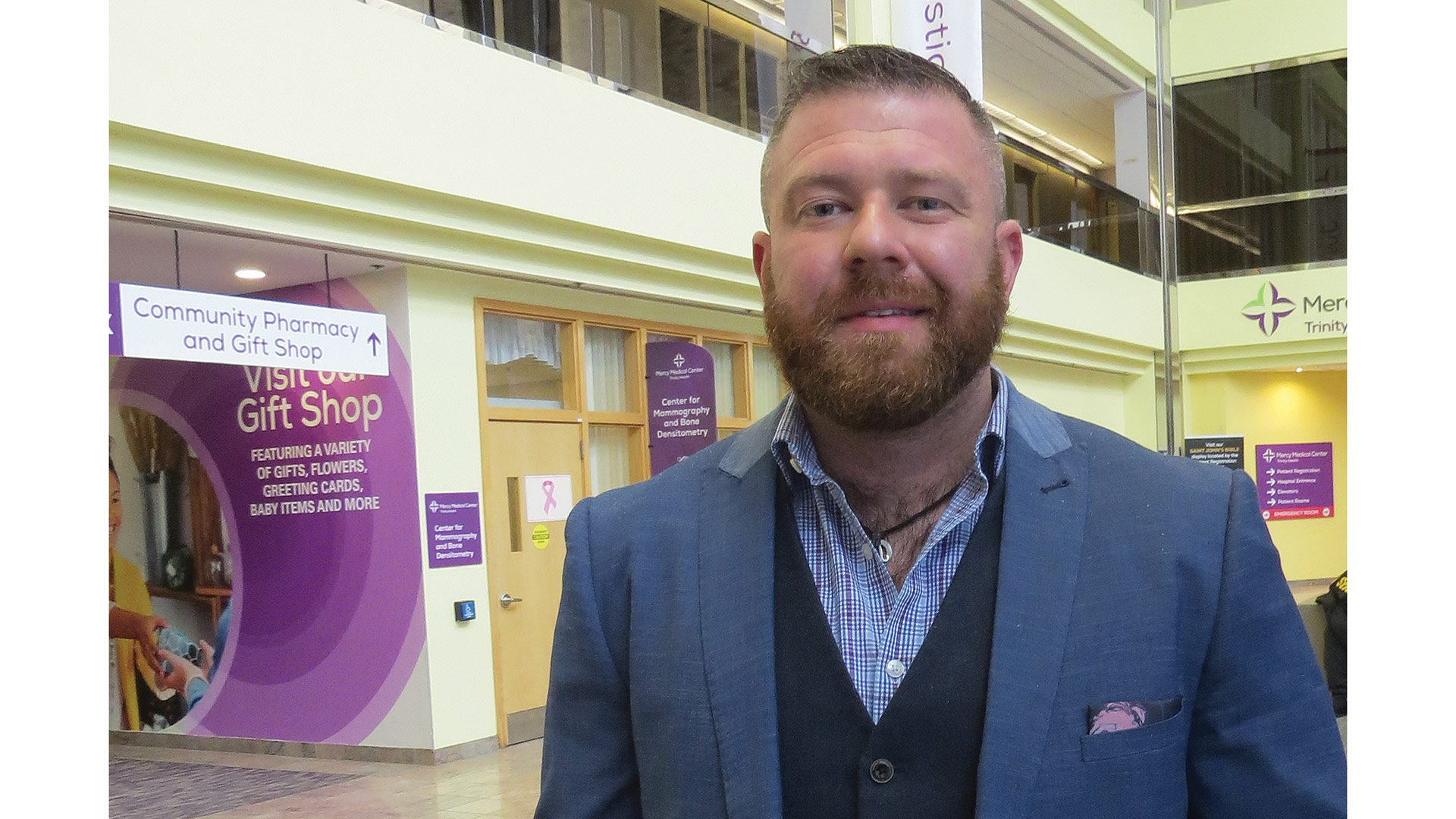
Ryan Pelletier stands in the atrium at Mercy Medical Center

Ryan Pelletier stands in the atrium at Mercy Medical Center, one of the many projects within the healthcare sector undertaken by the company in recent months.

Noting how he needs to be at a number of different sites on a weekly of not daily basis, Craig Sweitzer joked, “I need to buy an airplane.”

Those sentiments express just how much the market has rebounded — if that’s even the right word — and how the outlook has brightened since the darkest days of the pandemic.

Bradbury agreed. “Especially in this new year, 2021, there’s been a more positive outlook, and we’re starting to have the phone ring more and see more potential jobs in the pipeline for this year and for next,” he said, adding that this sentiment applies, again, to construction in general and healthcare construction more specifically.

But there are still many question marks about just what the future will bring, and for this issue, we talked with these experts about what can and likely will happen, both short- and long-term.


Concrete Examples

Rewinding the tape on the past 12 months of COVID, those we spoke with echoed the sentiments of business owners and managers in every sector when they said the changing landscape brought with it both challenges and opportunities, and certainly more of the former.

Indeed, some construction projects in the healthcare sector were put on the shelf because of the way the pandemic impacted the client in question financially. Meanwhile, and especially in the beginning, it brought about some new work, as Pelletier explained.

“When COVID first hit, the hospitals were scrambling to get prepared for potential overflow — spikes and surges — and they wanted us to help them with that, whether it was installing plexiglass shields or building out existing spaces in their facilities to house incoming patients,” he explained. “We had to work around the clock, and it was a little nerve-wracking at first because no one was quite sure what COVID was and how dangerous it was — and they were asking us to send our guys out there not knowing exactly what they were getting into, and the crews had mixed feelings.”

Again, opportunities and challenges.

The challenges came in waves and in different forms, from meeting the many new regulations and protocols regarding when and how work can be done to handling new and different employee needs — from more sick time, if needed, to PPE, to working in settings that were often the front lines of the COVID crisis.

The opportunities have come in various forms as well, and sometimes unexpectedly. That was certainly with the case with Adaptas Solutions.

“They’ve kept us quite busy through all this because they’ve been ramping up and needed construction facilities to accommodate the work they were doing,” said Pat Sweitzer, adding that the company has some projects ongoing there.

“When COVID first hit, the hospitals were scrambling to get prepared for potential overflow — spikes and surges — and they wanted us to help them with that.”

Meanwhile, the airplane the company doesn’t have yet would also be going to several other projects across the region, the sum of which adds up to what Pat described as a fairly typical year, volume-wise.

What isn’t as typical is the nature of the work being undertaken, said Craig, noting that COVID has changed the way facilities are designed and operated, with additional emphasis on HVAC and, more specifically, air movement and air quality.

“Dental offices are ground zero — these are individuals working in a patient’s mouth, which is the means for transmitting COVID,” he explained. “These doctors and their hygienists are at ground zero as far as risk is concerned, so we’ve paying a lot of attention to our design/build criteria.

“And the lion’s share of that goes back to HVAC, so we’ve redesigned our standard operatory,” he went on, adding that, with these redesigns, instead of air being drawn up from the patient’s mouth past the doctor, it is drawn down to the floor, into the ductwork and away from the doctor’s face.

The company is also installing UVC systems, which kill COVID; additional air changers; larger, tighter air filters; and, increasingly, washers and dryers so staff can wash their clothes during the day.

“We’ve really been refining how we lay these design/build projects out,” Pat said, noting that the modern dental office now resembles a hospital operating room in many respects.

Looking ahead, those we spoke with said COVID will likely continue to impact the healthcare construction scene, even if the pandemic eases, as most project that it will.

Indeed, there is general uncertainty about when or even if the rising prices on materials will start to ease, and this uncertainty could play a role in whether some projects move forward or not.

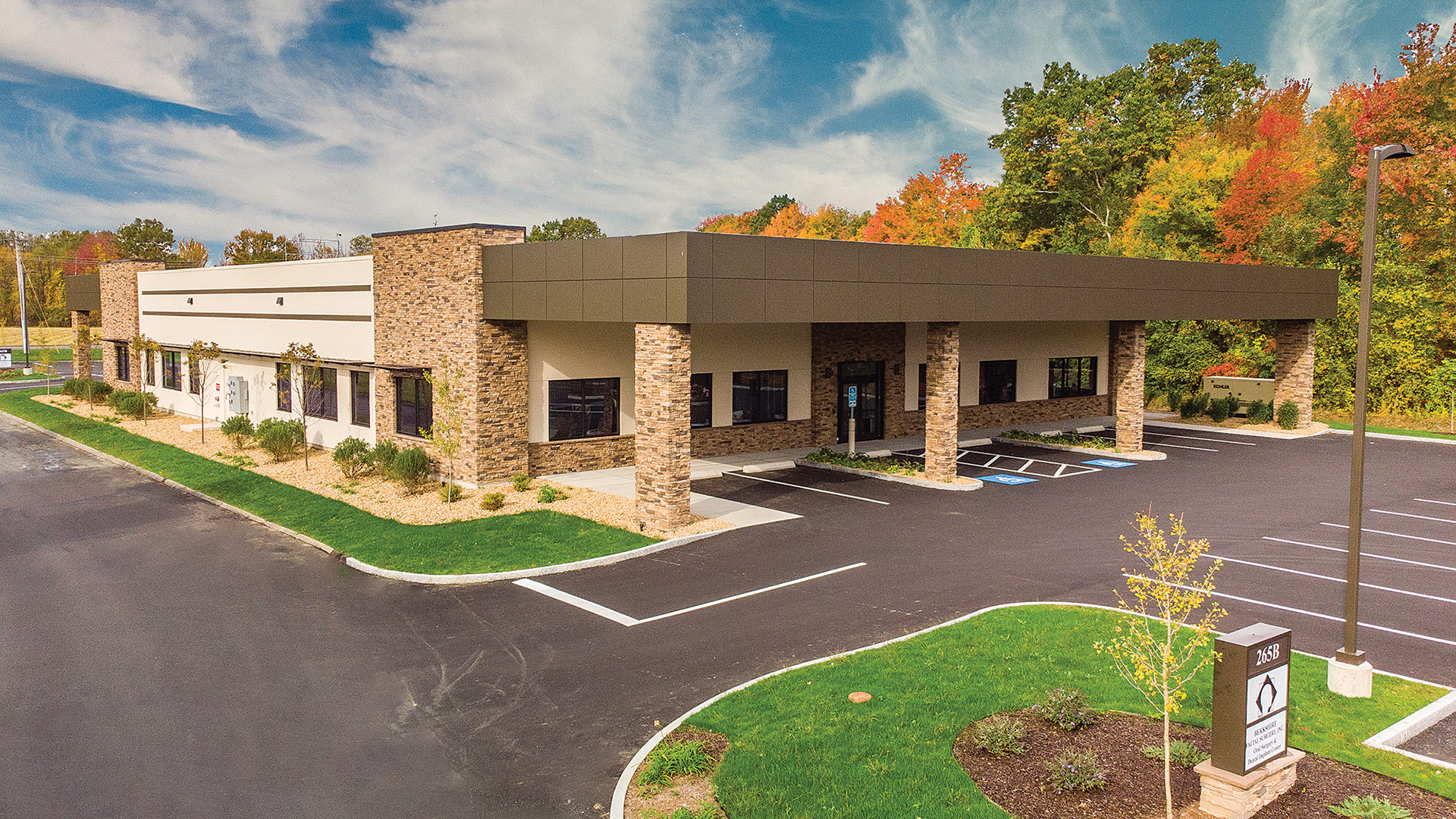
Berkshire Facial Surgery facility in East Longmeadow.

Among the many healthcare sector projects undertaken by Associated Builders in recent months was the construction of this Berkshire Facial Surgery facility in East Longmeadow.

Bradbury told BusinessWest there is inclination among some in healthcare (and in other sectors, obviously) to try to wait these increases out with the hope that prices will start coming down.

“But there is no guarantee that prices will come down,” he said. “One thing I always tell people is that, while they think they can wait out the increases in materials costs, there are never any guarantees that they will, so we encourage people to move forward with projects — if it fits their timeline and their budget, because there are no guarantees.”

Meanwhile, COVID will likely impact the healthcare construction market in another way, said those we spoke with, specifically the lasting impact it seems destined to have on the real-estate market. Even when COVID eases, they said, it seems almost certain that some companies will settle into smaller spaces as more people work at home, bringing more commercial real estate onto the market, which will, in turn, impact new construction.

“Renovating existing space is almost always less expensive than building new, especially when you consider those amazing price increases we’re seeing,” Bradbury said. “A lot of our business is new construction, and we’re contending with a lot of empty office space; long-term, there will be more available office space to lease on the market, which, across some industries, will tamp down new construction, but it will bring an opportunity for more build-out and renovation of existing space.”


Bottom Line

Looking back, and ahead, those we spoke with said a sense of normal — or a new normal (there’s that phrase again) — is returning to the healthcare construction scene.

But there are many question marks still looming over the scene and a number of variables that could impact how much work and what kinds of projects move into the pipeline.

There has been a great deal of pivoting over the past year — for the construction firms and their clients as well — and there is certainly more to come.

But for now, momentum is building in a number of ways.

Features

Work After the Pandemic

By John Graham

It’s been a year now since we came under the relentless domination of the coronavirus. After all this time, the picture isn’t pleasant. The end is uncertain, and the implications for the future are far from clear.

McKinsey reports that “75% of employees in the United States and close to a third in the Asia-Pacific region report symptoms of burnout. European nations are reporting increasing levels of pandemic fatigue in their populations. The number of those who rate their mental health as ‘very poor’ is more than three times higher than before the crisis, and mental-health issues are still likely to rise.” In spite of their severity, such figures should get our attention, but do they?

Perhaps the most dangerous part of the coronavirus is its divisiveness. More often than not, outside attacks — wars, famines, and natural disasters — bring us together to slay the dragon. But the pandemic has driven us further apart. Who would have thought life could take such a painful turn?

Overnight, workers were told to leave their jobs and work from home. Not only did they do it, they liked it. Now, many are ready to refuse to go back to claustrophobic cubicles or vacuous open spaces where they lacked privacy. To express their pleasure at working from home, they remodeled their bedrooms, kitchens, and basements; upgraded their internet connection; purchased all sorts of digital devices and office equipment; and didn’t miss a beat.

They’re choosy, too. “You want me in the office? I don’t think so.” Some moved to Boise or some other place in the middle of nowhere that welcomed them with open arms and lower living costs. They donned their sweats, popped open a laptop, jumped on virtual meetings, adjusted the lighting, turned on a monitor or two, and went to work in their new, $999 office chair, or decided to stay in bed and make it their office that day. To the utter surprise to everyone, productivity went up.

That’s just the first chapter. The McKinsey report also notes that “there is a veritable flood of new small businesses. In the third quarter of 2020 alone, there were more than 1.5 million new-business applications in the United States — almost double the figure for the same period in 2019.” That’s not all. The fourth quarter found Apple ripe for success with the highest revenue in its history — and the company wasn’t alone.


Four Lessons

All this adds up to an amazing, but totally counter-intuitive, story. But what does it mean to all of us who must live it? Literally, what in the world is going on? Even more to the point, what’s the message about the future — our future? Here are four thoughts about that.

“Overnight, workers were told to leave their jobs and work from home. Not only did they do it, they liked it. Now, many are ready to refuse to go back to claustrophobic cubicles or vacuous open spaces where they lacked privacy.”

The genie is out of the bottle. It’s finally happened. To put it another way, like no other phenomenon in modern history (perhaps in all of history), the pandemic released a level of momentum sufficient to turn the world and everything in it upside down in an instant. It may also be the catalyst that changes everything, from politics, government, and public policy to health and medicine, education, work-life balance, business, entertainment, culture, industry, and science. When Jeff Bezos, the CEO of Amazon, steps back, we can be sure profound change is in the air.


Far more people have seats at the table. We talked for so long, but nothing changed. Then, suddenly, we became keenly aware of those who had long been invisible to us. We raised our hands and called them ‘heroes’ but never raised their wages. Now, all of a sudden, we’ve finally figured out that when everyone has a seat, we have better healthcare, better jobs, stronger families, and happier communities. Could it possibly be that it took a painful pandemic to make more room at the table?


Everything is under a microscope. Again, counter-intuitive but nevertheless true: the number of applications for fall 2021 at the University of California are breaking all records. It’s happening at the same moment when millions of young Americans are questioning the value of a college education, particularly if it will take decades to free themselves from the sobering shackles of student debt. Those who went before them, the Millennials, are dogged in determining their own way in the world. Don’t be surprised. The lens of the microscope may never rest.


Don’t drink the Kool-Aid. There are dangers in the tension-filled, stressful times in which we find ourselves. Someone has aptly described it as “hitting the pandemic wall,” and it’s felt at home and at work. It’s when we reach out for relief so we can get our lives on a better path. Simple, quick, and easy answers are what sell in turbulent times: “buy this or do that, and your problems vanish, and your dreams come true.” We’re too resilient to do that to ourselves.


Bottom Line

Now, go back to where we started, the original question: “Who will have the upper hand after the pandemic: employers or employees?

All this leads to the final question. Through the pandemic frenzy, who will come out ahead, the workers or employers? The way it looks at the moment, it just may be the workers. But, as we all know, things can change. u


John Graham of GrahamComm is a marketing and sales strategy consultant and business writer. He is the creator of Magnet Marketing and publishes a free monthly e-bulletin, “No Nonsense Marketing & Sales Ideas”; [email protected]


Community Spotlight

Community Spotlight


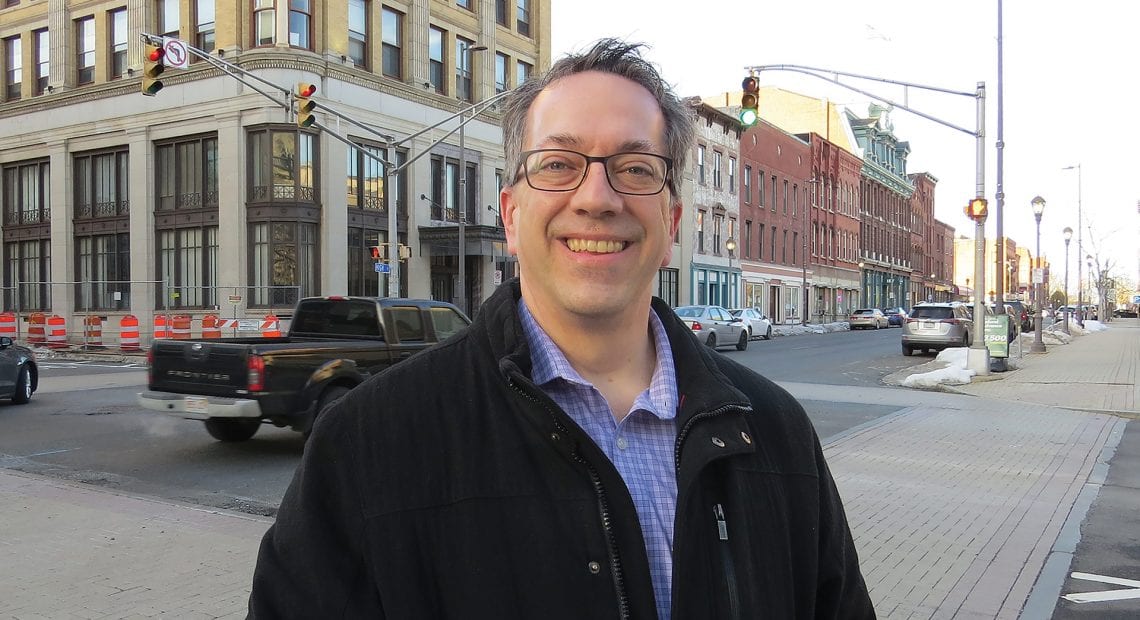
Aaron Vega

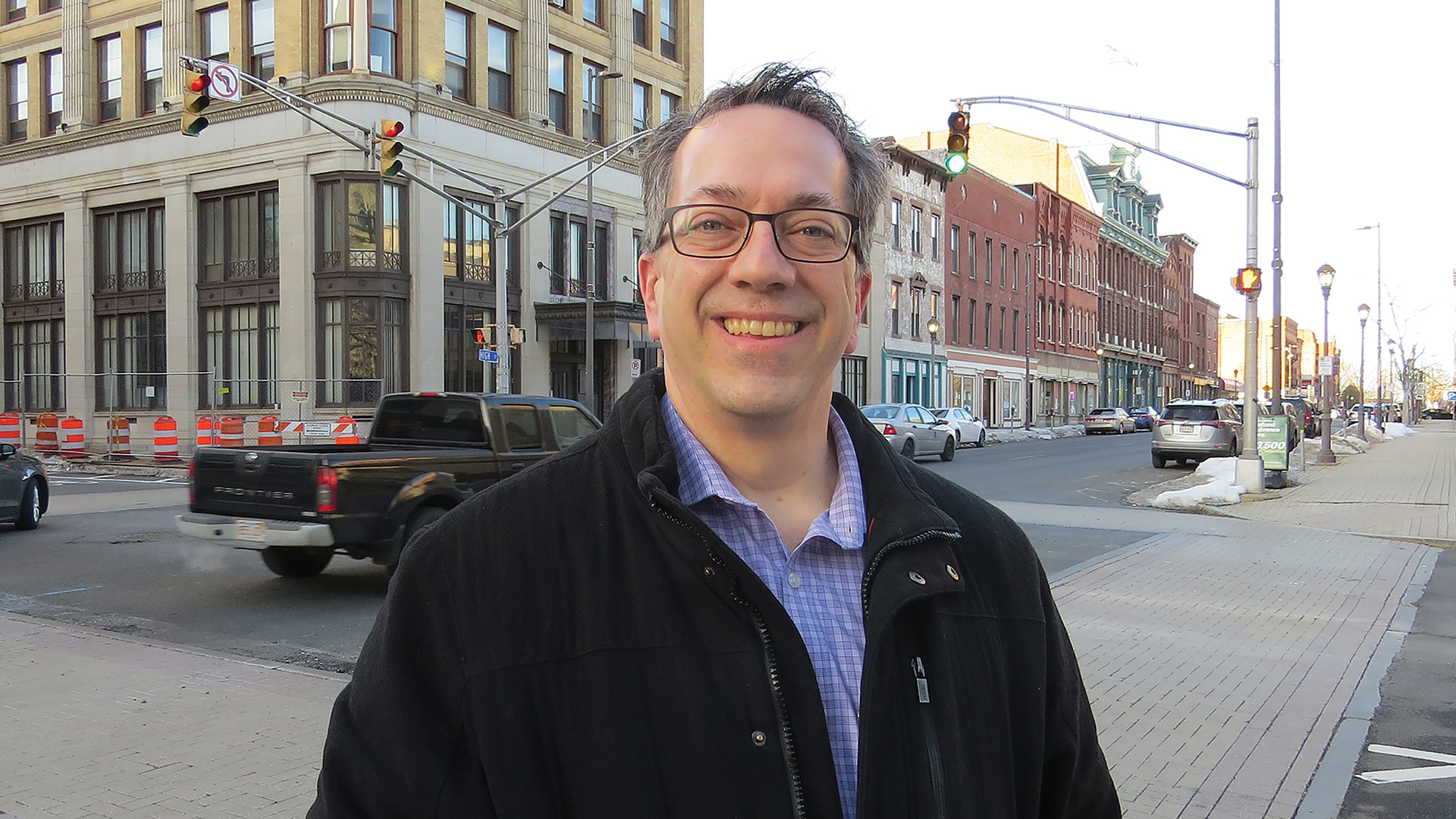
Aaron Vega says Holyoke lost considerable momentum to the pandemic, but it has a solid foundation on which to mount its recovery.

When he made up his mind roughly a year ago not to seek re-election to the state House seat he had held for four terms, Aaron Vega had an informal list of things he would like to do next when it came to his career.

Working in Holyoke City Hall certainly wasn’t one of them. But … things changed, in many ways, and in a profound way.

For starters, the COVID-19 pandemic limited some of the other options he was thinking about professionally, especially those in higher education, economic development, and workforce development. More importantly, though, Marcos Marrero, the long-time director of Planning and Economic Development in Holyoke, decided that he, too, wanted a change. And as he went about looking for someone to fill his rather large shoes, he started talking to Vega, someone who obviously knew the city, was heavily invested in its future, and was looking for work.

“Working for the city wasn’t really on my shortlist — and not in a negative way,” said Vega, the former Holyoke city councilor who started his five-year appointment just a few weeks ago. “Marcos reached out to me and asked if I’d be interested in taking the position; it came out of the clear blue sky. I was honored that he saw me as someone who could take the reins and keep going.”

He takes the helm in economic development when Holyoke, like most communities, and especially the urban centers, are looking to regain momentum lost due to the pandemic.

And, in the case of the Paper City, it’s a large amount of momentum.

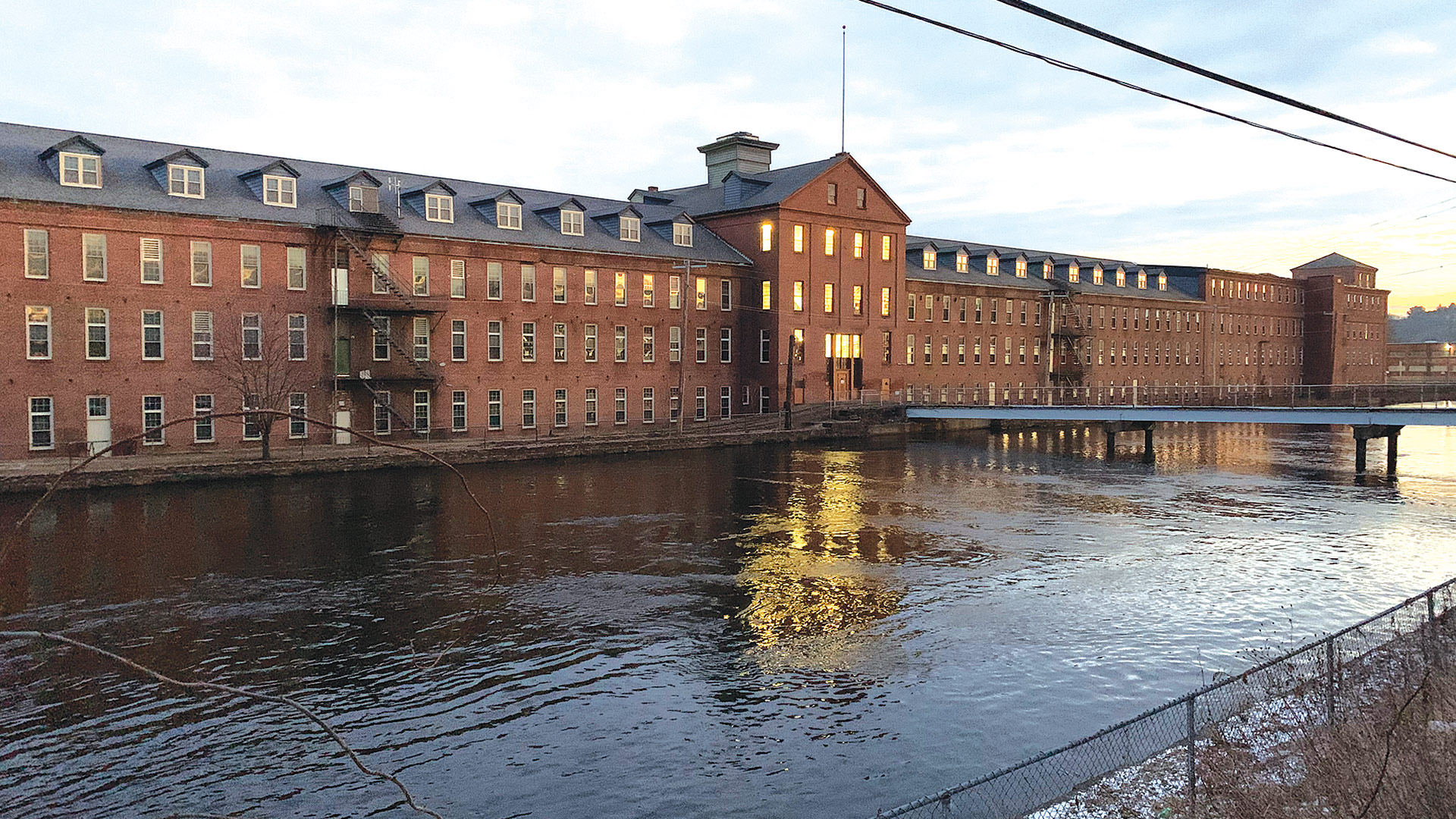
Indeed, over the past several years, Holyoke had made great strides in a number of areas — downtown revitalization, with its cultural economy, with entrepreneurship and new business development, and, most recently, with cultivation (pun intended) of a new and potential-laden industry sector: cannabis. Indeed, with Mayor Alex Morse — who will not be seeking re-election in November and has been offered the the job of town manager of Provincetown — putting out the red carpet for the cannabis sector and the city blessed with millions of square feet of vacant mill space that is in some ways ideal for cannabis growing and other aspects of this business, Holyoke has become a destination for companies looking for a home.

The pandemic has certainly slowed the pace of progress in most of these areas, though. It has certainly impacted the cultural economy, most notably with the news that Gateway City Arts, the multi-purpose arts venue, has closed, and its owners are looking for a buyer. But signs of lost momentum are everywhere. The Cubit Building, once a symbol of downtown revitalization, is still humming on its residential floors, but the Holyoke Community College MGM Culinary Arts Center has been all but shut down by the pandemic. Meanwhile, there are still a number of vacancies on High Street and other downtown throughfares. And the Holyoke St. Patrick’s Day Parade, a significant economic engine for Holyoke and the region as a whole, has been canceled for the second year in a row.

“A lot of the groundwork is sort of done, and in some ways, this office how has to be more proactive and outward-facing — how can we go out to private industry and market Holyoke better? We need to go door-knocking and tell people, ‘think about Holyoke as a place to set up shop.’”

“That’s been a huge financial hit to the restaurants and many other kinds of businesses,” Vega said of the parade. “The trickle-down impact is severe.”

Even the cannabis sector has been slowed a little by the pandemic, but in most all respects, it remains a powerful force in Holyoke, with more than 30 ventures currently at some stage of progression and perhaps 300 new jobs coming to the city with the slated opening in the next few months of Florida-based Truelieve’s facility on Canal Street.

The company, which has more than 2 million square feet of cultivation facilities and more than 70 dispensaries across several states, will operate a multi-faceted, vertically integrated operation that will include cultivation, production, and office operations in a 145,000-square-foot facility formerly occupied by Conklin Office.

“We understand scale, we understand supply chain, and we’re going to be bringing that experience to Massachusetts as we build out our cultivation here,” said Lynn Ricci, director of Investor Relations and Corporate Communications for the company, adding that the company expects to begin operations by the third quarter this year and employ between 250 and 300 people from the Holyoke area when fully operational.

For this, the latest in its Community Spotlight series, BusinessWest turns its lens on Holyoke, an historic city that has bounced back from its decline in the ’60s and ’70s, and must now, in some ways, bounce back again.


Growth Opportunities

Vega is certainly no stranger to the large office he now occupies on the third floor of the City Hall annex building.

When he was a state representative, he would meet with Marrero there every month so he could keep pace with what was happening in the city where he grew up, spent most of his childhood life, and still lives.

Gateway City Arts is just one of many Holyoke businesses

Gateway City Arts is just one of many Holyoke businesses in the arts and hospitality sectors to be devastated by the pandemic.

“We had a standing meeting with him in this office to keep up to date on all the projects that were going on, particularly around cannabis, because I was on the Committee on Cannabis Policy,” he explained. “So I was familiar with most of what was going on in this office, and I knew everyone in this office.”

Today, he’s having those same meetings with Patricia Duffy, his former legislative aide who successfully ran for his House seat last year.

“We just met a few days ago,” he said with a laugh. “We have a standing monthly meeting. It’s interesting being on the other side of the table — I spent the last eight years fighting for funding for all these programs, and now I’m actually utilizing them, and that’s kind of fun.”

Offering a similar update of sorts for BusinessWest, Vega focused on the momentum that has been lost in the city and the need to turn the clock back, in some respects, and put Holyoke back on the intriguing path it was on before March 2020.

“If you look at Gateway City Arts … the pandemic just took the wind out of them, it took the momentum away; it’s like someone slammed the door in their face.”

Before getting to that, though, he was asked to elaborate on the circumstances that brought him to his current post.

“I wanted to focus more,” he said simply when asked why he wanted to move from his House seat. “One of the great things about being a state rep is all the different topics and issues that come across your desk. But, that said, you don’t really get to focus on anything; the best description of my job as state rep was that I was in a permanent liberal-arts education — and there were certain topics that I just wasn’t passionate about.”

He is certainly passionate about Holyoke, and his goal now is built on what had been achieved in the years before the pandemic.

“What Alex and Marcos did was change the conversation about Holyoke, they changed the direction of a lot of the development, and they helped usher in a plan — the urban-renewal plan,” he explained. “A lot of the groundwork is sort of done, and in some ways, this office how has to be more proactive and outward-facing — how can we go out to private industry and market Holyoke better? We need to go door-knocking and tell people, ‘think about Holyoke as a place to set up shop.’”

The story the city can tell is a good one, although, as noted, it was better before the pandemic.

“Things were happening in this city; the momentum was happening,” Vega said. “It took a while to build that momentum, and hopefully we can get it back soon.”

The loss of Gateway City Arts, however, is a serious setback for the community.

“It was firing on all cylinders,” he said, referring to everything from its event venue to its popular restaurant. “And it’s ironic because we’re six or seven months away from having 200 to 400 more people working in downtown Holyoke in the cannabis industry — people who will be looking for a place to go eat or have a beer or listen to music after work. The irony is that we don’t have that right now.

“The biggest hit has been with momentum,” he went on. “Our restaurants took a hit, just like Northampton and Springfield; the housing developments, especially if they were dealing with state incentives, have been pushed out — everything’s taking longer now.”

Overall, Vega said, the pandemic has made it difficult for some small businesses to survive, and it’s made it more difficult for all of them to operate as they would like.

“If you look at Gateway City Arts … the pandemic just took the wind out of them, it took the momentum away; it’s like someone slammed the door in their face,” he said, adding quickly that there is interest in some of the components of that business, and, likewise, the phone is starting to ring, and more interest is being shown in Holyoke within the development community.

“There’s a couple of key projects where, if we can get them online, we can regain some of that momentum,” he told BusinessWest, noting that one such project is a large housing initiative downtown, a 92-unit project being undertaken by WinnDevelopment at the former Farr Alpaca mills that has been slowed by the always-complicated process of applying for and receiving historic tax credits.

Truelieve’s massive facility on Canal Street

Truelieve’s massive facility on Canal Street is ramping up for opening, and is projected to employ between 250 and 300 people when fully operational.

Meanwhile, some projects that were “percolating,” as Vega put it, before the pandemic and back-burnered to one extent or another are perhaps poised to be revisited and moved off the drawing board. These include some indoor agriculture that is not cannabis-related.

“The biggest price-point stuff that they’re talking about right now is lettuce and herbs,” he noted, “because there’s a quick-growing cycle; you can turn lettuce around in 30 days. So many restaurants want locally grown, hormone-free lettuce … there’s real potential there, and they can grow other vegetables, too. The price point is not as good as cannabis, but we’ve been talking about urban farming for a while, and we’re trying to create opportunities.”


On a Roll

Speaking of cannabis, while the pandemic has slowed some aspects of that sector, the industry is poised for additional growth, especially in the Paper City. The next important chapter looks to be written by Truelieve, which just received its occupancy permit. But there are many companies with plans in various stages of development.

Indeed, Vega said, there are two growing facilities now online and three dispensaries, but, overall, there are 40 host agreements and 40 provisional licenses at the state level.

As for Truelieve, its story touches on many of the opportunities and challenges that Holyoke and its old mills present, said Ricci, who started by noting that the company was mostly in Florida before last year, when it started expanding aggressively into other states, including a cultivation facility in Pennsylvania (added through acquisition) and dispensaries in Connecticut and other states.

“We really see 2021 as a big year for national expansion and being a true multi-state operator,” she explained, adding that, when looking for places in which to broaden the portfolio with new facilities, Truelieve focuses on cities and towns with large minority populations, communities that clearly need the jobs and everything else these ventures bring to the fore.

“Investing in a majority minority community was important to us,” she said. And upon concluding that the Bay State would be a good market to enter, Holyoke soon came onto its radar.

Holyoke at a glance

Year Incorporated: 1850
Population: 40,135
Area: 22.8 square miles
County: Hampden
Residential Tax Rate: $19.04
Commercial Tax Rate: $39.74
Median Household Income: $33,030
Family Household Income: $36,262
Type of government: Mayor, City Council
Largest Employers: Holyoke Medical Center; Holyoke Community College; ISO New England; Hazen Paper
* Latest information available

“We wanted to make sure, going in, that we were revitalizing and adding to the community and providing jobs; those kinds of things are important to us as a core value of the company,” she noted. “When we found this location in Holyoke, an area that had certainly seen better times, we thought, ‘we could invest here and provide the jobs.’”

As for the site in Holyoke, renovating the historic mill has been “a huge undertaking,” Ricci said, adding that the company entered into a sale/lease-back arrangement in order to secure the nearly $40 million required for this project (cannabis operations cannot obtain traditional bank financing, because the product is illegal on a federal level).

The actual buildout was an involved process that began more than a year ago and was slowed by state mandates that shut down many types of construction during the early months of the pandemic.

“The property is beautiful in its own way — there’s big, wide staircases and beautiful brickwork, but … it needed a lot of work,” she told BusinessWest. “It has been a challenge, and not just to set up different rooms, but to make sure everything was set up properly.”

Staffing is the next challenge to be overcome, Ricci said, adding that final inspections of the facility are expected sometime this quarter, with growing due to begin, as noted, in the second quarter.

Other facilities are in various stages of the pipeline, said Vega, who told BusinessWest that, while the city is welcoming all types of cannabis businesses, the larger cultivation facilities hold the most promise for jobs and overall impact on the city and the region, and he can envision the day when perhaps eight to 12 such ventures are operating in the city.

And, like his predecessor, he sees opportunities not merely for the growing and selling of cannabis, but also encouraging businesses that can provide needed products to those ventures.

“A lot of the products used by these businesses are made in Texas and Florida, the simple things like the planters — we should be making those here in Holyoke,” he noted. “I equate it to the ‘green’ industries. It’s great seeing solar fields — we have some in Holyoke — but we should be building solar panels in Western Mass., not just installing them.”


Bottom Line

Making progress in that area is just one of the ways Holyoke will be looking to regain the considerable amount of momentum it lost to the pandemic.

The city that had come so far in the past decade has the foundation that Vega mentioned in place. It has the building blocks, and it has a cannabis industry hungry for the open spaces, low energy prices, and other amenities that this city can provide.

The pandemic certainly slowed the pace of progress, but Vega and other officials are confident that the Paper City can soon regain its stride.


George O’Brien can be reached at [email protected]

Home Improvement

Fueling Interest

By Mark Morris

EcoBuilding Bargains

EcoBuilding Bargains, celebrating 20 years this year, has been a trendsetter in repurposing reclaimed and surplus building materials.

John Majercak likes to say the Center for EcoTechnology (CET) has been successful for 45 years because it’s willing to try out approaches to saving energy that in time become a normal way of doing business.

“We helped invent the energy audit in the 1970s, and now it’s a routine thing that lots of people have done, and it’s having a huge impact,” said Majercak, president of CET.

In 2021, the organization marks several noteworthy milestones. In addition to CET’s 45th birthday, Majercak celebrates 30 years with the organization, serving as president since 2010. In his time there, he has seen a growing mainstream awareness of the connection between the community, the economy, and the environment.

“It used to be that environmentalism was thought of as a fringe thing or a nice thing to have,” Majercak said. ”But the work we do in saving energy and reducing waste helps people live better lives, as well as addressing the urgent issue of climate change.”

CET also runs EcoBuilding Bargains, the largest reclaimed and surplus building-materials store in New England. Launched in 2001, the reuse store celebrates its 20th anniversary this year. When it opened, the store was one of only a few of its kind that existed. Today, thousands of stores sell reclaimed building materials.

From the beginning, people liked the idea of saving money and helping the environment by giving a second life to used cabinets, lighting, plumbing fixtures, and hundreds of other items. Through the years, awareness increased as EcoBuilding Bargains was featured on several home-improvement TV shows, most notably This Old House.

Located in Springfield, EcoBuilding Bargains sells products in all 50 states and several other countries thanks to the internet. Once reusing materials became fashionable, Majercak said, interest in the store exploded.

“When reusing materials became stylish, it allowed people to bring their own character to a piece,” he noted. “On top of personal creativity, it’s an inexpensive purchase that helps the environment, so it’s a home run.”

Majercak pointed out that the current boom in home improvement — fueled by the pandemic and people being in their homes much more than would be considered normal — has created both a supply and a demand for items at EcoBuilding Bargains.

“It used to be that environmentalism was thought of as a fringe thing or a nice thing to have. But the work we do in saving energy and reducing waste helps people live better lives, as well as addressing the urgent issue of climate change.”

“All the home improvement that’s going on means more materials we can capture for donation and reuse,” he noted. “Then, when people renovate with these materials, they can save lots of money, help the planet, and make their homes look super-cool.”

Likewise, the pandemic hasn’t slowed business for the store. EcoBuilding Bargains is open for people who want to shop in-person and also offers virtual appointments so people can shop over the phone. With video calls, Majercak said, staff can show items, and customers can ask more specific questions about a piece.

Other parts of CET’s business have also adopted a combination of in-person and virtual interaction. Energy audits, for example, have a whole new feel that creates opportunities and challenges.

“We have people who are happy to get on a Zoom call and show us around their home or business for an energy audit,” Majercak said. “On the other hand, those who wanted an in-person visit are on a waiting list until after the pandemic is over.

“After the pandemic, I’m sure we’ll be doing plenty of things in person again, but we will continue to go virtual for those who prefer that approach,” he went on. “In that way, it opens more opportunity for mission impact.”


Cool Ideas

With a stated mission to “research, develop, demonstrate, and promote those technologies that have the least disruptive impact on the natural ecology of the earth,” one of CET’s goals involves reducing carbon emissions equal to removing 100,000 cars off the road for a year by 2022.

There are many ways people can reduce their carbon footprint, all of which use less energy without compromising comfort. Converting to LED lights and adding insulation are two easy ones.

John Majercak says a central focus for CET over the years has been pursuing technologies with the least disruptive impact on the environment.

John Majercak says a central focus for CET over the years has been pursuing technologies with the least disruptive impact on the environment.

“Weatherization is a good example because installing air-sealing insulation in the home increases the comfort dramatically and uses less energy — and, therefore, less carbon,” Majercak said. “We’ve been doing these programs for years, and they save lots of energy and carbon.”

He cited a recent effort in which CET has partnered with colleges in the Community Climate Fund, which provides support for local carbon-reduction projects. By investing in the fund, colleges support the community, as well as creating learning opportunities for students who conduct research and gather data. Projects range from recovering used building materials or helping a homeowner get a heat pump to providing loans to farmers so they can make energy improvements to their operations.

“The Community Climate Fund is a great way to extend the impact of our programs and get even more done,” he told BusinessWest.

Massachusetts recently unveiled a plan to achieve a 45% reduction in carbon emissions by 2030 and to be carbon-neutral by 2050. Majercak has reached out to utilities to encourage them to align their energy-efficiency programs with these climate goals. CET is currently working with a municipal utility company to test an energy-efficiency program that measures carbon reduction, as opposed to just energy savings. It’s one of the first programs of its kind in the country.

“Anytime you save energy, it reduces carbon, but the kind of energy you save and the kind of energy you use also affects carbon,” he said, noting that the car you drive and the lawnmower you use can also make a difference in changing your carbon footprint. “For the foreseeable future, we will be studying energy issues by looking through the lens of carbon reduction.”

CET is also working with utilities on promoting the use of air-source heat pumps for houses. While they have existed for years, Majercak said heat pumps were primarily used in warmer climates. With recent technology improvements, they can now withstand the sustained cold temperatures of a New England winter. Unlike traditional heating systems, heat pumps take heat from outside air (yes, even frigid cold air has heat in it) and move it into the home.

For cooling, the heat pump does the reverse and removes heat from the house to the outside. Instead of using oil, natural gas, or propane, heat pumps run on electricity. As long as renewable energy becomes a larger part of the grid, he said, electric power is the logical choice.

“This is good from a carbon perspective because, as the power grid gets greener and as more people use heat pumps and drive electric cars, the more carbon reduction we’ll get,” Majercak noted, adding that heat pumps are just catching on, and we will see a lot more of them in the coming years.

And they represent only the latest cutting-edge technology that CET has helped establish in its 45 years.

“I’m very proud of the people at CET because they’ve always been real innovators and have helped change the way things work,” he said. As one example in the realm of waste and recycling, CET helped to establish the Springfield Materials Recycling Facility (MRF), which serves 65 communities in Western Mass. Back when recycling was a new approach, CET worked with towns to help them prepare their recycling programs for the Springfield MRF.

In the 45 years since CET has been in operation, energy conservation has hit peaks and valleys in politics and policies on the national level. Majercak noted that the state and regional levels have been more consistent, and asserted that CET has never been, nor ever will be, a political organization.

“We’re a solutions organization; we work with everyone,” he noted. ”As long as we keep that focus, we will be successful.”

Elaborating, he said the key is to meet people where they are and help them either solve a problem or achieve a goal.

“If you’re a small business, your goal may be to save money and have your business perform better. Energy efficiency, as well as waste and recycling management, can help you reach that goal,” he said. “A homeowner might want to be more comfortable or lower their electric and fuel bills. We can do that for you, and it doesn’t matter what you think about climate change.”

“All the home improvement that’s going on means more materials we can capture for donation and reuse. Then, when people renovate with these materials, they can save lots of money, help the planet, and make their homes look super-cool.”

For all the energy-saving opportunities out there, Majercak understands that spreading the word about what CET does and how it can help is essential. “Even when people are aware and want to do something to save money or save the environment, we still do a lot of hand holding to get it done.”

Spreading the word through workshops and social media definitely helps to engage people. Majercak pointed to one effort in which EcoBuilding Bargains runs a “Reuse Rockstar” contest on social media that encourages people to post the creative ways they have used items from the store.

“It’s inspirational to see how people apply their creativity and elbow grease to make beautiful houses and rooms for a fraction of what they would normally cost,” he said.


Going for the Green

Because climate change is a global problem, it’s easy for people to feel overwhelmed and doubtful they can make a difference, said Majercak, who assures them that they do not have to solve climate change all by themselves, and shows them different ways they can have an impact.

“When someone switches out their lightbulbs, buys an electric vehicle, or installs used cabinets, these are not overwhelming actions,” he told BusinessWest. But when CET helps tens of thousands of people do these little things, they start to add up.

“Consider that people across the state, the country, and the world are doing similar things, and it’s easier to see how each effort contributes to making a real difference. We are firm believers in little things with big payback.”

In addition to turning new approaches into normal processes, Majercak looks forward to the growth potential for EcoBuilding Bargains as it sells more products to people through eBay and, soon, through its own e-commerce site.

When he considers CET’s 45-year history, he appreciates how far the organization has come, but he’s even more excited about the near future.

As much as we’ve done, I think we will really accelerate and see much more progress in the next 10 to 15 years,” he said. “It’s an exciting time to be doing the work we do.”

Technology

Learning on the Fly

Kimberly Quiñonez says her professors

Kimberly Quiñonez says her professors encouraged her to overcome the challenges of online learning and succeed.

Springfield Technical Community College (STCC) had a long-term plan to ramp up online and digital learning.

But then came the COVID-19 pandemic, which forced staff working at STCC’s Center for Online and Digital Learning to move faster than they ever imagined. The staff includes instructional designers who assistant faculty in online teaching methods they incorporate into the classroom experience.

To maintain the safety of students, faculty, and staff, STCC moved classes to remote instruction last March. Instructional designers worked with faculty over the summer to prepare for fully online teaching in the 2020-21 academic year.

Faculty and administrators acknowledge the abrupt change to remote learning created great challenges and, for some, led to a less-than-ideal learning environment last spring. The sudden need to vacate campus resulted in the use of a slew of digital tools to communicate with students, including e-mail, FaceTime, Google Hangouts, and teleconferencing by phone and Zoom.

“Many faculty had been using online tools for the delivery of their face-to face classes. However, for those faculty who were not familiar with the digital space or whose courses required hands-on instruction, the ‘lift’ to online was great,” said Geraldine de Berly, vice president of Academic Affairs at STCC. “Since the summer, STCC invested in tools and training to assist faculty in developing the best truly online experience possible, including the hiring of a third instructional designer. Today, all online instruction occurs in a single platform, supplemented by class discussions using tools such as Zoom.”

The college anticipates spending nearly $800,000 through May 2021 helping faculty develop hundreds of online classes and labs, de Berly said. Today, more than 80% of the credits are offered online, a jump from 12% prior to the pandemic. Over the coming year, STCC also expects to expand its online-only options in addition to its existing in-person and hybrid degree programs.

STCC English Professor Denise “Daisy” Flaim has years of experience teaching students on campus in classrooms, so converting to the online experience was a big adjustment. But she worked closely with the online team at STCC to prepare for the transition, and now feels confident.

“We’re learning technology, just as the students are learning technology,” Flaim said.

Daniel Misco, an STCC alumnus and faculty member in the Digital Media Production program, said he’s well-versed in the online teaching world. Today, he teaches most of his classes online, but misses the face-to-face interactions with students in a classroom.

“I considered myself a face-to-face instructor,” Misco said. “I always excelled in the classroom. I liked being there with students to build a rapport with them.”

The adjustment to online learning can be challenging for some students, but Misco said faculty try to do all they can to help.

STCC student Kimberly Quiñonez, who is studying social work, expressed gratitude for the support from faculty over the past year.

“My experience as an online learner has really been amazing, although there were times I felt like quitting,” she said. “During those times, my professors would reach out and check in with the class. In the very beginning, I must admit that it was quite challenging transferring from an actual classroom to a computer. The classroom brought security to most students because questions were answered immediately. With online learning, you may have to wait for a response through e-mail.”

Aminah Bergeron, a mechanical engineering technology student at STCC, said she found benefits to online learning, noting she has “gotten the hang of it” after a year of studying from home.

“It wasn’t as difficult as I thought it would be. It was for sure different, but a ‘good’ different,” she said. “I didn’t have to worry about getting ready, or making sure my house doors are locked, or even thinking in the back of my head, ‘did I leave the faucet running?’ I just had to open my laptop and start my schoolwork, whether at my own pace or scheduled Zoom meetings. I also had much more time to research and not worry about calculating the time I’d lose on commuting from one location to another.”

STCC will return to face-to-face, on-campus instruction when it’s safe to do so, de Berly said, but will continue to offer online options and apply digital tools to enhance the classroom experience.

Manufacturing

Keeping Pace

Both the immediate and long-term future of the manufacturing industry will be defined by the development of a number of ever-evolving and prominent trends, according to the Assoc. of Equipment Manufacturers. These trends are poised to have a significant impact in 2021 (and, in many cases, beyond), so it’s critically important for manufacturers to develop a keen understanding of what they are, how they will grow over time, and how they will impact the industry and the customers it serves.


COVID-19 and Employee Safety

It almost goes without saying that workplace safety and compliance with CDC guidelines and OSHA regulations (along with local safety measures) will remain front of mind for manufacturers as 2021 gets under way. With COVID-19 cases on the rise in many parts of the world, organizations will need to continue to be vigilant in their efforts to protect employees. Doing so, however, requires a significant investment of time, effort, and resources on the part of company leaders.

While an efficient rollout of an effective vaccine for COVID-19 would bode well for an eventual return to normalcy for the manufacturing industry, the impact of such a rollout won’t be felt for some time. In the interim, organizations will need to continue practicing social distancing in the workplace, restricting visitors to facilities, encouraging the practice of good hygiene, and ensuring employees are healthy and fit for work before allowing them on the job.

It’s been nearly a year since the COVID-19 pandemic took hold in the U.S., and it remains a major challenge for manufacturers across the country and around the world. While companies do have plans and protocols in place to combat the virus, adhering to them and ensuring the health and well-being of employees is — and will continue to be — no small task.


Connected Workforce

The desire to equip workers with technology capable of allowing them to connect and collaborate from a distance has long been on a trend on the rise within the manufacturing industry. As older generations continue to leave the workforce and are replaced by younger employees, and the rise of the big-data era in manufacturing takes shape, finding tools and technologies to make an increasingly spread-out and remote workforce as productive as possible is a top priority for companies today.

As a recent article from McKinsey explained, the ongoing COVID-19 pandemic has led to an increased reliance on digital collaboration to establish and maintain a connected manufacturing workforce. An increased emphasis on safety and changes to work processes, in an effort to maintain social distancing and minimize physical contact, has led organizations of all types and sizes to adopt cutting-edge ways to allow for workers to communicate and interact virtually.

While the widespread impact of the pandemic has caused this trend (and the adoption rate of related tools and technologies) to grow, it remains critical for manufacturers to provide training and resources to employees as they try to maximize productivity from afar. Why? Because doing so is poised to pay off over time. According to McKinsey, “by digitizing processes to improve equipment management and optimize physical assets, digital collaboration tools give manufacturers ways to boost productivity while enhancing quality.” And those who do it first — and well — will achieve a significant competitive advantage.


Internet of Things

The Internet of Things (IoT) has long been a trend to watch in manufacturing, and this year is no different. As it continues to grow in prominence and becomes more and more widespread over time, IoT technology will drive value for the industry by allowing organizations to make measured, informed decisions using real-time data in an effort to increase efficiency and positively impact their bottom lines.

According to a recent study conducted by the MPI Group, approximately 31% of manufacturing production processes now incorporate smart devices and embedded intelligence. Furthermore, more than one-third of manufacturers have established plans to implement IoT technology into their processes, while 32% plan to embed IoT technology into their products.

IoT technology offers both remote-monitoring and predictive-maintenance capabilities, making it even more valuable for organizations looking to maintain visibility of equipment performance from afar. With the COVID-19 pandemic continuing to impact the industry in 2021, IoT technology will continue to be a go-to for manufacturers looking to maintain efficiency and productivity.


Localized Production and Near Sourcing

The rise of customization and personalization has given way to large opportunities for manufacturers willing — and, perhaps more importantly, able — to succeed in a localized economy. By rethinking the way products get out to the public, organizations can craft an ecosystem of smaller, flexible factories located near existing and prospective customers.

Manufacturers are used to thinking on a global level. However, shifting their focus to a local level, they may be better able to meet the ever-changing needs, wants, and preferences of the markets they serve. Consumers are making it abundantly clear that authenticity matters, and a localized approach to manufacturing is proving to be among the most effective ways to for organizations to respond accordingly.

The impact of COVID-19 also cannot be discounted. The pandemic has led manufacturers to re-evaluate and reconsider sourcing, largely due to supply chain disruptions (especially in the earliest days of COVID-19). As a result, manufacturers have made a concerted effort to bring their operations closer to where their offerings are sold, and there has been an increasing desire on the part of many companies to source raw materials from domestic suppliers. All this is being done in an effort to avoid pandemic-related disruptions and support the U.S. economy during these uncertain times.


Predictive Maintenance

It’s no secret that the ability for manufacturers to predict impending equipment failures and — more importantly — prevent equipment downtime is incredibly impactful to their bottom lines. Advancements in technology now allow organizations to do just that (and much, much more).

The benefits, according to a recent blog post from EAM-Mosca Corp., showcase why predictive maintenance (PM) is so valuable to organizations today. PM helps companies reduce costs, decrease failures, minimize scheduled downtime, and optimize parts delivery

Effectively conducting predictive maintenance is no easy task, however. Adopting a (successful) predictive maintenance model requires manufacturers to gain insights into the variables they are collecting and — more importantly — how often those variables present themselves on factory floors. Therefore, it’s imperative for manufacturers to possess accurate and relevant knowledge about their equipment. They must know what previous failures have taken place, and they need to make decisions around lead time — becausem the closer to failure a machine is allowed to go, the more accurate the prediction will be.


This article was written by the Assoc. of Equipment Manufacturers.

Coronavirus Features Special Coverage

Welcome Mat

At the practice she owns in Wilbraham, Excel Therapy & Conditioning, Dr. Sara Hulseberg is used to multiple physical therapists and coaches treating a host of patients each day, and for the center’s gym to be a hive of activity for members recovering from injury or improving their performance.

It’s quieter now, with a fraction of the usual patients in treatment rooms and in the gym at a time, and plenty of space between everyone.

That’s life in the capacity-limited world of doing business in the age COVID-19, but Hulseberg has rolled with the punches because … what choice does she have?

“With the way things are going for some of my friends who have closed down, I’m thrilled we’re still open,” she told BusinessWest. “I’ve had to take advantage of PPP loans and disaster-relief loans in order to make sure we can stay open, but we are still able to serve our patients and clients, and they’re excited to be coming in.”

That said, she added, it’s difficult to make a profit in survival mode, when the first priority is keeping the doors open and keeping employees paid.

“Those are small victories, and it’s a testament to the fact that we’re doing something right, because people feel safe coming in for group classes. In so many places, group classes have all but disappeared. I’ll take the small victories, and hopefully, we’ll find a way to combat this season and actually start making money again. The goal is to serve people, but it would be nice to make money while doing it.”

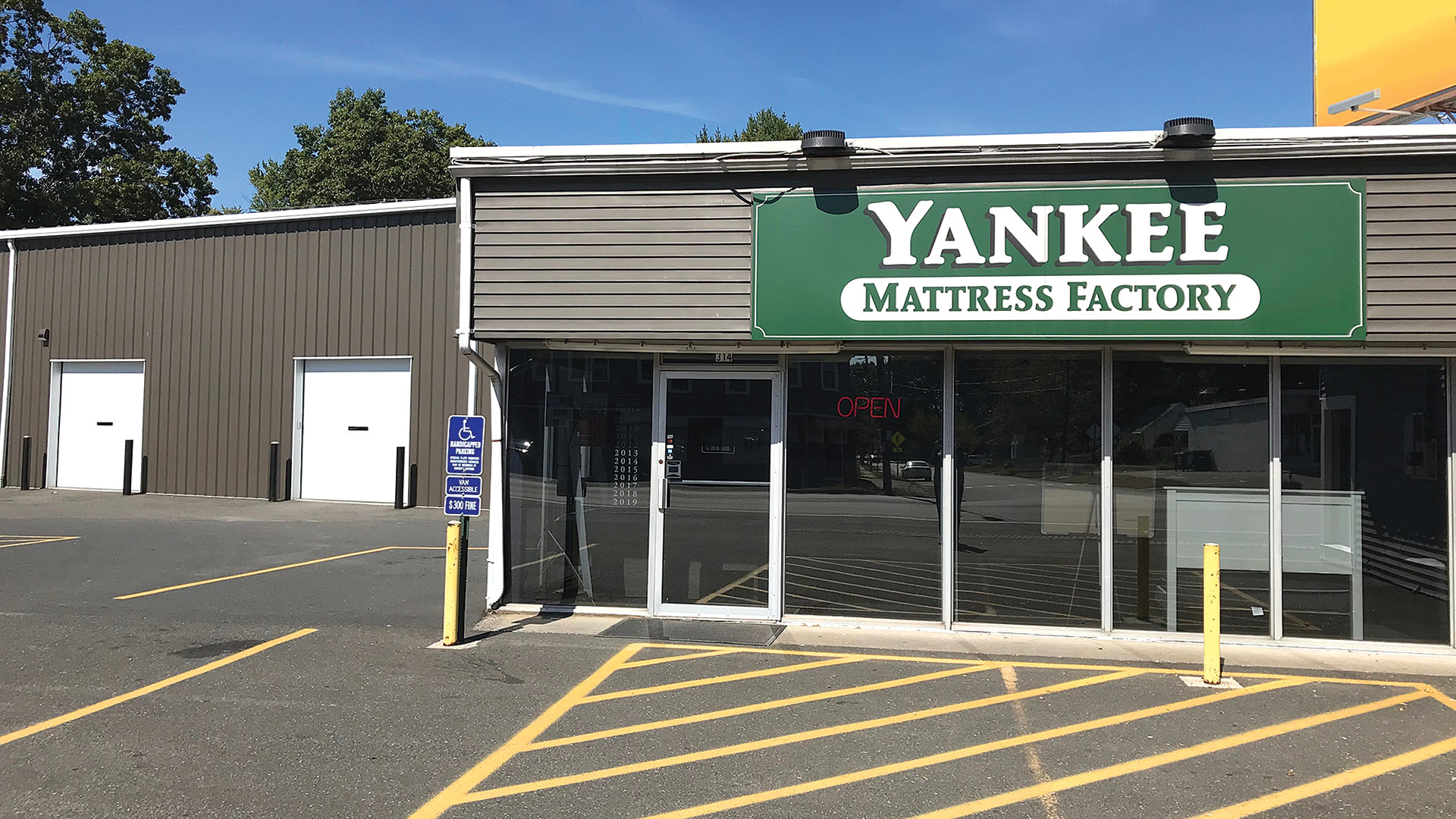
On the other hand, Nick Noblit, general manager of Yankee Mattress in Agawam, hasn’t struggled too badly with the past eight months of forced 25% capacity, because that capacity isn’t too onerous in a store with more floor space per customer than most.

“With the way things are going for some of my friends who have closed down, I’m thrilled we’re still open. I’ve had to take advantage of PPP loans and disaster-relief loans in order to make sure we can stay open, but we are still able to serve our patients and clients, and they’re excited to be coming in.”

He did feel the weight of the restrictions during the state’s tax-free holiday back in August — when the store typically does about two months of business in one weekend.

“At that point, we were still at minimum capacity, and we did have to have a greeter at the door monitoring how many people were in the store at one time. We had some folks waiting outside or in their cars, and we had water for them.”

Still, Noblit added, “it wasn’t a huge issue for us, to be honest. I can imagine a retail store that sees a lot more foot traffic, like a small grocery store or a small drugstore — they’re more affected.”

No matter to what extent each business is affected by capacity limits, they collectively cheered Gov. Charlie Baker’s raising of those limits from 25% to 40% on Feb. 8.

For many operations just trying to survive, every bit helps, especially when they’ve not only followed state mandates for keeping their workplaces safe, but in many ways gone above and beyond, said Nancy Creed, president of the Springfield Regional Chamber.

Nancy Creed says businesses have become adept at pivoting

Nancy Creed says businesses have become adept at pivoting and dealing with state mandates, but some, like restaurants, have been especially challenged economically.

“I have to give our business community a lot of credit because when sector-specific protocols came out, and everyone needed to sanitize all these things to keep people safe, they stepped up to the plate, and did that at a lot of expense to themselves. They deserve a lot of credit.

“I really think it’s a testament to our community that the business community said, ‘we want to be part of the solution and not part of the problem,’” she added. “I give them a lot of credit because they could have thrown in the towel if they wanted to.”

Raising capacity limits isn’t a cure-all to businesses’ struggles, of course, especially when the governor has moved in both directions in the past year, loosening restrictions only to tighten them again. But it’s a start.


Traffic Report

Businesses affected by the capacity change include restaurants, arcades and recreational businesses, driving and flight schools, gyms and health clubs, libraries, museums, retail stores, offices, places of worship, and movie theaters, to name a few. Workers and staff do not count toward the occupancy count for restaurants and close-contact personal services.

“Clearly, the restaurant industry has been the most impacted,” Creed said. “With other business sectors and office workers, it’s easier for them to reduce their capacity limits because they can work remotely. And small restaurants have struggled the most — when you have six or eight tables to begin with, it’s not worth doing in-person dining if you have to scale down to one or two tables.”

While some sectors are struggling more than others, she added, most members she’s heard from understand the reasons for the state’s mandates, even when they feel they’re too strict.

“I’m not hearing people complain as much; I think they’re now used to it and able to figure out what to do. I’m hearing a lot of stories of restaurants that are doing well with takeout, which helps make up for the low capacity, but it’s still not easy.”

The same goes for outdoor dining — like takeout, a feature many restaurants either launched or vastly expanded out of necessity, but plan to stick with post-pandemic.

“A lot of places will continue with that because they can expand their capacity with outdoor dining and had such success with it,” Creed said. “Customers are telling them, ‘we’ve always wanted outdoor dining, and we hope you keep it.’”

Yankee Mattress saw intriguing changes in customer behavior as well.

“The number of people who don’t want to stop in, we made up for over the phones,” Noblit said, noting that 2020 was a strong year for online sales as well. “Because of the shutdown, we were closed almost three months, and during that period of time, the only way you could get a mattress was online.”

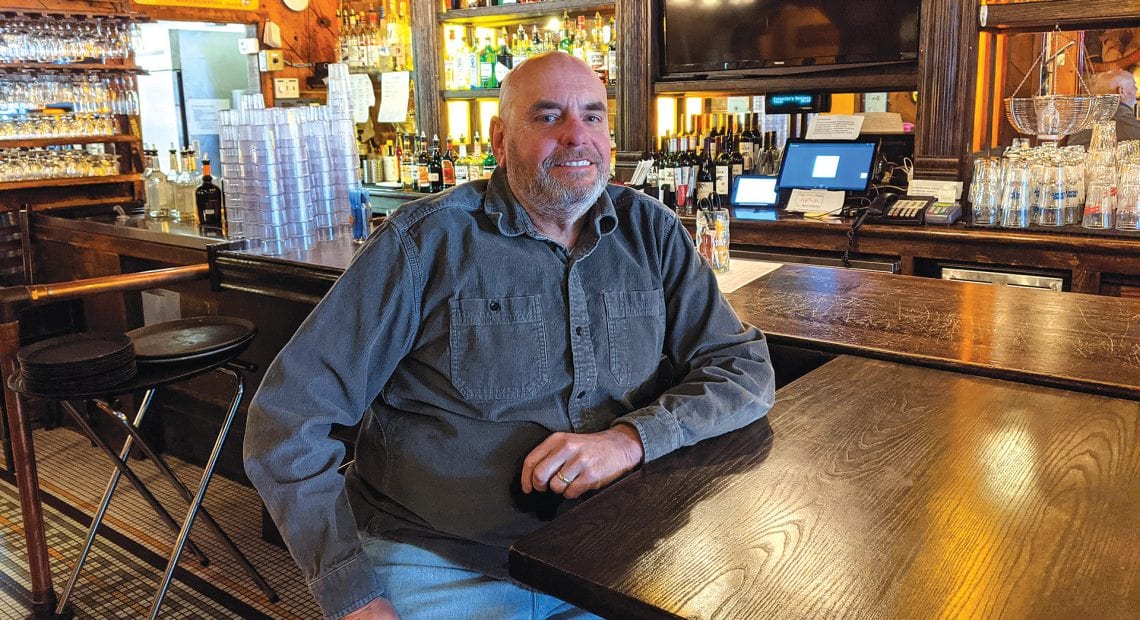
Nick Noblit says he’s had to manage overflow lines rarely during the pandemic, most notably during tax-free weekend in August.

Even after stores were allowed to open later that spring, many customers continued to use the online option, which was a bit surprising, he added. “This is definitely an item, I believe, you should try before, so you know what’s comfortable for you. But it was a sign that our customers in this area took the pandemic very seriously and are taking precautions, and if that meant calling over the phone and making decisions based on our products and our name, that’s OK too.”

While companies have rolled with the capacity changes, and, as noted, honed new ways to do business in the long term, what they don’t like is sudden change, like what happened in Amherst and Hadley last week.

On Feb. 8 — the morning the 40% capacity change went into effect statewide — the Amherst Board of Health issued an emergency order that will continue the 25% limit in town, as well as an early-closing order, due to an outbreak of COVID-19 on the UMass Amherst campus that, at press time, had risen to 540 cases. The town of Hadley followed, also keeping capacity levels at 25%.

“This is not the direction that we, as a town, nor our businesses, want to go, but it is imperative that the town take decisive action immediately to address this increase in cases,” Amherst Town Manager Paul Bockelman said.

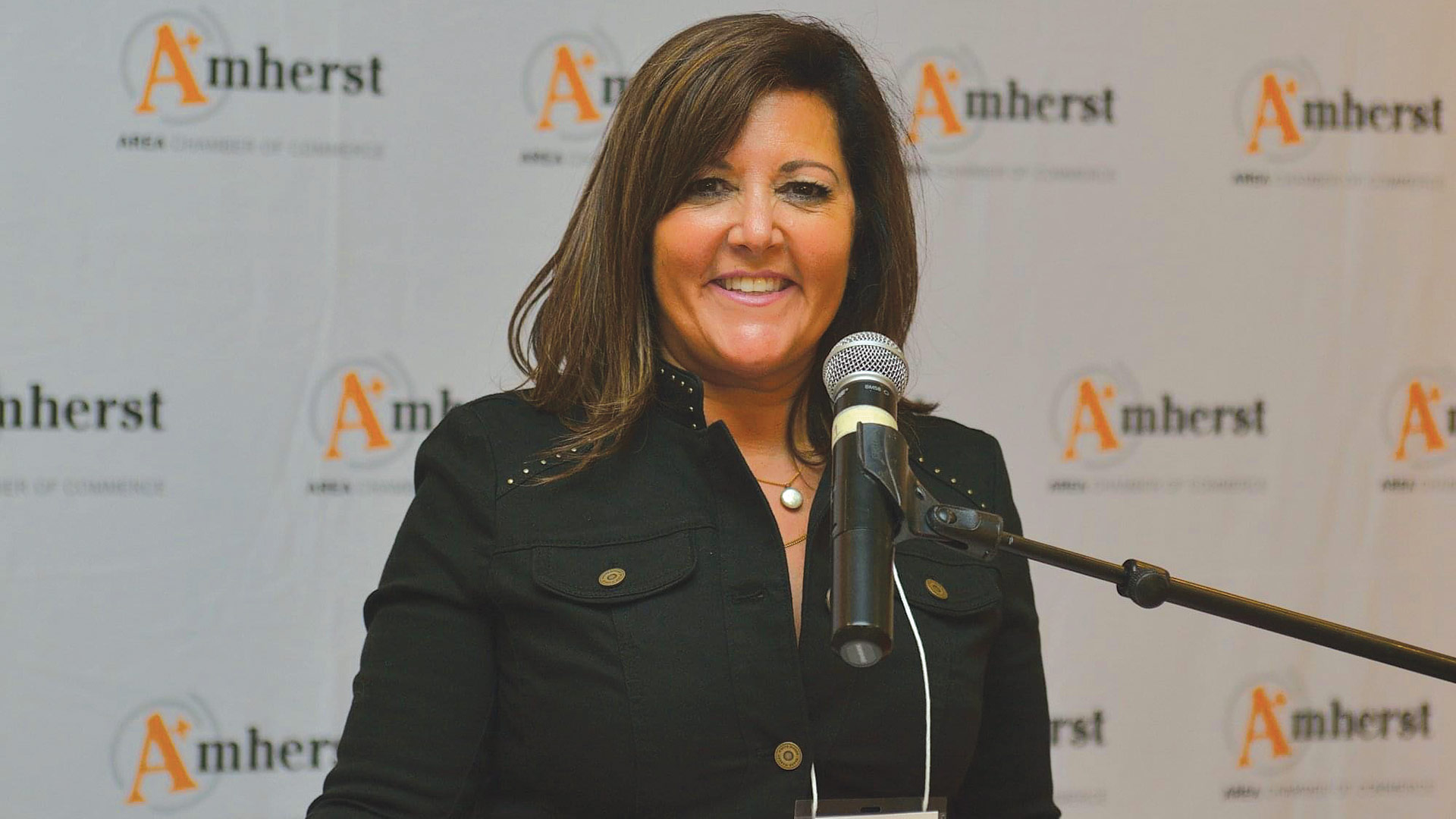
Claudia Pazmany, executive director of the Amherst Area Chamber of Commerce, which has members in both towns, said some businesses chose to close completely for two weeks, either for safety or because UMass students are quarantined to their rooms for the time being, cutting off a supply of customers and, in many cases, employees.

“They’re crushed. They were finally opening at 40%,” Pazmany said, adding that some businesses consider the move unfair, especially the ones that have a strong track record in safety, sanitization, and keeping exposure down over the past year.

“As a chamber, we’re so concerned for everyone’s safety, and a lot of businesses are choosing to close temporarily for the safety of their staff,” she added. “Personally, I don’t want to see anyone struggling, but we want to keep the safety of businesses and the community paramount. It’s tricky; it’s such a layered issue.”

Even as the extension order went down, Amherst Public Health Director Emma Dragon emphasized that “it is in the interest of the health of our entire community that we continue the restrictions that are currently in place. Never has it been more important to follow those key public-health protocols of wearing a mask, washing hands, and maintaining social distance.”


Doing Their Part

Mention those tips to many business owners, and they’ll say they’ve been insisting on all that — and much more — from the beginning. “The biggest thing, early on, was the uncertainty, not knowing how the surge was going to affect us,” said Dr. K. Francis Lee, owner of Advanced Vein Care Center in Springfield.

But there are lessons, he says, in how his office responded to the pandemic — and continue to respond — that apply to many places of business. The first was making sure employees understood safety protocols and the importance of keeping themselves out of harm’s way.

“We immediately talked to our staff about their concerns, and our staff came to understand that this pandemic was real, and something that affects everyone’s bottom line — not just the business bottom line, but each person’s bottom line,” he said. “Our people took this very seriously, and everyone knew they had to behave in a way that minimized exposure and minimized transmission, to not bring it into the office and spread it amongst each other.”

The second step was communicating with patients, who were screened twice by phone before appointments — with questions about possible COVID exposure — and then again on the day of the appointment. If there was any doubt, patients were rescheduled or moved to telehealth visits.

“This is something that hits close to home for each individual; at the end of the day, it’s all about their jobs and our business functioning, and people are responsible for doing their part.”

Finally, Lee put in physical safeguards in the office, from PPE — he collected so much, he was able to donate 1,000 facemasks to Baystate Health last April — to installing 22 HEPA-filter air purifiers, at least one for every room. “We have a 50-page COVID safety protocol,” he added.

For customers who visit Yankee Mattress, Noblit said, the store is completely sanitized multiple times a day, with attention paid to common touch points like door handles and surfaces, while customers are given a sanitary sheet — he calls it a ‘comfort test guard’ — to lay on as they try various mattresses. Plastic barriers also went up at counters to separate customers from staff.

“We wanted customers to feel safe and come in and do what they needed to do, and not have to worry about any issues with that,” he noted.

Making people feel confident to go about their business should be a community-wide effort, Lee suggested.

“It comes down to normalizing people’s behavior. That involves dealing with the COVID virus itself, which involves paying a lot of attention to science, and that’s what we did in the first place. We started inside people’s heads — we helped our people understand that this is real, and if people screw up, the whole office could shut down. But we never had to shut down — except for April and May, when everyone was shut down.

“Everyone understood this was their own job security at stake,” he continued. “Major workplaces have been shut down because of this. This is something that hits close to home for each individual; at the end of the day, it’s all about their jobs and our business functioning, and people are responsible for doing their part.”

For just about every customer-facing business, there’s a balance to strike between commerce and safety. Because Excel isn’t just a gym, but a full therapy practice, Hulseberg doesn’t have to maintain a laser focus on gym membership. “Our gym, at its core, is a love note to our patients,” she said. “We tend to run our gym differently than the big chain conglomerates, so the limits have hurt us less.”

Specifically, during the past several months of 25% capacity, she sold memberships only up to that level.

“I don’t want people buying memberships and then finding it too occupied or they don’t feel safe,” she said, adding that she implemented a timed appointment platform online, but members can also call last minute to check on availability. “It gives everyone peace of mind that we’re here for a massage or a group class, but everything has a cap on it, and we have safety requirements in mind.”


Winds of Change

In fact, even though the state has raised the capacity limit to 40%, Hulseberg is keeping it at 25% — for now.

“We’ve had a year’s experience with this,” she said. “We’re going to wait to implement any of their changes because they tend to roll back on us, and we end up spending time and money implementing new changes, just to have them roll back in a week or two.”

Besides, she said, she doesn’t want to be part of the problem that leads to a spike — although gyms and wellness practices, by and large, have not been identified as viral-spread locations. “We’re just happy we’re hanging on thus far and people are enthusiastic about what we’re doing, so we don’t have to close our doors.”

The worry that loosened restrictions can just as easily be re-tightened is common to most businesses, Pazmany said.

“The one guarantee this year is that whatever we’re dealing with today will change tomorrow,” she said, and that reality has worn on business owners, especially those in Amherst and Hadley, who can’t seem to catch a break right now — and who continue to remind customers that they’re still open for business.

“They are exhausted,” she added. “They’ve implemented safety protocols, they’ve kept everyone safe, they’re building confidence because they want everyone back. They’ve proven you can trust them, and trust is everything to a small business. So they were excited to expand to 40%. I can tell you, if this is prolonged, it could mean more closures. They need to get to 40%.”

It’s a reminder that all these numbers — case counts, capacity limits, profit-and-loss statements — add up to something significant for a regional business community that’s just trying to get back to normal … or, whatever capacity level passes for normal these days.


Joseph Bednar can be reached at [email protected]

Autos Special Coverage

Revving Up

By Mark Morris


In the early days of the pandemic, people huddled in their homes while streets were abandoned by nearly all traffic. Area auto dealers, understandably, braced for a slow year.

Instead, sales for many dealers hit record highs in 2020.

It was that kind of year for Jack Sarat, dealer principal for Sarat Ford, who said the pandemic definitely kept sales down in March. “After that, business rebounded, starting with a strong finish in April, and then every month following kept getting better.”

Auto-manufacturing facilities and many of their subcontractors around the world experienced shutdowns early in the pandemic. Steve Lewis, owner and president of Steve Lewis Subaru, said the delays kept inventories low at many dealerships and were also a factor in sluggish sales early in the spring.

“Once the factories were up and running again, around May or June, our inventory started to build back up, and it continues to build,” Lewis said. “Believe it or not, 2020 was our best year ever.”

“After [March], business rebounded, starting with a strong finish in April, and then every month following kept getting better.”

Even with inventory delays, Lewis continued to take pre-sell orders, so when new cars began rolling into the lot, nearly 65% of them were already sold.

Gary Rome, president of Gary Rome Auto Group, said the Korean factories where Hyundai and Kia are made were fortunate, with only brief shutdowns due to COVID-19 concerns.

“Hyundai and Kia never took their foot off the gas when the pandemic hit,” Rome said, which set the table for a strong year. “Our sales increased nearly 20% in 2020; it was one of the best years we’ve ever had.”

Every year, Presidents’ Day represents the first big sales push for local dealerships. Sarat pointed out that Presidents’ Day as a sales event tends to be more of a Northeast phenomenon.

Jack Sarat (left) and Jeff Sarat

Jack Sarat (left) and Jeff Sarat are among many area dealers reporting strong sales down the stretch in 2020 and into 2021.

“In Virginia, if you ask about the Presidents’ Day sale for cars, they don’t even know what you’re talking about,” he said, adding that ‘Presidents’ Month’ might be a more accurate name because the manufacturers heavily promote sales incentives throughout February.

With an already strong January in the books, Lewis approaches this Presidents’ Day understanding each year is a different experience.

“Last Presidents’ Day, we had a great weekend. Some years sales are magnificent, other years we are slow,” he said, adding that he defines the weekend as running from the Thursday before the holiday through Presidents’ Day Monday.

Good weather is the key to strong President’s Day sales, Rome said. Encouraging car sales on Presidents’ Day has often been a way for people to start thinking about spring and new beginnings.

Steve Lewis

“Once the factories were up and running again, around May or June, our inventory started to build back up, and it continues to build. Believe it or not, 2020 was our best year ever.”

This year, they may be especially clamoring for spring; on top of the normal winter doldrums, everyone has endured nearly a year of pandemic disruption and isolation. In that environment, auto dealers expect plenty of pent-up demand.


Rolling Along

Each of the dealers who spoke with BusinessWest shared his thoughts on why people continue to buy cars during the pandemic.

Those who did not suffer a job loss due to COVID-19 were able, in many cases, to increase their savings. After months of staying inside people, Lewis said, people started doing the math and realized that, with used-car values remaining high, they could trade up to a newer vehicle without spending lots of money.

“They capitalized on it, we capitalized on it, and everybody’s happy,” he added.

Sarat talked about customers who canceled vacations that involved air travel but still wanted to get away. “Several customers told me they were buying vehicles just so they could drive to their vacation,” he said.

While zero-percent interest rates across the industry have helped reluctant buyers, Rome said a job-assurance program gave Hyundai customers more comfort about making a purchase. “Through this program, if you buy a car and lose your job, Hyundai will make your payments for up to six months.”

He also believes battling COVID fatigue played a role in many vehicle-purchasing decisions. “People started realizing that life is short, and this might be a good time to do something nice for themselves.”

The pandemic has produced an interesting economic situation in which many homeowners made big investments in their homes, resulting in an extremely successful year for construction and landscape contractors. Sarat reaped the benefit of the contractors’ good fortune in his commercial-truck business. Contractors tend to replace their vehicles in December to obtain a tax credit against their income for the year, so it’s not unusual to see more sales activity then. Thus, the boom in home improvements in 2020 contributed to record sales in December for Sarat.

“We sold twice as many Super Duty trucks than a normal December,” he said. “Contractors were replacing vehicles and, in some cases, adding to their fleet.” Super Duty trucks are a popular choice among contractors because they can be adapted to a variety of trade professions.

While online shopping and purchasing a vehicle are not new, the pandemic brought out more people interested in using this no-touch approach to buying. Before the pandemic, Lewis noted, nearly 45% of his business was generated from the internet, where customers would do their research online, then come in for a test drive before buying the car. Since the pandemic, that’s increased to 70%.

“What’s different now is that people are taking delivery of vehicles they’ve never seen or have driven,” he said, adding that customers who do this are relying on the brand’s reputation.

Website upgrades since the pandemic allow Rome’s customers to complete their entire vehicle purchase online. From figuring out the value of a trade-in to applying for credit, the entire purchase or lease can be generated online and finished off with an electronic signature. “We will even bring the car to your home to test drive if you want,” he added.

Before internet research, the average customer would visit three or four dealers before purchasing a vehicle. Sarat cited industry statistics showing that customers now visit, on average, only 1.3 dealers before making a purchase. “Because they’ve done the research online, they’ve usually made a decision on what they want to buy before they even come in.”


Shifting Gears

For several years, buying trends have shifted away from passenger cars and toward SUVs and crossover vehicles.

“SUVs make up 68% of our sales, compared to sedans,” Rome said. “It used to be the inverse.”

He credits the shift to SUVs handling more like a car than earlier models, which were built on truck frames. He also noted that, as buyers age, they prefer a higher vehicle to make it easier to enter and exit.

“We won’t be back to normal for a while, but everything I read in automotive reports suggests new-car sales in 2021 are going to be very strong . I think it’s going to be an exciting year.”

Nearly every model in Lewis’ showroom is an SUV or crossover vehicle. “The crossover is really a replacement for the old station wagon,” he said. “It’s designed to open up the hatchback, put the back seats down, and throw in your junk.”

Ford is another of the many manufacturers moving away from traditional sedans and toward crossovers and SUVs. In addition, Sarat sells one of the most popular vehicles in the U.S., the Ford F-150 pickup truck, calling it his “bread and butter.”

Ford recently released a hybrid version of the popular pickup truck, and the new Ford Mustang Mach E is an all-electric vehicle. And Sarat has made a move toward all-electric vehicles among commercial cargo vans as well. Jeff Sarat, general sales manager, said these vans can run up to 300 miles a day and then plug in for recharging overnight.

“For business owners, it significantly reduces the cost of ownership,” he said, noting that an electric motor eliminates traditional maintenance and substantially reduces the vehicle’s carbon footprint. “We’ve got a lot of good things coming down the road, and our electric vehicles are going to be on people’s shopping list when they look for their next car.”

While hybrid and electric vehicle sales represent about 5% of Rome’s sales, he expects that number to rise to 10% soon.

“The manufacturers have jumped into this market with both feet. Within two years, we expect to offer a dozen hybrid or electric vehicles,” he said, adding that hybrid vehicles can improve mileage up to 140 miles per gallon, while some all-electric vehicles can go 386 miles on a full charge.

“In some ways, it’s like owning an iPhone, where you want to get a new one every three years to stay up on the latest technology,” he added.

Another shift this year has taken place in the used-car market. The economic shutdown last spring affected new-car production, and dealers found they had more empty spaces on their lots. “When fewer new vehicles are coming in, it also creates a lack of used inventory because people are not trading in their cars,” Sarat said.

For this reason, all the dealers we spoke with said used-car prices stayed high last year and will continue to remain strong in 2021.

Rome acknowledged the strength of the used-car market, but said his business runs somewhat counter to the normal trend.

“In our world, we sell about two new cars to every used car,” he explained. “If you can buy a new car with a 10-year, 100,000-mile warranty for about the same price as a used car, why would you buy the used car?”


No Slowing Down

With his business finishing 2020 with a 19% sales increase, Rome predicts an 18% increase on top of last year’s success for 2021.

With his dealership in Hadley, Lewis noted that he is located two miles from five colleges and universities. When students and faculty all abandoned campus early in the pandemic, it cut deep into his business. He is hopeful these sales will return as everyone comes back to campus.

“Despite all that, we had our best year ever, and we’re hoping 2021 is as good as 2020,” he said.

Jack Sarat anticipates at least some supply disruptions due to COVID in 2021, but remains optimistic for a good year ahead as well.

“We won’t be back to normal for a while, but everything I read in automotive reports suggests new-car sales in 2021 are going to be very strong,” he said. “I think it’s going to be an exciting year.”

Community Spotlight Special Coverage

Community Spotlight

By Mark Morris

Paul Bockelman said he’s worked with chamber and BID leaders

Paul Bockelman said he’s worked with chamber and BID leaders to address the urgent needs of the business community during the pandemic.


Epictetus, the Greek philosopher, first made the observation, “it’s not what happens to you, but how you react to it that matters.”

While Epictetus did not live in Amherst, town officials and business leaders there have certainly adopted the philosopher’s adage in their robust efforts to return the town to vitality in the face of a pandemic.

Last March, when COVID-19 began to affect life in communities everywhere, Amherst took a broader hit than most because UMass Amherst, Hampshire College, and Amherst College all shut down earlier than other area institutions.

Gabrielle Gould, executive director of the Amherst Business Improvement District (BID), said the suddenly empty campuses posed a shock to the system.

“We lost 40,000 people in a 48-hour period,” she recalled. “It was like turning off a light switch.”

With college closings and retail activity coming to a screeching halt, Amherst Town Manager Paul Bockelman said his town lost its two major industries because of the pandemic. Still, he noted, “despite all that, the town has been resilient, and we are prepared to emerge from the pandemic in a very strong way.”

Early on, Amherst quickly mobilized a COVID-19 response team as Bockelman and the department heads of the Police, Fire, Public Works, and other departments met daily to strategize, he explained. “We prioritized the health of our workforce because we wouldn’t be able to help residents if our fire, police, and DPW staff weren’t healthy.”

The next priority was to maintain continuity of government functions. Amherst migrated town staff to remote work and incorporated Zoom meetings to assure key bodies such as the Town Council and the School Committee could keep moving forward. Permit-granting committees soon followed.

“We prioritized the health of our workforce because we wouldn’t be able to help residents if our fire, police, and DPW staff weren’t healthy.”

As plans were coming together to allow outdoor dining, the Town Council passed a special bylaw to delegate simple zoning decisions to the building commissioner. This move sped up the permitting process and cut down on much of the bureaucratic red tape.

“For example, permits for serving alcohol outdoors or expanding the footprint of a restaurant could be done through one person instead of going through an often-lengthy permitting process,” Bockelman said.

To address the urgent needs of the local business community, he also met weekly with Gould and Claudia Pazmany, executive director of the Amherst Area Chamber of Commerce. The BID and chamber share office space on Pleasant Street, so Pazmany and Gould worked together to learn about the many grants available to local businesses impacted by COVID-19. The main goal was to help owners stay in business.

Claudia Pazmany

Claudia Pazmany says one of her most important roles has been helping business owners navigate the grant system.

“We knew that closing their doors would mean closing their doors forever,” Pazmany said. “That’s what we were trying to avoid.”


Granting a Reprieve

Before the pandemic, the chamber would host 56 events in a typical year. Pazmany said she quickly moved to digital events to keep everyone together. “We went from 56 events to 56,000 connections on Facebook and other social media.”

More importantly, in addition to helping local businesses apply for the federal Paycheck Protection Program (PPP), Gould and Pazmany have successfully secured grant programs at the state and federal level.

A number of Amherst businesses received grants through the state COVID-19 Small Business Grant Program, which provided a total of $668 million for Massachusetts businesses. Amherst also secured $140,000 in federal Community Development Block Grant funds for local businesses.

State Sen. Joan Comerford helped the Chamber and BID to fund the recently formed Relief and Resiliency Microgrant Program. Originally designed to provide $500 microgrants, Pazmany said they were able to secure matching dollars, so $1,000 grants will soon be awarded to 18 of Amherst’s small-business owners in the first round of the program.

“The microgrant money will help defray some costs and allow people to keep going,” she said. “Many of these business owners are not even paying themselves; they just want to pay their bills.”

One of the more important roles Pazmany and Gould have taken on involves helping business owners navigate the grant system. Whether it’s identifying eligible funding, helping to fill out forms, or solving technical issues, Pazmany said they are not limiting their support to just chamber members. “Right now, it makes no difference if you are a chamber member or not. If you need help and you cross our threshold, we will help you.”

While outdoor dining and takeout have enabled restaurants to keep their doors open, the BID launched an effort to do more, buying meals from local restaurants and giving them to families in need. The effort began two months ago with the moniker December Dinner Delights and recently received funding to continue through April. Gould sees this as a win-win.

“We pay the restaurants $1,500 twice a week to help them sustain business, and we provide meals for families in our community,” she noted.

Another effort to support local business involves a gift-card program run by the chamber. Launched at the beginning of the holiday season, the gift cards can be redeemed at more than two dozen local businesses, from restaurants to a cat groomer. Pazmany said she has had to reorder cards to keep up with demand. “It works because you are able to give someone a gift and, at the same time, support a small business; it’s the best type of reinvestment in our community.”

As for town-run programs, last spring, municipal leaders had to figure out what to do about the farmers’ market it runs every Saturday from April through November. In the past, it was held in a cramped parking lot that would not conform to social-distancing protocols. Because the town common had no activities scheduled, the farmers’ market set up there — and had its most successful year ever.

“Right now, it makes no difference if you are a chamber member or not. If you need help and you cross our threshold, we will help you.”

“Our town common is a bucolic setting, and people who were cooped up all week could safely come and buy things,” Bockelman said. The manager of the farmers’ market reported the average sales week in 2020 equaled the best sales week in 2019, and the booths sold out of their products every week.

The farmers’ market was a highly visible way to revitalize interest in Amherst, as are continuing “quality-of-life developments,” as Bockelman called them, such as the newly opened Groff Park and the building of a new playground at Kendrick Park.

But smaller acts, like making picnic tables available in parks and other public places, were popular as well, he added. “As soon as we put out the tables, people were immediately using them. It was awesome.”


Forward Thinking

Looking to the future, Amherst is making decisions on four major capital projects slated for construction in 2022. On the drawing board are a new elementary school, a new library, a new Public Works facility, and a new fire station.

“We are trying to incorporate these projects into our ongoing budget so the taxpayer does not have to take on too much of a burden,” Bockelman said.

The desirability of Amherst as a place to live keeps housing prices high, which he calls a two-edged sword because it hurts the town’s ability to build a diverse socioeconomic community.

“People value diversity in Amherst,” he said. Still, he added, “it’s much more diverse than most people realize, especially our school district.”

To deepen that diverse profile, Amherst is looking to invest in property to develop more affordable housing. Bockelman pointed to a recently approved development on Northampton Road and a potential land purchase on Belchertown Road as additional projects in the works. “The town is willing to make the investment to develop and retain affordable-housing units in Amherst.”

To better address diversity in business, the chamber makes available an open-source document for proprietors who want to identify their business as being run by a woman, minority, or LGBTQ individual.

Pazmany said it’s simply good for business, noting that “we are getting steady requests from people who want to do business with various self-identifying businesses.”

Amherst at a Glance

Year Incorporated: 1759
Population: 39,482
Area: 27.7 square miles
County: Hampshire
Residential Tax Rate: $21.82
Commercial Tax Rate: $21.82
Median Household Income: $48,059
Median Family Income: $96,005
Type of Government: Town Council, Town Manager
Largest Employers: UMass Amherst; Amherst College; Hampshire College
* Latest information available

One element in the town’s strategy emphasizes Amherst’s potential as a tourist destination. Several national news articles have suggested that this decade may become a second “roaring 20s” with a renewed emphasis on cultural attractions. If that’s so, Pazmany pointed out, Amherst has plenty to offer, such as Museums10, a collaborative of 10 area museums, of which seven are located in town. Together, the museums cover various aspects of history, art, literature, and the natural world.

“In a normal year, Museums10 will bring more than a half-million people to the area,” she said. “The Emily Dickinson Poetry Festival itself is a global event.”

For the more immediate future, the plan is to have outdoor dining up and running by April 1. The BID was able to supply enough table umbrellas and heaters during the summer to boost last year’s effort. Because there are so many barriers in place to ensure safe outdoor dining, the BID also paid 35 artists to turn the plain concrete into a medium to express themselves.

“The barriers became nice displays of public art, and they give downtown a bit of an art-walk feel,” Gould said.

Simple touches like the artwork and adding planters around town generated positive comments from visitors and business owners alike. Pazmany appreciated the boost of confidence. “In this next phase, we just want our businesses to be up and running so they can take a paycheck and start to rehire people.”

Most Amherst leaders, in fact, look to the coming year with great anticipation. Bockelman noted that the town has several fundamental strengths, including the university and colleges. Pazmany added that UMass has already reported an increase in enrollment for the coming fall.

Gould admits that pushing forward on grants and other relief efforts helped Amherst through the worst of the pandemic. “Despite how hard everyone was hit, we’ve created a resiliency that kept our businesses here.”

Bockelman agreed. “Everyone’s efforts worked because they were sequential and were patiently done. We just kept moving forward.”

Epictetus would be proud.

Features Special Coverage

Entering a Partnership?

 By Brenden Cawley and Gabriel Jacobson 


The COVID-19 pandemic has caused several partnerships local to Western Mass. to either consider or actually effect a change in ownership. When navigating the complexities of these changes in ownership, partnership basis is a vital component.

For tax advisors and taxpayers alike, basis would be better as a four-letter word. However, understanding the basics of cost basis can prevent future headaches.


Understanding the Basics of Basis

It stands to reason that the cash spent or provided to acquire an asset would be the cost (basis) of that asset. However, when analyzing partnerships, understand the concepts of ‘inside’ and ‘outside’ basis. The difference is a shift in perspective. The outside basis is established when the partner joins or forms the partnership through the contribution of cash (or property, which adds additional complexity). The partnership then uses that cash to purchase assets.

The cash outlay to acquire those assets establishes the total inside basis of the partnership. Based on each partner’s ownership, a share of the inside basis of the individual assets is assigned accordingly. This inside basis does not fluctuate with changes in market value of the assets. When a tax year closes, the partners each receive a Schedule K-1 and adjust their outside basis by the income, expense, gain, or loss disclosed on the Schedule K-1.

Brenden Cawley

Brenden Cawley

“For tax advisors and taxpayers alike, basis would be better as a four-letter word. However, understanding the basics of cost basis can prevent future headaches.”

Over the life of the partnership, cash or property will be distributed to the partners, which will decrease their outside basis. The inside basis of the partnership will similarly be reduced as the cost of assets is removed from the books through sale or distribution. When the partnership is in need, the partners may contribute additional cash or property. Additional contributions have the same positive impact on outside basis as the initial contribution that formed the partnership or acquired an interest.

As time goes by, differences can arise between the inside and outside basis of the partner(s). As the inside and outside basis of the partnership fall out of alignment, the partners can experience negative tax consequences. Each taxpayer is responsible for maintaining their own outside basis, so consult your tax advisor if questions arise. Through a Section 754 election, the partnership has an opportunity to avoid these consequences.

Like anything worthwhile, this election takes work. It is perhaps especially laborious if the partner or partnership have not been actively tracking the inside and outside basis disparity. The partners’ Schedule K-1s could offer a lifeline. Prior to 2020, each partner’s capital account in item L could be prepared on a book, GAAP, Section 704(b), or tax basis. It is possible that the partner’s capital account prepared using book, GAAP, or Section 704(b) is a reasonable approximation for the inside basis of the partner.

This is a highly simplified approach that needs to be vetted with the partnership’s tax advisor. Starting in 2020, the IRS has mandated that Item L of Schedule K-1 must be prepared on a tax basis. The partner’s tax capital account is a good starting point for both outside and inside tax basis. Again, this simplified assumption needs to be discussed with a tax advisor. Please note that tax capital reported on the Schedule K-1 is not equivalent to outside tax basis. Instead, outside tax basis considers liabilities of the partnership for which the partner is individually responsible and partner-specific adjustments.


Everyday Example

In year one, Ann and Bob purchase a building for $200,000 and split the cost evenly, giving them each 50% ownership in ABC Partnership. Initially, they each had outside basis equal to their inside basis of $100,000. In year two, as a result of COVID-19, Bob wants to exit the partnership. The building has appreciated in value to $300,000, so he sells his interest in ABC Partnership to Carl for $150,000. Bob will recognize a $50,000 gain in year two as a result of the excess cash received compared to his cost basis.

First, let’s imagine the partnership does not make a 754 election at this point. Carl steps into Bob’s inside basis of $100,000. However, his outside basis equals the total amount he paid, or $150,000. In year three, Ann and Carl decide to sell the building (for simplicity’s sake, let’s assume no depreciation has been expensed), which is still valued at $300,000 and therefore results in a gain of $100,000. Both Ann and Carl receive Schedule K-1s with a $50,000 gain for the year because they both had an inside basis of $100,000 prior to the sale.

Gabriel Jacobson

Gabriel Jacobson

“Partnerships may be relatively easy to form, but the tax implications can be very complex.”

After recording the gain, their inside basis increases to $150,000. Ann’s inside and outside basis remain aligned, but Carl’s basis disparity persists as the $50,000 of gain impacts his inside and outside basis in the same manner. In year four, Carl and Ann decide to dissolve the partnership. At this point, the $300,000 cash they received from the sale of the building is distributed to both partners evenly. Ann receives $150,000 in cash, which equals her outside basis. For this reason, she recognizes no gain or loss on the dissolution of the partnership.

Alternatively, Carl recognizes a $50,000 loss outside of the partnership since his total outside basis is $200,000. At this point Carl is kicking himself because he paid taxes on a $50,000 gain in year three only to recognize a loss of $50,000 one year later. If Carl does not have any capital gains in year four, he can only utilize $3,000 of the capital losses on his tax return. The remaining losses are carried forward indefinitely.

Now let’s imagine the partnership made the 754 election when Carl purchased his 50% interest in year two. At that time, his inside basis would have been increased by $50,000 to match his outside basis. The partnership would have adjusted Carl’s inside basis in the building to $150,000, matching his outside basis. Then in year three, when Ann and Carl sell the building, Carl would not recognize any gain because his inside basis matches his share of the sales proceeds ($150,0000).

In year four, when the partnership dissolved, Carl would not recognize a loss on the distribution of cash from the partnership because his portion of the partnership’s cash balance ($150,000) equals his outside basis ($150,000). Carl avoided the timing issue regarding any taxable gain on the building sale and any loss on dissolution by making the 754 election.


On an Income-tax Return

If Carl and Ann decided to hold onto the building instead of selling in year three, Carl could deduct from his Schedule K-1 the basis adjustments related to the Section 754 election. The total Section 754 adjustment of $50,000 is reduced to zero over time using the same mechanics as the depreciation on the building. The 754 adjustment reduces both Carl’s inside and outside basis equally. The benefit is that he will receive deductions on line 13 of his K-1 against income on his tax return each year until the $50,000 is fully deducted.

Partnerships may be relatively easy to form, but the tax implications can be very complex. Section 754 is important for a partner purchasing an interest and for existing partners looking to secure a new partner to help their business. Accurate tracking of inside and outside basis is of the utmost importance to reduce negative tax consequences down the line.


Brenden Cawley is a senior associate at the Holyoke-based accounting firm Meyers Brothers Kalicka P.C., and Gabriel Jacobson is an associate with the firm; (413) 536-8510.

Education Special Coverage

Portrait of a Graduate


The program is called ‘Portrait of a Graduate,’ and that name pretty much says it all.

But maybe an adjective is in order to get the complete picture, pun intended.

Indeed, what the Springfield Public Schools are focused on now is creating a portrait of a successful high-school graduate, through an initiative designed to gain feedback from a host of constituencies regarding the skills — as in all the skills — that young people will need to not only earn a high-school diploma, but thrive in an ever-changing, technology-driven economy.

And this portrait will become a valuable blueprint of sorts as school administrators go about creating a new strategic plan for the city’s public schools, said Superintendent Dan Warwick, who stressed repeatedly that Portrait of a Graduate is very much a community-driven process that will define success for Springfield students, including the values, knowledge, skills, and work habits they will need to thrive as learners, workers, and leaders.

Among those providing input are members of the business community, said Trisha Canavan, president of United Personnel and current president of Springfield Business Leaders for Education, adding that their commentary will be critical to creating that portrait and then inspiring needed changes to programming and curriculum.

Made possible by a grant from the Barr Foundation, this Portrait of a Graduate initiative is part of a broad movement across the country to involve the community in shaping a school system’s strategic plan and specific programming and curriculum for helping to ensure student success.

The list of communities that have embarked on such programs grows each year, and now includes Lowell, Shrewsbury, and other cities and towns in Massachusetts, as well as Hartford, Conn., Fairfax County, Va., and many others, said Warwick.

In most of those communities, Portrait of a Graduate is used as part of a strategic plan for a specific school system, said Paul Foster, chief information officer for Springfield Public Schools. Here, though, it will help guide development of a new strategic plan, which is an important distinction.

Dan Warwick

Dan Warwick

“Clearly, this has become a best practice — communities need to take a look at what everyone thinks our graduates should look like, not only the academic skills, but all the other skills as well.”

“Most communities make it one of the activities as part of creating a plan,” he explained. “It’s not as common to create that vision first and then build the plan based on the vision. I think it’s important that we not make decisions on how to change schools until we have that clarity of vision that a portrait provides.”

Warwick agreed. “Clearly, this has become a best practice — communities need to take a look at what everyone thinks our graduates should look like, not only the academic skills, but all the other skills as well.

“Other iterations of our strategic plans were mostly academic-focused, which is what you would expect for a school system to put forward in a strategic plan,” he went on. “But this piece is designed to take a wider look and really get the community to rally around what they want our graduates to look like and what attributes they’ll need, and then we’ll build the actual strategic plan from that profile.”

By most accounts, he noted, it has succeeded in its goal of garnering community interest in helping to create this portrait.

“I think it excited people,” Warwick told BusinessWest. “The community involvement has been tremendous — the breadth of the input from every sector of the community has been significant, and this new concept has helped us with that.”

The acknowledgment that needed skills for success in the 21st-century workplace extends well beyond academics is made clear in the six ‘pillars’ of the portrait — learn, work, thrive, lead, persist, and communicate, said Azell Cavaan, chief Communications officer for Springfield Public Schools, adding that the school system has received more than 1,400 responses to a survey regarding a draft portrait that reflects how these pillars will be addressed moving forward.

All those we spoke with noted that there are few real surprises in the feedback that has been received, and the skills and attributes identified as needed are included in most school systems’ strategic plans. However, it is important to have these sentiments reinforced, and equally important to gain input from a broad, diverse audience, one that reflects the community in question.

“We’ve had hundreds of meetings in every segment of the community, and folks have really stayed with this,” Warwick said, adding that the city has been able to maintain momentum for the initiative even in the middle of pandemic, a clear indicator of its importance to the future of the city and the region.

Paul Foster

Paul Foster

“Instead of traditional educators looking at this problem, we have a wider breadth of involvement from the community at large and the business community.”

For this issue and its focus on education, BusinessWest takes an in-depth look at the Portrait of a Graduate initiative, its goals, and why Springfield school officials believe it will pay dividends in their ongoing efforts to ensure that students not only graduate, but can succeed after they do.


Course of Action

Foster told BusinessWest that Portrait of a Graduate, or POG for short, is becoming an increasingly popular response to what has a national issue, or concern — helping students succeed beyond the classroom.

He said the movement, if it can be called that, started several years ago in the private-school arena, and was quickly embraced by public schools as well. The basic concept is to ask a question — what skills and attributes will students need to succeed years and decades down the road? — and ask a lot of different of people that question. It sounds logical, but it in many ways represents a new way of thinking about this issue, Warwick said.

“Instead of traditional educators looking at this problem, we have a wider breadth of involvement from the community at large and the business community,” he explained. “We’re getting a lot of input on the skills and attributes that people are looking for that, for traditional educators like myself, wouldn’t have been the first things we would be thinking about.”

What are these attributes and skills? The list includes financial literacy, problem solving, and perseverance — being able to stick with something until the problem is solved, said Foster, adding that what has been most important in this process has been not only hearing such comments, but hearing them over and over, and from different constituencies.

“What I thought was surprising, and important, was how aligned what we heard was,” he told BusinessWest. “We went from conversation to conversation and heard the same things over and over again. For example, we heard ‘financial literacy’ at every conversation. There wasn’t a group that we spoke with that didn’t say that was important.

“It was the same with things like problem solving,” he went on. “It wasn’t surprising that we heard those things; I think it was surprising that we were hearing the same things from every group; we were talking to business leaders, we were talking to parents, and we were talking to teachers, and they were identifying the same things, which is good.”

Canavan agreed, and said one of the broad goals of the initiative is to create a sense of ownership within the community when it comes to the city’s schools, or a stronger sense of ownership, as the case may be.

“Getting the collective wisdom of the community is important,” she said, “because I’m hopeful that one of the things that will come out of this is our community embracing that notion that this is our responsibility — that it’s not just the responsibility of the schools or just the responsibility of the parents — it’s our responsibility.”

The process of gathering feedback from these constituencies began in the fall of 2019, and the seeds were planted for the initiative maybe six months before that, said Foster, adding that the school department has been hosting what it calls ‘community conversations,’ a phrase chosen over ‘focus groups,’ which comes with some preconceived notions, not all of them good.

These conversations, organized by various stakeholders, have been going on continuously, he went on, adding that they have involved the business community, the refugee community, parents, educators, students, alumni, the faith community, and other constituencies. One was comprised of area business owners who are also alumni of Springfield Public Schools.

Traditionally, these groups, when involved in such conversations, focus on what needs to be done differently in the schools. For this exercise, they didn’t start there, but rather with two questions: ‘what are your hopes and dreams for children growing up in Springfield?’ and ‘what are the knowledge and skills that young people growing up in Springfield will need to realize those dreams?’

The feedback was intriguing, and in some cases powerful, said those we spoke with, especially when it came to students, what their dreams are, and what they need to make them reality.

This is reflected in those six aforementioned pillars and how the assembled feedback has shaped the working portrait with regard to how the school system must address each one.

Under ‘persist,’ for example, it notes that the Springfield Public Schools and the Springfield community will prepare students to:

• Remain focused on goals, using coping strategies and flexibility to overcome obstacles;

• Speak up for themselves and the issues that are important to them;

• Engage in self-reflection to build on strengths and weaknesses;

• Evaluate choices and outcomes when making decisions; and

• Give, receive, and respond to constructive feedback.

Under ‘communicate,’ the bullet points include ‘write and speak with clarity, evidence, and purpose’; and ‘know how to listen to others, ask questions, and seek to understand.’ And under ‘lead’ are these points, among others: ‘be curious, creative, open-minded, and flexible in new situations’; ‘advocate for themselves and for others’; and ‘seek opportunities to understand and serve the community.’

Now that the portrait is essentially complete, said Foster, those leading this initiative are pivoting from writing that document to writing a strategic plan, one that will attempt to prioritize what has been learned over the past year or so and create a blueprint for action and change moving forward. The aggressive timeline has the plan being completed in August, in time to implement changes for the next school year.

“We ended this with a recognition that there are some small ways and some big ways that we need to think differently and change schools,” he explained. “Schooling in the United States has been done in a relatively similar way for a very long time, and some pretty significant things need to change; some of those are going to be one-year changes, and others are going to be five-year changes.”


Drawing Conclusions

Moving forward, those we spoke with they expect the POG initiative to help introduce new performance measures and ways of evaluating whether students are ready to not simply receive a diploma, but succeed in what has always been the broader goal — success in the workplace and in life.

“You can have someone has mastered English and mastered math who is not ready for the workforce,” Foster said. “So part of the strategic plan will be introducing new performance measures that are not a replacement of but an addition to the ones we have today; we’re thinking about how you evaluate student performance differently.”

Where this thinking takes the school system is a question still to be answered. But the process begins with a portrait of a graduate, and in Springfield, this is still a work in progress and an important step forward.


George O’Brien can be reached at [email protected]

Hampshire County Special Coverage

Uncertainty on the Menu

Fred Gohr says Fitzwilly’s shifted gears in a few ways last year, from expanded takeout service to outdoor dining under a large tent.

Fred Gohr says Fitzwilly’s shifted gears in a few ways last year, from expanded takeout service to outdoor dining under a large tent.

The weekend before March 17, Fitzwilly’s was gearing up for a great St. Patrick’s Day. That’s the day the Northampton St. Patrick’s Assoc. gathers for its annual breakfast, and then about 200 of them march on down to Fitzwilly’s and spend most of the day there.

“We have Irish bands, and we were sitting on 20 kegs of Guinness beer and a couple cases of Jameson’s Irish whiskey for a great big party — and it got pulled right out from under us,” owner Fred Gohr said.

Remember March 16? That’s the day restaurants — and most other businesses in the Commonwealth — were forced to shut down, on just two days notice, by order of Gov. Charlie Baker.

“It was awful,” Gohr went on. “We had a staff of about 75 people, and I had to tell them all, ‘we’re closed, and you guys have to go on unemployment for a while, and we’ll see what happens.’”

What happened, all across Hampshire County’s robust dining scene, has been a series of starts and stops, hope and despair, and especially two themes that kept coming up as BusinessWest sat with area proprietors: uncertainty, but also evolution.

“We were closed completely for a month or so, then we opened and started doing a little bit of curbside,” Gohr said. “And, honestly, when that’s all you’re doing — at least for us — it’s not very profitable.”

But takeout service, never a major factor in the business, has since morphed into a significant part of the model, accounting for about 25% of sales. Other restaurants have relied even more on pick-up service, because they don’t have the interior space or outdoor-dining opportunities that Fitzwilly’s has (more on those later).

“Last year, it felt like you were opening a new restaurant every single week. You had no historical data to compare; you couldn’t look at sales and ask, ‘how did we do this last time?’”

“It’s been such a whirlwind for small businesses the past 10 months, trying to get our bearings with all the changes,” said Alex Washut, who owns two Jake’s restaurants in Northampton and Amherst. “Last year, it felt like you were opening a new restaurant every single week. You had no historical data to compare; you couldn’t look at sales and ask, ‘how did we do this last time?’

That’s because there was no ‘last time’ — no comparable pandemic in the past century, anyway. “Everything was out the window,” Washut said. “We asked, ‘who are we going to be this week?’ Then there was a bunch of changes, and we had to conform to those, and then it was a new restaurant the next week.”

Like Fitzwilly’s, evolving to a takeout model early on was new territory for Jake’s. “We were never a takeout restaurant; maybe 3% of our gross was takeout food,” he said. “So we had no system for it.”

The various systems that area eateries developed, in the weeks last spring when takeout was the only option, involved details ranging from what containers to use to how to present food attractively and, for restaurants that opted for delivery, how to keep it warm in transit.

Casey Douglass

Casey Douglass with some of the supplies used in Galaxy’s takeout business, which has been its dominant model for almost a year.

“We were able to pivot quickly,” Washut noted. “From there, we moved to outdoor dining when that was allowed, but we had never had outdoor dining before” — and questions had to be answered regarding permitting, staffing, health and safety factors.

The positive, he noted, is that, if 2021 follows a similarly bumpy trajectory, “we know what’s expected, and we know how we’ll react in the spring, how we’ll react in the summer, and how we’ll react once the fall and winter come along.”

Indeed, the establishments that survived last year’s storm are, if not stronger for the experience, at least a little wiser, even as many are barely hanging on. The hope, of course, is that 2021 is nothing like 2020. But in this industry, so critical to the economy and cultural life of Hampshire County, nothing is certain.


Survival of the Fittest

“We’ve evolved a lot.”

Those were Casey Douglass’ first words when asked what this year has been like at Galaxy, the restaurant he’s operated in downtown Easthampton for the past five years.
The first evolution had to do with meeting customer needs. “We’re part of the food chain,” he said. “We have a lot of customers who don’t go to the supermarket. And we were like, ‘they’re going to be putting themselves at risk going to the supermarket as opposed to getting to-go.’

“So we went to the radio station and created an ad talking about ‘Casey’s comfort food,’” he went on. “And we switched to all a la carte, basic stuff — mac and cheese, mashed potatoes, roasted chicken, meatloaf — and we were cranking.”

So much that, when he secured a Paycheck Protection Program (PPP) loan, he first thought he wouldn’t need it. “Then a couple weeks went by, and we said, ‘thank goodness we got that.’ It changed so quickly.”

Sales dropped to about 45% of what they once were, but he kept 70% of the labor on board, because that’s the main purpose of the PPP program. That money got Galaxy through the end of June. Then things got rough.

Jake’s owner Alex Washut

Jake’s owner Alex Washut says it might be a while before his two locations (this one in Amherst) are packed with patrons again.

After losing a couple of cooks to unemployment, the restaurant cut back from five days a week to four, and when summer rolled around, fewer customers wanted takeout, but outdoor dining wasn’t a draw, either.

Fall brought a reprieve of sorts, with the milder, less-humid weather boosting outdoor dining, but the winter has been exceptionally tricky. Indoor dining didn’t prove to be a workable option; in a space that seats fewer than 50, the governor’s current 25% capacity mandate is especially onerous, and Douglass and his team also felt indoor dining might not be safe — or, at least, feel safe — for a clientele that skews older than some restaurants.

So as winter wears on, Douglass is pressing on with takeout only — now a hybrid of the comfort-food concept and the creative American meals he’s known for — a bank loan, and plenty of grit.

“We’re just looking at survival at this point,” he said, noting that costs like food, loan interest, utilities, and equipment leases don’t just go away when sales are down. “We’re efficient at what we do, but we’re losing about $15,000 a month. And that’s not going to be able to continue.”

However, he insisted, “I do think the spring will increase sales a couple thousand dollars a week, and that’s all it takes. We’ll be fine.”

Evolving to a takeout model was jarring at first to Washut, especially since his two locations — an 1800s-era building in Northampton and a new, modern structure in North Amherst’s Mill District — are so different, with a different set of clientele, and not cookie-cutter businesses like quick-service chains.

“We’re just looking at survival at this point. We’re efficient at what we do, but we’re losing about $15,000 a month. And that’s not going to be able to continue.”

“We didn’t know how to be a takeout restaurant. We were making $50 in sales a day — we were in shock,” he recalled. So he shut things down completely through April, secured a PPP loan and other grant funds, and reopened for takeout in early May, then outdoor seating a couple months later. Armed with the PPP, he was able to bring back the whole staff, and the breakfast-and-lunch establishment added dinners to generate more business. When funds ran dry, dinner went away.

These days, with takeout and limited indoor seating, Washut is bringing in about 30% of typical sales, and the combined staff is down from close to 50 to around 15.

Throughout all the changes, he has prioritized safety. Even if the governor’s 25% seating rule changes tomorrow, he said, “I’m not going to increase my dining room beyond 25%; my staff and I don’t feel that’s appropriate right now. There may be things we’re allowed to do but, in reality, we choose not to do.”

Gohr had a few advantages last year when it came to keeping people safe while generating business. One was a large parking lot next to Fitzwilly’s that he rented from its owner for tented outdoor dining. He could seat 70 there, while the city of Northampton’s decision to turn parking spaces on Main Street into dining space added about eight more tables to the restaurant’s existing sidewalk seating.

“We really had a great summer,” he told BusinessWest. “Through the summer, we had a capacity of 100-plus guests, the majority of them outdoors.”

Gohr’s other advantage is a large indoor space with a normal capacity of 280. The 25% mandate has hurt this winter, for sure, as did Baker’s 9:30 p.m. curfew, which was only recently lifted. But seating 70 — separated by plexiglass barriers — is better than seating a dozen.

“We’re very fortunate to have a lot of room in here, and we’re able to distance people. These places that have even 50 seats — and there’s a lot of places in town with just six tables — but even the ones with 50 seats, now you’re down to letting 12 people in. You can’t survive. So we’re fortunate given the size we have. Seventy people gets us by. We can survive on that if it doesn’t change.”

Casey Douglass is confident Galaxy will return

Casey Douglass is confident Galaxy will return to its go-to dining status in Easthampton once it’s safe to eat out again.

A mild winter, weather-wise, helps as well. “If you start getting snowstorms on weekends on top of all the other stuff, then we’d be in trouble. But we’ve had pretty good weekends.”

A PPP loan and other grants also helped, and he’s applied for a second PPP loan, with this round capping the disbursement for certain hard-hit industries, including restaurants, higher than the first, so he’s hopeful for another influx to carry him to the spring. He’s already in talks about renting the parking lot again, and the city has discussed moving outdoor seating into Main Street again as well.


Pressing Through

Still, Gohr, like every other restaurant owner, knows 2021 could be another year of upheaval. “We’re hoping everyone gets the vaccine and we get back to normal. But I don’t think it’s going to be real quick.”

He’s appreciative of customers eating in the restaurant, and said gift-card sales were strong over the holidays, although not to the level of a typical year, when more people are out shopping. And he does believe outdoor dining will be a hit again. But it’s harder to pin down when customers will flock to restaurants at pre-2020 levels.

“My gut tells me it’s not going to be in the spring; it’ll be late summer or fall before we get to that point,” he said. “The mindset that I see in the public is all over the place. I know people — friends and some of my regular customers — that have not been anywhere since March. And then there are others, the minute we opened the doors, they were back. Everybody’s obviously more careful, but everyone’s comfort level is completely different. It’s a wide spectrum.”

Douglass senses real community support for Galaxy, noting that some regulars stop by three times a week, and others drop big tips and cheerlead for the establishment among their peers.

“I feel like, at least in this community, [the pandemic] hasn’t hurt on a big scale economically,” he said. “We haven’t had factories shut down. I’ve heard people are paying their rents. And I think, come the spring, people are going to be pouring out. As much as people are still nervous, if the service staff has been vaccinated, if a majority of customers have been vaccinated, people will be coming out in droves. I think people are going to hunker down all February, and then in March, with the outdoor dining, people are going to be like, ‘sign me up.’”

If that’s especially optimistic, Douglass balances the thought by saying he’s had some dark days as well, wondering if it’s worth the effort to stay open right now, and fretting over the possibility of a snowy weekend that could wipe out almost an entire week’s worth of revenues. It’s his staff who have been most enthusiastic about staying open, believing it’s important to stay in the public eye, so that Galaxy is a go-to destination when people start emerging from winter hibernation.

Still, he said, “everyone wants to go back to what normal is, but if this goes on long enough, does normal shift?”

It’s a good question, and one Washut asks himself as well. “Every day, I’m thinking about my business, trying to find that crystal ball,” he said, meaning no one really knows how 2021 will go. But he’s hopeful.

“Once it gets warm again, once the outdoor dining opens up for food-service establishments, I think the initial rush of business will be great. Unfortunately, with restaurants, it’s really hard to be proactive; we’re constantly in a reactive mode.”

Specifically, it’s tough to staff up for a rush that might be around the corner, but restaurants also don’t want to be caught flat-footed if things pick up quickly. And things might not pick up much at all in 2021.

“This will be with us for a lot longer than we want to tell ourselves, and at some level, we have to come to terms with that,” he said. “I don’t think we’ll be hosting 60 to 80 people in our dining rooms this year; we won’t have that level of business for a while.”

Yes, the combination of warm weather — and outdoor dining — come spring, and the prospect of rising herd immunity from the vaccines, might inject some life into the industry, but next winter could be just as difficult as this one, depending on how the pandemic’s endgame goes — if an endgame even materializes in 2021.

Meanwhile, Washut appreciates any community support he gets. “If you only come in for gift cards, awesome. If you only get takeout, awesome. Maybe we’re not in a financial position to pass that goodwill on in an equal manner, but I’ll be damned if we won’t later on. If we all keep that attitude in every level of our life, we’ll get through this for sure.”


Joseph Bednar can be reached at [email protected]

Accounting and Tax Planning Special Coverage

Reading the Fine Print

By Julie Quink


The economic stress created by the COVID-19 pandemic compelled business owners and individuals to apply for the relief funds provided by the Small Business Administration (SBA) in the form of Paycheck Protection Program (PPP) loans and Economic Injury Disaster Loans (EIDL).

The rollout of these programs came at a time when the reality of the pandemic began to unfold, creating a frenzy for businesses and individuals to apply for the funding, in some cases, before the funding ran out.

Before the ink on the guidance and requirements for these stimulus funds was dry, applications for the funding were being processed, and funds were in the hands of businesses and individuals. To expedite getting funds to those who needed them, much of the clarification about the use of the funds, taxability of the funds, and criteria for forgiveness were ironed out after the funding was in hand and being spent by the recipients. What ensued was months of additions to the SBA’s frequently-asked-questions (FAQ) document clarifying the eligible uses of the funding to ensure forgiveness and further attempts by Congress and the SBA to adjust program requirements as the pandemic continued.

More than 50 FAQs were issued to clarify the PPP requirements, and 20 relating to the EIDL loans.

In the frenzy to obtain the funding for the PPP and EIDL loans, it became clear that not everyone read the fine print, or that the fine print changed as clarity was provided for these programs. The fine print provided recipients with additional requirements for the funding they may have been unaware of at the time of application or even during the spend-down period.

As trained professionals, accountants and business advisors spent months learning the requirements and pivoting as they changed. It would be unreasonable to assume that those who received the funding could keep up with the fast-paced changes that were occurring, including the fine print. For accountants, there have been times we could barely keep up with the changes.

Julie Quink

Julie Quink

“With the second round of PPP funding recently released and requirements more recently clarified, reading the fine print should hopefully not be such a daunting or surprising task.”

The result is that those receiving the funding need to be aware of those items in the fine print for the PPP funding and the EIDL loans that may impact them.


EIDL

Recipients of the EIDL loans, which could be up to $2 million in amount, were required to sign loan paperwork, outlining the terms of the funding. In the fine print of these loan documents are provisions that the borrower should look out for and be aware of. Some of the provisions are:

• For loans under $25,000, collateral is not required. For loans of more than $25,000, the SBA is provided collateral through business assets, current and future. Transfers or sales of collateral, except inventory, require prior SBA approval. In addition, prior approval is required by the SBA in the event these business assets will be used to secure other financing;

• Borrowers are required to keep itemized receipts, paid invoices, contracts, and all related paperwork for three years from the date of disbursement;

• Borrowers are encouraged to the extent feasible to purchase only American-made equipment and products with the proceeds of this loan;

• Borrowers must keep all accounting records five years before the loan and three years after in a manner satisfactory to the SBA;

• Borrowers must agree to audits and inspection of assets, if requested by the SBA, at the expense of the borrower;

• Borrowers have a duty to provide hazard insurance on collateral and may be asked to provide proof;

• Within 90 days of the borrower’s year end, financial statements, in the format specified by the SBA, are required to be furnished by the borrower;

• The SBA may require a review-level financial statement for a borrower upon written request by the SBA at the borrower’s expense;

• Prior approval from the SBA is required for distributions of the borrower’s assets to the owners or employees, including loans, gifts, or bonuses;

• Borrowers must submit, within 180 days of receiving a loan, an SBA certificate or resolution. For most borrowers, the SBA has followed up or is following up on this requirement now;

• Default under the provisions may result if a borrower merges, consolidates, reorganizes, or changes ownership without prior SBA approval; and

• The loans can be prepaid, without penalty, if the borrower does not need the funds or secures other financing.

For most borrowers, the requirements may be routine considerations, but for others, these may be new requirements.


PPP

In the fine print of the PPP loan documents are also provisions that the borrower should consider, as follows:

• For borrowers who received a PPP loan greater than $2 million, the SBA has indicated it will likely audit those borrowers for compliance with spending requirements;

• Although Congress has confirmed that the proceeds of the PPP loan are not taxable and the expenses paid with PPP are deductible, some states, such as Massachusetts, are not following the federal laws relative to forgiveness of the PPP loans as they have their own rules. For individuals in Massachusetts, the loan forgiveness is taxable income. This affects sole proprietors, S-corp shareholders, and partners of partnerships. A bill, co-sponsored by state Sen. Eric Lesser, state Rep. Brian Ashe, and five other co-sponsors, has been proposed to allow for non-taxability of the forgiveness amounts in Massachusetts;

• Depending on when the PPP loan was funded, the borrower may have a repayment term of two or five years for the loan; and

• Although forgiveness may be granted, the borrower should retain the records used for forgiveness. Generally, most records should be retained for seven years.


Bottom Line

Navigating the fine print is key for those who received the PPP and EIDL loans. The navigation becomes increasingly more difficult when the requirements continue to change and the funds have already been received and used to operate the business.

With the second round of PPP funding recently released and requirements more recently clarified, reading the fine print should hopefully not be such a daunting or surprising task.


Julie Quink is managing partner with West Springfield-based Burkhart Pizzanelli; (413) 734-9040.

Insurance Special Coverage

Are You Covered?

By Mark Morris

Christine Fleury

Christine Fleury says making alterations to the home — a common sight during the pandemic — could change insurance needs.

Call it the great migration indoors.

When the pandemic first hit, many people were forced to quickly convert their homes into offices, schools, and entertainment centers. Some in the insurance industry predicted this might lead to more homeowners insurance claims. In reality, it didn’t.

Similarly, as people spend more time in their homes, they also depend more on their water, electrical, and heating systems to work. While some insurance claims have been filed due to these systems failing after increased use, the increase has not been notable.

In fact, Christine Fleury, Personal Lines manager at Encharter Insurance in Amherst, said companies have actually seen a decrease in severe claims from homeowners. “As people spend more time at home, they are catching that large loss before it happens.”

Corey Murphy agreed, noting that, because people are home, they are noticing and taking care of seemingly minor problems like leaky gutters.

“As people spend more time at home, they are catching that large loss before it happens.”

“As people pay more attention to fixing the small issues, they prevent the larger problems from ever happening. A little preventive maintenance goes a long way,” the president of First American Insurance Agency in Chicopee noted.

Most homeowners insurance claims are the result of severe weather incidents. When COVID-19 first hit, winter was ending, and warm weather soon followed. Bill Trudeau, executive vice president and partner at HUB International New England in Agawam, said the mild winter this year has helped keep claims down.

“Other than a couple isolated wind events, the weather has behaved itself, and that means claims have tended to be in line with company projections.”

The pandemic has thrown a few wrinkles into the home-insurance picture this year, however.

For instance, many homeowners were motivated to invest in substantial improvements to their homes. Home construction and improvement contractors point directly to being cooped up in the house as the main motivator for people choosing to make improvements to their property.

What impact does all this renovation work have on the homeowners insurance carried on the house? The answer depends on what improvements are made and what kind of coverage is already in place.

Everyone BusinessWest spoke with agreed that, for small or cosmetic improvements, there is no need to contact an insurance agent. Some larger projects, however, may require altering or increasing a home’s coverage.

“Adding square footage to your home, doing a full remodel, or building a garage would all be reasons to consult your agent to make sure you have enough coverage,” Fleury said.

Even if they are not taking on home improvement projects, Trudeau advises people to call their insurance agent at least every couple of years so they understand the coverage that’s in place and whether they may need additional coverage.

“You can work with your agent to run a cost estimator,” Trudeau said. “It’s a software tool that takes the data from your home, including any upgrades, then shows you the current replacement cost if it was all suddenly gone.”

With the lifestyle changes wrought by the pandemic, it’s more important than ever to make sure the home — and everyone in it — are protected. Here are some key factors to consider.


Home Work

While they may not have set foot in the office in months, people who work from home are still protected from on-the-job injuries by workers’ compensation coverage. Office workers tend not to get injured on the job, but the coverage is in place if there is an incident.

“There has never been a distinction between whether employee actions emanate from an office at the company or from an office at the person’s home,” Trudeau said. “Because this coverage is broader in scope, COVID did not force us to make changes to workers’ comp plans.”

Bill Trudeau

Bill Trudeau says claims have been kept in check recently by a mild winter.

It’s not unusual for people working from home to have a computer, monitor, and even a printer that belongs to their employer. Murphy said some jobs may require employees to have additional business assets in the home, so it might be wise to make sure everything is covered. “Most policies will pay a little toward assets being home, but it’s usually a minimal amount.”

With homes serving as business offices and classrooms, more people — and their pets — are home at the same time. According to Trudeau, homeowners’ insurance policies consider any issues with an animal as a “strict liability event,” meaning there is no way to defend the action.

“If someone knocks on your door and your dog bites them, it generally means the insurance company pays the claim,” he explained, adding that, as people acquire more pets, the likelihood of claims increases. Most insurance companies keep a list of dog breeds they will not cover because those breeds have higher incident rates.

“You can work with your agent to run a cost estimator. It’s a software tool that takes the data from your home, including any upgrades, then shows you the current replacement cost if it was all suddenly gone.”

Murphy encourages pet owners to speak with their agent because these restrictions can vary widely among insurers. “Just because one company doesn’t want to cover your breed of dog, check with another company; it’s not a universal list.”

Whether they have pets or not, Fleury advises her clients to carry personal liability coverage, commonly known as an umbrella policy, that supplements both homeowners and auto coverage.

“When we write home and auto policies for a customer, we always recommend buying personal liability coverage as well because it gives you that additional safety net,” she said. A typical umbrella policy costs less than $200 but can provide up to $1 million in additional liability coverage when the limits of homeowners or auto coverage are exceeded.

While dog bites and leaking water pipes are obvious reasons to carry homeowners insurance, it can be much harder to detect a leak when personal data is compromised. A significant increase in identity theft has motivated insurance companies to begin offering identity-theft protection as part of their homeowners policies.

“With everyone at home and increased online activity, it’s more important than ever to safeguard your privacy from someone getting into your system and doing real damage,” Trudeau said.

Apart from identity-theft insurance, he advises everyone to follow best practices such as using multi-factor authentication. For example, when working on an important account online, a code is sent to the user’s personal phone that must be entered to gain access.

Corey Murphy

As people pay attention to small issues in the home, Corey Murphy says, they can prevent larger issues from ever arising.

When fraudsters accesses online bank accounts, they often add a payee into the account. Trudeau advises customers to check with their bank to make sure it uses multi-factor authentication to prevent an outsider from accessing their accounts and to make sure it’s turned on at home.

“If someone has logged into your computer and they don’t have your phone, they can’t get that code,” he said.

Fleury said her agency includes identity-theft coverage in all its homeowners policies. “We feel it is important insurance and recommend at least $5,000 worth of coverage for identity theft.”


From a Distance

The pandemic has changed the insurance business in other ways. Typically, when a homeowner files an insurance claim, an adjuster will visit the home and walk through to personally inspect the damage. With COVID-19 concerns, that’s happening much less often.

“In some ways, COVID is moving insurance companies along the digital side of things,” Murphy said. “They are allowing homeowners with a claim to submit photos and even have video calls if the insurer is set up for it.”

The trend toward relying on consumer photos rather than a visit by an adjuster follows what’s been happening on the auto-insurance side for some time.

“If someone knocks on your door and your dog bites them, it generally means the insurance company pays the claim.”

“Many auto insurers have created apps where the person making the claim takes a photo of the damage, uploads it for an adjuster to review, and then the payment is processed,” Fleury said.

The move toward more digital interaction is no surprise to Trudeau.

“Long before COVID, people e-mailed pictures and documents to us,” he said. “Companies have simply accelerated the move to modernization by using many tools they already had.”

Murphy likes to remind customers that every insurance company offers something a little different that their competitors. That’s why it’s important to put some thought into selecting a homeowners insurance policy.

“People need to assess what they have, in terms of their house and what’s in it, and then speak with an agent about what needs to be covered,” he said, adding that it’s about matching a person’s situation with the company that can best provide coverage for their needs — especially at a time when those needs, and demands on the home, are still in flux.

Community Spotlight

Community Spotlight

By Mark Morris

Jennifer Nacht

Jennifer Nacht says a heavy focus on outdoor experiences last year helped Lenox weather the economic impact of the pandemic.

For the past year, the town of Lenox showed what happens when uncertainty meets a can-do attitude.

Despite the formidable challenges of COVID-19, Town Manager Christopher Ketchen said, Lenox residents and businesses have been remarkably resilient.

“Throughout the pandemic, our residents demonstrated how much they love our town,” Ketchen said. “They make their homes here, and our businesses are invested in their customers and their community.”

What began as a normal year of planning events at the Lenox Chamber of Commerce was suddenly derailed in March. Once they realized the pandemic was going to last more than a couple months, Executive Director Jennifer Nacht said, chamber members and town officials quickly met to put together a plan to salvage at least some activity for Lenox.

“We went through each season and developed a general outline of things we could do,” Nacht said. “Even though we did not know what the year was going to look like, we were able to turn around some great activities.”

Like many towns, Lenox encouraged restaurants to offer tented outdoor dining and allowed them to expand outdoor seating into public parking spaces. The town also added covered dining terraces in public spaces around town.

“The select board lifted alcohol restrictions so people could bring a bottle of wine to Lilac Park, for example, where we had set up a dining terrace,” Nacht said.

“You couldn’t get a parking place at the trailheads in town. Even obscure trailheads that were once known only to a handful of locals were crowded.”

Some developments last spring were rough. In May, the town learned that, due to COVID-19 concerns, Tanglewood had canceled its 2020 season. For some perspective on the importance of Lenox’s largest summer attraction, a Williams College study in 2017 estimated the economic impact of Tanglewood to Berkshire County and Western Mass. at nearly $103 million annually.

Because they didn’t know what to expect when Tanglewood called off its season, Nacht said everyone concentrated their efforts on making Lenox a welcome and inviting place. Outdoor dining was a first step that helped to establish a more vibrant atmosphere, and it inspired further activities.

For example, the Lenox Cultural District and the chamber organized Lenox Loves Music, an initiative that featured live music performed at the Church Street Dining Terrace for seven straight Sundays in August and September. It was a hit.

“Because we were able to turn on a dime and get everything set up, we were able to make the outside experience fun,” Nacht said. “As a result, we were better able to weather the financial impact of the pandemic.”


Hit the Road

If entry points to walking and biking trails are any indication, Ketchen said the pandemic helped many people discover the town’s outdoor attractions for the first time. “You couldn’t get a parking place at the trailheads in town. Even obscure trailheads that were once known only to a handful of locals were crowded.”

For more than 40 years, Lenox has held Apple Squeeze, a harvest celebration that takes over much of the downtown area with 150 food and craft vendors. The event was canceled for 2020 because of concerns that, even with restrictions, too many people would gather, leading to unsafe crowd sizes.

Lenox Loves Music

Lenox Loves Music was a hit during a time when live music was in short supply.

As an alternative, the chamber and American Arts Marketing developed the Lenox Art Walk and scheduled it for the late-September weekend when the Apple Squeeze would have taken place. Forty artists set up in different areas around town in ‘artist villages,’ which were arranged so no more than 50 people could be in one area at a time. Foot-traffic flow was also designed to keep people moving through the exhibits.

Nacht said the Art Walk received great feedback, and the artists involved loved exhibiting their work. The event also led to phone calls from event organizers from several Eastern Mass. towns who wanted to know how to stage a similar event.

The old adage about necessity being the mother of invention definitely has proven true for Lenox. “We just tried some different things that we probably would have never attempted, or done so quickly, had it not been for the pandemic,” Nacht said.

In the beginning of the summer, traffic in town was about half of what it would be during a normal season. As the weather became warmer and travel restrictions eased around the state, both traffic and business picked up.

“We began seeing more day trippers, many from the Boston area who had never been out our way,” Nacht said, adding that good weather in the summer and fall extended the outdoor season nearly to Thanksgiving.

While lodging in the area was restricted by the number of rooms that could be offered, she noted, from September through November, inn and hotel rooms were booked to the capacity they were allowed.

As the owner of the Scoop, a Lenox ice-cream store, Nacht was one of many business owners forced to move customer interactions outdoors. She found a fun way to adjust.

“We did it sort of Cape Cod style, where people order at one window and pick up their ice cream at a second window,” she explained, adding that, while 2020 was not as successful as previous years, the Scoop still saw steady business throughout its season. Even non-food stores, inspired by all the outdoor activity, set up tents in front of their shops to add to the vitality.

In a normal year, Lenox Winterland is a tradition to kick off the holiday season that features a tree-lighting ceremony and Santa Claus meeting with children. In this very-not-normal year, Winterland was forced to cancel.

Instead of losing their holiday spirit, however, the Cultural District and chamber presented a creative alternative. Local businesses and artists teamed up to decorate 30 Christmas trees, which were displayed in a tree walk through town. Nacht said the inaugural Holiday Tree Walk was so well-received, plans are in the works to expand and make it an annual event.

“Despite the obstacles of COVID, we had a decent tourism business,” she said. “We’ll continue to offer more fun events to keep the vibrancy of the town going and improving.”


Passing the Test

Lenox has always been proud of its cultural amenities, such as Tanglewood, Edith Wharton’s house at the Mount, Shakespeare and Co., and others. As those were scaled back, Ketchen said, the town’s outdoor amenities gained exposure they might not have otherwise.

“Once we are allowed to enjoy our cultural institutions to their fullest again, people will also have more awareness of all the recreational opportunities Lenox has,” he told BusinessWest. “That’s a big positive for us as we look to the future.”

While Nacht hopes to see Tanglewood up and running, at least in some form, in 2021, she admits the past year was quite the learning experience. “We are so dependent on Tanglewood, it was an interesting test to see what we could do without Tanglewood there.”

Despite the challenges put on municipal budgets, Ketchen said Lenox was able to pursue several modest infrastructure projects in 2020, such as maintaining roads and public-utility infrastructure. “When folks are ready to come to Lenox for the recreation and the culture, the public utilities and infrastructure will be waiting for them.”

“We began seeing more day trippers, many from the Boston area who had never been out our way.”

In short, Lenox is not only weathering the COVID-19 storm, it’s finding ways to come out stronger on the other side. Indeed, when this community, which depends on cultural tourism, was challenged to find creative solutions to stay afloat, it answered the call. Nacht credited Lenox businesses for making quick and significant adjustments in their operations.

“It was really inspiring to see our businesses make the best out of a not-so-great situation,” she said. “It says a lot about their commitment to our town.”

Undaunted by the near future, Nacht noted several businesses are planning for April openings. And she looks forward to the new year knowing that Lenox can present all the outdoor events that worked well in 2020.

“With knowledge, you just learn to do things better, and we learned a lot last year,” she added. “Once the tulips come out, that’s when we start to see everything come alive again.”

Education

Balance Sheet

Dawn Forbes DiStefano

Dawn Forbes DiStefano

For Dawn Forbes DiStefano, it was the quintessential all-or-nothing proposition.

As the search for a successor to Joan Kagan, Square One’s long-time president and CEO, commenced last summer, Forbes DiStefano knew what few outside the organization — and probably few inside it, as well — knew: if she did not prevail in the nationwide search, she would no longer be working for the Springfield-based provider of childcare and other services for children and families.

That’s because the position she held at the time — executive vice president — was to be eliminated as the agency continued on a course of restructuring its top management.

But Forbes DiStefano, one of roughly 60 candidates to apply for the post, certainly had a leg up on the others — in large part because she was in that position. But also because she and Kagan had entered into what she described as a ‘shared management’ situation, one that familiarized her with all aspects of this operation and fully prepared her for the role she was seeking.

“I don’t think it was a shock that I was able to answer questions with more detail and probably more insight than other candidates, because I worked here,” she told BusinessWest. “But I worked really hard over the past 30 years to position myself to apply for a position like this.”

By that, she was referring to a lengthy career in the nonprofit realm, most of it at the YWCA of Western Massachusetts, but the past five at Square One, where she has displayed what she and others consider perhaps her best strength — an ability to combine a passion for the agency’s mission with a strong business sense and attention to the bottom line needed to make sure a nonprofit can survive and carry out that mission.

It’s a mindset that embodies a quote she attributes to Sr. Mary Caritas, the long-time president of what is now Mercy Medical Center, and uses often: “no margin, no mission.”

Her outlook on nonprofit management, and her take on her own management style and the need for that balance between business and mission, are further summed up as follows:

“My management style is direct, it’s collaborative, it’s mission-focused, with an acknowledgement that we’re running a business. And to a certain extent, as a nonprofit, that’s a tax status — it’s not a way to do business.”

Forbes DiStefano, who took the helm in late December, leads the agency at a time of perhaps unprecedented challenge — most of it brought on by COVID-19, although it was a difficult time for nonprofits even before the pandemic reached Western Mass. While coping with the pandemic and its day-to-day decision making, execution, and ongoing efforts to create an environment “not in crisis,” she is also planning for the long term and life after COVID.

“My management style is direct, it’s collaborative, it’s mission-focused, with an acknowledgement that we’re running a business. And to a certain extent, as a nonprofit, that’s a tax status — it’s not a way to do business.”

She admitting to disliking the word ‘normal,’ at least in the way many are using it now, and told BusinessWest she isn’t sure what ‘normal’ will mean moving forward. She will help create at definition, at Square One, anyway, while also continuing to build on the legacy and broad portfolio of programs she’s inherited.

“When Joan arrived, we were the expert in early education and care, and we remain the expert in early education and care,” she explained. “She knew that she wanted to focus on families and a holistic, family approach; she knew that children would thrive and families would stabilize and become self-sufficient if we were serving whole families. We have the foundation, and we want to keep building on it.”

For this issue and its focus on education, BusinessWest talked at length with Forbes DiStefano about her new role, her long career in nonprofit management, and how she intends to apply all she has learned to effectively write the next chapter in this agency’s long history.


School of Thought

In many ways, Forbes DiStefano said, her career has come full circle. Well, sort of.

Indeed, she went to Boston College and then UMass Amherst with the goal of becoming an elementary-school teacher, although she never really made it into the classroom as an instructor, as we’ll see in a minute.

But she is now leading an agency specializing in early-childhood education, but not devoted to that exclusively, as it was decades ago.

Dawn Forbes DiStefano

Dawn Forbes DiStefano wants to build on Square One’s foundation of serving whole families, not just children.

Flashing back to her college years, or just after she graduated in 1993, to be more precise, Forbes DiStefano said she encountered a challenging job market and had trouble breaking into the profession locally. She recalled a conversation she had with the superintendent in Southwick, who happened to be her high-school principal in West Springfield, about her struggles.

“He told me that it might have been worthwhile for me to do my student teaching here in Western Mass. instead of in Boston — we hire local.”

After spending some time at home thinking about what to do with her life and career, she decided to take what she could find, and this was a job at the YWCA of Greater Springfield as a receptionist. She didn’t take it expecting to stay more than 23 years, but that’s what happened, because, well, “I found my home … I found my calling,” she explained. “I was just smitten by being surrounded by women and girls whose mission — and passion — was to make life better for women and girls.”

Despite this enthusiasm, boredom quickly settled in. However, she would soon take on a new and rewarding role, somewhat by accident.

“We would get piles of mail every day with grant applications, RFPs, and proposals, and told the executive director at the time, Mary Reardon Johnson, ‘we should be applying for some of these grants; we’re doing amazing work here,’” Forbes DiStefano recalled. “She sort of flippantly said, ‘I don’t care what you do, just don’t lie too much; practice, do whatever you want to do, stay busy.’”

She did all of that and started responding to grant applications, and in short order, she started to get some approvals. And this eventually led to a role as grants manager, and then as director of Resource Development, playing a lead role in a capital campaign and raising funds for a number of building projects and new-program creation.

“It was an exciting time to be a part of the YWCA,” she said, adding that, while her teaching degree came in handy in many ways, she never did enter the classroom.

In late 2015, with a change of leadership at that agency, she decided it was time to seek a new challenge, and to get some advice on what the next chapter could and should be, she invited Kagan out for coffee.

“With 100% of our families experiencing something, whether it’s poverty, hunger, or homelessness, we know that the majority of our children have experienced some level of trauma at some point in their life.”

In that conservation, she told Kagan she liked grant writing and knew there were opportunities for people with that unique and coveted skill. But she said she couldn’t write grants for just anyone or anything.

“I told her that the magic of grant writing comes because it’s something I care deeply about,” she recalled. “I told her I wanted her help because I had been offered a few opportunities, but wasn’t sure I could make it with those agencies.”

She wasn’t expecting to be given a job offer, especially because the agency had recently hired Kris Allard as vice president of Development and Communications, and wasn’t — at least initially. But she credits Kagan with sensing, and then seizing, an opportunity to strengthen Square One by bringing her on as a full-time grants officer.

But her role would soon involve much more than that.

Indeed, she would take a deep dive into the agency’s financial status, which at that time was “very unique and somewhat worrisome,” as she put it, and would eventually take on a broader role as chief Finance and Grants officer.

Over the next several years, she and Kagan would guide the agency through some difficult but necessary steps to stabilize the agency financially. These included closing Square One’s early-childhood education center in Holyoke in early 2017 — the agency still has a presence in that city with other services — and also a consolidation of services focused on infants and toddlers, with a greater emphasis on preschool.

“It was a very methodical and financially driven decision-making process,” she recalled. “And this is where Joan and I started finding a balance between the two of us. Joan is a social worker; she understands people and the strengths people bring to an organization, and she is phenomenal at program development. I think what I brought to her is an equal understanding of people and certainly the same amount of passion for children, but I really came to it with a fiscal mindset that we need to get this business financially viable.”

Through a hard focus on maximizing enrollment, creating efficiencies, and reducing expenses (often, again, as a result of difficult decisions), the agency, which was seeing annual deficits of $1.5 million or more only a few years ago, was at the break-even point for fiscal 2019.

“We have seen a massive improvement in our financial stability,” she said. “And we did that while keeping children and families at the core of what we do.”


Successful Succession

Forbes DiStefano told BusinessWest that she credits Kagan with taking a number of steps to successful transition to Square One to new leadership, work she believes will create a seamless passage of the baton.

“Joan reorganized Square One back in the fall of 2019,” she explained. “One of the senior-level administrators was leaving, and she [Kagan] took the opportunity not to announce her retirement, but certainly organize and structure the agency so it would be ready for when she was ready to announce.”

As part of that organizing and structuring, Kagan created an executive vice president’s role for Forbes DiStefano, one she said would enable her to make a desired transition away from the finance side of the operation and into a shared leadership role.

“From the fall of 2019 to the summer of 2020, we enjoyed that relationship,” Forbes DiStefano explained. “Joan was very mindful, very practical, and extremely generous in that space; I think some leaders want to be in a shared-leadership position, but then, when it really comes to fruition, they don’t want to be. Joan really lived it.”

As noted, there was a nationwide search for a successor, something the agency’s board, Kagan, and Forbes DiStefano all thought was necessary. In the end, she said her 30 years of experience with nonprofits, her five years in Square One in roles that exposed her to all aspects of its operation, and especially that time in that shared-leadership role, positioned her to excel in that search.

Moving forward, she intends to use all that experience and learning, both on the job and in the classroom — over the years she has added a bachelor’s degree in nonprofit management and a master’s degree in nonprofit management and finance — to guide Square One through the next chapter in its long history.

While doing so, she must first contend with the pandemic, which has tested the agency in myriad ways. Overall, she said it has been Square One’s goal to create a calm, safe place in the midst of the pandemic, and in most all ways, it has been successful in that mission.

“We’re making decisions minute by minute about the health and safety of everyone at Square One,” she said. “What we have done very well is read, digest, interpret, and then operationalize all the CDC and DPH guidelines for health and safety. We don’t want you to be in crisis when you’re here at Square One. We understand that there’s a crisis going on our world, but our job, every single day from 7:30 to 5:30, is to create a stable, warm, non-crisis, non-traumatic environment for children to be able to learn and thrive.”

Meanwhile, Forbes DiStefano said she, Allard, and other members of the leadership team are focused on “expanding what we do well.”

That broad phrase includes early-childhood education, obviously, but also other services, including those focused on the mental health of children, needs that have only grown during the pandemic.

“With 100% of our families experiencing something, whether it’s poverty, hunger, or homelessness, we know that the majority of our children have experienced some level of trauma at some point in their life,” she explained, noting that Square One has, in recent years, expanded what would be considered traditional mental-health services — referrals to therapists — with an early-childhood mental-services center called Cornerstone.

Launched as a pilot program, the center has grown in size, scope, and services.

“It’s designed to be both a physical and a social/emotional space — you can’t help but feel calm when you walk in,” she explained. “And I think it’s the most outstanding achievement we’ve made at Square One in the last five years.

“What we’ve created is a space where children can come with their peers,” she went on, adding that, instead of one-on-one therapy, there are group activities, such as games and book reading. “Everyone is experiencing some level of healing; it’s children helping each other learn how to cope, have healthy reactions, and reduce the triggers. And teachers are learning as well; they’re watching the therapist engage with the children.”


Bottom Line

Moving forward, Forbes DiStefano said it’s her goal — and now her job — to build on the solid foundation that’s been built at the agency and continually look for new ways to carry out the overriding mission: to improve quality of life for children and families. And there are many aspects to that work.

“It’s my job to welcome everyone to the table, make sure that our services are working seamlessly, and then find opportunities to bring new partners, new donors, new investors, and new ways of thinking to build on the good work that exists here,” she said.

That’s all part of managing Square One with that mindset, and with that balance, she described earlier.

As she said, ‘nonprofit’ is a tax status; it’s not a way to do business.


George O’Brien can be reached at [email protected]

Education

Diversity, Equity, and Inclusion

Christina Royal

Christina Royal

Yves Salomon-Fernández

Yves Salomon-Fernández

Harry Dumay

Harry Dumay

Three local college presidents are among only 13 nationwide to be recognized last week for leadership in the areas of diversity, equity, and inclusion by the Assoc. of American Colleges and Universities (AAC&U) and the education-technology company Cengage.

Holyoke Community College President Christina Royal, Greenfield Community College President Yves Salomon-Fernández, and Elms College President Harry Dumay were among that select group of 13 to receive the AAC&U-Cengage Inclusion Scholarship, which recognizes college and university presidents whose outstanding leadership to advance liberal education has resulted in reduced equity gaps, improved inclusion and belonging for minority students, and reformed hiring practices to promote greater diversity.

“Growing up as a first-generation, low-income, multi-racial college student, I understand some of the challenges today’s students face and the importance of having an inclusive environment where everyone can thrive,” said Royal, who was also honored last week by BusinessWest as one of the 2020 Women of Impact. “These are very important issues to me personally and professionally, as well as to our college community, and I’m honored to receive this recognition on behalf of HCC.”

The recipients were announced on Jan. 22 at the AAC&U Presidents’ Trust Symposium, part of the organization’s virtual annual meeting. The symposium brings together higher-education leaders from all institutional types to explore the most pressing issues facing colleges and universities and to share strategies for success.

“I am honored by this recognition, and I am most proud of the work that my colleagues and I are engaged in at Greenfield Community College with and for our local communities,” Salomon-Fernández said. “We know that a more just and equitable world is most conducive to citizenship and democracy.”

The other recipients of the 2021 AAC&U-Cengage Inclusion Scholarship are Sandra Boham, president of Salish Kootenai College in Montana; Roslyn Clark Artis, president of Benedict College in South Carolina; Karrie Dixon, president of Elizabeth City State University in North Carolina; Alicia Harvey-Smith, president of Pittsburgh Technical College in Pennsylvania; Walter Kimbrough, president of Dillard University in Louisiana; Valerie Roberson, president of Roxbury Community College in Massachusetts; Ron Rochon, president of University of Southern Indiana; Ivy Taylor, president of Rust College in Mississippi; Dwaun Warmack, president of Claflin University in South Carolina; and David Yarlott Jr., president of Little Big Horn College in Montana.

“We are so excited to be able to support these amazing higher-ed leaders who are making a real difference by reducing inequities and increasing access to education. At Cengage, we believe learning transforms lives, and the work of these leaders is so critical in giving students the opportunity to better their lives and in creating an educated, informed, and just society.”

Four Massachusetts presidents made the cut, two more than any other state.

“AAC&U is proud to recognize and support these exceptional leaders in their efforts to advance equity and quality as hallmarks of a liberal education across a diverse range of campuses and student populations,” AAC&U President Lynn Pasquerella said.

The AAC&U-Cengage Inclusion Scholarship recognizes higher-education leaders who support and advance quality, equity, and student success in undergraduate education. This includes improving degree completion or transfer for students from underrepresented groups; closing equity gaps in student success; improving diversity in hiring practices and creating more equitable hiring policies; and increasing the sense of belonging, well-being, and inclusion among students from historically underserved populations (including racial and ethnic minorities, religious minorities, and LGBTQIA students).

“We are so excited to be able to support these amazing higher-ed leaders who are making a real difference by reducing inequities and increasing access to education,” said Fernando Bleichmar, executive vice president and general manager for U.S. Higher Education at Cengage. “At Cengage, we believe learning transforms lives, and the work of these leaders is so critical in giving students the opportunity to better their lives and in creating an educated, informed, and just society.”

In recognition of their accomplishments, the AAC&U-Cengage Inclusion Scholarship recipients will each receive a one-year, complimentary AAC&U campus membership and a one-year complimentary membership in the AAC&U Presidents’ Trust, a diverse network of CEOs who are committed to advancing the vision, values, and practices that connect liberal education with the needs of an increasingly diverse student body, a global workforce, and thriving communities. The trust provides members with access to dedicated resources and events as well as exclusive opportunities to promote their thought leadership.

Hampshire County

Growth Market

Elly Vaughan

Elly Vaughan with some of the trees that will blossom with life — and fruit — when the weather warms up.

Elly Vaughan knows a lot about the global food system — and the myriad problems it has posed over the decades.

“Local food is so important for so many reasons,” she said. “The global food system has a lot of issues — environmental issues, workers’ human-rights violations, the way the global agricultural food system tends to strip people of their water rights in some countries.

“Globalized food — a large, centralized food system — can really damage the environment and communities, and when we buy local, we break that cycle,” she added. And, as owner of Phoenix Fruit Farm in Belchertown, she’s certainly doing her part.

“We’re delivering money directly from the consumer to the farmer, so that eliminates the middleman — the consumer gets a fresher product, and the farmer gets a better price point,” she said. “The farmer can pay their workers living wages and can be conservative about environmental resources, which affects climate change, while offering affordable, high-quality food to local communities and families. That’s what a local food system does.”

Taking notice of how Vaughan has grown and diversified Phoenix since purchasing the property in 2017, the Amherst Area Chamber of Commerce gave her the Leader in Innovation Award at its 2020 A+ Awards, “for being instrumental in cultivating relationships with other local businesses to improve the economic climate of Belchertown.”

That’s gratifying for someone whose business motto is “fruit with a conscience.”

“Small farms are disappearing all the time in this country — it’s been a perennial struggle for the last 30 or 40 years,” she told BusinessWest. “You keep seeing more and more small farms going out of business as they succumb to the pressures of trying to compete with large agribusinesses that are the worst offenders in terms of environmental damage and pollinator collapse and workers’-rights violations.

“But I think that local food is a model for an alternative to that,” she went on. “Producing food and feeding people doesn’t like to look like this. It does not have to be actively harming the environment; it does not have to be actively exploiting workers and excluding low-income families from being able to afford healthy food. Small farms don’t have to struggle to compete in a wholesale marketplace when they can deliver directly to their community.”


Community Focus

Vaughan became interested in farming as a career while in college, and she worked on various organic vegetable farms for about a decade before becoming the orchard manager for Phoenix, which was then owned and operated by Amherst-based Atkins Farms.

When Atkins decided to sell the Belchertown property, Vaughan bought it, and renovated the 1935 horse barn on the property as her residence.

“When I first bought it, it was apples and peaches — and those are still my largest crops,” she said. “But I have replanted and started diversifying.”

New crops include more varieties of apples, as well as table grapes, strawberries, and other fruits. In 2018, she planted new blocks of peach, nectarine, and pear trees, and she’ll see the first harvest of peaches and nectarines from those trees this spring, with the pears coming along in subsequent years. She’s also begun planting more vegetables, including asparagus, tomatoes, kale, onions, and basil. “I want to ramp all that up, now that I have a store and an outlet for a diverse market garden.”

The nearby store on Route 181 was a dilapidated garage with no foundation, plumbing, or … well, much else, actually, when she decided to turn it into a country store.

“Small farms are disappearing all the time in this country — it’s been a perennial struggle for the last 30 or 40 years. You keep seeing more and more small farms going out of business as they succumb to the pressures of trying to compete with large agribusinesses that are the worst offenders in terms of environmental damage and pollinator collapse and workers’-rights violations.”

“It was just a shell of a garage,” Vaughan said. “It was a major, major undertaking to get it to where it is now. But it’s really starting to catch on, I think.”

Since opening in July 2019, the store sells locally produced fruits and vegetables, meats, dairy, eggs, bread, baked goods, and coffee, as well as prepared foods, like grab-and-go wraps, side dishes and soups to heat up at home, and plenty of pantry staples. “You can grab everything you need to make a meal for your family in the store.”

That’s been a plus for patrons who don’t want to go in supermarkets these days; in response to COVID-19 anxieties, the store launched curbside pickup last year and expanded its product lines — with items like cleaning supplies, toilet paper, and more staple foods — to minimize the need for shoppers to visit large stores.

Phoenix Fruit Farm’s country store

Phoenix Fruit Farm’s country store has been growing in popularity since its opening in July 2019.

“It was an effort to create a more comprehensive, one-stop grocery experience. They could get a lot of what they needed from us,” Vaughan said. “I think people really appreciated that.”

While offering an outlet for other local food producers, the country store is a critical element — along with a growing business in pick-your-own apples and peaches — in selling Phoenix’s own products directly to customers.

Vaughan wholesales apples to Big Y and a couple of smaller stores, for about $30 a bushel, because she produces too many — on more than 20 acres of apple trees — to sell on her own.

“But when I sell them in my store, I can get $50 to $60 for that same case because I’m eliminating the middleman, selling direct to the consumer, all while giving them a reasonable price point; it’s not a super expensive apple,” she explained. Direct consumer sales, in fact, are “the difference between me paying my bills and not paying my bills. As a medium to small-sized farm, it’s important to be able to market directly to people in a community-based system like this.”

Not that people should abandon the supermarket, she added. “You need to go to the supermarket for some things. You need paper towels; you need a big case of ramen noodles or whatever. But if you go to a local farmstand and get as many items as you can there instead of the store as part of your weekly or monthly routine, that makes a huge difference. And I wish people knew how much impact they can have just by including more locally oriented shopping in their routine.”

One benefit, of course, is fresher produce; while local chains like Big Y do buy from local farms, many of the fruits and vegetables they sell are not local, and, in many cases, not even in season in Massachusetts. So people are eating produce that’s been in transit for a week or two.

Switching exclusively to local produce requires some changed habits from consumers, she added, and occasionally some sacrifice.

“Part of it is people learning to eat in season and not expecting to have strawberries year-round and not expecting to have perfect, flawless-looking fruit if they want to eat organic; something grown with less chemicals is not going to look as picture-perfect,” she explained. “There needs to be somewhat of a shift with the way that people view what kind of produce they should have, and in exchange for making that shift, they can have high-quality, locally grown food that doesn’t break the bank and can support local farmers.”

While that education process is ongoing, it’s a culture that has taken root (literally and figuratively) in Western Mass. more than in many regions of the country.

“I think we are very fortunate in this community — people are really hip to local foods, and we have so much great local food in this region, and you don’t have to look very far to find everything you need to feed your family just with food produced in the Pioneer Valley,” Vaughan said. “There’s such a wealth of really great, locally produced foods around here. I’m really proud to be a part of that.”


Looking Ahead

Now in her fourth year running the farm, Vaughan has no intention of slowing down. As she waits for the first harvests from those new peach, nectarine, and pear trees and diversifies into vegetables, she’s also looking into new business opportunities, like making hard cider. For that, she’s been gathering equipment and trying to nail down the right recipe.

The store continues to grow, too. “It typically takes a few years for a business like that to optimize and settle into what it’s going to be like,” she said, adding that she also wants to expand the pick-your-own business.

“That’s another necessary piece of the business. Our fruit is the difference between being in the red and being in the black. We need direct markets through the store and pick-your-own to survive, and we’re still building those things up. Both need to continue to grow if the business will be sustainable.”

But, as evidenced by that A+ Award and, more importantly, the growing number of locals heading to Phoenix for something fresh, she’s on the right track.

“We’re not there yet,” Vaughan said. “It’s going to be a lifelong journey, shaping this place into what it’s going to be for the future.”


Joseph Bednar can be reached at [email protected]


Accounting and Tax Planning

Round 2

By Jonathan Cohen-Gorczyca, CPA, and Amila Hadzic

On Dec. 27, 2020, the Economic Aid to Hard-Hit Small Businesses, Nonprofits, and Venues Act was signed into law to assist businesses who have been financially impacted by the COVID-19 pandemic. As a result of the Economic Aid Act, the Paycheck Protection Program’s second-draw loan program was created.

This program will allow the U.S. Small Business Administration to provide eligible businesses with additional loans, similar to those from the original Paycheck Protection Program (PPP). The last day to apply for the second-draw loan is March 31, 2021, and there are eligibility and documentation requirements that need to be met during the application process.


Eligibility

This loan can only be made to a business that has received a first-draw PPP loan and has used the full amount of the loan on eligible expenses before the disbursement of the second loan. A business that was ineligible for the first loan cannot receive the second-draw PPP loan.

In order to be eligible for this second-draw PPP loan, the business must have 300 or fewer employees. The business must have also experienced at least a 25% reduction in revenue in 2020 compared to 2019. The revenue reduction can be calculated by comparing one quarter in 2019 with the same quarter in 2020. However, if the business was not in operation for the full year in 2019, there are other periods that can be used for this calculation. If an entity was in operation for all four quarters in 2019, then the annual revenue can be compared with 2020.


Loan Amount

The maximum loan amount for the second loan is the lesser of $2 million or two and half months of the business’ average monthly payroll. For those who are assigned a NAICS code with 72 or are a seasonal employer, the loan amount can be greater than two and a half months. The borrower can use either total wages paid in 2019 or wages paid in a 12-month period before the loan was made to calculate average monthly payroll. There is also the option to use 2020 wages.


Application and Documentation

In order to apply for this loan, the SBA Form 2483-SD needs to be completed. Form 941, state quarterly wage unemployment forms for the applicable quarter used, and other payroll records may be needed depending on the payroll period used to calculate the loan amount. For ease of applying for a second-draw loan, it is recommended that you apply using the same lender, as much less payroll documentation will be needed because it should already be on file with the institution.

The documentation requirements are similar to the first PPP loan. If the loan is greater than $150,000, documentation will be needed to show the revenue reduction at the time of application. Bank statements, annual tax forms, and quarterly financial statements can be provided as documentation. For loans under $150,000, this information can be submitted during the loan-forgiveness process.


What If I Did Not Receive a First-draw PPP Loan?

The SBA is also accepting applications for first-time PPP borrowers. The loan is capped at $10 million for eligible businesses. If the loan is used to pay for payroll and other eligible expenses during the eight- or 24-week period, it is eligible for forgiveness. Eligible costs for both the second-draw loan and first-draw PPP loan include payroll costs, business mortgage interest, rent, lease payments, utility payments, worker-protection costs, property damage costs due to looting and vandalism not covered by insurance, and other supplier and operation costs. Payments made to an independent contractor do not qualify.

As with the first-draw PPP loan, it is best to reach out to both your accountant and loan provider to find out if a second-draw PPP loan is right for you. They will be able to help you determine what is right for your business and help walk you through the application process.


Jonathan Cohen-Gorczyca, CPA, is a manager, and Amila Hadzic is a staff accountant with the accounting firm Melanson, which has offices in Greenfield and Andover, as well as Merrimack, N.H. and Ellsworth, Maine.

Accounting and Tax Planning

A Tax-planning Checklist

By Dan Eger


It is that time again, your favorite and mine, tax season!

As we have made it through hopefully the worst of the pandemic, dealing with all the ups and downs of learning this new normal in life, one thing will remain the same — the IRS still wants our money. At some things have not changed due to COVID-19.

Here are some steps to take now to help make filing for the 2020 tax season easier. Below is a list of items to gather. These are the most common required forms and items. The list is not all-inclusive, as everyone’s tax situation is different. Also included are a few other things for you to consider as you prepare to file your 2020 tax return.


Documentation of Income

• W-2 – Wages, salaries, and tips

• W-2G – Gambling winnings

• 1099-Int and 1099-OID – Interest income statements

• 1099-DIV – Dividend income statements

• 1099-B – Capital gains (sales of stock, land, and other items)

• 1099-G – Certain government payments

— Statement of state tax refunds

— Unemployment benefits

• 1099-Misc – Miscellaneous income

• 1099-S – Sale of real estate (home)

• 1099-R – Retirement income

• 1099-SSA – Social Security income

• K-1 – Income from partnerships, trusts, and S-corporations


Documentation for Deductions

If you think all your deductions for Schedule A will not add up to more than $12,400 for single, $18,650 for head of household, or $24,800 for married filing jointly, save yourself the time required to itemize deductions and just plan to take the standard deduction.


• Medical Expenses (out of pocket, limited to 7.5% of adjusted gross income)

— Medical insurance (paid with post-tax dollars)

— Long-term-care insurance

— Prescription medicine and drugs

— Hospital expenses

— Long-term care expenses (in-home nurse, nursing home, etc.)

— Doctor and dentist payments

— Eyeglasses and contacts

— Miles traveled for medical purposes


• Taxes You Paid (limited to $10,000)

— State withholding from your W-2

— Real-estate taxes paid

— Estimated state tax payments and amount paid with prior year return

— Personal property (excise)


• Interest You Paid

— 1098-Misc – mortgage-interest statement

— Interest paid to private party for home purchase

— Qualified investment interest

— Points paid on purchase of principal residence

— Points paid to refinance (amortized over life of loan)

— Mortgage-insurance premiums


• Gifts to Charity (For 2020, filers who claim the standard deduction can take an additional deduction up to $300 for cash contributions.)

— Cash and check receipts from qualified organization

— Non-cash items, which need a summary list and responsible gift calculation (IRS tables). If the gift is more than $5,000, a written appraisal is required.

— Donation and acknowledgement letters (over $250)

— Gifts of stocks (you need the market value on the date of gift)


• Additional Adjustments (Non-Schedule A)

— 1098-T – Tuition statement

— Educator expenses (up to $250)

— 1098-E – Student-loan interest deduction

— 5498 HSA – Health savings account contributions

— 1099-SA – Distributions from HAS

— Qualified child and dependent care expenses

— Verify any estimated tax payments (does not include taxes withheld)


Sole proprietors (Schedule C) or owners of rental real estate (Schedule E, Part I) need to compile all income and expenses for the year. You need to retain adequate documentation to substantiate the amounts that are reported.


Other Items to Consider

Identity-protection PIN

If you are a confirmed identity-theft victim, the IRS will mail you a notice with your IP PIN each year. You need this number to electronically file your tax return.

Starting in 2021, you may opt into the IP PIN program. Visit www.irs.gov/identity-theft-fraud-scams/get-an-identity-protection-pin to set up your IP PIN. An IP PIN helps prevent someone else from filing a fraudulent tax return using your Social Security number.


What If You Have Been Compromised?

How do you know if someone has filed a return with your information? The most common way is that your tax return will get rejected for e-file. These scammers file early. You may also get a letter from the IRS requesting you verify certain information.

If this does happen, there are steps to take to get this rectified:

1. File Form 14039 (Identity Theft Affidavit).

2. Paper-file your return.

3. Visit identitytheft.gov for additional steps.


New for 2021: Recovery Rebate Credit

Eligible individuals who did not receive a 2020 economic impact payment (stimulus check), or received a reduced amount, may be able to claim the Recovery Rebate Credit on their 2020 tax return. There is a worksheet to use to figure the amount of credit for which you are eligible based on your 2020 tax return. Generally, this credit will increase the amount of your tax refund or lower the amount of the tax you owe.


Who Will Prepare My Return?

Are you going to be preparing your tax return, or will you hire someone to file on your behalf? You might want to plan that out now so you know the required information you will need and the fee structure you can expect to pay for completion of all applicable forms. In addition to all the items listed above, the tax preparer will ask you for a copy of your last tax return that was filed. The IRS offers a ‘file free platform’ to file your tax return if your income is under $72,000. You can find this at irs.gov or the IRS2Go app. There are also some local tax-assistance and counseling programs, depending on your age and income levels (VITA/TCE).


Interactive Tax Assistant

The Interactive Tax Assist (ITA) is an IRS online tool (irs.gov) to help you get answers to several tax-law items. ITA can help you determine what income is taxable, which deductions are allowed, filing status, who can be claimed as a dependent, and available tax credits.


Be Vigilant

Finally, be especially careful during this time of year to protect yourself against those trying to defraud or scam you. The IRS will never — let me repeat that: NEVER — call you directly unless you are already in litigation with them. They will not initiate contact by e-mail, text, or social media. The IRS will contact you by U.S. mail.

However, you still need to be wary of items received by mail. Anything requesting your Social Security number or any credit-card information is a dead giveaway. Watch out for websites and social-media attempts that request money or personal information and for schemes tied to economic impact payments. You can check the irs.gov website to research any notice you receive or any concerns you may have. You can also contact your tax practitioner for help and assistance.


Dan Eger is a senior associate at Holyoke-based accounting firm Meyers Brothers Kalicka; (413) 536-8510.

Insurance

Expanding the Footprint

Lussier-Dowd’s new office

Lussier-Dowd’s new office at 181 Park Ave. in West Springfield expands the merged company’s footprint to six locations.

The Dowd Agencies and the J. Raymond Lussier Insurance Agency announced last week they have merged their operations and will be known as Lussier-Dowd Insurance.

The merger and addition of a branch in West Springfield expands Dowd’s footprint to six offices located throughout the Pioneer Valley. The new office, located at 181 Park Ave., is minutes from Routes 5 and 20, and Interstates 91, 291 and 391. An open house will be planned at a later date.

“We’re excited for the Lussier Agency to be part of our team. I have known the Lussier family for many years, and they have always been a highly professional, customer-driven insurance agency,” said John Dowd Jr., president and CEO of the Dowd Agencies. “We are also excited to have a location in the fine town of West Springfield.”

The West Springfield office will be a full-service insurance agency providing personal, commercial, wealth-management, and employee-benefits products and services.

A native of West Springfield, David Griffin Jr., vice president of the Dowd Agencies, said he is excited about his company planting roots in his hometown. “I was born and raised in West Side, so it is particularly exciting for me. More importantly, West Side is a great and vibrant town here in Western Mass.”

The Lussier-Dowd Insurance Agency is open Monday through Friday, from 8 a.m. to 4:30 p.m., and can be reached by calling (413) 737-5359.

A full-service agency, the Dowd Agencies has been helping individuals and businesses in Western Mass. with their personal insurance, commercial insurance, employee benefits, and financial needs for more than 120 years. Established in Holyoke in 1898, the Dowd Agencies is the oldest insurance agency in Massachusetts with operations and management under continuous family ownership.


Insurance

Premium Concerns

By Mike Horan

Insurance costs have already been rising — the property and casualty space has seen 11% rate increases annually, on average — due to uncertainty around pandemic losses, catastrophic natural-disaster claims, a lack of capacity in the reinsurance market, low interest rates, and increased size of claims due to social inflation.

Now, just a couple weeks into Joe Biden’s presidency, we are asking ourselves: how will the incoming administration impact businesses like yours, and, consequently, the insurance marketplace and your premiums?

With the inauguration of Biden on Jan. 20, we expect a return to a highly pro-union, pro-workers’-rights administration similar to what we saw under President Obama (and Vice President Biden) from 2009 to 2017. This could very well come with a change of leadership at the Occupational Safety and Health Administration (OSHA). The current acting administrator, Loren Sweatt, has been in the role as an interim since 2017, and experts anticipate a changing of the guard.

“To prepare for the incoming administration and the changes that will accompany it, we encourage you to prioritize your safety practices. OSHA will be examining this much more closely, and so will the insurance companies.”

Most importantly for your business, you can count on a shift back to heavier enforcement of OSHA workplace violations. During his campaign for the presidency, Biden called on OSHA to “double the number of OSHA investigators to enforce the law and existing standards and guidelines.” Based on this, we expect more inspectors visiting businesses to ensure compliance, and heavier fines for infractions. We also anticipate a return to practices such as issuing press releases publicly naming companies that have been fined for workplace-safety violations, in an effort to discourage other businesses from making the same mistakes.

At Webber and Grinnell, we place heavy emphasis on loss control and creating a culture of safety within our clients’ operations. This is not just because we care about doing the right thing and keeping everyone safe (although that is certainly the primary reason). It’s also because we know that insurance companies are scrutinizing safety and losses more than ever due to the aforementioned facts about rising costs in the marketplace. They are rewarding safe companies and penalizing unsafe companies. One of the primary resources they use to make these decisions is OSHA records, so it is absolutely essential that you adhere to OSHA’s policies and guidelines.

To prepare for the incoming administration and the changes that will accompany it, we encourage you to prioritize your safety practices. OSHA will be examining this much more closely, and so will the insurance companies.

You need to be a step ahead by doing everything you can to create a culture of safety. Long-term benefits include fewer injuries, less downtime, lower insurance costs, better employee morale, and a work culture that will attract the best talent.


Mike Horan is a business insurance specialist and RiSC consultant at Webber and Grinnell Insurance.


Cover Story Top Entrepreneur

Golden Opportunities Maintains a Torrid Pace of Growth, Diversification
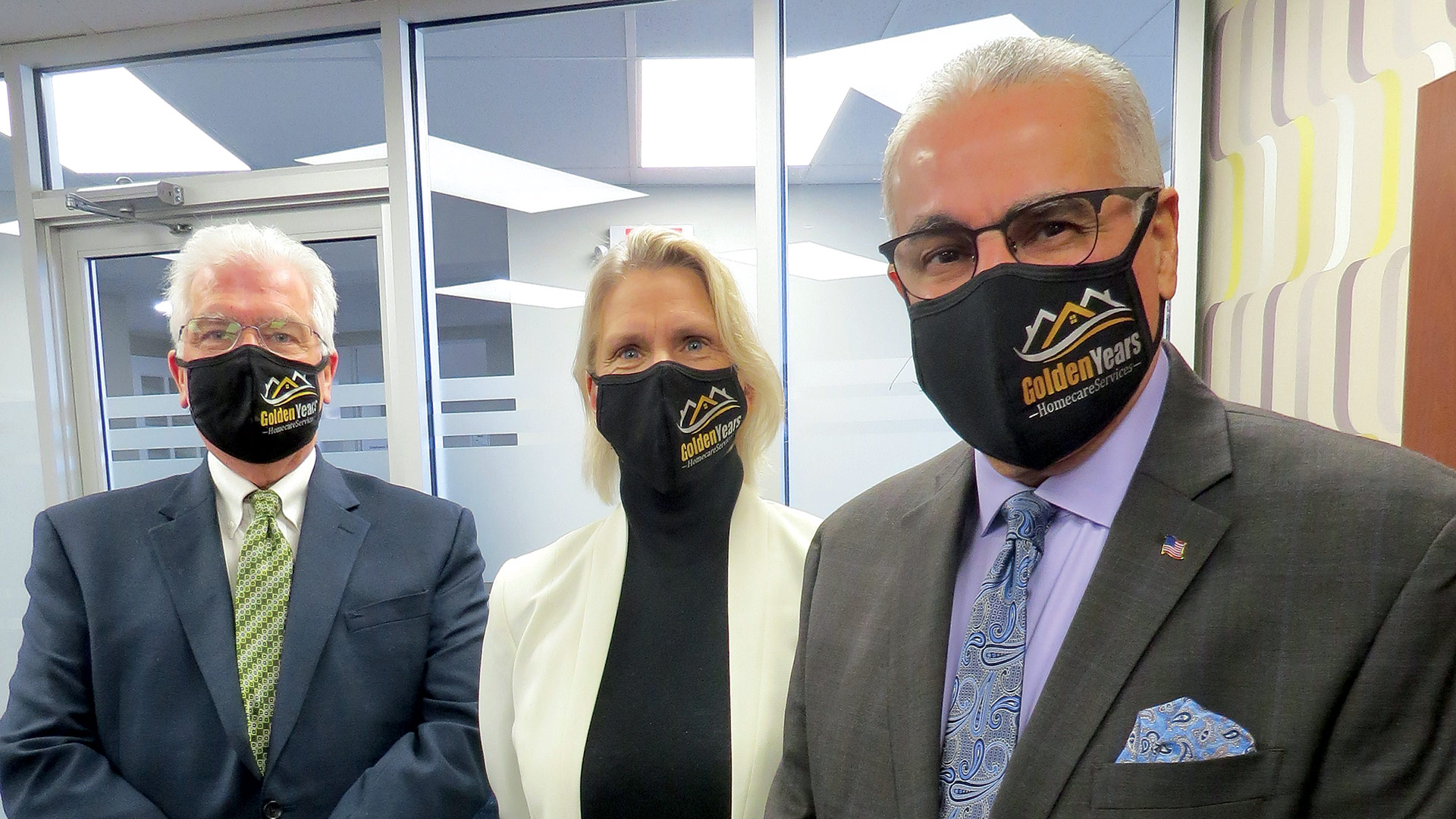
From left, Golden Years principals Brian Santaniello, Mary Flahive-Dickson, and Cesar Ruiz Jr.

From left, Golden Years principals Brian Santaniello, Mary Flahive-Dickson, and Cesar Ruiz Jr.

Cesar Ruiz Jr. describes the business plan for Golden Years Homecare Services as “a living, breathing document.”

That intriguing phrase was chosen to convey many things all at once — especially movement, flexibility, seemingly constant change, and a certain ambitious tone.

Indeed, while every business plan is fluid and most are written in pencil — figuratively speaking, anyway — this one has been altered countless times since it was first drafted more than eight years ago, and the new lines on the page reflect why Ruiz, the company’s president, and the entire leadership team at this East Longmeadow-based venture have been named Top Entrepreneur for 2020 by BusinessWest.

Indeed, since being launched in 2016, this company, which started with home-care services, has expanded in every way imaginable. That includes its geographic footprint — it has moved well beyond its Greater Springfield roots and into Central Mass. and Northern Conn., with a new satellite office in downtown Boston set to open later this year. It also includes services; sensing opportunities, the company has expanded into behavioral health and will soon open a staffing component as well. And with a planned acquisition that Ruiz said is now “on the 2-yard line” — which means he can’t talk about it in any real detail, as much as he would like to — Golden Years will expand the portfolio to skilled care in the home.

There’s also been seemingly constant expansion of the facilities in East Longmeadow, with a buildout now in progress for the staffing and behavioral-health pieces of this ever-changing puzzle. And, looking ahead, plans are taking shape to franchise some of the services, expand into many more states, and perhaps take the company public to raise the capital to fuel all this expansion.

“The exciting thing is that we’ve only scratched the surface.”

Like an artist’s canvas, Golden Years is taking shape — and changing shape — quickly and dramatically, with those holding the brushes not exactly sure what the picture will look like when they’re done — or what ‘done’ will mean.

“We’re beginning our fifth year of operation, and it’s said that when you hit that fifth year, that’s when you really lay down that foundation,” said Ruiz. “We have grown by leaps and bounds in terms of our census, not only with our clients, but also with our caregivers; overall, we’re an organization that’s now managing more than 1,000 people, including administrative, caregiver staff, and clients.

“And the exciting thing,” he went on, “is that we’ve only scratched the surface.”

Not even a global pandemic has been able to slow this company down.

The sign on the property in East Longmeadow’s center announced the arrival of the Golden Years Behavioral Health Group, one of many indicators of growth at this company.

The sign on the property in East Longmeadow’s center announced the arrival of the Golden Years Behavioral Health Group, one of many indicators of growth at this company.

OK, it did slow it down a little. Last spring, as the virus invaded the region, some of the company’s home-care clients became understandably concerned about bringing people into the home and canceled or suspended services, and some caregivers decided they no longer wanted to be in that line of work, said Mary Flahive-Dickson, the company’s chief operating officer and a 30-year healthcare veteran, adding that the virus also slowed the pace of expansion into the Central Mass. market.

But, ultimately, opinions concerning homecare during this pandemic changed, she said, adding that many came to view that option as being far more attractive than a nursing home or other types of long-term-care facility, places that saw outbreaks of the pandemic and, in some cases, large numbers of deaths.

This change in attitude is reflected in the growing numbers of clients in the Greater Springfield area, she said, adding that the census is now approaching and perhaps over the 500 mark, representing roughly 20% growth over the past year — again, in the middle of a pandemic.

“Having been in home care for more than two decades, and in healthcare for more than three, the home is far less of a risk, with the pandemic protocols that are going on now, than a facility,” she said, adding there is growing sentiment within the healthcare profession that this trend, or movement, if it can be called either, could have a degree of permanence, especially at a time when some are warning that COVID-19 will certainly not be the last deadly virus to threaten the world’s population.

Meanwhile, the pandemic and its impact on the overall mental health of area residents certainly played a role in propelling the company into the behavioral-health realm, said Ruiz.
Cesar Ruiz Jr. projects that Golden Years could again double in size

Cesar Ruiz Jr. projects that Golden Years could again double in size over the next five years as the venture expands into new markets and new service areas.

That division of the company, if you will, was launched roughly a year ago, but the pandemic has certainly elevated the level of need and validated the decision to again rewrite that business plan and move into this field.

“Even though there’s a lot of agencies in the behavioral-health realm, we still felt there was an opportunity for us,” said Ruiz, noting that this division provides an array of services, including alcohol- and drug-addiction services and counseling to frontline workers such as police and firefighters.

For this issue, BusinessWest talked with the principals of Golden Years about how far this company has come in five short years, and just what Ruiz meant when he said they had barely scratched the surface.


Shining Examples

“We don’t look at ourselves as competitors — that’s a word that we don’t use here. We’re creators — we create our niche. And we do that by telling our story and emphasizing our services.”

That’s what Ruiz told BusinessWest when we talked with him roughly 14 months ago. That was his answer to a question concerning the home-care market in the Greater Boston region (and this one, as well), the many players already on that field, if you will, and his thoughts on why he thought there was room for one more.

His reply speaks to the confident operating tone at this venture, and offers, all by itself, some insight into why the company’s principals have been chosen for the prestigious Top Entrepreneur award, launched in 1996, and join an elite group of honorees (see chart, page 19) that includes college and hospital presidents, tech-startup founders, and many others.

“Over dinner, we realized that we had the same thoughts of creating a company that would satisfy a recognized need. We thought we could do better; we knew we could do better.”

Indeed, at Golden Years, they do look for niches, they really enjoy telling their story (we’ll get to it in a minute), and they put the emphasis on services. And, as Ruiz said, they don’t view themselves as merely another competitor in whatever field they happen to be entering, but as creators … of opportunities and, yes, niches.

That was true in homecare and in staffing, and it’s also true in behavioral healthcare, as Tracy Mineo, executive vice president of Golden Years Behavioral Health Services, explained when she was asked essentially the same question Ruiz was asked — about the playing field and why Golden Years saw opportunity within it.

“There are a lot of fine agencies operating in this region,” she said, noting that she worked for many years at one of them — Behavioral Health Network. “But even the bigger agencies … there is only so much that they can handle, especially during this time of COVID, when people are isolating; the agencies can only take on so many clients.

“So I think there’s more than enough room for these services,” she went on, adding, again, in the same fashion that Ruiz and others talk about the home-care side, that it is not merely about which services are being provided, but how.

And this brings us back to the Golden Years story. There are several, but this one is about Ruiz and his grandmother, who became the real inspiration for this venture. She needed home care in Florida more than 15 years ago, and Ruiz recalled for BusinessWest not only how poor that care was (he said family members generally provided the care for her), but also his resolve to create something much better.

That something better would eventually become Golden Years. That’s eventually. The timing and the setting were not exactly right for a new venture back then, he recalled, adding quickly that, after he relocated to this region, and especially after his father died in late 2016, he picked up the dream where he had left off.

Partnering with Lisa and Vincent Santaniello, who had similar experiences with caring for loved ones in the home, he launched Golden Years in early 2017.

“Over dinner, we realized that we had the same thoughts of creating a company that would satisfy a recognized need,” he explained. “We thought we could do better; we knew we could do better.”

Lisa Santaniello, executive vice president of Golden Years Homecare Services, agreed, noting that, from her first-hand knowledge, she understands the importance of home-care services to those suffering from a chronic condition, a devastating injury, a debilitating illness, or even loneliness, and that such individuals would certainly benefit from companion services.
Mary Flahive-Dickson says the pandemic initially forced many to cancel or suspend home-care services.

Mary Flahive-Dickson says the pandemic initially forced many to cancel or suspend home-care services. But as time went on, many came to see the home as a safer alternative to nursing homes and other facilities.

“When chronic care is needed or a medical crisis occurs, I am very aware the entire extended family is affected along with the patient,” she told BusinessWest. “Lives are turned upside-down; schedules are disrupted. Sometimes, needed care is short-term; the patient will recover, and normalcy will be restored. Other times, health conditions are far more long-lasting, and improvement does not occur.

“My own mother suffered from a debilitating and chronic disease. She had the benefit of a large, extended family who could assist in coordinating care and provide the services she needed,” Santaniello went on. “Many people aren’t that fortunate; that’s where Golden Years comes in. We provide necessary home-care services to the patient, while also providing respite for their weary caretakers.”

Business was slow to start — Ruiz recalls that it was weeks after opening before the phone really started ringing — but it picked up quickly.

Flahive-Dickson, a long-time healthcare consultant and educator focusing on healthcare management, joined the company in 2019 to essentially take the home-care component to the next stage — or stages. These include expansion within this market and also into other regions, starting with Central Mass. She said her role has evolved over time and now includes elements of operations, development, and strategic planning.

Her comments about why she joined the venture speak volumes about the ambitious mindset that prevails and the entrepreneurial nature of the company.

“I saw a wonderful vision and a throwback to the way care was provided,” she explained. “My dad was a physician in the Springfield area, and his care was real and positive and forward-thinking care, and I felt that same feeling when I first came here.”


Showing Their Metal

While the home-care operation has become a regional success story, to be sure, there have been some growing pains, and the pandemic certainly created a number of challenges.

As for the growing pains, they involve everything from finding adequate numbers of caregivers — a challenge for every player in this business — to breaking into established markets with large numbers of competitors, like Worcester and Boston, and, to a lesser extent, Northern Connecticut.

Finding adequate numbers of caregivers has been a constant challenge, said all those we spoke with, but an array of factors, from what had been historically low unemployment rates to the pandemic-induced anxiety about going into others’ homes, to the company’s torrid pace of growth, has only exacerbated the problem.

And the company has responded in what can only be called an entrepreneurial way, with creation of its own education program and a collaborative initiative with the city of Springfield to help train young, homeless individuals and bring them into this profession.

Meanwhile, the pandemic has created more hurdles, said Ruiz, listing everything from those initial fears about bringing people into the home — he estimates that between 60 and 80 clients suspended service for some period of time last spring — to what to do with caregivers sidelined by those suspensions of services (they kept them on the payroll); from the need to secure PPE for staff and train them in how to use it, to paying what became exorbitantly high prices for that PPE.

Brian Santaniello, chief of staff at Golden Years

Brian Santaniello, chief of staff at Golden Years, says the pandemic, and its broad, negative impact on mental health, validated the company’s expansion into behavioral-health services.

“We were experiencing the same problem everyone else was encountering — where to buy it,” he recalled. “And if we could find it … it was a terrible experience; things that we were paying 30 cents for were now costing us $1.25 or $1.50. The N-95s that were costing us 95 cents or a dollar … we were now paying $4.50 to $6 per mask.”

Flahive-Dickson agreed, and said procuring the needed supplies became a “24-hour mission” that involved all those at the company. But elements of that experience were rewarding, and even uplifting, she went on, citing volunteer efforts to not only make masks for some of the home-care providers, but also donate supplies to other institutions that were having issues, as well as gift bags to seniors and veterans.

But despite the pandemic, and in some ways because of it, the company has been able to maintain its strong pace of growth.

As Flahive-Dickson noted, attitudes about bringing people into the home — at least when viewed through the lens of a nursing home or similar facility being the most logical alternative — have certainly changed.

“We were getting calls all the time — the phone was ringing off the hook,” she said. “People were taking their loved ones out of facilities and saying, ‘now I need help.’

“There are many reasons why the home is now a safer haven than a facility, with the most obvious being that, if you’re having someone being taken care in the home, you have less than a handful of people taking care of that person,” she went on. “It’s the same person or the same team, and they are fully equipped with PPE. And they see only that one person, rather than going from room to room to room.”

These changing perceptions, along with a contract with the Commonwealth Care Alliance, one if its largest providers, and a growing relationship with the Veterans Administration, should help the company as it now moves forward with its expansion into Central Mass. — it now has a small number of clients in the Worcester area and a satellite office in Marlboro — and also into Boston, with another satellite office to open soon on Cambridge Street, said Brian Santaniello, the company’s chief of staff and a stakeholder.

“One of our primary goals for 2021 is to expand in those markets,” he said, adding that the company has a toehold in Worcester and Northern Connecticut, and is still in the infancy stages of its push into Boston, but expects the market share to grow steadily in all three regions over the next few years.


Forward Thinking

Moving forward, Golden Years is advancing plans to provide home care in multiple states, and that’s just one component of a larger expansion strategy.

Indeed, Ruiz and his team are preparing to unveil a staffing component, and it has already launched its behavioral-health division, one that was, as noted, partly inspired by the pandemic and the dramatically rising need for behavioral- and mental-health services, and likewise driven by recognized need for such services among the home-care clientele.

Indeed, Ruiz estimated that at least 15% to 20% of the company’s 500 clients are receiving some type of counseling service. With their entrepreneurial mindset, the company’s leaders began asking the question, ‘are these services that we can and should provide ourselves?’

The answer that came back was a resounding ‘yes,’ he went on. “We didn’t want to leave anything on the table; this was an opportunity for us to provide these kinds of services to our existing clients.”

Previous Top Entrepreneurs

2019: Cinda Jones, president of W.D. Cowls Inc.
2018: Antonacci Family, owners of USA Hauling, GreatHorse, and Sonny’s Place
2017: Owners and managers of the Springfield Thunderbirds
2016: Paul Kozub, founder and president of V-One Vodka
2015: The D’Amour Family, founders of Big Y
2014: Delcie Bean, president of Paragus Strategic IT
2013: Tim Van Epps, president and CEO of Sandri LLC
2012: Rick Crews and Jim Brennan, franchisees of Doctors Express
2011: Heriberto Flores, director of the New England Farm Workers’ Council and Partners for Community
2010: Bob Bolduc, founder and CEO of Pride
• 2009: Holyoke Gas & Electric
• 2008: Arlene Kelly and Kim Sanborn, founders of Human Resource Solutions and Convergent Solutions Inc.
• 2007: John Maybury, president of Maybury Material Handling
• 2006: Rocco, Jim, and Jayson Falcone, principals of Rocky’s Hardware Stores and Falcone Retail Properties
• 2005: James (Jeb) Balise, president of Balise Motor Sales
2004: Craig Melin, then-president and CEO of Cooley Dickinson Hospital
• 2003: Tony Dolphin, president of Springboard Technologies
• 2002: Timm Tobin, then-president of Tobin Systems Inc.
• 2001: Dan Kelley, then-president of Equal Access Partners
• 2000: Jim Ross, Doug Brown, and Richard DiGeronimo, then-principals of Concourse Communications
• 1999: Andrew Scibelli, then-president of Springfield Technical Community College
• 1998: Eric Suher, president of E.S. Sports
• 1997: Peter Rosskothen and Larry Perreault, then-co-owners of the Log Cabin Banquet and Meeting House
• 1996: David Epstein, president and co-founder of JavaNet and the JavaNet Café

Santaniello agreed. “This pandemic is having a tremendous negative impact on mental health and drug addiction, and we see the need,” he said. “And we’re going to meet that need.”

The company hired Mineo and also Deborah Rodrigues, now the clinical director, and gave them equity stakes in the venture.

Mineo, as noted earlier, said there is clearly unmet need in the region that this new division will meet. And the division is starting with outpatient services, including addiction, mental-health, and behavioral-health services for those 18 and over, with priority populations being seniors, pregnant and postpartum women, IV drug users, and first responders, a constituency that has been traditionally been underserved, in her view.

“We had identified that there are so many services going on in the community, including our local police departments, but no one is really providing services for our first responders,” she explained. “This includes the police officers, the EMTs, the fire departments that are right on the front line.

“With this pandemic, the civil unrest that’s going on, and everything else … all this is traumatizing and retraumatizing people on a daily basis,” she went on. “This is an unmet need in the community.”

As for that acquisition that was on the 2-yard line and that the team couldn’t talk much about, Flahive-Dickson, who likened it to a VNA, said it will broaden the client portfolio by 150 or so, add to the staff, obviously, and broaden the roster of services provided in the home.

“It’s home healthcare, not home care,” she explained, adding that this will be an important addition to the portfolio, one that provides both synergies and growth opportunities.

Looking further out, Ruiz, when asked where he expects this company to be in five years, said he expects to continue the current pace and effectively double in size. He also expects to be in many more states and possibly have franchises of the Golden Years operation — or operations, to be more exact.

That expansion will come in a number of forms, he went on, listing both organic growth and additional acquisitions, with the latter becoming more feasible, and practical, as many smaller ventures, many of them operated by Baby Boomers approaching retirement, face succession issues and other challenges.

“On the home-care front, some of the individuals that have started now want to step back,” he explained. “And because of our vision, we have a larger appetite.”

Meanwhile, Ruiz and other company leaders are in the exploratory phases of perhaps franchising the concept and even going public, to provide the capital for such steps.

“Franchising is part of our thought process; it’s part of our business plan,” he noted. “And there’s also a public initiative. Those conversations have been ongoing, and now, in 2021, they will escalate, because those things take time to structure.”

Elaborating, he said the company has hired a CPA firm and a legal team with those plans in mind and with the goal of being ready when the time and opportunity are right to move quickly and decisively.

And, in many important ways, that has been the MO from the very start.


Good as Gold

When asked to sum up what has enabled Golden Years to get off to such a fast and dramatic start, Ruiz said it comes down to two words: culture and teamwork.

The culture rests in an attitude Ruiz has instilled, one where he treats each client as if the individual was his mother or father — a culture that has resonated with Flahive-Dickson, Mineo, and others who have joined the company.

“We’ve communicated that throughout the system — we’ve built it in,” he explained. “And I think that makes a big difference. We’re hands-on, and every caregiver knows, every admin, every director here knows, how passionate I am and how serious I am; this is the collaboration of a team.”

It’s also the byproduct of an ambitious, ever-changing business plan, one that really is a living, breathing document.


George O’Brien can be reached at [email protected]

Coronavirus Features Special Coverage

Impact Statements

Jeanette Wilburn (left) and Stephanie Nascimento

Jeanette Wilburn (left) and Stephanie Nascimento say the pandemic has increased people’s anxiety — and the need for self-care.

Stephanie Nascimento and Jeanette Wilburn have long explored the connections between physical and emotional health at their decade-old practice, Be Vital Wellness. These days, they say, with so much anxiety gripping Americans, it’s more critical than ever to understand those connections.

“Obviously, mental illness has always been a crisis, but it’s at an all-time high now,” Nascimento said. “We spend a lot of time digging with our clients. They don’t always walk in the door and say, ‘I’m depressed.’”

In fact, the Hadley-based business began as a weight-loss and nutrition enterprise, and that’s still a major part of it. But Wilburn said it’s gratifying when clients begin to understand how their choices and circumstances affect them in ways they’ve never considered.

“Sometimes people don’t even know they’re depressed; they don’t know they’re anxious,” she explained. “They just know that they can’t fall asleep, or they can’t stay asleep, or they wake up at 3 o’clock in the morning. A lot of people call it ‘busy brain,’ but they don’t realize that’s actually anxiety. I liken it to a hamster on a wheel, and the hamster is going way too fast. You need to either slow down the wheel or get the hamster off the wheel altogether.”

The problem is, almost a year of living with the COVID-19 pandemic, and its impacts on physical and mental health, relationships, and finances, has only cranked the wheel faster, and too many people are coping with unhealthy habits like overeating and alcohol abuse.

“ I liken it to a hamster on a wheel, and the hamster is going way too fast. You need to either slow down the wheel or get the hamster off the wheel altogether.”

“Those bad habits were there before COVID — then the pandemic arrived,” Nascimento said. “There’s so much fear, not to mention people’s whole lives are changing. Kids are home from school, parents are trying to be teachers while also working and managing Zoom calls … there’s been a lot of stress on families. We’ve had clients who were managing well, but are now struggling to maintain good habits.”

Kristy Navarro, clinical supervisor for BestLife Emotional Health & Wellness Center, a program of MHA, said the causes of increased anxiety are easy to understand.

“A lot of it is the stress people are going through financially. People have had to close down businesses they owned and lost all their income. So that produces this feeling of anxiety — ‘where am I going to get the money to pay my bills? How am I going to stay in my house? I wasn’t in debt, and now I am, so how am I going to do this?’”

That anxiety can manifest in different ways, she added.

Alane Burgess (left) and Kristy Navarro

Alane Burgess (left) and Kristy Navarro say the first step to dealing with anxiety and mental-health stresses is talking about them.

“It can be physical — the shaking, the heart pounding, sweating. It can look like avoidance — maybe not checking your mail or not going outside. It’s not just being worried, but genuine fear. Fear and feeling worried are two different things.”

Dr. Mark Kenton says healthcare workers have been feeling anxious, to varying degrees, since the start of the pandemic.

“The anxiety, depression, and worry all got heightened,” he said, especially in the early days last winter, when so little was known about coronavirus, and news media reported on soaring death counts in places like New York City. “It made you think, ‘if I get this, am I going to die?’ You think of the worst-case scenario. Healthcare providers had that anxiety, and a lot of us had to find ways to get through.”

These days, as the pandemic wears on, Kenton, an emergency medicine physician at Mercy Medical Center, still worries about such issues — and not just for providers.

“I’m definitely worried about healthcare providers getting exhausted or getting sick, but also the mental health of patients, and especially the mental health of children who have to do this remote schooling for a year and a half. What is the actual impact on children going forward?”

It’s a question being asked across the U.S., and it has no one-size-fits-all answer. But the overwhelming sentiment BusinessWest heard from health and wellness experts in the region is this: help is available. Don’t be afraid to ask for it.


Take Control — but Know When to Let Go

Navarro said much of the anxiety and depression related to the pandemic has to do with isolation — and not just physical isolation.

“We’re asking people to physically isolate,” Navarro said. “What’s more concerning is when we emotionally disconnect from people — the inability to reach out, or to get the support we need when we feel we need it.”

Kenton agreed. “Our lives have been completely turned upside-down. We’re supposed to be social beings; that’s part of our underlying nature. Now everyone has lost that element. We have elderly people who have been completely isolated and haven’t seen loved ones since March.”

It doesn’t help that many things people like to do to escape from their troubles — and get some exercise — have been eliminated or limited.

Dr. Mark Kenton

Dr. Mark Kenton

“Our lives have been completely turned upside-down. We’re supposed to be social beings; that’s part of our underlying nature. Now everyone has lost that element.”

“They gain weight, they don’t eat well, they get depressed or drink more alcohol. It’s a vicious cycle,” he said. “We already have difficult winters in the Northeast, between the snow and the cold; we can’t do much of anything, and now we’re completely isolated at home. We can’t even take a trip to Florida with the family for a week to get away from the cold weather.”

That said, many activities are still possible, Navarro said.

“What is it you like to do? If we’re able to continue to do those things that we enjoy doing, we can feel better,” she explained. “And also, what in this situation can you control? We know that COVID is out of our control. So, what is it that you can control in that context? Maybe the only thing you can control is wearing your mask outside and not being around other people. So control that piece, and have ownership over what you are able to do.”

Alane Burgess, clinic director at BestLife, tells clients to take some time every single day — even if it’s just 10 minutes, although 30 minutes would be better — to “relax and rejuvenate.”

“That means, allow yourself to take that step back from everything that’s going on — all the fears, the worries, and the anxieties — and do something that makes you feel really good about yourself. Maybe it’s a hobby or activity, or doing a teleconference with a family member or a loved one or somebody who is really going to make you feel good about yourself. That way, you can focus on the good feelings that some people are losing in the midst of the isolation and all the things in our lives that we can’t control.”

Wilburn promotes mindfulness, meditation, healthy eating, and a host of other ways in which people have the power to change their health and mindset — and, again, she’s a believer in the two being intertwined holistically. At a time when the world presents so many reasons to be anxious — and, if you read the news these days, it’s not just COVID-19 — she wants to teach people self-care.

“We don’t know about that as Americans,” Nascimento added. “Or we think it’s selfish. ‘Push harder, push harder, don’t take vacations.’ We’re teaching people you can work hard, but your play should be self-care — taking a long walk, getting body work done, taking five minutes to meditate.”

It’s important, Wilburn noted, because, even in better times, Americans too often live in fight-or-flight mode.

“Our nervous systems think we’re running away from a tiger, which means we’re not properly digesting our food, our heart rate doesn’t come down, and we’re not sleeping as well, because if you’re running away from a tiger, why would you be sleeping?”

She and Nascimento say people need to be educated on why it’s important to step back and take time for their own needs — but they also often need permission, especially men, who are quicker than women to dismiss the need for self-care. They’ll find that encouragement at Be Vital Wellness.

“They think, ‘I’m tough; I just need to tough this out,’” Wilburn said. “Women are better at it, but everyone needs permission.”


Don’t Ignore the Signs

While mental-health concerns have certainly been at the forefront lately, Kenton said it’s also important not to neglect physical health, especially when symptoms of serious problems arise.

“Looking back to March and April, we shut everything down and told patients that, unless they absolutely need to be in the Emergency Department, do not come,” he explained, noting that many patients use the ER as primary care because they lack a primary-care provider or health insurance. “We saw the wave in New York, then Boston, and we didn’t know what we were in for, so the message was, don’t come to the ER unless you’re sick.”

It worked — Mercy’s ER traffic fell from a daily average of around 225 to 110, with a low point of 72. And that caused concerns of a different kind.

“Before long, we were all wondering, where did the appendicitis go? Where did the heart attacks go? We started to worry that patients with symptoms were staying home, or coming in after four days of symptoms, and by then it’s really bad.”

By summer, ER volumes gradually rose again, but many patients still feared coming to the hospital — and still do — despite the safety measures in place to separate COVID-19 patients from those who have not been exposed. With elective surgeries being curtailed again and patients having trouble seeing their primary-care doctors in person — though telehealth is better than nothing — “there are a lot of challenges for patients trying to navigate the healthcare system right now,” Kenton said.

The challenges for kids and teenagers, on the other hand, have resided almost completely in the realm of mental and emotional health.

“We’re definitely seeing the impact on children,” Navarro said. “I’ve heard a lot of parents say to me, ‘my child is failing all their classes. They can’t concentrate.’ I’ve had children I work with talk about how there’s just too much, there’s not a break, there’s not a way to leave a home that maybe is having some turmoil — not being able to get a break from all that. They’re not going to school and having any socialization with friends. Yes, they see them through Zoom, but they’re not able to have those close conversations, the play time, those moments of friendship.”

One key, she said, is to keep kids connected, somehow, to other people, even if it’s just family, and don’t let them suffer in silence.

“I tell parents all the time, ‘talk to them. Have those conversations. Talk to them about what is going on, how they can cope with their feelings in an age-appropriate way.’”

For anyone struggling in any way — adults or children — it can be helpful to seek professional help. “Even with the smallest amount of anxiety, it does not hurt to talk to someone, whether it’s a professional or a friend or family member you trust,” Navarro said. “To talk about our feelings helps us gain control over them. Just talk to someone.”

MHA launched a program a couple of years ago called “Start Talking,” which promoted the importance of starting a conversation on mental-health concerns.

“Sometimes, when we just start talking to someone we trust — or, for some people, it may be a stranger they feel most comfortable talking to — when we start having a dialogue, we see how many things start coming up,” Burgess said, adding that holding these feelings in often causes them to fester and build, compounding anxiety and depression in the long run.

“People ask every day, ‘how are you?’” Navarro noted. “But when do you actually have the opportunity to tell someone how you really are? What do we usually say? ‘I’m good. Things are fine.’ But are they really?”

Most people have no problem talking about their physical pain — an aching back, for example — but feel stigmatized when it comes to discussing their emotional wellness, Burgess added. But if there was ever a time to push past that barrier, the era of COVID-19 is it.

“Every single person in the world is being impacted by this on some level. This is something we’re all collaboratively experiencing and going through — at different degrees for different people, of course. So, how do we manage a continuation of something many of us thought would end in April?”

Talking about it, she said, is a good place to begin.

With social-distancing regulations in place, telehealth has been a tremendous help for providers and clients in her field, she added, as it has helped clients continue critical conversations. One patient even kept an appointment while on vacation in Aruba because she didn’t want to miss one.

“I’m grateful for the ability to provide services this way,” Navarro added. “If we weren’t, it would be a very difficult world.”


Journey to Wellness

Many clients at Be Vital Wellness are folks who deal with crisis every day — firefighters, police officers, doctors, nurses, EMTs — and who have grappled with their own rising anxiety and depression during an unprecedented year.

“PTSD is definitely a thing for anyone in crisis care. They often don’t realize there are other options besides pharmaceuticals, and that they can increase their quality of life, decrease their stress, and decrease their anxiety,” Wilburn said, although she and Nascimento encourage clients to see their primary-care doctors regularly too, as part of a network of treatment.

“I feel like, in America, most people have depression or anxiety or both, and COVID has only upped the ante on all those things,” Wilburn noted. “People who previously didn’t struggle with those things are struggling with those things. I just saw a woman this morning — she’s dealing with severe depression, and we’re talking about getting into therapy.

“We’re not a one-stop shop,” she added. “People come to us and say, ‘help me with my weight loss,’ but then they realize there are a lot of other things they can get support around, and it becomes truly wellness.”

In this unsettled time, that’s a goal worth striving for — and talking about.


Joseph Bednar can be reached at [email protected]


Banking and Financial Services Special Coverage

They’re Still Goal-oriented

Dan Moriarty, left, and Mike Rouette.

Dan Moriarty, left, and Mike Rouette.

Michael Rouette says he keeps a copy of the 36-year-old news story in his office. He’ll take it out and read it on occasion, and will proudly show it others, usually without much prompting.

“Moriarty-Rouette Team Buys Ticket to Finals” is the headline over that item in the Palmer Journal Register from November 1984, which goes on to note how goals by Rouette, then a junior, and Dan Moriarty, a freshman, along with a “tenacious defense,” propelled the Monson High School soccer team to a 2-1 win over Monument Mountain, giving the Mustangs, as that headline noted, a ticket to the regional finals in Chicopee a few days later.

Today, the Moriarty-Rouette team is still focused on goals, but now as president and executive vice president and chief operating officer (a new position), respectively, at Monson Savings Bank. They are the leaders writing the next chapter in the bank’s history after the retirement of long-term president Steve Lowell.

As the two talked with BusinessWest earlier this month, just weeks before Moriarty was to add the title CEO to his business card (Lowell is still acting in that capacity until mid-February), they talked often about their time on various fields together — they were both three-sport stars — and made frequent use of sports terms and phrases.

Indeed, when talking about the transition in leadership at the top and work to make it seamless, Moriarty said he will try to act as a good referee would — “you don’t know he’s on the field during the game.” And the two of them made early and very frequent references to the importance of teamwork at this (and any) institution.

Meanwhile, when it comes to the pandemic and this transition in leadership, both said there is no playbook for a such a challenging passing of the baton, so they will essentially write their own.

“We’re driven, we’re motivated, but we’re humble enough to know that teamwork gets you further than individual performance.”

“As far as meeting with customers and being out in the community more, Mike and I haven’t had the opportunity to really do that, for safety reasons,” Moriarty said. “And that makes things more difficult, but we’re adjusting and preparing for that day when this is over.”

As for that article, both men say it conveys more than coincidence that two high-school soccer teammates, now in their 50s, are leading the bank headquartered in the town where they grew up. Much more. They say it conveys other ‘C’ words, including commitment to the community and continuity.

“That article reminds me of who we are and where we’re from, and not to ever forget that,” Rouette said. “But it also speaks to how we’ve grown as individuals, as friends, as co-workers, as partners, and as leaders. That article symbolizes how our lives have changed but really haven’t changed, and how success can be built on people who have the same vision, the same mindset, and the same family values.”

Moriarty concurred. “We’ve known each other for so long, but the values are the same, even though we’re a long way from the soccer field. “We’re driven, we’re motivated, but we’re humble enough to know that teamwork gets you further than individual performance; we try to bring that culture to the bank and to our employees, and we try to lead by example. But we also understand that each individual in the bank is a contributor, and we want them to be part of the team and the success of the bank. We did that before we became leaders of the bank, and we’re just going to continue that and build on that culture of teamwork.”

The two take on their new roles at an intriguing time for the bank — and all banks. The pandemic has created both challenges and opportunities — certainly more of the former than the latter, and made some aspects of being a bank leader more difficult. Meanwhile, there is immense competition in a region described by most in the industry as ‘overbanked.’

Monson Savings’ newest branch, on North Main Street in East Longmeadow

Monson Savings’ newest branch, on North Main Street in East Longmeadow, was opened at the height of the pandemic last year, but it is nonetheless off to a solid start.

Both Moriarity and Rouette said that Monson Savings, now with more than $508 million in assets, has been on a steady growth trajectory and they are committed to moving the bank toward further expansion, geographically and otherwise.


They’re on the Ball

As noted earlier, Moriarty and Rouette were both three-sport athletes. While most noted for their exploits on their soccer field — both would go to play in college; Moriarty at Providence College and Rouette at Old Dominion — they were also teammates in baseball and basketball.

And as they recalled those days, they often leaned on some self-deprecating humor to make their points.

Indeed, when discussing their time as starting guards (and captains) on the hardwood, they made it clear they were not exactly go-to options when the Mustangs were looking for points.

“I was the point guard, and I couldn’t shoot,” said Moriarty, as he looked at Rouette, who nodded energetically, but said his front-court mate was ultimately the better alternative.

“I was pretty fast … I could steal the ball, but I could only dribble left-handed,” Rouette recalled. “I would have a breakaway, and our coach, Bill Devine, would essentially tell me to stop, hand the ball to Moriarty, and let him shoot it, because it would be like throwing a brick against the backboard when I let it go. I couldn’t put the ball in the ocean.”

Despite those references, the two were much-heralded for their exploits on various fields, and for their work together, even if it was only for two years.

Indeed, while Moriarty continued to make headlines at Monson High in the mid-’80s, Rouette was playing soccer at Old Dominion, majoring in Economics, and, when home from school in the summer and winter, working as a teller at Monson Savings Bank. During those short stints, he impressed those at the bank enough to get a job offer of sorts — specifically an invitation to become part of the lending team when he graduated.

“When I was a junior at Old Dominion, I already knew where I was heading,” he said, adding that he did join the bank and has been there ever since.

Moriarty, who would take a far more circuitous route to his hometown bank, has memories of seeing Rouette heading for a work in a suit while he was toiling for the town’s Highway Department while he was home from college for the summer. “It’s 95 degrees out, Michael’s going to work in a tie, and I’m thinking, ‘I want to work in air conditioning.’”

He would, first at Coopers & Lybrand in Hartford, and later at Aetna, HealthSouth, and then Unicare.

“But the attraction to Monson Savings was always in the back of my mind,” he recalled, adding that, during some conversations with Rouette, he brought up the possibility of joining the bank, and eventually did so in 1998 as an accounting manager.

The two have risen in the ranks over the years, with Rouette rising to senior vice president and chief lending officer, and Moriarty eventually climbing to senior vice president and chief financial officer in 2011.

When Lowell announced his intentions to retire not quite a year ago, both men sought to succeed him as president and CEO. Those titles would eventually go to Moriarty, but the two essentially form a new leadership team, one that brings complementary strengths and shared values.

Moriarty noted that, through his career at the bank, he’s been focused on the finance side of the equation, while Rouette has concentrated on lending and customer relationships, and, in his new role, will add retail to his list of responsibilities.

“Mike is very customer-focused, while I have somewhat different responsibilities — strategy, human resources, finance, marketing, compliance, and technology,” said Moriarty. “I think the bank is positioned to use our strengths in a proper way.”


Net Results

All this prompts more flashbacks, and the inevitable analogies, to 1984 and that soccer semifinal against Monument Mountain, where Moriarty notched the first goal of the game, and Rouette, then the all-time scoring leader for the Mustangs, recorded the game clincher.

As for the finals game … that did not go as well — a loss to an undefeated Wahconah team that still stings three and half decades later. (Moriarty wasn’t able to play in that contest due to a broken ankle he suffered in the semifinal.)

But while they do like to look back, Moriarty and Rouette are obviously far more focused on the present and the future.

As for the former, that means everything from coping with the many aspects of COVID-19 to growing the bank’s latest branch, on North Main Street in East Longmeadow, which opened last summer, in the middle of the pandemic.

That timing wasn’t perfect — many branch lobbies were still closed — but the new facility is off to a solid start.

“We had a good core group of customers in Longmeadow and East Longmeadow,” Moriarty said. “We transitioned them internally to the East Longmeadow branch, so we had a good start, and we’re looking to have that branch in a good position in a shorter period than you normally would in a new market.”

As for the pandemic itself, it’s been a time for the bank to play to its strengths — yes, that’s still another sports phrase — and use its focus on customer service to not only take care of (and retain) existing customers, but also gain some new ones. This has been the case on all fronts, but especially with the commercial lending portfolio and the bank’s strong track record handling applications for Paycheck Protection Plan (PPP) loans.

“We basically got out in front of it,” said Rouette as he explained the bank’s basic strategy with the PPP program and its commercial customers in general. “We knew that that they [customers] couldn’t be chasing us. We had a great team effort to reach out to all our business customers; we said, ‘we know there’s an issue, we know PPP is coming down the road, and when the spigot opens, we’ll be there for you.’ And we did it.

“People needed to hear your voice,” he went on, adding that every commercial customer was called in an effort to gauge their needs and concerns and update them on the status of their application. “And that calmed people, that they weren’t on voice mail or weren’t able to get through.”

This high level of customer service enabled the bank to handle PPP loans for non-customers, gains that both Moriarty and Rouette chalked up to word-of-mouth referrals that should have some long-term benefits for the institution as a new round of the program begins later this month.

Dan Moriarty, left, and Mike Rouette both found a common denominator

Dan Moriarty, left, and Mike Rouette both found a common denominator between their soccer squad from the ‘80s and the staff at Monson Savings — the importance of solid teamwork.

Looking back, and ahead, Moriarty said he was mentored by his two immediate predecessors, Lowell and Roland Desrochers, and he understands what has made the bank successful — especially its employees and community-bank look, feel, and operating values — and has no intention of altering the game plan.

“The vision for the bank is to continue to be the community bank that these communities need,” he told BusinessWest. “From a business side, commercial customers as well as retail customers, we want to stay competitive in our delivery systems — digital, mobile … we can have people bank with us from Monson to the Cape and into Connecticut. We want to be relevant in the communities we serve for not just today, but for years to come.

“The culture will remain the same,” he went on. “And we’re just going to leverage the talent we have inside the bank.”

Meanwhile, both men intend to continue their active involvement in the community, which mirrors the work of Lowell, Desrochers, and others that came before them. This work comes in many forms, with Moriarty devoting time and energy to several groups, including the East of the River Chamber of Commerce (he’s a board member), the Baystate Health Community Benefits Advisory Council, the Community Foundation of Western Massachusetts, the Brightside Golf Classic, and Monson High School, where he’s the assistant varsity soccer coach.

As for Rouette, he is similarly involved, but focuses most of his time on the YMCA of Greater Springfield, with which the bank has long enjoyed close ties. “Everyone has a passion, and that’s mine,” he said, adding that he’s been a long-time board member and supporter on many levels.


Bottom Line

Summoning still another sports analogy of sorts, Moriarty said it is customary, at least with good teams, to look ahead, not back, when a season ends.

“Because it’s January, we say, ‘last season’s over … we finished December, we did well, but now it’s 0-0, and we’ve got a new season ahead of us,’” he noted, adding that, given the many variables confronting banks — and all businesses, for that matter — it’s impossible to know how this new season will go.

What these two do know is that Monson Savings Bank will, as noted, continue to play to its strengths, honed over many years and under leaders that these two have learned from.

In short, there’s a winning formula at the bank, and their only real plans for the future are to continue using it.


George O’Brien can be reached at [email protected]

 

Construction Special Coverage

Space Jam

By Mark Morris

Nick Riley

Nick Riley says he had to reschedule in-home jobs at the start of the pandemic until he could figure out how to do them safely.

For home builders in Western Mass., 2020 brought opportunity and challenge in equal measure.

For example, Nick Riley, owner of N. Riley Construction, said 2020 was his best year based on the number of projects, but COVID-19 posed obstacles to nearly all facets of the job. In fact, when the pandemic first arrived, he rescheduled all his in-home projects until he could learn how to safely do those jobs.

“We were fortunate that we had several new construction projects that kept us working until we could figure out the right way to get our in-home jobs done,” Riley said.

Other home builders shared similar stories of adjusting to a new reality on the fly.

When many industries were mandated to stop working back in March, home builders were deemed an essential business by Gov. Charlie Baker’s administration. That was the right call, said Bill Laplante, president of Laplante Construction. “We had projects with critical work that needed to be completed so people, in some cases, could get back into their homes.”

“We had to postpone jobs like kitchen renovations where people were still trying to live in the space we were working on.”

The builders who spoke with BusinessWest all construct new houses as well as additions and renovations to existing homes. On balance, they say, renovations and additions account for more business than new home construction.

“Most of the calls we get are from people who want to stay where they are, so many of them are looking to build additions or do a renovation,” said A.J. Crane, partner at A. Crane Construction.

Of course, staying put became nearly universal as COVID-19 mandates resulted in many people working from home. Even those who continued to work at their place of business found themselves at home more often because so many recreational activities and destinations had been curtailed or shut down.

And that posed opportunity for builders. As Laplante observed, the more time people spend at home, the more looking around they do. “They start thinking about adding a room or renovating part of the house to make their space more comfortable.”

In the age of COVID, that means builders must approach job sites differently than in the past. For starters, more people — both adults and children — are likely to be at home while the work is getting done. While workers follow screening protocols before going into the home and wear PPE once there, Laplante instructs his crews to isolate the work area from the residents as much as possible. That’s easy to do for additions and outside renovations, but some work is just more intrusive.

“We had to postpone jobs like kitchen renovations where people were still trying to live in the space we were working on,” he said, adding that other projects were pushed off because customers were simply not yet comfortable with outside workers in their homes during the pandemic.

But enough homeowners were OK with their presence to generate a successful, if unusual, year for the home-building and renovation industry.


Slow-building Issues

Keeping work crews and homeowners safe was only one challenge builders faced due to COVID-19. In a normal year, the process of getting a permit for a new home or addition is fairly straightforward. Builders bring plans to the appropriate municipal office and pick up the permit a week or two later. As COVID-19 shifted city and town business to e-mails and Zoom calls, it delayed the permitting process — in some cases, for months.

“When you go down the street to the local lumber yard to pick up a pressure-treated two-by-four and they don’t have any, it throws you for a loop.”

Meanwhile, supply-chain shortages of common consumer goods such as toilet paper and cleaning products marked the early days of the pandemic. The manufacturing supply chain around the world was disrupted for many building products as well. Riley said appliances and electrical components such as circuit breakers were often delayed by as much as three or four months. As another example, Crane learned that window companies were having trouble getting glass.

“As a result, we were only getting three-fourths of the windows we ordered for a job,” he said. “This created a delay that frustrates the homeowner and puts a big dent into our profit margin.”

In short, COVID-19 kept people at home, they wanted to improve their space, creating high demand for building materials at a time when many manufacturers were already experiencing delays due to the coronavirus, resulting in shortages. And in the wake of those delays, price increases followed.

Andy Crane

Andy Crane says he wants to present a home show this year, but only if he can do so safely.

“We saw a 45% spike in the cost of building materials,” Laplante said. “That was difficult to deal with because we had jobs that were already under contract.”

Shortages of special-order or custom materials were no surprise to the builders, but everyday items were affected, too.

“When you go down the street to the local lumber yard to pick up a pressure-treated two-by-four and they don’t have any, it throws you for a loop,” Crane said.

While they acknowledge that delays, shortages, and price hikes will be here for the near term, all three builders are optimistic about 2021. Because mortgage interest rates remain at historic lows, Riley does not expect a slowdown anytime soon. “For 2021, our company is operating full steam ahead for both new construction and remodeling projects.”

“I know a lot of folks who switched to remote work, and they are not going back into the office. I believe people working from home or their vacation home will continue into the foreseeable future.”

One challenge going forward, he noted, is finding property in Western Mass. to purchase at a reasonable price where he can make a profit on new construction.

For 2021, Laplante has plenty of new construction and renovation projects in the pipeline both in Western Mass. and on Cape Cod, where he recently opened a satellite office.

“We’ve always done work on the Cape, but this is the first year we made it official with an office,” he told BusinessWest. “We’re seeing a tremendous amount of activity and opportunity there.”

Expanding to Cape Cod is a bet Laplante is willing to make because he believes that the pandemic has severely shifted consumer trends. As he sees it, the people who would have sought out exotic travel to places like Europe are now spending their money on their home or investing in a vacation home close to where they live.


On with the Show?

For 66 years, hundreds of home projects started with a tour of the Western Mass Home and Garden Show held in late March on the Big E fairgrounds. In 2020, the show was canceled for the first time in its history as the initial wave of COVID-19 swept across Massachusetts just before the event.

Will there be a show in 2021? Andrew Crane, executive director of the Home Builders and Remodelers Assoc. of Western Massachusetts, faces a common dilemma in this time of COVID-19: there is plenty of interest in holding the show, but no one knows if conditions will allow it to take place.

“When things clear up and people can safely go out and stay healthy, we will run a home show, and not until then,” he said. At the same time, his organization, which runs the home show, has nearly sold out all available booths.

“We don’t even have dates for when the home show will happen, but I sold two booths this week,” Crane said, noting that his members are involved in nearly all areas of home improvements. As most of them had success in 2020, they would like to keep the momentum going this year.

Bill Laplante

Bill Laplante says the more time people spend at home, the more they think about how to improve their homes.

When BusinessWest spoke with vendors in preparation for last year’s event, several said a key strength of the home show was the opportunity for people and contractors to speak with each other, as well as the ability to see and touch the latest products in home improvements.

Plexiglass dividers, one-way aisles, and mandatory mask wearing are among the different ways Crane and his staff are looking to configure this year’s show. He doesn’t want a situation, however, in which a member pays for an expensive booth only to allow one person at a time to visit.

“That’s not fair to the vendor or the people attending the show,” he said. “It’s not even fair to the folks who just drop by a booth to take the candy.”

Because planning events is so difficult these days, Crane continues to move forward in planning the home show, but understands that nothing is certain. “There’s a light at the end of the tunnel, but we don’t know if it’s a freight train or if it’s the vaccine coming to solve our problems.”

Even with an effective vaccination rollout, Laplante predicts the home-building industry will continue to thrive locally. In addition to new construction, he has several whole-house renovations in the works — projects in which an existing house is torn down and a new one is built on the same lot. With many projects in the pipeline, Laplante believes people have changed their behavior long-term, and the home will continue to be a focal point long after COVID-19 is under control.

“I know a lot of folks who switched to remote work, and they are not going back into the office,” he said. “I believe people working from home or their vacation home will continue into the foreseeable future.”

Community Spotlight Special Coverage

Community Spotlight

By Mark Morris

For MJ Adams, 2020 felt like someone had pushed a ‘pause’ button.

Adams, director of Community and Economic Development for the city of Greenfield, had taken part in a dynamic public forum early in the year titled “A Deliberate Downtown” that focused on revitalization plans for Greenfield.

Then the pandemic hit. And when it became clear the pause would last for more than a few weeks, she and her staff shifted their focus.

“We knew there was going to be an immediate cash-flow problem for local businesses, so we moved quickly to develop a small-business assistance program to provide micro-enterprise grants,” Adams said.

Working with other Franklin County towns, Greenfield pooled its available block-grant funds with those from Montague, Shelburne, and Buckland.

“Because small businesses are such a critical piece of the economy in Greenfield and Franklin County, we worked together to quickly design a program that didn’t exist before,” Adams said. “The micro-enterprise grants provided a cash source for small businesses until they were able to access funds from the federal Paycheck Protection Program.”

On the public-health side of the pandemic, Mayor Roxann Wedegartner credited the emergency-management team in Greenfield for their early and quick action.

“We were one of the first communities in the state to attempt to manage the public-health side of COVID-19 from the get-go,” she said, adding that her team also set up contact tracing early in the pandemic. The John Zon Community Center has served as an emergency-command area for COVID testing for Greenfield and surrounding communities. First responders are now able to receive COVID-19 vaccinations at the facility.

Greenfield Mayor Roxann Wedegartner

Greenfield Mayor Roxann Wedegartner says major projects along Main Street speak to a sense of momentum despite pandemic-related obstacles.

Like most communities, Wedegartner admits Greenfield has taken an economic hit due to the pandemic. She pointed to the micro-enterprise grants as an important early step that prevented a tough situation from becoming worse. Inaugurated to her first term as mayor a year ago, Wedegartner said finding herself in emergency public-health and safety meetings a month later was quite a shock.

“While I’m pleased that we started planning early for the pandemic, I have to say it’s not where I thought I would be in my first year in office.”


Great Outdoors

Wedegartner is not letting COVID-19 challenges dampen the many good things happening in Greenfield. She pointed with pride to the approval of a new, $20 million library and the ongoing construction of a new, $17 million fire station. Groundbreaking at the library is scheduled for April 21, while firefighters are expected to move into their new facility in July. Once complete, Adams noted that both ends of Main Street will be anchored with major public investments.

“It’s a clear statement that the town is very much committed to public safety, as well as culture and education,” she said.

These qualities, and a resilient business community, are why Greenfield is poised to bounce back quickly, according to Diana Szynal, executive director of the Franklin County Chamber of Commerce. She specifically mentioned the area’s many outdoor recreation options as assets that contribute to the local economy.

“Because small businesses are such a critical piece of the economy in Greenfield and Franklin County, we worked together to quickly design a program that didn’t exist before.”

“For spring and summer, we will put a strong focus on outdoor recreation because it’s a safe and healthy thing to do,” Szynal said. “You don’t have to travel far, and you can access some of the best river rapids around. We have ski areas and great golf courses — basically four seasons of outdoor activities.”

Before the pandemic, Adams and her staff were working with local restaurants to consider outdoor dining. Of course, COVID-19 accelerated those plans as moving outside was one way eateries could generate at least some revenue. With restaurants scrambled to figure out ad hoc ways to set up outside, Adams said now is the time to see how to make this concept work better for everyone for the long haul.

“We’re looking at Court Square to see if we can shut down the street that runs in front of City Hall to make that a more permanent outdoor dining space,” she said, admitting there are traffic-impact and access issues that need to be considered before the street can be closed. “We’ve been wanting to do this for some time and even have conceptual drawings to see how that space would look.”

Szynal emphasized that restaurants are one key to bringing more people to downtown Greenfield, so she hopes to draw more places to eat. While outdoor dining presents challenges, she believes the net result is positive. “Dining outside helps the downtown become a little more pedestrian. It’s a different vibe, a good vibe.”

Greenfield at a Glance

Year Incorporated: 1753
Population: 17,456
Area: 21.9 square miles
County: Franklin
Residential Tax Rate: $23.55
Commercial Tax Rate: $23.55
Median Household Income: $33,110
Median Family Income: $46,412
Type of Government: Mayor, City Council
Largest Employers: Baystate Franklin Medical Center, Greenfield Community College, the Sandri Companies
* Latest information available

Wedegartner promotes the fact that Greenfield has a walkable downtown and plenty of housing within a short walk of it. A former Realtor in Franklin County, she still has contacts in real estate who tell her that houses in Greenfield barely hit the market before they are sold.

Adams said the city is poised to take advantage of welcoming new people to the area. “As we start to emerge from the pandemic, there’s a discussion about how much people miss the feeling of community and how to re-establish that. At the same time, there are people who want to live closer to nature and further away from the heavily populated cities. Greenfield can satisfy both of those concerns.”

Because the pandemic has resulted in so many people working from home, Szynal predicts a shift in where people choose to live.

Wedegartner concurred, citing the example of a couple who recently moved to Greenfield from the Boston area after learning they would be working from home for the next two years. “They bought one of the more beautiful homes in town for a fraction of what they would have paid for that type of home in the Boston area.”

While real-estate sales have been brisk across Western Mass., Franklin County has been particularly robust. Szynal shared statistics from October that compared sales among Hampden, Hampshire, and Franklin counties. Total sales for all three were up 9.2%, while in Franklin County alone, sales increased more than 32%. She credits that growth to a number of factors, including the affordability of housing and an active arts and culture scene.

“If you have the ability to work remotely,” she asked, “why not relocate to somewhere that is beautiful and more affordable?”


Downtown Vision

Wilson’s Department Store, a mainstay in Greenfield for more than a century, wrapped up its final sales and closed last February. While that came as sad news to many, Wedegartner and Adams are hopeful about interest in the building from Green Fields Market, the grocery store run by the Franklin Community Co-op. While Green Fields representatives have not committed to the Wilson’s site, they have shown an interest in locating downtown.

“I would love to keep the co-op downtown,” Adams said. “A grocery store where you have residents living is an important part of a livable, walkable downtown.”

A former brownfield site, the Lunt Silversmith property has been cleaned up and will be available for redevelopment later this year. The site is near what Adams called “the recovery healthcare campus” where Behavioral Health Network and a number of other social-service agencies provide care and support for people in recovery.

Another redevelopment project involves the First National Bank building across from the town common. Adams said the initial vision was to make the building an arts and cultural space. After studying that as a possibility, it now appears that’s not going to happen.

The building is important, Adams noted, because it provides a face to the town common. “While the First National Bank building won’t be what we originally hoped it would be, our challenge is to figure out the right use for it.”

Just before COVID-19 hit, Adams and her team conducted a survey of residents and businesses to help define the future of downtown Greenfield. The large number of responses from both residents and businesses impressed even the survey consultants.

“The high rate of return on the surveys speaks to people’s interest and engagement of what our future will look like,” Adams said.

As people start receiving the vaccine, she believes the region will be able to put the coronavirus era in the rear-view mirror fairly soon.

“I’m a planner, so it’s exciting that there is a plan to get people vaccinated and that we are headed in the right direction,” she said.

Which would finally get the city off that pause button — and into ‘go’ mode.

Features

The Consumer’s Dilemma

By John Garvey

“If you’re not paying for the product, then you are the product.”

That’s a quote from Daniel Hövermann in The Social Dilemma. If you have not seen the Netflix documentary, here are the important parts: a bunch of really rich people explain how creepy and addictive social media is, how most of them repeatedly and for different companies built it to be so, and how bad they feel about doing all that.

They explain, as their makeup artist prepares them for their actual interview, how social-media algorithms monitor our every move on the platforms. Nefariously, according to The Social Dilemma interviewees, this data is provided in anonymized form to advertisers so that they can get you to buy their products. In that way, you are the product — well, actually, your data is the product — that is offered by the platform (Facebook, Instagram, LinkedIn, Google) to the advertisers.

Actually, your attention is the product and has always been what marketers and platforms seek. Data can help get your attention, but it is a big mistake to think that data is going to drive conversion. Attention does.

Enter the feds and 46 attorneys general and one of the biggest anti-trust cases in U.S. history. They are suing Facebook essentially because, years ago, it bought Instagram (2012) and WhatsApp (2014) with FTC approval and then got really good at growing them. The charge is that they got so good at it, they made it bad for consumers and advertisers. Or, as the FTC put it, “suppressing, neutralizing, and deterring serious competitive threats.”

New York Attorney General Letitia James suggested on NPR’s Here & Now that the malfeasance goes even further. “Facebook’s monopoly means that users can’t pick up and go to another platform because they have no other meaningful alternatives.”

I’m guessing she is not on TikTok, although that platform has attracted its own turbulence from the Trump administration with the president’s determination that it is a national security risk.

It’s a safe bet that the courts will be dealing with all of this mess for some time.

John Garvey“Apple is acting to protect user privacy right now, and Facebook is freaking out. Apple’s upcoming version of iOS will require that apps ask user permission to track their activity across different apps or sites.”

So, where are the more near-term digital privacy protections and marketing changes coming from? This is a bit of a shocker because digital privacy protection is coming from two main sources these days: the European Union (EU) and Apple.

You know those annoying ‘accept cookies’ messages when you visit a new website? You can thank the EU and the General Data Protection Regulation obligations that went into full effect in May 2018. Because it is too hard to have one way of operating here and another there, generally EU regulations end up impacting if not protecting us as well.

There is regulation on the way. The EU’s Digital Service Act and Digital Markets Act are likely to create a new rulebook that will dramatically change the operations of online platforms as well as bolster the rights of consumers.

That’s all in the future. Apple is acting to protect user privacy right now, and Facebook is freaking out. Apple’s upcoming version of iOS will require that apps ask user permission to track their activity across different apps or sites. Even if the user gives that permission to track, iOS 14 — the software that runs the iPhone — will allow that user to turn it off at any time.

Think of it this way: Facebook will have to ask you, if you are an iPhone user, “hey, can I track a bunch of stuff you do on this phone and sell it to companies?” What would your answer be?

Apple’s iPhone controls more than 50% of the mobile-device market, so it’s no wonder why Facebook is freaking out. According to Inc., “Facebook is saying that iOS could result in a 50% drop in revenue for what is known as Audience Network. That’s Facebook’s advertising product that serves up ads within apps based on a user’s activity elsewhere. Audience Network is only a small part of the $70 billion in advertising revenue the company rakes in, but it isn’t hard to see why Facebook would be concerned.”

Recently, Facebook started running its own ads that highlight the harm users controlling access to their personal data will have on small business. The #SpeakUpForSmall campaign urges all users to take a stand for small businesses everywhere and add their voice in the comments section of their ad. At the time of this writing, there were three.

Facebook, whom Fast Company named “the worst brand of the year,” could use more likes.


John Garvey is founder of Garvey Communication Associates Inc., a digital marketing and PR agency with offices in Springfield and Los Angeles.


Banking and Financial Services

Checking on the Community

Paul Scully

Paul Scully says much of Country Bank’s philanthropy in 2020 was directed at “COVID-related initiatives.”

Paul Scully says local philanthropy is baked into the DNA of this region’s financial institutions.

“Banks have always been great about supporting communities. And we are fairly philanthropic,” Country Bank’s president and CEO added, noting that the bank gave $1.3 million to local nonprofits last year, touching about 400 different organizations in some way.

Those numbers aren’t atypical. What made 2020 slightly different is where that money went.

“Of that, about a half-million went to what I would call COVID-related initiatives,” Scully said, citing causes ranging from equipping frontline workers at hospitals to meeting soaring demand at local food banks due to the pandemic’s economic impact on families.

At Freedom Credit Union’s April board meeting — the first one after it and the region’s other banking institutions closed their doors in mid-March — President and CEO Glenn Welch said he asked to make larger monthly donations to the community than usual.

“I told them, ‘I’m not sure what’s going to happen, but we need to support the community.’ The board agreed and allocated a chunk of money that we could utilize in the community.”

In the days that followed, Freedom announced a donation of $55,000 to be dispersed among several community organizations at the front lines of the local fight against the COVID-19 pandemic, including Baystate Health Foundation; Mercy Medical Center; Cooley Dickinson Health Care; the Food Bank of Western Massachusetts; Hampshire Hospitality Group, whose Hampshire County Heroes feed first responders in Hampshire County; and Feed the Fight, an initiative of Peter Pan Bus Lines and area restaurants to feed healthcare workers and first responders in the community.

“If you’re still employed with no interruption in your household income, you might not realize a lot people were living on a shoestring, and that shoestring broke. The opportunity to donate and give back is huge.”

“A lot of those are things we haven’t done every year,” Welch said, noting that the credit union’s philanthropic contributions were up 17% from 2019 to 2020, even though it was a tougher financial year for financial institutions.

It’s a story being told across the region — not that banks and credit unions are being more generous this year (although, in many cases, they are), but that the pandemic has revealed different needs, causing a shift in where those grants are being targeted.

In September, for instance, the Berkshire Bank Foundation contributed an additional $1 million — over its $3 million total annual grant budget — to collaborative efforts supporting nonprofit organizations responding to rising community needs, including MHA, the YMCA of Greater Springfield, Western Massachusetts SCORE, and the Community Foundation of Western Massachusetts, among others.

“The COVID-19 pandemic has affected our local communities in ways that no one could have predicted, and the economic impact has created significant challenges for organizations who help so many every day,” said Jim Hickson, Berkshire Bank’s Pioneer Valley regional president.

The foundation’s grants have supported community-based organizations in the areas of housing, food security, health supplies, student aid, small-business assistance — all needs that have been heightened by a pandemic whose impacts will continue to be felt well into 2021.


First Response

Some of the earliest contributions from banks and credit unions, at the start of the pandemic, were targeted to hospitals and first responders. Country Bank donated $250,000 to four local hospitals, and also gave $50,000 to the Hampden County Sheriff’s Department’s First Responder Recovery Home, which provided a safe haven for doctors, nurses, EMTs, police, firefighters, and corrections professionals who were diagnosed with COVID-19, but couldn’t safely go home to recover without jeopardizing the health of a vulnerable family member.

Glenn Welch

Glenn Welch

“I told them, ‘I’m not sure what’s going to happen, but we need to support the community.’ The board agreed and allocated a chunk of money that we could utilize in the community.”

As the pandemic evolved and other nonprofits began reshaping their missions to respond to it, Country Bank directed funds to organizations like the Community Foundation of Western Massachusetts, Springfield Rescue Mission, and Friends of the Homeless, as well as similar organizations in the Worcester area.

PeoplesBank’s charitable giving in 2020 surpassed its previous record high, totaling $1,300,000, and benefiting 292 different nonprofits in the region. While the long-standing funding priorities of PeoplesBank include education, community vibrancy, and environmental sustainability, support in 2020 also included donations to COVID-19 emergency relief funds, purchases of PPE for frontline responders, organizations fighting food insecurity and homelessness, and many area youth groups and early-childhood education centers.

“We try to say ‘no’ as infrequently as possible,” said Matt Bannister, the bank’s senior vice president of Marketing and Corporate Responsibility — even though last year’s needs definitely widened, especially considering that many nonprofits gain much of their funding from annual events that never happened.

“When the COVID hit the fan, we said to all our nonprofits we had agreements with, ‘we are going to honor all our commitments, even if you can’t hold your gala or your walk. The money’s still yours,’” Bannister said.

“The event may go away, but the need doesn’t,” he continued. “On one hand, if they don’t have the event, they don’t have to spend money on it, so that’s good. But these events are money makers. They were counting on this revenue. The visibility we get from these events is nice, but the real reason we do it is to support that cause, not because they put our logo on a T-shirt.”

Matt Bannister

Matt Bannister

“The event may go away, but the need doesn’t. On one hand, if they don’t have the event, they don’t have to spend money on it, so that’s good. But these events are money makers. They were counting on this revenue. The visibility we get from these events is nice, but the real reason we do it is to support that cause, not because they put our logo on a T-shirt.”


Kevin Day, president and CEO of Florence Bank, said his institution had no inclination to take back money spent to support such events.

“COVID drove everyone indoors this year, and a lot of events got canceled,” Day said. “We usually sign up for events, and we send money ahead of time. The nonprofits all reached out and said, “we’re not going to hold this ball or gala. Do you need the money back?’ But we’re here to support you, and the fact that you can’t throw a ball actually makes it more important that we support you. So even though we didn’t get to go to these events, we still made the donations; that didn’t change a bit.”

Later in the year, as nonprofits scrambled to find other ways to raise funds, banks looked for new ways to support them, Bannister added. “Like, the Community Foundation put together an emergency COVID fund — there’s a new need. We contributed to buy PPE for the frontline workers — that was something that wasn’t a need before. And a number of chambers put together microgrant programs for the members in their communities, with a special round of fundraising for that, and we supported that, too.”


Food for Thought

Like PeoplesBank, Florence Bank directs its philanthropy in a few general ways.

“We’ve always focused on what we call the three H’s: hungry, hurt, homeless. We thought food-insecure people having trouble getting food and buying food might be a big deal this year, so we said, ‘hey, let’s do everything we can in that area, if possible,’” Day said, adding that Florence has made good on that pledge by supporting 11 different food pantries and homeless shelters.

“We’ve always supported many of these organizations,” he was quick to add, but cast a wider net this year, donating nearly $100,000 to 10 organizations that address food insecurity.

Kevin Day

“We’ve always focused on what we call the three H’s: hungry, hurt, homeless.”

“We are so grateful. Without the support of donors, we would not have been able to continue our mission,” Ruben Reyes, executive director of Lorraine’s Soup Kitchen & Pantry in Chicopee, one of the recipients, said in December. “COVID has affected us very hard. All of our fundraisers were canceled, and we were very worried about how to fund our programs.”

Compounding the problem, COVID-19 has also affected Lorraine’s clientele. Reyes said he is seeing an additional 200 to 300 families each month, and provides a month’s supply of groceries and dinners five nights a week to a total of 600 to 700 families. “We’re seeing a lot more families who typically would not need pantry services. They are coming to our doors for the very first time.”

Meanwhile, Scully noted that a Greater Boston Food Bank report that food insecurity in Massachusetts reached an all-time high in November. The state has experienced a 59% increase since 2018, representing more than 1 million people in need of food assistance. Most people are using food pantries for the first time.

“We’ve seen the demand at the food banks, and in so many other different areas,” he told BusinessWest, noting that Country has donated more than $130,000 to local food pantries throughout the year. “We’ve always supported local food pantries and food banks, and we made significant contributions to them as well. Everyone is feeling the demands are greater than ever.”

As another example of the way financial institutions have rallied to the cause of food insecurity, Freedom Credit Union partnered with its members and the local community in December by matching funds donated to benefit the Pioneer Valley USO.

Located at Westover Air Reserve Base in Chicopee, that organization provides more than 102,000 pounds of food to more than 3,200 individuals annually through the Emergency Food Pantry, among other efforts.

“We’d heard that some of the people who serve us in the military are having trouble feeding their families, and the food pantries need to be stocked,” Welch said. “It’s pretty sad when people in the U.S. have to be going to the food banks, with the loss of jobs due to COVID. A lot of people are hurting this year.”

All the region’s banks and credit unions helped customers who were struggling financially in other ways as well, such as mortgage and loan deferrals and relief loans.

“All the institutions did a lot to help members by deferring payments and coming up with loan programs,” Welch said. “It’s important to help people out, and we’re still doing that.”


Community Partners

While food insecurity and other basic needs are front of mind these days, banks and credit unions support a host of other nonprofits as well, many of which rely on performances, events, and member activity to pay their bills. Many of these were able to pivot to virtual events to maintain connections with the community until they can go back to live events, but those don’t bring in nearly as much funding as in-person gatherings.

Through its philanthropic efforts, Scully said “what we try to do is help communities thrive, whether it’s economic health, physical health, or nutritional health. Put all those pieces together, and these communities will thrive. If there’s a need and we’re able to help satisfy some of these needs, we’ll do our part to the extent we can.”

That attitude, at most local financial institutions, extends beyond monetary donations into volunteerism, Bannister noted.

“We’ve averaged about 10,000 volunteer hours across the organization pretty consistently for the past four or five years,” he said, adding that the total in 2020 was closer to 5,000, due to organizations moving to remote operations and events being canceled. “That wasn’t from a lack of desire; people were concerned about going out in public, so there was a lack of opportunity. We expect that to come back this year as things start to open up again.”

At an employee giving campaign in November, the bank actually had more associates give more money this year than ever before, Bannister added. “That could have gone the other way. There’s a lot more economic insecurity out there. So that, to us, was a sign that folks are still engaged, and they still want to give.”

While nonprofits have cut back hours and volunteers can’t always come in, especially at organizations that deal with an older population. “people have been creative,” Scully said. “We work once a month with the Ware mobile food pantry. We were there the week before Christmas, and that had upwards of 300 cars coming in. They turned it into a mobile experience. There’s a group of us there, you’re outside, masks on. It’s a way to give back, volunteer, and be safe.”

After all, he added, people want to help, and so do banks.

Day said the outpouring of concern was so great in 2020 that some nonprofits actually weathered the early months of the pandemic well.

“In March, maybe the first week of April, I think my supposition would have been that everyone is going to be hurting instantly,” he said. “But I’m involved in several nonprofit boards, and across the region, many are saying their needs have been met, in my view, pretty well.”

But 2021 poses a trap of sorts.

“The critical aspect is coming in the next year,” Day said. “Many of them received a great deal of donations during this past year, and we’re happy to do our part. I think the needs will come as the recovery moves along this year, once the perception of need goes away.”

That’s because human needs are still great among families that come to nonprofits for help, especially those in the lower economic strata who have experienced economic devastation. “They’re going to need continued support, and I expect that need will continue through 2021, easily.”

Scully agreed. “The needs are greater than the average person realizes. If you’re still employed with no interruption in your household income, you might not realize a lot people were living on a shoestring, and that shoestring broke. The opportunity to donate and give back is huge.”

And will remain so going forward, Day added.

“We gave more money this year than we ever have, sprayed it around, touched every aspect of the nonprofit world,” he said. “People know we’re a good partner of the community, and we’re happy to help out those in need.”


Joseph Bednar can be reached at [email protected]


Banking and Financial Services

Tax Planning in a Gig Economy

By Ian Coddington


In recent years, we have seen a rise in so-called side hustles and gig work, where individuals take on part-time jobs or project-based work for additional income.

This ‘gig economy’ has been accelerated by the effects of the coronavirus outbreak; Americans are being laid off or have to remain at home or socially distance. Without a primary income source, people have turned to other solutions to pay their bills.

Ventures like DoorDash, Uber, Amazon, and Fiver all offer individuals the ability to earn income by doing work for companies and individuals. However, this does not make up the entire market of gig work.

Ian Coddington

Ian Coddington

“This form is different from your W-2 in that 1099 income is considered self-employment earnings, which is taxed differently than W-2 wages.”

People who sell artwork or wrap Christmas presents, handymen, and movers are all examples of individuals who could earn income on the side. We have seen how some side hustles can turn into profitable ventures, while others just use it to have extra spending money. If you took on additional sources of income during the pandemic, there might be some tax considerations you might not be aware of.


Self-employed Vs. W-2

Unlike a normal employed job where you receive a Form W-2, most gig work will consider workers independent contractors, and issue you a Form 1099. The most common form received for this work was a 1099-MISC, which is now replaced with the new Form 1099-NEC.

If you were paid at least $600 from a business that was not your employer, you can expect one of these forms come tax time. This form is different from your W-2 in that 1099 income is considered self-employment earnings, which is taxed differently than W-2 wages. When you work for an employer, they will withhold a percentage of your wages for taxes. However, when you are self-employed, you are subject to self-employment taxes and might be subject to estimate payments.

Depending on your level of income and other withholdings, one benefit of this is a self-employment tax deduction, where you can deduct what an employer would have paid on your tax return. For delivery drivers, it is important to track your mileage, as you can deduct the allowable mileage expense against your self-employed earnings. If you used a home office for business, you could potentially deduct a portion of your mortgage, utilities, and even repairs to that space. Prior to taking this deduction, you should review the rules closely.


Meet with an Advisor

These benefits sound good, but what if you have unique situations for your side hustle? What if you are paid through cash apps like Venmo or Zelle? Can you deduct the transaction fees paid to payment processors like PayPal or Stripe? What if you receive a Form 1099-K? Questions like these can be answered by an advisor, like a licensed tax preparer. Here is a quick list of things to bring to a meeting with a tax preparer:

• Any W-2s or 1099s received;

• Personal or business bank statements;

• Information on your home office, including square footage;

• Log of mileage; and

• Purchases for the business.

Working a side hustle can be an exciting and hopefully profitable venture; however, it can add complexity to your tax return. Take charge of the additional complexity, gather the required documentation, and minimize your tax liability.


Ian Coddington is an associate at the Holyoke-based accounting firm Meyers Brothers Kalicka, P.C.; (413) 536-8510.


Construction

Building Confidence

Construction may be on the upswing in 2021, according to a report by Associated Builders and Contractors (ABC).

“While many contractors enter 2021 with significant trepidation, the most recent backlog and confidence readings suggest that the onset of vaccinations has generally led to more upbeat assessments regarding nonresidential construction’s future,” said ABC Chief Economist Anirban Basu. “Backlog is down substantially from its year-ago level, and profit margins remain under pressure, yet many contractors expect to enjoy higher sales and to support more staff six months from now.”

The organization’s Construction Backlog Indicator rebounded modestly to 7.3 months in December, an increase of 0.1 months from November’s reading, according to an ABC member survey conducted from Dec. 18 to Jan. 5. The backlog is 1.5 months lower than in December 2019.

“While many contractors enter 2021 with significant trepidation, the most recent backlog and confidence readings suggest that the onset of vaccinations has generally led to more upbeat assessments regarding nonresidential construction’s future. Backlog is down substantially from its year-ago level, and profit margins remain under pressure, yet many contractors expect to enjoy higher sales and to support more staff six months from now.”

ABC’s Construction Confidence Index readings for sales, profit margins, and staffing levels all increased in December. The sales index climbed above the threshold of 50, indicating contractors expect to grow sales over the next six months. The index reading for profit margins remained below that threshold. The staffing level index increased to 56.3 but remains well below its December 2019 reading.

“The baseline expectation is that, by the spring, the U.S. economy will blossom,” Basu said. “With many households sitting on mounds of savings and sustaining pent-up demand for many goods and services, the U.S. economy is set for rapid growth as it reopens more fully during mid- to late 2021. While it will take time for that to fully translate into new construction projects, some that were postponed earlier during the pandemic are likely to come back to life over the next several months. That should help many contractors begin to rebuild backlog, and to eagerly await 2022.”

The report comes on the heels of news that the construction industry added 51,000 net new jobs in December, according to ABC analysis of data released by the U.S. Bureau of Labor Statistics. During the last eight months, the industry has added 857,000 jobs, recovering 79.1% of the jobs lost during the earlier stages of the pandemic.

“The expectation remains that, as vaccination proceeds, the U.S. economy is poised for a significant uptick in growth during the latter half of 2021,” Basu said. “That will set the stage for improving industry performance in 2022 and beyond, particularly if the new administration is able to push forward an aggressive infrastructure stimulus package.”


Construction

Something to Build On

By Joe Bousquin

The term ‘construction’ appears 636 times in the $908 billion pandemic relief package and $1.4 trillion omnibus spending bill passed by Congress and signed by President Trump at the end of December.

In other words, while the relief package was less than half the size of last spring’s $2.2 trillion Coronavirus Aid, Relief, and Economic Security Act, there’s still plenty in the overall bill for contractors to be happy about.

“Lots of construction spending is always a good thing, as long as everyone has access to it,” said Kristen Swearingen, vice president of Legislative and Political Affairs at Associated Builders and Contractors. Her cautionary tone refers to the Protecting the Right to Organize Act, which many non-union contractors oppose, potentially being passed in the 117th Congress after Democrats regained control of the Senate earlier this month.

But in general, construction advocates said the new pandemic relief package should be viewed as a win.

“This bill for the construction industry has a lot of good things overall,” said Jimmy Christianson, vice president of Government Relations at Associated General Contractors of America. “I would say, on the list of the many things we were asking for, we got probably 80%.”

“This bill for the construction industry has a lot of good things overall. I would say, on the list of the many things we were asking for, we got probably 80%.”

Nevertheless, one lament is that the package doesn’t include liability protection for employers against lawsuits from employees who were exposed to or became infected with COVID-19 at work.

Here’s a closer look at some of the provisions that should help contractors in 2021:

• Paycheck Protection Program. There are several wins for contractors in the the legislation’s renewed PPP funding, including a provision to ensure expenses paid for with forgiven PPP loans are tax-deductible, an issue many contractors were wringing their hands over last fall.

• Expansion of the Employee Retention Tax Credit. This gives qualifying employers a $5,000 credit per worker for employees not paid with PPP funds in 2020, as well as a $7,000 credit per worker per quarter in the first half of 2021.

“That’s a huge deal for construction companies and employees to help manage the continuing uncertainty that’s still happening,” Christianson said.

• State transportation funding. One of the headline numbers for contractors is the $10 billion earmarked for state DOTs, many of which saw their funding decline in 2020. That should provide relief for road and other civil builders who have increasingly felt the impacts of stalled projects.

“It will help mitigate the impact of bid-letting delays and project cancellations that we saw in 2020 throughout the country,” Christianson said. “And the fact that it’s dedicated funding means that states can’t use it for other things.”

• School construction. The package also includes $82 billion for education, at least some of which can be used for construction and renovations post-COVID-19, when students return en masse to classrooms.


Joe Bousquin reports on the construction industry for Construction Dive.

Cover Story Economic Outlook

Question Marks Dominate the Horizon

Entering a new year, there are always question marks about the economy and speculation about the factors that will determine just what kind of year it will be. For 2021, there are far more questions — and fewer definitive answers — and the speculation comes in layers. A great many of them. Much of this speculation involves the pandemic and, with vaccines becoming available to ever-greater numbers of people, whether we are truly seeing light at the end of the tunnel, the beginning of the end (of the pandemic), or any of those other phrases now being used so frequently. But there are other things to speculate about as well, including what the landscape will look like when and if things to return to normal, or a ‘new normal,’ another phrase one hears a lot these days. Will the jobs that have been lost come back? Will people pick up old habits regarding going to restaurants, the movies, the doctor’s office, or sporting events? Will businesses return to their offices? And will their offices be the same size and in the same community? Another phrase you’re hearing — and will read in the stories that follow — is ‘pent-up demand.’ Many businesses, from eateries to colleges and universities to medical practices, are counting on it, but will it actually materialize? These are all good questions, and for some answers, we turned to a panel of experts for a roundtable discussion, without the roundtable. Collectively, they address the question on everyone’s minds: what is the outlook for 2021?

The Big Picture >>

Economist says pent-up demand will be the key to any recovery

Education >>

School presidents project multi-year emergence from pandemic

Banking >>

This CEO says some habits are changing, but are they permanent?

Accounting >>

This CPA is advising clients to keep the seat belt buckled

Healthcare >>

A Q&A with Baystate Health President and CEO Dr. Mark Keroack

Fitness >>

Business owners grapple with an industry battered by restrictions

Restaurants >>

Owner of large, regional group says it’s survival of the fittest

Technology >>

IT expert says it’s time for businesses to move from survival to growth

Retail >>

Big Y’s Charlie D’Amour reflects on 2020 — and the year to come

Features Special Coverage

Marking a Milestone

Over the years, Paul Mina says, the name over the door and on the stationery has changed many times — previous incarnations include Community Chest, Red Feather, and United Fund — but the basic mission of the United Way of Pioneer Valley (UWPV) certainly hasn’t.

“The names have changed, the faces have changed, but the work is the same,” said Mina, who serves as administrator of both the United Way of Pioneer Valley and the United Way of Tri County in Framingham in an arrangement that speaks to the many fiscal challenges the organization has confronted in recent years and the need to consolidate and achieve economies of scale. “And that is, very simply, to improve the quality of life for people living in the Pioneer Valley area.”

As he talked with BusinessWest about this mission, on the occasion of the agency’s centennial (the actual birthday is Jan. 10), Mina was looking through some old news clippings, brochures, and assorted memorabilia that had been gathered to help with various efforts to mark this milestone. Together, these pieces help tell the story, he said, adding that the United Way has certainly evolved, as its name has, over the years.

But, as he noted, the underlying mission hasn’t.

“I look for a golden thread throughout the narrative,” he said as he thumbed through a large scrapbook and collections of news stories and promotional material. “And through all of that narrative, all of that archival material … the golden thread that links 1921 to 2021 is helping to improve people’s lives; that’s the endgame.

Paul Mina

Paul Mina

“The names have changed, the faces have changed, but the work is the same.”

“And it’s very significant to note that it was never about giving a handout — it was always about giving a helping hand — and to do it with as much dignity and respect as possible,” he continued. “Whether it’s 1921 or 2021, there are still people who need a helping hand so they can move from dependence to independence and self-sufficiency. That has been the goal, it is the goal, and it will always be the goal.”


It is somewhat fitting, said Mina, that the agency’s milestone celebration comes in the midst of a crisis — the COVID-19 pandemic — because, while the United Way of Pioneer Valley has been there to serve those in need every month of every year since January 1921, it has always come forward and stepped up at especially challenging times to meet greater and often different needs.

With that, Mina offered some history lessons. During World War II, for example, the agency, historically linked very closely with the Red Cross, worked to provide a number of services to returning veterans, and in the case of the local chapter, there was a specific focus on helping to reunite families broken apart by the war, and then help them assimilate to a very changed landscape.

“There was a lot of upheaval back home,” he said. “The men were off fighting overseas, the women were in factory jobs … there was a very different kind of assimilation. When a lot of these men came home, their wives, who were basically homemakers prior to them leaving, many of them had good jobs and careers in factories. This wasn’t something that any of them were used to seeing.

“When the men came back, there was a great amount of adjustment that had to take place,” he went on. “The women had to go back to their previous domestic role because the men had to get their jobs back to go back to work. There was a lot of assimilating, and that’s when philanthropy really took off because, now that women had been outside the home, they were involved in many, many things they hadn’t been involved in before, charity being one of them.”


That’s just one example, he said, noting that the agency has stepped up during other periods of turbulence, change, and need, providing help with everything from administering the polio vaccine in the 1950s to supplying food to the many who needed it during the Great Depression.

Bringing things right up to the present, Mina noted that, in recent years, the agency has added new services and new ways to help those in need, with everything from prescription savings to financial-literacy efforts to a Mass 211 hotline and its companion suicide-prevention ‘call-to-talk’ line.

And during this pandemic, UWPV, which serves Hampden County, Granby, and South Hadley, has continued that pattern of stepping up.

Indeed, it created a COVID-19 relief fund that including the awarding of grants to roughly 40 organizations, bringing a truckload of 5,000 hot meals to the Food Bank of Western Massachusetts, delivering another truckload of food-relief boxes (20 pounds per box) to the Holyoke Boys & Girls Club for distribution throughout the city, an initiative called Project Toybox that brought 15,000 new toys to affiliated agencies across the region for distribution to young people, and even a drive-up Halloween event at the TD Banknorth building in downtown Springfield, which served to fill a void left by formal and informal bans on trick-or-treating (more on some of these later).

For this issue, BusinessWest talked with Mina about the many things being celebrated as this agency celebrates this milestone, and how the work being carried out during the pandemic is in many ways simply the latest chapter in a century-old story of meeting needs within the community.


Past Is Prologue

To emphasize his repeated points about how things have changed over the past century or so — and how they haven’t — Mina pulled a clipping from the pile he had collected, an advertisement of sorts for something called the ‘Charity Chest,’ and pointed to the date, 1918, and then the headline over the piece:

“Charity is not a pocket for the shiftless to dip into,” it read, with the subhead “Far from it. Charity is a long ways from being a lazy man’s paradise.”

Mina noted that this was a reference to how many looked upon those seeking help in those days. He also noted that the language regarding charitable efforts has long since changed, with those involved no longer making any references to the ‘shiftless’ or the ‘lazy,’ for obvious reasons.

But the rest of the ad could almost run today, he said, noting phrases like these with regard to charity: “Its prime function is to relieve distress. Always has been and always will be. Yet, while giving relief in deserving cases, it does far more than that.” And also: “Its main object is to prevent the cause, thereby vitally affecting you and me and everybody. Distress does not always mean poverty. It may mean misfortune, sickness, or the suffering of innocents from wrongdoing of others. All of these charity tries to prevent.”

Again, some of the language has obviously changed over the years, but those sentiments expressed back at the height of World War I are those that still define the United Way today. As Mina noted, it’s not a handout, but a helping hand, and it has been this way through a host of name changes, affiliations, and partnerships.

Tracing the history of all those names the agency has used, Mina said the organization got its start as the Springfield Community Chest. Later, it became the Springfield Community Chest Red Feather Drive (he still has a red feather mounted in a large frame), with the feather being a symbol of charitable giving for more than 150 years. In fact, he noted, the Red Cross and the Red Feather ran an annual appeal together, before the two organizations separated.

Later, the organization was known under the names United Appeal and United Fund, before United Way came into use in the late 1960s.

Regardless of the name on the door, the organization has been carrying out the same essential mission, said Mina, adding that the agency’s programmatic niche, if that’s the proper phrase for it, can be summed up with three simple words: basic human needs.

Elaborating, he said these include food, clothing, shelter, and programs for children and seniors. “These are the things we focus on for a reason, because these are the things that resonate with people. These are the things, whether people are black, white, no matter what ethnicity or color, people in need are in need. Period. That’s the way it’s always been here, and I’m proud to say that it continues to be that way.”

To put the mission and its importance in perspective, Mina rewound the tape on a phone call he received only a half-hour before he talked with BusinessWest from a woman now living in New Mexico after relocating from this region.

“We helped her and her family when they were very much in need about 10 years ago,” he said. “And she called me to say, ‘I don’t know if you remember me or not … but I’m so and so, and I moved from the Pioneer Valley down to New Mexico, and a friend of mine who still lives there needs a helping hand right now — she’s got it very tough, she’s unemployed. I told her that I would call you because I was treated so well by the United Way back then that I wanted her to know that there was someone they could call that would treat them with dignity and respect and do the best they can for you. They’re not going to promise you the moon, but they’ll do the best to help you.’

“That’s a nice compliment she paid us there,” he went on, “because that’s the goal; that’s the whole goal.”


Where There’s a Will …

Carrying out these goals has never been anything approaching easy, but in recent years, it has become much more difficult, for a number of reasons.

For starters, the way individuals undertake charitable giving has changed, with many now choosing to give directly to specific groups, rather than to larger umbrella agencies like the United Way that funnel money to other nonprofits, said Mina. Meanwhile, the business landscape has changed dramatically through mergers and consolidations, especially in the financial-services sector, and with many small, family businesses simply disappearing from the landscape.

Also, some major corporations have created their own charitable foundations or giving arms, as was the case with MassMutual in Springfield, which had long been one of the primary supporters of the United Way of Pioneer Valley, he said, noting that all these factors have contributed to making the organization itself much smaller — as well as the level of donations it makes annually. Indeed, while this was a $5 million United Way years ago, in terms of total donations, it is now closer to $2 million.

It was these challenges that prompted the UWPV board to explore a number of options when it came to creating efficiencies and reducing the cost of doing business, for lack of a better phrase, while still carrying out its mission. One of those options was a partnership with the United Way of Tri County whereby that agency would share an administrator and also handle backroom operations — bookkeeping, marketing, and others — for this region’s United Way for a percentage of the funds raised during its annual campaign.

The partnership, which came after several years of unsettledness at the UWPV, one that included two CEOs and two interim CEOs between 2016 and 2018, has brought what the board desired most — stability and continued autonomy.

Those qualities have been needed during a pandemic that has further tested the agency, forcing staff to work remotely for a lengthy stretch because its services were not deemed essential, and further impacting its ability to raise money because of the way it has impacted businesses and families alike.

Indeed, this 100th year for the UWPV has been very different, and also very challenging. Need within the communities has obviously increased, but raising funds to meet those needs has been made much more difficult during the pandemic, especially when it comes to the United Way’s time-honored, preferred method of soliciting donations — via payroll deduction.

“Many of the [annual] campaigns are going to be hurting this year because companies are not going back to work in the time frame we need them to,” Mina said earlier this year. “You can’t ask for people to make contributions through payroll deduction if they’re working, and it’s very hard to ask people for support when they themselves are hurting for the first time maybe in many years.

“We’ve found that a very significant number of people in the hospitality industry, restaurants, and food and beverage operations are only a shadow of what they once were,” he went on. “And some of them are never going to recover; a lot of support isn’t there.”

Yet, amid these challenges, the UWPV has found new and different ways to meet its mission during this difficult year, and new and different ways to remind people of the importance of its basic mission.

Through efforts ranging from the food-distribution efforts to the Halloween gathering, the agency was able to meet growing need within the community and address the many ways in which the pandemic impacted day-to-day living and overall quality of life.

Mina was especially proud of Project Toybox.

“It was a wonderful thing,” he said of that initiative. “A lot of the kids that live in the urban area don’t have a backyard, they couldn’t go to the park, they weren’t allowed to congregate … so we figured this was a great opportunity to give them something they could do indoors.”

All this came on top of the annual Stuff the Bus program, which, as that name suggests, fills a school bus each August with age-appropriate backpacks with all the school supplies kids need.

This year, the agency filled 2,600 such backpacks, but in this era of COVID, the exercise was quite bit a different than it has been in previous years.

“It was difficult to come by this stuff because it’s usually donated by the public,” said Mina. “People come to Six Flags, and they get a free roller-coaster ride when they bring items for the backbacks. There’s also a huge collection point at the Holyoke Mall. All those things were not allowed this year.”

So the agency relied instead on a large donation from the MassMutual Foundation as well as some money from the COVID-19 Relief Fund to purchase the needed items at a discounted price.

Overall, these various efforts have been a continuation of that golden thread Mina mentioned earlier, a concerted effort to enable individual donors to collectively make a huge difference in the lives of countless people.

“It’s about empowering the masses to do things that they can’t do alone,” said Mina in summing it all up. “That’s why payroll deduction, which has been the hallmark of the United Way since its inception, is so important. It allows people who don’t have money in the bank, who aren’t necessarily individuals of high net worth, to be able to take a little money out of their paycheck every week, so, at the end of the year, they might have a $52 donation. That $52 donation, added together with the other folks at their company who do the same thing and give a dollar a week, ends up being an enormous amount of money. But they could never do that on their own if they had to give a lump sum.”


Finding a Way

Looking to the future, though, payroll deduction is becoming a less-effective way to raise money, for those reasons mentioned earlier, he said. Meanwhile, instead of channeling funds to other agencies, the United Way will be looking to provide more direct services to the residents of this region.

“We just finished a needs assessment, and 90% of the respondents were donors, and of those 90%, 82% thought that the model we had of funding agencies to do good work, to be a middleman of sorts, was not a model that is modern; it’s not a model that they’re willing to continue to support at the levels that they have in the past.

“They want to know that their contribution is directly impacting things,” he went on. “So we looked at the areas that these donors were identifying as gaps, and we put that together with some intelligence work we did on our own, plus what other agencies were telling us, and we identified three huge gaps that we’re going to fill: food insecurity, continuation and expansion of the call-to-talk and Mass 211 lines, and youth-development programs.

“These are our core areas,” he explained. “The survey only reinforced what we already knew — that our niche is basic human needs and helping people improve their quality of life.”

Looking ahead to 2021, Mina said it will be a milestone year for the United Way, and the occasion will be marked in a number of ways.

But for many of the region’s residents, there won’t be much to celebrate. Indeed, while 2020 was the roughest year in memory for many, the coming months are projected to be in some ways even worse as those basic human needs he mentioned continue to mount, healthcare issues multiply because of the many effects of the pandemic, and resources become more scarce.

“There’s going to be a major shortfall in resources in the next year because COVID is having devastating effects on our economy as well as our health,” he said. “But we’ll figure out a way to deal with it; we’ll figure out a way to continue doing our job. We’ve faced tough times before — we’ve faced World War I, World War II, the Korean conflict, Vietnam, the ’60s … we’ve been there through all these things, and we’ll be there through this, too.”

Figuring out a way and doing its job. This is what the United Way of Pioneer Valley has been doing for a century now. And as its second century starts, this track record of success is certainly worth celebrating.


George O’Brien can be reached at [email protected]

Law Special Coverage

Ringing Out the Old

By Amy B. Royal, Esq.

Most of us are happy to leave 2020 behind.

It was a year wrought with struggles both at home and in the workplace. Many companies faced closures, near-closures, reduced capacities, and reduced business all because of the impact of the COVID-19 global pandemic. Companies were also hit with several new, COVID-related laws, such as paid emergency leaves of absence, furthering the burdens they were facing during an already-difficult time.

It isn’t surprising that we are ready to ring in and embrace this new year. And, with the new year here, v is a good time to shift gears, reboot and regroup, and return to building better business practices. With that said, the new year provides an opportunity to proactively take a look at your company’s current employment-law practices to ensure compliance with the myriad evolving employment laws affecting your company.


Paid Family and Medical Leave and Minimum Wage

Two noteworthy laws take effect in Massachusetts this January: the Paid Family and Medical Leave (PFML) law and the revised minimum-wage law.

PFML law takes effect in the Bay State this January. While employer obligations under PFML commenced on Oct. 1, 2019, as of Jan. 1, 2021, employees can begin to apply for and receive paid leave for most medical and family leaves of absence. The remaining leave provisions will take effect on July 1, 2021. Under PFML, employees can take paid leaves for their own serious health condition, to bond with a newborn child, to bond with a child after adoption or foster-care placement, to care for a family member with a serious health condition, or to manage family affairs when a family member is on active duty in the armed forces.

All private Massachusetts employers are covered under the law regardless of their size. Leave entitlements range from 12 weeks to 26 weeks depending on the type of leave needed, and employees can take leave intermittently, if medically necessary, for medical leave for an employee’s own serious health condition or take family leave to care for a covered service member or to care for a family member with a serious health condition.

Amy B. Royal

Amy B. Royal

“With the new year here, it is a good time to shift gears, reboot and regroup, and return to building better business practice.”

Intermittent leave cannot be used to bond with a child. PFML and federal FMLA run concurrently. The same is true for the Massachusetts Parental Leave Act. Employees can choose to use but may not be required to use other forms of paid time off. PFML provides job protection and restoration rights akin to the federal FMLA. Employers are required to restore employees who take leave to their previous position, or to an equivalent position, with the same status, pay, benefits, length-of-service credit, and seniority as of the date of leave.

On Jan. 1, 2021, the Massachusetts minimum wage increased from $12.75 to $13.50 per hour. The service rate also increased from $4.95 to $5.55 per hour. Premium pay for Sunday retailer workers decreased. The next step in our minimum-wage rise is to $15 per hou, slated to take effect in 2023.


Proactive Employment Steps

The new year can serve as a good reminder and placeholder for reviewing and auditing your employment practices. Doing so will enable you to be strategic about that piece of your business and move toward creating a detailed and updated personnel plan going forward.

A good plan starts with an annual review of employment policies and manuals, written job descriptions, and employee-training programs to ensure that your company is compliant with state and federal laws and that your employees are properly trained in your processes and procedures.

Well-crafted employment policies are important because they communicate expectations to employees and help insulate your company from certain legal liabilities. When crafting employment policies, know that certain ones are legally required, while others are good business practice. Depending on your company’s size, required employment policies may include anti-discrimination, anti-harassment, parental leave, paid family and medical leave, and sick time. The implementation of other policies may be a good idea, such as codes of conduct, discipline and termination, workplace safety, off-duty conduct and the use of social media, drug and alcohol use and testing, use of cell phones, and use of company computer equipment and other electronic resources.

Written job descriptions are also a good practice. While not legally mandated, they can be a good tool to assess and evaluate prospective and current employees and also can reduce your company’s exposure to certain lawsuits. Accurate job descriptions that set forth the essential functions of a position can minimize liability when your company is faced with either internal requests for accommodations or external disability claims. Providing an accurate job description to an employee’s medical provider can also help determine whether an employee can perform their job with or without an accommodation or qualify for a leave of absence.

Another good business practice is employee training. Training managers and supervisors is especially important. Indeed, such trainings can help them understand company policies and their roles and responsibilities under these policies. Particularly important trainings for managers include anti-discrimination and anti-harassment, employee disabilities and recognizing requests for reasonable accommodations, and effective employee discipline and documentation.

Many employment issues that eventually evolve into litigation stem from actions or inactions of managers or supervisors. Employers should regularly conduct trainings to give these key employees the knowledge and skills required to enable them to properly handle situations as they arise.

The cost of defending expensive litigation far exceeds the investment in taking proactive, preventive steps to reduce the risk of litigation. Therefore, employers should consider conducting an internal audit at the beginning of each and every new year.


Amy B. Royal, Esq. is a litigation attorney who specializes in labor and employment law matters at the Royal Law Firm LLP, a woman-owned, women-managed corporate law firm that is certified as a women’s business enterprise with the Massachusetts Supplier Diversity Office, the National Assoc. of Minority and Women Owned Law Firms, and the Women’s Business Enterprise National Council; (413) 586-2288; [email protected]

Special Coverage Women in Businesss

A Matter of Self-worth

When Jessi Kirley took the reins at the Family Business Center in 2018, she was looking for a new challenge — and some meaning.

“I had a major what-matters-most moment,” she said. “I had just lost my dad to cancer, my own health was suffering, I’d been working in the medical field for 20 years, and I was facing burnout and overperformance. When my dad died, I ended up quitting my job — what mattered most was reconnecting to my health and wellness.”

The FBC, known for its dinner forums, morning workshops, peer-advisory groups, custom consulting, and other programs cultivated under the long-time leadership of Ira Bryck, proved a gratifying role, but it — like so many companies and organizations across the U.S. — became a financial victim of COVID-19 and closed its doors last spring.

“That was another moment when I asked myself, ‘what really matters?’” Kirley said. “Here I am again, two years later, during a massive global pandemic that has caused so much loss and disruption, and I’m including myself there — I was again on unemployment, facing my own fears and insecurities.”

As the single mother of three teens, she felt pressure to provide stability to her household, but she also loved working. “It was a lot of figuring things out, like so many of us needed to do. And what I noticed was that I felt compelled to go back to my roots of helping people.”

Seven months later, the result of those ideas became JKirley Collective, which offers personal- and professional-development courses, beginning with its first track, the “Dignity Series,” and the pilot program in that track, “Dignity in Conversation,” which includes a virtual workshop on Jan. 19 and a follow-up virtual peer-group session on Jan. 26.

As she explained, JKirley Collective collaborates with others who share the mission of helping people unlock their potential to build the lives they want through transformative action. As the pandemic wore on, she said, “I found myself asking what really matters — to me, and to this world. I started a business to pursue my passion of helping people unlock their potential, to craft the lives they want.”

It’s quite a detour from when she studied biology at Smith College with a goal of one day curing cancer.

“I was very ambitious,” she said. “But I always came back to that anchor within myself, wanting to help people. With COVID and the loss of jobs and just moving through this workforce disruption and transformation, how can I help people navigate that? What skills do I have? That’s what brought me to offer my Dignity Series programs.”


Three Pillars

Although ‘dignity’ is the theme of the collective’s first series of courses, it’s also the foundational concept of the business itself, Kirley explained.

From that foundation rise three pillars. “The first is dignity as defined by self-worth, something that’s inherent, that we bring with us all the time. The second pillar is the embodiment of this connection to our self-worth; there’s a difference between simply understanding dignity and bringing it into the body and seeing it as a platform for growth and a way to increase confidence and ward off self-doubt. That’s the embodiment piece.”

The third pillar is about action. “We’ve dived into concepts of self-worth and our dignity and really worked on ways to embody that and practice that. So, how do we connect to our agency, our actions, our free choice? And the choice, in this case, maybe, is to move through these disruptions to make a better life for ourselves, or to be more generous, or to step into a new role.”

Many individuals these days are certainly doing the latter. “In this time of change, we’re stepping into new responsibilities, with massive amounts of uncertainty — and what does that feel like? Maybe we’re unsure of ourselves, not confident, doubting our own abilities, questioning our success. And that can derail our ability to reach our goals and move to the other side.”

Getting back to the collaborative concept at the heart of her new enterprise, Kirley credits Andrea Bordenca, who is helping her design and develop the Dignity Series, with being a sounding board as she built the business.

“Considering her valuable experience, it gave me a kind of safety net,” she said of Bordenca, who is CEO of both the Institute for Generative Leadership and DESCO Service, as well as the founder of Lead Yourself Youth. “Taking a chance to start a business — the visioning, the planning — is a very vulnerable experience, and it can be scary. Having a safety net in Andrea allowed me to reach higher.”

Jessi Kirley

Jessi Kirley

“Here I am again, two years later, during a massive global pandemic that has caused so much loss and disruption, and I’m including myself there — I was again on unemployment, facing my own fears and insecurities.”

Another early collaborator is Amy Jamrog, a financial advisor and founding partner of the Jamrog Group, who is helping Kirley develop a second track of courses, called Claim Your Worth, which will incorporate concepts of self-worth and dignity into practical lessons on financial empowerment. That program’s first course will launch on Feb. 10.

The individual classes are collaborations as well; offerings in the Dignity Series will include Kelly Vogel, owner of Sound Passage, who helps her clients discover the power of their voice; and Dr. Tom Naro, a physical therapist and owner of My PT.

Naro actually approached Kirley, she said, because he felt her concepts could help his clients reach their physical-therapy goals. “Sometimes they struggle with self-doubt, questioning their self-worth, think they don’t deserve to feel good and look good — all those negative thoughts,” she explained.

Each class will feature a workshop followed by a peer-group session a week later, so participants can be introduced to theories and then unpack them in a deeper way, talk about their own personal struggles, and develop strategies for action. While the classes are held virtually now, Kirley sees a role in the future for a hybrid model, even after folks are able to gather in groups again, because it opens her programs up to a wider geographic area.

And, while most participants will likely be women, JKirley Collective welcomes everyone. “Honestly, who doesn’t need this kind of work?” she said. “We know from consumer behavior that women tend to sign up for self-help, self-improvement, but that doesn’t mean it’s not beneficial for everyone.”

She also sees many different applications of these courses, from employee-assistance programs to management team building, to an individual preparing to join a nonprofit board or take on a new leadership role in the community. “The theme is, when we step into something new, by force or by choice, we can doubt ourselves. We want to help people be successful in whatever change they’re going for.”

Currently a business advisor for the Massachusetts Small Business Development Center, Kirley has been committed to serving the community in various capacities for more than 20 years. “I had the fortunate opportunity to go through a Foundations course with the Institute for Generative Leadership,” she said, “which helped me clarify my offering and build a collaboration model for my business.”


Bump in the Road

However, she ran into a discouraging roadblock right off the bat. She initially planned to launch in the fall and call her enterprise DignityWorks — a name that, despite her research, proved to be a problem.

“A business owner in the UK contacted me who had been using DignityWorks for many years, and I faced the threat of litigation,” she recently wrote in her blog. “I halted all program promotion, postponed the pilot to January 2021, and resigned to go back to square one for brand name and design. It felt like a devastating loss of time, money, and momentum. This breakdown opened the door for all of my dignity threats to come knockin’!”

Specifically, all the ‘I’m not worthy’ stories she helps clients deal with flooded her own head and wracked her body with anxiety, thoughts like “I should have known how to avoid this setback,” “this business will never be ‘real’ or earn me a living,” “I am letting everyone down, and no one will trust me after this,” and “I look like a fool, and who am I to start my own business?”

She had to put her own advice into practice — to stay calm, actively move away from anxiety and toward dignity, and take “many deep breaths” — before having a productive Zoom meeting with the business owner across the pond, and then going about changing her business name.

Through the whole experience, “I had to walk the talk of my own worth,” she told BusinessWest. “That was pretty cool.”

By the way, she loves the new brand name, especially its focus on the word ‘collective.’ “Who am I as a person? What are my values? I love connecting people, and I love working collaboratively. When I started to think about my values, it was important that collaboration was the driving force in starting this business.”

So, a new year begins on a more positive note. “Having endured 2020, we’re trying to start 2021 by finding ways to invest in self, grow positively, and have better wellness,” Kirley said — and, above all, do it together.


Joseph Bednar can be reached at [email protected]
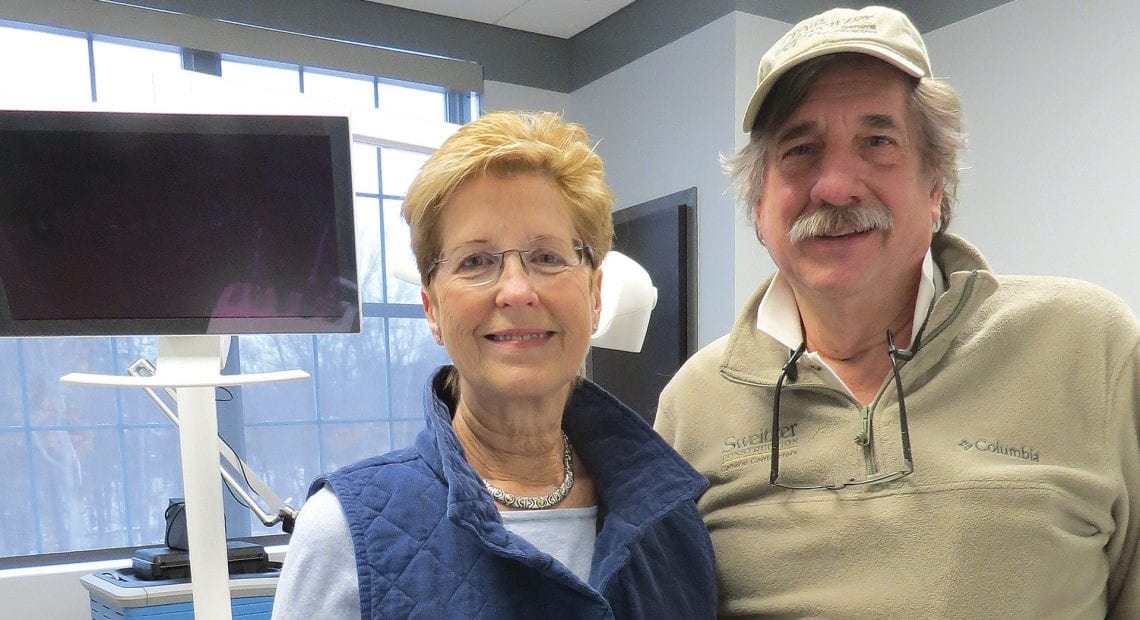
Community Spotlight Special Coverage

Community Spotlight

By Mark Morris

As the world looks to generate energy from different sources and reduce waste, a new facility just opened in Agawam that contributes to both efforts.

What looks like a plain green building on Main Street is actually a plant that converts food waste into natural gas and fertilizer. Vanguard Renewables, based in Wellesley, approached Agawam Mayor William Sapelli about locating an organics-recovery facility in Agawam. After addressing some initial concerns about truck traffic and potential odor from the plant, the town gave the go-ahead.

“Because Agawam is a designated green community, it’s important for us to bring in facilities like this,” Sapelli said, noting that this is only the second plant of its type in Massachusetts.

Here’s how it works. Let’s say the nearby Hood dairy plant has a pallet of yogurt that does not meet specifications or has expired. Hood can bring that pallet to the Agawam facility, where large extracting machines separate the packaging from the yogurt. The packaging gets bundled and brought to a recycling facility, while the yogurt is mixed with other food waste and water. This forms a slurry, which is then delivered by tanker truck to an anerobic digester, a large, dome-shaped structure. (The closest digesters to Agawam are located on farms in Deerfield and Hadley.)

The slurry is mixed with farm-animal waste in the digester, where two things happen. First, biogas rises from the mix and gets converted to renewable natural gas for heating and cooling. Then, the remains of the slurry, known as digestate, are used as low-carbon fertilizer for area farmers.

“In the past, all this waste was incinerated or dumped into a landfill, but now it’s being turned into energy and fertilizer,” Sapelli said, calling the process “amazing.” As the Agawam facility ramps up to full capacity, it will be able to process 250 tons of food waste per day, according to Vanguard.

Mayor William Sapelli

Mayor William Sapelli

“Because Agawam is a designated green community, it’s important for us to bring in facilities like this.”
That’s just one project that has Agawam officials excited as they move past a challenging 2020 for all municipalities. While the pandemic is still a daily reality, they say this town is focused on growth as a new year dawns.


Bridge to Tomorrow

For the past couple of years, the largest infrastructure project in Agawam has been the rebuilding of the Morgan-Sullivan Bridge connecting Agawam and West Springfield. The original completion date was scheduled for May 2022. After Sapelli met with Lt. Gov. Karyn Polito to incentivize the project contractor, Northern Construction, to work overtime and weekends to shorten the deadline, the date was moved to August 2021.

Once the pandemic hit and fewer people were out and about, bridge construction accelerated further. Favorable weather, as well as lighter traffic from both vehicles and pedestrians, allowed crews to get more done every day. Then, the Big E canceled its 2020 fair.

“By contract, the crews had to stop work during the Big E,” Sapelli said. “When the fair was canceled this fall, it gave them an extra 17 days to work on the bridge.” While noting that he is not putting pressure on the construction crews, he predicted the bridge may now be completed by June 2021.

The mayor is also pleased that many of the headaches and traffic jams that usually occur with a major construction project have not materialized. “It’s been a great project,” he said. “You don’t hear a mayor say that very often.”

Like every community, Agawam has had to deal with COVID-19. In fact, the mayor himself had a false alarm after testing positive on a quick test. After going into self-quarantine for several days and not experiencing any symptoms, he took a PCR test (referred to as the ‘gold standard’ of COVID testing), which revealed he had never been infected with coronavirus.

the Morgan-Sullivan Bridge project may now be done by June

With the pandemic reducing traffic and accelerating the pace of work last year, the Morgan-Sullivan Bridge project may now be done by June.

“I asked if I was asymptomatic or if I’d had it a week before, and the answer to both was, ‘no, it was a false positive,’” he said.

While state mandates have limited public access to Town Hall, Sapelli explained that, even if it were open to the public, the building’s layout just doesn’t work well with COVID-19 mandates.

“For example, the public area in the Collector of Taxes office measures about five feet by eight feet,” Sapelli said. “With social distancing, that means no more than one person can stand there; anyone else would have to wait in the hall, which is also cramped.”

Still, with an emphasis on safety first, Sapelli said Town Hall is open for business for anyone who calls ahead for an appointment.

In order to reduce COVID-19 risks and still encourage in-person education, Agawam’s public schools have adopted a hybrid model. Students whose last names begin with the letters A-K attend class on Monday and Tuesday, while those with L-Z last names attend Thursday and Friday. On the three days they are not scheduled in person, students attend class remotely.

The Department of Health and the superintendent of schools are employing the hybrid model as long as COVID-19 cases within the education community remain low compared to the community as a whole. As a former Agawam school superintendent, Sapelli supports this direction.

“The hybrid approach has been working for Agawam. First, we’re making sure everyone is safe so we can get our students in front of teachers,” he said, adding that parents who are uncomfortable with the hybrid model may choose remote learning full-time.

Bars and restaurants everywhere have greatly suffered during the pandemic from mandated closings, limited seating, and other restrictions. To support those businesses in Agawam, the City Council and the mayor have co-sponsored a resolution to waive the $1,500 liquor-license fee in 2021 for all bars, restaurants, and banquet halls.

“We recognize they’ve lost a lot of revenue and have not been able to host the types of events and gatherings they normally do,” Sapelli said. “Waiving the fee is one thing we can do during the pandemic to help local businesses in these tough times.”

Agawam at a Glance

Year Incorporated: 1636
Population: 28,718
Area: 24.2 square miles
County: Hampden
Residential Tax Rate: $16.83
Commercial Tax Rate: $31.61
Median Household Income: $49,390
Family Household Income: $59,088
Type of government: Mayor; City Council
Largest Employers: OMG Inc., Agawam Public Schools, Six Flags New England, Whalley Computer Associates
* Latest information available

The fee waiver is just one of the ways the City Council and the mayor are working together to help local businesses, he added. “We are business-friendly. When a new business wants to locate in Agawam, we try to expedite the permitting process by having a team meeting that includes everyone from our fire and police departments to the health inspectors and building inspectors. They all meet together with the business owner, so it becomes one-stop shopping.”


House Calls

That cooperative attitude makes life easier for Marc Strange, director of Planning and Community Development in Agawam, who told BusinessWest about several projects in the area of South Westfield Street in the Feeding Hills section of town. One of the most anticipated projects is the Villas at Pine Crossing, an over-55 community that will add 44 units of senior housing to the market.

“Our office frequently gets calls from residents who are looking to downsize, but they want to stay in Agawam,” Strange said. “The designs at the Villas are more friendly for an aging population, something that is desperately needed in Agawam and everywhere else.”

He said he’s grateful the developer chose Agawam for the Villas, and welcomes similar projects. “We’re hoping this will trigger future developments for 55-plus communities in Agawam.”

The land parcel that was once the Tuckahoe Turf Farm sits adjacent to the Villas at Pine Crossing. After years of considering new uses for the property, Agawam officials are now looking at a solar-energy installation for part of the site. “The revenue from the solar field will allow us to develop the rest of the property for recreational uses, such as walking trails and such,” Sapelli said.

Agawam also completed a project in 2020 to convert all its streetlights to LED fixtures, which emit brighter light but also help the city reap potential savings of $220,000 every year. “Agawam is looking to save about $100,000 per year in energy costs and nearly $120,000 per year in streetlight maintenance,” Strange said.

During construction of the Morgan-Sullivan Bridge, crews are using two desirable land parcels to stage and store equipment. Once the bridge is complete, those two parcels will be available for development as well.

“To be clear, as exciting as it is to market prime commercial sites, the new bridge will have an impact on the town that goes well beyond those two parcels,” Strange said.

All of which promises a brighter future for Agawam — literally and figuratively.

Law

A Question of Mandates

By Timothy F. Murphy


Employers have a key role to play in ensuring the successful rollout of COVID-19 vaccines and that people are safe at work. Many employers may wish to adopt vaccine mandates, especially if their employees work in close contact with others. But before doing so, employers need to consider a number of things.


Can Employers Require Vaccinations?

Yes. Non-union employers can unilaterally require employee vaccinations because employment relationships are ‘at will,’ and they have a legal duty to provide a safe and healthy workplace. Many employers already require workers to get inoculated against certain infectious diseases.


Can Employees Object to Vaccine Mandates?

Yes. Anti-discrimination laws provide disabled and religious employees with legal protections from vaccine mandates. Employers that require employees to receive the COVID-19 vaccine must meet certain requirements under those laws.

Timothy F. Murphy

Timothy F. Murphy

“Non-union employers can unilaterally require employee vaccinations because employment relationships are ‘at will,’ and they have a legal duty to provide a safe and healthy workplace.”

A worker with a covered disability may seek an exemption from a vaccine mandate. For instance, medical advice to avoid a vaccine due to an employee’s underlying health condition may legally justify a vaccine refusal. In such situations, the employer must explore whether an exemption is a reasonable accommodation given the disability and job duties — so long as it isn’t an undue burden for the employer. Accommodations — like telework or working in isolation from co-workers — that would allow the unvaccinated employee to perform essential job functions would likely not be an undue burden.

According to recent guidance from the Equal Employment Opportunity Commission, sincerely held religious beliefs may also justify a vaccine refusal. An employer must provide a reasonable accommodation “for the religious belief, practice, or observance” that prevents the worker from receiving the vaccine, unless that accommodation poses more than a “de minimis” cost or burden. Employers may seek verification of such beliefs only if they have an objective reason for doing so.


Government Vaccine Mandates Appear Unlikely for Now

A general state vaccine mandate does not appear to be in the cards anytime soon. On the federal level, President-elect Biden has signaled that he is not considering a vaccine mandate at this time. It also appears unlikely that the federal agency charged with workplace safety, the Occupational Safety and Health Administration (OSHA), would require employers to mandate a COVID-19 vaccine. In the past, OSHA has permitted employers to require employees to receive the flu vaccine.


Public-health Experts Warn Against Mandates for Now

Even if employers can legally mandate COVID-19 vaccinations, U.S. Surgeon General Jerome Adams recommends against it. “Right now, we are not recommending that anyone mandate a vaccine,” Adams said in a recent interview with Yahoo Finance, noting that Pfizer’s vaccine hasn’t been fully approved yet. According to Saad Omer, a vaccinologist and infectious-disease epidemiologist at Yale University, “mandates shouldn’t be the frontline policy option.”


Avoid the Backlash

A vaccine mandate could trigger employee-morale issues. Vaccine hesitancy is a concern across the country. One study revealed that more than one-third of Americans would refuse a COVID-19 vaccine if offered one. However, other data suggests that Americans’ willingness to take a COVID-19 vaccine has risen as data on the vaccines’ efficacy have emerged. Many people have said they are more comfortable waiting a few months to get the vaccine. Employers need to be sensitive to employee concerns if vaccination is mandated as soon as it becomes publicly available.


Reduce Potential Legal Liability

Employees injured by a mandated vaccine may bring legal claims for workers’ compensation, negligence, and OSHA violations. It is difficult to predict the success of such claims. The ability to argue that government recommendations were followed would go far in defending against them. Limiting a vaccine mandate to high-risk positions or workplaces may also reduce potential legal liability and employee backlash.


Wait and See Is the Way to Go

Most Massachusetts non-healthcare employers and their employees are not going to have access to any vaccines before the spring of 2021. So most employers can wait to decide to mandate vaccines simply because there won’t be vaccines immediately available.

In the meantime, employers should be prepared to provide reliable information; reinforce other steps to protect employees and the public, like continued screening, fitness-for-duty programs, and contract tracing; implement employee incentives for voluntary vaccinations; and consider mandatory rapid testing, as those products come to market, as an alternative to mandatory vaccination.


Timothy Murphy is a partner at Skoler, Abbott & Presser, P.C., focusing his practice on labor relations, union avoidance, collective bargaining and arbitration, employment litigation, and employment counseling.

Law

To Contest or Not to Contest?

Benjamin Coyle, Esq.


None of us want to think that, after we pass away, our loved ones may someday fight over an inheritance. But as we all know, family relationships are complex, and can be particularly so when finances are involved. Add in the grief of losing a loved one, and suddenly, relatives who have always gotten along well may find themselves at odds. Keeping peace in the family is often a vital consideration in estate planning.

One of the most important components of a person’s estate plan is the document that ultimately directs the final disposition of their property, both real and personal, upon their passing. In most circumstances, that document is either a last will and testament or a trust. A question that often arises during the drafting process is: “what can I do to make sure that no one fights over my estate?”

Benjamin Coyle

Benjamin Coyle

“Family relationships are complex, and can be particularly so when finances are involved. Add in the grief of losing a loved one, and suddenly, relatives who have always gotten along well may find themselves at odds. Keeping peace in the family is often a vital consideration in estate planning.”

While an attorney can never guarantee that heirs or beneficiaries will not fight, there are provisions that can be made to deter an interested person from contesting the terms of a will or trust. For wills, Massachusetts law recognizes a provision purporting to penalize an interested person for contesting the will or instituting other proceedings relating to the estate. For trusts, the courts in Massachusetts have upheld the enforceability of ‘no-contest’ (or ‘in terrorem’) clauses.

In 2012, Massachusetts adopted the Uniform Probate Code (UPC), a model code adopted by 18 states in order to standardize probate laws. However, in adopting the UPC, Massachusetts did not incorporate the model’s no-contest provision, which essentially allowed for challenges or contests where probable cause exists. Rather, Massachusetts determined that the Commonwealth would maintain its historic baseline regarding no-contest provisions, and, in doing so, the Legislature provided that such clauses are enforceable as a matter of law, subject to some limitations as determined by the court.

Generally speaking, a no-contest provision is a clause within a will or trust with specific language stating that any person who challenges the estate must then forfeit their share. One of the primary purposes of including such a provision is to deter an interested person from bringing a challenge against the estate.

Typically, if an interested person believes they are not receiving what they may consider to be their fair share of the estate, that perception can provoke a desire to fight the terms of the will or trust. Emotions tend to run particularly high if a sibling or family member may receive a larger portion, or if someone is left out of an estate altogether. These challenges are not often successful, so long as the creator of the will or trust complied with all statutory requirements, was not subject to undue influence or duress, and had the appropriate mental capacity to execute the document.

Occasionally, though, when an interested person is able to present evidence of duress or incapacity, a successful challenge to a will could result in the entire document being invalidated, which would naturally include the no-contest provision. If the no-contest provision is eliminated as a result of the challenge, the contesting party may then be eligible to receive a share of the estate or trust, depending upon the other circumstances at hand.

When administering any will or trust, whether a no-contest provision is included or not, the fiduciary in charge (that is, the trustee of a trust, or the personal representative under a will) must still comply with all the other terms of the document, and the fiduciary is still responsible to beneficiaries. They are required to account to the beneficiaries for the assets under their control, as this is a matter of public policy that the courts have determined cannot be avoided with a no-contest provision.

Typically, we might see no-contest provisions enforced within the discretion of the fiduciary, for frivolous matters involving the administration of the will or trust. Occasionally, a beneficiary may ask the court for an interpretation of the provisions of a will or trust, to make sure the fiduciary is complying with its terms. Provided they are not trying to challenge or change the provisions in the document, the court is unlikely to invoke the no-contest provision when a request for interpretation is made by an interested person.

If you are a beneficiary of a last will and testament or a trust, it is extremely important to review the document to see if it contains a no-contest provision. If it does, and if a challenger comes forward, the court is likely to uphold the no-contest clause, which could result in the forfeiture of an inheritance. One must carefully weigh the options and potential outcomes before asserting a challenge.

On the other hand, if you are preparing your own estate plan and are concerned that disagreements may erupt among beneficiaries, you may wish to consider including a no-contest provision in your documents. Keeping the family peace in the future is certainly worth spending some time and effort today.


Benjamin Coyle is a shareholder with Bacon Wilson, P.C. He specializes in matters of estate planning and administration and also has extensive experience with real estate, business, corporate, and municipal law; (413) 781-0560; [email protected]