Home Archive by category Sections (Page 70)

Sections

Holiday Gift Guide Sections

’Tis the Season

By DAVE RATNER

Dave Ratner

Dave Ratner

The holidays are, as if we need reminding, a shopping extravaganza.

Between now and the beginning of the New Year, we will experience sensory overload. From repetitious TV commercials encouraging us to buy or lease a luxury sedan or SUV to the windows of local storefronts, with oversized letters (in red and green) spelling the words ‘XMAS SALE’ and ‘HUGE DISCOUNTS,’ these promotions — including the billboards, flyers, mailers, radio spots, and newspaper and magazine inserts — are everywhere we go.

As a retailer with long-standing roots in our community, and as someone who believes the holidays are not just another reason to buy stuff, allow me to offer the following advice to all business owners: give thanks to your respective customers. Take a moment to express your gratitude to them, so they know you appreciate their support and value their patronage.

Court your consumers, which is another way of saying, romance your customers by personalizing your service and making yourself more attentive to the needs and expectations of these men and women.

I write these words from experience — indeed, I am the author of a book about this very subject — because, by making these individuals the focus of what you do, there will be no confusion about why you do what you do. That is, without customers, a business cannot survive; it has no buyers for its merchandise, no audience for its marketing and communications, and, thus, no reason for being.

What, then, should businesses do this holiday season?

To start, they can use social media — Facebook and Twitter, with the latter linking to a specific post from the former — to publish a note of genuine appreciation.

Forget the customary posting of sentence fragments and links, the so-called clickbait responsible for attracting ‘likes’ and ‘followers,’ and choose, instead, to hand-write (and then transcribe for the web) a letter detailing why you cherish your customers. Tell them — tell us — why they inspire you, how they motivate you, and what they do for you.

In other words, choose quality and quantity over the glib and ordinary, which is to say, make it clear to the reader, and make it absolutely unambiguous to your customers, that their interests are your priority, that you welcome their e-mails and look forward to receiving their feedback and responding to their concerns.

If this advice seems obvious, and if these examples sound like basic common sense, they are. That does not mean businesses are aware of this fact, or that they uphold this rule, because they too often do not.

The holidays are, therefore, an opportunity to make amends, so to speak, and strengthen ties with consumers. They are a chance for customers to enjoy savings and discounts, but they are also a time for businesses to rejoice over what they have — and to whom they owe so much.

Remember, too, the people who are your greatest sources of word-of-mouth marketing and your most credible agents of action. Reward your customers with your thanks, and whatever else you can afford to give them. Your gratitude will not go unnoticed, and your deeds will not go unrecognized.

Do well by doing something good, so you may sell your goods to the customers who are your most passionate friends and your most vociferous allies.

Now, pass the eggnog and make a list, and check it twice, to find out who has been (and still is) nice.

Love your customers.


Dave Ratner is founder of Dave’s Soda and Pet City and a business author and speaker; daveratner.com

Holiday Gift Guide Sections

Buying Local

It’s not always easy to find the perfect gift item for everyone on your list, but, thankfully, Western Mass. provides a plethora of options, from spa experiences to go-karts; from sporting events to concerts and museums; from art classes to a particularly unique landscaping service. Even better, all support local businesses and organizations and, in turn, boost the region’s economy. Happy holidays, and happy shopping!

Amherst Laser & Skin Care Center

264 North Pleasant St., Amherst

(413) 253-2214; amherstlaser.com

This state-of-the-art practice in downtown Amherst offers laser and aesthetic services ranging from facial and body rejuvenation to laser hair removal; from laser body sculpting to facials and peels, and much more. First-time consultations are complimentary. Promotions change on a regular basis, so check the website for prices and specials.


Black Birch Vineyard

155 Glendale Road, Southampton

(413) 527-0164; blackbirchvineyard.com

One of several wineries in Western Mass. that offer vineyard tours, Black Birch — whose owners call the vineyard “a family that moves wine and the nuanced process of creating it” — provides a number of gift-giving opportunities, from wine-tasting events to enrollment in a wine club that includes 12 seasonal bottles throughout the year at a 15% discount. Visit the website for more information on events and available wines.


Blue Heron Restaurant

Blue Heron Restaurant

Blue Heron Restaurant and Catering

112 North Main St.., Sunderland

(413) 665-2102; www.blueherondining.com

For a truly special night out, send someone to the center of Sunderland, to the historic, 150-year-old building that houses the Blue Heron, where Deborah Snow and Barbara White serve up an eclectic, seasonal menu based on fresh, local, sustainable ingredients. The food is a reflection of Snow’s grandmother’s teachings: “eat fresh and eat the season, and all of it with love.” Gift certificates aere available online.


Cap & Hitch of New England

2001 Riverdale St., West Springfield

(413) 73304178; capandhitch.com

Have a friend who loves his vehicle and is looking for ways to improve his ride? Whether you’re looking to upgrade a factory stereo, add Bluetooth hands-free integration, add an alarm system, or have a full stereo system installed, Cap & Hitch of New England has you covered. The store also offers heated seats, bike racks, snow plows, hitch accessories, tonneau covers, and much more.


Cathy Cross Fashion for Women

151 Main St., Northampton

(413) 585-9398; cathycrossfashion.com

Cathy Cross is a Northampton shop that offers fashion-forward designs as well as timeless classics, with options ranging from jeans to power-suiting, lots of dresses, casual and contemporary wear, and constantly rotating seasonal collections that focus on the current trends. Gift cards are available in any demonination, and can be purchased at the store or online.


Symphony Hall

Symphony Hall

CityStage/Symphony Hall

One Columbus Center, Springfield

34 Court St. Springfield

(413) 788-7033; symphonyhall.com

There’s always plenty of variety at Springfield’s premiere entertainment venues, which features, this season, “Moondance – the Ultimate Van Morrison Tribute Concert,” “Sing Along with the Muppet Movie,” “Best of Boston Comedy Festival: Italian Comedians,” “Yesterday and Today: The Interactive Beatles Experience,” “Adam Trent: The Futurist,” and much, much more. Visit the website for a full calendar and to purchase gift cards.


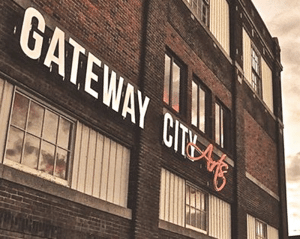
Gateway City Arts

Gateway City Arts

Gateway City Arts

92 Race St., Holyoke

(413) 650-2670; gatewaycityarts.com

Conveniently located in the heart of Holyoke’s Arts and Innovation District, and host to a plethora of studios, galleries, and event spaces, Gateway City Arts a co-working space for artists and creatives in a variety of disciplines. Among its many programs, the center offers art classes for the casual creator and the professional artist. Check online for the latest offerings, and give someone the gift of inspiration.


The Goat Girls

(413) 461-6832; thegoatgirls.com

The Goat Girls is the Valley’s best and newest solution to invasive plants, like multiflora rose and bittersweet, and irritants like poison ivy and sumac. Goats are delivered to the property to be cleared for several days or weeks. Agile, hardy, yet lightfooted, they can get to hard-to-reach parts of your property and gently, yet quickly, clear unwanted brush. Gift certificates are available online.


KiddlyWinks

801 Williams St., Longmeadow

(413) 567-0688; kiddlywinks.com

KiddlyWinks takes pride in its selection of award-winning and hard-to-find, unique toys for children of all ages. The focus is on children’s toys that inspire as well as entertain, including a wide selection of arts and crafts toys for kids of all ages, from preschool through teens. Check out the website for staff recommendations, lists of award-winning toys, and to place orders online. Free shipping on all orders over $100.


PetSimpl

PetSimpl

PetSimpl

[email protected]; petsimpl.com

Millions of pets are lost each year, and microchips are helpful only if your pet is found and scanned. Even if found, fewer than 50% of pets with microchips are returned to their owners. With its innovative pet-tracking product, called Pip, PetSimpl raises the bar in terms of quality, comfort, and ease of use. Pip is smaller than other trackers and attaches comfortably to your pet’s collar. Order the product and a subscription plan online.


Pioneer Valley Balloons

130 Cross Path Road, Northampton

(413) 218-7823; pioneervalleyballoons.org

Pioneer Valley Balloons has been providing hot air balloon rides for people of all ages for more than 25 years — an experience guaranteed to create memories that will last a lifetime. Choose from a sunrise or sunset excursion on a balloon manned by owner and chief pilot Lisa Fusco. The cost is $250 for a group excursion, $700 for a private ride for two, and specials are occasionally available. Gift certificates may be purchased online.


Pioneer Valley Indoor Karting

Pioneer Valley Indoor Karting

Pioneer Valley Indoor Karting

10 West St., West Hatfield

(413) 446-7845; pioneervalleykarting.com

A 23,000-square-foot track offers an area where karts can reach speeds up to 40 mph. The 1,000-foot road course challenges the most experienced drivers through seven left turns and four rights. Every race is timed down to .001 of a second, and each driver will receive a time sheet after their race to compare. Kids 8 and older can ride as well as adults. Purchase special race packages and gift certificates online.


Refresh Whitening Spa

16 Gerrard Ave., East Longmeadow

(413) 732-6281; emadental.com

Emirzian, Mariano & Associates, a general, esthetic, and prosthodontics dental office, now offers a new concept in teeth whitening and dental hygiene delivery. With several whitening options available, the team helps each customer select the best method for them. Services include a 60-minute cleaning and whitening, 30- and 60-minute whitenings, and more. Gift certificates are available.


Ski Butternut

380 State Road, Great Barrington

(413) 528-2000; www.skibutternut.com

Skiing and snowboarding definitely make those New England winters more tolerable. This family-oriented ski area in Great Barrington provides 110 acres of skiing spread across 22 trails. If you are shopping for someone who loves the outdoors, a gift certificate to Ski Butternut may open the doors to a new passion. If they’re already hooked on skiing, a lift ticket will be most appreciated. Check out the website for prices and deals.


SkinCatering Massage & Skincare

1500 Main St., Upper Level, Springfield

(413) 282-8772; skincatering.com

Pamper someone special with a massage and facial combo, or, better yet, book a one-hour couples massage and enjoy a true spa experience together. SkinCatering offers a release from the hectic holidays, and after all the stress and strain, an extra-special, very personal gift is just what the doctor ordered. Gift certificates are available in any amount online or in person.


Springfield Falcons

45 Falcons Way, Springfield

(413) 739-4625; falconsahl.com

A great deal for big-time hockey fans and folks who simply enjoy a fun night out with the family, Falcons games are reasonably priced entertainment in Springfield’s increasingly vibrant downtown. The AHL affiliate of the NHL’s Columbus Blue Jackets, the Falcons play home games through April at the MassMutual Center. Purchase tickets at the box office or online.


Springfield Museums

1 Edwards St., Springfield

(413) 263-6800; springfieldmuseums.org

Explore “Cabinets of Curiosity” at the George Walter Vincent Smith Art Museum, “Still of the Night: Nocturne Scenes by Currier & Ives” at the D’Amour Museum of Fine Arts, “Firearms of Famous People” at the Wood Museum of Springfield History, planetarium lectures at the Springfield Science Museum — and those are just a tiny sampling of the current offerings at the Quadrangle. A Springfield Museums membership provides access to all of it, and is a great gift.

Joseph Bednar can be reached at [email protected]

Community Spotlight Features

Community Spotlight: Stockbridge

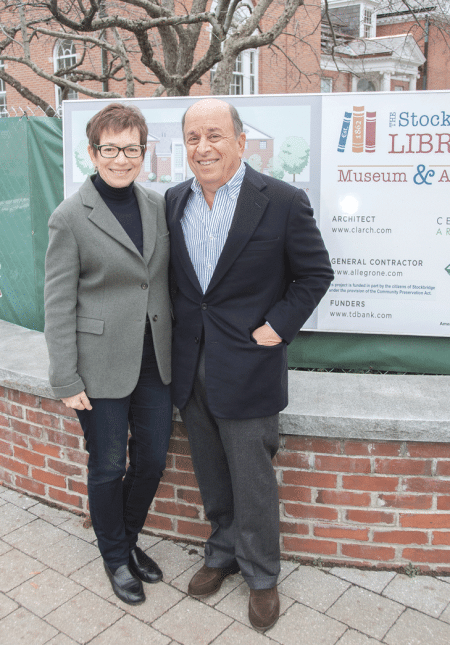
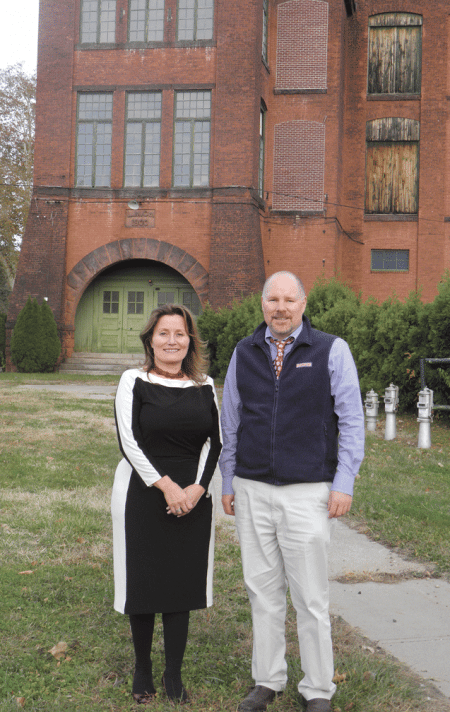
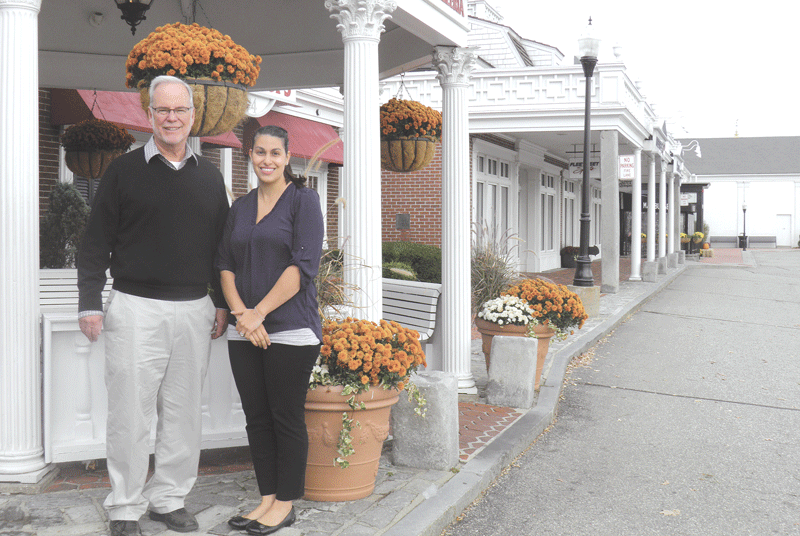
Leslie and Stephen Shatz

Leslie and Stephen Shatz stand outside the historic Stockbridge Library, which is undergoing a major renovation.

Stockbridge became known for its quintessential New England charm after it was depicted by artist Norman Rockwell in a masterpiece titled “Main Street.”

The town is also known for its cultural offerings, which include Tanglewood, and Stockbridge has become a destination for people who appreciate its unique character. But, despite the fact that hotel-room occupancy was up 5.3% this summer, cell-phone service is extremely limited and available in just a few locations.

In fact, Selectman Stephen Shatz said it’s not unusual for him to be asked by tourists who are shopping downtown where they can go to use their phones. “They come here with the expectation that they will have cell-phone service, and you can see them on the streets hunting for a place where they can find it,” he told BusinessWest.

That problem will soon be solved, as Verizon is in the process of installing a cell-phone tower on the town’s capped landfill.

“We’ve completed the local part of the permitting process,” Shatz said, explaining that, two years ago, the Board of Selectmen proposed a zoning bylaw to permit the tower to be erected, which received a favorable vote at a town meeting last year. He added that town officials were quite pleased to have the well-known, licensed FCC carrier win the bid because the law requires the company to provide up to four co-locations for other cell-phone companies. “We also negotiated the right to put up municipal public-safety antennas on the tower, although there are no plans to do that at the moment,” he noted.

Preliminary work is expected to begin in March, which will involve installing electricity and a landline at the site. Construction of the actual tower will start next summer, and “by this time next year we should have cell service in town,” Shatz said.

It’s one of a number of measures officials are taking to keep pace with changes in society and allow the town that always appears frozen in time to be anything but.

“Many people have an image of Stockbridge that is immutable. They think of it like the Norman Rockwell portrait, but change does occur, even when you do nothing,” Shatz said.

He explained that, in addition to advances in technology, which require infrastructure to support them, the town’s population has grown smaller and considerably older, which presents a number of intriguing challenges.

“The town has changed. Between 1996 and 2010, our population decreased by almost 20%, and the median age went from 31 to 55,” he told BusinessWest. “Unfortunately, it’s a fact of life in Berkshire County, and even though we don’t have all of the tools we need to respond, we are trying.”

Three years ago, Shatz also came up with the idea to take a new look at other measures that will help the town move into the future and meet the needs of residents and tourists, who are vital to its economy. To that end, a committee has been formed for a Visionary Project that could lead to a master-planning process.

“The last master plan was completed in 1996, and although it was supposed to be looked at every five years, that never happened,” Shatz explained.

One of the first steps will be to initiate a discussion with residents about services they need and want and how the town can provide them. “About 60% of our residences belong to second-home owners. It’s pretty significant because we get income from the taxes they pay, but these people aren’t actively involved in the community. They participate in our cultural and community activities, but they can’t vote, and we are trying to find ways to involve them in our ad hoc committees,” Shatz said.

Since their input is critical to the Visionary Project, the 10-person committee, chaired by Shatz, includes two second-home owners as well as people born in Stockbridge and those who moved there recently.

“We need a different model and want to increase public awareness about our challenges,” he said, adding that the town appropriated $25,000 to fund the initial phase of the project.

Capital Ideas

Leslie Shatz (Stephen’s wife) is a trustee of the Stockbridge Library Assoc., head of its development committee, and a member of its capital campaign steering committee, which was formed four years ago to raise funds to renovate and revitalize the town’s private, nonprofit library and museum. “It contains more than 500 artifacts along with artwork and detailed records of the town’s history,” she said, adding that the renovations were prompted by the need to install an elevator to make the library’s three floors handicapped-accessible because the historic building had been untouched since its last renovation in 1937.

Library Director Katherine O’Neil said that, right after she was hired in June 2011, the library received a $6,000 grant for a code review of the building. The following month, Center Line Architects from Vermont was selected to do the work, which included preliminary design schematics. In addition, a consultant was hired to determine whether it was realistic to raise the funds needed for a major renovation. The result was positive, and a capital campaign kicked off in 2013, right after Thanksgiving.

“By the end of January 2014, we had raised $1 million in pledges and contributions,” Leslie Shatz said, adding that they included some “magnificent leadership gifts.”

The John and Jane Fitzpatrick Fund, headed by Nancy and Ann Fitzpatrick-Brown, contributed $500,000, and an equal amount was donated by sisters Mary Stokes Waller and Carol Fremont-Smith in memory of their mother and grandmother.

Revenue raised to date includes a grant of $600,000, $500,000 in historic tax credits, and $200,000 from the town. As a result, the renovation is well underway and the committee is close to wrapping up its $4 million fund-raising goal.

“The library is essential to the community life of Stockbridge. It opened in 1862 during the darkest days of the Civil War and was launched by a group of public-spirited men who believed a library was central to the life of the town,” Leslie Shatz said.

“They put up the money needed to build the structure on donated land and challenged the townspeople to raise enough to buy books. It was a community endeavor,” she continued, adding that the first librarian was the sister of a Supreme Court Justice, and the library was only one of five built in the U.S. during the war.

The new building will retain the majority of its historical elements, but square footage has been added for the elevator. Space has also been repurposed in the attic, the roofline has been raised, and skylights are being installed.

In addition to updating the electrical, plumbing, and heating and air-conditioning systems, a new multi-purpose room will accommodate up to 35 people in the main area of the building.

“It will give us the option of holding more library programs as well as allowing groups in the community to use the space,” Leslie Shatz said.

O’Neil said a strategic plan for new programming was created for 2012-17 after input was received from focus groups and community surveys, which resulted in an expansion of existing programs and a plethora of new ones, including a financial-literary program for teens and their parents that will be conducted by second-home owner Jon Budish.

“The renovation has been a wonderful project to be part of, and we are looking forward to letting patrons see the renovated space and using it to better serve their needs and interests,” O’Neil said.

The work is slated to be completed in January, and the building will open after the books are shelved and the museum artifacts are put into place.

“We have been exceptionally gratified by the support we have received for the project,” Leslie Shatz said. “We are all very excited about opening the doors and welcoming the community into the building.”

While the library project draws to a close, there are other initiatives taking shape in this picturesque community.

One of the primary challenges the town faces is providing ambulance, police, and fire protection, since the population increases by 7,000 on summer weekends.

To lower operating costs and take advantage of underutilized sites, the Board of Selectmen has taken a proactive stance, and in addition to the cell phone tower, it plans to establish a solar farm on the landfill. The board is in the process of selecting a provider, but the project cannot begin until it receives permission from the state.

“If we’re successful, it will cover the cost of almost 100% of the electricity used to power the town’s buildings,” Shatz said. “The landfill has the potential to be a real income generator because we will receive rent from Verizon which could amount to $30,000 annually. It’s real money to a small town.”

Moving Forward

Stephen Shatz said Stockbridge is a great place to live, but lacks the type of jobs needed to retain and attract young people. So he hopes the Visionary Project, coupled with a new cell-phone tower, solar farm, major renovations to the library, and efforts to get second-home owners more involved will help Stockbridge solve the challenges it faces.

“The Visionary Project is related to finances and services,” he said. “One of the only things we can do is provide a regulatory framework conducive to smart growth.”

Indeed, that is in line with the change occurring on many levels in a town so picturesque that it attracts tourists from all over the world.

Stockbridge at a glance

Year Incorporated: 1739
Population: 2,065
Area: 23.7 square miles
County: Berkshire
Residential Tax Rate: $8.67
Commercial Tax Rate: $8.67
Median Household Income: $65,323 (2013)
Family Household Income: $79,144 (2013)
Type of government: Town Administrator/Board of Selectmen/Open Town Meeting
Largest Employers: Austen Riggs Center; Berkshire Theater Festival; Red Lion Inn
* Latest information available

Employment Sections

Joint Venture

HempDesk

The statute legalizing marijuana for medical purposes in Massachusetts presents a confounding dilemma when comes to the workplace. On one hand, the law states that any person who meets the requirements for medical marijuana may not be penalized or “denied any right or privilege” for such activity. On the other hand, employers aren’t required to accommodate marijuana use in the workplace. But what if an employee is fired for using the drug after hours, then failing a drug test? On issues like that, the statute is frustratingly vague, but cases winding their way through the system may soon provide some clarity.

Advantage Sales and Marketing never wanted to be a test case for medical marijuana, but that’s exactly what the Foxborough company has become.

It likely won’t be the only battleground, either.

The issue began when Cristina Barbuto, who suffers from Crohn’s disease and is prescribed marijuana to deal with painful flareups, applied for a job at Advantage.

“She told them, even before the pre-hire drug screening, that she was going to test positive,” said Timothy Murphy, an attorney with Skoler, Abbott & Presser, P.C. in Springfield, noting that her marijuana use, typically during the evening, was a doctor-directed strategy to deal with her condition.

She was hired. Then fired the next day.

“They brought her on, but when they got the test result, they said they had a zero-tolerance policy, and she had tested positive,” Murphy said. When Barbuto, who is now suing Advantage, reminded the company she had been upfront about her marijuana use, he went on, “they said, ‘sorry, but this is our policy.”

This type of confusion, he explained, is due to what seems to be conflicting language in the statute that legalized marijuana for medical reasons after Massachusetts voters approved it in a November 2012 ballot question.

On one hand, the law states that any person who meets the requirements for medical marijuana — which include suffering from a qualifying medical condition (such as cancer, glaucoma, HIV/AIDS, Crohn’s, Parkinson’s, multiple sclerosis, and others) and being prescribed the drug by a physician — may not be penalized under state law or “denied any right or privilege” for such activity.

On the other hand, nothing in the statute requires employers to accommodate marijuana use in the workplace or requires health-insurance reimbursement for its use.

The grey area — what about employees who use medical marijuana at home, then come to work the next day? — is proving to be vexing for employers worried about crafting drug-use policies that protect their rights under the law. Because the law, so far, is largely silent on the matter.

“When it comes to this language, no one knows what it means,” Murphy said. “A registered user can’t be denied any rights or privileges, and [Advantage] is going to be a test case.”

While the medical-marijuana law says employers don’t have to accept marijuana use in the workplace, “that’s not really the question,” said Karina Schrengohst, an attorney with Royal LLP in Northampton. “The question is whether you can make employee decisions based on marijuana use outside the workplace and whether you need to make a reasonable accommodation.”

Barbuto seems to have some standing based on the federal Americans with Disabilities Act, which prohibits workplace discrimination based on a disability and requires employers to make a “reasonable accommodation” for that employee if it would not pose an “undue hardship” on the operation of the business, as long as the employee can perform the essential functions of the job.

“We have our own state anti-discrimination law which largely tracks the federal ADA,” Murphy said. “Under that law, discrimination against disabled employees is unlawful, and employers can’t take any negative actions against employees because of a disability.”

But Massachusetts employers have rights as well, and medical marijuana isn’t even legal under federal law, and … well, it’s easy to see why confusion reigns right now.

On the wording of the Bay State’s medical-marijuana statute regarding rights and privileges, “does that mean medical-marijuana use is protected, and employers can’t take any adverse action against employees who use it?” Murphy asked. “Nobody is entirely sure.”

However, cases like Barbuto v. Advantage Sales and Marketing and others winding their way through the Massachusetts courts should begin to add clarity to the issue. That clarity, Murphy said, can’t come soon enough.

A Question of Safety

The law does seem clearer, he noted, when the position in question involves issues of safety — say, truck drivers and forklift operators.

“Obviously, it’s an employer’s responsibility to ensure a safe workplace for all employees, and that’s important. The use of marijuana can impact an employee’s job. It’s a legitimate concern for employers … similar to alcohol use.”

Employers have a dilemma, he said. On one hand, Murphy said, “they probably want to be empathetic and understanding to medical marijuana users because they’ve been dealt a bad hand; they’re not in a good place with their health. Most employers tend in that direction, but at the same time, they’ve got to maintain safety for everyone.”

On-the-job impairment, regardless of the cause — whether it’s marijuana, other prescription drugs, alcohol, or illegal narcotics — and workplace safety should be the central piece of any substance-abuse policy, he said.

However, Schrengohst noted, many positions don’t involve issues of safety.

“Often this question comes up when employers are balancing workplace safety against this new law. On the issue of workplace safety, preventing workplace injuries, for people like factory workers and forklift operators, I’m going to advise clients to require drug tests because of a legitimate safety interest,” she told BusinessWest. “But in an office setting, there’s more confusion. Obviously, you don’t want your receptionist, as a face of the business, to be under the influence, but the safety issue is the clearer one.”

And what constitutes ‘under the influence?’ The argument Barbuto makes, Murphy said, is that her nighttime use of marijuana does not affect her daytime performance. “She’s saying, ‘I have this disability, and you have a responsibility to accommodate my situation, as long as I’m not impaired at work.”

In short, he went on, “does an employer in Massachusetts have to accommodate an employee who is a medical-marijuana user? That’s the question.”

It’s a question other states are dealing with as well. In Coats v. Dish Network in Colorado, the plaintiff is a quadriplegic who used medical marijuana outside working hours, a registered user who took the drug in a manner according to the state statute authorizing medical-marijuana use.

Yet, the Colorado Supreme Court upheld his firing earlier this year because marijuana is classified as a schedule 1 drug, illegal under federal law. In other words, he couldn’t be arrested for using medical marijuana, but he could be fired.

“The court said the termination did not violate the employee’s rights. That’s really been the trend throughout the country,” Murphy said, citing two California cases: James v. City of Costa Mesa, in which the U.S. Court of Appeals for the Ninth Circuit held that the ADA doesn’t offer job protections for medical marijuana, and Ross vs. RagingWire Telecommunications, which held that the state’s medical-marijuana law does not require an employer to accommodate the use of otherwise illegal drugs for chronic back pain.

Those cases date back several years, however, and are no indication of how Massachusetts courts will view similar complaints, Murphy said.

“We need more regulations as well as more guidance through case law,” Schrengohst said. “The cases I’ve looked at in other states inform this, but they’re not binding in Massachusetts. Those cases have ruled in favor of employers, but the bottom line is, our statute and regulations don’t actually address all the issues, so I’m going to deal with it on a case-by-case basis — whether workplace safety is an issue, what the risks are going to be, and how we think a court might look at it. It’s a hard question right now.”

“In the context of workplace safety,” she went on, “employers really struggle to balance a safe workplace with this new legislation that doesn’t provide clear guidance. The explicit statement that you don’t have to accommodate it in the workplace at first seems great, and then it’s not, really.”

That’s partly because of the potential for dishonesty.

“When you drug test someone, it’s not like when you do a breathalyzer when someone is drinking,” she said. “With a positive drug test, everyone is going to say, ‘weeks ago’ or ‘after hours.’ No employee is ever going to say, ‘that was during my shift yesterday.’ I think employers are concerned, and obviously they’re worried that they’re going to be faced with litigation. It’s new, and we don’t know what to expect. It’s a really interesting topic.”

Changing Times

Murphy noted that the medical-marijuana statute makes an effort to protect employers, even if some of the specifics get blurry.

“It’s now well-understood that employers don’t have to excuse employees from performing the essential functions of their jobs, and don’t have to exclude employees from following their other types of policies, whether attendance-related or other standards of conduct,” he said.

As for drug testing, Schrengohst said companies with well-understood safety concerns are on firmer ground.

“I want to know what the facts of the situation are, what the industry is. If you want to have a drug policy and you want to drug test, why? What are the reasons behind this? Like I said, it’s a lot clearer when you have employees where safety is really important — someone who’s driving or operating equipment, and they have to be focused.”

Meanwhile, Massachusetts also faces the possibility of changing winds on the federal side, a question that vexes many physicians concerned about prescribing patients a drug that is technically illegal.

“Marijuana use remains illegal under federal law, but Obama’s administration has basically said, ‘we have bigger fish to fry, and we’re not going to be enforcing our medical marijuana and drug laws; we’re not going to punish marijuana users,’” Murphy said. “But that could change. There’s obviously going to be a change in the White House. Is the next president going to take a different view that could impact things? Or will the federal law be changed to allow for medical-marijuana use? That’s probably far less likely than state-by-state changes in laws.”

Massachusetts has progressed in this issue like many states, gradually changing its marijuana laws, Murphy noted. In 2008, the law was changed to decriminalize very small amounts of the drug. In 2012, voters ushered in the era of medical marijuana in the Bay State. In 2016, could full legalization follow, as Washington and Colorado have done?

“I expect there to be further efforts next year to liberalize our marijuana laws, and with each legislative step, maybe the picture gets clearer for employers,” Murphy said. “Advocates have tried to get the Legislature to pass it, but there doesn’t seem to be much appetite in the Legislature to do that. And, often, when the Legislature won’t act on things, people feel, ‘well, we’ve got no choice but to bring it to the voters.’”

Which would lay a whole new set of questions at the feet of employers already struggling to balance their employees’ rights and privileges with their own.

Joseph Bednar can be reached at [email protected]

Employment Sections

Lessons from the ‘Blind Barber Case’

By PETER VICKERY

Peter Vickery

Peter Vickery

A mixture of sympathy and surprise best describes the tone of the news stories about the recent decision from the Mass. Commission Against Discrimination (MCAD) in what headline writers dubbed the “blind barber case.”

According to media interviews with satisfied customers, Joel Nixon is a fine young barber. But upon losing his job, he fell into debt, faced foreclosure on the family home, and had to go on food stamps, all while his wife was pregnant with their first child. This explains the sympathy. He is also legally blind, and to the extent we ever thought about the subject at all, many of us may have assumed that barbershop owners could lawfully require that their employees be sighted. Hence the surprise.

These are the basic facts of Nixon v. Tony’s Barber Shop: Nixon suffers from the degenerative eye disease retinitis pigmentosa, has a certificate of blindness from the Mass. Commission for the Blind, and had to surrender his driver’s license in 2004. In November 2011, he applied for a job at the newly opened Tony’s Barber Shop in his hometown of Norton. The owner, Caesar Antonio Morales, hired him.

Four months later (after Nixon had tripped over a customer’s legs, a chair, and a ladder), Morales fired him. Blindness is a disability, so the MCAD decided that, by firing Nixon because of his blindness, Tony’s Barber Shop had discriminated against him, thereby violating the Massachusetts anti-discrimination law (Chapter 151B). The MCAD ordered Morales to pay Nixon $100,000, of which a sizeable sum, $20,000, was to compensate Nixon for emotional distress.

At this point, readers may be wondering, at the risk of seeming insensitive, whether those in the tonsorial business are legally entitled to require that the barbers they employ can see. After all, although the term ‘blind barber’ may not trigger the same degree of trepidation as the words ‘blind brain surgeon’ or ‘blind airline pilot,’ the occupation does entail the use of sharp scissors and, from time to time, cut-throat razors.

Some potential customers, decent people with no bias against the visually impaired, might be a tad wary of a barber who has a certificate of blindness. Does the law let Morales take this possible loss of customer confidence into account, or would that constitute prejudice by proxy? And would Morales (after Nixon tripped over the legs, the chair, and the ladder) have been allowed to fire Nixon if the young man was not visually impaired, but merely clumsy? Clumsiness is not, to date, a recognized disability, so the clumsy are not a protected class.

The narrow question is not whether current social mores favor Morales giving Nixon a fair shake, but whether state law compels him — on pain of a close encounter with the MCAD followed by a penalty of the six-figure kind — to continue employing Nixon even after the young man’s series of stumbles. A definitive answer to the question depends on this case, or one like it, making its way to the appellate courts. In the meantime, here is what we know:

Chapter 151B prohibits discrimination quite comprehensively, and Section 9 of the statute mandates that the courts construe the law liberally for the accomplishment of its purposes, which they certainly do. But it does have an out. It allows an employer to discriminate on the basis of disability if, and only if, the disability renders the employee unable to meet a bona fide occupational qualification (BFOQ).

Judges have read this statutory proviso as creating an affirmative defense, meaning the employer always bears the burden of proving it. Further, in its regulations, the MCAD interprets the BFOQ as the “narrowest of exceptions,” an interpretation the judiciary has endorsed. So, although the employee bears the burden of proving discrimination, it is for the employer to squeeze into the narrow BFOQ exception by persuading the MCAD that the discrimination was justifiable — a significant challenge.

Federal law contains a similar affirmative defense, which the delivery company UPS was able to deploy with partial success when the Equal Employment Opportunities Commission (EEOC) charged it with discriminating against would-be drivers who had failed the company’s eyesight test. UPS claimed that it was entitled to discriminate against those visually impaired people who could not meet the company’s vision protocol, pointing to the safety-of-others exception written into the federal Fair Employment and Housing Act.

Under the statute, an employer secures the protection of the safety-of-others exception if it can prove that, even with reasonable accommodations, the disability in question would prevent the employee from performing the job’s essential functions in a manner that would not endanger the health and safety of others. UPS contended that it imposed the eyesight test because — of all things — it did not want its drivers running down small children who might suddenly dart into the street.

Nevertheless, in 1997 the EEOC commenced an action in California against UPS for violating the rights of job applicants who were monocular, i.e. with sight in just one eye. Eight years later, the Court of Appeals for the Ninth Circuit held that UPS did, indeed, have the benefit of the safety-of-others defense because “peripheral vision plays an important role in avoiding accidents” and monocular drivers would have “less opportunity to see a child … darting from the impaired side.”

As a result of the case EEOC v. UPS, it is now reasonably well-established that, under federal law, peripheral vision contributes to safer driving (in California, at any rate).

So, in keeping with the spirit of the safety-of-others exception, did the MCAD consider the possibility that visual acuity might constitute a BFOQ for barbering, given the sharp scissors and cut-throat razors? No, it did not.

This brings us to perhaps the most noteworthy fact about Nixon v. Tony’s Barber Shop: the employer defaulted. At the hearing, there was nobody to advocate for Tony’s Barber Shop, and the only witness was the complainant himself, Nixon.

One piece of evidence, it turns out, was crucial to the MCAD’s ruling that Tony’s Barber Shop discriminated against Nixon on the basis of his blindness, namely Nixon’s own account of what Morales said to him in the barber shop at the time of his discharge. According to Nixon, Morales used profane comments that referred to his blindness, e.g. “you blind f___,” comments the hearing officer found to reveal “gross insensitivity” and “discriminatory animus.”

With no attorney present at the hearing to cross-examine Nixon or to elicit Morales’s (possibly different) version of the conversation, Nixon’s account stood unchallenged and unrebutted. And, without defense counsel, there was nobody to raise, let alone prove, the BFOQ affirmative defense.

The first lesson for employers? Show up. An adjudicatory hearing is an adversarial process, and if the adjudicator — here the MCAD, the same agency that investigated the complaint and found probable cause — hears from only one side, the result should surprise no one.

The second lesson? Resist the temptation to fire first and ask questions later. Upon learning that an employee has a disability and wants an accommodation of some kind, the employer has a duty to initiate an interactive dialogue to find out whether reasonable accommodations will allow the employee to perform the job.

Remember, although it is the employee’s responsibility to request an accommodation, the onus is on the employer to start the series of two-way conversations so as to determine whether an accommodation is reasonable. And when making that determination, think back to Tony’s Barber Shop and ahead to your own looming discrimination case and assess whether you will be able to prove, by a preponderance of the evidence, the affirmative defense of BFOQ.


Peter Vickery practices employment law in Amherst; (413) 549-9933; www.petervickery.com

Employment Sections

Letter of the Law

By OLGA M. SERAFIMOVA, Esq.

Olga Serafimova

Olga Serafimova

Having to deal with a unionization effort is challenging enough, but having to do it a second time after a narrow success would be truly taxing.

Yet, Danbury Hospital is faced with exactly this task.

Specifically, Danbury Hospital’s workforce voted 346 for and 390 against joining AFT Connecticut, which is a union comprised of teachers, nurses, and other healthcare workers. However, last month, the National Labor Relations Board (NLRB) — the federal agency responsible for the implementation of the National Labor Relations Act — set aside these results and ordered a re-run election. The reason for this development was that the NLRB concluded that the hospital had violated a recent amendment to its rules requiring employers to provide available personal e-mail addresses and telephone numbers for employees included on a voter list.

When a petition is filed with the NLRB seeking to form or join a union, the employer must comply with a number of requirements with short deadlines, such as compiling and providing a voter list. A voter list contains specific information about all employees who would be included in the proposed union if the unionization effort is successful, as these are the employees who get to vote on whether or not to unionize. After the petition is filed, the proposed union and the employer may agree to put the matter to a vote by entering into an election agreement, or may have the NLRB decide whether or not a vote should occur.

To be entitled to a vote, the proposed union must comply with a number of specific requirements, and unless an agreement is reached, the issue is decided at a hearing before the NLRB. This hearing may result in the dismissal of the petition or the issuance of a direction of election, in which case the matter is put to a vote by the employees.

Generally speaking, the voter list must be provided to the NLRB and the proposed union within two business days after the approval of the agreement or the issuance of the direction of election. This deadline is very strict. To get an extension, the employer must be able to show ‘extraordinary circumstances.’

The fact that the employer may be decentralized, have a large workforce, or rely on an outside payroll company, all of which would make gathering the required information more time-consuming, are not sufficient to meet this test. Other aspects of the rule that render the task time-consuming are the very specific format requirements. The NLRB rule controls the file format to be used, the order of the columns, the order of the names, and the font to be used, and failing to comply with any of these requirements could potentially result in a re-run election.

The information required to be on a voting list includes the employees’ full names, job classifications, work locations, shifts, and contact information, including their home addresses, available personal e-mail addresses, and available home and personal cell-phone numbers. In compiling the voter list, Danbury Hospital relied exclusively on the information contained in the employee database maintained by its Human Resources Department.

In so doing, the hospital provided all personal e-mails in that database, as well as telephone numbers for 94% of the employees on the list. Nevertheless, the NLRB held that its rules had been violated.

The NLRB reached this decision not because it found that the hospital had failed to provide any e-mail addresses and telephone numbers, but because it found that the hospital had failed to search diligently enough for any additional e-mail addresses and telephone numbers that may exist.

The NLRB reasoned that, by failing to look into other databases, such as those maintained by its Emergency and Nursing departments, the hospital had not exercised the necessary level of due diligence to comply with the rule.

Given the grave consequences of failing to comply with the requirements of the voter list and the broad interpretation of the new rule in the case of Danbury Hospital, employers facing a unionization effort are advised to start preparing the list as soon as they know the likely scope of the bargaining unit at issue.

A similar result could follow if an employer is found to have failed to properly post or distribute the notice of election, the document informing the parties and employees that a vote will be held. Under the NLRB’s new rule, this notice must be posted in conspicuous places in the workplace, including all places where notices to employees are “customarily posted.”

The employer must also e-mail the notice to all employees with whom the employer “customarily communicates” electronically.

Given these vague definitions, further litigation is bound to happen.

Olga M. Serafimova, Esq. is an attorney at Royal LLP, a woman-owned, boutique, management-side labor and employment law firm. Royal LLP is a certified women’s business enterprise with the Massachusetts Supplier Diversity Office, the National Assoc. of Minority and Women Owned Law Firms, and the Women’s Business Enterprise National Council; (413) 586-2288; [email protected]

Employment Sections

Going Concern

By MARYLOU FABBO, Esq.

Marylou Fabbo

Marylou Fabbo

Massachusetts specifically recognizes ‘gender identity’ as a protected classification, providing transgender employees with certain rights, including the right to be treated in the same manner as their co-workers in the workplace.

So, what exactly does ‘transgender’ actually mean? ‘Sex’ is a term used to describe someone’s biological assignment at birth. ‘Gender’ is the sex with which an individual identifies. Gender is an individual’s sense of being ‘male’ or ‘female’ and is often, but not always, expressed through clothing, hair, or other means.

‘Transgender’ is the term used to refer to people who do not identify with the sex they were assigned at birth or with society’s expectations about female and male gender roles. ‘Trans’ is often used when referring to a transgender individual. Trans people may be male-to-female (MTF) or female-to-male (FTM). Whether someone is transgender does not turn on whether the individual has had surgery to reflect his or her gender identity.

There have been many issues surrounding transgender employees, but perhaps the most frequent one that arises for employers is the use of workplace bathrooms. A transgender employee may feel entirely comfortable using the restroom of the gender with which he or she identifies, but the employee’s co-workers may be opposed to sharing a bathroom with the employee.

Co-workers may complain that they feel that their privacy is invaded or that transgenderism offends their religious beliefs. In some situations, trans employees may feel harassed when using the facility that corresponds with their gender identity. Employers often do not know what to do when faced with competing complaints.

In 2011, Massachusetts employment and housing laws were amended to specifically include transgender employees as a protected group, and Executive Order 526 extended Massachusetts equal-rights protections to gender identity and expression. As of Aug. 1, 2015, surgery is no longer a prerequisite to obtaining a new birth certificate in Massachusetts. Legislation has been proposed in Massachusetts that would prohibit discrimination against trans individuals in places of public accommodation, such as public bathrooms.

Similarly, federal courts and agencies such as the Equal Employment Opportunity Commission (EEOC) have held that Title VII of the Civil Rights Act’s prohibition against sex discrimination applies to those who do not act according to sex stereotypes, such as the expectation that only those whose sex is female should wear a dress. In 2015, both courts and federal agencies made their position on bathroom accessibility clear: transgender employees should be permitted to use the restroom with which they identify.

In April of this year, the EEOC ruled that a transgender employee cannot be denied access to common restrooms used by other employees of the same gender identity, regardless of whether the transgender employee has had any medical procedure or whether other employees may have negative reactions to allowing the employee to do so. In May, the Occupational Safety and Health Administration (OSHA) announced an alliance with the National Center for Transgender Equality to promote the safety and health of transgender workers, and in June, OSHA issued a four-page “Guide to Restroom Access for Transgender Workers.”

As most employers are aware, OSHA requires that employers provide employees with sanitary and available toilet facilities so that employees will not suffer adverse health effects that can result when such toilets are not available when employees need them. In its guide, OSHA has made it clear that all employees should be permitted to use the facility that corresponds with their gender identity.

Regardless of an individual’s personal beliefs regarding gender-identity issues, employers should make it clear that all employees are entitled to be treated with dignity and respect in the workplace. Employers must consider restroom modifications that provide options for transgender employees and for co-workers who are not comfortable sharing facilities. Where possible, an employer should consider offering a single-occupancy, gender-neutral bathroom in an equally convenient location. The transgender employee may not be required to use that facility, but it would remain an option for whomever is uncomfortable with the situation — whether it be the transgender employee or a co-worker.

If a single-occupancy facility is not available, employers should have multi-occupant, gender-neutral restroom facilities with lockable stalls available. Employers should also let all employees know that the presence of a transgender employee in the restroom is not per se harassment and that reports of inappropriate behavior or comments in the restroom will be addressed regardless of whether they are asserted against someone who is transgender or not.

Marylou Fabbo is a partner and head of the litigation team at Skoler, Abbott & Presser, P.C. She provides counsel to management on taking proactive steps to reduce the risk of legal liability that may be imposed as the result of illegal employment practices, and defends employers who are faced with lawsuits and administrative charges filed by current and former employees; (413) 737-4753; [email protected]

Health Care Sections

Tough Pill to Swallow

HCNcover1215ART

Causing 1,200 overdose deaths per year, the opioid-abuse problem in Massachusetts has reached crisis levels, to hear some doctors and lawmakers describe it. While the goals of those two groups are similar, their strategies for tackling the epidemic can differ. Take, for example, Gov. Charlie Baker’s recently announced bill, which seeks to sharply limit the length of opioid prescriptions and allow for the involuntary hospitalization of substance abusers deemed to be in immediate danger, to name two controversial provisions. Doctors may quibble over the details, but Baker argues that a tough problem requires equally tough solutions.

Gov. Charlie Baker knew his bill would ruffle a few feathers. That was the point.

He said as much when he reminded lawmakers last month that Massachusetts doctors, in 2014, wrote more than 4.4 million prescriptions for Schedule II and Schedule III drugs — defined as medications with high to moderate potential for dependency and abuse — totaling more than 240 million pills.

“I should remind everybody that we only have six and a half million people in the Commonwealth of Massachusetts,” Baker said. “In the same year, over 1,200 people died of opioid overdoses. Simply put, the status quo is unacceptable, and it needs to be disrupted.”

Baker was testifying before the Joint Committee on Mental Health and Substance Abuse, alongside Boston Mayor Martin Walsh and Christopher Barry-Smith, the state’s first assistant attorney general, in support of “An Act Relative to Substance Use Treatment, Education and Prevention,” a bill the governor filed in mid-October to address an opioid epidemic in Massachusetts that claims the lives of nearly four residents every day, on average.

Dr. Robert Roose, chief medical officer of Addiction Services for the Sisters of Providence Health System, was part of a 16-member working group Baker assembled earlier this year to craft a plan to combat what medical professionals have been calling a statewide crisis, and said the bill’s components — including a 72-hour limit for new opioid prescriptions and involuntary hospitalization of patients who might pose a danger to themselves or others — originated from that group.

“We took our responsibility seriously, to come up with interventions and strategies to address the epidemic in a bold way,” Roose told BusinessWest. “The premise we were operating from was that this epidemic is unlike any we’ve seen before, both in magnitude and breadth of who is impacted, and knowing the strategies we’ve attempted in the past likely would prove insufficient, we wanted to come up with bold, new strategies.

“Governor Baker’s bill does exactly that,” he went on. “These are provocative and bold ideas that have generated some discussion, if not controversy, throughout the medical community and healthcare systems, as well as, perhaps, with patients themselves and treatment advocates.”

Certainly, Dr. Dennis Dimitri is well-versed in the opioid issue, as president of the Mass. Medical Society (MMS), which has come up with its own broad series of strategies to combat the problem. He cited a recent poll by the Harvard School of Public Health showing that nearly four in 10 Massachusetts residents personally know someone who has abused prescription pain medications.

Therefore, he thanked the governor and lawmakers for their multi-pronged approach to addressing the crisis, including significantly increased funding for addiction services, insurance coverage, and enhancements to the state’s Prescription Drug Monitoring Program. “We strongly support these and other measures,” Dimitri said.

Still, not every detail of the bill — the logistics of which still need to be hammered out — will necessarily go down easy with the state’s physician community.

Drawing a Line

Take, for example, a provision in the bill limiting patients to a 72-hour supply the first time they are prescribed an opioid or when they are prescribed an opioid from a new doctor.

“Looking back over the past 20 years,” Roose said, “we have overprescribed for pain and done an insufficient job of educating patients in the community about potential risks of opioids. The medical community has been engaged with this issue increasingly over the past several years, but, clearly, what has been done is not enough.”

Dr. Robert Roose

Dr. Robert Roose says the governor’s working group on opioid abuse recognized that bold strategies were needed to combat a growing crisis.

As a member not only of the governor’s working group but the Mass. Hospital Assoc. (MHA) Substance Use Disorder Prevention and Treatment Task Force, Roose has been heavily involved in discussions of prescription limits. While the limits themselves aren’t controversial, the details are a point of contention. While Baker seeks a four-day limit in his bill, the MHA prefers a five-day limit, while the Mass. Medical Society seeks a seven-day limit, calling four days simply too onerous for many patients.

“A patient with acute pain beyond the proposed initial 72-hour treatment period would have to return to their physician’s office, obtain a paper prescription, bring it to the pharmacy, and wait for it to be filled,” Dimitri said. “An elderly or disabled or poor patient, especially one without a helping caregiver or transportation, could be left to suffer.”

Dimitri understands the rationale behind limits. Citing statistics from the Centers for Disease Control, he noted that more than 80% of people who misuse prescription pain medications are using drugs prescribed to someone else. That’s why the MMS proposed a seven-day limit last spring, which includes a sunset provision to take effect when the crisis abates, allowing prescribers to care for their patients on an individual basis.

Dimitri also encouraged lawmakers to consider allowing ‘partial-fill’ prescriptions, which, he said, would help patients “balance the need to relieve pain with an adequate supply of pain medications by only filling part of their prescription, with the ability to later go back if necessary to fill the rest.”

On the federal level, current Drug Enforcement Administration regulations prohibit partial-fill prescriptions, but the MMS has supported an effort by U.S. Rep Katherine Clark, who represents Massachusetts’ 5th District, to urge the DEA to change the partial-fill rules.

“We continue to support incorporation of clinical judgment,” Dimitri added, “fully understanding the severity of the significant challenges confronting the Commonwealth and our patients.”

Roose admitted many providers are leery about a prescribing limit as short as 72 hours, but also conceded that it might be an effective tool.

“A lot of work has been done by the medical community to recognize the risk of overprescribing or having excessive medications left around, but where do you draw the line?” he said. “On the face of it, physicians don’t want to be regulated; they don’t want to have their behavior dictated into statute. But, at this point, I think we have evidence suggesting that measures need to be taken to protect the community and the public health. We do want to reduce the availability of unused medications in the home.”

Barry-Smith agreed. “We’re confident that the Department of Public Health will work with the medical community to implement and, if necessary, refine that 72-hour limit,” he told the legislative committee, “but, as a general matter, there can be no doubt that additional safeguards on opioid prescribing are necessary.”

Added Walsh, “help means prevention, and I agree with the governor. A common-sense limit on first-time opioid prescriptions would provide an effective checkpoint to limit the flow of addictive narcotics into our homes and our communities.”

Against Their Will

Perhaps more controversially, Baker’s bill would grant medical professionals the authority to involuntarily commit an individual with a substance-abuse disorder for treatment for 72 hours if they pose a danger to themselves or others. Currently, such people can be held for treatment only through a court order — and the court system isn’t always available when a patient needs protection.

“We already have, in Massachusetts, a process of involuntary commitment for individuals in danger of substance abuse,” Roose said, noting that Baker’s proposed statute would streamline the process, recognizing that the critical moments of a substance-abuse episode can happen at any hour of the day, 365 days a year.

“Treatment is often delayed through other, voluntary routes. This could provide an avenue where individuals in immediate danger are transported to a facility, at least for evaluation by a medical professional,” he explained, adding that such a process would in no way replace or minimize the importance of available avenues for individuals and families to seek voluntary treatment.

“But it does take into consideration the fact that addiction is a disease that fundamentally impairs somebody’s control and judgment,” he went on. “While we need to, in my view, move toward decriminalizing substance abuse and offering treatment as opposed to punishment, we also need to provide treatment on demand when people need it, where they need it, and at the right level of care. This could provide another avenue for people in immediate danger to be stabilized and evaluated. That could save countless lives.”

However, Dimitri argued, addiction-medicine specialists have raised concerns that such commitment won’t work without access to more treatment resources and post-hospitalization care.

“There is a paucity of evidence that forcing hospitalization on patients not ready to make a change will be successful, and there is evidence that addicted patients released from hospitalization with no plans to pursue after-care are at higher risk for opioid overdose,” he told lawmakers. “My colleagues in emergency medicine and hospital leadership are concerned that this proposal could create a new standard of care requiring all patients who are suspected of having the potential to overdose to be involuntarily hospitalized. This will result in new demands on hospital medical and psychiatric beds that are already severely strained.”

Roose noted that increasing involuntary hospitalization could be an additional impetus for increasing additional capacity and treatment services in the state — a process that is ongoing, with dozens, if not hundreds, of new inpatient beds soon to be available in Massachusetts, including the four counties of in Western Mass.

Also, “requests for new programs have been released by the Department of Public Health in recent weeks,” he added. “I believe that the Department of Public Health and the administration recognizes capacity is insufficient and are making strides in response to that.”

Dimitri agreed, but said involuntary hospitalization might be putting the cart before the horse. “The Commonwealth has spent a tremendous amount of time and resources in trying to resolve the issue of emergency-department overcrowding, boarding, and diversion. This could further exacerbate that problem without actually benefiting patients.  New funding has become available to expand capacity; let’s see what progress we can make before adding more stress to our system.”

While the concept might be controversial to some, Roose said, the devil is in the details.

“We need to answer questions about the logitistics, our capacity for treatment, how this will end up being implemented, and potential risks to providers who choose to — or choose not to — utilize this statute,” he said. “We know right now we don’t have adequate substance-abuse treatment in this state, but that should not be a reason, in my view, to not be creative in how we treat patients.”

Watchful Eye

Other elements of Baker’s bill aren’t as controversial. For example, practitioners would be required to check the state’s Prescription Monitoring Program (PMP) prior to prescribing an opioid to a patient, and would be required to fulfill five hours of training on pain management and addiction every two years.

“Monitoring is an extremely useful tool for providers,” Roose said, noting that it’s a tool to determine what prescriptions a patient has received and prevent duplicate prescriptions through different doctors at different pharmacies.

Dimitri noted, however, the Legislature’s recent law mandating the use of the PMP the first time an opioid or benzodiazepine is prescribed.  “We believe it would be prudent to keep the existing law in place without modification at this time,” he said. “As improvements are realized with the new PMP, we can better determine optimal use.”

He also suggested enabling the PMP to ‘push’ information to physicians, indicating how their prescribing patterns compare to their peers.  “Programs such as this have successfully reduced opioid prescribing in other states, and we welcome the opportunity to work with you on developing language to allow for these concepts.”

Dimitri also used his testimony to remind the committee that the MMS launched multiple efforts of its own last spring to combat the opioid epidemic. Among them are new prescribing guidelines since adopted by the Massachusetts Board of Registration of Medicine and disseminated to every practicing physician in the Commonwealth; free continuing-medical-education programs on opioids and pain management available to all prescribers in the state; and a collaboration with the commissioner of Public Health and the secretary of  Health and Human Services to bring together the deans of  the state’s medical schools in developing  a first-in-the-nation set of core competencies for medical students in the prevention and management of prescription drug misuse.

Still, Barry-Smith said Baker’s bill is a strong additional step in the right direction.

“The bill is bold, it’s innovative, and, as the governor already stated, it makes crystal clear that the status quo will not suffice,” he argued. “Changes need to occur, and the first of those changes concerns prescribing practices.”

He cited a statistic that the U.S. has less than 5% of the world’s population but consumes 80% of the world’s opiate supply. “To address that problem, this bill puts in place education requirements for prescribers, seeks to increase the use of the Prescription Monitoring Program, and sets a general limit on most opioid prescriptions.”

Boston’s mayor testified that he supports the bill because “I know from personal experience that, to get people the help they need, we have to meet them where they are, whether it’s on the streets, in the hospitals, at home, at work, or at school.”

Walsh added, however, that healthy communities start with education, not just regulation. “This bill provides a tool to help educate parents and children about the dangers of misusing opioids.”

Stay Tuned

Roose also believes fighting the opioid crisis requires a multi-faceted, collaborative effort.

“The medical community is actively working with the administration and the Department of Public Health, addressing this issue,” he told BusinessWest. “Certainly education is a big piece of this, and this bill, as well as efforts from the Mass. Medical Society and the Mass. Hospital Assoc., will increase provider education on appropriate prescribing, addiction, and how it can be treated.”

Dimitri said the state’s physicians stand ready to aid in the effort, no matter what the outcome of Baker’s bill.

“Addiction is a chronic disease that is difficult to overcome,” he said. “Reversing this epidemic will not be easy, but I am committed, as is the medical society, to do everything necessary to continue our efforts and increase our outreach for the benefit of our patients.”


Joseph Bednar can be reached at [email protected]

Health Care Sections

Steering Committee

Al Parrow

Al Parrow enjoys driving for the Road to Recovery program so much that he bakes cookies for patients and the people who work in the chemotherapy and radiation units.

When Al Parrow retired from his job at ADT Security Systems, he never imagined that, a year later, he would spend his days driving people he didn’t know to and from doctor’s appointments.

But the 70-year-old has become part of a team of dedicated volunteers who make a profound difference in people’s lives through the American Cancer Society’s Road to Recovery program. The initiative provides free transportation to people who have no other way to get to cancer treatments, and volunteers say the gratitude those patients express is more than enough payment for using their own vehicles and gas.

Parrow signed up as a Road to Recovery volunteer four and a half years ago after he began to get bored with retirement, and says he has been behind the wheel constantly ever since.

“I seldom say ‘no’ if they call me; I’ll drive five days a week if someone is without a ride,” he told BusinessWest as he spoke about the intangible rewards of the position. “Everyone is so appreciative, and they always thank you.”

Gary Watson

Gary Watson drives two to three days a week for the Road to Recovery program and has taken people as far as Boston for cancer treatments.

“I drove one man to his daily radiation treatments, and he didn’t speak English, so we couldn’t converse, but each time I picked him up, his wife stood in their front window and bowed to me,” he went on. “On the day of his final treatment, she came running out and gave me a big hug, then they stood together and bowed in the rain while I drove away. It is the highest sign of respect. Little things like this mean so much, and volunteering is uplifting because everyone you meet is so grateful. The rewards are phenomenal, and it’s worth every trip every day.”

Gary Watson could not agree more.

He’s been a Road to Recovery driver for more than six years, and enjoys it so much that, when he was unable to drive after surgery, he worked from home as a program coordinator. But once he regained his strength, he got behind the wheel again, because he finds the personal interaction very satisfying.

“I started doing this because I wanted to do something after I retired that would be rewarding and allow me to meet wonderful people,” said the 73-year-old, explaining that, when he saw an item in the newspaper seeking drivers for the program, he knew it would be a good fit, because he has known many people with cancer and is a good driver.

Although the majority of volunteers take people only to appointments at local hospitals, sometimes a patient needs to go to Boston for a second opinion or specialized treatment or procedure, and Watson is always willing to go the distance.

“I knew there was a need for long-distance drivers, and it was something I was willing to do,” he said.

Several years ago, the Springfield resident was recognized with a Driver of the Year Award, but he told BusinessWest to downplay the honor. “I’m just so glad there is a program that offers a service like this for folks who truly need transportation. They’re very grateful,” he said.

Indeed, that’s exactly how Betty Swanson feels. “I don’t have any family whatsoever, and I wouldn’t be able to get to my treatments without this program,” said the 78-year-old. “I’m a widow, we never had children, and I don’t have any siblings. I do have a car, but haven’t been able to drive since I had surgery last December.”

Parrow has given her many rides, and she enjoys his sense of humor. “He is such a nice man and keeps me in stitches all the way to my appointments. When we arrive, he gets out of the car, opens the door, and comes into the building with me. I tell him he doesn’t have to do it, but he takes my mind off of things,” she said.

Driving Force

Karen Mernoff , Road to Recovery coordinator for Hampden and Franklin counties and the South Shore of Massachusetts, says comments like Swanson’s are typical.

Drivers in this program often ease people’s troubles simply by their willingness to help, she noted.

“We can’t cure people’s cancer, but we can make their life easier during treatment,” said Mernoff. “Most of them don’t have family in the area, and many elderly people have stopped driving.”

It is for these reasons and many others that the Road to Recovery program, which has been operational for many years, is currently in dire need of volunteers who are able and willing to transport people to chemotherapy and radiation treatments or procedures.

“We recently had to turn people away who were desperate for a ride, and some had to miss their cancer treatments as a result,” Mernoff explained.

Michele Dilley urges people who are interested in volunteering to call the American Cancer Society at (800) 227-2345. “I truly believe this is a life-saving program for people who don’t have family nearby,” said the ACS program manager for mission delivery in the Bay State.

Background checks are conducted on all potential drivers. But anyone who is 18 to 85 with a clean driving record, a reliable and insured vehicle, and a desire to help is welcome.

Referrals come from social workers or patients who call the ACS, and Mernoff said she does her best to match drivers with people who live near them to reduce the time they are on the road.

She told BusinessWest about an elderly patient who was taking two buses to get to chemotherapy, and added that it hurts to have to tell people there is no one who can give them a ride. And since many volunteers are seniors and go south during the winter, the need for help increases at this time of year.

Volunteers are free to drive as little or as often as they want, and if someone is having a hectic week, it’s perfectly acceptable to say they aren’t available.

“There are no penalties, and people can take breaks or vacations whenever they want,” said Mernoff. “We are very flexible, and if something comes up and someone can’t drive or has to take time off for a personal matter, it’s fine.”

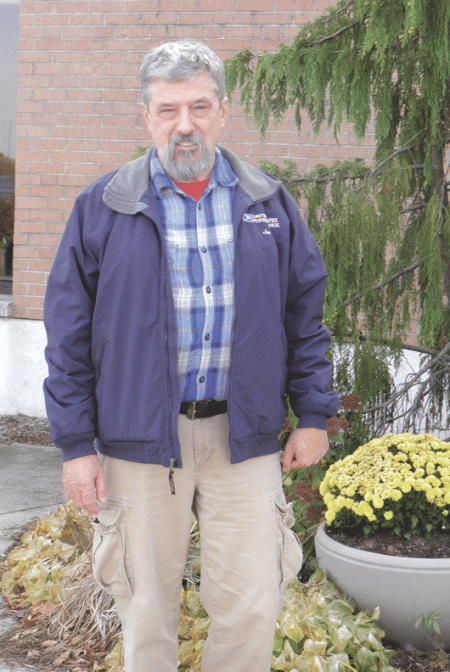
Joe Audette

Joe Audette says volunteers for the Road to Recovery program perform a valuable service in the community.

In most cases, volunteers take someone to an appointment, bring them home, and are able to return to their own home within an hour.

“Sometimes the person just needs to go for blood work. But if they didn’t have the ride, they couldn’t get it done, which is why our program is so critical,” she continued. “But we don’t expect people to go out in a snowstorm or really bad weather.”

Still, some drivers are so dedicated, they will do their best to get patients the care they need, even in inclement weather.

Joe Audette is one of them. After retiring from a 42-year career with the U.S. Postal Service and thinking about volunteering at a hospital, he discovered the Road to Recovery program.

“I like to drive, like meeting new people, and wanted to give back to the community,” said the 69-year-old.

He has driven patients to and from appointments for the past three years.

“I’ll drive anytime unless the weather is so bad that they cancel everything; some people are in treatment every day or every other day, and the ACS tells you how long the appointment is likely to be,” he went on. “It’s interesting, and you meet some really nice people. I’m not much of a talker, but I try to cheer them up by keeping the conversation light and commenting on the weather or the way people in cars around us are driving. I stay in the office once we arrive because they might get done early or need an extended amount of time. And it feels so good when they thank me.”

The Ride Stuff

Audette has also gone above and beyond for some people. For example, a man he drove was upset because his prescription wasn’t ready at the pharmacy when they arrived after his appointment. So, although Audette knew it wasn’t part of his job, he offered to pick it up later. “I wanted to ease his worries,” he said.

In another instance, a woman accompanied her husband to the treatment, but told Audette there was no need for him to stay while her spouse had a procedure.

“But she changed her mind, and when it was over, she told me she was glad I was there. She would have sat in the waiting room for several hours by herself, and you never know what’s going to happen or what’s going on in someone’s mind,” Audette said. “I’ve had surgeries and always had family members or someone there to pick me up. I knew I wasn’t alone, and don’t want anyone else to feel that way.”

He has been invited into people’s homes, and at least one family has offered him something to eat. But that rarely happens and is not something he’s comfortable with. But he loves the interaction that occurs while he drives.

“One lady was Russian and didn’t speak any English. So we used hand signals to communicate, and when we got to the hospital, we were laughing,” he recalled.

He added that, although some of the people he has transported have their own cars, they can’t drive because of medication they are taking, and often don’t want to take a bus because their immune systems are compromised.

Occasionally volunteers and patients get to know one another well enough that the patient requests that particular driver when they need a ride again. “But it’s not necessary to form relationships with the people you transport, and we don’t expect it to happen,” Mernoff said.

Parrow is extremely outgoing, and has laughed and joked with patients.

“I’m a cribbage fanatic, and since I usually wait for the patients, when I found a lady who also liked the game, we played during her chemotherapy treatments,” he told BusinessWest.

Parrow has also encouraged people to continue with their treatments when they tell him they are discouraged and feel like stopping.

“And because I like to cook, I bake cookies and give them to the patients and people who work in the radiation and oncology units,” he continued. “Not everyone has to do as much as I do, but I lost my mother to cancer more than 30 years ago, and if she was still alive and sick, I hope someone like me who enjoys driving would give her rides.”

Worthy Cause

In addition to losing his mother to cancer, Parrow has also lost a brother, sister-in-law, and niece. He finds the volunteer work meaningful and brings different types of music on CDs to suit the tastes of those he’s driving. “Everyone doesn’t have to do these things,” he said. “But I really enjoy this.”

Audette expressed similar feelings. “I feel good about doing something useful for someone else, and hope I give each person a few minutes of happiness,” he said, explaining that they often laugh together.

But, enjoyment aside, this volunteer work makes a profound difference.

“I can’t tell you enough how important this is,” Swanson said. “I have no other way to get to my appointments and no one else I can count on. This program is a lifesaver, and I appreciate it so much.”

Commercial Real Estate Sections

Reason to Smile

Stacy Building

Stacy Building

The new logo for Taylor Street Dental doesn’t picture anything, well, dental. No mouth, no teeth, no dental chair or examination equipment.

It’s a building. An important building, said Dr. David Peck.

“We wanted to meld this old, historic building with our dental practice — meld them together, old and new,” he said of the logo, but also of his practice itself, which for 30 years had been known simply as David I. Peck, DMD and been housed in a storefront on Worthington Street, in downtown Springfield’s club district.

But he was looking to move, and became intrigued by the Stacy Building a block away — its striking architecture, solid bones, and storied history, but also its proximity to where he had been treating patients for three decades.

“I knew I wanted to move the practice into another building, to expand and gain more space,” Peck told BusinessWest. “I started looking in the city. I could have gone to the suburbs — Longmeadow, East Longmeadow, Wilbraham — but I’ve been downtown 30 years, and I really believe my success is due to the city of Springfield — due to all my patients, past and present, who had no problem coming to downtown Springfield. I felt like it was time to pay it forward by building them an office where they’re comfortable and happy and feel great about the surroundings.”

He found it in the Stacy Building on Taylor Street, which he bought in 2013 from Plotkin Associates and now houses 3,700 square feet of dental space on the fourth floor — a striking top-level office boasting plenty of exposed brick, chestnut beams and columns, skylights, and barn-style sliding doors.

“We wanted to keep all the old parts of the building that are so beautiful — the large windows, the wood beams and columns,” he explained. “Construction always takes longer than you expect, but we finally moved in this past August.”

One aspect of the project that caused delays was making sure the building was completely handicapped-accessible, including installation of a new, larger elevator cab that opens to both the lobby of the building and at ground level; previously, the lobby was accessible by stairs only.

“We wanted to make sure all my patients, young and old, could get from the ground floor to the fourth-floor office,” Peck said. “We now have handicapped accessibility to all four floors.”

Dr. David Peck

Dr. David Peck, owner of Taylor Street Dental and, now, the Stacy Building that houses it.

That’s just one element that pleases him about the building, which still houses NAI Plotkin on the first floor and two marketing agencies on the second. The third floor has 2,500 square feet of space yet to be leased, in addition to some conference space for Taylor Street Dental.

“The building looks as good as it does because of the hard work of Laplante Construction in East Longmeadow,” Peck said. “They were pivotal in the design and construction and successful outcome of this building. We owe them a debt of gratitude for doing such an amazing job.”

Old and New

The Stacy Building is best-known as the place where brothers Charles and Frank Duryea built the first American gasoline-powered car in 1893. Within a few years, they were making 13 cars a year there.

“The building was in good condition, but I knew I wanted the dental office on the fourth floor, which was small offices, so we demoed the third and fourth floor, modernized it, sandblasted the brick to keep the aesthetics of the brick, kept the beams and the wood columns, and cleaned up the molding around the large windows.”

The space now boasts nine treatment areas, up from five on Worthington Street, and Peck is looking to add staff — he currently employs 11, including two other dentists — to make use of the additional space.

“We renovated all new — we didn’t even bring any of our existing equipment over,” he said, referring to state-of-the-art devices like CT scanners, medical lasers for treatment of soft tissue, and movie-projecting goggles for patients to wear during their procedures. “We wanted all brand-new equipment.”

The construction work isn’t totally complete, however, as exterior façade work will continue in the spring. But the Stacy Building has taken a big step into the 21st century, with a new, more efficient HVAC system, a new fire-alarm system, and new lighting.

“We totally converted the entire building to LED lighting. My daughter, a civil engineer, said, ‘Dad, you’ve got to go LED and be as green as you can.’ So, as a tribute to my daughter, I changed out all the fluorescent lights in the whole building.”

Peck’s patients have already expressed approval of the new office.

“Let me tell you — when patients come here, their mouths drop open. They love it. They say, ‘as comfortable as I felt with you in the other office, Dr. Peck, I’m so much more comfortable here in the new office.’ They say when they come in, they feel even more relaxed, more comfortable, more at peace. When you go to the dentist, you’re nervous, but they feel like they’ve come into a spa environment; their anxiety and nervousness is at a much lower level. They come in and say, ‘it’s just like a spa. I want to sit here and never leave.’”

Those are compliments he relishes.

“It’s just a nice feeling. That’s what I want to do. With any business establishment, you want to provide the very best for your patrons, customers, patients,” he said, adding, “my wife, Susan, was very much involved in helping me design this. We have a partnership; we’ve been married for 35 years, and we just love designing together. I thank my wife for helping me make this place such a success, and something that’s so beautiful for my patients.”

exposed brick and beam features

Dr. David Peck wanted to keep the exposed brick and beam features of the Stacy Building.

Those patients visit Peck for a full range of general, cosmetic, and implant dentistry, he explained, adding that he designed his practice as a one-stop site for dental needs — and, now, a coffee bar with USB chargers.

Those are the sort of funky touches that appeal to a downtown Springfield clientele, one that doesn’t necessarily need a storefront window to draw them in. Parking is plentiful, he added, from validation at a neighboring parking garage to on-street spaces to a small lot dedicated to Taylor Street Dental. “We try to give patients every reason to come to us.

“I bought this place because I wanted to stay in Springfield,” he went on. “It’s a gorgeous building. Just look at it from the outside — I love the way the building looks in springtime, when the trees bloom. It is an absolutely gorgeous building, and with the architecture, the way the brick is laid, the façade, and even the windows, I fell in love with the building.”

Positive Story

Peck’s clear affection for his location explains the logo. “This melding of the dental practice with the historic building creates — as corny as it sounds — a marriage made in heaven,” he told BusinessWest. “It feels great when I come in here. It’s amazing, the beauty they were able to build into it back then, without the heavy machinery we have now. I love coming in here every day.”

The Duryea Historical Society sent Peck a plaque for the office, and when he schedules a grand-opening celebration, he’s going to try to get some Duryea descendants to join in, if only to celebrate another success story in a city seeing more of them these days.

“There’s a perception that Springfield is unsafe. But I’ve been here 30 years; I’ve walked out at 12, 1 in the morning. I’ve never had a problem,” he said. “I love Springfield, and Springfield loves us. I think about times when people felt more positive about the city they work and live in, but they should appreciate what they have here in Springfield. We have museums at the Quadrangle, the Basketball Hall of Fame, MGM wants to come in … these are all positive things. It’s a beautiful city, so let’s start appreciating what we have and stop bashing it.”

That’s why he refuses to discount the City of Homes, but rather continue to support it — with a highly visible investment in the future of its downtown.

“I’ve seen other business around downtown Springfield that had no interest in staying, but not Taylor Street Dental,” he said. “We’re here to stay for the long term.”


Joseph Bednar can be reached at [email protected]

Accounting and Tax Planning Sections

Inaction by Congress Leads to a Challenging Assignment

Kristina Drzal-Houghton

Kristina Drzal-Houghton

By KRISTINA DRZAL-HOUGHTON, CPA, MST

Year-end tax planning, which always brings its own challenges, has become even more burdensome this year due to  the inaction of Congress on extending a host of expiring tax breaks, among other issues. But there are still a host of tax strategies that businesses and individuals can enact now while they wait for lawmakers to do their part.

Year-end tax planning for 2015 is particularly challenging because Congress has not yet acted on a host of tax breaks that expired at the end of 2014.

It is uncertain at this time whether the extender provisions will be extended by Congress on a permanent or temporary basis (and whether any such extension would be made retroactive). These extender provisions may be dealt with as part of a broader tax-reform effort. These tax breaks include, for individuals:

• The option to deduct state and local sales and use taxes instead of state and local income taxes;
• Educator-expense deduction;
• Deduction for mortgage-insurance premiums;
• Exclusion of gains on sale of small-business stock;
• Energy-efficiency tax provisions;
• Above-the-line deduction for qualified higher-education expenses;
• Tax-free IRA distributions for charitable purposes by those age 70 1/2 or older; and
• Exclusion for up to $2 million of mortgage debt forgiveness on a principal residence.

For businesses, tax breaks that expired at the end of last year and may be retroactively reinstated and extended include:

• A 50% bonus first-year depreciation for most new machinery, equipment, and software;
• Expanded Section 179 deduction;
• R&D tax credit;
• Section 179D energy-efficiency deductions for commercial buildings;
• Section 45L energy-efficiency credits for multifamily and residential developers; and
• The 15-year write-off for qualified leasehold-improvement property, qualified restaurant property, and qualified retail-improvement property.

TaxPlanningDPartIt’s obvious that taxpayers across the spectrum are affected by these tax provisions. The delayed action on the part of Congress has left taxpayers with questions about how to proceed.

One might think we should be fully able to plan despite uncertainty. Remember, the tax cuts enacted in 2001 and 2003 included sunset provisions, so these cuts began to expire at the end of 2010. Since then, they have been extended for one or two years at a time. On Dec. 17, 2014, the cuts were extended for the tax year 2014 and expired on Dec. 31, 2014.

Although the Senate Finance Committee has voted to extend the provisions for 2015, Congress will not address possible legislation until later in the year. Such action is anticipated, but what exactly can be concluded for this year is unknown at this point. This is not an insignificant item since the tax impact of these expired provisions is significant for millions of taxpayers.

There are those in Congress who hear the voice of the taxpayer and are attempting to address these issues sooner rather than later. There is also a contingent in the House that would make the tax cuts permanent.

The best advice for taxpayers at this point is to:

• Make good business decisions, regardless of the tax implications;
• Reject a strategy that is dependent on Congress extending these provisions;
• Be ready to act if the cuts are extended; and
• Keep in close communication with their CPA to stay abreast of any late-breaking tax developments.

If the continued uncertainty of tax breaks doesn’t have you aggravated enough, contacting the IRS for guidance has become more difficult because budget cuts have resulted in personnel layoffs and reduction in services. On the bright side, your chances of facing an IRS audit are greatly reduced.

Meanwhile, the IRS continues to send out computer-generated notices, usually from document-matching processes. Since IRS notices generated in this way are sometimes incorrect, you should consult your tax professional about the appropriate response.

Business Planning

If you’re a business owner, you are facing another year-end with more tax questions than answers.

One 2015 inflation adjustment applies to the small-business healthcare tax credit. This year the maximum credit is phased out based on the employer’s number of full-time equivalent employees in excess of 10 and the employer’s average annual wages in excess of $25,800, which was $25,400 in 2014.

Of course, a major unknown right now is whether Congress will restore expired tax provisions noted above retroactively to the beginning of 2015, providing some tax relief. Or will extender legislation get trapped somewhere between the Senate, the House, and the Oval Office?

You can’t stake the welfare of your business on possibilities, but there’s some evidence that many of the business tax provisions will be extended.

While you’re waiting for the outcome of the extenders, you need to proceed with your standard tax filings, making sure they are properly filed in a timely manner.

Important guidance to keep in mind is the recently issued U.S. Department of Labor clarification of the definition of an independent contractor, as opposed to an employee. If you are classifying workers as independent contractors to reduce your health-insurance obligations, your share of Social Security and Medicare payments, and unemployment taxes, tread carefully.

If you classify some of your workers as independent contractors who are actually employees, your business could be required to pay unpaid payroll taxes and interest and penalties. It could also be obligated to pay for employee benefits that your company didn’t previously provide, as well as federal penalties.

The basic guidance is an ‘economic realities test.’ In other words, how much control does your company have over the way workers perform their jobs? For example:

• Do the workers in question determine how they accomplish their task, or do you closely supervise them?
• Do they have other clients, or do they work full-time for you?
• Do they receive payment for each job, or do you pay them on your schedule?
• Do they own their own equipment and facilities, or does your company provide equipment, supplies, and office space?

These and other considerations are important in determining a worker’s status. If you have any questions, consult with your CPA about the proper classification of your workers to avoid additional taxes and penalties.

Individual Planning

For 2015, the personal and dependency exemptions were increased to $4,000, from $3,950 in 2014. The standard deductions for all filing statuses received a small boost of between $100 and $200 above the 2014 amounts.

The annual health flexible spending account (FSA) contribution limit increased by $50 to $2,550. Both employee and employer may contribute to this account, but the combined contribution may not be greater than the annual limit.

Taxpayers who have a health savings account under a high-deductible health plan (HDHP) have higher contribution limits this year of $3,350 per individual and $6,650 for a family. The HDHP’s out-of-pocket maximums of $6,450 per individual and $12,900 for a family and minimum deductibles of $1,300 per individual and $2,600 for a family are up somewhat from 2014.

A good tax strategy is to participate in your employer’s 401(k) plan. You may elect to contribute up to $18,000 this year before taxes, and the additional catch-up contribution for employees who are age 50 and above is $6,000. Refer to your employer’s plan to confirm that the catch-up contribution is permitted. These increased contribution limits also apply to 403(b) plans, most 457 plans, and the Thrift Savings Plan.

The IRA contribution limit was not raised in 2015. It is still $5,500, with an additional $1,000 catch-up contribution allowed for people 50 years of age or older.

But rules governing IRA rollovers have changed. As of 2015, you may make only one IRA-to-IRA rollover per year. This does not limit direct rollovers from trustee to trustee.

Whether the estate tax will be repealed is an unknown at this point. Currently, the estate-tax exemption is $5.43 million. Together, a married couple can pass an estate valued at $10.86 million to their heirs without paying federal estate tax because of the portability provision. Taxpayers will have to see what awaits them in 2016.


Go HERE for a PDF of the region’s accounting firms


Estate-tax planning is incredibly complex. It should be done in concert with a qualified financial adviser or CPA who specializes in estate- and gift-tax planning. You don’t have to be wealthy to engage in estate-tax planning. Middle-income couples have made mistakes in estate planning costing them thousands of dollars. Additionally, for Massachusetts, the minimum taxable estate is considerably lower than the federal amount.

Another inflation adjustment applies to foreign earned income. U.S. citizens and U.S. resident aliens who live abroad are taxed on worldwide income. If you worked outside of the U.S. this year, you may qualify for the foreign earned income exclusion, which means you may qualify to exclude from income for 2015 up to $100,800 of foreign earnings. This amount is adjusted annually for inflation. You may also exclude or deduct certain foreign housing amounts.

As most taxpayers are aware, federal tax law allows a deduction for charitable contributions made to qualified IRS tax-exempt organizations. Before making such contributions, however, you should become familiar with some of the laws and limitations on contributions so you can maximize the tax benefit of the deduction.

The contribution must be made by Dec. 31. A check mailed with a Dec. 31 postmark is acceptable. The organization cannot ‘hold the books open’ for a few days after the end of the year and credit those contributions to the year just ended.

There are limitations on the amount of charitable contributions that you may deduct. For individuals, the limit is 50% of adjusted gross income (AGI) or 30% of AGI if the donation is capital-gain property. Any excess may be carried over to future years.

Corporations are limited to deducting 10% of the corporation’s pre-tax net income. An S corporation carries the contribution to the individual shareholders’ returns, so they are not subject to the 10% limitation.

Beyond the laws and limitations discussed above, some strategies may be employed to maximize the benefit of the deduction. If your itemized deductions are near the amount of the standard deduction, you may wish to bunch contributions in a year in which the standard deduction amount has been exceeded.

In addition, if your AGI exceeds a threshold amount — for example, $309,900 for married filing jointly — your charitable deduction amount will be phased out to not less than 80% of the contribution. If you have unusually large income in a particular year, you may wish to defer your giving to another year to receive a greater benefit.

It is a good strategy to keep a running list of your charitable contributions so you can be prepared to speed up or delay any contributions to maximize your deductions. Along this same line, keeping tabs on your total income for the year, in case you will be subject to the phaseout provisions, will enable you to plan properly.

If you plan to contribute appreciated capital-gain property, you will achieve the maximum benefit if the property is long-term — property held for more than 12 months. You can normally deduct the fair market value of the contribution rather than the cost basis. If held for 12 months or fewer, the deduction is limited to the basis in the property.

Before making such a contribution, you should ascertain that the property does qualify for deduction of the fair market value and is, in fact, appreciated property.

Timing income and expenses can be an important tax-reduction strategy. As you consider your tax plan, determine whether you are likely to be subject to the alternative minimum tax (AMT). The AMT’s function is to level taxes when income — adjusted for certain preference items — exceeds certain exemptions, but the tax rate applied to that income falls below the AMT rate.

Before deciding to accelerate or defer income and prepay or delay deductible expenses, you need to gauge the possible effect of the AMT on these tax-planning strategies. Having a number of miscellaneous itemized deductions, personal exemptions, medical expenses, and state and local taxes can trigger AMT. Our experience is that a vast number of taxpayers in Massachusetts and Connecticut pay the AMT tax as a result of the amount of real estate and state income tax they pay.

After analyzing your specific tax situation, if you anticipate that your income will be higher in 2016, you might benefit from accelerating income into 2015 and possibly postponing deductions, keeping the AMT threat in mind.

Individuals usually account for taxes using the cash method. As a cash-method taxpayer, you can deduct expenses when you pay them or charge them to your credit card. Expenses paid by credit card are considered paid in the year they are incurred.

In addition to charitable contributions discussed earlier, you should decide whether it would be beneficial for you to prepay the following expenses:

• State and local income taxes;
• Real-estate taxes;
• Mortgage interest;
• Margin interest; and
• Miscellaneous itemized deductions.

Taxpayers usually elect to itemize deductions only if total deductions exceed the standard deduction for the year. If itemized deductions are near the standard deduction amount, grouping these deductions in alternating years is often an effective tax-planning strategy. Bunching your deductions can be particularly advantageous for taxpayers with unreimbursed medical and dental expenses, who may deduct the amount in excess of 10% of AGI. For taxpayers age 65 or older, the percentage is 7.5%, but this exception is temporary, slated to expire after Dec. 31, 2016.

TaxPlanningGRAF1115BAlso deductible are unreimbursed employee business expenses, tax-return-preparation fees, investment expenses, and certain other miscellaneous itemized deductions that together are in excess of 2% of AGI

Keep in mind that not only AMT, but the amount of itemized deductions you can claim on your 2015 tax return is reduced by 3% of the amount by which your AGI exceeds the threshold amount.

Taxpayers cannot lose more than 80% of the itemized deductions subject to the phaseout. And deductions for medical expenses, investment interest, casualty and theft losses, and gambling losses are not subject to the limitation.

Conclusion

The U.S. tax code is incredibly complex and can change rapidly, even though it may sometimes seem to be moving along at a snail’s pace. This complexity has given rise to more calls for simplification. For now, taxpayers must still live with the complexity and the changes, as simplification appears to be only a dream.

Although a majority of taxpayers have their taxes prepared by a professional, they are turning in larger numbers to self-prepared returns. Since the online program does the calculations, it seems to be an economical approach to preparing and filing taxes.

However, the program is no substitute for a qualified tax professional such as a CPA. Programs can calculate tax liability, but they cannot substitute for professional advice and guidance. As a CPA, I would equate it to watching a how-to video on YouTube and embarking on repairing my car.

With such complexity in the tax code, a CPA is better able to keep abreast of the changes and can prepare taxes in a manner that determines a taxpayer’s minimum legal tax liability. But minimizing tax liability started last week, last month, last year. Tax planning is a constant in today’s complex world.

Kristina Drzal-Houghton, CPA MST is the partner in charge of Taxation at Holyoke-based Meyers Brothers Kalicka, P.C.; (413) 536-8510.

Accounting and Tax Planning Sections

Giving Advice

By HILLARY BURR, CPA, MST

Hillary Burr

Hillary Burr

While I can’t confirm the percentage of us that are procrastinators, I am comfortable assuming that, when it comes to year-end planning, that percentage skyrockets.
Understandably so, because this time of year is filled with travel, family, and holidays. For those reasons, now is the time to start thinking about year-end. This is particularly true if this will be a high-income year or if you are considering making larger charitable donations before year-end.
Here are some things to think about:

Get Your Advisors Talking
We often work with investment advisors, estate-planning attorneys and sometimes a client’s family office as a team. Each advisor brings a valuable piece to the table to assist in the decision-making process.  Having a handle on how the current year compares to the prior year and the impact on your upcoming tax liability allows your tax preparer to take a team approach with you and any of your other financial and legal professionals in deciding what makes sense for the remainder of the year.
It also allows this team to combine estate planning with income-tax planning.

A Focus on Philanthropy
When you have a high-income year, this is a natural time to consider the benefit that year-end charitable contributions can have.
This could be from selling a business or large holding in your portfolio, a stock-option exercise, or maybe a significant bonus. Often, clients know the amount they are comfortable donating. Your tax professional’s role is in educating you and your team to structure those donations in the most tax-efficient way and to confirm the desired outcome has been achieved.
If you are planning on donating or gifting appreciated securities, have a conversation with your custodian as to when they stop accepting transfer requests. The deadlines can vary by custodian, so having the conversation earlier allows you to ensure that it can be acted upon, as opposed to waiting until the end of the year, when it may be too late to request these transactions.
If you are planning on donating real estate or tangible property, you’ll need time to obtain the proper valuations and get the legal documents in order, so the earlier the better.


Go HERE for a PDF of the region’s accounting firms


Consider a Donor-advised Fund
An excellent planning tool for charitable giving is a donor-advised fund (DAF). This allows you to take the deduction on your return for the contribution in the current year while allowing you to be thoughtful in your giving. For example, if you are able to give a large amount to a DAF in a high-earning year, you can give smaller amounts away to your favorite charities, keeping annual donations at a level you are comfortable with and allowing you to give the same amount to the charity in your lower-income years. This approach is particularly useful in the last earning years before retirement.
Donor-advised funds can also be used to meet required distributions from a private foundation and can serve as a good opportunity to get younger members of the family involved in charitable giving with the funds in the DAF.

Review of Carry-forwards
If you have larger donations made in previous years that are coming up on their five-year expiration, you may be able to utilize the carry-forward and delay the contribution to January, effectively moving it into the next tax year.
Similarly, if income can fluctuate, as we saw with late capital-gain dividends in 2014, consider whether it makes sense to create a little bit of a carry-forward with your donations and make sure you’re achieving as much tax minimization benefit as you can.

Don’t Miss Out
Not taking action until Dec. 31 can leave you open to changes in the law but could also move a deduction or planning opportunity out another year, meaning April 2017 before you see the benefit. n

Hillary Burr is a CPA and principal with Wolf & Co., an accounting firm in Springfield and Boston; (617) 428-5460; [email protected]

Luxury Living Sections

Personal Space

Rick McCullough

Rick McCullough learned plenty of lessons from his father, who launched what is now a second-generation home-construction business 60 years ago — among them hard work, integrity, and an emphasis on personal relationships. It’s that hands-on quality of his work that McCullough counts among the most enjoyable aspects of his job — not to mention an economy that has shed some lean years and is roaring with new life as families once again invest in high-end, custom homes.

Richard McCullough runs a successful home-building company, but he still refers to it as “my dad’s business.”

That’s because he grew up around R.A. McCullough Inc. — the construction firm launched by his father during the 1950s — and, along the way, picked up plenty of inspiration and lessons for his future career as the second-generation president of this Longmeadow-based family business.

“He first sold houses for other builders as a Realtor, and as he looked at what people were building, he said, ‘I can do this, and I can do it better,’” McCullough told BusinessWest. “So he purchased some raw pieces of land and developed them, and just built the company from there over the decades.”

After he graduated from college in 1995, he went into his father’s business full-time.

“Before that, I was out in the field, doing the grunt work, but after college, I graduated to the office,” he said — a decision that wasn’t always set in stone. “My dad was this amazing businessman, builder, and developer, but I didn’t seriously consider it until I got older. During my college years, I began to see [construction] as a natural fit for me.”

As one of the region’s most prominent builders of high-end and custom residences — typically 3,000 square feet and up — McCullough says he enjoys the hands-on aspect of dealing with clients and helping them turn their design visions into reality.

“I love helping them make decisions around building custom homes,” he said. “And I find there’s less miscommunication when I’m hands-on. I don’t get that phone call saying, ‘so-and-so didn’t call me back; what’s going on?’ There are fewer surprises that way. But I really do enjoy every aspect of this business, everything that’s involved in building homes, from the design through the end result.”

For this issue’s focus on luxury living, McCullough talks with BusinessWest about the changing nature of what a custom home is — and why he enjoys keeping up with those changes.

Beyond the Floor Plan

Make no mistake, he explained — ‘custom’ has meant different things over the decades.

“For example, in the ’80s, bigger was better, and customizing didn’t mean quite what it does nowadays. Back in the ’70s and ’80s, there wasn’t a whole lot of custom millwork, for example, unless it was in the ultra-high end. People today are less concerned about size and more about quality, what goes into it, the finishes.”

Today’s home buyers seem more educated and sure of the touches they desire in a home. As he walked along Bridle Path Ridge in Somers, Conn., a small development of high-end homes his company developed, he explained that, while the exteriors reflect a consistent — but not copycat — look, the interiors are very different, based on their buyers’ preferences.

“The houses’ architecture matches — you can tell it’s the same builder — but they’re very different from each other,” he said. “I love the challenge of creating something different. Sometimes they’ll see a house next door to where they want one built, and they’ll say, ‘that’s what I want.’ Well, we can do that floor layout, but let’s do something unique and something that won’t be a carbon copy of your neighbor.”

Those differences encompass everything from materials to finishes to subtle stylistic changes. “We can mix it up a little bit without going crazy — we’re not going to build a contemporary next to a colonial. It’s a different flavor while staying in the same realm of style.”

As for interior layout, customization today is largely a reflection of the family’s lifestyle.

“It’s really about customizing to an owner’s needs,” he said. “Where is the focus? It’s normally still through the kitchen, through the family room, areas where you spend the vast majority of the time, for ease of entertaining. Or you might want areas for a child to be close to the main part of the house, but have their own separate area.”

Home buyers are always going to focus on price — a home is likely their biggest investment — but McCullough said square footage doesn’t tell the whole story.

“Plenty of people say, ‘what’s the price per square foot,’ but what’s in the house? People think going from 3,500 to 2,500 square feet translates very easily from a cost-per-square-foot standpoint, but if you’re spending, say, 175 per square foot on a 3,500-square-foot home and you want to go to a smaller footprint, you’ll probably have the same size kitchen, same number of bathrooms, same finishes — so you’re going to spend more money per square foot.”

Particularly in the high-end housing market, he added, it’s important to keep an eye on a home’s future marketability. “You say you want only three bedrooms. Well, at least leave space to have a fourth bedroom — over the garage, unfinished. Marketability-wise, that adds a little value for the next person who’s going to buy it down the road.”

Priorities have shifted somewhat for homeowners in the realm of energy efficiency, McCullough said, noting that airtight construction and energy options like geothermal heating are becoming more popular.

He also noted that technology has impacted the features that high-end homebuyers are looking for today — and not just in the realm of home entertainment.

“People want things to be automated now; they want their lighting systems working off their smartphones. Controlling your heating and cooling from outside your home — that’s a relatively new thing in our industry, and you can’t underestimate that part of the business and how much that will grow.”

Bridle Path Ridge in Somers, Conn

Bridle Path Ridge in Somers, Conn. is one of McCullough’s recent developments of high-end, custom homes.

That goes for retrofitting existing homes as well, he added, a process made easier these days by the emergence of wireless technology.

“Cable companies are offering security systems — 20 years ago, you wouldn’t have guessed that would be happening. We have complete home automation … lights, thermostat, cameras you can view on a smartphone,” he went on. “There are so many apps, so many security systems. And it’s evolving so fast. Once you get these systems installed, things will change even more. It happens quickly.”

Ups and Downs

With the homebuilding industry on the upswing, McCullough is happy the recession years are well behind.

“That was an incredible challenge, and something that definitely left a mark on every developer, builder, and remodeler. Some fared better than others, but it was a rough recession,” he said, adding that it was difficult to tell when the tough times would end, challenging developers who wanted to time their investments.

“If a developer saved money throughout the recession, they might have been able to pick up properties, be opportunistic as they prepared for a turnaround, but the turnaround took longer than we thought. Developers were thinking, ‘we’ll have another year or two of this,’ but it lasted a little longer,” he explained. “There’s no book to go to on how to play it. It changed our industry somewhat, and hopefully we don’t forget the lessons of what we went through.”

As a recent past president of the Home Builders & Remodelers Assoc. of Western Mass. — an organization that advocates for contractors on the legislative level and educates consumers about companies and services — McCullough was in regular contact with builders during the extended downturn and came away impressed by their resilience.

“Everyone kept their heads up, even though it was obviously tough,” he said. “It’s a tough industry. We all know it. But our membership has significantly increased recently, which tells you where the economy is.”

The word he chose to describe the current mood? “Euphoric.”

“The market hasn’t fully recovered; we may not reach the level of the early to mid-2000s, when things were flying. But it was so bad for so long, and everything is good right now, in my mind — everything from existing home sales to remodeling to new construction.”

That’s partly because many potential buyers were just waiting out the storm but never ditched their plans for a new residence.

“A lot of people doing that work now had the money to do it, but had a lot of uncertainty — ‘will I get my investment back if I spend a premium on a major remodel or a new home?’ You don’t do that unless you have some view of the future that’s positive. It’s been great getting back into the swing of things after so long a downturn.”

The year has been so positive for the industry, in fact, that even the cold months will be productive in many corners.

“I normally see the vendors and the subcontractors I work with go into seasonal adjustments, down periods heading into winter,” McCullough said. “But people are staying busy through the holidays. Not everyone believes contractors work through the holidays because of the frozen ground, and they wonder whether that’s a good time to have something done. But it’s busier now than it’s been in years.”

Two Hats

McCullough’s father continued to work in real estate in the ’70s, at a good-sized brokerage firm called McCullough & Taft Realty — a tradition the junior McCullough continues today as a real-estate agent at Keller Williams Realty in Longmeadow.

“I’ve been a real-estate agent, where I’m helping a client negotiate with a builder, and I look over the specifics of the contract. It’s an interesting perspective, being more on the outside.”

But there’s something special about being on the construction side.

“I love being hands-on and engaged in every aspect of the project; that’s something I enjoy,” he said, noting that, even though the company has fluctuated in size over the years, he’s always stayed closely involved in projects — an emphasis on relationships he learned from his father.

“My dad was so honest and straightforward,” McCullough said. “I’ve told people he was no rocket scientist, but he worked hard, and his integrity was at the forefront of everything he did. And that’s the way I choose to follow. In the old days, everything was done on a handshake, and it’s nice to feel like we can do that in certain circumstances.”

That’s why he tells people R.A. McCullough is his father’s business.

“To me, it’s more about maintaining the same standards he had. That definitely builds the passion with me — wanting people to be happy, wanting people to have a good experience. It’s definitely not about the money. It’s about everything my dad stood for.”

Joseph Bednar can be reached at [email protected]

Luxury Living Sections

Rolling Along

RV trailer Stock

Chris Adams says the reasons behind a resurgence in recreational-vehicle sales are obvious.

“The economy is getting better, and gas prices are going down quite a bit. The industry is way up,” said Adams, a member of the Pioneer Valley 8 chapter of the North American Family Campers Assoc., and co-chairman with his wife, Trudi, of the upcoming 2016 Camping & Outdoor Show at the Eastern States Exposition.

The statistics back up that assessment. According to the Recreation Vehicle Industry Assoc. (RVIA), RV shipments in 2015 are expected to top 365,000 units, which would be the highest total since 2006, and the sixth consecutive year of growth since sales bottomed out in 2009, the low point of the Great Recession.

But RV popularity isn’t only a recent phenomenon driven by economic winds. According to the RVIA, motorhome ownership has reached record levels, with more than 9 million households in the U.S. now owning an RV, the highest level ever recorded. That figure marks a 16% increase since 2001 and a 64% jump since 1980.

Marc LaBrecque has experienced the entire spectrum of that growth. He started servicing, then selling, towable RVs in 1973, at Minuteman RV in Chicopee. Today, he’s the owner of Diamond RV Center in West Hatfield, the region’s largest motorhome dealer, and a business reaping the benefits of not only a surge in sales, but growing demographic diversity among buyers.

“In 2004 or 2005, you could pinpoint the fifth-wheel buyer by age — 62 to 72,” he said, referring to a towable RV that connects to the rear axle of a pickup truck. “That’s really changed. That demographic starts now at 30 and goes to 70.”

Meanwhile, big-dollar motorhomes, the kind that don’t need towing, have become more popular with the 45- to 60-year-old demographic, when they were once dominated by older buyers.

“It’s getting much younger — probably because 20-year payments are available,” LaBrecque noted. “It’s almost like getting a mortgage on your home. You can get into a nice, new motorhome for $125,000, and that payment could be $600 or $650 a month.”

Still, he went on, “our bread and butter is still our travel trailers. You can get a nice travel trailer in the $25,000 to $35,000 range and have a payment about $250 a month — that’s affordable for many people.”

Smart Investment

That affordability has drawn growing numbers of Americans looking for a more outdoor-oriented style of vacation, and perhaps new friendships, as regular campers tend to form bonds and meet up on weekends.

“It’s a nice way to just get away from the hustle and bustle of the work week and kind of kick back and relax,” said Adams, who has owned RVs for more than 20 years.

In a Harris Interactive survey on the benefits of RV ownership, experiencing nature and outdoor activities and enjoying quality family time topped the list. Owners also said they’ve built stronger bonds with loved ones, eat healthier food on the road, and enjoy sleeping their own beds and using their own bathroom facilities.

There may be financial benefits as well. A vacation cost comparison prepared last year by PKF Consulting USA showed that a family of four can save 27% to 62% on vacation costs by traveling in an RV, even when factoring in ownership costs and fuel. For a two-person traveling party, savings are 11% to 48%.

In addition to vacation travel, RV owners use them for tailgating, travel with pets, business, and to participate in outdoor sports and other leisure activities. As for vacation time, the survey indicates that owners lean toward shorter trips closer to home — enjoying campgrounds rather using up fuel and time on the road. More than 90% of RVers take three or more mini-vacations per year, choosing from more than 16,000 campgrounds nationwide.

Chris Adams

Chris Adams says RV enthusiasts may prefer different types of vehicles, but they bond through their mutual love of camping.

For this style of vacation, fuel prices would have to nearly triple over current levels to make RV trips more expensive for a family of four than other forms of travel. “While fuel costs are a component of the overall vacation cost, fluctuations in fuel prices aren’t significant enough to affect a family’s decision of whether or not to take RV trips over other types of vacations,” said Kannan Sankaran, PKF’s lead researcher for the study.

It helps, Adams, that motorhome enthusiasts have many price points to choose from.

“It’s a large spectrum,” he told BusinessWest. “A family that’s just starting out, or that may not have a lot of money, may want to start with a pop-up camper or just get out there with a tent. It goes all the way up to people who are retiring and buying the big-dollar motorhomes with all the luxuries. There’s a huge variety all depending on where you are in life.”

LaBrecque said he started selling Newmar motorhomes — a high-end line, costing $250,000 and up — about two years ago. “We’re doing a pretty good job with the $400,000 Dutch Stars — 40- to 43-foot, diesel motorhomes with ceramic tile floors, cherry cabinets, high-end stuff. That market has come alive. It makes Diamond more of a destination point.”

RV SalesChart1115bAccording to the RVIA, manufacturers, recognizing the growing diversity of RV owners, are focused on offering products with an optimal mix of size, amenities, and price, including budget-friendly options like lightweight trailers and smaller, fuel-efficient motorhomes. Technologies such as solar panels and energy-efficient components are showing up on more models as well, to appeal to users with a bent toward going green.

LaBrecque said he’s selling more high-end models than ever to people who aren’t yet retired but are looking down the road to a luxurious mode of recreation.

“A lot of these guys have done OK in business, but were pushed into a corner” by the Great Recession, he explained. “They worked hard for the last 10 years to get through this stuff, not spending money. But now, things are OK, and they’re thinking, ‘I can afford to do this. My family suffered through the recession; let’s do it.’”

Whatever the level of luxury an RV owner prefers (or can afford), “once you get out camping with other people, you all have that in common,” Adams said, citing his own experiences with members of Pioneer Valley 8. “In our group, we treat it like a family; we all know each other. Everyone is friendly. If someone is having trouble with their motorhome, people stop and help them. We all relate to each other.”

Showtime

These days, Adams and his wife are focused on chairing the annual Camping & Outdoor Show, a year-round task that heats up as the event approaches; the couple have been spending at least 10 to 12 hours a week on coordinating all the moving parts that will draw hundreds of vehicles and thousands of enthusiasts to the Big E on Feb. 12-15.

“Everything is put on by volunteers,” he said. “It’s a lot of work. It definitely would be a lot easier if it was a job with a salary, and you could focus on if eight or hours a day. But we’re all volunteers. It’s a pretty large undertaking.”

The show’s popularity seems secure, as analysts at research firm TechNavio estimate that North American RV sales will continue to grow at more than 8% per year, on average, through 2019. With buyers in the 35-to-54 age group now the largest segment of owners, according to a University of Michigan study, industry prospects seem secure. And no one is counting out the Baby Boomers, retiring with, in many cases, large nest eggs.

“This has made our advertising so hard to do,” LaBrecque said. “In the old days, we would hit country-western stations, the NASCAR people. Now, there’s such diversity. And with fuel prices down, so many people are buying SUVs again, and they have that tow trailer.”

In short, RV sales keep rolling along.

“The good economy is just getting started,” LaBrecque told BusinessWest. “I’m hoping we’ll be on a roll for awhile.”

Joseph Bednar can be reached at [email protected]

Sections Technology

How Come the Message So Often Gets Lost in Translation?

By STEVE SHAW


Steve Shaw

Steve Shaw

Most companies and organizations do an admirable job when it comes to communicating with employees. That rumored merger, those pending layoffs, a change in leadership, or implementation  of a new health plan are the classic reasons for reaching out and touching someone in the cubicle down the hall.

So, how come the message from the IT department often gets lost in translation?

Technology can be a scary thing, and oftentimes, it’s treated that way. The IT department is happy to be left alone to its bits and bytes, while the communications department says, “just let us know when we’re going to be down for maintenance or need to teach people how to use that new software.”

That way of thinking is no longer valid in today’s technology-driven economy.

According to the global professional services company Towers Watson, companies with highly effective internal communications had 47% higher total returns to shareholders versus companies with the least effective internal communications programs over the last five years.

A Gallup poll says 70% of U.S. employees are not engaged and that disengaged employees cost our economy $450 to $550 billion a year in lost productivity. The Work Foundation, a U.K.-based, nonprofit think tank, says organizations that increase practices related to engagement by just 10% increase profits by an average of $2,400 per employee per year. Do I have your attention now?

One of our healthcare clients, a mid-sized hospital system with 12,000 employees, is implementing a new hyper-converged infrastructure, totally revamping its approach to networking, data storage, and computing. This two-year effort comes at a time when hospitals, mandated by the federal government to adopt expensive electronic health record (EHR) systems, are asked to do more with fewer resources.

The new infrastructure will do that, cutting datacenter construction costs by millions and allowing the IT department to become faster and more efficient. They’ll even be able to monetize their new technology investments by offering services to the outside world. But that’s what’s in it for IT. What about the doctors, nurses, and administrators who just want to be able to access their work data from any device, anytime, from anywhere?

We recommend beginning the communications process by putting yourself in your customer’s head. They want the software they depend on to do their jobs to be available whenever they need it. They have little sympathy for outages, maintenance windows, and the availability of a technician to fix an issue when it arises. In most cases, they have little concern for operating systems, storage hardware and software, or data-center design.


Go HERE for a chart of area telecom/voice/data providers


In that case, IT communications to an organization should come down to answering three basic questions.

• What are you doing and why? Use metaphors and real-life examples to put the answer into an easily relatable context. Try something like this: “why are we implementing a new network infrastructure? Think about how much data we all produce, share, and store each year. If you printed it all out, the paper alone would fill an 80,000-seat football stadium. Now, think about the secure network needed to handle that information, the machines needed to store it safely, and the system needed to protect it all in the event of a natural disaster. That’s why we’re doing what we’re doing.”

• How does the technology directly benefit the ability of people to do their jobs? Eliminate the jargon. The people who know the difference between ESX and Hyper-V will seek you out if they want to get technical. Your message? “Our new network will practically eliminate outages, support service times will improve dramatically, maintenance windows will go away, and if a piece of hardware fails, our backup kicks in immediately with virtually no interruption.” People generally don’t need to know how it works. They just want to know how it affects them. Resist the temptation to explain further.

• What do I need to do now? Be specific, but be reassuring. People customize their desktops and develop their own unique way of working. They also feel that, just when they finally get the handle on how to access the ‘E’ drive and navigate to where their data is stored, someone in IT decides to perform an upgrade that has them throwing a shoe at their computer screen. Sympathize. Produce easy-to-read checklists, develop logical implementation schedules, and communicate on a regular basis when things change. A single e-mail won’t do the trick.

The bottom line when it comes to communicating IT initiatives is this: you’re asking people to change (sometimes in a big way). There’s natural resistance to it, and it takes time. Don’t just tell them what, when, and why. How it will make their life easier is most important. Don’t be afraid to ask for input. You know what you want people to do. You just want to get them to think it was their idea.

You can’t communicate too much if the message is relevant and substantial. You can communicate too much if it’s overly technical and isn’t easy to internalize. Finally, choose your vehicle wisely. A one-time e-mail or fancy newsletter may find its way to the “I’ll read it later” file. Be creative. A mixture of written communication, live events, and interactive forums are critical for long-term buy-in.

Remember, IT is highly technical, but it’s not rocket science. Don’t confuse communicating the end result with a need to tell people how you got there.

Steve Shaw has spent more than three decades in the marketing and communications industries as a television reporter, production agency founder, and multi-media network executive. He is the vice president of Marketing and Communications for Holyoke-based VertitechIT, a business and healthcare IT networking and consulting firm; [email protected]

Features

When 30 economic-development, nonprofit, and community leaders from Greater Springfield visited Chattanooga last month as part of the City2City Pioneer Valley program, they heard, over and over, about the time Walter Cronkite called it “the dirtiest city in America.” That story is clearly part of the community’s DNA — but so is 45 years of recovery and rebirth, both ecologically and economically. How Tennessee’s fourth-largest city accomplished those goals, and its challenges moving forward, provide plenty of inspiration and food for thought back home in the Bay State.

riverfront

Chattanooga’s recovery has included a cleanup of its riverfront.

In the 1960s, Ron Littlefield says, no one needed GPS to find Tennessee’s fourth-largest city.

“You could tell when you were getting close to Chattanooga because you could smell Chattanooga; it stunk,” said the former mayor, who served from 2005 to 2013. “It was an old foundry city. And when you had stormy weather, you had inversions, because we have mountains and valleys, and it would trap the smoke, and you would literally be eating smoke when you walked outside.”

City leaders were mortified when, in October 1969, Walter Cronkite came across a recent EPA study, sat down behind the news desk, looked into the camera, and declared Chattanooga “the dirtiest city in America.”

“It was so bad that people had to change their shirts in the middle of the day,” said John Bridger, executive director of the Chattanooga-Hamilton County Regional Planning Agency. “They were tough times — but tough times create opportunities.”

In truth, Bridger continued, many residents put up with the pollution because the manufacturing sector was chugging along, but Cronkite’s report jarred them out of complacency. “If not for those challenges, I don’t think we would have changed, because we were comfortable. We were the dynamo of Dixie — why change what we were doing if we were making money? But that report created an impetus for change; it brought a new perspective.”

Still, Chattanooga was no overnight turnaround. Even after efforts to clean up the waterway and better connect the riverfront with the downtown area, a downturn in the region’s manufacturing base led to mass flight from the city, which lost more than 10% of its population during the 1980s. But, as current Mayor Andy Berke points out, it was the only American city with that level of population loss during the ’80s to actually gain residents in the 1990s.

“It took a long time — a lot of people over a great period of time — to make it happen,” he said. “And it started with real investment in the core of our city.”
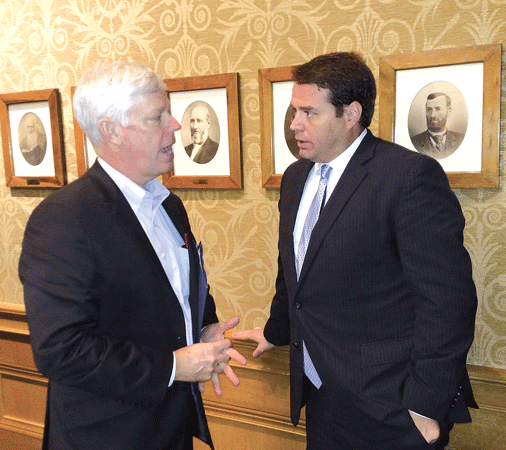
Rick Sullivan

Rick Sullivan, left, president of the Western Mass. Economic Development Council, chats with Nick Wilkinson, Chattanooga’s deputy administrator of Economic and Community Development.

Today, Chattanooga is a growing city (population just over 173,000, about 20,000 more than Springfield) riding a wave of entrepreneurship and high-tech innovation, and touting itself as the Gig City after building a broadband network (known as ‘the Gig’) able to connect every home and business to the Internet at 1 gigabit per second, or 50 to 100 times faster than the average U.S. Internet connection.

As part of the City2City Pioneer Valley program, 30 economic-development, nonprofit, and community leaders from Greater Springfield visited Chattanooga late last month to hear the story of how a stinking foundry city transformed itself into a beacon of innovation.

In doing so, they learned that this community on Georgia’s northwestern border is no utopia; it still faces serious education, workforce-development, and racial-gentrification issues, to name a few. But it’s also proving to be an example of how public, business, and nonprofit interests can work in concert to produce and then fund real solutions.

“There seems to be one goal with all these organizations we’ve met. They’re all doing their own things, but they’re all on the same page and have the same goal, and that’s to help all these spinning wheels move the city forward,” said Alfonso Santaniello, president of the Creative Strategy Agency in Springfield, who values his company’s downtown presence and wanted to visit a growing city with a similar emphasis on building up its central business district.

“Springfield needs to find a way to get everyone on the same page and push forward from there,” he went on. “That’s one of our biggest issues; everyone is doing great things, but why are we not doing them together?”

Chattanooga’s striking collaboration culture (more on that later) is one reason why the Gig City label is, in fact, not the top storyline there, but a way to draw national notice to everything else that’s going on.

“The technology is great,” said Enoch Elwell, founder of Co.Starters, a Chattanooga-based entrepreneuship program that has expanded nationally, including into Holyoke earlier this year. “But its biggest impact is as a rallying cry for our community, something that brings us together and draws the world’s attention.”

The City2City contingent from Massachusetts was certainly listening.

Cleaning Up Their Act

Littlefield recalls a time when Chattanooga manufacturers treated the Tennessee River like a sewer, dumping garbage directly into the waterway. “But in the ’70s, we cleaned up our water, and we began to clean up our act.”

From an ecological perspective, it actually helped when the foundries started to close, but it posed economic issues, he went on, which were partially remedied by attracting industries from the north, like textiles and automaking, with the promise of cheaper labor. But that wasn’t a sustainable strategy, and a steady population drain ensued.

John Bridger

“Ultimately, it’s not just about transportation, it’s not just about economic development, it’s not just about the natural environment — it’s about how all those things work together to create place,’ said John Bridger.

“When you lose jobs, you also lose hope, and when you lose hope, you lose your children,” he said. “They grow up and get an education and go somewhere else. We began to say, ‘we have to change this community in ways we’ve never changed it before. We’ve got to change our attitude, our way of thinking.’”

The first step was the creation of the Tennessee Riverpark Master Plan to transform the riverfront and downtown area, but only after many hours meeting with residents — many of whom had felt disenfranchised — and incorporating their concerns into the process. As Littlefield recalled, one woman told him, “this is the first time, when I said something, that someone wrote it down in my own words.”

Municipal leaders also visited other cities (notably a 1981 trek to Indianapolis) to find ideas and inspiration.

These information-gathering efforts led to the creation in 1986 of River City Co., a nonprofit tasked with implementing the master plan, a 20-year blueprint for the riverfront and downtown, initially capitalized with $12 million from local foundations and financial institutions.

“We did visioning before visioning was cool, and we found that it actually works,” Littlefield said. “So we set about to create quality of life, and that started with the river.”

Bridgett Massengill, executive director of Thrive 2055 — a more recent coalition of economic leaders tasked with creating economic opportunity in a tri-state, 16-county region surrounding Chattanooga’s Hamilton County — detailed how four area foundations took the first step to fund River City Co., and called it typical of the way the city has operated in the past 30 years.

The conversion of former industrial buildings

The conversion of former industrial buildings to retail and business space echoes myriad Pioneer Valley developments like Eastworks and Open Square.

“I have been blown away by the collaboration in this region, the way we come together, roll up our sleeves, and make it happen,” she said. “There was a will that we were going to proceed with or without federal dollars.”

That caught the attention of Katie Allan Zobel, president and CEO of the Community Foundation of Western Massachusetts.

“The success in Chattanooga has grown from public-private partnerships,” she told BusinessWest. “They keep saying how foundations have played a role in these partnerships, and it seems to me that’s something Springfield and surrounding regions should be exploring with more focus.”

She first thought, upon hearing of the role of the region’s foundations, that they must be larger and better-capitalized than those in Western Mass., but was surprised to find that wasn’t the case. “We can always do more together, and Chattanooga has been proving that for the last 25 years.”

The tax structure in Tennessee — property and sales taxes but no income tax — is a challenge for economic development, officials note. That’s why the public-private partnerships that have sprung up to support development are so noteworthy, said Beth Jones, executive director of the Southeast Tennessee Development District. “Typically, we don’t start with how much money an initiative will cost. We ask, ‘is this a good idea?’ and then we bring people together to raise the money.”

That’s part of the so-called “Chattanooga way” cited by many of the people who met with the City2City contingent. Kim White, president and CEO of River City Co., said the term essentially refers to the way leaders “get a diverse group of people together and really plan.”

Landing a Gig

The city’s successes included a complete overhaul of the riverfront, including the privately funded Tennessee Aquarium, the nation’s largest freshwater aquarium, and the pedestrian-only Walnut Street Bridge; as well as an innovation district downtown aimed at attracting both high-tech giants like Amazon (which has a presence in the city) as well as a raft of intriguing startups.

the Gig

Chattanooga’s recovery has included the establishment of a high-speed broadband network known as ‘the Gig.’

Despite the successes of the Tennessee Riverpark Master Plan, the planning process had never focused specifically on entrepreneurship or technology until the city’s power company, EPB, tapped into federal stimulus money in 2009 to launch the Gig, said Ken Hays, president and CEO of the city’s Enterprise Center and Innovation District, which followed in the wake of the massive fiber project.

Since then, an accelerator program for startups has graduated 67 companies that have raised $3.1 in combined capital. In 2012, a nonprofit called CoLab launched GigTank, an annual, 14-week summer entrepreneurship program; 40 participating companies have raised $4.37 million in capital to date. CoLab’s “Will This Float?” startup pitch competition, launched five years ago, has attracted 47 participants, and the five winners all continue to grow, with $5.5 million in capital raised to date. Then there’s Tech Goes Home, a computer-education program aimed at everyone from preschoolers to the elderly.

Chattanooga has plenty of traditional industry, of course, none more prominent than Volkswagen, which employs about 2,400 people at its only North American plant and is planning an expansion — even amidst controversy over its diesel engine — that will bring production of a new SUV to Chattanooga and boost its workforce by another 2,000, including 200 in research and development, a first for the area. Other giants, like Coca-Cola and Little Debbie, dot the landscape as well.

But economic-development leaders are focused on the Innovation District and the cultivation of small businesses that may one day grow to be the next Coca-Cola or Amazon. Efforts to do so range from Startup in a Day, a commitment to streamlining business permitting on a 24/7 basis, to the Growing Small Business program, a financial incentive offered to companies with fewer than 100 employees that hire at least five workers in a 12-month period.

“If we can subsidize their next hire and keep them afloat for another couple of months, that’s what we want to do, and it’s been pretty successful,” said Nick Wilkinson, the city’s deputy administrator of Economic & Community Development.

With the type of 21st-century businesses attracted by the Gig, however, comes the need for a culture change, or at least a greater focus on the quality-of-life issues that matter to a young, hip, tech-savvy worker base, Bridger said. In addition, the population has shifted from one dominated by two-parent families with children in 1970 to one with mostly single-income households, and that affects the type of housing — smaller and closer to workplaces — that needs to be built in the city.

“Place matters,” he said, noting that IT workers aren’t tied to their workplaces like people in more traditional industries. “So, if you want to compete economically, they’re thinking place first, jobs second. Ultimately, it’s not just about transportation, it’s not just about economic development, it’s not just about the natural environment — it’s about how all those things work together to create place.”

That’s where quality-of-life improvements like the revamped riverfront and growing arts and recreation initiatives come in. The city is obviously doing something right, with $4 billion in business investment since 2008. Now leaders are trying to keep the momentum going by developing more housing in the city — an expected 160,000 new units by 2055, in fact — and touting the success of amenities like the free downtown shuttle (cheekily known as the Choo Choo) and an extensive network of bike lanes, all to support a Millennial population that doesn’t necessarily want to rely on automobiles.

The task isn’t easy when 97% of the downtown workforce drives in from the outside, and only 1.2% of downtown zoning is mixed-use. Regional passenger rail service may be 20 years away or more simply because the surrounding counties don’t have the population density of, say, Western Mass. to support it.

“Our focus is on how to create that housing density that makes us a more 24/7 city,” White explained, noting that the next two years will see the addition of 1,500 apartments downtown, more than doubling the current number, in addition to 500 more hotel rooms and 1,300 more student units to support the 12,000-student University of Tennessee Chattanooga, which skirts the downtown area. “If you come back in three years, this will be a completely different city.”

Barriers to Progress

Some of those changes are more pressing than others. The City2City tour came in the shadow of a recent, searing report by Ken Chilton, a Public Administration professor at Tennessee State University, on the city’s ongoing racial gentrification and the challenges minorities face overcoming poverty, violence, and poor health.

The 23-page report, “The Unfinished Agenda,” examines how investment and development in certain downtown neighborhoods has come at the expense of low-income African-American families that used to live there but have been forced out by rising costs.

For example, in 1990, the downtown white population was 2,402, while the black population was 3,720. In 2013, those numbers were reversed, with 4,880 whites and 2,358 blacks living downtown. In effect, African-Americans are increasingly being pushed into poorer neighborhoods and schools mired in violence and chaos and not seeing the type of investment that characterizes the downtown and riverfront, Chilton writes.

Because some of these neighborhoods have more adult high-school dropouts than college graduates, many are forced to rely on low-paying jobs instead of the white-collar jobs that have defined the downtown renewal. As a result, 36% of blacks in Chattanooga live in poverty, compared with 14.5% of whites. In the 11 lowest-income neighborhoods in Chattanooga, where the population is 73% African-American, the average poverty rate is 63.5%. Bridger told the City2City contingent that, while the city’s unemployment rate is 5.5%, it’s about double that in the black population.

James McKissic, director of Chattanooga’s Office of Multicultural Affairs, agreed that gentrification is a problem, noting that certain neighborhoods have indeed become unaffordable for lower-income residents. But he added that several housing developments are in the works over the next few years, targeted at different income levels, in desireable neighborhoods. “We don’t want to be the next San Francisco or Austin; we want people from various income levels to live together.”

Still, he added, the heart of the issue is poverty — and the need for initiatives that will improve education and provide economic opportunity for people of all races and income levels.
The country’s largest freshwater aquarium

The country’s largest freshwater aquarium, a privately funded project that was mocked by some residents as a “fishtank” when it was proposed, is now one of the highlights of Chattanooga’s revamped riverfront.

However, public education — which is operated on the county level — hasn’t made enough strides to satisfy Chattanooga officials, a situation detailed in a 2013 Ochs Center for Metropolitan Studies report, again written by Chilton, affirming that the system’s poor, majority-black schools lag far behind schools in more prosperous — usually whiter — neighborhoods.

To compound matters, Tennessee finishes 49th in the nation in per-pupil education spending, according to the U.S. Census Bureau, but Hamilton County spending fell between 2007 and 2012, even compared to the state as a whole. Adjusted for inflation, the county spent about $321 less per pupil in 2012 than in 2007. In those years, the Hamilton County Board of Education cut about $44 million to balance budgets in the face of rising costs in health care, utilities, and salaries. “There’s a disconnect between the school system, the state Board of Education, and the real world,” Berke said.

Added Bridger, “public education is not where it needs to be, and it’s becoming a job-recruitment problem.” He noted that the rural counties surrounding Chattanooga fare even worse when it comes to graduation rates. “We’re not getting enough qualified employees to work in the jobs.”

After all, the city’s manufacturing base hasn’t disappeared; it’s just that many of today’s manufacturing jobs are high-skill, high-paying positions. Much like the situation in the Pioneer Valley, plenty of openings exist, but the Hamilton County region grapples with a skills gap between what employers require and the level of education that job seekers bring to the table. Unfortunately, Jones noted, applied-technology classes at local community colleges struggle with empty seats and a lack of interest in manufacturing as a career.

“We’ve basically taught people throughout the South and throughout the country that manufacturing is dirty, it’s not cool, it’s a sweatshop, it doesn’t pay well, the whole nine yards. I still hear that from our young people,” Jones said. “We’ve got to do a better job educating our young people that there are good jobs out there, and you can get them with certain certifications and certain degrees, and you can make more a whole lot more money than I’ve been making all my life with a four-year degree.”

Ruth Thompson, communications and outreach manager for Thrive 2055, agreed, stressing the importance of education. One notable initiative, called Tennessee Promise, pays for two years of community college, in an effort to narrow the skills gap.

“The majority of the country has about 8% of their economy driven by manufacturing. If you hear us talking a lot about advanced manufacturing, it’s because, in our region, it’s 22%. We still have a very, very heavy manufacturing base,” she said. “But previously, a 16-year-old from Trenton, Georgia could drop out of school, go work in a hosiery mill, and have a good job the rest of his life. We know that’s no longer the case. So as we work on changing the culture, we’re working in partnership with the community colleges and four-year universities to change that mindset that you don’t have to go to school.”

However, “we have other problems on top of the skills gap,” Jones added, noting that substance abuse — in another parallel to Massachusetts — keeps many people out of the workforce, while Tennessee (unlike the Bay State) ranks near the bottom of the 50 states in health metrics such as obesity and type 2 diabetes.

“We’re starting to have that culture change; people are starting to realize that education and health are both economic issues,” she said. “Before, people kept them in their separate silos. And as a state, we didn’t value education, but we’ve started moving in that regard.”

On the Plus Side

The city’s current mayor, however, chose to highlight some positive statistics, noting that property crime is down 22%, and violent crime down 5%, since last year, though well-known pockets of crime tend to skew perception. “It’s frustrating for us that people don’t feel safe.”

Berke also noted that, despite Chattanooga’s position along two major interstates, which makes it an attractive corridor for drug trafficking, the city is no worse off than others of its size. “We have drug crimes, and we have drug-related violence, of course, but nothing you’d say is unsual for similar cities.”

Meanwhile, “Thrive 2055 is trying to change the culture, helping us manage the changes that are happening to our region,” Thompson said, noting that the project is built on the pillars of economic development, natural treasures, transportation, and education and workforce.

All are important in their own way, she added; the region is, after all, a biodiversity hotspot, with the highest concentration of different freshwater fish species in the world — but also one of the top 10 shipping corridors in the U.S., leading to ‘pinch points’ of daily congestion along Interstates 24 and 75. Juggling such disparate resources and challenges is a major part of the Thrive effort.

As for the Gig, it hit a goal of 40,000 subscribers — the mark needed to achieve profitability — two years after its launch, and now boasts 75,000. It’s now the centerpiece of the city’s marketing efforts — signs at the Chattanooga’s airport greet visitors with the message ‘Welcome to Gig City’ — but, as Elwell noted, is only one part of the story.

“Some people have taken it for granted; they’ve forgotten how hard it was,” said Charles Wood, vice president for Economic Development for the Chattanooga Area Chamber of Commerce, referring to the entire 45 years of changes since Walter Cronkite’s paradigm-shifting report. “As a chamber, how do we make sure we don’t get complacent?”

Scott Foster thinks the city’s culture of collaboration will guard against exactly that.

“The emphasis from the private sector, the nonprofit sector, and the the public sector is on collaboration,” said Foster, an attorney at Springfield-based Bulkley Richardson and chairman of Valley Venture Mentors. “Sometimes the city takes an interest in something and the foundations come and support it, while other times, the private-sector guys say, ‘this is important, so we’re starting it, and we’ll see if anyone wants to join in with us.’

“That’s great,” he went on, “because you’ve got these three legs of the stool, and all three keep saying, ‘I’m going to experiment with this, and if it works, I know you guys will come along.’ There’s a trust there, and an openness to trying new things. It doesn’t matter whose idea it was; it matters that it’s a good idea, and if it’s a good idea, in Chattanooga, they’re all behind it.”

That’s an example, Foster went on, that public officials, businesses, nonprofits, and foundations can learn from in Greater Springfield and the Pioneer Valley, where much good work is happening, but not always in concert.

“If somebody’s got a good idea, let’s celebrate it and support it, not tear it down, not say, ‘well, it doesn’t quite work,’ or ‘it conflicts with what another group is doing.’ OK, fine — they can do it too. There’s no such thing as too much entrepreneurship or too much economic development. When we get to that point, then we’ll figure out that problem. But we’re not at that point.”

Looking Forward

Littlefield recalled how, when Volkswagen had to choose between Chattanooga and another city to locate its U.S. plant, the competing financial incentives were largely a wash. “But they told us, ‘We came here for the intangibles, because, at a certain point, the intangibles become tangible. And you can’t put a price on that.’”

The greatest benefit Chattanooga has seen during its impressive recovery, the former mayor continued, has been a new, prouder, more confident attitude.

“After we visited Indianapolis, someone said, ‘wouldn’t it be great if, someday, people came to Chattanooga to see how we did it? And now, here you are — and you’re one of many. We don’t claim any special knowledge, any magic — just people coming together saying, ‘we all live here, and we’re going to make sure this is a city where our children will want to raise their children.”

Joseph Bednar can be reached at [email protected]

Community Spotlight Features

Community Spotlight

Carmina Fernandes and Douglas Stefancik

Carmina Fernandes and Douglas Stefancik say the redevelopment of Ludlow Mills will preserve the town’s history while providing opportunities for economic growth.

Town Planner Douglas Stefancik calls it “the crown jewel of the mills.”

He was referring to the recently completed HealthSouth Rehabilitation Hospital of Western Massachusetts, the first new structure to be built on the Ludlow Mills property, owned and being redeveloped by Westmass Area Development Corp.

The $28.5 million, 74,000-square-foot hospital has 53 private rooms and a state-of-the-art physical therapy center, said Stefancik, adding that the project received the prestigious national Sustainability Impact Award at the Redevelopment and Renewal Awards Ceremony in Chicago.

“It is serving as a model for other HealthSouth facilities, and our intent was for it to become a catalyst to other growth and development on the Ludlow Mills site,” he went on. “Fortunately, we’re seeing that come to fruition.”

Indeed, officials are happy to have HealthSouth in the mill district and are looking forward to another exciting project.

“The HealthSouth building is historically accurate, and the second jewel will soon be built,” said Stefancik, referring to the town’s decision on Oct. 8 to grant Winn Development and Westmass the approvals needed to transform what’s known as Mill #10 into a senior-housing development.

The four-story structure will be converted into 75 one- and two-bedroom apartments; 66 will be affordable, and the rest will be rented at market rate.

“It’s fantastic because it will preserve the whole building and help continue revitalization of the downtown area,” said Stefancik. “There will be new landscaping surrounding the parking lot, traffic islands with seating areas, and a patio, which will help it to become a nice residential community.”

Westmass President and CEO Kenn Delude said the plans were approved in 17 days, which is highly unusual, because it typically takes months for a project of this magnitude. “We’re proud because the town found these plans consistent with their master plan,” he told BusinessWest. “It shows how strong the partnership is between WestMass, Winn Development, and the town.”

Westmass will sell Winn three acres of the mill property, with closing anticipated to take place at the end of December. The work should start in February, and the units should be complete and occupied by June 2017, Delude said, adding that the town has a backlog of 150 seniors seeking affordable housing, and this will help fill the gap.

“Winn will spend $19 million in 14 months, and we anticipate 300 new construction jobs; we’re pretty proud of this,” he continued.

In addition, the first phase of a 1.5 mile Riverwalk is complete and just opened to the public. It runs behind the mill property along the Chicopee River, features beautiful overlooks, and was a private project; HealthSouth contributed $600,000, and WestMass did the engineering, permitting, and other necessary work.

“We’re excited about the redevelopment of the mills and the partnership with the town, as well as the shared vision for the preservation of some of the buildings,” Delude said. “We’re on our way, and although the project is not near completion, $74 million has been invested in Ludlow Mills over the last four years. It’s a great start, and we hope to work with other developers to preserve things like the historic clock tower.”

But while Ludlow Mills continues to be the story in this community of 21,000, it is far from the only news.

There is a solid mix of residential and commercial development taking place, said Stefancik, adding that the town has a number of attractive selling points, including its reputation as a safe community, a relatively low tax rate, and many amenities, such as free limited trash pickup, a free van service for seniors, and its own ambulance service, which people can subscribe to for $40 annually and use as often as they need.

Together, these attributes make this an attractive community in which to live, work, and do business, its leaders say. For this latest installment of its Community Spotlight series, BusinessWest looks at how Ludlow intends to build on a current wave of momentum.

A Developing Story

Carmina Fernandes, chair of the Board of Selectmen, said the mills were the heartbeat of the town in their heyday, and the redevelopment is encouraging reinvestment within the community.

“The Iron Duke Brewing microbrewery moved into a mill building two years ago and is already expanding; they want to put in an outdoor patio near the Riverwalk,” she said, adding that the former Montelegre Restaurant on State Street, located across the street from HealthSouth, is under new ownership and has been renamed the Com e Cala-Te Restaurant. It’s owned by Pedro and Joe Fernandes (Carmina’s brothers), and since it reopened two months ago, it has been booked solid on weekend nights.

Those are are just a few of the many signs of progress in the community. Indeed, Stefancik said, additional residential development is taking place, and the town is continuing to grow in every respect.

Last year, HAPHousing completed a $7.4 million conversion of the Stevens Memorial Building into 28 affordable rental apartments for seniors. The three-story 23,760-square-foot building at 12 Chestnut St. was built in 1906 by the Ludlow Manufacturing Co. as a recreation facility for its employees. The town acquired it in 1949, and it was home to the Ludlow Boys & Girls Club until 2005.

“It’s a great project because it’s across from the senior center and near restaurants, the library, shops, the post office, and a number of mom-and-pop stores,” Stefancik said.

He added that, in addition to affordable housing, there has also been an uptick in the number of proposed subdivisions. Roughly 40 single-family lots were approved earlier this year as the second phase of a Parker Lane Extension project, with an estimated infrastructure cost of $1.5 million; a 19-lot subdivision extension on Cislak Drive with an infrastructure cost of $780,000 was just approved; and a definitive plan is expected late this month for 14 lots across the street from Cislak Drive on Maria’s Way.

“These homes will bring in additional tax dollars to the community,” Stefancik said. “It’s a positive sign when this much building is going on.”

However, commercial growth is also taking place.

The Cumberland Farms store on West Street is undergoing a $500,000 renovation, and the Planning Board approved a site plan and special permit for the East Street store, which will result in a new building that will help to further revitalize the street, Fernandes said.

Stefancik explained that the company purchased a former bar with two parking lots on East Street next to the existing store, which will be knocked down to make way for a new building.

It’s a project that was planned with community feedback, and is in line with the Board of Selectmen’s request that businesses seek input from neighbors when making changes. In this instance, the feedback led to an agreement to install a fence to block views of the store, additional landscaping, noise deflectors on the air-conditioning units, and glare-free lighting.

In addition, the Colvest Group has begun work on the former Mobil station property at 450-456 Center St. across from CVS. The firm received approval for two commercial buildings in April; one will have a drive-thru, and both can house up to three suites.

Growth is also taking place on Holyoke Street, where Black Diamond Development LLC just completed work on a new medical building.

Commercial investments are definitely on the rise, but Fernandes says town officials strive to balance residential and commercial growth. Still, the town is doing everything it can to make it easy to open a new business. Its permitting process went online in the last year, which helps the growing number of home-based firms.

“In the past, people had to go before the Planning Board, but we have eliminated that step,” Fernandes told BusinessWest. There is also a new computer screen outside the entrance to the Building Department which allows people to access information if they are closed, and Ludlow Community Television installed new technology on their website that allows viewers to look at presentations put before the Board of Selectmen.

Continued Progress

Everything being done falls in line with Ludlow’s master plan, which was approved last year.

“Ludlow is a great place to own a business, live, and play. It’s a vibrant town, and we were recently selected to be on Terry Bradshaw’s Communities of Distinction TV show because of our economic development and quality of life,” Fernandes said.

The hope is that Ludlow Mills will become the heart of the community once again as redevelopment efforts transform the property. “It’s in an ideal location and will become vibrant because it’s within walking distance of restaurants, storefronts, hairdressers, and many other businesses on the intersecting streets,” Fernandes said. “But the most wonderful thing is the symbiotic relationships that are being created with the town. There are a lot of things in the pipeline that are very exciting.”

Delude agreed. “We are proud of this project,” he said, “and it’s important to the community.”


Ludlow at a glance

Year Incorporated: 1774
Population: 21,103
Area: 28.2 square miles
County: Hampden
Residential Tax Rate: $17.29
Commercial Tax Rate: $17.29
Median Household Income: $57,803
Family Household Income: $71,601
Type of government: Town Administrator; Board of Selectmen; Open Town Meeting
Largest Employers: Hampden County House of Correction; Ludlow Public Schools; R & C Floral Inc.; Town of Ludlow; HealthSouth Rehabilitation Hospital
* Latest information available

Cover Story Education Sections

Building an Education Hub

Downtown Colleges

It all started three years ago, when Cambridge College, after surveying a number of potential sites for its regional campus, settled on some former retail space on the ground floor of Tower Square. Now there are four colleges and universities with what could be called a presence in the central business district. That constitutes a “hub,” according to many we talked to about this development, one that has the ability to bring additional energy and vibrancy to the downtown area.

When Supreme Court Justice Sonia Sotomayor spoke at the MassMutual Center on Sept. 9 as part of the 2015 Springfield Public Forum series, there were more than 2,500 people in the hall.

A good number of them represented the area’s many colleges and universities, including students, faculty members, administrators, distinguished alums, and supporters. Springfield College, for example, had roughly 40 people in attendance, and prior to Sotomayor’s talk, most of them were gathered at a reception in unique community space set aside for tenants and their guests on the third floor of 1350 Main St., just across the street from the convention center.

The college wasn’t officially in the building yet, said its president, Mary-Beth Cooper, but lease papers had been signed for space on the second floor just a few days before Sotomayor came to Springfield, so the school took full advantage of a huge opportunity.

Mary-Beth Cooper

Mary-Beth Cooper says Springfield College leaders wanted to be part of the downtown revitalization in the city, so an address in the central business district made sense.

“I called and asked if we could we use that space,” said Cooper. “There’s a deck, it’s right across the street … we had a nice reception.”

Gaining the ability to host such a party wasn’t the reason why Springfield College became the fourth area institution of higher learning to add a downtown Springfield mailing address over the past few years.

But it may well have been one of the reasons.

There are myriad others, said Cooper, who told BusinessWest that, to make a somewhat long story short, the college wanted to support the city it is named after, and, perhaps more importantly, it wanted to be part of what’s happening downtown — be that a revitalization, comeback, renaissance, or whatever term may be deemed appropriate.

Thus, Springfield College is now part of what would have to be called a movement involving higher education and Springfield’s central business district.

It all started in 2012, when Cambridge College, looking for a replacement for tired and insufficient facilities for its Springfield Regional Center in an industrial building on Cottage Street, settled on long-vacant retail space on the ground floor of Tower Square. Two years later, Bay Path College, bursting at the seams on its Longmeadow campus and in search of a home for its American Women’s College, chose the spacious seventh floor of 1350 Main St. from several appealing options.

And in September of 2014, The University of Massachusetts opened the UMass Center at Springfield, a 26,000-square-foot facility on the mezzanine level of Tower Square that is now hosting classes involving roughly 700 students this fall.

By comparison to those other facilities, Springfield College’s investment is small by any measure — its offices total less than 2,000 square feet, and only a few people are actually in those offices at any given time.

But there is room for growth, and in the meantime, this latest addition only adds to what Springfield Mayor Domenic Sarno called an infusion of “positive energy and brainpower.”

“Eds and meds are an important part of economic development,” he said, using the term to connote the education and healthcare sectors. “And when you couple what’s happening with the colleges downtown with efforts to promote entrepreneurship, the innovation district we’re building, and the efforts of groups like Valley Venture Mentors, it generates additional momentum.

“Years ago, people laughed at us when we said we were going to bring colleges and universities into the downtown,” he went on, adding that no one is laughing anymore.

Instead, they’re undertaking some speculation and analysis — on the impact of all this proliferation of colleges along Main Street, and about how and in what ways this momentum can be built upon.

Lynn Griesemer, assistant vice president of Economic Development at UMass and executive director of the UMass Donohue Institute, has been doing some analysis herself. She told BusinessWest that what’s developing downtown could certainly be termed an “education hub,” one that has the potential to attract additional businesses, non-profits, people, and vibrancy to the area.

“It’s starting to create a magnet,” she said, emphasizing those words ‘starting to.’ “With patience and ongoing support from the community, the city, and the state, I think that you could see this magnet growing into something that brings a lot more vitality into the downtown.”

For this issue and its focus on education, BusinessWest looks at how this hub, or magnet, came to be, and also at what its potential forces of attraction might become.

Course of Events

Hot Table restaurant on the ground floor at Tower Square is now open until 8 p.m. on weekdays, several hours later than its old closing time.

Teresa Forte, director of Cambridge College’s Springfield Regional Center, located just a few dozen feet away, knows that prodding from her and many of the students who attend classes into the early evening played a big part in that decision.

Overall, she believes that’s only one relatively small example of the impact that Cambridge and the other colleges are having downtown, an influence she described with the same phrase Greisemer summoned.

“Whether we call it that or not, the downtown is becoming an educational hub for Springfield,” she told BusinessWest. “I’m proud that Cambridge College started the trend; the true benefactors are the students who can now use downtown as a one-stop shopping zone when they are considering educational opportunities.”

Looking back over how this hub came together, it becomes clear that, while the schools involved had somewhat different motivations and goals behind their respective decisions, the common denominator is that they reached a decision that they wanted — and in many respects needed — to be downtown.

Retracing the steps that led to Cambridge becoming urban pioneers, if you will, or at least next-generation pioneers, Forte said the school looked at a number of options as it went about the task of replacing the Cottage Street facilities, which it called home for more than 20 years.

At the time, the school wasn’t really focused on being part of a revitalization effort — although that was certainly part of the equation — as much as it was centered on making a move that simply made sense from the perspectives of visibility and convenience for all constituencies involved, and would enable the school to ultimately grow enrollment, she explained.

“I described us as the best-kept secret in higher education in Springfield — even our sign didn’t light up,” she said of the Cottage Street facility. “Our lease was up, and the decision was made to search for a new, upgraded location. After many months and many visits to locations all over Springfield, it became clear that the best options for us were in downtown.

“It would not only provide us with better transportation options for our students — on a bus line and close to 91 — but also give us an opportunity to become a stronger contributor to the Springfield community,” she went on. “The search was narrowed to three locations in downtown, and Tower Square was chosen for a few very important reasons. First, it had the street-level site available, which was important for signage. Second, it was one of the most secure locations in all of downtown.”

Elaborating, she said Tower Square has a very responsive security staff which conducts patrols on the hour both inside the mall and outside the perimeter of the building, and there are also cameras everywhere, including the garage.  Meanwhile, in terms of parking, students are given the option to park in the Tower Square garage, meaning they can take the elevator to class.

With that package of amenities, Cambridge thought it could grow its Springfield Regional Center, she continued, and in reality, that’s exactly what has happened.

Teresa Forte

Teresa Forte says Cambridge College’s location in Tower Square — which offers students solid security, parking, and transportation amenities — has spurred an increase in enrollment.

“Cambridge College has a very unique mission — we cater to a diverse population of students for whom educational opportunities may have been limited or denied; we were one of the first colleges to specialize in assisting non-traditional students,” she explained. “And the interesting trend that has happened since we moved downtown is that we seem to be attracting a larger number of traditional students who have never been to college before. We’ve been in downtown for almost three years, and our enrollment in Springfield has been steadily rising for the past five years.”

For UMass, meanwhile, its arrival downtown, while certainly part of ongoing efforts to become more of a factor in Greater Springfield economic-development efforts, was actually sparked by a statewide study of potential growth opportunities for the university apart from its five campuses, said Griesemer.

That analysis identified several such locations, she went on, including Brockton, Southeastern Mass., Springfield, and the Marlboro area in the eastern part of the Commonwealth.

“There is a whole wedge in that area that has no higher-ed institutions — it’s between Routes 128, 495, 2, and 90,” she said of what amounts to Greater Marlboro, adding that most of the sites identified were in so-called Gateway cities (many of its existing campuses are in different ones) such as Springfield, and the university decided, after an in-depth market research study, to first pursue a project in the City of Homes.

What eventually emerged was the UMass Center at Springfield, which was announced in the fall if 2013 and opened less than a year later. It now hosts classes for several UMass Amherst programs, including the College of Nursing, the Isenberg School of Management’s part-time MBA program, the University Without Walls, and others. It also hosts programs offered by or in conjunction with UMass Boston, Springfield Technical Community College, Holyoke Community College, and Westfield State University.

Griesemer didn’t have a specific number when asked how many people are at the Springfield facility on a given day, but pegged student enrollment alone at between 600 and 700, a number that has gone up each semester.

Schools of Thought

As for Bay Path, its move downtown in the fall if 2013 was generated by a basic need for additional space for the online American Women’s College, said President Carol Leary.

“We spent a good amount of time looking at various locations, but Springfield was at the top of our list because we have our roots there going back to 1897,” she said, adding that school administrators fell in love with the culture at 1350 Main St.

And by culture, she meant everything from its focus on the arts — there are several galleries there — to its eatery to its eclectic mix of tenants.

“You have a feel, when you enter this place, that it’s more than an office building,” she explained, adding that the 11,805 square feet now in use hosts roughly 40 full-time employees.

And they are certainly contributing to the health of the local economy, said Leary, who attended college in Boston, understands and appreciates how higher education adds vibrancy to a city, and enjoys being part of that equation locally.

“I love the energy of a city, so I’ve enjoyed it, and our staff enjoys it,” she noted. “And we’re definitely pumping some money into the economy.”

Cooper said Springfield College’s ties to the City of Homes obviously run even deeper, and they certainly played a part in the school’s decision to lease some space at 1350 Main St.

She said she was having lunch downtown with trustee vice chair Jim Ross, when the discussion turned to the city, it’s central business district, and the many things happening there. “We talked about MGM, the rebirth of the city, transportation … everything,” she recalled, adding that the conversation eventually evolved into a discussion about if and how to become part of it — or a bigger part.

Actually, Cooper says she’s been asked several times since she arrived in the fall of 2013 about the school establishing a presence downtown. She was intrigued by the questions, in part because, in many ways, she thought the school was already downtown.

It is only a few miles as the crow flies from Main Street, she acknowledged, adding quickly that, through her lunch talk with Ross, she came to the conclusion that a direct presence in the CBD was an appropriate step.

Bay Path University President Carol Leary

Bay Path University President Carol Leary says the school’s space at 1350 Main St. has plenty of room for expansion.

Fast-forwarding a little, Ross and the college are now essentially sharing space on 1350’s second floor. The former conference room for a bank has been converted into a conference room and two offices, one for Cooper and one for Ross.

It’s not a big presence, certainly, and its specific uses have yet to be determined, but the college is now a part of what is becoming an increasingly larger and more impactful whole, said Cooper, who, when asked what she has in mind for the space besides receptions, told BusinessWest the same thing she told her board.

“I want people to think about the possibilities,” she said, listing everything from candidate interviews to leadership team sessions to subcommittee meetings involving the many boards she’s on.

But she wants that’s phrase ‘think about the possibilities’ to extend well beyond how the school’s physical space may be used.

Indeed, she said the expanding higher-ed presence downtown may well inspire and facilitate additional collaborative efforts involving a host of area schools, and eventually generate more opportunities to pair area students with downtown businesses through internships and other programs.

“Part of my agenda is to facilitate a move toward collaboration between the colleges and universities,” she said. “I think that would be good for individual schools, better for all our students, and better for the community.”

Class Acts

As she gave BusinessWest  a quick tour of the Bay Path suite of offices, Leary, who spends two full days a week downtown, stopped at the spacious kitchen. It is very well-stocked and outfitted with every necessary appliance.

There are also several round tables and chairs arranged café-style. They get a decent amount of use, said Leary, but many of those working at the downtown location prefer to eat out, and do so quite regularly.

Many are also members of the gym upstairs, she went on, adding that membership was paid by the landlord the first year (another perk of tenantship), but several employees are staying on even though the cost has shifted to them.

Meanwhile, Hot Table’s hours have expanded; the store that UMass operates on the ground floor at Tower Square, the UMass Marketplace, has expanded its food offerings; and Griesemer said there have been more than a few conversations lately about the lines at most downtown eateries getting longer — and how that’s a good thing.

But the more serious talk is about how the proliferation of colleges downtown will have a much deeper impact than a bottom-line bounce for downtown dining establishments.

Indeed, those we spoke with talked about the potential for more and deeper collaborations and of that aforementioned ‘magnet effect.’

Griesemer relayed some recent discussions that more than suggested that the schools are helping to foster an environment that may draw more draw more employers — and employees — to the central business district.

“We’ve had a few nonprofits say to us, ‘we’re interested in moving into downtown Springfield because you have,’” she said. “There are already several in the tower and room for many more.”

Sarno agreed, and noted that the critical mass of students, employees, and administrators created by the movement of higher education into the downtown area will only facilitate efforts to create more market-rate housing there, which is considered one of the keys to generating more vibrancy and additional retail.

“I think this will help in our push for market-rate housing,” he explained. “And the more pedestrian traffic you can have matriculating from the North End to the South End, the more beneficial it will be to bringing in spin-off businesses.”

When asked if there was a model for a larger, more sophisticated education hub that Springfield could aspire to, she said there are several, including Phoenix.

“There are examples of places where you had a single higher-education institution put down a footprint and others followed, like Arizona State,” Griesemer explained. “There is still room for considerable growth in Springfield when it comes to this hub.”

While the current picture is one defined by enthusiasm, and there is considerable optimism about what might come next, the immediate forecast is at least somewhat clouded by two concurrent, and massive, construction projects that will certainly impact access to the downtown — MGM’s South End casino and reconstruction of the I-91 viaduct.

“We absolutely are concerned about that,” said Forte, noting that accessibility is a key factor in the success of the downtown location. “But we’re also hopeful that the city and highway department will be considerate of our population and create traffic alternatives that will not cause great impact for us.”

Sarno said the city — not to mention the contractor handling the I-91 work — is certainly incentivized to do just that, and also get the project done on time.

“So far, so good — communication has been great, and they’re ahead of schedule … and there are 9 million reasons why this contractor wants to get phase one done ahead of time,” said the mayor, citing the bonus put in place by the state for accomplishing that feat. “This had to be done, and we’re hoping to keep the disruption to a minimum.”

Study in Possibilities

As she wrapped up her tour of Bay Path’s facilities, Leary spent a few moments in the cluttered, currently unused space on the seventh floor into which the school could, and likely will, expand.

“I can see us filling all of this someday,” she said, sweeping her arm across the area. “We’re not done yet down here.”

With those sentiments, she spoke for seemingly everyone that is now part of this education hub in the central business district.

In fact, by almost all accounts, those within this key sector are just getting started.

George O’Brien can be reached at [email protected]

Sections Technology

Always Connected

Apple Watch OS2

Apple Watch OS2

An on-the-go society demands on-the-go technology, and the array of smartphones, wristband health sensors, and tablets only continues to expand as the major players compete for their share of a growing pie. In its annual look at some of the hottest tech items available, BusinessWest focuses this year on those mobile devices, which are connecting more Americans than ever, 24/7, to all the data they could possibly want.

In an increasingly connected world, mobile technology continues to advance in ways both predictable and surprising, with the final market potential still unclear.

Take the newest iteration, the ‘wearable tech.’ A recent Forbes study reported that 71% of 16- to 24-year-olds either use or want wearable tech, which includes the Apple Watch, the Fitbit, and the Microsoft Band. Those products are where BusinessWest begins its annual look at the most popular and best-reviewed technology available, with a focus this year on mobile devices.

Apple is banking on continuing demand by improving its Apple Watch OS2 ($339), which Digital Trends calls “a piece of wearable tech that feels friendly and has a little bit of quirky character about it. It’s not without its issues, but they’re not too bad. The effort to learn the interface feels worth it to us.”

CNET calls the product, which packs the apps of a smartphone into a small package that fits on the wrist, “a beautifully constructed, compact smartwatch. It’s feature-packed, with solid fitness software, hundreds of apps, and the ability to send and receive calls via an iPhone.” However, it continues, the battery doesn’t last much more than a day, and the interface can be confusing.

Still, Digital Trends notes, “the world of wearable tech has been crying out for a product that engages people — something that operates as a companion device to our phone, but also goes a step further. For Apple, that step was using it to connect people in unusual, fun ways.”


Go HERE for a chart of area telecom/voice/data providers


As Apple Insider explains, initial response to the Apple Watch has promoted competition in the marketplace from upstarts like Pebble, which is offering a new model starting at $250 — almost $100 cheaper than the Apple Watch — in addition to models above and below that price point.

Many consumers love wrist-worn devices for their health-tracking capabilities, a category currently dominated by Fitbit. “I think back to when fitness wearables first emerged — devices like the Fitbit — and wonder, what made them so great? Why did people get so excited?” CNET’s Scott Stein asks. “Was it really the fitness, or was it the idea of turning fitness-based into something fun?”

He noted that the devices counted steps like their pedometer predecessors, but made a game of it — hit a goal, get a reward; share progress with friends and compete. “Gamification, a catchphrase a few years ago, is exactly what these [devices] provided: they’re carrots on a stick to motivate exercise.”

Fitbit Charge HR

Fitbit Charge HR

That said, he likes what he sees in the Fitbit Charge HR ($139), which adds heart-rate tracking to the mix and syncs all data to the user’s smartphone. “The more expensive $250 Fitbit Surge does practically the same things, but adds a larger watch display and can track runs via standalone GPS.”

But, while $150 for the Fitbit Charge HR is a good price for a full-featured device, Stein adds, “in practice, something about the Charge HR feels a step short of exciting. It’s how Fitbit handles heart rate. It’s how it feels to wear. And, it’s how useful — or not — I found the addition of heart rate to be in my daily routine. It’s one of the best wrist-worn heart-rate trackers out there, but it’s not the complete slam-dunk fitness band I expected it to be. It is, however, the best Fitbit band currently available.”

Microsoft Band 2

Microsoft Band 2

Microsoft is a player in this field as well, and Yahoo’s David Pogue calls the just-released Microsoft Band 2 ($250) “a smartwatch with more sensors and fitness-monitoring capabilities than anything else you can buy,” from original features like a GPS antenna to track runs or bike rides, a heart-rate monitor, UV light detectors, and a skin-temperature sensor, to new additions including a barometer for measuring elevation (a bonus for hikers and climbers) — 11 sensors in all, in fact.

It’s not for everyone, however; Pogue declares the Band the winner for serious exercisers, but says the Fitbit Charge HR is better for the all others — those who aren’t hardcore about exercise but could benefit from gentle reminders and motivators.

Smartphones Everywhere

Of course, smartphones remain the go-to mobile device for most Americans, with 64% of all adults and a whopping 85% of the 18-29 age group among their users, according to the Pew Research Center.

PC Advisor notes that fierce competition in the smartphone market means there’s a quality device for everyone at just about every price point — and consumers are typically happiest with the operating systems they are comfortable with.

“Although there are others around, it’s best to stick with the big names, including iOS, Android, Windows Phone, and potentially BlackBerry. If you’re already using one, then it might be best to stay in that camp — especially if you’ve invested time and money in its apps. However, it’s not difficult to switch, so you should consider them all.”

Design will come down to personal taste, the site adds, and most of the top smartphones now have a very thin and light chassis. “The best smartphones typically use premium materials like glass, aluminum, or even steel, and on this front you’re best off trying a phone out in the flesh to see whether it feels good for the size of your hand.”

Despite the greater competition, most of the tech press still places Apple’s iPhone and Samsung Galaxy atop their lists of best phones.

Samsung Galaxy S6

Samsung Galaxy S6

For example, TechRadar calls the Samsung Galaxy S6 ($499) “a brilliant phone that shows Samsung still has what it takes.” An improvement from the Galaxy S5, the latest edition boasts improved camera performance and audio quality, and the sharpest video display on the market.

In addition, “the design is finally something we’re pleased to hold in our hand, rather than the plastic cheapness of last year,” TechRadar notes, and “it’s actually extended its lead at the top thanks to some amazing price drops — so you can now get the best phone on the market for an incredibly low price these days. A no-brainer.”

PC Advisor piles on the praise as well, calling the Galaxy S6 the best Android phone of 2015. “It’s fast, it’s well built, it has a gorgeous screen, and the software isn’t overly intrusive. The fingerprint scanner is vastly improved, the heart-rate scanner a potential draw for some users, and the wireless- and fast charging welcome inclusions.”

But Apple’s iPhone 6S Plus ($499) tops many rankings as well. CNET praises the latest version’s improved speed, better camera, always-on Siri, pressure-sensitive display, longer battery life, and bigger, higher-resolution screen — all improvements over the 2014 model. In fact, the screen size has grown so much that some people might consider it too bulky. “The iPhone 6S Plus has a few key advantages that give it an edge for serious iPhone users, but its big body may not fit for a lot of people.”

iPhone 6S Plus

iPhone 6S Plus

Meanwhile, Phone Arena says it’s not surprising that the iPhone 6 is the world’s bestselling smartphone, citing the 3D Touch display and Live Photos as desireable improvements, as well as an improved system chip and better battery life.

“Put in simple words, the new iPhone has a much faster processor and memory. It also comes with a new, 12-megapixel camera that now is able to capture a more detailed images than before and records video in the trendy 4K resolution, plus it supports new slo-mo options. Add to this the rich iOS ecosystem that continues to secure the best apps and games first, and one starts to understand the huge appeal of the iPhone 6s.”

Still, Apple and Samsung have some competition in the market. PC Advisor offers praise for Sony’s Xperia Z5 ($349), which comes with an aesthetically improved rear cover and adds a fingerprint scanner, but keeps much of its previous design.

“Once again, the camera is great, but it’s tough competition out there, and arriving late in 2015 means rivals are now available for a decent chunk less,” the site explains. “Once the price drops, which it will, this will be a great option for those of you looking for a waterproof flagship with a Micro-SD card slot.”

A Bigger Canvas

Smartphones are far from the only tech battlefield, however. The tablet market continues to be hotly contested as well. According to TechRadar, Apple still tops the game with its iPad Air 2 ($599) — a remarkable improvement over even the “remarkable achievement” that was the original iPad Air.

iPad Air 2

iPad Air 2

“It’s even thinner and lighter than last time around, and to a noticeable extent. The screen is better, with more vibrant colors, it’s more powerful thanks to its A8X processor, and the battery life holds up just as well. It even benefits from Touch ID and Apple Pay, and while these features aren’t as exciting here as they are on phones, they’re still nice to have. In short, the iPad Air 2 really is the complete package, and while you can always find things to niggle about, there are no significant flaws.”

As always, however, Apple has competition. PC Magazine touts the Samsung Galaxy Tab S2 ($399), calling it an improvement over its predecessor in every way, including a thin and light design, upgraded performance, and better-quality camera.

“Do tablets matter anymore?” the site asks? “Samsung would like you to think so. Despite releasing some very large phones recently, the company still believes there’s a home for tablets in a market crowded with enormous phablets. And Samsung’s latest offering, the Galaxy Tab S2, definitely makes the case that, yes, tablets are still very much relevant.”

It’s the same story told in many different ways — Apple continues to set the pace, but its main competitors keep closing the gap. That’s healthy for consumers, no matter which device they prefer to take on the go.

Joseph Bednar can be reached at  [email protected]

Education Sections

A Second Chance

Angela Gonzalez and Eboni Lopez

Angela Gonzalez and Eboni Lopez say Phoenix Academy Charter School in Springfield has helped them become successful.

Kayliana De La Cruz was quite candid as she talked about what her freshman year of school was like at Commerce High School.

“I had put a hard shell around myself and stopped caring,” said the 18-year-old from Springfield. “I kept everything inside; my face was like stone.”

Her attitude was reflected in her academic track record: she missed 100 out of 180 days and received horrible grades. “They kept me putting me in credit recovery, which meant sitting in front of a computer, and I just didn’t care,” she recalled.

Everything changed when a representative from Phoenix Academy Public Charter High School in Springfield gave a presentation at Commerce and her guidance counselor suggested she fill out an application.

She took the advice, albeit reluctantly. And although she initially found the stringent rules at Phoenix “really annoying,” today De La Cruz is — in her opinion and that of those around her — a much different person.

The transformation — very much still in progress — results from a combination of small classes, endless support, and the feeling of family generated within the school, which has has broken through her barriers and motivated her to succeed.

“Phoenix is a place where people rise from the ashes and get the chance to start again,” she told BusinessWest, as she wiped tears from her eyes and spoke about the help and personal attention that have led to her laudatory achievements.

“I’m a little softie now. I am doing really well. I’m running for student president, and I help a lot of other students,” she explained. “Everything is just coming naturally now.

“I passed the MCAS exam, and I really want to go to college,” she went on. “And if I see other students leaving the building, I tell them they better have a good excuse. Phoenix has made a real difference in my life. If I hadn’t come here, I don’t know where I would be right now.”

The teen’s high praise is mirrored in stories from other students who told BusinessWest they felt like failures and were ready to drop out before they found a safety net in the new downtown charter school, located within the Technology Park at Springfield Technical Community College.

“Our mission is to challenge students with rigorous academics and relentless support so they can recast themselves as resilient, self-sufficient adults in order to succeed in high school and beyond,” said Head of School Mickey Buhl.

He said the key to the school’s success is not just small classes, but the multi-faceted support and encouragement students receive from teachers so dedicated that many are there until 7 p.m. each night helping young people master their assignments.

“Their economic futures would be bleak without a high-school diploma, and our school creates an opportunity for them to move into a middle-class life; it’s our reason for being,” he said, adding that students cannot graduate from Phoenix until they have a letter of acceptance to a college, and groups have been taken to visit Boston University, Salem State University, UConn, Yale, and other institutions of secondary learning.

For this issue and its focus on education, BusinessWest goes inside the recently constructed walls of this unique facility to discover the reasons for its success and why it is worthy of the name on the door.

Network of Hope

The charter school, which opened its doors in September 2014 in temporary quarters, is part of the Phoenix network. Its first school was founded a decade ago in Chelsea; the second was an alternative public high school in Lawrence, which Phoenix was asked to run when the town went into receivership; and the third is its Springfield location, which serves students in Springfield, Chicopee, and Holyoke.

Students wear uniforms and are given a free Pioneer Valley Transit Authority bus pass to get to school, where the day runs from 9 a.m. to 5 p.m., with the exception of Fridays, when the hours are 9 a.m. to 1 p.m.

“We serve students ages 14 to 22 who need a second chance because they have not been successful in a traditional school,” said Buhl. “I was working today with a student who dropped out six years ago.”

He noted that many of these ‘scholars,’ which is the name given to all students, either left school or planned to due to continued failure and frustration.

Operations Director Angela Gonzalez is a graduate of Phoenix’s flagship school in Chelsea. She did well as a public high-school freshman, but lost interest in her sophomore year. Her mother was extremely strict, and once she discovered she could leave school or skip it entirely and they wouldn’t call her home, she began taking advantage of the newfound freedom.

That changed when a truant officer saw the teen on the streets. When she was taken back to school, she was told she would have to repeat the year because she had been absent 75 times, which meant she wouldn’t graduate with her class.

Gonzalez was referred to, and signed up for, Phoenix Academy, and although she had no plans to attend classes, a school official came to her house if she didn’t show up to change that equation.

“My mother would send him into my bedroom, and he told me I had 20 minutes to get up and get ready. And it worked,” she said, adding that the support she received and the knowledge that people cared so much about her was inspiring.

Mickey Buhl and Corey Yang

Mickey Buhl and Corey Yang say the support and personal attention scholars receive at Phoenix inspire them to achieve more than they thought possible.

“I could sit with the principal at lunch and share how I felt,” Gonzalez said, adding that the school’s leader was instrumental in keeping her on track when she got pregnant during January of her senior year.

“I thought I had ruined my life, but there was never any judgment — it was all about moving forward,” she recalled, adding that she is happy to be working at Phoenix, where she can give other students the same encouragement she enjoyed.

The school has a no-excuses policy, and Buhl said the staff has very high academic expectations. “We need the students to establish a new image and think of themselves as scholars,” he told BusinessWest, adding that society has labeled his students failures, and they feel that way when they arrive.

“But they do become scholars here; they are smart and have abilities and talents,” he noted. “Just because they have hard things knock them off track doesn’t mean they can’t achieve the same academic outcome as other students.”

By the Book

To meet that goal, classes are kept small by design, and many students stay after school for extra help. In addition, there is a voluntary Saturday session established by a teacher who conducts the sessions without pay.

“Our teachers really buy into the mission that we’re here to help students, and they are committed to helping them recast themselves as successful academically and personally,” Buhl said. “Our goal is to break through obstacles and change the scholar’s direction, and our teachers’ patience and extra effort are really remarkable. They invest heavily in their relationships with the kids.”

For example, many conduct home visits, even though it’s not required, and some go to appointments with students that range from court to counseling, while others take students shopping.

“We don’t succeed with every kid, but we do hold them to strict academic, behavioral, and attendance standards because we know they will have to overcome obstacles if they want to go to college and get a job to support themselves and their families,” Buhl explained. “They have to be resilient enough to overcome their pasts.”

He added that some students dropped out last year, but returned in the fall. “We tell them we will never lower our standards, but if they fail they can come back and try again.”

Community support also plays heavily into the equation.

“I have been a principal for 15 years in elementary, middle, and high school, and have never had support like this,” Buhl said. “There are at least 50 community agencies that we have partnered with to serve our scholars.”

They include organizations like the Young Parenting Program, the Department of Youth Services — some students are on probation or involved with the court system — and Springfield Public Schools. The latter works with Phoenix very effectively, and guidance counselors and principals frequently refer parents and their teens to the charter school.

Healthy Families is another nonprofit that connects with teachers and staff to coordinate services such as counseling, home support, and transportation. And the school has received a tremendous amount of help from STCC and the Technology Park.

“They’re a big reason why we are here; they wanted a school in this building, and the Technology Park has been integrally involved in our development,” Buhl said, explaining that, when Phoenix opened last year, classes were housed in a variety of rooms in the park while a building was renovated for it.

The school was completed in time for a September opening and includes its own day-care center, which is important because many students drop out because they get pregnant and have no one to watch their baby or children.

“We call it the Little Scholar Center,” Buhl said, adding that everyone in the school — staff, students, and the little scholars (if their parents choose) eat lunch together at the same time, which allows them to form close relationships.

Americorps volunteers also spend time at the school, tutoring students for the MCAS exams. And although staff members understand that the young people they are working with have a wide range of experiences, which can include being expelled or suspended from other schools, standards are rigid, and no exceptions are made.

Change of Heart

On a recent day, Anaeishly De Jesus sat in the principal’s office and proudly pulled an exam out of her book bag.

“I just got this back; it’s my history midterm, and I got an 89,” she said, wiping joyous tears from her eyes, as she spoke about her newfound academic success. “I’m getting A’s now. I was never like this before, but this school has changed me. I feel at home; the people are my family.”

It’s a far cry from where De Jesus was when she started at Phoenix; she cried bitter tears when she was told she was being sent to the charter school.

“I had been making bad choices, skipping classes, and disrupting teachers,” the 17-year-old said. “But I didn’t care because I was going to drop out.”

Anaeishly De Jesus and Kayliana De La Cruz

Anaeishly De Jesus and Kayliana De La Cruz say they are doing well in school thanks to the second chance Phoenix offered.

That changed as soon as she sat down in her first class at Phoenix. She felt comfortable and said the support since that time has been amazing. “If I do something bad, they don’t throw it in my face,” De Jesus noted, explaining, however, that students get demerits for things like chewing gum, having their phone out, or cursing.

“I didn’t ask for help at first, but my algebra teacher kept telling me she knew I could do the work,” she said. “I told her over and over that I couldn’t, but she insisted I could, and she sat down and showed me how.”

To her astonishment, she was able to follow the teacher’s instructions and completed the assignment.

“After that, I started finishing all my work, and also did my homework. It gives me energy to know that people actually care and want me to be successful in life,” she went on. “They give you a lot of chances here, and if you make a mistake, they still stand by your side. Kids can come here until they are 22, and you don’t get a GED; you get a real diploma.”

The belief that students can and will change if they are repeatedly encouraged and given another chance to do well is exemplified by Eboni Lopez, who transferred to Phoenix from Commerce High School.

“I used to skip classes, skip school, and was hanging out with the wrong crowd,” she said, adding she was going through some difficult life situations, which included being bullied.

She attended classes at Phoenix last year but remained unmotivated. However, this year, the 17-year-old has set ambitious goals for herself.

“I didn’t want to be here when I was 20, and knew I needed to change, so I put my foot down. I’m getting good grades, and my attendance is good now, too,” she said, adding that she is looking forward to graduating next year, enjoys playing soccer at school, and is interested in a career as an athletic trainer.

“I feel like I fit in this building,” Lopez said. “The people here push us to do everything we need to do. You have to meet the standards, and I don’t want to waste time. I am trying to get back on top.”

Corey Yang also attended Commerce before starting at Phoenix in September. At Commerce, he said, he was frustrated because he wasn’t making any progress and his teachers weren’t offering him extra help, even though he needed and wanted it.

The teen felt alone and unsupported, so he left school early each day or skipped it entirely, and was failing as a result. “I like learning new things, but I wasn’t getting anything out of school,” he told BusinessWest.

But that has changed since he entered Phoenix.

“I’ve met new people and am working hard,” he said, noting that he has attended the Saturday sessions because the teacher is a former wrestling coach and sets aside time for teens to wrestle under his supervision if they choose to do so, which Yang enjoys.

“I wanted to change and start trying; I wanted to see what would happen if I pushed myself,” he said.

And he has done exactly that, thanks to unprecedented support. “People want to help me with my work here and will also help get me into college,” the 16-year-old said, adding that his goal is to study computer engineering after graduation.

Expanding Opportunities

Last year, Phoenix accepted 125 students. This year, it has 175, and next year, it plans to accept 250 young people who need and want a second chance.

It’s a place where encouragement never ends. Twice a week there is a community meeting with the entire school body, and students and staff give each other shout-outs, recognize each other’s work with beads, and even publicly choose to apologize for inappropriate behaviors.

“Phoenix symbolizes rising after you have been burned, so students who have been kicked out of other schools always get a second chance here,” De La Cruz said. “To me, it’s a really amazing symbol.”

Banking and Financial Services Sections

A 40-year Plan


ESB President and CEO Matt Sosik

ESB President and CEO Matt Sosik

When asked to describe the current strategic plan for Easthampton Savings Bank (ESB), Matt Sosik, the institution’s president and CEO, said it’s fairly simple, really.

“I want this bank to be here 30 or 40 years from now, and we’re a little myopic about that,” he told BusinessWest. “We’re focused on making sure that this a community asset decades from now.”

“We’ll be gone — maybe we’ll be pushing up daisies, who knows?” he went on, referring to himself and Tom Brown, ESB’s executive vice president Retail Banking who’s already logged 30 years with the institution, and was sitting beside him. “We want this bank to be here; it has a necessary place in the long-term future of the communities we serve.”

Such talk might have seemed melodramatic decades ago, or even a few years ago, he acknowledged, but the times have changed, and mere survival is no longer the foregone conclusion it once was, as evidenced by the number of institutions that are now referred to only in the past tense, said Sosik, who arrived at the bank roughly 15 months ago after a lengthy stint as CEO at Oxford, Mass.-based Hometown Bank.

Indeed, the cost of business is soaring, and margins, dramatically impacted by plummeting interest rates, are razor thin. In this environment, size certainly matters — not in terms of bragging rights, but simply the ability to function properly, and profitably, in a changed landscape.

“We’re never going to measure ourselves by our asset size — we’re going to measure ourselves by how successful we are,” said Sosik as he described a general operating philosophy that was in place long before he arrived at ESB. “But in banking, community banking especially, size continues to a be an incredibly important metric; efficiencies are borne by spreading them over a broader base of assets. Period.”

That’s why most banks have embarked on territorial expansion efforts in recent years, which have taken them to corners of the Bay State far removed from their home bases, and into other states, especially Connecticut, as well. Such efforts have also led to an explosion in new branches, and significant over-banking in communities such as East Longmeadow, Amherst, Northampton, and others.

But in addition to seeking size, banks have also become driven in their quest to become more efficient and create economies of scale. This has been achieved largely through mergers and acquisitions, an ongoing trend that has changed the banking and business landscapes in many ways.

ESB has been part of these trends, said Sosik, as witnessed by its acquisition earlier this year of Citizens National Bank in Putnam, Conn., a move that, as mentioned earlier, gives the institution a broader geographic footprint while also growing its asset base.

But the bank is also being creative in its growth-and-survival strategy, as evidenced by the announcement in late September that ESB and Hometown will form a strategic partnership through the merger of the institution’s holding companies, a transaction that will yield a $1.7 billion entity, and thus the size needed to remain competitive in today’s changing financial services landscape.

However, this somewhat unique union — creation of the so-called multi-bank holding company is becoming more common but is still rare for this market — enables both institutions to operate independently, maintain their names, identities, and operating systems, and thus avoid some of the headaches that accompany typical mergers.

Another benefit of the holding-company-merger model is that it can expanded, said Sosik, adding that other institutions can become part of this larger entity. And he’ll entertain such entreaties, as long as they constitute good fits.

For this issue and its focus on banking and financial services, BusinessWest takes an in-depth look at ESB’s strategy for adding several decades to its 145-year track record of service to the community.

Generating Interest

As he talked with BusinessWest about the merger of holding companies, how it came about, and the many advantages to such a growth vehicle, Sosik said that banks such as ESB may still have a proverbial five-year plan — although most documents have a shorter duration because of the fast pace of change in this industry.

But the overall outlook must be for a much different timeframe, he said, adding that community banks must take a long view — as in 30 or 40 years — and create strategies that will ensure the current name is still over the door after that much time has past.

The strategic plan at ESB is not necessarily focused on acquisitions, said Sosik, adding that rather, it is framed by what he called “well-defined metrics that we wanted to obtain” that are monitored on a regular basis (more on them later).

“But at the end of that business plan, we talked about an acquisition strategy that we thought we could put into practice,” he went on. “And it gets back to that notion that size is a path to efficiency, and for us, if we can drive our overhead ratio, which is simply our non-interest expenses as a ratio of average assets, to 2%, we feel we can be successful over a very long term.

“For us, this is about scale, it’s about efficiency,” he continued, “and it’s about producing a business plan that can stand the test of time.”

Tom Brown

Tom Brown says traditional organic growth will not be enough to enable ESB to create the size it needs to compete in a changing financial services landscape.

As he talked about how this strategic plan has unfolded to date, Sosik said that ESB, like most banks facing similar challenges, is constantly looking for opportunities to achieve that aforementioned scale and efficiency, but in ways that certainly make sense for the institution.

One such opportunity was the recently finalized merger with Putnam, Conn.-based Citizens National, another mutual bank, an acquisition that, when completed, provided the institution with $1.3 billion in assets (Citizens was a $333 million bank when the deal was announced) and a brand network of 15 full-service offices.

“That might not have made a lot of sense to some of our competitors, but it made a great deal of sense to us,” he said, referring specifically to the geographic distance between the two banks’ headquarters. “It stood on its own financially … it made good financial sense, it was creative to our bottom line, and it was a great return on investment.”

The acquisition represented a distinct departure from the way the bank operated through its first 144 years of existence, said Brown, adding quickly that it was a change brought about by necessity.

“We got to this point through normal branching over time — kinder, gentler economic times to be sure,” he told BusinessWest, referring to the past 30 or 40 years in particular. “We had a lot of organic growth, but we can’t continue to grow in that way; I see this strategy as an opportunity for us to ensure that we can carry out our mission of mutuality well into the future.

“We have 200 families that rely on us for their livelihood,” he went on, referring to the bank’s current workforce. “We take that responsibility very seriously.”

Sosik agreed, adding that traditional organic growth is not going to get the job done in the current banking environment, one that seems destined to become increasingly challenging with time.

“To get the scale we think is necessary, you can no longer rely on a de-novo branching strategy,” he explained. “There’s a bank on every corner, there’s a branch on every corner … there’s no way to achieve real growth in that environment. And that’s why you look at acquisitions as a way to geographically diversify and continue to grow that base of assets that provides that needed efficiency.”

By All Accounts

It was this search for effective, practical, and, yes, imaginative, acquisition strategies, that led ESB to pursue talks with Hometown, an institution that Sosik was obviously quite familiar with.

Those talks picked up in intensity several months ago, he said, adding that when finalized — the merger has been approved by both banks’ boards but is awaiting regulatory approval — this deal will yield a bank that will approach $2 billion in assets and $14 million in annual earnings at the outset.

“It will be a powerful, financial, community-driven machine,” he said, adding that it will cover nearly all of the territory between and including the Pioneer Valley and northern Worcester County.

Under the terms of the deal, Hometown Community Bancorp will merge into ESB Bancorp, and Sosik will serve as the merged company’s CEO, while Michael Hewitt, president and CEO of Hometown Bank, will serve as its president. Both Sosik and Hewitt will continue as CEOs of their respective banks. The merged parent holding company is also planning to change its name to Hometown Financial Group to better reflect its strategic positioning as a multi-bank holding company.

Efficiencies will be created through the simple elimination of redundancies, said Brown, adding that the new entity will need only one department for human resources, compliance, auditing, purchasing, technology, marketing, and others, where now there are two.

That doesn’t necessarily mean there will be immediate and dramatic reductions in force, he went on, adding that there will be a sharing of resources undertaken slowly and methodically, with staff consolidation attained mostly through attrition.

But while these efficiencies are being created, there are decidedly fewer of the serious headaches and inconveniences to customers that have resulted from most of the recent mergers, in which one bank is essentially absorbed into the other, Brown went on.

“If you’re focused on community, employees, and customers — if that’s the focus of your mission — then you shouldn’t be able to screw up a merger,” he told BusinessWest, adding that ESB and Hometown are committed to those fundamentals.

As he explained how it all works, Sosik grabbed his copy of the press release announcing the deal and drew a simple schematic on the back. The top half showed two mutual holding companies (MHCs) with a single line to the banks they control. The bottom half had one MHC, representing a multi-bank holding company, with two lines connected to boxes marked ‘ESB’and ‘HB.’

“There’s room for more lines here,” said Sosik, indicating that further expansion of the new holding company is possible, if the fit, or fits, are good ones.

“We’re basically recreating the mission of the MHC to become a multi-bank holding company,” he noted. “And we believe that we can be attractive to other like-minded mutuals who are thinking the same things we’re thinking about size, efficiency, and long-term viability, and are worried about those things. We think we can bring them into a multi-bank holding company that is philosophically attractive to them.

“We’re not in any rush to do that, though,” he went on, while deciding not to speculate on what institutions may fall into that category, other than to say the desired partners would obviously be small- to mid-sized mutual banks.

“We’re taking about institutions that, like us, want to be serving their respective communities 30 or 40 years from now,” he went on, “but don’t have a way of ensuring that on their own. If together, we can put some certainty to that, then we may have something that will work.”

The Feeling’s Mutual

As he talked about his institution and its strategic plan, Sosik speculated that at some other community banks, the thought process may be about how to navigate the next five years or that they simply can’t plan past 10 years because they don’t know what the future will bring.

At ESB, the thinking is different, more proactive, he went on, adding that the focus is on three or four decades from now, when someone else is occupying his office and downtown Easthampton looks much different.

And it’s about shaping the future much more than it is about dreading what it might bring.

George O’Brien can be reached at [email protected]

Events Features WMBExpo

This year’s show to feature programs and exhibits focused on manufacturing

“Oscar’ the robot

“Oscar’ the robot will be putting talents on display at the Western Mass. Business Expo on Nov. 4.

The large team of organizers for the Western Mass. Business Expo is busy with hundreds of details, large and small, as the Nov. 4 show approaches, including creation of nametags for those in the many categories of ‘participant.’

One of those tags will require just a single word: ‘Oscar.’ That’s the name given to the robot created by a team of Agawam High School students for a FIRST (For Inspiration and Recognition of Science and Technology) Robotics Competition staged earlier this year.

FIRST, an international, K-12, not-for-profit organization founded to inspire young people’s interest and participation in science and technology, said there were more than 3,000 entries, including Oscar, for a competition, or game, called Recycle Rush. As the name suggests, these robots were programmed to stack storage totes and recycling bins; Oscar ranked 65th in New England, just missing qualifying for the NE FIRST District Championships by five points.

Oscar, created by a team called ROSIE (Recognizing Outstanding Science-inspired Education) Robotics, will be putting his various talents on display at the Expo — show attendees may actually get an opportunity to take the controls — thus playing a significant role in a multi-faceted effort to spotlight one of the most important sectors of the region’s economy, precision manufacturing, and the many challenges facing it.

Indeed, while the Expo will showcase virtually every sector of the local economy — from banking to retail; healthcare to technology; education to tourism — this, the fifth edition of the show, will feature a number of programs and exhibits focused on manufacturing and efforts to return this once-proud industry to prominence in the region.

Individual elements of this focus on manufacturing and the workforce issues it now faces include a luncheon program hosted by the Professional Women’s Chamber of Western Mass. The keynote speaker will be Alison Lands, senior manager in Deloitte’s Strategy & Operations practice. She served as a co-author and editor of the New England Council and Deloitte’s recently published report, Advanced to Advantageous: The Case for New England’s Manufacturing Revolution, which will form the basis of her talk.

It will also include participation by several area high schools, which will be spotlighting not only robotics, but also their machining programs, which play a vital role in maintaining a steady flow of workers to area manufacturers.

In addition to Agawam High School, Putnam Vocational Technical Academy and Westfield Vocational Technical High School will be taking part in the show. They will be showing off display computers, 3-D printers, and other equipment, and providing simulations of precision-manufacturing processes.

The focus on this sector is critical, said Kristin Maier Carlson, president of Westfield-based Peerless Precision Inc., who noted that many young people — and their parents, unfortunately — have a perception of manufacturing that is outdated and inaccurate.

“The view that people have is from way back when — that this is not a job to be in,” she told BusinessWest. “Actually, you need a lot of skill to be machinist, and this is a very viable alternative for those who are not looking to go to college.”

She said that, while running operations at Peerless, she’s also on a mission to help people get an accurate look at her industry and perhaps become motivated to join it. Actually, her work is a continuation of her father’s mission to achieve that same end.

Larry Maier acquired Peerless in 1997, and years later took a leadership role with the National Tooling & Machining Assoc. (NTMA) and its efforts to educate several constituencies about precision manufacturing with the goal of securing an adequate future workforce for shops here and across the country.

When her father was diagnosed with colon cancer, Maier Carlson, who said she grew up working at the shop sweeping floors and later cutting material on a band saw, returned to this region from San Diego to help determine its future course. By the time Larry succumbed to the disease, she had made up her mind not to sell the operation, but lead it to new heights.

While doing so, she is continuing her father’s work in education and building a workforce, and currently playing a leadership role at the NTMA. As part of that, she and other family members created the Larry A. Maier Memorial Educational Fund to help carry out the task of enlightening young people — especially those at the middle-school and even elementary-school levels — about the opportunities in manufacturing.

Money from that fund will be used to offset the costs associated with bringing the various high schools to the Expo and enabling them to show how their programs are both creating job opportunities and helping area manufacturers tackle the challenging workforce issues confronting them.

“Far more of our workers are closer to retirement than not,” said Maier Carlson. “We’re going to need to replace those workers, and this is an ongoing challenge. Area manufacturers need to partner with our area schools to not only educate people about opportunities in this field, but also provide the training necessary to help people become qualified to take these jobs. The Expo will showcase how these partnerships are working.”

As for Oscar, he will be one of at least two ‘competition robots’ that the ROSIE team will bring to the Expo, said Dana Henry, chief mentor for the team, adding that he expects these machines to turn some heads, impress attendees, and bring attention to careers that fall in the broad category called STEM — science, technology, education, and mathematics.

“We’ll have a half-dozen students there talking about the science, engineering, and manufacturing that goes into this,” said Henry. “We have to do all our own programming, wiring, machining, and CAD work for this — the whole ball of wax to build this 120-pound machine in six weeks. It should be very eye-opening.”

As will many other aspects of an Expo that has added a number of compelling elements to this year’s itinerary. Visit www.wmbexpo.com for more information and to register.


George O’Brien

Insurance Sections

A Downtown Institution

CCSF President Bob Stewart

CCSF President Bob Stewart

Bob Stewart says that when it comes down to the fine print, there’s not a lot of difference in the cost of insurance policies from one company to the next.

“It’s all about relationships,” said the president of Chase, Clarke, Stewart & Fontana (CCSF), an independent insurance agency with deep, 144-year-old roots in Springfield. “Any insurance purchaser can go down the street and find another policy that may be a few dollars less than the policy they have. But it’s not all about being the lowest price on the street; it’s about providing the best coverage and providing the best service you can for your clients.”

He said his firm isn’t unique in that respect; in the era of managed competition, a time when large, national insurance chains have flooded the market with marketing campaigns focused on bottom-line promises, independent insurers have been forced to focus on the personal touch, or, as he called it, “servicing the heck out of it.” Fortunately, he added, that’s long been key to the culture at CCSF.

“That’s how we keep business — return the phone calls, answer the e-mails, go see clients,” he went on, noting that house and office calls make even more sense as downtown Springfield prepares for three years of construction hassles related to the MGM casino and the I-91 viaduct reconstruction.

“With what’s going on downtown, the parking is horrible, so we don’t encourage any of our clients to come into our office; we will go out and see them. We’re always hopping in the car; that’s just routine. We’d rather go see our clients in their office or home and talk to them there. That’s part of the service aspect, too.”

And those clients are diverse, Stewart said.

“We don’t necessarily specialize in any one thing; we do an awful lot of personal-lines insurance — homeowners, auto insurance — but we do a large amount of commercial insurance as well, a lot of professional liability, medical liability, social-service-agency liability, lawyers’ liability. I have a small program of accountants’ professional liability, with clients all over, from Boston to Pittsfield. My brother [Jim Stewart] runs a church program; he’s a broker for a national church organization, the United Church of Christ.”

Jim Stewart is one of three vice presidents, along with Dan Fontana and Raymond Lukas, and they all bring different types of expertise to the table, Bob explained. “We’re all over the map. Ray is a financial planner by trade, so he’s done a lot of life insurance, employee benefits, and financial planning, so any stuff we need done on that end, that’s always his bailiwick.

“It really is a fun business,” he went on, “and I wish we were able to attract more younger people into the field because it’s a great business. It might not have all the glitter of a Wall Street job, and we are in downtown Springfield, which doesn’t appeal to a lot of people. But it’s a wonderful business, and we’ve been very successful over the years. I’ve thoroughly enjoyed it.”

For this issue and its focus on insurance, BusinessWest sat down with Stewart to talk about why he’s a believer not only in his industry, but in Springfield itself, and why he’s still excited after 42 years in the business about helping people and businesses protect what’s important to them.

History Course

Since William Fuller opened an insurance business in downtown Springfield in 1871, that firm has never been headquartered more than a couple blocks from where it sits now, on the corner of State and Main streets.

“We’re probably the oldest independent agency in Springfield — maybe in Western Massachusetts,” Stewart noted. “Basically, our history is a series of mergers and purchases over the years.”

Fuller’s agency was later acquired by Samuel Sherwood and William Cone, growing under their leadership and then with Sherwood’s son, Malcolm. Raymond Redfield then added the business to his own agency, along with the Oppenheimer Agency, which had started around 1880. In 1957, Redfield invited the Russell D. Chase Agency and the Arthur H. Clarke Agency to merge together as Redfield, Chase & Clarke.

Meanwhile, another agency had been thriving in Springfield — the Lewis J. Stewart Insurance Agency, started by Stewart’s grandfather just after World War I and later run by his son, Robert Stewart Sr. In 1966, that agency joined with the growing Chase agency, which was renamed Chase, Clarke, Stewart. Bob Stewart came on board in 1973, followed by Jim in 1980.


Click HERE for a listing of area insurance companies


But the consolidation process was far from over. In 1995, the agency merged with the R.J. Fontana Agency — bringing Dan Fontana into the fold — forming Chase, Clarke, Stewart & Fontana.

CCSF

CCSF, located in the office building on the corner of State and Main Streets, has had a presence in downtown Springfield for nearly 150 years.

In 2000, the company purchased the Mutual Insurance Agency of Springfield, whose history dates back to 1827. Finally, in 2004, CCSF purchased the Lukas Insurance Agency of Springfield.

Through it all, the commercial-lines business has changed little over the years, save for occasional shifts in rates, but the same can’t be said of personal lines.

“That has changed drastically since what they call managed competition,” Stewart said. “Take auto insurance — back in the ’80s, we had probably about 12 insurance carriers writing auto insurance in Massachusetts, and not the big ones. No one wanted to come in because the state set the rates and said, ‘this is what you’re going to charge.’ Insurance companies were bound by those rules, and most of them felt they couldn’t make money in Massachusetts.

“But then the gloves came off and managed competition started,” he went on. “Insurance companies could set their own rates within certain parameters, so the field is much more wide open now. We’re now competing with the big insurance carriers from all across the country.”

Before this new era, he explained, independent agents wrote some 80% of auto policies, which was unheard of across the U.S.; that figure was closer to 40% or 50% in most states.

“That market share has dropped, and we knew it was going to,” Stewart went on. “And it has caused the insurance carriers we do business with, the independent-agency carriers, to really come up with some unique and unusual coverages and pricing to compete with some of the big companies that have come into the state. They’ve been very responsive. They’ve stepped up to the plate when they needed to compete from a pricing standpoint or from a coverage standpoint, by enhancing policies.”

Marketing has changed in some ways as well, particularly with the emergence of social media, which CCSF has put to effective use with a blog, where it shares information with various types of clients — for example, an article about cybersecurity for business customers, about insulation for homeowners, and about child car safety for motorists, just to name a few recent entries.

“That’s one way to stay in touch with them, let them know what’s going on in the industry, what kinds of things they can do to lower their premiums, protect their properties, and lower their risk,” he explained. “We’re been fortunate to have a young woman in the office who is really versed in social media. I’m kind of old-school, but everyone says it’s beneficial, so we’ll continue to do it.”

Selling a Promise

Stewart is just as pleased to see the changes emerging in Springfield — not just the casino, but a surge of activity and new business in the central business district that give him hope for the city’s future.

“When I started here in 1973, it was an entirely different downtown area. We had Steiger’s, Forbes, A.O. White, Johnson’s Bookstore — all sorts of stuff down here,” he told BusinessWest. “We went from that to seeing not much of anything in downtown Springfield. But I’m positive about the changes that are proposed and are happening. I they will benefit the city as a whole, not just downtown. I’m very positive about it. For those of us who work right in the center, what’s going on now in construction is inconvenient, but it’s an inconvenience that will be short-lived.”

Three years of construction and traffic snarls may not seem short-lived to some business owners, but with his company’s history sprawling back 144 years, he finds it easy to take the long view. Besides, there’s always someone new to get in the car and visit.

“For me, it’s really all about the people I deal with. We have a tremendous staff in our office, it’s fun to deal with them, and it’s fun to deal with all my clients — I really enjoy talking to people, going out to see them. That’s what makes it interesting. If I had to sit behind my desk all day, every day, I’d probably be miserable.”

Stewart is also gratified by a job where he helps people protect themselves against the worst, or at least mitigate hardships when they do strike.

“One client I’m dealing with now, his house was badly burned — a very extensive, very serious loss,” he said. “I talked to them a few times the last few weeks, and things are going smoothly, and the checks are getting cut. It’s good to see that what we’ve provided for them is actually going the way it’s supposed to, and things are being put back together without any further issues.”

At its heart, he concluded, “all we’re selling as an insurance agency is a promise, so we’d better be able to deliver on that promise when the time comes.”

Joseph Bednar can be reached at [email protected]

Features

Covering His Bases

Springfield’s Vision 2017

Springfield’s Vision 2017 presentation offered the Republican property as one possible site for a ballpark. City leaders say there are several options.

As he discussed the current talks concerning the possibility of minor league baseball coming to the City of Homes, Mayor Domenic Sarno spent a good deal of time referencing the last time this matter came to the table.

That was a rather extended period, actually, from the mid ’90s into the start of this century, when several proposals were floated for a ballpark that would be built on sites ranging from the city’s North End, to the riverfront, to the Chicopee River Business Park. And that go-around, if one chooses to call it that, is much different from this one, said the mayor.

For starters, he said, back in the ’90s, baseball and the stadium in which it would be played were talked about in terms of being a major economic development initiative, a ‘build-it-and-they-will-come’ proposition, where the city would build a park and then essentially lure a team to play in it.

This time around, things are much different, said both Sarno and Kevin Kennedy, the city’s chief development officer. In the current environment, baseball would be a piece of the puzzle — not the piece, they said.

“This is part of the economic development equation, the vision that we have,” said the mayor. “It fits right in with the momentum we’re enjoying right now.”

Meanwhile, instead of having a hypothetical team as the focus of the discussions, the current talks involve the Triple A affiliate of the Boston Red Sox.

That team, which has played in Pawtucket for decades, and is known affectionately as the PawSox, is looking for a new home, a search that began in earnest in Providence, but will not end there, apparently, after negotiations concerning a site adjacent to the Providence River were terminated amid a host of obstacles.

Now, several other cities are supposedly in the mix, with Springfield being one of them.

The changed climate involving the current discussions is apparent in the way both Sarno and Kennedy address the matter. Early and often they said the city would pursue the team “only if makes sense for the city,” and vowed that they wouldn’t get into anything approaching a bidding war with Worcester, Fall River, or any of the other cities rumored to also be in some form of contention for the team.

“To have the home town, home state Triple A Boston Red Sox affiliate in Springfield would be a home run,” Sarno noted. “But it’s got to be done smart, it has to be done with community input, it has to be done in partnership with the business community … done the right way, it could be a huge benefit.”

Indeed, Sarno and Kennedy both said this matter is certainly worth an investment in time and energy on the part of the city, primarily because some of the officials with the Red Sox organization have expressed interest in the city, and also because bringing the PawSox to the city makes sense for both parties involved.

As noted, Springfield officials would get another building block to go along with MGM’s casino, a new factory to build subway cars, Union Station’s revitalization, and new entrepreneurial energy downtown, in its efforts to stage a complete revitalization, Sarno said. Meanwhile, the Red Sox would be locating their Triple A affiliate in a city with a number of other entertainment options (either already existing or planned) and in a market with easily accessible to people across the state, but also Connecticut, Vermont, and eastern New York State.

“We’re going to be very methodical about this,” the mayor stressed. “We’re going to look at the numbers, we’re going to look at the private investment; if it makes sense, we’ll pursue it. If it doesn’t, again, it’s just one piece of the puzzle.”

For this issue, BusinessWest talked at length with Sarno and Kennedy about the prospects for baseball, and how this bid is much different than the failed adventure of 15 years ago.

Stepping up to the Plate

Sarno said the current baseball talks started — or at least gained some traction — at a recent awards ceremony in Boston known as the Globies, named after the newspaper the stages them, the Boston Globe.

The mayor was in attendance to accept an honor on behalf of Springfield — ‘best comeback city’ — and during the early stages of the ceremony he was approached by Sam Kennedy, the recently named president of the Red Sox, who has some ties to the City of Homes.

“He said, ‘Larry would like to speak with you guys,’” said Sarno, adding that this was a reference to Larry Luccino, Kennedy’s predecessor as president of the Red Sox and managing partner of the PawSox.

Sarno noted that he did eventually get to speak with Luccino. It wasn’t a long conversation, but the latter got across the message that he wanted Springfield to become part of the mix when it came to finding a new home for his team.

How Luccino, who has scripted some intriguing stories of ballpark construction in urban settings — Camden Yards in Baltimore and Petco park in San Diego, most notably — became interested in Springfield is not known, but Sarno believes it has a lot to do with why he was at the Globies to begin with.

He said the city is staging a noteworthy comeback, and MGM’s plans to build an $800 million casino in its South End have put the community on many radar screens that would not have picked it up years ago.

“MGM has put us on the map,” said Sarno adding that the casino initiative has already created new opportunities — he credits the project as being a big motivating factor in the decision of Falvey Linen Supply to relocate to Brookdale Drive — and could help inspire many others.

What becomes of this baseball opportunity is a function of economics and practicality, said the mayor, again noting that any deal “must make sense for the city.”

The starting point will be what is usually is in such matters, said Kennedy, referring to a planned feasibility study that will examine where a stadium could go, how it would be financed, and whether the numbers do indeed make sense.

“We need to look at the economics of this in terms of potential sites, and we need to know all there is know about the whole baseball business in terms of the size of the stadium and everything else” he said, adding that the city is asking the business community to step to the plate, figuratively, and underwrite some or all of the cost of the study.

As for possible locations for an 11,000-seat stadium required to host the team, Kennedy said that several could eventually emerge.

At his department’s now annual presentation last spring on development initiatives, this year called Vision 2017, Kennedy presented a number of images representing possible future developments. One of them was a baseball stadium on the site of the Republican newspaper’s complex on Main Street just past the Arch.

While that would be a very expensive option for the PawSox, there are many other potential sites, he said, especially in the area near Union Station and what has come to be the “blast zone,” site of the 2012 natural gas explosion.

A baseball stadium in the North End and a casino in the South End could create opportunities for not only those areas, but the real estate in between, said the mayor, adding that the two entertainment entities, as well as others already in place, such as the AHL’s Falcons, will likely create a steady flow of pedestrians in downtown.

“Getting that pedestrian traffic, thousands of people going back and forth — having an anchor like the stadium in the North End and the casino in the South End opens up myriad possibilities,” Sarno noted.

A Potential Hit

As he talked with BusinessWest about the PawSox and the possibility of them coming to Springfield, Sarno introduced some history lessons.

He related how his father, who was one of nine barbers doing business in downtown Springfield when the city last had a minor league team — an affiliate of the San Francisco Giants — in the ’60s, still tells stories about the players he saw.

“He would talk about Billy Ray Hart, the Alou brothers, Juan Marichal — they would all come in, and it was a glorious time,” he said, adding quickly that this latest pursuit of baseball has nothing to do with nostalgia or creating memories for future generations.

Well, it’s not all about those things. In reality, it’s about building on current momentum by adding another important piece to the revitalization puzzle — if it works.

“We’re going to be very methodical,” Sarno said again. “I think people know we’re open for business and they like that, but we’re also very succinct in making sure that we cross the ‘t’s and dot the ‘i’s.

George O’Brien can be reached at [email protected]

Environment and Engineering Sections

What Goes Around …

Noah (left) and Seth Goodman

Noah (left) and Seth Goodman left their family’s paper recycling business to establish Northstar Recycling and fill a void in the marketplace.

Noah Goodman scrolls through photos on his smartphone, searching for a picture of a whiteboard.

It was taken before he and his brother, Seth, opened Northstar Recycling, and showcases the first step they took in establishing their company: Creating a set of core values.

The list includes, “We Do First Things First”; “We Count on Each Other for Help”; “We Do Our Personal Best Today”; “We Do the Next Right Thing”; and “We are Impeccable With Our Word.” But the final item, which is underlined and was written in capital letters, reads “WE HAVE FUN!”

It’s a principle they both subscribe to, and although making sure employees have a good time at work is hardly a priority for many business owners, these partners attribute their accelerated growth and success to the combination of these core values and the atmosphere they have carefully crafted in their East Longmeadow facility.

They say it has helped them attract graduates from prestigious schools such as Princeton — they actually have five Ivy Leaguers on the payroll — as well as employees from large urban centers such as New York City, who joined their firm because they want to work in a place where their well-being is a primary consideration.

In fact, that premise recently earned the company accolades when Fortune magazine ranked Northstar Recycling as one of the top places for women to work in the U.S.

Teresa Chamberlain graduated from Lehigh University last year with a degree in environmental engineering and environmental studies and moved from Ohio to work at Northstar. Her story, and remarks, are typical.

“It’s a relaxing, professional environment,” said the client development executor, who takes a proactive stance in her job. “I’m not micromanaged and because the responsibility to get my work done is my own, I am empowered to do things well.”

The Goodmans told BusinessWest that Northstar is filling a need in the marketplace, and has experienced phenomenal growth. “Four years ago, we had 11 employees. Today, we have 34,” Noah said. “We’ve grown so quickly that we are doubling our space in January and taking over the entire 8,000 square foot building we are in.”

The interior of their space also reflects attention to detail. The entranceway is dominated by a soothing, 9-foot waterfall with Northstar’s logo imprinted on the rock surface beneath the flowing water. The ceilings are lofty and a hallway with an arched faux metallic-patterned silver ceiling leads to spacious offices and a break room, which is kept well stocked with free food and snacks.

There is a picnic area outside with a barbeque grill and patio tables with umbrellas; they are installing a horseshoe pit; employees are treated to a meal each week at the local Coughlin’s Place restaurant, can bring their dogs to work, and get free haircuts, courtesy of their employer, at Ace Barber Shop in the building.

And of course, they have their own composter. “We are a zero- waste-to-landfill office,” said Noah, explaining that Northstar’s purpose is to create recycling programs for national manufacturing firms and other businesses, and materials they deal with include cardboard, plastic, metal, wood, and organics.

“We partner with companies and manage their recycling, because they typically have environmental goals they have to achieve by a certain date and time,” Seth noted.

Noah explained that the company’s clients can’t find outlets for their raw materials, so Northstar does that for them in a way that creates a revenue stream, an important goal in addition to achieving sustainability and their environmental goals.

It’s an arena Northstar not only excels in, but one in which it is pushing the boundaries of what can be accomplished (more about that later). It also makes sure the recycling takes place as close to the manufacturing firm as possible.


Click HERE for a listing of area environmental services companies


“We’re always looking to reduce the distance where materials are recycled; a lot of things today are being sent to China and India in overseas containers,” Noah explained. “Recycled paper is the largest item exported out of the U.S. by volume.”

As a result, they work hard to find local recyclers wherever their client has a facility. “We make it as easy for the manufacturer as possible,” Seth said. “We coordinate everything, including the containers they use and the trucks and trailers that transport materials.”

Solid Foundation

The Goodman brothers are fifth-generation entrepreneurs. “Our great, great grandfather was a peddler in Western Mass., and he and our great grandfather had a scrap metal recycling company on Ferry Street in Springfield,” Seth explained.

Their father and uncle joined the business in the ’60s, but changed its focus and turned it into a private paper-recycling firm. “It grew to be one of the largest paper recyclers in New England, and we both worked in the business for 20 years,” Noah said, adding that these experiences helped them develop strong work ethics and they “did every job there that anyone could do.”

Seth Goodman

Seth Goodman says Northstar has employees whose only job is to continuously improve recycling programs at clients’ manufacturing plants.

However, five years ago the brothers developed a different vision, and made the decision to branch off on their own. “We felt there was a real need to help companies reduce what they were putting into landfills and increase what they were recycling,” Seth recalled.

Noah told BusinessWest they realized that U.S. companies had begun to take sustainability seriously and knew that large Fortune 500 firms didn’t have the expertise to meet stringent standards, which require them to reduce their carbon footprint as well as the amount of material they put into the trash.

They said the U.S. produces more than 50 millions tons of waste every year (more than any other country in the world), and more than half of it is dumped into landfills, contaminating water supplies and polluting the air with dangerous amounts of methane gas, which is 23 times more potent than carbon dioxide.

This factual information, coupled with their shared values and relationship — “we’re best friends and very much in tune with each other; we communicate openly and honestly and defer to whoever is the most passionate about something, which means there is harmony at the top,” Noah said, — led them to launch Northstar Recycling in 2011 with 11 employees.

Their core belief was simple: Waste has value, and it is damaging to the planet and financially irresponsible to send reusable resources to a landfill. And from that their mission statement was born — to help businesses recycle more and send less to landfills.

“We felt we had the experience and know-how to help companies and saw a huge future in it,” Noah said.

But before they started, they spent time designing the culture of their future workplace.

“We wanted to create a workplace where people felt emotionally safe; where they could speak up openly and have their opinion heard and considered,” Seth said. “We also wanted our employees to have fun and care enough to really want to help us succeed.”

The brothers each have three young children, and because spending time with them is a priority, they felt it was only fair to provide employees with the same luxury.

“So, if someone has to leave work for a family issue, the first thing we ask is: ‘Is everything OK?’ and the next is ‘What can we do to support you?’” Seth said.

“Every decision we make day-to-day is in line with our core values — they are what and who we are as human beings,” he went on. “It’s also what drives our business and our culture, which are the foundations for our success. We have a great strategy and execute really well, but we couldn’t do it without our values; the people who work for us really want to see us succeed because of the environment we’ve created.”

In addition to those in East Longmeadow, the company has three employees in New York, two in Philadelphia, and one in Cincinnati.

However, everyone is brought to East Longmeadow on a quarterly basis, and after working together, they enjoy a fun-filled evening activity.

“We’ve staged a scavenger hunt in Springfield; a square dance with a professional caller and country western band; a team-building event; and a painting party,” Seth recalled. “And every year, everyone goes on a two-to four-day trip. Last year we saw Broadway shows. We have also gone to Mohawk Mountain (in Connecticut) to go horseback riding, and our sales marketing team (which goes on different trips) has gone to a dude ranch in Montana, skied in Jacksonville, Wyoming, gone white water rafting in West Virginia, and visited South Beach in Miami.”

Noah said the perks are important. “We want our employees to be happy, because if they are happy and healthy, they are more productive. So although we do have hourly weeks, we aren’t clock watchers,” he noted. “And everything that has happened in the last four years has exceeded our expectations.”

New Solutions

Seth said that when Northstar goes into a company for the first time, it conducts an initial assessment, which includes looking at areas where trash is generated.

“We typically find they are throwing away material that is recyclable,” he said.

At that point they assign two teams to work with the client. One of their primary roles is to find outlets for material that is being discarded, but could be diverted. Items often include stretch film, plastic strapping, and cardboard, which is frequently not all recaptured, even if attempts have been made to recycle it.

A Northstar team also creates a set of internal standard operating procedures for the client, because in many instances even if the company has established these measures, they are not efficient or inclusive enough.

“We have people whose sole job is to work at manufacturing sites to continuously improve their recycling programs,” Seth said.

The Goodmans are proud that their business has a positive impact on the environment and say the potential for growth is unlimited.

“There is a lot of opportunity because many companies have set goals to be more environmentally proactive. In fact, one of the nation’s largest fast food chains told all their suppliers if they want to continue to do business with them, their manufacturing facilities have to be ‘zero waste to landfill’ by a certain date,” Seth told BusinessWest. “Our business is being driven by large consumer-product companies throughout the country.”

Clients are visited on a frequent basis, and in addition, the home team constantly looks for new, innovative ways to recycle items traditionally considered non-recyclable. Success stories include selling textile scraps to a company that is using them to make bow-and-arrow targets.

“We also work with a large pet food manufacturer who used to send all its wet scraps to a landfill; now they go to a composter,” Seth said, noting that Northstar’s employees think creatively or out of the box.

“We research everything scrap items could possibly be used for, and are creating markets where there weren’t markets before,” he went on. “For example, we have a client that produces the film used to package coffee; it’s made of three layers of plastic and one layer of metal, and the scraps were going into the trash. But we found a company that turns them into a reusable packaging product.”

Noah said it’s a plus when consumer product firms can state in advertisements and literature that they are a sustainable company and all their manufacturers are zero waste to landfill.

“Northstar becomes a resource for these major corporations, and in many cases they refer their vendors to us; if they are having trouble meeting their goals, we can help,” he noted. “They realize they can devote a lot of time, energy and resources to the issue or bring their problem to us as we have a proven track record of getting the job done.”

Moving Forward

The Goodmans are proud of their company and what they have accomplished.

“When we began, we realized there were not enough nimble companies to help national corporations reach their goals,” Noah said. “There was a void in the market and we bet our financial livelihood on the belief that we could fill it, which we have done.”

They are also happy to continue their family tradition of entrepreneurship.

“Our company is located in East Longmeadow and our family has been in the area for five generations, so we’re proud to be able to help revitalize the business community in Western Mass. and are really excited to be bringing new jobs to the area,” Seth said. “But it all goes back to our core values.”

Community Spotlight Features

Community Spotlight

Richard Walker and Antigoni Proctor

Richard Walker and Antigoni Proctor say the addition to the Longmeadow Shops will enable retailers and eateries to stay competitive in a rapidly changing marketplace.

The economic landscape in Longmeadow will soon be changing — quite literally — and the new development is just what this residential community needs — in many ways.

Indeed, for the first time in more than two decades, the Longmeadow Shops will undergo a major expansion, which will include a 13,100-square-foot space with a drive-through to accommodate the growing needs of CVS.

“Voters approved a zone change in February for an adjacent 1.2-acre parcel that we have owned since we purchased the Longmeadow Shops 22 years ago,” said Steve Walker, regional property manager for Grove Property Fund LLC.

“More than 80% percent of residents approved the change after we showed them what we want to do; we felt it was important for them to know as much as they could about our plan,” he continued, explaining that they will add a new, 21,000-square-foot building, which will be separated from the current strip that houses shops, banks, and eateries, by Bank of America’s drive-through, located on the far end of the existing structure.

The site plan has received approval from the Planning Board, and although some might wonder why Grove would want to expand now after leaving the grassy parcel empty for so many years, Walker said several factors provided the impetus.

“We felt the time was right. Longmeadow has a new high school that was completed last fall and the town has a lot of new residents,” he said. “CVS has had several conversations with us about expanding, but we never had room to accommodate them. The space they are in is too small for their needs, and elderly patrons as well as parents with sick children often need to park quite a distance away to get inside the store.

“In addition, we’re trying to strengthen our position in the marketplace,” he went on. “Change is good, and we want to provide shoppers with more variety, and make this into a larger lifestyle center, which will help our retailers stay competitive, especially since Internet shopping has taken a toll on all local retail businesses.”

The expansion of the Longmeadow Shops is expected to generate an additional $80,000 to $90,000 in taxes each year, which makes this development significant for another reason.

Indeed, although officials say the new revenue will help, they have serious concerns about their ability to sustain services over the next decade due to a lack of developable land, and therefore, a distinct lack of opportunities to generate new tax revenue.

“The state limit on how much you can charge residents on their home is $25 per $1,000, and we are projecting we could hit that limit in five years,” said Selectman Chairman Richard Foster. “There are some variables, and a debt exclusion is possible, but it would mean no increases to the town budget and no new hires, and if we reached that figure, we would be faced with a possible reduction in services.”

He knows other communities have had to deal with the same situation, but said they usually have land that can be developed.

“Our town is 96% residential and 4% commercial, so what makes it so great also cripples it, and everything we do affects homeowners’ tax bills,” he noted. “Our infrastructure is aging and we need to start replacing it, which will cost millions. We need to keep moving forward, but I have become very concerned as I watch tax bills increase each year. There is a finite limit to how much people can pay and we need to find new ways to generate income.”

For this, the latest installment of its Community Spotlight series, BusinesWest explores just how Longmeadow intends to go about that all-important mission.

Growing Pains

Town Manager Stephen Crane said rezoning the land next to the Longmeadow Shops from residential to commercial certainly shines a spotlight on challenges the town could face in the future.

“We have the highest combined tax rate in the state; we instituted a split tax rate for the first time this year, but there is such a small amount of developable land left,” he told BusinessWest.

To help solve that problem, the town has engaged the Pioneer Valley Planning Commission to help officials update the community’s long-range strategic plan, with the goal of assessing development opportunities in the community.

“We have a AA bond rating, and the town is very well- managed, but the lack of growth isn’t keeping pace with the increased cost of operating the town,” Crane said. “So, we’re taking a proactive stance to find areas that are underdeveloped or undeveloped and plan to look at any restrictiveness in our zoning that impedes new development.”

The PVPC will re-evaluate the land-use portion of a document titled, Face the Future: The Long Range Plan of 2004, and present town officials with options for redevelopment. Foster said officials will study three sites that could potentially be used as recreational, commercial, or residential development at some point in the future, if residents voted in favor of such proposals. They are:

• The 20.1-acre Water Tower Property on Academy Drive near the East Longmeadow line;

• 65 acres of developable land in Turner Park, the town’s largest tract of unused property (the park contains more acreage but it is composed of wetlands and ponds). “From a developmental standpoint, this area could be a phenomenal site due to its natural features,” Foster said, adding that building a senior community on the property might be a viable option;

• Either of the middle school properties, since one of them may become available if the facilities are consolidated, a move which some have suggested. Williams Middle School sits on 16.1 acres, while Glenbrook Middle School is on 20.5 acres.

Last March, the School Committee voted unanimously to recommend the submission of two statements of interest for a new middle school to the Mass. School Building Authority, based on their age and limited amount of space. The district would like to move students from both schools into a new facility.

Although the selectmen denied the request, they had an engineering firm update a report they had done several years ago by re-inspecting the schools and bringing cost estimates up to date.

“But the school department may come back with the proposal again this spring,” Foster said, adding that the middle schools could be consolidated. “We’re looking at a lot of things right now.”

Due to that and the fact that the town needs to establish new sources of revenue, officials are being diligent about fleshing out all possibilities, he went on.

“I’m striving to establish a plan that is so dynamic that future boards will institutionalize it and accept it and continue to reinforce its development,” Foster continued. “It could become our 15-to-20-year master plan and the number one objective of our community.”

What’s in Store

Meanwhile, the plans for expanding the Longmeadow Shops are becoming reality.

And as she went into detail on them, Grove Property Fund Manager Antigoni Proctor first explained the meaning and value of a lifestyle shopping center.

“It’s a place where people can have a cup coffee, shop for clothing and gifts, get their hair and nails done, pick up medicine, have dinner and visit with their friends,” she said, adding that this is what the shops have become. “We want it to be enjoyable to come here.

“It’s a place where people can socialize and buy things they want and need. They can also do their grocery shopping across the street at Big Y, or buy children’s toys at Kiddly Winks in Williams Place,” she continued as she pointed to the shopping complex, which is fronted by Williams Street and separated from Longmeadow Shops by an island containing a gas station, Big Y and Bliss Road, which runs in front of the shops.

Walker said Grove is excited about the expansion and grateful to the town and its residents for approving the plan.

“This is a really unique property. It sits in the most affluent community in Western Mass and it’s not right off a highway,” he said. “It has become Longmeadow’s downtown and it’s a great place to do business.”

Construction is expected to begin early next spring and be completed by November 2016. The cost is estimated at $3.1 million, which includes adding a fourth entrance with a new curb cut, as well as a complete reconfiguration of the parking lot. In addition to 139 new parking spaces, the current lines will be blacked out, the lot will be resealed, then it will be restriped to provide room for more vehicles.

“The new parking design will make it easier for people to get in and out of the shopping center,” Walker continued.

CVS will move from its current 7,900-square-foot space and become the anchor tenant in the new structure. “Their new store will contain 13,100 square feet, and the drive-through will help elders, parents with young children, and other people who don’t want to go into the store to pick up prescriptions,” Walker said.

That will leave about 8,000 square feet in the new building, he went on, adding that Grove is having discussions with a national retailer interested in leasing about 6,000 square feet and they hope to sign a contract within the month.

“We’re really excited about the tenant,” he said, noting that the company is taking a proactive stance in filling the remaining space and hopes to get a new restaurant in the building. “We also have to backfill CVS’s current space as well as the space that was vacated when Semolina Bread moved out this month.”

To that end, Proctor recently visited The Promenade Shops at Evergreen Walk in South Windsor, Conn., hoping to find a shop or eatery that would be a good fit for the Longmeadow Shops.

“We try to find the best national, regional and local tenants that will complement what we already have here,” Walker said.

Crane believes the expansion will be beneficial on a number of levels.

“It will provide additional tax revenue as well as giving the community more retail options. Something like this doesn’t happen often in Longmeadow,” he noted.

Forward Progress

Foster said Longmeadow is doing everything possible to generate new revenue, and the addition of a meals tax two years has generated $125,000. But it’s not nearly enough, so the quest to find ways to generate new income will continue. “We’re stretching our thought process as far as we can and hope PVPC will bring new ideas to the table,” he noted.

Meanwhile, the Longmeadow Shops will be expanded, and the town will remain a quiet, bucolic place with a small number of businesses that do very well.

“Longmeadow is a well-managed community that offers residents and businesses a wide range of high-quality services,” Crane said. “We don’t have many opportunities for commercial expansion, so we are being proactive and in spite of our limited economic development tools, we are trying to apply them in the most effective way possible.”

Longmeadow at a glance

Year Incorporated: 1783
Population: 15,803
Area: 9.5 square miles
County: Hampden
Residential Tax Rate: $23.63
Commercial Tax Rate: $26.13
Median Household Income: $99,089
Family Household Income: $114,515
Type of government: Open Town Meeting; Town Manager; Board of Selectmen
Largest Employers: Bay Path University; Glenmeadow; Longmeadow School Department
* Latest information available

Health Care Sections

The Big Disconnect

The big disconnect

Implementation of electric health records (EHR) has been a process defined by clearly stated goals and — thus far — frustrating results. The objective was and still is to improve communication and share important medical information. In practice, the technology simply hasn’t worked as designed, an opinion summed up in these comments from the head of the American Medical Assoc.: “Physicians are trying to use EHRs to improve patient care, investing a lot of time and money into making them work, but they are being thwarted.”

The goals of electronic health records are easily understood. The path to get there … well, that’s a bit thornier.

“The big push for us is still meaningful use and the sharing of data. That’s what everyone wants … to share information across the continuum,” said Carl Cameron, chief operating officer at Holyoke Medical Center, before offering an example of what an effective EHR system would accomplish.

“If your primary-care doctor sends you a referral to a specialist, they can share information back and forth. If you end up in the emergency room, the doctor can see the information about your last visit or past visits to the primary-care office. Historically, care has been episodic. Basically, if you have a sore throat or something else is wrong with you, you call the doctor’s office, they see you and document it, and nobody else may ever see that note.”

However, when the Centers for Medicare & Medicaid Services (CMS) created mandates in 2009 for hospitals and other providers to move toward EHR use (the term is used interchangeably with EMR, or electronic medical record), they didn’t anticipate the sheer number of different systems that would arise and the confusion they would engender. Today, well over 80% of all physician practices in Massachusetts have established EHRs — for practices with more than 10 doctors, the figure is close to 100% — but not without frustration, cost, and a large dose of uncertainty.

It’s not just a Massachusetts problem. Dr. Steven Stack, president of the American Medical Assoc., recently wrote an article in which he detailed cases like that of a Georgia physician in pulmonary critical care and sleep medicine who was an early adopter of EHR technology in 2006, more than three years before the legislation that mandated it and established the first deadlines.

She said her three-physician practice has spent $84,000 on EHR and related IT costs, yet she doesn’t plan to continue its use, preferring instead to take a financial penalty, because she’s so dissatisfied with the limitations of the system.

Carl Cameron

Carl Cameron says a key goal of electronic health records is sharing patient information across the continuum of providers — no easy feat.

“Physicians are trying to use EHRs to improve patient care, investing a lot of time and money into making them work, but they are being thwarted,” Stack wrote. “The goal of the meaningful-use program was to encourage physician adoption of EHRs. This has been accomplished. Today, more than 80% of physicians have implemented some form of EHR system. But we’re not getting what we expected from this technology.

“As physicians,” he went on, “we had hoped that these tools would help facilitate patient engagement, reduce administrative burdens, and promote the exchange of data. Those three things have definitely not happened. Instead, we’re dealing with systems that won’t talk to one another, cost too much to maintain, and require us to spend an inordinate amount of time entering data instead of helping patients.”

Delcie Bean, CEO of Paragus Strategic IT in Hadley, has heard similar frustrations. His firm got into the EHR consulting business several years ago — a ripe field, since doctors by 2011 and 2012 were hiring EHR vendors at a rapid pace. The pace has slowed down considerably, Bean said, largely because the practices that planned to adopt EHRs have done so, but also because of uncertainty about the technology’s end game.

“There seem to be some practices that, for one of a couple reasons, are hesitant to do it. First and foremost, there continues to be a huge consolidation of private practices by hospitals, and doctors are saying, ‘why spend all that time and money when, in a couple of years, we’ll be acquired by a hospital?’ It’s hard to answer that question,” he said, adding that many doctors don’t feel incentivized to adopt the technology until it becomes marketable or it becomes more clear whether they’ll be acquired or stay private.

“The second thing is, there has been a ton of consolidation at the EMR level, and a lot of providers are waiting to see which EMRs end up being the one their specialty or their region rallies around,” Bean continued, adding that the number of competing EMR systems has begun to shrink, from around 500 at its peak to about 400 today. “With so many players, doctors are waiting to see who’s going to end up on top before they invest. With such a huge investment of time and money, they’re afraid of getting it wrong. I don’t blame them.”

In the Beginning

EMRs represent a new and often-intimidating landscape for doctors. As recently as 2003, fewer than 5% of the Commonwealth’s hospitals, and even fewer practices, used any sort of electronic record system, according to the Mass. Medical Society (MMS).

Lee Martinez

Lee Martinez says hospital IT challenges range from consolidating community-based physicians under EHR systems to teaching patients how to use online data portals.

But in 2009, as part of the American Reinvestment and Recovery Act (ARRA), the federal government included a section called Health Information Technology for Economic and Clinical Health, or HITECH, with the goal of improving patient care through federal investment in IT infrastructure and — crucially — adoption of electronic health records capable of interoperability, privacy, and security.

Included in ARRA — otherwise known as the federal stimulus bill — were provisions for incentives of at least $44,000 per physician for meaningful use of an EHR. Reimbursement would be issued through Medicare and Medicaid after proof of regular EHR use in more than 20 areas, including computerized order entry, e-prescribing, recording demographics, medication lists, allergies, vital signs, smoking status, and several clinical measures.

At the heart of this process is the term ‘meaningful use,’ which is essentially using EHR technology to improve healthcare quality, safety, and efficiency; engage patients and families more directly in their care; improve care coordination between providers; improve population and public health; and maintain privacy and security of patient information.

Stage 1 of meaningful use, the explosion of activity in 2011 and 2012 that Bean referred to, concentrated on data capture and sharing. The goal of stage 2, which CMS expected to be complete by this year, focused on advancing clinical processes, such as more rigorous health-information exchanges, stricter requirements for e-prescribing and lab results, electronic transmission of patient-care data across multiple settings, and more patient-controlled data.

The problem is that many providers need more time to achieve the goals of stage 2 meaningful use, and won’t realistically approach the requirements for stage 3 by the 2017 deadline; these include improving quality, safety, efficiency, and health outcomes; patient access to self-management tools; and documented improvements in population health through EHRs, just to name a few.

“I think it’s a huge challenge, and it’s draining the resources that many providers need to put into this, whether it’s dollars or staff or upgrading applications or hardware — all those things enter into the picture,” MMS President Dr. Dennis Dimitri told BusinessWest. “And even though the EHRs have to be certified to allow physicians to use them and qualify for the incentive payment, it doesn’t mean the EHR allows you to easily do all the tasks of stage 2 and eventually stage 3.

“Anecdotally, I know more than one physician who’s said, ‘it’s too hard to work, too time-consuming, and it’s interfering with my ability to take care of my patients; I’m not going to qualify for stage-2 meaningful use,’” he went on. “And with the potential for financial penalties from CMS, physicians are just putting their hands up and saying, ‘I can’t do it.’”

That’s why medical societies across the country are pushing for changes in the timelines for meaningful use stage 2 and 3, he added. “Physicians bought in; they thought it was the right thing to do. And now they’re finding out these systems are not living up to the promise.”

Theoretically, EHRs should improve practice efficiency. By replacing paper records with electronic data, the thought went, practices could reduce record handling and access data more quickly for clinical, workflow, and billing purposes. EHRs are also intended to improve quality of care, reduce prescribing and treatment errors, and prepare practices for the collaborative world of accountable care.

But, in reality, the MMS reports, doctors are complaining that inputting data electronically actually takes up more time than written records, system outages are persistent, technical support from vendors can be unreliable, and — perhaps most significantly — interoperability and transportability of data from one EHR brand to another is not yet common, and changing brands can be costly, time-consuming, and stressful.

“Electronic medical records have added to the amount of time physicians spend entering data, which increases their workload. Most physicians will tell you their day is longer by using EMRs, not shorter,” Dimitri told HCN. “They also worry that an electronic medical record gets between them and the patient, when the physician is spending a lot of time looking at the medical record, filling in information, checking boxes. There has been some concern that may have a negative impact on the patient-physician relationship.”

Cameron agreed. “Providers have to change the way they interact with patients, and that’s not always easy because now they’re talking with the patient with a laptop between them, looking at the record. Certainly, that’s a challenge.”

Come Together

As for interoperability of EHR systems, the industry is seeing improvement, if only due to consolidation. In fact, according to the MMS, 80% of Massachusetts practices are using one of seven large EHR vendors.

“People wanted to get away from this ad hoc system of 20 EMRs in the community,” said Lee Martinez, chief information officer at Cooley Dickinson Hospital. So CDH, for its part, is moving to Epic, one of those seven vendors, and is slowly bringing its affiliated physician practices on board.

However, Bean said, interoperability remains a big question mark for many practice administrators grappling with EHR adoption. “Doctors know this will help their practice ultimately, but there are so many questions about interoperability, referrals, how patients access their records — a lot of uncertainty and unknowns. And whenever there’s uncertainty, people stay on the fence about it.”

Meanwhile, Holyoke Medical System has about 80 doctors in its health-information exchange, which uses the eClinicalWorks system.

“We’re working very hard to put all these initiatives in place and make sure we provide good-quality patient care,” Cameron said. “We’re in the process now of implementing a product called Qpid, which is essentially like a Google for healthcare. Basically, it sits on top of your medical record and becomes a search engine to help us do surveillance on a behavioral-health patient or cardiac patient, for example; when the patient presents in the emergency room, it will give the clinician a dashboard of past information so they don’t have to search the entire medical record.

“We believe that snapshot provides a higher level of care for the patient,” he went on, “helping clinicians make real-time decisions in the emergency room. Eventually, we’re going to tie that into the health-information exchange … we see this as a very powerful tool.”

The next piece, Cameron said, is applying EHR systems to population health, in terms of managing, say, the region’s diebetic population or COPD population, with the goal of reducing rehospitalization.

“That’s the big focus — keeping them out of the emergency room and, if they do show up, making sure they don’t come back within 30 days, because Medicare and others are starting to penalize hospitals for patients [returning to] the emergency room,” he explained. “We’ll have patient-care navigators with access to patients’ information, so if they have chronic diseases such as diabetes, follow up with them, make sure they’re keeping their appointment to see their specialist, make sure they’re taking their medications. This will help reduce the overall healthcare costs of those patients.”

Another component to population health is teaching patients how to use electronic portals, secure websites where they can access their personal health information.

“We have a patient portal and a physician portal here at Cooley Dickinson,” Martinez said. “I think that’s one big promise for the near term — getting patients more involved in this. In our community, a lot of patients are using the portal to manage their own care. We think that’s extremely important.”

Understanding the broad promise of EHRs but also recognizing the current challenges, both the AMA and the MMS are advocating for a pause in stage 3 mandates until all practices can reach stage 2. For its part, the Centers for Medicare and Medicaid Services (CMS) recently issued some final and proposed regulations for stages 2 and 3 of meaningful use (see story, page 33).

Dimitri recently testified before the state Legislature’s Joint Committee on Health Care Financing in support of a bill that would provide additional time for healthcare providers to comply with the interoperable EHR mandate contained in the 2012 healthcare cost-containment bill, Chapter 224.

“While the medical society continues to study and encourage adoption of interoperable medical records where appropriate,” he told lawmakers, “legislative mandates carrying financial penalties are not the appropriate policy level to promote this practice.”

Brave New World

Speaking with BusinessWest, Dimitri said the state’s physicians are not shrinking away from the future, but rather embracing it.

“I think physicians have been excited about the potential of electronic medical records for some time. A few early adopters have been doing some kind of electronic medical record for well over a decade. A larger number of physicians didn’t have full electronic medical records, but had been electronically prescribing for some period of time — again, going back well over a decade.

“Since then,” he went on, “the speed with which electronic medical records have been adopted in physician practices has picked up so much that in excess of 80% of physician practices now have an electronic medical record. So, from my perspective, physicians have been very interested in this technology and have high hopes about what it can do for them. The bad news is, electronic medical records have not been the panacea that many of us hoped they would, improving the ability to collect and share data and extract information about patients and population health.”

Time will tell whether EHRs flourish and reach their intended goals, but HMC’s Cameron feels the promise is worth the effort.

“There are a lot of challenges right now,” he said, “but I still believe technology should be a part of revolutionizing healthcare.”

Features

In the 1960s, Ron Littlefield says, no one needed GPS to find Tennessee’s fourth-largest city.

“You could tell when you were getting close to Chattanooga because you could smell Chattanooga; it stunk,” said the former mayor, who served from 2005 to 2013. “It was an old foundry city. And when you had stormy weather, you had inversions, because we have mountains and valleys, and it would trap the smoke, and you would literally be eating smoke when you walked outside.”

City leaders were mortified when, in October 1969, Walter Cronkite came across a recent EPA study, sat down behind the news desk, looked into the camera, and declared Chattanooga “the dirtiest city in America.”

“It was so bad that people had to change their shirts in the middle of the day,” said John Bridger, executive director of the Chattanooga-Hamilton County Regional Planning Agency. “They were tough times — but tough times create opportunities.”

In truth, Bridger continued, many residents put up with the pollution because the manufacturing sector was chugging along, but Cronkite’s report jarred them out of complacency. “If not for those challenges, I don’t think we would have changed, because we were comfortable. We were the dynamo of Dixie — why change what we were doing if we were making money? But that report created an impetus for change; it brought a new perspective.”

Still, Chattanooga was no overnight turnaround. Even after efforts to clean up the waterway and better connect the riverfront with the downtown area, a downturn in the region’s manufacturing base led to mass flight from the city, which lost more than 10% of its population during the 1980s. But, as current Mayor Andy Berke points out, it was the only American city with that level of population loss during the ’80s to actually gain residents in the 1990s.

“It took a long time — a lot of people over a great period of time — to make it happen,” he said. “And it started with real investment in the core of our city.”

Today, Chattanooga is a growing city (population just over 173,000, about 20,000 more than Springfield) riding a wave of entrepreneurship and high-tech innovation, and touting itself as the Gig City after building a broadband network (known as ‘the Gig’) able to connect every home and business to the Internet at 1 gigabit per second, or 50 to 100 times faster than the average U.S. Internet connection.

As part of the City2City Pioneer Valley program, 30 economic-development, nonprofit, and community leaders from Greater Springfield visited Chattanooga late last month to hear the story of how a stinking foundry city transformed itself into a beacon of innovation.

Walnut Street Bridge

Many of the attendees at the foot of the Walnut Street Bridge, a pedestrian span over the Tennessee River that’s a hallmark of an extensive riverfront makeover.

In doing so, they learned that this community on Georgia’s northwestern border is no utopia; it still faces serious education, workforce-development, and racial-gentrification issues, to name a few. But it’s also proving to be an example of how public, business, and nonprofit interests can work in concert to produce and then fund real solutions.

“There seems to be one goal with all these organizations we’ve met. They’re all doing their own things, but they’re all on the same page and have the same goal, and that’s to help all these spinning wheels move the city forward,” said Alfonso Santaniello, president of the Creative Strategy Agency in Springfield, who values his company’s downtown presence and wanted to visit a growing city with a similar emphasis on building up its central business district.

“Springfield needs to find a way to get everyone on the same page and push forward from there,” he went on. “That’s one of our biggest issues; everyone is doing great things, but why are we not doing them together?”

Chattanooga’s striking collaboration culture (more on that later) is one reason why the Gig City label is, in fact, not the top storyline there, but a way to draw national notice to everything else that’s going on.

“The technology is great,” said Enoch Elwell, founder of Co.Starters, a Chattanooga-based entrepreneuship program that has expanded nationally, including into Holyoke earlier this year. “But its biggest impact is as a rallying cry for our community, something that brings us together and draws the world’s attention.”

The City2City contingent from Massachusetts was certainly listening.

Cleaning Up Their Act

Littlefield recalls a time when Chattanooga manufacturers treated the Tennessee River like a sewer, dumping garbage directly into the waterway. “But in the ’70s, we cleaned up our water, and we began to clean up our act.”

From an ecological perspective, it actually helped when the foundries started to close, but it posed economic issues, he went on, which were partially remedied by attracting industries from the north, like textiles and automaking, with the promise of cheaper labor. But that wasn’t a sustainable strategy, and a steady population drain ensued.

“When you lose jobs, you also lose hope, and when you lose hope, you lose your children,” he said. “They grow up and get an education and go somewhere else. We began to say, ‘we have to change this community in ways we’ve never changed it before. We’ve got to change our attitude, our way of thinking.’”

The first step was the creation of the Tennessee Riverpark Master Plan to transform the riverfront and downtown area, but only after many hours meeting with residents — many of whom had felt disenfranchised — and incorporating their concerns into the process. As Littlefield recalled, one woman told him, “this is the first time, when I said something, that someone wrote it down in my own words.”

Municipal leaders also visited other cities (notably a 1981 trek to Indianapolis) to find ideas and inspiration. These information-gathering efforts led to the creation in 1986 of River City Co., a nonprofit tasked with implementing the master plan, a 20-year blueprint for the riverfront and downtown, initially capitalized with $12 million from local foundations and financial institutions.

“We did visioning before visioning was cool, and we found that it actually works,” Littlefield said. “So we set about to create quality of life, and that started with the river.”

Bridgett Massengill, executive director of Thrive 2055 — a more recent coalition of economic leaders tasked with creating economic opportunity in a tri-state, 16-county region surrounding Chattanooga’s Hamilton County — detailed how four area foundations took the first step to fund River City Co., and called it typical of the way the city has operated in the past 30 years.

“I have been blown away by the collaboration in this region, the way we come together, roll up our sleeves, and make it happen,” she said. “There was a will that we were going to proceed with or without federal dollars.”

That caught the attention of Katie Allan Zobel, president and CEO of the Community Foundation of Western Massachusetts.

“The success in Chattanooga has grown from public-private partnerships,” she told BusinessWest. “They keep saying how foundations have played a role in these partnerships, and it seems to me that’s something Springfield and surrounding regions should be exploring with more focus.”

She first thought, upon hearing of the role of the region’s foundations, that they must be larger and better-capitalized than those in Western Mass., but was surprised to find that wasn’t the case. “We can always do more together, and Chattanooga has been proving that for the last 25 years.”

The tax structure in Tennessee — property and sales taxes but no income tax — is a challenge for economic development, officials note. That’s why the public-private partnerships that have sprung up to support development are so noteworthy, said Beth Jones, executive director of the Southeast Tennessee Development District. “Typically, we don’t start with how much money an initiative will cost. We ask, ‘is this a good idea?’ and then we bring people together to raise the money.”

That’s part of the so-called “Chattanooga way” cited by many of the people who met with the City2City contingent. Kim White, president and CEO of River City Co., said the term essentially refers to the way leaders “get a diverse group of people together and really plan.”

Landing a Gig

The city’s successes included a complete overhaul of the riverfront, including the privately funded Tennessee Aquarium, the nation’s largest freshwater aquarium, and the pedestrian-only Walnut Street Bridge; as well as an innovation district downtown aimed at attracting both high-tech giants like Amazon (which has a presence in the city) as well as a raft of intriguing startups.

Despite the successes of the Tennessee Riverpark Master Plan, the planning process had never focused specifically on entrepreneurship or technology until the city’s power company, EPB, tapped into federal stimulus money in 2009 to launch the Gig, said Ken Hays, president and CEO of the city’s Enterprise Center and Innovation District, which followed in the wake of the massive fiber project.

Since then, an accelerator program for startups has graduated 67 companies that have raised $3.1 in combined capital. In 2012, a nonprofit called CoLab launched GigTank, an annual, 14-week summer entrepreneurship program; 40 participating companies have raised $4.37 million in capital to date. CoLab’s “Will This Float?” startup pitch competition, launched five years ago, has attracted 47 participants, and the five winners all continue to grow, with $5.5 million in capital raised to date. Then there’s Tech Goes Home, a computer-education program aimed at everyone from preschoolers to the elderly.

Chattanooga has plenty of traditional industry, of course, none more prominent than Volkswagen, which employs about 2,400 people at its only North American plant and is planning an expansion — even amidst controversy over its diesel engine — that will bring production of a new SUV to Chattanooga and boost its workforce by another 2,000, including 200 in research and development, a first for the area. Other giants, like Coca-Cola and Little Debbie, dot the landscape as well.

Laura Masulis, left, transformative development fellow at MassDevelopment

Laura Masulis, left, transformative development fellow at MassDevelopment, and Scott Foster, right, chairman of Valley Venture Mentors, speak with Will Joseph and Enoch Elwell of Co.Starters, a national, Chattanooga-based entrepreneurship initiative that launched in Holyoke this year.

But economic-development leaders are focused on the Innovation District and the cultivation of small businesses that may one day grow to be the next Coca-Cola or Amazon. Efforts to do so range from Startup in a Day, a commitment to streamlining business permitting on a 24/7 basis, to the Growing Small Business program, a financial incentive offered to companies with fewer than 100 employees that hire at least five workers in a 12-month period.

“If we can subsidize their next hire and keep them afloat for another couple of months, that’s what we want to do, and it’s been pretty successful,” said Nick Wilkinson, the city’s deputy administrator of Economic & Community Development.

With the type of 21st-century businesses attracted by the Gig, however, comes the need for a culture change, or at least a greater focus on the quality-of-life issues that matter to a young, hip, tech-savvy worker base, Bridger said. In addition, the population has shifted from one dominated by two-parent families with children in 1970 to one with mostly single-income households, and that affects the type of housing — smaller and closer to workplaces — that needs to be built in the city.

“Place matters,” he said, noting that IT workers aren’t tied to their workplaces like people in more traditional industries. “So, if you want to compete economically, they’re thinking place first, jobs second. Ultimately, it’s not just about transportation, it’s not just about economic development, it’s not just about the natural environment — it’s about how all those things work together to create place.”

That’s where quality-of-life improvements like the revamped riverfront and growing arts and recreation initiatives come in. The city is obviously doing something right, with $4 billion in business investment since 2008. Now leaders are trying to keep the momentum going by developing more housing in the city — an expected 160,000 new units by 2055, in fact — and touting the success of amenities like the free downtown shuttle (cheekily known as the Choo Choo) and an extensive network of bike lanes, all to support a Millennial population that doesn’t necessarily want to rely on automobiles.

The task isn’t easy when 97% of the downtown workforce drives in from the outside, and only 1.2% of downtown zoning is mixed-use. Regional passenger rail service may be 20 years away or more simply because the surrounding counties don’t have the population density of, say, Western Mass. to support it.

“Our focus is on how to create that housing density that makes us a more 24/7 city,” White explained, noting that the next two years will see the addition of 1,500 apartments downtown, more than doubling the current number, in addition to 500 more hotel rooms and 1,300 more student units to support the 12,000-student University of Tennessee Chattanooga, which skirts the downtown area. “If you come back in three years, this will be a completely different city.”

Barriers to Progress

Some of those changes are more pressing than others. The City2City tour came in the shadow of a recent, searing report by Ken Chilton, a Public Administration professor at Tennessee State University, on the city’s ongoing racial gentrification and the challenges minorities face overcoming poverty, violence, and poor health.

The 23-page report, The Unfinished Agenda, examines how investment and development in certain downtown neighborhoods has come at the expense of low-income African-American families that used to live there but have been forced out by rising costs.

For example, in 1990, the downtown white population was 2,402, while the black population was 3,720. In 2013, those numbers were reversed, with 4,880 whites and 2,358 blacks living downtown. In effect, African-Americans are increasingly being pushed into poorer neighborhoods and schools mired in violence and chaos and not seeing the type of investment that characterizes the downtown and riverfront, Chilton writes.

Because some of these neighborhoods have more adult high-school dropouts than college graduates, many are forced to rely on low-paying jobs instead of the white-collar jobs that have defined the downtown renewal. As a result, 36% of blacks in Chattanooga live in poverty, compared with 14.5% of whites. In the 11 lowest-income neighborhoods in Chattanooga, where the population is 73% African-American, the average poverty rate is 63.5%. Bridger told the City2City contingent that, while the city’s unemployment rate is 5.5%, it’s about double that in the black population.

James McKissic, director of Chattanooga’s Office of Multicultural Affairs, agreed that gentrification is a problem, noting that certain neighborhoods have indeed become unaffordable for lower-income residents. But he added that several housing developments are in the works over the next few years, targeted at different income levels, in desireable neighborhoods. “We don’t want to be the next San Francisco or Austin; we want people from various income levels to live together.”

Still, he added, the heart of the issue is poverty — and the need for initiatives that will improve education and provide economic opportunity for people of all races and income levels.

However, public education — which is operated on the county level — hasn’t made enough strides to satisfy Chattanooga officials, a situation detailed in a 2013 Ochs Center for Metropolitan Studies report, again written by Chilton, affirming that the system’s poor, majority-black schools lag far behind schools in more prosperous — usually whiter — neighborhoods.

To compound matters, Tennessee finishes 49th in the nation in per-pupil education spending, according to the U.S. Census Bureau, but Hamilton County spending fell between 2007 and 2012, even compared to the state as a whole. Adjusted for inflation, the county spent about $321 less per pupil in 2012 than in 2007. In those years, the Hamilton County Board of Education cut about $44 million to balance budgets in the face of rising costs in health care, utilities, and salaries. “There’s a disconnect between the school system, the state Board of Education, and the real world,” Berke said.

Added Bridger, “public education is not where it needs to be, and it’s becoming a job-recruitment problem.” He noted that the rural counties surrounding Chattanooga fare even worse when it comes to graduation rates. “We’re not getting enough qualified employees to work in the jobs.”

After all, the city’s manufacturing base hasn’t disappeared; it’s just that many of today’s manufacturing jobs are high-skill, high-paying positions. Much like the situation in the Pioneer Valley, plenty of openings exist, but the Hamilton County region grapples with a skills gap between what employers require and the level of education that job seekers bring to the table. Unfortunately, Jones noted, applied-technology classes at local community colleges struggle with empty seats and a lack of interest in manufacturing as a career.

“We’ve basically taught people throughout the South and throughout the country that manufacturing is dirty, it’s not cool, it’s a sweatshop, it doesn’t pay well, the whole nine yards. I still hear that from our young people,” Jones said. “We’ve got to do a better job educating our young people that there are good jobs out there, and you can get them with certain certifications and certain degrees, and you can make more a whole lot more money than I’ve been making all my life with a four-year degree.”

Ruth Thompson, communications and outreach manager for Thrive 2055, agreed, stressing the importance of education. One notable initiative, called Tennessee Promise, pays for two years of community college, in an effort to narrow the skills gap.

“The majority of the country has about 8% of their economy driven by manufacturing. If you hear us talking a lot about advanced manufacturing, it’s because, in our region, it’s 22%. We still have a very, very heavy manufacturing base,” she said. “But previously, a 16-year-old from Trenton, Georgia could drop out of school, go work in a hosiery mill, and have a good job the rest of his life. We know that’s no longer the case. So as we work on changing the culture, we’re working in partnership with the community colleges and four-year universities to change that mindset that you don’t have to go to school.”

However, “we have other problems on top of the skills gap,” Jones added, noting that substance abuse — in another parallel to Massachusetts — keeps many people out of the workforce, while Tennessee (unlike the Bay State) ranks near the bottom of the 50 states in health metrics such as obesity and type 2 diabetes.

“We’re starting to have that culture change; people are starting to realize that education and health are both economic issues,” she said. “Before, people kept them in their separate silos. And as a state, we didn’t value education, but we’ve started moving in that regard.”

On the Plus Side

The city’s current mayor, however, chose to highlight some positive statistics, noting that property crime is down 22%, and violent crime down 5%, since last year, though well-known pockets of crime tend to skew perception. “It’s frustrating for us that people don’t feel safe.”

Berke also noted that, despite Chattanooga’s position along two major interstates, which makes it an attractive corridor for drug trafficking, the city is no worse off than others of its size. “We have drug crimes, and we have drug-related violence, of course, but nothing you’d say is unsual for similar cities.”

Meanwhile, “Thrive 2055 is trying to change the culture, helping us manage the changes that are happening to our region,” Thompson said, noting that the project is built on the pillars of economic development, natural treasures, transportation, and education and workforce.

All are important in their own way, she added; the region is, after all, a biodiversity hotspot, with the highest concentration of different freshwater fish species in the world — but also one of the top 10 shipping corridors in the U.S., leading to ‘pinch points’ of daily congestion along Interstates 24 and 75. Juggling such disparate resources and challenges is a major part of the Thrive effort.

As for the Gig, it hit a goal of 40,000 subscribers — the mark needed to achieve profitability — two years after its launch, and now boasts 75,000. It’s now the centerpiece of the city’s marketing efforts — signs at the Chattanooga’s airport greet visitors with the message ‘Welcome to Gig City’ — but, as Elwell noted, is only one part of the story.

“Some people have taken it for granted; they’ve forgotten how hard it was,” said Charles Wood, vice president for Economic Development for the Chattanooga Area Chamber of Commerce, referring to the entire 45 years of changes since Walter Cronkite’s paradigm-shifting report. “As a chamber, how do we make sure we don’t get complacent?”

Scott Foster thinks the city’s culture of collaboration will guard against exactly that.

“The emphasis from the private sector, the nonprofit sector, and the the public sector is on collaboration,” said Foster, an attorney at Springfield-based Bulkley Richardson and chairman of Valley Venture Mentors. “Sometimes the city takes an interest in something and the foundations come and support it, while other times, the private-sector guys say, ‘this is important, so we’re starting it, and we’ll see if anyone wants to join in with us.’

“That’s great,” he went on, “because you’ve got these three legs of the stool, and all three keep saying, ‘I’m going to experiment with this, and if it works, I know you guys will come along.’ There’s a trust there, and an openness to trying new things. It doesn’t matter whose idea it was; it matters that it’s a good idea, and if it’s a good idea, in Chattanooga, they’re all behind it.”

That’s an example, Foster went on, that public officials, businesses, nonprofits, and foundations can learn from in Greater Springfield and the Pioneer Valley, where much good work is happening, but not always in concert.

“If somebody’s got a good idea, let’s celebrate it and support it, not tear it down, not say, ‘well, it doesn’t quite work,’ or ‘it conflicts with what another group is doing.’ OK, fine — they can do it too. There’s no such thing as too much entrepreneurship or too much economic development. When we get to that point, then we’ll figure out that problem. But we’re not at that point.”

Looking Forward

Littlefield recalled how, when Volkswagen had to choose between Chattanooga and another city to locate its U.S. plant, the competing financial incentives were largely a wash. “But they told us, ‘We came here for the intangibles, because, at a certain point, the intangibles become tangible. And you can’t put a price on that.’”

The greatest benefit Chattanooga has seen during its impressive recovery, the former mayor continued, has been a new, prouder, more confident attitude.

“After we visited Indianapolis, someone said, ‘wouldn’t it be great if, someday, people came to Chattanooga to see how we did it? And now, here you are — and you’re one of many. We don’t claim any special knowledge, any magic — just people coming together saying, ‘we all live here, and we’re going to make sure this is a city where our children will want to raise their children.”

Joseph Bednar can be reached at [email protected]

Banking and Financial Services Sections

Guidance on Grant Guidance

By DONNA ROUNDY, CPA

Donna Roundy, CPA

Donna Roundy, CPA

Not-for-profit organizations (NPOs) make up a sizable percentage of the economy in Western Mass. A number of these organizations rely, to some degree, on financial funding from the federal government for program support for the specific clients they serve and the general public.

It is important that leadership of these organizations be aware of a significant change in the grant guidance meant to usher in grant reform, improve consistency, and focus on performance. I recently facilitated informational sessions with local not-for-profit leaders to review this guidance and identify changes that may affect their organizations. This article will cover those topics that were most significant or asked about.

The Federal Office of Management and Budget (“OMB”) oversees the various federal agencies. OMB issued guidance on various aspects of awarding, financial and program management, monitoring, and auditing federal assistance. This guidance brings together seven different grant administration circulars and cost circulars for states, local governments, institutions of higher education, and non-profit organizations into one source. This guidance is being called Uniform Guidance (UG) or the Super Circular, and is applicable to organizations that receive federal funding that is effective for new federal awards received after Dec. 26, 2014, as well as for incremental funding increases for awards granted prior to that date.

The biggest take-away is the sub-recipient and contractor monitoring as well as internal-control review that organizations will have to perform to be compliant with these new requirements. Procurement methods and policies must be updated to conform to proscribed requirements. Organizations will be required to have conflict-of-interest policies and must disclose in writing any potential conflict of interest to the federal agency or pass-through entity. There is no stated materiality in relation to this potential conflict of interest.

A few points of interest came to light in reading through this guidance:

• The definition of ‘equipment’ compares the cost of the tangible personal property to the entity’s capitalization threshold, or $5,000, which signals that the federal government considers a $5,000 capitalization threshold reasonable; an organization will want to consider perhaps increasing their threshold;

• The guidance makes reference to electronic record keeping and reporting, and states that supplies, by definition, includes computing devices.

• The term “must” signifies a task or procedures that non-federal entities are required to perform. The term “should” signifies a  recommended best practice.

• NPOs looking to pass through a portion of the federal funding and program performance goals to another entity will need to perform a risk assessment of the sub-recipient, monitor the required activities and outcomes, and perform mandatory over-sight requirement.

• In the past, awards or grants with the federal government have not always included a budget line item for management and general. This reform requires that each grant or contract awarded will include an indirect cost rate approved for the non-federal entity or a 10% deminimus indirect cost rate.

• Organizations having federal awards must have document-procurement policies that include five approved procurement methods, and must maintain records of the history of procurements. That documentation will include, among other things, the rationale for the contractor selection and rejection. Competition in procurement was also a big emphasis;

• Conflict-of-interest standards must be maintained covering employees who deal with procurement contracts. If conflicts are identified they must be reported, in writing, to the federal awarding agenc;.

• A significant emphasis is placed on recipients of federal awards to establish and maintain effective internal controls based on the guidance in “Standards for Internal Control in the Federal Government” a.k.a. the “Green Book” and the standards issued by the Committee of Sponsoring Organizations of the Tread Way Commission (COSO), as both are examples of best practices;

• Because internal-control literature in recent years has been based on the recommendations found in COSO, it’s likely that a non-profit entity’s internal control system has a foundation in COSO. As monitoring is a key factor in internal control, routinely assessing risk and reviewing processes is good practice;

• As one reads through this easy-to-read and extremely thorough administrative and cost guidance, it’s a clear take-away that the requirements are based on best practices and are an effort by the federal government to get more effective use, monitoring, and performance results for the billions of dollars expended annually;

• An audit of an organization with federal funding is called a Single Audit, and has testing and documentation requirements that exceed those for a commercial audit. Effective for fiscal years ended Dec. 31, 2015, the government has increased the threshold for an organization required to have a Single Audit from $500,000 to $750,000. This will only relieve approximately 5,000 organizations nation-wide from this stringent testing and will still provide audit coverage of over 99% of federal expenditures; and

• Federal agencies have not provided implementation guidance to their award recipients. The Uniform Guidance places additional requirements on states that pass through federal funds to provide clear information on the CFDA and amount of federal funding to NFP organizations.

As the guidance is put into practice, there are sure to be practical implementation questions that arise. Be sure to contact your organization’s CPA or financial professional with any questions you may have.

Donna Roundy, CPA is a senior manager specializing in not-for-profit organizations with the Holyoke-based public accounting firm Meyers Brothers Kalicka, P.C. (413) 322-3534; [email protected].

Banking and Financial Services Sections

Measure Entitles Businesses to Reimbursement

By MICHAEL A. FENTON, Esq.

Michael A. Fenton

Michael A. Fenton

Does your business import products from a foreign country? If so, you may be eligible for reimbursement of some or all of the import duties you paid over the last three years. In some cases this can equate to hundreds of thousands of dollars in refunds.

Swift action is required because the deadline to apply for reimbursement is Dec. 28. What follows is some detailed advice on what to do.

Through a trade program known as the Gen-eralized System of Preferences (GSP), the U.S. promotes economic growth in the developing world by providing preferential duty-free entry for up to 4,800 products from 129 designated beneficiary countries and territories. The GSP was instituted on Jan. 1, 1976, by the Trade Act of 1974 and has continued in various forms since its enactment.

As with other legislation, Congress often allows the GSP authority to lapse before it is renewed. This causes duties on imports that are normally covered by the GSP to be charged at the applicable port of entry. Said duties are held in escrow pending renewal of the GSP. Once the GSP is re-authorized, duties held in escrow can be retrieved by importers who paid them on GSP products during the period in which the GSP lapsed.

However, if any item’s GSP status changes, thereby losing eligibility for duty-free treatment, the duties held in escrow will not be refunded to the importer.

Most recently, the GSP expired on July 31, 2013, causing companies all the U.S. to be charged tariffs on imports that previously entered the United States without such fees. The lapse of the GSP continued until June 29, 2015 when President Obama signed into law a bill (H.R. 1295) which reauthorized the GSP retroactively to July 31, 2013. This enables importers of GSP-eligible products to seek reimbursement for tariffs paid during the lapse in GSP coverage. The GSP reauthorization provided retroactive benefits only for goods from a country that is a beneficiary of the GSP program as of July 29, 2015. As such, this would exclude countries such as Bangladesh and Russia that lost eligibility between July 31, 2013 and July 29, 2015.

If your business imported products from a foreign country between July 31, 2012 and June 29, 2015 effective legal counsel can help you determine your reimbursement eligibility and navigate the process of seeking a refund.

Importers who filed their entries electronically, used the appropriate special program indicator for GSP, and paid duty on GSP-eligible goods, will receive an automatic refund. However, many entries were made without using the special program indicator for GSP refunds. Unfortunately, many local importers use couriers that did not properly claim eligible GSP products at the time of entry. Many couriers did not claim products as having GSP status at the time of entry because the GSP legislation was expired. Because the products were not claimed at GSP at the time of entry, a formal request must be made of US Customs and Border Protection for a refund of the tariffs.

A refund request for duties deposited must be received by U.S. Customs and Border Protection no later than Dec. 28. There are very specific requirements for processing these requests and our office has experience in handling these claims. Typically, the only documentation needed to determine eligibility and process any applicable refunds can be found on a statement of the transaction from your courier (e.g. FedEx, UPS, etc.)

These tariff refunds represent thousands of dollars to many area business, but swift action is required to receive the reimbursements. If you have questions about GSP reauthorization and whether your company is entitled to a refund contact qualified legal counsel immediately.

Attorney Michael A. Fenton, of Shatz, Schwartz and Fentin, P.C., concentrates his practice in the areas of business planning, commercial real estate, estate planning and elder law; [email protected]; (413) 737-1131.

Banking and Financial Services Sections

How to Retire with Confidence

By VINCENT PETRANGELO

Vincent Petrangelo

Vincent Petrangelo

When you envision your retirement future, what do you see? Some conjure an image of rest and relaxation, traveling the world, or spending more time with loved ones. For others, it could be volunteering or continuing to work at what you love.

But whatever your vision may be, it takes patience and planning — and viewing your retirement savings not as a lump sum, but as a monthly income stream — to smoothly transition into the next phase of your life.

What follows are some practical thoughts on how to achieve such a transition.

Defining Expectations

Because Americans are living longer, planning for a long, healthy, and active retirement takes on even greater importance. That means thinking very long-term, since you could be retired for 30 years or more. So as you’re thinking about retirement, you’ll need to understand what you want and need and how to save for those goals so that your money will last as long as you need it to.

When retirement rendezvous are keeping you and your loved ones busy, the last thing you’ll want to worry about is outliving your money.

A 2015 study conducted by the Employee Benefit Research Institute revealed that almost a quarter of soon-to-be retirees worry about doing just that. Only 22% of workers are “very confident” they’ll have enough money for a comfortable retirement, while 24% are “not at all confident.” Getting guidance and advice from a financial professional who understands retirement can go a long way to building up confidence in your financial future.

Getting Started

One of the best — and easiest — ways to begin saving is to take full advantage of any retirement plan matching contributions your employer may offer. While the specifics vary, many companies will match whatever you contribute to the retirement plan (up to a certain percentage of your income). Similar opportunities could be available to you through corporate profit-sharing plans, employee-stock-purchase plans (ESPPs), and employee-stock-ownership plans (ESOPs).

Even better? Automate those savings. Most financial institutions allow transfers from your checking or savings into your retirement account, allowing you to contribute before you see your take home pay. You’ll also be able to take advantage of the long-term benefits of dollar-cost averaging, which can reduce your risk of investing a large amount in a single investment at the wrong time.

By putting in even a small amount every month, you can make a huge difference in your retirement readiness down the road. For instance, contributing $100 every month to an investment that yields an annual interest rate of 6% translates into more than $46,000 saved over 20 years, and almost $197,000 over a 40-year career. And when you’re ready, you can work with a knowledgeable financial professional to establish a sustainable withdrawal strategy that allows you to tap into this source in a disciplined way over time, so you can create a steady stream of income when you’re no longer receiving a paycheck.

This is a hypothetical example for illustration purposes only and does not represent an actual investment. Investing involves risk, and you may incur a profit or loss regardless of strategy selected.

Playing Catch-up

If you find yourself off track, consider these strategies to help accelerate your retirement readiness.

• Save More. Cut back anywhere you can and use that money to boost your contributions to your 401(k) and other retirement accounts. Maximize your contributions as soon as you can in order to take advantage of any employer match and to give the investments more time to potentially grow.

• Maximize Tax Efficiencies. Those 50 years of age or older have the opportunity to contribute a greater tax-free amount to their retirement accounts. For instance, this year’s 401(k), 403(b) and Profit Sharing Plan catch-up contributions can be up to $6,000. It pays to investigate all your options and take advantage of the ones that fit your specific situation.

• Retire Later. You may not like this option, but giving your investments more time to grow can lead to a bigger payoff in the long run. Working full-time may not always be an option, but by working longer you can delay drawing from your assets and can help maximize Social Security benefits if you wait to collect until full retirement age.

• Adjust Your Plan. Revisit your goals — particularly needs and wants — with a trusted financial advisor to ensure you can cover essential expenses throughout your life. Determining how much you need for the retirement you envision, what you need to get there, how to invest your money, how to account for inflation, what your healthcare costs are likely to be … these are matters your advisor understands and deals with daily. By following their professional advice, you may find your situation is brighter than you think.

Remember, there are a lot of moving parts here — projected investment returns, inflation, changes to tax and healthcare provisions, etc. — so there’s no such thing as ‘set it and forget it.’ It pays to get a little help. Bear in mind that a number of seemingly small changes can add up to meaningful numbers, especially when you add in the effect of compounding investment returns over a period of years.

The most important thing you can do to improve your retirement future is to start saving now. It’s never too early or too late. There are strategies that can help no matter what stage of life you’re in.

Balancing your financial reality with the lifestyle you want to create takes some finesse, but it’s worth the effort so you can create an income stream designed to cover your basic needs and wants when you’re no longer working full time. What you put in today and in the days to come will help you secure the retirement you’ve always envisioned — and enjoy it every step of the way.

 
Vincent Petrangelo is a wealth management specialist, carrying the AIF® Accredited Investment Fiduciary designation and a partner of deViller Petangelo Wealth Management of Raymond James in Springfield. He also serves as the local branch manager of the Raymond James office; (413) 372-6600. 

Insurance Sections

Take Charge of the Situation

By DAVID GRIFFIN

David Griffin

David Griffin

The nationwide shift to EMV is well underway.

EMV — which stands for Europay, MasterCard and Visa — is a global standard for cards equipped with computer chips and the technology used to authenticate chip-card transactions. In the wake of numerous large-scale data breaches and increasing rates of counterfeit card fraud, U.S. card issuers are migrating to this new technology to protect consumers and reduce the costs of fraud.

“These new and improved cards are being deployed to improve payment security, making it more difficult for fraudsters to successfully counterfeit cards,” says Julie Conroy, research director for retail banking at Aite Group, a financial industry research company. “It’s an important step forward.”

Most of all, it means greater protection against fraud.

Approximately 120 million Americans have already received an EMV credit card and that number is projected to reach nearly 600 million by the end of 2015, according to Smart Card Alliance estimates.

Here are six frequently asked questions to help you understand the changes:

1. Why are EMV cards more secure than traditional cards?

It’s that small, metallic square you’ll see on new cards. That’s a computer chip, and it’s what sets apart the new generation of cards.

2. How do I use an EMV card to make a purchase?

Just like magnetic-stripe cards, EMV cards are processed for payment in two steps: card reading and transaction verification.

3. Will I still have to sign or enter a PIN for my card transaction?

Yes and no. You will have to do one of those verification methods, but it depends on the verification method tied to your EMV card, not if your card is debit or credit.

Chip-and-PIN cards operate just like the checking-account debit card you have been using for years.

4. If fraud occurs after EMV cards are issued, who will be liable for the costs?

Today, if an in-store transaction is conducted using a counterfeit, stolen, or otherwise compromised card, consumer losses from that transaction fall back on the payment processor or issuing bank, depending on the card’s terms and conditions.

After an October 1, 2015, deadline created by major U.S. credit card issuers MasterCard, Visa, Discover, and American Express, the liability for card-present fraud will shift to whichever party is the least EMV-compliant in a fraudulent transaction.

Consider the example of a financial institution that issues a chip card used at a merchant that has not changed its system to accept chip technology. This allows a counterfeit card to be successfully used.

“The cost of the fraud will fall back on the merchant,” says Martin Ferenczi, president of Oberthur Technologies, the leading global EMV product and service provider.

EMV Cards and Retailer Liability

Most insurance carriers have a coverage called either “data breach” or “cyber liability.” Presently the coverage has been undersold. With the conversion to EMV cards, it is very important for retail merchants using credit cards to become familiar with this coverage and its options. Coverage varies by carrier coverage forms. The important thing to know is that local businesses have a larger exposure.

In addition, EMV debit cards will roll out at a slower pace; only 25% of debit cards will utilize EMV by the end of 2015. This number will increase to 96% by the end of 2017. Automated fuel dispensers will have until 2017 to shift to EMV cards.

5. If I want to use my chip-card at a retailer that doesn’t support EMV technology yet, will it work?

Yes. The first round of EMV cards — many of which are already in consumers’ hands — will be equipped with both chip and magnetic-stripe functions so consumer spending is not disrupted and merchants can adjust.

If you find yourself at a point-of-sale terminal and are not sure whether to dip or swipe your card, have no fear. The terminal will walk you through the process.

“For example, if you enter a card into the chip reader slot but the reader isn’t activated yet, it will come up with an error and you’ll be prompted to swipe the card in order to use it,” says Randy Vanderhoof, executive director of the Smart Card Alliance.

And vice-versa.

6. Will I be able to use my EMV card when I travel outside the country?

Yes and no.

The U.S. is the last major market still using the magnetic-stripe card system. Many European countries moved to EMV technology years ago to combat high fraud rates. That shift has left many U.S. consumers who have magnetic-strip cards looking for other forms of payment when they travel.

Finally, as criminals become more and more sophisticated, it is important to make sure, as a business, your crime coverage does as well. Do you have cyber liability coverage, electronic fund transfer fraud coverage, and employee dishonesty coverage?

Crime coverage in the future will be as important to buy as general liability coverage.

David Griffin is a principal and the executive vice president and treasurer of The Dowd Insurance Agencies. He is a licensed insurance advisor (LIA) as well as a certified insurance counselor (CIC); [email protected]; (413) 437-1005.

Health Care Sections

Critical Juncture

Hector Pope (right) says Attain Therapy’s Bridge program helped him

Hector Pope (right) says Attain Therapy’s Bridge program helped him recover from knee-replacement surgery much faster than expected.

People who have had surgery or injure themselves often don’t know what to do when their physical-therapy sessions end. They want to continue making progress, but are often at a loss regarding how to reach their personal goals, since they don’t want to reinjure themselves and lack knowledge about what exercises they can do safely, given their limitations.

In fact, said Donna Durocher, it’s a common problem. “Insurance companies often limit the number of sessions a person can attend,” explained the senior physical therapist and clinic manager at Attain Therapy + Fitness in East Longmeadow. “We provide patients with as much education as possible before they are discharged and tell them it’s very important to continue to work on their strength and mobility. But when they get home or go to a gym, many are unsure about what they should do or avoid doing.”

Attain has created a unique program to address that gap. It’s called the Bridge, and allows people to continue to improve and get into shape.

“It offers the next level of care after physical therapy to ensure continuation on the road to recovery,” Durocher said. “It’s a good transition to help people move to the fitness level they hope to achieve.”

The program consists of six sessions and costs $150, which begins with a comprehensive screen to determine the person’s fitness level. When that is complete, the trainer works closely with the patient and their physical therapist to tailor a program that meets their needs and ensures they reap optimal benefits and can meet their goals.

Attain co-owner Terry Ditmar says every trainer at Attain has a master’s degree either in strength and conditioning or exercise physiology, and is well-versed in working with the post-rehabilitation population, which sets them apart from many of their peers.

Indeed, Stephanie Davsky says the Bridge program made a significant difference after she had bunion surgery last February. “I was turning 50, and when I finished physical therapy, I was feeling sorry for myself. I wanted to lose weight and get in shape, but didn’t want to go to a gym,” she said, adding that she was leery of reinjuring her foot and had never worked out before.

When her physical therapist suggested she enroll in the Bridge program, she decided to try it, and it proved so beneficial, she has continued to work with a personal trainer in the East Longmeadow facility.

“They take all of your limitations into consideration,” she said. “They made sure I did exercises to strengthen my foot without hurting it, and helped me with a diet. They also make you feel really good about yourself and work with you to accomplish everything you want to do. If I hadn’t gone through the program, I might have tried doing a little exercise at home, but that would have been it.”

For this issue and its focus on fitness and nutrition, BusinessWest takes an in-depth look at the Bridge program and how it certainly lives up to the name it’s been given.
Joint Sessions

Hector Pope has participated in the Bridge program twice, and also continues to work with an Attain personal trainer. He underwent knee-replacement surgery in the summer of 2014 and a second procedure last spring.

His surgeon told him it was important to strengthen the muscles around the knee prior to the first surgery. “So I did a pre-Bridge conditioning program at Attain and met twice a week with a personal trainer,” said the 64-year-old Baystate Medical Center emergency-room doctor, adding that, although he and most other people who have knee replacements typically have very limited motion before surgery, “anything you can do ahead of time makes it easier.

“It’s all about preparation before, therapy afterwards, then continuing to be active; you need to build up your muscles again,” he noted, explaining that he didn’t realize just how important pre-conditioning and post-surgery (Bridge) training were before he had his knees replaced.

The Bridge program made recovery easier and got him in the habit of doing strengthening and flexibility exercises. “I could have gone back to work in nine weeks instead of usual 12. You have a partner helping you, and everyone here puts themselves in the client’s shoes,” he said. “It made all the difference and opened up a whole new world to me, and because I am older and don’t want to reinjure myself, I am going to continue this for the rest of my life.

“Most people need some guidance, and it’s worthwhile to have weekly reinforcements,” he went on. “You need to keep exercising if you want to maintain your range of motion and have a good outcome.”

Although Pope and Davsky have chosen to continue with one-on-one training at Attain, many Bridge graduates leave and resume their normal lifestyle, while others choose group classes in the facility or return to their own gyms after gaining confidence and strength.

The program was conceptualized in 2008 after Attain took over a large space in East Longmeadow that had been used by a national sports-performance franchise. It had AstroTurf fields, a basketball court, and an indoor, 60-meter track, and initially the programs appealed to the athletic population. But the fact that East Longmeadow is not close to a major metropolitan area with a sizeable population of athletes made it difficult to continue to offer performance programs on a large scale, Ditmar said.

“We realized the majority of the general population who really needed guidance had other issues keeping them from their fitness or activity goals, such as back pain, knee problems, or chronic diseases like diabetes,” he told BusinessWest. “So we began providing medically guided programs for patients who had exhausted their insurance or were graduating from physical therapy and wanted to continue their progress and maintain a healthy lifestyle.

Terry Ditmar (left) and Trevor Dorian

Terry Ditmar (left) and Trevor Dorian say exercise physiologists in the Bridge program work closely with physical therapists to come up with a specific exercise plan for each client.

“We learned that people were often overwhelmed when they went to the gym on their own, even if they had some help from trainers,” he went on. “And our blend of physical therapists, strength coaches, and exercise physiologists provided something not found elsewhere.”

He added that, although Attain’s Bridge program is offered at all of its locations, the East Longmeadow facility has the fitness equipment needed to conduct group classes, programs, and personal training.

The program starts with the aforementioned functional-movement screen, which is conducted by a strength coach.

“We look at how well the person can perform basic movements, such as a squat, which is needed in everyday life to sit and stand up,” said Trevor Dorian, head strength and conditioning coach. “If someone can’t do basic movements well, they will compensate on a daily basis, which can lead to imbalances or an acute injury.”

When the assessment is complete, a specific program is developed to target the client’s needs, and he or she attends five 30- to 60-minute sessions, with the length dependent on how much they can tolerate. During each meeting, they do exercises specifically chosen for them, based on recommendations and input from their physical therapist combined with the person’s goals.

“Sharing information about someone’s health condition is important to the success of this program. It’s not always easy to do in this day and age, but because we work with our own physical therapists, for us it’s seamless,” Ditmar said.

He added that Bridge participants range from young people to senior citizens. For example, high-school athletes have become clients after undergoing ligament surgery and completing physical therapy.

“But there’s a big difference between being able to walk and run and going onto an athletic field where you have to function at 100% and may fall, get bumped, or get hit,” Ditmar noted. “The Bridge program allows them to move to the next level.”

Elders also often take advantage of the program. “Someone may have an arthritic knee, and even though their pain is brought under control, they don’t know what exercises they should do. And it can be overwhelming for them to go to a gym,” he told BusinessWest. “But by the end of five sessions, they are confident enough to continue training on their own. It’s especially important for this population because seniors who give up exercising can lose their strength and independence. But this can help prevent that from happening.”

Other Options

Attain also offers small-group classes with six to 10 participants. The personal attention, key to the Bridge program, continues in each class as trainers keep a close eye on each person.

“We correct their form and keep them motivated,” Dorian said. “What makes us different than a regular gym is that everyone is supervised. We don’t have a lot of machinery and are focused on proper biomechanics, so when a coach demonstrates a technique, no one else does the exercise at the same time. We deal with all types of limitations and can regress or make adjustments to someone’s prescription, even if it’s in a group setting. People can also e-mail or call us if they tweak their back or do something bothersome at home. We want to make sure that they are exercising correctly to minimize the risk of injury.”

“Safety is a high priority,” Ditmar agreed. “But our coaches are educated and have a great deal of experience working side by side with physical therapists. They’re members of a team.”

He added many people live with chronic pain that could be alleviated.

“They don’t realize, if they worked with a physical therapist, then transitioned to a strength coach, they might be able to get rid of it,” he explained, noting people can call and make an appointment to get an assessment done, which in some cases has led to physical therapy or one-on-one training.

But no matter how or why they get started, the focus is always on the individual’s lifestyle and situation.

“Our Bridge program is a way to extend the progress you have made and give you confidence to continue exercising independently in a way that keeps you safe,” Ditmar said, “so you can progress to the next level.”

Health Care Sections

Driving Forces

By TODD C. RATNER, Esq.

Todd C. Ratner

Todd C. Ratner

Do you remember the day when you received your driver’s license? Most people experienced a rush of excitement and a sense of freedom that they could clearly recall many years later. Now imagine losing this mobility and freedom . . . or, being the one who has to inform an elderly driver that their driver’s license should be limited or even taken away.

The thought of having this often-awkward and painful conversation tempts loved ones to procrastinate; however, adequately preparing for this conversation with an elderly driver who poses a danger to himself and others, and understanding the resources available to both you and your loved one, can facilitate what otherwise might be a traumatic experience.

First, it is important to recognize that everyone ages differently. As such, age alone should never be the sole factor in determining whether or not an elder has the ability to drive safely. However, there is no denying that a person’s physical and cognitive abilities often deteriorate with age. As we age, there is a greater likelihood of becoming inflicted with chronic diseases such as arthritis, dementia, and hearing impairment. In addition, safety of the elder is a concern, as elderly people are more likely to be injured than younger people in similar automobile accidents.

Because the Commonwealth of Massachusetts has no special licensing requirements for elderly drivers, family members should continually watch for signs of diminished capacity. Specifically, family members should ascertain whether or not the driver gets lost, has an increasing number of accidents, becomes forgetful, or has problems understanding simple instructions. Additionally, both Massachusetts and Connecticut require drivers to inform the Registry of Motor Vehicles and Department of Transportation if they have a medical condition that they believe may affect their ability to operate a motor vehicle.

In the event that you believe an elderly driver should reduce or stop driving, it is important to form a plan prior to commencing a dialogue with this individual. Driving is often the last means of independence, because it provides the elderly with the opportunity to visit friends, go shopping, and manage other tasks of daily life. Elderly drivers may get defensive and angry upon hearing that someone is attempting to take away this freedom. Thus, approaching this subject with realistic expectations is critical.

It is important to introduce this subject at a quiet time when both you and the elderly driver are relaxed, without any other immediate concerns. It is also preferable to include the elderly person in the decision-making process, if possible, instead of dictating a decision to them.

You may wish to discuss this matter together with other family members, doctors, and people that the elderly person respects. You might try having the elder write down both pros and cons, in the hope that they will realize that there are benefits to not driving. The initial conversation does not need to yield permanent decisions. Often it is preferable to put the discussion on temporary hold for a few days, to allow time for reflection on various options.

Caregivers and family members may also get assistance from all available resources to facilitate the determination of whether or not the elder should be driving. One option is offered through Weldon Rehabilitation Services on Carew Street in Springfield. They have developed a program to assess an individual’s ability to drive safely. The Driving Assessment Program will take approximately 90 minutes to complete. It commences with a licensed and registered occupational therapist providing a clinical evaluation. If warranted, an on-road evaluation and on-road training with a licensed driving instructor may also occur.

Upon the completion of the evaluation, the results and appropriate recommendations will be discussed with the driver and their physician. The program evaluates vision and perception, physical status, mobility, upper- and lower-extremity reaction time, traffic sign/situation identification and interpretation, cognition, and adaptive equipment. A family member may accompany the elder to the evaluation. To schedule an evaluation, contact the Driver Advisement Program at Mercy Medical Center’s Weldon Rehabilitation Services (413-748-6880).

Other resources to consider are the Berkshire Medical Center’s Driver Evaluation Program in Pittsfield (413-447-2000); the Fairlawn Rehabilitation Hospital’s Driving Evaluation Program in Worcester (508-791-6351); the AARP’s Driver Safety Course (888-227-7669 or http://www.aarpdriversafety.org); the Association for Driver Rehabilitation Specialists, which offers referrals to professionals trained to help people with disabilities, including those associated with aging (866-672-9466); and the AAA Mature Operator Program (800-622-9211).

If the elderly driver cannot operate a vehicle safely and refuses to stop driving, then further action may be warranted. There are several options available:

• Stage an intervention. This involves family members, health care workers, and anyone respected by the elderly driver, uniting to talk to the elder, firmly but compassionately, in an effort to help the senior accept the issue.
• Contact the local Department of Motor Vehicles and register a complaint. You may wish to do this anonymously.
• If all else fails, you may need to disable the car. This subterfuge should always be a last resort, but sadly, some families do find it necessary. This could include taking away the car keys, disconnecting the battery, or moving the vehicle to a location beyond the elderly person’s control. Duplicity is not a long-term solution, but if there is an immediate need to get the elder off the road, it is sometimes necessary.

Denying an elderly person a driver’s license can be an extremely traumatic event. Restricting or removing an elderly person’s right to drive should be done with careful planning, and by taking advantage of the community resources available.

Todd C. Ratner is a shareholder with Bacon Wilson, and member of the firm’s estate planning, elder, real estate, and business & corporate departments. He handles all aspects of estate planning and probate and real estate, as well as general business matters. He is a member of the National Academy of Elder Law Attorneys and was a recipient of Boston Magazine’s Massachusetts Super Lawyers Rising Stars award from 2007-2012, and Lawyers Weekly Up & Coming Lawyer in 2014; (413) 781-0560; [email protected].

Environment and Engineering Sections

Opinion: An Opportunity to Fuel Growth

By RICHARD K. SULLIVAN

Sometimes it’s hard to accept ‘yes’ for an answer. Does Massachusetts need significantly more natural gas to reduce sky-high energy and heating costs, continue to meet its climate goals, enable the robust development of renewable energy sources, and sustain and grow its economy?

There is no question it does. Numerous independent studies have found that the state and region face a critical natural gas shortage, including one commissioned by the Patrick administration and released at the end of his term. These findings shouldn’t be surprising. New England has a limited natural gas infrastructure, and its pipelines are reaching — and in some cases have met — maximum capacity, yet it relies more than ever on natural gas not only to heat homes during long winters but to generate electricity year round.

The region’s dependence on natural gas will only increase as it continues to replace old oil, coal, and nuclear plants with state-of -the-art electricity generators fired by natural gas, a more environmentally friendly alternative. Since 2000, 22 gas plants have been built in New England, and nearly 50% of its electric generation is now fueled by natural gas, a percentage that will climb as new plants come on line.

The problem is that the region’s demand for natural gas exceeds the supply.

These constraints have created a number of serious problems, often downplayed or ignored by those who oppose adding capacity, fearing that natural gas will hurt development of renewable energy and impede other environmental objectives.

But increased natural gas capacity will help enable the adoption of wind and solar power. Renewable energy is intermittent, available only when the sun shines and wind blows. As such, there must be a reliable energy source to support renewables, which is why President Obama has called natural gas a “bridge fuel” that will power the economy with less carbon pollution as the use of renewable energy expands.

More natural gas will also alleviate other environmental concerns. New England remains the country’s most oil-reliant region. Throughout the winter, when home heating takes priority, new and highly efficient electric plants do not have reliable access to natural gas. As a result, the region must revert to oil and coal to meet its electricity needs, which causes large increases in carbon emissions.

According to ISO New England, which is responsible for operating the region’s power grid, on Feb. 15 this year, for example, coal and oil contributed to 42% of the region’s electricity. Gas produced only 17%. Massachusetts has made larger-than-projected cuts in emissions in recent years mainly by shifting to natural gas to produce electricity, but it will be difficult to lock in these benefits without a substantial increase in the gas supply.

There are also the stark economic realities that have resulted from inadequate natural gas capacity in the region, which at the peak of winter needs falls short by more than 1 billion cubic feet a day. The lack of supply has dramatically driven up the cost of natural gas for heating and electricity generation. New England pays the highest prices for electricity in the continental United States, and over the last two years spent a staggering $7 billion more for electricity than neighboring regions.

These costs are borne by businesses and consumers alike, and are a particular burden for low-income households. They threaten economic stability and growth. A recent Forbes story featured the owner of a specialty paper mill in Western Mass. whose biggest worry — more than labor, raw material costs and markets — is energy. She pays 14 cents per kilowatt-hour to run her machines, compared to a national average of 6.5 cents, and estimated she spends $1.2 million a year more for electricity than she needs to.

Study after study has found that meeting the region’s natural gas demands will lower electricity and gas costs, spur renewables and help meet climate goals.

Any proposed pipeline has to be sized to serve existing demand and provide lower-cost and reliable natural gas to western Massachusetts, allowing local distribution companies to expand supplies to local homes and businesses — spurring economic activity and growth in a region that is often overlooked.

The time for further study has past. It’s time to accept “yes” for the answer to the question of whether Western Mass. and New England needs more natural gas and act.

Richard K. Sullivan is president of the Economic Development Council of Western Mass. Formerly, he served as chief of staff to Gov. Deval Patrick and secretary of Energy and Environmental Affairs; (413) 787-1555.

Holiday Party Planner Sections

Tunnel Vision

The entrance to Union Station

The entrance to Union Station is one of the areas that underwent a complete renovation.

Outside of a stint in the military, Jeremiah Micka has worked at Union Station in Northampton since age 13. He knows every nook and cranny in the building, but will never forget the awe he felt the first time he entered the doors of the main area, which was built in 1896.

“I had never been in a room with 20-foot ceilings and such impressive lighting. But I always thought it could be something grander than a restaurant. It deserved to be a ballroom,” he said, adding that Presidents Calvin Coolidge, Herbert Hoover, William McKinley, and Theodore Roosevelt made appearances there.

It took years for Micka to realize his vision, but today it has become a reality. Union Station has undergone a $1 million renovation, which preserved the historic interior, but revamped areas that needed improvement.

Micka began the work in November 2013 after purchasing the building, where he had been employed as a line cook, server, bartender, and bar manager. He contracted some jobs, but much of it was a labor of love, and he put in countless hours of painstaking effort to get things exactly the way he dreamed they should be.

Renovations included a new roof on the building, gutting the bathrooms and replacing them with modern fixtures, and installing new carpeting, a dance floor, and a tile floor in the hallway. The entranceway also received attention, and charm and utility were added with Goshen stone steps, brick pavers, stone walls, new plantings, and a curved handicapped ramp.

When Micka took the building over, the well-known Tunnel Bar in the basement of the building, and the Deck, located outside of the station, were doing well. But he knew the area that had been occupied by Spaghetti Freddy’s for years was an architectural gem, and he transformed the former restaurant area by focusing on its historic attributes.

“There was no doubt in my mind that this area would become our banquet hall,” Micka said as he sat in the newly created, 2,800-square-foot Grand Ballroom, pointing out its lofty ceilings, striking archway, enormous fireplace, buff-colored brick walls, and impressive windows.

“You could never replicate this,” he told BusinessWest, adding that he created a bridal suite that overlooks the Grand Ballroom where the bridal party can watch guests arrive before they make their entrance. “It’s extraordinary to see a bride and groom come through the archway. It’s a moment they don’t forget.”

Union Station, which reopened in August 2014, offers two banquet areas in addition to the Grand Ballroom. One is the Lounge, an historic space backed by a wall of intricate, stained-glass windows. “When this section of the station was built in the 1850s, it was used as a horse and buggy pull-up, as well as a train depot,” Micka said. “We just added a baby grand piano to the space, which has been refurbished and is fully functional. It was originally used in a jazz club in Northampton and is on a wheeled system so it can be brought into any space. People have already used it at different functions.”

UnionStationDningRoomAboveAfter repurposing the Lounge and transforming the Italian eatery into a ballroom, Micka focused on the rear of the building, which became the Platform Sports Bar. It boasts 21 televisions with surround sound, 110-inch projectors, and seating for almost 200 people. “During the winter, we have a disc jockey, and we have had wedding parties go into the bar and start dancing after the reception,” he said. People also frequent the well-known Tunnel Bar after events, and Micka has opened it early for group functions.

Although the Grand Ballroom and Lounge are rife with character, they have a more formal feel, and since Micka knew some people prefer to hold events in a casual space, he built the Blue Goose Room in the rear of the sports bar, where small parties gather and enjoy pub-style food and cocktails.

Diverse Offerings

Since Union Station reopened 14 months ago, 20 weddings and more than 100 events have been held in the ballroom, and an equal number have been held in the Blue Goose Room. There have also been numerous parties in the Lounge, including holiday gatherings for small companies, rehearsal dinners, bridal and baby showers, and more.

“When we say this place is unique, we really mean it. We are flexible and appeal to so many different people,” Micka said.

Duncan agreed. “When we give tours, we take people into the Lounge and the Grand Ballroom. Most of them love it, but if they don’t, we take them into the Blue Goose Room, which is exactly what some people are looking for. It’s advantageous to have three areas to hold events.”

Union Station is a landmark in Northampton, and last December, Amtrak’s Vermonter began stopping at a new passenger rail platform located just to the south of the building. “The track runs past the station, and children who come to holiday events can be seen pressing their face to the windows when the train goes by,” Duncan said.

The Lounge in Union Station

The Lounge in Union Station can seat 50 people and is a popular spot for small company parties as well as showers, rehearsal dinners, and other gatherings.

Micka added that the station is easily accessible. “People coming off of I-91 simply take a left, then a right a short distance down the road into our driveway. We own the parking lot and have 400 spaces.

“Northampton is such a perfect location for an event, as there is so much variety and culture for guests to enjoy,” he went on. “The town has 61 restaurants, and people who stay overnight can walk here from Hotel Northampton. And our Tunnel Bar was just listed on Buzzfeed as the number-one bar that people should see before they die.”

Food for all functions is prepared on site, and the chefs use as much local produce as possible. “I was born and raised on a fourth-generation, 60-acre farm in Northampton, so I know most of the farmers in the area,” Micka said.

Duncan said the menu was designed to be upscale. But although many choices certainly fulfill that criteria, with entrees such as surf and turf and New York strip steak, people can also choose chicken wings, spring rolls, quesadillas, and other items typically served in the Blue Goose.

But the variety adds to the flavor. “We have done lobster bakes, with mussels, clams, and corn on the cob,” Duncan said, adding that Union Station employs three full-time chefs, and one is dedicated entirely to banquets. “Everyone is looking for something different, so we are very flexible. At the end of the day, we want our customers to be happy.”

To that end, only one event is held at a time in Union Station, he added. “When you are here, you are our focal point.”

Shared Sentiments

Micka said people who enter the Grand Ballroom for the first time experience his initial reaction.

“People’s faces light up when they walk into it. It has so much character, and in most cases, it’s exactly what they are looking for,” he told BusinessWest. “This building has always been a major focal point in Northampton.”

Thanks to his vision, today people can make their own memories — and history — in a place deemed worthy of a visit by four American presidents.

Events Features WMBExpo

Wednesday, November 4, 2015
MassMutual Center, Springfield

WMBExpo 2015 LOGOWMBExpoSponsors2015

Since it was launched in 1984, BusinessWest, known back then as the Western Mass. Business Journal, has been on a mission — not only to hold up a mirror to the region’s business community, but to serve it through editorial content and programming that’s informative, thought-provoking, and often entertaining.

The process of fulfilling that mission has changed with the times, and involved new avenues for communicating with, and engaging, the business community of Western Massachusetts. Examples of this evolution include everything from doubling the magazine’s frequency from monthly to bimonthly to launching a separate publication, the Healthcare News, devoted entirely to that sector; from putting content online to launching recognition programs, including 40 Under Forty and Difference Makers.

The latest step in this evolutionary process came in 2011, when BusinessWest determined that, despite ample evidence to the contrary, the era of the large-scale, business-to-business trade show wasn’t over.

Rather, we decided it was time to enter a new era — one where the show would become bigger, broader, and even more focused on providing value for exhibitors and attendees alike. Thus, BusinessWest created the Western Mass. Business Expo, and has spent the past four years refining and enhancing a quality product.

The fifth edition of the show reflects these efforts. The day-long event is crammed with programming designed to promote awareness of the depth and breadth of the region’s economy and help business owners and managers better navigate the myriad challenges they face.

The day will get off to an entertaining start with the Springfield Regional Chamber’s October breakfast and keynote speaker Dan Kenary, CEO and co-founder of Harpoon Brewery, who will engage in a “casual conversation” with BusinessWest Editor George O’Brien.

Later, at the luncheon hosted by the Professional Women’s Chamber, Alison Lands, senior manager in Deloitte’s Strategy & Operations practice, will present a program based on a report she co-authored and edited titled “Advanced to Advantageous: The Case for New England’s Manufacturing Revolution.” She will discuss the challenges facing this resilient, innovative sector, particularly a persistent skills gap and a lack of brand awareness, and how they present real opportunities for workforce development in New England. If you’re invested in manufacturing, you’ll want a seat at this event.

Throughout the day, there will be informative seminars across four tracks: Sales & Marketing, Workforce Development, Hottest Trends, and Entrepreneurship. Also slated are robotics and machine-tooling demonstrations, a Technology Corridor, a Business Support Center, the ever-popular Pitch Contest staged by Valley Venture Mentors, the day-capping Expo Social (always a great networking opportunity), and much more.

This show was created for you, the hardworking people who shape the region’s business community. We hope you will join us for what will be a memorable day.

George O’Brien, Editor
John Gormally, Publisher
Kate Campiti, Associate Publisher

WMBExpo Schedule

WMBExpoSchedule2015

Community Spotlight Features

Community Spotlight

Courtney Hendricson spends a moment with Sean Vaccarella

Courtney Hendricson spends a moment with Sean Vaccarella in the newly opened Vitamin Shoppe on Elm Street.

Courtney Hendricson thinks of herself as a matchmaker.

Although it’s an unusual way to describe the job of a town official, she is doing all she can to strengthen and facilitate the growth of Enfield’s key industries by introducing people to each other and keeping them informed about opportunities via networking events and social-media platforms.

“Some of our key industries are really strong, and others are burgeoning, but we’re taking a very proactive approach to growth, and I have relationships with builders, developers, site selectors, property owners, and brokers,” said the assistant town manager of development services. “It’s my job to connect them and let them know what is happening in town.”

Retail business is among the community’s key industries, and it is home to 3,000 stores. “Enfield is a regional retail destination, and many people spend their Saturdays here,” Hendricson said, pointing to the presence of industry giants such as Sears, Home Depot, and Costco, as well as a plethora of other stores and eateries found in the mall, shopping centers, and business corridors easily accessible off Interstate 91.

She added that the retail corridor — which starts immediately after vehicles exit from 91, runs along Elm Street, and connects to Freshwater Boulevard — continues to grow.

“Starbucks and the Vitamin Shoppe opened in late August in a renovated building on Elm Street that used to be an Arby’s restaurant, Asian Grille and OMI Grocery are opening this month on Enfield Street, and a new, 14,500-square-foot Goodwill store is under construction on Palomba Drive,” Hendricson said. “Hannoush Jewelers put up a new building on Elm Street, expanding from a much smaller space in the Stop & Shop Plaza, and Chick-fil-A built a pad site and opened in the parking lot of an existing shopping center on Hazard Avenue.

“We rarely have vacancies in our retail corridors, and when they occur, the space is filled very quickly,” she continued, adding that the town is working with a food franchiser who hopes to move into the former Rockville Bank building, which sits on 1.1 acres and has been empty for several years.

One of the town’s many retailers, Vitamin Shoppe Manager Sean Vaccarella, views Enfield as an ideal location.

“We’re really excited to be here; the economy is thriving in terms of retail, and there are acres of stores in Enfield,” he said. “We’re looking to penetrate the market and develop a footprint here.”

Advanced manufacturing is another thriving industry, and a pipeline of employees is continually being created, thanks to the strong program at Asnuntuck College.

“They’re known as the leader in Connecticut for this type of education. In fact, the governor took their model and replicated it in other community colleges across the state. Enfield students are exposed to the program in middle school, and every grade from that point on has a program for interested young people,” Hendricson said. “The advanced-manufacturing industry here is robust. ”

The third key industry in town is logistics and distribution. “We’re very strong in this area,” she told BusinessWest. “Advanced Auto Distribution Center moved to Enfield after completing a major renovation of a former 400,000-square-foot Lego warehouse and brought more than 200 jobs here in the last year, and Brooks Brothers Distribution Center is in Enfield and is thriving in our industrial park.”

Hallmark Cards Distribution Center plans to close next June, but town officials are working to connect Hallmark’s commercial real-estate team with interested brokers. “It’s critical to fill all of our buildings to their best use, and we are very proactive in this area,” Hendricson said.

The town is also looking for an interested manufacturer or tenant to occupy a 235,000-square-foot building on 19 acres at 35 Manning Road. “It’s zoned industrial and is part of the commercial real estate that is available,” she told BusinessWest.

Meanwhile, growth is occurring in residential real estate, and revitalization efforts continue in the Thompsonville section of town.

For this, the next installment in BusinessWest’s Community Spotlight series, we look at the many forms of progress being recorded in this community just south of the Massachusetts state line.

Raising Awareness

While existing, traditional sectors of the economy are thriving in Enfield, town officials want to build even more diversity into the equation.

For example, while there are some biomedical-related companies in Enfield, officials want to increase their number.

“The industry is growing, and we’re trying to cultivate it here. Johnson Memorial Hospital has a campus in Enfield, and we have companies that are thriving,” Hendricson said, mentioning Davita Enfield Dialysis on Palomba Drive as an example. New zoning was created about 18 months ago within a few industrial sites to spur growth and facilitate the use of properties for biomedical manufacturing, which include Metro Park North on Route 5, a 135-acre site that could be subdivided.

Town officials are encouraged by the decision by Cirtec Medical Systems, LLC to move from East Longmeadow into a new, 35,000-square-foot plant in Enfield. It will have a 5,000-square-foot clean room and a 6,000-square-foot, controlled-environment assembly space, in addition to a machine shop and laboratory. The company provides outsourced services for the medical-device industry that are used in stroke recovery and heart-disease treatment.

“The move will bring 100 jobs to Enfield, and they have told us they plan to add another 50,” Hendricson said. “We’ve made a concerted effort in the past year to do more outreach to spur additional economic growth. We have also strengthened our revitalization efforts in Thompsonville, and continue to foster an environment that provides new ways to unite our business community.”

To that end, the city’s Economic Development Commission held its first Business Development Summit on Sept. 23, and the 150 available slots were filled quickly.

“It highlighted all of our key industries, and people came from both the Greater Hartford and Springfield areas,” Hendricson said, adding that there were breakout sessions with panels composed of experts who discussed the town’s main industries: advanced manufacturing, logistics and distribution, healthcare and the environment, and the future of retail.

“These are areas where we are really strong, and our goal was to showcase them,” she told BusinessWest, adding that each participant received a booklet with photos and detailed information about every available commercial property in town. “The properties range from 600 to 235,000 square feet; from small, rentable spaces downtown and in Thompsonville  to an available building in our retail corridor that was a car dealership. We worked hard on the summit in hopes that, by bringing players to the table together, they could make deals.”

She added that copies of the booklet, which contain photos and detailed information about available property, were given out last year during a breakfast for commercial real-estate developers.

Hendricson also records quarterly video news clips called “V-News,” which can be seen on YouTube and keep viewers up to date on economic development.

She just finished her third video, and a link to each broadcast is e-mailed to more than 3,000 of what she refers to as “key players,” who range from commercial and residential real-estate developers to businesses and CEOs of leading companies.

Efforts have also been made to streamline the town’s permitting process and make sure it is consistent and predictable. To that end, Enfield recently purchased new, customer-friendly software that is being customized and will allow people to apply for a permit online, 24 hours a day, then check its status.

“It’s exciting. We’re really trying to serve developers and businesses and figure out what we need to do to get people to invest and grow their companies,” she explained.

Growth is also being recorded in residential real estate. A 340-unit, luxury apartment community called Mayfield Place is under construction, and will contain 10 two-story buildings.

“There is a real demand for this type of housing. Bigelow Commons is completely filled, and these units are likely to appeal to professionals,” Henricson said, referring to the former carpet mill that was renovated and converted to apartments.

In addition, revitalization efforts continue in Thompsonville, which include infrastructure improvements. “We’ve been very proactive; we have formed partnerships with building owners and continue to work with state officials to make sure a new transit center there becomes a reality,” she went on, explaining that the vision for Thompsonville is to turn it into a vibrant, walkable village centered around the transit center, as a commuter rail line between New Haven, Hartford, and Springfield is slated to begin operating next year.

Moving Forward

Town officials urge business owners and investors to visit www.thinkenfield.com, a site established a year ago devoted entirely to news and opportunities related to economic development.

“It contains demographics on all of our commercial properties,” said Hendricson. “There is also a calendar of current events and information about revitalization work being done.”

In addition, Enfield offers space for business classes and meetings free of charge, and employees in its information-technology department help new businesses with tasks ranging from creating Excel spreadsheets to establishing websites.

“We continue to show investors and developers the potential of Enfield,” she went on. “The town is on the move, and we are making things happen. There is room to grow and open a business here.”

Enfield at a glance

Year Incorporated: 1683 in Massachusetts; annexed to Connecticut in 1749
Population: 44,654 (2010)
Area: 34.2 square miles
County: Hartford
Residential Tax Rate: $29.89 (plus fire district tax)
Commercial Tax Rate: $29.89 (plus fire district tax)
Median Household Income: $68,356
Type of government: Town Council; Town Manager
Largest Employers: MassMutual; Hallmark Cards Distribution Center; the Lego Group
* Latest information available

Sections Super 60

Success Stories Offer Measures of Optimism

Super60logoThe Springfield Regional Chamber’s annual Super 60 lists have consistently reflected the depth and diversity of the region’s economy, and the Class of 2015 is no exception. Ranked by Total Revenue and Revenue Growth, this year’s honorees reflect the vibrancy of sectors ranging from healthcare to manufacturing; retail to financial services — and much more.

A quarter-century after its inception, the Super 60 program continues to document not only the growth and sustained success of area businesses, but the vitality of the local economy.

The Springfield Regional Chamber — formerly the Affiliated Chambers of Commerce of Greater Springfield — has been issuing annual lists of its largest-revenue and fastest-growing members since 1990, documenting, over time, the businesses that keep the region running.

“There’s a reason we break it down by Revenue Growth and Total Revenue,” said Jeffrey Cuiffreda, Springfield Regional Chamber president. “I think it shows we have a lot of mature industries on the largest-revenue list, and to get to that level, you have to be around a long time and have a stable base, and that shows the good foundation of our economy.

“At the same time,” he went on, “we’re finding newer and newer companies that come along, and that’s oftentimes where the growth comes from. There’s usually a good cross-section of industries there, which shows the diversity of the growing companies that add to our employment base.”

Being named to the Super 60 has also become a bragging right for businesses large and small, and a highly anticipated fall tradition. The Super 60 companies will be honored at a luncheon on Friday, Oct. 23 from 11:30 a.m. to 1:30 p.m. at Chez Josef in Agawam, presented by Health New England and sponsored by Berkshire Bank, WWLP-TV22 News, and Zasco Productions.

To be considered, companies must be headquartered in Hampden or Hampshire counties or be a member of the Springfield Regional Chamber, have revenues of at least $1 million in the last fiscal year, be an independent and privately owned company, and have been in business at least three full years. Companies are selected based on their percentage of revenue growth over a full three-year period or total revenues for the latest fiscal year.

“Small business is the backbone of our region, and the success of this year’s winners is a clear indication that our regional economy is strong,” Ciuffreda said, adding that, while all winners in the Total Revenue category had revenues in excess of $4 million, one-third exceeded $30 million. The Total Revenue winners combined for more than $1 billion in revenues.

In the Revenue Growth category, all winners had growth in excess of 20%, while one-third had growth in excess of 65%. In addition, 11 companies in the Total Revenue category also qualified for the Revenue Growth category, and 19 companies in the Revenue Growth category also qualified for the Total Revenue category. Each was placed in the list where it ranked highest.

Topping the Total Revenue category is NUVO Bank & Trust Co. in Springfield, followed by Whalley Computer Associates Inc. in Southwick and Sarat Ford-Lincoln in Agawam. In the Revenue Growth category, Springfield-based City Enterprise Inc., a woman-owned commercial and residential builder, finished on top for the second straight year, followed by Aegenco Inc. in Springfield and Holyoke Community College Foundation Inc.

Emily and Oliver Rich, founders of Tea Guys, will keynote the Oct. 23 Super 60 luncheon. Founded in 2002, Tea Guys has steadily expanded, tapping into the strong consumer demand for superior tea products. The company has expanded its online platform to include a brick-and-mortar location in a 10,000-square-foot retail store and production facility in Whately. Boasting more than 120 blends, the company offers its blends as loose teas, K-style cups, and a tea beverage concentrate product for the hospitality industry, and are sold nationwide.

Luncheon reservations are $50 for Springfield Regional Chamber members and $70 for non-members. To reserve tickets, visit www.springfieldregionalchamber.com or e-mail Sarah Mazzaferro at [email protected].

TOTAL REVENUE

* Qualified for both lists

1. Nuvo Bank & Trust Co.*
1500 Main St., Springfield
(413) 787-2700
www.nuvobank.com
Dale Janes, CEO
NUVO Bank is a locally owned, independent small-business bank located in downtown Springfield. NUVO provides loans, deposits, and cash-management services for personal-banking and business-banking needs.

2. Whalley Computer
Associates Inc.*
One Whalley Way, Southwick
(413) 569-4200
www.wca.com
John Whalley, President
WCA is a locally owned family business that has evolved from a hardware resale and service group in the ’70s and ’80s into a company that now focuses on lowering the total cost of ownership of technology and productivity enhancement for its customers. Whalley carries name-brand computers as well as low-cost performance compatibles.

3. Sarat Ford-Lincoln
245 Springfield St., Agawam
(413) 789-5400
www.saratford.com
Jeff Sarat, President
Founded in 1929 by John Sarat Sr., Sarat Ford has become the largest Ford dealership in Western Mass., and today, grandson Jeff Sarat leads the company. The full-service dealership includes a state-of-the-art body shop, and a new, 10,000-square-foot expansion offers a 24-bay service center that houses a $1 million parts inventory featuring Ford, Motorcraft, Motorsport, and a variety of other specialty manufacturers.

Associated Electro-Mechanics*
185 Rowland St., Springfield
(800) 288-4276
www.aemservices.com
Elayne Lebeau, Owner/CEO
Associated Electro-Mechanics is a diversified, one-stop industrial sales and service center servicing the New England region and beyond, with a variety of industrial repair and rebuilding services.

The Assoc. for Community Living
220 Brookdale Dr., Springfield
(413) 732-0531
www.theassociationinc.org
Barbara Pilarcik, Executive Director
For 60 years, the Assoc. for Community Living has been creating opportunities, building relationships, and improving lives of children and adults with developmental disabilities and their families. The agency’s caring and experienced workforce empowers individuals with developmental disabilities to live with dignity, bringing fulfillment, community, and valuable relationships into their lives.

Baltazar Contractors Inc.*
83 Carmelinas Circle, Ludlow
(413) 583-6160
www.baltazarcontractors.com
Frank Baltazar, President
Baltazar Contractors has been a family-owned and operated construction firm for more than 20 years, specializing in roadway construction and reconstruction; all aspects of site-development work; sewer, water, storm, and utilities; and streetscape improvements.

Bay State Elevator Co.
275 Silver St., Agawam
(413) 786-7000
www.bseco.com
Harold Potts, President
Established in 1908, Bay State Elevator works with architects, builders, and business owners to install state-of-the-art elevators of all sizes and shapes. The company also specializes in modernization and maintenance of elevator systems. It boasts six offices in Massachusetts, Connecticut, New York, and Vermont.

Braman Chemical
Enterprises Inc.
147 Almgren Dr., Agawam
(413) 732-9009
www.braman.biz
Gerald Lazarus, President
Braman has been serving New England since 1890, using state-of-the-art pest-elimination procedures for commercial and residential customers. The company has offices in Agawam, Worcester, and Lee, as well as Hartford and New Haven, Conn.

Charter Oak Insurance &
Financial Services Co.*
330 Whitney Ave., Holyoke
(413) 374-5430
www.charteroakfinancial.com
PETER NOVAK, GENERAL AGENT
A member of the MassMutual Financial Group, Charter Oak been servicing clients for 127 years. The team of professionals serves individuals, families, and businesses with risk-management products, business planning and protection, retirement planning and investment services, and fee-based financial planning.

Community Enterprises Inc.
441 Pleasant St., Northampton
(413) 584-1460
www.communityenterprises.com
Dick Venne, President and CEO
In 1972, some progressive staff members at Northampton State Hospital applied for and received a small grant to develop a program to train residents to live and work outside the hospital. In the 40 years since, Community Enterprises has grown into a multi-faceted program that supports the employment, educational, and independent-living goals of people with disabilities in three states.

Cutchins Programs for
Children & Families Inc.
78 Pomeroy Terrace, Northampton
(413) 584-1310
www.cutchins.org
Jay Indik, Executive Director
Cutchins Programs for Children & Families boasts 37 years of providing care not easily found in today’s healthcare environment. It offers residential, outpatient, and special-education services for children and families struggling with the effects of trauma and mental illness in a sanctuary of safety and love.

The Dennis Group*
1537 Main St., Springfield
(413) 746-0054
www.dennisgrp.com
Tom Dennis, CEO
The Dennis Group offers complete planning, design, architectural, engineering, and construction-management services. The firm is comprised of experienced engineering and design professionals specializing in the implementation of food-manufacturing processes and facilities.

Environmental Compliance
Services Inc.*
588 Silver St., Agawam
(413) 789-3530
www.ecsconsult.com
Mark Hellstein, President and CEO
For more than 25 years, ECS has specialized in environmental site assessments; testing for asbestos, lead, indoor air quality, and mold; drilling and subsurface investigations; and emergency-response management.

Filli, LLC d/b/a Con-Test
Analytical Laboratory*
39 Spruce St., East Longmeadow
(413) 525-2332
www.contestlabs.com
Thomas Veratti Sr., Founder
Established in 1984, Con-Test provides environmental consulting and testing services to a variety of clients throughout Western Mass. The laboratory-testing division originally focused on industrial hygiene analysis, but rapidly expanded to include numerous techniques in air analysis, classical (wet) chemistry, metals, and organics, and has the capability for analyzing nearly all water, air, soil, and solid materials.

Gandara Mental Health Inc.*
147 Norman St., West Springfield
(413) 736-8329
www.gandaracenter.org
Dr. Henry East-Trou, CEO
Focusing on the Latino/Hispanic community, Gandara Center provides substance-abuse recovery, mental-health, and housing services for men, women, children, adolescents, and families throughout the Pioneer Valley.

Holyoke Pediatrics
Associates, LLP
150 Lower Westfield Road, Holyoke
(413) 536-2393
www.holyokepediatrics.com
Carole Hebert, Manager
Holyoke Pediatric Associates is the largest pediatric practice in Western Mass., serving patients from Pioneer Valley communities at offices in Holyoke and South Hadley. The group medical practice comprises board-certified pediatricians, certified nurse practioners, and more than 75 clinical, nutritional, and clerical support staff, and has served the healthcare needs of infants, children, and adolescents since 1971.

Kittredge Equipment Co. Inc.*
100 Bowles Road, Agawam
(413) 304-4100
www.kittredgeequipment.com
Wendy Webber, President
Founded in 1921, Kittredge Equipment Co.is one of the nation’s leading food-service equipment and supply businesses. It boasts 70,000 square feet of showroom in three locations — Agawam, Williston, Vt., and Bow, N.H., making it the largest total showroom in New England, with in-stock inventory of equipment and smallware consisting of more than 7,000 different items. The company also handles design services, and has designed everything from small restaurants to country clubs to in-plant cafeterias.

Marcotte Ford
1025 Main St., Holyoke
(800) 923-9810
www.marcotteford.com
Bryan Marcotte, President
The dealership sells new Ford vehicles as well as pre-owned cars, trucks, and SUVs, and features a full service department. Marcotte has achieved the President’s Award, one of the most prestigious honors given to dealerships by Ford Motor Co., on multiple occasions over the past decade.

Maybury Associates Inc.
90 Denslow Road, East Longmeadow
(413) 525-4216
www.maybury.com
John Maybury, President
Since 1976, Maybury Associates Inc. has been designing, supplying, and servicing all types of material-handling equipment throughout New England. Maybury provides customers in a wide range of industries with solutions to move, lift, and store their parts and products.

Poly-Metal Finishing Inc.
1 Allen St # 218, Springfield
(413) 781-4535
www.poly-metal.com
Jason Kudelka, President
Poly-Metal Finishing Inc. has served the metalworking industry for more than three decades and specializes in providing the aerospace, military, and com­mercial sectors with complete anodic services: sulfuric anodizing, color anodizing, chromic, hardcoat, polylube pro­cessing, chemical conversion of aluminum, and pre-bond coatings.

Rediker Software Inc.
2 Wilbraham Road, Hampden
(800) 213-9860
www.rediker.com
Richard Rediker, President
Rediker software is used by school administrators across the U.S. and in more than 100 countries, and is designed to meet the student-information-management needs of all types of schools and districts.

Riverside Industries Inc.
One Cottage St., Easthampton
(413) 527-2711
www.rsi.org
Charlene Gentes, President
Now in its 45th year, Riverside Industries provides individualized services combining life-skills development, rehabilitation, and employment options for more than 270 adults living with developmental disabilities from 33 communities. Riverside also offers a wide range of innovative therapies and programs, including music, art, farming, yoga, and other classes.

Specialty Bolt & Screw Inc.
235 Bowles Road, Agawam
(413) 789-6700
www.specialtybolt.com
Kevin Queenin, President
Founded in 1977, Specialty Bolt & Screw (SBS) is a full-service solutions provider of fasteners, vendor-managed inventory (VMI) programs, and c-class commodities. Based in Agawam, it has locations in Valcourt, Quebec; Juarez, Mexico; Queretaro, Mexico; Rovaniemi, Finland; and Kaohsiung, Taiwan.

Tighe & Bond Inc.
53 Southampton Road, Westfield
(413) 562-1600
www.tighebond.com
David Pinsky, President
Having celebrated its 100th anniversary in 2011, Tighe & Bond specializes in environmental engineering, focusing on water, wastewater, solid-waste, and hazardous-waste issues, and provides innovative engineering services to public and private clients around the country and overseas.

Troy Industries Inc.
151 Capital Dr., West Springfield
(413) 788-4288; (866) 788-6412
www.troyind.com
Steve Troy, CEO
Troy Industries was founded on the principle of making reliable, innovative, over-engineered products that function without question when lives are on the line. The choice of special ops, law enforcement, and war fighters worldwide, Troy Industries is a leading U.S. government contractor that designs and manufactures innovative, top-quality small-arms components and accessories and complete weapon upgrades.

United Personnel Services Inc.
1331 Main St., Springfield
(413) 736-0800
www.unitedpersonnel.com
Patricia Canavan, President
United provides a full range of staffing services, including temporary staffing and full-time placement, on-site project management, and strategic recruitment in the Springfield, Hartford, and Northampton areas, specializing in administrative, professional, medical, and light-industrial staff.

Valley Opportunity Council Inc.
35 Mount Carmel Ave., Chicopee
(413) 552-1554
www.valleyopp.com
Stephen Huntley, Executive Director
The Valley Opportunity Council (VOC) is the largest and most diverse community-action agency in the region. It has a network of support and collaborative services that include energy assistance, nutrition, early education and childcare, adult education, senior services, housing, money management, and transporation.

W.F. Young Inc.
302 Benton Dr., East Longmeadow
(800) 628-9653
www.absorbine.com
Tyler Young, CEO
This family-run business prides itself on offering a variety of high-quality products that can effectively improve the well-being of both people and horses with its Absorbine brands.

WestMass ElderCare Inc.*
4 Valley Mill Road, Holyoke
(413) 538-9020
www.wmeldercare.org
Priscilla Chalmers, Executive Director
WestMass ElderCare is a private, nonprofit agency with a mission to “to preserve the dignity, independence, and quality of life of elders and disabled persons desiring to remain within their own community.” The agency offers a variety of services for elders, their families and caregivers, and persons with disabilities. Programs and services include supportive housing, home care, options counseling, adult family care, nutrition programs, adult foster care, and group adult foster care.

Westside Finishing Co.
15 Samosett St., Holyoke
(413) 533-4909
www.wsfinish.com
Brian Bell, President
A leading powder coater, Westside Finishing began more than 30 years ago as a liquid-coatings job shop. Today, it offers a much wider array of services, including silk screening, pad printing, trucking, sub-assembly, final packaging, and more. Over the years, Westside has significantly increased the size and volume capability of parts it is able to coat by installing new coating equipment, increasing inventory, and bringing new members onto the team.

REVENUE Growth

* Qualified for both lists

1. City Enterprise Inc.*
38 Berkshire Ave., Springfield
(413) 726-9549
www.cityenterpriseinc.com
Wonderlyn Murphy, president
City Enterprise Inc. offers skilled general-contracting services to the New England region. The company prides itself on custom design and construction of affordable, quality homes and the infrastructure surrounding each project.

2. Aegenco Inc.*
55 Jackson St., Springfield
(413) 746-3242
Spiro Vardakas, President
Aegenco, an energy-conservation consulting firm, has grown steadily since its inception in 2005.

3. Holyoke Community College Foundation Inc.
303 Homestead Ave., Holyoke
(413) 552-2546
www.hcc.edu/the-hcc-foundation
Erica Broman, executive director
The Holyoke Community College Foundation was created four decades ago to help the college meet the needs of the region’s citizens and workforce, by raising both funds and awareness and supporting programs and activities in keeping with the mission of the college.

Aegis Energy Services Inc.*
55 Jackson St., Holyoke
(800) 373-3411
www.aegisenergyservices.com
Lee Vardakas, Owner
Founded in 1985, Aegis Energy Services is a turn-key, full-service provider of combined heat and power systems (CHPs) that generate heat and electricity using clean, efficient, natural-gas-powered engines. These modular CHP systems reduce a facility’s dependence on expensive utility power, reduce energy costs, and reduce one’s carbon footprint.

CanAm Fibers*
100 State St., Ludlow
(413) 525-9018
www.canamfibers.net
Peter Meuiner, president
CanAm Fibers has established itself as a well-known and highly respected supplier of varied and specialty-grade paper products to export markets, particularly third-world countries, a segment that allows CanAm to offer domestic suppliers a feasible and economically advantageous avenue in which to dispose of excess material.

Chemex Corp.*
11 Veterans Dr., Chicopee
(413) 331-4460
www.chemexcoffeemaker.com
Liz Grassy, president
The Chemex coffeemaker was invented in 1941 by Dr. Peter Schlumbohm. Made simply from non-porous, borosilicate glass and fastened with a wood collar and tie, it brews coffee without imparting any flavors of its own. Chicopee-based Chemex Corp., a family-owned company, manufactures Chemex coffeemakers, bonded filters, handblown water kettles, and accessories for worldwide distribution.

Detector Technology Inc.*
9 Third St., Palmer
(413) 284-9975
www.detechinc.com
Jay Ray, president
Detector Technology is a leading manufacturer of products and systems for OEM and equipment manufacturers, specializing in channel electron multipliers, glass extrusion and fabrication, and motion-control products. With a state-of-the-art fabrication and production facility, An ISO 9001-certified commapny, DeTech has been delivering for its customers for more than 20 years.

East Baking Company Inc.*
104 Whiting Farms Road, Holyoke
(413) 536-2300
www.eastbaking.com
Danny Serra, President
East Baking Co. offers a full line of fresh and frozen bakery products, with an extensive product line including everything from wraps and pitas to yeast rolls and frozen dough, with full-service distribution in Western Mass. and Connecticut.

Fletcher Sewer & Drain Inc.
824a Perimeter Road, Ludlow
(413) 547-8180
www.fletcherseweranddrain.com
Teri Marinello, President
Since 1985, Fletcher Sewer & Drain has provided service to homeowners as well as municipalities and construction companies for large pipeline jobs from Western Mass. to Southern Conn. From unblocking kitchen sinks to replacing sewer lines, this woman-owned company keeps up to date with all the latest technology, from high-pressure sewer jetters to the newest camera-inspection equipment.

The Gaudreau Group
1984 Boston Road, Wilbraham
(413) 543-3534
www.gaudreaugroup.com
Jules Gaudreau, president
A multi-line insurance and financial-service agency established in 1921, the Gaudreau Group combines the traditional service philosophy of an agency with the talents of a dynamic marketing organization. With the expertise and resources that enable clients to respond to an ever-changing economic environment, the agency offers a broad range of insurance and financial products from basic life, home, and auto insurance to complex corporate services, employee benefits, and retirement plans.

Grand Prix International Inc.*
34 Front St., Indian Orchard
(413) 543-8887
www.grandprixintl.com
Michael Fisher, President
Since 1978, Grand Prix International has grown to become a leading independent game manufacturer, offering a wide range of services, from graphic design to project management, manufacturing, and freight forwarding. GPI has extensive experience with custom product packaging, specializing in plastic molding, tins, clamshells, blister cards, set-up boxes, neck boxes, wood boxes, and displays.

Hampden County Career
Center Inc. d/b/a CareerPoint
850 High St., Holyoke
(413) 532-4900
www.careerpointma.com
David Gadaire, executive director
Since 1996, Hampden County Career Center Inc., d/b/a CareerPoint, has been serving the workforce and economic-development needs of individual job seekers, social-service agencies, and the business community throughout Hampden County and beyond. The center transforms the maze of complex, bureaucratic employment and training programs into one seamless service-delivery system for job seeking and employer customers alike.

Hayden Corp.*
333 River St., West Springfield
(413) 734-4981
www.haydencorp.com
John Hayden, President
Founded in 1919, Hayden Corp. is an ISO 9002-2008 registered provider of thermal spray coatings and other wear- and corrosion-control surfaces, providing comprehensive pre- and post-surfacing services, including preparatory machining, finish grinding, and metallurgical coating quality analysis.

Human Resources Unlimited Inc.*
60 Brookdale Dr., Springfield
(413) 781-5359
www.hru.org
Don Kozera, President and CEO
HRU’s programs annually help more than 1,500 people with physical and mental disabilities or who are disadvantaged by poverty or homelessness, by providing a unique and holistic approach to skill building, job-readiness training, placement, and support. Each year, HRU works with about 140 area employers, providing them with a skilled, reliable workforce while simultaneously creating employment opportunities for its members.

James J. Dowd & Sons
Insurance Agency Inc.*
14 Bobala Road, Holyoke
(413) 538-7444
www.dowd.com
John Dowd Jr., President and CEO
Founded in 1898, Dowd is one of the oldest, most experienced insurance agencies in Massachusetts. The staff includes fully licensed and certified insurance and financial services agents and brokers with a full complement of professional license and designations to insure that clients receive proper insurance and financial-services guidance.

Kielb Welding Enterprises
d/b/a Advance Welding
47 Allston Ave., West Springfield
(413) 734-4544
www.theperfectweld.com
Christopher Kielb, President
Since 1978, Kielb Welding Enterprises, d/b/a Advance Welding, has served its clients with high-quality welding, brazing, and metal fabrication with state-of-the-art facilities and more than 100 years of combined welding experience. The company recently added 6,000 square feet of new facilities and actively participates as role models to young people who may someday seek a career in welding.

Lancer Transportation & Logistics*
311 Industry Ave., Springfield
(413) 739-4880
www.sulco-lancer.com
Todd Goodrich, President
Lancer Transportation & Logistics is a licensed third-party freight brokerage company. Since 1979, Lancer has been providing full-service transportation-brokerage services throughout North America.

Ludlow Heating & Cooling Inc.
1056 Center St., Ludlow
(413) 583-6923
www.ludlowheatingandcooling.com
Karen Sheehan, President
In business since 1978, Ludlow Heating & Cooling is a full-service energy company dedicated to providing quality heating and cooling products, including home heating oil, boilers, furnaces, hot-air systems, humidifiers, air cleaners, and air-conditioning systems. Services include home heating-oil delivery, 24-hour emergency service, annual tuneups, and equipment installations.

Market Mentors, LLC*
30 Capital Drive, Suite C, West Springfield
(413) 787-1133
www.marketmentors.com
Michelle Abdow, principal
A full-service marketing firm, Market Mentors handles all forms of marketing, including advertising in all mediums, media buying, graphic design, public relations, and event planning.

Northeast IT Systems Inc.
777 Riverdale St., West Springfield
(413) 736-6348
www.northeastit.net
Joel Mollison, President
Full-service IT company providing business services, managed IT services, backuop and disaster recovery, and cloud services, as well as a full-service repair shop for residential customers, including file recovery, laptop screen replacement, PC setups and tuneups, printer installation, virus protection and removal, and wireless installation.

O’Connell Professional
Nurse Service Inc.*
14 Bobala Road, Holyoke
(413) 533-1030
www.opns.com
Francis O’Connell, president
For more than two decades, O’Connell Professional Nurse Service has grown to deliver a range of home-health and staffing services across the Pioneer Valley. Services range from nursing care and geriatric healthcare management to advocacy and transportation.

ONsite
Mammography, LLC*
815 N Road, Westfield
(413) 642-3759
www.osmammo.net
Karl Schmidt, President and CEO
ONsite Mammography is the develops and operates digital mammography services within the ob/gyn profession. It offers a comprehensive portfolio of project-management, installation, and operational services that eliminate the administrative burden to physicians and staff, thereby allowing them to remain focused on the delivery of quality patient care, which can now include digital mammography.

Orthotics & Prosthetics Labs Inc.
300 Birnie Ave., Suite 3, Springfield
(888) 432-5488
www.oplabs.com
Jim Haas and Blaine Drysdale, Owners
Orthotics & Prosthetics Labs provides physician-directed orthotic and prosthetic services to meet the personal needs and improve the health status of the area people. It offers a complete range of quality orthotic and prosthetic devices and services, specializing in custom-made braces and prosthetic limbs, but also stocking the most popular off-the-shelf braces.

Paragus Strategic IT*
84 Russell St., Hadley
(413) 587-2666
www.paragusit.com
Delcie Bean IV, president
While still in high school, Delcie Bean founded Paragus IT in 1999, first under the name Vertical Horizons and then Valley ComputerWorks. Under the Paragus name, it has grown dramatically as an outsourced IT solution for area clients. From information technology solutions to CMR-17 compliance to EMR implementation, Paragus provides business computer service, computer consulting, information-technology support, and other proactive services to businesses of all sizes.

PC Enterprises d/b/a Entre Computer*
138 Memorial Ave., West Springfield
(413) 736-2112
www.pc-enterprises.com
Norman Fiedler, CEO
PC Enterprises, d/b/a Entre Computer, assists organizations with procuring, installing, troubleshooting, servicing, and maximizing the value of technology. In business since 1983, it continues to evolve and grow as a lead provider for many businesses, healthcare providers, retailers, and state, local, and education entities.

Pioneer Valley Financial
Group, LLC
535 East St., Ludlow
(413) 589-1500
www.pvfinancial.com
Joseph Leonczyk, Charles Myers, and Ed Sokolowski, Managing Partners
Realizing a need to provide a comprehensive, relationship-focused approach to financial planning, the partners at PV Financial Group opened their doors in 2002. Serving both individuals and organizations, the firm’s financial planners and financial advisors craft unique strategies for each client based on individualized needs, tolerances, and time horizons.

Powervestors II, LLC
55 Jackson St., Holyoke
(413) 536-1156
www.aegisenergyservices.com
Spiro Vardakas, Owner
PowerVestors provides services in power-generating equipment installation throughout the region.

Squier Lumber & Hardware Inc.*
5 Squier Ave., Monson
(413) 267-5542
www.squierlumber.com
Chris Haley and Kevin Haley, Owners
Serving the local community since 1874, Squier is the oldest continuously operating business in Monson. It offers lumber, building materials, paint, garden supplies, hardware, windows, doors, wood pellets and bagged coal, hearth products, and pellet, coal, and wood stoves.

Universal Plastics Corp.*
75 Whiting Farms Road, Holyoke
(800) 553-0120
www.universalplastics.com
Joseph Peters, CEO
Since 1965, Universal Plastics has been a leading force in the custom thermoforming industry. It specializes in precision custom thermoforming, a plastic-manufacturing process that converts a sheet of plastic into a highly detailed finished product with less tooling investment than other plastic molding processes.

V&F Auto Inc.
443 Springfield St, Agawam
(413) 789-2181
www.vfauto.com
Frank Palange, owner and president
Since 1988, V & F Auto Inc. has been a local, family-owned and -operated auto-repair center servicing Agawam and neighboring areas. As an approved AAA auto-service shop, its ASE-certified technicians have years of experience working on both domestic and import vehicles of all makes and models and can work with customers to find cost-effective repair and maintenance alternatives.