
Home Archive by category Sections (Page 69)

Sections

Education Sections

According to Script

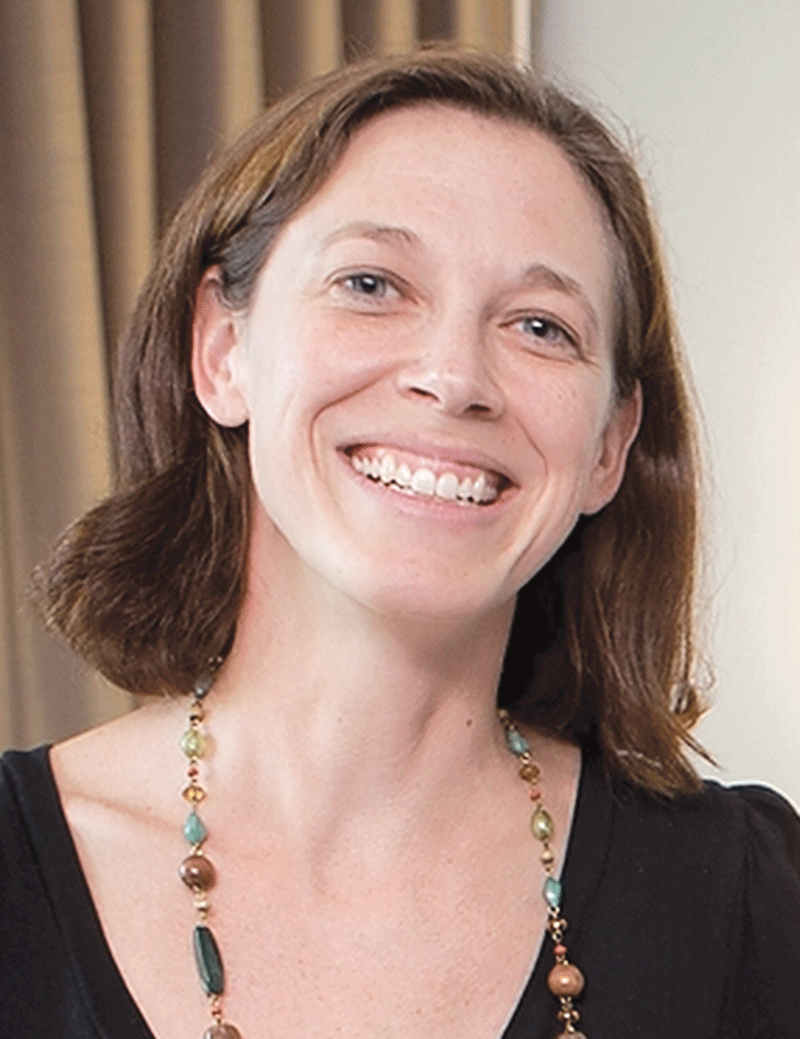
Briana Santaniello

Briana Santaniello says a pharmacy degree opens up many more career doors than just retail or hospital settings.

Briana Santaniello can trace her interest in the pharmacy profession to an article in the local press about a local pharmacist working for Baystate Health, which her mother showed to her when she was 16 and contemplating what to study in college.

“She said, ‘you’re strong in math, you’re strong in science, you’re good with people … have you ever considered pharmacy?’ I hadn’t, and at the time, I was looking at college programs, and there weren’t any pharmacy colleges around here — and I really wanted to stay in Massachusetts.”

But a few months later, she came across a postcard announcing the launch of the Western New England University College of Pharmacy. By this time, she had thoroughly researched the field and decided it was for her. “The timing was perfect.”

That’s how Santaniello, in the fall of 2011, joined the very first class of pharmacy students at WNEU. Of the first cohort of 75 students, 69 graduated last spring and have found a diverse assortment of jobs, both in Massachusetts and far away, according to Evan Robinson, the college’s dean.

“Pharmacists are in demand,” Robinson told BusinessWest. “We have an aging population, which is going to tax the healthcare system. And we have a healthcare environment in which patients have to be more independent and autonomous more than ever before. To that end, the community pharmacist is a valuable partner and a valuable contributor to patient care and patient outcomes. For those reasons, I think there’s a very sunny future in this field.”

Those signals were already becoming evident when WNEU made pharmacy its fifth school in 2011, and earned an important accreditation from the Accreditation Council for Pharmacy Education last spring.

“One of the reasons Western New England made the decision to open a School of Pharmacy was that we recognized strong job opportunities in a health profession with strong upside — one where people are able to really help others get better,” Robinson said.

In fact, he has long touted the school’s philosophy of “pharmacist as educator,” recognizing that clinical pharmacists are often a key link between patients and doctors, and sometimes the only professional an individual with a health concern may talk to.

“That’s not to say we’re not linked to the product — the product is key to our profession — but, beyond that, pharmacists really have an opportunity to be teachers of patients or their allied health partners in patient care, and serve as that therapeutic expert, if you will, working to help people feel better and move quality patient outcomes.”

Or, in Santaniello’s case, work in a managed-care setting in the Clinical Pharmacy Department at UMass Medical School in Worcester. Under the umbrella of the Commonwealth Medicine program, she helps provide services to a variety of clients, from MassHealth to Health New England, using population-health statistics and other evidence to help clients make coverage decisions. “It’s always changing, with new kinds of drugs and price changes,” she said. “Every day is different.”

Pioneering Idea

Statistically, pharmacy is a broad field with much potential for career seekers. The U.S. Bureau of Labor Statistics projects 14% growth in jobs between 2012 and 2022, an increase of 41,400 positions. The annual median wage for pharmacists is more than $116,000.

“The pharmacy job market is showing some rebound, so that’s been good,” Robinson said, citing a recent wave of pharmacy-school openings and the recent sluggish economy as recent negative factors that, hopefully, will prove temporary. “It’s never been bad by any stretch of the imagination, but it tends to fluctuate.”

Grant Stebbins, another 2015 graduate, had previously enrolled in the Pharmacy Technician program and was working as a tech at Baystate Medical Center, but after a few years there, he decided to return to WNEU for his PharmD degree. Today, he works at Holyoke Medical Center in a role that greatly influences patient care.

“It’s not like a retail pharmacy; we don’t dispense to people who come in off the street,” he told BusinessWest. “We serve the inpatients in the hospital; we monitor antibiotics and other high-risk therapies, go on multi-disciplinary rounds with doctors and other members of the care team from the hospital, a lot of behind-the-scenes stuff.”

And that’s not all. “We interview patients when they come into the emergency room about what medications they take outside the hospital. We also do counseling for a certain population of patients who have heart failure before they leave the hospital, make sure we educate them on the types of medications they’ll be taking. It’s very interesting. It’s not the same thing every day, which is nice.”

While he was never interested in a job in a commercial pharmacy, Stebbins said many of his fellow graduates had jobs lined at drugstores well before graduation. In fact, just over half the inaugural graduating class moved right into positions in retail pharmacies, while others found jobs in hospitals and other clinical settings. Others sought out residencies, from which they may explore more specialized niches in the pharmacy industry, Robinson explained. “It could be pediatric oncology, critical care, acute care, emergency departments.

“Interestingly enough,” he added, “we have two residency programs here at Western New England, one with Walgreens and one with Big Y. The idea is creating an environment in which someone who’s ready to be a licensed pharmacist can learn more about the practice at a high level, in a community-care environment, whether that means some clinical engagement or different types of health and wellness activities.”

WNEU was no stranger to pharmacy education before launching the School of Pharmacy four years ago. It had long boasted a pre-pharmacy program and had partnered with the Hampden College of Pharmacy and, later, the Massachusetts College of Pharmacy on joint programs until 1995.

Still, Robinson praises the recent class of graduates for taking a chance on a brand-new enterprise.

“We used to joke with them that they’re pioneers,” he told BusinessWest. “They came in with a lot of expectations, a lot of aspirations, and not a lot of tangibles. They took that leap in a new building with no classes ahead of them; we were still hiring faculty. It was a fascinating thing for them. I give them a lot of credit.”
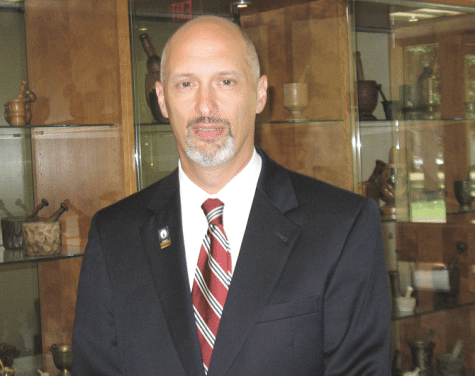
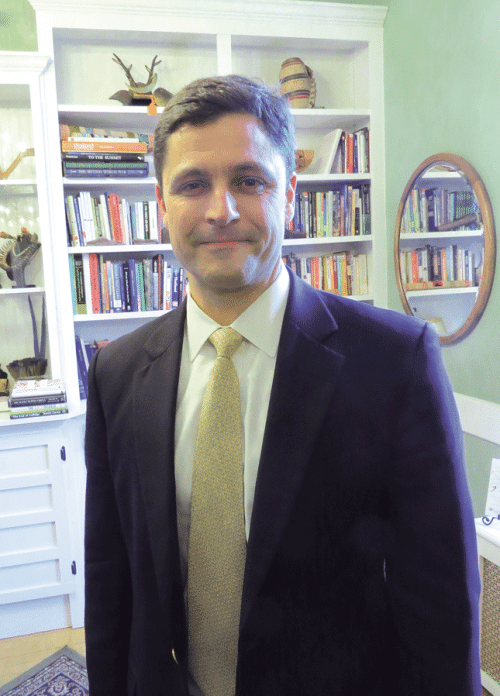
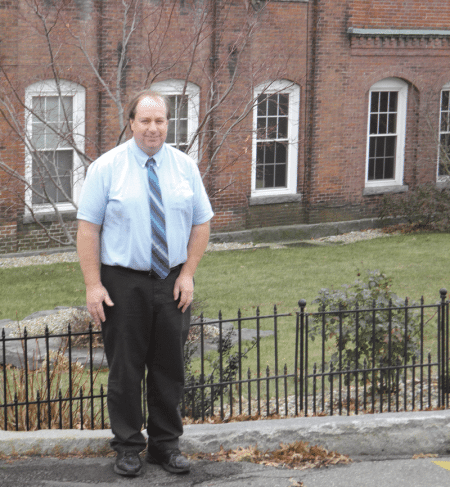
Evan Robinson

Evan Robinson says today’s pharmacist isn’t just a pill dispenser, but a valuable part of a customer’s healthcare team.

Stebbins said the idea of making a day-to-day impact on a local pharmacy program as one of those pioneering students appealed to him.

“I’d worked with a lot of people would have stayed in Western Mass. if there was a pharmacy school here, but they went out to Worcester or Boston,” he explained. “I’m from the area, and I was interested in helping start something new in the area.

“When I interviewed,” he went on, “there seemed to be a real interest in having students be a really big part of the program. I was on a lot of councils asking for our thoughts on how the process was going. And they had a sympathetic ear; a lot of my friends had an impact on how the program is set up now.”

Growing Appeal

The initial class that arrived in 2011 has been augmented with a new roster of 75 students each year, bringing the program to around 300 students today. Some jump over from the pre-pharmacy program at WNEU, and others come from outside, with bachelor’s degrees in various fields. The curriculum is designed to produce generalists trained to handle any entry-level position.

The first three years of the program are spent on campus, while the fourth is entirely off campus, with a series of six rotations, each six weeks long, working in the field, guided by pharmacy ‘preceptors.’ That’s where the ‘learners,’ as Robinson likes to call them, start to apply their craft, learning how to fill prescriptions, make IVs, and — of course — educate patients.

Stebbins said those rotations essentially amount to six-week-long interviews, and are a great way for students to make key career connections before they graduate. “I had two rotations at Holyoke, and later, when they had an opening, they called me. I think pharmacy school is unique, in that it’s cooperative programming while still in school.”

There remains some concern among pharmacy leaders over a surge in new pharmacy programs that is producing 14,000 graduates per year after a trend of between 6,000 and 8,000 per year between 1974 and 2003.

Daniel Brown, a professor in the School of Pharmacy at Palm Beach Atlantic University and a nationally recognized thought leader on the pharmacy workforce, understands why those programs sprung up and why they are attractive.

“The pharmacist job market in the 1990s and up to about 2007 was characterized by a significant shortfall of pharmacists, fueled largely by a marked increase of community pharmacy positions in chain stores, supermarkets, and mass merchandisers,” he told Medscape.com recently.

“This made jobs plentiful and caused salaries to rise above six figures, understandably making pharmacists a very hot commodity. The lure of a guaranteed job with a high salary attracted many people to pharmacy, and the growing number of applicants created opportunities for new schools of pharmacy to be established and for existing schools to expand,” he continued, adding that he wonders whether that academic growth has exceeded the need.

Still, the reports of WNEU’s first graduating class of pharmacists finding jobs in a variety of workplace settings is encouraging to Robinson.

“With an aging population and the fact that, in many instances, the community pharmacist is a uniquely accessible and available member of the healthcare team,” he told BusinessWest, an assertion driven home by the fact that more than 3.5 billion prescriptions are written each year, medications are involved in 80% of all treatments, and Medicare beneficiaries with multiple chronic diseases take 50 different prescriptions per year.

One of the pluses of the WNEU College of Pharmacy was its dual-degree track allowing students to simultaneously earn a PharmD and MBA, said Santaniello, who, like Stebbins, relished being among the first cohort of graduates. “A lot of pharmacy schools don’t offer that, and it gave me the chance to be where I am now. I’m very grateful to be one of those trailblazers.”

An MBA certainly makes a pharmacy graduate more attractive to an employer, depending on the field, but employability can still differ depending on what job setting a graduate prefers and whether they’re willing to travel.

“If staying on a traditional career path, they might not easily find a job unless they consider relocating, but there’s so much available to pharmacists now with a doctor of pharmacy degree, as opposed to a bachelor’s degree that limits you to a retail or hospital setting,” she said. “There’s managed care, medication therapy management … the possibilities are endless. People realize the value a pharmacist adds to the mix, and there are plenty of opportunities. You just have to find the niche that works best with your qualities.”

Positive Outlook

In its 2014 National Pharmacist Workforce Survey, the Midwest Pharmacy Workforce Research Consortium predicted that demographic trends and others — such as the high number of pharmacists, especially men, approaching retirement age — will continue to create opportunities in pharmacy-related careers.

“We’re living in dynamic times as a health profession,” the report notes. “We have shifted from a male-dominated to a female-dominated profession. Male pharmacists will continue to retire in large numbers, given that almost 50% of actively practicing pharmacists who are over 55 years old are male.”

Meanwhile, it adds, “more pharmacists are reporting their pharmacies are providing direct patient-care services. As coordination of care for patients with chronic conditions grows, the number of opportunities for pharmacists in new roles is likely to increase.”

Robinson has noted that fact as well. “This is an important role that benefits patients,” he concluded. “The pharmacist can serve not only as an educator, but an advocate.”

That’s why Western New England University is busy training more.


Joseph Bednar can be reached at [email protected]

Features

No Jackpot

Plainridge Casino Facade

As the first facility opened in the Bay State’s new gaming era, Plainridge Park Casino launched to wild success — for the first month, anyway. Since then, revenues at the slots-only parlor have fallen well below first-year projections. While its general manager insists its long-term outlook is healthy — and others worry about a saturated casino market in the region — 90 miles to the west, development continues on MGM Springfield, whose leaders insist is a much different story than Plainridge Park, and will reap much different results.

On a recent Friday afternoon, a walk across the floor at Plainridge Park Casino — lined with 1,250 slot machines and electronic blackjack and roulette tables, as well as two restaurants and a food court — found hundreds of visitors dutifully anteing up and pressing brightly lit buttons, hoping for a big score.

Officials with the casino, just off I-495 in Plainville, a 90-mile trek from Springfield — and with Penn National Gaming, which owns the facility — were also counting on a big score when the long-time horse-racing venue relaunched as a slots parlor last June. And they did score, early on, with first-week revenues exceeding expectations.

But those revenues have fallen dramatically since, a cause for concern not only for Plainridge Park and Penn National, but for other casino developers in Massachusetts hoping to create the next big thing in regional gaming and tourism.

Plainridge Park’s general manager, Lance George, told BusinessWest it’s way too early to abandon optimism.

“It was a pretty standard opening — volumes incredibly high, then declining revenues, and a gradual ramp back up,” he explained. “It’s nothing this company hasn’t seen over its past four or five openings. In our industry and most industries, we look at year-over-year results, not short-term results related to seasonability.”

The big question is how significant that expected ramp-up will prove to be, and whether initial projections by the casino and the Mass. Gaming Commission were wildly off the mark.

Plainridge Park had projected revenues of at least $250 million during its first year of operations, an average of $456 per machine, per day. These were revised downward to $220 million just before the June 24 opening. But the average machine’s haul per day has plummeted from $585 in June to $256 in November, notes Paul DeBole, an assistant professor of political science at Lasell College in Newton, and an expert on the gaming industry.

“Plainridge isn’t as bad as everyone is making it out to be,” he said, arguing that its performance hasn’t been terrible, but the projections were.

He said a more plausible scenario for Plainridge’s revenues would consider the gross gaming revenue of the other four New England slot parlors (Twin River and Newport Grand in Rhode Island, and Hollywood Slots and Oxford Casino in Maine), which, on average, bring in $179.73 per machine, per day, or a tick over $82 million per year. Taking the average of just the two Rhode Island parlors raises those figures to $200 per machine, per day, and $91.3 million per year.

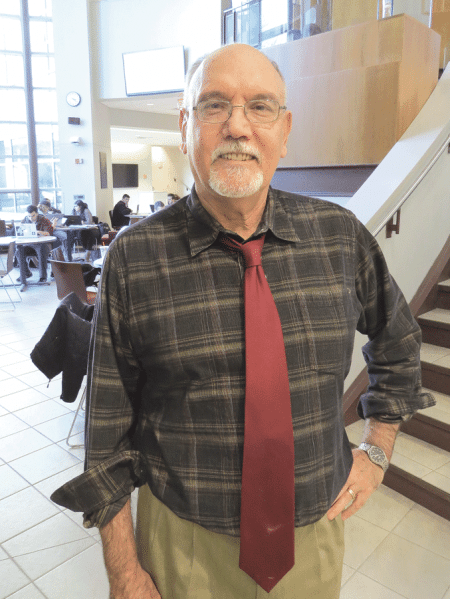
Paul DeBole

Paul DeBole

Under DeBole’s financial model, Plainridge’s first full year would bring in between $255 and $275 per machine, per day, and between $140 million to $150 million for the year. Revenues would gradually fall in subsequent years and plateau between $179 and $200 per machine, per day, with annual revenues in the $100 million to $110 million range, once Massachusetts’ full-service casinos, including MGM Springfield, begin to open their doors in 2018.

The bottom line, he said, is that early projections that Plainridge would bring in between $250 million and $300 million annually were way off base. “There was no way they were going to hit that, so the Gaming Commission revised it down to $220 million. And there was no way they were going to hit that, so they revised it again to $200 million. And there’s no way they’re going to hit that.”

Which is why the commission’s current projections are in the $160 million range — just north of what DeBole predicted. “Those numbers make a lot more sense. My feeling from the very beginning was that their numbers were overly optimistic.”

All of this certainly interests MGM, which is spending $950 million to create a gaming resort in Springfield’s South End.

“We’ve certainly been tracking the results to get a sense of what the larger market is doing,” MGM Springfield President Mike Mathis told BusinessWest. “I think Lance George and his management team are very strong, and I’m confident they will continue to tweak their model and figure out how to get closer to their projections and how it initially opened that first month.

“But that particular part of the state — the Southeast market — never factored into our competitive model, partly because it’s a slot facility, and because of the distance from our market,” he went on. “We don’t think their results, good or bad, necessarily dictate how well we’ll do here, with a fully designed resort with table games and all the amenities that come with a four-star hotel and high-end restaurants.”

Mike Mathis

Mike Mathis says Plainridge is so different from MGM Springfield — in size, amenities, and location — that its early worries shouldn’t be seen as a predictor of MGM’s level of success.

He added that MGM will be leveraging existing attractions in downtown Springfield, from conventions at the MassMutual Center to entertainment venues like Symphony Hall, CityStage, and the Basketball Hall of Fame. “Plainridge seems like a very different model for us, and we’re still really confident about how well we’ll do.”

Raised Stakes

Penn National spent $125 million to convert Plainridge, a long-time harness-racing track, to a slot parlor.

But Twin River Casino, just 11 miles away over the Rhode Island line, countered those plans by upgrading its facility, which now includes 4,000 slot machines, table games (Plainridge has no live dealers), and a large arena. As a result, as the Mass. Gaming Commission kept adjusting Plainridge’s first-year projections downward, Twin River recently increased its concurrent projection by $35 million.

That wasn’t supposed to happen.

Yet, it’s not like the Rhode Island and Connecticut casinos were going to take the new Bay State competition lying down, DeBole said. “That’s the nature of the market right now. We have Foxwoods and Mohegan Sun trying to open facilities along the I-91 corridor to take money out of MGM, and Newport Grand will be relocated 350 yards from the Massachusetts border,” near Fall River.

Still, George said Plainridge has its own advantages for Massachusetts gamblers. “The least sexy is location, but it’s certainly fortuitous; it’s the closest casino relative to Boston, so we’ve tried to capitalize on that. The second thing that differentiates us from our competitors is the horse-racing industry, which is something we’ve tried to ensure people are aware of. Unlike many states, that industry is growing in our state,” he explained, noting that race days will soon increase from 105 annually to 115, then 125 two years from now.

“The third advantage is, we are part of Penn National, which has 27 properties; they recently acquired the Tropicana in Las Vegas, and they’ve done a great deal of planning here,” he went on. “It’s a very well-respected company.”

George said Plainville officials have long been supportive of the racetrack and happy to forge a $4.2 million host-community agreement with Penn National — not to mention the additional tax revenues. “From an employment standpoint, we saved the existing 100 or so jobs already here from the racing side and added 500,” he added. “Those are the two most tangible benefits — financial and jobs. In addition, through six months of operations, we’ve purchased $6 million in goods and services — $4 million in the state of Massachusetts.”

All of that is positive, DeBole said, but he questions how many facilities the state can support. “Legislators mean well, and they’re trying hard, but they don’t get that there’s a finite amount of disposable gambling dollars out there,” he argued, adding that it’s unrealistic to expect much cannibalizing of well-established behemoths like Foxwoods and Mohegan Sun.

He paused for a second before pondering what that means for MGM, then noted that the company has a solid track record, and the complex will likely draw visitors from a wide radius. “But I think they may not be as profitable as they’d like.”

More Than Slots

MGM Springfield certainly has one big advantage over Plainridge, DeBole said. Casino developers have long noted the growing importance of non-gaming revenue. Atlantic City, a gambling mecca that has fallen on hard times, currently brings in $5.2 billion in gaming revenues — about the same as Las Vegas, a destination on much stronger footing these days. However, Vegas casinos bring in $10.4 billion in non-gaming revenue — retail, dining, and entertainment — compared to $400 million in Atlantic City.

“That’s a really stark comparison,” he went on, noting that Foxwoods and Mohegan Sun have removed more than 25% of their slot machines after seeing slot revenue plummet by about $500 million since 2009.

Mathis knows these numbers as well, and says MGM Springfield — designed to be integrated with Springfield’s downtown, as opposed to how the nondescript Plainridge property seems positioned mainly to provide easy access to and from I-495 — will bring in a wide variety of visitors, not just slots enthusiasts.

“Generally, a diverse offering is always going to be a better attraction for the customer; that’s where the trends are,” Mathis said. “The non-gaming parts of our revenue in Springfield reflect what we do in other markets and other resorts. MGM has always been a leader, and continues to be a leader, in that area.”

Plainridge Park’s electronic table games

While its slot machines get moderate action, Plainridge Park’s electronic table games often struggle for attention.

And, unless one of the Connecticut giants builds a competing casino north of Hartford, MGM Springfield — as well as the planned Wynn Massachusetts casino in Everett — may be in a better geographic position than Plainridge, which is competing more directly with the Rhode Island and Connecticut facilities.

But DeBole worries that a fourth casino license, this one earmarked for Southwestern Mass., may be one too many in a heavily saturated region — particularly with the Mashpee Wampanoag tribe looking to open a casino in Taunton through the federal Bureau of Indian Affairs, independent of Mass. Gaming Commission approval, and the Aquinnah Wampanoag tribe fighting the state over gaming on its reservation lands on Martha’s Vineyard.

“In a market already showing the effects of saturation, that would have a huge adverse impact on the region as well,” he told BusinessWest. “If the Gaming Commission asks my advice — not that they would — I would tell them to defer awarding a license to see how this shakes out.”

Ante Up

DeBole has other issues with casinos in Massachusetts, one of which is the state taking up to 61% off the top of gaming revenues in regulatory fees and taxes, before the casino even pays its employees. “That’s a cause for concern. Lawmakers say it’s all about job creation, but we all know that’s not true.

“It’s a very uneasy situation for the state to be a majority partner in a gaming enterprise; you would think the average voter would have some doubt about how stringent the regulatory forces would be,” he went on, adding that he personally feels the gaming commissioners are people of integrity, but he’s talking about perception, not reality — and a reality Las Vegas, where government skims just 6.8% from casino revenues, doesn’t have to deal with. “When the state is taking more money than the people taking the entrepreneurial risk, I have a philosophical problem with that.”

But Plainridge Park in particular “was dealt a crappy hand by the statute, despite the best intentions,” he said, hampered by a narrow focus on slot machines and barring table games. Other barriers for some visitors include an age floor of 21 and a no-smoking policy (Twin River admits 18-year-olds and allows smoking).

George, obviously, with his experience in the industry, is an enthusiastic promonent of gaming in Massachusetts, pointing out the creation of some 10,000 jobs and the related tax revenues, adding that people worried about the unintended consequences — the social costs of gambling — forget that plenty of Massachusetts residents are already flocking to casinos, with the tax revenues benefiting other states.

He added that the Mass. Gaming Commission is ramping up efforts to promote responsible gambling, an effort that’s visible to all Plainridge visitors, who are greeted at the door from the parking garage with prominently posted information about GameSense, a program to prevent problem gambling.

As for his slot parlor’s economic health, George is convinced it will find its footing in the long term.

“The media here are covering it on a month-to-month basis, but that’s not the way we gauge the health of this business,” he said. “Once we get to the warmer months — March, April, May — as opposed to the dark, cold winter, we fully expect revenue to increase. There’s nothing unusual about that.”

DeBole agreed with George that month-to-month tracking doesn’t tell the whole story, and that warmer spring weather will increase turnout. Beyond that, he’s lukewarm.

“Over time, Plainville’s numbers will bump up a little bit, but I don’t see them making anywhere near the money they claimed they would last year,” he said. “They’ll be lucky if they hit $150 million this year, and eventually, they’ll probably be in that $92 million to $115 million range of annual revenues.”

Mathis, like George, would rather wait and see what the multi-year results are at Plainridge Park.

“I agree with him that it’s really too short a period right now to make any long-term observations about what the market is going to do,” he said. “In other businesses, it takes years to get to your normalized year. I really think those guys deserve — we all deserve — some time after opening to massage the models and see how the market is reacting and sort of fine-tune the business.”

Meanwhile, the clock continues to tick for MGM Springfield. And 2018 isn’t that far away.

Joseph Bednar can be reached at [email protected]

Community Spotlight Features

Community Spotlight

Mayor Richard Kos (right) and Mike Vedovelli

Mayor Richard Kos (right) and Mike Vedovelli say Chicopee has issued an RFP for the old library building adjacent to City Hall.

Mayor Richard Kos says Chicopee is well-poised for growth, thanks to what he called a multi-faceted approach to economic development.

“We’re trying to address the city as a whole to make sure we strengthen any areas where there are weaknesses,” he told BusinessWest a few days after being sworn into office for the second consecutive term and sixth term overall. “Although any urban environment has challenges, Chicopee has a great track record of addressing infrastructure needs in conjunction with development opportunities, and we continue to build on this in one of the strongest financial communities in the state.”

To that end, biweekly meetings are held to assess projects that are underway or on the drawing board. And there are several in those categories, as developers convert space in old mills and buildings downtown and a variety of neighborhoods for housing, business, or industrial use.

In turn, the city has done its part; in addition to initiating infrastructure improvements that encourage growth, it has a new middle school, is focused on improving its network of parks, and stays closely aligned with Westover Air Reserve Base, which has a significant economic impact on the city and region.

Revitalization is taking place in Chicopee Center, and Kos said two high-profile projects show that significant investments are being made downtown. The first is a $6 million conversion of the former John R. Lyman Mill building at the lower end of Front Street, situated next to the Chicopee River Canal, that has been vacant for several years.

A developer has purchased it and plans to convert the space into 80 market-rate live/work/loft apartments, Kos noted, adding that a groundbreaking ceremony is expected for March.

The second project is a $7 million renovation of the Kendall Building at 4 Springfield St., which has been purchased by Valley Opportunity Council. That agency plans to convert it into 39 apartments with $3.1 million in help from the state, Kos explained.

A request for proposals was also issued last month for Chicopee’s old library, which sits adjacent to City Hall.

“We’re looking to see what the private sector wants to do with the property,” Kos said, adding that the city secured a number of grants that allowed it to undertake selective remediation and resolve contamination issues in the building.

“Marketing this building is part of the emphasis we’re placing on our downtown,” he went on, noting that security cameras were installed downtown last year to help make it “a safe, secure, and convenient place to live.”

Michael Vedovelli said the city is fortunate to be working with developers in the old mills, and received a $2.6 million MassWorks grant to make utility, water, and sewer infrastructure improvements in the canal area.

“It’s a very competitive process, and they are difficult to obtain; there were 110 grant applicants, and only 37 were awarded,” said the director of Community and Economic Development. “But we constantly do all we can to create a vibrant downtown, and the projects in Chicopee Center are moving forward and will generate more activity.”

Tom Haberlin, the city’s Economic Development manager, agreed, saying these are the first investments that have been made in the area since 40 new apartments opened last year at Ames Privilege, a former mill and downtown complex that is home to several businesses and 120 apartments.

“When these projects are finished, the bookends [of the mills] will be complete, which leaves the middle of the sandwich to be developed, and we are hopeful that the owners of the mills will ramp up their plans,” he told BusinessWest, explaining that Ames Privilege and the Lyman building sit on opposite ends of the mill area that flanks the canal.

Private investment is being matched by public investments, and the city has demolished a six-family property on 296 Front St. that it plans to turn into a parking lot.

Kos said adding parking space is part of an effort to make City Hall more accessible, and earlier this month the City Council voted to fund an analysis of the building in hopes of turning the antiquated third-floor auditorium into a community meeting center. The council also allocated $500,000 to preserve stained-glass windows in the building that had deteriorated.

The well-known Munich Haus restaurant downtown is also making improvements, which include enlarging its parking area. Its owners purchased the former Ferris parking lot downtown and are awaiting final approval to reconstruct it, Kos said. The new lot will contain more than 50 spaces to complement the businesses’ beer garden and restaurant, and 15 will be designated as free public parking sites.

“Chicopee is one of the largest cities in the area that provides substantial free parking, which is part of the comfort and ease of getting into our downtown,” Kos noted, adding that Munich Haus also purchased the former Bank of Boston building and continues to invest in Chicopee.

Multitude of Projects

As Kos mentioned earlier, there are a host of economic-development initiatives taking place across Chicopee.

Cleanup efforts continue on the 27-acre Uniroyal property, for example, and last year the city not only secured a $200,000 grant to make improvements to the six-story historic administration building on the site, the City Council approved adding $186,000 to weatherproof and preserve it for the future.

The former Facemate site is also being addressed, and several acres are out for bid.

“We anticipate interest in building senior living there,” Kos said, explaining that the acreage abuts the new $10 million RiverMills Senior Center that opened in September 2014.

Progress is also taking place at the former Schine Inn. It was built in 1960 and decades later became the Plantation Inn, known for its 30-foot waving mascot that greeted travelers coming off Exit 6 on the Mass Pike. Kos said 194 motel units on the site have been demolished so a luxury auto dealer can fulfill plans to build a dealership there.

Developments are also taking place in Aldenville, and the former Racing Oil Service Center at 181 Front St., which has remained vacant since 2004 due to contamination issues, will be cleaned up, thanks to a $200,000 grant from the Environmental Protection Agency.

The city also welcomed coffee-maker manufacturer Chemex to a location off James Street after the business moved from its Pittsfield location to Chicopee, said Kos, noting that many businesses move to or expand in Chicopee due to its accessible location. In fact, it has been marketed as the ‘Crossroads of New England’ because of its easy access to I-91, I-391, and the Pike.

Education ranks high on the list of Chicopee’s assets, and last year the 90-year-old former Chicopee High School building on Front Street reopened as the 1st Sgt. Kevin Dupont Middle School after undergoing a $38 million renovation. The building boasts a television production room and a number of new science laboratories, and Kos says half of the city’s middle-school students attend the new school.

Work on the city’s network of parks is ongoing, and last year, a $20,000 KaBOOM! grant paid for new playground equipment at Nash Park with the help of volunteer labor. And although the public outdoor pools were found in need of extensive repairs, the city was able to reopen the Rivers Park pool last summer after it received a $400,000 state grant to do needed work. And earlier this month, the City Council accepted another state grant that will pay for 70% of the cost of replacing Ray Ash Park pool located in the city’s center, Kos said.

Westover Air Reserve Base is a major entity that adds to the city’s economy, and the 2015 Air Show proved to be of its most successful public events. Nearly 375,000 people attended, and an economic-impact study estimated the air show had an $11.5 million economic impact in the area, Kos said, explaining that more than $9 million was spent on hotel stays, meals, gas, and other items. Meanwhile, he added, the fact that base commander Col. Albert Lupenski was recently promoted to general shows his leadership has captured attention in Washington, D.C.

In addition, eight of Westover’s C5-As are being retrofitted with the “quietest engines in the industry and will become C-5M Super Galaxy aircraft,” Kos noted.

Many military installations across the country have closed due to budget cuts, but the city has an innovative plan to help Westover remain open. Kos said 69 multi-family units of military housing on 26 acres that were purchased from the U.S. Navy in 2011 are being demolished to make way for a three-megawatt solar farm on the property with the aim of reducing Westover’s utility bills.

MassDevelopment agreed to provide $1 million to fund the project, and that grant was matched by $1 million from the state.

The base uses approximately $2 million of electricity each year, so this step will save the facility $100,000 annually, which equates to a 5% reduction, Kos said.

“The solar farm will also be a plus for the city because we are clearing up a long-abandoned property and developing it into a taxpaying entity; it will benefit Chicopee, Westover, and the neighborhood,” he noted, noting that roughly 70% of the acreage will contain the solar farm, while the remainder will be preserved for future development because it is contiguous with Westover AirPark North.

The park contains the former Avery Dennison Corp. building, which was purchased by investors after the plant closed two years ago. Yankee Candle now occupies 289,000 square feet of the building, Kos noted, adding that the company opened a distribution operation there.

Haberlin said the number of available commercial and industrial buildings in the city is one of its strengths because many communities lack the space that businesses need to expand. “Chicopee continues to have a supply of large industrial buildings that are being reabsorbed and reused. The cost is typically about $30 per square foot, which is 30 to 40% less than the cost of new construction.”

Celebrating Continued Success

The city is divided into distinct neighborhoods that include Chicopee Center, Chicopee Falls, Willimansett, Fairview, the Burnett Road area, and Aldenville, and last September the city held its first block party downtown.

“We received a $7,500 grant from MassDevelopment and had help from local businesses,” Kos said. “The streets were closed from noon to 10 p.m., and more than 7,000 people attended the family-friendly event that showcased food, entertainment, and the convenient assets of our city in a way that multiple generations could enjoy. We also have a Halloween event downtown which 3,000 families attended last October, and our annual Christmas-tree lighting that more than 1,000 people turned out to see. We are a substantial city that still has a small-town atmosphere and sense of community.”

Haberlin agreed. “Our neighborhoods complement each other and give the city its unique flavor,” he said, “making it a great place to live, work, play, and call home.”


Chicopee at a glance

Year Incorporated: 1848
Population: 55,795
Area: 23.9 square miles
County: Hampshire
Residential Tax Rate: $16.91
Commercial Tax Rate: $31.17
Median Household Income: $45,763
Family Household Income: $58,118
Type of government: Mayor, City Council
Largest employers: Westover Air Reserve Base; Chicopee City Hall; Ethos Energy; J. Polep Distribution Services

* Latest information available


Education Sections

In Perfect Alignment

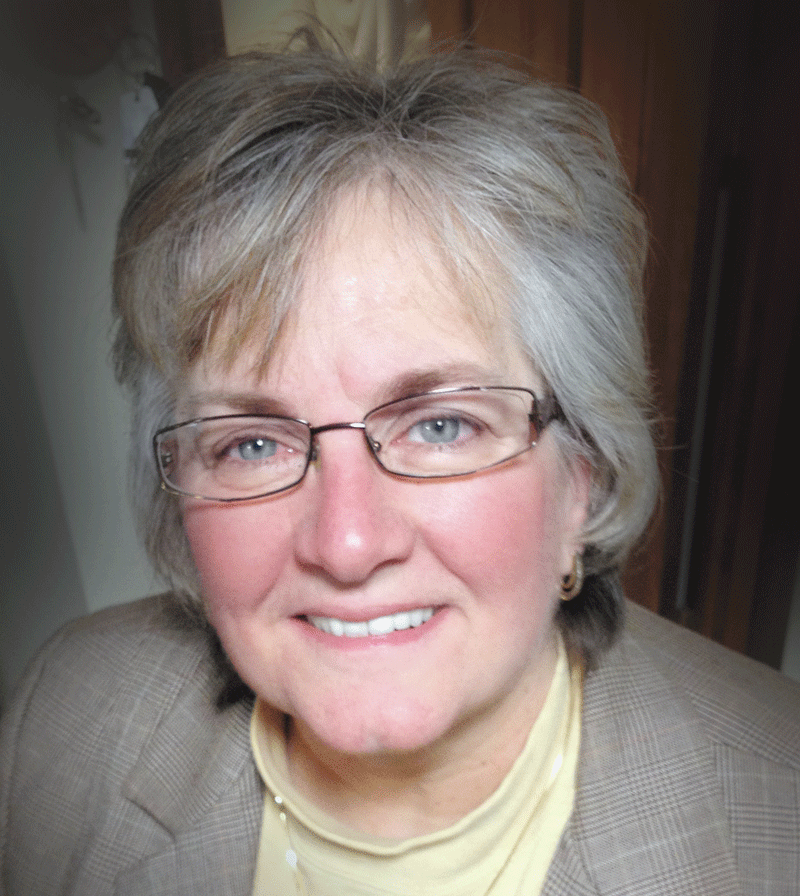
Sr. Mary Reap

Elms College President Sr. Mary Reap

When Sr. Mary Reap took the helm at Elms College in 2009, she arrived with a reputation for identifying needs and building the partnerships necessary to meet them. She has done all that and more at Elms, launching a number of new degree programs, expanding enrollment and employment at the Chicopee institution, and maintaining the service- and community-oriented character that its students have long valued.

Some might regard Sr. Mary Reap’s inauguration as president of Elms College in Chicopee as, well, a godsend.

After all, the former president of Marywood University in Pennsylvania had retired after serving at the first Catholic women’s university from 1988 to 2007 and establishing a wide variety of new programs at every level, including majors in physician’s assistant, art therapy, aviation management, biotechnology, information sciences, sports nutrition, and exercise science.

She came out of retirement to take the helm at Elms amid expectations that she could, and would, do the same for that Chicopee institution.

Indeed, soon after her 2009 arrival, Reap began to initiate positive change. But at that point seven years ago — as well as today — she simply viewed the position as an opportunity to put her honed skills to work.

“I arrived just in time; when I took office, Elms needed some updates, including new programs and structural work to the facilities,” Reap told BusinessWest. “Nineteen years of experience allows you to see things that can be changed, and the college was not only ready, they trusted me.”

From the first day she set foot on the Chicopee campus, she was highly impressed by the integrity of the staff and faculty and their willingness to do whatever it takes to help students succeed. In fact, it was one area where no improvements were needed.

“I viewed the job as a wonderful opportunity to take a very dedicated, caring group of individuals and move forward,” Reap said. “Our faculty is really dedicated to student success; we have a high retention rate, and it really amazes me to hear stories of what people here have done,” she continued, citing examples that include faculty members who have purchased books for students who could not afford them, cafeteria and housekeeping staff who know every student by name and give them “a little hug when they need it or make special food for them,” and others who have shouldered the expense of clothing needed by graduates for job interviews when they couldn’t afford it themselves.

Reap said these acts of kindness are done quietly behind the scenes, and she hears about them from grateful students. She attributes the altruism to an attitude that pervades the campus and its many new satellite locations and is passed from staff to students, infusing them with the desire to make an impact.

“Our students often begin their Elms careers with a passion for positive change and leave with the tools necessary to make change happen,” she said.

Her initial goal was to help individuals and the community by making it possible for more people to earn a four-year-degree in subjects that met the requirements of employers who were recruiting outside the area due to a lack of qualified local candidates.

“I looked at the demographics and found that less than 20% of the population in Western Mass. has a four-year degree,” she recalled.

These goals were bolstered by Reap’s belief that it is critical for her to be a good steward of the college and its resources — a commitment she takes seriously.

Her efforts to increase the numbers of graduates with bachelor’s degrees has been successful, and today, enrollment has increased by 400 students. Every building on the Elms campus has undergone renovations to keep up with the changing face of education, and 40 new jobs have been created, thanks to new programs at every level that resulted from collaborations and meetings with business owners, healthcare providers, representatives from the state’s community colleges, and data culled from the government and surveys that have been conducted in the community.

“Every new program has filled a need,” Reap said, using a word that surfaced repeatedly throughout the interview. For this issue’s focus on education, BusinessWest takes a look at the expansion that has occurred at Elms since Reap’s inauguration and how new collaborations have led to success.

New Programs

Reap said that, after she arrived in Chicopee, she met with Holyoke Community College President Bill Messner and was pleased to discover he shared her vision of helping more HCC graduates earn a four-year degree.

“We formed a partnership in 2010-11 and launched our first completion program in the fall of 2010 in psychology, management, and accounting,” Reap recalled. “It’s a cohort model in which students start together and finish together on their own campuses. Classes are held on Saturdays, which makes things easier, and since that time, the program has expanded into other community colleges across the state.”

It is a popular program, and more than 90% of students who enroll graduate. “Right now, 230 students are enrolled, and we believe we have done a great service by making it possible for so many people to complete degrees, which enhances the workforce and puts graduates in line for job promotions,” Reap said.

Another new program instituted after Reap arrived at Elms allows registered nurses who are working in the field to earn a bachelor’s degree in nursing. The RN-BS degree-completion program came about as a result of a partnership with Berkshire Health Systems (BHS) in Pittsfield, and was launched in 2007. Classes are held on the hospital ’s Hillcrest Campus.

Reap said more than 100 people have received their four-year degrees, enhancing the level of care patients receive, and since 2007, RN-BS programs have expanded and are in place at four community colleges.

Reap noted that the baccalaureate program at BHS led to a master’s program, then a doctor of nursing practice program that was launched in the fall of 2014. Students can choose from two tracks and become a family nurse practitioner or adult gerontology acute-care practitioner.

Center for Natural and Health Sciences

Sr. Mary Reap says the new Center for Natural and Health Sciences was built in response to needs for more graduates with science and nursing degrees.

The inaugural class included nine students from BHS and and nine from Baystate Medical Center, whose tuition was underwritten by the hospitals, and 22 additional students.

“We have helped fill the need for nurses with advanced degrees in a number of local hospitals,” Reap explained. “It was a natural area to grow, especially since the population here is aging. And these programs have an added value as many of the students are bilingual. It’s a great asset as there are so many Spanish-speaking people in the area.”

She noted that Elms received a $650,000 Health Resources and Services Administration grant to provide undergraduate scholarships for deserving, financially eligible Hispanic nursing students.

“We gave out eight awards last year, and 16 students will receive them this year in addition to other help they receive. It’s a wonderful way to meet the needs of the community,” she continued. “Last fall, we also began offering an undergraduate degree in Ethical Healthcare Management, which can be completed online or at some of our satellite sites.”

Elms College has also focused on expanding its science programs. “We know that more young people are needed today in these careers,” Reap said, adding that this knowledge spurred the construction of a new, $13 million Center for Natural and Health Sciences, which contains classrooms and laboratories.

And three years ago, the college responded to another need with a new post-baccalaureate science program for students who want to apply to medical or dental school. It can be completed in one or two years, depending on the student, and Reap said it attracts candidates from around the world in need of additional coursework.

“We’re drawing graduates from Ivy League schools, and they have been getting accepted at the best medical and dental schools in the country,” she noted. “It’s another area that was underserved where we think we are adding value.”

The needs of employers in the business community have also been addressed, and three years ago Elms launched an MBA program. Fifty students are enrolled this year, and they are taking classes on campus and online, which allows them the flexibility to work and earn a degree simultaneously. And, thanks to a generous gift from a benefactor, Elms is in the process of launching a new business center that will provide entrepreneurial and leadership programs at the certificate and degree level. Reap said the center will open officially next fall.


Download a PDF chart of the region’s colleges HERE


“There are many small businesses in the area, and more open every day, and we were getting requests from them for workshops,” she told BusinessWest, adding that slots in the MBA program filled quickly and the school felt it was important to provide other types of education to business owners and employees working in an entrepreneurial environment.

Elms has always had a strong social-work program, and in the spring of 2012, it launched a bachelor’s-degree program in criminal justice. It was created in response to requests from students and an increased need for people to fill crimina-justice positions in the area.

“We work closely with the Hampden County Sheriff’s Department, local law-enforcement agencies, and the governor’s office, and have a nice relationship with the Soldier On program in the Berkshires,” Reap said, noting that Elms also has a strong legal-studies program and takes an interdisciplinary approach to these fields of study.

“The need is increasing for homeland security, and there are new approaches to criminal justice,” she continued. “Our emphasis is on helping to lower the recidivism rate of people released from prison, and the programs were driven by our mission to have a system of education with our philosophy and values. Respect for the individual is paramount, and it’s important to teach these people how to gain dignity as well as the skill sets they need to enter society again.”

Mirroring the Community

Reap said the student body at Elms and its satellite locations is representative of the community. About 20% of their students are Hispanic, and close to the same number are African-American.

“We also have a lot of religious diversity on campus, and most women feel very comfortable here because it’s a place where they feel safe and respected; plus, they like the idea of coming to a school with a value system similar to their own,” Reap said. “And we have been very entrepreneurial and flexible in adapting, maintaining, and enhancing our reputation for quality and excellence.”

Core values at Elms include faith, community, justice, and excellence, and part of the college’s mission is to educate students and inspire them to help others. It’s a practice that starts at the top and filters down to students who absorb the value, then pay it forward.

“Staff members take turns providing meals for students who can’t go home for the holidays or come back to campus early; I’ve had them in my own home on Thanksgiving,” Reap said, citing just one example of the support the students receive.

“It’s part of our culture, our expectation, and our environment, and we have nursing students who volunteered to use their spring break to serve the poorest of the poor in Jamaica rather than going somewhere like Florida,” she said, noting that they will pay their own travel costs.

In fact, community outreach is such an integral part of the Elms nursing curriculum that, in January 2013, a new program to serve the homeless was launched by Br. Michael Duffy, an assistant clinical professor in the School of Nursing.

It’s called the Elms caRe vaN, and free healthcare services are administered by students in the bachelor’s-degree program out of a 32-foot van that contains two treatment stations, a full exam room, and a five seat-waiting area, which doubles as a warming area. The care is offered in conjunction with St. Stanislaus Basilica’s Sandwich Ministry in Chicopee, and free lunches are distributed every week during the van’s stop in Chicopee Center. In addition, traditional undergraduate nursing students work with Duffy at Lorraine’s Soup Kitchen and Pantry every Tuesday.

Reap said the majority of majors at Elms College are service-oriented in keeping with the school’s tradition. For example, its communication sciences disorders program is very strong and was designed to serve the increasing number of children who are diagnosed on the autism spectrum or have speech-language problems.

“Every program we offer was developed in response to need,” Reap repeated. “Before we started our nursing-degree programs, Berkshire Medical Center was going to other states to recruit qualified nurses. We wanted to prepare young people who grow up here to take higher-level positions and raise their own standard of living, while meeting job requirements in the area.

“And we plan to add more flexible programs and formats,” she went on. “We will also continue to gather information from the Department of Labor and conduct needs assessments, surveys, roundtables, and talk to people, not only at the community colleges, but in the business world and at the Economic Development Council, which has been very helpful.”

Moving Forward

In short, Elms has done a good job keeping up with the times.

“We know where we are going, and I am confident that whatever we do will be done well and successfully because of our staff and the strong ethical and value-based approach to education that the college provides,” Reap said. “We continually seek out scholarships and grants for disadvantaged students as they comprise the majority of the population in our community; 90% of our student body gets some type of financial aid, and we’re always looking for assistance to help students, many of whom have financial challenges.”

She told BusinessWest that, when she asks students what makes Elms special, the answer is always the same. “It’s the strong sense of community we have here. Commencement can be difficult because this is a place they call home, and it’s hard to walk away from such a supportive setting.”

So, as Reap enters the spring semester of her seventh year at Elms, she feels satisfied with the growth that has occurred. It has aligned perfectly with her own goals, and she is confident that need-based growth will continue.

Which is, indeed, a true godsend to students seeking the education they need to get a job that pays well — and has helped establish a pipeline of new, local, well-educated graduates for employers.

Features

Dogged Determination

Dave Waymouth and Pip

Dave Waymouth and Pip

Dave Waymouth had an itch to earn his MBA. His dog simply had an itch to escape. Those two worlds collided when Waymouth entered the UMass Innovation Challenge with an idea: to develop and market a more effective pet tracker than the ones he had researched, with some disappointment, on the Internet. Fast-forward two years, and his startup company, PetSimpl, is preparing to unveil a device called Pip, which uses GPS and Bluetooth technology to keep dogs safe, track their exercise levels, and potentially much more.

Dave Waymouth calls his 15-pound dog, Pip, an escape artist.

“We had him for only a short while, and he ran off,” Waymouth told BusinessWest. “I’d never had a dog before; I’d always had outdoor cats, and they go and come back. But a dog follows its nose. So this was a panic moment. I thought, ‘there’s nothing I can do; I hope someone calls the number on the collar.’”

Dog and owner were reunited, but it wasn’t the last time Pip tried to get free. So Waymouth started scouring the Internet for a product that would alert him to potential escapes and help him recover the dog.

“I assumed there were products on the market and searched around. I found stuff for hunting dogs, but they were really expensive and really bulky. One product on the market looked like it would work, but it was expensive, and when I did buy it, it was too big, so I returned it.”

While that struggle was going on at home, Waymouth was running a video-marketing company in Northampton. Its product was a channel on area hotel-room televisions — in fact, the channel that automatically appeared when the TV was switched on — that highlighted local dining and attractions; area businesses paid Waymouth to advertise on the channel.

It was a good idea, one he’d picked up working for larger marketing firms in bigger cities, but he questioned its scalability. Besides, as someone who had studied English and film studies as an undergraduate, he felt he needed more business expertise, so in 2013, he returned to UMass to enroll in the MBA program at the Isenberg School of Management.

There, he was exposed to the Innovation Challenge, a competition during which potential entrepreneurs develop product ideas and pitch them to judges. That’s when he thought of his dog.

“Honestly, the night before the application for the competition was due, I was sitting there saying, ‘I’ve got to think of an idea. I should just pick something that excites me and go with it.’”

His idea was a canine GPS tracker small enough to fit even compact dogs, yet with much better reliability and battery life than the products he had researched online. “That was the innovation — we’d keep it small and have 10 times the battery life of similar devices.”

petsimplLOGOFast-forward two years, and that idea has become a company called PetSimpl, and a tracking device called — of course — Pip, which alerts owners with Bluetooth if a dog leaves a pre-set area and activates a GPS tracker on a smartphone app to locate the furry runaway. When the dog is in the ‘safe zone,’ the device operates at minimal power, extending typical battery life to about three months between recharging sessions.

Currently in the final stages of production, after which it will be shipped to customers who preordered it, Pip is also a kind of “Fitbit for dogs,” Waymouth said, serving not only as a tracker, but also as a way to monitor a dog’s activity levels using that same app.

“We can tell you how much exercise he’s getting during the day and how far he’s walked. It’s useful for people with dog walkers, especially, to make sure the dog is getting a long-enough walk. Parents can use the app to keep track of their kids walking the dog. I found a lot of parents are excited about being able to check all this stuff. We’re using technology that’s already out there, but in a way that’s useful for day-to-day pet care.”

In this, the latest in a series of articles highlighting entrepreneurial endeavors across the region, BusinessWest sheds some light on a device that promises to improve the lives of dogs — and the people who worry about them.

Idea to Reality

The Pip product didn’t appear overnight. Rather, it emerged from the supportive world of startup incubators and crowd-funding campaigns.

“I’m a big tech guy. While I was in video marketing, and I studied English and film in college, I had been taking things apart from a very young age.”

Still, he went on, Pip was only an idea at first, not anything resembling a company. But what the UMass Innovation Challenge, and later the MassChallenge accelerator program in Boston, gave him was a chance to have that idea validated by others, and to develop a real business plan.

“That gave us a ton of exposure, and we were able to partner with Verizon,” he explained. “When they saw it, they offered us a good deal to put it in their network.”

Verizon’s saturation coverage of the country gives PetSimpl needed cachet in the tech world, he explained. “The U.S. is the world’s largest pet market, and we’re a tiny company, so we don’t have to take over the world just yet. It’s good to be attached to a large name brand; other networks are not as reliable.”

Dave Waymouth (left, with Seth Berggren)

Dave Waymouth (left, with Seth Berggren) says he hasn’t been too aggressive in marketing Pip, preferring to launch at a manageable pace.

During his four months with MassChallenge, during the second year of his MBA program at Isenberg, Waymouth was staying with a family friend near Boston from Monday through Wednesday, taking classes online, then returning to his home in Northampton and attending a couple of classes on campus on Thursday and Friday. Fortunately, he said, the culture at Isenberg is to be flexible with students balancing MBA studies with, well, trying to make it in business. “They helped me finish my degree while starting this company.”

Around the same time, Scott Foster, president of Valley Venture Mentors and someone Waymouth considers a mentor, tipped him off about VVM’s accelerator program in Springfield — a much closer commute than Boston. So he enrolled in that four-month program, where he eventually won $32,500 in VVM’s Accelerator Awards — the second-highest award among 29 participants — to further fund the development of Pip.

Meanwhile, he launched a Kickstarter campaign, with an initial goal of $50,000, to verify that sufficient demand existed in the market. “We felt, if we got to that point, there were enough people interested out there to make it a viable product,” he told BusinessWest. “We didn’t want the Kickstarter to go too viral, since a lot of companies take on way too many orders and get overwhelmed.”

The campaign wound up raising $75,000 on the strength of more than 400 preorders, and Waymouth has since continued taking preorders — at a slightly higher price — from people who came across PetSimpl too late to take part in the Kickstarter campaign.

“We haven’t really been marketing it,” he said, “but just letting people find us as we get ready to ship out the first batch.”

Collaring a Problem

One of Waymouth’s main concerns has been the reliability of the Bluetooth signal, but he reports that it outperforms 90% of cellphones. “We’re now just finishing the casing, which is what holds the circuit board together. We had to make it waterproof and minimize how far it hangs off the collar.”

Noting that Pip has gone through six or seven designs, he noted that product development early on, without funding, was extremely difficult.

However, before the final round of the UMass Innovation Challenge, he won a grant for a couple thousand dollars, which he used to hire an electrical engineer to look at his basic designs and see if he could turn it into a circuit board.

Waymouth had to be resourceful early on, such as when he bartered office space at MassChallenge for his first website design. But once the Kickstarter campaign was over, he was able to hire his first employee, Seth Berggren, as hardware lead. Patrick Kearney came on soon after as software lead.

“I became a master of getting people interested and excited with the promise of future success,” he said of not only his team, but those who preordered. “I’m happy to say, everything I promised to them, we’ve followed through on. Patrick was just going to develop the app for us, but fell in love with the product and came on full-time. Everyone is juggling multiple roles. And we have six or seven people involved as contract workers.”

The team has faced down a number of thorny — often literally — problems.

“We were unwilling to satisfy ourselves with the status quo,” Waymouth said, explaining that pet trackers he had researched have a tendency to catch on branches while the dog runs in the woods.

Some companies have designed devices with a stronger snap that holds it together, only to find that the whole collar gets pulled off. PetSimpl’s solution is to attach the device around the collar, with the circuit board on one side and the battery on the other, the whole piece sliding around the collar so that the smallest piece possible hangs over.

The company promises to develop additional products in the future, among them a pet door that opens only for a Pip-equipped animal, and a programmable food dispenser that knows when and how much food to release.

But for now, Waymouth said, he’s excited to get the first iteration of Pip manufactured and shipped.

“Thankfully, our competition has stumbled a little bit, shipping products too early. The customers who have ordered Pip understand that, and will wait for a product that works,” he explained. “Our main competition [among startups] is a Silicon Valley company with millions in funding, so, in many ways, we’re definitely the little guys, trying to do this in Western Massachusetts. But we feel confident, and hopefully we’ll have some good reviews at launch, and we’ll move forward from there.”

Paws and Effect

Waymouth has looked into non-battery-powered options for Pip. Solar power intrigues him, but with such a small device, solar power could prove erratic, especially for dogs with long fur. “There’s no point if you can’t get the signal. That’s a huge problem.”

But he and his team will continue to hone their product in any way that makes sense, he said, again repeating the mantra that the pet-owner market is an enthusiastic and loyal one, as long as a product does what it promises. And when the promise is to keep a family member from running away, that’s a serious pact indeed.

“This particular product has had a huge uphill battle,” he said. “Since people learned about GPS, they’ve been trying to create a viable GPS tracker, and the challenge has always been size, battery life, and performance. We’ve had a lot to overcome, because it’s difficult to convince investors who have tried these crappy products over the past 10 years and say, ‘yes, I’ve seen this, and it failed.’ We’ve studied the same history they have, and we have answers, but some investors didn’t want to touch it.”

However, many were willing to back PetSimpl and the Pip tracker, and Waymouth will soon learn whether he made the right move putting video marketing on the back burner and watching his career go to the dogs.

“It takes longer to launch a physical thing than a service,” he told BusinessWest, “but the sky’s the limit if we get a good product out there. So we’re excited.”

Joseph Bednar can be reached at [email protected]

Community Spotlight Features

Community Spotlight

David Ziomek

David Ziomek at the recently opened Kendrick Place, which houses the MassMutual Data Science Center and 34 luxury apartments.

As the new year begins, Amherst officials point to a number of current and planned projects that will improve quality of life and make 2016 a memorable year in terms of economic development.

Construction is underway on multi-use buildings, infrastructure work is planned, the town has hired its first economic development director, and officials are involved in collaborations and partnerships aimed at fueling economic development.

“We’re well-poised to move forward, thanks to the vision and work done by Town Manager John Musante,” said David Ziomek, the interim holder of that title, as he spoke about the well-loved and respected official who died last September. “He really focused on building strong relationships between the town, UMass, Amherst College, and Hampshire College, which is important because our futures and success are intertwined; the colleges are critical economic drivers, not only for our downtown, but for our real-estate and housing market.”

These strong bonds led to the creation of a University-Town of Amherst Collaborative (UTAC) last fall, co-chaired by Ziomek and Nancy Buffone, associate vice chancellor for Community Affairs at UMass Amherst. The group’s first meeting was conducted in October with the goal of examining town/gown relations to discover opportunities for growth and what can be done to capitalize on them.

Ziomek said the panel is focusing on three areas: economic development; housing; and culture, arts, and living.

Economic-development efforts will begin by looking at the availability of space to house spinoff companies from UMass. “Some of them are going to Boston,” Ziomek noted, adding that, although Amherst offers high quality of life, as well as access to a skilled pool of potential employees, research facilities, a large student population, and a full roster of college and university faculty and staff, it can be a challenge for young companies to find suitable space for their needs.

The town has also made a commitment to expand housing, and a market study has been undertaken to determine whether what is needed has been completed. As a result, the town has a strategic plan in place, said Ziomek, explaining that it includes providing more housing for the growing number of retirees who are attracted to Amherst’s walkable downtown and other amenities, as well as more choices for students and people in the workforce.

“We need housing in almost every category, and want to make it as affordable as possible for everyone,” he continued, touting additional reasons why people want to live in Amherst, such as its 3,000 acres of conservation land intersected by hiking trails. Amherst has won awards for agricultural and land preservation, and has four Community Supported Agriculture farms that people buy shares in, Ziomek told BusinessWest.

The third focus on ‘culture, arts, and living’ is an area in which Amherst already excels but still seeks improvement. “We have award-winning plays and performances at the UMass Fine Arts Center and at Amherst College; games played by collegiate sports teams; the Mead Art Museum and Beneski Museum of Natural History at Amherst College; the Amherst Cinema Center, which shows first-run films in a number of genres; and the historic Emily Dickinson Museum,” Ziomek said.

In addition, the Hitchcock Center for the Environment is erecting a ‘living building’ in South Amherst, slated to open next September on the Hampshire College campus. “It will produce all of its own water and energy and will be a wonderful educational and tourist destination,” he explained.

“UTAC has committees and subcommittees made up of citizen volunteers and UMass faculty and staff who are going to look at what we can and do offer,” he went on, “and at what can be done to make our downtown more vibrant, and how we can enrich and promote all of these attractions.”

In this, the first Community Spotlight of 2016, BusinessWest looks at how one of the region’s most vibrant and most livable communities is working hard to become even more of both.

More Than a College Town

There’s a building boom taking place in Amherst. Indeed, ground has been broken for seven major construction projects. However, Ziomek said the most exciting new build is Kendrick Place, a 54,000-square-foot, four-story building on 57 East Pleasant St. that contains 26 luxury apartments and 10,204 square feet of commercial space.

“The apartments are within walking distance of downtown,” he noted. “And they not only have incredible views … there are Zipcars in the garage for residents who don’t own a vehicle and want to use one.”

He added that MassMutual occupies the entire first floor, which it has turned into a data science center staffed by a dozen new employees.

Kendrick Place was built by Archipelago Investments LLC, which has plans for a second development called One East Pleasant Street a short distance away. An old motel will be razed to make way for the multi-use building that will contain 84 units of housing and 6,000 square feet of commercial space.

Archipelago is also building Olympia Place, a privately owned student-housing project with 75 units that is under construction in the fraternity-sorority park on Olympia Drive. Work on the 98,400-square-foot building began in the fall of 2014 and is expected to be completed this summer.

Progress is also occurring in North Amherst, thanks to two major projects, and officials are happy to see revitalization taking place in what is now called the Mill District.

The first new build was the Trolley Barn, which was completed early last year. “It contains four residential units, and the commercial space has become home to a spa and wonderful restaurant called Bread and Butter,” Ziomek said.

In addition, Atkins Farms built a new, 6,600-square-foot satellite retail store called Atkins Farms North across the street from the Trolley Barn that opened last September.

“These projects have been embraced by residents and are bringing new life to North Amherst,” Ziomek said, noting that there is still plenty of space available for redevelopment in the district.

North Amherst also gained 54 new units of housing when the Presidential Apartments opened in September. Some units aren’t finished yet, but they have all been spoken for, and five are earmarked as affordable housing, he told BusinessWest.

Other activity on the housing front includes a three-story, mixed-use building called 417 West Street that opened last October in Pomeroy Village Center in South Amherst. “It has solar panels on the roof and contains 11,628 square feet of commercial space as well as the residential units, which are all occupied,” Ziomek said.

The town works closely with developers, and infrastructure improvements are often planned to enhance their success.

The town recently paved Pine Street and Cowls Road, two of the arteries for accessing North Amherst Village Center, Ziomek said, adding that it also completed $3.2 million worth of water and sewer improvements in advance of the two major projects there.

In addition, town officials took a proactive stance when Archipelago was in the permitting process for Kendrick Place and One East Pleasant Street by applying for and receiving a $1.5 million MassWorks grant to bury utility lines and install new sidewalks and streetscape amenities adjacent to Kendrick Place.

Enhanced parking is also on the drawing board, and the town just held its final forum to get input from business owners and residents, said Ziomek, adding that officials came away with a plan that will include installing new banners pointing out private and public parking spaces.

Officials know they need additional parking, and plan to address that by hiring a consultant to gather data about parking needs on peak weekends. In the meantime, the town plans to spend $1 million redoing the two parking lots outside Town Hall and in front of Jones Library, Ziomek noted.

Amherst is also addressing its energy use, and recently announced plans to build two large solar facilities on the old landfill, which will provide enough electricity for all the municipal buildings.

Access to health and dental care for people in low and moderate income brackets is another area of concern that led officials to form a new partnership.

“We have known for a number of years that there are residents on MassHealth in Amherst whose healthcare needs are falling through the cracks,” said Ziomek. “The nearest place for them to get dental care is in Holyoke, and although some people ride the bus, it takes an hour and 45 minutes to get there. So by the time they get a checkup and return, it uses up almost a whole day.”

This reality led town officials to form a partnership with Hilltown Health Center, giving that facility 4,000 square feet to build a medical and dental clinic in Bangs Community Center. Construction is slated to begin this summer, and the new facility will be named the John P. Musante Health Center in honor of the late town manager.

An active partnership also exists between the Amherst Business Improvement District (BID) and the Amherst Area Chamber of Commerce.

“They held a block party last fall that was attended by more than 7,000 people, and do all they can to attract new businesses and restaurants, as well as promoting the ones that are already here,” Ziomek noted, adding that the BID is also funding a $35,000 fiber-optic feasibility study for the downtown area, as only a few buildings have this service.

Looking Ahead

Ziomek says Amherst’s focus on collaborative efforts will help the town become a better place to live, work, and play.

“We have the ability to concentrate growth where we would like it to be,” he noted, adding that the state Legislature passed a bill last month to incentivize more units of affordable housing.

Amherst’s first economic development director, Geoff Kravitz, was hired recently and began work Jan. 4. His job will include creating an economic development plan, helping to staff UTAC, and continuing to build on the strong relationships forged between the town, UMass, and the colleges.

“We’re very grateful to the private developers who have chosen to invest here and will continue working to secure millions of dollars in local and state funding to help them leverage private reinvestments in our community,” Ziomek said. “Collaboration is key in Amherst.”


Amherst at a glance

Year Incorporated: 1759
Population: 37,819 (2010)
Area: 27.8 square miles
County: Hampshire
Residential Tax Rate: $21.22
Commercial Tax Rate: $21.22
Median Household Income: $48,038 (2015)
Family Household Income: $75,469 (2015)
Type of government: Select Board; Town Manager; Town Meeting
Largest employers: UMass Amherst; Amherst College; Delivery Express; Hampshire College
* Latest information available


Features

Entry Point

Dawn Creighton

Dawn Creighton says ‘Foot in the Door’ was inspired by recognized needs within the business community and among women looking to become part of it.

They informally named the program ‘Getting a Foot in the Door,’ because that’s exactly what it can provide to area women who find themselves defined by those terms ‘unemployed’ and ‘underemployed.’

And while this initiative was conceptualized by officers with the Dress for Success (DFS) Western Massachusetts, it represents a broad and intriguing partnership between area institutions that provide an array of services to such women, train them — or someday might employ them.

Some of these institutions include DFS, early-education provider Square One, the YMCA, and employers such as Baystate Health, MassMutual, Columbia Gas, and others, who have agreed to collaborate in an effort to put more qualified individuals, specifically women facing a host of different challenges, in the local workforce pipeline.

Many of these women already have a job, or two, or even three, said Dawn Creighton, Western Mass. regional director for Associated Industries of Massachusetts and president of the DFS Western Mass. chapter, noting that several part-time positions are often needed to make ends meet. But what they don’t have is a career, a plan for how to forge one, or the skills necessary to even, well, get that foot in the door.

“The majority of women who will take part in this program hold low-paying and unstable employment, with a definite lack of upward mobility,” she explained. “What we want to do is help women look at long-term goals, not short-term goals, and realize that there are career paths, not just jobs.

“We want to empower women to look at a career trajectory,” she went on. “We want them to understand that, just because they start as a receptionist, they don’t have to always be a receptionsist.”

The unique program that begins later this month will address all that, said Jennifer Endicott, senior vice president for Strategy and External Relations at Baystate Health, adding that it won’t qualify individuals for technical positions that require a particular skill set. But it will help provide them with the soft skills and confidence that many area employers say are lacking in individuals they’re otherwise willing to train for those positions.

“It’s not really the technical skills that these individuals need — once they’re brought into our organization, or Smith & Wesson, MGM, or anywhere else, we’ll teach them the technical skills,” she explained. “They tend to fail on the soft skills, and a lot of programs out there will provide those soft skills, but no one’s really bringing it together in some kind of a comprehensive program.”

Bringing things together is the broad goal of this initiative, which is designed to improve the employability of participants, introduce them to resources across the region, and provide the tools for greater self-sufficiency.

Dawn DeStefano

Dawn DeStefano says the Foot in the Door program will provide women with something that has eluded many of them — a chance.

Here’s how it works: individuals chosen for one of 25 seats in the program will take part in a 12-week course of study that will yield a National Career Readiness Certificate through the Training & Workforce Options (TWO) program developed by Holyoke Community College and Springfield Technical Community College. Participants who earn that certificate are guaranteed an interview with a preferred employer, including Baystate, MGM, Smith & Wesson, and Columbia Gas, which made the pilot program possible with a $14,000 grant.

The interview is the only thing that’s guaranteed, said Dawn DeStefano, who spent 25 years with the YWCA and recently joined Square One as director of Resource Development, adding quickly that it’s often the break that can start someone down the road to a fulfilling career.

“What we’ve heard loud and clear from marginalized women, people who are just trying to make it in this world, is that they can’t get a call back — they don’t even know how to get an interview,” she said. “This program will provide an opportunity, a connection to employers in this area.”

Getting a Leg Up

Creighton told BusinessWest that DFS, while noted more for supplying clothes and shoes for women in need than for providing a foot in the door, has always had a workforce-development component within its mission statement.

But this pilot program represents a significant escalation of those efforts, she went on, adding that it was fueled by need — and on several levels.

For starters, there are the basic needs of the many who find themselves defined by those workforce terms ‘unemployed’ and ‘underemployed,’ she said, adding that there are many individuals who fall into these categories, despite vacancies at many companies, because they lack both hard and soft skills.

Elaborating, Creighton said the program will target two groups of women — those trying to re-enter the workforce and achieve a measure of work-life balance, and those who are juggling two or three jobs to make ends meet.

Meanwhile, there is a need for qualified help at businesses large and small, in seemingly in every sector of the economy, and at many levels, including ‘entry.’

The Foot in the Door program will address these issues through its 12-week program, the first of which — organizers are already undertaking the search for funding to ensure that there will be more — will begin Jan. 23, with classes at Square One’s facilities in Springfield.

Summing up what participants will learn, Creighton said “essential life skills.” By that, she meant everything from the basics on the responsibilities of being an employee to some technical skills and primers on the many resources available to them.

As for what the program will ultimately provide for its participants, organizers listed everything from a needed dose of confidence to an even-more-needed job interview.

“For a lot of these women, what they really need is a chance,” said DeStefano. “And we’re hoping to give that to them.”

As for area employers, the program should help fill a wide variety of entry-level positions, an overlooked but still-important piece of the current workforce puzzle, said Endicott, who gave Baystate’s perspective.

“Baystate has a number of pipelines for what I would call the professional trades — nurses, doctors, lab techs, medical assistants,” she explained. “But for that entry-level workforce, there’s no real, established pipeline, and we’re getting ready, in the not-too-distant future, to compete for that same workforce with MGM.”

Endicott said there are a number of positions program participants can interview for across several fields, including clerical, food and nutrition, environmental services, and transportation, among others.

And from there, well, there are certainly opportunities to advance within a system that employs more than 10,000 people across the region.

“Baystate is very committed to developing talent and promoting from within,” she explained. “We have a goal as an organization for 60% to 65% of promotions to be from within. So once they’re in Baystate and they develop the technical know-how, they can access all sorts of different programs to help them advance their career.”

And while it will obviously take some time to determine how successful this program is accomplishing its many goals, it is already drawing praise for the manner in which a number of diverse entities have come together in a way that expands each of their roles and also addresses a recognized need.

“This initiative is trying to take the good work that a lot of organizations are doing, like Square One, the YWCA, and Dress for Success, and bring them together to build a program that would create a workforce pipeline,” said Endicott, “and connect the programs in a more collaborative way than has been done in the past.”

Getting Pumped

A few weeks ago, Dress for Success Western Massachusetts received national recognition for the donations it logged during #GivingShoesDay on Dec. 1. Indeed, the group placed eighth in the country for total donations, and one of its contributors, the Westfield News Group, was the second-highest individual donor worldwide, with 200 pairs.

While obviously proud of that accomplishment, the DFS chapter has much bigger goals in mind. By partnering with a number of area groups, it wants to do much more than put a shoe on a foot.

It wants to get that foot in the door. And if this collaborative effort is successful, the area’s business community will take some real steps forward.

George O’Brien can be reached at [email protected]
Cover Story Sections Top Entrepreneur

Big Y Marks 80 Years of Ideas and Innovation

D'Mour Family

From left, Charlie D’Amour, Matt D’Amour, Nicole D’Amour Schneider, Maggie D’Amour, Michael D’Amour, and Claire D’Amour-Daley.

Roughly 80 years ago, Paul D’Amour, a delivery man for Wonder Bread, was told in fairly uncertain terms that he couldn’t advance in that company because of his name and religion. With this knowledge that doors would not open for him, he made his own door in the form of a small market in Chicopee. We know it today as Big Y. It’s now a $1.7 billion enterprise managed by the second and third generations of the family, a company defined by many adjectives, but especially entrepreneurial. To recognize that legacy, BusinessWest has named the members of all three generations its Top Entrepreneurs for 2015.

They call it the ‘Nice Try’ award.

Big Y Foods started presenting it annually a few years ago, said Claire D’Amour-Daley, vice president of Corporate Communications for the soon-to-be-80-year-old company and member of its second generation of leadership.

It goes, she went on, to an individual or group that conceptualized an idea that looked good on paper, as they say, but just didn’t pan out for one reason or another.

“It’s an honor … but you don’t want to win it too often — one’s enough,” said Michael D’Amour, executive vice president of the company and oldest member of the third generation of leadership as he explained its purpose, relevance, and unique place within the company.

Maggie D’Amour, a store manager in training and another member of that third generation, agreed. “They tried changing the recipe for jelly donuts one year, and the customers really didn’t like it at all. Someone won it for that.”

Overall, the ‘Nice Try’ award, as Michael implied, was conceived as something to be proud of, noted D’Amour-Daley, who said Big Y is a company that puts a premium on innovation, entrepreneurship, ideas, and always looking for better, more efficient ways of doing things. And ‘Nice Try’ embodies all of that and more.

“We honor mistakes because that’s how we learn,” she explained, “and it’s important to learn from your mistakes.”

Founders Gerry, left, and Paul D’Amour

Founders Gerry, left, and Paul D’Amour set an entrepreneurial tone that has defined Big Y throughout its 80-year history.

The award and the philosophy behind it explains why Big Y is still here 80 years after Paul D’Amour, with assistance from his much younger brother, Gerry, and, later, sisters Ann Marie, Yvette, and Gertrude, opened the Y Cash Market in Chicopee. They also explain why the company now logs $1.7 billion in annual revenues; how it’s gone from one 30-foot-wide corner market to 63 supermarkets in Massachusetts and Connecticut; why it continues to expand into new business realms, such as convenience stores with its acquisition of several O’Connell Convenience Plus gas stations; and why it was recently named one of the Best Places to Work by the Employers Assoc. of the NorthEast.

And also why the members of three generations in this family have been named BusinessWest’s Top Entrepreneurs for 2015. (See previous BusinessWest Top Entrepreneurs HERE)

“Since this award was conceptualized 20 years ago, it has gone to companies that have made significant strides over the previous year or two,” said BusinessWest Associate Publisher Kate Campiti, “and also to companies that have displayed a strong entrepreneurial character throughout their existence.

“When it comes to Big Y, it’s a lot of both,” she went on. “This company continues to take bold entrepreneurial steps, such as the purchase of the convenience stores, but it has a legacy of entrepreneurship that goes back eight decades and has been constant throughout this company’s existence.”

Explaining the roots of that legacy, Don D’Amour, CEO of the company and the oldest member of that second generation, again relayed the story of how his father, Paul, a Canadian emigrant, left a decent job delivering Wonder Bread to start his own venture in the middle of the Great Depression.

But this time — he’s told this story often — he provided some keen insight into why.

“At some point, a gentleman at Wonder Bread pulled him aside and said, ‘you’re never going to be promoted in this company — you’ve got the wrong last name, and you’ve got the wrong religion [Catholic],’” he noted. “My dad went home, talked to my mom, and told her pretty much what this guy said. Later, he found there was a small market for sale in Willimansett. He talked to my mom some more and decided to take the plunge.”

His brother would eventually take it with him, after serving in the military, and also after conveying serious doubts about the viability of this business venture in a letter home to his family (more on that in a bit).

In the decades to come, the second generation, and then the second working alongside the third — just as the first worked beside the second — would take plunges of their own, none perhaps as risky as that original leap, but all of them constituting business gambles.

Some have been relatively minor — such as the introduction of in-store floral shops — while others have been considerable in scope, including forays into new markets, new geographic territories, and new ways of doing business.

Summing it all up, Charlie D’Amour, Claire’s brother and the company’s president, said that, despite this company’s proud history, its operating manual has one simple instruction: Look forward, never back.

Marketplace of Ideas

photo of founder Paul D’Amour and co-workers

This photo of founder Paul D’Amour and co-workers in front of the original Y Cash Market is one of a precious few in the archives from the early days.

As they talked about the exploits of their father (Gerry) and uncle, Claire and Charlie decided to move the conversation from inside a replica of the original market at the store’s headquarters on Roosevelt Avenue in Springfield to a nearby wall that holds a photo of Paul D’Amour and a few co-workers standing in front of the Y Cash Market.

They did so to point out, literally, just how tiny that original storefront was. But soon the subject matter shifted to how few items like this one there are in the company’s archives.

In fact, the early history of the venture is so incomplete that the month of the company’s opening in 1936, much less the exact date, is not known. Thus, significant anniversarie tend to be year-long events, and the 80th will be even more so.

Explaining this phenomenon, Charlie D’Amour said it came down to the simple fact that his father and uncle were too busy scripting their story to summon the time or energy needed to record it. As a result, there are few papers and photographs to display or refer back to.

One notable exception is that letter Gerry sent home to his family while in the service. It revealed, in not-so-glowing terms, his thoughts on the prospects for his brother’s entrepreneurial plunge.

“He really had his doubts about the business,” said Charlie while summarizing the missive from memory. “He thought Paul might be wasting his brains and talents on that market.”

Still, Gerry agreed to join the venture after returning from duty, and the rest, is, well, better-recorded history — at least the past half-century or so. And while Gerry was eventually proven wrong in his assessment of the venture’s potential, those first few years amounted to nothing less than a struggle for survival.

“There were a lots of ups and downs — more downs than ups, for sure,” said Don D’Amour. “They almost went bankrupt a few times, but they stuck with it.

“It was a very entrepreneurial start to be sure, and the company has always been entrepreneurial over the years,” he went on. “There’s always been a desire to innovate and try new things.”

Charlie agreed.

“One of the things that Paul and Gerry passed on to all of us was that they were restless in their desire to improve,” he explained. “They were continuously trying to find a better way to do things, and trying to evolve and change as the business evolved. And that continues today; this is a very, very dynamic business. It’s always changing; it’s never the same. We’re certainly not doing business in 2016 the same way were a year ago, let alone five years ago or 80 years ago.”

Being dynamic and entrepreneurial isn’t simply desirable, family members said repeatedly and in different ways, but is quite necessary in a retail landscape that is constantly changing and becoming ever more competitive.

Indeed, while a few decades ago, the company was doing battle largely against other grocery chains, most of them national and international giants, now it is also competing with the likes of Walmart, Costco, online ventures, and pharmacy chains that now have huge frozen-food aisles.

“There’s been a blurring of the channels,” said Charlie as he explained the ongoing shift involving retail outlets. “And that’s made for a much more competitive landscape.”

But, as the timeline above reveals, the company has always been aggressive in seeking new business opportunities and, as Charlie said, better ways of doing things. That chronology highlights everything from the first supermarket to movement into beer and wine sales; from growth through expansion of several smaller grocery chains to expansion into Connecticut and then Eastern Mass.; from the introduction of the World Class Market to expansion into pharmacies.

A common thread with each development has been improving the customer experience, said Charlie, adding that this is another philosophical trait passed down from the first generation.

And while what the company has accomplished is noteworthy, the how is perhaps an even more intriguing story. It comes down, said all those we spoke with, to creating an environment where ideas — including those that wind up earning someone a ‘Nice Try’ award — are encouraged, listened to, and often acted upon.

Making the Sausage

This brings us to the concept of strategic planning, which has greatly evolved itself over the years.

In the beginning — and for several years, actually — this was Paul and Gerry’s assignment, and it was done, in large part, on the fly, Charlie explained. Today, it is much more sophisticated and involves dozens if not hundreds of players.

The mindset is essentially the same, though: looking down the road as far and effectively as one can, anticipating need, envisioning business opportunities to meet those needs, and then making them happen.

This is essentially a 24/7, company-wide activity, but there are organized sessions as well, as two-day corporate retreats, staged every 18 months. These are staged off-site, but instead of exotic locales, the company has opted for local venues such as the Basketball Hall of Fame and downtown Stockbridge.

“We can’t afford a fancy resort — that’s not in the budget,” said Mike, one of several third-generation family members now with a seat at the table at these gatherings.

He noted that these sessions feature lively, open discussions, and egos are, as the saying goes, checked at the door, and titles and last names are not an issue.

“At these meetings, everyone’s basically CEO of the company; everyone’s on the same level,” he explained. “No topic is off-base, there are no sacred cows, and we take a nice, honest check of who we are, what we’re doing, and where we need to be.

“We’ll challenge each other in nice ways,” he went on. “And we’ll sit there, listen, take it all in, and try to understand where everyone’s coming from to make sure that, when we walk out of that room in a day in a half, we’re all in 100% agreement on what we’re doing. We don’t want half the room split or doing something just because my father says we’re going to do it or because Charlie says we’re going to do it. We’re doing it because it’s the right thing for everyone.”

Big Y’s second supermarket

Big Y’s second supermarket, in Northampton, represented one of many entrepreneurial leaps for the company.

Beyond the regular retreats, there are quarterly board meetings and twice-monthly team meetings, said Claire, adding that these and other vehicles are used to help ensure that ideas flow downhill and there is solid follow-up so concepts don’t get left behind.

Charlie agreed, and said there is one more level of management meetings, those involving family members.

“We are a family business, so it’s important that the family understands the role of the family in the business,” he explained. “Another of the things that Paul and Gerry taught is that the business doesn’t serve the family — the family serves the business.”

The various strategic-planning initiatives, as well as a recently penned vision statement, have helped provide the company with another important asset, one often missing at family-run ventures, said Matt D’Amour, another member of the third generation of management and the company’s senior director of Real Estate & Store Development: Alignment.

“One of the benefits of the big meetings is alignment and focus,” he explained. “Everyone is working toward common goals, and having that alignment has been key to our success.”

Mike agreed.

Big Y’s expansion into in-store pharmacies

Big Y’s expansion into in-store pharmacies represented one of many steep learning curves taken on by different generations of the D’Amour family.

“I think we have more alignment now in this company than perhaps we’ve ever had,” he explained. “People understand the vision, they believe in it, and they embrace their role within it. And that’s why I think this is an exciting time for us; we do have that alignment, and we can get a lot accomplished with everyone moving in the same direction.

“People have seen our sales the past few years, which have been stronger than others in the industry, and everyone’s asking what we’re doing,” he went on. “Well, it’s a lot of little things. There’s no silver bullet in this industry; it’s a lot of little things that have worked out over the past several years.”

Seeds of Progress

While Big Y’s story can be summed up as 80 years of entrepreneurial drive, it can also be categorized as the ongoing education of the D’Amour family in the grocery business — all three generations.

“Actually, it’s closer to five, because of the way the generations are staggered,” said Matt, noting the age differences among members of the same generation and how this wide spread of ages represented by family members has helped the company stay relevant.

And generate some humor. Indeed, Paul was 14 years older than Gerry, and subsequently, his son, Don, is significantly older than his cousins, Claire and Charlie — so much so that Charlie likes to joke (although Don certainly doesn’t laugh) that many people think the company’s CEO is his father. Likewise, Don’s daughter, Nicole D’Amour Schneider, says some believe Claire is her sister, not her second cousin.

Whether it’s three or five, there’s been a lot of one generation teaching the next, or older members of one generation teaching younger representatives. And that brings us to Charlie’s often-told story about how one of his many, early, and pointedly unglamorous jobs with the company was delivering produce, specifically watermelons. And as he retold it, he expounded on the philosophy that defined such learning opportunities, and still does, but maybe to a lesser extent.

“I had just gotten my driver’s license; I was 16,” he recalled. “And we needed to have some produce deliveries made. Don said, ‘meet me at our produce warehouse on Avocado Street in Springfield, and be there early.’

“I showed up, Donald put me in the truck, and it was a standard,” he went on. “I said, ‘I don’t know how to drive a standard.’ Then he said, ‘get in, and I’ll show you.’ He drove me around the parking lot once and sent me on me on my way. That was the extent of the training we had back then.”

Big Y’s latest entrepreneurial leap

Big Y’s latest entrepreneurial leap is into the convenience-store realm. This is a rendering of one of the Big Y Express stores in Pittsfield.

Things have changed considerably over the years — Charlie noted that his daughter Maggie’s current training to become a store manager is exponentially more involved than what he experienced in the mid-’70s — but the company’s approach is still grounded in the basic ‘sink-or-swim’ mentality espoused by the company’s founders — or similar phraseology that Charlie summoned.

“You can’t learn to swim by sitting at the side of the pool,” he told BusinessWest, adding that this mindset pertains to not only employees, including (or especially) family members, taking on new responsibilities, but the company taking new plunges, if you will.

As an example of the former, he gestured across the conference room table toward Nicole, who was minding her own business and handling a number of functions for the company, including training of store managers and administration of its formal ideas program, when it was essentially decided four years ago that she would manage the company’s new pharmacy division.

“I knew nothing about running pharmacies, so there was a real learning curve,” she explained. “It was a matter of coming in and running it as a business and taking that perspective, but also breaking down the silos between pharmacy and all the other departments and working more collaboratively together so we were presenting our customers with a one-stop experience.”

When asked what she’s learned over the past four years, Nicole joked that she can now pronounce the names of countless medications she never knew existed. She then turned serious and said that pharmacy, like all other departments in the store, requires a strong customer-service element, as well as an element of entrepreneurship.

“Today, in retail pharmacy, you have to innovate and change in order to survive,” she explained. “We’ve worked hard at getting our folks in the pharmacies to understand that and approach their jobs in a completely different manner. They’re not just pill counters; they really have to engage with our customers and provide unique services.”

As for the latter half of that sink-or-swim mentality, the new-business-opportunities side of the equation, family members cited the expansion into convenience stores and the recent acquisition of the O’Connell facilities.

This represents largely uncharted waters for the company — although the second Big Y supermarket in Northampton had a gas station attached to it in the ’60s, said Charlie — but taking the ship in such directions is certainly nothing new, going back to 1936 and most of the developments that have happened since.

“We took another look at it because a lot of our competitors were getting into it, and as we looked at it, we said, ‘that business has changed,’” he noted, adding that, where once those who frequented such facilities also wanted convenience items, now they’re also interested in eating on the run.

And, given other changes in society, they’re looking to eat healthier than hot dogs turning on a warmer. This plays into one of Big Y’s strengths, Charlie noted, adding that this venture could amount to an opportunity for growth — or the next opportunity, to be more precise.

What’s in Store?

As for what happens next — in the grocery business in general and Big Y in particular — members of both generations offered a collective shrug of the shoulders.

“Where do we see this industry going? It’s going in a few directions, such as to online business, mobile payments, and maybe drones dropping your grocery bags at your front door at some point,” said Mike, adding, as others did, that there will always be a need for the bricks-and-mortar supermarket.

And whatever the future brings, this company will more than likely be ready for it, or out ahead of it, he went on.

One would expect nothing else from an enterprise that honors innovation, ideas, and, yes, those nice tries.

A Big Y Timeline

• 1936: Paul D’Amour, with the help of his younger brother, Gerry, opens the Big Y Cash Market in Chicopee and delivers groceries by bicycle.

• 1947: Paul and Gerry team up as equal partners and incorporate as Y Cash Super Markets.

• 1952: The first Big Y Supermarket opens at 790 Memorial Dr. in Chicopee.

• 1960: Fine wines and beer are added to the supermarket in Northampton, the company’s second.

• 1963: The company buys a second Northampron location and opens Big Y Wines & Liquors.

• 1968: Big Y doubles in size with the acquisition of Jumbo Supermarkets.

• 1970: Big Y expands self-distribution to include everything from bread to bananas.

• 1971: Big Y introduces new technology such as scanning cash registers.

• 1984: The company expands its operations into Connecticut with the acquisition of a supermarket in Stafford Springs. Big Y also purchases the Adams Supermarket chain.

• 1986: As the company turns 50, it boasts 21 stores and 1,600 employees.

• 1990: Express Savings Club program starts, an industry first, to exchange paper coupons with electronic ones.

• 1998: The company’s Store Support Center moves to 2145 Roosevelt Ave. in Springfield, bigy.com is launched, and Big Y Wines & Liquors becomes Table & Vine.

• 2001: The first Big Y Pharmacy & Wellness Center opens in the Longmeadow store.

• 2003: There are now 51 stores, including one in Walpole, the company’s first in the Greater Boston area.

• 2006: Fresh Acres opens in Springfield.

• 2013: Big Y Express opens as the first gas and convenience store.

• 2016: As the company celebrates 80 years, it has grown to 66 locations in Massachusetts and Connecticut and more than 5,600 employees.


George O’Brien can be reached at [email protected]

Banking and Financial Services Sections

Continuing the Momentum

Glenn Welch

Glenn Welch says the community-focused culture at Freedom Credit Union is similar to what he experienced in his previous president’s role at Hampden Bank.

Under 12 years of Barry Crosby’s leadership, Freedom Credit Union dramatically expanded its assets, employee base, membership, lending reach — pretty much all the metrics by which a financial institution is measured. So former Hampden Bank President Glenn Welch, recently chosen to succeed the retiring Crosby, is taking the reins at a time of significant momentum for Freedom. He says the institution will continue to seek out growth opportunities, while maintaining its emphasis on commercial lending and community involvement.

Glenn Welch’s move from Berkshire Bank to Freedom Credit Union wasn’t very far geographically — just a half-mile north on Main Street in Springfield — and, to hear him tell it, perhaps even less of a move culture-wise.

“One of the things I heard before coming here — from at least four people who used to work at Hampden Bank was that Freedom reminded them very much of Hampden with its community orientation,” said Welch, a 17-year veteran of Springfield-based Hampden Bank and its president from 2013 until its acquisition by Berkshire Bank last year.

“You can’t just take people’s money and make loans these days,” he added. “If you’re a community institution, you have to be involved and doing things in the community. That’s how you generate goodwill and increase your customer base.”

After the Berkshire merger, Welch stayed on for several months as executive vice president. But after Freedom Credit Union President Barry Crosby announced his retirement last June and Freedom hired a Boston-based recruiting firm to find the institution’s next president, Welch was among the names chosen as possibilities.

“It was a long process, and we were very thorough,” said Lawrence Bouley, who chairs Freedom’s board of directors. “We brought other candidates forward as well, but found Glenn best fits with our organization, with the commercial background he has, as well as being a local banking leader; he knows the area and knows its people.”

Welch, who spoke with BusinessWest on Jan. 4, his first day on the job at Freedom, agreed that the match is a good one. “Fortunately, I was the one they chose,” he said. “Freedom Credit Union is a very community-minded organization, the same as Hampden Bank was. Plus, they’ve had a real push forward into business lending.”

Specifically, its designation as a low-income credit union allows it to avoid the cap on commercial lending — 12.5% of assets — that most credit unions must adhere to. This, and an aggressive commercial-loan push in recent years, has seen the institution recognized as a top SBA lender in the region, a shift that mirrors Hampden Bank’s commercial-loan growth during Welch’s days at the reins there. “With a real focus on commercial loans here,” he said, “it seemed like a good fit on both sides.”

Specifically, Crosby added, in the past five and a half years, Freedom has gone from no commercial loans to more than $36 million. “It has been slow, steady growth. We’ve grown the department from one individual to five positions.”

That reflects the overall growth of the credit union during Crosby’s tenure. When he came on board in 2003, the bank had one office and 38 employees; today, it boasts 11 locations and 135 employees. Meanwhile, membership has grown in the past 10 years from roughly 16,000 to more than 27,000.

Steady Growth

That growth came both organically and through a series of strategic acquisitions. The credit union’s second branch, in Northampton, came about through a merger with Franklin Hampshire Building Trades Credit Union in May 2004, followed by the opening of a Chicopee branch that November. The following year, a merger with Four Rivers Federal Credit Union brought Freedom offices to South Deerfield and Turners Falls.

Two more branches — in Greenfield and Feeding Hills — opened in 2009, and expansion to Easthampton followed in 2010. A year later, a second Springfield branch opened in Sixteen Acres, and 2012 saw the tenth site open in Ludlow. The most recent office is located in Putnam Academy in Springfield, and is staffed in part by high-school students, many of whom, once they graduate and move on to college, return to work there over winter break. Currently, 12 Freedom employees are Putnam students or graduates.

“With the continued consolidation in the industry,” Welch said, “Freedom having branches up and down I-91 provides a lot of opportunity across the Valley for local decision making.”


Go HERE to download a PDF chart of area credit unions


The broader resources that come with being a larger institution also make it easier to introduce retail and commercial products, Crosby added, from the Freedom@Home online banking platform to a program known as CUPs, or Credit Union Partners, which offers local businesses and organizations a no-cost benefit package for their employees and retirees, including special promotions for checking and savings accounts and several types of loans.

Freedom has placed much importance on financial education as well, educating area youth at schools and colleges from Springfield to Greenfield through its youth-banking and financial-literacy programs.

For each elementary school in the youth-banking program, employees visit schools to accept deposits, review monthly statements, and explain the fundamentals of saving. Meanwhile, high-school students learn about topics like the importance of maintaining good credit and the process of getting a car loan. Freedom also participates in area Credit for Life financial-literacy fairs — a collaborative effort with other institutions — that teach teens about budgeting and making life decisions with their finances.

The credit union has also conducted new-homebuyer seminars through the Puerto Rican Cultural Center and the New North Citizens Council. Welch again pointed out similarities with Hampden Bank’s activities during his tenure, which included Credit for Life and new-homeowner seminars, among other financial-education efforts.

Deep Roots

Freedom Credit Union was chartered in 1922 as the Western Mass. Telephone Workers Credit Union.  From a small office in the telephone company building on Worthington Street in Springfield, the institution grew until it had to find a new, larger home on Main Street.

As a result of telephone-company downsizing and reorganization, the credit union eventually expanded to include select employee groups. But growth was incremental until January 2001, when the institution applied for a community charter, and membership eligibility was expanded to include anyone who lives or works in Hampden, Hampshire, Franklin, or Berkshire county. In January 2004, just after Crosby took over as president, the membership voted to change the name to Freedom Credit Union.

Barry Crosby, left, and Lawrence Bouley

Barry Crosby, left, and Lawrence Bouley agree that Glenn Welch’s experience, community ties, and commercial-lending acumen make him a good fit to lead Freedom.

“When I took over as president 12 years ago, we were still the Western Mass. Telephone Workers Credit Union, but we changed the name to reflect the broader community, and we are now known up and down the Pioneer Valley,” Crosby said.

Indeed, deposits in Franklin County grew from $10 million to $66 million in that time, and from $17 million to $75 million in Hampshire County. Today, Freedom is a $522 million institution.

“We’ve more than doubled our assets and membership in that time,” he went on, emphasizing the importance of a physical presence in communities, even in an age when online banking is extremely popular. “In my opinion, you need brick and mortar in key locations in the market you want to be in. You cannot just do everything online. Even Millennials need to see bricks and mortar to recognize your name.”

He cited the example of Realtors Federal Credit Union, which launched in Maryland as an online-only enterprise. “It didn’t succeed. They thought they’d run that place with 20 people nationwide, but you can’t replace bricks and mortar in key locations.”

Welch agreed. “When the Internet became popular, some people at Hampden thought we didn’t have to build any more branches. But we doubled our branches to 10. People want to come into a bank and recognize the person behind the counter and know the branch manager. Finance is very personal for people. When you don’t have a high level of touch, it just doesn’t work.”

Efforts to broaden that ‘touch’ at Freedom include financial education targeted at the region’s expansive Hispanic population — Springfield is 38% Hispanic, and Holyoke 48%, and the numbers are larger in the school systems — with efforts like Spanish-language financial-literacy articles in regional Latino publications as well as targeted messaging on TV and radio.

Future Look

Welch, who earned his bachelor’s degree in finance at Western New England University and his MBA from UMass Amherst, held a number of positions at Hampden Bank before becoming president there, including chief operating officer, executive vice president, and senior vice president of business banking. Before that, he served as vice president of the Middle Market Banking Group at Fleet Bank.

His deep roots in the region are also reflected by his civic volunteerism in the Pioneer Valley, including serving on the boards of HAPHousing, the Assoc. for Community Living, the Business School Advisory Board at Western New England University, DevelopSpringfield, and Springfield Business Leaders for Education.

He arrives at a growing credit union that continues to expand its services and recently put its staff through additional training to help them better identify member needs and match them with available products and services — an effort to create more members for life.

“We’ve built a great base for the future,” Crosby said. “We have strong capital, we’re regulatory-compliant, and we see great opportunities over the next few years.”

For his part, Welch said Freedom will continue to examine potential expansion of its geographic footprint while broading its commercial-lending reach and cross-selling services to its existing membership base.

“We see a lot of opportunity here,” he told BusinessWest — and a likelihood of continuing more than a decade of strong momentum.

Joseph Bednar can be reached at  [email protected]
Health Care Sections

A Patient-focused Leader

Nancy Shendell-Falik

Nancy Shendell-Falik says her role comes down to helping the care teams within the Baystate system focus “on what matters most to patients.”

Nancy Shendell-Falik was recently promoted to president of Baystate Medical Center and senior vice president for Hospital Operations at Baystate Health. That’s a long title and a lot to fit on a business card. It’s also a big job, one she boiled down to leading efforts to continually improve quality and consistency across the expanding Baystate system and maintaining a laser focus on the patient experience.

Patients and family members walking in the Daly Entrance at Baystate Medical Center are greeted by a large sign that reads: ‘Identify Your Caregivers by the Colors They Wear.”

Those words appear beside a picture of a smiling nurse wearing royal-blue scrubs, the color chosen to designate the men and women in that profession. Meanwhile, those in radiology wear black, orderlies wear dark brown, those in rehab wear light gray, and so on.

This program involving standard attire, now in use across the Baystate Health system — which also includes Baystate Franklin Medical Center, Baystate Mary Lane Hospital, Baystate Noble Hospital, and Baystate Wing Hospital — was essentially the brainchild of Nancy Shendell-Falik, although she quickly added that there was a large team that brought the concept to fruition.

Motivation for the standard colors was simple, said Shendell-Falik, recently named president of Baystate Medical Center and senior vice president for Hospital Operations at Baystate Health, who used a few anecdotes to get her main points across about the system’s desire to improve the overall experience for the patient and his or her family.

“One story that struck me concerned a father in the PICU [Pediatric Intensive Care Unit] who was waiting to speak to the surgeon who operated on the child,” she recalled. “A person in OR blue scrubs came in at 6 or 6:30 in the morning, and the father thought, ‘oh my gosh, I’m going to get my questions answered,’ and the person proceeded to empty the garbage. This individual said how challenging it was to determine who was coming in and going out.”

She remembers that there was some minor resistance to the color-coding plan, mostly from individuals concerned about losing some of their individuality. She also remembers how almost all those with angst quickly came around on the concept.

“Now that they’ve lived it, a few have come back to say, ‘I totally get it,’” she told BusinessWest. “Patients now understand who’s coming out in and out, and this provides a less-stressful environment, and employees understand that is how we support what our patients need.”

In many ways, the standardized-colors initiative and the reasons for it speak to Shendell-Falik’s preoccupation with the patient experience — and also effectively sum up a rather broad job description.

When asked to elaborate on it, she said her role comes down to helping the care teams at the system’s five hospitals and other operating platforms “focus on what matters to patients.”

Elaborating, she said this assignment is both an art and a science, and at its core it involves perhaps the most important — but often forgotten skill — in healthcare: listening.

“Rather than just tell people what to do, we want to partner with patients to help them understand their options and respect their wishes,” said Shendell-Falik, who for the previous two years served in a dual position at Baystate Health as senior vice president/chief operating officer and chief nursing officer. “We’re really working on listening, and have been training people across our system on appreciative inquiry. So we’re focused on asking questions so we understand what’s really important and so we can connect with people on a personal level.

“This is a journey for us,” she went on. “We have a goal to be a ‘top 20% in patient experience’ hospital by 2020, and the way to get there is to focus on that human connection, respect what patients want, and treat them as individuals.”

And by doing so, she intends to build a stronger, more flexible system able to respond quickly and effectively to the many changes coming to this industry.

“We are looking to work as a team that is united and aligned, and making decisions that are really building the strength of Baystate Health,” she explained. “We’re looking at how we can create the most sustainable future for Baystate, and how we should reinvest in our organization.”

For this issue, BusinessWest talked at length with Shendell-Falik about her new roles and, more specifically, about her hard focus on the patient experience and how it manifests itself beyond the colors of the scrubs worn by the system’s employees.

Background: Check

By the time she arrived at Baystate in July 2013, Shendell-Falik already knew a good number of the people she was working beside — because they interviewed her for the job she was seeking.

“I must have interviewed with 50 people,” she said with a voice that resonated with pride and a sense of accomplishment. “Mark Tolosky [then president and CEO of Baystate Health] said I might have hit a new record.”

And that intense interviewing process left her not only with a sense of confidence — something that comes when you impress several dozen people enough to win a position that attracted hundreds of well-qualified candidates from across the country, if not around the world — but also a good dose of inspiration.

“I was really inspired by the people I met through that interviewing process,” she explained. “When I came out to Western Mass., I saw how Baystate had been very progressive in building the enterprise from ambulatory sites, physician practices, multiple hospitals, an insurance company [Health New England] … and was really forward-thinking about how we move from a fee-for-service world into an environment that values population health.”

Nancy Shendell-Falik takes leadership roles

Nancy Shendell-Falik takes leadership roles at a hospital that has recently seen significant expansion and a health system that continues to broaden its reach in Western Mass.

In October, Shendell-Falik was promoted to a position — president of Baystate Medical Center — that has traditionally been held by the president of the Baystate system, including the current holder of that title, Dr. Mark Keroack. However, with the recent expansion within the system, the need for this administrative change became apparent, she said.

“As we added two more hospitals, the system is now five hospitals,” she explained. “And with that came the belief that integration across all of the enterprise is really essential, and there needs to be a senior leader focused on that.”

Shendell-Falik brings to the position nearly 35 years of experience in the healthcare sector, both in direct patient care as a nurse and in administration. She has spent much of the past 20 years in leadership roles within the broad and ever-changing realm of patient-care services.

She began her career at Newark Beth Israel Medical Center as a staff nurse in pediatrics. She quickly moved on to roles as head nurse in that department, head nurse of the Young Adult Unit, patient care coordinator of the Young Adult & Independent Care Units, and director of Nursing in the Maternal-Child & Pilot Nursing Unit.

She then went to Robert Wood Johnson University Hospital in New Brunswick, serving over the next seven years in a series of roles, culminating with assistant vice president of Nursing and Patient Services, which she held until 1998, before being recruited back Newark Beth Israel Medical Center.

There, over the next 11 years, she served as vice president of Nursing, then president and senior vice president of Patient Care Services.

She held that same title — as well as chief nursing officer — at Tufts Medical Center in Boston, where she arrived in 2009 in an effort to “expand her horizons,” as she put it, after spending 22 years at Newark.

At Tufts, she led a number of initiatives to improve clinical quality, patient safety, and the patient experience. Among many other accomplishments, she implemented a system of performance scorecards across departments, served as executive sponsor of the Tufts Patient and Family Advisory Council, and sponsored a unique, cutting-edge leadership-education program.

A change at leadership at Tufts in 2012 and that facility’s continued struggles in the ultra-competitive Boston market — “they’re truly the underdog there” — prompted her to seek a change, as well as a specific role.

“Having been a chief nurse for 15 years at that time, I wanted to go to a place that was progressive enough to embrace a chief nursing officer and chief operating officer role,” she told BusinessWest. “That place turned out to be Baystate.

A Healthy Outlook

Actually, Baystate was the first facility to reach out to her — through an executive search firm, said Shendell-Falik, adding that, as a result, this wasn’t a lengthy search for a new opportunity.

That’s because of what holding those two titles together would likely mean in terms of implementing needed change and progress — especially in a welcoming environment like Baystate.


Click HERE to download a PDF chart of hospitals in Western Mass.


“This was the first time Baystate combined the chief nurse and the chief operating officer,” she recalled. “And I think that change resulted from the philosophy that, when you look upon your product as patient care, and excellence in patient care is what you’re striving to achieve, it really helps when everyone is aligned — not only the clinicians, but the support services as well. And that role really helps promote that.”

But to serve in that role, she first had to navigate all those interviews.

If she did, in fact, set a record for most inquisitors, it was because that new position involved so many stakeholders — from dozens of direct reports to the physicians she would be working with day in and day out.

“I was physically back here three times, and two of them were multi-day episodes,” she recalled, adding that there were a number of group interviews.

Over the past two years — during which, as COO and CNO (chief nursing officer), she became the first nurse to sit on the system president’s cabinet —  Shendell-Falik has worked with those who interviewed her to implement a number of changes and new programs, the so-called ‘standard attire’ initiative being the most visible, both literally and figuratively. Those efforts resulted in Baystate Medical Center being named to an elite group of high-performing hospitals by U.S. News and World Report for 2015-16.

Looking ahead, she said the now-larger system — it has added Wing and Noble since she arrived — has to keep a continued focus on patient services and how to improve them, because despite Baystate’s growing presence, patients ultimately have choices about where they go to receive care.

To bring area residents to Baystate’s hospitals, she went, the system has to focus on consistency across the network, quality of care, and that all-important quality — value.

Shendell-Falik said her 35 years of experience on the front lines, in administration, and, specifically, in patient-care services have helped ready her for work leading Baystate Medical Center and the entire system through this period of profound change within the healthcare universe, a time, as she said, marked by movement away from the fee-for-service model that has been in place for so long and toward population health.

She noted that many of those she’s working with, including Keroack, have similar backgrounds with direct patient care followed by years of leading others providing such care.

“It’s an easy conversation to help explain what you need people to do or how you create a vision, because you understand what it takes to care for patients,” she said of her diverse background and that enjoyed by so many others now in healthcare administration. “The years I had as a hands-on provider will always be near and dear to me. And they really created my value system of being a very patient-centered leader.

“I think you also gain credibility when you are able to understand the work of providing direct patient care — and also ask people to be good stewards of the organization,” she went on, “whether that’s ensuring the most effective utilization of our resources or helping people understand that the patient experience is extremely important today, and it’s not something that sits on a back burner.”

Forward Progress

As she talked about her new role — as well as her old one — at Baystate, Shendell-Falik recalled a conversation she had with one of the medical center’s nurses at a donor reception.

“She came up to me and said, ‘I’ve worked at Baystate for more than 40 years; I can now retire because I know there is a nurse at the president’s cabinet table.”

Now, that nurse not only has a seat at the table, but an even more prominent seat as president of the medical center. She intends to use it to create consistency across the system’s many platforms and continue the needed focus on the patient experience.

That includes the colors of the uniforms being worn by the various departments, but that’s only a small part of the story.

George O’Brien can be reached at [email protected]

Banking and Financial Services Sections

Taking a Hike

When she announced last month that the Federal Reserve would raise its key interest rate by 0.25% — the first rate hike in nearly a decade — Fed Chair Janet Yellen stressed that the move reflected a number of positive trends for the U.S. economy.

“This action marks the end of an extraordinary seven-year period during which the federal funds rate was held near zero to support the recovery of the economy from the worst financial crisis and recession since the Great Depression,” she noted. “It also recognizes the considerable progress that has been made toward restoring jobs, raising incomes, and easing the economic hardship of millions of Americans.”

She admitted that further improvement in the labor market remains but with the economy performing well and expected to continue to do so, a modest increase in the federal funds rate target is appropriate.

But how does that move affect area banks and their customers?

The short answer is, not much — at least not in the short term.

James Sherbo

James Sherbo

“The banking industry anticipated the Fed’s intention to raise rates. So the increase is already baked into the numbers, and I don’t think this announcement will have any effect,” James Sherbo, senior vice president, consumer lending at PeoplesBank, told BusinessWest.

“We’ve been expecting this for a long time,” he added. “We set mortgage interest rates, for example, by looking at the financial markets and bond interest rates. Neither of those have changed very much. We also price ourselves to be competitive in the market.”

The rate increase is a net positive for banks, which have been forced by seven years of low rates to make do with smaller margins between the interest rate they offer depositors and the rates they charge individuals and businesses for loans. And consumers will be affected depending on the types of debt they have.

“It is a very small move. It will be reflected in some changes in borrowing rates,” Yellen said. “Loans that are linked to longer-term interest rates are unlikely to move very much. For example, some corporate loans are linked to the prime rate, which is likely to move up with the fed funds rate, and those interest rates will adjust. There are some consumer borrowing rates, I think credit card rates, that are linked to short-term rates, that might move up slightly. But, remember, we have very low rates, and we have made a very small move.”

Generating Interest

Tami Gunsch

Tami Gunsch

With the first Fed increase in more than years, there are a few ways consumers may see an impact in their financial lives, said Tami Gunsch, executive vice president, retail banking with Berkshire Bank. “The interest rates you pay and earn and the availability of credit are linked to the projections and judgments of Federal Reserve Board.”

The most immediate impact of the Fed rate hike will be on credit-card consumers because those rates are variable and will rise quickly in response to the Fed’s action. Before the move, the average rate on credit-card balances was 11.07%, according to James Chessen, chief economist of the American Bankers Assoc., but they are set to rise in parallel with the 0.25% Fed hike.

Greg McBride, senior vice president and chief financial analyst at bankrate.com, notes that the rate hike will also mean fewer credit-card promotions offering a 0% introductory-period rate. “But it’s not going to happen overnight. As rates go up, the rates on the offers you see will go up. Or, the promotional time period in which the offer is good will shrink.”

As for consumers thinking about buying a home or car, long-term fixed rates won’t change much in the next few months, analysts say, but they will begin climbing late this year and into 2017.

“Rates are pretty low, and they’re not going to change much” in the short term, Dean Croushore, a University of Richmond professor and former Fed economist, told CNN recently.

Historical context is important here, he added. The average interest rate on a 30-year fixed-rate mortgage right now is 3.9% and expected to gradually increase. But the average mortgage rate was about 6.3% 10 years ago, and 7.2% 20 years ago. In other words, it’s still a good time to borrow, and will remain so even when interest rates creep up.

However, borrowers in adjustable-rate loans might want to speak with their lender about the benefits of refinancing into a fixed-rate loan before too long, McBride said.

“Be wary of variable-rate debts such as home equity lines of credit (HELOCs) or even some private student loans that carry variable rates,” he advised. “Pay those down now or look to refinance into a fixed rate. Some lenders will even let you fix the interest rate on the outstanding portion of your home-equity line to protect against a rising rate environment. And if you have an adjustable-rate mortgage that could adjust upward, now is a great time to unload it and refinance into a fixed rate. Otherwise, a series of interest rate hikes could produce some nasty payment increases a year or two down the road.”

In short, Gunsch told BusinessWest, “consumers may anticipate changes in the interest rate they are paying on outstanding credit-card balances on a monthly basis. On the home-mortgage side, consumers may see an impact on monthly payments if they are in variable or adjustable-rate loan product. If a consumer has a fixed-rate mortgage product, their rate will remain the same with no monthly impact.”

Little Impact on Savings

While those rates rise, however, depositors won’t see much improvement in the interest rates they earn on savings. While America’s largest banks have already said they will start charging more interest for loans, they also intend to sit on the additional income. For instance, a JPMorgan Chase spokesman told CNN, “we won’t automatically change deposit rates because they aren’t tied directly to the prime [rate]. We’ll continue to monitor the market to make sure we stay competitive.”

McBride agreed. “We are not going to see an improvement right off the bat,” he said. “A lot of banks are sitting on a pile of deposits, and their margins have really been squeezed by low rates. So the incentives for banks is to pass on higher rates on loans but not deposits so they can breathe some life into that margin.”

Still, the Fed’s action, by most accounts, portends additional increases over the next two years, which will eventually push up interest rates in savings.

Gunsch said depositors will indeed eventually benefit. “From a savings perspective, consumers will most likely experience an increase in the earnings they see on the funds they are saving each month in interest-bearing accounts such as savings and money market or certificates of deposit.”


Go HERE to download a PDF chart of the region’s Banks


Despite the mixed impact on consumers, Yellen reiterated that the Fed’s decision reflects its confidence in the U.S. economy, and that is an overall positive.

“We believe we have seen substantial improvement in labor-market conditions, and while things may be uneven across regions of the country and different industrial sectors, we see an economy that is on a path of sustainable improvement,” she said. “So, in thinking about their labor-market prospects and their financial prospects going forward, I hope they will take this decision as one that signals [the Fed’s] confidence that conditions will continue to strengthen and job market prospects will be good.”

Meanwhile, Gunsch said, consumers just need to pay attention to what’s happening so the changes don’t take them by surprise.

“Now is a time for consumers to review their finances,” she said, “and look for opportunities to save more and manage their monthly expenditures wisely.”

Joseph Bednar can be reached at [email protected]
Banking and Financial Services Sections

Delayed Reaction

By BOB CUMMINGS

Bob Cummings

Bob Cummings

For many employers, their first challenge with the Affordable Care Act (ACA) may be compliance with the new reporting requirements.

Under the ACA, the Internal Revenue Code added IRS Section 6056, which requires ‘applicable large employers’ to file information returns with the IRS and provide statements to their full-time employees about the health-insurance coverage that the employer offered. Under the terms of the ACA, an applicable large employer generally means an employer that had 50 or more full-time employees (including full-time equivalent employees) in the preceding calendar year.

Last month, the IRS released IRS Notice 2016-4, which delays Sections 6055 and 6056 reporting for the 2015 reporting year. Forms 1095-B and 1095-C must now be distributed to employees by March 31, as opposed to the original due date of Feb. 1. If filing by paper, forms 1094-B, 1095-B, 1094-C, and 1095-C must be filed with the IRS by May 31 (changed from Feb. 29). If filing electronically, the forms are due to the IRS by June 30 (changed from March 31). The extended deadlines apply to all filers automatically. In summary, the deadline for distributing forms to employees has been extended two months, while the filing deadline with the IRS has been extended three months.

The original due dates were aligned so that individual taxpayers could use the information contained in the forms to file their individual tax returns. Specifically, the information is needed by individuals to help determine whether they were eligible for the premium tax credit or subject to the individual mandate. The IRS has granted this automatic extension due to the fact that insurers, self-insuring employers, and other providers of minimum essential coverage need additional time to adapt and implement systems and procedures to comply with the reporting requirement.

As a result of this delay, if individuals have not received the information by the time they file their individual tax return, they may rely upon other information received from employers or coverage providers when filing their returns. They need not amend their returns once they receive the forms, but they should keep them with their tax records.

The IRS reinforced that an employer should make a good-faith effort with reporting. If an employer does not comply with the extended deadlines, the employer could be subject to penalties. Applicable large employers must report whether an individual is covered by minimum essential health benefits coverage, and that an offer such was made to each full-time employee.

Applicable large employers will need to file IRS Form 1094-C, Transmittal of Employer-provided Health Insurance Offer and Coverage Information Returns, and IRS Form 1095-C, Employer-provided Health Insurance Offer and Coverage, to report the information required. These 1095-C forms are to be provided by Jan. 31 for the calendar year 2015 coverage periods. (The final versions of these forms will not available until February.)

What qualifies as an offer of ‘minimum essential health benefits coverage?’ Well, the IRS says it is an offer that satisfies all of the following criteria:

1. An offer of minimum essential coverage that provides minimum value and includes 10 minimum essential healthcare services: outpatient services, emergency services, hospitalization, maternity/newborn care, mental-health and substance-abuse services, prescription drugs, rehabilitation (for injuries, disabilities, or chronic conditions), lab services, preventive/wellness programs and chronic-disease management, and pediatric services;

2. The employee’s cost for employee-only coverage for each month does not exceed 9.5% of the mainland single federal poverty line divided by 12; and

3. An offer of minimum essential coverage is also made to the employee’s spouse and dependents (if any).

These new employer-health-benefits reporting forms and instructions look complicated even to benefits professionals, and they will require gathering quite a bit of information. For example, Form 1095-C is a form an employer is supposed to use to give employees the health-benefits information they need to fill out their own tax forms and insurance coverage applications, and to give the Internal Revenue Service, the Employee Benefits Security Administration, and the U.S. Department of Health and Human Services the information they need to detect individual taxpayers’ violations of the Patient Protection and Affordable Care Act (PPACA) rules.

An employer is also supposed to send the IRS a 1094-C summary form, or report, on the information provided in the 1095-C forms, along with copies of the 1095-Cs.

The IRS and other agencies are supposed to use the 1094-Cs, together with the 1095-Cs, to detect any problems with employer compliance with the PPACA employer mandate rules described in Internal Revenue Code Section 4980(H).

This is a major new compliance burden for employers, and the IRS and other federal agencies will most likely show some compassion initially for employers who are making a good-faith effort to comply with the rules.

Most benefits-compliance professionals believe the IRS will begin a major enforcement initiative by this May, because as many as 50,000 employer-benefit plans may be audited over the first two years for compliance. Employers should do everything possible to avoid compliance traps that could trigger an audit.

Among the compliance challenges is the requirement that employers must track full-time-equivalent employees. Basically an employer must track all of their part-time employees, even if those employees may likely not get the 1095-C forms. If a part-time employee becomes full-time at any point in the year, even for only a short period, then the employer has to provide the 1095-C form for that individual.

One of the major challenges confronting employers who will have to comply is the fact that so many are still relying on a paper-based benefits-administration system. It will be virtually impossible to do the tracking and the reporting without an automated benefits-administration system. This really spells the end of paper-based benefits administration for employers subject to these new tracking and reporting requirements.  Employers will have to adopt an online benefits-administration technology platform in order to perform both the tracking and reporting requirements under Section 6056.

The good news is that there are a number of outstanding benefits-technology solutions available for employers today. Forward-thinking benefits professionals are rapidly incorporating and delivering technology platforms across their client base.

The benefits business today is also a technology business. From ACA reporting to employee communications; benefits enrollment and administration to HRIS functionality like paid-time-off tracking or onboarding, an extensive array of software and employee services can be provided on one fully integrated platform. This means, as an employer’s benefits needs evolve, benefits professionals can provide added functionality, configurability, sophistication, and services.

Are you ready to navigate the new world of healthcare compliance and reporting? Ask your benefits consultant if they are ready to advise and assist you.

Bob Cummings is CEO and managing principal of Northampton-based American Benefits Group; (413) 727-7211.

Health Care Sections

Waking Up to a Problem

Dr. Wendy Chabot

Dr. Wendy Chabot says lack of sleep can cause behavior problems in children that range from temper tantrums to a lack of impulse control to hyperactivity.

Experts say many children and adolescents don’t get enough sleep.

The reasons vary from family to family, but since parents often work long hours and evening meetings range from Girl Scouts to sporting events, it can be difficult to establish and maintain the same bedtime every night.

But research shows that a lack of sleep or a schedule that is out of sync with the child’s natural biological rhythms can lead to short- and long-term problems that include behavioral difficulties such as acting out in school, as well as academic issues such as poor grades or an inability to remember as much as their well-rested peers.

“Kids are really not getting enough sleep, and this has significant consequences for their mental and physical health. It’s not an optional activity; it’s essential because it is the third leg on the stool to optimal health, which includes exercise and eating a healthy diet, ” said Dr. Wendy Chabot, pediatric coordinator for Sleep Medicine Services of Western Mass. in Amherst and Springfield.

She cited research that shows it only takes a sleep deficit of 30 to 60 minutes each night to affect behavior and result in poor thinking skills and problems with attention, memory, decision making, organization, and creativity.

“When I talk to parents and kids, I tell them sleep is important if they really want to bring their ‘A’ game to life, whether they are learning to walk or play the piano. I can’t think of any aspect of a child’s life that isn’t affected by lack of sleep, and although many people get by on less than they need, if it becomes routine, they do so at their own peril,” Chabot continued, adding that sleep restores the body and the mind.

Rebecca Spencer agrees. “Sleep is important for memory,” said the assistant professor of Psychological and Brain Sciences at UMass Amherst, who conducts studies on sleep and cognition. “Our research shows if you teach preschoolers something in the morning and they take a nap, they remember all of it later on. But if they don’t have a nap, they forget 15% of what they learned. The same argument can be made for adolescents; the more sleep they get, the more they remember what they learned the previous day.”

She added that the law regarding naptimes for preschoolers in Massachusetts was modified recently, and children are now required to have a 45-minute “rest opportunity.”

“There used to be stronger language, and some preschool directors have told me the requirement used to be two hours,” Spencer continued, adding that the Montessori School in Amherst has a “no-nap room” for children who don’t want to sleep, and the Jewish Community Center Preschool in Springfield offers swimming or French lessons for children who don’t nap.

“The preschool curriculum has become very competitive, and there is not enough time for them to do everything they want, so they find ways to get around naptimes,” she told BusinessWest.

But napping — or not, as the case may be — at preschool is just one of many issues involved with the larger issue of children and sleep.

“If a child is sleep-deprived, they tend to have behavior problems; they may have frequent temper tantrums or be non-compliant and have poor impulse control,” said Chabot. “In younger children, the signs and symptoms of a lack of sleep resemble the signs of ADHD, and many children who are diagnosed with it actually have an underlying sleep disorder, which is their main problem.”

Chabot conducts sleep studies on children as young as age 3 when there is reason to believe they may have obstructive sleep apnea. The potentially serious disorder occurs when the person is sleeping and involves 10- to 20-second pauses in breathing that occur frequently throughout the night due to some type of airway blockage or obstruction, such as enlarged tonsils or adenoids.

“Although we used to think it was really rare in children, studies are showing it’s not uncommon in kids age 5 and older,” Chabot told BusinessWest.

She added that children who don’t get enough sleep are more likely to sleepwalk or have night terrors or nightmares, in addition to unwanted behaviors during the day.

The Rest of the Story

Experts say most adolescents are sleep-deprived.

“They live in a state of persistent jetlag,” said Spencer, adding that they need nine to 10 hours of sleep each night, but a 13-year-old’s biological clock isn’t set to allow them to fall asleep before midnight.

So even though they may have a 10 p.m. bedtime, their circadian clock won’t allow them to fall asleep that early, which bumps up against the time they need to start school.

“However, studies show if the school start time is delayed and they get more sleep, their grades improve,” she went on, adding that such data has led some school districts, including Northampton and Amherst, to hold discussions about having a later start time.

Rebecca Spencer

Rebecca Spencer says sleep is important for memory, which affects how well students retain what they learn in school.

But Spencer said many teachers don’t like the idea, and it can be difficult to implement due to sports schedules, although some cities, including Worcester, have made the change.

Williston-Northampton School in Easthampton also switched its start time, and students now begin classes a half-hour later than they did in the past.

“A year after they made the change, they reported more students were eating breakfast and taking medications they need,” Spencer said, explaining that since 50% of students live on campus, they need to get to the nurse’s office before school starts to get any drugs that have been prescribed for them.

Getting more sleep for adolescents is critical because research shows that those who don’t get enough also have less control over their emotions.

“They’re more temperamental, and it’s easier to set them off,” Spencer noted. “Plus, we also know that teens who sleep six hours are more likely to get the flu or colds than those who sleep eight hours, and as we get into cold and flu season, it makes a pretty big difference.”

Chabot concurred, and said sleep is more than a time for the body to heal and fight off infections; studies show young adults don’t respond as well to vaccines when they are sleep-deprived.

“Teens who miss out on one to two hours of sleep a night during the week can’t make up for it on the weekends; they need nine to nine and a quarter hours of sleep, but most get only seven hours, so they would have to sleep almost all weekend to make up the difference,” said Cabot. “There just aren’t enough hours in the day, and if they try to do it, their biological clock will get out of sync.

“When the biological clock keeps getting reset, it’s as if the teens have traveled to California and back,” she went on. “They have ‘social jetlag,’ which makes you irritable and causes headaches and stomachaches. But a lot of teens live like this.”

However, there are things that parents can do to help children get enough sleep, which is important, because habits formed at a young age often continue into adulthood.

The place to start is with learning how much shuteye your child should get.

Toddlers ages 1 to 3 need between 11 and 13 hours of sleep a night; preschoolers ages 3 to 5 need between nine and 11 hours of sleep; children ages 6 to 12 need between 10 and 11 hours of sleep; and adolescents age 13 to 18 need between nine and 9 ¼ hours of sleep.

Consistency is critical, and once a bedtime has been set, it shouldn’t differ more than an hour each night, whether it’s a weeknight or weekend.

“Many parents let adolescents go to bed super late on weekends and free sleep in the morning,” said Spencer. “But if they sleep from 2 a.m. to 10 a.m., when Monday morning arrives, the shift will be difficult for them, and they will feel jetlagged all day.”

Chabot agreed. “There are two main things that control sleep — one is the biological clock, and the other is called sleep drive, which simply means the longer you are awake, the greater your drive is to sleep,” she explained.

Experts say exercise can help children and adolescents fall asleep more easily, but exercising within a few hours of bedtime can interfere with a person’s ability to fall asleep, which is an unavoidable problem for teens who have sports practices and games in the evening.

Caffeine should be avoided late in the day, and children and adolescents shouldn’t go hungry, although eating a full meal an hour before bedtime is not a good idea either.

Maintaining a good sleep environment is also important. An ideal setting is a comfortable, dark, quiet, cool room. In addition, experts advise parents not to put TVs or computers in their children’s rooms because late-night television viewing, playing computer games, Internet use, and text messaging can result in problems falling and staying asleep.

“It’s important to have a media curfew,” Chabot said, explaining that, when there is a lack of bright light, the body begins to release the hormone melatonin, which helps the body sleep.

In the morning, shades or blinds should be pulled up right away because getting as much access to sunlight as possible stops the body from continuing to release melatonin and allows people to wake up.

As for preschoolers and changes in policies on napping, this is troublesome, said those we spoke with, because it plays into some of the myths surrounding sleep. For example, parents often assume that, if their child isn’t voluntarily taking a nap, they don’t need one.

“But research shows that if preschoolers are encouraged to take a nap, they will, and it’s important because many are not getting enough sleep at night,” Spencer noted.

Many parents also mistakenly think that, if their child takes a nap, they won’t be able to get to sleep at night, but research doesn’t support that belief. Spencer said the key is consistency: it’s only when naps are sporadic that it makes a difference, and if a child takes a nap at the same time every day, they will fall asleep as easily at night as they would without one.

“The extra sleep is so important, and it’s beneficial to memory, although it’s not something many parents are aware of,” she added.

In addition, young children who nap exhibit more control over their emotions than those who stay up all day.

“If they haven’t gotten enough sleep, they can become defiant and switch between being grumpy to aggressive. They can also become hyperactive and giddy due to a lack of sleep,” Spencer said, adding that children differ from adults, who tend to get lethargic when they are tired.

Field of Dreams

Chabot said sleep studies are relatively new in the field of medicine, and it was only after the first EEGs were performed in the ’50s that researchers began to realize that sleep is an active time for the brain.

“It’s taken a long time for knowledge to filter down into medical education and training,” she told BusinessWest, adding that, when she was in medical school at Tufts University between 1980 and 1984, the curriculum did not contain a single lecture about sleep.

But in subsequent years, research has shown there are consequences to not getting enough shuteye, which include increased risk for type II diabetes, obesity, depression, and anxiety.

“It’s important for families to make sleep a priority if they want their children to function at their best,” Chabot said, adding that it can be prudent to have a child cut down on activities if their schedules are really busy.

There’s an easy way to tell if your child is getting enough sleep, she continued.

“They should wake up on their own at the same time every day without an alarm clock, get out of bed right away, and be in a good mood and feel rested,” she said. “If you need to drag your child out of bed, they are not getting enough sleep.”

It’s a simple measure that’s easy to follow for parents who want to increase their child’s chances of excelling in all aspects of their life.

Health Care Sections

Share Scare

Elizabeth Morgan

Elizabeth Morgan says young people interacting online are “experimenting with their public persona.”

Worried parents have all kinds of reasons why their kids shouldn’t participate in social media, Elizabeth Morgan said. But perhaps it might be helpful for them to consider why they want to.

“Researchers have asked teenagers this, and the typical reason is to connect with other people. Their primary motivation is to maintain connections, and establish new connections, with other people,” said the assistant professor of Psychology at Springfield College.

Teens with niche interests or unique challenges also benefit from social media, she said, because they might not find similar support locally.

“A lot of times, they’re using it to get information and learn about some experience they’re going through from people online who may not be in their immediate social network,” Morgan said. “That’s one of the positives. Think about a teenager with a chronic illness in Western Mass., where not many people experience that chronic illness. They can connect with people in Missouri, California, or Florida who are going through the same thing, to get information about what they’re going through.”

Still, whatever the reason, young people are also doing something developmentally important when they interact online — they’re experimenting with their public persona. And that can present social and emotional pitfalls.

“For some teens and tweens, social media is the primary way they interact socially, rather than at the mall or a friend’s house,” said Dr. Gwenn O’Keeffe, co-author of a clinical report issued by the American Academy of Pediatrics (AAP), called “The Impact of Social Media Use on Children, Adolescents, and Families.”

“A large part of this generation’s social and emotional development is occurring while on the Internet and on cellphones,” O’Keeffe added. “Parents need to understand these technologies so they can relate to their children’s online world — and comfortably parent in that world.”

Morgan said the idea of self-presentation in social media, on sites like Facebook, Instagram, and many lesser-known outlets, represent a developmental task. “Teenagers are always testing different identities, different personas face to face, and social media provides a way to do it in a safe place where they can manage their presence.”

But how safe is it, really?

“There are all kinds of risks, in the different choices kids make, in how they’re going to be seen and categorized by their peers,” said Dr. Barry Sarvet, chair of Psychiatry at Baystate Medical Center. “Kids have to deal with that anyway, but the online factor makes it quantitatively different; their choices potentially have bigger, broader consequences because of how viral things can get online. Misunderstandings happen more easily online; things are misconstrued.”

The preteen and teen years come with an array of hazards that aren’t exclusive to the Internet age, he went on, from character disparagement and low self-esteem to being stalked or threatened by truly dangerous people.

“Parents need to be aware of and help kids understand the dangers, but they’re not brand-new dangers; there have always been risks of kids being exploited, stressed, and depressed because they’re being stigmatized and misunderstood. And there have always been social networks, circles of friends, cliques. Social media is just another expression of that — but it’s got higher stakes in some ways, because of the permanence and irrevocability of what happens online.”

The solution, Sarvet says, isn’t necessarily to block teenagers’ access to the online world, but to become partners with them and help them manage it. Because social media, while a potentially valuable tool, poses some complex issues at a particularly vulnerable age.

Pursuit of Happiness

Morgan cited a study indicating that some people who use Facebook are happier than those who don’t — or, perhaps, happy people are more willing to share their lives on social networks — but, interestingly, excessive Facebook use may be linked with depression.

“Facebook can be a great experience that leads to connection, but it can also lead to depression, partly because of social comparison to other people who are presenting their best side,” she said, adding that those effects are not pronounced when people compare themselves to immediate friends and family, but spike when making comparisons to casual acquaintances, perhaps because that ‘best side’ seems more like reality.

When teens make the same comparisons to their peers, it’s even worse, she said, because social comparison is already a big issue in adolescence, so it makes them feel worse about themselves. “They might say, ‘look, he has 200 likes; I only have 100,’ or ‘she has 600 friends; I only have 550.’”

That said, it’s difficult to define exactly when young people should enter the social-media world because there’s such a broad range of personal development.

Dr. Barry Sarvet

Dr. Barry Sarvet says the choices young people have when it comes to social media come with “bigger, broader consequences” than ever before.

“Some are late bloomers, some early bloomers,” Sarvet told BusinessWest. “Kids will say, ‘all my friends are on it, so I should be allowed.’ But parents have to consider how mature their child is and how vulnerable they might be and their level of judgment. One 13-year-old can have really good judgment and be very safe and be able to follow guidelines and understand why they’re important, and another 13-year-old may be completely unready to have that freedom and power.”

It’s natural, he went on, for kids to desire more freedom than they’re ready to have. “Parents have to constantly make those difficult decisions, how much freedom to give them. A lot of times, kids have to earn the trust. Parents may say to their kids, ‘I want to trust you, but you haven’t earned it because you haven’t been responsible or careful about things, so I don’t feel you’re ready right now.’

“We live in a world where a lot of personal sharing is going on, and kids don’t always understand the impact of what they put online or even just messaging with each other, not realizing things can be forwarded; even those Snapchat images can be captured and saved,” Sarvet added. “The complexity of people’s privacy, understanding the importance of privacy, is something that takes a lot of judgment, which kids don’t always have.”

Lapses in judgment can wreak havoc on young lives, O’Keeffe said, adding that young people can harm their reputations and safety by posting personal and inappropriate information. Meanwhile, information about sites they visit may be captured and used to target them with advertising.

“Cyberbullying happens as well. That’s the dark side of the situation,” Morgan told BusinessWest. “Really, it’s on the parents to try to help manage their children’s experience and be aware of what’s going on, so if there do happen to be instances of cyberbullying, the parents can help the child deal with it.”

Straight Talk

The AAP has issued a series of guidelines pediatricians can use to help families navigate the social-media landscape, including:

• Advise parents to talk to children and adolescents about their online use and the specific issues that today’s online kids face, such as cyberbullying, sexting, and difficulty managing their time;

• Advise parents to work on their own ‘participation gap’ in their homes by becoming better-educated about the many technologies their children are using;

• Discuss with families the need for a family online-use plan, with an emphasis on citizenship and healthy behavior; and

• Discuss with parents the importance of supervising online activities via active participation and communication, not just via monitoring software.

Some house rules can be as simple as using the Internet only in a common room of the house, or not logging on past a certain hour at night, as not to disrupt sleep, Morgan added. “There are so many ways to manage these experiences beyond saying, ‘no social media at all.’”

She added, however, that it’s just as important for parents to develop trust and strong communication with their children, so they feel comfortable approaching the adults with problems that arise.

“Be sure your child knows what can happen and, if it does, that you’re available to help them deal with it, whether that involves blocking a person from your network or pressing charges, if stalking is going on, or just learning how to respond to, or ignore, negative statements and emotionally cope with them. Parents can be a good resource for all of that.”

Sreedhar Potarazu, an ophthalmologist and CEO of VitalSpring Technologies Inc., recently wrote at CNN.com that young people are growing up to expect immediate response, gratification, and notification, all hallmarks of social media, and their brains no longer have time to evolve; instead, they must adapt to change in an instant.

“The results are distressing. The difficulties of growing up have never been so public,” he wrote. “Social technology provides a platform where things can run wild. Imagine the stress of high school — the competition for popularity, the pressure to fit in, the judgmental nature of social activities — at an accelerated pace.”

He suggests a number of steps parents can take to help their children navigate this world, such as:

• Create more structured forms of social media that prevent children from diving into, say, Snapchat right from the start;

• Provide a way for parents and administrators to get feedback on their kids’ online use without intruding on privacy and alert them to impending dangers;

• Add courses on social technology and responsibility to school curricula, teaching adolescents that what they do online exposes them to the whole world — sometimes forever, and perhaps affecting their job searches and choice of a mate; and

• Ease up on the pressure, and persuade teens that that they don’t have to market themselves constantly, and that social media can be a mechanism for fostering collaborative relationships, rather than competition, aggression, and irresponsible behavior that contributes to anxiety and depression.

A Question of Trust

Sarvet stressed, however, that the online world is not an intrinsically bad place.

“I think there’s still a lot of richness,” he said. “I tend to encourage parents to be open-minded about this stuff because I think a lot of parents are very suspicious and skeptical of it and focus more on the horrible things that can happen, and they’re also very unrealistic about their ability to control it.”

To wit, a recent Pew Research Center study found that 92% of teens go online daily, and 24% say they are online “constantly.” Common Sense Media reports that 90% of teens have used social media, and 75% of them have profiles on social-networking sites. In another study, CNN found that some 13-year-olds check their social-media feeds 100 times a day.

“I think it’s important for parents to recognize that their kids are in school, out in the world, and they should assume — even if they have a rule that their kids are not allowed to be on Facebook — that their kids might be on Facebook,” Sarvet said. “They should accept that they’re not in charge all the time of their kids’ use of social media, and they can’t be. If you accept that, the focus becomes less on having rules and more on helping them understand the complexity of what they’re doing online.”

Barring teens outright from social media, he suggested, only manages to destroy the lines of communication that might come in handy someday, whether dealing with serious issues like cyberbullying and sexting or simply learning more from one’s teens about the online world, which sites are popular, and what kids today are doing there.

“If they have a nice, respectful relationship with their kid, it allows the parent to have a guiding influence and an opportunity to learn what kids are doing and have an open dialogue about it,” Sarvet went on. “When parents are overly nervous and, in response to this nervousness, start making these strict rules, it just invites kids to find ways to get around the rules, and they no longer talk to their parents about it, knowing you’ll be mad at them.”

In short, he told BusinessWest, “control what you can control,” and the rest is building trust.  No one said it would be easy, in a culture where positive connections and lurking dangers are both just a few clicks away.

Joseph Bednar can be reached at [email protected]
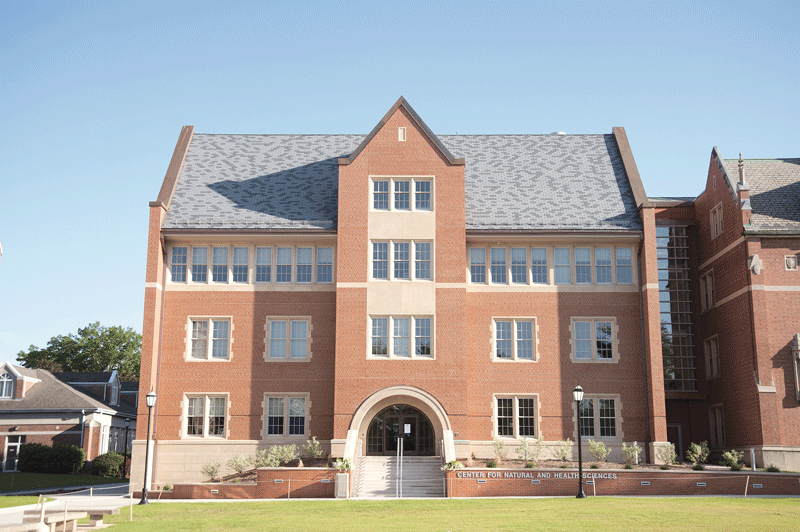
Education Sections

A New Front Door

Bill Fogarty

Bill Fogarty shows off the water-collection apparatus in G-313.

The number outside the door is G-313. But everyone knows it as the ‘digital video studio.’

It’s a well-equipped facility — done over as part of a $2 million renovation of the media center in Holyoke Community College’s campus center in 2008 — and, in most respects, it looks like a modern classroom.

Except for the black tarpaulin positioned just below the ceiling near the middle of the room.

This is an elaborate apparatus, actually, with the tarp hung so that the water leaking from the ceiling flows down and to the center, where it then passes into a hose that empties into a five-gallon bucket sitting on the floor.

“Pretty attractive, huh?” asked Bill Fogarty, HCC’s vice president of Administration and Finance as he offered a tour of the campus center, something he’s done quite often lately, but not for the reason he’d like.

Indeed, he’s certainly not showing off the facility, also known as Building G, hence G-313. Instead, he’s pointing out what the HCC community has had to put up with since … well, pretty much since the day the sloping, concrete facility opened its doors in 1980.

Fogarty’s not sure what month or day that was, but from what he’s heard anecdotally, the building has leaked since just after the ceremonial ribbon was cut — or at least the first day it rained.

Efforts to remediate the problem have continued for the past 35 years, mostly with stopgap measures like those in G-313. Funding for a permanent solution has come only after innumerable tours offered by Fogarty and others and countless “dog-and-pony shows,” as he called them, featuring color photos of the digital video center and several other facilities with water-collection systems of varying levels of sophistication.

The wait (for funding, anyway) finally ended last summer, when the state announced it was awarding $2.5 million for a massive renovation effort, the final monetary piece needed for what will be a $43.5 million project that will — in 30 months or so, according to current estimates — lead to tours of a much different kind.

When it’s over, the project to square off the campus center, thus eliminating the angles contributing to the water-damage problems, and add roughly 8,000 square feet will yield a facility that is in many ways state-of-the-art, student-friendly, and doesn’t leak.

It will in many ways give the school a new feel — and entry point, said its long-time president, Bill Messner.

“This will allow for a front door, which is something we’ve never had before,” he explained, adding that, despite its importance, the campus center is accessible only from a series of stairs leading down from the Frost Building, the main administration building, or from the adjoining Kittredge Center for Business & Workforce Development.

Plans call for an elaborate makeover of the dining-services facilities; a new home for the campus bookstore, which is currently housed in cramped, and, yes, leaking space on the ground floor; a new admissions office; and improved traffic flow to all those facilities.

The renovation project will create some headaches and logistical challenges — books will be sold only online for the length of the construction project, and dining facilities will be temporarily relocated to the already-crowded Frost Building next door, for example.

But the end result will be a facility that will certainly help the college as it works to attract students — HCC competes across many programs with Springfield Technical Community College, only eight miles away — and greatly enhance the experience for those who choose to attend.

Leaking Information

The campus-center project is the latest in a number of projects over the past decade or so that have in many ways transformed an HCC campus that first opened in the mid-’70s, and has been showing its age in many respects.

The 57,000-square-foot Kittredge Center, which opened in 2006, was a major addition to the campus, as was the new Center for Health Education, which opened its doors this past fall in the former Grynn & Barrett Studios building on Jarvis Avenue, just a few hundred yards from the campus (see story, page 22).

In the planning stages is a major renovation of the Marieb Building, which will house the HCC Center for Life Sciences on its first floor.

These and other projects have been undertaken to improve the student experience, create new learning opportunities, and improve student-recruitment efforts, said Messner, adding that the campus-center renovations were blueprinted for all the same reasons.

But at its core, this project was undertaken — and it’s been years, if not decades in the making — to eliminate design flaws, and thus water-infiltration issues and resulting building-material failures, that have plagued the building literally since the day it opened.

Indeed, as he offered his tour of the campus center, the last of what’s considered the “original” buildings on the campus, Fogarty showed BusinessWest several facilities with leaks and various forms of water-collection equipment, including other classrooms, the storage area in the bookstore, and a room just off the dining-services facility which, because of persistent leaks, has been used only for storage over the past several years.

“It’s been a chamber of horrors,” said Fogarty, adding that the college community has essentially had to live with the problem. And in recent years, that became increasingly difficult, creating a sense of urgency that culminated in more of those dog-and-pony shows, which helped prompt the state to include $2.5 million for the project as part of a larger package for capital projects. The balance of the cost is being funded through state bonds.

In a nutshell, the project calls for, well, building a new nutshell.

Holyoke Community College

Officials at Holyoke Community College say the campus center has leaked since the day it opened in 1980.

“To solve the problem, we’ve explored a number of options,” Fogarty explained. “And it’s been determined that the best way to approach this is not to simply over-clad the building, but to square it off — to actually build a new exterior of the building.

“The idea is to square it off and have it look more like the Kittredge Building,” he went on. “That’s because the campus center is not a very attractive building. And while it’s more consistent with the rest of the campus, it’s the building that’s in the worst shape.”

Construction is scheduled to begin in the spring of 2017, and it will require closing down the structure for the duration of the project. That reality will force some imaginative responses, said Fogarty, because the campus is already cramped.

But the end product will be well worth the inconveniences, he went on, because it will give the college a campus center that is far more welcoming, student-friendly, and easy to access.

“We’re trying to make it as easy as possible for new students and new families coming to the campus to find this parking lot and then have a straight shot to admissions,” said Fogarty, citing just one example of how the renovated Building G will represent a substantial improvement over existing conditions.

Messner agreed. “Admissions is currently buried down on the second floor of this building [Frost, the main administration facility], and it’s a very unappealing situation,” he explained, “particularly when you’re trying to attract and impress and serve potential new students.

“So this is not only going to be much more attractive and conducive to a welcoming environment,” he went on, “it’s also going to cluster an array of services around admissions that lend themselves to serving potential new students — the testing, the advising, and more.”

Another example would be the plans for the new bookstore, to be relocated from its current basement home.

“Right now, you have to make an effort to find the bookstore; it’s just not conveniently located,” said Fogarty. “What we want to do is bring the bookstore to the second floor, and have that facility, the dining services, and the student-activity services all on the same floor, and all opening up to a common corridor.”

Dry Subject Matter

Fogarty said he’s essentially done giving tours of the campus center — at least for the next two and half years or so.

But he expects he’ll doing a lot of them afterward, showing off a facility that will be modern, accessible, easy to use, and, best of all, dry.

Indeed, G-313 will look like a modern classroom — without the water-collection apparatus.

George O’Brien can be reached at [email protected]

Education Sections

HCC enhances the learning experiences for students in a number of programs

Michelle Sherlin

Michelle Sherlin with ‘Noelle,’ the obstetrics simulator at Holyoke Community College’s new Center for Health Education.

They named her Noelle.

She is the “obstetrics simulator” used by students at Holyoke Community College, and by Michelle Sherlin’s count, she’s given birth 16 times this semester, give or take a few deliveries.

Noelle has long been part of the curriculum, if you will, for students in various health and science tracks at HCC, but since she and the Health Sciences Department moved into the former Grynn & Barrett Studios building on Jarvis Avenue, she’s been playing a bigger part.

Indeed, in the new facility, Noelle has her own spacious hospital bed (a significant upgrade over her previous digs), which is visible from a larger, better-equipped screening room, from which students’ performance can be watched and assessed.

The simulator is now more mobile, said Sherlin, a registered nurse and simulation specialist within HCC’s Health & Natural Sciences Division. By that, she meant that it’s easier for Noelle to get to students and for students to get to Noelle, which means she can take part in more learning experiences — from those aforementioned deliveries to a late-term X-ray administered recently by students in the Radiologic Technology program.

In many respects, Noelle’s story captures the essence of the Health Science Division’s move into the 22,000-square-foot facility, acquired by the college in late 2012 and repurposed through a $7.6 million initiative that culminated in a ribbon cutting last fall.

There is more room, yes — considerably more room, and that’s a big part of the story. And there’s also new equipment, more than $600,000 worth it, which is usually defined with the term state-of-the-art.

Kathy Hankel

Kathy Hankel says the new Center for Health Education has greatly enhanced the educational experience for HCC students.

But the real story, said Kathy Hankel, dean of the Health Sciences Department, is how all of the above has enhanced the learning experiences for students in a number of programs, and how it has made HCC better able to compete for students seeking entry into the region’s large and diverse healthcare sector.

“We’ve been able to greatly enhance the educational experience for our students,” she explained. “We simply have the ability to do so much more than we could before.”

When the Grynn & Barrett building went on the market in 2012, Hankel said, college administrators saw a tremendous opportunity to substantially upgrade the Health Sciences facility then housed in the Marieb Building, one of the original structures on the HCC campus.

To describe those quarters, Hankel first summoned an adjective, then an adverb for some additional effect.

“It was cramped — horribly cramped,” she explained. “We did a lot of things over there (at Marieb) with our labs and simulators, but it was so difficult for all the students to get the true benefit of the simulation and lab experience we offered because we were so cramped.”

The new Health Sciences Center now houses the school’s two-year RN program, its LPN program, the Medical Assistant program, and the “Fundamentals in Health” class that has served as a feeder program for the various health disciplines.

The building houses staff offices and conference facilities, as well as a wide array of simulation rooms — all equipped to mirror what would be found in a hospital — as well as classrooms, labs, screening rooms, and more.

To say that the new quarters would retire that term ‘cramped’ is an understatement. Indeed, four months after officially moving in, Holly Martin-Peele, program chair of the Radiologic Technology Department, says she’s still having a hard time getting used to all the space.

Indeed, as she gave BusinessWest a tour of her facilities, she referenced a classroom; a radiology simulation room, or mock X-ray room, as she termed it, which recreates what would be found in a hospital; the so-called QC area, or ‘image-critique’ facility, which also doubles as a lab and study area; and a storage room.

“Before, in the old building, we had basically a big classroom that had a couple of antique X-ray machines in back that we couldn’t find parts for anymore,” she explained. “We can do so much here.”

Sherlin concurred, and successfully quantified the improvements in addition to qualifying them.

She said there are now eight simulators in use at the facility, double the number at Marieb, and more students are using them, and in myriad ways.

“We’ve done more than 360 simulations since the beginning of September,” she explained. “Previously, that was about what we did in a year and half; we did as many simulations in one semester as we used to do in three.”

More important than those numbers are what they mean in terms of the learning experiences of those performing the simulations.

“The quality of the educational experience has grown dramatically,” she told BusinessWest, “because students are really able to get comfortable with the technology, deepen their skills, and do a lot of critical decision making, because of simulation, that they didn’t have the ability to do before, because there was just no space.”


— George O’Brien

Sections Technology

Growing Concerns

EpiCenter President Jeff Glaze

EpiCenter President Jeff Glaze

Jeff Glaze was happy running a successful family business, a manufacturing company that, at its peak, employed 120 people. But when the climate changed in that industry — at a time when he was becoming heavily involved in a business-consulting model known as enterprise resource planning (ERP) — Glaze decided to transition into that latter business full-time. He called his new enterprise EpiCenter, and, almost five years later, once again finds himself at the forefront of his field.


Jeff Glaze thought the second-generation manufacturing company he led in Westfield would survive a lot longer than it did, “but the rules changed.”

It’s a story with a happy ending, however — not that it’s anywhere close to ending. Instead, EpiCenter, the business-consulting company that emerged four years ago from his previous enterprise, is growing by some 20% per year, boasting a national and international reach.

“We were a contract manufacturer of metal nameplates, labels, and signs; 80% of our business was making nameplates for companies,” Glaze said of a family business called Decorated Products that his father launched in the 1950s and peaked in the 1990s with 120 employees at the Westfield plant.

“Frequently, our niche was items that had to be UL-approved, giving safety information. They weren’t just pretty; they had to be functional also, carrying a serial number and critical information about how to operate the equipment safely,” he explained, with national clients including Black & Decker, Singer, Craftsman, and Tappan Appliances.

“In 2007, we won the Pioneer Valley Business Excellence Award, modeled on the Malcolm Baldridge National Quality Award,” he went on. “We wanted to be the very best we could, to set the highest standards so our customers would be happy with us and know we were providing the best-quality products.”

But by then, the writing was already on the wall.

The turning point came in 1994, when President Clinton granted most-favored-nation status to China, opening up the Chinese market for American companies, which started moving to China and building factories and paying workers 5 cents an hour instead of $15, Glaze recalled.

“I’ll never forget the day Black & Decker called,” he said, noting that Decorated Products manufactured a stainless-steel gauge for a radial arm saw. “For 10 years, we were shipping 4,500 parts a week. In 2001, the Black & Decker guy called during lunchtime and said, ‘well, Mr. Glaze, it’s $4.15 from you, $2 from China. So, how much inventory do you have?’ And that was that. We were losing customers.”

However, a parallel story was emerging. Decorated had been working with an enterprise resource planning (ERP) provider that went out of business during the late 1990s. “Any large manufacturing facility has this type of system; it’s a necessity if you’re going to be efficient and meet customer requirements,” Glaze said.

An ERP system — essentially a suite of business-management software and consulting services that helps clients manage business functions ranging from IT to accounting to human resources —  is so critical, in fact, that Glaze and several of the failing provider’s other clients hired one of its employees to keep those functions afloat.

Eventually, Glaze became involved with Epicor, an international leader in ERP. “They had a great product and had grown over the years, and I wanted to make sure we partnered with someone who’d last a long time; I didn’t want the same thing to happen again.”

The EpiCenter team

The EpiCenter team includes about 25 local employees and dozens more scattered across the country.

Soon, he got involved in a local Epicor user group, a group of committed users who provide suggestions and feedback on service changes and enhancements. Later, he became president of Epicor’s New England user group, started attending national conferences, and ascended to president of a global user group in 2005, representing 20,000 users of the software around the globe.

Consulting for Epicor had become a major part of his business — so much that, in 2006, Glaze told BusinessWest, “the president of Epicor said, ‘why don’t you become a partner? We’ll give you some training, and you can do the same things you’re doing now, helping customers use the software, but we’ll pay you to do it.’”

A few years later, Decorated Products was no more, and EpiCenter was born.

Avoiding Disaster

There was, of course, the issue of all the employees that had worked at Decorated — for a long time, in many cases. The manufacturing business didn’t seem viable anymore, a sentiment Glaze’s children seconded and thirded.

“They said, ‘realistically, it’s not a great business model; we’re not really interested in continuing it.’”

Still, “nothing is more hurtful than laying people off,” he continued. “Fortunately, I had a friendly competitor in Stafford Springs, called Willington Nameplate. I said, ‘why don’t you buy my manufacturing company so my remaining employees have a place to go?’”

Willington agreed, and the vast majority of Glaze’s workers joined the Willington team, and EpiCenter emerged as a full-time ERP business — and a successful one, with about 60 employees scattered across the U.S; of 140 Epicor partners worldwide and 100 in the U.S., it ranks in the top five in overall size.

“A company might buy software from Epicor or someone else and ask us to implement it for them. We can sell to them as well and implement our expertise in all facets of running their business — accounting people, tech people, operations,” Glaze explained. “We try to become an ongoing resource for our customers, too. We’re their outside ERP firm.”

Enterprise resource planning is used by organizations to collect, store, manage, and interpret data from many business activities, including product planning, costs, service delivery, marketing and sales, inventory management, shipping … the list goes on, and ERP systems are highly adaptable to each client.

EpiCenter has some financial-services clients, but 80% of its customers are in manufacturing and distribution. “We have expertise in capacity planning and scheduling, job costing, and much more,” Glaze saide. “This is very important to all kinds of manufacturing companies.”

While some companies might opt to handle those functions internally with Quickbooks and other software, he continued, they often wind up with a hoghepodge of systems that don’t talk to each other, and they require human capital to enter information from one system to another.

An effective ERP solution, on the other hand, can cut overhead by 30% to 50% in certain cases, he went on. “Nobody has to re-enter information three or four times. As a result, you have better communication, reduce inventory, improve scheduling, improve profitability, keep overhead down … it really is a necessity. When you have a company that’s doing $10 or $20 million in sales, especially in the manufacturing world, it’s pretty hard to operate without that.”

Because the software is scalable, Glaze said, some startups will become partners, and the ERP expands as they do. “Those are the fun ones. It’s really great to see those success stories in Massachusetts. A lot of biotech companies we have as customers have certainly followed that model.”

Most EpiCenter clients are small to medium-sized businesses. Large, Fortune 500 companies may opt instead for platforms like Oracle and SAP. “Those systems are much larger and require a large, technical staff to keep them going. They do a great job, but they’re not appropriate for smaller companies.”

About 25 of EpiCenter’s employees work in Westfield, while the rest are spread out across the country, either in satellite offices in New Jersey, New Mexico, and Minnesota, or working from their homes, ready to travel where clients are.

“The limit on growth, for us, is finding qualified people. We need people with all these different backgrounds,” Glaze said. “We recruit nationally; it’s a very rigorous screening process and very vigorous training process. Basically, I need to add one or two consultants a month.

“Customers don’t want to train us in how to run their business, so the qualifications to be a consultant with us are pretty stringent,” he went on. “We have, in a few cases, hired people right out of school and brought them along with lower-level support work until they get enough experience to do consulting, but they’re much better off with a degree in business or engineering and five to 10 years experience using the EPR system, so they can hit the ground running. If we can’t find those people, we’ll certainly train.”

More Than Customers

Glaze was quick to stress that EpiCenter clients are more than customers. He told of one Worcester company whose IT official needed to donate a kidney to his son, so EpiCenter sent one of its own people there to do his job until he returned to work. “That’s the level of support we give. We feel very strongly that our customers are like our family, and we want to treat them right.”

That said, he concedes that, for a company doing $500 million annually in sales, EpiCenter is a bit of a secret in Western Mass.

“We work nationally and go where people ask us to go,” he told BusinessWest. “But we’re a great option for companies in Western Massachusetts.

“We’ve been in a tough economy, and while there are some bright spots, this region has lost a tremendous amount of manufacturing,” Glaze went on. “But there are some niche areas that are doing well, and that’s great; we’re serving those industries that are doing well — and we can make them that much more successful.”

Joseph Bednar can be reached at [email protected]

Sections Technology

An IT Diet for 2016

By TERRY GROGAN

Terry Grogan

Terry Grogan

How come New Year’s resolutions always seem to center around dieting and getting in shape?

You spend your holiday dinner enjoying all of the spoils of the season and then try to talk yourself into a ‘lifestyle change’ once the ball drops.

It’s a lot like that around the old IT department, too. We’re all being asked to do more with less, economize personnel resources, and limit capital expenses. To put it another way, senior management is telling us to lose some weight without investing in an entirely new wardrobe.

But how did we get so fat?

Remember that tome on business success called Good to Great by Jim Collins? It’s a book that I try to make my bible, though I don’t always live up to it as well as I should. (Yes, it’s my annual New Year’s resolution!) The book suggests that a central theme of all truly great businesses and individuals is the ability to create annual goals and objectives. But in order to do that, I think you also have to take a look back at what you might want to change.

When I walk into companies for the first time, usually as part of an IT gap assessment, and ask, “when was the last time you looked at the things you should stop doing?” I’m often faced with blank stares and puzzled looks.

Any IT organization that’s been around for a while has accumulated, shall we say, a little tire around the midsection. The telltale signs are the processes and procedures “we’ve been doing for years,” especially if the IT staff has also been with the company for a while.

These processes and procedures were put in place (no one quite remembers when) because someone wanted a new type of report, a filter to keep out that ‘virus of the day,’ or a custom workflow to make it easier to put a new server online. However, once that new process, procedure, or deliverable was in place, most IT departments rarely looked back, moving on to the next task or crisis at hand.

The old adage, “if it ain’t broke, don’t fix it,” became a rule to live by, and as the years went by, the old processes and procedures were carried forward. As a result, companies generate the same reports, build servers the same way, and approve or disapprove access or technology for the same reasons, even if doing so requires a large amount of work, major upgrades, or more money to support.

No one goes back and examines these things until a high-threshold pain point or sentinel event occurs (e.g. the process is no longer supported by a major upgrade of a product, a merger causes re-evaluation of a technology, etc.). When this happens, we’re often surprised to find that what we may have been doing for the last few years is either no longer necessary, is very inefficient, or isn’t useful to anyone.

We shouldn’t need a sentinel event to move us to action, but since ’tis the season, let’s resolve to review old processes and procedures the same way we review (or should review) policies: vowing to do it every year. You probably won’t hit all of them, but pick a few every 12 months and examine them.

Ask your staff for their opinions. It’s amazing the answers you get when you ask everyone to “tell me the three things in your job you’d stop doing or do differently, if you were able to make the rules.”

Experience suggests that the first few times you undertake this exercise, you’ll actually find things that you and your staff are doing that are of no value at all. Stopping them frees up resources and/or makes forward progress easier (look at Microsoft’s abandonment of Active X in the new Edge browser).

But even after you hit the low-hanging fruit, continuing to create a ‘stop-doing’ list annually will help you look at those new tasks, processes, and projects that maybe aren’t as important as others. It will help create a focus on the things you really should be doing and create a literal lifestyle change when it comes to adopting processes in the future.

In short, you start thinking about new things with a critical eye, asking, “should we even begin this?”

So, as you begin making your list and checking it twice, consider simply taking stock of what you already have in place. Shedding those extra data-storage pounds or slimming down your infrastructure may be as easy as just asking a few questions.

Happy new year.

Terry Grogan is a 17-year veteran of the business and healthcare IT industries and is chief information officer of Holyoke-based VertitechIT, one of the fastest-growing business and healthcare IT networking and consulting firms in the country; [email protected]

Architecture Sections

Purposeful Design

Kevin Rothschild-Shea

Kevin Rothschild-Shea at a residential project site.

Kevin Rothschild-Shea launched his architecture firm seven years ago, just as the economy was starting to sour. But, though a combination of diversity, flexibility, and a commitment to service, he has seen his business not only survive, but grow. It helps that he’s got a number of what he calls “socially responsible” jobs under his belt, as he has a passion for working with clients who serve people in need.

Kevin Rothschild-Shea has designed buildings for a wide variety of residential and commercial clients, but he takes particular pride in projects with a social benefit.

Take the child-care center his firm, Architecture EL, designed in Chicopee for the Valley Opportunity Council. “They’re very excited to see a new building replacing a very small, old, out-of-date structure,” he said of the partially state-funded project. “For us, it’s a nice little job, but for them, it’s a big project that’s been a long time coming.

“It involved creating a space that’s bright and clean — not just a room, but a room that creates an opportunity for learning and positive experiences,” he went on. “For some of these kids, it’s the nicest place they’ll get to go all day.”

He also cited the E. Henry Twiggs Estates, a 75-unit affordable-housing project in the Mason Square neighborhood of Springfield. The client, Home City Housing, is a “great organization with the goal of maintaining affordable housing for people in the area. That’s a really significant project that we’ll be drawing through the wintertime, and we hope to start construction in late spring or early summer.”

Meanwhile, “we did some work with the Community Survival Center in Indian Orchard — space planning, space analysis,” Rothschild-Shea explained. “They’re an organization that continues to grow and provides a great service to people in need. I feel fortunate I’ve been able to work with them.”

Rothschild-Shea uses the word ‘fortunate’ often, occasionally applying it to the success of his own company, which he launched in 2008, into the teeth of an economic meltdown, followed by a lengthy recession. But he says he’s happy to be very busy today.

“The economy is typical of Western Massachusetts — there seem to be hot spots,” he said. “I’ve been busy while other people have been slow, and I’ve been slow while I’ve seen others swamped. It’s hard to get a read on it. So maybe I should just keep working.”

That said, “we’ve been pretty fortunate. We’ve had a good variety of work and great clients, and we were fortunate to survive the recession, and not only survive, but we managed to grow,” he went on, noting that the company has expanded from a two-person operation in 2013 to five employees today, and recently moved into new offices that effectively doubled its physical space. “That’s a good sign of our growth and the work we have on our plate.”

Bold Beginnings

Rothschild-Shea has told the story of how he loved helping out around the house as a child, which inspired him to pursue a creative, hands-on career. After graduating from Roger Williams University in Rhode Island, he took a job with a small architecture firm for 18 years before deciding to strike out on his own. “I just jumped in feet first and said, ‘let’s get to work.’”

A rendering of the new Valley Opportunity Council early-education center in Chicopee.

A rendering of the new Valley Opportunity Council early-education center in Chicopee.

Architecure EL — the acronym stands for Environment Life — was built on the idea of direct design. It’s more common than ever, in fact, to partner with owners and contractors in the design and construction of a building, whereas, a decade ago, those elements were bid separately. “The construction-management type of partnership atmosphere is much more common than we saw in the past.”

Setting up shop in East Longmeadow, he said, many customers assume the EL is an acronym for the town, “but the reality is, we want to be environmentally friendly, energy-efficient, and design the best space we can that’s comfortable to work and live in.”

Meanwhile, the industry — reflected in both customer demands and Massachusetts codes — is increasingly making green-friendly building the standard, not the rule, he said. “The codes require pretty high-performing buildings as a baseline. But from there, we always want to do better.

“When we were starting out, our simple approach was to do good design that was responsive to our environment, sensitive to the world we live in, whether that means making homes energy-efficient or salvaging materials and recycling building products.”

That’s the ‘E’ in a nutshell. The ‘L’ stands for life, and is a more amorphous idea, but just as important. “That’s the whole experience — making a space comfortable, whether it’s your house or office or truck-repair center. The core is making it rewarding to work or live in that space.”

Rothschild-Shea has weathered varying economic climates, he said, by focusing on personal service — working closely with clients from design conception through construction and occupancy — but also on flexibility and diversity, taking on most any type of proposal.


Download a PDF chart of area architecture firms HERE


“We are pretty diverse for a small practice — everything from small studies and accessibility projects and single-family additions and renovations right on up to significantly scaled commercial and residential work,” he said.

For example, this past year saw the completion of Marcotte Ford’s commercial truck center in Holyoke, a 17,000-square-foot, 160-bay facility unlike any in Western Mass., he noted. “It can handle pretty much any vehicle — a lot of municipal and police work, SWAT vehicles, ambulances, right on up to big transport vehicles like retirement homes have.”

As part of the Ford’s ‘landmark design’ program, Rothschild-Shea’s firm will also handle Marcotte’s next job, which is giving its main showroom a facelift, expanding some office space, and completely renovating the service center.

“We’re also continuing to do small office improvements for the Insurance Center of New England,” he noted. “We worked with their Agawam branch a year or so ago, and now we’re doing some improvements at an office in Gardner.”

A rendering of one of the affordable-housing units

A rendering of one of the affordable-housing units at the E. Henry Twiggs Estates, a Springfield project set to begin construction in 2016.

Architecture EL also designed Hatfield’s town offices, with an opportunity to bid on additional work coming up in the next year or two. The firm designs plenty of residential work as well, including a recent project on the Connecticut River for a retired couple, replacing a small cottage.

Whatever the job, Rothschild-Shea said, “the core of it is good service. Being small, we’re able to be responsive and efficient and more economical with our time than perhaps a larger company.”

Problem Solver

When asked what drives him the most, Rothschild-Shea paused for a moment before answering simply, “the problem solving.”

“For me, whether I’m designing a house or a service center, success lies in coming up with solutions — whether it’s creating an economical space, or one that’s energy-efficient, creative, comfortable, whatever. It’s taking the physical constraints and the site constraints and massaging that into a successful solution.

“That’s the core of what we do,” he went on. “All the imagery and design and final product are byproducts of solving a problem. That’s the core of good service — understanding the problem and solving it in a creative architectural fashion.”

It’s easier to focus that passion on each job now that the economy has improved, the construction industry is warming up, and architects are focused on more than survival.

“We’re seeing some great municipal work happening recently — maybe not as many schools as before, but there’s a fair amount of public work out there,” he said. “The economy seems to be strong and moving, and we’re looking forward to more of that socially responsible work we’ve been fortunate enough to do. We’re certainly looking forward to expanding on that, whether it’s affordable housing or things like the Survival Center.”

Meanwhile, phase two of the Twiggs project is coming online as well — just one more opportunity for Rothschild-Shea to do well for clients that are doing good.

“I’m fortunate I get to jump on board with these organizations that existed long before I did, and help support their missions,” he told BusinessWest. “There are still a lot of gaps in the economy, and so many people continue to struggle, and it’s nice to help fill in those gaps.”

After all, “people have to live and work in what we draw,” he went on. “So it’s a responsibility on a lot of levels; it’s not just a contract, per se. It is a nice feeling, like we’re making a difference.”

Joseph Bednar can be reached at [email protected]

Architecture Sections

Lighting the Way

spray-chalk displays

The spray-chalk displays drawing people to the Holiday Market are one way to make an impact downtown with little cost.

Frank Sleegers wants his classroom to extend far beyond the UMass campus.

“For these students, it’s not just the work they do to get grades, but they actually care about what they do; they see their work is important and can make an impact,” said the urban design professor at UMass Amherst.

He was speaking of a recent project by a group of landscape architecture students, who worked with the Springfield Central Cultural District to improve the downtown pedestrian walkway known as Market Place and attract more activity there.

Morgan Drewniany, director of the Cultural District — an organization launched in 2014 to cultivate arts and activities and generate interest downtown — said the student “interventions,” as she and Sleegers called the work, involved bringing light to Market Place with paper lanterns and using spray-chalk designs on downtown sidewalks to get people thinking, and talking, about Market Place as a destination.

The short-term project was intended to coincide with the opening of the Downtown Springfield Holiday Market, a joint project of the Springfield Business Improvement District (SBID) and the Cultural District intended to boost retail sales downtown during the holiday season by bringing artists and vendors to spaces located between 1331 and 1391 Main St. and throughout Tower Square.

“One group of students incorporated spray chalk, directing people to the Holiday Market and Market Place itself as well, and really getting people talking about walking and walkability downtown,” Drewniany told BusinessWest. “The other group utilized a series of paper lanterns to bring light to the space, to create more of a welcoming environment, somewhere people really want to linger and spend more time checking out the shops.”

A third group project is working on a longer-term project downtown to be unveiled this spring, she added, giving no details but calling it “an innovative, moveable park.”

Market Place, also known as Market Street, is a pedestrian-only walkway running parallel to Main Street from Falcons Way to Harrison Avenue. A bustling space in the days of Johnson’s Bookstore, today, the walkway typically gets little use except as a cut-through between the downtown towers and the MassMutual Center.

Drewniany said Sleeger’s students had been working on city-improvement ideas for several years through the Office of Planning and Economic Development, a partnership supported with a small Community Development Block Grant. Since its formation, the Cultural District now oversees the projects, which typically take place twice a year, during the fall and spring semesters.

“This year the city planner was able to loop me into the students, to really make their plans a reality,” she said. “Whereas a lot of the students’ ideas in the past had been incorporated into future city plans, we were able to do an independent project where students were able to see their ideas realized. The city has the capacity to make things happen in a few years; we, as a cultural district, are able to focus on it and make it happen in a couple of months.”

Real-world Experience

Sleeger said the Springfield projects usually involve undergraduate students in the fall and graduate students in the spring.

“We’ve worked in a number of neighborhoods that needed some help, that were disadvantaged, where sidewalks were crumbled, things like that,” he told BusinessWest. “Last year, we did an intervention downtown with high-school students from Putnam [Vocational Technical Academy]. Because the city liked our approach, we were able to do some short-term interventions.”

Indeed, last spring, students from the UMass Graduate Urban Design Studio — after consulting with Springfield residents, city Planning and Economic Development officials, the Cultural District, Focus Springfield, small entrepreneurs, and Putnam students — staged six installations throughout downtown Springfield using what Sleegers calls ‘tactical urbanism,’ an emerging form of urban design that seeks to enliven cities with temporary interventions that are inexpensive and easy to install.

The ongoing partnership between the UMass program and the city is “a great idea that also educates the students who come to Springfield,” Sleegers said. “They see what’s here — a city with great potential. We can do something with very little money that has a high impact. That’s typical of other cities as well; parts of the country are struggling, and cities don’t have big bucks, but we can make them better.”

For discussions of longer-term improvements, students have worked with entities ranging from planning officials to the SBID to DevelopSpringfield. In one project, they developed ideas to enhance safety at the X neighborhood in Springfield, aiming to improve pedestrian crossing and making aesthetic enhancements.

“We’re proud of these contributions, and we have a great working relationship with the city,” Sleegers said, noting that the Springfield Design Center — which opened in Court Square in 2009 as a collaboration among UMass programs in Landscape Architecture and Regional Planning, Architecture and Design, and Agriculture — is now housed in the UMass Center at Springfield, located in Tower Square.

“We continue to work on other ways to make our work more visible,” he said. “These interventions have positive effects, and we get a great response.”

Art and Commerce

Sleegers said too many people have yet to discover the potential of downtown Springfield, and that his students are only helping to showcase it. “Our conversations with the shop owners of the Holiday Market were most inspiring. Their presence transformed the place immediately. I want to get our students involved and embraced. These experiences make them grow and succeed.”

Drewniany said she would like to see the connection between the Cultural District and UMass continue to grow.

“For Springfield to continue its growth and success, we really need to capitalize on all the relationships we have, and work with students who have some real ideas to help bring us to the next level of being a really innovative city,” she said, calling her organization “economic development through arts and culture,” which includes landscape design.

“Young people — and employers who have employees who are young — are really looking at the amenities a city has, not just how cheap rent is. They want to see we have galleries, that we have cool events happening, public art you can walk around. We really see that as something necessary for the future of the city.”

In a sense, those luminarias and chalk designs are just another way to light the path to that goal.

Joseph Bednar can be reached at [email protected]
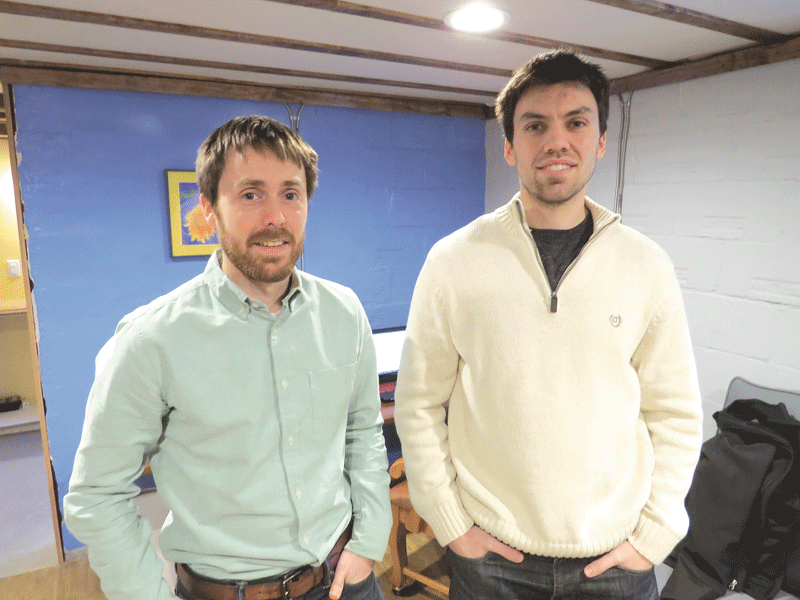
Education Sections

Rock Solid

Head of School Brian Easler

Head of School Brian Easler

Growing up, Brian Easler said he was anything but the proverbial ‘prep-school guy.’ He attended public high school and then went into the Army, serving in Desert Storm. But he always had what he called a fascination with the private-school life, or the world presented in Dead Poets Society. Today, as head of school at Wilbraham Monson Academy, a role he assumed after 16 years in various posts at the school, he’s leading roughly 500 students, faculty, and staff now living that life. More importantly, he’s working diligently to keep the school on a long run of growth, increased diversity, and vibrancy.

There’s an intriguing tradition at Wilbraham Monson Academy.

It’s called the ‘senior stone,’ and it dates back to when this 211-year-old institution was known as Wilbraham Academy, and with the class of 1947.

It was with those individuals, all young men (the institution went co-ed years later), that the school began the practice of giving each graduating senior a stone, which would then be placed in the Rubicon, a stream that runs through a portion of the campus, where it remained until it was soft enough for the student to chisel his name and class year on it. The stone would then be placed atop one of the many stone walls on campus.

In recent times, maybe the past 20 years or so, students have taken to trading that soaking and chiseling work for bringing their stone to a professional engraver for some more elaborate messages, noted Brian Easler, head of school at WMA, adding quickly that the old method is still practiced by some and, by most accounts, is staging what amounts to a comeback.

“Over the past four years, there’s been a real movement back to people chiseling their own stones,” he said, “to the point where the dean’s office has set up a half-dozen canvas tool bags with a hammer, a chisel, and safety goggles, and students can sign out a kit.”

Both engraving practices are certainly in evidence along the low wall placed across the front of Rich Hall, the main administration building named for one of the school’s early trustees, Isaac Rich. There, one will find simple names or even initials obviously hand-chisled, as well as detailed, professional engravings, many mixing words with ornate images.

In many ways, that front wall, and the Senior Stone tradition itself, speaks to how this respected preparatory school balances tradition with changing times, technology with time-honored practices, and evolution with history.

In most respects, it is a delicate balancing act, one that Easler has led since becoming head of school in 2014, and been a part of since arriving on campus 17 years ago to lead alumni affairs and the school’s annual fund.

He would quickly move on to the role of dean of students, and later add the title associate head of school. When Rodney LaBrecque announced he was stepping down from the corner office, a search for a successor commenced. It wasn’t a long search — or as long as most — because the movement to place Easler in that position took on a life of its own.

Indeed, a Facebook page created by a member of the class of 2000 called ‘Brian Easler for WMA headmaster’ had more than 1,200 members within three days. “That roughly accounts for almost every student who graduated during my time as dean of students,” he noted. “And also some of the kids I kicked out.”


Download a PDF chart of the region’s private schools HERE


Roughly 18 months into the job, Easler admits that he’s still growing into it, something he certainly didn’t expect (more on that later). And as he sliced through his many responsibilities and worked to sum them all up, he said the assignment comes down to simply maintaining what has been a lengthy and healthy run of growth, continued diversity in all its forms, increasingly global reach, and overall vibrancy at WMA.

But there’s nothing simple about that broad task.

Indeed, this is in many ways a challenging time for prep schools and colleges alike, as they grapple with declining populations of young people, immense competition for top students, global economic turmoil, and the need to maintain high standards of quality when it comes to admissions in the wake of these issues.

Couple these factors with ever-rising tuition costs, and the mission for WMA and all schools like it is to make sure value is among the assets it has to offer.

“We know that birth rates are declining, and that means school populations are declining, which means that competition is getting tougher for schools,” he said in describing the current operating climate. “And we’re also in an environment where tuition is going up. In order for us to balance what we cost with the value of what we provide, we need to have the most effective and most intentional financial plan — and focus on our mission — that we can.”

For this issue and its focus on education, BusinessWest talked at length with Easler about the many kinds of balancing acts going on at this institution, and his vision for this school with a future that appears, well, rock solid, and in a number of ways.

School of Thought

Easler has taken a rather intriguing path to the large office at Rich Hall assigned to the head of school, one that he probably couldn’t have imagined when he was in high school himself. And that’s because that setting was at the opposite end of the spectrum from where he is now.

“I went to public school in Maine, and was not a private-school guy,” he explained, adding quickly that, for a variety of reasons, he became fascinated, for lack of a better term, with the private, boarding-school realm.

The senior stone

The senior stone has been a tradition at Wilbraham Monson Academy since 1947.

“My first experience with private schools came when I was lifeguarding at the University of Maine,” he explained. “There was a gentleman who came in to swim every day who graduated from Eaglebrook (in Deerfield). He would tell me stories about his middle-school days there, and that created this fascination for me with boarding schools.”

It would later be fueled by Dead Poets Society, the movie starring Robin Williams about the fictitious Welton Academy, and other factors, including a chance encounter with the WMA campus while Easler and his wife were travelling from their new home in Springfield to Palmer.

But despite this evolving fascination, Easler seemed in no way destined for the career that would eventually take shape.

Indeed, upon graduation from high school, he joined the Army and was assigned to the 101st Airborne Division’s Long-range Reconnaissance and Surveillance Detachment. As a Ranger team leader of a six-man squad, he would be awarded the Bronze Star for actions while engaged in combat operations behind enemy lines during Desert Storm.

After his stint with the Army concluded, he attended the University of Maine at Farmington, where, in a nod to Dead Poets Society perhaps, he majored in literature and minored in philosophy.

Easler noted that he first applied to Wilbraham Monson to be an English teacher — at the suggestion of one of the school’s retiring English teachers, who became the subject of one of his assignments at Springfield College, where he earned a master’s degree in Education.

He didn’t get the job, he explained, at least in part because he seriously lacked the skills necessary to coach field hockey, which was part of the job description.

But he certainly made some kind of impression. That became obvious a while later, as he was mulling where to go next, when the phone rang.

“It was the head of school, Richard Malley,” said Easler. “He said, ‘have you ever considered serving education in a role other than teaching?’ — and I had no idea what he was talking about.”

What Malley had in mind was the job as director of alumni affairs and running the annual fund, a job Easler wasn’t sure he could handle, but accepted anyway.

“He took a chance on me because I had no experience, and I took a chance because I didn’t know how to be alumni director,” he explained, adding that, 17 years later, he’s still at WMA because, as he put it, “I never had any desire to leave.”

As mentioned earlier, he would soon be promoted to dean of students, and in 2005, he became assistant head of school. He told BusinessWest that he thought those positions and their myriad responsibilities — everything from creation of a new evaluation system for teachers to leading students on educational trips to the Amazon jungle, to working with the town to install a new street-crossing light system — would adequately prepare him for his new role.

It turns out he was right. Well, sort of.

“I felt like I knew the job, that I had it all figured out,” he told BusinessWest. “As it turned out, I had no idea.”

School of Thought

What Easler said he’s learned over the past year and a half is that this job entails wearing many hats and assuming many roles.

“In one day, I can be dealing with parking-lot-assignment issues, auditors and lawyers, happy parents, billionaire alumni, and international dignitaries,” he said, adding that those in that latter category are often also alums. “At various times, you have to play the role of counselor and mayor, judge, priest — not in a particularly religious sense, but in terms of providing counsel to people when they’re at a time of need — and more.”

He’s taken on all those roles and others as he’s undertaken the twin challenges of maintaining the recent momentum at WMA and coping with the myriad challenges facing all private schools at this time. And they are, of course, interrelated.

“Our student body has grown in size and quality to the point where we’re full,” he said, describing his tenure at the school specifically. “And our school culture has changed significantly over the past 14 years.”

Elaborating, he said there are now students from 31 different counties and 11 states, escalation of a pattern — one that has earned WMA the nickname ‘the global school’ — that began in 1854, when the school became the first institution of its kind to admit a Chinese student.

International students now comprise one-third of the current student population of 420, which is a percentage the school embraces. But the term ‘diversity’ applies not only to countries of origin, Easler stressed, but other realms as well, including socio-economic status.

And maintaining this diversity is critical because it provides a rich learning experience that goes well beyond the classroom, one that students appreciate long after their stone is placed into a wall, he explained.

“It’s very important to the students to have a diverse campus because, when they come back from college, they tell us that even their college communities are not as diverse and inclusive as ours,” he explained. “My guess would be that this perception of theirs is not a statistical perception — the breakdown of the student populations are not dissimilar to ours. But the perception of it is different, because we’re much smaller.

WMA

Brian Easler says WMA provides students with diversity and an opportunity for “social engineering” that that they miss when they move on to college.

“On a college campus, they have more of everyone, so it’s much easier to isolate yourself with whoever’s like you or whoever’s from where you’re from,” he went on. “We’re such a small community that that becomes virtually impossible. What students experience here is like social engineering or forced inclusivity, so that students, by nature of our program, and in a totally healthy way, find it necessary to engage with others who are not like them. And what they learn from it as a result is that they enjoy this, and they miss it when they go to college.”

Moving forward, the mission is obviously to continue this social engineering while also providing students with a high-quality education, and overall experience, that will prepare them not only for college but everything that life can throw at them afterward, said Easler.

And, in these times of declining populations of young people, heightened competition for top students, and rising tuition rates, schools like WMA are challenged to maintain their high standards, become ever more efficient, and focus their resources on programs and initiatives that will advance the institution and improve the overall student experience.

And this brings Easler back to that word ‘value.’

“It’s all about aligning ourselves, our mission, and our expenses so that our budget reflects our mission,” he told BusinessWest. “You can tell what an institution’s real mission is by looking at it’s budget; people spend their money on what’s important to them — and so do institutions.”

And at WMA, what’s important is the learning experience, he went on, adding that, over the past two years, as part of what could be described as strategic planning, the school has identified what’s important and adjusted the budget accordingly.

“We’ve become more lean and efficient as an institution, and more responsive to our parents and alumni,” he explained, adding that the school has boiled what’s important down to three basic criteria: the student experience, the mission, “and what keeps us attractive to our current or potential customers.”

No Stone Unturned

Looking ahead, and far down the road, Easler said WMA has plenty of sidewalks and roads near which to build walls to display the stones of graduating seniors for decades to come.

Beyond that, it has the other necessary ingredients as well — history, tradition, diversity, a willingness to adapt to changing times, and the ability to balance all of the above.

That, and a head of school who may not have been a prep-school guy growing up, but has forged a successful career leading and mentoring those who are.

That’s one reason, from nearly all accounts, why this venerable institution will weather the many challenges facing it and remain rock solid.

George O’Brien can be reached at [email protected]

Community Spotlight Features

Community Spotlight: Ware

Stuart Beckley

Stuart Beckley says Ware is on the cusp of a rebirth.

“Ware is somewhere worth investing in.”

That’s the new tagline for this Hampshire County community of nearly 10,000 people. That statement is already true, said town officials who spoke with BusinessWest, but a host of initiatives are underway to make it even more so, and to make the slogan resonate with those who hear or read it.

Indeed, major efforts are underway in Ware to stimulate growth and economic development, projects focused on everything from increasing access to higher education to expanding public transportation.

“There’s a lot going on, and it’s an interesting story, but no one entity is responsible; it’s a core effort aimed at revitalization,” said William Braman, president of the Ware Business & Civic Assoc., or WB&CA.

Tracy Opalinski agreed, and said several initiatives were initiated or advanced last year, when the Edward and Barbara Urban Charitable Foundation decided it wanted to do something to make a significant impact in the town.

Opalinski, a trustee of the foundation, told BusinessWest it gave the town $45,000 to hire community marketers to provide a visioning statement, community branding, wayfinding, and economic-development services, and since that time, the foundation has donated another $50,000 for execution of the wayfinding system, which includes logos and new signage.

Progress began after the initial donation was made, and Arnett Muldrow & Associates Ltd. was chosen via a request-for-proposals process.

“They’ve done this for more than 180 mill towns in the country,” Opalinksi noted, adding that the firm mailed a survey to business owners and got a 65% response, held 15 focus groups, and conducted 50 interviews with a cross-section of people from the community that included representatives from businesses and industries, youth, retired residents, outdoorsmen, and artists, to discover what they wanted and needed in terms of services.

Arnett discovered an untapped potential for new and expanded restaurants to make $24 million and small to medium-sized businesses to make $139 million in sales each year.

“They found a need for a small, independent furniture store, a family and women’s clothing store, and an outdoor store,” Opalinski said, adding that Ware is a hub for the surrounding 15 towns in the Quaboag region.

The project was completed in April, and one of the most significant suggestions involved establishing a community-college satellite program, since education and workforce development are critical to economic stability and growth. Coincidentally, the WB&CA had begun working on the same goal four months earlier.

“Their initiative included the Ware Literacy Group, the Ware Business & Civic Association, Country Bank, the Behavioral Health Network, Quabbin Wire, Baystate Mary Lane Hospital, the town, the Franklin and Hampshire Regional Employment Board, Pathfinder Vocational Technical High School, and, most importantly, the Quaboag Valley Community Development Corporation in Ware, which helps businesses start, stabilize, and grow,” Opalinski said.

She added that the WB&CA has a number of teams, including one that does advocacy work for businesses, and another group focused on helping property owners on Main Street fill empty space. That subcommittee contacted Greenfield Community College, Quinsigamond Community College in Worcester, and Holyoke Community College, and asked if they were interested in establishing a satellite site in Ware.

The reaction was positive, and since Ware falls under HCC’s geographic territory, it has taken a lead role in the project, although the other two schools and Springfield Technical Community College are involved and contribute to what will be known as the Community College Educational Incubator.

“This is the first time in history that four Massachusetts community colleges have worked together on a project like this,” Opalinski said, noting that many businesses have contributed to the effort, and the facility will open in February in a space donated by a business in a prime location on Main Street.

“Businesses in this area are starved for qualified employees, so we’re trying to create our own feeder program and build a base so people can live and work locally instead of having to move far away or commute to find employment,” she noted.

For this, the latest installment of its Community Spotlight series, BusinessWest looks at the many initiatives taking place in Ware and how, collectively, they make that new marketing slogan ring true.

Solid Growth

As officials in Ware noted, progress is being made on a number of fronts.

Town Manager Stuart Beckley noted that an international manufacturing firm known as G&G Medical Products recently purchased an underutilized mill that was owned by American Disposables and is investing about $1 million in the building.

He said the structure was run down, and the town just approved a 10-year tax break for the company to rehabilitate it and move in. That equates to about $6,500 each year, in addition to assistance the company will receive from the state.

“The purchase took about a year,” Beckley noted. “We worked closely with the company, and they told us they plan to add 70 employees over the next five to 10 years, which is huge for Ware.”

He added that workforce development is a primary focus for officials.

“This is a working-class town with lower incomes than most of Hampshire County, so jobs are important,” Beckley said, adding that some businesses are in the process of downsizing. For example, Kanzaki Specialty Papers recently put in a new treatment plant that allows for more efficient operations.

“Over time it will set them up for new products, but it has cost us 25 jobs in the last year,” he noted.

In addition, Baystate Mary Lane Hospital may move its inpatient services to Baystate Wing Hospital in Palmer, which would eliminate 35 more jobs.

However, hospital officials have approached the town and are working with them and local service agencies to identify other potential uses for that space.

“We hope that, since Baystate owns other hospitals, it will bring its services here or enhance the emergency room in Ware; it’s very important to the town as well as to the other 15 communities in the Quaboag region,” Beckley continued, explaining that Ware is one of the major commercial and service hubs for these small, outlying towns.

While efforts are being made to retain and create jobs, other initiatives, and especially the program involving area community colleges, are designed to help ensure that a qualified workplace is in place.

Initial offerings will include free basic education classes and workshop-training certificate programs in culinary and hospitality, which will run for eight to 12 weeks. Organizers hope to add a certified nursing assistant program in the spring, along with a bank of computers next fall that people can use to register for college or to take classes, since not everyone in the region has access to a computer.

“The goal is to offer coaching, enrollment, and certificate programs to students in the Quaboag region because towns such as Hardwick and West Brookfield have the same transportation issues as Ware. It’s located at the outermost corner of Hampshire County, so there is no viable transportation between Springfield or other cities aside from a car,” Braman said.

Opalinski added that many working people already travel a half-hour or more to get to work and are unlikely to drive an additional hour back and forth to college classes in the evening, even though it could improve their lives. Meanwhile, although people can take online courses, only 30% of students complete programs on their own. However, studies show that adding an instructor and fellow students, which will happen in Ware, pushes the graduation rate to 90%.

Meanwhile, other forms of economic development are taking place. As one example, efforts are being made to market Ware as a place with great recreational opportunities, since the access points to the southern portion of Quabbin Reservoir are in town.

“We plan to stage a fishing tournament in 2017 in partnership with the Quabbin Reservoir; it’s a hidden jewel and has been named the 37th-best spot in the country for bass fishing,” Beckley noted, explaining that the tournament is one of a number of activities on the drawing board that will focus on the outdoors and scenic beauty of the town.

“Ware is a great place to live; housing is very affordable, and our public schools are about to get a very positive accreditation. The report will show how much has been done in the past five years in terms of creating quality education,” he continued, explaining that, in the past, Ware lost many students to regional school systems due to a lack of programs, but that is expected to change due to the addition of new technology, advanced-placement courses, and strengthening of basic coursework.

In addition, new streetscape and infrastructure improvements are planned for 2019. “We’ll repave roads and install new lighting and sidewalks on Main Street,” Beckley said.

Future Outlook

The town manager describes Ware as a “community that cares,” which is highlighted by the amount of effort residents and businesses are putting into current revitalization efforts. “There is a lot of local pride and belief that the community can and will grow,” he said.

Along with measures taken to create a new master plan for the town, which is expected to be complete next year, marketing the Quabbin Reservoir as an ideal place for recreation that includes fishing, hiking, hunting, and boating will continue.

“Ware regularly celebrates the Quabbin’s history, and two years ago we held a 75th Anniversary Ball commemorating its creation,” Beckley said.

Improving public transportation is also a recognized priority. “There’s also an effort underway to collaborate with a group called Growing Transit & Growing Communities that is made up of businesses and municipal leaders from the 15 towns in the Quaboag region,” Opalinski said, adding that the Quaboag Valley Community Development Corp., Ware Business & Civic Assoc., Behavioral Health Network, Citizens for Palmer Rail Stop, and two regional planning commissions have banded together to improve and add to public transportation offerings and meet on a regular basis with the state Department of Transportation Rail & Transit Division to explore existing models and develop unique solutions for transportation.

“Ware is a special place that’s about to undergo a rebirth and blossom,” Beckley said as he summarized all that is taking place and might transpire in the years to come.

Opalinski concurred. “People and groups were doing good things on their own, but now we are supporting each other and working together,” she said. “As a result, Ware is poised for tremendous growth and development.”

Ware at a glance

Year Incorporated: 1775
Population: 9,872 (2010)
Area: 40.0 square miles
County: Hampshire
Residential Tax Rate: $19.65
Commercial Tax Rate: $19.65
Median Household Income: $36,875
Family Household Income: $45,505
Type of Government: Open town meeting
Largest Employers: Baystate Mary Lane Hospital; Kanzaki Specialty Papers; Walmart; Quabbin Wire & Cable Co Inc.
* Latest information available

Cover Story Economic Outlook Sections

Questions About Sustainability Cloud the Picture for 2016

Outlook 2016

By most accounts, the state’s economy — and area businesses — had a solid 2015. Performance didn’t match pre-recession levels, but it was an improvement over the previous three or four years. The question looming over 2016 is whether that performance can be sustained, and there are enough doubts, or reservations — created by everything from a stronger dollar to still-falling oil prices to uncertainty about who will win the White House next November — to keep confidence in check.

Dan Flynn calls it “soft confidence.”

That simple, two-word phrase goes a long way toward explaining the current state of the local and national economy and the general attitude concerning it among business owners.

Elaborating, Flynn, executive vice president and chief operating officer of Wholesale Banking for West Springfield-based United Bank, said many of the institution’s commercial clients are doing well — not as well as before the so-called Great Recession that started in 2008, but performance has been solid. Some even recorded their proverbial ‘best year ever’ in 2015, he noted, adding that most saw at least improvement over 2014.

Dan Flynn says many area businesses had a solid 2015

Dan Flynn says many area businesses had a solid 2015, but the question moving forward is whether that performance can be sustained.

But — and this is an important ‘but’ — these business owners are not at all sure that such performance is sustainable given a host of factors that are almost all well beyond their control. These range from global and domestic violence to still-spiraling healthcare insurance costs to extreme uncertainty about who will prevail in the 2016 presidential election — and what he or she might do after getting elected.

Thus, existing confidence is, well, soft.

“For most business owners, their inventory backlog or their job backlog is building, but they don’t have the confidence that this will sustain itself in 2016 or 2017,” Flynn explained. “They think it will, but it’s not like that flat-out ‘we’re confident, we’re going to hire a couple of extra people, we’re going to add a second shift.’ They’re not that confident.”

John Patrick agreed. The CEO of Farmington Bank, which recently made a foray into the Western Mass. market with locations in West Springfield and then East Longmeadow, said there is some optimism about the year ahead, but there are also serious doubts, enough to keep confidence from becoming deep or profound.

“The economy, especially the local economy, is all about confidence,” he noted. “And I wouldn’t say there is strong confidence in the marketplace relative to everything that’s happening around them.”

And by ‘everything,’ he meant factors ranging from terrorism in Paris and California to the ever-rising cost of health insurance.

Bob Nakosteen concurred, summoning another word to describe the current picture and outlook for 2016: ‘fuzzy.’

He would go into much greater detail, obviously, but Nakosteen, professor of Economics at the Isenberg School of Management at UMass Amherst and co-editor of MassBenchmarks, the quarterly publication devoted to analysis of the Bay State economy, said that one word pretty much does the job.

Indeed, the outlook is fuzzy, as in not sharp, not clear, and, for the most part, not predictable.

“The picture is fuzzy, and through the fuzziness, we see a lot of positives, but we also see some risk,” he explained. “There’s a lot of internal strength in the U.S. economy, and it is going to overcome various weaknesses, and that means this state is going to do well. It’s a mixed picture, but the overall trend is positive. But do I have 100% confidence in what I just said? Absolutely not.”

That’s soft confidence personified.

“We’re in the middle of a slowdown … it’s not anywhere near a recession, but we’re definitely seeing some slowing,” Nakosteen went on. “The economy has been growing at 2% or a little less, and that’s not vibrant.”

John Patrick

John Patrick says a number of area manufacturers have seen exports impacted by the weakening of many foreign currencies.

Moving beyond ‘fuzzy,’ Nakosteen, like Flynn and others we spoke with, said there are a number of factors impacting the state and national economy — everything from a weak Canadian dollar, which is hurting exports to that country, to the fact that most Americans are not putting the money they’re saving at the gas pump back into the economy, to impressive job growth in the Commonwealth (if not Greater Springfield). Together, they make predicting what will come next an even more difficult assignment than it generally is.

Most observers are expecting growth to remain right around that 2% level, but it could go higher or lower depending on how matters evolve, especially that critical confidence level among business owners.

Money Matters

As he talked with BusinessWest about 2015 and what will likely happen in the year ahead, Nakosteen said there are certainly plenty of reasons to look at the glass and declare it at least half-full.

“Within the lack of clarity that we’re seeing, there lies a solid core of economic strength,” he explained, adding that the Bay State continues to match or outperform the nation overall, but it is very much dependent on the relative health of this country, as well as international markets, for its success.

As evidence, he cited some recent data showing that Massachusetts is experiencing an economic expansion in many ways reminiscent of the late ’90s, though without the impetus of the tech bubble that drove that cycle, meaning that this one is more well-rounded.

Gross state product is growing robustly, he went on — 7.1% for the second quarter compared to national GDP growth of 3.7% — and employment growth is steady, although limited geographically. The unemployment rate remains low by historical standards, and has been below the national rate since — and even before — the Great Recession.

“The current expansion appears to be on firm footing — the economy in the state has slowed down recently, but it’s still been a really good year,” he said while offering the global view.

“We’re expecting strong growth over the year or so,” he went on, using ‘we’ to mean the editors at MassBenchmarks. “It might be as strong as what we had up to the second quarter of this year, but pretty solid growth. How much of it makes its way out to the western part of the state remains to be seen.”

Flynn agreed.

“Overall, clients performed better over the past 12 months than the previous three to four years,” he said while generalizing the comments of business owners within the bank’s portfolio. “As a whole, they’re not seeing the same rate of return as before the recession, but they’re doing better than they were a year ago.

“And it’s across the board,” he went on. “You can take retail, manufacturing, wholesalers … generally, companies are performing better than they had.”

Given all that, though, the question looming over 2016 is whether that performance — by individual companies and the economy as a whole — can be sustained. And strong doubts about whether it can have led to heavy use of phrases such as ‘soft confidence,’ ‘fuzzy picture,’ ‘mixed signals,’ and the always-popular ‘cautiously optimistic,’ which Flynn said he’s heard repeatedly.

That’s because most all of the factors that will decide the fate of 2016 come complete with ‘ifs,’ ‘buts,’ question marks, and both points and counterpoints.

Take the jobs picture, for example. The nation’s economy added another 211,000 jobs in November after a gain of nearly 300,000 in October, a solid boost by most accounts that exceeded almost all expectations and propelled the stock market to a more than 2% gain the day the figures were released.


Click HERE to download a PDF chart listing the region’s largest employers


But do those numbers and the stated 5% national unemployment rate reflect real progress in what’s happening locally? The short answer is ‘no’ or ‘probably not.’

“I was in New York recently, and I heard a nationally respected economist who said that, if you really take a look at the numbers, unemployment on a normalized basis is closer to 9% when you take into consideration all the people who are unemployed and those working part-time who would prefer to be working full time,” said Patrick.

Like others, he noted that, overall, many employers have not yet reached — and likely won’t reach for some time — that threshold of confidence needed to add back some of those employees trimmed during extensive efforts during and after the recession to become more efficient and rightsize.

“Businesses are a little apprehensive about continuing to make significant investments in people, technology, and franchise, because they’re just unsure about what’s going to happen,” Patrick told BusinessWest. “And there many businesses that, because of the cost of healthcare, don’t want to go over that 50-employee number, and they’re trying to manage their business accordingly.”

Meanwhile, Nakosteen said, despite the start of work on the Springfield casino and a host of other construction projects across Western Mass., the employment needle has “barely budged” in the city of Springfield, meaning the jobless rate is still hovering around 9%, in sharp contrast to what’s happening elsewhere in the Commonwealth.

Bob Nakosteen says the Bay State added jobs at an impressive clip in 2015

Bob Nakosteen says the Bay State added jobs at an impressive clip in 2015, but by and large, those gains did not extend to Western Mass.

“Employment in the state has really grown at an amazingly fast clip over the past year to 18 months, but it’s not the same in Western Mass., as is usually the case,” he explained, adding that the Bay State has added 50,000 to 60,000 jobs over the past year, most of them in technology-related sectors, although healthcare and education remain solid contributors to such growth.

“A different picture emerges out here,” he went on, talking from his office on the UMass Amherst campus. “Springfield has added a few jobs but not many — at least it hasn’t gone down. The picture is better in the larger metropolitan area, but all the construction is in Springfield, so that’s where it should be recorded, but so far we’re not seeing it.”

Dollars and Sense

Another factor that is contributing to uncertainty is the stronger U.S. dollar. It certainly benefits those traveling overseas and has provided a huge boost for airlines and cruise lines, but overall, a strong dollar hurts exporters, including the many precision manufacturers that call the Knowledge Corridor home.

“I think many of the manufacturers in this region got off to a good start in 2015 and had good backlogs,” said Patrick, referring to companies on both sides of the border. “But companies within that corridor are usually producing a product that has export potential, and because of the strong dollar internationally, they’ve seen a lot of the orders slow down and some of them put on hold, with the buyer saying, ‘what we’ll do is wait for the dollar to drive down in value a bit.’”

There was some movement in that direction in early December, he noted, but overall, the dollar remains quite strong against all other currencies, and until a pattern of weakness occurs, exports will continue to suffer.

Nakosteen agreed, and said one country often overlooked when it comes to currency rates is Canada. It is a big trading partner, and at the moment that country’s dollar, also known as the ‘loonie,’ is in a hard spiral fueled by a host of factors, including falling energy prices and questionable monetary policy.

“Canada is our most important trade partner; a year ago, it was about one U.S. dollar to one Canadian dollar; now, a Canadian dollar is worth about 70 cents,” he explained. “What that means is for Candians, U.S. products are much more expensive, and you can see it in the export numbers — they’ve really dropped over the past year.”

As for falling oil prices, which analysts say will remain low for the foreseeable future, they are not producing a surge in consumer spending, as some had predicted, and in the meantime, they are taking a hard toll on the energy industry, which is having a ripple effect, in this country and elsewhere.

“We have not seen the surplus from lower gas prices turn into consumer spending — it’s going into savings or to reduce debt,” Nakosteen said. “It has not created the bump that was expected by everyone, including me.

“From everything I’m reading in the energy industry, low gas prices are here for a while,” he went on. “So it will be interesting to see if, over time, consumers start behaving a little differently and take this surplus and spend it.”

Still another factor is interest rates, which, after that strong November jobs report, are almost certain to rise after roughly seven years of stagnancy. The projected 0.25% increase, though minor, will finally bring some measure of relief to investors who have focused on low-risk options, such as bonds, which have yielded marginal returns. But the hike will also make borrowing more expensive, and this may slow the economy somewhat.

Cliff Noreen, president of Springfield-based Babson Capital, told Bloomberg News Radio recently that he welcomed the U.S. interest rate hike — “I think it’s about time; it’s been seven years, and we’ve been living with manipulated rates for that long, and we should go back to a more normal rate environment.”

“I think the biggest victims today are retirees — they retired with the assumption five or 10 years ago that they would earn a risk-free rate of 4%, 5%, or 6%; now, the risk-free rate is zero,” he told Bloomberg. “So they have to take more risk to make their return to live on, and they’ve been forced to invest in higher-risk assets like high-yield bonds and stocks, and they’ve had to adjust their asset allocation to make up for the zero-percent rate environment we’re in globally.”

CurrenciesChartCommoditiesChartOverall, Noreen said there were several surprises in 2015 — from falling commodities prices to spiraling foreign currencies (see charts) to gasoline prices that could have fallen further than they did — and all signs point to these conditions (and the negative impact and uncertainty they bring) continuing into 2016.

“We expect lower-than-normal investment returns for all asset classes,” he noted, “and slow economic growth globally, although things have been stabilizing, and continued very, very low interest rates that are in the process of rising.”

And there are still other factors to consider looking ahead, said Noreen, listing everything from a slowing of the growth rate in China to slowing corporate-profit growth in this country, and historically low yields on bonds, with many European countries, including Germany, France, Belgium, and the Netherlands, gaining status in what Noreen called the “negative-rate club.”

As for the upcoming presidential election, Nakosteen noted that, while elections themselves typically don’t have an impact on the economy and individual presidents don’t often dictate fiscal policy, elections do generate anxiety, which has its own trickle-down effect.

Bottom Line

Speaking from experience, Patrick agreed, noting that the one commodity business owners dislike the most is uncertainty.

And because there is no lack of it at the moment — not just because of the election but all those other issues mentioned above — there is a corresponding shortage of perhaps the most important element for at least the short-term health of the regional and national economy: confidence.

There is confidence that the progress measured in 2015 can be sustained, but, as Flynn noted, it is soft confidence.

And as long as that condition remains, the picture for 2016 will remain fuzzy.

George O’Brien can be reached at [email protected]
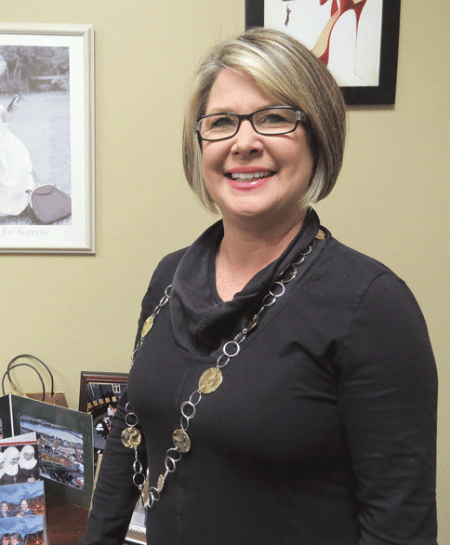
Sections Travel and Tourism

Steeped in History

Wistariahurst

Kate Preissler says she wants history to come alive for Wistariahurst visitors.

Throughout its history, the property now known as Wistariahurst Museum — which draws guests for myriad events and individuals who simply enjoy stepping into the past — has been referred to as one of the “showplaces in Holyoke.” The museum’s director says she wants to make history fun, and the visitor count — up to 14,000 annually — suggests she’s succeeding at her goal.

Throughout its history, the property now known as Wistariahurst Museum has been referred to as one of the “showplaces in Holyoke.”

Indeed, during the holidays, the former home of silk manufacturer William Skinner and his wife, Sarah, is truly a sight to behold with its enormous curved stairway draped with holiday garland and Christmas trees twinkling throughout its 22 spacious rooms where lofty ceilings and elaborately detailed architecture speak to a bygone era.

Tickets were sold out weeks in advance for performances of “Nutcracker & Sweets” staged by the Massachusetts Academy of Ballet, which ran Dec. 11-13. The annual event captures the magic of the holidays in the spacious Music Room that Belle Skinner, daughter of William and Sarah, built to house a collection of musical instruments after her parents’ deaths.

“This season’s performance of the Nutcracker was set in Holyoke, rather than Russia, and there were references in it to the city’s history. The father figure was cast as William Skinner, and his daughters Belle and Katharine were also depicted,” said Museum Director Kate Preissler.

Although the event is extremely popular, December is actually a quiet time for Wistariahurst, which stages a plethora of programs throughout the year that appeal to children, families, adults, and people of varying interests.

“The Nutcracker is our biggest holiday event, but we’re owned by the city of Holyoke, and our mission is preserving the history of Holyoke and inspiring an appreciation of history and culture through educational programs, exhibits, and special events,” Preissler told BusinessWest, adding that, over the past decade or so, those events have shifted from museum tours and formal affairs to a wide variety of offerings.

For example, last month Holyoke Wellness Coordinator Julia Wilkins began holding strength-training classes for city employees in the Music Room, while a few weeks later an elegant event called Winter Festivitea 
was held in the same space, and guests sat at elegantly decorated tables and sipped tea while they were entertained by live music.

“We are complex and use the physical space to provide as much value as we can,” Preissler said, as she conducted a tour through two of the home’s three stories, including a visit to the Leather Room with its leather wallpaper, a noteworthy library, Belle’s bedroom, the conservatory where a stained-glass peacock window is believed to be a Tiffany original, the dining room next door with two fireplaces, and the grand, sweeping staircase Belle added to the home.

Kate Preissler
Kate Preissler says Wistariahurst, donated to the city of Holyoke by the Skinner family, has become a real community asset.

“We hold a wine tasting here in February, and our annual gala takes place in June in the gardens,” Preissler noted. “It’s our primary fund-raising event, and people come outfitted in period dress and dance to live music in Belle’s Music Room. Last year it was held on a beautiful night at sunset, and you could see people throughout the garden in ’20s clothing who were probably imagining what it would have been like when the Skinner family lived here.”

The museum greets 12,000 to 14,000 visitors a year, and most come for events, rather than tours of the home. About 15 wedding ceremonies take place in the Music Room each year, and some couples hold their receptions in tents on the manicured grounds.

“We’re an exclusive venue for people looking for a historic place to get married in; Wistariahurst offers an intimate and beautiful setting,” Preissler said, adding that photos are often taken on the grand staircase, and harpists, classical guitarists, and pianists have been hired to play before and after ceremonies.

There are also seasonal holiday teas and a Mother’s Day Tea, which Preissler said give people an opportunity to have fun in the museum.

“Last fall we held a Mad Hatter Tea which was really popular. It attracted a lot of people who had never been here before, and many came in costume,” she noted. “They enjoyed a formal tea in the Music Room, played croquet on the lawn, and did crafts. It was a multi-generational event that was meant to be a way for kids and families to relax and enjoy themselves here.

“There is always the feeling of being in a historic home where Belle Skinner entertained her guests, but it’s important for our visitors to have fun,” she went on, repeating the word that she used frequently to describe what goes on inside Wistariahurst today.

Links to the Past

Curator and City Historian Penni Martorell said William Skinner emigrated to the U.S. from England in 1874. “He was a skilled silk dyer and established a silk-manufacturing and dyeing business on the Mill River in Haydenville,” she noted.

Penni Martorell

Penni Martorell says Belle Skinner took a real interest in the gardens of Wistariahurst and added a rose garden and Japanese tea house.

The business was destroyed when the river flooded following a dam breach in 1874, and Skinner relocated the operation to Appleton Street in Holyoke. He also relocated his Haydenville home, which had been designed by William Fenno Pratt, who also designed Northampton City Hall and other noteworthy structures. “Skinner had the home dismantled and moved to Holyoke,” Martorell said.

His second wife, Sarah, was an avid gardener, and although photos from 1875 show the home surrounded by barren grounds, her letters and diaries are filled with references to the plantings and trees she established on the site, which include the renowned wistaria vines that still bloom profusely every May.

They became widely acclaimed for their beauty, and their flowering was reported in local papers, which eventually led to the home’s name.

After William and Sarah died, their two unmarried children — Ruth Isabelle (“Belle”) and her brother William — inherited the home and used it as a summer residence.

“They entertained quite frequently, and Belle added onto the home,” Preissler said, including the addition of a sweeping staircase so she could make a grand entrance at parties, as well as the magnificent Music Room to house her collection of antique musical instruments.

“Belle’s collection was well-known and contained a spinet reputedly owned by Marie Antoinette and a Stradivarius violin,” Preissler added. “It was donated to Yale University and resides there today.”

The home and grounds remained in the family until 1959, when Katharine Skinner Kilborne, the youngest child of William and Sarah Skinner, and her heirs donated Wistariahurst to the city of Holyoke for cultural and educational purposes.

It operated as a museum under the auspices of the Holyoke Public Library for many years, but today a private foundation called Historic Holyoke at Wistariahurst supports its programming, events, and communications.


Click HERE to download a PDF chart of area tourist attractions


“The annual operating cost is $200,000, and the city pays $170,000 of that amount, while the remainder comes from fund-raisers, membership programs, and donations,” Preissler said, adding that the facility has two full-time employees, three part-time employees, and a large, dedicated staff of volunteers.

Martorell said a lot goes on behind the scenes.

“We have a docent program, and the collections we house are an important part of Holyoke’s history. They include letters, photographs, records of businesses, the Skinner family’s collection of correspondence, and records for Skinner and Sons Manufacturing, as well as the Carlos Vega Collection of Latino History in Holyoke,” she told BusinessWest, adding that the Vega collection was established in 2012 and is significant because nearly 50% of Holyoke’s population is Latino.

The museum also houses a textile collection containing many Skinner silk and satin wedding gowns and period clothing, and the archives are used by the Five College community and local genealogists.

“We want to use the past to inspire residents and visitors and give them new perspectives on life,” Preissler said. “History doesn’t have to be boring. People understand it better when it is presented in a way that allows them to be active participants, and our goal is to have them leave feeling that they want to come back and experience more.”

To that end, a Pumpkin Glow was held in October. Teens from the city and professional artists carved faces and designs on a large number of pumpkins, which became an outdoor exhibit that was viewed by about 250 people.

“The pumpkins were lit in the gardens at dusk, and a lot of families and people who had never been here before came to see them,” Preissler said. “It’s the combination of activities that gives us our identity, and we try to provide opportunities for different interests. For example, we hold a historical lecture series as well as Family Fun Days.”

Concerts are staged inside and outside Wistariahurst on its beautiful grounds that have been restored over the past decade. “They provide a lot of green space that is open to the public at no charge from dawn to dusk,” Preissler continued. “The gardens were inspired by designs created by Sarah Skinner and the three acres contain a beautiful rose garden, an azalea garden, 53 types of trees, 43 types of hosta and our signature wisteria, which was planted in the 1880s and grows up the side of the house. People come here to read books or walk the grounds; families bring picnics and we have had kids playing tag in the roses. It’s a particularly magical place for children where they can run around, feel safe and have fun.”

Martorell said the museum also houses a gallery that exhibits works by local artists that change every two months. In 2016 the facility will host a landscape show staged by Holyoke Art League and a spring program titled ‘Nuestras Abuelas de Holyoke,’ which is Spanish and translates to “our grandmothers.”

It will include photos and oral histories of residents and will be put on by curator Waleska Santiago and invited guests, she noted. “There will also be an exhibit by students from Holyoke Community College and a Rotary collection that will put on display from our archives.”

Preissler noted that Wistariahurst wants to become known as a premiere cultural venue, so it strives to hire exceptional musicians and performances.

“We’re planning a curated music series for next year and have brought musicians here that have a distinct sound that is new and fresh in the area,” she said, adding that performers have included jazz musician Michael Sheridan, gypsy music from the Roma culture performed by The Bohemian Quarter, and banjo music played by Cynthia Sayer.

“We are supported by the community, so it’s important for our programs to improve the quality of life and involve things that people can enjoy and respond to,” she added.

Bright Future

Preissler said the programming at Wistariahurst has evolved in conjunction with events held at other historic homes and museums. “There is a realization that we need to have more participatory experiences where visitors are actively engaged,” she noted.

Next year a member of the board of directors, a grandson of Katherine Skinner and the last living descendant to live in Wistariahurst as a child, will give a number of guided tours. In addition, there will be plenty of fun-filled events to round out the agenda.

“We will continue work to engage our audiences in new ways,” Preissler continued.

Which is exactly what Belle Skinner did when she built rooms in Wistariahurst to house her collections and entertain guests in a grand style.

So, the tradition of transforming Wistariahurst to bring it into the present will continue long after the holiday season is over in a home resplendent with history that sits quietly right in the heart of Holyoke.

Law Sections

Law and Disorder

StressDPartLaw2Many lawyers say they entered the legal field to help people with their problems — often very difficult, serious problems. The danger is internalizing those problems and making client stress a permanent part of one’s psyche. That pitfall, and other stressors common to lawyers, from time pressures to sometimes-adversarial work relationships, contribute to unusually high levels of burnout, depression, substance abuse, and even suicide in the legal field. One challenge, experts say, is to recognize those dangers before they take root.

To many who aspire to the field, being a lawyer is a job to die for.

Unfortunately, many do, far too young. According to the Centers for Disease Control, lawyers are more likely than almost any other type of professional to commit suicide —  ranking behind only doctors and dentists — and are 3.6 times more likely to suffer from depression, a common trigger for suicide. Others deal with poor health due to overwhelming stress.

“A lot of lawyers are dissatisfied with their work, for reasons including long hours, conflicting demands on their time and energy, and the exacting and confrontational nature of the work,” said Linda Benoit, a licensed clinical social worker with Lawyers Concerned for Lawyers (LCL), an organization dedicated to helping legal professionals navigate the pitfalls of career stress — and worse. “Many lawyers are leaving the profession, and it appears job burnout is implicated in the exodus.”

Benoit spoke at a recent seminar at Western New England University School of Law titled “Stress Management for Lawyers: Building Resilience and Avoiding Burnout,” talking with lawyers and law students alike about the health problems, physical and emotional, common to their field, and how to tackle — or, better, avoid — them.

“Realistically, you could plug a lot of occupations in — you could say the same thing about elementary-school teachers or social workers — so take it with a grain of salt,” she said about the general topic of job stress. “Yes, some things are unique to each profession, but there are more likely to be commonalities.”

Still, an American Bar Assoc. survey suggests that more than one-third of lawyers are dissatisfied and would choose another profession if they could, and 15% to 18% suffer from some measure of substance abuse, compared to 10% of the general population, so something is clearly going on.

“If these things are particular to the legal field, why is that?” Benoit asked. “There’s something called an addictive personality … is there a legal personality?”

She cited several common characteristics of lawyers, including a need for achievement, extroverted and sociable — yet competitive and aggressive — personalities, a focus on the economic bottom line and material concerns, and, perhaps as a result, a higher incidence of psychological distress and substance abuse.

According to CNN, at least seven state bar associations have become so concerned about suicides that they took measures to stop the pattern, adding a mental-health component to mandatory legal continuing education.

“One of the things we have to guard against is unhealthy ways to alleviate stress,” said Eric Gouvin, dean of the WNEU School of Law. “It’s easy to get caught up in short-term alleviation of stress through drugs and alcohol, which only makes things worse in the long run.

“This has always been an issue in the legal profession,” he went on. “The only profession with a higher rate of alcoholism is the clergy, which has the same dynamic of folks trying to help people deal with their problems. Those problems are not trivial; they can get to you. And if you find a release with a drink at the bar, that could easily become three, four five drinks.”

“You have to learn how to talk yourself off the ledge,” said Barbara Bowe, another licensed clinical social worker with LCL. “And if you can’t do that, you had better have some people in your life you can call to help talk you off.”

A Question of Empathy

Benoit pointed out that most stress is psychological; while many people think of stress as something that attacks them, they bring their own beliefs to it. She cited the famous Anais Nin quote, “we don’t see things as they are; we see them as we are.”

As an example, she recalled a client who was upset that his wife frequently yelled at him. But he wasn’t responding to her only; he had been severely ridiculed and yelled at growing up, “and he was responding and filtering and exaggerating it based on his own history.”

How does that apply to lawyers? Basically, Gouvin told BusinessWest, they are constantly saddling themselves with the feelings and concerns — often negative — of others, which warps the way they see the world.

“People generally come to lawyers because they’ve got problems, and lawyers tend to get into this line of work because they want to help people solve their problems. It’s easy for lawyers to take on clients’ problems as if they were their own, and that’s where the stress comes in,” he explained.

Linda Benoit, left, and Barbara Bowe

Linda Benoit, left, and Barbara Bowe say Lawyers Concerned for Lawyers is a response to a very real tendency for attorneys to succumb to stress, depression, substance abuse, and even suicide.

“Most successful lawyers, over the long term, are able to get a little professional distance between their clients’ problems and their own individual life,” he added. “But sometimes folks need to be reminded of ways to take care of themselves and their mental health. They get so wrapped up in these issues, and if they don’t take a minute to step back every now and then and find a way to center themselves, the stress will accumulate over time and cause psychological and physical damage.”

Indeed, Benoit said, chronic, unmanaged stress is implicated in 50% of all illnesses, contributing to atherosclerosis, hypertension, weight gain, memory impairment, decreased immune-system functioning, increased blood-glucose levels, and mental-health and substance-abuse problems.

“In spite of all this,” she noted, “almost half of all adults say they’re not sure they’re doing enough to manage stress, and one in five Americans say they do nothing to manage stress.”

And managing the stress of others makes it even worse, Bowe said. She spoke about one of her past clients, a lawyer on the cusp of retiring from decades of solo practice. His wife, a teacher, had recently retired herself, so they planned on getting a boat and setting sail into their leisure years. “But he presented with a lot of anxiety, a lot of panic. He lost sleep, he lost weight, he couldn’t swallow. He had talked to his doctor about his blood pressure and cardiac levels.”

And then, she discovered the core issue. It turned out her client’s father had “gone down the rabbit hole” after retirement, dealing with issues that landed him in a psychiatric hospital. He ended up killing himself when her client, the one now approaching retirement, was 18 years old.

“He was afraid he would wind up like his old man, even though that wasn’t his story at all,” she said. “So whenever his wife talked about retirement, he broke into a panicked sweat, sweaty palms, wondering, ‘if I retire, what will become of me?’ He had the sense, because of what happened to his father, that would be his future, too.”

While that’s not the same as empathizing with a client, Bowe sees some similarities between that man and lawyers so emotionally involved with their clients that they bury their own needs, and make their clients’ worries their own.

“You need to have the ability to step outside of that,” she explained. “Maybe you put your best case together and things don’t go as planned. So many things are out of your control. How do you manage that?

“As a laywer,” she went on, “you can always do more, and clients expect you to do more. At some point, internally, you have to say, ‘I’ve dotted my Is, I’ve crossed my Ts. I’ve done what I can do, although someone thinks I could have done more.’”

Though attorneys see themselves as problem solvers, Bowe said, there have to be limits. “You have to figure out your own level of stress. If your satisfaction is based on what the client says, you’re in trouble. It’s never going to be perfect, so you have to decide for yourself what is good enough. It’s never going to be 100%. That’s not the nature of law.”

Change the Tapes

Benoit was quick to point out that not all stress is negative; sometimes, it can serve as a motivator. “Any kind of stress can have beneficial benefits, depending on the strength of the stressor and how an individual deals with it.”

She pointed out the difference between ‘eustress’ — stress that provokes a positive response, from enhanced performance to improved mood to sharper memory — and ‘distress,’ which produces a negative cognitive response, like nervousness, anxiety, fatigue, and depression.

Most jobs have stress triggers, she added, from lack of communication in the office to unrealistic expectations and time demands; from lack of appreciation to job insecurity. Lawyers have specific stresses on top of those, including billable-hour pressures, the sometimes-adversarial nature of their working relationships, perfectionist tendencies, student-loan debt, and a sometimes-poor public image of the profession.

It’s important, she said, to take control of one’s thoughts when those pressures start to overwhelm. “What is your cognitive response? Are you able to visualize a positive outcome, or do you dwell on catastrophic, worst-case thinking?”

Bowe referred to the importance of “changing the tapes” that play in one’s head.

Eric Gouvin

Eric Gouvin says people often become lawyers to help others, but tend to make those problems their own.

“You have that power. It doesn’t mean the cognitive fairy will come to your house and change everything, but you can work to develop a pattern of visualizing and assessing a situation from a more positive standpoint, and ask, ‘what kinds of resources do I need to draw in to do better on this?’” she explained. “Some lawyers put their head down and keep moving, even though it’s not necessarily in a positive direction.

“You can definitely bring a different mindset to a situation to influence an outcome,” she went on. “But you have to have the desire and want to do it.”

Benoit agreed. “The stress isn’t going to go away,” she said, “but it doesn’t have to be this constant negative thinking. When you do that, you’re doing violence to yourself. Why would you want to participate in that?”

Building resilience against factors that trigger stress can come in many forms, she went on. “If you’re in a toxic or hostile work environment, you may have to cut your losses and leave. If you’re in a solo practice, maybe hire someone to help you develop or redesign career goals.”

Other tips include taking firmer control of one’s schedule by rigidly prioritizing tasks, getting away from the desk once in a while by taking short breaks, avoiding unpleasant colleagues as much as possible, educating clients about the process of law (to counter unrealistic expectations), and avoiding workaholism.

“Set limits, and don’t put all your well-being eggs — how you feel about yourself — in your work basket,” Benoit said. “You’re more than your occupation. Make time for yourself and your relationships every day.”

And, overall, be realistic. “You don’t have to be perfect, or read every journal article,” she said. “Remind yourself that you can’t solve all your clients’ problems, even though they will want you to. Remind yourself that you can’t save everybody.”

Finding Purpose

Obviously, clinical depression, substance abuse, and suicidal thoughts aren’t issues people can defeat through positive thinking, and LCL offers resources to lawyers struggling with those demons.

But for everyday stresses, a little mindfulness doesn’t hurt. Some of Benoit’s stress-reduction tips are applicable to many fields, such as finding humor in situations, setting aside time for rest and leisure, avoiding drugs and alcohol, maintaining good nutrition and sleep habits, setting small, achievable goals, and having two specific friends: “one friend you can vent with, and one you can’t.”

It also helps, she said, for lawyers to remember their purpose and passion. She cited a mission statement from the American Bar Assoc. that touches on concepts like defending liberty and pursuing justice, and said lawyers should step back once in a while and reassess why they chose the career to begin with.

“Is it being a defender of rights? A commitment to social justice? Being a protector of human dignity, or a crusader against discrimination? Maybe there are some bigger things that will re-energize you. You can change the system.”

Joseph Bednar can be reached at [email protected]
Law Sections

Knowing the Answer Can Save Employers Much Aggravation

Hunter S. Keil

Hunter S. Keil

Patricia M. Rapinchuk

Patricia M. Rapinchuk

By HUNTER S. KEIL and PATRICIA M. RAPINCHUK

Whether an employer is obligated to pay its employee overtime should be a simple question to answer. A recent decision in the federal courts in Massachusetts, however, illustrates that this is not always the case.

A quick primer on certain aspects of wage-and-hour laws may be helpful. First, under Massachusetts wage laws, failure to pay wages, including overtime, on a timely basis leads to an automatic trebling of damages regardless of the employer’s knowledge or intent. Under federal wage laws, there is no automatic trebling of damages.

Second, under both federal and Massachusetts wage laws, employees must be paid at a rate of 1.5 times their normal hourly rate for all hours worked over 40 hours per week. There are, however, a number of exemptions to the overtime laws under both Massachusetts and federal wage laws.

While the Massachusetts and federal exemptions often overlap, they are not always identical. The most common exemptions are the ‘white-collar exemptions’ for executive, administrative, and professional employees, which exist under both Massachusetts and federal laws. There are also a wide range of less-common exemptions. For example, there are exemptions from federal overtime laws for farm implement salespeople, railroad employees and taxi drivers.

Under Massachusetts overtime laws, there are exemptions for employees employed in a gasoline station, as seamen, and in nonprofit schools or colleges.

A recent case involved one of these less-common exemptions. In Lambirth v. Advanced Auto Inc., the plaintiff was an automotive technician. He routinely worked more than 40 hours per week. Although he was paid his regular hourly rate for all hours worked, he was never paid 1.5 times his regular rate of pay for his hours which exceeded 40 hours.

After he was terminated, the employee brought suit in federal court alleging that the failure to pay time and a half for his overtime over a period of approximately a year and a half violated federal wage laws, and that he was entitled to treble damages for that unpaid overtime under Massachusetts wage laws because he was not paid all wages owed to him on a timely basis. The employee did not bring a claim for overtime violations under Massachusetts wage laws, presumably because the Massachusetts overtime law contains an overtime exemption for ‘garagemen,’ which arguably applied to the employee.

The employer filed a motion to dismiss the Massachusetts claim, arguing that Massachusetts wage laws, and particularly its automatic treble-damages provision, could not apply to claims alleging a violation of federal wage laws.

The judge denied the employer’s motion to dismiss, ultimately holding that Massachusetts wage laws, including the treble-damages provisions, applied to the untimely payment of all wages to which an employee is entitled whether under Massachusetts or federal law. While the judge declined to rule on the viability of the employee’s claimed right to overtime under the federal wage laws, and noted a federal exemption similar to the garagemen exemption found in the Massachusetts wage laws, the judge nonetheless allowed the claim to proceed.

The full impact of this decision, and others that preceded it, remains to be seen. As a practical matter, however, employers need to be sure that they are in compliance with both Massachusetts and federal wage laws concerning payment of overtime in order to be protected from judgments requiring mandatory treble damages for failure to pay overtime.

Because treble damages are mandatory for any violation, employers cannot defend a claim by arguing that they were in compliance with Massachusetts wage laws and did not know about the differences in federal wage laws.  Presumably, the employer in the Lambirth case believed that it was in full compliance with Massachusetts laws when it determined that the plaintiff fell within the garagemen exemption and was entitled not to time and a half, but only to straight time, for hours worked over 40.

The real takeaway from the decision is that all wages, regardless of their source, are covered by the Massachusetts wage act and subject to treble damages if they are not paid on a timely basis.

Hunter S. Keil is an associate with Springfield-based Robinson Donovan specializing in employment law and litigation; Patricia M. Rapinchuk is a partner with the firm who specializes in employment law and litigation.

Law Sections

The Ultimate Role Reversal

By HYMAN G. DARLING, Esq.

Hyman G. Darling

Hyman G. Darling

One of the most challenging aspects of aging can be the role reversal that often occurs as aging parents need care from their adult children.

This dynamic can be very unsettling for all involved; it is difficult for some parents to admit they need help, and then to accept that help, and it is difficult for some children to provide the care and support an elderly parent may require. Where possible, it is always best to address these situations as a family group, and as far in advance as possible.

If you see a situation arising in which your parent will need care, you should begin planning to assess their needs and wants. If a parent has multiple children, this planning should include them all. Sadly, siblings often perceive each other as taking advantage of parents for financial gain. Even more sadly, some children do indeed take financial advantage of elders. A family group working together can benefit both parents and children, with the hope that the joys and hardships of caring for parents will be shared between siblings.

Seeking Help

It is often a good idea to enlist the services of a geriatric care manager. These professionals generally possess a wealth of information about available services and programs, and can provide support to elders and children alike. A care manager can also assist with admission to an assisted-living or nursing facility, if and when that becomes necessary. They will have ideas and strategies to share about every aspect of elder care, from financial considerations to mental health resources; from medication management to respite for caregivers.

The plan must focus on parents’ needs. These will almost always include transportation, medical care, dietary needs, hygiene, assistance with finances or record keeping, and household duties. The plan should also include possible avenues to recognize and adapt to parents’ changing needs, because medical issues may increase, and additional services may become required. Some ideas or services that families find helpful include adult day-care facilities, permanent or temporary institutionalization, or perhaps even moving parents between siblings.

The needs of parents, however, are not the only consideration. Children caring for aging parents may become depressed or overwhelmed, so any well-thought-out care plan must also include support for caregivers.

These caregivers often need counseling, particularly those caring for a parent with dementia, which comes with its own unique set of demands and challenges. There are many counselors and support groups that can help caregivers realize they are not alone, help to deal with ongoing or changing issues at home, and preserve their own mental and physical health. Additionally, paid home care may be a good supplement to care from family members, when the primary caregivers need respite.

Financial Matters

Financial planning is also a crucially important part of the considerations. Often, caregiver children may need to use the Family Medical Leave Act to take a leave of absence from employment. Some may even stop working in order to stay home and provide care for the aging parent. The family may wish to meet with an attorney and draw up a written agreement where parents will financially compensate children for care. These ‘parental-care agreements’ can be an important tool to use when an elder is staying at home.

Finally, be ready to recognize that in-home care from children may not be possible or appropriate for every family. In some cases, it is simply not possible to avoid a nursing home. This may be due to financial considerations, extensive care needs that a child cannot provide, or some combination thereof. Institutionalization in a nursing home is generally quite expensive, and can cost upwards of $10,000 per month in some cases.

It is heartbreaking to realize that a lifetime of savings may be wiped out by long-term-care expenses. There are, however, strategies that families may use to cope with the expense.

Faced with a health crisis and the possibility of nursing-home care, many families are tempted to transfer money from parents to children as soon as illness strikes. Such a transfer is not an effective way of securing family assets. In many cases, any transfer of funds from the elder will commence a five-year waiting period for federal and/or state long-term-care benefits. With very rare exceptions, this five-year waiting period applies to all elders who have made a transfer, regardless of the value of the gift or the intention behind it.

Long-term-care insurance is becoming more and more appealing as a means to protect assets in the event of institutionalization. Generally, this insurance may be used to cover or defer the cost of a nursing-home, or even to pay for in-home care. Some insurance companies may even combine life insurance, annuity, and long-term-care benefits within a single policy.

Those considering purchasing a long-term-care insurance policy should consider all the risks and benefits. Those will be determined by income, ability to pay premiums, and the value of other assets that the family wishes to preserve. The need for long-term-care insurance has become so prevalent that it should likely be considered a ‘required’ policy, similar to life, homeowner’s, and disability insurance. It is very important to have a trusted agent review elders’ financial situation carefully to ensure the proper amount of insurance coverage is purchased. A policy with at least five years of coverage may make it possible for elders to gift away some assets upon entering a nursing home.

Their care would then be covered by the insurance policy for the next five years, and upon termination of that insurance coverage, the elders will then potentially qualify for Medicaid. This type of planning must be done very carefully, preferably with the advice of a trusted elder-law attorney possessing specific knowledge and experience.

Plan Ahead

If you foresee a situation arising in which your parent will need your care, begin planning as soon as possible to assess the needs of all parties, hopefully before a crisis demands immediate action. This will bring peace of mind to you and your parents, and will assure the best possible chance of successful planning, health, and happiness for parents and children alike.

Attorney Hyman Darling is chair of Bacon Wilson’s Estate Planning and Elder Law departments. His areas of expertise include all areas of estate planning, probate, and elder law. He is a frequent lecturer on various estate-planning and elder-law topics at the local and national levels; (413) 781-0560; [email protected]

Sections Travel and Tourism

Plane Speaking

Janice Webb

Janice Webb says that the strong dollar, coupled with a desire among Baby Boomers to see the world, is the prevailing force when it comes to travel in 2016.

Janice Webb says three area couples put down their deposit for a trip to Paris for next April on the morning of Nov. 13, just hours before news of the terrorist attacks across the City of Light first broke on CNN.

Webb, owner of Emerald City Travel in Springfield, circled back with the group the next day to see if they had any questions or concerns — or intentions to change their travel plans.

They had some of the former, certainly, but none of the latter, she told BusinessWest, adding that the prevailing attitude was that, while the attacks that killed 130 people were alarming, they were not enough to prompt cancellation of a trip, which would continue with a river cruise to Amsterdam, that those involved have been looking forward to for most of their lives.

“They all e-mailed back and said, ‘let’s do this and hope for the best,’ and that appears to be the common sentiment,” said Webb, a 30-year industry veteran who noted that the various forms of turmoil in Europe are colliding head on with a potent package — a weak euro combined with a powerful desire among retiring Baby Boomers and others to get out and see the world, or at least the homes of their ancestors.

The latter is, by and large, the much stronger force at the moment.

“People want to travel, and they’re not going to let this stop them,” she said, using ‘this’ to describe the sum of the international and domestic turmoil. “They’re going to be more cautious, certainly, but they’re still going to travel.”

Paul O’Meara agreed. He’s the business development manager for the Globus family of travel brands, which includes Avalon Waterways, Cosmos, and Monograms. He told BusinessWest that, since 9/11, and even moreso in recent years, international travelers have adapted to what he called a “new norm.”

Roughly translated, this equates to expectations — for longer lines and tighter security at airports, armed soldiers at many popular tourist destinations in Europe, and, yes, possible incidents involving terrorism.

“People are more experienced now, they know what to expect, and they’re more aware of their safety and more aware of their surroundings,” he said, adding that such travelers would certainly take notice of the recent global travel alert issued by the U.S. State Department (in effect until February), but they would not be intimidated or frozen by it. “This is not 1985 or 1965; travelers are more sophisticated now, and they’ve adjusted to this new norm.”

As for the attacks in France’s capital city and their impact on travel there, he summed things up with a line he would utter more than a few times.

“Paris is Paris — there’s a reason why 30 million people go there every year,” he said, adding that his company books more visits to that city than any other except Rome. “We have about 500,000 people booked on various trips to Paris, and fewer than a dozen have cancelled.”

But an attitude of defiance when it comes to not letting terrorism get in the way of a long-planned, long-dreamed-about trip to Europe also extends to Berlin, London, Venice, Belgium (despite the fact that Brussels was locked down for several days last month), and, to a lesser extent, Istanbul, although some cruise lines and travel companies are changing some itineraries in Turkey.

“The knee-jerk reaction to what happened in Paris or in Brussels is that people aren’t going to travel there,” said O’Meara. “But that’s not what’s happening.”

For this issue and its focus on travel and tourism, BusinessWest looks at how recent events are spawning concern, but they’re not keeping travelers from reaching their destination — whatever that might be.

Cruise Control

As he talked about travel to Europe and why he doesn’t expect it to be seriously dented by the attacks in Paris and other terrorist actions in that part of the world, O’Meara started his explanation by detailing one of his company’s current offerings.

It’s a package known as ‘Italian Vista,’ and it features eight days with stops in cities like Rome, Florence, Milan, and Venice, and includes hotel stays, meals, and guided tours. The price this fall was an already-attractive $1,999, and for next year, it’s a jaw-dropping $1,449.

“That’s all due to the weak euro and the attractive exchange rates,” he told BusinessWest, adding that such sticker prices on trips across the continent help explain why bookings for 2016 are running roughly 13% ahead of the pace for last year, despite the attacks in Paris, the bomb that brought down a Russian airliner, the refugee crisis, and other forms of turmoil.

“This is the time to book, and people are doing it,” he said. “The prices are attractive, the dollar is strong … these are great opportunities, and people don’t want to miss out on them.”

the City of Light

The terrorist attacks in Paris were unnerving, but thus far, they do not appear to be a deterrent for those making plans to visit the City of Light.

That’s not to say that the terrorist attacks in Paris are not having an impact in that city or others. Indeed, the general manager of the Palace Hotel Park Hyatt Paris-Vendome and Park Hyatt’s vice president for France recently told The New York Times, “Naturally, occupancy is drastically decreasing in the wake of the attacks … we noticed a lot of cancellations right after the attacks for the following days and weeks, with the decrease more significant on bookings from the leisure traveler segment than the business one.”

But overall, O’Meara says travelers are simply pausing before traveling to Paris and other destinations, and the sentiment within the travel industry is that they won’t be pausing for long, unless there are more incidents.

Webb agreed. She said fall is the time when travel companies put out deals designed to fill cruise ships and hotels for the coming season, and thus far, travelers have not been shy about snapping them up.

“They offer these deals, which include airfare sales, percentage discounts, and past-passenger discounts, to get the product rolling,” she said, adding that these discounts are typical of what’s been offered the past several years. “And I’ve had a lot of people make reservations starting the first week in October; it’s been steady since, and it’s mostly European product.”

She said there are many factors at play when it comes to the ongoing surge in international travel — and travel in general. They include the strong dollar, which is now worth almost as much as a euro, when three years ago the rate was almost 1.4 dollars to the euro.

But there’s more to the equation. Bad winters, especially the one in 2015, have promoted many to conclude that, to endure such punishment, they need to break it up with a week or 10 days someplace warm, usually coinciding with February school vacation.

Adventure-packed destinations are still very much in vogue, which means Costa Rica is still hot, said Webb, adding quickly that many people young and old have already been there and done that, and now, most are just looking for a good deal and a good beach.

Then there are the aging Baby Boomers, many of them with disposable income, and others as well, who want to visit places they’ve heard about or the country their family calls home.

For many in this region, that means Italy or Ireland. “It seems like there’s lots of Irish and Italians in the Springfield area,” said Webb, who is booking lots of trips to both countries.

But there is still another factor in all this, she went on, noting that, overall, events like those that took place in Paris have only a temporary impact on travel — if other conditions are favorable, such as the economy — and usually not a deep impact.

An exception to that rule was 9/11, Webb added quickly, noting that the industry suffered greatly as business was frozen by uncertainty. But even then, there were groups and individuals who were undaunted and determined to seize opportunities.

“People were generally fearful at first,” she said of the days and weeks following 9/11. “But there’s one contingent of people who travel right away because they know the prices are going to be low, and they’re going to book the bargains. And then, a second contingent of people come right behind them, because they’re just tired of not doing what they want to do, and at that point, they perceive the risk to be worth taking to see what they want to see or live the way they want to live.”

Whether this pattern continues in the wake of this tumultuous fall remains to be seen, but all indications are that it will.

But while travelers will be undaunted, for the most part, they will also be more cautious, Webb predicted. She predicted that some may opt to travel with a group rather than visiting a city or region on their own, which is good for cruise-ship lines and tour operators.

Meanwhile, others may seek out destinations deemed to be safe, or at least safer.

“Sometimes a travel warning like this will push people to cruising,” Webb explained, “because if a port is deemed unsafe, the cruise line won’t go there; they’ll just substitute another port, and so people feel confident that, if the cruise lines go there, it’s a safe place to go.”

Not Tripped Up

Even within the confines of that ‘new norm’ O’Meara described, the terrorist attacks in Paris were certainly unsettling — for travelers and the travel industry.

Thus far, though, it appears that the package of attractive fares, a strong dollar, a desire among Boomers to see the world, and ‘Paris being Paris’ is creating opportunities well worth the sum of the risks involved.

Like those three local couples bound for Paris next spring, people are booking, and hoping for the best.

George O’Brien can be reached at [email protected]
Construction Sections

Driving Force

The new Balise Hyundai in Springfield.

The new Balise Hyundai in Springfield.

Contractors who have made inroads in auto-dealership construction are finding these to be good times indeed, as area dealers, from solo stores to large chains, engage in what can only be described as a building boom. The reasons are myriad, from an improving economy to demands from car makers that showrooms have a consistent look, to changes in the way cars are purchased and serviced today, and how 21st-century dealership design reflects those shifts.

If there’s one driving force behind all the auto-dealership construction and expansion over the past few years, Bill Peffer noted, it is, quite simply, a growing economy.

“The reason you’re seeing dealerships around the country refurbish is because the economy is really good, and a good economy drives good sales of new cars, trucks, and SUVs,” said Peffer, president and chief operating officer of the multi-state Balise Auto Group, which boasts several dealerships, focusing on different brands, in the Greater Springfield region. “More dealerships mean more points to sell the products — although dealers are finding the competition is pretty strong as well.”

Balise has been renovating and expanding in the area, most recently with a new Hyundai dealership on Columbus Avenue in Springfield, but with several new facilities over the past decade. Meanwhile, the Lia Auto Group has built and renovated new stores across the Pioneer Valley, as have TommyCar Auto Group in Hampshire and Franklin counties, Sarat Ford Lincoln in Agawam, Marcotte Ford in Holyoke, and Fathers & Sons in West Springfield, just to name a few.

“Part of it is the growth of the industry,” added Eric Forish, president of Forish Construction in Westfield, one of the region’s leading builders of auto dealerships, a tradition that started with his father in the 1940s. “Most dealers in our area have multiple locations, multiple brands, multiple facilities. That’s the nature of how they operate in their industry. And the volume of activity at each location often requires growth in the size of the facility.”

Indeed, according to MiBiz, a Michigan-based business website, the facility, training, and technology expenses required to run a modern dealership favor larger dealer groups that can share back-office resources and spread out narrow margins over higher sales volumes.

Balise — which contracts with South Hadley-based Associated Builders on its Western Mass. construction and renovation — is certainly one of those large players. But more dealerships also means more challenges to stay on top of current trends.


Click HERE to download a chart of the region’s general contractors


“They want to have more inventory, so parking areas get larger,” Forish said. “They want to be green-friendly, so they update their lighting fixtures in the parking lots; LED fixtures return tremendous savings from conserving energy. Then there’s the energy efficiency of the buildings themselves. There are a multitude of ways dealers try to stay current. Their products are new, and they want their facilities to be new facilities.

“Even on the service side,” he went on, “the technicians’ tools are way beyond anything they used to have. In the repair area, it’s all computerized. Their equipment is state of the art. Even the lifts themselves are very much different than the lifts of years ago. The whole operation is much more modern. Many types of businesses have to keep up with technology, and it’s no different in auto dealerships.”

But while area dealers focus on drawing in new business, manufacturers have their own ideas about what constitutes an ideal showroom and service center — and those changes are also helping to drive the current building boom.

Consistent Look

The trend among car makers is to standardize, to some degree, the look and feel of showrooms that sell their brands, and they are in some cases providing incentives — and in others, simply issuing mandates — to renovate and modernize their showrooms.

“Most brands in the U.S. are well-established brands, with few new players over the past 25 or 30 years,” Peffer said. “As those brands mature, they develop touch points unique to the brand to differentiate from the next brand.”

These mandates can encompass everything from the exterior façade to the colors of the interior walls to the furniture where customers wait for service.

“What’s driving the process now is that manufacturers are requiring their dealers to upgrade to a new image,” Forish said. “These design programs are similar to chain restaurants, where you have to have a consistent national image. Car dealerships need to do the same in terms of exterior exposure and interior finishes.”

Forish should know, having tackled dozens of projects for auto dealers — most recently multiple projects for Curry in Chicopee, Sarat in Agawam, and the New York-based Lia Auto Group. “We’ve done probably a dozen facilities for them,” he said of Lia. “We must be doing something right because they keep bringing us back.”

Other dealers have tapped Forish’s niche experience as well, from Marcotte Ford, which chose the company to build its new truck center in Holyoke, the only one of its kind in the region, to facilities for Steve Lewis Subaru in Hadley and Cernak Buick in Easthampton. “The names go on and on. We certainly have deep roots with the auto dealerships.”

Marcotte Ford

Marcotte Ford’s new commercial truck center in Holyoke.

As a partner with many different manufacturers, Peffer said, Balise is well aware of the demands they’re placing on dealers. For instance, the chain’s new Hyundai dealership on Columbus Avenue in Springfield boasts a six-bay express service element for customers who want to get in and out quickly, a separate cash-wash facility, and a ready-credit used-car space, all in separate buildings on the same grounds.

“That illustrates the Hyundai global brand identity,” he told BusinessWest. “This is the direction you’ll see Hyundai dealerships around the country move to.”

Meanwhile, Fathers & Sons is currently building a dedicated showroom in West Springfield for Audi because that maker, like others, wants dealers to move away from the old ‘auto mall’ facility that sells many different nameplates under one roof, to reduce the chance of a customer driving away with another maker’s product. Audi has also provided direction on the new facility’s design, what it calls a ‘terminal’ concept with an aesthetic dominated by glass and metal.

Although car makers are increasingly asking for specific design elements, Peffer said, dealer groups can bring consistency as well. “Balise Toyota, Honda, and Ford all have a well-lit, spacious, drive-up service lane where you’re met by the assistant service manager.”

These areas are typically marked with signage explaining the pricing for a range of basic services, another attempt to be transparent with customers who have likely already done their homework on the Internet.

“The nature of doing business as an auto dealer has changed, as well as the type of service they offer and the nature of customer-service relationships,” Forish added. “If you’ve taken your vehicle in for service at a newer dealership recently, you realize that, at most of these places, you drive into a building and are greeted by the service writer that reviews the scope of repairs or maintenance you’re going to receive. Then you go relax in these wonderful customer lounges, which have high-definition TV, wireless access for your devices, and play areas for the kids.

“It’s all about the experience for the customer,” he went on. “And the dealerships — especially if they have some age to them — need to get to these current standards to be part of a brand.”

Shifting Tides

As manufacturers ramp up mandates for standardization in their showrooms, MiBiz notes, some dealer groups have resisted the change. A 2013 study by auto-industry consultant Glen Mercer found that, while expansion of showrooms and service departments can pay off on the bottom line, other modernization efforts bring little return on investment.

Still, customers appreciate changes aimed at improving their experience, Peffer said.

“More and more people start shopping for prices online, and by the time they get to the dealership to make the purchase, they’re there to buy, as opposed to just kicking the tires,” he told BusinessWest. “They get all their information online, and by the time they hit the showroom floor, they’re looking for a good experience.

“That’s what differentiates a dealer from another dealer,” he went on. “And the facility makes the experience. How convenient is it? How inviting is it? Is there ample parking? Is there a delivery area for new cars? The footprint for dealerships has really changed to amplify the experience. They’re not just big boxes with a bunch of inventory.”

In short, he said, the modern dealership reflects what customers want, and the list is a simple one. “They want greater transparency with the advent of the Internet. And you have to provide convenience and a logical flow to how their car is serviced.”

On those points and others, too many dealerships built decades ago simply fall short. That, in turn, should continue to provide plenty of opportunity for contractors looking for a hot niche to drive new business.

Joseph Bednar can be reached at  [email protected]
Construction Sections

Slowdown on I-91

I-91 viaduct

After 45 years, the I-91 viaduct needs much more than a series of patches.

At a recent public meeting about the massive, ongoing I-91 viaduct project, attendees were able to view a yellowed page from the Springfield Daily News featuring an aerial shot of the viaduct slicing through the downtown in 1970. The headline: “I-91 Linkup Provides Access to a Bright City Future.”

That was a long time ago, said Richard Masse, acting director for Mass. Department of Transportation (DOT) Region 2.

“It’s been 45 years,” he told BusinessWest. “We’re way beyond the road being reliable. We shouldn’t have to come out and patch holes, but we’ve been doing that on a regular basis.”

The original construction of Springfield’s portion of I-91, including the raised viaduct, cost just north of $50 million, while the current project — which, over the next three-plus years, will replace the viaduct deck, repair and replace the structural steel, and include other improvements — will cost $148 million, the bid submitted by Framingham-based JF White-Schiavone.

It will also be a significant inconvenience to commuters and businesses traveling to, from, and through Springfield’s downtown.

“There’s no way we can do this project on I-91 without causing some traffic congestion and delay, but we do want to provide information so people know what’s going on,” Masse said, explaining that the recent installation of cameras, sensors, and message boards along the mile-long stretch of raised highway to help motorists deal with the long-term effects of the lane and ramp closures beginning this month. Information will also be posted online for those who want to check out conditions before leaving home.

The elevated viaduct through Springfield carries about 75,000 vehicles per day. Essentially a concrete deck slab supported by steel girders — which are in turn supported by steel pier caps, column piers, and footings with pile foundations — the structure has undergone several rehabilitation projects over the past quarter-century, but nothing approaching a total deck replacement.

“The viaduct deck is in horrible condition, and we’re here to fix it, to give it life for the next 20 to 30 years,” said Ralph Romano, a MassDOT engineer, by way of explaining what the project — which stretches from the Interstate 291 interchange to around State Street — entails.

Now and Later

The first stage of the project, known as stage 1A, is coming to a close, and included pre-emptive repairs to the bridge deck to prepare the two outer lanes of I-91 to handle traffic while rehabilitation of the inner lanes is taking place.

In addition, some local roads were reconfigured to prepare for increased traffic volume due to upcoming detours, including construction of the West Columbus Avenue Extension to help improve traffic flow, and construction of a temporary off-ramp from I-91 south at Birnie Avenue (to be called exit 6-7) to carry traffic onto downtown streets.

Stage 1B, beginning this month and lasting through next fall, will see the inner lanes of I-91 north and south along the median closed for deck reconstruction. All traffic will be shifted to the right, using the shoulder and breakdown lanes. Speed limits have been reduced through the work area and will be enforced with doubled fines, Romano said.

During this phase, JF White-Schiavone will demolish and replace the deck along the median and high-speed lanes of I-91, along with the I-291 on-ramp to I-91 south and the left side of the I-291 off-ramp from I-91 north, in phases. Access to I-291 will be maintained at all times, with the possible exception of overnight closures where detours will be implemented.

The DOT has been testing ramp closures and detours over the past few months while crews performed preliminary deck work, mostly at night. The Birnie Avenue connector onto the interstate has been closed since October, and this month will see the closing of southbound exits 6 and 7, on-ramps from Union and State streets onto I-91 north, and the Route 20 connector into I-91 south.

Detours involving East and West Columbus Avenue, Hall of Fame Avenue, and other roads — details and maps are available online at www.massdot.state.ma.us/i91viaductrehab/traffic.aspx — will be well-marked, Romano said, while I-291 will be accessible through downtown using Liberty and Dwight streets.

“A lot of thought went into this,” Romano said of the traffic-management plan, “but traffic engineering is not an exact science. It relies on human behavior sometimes, so there’s only so much we can do. But we do try to respond to anything that’s not quite right, and we will be doing that throughout the project.”

Stage 2 of the project, slated for late fall 2016 through late fall 2017, won’t see any ramp reopenings, but traffic in both directions will shift to the center, newly constructed lanes, while construction shifts to the low-speed travel lanes and the shoulders, along with the I-91 northbound on-ramp to I-291 east, which will be constructed in two phases.

Additionally, the exit 9 off-ramp from I-91 north to Route 20 will be closed for the first part of stage 2. Again, access from I-91 north to I-291 east will be maintained at all times, except for possible overnight closures. By late fall 2017, commuters will have full use of I-91 in both directions. The temporary exist 6-7 will be removed, along with the West Columbus Avenue Extension.

Then the project moves to a punch-list phase, as workers paint the structural steel, install municipal street lighting where necessary, complete final paving and traffic markings on local streets, and restore all disturbed areas. By the time the contract ends in February 2019, the completed viaduct will feature slightly wider shoulders, new lighting, and stormwater improvements to help protect local water quality.

Throughout the project, the contractors are responsible for controlling construction-related dust emissions, using a combination of sprinklers and sprayers, wind screens, and wind barriers will also be used to control the spread of dust between sidewalks and the work zone.

Bracing for Impact

For most Springfield workers and commuters, though, dust is far down the list of concerns. Traffic is typically at the top.

Taylor Rock, a worksite outreach coordinator with MassRides, was on hand at the public meeting to encourage the public to carpool, either on their own or with the help of a ‘matching program’ they can access online through her agency. MassRides also provides emergency rides home for people whose carpool partners have to leave work early.

Rock cited a study noting that 96% of people driving to work downtown do so alone. Meanwhile, 40% of them have access to flexible work hours. By carpooling and avoiding using the highway during peak rush hours, she said, motorists can make a dent in the traffic hassles that are bound to come.

“We’re not telling people to take their cars off the road, but just look at some alternate ways of traveling,” she said. “You may be able to counter some of the effects of the traffic congestion that will come with this project.”

Masse agreed.

“There will be only one lane open in each direction, and during peak commuting hours, early morning and late afternoon, these lanes will be pushed to their capacity, so the more vehicles we can get off that path by carpooling, vanpooling, and shifting work hours, the better,” he said. “The more people that take advantage of those solutions, the more we can help the situation up on the highway.”

A second ‘bright future’ for I-91 in Springfield, to quote that old newspaper headline, may seem far away once traffic slows to a crawl. But, as Masse noted, the days of patching are over as a more permanent fix begins.

Joseph Bednar can be reached at  [email protected]
Features

Questions and Answers

RENDERING_-View-of-Main-and-Howard-Street-Rendering

design for MGM Springfield

These two renderings, one from 2013 (top) and the other from this fall (bottom), show the dramatic change in design for MGM Springfield, which has been a source of recent controversy.

It’s been an interesting, and in many ways frustrating, year for MGM and its project in Springfield’s South End. Ground was broken in March, but soon after, a decision was made to move the scheduled opening back, from 2017 to 2018, to coincide with conclusion of the I-91 viaduct project. Later, amid announced changes to the design, including the scrapping of the planned hotel tower and a reduction in the overall size of the footprint, there were questions about the company’s commitment to the Springfield project — and hastily called press conferences to confirm that commitment. Mike Mathis, president of MGM Springfield, admits that the company made some mistakes over the past several months, but he also admits that he was surprised by, and in some ways unnerved by, a perceived lack of trust in the company to keep its word and build a first-class facility in Springfield. He believes those doubts are now in the past, and in this wide-ranging Q&A, he explains why, and also why he believes 2016 will be a year of movement and much-needed momentum.

BusinessWest: Back in March, MGM staged an elaborate groundbreaking ceremony in the South End. There were several hundred people there, lots of excitement, and great anticipation that this project was going to start changing the landscape. That hasn’t happened, obviously. Can you talk about what appears to be a false start, why the South End looks the same as it did nine months ago, and why the timetable has been pushed back to late 2018?

Mathis: “We certainly expected that the groundbreaking in the spring would roll into demolition of the Zenetti School, which was the backdrop for the groundbreaking, and then new construction. But shortly thereafter, we started to hear rumblings about the viaduct project and the new timelines related to that. We heard the rumblings that it would be delayed past our late September [2017] opening, to the tune of 12 months or so.

“As a result of that, we started thinking about our own schedule over the spring and summer of 2015. There’s an inner relationship between the viaduct project and our project; I have to be careful with percentages, but about 90% of our arrivals will come off 91, so the viaduct is a crucial part of our business plan. When we realized that project would be delayed past our opening, we spent a good deal of the spring and summer trying to understand the new schedule, the performance history of the contractor, and the nature of MassDOT’s history on delivering on projects.

“And, no matter how good you felt about their ability to do it, we wanted to build in a little bit of conservatism. For a very long time, the project showed a late-2017 completion, and in many ways that made us nervous because there wasn’t much opportunity for slippage … we heard that there might be a new timeline associated with letting that contract out by the state, and we just reacted to it.”

BusinessWest: As it turned out, that change in your schedule was just the beginning when it came to emerging doubt about MGM’s commitment to Springfield and this project, which culminated in several press conferences and project updates this fall, where you and others with the company reaffirmed that commitment. Can you talk about what transpired and why?

Mike Mathis

Mike Mathis says he believes MGM has put concerns about the company’s commitment to Springfield and the South End project in the past.

Mathis: “I’m not sure how it happened, frankly. It was a combination of factors, and I think it was a perfect storm of events in terms of what was perceived as bad news upon bad news. And there may have been a little too much radio silence from us.

“I personally made the decision, and it was supported by the local team, that it’s a mistake to continually deny something that has no rationale in it. So we went quiet when people were saying ‘this is a signal’ and started talking about MGM’s lack of commitment. That void allowed some of the naysayers to get out there and talk about how this was the first shoe to drop, whether it be the schedule extension or the proposed design changes.

“When you really talk to a lot of people who were concerned, it was less about those specific items or the substance of those specific items; it was concern that it was the beginning of something else.”

BusinessWest: What has been the basic strategy when it comes to quelling these concerns, with both the public and elected officials?

Mathis: “Just getting information out to people, information that we believe shows that we are committed to Springfield.

“It didn’t help that some of this news dropped during the last six weeks of a municipal election cycle, because I think everyone’s looking for their issue to rally around, and for whatever reason, painting MGM as the bad guys that were going to be held to their promises was something that certain elected officials thought was a rallying call for their constituents. I didn’t understand it, I still don’t understand it, but I like to think we’re past it.”

BusinessWest: Certainly part of that perfect storm you described was the decision to scrap the hotel tower in favor of a six-story facility. Can you talk about that decision and why you think it became such a lightning rod for criticism and doubt?

Mathis: “Personally, I knew the tower was significant visually, because we touted it in a lot of our materials. So I expected to have a dialogue about it, I expected people to ask questions, and we were prepared to answer those questions. Early on, we had the support of the mayor, and his architectural consultant called the change brilliant, said it energized Main Street, and was more consistent with what we were doing with the rest of the project.

“We knew people would feel strongly about the tower, and some people would feel strongly in favor of what we were doing. But I think we were expecting a little more deference as the world-class developer to the changes we proposed. What surprised me and what surprised the team was the lack of trust that some of the public had in our expertise in this area.”

BusinessWest: Does the lack of a tower put MGM Springfield at any kind of competitive disadvantage, in your opinion?

Mathis: “We really don’t believe the tower is a competitive factor. Part of this road show I’ve been on explaining all these changes is explaining to people that the tower is the least compelling part of our project. And some of the comments we got during the evaluation process, by both the city and the state, back that up; the tower was actually called out, and analysts said it was the least attractive part of the project in terms of what we’re trying to do downtown.

“One of the things I’ve been saying to people is that ‘you can’t see the tower from Hartford.’ The power of our project is the MGM brand, the marketing, the outreach, the programming you put at the MassMutual Center in terms of entertainment. In multiple-jurisdiction markets, you have the competition of the neon across the street; it’s the ‘hey, look at me’ factor. So you need something very visual.

“Foxwoods has a tower, Mohegan has a tower, but a tower doesn’t distinguish the project. If anything, the low-rise we’re proposing is a cooler feature; being on Main Street is a more unique experience.”

six-story facility

Mike Mathis says MGM does not believe that scrapping the hotel tower for a six-story facility will present a competitive disadvantage.

BusinessWest: Let’s talk for a moment about this project and doing business in Massachusetts and Springfield, a state and a city that are new to the casino industry and therefore new to the process of building a casino. What has that been like, and how it is different from — and more challenging than — building in Las Vegas, for example, and how has this played a role in the public-relations troubles and trust issues that emerged over the summer and fall?

Mathis: “What’s unique about Massachusetts and the Springfield project is that we’re doing it under so much public scrutiny. So much of it is in different venues, be it the city or the Gaming Commission. And we knew coming into this opportunity that this was a privileged license, and as a result, the public feels, and rightfully so, that they have an ownership stake in the project.

“I can’t think of anything in the MGM portfolio where we’ve come into a process like this; in Las Vegas or Macau, and in multiple-license jurisdictions in general, they tend to be more pro-development, and it’s development as a right, as I describe it. And because of that, we joke around in the office these days to never take for granted the days when we could go down to Clark County, which is the jurisdictional body in Las Vegas, and pull a permit; you pull a permit, and three years later we see you at the grand opening. That’s oversimplifying it, because they do have some control over some of the program and design, but generally it’s development as a right.”

BusinessWest: So has this been a learning process in some respects?

Mathis: “It has been. For MGM, this has been a pretty unique, sort of sole-license jurisdiction bid, and I don’t think we were quite ready for the kind of scrutiny that came with this.

“But in fairness to the public and some of the folks we’ve been dealing with through this process, much of this has been self-inflicted by MGM because we made some significant changes in the design, and but for those changes, I think we’d be well on our way — not from a scheduling standpoint, because that was outside of our control, from our view, but from a design and momentum standpoint, we feel we’d be in a different position if we didn’t need to make some of the changes we proposed.

“But this isn’t unique. We make some of those kinds of changes with our other projects all the time, and you wouldn’t notice, much less feel it from the public like we have. Things are exponentially simpler in Las Vegas and some of the other jurisdictions we’ve worked in because there’s already an established procedure for these kinds of projects. They care about parking, and they care about certain architectural elements — how far is the building set back, what are the heights, some really objective criteria. And once you check those boxes, you’re generally good to go.”

BusinessWest: How close is MGM to being good to go with its Springfield project? Do you believe you’ve put doubts about the company’s commitment to Springfield and this project behind you?

Mathis: “The quick answer is ‘yes.’ If we hadn’t earned trust back in 2012, 2013, or 2014, I think we earned it with this last round of discussions. What I’m hoping is that, if or when there’s an issue, next time we get a little more of a benefit of the doubt from the public.

“I hope there’s a sentiment that we’re not leaving town, we’ve made a substantial commitment, and every day that goes by, our commitment grows. And I hope that elected officials give us the time to work through an issue, knowing that we have the best interests of the city in mind.”

BusinessWest: Certainly the doubts about MGM’s commitment to Springfield have been fueled by the rumors that Foxwoods and Mohegan Sun, with the support of the state, will be building another Connecticut casino close to the border with Massachusetts. If that third casino becomes reality, how does that impact your plans for MGM Springfield?

Mathis: “If that competition comes, and it comes across the state line — which is not the best thing for Connecticut or Massachusetts, because there are other opportunities in Connecticut that aren’t in our backyard that would be better for MGM but also better for Connecticut — it won’t impact our project other than to potentially increase the investment we’re going to make.

“That’s because we’re going to have to be that much more attractive a destination. From what I’ve understand, what they’re talking about in Connecticut is a slots facility, $300 million or so, which represents about a third of what we’re investing here. It’s tailored to the convenience gambler, and on the edges that will hurt our business, but what I think will be really important in my mind, as leader of this venture, is that it will simply raise the bar for what we have to do in Springfield and make it that much more worth it to go the extra 20 minutes to get to our facility.”

BusinessWest: Looking back over the past nine months or so, what could, and what should, MGM have done differently?

Mathis: “That whole process of going from where we had a large amount of support from the public to having things devolve into putting out fire after fire is one of those situations where the more you refute something, the more you legitimize it, and that’s something we tried to avoid early on when some of the naysayers came out and questioned our commitment. I don’t know if there’s ever a right way to handle something like that because it’s not completely rational.

“We’ve done what feels like a postmortem on the past six months, trying to think about how, if we had to deal with some of these same issues again, we might do things differently, we might handle them differently. I think part of the challenge we’re always going to have is being transparent with the public in sort of real time. And that doesn’t lend itself to perfect or full information.

“We’re always going to err on communicating a problem and then finding the solution. Maybe we could have done a better job of letting people know that ‘this is the problem, and we’re working on a solution.’”

George O’Brien can be reached at [email protected]
Business of Aging Sections

Cause and Effect

Dr. Mitchell Clionsky

Dr. Mitchell Clionsky says many conditions can mimic attention deficit disorder, so obtaining an accurate diagnosis is critical before treatment begins.

People with attention deficit/hyperactivity disorder (ADHD) have endured all sorts of labels — lazy, stupid, even crazy — while dealing with the self-berating that accompanies an inability to stay focused and complete tasks. Enter the ADD Center of Western Massachusetts, which opened in the 1990s and today serves as a neuropsychological diagnostic practice, providing a pathway for ADHD sufferers of all ages to get the help they need.

Dr. Mitchell Clionsky often suggests two books to patients diagnosed with attention deficit/hyperactivity disorder, which is commonly referred to as ADHD. The first is Driven to Distraction, and the second is You Mean I’m Not Lazy, Stupid or Crazy?! The Classic Self-Help Book for Adults with Attention Deficit Disorder.

The second tome recognizes the fact that many people with ADHD have been labeled any or all of those things — lazy, stupid, or crazy — and that they also berate themselves for their inability to stay focused, complete tasks, or even make money, which Clionsky says is a common problem for small-business owners because they frequently start too many projects at once, fail to bill clients in a timely fashion, or become overwhelmed by bookkeeping and detailed paperwork.

“There is so much shame and stigma associated with ADHD,” said Clionsky, the board-certified neuropsychologist and co-founder of the ADD Center of Western Massachusetts in Springfield. “Children feel stupid if they fail an exam because they got distracted, skipped a page, or forgot they were supposed to multiply rather than divide. They often do their homework but forget to turn it in, and feel embarrassed and defensive when their parents reprimand them.

“But they are not lazy, and they are not stupid,” he went on. “They have a deficit that involves their brain’s ability to produce or release the chemical known as dopamine, which allows people to stay focused.”

The Mayo Clinic defines ADHD as a chronic condition that affects millions of children and often persists into adulthood. It includes a combination of problems, such as difficulty sustaining attention, hyperactivity, and impulsive behavior. Children with the disorder frequently struggle with low self-esteem, troubled relationships, and poor performance in school. It occurs more often in males than in females, and behaviors can be different in boys and girls.

Two years ago, the Centers for Disease Control and Prevention reported that up to 11% of children in the U.S. have been diagnosed with ADHD. Thankfully, about half of them will outgrow it in their teens and 20s, but millions of adults remain undiagnosed, and even if children improve, they may still exhibit some signs of the disorder throughout their lives.

However, many other medical conditions cause similar symptoms, and Clionsky said depression, anxiety, and trauma can lead to an inability to concentrate and stay focused. In addition, frequent bouts of tonsillitis that cause children to sleep poorly can make it difficult for them to concentrate and perform well in school because they are always tired. But a number of studies, including a recent one conducted by the University of Michigan, show that when children diagnosed with ADHD have their tonsils removed, half of them no longer exhibit the problematic behaviors.

The same situation can result if a person has obstructive sleep apnea.

“We recommend that many people have a sleep study done before they start taking medication for ADHD; in some cases, the symptoms resolve once they are treated for the apnea,” Clionsky noted, adding that the inability to get enough oxygen while sleeping can make people inattentive during the day.

“No one has ADHD until it’s been proven — it’s a medical problem that requires a careful and detailed evaluation,” he continued. “When it is correctly diagnosed and properly treated, children and adults can perform so well that it seems miraculous. But the diagnostic process is complex, and there is a lot of variability.”

He explained that ADHD appears to have a genetic component and tends to run in families; if a parent has ADHD, his or her children have more than a 50% chance of being diagnosed with the disorder, and if an older child has ADHD, their siblings have more than a 30% chance.

However, some people have two conditions that exist at the same time. For example, Clionsky says a person with ADHD and obsessive compulsive disorder may have everything perfectly lined up in their cabinets, but be completely disorganized in almost every other aspect of their life. Meanwhile, a child may be depressed and also have attention deficit disorder.

“It’s a neurologically based condition. But there is no blood test, litmus test, or MRI scan that can prove a person has ADHD, which is what makes a clinical diagnosis so complex,” Clionsky told HCN, noting that people who have a hard time concentrating due to ADHD can pay attention under novel or interesting circumstances. “A 7-year-old may act completely normal when his mother takes him to the doctor; it’s a novel experience, so the doctor doesn’t see the child exhibiting any of the symptoms she describes. But if the appointment took two hours, he would notice everything she spoke about.”

But since everyone occasionally exhibits traits found in people with ADHD, diagnosticians look for entrenched patterns of behavior that fall outside the range considered normal for their age.

Complicated Undertaking

Clionsky opened the ADD Center in the ’90s with four partners, who planned to provide all the services people with the condition might need. But they soon discovered most clients simply wanted a diagnosis, and when the evaluation was complete, they returned to their own physicians and counselors for medication and help.

So, today, the ADD Center has become primarily a neuropsychological diagnostic practice.

“We evaluate about 200 people each year and have seen more than 4,000 patients since we opened,” Clionsky told BusinessWest, explaining that children must be at least 6 years old because, prior to that age, there is not enough evidence for a diagnosis to be conclusive as most young children have short attention spans and are very active.

Testing done on the first visit takes one to two hours and begins by collecting in-depth information.

“We get a comprehensive history that includes the person’s academic, medical, psychiatric, and family background, and they fill out a detailed questionnaire and are asked to rate a variety of symptoms on a scale of one to five,” said Clionsky. “We also interview the individual who is being studied as well as their parents or spouse.”

In addition, the person suspected of having ADHD takes a 15-minute, computerized performance test, which is purposely designed to be boring. “It compares their vigilance and ability to focus and respond consistently against people of own their age, and is used to determine how capable the person is of staying on task,” Clionsky explained.

When those tests are complete, the results are tabulated. However, if the case is complicated by medical or psychological issues, several more hours of evaluation may be needed that include testing the person’s reasoning and looking at their learning and problem-solving skills, their ability to memorize things, their intelligence, and their emotional state.

In order to be diagnosed with ADHD, six out of nine diagnostic symptoms must be rated ‘moderate’ or ‘severe,’ and they have to have been present since before age 12 and have created problems in more than one area of the person’s life.

“The symptoms have to have interfered with their academic, occupational, or social functioning and can’t be due to another cause such as anxiety, depression, a trauma, or a concussion,” Clionsky said, explaining that the symptoms of a concussion can mimic ADHD, but are typically temporary.

He added people with ADD fall into two categories. The first group has attention-impairment problems that lead to disorganization.

“It’s not that they can’t pay attention, but they are easily distracted or lose focus if something is boring, routine, difficult to understand, or has too many variables,” he explained. “Adults with ADD often become distracted or impatient during lectures where there is no interaction. They also have trouble completing tasks; they begin one thing, get distracted, and start another, which leads to something else, without ever realizing their primary objective.”

The second group has problems related to hyperactivity and impulsivity. “It predisposes them to a higher likelihood of auto accidents, orthopedic injuries, and head traumas because of their risk-taking behaviors. They tend to engage in activities that stimulate the release of dopamine, such as motocross or mountain biking, and are more likely to be in trouble with the law,” Clionsky said. “They also tend to speed, jump red lights, and do things such as leaping off the walls of a quarry without knowing its depths.”

If a person is diagnosed with ADHD, Clionsky talks to them about the condition and how it is affecting their life. He also suggests appropriate medication, which they can get from their own physician, and may recommend counseling to improve their organizational skills. Educational planning is included in the center’s services for students, and academic accommodations are usually recommended, which may involve having them take tests in a separate classroom and allowing them extra time to complete the work.

“We also tell students with ADHD to sit as close to the front of the room as possible,” he explained. “Most tend to sit in the back, which makes it really difficult, because there is an ocean of activity in front of them, which can be distracting.”

The testing is repeated during a six-month follow-up exam, but the medication usually works. Side effects are minimal, and negative long-term effects of the drugs are almost unheard of, Clionsky said.

Coping Mechanisms

ADD is a developmental disorder that starts in childhood, and even though some young people learn to compensate with help from adults, in many cases, it catches up with them.

For example, adolescents who get extra help from their teachers or have parents who carefully monitor their schoolwork often do well in high school. But once they enter the adult world or go to college, they are unable to manage on their own.

“I see many clients who have left law school or college; they’re bright, but they are failing,” Clionsky says, adding that they miss class, don’t allow themselves enough time to complete assignments, and are often distracted and thrown off track during exams by something as simple as someone dropping a pencil.

He added that many small-business owners who work in the trades, including landscapers and contractors, have come to the ADD Center for help.

“They may be really good at their job, but they are not good business people. They are working 70 to 80 hours a week, but are in debt because they fail to collect payment for their bills or have too many things going on at once, which keeps them from ever finishing anything,” Clionsky noted. “People with ADHD are the most wonderful people in the world, but they frustrate others because they don’t return calls, are late coming home because they make too many stops, and are disorganized. They make dates and promises but forget about them, and although their spouses love them, they can’t count on them. So, resentment builds up, their home lives become very disruptive, and they have trouble retaining jobs or relationships.”

However there is an exception: If the person with ADHD is working on something they really enjoy, they can block out everything else, and many adolescents and adults exhibit this behavior when they are playing video games because they are fast-moving and demand total attention.

But Clionsky says it’s never possible to know for sure if someone has the disorder until a full evaluation is done. He recently diagnosed a 20-year-old with anxiety disorder whose mother was sure she had ADHD.

“She couldn’t seem to pay attention to anything or finish filling out college applications,” he explained. “But the real problem was that she was so anxious, she worried constantly.”

The example points out the importance of examining every factor of an individual’s life that could cause symptoms commonly seen in people with ADHD.

“Some children and people just have bad habits. They procrastinate or are disorganized, so we are very careful about what we diagnose,” Clionsky said. “But if it is ADHD, it’s a real medical problem, and treatment can and will make a difference.”

Community Spotlight Features

Community Spotlight

David Nixon says Texas Roadhouse expects to open soon on Route 9

David Nixon says Texas Roadhouse expects to open soon on Route 9, one of several new businesses that went through with their plans even after a moratorium on new natural-gas hookups.

Officials in Hadley recently met with a developer to go over some technical zoning issues for a new retail establishment he hopes to build in town.

Town Administrator David Nixon said it’s one of many projects that are underway or on the drawing board, and a combination of factors make Hadley a great place for a business to grow and flourish.

“We have low property taxes, a stable single tax rate, affordable water and sewer utilities, appropriate zoning, and good access to transportation,” he told BusinessWest. “The town is in a strong financial position and has a AA+ rating from Standard & Poor’s, so as a package Hadley is an attractive place for businesses.”

However, last spring Berkshire Gas issued a moratorium on new or expanded service in Hampshire and Franklin counties due to a lack of pipeline capacity, which led town officials to become concerned that the decision would impact economic-development potential, not to mention a number of projects that had been started but were not complete.

Nixon said he took a proactive stance and voiced his concerns when he met with Berkshire Gas representatives as well as state Rep. John Scibak, chair of the Joint Committee on Labor and Workforce Development, and state Sen. Stanley Rosenberg to talk about possible consequences of the moratorium.

“You don’t know what will happen when a major energy provider tells you, ‘sorry, there is no more,’” Nixon said, adding that the decision affects all towns in both counties. “But we have been very pleased that it hasn’t caused a slowdown in economic development in Hadley. Companies are continuing to build here; they are using propane instead of natural gas.”

Indeed, Bob Bolduc said the lack of the energy source did not hinder progress on a new, $6 million Super Pride station and 6,000-square-foot convenience store being built on Route 9 that can be seen immediately upon crossing the Calvin Coolidge Bridge into Hadley.

“Route 9 has a high traffic count, and the visibility of the site is excellent,” Bolduc said, explaining that Pride accumulated 4.5 acres of the choice property over a period of several years and nine structures, including the former Aqua Vitae restaurant and several houses being demolished to make way for the new facility that will occupy two acres.

“Although we were disappointed that we couldn’t have natural gas, a large propane tank will be satisfactory because it’s what we have in Southwick, Belchertown, and Palmer,” he noted.

Other commercial construction projects that have moved forward since the moratorium include a new, 7,163-square-foot Texas Roadhouse which is nearly finished; a 6,192-square-foot Advanced Auto Parts store; a new, 10,000-square-foot mall containing five storefronts that will be known as Mill Valley Commons, which is expected to open in February or March; and American River Nutrition, a manufacturing firm that makes vitamin E and is building a 24,192-square-foot plant on Venture Way, expected to open sometime in the near future.

“They had all planned to heat with natural gas, but switched to propane,” said Building Commissioner Tim Neyhart, explaining that piping designed for natural gas has been modified accordingly.

Development of East Street Commons, which consists of 32 new, affordable, and energy-efficient single-story homes for people 55 and older, was also affected by the moratorium. “They had to decide whether to continue building, and it drastically slowed down the project because the developer has to change every unit,” Neyhart said, adding that natural gas pipes do exist on East Street, and if the moratorium is lifted, people could tie into them in the future.

For this, the latest installment in its Community Spotlight series, BusinessWest looks at how neither the natural-gas moratorium nor anything else has failed to slow the pace of progress in this farming community turned retail mecca situated strategically between Northampton and Amherst.

What’s in Store?

Bolduc told BusinessWest that navigating the state permitting process for his project has taken took two years and cost $200,000, which is typical for a new gas station on a state highway because a bevy of environmental and traffic studies must be undertaken to ensure the facility won’t affect endangered plants, endangered species, or their natural habitats.

But it is finally complete, and although construction will not begin until spring, when it is complete, the new Pride complex will be among the largest in the region, with a drive-up window for coffee and a Subway restaurant with a seating area inside.

“We’ve applied for a license to sell beer and wine, which Pride does in five other stores,” Bolduc continued, adding that the company is working closely with the UMass Campus and Community Coalition to Reduce High Risk Drinking. The organization’s efforts are highlighted on a billboard that went up in late October near the Calvin Coolidge Bridge that bears the group’s website and the message “Working Together to Prevent Underage and Dangerous Drinking.”

“It’s an impressive group, and they have a lot of good ideas about where to place alcohol in the store, as well as the signage for it, and the optimal hours of operation,” said Bolduc. “We will be their poster child; it’s a first for a business to roll up their sleeves and do proactive work based on their recommendations.”

The Pride complex is one of many initiatives underway or in the planning stages, said Nixon, adding that the town is taking a proactive stance to reduce energy costs and officials are supporting projects related to alternative energy.

They include a new solar farm on Mill River Road built by Nexamp that is expected to be operational by the end of the month. He said the town offered Nexamp the option of making payments in lieu of taxes over a period of 20 years, which will increase by about 2% annually.

“It helps everyone avoid a roller-coaster ride. If we collected taxes right away, we would get a lot of money up front before they started making much, but as their property and equipment depreciated, we would get a lot less,” Nixon explained, adding that another solar farm that was completed by Nexamp about two years ago subsidizes 70% of the town’s municipal power at a 21% discount and Nexamp has agreed to subsidize the remaining 30% at a 16% discount.

“The town spends $225,000 annually on electricity, so it will be a significant savings,” he noted.

In addition, Hampshire College plans to build a solar farm in Hadley to power its buildings, and town officials are working out a pilot agreement with the institution.

“We also partnered with the Hampshire Council of Governments and were able to get a three-year extension on a fixed rate for municipal electricity. So we are looking at a stable cost that will be discounted by the two solar farms, above and beyond any conservation measures we take,” Nixon continued.

In other news, the Municipal Building Committee is working to renovate old structures, and progress has been made on that front. Asbestos flooring in Town Hall was removed and replaced during the summer, and lighting in the building was improved.

Nixon said Town Hall operations were moved to the public-safety complex during the six weeks it took to complete the project.

“We used the temporary move as an exercise related to our emergency-management plan,” he noted. “Outside of a few technical issues, it went very smoothly, and the issues were documented so know what works, what doesn’t, and what changes we need to made for a real emergency.”

There are also plans to install new front doors on the facility and new roofs on the three buildings — the senior center, public-safety complex, and garage used by the Department of Public Works — which is all being paid for with local funding.

And although cutting costs, making improvements to municipal buildings, and fostering economic growth is important, Hadley has no plans to ignore its agricultural history. In fact, the town recently implemented a Farmland Preservation Agreement, and is working to transfer property-development rights to preserve farmland that is put up for sale.

“We’re in the process of buying 100 acres through a partnership with the state,” Nixon said, adding that this land will be protected from development. “Hadley leads the Commonwealth in open-space preservation; we have 3,000 acres of preserved land, not counting state forests, which speaks to food security and natural-habitat preservation. It’s important because farming is a lifeway and part of our heritage.”

Hadley has also done millions of dollars of infrastructure work over the past year. “We’ve been working on culverts, bridges, roads, and sewer and water lines. Two existing pumping stations were refurbished at a cost of $1.86 million, in addition to $182,000 spent on the design and engineering,” Nixon said. “And we’re working on a state-funded culvert project that will cost $900,000, and replacing water and sewer lines at a cost of $377,000 and $240,000.”

Moving Forward

Hadley is doing well in terms of economic growth, and the prospects for more in the year ahead look good.

“I’m seeing solid growth,” Nixon said. “There is still commercial land left to build on and places that can be rebuilt, which is what Pride is doing on the land near the bridge. About 21,000 vehicles travel along Route 9 every day, and businesses there provide employment as well as goods and services that people want and need: food, entertainment, gardening centers, movie theaters, dining facilities, a pet motel, and commodities that range from sporting goods to electronics. Overall, Hadley is an attractive place to do business.”

The town’s master plan is being updated, and surveys, focus groups, and public hearings have been held to get public input. “It should be completed in another year and will have a lot to say about housing, zoning, roads, population, and land preservation,” Nixon noted.

Which will all add up to change that officials believe will make Hadley an even more vibrant town in the years to come.


Hadley at a glance

Year Incorporated: 1661
Population: 5,013  (2011)
Area: 24.7 square miles
County: Hampden
Residential Tax Rate: $11.15
Commercial Tax Rate: $11.15
Median Household Income: $51,851 (2010)
Family Household Income: $61,897 (2010)
Type of government: Open Town Meeting, Board of Selectmen
Largest Employers: Super Stop & Shop; Evaluation Systems Group Pearson; Elaine Center at Hadley; Home Depot; Lowe’s Home Improvement
* Latest information available

Business of Aging Sections

Practicing What They Preach

Employees engage in unexpected ‘stress wellness breaks

Employees engage in unexpected ‘stress wellness breaks’ in which they are told to stretch, take a short walk, do push-ups, or engage in other physical activities for a few minutes.

On June 1, Karen Drudi completed her first five-kilometer run.

It was her 55th birthday, and she took third place in her age group. “I call it my marathon, and I have the medal I won hanging on a doorknob at home,” said the executive assistant at Dowd Insurance Agency in Holyoke.

Drudi is proud of her accomplishment, and knows that running a 5K is something she probably would never have attempted on her own. But thanks to the Dowd Wellness Program, which kicked off at the beginning of the year for employees in the company’s main branch and all its satellite offices, she was motivated to take up the sport.

The program was created to inspire people to eat a healthy and well-balanced diet, exercise on a regular basis, and engage in stress-reducing activities. It has had a marked effect on participants, and led employee Cathy Sypek to start a ‘Couch to 5K’ running group to share her love of the sport, which Drudi and other non-runners joined, meeting after work to train at the nearby Ashley Reservoir.

“I had tried running in the past, but had never been successful. So I thought that, whether I completed it or not, it would still be a challenge,” Drudi said. “We started in April, and within a few weeks, I felt it was something I could achieve. There was a lot of camaraderie, and whenever someone lagged behind, the rest of the group encouraged them to keep going. And since Dowd’s program began, other people have tried things like yoga or lifting weights. It’s motivating when we get together and hear about the success of other people.”

Catherine Palazzo, the company’s Human Resources director, conceptualized the idea for the Dowd Wellness Program after listening to representatives from other companies talk about wellness initiatives during a group meeting.

“When I returned, I did some research on wellness programs and found they were good for overall morale, health, and team building,” she said, adding that she presented the concept to President and CEO John Dowd Jr., who approved it wholeheartedly.

Which means that the company now follows the advice it gives others.

“We tell our commercial clients to try to implement an atmosphere in their workplace that inspires employees to be safe and stay healthy; it results in greater productivity and fewer sick days, and is also beneficial as it shows employees the company cares about their people,” said Dowd. “So I thought that, if we are going to preach it, we needed to practice it.”

Palazzo began designing the program with help from fellow employee Lynn Ann Houle, and asked people to volunteer for a wellness committee.

“The intent of the program is to support the overall health improvement and morale of our employee population,” Palazzo said, explaining that programs and activities have been designed to raise awareness about health and nutrition and increase overall physical activity levels, with recognition and incentives awarded on a regular basis.

For this issue, BusinessWest talked with employees at Dowd about how they created this program, and why they believe it is a blueprint for other companies to follow.

Changes in Behavior

The wellness program, which kicked off in February, features a number of components, including a weekly online questionnaire. Employees who reply earn points for positive responses to a series of health-related questions. They are asked about their food choices, whether they consumed eight glasses of water each day, and if they have engaged in the listed exercises, which range from doing an hour of cardiovascular activity during the week to lifting weights, running, or doing yoga.

Every few months, the activities on the list are changed  — with advance notice — to inspire people to try new sports such as kayaking or hiking.

Points are tabulated, and prizes are awarded at a monthly luncheon, where people’s birthdays, anniversaries with the company, and other milestones, such as exceeding sales goals, are also recognized.

At that time, the grand-prize winner receives a gift certificate to a sporting-goods store, and second- and third-place winners choose from an array of exercise-related items, such as yoga mats, cookbooks, and videos.

In addition, food in the company snack bar has been changed; unhealthy items have been replaced with fresh fruit and other nutritious offerings. Free fruit is also put out once a week at lunchtime, and Houle announces unexpected ‘stress wellness breaks,’ in which employees are told to stretch, take a short walk, or do other physical exercises.

There are also periodic activities that allow participants to earn bonus points. In July, Houle planned a golf outing, and employees from different offices played 18 holes of pitch and putt at Annie’s Driving Range in Chicopee. She brought a fruit salad in a watermelon, as well as healthy beverages. “We all had a blast,” she said.

The following month, her goal was to “bring out the inner child” in each member of the staff, which led to the creation of Dowd Field Day.

More than a dozen people gathered outside the Holyoke office and played ladder ball and hopscotch, took part in a hula-hoop contest and a sidewalk-chalk art competition, then enjoyed healthy snacks prepared by committee members who used Weight Watchers recipes.

Houle said the event was truly enjoyable. “There is nothing better than laughter and a smiling face. It makes you feel good about yourself and is projected in your outward demeanor.”

This is what organizers had in mind when the program was launched at the annual company meeting. On that occasion, Dowd talked to the employees about why it was being implemented.

“I told them the firm is concerned about each person’s well-being, and we wanted them to take steps to improve their health,” he recalled. “We challenged them to begin an exercise regimen and to eat healthy foods, and told them, if the opportunity came up to participate in a walk for charity or something similar, to do it. Good health is achievable with exercise and proper diet and results in positive benefits.”

Each employee received a kick-off goody bag, with information on how to log their food intake and activity on myfitnesspal.com, as well as a stress ball, a healthy snack, bottled water, and other health and fitness items. In addition, everyone has been encouraged to complete Health New England’s annual online health survey.

Palazzo said participation has steadily increased since the program began, and enthusiasm continues to grow. To that end, the agency subsidizes gym memberships, and committee members share articles, healthy recipes, and information on physical activity and exercises that people can do at home.

Healthy Outlook

Houle is chair of the program and plays an active role in keeping people motivated. She told BusinessWest that she speaks to employees about how they are doing and sends periodic upbeat e-mails to keep everyone encouraged.

Houle lost 40 pounds on Weight Watchers two years ago, and said it enhanced her self-esteem. “It made me passionate about feeling good and being happy,” she said, adding that, as a result, she loves playing a leading role in the program because she wants others to feel equally good. “The people who choose to participate in this really enjoy it.”

Carol Andruss has lost eight pounds since the Dowd Wellness Program began by making small lifestyle changes, and said participating employees have lost more than 100 pounds overall, an estimate garnered through conversations in the office and at the monthly meeting and extracurricular events.

“I’m trying to watch what I eat and have been walking a few times a week, which is more than what I was doing before this started,” she said.

But it hasn’t been difficult, because she joined the committee and is responsible for stocking the office snack bar.

“I buy things like trail mix, low-fat pretzels, and popcorn,” she said. “And I pick up fresh fruit or fresh vegetables and hummus once a month for everyone to enjoy in the afternoon. I volunteered to do this because I wanted to raise awareness about healthy eating and become more involved at the office.”

Sypek, meanwhile, is a dedicated runner, and was so inspired by the program, and the fact that many employees began walking together as a group at lunchtime, that she decided to start the ‘Couch to 5K’ running program.

“I announced it in all of our offices,” she said, adding that the program has a set agenda — with intervals of walking, followed by running, then walking again — until the person can run three miles non-stop, which equates roughly to five kilometers.

Much to her delight, five non-runners decided to join. “We met five days a week for 30 to 45 minutes after work,” she said, explaining that each runner chose a 5K run they wanted to complete, and everyone has met their goal. “I love running, and this has given me a true sense of satisfaction. Many people think they can’t run, but they can, if they go at their own pace.”

Long-term Benefits

Employees who have chosen to take part in the Dowd Wellness program say it has been extremely beneficial and has resulted in positive life changes.

For example, Debbie MacNeal joined Sypek’s running group, which was a new activity for her. “I completed the Taste of the Valley 5K Run in West Springfield,” she told BusinessWest. “I’m pretty active and go to the gym a lot, but the 5K is something I would never have done on my own. It felt great to finish, and I am still running.”

Andruss is more conscientious about her food choices, and says walking with a group of people at lunchtime is motivating. “It has been proven that people are more inclined to exercise if they have someone to do it with.”

The weekly online survey has made Sypek more conscientious about the amount of water she drinks and whether she is consuming her fair share of vegetables.

“This program is great. Everyone needs to be reminded from time to time about things they can do to improve their health,” she said.

Dowd is satisfied with the results and plans to keep the program going. “A lot of people are participating, which is exactly what we hoped for. There is strength in numbers; it’s very positive, and the enthusiasm it has generated has been contagious. Plus, it’s important to practice what we preach,” he reiterated.

Palazzo is also pleased. “I’m happy there has been so much interest in our wellness program. It has really taken off and is good for employee morale and team building,” she said.

Houle agreed. “It has great benefits and shows that management cares about our overall well-being. They are willing to assist us by thinking outside of the box.”

Features

Circle the Date

BizDiffMakrsLOGO2011Kate Campiti says there are many enjoyable assignments that are part of BusinessWest’s Difference Makers program, which was launched in 2009.

However, she would not put the process of selecting a given year’s honorees in that category.

“That’s always the most difficult part of this,” she said. “There are always dozens of interesting, very compelling nominations,” said Campiti, the magazine’s associate publisher. “The groups and individuals are all making a difference in the community. We could practically choose any of those who were nominated.

“Our assignment, if you will, is to select nominees who can help us show the many, many ways in which a group or individual can make a difference within this community,” she went on, “while also allowing us to tell some very interesting, very inspiring stories.”

The members of the class of 2016, as chosen recently by the editors and publishers of the magazine, do just that, she added.

Without offering any specifics — the honorees will be profiled in the Jan. 25 edition of the magazine — Campiti said the stories, mostly well-known, but some less than others — are compelling and certainly add to the impressive list of groups of individuals honored since the first gala was staged at the Log Cabin in the spring of 2009.

“Previous honorees range from college presidents and chancellors to the directors of nonprofit agencies; from the founder of Rays of Hope to the brain trusts behind Link to Libraries; from those who help provide housing for those less fortunate to those who ride bicycles to raise funds for cancer research,” she said. “The stories are different, but there is a common thread — people devoting time, energy, and imagination to the challenge of bettering quality of life for people in this region.

“And this year’s class of honorees certainly honors that tradition,” she went on, adding that March 31 at the Log Cabin will be a night to remember.

Tickets for the event are $65 per person, with tables of 10 available, and can be purchased by calling (413) 781-8600, ext. 100. Sponsorship opportunities are also available.

Fast Facts

What: BusinessWest’s annual Difference Makers program
When: Profiles of the honorees will be published in the Jan. 25 edition; the annual gala is set for March 31
Where: The gala will be at the Log Cabin Banquet & Meeting House in Holyoke
For More Information: Call (413) 781-8600


Health Care Sections

Tough Pill to Swallow

HCNcover1215ART

Causing 1,200 overdose deaths per year, the opioid-abuse problem in Massachusetts has reached crisis levels, to hear some doctors and lawmakers describe it. While the goals of those two groups are similar, their strategies for tackling the epidemic can differ. Take, for example, Gov. Charlie Baker’s recently announced bill, which seeks to sharply limit the length of opioid prescriptions and allow for the involuntary hospitalization of substance abusers deemed to be in immediate danger, to name two controversial provisions. Doctors may quibble over the details, but Baker argues that a tough problem requires equally tough solutions.

Gov. Charlie Baker knew his bill would ruffle a few feathers. That was the point.

He said as much when he reminded lawmakers last month that Massachusetts doctors, in 2014, wrote more than 4.4 million prescriptions for Schedule II and Schedule III drugs — defined as medications with high to moderate potential for dependency and abuse — totaling more than 240 million pills.

“I should remind everybody that we only have six and a half million people in the Commonwealth of Massachusetts,” Baker said. “In the same year, over 1,200 people died of opioid overdoses. Simply put, the status quo is unacceptable, and it needs to be disrupted.”

Baker was testifying before the Joint Committee on Mental Health and Substance Abuse, alongside Boston Mayor Martin Walsh and Christopher Barry-Smith, the state’s first assistant attorney general, in support of “An Act Relative to Substance Use Treatment, Education and Prevention,” a bill the governor filed in mid-October to address an opioid epidemic in Massachusetts that claims the lives of nearly four residents every day, on average.

Dr. Robert Roose, chief medical officer of Addiction Services for the Sisters of Providence Health System, was part of a 16-member working group Baker assembled earlier this year to craft a plan to combat what medical professionals have been calling a statewide crisis, and said the bill’s components — including a 72-hour limit for new opioid prescriptions and involuntary hospitalization of patients who might pose a danger to themselves or others — originated from that group.

“We took our responsibility seriously, to come up with interventions and strategies to address the epidemic in a bold way,” Roose told BusinessWest. “The premise we were operating from was that this epidemic is unlike any we’ve seen before, both in magnitude and breadth of who is impacted, and knowing the strategies we’ve attempted in the past likely would prove insufficient, we wanted to come up with bold, new strategies.

“Governor Baker’s bill does exactly that,” he went on. “These are provocative and bold ideas that have generated some discussion, if not controversy, throughout the medical community and healthcare systems, as well as, perhaps, with patients themselves and treatment advocates.”

Certainly, Dr. Dennis Dimitri is well-versed in the opioid issue, as president of the Mass. Medical Society (MMS), which has come up with its own broad series of strategies to combat the problem. He cited a recent poll by the Harvard School of Public Health showing that nearly four in 10 Massachusetts residents personally know someone who has abused prescription pain medications.

Therefore, he thanked the governor and lawmakers for their multi-pronged approach to addressing the crisis, including significantly increased funding for addiction services, insurance coverage, and enhancements to the state’s Prescription Drug Monitoring Program. “We strongly support these and other measures,” Dimitri said.

Still, not every detail of the bill — the logistics of which still need to be hammered out — will necessarily go down easy with the state’s physician community.

Drawing a Line

Take, for example, a provision in the bill limiting patients to a 72-hour supply the first time they are prescribed an opioid or when they are prescribed an opioid from a new doctor.

“Looking back over the past 20 years,” Roose said, “we have overprescribed for pain and done an insufficient job of educating patients in the community about potential risks of opioids. The medical community has been engaged with this issue increasingly over the past several years, but, clearly, what has been done is not enough.”

Dr. Robert Roose

Dr. Robert Roose says the governor’s working group on opioid abuse recognized that bold strategies were needed to combat a growing crisis.

As a member not only of the governor’s working group but the Mass. Hospital Assoc. (MHA) Substance Use Disorder Prevention and Treatment Task Force, Roose has been heavily involved in discussions of prescription limits. While the limits themselves aren’t controversial, the details are a point of contention. While Baker seeks a four-day limit in his bill, the MHA prefers a five-day limit, while the Mass. Medical Society seeks a seven-day limit, calling four days simply too onerous for many patients.

“A patient with acute pain beyond the proposed initial 72-hour treatment period would have to return to their physician’s office, obtain a paper prescription, bring it to the pharmacy, and wait for it to be filled,” Dimitri said. “An elderly or disabled or poor patient, especially one without a helping caregiver or transportation, could be left to suffer.”

Dimitri understands the rationale behind limits. Citing statistics from the Centers for Disease Control, he noted that more than 80% of people who misuse prescription pain medications are using drugs prescribed to someone else. That’s why the MMS proposed a seven-day limit last spring, which includes a sunset provision to take effect when the crisis abates, allowing prescribers to care for their patients on an individual basis.

Dimitri also encouraged lawmakers to consider allowing ‘partial-fill’ prescriptions, which, he said, would help patients “balance the need to relieve pain with an adequate supply of pain medications by only filling part of their prescription, with the ability to later go back if necessary to fill the rest.”

On the federal level, current Drug Enforcement Administration regulations prohibit partial-fill prescriptions, but the MMS has supported an effort by U.S. Rep Katherine Clark, who represents Massachusetts’ 5th District, to urge the DEA to change the partial-fill rules.

“We continue to support incorporation of clinical judgment,” Dimitri added, “fully understanding the severity of the significant challenges confronting the Commonwealth and our patients.”

Roose admitted many providers are leery about a prescribing limit as short as 72 hours, but also conceded that it might be an effective tool.

“A lot of work has been done by the medical community to recognize the risk of overprescribing or having excessive medications left around, but where do you draw the line?” he said. “On the face of it, physicians don’t want to be regulated; they don’t want to have their behavior dictated into statute. But, at this point, I think we have evidence suggesting that measures need to be taken to protect the community and the public health. We do want to reduce the availability of unused medications in the home.”

Barry-Smith agreed. “We’re confident that the Department of Public Health will work with the medical community to implement and, if necessary, refine that 72-hour limit,” he told the legislative committee, “but, as a general matter, there can be no doubt that additional safeguards on opioid prescribing are necessary.”

Added Walsh, “help means prevention, and I agree with the governor. A common-sense limit on first-time opioid prescriptions would provide an effective checkpoint to limit the flow of addictive narcotics into our homes and our communities.”

Against Their Will

Perhaps more controversially, Baker’s bill would grant medical professionals the authority to involuntarily commit an individual with a substance-abuse disorder for treatment for 72 hours if they pose a danger to themselves or others. Currently, such people can be held for treatment only through a court order — and the court system isn’t always available when a patient needs protection.

“We already have, in Massachusetts, a process of involuntary commitment for individuals in danger of substance abuse,” Roose said, noting that Baker’s proposed statute would streamline the process, recognizing that the critical moments of a substance-abuse episode can happen at any hour of the day, 365 days a year.

“Treatment is often delayed through other, voluntary routes. This could provide an avenue where individuals in immediate danger are transported to a facility, at least for evaluation by a medical professional,” he explained, adding that such a process would in no way replace or minimize the importance of available avenues for individuals and families to seek voluntary treatment.

“But it does take into consideration the fact that addiction is a disease that fundamentally impairs somebody’s control and judgment,” he went on. “While we need to, in my view, move toward decriminalizing substance abuse and offering treatment as opposed to punishment, we also need to provide treatment on demand when people need it, where they need it, and at the right level of care. This could provide another avenue for people in immediate danger to be stabilized and evaluated. That could save countless lives.”

However, Dimitri argued, addiction-medicine specialists have raised concerns that such commitment won’t work without access to more treatment resources and post-hospitalization care.

“There is a paucity of evidence that forcing hospitalization on patients not ready to make a change will be successful, and there is evidence that addicted patients released from hospitalization with no plans to pursue after-care are at higher risk for opioid overdose,” he told lawmakers. “My colleagues in emergency medicine and hospital leadership are concerned that this proposal could create a new standard of care requiring all patients who are suspected of having the potential to overdose to be involuntarily hospitalized. This will result in new demands on hospital medical and psychiatric beds that are already severely strained.”

Roose noted that increasing involuntary hospitalization could be an additional impetus for increasing additional capacity and treatment services in the state — a process that is ongoing, with dozens, if not hundreds, of new inpatient beds soon to be available in Massachusetts, including the four counties of in Western Mass.

Also, “requests for new programs have been released by the Department of Public Health in recent weeks,” he added. “I believe that the Department of Public Health and the administration recognizes capacity is insufficient and are making strides in response to that.”

Dimitri agreed, but said involuntary hospitalization might be putting the cart before the horse. “The Commonwealth has spent a tremendous amount of time and resources in trying to resolve the issue of emergency-department overcrowding, boarding, and diversion. This could further exacerbate that problem without actually benefiting patients.  New funding has become available to expand capacity; let’s see what progress we can make before adding more stress to our system.”

While the concept might be controversial to some, Roose said, the devil is in the details.

“We need to answer questions about the logitistics, our capacity for treatment, how this will end up being implemented, and potential risks to providers who choose to — or choose not to — utilize this statute,” he said. “We know right now we don’t have adequate substance-abuse treatment in this state, but that should not be a reason, in my view, to not be creative in how we treat patients.”

Watchful Eye

Other elements of Baker’s bill aren’t as controversial. For example, practitioners would be required to check the state’s Prescription Monitoring Program (PMP) prior to prescribing an opioid to a patient, and would be required to fulfill five hours of training on pain management and addiction every two years.

“Monitoring is an extremely useful tool for providers,” Roose said, noting that it’s a tool to determine what prescriptions a patient has received and prevent duplicate prescriptions through different doctors at different pharmacies.

Dimitri noted, however, the Legislature’s recent law mandating the use of the PMP the first time an opioid or benzodiazepine is prescribed.  “We believe it would be prudent to keep the existing law in place without modification at this time,” he said. “As improvements are realized with the new PMP, we can better determine optimal use.”

He also suggested enabling the PMP to ‘push’ information to physicians, indicating how their prescribing patterns compare to their peers.  “Programs such as this have successfully reduced opioid prescribing in other states, and we welcome the opportunity to work with you on developing language to allow for these concepts.”

Dimitri also used his testimony to remind the committee that the MMS launched multiple efforts of its own last spring to combat the opioid epidemic. Among them are new prescribing guidelines since adopted by the Massachusetts Board of Registration of Medicine and disseminated to every practicing physician in the Commonwealth; free continuing-medical-education programs on opioids and pain management available to all prescribers in the state; and a collaboration with the commissioner of Public Health and the secretary of  Health and Human Services to bring together the deans of  the state’s medical schools in developing  a first-in-the-nation set of core competencies for medical students in the prevention and management of prescription drug misuse.

Still, Barry-Smith said Baker’s bill is a strong additional step in the right direction.

“The bill is bold, it’s innovative, and, as the governor already stated, it makes crystal clear that the status quo will not suffice,” he argued. “Changes need to occur, and the first of those changes concerns prescribing practices.”

He cited a statistic that the U.S. has less than 5% of the world’s population but consumes 80% of the world’s opiate supply. “To address that problem, this bill puts in place education requirements for prescribers, seeks to increase the use of the Prescription Monitoring Program, and sets a general limit on most opioid prescriptions.”

Boston’s mayor testified that he supports the bill because “I know from personal experience that, to get people the help they need, we have to meet them where they are, whether it’s on the streets, in the hospitals, at home, at work, or at school.”

Walsh added, however, that healthy communities start with education, not just regulation. “This bill provides a tool to help educate parents and children about the dangers of misusing opioids.”

Stay Tuned

Roose also believes fighting the opioid crisis requires a multi-faceted, collaborative effort.

“The medical community is actively working with the administration and the Department of Public Health, addressing this issue,” he told BusinessWest. “Certainly education is a big piece of this, and this bill, as well as efforts from the Mass. Medical Society and the Mass. Hospital Assoc., will increase provider education on appropriate prescribing, addiction, and how it can be treated.”

Dimitri said the state’s physicians stand ready to aid in the effort, no matter what the outcome of Baker’s bill.

“Addiction is a chronic disease that is difficult to overcome,” he said. “Reversing this epidemic will not be easy, but I am committed, as is the medical society, to do everything necessary to continue our efforts and increase our outreach for the benefit of our patients.”


Joseph Bednar can be reached at [email protected]
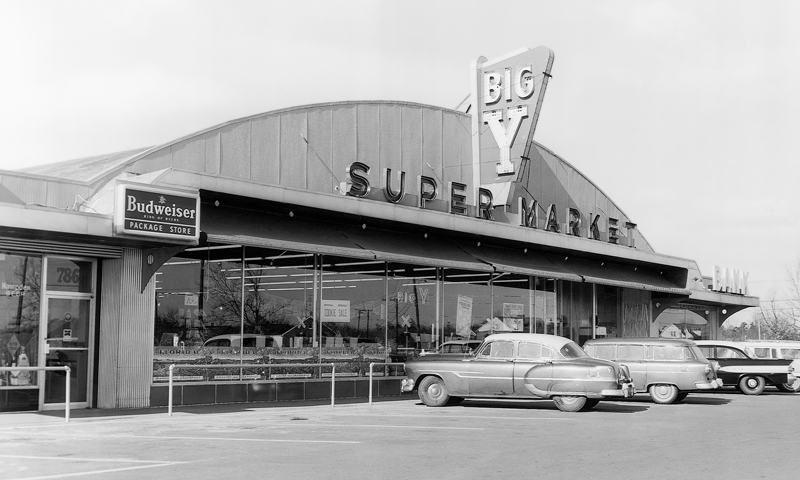
Health Care Sections

Steering Committee

Al Parrow

Al Parrow enjoys driving for the Road to Recovery program so much that he bakes cookies for patients and the people who work in the chemotherapy and radiation units.

When Al Parrow retired from his job at ADT Security Systems, he never imagined that, a year later, he would spend his days driving people he didn’t know to and from doctor’s appointments.

But the 70-year-old has become part of a team of dedicated volunteers who make a profound difference in people’s lives through the American Cancer Society’s Road to Recovery program. The initiative provides free transportation to people who have no other way to get to cancer treatments, and volunteers say the gratitude those patients express is more than enough payment for using their own vehicles and gas.

Parrow signed up as a Road to Recovery volunteer four and a half years ago after he began to get bored with retirement, and says he has been behind the wheel constantly ever since.

“I seldom say ‘no’ if they call me; I’ll drive five days a week if someone is without a ride,” he told BusinessWest as he spoke about the intangible rewards of the position. “Everyone is so appreciative, and they always thank you.”

Gary Watson

Gary Watson drives two to three days a week for the Road to Recovery program and has taken people as far as Boston for cancer treatments.

“I drove one man to his daily radiation treatments, and he didn’t speak English, so we couldn’t converse, but each time I picked him up, his wife stood in their front window and bowed to me,” he went on. “On the day of his final treatment, she came running out and gave me a big hug, then they stood together and bowed in the rain while I drove away. It is the highest sign of respect. Little things like this mean so much, and volunteering is uplifting because everyone you meet is so grateful. The rewards are phenomenal, and it’s worth every trip every day.”

Gary Watson could not agree more.

He’s been a Road to Recovery driver for more than six years, and enjoys it so much that, when he was unable to drive after surgery, he worked from home as a program coordinator. But once he regained his strength, he got behind the wheel again, because he finds the personal interaction very satisfying.

“I started doing this because I wanted to do something after I retired that would be rewarding and allow me to meet wonderful people,” said the 73-year-old, explaining that, when he saw an item in the newspaper seeking drivers for the program, he knew it would be a good fit, because he has known many people with cancer and is a good driver.

Although the majority of volunteers take people only to appointments at local hospitals, sometimes a patient needs to go to Boston for a second opinion or specialized treatment or procedure, and Watson is always willing to go the distance.

“I knew there was a need for long-distance drivers, and it was something I was willing to do,” he said.

Several years ago, the Springfield resident was recognized with a Driver of the Year Award, but he told BusinessWest to downplay the honor. “I’m just so glad there is a program that offers a service like this for folks who truly need transportation. They’re very grateful,” he said.

Indeed, that’s exactly how Betty Swanson feels. “I don’t have any family whatsoever, and I wouldn’t be able to get to my treatments without this program,” said the 78-year-old. “I’m a widow, we never had children, and I don’t have any siblings. I do have a car, but haven’t been able to drive since I had surgery last December.”

Parrow has given her many rides, and she enjoys his sense of humor. “He is such a nice man and keeps me in stitches all the way to my appointments. When we arrive, he gets out of the car, opens the door, and comes into the building with me. I tell him he doesn’t have to do it, but he takes my mind off of things,” she said.

Driving Force

Karen Mernoff , Road to Recovery coordinator for Hampden and Franklin counties and the South Shore of Massachusetts, says comments like Swanson’s are typical.

Drivers in this program often ease people’s troubles simply by their willingness to help, she noted.

“We can’t cure people’s cancer, but we can make their life easier during treatment,” said Mernoff. “Most of them don’t have family in the area, and many elderly people have stopped driving.”

It is for these reasons and many others that the Road to Recovery program, which has been operational for many years, is currently in dire need of volunteers who are able and willing to transport people to chemotherapy and radiation treatments or procedures.

“We recently had to turn people away who were desperate for a ride, and some had to miss their cancer treatments as a result,” Mernoff explained.

Michele Dilley urges people who are interested in volunteering to call the American Cancer Society at (800) 227-2345. “I truly believe this is a life-saving program for people who don’t have family nearby,” said the ACS program manager for mission delivery in the Bay State.

Background checks are conducted on all potential drivers. But anyone who is 18 to 85 with a clean driving record, a reliable and insured vehicle, and a desire to help is welcome.

Referrals come from social workers or patients who call the ACS, and Mernoff said she does her best to match drivers with people who live near them to reduce the time they are on the road.

She told BusinessWest about an elderly patient who was taking two buses to get to chemotherapy, and added that it hurts to have to tell people there is no one who can give them a ride. And since many volunteers are seniors and go south during the winter, the need for help increases at this time of year.

Volunteers are free to drive as little or as often as they want, and if someone is having a hectic week, it’s perfectly acceptable to say they aren’t available.

“There are no penalties, and people can take breaks or vacations whenever they want,” said Mernoff. “We are very flexible, and if something comes up and someone can’t drive or has to take time off for a personal matter, it’s fine.”

Joe Audette

Joe Audette says volunteers for the Road to Recovery program perform a valuable service in the community.

In most cases, volunteers take someone to an appointment, bring them home, and are able to return to their own home within an hour.

“Sometimes the person just needs to go for blood work. But if they didn’t have the ride, they couldn’t get it done, which is why our program is so critical,” she continued. “But we don’t expect people to go out in a snowstorm or really bad weather.”

Still, some drivers are so dedicated, they will do their best to get patients the care they need, even in inclement weather.

Joe Audette is one of them. After retiring from a 42-year career with the U.S. Postal Service and thinking about volunteering at a hospital, he discovered the Road to Recovery program.

“I like to drive, like meeting new people, and wanted to give back to the community,” said the 69-year-old.

He has driven patients to and from appointments for the past three years.

“I’ll drive anytime unless the weather is so bad that they cancel everything; some people are in treatment every day or every other day, and the ACS tells you how long the appointment is likely to be,” he went on. “It’s interesting, and you meet some really nice people. I’m not much of a talker, but I try to cheer them up by keeping the conversation light and commenting on the weather or the way people in cars around us are driving. I stay in the office once we arrive because they might get done early or need an extended amount of time. And it feels so good when they thank me.”

The Ride Stuff

Audette has also gone above and beyond for some people. For example, a man he drove was upset because his prescription wasn’t ready at the pharmacy when they arrived after his appointment. So, although Audette knew it wasn’t part of his job, he offered to pick it up later. “I wanted to ease his worries,” he said.

In another instance, a woman accompanied her husband to the treatment, but told Audette there was no need for him to stay while her spouse had a procedure.

“But she changed her mind, and when it was over, she told me she was glad I was there. She would have sat in the waiting room for several hours by herself, and you never know what’s going to happen or what’s going on in someone’s mind,” Audette said. “I’ve had surgeries and always had family members or someone there to pick me up. I knew I wasn’t alone, and don’t want anyone else to feel that way.”

He has been invited into people’s homes, and at least one family has offered him something to eat. But that rarely happens and is not something he’s comfortable with. But he loves the interaction that occurs while he drives.

“One lady was Russian and didn’t speak any English. So we used hand signals to communicate, and when we got to the hospital, we were laughing,” he recalled.

He added that, although some of the people he has transported have their own cars, they can’t drive because of medication they are taking, and often don’t want to take a bus because their immune systems are compromised.

Occasionally volunteers and patients get to know one another well enough that the patient requests that particular driver when they need a ride again. “But it’s not necessary to form relationships with the people you transport, and we don’t expect it to happen,” Mernoff said.

Parrow is extremely outgoing, and has laughed and joked with patients.

“I’m a cribbage fanatic, and since I usually wait for the patients, when I found a lady who also liked the game, we played during her chemotherapy treatments,” he told BusinessWest.

Parrow has also encouraged people to continue with their treatments when they tell him they are discouraged and feel like stopping.

“And because I like to cook, I bake cookies and give them to the patients and people who work in the radiation and oncology units,” he continued. “Not everyone has to do as much as I do, but I lost my mother to cancer more than 30 years ago, and if she was still alive and sick, I hope someone like me who enjoys driving would give her rides.”

Worthy Cause

In addition to losing his mother to cancer, Parrow has also lost a brother, sister-in-law, and niece. He finds the volunteer work meaningful and brings different types of music on CDs to suit the tastes of those he’s driving. “Everyone doesn’t have to do these things,” he said. “But I really enjoy this.”

Audette expressed similar feelings. “I feel good about doing something useful for someone else, and hope I give each person a few minutes of happiness,” he said, explaining that they often laugh together.

But, enjoyment aside, this volunteer work makes a profound difference.

“I can’t tell you enough how important this is,” Swanson said. “I have no other way to get to my appointments and no one else I can count on. This program is a lifesaver, and I appreciate it so much.”

Commercial Real Estate Sections

Reason to Smile

Stacy Building

Stacy Building

The new logo for Taylor Street Dental doesn’t picture anything, well, dental. No mouth, no teeth, no dental chair or examination equipment.

It’s a building. An important building, said Dr. David Peck.

“We wanted to meld this old, historic building with our dental practice — meld them together, old and new,” he said of the logo, but also of his practice itself, which for 30 years had been known simply as David I. Peck, DMD and been housed in a storefront on Worthington Street, in downtown Springfield’s club district.

But he was looking to move, and became intrigued by the Stacy Building a block away — its striking architecture, solid bones, and storied history, but also its proximity to where he had been treating patients for three decades.

“I knew I wanted to move the practice into another building, to expand and gain more space,” Peck told BusinessWest. “I started looking in the city. I could have gone to the suburbs — Longmeadow, East Longmeadow, Wilbraham — but I’ve been downtown 30 years, and I really believe my success is due to the city of Springfield — due to all my patients, past and present, who had no problem coming to downtown Springfield. I felt like it was time to pay it forward by building them an office where they’re comfortable and happy and feel great about the surroundings.”

He found it in the Stacy Building on Taylor Street, which he bought in 2013 from Plotkin Associates and now houses 3,700 square feet of dental space on the fourth floor — a striking top-level office boasting plenty of exposed brick, chestnut beams and columns, skylights, and barn-style sliding doors.

“We wanted to keep all the old parts of the building that are so beautiful — the large windows, the wood beams and columns,” he explained. “Construction always takes longer than you expect, but we finally moved in this past August.”

One aspect of the project that caused delays was making sure the building was completely handicapped-accessible, including installation of a new, larger elevator cab that opens to both the lobby of the building and at ground level; previously, the lobby was accessible by stairs only.

“We wanted to make sure all my patients, young and old, could get from the ground floor to the fourth-floor office,” Peck said. “We now have handicapped accessibility to all four floors.”

Dr. David Peck

Dr. David Peck, owner of Taylor Street Dental and, now, the Stacy Building that houses it.

That’s just one element that pleases him about the building, which still houses NAI Plotkin on the first floor and two marketing agencies on the second. The third floor has 2,500 square feet of space yet to be leased, in addition to some conference space for Taylor Street Dental.

“The building looks as good as it does because of the hard work of Laplante Construction in East Longmeadow,” Peck said. “They were pivotal in the design and construction and successful outcome of this building. We owe them a debt of gratitude for doing such an amazing job.”

Old and New

The Stacy Building is best-known as the place where brothers Charles and Frank Duryea built the first American gasoline-powered car in 1893. Within a few years, they were making 13 cars a year there.

“The building was in good condition, but I knew I wanted the dental office on the fourth floor, which was small offices, so we demoed the third and fourth floor, modernized it, sandblasted the brick to keep the aesthetics of the brick, kept the beams and the wood columns, and cleaned up the molding around the large windows.”

The space now boasts nine treatment areas, up from five on Worthington Street, and Peck is looking to add staff — he currently employs 11, including two other dentists — to make use of the additional space.

“We renovated all new — we didn’t even bring any of our existing equipment over,” he said, referring to state-of-the-art devices like CT scanners, medical lasers for treatment of soft tissue, and movie-projecting goggles for patients to wear during their procedures. “We wanted all brand-new equipment.”

The construction work isn’t totally complete, however, as exterior façade work will continue in the spring. But the Stacy Building has taken a big step into the 21st century, with a new, more efficient HVAC system, a new fire-alarm system, and new lighting.

“We totally converted the entire building to LED lighting. My daughter, a civil engineer, said, ‘Dad, you’ve got to go LED and be as green as you can.’ So, as a tribute to my daughter, I changed out all the fluorescent lights in the whole building.”

Peck’s patients have already expressed approval of the new office.

“Let me tell you — when patients come here, their mouths drop open. They love it. They say, ‘as comfortable as I felt with you in the other office, Dr. Peck, I’m so much more comfortable here in the new office.’ They say when they come in, they feel even more relaxed, more comfortable, more at peace. When you go to the dentist, you’re nervous, but they feel like they’ve come into a spa environment; their anxiety and nervousness is at a much lower level. They come in and say, ‘it’s just like a spa. I want to sit here and never leave.’”

Those are compliments he relishes.

“It’s just a nice feeling. That’s what I want to do. With any business establishment, you want to provide the very best for your patrons, customers, patients,” he said, adding, “my wife, Susan, was very much involved in helping me design this. We have a partnership; we’ve been married for 35 years, and we just love designing together. I thank my wife for helping me make this place such a success, and something that’s so beautiful for my patients.”

exposed brick and beam features

Dr. David Peck wanted to keep the exposed brick and beam features of the Stacy Building.

Those patients visit Peck for a full range of general, cosmetic, and implant dentistry, he explained, adding that he designed his practice as a one-stop site for dental needs — and, now, a coffee bar with USB chargers.

Those are the sort of funky touches that appeal to a downtown Springfield clientele, one that doesn’t necessarily need a storefront window to draw them in. Parking is plentiful, he added, from validation at a neighboring parking garage to on-street spaces to a small lot dedicated to Taylor Street Dental. “We try to give patients every reason to come to us.

“I bought this place because I wanted to stay in Springfield,” he went on. “It’s a gorgeous building. Just look at it from the outside — I love the way the building looks in springtime, when the trees bloom. It is an absolutely gorgeous building, and with the architecture, the way the brick is laid, the façade, and even the windows, I fell in love with the building.”

Positive Story

Peck’s clear affection for his location explains the logo. “This melding of the dental practice with the historic building creates — as corny as it sounds — a marriage made in heaven,” he told BusinessWest. “It feels great when I come in here. It’s amazing, the beauty they were able to build into it back then, without the heavy machinery we have now. I love coming in here every day.”

The Duryea Historical Society sent Peck a plaque for the office, and when he schedules a grand-opening celebration, he’s going to try to get some Duryea descendants to join in, if only to celebrate another success story in a city seeing more of them these days.

“There’s a perception that Springfield is unsafe. But I’ve been here 30 years; I’ve walked out at 12, 1 in the morning. I’ve never had a problem,” he said. “I love Springfield, and Springfield loves us. I think about times when people felt more positive about the city they work and live in, but they should appreciate what they have here in Springfield. We have museums at the Quadrangle, the Basketball Hall of Fame, MGM wants to come in … these are all positive things. It’s a beautiful city, so let’s start appreciating what we have and stop bashing it.”

That’s why he refuses to discount the City of Homes, but rather continue to support it — with a highly visible investment in the future of its downtown.

“I’ve seen other business around downtown Springfield that had no interest in staying, but not Taylor Street Dental,” he said. “We’re here to stay for the long term.”


Joseph Bednar can be reached at [email protected]