Home Archive by category Sections (Page 71)

Sections

Holiday Party Planner Sections

Tunnel Vision

The entrance to Union Station

The entrance to Union Station is one of the areas that underwent a complete renovation.

Outside of a stint in the military, Jeremiah Micka has worked at Union Station in Northampton since age 13. He knows every nook and cranny in the building, but will never forget the awe he felt the first time he entered the doors of the main area, which was built in 1896.

“I had never been in a room with 20-foot ceilings and such impressive lighting. But I always thought it could be something grander than a restaurant. It deserved to be a ballroom,” he said, adding that Presidents Calvin Coolidge, Herbert Hoover, William McKinley, and Theodore Roosevelt made appearances there.

It took years for Micka to realize his vision, but today it has become a reality. Union Station has undergone a $1 million renovation, which preserved the historic interior, but revamped areas that needed improvement.

Micka began the work in November 2013 after purchasing the building, where he had been employed as a line cook, server, bartender, and bar manager. He contracted some jobs, but much of it was a labor of love, and he put in countless hours of painstaking effort to get things exactly the way he dreamed they should be.

Renovations included a new roof on the building, gutting the bathrooms and replacing them with modern fixtures, and installing new carpeting, a dance floor, and a tile floor in the hallway. The entranceway also received attention, and charm and utility were added with Goshen stone steps, brick pavers, stone walls, new plantings, and a curved handicapped ramp.

When Micka took the building over, the well-known Tunnel Bar in the basement of the building, and the Deck, located outside of the station, were doing well. But he knew the area that had been occupied by Spaghetti Freddy’s for years was an architectural gem, and he transformed the former restaurant area by focusing on its historic attributes.

“There was no doubt in my mind that this area would become our banquet hall,” Micka said as he sat in the newly created, 2,800-square-foot Grand Ballroom, pointing out its lofty ceilings, striking archway, enormous fireplace, buff-colored brick walls, and impressive windows.

“You could never replicate this,” he told BusinessWest, adding that he created a bridal suite that overlooks the Grand Ballroom where the bridal party can watch guests arrive before they make their entrance. “It’s extraordinary to see a bride and groom come through the archway. It’s a moment they don’t forget.”

Union Station, which reopened in August 2014, offers two banquet areas in addition to the Grand Ballroom. One is the Lounge, an historic space backed by a wall of intricate, stained-glass windows. “When this section of the station was built in the 1850s, it was used as a horse and buggy pull-up, as well as a train depot,” Micka said. “We just added a baby grand piano to the space, which has been refurbished and is fully functional. It was originally used in a jazz club in Northampton and is on a wheeled system so it can be brought into any space. People have already used it at different functions.”

UnionStationDningRoomAboveAfter repurposing the Lounge and transforming the Italian eatery into a ballroom, Micka focused on the rear of the building, which became the Platform Sports Bar. It boasts 21 televisions with surround sound, 110-inch projectors, and seating for almost 200 people. “During the winter, we have a disc jockey, and we have had wedding parties go into the bar and start dancing after the reception,” he said. People also frequent the well-known Tunnel Bar after events, and Micka has opened it early for group functions.

Although the Grand Ballroom and Lounge are rife with character, they have a more formal feel, and since Micka knew some people prefer to hold events in a casual space, he built the Blue Goose Room in the rear of the sports bar, where small parties gather and enjoy pub-style food and cocktails.

Diverse Offerings

Since Union Station reopened 14 months ago, 20 weddings and more than 100 events have been held in the ballroom, and an equal number have been held in the Blue Goose Room. There have also been numerous parties in the Lounge, including holiday gatherings for small companies, rehearsal dinners, bridal and baby showers, and more.

“When we say this place is unique, we really mean it. We are flexible and appeal to so many different people,” Micka said.

Duncan agreed. “When we give tours, we take people into the Lounge and the Grand Ballroom. Most of them love it, but if they don’t, we take them into the Blue Goose Room, which is exactly what some people are looking for. It’s advantageous to have three areas to hold events.”

Union Station is a landmark in Northampton, and last December, Amtrak’s Vermonter began stopping at a new passenger rail platform located just to the south of the building. “The track runs past the station, and children who come to holiday events can be seen pressing their face to the windows when the train goes by,” Duncan said.

The Lounge in Union Station

The Lounge in Union Station can seat 50 people and is a popular spot for small company parties as well as showers, rehearsal dinners, and other gatherings.

Micka added that the station is easily accessible. “People coming off of I-91 simply take a left, then a right a short distance down the road into our driveway. We own the parking lot and have 400 spaces.

“Northampton is such a perfect location for an event, as there is so much variety and culture for guests to enjoy,” he went on. “The town has 61 restaurants, and people who stay overnight can walk here from Hotel Northampton. And our Tunnel Bar was just listed on Buzzfeed as the number-one bar that people should see before they die.”

Food for all functions is prepared on site, and the chefs use as much local produce as possible. “I was born and raised on a fourth-generation, 60-acre farm in Northampton, so I know most of the farmers in the area,” Micka said.

Duncan said the menu was designed to be upscale. But although many choices certainly fulfill that criteria, with entrees such as surf and turf and New York strip steak, people can also choose chicken wings, spring rolls, quesadillas, and other items typically served in the Blue Goose.

But the variety adds to the flavor. “We have done lobster bakes, with mussels, clams, and corn on the cob,” Duncan said, adding that Union Station employs three full-time chefs, and one is dedicated entirely to banquets. “Everyone is looking for something different, so we are very flexible. At the end of the day, we want our customers to be happy.”

To that end, only one event is held at a time in Union Station, he added. “When you are here, you are our focal point.”

Shared Sentiments

Micka said people who enter the Grand Ballroom for the first time experience his initial reaction.

“People’s faces light up when they walk into it. It has so much character, and in most cases, it’s exactly what they are looking for,” he told BusinessWest. “This building has always been a major focal point in Northampton.”

Thanks to his vision, today people can make their own memories — and history — in a place deemed worthy of a visit by four American presidents.

Community Spotlight Features

Community Spotlight

Courtney Hendricson spends a moment with Sean Vaccarella

Courtney Hendricson spends a moment with Sean Vaccarella in the newly opened Vitamin Shoppe on Elm Street.

Courtney Hendricson thinks of herself as a matchmaker.

Although it’s an unusual way to describe the job of a town official, she is doing all she can to strengthen and facilitate the growth of Enfield’s key industries by introducing people to each other and keeping them informed about opportunities via networking events and social-media platforms.

“Some of our key industries are really strong, and others are burgeoning, but we’re taking a very proactive approach to growth, and I have relationships with builders, developers, site selectors, property owners, and brokers,” said the assistant town manager of development services. “It’s my job to connect them and let them know what is happening in town.”

Retail business is among the community’s key industries, and it is home to 3,000 stores. “Enfield is a regional retail destination, and many people spend their Saturdays here,” Hendricson said, pointing to the presence of industry giants such as Sears, Home Depot, and Costco, as well as a plethora of other stores and eateries found in the mall, shopping centers, and business corridors easily accessible off Interstate 91.

She added that the retail corridor — which starts immediately after vehicles exit from 91, runs along Elm Street, and connects to Freshwater Boulevard — continues to grow.

“Starbucks and the Vitamin Shoppe opened in late August in a renovated building on Elm Street that used to be an Arby’s restaurant, Asian Grille and OMI Grocery are opening this month on Enfield Street, and a new, 14,500-square-foot Goodwill store is under construction on Palomba Drive,” Hendricson said. “Hannoush Jewelers put up a new building on Elm Street, expanding from a much smaller space in the Stop & Shop Plaza, and Chick-fil-A built a pad site and opened in the parking lot of an existing shopping center on Hazard Avenue.

“We rarely have vacancies in our retail corridors, and when they occur, the space is filled very quickly,” she continued, adding that the town is working with a food franchiser who hopes to move into the former Rockville Bank building, which sits on 1.1 acres and has been empty for several years.

One of the town’s many retailers, Vitamin Shoppe Manager Sean Vaccarella, views Enfield as an ideal location.

“We’re really excited to be here; the economy is thriving in terms of retail, and there are acres of stores in Enfield,” he said. “We’re looking to penetrate the market and develop a footprint here.”

Advanced manufacturing is another thriving industry, and a pipeline of employees is continually being created, thanks to the strong program at Asnuntuck College.

“They’re known as the leader in Connecticut for this type of education. In fact, the governor took their model and replicated it in other community colleges across the state. Enfield students are exposed to the program in middle school, and every grade from that point on has a program for interested young people,” Hendricson said. “The advanced-manufacturing industry here is robust. ”

The third key industry in town is logistics and distribution. “We’re very strong in this area,” she told BusinessWest. “Advanced Auto Distribution Center moved to Enfield after completing a major renovation of a former 400,000-square-foot Lego warehouse and brought more than 200 jobs here in the last year, and Brooks Brothers Distribution Center is in Enfield and is thriving in our industrial park.”

Hallmark Cards Distribution Center plans to close next June, but town officials are working to connect Hallmark’s commercial real-estate team with interested brokers. “It’s critical to fill all of our buildings to their best use, and we are very proactive in this area,” Hendricson said.

The town is also looking for an interested manufacturer or tenant to occupy a 235,000-square-foot building on 19 acres at 35 Manning Road. “It’s zoned industrial and is part of the commercial real estate that is available,” she told BusinessWest.

Meanwhile, growth is occurring in residential real estate, and revitalization efforts continue in the Thompsonville section of town.

For this, the next installment in BusinessWest’s Community Spotlight series, we look at the many forms of progress being recorded in this community just south of the Massachusetts state line.

Raising Awareness

While existing, traditional sectors of the economy are thriving in Enfield, town officials want to build even more diversity into the equation.

For example, while there are some biomedical-related companies in Enfield, officials want to increase their number.

“The industry is growing, and we’re trying to cultivate it here. Johnson Memorial Hospital has a campus in Enfield, and we have companies that are thriving,” Hendricson said, mentioning Davita Enfield Dialysis on Palomba Drive as an example. New zoning was created about 18 months ago within a few industrial sites to spur growth and facilitate the use of properties for biomedical manufacturing, which include Metro Park North on Route 5, a 135-acre site that could be subdivided.

Town officials are encouraged by the decision by Cirtec Medical Systems, LLC to move from East Longmeadow into a new, 35,000-square-foot plant in Enfield. It will have a 5,000-square-foot clean room and a 6,000-square-foot, controlled-environment assembly space, in addition to a machine shop and laboratory. The company provides outsourced services for the medical-device industry that are used in stroke recovery and heart-disease treatment.

“The move will bring 100 jobs to Enfield, and they have told us they plan to add another 50,” Hendricson said. “We’ve made a concerted effort in the past year to do more outreach to spur additional economic growth. We have also strengthened our revitalization efforts in Thompsonville, and continue to foster an environment that provides new ways to unite our business community.”

To that end, the city’s Economic Development Commission held its first Business Development Summit on Sept. 23, and the 150 available slots were filled quickly.

“It highlighted all of our key industries, and people came from both the Greater Hartford and Springfield areas,” Hendricson said, adding that there were breakout sessions with panels composed of experts who discussed the town’s main industries: advanced manufacturing, logistics and distribution, healthcare and the environment, and the future of retail.

“These are areas where we are really strong, and our goal was to showcase them,” she told BusinessWest, adding that each participant received a booklet with photos and detailed information about every available commercial property in town. “The properties range from 600 to 235,000 square feet; from small, rentable spaces downtown and in Thompsonville  to an available building in our retail corridor that was a car dealership. We worked hard on the summit in hopes that, by bringing players to the table together, they could make deals.”

She added that copies of the booklet, which contain photos and detailed information about available property, were given out last year during a breakfast for commercial real-estate developers.

Hendricson also records quarterly video news clips called “V-News,” which can be seen on YouTube and keep viewers up to date on economic development.

She just finished her third video, and a link to each broadcast is e-mailed to more than 3,000 of what she refers to as “key players,” who range from commercial and residential real-estate developers to businesses and CEOs of leading companies.

Efforts have also been made to streamline the town’s permitting process and make sure it is consistent and predictable. To that end, Enfield recently purchased new, customer-friendly software that is being customized and will allow people to apply for a permit online, 24 hours a day, then check its status.

“It’s exciting. We’re really trying to serve developers and businesses and figure out what we need to do to get people to invest and grow their companies,” she explained.

Growth is also being recorded in residential real estate. A 340-unit, luxury apartment community called Mayfield Place is under construction, and will contain 10 two-story buildings.

“There is a real demand for this type of housing. Bigelow Commons is completely filled, and these units are likely to appeal to professionals,” Henricson said, referring to the former carpet mill that was renovated and converted to apartments.

In addition, revitalization efforts continue in Thompsonville, which include infrastructure improvements. “We’ve been very proactive; we have formed partnerships with building owners and continue to work with state officials to make sure a new transit center there becomes a reality,” she went on, explaining that the vision for Thompsonville is to turn it into a vibrant, walkable village centered around the transit center, as a commuter rail line between New Haven, Hartford, and Springfield is slated to begin operating next year.

Moving Forward

Town officials urge business owners and investors to visit www.thinkenfield.com, a site established a year ago devoted entirely to news and opportunities related to economic development.

“It contains demographics on all of our commercial properties,” said Hendricson. “There is also a calendar of current events and information about revitalization work being done.”

In addition, Enfield offers space for business classes and meetings free of charge, and employees in its information-technology department help new businesses with tasks ranging from creating Excel spreadsheets to establishing websites.

“We continue to show investors and developers the potential of Enfield,” she went on. “The town is on the move, and we are making things happen. There is room to grow and open a business here.”

Enfield at a glance

Year Incorporated: 1683 in Massachusetts; annexed to Connecticut in 1749
Population: 44,654 (2010)
Area: 34.2 square miles
County: Hartford
Residential Tax Rate: $29.89 (plus fire district tax)
Commercial Tax Rate: $29.89 (plus fire district tax)
Median Household Income: $68,356
Type of government: Town Council; Town Manager
Largest Employers: MassMutual; Hallmark Cards Distribution Center; the Lego Group
* Latest information available

Sections Super 60

Success Stories Offer Measures of Optimism

Super60logoThe Springfield Regional Chamber’s annual Super 60 lists have consistently reflected the depth and diversity of the region’s economy, and the Class of 2015 is no exception. Ranked by Total Revenue and Revenue Growth, this year’s honorees reflect the vibrancy of sectors ranging from healthcare to manufacturing; retail to financial services — and much more.

A quarter-century after its inception, the Super 60 program continues to document not only the growth and sustained success of area businesses, but the vitality of the local economy.

The Springfield Regional Chamber — formerly the Affiliated Chambers of Commerce of Greater Springfield — has been issuing annual lists of its largest-revenue and fastest-growing members since 1990, documenting, over time, the businesses that keep the region running.

“There’s a reason we break it down by Revenue Growth and Total Revenue,” said Jeffrey Cuiffreda, Springfield Regional Chamber president. “I think it shows we have a lot of mature industries on the largest-revenue list, and to get to that level, you have to be around a long time and have a stable base, and that shows the good foundation of our economy.

“At the same time,” he went on, “we’re finding newer and newer companies that come along, and that’s oftentimes where the growth comes from. There’s usually a good cross-section of industries there, which shows the diversity of the growing companies that add to our employment base.”

Being named to the Super 60 has also become a bragging right for businesses large and small, and a highly anticipated fall tradition. The Super 60 companies will be honored at a luncheon on Friday, Oct. 23 from 11:30 a.m. to 1:30 p.m. at Chez Josef in Agawam, presented by Health New England and sponsored by Berkshire Bank, WWLP-TV22 News, and Zasco Productions.

To be considered, companies must be headquartered in Hampden or Hampshire counties or be a member of the Springfield Regional Chamber, have revenues of at least $1 million in the last fiscal year, be an independent and privately owned company, and have been in business at least three full years. Companies are selected based on their percentage of revenue growth over a full three-year period or total revenues for the latest fiscal year.

“Small business is the backbone of our region, and the success of this year’s winners is a clear indication that our regional economy is strong,” Ciuffreda said, adding that, while all winners in the Total Revenue category had revenues in excess of $4 million, one-third exceeded $30 million. The Total Revenue winners combined for more than $1 billion in revenues.

In the Revenue Growth category, all winners had growth in excess of 20%, while one-third had growth in excess of 65%. In addition, 11 companies in the Total Revenue category also qualified for the Revenue Growth category, and 19 companies in the Revenue Growth category also qualified for the Total Revenue category. Each was placed in the list where it ranked highest.

Topping the Total Revenue category is NUVO Bank & Trust Co. in Springfield, followed by Whalley Computer Associates Inc. in Southwick and Sarat Ford-Lincoln in Agawam. In the Revenue Growth category, Springfield-based City Enterprise Inc., a woman-owned commercial and residential builder, finished on top for the second straight year, followed by Aegenco Inc. in Springfield and Holyoke Community College Foundation Inc.

Emily and Oliver Rich, founders of Tea Guys, will keynote the Oct. 23 Super 60 luncheon. Founded in 2002, Tea Guys has steadily expanded, tapping into the strong consumer demand for superior tea products. The company has expanded its online platform to include a brick-and-mortar location in a 10,000-square-foot retail store and production facility in Whately. Boasting more than 120 blends, the company offers its blends as loose teas, K-style cups, and a tea beverage concentrate product for the hospitality industry, and are sold nationwide.

Luncheon reservations are $50 for Springfield Regional Chamber members and $70 for non-members. To reserve tickets, visit www.springfieldregionalchamber.com or e-mail Sarah Mazzaferro at [email protected].

TOTAL REVENUE

* Qualified for both lists

1. Nuvo Bank & Trust Co.*
1500 Main St., Springfield
(413) 787-2700
www.nuvobank.com
Dale Janes, CEO
NUVO Bank is a locally owned, independent small-business bank located in downtown Springfield. NUVO provides loans, deposits, and cash-management services for personal-banking and business-banking needs.

2. Whalley Computer
Associates Inc.*
One Whalley Way, Southwick
(413) 569-4200
www.wca.com
John Whalley, President
WCA is a locally owned family business that has evolved from a hardware resale and service group in the ’70s and ’80s into a company that now focuses on lowering the total cost of ownership of technology and productivity enhancement for its customers. Whalley carries name-brand computers as well as low-cost performance compatibles.

3. Sarat Ford-Lincoln
245 Springfield St., Agawam
(413) 789-5400
www.saratford.com
Jeff Sarat, President
Founded in 1929 by John Sarat Sr., Sarat Ford has become the largest Ford dealership in Western Mass., and today, grandson Jeff Sarat leads the company. The full-service dealership includes a state-of-the-art body shop, and a new, 10,000-square-foot expansion offers a 24-bay service center that houses a $1 million parts inventory featuring Ford, Motorcraft, Motorsport, and a variety of other specialty manufacturers.

Associated Electro-Mechanics*
185 Rowland St., Springfield
(800) 288-4276
www.aemservices.com
Elayne Lebeau, Owner/CEO
Associated Electro-Mechanics is a diversified, one-stop industrial sales and service center servicing the New England region and beyond, with a variety of industrial repair and rebuilding services.

The Assoc. for Community Living
220 Brookdale Dr., Springfield
(413) 732-0531
www.theassociationinc.org
Barbara Pilarcik, Executive Director
For 60 years, the Assoc. for Community Living has been creating opportunities, building relationships, and improving lives of children and adults with developmental disabilities and their families. The agency’s caring and experienced workforce empowers individuals with developmental disabilities to live with dignity, bringing fulfillment, community, and valuable relationships into their lives.

Baltazar Contractors Inc.*
83 Carmelinas Circle, Ludlow
(413) 583-6160
www.baltazarcontractors.com
Frank Baltazar, President
Baltazar Contractors has been a family-owned and operated construction firm for more than 20 years, specializing in roadway construction and reconstruction; all aspects of site-development work; sewer, water, storm, and utilities; and streetscape improvements.

Bay State Elevator Co.
275 Silver St., Agawam
(413) 786-7000
www.bseco.com
Harold Potts, President
Established in 1908, Bay State Elevator works with architects, builders, and business owners to install state-of-the-art elevators of all sizes and shapes. The company also specializes in modernization and maintenance of elevator systems. It boasts six offices in Massachusetts, Connecticut, New York, and Vermont.

Braman Chemical
Enterprises Inc.
147 Almgren Dr., Agawam
(413) 732-9009
www.braman.biz
Gerald Lazarus, President
Braman has been serving New England since 1890, using state-of-the-art pest-elimination procedures for commercial and residential customers. The company has offices in Agawam, Worcester, and Lee, as well as Hartford and New Haven, Conn.

Charter Oak Insurance &
Financial Services Co.*
330 Whitney Ave., Holyoke
(413) 374-5430
www.charteroakfinancial.com
PETER NOVAK, GENERAL AGENT
A member of the MassMutual Financial Group, Charter Oak been servicing clients for 127 years. The team of professionals serves individuals, families, and businesses with risk-management products, business planning and protection, retirement planning and investment services, and fee-based financial planning.

Community Enterprises Inc.
441 Pleasant St., Northampton
(413) 584-1460
www.communityenterprises.com
Dick Venne, President and CEO
In 1972, some progressive staff members at Northampton State Hospital applied for and received a small grant to develop a program to train residents to live and work outside the hospital. In the 40 years since, Community Enterprises has grown into a multi-faceted program that supports the employment, educational, and independent-living goals of people with disabilities in three states.

Cutchins Programs for
Children & Families Inc.
78 Pomeroy Terrace, Northampton
(413) 584-1310
www.cutchins.org
Jay Indik, Executive Director
Cutchins Programs for Children & Families boasts 37 years of providing care not easily found in today’s healthcare environment. It offers residential, outpatient, and special-education services for children and families struggling with the effects of trauma and mental illness in a sanctuary of safety and love.

The Dennis Group*
1537 Main St., Springfield
(413) 746-0054
www.dennisgrp.com
Tom Dennis, CEO
The Dennis Group offers complete planning, design, architectural, engineering, and construction-management services. The firm is comprised of experienced engineering and design professionals specializing in the implementation of food-manufacturing processes and facilities.

Environmental Compliance
Services Inc.*
588 Silver St., Agawam
(413) 789-3530
www.ecsconsult.com
Mark Hellstein, President and CEO
For more than 25 years, ECS has specialized in environmental site assessments; testing for asbestos, lead, indoor air quality, and mold; drilling and subsurface investigations; and emergency-response management.

Filli, LLC d/b/a Con-Test
Analytical Laboratory*
39 Spruce St., East Longmeadow
(413) 525-2332
www.contestlabs.com
Thomas Veratti Sr., Founder
Established in 1984, Con-Test provides environmental consulting and testing services to a variety of clients throughout Western Mass. The laboratory-testing division originally focused on industrial hygiene analysis, but rapidly expanded to include numerous techniques in air analysis, classical (wet) chemistry, metals, and organics, and has the capability for analyzing nearly all water, air, soil, and solid materials.

Gandara Mental Health Inc.*
147 Norman St., West Springfield
(413) 736-8329
www.gandaracenter.org
Dr. Henry East-Trou, CEO
Focusing on the Latino/Hispanic community, Gandara Center provides substance-abuse recovery, mental-health, and housing services for men, women, children, adolescents, and families throughout the Pioneer Valley.

Holyoke Pediatrics
Associates, LLP
150 Lower Westfield Road, Holyoke
(413) 536-2393
www.holyokepediatrics.com
Carole Hebert, Manager
Holyoke Pediatric Associates is the largest pediatric practice in Western Mass., serving patients from Pioneer Valley communities at offices in Holyoke and South Hadley. The group medical practice comprises board-certified pediatricians, certified nurse practioners, and more than 75 clinical, nutritional, and clerical support staff, and has served the healthcare needs of infants, children, and adolescents since 1971.

Kittredge Equipment Co. Inc.*
100 Bowles Road, Agawam
(413) 304-4100
www.kittredgeequipment.com
Wendy Webber, President
Founded in 1921, Kittredge Equipment Co.is one of the nation’s leading food-service equipment and supply businesses. It boasts 70,000 square feet of showroom in three locations — Agawam, Williston, Vt., and Bow, N.H., making it the largest total showroom in New England, with in-stock inventory of equipment and smallware consisting of more than 7,000 different items. The company also handles design services, and has designed everything from small restaurants to country clubs to in-plant cafeterias.

Marcotte Ford
1025 Main St., Holyoke
(800) 923-9810
www.marcotteford.com
Bryan Marcotte, President
The dealership sells new Ford vehicles as well as pre-owned cars, trucks, and SUVs, and features a full service department. Marcotte has achieved the President’s Award, one of the most prestigious honors given to dealerships by Ford Motor Co., on multiple occasions over the past decade.

Maybury Associates Inc.
90 Denslow Road, East Longmeadow
(413) 525-4216
www.maybury.com
John Maybury, President
Since 1976, Maybury Associates Inc. has been designing, supplying, and servicing all types of material-handling equipment throughout New England. Maybury provides customers in a wide range of industries with solutions to move, lift, and store their parts and products.

Poly-Metal Finishing Inc.
1 Allen St # 218, Springfield
(413) 781-4535
www.poly-metal.com
Jason Kudelka, President
Poly-Metal Finishing Inc. has served the metalworking industry for more than three decades and specializes in providing the aerospace, military, and com­mercial sectors with complete anodic services: sulfuric anodizing, color anodizing, chromic, hardcoat, polylube pro­cessing, chemical conversion of aluminum, and pre-bond coatings.

Rediker Software Inc.
2 Wilbraham Road, Hampden
(800) 213-9860
www.rediker.com
Richard Rediker, President
Rediker software is used by school administrators across the U.S. and in more than 100 countries, and is designed to meet the student-information-management needs of all types of schools and districts.

Riverside Industries Inc.
One Cottage St., Easthampton
(413) 527-2711
www.rsi.org
Charlene Gentes, President
Now in its 45th year, Riverside Industries provides individualized services combining life-skills development, rehabilitation, and employment options for more than 270 adults living with developmental disabilities from 33 communities. Riverside also offers a wide range of innovative therapies and programs, including music, art, farming, yoga, and other classes.

Specialty Bolt & Screw Inc.
235 Bowles Road, Agawam
(413) 789-6700
www.specialtybolt.com
Kevin Queenin, President
Founded in 1977, Specialty Bolt & Screw (SBS) is a full-service solutions provider of fasteners, vendor-managed inventory (VMI) programs, and c-class commodities. Based in Agawam, it has locations in Valcourt, Quebec; Juarez, Mexico; Queretaro, Mexico; Rovaniemi, Finland; and Kaohsiung, Taiwan.

Tighe & Bond Inc.
53 Southampton Road, Westfield
(413) 562-1600
www.tighebond.com
David Pinsky, President
Having celebrated its 100th anniversary in 2011, Tighe & Bond specializes in environmental engineering, focusing on water, wastewater, solid-waste, and hazardous-waste issues, and provides innovative engineering services to public and private clients around the country and overseas.

Troy Industries Inc.
151 Capital Dr., West Springfield
(413) 788-4288; (866) 788-6412
www.troyind.com
Steve Troy, CEO
Troy Industries was founded on the principle of making reliable, innovative, over-engineered products that function without question when lives are on the line. The choice of special ops, law enforcement, and war fighters worldwide, Troy Industries is a leading U.S. government contractor that designs and manufactures innovative, top-quality small-arms components and accessories and complete weapon upgrades.

United Personnel Services Inc.
1331 Main St., Springfield
(413) 736-0800
www.unitedpersonnel.com
Patricia Canavan, President
United provides a full range of staffing services, including temporary staffing and full-time placement, on-site project management, and strategic recruitment in the Springfield, Hartford, and Northampton areas, specializing in administrative, professional, medical, and light-industrial staff.

Valley Opportunity Council Inc.
35 Mount Carmel Ave., Chicopee
(413) 552-1554
www.valleyopp.com
Stephen Huntley, Executive Director
The Valley Opportunity Council (VOC) is the largest and most diverse community-action agency in the region. It has a network of support and collaborative services that include energy assistance, nutrition, early education and childcare, adult education, senior services, housing, money management, and transporation.

W.F. Young Inc.
302 Benton Dr., East Longmeadow
(800) 628-9653
www.absorbine.com
Tyler Young, CEO
This family-run business prides itself on offering a variety of high-quality products that can effectively improve the well-being of both people and horses with its Absorbine brands.

WestMass ElderCare Inc.*
4 Valley Mill Road, Holyoke
(413) 538-9020
www.wmeldercare.org
Priscilla Chalmers, Executive Director
WestMass ElderCare is a private, nonprofit agency with a mission to “to preserve the dignity, independence, and quality of life of elders and disabled persons desiring to remain within their own community.” The agency offers a variety of services for elders, their families and caregivers, and persons with disabilities. Programs and services include supportive housing, home care, options counseling, adult family care, nutrition programs, adult foster care, and group adult foster care.

Westside Finishing Co.
15 Samosett St., Holyoke
(413) 533-4909
www.wsfinish.com
Brian Bell, President
A leading powder coater, Westside Finishing began more than 30 years ago as a liquid-coatings job shop. Today, it offers a much wider array of services, including silk screening, pad printing, trucking, sub-assembly, final packaging, and more. Over the years, Westside has significantly increased the size and volume capability of parts it is able to coat by installing new coating equipment, increasing inventory, and bringing new members onto the team.

REVENUE Growth

* Qualified for both lists

1. City Enterprise Inc.*
38 Berkshire Ave., Springfield
(413) 726-9549
www.cityenterpriseinc.com
Wonderlyn Murphy, president
City Enterprise Inc. offers skilled general-contracting services to the New England region. The company prides itself on custom design and construction of affordable, quality homes and the infrastructure surrounding each project.

2. Aegenco Inc.*
55 Jackson St., Springfield
(413) 746-3242
Spiro Vardakas, President
Aegenco, an energy-conservation consulting firm, has grown steadily since its inception in 2005.

3. Holyoke Community College Foundation Inc.
303 Homestead Ave., Holyoke
(413) 552-2546
www.hcc.edu/the-hcc-foundation
Erica Broman, executive director
The Holyoke Community College Foundation was created four decades ago to help the college meet the needs of the region’s citizens and workforce, by raising both funds and awareness and supporting programs and activities in keeping with the mission of the college.

Aegis Energy Services Inc.*
55 Jackson St., Holyoke
(800) 373-3411
www.aegisenergyservices.com
Lee Vardakas, Owner
Founded in 1985, Aegis Energy Services is a turn-key, full-service provider of combined heat and power systems (CHPs) that generate heat and electricity using clean, efficient, natural-gas-powered engines. These modular CHP systems reduce a facility’s dependence on expensive utility power, reduce energy costs, and reduce one’s carbon footprint.

CanAm Fibers*
100 State St., Ludlow
(413) 525-9018
www.canamfibers.net
Peter Meuiner, president
CanAm Fibers has established itself as a well-known and highly respected supplier of varied and specialty-grade paper products to export markets, particularly third-world countries, a segment that allows CanAm to offer domestic suppliers a feasible and economically advantageous avenue in which to dispose of excess material.

Chemex Corp.*
11 Veterans Dr., Chicopee
(413) 331-4460
www.chemexcoffeemaker.com
Liz Grassy, president
The Chemex coffeemaker was invented in 1941 by Dr. Peter Schlumbohm. Made simply from non-porous, borosilicate glass and fastened with a wood collar and tie, it brews coffee without imparting any flavors of its own. Chicopee-based Chemex Corp., a family-owned company, manufactures Chemex coffeemakers, bonded filters, handblown water kettles, and accessories for worldwide distribution.

Detector Technology Inc.*
9 Third St., Palmer
(413) 284-9975
www.detechinc.com
Jay Ray, president
Detector Technology is a leading manufacturer of products and systems for OEM and equipment manufacturers, specializing in channel electron multipliers, glass extrusion and fabrication, and motion-control products. With a state-of-the-art fabrication and production facility, An ISO 9001-certified commapny, DeTech has been delivering for its customers for more than 20 years.

East Baking Company Inc.*
104 Whiting Farms Road, Holyoke
(413) 536-2300
www.eastbaking.com
Danny Serra, President
East Baking Co. offers a full line of fresh and frozen bakery products, with an extensive product line including everything from wraps and pitas to yeast rolls and frozen dough, with full-service distribution in Western Mass. and Connecticut.

Fletcher Sewer & Drain Inc.
824a Perimeter Road, Ludlow
(413) 547-8180
www.fletcherseweranddrain.com
Teri Marinello, President
Since 1985, Fletcher Sewer & Drain has provided service to homeowners as well as municipalities and construction companies for large pipeline jobs from Western Mass. to Southern Conn. From unblocking kitchen sinks to replacing sewer lines, this woman-owned company keeps up to date with all the latest technology, from high-pressure sewer jetters to the newest camera-inspection equipment.

The Gaudreau Group
1984 Boston Road, Wilbraham
(413) 543-3534
www.gaudreaugroup.com
Jules Gaudreau, president
A multi-line insurance and financial-service agency established in 1921, the Gaudreau Group combines the traditional service philosophy of an agency with the talents of a dynamic marketing organization. With the expertise and resources that enable clients to respond to an ever-changing economic environment, the agency offers a broad range of insurance and financial products from basic life, home, and auto insurance to complex corporate services, employee benefits, and retirement plans.

Grand Prix International Inc.*
34 Front St., Indian Orchard
(413) 543-8887
www.grandprixintl.com
Michael Fisher, President
Since 1978, Grand Prix International has grown to become a leading independent game manufacturer, offering a wide range of services, from graphic design to project management, manufacturing, and freight forwarding. GPI has extensive experience with custom product packaging, specializing in plastic molding, tins, clamshells, blister cards, set-up boxes, neck boxes, wood boxes, and displays.

Hampden County Career
Center Inc. d/b/a CareerPoint
850 High St., Holyoke
(413) 532-4900
www.careerpointma.com
David Gadaire, executive director
Since 1996, Hampden County Career Center Inc., d/b/a CareerPoint, has been serving the workforce and economic-development needs of individual job seekers, social-service agencies, and the business community throughout Hampden County and beyond. The center transforms the maze of complex, bureaucratic employment and training programs into one seamless service-delivery system for job seeking and employer customers alike.

Hayden Corp.*
333 River St., West Springfield
(413) 734-4981
www.haydencorp.com
John Hayden, President
Founded in 1919, Hayden Corp. is an ISO 9002-2008 registered provider of thermal spray coatings and other wear- and corrosion-control surfaces, providing comprehensive pre- and post-surfacing services, including preparatory machining, finish grinding, and metallurgical coating quality analysis.

Human Resources Unlimited Inc.*
60 Brookdale Dr., Springfield
(413) 781-5359
www.hru.org
Don Kozera, President and CEO
HRU’s programs annually help more than 1,500 people with physical and mental disabilities or who are disadvantaged by poverty or homelessness, by providing a unique and holistic approach to skill building, job-readiness training, placement, and support. Each year, HRU works with about 140 area employers, providing them with a skilled, reliable workforce while simultaneously creating employment opportunities for its members.

James J. Dowd & Sons
Insurance Agency Inc.*
14 Bobala Road, Holyoke
(413) 538-7444
www.dowd.com
John Dowd Jr., President and CEO
Founded in 1898, Dowd is one of the oldest, most experienced insurance agencies in Massachusetts. The staff includes fully licensed and certified insurance and financial services agents and brokers with a full complement of professional license and designations to insure that clients receive proper insurance and financial-services guidance.

Kielb Welding Enterprises
d/b/a Advance Welding
47 Allston Ave., West Springfield
(413) 734-4544
www.theperfectweld.com
Christopher Kielb, President
Since 1978, Kielb Welding Enterprises, d/b/a Advance Welding, has served its clients with high-quality welding, brazing, and metal fabrication with state-of-the-art facilities and more than 100 years of combined welding experience. The company recently added 6,000 square feet of new facilities and actively participates as role models to young people who may someday seek a career in welding.

Lancer Transportation & Logistics*
311 Industry Ave., Springfield
(413) 739-4880
www.sulco-lancer.com
Todd Goodrich, President
Lancer Transportation & Logistics is a licensed third-party freight brokerage company. Since 1979, Lancer has been providing full-service transportation-brokerage services throughout North America.

Ludlow Heating & Cooling Inc.
1056 Center St., Ludlow
(413) 583-6923
www.ludlowheatingandcooling.com
Karen Sheehan, President
In business since 1978, Ludlow Heating & Cooling is a full-service energy company dedicated to providing quality heating and cooling products, including home heating oil, boilers, furnaces, hot-air systems, humidifiers, air cleaners, and air-conditioning systems. Services include home heating-oil delivery, 24-hour emergency service, annual tuneups, and equipment installations.

Market Mentors, LLC*
30 Capital Drive, Suite C, West Springfield
(413) 787-1133
www.marketmentors.com
Michelle Abdow, principal
A full-service marketing firm, Market Mentors handles all forms of marketing, including advertising in all mediums, media buying, graphic design, public relations, and event planning.

Northeast IT Systems Inc.
777 Riverdale St., West Springfield
(413) 736-6348
www.northeastit.net
Joel Mollison, President
Full-service IT company providing business services, managed IT services, backuop and disaster recovery, and cloud services, as well as a full-service repair shop for residential customers, including file recovery, laptop screen replacement, PC setups and tuneups, printer installation, virus protection and removal, and wireless installation.

O’Connell Professional
Nurse Service Inc.*
14 Bobala Road, Holyoke
(413) 533-1030
www.opns.com
Francis O’Connell, president
For more than two decades, O’Connell Professional Nurse Service has grown to deliver a range of home-health and staffing services across the Pioneer Valley. Services range from nursing care and geriatric healthcare management to advocacy and transportation.

ONsite
Mammography, LLC*
815 N Road, Westfield
(413) 642-3759
www.osmammo.net
Karl Schmidt, President and CEO
ONsite Mammography is the develops and operates digital mammography services within the ob/gyn profession. It offers a comprehensive portfolio of project-management, installation, and operational services that eliminate the administrative burden to physicians and staff, thereby allowing them to remain focused on the delivery of quality patient care, which can now include digital mammography.

Orthotics & Prosthetics Labs Inc.
300 Birnie Ave., Suite 3, Springfield
(888) 432-5488
www.oplabs.com
Jim Haas and Blaine Drysdale, Owners
Orthotics & Prosthetics Labs provides physician-directed orthotic and prosthetic services to meet the personal needs and improve the health status of the area people. It offers a complete range of quality orthotic and prosthetic devices and services, specializing in custom-made braces and prosthetic limbs, but also stocking the most popular off-the-shelf braces.

Paragus Strategic IT*
84 Russell St., Hadley
(413) 587-2666
www.paragusit.com
Delcie Bean IV, president
While still in high school, Delcie Bean founded Paragus IT in 1999, first under the name Vertical Horizons and then Valley ComputerWorks. Under the Paragus name, it has grown dramatically as an outsourced IT solution for area clients. From information technology solutions to CMR-17 compliance to EMR implementation, Paragus provides business computer service, computer consulting, information-technology support, and other proactive services to businesses of all sizes.

PC Enterprises d/b/a Entre Computer*
138 Memorial Ave., West Springfield
(413) 736-2112
www.pc-enterprises.com
Norman Fiedler, CEO
PC Enterprises, d/b/a Entre Computer, assists organizations with procuring, installing, troubleshooting, servicing, and maximizing the value of technology. In business since 1983, it continues to evolve and grow as a lead provider for many businesses, healthcare providers, retailers, and state, local, and education entities.

Pioneer Valley Financial
Group, LLC
535 East St., Ludlow
(413) 589-1500
www.pvfinancial.com
Joseph Leonczyk, Charles Myers, and Ed Sokolowski, Managing Partners
Realizing a need to provide a comprehensive, relationship-focused approach to financial planning, the partners at PV Financial Group opened their doors in 2002. Serving both individuals and organizations, the firm’s financial planners and financial advisors craft unique strategies for each client based on individualized needs, tolerances, and time horizons.

Powervestors II, LLC
55 Jackson St., Holyoke
(413) 536-1156
www.aegisenergyservices.com
Spiro Vardakas, Owner
PowerVestors provides services in power-generating equipment installation throughout the region.

Squier Lumber & Hardware Inc.*
5 Squier Ave., Monson
(413) 267-5542
www.squierlumber.com
Chris Haley and Kevin Haley, Owners
Serving the local community since 1874, Squier is the oldest continuously operating business in Monson. It offers lumber, building materials, paint, garden supplies, hardware, windows, doors, wood pellets and bagged coal, hearth products, and pellet, coal, and wood stoves.

Universal Plastics Corp.*
75 Whiting Farms Road, Holyoke
(800) 553-0120
www.universalplastics.com
Joseph Peters, CEO
Since 1965, Universal Plastics has been a leading force in the custom thermoforming industry. It specializes in precision custom thermoforming, a plastic-manufacturing process that converts a sheet of plastic into a highly detailed finished product with less tooling investment than other plastic molding processes.

V&F Auto Inc.
443 Springfield St, Agawam
(413) 789-2181
www.vfauto.com
Frank Palange, owner and president
Since 1988, V & F Auto Inc. has been a local, family-owned and -operated auto-repair center servicing Agawam and neighboring areas. As an approved AAA auto-service shop, its ASE-certified technicians have years of experience working on both domestic and import vehicles of all makes and models and can work with customers to find cost-effective repair and maintenance alternatives.

Features

Celia Grace

Marcelia Muehlke

Marcelia Muehlke displays one of the many fair-trade weddings dresses her company now offers.

Editor’s Note: This is the second in a series of articles that will appear over the next several months to shine a spotlight on the growing amount of entrepreneurial energy being tapped in the region.

Emily Cohen admits she didn’t know a whole lot about wedding dresses and the process of finding one when she informally launched her search at the start of this year, roughly four months after she and Ted Eiseman announced their engagement.

In fact, she told BusinessWest she was surprised to learn it would likely take several months to choose a dress and fulfill an order, a reality that provided a new sense of urgency to the matter as January turned to February.

And it was to be compounded by feelings of frustration as she visited various shops and mulled the myriad, almost universally unappealing, options presented to her.

“I went to three or four local wedding stores, and it was just not a good fit for me,” said Cohen, an acupuncturist by trade. “Everything was factory-made, polyester, made in China, with a lot of it catering to a real Disney-princess-slash-Barbie-doll look. I’m more oriented to natural fibers, and because of what I do, I’m into holistic things. I was having trouble finding something that was flattering and well-made and suited my tastes.”

These were just some of the sentiments she was expressing to a friend when that individual put her on the path to an eventual solution.

“She said, ‘I babysit for someone who has a fair-trade wedding-dress company — her dresses are beautiful; go take a look online,’” said Cohen, adding that she followed up on that tip, met Marcelia Muehlke, founder of Celia Grace Wedding Dresses, and was eventually fitted for a silk dress known as the ‘Jane.’

That’s short for Jane Goodall, the British primatologist, anthropologist, leading expert on chimpanzees, and one of several pioneering women for whom Muehlke has named her various creations.

There’s also the ‘Teresa’ (Mother Teresa); ‘Eileen’ (Eileen Collins, one of the first female astronauts); ‘Eleanor’ (crusading first lady Eleanor Roosevelt); ‘Maya’ (poet and author Maya Angelou); ‘Amelia’ (aviator Amelia Earhart), and many others.

Putting women like Cohen on a first-name basis with all those first names is one of the many challenges Muehlke has confronted while launching and developing one of the more unique of the many new entrepreneurial ventures unfolding across the region.

Indeed, she said most women have never considered the concept of a free-trade dress (one produced in a country and manner that respects human rights and environmental sustainability), know that such a dress exists, or know that Muehlke’s the reason one exists.

The process of changing all that and moving the business well beyond the ‘friend-of-a friend’ stage in terms of how awareness is generated — although that still happens, obviously — has been a learning experience, and one that is ongoing for Muehlke and partner and dress designer Alix Kivlin.

Summing up her first three years in business, Muehlke says the venture has gone from concept to what she called a “nationally acclaimed brand,” with the ‘Jane,’ ‘Teresa,’ and others now sold in shops in or just outside several major cities, with Brooklyn and Washington, D.C. being the latest additions.

“We’ve built a stable, ethical, international supply chain, which is ready to grow with us,” she explained. “We’ve earned coverage in eight of the top 10 online wedding magazines, we’ve developed 20 bestselling styles, and we have two thriving sales channels, in stores and direct, that gives us full coverage of North American and Europe. That’s pretty good, especially in such a slow-moving industry.”

Looking forward, she plans to continue what has been a very controlled pattern of growth (more on the importance of such a pace later) and thoughtfully move the company in several potential-laden directions.

The evolving strategy includes adding shops in more markets — both in this country and eventually abroad — as well as expansion into other product lines (everything from mother-of-the-bride dresses to First Communion outfits, all worthy of the label ‘free trade’), and exploration of new revenue streams, such as the emerging trend of wedding-dress rentals, rather than purchases.

Emily Cohen — seen here with her husband, Ted Eiseman

Emily Cohen — seen here with her husband, Ted Eiseman, after their wedding this summer — was sold on every aspect of the ‘Jane’ dress.
Photo by Darlene DeVita Photography

For this, the second installment in its series on emerging entrepreneurial ventures across the region, BusinessWest looks at an enterprise blending concepts that are old, new, borrowed, and, well, you get the idea.

Sew Far, Sew Good

As she talked with BusinessWest about her venture and what comes next, Muehlke was involved with the many aspects of preparation for New York International Bridal Week. In fact, she had just finished up some calls with bridal-shop owners to set up appointments.

The three-day, biannual spectacle, to be staged Oct. 10-12 at Pier 94, is, in many respects, this industry’s Super Bowl, with hundreds of exhibitors, many of them wedding-dress makers, looking to catch the attention of thousands of retailers and wholesalers from across this country and around the world.

Muehlke, who will patrol booth #262 (there are nearly 1,000 of them), said that, during the last show, she and Kivlin were able to essentially cinch a deal with another prominent bridal shop (this one just outside Boston) and make countless new introductions — connections that will hopefully pay dividends down the road.

The goal for this year’s show is simple — more of the same, she said, adding that, while relationship building is a key to success in any business sector, that’s especially true in the wedding industry, a roughly $50 billion business.

That’s because, while styles can change profoundly with one royal wedding (Kate Middleton’s dress brought back sleeves and lace, for example), overall, this industry moves slowly compared to most components of the fashion business, and those who sell the dresses devote money and valuable showroom space to new makers only after careful consideration and confidence that the product will sell.

“Bridal shops buy the dresses — usually one of the most popular styles in a size 12 — and then they place orders off those dresses year-round,” she said while explaining how most of her dresses are sold. “So it’s a fairly deep initial cost for them, especially when it’s a fairly new line like ours. And it’s a risk, because they need to know that we’re going to deliver every single dress on time and in perfect condition.

“It takes a while to build that trust,” she went on. “They want to get to know us personally and as a business, and that can take a while. Some shops will say, ‘I love this idea’ and pick you up, but, generally speaking, it takes some time to earn that trust; it took one of our shops more than two years to go from first contact to buying the collection.”

New York International Bridal Week is a time for advancing that process, she said, adding that she enjoys the show for many reasons, including the fast pace, tremendous energy, high stakes, and those opportunities to make an impression.

But there’s something else.

“I think my favorite part is being surrounded by so many smart, savvy, interesting businesswomen,” she explained. “The bridal industry, as you’d expect, is dominated by women and women business owners, so it’s just really neat to get together with all these women of different ages and from different states and countries, all coming together to make their businesses successful.”

While she’s still rather new to the industry, Muehlke certainly seems worthy of those adjectives she used to describe her peers, although she readily admits she’s still learning by doing.

Muehlke said that, like many business ventures, this one was born of necessity — she desired a free-trade dress for her own wedding, and when she couldn’t find one, she decided to not only make one, but also fill the void for others. Indeed, after completing her MBA at UMass Amherst, she traveled to Asia and set up a supply chain that would create high-quality garments that she and others could wear with pride.

She began working with women in a sewing group in Cambodia, contracted with a designer in New York, and got her venture off the ground and on the runway.

She’s won a number of awards and accolades for her early success — everything from a Grinspoon Entrepreneurial Success Spirit Award in 2011 to membership in BusinessWest’s 40 Under Forty Class of 2015 (she’s only 31).

More importantly, she’s made considerable progress with not only selling dresses, but selling a concept.

She defines ‘free trade’ as a global, social movement that leverages trade, instead of monetary aid, to help people in the world’s poorest countries. In her case, she partners with shops in Cambodia and India that pay a living wage, do not use child labor, and ensure safe, healthy, and empowering work conditions.

“We trust those people to use that money to better themselves, better their families, and better their communities in ways they see fit,” she explained, adding that the shops employ mostly women. “And research has shown that, when you put money in the hands of women, they are more likely than men to invest in the health and education of their children. So it has a much more positive ripple effect when you’re investing in — and empowering — women.”

Growth Patterns

Cohen said she didn’t really know she wanted a fair-trade dress until she was introduced to the idea. And her only regret is that she didn’t know about such a dress sooner.

“I didn’t know such a thing existed,” she told BusinessWest, adding that she was attracted not only by the quality, but also the fact that the dress was made from silk, which made her dress both comfortable and meaningful.

“Once I picked out the dress, tried it on, and ordered it, Marcie sent me pictures of the women making the dress in Cambodia,” she explained. “They’re in this beautiful, light-filled space … it looked like they were having a good working experience. It makes me feel good to spend my money that way.”

The ‘Jane,’ a.k.a model 1504, features a “wonderful fit-and-flair shape that helps the body in all the right places, so it and provides a comfortable and flattering fit,” said Muehlke, adding that it is made from something called ‘heirloom eco-silk,’ which is hand-woven on wooden looms that use no electricity, thus carrying on a centuries-old tradition.

“Jane has clean and elegant lines, thanks to a timeless sweetheart bodice accented with vintage-inspired floral lace and a gently flared slim A-line skirt that can’t wait to be danced in,” reads the description on the company’s website. “The finishing touch? Delicate straps and a low, dipping back with covered buttons beautifully showcase a feminine back.”

The model, which sells for about $2,600, which is toward the higher end for a wedding dress, has caught and passed the ‘Teresa’ as the most popular of the dresses now offered, although others are enjoying success as well.

Overall, Muehlke’s business plan, one that continues to undergo alterations (yes, that’s an industry term), calls for continued but very controlled growth.

Indeed, moving too quickly and expanding too broadly is an unwise course not only in the wedding industry, but the free-trade genre, if you will, as well, she said.

“In the bridal world, if you miss a deadline and you miss a wedding, that’s terrible both for the shop and for your brand, and something we can’t let happen,” she explained. “And in the fair-trade world, if we do a 10-fold increase in our orders, we need to make sure that our supply chain can handle that without doing crazy things and making their workers work terrible overtime hours and cancel their vacations or pay them improperly for that.

A view of the back of the ‘Teresa,’ named after Mother Teresa

A view of the back of the ‘Teresa,’ named after Mother Teresa, one of the most popular options in the Celia Grace collection.

“So we are slowly and gradually building our supply chain in two ways,” she went on, adding that the company is building capacity with its existing partners — two in India and one in Cambodia — by working with them to add seamstresses and capacity and create more time on their schedule for Celia Grace production. At the same time, it is adding producers, including one in Nepal, another candidate in Cambodia, and other groups under consideration.

“We’re onboarding them slowly, getting to know them, and putting them through their paces,” she noted, “so, as we grow, we’re able to bring them online.”

Growth could come in several ways, she said, adding that, while there is still plenty of room for new designs (and first names) in wedding dresses, there are other avenues as well. These include other types of fair-trade clothing, such as mother-of-the-bride dresses and options for other occasions.

Meanwhile, the company looks to broaden its reach internationally and add shops in other countries.

“Europe, Australia, New Zealand, and Canada are quite a bit ahead of us in terms of eco- and ethical weddings,” she explained. “So that’s the next big frontier for us — getting shops to carry us in those countries.”

Meanwhile, another important challenge is simply to raise awareness of the concept of the free-trade wedding dress, something that would greatly facilitate efforts to reach and surpass some of those expansion goals.

“There are so many brides out there who would love the concept if they even knew it was an option,” Muehlke explained. “We have to figure out how to find those brides who have a big heart, but don’t know that their wedding dress can be so much more meaningful.”

Fabric of the Community

Emily Cohen was found in time, and she sees some poetic justice in that eventuality.

Indeed, she told BusinessWest that she was hoping to have her grandmother, a dressmaker, fashion something for her wedding, but she passed away just a few months shy of her 100th birthday, well before the big event.

A Celia Grace wedding dress was easily the next best thing, Cohen went on, adding that the values it represents echo those that dominated her grandmother’s life.

“She was in my heart and in my mind as I was searching for a dress, because she really cared about those things, and I felt that she would have been proud to have me wear that dress,” Cohen said.

Her story helps explain how this entrepreneurial venture has managed to weave its way to its success, and why women are finding its products are such good fits — in so many ways.

George O’Brien can be reached at [email protected]

Community Spotlight Features

Community Spotlight: Easthampton

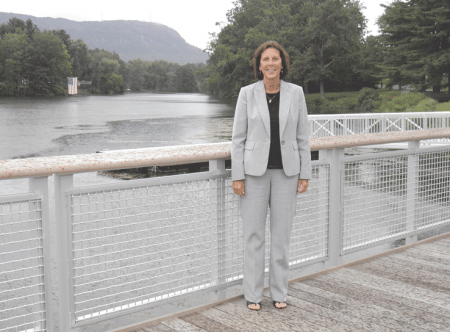
Mayor Karen Cadieux

Mayor Karen Cadieux says Easthampton has witnessed an exciting year marked by constant buildouts and growth.

The view from Mayor Karen Cadieux’s Easthampton office is stunning.

Sunshine glints off of the serene waters of the newly opened Nashawannuk Pond Promenade Park, and the boardwalk that spans it is busy.

“The park was planned to become a destination; it’s located right in the heart of our cultural district, and it’s booming,” Cadieux told BusinessWest. “Every day, people stroll along the boardwalk, sit and relax on the benches, do yoga, fish from one of the three handicapped-accesible boat ramps, or launch their boats. Families have been bringing their children to the park … it has something for everyone and offers enjoyment for all walks of life.”

The $945,000 park project is just one of many developments completed over the past year. They range from new housing for people at all income levels to infrastructure and interior improvements in the city’s old mill buildings — which have made those spaces more attractive to businesses — to the continued growth of the creative economy, which is thriving.

In fact, the ribbon-cutting ceremony for Nashawannuck Pond Promenade Park was staged June 13 in conjunction with the start of the second annual Cottage Street Cultural Chaos festival. “Thousands of people attended, and it was wonderful; there were vendor booths as well as music and performers,” said Moe Belliveau, executive director of the Greater Easthampton Chamber of Commerce.

She added that the new boardwalk is beneficial to nearby shops and businesses, which include the downtown area and the thriving Cottage Street Cultural District, which is populated by artists, galleries, gift shops, and restaurants.

“The Promenade project has increased foot traffic downtown, which is wildly important. The businesses there have done well, but now people are on the boardwalk all the time. They walk along eating ice cream from Mount Tom’s on Cottage Street and holding bags with items purchased from nearby stores,” Bellieveau noted, adding that a new restaurant known as Bliss Café, whose menu includes vegetarian and vegan options, opened at 42 Cottage St. last month.

An $18 million development has also been completed across the street from the park. The historic, 125,000-square-foot Dye Works factory, which closed in 2005, has been turned into Cottage Street Apartments. Cadieux said the project involved a complete renovation of the brick structure into 50 affordable-housing units, which were immediately occupied after it opened in May.

“More than 250 people applied, so there is a long waiting list,” she said. In addition, construction on a brand-new, six-building, affordable apartment complex called Parsons Village, which came about thanks to Valley Community Development Corp., had just been finished, and people began moving into the units at the beginning of the month.

“Another very exciting development has taken place across the street from Parsons Village,” Cadieux continued. “The former Parsons Street School that was surplused by the school department in 2013, has been turned into a luxury apartment complex called Parsons Place.”

The building was purchased by developer Kevin Perrier, president of Five Star Building Corp., which served as general contractor for the project, and the city was paid all the back taxes owed on it. “It contains 16 high-end units, and the entire top floor is a penthouse that rents for $3,500 a month,” Cadieux said, adding that every apartment contains stainless-steel appliances, mahogany flooring, tiled bathrooms, 12-foot ceilings, and central air conditioning.

New developments are also brewing in Easthampton’s old mills. This year the city was feted with an award for the Best Tasting Drinking Water in the U.S. by the National Rural Water Assoc. in Washington, D.C., and beer makers are taking advantage of it.

“We have two breweries in the Pleasant Street mills,” said Cadieux. “Abandoned Building Brewery opened last year, and New City Brewery is in the process of opening. In addition, Fort Hill Brewery opened in a new, state-of-the-art building last year.”

For this, the latest installment in its Community Spotlight series, BusinessWest looks at the many types of development taking place in Easthampton, and how this former mill town has evolved into a cultural destination.

New Developments

The mayor noted repeatedly that Easthampton has been extremely fortunate in many respects. “It’s been an exciting year because there have been constant buildouts and growth. Businesses want to come here because we’re a thriving community,” she told BusinessWest.

But the economic growth is far more than a simple matter of luck; Cadieux and other town officials have worked hard to promote partnerships that encourage and promote growth.

An example of the communiuty’s success is a collaboration between the city and the owners of all five mills on Pleasant Street. It resulted in the Pleasant Street Mills project, which was funded by three major MassWorks grants.

“It started with work by the city that was done for safety reasons, so our fire department could access the back of the building,” Cadieux said, adding that it quickly morphed into a larger project that is now in its final phase.

The goal is to connect three of the revitalized, 19th-century brick mill buildings and create a main public entryway behind them. “The design includes a landscaped parking lot with new lighting and ties the back of the mills to the Manhan Rail Trail and Lower Mill Pond,” the mayor explained.

She added that the city purposely zoned its old mills for mixed use and worked closely with the Pleasant Street owners, who spent a significant amount of money upgrading their interior space. As a result of the magnitude of the project, Eversource (formerly WMECO) upgraded the electric lines going into the buildings.

“It’s something they had not planned to do for 10 years, but they were inspired by the project and the fact that the mill owners invested money to do renovation at the same time,” Cadieux explained.

Belliveau said the three-stage MassWorks project will bring even more vitality to the town. “It’s a storybook partnership and has spurred a lot of private reinvestment by the mill owners, which is key to renting available space,” she noted. “There’s a tremendous amount of energy and synergy in Easthampton, and a lot of growth and renaissance going on.”

Cadieux said the Pleasant Street mills are doing well, housing art galleries, hair salons, restaurants, and beautiful apartments. “And the Conway School of Landscaping opened a new facility in Mill 180 this month,” she added.

The creative-arts community is also growing, and the lobby of the historic Old Town Hall on 43 Main St., which has become a center for Easthampton’s arts organizations, underwent a major renovation that was completed last month.

CitySpace Inc., a nonprofit that maintains the building as a center for the arts, received a $133,000 tourism grant to do the work, and the City Council approved an additional $256,000 of Community Preservation Act funds for the project. “There are new doors, refurbished floors, new lighting that goes up the stairs, and more,” Cadieux said.

An August ribbon cutting for the entranceway was staged during Easthampton’s monthly Artwalk, which has been highly successful and draws people from many communities, said the mayor, adding that the city is also actively seeking grants to renovate the second floor of the building, which would be used to host theater groups and other functions. At present, it is not handicapped-accessible.

She added that the soaring popularity of the town extends to the housing market. “Easthampton has become the place to live, and in some neighborhoods, where the houses are priced in the $200,000 range, they have been selling in two days,” the mayor said, noting that three homes in her neighborhood took deposits for full-price offers recently on the same day. She attributes it to the city’s low tax rate, vibrant downtown, and Easthampton’s new, $40 million high school, which just received a Level I rating.

“The students moved in two years ago, but we just closed out the project this year,” she explained.

Belliveau said the Chamber of Commerce also established new programs and partnerships during the past year, along with new events, such as the day-long 2015 Checkpoint Legislative Summit, which will be held for the first time in Easthampton on Nov. 4 in collaboration with other chambers.

In addition, a partnership was formed with Williston Northampton School, and a chamber breakfast was held there in June featuring a speaker. “It was such a success that it will become an annual event with different speakers,” she told BusinessWest.

The chamber’s first Beach Ball was also held recently at the Oxbow Marina. The summer event was created to mirror the successful winter Snowball, with its silent and live auction, dinner, and dancing, said Belliveau, adding that the city also partnered with the Greater Holyoke Chamber and staged a legislative luncheon with that body in April.

Moving Forward

Belliveau told BusinessWest that Easthampton is thriving. “This is a community that really loves who and what it’s become, and it’s an exciting time.”

Cadieux agreed. “We’ve had a lot going on in the past year. We’re vibrant, but we are still growing and want to remain attractive to new businesses.

“There is still space available in the mills, available land zoned for highway business along Route 10, or Northampton Street, and a blighted building on 1 Ferry St. for sale,” the mayor continued. “We’re striving to keep our diversity so there is something for everyone here. It’s the key to our success.”

Easthampton at a glance

Year Incorporated: 1809
Population: 16,036
Area: 13.6 square miles
County: Hampshire
Residential Tax Rate: $15.15
Commercial Tax Rate: $15.15
Median Household Income: $57,134
Family Household Income: $78,281
Type of government: Mayor, City Council
Largest employers: Berry Plastics; Williston Northampton School; Argotec
* Latest information available

Features

Making It Happen

The final countdown is underway.

Indeed, the fifth annual Western Mass. Business Expo is now a month away, and the final details are falling into place. The show, which will showcase more than 150 area businesses and feature more than eight hours of programs that will be informative, educational, and inspirational, will bring together popular elements from Expos past, and introduce some new ones.

“Since we started the show in 2011, one of the slogans we’ve used to promote it has been, ‘why would you be anywhere else?,’” said Kate Campiti, BusinessWest’s associate publisher and sales manager. “And that’s especially true this year. On November fourth, the MassMutual Center is the only place you’d want to be.”

WMBExpo 2015 LOGOIf you were anywhere else, you’d miss what promises to be an enlightening and entertaining start to the day at the Springfield Regional Chamber’s October breakfast. It will feature Dan Kenary, CEO and co-founder of Harpoon Brewery, in a “casual conversation” with BusinessWest Editor George O’Brien. Kenary will also take questions from the audience.

If you were elsewhere, you would miss a timely and thought-provoking talk by Alison Lands, senior manager in Deloitte’s Strategy & Operations practice. She served as a co-author and editor of the New England Council and Deloitte’s recently published report, “Advanced to Advantageous: The Case for New England’s Manufacturing Revolution,” which will form the basis of her talk at a lunch hosted by the Professional Women’s Chamber.

If you were anywhere else, you couldn’t take in any of the 16 educational seminars scheduled on four tracks: Sales & Marketing, Workforce Development, Entrepreneurship, and ‘Hottest Trends.’ The 45-minute talks, scheduled throughout the day, include “Building a Pipeline of Sales Opportunity,” “Inside Tech Foundry: Workforce in Progress,” “Bullying in the Workplace,” “How to Work with Humans: Harnessing the Power of Employees,” “Securing Your Business from White-collar Crime,” “7 Essential Elements of a Successful Business,” and much more.

And if you happened to be elsewhere, you’d miss a number of special features and programs; the return of last year’s highly successful Retail Corridor; the ever-popular Pitch Contest staged by Valley Venture Mentors; a Healthcare Corridor; a robotics demonstration by students at regional schools, including Pathfinder Regional High School; a Technology Corridor; the day-capping Expo Social (one of the best networking events of the year); and much more.

Comprehensive details of the show and a map of the show floor will be presented in a special Expo Preview to appear in the Oct. 19 issue of BusinessWest, and also in a special Show Guide to be inserted into the Nov. 2 issue of the magazine and distributed at the Expo itself.

The Expo will again be presented by Comcast Business, which has been the show’s lead sponsor since BusinessWest began producing it in 2011. Director-level sponsors are Health New England, Johnson & Hill Staffing Services, MGM Springfield, and Wild Apple Design Group. The Isenberg School of Management at UMass Amherst is the education sponsor, and 94.7 WMAS is the media sponsor.

Fast Facts

What: The Western Mass. Business Expo
When: Nov. 4
Where: The MassMutual Center, Springfield
Events and Activities: Breakfast hosted by the Springfield Regional Chamber, featuring Dan Kenary, CEO and co-founder of Boston-based Harpoon Brewery; lunch hosted by the Professional Women’s Chamber; Show Floor Theater presentations; informational seminars; Pitch Contest; matchmaking opportunities; robotics displays; Business Support Center hosted by the Economic Develoment Council of Western Massachusetts; and more.
Exhibitor Information: 10’ x 10’ booths from $750.
For More Information: Call (413) 781-8600, or go to www.wmbexpo.com

Autos Sections

Full Speed Ahead

AutoSalesARTdpAs the calendar cruises into October, area auto dealers report that they are well on their way to a banner year. A combination of factors — from a need to replace aging cars to lower gas prices to an improved economy — are fueling solid sales across virtually all classes of vehicles. And as the final quarter commences, dealers are keeping their foot on the gas when it comes to programs and incentives to drive more purchases and leases.

Jay Dillon called it the “perfect storm.”

But instead of a maelstrom of events leading to a disastrous outcome, the co-owner and dealer operator for Dillon Chevrolet in Greenfield was referring to a strong and rising gale that is driving new-car sales in the region and across the country.

Local dealers say their numbers have exceeded January forecasts by industry leaders, who predicted an increase of 3% and a rise in sales for the sixth year in a row, which would translate to 17 million new vehicles, a figure that hasn’t been seen since 2005.

And even though many people stayed inside last winter due to the bitter cold and record snowfalls, pent-up demand resulted in what Dillon called an “amazing” spring.

“Every day when we opened our doors, there were people waiting to come in,” he told BusinessWest.

Other major dealerships also reported healthy spring and summer sales, and as to that storm, well, it resulted from a convergence of conditions related to the economic climate. People held onto their cars during the downturn in the economy, so the average auto on the road today is 10 or 11 years old, which means its useful life is coming to an end. Meanwhile, gas prices have dropped significantly, while consumer confidence has risen and manufacturers have become aggressive in their competitive quest to attract buyers, offering incentives that range from cash back to 0% interest on many makes and models. In addition, buyers are enticed by advances in safety, design, and technology.

“People have been able to keep their cars longer because they are much more reliable than they were in the past,” said Bill Peffer, president and chief operating officer at Balise Motor Sales. “Quality has become a commodity, but eventually they have to be traded in, and everyone in the industry has benefit1ed from this factor. Buyers also have more choices than ever before.

“The biggest segment of growth is in crossovers; they have great fuel economy and the capability of a truck, but are more compact,” he went on. “Manufacturers continue to build new products that give people compelling reasons to purchase a vehicle, and overall, our sales have exceeded our expectations; they are equal to or greater than those in the general market.”

TommyCar Auto Group is also doing well. “Our sales are up over last year by quite a bit in every store, especially Hyundai,” said President Carla Cosenzi, adding that small crossover vehicles such as the Nissan Rogue and Hyundai Tucson have become big sellers, and she expects sales to remain high through the end of the year.

Carla Cosenzi

Carla Cosenzi says TommyCar Auto Group is planning major promotions to ensure that solid sales continue throughout the fall.

“Although we expected an increase, we kept our projections conservative, but we have definitely outsold what we anticipated, and are looking forward to a really strong end of the month in September, October, and November,” she said. “A lot of people are beginning to think about the weather. As we head toward winter, they want to make sure they are in a safe, reliable car, and we will have great offers that should make a difference in our year-end sales. We have two major promotions that will start in October and run until January. We have revamped our strategy and are excited to roll it out.”

However, local dealers differ in their tactics to attract buyers and retain customers, so for this edition and its focus on auto sales, BusinessWest explores the strategies that help fuel sales.

Tried and True Methods

Cosenzi said TommyCar’s three dealerships each gave away a brand-new car in recent weeks — a Volkswagen Passat, a Hyundai Accent, and a Nissan Versa.

Advertising for the promotional event kicked off at the beginning of the summer, which increased volume during the busiest time of year. “It drove a lot of traffic,” she said, adding that many people who entered the drawing decided to test-drive a vehicle, and the 0% financing offered by Hyundai and Nissan on leases propelled sales higher.

It’s not the first time TommyCar has given away new automobiles; in the past it staged a jingle contest and a TV-commercial contest, and the winners drove home new vehicles. But it never had a contest people could enter simply by showing up and dropping an entry form in a bucket.

“Our customers couldn’t believe it, and three happy people went home with new cars. Two had shopped us before, one was waiting to buy until she saw if she had won, and the other had recently purchased a car from us,” said Cosenzi, adding that “a really aggressive plan for the coming months should make 2015 the strongest and best year we have had in some time.”

The deals are sweetened across the board right now, however, thanks to the ‘summer selldown’ events taking place at every dealership. The 2016 models are rolling in, and spokespeople say manufacturers are offering special incentives to clear out the 2015 editions.

“It’s a time of year when people can get a really great price on a new vehicle,” said Dillon.

Peffer agreed. “Although new models are launched throughout the year, manufacturers typically offer aggressive incentives in the fall before the majority of new vehicles arrive, so we create a market,” he explained. “We’re motivated to sell all of our 2015 models before Jan. 1, when they automatically become a year older.”

Again, one of the factors in that perfect storm Jay Dillon referred to plays heavily into the stream of buyers seeking a good deal: the age of the average vehicle on the road, which is around 10 years. “Many people are facing the situation of having to repair or replace their vehicle due to its mechanical issues and high mileage. The entire industry is benefiting from this; it’s a wave we’re riding right now,” Dillon said.

Tom Dillon, co-owner and general manager of Dillon Chevrolet, said many people bring their older car into his dealership for service, and when they find out what it needs in terms of repairs, they are driven to purchase a new one. In the majority of cases, that purchase is at Dillon Chevrolet.

“We’re big on retention and people return to us because they have gotten good service. My father opened this business in 1962 and always said, ‘the sweet taste of a good deal is quickly soured by bad service,” he said, explaining why exceptional service has always been one of the dealership’s priorities.

Tom and Jay Dillon

Tom and Jay Dillon say most 2015 Chevy products are equipped with 4G LTE wi-fi hotspots, which make them particularly attractive to young buyers.

“Three-quarters of our sales are repeat customers. We’re hands-on owners who are here every day, and if someone has an urgent problem, we accommodate them immediately. We are a small town and are selling to our friends and neighbors,” Jay Dillon noted, adding that they discount vehicles beyond manufacturer’s rebates, and most customers spend less than an hour completing a sale.

It’s that same loyalty that Balise relies on to spur sales.

“We offer state-of-the-art facilities and low prices,” Peffer said. “We’re a large dealer group, and we’re consistent with our advertising, which is based on our great selection, facilities, and the fact that we treat our customers right. We generate trust and do an excellent job of staying connected to our customer base.

“Our focus is on retention, so our strategy is to develop a long-term relationship with our customers. And we have so many brands that we can offer a solution to anyone’s driving,” he continued, remarking that, although sales at all of the company’s dealerships are growing at a fairly consistent rate, Balise Subaru in Rhode Island is doing exceptionally well. “But we want people to think of Balise first, before they think of any type of vehicle.”

Attractive Options

Special promotions, such as the free cars TommyCar Auto Group gave away a few weeks ago, increased the number of visitors to the group’s dealerships. “We welcome people into our showrooms, and after they see the amenities we offer and meet our staff, they often buy a car,” Cosenzi said.

But other things attract buyers as well, and Tom Dillon says General Motors’ 2016 products will be game changers for the industry and his family dealership.

Bill Peffer

Bill Peffer says sales have been robust at Balise Auto Sales, and he expects the upward trend to continue into 2016.

“The all new Chevy Malibu is a big player in the mid-size segment; it’s a hybrid with a turbo engine that gets 47 miles per gallon. And the 2016 Chevy Cruze has been redesigned; it gets 42 miles per gallon, is safer, more efficent, and has 10 airbags,” he told BusinessWest. “There is also a new Camaro coming out that is lighter and has more horsepower and better handling. And every GM car will have 4G LTE.

“GM is the only one with 4G in all their new products, and we’re seeing more and more young people in our brand because of the technology — it gives us a competitive edge,” he continued, adding that manufacturers constantly make changes, but complete redesigns of a multitude of vehicles like this take place only every eight or nine years. “The Equinox will also be all-new, and demand will be high.”

Peffer agrees that technological advances are effective lures. “The new-car experience is exciting because of rapid changes in products, style, technology, and performance,” he said. “More and more cars are equipped with parking assist and lane departure, which started in Lexus. It allows the vehicle to sense if another automobile is in the blind spot, and warns the driver with a beep or a light. Back-up cameras, which offer a 360-degree, bird’s-eye view of what is in every direction, didn’t exist a few years ago, and some are in entry-level products, including most, if not all, Hondas. There are also cars with wi-fi hotspots that allow passengers to connect to the Internet in real time. Competitiveness in the industry has led to more choices for consumers than ever before.”

Leasing is another sales avenue on the rise because these vehicles are under factory warranty, payments are low, and regular maintenance is the only out-of-pocket expense.

“People see advertisements for payments on a brand-new car that are less than they are paying for an older vehicle, which entices them to visit the dealership,” Cosenzi said, adding that the value of trade-ins get worked into the deals.

Racing Ahead

New auto sales plummeted in 2008 due to the downturn in the economy and the fact that gas prices reached $4.25 a gallon. Those factors affected all dealers as well as a multitude of other industries, but fast-forward to 2015, and it’s an entirely different market.

“Our sales were up by 20% in the first six months of this year, and we have already approached our 2007 numbers,” said Tom Dillon. “We’re expecting that 2015 should be the biggest year ever for the entire auto industry.”

Peffer expects sales at Balise’s 13 dealerships to continue to be robust through the end of the calendar year and into 2016, due to manufacturer’s promotions and the aforementioned economy-related conditions that are inspiring people to get behind the wheel of a new car.

“For anyone considering buying a new vehicle,” he concluded, “it’s a great time to buy.”

Autos Sections

Measures of Control

Brian Farnsworth

Brian Farnsworth says all-wheel drive is appealing because drivers don’t have to think about turning it on and off.

Though casual car shoppers may speak of four-wheel drive and all-wheel drive as if they’re interchangeable, that’s far from the truth, Damon Cartelli says. Which system is preferable comes down to how that vehicle will be used.

“Any time you have an option that adds security — that allows people to drive to their destination with a little more security than in a traditional front-wheel-drive vehicle — people want that,” said Cartelli, president of the local Fathers & Sons chain of auto dealerships.

But while four-wheel drive dominated the market for a long time, all-wheel drive has long been recognized as the superior option for driving in inclement weather — including those snowy and icy days of a typical Massachusetts winter.

“With four-wheel drive,” Cartelli said, “each tire receives 25% of the vehicle’s power at all times. So, while a rear-wheel drive car gets 50% in each of the two rear wheels, with four-wheel drive, the power is broken down evenly between right front, right rear, left front, and left rear.

“The difference with all-wheel drive is, the system has the capability of transferring power to the wheels that are gripping, based on sensors detecting which wheels have lost traction,” he continued. “The result is better traction in wet or inclement weather — or any weather, for that matter.”

Cartelli said Audi was a pioneer of all-wheel drive back in the 1980s with its Quattro system, which helped it dominate rally racing for a decade. “Audi was eventually banned from this race circuit because the Quattro system gave them an unfair advantage against rear-wheel-drive cars.”

Today, he noted, all-wheel drive is a selling point in a wide range of cars for drivers who want stability in any weather condition.

“If you’re not buying a truck, you’re looking for classic all-wheel drive, and you don’t have to worry about anything. You get in and do your thing,” added Brian Farnsworth, a sales consultant with Marcotte Ford in Holyoke, which features four-wheel drive in Ford trucks and larger SUVs, like the Expedition, but all-wheel drive in cars and smaller SUVs.

“The main thing with all-wheel drive is, there’s no user input. You don’t have to select it; it’s always monitoring road conditions and what you’re doing, whether that’s steering, braking, or accelerating,” Farnsworth noted.

The latest all-wheel-drive systems use high-tech software and wheel sensors to detect wheel slippage more quickly than ever before, then react by activating traction control to reduce that slippage while rerouting engine torque to the wheel with the best grip on the road — as opposed to the evenly divided torque of four-wheel drive.

“It may sense when you’re taking a corner too quickly and transfer power to the wheels that are getting the grip,” Farnsworth said. “In that scenario — in any scenario, whether it’s hitting ice, sand, whatever — it senses spin in milliseconds, sometimes correcting it so that it doesn’t happen in the first place. Same thing when you take an off ramp too quickly, things like that.”

It also automatically reverts to two-wheel drive when cruising on the highway to improve fuel economy, he added.

“Four-wheel drive is a lot more heavy-duty, more work-oriented, for things like towing a boat out of the water, towing up a grade, things like that,” he went on. “It can’t be used on dry pavement, so if you take that off ramp too quickly, it doesn’t help you.”

Pros and Cons

In short, dealers say, the choice often comes down to how much off-roading a driver expects to do.

Four-wheel drive, they note, provides added traction when needed and is generally less expensive than all-wheel drive because it’s based on simpler technology. And, of course, it’s the preferred system for difficult terrain.

However, it doesn’t provide extra traction and better handling in everyday driving situations — but drivers often believe it does, leading some to take more chances on the road. The driver also has to actively turn four-wheel drive on and remember to turn it off afterward to prevent draining fuel economy.

On the other hand, all-wheel drive increases grip and control under any condition and works all the time. While it can’t match the levels of traction in low-speed off-roading that traditional four-wheel-drive systems provide, all-wheel drive does pose some clear advantages, notes Peter Braun at digitaltrends.com.

“In the sort of winter road conditions that most drivers experience, it’s nice to have a drivetrain, like a modern AWD system, that responds instantly without the driver having to toggle any switches,” he writes. “In addition, most vehicles featuring AWD tend to have better weight distribution, which also aids in traction.”

For many drivers, he added, particularly those down south who rarely experience wintry driving conditions, basic front- or rear-wheel drive is fine. Still, many drivers value the added level of comfort and peace of mind an all-wheel-drive system provides.

Farnsworth said Ford, like other car makers, has incorporated a number of different all-wheel-drive systems that shift power around in different ways, but one thing they all have in common is the ability to operate without any user input or thought, and then switch back off under normal conditions. “It’s always on when you need it most, but always trying to save you gas when you don’t.”

That does not, however, free drivers from basic common sense when operating in wintry weather, like speeding down hills during snowstorms.

“Some people think they’re invincible. They think if they’re going down a hill and hit ice, they’ll be fine because of their four-wheel or all-wheel drive,” he explained. “But it only helps you get going. It doesn’t help you stop.”

It’s also no substitute for tires that have proper tread, Farnsworth added. “It really all comes down to this: no matter what kind of drive train you have, your tires are the most important thing. The fanciest all-wheel drive in the world is not going to help you if your tires are bad. It’s just simple common sense. It’s constantly monitoring slippage, but if nothing’s getting a grip, if the tires aren’t catching, you’re not going anywhere.”

That’s a common refrain in the industry, even among those who sing the praises of all-wheel and four-wheel drive.

“You can’t put a price on safety, but shelling out [for all-wheel drive] isn’t a get-out-of-a-ditch-free card either,” writes Ben Bowers at gearpatrol.com. “No matter what you wind up picking, our advice is to study up on good winter driving skills, focus on regular maintenance, and work on improving your decision making behind the wheel first. After all, at the end of the day, it’s the man behind the machine, not the other way around.”

Peace of Mind

Even today’s front-wheel-drive vehicles handle well in wet or snowy weather as long as they’re fitted with the proper seasonal tires and the driver is careful, Cartelli said. But for people who don’t have the option of staying home from work during those New England snowstorms — doctors and nurses, for example — all-wheel drive brings an added layer of comfort. “If you have to be somewhere no matter what, all-wheel drive with the right tires will get you there.”

No matter how they use their vehicles, Farnsworth added, purchasing drive-train options beyond front- or rear-wheel drive is an investment worth making, if only for the peace of mind.

“All the new SUVs drive much like cars; the all-wheel-drive systems are not as bulky, so they don’t drive like a truck,” he said, adding that many drivers come to take the systems for granted — until it’s time to buy a new vehicle. “When they come in, it’s the first thing out of their mouth: ‘I need that all-wheel drive.’ It makes them feel safer; it’s definitely a security blanket for them.”

Joseph Bednar can be reached at [email protected]

Autos Sections

It’s a Pink Party

By any measure, Sandy Cassanelli is living the American success story at a young age, raising two daughters and serving as CEO of Greenough Packaging in West Springfield, the business she co-owns with her husband, Craig.

But she also understands that youth is no guarantee against cancer.

Cassanelli was diagnosed with stage-3 breast cancer in 2013, at age 37, well before women typically start regular mammograms. After a tough fight that included a bilateral mastectomy, eight rounds of chemotherapy, and 28 days of radiation, doctors told her she was cured.

“I was fine for about two years,” she told BusinessWest. “Then, in April of this year, they told me my breast cancer had spread to my liver.”

It was a devastating blow, because, as she explained, once cancer metastasizes into other parts of the body, “you’re never cured. You can be treated, but not cured. I’m lucky enough to be at Dana Farber right now, being treated with a new medicine that was a trial and was recently approved by the FDA, in hopes it won’t metastasize further and spread to other parts of the body.”

Throughout her cancer fight, Cassanelli forged a bond with representatives of the Massachusetts and Connecticut chapters of Susan G. Komen for the Cure, a nonprofit organization dedicated to fighting breast cancer. Impressed by the charity and its assurance that all money raised locally stays local, she wanted to do something to boost its profile. So, with the help of the Fathers & Sons auto group and Max Catering & Events, she’s throwing a party.

The purpose of the “Pink Party” — to be held Thursday, Oct. 15 from 5 to 7 p.m. at the Fathers & Sons dealership at 989 Memorial Ave. in West Springfield — is to raise awareness of the mission of the Massachusetts affiliate of Susan G. Komen for the Cure and to raise funds to support the local fight against breast cancer.

There is no cost for admission, but donations are appreciated. Cocktails and hors d’ouevres will be provided by Max Catering and Events. Silent-auction items include Patriots tickets with club-level seating and premium parking. Guests are encouraged to wear pink in support of those fighting breast cancer. Anyone wishing to attend should RSVP to Cassanelli at [email protected]. Those who cannot attend but wish to donate to the cause may do so at www.komenmass.org.

The Massachusetts affiliate of Susan G. Komen for the Cure (Komen Mass) works with, and on behalf of, breast-cancer survivors and those who support them in local communities. The organization is dedicated to protecting the most vulnerable residents in Massachusetts from the impacts of breast cancer, particularly those who face barriers to care. Komen Mass sponsors various fund-raising events, including the Race for the Cure, and is a resource for information and education on breast health throughout the Commonwealth.

Cassanelli said she had met Fathers & Sons President Damon Cartelli at Komen events and was pleased that he offered to host the Pink Party. “We want to raise awareness of what Komen does for the people of Massachusetts, and encourage people to get their mammograms early,” she added. “Really, early detection is key, and we want to get the word out.”

Massachusetts has the second-highest incidence of breast cancer in the U.S. This year alone, more than 5,000 Massachusetts residents will be diagnosed with breast cancer. Seventy-five percent of funds raised by Komen Mass are invested back into Bay State communities through local grants that provide education, screening, and treatment services. The remaining 25% is invested into life-saving research.

To date, Komen Mass has invested over $68 million in Massachusetts-based organizations and an additional $26 million in research in the Commonwealth, and has contributed to numerous breast-cancer research breakthroughs over the past 30 years.

Cassanelli’s voice broke a little bit as she expressed hope that research funded by Komen and others may pave the way for a cure, and that she will be able to watch her daughters grow up. “People don’t realize this does affect young people. But it can happen to anybody.”

Joseph Bednar can be reached at [email protected]

Law Sections

Let’s Talk

WeddingDivorceARTdp

Couples who decide to end their marriage are often dealing with the most upsetting, stressful time of their lives, and the prospect of fighting tooth and nail in court to decide issues like child custody, visitation, and finances only piles on the emotional trauma. That’s why divorce mediation — a less costly, less stressful alternative to a contested divorce — is gaining in popularity. It’s a process that doesn’t deal in who’s right or wrong, but allows two people to take control of a bad situation and talk it out — often for the first time in years.

Divorce is difficult — perhaps the roughest, most emotionally draining experience of a person’s life.

So why, Michael Frazee asks, would a couple want to make it even harder?

“The court system already struggles to problem-solve in divorce, and then they add regulations, they add rules, and they add requirements to each divorce without regard for the actual needs of the parties, and especially the needs of the children,” said Frazee, a family-law attorney who practices with Divorce Mediation Group in Springfield.

“Mediation doesn’t impose any template on any case because every family situation is different,” he went on. “We help them navigate the divorce process by applying creative problem solving. Really, we help people come to their own solutions, as opposed to imposing a boilerplate approach on them, which is what the court system does.”

In other words, he told BusinessWest, while the litigated divorce process has only become thornier to people already going through a tough time, “we live in solutions; we don’t live in problems.”

Increasingly, divorcing couples are taking notice, and the field of mediation has experienced an uptick in recent years even as the divorce rate has quietly crept down.

“The goal is to have a more respectful, less expensive process — both emotionally and financially — while trying to resolve issues of divorce or dissolution of marriage,” said attorney Julie Dialessi-Lafley, who counts divorce mediation among her practice areas at Bacon Wilson in Springfield. “That can include child-custody issues, who pays for college education, uninsured medical expenses … anything the parties might disagree on. In mediation, it’s supposed to be a non-litigious setting with a neutral mediator, who tries to help the parties come to their own agreements and resolution.”

At its heart, the process is all about control, she explained.

“Mediation differs from litigation in the sense that the parties craft their own settlement; they’re advocating for themselves,” she said, noting that, while the couple may occasionally retain attorneys, they don’t control the process for the two parties. “The mediator’s role is really as a facilitator. The goal is to get them to an agreement. Judges don’t want to make this decision. A judge will say, ‘I’ll decide this, but at the end of the day, you’re in the best place to know what’s in your best interest and your children’s best interest; you know more about your life than I do.’”

For this issue’s focus on law, BusinessWest examines the process of divorce mediation, and — considering the financial and emotional benefits — asks the question, why would a couple not choose mediation?

Give and Take

As it turns out, there are several answers to that question.

“I think some people have the perception that their spouse will not engage in a cooperative process, and some feel like they need the additional strength of having a laywer to rely upon,” said Bruce Clarkin, who launched Divorce Mediation Group in 1989. “But the people we see are so relieved to have a solution to the biggest problem they ever face in their life; I think it motivates them to work really hard to get a solution.”

And they’re doing so at a much lower cost than paying two attorneys to fight out every issue in court.

Julie Dialessi-Lafley

Julie Dialessi-Lafley says the cost of mediation — both financial and emotional — is typically far less than in a litigated divorce.

“At a time when the legal cost of divorce is exploding exponentially, the costs of a mediated divorce remain pretty stable and predictable,” Clarkin said. “We can predict at the outset what mediation is going to cost about 80% of the time, and the typical cost is between $1,500 and $2,000.

“The reason the cost is so low is the process is so efficient,” he went on. “It’s very problem-solving-oriented. You learn how your clients see the future and try to help them achieve that goal. Meanwhile, litigation has only become more expensive and is often so unsatisfactory.”

Frazee agreed, adding that it’s mainly a lack of awareness about the mediation process that holds some couples back. “It’s a cooperative, collaborative process. And, again, when you consider the expense of litigated divorce versus the expense of a contested divorce, why wouldn’t someone at least try it? We do a free consultation, and the vast majority of people who meet with us come to understand what the process is, and want to engage in the process right away.”

He added that some 80% of all litigated divorces wind up back in court for some tangential issue. “Whereas, with a mediated divorce, you’re rarely back in court. You’ve already set yourself, as a divorcing couple, on a path to better parenting and better communication, as opposed to being adversaries in the court system.”

Dialessi-Lafley says the overwhelming majority of clients are positive about forging an agreement they can both live with. One exception would be couples with serious, closeted issues involving each other or their children that need to be worked out in therapy before they can work on their divorce agreement.

“We’re definitely not therapists,” Dialessi-Lafley said, but the training necessary to be certified as a divorce mediator emphasizes getting divorcing couples to communicate more effectively — perhaps more than they have in years.

“In all these years,” she said, thinking back over 19 years in practice, “the common thread in every divorce is lack of communication. They don’t communicate about intimate issues, child issues, financial issues … whatever the issue is, communication is the problem.”

Agreeing to mediation, she went on, is basically an agreement to communicate — to be willing to talk and listen in equal measure.

“There’s no blame here. It’s more, ‘let’s see if you can actually hear each other,’” she told BusinessWest. “I have had parties who would run each other over in the street if given the chance. When they come in, they’re angry and tense and negative about the process. But if they’re willing to try it, and you can get them to open up, it’s a start.”

Some couples require what she called ‘shuttling’ at first, putting them in separate rooms initially and talking with them one on one. Often, they eventually wind up in the same room, talking.

As for couples who choose litigation, “they may not know about mediation or understand it,” Dialessi-Lafley went on. “Or, very commonly, one party may have a stronger personality, and the other thinks, ‘I won’t be able to advocate for myself and say what I need to say.’ One party may be worried they’ll give up more than they should.”

However, she added, “the goal is to get to a resolution, and the process itself is designed to keep the parties respectful of each other — I wouldn’t use the word ‘amicable,’ but at least able to have less tension and less consternation between them.”

Building Trust

Alison Patton, a family lawyer and mediator who blogs at lemonadedivorce.com, said the ideal mediator, first and foremost, listens intently and asks questions not for the purpose of deciding who’s right or wrong, but to better understand two people who are seeking to resolve some very challenging issues.

“When your mediator is listening, validating, and empathizing with your spouse, this is a good thing,” Patton writes. “It may not feel good; it may bring up the ‘not true! What about me!’ feelings typical of what one feels in mediation when the other person is getting to talk.

“But know that your mediator’s focus on your spouse is intentional and necessary to get your case to a settlement,” she continues. “It doesn’t mean your mediator is taking sides or agreeing with what your spouse is saying. It doesn’t mean your mediator likes your spouse more or that he doesn’t believe your version of the facts. You have a good mediator if he is intently listening and nodding his head and asking your spouse clarifying questions and summarizing what your spouse said (as long as you get your turn too).”

Frazee agreed. “Being an active listener is imperative as a mediator, and guiding the discussion — and note that I didn’t say controlling the discussion.”

Clarkin went a step beyond that and said the mediator’s role is one of leadership, which includes getting both parties to totally buy into the process and have confidence that he is neutral. “Some people come here and fight like cats and dogs, and we’re trained to deal with that. But even then, when clients have confidence in the process, it most often works out in their favor.”

Bruce Clarkin, left, and Michael Frazee

Bruce Clarkin, left, and Michael Frazee say a good mediator shows the kind of leadership that breeds confidence in his or her neutrality.

It helps, Frazee added, that anything said to a mediator is completely private and confidential and, importantly, inadmissible in court on the rare occasions the couple can’t work out their own solution and opt for litigation. Those who come to recognize the mediation room as a safe space often surprise themselves, and their partners, with their candor.

“Honestly, a lot of people say things to each other that could have been said — and should have been said — years before they sat down with us,” he went on. “That sort of openness — especially between parents — is critical to the success of the process. I agree that the mediator leads in the sense of guiding the dialogue between the parties, but the goal is always working toward a resolution of the issue.”

That said, Clarkin added, “I don’t inquire about what went wrong in the marriage. I always see that as information that belongs to clients, and most of the time, it’s not helpful for me to hear it.”

A Few Clicks Away

What has been helpful for practitioners of divorce mediation, Clarkin told BusinessWest, has been the tendency of consumers to research what they plan to purchase on the Internet — a trend that affects everything from car sales to travel bookings to … divorce.

“Mediation is coming of age at the same time the Internet is becoming the default resource for the middle-class consumer,” Clarkin said. “Years ago, when someone was on the cusp of divorce, they asked their brother-in-law what lawyer they should call; now, when a divorce is on the horizon, they go to the Internet. It’s self-determination; people are making decisions before they even call. And by the time people get through using the Internet to research this, they’ve already made a decision whether mediation is likely to work for them. It’s really changed the landscape in a huge way.”

In some cases, Frazee said, “we see people who have already started charting an agreement and want to make sure their agreement will be approved by the court. They’re not coming to us for verification, necessarily, but a lot of them understand what the process is and have already started framing some areas of agreement and disagreement.”

In other words, they’re taking control. “If the same people go to the court system, they have a template and expenses imposed on them.”

That matter of control, for couples who can bring themselves to talk rationally with each other, is a major benefit of mediation, Dialessi-Lafley said. After all, the issues involved in divorce are wide-ranging and can impact families for decades. “And you can’t quantify the emotional impact of a litigated divorce.”

A contested divorce is also subject to the scheduling whims of the court, whereas a couple in mediation agrees to their own schedule and timeline, which peels back another layer of stress, Dialessi-Lafley added.

For an increasing number of divorcing couples, just stepping back from the stress of constant fighting and actually trying to communicate makes a lot of sense.

“When I see one spouse listening, validating, asking questions, and empathizing, I don’t assume he or she is agreeing with what is being said or backing down. It means to me that this person is mature and kind enough to honor and respect their spouse’s feelings, in spite of it all,” Patton writes. “Truly, the real secret of divorce mediation is that simple — feeling heard, honored, and respected by the person you loved enough to marry.”

Joseph Bednar can be reached at [email protected]

Law Sections

Do I Need Both Documents to Ensure My Wishes Are Carried Out?

By VALERIE VIGNAUX, Esq.

Remember the Obamacare ‘death panels?’

Valerie Vignaux

Valerie Vignaux

In the months leading to the passage of the Affordable Care Act, Sarah Palin coined that term to describe a provision that allowed Medicare to reimburse doctors for end-of-life discussions with their patients. It was a successful public-relations ploy to turn the American public against the act, painting it as the work of a nefarious bureaucracy out to kill off the old and sick to save a buck.

The offending provision was removed before Congress passed the Affordable Care Act.

The tides have changed. Medicare is soon to announce that end-of-life, or ‘advance-planning,’ conversations will be reimbursed. The proposed regulation was introduced in July of this year by the Centers for Medicare and Medicaid Services and, with little to no opposition, is expected to take effect in January 2016.

What does an advance-planning conversation sound like?

A doctor (or nurse practitioner or physician’s assistant) should get a sense of what her patient’s wishes are regarding resuscitation, intubation, life support, and palliative care. These wishes can then be documented in a medical orders for life-sustaining treatment (MOLST) form. In addition, the medical professional should encourage her patient to consider who can be trusted to make medical decisions in the event the patient is incapacitated.

That trusted individual can be named in a healthcare proxy. Both the MOLST and the healthcare proxy are vital documents, but each involve different aspects of advance planning. Here’s what you need to know.

MOLST

The Massachusetts medical orders for life-sustaining treatment form is a medical document, signed by the patient and a medical professional. This document is similar to a prescription and contains medical orders to withhold or provide various treatments, such as CPR, intubation, and sustained ventilation.

Many people are familiar with DNRs, or do-nor-resuscitate orders. The MOLST is similar but broader, and can include a DNR order. One can have both a DNR and a MOLST, but if a situation calls for resuscitation, the most recently signed form will take precedence. If the emergency requires consideration of other treatments, the MOLST will apply.

This document is often printed on bright pink paper and kept near the individual — on a bedside table or refrigerator, for example — and travels with her, as an alert to emergency responders to follow the medical orders outlined. The MOLST form is not recommended for everyone, but for individuals who have a serious illness or injury, it can offer important protections. Anyone can sign a MOLST; for those patients under age 18, a guardian’s signature is valid.

Healthcare Proxy

A healthcare proxy, by contrast, is a legal document signed by the individual, witnessed, and notarized. This document appoints a healthcare agent — someone the individual trusts to make medical decisions if (and only if) she is incapacitated and unable to make decisions herself.

Many hospitals have basic healthcare proxy forms available for individuals admitted for care. While they can be helpful in some short-term cases, these forms are usually not comprehensive. Very often there is space to name only one agent. In the event that the named agent is unwilling or unavailable to make decisions in a crisis, such forms do not provide a backup proxy.

Additionally, these basic healthcare proxy forms usually do not include guidance for the healthcare agent. While there is no living-will statute in Massachusetts, some attorneys integrate living-will language into the healthcare proxy. This allows the individual to express her wishes regarding end-of-life care.

Some decisions to be addressed may include a desire not to be kept alive artificially if there is no chance for recovery, to donate organs, or to be cremated. Even if the individual has had this conversation with her named agent, in a highly emotional medical crisis, written wishes serve as a powerful and comforting guide.

Healthcare proxies are a good idea for all individuals, healthy and ailing, but can be signed only by those over age 18. Without a healthcare proxy, family or friends may be forced to petition the court for guardianship in order to receive medical information and make medical decisions for a loved one.

How are the MOLST and healthcare proxy different, and are they both necessary?
 For those who are not suffering from a serious illness or injury, a healthcare proxy alone should be sufficient. A document naming a trusted agent and a backup (or two), with language expressing the individual’s end-of-life wishes, is valuable for all.

The healthcare proxy is a legal form, and while it provides the necessary appointment of an agent and expression of wishes, it carries little weight with emergency responders. In a life-threatening emergency, responders will not abide by a healthcare proxy, but will treat and transport the patient to the hospital. It is there in the hospital that the healthcare proxy can be invoked if the patient is incapacitated. In contrast, emergency responders will almost always abide by the directions in a MOLST, provided they are aware of the document when answering a call.

For those who have been seriously injured or diagnosed with a life-threatening condition, both a healthcare proxy and a MOLST are recommended.

Valerie Vignaux is an associate attorney with Bacon Wilson and a member of the firm’s Estate Planning and Elder Law team. She assists clients with all manner of estate planning. She also spent a year serving as Superior Court clerk to the justices of the Massachusetts Trial Court; (413) 781-0560; [email protected]

Retirement Planning Sections

By the Book

Charlie Epstein

Charlie Epstein

Charlie Epstein, president of the 401(k) Coach, LLC, says his new book, Save America, Save! The Secrets of a Successful 401(k) Plan, could not be considered a sequel to his first offering, Paychecks for Life, published in 2012. The latter was intended for employees, while the former was written for plan fiduciaries (employers) who face a long list of responsibilities. And failure to live up to them can have consequences, as a recent Supreme Court ruling shows.

Charlie Epstein calls them “blind squirrels” and “two-plan Tonys.”

These are just some of the colorful names he has for individuals and firms who don’t handle a lot of retirement plans — hence it’s a ‘two-plan Tony’ — but can still manage to sell themselves and their services to employers looking to save a few bucks, cut a few corners, or do a favor for an old friend.

“They have a couple of retirement plans, they’re overcharging fees, there’s bad investments … there’s no process in place for monitoring anybody; nobody’s sitting with the employees and helping them, guiding them,” Epstein, president of Holyoke-based 401(k) Coach, LLC, told BusinessWest. “Even a blind squirrel finds an acorn once in a while, but…”

He didn’t finish that sentence, but didn’t really have to; the implication was clear. Most of the time, the blind squirrel doesn’t find the acorn.

That’s why employers large and small looking for someone to manage the retirement plan they’ve created for their workers should look upon two-plan Tonys with a very wary eye, said Epstein, adding that this isn’t just his opinion or what most would consider sage advice.

Instead, it’s what he called a “duty” that employers share, and, even more importantly, it’s the law, as a number of recent court cases have shown.

It’s all spelled out on page 51 of Epstein’s relatively new book (it came out several months ago) titled Save America, Save! The Secrets of a Successful 401(k) Plan. It’s a how-to book of sorts, and while writing it, Epstein probably broke the ‘m’ key on his computer while repeatedly typing out the word ‘must.’

“If you’re an employer and you sponsor a 401(k) plan, you have a fiduciary responsibility to do what’s in the best interests of your employees,” he writes in a chapter titled “Your Role as a Fiduciary.” “Employers must remember that a 401(k) plan is established under ERISA (the Employee Retirement Income Security Act of 1974) for the exclusive purpose of providing benefits to participants and their beneficiaries.

“As a plan fiduciary, you have a duty of loyalty and a duty of prudence,” he went on. “You must be loyal to your participants and their beneficiaries, and avoid any conflicts of interest or prohibited transactions. You must act prudently in managing the plan and the plan’s investments. That means you must have a repeatable process to monitor the plan’s investments, and to fire and hire the managers if they are not performing to certain metrics.”

He explains those metrics in great detail in a book that is his second on the broad subject of the 401(k) but would not be considered a sequel. In fact, Epstein calls them “bookends.”

Indeed, while Paychecks for Life: How to Turn Your 401(k) into a Paycheck Manufacturing Company, published in 2012, was, as that title implies, intended for the employee, Save America, Save! was written for the employer, spelling out those obligations and ‘musts.’

It differs from Paychecks for Life in a few other respects as well. Epstein’s first book took him three and a half years and two ghostwriters to complete — he says he wound up rewriting 90% of their contributions — while the second was penned over a weekend, by his estimation. And while the former was intended for sale ($22.99 is the listed price) and has sold more than 15,000 copies, the latter is essentially being given away to all who want and need to read it.

What’s more, Epstein is committed to helping financial advisors like him across the country to write their own version of the same book.

“I’m now in the author business, and I’m helping advisors across the country become authors,” he explained, adding that he’s partnering with his publisher, Advantage Media Group, to put similar works in print and thus add another element to his coaching activities.

He admits that this strategy seems nonsensical to the casual observer, but to him it makes all the sense in the world, because his ultimate goal is not only to have employees commit themselves to creating paychecks for life, but also to help employers make sure the job gets done. And that means sharing the wealth, or, in their case, the insight, into not only 401(k) management, but how to write the definitive book on that subject.

For this issue and its focus on retirement planning, BusinessWest talked at length with Epstein about his book, but especially the larger issue of effective plan management and how it doesn’t happen by accident.

Saving Grace

As he talked about his book, why he wrote it, and the growing sense of urgency attached to the matter of the responsibilities incurred by plan fiduciaries, Epstein borrowed the famous quote attributed to the prolific bank robber Willie Sutton.

Only, he didn’t know it was Sutton who, according to lore, when asked by a reporter why he robbed banks, said, “because that’s where the money is.”

Epstein deployed the line as he explained the importance of the case known as Tibble v. Edison, in which the Supreme Court ruled that fiduciaries have a continuing duty to monitor the investments in a retirement plan, the service providers, the fees, and more — and why he believes there will be many more suits like it in the years to come. (Actually, others are already winding their way through the courts.)

“There have been numerous ERISA lawsuits, and there will be a lot more,” he explained. “Why? Simply stated, the lawyers sued the tobacco industry, they sued the pharmaceutical industry, they sued the asbestos industry, and now that we have $4 trillion or $5 trillion in retirement-plan assets, the lawyers are licking their chops.”

Charlie Epstein says his new book

Charlie Epstein says his new book is designed to help business owners with the task of enabling employees to do as the cover suggests.

Edison International, a holding company for a number of electric utilities and other energy interests, provided a 401(k) plan serving 20,000 employees that was valued at $3.8 billion during the litigation. Epstein said his book wasn’t really written for those kinds of companies — although he admits that maybe their top executives should read it anyway — but was intended for employers dealing with plans involving two or three fewer zeroes.

Such companies don’t have large departments handling their 401(k) plans, and, more to the point, the entrepreneurs behind them need to be more focused on running their venture than on administering a retirement plan.

“A plan sponsor fiduciary’s roles and responsibilities are very clearly spelled out under ERISA,” he noted, “but in the small and mid-sized workplace, business owners are not professional fiduciaries — they’re running businesses; they’re making widgets.”

But, as he said, regardless of the size of the company, the basic responsibilities with regard to managing a plan are the same, as are the many forms of trouble a company can run into if those responsibilities are not met, as evidenced by what happened to another, now much-better-known energy company.

“Along came Enron a few years back, which woke everyone up and had people thinking, ‘what is a fiduciary?’” he told BusinessWest. “Enron taught us all the bad things that bad people can do as fiduciaries to their participants, and that set in motion where we are today.”

And by ‘today,’ he meant, among other things, the Supreme Court ruling in Tibble v. Edison. The corporation tried to argue that the statute of limitations had run out and it didn’t have to continue monitoring certain investments (those initiated more than six years earlier, to be specific).

“But the judges said ‘au contraire,’” noted Epstein, “because the laws used in a retirement plan are trust laws, and under trust laws, a fiduciary’s duty never ceases.”

Chapter and Verse

So what does the court’s ruling mean? “It means people need to read this book,” said Epstein with a laugh, noting that its 130-odd pages comprise “a compilation of everything that I have taught and preached for the last 30 years — but in simple terms.”

He said he wrote it because there are, indeed, two parts to the equation when it comes to whether employees can effectively save enough for retirement, and both are equally important. Actually, the employer’s role is more so.

“Even if the employee does everything I say in this book,” said Epstein, holding up Paychecks for Life, “if the employer screws it up…”

The book has five parts, each with its own set of ‘action steps.’

Part one is titled “Our Savings Crisis,” which, as those words suggest, outlines why there is a crisis when it comes to retirement savings and how it can be stemmed. It includes sections on the very uncertain future of Social Security and the emergence of the 401(k) as the “best place to save.”

Part two, meanwhile, is called the “Power of Auto5,” and deals with, among other things, the five automatic features in a plan — enrollment, QDIA (qualified default investment account), escalation, re-enrollment, and something called the ‘stretch match,’ designed to incentivize employees to save a greater percentage of their pay.

While there are detailed references to these automatic features in Paychecks for Life, Epstein said he revisits them here to drive home the point that employers need to be proactive when it comes to helping their employees save.

“Employees, left to their own demise, won’t get it done,” he explained, “so there are some things that I think employers need to do automatically with their retirement plan, such as automatically enroll and automatically increase the contribution.”

Part three is titled “Your Role as a Fiduciary,” and goes into great detail about all those ‘musts’ listed earlier. Part four is called “Creating Smart Savers,” and the concluding section is titled “Measuring Employees’ Success.”

Throughout, there are formal industry terms such as ‘safe-harbor match,’ and far-less-formal phraseology, such as ‘the green-bathrobe effect,’ an anecdote designed to show the folly of taking unnecessary risks with OPM (other people’s money). It would take too long to explain in this space (there’s another reason to get the book).

Overall, the book is designed to create a world of better-informed fiduciaries, said Epstein, adding that, with that knowledge, plan managers can help foster an appetite for more — and more effective — retirement-savings activities, and avoid common mistakes, such as hiring blind squirrels, not monitoring investments, and failing to benchmark those investments.

And that brings him back to that new wrinkle — helping other financial advisors write their own book on the subject.

Already, three advisors he’s working with — in Idaho, New Jersey, and Colorado — are writing their own versions, he told BusinessWest, and there are roughly eight more in the pipeline.

Bottom Line

On the inside of the book jacket for Save America, Save! Epstein writes, “are you doing everything you can to ensure your employees feel confident that they will have enough money to retire and pay for all they desire to do someday? Save America Save! reveals the ‘secret strategies’ that will significantly impact retirement-outcome results for you and your employees.”

By publishing the book, Epstein is making sure those strategies are no longer secret, and that’s exactly what he wants.

Instead, he wants them to be common knowledge. If that goal can be reached, fiduciaries can stay clear of trouble, and, far more importantly, this country can retire that word ‘crisis’ when it comes to retirement savings.

George O’Brien can be reached at [email protected]

Retirement Planning Sections

For the Long Haul

By KATE KANE

Kate Kane

Kate Kane

Some people have a clear idea of how they want to live once they stop working. For many others, however, retirement is a step into the great unknown. The problem is, without a road map for turning your savings into a sustainable stream of income, it’s difficult to create the type of lifestyle you want for the future.

Planning for retirement is a lifelong process that should begin as soon as you start working and continue throughout your retirement years. Whether you are five years from retiring or 30, the following steps can help you achieve financial security for when the big day finally comes.

1. Practice Retirement

Like most people, you may spend years fantasizing about the day when you can finally stop working. But what will your retirement look like? Financial experts recommend that you think about what you want to do when you retire and then ‘practice’ some of it first.

For example, if you’d like to move to a warmer climate, try vacationing there several times to get a sense of what it might cost and how it feels not just in the winter, but in the heat of summer. Or, if you plan to watch your grandkids full time, take a week or two to do a test run. The goal is to try out your plans, determine whether you truly enjoy and can afford them, and make needed adjustments before you commit.

2. Match Your Expenses and Income

As you think about your lifestyle in retirement, your expenses will fall into two groups: essential expenses (your needs) and discretionary expenses (your wants). Within discretionary expenses, you also may have one-time expenditures, such as funding a grandchild’s education or adding a sunporch to your home. Whether you make a spreadsheet on your computer or simply list your expenses on a pad of paper, the goal is to create a retirement budget that captures as many anticipated costs as possible.

Next, consider the money you’ll have coming in. Typically, retirees draw from three categories of income in retirement: guaranteed sources of income (such as Social Security, pensions, and lifetime income annuities), savings and investments, and any employment income.

Once you know what you’re likely to have coming in, pair your income and expenses based on their priority, matching your needs with your guaranteed income sources first. If the predictable income you expect won’t cover all your essential expenses, you may want to either adjust your plans or consider converting a portion of your savings into a regular stream of income. Conversely, if you have a surplus, you can use the extra money to cover any discretionary expenses.

3. Decide Which Account to Tap First

One way to maximize the amount of money you may have in retirement is by planning the order in which you spend your different investment accounts. The starting point is to consider whether you plan to use your assets for ongoing expenses in retirement or to pass them along to your heirs or charities.

For many, it makes sense to draw from taxable accounts first in order to keep the assets in retirement accounts growing tax-deferred for as long as possible. Tax-exempt accounts, such as Roth IRAs, should be spent last. However, there is no rule of thumb when it comes to the order in which you should liquidate your assets.

If you plan to pass your assets along to your heirs or charities, you may want to spend tax-deferred assets with the intention of bequeathing taxable assets, which receive more favorable tax treatment when inherited.

The order in which you withdraw your retirement savings is an important decision that becomes even more complex once you reach age 70½. That’s when you must begin taking annual required minimum distributions from your IRAs and retirement plans.

Because each person’s situation is unique, you should include both your financial professional and tax advisor in these discussions.

4. Protect Your Savings

Consider putting enough money into a savings or liquid money-market account to cover your withdrawal needs for at least two years. This can help prevent taking money out of your investments when the market and share prices are trending downward.

If you haven’t already, consider funding a long-term-care (LTC) plan as well. LTC funding can help protect your retirement nest egg from the financial impact of the costs of extended care either at a facility or in your home.

5. Fine-tune Along the Way

Spending retirement assets can be even more complex than building them. Your retirement savings need to provide reliable income to meet your ongoing expenses for the rest of your life. Reviewing your plan annually and keeping it current is vital to making this happen.

Consider just some of the things that can change in a year: your marital or health status could change, your investment returns and inflation rate could fluctuate, and your employment status and expected retirement date might shift. Each of these can have a profound impact on the amount of money you may have to spend in retirement.

That’s why it’s important to work with a financial professional who understands that retirement planning is an ongoing process — someone who knows what it takes to accumulate assets for retirement, mitigate the risks that can affect your retirement years, and turn your funds into a distribution plan designed to generate sufficient income to meet your lifestyle needs for as long as you need it to.

This article was prepared by Northwestern Mutual with the cooperation of Kate Kane. Kane is a wealth management advisor with Northwestern Mutual, the marketing name for the Northwestern Mutual Life Insurance Co. (NM), Milwaukee, Wis., and its subsidiaries. Kane is an agent of NM based in Springfield; (413) 748-8700; [email protected]; springfield-ma.nm.com. This information is not intended as legal or tax advice.

Sections Technology

Capturing Attention

Amy Scott, Eric Belliveau, and Rory Hurlburt

Amy Scott, Eric Belliveau, and Rory Hurlburt offer a next-generation model of marketing, expressed in their tagline, “Marketing Agency, Evolved.”

Amy Scott and her team at Wild Apple Design Group say technical expertise is a must when designing websites that engage customers, but so is an element of “surprise and delight.” The goal, she insists, is to create relationships with clients that are transformational, not transactional — and fun to boot.

The little critters are called Worry Eaters.

Their names are Betti, Bill, Flamm, Polli, Enno, Saggo and Schnulli, and more than 2.5 million of the plush characters, with zippered mouths that allegedly ‘eat’ a child’s worries when they are written down and fed to them, have already been sold in Europe.

“Let us carry your worries so you don’t have to,” they shout on their newly developed website, which includes a video in which a worry eater banishes a little girl’s fear that a monster is lurking under her bed.

The website launched earlier this summer, and purchases can be made on an e-commerce shopping cart, thanks to Wild Apple Design Group in Wilbraham, which was hired earlier this year to introduce the toy to the North American market by the Haywire Group, a Springfield-based game designer and manufacturer.

The result is not only endearing, it earned the company marketing awards from the Advertising Club of Western Massachusetts. Wild Apple was recently feted as a Silver winner for consumer-product website design in the Summit Creative Award competition for its work on the Worry Eaters microsite, and received a Summit Creative Bronze for website redesign for its work for Kino West Media, a cinematic videography company in Palmer. In addition, that website redesign earned Wild Apple a Silver Creative Award.

Overall, the firm is known for its unusual creativity, and founder Amy Scott says that, although clients don’t expect it, there is always an element of “surprise and delight” in their finished product.

“Our major goal is to create a relationship with our clients that is transformational, rather than transactional,” said the director of project management and business development. “We want to listen to them, learn about their goals, then surprise and delight them by exceeding their expectations.”

This stems from work done by Rory Hurlburt, Scott’s brother and the company’s creative lead, art developer, and senior designer.

“Clients usually have no idea that we will do something fun,” Hurlburt said. “But we’re a modern marketing agency, and these things make someone want to watch a video or talk about what they have seen.”

However, the lure of an attractive site has to be backed by technical expertise, and that’s where Eric Belliveau enters the picture.

“There are many considerations and elements that go into a website and digital marketing; for example, it requires science, analytics, and technology to get someone to add something to an e-commerce shopping cart, then complete the sale,” said Wild Apple’s director of operations, technology, and Internet marketing, who explained that Worry Eaters are sold at a number of retailers, and creating the e-store was an important piece of the development process.

“It had to be responsive, which means it was built so the different characters could be viewed on smartphones,” he told BusinessWest. “But this all takes place behind the scenes, and the user is completely unaware that the intersection of more than one technology is required.”

Amy Scott

Amy Scott says her company was one of the first in the area to design responsive websites, which work on multiple platforms.

A new site for LEAP Bookkeeping in West Springfield and Greenfield was just launched, and although it contains all the pertinent and necessary information potential clients need to know, there are also unexpected — nee, delightful — surprises: Bakers showing off rising dough, a panting dog, two people raising their fists and giving each other a high five, and a woman wearing a cape with the LEAP logo on it, who is standing on the edge of a building that overlooks a city skyline, which seems to suggest she could easily leap into those buildings to help them solve their bookkeeping problems.

Hurlburt says creating such a finished product is neither quick nor easy, and it requires not only technical acumen, but a complete understanding of the clients and their needs.

“I live, eat, and breathe the project I’m working on at any moment in time,” he noted. “I want to understand as many facets of the business or organization as I can, and also seek to learn who the client is, and how that personality can shine through the company or organization.

“But technology is behind everything we do; we’re experts at leveraging it and provide outstanding designs with a ‘wow’ factor,” he went on, adding that data is brought together into a visual design that represents the brand they are working on.

Scott said that’s important. “Almost every company has a website. But they often have an unfulfilled dream to convey their business digitally in a way that draws more prospects and tells their story.”

Talent Merger

Scott says she cut her teeth in marketing during a stint in the garment-manufacturing industry.

“I was the buyer, not the provider, but always felt there was so much room for improvement in leveraging the multitude of services required to drive successful marketing campaigns,” she said. “I was driven to create them.”

That drive compelled her to embark on a career change, and in time, her vision, energy, and success in graphic-design artistry inspired her to open Wild Apple Design in 2000, focusing on print marketing.

However, Scott occasionally collaborated with Belliveau. He began working in the field of web development in 2000, shortly after the dot-com crash, and eventually opened his own web-design and development company, which included consulting services.

Scott also called on her brother for help with a number of projects. Hurlburt was working as a freelancer and started his career with the idea of pursuing comic-book illustration, but soon found he enjoyed layout and design. “I spent 15 years designing for everything from web to print, which taught me that being well-equipped with information and strategy increases the value and viability of any well-designed art,” he said.

Although the trio had worked together on an occasional basis, their collaboration morphed into something much larger in 2009, after it became clear that the combination of their honed talents and expertise made them a unique team.

At the time, ABC decided to film an episode of the popular show Extreme Makeover: Home Edition in Suffield, Conn.  Scott was hired to do the publicity, and after being told she needed to create a website, she contacted Hurlburt. Coincidentally, Belliveau got in touch with her and asked her to create a logo, explaining that he had a few clients serving as vendors for Extreme Makeover.

The trio ended up working together for ABC, and after overcoming a multitude of challenges, they decided to do another project together.

Eric Belliveau

Eric Belliveau says it requires science, analytics, and technology to get someone to add something to an e-commerce shopping cart, then complete the sale.

That happened in 2011 after Scott was awarded a contract by Rockville Bank to build a website for the institution. Although the project turned out to be larger than they expected, their success resulted in a major decision to work together on a permanent basis under Scott’s umbrella.

She rented space in Post Office Park in Wilbraham and was joined by Hurlburt and Belliveau, who left his business, then religiously began evaluating every available technology.

Today, he focuses on digital marketing and the complex mechanics involved with setting up and maintaining websites. Meanwhile, Hurlburt is responsible for the creative-design work, and Scott focuses on marketing.

It’s all come together nicely, but when they first joined forces, their new, combined venture was a gamble.

“We felt we could do better and more business together, but it was an investment that involved blood, sweat, and tears; when we moved into this building, we were not sure if it would pay off,” Hurlburt said. “At the time, our goal was simply to survive.”

Fast-forward to 2015, and the company has not only survived, it is thriving. Rows of awards line the walls, and a year ago, Wild Apple created the tagline “Marketing Agency — Evolved,” which is indicative not only of its success and the wide range of services it offers, but the risks it has taken, which includes a foray into the world of responsive websites.

“We were one of the first to adopt the technology. When mobile traffic started to increase, it only involved an avenue or two and was an innovative area,” Belliveau recalled, explaining that, four years ago, sites were built either for desktops or mobile devices and typically didn’t function for both.

“But today, it’s becoming standard; all sites need to be responsive and function on tablets, smartphones, desktop computers, Kindles, and tablets,” he said, noting that the smartphone is usually the first point of contact.

“Roughly 40% of a website’s traffic will be on a mobile or handheld device; it’s also the place where most people access their e-mail,” Belliveau continued, adding that responsive websites need to be tactile, which means they can be manipulated by swiping or touching the screen, then clicking on an option.

The firm’s entry into this arena resulted in a world of experience, and today Wild Apple is able to deal with the entire ecosystem of marketing, which can include a responsive website; e-mail; social media; print, TV, and radio advertising; and a logo, branding, and identity design.

Detailed Process

When the firm gets a new client, Scott conducts an in-depth interview to unearth its specific goals, needs, and vision for its products and services.

Once she has gathered all the information she needs, Hurlburt puts pencil to paper and begins sketching, and typically comes up with three or four ideas.

Rory Hurlburt

Rory Hurlburt takes pride in the creativity he brings to websites developed by Wild Apple Design Group.

“What he creates has to align with the client’s goals, have a ‘cool’ factor, and yield results, which means grabbing someone’s attention,” Scott explained. “First impressions are important, as the general rule is that you have between eight and 10 seconds to get someone’s attention.”

Since about 35% of their clients are schools, creating surprise and delight can mean showcasing their colors, mascot, or “whatever their pride and joy is, in a unique way,” Scott continued.

For example, she discovered that the mascot for Cross Schools in South Carolina was a stingray, but they weren’t using an image of one. So Hurlburt took that information and created a happy little sea creature which has been imprinted on the students’ uniforms as well as the school’s signs, website, and marketing materials.

However, Belliveau’s expertise is also critical to the development process. “I’m in the forefront of emerging technologies such as responsive mobile website design and deploying the next generation in content-management systems,” he said. “I keep the team up to speed with the latest and greatest technologies so they can articulate what’s new or, in some cases, what’s changed in the ever-evolving landscape of web-based software.”

This work is ongoing for many clients as well as those who come to Wild Apple for an initial visit. “They want our critical eye on their brand. It’s about how it will hold up in a mobile environment, which involves more than aesthetics,” Hurlburt said. “And that’s what makes us different: we have design, marketing, and technology well in hand.”

Thanks to that winning combination, the company’s clients are unlikely to need to unzip the mouth of a Worry Eater and feed it to banish their marketing fears.

Sections Technology

Data-center Migration

By GERRY GOSSELIN

Gerry Gosselin

Gerry Gosselin

“OK, twist to your left. No, your other left! … wait, sorry, you were right the first time. Now I’ll go higher. Stop, stop! Put her down for a moment.” And so it went until the couch finally squeezed through the front door.

This is how my team and I felt maneuvering a 500-pound UPS package off a short pickup truck, onto a loading dock, in the rain. “Next time we’ll check for a height difference — have someone with a big umbrella,” I noted.

Planning a data-center migration is one of the most time-consuming and underappreciated aspects of the job, and as those of us who have performed dozens of these exercises over the years know all too well, the planning can’t just wait until the last minute.

The Packet Pushers podcast (packetpushers.net) recently ran a wonderful 90-minute show on data-center migration. Guest Chris Church contributed an outstanding outline to the podcast’s show notes that brought so many of those simple but integral tasks into focus. Here is a collection of his (and our) 10 overlooked items that you might want to add to your data-center-migration checklist.

1. I can do this, right? Don’t let the inspector test the big red button after you’ve gone live in production. If you just built your own datacenter, get your permits and inspections scheduled far ahead of time. Municipal inspectors operate at 56k-modem speed.

2. Put your print on it. If you’re moving into a high-tech, collocated facility, make sure everyone has proper access to the data center. This may be as simple as the correct name on a list, or as advanced as biometrics. Packet Pushers even relayed a story of their moving truck breaking down and the new truck not being allowed up to the data center’s loading dock because it didn’t match the original make and model.

3. Don’t touch that.  Single-phase, 3-phase, 220, 110. The right time to learn what that means is before you hear a pop (ask me how I know). Make sure you humbly chat with facilities folks about power.

4. More inter-tubes. If you can, order new circuits for your new data center and pay the extra cost (rather than cutting over from your old data center to the new during the move). This gives you an opportunity to test and configure well in advance. As a veteran in the ISP space, trust me when I say that you do not want to get in touch with your ISP’s provisioning department at 3 a.m. Saturday morning.

5. We’re live in 5, 4, 3, 2, 1. Remember to adjust your external DNS TTLs a week in advance. The lower you can set your TTLs, the faster the world will find your new data center. You simply can’t do this on a moment’s notice.

6. Fifteen minutes could save you 1,500%. If you are moving gear yourself, ask your company if it has adequate insurance. Are you legally able to move gear yourself? Some equipment leases can be moved only by the vendor.

7. Anyone have a camera? Simple snapshots of the monitoring systems before the move assure that, afterward, all the proper services are back in the same state they were before you started. Your team doesn’t need to be troubleshooting an application that was broken eight months before the migration even took place.

8. Where’s the boss? Stakeholders should be available after the migration to test all of their systems and give the thumbs up before your team leaves the site.

9. Snacks, sleeping bags, and essentials. This will be a long, tiring night or weekend. Everyone will perform best when they’re well-fed, have a place to grab a quick power nap, and thoroughly know their tasks, how to validate when their task is complete, and who to check in with along the way.

10. Go team! Data-center migration is a team sport. It’s best to ensure some non-technical folks are on your team who can objectively deal with timelines, coordination, and communication with the executives who may be waiting at home for an update. Your team should also include folks outside of your organization (vendors, consultants, or VARs). You may do this type of migration only once every decade, but your consultant does it several times a year. Pick up the phone.

With every data-center migration, there will be a couch-twisting-in-the-doorway moment. Time spent working on a great plan can facilitate a smooth migration and keep your door jambs intact.

Gerry Gosselin is director of Technical Operations for VertitechIT, a rapidly growing healthcare and business IT consultancy. He is a nationally known expert in systems programming, automated network monitoring and management, as well as network engineering and administration; (413) 268-1621; [email protected]

Features

Learning Opportunities

WMBExpo 2015 LOGO

At its core, the Western Mass. Business Expo is, as the name suggests, a business-to-business showcase, an event that turns a bright spotlight on companies large and small and across sectors of the economy.

But there has always been a strong educational component to the annual fall event, said Kate Campiti, associate publisher of BusinessWest, which has produced the show since 2011. And the 2015 edition of the Expo, set for Nov. 4 at the MassMutual Center in downtown Springfield, will be no exception.

In fact, she said, it will set a new standard when it comes to programs and events designed to help business owners and managers better understand and navigate the complexities of doing business today.

Indeed, seminar topics will run the gamut from medical marijuana in the workplace to preventing white-collar crime; from creating sales opportunities to brand development; from bullying in the workplace (and how to prevent it) to a new term not yet officially in the dictionary: ‘parentrepreneurship.’

In addition to 16 seminars across four tracks, there will be other opportunities to learn, said Campiti, listing everything from breakfast and luncheon keynote speakers and their messages on both business and life, to a special program on robotics featuring area high-school students, to the so-called, and appropriately named, ‘Business Resource Hub.’

This special corridor of the Expo show floor will be occupied by a host of agencies with varying missions but a common purpose — helping area businesses thrive.

“The Business Resource Hub will be a true resource,” said Campiti. “It has never been tougher to be in business and stay in business, and those trying to run often have questions — about everything from how to secure financing to how to navigate the new sick-leave law — but often don’t know where to look to find answers. The Business Resource Hub will help them make important contacts with a host of state and local business-assistance agencies.”

The specific seminar schedule is still to be finalized, said Campiti, but the tracks have been selected — Sales & Marketing, Workforce Development, Entrepreneurship, and Hottest Trends — as have many of the topics for discussion. A brief look at some of the working titles of the seminars gives a hint of the wealth of information to be disseminated. They include:

• “Parentrepreneurship: Being Both a Parent and an Entrepreneur”;
• “Building a Pipeline of Sales Opportunity”;
• “Why Interns Can Make a Difference for Your Company”;
• “Securing Your Business from White-collar Crime”;
• “How to Work with Humans: Harnessing the Power of Employees”;
• “Increasing the Sanity, Fairness, and Appreciation in Your Family Business”; and
• “Secrets to Hiring and Developing the Right People.”

Meanwhile, other components of the show include a return of last year’s highly successful Retail Corridor, the ever-popular pitch contest staged by Valley Venture Mentors, a Healthcare Corridor, a Technology Corridor, the day-capping Expo Social (one of the best networking events of the year), and much more.

The Expo will again be presented by Comcast Business, which has been the show’s lead sponsor since BusinessWest began producing it in 2011. Director-level sponsors are Health New England, Johnson & Hill Staffing Services, MGM Springfield, and Wild Apple Design. The Isenberg School of Management at UMass Amherst is education sponsor, and Elms College is the information-center sponsor. Details on the Expo can be found by visiting www.wmbexpo.com.


Fast Facts

What: The Western Mass. Business Expo
When: Nov. 4
Where: MassMutual Center, Springfield
Events and Activities: Breakfast hosted by the Springfield Regional Chamber of Commerce, featuring Dan Kenary, CEO and co-founder of Boston-based Harpoon Brewery; lunch hosted by the Professional Women’s Chamber; Show Floor Theater presentations; informational seminars; Pitch Contest, matchmaking opportunities, robotics displays, the Business Resource Hub, and more.
Exhibitor Information: Booth sizes and rates are: 20×20 showcase unfurnished: $2,250; 20×20 showcase furnished: $2,400; 10×20 double unfurnished: $1,250; 10×20 double furnished: $1,350; 10×10 corner unfurnished: $850; 10×10 corner furnished: $925; 10×10 standard unfurnished: $750; 10×10 standard furnished: $825.
For More Information: Call (413) 781-8600, or visit www.wmbexpo.com.

Architecture Sections

Peace of Mind

Magazine Commons represents an important measure of independence

Joan Ingersoll says Magazine Commons represents an important measure of independence for its residents, who are clients of the Mental Health Assoc.


When an apartment complex owned by the Springfield-based Mental Health Assoc. was destroyed in the 2011 tornado that touched down in the city’s South End — displacing 14 MHA clients who lived there — the architects at Studio One certainly empathized, because their offices were wrecked as well.

“We really could relate,” said Christopher Novelli, one of those architects. “These people lost their homes. It’s an emotional experience. We lost our office, and Greg Zorzi, our principal, had an apartment above our office, so he lost his home as well.”

So Zorzi and his team took plenty of satisfaction in designing Magazine Commons, the new, 16-unit apartment building on Magazine Street that replaces the former residential complex on Union Street. The new structure, set to open in November, was built next to the MHA’s headquarters on Worthington Street, in the city’s McKnight district, on a formerly blighted parcel.

“We had a building on Union Street that we’d operated for 30 years, but it was completely destroyed,” said Joan Ingersoll, president and CEO of the MHA, which provides residential and support services that promote independence, community engagement, and wellness for people impacted by mental illness, developmental disabilities, substance abuse, homelessness, and other challenges. “The people scattered; some relocated in other towns, and others stayed in Springfield.”

Several will be returning this fall to Magazine Commons, which is a success story on multiple levels, said Novelli, referring to its importance to the MHA and also its development on a brownfield site the city had been anxious to clean up for some time.

“There were contaminated soils, and it was unusable for building,” Novelli said. “The city owned it for years and issued several RFPs, but there were no takers on the property. Finally, the MHA came in.”

For this issue’s focus on architecture, BusinessWest talked with Novelli and Ingersoll about how the $4.6 million project came together, and how the new building will improve the lives of its tenants.

Home Again

In the aftermath of the tornado, residents of the destroyed complex dispersed to temporary housing, Ingersoll said, but, four years later, the MHA had no problem filling the 17,000-square-foot Magazine Commons with former Union Street residents as well as new clients.

“Some people are moving in from a group home, so this is their first opportunity to live independently,” she noted. “Some already live independently, so this is a different opportunity for them; they’re excited to move in. A couple of people had been in and out of different places and had periods of homelessness, and this is brand-new, stable housing.”

Chris Novelli (right, with Greg Zorzi)

Chris Novelli (right, with Greg Zorzi) says Magazine Commons achieves two goals: to restore housing to those who lost it in the tornado, and to help revitalize a neighborhood by replacing a brownfield site with a building that complements the architecture of its environs.

Darnella Johnson, one of the individuals preparing to move in, told BusinessWest she expects it to be comfortable and safe, and appreciated its proximity to a bus line — an amenity Ingersoll said is important to clients seeking to hold down employment.

Vincent Littlejohn is one of those. “I’m looking to get a job, and living close to a bus line will help me get to a job and my [support-group] meetings,” he said, noting that he, like Johnson, is currently living in a group home and is looking forward to a new measure of independence once interior construction is complete.

The facility, built by N.L. Construction in Ludlow, includes four apartments on the first floor and six apartments each on the second and third floors. The design also includes common space as well as office space for MHA staff.

“It has a community room for skill-building opportunities like cooking lessons, classes, and gatherings for social opportunities,” Ingersoll explained. “The staff offices are on the first floor — but this is not a staffed residence; the staff are outreach staff. All the residents have a certain number of hours the staff spends with them on things they need assistance with — managing medications, going to doctor appointments, teaching them how to take public transportation, how to manage money. Some of the staff will have the building as their home base, but they don’t sleep there.”

Novelli said the interior design reflects the needs of people who live independently but still face challenges.

“The people that will live there are all capable of self-preservation, all capable of living on their own. It’s not an assisted-living facility,” he explained. “There is some extra reinforcement in the bathrooms and some higher-durability finishes — rather than using carpet, it’s all tile in the living room, so it cleans up easily.”

Another challenge was fitting the building’s exterior into the historical context of the McKnight neighborhood — typically a priority for Studio One, which has plenty of experience designing housing complexes.

“We did a study of existing housing sites, and didn’t want to replicate them,” said Novelli. “But we wanted to make sure it fit in, as far as the exterior detailing, the massing of the building, and the proportions. We had several neighborhood meetings with people in the McKnight district.

“Some of the items in the original design were cut due to budget, but we were able to keep most of the proportions they wanted,” he went on. “All 16 are one-bed units, 550 square feet with large kitchens that open to living rooms.”

Studio One’s design also complied with — and in many cases exceeded — the city’s stretch codes, which mandate strict standards for energy efficiency, he added.

“We’re going beyond that with highly efficient mechanical systems, the building envelope, and thermal details,” he said, noting that such codes are becoming industry standard in many types of buildings, just as homeowners and developers are increasingly understanding the eventual cost savings. “The main concern has always been the bottom line rather than the long term. But people are starting to realize that, if you invest money at the start, you end up saving more money.”

Community Asset

Ingersoll was quick to note that Magazine Commons represents not just a housing complex, but a $4.6 million investment in the neighborhood, including sidewalks, lighting, neighborhood stabilization, and brownfield development. And it’s not an investment in just 16 current residents, but for dozens, even hundreds more over the coming decades, all of whom are trying to get to a more secure place in life, she added.

The MHA’s development team presented the plans to the McKnight Neighborhood Council in April of 2013, at which time the council voted to support it. The project has received financial support from the city of Springfield, the state Department of Housing and Community Development, the Mass. Community Development Assistance Corp., the state Department of Mental Health, MassDevelopment, the Affordable Housing Program of the Federal Home Loan Bank of Boston, and People’s United Bank.

With about $2 million in insurance money in hand from the tornado, the multiple funding partnerships meant the MHA had to finance only about $750,000 of the overall cost. Designated a HUD 202 project for people with disabilities, the apartments are subsidized, with residents paying no more than 30% of their income and HUD picking up part of the rental cost, Ingersoll noted.

“HUD told us we could rebuild in Springfield when we got the subsidies transferred over to the new project,” she explained. “We’ve been working with the city since then to identify and agree on the land, which was, fortunately, right next door to our main offices. The land was a pretty big parcel, but it was blighted and needed cleanup. We bought it for a dollar from the city, and we were able to revitalize the whole block.”

Novelli said the design included a specialized foundation system called a geo-pier, which densifies soil underneath a structure, so it can be built on what otherwise would be considered unsuitable soil.

Despite the challenges — or perhaps because of them — he and Zorzi are gratified to help the MHA rebuild a key component of its services. Founded in 1960, the agency operates 21 sites throughout Greater Springfield and serves more than 400 people annually through its residential and outreach programs.

Magazine Commons will be staffed weekdays from 8 a.m. to 8 p.m., making the location next to MHA headquarters ideal for both residents and staff, Ingersoll added.

“It’s pretty unbelievable for the people moving in there,” she told BusinessWest. “I’ve had the opportunity to go in with some clients for the first time. When they see it, they become so excited. They think the units are beautiful. It’s a great opportunity for them.”

After all, she added, good housing is often a critical step in helping people procure good jobs and a brighter future. “It’s often the foundation for everything else in life.”


Joseph Bednar can be reached at [email protected]

Education Sections

Storehouse of History

Building 19

Above: an architect’s rendering of a renovated Building 19. Below left: a late-19th-century shot of the structure, which served primarily as a warehouse for the Armory.

Building19-1865

It’s called Building 19. That’s the number the federal government attached to the structure at the Springfield Armory that eventually grew to 660 feet in length and was used to store hundreds of thousands of rifle stocks at a time. Despite its historical and architectural significance (its first portion was completed 14 years before the Civil War started), the building has essentially been lost to time, serving as a storehouse for unwanted equipment that those at Springfield Technical Community College, which moved into the Armory complex in 1967, can’t simply throw away. But plans have been blueprinted to make ‘19’ the new center of the campus.

Springfield Technical Community College President Ira Rubenzahl likes to say the school moved into the historic Springfield Armory site back in 1967 … “and it’s been moving in ever since.”

Elaborating, he said the process of converting former Armory manufacturing buildings, office space, officers’ quarters, and other structures into classrooms, administration areas, and assorted other academic facilities hasn’t really ceased since it first began back when Lyndon Johnson patrolled the White House.

And the latest, and perhaps most ambitious, example of this phenomenon in the college’s nearly-50-year history is the planned conversion of the structure known as Building 19, which was once a warehouse that held more than a half-million rifle stocks at any given time, into the home for a host of facilities ranging from the library to the financial-aid office to the bookstore.

“It’s going to be the centerpiece of the campus,” said Rubenzahl, who took the helm at the school in 2004 and has overseen several projects involving reuse of old Armory buildings. He noted that, while there are still some hurdles to clear, especially final appropriation of the $50 million this undertaking will cost, the project is rounding into shape.

Gov. Charlie Baker visited the region late last month to announce $3 million in state funding for what amounts to final designs for the project, which will make use of all 660 feet of this intriguing structure, which is historically and architecturally significant, said Rubenzahl.

Indeed, Building 19 is the only standing structure in this country that can be called a caserne, a French term for a combination military barracks and stables, although it was never actually used for that purpose. From the beginning, which in this case means 1846, when the first of four sections of the building was completed, it has served primarily as a storage facility.

“It wasn’t used as a stables, but it looks like one,” he explained, “because it’s built on the model of a caserne, which had the cavalry horses on the first floor and the cavalry officers living above them. It’s not a replica; it’s the U.S. Army’s version of what this might look like in the United States.”

The building’s ground floor has dozens of arched entrances, or openings, which will allow for a great deal of creativity when it comes to design of the spaces inside while dispensing a huge amount of natural light, said Rubenzahl. Meanwhile, the second floor features an equal number of large, slightly curved windows, which can be used to shape unique, desirable working and studying spaces.

“We’re told that 40% of the exterior walls are entrances, which is very unusual,” he said. “We have all these arches, so you can make an entrance anywhere you want. And then you can do some nice things with light; it’s going to be very dramatic.”

The renovation of Building 19 is likely to commence sometime next year, said Rubenzahl, and while it won’t be ready for the 50th anniversary celebrations in 2017 that are now being blueprinted, it should be open for business the following year.

STCC President Ira Rubenzahl

STCC President Ira Rubenzahl says that, if renovated as planned, Building 19 would become the new center of the campus.

Overall, the ‘new’ Building 19 will reorient the campus, with the focus shifting from Garvey Hall to the renovated structure, and centralize it as well, in a way that will add needed convenience to students and staff alike.

“This will help organize the campus in a way that it’s never been organized before,” he explained. “From the beginning, the college took this space, then it took that space, and said, ‘we need something for this … we’ll put it over here.’ There was never a master plan to organize the functions in a coherent way that would help the students.

“That’s what we’re doing with Building 19,” he went on, “and it will be a huge step forward.”

For this issue and its focus on education, BusinessWest looks at the ambitious plans for Building 19, and how they would change the landscape at STCC — in every sense of that word.

Blast from the Past

In recent years, Rubenzahl told BusinessWest — actually, since the day the college opened — students could spend their entire time at the school and never really notice Building 19, as large as it is, other than to walk by it on the journey from the parking lots off Pearl Street to the classroom buildings in the center of the campus, constructed in the ’80s on the site of former Armory buildings.

All that will change if funding is approved and construction starts as scheduled, he went on, and by September 2018, the structure would be the undisputed hub of the campus.

This startling transformation has been decades in the making, he went on, adding that discussions concerning what to do with Building 19 have been ongoing — at different levels of intensity, to be sure — since the college’s earliest days, when it was known as the Springfield Technical Institute (STI).

That was in the fall of 1967, roughly three years after U.S. Defense Secretary Robert McNamara announced that the federal government would decommission the Armory, built in the late 18th century on a site chosen by George Washington, and about 18 months after city officials lost a pitched battle to keep it open.

Soon after those efforts failed — or years and even decades before that, depending on whom one talks to — officials began eyeing the site as a possible home for a college, especially the west side of Federal Street, with its long brick buildings and large courtyard.

In those early days, STI and the Armory actually co-existed as the latter was decommissioned, with the school gradually occupying more of the Armory buildings in the years to follow. Building 16, as it was called, the Armory’s main administration building, served the college in that same capacity, and eventually became known as Garvey Hall in honor of the school’s first president, Edmond Garvey.

Meanwhile, Building 27 became home to the school’s library; Building 20, one of the youngest structures on the property, dating back to the 1940s, would house most health programs; and a series of buildings on the east side of Federal Street, first home to GE and then Digital Equipment Corp., became the Technology Park at Springfield Technical Community College, now home to dozens of businesses and, most recently, a charter school.

As for Building 19, well, it has been used almost exclusively for storage, said Rubenzahl, adding that, over the decades, all manner of equipment and supplies have wound up there — and remained there for years.

Indeed, as he offered BusinessWest a tour of the facilities, he walked past everything from long-obsolete computers to rusting air conditioners to an old phonograph.

“We’re a state agency, and that means we’re not allowed to throw things out,” he explained, adding that disposing of all equipment or identifying other potential users is a laborious, time-consuming process that certainly helps explain why such items accumulate.

Building 19, seen in the background

Building 19, seen in the background in front of Armory buildings torn down to make way for new classroom buildings, has historical and architectural significance.

Soon, these objects — and their numbers have been dwindling recently — will have to reside somewhere else because Building 19 will be getting a serious interior facelift and new lease on life.

As he talked about it on a hot summer’s afternoon, Rubenzahl walked the length of both floors and pointed to the third, a windowless, loft-like area, talking about how each will be repurposed.

The ground floor, with those arched entrances, will become home to a number of offices, including admissions, registration, financial aid, and others, and also the bookstore, currently located in Building 20, he said, adding that the space throughout the building is dominated by columns, which makes it far more suitable for offices and student uses than for classroom space.

The second floor, meanwhile, will house the library and other student services, he said, adding that facilities will be placed toward the center of the spaces, generating maximum benefit from all those windows.

Overall, the building is in good condition, he noted, and while the older structures pose challenges, they were in many ways overbuilt because of their intended uses, and have stood the test of time.

“They were built by the Army, they were built for weapons storage in some cases, and they’re just very solidly constructed,” he explained. “Structurally, these buildings have great integrity, so in many ways, they’re good buildings to renovate.”

Building Momentum

When the renovation project is complete, Rubenzahl said, the campus will have tens of thousands of square feet of space to repurpose — in Building 16, the library, and other structures — and these developments create opportunities for the college, the Commonwealth, and perhaps the community as well.

Meanwhile, there are other projects to tackle, including Building 20, the largest structure on the campus, which is partly in use (the first three floors are occupied), but there are a number of infrastructure issues.

A master plan is being developed for the entire campus, said Rubenzahl, adding that the Armory complex offers a wealth of opportunities but also myriad challenges.

And that explains why the college that moved in 48 years ago is still moving in.


George O’Brien can be reached at [email protected]

Construction Sections

Afterschool Special

Kevin Perrier

Kevin Perrier, on the roof of Parsons Place.

When Easthampton officials sought to repurpose a 113-year-old elementary-school building, they issued a request for proposals, but received only one response. Fortunately, they liked what they heard, and after an accelerated construction schedule that saw the building gutted and renovated in four months, the former Parsons Street School is now a high-end, 15-unit apartment complex called Parsons Place, and the “calculated risk” its developer took has paid off with full occupancy, from its bottom floor to its striking penthouse roof.

Kevin Perrier called it a “calculated risk” — but he liked the odds of success.

He was standing in the 5,200-square-foot penthouse of Parsons Place, a high-end apartment complex that opened earlier this month inside the former Parsons Street School in Easthampton. That penthouse — considerably larger than the building’s other 14 units — recently became the final space leased.

In other words, the risk paid off.

“I don’t think there’s anything like it in the area,” said Perrier, president of Easthampton-based Five Star Building Corp., which gutted the school and converted it to living space in just four months. Perrier’s other company, Norwich Properties, purchased the property from the city in late 2014 for $10,000.

“It was certainly a calculated risk. It hadn’t been done, but we felt strongly it could be done,” he told BusinessWest. “Based on the feedback we heard, what people were looking for, we were confident we could find 15 families willing to pay a little more in rent to get an awful lot more in amenities. So we were very confident it would be leased in a timely manner.”

Part of the property’s appeal, Perrier said, is a regional dearth of high-end apartments such as these. “It’s more like what you might find in Boston — all high-end cabinets, mahogany floors throughout most of the units, 12-foot ceilings, central air, all-tile bathrooms, high-end appliances … even little touches, like fridges with ice makers and mosaic tile backsplashes.”

Within four weeks of availability, the 14 regular units, measuring 950 square feet, had been leased, while the penthouse was claimed a few days after a recent open house, and residents started moving in at the start of September.

Parsons Place

From the front, Parsons Place still looks like a century-old schoolhouse, complete with a false door that’s actually now someone’s bedroom wall.

Neighborhood response in the New City neighborhood of Easthampton has been decidedly different from the ire that has greeted Parsons Village, a 38-unit, low-income housing complex a few hundred feet down the road; that complex also opened this month.

“We are very pleased with the amazing renovation of this school building that sat vacant and unused for several years,” Easthampton Mayor Karen Cadieux told BusinessWest, adding that the city is pleased the property is back on the tax roll, while the renovated building and grounds will enhance the neighborhood values and esthetics.

That’s something neighbors were not saying about the development of Parsons Village. But Perrier said a much more positive vibe surrounded Parsons Place, lending a sense of fun to what was a very ambitious schedule. “We had a great crew. We started April 6 and finished August 6. That’s for a complete gut and 25,000 square feet. That’s an aggressive timeline. Everyone stepped up to the plate for us. The original goal was occupancy by November; we beat that by two months.”

Sole Response

When the city issued an RFP last fall for the former Parsons Street School, potential developers were charged with preserving the historic character of the building, along with the usual compliance with land-use boards and commissions, Cadieux said.

“Additional considerations were given to proposals that offered to provide barrier-free handicapped-accessible and/or adaptable residential units,” she added. “We received only one proposal.”

That was Perrier, who saw no hurdles meeting the goals of historical preservation and accessibility. In its finished state, Parsons Place includes one ADA-compliant unit, but all apartments may easily be adapted as such, having been designed with wide hallways and interior spaces.

“The city had quite a few … not restrictions, but strong suggestions about what they wanted and didn’t want,” he said. “One mandatory one was that the building be saved. We tried to meet as many requirements as possible when we put in a proposal, and as it turned out, we were the only bidder on the project.”

Still, “the City Council and the mayor seemed excited about what we wanted to do,” he went on. “No one wanted an affordable-housing project, which this neighborhood just endured; that project wasn’t received favorably by the neighbors. This neighborhood was looking for something other than affordable housing, and we saw an opportunity for a high-end project.”

The idea, he said, was to tap into the segment of renters who might consider Northampton, by offering units comparable to what might be found there, but with more amenities for the price. The penthouse costs $3,500 a month, while the other 14 units are being leased at $1,400.

“It was clear there was a need and a demand for high-end products, things you can’t find in any units around here — dishwashers, central air, stainless appliances, high-end cabinetry, that kind of thing,” Perrier said. “You might hit one or two of those points in rental properties here, but you usually won’t get all of them.”

When tackling the conversion of the school, Perrier said, it helped that it isn’t technically a historic building, and isn’t subject to the restrictions of being placed on such a registry. The elementary school was built in 1902 and expanded in 1908; it closed in 2011.

“We tried to maintain it as much as possible,” Perrier said of the character of the red-brick building, which still looks very much like a century-old school at first glance. “It had storefront glass doors, and we took those out and replaced them with historically accurate doors. In the elevator shaft, we could have gone the less expensive route with cement siding, but we did it with brick instead.

20-foot spiral staircase

This 20-foot spiral staircase connects the penthouse living room with a roof deck.

“We were able to maintain the exterior look of the building,” he added, “but in the interior, there wasn’t as much to be salvaged. With the asbestos and lead paint, it was almost a complete gut. But we kept many of the original wooden beams in the penthouse, and overall, there’s a happy medium between modern touches and a ’20s vibe. We kept some of the schoolhouse fixtures in the common areas, and certainly tried to keep it as historically accurate as possible in many areas.”

View to a Hill

Those amenities and the quirky aesthetics of the school drew renters from well outside the region, including Vermont, New Hampshire, Connecticut, and Eastern Mass., some of whom work in the Valley and sought a shorter commute.

The penthouse — which has direct elevator access with a key card — is especially striking, with its 32 skylights, three bedrooms (the other units feature one or two), two and a half bathrooms, 17-foot ceilings, a large tub and walk-in shower, higher-end appliances and light fixtures, and in-suite laundry (other renters share a laundry room on the lower level). Then there are dramatic touches like the dark exposed beams and a dramatic, 20-foot spiral staircase connecting the living room with a rooftop deck, offering views of Mount Tom and well beyond.

The project stands in stark contrast to Parsons Village, a project originally rejected by the Planning Board in 2011 after objections from neighbors, but eventually approved in 2012. But city officials have long emphasized the need for all types of housing in a city that has seen incomes and property values rise in recent years but has retained an eclectic, arts-driven vibe as well.

“There’s nothing like this around here,” Perrier reiterated, standing in the kitchen of Parsons Place’s recently leased penthouse. “I’m not even sure you can get something like this in Northampton right now.”


Joseph Bednar can be reached at [email protected]
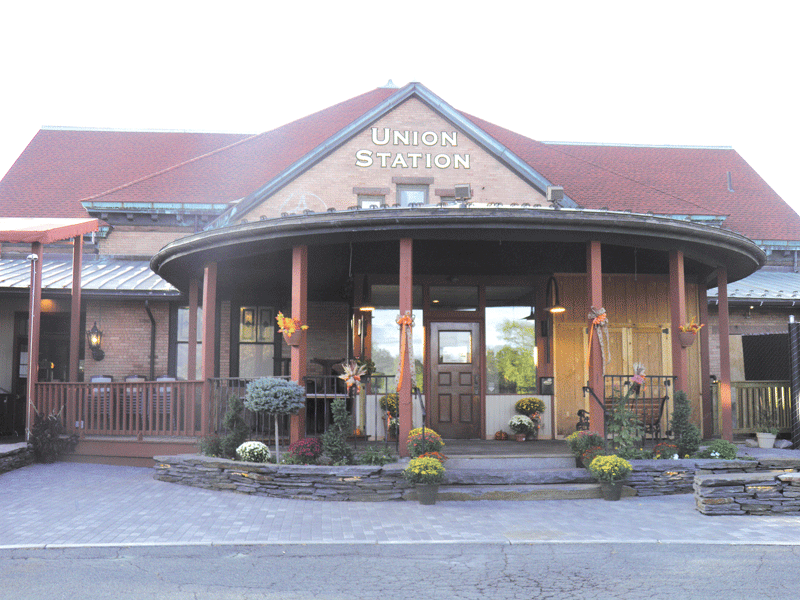
Commercial Real Estate Sections

Part and Parcel

Kevin Kennedy

Kevin Kennedy stands at the site of the former Chestnut Junior High School in Springfield’s North End. Below left: the school during demolition.

School demolition

Recent calamities in Springfield, including the tornado of 2011 and the natural-gas explosion of 2012, created hardship — but also intriguing development opportunities. The same can be said of the 2013 fire that leveled the historic Chestnut Street Junior High School. It eventually resulted in four shovel-ready acres in the heart of what has come to be called the Medical District.

Kevin Kennedy says that, before Chestnut Junior High School was essentially destroyed by fire in 2013, Springfield had what amounted to a development opportunity in the city’s North End.

It just wasn’t a very solid opportunity, Kennedy, the city’s chief development officer, went on, as evidenced by the fact that at least three requests for proposals (RFPs) involving that property over the past decade or so — he admits to actually losing count — failed to yield a workable project.

The reason was simple: the cost of repurposing the school or demolishing the structure, built in 1901 and vacant since 2004, and then remediating the four acres it sat on, made redeveloping the site financially prohibitive.

And there were other issues as well, said Kennedy, adding that the building was listed on the Massachusetts Register of Historic Places, thus limiting what could be done with the building and even making demolition a stern, time-consuming hurdle to overcome.

But the fire changed the dynamic in many ways by essentially removing all those obstacles.

Amid safety concerns, the city demolished the four-story structure, and, to apply a lesson it learned from what it did (or, more to the point, didn’t do) following a fire at the former Gemini manufacturing complex in the South End, it remediated the site, including removal of the foundations, said Kennedy.

“This site is now highly developable,” he told BusinessWest, adding that, while the price tag for razing and cleaning the site exceeded $1.5 million, the city may well come to consider that bill a sound investment rather than an aggravating expense.

Thus, like other recent calamities in Springfield — most notably the 2011 tornado and 2012 natural-gas blast — the suspicious fire at the Chestnut Street school has created an intriguing development opportunity.

But, as with those other opportunities spawned from disaster, this one comes wrapped in challenges, the biggest being the fact that those four acres lie in what is statistically one of the poorest neighborhoods in the Commonwealth, a possible stumbling block when it comes to some of the possible strategies for redevelopment, including retail.

But that area is rich in other ways, said Kennedy, adding that it lies in the heart of what city economic-development officials have come to call the Medical District.

Springfield’s Medical District

The former Chestnut Junior High School is at the center of this map showing Springfield’s Medical District.

Indeed, Baystate Medical Center, Mercy Medical Center, and Shriners Hospital for Children are all within only a few hundred yards of the school site, he explained, adding that a number of other medical facilities, many under the Baystate umbrella, are now located just off Main Street in the so-called Wason section of the North End.

More than 10,000 people, many of them in well-paying positions, work at facilities considered part of the Medical District, said Kennedy, adding that the numbers add up to some compelling opportunities, ranging from the broad spectrum of retail to the creation of market-rate housing for some of those workers, including the hundreds of young doctors in residence at Baystate.

For this issue and its focus on commercial real estate, Kennedy laid out some of the possibilities for this potential-laden blank canvas in the North End’s Memorial Square neighborhood.

Out of the Ashes

The deadline for responding to the RFP for the Chestnut Street site was Sept. 14, said Kennedy, adding that it will be extended to Oct. 5 (with questions due by Sept. 25) to give the development community more time to consider options.

“We’ve had a number of calls, and for that reason we think there’s a bit of interest,” he noted. “And that’s why we’re going to extend it and give people a few more weeks.”

At the very least, he is expecting a far more energetic response than when the 82,000-square-foot school was still standing, with its hundreds of windows boarded up, a state it had been in for several years.

“We had some proposals,” he said, referring to those RFPs issued while the imposing school was still standing. “But when the developer actually got down to brass tacks and put pencil to paper, it didn’t pencil, and all those RFPs went for naught.”

The shovel-ready nature of the property distinguishes it from most not only in Springfield, but also neighboring communities, he went on, as does its close proximity to so many prominent healthcare facilities.

The fire that engulfed the Chestnut Middle School

The fire that engulfed the Chestnut Middle School in 2013 has in many ways created a better development opportunity.

Indeed, the North End has been the site of a number of new developments in recent years, topped by Baystate’s massive $270 million expansion formerly known as the Hospital of the Future. But it has also been a source of speculation about what could — and should — happen next.

So much so that the city commissioned the UMass Amherst Center for Economic Development to undertake a study of the area. That document, “The Springfield Medical District: An Analysis of the Medical Industry and Its Workers,” was completed in 2012.

The report’s authors identified opportunities and challenges in equal abundance.

“The concentration of the medical industry in the district offers many opportunities for commercial and residential development,” they wrote. “However, the city must overcome considerable barriers if it wishes to realize this potential; there is a large potential market for additional shopping, eateries, and other services that cater to medical workers and clients — although few such opportunities currently exist.”

Expanding on those challenges, the report’s authors list everything from I-91, which slices through the North End and creates what they call a “spatial barrier to pedestrian circulation within the district,” to the low-income nature of the residential neighborhood, which is currently home to a very small percentage of the medical personnel working in the district.

The report implies that, if the city could create more attractive housing in the area and, overall, make it a more sought-after place to live, it could capture a large amount of purchasing power it is currently losing to surrounding communities.

“There is a fairly consistent trend — the more one earns, the further away they live from the district, with the highly paid physicians and administrators living the furthest away,” the authors note. “We estimate roughly $400 million in aggregate purchasing power of employees who live outside the city. This means that Springfield fails to capture the indirect economic benefits of its medical industry — the jobs and businesses that are supported by the spending of households.”


Click HERE to download the latest list of available commercial properties in Western Mass.


The Chestnut School site won’t change this dynamic on its own, certainly, said Kennedy, noting quickly that market-rate housing on the site could keep some employees not only in Springfield, but in the North End.

“We’ve had conservations with both hospitals,” he said, referring to Baystate and Mercy. “And they both have a need for housing for both employees and trainees. Baystate, for example, is a teaching hospital, and you have residents who aren’t looking for permanent housing, but may need something.”

But there are several options for the property, which is currently zoned residential, he went on, adding that there are several potential opportunities within the broad realm of retail.

The Memorial Square area lacks a major supermarket and other types of shopping, he noted, adding that the parcel is large enough for a supermarket or a chain pharmacy such as CVS. Inquiries to date have reflected an interest in both commercial and residential developments, he went on, adding that the city doesn’t really have a preference.

“We don’t want to presuppose anything,” he told BusinessWest. “We want to see what we think the best deal is and talk with the residents of the neighborhood to see what they want, and then balance the economics with those preferences.”

Razing Expectations

Looking at the Chestnut Street opportunity and the circumstances that created it, Kennedy mixed optimism with some philosophy.

“Oftentimes, as we’ve seen several times in Springfield in recent history, when something bad happens, something good can come of it,” he said, adding that the tornado’s path of destruction certainly contributed to MGM’s choice of the South End for its $800 million casino project.

Whether a similar, smaller-scale success story can be written a few miles to the north in another challenged neighborhood remains to be seen.

But Kennedy believes that fateful fire may have set the stage for another landscape-altering development.


George O’Brien can be reached at [email protected]

Education Sections

A New Test for a Turnaround Specialist

Stephen Zrike

Stephen Zrike says he’s still in the “listening phase” of the process of turning around Holyoke’s schools.

From the start of his career, Stephen Zrike has had a fascination with what would be called ‘urban education.’

He got a strong taste of this genre, for lack of a better term, while working in a number of positions in Boston, including principal, leadership coach, and ‘turnaround principal,’ and developed a real passion for it as chief of elementary schools in Chicago, where he led instructional-improvement efforts across 26 K-8 schools with 18,000 students, 92% of whom were from low-income families.

He was a finalist a few years ago for a job he coveted — superintendent of New Bedford’s school system — but didn’t prevail in that search, settling instead for the superintendent’s post in Wakefield, which is near home (the Boston area) but wouldn’t exactly be considered urban.

But this past spring, Zrike landed a different version of his dream job, and perhaps an even sterner challenge, when he was appointed receiver for the Holyoke Public Schools by Elementary and Secondary Education Commissioner Mitchell Chester.

The appointment puts him in a place he wants to be, both literally — one of the Commonwealth’s so-called gateway cities (Boston and New Bedford are also in that group) — and figuratively, in a position to lead a turnaround.

“This was the kind of opportunity I was looking for,” he said. “My heart and passion has been in urban education, and from a young professional age I wanted to be a superintendent of a gateway city — these communities are very intriguing to me.”

Holyoke’s situation is uncommon. Only two other Massachusetts systems have been in receivership: Chelsea, which saw its schools turned over to Boston University and its School of Education in a landmark case, and Lawrence, now in its fourth year under receiver Jeff Riley. But, unlike those other two communities, officials in the Paper City did not exactly embrace this move.

In fact, they did quite the opposite, with most elected leaders, including Mayor Alex Morse, strongly opposing a state takeover of the system.

Overcoming this resistance is in many ways Zrike’s first challenge, and be believes he’s making considerable progress in achieving a buy-in.

“There was certainly skepticism coming in, but I believe there’s more optimism now — cautious optimism, to be sure,” he noted. “I knew coming in that it was important to build relationships with people who have a lot of pride in this city, care deeply about Holyoke, and have lived here for a long time.”

The next steps in the process will be much more difficult — creating an action plan for turning around the city’s schools, and then executing it. The first part of that assignment is well underway, he said, adding that the plan will be multi-faceted in its approach and address everything from high-school graduation rates to the role of preschool programs.

As for the latter, Zrike said there is no set timetable on the project, and he has made at least a three-year commitment to achieving the ultimate goal — returning control of Holyoke’s schools to the city.

For this issue and its focus on education, BusinessWest talked at length about the means to that end, and how Zrike — and Holyoke — intend to pass their respective tests.

Study in Determination

Zrike told BusinessWest that his wife’s family has roots in Holyoke. In fact, her grandfather was one of the founders of the city’s fabled St. Patrick’s Day Parade.

He said much of what he knew about this planned industrial city and its schools was gleaned through conversations with those relatives.

“They conveyed a lot of pride in the community, and they had a lot of questions about the schools, which they had seen as being very successful for their children, now in their 40s,” he said, adding that his unstated job description is to restore that pride.

And, as mentioned earlier, he will bring to that assignment a diverse résumé dominated by experience in urban settings.

A graduate of Dartmouth University, where he majored in history, Zrike would later enroll in the Urban Superintendents Program within the Graduate School of Education at Harvard, earning both his master’s degree and doctorate there.

He focused on administration in urban settings after starting out as a fifth-grade teacher in the Andover public-school system, and later became principal of John D. Philbrook School in Boston.

From there, he was assigned the task of orchestrating a turnaround at one of the Hub’s largest elementary schools, William H. Ohrenberger School, and a year later was given the same challenge (this time in the official capacity of ‘turnaround principal’) at William Blackstone School.

Only eight months into that assignment, though, he left for the Windy City, a job as an assistant superintendent, and his broad role with its elementary schools. In that capacity, he said he worked with school leaders and their instructional leadership teams to assess the needs of their schools through the analysis of student outcomes, and then “develop goals, a targeted theory of action, and a school-improvement plan.”

In simplistic terms, he’ll be doing much the same thing for Holyoke’s two high schools, its middle school, a lone K-3 facility, seven K-8 schools, and an early-childhood center.

He arrived in July, and when he talked with BusinessWest as school was set to start this fall, he said he was very much still in what he called the “listening stage,” while working to soften the strong resistance to Holyoke’s receivership status.

“There’s a strong sense of urgency, but it’s also important to acknowledge the enthusiasm people feel about the schools and this city,” he said, adding that, in addition to that enthusiasm, he has encountered considerable frustration and a desire for progress.

In addition to his diverse background, Zrike brings to the job a fascination for the state’s gateway cities, mostly older manufacturing centers, and their school systems. In Andover, he gained an appreciation for the challenges in neighboring Lawrence, and his roles in Boston and Chicago offered myriad opportunities to learn and hone his skills.

Wakefield offered a different kind of experience, he said, adding that, when the state forced Holyoke into receivership early last year, he sought out the opportunity to lead the comeback efforts here.

School of Thought

Zrike noted that Holyoke’s schools didn’t arrive at this state — what’s known in education circles as ‘level 5,’ the lowest level of performance it shares with only Lawrence — overnight, and they won’t achieve turnaround status that quickly either.

Elaborating, he said there are many factors that contribute to a school system declining to level 5, ranging from ineffective use of resources to failure to meet the needs of some students.

“I think our population has shifted, and as a system we need to adapt to the needs of our students and our families,” he explained. “I think our families are really disconnected, in general, from the educational process, and if you talk to many of our parents, particularly low-income parents, they don’t have a lot of confidence and trust in the school system, and that doesn’t bode well in terms of performance outcomes.

“If they would rather send their kids to a different school … that’s not the level of investment and confidence that we would want in our schools,” he went on. “We need to do better with regard to supporting children who are developing English, and we have many students who come with social and emotional needs, and I think our system needs to continue to improve when it comes to meeting those needs. It’s hard for a child to learn if they don’t feel safe or comfortable, or if there are social or emotional challenges getting in the way of their learning.”

While focusing on students and their needs, Zrike went on, the system must also do a better job of working with teachers and staff to improve morale and involve them in the decisions regarding how the schools will be run.

“I think we’ve disempowered our educators,” he told BusinessWest, “and if you look at successful school systems, urban or suburban, educators have a voice in the change process, and I’m a big believer that morale is critically important in the success of any organization.

“And, unfortunately, I believe the teaching profession has been much maligned across the country and across the state,” he continued, “and we have to do a much better job of not only recruiting strong teachers, but retaining, supporting, and developing our quality people. We have some really quality educators in Holyoke, and we have to make sure we hang on to them.”

The process of returning the schools to the city begins with a strategic plan, Zrike noted, adding that such a plan is now being drafted with the input of a stakeholders group and should be ready by early October at the latest. He has also met with a host of groups and constituencies, including the School Committee, now acting in a purely advisory role, to gain input.

Overall, that plan is designed to enable the system to hit the quantitative targets necessary for the schools to be returned to city control. There are targets for everything from graduation rates (Holyoke currently has the lowest rate among gateway cities) and dropout rates, attendance, reading proficiency, and other student outcomes, he said, adding that the basic mission is to achieve continuous improvement.

One key measure is something called the student growth percentile, he said, adding this is a metric that compares how students do relative to peers that perform similarly the prior year across the state.

“Are you adding more growth than the average teacher or school?” That’s what this measures, he said, adding that Holyoke has obviously lagged in this realm in recent years.

Zrike noted that the strategic plan isn’t likely to identify any problems that Holyoke hasn’t been addressing for years. But it will provide a firm blueprint, and the receiver will have the requisite power to carry out that plan in a quicker, more effective manner.

“The receivership allows for greater acceleration of what can take a long time in districts,” he explained. “It allows for greater flexibility and leverages more resources. I do think the district had put some measures in place that were important to move the needle with regard to performance, but the receivership allows for an acceleration of that.”

Stern Test

When asked to pinpoint what will ultimately allow Holyoke to effectively send him off to his next challenge in urban education, Zrike said that, in many ways, it comes down to leadership — not in his office on Suffolk Street in the heart of the city’s downtown, necessarily, but in the city’s 11 school buildings.

“A big part of my theory of change involves strong leadership at the building level, the school level,” he told BusinessWest. “A district is only as strong as the teacher leaders and the principal leaders at the respective buildings. If you build that critical mass of people, then the system can sustain itself.”

Zrike’s unofficial job description is to build that critical mass. it will be a stern test, but one he believes he has the power — and, more importantly, the passion — to pass.

George O’Brien can be reached at [email protected]

Education Sections

Root Geometry

Daniel Montagna says the UMass Center

Daniel Montagna says the UMass Center at Springfield is looking to build on the momentum gained during a solid first year.

Dan Montagna says he can easily quantify the success enjoyed by the UMass Center at Springfield during its initial year, as well as the momentum it gained for the second, which started earlier this month.

Indeed, the number of classes offered at the 26,000-square-foot facility in Tower Square increased from 20 in its first semester of operation a year ago to more than 25 this fall. And while he didn’t have an exact count when interviewed by BusinessWest — the so-called ‘add/drop period’ for many classes was still ongoing — he was quite certain that the number of students enrolled in classes in the state-of-the-art facility had increased markedly as well.

“Going from fall to spring, we saw a sharp increase in both the number of classes and programs, as well as enrollment,” said Montagna, who assumed the role of director of Operations at the center last spring. “And for the fall, it looks like a little bit of an uptick in the number of classes, but a potentially greater number of students who will be attending classes here.”

There were other measures of success, he went on, including the 275 or so community events of varying sizes staged at the center’s diverse facilities.

As for the other assignment put to him by BusinessWest  — qualifying how the center has fared with its mission of helping to bring vibrancy to downtown Springfield and provide new levels of convenience for area students — he said that was slightly more difficult, especially the first part of that equation.

And it will certainly take more than 12 months to effectively answer that question.

But he felt very confident saying that the center has established a firm foothold downtown, forged several strong working relationships with other area colleges, and already become a huge asset for the region.

“From our measures, it’s been a very successful start for the center,” he said, adding that the obvious goal is to build on that momentum. “It’s about growth, expansion of the academics, and seeing what other courses we can bring in and focus on concentration areas.

“As for the other side of the equation, the community-engagement side,” he continued, “the fact that we’ve been able to plant roots in the heart of downtown Springfield and host perhaps 300 community events has been outstanding, and something we continue to build on.”

For this issue and its focus on education, BusinessWest takes a quick look back at the UMass Center’s first year in operation, and then puts the focus on how this facility can continue to gain momentum.

Course of Action

Montagna was on hand when the center opened its doors a year ago — and actually well before that — in the capacity of assistant director of operations.

He had taken that role after stints as a project manager for a private consulting firm that specialized in work with nonprofits, and, before that, as a program manager for the so-called Bay State Roads program, a state- and federally funded transportation initiative that provided technical assistance to officials in area communities. He said he joined the team at the UMass Center because he was intrigued by the center’s role with the university — and with the city of Springfield — and wanted to be a part of it.

“What attracted me to it was the concept of UMass bringing a campus to the downtown Springfield area,” he explained. “That immediately grabbed my attention, and as a local native, growing up in Agawam and living in the Pioneer Valley my whole life, I have a personal investment in the surrounding community.

“I’ve always been a cheerleader for Springfield doing better things,” he went on. “And the timing around the developments in the downtown, the revitalization efforts, along with the university making this investment and wanting to bring some of what they’re known for to the downtown area, was really exciting to me.”

He would take on a much bigger part last spring, when William Davila, the center’s first director of Operations, left to take a position with the Center for Human Development.

Montagna said his job description has a number of moving parts — from keeping the proverbial lights on to being a liaison to Tower Square management to being the face of the center within the community — but at its heart it’s fairly simple: to continually broaden the center’s impact in downtown Springfield and within the region’s higher-education sector. And, he said, a successful first year has provided a solid foundation on which to build.

“We want to focus on all aspects of our mission, building not only the scope of academic programs here, working with the campus communities,” he explained, “but also the community-engagement component; we want to be much more than a satellite campus.”

Elaborating, he told BusinessWest that the center can be classified using a number of nouns, starting with ‘facility.’

Indeed, it serves as a central location from which UMass Amherst and other colleges and universities can offer classes and other programs.

That location, as well as the large inventory of facilities — from large classrooms to varying-sized conference rooms to large study areas — also makes the center a resource, another of those nouns, said Montagna, adding that a wide array of nonprofit organizations, government agencies, and economic-development groups have staged meetings and other types of events there.

That list includes Springfield Public Schools, the United Way, the Department of Homeland Security (which staged a training program for local law-enforcement officers there), and the Young Professional Society of Greater Springfield.

As it carries out those roles, the center also serves as a “partnership,” he went on, adding that UMass Amherst collaborates with Westfield State University, UMass Boston, Springfield Technical Community College, and Holyoke Community College to provide convenient access to courses in a number of fields.

The center now hosts classes for several UMass Amherst programs, including the College of Nursing, which has a large presence there, as well as TEACH 180 Days in Springfield, the Isenberg School of Management’s part-time MBA program, and University Without Walls. Meanwhile, it also hosts UMass Boston’s Addictions Counselor Education Program; Adult Career Pathways, Adult Basic Education, community health training, and workforce-training programs from STCC and HCC; and a Community Planning course, which is a collaboration between the STCC, Westfield State, and UMass Amherst planning departments.

All of the above assures a steady flow of students and instructors into the center, which offers both day and night classes, said Montagna, adding that this critical mass inspires use of another term to describe the facility — catalyst.

And while there may be some objective gauges of the overall impact of the center — such as in the number of additional lattes sold at Dunkin Donuts or paninis at Hot Table on the ground floor at Tower Square — this is more of a subjective analysis at this point, he told BusinessWest, although those at the center continue to look for more ways to measure its impact.

“One of the things I’m really working on with my staff is the quantifying component,” he explained. “We’re trying to measure as much as we can; we’re trying to work toward more cohesive, more comprehensive tracking of our usage and our impact downtown.”

Overall, he believes the center is certainly contributing on the micro level — with receipts at area downtown restaurants, for example — and will eventually be impactful on the macro level as well, being one of a host of new facilities, businesses, and initiatives that make downtown a true destination.

Branching Out

Summing up the UMass Center’s first year of operation, Montanga said the initiative (there’s still another noun used to describe it) returned to that notion of putting down roots, noting that they have certainly taken a firm hold.

What develops from those roots remains to be seen, obviously, but he believes the center will grow into a vital contributor to the region’s economy, its ongoing efforts to create a large, capable workforce for the future, and the vibrancy of a downtown in the midst of a comeback.

In many respects, he said in conclusion, it is already all of the above.

George O’Brien can be reached at [email protected]

Construction Sections

Space Race

The MassMutual Center garage

The MassMutual Center garage is critical to parking capacity downtown, but was in dire need of repairs.

At a time when parking is at a premium in downtown Springfield, the central district’s largest parking garage, serving the MassMutual Center and numerous local businesses, plays an important role for workers and event-goers alike. But the five-story structure has long fallen into disrepair.

“We’ve had problems with drainage and water leaking from the roof through the various levels and damaging property and people’s cars,” said Mary McNally, executive director of the Springfield Parking Authority. “Then all that stuff accumulates on the iron, so that’s rusted; we’ve had a significant amount of property-damage claims.

“Overall, we just wanted to maintain the structural integrity of the building,” she went on, “because it’s the main garage in the city, and there’s no plan at present to replace it, so we needed to do somewhat of an intermediate level of repair.”

For the past several weeks, Marois Construction has set up shop in the garage, barricading off large swaths of parking spaces as workers perform a number of repairs aimed at keeping the structure serviceable for the near future. The job is expected to be finished in mid-November.

Marois submitted a bid of $889,940, the lowest of three bids received. The others were Contracting Specialists Inc. of Attleboro for $1,099,750, and P.J. Spillane of Everett for $1,463,890.

Renovations include a host of needed upgrades, McNally said. “They’ll fix the drainage and fix the waterproofing, restore the roof integrity, and install new drains. There will be some painting, some remortaring of the exits, some of the cinderblock needs to be restored, and many of the bar joists, which support the deck structure on each floor, need to be replaced. They’re also resurfacing some of the concrete on the lower levels that get the most traffic.”

Joe Marois, president of the South Hadley-based contractor, said the goal is to complete an intermediate repair that will hold up for the foreseeable future whether or not the garage is eventually rebuilt.

“We’ve recently finished up all the concrete, masonry, and block repairs that had to be done. We’re changing out some of the plumbing, drainage, and so forth, and doing some miscellaneous concrete repair and reinforcing some of the existing steel,” he told BusinessWest. “We’re addressing the concerns in the city’s engineering report.”

Shuffling the Decks

Garage Beam

rusted ironwork in the garage

Top: some of the rusted ironwork in the garage. Bottom: one of many areas off-limits to parkers until issues with drainage and loose debris can be remedied.

The 44-year-old MassMutual Center garage — which borders Harrison Avenue, Dwight Street, and Falcons Way — is the oldest and highest-volume garage in Springfield’s central business district, with a maximum capacity of 1,232 vehicles.

But the structure has been problematic for users for some time, with certain areas roped off on occasion to protect vehicles from debris. Preserving its functionality is critical at a time when the city will lose close to 500 spaces from two downtown parking garages under the I-91 viaduct.

That viaduct is undergoing a massive reconstruction that will close down a mile-long stretch of the interstate for at least two years starting this fall, making hundreds of parking spaces off limits. But McNally, who meets with state Department of Transportation officials every three weeks to review the upcoming construction schedule, is convinced the central district will have enough parking.

“I was worried a year ago, but not currently,” she said. “The contractor [Framingham-based J.F. White Contracting Co.] is very cognizant of the impact on both garages, north and south. I’ve been assured repeatedly at these meetings that they will do what they say they’ll do — and the contract they have with the state requires that they take no more than 450 spaces from the second levels on both garages. With the current occupancy and capacity, I don’t expect any problems at all. That’s very good news.”

One reason for reassurance is the fact that the repair work on the nearby MassMutual Center garage promises to recapture about 100 spaces perennially lost, especially in the winter, to leakage and drainage problems. “If those issues are remedied, those spaces come back,” she said.

In addition, McNally noted, the fifth-level roof deck, which is typically chained off, may also be available for use soon, bringing all 1,232 spaces in the garage back into play.

“There have been considerable engineering studies assuring us the roof deck is safe for parking, and that’s 200 spaces,” she explained. “The roof was never declared unsafe, but there wasn’t demand for it. We anticipated there would be demand, though, which is why we went ahead and did those tests, giving us the comfort that it’s safe.”

Looking Forward

The Springfield Parking Authority, which is funded by parking revenues, oversees on-street and off-street parking in Springfield, including the downtown parking garages. The Marois project is part of a $4 million capital plan for improvements to city garages.

The Parking Authority has also been working with MGM Springfield on a long-term commuter-parking arrangement during construction of the $800 million casino in Springfield’s South End — necessary, because the project footprint will eliminate several parking areas in the district.

Marois said both major construction projects downtown — the viaduct restoration and the casino — are going to strain parking options to some degree, making his company’s repair work on the MassMutual Center garage that much more important.

“I totally think that’s going to be a big deal,” he said. “We’re going to lose a lot of spaces underneath the viaduct while they’re doing that work. I think the city has taken the right steps here in anticipation of that shortage.”

Joseph Bednar can be reached at [email protected]

Features

Succeeding at Succession

Kevin Vann (left) and Mike Vann

Kevin Vann (left) and Mike Vann, principals with the Vann Group.

Mike Vann didn’t have the exact figures, but he said round numbers would certainly get his points across. And he was right.

There are roughly 7.5 million businesses in this country owned by an individual or individuals over the age of 55, said Vann, a principal, with his father, Kevin, of the Springfield-based business-consulting firm the Vann Group. And maybe 25% of them have “some semblance” of a succession plan in place.

He chose that phrase carefully, and then qualified it by saying that many of those plans would not be considered up to date or realistic.

“There’s something there, but it’s outdated and it’s no longer relevant, but they can can check the box and say they did something,” Mike explained, adding quickly that business owners need to do more than something — they need something well thought out and realistic.

This simple truth explains why BusinessWest and the Vanns are partnering to make succession planning the topic of the second installment of the magazine’s ongoing lecture series of issues confronting all those in business.

In fact, there will be two presentations of the same program in different locations for the convenience of those who might — and should — attend. The first offering of “Heading for the Exit: Business Succession Realties and Process,” will be staged Wednesday, Sept. 30 at the Student Prince/the Fort in Springfield, while the second will be conducted Wednesday, Oct. 7 at the Smith College Conference Center. In both cases, registration will be at 7:15 a.m., with the program running from 7:30 to 9 a.m.

Kevin Vann said the title of the lecture was chosen carefully because effective succession requires careful, thoughtful planning, this is indeed a process, and there are many realities — many of which business owners don’t want to acknowledge.

At the top of that list are the fact that they are getting older and need to address succession, because this issue will not go away or take care of itself.

The format for the lectures will be a general presentation followed by what the Vanns hope will be an intense round of Q&A. That’s because everyone should have questions about this subject, they said, but too often they don’t get asked.

“The presentation highlights market trends as to what’s going on with this subject and what’s driving the succession-planning needs and challenges,” Mike said. “And then, it will feature a walk-through of what the succession-planning process looks like and all the different moving pieces. It covers everything from understanding the value of your business to the importance of having your financial plan in place, to the need to have a life plan in place for after your business is transitioned.”

Kevin added that the program will provide some needed information, but also drive home some key points, such as the fact that, when it comes to succession planning, many business owners make assumptions, which can and often do lead to big problems down the road.

“Business owners assume way too much as far as who may be part of their succession plan,” he explained. “They assume the children might or that a key employee might, or a strategic competitor might.”

Other assumptions or mistakes include everything from trying to be fair with all of one’s children to the presumed value of the company, to not properly preparing the business for sale, he went on, adding that the keys in all aspects of this process are to be realistic and avoid guesswork.

Kate Campiti, BusinessWest’s associate publisher, said the magazine launched its lecture series this past spring as part of ongoing and multi-faceted efforts to keep readers informed and up-to-date on matters of concern to all business owners.

The series’ first lecture, “Technology Has the Power to Change Healthcare,” featured a panel of experts talking about a subject that touches many businesses and every individual, said Campiti, adding that the second installment in the series can be equally impactful.

“Succession is an issue that every business must address,” she said. “It’s a difficult issue, there are many factors involved, and people need to plan. This lecture is designed to get these points across and to assist business owners with the work of putting a plan together, which is indeed a process.”

Admission to the lectures is free; however, registration is required by visiting www.businesswest.com. The deadline for registering for the Sept. 30 lecture is Sept. 22, while the deadline for the Oct. 7 presentation is Sept. 29. For more information, call (413) 781-8600.


— George O’Brien

Architecture Sections

Common Ground

Future residents of Village Hill Cohousing

Future residents of Village Hill Cohousing with the agreed-upon preliminary site design.

Cohousing isn’t for everyone — for example, people who just want to be left alone should probably take a pass. But for individuals and families who crave a balance between privacy and community, it can be a highly attractive proposition. Kraus & Fitch Architects and Transformations Inc. have been hard at work designing Village Hill Cohousing in Northampton, but they haven’t worked alone; future residents have plenty of input in what promises to be an intriguing, collaborative, ultra-energy-efficient development.

Peggy Gillespie loves her home in Belchertown. But the 67-year-old widow plans to move to Village Hill Cohousing once the development is built on the grounds of the former Northampton State Hospital, and has been attending meetings for the past year with other prospective residents.

“I love living and working together with people, and the idea of being surrounded by a community while having autonomy in my own private space is very appealing to me,” she said. “Cohousing is like living in a village, and I hope to be able to help young families who move there. And since residents are committed to helping each other, it’s a guarantee that you will have a lot of people to support you if you are dealing with an illness or physical disability.”

Deborah Schifter shares similar feelings, but finds the community particularly attractive for environmental reasons. When she was in her 20s, she lived on a kibbutz in Israel and enjoyed the camaraderie in the close-knit community, as well as the fact that people with diverse talents shared responsibility for its upkeep.

But one of the most prominent selling points of Village Hill for Schifter is that every structure in the neighborhood will be a zero-net-energy building.

“We’re heading into a time that will be very different due to climate change, and sustainability and living in a community with people who are knowledgeable about energy resources are among the things that appeal to me,” she said.

The women belong to a group of 15 future residents who have put down a $5,000 deposit to pay for architectural fees for the new development. They come from diverse locations — local towns and cities, the Boston area, Cape Cod, New York, New Jersey, Florida, even Saudi Arabia — and attend frequent meetings held to ensure their wishes are taken into consideration during the design phase of the project.

The initial plan for the anticipated community came about as a result of a collaboration between Amherst-based Kraus Fitch Architects Inc. and Transformations Inc., which was awarded a contract by MassDevelopment to create Village Hill Cohousing on the last remaining large parcel of land slated for residential use on Village Hill.

Transformations President Carter Scott said his firm submitted a plan in response to a request for proposals for the 41-acre site, which contained a letter of intent from Kraus Fitch Architects and a drawing of the proposed cohousing neighborhood created by architect Laura Fitch.

Mary Kraus cooks dinner for residents

Mary Kraus cooks dinner for residents in her cohousing community, where members share a meal several times a week.

However, in addition to the cohousing neighborhood, the plan includes construction of 53 units of conventional housing in a different section of the tract that will be designed by a different architect.

Both neighborhoods will be within walking distance to downtown, but the cohousing development will be unique. It will contain a spacious parking lot, 10 duplexes, and 12 single-family homes ranging in size from about 700 to 1,600 square feet, with space for a community garden.

However, the most important structure will be a 4,600-square-foot common house, where members will likely share meals several nights a week. Its interior will boast a gathering room with a kitchen and dining area large enough to accommodate all of the residents, as well as a children’s playroom, an exercise room outfitted with equipment, a game room, a guest suite with two bedrooms, and storage space.

“Two things define cohousing and make it different than a condominium association,” Scott said. “One is having a large common house that is used frequently by all of the residents, and the other is the fact that members are involved in the development process.”

Principal architect Mary Kraus says her firm is one of a handful in the country that specializes in cohousing and sustainable design, and has been involved in at least 30 of these developments. In the past, groups with established goals came to them when they were ready to establish a new community, but Village Hill is unique because, when the idea was conceived, they had no idea how much interest it would generate.

So she set about marketing the proposed neighborhood long before MassDevelopment awarded the contract to Transformations. “We held three informational meetings, which were highly successful. They attracted about 130 people,” she said.

Scott added that enthusiasm soared when he mentioned he planned to build zero-net-energy homes in the community. “People at the meetings broke out in spontaneous applause, which was really exciting. And one of the Planning Board members got tears in his eyes when he looked at the plan,” he recalled, adding that an e-mail list of interested people was created during the meetings.

Involved Process

After a group of individuals and couples expressed a decided interest in the community, Kraus began the process of getting them together to solicit information about their values and goals.

“These things are important, but the meetings involved more than what was addressed; our goal is to help the group build a social community while they are designing their physical community,” she told BusinessWest, adding that gatherings can be stressful due to differing viewpoints.

Peggy Gillespie, left, and Deborah Schifter

Peggy Gillespie, left, and Deborah Schifter are among a group of individuals actively involved in the planning of Village Hill Cohousing.

But Kraus and Fitch Architects has developed a methodology to help large groups make decisions efficiently, in a way that supports connection and collaboration. “When we work on cohousing projects, we facilitate a series of participatory workshops in which future neighbors work together to come to consensus on key decisions for their community,” Kraus explained. “In the case of Village Hill Cohousing, the workshop topics included values, a vision statement, sustainable design, site design, common facilities, and the size and location of individual homes.”

Kraus sent out an online survey prior to each session, which included questions and recommendations pertinent to the topic. The responses were analyzed, and once areas of agreement and divergent opinion were identified, the agenda was tailored to focus on areas that needed to be resolved through discussion.

“The surveys helped us make the most efficient use of the group’s time,” she told BusinessWest. “During the workshops, we model respectful communication and active listening to create a safe environment so members can speak frankly, yet remain open to other ideas, even though it might be challenging. We staged three two-day workshops and three day-long sessions which helped us understand where the group was in consensus and where we had to have difficult conversations.”

And there were definitely differences of opinion.

“Some people wanted an exercise room in the common house, while others wanted a meditation room,” Schifter said, explaining that they compromised when they realized an exercise room was needed to house equipment, but a multi-purpose space could be designed to feel contemplative. Other issues included the number of pets a person could have and what the owner’s responsibility would be in monitoring their behavior.

During one workshop, group members were given small building blocks so they could simulate the layout of their community, which changed as they moved tiny structures around the table.

“But by working together, they built relationships and dealt with their fears as well as interpersonal challenges,” Kraus said.

The workshops began last August, and a basic design was completed by the end of last winter. Members continued meeting on their own after that, and today, a membership committee, design group, communication committee, and facilitation committee have been formed.

Several meetings were held in Schifter’s Northampton home, and she said some future residents plan to move to the area before the development is finished to avoid frequent, long commutes. “We started meeting every two to three weeks during the spring and continued through July. We had a potluck lunch at noon, followed by a business meeting from 1 to 5 p.m., but it often went over the timeframe,” Schifter said, noting that they have begun meeting again at Gillespie’s home. “People have already made friends, and some are starting to get together socially.”

Kraus said the facilitation process that fostered goodwill and built consensus for their cohousing clients can be used in a wide range of business situations, such as creating a design for a large stakeholder group or helping a company improve their decision-making process while fostering positive working relationships among their staff members.

Moving Forward

Ground is expected to be broken next spring for the zero-net-energy community, and Scott is excited about it.

He is on the governor’s Zero Net Energy Building Advisory Council, and cited a long list of prestigious awards that Transformations Inc. has received for its work in this arena, including the Northeast Sustainable Energy Assoc. Public Impact Award for building more zero-net-energy homes than any other member.

“In 2012, we built two homes that produced enough energy to drive an electric car 30,000 miles per year,” he noted. “But we will be able to go much further on the sustainability curve with this cohousing project because we are not building on spec, but for a group of ecologically minded people.

“Village Hill Cohousing will be one of the most sustainable communities in the country, based on the climate-change perspective,” he went on. “Every home will have solar electric panels and dual-stage air-source heat pumps, which are incredibly efficient, and houses with basements will have air-source heat-pump water heaters.”

This new neighborhood on Village Hill promises to be an attractive addition to the former state-school property, which has been transformed into an oasis with a wide variety of housing options.
The combination of many positive factors, including a close-knit community, have caused Scott and his family to consider moving there. “We haven’t made a decision yet, but it’s a nice way to live,” he said.

Gillespie agreed. “I think people are longing for this type of environment. They miss knowing their neighbors and being able to interact with them on a frequent basis. Village Hill Cohousing will have a nice environment and be a great place for people,” she said.

Kraus and her husband have lived in Pioneer Valley Cohousing in Amherst for 21 years and love being part of a close community.

“It has exceeded our expectations,” she said. “Before we moved here, we didn’t realize just how vital small interactions are to us as a species. Cohousing recreates the type of neighborhood people lived in years ago.”

Banking and Financial Services Sections

Breaking News

By TOM CROGAN

Divorce patterns have changed considerably in recent years. A recent New York Times article stated that the divorce rate is no longer rising. That trend, the report noted, is the result of people getting married later in life and also the feminist movement; as women entered the workforce, marriage began to evolve into its “modern-day form based on love and shared passions, and often two incomes and shared housekeeping duties.”

If you’re going through a divorce, though, the last thing on your mind is how the divorce will impact your next tax return. This article focuses on the income-tax issues of alimony, child support, and property settlements in most largely unplanned divorces.

Alimony (IRC Section 71)

Alimony is a payment to or for a spouse or former spouse under a divorce or separation instrument. It does not include voluntary payments that are not made under a divorce or separation agreement.

Alimony is deductible by the payer and included in the income of the recipient. IRC Section 71 defines alimony as the transfer of cash made under a divorce or separation instrument. The payments must meet the following criteria:

• The payments must be in cash and must be received pursuant to a divorce or written separation instrument;
• The spouses must reside in separate households;
• The payer’s liability must not continue after the payee’s death;
• The payer and payee must file separate tax returns;
• The divorce or separation instrument must not designate non-alimony treatment; and
• The divorce or separation instrument does not indicate that such payment is not includable in the recipient’s income and not deductible by the payer.

Not all payments under a divorce or separation agreement are alimony. Alimony does not include child support, non-cash property settlements, or payments to keep up the payer’s property.

Child Support

Generally, a payment is for child support when a divorce decree specifically designates all or part of a payment as being for child support. Child-support payments are not deductible by the payer and are not taxable to the recipient.

A payment will be treated specifically designated as child support to the extent the payment is reduced either on the happening of a contingency relating to your child, such as the attainment of a certain age, marriage of the child, death, leaving school, or becoming employed.

A related issue to child support is deciding which parent receives the dependency exemption for the child. Assuming all of the dependency exemption requirements are met, the parents can decide for themselves. Often the divorce decree will dictate which parent takes the dependency deduction.

Property Distributions (IRC Sec 1041)

For divorcing couples, the distribution of property is often the most important aspect in a divorce. This is especially difficult if there are significant assets such as houses, retirement plans, a closely held business, or rental property. You need to understand which assets will fit your financial goals best.

You also need to understand the liquidity of the asset, cost basis, and income-tax implications associated with the sale of the asset.

IRC Section 1041 provides favorable treatment to divorcing spouses when it comes to distributing property. Under Sec. 1041, property transferred between divorcing spouses is generally treated as a gift. Cost basis and holding period carry over, and the transfer most often avoids treatment as a taxable event.

Other Tax-planning Opportunities

Dependents: You can continue to claim your child as your dependent if the divorce decree names you as the custodial parent. If the divorce decree is silent on the fact, the parent whom the child lived with for a longer period of time during the year can claim the child as a dependent.

It’s still possible for the non-custodial parent to claim the dependency exemption if the custodial parent signs a waiver not to claim the child as a dependent for that particular year.

The parent who claimed the child as the dependent is the one who is entitled to claim the child tax credit, American Opportunity credit, or Lifetime Learning credit. If you can’t claim the dependency exemption, you can’t claim the credits even if you paid the college expenses.

You can claim the child-care credit for work-related expenses you incur for the care of your child, under age 13, if you have custody, even if your ex-spouse claims the child as a dependent.

Retirement Accounts: If you cash out a 401(k) account to give the money to your spouse, the amount is taxable to you as a distribution. You can avoid this trap by having the transfer treated under a qualified domestic relations order (QDRO). This allows you to give the money to your spouse and relieves you of the tax burden of having it treated as a taxable distribution. QDROs are very complex, and great care and consideration should be given to any QDRO created in a divorce.

An IRA that is transferred is treated differently. As long as the transfer is spelled out in the divorce settlement, the transfer is not treated as a taxable distribution. Instead it is treated as a rollover and not subject to the 10% penalty.

Home Sales: In general, the tax law allows a $250,000 capital-gain exclusion if you are single or married filing separately, and a $500,000 exclusion if you are married and owned the home and lived there for two of the past five years and the home is your primary residence.

For sales after the divorce, if the two-year and five-year ownership and use test is met, you are limited to the $250,000 capital-gain exclusion.


Tom Crogan is a manager at South Hadley-based Pieciak & Company, P.C. and has been involved in performing business valuations, litigation support, and consulting with small business to help them solve their tax and accounting issues.

Sections Sports & Leisure

A Nation of GMs

fantasySportsDPart

Fantasy sports — born decades ago as a niche pastime for baseball überfans who tracked statistics by hand with calculators — has since exploded into an instant-data industry that claims more than 56 million participants. Most of those drafted their football teams last week in anticipation of the season, while others will put up money to redraft each week on sites like FanDuel and DraftKings. One thing is for sure: whether for fun or profit, the fantasy world has changed the way people watch sports — and the leagues, networks, and advertisers couldn’t be happier.

Before Mark McDonald jumped into fantasy football, he’d watch the Patriots on Sunday, and not much else. But now?

“It has dramatically changed my viewing habits,” said McDonald, a professor of Sport Management at UMass Amherst. “Games between horrible teams, games that once meant nothing to me, now I want to watch to see how my fantasy team is doing. I like that sense of control — I’m the general manager, controlling my own team, and watching other players to see who I might pick up. It changes your view of football. Even Thursday nights are must-watch.”

McDonald started playing GM four years ago when fellow faculty members at the Isenberg School of Management invited him into their league. He’s been hooked ever since, and was preparing for drafts in two different leagues the week he spoke with BusinessWest.

He’s not alone. The number of people participating in fantasy sports — football, baseball, basketball, hockey, even golf and auto racing — is expected to reach 56.8 million this year, a staggering increase of 37% from 2013, according to the Fantasy Sports Trade Assoc. (FSTA).

The vast majority play in season-long leagues, going head to head with a different team’s owner each week. But, increasingly, ‘daily’ fantasy sports, played for real money — FanDuel and DraftKings are the two giants of this industry — are becoming more popular. At the end of 2014, the two online services posted a combined $920 million in entry fees from 1.3 million paying users — numbers this year’s participation is expected to far surpass.

“It gives fans another connection point,” said Janet Fink, another UMass professor and chair of the Department of Sport Management. “Fantasy football is much more widely popular than any other fantasy sport, but they’re all growing. And now you have these day-to-day, week-to-week leagues getting more popular as well.”

Indeed, fantasy sports has come a long way from its 1970s origins, when hardcore baseball players played something called Rotisserie, drafting players at the start of the season, then tracking their statistics, by hand and with calculators, and translating those stats into a scoring system. Today, the data is instantaneous, meaning owners can sit on the couch with a smartphone and watch the points roll in.

And, by the tens of millions, that’s exactly what they do.

Fan Fare

Andrew Zimbalist, a professor of Economics at Smith College and one of the world’s foremost sports economists, has observed the impact of fantasy sports on American life, which goes well beyond that annoying guy in the lunchroom on Tuesday complaining about losing by a point because Julio Jones dropped an easy touchdown Monday night.

“It’s something that increases the avidity of fandom and, in some cases, extends fandom,” he explained. “People who are involved in fantasy sports are paying much more attention to the game. They subscribe to more online services and satellite services.

“The other effect they have, to some degree — and it differs by sport — is more generalized fandom,” he went on. “If I’m a Red Sox fan living in Massachusetts, without the fantasy-sports component, I’m following the 25 people on the active Red Sox roster. But if I have Mike Trout in my fantasy-baseball league, if I’ve got Joe Mauer on my team, I’m not only into the Red Sox games, but Angels games and Twins games, etc.”

That sort of changed behavior is something sought after and prized by professional sports leagues, Zimbalist added.

“Football, for a variety of reasons, has long been a national sport; even though fans have a team they follow and support, true football fans will watch two games, and might stay around for Sunday evening,” he explained. “But in the other leagues, like baseball — say you’re a Padres fan living in San Diego. You’re going to watch the Padres games; you’re not going to watch the Giants or Diamondbacks. But some of the fandom becomes nationalized when you have fantasy sports leagues. That is a very valuable component — and it’s a growing fandom.”

No wonder, then, that ESPN hosts the most popular fantasy platform (Yahoo! is the second-largest), while DraftKings recently secured $300 million in funding from Fox Sports, Major League Baseball, the National Hockey League, and Major League Soccer. In return, the company plans to give away $1 billion in prizes this year, more than triple the $300 million it awarded in 2014.

Meanwhile, the larger play-for-cash entity, FanDuel, which pays out more than $10 million in prizes every week, recently raised $275 million from investors, including affiliates of Google, Comcast, and Time Warner.

Janet Fink

Janet Fink

“Research has been done asking whether, if people got too much into fantasy sports, it might decrease their interest in their own team,” Fink said. “In fact, they found quite the opposite. People around here still root for the Patriots, but they flip to the Red Zone to check out their fantasy team. That way, the viewership of games league-wide increases. There’s extra incentive to watch the Chargers versus the Raiders when you wouldn’t do that normally.”

McDonald is familiar with DirecTV’s Red Zone channel, which jumps, all Sunday long, between teams on the cusp of scoring — a fantasy maven’s dream. He noted that his league’s owners get together twice a year for Sunday viewing parties, but they don’t watch the Patriots; they watch Red Zone. “One aspect to fantasy that’s a bit negative is how it impacts viewing your favorite team.”

Fink has read studies showing that, while some fantasy hobbyists remain more interested in their home-state team, others come to identify more with their fantasy players and seek them out on TV instead. “But in most cases,” she added, “it’s probably a very complementary relationship.”

Speaking of relationships, McDonald believes fantasy football has strengthened connections between the people he works with at Isenberg.

Mark McDonald

Mark McDonald

“As with any business school, we have a bunch of different departments — accounting, finance, management, marketing … seven or eight in all. There are faculty members I might not otherwise interact with, and now, if I run into the owner I’m playing against that week, we’ll get some friendly trash talking going on in the hallway. You get to know each other. We find ways to get together now.”

Real Money

Advertisers covet the fantasy-sports market, according to the FSTA, which reports that team owners are mostly college-educated with an average household income topping $75,000. At last measure, 66% of participants were male, and 34% female, but those figures have been steadily moving toward each other in recent years.

However, the daily and weekly games at FanDuel and DraftKings remain almost exclusively the domain of men. Meanwhile, a survey of more than 1,400 players by Eilers Research found that more than 40% of these players have reduced the amount of time they devoted to traditional fantasy leagues.

“Everyone I know is pretty much in it for season-long fun, low-stakes games. But I am concerned that our students are increasingly drawn to that world,” McDonald said of the high-risk sites, saying they’re occupying a role that online poker recently dominated.

But — because of the obvious risk involved — is it legal? The Unlawful Internet Gambling Enforcement Act (UIGEA) of 2006, intended to regulate the financial institutions that act as the monetary link between gamblers and Internet casinos, seems to say yes.

While some states — Arizona, Iowa, Louisiana, Maryland, Montana, and Vermont — have enacted their own laws muddying the waters around this issue, the vast majority of states, including Massachusetts, have not.

That leaves the UIGEA as the go-to authority, and the federal law specifically does not regulate games in which “all winning outcomes reflect the relative knowledge and skill of the participants and are determined predominantly by accumulated statistical results of the performance of individuals (athletes, in the case of sports events) in multiple real-world sporting or other events.”

In other words, in the eyes of the law, fantasy sports are considered games of skill, not luck.

McDonald, again noting the excitement of a weekly draft, worries about their appeal and the potential for addiction and financial trouble, no matter how shrilly FanDuel and DraftKings shout about millions in winnings on their ubiquitous radio ads.

“It’s so exciting to redraft and select your team every week,” he told BusinessWest. “They may think the way we old guys play is slow and boring. If you have injuries early in the season, it can kill you. But with the weekly games at DraftKings and FanDuel, you get away from that, and every week is a new opportunity to make choices.

“But,” he went on, “people do put a lot of money at risk, and I think it’s addicting. It’s like crack to fantasy sports players. It’s a weekly high, and in a sport like baseball, it could be a daily high.”

For now, McDonald considers himself firmly in the camp of more than 55 million people who have become amateur GMs not for big payouts, but for the fun, the challenge, and the camaraderie.

“It’s a social thing that enhances the viewing experience,” he said. “For me, personally, putting money at risk would take some of the fun out of it; I think it would be very stressful.”

After all, trash talk is stressful enough.


Joseph Bednar can be reached at [email protected]

Sections Sports & Leisure

Pioneer Volley

George Mulry

George Mulry stands in front of one of the many displays at the Volleyball Hall of Fame, which is seeing a rise in visitorship.

In 1895, William Morgan invented a game he called ‘mintonette’ for adult males at the Holyoke YMCA in hopes of retaining members who were leaving because they found another recently invented game, basketball, to be too violent.

“He was the Y’s physical-education director, and he created the sport so middle-aged businessmen would have something to do on their lunch break,” said George Mulry, executive director of the International Volleyball Hall of Fame in Holyoke. “The name of the game was changed to volleyball a year later by a professor at Springfield College, and today, it’s played by more than 880 million people. It is an international powerhouse sport, the second-most-popular game in the world, and one of the most popular at the Summer Olympics.”

Indeed, the game has come a long way since it began in a small gymnasium in Holyoke. It ranks as one of the top sports in nine countries, and the Fédération Internationale de Volleyball (FIVB) boasts 220 members, making it the largest sports federation in the world.

“I see more people smiling when they are playing volleyball than I do in any other sport; it’s a great game, and people at any level not only enjoy it, but appreciate the camaraderie it promotes,” said Charlie Diner, a member of the Hall’s board of directors. “Volleyball is a game that is fun.”

In many ways, the Hall of Fame created to honor the games, founder, legacy, and greatest players, coaches, and contributors has followed a somewhat similar path.

It started in a closet in Wistariahurst Museum, with some additional space in Holyoke City Hall for storage. It has moved a few times over the years, but has generally struggled to find adequate space and resources to properly tell the game’s intriguing story.

But the Hall has gained some much-needed momentum in recent years, building awareness, gaining visitorship, hosting more events, and adding new displays to capture the game’s progression and impact on society.

Visits to the museum are on the rise, and today, 4,000 to 5,000 guests embark on the self-guided tour inside the space each year. One thing they particularly enjoy is trying on the Gold Medal won by Maurico Lima at the 1992 Summer Olympics. The athlete was inducted in 2012 and donated the medal to the museum, along with other memorabilia.

“Many people pose for photos wearing it around their necks. It’s a popular thing to do,” Mulry said. “Donating items is a way for Hall of Famers to keep their legacy going.”

The nonprofit changed its name from the Holyoke Volleyball Hall of Fame to the International Volleyball Hall of Fame last year to reflect the fact that it has been inducting international players for some time. This will be the Hall’s 30th year holding the ceremonies, and so far, 125 inductees from 21 countries have been honored.

But the museum operates on a tight annual budget of $215,000. Mulry is the only full-time employee, and the museum relies heavily on fund-raisers, donations, and sponsors to keep it operational.

For this issue and its focus on sports and leisure, BusinessWest offers some quick history lessons on the sport of valleyball and a detailed look at how its shrine is scoring points as it strives to gain relevance and increase visitorship.

Spike in Interest

A display of large, colorful panels

A display of large, colorful panels with photos documents volleyball’s historical timeline.

Mulry told BusinessWest the Hall of Fame has always had close ties to Springfield College, a relationship that began when Morgan met James Naismith, who founded the game of basketball in 1891 while teaching at the International YMCA Training School (now Springfield College).

Morgan was on Northfield Mount Hermon’s football team, and after watching him play during a game at the college, Naismith successfully recruited the young athlete and brought him to Springfield College. “He had wanted to become an engineer, but abandoned those plans to teach physical education,” said Mulry.

After graduating, Morgan became director of physical education at the Holyoke YMCA and gave birth to his own game. “He borrowed from a lot of different sports to create it. He took the net from tennis, the ball from basketball, and the innings from baseball, which were used when the game was first played,” Mulry explained.

The game of mintonette received its new name after it was introduced to the public at a tournament at Springfield College that was held during a national conference for YMCA directors. “Professor Alfred Halsted decided volleyball was a more appropriate name because the players were volleying the ball across the net,” Mulry said. “After the demonstration, the game spread through the nation’s YMCAs, then was adopted by the military because the troops were looking for something to do that was not physically taxing.

“The YMCAs took the game to the Philippines and a few other countries, but the military introduced it to Europe and the rest of the world during World War I,” he went on, “and the level of play increased dramatically.”

The first national championship was held in 1922 at the Brooklyn YMCA, but the game was played on an almost a purely recreational basis through the early 1930s. However, a dramatic change occurred in April 1947, when representatives from 14 nations formed the FIVB and began recruiting teams from across the world to play in tournaments.

The first world championship for men was held in 1949, followed by the first world championship for women in 1952, and the game reached an even broader audience a dozen years later when it was introduced and played at the Tokyo Olympics by both men’s and women’s teams. Beach volleyball wasn’t added for another 32 years, however, and that inaugural Olympic competition took place in Atlanta.

Despite the game’s popularity, it wasn’t until the early ’70s that anyone proposed creating a museum to house memorabilia and recount the game’s history and the success of its players.

“At that time, the Greater Holyoke Chamber of Commerce was looking for ways to position the city and make it interesting to tourists,” Mulry noted, adding that, even though it established an ad hoc committee to promote the idea of Holyoke becoming home to a Volleyball Hall of Fame, the only thing it did was host an tournament for YMCA teams.

However, in 1978, the Holyoke Volleyball Hall of Fame was officially incorporated, and the first induction ceremony was held in 1985. But the organization still didn’t really have a home.

Points of Interest

“All it consisted of was a closet in Wistariahurst Museum and space in City Hall that was used to hold memorabilia,” Mulry said, adding that things changed in 1987, when the city of Holyoke gave the Hall an area in a building on Dwight Street to use free of charge. “The space was small, and the only things put on display were a few jerseys, nets, and uniforms,” Mulry said.

However, when the building was renovated a year later, the museum was given an area three times larger, which encompassed 4,500 square feet.

Mulry told BusinessWest it was only supposed to be a temporary home, and a capital campaign was launched with the goal of raising $27 million for a new building. “An architect was hired, and 15 possible sites were looked at before it became clear that it wasn’t feasible to raise that amount. So, the temporary space became our permanent home.”

Although a few exhibits were added at that time, the majority of displays, as well as the annual events the organization stages, have been developed over the last four years as officials take a proactive stance to attract new visitors and increase interest in the sport.

Their efforts were helped two years ago, when the museum received additional space in the building, which allowed them to move their archives there.

“We’re categorizing them, and we created a special exhibit titled ‘Volleyball in the Military,’ a 1964 Olympic exhibit, and we continue to put single artifacts on display,” Mulry said. “We also set an area aside for local events, and have hosted a lot of receptions over the past two years.”

Glass display cases

Glass display cases for current inductees house donated memorabilia, including photos, uniforms, medals, and other significant keepsakes.

Popular tournaments include the annual Police and Fire Challenge, which pits members of the New York City fire and police departments against teams composed up of emergency personnel from across New England. “There is a great rivalry between the Holyoke and Springfield teams,” Mulry said, adding that they are among many groups that participate.

During last year’s tournament, state Sen. Don Humason and state Rep. Aaron Vega unveiled a new exhibit titled “Humanity and Sports,” which was dedicated to two members of the New York City team who lost their lives in 9/11. “It has been one of our most well-received displays,” Mulry said.

In addition, the Hall of Fame began holding the Spalding Western Mass. Boys & Girls High School All-Star Games and the Massachusetts Boys & Girls High School All-State Games in Holyoke high schools four years ago, which include free clinics for players ages 10 to 12 throughout Western Mass.

To carry out these various programs, the Hall relies heavily on support from the community and, especially, Holyoke-based businesses and institutions.

“What we do would not be possible without the business community; they help offset our expenses, and we are certainly grateful for their help,” Mulry said, adding that the city of Holyoke, Holyoke Medical Center, and Holyoke Gas and Electric are major sponsors, while Dinn Brothers and the Dowd Agencies have been sponsors for more than a decade.

“They continue to make significant contributions and fund our induction ceremonies and events. PSI 91 is our newest sponsor, and we have many other local firms that support us,” he noted.

The organization also relies on an annual appeal, and donations are collected from 40 participating regions under the umbrella of USA Volleyball, which provides a dollar-for-dollar match, resulting in about $30,000 each year.

“They certainly see the value in having the museum on U.S. soil,” Mulry said, as he discussed how he and the 15 members of the board of directors are doing all they can to promote interest in the museum. “We’re working with the governing body of the Fédération Internationale de Volleyball to finalize an agreement that would make us the official repository for artifacts in the world. We expect make an announcement about it in October during the induction ceremony.”

That will allow the Hall to open its fund-raising to the 220 federations associated with the FIDV, and additional funds raised will be used to make improvements and update the displays.

Net Gains

“We’re the one true Volleyball Hall of Fame for the world, and anyone who is at all interested in the history of any sport should come here,” said Mulry. “We offer people a chance to see artifacts and learn about a sport that started out in Holyoke.”

Diner agreed. “We’re trying to expand awareness of the sport and its history to help grow the game, and this is a good place for community organizations to hold events. It’s steeped in Holyoke’s history,” he said.

It’s an intriguing history indeed, and it’s likely that Morgan could never have imagined that the simple game he created for aging businessmen would become a hugely popular sport played in nations throughout the world.

Meanwhile, the sport’s Hall of Fame still has considerable work to do to build its profile and visitorship, but it is making net gains — in many different respects.

Business of Aging Sections

Not A Primary Concern

Dr. Gina Luciano

Dr. Gina Luciano says there are many reasons why medical-school students are shying away from primary care, but she finds the specialty rewarding on many levels.

The problems causing a nationwide shortage of primary-care doctors — ranging from pay to prestige — are well-documented. Perhaps lesser-known are the reasons why medical students do choose this challenging, multi-faceted niche of medicine. Several young, local doctors have plenty to say about why they took the primary-care path at a time when a growing, aging population needs them most.

When asked about why students in medical school are shying away from careers in primary care, Dr. Gina Luciano was ready with an answer that would indicate she’s addressed that question more than a few times.

And she has.

That’s because, as co-director of the Primary Care Residency Track at Baystate Medical Center, the Springfield area’s only teaching hospital, she has chosen that field, she instructs those who have done the same, and, well, she promotes it as not merely a highly rewarding specialty, but one that is obviously critical within the broad healthcare system.

As for that answer … it comes it two parts basically, the first having to do with finances, and the second focusing on what she called the “culture of medicine.’ And they both help explain what most consider to be a problem and others are calling a crisis when it comes to attracting people to primary care.

“When most students graduate from medical school, they are hundreds of thousands of dollars in debt — I’ve had friends who are close to half a million dollars in debt by the time they graduate,” she noted while addressing the former. “And when you look at how people are paid, primary care physicians are near the bottom when you compare it to other specialties. So if you’re hundreds of thousands of dollars in debt, you may not want to go into primary care from a financial perspective.”

As for the latter, “many students and many residents, especially those who are excellent students, will be pushed to go into the most competitive fields,” she told BusinessWest, putting cardiology, gastroenterology, and other specialties in that category. “People will actually say to a year-two resident things like ‘why would you want to go into primary care? You’re so smart, you could go into ‘x’ or ‘y.’ I think there’s some sway from mentors and advisors in some institutions to go into something, quote, more competitive, unquote.”

As things turned out — although the decision certainly didn’t come easily, and, in fact, not until after she completed her residency at Baystate, one that included considerable work at the system’s High Street Health Clinic in Springfield, among other facilities — none of the above really mattered, or mattered enough to dissuade her from following what her heart told her she should do.

“The reason I chose primary care was because I realized that what I valued in my work was a continuous healing relationship with patients,” she explained. “I had developed these very important relationships with patients I had at High Street, and for me what’s most joyful about medicine is seeing people progress over time, and really understanding them — not just their health problems, but their whole person.”

Using that word relationship and the term whole person, or words to that effect, both early and often, other young doctors currently in or recently graduated from Baystate’s Primary Care Track, talked about why they chose the same career path as Luciano.

Dr. Kathryn Jobbins was actually roughly half-way through a residency in general surgery at the Cleveland Clinic, when she decided to not only switch gears career-wise, but return to the area where she grew up and the hospital where she worked years earlier.

“I thought I wanted that fast pace, but I missed talking to patients — and I missed my parents,” she said of her decision to begin another residency, this one in primary care, at Baystate. Fast forward more than three years, and she is now the internal medicine chief resident at Baystate and thus an instructor. Which means that, like Luciano, she splits her time between teaching and taking care of a number of patients at High Street, and, also like Luciano, greatly enjoys both aspects of her job description.

Among those she works with is Dr. Nicolas Cal, a second-year resident in the Primary Care Track who started down a path to be a neurosurgeon, but after some deep soul searching, changed course toward internal medicine, and specifically primary care.

“I decided to be 100% honest with myself … I didn’t think that neurosurgery was going to make me a very happy person 20 or 30 years from now, so I decided to change to primary care,” he said, adding that he has no regrets about that decision.

Dr. Kathryn Jobbins

Dr. Kathryn Jobbins says working in primary care offers a unique opportunity to work with patients over the course of many years, even decades.

Nor does Dr. Amulya Amirneni have any about hers. The native of India who immigrated here when she was 9 and later returned to her homeland for medical school, said she enjoys the very personal nature of primary care medicine, and said it amounts to “treating someone as an individual, as a person, and not as a disease.”

For this issue, BusinessWest talked with these young doctors about their decision to pursue a career in primary care, and about how and why they won’t be part of any problem or crisis in this field.

Course of Action

As she talked at length with BusinessWest, it became clear that Luciano has become as versed in talking about why she chose primary care as she is in explaining why increasing numbers of young people choosing to become doctors are not.

The relationship factor has a lot to do with it, she explained, noting again, that people in this field get to see the same patients over a span of years, if not decades, rather than perhaps a few days or even hours for those in other specialties. And thus they get to know those patients, and, as she said, the whole person.

“You get to see how their socio-economic background fits into their health, and how their family fits into their health, and how their culture fits into their health,” she explained, adding that the High Street facility, and Baystate Health in general, treat a wide demographic group and many challenged populations.

But there are several other aspects to this field that appeal to her, especially the variety of the work.

“The other reason I really like primary care is that it’s extremely broad,” she went on. “The pathology I see is really quite phenomenal; I see a variety of medical conditions at any given time.

“We have patients who have lived in the United States their whole lives, we have patients who have recently immigrated … this specialty really gives you the whole gamut of medicine,” she continued. “I enjoy that broad flavor.”

She also greatly enjoys teaching, and that’s why roughly half her time is spent seeing a portfolio, or panel, of perhaps 200 patients at the High Street facility, and the other half is spent helping young doctors navigate the three-year primary care residency track, which is part of the larger internal medicine residency.

There is room for 12 students in the program, or four a year, and there are currently seven enrolled in it, a number that speaks to the popularity of primary care, or lack thereof, said Luciano, adding that those who enter it understand those issues she detailed earlier, especially those involving finances and student loans.

But the doctors we spoke with said their choice has to do with passion, not money or prestige.

“I didn’t become a doctor for money … I became a doctor because I’m a bit of a science nerd and I like helping people,” said Jobbins, who probably spoke for everyone with those comments.

And that passion is a necessary ingredient in overcoming still another potential deterrent to those considering possible career paths within health care. Indeed, Luciano said those who enter a primary care track like Baystate’s often wind up working in residency clinics like High Street, which serve what she described as challenging populations for young doctors.

“Residency clinics have historically been places that have limited resources, the patients are disadvantaged, there’s a lot of pathology — there’s just not a lot of support for those patients,” she explained. “It’s generally Medicaid and Medicare patients, and taking care of those patients can be very tricky and challenging. So I think it’s very difficult for a resident who’s just starting out to navigate that system, but also to see how patients get better over time.

“It takes a longer time to see how you’ve had an impact,” she went on. “It’s much easier to be in the hospital and have someone come in to the hospital; you treat them, they get better, they leave — it’s much easier to see the impact that you’ve had on that patient. You don’t necessarily get to see that if you’re in a residency clinic.”

Dr. Nicolas Cal

Dr. Nicolas Cal transitioned into primary care after deciding that neurosurgery was not going to lead to the rewarding career he desired.

Jobbins agreed, but said she’s been motivated and energized by those challenges, and finds working in the High Street facility quite rewarding, and also intriguing.

Indeed, she said she’s very limited when it comes to Spanish, and doesn’t really know any of the other languages she encounters there, including Vietnamese, Chinese, and Nepalese, but has become quite adept at working with an interpreter in the room.

“I love the interpreters, and they do a great job,” she explained. “They do it almost live action — they’re talking while I’m talking. Some of my best relationships are with Hispanic patients, and we establish that through an interpreter.”

Overall, she’s looking forward to the prospect of treating the same patients for maybe 20 or 30 years, caring for them and being with them as different chapters in their lives unfold. And she said she’s already had a taste of how rewarding that can be.

“It’s wonderful, really,” she explained. “And it’s something you don’t really expect until someone stands up and hugs you or says ‘I just got my green card,’ or ‘my daughter is getting married.’ You see this very intimate snapshot into their life, which is very rewarding and a big part of why I decided to stay in primary care.”

Motivating Factors

And it is the unique nature of the primary care track, one that exposes residents to sub-specialists in their offices and teaches them not only about a wide range of medical conditions, but also teamwork and how and when to refer, that prompted her to pursue a teaching component through chief residency.

In that role, which she chose rather than moving directly into private practice, she serves as junior faculty and attending physician — essentially teaching while still learning.

“I fell in love with the program from an academic standpoint, and that’s why I decided to stay on as chief resident,” she said. “The goal is to do academic medicine with a focus on primary care when I’m done.”

For Cal, a native of Uruguay and graduate of New England Medical School in Maine, the immediate goal is to complete his residency and continue serving patients at the High Street facility.

While doing so, he envisions a career in primary care, hopefully in the Northeast. Like Luciano and Jobbins, he said he enjoys interacting with patients, seeing them over a long period of time, and helping them achieve progress with whatever health issues they may have.

“I love seeing my patients over and over and over again,” he explained. “I like dealing with different disease processes and knowing that I will have the time to follow up on my patient and adjust the treatment options to make the patient healthier.

“For example, yesterday, I had a patient at the clinic, a 34-year-old male, and I had to tell him he had colon cancer,” Cal went on. “As his primary physician and having to set up all the various specialists and appointments that he will have to go through — to me that’s very fulfilling.”

Delivering such news is one of many aspects of the job of a primary care physician, especially one in a setting like High Street, he went on, adding that another is being both “stern and compassionate,” as he helps patients within that constituency to understand various health problems and issues and compel them to take ownership of their own health.

“That’s a fine balance, and sometimes it can be frustrating for the physician knowing the patient may not be listening or fully grasping what will happen if he doesn’t change his habits,” he explained. “Our job is to motivate, and I like that part of the work.”

Amirneni hasn’t had many opportunities to motivate yet, having just started her residency a few months ago, but she said she’s looking forward to the opportunity.

“I definitely enjoy talking to patients and seeing them progress over time,” she said. “I know I’m more or less going against the trend when it comes to primary care, but the prospect of working that closely with patients and making a difference in their lives is what motivates me to stay in this field.”

“I’m really just getting started, so I’m hoping that I maintain that enthusiasm moving forward,” she went on, adding that, like Cal, she sees herself working in an outpatient setting when she completes her residency. “I really don’t think that will be a problem.”

Dr. Amulya Amirneni

Dr. Amulya Amirneni says primary care allows physicians to see their patients progress over time, something not afforded by other specialties.

Having enthusiasm and a desire to work closely with a patient are only a small part of the equation when it comes to the elements that make for a successful primary care physician, said Luciano, adding that these are simply pre-requisites.

“When I interview, I look for people who are compassionate, who are good team players, who want to make a difference in the world, who value relationships, and who want to see a continuous healing relationship with their patients,” she noted, adding that, like the passion that drives one to this specialty, many of those things can’t be taught.

“You can help people develop those skills, but for the most part, you either have them or you don’t,” she went on, adding that this is perhaps another reason why such individuals are in short supply.

Bottom Line

As she talked about her work and why she enjoys it so much, Jobbins said she’ll often challenge young residents thinking about sub-specializing to consider a different career track — hers.

“I’ll say, ‘why wouldn’t you do primary care? This kind of work is great,’” she told BusinessWest, adding that she gets a wide variety of responses to that query, most of them reflecting those two major points of concern that Luciano mentioned.

Whether more people will heed her advice in the years to come instead of following the money or the prestige remains to be seen. For now, there is a problem attracting people to this specialty, and, depending on one’s viewpoint, a crisis.

A solution will be hard to come by, but some young doctors are only interested in being part of one. They say they like forging relationships and treating the whole person.

So they have no primary concerns about their chosen field, literally or figuratively.

George O’Brien can be reached at [email protected]

Business of Aging Sections

Dementia and Will Contests

By TALIA K. LANDRY, Esq.

Talia K. Landry

Talia K. Landry

Most people have had some experience with a family member or friend who suffers from dementia. The term is used broadly to include a wide array of symptoms relating to decline in mental abilities. This often includes deterioration of both short- and long-term memory, along with lessening of cognitive and language skills, reasoning, and judgment.

Dementia can cause extreme stress and frustration not only for the individual affected, but for family, friends, and caretakers as well. Individuals experiencing dementia must often rely heavily on others for tasks they once accomplished independently. Some may even have difficulty communicating their needs and wishes. While the onset of dementia raises many questions related to daily life, it also raises special concerns in the context of estate planning.

It is important to note that, even when experiencing dementia, individuals are still capable of making many of their own financial and estate-planning decisions. The law presumes that we are competent unless a court declares otherwise. The law also recognizes that even individuals with severe dementia can have moments of clarity and lucidity sufficient to make decisions regarding their own affairs.

It is imperative, however, to use extreme caution when a person with dementia embarks upon the process of making or changing their end-of-life plans. In some cases, a dementia diagnosis received prior to executing documents can open the door for challenges down the road.

Consider the following example. Your mother is diagnosed with mild dementia — a diagnosis that appears in her medical records and history. She lives alone, and while she experiences some limited physical and mental decline that affects almost all seniors, she is still fiercely independent, albeit forgetful. Several years, grandchildren, and many happy memories later, she decides that she wants to update her last will and testament, which has not been addressed since her husband’s passing over a decade ago.

Your mother contacts her lawyer and has a new will prepared — one significantly different from the prior document. She leaves her house to your brother, who has helped maintain her home and yard over the years. She leaves you a sum of money equal in value to the house. She makes a decision not to leave anything for your estranged sister, who has not been in contact with her for many years. After your mother’s death, your sister becomes aware she will not inherit, and she decides to challenge the validity of your mother’s will. Although you feel sure that your mother was competent and lucid when she signed her will, the years-old diagnosis of mild dementia has the potential to undo her planning.


Click HERE to download a PDF list of area Senior-living Options


Specifically, the law allows will challenges based on lack of capacity, undue influence, and fraud. If enough uncertainty can be shown, a court may decide that an individual suffering from dementia was not competent to understand what she was signing, or was pressured or tricked into signing it. These challenges can often turn into heartbreaking and protracted legal battles between family members, involving tremendous amounts of time, energy, money, and emotion for all involved.

No one likes to think about their family fighting after their passing, especially over money or personal items. Unfortunately, the courts manage this type of case all too frequently. Many families do not believe a legal battle will ever affect them, but sometimes even the best situations can turn sour. This possibility should be considered in many cases, especially when distribution may not be equal. Many potential heirs may feel that unequal bequests are unfair, and therefore ripe for challenges.

In order to pre-empt or refute possible future challenges, there are several precautions available when an individual with dementia seeks to complete an estate plan. First, it is important to hire an attorney. Forms available online are not ‘one size fits all’ as they often claim, and do not come with the benefit of advice tailored to your unique needs. Not only will an attorney be able to provide specific advice in accordance with the law, but the attorney can also serve as a witness attesting to the individual’s competency and the reasons why there may be a deviation from a previous estate plan.

Second, no one should be present in the room when the individual is discussing their affairs or wishes with their attorney, other than unrelated witnesses and a notary at the time of signing. This protects the proposed heirs and makes it more difficult to challenge a plan on the grounds of undue influence. Third, when capacity may be an issue, it is a good idea to have witnesses prepare written statements the same day, explaining the circumstances and what they observed. Fourth, with permission of course, it may be a good idea to record the meeting, so there is some clear evidence of the elder’s competency and ability to express her wishes at the time of the meeting.

Finally, it is important to keep records, including recent medical records, so there is some written or documentary evidence, should an issue ever arise in the future.

While we can never completely anticipate what will happen after death, taking some of these simple precautions can serve as formidable defense against later challenges, and may help in honoring a loved one’s final wishes.


Attorney Talia K. Landry is an associate attorney with Bacon Wilson, P.C. and is a member of the firm’s litigation department. She assists clients in all areas of litigation, with a specialized focus in probate litigation, including will contests, and other estate disputes; (413) 781-0560; [email protected]

Business of Aging Sections

Ready or Not

By BARBARA CIRE

While rates of smoking and excessive drinking have declined among older Americans, prevalence of chronic disease has risen, and many older Americans are unprepared to afford the costs of long-term care in a nursing home, according to a report from the U.S. Census Bureau commissioned by the National Institutes of Health (NIH).

The report highlights those trends and others among America’s older population, now over 40 million and expected to more than double by mid-century, growing to 83.7 million people and one-fifth of the U.S. population by 2050.

Population trends and other national data about people 65 and older are presented in the report, which documents aging as quite varied in terms of how long people live, how well they age, their financial and educational status, their medical and long-term care and housing costs, where they live and with whom, and other factors important for aging and health.

Funded by the National Institute on Aging (NIA), part of NIH, the report draws heavily on data from the 2010 Census and other nationally representative surveys, such as the Current Population Survey, the American Community Survey, and the National Health Interview Survey. In addition, data from NIA-funded research was included in the report.

“This report series uniquely combines Census Bureau and other federal statistics with findings from NIA-supported studies on aging,” said Richard Suzman, director of the Division of Behavioral and Social Research at the NIA. The collaboration with Census has been of great value in developing social, economic, and demographic statistics on our aging population, with this edition highlighting an approaching crisis in caregiving — since the Baby Boomers had fewer children compared to their parents.”

A key aspect of the report is the effect that the aging of the Baby Boom generation — those born between 1946 and 1964 — will have on the U.S. population and on society in general. Boomers began to reach age 65 in 2011; between 2010 and 2020, the older generation is projected to grow more rapidly than in any other decade since 1900.

The report points out some critical health-related issues:

• Rates of smoking and excessive alcohol consumption have declined among those 65 and older, but the percentage of overweight and obese people has increased. Between 2003 and 2006, 72% of older men and 67% of older women were overweight or obese. Obesity is associated with increased rates of diabetes, arthritis, and impaired mobility, and in some cases with higher death rates.
• Research based on NIA’s Health and Retirement Study suggests that the prevalence of chronic diseases, such as high blood pressure, heart disease, chronic lung disease, and diabetes, increased among older people between 1998 and 2008. For example, in 2008, 41% of the older population had three or more chronic conditions, 51% had one or two, and only 8% had no chronic conditions.
• The cost of long-term care varies by care setting. The average cost of a private room in a nursing home was $229 per day or $83,585 per year in 2010. Less than one-fifth of older people have the personal financial resources to live in a nursing home for more than three years, and almost two-thirds cannot afford even one year. Medicare provides coverage in a skilled-nursing facility to older and disabled patients for short time periods following hospitalization. Medicaid covers long-term care in certified facilities for qualifying low-income seniors. In 2006, Medicaid paid for 43% of long-term care.

“Most of the long-term care provided to older people today comes from unpaid family members and friends,” noted Suzman. “Baby Boomers had far fewer children than their parents. Combined with higher divorce rates and disrupted family structures, this will result in fewer family members to provide long-term care in the future. This will become more serious as people live longer with conditions such as cancer, heart disease, and Alzheimer’s.”

Other areas covered in the report include economic characteristics, geographic distribution, social, and other characteristics.

“We hope this report will serve as a useful resource to policymakers, researchers, educators, students, and the public at large,” said Enrique Lamas, the Census Bureau’s associate director for demographic programs. “We sought to develop a comprehensive reference with up-to-date information from a variety of reliable sources.”

For more information on research, aging, and health, go to www.nia.nih.gov.

Barbara Cire is Public Affairs specialist for the National Institute on Aging.