Home Archive by category Sections (Page 72)

Sections

Sections Sports & Leisure

Pioneer Volley

George Mulry

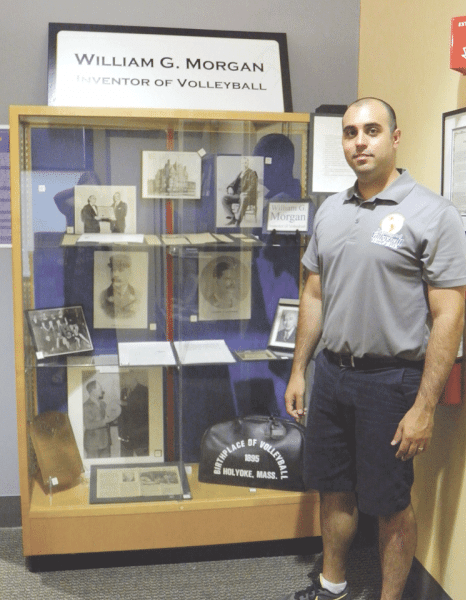
George Mulry stands in front of one of the many displays at the Volleyball Hall of Fame, which is seeing a rise in visitorship.

In 1895, William Morgan invented a game he called ‘mintonette’ for adult males at the Holyoke YMCA in hopes of retaining members who were leaving because they found another recently invented game, basketball, to be too violent.

“He was the Y’s physical-education director, and he created the sport so middle-aged businessmen would have something to do on their lunch break,” said George Mulry, executive director of the International Volleyball Hall of Fame in Holyoke. “The name of the game was changed to volleyball a year later by a professor at Springfield College, and today, it’s played by more than 880 million people. It is an international powerhouse sport, the second-most-popular game in the world, and one of the most popular at the Summer Olympics.”

Indeed, the game has come a long way since it began in a small gymnasium in Holyoke. It ranks as one of the top sports in nine countries, and the Fédération Internationale de Volleyball (FIVB) boasts 220 members, making it the largest sports federation in the world.

“I see more people smiling when they are playing volleyball than I do in any other sport; it’s a great game, and people at any level not only enjoy it, but appreciate the camaraderie it promotes,” said Charlie Diner, a member of the Hall’s board of directors. “Volleyball is a game that is fun.”

In many ways, the Hall of Fame created to honor the games, founder, legacy, and greatest players, coaches, and contributors has followed a somewhat similar path.

It started in a closet in Wistariahurst Museum, with some additional space in Holyoke City Hall for storage. It has moved a few times over the years, but has generally struggled to find adequate space and resources to properly tell the game’s intriguing story.

But the Hall has gained some much-needed momentum in recent years, building awareness, gaining visitorship, hosting more events, and adding new displays to capture the game’s progression and impact on society.

Visits to the museum are on the rise, and today, 4,000 to 5,000 guests embark on the self-guided tour inside the space each year. One thing they particularly enjoy is trying on the Gold Medal won by Maurico Lima at the 1992 Summer Olympics. The athlete was inducted in 2012 and donated the medal to the museum, along with other memorabilia.

“Many people pose for photos wearing it around their necks. It’s a popular thing to do,” Mulry said. “Donating items is a way for Hall of Famers to keep their legacy going.”

The nonprofit changed its name from the Holyoke Volleyball Hall of Fame to the International Volleyball Hall of Fame last year to reflect the fact that it has been inducting international players for some time. This will be the Hall’s 30th year holding the ceremonies, and so far, 125 inductees from 21 countries have been honored.

But the museum operates on a tight annual budget of $215,000. Mulry is the only full-time employee, and the museum relies heavily on fund-raisers, donations, and sponsors to keep it operational.

For this issue and its focus on sports and leisure, BusinessWest offers some quick history lessons on the sport of valleyball and a detailed look at how its shrine is scoring points as it strives to gain relevance and increase visitorship.

Spike in Interest

A display of large, colorful panels

A display of large, colorful panels with photos documents volleyball’s historical timeline.

Mulry told BusinessWest the Hall of Fame has always had close ties to Springfield College, a relationship that began when Morgan met James Naismith, who founded the game of basketball in 1891 while teaching at the International YMCA Training School (now Springfield College).

Morgan was on Northfield Mount Hermon’s football team, and after watching him play during a game at the college, Naismith successfully recruited the young athlete and brought him to Springfield College. “He had wanted to become an engineer, but abandoned those plans to teach physical education,” said Mulry.

After graduating, Morgan became director of physical education at the Holyoke YMCA and gave birth to his own game. “He borrowed from a lot of different sports to create it. He took the net from tennis, the ball from basketball, and the innings from baseball, which were used when the game was first played,” Mulry explained.

The game of mintonette received its new name after it was introduced to the public at a tournament at Springfield College that was held during a national conference for YMCA directors. “Professor Alfred Halsted decided volleyball was a more appropriate name because the players were volleying the ball across the net,” Mulry said. “After the demonstration, the game spread through the nation’s YMCAs, then was adopted by the military because the troops were looking for something to do that was not physically taxing.

“The YMCAs took the game to the Philippines and a few other countries, but the military introduced it to Europe and the rest of the world during World War I,” he went on, “and the level of play increased dramatically.”

The first national championship was held in 1922 at the Brooklyn YMCA, but the game was played on an almost a purely recreational basis through the early 1930s. However, a dramatic change occurred in April 1947, when representatives from 14 nations formed the FIVB and began recruiting teams from across the world to play in tournaments.

The first world championship for men was held in 1949, followed by the first world championship for women in 1952, and the game reached an even broader audience a dozen years later when it was introduced and played at the Tokyo Olympics by both men’s and women’s teams. Beach volleyball wasn’t added for another 32 years, however, and that inaugural Olympic competition took place in Atlanta.

Despite the game’s popularity, it wasn’t until the early ’70s that anyone proposed creating a museum to house memorabilia and recount the game’s history and the success of its players.

“At that time, the Greater Holyoke Chamber of Commerce was looking for ways to position the city and make it interesting to tourists,” Mulry noted, adding that, even though it established an ad hoc committee to promote the idea of Holyoke becoming home to a Volleyball Hall of Fame, the only thing it did was host an tournament for YMCA teams.

However, in 1978, the Holyoke Volleyball Hall of Fame was officially incorporated, and the first induction ceremony was held in 1985. But the organization still didn’t really have a home.

Points of Interest

“All it consisted of was a closet in Wistariahurst Museum and space in City Hall that was used to hold memorabilia,” Mulry said, adding that things changed in 1987, when the city of Holyoke gave the Hall an area in a building on Dwight Street to use free of charge. “The space was small, and the only things put on display were a few jerseys, nets, and uniforms,” Mulry said.

However, when the building was renovated a year later, the museum was given an area three times larger, which encompassed 4,500 square feet.

Mulry told BusinessWest it was only supposed to be a temporary home, and a capital campaign was launched with the goal of raising $27 million for a new building. “An architect was hired, and 15 possible sites were looked at before it became clear that it wasn’t feasible to raise that amount. So, the temporary space became our permanent home.”

Although a few exhibits were added at that time, the majority of displays, as well as the annual events the organization stages, have been developed over the last four years as officials take a proactive stance to attract new visitors and increase interest in the sport.

Their efforts were helped two years ago, when the museum received additional space in the building, which allowed them to move their archives there.

“We’re categorizing them, and we created a special exhibit titled ‘Volleyball in the Military,’ a 1964 Olympic exhibit, and we continue to put single artifacts on display,” Mulry said. “We also set an area aside for local events, and have hosted a lot of receptions over the past two years.”

Glass display cases

Glass display cases for current inductees house donated memorabilia, including photos, uniforms, medals, and other significant keepsakes.

Popular tournaments include the annual Police and Fire Challenge, which pits members of the New York City fire and police departments against teams composed up of emergency personnel from across New England. “There is a great rivalry between the Holyoke and Springfield teams,” Mulry said, adding that they are among many groups that participate.

During last year’s tournament, state Sen. Don Humason and state Rep. Aaron Vega unveiled a new exhibit titled “Humanity and Sports,” which was dedicated to two members of the New York City team who lost their lives in 9/11. “It has been one of our most well-received displays,” Mulry said.

In addition, the Hall of Fame began holding the Spalding Western Mass. Boys & Girls High School All-Star Games and the Massachusetts Boys & Girls High School All-State Games in Holyoke high schools four years ago, which include free clinics for players ages 10 to 12 throughout Western Mass.

To carry out these various programs, the Hall relies heavily on support from the community and, especially, Holyoke-based businesses and institutions.

“What we do would not be possible without the business community; they help offset our expenses, and we are certainly grateful for their help,” Mulry said, adding that the city of Holyoke, Holyoke Medical Center, and Holyoke Gas and Electric are major sponsors, while Dinn Brothers and the Dowd Agencies have been sponsors for more than a decade.

“They continue to make significant contributions and fund our induction ceremonies and events. PSI 91 is our newest sponsor, and we have many other local firms that support us,” he noted.

The organization also relies on an annual appeal, and donations are collected from 40 participating regions under the umbrella of USA Volleyball, which provides a dollar-for-dollar match, resulting in about $30,000 each year.

“They certainly see the value in having the museum on U.S. soil,” Mulry said, as he discussed how he and the 15 members of the board of directors are doing all they can to promote interest in the museum. “We’re working with the governing body of the Fédération Internationale de Volleyball to finalize an agreement that would make us the official repository for artifacts in the world. We expect make an announcement about it in October during the induction ceremony.”

That will allow the Hall to open its fund-raising to the 220 federations associated with the FIDV, and additional funds raised will be used to make improvements and update the displays.

Net Gains

“We’re the one true Volleyball Hall of Fame for the world, and anyone who is at all interested in the history of any sport should come here,” said Mulry. “We offer people a chance to see artifacts and learn about a sport that started out in Holyoke.”

Diner agreed. “We’re trying to expand awareness of the sport and its history to help grow the game, and this is a good place for community organizations to hold events. It’s steeped in Holyoke’s history,” he said.

It’s an intriguing history indeed, and it’s likely that Morgan could never have imagined that the simple game he created for aging businessmen would become a hugely popular sport played in nations throughout the world.

Meanwhile, the sport’s Hall of Fame still has considerable work to do to build its profile and visitorship, but it is making net gains — in many different respects.


Business of Aging Sections

Not A Primary Concern

Dr. Gina Luciano

Dr. Gina Luciano says there are many reasons why medical-school students are shying away from primary care, but she finds the specialty rewarding on many levels.

The problems causing a nationwide shortage of primary-care doctors — ranging from pay to prestige — are well-documented. Perhaps lesser-known are the reasons why medical students do choose this challenging, multi-faceted niche of medicine. Several young, local doctors have plenty to say about why they took the primary-care path at a time when a growing, aging population needs them most.

When asked about why students in medical school are shying away from careers in primary care, Dr. Gina Luciano was ready with an answer that would indicate she’s addressed that question more than a few times.

And she has.

That’s because, as co-director of the Primary Care Residency Track at Baystate Medical Center, the Springfield area’s only teaching hospital, she has chosen that field, she instructs those who have done the same, and, well, she promotes it as not merely a highly rewarding specialty, but one that is obviously critical within the broad healthcare system.

As for that answer … it comes it two parts basically, the first having to do with finances, and the second focusing on what she called the “culture of medicine.’ And they both help explain what most consider to be a problem and others are calling a crisis when it comes to attracting people to primary care.

“When most students graduate from medical school, they are hundreds of thousands of dollars in debt — I’ve had friends who are close to half a million dollars in debt by the time they graduate,” she noted while addressing the former. “And when you look at how people are paid, primary care physicians are near the bottom when you compare it to other specialties. So if you’re hundreds of thousands of dollars in debt, you may not want to go into primary care from a financial perspective.”

As for the latter, “many students and many residents, especially those who are excellent students, will be pushed to go into the most competitive fields,” she told BusinessWest, putting cardiology, gastroenterology, and other specialties in that category. “People will actually say to a year-two resident things like ‘why would you want to go into primary care? You’re so smart, you could go into ‘x’ or ‘y.’ I think there’s some sway from mentors and advisors in some institutions to go into something, quote, more competitive, unquote.”

As things turned out — although the decision certainly didn’t come easily, and, in fact, not until after she completed her residency at Baystate, one that included considerable work at the system’s High Street Health Clinic in Springfield, among other facilities — none of the above really mattered, or mattered enough to dissuade her from following what her heart told her she should do.

“The reason I chose primary care was because I realized that what I valued in my work was a continuous healing relationship with patients,” she explained. “I had developed these very important relationships with patients I had at High Street, and for me what’s most joyful about medicine is seeing people progress over time, and really understanding them — not just their health problems, but their whole person.”

Using that word relationship and the term whole person, or words to that effect, both early and often, other young doctors currently in or recently graduated from Baystate’s Primary Care Track, talked about why they chose the same career path as Luciano.

Dr. Kathryn Jobbins was actually roughly half-way through a residency in general surgery at the Cleveland Clinic, when she decided to not only switch gears career-wise, but return to the area where she grew up and the hospital where she worked years earlier.

“I thought I wanted that fast pace, but I missed talking to patients — and I missed my parents,” she said of her decision to begin another residency, this one in primary care, at Baystate. Fast forward more than three years, and she is now the internal medicine chief resident at Baystate and thus an instructor. Which means that, like Luciano, she splits her time between teaching and taking care of a number of patients at High Street, and, also like Luciano, greatly enjoys both aspects of her job description.

Among those she works with is Dr. Nicolas Cal, a second-year resident in the Primary Care Track who started down a path to be a neurosurgeon, but after some deep soul searching, changed course toward internal medicine, and specifically primary care.

“I decided to be 100% honest with myself … I didn’t think that neurosurgery was going to make me a very happy person 20 or 30 years from now, so I decided to change to primary care,” he said, adding that he has no regrets about that decision.

Dr. Kathryn Jobbins

Dr. Kathryn Jobbins says working in primary care offers a unique opportunity to work with patients over the course of many years, even decades.

Nor does Dr. Amulya Amirneni have any about hers. The native of India who immigrated here when she was 9 and later returned to her homeland for medical school, said she enjoys the very personal nature of primary care medicine, and said it amounts to “treating someone as an individual, as a person, and not as a disease.”

For this issue, BusinessWest talked with these young doctors about their decision to pursue a career in primary care, and about how and why they won’t be part of any problem or crisis in this field.

Course of Action

As she talked at length with BusinessWest, it became clear that Luciano has become as versed in talking about why she chose primary care as she is in explaining why increasing numbers of young people choosing to become doctors are not.

The relationship factor has a lot to do with it, she explained, noting again, that people in this field get to see the same patients over a span of years, if not decades, rather than perhaps a few days or even hours for those in other specialties. And thus they get to know those patients, and, as she said, the whole person.

“You get to see how their socio-economic background fits into their health, and how their family fits into their health, and how their culture fits into their health,” she explained, adding that the High Street facility, and Baystate Health in general, treat a wide demographic group and many challenged populations.

But there are several other aspects to this field that appeal to her, especially the variety of the work.

“The other reason I really like primary care is that it’s extremely broad,” she went on. “The pathology I see is really quite phenomenal; I see a variety of medical conditions at any given time.

“We have patients who have lived in the United States their whole lives, we have patients who have recently immigrated … this specialty really gives you the whole gamut of medicine,” she continued. “I enjoy that broad flavor.”

She also greatly enjoys teaching, and that’s why roughly half her time is spent seeing a portfolio, or panel, of perhaps 200 patients at the High Street facility, and the other half is spent helping young doctors navigate the three-year primary care residency track, which is part of the larger internal medicine residency.

There is room for 12 students in the program, or four a year, and there are currently seven enrolled in it, a number that speaks to the popularity of primary care, or lack thereof, said Luciano, adding that those who enter it understand those issues she detailed earlier, especially those involving finances and student loans.

But the doctors we spoke with said their choice has to do with passion, not money or prestige.

“I didn’t become a doctor for money … I became a doctor because I’m a bit of a science nerd and I like helping people,” said Jobbins, who probably spoke for everyone with those comments.

And that passion is a necessary ingredient in overcoming still another potential deterrent to those considering possible career paths within health care. Indeed, Luciano said those who enter a primary care track like Baystate’s often wind up working in residency clinics like High Street, which serve what she described as challenging populations for young doctors.

“Residency clinics have historically been places that have limited resources, the patients are disadvantaged, there’s a lot of pathology — there’s just not a lot of support for those patients,” she explained. “It’s generally Medicaid and Medicare patients, and taking care of those patients can be very tricky and challenging. So I think it’s very difficult for a resident who’s just starting out to navigate that system, but also to see how patients get better over time.

“It takes a longer time to see how you’ve had an impact,” she went on. “It’s much easier to be in the hospital and have someone come in to the hospital; you treat them, they get better, they leave — it’s much easier to see the impact that you’ve had on that patient. You don’t necessarily get to see that if you’re in a residency clinic.”

Dr. Nicolas Cal

Dr. Nicolas Cal transitioned into primary care after deciding that neurosurgery was not going to lead to the rewarding career he desired.

Jobbins agreed, but said she’s been motivated and energized by those challenges, and finds working in the High Street facility quite rewarding, and also intriguing.

Indeed, she said she’s very limited when it comes to Spanish, and doesn’t really know any of the other languages she encounters there, including Vietnamese, Chinese, and Nepalese, but has become quite adept at working with an interpreter in the room.

“I love the interpreters, and they do a great job,” she explained. “They do it almost live action — they’re talking while I’m talking. Some of my best relationships are with Hispanic patients, and we establish that through an interpreter.”

Overall, she’s looking forward to the prospect of treating the same patients for maybe 20 or 30 years, caring for them and being with them as different chapters in their lives unfold. And she said she’s already had a taste of how rewarding that can be.

“It’s wonderful, really,” she explained. “And it’s something you don’t really expect until someone stands up and hugs you or says ‘I just got my green card,’ or ‘my daughter is getting married.’ You see this very intimate snapshot into their life, which is very rewarding and a big part of why I decided to stay in primary care.”

Motivating Factors

And it is the unique nature of the primary care track, one that exposes residents to sub-specialists in their offices and teaches them not only about a wide range of medical conditions, but also teamwork and how and when to refer, that prompted her to pursue a teaching component through chief residency.

In that role, which she chose rather than moving directly into private practice, she serves as junior faculty and attending physician — essentially teaching while still learning.

“I fell in love with the program from an academic standpoint, and that’s why I decided to stay on as chief resident,” she said. “The goal is to do academic medicine with a focus on primary care when I’m done.”

For Cal, a native of Uruguay and graduate of New England Medical School in Maine, the immediate goal is to complete his residency and continue serving patients at the High Street facility.

While doing so, he envisions a career in primary care, hopefully in the Northeast. Like Luciano and Jobbins, he said he enjoys interacting with patients, seeing them over a long period of time, and helping them achieve progress with whatever health issues they may have.

“I love seeing my patients over and over and over again,” he explained. “I like dealing with different disease processes and knowing that I will have the time to follow up on my patient and adjust the treatment options to make the patient healthier.

“For example, yesterday, I had a patient at the clinic, a 34-year-old male, and I had to tell him he had colon cancer,” Cal went on. “As his primary physician and having to set up all the various specialists and appointments that he will have to go through — to me that’s very fulfilling.”

Delivering such news is one of many aspects of the job of a primary care physician, especially one in a setting like High Street, he went on, adding that another is being both “stern and compassionate,” as he helps patients within that constituency to understand various health problems and issues and compel them to take ownership of their own health.

“That’s a fine balance, and sometimes it can be frustrating for the physician knowing the patient may not be listening or fully grasping what will happen if he doesn’t change his habits,” he explained. “Our job is to motivate, and I like that part of the work.”

Amirneni hasn’t had many opportunities to motivate yet, having just started her residency a few months ago, but she said she’s looking forward to the opportunity.

“I definitely enjoy talking to patients and seeing them progress over time,” she said. “I know I’m more or less going against the trend when it comes to primary care, but the prospect of working that closely with patients and making a difference in their lives is what motivates me to stay in this field.”

“I’m really just getting started, so I’m hoping that I maintain that enthusiasm moving forward,” she went on, adding that, like Cal, she sees herself working in an outpatient setting when she completes her residency. “I really don’t think that will be a problem.”

Dr. Amulya Amirneni

Dr. Amulya Amirneni says primary care allows physicians to see their patients progress over time, something not afforded by other specialties.

Having enthusiasm and a desire to work closely with a patient are only a small part of the equation when it comes to the elements that make for a successful primary care physician, said Luciano, adding that these are simply pre-requisites.

“When I interview, I look for people who are compassionate, who are good team players, who want to make a difference in the world, who value relationships, and who want to see a continuous healing relationship with their patients,” she noted, adding that, like the passion that drives one to this specialty, many of those things can’t be taught.

“You can help people develop those skills, but for the most part, you either have them or you don’t,” she went on, adding that this is perhaps another reason why such individuals are in short supply.

Bottom Line

As she talked about her work and why she enjoys it so much, Jobbins said she’ll often challenge young residents thinking about sub-specializing to consider a different career track — hers.

“I’ll say, ‘why wouldn’t you do primary care? This kind of work is great,’” she told BusinessWest, adding that she gets a wide variety of responses to that query, most of them reflecting those two major points of concern that Luciano mentioned.

Whether more people will heed her advice in the years to come instead of following the money or the prestige remains to be seen. For now, there is a problem attracting people to this specialty, and, depending on one’s viewpoint, a crisis.

A solution will be hard to come by, but some young doctors are only interested in being part of one. They say they like forging relationships and treating the whole person.

So they have no primary concerns about their chosen field, literally or figuratively.

George O’Brien can be reached at [email protected]

Business of Aging Sections

Dementia and Will Contests

By TALIA K. LANDRY, Esq.

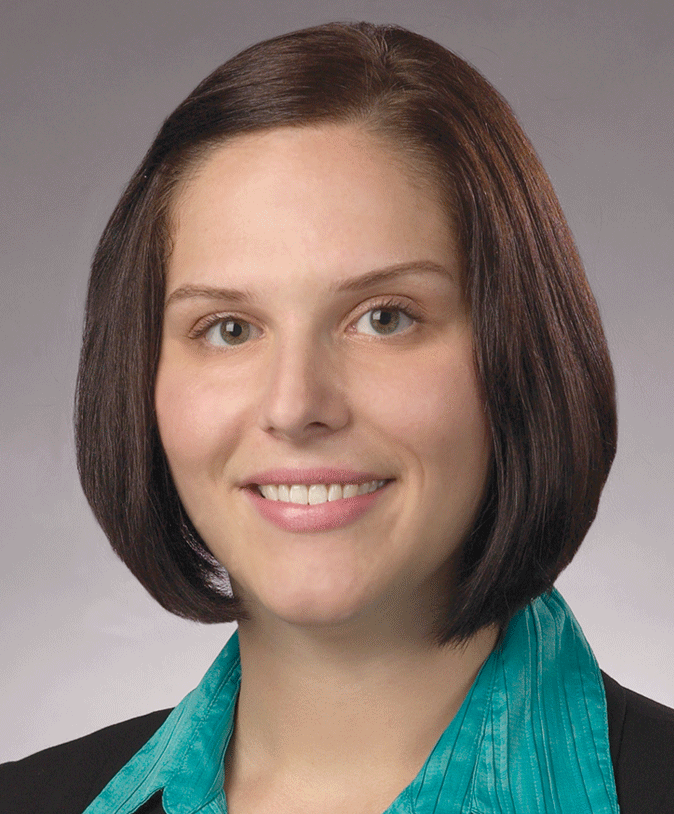
Talia K. Landry

Talia K. Landry

Most people have had some experience with a family member or friend who suffers from dementia. The term is used broadly to include a wide array of symptoms relating to decline in mental abilities. This often includes deterioration of both short- and long-term memory, along with lessening of cognitive and language skills, reasoning, and judgment.

Dementia can cause extreme stress and frustration not only for the individual affected, but for family, friends, and caretakers as well. Individuals experiencing dementia must often rely heavily on others for tasks they once accomplished independently. Some may even have difficulty communicating their needs and wishes. While the onset of dementia raises many questions related to daily life, it also raises special concerns in the context of estate planning.

It is important to note that, even when experiencing dementia, individuals are still capable of making many of their own financial and estate-planning decisions. The law presumes that we are competent unless a court declares otherwise. The law also recognizes that even individuals with severe dementia can have moments of clarity and lucidity sufficient to make decisions regarding their own affairs.

It is imperative, however, to use extreme caution when a person with dementia embarks upon the process of making or changing their end-of-life plans. In some cases, a dementia diagnosis received prior to executing documents can open the door for challenges down the road.

Consider the following example. Your mother is diagnosed with mild dementia — a diagnosis that appears in her medical records and history. She lives alone, and while she experiences some limited physical and mental decline that affects almost all seniors, she is still fiercely independent, albeit forgetful. Several years, grandchildren, and many happy memories later, she decides that she wants to update her last will and testament, which has not been addressed since her husband’s passing over a decade ago.

Your mother contacts her lawyer and has a new will prepared — one significantly different from the prior document. She leaves her house to your brother, who has helped maintain her home and yard over the years. She leaves you a sum of money equal in value to the house. She makes a decision not to leave anything for your estranged sister, who has not been in contact with her for many years. After your mother’s death, your sister becomes aware she will not inherit, and she decides to challenge the validity of your mother’s will. Although you feel sure that your mother was competent and lucid when she signed her will, the years-old diagnosis of mild dementia has the potential to undo her planning.


Click HERE to download a PDF list of area Senior-living Options


Specifically, the law allows will challenges based on lack of capacity, undue influence, and fraud. If enough uncertainty can be shown, a court may decide that an individual suffering from dementia was not competent to understand what she was signing, or was pressured or tricked into signing it. These challenges can often turn into heartbreaking and protracted legal battles between family members, involving tremendous amounts of time, energy, money, and emotion for all involved.

No one likes to think about their family fighting after their passing, especially over money or personal items. Unfortunately, the courts manage this type of case all too frequently. Many families do not believe a legal battle will ever affect them, but sometimes even the best situations can turn sour. This possibility should be considered in many cases, especially when distribution may not be equal. Many potential heirs may feel that unequal bequests are unfair, and therefore ripe for challenges.

In order to pre-empt or refute possible future challenges, there are several precautions available when an individual with dementia seeks to complete an estate plan. First, it is important to hire an attorney. Forms available online are not ‘one size fits all’ as they often claim, and do not come with the benefit of advice tailored to your unique needs. Not only will an attorney be able to provide specific advice in accordance with the law, but the attorney can also serve as a witness attesting to the individual’s competency and the reasons why there may be a deviation from a previous estate plan.

Second, no one should be present in the room when the individual is discussing their affairs or wishes with their attorney, other than unrelated witnesses and a notary at the time of signing. This protects the proposed heirs and makes it more difficult to challenge a plan on the grounds of undue influence. Third, when capacity may be an issue, it is a good idea to have witnesses prepare written statements the same day, explaining the circumstances and what they observed. Fourth, with permission of course, it may be a good idea to record the meeting, so there is some clear evidence of the elder’s competency and ability to express her wishes at the time of the meeting.

Finally, it is important to keep records, including recent medical records, so there is some written or documentary evidence, should an issue ever arise in the future.

While we can never completely anticipate what will happen after death, taking some of these simple precautions can serve as formidable defense against later challenges, and may help in honoring a loved one’s final wishes.


Attorney Talia K. Landry is an associate attorney with Bacon Wilson, P.C. and is a member of the firm’s litigation department. She assists clients in all areas of litigation, with a specialized focus in probate litigation, including will contests, and other estate disputes; (413) 781-0560; [email protected]

Business of Aging Sections

Ready or Not

By BARBARA CIRE

While rates of smoking and excessive drinking have declined among older Americans, prevalence of chronic disease has risen, and many older Americans are unprepared to afford the costs of long-term care in a nursing home, according to a report from the U.S. Census Bureau commissioned by the National Institutes of Health (NIH).

The report highlights those trends and others among America’s older population, now over 40 million and expected to more than double by mid-century, growing to 83.7 million people and one-fifth of the U.S. population by 2050.

Population trends and other national data about people 65 and older are presented in the report, which documents aging as quite varied in terms of how long people live, how well they age, their financial and educational status, their medical and long-term care and housing costs, where they live and with whom, and other factors important for aging and health.

Funded by the National Institute on Aging (NIA), part of NIH, the report draws heavily on data from the 2010 Census and other nationally representative surveys, such as the Current Population Survey, the American Community Survey, and the National Health Interview Survey. In addition, data from NIA-funded research was included in the report.

“This report series uniquely combines Census Bureau and other federal statistics with findings from NIA-supported studies on aging,” said Richard Suzman, director of the Division of Behavioral and Social Research at the NIA. The collaboration with Census has been of great value in developing social, economic, and demographic statistics on our aging population, with this edition highlighting an approaching crisis in caregiving — since the Baby Boomers had fewer children compared to their parents.”

A key aspect of the report is the effect that the aging of the Baby Boom generation — those born between 1946 and 1964 — will have on the U.S. population and on society in general. Boomers began to reach age 65 in 2011; between 2010 and 2020, the older generation is projected to grow more rapidly than in any other decade since 1900.

The report points out some critical health-related issues:

• Rates of smoking and excessive alcohol consumption have declined among those 65 and older, but the percentage of overweight and obese people has increased. Between 2003 and 2006, 72% of older men and 67% of older women were overweight or obese. Obesity is associated with increased rates of diabetes, arthritis, and impaired mobility, and in some cases with higher death rates.
• Research based on NIA’s Health and Retirement Study suggests that the prevalence of chronic diseases, such as high blood pressure, heart disease, chronic lung disease, and diabetes, increased among older people between 1998 and 2008. For example, in 2008, 41% of the older population had three or more chronic conditions, 51% had one or two, and only 8% had no chronic conditions.
• The cost of long-term care varies by care setting. The average cost of a private room in a nursing home was $229 per day or $83,585 per year in 2010. Less than one-fifth of older people have the personal financial resources to live in a nursing home for more than three years, and almost two-thirds cannot afford even one year. Medicare provides coverage in a skilled-nursing facility to older and disabled patients for short time periods following hospitalization. Medicaid covers long-term care in certified facilities for qualifying low-income seniors. In 2006, Medicaid paid for 43% of long-term care.

“Most of the long-term care provided to older people today comes from unpaid family members and friends,” noted Suzman. “Baby Boomers had far fewer children than their parents. Combined with higher divorce rates and disrupted family structures, this will result in fewer family members to provide long-term care in the future. This will become more serious as people live longer with conditions such as cancer, heart disease, and Alzheimer’s.”

Other areas covered in the report include economic characteristics, geographic distribution, social, and other characteristics.

“We hope this report will serve as a useful resource to policymakers, researchers, educators, students, and the public at large,” said Enrique Lamas, the Census Bureau’s associate director for demographic programs. “We sought to develop a comprehensive reference with up-to-date information from a variety of reliable sources.”

For more information on research, aging, and health, go to www.nia.nih.gov.

Barbara Cire is Public Affairs specialist for the National Institute on Aging.

Employment Sections

Not Feeling Well

SickLeaveDPart

When Massachusetts voters approved a law mandating paid sick leave for a vast swath of workers, many employers worried about the expenses and legal issues the new law would raise. While the final version of the law, which went into effect on July 1, smoothed over some of those concerns, anxieties remain, over issues ranging from higher operating costs to strained employee relations to the potential for abuse.

As new laws go, this one is causing employers to feel … well, a little sick.

“I would say many are confused and anxious,” said Mark Adams, director of HR Services for the Employers Assoc. of the NorthEast (EANE), when asked about member reaction to Massachusetts’ earned-sick-leave law, which took effect on July 1.

“They’re frustrated as well, in the sense that many of our members who have been doing the right thing, that already have paid sick-leave benefits, have had to unwind many aspects of that to come into compliance with some of the finer points of the law. There are some components built in that have given employers pause.”

At its heart, the law requires businesses with 11 or more employees to offer 40 hours of paid sick time per year. Companies with fewer than 11 employees must still provide 40 hours of sick leave, but it can be unpaid.

“We’ve done a number of briefings to educate companies, and for a lot of them, especially for companies that operate in multiple states, this has been particularly challenging,” Adams said, noting that many businesses with existing sick-leave policies must revamp their payroll systems and handbooks — mid-year, no less — to comply with the new law.

“They’ve provided this benefit all along, with favorable feedback from employees, and it costs time and effort to retool to meet the requirements,” he went on. “Then, you look at things being put forward on the federal level that would apply to federal contractors, a potential executive order that might require federal contractors to pay sick leave. If that ever comes to fruition, it would make it even more complicated to try to comply with both federal and state law, and you’re creating this ever-evolving patchwork of regulations on a benefit that, for many companies, they apply across the board. It makes it harder for many businesses that have been trying to do the right thing all along.”

Attorney Susan Fentin, a partner with the Springfield-based employment-law firm Skoler, Abbott & Presser, P.C., agreed with that assessment.

Susan Fentin

Susan Fentin says employers worry about the potential of employees abusing the new law, especially because workers are protected from employer retaliation for asserting their right to paid sick time.

“Most of our clients offer some form of paid leave,” she told BusinessWest. “The problem with the sick-leave law is, it expands the types of issues that somebody can take leave for; you’re not only allowed to take leave because of your own illness, but because of the illness of a parent, spouse, or parent in law. You can also take leave for medical or dental appointments, and to travel to and from these appointments. That’s obviously a need for many employees, but it’s generally not permissible under most employee sick-leave policies.

“So it’s an added burden,” she went on. “Perhaps a justifiable one, given the demands of society; individuals do have family members who are ill and need medical attention. But it’s nonetheless a burden on the employer.”

Attorney Olga Serafimova, an associate with Royal LLP, said the Northampton-based employment-law firm was peppered with questions leading up to July 1, as many clients were scrambling to adjust their policies, but it has been “dead silence” since, as though employers are holding their breaths and hoping they’ve instituted the changes correctly.

“Really it was smaller businesses that didn’t have leave policies previously that were affected the most,” she said. “A lot of those businesses fluctuate between 10 and 11 employees or around that number. For them, it’s an added expense.”

The attorney general’s office, she noted, did address many employer concerns in its final regulations, tightening up rules concerning sick-time accrual, employee justification for time off, and other details. “Of course, many businesses still feel it’s way too broad, way too generous, and a financial burden. And for smaller employees, this will have more of an impact.”

Potential for Abuse

That issue of justification for time off — in other words, the doctor’s note — is one element of the law that has employers on edge, because of its potential to breed abuse. The draft regulations stated that employees are not required to produce proof of illness until the time off exceeds 24 hours.

“For a part-time employee, that could mean more than a week, depending on how long the shifts are,” Serafimova said. “In the final regulations, it was changed to 24 consecutive hours or three consecutive days, even for part-timers. That was something the attorney general’s office picked up on and adjusted.”

The three-day rule, however, promises to be irksome to many employers, Fentin said.

“Previously, if an employee had an unplanned absence, the employer might have said, ‘I need a doctor’s note for that.’ Now the employee isn’t required to get a doctor’s note until, at minimum, a three-day absence.

“We represent management, so we’re always a shade cynical,” she went on. “The potential for abuse is pretty high with this law, the way it’s been drafted. Some changes to the draft regulations made it a little more palatable. For instance, now, the minimum amount of time you can use is an hour, so you can’t walk in 15 minutes late and say, ‘I was sick.’

“Of course,” she noted, “you can walk in an hour late and say, ‘I was sick.’ The employer would just have to forgive that. Frankly, somebody could take every Friday afternoon off all summer long because of so-called ‘medical appointments.’”

Serafimova noted that some employers might opt to provide 40 hours of sick time right at the beginning of employment, instead of having it accrue gradually, so they don’t have to change their payroll systems. “But that goes to the question about abuse. Giving one week up front creates the possibility for people to use it up and move on to the next business.”

This is especially true for employers with seasonal or temporary employees, she added. “As much as it sounds like it would make things simpler, [front-loading sick time] wouldn’t be a benefit for many employers. It saves them some money in adjusting their payroll systems, but they may end up paying anyway to people who are only there for a short period of time and take their sick leave, then give their notice. The requirements are so broad, there’s little limitation on how you can use sick leave. Businesses have had to really think about what is the better option.”


Click HERE to download a PDF chart of the region’s Employment Agencies


On top of that, Adams said, the law might turn out to be an employee-relations minefield for businesses that had existing sick-leave policies in place.

“Many companies are dealing with employees who might have false expectations based on what they’ve heard in the media, who think they’re getting more benefits than they’re accustomed to, when really, that’s not the case,” he explained. “These companies have already been providing fair and competitive benefits, but now they’re dealing with angst from employees who aren’t getting anything additional — but, frankly, never asked for it.”

Serafimova agreed. “Some employers who had a paid-time-off policy in place opted to reduce it and make 40 hours of it sick leave,” she said. “So people who were previously offered three weeks vacation time, saw that changed to two weeks vacation and one week sick leave. Unfortunately, while that keeps the expenses of the employer the same, the perception in the workforce is that they lost a benefit, and that creates discontent and morale issues. A lot of businesses are struggling that that decision.”

It’s just one way, Adams said, that “a law aimed at a small segment of businesses has created burdens for a large number of them.”

Navigating a Minefield

A large number indeed, to hear Fentin tell it.

“The way this is written, it’s the most generous, but, from an employer perspective, the most draconian, most burdensome sick-leave law in any state in the country — including California, which says a lot.”

Where it becomes dangerous for employers and not simply burdensome is in the law’s anti-retaliation language, and the potential for lawsuits if an employer tries to infringe upon a worker’s leave rights — or even the perception of infringement.

“They said they would not come down on employers for a while, give everyone some time to work out the bugs,” she said, regarding communications from the attorney general’s office. “That was encouraging. How long that lasts, we don’t know. All it takes is a couple of employees filing complaints.”

Serafimova said her clients, too, are anxious to see how issues play out.

Olga Serafimova

Olga Serafimova says the attorney general’s final regulations addressed some initial concerns about the sick-leave law, but many businesses still find the measure burdensome.

“The final regulations say you can discipline an employee who commits fraud or abuse, that people cannot use sick leave as an excuse to come late to work. At the same time, the law says you can’t punish an employee for exercising sick leave. What is abuse to one side may be the exercise of their rights to another. To me, this sounds like future litigation waiting to happen.

“We’re going to wait and see how that plays out because, again, it is enforced by the Attorney General’s Office, and if there’s any basis [for a complaint], they will proceed to investigate. On one hand, that’s good for someone who’s fighting over their sick time at work. But, at the same time, it opens the proverbial floodgates for anyone who’s not happy with their employer for any reason.”

And while defending against a complaint could be expensive for an employer, it’a free for the employee, she added. “Ultimately, it falls on the employer to defend against a meritless claim, because there’s absolutely no barrier to filing a claim, not even a $5 filing fee.”

That’s why it’s important that human-resources staff train managers in how to handle leave requests in this new environment, Serafimova said.

“If I come up to the employer and say, ‘I’m not feeling well today. Can I go home?’ I have asked for job-protected sick leave,” she explained. “Now, if I am late three times in one week, or say, ‘I’m not feeling well, can I go home?’ an untrained manager might say, ‘oh, not again, I’m going to discipline you.’ But, with the job protection this law provides, you can’t do that anymore. If people aren’t properly trained, it could lead to trouble for the employer.”

Fentin has been sharing similar advice. “We like keeping clients out of trouble; that’s much easier than defending them when they get in trouble,” she told BusinessWest. “We want them to do the right thing. We’re all on the same page.”

Still, she added, “we’re really in the weeds here. This is going to be a problem for employers for a long time going forward. Although a lot of my clients have made changes, they’re waiting to see what happens.”

That’s true with EANE members as well, Adams said. “Eventually, it will become easier to manage, but until we get through this transition, we’re going to see considerable frustration and confusion for the foreseeable future as companies continue to come to grips with the law.”

Joseph Bednar can be reached at [email protected]

Employment Sections

Beware Section 150

By PETER VICKERY, Esq.

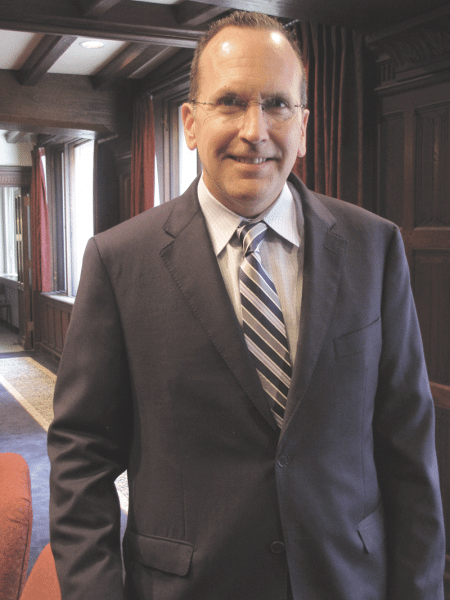
Peter Vickery

Peter Vickery

How much could an employer end up paying for violating the anti-retaliation provisions of the Wage Act? Much more than you might expect.

A recent case in Worcester Superior Court involved an employer that fired an employee over her request for unpaid wages in the amount $3,750. To come close to the damages the court awarded the employee, multiply that figure by 50.

The name of the case is Wessell v. Mink Brook Associates. The plaintiff, Mary Ellen Wessell, served as the business manager for a home-restoration company called Mink Brook, whose president is Robert Stone. Wessell’s annual salary was $50,000. In late 2011, Wessell told Stone she believed one of his employees was stealing from the company.

In January 2012, Stone (who seems not to have shared her suspicions) demoted Wessell and installed as business manager the very employee Wessell suspected of stealing. Two months later, Stone refused to issue Wessell her paycheck. When they met — in the presence of Wessell’s new superior, whom she had accused of stealing — Stone accused Wessell herself of stealing, and fired her. At that point, in March 2012, the amount due Wessell in wages and unused vacation time was $3,750.

A little over two years later, in January 2014, the trial judge told the jury, “if you find that Ms. Wessell was terminated unlawfully from making a complaint regarding the Wage Act, then she is entitled to damages of the amount she would have earned if she had not been wrongfully discharged from the date of her termination, forward to this date.” The final damage award, after factoring in the termination-to-trial period (and deducting the $54,000 Wessell had earned elsewhere after her firing from Mink Brook) and then trebling the figure: an eye-watering $187,111.38.

Affirming the decision, the Appeals Court held that “an employee terminated by an employer for asserting a wage right may recover damages stemming from the termination … [which] may include earnings from the date of termination up to trial.” So the employer is liable not only for what it should have paid prior to termination but also for everything the employee would have earned during the years between termination and trial, minus whatever the employee actually earned elsewhere in the meantime.

That could be a sizable sum. It certainly was in Wessell v. Mink Brook Associates.

In arriving at this decision to affirm the judgment, the Appeals Court interpreted three sections of the Wage Act: Sections 148A, 27C, and 150. Section 148A begins, “no employee shall be penalized by an employer in any way as a result of any action on the part of an employee to seek his or her rights under the wages and hours provisions of this chapter.” It goes on to provide that any employer that fires or otherwise discriminates against an employee who has sought his or her rights “shall be punished or shall be subject to a civil citation or order as provided in section 27C.”

According to the defense, this language should limit the range of penalties available against Mink Brook to the civil and criminal sanctions described in Section 27C, and rule out the possibility of an award for back pay. The court rejected this argument, pointing to Section 150, which reads, “an employee claiming to be aggrieved by a violation of sections … 148A … may … institute and prosecute … a civil action for injunctive relief, for any damages incurred, and for any lost wages and other benefits … An employee so aggrieved who prevails in such an action shall be awarded treble damages, as liquidated damages, for any lost wages and other benefits and shall also be awarded the costs of the litigation and reasonable attorneys’ fees.”

So, although Section 27C imposes certain penalties, those penalties are not — contrary to the defense’s contention — exclusive. They could only be exclusive if the Legislature had not enacted Section 150 as well. But the Legislature did enact Section 150, whose clear and unambiguous language enables an employee to obtain “treble damages … for any lost wages.” Does that term ‘lost wages’ include back pay? Yes, said the court.

In a nutshell, if an employee rightfully complains about owed wages, and the employer responds by firing her, the employer had better hope that the fired employee finds another (highly paid) job, and fast. Even better, at the risk of stating the obvious, employers should refrain from retaliating against employees to whom they owe wages.

Finally, it is worth noting that Section 150 also applies to the earned-sick-time law, which went into effect at the beginning of July (see related story, page 28). This means employers violating any aspect of the new law face the prospect of treble damages and attorneys’ fees. For example, the sick-time law does not allow employers to ask for a doctor’s note if an employee has been out ‘sick’ for less than 24 hours. Demanding a doctor’s note in those circumstances could amount to interfering with, retraining, or denying the exercise of that employee’s rights, as could using the absence as a ‘negative factor’ when conducting a performance evaluation or when considering promotion, discipline, or termination.

Certainly, the attorney general’s sick-time regulations permit employers to seek verification if they suspect abuse of the law in some situations. But those situations are quite narrow in scope. For example, if an employer has “reasonable suspicion” that an employee aged 17 or younger is misusing sick time, the employer can seek verification from a parent or guardian. And an employer may discipline an employee of any age who is “exhibiting a clear pattern of taking leave just before or after a weekend, vacation, or holiday.”

But if the party night of choice happens to become, say, Monday instead of Friday, Saturday, or Sunday (behavioral norms having been known to adapt to changes in a legal regime), may the employer take disciplinary action upon observing a clear pattern of calling in sick on Tuesday mornings? Not under the current regulations, and not without casting a wary glance over the shoulder at Section 150.

Peter Vickery, Esq. is an employment-law specialist based in Amherst; (413) 549-9933.

Employment Sections

Raising the Stakes

By JOHN GANNON

John S. Gannon

John S. Gannon

The U.S. Department of Labor (DOL) recently proposed changes to the Fair Labor Standards Act (FLSA) that will impact payroll considerations for a majority of businesses across the country.

The changes will guarantee overtime pay for almost all employees making less than $50,440 per year in base rate pay, regardless of job duties or title. The changes are expected to take effect in early 2016.

FLSA Overtime Rules

Employees may be classified as exempt from the FLSA’s overtime compensation requirement — meaning they are not entitled to time-and-a-half when working more than 40 hours in a week — if they meet one of the FLSA’s exemptions.

The most commonly relied-upon exemptions are the ‘white collar’ exemptions, which apply to executive, administrative, professional, and outside sales employees. Exempt employees must meet the “primary duties” test for each exemption, and need to be paid at or above the minimum salary threshold, which is currently $23,660 per year ($455 per week).

There are narrow exceptions to the minimum salary threshold for certain professional employees and those working in outside sales. Other than those exceptions, employees who are paid less than the minimum salary threshold must be paid an overtime premium if they work more than 40 hours in a workweek. The FLSA also requires more rigorous record keeping when tracking the hours worked and compensation of non-exempt employees.

Minimum Salary Threshold Set to Double

Last month, the DOL released a proposed rule that would increase the annual minimum salary threshold to $50,440 ($970 per week) in 2016.

Businesses expected an increase in this salary threshold, although perhaps not to the $50,440 level. In March 2014, President Obama had directed the secretary of Labor to modernize the FLSA’s overtime rules for white-collar workers because those rules did not reflect the reality of the modern economy. According to the president, millions of Americans lack the protection of overtime compensation because of the outdated regulations.

The new minimum salary threshold represents the 40th percentile of weekly earnings for full-time salaried workers, according to data provided by the Bureau of Labor Statistics. In its proposed rule, the DOL explained that it has increased the salary level only seven times — in 1940, 1949, 1958, 1963, 1970, 1975, and 2004.

“The lapses between rulemakings have resulted in salary levels that are based on outdated salary data and thus ill-equipped to help employers assess which employees are unlikely to meet the duties tests for the exemptions,” according to the department.

The DOL estimates that almost 5 million workers will no longer qualify as exempt based on the new salary level. Notably, the DOL also proposes automatically updating to the minimum salary threshold annually so that it does not become outdated in a few years.

The DOL plans to publish a notice with the new salary level at least 60 days before the updated rates would become effective.

No Changes to Exempt Duties

The proposed rules do not alter any of the white-collar job duties, or otherwise change the exempt-duties tests. There was speculation that the duties tests would be modified to ensure that more managerial employees, in particular those who are ‘working supervisors,’ would be entitled to overtime. This did not happen; however, the DOL is soliciting questions from the public about how best to alter the duties tests.

Next Steps

Although these are only proposed changes, which must go through a public notice-and-comment rule-making process, we anticipate little if any changes to the new proposed minimum salary threshold. Those who are interested in submitting comments should visit www.regulations.gov and reference rule Identification Number 1235-AA11. The public has until Sept. 4 to comment.

Employers should start budgeting for these changes now. Some options include:

• Increasing base salaries to $50,440 for those employees who work any overtime, to preserve exempt status, with plans to increase incrementally every year. This is the easiest solution, but might not be in everyone’s 2016 budget;
• Keep salaries the same and start paying time and a half when employees making less than $50,440 work more than 40 hours a week. This is another quick fix, but could be problematic if you anticipate the employee will work a lot of overtime;
• Limit or eliminate overtime opportunities for employees earning less than $50,440. This option involves careful planning to be sure you have sufficient labor power to meet business demands. Employers who go this route may have to hire more workers; or
• Establish your employees’ current hourly rate, and reduce that rate in 2016, taking into consideration anticipated overtime costs. This option may net good results from a budgeting perspective, but will certainly impact employee morale.

If you need assistance planning for the FLSA overtime changes, contact employment counsel for guidance.

John S. Gannon is an associate with Skoler, Abbott &; Presser, P.C., and practices in the firm’s Springfield office. Since joining the firm in 2011, Gannon has defended employers against claims of discrimination, retaliation, harassment, wrongful-termination claims, as well as actions arising under the Family Medical Leave Act and wage-and-hour law. He also has experience with lawsuits seeking to enforce restrictive covenants and protect trade secrets; (413) 737-4753;[email protected]

Features

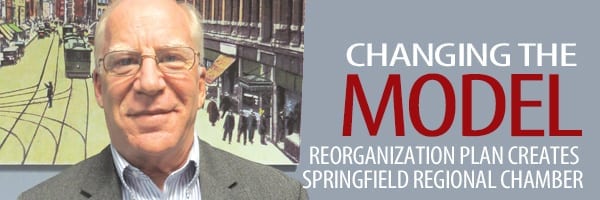
Changing the Model

Jeff Ciuffreda

Jeff Ciuffreda says the ‘affiliated’ model for chambers is outdated, and the regional concept being proposed is more efficient.

The Affiliated Chambers of Commerce of Greater Springfield and the Springfield Chamber of Commerce will soon merge into an entity to be known as the Springfield Regional Chamber. The reorganization plan is to designed to reduce confusion and bureaucracy, and chamber administrators believe it will ultimately create a more efficient, and more powerful, regional entity.

As he talked about what amounts to a long-discussed — and in many ways long-overdue — reorganization plan and renaming of the Affiliated Chambers of Commerce of Greater Springfield (ACCGS), Jeff Ciuffreda, president of that organization, used several methods to explain why this move was deemed necessary.

Easily the most effective came as he recounted a meeting of the Springfield Chamber of Commerce’s board of directors last year, and, more specifically, a discussion of that entity’s finances.

“Four or five board members said, ‘wait, I thought I was a member of the Springfield Chamber,’” he recalled. “When I said ‘you are,’ they said, ‘well, how come my money goes to the ACCGS?’ After 20 minutes of discussion, I said to myself, ‘if the board doesn’t understand this structure, then how is the member on the street going to understand it?’”

To bring an end to this confusion and put in place what Ciuffreda believes is a more efficient and sustainable model of chamber organization and management, the ACCGS and the Springfield Chamber will be effectively merged into something called the Springfield Regional Chamber of Commerce.

A formal vote on the proposal involving members of those chambers has been slated for Aug. 24, and Ciuffreda is confident of passage for several reasons, but especially his belief that the merger makes sense — on several levels. Overall, it will eliminate unneeded layers of bureaucracy and create a more efficient chamber, with more resources flowing directly to member services, all while maintaining and also enhancing a regional emphasis, while maintaining a focus on the region’s business, civic, and cultural hub.

“In the old, affiliated model, you had separate boards with separate bylaws, with all the powers, if you will, that they had to set rates and act on their own,” Ciuffreda explained. “Now, you’ll have one board that’s centered on Springfield but focused on the entire region; there will be one board, one set of bylaws.

The reorganization amounts to an acknowledgement that the ‘affiliate’ model of chamber organization, popular decades ago, and in place in Greater Springfield since the mid-’90s, has essentially run its course, said Ciuffreda.

Within that model, he noted, the umbrella organization acts unofficially, and even officially, as a management company, taking a large percentage of dues paid by the members of affiliates in exchange for providing a variety of services.

In this different, regional format, dues — the entire amount — are paid directly to the chamber in question, said Ciuffreda, adding that this puts more money to work for members.

Meanwhile, the two words in the new name are both important.

Indeed, Springfield, the area’s largest city and business hub, will be a focal point of its events and involvement with business-related issues (as it is now with the ACCGS), but there will be regional emphasis as well. And that term works better, he believes, than ‘Greater,’ which has ben attached to most area cities’ chambers, and even Franklin County’s.

“Members may not necessarily see that it’s a better-operating entity,” Ciuffreda noted, “but they will see more clarity, and if I’m a member from Agawam, I’d feel a little better that I’m part of the Springfield Regional Chamber, rather than the Springfield Chamber.”

He added that members of the renamed organization should feel more empowered by that word ‘regional.’

“I think this [name] gives members not from Springfield a clearer voice in the region,” he said. “They joined that chamber because they obviously felt they needed to be connected to Springfield. But now, when they join, I think they’ll be a little more active in our programming because this will be known as the Springfield Regional Chamber; I think this will give them more of an ownership stake.”

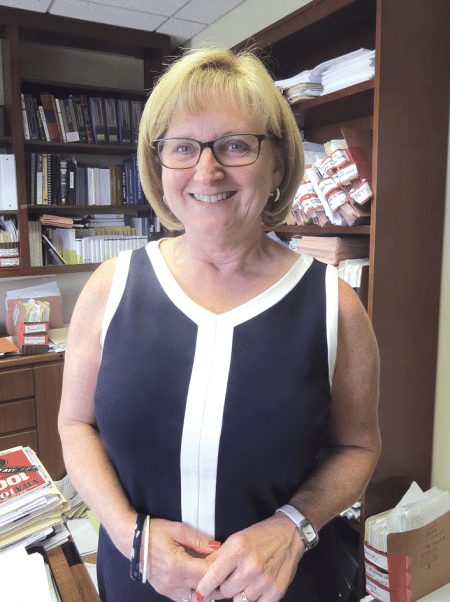
Ellen Freyman

Ellen Freyman says the reorganization plan will reduce confusion — and several unneeded layers of bureaucracy.

The board of the other ACCGS affiliate, the East of the River Five Town Chamber of Commerce (ERC5), composed of businesses primarily in East Longmeadow, Longmeadow, Hampden, Wilbraham, and Ludlow, has voted not to merge into this new regional chamber, said Ciuffreda, adding that it will become a separate entity, and members will no longer have access to the full benefits and services offered through the new Springfield Regional Chamber. However, under an existing service agreement, ERC5 members in good standing can continue to receive services, but only through their current membership term.

For this issue, BusinessWest looks at the chamber’s reorganization plan and what it means for the region and its business community.

Getting Down to Business

Ciuffreda told BusinessWest that discussions concerning a reorganization have been ongoing for several years now.

They picked up in intensity in the spring of 2013 as part of an elaborate strategic planning process — undertaken with the assistance of a facilitator — that was designed to create a blueprint for the next several years.

That planning process examined the current state of organization and prospects for the future, while also researching and benchmarking other models, said Ellen Freyman, chairman of the ACCGS board of directors since last year.

Freyman would eventually appoint a committee to more closely examine the structure of the ACCGS, explore options, and ultimately make a recommendation for the best course moving forward.

“We looked at best practices, talked to the leaders of several chambers, and came up with a regional chamber concept that would essentially have one chamber serving many communities,” said Ciuffreda, adding that the committee completed its work and submitted its recommendation roughly four months ago, based on a model adopted by the chamber in Jacksonville, Fla., among others.

“This structure,” he added, “would result in a clearer and strengthened vision, provide for stronger collaborations, better reflect the regional thinking of the membership, and enable the chamber to grow so that its members could as well.

“The affiliation model was put in place here several years ago, and many chambers looked at that model,” he went on. “But it never really caught on, and, quite frankly, for us, I think the board thought it had outlived its usefulness.”

The vote to reorganize continues a pattern of evolution concerning the chamber of commerce landscape over the past few decades, said Ciuffreda, adding that, only a few years ago, most area communities had their own chambers, which provided both a source of pride and identity.

Only a decade ago, Agawam had its own chamber, he explained, as did West Springfield and Ludlow. Hampden and Wilbraham shared a chamber, as did Longmeadow and East Longmeadow. Each of these entities existed as an affiliate of the ACCGS, while chambers in other communities, such as Chicopee and Holyoke, considered becoming affiliates but ultimately chose not to. Westfield became an affiliate for several years, but eventually went back to being a separate entity and remains one today.

A number of factors, from operating costs to declining membership in chambers nationally, resulted in consolidation and formation of the West of the River (Agawam and West Springfield) and East of the River Chambers, Ciuffreda went on, noting that the former severed its ties with the ACCGS in 2011 and became a separate entity.

Giving Voice

Many of those same factors — especially cost and bureaucracy — played roles in the planned reorganization to the Springfield Regional Chamber, he said, adding, again, that the new structure should enable more resources (in the form of membership fees) to be channeled directly into member services.

He used the example of a company paying fees to the current Springfield Chamber of Commerce as an example.

“The ACCGS is really the management corporation; all the services are provided for by the ACCGS, and it had all the expenses,” he explained. “But some of your dues would always go back to the Springfield chamber.

“So if you paid $360 as a member, the Springfield chamber would keep $60, and $300 would go to the ACCGS,” he went, using a hypothetical situation to keep things simple. “Now, all of the funds will be kept by the Springfield Regional Chamber, so we think we’ll be able to provide more services; before, the Springfield chamber could keep part of that money, but they had no expenses to cover.”

Beyond the financial shortcomings of the affiliated structure, there was also considerable confusion — as evidenced by that Springfield Chamber board meeting referenced above — concerning the various entities, their roles, their finances, and more, said Freyman.

“Who can tell you what the Springfield Chamber or the ACCGS is and how the structure works?” she asked. “With this new model, there is much more clarity concerning mission.”

While some things will change with the reorganization, said Ciuffreda, most things won’t.

For starters, membership in the new regional chamber will approximate the size of the current Springfield Chamber, which has roughly 525 members, he said, adding quickly that he anticipates this number will grow. And it will mirror the current demographic breakdown of that organization, he went on, adding that eight to 10 zip codes are currently represented by the membership.

Most importantly, though, the chamber will still be a regional entity, he said, adding that it works with elected officials in communities that have their own chambers, and takes a regional approach to matters ranging from the I-91 reconstruction project to casinos to advocacy on behalf of military bases such as Westover Air Reserve Base and the Air National Guard Base at Barnes Municipal Airport.

But it will have more power to operate effectively on a regional basis because the new structure provides it with that authority, Cuiffreda noted, adding that, in the current structure, more power lies with the affiliate members.

The Springfield Regional Chamber will also continue to collaborate with other area chambers on a host of initiatives, including efforts to promote and inform area businesses, he said, adding that the new model will also make it easier to partner with other business-related groups, such as Northampton Area Young Professionals, because of its more regional focus and reach.

The Bottom Line

Ciuffreda told BusinessWest that, while the single-chamber theory of the universe, or at least Greater Springfield, has long made a good deal of sense, efforts to make such a change have been challenged by fears that those in some communities would feel left out or overlooked if they were in a chamber with the name ‘Springfield’ in front of it.

Thus, the affiliated structure lived on, despite its shortcomings and layers of bureaucracy. But he believes the times, and the conditions, are right for a much-needed change.

“As our economy changed, as our region changed, the mayors of other cities like Agawam and West Springfield would say, ‘as Springfield goes, so goes the Valley, so goes the region,’” he explained. “So it was time to finally say, ‘we need to make the chamber reflective of how we’re operating, which is regionally.’”

Time will obviously tell if this was the right move, but Ciuffreda is confident that the new organizational structure will be a win-win for all those involved.

George O’Brien can be reached at [email protected]

Community Spotlight Features

Community Spotlight: Westfield, Mass.

Bob Russell and Jeffrey Smith

Bob Russell and Jeffrey Smith say new zoning was created so Rice Fruit Farm could reopen after sitting vacant for four years, one of many positive developments in the community.

Bob Russell grew up in Wilbraham and has spent most of his life in the town. The selectman is proud of his community and cites work by officials that encourages business growth while keeping a close eye on retaining and expanding the vast amounts of open space and recreational opportunities that can be found on walking and hiking trails crisscrossing the community’s 22 square miles.

He told BusinessWest a 50-year-old time capsule was recently unearthed that contained a statement by town officials who predicted the population would rise to 40,000 residents. “It is significantly less, which speaks to responsible planning and management,” Russell said. “We are not completely built out like some other towns.”

Jeffrey Smith concurred. “We allow for responsible growth and development, particularly in our business districts, which include the town center and Boston Road,” said the chair of the Planning Board. “There are opportunities to construct new homes on single lots and in new subdivisions as well as condominiums. But we put a high value on open space and recreation.”

This value statement was reiterated by Selectman Susan Bunnell.

“We’re in the early stages of another wave of economic development, and informal discussions are taking place between the Select Board and business leaders about how to proceed,” she noted, adding that the state brought fiber-optic cable into the town via the Mass Broadband Initiative activated in the spring, and a committee is exploring whether to expand it because it is currently limited to town buildings and schools.

“We have a municipal light plant that was created last year and are positioned to move to the next level, but we have to determine how to move forward; fiber-optic cable is something businesses have a need for, but any expansion would be done in a measured manner,” she told BusinessWest, adding that she recently attended a statewide seminar on the topic.

But officials also tout the large amount of available space for new businesses and cite potential for success, because much of it is concentrated on the busy stretch of Boston Road that runs through town.

“We have good access to state highways and the Mass Turnpike and good utilities; high-quality water from the Quabbin and adequate sewer capacity,” said Planning Director John Pearsall.

Smith added that Dunkin Donuts just completed a major renovation and expanded its parking lot. “They worked with the Planning Board to come up with a good design,” he recalled, adding that Lumber Liquidators next door has done well, as has the new, $5 million Balise Ford dealership built two years ago.

“There is also a textile mill on Cottage Street off Boston Road under new ownership, and we are in discussion about potential new uses for it,” Smith said, noting that the 200,000-square-foot building sits on 10 acres.

For this issue, BusinessWest continues its Community Spotlight series with an in-depth look at Wilbraham and its ongoing balancing act.

Prioritized Goals

Wilbraham officials say the town welcomes new business, and zone changes are made on a regular basis to accommodate growth.

“Changes were recently passed at the annual town meeting to allow for more retail business in two zones in the center,” said Russell. “They were combined, which will allow properties to be used for retail sales and food-based operations where they could not be established before.”

Pearsall added that the town has a long history of changing its zoning to allow for development, and pointed to the engineering firm FloDesign as an example.

“It was built on abandoned property that was zoned residential; we developed new zoning to allow it to be reused for a business, but were sensitive to the fact that it is surrounded by a residential area,” he told BusinessWest. “It’s the norm in Wilbraham to make adjustments and tweak things to adjust to the changing business climate.”

New zoning has also been put in place for two solar farms. One is permitted at the former landfill, while the second is under review and would be built on private land. “Plus, we constantly approve requests for new residential solar systems,” Smith said.

The iconic Rice Fruit Farm reopened in April, thanks to specific zoning changes created to allow for an adaptive reuse of the property, which includes a farm stand, a food-service operation, and some retail.

“The 100-year-old farm is a landmark in Wilbraham and had been vacant for four years. But the Maloni family came to us with a vision to renovate the existing buildings and create a viable business that would become part of the community, and the town worked with them to make it happen,” Smith explained.

Russell said the opening was well-attended, and residents are glad to see the property brought back to life. “We created a heritage-farmland bylaw to make it happen, and an antique store opened on the property about a year ago.”

The town also allocated $100,000 last year for improvements to sidewalks on Main Street, and hope to expand the project. “The new sidewalks run right past Rice Fruit Farm, and the changes are consistent with items outlined by the Vision Task Force,” Russell said, referring to a 2013 document titled “Wilbraham Looks Forward,” which took residents’ opinions into careful consideration.

Russell says the open space in Wilbraham is one of its main attributes and must be preserved.

“In 2008, Money magazine listed us as one of the best towns to live in, and one of the main factors was our access to open space; there are contiguous hiking trails from one end of town to the other, and we are constantly working to improve them,” he explained. “The town has continued to purchase land when it becomes available, despite the fact that the state cut back on reimbursements.”

To that end, Wilbraham recently approved the new position of land-management coordinator, an official who will inventory all vacant land and work to improve access and recreational opportunities throughout the community.

“Some of the land is under forest management, and we have received money from the sale of timber, which is used to make improvements,” Smith noted.

Officials said the tornado, microburst, and October snowstorm in 2011 pointed out the need for preventive maintenance, and Wilbraham is hosting an annual conference next month for municipal officials, foresters, land trusts, and other groups, which will offer local, state, and regional perspectives on town forests and take participants on a field tour of the community’s forestland to highlight methods and results of sustainable management.

Officials also noted there has been a decided uptick in residential building in the past year.

“The Planning Board recently approved a zoning change for 11 single-family homes in a development that will be called Falcon Meadows,” said Smith. “The land was home to the former Bennett’s Turkey Farm and has sat empty for more than a decade.”

Another subdivision, called Westminster Court, is in the preliminary planning stages and will have seven to 10 lots. Meanwhile, a subdivision known as Carla Lane, which was approved three years ago, is entering Phase III of development. In addition, four lots are still available in the Washington Heights subdivision.

“Building has increased in the past several years, and a number of new townhouses are being built at the Gardens, an over-55 community,” said Building Inspector Lance Trevallion. “Fourteen new single-family building permits have already been issued this year, and I can foresee 15 more by the end of the year.”

He added that the town has a very active and vibrant community garden on a 300-acre parcel of land that is under forest management, and a new greenhouse was just built with Community Preservation Act funding.

In addition, ground has been broken for a new, $8.2 million police station on property adjacent to the fire station, which will be paid for entirely by the town.

“The residents voted for a $4.2 million debt exclusion,” Russell said. “The rest of the cost will be paid out of available funds and bonding capability within the Proposition 2½ levy limit. The cost for the average home will be $78 on the tax bill the first year, which will decline to $49 in year 15 of the bond.”

The Vision Task Force deemed maintaining the beauty and vibrancy of the town important to residents, and although it’s too early to tell how the MGM Springfield casino will affect Wilbraham, officials signed an agreement that provides the town with $100,000 per year for 15 years to mitigate any impact. In addition, Wilbraham will receive a $100,000 consultant fee in the casino’s first and fifth operating years to examine whether the financial repercussions total more than $100,000.

“It is foolish to try to predict the future. But town officials and department heads have created a baseline on our traffic, water, and sewer use,” said Russell. “We will re-measure these things in the future; it’s important because part of the town uses the same sewer line as Springfield, and we get a good portion of our water from Springfield and the Quabbin Reservoir.”

Moving Forward

Russell likes everything about his hometown.

“It is only getting better, and college graduates who grew up here tell us they hope they can afford to raise their children in Wilbraham. We used Community Preservation Act money to revamp the Children’s Museum this year, and Sevey Park is being completely re-landscaped. Our teacher-student ratio is very low, and we have a new, $63 million regional high school,” he told BusinessWest, listing attributes that appeal to families.

“In the last two years, we have not fully exercised the tax-levy limit under Proposition 2½, despite the fact that we have increased our savings and funding for other post-employment benefits for former town employees,” he added. “We have a lot to be proud of, but it’s all about balance — and our citizens consistently vote to develop and grow in a very responsible manner.”

Wilbraham at a glance

Year Incorporated: 1763
Population: 14,868 (2010)
Area: 22.4 square miles
County: Hampden
Residential Tax Rate: $20.88
Commercial Tax Rate: $20.88
Median Household Income: $65,014
Type of government: Open Town Meeting; Board of Selectmen
Largest employers: Friendly Ice Cream Corp.; Town of Wilbraham; Wilbraham and Monson Academy; Life Care Center of Wilbraham

* Latest information available

Features

Save the Date

WMBExpo 2015 LOGO

The Western Mass. Expo, set for Nov. 4 at the MassMutual Center, will be the fifth produced by BusinessWest.

The first four have constituted what Kate Campiti, the magazine’s associate publisher, described as both an effective way for BusinessWest to expand its mission, and an intriguing learning experience on a number of levels.

Regarding the former, she said the show has become another way in which the magazine has moved beyond the printed word to serve the region’s evolving business community. As for the latter, she said that phrase ‘learning experience’ applies not only to the art and science of event planning and execution, but also, quite literally, to understanding more about the players and issues shaping the scene locally.

“Over the first four years, we’ve learned not only what area business owners and managers want and expect from the year’s biggest business-to-business event,” she noted, “but also about how quickly and profoundly the world of business — and this region — are changing, and how people have to be diligent to avoid being left behind.”

Lessons from those first four years will be applied to the fifth show, she went on, adding that organizers are still putting together pieces to the show, and those basic goals of informing attendees and helping participating businesses become better able to compete will shape the day’s schedule of events and programs.

Several components of the roster of offerings are known — from the return of the Pitch Contest staged by Valley Venture Mentors to demonstrations featuring participants in a robotics program at Pathfinder Regional High School, to seminars on a wide range of topical issues — and others will come together over the next few weeks, said Campiti, adding that details and updates can be found at wmbexpo.com.

Fast Facts

What: The Western Mass. Business Expo
When: Nov. 4
Where: The MassMutual Center, Springfield
Events and Activities: Breakfast hosted by the ACCGS; lunch hosted by the Professional Women’s Chamber; Show Floor Theater presentations; informational seminars; Pitch Contest; matchmaking opportunities; and more.
Exhibitor Information: Booth sizes and rates are: 20×20 showcase unfurnished: $2,250; 20×20 showcase furnished: $2,400; 10×20 double unfurnished: $1,250; 10×20 double furnished: $1,350; 10×10 corner unfurnished: $850; 10×10 corner furnished: $925; 10×10 standard unfurnished: $750; 10×10 standard furnished: $825.
For More Information: Call (413) 781-8600, or visit www.wmbexpo.com


The expo will again be presented by Comcast Business, which has been the show’s lead sponsor since BusinessWest began producing it in 2011. Director-level sponsors are Health New England, Johnson & Hill Staffing Services, MGM Springfield, and Wild Apple Design. The Isenberg School of Management at UMass Amherst is the education sponsor, 94.7 WMAS is the media sponsor, and Elms College is the information-center sponsor.

The day-long Expo will kick off with a breakfast hosted by the Affiliated Chambers of Commerce of Greater Springfield (featuring keynote speaker Dan Kenary, CEO of Harpoon Brewery) and conclude with the Expo Social, one of the year’s most popular networking events. In between will be a lunch hosted by the Professional Women’s Chamber, more than 150 exhibitors, opportunities for ‘matchmaking,’ and myriad chances to network, learn and gain exposure.

The learning component has been an important part of the Expo since the beginning, she went on, adding that this year’s edition will no exception. The seminar’s tracks — sales & marketing, workforce development, and ‘hottest trends’ — speak to what’s happening in business today and also to a desire by Expo organizers to provide attendees and exhibitors with insight they can take back to their offices and plants the next day.

“Today, the biggest issue facing business owners and managers is their workforce,” said Campiti. “People want to know how to put a great team together, how to keep together, how to identify talent, and how to cultivate talent, and we’ll be putting together a track of seminars that will help them do all that and more.

“Meanwhile, two of the biggest challenges remain marketing your business and selling your products and services,” she went on. “And in many respects, the landscape is changing in both realms.”

Sponsorship opportunities are still available, said Campiti, with many forms of exposure provided for those who attach their names to the show. Those interested in exhibiting should call (413) 781-8600 or visit www.wmbexpo.com.

Entrepreneurship Sections

Clean and Green

Terra Missildine

Terra Missildine, owner of Beloved Earth

Terra Missildine has always had a passion for sustainable living, and after learning, a decade ago, about the health issues some people have with harsh chemical cleaners, she and her husband, David, launched a ‘green’ cleaning company that uses only products that are safe for people and the environment. Ten years later, that startup, Beloved Earth, has significantly grown its clientele and employee roster. Meanwhile, she’s turned her focus to another type of sustainable living — the challenge of raising young children while running a business — and has some ideas to help parents balance both.

Terra Missildine says she had a passion for sustainable living long before she heard that phrase or knew what it meant.

“I had a nature-based childhood,” she told BusinessWest. “My dad and mom had a family campground in upstate New Hampshire — completely off the grid, no running water. It was an old trapping cabin from the early 1900s with an outhouse and gravity-fed plumbing; we had to hike down and grab spring water to fill the tank.

“I had a lot of respect and admiration for my parents, and I was always interested in natural ways of things,” she went on, adding that she and her father later launched a project raising heritage breed sheep. “It occurred to me, as I became more and more interested in healthy and humane care of animals, why shouldn’t I be just as concerned about people?”

That question led her, a decade ago, to study sustainable living at UMass Amherst, where she learned about the chemical sensitivity and allergies many people have to harsh household cleaning products, which can cause them severe health reactions. So she and her newlywed husband, David — who had experience with a cleaning company — had an entrepreneurial idea. And that’s how Northampton-based Beloved Earth began in 2005.

“We’d only been married a couple of months, and we were looking for something we could do together,” Missildine explained. “We combined his experience with my passion for sustainable living — and the creating organic movement in the area — and launched the first ‘green’ cleaning company in Western Massachusetts; the only other one in the state at the time was in Cambridge.”

Unfortunately, at the time, there were few commercial products available for people who suffer from such sensitivities, and the ones that did exist were prohibitively expensive. So the couple made their own from items like lemon oil, vinegar, Borax, and baking soda.

“They work, but they often take a lot of elbow grease,” she laughed. “We were coming in with alternatives that didn’t exist yet in the beginning. Really, the green aspect of our business was a value-added service to people who just needed cleaning. We were competitive pricewise, very friendly, and passionate about what we were offering. In the beginning, part of our job was to educate people as to why green was better.”

Customers liked what they heard, and Beloved Earth took off — first mostly in homes, but soon in the commercial arena as well, which now accounts for about 60% of the company’s clientele –— and grew to 12 employees and counting.

“We didn’t even have competition in green cleaning until 2008, maybe 2009,” Missildine said, noting that others have since jumped on the trend. “I love the idea of tons of competition in this area; it means everyone is making better choices, and all boats rise with it. I would rather all companies were choosing green practices.”

Indeed, she noted, “there are a lot of great, efficient, green cleaning products now,” to complement the ones she makes. “Really, there’s no reason to use conventional, toxic alternatives.”

And while businesses need to employ professional cleaning services, plenty of families appreciate what Beloved Earth brings to their home as well. “As people get busier, their families are growing, they may be working two jobs, it’s difficult to keep up with things like housework,” she added. “It’s easier to delegate household tasks and free up time for other things you’re better at or feel more passionate about.”

It’s clear where Missildine’s passion lies — and she’s turning it into a noteworthy success story in the Valley.

Sustaining Success

Missildine likes to break that passion for sustainability down to three Ps, what she calls here “triple bottom line”: People, planet, and profit.

Beloved EarthObviously, being exclusively a green, sustainable cleaning company, we only choose things that are good for the planet — organic, not chemically fragranced — and we also choose to back companies with our purchasing dollars which make better choices for the environment and have a commitment to sustainability, rather than purchase the ‘green’ line of products from Clorox,” she explained. “So we purchase from companies like Shaklee or Seventh Generation, which have committed to the environment and aren’t just capitalizing on the wave of sustainability.”

But her belief in sustainable living extends far beyond cleaning supplies.

“We really try to practice it at the bottom line,” she said, noting that Beloved Earth pays its workers 30% to 50% higher than the industry norm. “Our employees are not disposable commodities for us. We compensate them very well. We value them and recognize them. We don’t necessarily compete on price in order to be sustainable in other ways. We need to make money and compete on quality, and the people coming into homes and businesses are happy, loyal, well-paid, and well taken care of. That’s one of our core values.”

The company hasn’t gone out of its way to market that fact, she went on, stressing that the green aspect of Beloved Earth is really its calling card and strength when it comes to search-engine presence. “We don’t do it as a marketing tool. But as customers have conversations with our staff, find out they make very good wages, they feel like they’re respected and taken care of, and it’s definitely a loyalty-building piece of information.”

But growing a staff for the long term has been an often-challenging process.

“Because we like to have super-high-quality, loyal, long-term staff, it’s harder to fill those positions than for some of my competitors who just consider it a cost of doing business to have high employee turnover; they pay minimum wage, expect three to six months from each employee, and constantly funnel them in and out,” Missildine said.

“We are the opposite model; we really want to incentivize and attract people to be with us long-term. One of our challenges is keeping our staffing on pace with the demand for our services. I do employ a professional business strategist to help figure this out, and we have a waiting list of clients who want to work with us. We’re getting there as we staff up and train the right people to match up with them.”

Still, she considers herself fortunate to have become a regional innovator in green cleaning at the right time, just as awareness of green cleaning began to pick up.

“We came in at the perfect time,” she said. “It was a very quickly growing movement, and we started having enough client support to spend more capital on products, which were very expensive; now there are a lot of other, more affordable products. We did ride the wave of the green movement; it was very good timing, with awareness of green living in general just skyrocketing, and products to help people make those choices becoming more readily available.”

Bring the Kids

In short, things were humming along smoothly for Missildine and her husband, as they were able to pour all their time and energy into this entrepreneurial venture.

But then, last year, baby made three. And the birth of their daughter got Missildine thinking about another aspect of sustainable living — specifically, how to balance a successful business with equally successful parenting.

To that end, she has been working with SPARK, the Holyoke-based economic-development organization, to create a co-working space in that city with integrated child care, so that startup entrepreneurs, remote workers, and others in need of a workspace could share space, resources, and brainpower — and bring their preschoolers along, to a day-care center staffed by an early-childhood specialist.


Click here to download a PDF chart of Area Resources for Entrepreneurs


“I have a toddler myself, 18 months old, but before that, I was a full-time, driven entrepreneur, and that side of you never shuts off,” she told BusinessWest. “I was available 24 hours a day for the business before starting a family and trying to become the mother I want to be and, with my husband, the couple we want to be.

“So I took on the challenge of creating a space with shared resources and collaboration with other people in the similar stage of life, a place you could bring your child and get uninterrupted work time,” she went on. “Paying for full-time child care is very cost-prohibitive for a lot of workers. Even worse, some people feel like they can’t work out of their homes, so they have to pay for child care and pay for a professional work space. Hopefully, this will mitigate that for a lot of people with kids. They’ll have a lot more amenities, a lot more resources, and also be able to cross-collaborate with other professionals.”

Many details are still being discussed, including where the space would be located, and whether to package the child-care component and collaborate with an existing co-working space in the area or launch a new entity. What it won’t be, Missildine emphasized, is a padded room where kids are dumped off to play safely but mindlessly. Rather, it will be a creative, enriching, curriculum-driven program “so your child can feel just as good about you going to work as you do. And during your downtime, after getting your work done, you can actually spend lunch with your baby.

“I’m committed by the end of the year to having something available for these folks,” she added. “I know I don’t want to be away from my daughter all day; I want pockets of time to be super productive, but other times, I want to be there. My baby will only be my baby for a short time. The driving force behind this is, I don’t think it’s acceptable to make people choose between having a thriving business and having a happy family life. You shouldn’t have to choose one or the other. This is an epidemically underserved portion of life that no one is thinking about.”

Beloved Idea

Until her co-working plan comes to fruition, Missildine will have to be content with growing a successful business that began with a simple idea and a lot of passion — the type of story, in other words, that is becoming much more common across the Pioneer Valley’s burgeoning entrepreneurial culture.

And, in a region rife with resources for entrepreneurs, assisting with everything from funding to staffing to training, she encourages others to do the same.

“My words of advice are to go with the flow, go with where your inspiration is, and remember, you don’t have to quit your day job to start something new,” she said. “If you have a decent job that can pay the bills while try something new on the side, then you can test the water without all the risk, without jumping in all or nothing.

“Entrepreneurship is very rarely easy,” she added. “The times you see someone’s meteoric rise and have no idea how it happened, there was usually a lot of personal sacrifice to get to that, quote-unquote, ‘overnight success’ — a lot of blood, sweat, and tears.”

And, sometimes, a lot of non-toxic cleaning supplies.

Joseph Bednar can be reached at [email protected]

Entrepreneurship Sections

Covering the Basics

Gary Stone, left, and Jim White, right, are seen here with Central High School Principal Tad Tokarz

Gary Stone, left, and Jim White, right, are seen here with Central High School Principal Tad Tokarz in the school’s cafeteria, one of many rooms they’ve wrapped.

Jim White says it was about 18 months ago — or just after BusinessWest published a story on the Business Growth Center, to be precise — when he and partner Gary Stone decided they needed some help and would seek it out.

When asked to be more specific, he said Go Graphix, the specialty graphics company the two had started more than a decade earlier, while doing fairly well, certainly wasn’t where they wanted it to be by that juncture. And the root of the problem, he went on, was that they couldn’t, by themselves, draw a road map to get there — or even pinpoint what there was or should be.

So they turned to the Business Growth Center (BGC), housed, sort of, in the Technology Park at Springfield Technical Community College, and its director, Marla Michael, for some assistance. Michel assembled an advisory panel that met with White and Stone early and often, providing assistance on several levels.

Invited to sum it all up, White said the group, comprised of business veterans across several sectors, implored them to focus — on what they did well, what separated them from their various forms of competition, and where the growth potential was.

In this case, said White, that meant the company’s niche in specialty wrapping, of not only vehicles but also school and business hallways, windows, cafeterias, floors, and a host of other surfaces. The industry term is ‘architectural graphics,’ he said, and while there are many companies that can simply install such products, there weren’t many, at the time, that could partner with clients to create a vision and then make it reality.

“Our customers are looking for the whole package,” White explained. “And these are the areas for which the advisory team said, ‘no one’s there right now; go after it; this is one; make your name there; go for it; be the first.’”

To make a somewhat long story short, the company has followed that advice and, in the process of doing so, seen a roughly 50% rise in revenues over the past year.

The story scripted by Go Graphix is one that Mike Vann and Paul Stelzer want to replicate as they continue to write what would be considered the next chapter for the Business Growth Center.

Michel, a loaned executive from UMass Amherst, has left the center as she returns to the university as a full-time administrator, focusing on the school’s many initiatives in and around Springfield. But Stelzer, a principal with Appleton Corp., which manages the Tech Park, and Vann, a member of the BGC’s advisory board and principal with the business-consulting firm the Vann Group, want to continue the work Michel was orchestrating with many of the region’s smaller businesses.

Mike Vann

Mike Vann, left, says there are many companies in the region can be benefit from the services of the Business Growth Center, which helped the principals of Go Graphix sharpen their business focus.

Vann said there are many companies at or near the same stage as Go Graphix — with the owners deciding where they want to be and how to get there — and also many more that are facing the thorny issues of succession, or soon will be. And they can benefit from the center, which is more of a service provider than a physical location, although it is technically that as well — the Scibelli Enterprise Center, named after the retired STCC president who conceptualized it.

He added that the BGC’s advisory and mentorship programs will likely dovetail nicely with initiatives carried out by Valley Venture Mentors, which focuses mostly on startups and other groups that are part of what’s being increasingly referred to as an entrepreneurial ecosystem.

Stelzer agreed, noting that, while many pieces still to fall into place for what might be called the new Business Growth Center — everything from funding to a board of directors to a timetable for officially getting started — the picture is coming into focus.

“The Business Growth Center is a program of the Technology Park,” he explained, “and we very much want to continue that program as part of our board’s mission to not simply lease space, but encourage and mentor entrepreneurs and assist small businesses.”

For this issue and its focus on entrepreneurship, BusinessWest looks at the early planning initiatives for this new BGC, and how the organization could become a key element in that aforementioned ecosystem.

The Writing’s on the Wall

Rather than talk about what they do — and, as mentioned, are now firmly focused on — White and Stone decided to show BusinessWest instead.

For that exercise, they decided that a tour of Springfield’s Central High School was in order. There, upon being joined by principal Tad Tokarz, they showed off a number of specific projects undertaken at that sprawling facility.

These include the circular logo incorporated onto the floor at the main entrance — complete with the golden eagle that is the school’s image and nickname — the auditorium and walls outside it, covered over with images depicting the arts; the cafeteria, where one wall features what Tokarz calls the “roadmap to graduation” that the school’s students follow; and the music room, where several walls and doors are covered with genre-specific images.

On the way out, the partners pointed to the bare, wooden press box above the stands at the football stadium, which will soon be done over with similar ‘golden eagle’ imagery.

Go Graphix has done similar work at a number of schools, colleges (Bay Path University is among its many good customers), and businesses across the region and beyond, and orders continue to pour in, said White, adding that this is part of an intriguing niche with considerable growth potential.

Fully exploiting this niche became the simple mission imparted on the partners by a team of mentors through the BGC’s Growth Advisory Program. And along with the words of wisdom came an accompanying — and much needed — dose of accountability, he went on.

“Being held responsible has made a tremendous difference,” White told BusinessWest. “We’re following the plan they helped us put together, and we’re really serious about it.”

There are many companies across the region that could benefit from similar assistance, said Vann, who works with companies of all sizes and across many sectors as a business consultant. And because this need exists, those involved with the BGC want to serve the region by meeting it.

Elaborating, he said the center, which will serve both tenants at the SEC and non-tenants, will be focused on two primary issues — scalability and what he called ‘survivability,’ meaning succession, in whatever form it may take.

There is considerable call for both, he went on, adding that, while entrepreneurs are obviously good at what they do, meaning their specific product or service, they often lack experience when it comes to managing a business and strategically planning for its future. Meanwhile, they also lack the time and capital required to address issues ranging from marketing to mergers and acquisitions.

Go Graphix project at Central High School

Go Graphix project at Central High School

“The company may be successful and have money, but it may not necessarily have the resources in its budget to be able to do these things fully and in the right way,” he explained, adding that the advisory-panel model is designed specifically to fill these voids.

Stelzer agreed, and summoned an often-used phrase to describe what the BGC is ultimately designed to do.

“We want to help people work on their business, not in their business,” he explained, adding that many companies that that have passed the startup phase and are looking to get to the next level (or at least determine what that should be) are certainly challenged in their efforts to do that.


 Click here to download a PDF chart of Area Resources for Entrepreneurs


Such was the case with White and Stone in the spring of 2014, when they approached Michel with a request for some assistance.

It came in the form of an advisory panel that not only asked hard questions, but made it clear to the principals that they would not be provided with the answers — they would have to come up those themselves.

“We would come together every six weeks and talk about very specific goals and tasks,” White explained. “We looked at the numbers, how we utilized our resources, staffing — where we’re staffed and how we’re staffed — and other matters.

“And after they really got to know us and understand our business, they helped us put together a strategic plan,” he went on. “We’re experiencing growth, accelerated growth, and much of that, we think, came about because we were able to work on our business.”

Elaborating, he said the advisory panel effectively inspired the partners to abandon, or move on from, a loose strategy of trying to be all things to all forms of customers and instead put the focus firmly on the areas that are most profitable and have the highest ceiling, growth-wise.

“They spent a lot of time helping us determine where the focus should be — where our drive is, what our passion is, and where we actually have good profit,” White noted. “That has helped us get out of certain areas and really double down on those areas that we want to get into — where there’s an opportunity in the marketplace, and where there’s profitability.”

That’s a Wrap

Referencing that entrepreneurial ecosystem once again, Vann and Stelzer said many groups, such as VVM, are designed to focus on businesses that are in what would be considered their youth.

The Business Growth Center — meaning, again, the organization, not merely the physical structure — is concerned with what amount to business “teenagers,” they went on, acknowledging that, as anyone who has lived through those years can testify, they are fraught with challenges.

The answers don’t come easy, as White and Stone can attest, but with support and that aforementioned measure of accountability, businesses can navigate those difficult years.

And that’s why Stelzer, Vann, and others involved with the Business Growth Center have determined that it must continue its work.

George O’Brien can be reached at [email protected]

Cover Story Estate Planning Sections

Death and Taxes

Estate art

A great transfer of wealth is taking place across the nation as Baby Boomers begin inheriting the $12 trillion that will be left to them by Depression-era parents. These Boomers have also started to distribute their own assets, and over the next few decades more than $30 trillion will pass from one generation to the next. But making the decisions required to create an estate plan is difficult for members of the ‘me’ generation who want to enjoy life to the fullest and retain control over their money, and still leave their children with a considerable inheritance.

Gina Barry says the demand for estate plans is on the rise, and, as just one form of evidence, she noted that Bacon Wilson, P.C., the Springfield-based firm where she’s a partner, has had to add two paralegals and two new attorneys to its Elder Law and Estate Planning department in the last five years due to the influx of business.

Gina Barry

By Gina M. Barry, Esq.

“It’s not a crush, but demand has been gaining in intensity, and we are booked a month out,” said Barry, who concentrates her practice in elder law, estate planning, and residential real estate. “But we do make room for emergency cases, when someone is facing a nursing-home admission or receives a terminal diagnosis and wants to protect their assets from the cost of long-term care. It can be catastrophic, because a nursing home can cost $14,000 a month.”

Michael Simolo, a partner in estate planning and probate at Robinson Donovan, P.C. in Springfield, says his firm is also extremely busy. “We’ve added one associate and are thinking about adding more; our calendars are filled,” he told BusinessWest, noting that estate planning can be as simple as leaving everything to a spouse or involve creating a variety of trusts if there are complex issues such as a child with special needs or federal tax issues.

Elizabeth Sillen, a partner at Springfield-based Bulkley Richardson, LLP, agreed.

“There are many reasons why people come to us; some people are dealing with a parent’s estate and want to replicate what they did right or avoid what they did wrong, while others want to know when they should retire or collect Social Security,” said Sillen, who concentrates in estate planning, explaining that the estate-planning attorney’s role is to protect assets and does not involve financial planning.

Questions pertaining to the latter are typically answered by financial advisors, but timing is important because today’s retirees want to be active, travel, and take advantage of all the world has to offer. “We are the glue,” said certified financial planner Patricia Grenier, who co-founded BRP/Grenier Financial Services in Springfield. “Someone has to coordinate everything, and there are often big pieces missing when people go to estate planners.”

Attorney Michael Simolo

Attorney Michael Simolo says estate plans should be flexible and amended to reflect changes in one’s life.

The necessary information, which financial planners help clients determine, includes when a person will retire, the sum total of their assets, the way a pension will be handled, and when people will start collecting Social Security.

“There more than 8,000 strategies for couples to use when they collect Social Security, and many people don’t even know what their pension options are; these are bases that need to be covered before someone visits an attorney,” Grenier said. “When I meet with a client, we discuss their lifestyle, their income, where and how their money is invested, and their other assets. Health costs are a big issue, and so are family dynamics.

“I ask people how they plan to care for themselves, because there comes a point at which everyone needs help. A lot of decisions need to be made, and it’s a very emotional process, but our job is to make the meeting with the estate planner efficient and effective and coordinate what needs to happen,” she went on, noting that she has accompanied clients to an attorney’s office to do estate planning.

Simolo agrees that the decisions are difficult. “Estate planning is something people tend to put off. It’s not pleasant to think about, but you are not planning for yourself; you are planning for those you are leaving behind — and it’s not as painful of a process as people think,” he said. “Plus, putting off decisions doesn’t make it any less difficult, and planning gives you the option of extending a hand beyond the grave. If you have an estate plan, you can control your money to some extent after you die.”

One of the primary goals of a plan is to avoid probate. “However, probate is a lot easier than it used to be, and sometimes it’s easier to go through it than to retitle everything and put it in a trust,” said Simolo. “It depends on family dynamics, how much you own, and what you want to do.”

Limiting estate taxes is also critical: in Massachusetts, payment is due once an estate hits the $1 million mark, while the amount in Connecticut is $2 million. Federal taxes start at 40% if an estate totals $5.43 million or more, and although that seems like a lot, the number includes everything a person owns, including real estate, investments, bank accounts, and life insurance.

But experts agree that most people don’t reach that mark because the majority of Boomers have failed to save enough to retire in comfort.

“The biggest risk is that they will outlive their money, so it requires careful planning and strategizing,” Grenier said.

Individual Choices

Generations tend to differ in how they want to allocate their assets, said those we spoke with.

“Folks from the Depression era are not as inclined to gift as Boomers because they fear they won’t have enough to last throughout their lifetimes; they are much more frugal and want a sense of security and know that there is enough to take care of them until they die,” Barry said, explaining that strategies used in tax planning can require a loss of control of assets, which is frequently not palatable to Boomers.

“The majority want to leave money to their kids, but some would rather have their heirs pay taxes than lose control,” she went on, adding that the state tax on $2 million is about $89,200, which could be avoided entirely.

Siller agrees. “Some Boomers don’t care if their heirs will have to pay estate taxes because they have no appetite for complex plans. But there is definitely a generational difference. People from the Depression era tended to be thrifty, live moderately, and save money. Boomers may live moderately, they are a lot more consumer-oriented,” she explained, noting that there is a lot more to buy today, including devices such as cell phones and computers that are necessary to keep pace with technology.

Attorney Elizabeth Siller

Attorney Elizabeth Siller says children from a first marriage may feel resentful if a second spouse inherits everything, so it’s important to find ways to divide things in a way that doesn’t cause family problems.

The people Boomers delegate to be their healthcare proxy or to have power of attorney over their finances if they become incapacitated is another choice that demands careful consideration. “I have had clients say they want a daughter to take over their healthcare if they become incapacitated, but when I ask if she will be able to handle the decision to stop life support if it’s necessary, they realize they need to appoint someone else,” Barry noted. “And although people often think they will name their oldest child as power of attorney, they need to consider how honest and trustworthy they are and be sure they will never use their assets for their own benefit.”

Grenier agreed. “The person in that role has to be qualified to handle it. You want someone who has the time and ability to carry out your wishes.”

Long-term care also has to be considered. Although it’s prudent in some cases for the person to take out insurance, it doesn’t always make sense. And although estate plans can be altered if circumstances change, many people never update their plans. “They are lulled into a sense of security once a plan is created, but it’s imperative that they return to their attorney if they inherit a tremendous amount of wealth,” Barry said.

Siller concurred, and said estate planning involves many factors. “Estate planners provide people with options that are very concrete after they learn everything they need to know about their situation. But the process is complex and requires specificity,” she said, adding that considerations such as putting assets in a child’s name include whether he or she may get divorced, go bankrupt, or is in a high-risk profession and could be sued. Meanwhile, Boomers with grandchildren may want to set up college plans for them.

“If Boomers do some advance planning, they may be able to give their children all of the benefit of the income they inherit without imposing a tax burden on them,” Siller said. “But everyone’s situation is different, so we build a plan for each client that suits their needs. It’s a satisfying process.”

Complex Matters

The demand for business-transition planning is another area that is undergoing rapid growth.

“A lot of small-business owners want to retire, but it can be challenging. The business is often like their child, and it’s important to them that it continues to thrive,” said Siller. “And if one child is really interested in taking over, they need to navigate continuity along with fairness to other children, which can be tricky.

“It’s a whole world unto itself,” she went on, adding that, in some cases, life insurance is used as a way to equalize the value of the business, while in others where the building sits on land that is owned, the parcel is transferred to non-participating children, and the child who takes the helm of the business pays rent on the land to their siblings.

Barry says many factors enter into the equation, and it’s critical to know how much the business is worth on the open market.

“I can’t tell you how many business owners have never had their firm properly evaluated by an accountant,” she explained. “They think they know its value or what they could sell it for, but they have no idea of its actual value.”

That figure can be pivotal, said Simolo, who noted that a business may constitute the majority of the value of an estate.

“Succession planning for businesses poses a unique set of circumstances which are different for every family and every business. It’s a matter of fulfilling the intentions of the owner to the greatest extent possible, while protecting its future,” he told BusinessWest.

Another weighty consideration involves planning for children with special needs, and estate-planning attorneys say more clients are coming to the table with this challenge.

“Some children are receiving benefits or are incapable of managing their own funds,” Barry said. “There is a great increase in the number of people addressing these needs.”

Siller concurred, and said special consideration needs also to be made if children have addiction problems or are in relationships the parent is unhappy about.

Meanwhile, second marriages can be another tricky area to navigate.

“Kids from a first marriage often feel resentful if a second spouse inherits the bulk of the estate, so it’s important to find ways to keep the peace,” said Siller. “We try to have conversations and get the person to think about what they want to do before we come up with a plan.”

But leaving everything to a spouse, even in a first marriage, can be challenging if the deceased had always handled the finances.

“Sometimes we create a trust to ensure the remaining spouse will have plenty of money,” Siller said, adding that issues also arise if the spouse is not a citizen. “And if there is a second home, people worry about how their kids will share it. Sometimes a trust is put in place with a management structure that gives children the ability to buy out their siblings or sell the property, as there is often one primary user. Some parents endow a vacation home to preserve memories, but there are a lot of variables.”

Single people have their own dilemmas to contend with. “Their estate plans can be more complicated than a married couple’s,” Siller explained. “They need to think carefully about things because there are fewer tools available to them to reduce taxes.”

But even after all of these variables are accounted for, the work is not done.

“The drafting of documents is only half of the estate plan,” Simolo said. “The other half is making sure assets are properly structured so the plan works. Sometimes assets are made joint or taken out of joint ownership, and beneficiary designations must be properly named.”

Grenier concurred, noting that it’s not uncommon for people to fail to take the necessary steps to make the plan viable.

“Many never follow through with financial planners or investment advisors after their plans are set up; if a trust is created to protect assets, it has to be funded,” she said. “The accounts and real estate that will go into it have to be retitled, and beneficiaries have to be titled appropriately to match the plan. You can have the best attorney in the world, but if there is no follow-through, the plan won’t work.”

Attention to Detail

The bottom line is that estate planning and elder law is a complex manner, and although some people use the Internet to create what Barry calls “a will in a box,” such a strategy can lead to problems down the line.

“In most cases, there is an error because the person doesn’t understand the language or know what’s missing,” she said, adding that a simple estate plan, which typically costs less than $1,000, takes every facet of the individual’s situation into account and puts language in place to ensure their intentions will be carried out.

“Some people don’t think they have enough to warrant putting together a plan, but it’s never true,” she went on. “And it’s far better to plan your estate when you are not under pressure. Doing the work is much more enjoyable if you are not faced with a catastrophic event.”

Grenier concurs. “It is a daunting task that involves a lot of decisions,” she told BusinessWest. “But people need to make sure they have everything lined up, then finish the circle by following through and having things moved into trusts and taking care of other details.”

Whether they do or not, the transfer of wealth will continue, and future generations will bear the brunt — or reap the rewards — of what the people who go before them have left behind.

“If you don’t have a will,” Simolo said, “the state will create one for you — and it may not match your intentions.”

Estate Planning Sections

Informed Decisions Are Critical When Claiming Benefits

By HYMAN G. DARLING, Esq.

Hyman G. Darling

Hyman G. Darling

Years ago, it was standard practice to claim Social Security benefits at age 65. Most people retired about that age, and Social Security was available to help with retirement, based on the amounts paid in over the course of an individual’s working life.

Now, it is a major financial decision as to when to claim your benefits, when to collect your benefits, and how to maximize income for both the claimant and the claimant’s spouse.

Initially, it should be noted that Social Security is essentially a pension to be received based on the amount of money and years worked by an individual. A person receives a monthly benefit for life and, usually, a survivor benefit for a spouse and sometimes for children who are either disabled or under the age of 18. Naturally, the longer a person lives, the longer payments will continue.

It is estimated that, if a person lives 10 years after initiating receipt of their Social Security benefits, they will get their money back. Those who live 20 years receive their money back plus interest. After 20 years, a person not only receives their payments into the system plus interest, but also receives money derived from others who have paid into the system.

Age 62 is the earliest the benefit may be started. For those born before 1954, full retirement age is 66. In order to determine the full retirement age for those born after 1954, add two months to age 66 for each year through 1959. For those born in 1960 or after, the full retirement age is 67.

For single people making this decision, some factors to contemplate include health, tax situation, and intentions for continuing work or to retire. In view of these factors, one may estimate what a monthly payment might be, and can make a more informed decision as to whether to take the benefit early or at full retirement age.

For the vast majority of Americans, once income begins, the amount is locked in and will not change, with the exception of cost-of-living increases. It is also important to consider that, if benefits are claimed earlier versus later, then the base amount is lower, and subsequent cost-of-living increases are based on that lower figure. Over the course of many years, this could make a significant difference. In 2014, the cost-of-living increase was 1.7%, and this year the increase is 1.5%.

To calculate early benefits, subtract approximately 8% (from what the full retirement-age benefit would have been) per year for each year prior to full retirement age. While it will take many years to make up the difference, it is important to consider what the overall benefit will be over the course of 10 to 20 years, and whether a person needs to rely upon Social Security as a main source of retirement income.

Naturally, health and financial status make a significant difference. For those in poor health, it may be better to claim the income early, so that benefits will be received for the longest possible period, albeit at a lower amount than if the income was delayed. Similarly, if a person really needs the money sooner, they should possibly claim it sooner, although they will take a discount on the amount. This penalty does last forever. In most cases, there are no benefits prior to age 62.

If a person is fortunate enough to have other sources of income, such as IRA benefits, a pension, or possibly other unearned income, the Social Security benefit may not be needed immediately. If in good health, delaying the income claim can ensure a significantly higher monthly benefit.

For those still working who also claim Social Security benefits prior to full retirement age, income is subject to the ‘earnings test.’ This formula reduces a person’s Social Security benefits by $1 for every $2 of earnings in excess of $15,720 (the amount for 2015). Once full retirement age is attained, then the benefit is recalculated to omit the months in which benefits were withheld.

The decision about when to start income becomes even more complex for married people. When a person claims income on their own record, this has an effect on the spouse. The spouse must be at least 62 in order to claim benefits. In most cases, if the older spouse decides to claim benefits at a later age, such as 70, then upon the death of the older spouse, the most the younger spouse can receive is 50% of this amount.

Of course, the younger spouse is also subject to his or her earnings test and the same penalties as the older spouse who is claiming the primary benefit. The numbers must be reviewed to determine what an older spouse’s earnings record is, with a decision as to when to claim his or her benefits, whether early or at full retirement age. The younger spouse, however, is not permitted to claim the spousal benefit and delay his or her own benefits.

One of the popular options is known as the ‘file-and-suspend’ method. In this situation, when the higher-earning spouse requests benefits at full retirement age, they can then request that the benefits be suspended. This means that the lower-earning spouse is able to claim benefits while the higher-earning spouse delays their benefit until age 70. This cannot be done until the higher-earning spouse reaches full retirement age.

In this situation, if the higher-earning spouse predeceases the lower-earning spouse, then the lower-earning spouse does inherit the age 70 claiming decision, thus providing a significantly larger benefit for the living spouse. Of course, age differences, health issues, and necessary income are all issues which should be reviewed before making these decisions.

Another strategy is to ‘gamble’ the decision. It would be nice to have the proverbial crystal ball and be able to know when each spouse will die because that would allow the optimum decision to be made in advance. Without knowing what will occur, however, an option would be to wait until both spouses reach 70 to claim their highest possible benefits. This will allow both to receive a larger amount, but the spouse with the lower earnings (likely the younger spouse) may take their amount earlier, thus allowing the higher-earning spouse to delay and postpone benefits until age 70. Again, this is a gamble, but it allows both spouses to maximize the amount so long as they live a longer period of time.

Another choice is to claim some income now, and claim more later. This is what is known as a ‘restricted claim,’ which means that a person who is claiming the spouse’s benefits postpones their own benefits until age 70. In order to take advantage of this option, one spouse must have filed for benefits, or filed and suspended.

In this situation, for instance, if a husband’s benefit at full retirement age is greater than his wife’s, and he is at least one month older than his wife, at age 66 the wife could file for benefits. Because she files and the husband has already attained full retirement age, he can also claim a portion of his wife’s benefit until he turns 70. At age 70, his check is increased to what his benefit would have been, plus an increase for waiting. It also provides him with a larger base for cost-of-living adjustments (the annual increase as determined by the Social Security Administration).

Some significant appeal in this case lies in the fact that, if the husband dies first, the wife inherits his age-70 claiming decision. In this situation, both spouses must have reached full retirement age to utilize this option, and it may be they cannot afford, or don’t want to, wait until both have reached the age of 66.

Divorce is another issue that can complicate Social Security calculations. If the marriage was longer than 10 years, the divorce occurred more than two years prior, and the spouses remain unmarried, then the lower-earning person is entitled to claim the benefits of the ex-spouse. If a person had multiple marriages in the past 10 years, then both ex-spouses may claim benefits without adversely affecting the benefits of the other.

When claiming in this situation, it is important that Social Security numbers for all individuals, including all former spouses, are utilized, so that the Social Security Administration can determine which person to claim as the highest wage earner. One should also bring a marriage certificate and divorce decree to the Social Security office when claiming for benefits of an ex-spouse.

An ironic provision in the law also provides that, if both ex-spouses never remarried, they can each claim spousal benefits while delaying their own benefits until age 70. Married spouses cannot do this, but unmarried former spouses have this opportunity. For instance, if a divorced couple determine that the husband’s benefit at age 62 would have been a lower amount, then his ex-spouse would receive only 82.5% of his benefit, whereas if he had waited until 70, his ex-spouse’s benefit would be approximately 132% of his original benefit. With multiple marriages, the decisions become more difficult, but provide additional opportunities to receive greater benefits.

Of course, when one spouse dies, a surviving spouse should check with Social Security to determine whether there are any benefits available for the survivor. It is sometimes possible to claim benefits sooner rather than later, as well as provide for minor or disabled children.

There are many planning opportunities for a person to claim the maximum benefits over life. All strategies and decisions should be considered prior to retirement, and if a person is considering electing to start benefits, they should check with the Social Security Administration several months before retirement age to determine options, so that they will have sufficient time to make intelligent decisions.

Each situation must be reviewed independently, and while the Social Security Administration does have a website that provides information and calculations (www.ssa.gov), it may be helpful in some cases to meet with a Social Security representative to ensure understanding of all options. There are private companies that provide independent evaluations (for a fee, of course), but the cost of such an advisor may be recouped in a short period of time if the advisor secures a greater financial benefit.

Between Medicare costs, prescription drugs, and housing expenses, a person’s Social Security may be their largest source of income. As stated earlier, life is a gamble. Even so, it is important to make intelligent decisions rather than merely accepting the amount that initially seems to be higher. Many benefit plans are irrevocable, so informed choices are critical when claiming Social Security benefits.


Attorney Hyman G. Darling is chair of the Estate Planning and Elder Law departments at Bacon Wilson, P.C. His areas of expertise include all areas of estate planning, probate, and elder law. He is a frequent lecturer on various estate-planning and elder-law topics; (413) 781-0560; [email protected]

Estate Planning Sections

Put Time and Thought into Answering This Critical Question

Dawn Badorini

Dawn Badorini


Dealing with end-of-life issues can be overwhelming. One of the most important decisions you will make is deciding who should be your executor.

An executor is someone named in your will who will be responsible for handling all the paperwork after your death and the distribution of your assets. This can include collecting assets of the estate, protecting and maintaining estate property, paying bills, paying taxes, making court appearances, and, if necessary, liquidating assets to have enough cash to pay creditors, taxes and/or beneficiaries. An executor is responsible for distributing assets that don’t have a stated beneficiary, are not in joint name, or titled in the name of a revocable trust. If an executor is not named in your will, the court will appoint one. 

You can choose an unpaid or paid executor. You may also choose to have co-executors. The key qualities an executor needs are honesty, organization, communication, and financial responsibility; the distribution of the estate can become a mess if handled by someone who lacks these qualities. 

The law sometimes restricts the powers of an executor, and for this reason, it’s often a good idea to specify in your will that your executor will have certain powers beyond those normally granted by state law. This may be especially important if you choose a family member or friend as your executor.

Powers that you grant in your will may include the right to hire professional help (attorneys or a CPA, for example); power to continue running your business; power to mortgage, lease, buy, and sell real estate; power to borrow money; and power to take advantage of tax savings.

The most common unpaid executors are spouses, siblings, and children. Think carefully before choosing your husband, wife, or partner as an executor; they may be too overwhelmed by grief to deal with everything. A grown child who lives nearby could serve as co-executor to help the surviving spouse.

It is also important to consider the executor’s location. Things such as court appearances and checking property can be more difficult if the executor does not live near where the majority of the assets are located. You should also take into account the person’s age, health and likelihood of being willing and able to administer your estate. 

Family dynamics are extremely important when choosing your executor. Who you choose can lead to family squabbles and contesting of the will. Whether intended or not, people sometimes read into your decisions and assume you are making judgments regarding their worthiness or based on favoritism. Instead of focusing on being fair to your children, aim to prevent family conflict. Family fights will cause more friction in the family, deplete the estate’s assets, and take a lot of time. If you have several beneficiaries who don’t get along, you may want to appoint an outside executor who is independent and has no potential conflict of interest.

For larger estates, it is often advisable to use an independent executor. A complicated estate may require an institutional executor, such as a bank trust department that can call on the advice of lawyers, tax experts, accountants, investment counselors, and business administrators. You may also consider choosing an attorney if you believe the estate will require considerable legal work.

Although heirs may not appreciate paying fees to an executor, in certain cases it is best to leave the fiduciary responsibility to an institution. This shifts stress and liability away from a family member. A corporate trustee may also be a smart choice for blended families. With a second marriage, it may be preferred to have a neutral executor.

Another option is to appoint co-executors. You could choose a personal friend or family member and someone with more expertise, such as a trusted business partner. Oftentimes, people appoint all of their children as co-executors. Assuming the children all have a good relationship, this may prevent some family dissension.

For smaller estates and where there is little possibility of a contest, the fees that lawyers and other paid executors charge make it too expensive to hire outside executors, so many people choose a friend or family member who will waive or refuse the executor’s fee. This person will be interested in making sure the process goes as quickly and smoothly as possible.

Massachusetts law provides only that the executor be reimbursed for reasonable out-of-pocket expenses and be compensated for their services as the court allows. In Massachusetts, there is no set amount or percentage of the estate’s assets for executor compensation. Ideally, the decedent’s will states exactly how much compensation the executor will receive. If it doesn’t and the beneficiaries and executor cannot agree, then the probate judge must decide what is reasonable.

It is important that you discuss being the executor with the person you wish to name in your will. Once you have made your choice, go over your will with that person and let him or her know where you keep all your important financial documents. Also, be aware that whomever you named as your executor may decline the responsibility when it is time. For this reason, it is important to name successor executors in your will, allow your executor to name a successor, or designate a corporate executor. 

It is a good idea to review your will and your choice of executor every few years and after major life changes. What seems like a good choice today may become an unwise choice tomorrow.


Dawn Badorini, CPA is a manager for the Holyoke-based public accounting firm Meyers Brothers Kalicka, P.C.; (413) 322-3477; [email protected]

Features

Valley Fest Springfield MassSince launching White Lion Brewing Co. in Springfield last fall, Ray Berry had a feeling that organizing a beer festival would be a good way to showcase his brand, and craft brewing in general. But what has become abundantly clear, with the help of a diverse group of local partners, is that Valley Fest, slated for Aug. 29, is also a celebration of what they consider a city and region on the rise.
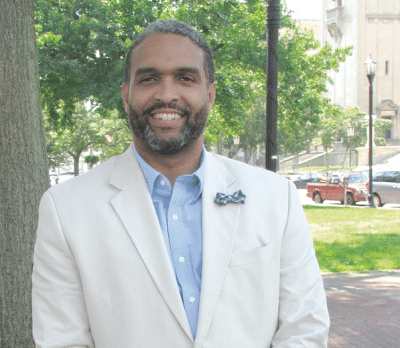
When Ray Berry launched White Lion Brewing Co. in Springfield last October, he planned from the start to create a regional beer festival within the first two years. As it turns out, he didn’t want to wait that long.

“I didn’t know whether it would be year one or year two, but with the momentum of the company and awareness of our brand, we felt comfortable enough to bring the fest in year one,” he said.

Specifically, White Lion will present Valley Fest on Aug. 29 in Court Square in downtown Springfield, expecting to draw some 2,000 beer enthusiasts to sample more than 100 different offerings of beer and hard cider made by more than 50 craft brewing companies from throughout the region — and well beyond.

Ray Berry calls Valley Fest a way to “bring together a cohesive conversation”

Ray Berry calls Valley Fest a way to “bring together a cohesive conversation” about what’s happening in the region — with craft brewing and in other ways.

“This is about the city of Springfield, about the region, but it also revolves around craft beer,” Berry told BusinessWest. “Western Massachusetts is starting to see a tremendous amount of momentum around craft beer — new brewhouses, new enterprises, new products on the market.”

White Lion is actually the first one of those brewers based in the City of Homes, and Berry hopes the festival — which will also feature culinary fare from local restaurants, live music, and a home-brewing contest — will create a buzz, so to speak, that raises the profile of the city and region.

“Springfield was a little late to have its own product — White Lion being that — and we thought it was important to showcase White Lion, but also to bring together a cohesive conversation regionally,” he went on. “We didn’t know at the onset that this would be bigger than Western Mass., but we’re covering the spectrum with local, regional, and national brands participating, which is exciting.”

But this isn’t just the story of craft beer, or a day-long, late-summer party. It’s about a number of individuals and businesses coming together to showcase what they call a city on the rise.

The first of those was MGM Springfield, which got on board as the event’s presenting sponsor.

“From the company’s standpoint, showcasing Springfield was obviously important,” said Seth Stratton, MGM Springfield’s vice president and general counsel, noting that the company presented last year’s Downtown Dinner Table event to bring some energy to the casino’s future neighborhood.

“We were all surprised how amazingly successful that event was, and it hammered home to MGM how important it is to bring people downtown,” he added. “If people not used to coming to the city are coming for an event like that, that is a perfect event. We want people to be accustomed to being out in this vibrant city, and making it a destination by showcasing its food and beverage assets, which are a huge part of our business. There’s a synergy between events like this and what our goals are with our project.”

Nadim Kashouh

As a downtown restaurant owner, Nadim Kashouh wants to be part of efforts that make Springfield more of a destination, and considers Valley Fest to be just that.

Like Stratton, Nadim Kashouh — owner of Nadim’s Mediterranean Restaurant and Grill downtown — is invested in developments that make Springfield a destination. He’s one of several area restaurateurs to sign on for the event, citing the event’s potential to showcase Springfield and, by extension, its culinary offerings.

“Ray and I have become good friends, and we were interested in being there at this event,” he said. “Springfield is flourishing right now, and we want to be a part of anything that shows that.”

Worthy Addition

Still, before soliciting sponsors and partners for what would become Valley Fest, Berry first approached Jeff Goulet, who has organized the Worthy Brew Fest in downtown Springfield each spring since 2011.

“We didn’t want our fest to conflict with the other fest, but, rather, to bring a positive impact and awareness of craft beer to Springfield,” Berry said.

Goulet, however, is fully on board — as Valley Fest’s brewery coordinator.

“June was our most successful year by far. It came close to a sellout,” Goulet said. “Our focus has been to have a boutique beer fest, limit it to 1,000 people, with very specialty beers, one-off beers.”

So, when Berry told him about the more wide-open concept of Valley Fest, he felt it was a strong complement to what Worthy Fest has been bringing to the table. He also noted that many of the participating breweries have their own local fan bases, who will then travel to Springfield to take in the festival.

Even after winning Goulet’s support, Berry said a successful event wouldn’t have been possible if not for the support of MGM Springfield. “When they locked in up front as the primary sponsor, that was the key that started the ball rolling.”

Other partners soon followed, all of whom see events like this, as well as Worthy Brew Fest and the second annual Jazz and Roots Festival that landed in Court Square last weekend, as ways to continue the city’s momentum generated by not only MGM Springfield, but a host of new development and business activity downtown.

“Ray came to us and shared his vision for the Valley Fest and asked us to work with him to create the brand narrative,” said Deb Walsh, creative director at TSM Design, which had previously designed the White Lion brand logo, and signed on to create visual and narrative elements to promote the event.

“TSM is very committed to Springfield — and beer,” she said with a laugh. “So we happily joined in and created a look that celebrates the craft, celebrates the location and the history, and emphasizes fun, too, making it an event that people will want to attend.”

Meanwhile, Creative Strategy Agency is developing digital communications and marketing to promote Valley Fest, said President Alfonso Santaniello. Among those efforts is a video introducing the sponsors and vendors and trying to get them to engage with each other well before the event — as well as during it, with the use of the #valleybrewfest hashtag. “This has been a team effort, not just the Valley Fest, but the social site.”

Jill Monson-Bishop, president of Inspired Marketing and Valley Fest’s event planner, said she and other business owners are excited about momentum in the downtown district, whether it’s a company moving into one of the office towers or an event with the promise of becoming an annual attraction.

Jill Monson-Bishop

Jill Monson-Bishop says she and other downtown business owners are looking for “sparks of revitalization.”

“As a downtown business owner, I can say these are the sparks of revitalization we’ve all been waiting for. It’s kind of a renaissance,” she said, adding that she was involved with MGM in the Downtown Dinner Table last year. “That reminded me of back in the days of Taste of Springfield, which brought thousands of people to our downtown without blinking or whining.”

She said it was important to make the event about more than beer, however. That’s why Nadim’s will be joining Plan B Burger Bar, Palazzo Café, the Student Prince, and Sheraton Springfield to deliver an array of food, while live music, including dance-party band Orange Crush and rock act Maxxtone, will spice up the Fest, which Monson-Bishop positioned as an age-21+ event that’s friendly and relaxed.

In addition, Mark Stroobandt of Belgium, an internationally acclaimed beer sommelier, will be on hand for a cooking demonstration. Meanwhile, the second of the event’s two sessions will include pourings from 10 home brewers competing for the title of Valley Fest’s Best Home Brewer, a custom tap handle from East Coast Taps, and, of course, bragging rights.

As a way to give back to the community, Berry said a portion of the event’s proceeds will be donated to the American Cancer Society and Dakin Humane Society, two prominent nonprofits.

Susan Alston, director of development and marketing at Dakin, noted that Berry participated in the PAWSCARS in February, Dakin’s largest annual fund-raiser, and they formed a bond over their concern for animals.

“Every year, more than 6,000 of them need medical attention or new parents,” she said. “Our Dakin facility moved downtown in 2009, and we serve thousands of people who adopt our animals every year within a 50-mile radius. We were lucky to be invited to share the proceeds of this event.”

Coming Together at Valley Fest

The partners promoting Valley Fest stressed that many other entities will support the event in different ways, from Ace Taxi providing free service to those who need it to Sheraton Springfield offering reduced room rates for anyone who wants to turn a day of beer sampling into a safe weekend stay downtown.

“This is a community event,” Santaniello said. “We’re all from various backgrounds and specialties, putting on an event with our community. It’s an opportunity to let people see what can be done when we come together for one great event. People need to realize, it doesn’t have to be one person doing things — people and businesses are here to help, and these events just have to find the right people.”

Berry agreed. “The response from the community — and surrounding communities — has been overwhelming,” he said, noting that those sponsors number around 25, including primetime sponsor MassMutual Financial Group and partnering sponsors the Dennis Group and Williams Distributing. “A number of sponsors stepped up early, believing not only in the festival, but in Springfield in general.”

Berry emphasized that Valley Fest is an important showcase not only for White Lion — which has released three beer selections since last fall and has promoted its efforts in venues all over Massachusetts and other New England states — but for a region ready for a stream of good economic news. “People who are complaining are only reading the headlines. They need to dig deeper.”

Kashouh said MGM and other developments downtown have started to create that buzz, which promises to bring new life to the city.

“I know I find myself investing in renovating, putting more money into the restaurant, waiting for the day when MGM opens up. It’s three years out, but I want to be ready. The beer festival, the jazz festival, these things bring people downtown. People are trickling back. It won’t happen overnight; it’s one store at a time, one restaurant at a time. But we believe in Springfield.”

Stratton stressed that the casino project is not the end-all, be-all, but that each new event or company relocation downtown serves as a catalyst for others.

“I think this is a good example,” he went on. “If you look at the sponsor list, it’s a who’s-who of businesses in Springfield. We’re naturally aligned and interested in having people come down and drink beer and have fun; there’s a natural synergy to what we do. For other businesses, it may not be as immediately apparent. But as people see new, exciting things in Springfield, it’ll eventually be a catalyst for the entire business community, not only those who have a natural interest in this event, like we do.”

That’s a refreshing thought indeed. So cheers, Springfield.

Joseph Bednar can be reached at [email protected]

Law Sections

Adjustment Bureau

U.S. District Court Judge Mark Mastroianni

U.S. District Court Judge Mark Mastroianni

A federal judgeship is, by almost any measure, the proverbial opportunity of a lifetime for those in the legal profession — figuratively and quite literally; one has the job for life. So it is with Mark Mastroianni, although he admits that he became a candidate for the post in Springfield almost reluctantly because he was, at the time, “hitting his stride” as Hampden County district attorney. In fact, he admits feeling relieved in some ways when he missed the deadline for applying. But that deadline was extended, and, well, the rest is history — and a serious period of adjustment that is still ongoing.

Mark Mastroianni was talking about the start of the process that eventually led to him being named a federal judge in Springfield.

To describe it, he used the phrases “completely unexpected” and “perhaps even unwelcome.”

He said it was the former mostly because at that time, early 2014, he was more than halfway through his first four-year term as Hampden County district attorney and thinking about the next one, not a new career challenge.

As for the latter, he chose it because he wasn’t simply serving as DA. He was, as he put it, “just hitting my stride,” and in many ways he actually resented what the ensuing search process represented — an extremely difficult decision he would have to make about his career, or another difficult decision, to be more precise.

“I was three years in the district attorney’s office; I was getting my feet under me and really developing my sense of confidence,” he explained. “And it’s really at the point when you develop a sense of confidence doing anything that you become your most effective. I had things to do — I had things I knew I could do in the district attorney’s office that were important for me as professional accomplishments and for the people I was serving.

“I really took to that, and was serious about what I wanted to do,” he went on. “And when I say ‘unwelcome,’ I say that because that search came about right when I got moving.”

But there was more to this than the opening on the federal bench coming at what Mastroianni would consider the wrong time career-wise. Indeed, he possessed vast experience as both a prosecutor and defense lawyer at that time, and frankly couldn’t imagine himself spending at least the next 15 years (a federal judgeship is a lifetime appointment) being neither.

To get that point across, he put his passion for such work in perspective that only people who have been there could appreciate.

“There will be nothing like — at least, I haven’t experienced anything that looks like it will be the same as — the adrenaline rush in a capital murder case in the minute or two minutes when you’re waiting for the verdict,” he said while comparing his current job to his previous ones. “The jury comes in, the jury stands up, and the verdict form is handed to the clerk … I can’t explain to you what that’s like, really. Every trial I’ve taken, it’s been remarkable to me that I’ve been able to even stay on my feet; your heart is beating so fast, you just think that physically you’re not going to hold up.”

One doesn’t reach that state, emotionally or physically, as a judge, he went on, adding quickly, though, that adrenaline comes in many forms, and he experiences it now — granted, on a much lower level — when one of his rulings is cited by a lawyer when making an argument.

Adapting to this new standard for adrenaline rush is part of an adjustment period Mastroianni says is still ongoing, although overall, he says he’s quite comfortable in his new skin, or robe, as the case may be. He acknowledges that reaching this state wasn’t easy, but in most ways easier than he anticipated.

“I have been so happy and relieved at how I’ve adjusted, because I thought that I was going to really struggle with not being in the courtroom,” he said, referring, obviously, to the seats in front of the bench, not the one behind it. “I have really enjoyed and adjusted to still being part of the trial-litigation criminal process; I take a different seat now than the one I’m used to sitting in, and my decisions are from a different perspective, but I’ve adjusted, and continue to adjust.”

For this issue and its focus on law, BusinessWest looks at that adjustment period, and how it represents one of many career gambles Mastroianni has not only taken, but embraced.

Opening Statements

When asked about whether he had any regrets about taking the federal judgeship, Mastroianni answered in a way one might not expect from someone in such a lofty, respected, and sought-after position.

“Of course I have regrets,” he said, implying that some of his earlier comments would have made that clear. But he went further, and in a manner that once again suggested just how much he liked being DA — and a defense lawyer, for that matter.

“I’ve had regrets from every job I’ve left,” he explained. “If you don’t have regrets from the last job you’ve left, that means that didn’t love your job and didn’t do it with everything you had.”

Mastroianni has left a few positions in his career knowing that there would be not only regrets, but serious doubts from colleagues, friends, and relatives about whether he was doing the right thing, career-wise and otherwise.

There were such sentiments expressed when he left a position as assistant district attorney under William Bennett to go into private practice. He had started a family and purchased his first house, and while prosecutors were poorly paid at the time (and still are today), the job represented a safety net.

He heard them again when he launched a bid to succeed Bennett as DA running as an independent, a campaign for which for which the adjective ‘long shot’ would be considered a serious understatement.

And they were uttered again when Mastroianni became a candidate for the federal court, a position usually placed in that category of ‘opportunity of a lifetime.’

“Every friend and family member expressed the concern that it would be something I might not enjoy or become frustrated with,” he noted. “I had that same concern.”

Mastroianni said he made these various career moves after careful consideration of those expressed concerns, but also what the next challenge would mean for him personally and professionally.

“These were not reckless decisions,” he explained, using that phrase repeatedly with his latest change especially. And as he talked about them, he would reference a need to continually seek new challenges because “there was more for me to do.”

Our story begins at Cathedral High School in the early ’80s, where Mastroanni was mostly unmotivated and anything but a standout student and rising star. In fact, he would say that American International College “took a chance on me when they accepted me.”

"I’m adjusting, I very much like what I’m doing, and the forecast looks good.” – U.S. District Court Judge Mark Mastroianni

“I’m adjusting, I very much like what I’m doing, and the forecast looks good.” – U.S. District Court Judge Mark Mastroianni

He made the most of that opportunity, though, majoring in English and political science and contemplating careers as a writer or journalist while doing so. But he chose a different tack — one encouraged by his grandfather — and enrolled at Western New England University School of Law.

Upon graduation from WNEU in 1989, he found himself in a tough job market as a recession that would last the better part of half a decade settled in on the region. He borrowed money from some family members and opened a private practice in the same building in Springfield’s Court Square that his grandfather practiced from.

But the phone didn’t ring much, and he eventually sought to fill an opening on the staff of then-Hampden County District Attorney Matty Ryan. That assignment lasted only six months, as Ryan’s eventual successor, Bennett, did not keep him on after assuming office.

However, Bennett later rehired him, and he worked five years as an assistant DA, cutting his teeth on a number of high-profile cases, including several murder trials. Despite his success in that role, he sought another challenge — and potentially much larger paycheck — and returned to private practice.

He would remain there for 17 years, enjoying success on the other side of the legal system — defending clients — and on the all-important business side of the equation as well.

Eventually, he became as passionate about defense work as he was with his prosecutorial skills, and when pressed to compare and contrast the two, said that he found the former in some ways as rewarding professionally as the latter.

“What I like in both of them is high-level, high-profile, difficult cases,” he explained. “There’s an enormous sense of satisfaction that comes with successfully prosecuting a case and helping victims. But, quite frankly, I think that feeling is rivaled, and perhaps equaled, by the sense you get in the successful defense of a case and being the person who stands between one individual and the government, the prosecution, and the resources of that prosecution.

“With the murder cases I handled, there were primarily appointed cases — it’s one individual who’s been deemed to be indigent; we’ll appoint you a lawyer, and there you go, good luck with that,” he continued, explaining, in more detail, that sense of satisfaction he enjoyed from helping clients prevail in such matters. “You have a limited budget and limited resources, but there’s no limit to energy and effort you can put in.

“The satisfaction is not of ‘I want to help someone get away with something,’ or ‘I want to pull one over on someone,’” he went on. “The satisfaction is working within the system and making the system work; our system means nothing if there’s not vigorous defense work forcing the government, be it the Commonwealth or the federal government, to meet their burden of proof. Every good defense makes the next prosecution better.”

He said that, if he were ever put in a position of having to choose between the two, that would be a very difficult decision. So it’s fortunate, perhaps, that circumstances now mean he won’t have to make such a choice — at least until he turns 65.

No Objections

As he talked about his career and the many twists and turns it has taken, Mastroanni referred early and often to the notion of timing, and how certain events — from a recession to the retirement of a federal judge — have played a big role in shaping his many difficult decisions.

One such point in time was Bill Bennett’s decision to not seek another term as DA in 2010 after 20 years in that office.

Mastroanni admitted he was already thinking about pursuit of new and different challenges at the time, but Bennett’s decision in some ways forced his hand — again, amid concerns from collegaues and family members that he might be making a big mistake.

“The question from friends and family was, ‘why? What are you doing? …  you can’t walk away from this,’” he said, referring to the very successful private practice he had built. “At that point, it was something inside me professionally — a need to do more. It was this reflection, this self-examination of where I was, where I wanted to be, and what I wanted to be doing that led me to run.

“I wanted a challenge, I wanted a change, and I really felt I could do a good job as district attorney,” he went on. “I had very specific ideas about the criminal-justice system and how it could work better.”

But while he had the will to seek the post, he wasn’t exactly dealing from a position of strength, at least to most observers.

Indeed, while the DA’s position is non-political by nature, the processing of winning is quite political, and Mastroanni, upon entering the race, also decided he would wage his fight as an independent. That choice would impact everything from his participation in scheduled debates to raising money, but he stuck to his guns and eventually prevailed.

In the winter of 2011, he settled into the job — or at least the part he wanted to settle into.

He admitted that he had no real appetite for what could be called the operations side of the office — the budgetary matters and many aspects of managing 150 people and several offices. So he effectively delegated — something he says isn’t easy, and is an art form unto itself.

“That was like running full-speed into a brick wall when I encountered that administrative setup at the district attorney’s office,” he told BusinessWest. “You have a lot of employees, an IT team, a state police squadron assigned to you … so I delegated. I had to choose what to delegate, and I chose not to delegate the trial work; I thought I was certainly more qualified and competent as the trial lawyer who could take on the big case than I was as the person who would walk in and take care of the budget.”

Thus, he focused on trying cases (one of his first involved a successful prosecution in the murder of Cathedral High School student Conner Reynolds) and myriad other aspects of a very broad job description.

That list included everything from making progress with a large list of cold cases to going out into area classrooms and providing lessons on how the judicial system worked.

“We opened new units — we opened an unsolved-crime unit and a DNA unit, and we made really big advances in some cold cases that had not been worked on in some time,” he explained. “We solved several cases that were 20 years old and more. I developed a way to use drug-forfeiture money to essentially pay for the overtime so police officers could work on these cold cases.

“Springfield has so many unsolved cases, and one of the reasons they’re unsolved is because new cases keep flooding in every day,” he went on, adding that he developed a process by which trained individuals could devote the needed time, energy, and imagination to such cold cases. And many wound up being solved.

“That program was cranking,” he continued. “Meanwhile, our community outreach was just unprecedented; we were in the schools with all kinds of programs … it was wonderful, challenging, stressful times at the district attorney’s office. That’s a difficult job, and I was really enjoying all the progress we were making.”

It was at this point that the unexpected and “perhaps even unwelcome” search for a successor to the retiring Judge Michael Ponsor commenced in late 2013.

Decisions, Decisions

Then-recently elected U.S. Sen. Elizabeth Warren was placed in charge of the process of selecting a new federal judge, said Mastroanni, who said he had no intention of pursuing the post until he was encouraged to do so by members of the Gertner Committee, a panel appointed by Warren to solicit, interview, and comment on applications for federal District Court vacancies, and so-named because it was chaired by former District Court Judge Nancy Gertner.

Although he entertained those entreaties to become a candidate, Mastroianni admitted to feeling what amounted to a sense of relief that he missed a posted deadline of Jan. 31, 2013 for submitting a formal application.

“In my mind, how a lot of things work is that I’ll put things off as long as I can, and if I just put it off long enough, it will just take care of itself,” he explained. “I put that into practice with my judicial application. Before I knew it, the deadline had come and gone, and I didn’t get my application in, and I said to myself, ‘that’s too bad … I’ve been so busy as district attorney, I didn’t have a chance to fill this out. It’s just not right; I’m too busy as D.A. This is obviously where I should be.’”

As fate would have it, though, the deadline was extended, and Mastroianni would apply and eventually get the nod after many strenuous rounds of interviews.

When asked to analyze that result and how it came about, he would theorize that Warren was seeking diversity from the next federal judge, not only in the context that one might think, meaning racial or gender diversity.

“I think they thought my political affiliation — choosing to be an independent — as well as working at the highest level on both the prosecution side and the defense side gave me a rather unique perspective and view of the world and the legal system.”

With that perspective — and that résumé detailed above — Mastroianni entered his new role and adjustment period with that degree of trepidation he noted. But he has, in fact, found a comfort zone.

“I knew during my first couple of trials that the adjustment was going to be OK — I wasn’t feeling the need to look at the case that was developing in front of me as the trial lawyer,” he said, adding that he anticipated that being able to do so would be a sizable challenge. “I was not substituting myself for the lawyer in question; I was appreciating the art of trial work, and I do consider it an art.

“I found the challenge of presiding over that and watching how it develops to be so exciting, and so new,” he went on, adding that, while he’s observing and analyzing what the lawyers handling the case are doing, those opinions don’t manifest themselves in words or actions in the courtroom.

“I’m perfectly happy and content with thinking in my mind about what that lawyer does and saying to myself,  ‘how could you have done that? What you really needed to do was this,’ or watching a lawyer do something just perfectly and thinking, ‘that was well-done.’ For me to interrupt lawyers and try to make arguments for litigants and try to control how a case goes, that would be going overboard and not being well-suited to be in my position.”

The period of adjustment has other aspects to it, he said, noting, for example, that most of the cases that come to him are civil in nature, while most of his direct experience is with criminal matters.

Overall, though, while Mastroanni had some concerns about whether he could make an easy adjustment to a life of hearing arguments rather than presenting them, he was confident (there’s that word again) that he could do the job and do it well.

“I knew that I could rise and meet the challenges of this job knowing that I would have regrets,” he said. “But I’m adjusting, I very much like what I’m doing, and the forecast looks good.”

He’s even making the time to go into area classrooms and provide lessons on the legal system, as he did when he was DA, and will begin teaching a class in civil law at his alma mater this fall.

As for adrenaline, well, he still gets to experience those rushes, only in much different ways.

“I’m getting an enormous amount of satisfaction from seeing cases that I take develop, crafting the law as I see it applying to facts, and ultimately doing justice in terms of doing the right thing,” he said in conclusion. “That’s really what we do, and that sense of satisfaction from seeing a case come in, taking it from the beginning, working with it, and leaving here having made law, effecting law in a way that other cases that come after you are going to cite … that’s not the same kind of adrenaline rush I described while waiting for a jury to return a verdict, but that’s a satisfaction and type of rush that’s very, very rewarding.”

Closing Arguments

While Mastroianni maintains that he’s successfully adjusted to life on the bench, he nonetheless wishes he could somehow keep this job and experience all those emotions he mentioned when talking about that moment when the verdict is read by the jury foreman.

“I would absolutely love and welcome if there could somehow ever be a setup where I could try a case again,” he told BusinessWest. “That would be like the fantasy football league for me; that would be absolutely it.”

Such a setup isn’t possible, though, and Mastroianni understands that he’ll have to wait until he’s at least 65 to even think about being back on the other side of the bench.

For now, though, he’s focused on that new standard for adrenaline rush and finding new ways to experience it.

As he said, this is an adjustment period that is still ongoing.

George O’Brien can be reached at [email protected]

Community Spotlight Features

Community Spotlight: Southwick, Mass.

From left, Todd Phillips, Stephen Phillips, and Doug Moglin

From left, Todd Phillips, Stephen Phillips, and Doug Moglin say Nitor Corp. in the Southwick Industrial Park plans to double its size.

After 12 years in business, Stephen and Todd Phillips decided it was time to own their own building.

They spent two years looking at sites in Springfield, Agawam, West Springfield, and Windsor, Conn. before they found the perfect location: Southwick Industrial Park.

“We were able to buy 3.1 acres on an industrial building lot for $30,000 per acre, which gave us plenty of room to expand; you can’t touch that price anywhere, and the double whammy was the town’s uniform tax rate. It was a huge incentive to come here,” Stephen said, adding that, prior to building a permanent home for laser-equipment supplier Nitor Corp. four years ago, they had leased space in Westfield and then Agawam Industrial Park.

Today, the brothers are planning to double the size of their footprint, and Stephen calls Southwick’s Industrial Park a hidden gem. “It’s close to Route 57, Interstate 91, 291, and the Mass Pike, and the town’s Planning Board is made up of working-class people who are very receptive and understand business,” he told BusinessWest.

The uniform tax rate, $16.94 per thousand for 2015, and amount of affordable property available for development are among attributes Southwick officials are banking on to spur economic development. There are 50 acres in the industrial park primed and ready for development, another 150 acres that will be available in the future, and about 200 acres of former farmland on Route 57, bordered by Routes 10 and 202, that would be an ideal location for retail establishments, especially since there are new sewers in areas proximate to it.

Other factors officials are relying on include infrastructure improvements; a wide range of recreational opportunities; new residential building; closer ties with the Greater Westfield Chamber of Commerce, led by Kate Phelon, who has held nine ribbon cuttings for them since last year with plans to stage more; and other measures that have evolved as they work to remove impediments to growth.

“All roads are open, and we are working hard to get everything in place for the future. All of the ingredients are here; we have done our part, and our eyes are wide open. We want to help and have things in place so people know exactly what they need to do to open a business,” said Joseph Deedy, chairman of the Board of Selectmen, who has owned MooLicious Farm and Ice Cream for eight years, was on the Planning Board before being elected to his current position, and has owned several other businesses in different states, which helps him understand difficulties new companies deal with.

“We’re looking for mom-and-pop operations as well as light-industrial companies that will bring more to the town than just workers. They will be stakeholders in the community,” he explained.

Doug Moglin agrees. “There is so much opportunity here, and our population is growing,” said the selectman, who is OEM director at Whalley Computer Associates Inc., based in town.

Chief Administrative Officer Karl Stinehart says it’s much easier to do business in Southwick than it was 10 years ago.

The town has worked hard to identify areas that need sewers, and completed phase I of its installation plan, which includes downtown as well as part of the area around Congamond Lakes. In addition, the water quality was improved, which has helped to retain businesses along the corridor as well as allowing them to position themselves for growth.

“The interceptor pipe to Westfield’s treatment plant has been finished, which lays the groundwork for us to move forward,” Steinhart said.

In fact, town officials have been working hard for several years to leverage as much federal assistance as they can before their population hits 10,000, when they will no longer qualify for funding aimed at towns below that number. “We want to make sure we don’t miss out on any opportunities,” he added.

New Growth

The multi-faceted efforts of Southwick officials are already bearing fruit.

A new, $2.2 million Rite Aid is under construction on College Highway and is expected to open by Thanksgiving. “They’ve been renting space in a smaller building and are expanding to a free-standing building with a drive-thru,” Deedy explained.

From left, Karl Stinehart, Jesse Saltmarsh, Joseph Deedy

From left, Karl Stinehart, Jesse Saltmarsh, Joseph Deedy, and Gordon Webster at the site of the new, $2.2 million Rite Aid set to open in November.

Site developer Jesse Saltmarsh of Saltmarsh Industries Inc. in Southwick told BusinessWest an old building was demolished to make way for the new, 11,000-square-foot pharmacy, and contractors are creating retaining walls because they lowered the grade of the land to provide enough space for parking.

“Roughly 90% of the vendors we’re using are local companies,” said site superintendent Gordon Webster of Bass Hatfield Construction, the general contractor for the project, adding that Southwick businesses already working or soon to be on the job include Southwick Electric and Brasca Plumbing as well as a landscaper in town.

Meanwhile, Kearsage Venture Capital Co. recently completed construction of the largest solar farm in Western Mass. on Route 168.

“Agriculture is still an important part of Southwick’s identity, and this is just a different way of farming,” Stinehart said. “And the town is in the process of finalizing a purchase agreement to buy a solar farm north of here. We hope it will save us 15% on our electric bill.”

The new, 66-acre Whalley Park, built on donated land and leveraged with Community Preservation Act (CPA) funding, opened this summer and has increased the number of playing fields, which is important because the town didn’t have enough to accommodate demand.

“It’s a wonderful thing, and we are very fortunate because the private, nonprofit Southwick Recreation Center is right next door, which helps kids in town play on sports teams,” Deedy said.

The Polverari Southwick Animal Control Facility was also finished late last year, which meets another need as it replaced an outdated structure.

“We’re doing all we can to make the community an attractive place to raise a family,” Stinehart noted, adding that $69 million was spent over the past few years on renovations to the town’s schools which are almost complete, and a new track was built with private donations and CPA funds. Plus, the Conservation and Open Space committees have used state and CPA monies to acquire land for agricultural use because there is growing demand for it.

New small businesses are also opening, and two restaurants have new owners. D’Georgio’s is expected to open by Labor Day in the former Brew Too building on Westfield Street, which has been repurposed, and the former Salmon Brook Restaurant on Point Grove Road near Congamond Lake was recently purchased and will reopen as the Legends of the Lake.

The selectmen added that the town offers wonderful opportunities for recreation.

“We pride ourselves on our recreation, which ranges from boating to golfing and open space where people can hike,” Stinehart said. “We have two public marinas and a boat launch on the Congamond Lakes, and a dedicated committee makes sure there is a freshwater fishing tournament there every weekend. There is also the 6.3-mile Southwick Rail Trail, four golf courses, a miniature one, and two campgrounds. Southwick is the home of motocross, we have a very active Parks and Recreation Committee, and the Conservation Commission has acquired land that will be used for parking which will provide better access to the segment of the Metacomet Trail that runs through town.”

Residential construction is also on the rise, and land is being cleared for a 26-home development called Noble Steeds. “It was permitted, then shelved due to the downturn in the economy,” Stinehart said. “There are also a significant number of single lots being developed along major roads.

“The housing market is slowly turning around, and a dozen lots in a private community are being developed around the Ranch [golf course], and with our lucrative tax rate, people can afford to build their dream home,” he went on. “The Shops at Gillett Corners were also sold within the last two years, and the new owners have invested money because they see the future in Southwick.”

Deedy noted that the single tax rate has been a great selling point for the town.

“We’re taking a balanced approach to growth,” he explained. “Our planning board is composed of a group of very dedicated individuals, and we are very cautious and deliberate in making any zoning changes. But few are necessary, as permitted uses for land have already been identified; we look at other communities to see what works and what doesn’t.”

Officials don’t expect the MGM casino in Springfield to affect their community much, other than increasing the flow of traffic from Connecticut. “We will evaluate it in the future to see if we are eligible for any funds and will revisit the issue at that time to see if it affects our infrastructure,” Stinehart said.

However, Deedy pointed out that Southwick is only 15 minutes from Springfield, and its low tax rate may prove attractive to businesses that support the casino. “They may want to relocate to the suburbs once it is built.”

Formulated Plan

Deedy added that efforts put forth by the town have been aimed at future development.

“We have plenty of land available, and if people can afford it, they should buy it now while it is still inexpensive,” he said. “Members of the select board are always available to talk to people; the last thing we ever want to hear is that someone who owns a company or wants to open one looked at Southwick, but it was too difficult to do business there.”

Which seems unlikely, because officials strive to promote their town and encourage growth in this rapidly growing community.

Southwick at a glance

Year Incorporated: 1775
Population: 9,629
Area: 31.7 square miles
County: Hampden
Residential Tax Rate: $16.94
Commercial Tax Rate: $16.94
Median Household Income: $78,476
Family Household Income: $89,970
Type of Government: Open Meeting; Board of Selectmen
Largest Employers: Big Y World Class Markets; Whalley Computer Associates Inc.

* Latest information available

Law Sections

Classified Information

By DAVID McBRIDE, Esq.

David McBride

David McBride

This July, two developments touching on the topic of independent contractors and the issue of potential worker misclassification have been in the news.

As background, it’s nearly impossible for Massachusetts employers to classify a worker as anything other than an employee: the state’s Independent Contractor Law is very narrow, and most workers will not meet the test for independent-contractor status.

Nonetheless, last month, the federal District Court for Massachusetts ruled that federal law preempts part of Massachusetts’ Independent Contractor Law as it applies to businesses that can be considered ‘motor carriers.’ Just one week later, the U.S. Department of Labor issued an administrator’s interpretation on how to determine whether workers should be classified as employees or independent contractors under the Fair Labor Standards Act.

For most Massachusetts employers, however, neither of these developments represents a significant change.

Part of State’s Independent-contractor Test Pre-empted by Federal Law

In 2013, the Massachusetts Delivery Assoc. (MDA), a trade organization representing businesses involved in same-day delivery services, filed a lawsuit in federal court claiming that Massachusetts’ independent-contractor test is preempted by the Federal Aviation Administration Act (FAAA).

In brief, the FAAA preempts state laws “related to a price, route, or service of any motor carrier … with respect to the transportation of property.” The problem for MDA and its member businesses was that, based on the plain language of the state’s independent contractor law, they all would fail the test because the services provided by the drivers are directly within the members’ ordinary course of business, known as ‘prong B’ of the Independent Contractor Law’s ‘ABC’ test.

MDA argued that, to comply with the Independent Contractor Law, its members must change their national business model or risk penalties. National companies that utilize independent owner-operators to deliver products in the other 49 states are unable to do so in Massachusetts; no other state has made the use of this business model unlawful.

Complying with the Massachusetts statute, therefore, would drive up costs and adversely affect prices, routes, and services. Additionally, not only is the Independent Contractor Law expressly pre-empted by the FAAA, but it also imposes an impermissible burden on interstate commerce. The District Court agreed with the MDA that the FAAA pre-empts prong B of the ABC test because, if it were applied to any motor carriers, their drivers would have to be classified as employees rather than independent contractors. Motor carriers have a long history of using independent contractors to perform deliveries. Therefore, forcing MDA’s member businesses to classify the drivers as employees would necessarily affect prices, routes, or services.”

However, the court made it clear that its ruling is limited to only motor carriers and that the pre-emption is limited to prong B of the statute’s ABC test, not the entire test, and therefore it is still possible that the motor carriers could fail the other two prongs of the test and be required to treat drivers as employees.

Shedding Light on Federal Misclassification Analysis

On a national level, misclassification of employees as independent contractors has been on the radar screen for the U.S. Department of Labor for some time. The administrator’s interpretation issued by the DOL on July 15 is, at its essence, a guidance document explaining the factors and considerations taken into account by the DOL when analyzing cases involving independent-contractor misclassification cases.

In contrast with the Massachusetts statute, the DOL uses the ‘economic-reality test’ to decide whether a worker is an employee or an independent contractor. The guidance explains how all of its numerous factors are applied in each case, with none of the factors dominating over the others.

According to the DOL, the test is almost more of an economic-dependence test than an economic-reality test, in the sense that the central question that all the factors contribute to is whether the worker in question is “economically dependent on the employer or truly in business for him or herself.” This is not a shift in philosophy, just a clarification on the existing process. For Massachusetts employers, this guidance will be relevant in misclassification cases brought under the FLSA.

Significance for Massachusetts Employers?

Neither the MDA case nor the DOL guidance have an effect on the way that most Massachusetts employers should classify their workers. Massachusetts’ independent-contractor statute remains one of the toughest in the nation, and almost all workers in the state should be considered employers, not independent contractors.

The MDA case is of great significance to motor-carrier employers, but has little relevance to most employers. The DOL guidance relates only to the analysis under federal law and is not a change in their current process, but rather a further explanation of how the DOL is interpreting the law. Massachusetts employers are bound by state law when determining whether their workers should be classified as employees or independent contractors.

Because violations of the Independent Contractor Law can create huge liability, Massachusetts employers should consult with labor and employment counsel to ensure they are complying with both state and federal law in this complicated area.


David McBride is an associate with the labor and employment firm Skoler, Abbott & Presser, P.C., concentrating his practice on labor relations and employment law for management; (413) 737-4753.

Law Sections

They’re Just as Important as More Traditional Forms of Property

By ANGELA P. STAFFORD, Esq.

Angelina P. Stafford

Angelina P. Stafford

When taking inventory of property, most people focus on the tangible, material items they own, such as their house, car, clothing, jewelry, and photographs. Property, however, is not limited solely to these types of possessions.

As people have become more reliant on technology, more aspects of their personal lives are being shared online. For example, it is just as easy to post vacation photos to Facebook as it is to print copies, and to ‘tweet’ the latest personal updates rather than calling family and friends. Likewise, it is more convenient to finish Christmas shopping on Amazon, instead of braving the local mall during the busy holiday season.

All of this electronic information makes up a person’s ‘digital assets,’ and, just like material belongings, people accumulate various digital assets during their lives. Digital assets include, for example, blog posts; social-media accounts (like Facebook, Twitter, LinkedIn, and Tumblr); e-mail accounts; photos, videos, and communications shared or stored electronically; and financial accounts (such as PayPal and Amazon).

End of the Road

It is simple enough to share and store information electronically, but accessing these digital assets after incapacity or death becomes much more difficult. Although the personal representative of an estate is charged with collecting and administering a deceased person’s assets, at this time Massachusetts laws do not give the personal representative power to access a decedent’s online accounts. In fact, only a handful of states have enacted statutes authorizing fiduciaries to access a decedent’s electronic information and to terminate online accounts.

In many cases — in part because fiduciaries lack authority to access digital assets — the service-provider agreement (which the user agreed to when creating the account or sharing the information) controls who is authorized to access online accounts and, ultimately, what happens to them. For a variety of reasons, including privacy laws, some service-provider agreements are stringent and provide only for the termination of the account upon verification of the user’s death.

Yahoo!, for example, will remove a deceased user’s account after receiving verification of death, but explicitly refuses to provide access to the accounts. Because access to the user’s accounts are not allowed, it would be difficult to retrieve and save information, including photographs, video, letters, or other posts, which will eventually be deleted when the account is removed by the service provider.

On the other hand, some service providers have developed mechanisms that enable a deceased user’s family to keep the account active or to retrieve information from the user’s online accounts. In 2013, Google began to offer a solution called the ‘inactive account manager,’ which allows a user to elect what will happen to their data once the account has been inactive for a designated period of time, by either having all data deleted or sending it to a nominated individual.

Most recently, in February 2015, Facebook added a new feature that allows users to designate a ‘legacy contact’ who can manage the user’s account after they pass away. Once notified that the user has died, Facebook will memorialize the account, and the legacy contact will be able to post on the timeline, respond to new friend requests, and update the user’s profile photo. Like Google’s inactive account manager, Facebook users may even give the legacy contact permission to download an archive of the photos and posts they shared on Facebook.

The inability to access digital assets may result in a significant loss — particularly when these assets, had they existed in physical form, could have been collected by the fiduciary and easily distributed to family and friends. Unless someone is able to access these accounts directly, and until Massachusetts establishes a law that gives fiduciaries the power to access and manage digital assets, the disposition of digital assets is based primarily on the service-provider agreement.

Steps to Take Now

I suggest that you prepare a detailed inventory of your digital assets that includes website and online account information, user names and passwords, access information, and instructions specifying how the account should be handled after your death or incapacity. You should also review the terms and conditions applicable to each website with which you have an account or maintain digital assets.

Most importantly, contact an attorney who is aware of the nuances of digital assets and is able to advise you of your options to assist you with your estate-planning needs.

Angelina P. Stafford is an attorney with the Springfield-based firm Doherty Wallace, Pillsbury and Murphy, P.C., and her practice encompasses all areas of business law and taxation. She specializes in estate planning, estate administration, and probate litigation; (413) 584-1500.

Health Care Sections

Roundtable Refinements

David Cruise

David Cruise says employers consider the partnership a good way to find quality workers, among other benefits.

Anticipating the workforce needs of healthcare providers five, 10, or 20 years down the road doesn’t require a crystal ball. It does require forward thinking, initiative, and effective partnerships between the many players involved with creating a large, effective workforce. And these are the ingredients that go into the Healthcare Workforce Partnership of Western Mass., an arm of the Regional Employment Board of Hampden County.

Dramatic changes are expected to take place in the field of healthcare and the way it is delivered over the next five years. But graduates from local colleges should be well prepared to fill the needs of regional employers, thanks to the Healthcare Workforce Partnership of Western Mass., an arm of the Regional Employment Board of Hampden County, or REB.

“Our partners come together to think through strategies to respond to ever-changing workforce needs,” said David Cruise, the REB’s president and CEO. “Part of the challenge is to be forward-thinking, innovative, and able to anticipate and balance supply versus demand within the healthcare workforce sector.”

The partnership has two divisions: the Western Mass. Nursing Collaborative, composed of employers and nursing school deans, directors, and faculty members; and the Allied Health Committee, which includes employers, educators, training providers, one-stop career centers, and project managers and personnel. They have each collaborated on a number of new programs and initiatives that Cruise believes are making a difference in educating, attracting, and retaining qualified healthcare professionals.

One of the workforce partnership’s current projects is an on-the-job training program that allows new hires to earn while they learn, and provides them with the knowledge or skills needed to succeed in their specific position. It’s funded through a two-year grant, and reimburses employers 50% of the workers’ salaries during a pre-set training period that cannot exceed 20 weeks.

Cruise said the first year was spent developing the program with employers. And although the wage reimbursement offsets the cost of the additional training the program provides, employers say it’s a secondary benefit.

“They believe it’s an efficient way to find good candidates and regard the reimbursement simply as a value added,” Cruise told BusinessWest as he talked about the process of selecting and presenting employers with a pool of qualified job applicants.

They come from a variety of venues, and a significant number are referred by local colleges. Others come from the one-stop career centers (FutureWorks and Career Point) which conduct assessments before choosing candidates, while the remainder apply directly for advertised positions in a traditional manner.

However, a large percentage have some clinical experience, because the grant can only be used to fund training for nurses or people in allied healthcare fields, and each employer has to provide the REB with a monthly progress report on their new hires.

Although the grant limits what professions are eligible for reimbursement, the program was enhanced in late June by a $25,000 grant from Bank of America that does not specify what jobs it can be used for.

“It will offer us greater flexibility and can be cobbled with other grants,” Cruise explained. “The REB is matching the $25,000, and the money will provide reimbursements for 10 new employees in nursing, medical assisting, health information technology, medical billing/coding, and other positions that include pharmacy technicians and community health workers.

“We’re trying to shorten the recruitment period for employers with this program,” he went on. “They have complete authority over the final hires, and this is putting people to work and giving them opportunities.”

Targeting Young People

The Healthcare Workforce Partnership works on many fronts, but has prioritized its goals, said Cruise.

They include creating more workforce diversity in Hampden, Franklin, and Hampshire counties; educating more advanced nurse practitioners and physician assistants; the formation of a Career Pathways Initiative that brings together high schools and community colleges to create industry-specific programs that align education, training, and employment opportunities for today’s youth; support for new graduates as they transition into jobs; and education that promotes team-based healthcare.

Cruise said Chicopee Comprehensive High School and Holyoke Community College are piloting a Pathways to Prosperity Health Sciences program that is similar to a grade-9-to-14 career path model that was launched several years ago at West Springfield High School to fill jobs in the precision manufacturing sector.

The impetus began after Cruise contacted Kenneth Widelo, Comp’s career and technical education director, and explained the grade-9-to-14 model, then met with officials from Holyoke Community College (HCC) and set up a meeting between the two schools.

“It quickly became obvious that a program could be mutually beneficial, and although there wasn’t any funding to create a healthcare model, they felt it was so important that they cobbled resources to make it work,” said Cruise.

Widelo said they had several meetings with representatives from HCC to create an appropriate curriculum before the program was launched. “We had researched healthcare-delivery systems used by other vocational technical schools, but they all put students into one very specific track, such as working as a certified nursing assistant,” he told BusinessWest, adding that their goal was to offer a broader range of options.

The pilot program kicked off two years ago with 10th graders, which allowed the high school to make refinements to the curriculum. It has been highly successful, and allows students to earn 21 credits at HCC before they graduate high school.

“After they matriculate, they can transfer to the community college or attend a four-year college and go into nursing, work to become a doctor, or pursue a degree in healthcare business management,” Widelo said, noting that internships are part of the curriculum.

However, both schools are looking forward to the fall semester, which will mark the first class of incoming freshmen in their newly created Medical Science Academy, which is in line with the grades-9-to-14 career pathway they set out to establish.

Wideo said recruitment efforts for participants involved a variety of measures. Students from the city’s two middle schools completed a career-assessment survey, and two career counselors talked with them, then worked with the middle school guidance departments to identify interested candidates. They were interviewed, and a group of 40 graduating eighth-graders was selected and will begin their course of study this month in HCC’s science laboratory.

“We’re really excited about the program,” said Widelo, adding that students had expressed interest in healthcare careers in the past before the track was created.

Cruise said the students are enthusiastic and understand that the program will help them jumpstart a career.

“The academy has a rigorous academic program that has been aligned with the demands students need to satisfy in order to move seamlessly into an associate-degree program,” he told BusinessWest, noting that the five college courses they take in high school will save each student approximately $3,000 in tuition.

“It’s a model we think could be used by other schools, and once we get the template down, there is no doubt that it could be replicated,” he went on. However, it will require willing partners and involvement by the private sector, which could include summer jobs that bring the students’ academic studies to life.

Filling a Critical Need

The Western Mass. Nursing Collaborative, meanwhile, is also doing its best to guarantee there will be enough well-educated nurses to fill a growing need in Western Mass., which is especially important because registered nurses represent the largest segment of the healthcare workforce.

“They’re working from a set of priorities and updating their strategic plan by setting specific goals,” Cruise noted. “We have more than 40 very active educational institutions and employers who are members, and it’s important to provide a forum for them because the healthcare landscape is changing rapidly. The needs are so dramatic that they have to be innovative and responsive as they make plans to move forward and meet the workforce needs of the future.”

Their priorities include increasing the diversity of the nursing workforce, ensuring that nurses have the competencies and full scope of practice needed to meet the changing health needs of the community; increasing the number of nurses with a bachelor’s degree or higher; increasing the supply and diversity of nursing faculty in area programs and the retention of new nurses in all care settings; and sustaining the partnership.

Patricia Samra, a registered nurse and director of Clinical Workforce Planning and Finance for Baystate Health, said the Western Mass Nursing Collaborative was formed in 2006, thanks to a three-year grant, and was initially called Partners Invested in Nursing. “It focused on workforce initiatives and marked the first time that major healthcare providers and educators in the region convened,” she said, explaining that they included all area schools of nursing along with employers that ranged from hospitals to long-term care providers, who have been working steadily to make sure there is a pipeline of qualified nursing students who are supported after they graduate and get jobs.

The support is imperative, because approximately 30% of nurses leave the profession less than two years after they begin working.

“They burn out due to a lack of confidence,” said Samra, adding that Baystate has created a program to lower that rate.

It brings newly hired nurses together monthly to share emotions as well as clinical challenges, and they are given a case study to analyze, which involves discussing best practices and allows them to reflect on their own experiences.

“They may go into our simulation lab and practice techniques, but the goal is not to gain clinical experience, it’s about critical thinking at the bedside centered around quality care and patient safety,” said Samra, noting that their retention rate has risen significantly since the program began.

Karen Rousseau, director of the Division of Nursing at American International College, says the school works closely with Baystate, and some of its staff members are clinical instructors.

The school also has alliances with other employers, because nursing students have to complete a designated number of clinical hours, which is done in a variety of settings.

“One of the biggest projects our students have been involved with in the past two years is helping patients transition from an acute-care setting to their homes,” said Rousseau, noting that they have shadowed nurses from visiting nurse associations, then worked with the nurses to identify gaps to improve care.

AIC is also a partner in the Health Inter-professional Educators of Pioneer Valley, which seeks to promote communication between students in areas such as ethical dilemmas.

Baystate’s Patricia Samura (left) and AIC’s Karen Rousseau

Baystate’s Patricia Samura (left) and AIC’s Karen Rousseau say the Western Mass. Nursing Collaborative has forged strong bonds between hospitals and nursing schools.

“It grew out of the Cooperating Colleges of Greater Springfield, and encompasses AIC, Western New England University, Elms College, Springfield Technical Community College, HCC, Baypath University, Springfield College, Westfield State University, UMass Amherst, and members from Baystate Medical Center who are interested in supporting interprofessional education and collaboration in health care,” Rousseau said.

Keeping Pace

The programs created by the Healthcare Workforce Partnership of Western Mass under REB’s umbrella ensure that communication takes place between schools, training facilities, and employers. “It’s a challenge to meet the headwinds we are facing, but there is a growing demand for healthcare professionals both at the patient level and away from the bedside,” Cruise noted.

As a result, the collaborations that are formed are taken seriously by members.

“We all believe the partnership is very valuable,” said Samra. “The REB helps get organizations to the table for two to four hours each month, and even though we are all busy, full-time working professionals, it’s worthwhile because it adds value to all of our programs.”

And it also helps ensure a steady flow of workers in the pipeline to meet the growing healthcare needs of this region for years to come.

Health Care Sections

Down to a Science

Dr. Barrie Tan

Dr. Barrie Tan, seen here in the early stages of construction of American River Nutrition’s plant in Hadley, says he’s “all in” when it comes to researching and manufacturing tocotrienol vitamin E.

For some time now, Dr. Barrie Tan says, vitamin E suffered from what might be considered a public relations problem of sorts.

Indeed, the dietary supplement, a noted antioxidant discovered in 1922 and available to the public for decades now, had been drawing mostly unfavorable reviews for its disappointing lack of benefits for cardiovascular health. One large-scale clinical study even concluded that it actually increases the risk of prostate cancer.

But Tan, president of American River Nutrition (ARN), stressed that the bad press essentially concerned what would be considered one form of vitamin E.

As he explained, the supplement is not a single compound — contrary to popular belief up until a few decades ago — but rather a family of at least eight similar, yet structurally different, molecules. And while the once-popular vitamin E alpha-tocopherol has seen its stock fall somewhat in recent years, the lesser-known form of the supplement — tocotrienols, as they’re called — have seen theirs rise amid links (through tests on animals) to everything from improved cardiovascular health to delaying the onset of cataracts; from enhanced bone health to cancer treatment and prevention.

And it is a product known as DeltaGold, with the marketing slogan “Simply Tocotrienol,” that Tan will be manufacturing at a 25,000-square-foot facility now taking shape in Westmass Development’s Hadley University Business Park, in the shadow of the UMass Amherst campus, where he was once a professor of Food Science and Nutrition.

In recent months, the company, the plant, and Tan have been in the news — primarily because the facility will use propane rather then natural gas, simply because there is a moratorium on new natural-gas hookups in that region, a ban that has many concerned about possible long-term effects on economic development and that has also thrust the proposed but highly controversial Kinder-Morgan pipeline even further into the spotlight.

But Tan hopes to change the tenor of the headlines concerning his venture, and, in many ways, he already has.

Indeed, there’s been a steady stream of articles in various health publications regarding tocotrienols, DeltaGold, and Tan. Most of these stories talk about the supplement’s potential and about ongoing studies and trials. However, evidence is mounting that this natural form of vitamin E, derived from annatto (an orange-red condiment and food coloring derived from the seeds of the achiote tree — more on that later), could have a number of significant health benefits.

“We’re engaging a study on cardiovascular benefits, and there are also studies on several forms of cancer,” said Tan, adding that the phrase “Simply Tocotrienol” captures the essence of this development, and its significance, because DeltaGold is considered to be the only natural, annatto-derived tocotrienol that is free of tocopherols.

And that’s important because research has shown that tocopherol interferes with tocotrienol benefits, essentially resulting in that aforementioned bad press, he explained, adding that, in 1996, it was first determined that the cholesterol-modulating properties of tocotrienol were found to be compromised by what Tan called a vitamin E “sibling” — alpha-tocopherol.

“The researchers concluded that effective tocotrienol preparations should contain less than 15% of alpha-tocopherol and more than 60% of desmethyl tocotrienols [gamma- and delta-tocotrienol],” he told BusinessWest, adding that the only natural source of tocotrienols that fits those tight parameters is annatto, derived from trees grown mostly in Central and South America, but also India and Sri Lanka.

annatto

Tocotrienol is extracted from annatto, a substance derived from the seeds of the achiote tree.

Tan has found a way to extract the tocotrienol from annatto through a proprietary distillation process that produces no toxic or harmful byproducts, and he’s ready to take his venture to a much higher level.

For this issue, BusinessWest talked at length with Tan about DeltaGold, American River Nutrition, research on possible pharmaceutical versions of the product, and where he wants to take this company in the years to come.

A Venture Takes Root

Tan has taken a rather circuitous route to his current station as an entrepreneur and researcher at the forefront of developments with vitamin E. In fact, he summed up that path and detailed what’s transpired over the past several years by borrowing from Robert Frost.

“We certainly took the road less-traveled,” he said, referring to what became years of research and development of the far-lesser-known variety of vitamin E, and eventually DeltaGold. It’s a trek that’s taken him from his native Malaysia to Amherst and eventually to South America, where he found not only what he originally set out to find — a plant rich in carotene — but also something more promising, and lucrative, just a few yards away.

Our story begins in late November 1982, when Tan arrived at UMass Amherst. He taught there for more than a decade, first in the Chemistry department and later the Food Science department. It was during that latter assignment when he initiated work with vegetable oil and, through that, the tocotrienol form of vitamin E, which he found in palm oil.

“We didn’t know much more than that this was a different kind of vitamin E,” he explained. “We started doing research and found that it was different in its properties than tocopherol.”

Research in this area eventually led to formation of a business venture called Carotech, which, as the name suggests, was involved in products derived from carotene. It was later sold to a Malaysian concern. At  the time, Tan said, he lacked the skills needed to lead a business, and when the Asian economy tanked in the mid-‘90s, Tan started a lab from which he created American River Nutrition in 1998. He told BusinessWest that he soon put aside work with tocotrienols and went back to researching potential medical uses of carotene.

This work took him to South America in early 2000 to search for a plant said to be a potent source of carotene. He found that plant, a much larger version of the traditional, garden-variety marigold, but 30 feet away, he found something else.

“It’s what the British call the ‘lipstick plant,’” he noted, referring to the achiote, which bears a red fruit, or seeds, which natives of that region used as body paint and, yes, lipstick; other uses include the coloring of cheese, margarine, fabric, and other products.

But Tan made another key discovery.

“The chemist in me hypothesized a theory,” he explained, “which is that there must be something very powerful that protects the carotene color from this annatto, which is not protected otherwise, from degradation. I wondered what it might be.

“This question that I raised eventually helped us in the discovery of this form of vitamin E [natural tocotrienol],” he went on. “We thought that it could be a powerful antioxidant, or anything, really. But shocking to us, and to everyone else, it was the most potent form of vitamin E.”

Seed Money

Fast-forwarding a little, Tan said ARN eventually filed a patent and commenced work on a method for effectively extracting this new form of vitamin E, one free of tocopherol, from the plant’s fruit.
“I decided that this was a gamble worth taking,” he said. “So … to use the simplest term I can think of, I was all in.”

Over the next six years, research continued into the engineering of a process to extract the tocotrienol and take what eventually became known as DeltaGold to the marketplace.

“It was very risky — we weren’t making any sales,” he said. “Those were lean years, but we had a rich patent, and we found places that would process this for us in the United States and were able to get into the business.”

The timing wasn’t ideal — the nation’s economy nosedived in 2008, slowing Tan’s pace of progress with his venture. But a critical mass of sales had been achieved, and solid foundation had been established on which to build.

And he’s doing just that — figuratively and quite literally.

Indeed, with financing from Citizens Bank and the U.S. Small Business Administration, Tan is erecting his facility in Hadley, one in which he expects to grow the workforce from the current nine to 15 or 20.

Meanwhile, he’s working to broaden a customer base that already includes a number of manufacturers of dietary supplements and related products, including Nutricology, Biotics Research Corp., Bronson Laboratories, and many others who use DeltaGold in products bearing their brand names.

Tan’s undertaking is another gamble, but he remains all in, as he said, because the news on tocotrienols, and especially those derived from annatto, is increasingly promising.

One recent study conducted by scientists at the University of Missouri, for example, found that certain doses of tocotrienol, combined with a healthy diet, decreased lipid levels significantly after four weeks. According to another report’s findings, published in Evidence-Based Complementary and Alternative Medicine, tocotrienols from annatto, mainly composed of delta-tocotrienol, stimulated bone formation and cut back bone decay in a post-menopausal osteoporosis rat model.

Another study found that vitamin E tocotrienals from annatto may slow the development and reduce the number and size of breast tumors in rats, and still another concluded that annatto tocotrienol may delay the onset and progression of cataracts when given in a topical formulation.

“There might be 100 researchers at universities and institutions conducting research on tocotrienols, and they seem to say that they are good for chronic conditions,” said Tan, listing as examples type-2 diabetes and certain types of cancer, such as breast cancer, ovarian cancer, and prostate cancer.

Research involving DeltaGold and a number of cancers is ongoing, with involvement from students at the university, he continued, adding that others, as noted, are exploring its potential benefits with cardiovascular health, bone health, cholesterol, and other health issues.

“Over the past five years, we’ve been focusing on investments in clinical studies,” Tan went on. “Everyone wants to know what this will do in human beings. It’s an easy question to ask, but not an easy question to answer.”

Fruits of His Labor

Just how that question is eventually answered will obviously be a huge factor in the future of DeltaGold and ARN, Tan acknowledged.

But in many ways, the gamble he has taken is already paying off.

That chance discovery in South America years ago is bearing fruit in many ways, and this venture has tremendous potential to blossom into a business with national and international reach.

Indeed, by taking that road less traveled, Tan and ARN have embarked on an intriguing and potentially lucrative entrepreneurial path.

George O’Brien can be reached at [email protected]

Sections Travel and Tourism

Fair Forecast

Big E Crowd

Since taking over as CEO of the Eastern States Exposition in 2012, Gene Cassidy has overseen record-setting attendance during the 17-day Big E fair and a robust series of year-round events that, together, generate nearly a half-billion dollars in economic impact. But that success is no fluke; it’s a result of year-round work and the ability to plan years down the road. That road will soon bring several challenges, from increased competition for dollars (notably from a Springfield casino) to a very worrisome highway reconstruction. But with a century of history behind it, the Big E seems poised for a promising future.

Gene Cassidy buys groceries just like everyone else, but he doesn’t look forward to it.

“I’ve said this before: There are very few places to work, places you can establish yourself as a professional, where your patrons look forward to supporting you,” said Cassidy, CEO of the Eastern States Exposition (ESE). “Don D’Amour [CEO of Big Y] is a good friend of mine, but, as much as I like Don, I hate grocery shopping. But people want to come to the fair. So we have to work 24/7/365 to make sure this stays relevant in people’s minds and they come to support us.”

That year-round effort — which is intensifying this month as the Big E, the ESE’s flagship, 17-day agricultural fair, prepares to open on Sept. 18 — has resulted in record-setting attendance figures every year since Cassidy, who has been with Eastern States since 1993, took the reins from Wayne McCary in 2012.

Gene Cassidy

Gene Cassidy says record-setting attendance for the past three fairs is a result of year-round planning.

“Obviously, our goal is to set records,” he said. “We want to create an event that people want to be a part of, and we really operate 365 days a year with that in mind. We want people to buy into the whole product that is the Eastern States Exposition.”

And they do, he continued. But it’s fun with a purpose.

“We’re geared toward families and geared toward fun, but we have a mission,” Cassidy told BusinessWest. “We are stewards of a nonprofit organization that’s charged with the promotion of agriculture and industry for the six New England states.”

Cassidy reveres the fair’s founder, Joshua L. Brooks, an industrialist so concerned that agriculture was losing ground in New England at the turn of the last century — with so much being produced out of the Midwest and South Central states — that he persuaded the National Dairy Show to move its annual event from Chicago to West Springfield in 1916, christening the new event the Eastern States Agricultural and Industrial Exposition.

“That name was so cumbersome that, in 1923, Mr. Brooks shortened it to Eastern States Exposition,” Cassidy said. “But he was an industrialist; he wanted to make sure we pay attention to industry in our region, and that’s something that’s easily lost in translation to the average fair patron. Even residents of West Springfield may not associate Eastern States with industry, but we play a significant role in supporting educational endeavors to that end.”

As treasurer of the Regional Employment Board of Hampden County (REB), Cassidy has long been involved in efforts to meet the workforce needs of area industries by supporting education and training programs. “We need to make sure we have the resources to keep building a workforce for the future.”

He noted that trades aren’t taught in high schools like they were 25 years ago, having been replaced by an emphasis on preparing students for a liberal-arts education in college, and that shift has contributed to a skills gap area companies grapple with today.

From Maine lobster to Rhode Island chowder

From Maine lobster to Rhode Island chowder to anything that can possibly be deep-fried, the Big E offers food for every taste.From Maine lobster to Rhode Island chowder

“The machine-tool industry will need 44,000 more people in the next 10 years, and at the rate we’re educating these kids, we can only produce half that number,” he said. “We have to change the way we’re doing things today if we want to keep these core industries relevant in our economy. Otherwise, those companies will move somewhere else.”

The Big E has long played a role in raising awareness of industry in the region, but that has become an increasingly difficult task.

“We’ve struggled with that,” Cassidy said. “There was a time at the fair when there were more elements of industry; we had big trucks and combines, machine-tooling equipment on display. In this age, there are now trade shows that satisfy those specific markets, and they advertise on the Internet.”

Years ago, he explained, companies like Westinghouse and General Electric would introduce new products at the Big E, and Nash Motors would put brand-new models on display. “In this contemporary age, fairs don’t fill that need anymore; there are other means by which companies communicate with customers.”

To fill that gap, Cassidy and his team bring as many niche trade shows as possible to the fairgrounds throughout the year, but the Big E itself has had to evolve past its industry-centric roots. No worries, though — there’s still plenty on tap.

Farm System

Agriculture, for instance.

“The lion’s share of our revenue goes to supporting best practices in agriculture production,” Cassidy told BusinessWest, and it’s an effort that extends throughout the year.

“Because of the way agriculture has changed over the past 100 years, our reach goes way beyond New England,” he added. “Last week, we had a youth sheep show that attracted people from 20 states, including Michigan, Missouri, and Oklahoma.

“Our agriculture schedule takes place all year,” he went on. “Obviously, it’s very important for us, as it was to our founder. We play a material role in subsidizing the horse-show industry. Two of the oldest horse shows in the country are produced during our fair. It’s historically important — a part of our DNA.”

But Cassidy admitted that plenty of people attend the Big E for the wide array of food.

“We’re always searching for new food products, and that search goes on every day,” he said, noting that the recent food-truck festival held on the fairgrounds — which featured 41 trucks and attracted almost 30,000 attendees, double the expected turnout — reflects how important food offerings are to the success of the fair. “And nowadays, the food trailers have incredible technology; they can cook virtually anything.”

Still, he added, “it’s not easy to get into the Big E. We’re very, very concerned about people’s health. We work very closely with the town of West Springfield’s health inspector, and we also have an independent health inspector on our own payroll to make sure the food products are second to none,” he said, noting that, for example, all frying oil must be changed daily, where restaurants might reuse a batch for two or three days.

In a time when an incident can spread across social media with viral speed, the Big E takes its reputation seriously.

“Food safety is extremely important to all of us,” he added. “All you need is one person to get sick, and that’s the end of you. You’ve got to be diligent with refrigeration. It’s not inexpensive to be a food purveyor on the fairgrounds because we insist on high standards.”

The animal shows and competitions also feature much more behind the scenes than patrons realize, he added.

“We have very high ethical standards on our agricultural programming; in fact, the code of ethics at Eastern States has been copied by other agricultural entities across the country. If you’re competing at that level, people will drug their cattle, so we have to do a lot of animal testing. Just like with steroids in baseball, we make sure they’re not chemically tampered with.

“We take that stuff seriously,” he went on. “Just this week, the headlines in the agriculture industry were that all the people showing cattle at the Indiana State Fair last year were stripped of their ribbons after it was determined there was some drugging going on. We wouldn’t want our cattle show to be compromised. That’s our frontline reputation, same as if someone got sick with salmonella at a food stand.”

This year has brought another threat — breakouts of avian flu, which is lethal to poultry.

“The avian flu is a big issue for us. That’s why this is the first year in maybe 60 years we won’t have a chick hatchery,” Cassidy explained. “We just can’t take a chance of contributing to the spread. It doesn’t harm humans, but we don’t want to take any chance of spreading avain flu to other birds.

“People won’t like that,” he said regarding the hatchery closing. “They do look forward to it. But we’ll have an exhibit about poultry, educating people about avian flu.”

Music, Music, Music

Musical entertainment has been a staple of the Big E for generations. But every year, Cassidy noted, it has become more expensive to book top acts, so several years ago, the Big E started charging for a top musical act or two while charging fair attendees nothing for the rest.

The midway lined with carnival rides

The midway lined with carnival rides is typically a big hit with the younger set at the Big E.

“You have to budget for a profit so you can pay your bills, but you have to invest in your product so people can enjoy their experience. We give away a lot of entertainment, so that everyone can participate at no extra cost,” he said, noting that this year’s live concerts include Kansas, Ace Frehley, Bridgit Mendler, the Charlie Daniels Band, Southside Johnny & the Asbury Jukes, Anita Ward, and about a dozen more, including a visit from DJ Paris Hilton, who, it turns out, enjoys spinning records when she’s not earning tens of millions annually in the fashion world.

“Now, as we speak, in the early weeks of August, we’re really focused on 2016,” Cassidy said, adding that John Juliano, the Big E’s long-time special-events director, is already working on securing entertainment contracts for next fall. “He’s constantly building his contact network so we’re able to attract good-quality talent. So much of our ability to promote ourselves is connected to these big names.”

He added that the Big E has a strong reputation in the entertainment industry for managing talent, which is critical. “We make it so these people have a great experience here, so we can attract the next batch. And we have to be really good at it, because we’re competing in a very difficult marketplace.”

It’s a constant battle, he went on. “Within three days of the fair closing down, John is in Nashville, meeting with talent agents, and the management team from Eastern States will be fully engaged, out at national conventions, looking for exhibitors and vendors. It’s a lot of fun, but it’s a lot of work. You have to get 2016 booked up; if you don’t have everyone lined up by May 1, you’re in trouble.”

There’s plenty at stake when planning a successful fair, he noted. According to a report the ESE produced last year, the 17-day Big E, plus all the other events that take place on the fairgrounds each year — which feature exhibitions for animal lovers, car enthusiasts, gun owners, campers, and dozens of other groups — benefit the region with an annual economic impact of $479 million.

The tax revenues alone include $3 million in income tax, $1.4 million in sales tax, $427,000 in hotel tax, and $3.3 million in food and beverage tax. More significantly, events generate $299 million in gross regional product and account for 3,000 jobs in Hampden County that generate $91.9 million in personal income. The exposition’s impact on the rest of New England and New York include 2,000 jobs generating $134 million in personal income. In all, 2.5 million visitors stop by the fairgrounds each year, well over 1 million for the Big E alone.

“A lot of my time is dedicated to discovering more non-fair events, trying to draw people to the region year-round with trade shows and other stuff,” he said. “It’s a means by which to promote the region, get more people here to our hotels, drive people to our airports, and create a mechanism for commerce.”

Home Stretch

Of course, most of the staff’s attention is acutely tuned to the Big E — everything from the big picture to the smallest details.

“We’re making sure the fairgrounds are tuned up,” Cassidy said. “Everything has to be tested — door locks, fire suppression, make sure the drains are clear. We do a lot of maintenance during the year, but this is the time everything gets tested.

“If we didn’t start setting up the fair until very late, we’d have way too many people working way too many hours, and mistakes would happen,” he added. “So, right now, we’re a steam locomotive going downhill.”

That preparation mingles with a healthy dose of hope — mostly for favorable weather, as a weekend of steady rain can wreak havoc with revenues. But weather isn’t the only challenge. As Cassidy mentioned, the entertainment market has been crowded in recent decades by the two Connecticut casinos (and more to come in Massachusetts, including MGM Springfield right across the river in 2017), civic centers, and other venues.

showcase for local talent from schools and clubs

The annual fair also provides a showcase for local talent from schools and clubs.

“The addition of the [Springfield] casino is terrific in terms of a rising tide lifting all boats,” he told BusinessWest. “I’m looking forward to a time when we can help them with promotion and some talent, and maybe they would be interested in helping us as well. Working in unison, they can benefit from the traffic we drive to them, and people experiencing their facility for the first time may learn about the existence of the Eastern States Exposition.”

That casino might not open until 2018, however, thanks to a major highway reconstruction project that will shut down a portion of I-91 in downtown Springfield for more than two years.

“The highway job scares the hell out of me; it really, really does,” Cassidy said. “This could extend beyond two fairs, and it’s something we have very serious concerns about. Frankly, everyone in the region who is in business needs their awareness raised about this. Once it’s done, it will be a marvelous thing, a terrific improvement. But between now and then, it’s going to tax businesses — and the ability of facilities such as ours to attract people.”

But, when it comes to such challenges, he’s accustomed to planning ahead, because that’s how a century-old institution remains vital in the public’s mind.

“In a 100-year-old organization, I have to be thinking 25 years out,” he said. “This place has got to be as relevant in 2040 as it is in 2015. Mr. Brooks, when he conceived of this place, he was thinking way into the future.”

The fairgrounds have seen plenty of change; Cassidy recalled how the site was once an ice-hockey mecca before the rink was eliminated in 1992. And he showed BusinessWest detailed plans for how the Big E grounds might have been used for several Olympic events in 2024, including cycling and cross-country — plans that are now defunct, obviously, since Boston is no longer competing to host those Games. But the effort demonstrates how Eastern States Exposition leaders need to think outside the box to remain relevant in the next 100 years.

“We have a responsibility to families to maintain ourselves as a place that provides a family environment an outlet for socializing and learning about agriculture and industry, and I think those things won’t change; those are staples of American society,” he said. “There’s a sense of community at Eastern States, and fewer and fewer places have that sense.”


Joseph Bednar can be reached at [email protected]

Sections Travel and Tourism

Walk on the Wild Side

Joan Lupa shows off a baby two-toed sloth

Joan Lupa shows off a baby two-toed sloth, one of many exotic animals that have found a home at Lupa Zoo.

It’s early in the morning at Lupa Zoo.

And while visitors have yet to arrive, the creatures that live there are doing all they can to make their presence known.

Laughing kookaburras have been screeching since 4 a.m. to announce a new day, macaws are squawking loudly, monkeys chatter excitedly as they execute gracious leaps in their cages, and the braying of donkeys echoes throughout the entire 15-acre park.

But the sounds don’t penetrate into the community; although the sanctuary houses more than 300 species that include a giraffe, llamas, two camels, a menagerie of monkeys, a black leopard, a large reindeer, a zebra, arctic foxes, bears, and oddities such as capybaras (large rodents from South America), it’s a hidden treasure that cannot be seen or heard from the front gate on Nash Hill Road in Ludlow.

When visitors pass through the gate, they travel along a long driveway that leads to a spacious parking lot. The roadway is peppered with cages that house strutting ostriches and other animals, and when they leave their vehicles, guests enter an exotic world created by Henry Lupa and his wife Joan, who painstakingly carved out a habitat for animals in the deep woods behind their home with enclosures that mimic what each creature would find in its natural environment.

Joan glows as she talks about their venture into the unknown and its success, and is tearful when her late husband Henry is mentioned.

They were married for 48 years before his passing two years ago, and the zoo was a dream he nurtured for years before they brought it to reality in a way that exceeded their wildest imaginations. “Henry wanted to create a natural habitat for animals that would serve the community,” Joan recalled, as she spoke about her husband’s living legacy, adding that it’s a very good place for children as well as adults, who stroll along the shaded brick walkways and relax on benches as they watch the animals and learn about species from all over the world.

Her pride in and passion for the venture is evident as she talks about the school groups it hosts and the excitement the zoo generates in visitors, how her son brings some of the animals into inner-city schools and nursing homes to educate people and make them happy, and how the family does everything possible to keep entrance fees affordable so the zoo is accessible to everyone.

It’s no easy feat, because the annual operating costs for the privately owned operation are $400,000, which doesn’t include the cost of snowplowing and other services provided by the family’s company, N.L. Construction, which started out as Henry’s landscaping business and morphed into a larger entity, thanks to hard work by him and Joan, who always played a major role in the business.

That same company, which specializes in commercial projects, including schools, fire stations, and other municipal buildings, provided the bulk of the money needed to build the zoo and the funds needed to maintain it.

And although Joan refers to it as a “hobby,” much of the endless labor required to keep the zoo open is donated by family members who don’t earn a salary. They include Joan; the couple’s son Wally, who is a veterinary assistant; his wife Ewa, who does the bookkeeping; and Joan’s two grandsons.

“Our son Stanley is the only family member who gets paid,” Joan said, explaining that he’s in charge of educational programs and oversees personnel, which include a zookeeper and two staff members. “But everything else is accomplished by a great staff of volunteers, an annual fund-raiser, and grants, which have made a significant difference.”

The business community also plays a small role in the upkeep: some companies sponsor an animal, while others send volunteers to do much-needed work.

“Last year, 30 volunteers from Keller Williams Realty painted the cages, benches, tables, and entranceway and did a fabulous job,” said Joan. “And this year, volunteers from Big Y in Ludlow helped us plant flowers in all of our gardens; it was a huge help.”

For this issue and its focus on travel and tourism, BusinessWest looks at how Henry Lupa’s dream became reality, and how his family continues to keep that dream alive.

Near and Deer

Joan and Henry grew up on small farms in Poland that were self-sustaining. They emigrated to the U.S. in 1964, married a year later, purchased a 32-acre parcel in Ludlow in 1976, then bought their house and an additional three acres when the adjacent parcel became available, then added 13 more adjoining acres in 1991.

They had grown up with animals, and by the ’70s, Henry was raising pheasants and miniature horses.

“They were our pets, and he did it for our family’s enjoyment,” Joan said, noting that, by the ’90s, the neighborhood children and their sons’ friends made a habit of visiting frequently to see their small menagerie.

After Henry emigrated, he started a landscaping company, which he grew into the highly successful N.L. Construction business, in which Joan played an active role. They were very busy with their business, home, and family, so she was shocked one day when he told her he wanted to open a zoo.

Lupa Zoo’s giraffe enjoys some branches fed to him by Joan Lupa

Lupa Zoo’s giraffe enjoys some branches fed to him by Joan Lupa, who stands on a high platform built so guests can enjoy the experience.

“I thought he was off the wall,” Joan recalled. But she agreed to try it, since the initial application was inexpensive, and before they knew it, they were deep into the complex licensing and permitting process. “It was a challenge to put everything together, but we wanted to serve the community, and in 1996 we received a license from the Mass. Wildlife and Fisheries Department and the United States Department of Agriculture, and starting buying exotic animals. The rest is history.”

It’s a storied history well worth recounting, as the couple turned an idea that seemed … well, nearly impossible, at least to Joan, into a reality that grew beyond anything they envisioned. “You start something, and when you come to the point where it is well-received by the community, you just can’t stop and go back. You have keep going,” Joan said. So, although the construction company continued to thrive, after Henry retired due to health issues, he devoted himself entirely to the zoo, and Joan continues to work there year-round.

But talking about the past takes away from the excitement of the zoo, so she jumps up, eager to show off its occupants.

Her first stop is inside one of their two heated barns, which are backed up by generators and used to house many of the animals during the winter. She heads straight for her newest favorites, twin baby two-toed sloths.

“I’m going to take the female out; the male tends to bite,” she said as she reached inside and removed a baby who stuck its head out, then buried it in the towel she held beneath it.

A short distance away, she stopped at a cage containing squirrel monkeys which leapt from bar to bar to get close to her as she called out to them. “They think I’m going to give them a banana,” she laughed, explaining that this is something she does in the evening. “They recognize me, but it’s all about the food.”

Joan told BusinessWest that visitors are allowed to feed the hoof stock with compressed hay and grain they buy on the premises and place in tubes, but no one is allowed to have direct contact with any of the animals. However, an exception is made for their most famous resident — a 20-foot-tall giraffe they’ve owned for 15 years.

A special staircase was created so patrons can climb to see its face and feed it carrots and branches from nearby trees, and it takes his time and chews slowly as Joan offers it a handful of food.

Paws for Effect

After leaving the giraffe’s enclosure, she pointed out other animals, providing details about their personalities.

She knows them all, and even though the zoo houses many endangered species, every creature in it was carefully chosen. “You have to study where it comes from to figure out the kind of environment it will need and the size of its cage; we do whatever we can to make our animals comfortable, and we do it for all the right reasons,” Joan explained, adding that their exhibits mimic the species’ natural environments.

Since the ability to hide is important to the health and well-being of many of the creatures, sometimes visitors have to take time to look closely to discover where they are.

The zoo’s newest additions are a pair of Asian river otters. “We got them this spring, and they’re very, very playful,” Joan said as she stood near their enclosure and watched them roll over and over near a fast-moving water slide.

She told BusinessWest that the upkeep of the zoo and maintenance of the facility is never-ending. But the work the family has done and continues to do is a labor of love and has less to do with meeting government regulations than ensuring that the animals and patrons are happy.

But she admits it’s not easy to comply with the USDA codes required for different animals, and they are closely monitored. “We’re also inspected several times each year by the Board of Health; they keep an eye on all exhibitors,” Joan said. “We’re doing a very good job, but the government wants to be sure that animals are taken care of according to their needs.”

As she walked, she added that the cost of building the zoo was mitigated in part by the fact that the family’s construction company used recycled materials it obtained when it demolished old structures to build it. Joan pointed them out during the tour; they ranged from bricks used to create the walkways to large boulders inside cages, to a railing taken from the grounds of a school in the Berkshires.

“We used all of our resources, and instead of throwing away lumber, we recycled it; most of the fencing comes from job sites, and a lot of it was donated by local contractors,” she noted.

Many of the extras in the zoo are paid for by grants, such as the signs outside each cage that contain the name of the animal inside, a map showing its natural habitat, and printed information about its lifestyle and habits.

“We bought them with a grant we received seven years ago from the Community Foundation,” Joan explained. “They’ve had to be replaced since then, but they are important so children can identify each animal and where it comes from by looking at its name, a picture of it, and the map.”

State grants distributed between the Commonwealth’s three zoos also help; last year Lupa Zoo received $60,000, and this year it was given $46,000.

“We really hope Governor Baker doesn’t cut these funds because they help us keep the admission price low. It’s only $6 for each child in a school group as well as their chaperones, and we do everything in our power to keep it affordable because many of the students who come here are from low-income families,” she noted.

Living Legacy

Joan and her family are happy the zoo has flourished and hope it will serve the community for generations to come. It contains a playground that was added six years ago and is bordered by a beautiful raised garden; an area with fiberglass animals that children can sit on and have their photos taken; and also a concession stand, gift shop, educational center, and two large pavilions with picnic benches where people can relax and enjoy a snack in the shade.

There is also a replica of a blacksmith’s shop because Henry’s father was a blacksmith in Poland, and a small area with a miniature merry-go-round and other pint-sized rides.

But the main attraction is the animals, which is exactly what Henry hoped for, and the entire zoo is a living legacy that continues to grow.

The success of the endeavor has been astonishing, especially to Joan.

“In my wildest dreams, I never thought this would become such a popular place. The initial permitting process was difficult, but it you are determined to do something and have a good intention, you can get it done,” she said. “Henry’s dream is a reality, and we will do our best to keep it going as the patrons who come here really enjoy it.

“The chores will always be there,” she added, “but we made the right choice, and we hope the zoo will be here for many, many years to come.”

Columns Sections

Business Law: Marking a Milestone

By OLGA M. SERAFIMOVA, Esq.

Olga Serafimova

Olga Serafimova


July 26 marked the 25th anniversary of the passage of the Americans with Disabilities Act (ADA) — landmark legislation that created rights for individuals with physical and mental disabilities in employment, government facilities and services, places of public accommodations, telecommunications, and transportation.

In recent years, employers have seen a significant increase in discrimination litigation under the ADA and its state law counterpart, M.G.L. c. 151B. According to the Equal Employment Opportunity Commission (EEOC), the federal agency responsible for the enforcement of the ADA’s employment provisions, over the past 10 years there has been a fast and steady increase in the number of charges filed with the EEOC premised on disability discrimination, from about 19% of all charges in 2004 to almost 29% by 2014. This increase is particularly noticeable since the 2008 amendments to the ADA went into effect, which significantly expanded the medical conditions that qualify as disability for purposes of the act.

The same bears true with regard to complaints filed before the Mass. Commission Against Discrimination (MCAD), the agency that enforces c. 151B. Specifically, since at least 2008, disability discrimination claims have been present in approximately one third of all complaints filed with the MCAD, resulting in more than 1,000 disability complaints each year. For example, last year, of the 3,127 complaints filed with the MCAD statewide, 1,187 contained at least one count of disability discrimination.

Given these statistics, it is absolutely crucial for businesses to be familiar with the responsibilities imposed upon them by the state and federal disability anti-discrimination statutes.

In the employment context, there are four types of possible disability discrimination claims: (1) disparate treatment; (2) failure to accommodate; (3) hostile work environment; and (4) retaliation.

A disparate-treatment claim alleges that a disabled person is treated differently (less favorably) than non-disabled co-workers solely because of the person’s disability. The difference in treatment does not have to come from a malicious place to be unlawful and may constitute a less-obvious omission, such as the failure to consider someone for a promotion or to offer training necessary for advancement.

Disparate treatment claims are most often brought by employees who are currently suffering from a serious physical or mental impairment. In addition to apparent disabilities, such as an inability to see, hear, speak, or walk, employees with latent physical afflictions, such as diabetes, disc herniation, cancer, and HIV/AIDS, may also be covered. Employees diagnosed with a wide spectrum of mental disabilities may also be protected, including, for instance, major depression, ADHD, and bipolar disorder.

Many employers are unaware of the fact that disability-discrimination claims may also be brought by employees who are not currently disabled. Specifically, a disparate-treatment claim may be brought by an employee with a past history of a serious medical impairment, as well as by a healthy employee who, for one reason or another, may be perceived by his or her employer as disabled.

Also, under what is known as “associational discrimination,” an employee who is closely associated with a disabled individual, such as a spouse or a child, is likewise protected from discrimination.

The second type of disability discrimination — failure to accommodate — is perhaps the most complicated area of the law. Employers must provide reasonable accommodations to employees who are actually disabled. The most important thing for employers to know is that, once a request for an accommodation is made or the need for one becomes apparent, an employer must engage with the employee in what is called the “interactive process.”

This process can be as simple as a conversation aimed at finding out what accommodation is necessary and sufficient to permit the employee to perform the essential functions of his or her job. Employers should also keep in mind that taking too long to engage in this process or to grant a request for a reasonable accommodation can likewise lead to litigation and result in liability. Lastly, while there is an exception for requests that would put an undue financial burden on the employer, this standard is very hard to meet, and so the exception should rarely be relied upon.

As suggested by its name, a hostile-work-environment claim alleges that an employee who is disabled is subjected to an abusive work environment by others in the workplace. The law prohibits speech or conduct that is severe or pervasive and not merely unpleasant or uncivil. Nevertheless, employers are well advised to take all complaints of harassment seriously in order to reduce the risk of litigation.

Lastly, in retaliation claims, employees most often allege that they were fired in retaliation for either requesting a reasonable accommodation or speaking up about what they believe to be discrimination. Employers should know that conduct short of a termination, such as a reduction in hours or a change in shifts, may also result in litigation if perceived by the employee as retaliatory.

One way employers can reduce their risk of litigation is to have a well-trained management team. Supervisors need to know how to recognize requests for accommodations and how to handle complaints of harassment. Good documentation is also crucial. Oftentimes, employers find themselves defending against a disparate treatment or retaliation claim after taking well-deserved disciplinary action towards an employee. In these situations, a written record of poor performance, attendance, or other employment issues and a documented consistency in application of policies will make all the difference.

Olga M. Serafimova, Esq. is an attorney at Royal LLP, a woman-owned, boutique, management-side labor and employment law firm. Royal LLP is a certified women’s business enterprise with the Mass. Supplier Diversity Office, the National Association of Minority and Women Owned Law Firms, and the Women’s Business Enterprise National Council; (413) 586-2288; [email protected]

Community Spotlight Features

Mayor Richard Cohen, seated, and Marc Strange


Mayor Richard Cohen, seated, and Marc Strange, the city’s new director of Planning & Community Development, say redevelopment of the Walnut Street Extension area remains a priority.

When you ask Mayor Richard Cohen to talk about Agawam, the city that still likes to be called a town, be prepared for a non-stop, enthusiastic, 30-minute sales pitch for the community where he has lived for the past 27 years, and served as mayor for seven non-consecutive terms.

And while that might be expected from the individual sitting in the corner office, especially someone who has invested so much time and energy in the city, Cohen said his enthusiasm — and optimism about what’s next — are well warranted.

The fifth-largest Hampden County community in population (neck and neck with West Springfield at around 28,000), Agawam has long endured the image of a town dominated by industrial parks, condos, strip malls, farms, golf courses (there are four of them), and, of course, the largest amusement park in New England. But is is fast becoming known for much more.

Indeed, while Cohen places great value in the town’s fully occupied Agawam Industrial Park, and in the town’s measures to preserve open farm space, his enthusiasm level rises to a new height when he talks about Agawam’s new School Street Park, a 50-acre project he calls “the largest development of its kind in the region in the last 25 years.”

The first phase of the park opened in 2008, with basketball courts, playing fields, play-scapes, and baseball fields. In early July, a ribbon-cutting was staged to open the second phase of the park, which features a concert band shell, a spray park, a disc golf course, a volleyball court, a large pavilion and numerous smaller shade pavilions, and walking trails throughout the park.

“This is truly a park for all ages,” noted Cohen, “and a great example of how family friendly the town of Agawam is. That’s what I want the image of Agawam to be.”

The park has been drawing great crowds in the few weeks that the second phase has been open, said Cohen, whose enthusiasm is also evident when he talks about the new, two-acre dog park, off Maple Street, scheduled to open in the fall. The facility is being built through a $250,000 grant from the Stanton Foundation.

What makes Agawam special though, says Cohen, and differentiates it from a lot of other communities, are taxes and services.

“Agawam has the lowest split tax rate in the area, but we’re able to deliver a lot of services for that money. The residents of Agawam get a great bang for their tax buck. Our schools are fully funded, and we have a great, Level-2-rated school system. We provide full services with no fees. We have weekly trash pickup with no fee, and free kindergarten for every student.”

One of the results of Agawam’s low tax rate and high-service government, said Cohen, is the stability of the town’s residential real estate values.

“When you buy a home in Agawam,” he said, “your investment tends to hold its value very well because of the efficiency of our taxes and services. Our community is one of the safest in the Commonwealth, and we’ve got a great school system. This is what families want.”

The engine that makes all this possible is Agawam’s industrial tax base.

With a fully occupied Agawam Industrial Park and nearly full Shoemaker Industrial Park, Agawam benefits from tax receipts as well as employment opportunities generated by a healthy list of companies that would be the envy of many area towns. Cohen rattles off names like OMG, the largest manufacturer of roofing fasteners in the world, HP Hood, Southworth, Sound Seal, Ebtec, Simmons Mattress, Fisher Scientific, and Six Flags.

“Who wouldn’t love to have Six Flags, one of the biggest attractions in the country, right there on Main Street in your town,” Cohen said proudly. “It’s been a great asset to the town, in terms of revenue, tourism, and job opportunities, especially for our young people, and that’s important.”

Being Industrious

To talk about the next big project on the table for Agawam, Cohen introduced the town’s new Planning & Community Development Director, Marc Strange, who took over the job three months ago from 32-year veteran Deborah Dachos upon her retirement.

Strange, formerly a private practice attorney, will be heavily involved in the long-awaited project to redevelop the Walnut Street Extension area, long a source of frustration and stagnation.

“Our vision is to turn this into a downtown pedestrian walking area,” said Strange, “with retail shops, housing, professional services, restaurants and green spaces, and make it a focal point of Agawam.”

Cohen acknowledged that such talk has been going on for years, if not decades, but there is renewed optimism that something can be done in this once-thriving retail area.

“This is a project that’s been on the drawing board for many, many years,” said the mayor, “but now we’re making some real progress, and I’m confident we can make it happen.”

The need for a “more-focused, city-center shopping area” is echoed by long-time Agawam business woman Kate Gourde, owner of Cooper’s Gifts, Apparel and Home and the developer of the adjacent Cooper’s Commons, an eclectic mix of shops and services housed in the former Country Squire Furniture building on Main Street.

“Agawam is a great town and a wonderful place to do business,” said Gourde. “But we’re not thought of as a great retail destination because our stores are spread out along many different streets.”

Kate Gourde, developer of Cooper’s Commons

Kate Gourde, developer of Cooper’s Commons, says Agawam needs a more focused shopping area to become a true retail destination.

Gourde, who has been running the family business for 28 years, said she welcomes competition from new stores that might open in the redeveloped Walnut Street Extension area. “I think it would be great for business and for everyone in Agawam, and I fully support it. We can really use a downtown retail center.”

Another factor in Agawam retailing that can’t be overlooked, is the effect of the Big E, the 17-day September fair that has grown into one of the largest fairs in the country. The Big E, in West Springfield, is literally a stone’s throw from Main Street in Agawam. When asked about it, Gourde just smiled and shrugged.

“Well, the Big E was here long before we were, and yes, it hurts our business for two weeks like it does most stores in town,” she told BusinessWest. “But we don’t whine about it. Over the years we’ve learned how to market a bit differently during the Fair, to the point where it’s not a huge factor anymore. In fact, it’s a great time to shop at Cooper’s Gifts.”

Kathy Ayre, owner of Ayre Real Estate, also on Main Street, disagreed slightly with Cohen’s assessment of the stability of residential real estate in the town. “We went into a downturn in 2005, just like the rest of Western Mass did, but that has gradually been leveling off,” she said. “And this year has been great. We just had the best quarter we’ve had in the past 10 years, and it’s still going in July.”

Ayre, whose company is traditionally one of the leaders in market share of Agawam real estate adds, “the mayor is correct though in that, compared to many other towns around, residential properties in Agawam do tend to hold their value very well.”

She cites the low tax rate, excellent school system, and the town’s services, as the main reasons for Agawam’s healthy residential real estate market. “It’s a great place to raise a family,” she said, “and it’s also a great location, abutting Connecticut. Suffield is an upscale town and we get a lot of business from Connecticut people looking to lower their costs or get more house.”

Ayre also cites easy access to the area’s highways and to Bradley International Airport as factors in the town’s location.

Like every other greater Springfield community, Agawam awaits the impact of the MGM Casino opening, two to three years down the road.

“I don’t know,” Cohen said flatly when asked to gauge its potential impact. “But we’re going to find out; we’ll be doing some baseline studies on a number of factors, to help us assess the impact during our ‘look-back’ intervals, to see if additional mitigation is warranted.”

Regaining his normal optimistic enthusiasm, Cohen added, “I hope the casino does great. I hope it’s a tremendous success for Springfield, because all of the surrounding towns benefit from a healthy, robust Springfield.”

Gourde looks upon the MGM Casino as an opportunity for Agawam businesses. “I don’t think it will hurt our business in any way, and I’ll be happy to take my shot at getting some of those casino patrons across the river and into our shops.”

Ayre is pragmatic. “No one knows if the casino will have any effect on the real estate market, but I really can’t see it hurting us. The one thing I do know, is that the town of Agawam will be here long after the casino opens, and it will still be a great town for families to live in.”

The Bottom Line

That last comment brings the discussion about Agawam full circle.

While officials there are looking for change, especially with the problematic Walnut Street Extension area — and the retail scene in general — one thing they don’t want to change is that image of being family friendly.

And that character trait extends well beyond the rides at Six Flags.

Agawam at a glance

Year Incorporated: 1761
Population: 28,608
Area: 35.75 square miles

County: Hampden
Residential Tax Rate: $15.74
Commercial Tax Rate: $28.29
Median Household Income: $49,390
Family Household Income: $59,088 (2013)
Type of government: Mayor; City Council
Largest Employers: Six Flags New England, OMG Inc., Agawam Public Schools
* Latest information available

Columns Sections

To Avoid That Fate, Do Battle with Your Assumptions

By JOHN GRAHAM

Selling is never easy. Never. But salespeople often make it even tougher for themselves by letting customers get away empty-handed. It isn’t that customers don’t find what they want or what they’re looking for. It’s just that they don’t want to deal with the salesperson.

With the 800-pound Internet gorilla lurking over every sale, today’s customers are much more demanding when dealing with salespeople. If the experience doesn’t meet their expectations, they’re gone.

More often than not, misreading customers causes them to look elsewhere—missed sales. It doesn’t need to happen and here’s how to avoid it:

1. Be sure you’re speaking with the right “customer.” Wrapped up in every customer is a handful of different customers, who behave differently depending on the situation. The first job is figuring out which of these customers you’re dealing with at the moment so you can respond correctly. Here they are:

• The “I want to know more” customer. This individual requires patience, so ask clarifying questions and get them talking. Don’t push, but gently pull them along until they’re comfortable.
• The “I have all the answers” customer. Let this customer talk and tell you all about it; don’t cut them off. This person wants to be the salesperson so let them feel they made the buying decision on their own.
• The “I know what I want” customer. By listening carefully to these customers, you may find inconsistencies in their thinking. Then by asking them follow up questions, these customers may recognize that what they thought they wanted was not a good idea after all.
• The “I can’t make up my mind” customer. Here, the salesperson becomes a resource, offering options and comparisons and making note of the customer’s responses so the person can recognize the best solution.

By making sure you’re talking with the right customer, salespeople take a big step toward making the sale rather than losing it.

2. Think individuals, not groups. Even though everyone is unique, we lump people into groups — doctors, servers, business owners, blue collar, boomers, Gen Z, old people, Hispanics, and on-and-on. In reality, we know that all Hispanics, accountants, or electricians are not the same.

For example, out of the nearly 80 million 18 to 35 year-old Millennials, there’s a segment of 6.2 million with an annual family income of $100,000 or more. They’re the affluent Millennials and they’re quite different from the other 62 million non-affluent Millennials of the total group.

According to a study, Money Matters: How Affluent Millennials are Living the Millennial Dream, this group is in a second phase. “Compared to non-affluent Millennials, affluent Millennials over index when it comes to changing jobs, buying a home, and making home improvements in the last 12 months,” and they also “over index when it comes to expecting a child in the next 12 months,” states FutureCast, the study sponsor.

It’s clearly good to be cautious when making marketing and sales assumptions about any group. Basing decisions on opinion, inaccurate information, or hearsay leads to misreading customers — and missed sales.

3. Don’t stop with first impressions. A marketing manager called about meeting to talk about working with his company. After a 400-mile drive, he arrived in a near-ancient pick up truck, wearing ragged jeans, a wrinkled shirt, and dirty boots. There was little doubt about that first impression: the meeting was going to be a waste of time.

Not recognizing it, we instantly pigeonhole customers — and that can be a mistake. First impressions may not tell the whole story. The man in the dirty boots is a good example. He was for real; his company became our largest account.

Never get carried away with first impressions, and be prepared to discard those that don’t fit.

4. Always offer options. There’s a lot to learn from companies that do a great job capturing customers by offering options. The Honda Accord, for example, comes in several models, each with a basic price: LX, Sport, EX, and EX-L. Choices engage customers so they don’t go away.

To be effective, options must be realistic and not so many that they become confusing or frustrating to customers. A financial advisor may present three scenarios for a client’s consideration, while a real estate agent may show a client several styles of homes. Options should create discussion and further interaction.

5. Don’t tell customers what to think. “Do you love it?” asked the interior decorator after delivering the reupholstered sofa cushions. The couple murmured a few words, “It’s bright and different.” But at that moment, one thing was certain; they didn’t love it.

Far too often, salespeople make the mistake of trying “to guide” customers, tell them what to think: “This a great buy.” “Isn’t this a perfect floor plan for your family?” “Don’t you just love the color?” “This is going to look great in your home.”

Customers want help and suggestions, but they don’t want salespeople telling them what to think. When that happens, it’s a turn off.

6. Forget about customer loyalty. It’s only human to believe that we have loyal customers. When some leave, we make excuses as to why they left. It’s tough seeing customers leave. It’s as if they are rejecting us. It negates everything we’ve done for them. Breaking up is painful, particularly after making customer care a top priority and bending over backwards to satisfy them.

We think that customers show their appreciation by being loyal to a company, brand, or salesperson. However, what we label as loyalty may be something quite different. It may be nothing more than convenience, price, laziness, inertia, or habit. Nothing more.

In other words, customer loyalty is an illusion. It lets us think the interchange with customers should result in their loyalty — and that’s a big mistake. Today, nothing — absolutely nothing —stands in the customer’s way from getting what the customer wants, the way the customer wants to get it, and where they want to get it.

We misread customers and lose them when we expect their loyalty. Our task is to focus on doing everything possible to give them a great experience. That’s the only reward that counts.

Misreading customers costs sales. To prevent this from happening, it takes doing battle with our assumptions, particularly those that influence how we think about customers and what we expect from them.

John Graham, of GrahamComm, is a marketing and sales strategist-consultant and business writer. He publishes a free monthly eBulletin, “No Nonsense Marketing & Sales Ideas.” Contact him at [email protected], (617) 774-9759; johnrgraham.com

Education Sections

An architect’s rendering of the planned Pope Francis High School.

An architect’s rendering of the planned Pope Francis High School.

Many of the decisions hanging over Cathedral High School — and Catholic education in this region — since the tornado ripped through Springfield in 2011 have been answered. The diocese will rebuild, it will merge Cathedral with Holyoke Catholic, it will name the new high school after Pope Francis, and it will build the new facility for a population of roughly 500 students. But much work remains, principally the task of generating momentum for Catholic education at all levels, and creating a system that is truly sustainable.

Paul Gagliarducci says it’s likely ground won’t be broken for the new Pope Francis High School — the institution resulting from the merger of Springfield Cathedral and Holyoke Catholic High Schools — until September 2016.

While the location for the school (the site of the old Cathedral, destroyed by the 2011 tornado) has been chosen — after months of weighing various options — as has the name and nickname (Cardinals), and a working architect’s rendering of the facility has been circulated, much work remains to be done before a shovel can be put on the ground, he noted.

Indeed, administrators must decide how many classrooms to include, the nature and size of those facilities, and myriad other specifics before architects can begin, let alone finalize, designs, said Gagliarducci.

And from the big picture perspective, administrators involved in this endeavor have much more to do than construct a new school, he went on. They are also building enthusiasm — and a student body — for this facility, while also ensuring its long-term sustainability.

And all this is reflected in the unofficial title Gagliarducci, former school superintendent for the Minnechaug region and Somers, Conn., and long-time education consultant, now carries with regard to this endeavor.

That would be ‘interim executive director of the Pope Francis High School project,’ an assignment of indeterminate length — “I’m here as long as it takes to get the job done” — that will involve everything from coordinating the merger of the two schools to building the new facility, to designing a new governing structure for the diocese, all at a time when there are huge question marks hanging over the institution of Catholic education in this region and around the country.

Those question marks are reflected in statistics kept by the National Catholic Educational Assoc. (NCEA), based in Arlington, Va. They show that enrollment is not only down considerably from the peak years for Catholic education in the early ’60s, when there were 5.2 million students enrolled in 13,000 schools across the nation, but that the decline is an ongoing phenomenon, with no apparent bottom in sight.

Paul Gagliarducci

Paul Gagliarducci says the unofficial goal for Pope Francis High School is to make it one of the few Catholic facilities that has a waiting list for students wishing to enroll.

Indeed, total Catholic enrollment was 2.42 million for the 2004-’05 school year, less than half what it was 40 years earlier; 2.12 million for ’09-’10; and 1.94 million for ’14-’15, a roughly 20% falloff over a decade. The rate of decline was even more severe for pre-school and K-8. Enrollment for that constituency was 1.8 million for ’04-’05, 1.52 million for ’09-’10, and 1.38 million for ’14-’15, a nearly 25% drop.

There are many reasons for this decline, said Sr. Dale McDonald, PBVM, Ph.D., director of Public Policy and Education Research for the NCEA, who cited everything from the recession that came near the middle of this statistical period, to a sharp drop in the number of priests and nuns who once taught in Catholic schools, to the financial woes facing a number of dioceses across the country.

Overall, though, sharply falling enrollment comes down to a continuing decline in the number of people both willing and able to pay the tuition ($9,000 on average nationwide at the high school level, and $3,800 at the elementary school level) for a Catholic education.

Over the past decade, decline in enrollment has averaged between 1.8% and 2.5% per year, and 21% of the schools have closed, McDonald went on, and there is little, if anything, to indicate that this trend will slow, let alone stop.

“Unless we have some serious interventions, enrollment will continue to decline and schools will continue to close,” she said, adding that by interventions, she meant actions that would enable more families to afford those tuition figures mentioned earlier.

Cathedral and Holyoke Catholic have certainly not been immune to these trends. At Cathedral, for example, enrollment was at or near 3,000 in the early ’70s, and stood at merely 400 when the tornado tore across Springfield on June 1, 2011.

The current trends and uncertainly concerning the future certainly played a factor in the lengthy discussion about whether to rebuild Cathedral, where, and how — and also in the preliminary design of the school and projected capacity — roughly 500 students.

That’s about 115 more than the combined enrollment of the two high schools at present, said Gagliarducci, adding that this number reflects both realism and confidence moving forward.

“Looking at the group of freshmen coming in, the class of 2019, has just over 100 students, and that’s a pretty good number,” he said, adding that this is the combined enrollment for both schools, “If we can maintain that 100 to 125 students, and I think we can, we’ll have our 400-500 students and something we can build on.” Such confidence, he went on, stems from everything from the impact of a new facility on those weighing their education options, to efforts to emphasize the value and benefits of a Catholic education.

But making the school accessible to families of all income levels will be crucial, and for this issue and its focus on education, BusinessWest looks at that challenge and how it might be met.

Setting a Course

As he talked about his assignment, the Pope Francis High School project, moving forward, Gagliarducci said that while it doesn’t say as much on any formal or informal job description, his mission is to make the new facility one of those Catholic high schools that actually has a waiting list for enrollment.

Doing so will accomplish many things, he went on, listing everything from fiscal flexibility to greater prestige to long-term sustainability.

plan for the property on Surrey Road

While designs for the new school are still being finalized, the plan for the property on Surrey Road is coming into focus.

“Right now, people know we want them,” he said, referring to the current, and aggressive, recruiting efforts. “But if we can get to a point where we get 175 to apply and we only take the top 100 to 125, that’s going to bring some competition, and that’s going to be good for us; that’s what our hope is.”

Such an eventuality would have seemed impossible a few years ago, especially after Cathedral was relocated into a shuttered elementary school in Wilbraham months after the tornado — and this scenario still seems like a real stretch of the imagination to many.

But Gagliarducci and others involved with this endeavor believe such a fate is possible, if the school can focus on those two parts of the enrollment equation mentioned earlier, and put more people in those categories of individuals willing and able to pursue a Catholic education for their children.

Essentially, it will come down to the laws of supply and demand, and reversing the picture that has defined the scene both regionally and nationally for years — where demand doesn’t come close to approaching supply.

And that assignment will come down to a host of factors, said Tom Brodnicki, senior partner with Partners in Mission, a consulting firm specializing in Catholic education that has been hired by the diocese to help coordinate the merger of the high schools and raise money for the endowment fund.

He listed listing everything from building a market for Catholic education to growing the endowment so more students can attend; from broadening enrollment among certain demographic groups, such as the Hispanic population (more on that later), to convincing area parents that the sticker price for Pope Francis is a relative bargain; from building what he and others called a “culture of philanthropy” in the region, to convincing parents of the need to start saving early for a Catholic education for their children.

All of those action items would fall into that category of ‘interventions,’ as described by McDonald. The question is whether they will be enough to stem the current tide.

Indeed, creating a waiting list for Pope Francis will certainly be a challenge, said those we spoke with, noting that while there are, in fact, schools where demand exceeds supply (often where the supply has been reduced through a merger), there are many more that are closing their doors or merging with others, as has happened with the Springfield diocese.

Statistics from the NCEA show that while 27 new Catholic schools opened over this past school year, 88 consolidated or closed. And those numbers have become the trend over the past few decades, said McDonald, adding that the rate of closure and consolidation has actually slowed considerably because there are simply fewer schools left to take such steps.

And while the economy and even demographic trends have had something to do with these developments — the decline of many cities in the Rust Belt/Bible Belt has resulted in falling Catholic school enrollments in that traditional stronghold — tuition, the inability to meet it, and the fiscal difficulties that ensue, are the primary reasons.

“As tuition moves higher, fewer people are able to afford it,” McDonald noted. “But schools facing lower enrollment still have expenditures, or operating costs, and many of these costs are fixed or increasing dramatically, such as health insurance for teachers and staff.”

Per-pupil costs generally far exceed tuition and are met through fund-raising efforts by the diocese in question, she went on, adding that there is help available to families facing those tuitions costs ranging from scholarships to tax credits made available in many states.

But the burden is proving too steep for many, especially those families with several children in school at the same time, McDonald noted, adding that, overall, there is little prospect for improvement.

“Without programs that will provide help for families, it’s not a happy forecast in many respects,” she said, “when it comes to the ability of parents to continue to pay the tuition that’s required to have a quality education.”

One of the serious, and ongoing, challenges for those in Catholic education is attracting members of the Hispanic population, said Patricia Weitzel-O’Neill, president of the Barbara and Patrick Roche Center for Catholic Education at Boston College.

Hispanic populations are growing in most urban centers, including Springfield and Holyoke, and, overall, Hispanics comprise roughly 60% of the nation’s Catholic-school-age children (those ages 3 to 18), but only 2.3% of those children are enrolled in Catholic schools.

“This is the crux of the problem in Catholic education today,” she told BusinessWest, adding that there are several reasons behind that statistic, including the fact that many Hispanic parents did not attend Catholic schools, and doing so is not a “part of their culture.” But the inability to meet tuition costs is also a huge factor.

“One of the issues facing Catholic education today is the inability to recognize the need to diversify what we’re doing, to be much more welcoming, and to be more open to introducing and welcoming the second culture and the second language,” she said, adding that there is movement nationally to address the problem.

Crosses to Bear

It was in this environment that the Springfield diocese was forced to make critical decisions after Cathedral was essentially destroyed by the tornado.

And it took all of four years to make most of those decisions, including whether to rebuild, under what circumstances (eventually via a merger with Holyoke Catholic), where to build, and how big to build.

After surveying the landscape and analyzing the data, officials decided to build a 120,000-square-foot school that can handle a population of 500 students. That is a small fraction of the total number of Catholic high school students in this region from a typical year decades ago — and a figure smaller than many alums of those schools think is possible — but it is quite realistic, said Gagliarducci.

“Some people think we should be doing much better — some of the critics said earlier that this area should be able to support four high schools,” he said. “Dream on … that’s just not going to happen.”

But Gagliarducci stressed that the facility can, and hopefully will, be expanded to accommodate more students in the future.

Facilities such as the auditorium, gymnasium, and cafeteria are being designed for closer to 700 students, he went on, adding that they cannot be expanded later, and thus must be built accordingly. But additional classrooms and facilities can be added later.

Tom Brodnicki

Tom Brodnicki says that one challenge for the diocese is to convince parents that their tuitions costs are a sound investment.

When asked how the diocese intends to arrive at the point where Pope Francis will need to be expanded, Gagliarducci and Brodnicki went back to the laws of supply and demand.

By building a first-class facility — not only a new building, but one outfitted with the latest technology and offering attractive programs of study — they hope to build demand. And it will take more than a new structure, because several area communities, including Longmeadow, West Springfield, Wilbraham (Minnechaug), and Chicopee (two facilities) have opened new state-of-the-art high schools in the past decade.

“The key is to develop a program that parents can get excited about,” Gagliarducci explained. “But ultimately, if I’m deciding as a parent to send my child to Pope Francis High School, I’m doing so because I believe in a strong religious education for my kids, so that has to be the paramount thing that’s going to attract people.

“But then you have to follow that up with a rich academic program,” he went on, “one where, at the end of four years, students are getting into the college of their choice; that’s very important.”

By growing an endowment, meanwhile, they intend to increase accessibility. Also, with economies of scale gained through the merger, they expect Pope Francis to be an efficient operation, one better suited to manage through the time it will take to build the endowment and grow enrollment.

“We believe that with the new facility and some of the excitement that it builds — along with this endowment fund, which will help with the affordability factor for some families — that a school with a projected enrollment of 500 is within reason,” said Brodnicki. “The real key is the level of academic excellence that’s provided, and convincing people that they are making a valuable investment in their children’s future.”

Elaborating, Brodnicki and Gagliarducci said Catholic education has not gone out of favor — it has simply become a less-appealing option for many families due to its cost.

The initial goal for the endowment, set by Bishop Timothy McDonnell, who retired last year, was $10 million. But Gagliarducci and Brodnicki want to set the bar higher to broaden accessibility and therefore meet demand.

Approximately one third of the 200 students now attending Cathedral receive a substantial amount of financial assistance to attend, said Brodnicki, adding that a large endowment and other forms of philanthropy will enable more low-income families to attend the school.

But to achieve sustainability, the new school must be able to attract students across all income levels, said Gagliarducci, adding that the goal is to continue the current breakdown — where roughly one third of the students pay full tuition, another third get some support, and the rest get substantial assistance — only with a larger student population.

Building Momentum

Surveying the national Catholic education scene, Brodnicki, who has had a front row seat to the changing landscape and has worked in a number of major metropolitan areas, said most cities are experiencing declines consistent with the statistics quoted by McDonald.

The Boston area is a notable exception, he added quickly, noting that most Catholic schools there are thriving, in part because the economy is more robust, but more so because of strong philanthropic support from wealthy individuals, many of whom are graduates of those schools and now serve on their boards of trustees.

“A few things happened in Boston,” said Brodnicki. “First, the economy took off; second, there is incredible wealth and a strong tradition of philanthropy. There are a number of Catholic individuals who have come together and made a firm commitment to Catholic education, especially the inner-city schools.”

The Western Mass. Catholic community can’t expect to approach that level of support, he went on, but it can — and, in essence, must — build a stronger base of philanthropic generosity if it hopes to create a sustainable Catholic education system.

And he said Cathedral, and to a lesser extent Holyoke Catholic, has a large alumni base, with many individuals in a position to provide support. The diocese must be more aggressive in reaching out to alums and making its case for support, he went on.

“Cathedral has a reputation for having many well-known graduates who have achieved wealth,” Brodnicki explained. “We’re going to go and visit those folks and lay out the case for support.”

While building a stronger base of support through its endowment and other forms of philanthropy, the Springfield diocese must also more aggressively promote Catholic education and convince current young parents, as well as those that will follow them, that it is a viable option and worthwhile investment.

Part of this equation involves making Catholic education more of a K-12 phenomenon, said those we spoke with, who again cited the more-rapid rate of enrollment decline at the elementary school level.

Springfield is a good example of that trend; not long ago there were five Catholic elementary schools in the city, but by the time the tornado touched down, they had been merged into one — St. Michael’s Academy.

Meanwhile, the diocese, as it goes about selling the new high school, must also sell a Catholic education, and this one in particular, as an investment, rather than as an expense that must somehow be met.

“People often view that $9,000 as tuition, not necessarily as an investment, Brodnicki explained. “We have to show someone who’s looking at spending $40,000 on their child’s education that, on average, graduates of Cathedral and Holyoke Catholic are receiving scholarship opportunities that average in the $80,000 to $90,000 range; people have essentially doubled their money in four years. Give me a stock that will do that, and I’m all over it.”

Grade Expectations

How well Gagliarducci, Brodnicki, and the diocese fare with the many aspects of the Pope Francis High School project remains to be seen. With some elements of the equation, such as the endowment, real progress may not be realized for years.

One thing that all agree on, though, is that given the many changes and challenges confronting those in Catholic education today, this will certainly be a stern test.

Ultimately, though, they believe this is a test they can, and will, pass.

George O’Brien can be reached at [email protected]

Construction Sections

Staying Plugged in to Opportunity

David Mitowski and Tim Hodnicki

David Mitowski and Tim Hodnicki stand near a van for Generator Boss, a new division created by Easthampton Electrical Services.

Easthampton Electrical Services, launched 60 years ago by Henry Mitowski, has always been entrepreneurial in nature, expanding from its roots in residential work to commercial customers, especially large apartment complexes. Today, this entrepreneurial bent continues with two new divisions, one focused on sales and service of home generators, and the other on a unique model for residential service. Overall, the company is keeping up with current trends — literally and figuratively.

Easthampton Electrical Services has been successful in a challenging niche market, and this track record is something President David Mitowski is quite proud of.

The company specializes in major apartment renovations, which is difficult work, because the units are usually occupied, and, unlike working in a new-construction setting, where electricians do their work and leave, they not only have to interact with residents, they also work alongside plumbers, carpenters, and other professionals who are doing renovations in the same unit at the same time.

“It takes a lot of teamwork and complex coordination, and can be slow and tedious,” said Mitowski. “We have to schedule things with the contractor and take part in daily and weekly meetings.”

The personality of their electricians factors heavily into the work because they need to be friendly and personable as the job may require moving tenants’ furniture, interacting with them, and explaining what they are doing.

“They need to put the tenant at ease, diffuse any animosity before it happens and do a really good job cleaning up. We leave a place in better shape than when we get there,” Mitowksi said.

But while the company has thrived on this demanding playing field, it has by no means been limited to it.

Indeed, as the firm started 60 years ago by Mitkowski’s father, Henry, soon after he finished his tour of duty with the Marine Corps, marks that milestone, it can also celebrate business diversity and an entrepreneurial spirit.

One could say that Easthampton Electrical has remained plugged in — figuratively speaking in this case — to changes within the industry and new and potentially lucrative opportunities.

The company has created two new divisions over the past few years, both of which are in the process of being trademarked.

The first, called Generator Boss, was born in response to recognized need after several recent weather calamities that created sizable and prolonged power outages, including the 2011 tornado and October nor’easter the same year.

As the names suggests, this venture involves the sale, installation, and service of home generators, and to date it has proven a sound addition to the company’s portfolio of services.

As has the other new division, called Electrical Experts, which is limited strictly to residential work, which runs the gamut from replacing an electrical outlet to resetting a circuit breaker or changing all of the wiring in a house.

What makes this service different from the way other contractors work is that everything has a pre-set price listed on a menu, and their trucks carry thousands of parts, making it highly unusual for an electrician to have to leave a job and return, which saves the homeowner and the company time and money.



Together, these various business divisions have made Easthampton Electrical a powerful player in the highly competitive local market, one with strong growth potential.

For this issue and its focus on construction, BusinessWest looks at the company’s first 60 years of keeping the lights on, and how the future looks even brighter.

Watt’s Happening

David Mitkowski said he started working with and beside his father when he was roughly 10 years old.

He told BusinessWest that all through high school and college, the plan was not to get involved with the family business. However, after graduating from college in 1973 with a degree in psychology, he realized he didn’t want to continue his schooling, which was necessary to pursue a job in that field.

“I was at a crossroads,” he said, while explaining why he decided to go join his father and eventually succeed him as president.

“My father had four employees at the time and did mostly small commercial and residential jobs, but I went to an estimating school and started bidding on big projects, such as schools and fire stations,” he went on, adding that his father handled the smaller jobs as he transitioned the company into the commercial, industrial, and bid market.

Since that time, Easthampton Electric has renovated more than 2,000 apartments and approximately 2 million square feet of commercial and industrial space. It has also completed more than 100 new residential projects and an equal number of new commercial and industrial jobs.

“At one point in the 80s, we had 35 employees. But then the economy took a downturn and we had to scale back,” Mitowski said, as he outlined the firm’s history and its tradition of doing quality work.

David Mitowski

David Mitowski says electricians at Easthampton Electrical Services are carefully chosen not only for their technical skills, but their ability to relate well to people.

Today, 75% of the company’s work involves renovating apartments, and Mitowski said it has become known for its ability to excel in this area. And due to its long history, in some cases it is returning to places it has worked at in the past; for example, it handled the original electric work when Heritage Green in Sturbridge was built 25 years ago, and went back for a second time as it helped rehab the apartment complex and bring it up to current standards.

Personality and the willingness to help others also comes into play in this niche, because the tradespeople working in an apartment must be willing to help each other.

“We might need to help a plumber lift a sink into place, but they will turn around and help us later,” Mitowski explained. “You can teach someone to do electrical work, but you can’t teach them respect for others and give them a likeable attitude, and we put as much emphasis on that when we hire someone as we do on their skills.”

The company recently finished rehabbing Colonial Estates in Springfield, and, overall, the work included installing new kitchens, bathrooms, lighting, smoke detectors, and safety upgrades in the 500-unit complex. “Right now, we’re working on an apartment complex in Pittsfield and also just finished 100 units in Pittsfield,” Mitowski said.

Although the atmosphere is not for everyone, Tim Hodnicki, who has been with the firm for 14 years and was recently named vice president, enjoys working in a team environment.

“We all come together to get a job done and try to complete it as quickly as possible. For example, everyone needed to revamp a kitchen goes in the same time and we may be able to install a brand new one in a day or two because we help each other,” he said. “The tradespeople work as a unit, which helps to forge strong relationships and leads to repeat business. It’s very different than working in new construction because everyone has to get along.”

Amping Up

In many ways, though, the second generation of the company has been as entrepreneurial as the first, especially in recent years and with the addition of new business ventures.

These expansion efforts have involved seizing opportunites as they have presented themselves, said Mitowski, and this was especially true with Generator Boss.

He said the idea was formulated after he received a call from General Electric and Briggs and Stratton asking if he wanted to sell generators.

“We had installed commercial models, but realized no one in the area was installing whole home automatic generators,” he noted, adding that although people were buying them from local stores, they had to hire a plumber and electrician to install them, and if something went wrong, they had no way to know which professional to contact.

Hodnicki agreed, and said people appreciate not having to call different professionals.

“We do the entire installation and all the maintenance, which includes yearly oil changes,” he explained. “The generators have been really popular; they kick on as soon as the power goes off and keep the heat on in the winter and the air conditioning going in the summer.

“They’re especially important if people have a well or have medical issues,” he went on, adding that price varies depending on the size of the home and how much the homeowner wants to operate, but the cost typically ranges from $5,000 to $10,000.

“They give people independence and security during a storm,” Mitowski said. “We installed one in Chester and the homeowner called us later and told us he lost power the next day.”

Meanwhile, the decision to launch Electrical Experts was made last September after Mitowski once again received a call.

It came from Success Group International in Florida, which asked if he was interested in joining a network of providers that use the same small business plan, which includes a pre-set price system, and is based on a model that was created after defining best practices for plumbers, roofers, heating and air conditioning specialists, and electricians.

Mitowski said the concept appealed to him, because the company hadn’t done much residential work after he transitioned it into the commercial/industrial sector.

The new venture involved a tremendous amount of training, and prices had to be adjusted to fit the Western Mass. geographic area, but the new branch of the company opened in March and has done very well.

“We’re very responsive, and schedule specific service times so customers don’t have to wait for someone to show up,” Hodnicki said.

He spent an enormous amount of time and energy training the electricians assigned to the new division and new method of pricing, but says it eliminates inefficiencies and is more cost effective than the usual way of doing business.

Mitowski concurs. “In the past, people would call us with a problem and we would send an electrician to their home who might have to go to the store and get a part. After they returned to the office, we would price the visit and send the person a bill,” he said, adding that one of customers’ biggest complaints has always been that a job takes too long. “We realize some people work faster than others, but this doesn’t affect the customer now because we charge a uniform price and they know what the work will cost right down to the penny before we start.

“Payments are made immediately after we finish, and we can get people approved for financing if they need it,” he went on. “No one else in the area has a system like this.”

Customers can also elect to sign up for a yearly plan, which costs $9.95 a month and gives them a discounted price on all services, a free annual inspection of their home’s electrical service, and waives any dispatch fees. “It includes checking every smoke detector and installing new batteries,” Mitowski said. “The yearly plan is especially good for people in older homes with aging electrical systems because we can keep an eye on things.”

Every electrician assigned to the division has been carefully screened and must undergo regular drug testing. “We believe it will help eliminate any doubts a homeowner might have about letting someone into their home,” Hodnicki said, adding that yearly background checks are also planned.

In addition, the company began installing EZ Breathe Ventilation Systems in people’s basements a year ago, a type of exhaust fan that can cover up to 7,000 square feet and maintain healthy humidity levels for $2 to $4 per month, eliminating the need for a dehumidifier.

“Before we decided to install the units we put one in the basement here. This building is about 100 years old and it got rid of the musty odor and all of the moisture,” Mitowski said, adding that the units cost $1,500 to $1,700 and bring fresh dry air into a basement while expelling odors, mold spores and contaminated air.

Wired for Growth

Mitowski is enthusiastic about the company’s new ventures, and says Easthampton Electrical’s future is bright.

“We have a lot of good things going on,” he said. “Our new divisions have exceeded our expectations and we’re very excited about their potential for success. We’re looking to grow, and this gives us a better chance to serve the local community. Rehabilitation work is great, but we want to serve more homeowners and make sure they get the value for their dollar that they expect.”

He added that Hodnicki wants to continue to expand the business, which is another bright spot for the company as it seeks out new ways to serve the residents of Western Mass. and Connecticut.

Commercial Real Estate Cover Story Sections

an architect’s rendering of the Mill District

Above, an architect’s rendering of the Mill District, the latest business venture for the Cowls/Jones family, which has operated everything from a farm to logging ventures, such as the one seen below, circa 1900.

Cowls Loggers 1900

Planting New Seeds at Cowls Mill District

It’s said to be a place “where history and opportunity meet.” That’s one of the marketing slogans being used for the Mill District in North Amherst. Over more than 250 years and nine generations of the Cowls/Jones family, the site has been home to everything from a trolley station to a cow barn; from one of the nation’s first electric saw mills to a massive building supply store. Now in its latest incarnation, it is being fashioned into a unique mixed-use facility, described, alternately, as a ‘destination’ and a ‘community.’

Cinda Jones says that each generation of her family, going back more than 250 years, has left its mark on the family business, which started as a dairy farm in what is now North Amherst — and also on the community.

Usually, several marks.

In 1741, for example, Jonathan Cowls, who would eventually serve the town as a selectman, acquired what was known as the Home Farm, which stretched across a long strip of land from what is now Route 63 west to the Hadley line. He would eventually expand the small farm into lumber manufacturing. And in 1768, Jonathan’s son, David Cowls, and Sarah (Eastman) Cowls built the farmhouse at 134 Montague Road. Nine generations of the same Cowls/Jones family have lived in that house, which has also served as the operations center for the family business.

Fast-forwarding more than 125 years, Walter Dickinson Cowls, or WD, as he was known, would expand that house. He would also help build the North Amherst Library and eventually give the family enterprise the name it still uses today — W.D. Cowls Inc. As a partner in Cowls & Childs, a contracting business, he built roads and undertook several large construction projects, such as the Amherst and Sunderland Street Railway System. He was also a selectman and later a state representative.

WD’s grandson, Walter Cowls Jones, meanwhile, would expand the business into real estate, and he’s credited with building one of the first, if not the first, electric saw mills in the country. He was Amherst’s water commissioner and chairman of the Planning Board. His son, Denison, founded DH Jones Real Estate in 1958 and built several apartment complexes. Denison’s brother, Paul, ran the family sawmill and timberland operations and built Cowls Building Supply on the Home Farm site in 1980.

“There’s a long legacy of business innovation and community involvement,” said Cinda Jones, Paul’s daughter and current president of W.D. Cowls Inc., and one that she and her bother, Evan, many cousins, and even a niece (the 10th generation involved with the family business) are continuing.

Cinda Jones, left, and Mollye Wolahan

Cinda Jones, left, and Mollye Wolahan stand in Sarah Cowls’ cow barn, currently being transformed into an Atkins Farms Country Market.

And while Jones and her bother have many accomplishments on their resumes — in 2011, for example, they orchestrated a deal that would preserve a 5.4-square-mile forest in Franklin County now named after their father — perhaps their most significant contribution to that family legacy is a development known as the Mill District.

An intriguing work in progress, it embodies the past, present, and future, and is an ambitious redevelopment effort that involves several of the buildings and business operations started or expanded by previous generations of the Cowls/Jones family.

For example, on the site of what used to be a trolley barn on the north side of Cowls Road sits a new development called, appropriately enough, the Trolley Barn. It now houses The Lift salon, the Bread & Butter restaurant, and several apartments on the upper floors. Across the street and a few hundred yards to the east, in what’s still known as Sarah Cowls Cow Barn (named after WD’s only child), an Atkins Farms Country Market is taking shape, with an August soft opening planned.

There are other buildings and sites still to be developed, including a 14,400-square-foot saw mill, a replacement for the one Walter Cowls Jones built and that burned to the ground in 2001; the so-called Onion Barn; several mill houses along Cowls Road, and former farmland stretching to Route 116 called Goat Meadow. Potential uses range from additional retail to facilities for the arts to senior housing.

But Jones told BusinessWest that this development is not simply about finding new uses for properties named by and for her ancestors. It’s also about creating what she described, alternately, as a community and a destination, something she believes is sorely needed in an area less than a mile north of the UMass Amherst campus and three miles from Amherst Center.

“The vision for the Mill District is for an eats, arts, and entertainment destination, built with respect for our industrial and agricultural past and reflecting that history,” she explained. “This is where history and opportunity meet; it would be a place where you would have unique experiences not found on the Internet, a destination for not just college students, but people of all ages.”

For this issue and its focus on commercial real estate, BusinessWest talked with Jones and Mollye Wolahan, vice president of Real Estate and Commercial Development for W.D. Cowls Inc. about the Mill District and how it has the potential to change the landscape in North Amherst in myriad ways.

Board Feat

As she talked with BusinessWest in that farmhouse on Montague Road built by David and Sarah Cowls, Cinda Jones was supremely confident that the new Atkins Farms market, and the Mill District as a whole, would thrive.

And when asked why, she quickly dove into a discourse on geography — and business — concerning that decidedly rural area north and west of Amherst, starting with the town of Gill, population 1,500, where she lives.

The new Atkins taking shape in the Mill District

The new Atkins taking shape in the Mill District, set for a soft opening next month, is expected to be an anchor for the North Amherst development.

“They call it a food desert around here, and with good reason,” she said, referring to the area that also includes Leverett, Shutesbury, Ashfield, Conway, Deerfield, and other communities from which people commute to Amherst and Northampton. “I live on Route 2, and there’s nothing between Amherst and Route 2 of any substance; there’s no grocery stores of any size.

“Most people who work at UMass, in Amherst, and in points beyond, commute from more-affordable towns,” she went on. “These commuters are demanding better shopping and stopping options on their way home.”

This food desert, coupled with the need to redevelop several of the family’s shuttered or underperforming facilities, such as the saw mill, eventually led to the years-long process of conceptualizing the Mill District and then making it reality.

“We always knew that we would have the chance to do what every generation before us did, which was to figure out what our generation needed and then build it on the Home Farm site,” Jones explained. “The saw mill was sucking wind — it was losing money on 20 acres of land a half-mile north of UMass Amherst, and we decided to build what we know this area needs.”

And also build what is permitted on the commercially zoned property, she added quickly, noting that attempts to amend the zoning to allow more residential density have thus far failed. If that situation should change, then the future course of the district may be reshaped. But for now, the company is dealing with the present reality — meaning both the zoning laws and needs within the community.

This goal for the property is captured in an architect’s rendering of the district that is used as a marketing piece. It shows a mixed-use facility teeming with activity of both sides of Cowls Road. The image represents that mix of commercial and residential development that is sought, as well as a sense of community that both Jones and Wolahan described.

“We want to create a sense of place here in North Amherst,” said Wolahan, who brings a diverse resume to her assignmemt, including work as community development director for the Town of Mountain Village, the resort town adjacent to Telluride in Colorado. “And we found with the opening of the Trolley Barn and also with people coming into our office to explore opportunities with us is that there is such a demand for services and activities in this area.

“There is a large community here that doesn’t have the same services available in downtown,” she went on, adding that there is considerable vehicular traffic in the area on Routes 116 and 63. “There are a lot of families and many students living here, and what we’re trying to do is build on what’s already here and create not just the bricks and mortar, but the sense of community as well.”

While talks with Atkins about creating a presence in North Amherst and, more specifically, on the Cowls/Jones property had been going on for years (more on them later) the first piece of the Mill District development was the Trolley Barn.

The Trolley Barn

The Trolley Barn, now home to The Loft salon, Bread & Butter restaurant, and several apartments, opened its doors last year.

The apartments on the second and third floors leased out quickly — no surprise in an area always starved for market-rate housing — but the businesses also got off to fast starts, said Wolahan.

“Bread & Butter was packed when it first opened,” she recalled. “And it has pretty much stayed that way ever since.”

What’s in Store

When asked how she eventually corralled Atkins as a tenant, Jones didn’t mince words, and only needed a few of them.

“We begged them, begged, them, begged them, and begged them some more,” she said, adding that to cinch a deal, the developers essentially took as much of the risk out of the equation as possible, building out the property to suit and pledging to expand it if (or, more likely, when, Jones predicted) need arises.

That property, a.k.a. the Cow Palace, was, as the name suggests, a functioning dairy barn until only a few decades ago and more recently served as a lumber-storage area. The property bears Sarah Cowls’ name, because it was her operation, said Jones, adding that she was a cattle farmer who also bred sheep, pigs, chickens, dogs, and peacocks, while also growing onions, corn, tobacco, and potatoes.

The barn was actually the third property on the site presented to Atkins as a potential new home, said Jones, adding that she first proposed the saw mill and later the Trolley Barn site, before the company became sold on the dairy barn.

As she offered BusinessWest a tour of the Atkins facility, Jones said the store represents mostly historic preservation, with most all of the old barn kept intact.

The new Atkins will not have a kitchen, so foods will not be prepared there, she said, adding quickly that prepared items will be transported to the new site from the South Amherst flagship facility several times a day. And overall, the new location will offer essentially everything the company sells — from apples and cider donuts to floral arrangements; from cheese to meats.

Atkins is expected to serve as the Mill District’s anchor, said Wolahan, adding that it will likely bring the volume of traffic that can attract other kinds of businesses and create the momentum needed to make that conceptual rendering of the area in question a reality.

Once Atkins is up and running and traffic within the facility increases, both Jones and Wolahan expect other pieces of the Mill District picture to fall into place.

Indeed, while walking past the old saw mill, closed in 2010, Jones said its future use is limited only by one’s imagination.

“We could tear that structure down and build a 3 ½-story building on top, and that would probably be the smartest thing to do,” Jones explained. “But with so many acres of open space, I’m hoping to lease that space.”

As an example of what might work there, she cited Kings Bowl, which has several locations in the Northeast and as far south as Orlando. Billing itself as “the classy bowling joint,” it features a host of games in addition to bowling — shuffleboard, skee ball, and air hockey, for example — as well as a restaurant and bar. Such a concept, said Jones, would certainly be appealing in the five-college area.

Meanwhile, another small barn on the property, known as the antique barn, is drawing some interest from a bank as the possible site of a branch and community center, said Jones, adding that those talks are preliminary in nature, as are discussions with UMass Amherst about utilizing one of the facilities as a possible home for startups.

saw mill on the family’s property

Cinda Jones says the saw mill on the family’s property, a replacement for the one Walter Cowls Jones built, presents a number of development opportunities.

As for Goat Meadow, the large open tract off Sunderland Road, Jones said there have been some discussions with the builders of senior-housing developments about that parcel. Amherst is rated as one of the most attractive communities nationwide for retirees, mostly because of the activities and life-long learning opportunities related to the five colleges, she went on, and there is a shortage of housing for such individuals.

Overall, discussions are being conducted with potential tenants in many categories, said Wolahan, adding that a number of multi-family housing developers have expressed interest because the zoning permits commercial businesses on the ground floors of properties and residential above, as seen in the Trolley Barn.

One of Wolahan’s current assignments is to finalize a master plan for the site, which will essentially act as a road map for developing the various properties and parcels.

Plane Speaking

As she talked about the need for a destination, one that would create experiences for people of all ages, Jones referenced her nieces and nephews, some of whom who are already working at W.D. Cowls, and thus represent the 10th generation of the family to do so.

“There’s no place for them to go around here, no place to go and have fun,” she noted, adding that creating such a place constitutes one of the many ways she intends for her generation to leave its mark on the Cowls business — and the community.

Indeed, the family that has been writing history for three centuries is poised to script some exciting new chapters.

George O’Brien can be reached at [email protected]

Education Sections

Life Lessons

Vincent Maniaci

Vincent Maniaci says AIC has a three-pronged plan for growth that includes programs to help students become prepared to enter the workforce.

American International College President Vincent Maniaci has been studying the booklet for weeks.

It contains quick snapshots of each member of the incoming freshmen class. His goal is to commit them all to memory so he can greet every student by name when classes begin this fall. Although it’s a small measure, Maniaci believes it’s important for him to make students feel special, especially since 44% of the student population is aiming to become first-generation college graduates.

“We try to get to know our students on a personal basis, and first- generation students always struggle more than those who come from an affluent background and have parents who have gone to college,” Maniaci explained, adding that understanding a student’s history helps staff give advice that is pertinent to each individual’s situation and aspirations.

Susanne Swanker agrees, and told BusinessWest that AIC has been successful in developing a sense of community between staff and students.

“It’s uncommon to walk anywhere on campus without having people greet you,” said the school’s acting chief academic officer and dean of the School of Business, Arts and Sciences. “It doesn’t matter whether you know them or not; it’s part of a culture in which everyone is supported and encouraged to do their best.”

That culture has been carefully cultivated by Maniaci and stems from his personal experience. Indeed, his path to success differs greatly from most people in his position, and he said it has made him aware of the importance of providing students with exposure and access to college, as well as what it takes to keep them there.

“I come from a blue collar background and had no plans to attend college; it was very alien to me,” he said, adding that no one in his family had a college degree and the only reason he enrolled at City College of San Francisco, a community college, was because he and a friend wanted to continue playing football after they graduated from high school.

So he signed up for courses, but didn’t attend a single class and had no plans to do so until he injured his knee during the third game of the season. At that point, Maniaci realized that the only way he could continue interacting with other team members was to show up for class.

“I’ve always been competitive, and once I started I did well,” he said, as he outlined the rest of his educational career.

But he will never forget his first day on campus.

“Adjusting to the environment is especially difficult for students from socio-economic backgrounds where college attendance is not a given,” he said, explaining how intimidated he felt when other students began quoting famous people he had never heard of.

Today he believes that mixing students from different backgrounds adds depth to the curriculum and helps prepare them for the world of work.

“The diversity that results from a population with mixed backgrounds is one of our strengths; we’re very student-centric and believe a college education is more than academic and intellectual growth,” he noted. “It includes personal, spiritual and professional development entwined with emotional intelligence, which takes place both inside and outside of the classroom. We all see things through a different prism based on the environment we come from, so being culturally diverse leads to deeper discussions.”

Course of Action

AIC has a strategic plan for growth that is focused on three areas, said Maniaci.

“Our first goal is to build the demand curve — we need to give parents and students a better reason to come here, give them a reason to borrow money or pay out of pocket for schooling; education is expensive, and they need to know what the return on their investment will be,” he explained, adding that students and their families need to understand that in addition to the fact that college graduates earn $1 million more over their lifetime than non-graduates, valuable lessons result from dealing with social, interpersonal, or political issues on campus.

The second pillar of the plan is to increase capacity, an initiative that runs the gamut, from the quality of the dining experience to student safety and course offerings, while the third component is to identify new programs that would benefit students.

“The world is changing so quickly that it’s important to identify future trends as we develop new programming,” Maniaci said.

Susanne Swanker says AIC’s new master’s program in Resort and Casino Management will help individuals take full advantage of opportunities in that industry.

Susanne Swanker says AIC’s new master’s program in Resort and Casino Management will help individuals take full advantage of opportunities in that industry.

Initiatives have been established to meet these goals, and for the past two years Dean of Students Brian O’Shaughnessy has worked closely with his staff to make sure that what is taught in the classroom correlates to students’ outside activities, something he said employers are looking for.

To that end, AIC also has a new four-year career-development program. Students in the federal work-study program, which comprise the majority of the population, apply for positions on campus during their first semester by working with career development staff members who help them to create a preliminary resume and teach them interviewing skills. Students receive assistance in applying for campus positions suited to their interests or major.

“In the past, students walked into different departments and asked if there were any job openings,” O’Shaughnessy said, adding that they are also bridging classroom connections by inviting underclassmen to attend sessions in their residence halls on topics such as using social media as a tool to market themselves, while upperclassmen are offered classroom presentations specific to their field of study.

The way housing is assigned has also changed, and the assumption that seniors are entitled to better options is not the rule of thumb. Every freshman on campus lives in a residence hall with a roommate and shares experiences and common spaces, including bathrooms.

“If they develop a sense of community and pride in their residence hall and feel safe and secure, it reduces the likelihood of damage or student-on-student crime,” O’Shaughnessy told BusinessWest, adding that for some students, feeling pride in the place they live in is a new concept.

During their sophomore or junior year, students can move into a suite which gives them more space. “A bathroom might be shared by four people instead of 30,” O’Shaughnessy said. “And seniors are eligible for full kitchens which provide them with opportunities to shop and maintain a household.”

Each student is also assigned a professional academic advisor who works with them during their freshman and sophomore years. They are experts in the college’s shared general-education requirements, which is helpful because many aren’t sure about what they want to major in. Swanker said they transition to a faculty advisor in their field of study during their junior year, a model adopted in 2013 that helps them focus on specifics that will help them find employment.

She added that the support they receive is especially important to first-generation college students who are highly motivated but often under a great deal of pressure if their family has invested everything they have into their education.

There is also a Center for Student Engagement and Leadership Develop-ment linked to clubs and organizations on campus.

“I tell all incoming freshmen that what they are learning is not specific to textbooks,” said O’Shaughnessy. “They’re learning how to think critically and solve problems whether they are a member of a club, dealing with an issue with their roommate, or in a leadership role on campus. We also stress that the skills they learn here can be applied to careers that haven’t even been invented yet.”

And since AIC works to respond to student’s individual needs, a number of new programs have been added to its Center for Academic Success. Today, they include the ACE (AIC Core Education) Program, a federally-funded initiative for first-generation college students as well as those with limited financial means. Services range from personal mentoring to academic support, career counseling, disability referral services, financial aid assistance, graduate school preparation, and specialized workshops and activities.

AIC also has a Supportive Learning Services program, which operates under the umbrella of its Curtis Blake Learning Services. It’s a fee-based program that provides students with one-on-one tutorial assistance to help with goal-setting, note-taking, time management, study skills, test taking, written expression, and self-advocacy.

Keeping Pace With the Times

Over the past few years, AIC has developed a number of new majors, and last November, officials finalized a decision to create a master’s degree program in Resort and Casino Management. Although it had been talked about when casino legislation was passed in 2011, Swanker said the school waited until voters cast ballots last November that ensured casinos would become a reality.

“The program will start this fall, and include courses in business specific to resort and casino management,” she said. “We’ve worked with executives at MGM to review the curriculum and make sure we’re covering topics that are relevant. We see career possibilities for graduates locally and in the region.”

Meanwhile, seven students were awarded a bachelor of science degree in Public Health for the first time during the commencement ceremonies in May.

“It’s a new, four-year program. We started it two years ago, but had some transfer students move into the major,” Swanker explained, adding that graduates have a wealth of opportunities in the growing healthcare field.

Another new offering is a graduate Family Nurse Practitioner degree. “We launched the program last fall; it’s very exciting because it’s an area of tremendous growth relevant to the direction in which healthcare professions are moving,” she continued.

AIC’s doctorate in Physical Therapy program also continues to thrive, and enrollment in its master’s program in Occupational Therapy is growing, thanks to its excellent reputation and the increase in students interested in health services.

Swanker said people employed in that field typically take part in team meetings that address specifics to a patient, so to prepare them for that aspect of a job, AIC began holding day-long workshops two years ago to mirror what they will experience when they begin their clinical rotations.

There are also new undergraduate majors, and last year a Visual and Digital Arts degree was offered for the first time. “It allows students with an artistic bent to combine their interest with technology,” Swanker said. “It was something that was missing because we didn’t have a major for people interested in the arts.”

Some students in the program are minoring in business or taking a double major in both fields, which will be beneficial if they want to run a small theater or an art gallery.

“The beauty of this degree is that it can be tailored to a student’s interests, because it includes writing, directing, acting and costume design. It has increased our enrollment and we have students coming here just for this major,” Swanker said.

Another new offering is a minor in Fraud and Financial Crime, which includes courses in criminal justice and accounting. “Students can take an exam when they complete the course and become certified in the field, which increases their chances for employment,” Swanker said.

Forging Ahead

Ground was broken in May on an $8 million renovation to the dining commons. The new, state-of-the-art space will include a wide variety of seating options as well as food choices and services, including customized preparation, an open concept kitchen with a Mongolian grill, a wood-fired pizza oven, and more.

“The dining commons is an important student and academic hub on campus,” Maniaci told BusinessWest. “The new facility will give students a more comfortable and modern place to come together and was designed to serve their needs and expectations.”

It’s part of a larger effort to create a campus that caters to the needs of students today, and will enhance the new programs that are helping students succeed and integrate lessons they learn inside and outside of the classroom.

“We’re teaching them that everything they do here can play a role in their future career, which ranges from how they present themselves to how they speak or how they conduct themselves as a member or leader of an organization on campus,” O’Shaughnessy explained in summation.

The changes have all been positive, and Maniaci is optimistic about the future. This sentiment is backed by facts: The Chronicle of Higher Education named AIC as one of the fastest-growing colleges from 2002-2012, due to a growth rate of 127%, which more than doubled their enrollment in ten years.

And the upward trajectory is expected to continue, thanks to the welcoming culture and the efforts to create new programs and majors that meet the changing needs of students today.

“I expect to make as much progress in the next 10 years as we’ve made in the last decade,” Maniaci said.

Features
Mike Vedovelli

Mike Vedovelli

Arriving at a Crossroads

In April, Mike Vedovelli found himself in a place he wasn’t expected to be — the market for a new job. But just as the Baker administration has gone in a new direction with the Mass. Office of Business Development, which Vedovelli served as Western Mass. liaison, he has gone in one as well. He’s the new director of the Community & Economic Development for Chicopee, and believes he’s in the right place at the right time, from a career-challenge perspective.

Mike Vedovelli says he was taken somewhat by surprise in March when he was told that his services to the Mass. Office of Business Development (MOBD) were no longer required.

But he added quickly that he always understood that the job he held for more than seven years existed at the whim of whoever was governor, and when it came to the MOBD, the Charlie Baker administration decided it wanted to go in a different direction.

The ensuing, and unexpected, job search was undertaken with a mix of trepidation — Vedovelli said he had never been unemployed before — but also a certain dose of confidence that resulted from the experience amassed and contacts made while with MOBD and also while working for nearly a decade in the Community Development office in Westfield.

Together, those resume stops provided skills he considered salable to both the public and private sectors, and as things turned out, he was right. There were several intriguing calls, he noted, adding that the one that stood out came from Tom Haberlin, an economic development consultant for Chicopee, who wanted to know if Vedovelli had any interest in running the department that he once headed for more than 15 years.

To make a somewhat long story short, he did.

And in mid May, Vedovelli became director of Community & Economic Development, a relatively new title in Chicopee and a job with a wide range of responsibilities.

Discussing the sum of those parts, Vedovelli said his new assignment puts him in the right place at the right time from a career-challenge perspective. This is the area’s second-largest metropolitan area, one of the state’s so-called Gateway cities, and a former manufacturing center — everything from tires to bicycles; from golf balls to military uniforms have been produced there — that is in many ways trying to reinvent itself.

Among the projects in various stages of progress are efforts to redevelop the former Uniroyal site and the area surrounding it — a problem that has challenged officials in City Hall (including a half dozen mayors) for roughly 35 years; continued revitalization and reshaping of the Memorial Drive retail sector; efforts to resurrect a long-moribund downtown; and plans to build another industrial park near Westover Air Reserve Base.

Overall, though, Chicopee faces the same basic economic development mission as other area communities — retaining existing companies, attracting new ones, and creating more of what has become the region’s most precious commodity — jobs.

the former Uniroyal facility

Mike Vedovelli says redevelopment of the former Uniroyal facility has been a challenge in Chicopee for more than three decades, and it remains a top priority.

And that mission dovetails nicely with Vedovelli’s work with MOBD, where he worked with businesses large and small that were looking to come to Western Mass. — or remain here despite various challenges confronting them in their efforts to do so.

Thus, he intends to call on those experiences, as well as those in Westfield, where one of his primary duties was overseeing deployment of community development block grants, as he takes on his new position.

“This position was attractive because I’m from Springfield, I know this area, I’ve done this kind of work before in Westfield, and I’m versed with local issues and matters such as community development block grants,” he explained. “And my seven years with the state enables me to bring the connections and the business relationships that I have, both on the state side, but also with commercial lenders, commercial brokers, and national and local developers.”

For this issue, BusinessWest talked with Vedovelli about his new assignment, the many issues confronting Chicopee, and the unique perspective he brings to his latest career stop.

Arriving at the Crossroads

As MOBD’s Western Mass. liaison, Vedovelli had a large and diverse territory to cover — essentially everything from Worcester west.

Initially, he needed a GPS system to find some of the communities he was assigned to and businesses with growth issues that needed resolution. He said he eventually figured out the lay of the land, a phrase that, as he applied it, meant more than just geography.

“It was a terrific learning experience,” he said of his time with MOBD. “I learned a lot about the issues businesses are facing and what they need to reach their goals. Working with them to find ways to stay in Massachusetts and grow their ventures was very rewarding work.”

And in the course of doing it, he made a number of contacts on the local, regional, and state levels, and came to understand the value of public-private partnerships when it came to creating economic development opportunities.

When his time with the state abruptly ended, he put out some feelers, and got some phone calls and e-mails back. Some of the correspondences involved opportunities that might develop down the road, while others were more immediate and thus more intriguing.

And it was the chance to lead Chicopee’s various development initiatives that most appealed to him.

“This city is in an interesting place in its long history,” he explained. “It’s a Gateway city, and it’s facing the same issues that those other Gateway cities are facing — job creation, redeveloping old mill buildings, revitalizing once-vibrant downtowns — but it has some unique challenges as well.

“But this city has enormous potential,” he went on. “Look at a map and you’ll see that all the major highways run through it. This is truly the crossroads of the region.”

And the city has reached a crossroads in a figurative sense as well, he went on, adding that while there is some land for development — such as the Chicopee River Business Park on the border with Springfield — city officials need to ready more property for development, a reality that puts an exclamation point behind such efforts as the proposed new industrial park and efforts to repurpose the Uniroyal site.

While he has a great deal of learning still to do when it comes to Chicopee, its players, opportunities, and challenges — he’s spent considerable time in recent weeks meeting with business owners, chamber leaders, and elected officials — Vedovelli was already quite familiar with the city when he took over the large office in the space the city leases on Center Street.

Indeed, he had worked with several individual companies in his capacity at MOBD, and from those experiences came to appreciate that ‘crossroads’ quality the city possesses, something that made it very attractive to companies looking to locate — or relocate — within Western Mass.

Perhaps the best example is Menck Windows, the German manufacturer that settled on Champion Drive in Chicopee as home to its first U.S. operation.

“I had been working with the principals of that company for a while when they were trying to zero in on an area,” Vedovelli explained. “And Chicopee just hit all the right buttons.

“One of the key assets that the city has is Chicopee Industrial Light and the cost advantages they bring,” he went on while listing the many factors that went into Menck’s decision process. “Things like that are very attractive to private industry, and Chicopee has many assets like that — location, access to major highways, an inventory of desirable buildings in the industrial parks that businesses can move into, attractive commercial property tax rates compared to other cities in the area; it’s an attractive package.”

And it has appealed to other clients as well, he said, listing other companies he worked with, such as Lymtech Scientific, which landed on Westover Road, and Chemex, the coffee-maker manufacturer that relocated to the city from Pittsfield last year.

Selling Points

Meanwhile, Chicopee, Holyoke, and Westfield have long been part of the same consortium when it comes to federal housing funds, and the communities are in the same economic target area, he explained, adding that he has experience working with officials in all three cities.

“Long before the buzzword collaboration started getting tossed around back in the early 2000s, we were already collaborating with each other,” he explained.

Looking ahead, Vedovelli said his informal job description is to forge more of those collaborative efforts, and do more hard selling of all Chicopee’s many assets, but from a different office.

He said there are a number of economic development issues facing the city, none larger, more complex, or more historic (in every sense of that word) than the Uniroyal project.

The complex of buildings once dominated the area near the Chicopee River in the Chicopee Falls section of the city, and in many ways, it still does. Some of the factory buildings have been torn down, others are in the process of demolition, and still others, especially the administration building, are targeted for possible reuse.

Since Uniroyal announced it was closing the massive plant in 1980, the city has been involved in an ongoing saga involving everything from taking control of the property to clearing it of hazardous materials; from demolishing the various buildings to devising redevelopment plans; the site was even proposed as a possible site for a new Catholic high school (it was eventually rejected).

It’s been a complicated, frustrating, and very expensive process, said Vedovelli, adding that it is now in the critical phase where the city will attempt to address the question ‘what comes next?’

There are many possible answers, he told BusinessWest, noting that while the new Pope Francis High School is off the table (it will be built on the site of the old Cathedral High School in Springfield) most everything else still is.

That includes the possibility of senior housing or another form of residential development in the former Uniroyal administration building, which is still in good shape and fit for redevelopment.

“There’s a lot of moving parts with this initiative — it’s a work in progress,” he said, adding that a request for proposals will likely be issued for the administration building this summer, and other RFPs will follow for other parcels.

Another priority moving forward is downtown, said Vedovelli, noting that while Chicopee’s central business district is less defined — and was never as robust — as those in other communities, it has potential to become more of a destination.

“The Munich Haus has become a real draw, it brings people downtown,” he said of the German restaurant on Center Street. “We’re looking at attracting another restaurant so they can feed off one another. But overall, we need to look at the storefronts, determine what’s working and not working, and make the area more attractive.”

One possible key to progress in that area is creating more foot traffic through new housing developments, he went on, adding that while there has been little progress with regard to the massive Cabotville Industrial Park and reported efforts to convert some of its space into apartments or condos, there is more promising news on the vacant John R. Lyman mill off Front Street.

“There’s a developer who wants to place 50 to 70 live-work lofts there, which would be a really nice addition to the downtown.” said Vedovelli, adding that a larger population of people living in that area would create a need for additional service and hospitality-related businesses.

Progress Report

As 2015 got underway, Vedovelli could not have envisioned himself tapping a pen on an aerial photo of the Uniroyal plant five months later while discussing possible options for the site’s future. Nor would he have imagined himself mulling strategies for bringing that desired foot traffic to downtown Chicopee.

But circumstances changed the picture in a hurry, and instead of driving across a four-county region hoping to spur economic development, he’s doing essentially the same job on a smaller, yet dynamic playing field.

It’s an abrupt change in the course of his career, one that has taken him to a crossroad — literally. It is not a challenge he sought, necessarily, but one he fully embraces.


George O’Brien can be reached at [email protected]

Banking and Financial Services Sections
David Hobert Brings Local Focus to People’s United Bank
David Hobert

David Hobert says the bank can’t be all things to all people, but adds value in insurance, wealth management, and other products.

David Hobert has deep roots in Western Mass. and a broad palette of banking experience. His new role allows him to put both to good use.

“I started as a teller for Westbank on Main Street in Holyoke in 1983,” he said, recounting the start of a career that took him to some of the region’s largest institutions over the past 30 years — currently as regional president of People’s United Bank, a position he accepted in February.

“I wanted to come back to my roots a little bit,” the long-time Longmeadow resident told BusinessWest, noting that his previous role was as executive director for Santander Bank’s global-banking business. “I missed the connection to the community, and the travel was quite extensive, and I felt I was ready to get off the airplane and get back in the car for the short drive to Springfield.”

In fact, from 2009 through last year, Hobert focused on Fortune 100 telecommunications, media, and technology companies for Santander. “I spent more than five years building that business, but one of the things I really missed was my roots and working in the community. But I stayed in touch with some of the local leaders in banking, seeking an opportunity to eventually manage a regional bank. Then this opportunity came up in January, and here I am.”

In that role, Hobert replaces the recently retired Tim Crimmins, who launched the Bank of Western Massachusetts in 1987 — just before the onset of a crippling recession — and grew it into a regional commercial-lending power, one that was acquired by Chittenden Bank in 1995 and then again by People’s United Bank in 2008. Today, it’s part of a $36 billion institution with more than 400 branches in Massachusetts, Connecticut, New York, Vermont, New Hampshire, and Maine.

That’s regional clout the old Bank of Western Massachusetts couldn’t match, but Hobert’s challenge is marrying that lending power with a strong community focus.

“I’m managing the commercial-banking business, working closely with our retail business to grow our market share, and working with the community through our foundation and sponsorships,” he said by way of explaining his day-to-day job. “The main thing, really, is just making sure that our clients, many of whom we’ve had for a long time, continue to get the best service and are offered the best product variety possible.”

For this issue’s focus on banking and financial services, BusinessWest sat down with Hobert in his downtown Springfield office to talk about how he plans to do that, and why he’s bullish on the future of the region he has long called home.

The Road Home

After five years in a number of roles at Westbank in the 1980s, Hobert moved to Citytrust Bank in Bridgeport, Conn., managing its workout business for Hartford, New Haven, Norwalk, and Stamford for three years. Then, in 1991, the graduate of Western New England College had the opportunity to move back to this region when he was hired by BayBank in a similar role.

He eventually started handling new loan business for BayBank and Bank of Boston; when those institutions merged, he was appointed team leader in Springfield and, when Sovereign Bank later bought the vested assets of Bank of Boston and Fleet Bank, Hobert became head of corporate banking for the Western Mass. region, before moving on to Santander in 2009 and, eventually, to his new role at People’s United.

He assumes regional leadership with a bank that reported a 12% earnings increase in its first quarter of 2015 compared to a year ago. “We’ve reported five consecutive years of operating-earnings growth — and in a very difficult time, when we’re coming out of a recession,” he said. “So that, in and of itself, is evidence that the business model continues to work, and work well.”

The bank’s client base is business banking and middle-market companies, most of which borrow anywhere from $100,000 to $10 million, although a few clients are larger. But Hobert stressed that the bank has always kept the lending window open to small businesses, a philosophy shared by Crimmins when he launched his enterprise in 1987 with partner Frank Fitzgerald, and by Chittenden Bank, which later purchased it.

“If you look back through the history of Chittenden, when the bank started in Bridgeport, they served middle-class people, while other banks were serving middle-market commercial customers,” Hobert explained. “So, from day one, right through the Chittenden acquisition and to date, our main business has been small business, middle-market business, and the consumer.”

To that end, customer service has always been paramount, he said. “Obviously, it’s a competitive market from a pricing standpoint; that’s no secret — and I believe the market is overbanked. So the way you maintain and grow your client base is by having consistent, excellent service and offering added-value products.”

Those include treasury management and the People’s United Insurance Co., which offers property, casualty, and workers’ compensation products.

“And then we have a strong wealth-management division with a long, proven track record, that focuses on both individual and institutional investment management. That’s an area where we’ve had some recent success and growth. Our wealth management, I think, is as good an offering as any bank in our footprint.

“Again,” Hobert said, “it all comes back to the people and the product. We don’t want to be all things to all people, but where we can add value, that’s where we want to focus our time, playing an advisory role for our clients.”

Street Level

It would be easy for a large bank to lose its focus on individual communities, but Hobert said People’s United’s CEO, Jack Barnes, emphasizes a street-level focus from the top down.

“The values we want to bring are, we want to offer empathy and expertise to our customers, we want to be a good corporate citizen in the community, and we want to understand the knowhow and growth potential of our employees,” Hobert said. “If we do those three things right, we can continue what was started 170-plus years ago in Bridgeport. Those are principles the bank has operated by for some time, and I believe they’re simple to follow, and, if you do them well, clients will stay with you.”

That community focus extends to the bank’s commitment to philanthropy, he went on. “Community development, youth development, and affordable housing are the three areas we focus on through our community foundation; then, separate from that are all the sponsorships we support. We provided more than $700,000 in support last year through a combination of the community foundation and sponsorships in Western Massachusetts, and we’ll continue to do that.”

In fact, the bank strives to support nonprofits in its business dealings as well. “I’d say that, in Massachusetts, we’re definitely one of the leaders in terms of nonprofit lending, which includes all the colleges and healthcare,” Hobert said. “They’re a large part of the community — important assets in the community — and they have the same needs as a for-profit business when it comes to capital.”

The fact that business borrowing is on the upswing among both for-profit and nonprofit companies is encouraging to Hobert, who credits factors like the flat organizational structure favored by Barnes and the bank’s geographically focused regional lending teams with growing and retaining business. And while People’s United has expanded through acquisition in the past, Hobert sees plenty of opportunities to grow within the bank’s current footprint — however overbanked it may be.

“Right now, we’re focused on organic growth,” he said, “but if the right acquisition surfaces in our targeted markets, we would consider that.”

For now, he’s happy to be the regional face of People’s United, especially at a time when the region is showing signs of economic life.

“Locally, I’m positive about what’s going on in our region,” Hobert said, noting developments such as Changchun Railway Vehicles’ investment in the city and vacancy rates in the downtown towers as low as they’ve been in years. “I think the biggest impediments companies face right now if the workforce. The demand is there for our local customers, but we need to work through our workforce-development programs to develop the skill sets in the region to fill these positions. But overall, I am upbeat on where things are going.”

As Tim Crimmins used to say, the lending window is open.

Joseph Bednar can be reached at [email protected]