Home Archive by category Sections (Page 75)

Sections

40 Under 40 Features
BusinessWest to Present New Award to 40 Under Forty Alums

40under40continuousExcellenceAwardOnline

Presenting Sponsor:

NorthwesternMutual900px

When BusinessWest launched its Forty Under 40 program in 2007, it did so to identify rising stars across our region — individuals who were excelling in business and through involvement within the community — and celebrate their accomplishments.

Today, BusinessWest is announcing a new award, one that builds on the foundation upon which 40 Under Forty was created. To nominate someone for this award, go HERE. To review an honoree’s profile piece from the year they were honored go HERE.

It’s called the Continued Excellence Award. Sponsored by Northwestern Mutual, this honor, as the name suggests, will be presented to the individual who, in the eyes of a panel of three judges, has most impressively continued and built upon the track record of accomplishment that earned them 40 Under Forty status.

The award will be presented at this year’s 40 Under Forty Gala on June 18 at the Log Cabin Banquet & Meeting House, and will providing a fitting climax to what is always a memorable evening.

This will be a nomination-driven process, with nominations due to BusinessWest by 5 p.m. on May 22. Eligible candidates are those from all eight 40 Under Forty classes prior to the current year.

BusinessWest will announce this year’s judges in its May 4 issue. Judges weighing the nominations received will consider:

• How the candidate has continued and built upon his or her success in business or service to a nonprofit;
• How the candidate has continued and built upon his or her record of service within the community;
• How the candidate has become even more of a leader within the Western Mass. community;
• How the candidate has contributed to efforts to make this region an attractive place to live, work, and do business; and
• How the candidate has been able to inspire others through his or her work.

The judges will first narrow the field of nominees to five candidates, who will be informed that they are finalists for the coveted honor — an accomplishment in itself. The judges will then choose a winner; the identity of whom will not be known to anyone but the judges until the night of the event.

Kate Campiti, associate publisher of BusinessWest, said the award was created to recognize those who have taken already-impressive résumés — it takes one of those to become a 40 Under Forty honoree — and committed themselves to add new lines to it.

“All of our 40 Under Forty honorees — and there are, with this year’s class, 360 of them — are leaders; they excel in their chosen profession, and they give back within the community,” she said. “This award seeks to identify those individuals who continue to build upon their track record of excellence and find new ways to improve quality of life in this region.”

Kate Kane, managing director of the Springfield office of Northwestern Mutual, presenting sponsor of this year’s 40 Under Forty program and this new award, agreed.

“The 40 Under Forty program has provided this region with an effective vehicle for recognizing those individuals across Western Mass. who are doing great things, and doing them at a relatively young age — accomplishments that often go unrecognized,” she said. “With this new award, we wanted to go a step further and recognize individuals who have made an even deeper commitment to this region.”

While doing all that, the new award will certainly build upon the excitement and prestige of the 40 Under Forty program, and add still another level of suspense to what is already one of the best-attended and most anticipated events of the year.

“This should provide a thrilling climax to what will be a great night,” said Campiti. “This is an event people wait for all year, and now we can add still another layer of excitement.”

Construction Sections
Union Station Project Moves to Critical Next Phase

Bob Aquadro

Bob Aquadro stands inside the gutted central concourse at Union Station. Inset: an architect’s rendering of the planned new concourse.

Springfield Mayor Domenic Sarno had probably been inside the old terminal building at Union Station a few dozen times since he was elected in November 2007, for press conferences, meetings with state officials, and assorted other gatherings staged to inform the public about its pending revitalization.

He had become quite familiar with the dark, dank interior of the old station, which has sat vacant and unused for more than 35 years, and many of its features, such as the terrazzo floor, some relics from the golden age of rail, the central concourse, and the famous clock stationed at its south end, its hands seemingly frozen in time.

So the mayor was somewhat taken aback when he walked in the 89-year-old building earlier this month as BusinessWest was offered a tour and update on the ongoing construction there.

He barely recognized the place, and for good reason.

The interior had been gutted right down to the brick walls and the structural steel support beams. The skeletal steel frame of the concourse, with its various-sized arches, was all that was left of the once-proud centerpiece. The clock was gone, and the tunnel that connected the terminal with Lyman Street and the rail platforms above was open for the first time in what is believed to be three decades. The mezzanine and third floors, also gutted to the walls, were inaccessible because the stairways to them had been torn down.

“Wow … this is really opened up,” said Sarno as he walked in the front entrance with Kevin Kennedy, the city’s chief development officer. “This place is huge.”

The work to gut the interior, revealing just how massive the landmark on Frank B. Murray Way is, represents some of the still-early-stage work in a massive, long-awaited, $76 million project to convert the long-dormant station into an intermodal transportation center and, hopefully, revitalize the area surrounding Springfield’s famous Arch. For Sarno and Kennedy, this is a multi-faceted economic-development initiative, one designed to restore a landmark but also create momentum and spur additional activity.

But for Bob Aquadro, senior project manager with Holyoke-based Daniel O’Connell’s Sons, it’s merely the latest — and also one of the largest, most challenging, and most complex — projects in a long career in construction.

Indeed, this multi-phase endeavor entails both new construction — especially a six-level parking garage and adjacent bus terminal — and historic renovation of both the station’s interior and exterior. Meanwhile, it also involves a host of constituencies, especially the two railroads — Amtrak and CSXT — that own the rails above the station and run several trains over them each day at speeds sometimes exceeding 40 miles per hour.

This project also features some rather tight deadlines and extremely difficult work — with both of those elements in evidence with efforts to waterproof that aforementioned tunnel area, one of the next steps in this intricate process.

“This is one of the most complex processes that I have seen in many years — there are a lot of players, and there’s a lot to put together to make this come off properly,” Aquadro said, referring to the tunnel work specifically, but also the project as a whole. “And once we get the railroads on board, we have a detailed phase-in plan for going through their yard and digging up that tunnel.”

There will be many other challenges involved with this endeavor, and for this issue and its focus on construction, BusinessWest looks at how, collectively, they will make this project as intriguing as it is historic.

UnionStationOldDays

Union Station

At top, Union Station not long after it opened in 1926. Above, an architect’s rendering of the renovated station, bus depot, and parking garage.


Platform Issues

Union Station wouldn’t be the first Springfield landmark that Daniel O’Connell’s Sons has constructed — or reconstructed, as the case may be.

Indeed, the company handled the massive rehabilitation of the of the Memorial Bridge in the early ’90s, and it also handled the $60 million initiative to build a new federal courthouse on State Street, a three-year project that was completed in 2008.

Aquadro served as project manager for the federal courthouse work, as he did for construction of the new, $80 million Taunton Trial Court, his most recent major assignment, and another endeavor that stretched through three building seasons.

“Projects I tend to get involved with are generally very lengthy,” said Aquadro with a laugh, adding that work to revitalize Union Station and build its related components will certainly continue that trend. By the time a ceremonial ribbon is cut in 2017, he will have spent close to four years on this assignment.

As he talked about the project, he and Clerk of the Works Leroy Clink stressed that there are many moving parts and a number of intriguing elements — starting with the station itself.

It is coming up on its 90th birthday, said Aquadro, and it is certainly showing its age — not to mention the fact that it has spent more than half its lifetime is serious decline or complete dormancy.

Indeed, like most all of the grand rail facilities, many of them called Union Station, built in the first two decades of the 20th century — many conceived to replace earlier structures that ushered in the era of rail travel — Springfield’s landmark fell victim to the rise of air travel and the nation’s interstate highway system, both of which began altering the landscape in the 1950s.

Changes in how Americans got from one place to another eventually led to the destruction of many of those stations, including, famously (or infamously as the case may be), New York’s Pennsylvania Station, torn down in the early ’60s. Others fell into serious decline and were eventually revitalized and often repurposed. That list includes Washington D.C.’s Union Station, New York’s Grand Central Terminal, Boston’s North Station, Worcester’s Union Station, and many others.

Springfield’s Union Station had to wait much longer than those facilities, but perseverance, especially on the part of U.S. Rep. Richard Neal and Kennedy, who once served as Neal’s senior aide, finally paid off.

Plans to convert the station into an intermodal transit center and mixed-use facility, which have been on the drawing board for more than 20 years, are finally becoming reality, although most of those mixed uses proposed over the years — everything from an IMAX theater to a day-care facility to various forms of retail — have been shelved or scrapped altogether.

What survived were plans to restore the station to something approaching its former glory — at least in terms of aesthetics — and outfit it to accommodate expanded rail service within the region, and also build a new facility that would handle intercity, and perhaps intracity, bus travel.

Work at the station has actually been underway for well over a year now, with much of it focused on asbestos removal — an intricate and time-consuming effort — and then demolition of the station’s former baggage area to make way for the new bus facilities.

Given the station’s advanced age and decades of dormancy, crews spent considerable time assessing its condition and looking for possible surprises, said Aquadro, adding that designers and engineers needed to know what they were up against moving forward.

“That’s one of the reasons we did all this work early, to help the designers see what’s here, because it is very difficult,” he told BusinessWest. “We had to remove a lot of asbestos, and just removing the roof gave us an awful lot of information. There were some surprises, but it goes along with the investigation; this structure was built under different building standards than what we use today, and all of that had to be looked at.”

The $76 million Union Station project

The $76 million Union Station project is a mix of new construction and historic renovation.

Dry Subject Matter

Until recently, most of the work at Union Station was conducted out of the public’s view, with asbestos removal and other steps inside the terminal, said Aquadro, adding that the physical landscape started changing with the demolition of the baggage building, which is not complete.

And it will continue to change in a number of ways over the next several months with the start of construction of the parking garage, the bus depot, and a new road that will connect Frank B. Murray Way with Liberty Street.

Still, much of the work will go on behind the scenes, said Clink, including the upcoming work to waterproof the tunnel area and safeguard the complex from rain water.

“The waterproofing that the original builders put on this facility has failed; for this to become a working train station, that water has to be stopped,” he explained, adding that decades ago there were efforts to restore the tunnel without dealing with the water problems, and they met with disastrous results.

“This passenger tunnel is such a challenging piece because there are so many parties involved,” he went on, listing Amtrak, CSXT, and the Mass. Department of Transportation as just a few.

Dealing with these parties has been time-consuming, frustrating, and, yes, expensive, he added, noting that rail officials charge the city (and therefore those budgeting this project) for the time and effort negotiating how the trains will continue running throughout this process.

But all that has occurred to date will likely be a relative walk in the park compared with what’s to come, said Clink, adding that the waterproofing work on the track level must be carefully orchestrated so as not to seriously disrupt rail service, while also keeping construction workers safe.

Elaborating, he noted, as Aquadro did, that all rail service cannot be halted while crews for the railroads essentially remove or raise track, and the construction company that wins the bid for this stage of the project builds what amounts to a waterproof membrane around the nearly century-old tunnel. Instead, the work will be done in five stages, one set of tracks at a time, with CSXT actually laying some new, temporary track — known as a shoo-fly track — so trains can effectively travel around the work in progress.

This work is called positive-side waterproofing, said Aquadro, and it cannot be done in cold weather, which means the clock is ticking. Winter is eight months away, but that time will go by quickly, and Aquadro estimates it will take perhaps five or six weeks to complete each of the five phases.

“It’s a very tight timetable — there is very little margin for error,” he told BusinessWest, adding that the original starting date was April 1, which is now well in the rear-view mirror.

On the Right Track

Making the terminal building itself more weathertight will be much easier, said Aquadro, adding that water problems there were caused by leaks in the roof which will soon be addressed.

“And once it’s watertight, it’s sheetrock and studs, and off we go,” he said, referring to work to build out the old train station and its central concourse, which will have new and appropriate finishes and of obviously a more modern look.

The exterior of the building, while it still appears solid, needs some work as well, he said, adding that, when this project is completed, Springfield will have a unique and functional blend of old and new.

Like the trains that run above it, this project is all about moving parts, he noted in conclusion, and making everything run on time.

It’s a challenge — actually, a series of them — that he’s attacking head on.


George O’Brien can be reached at [email protected]

Features
How a New Type of Virus Is Destroying Small Businesses

By DELCIE BEAN

Since the advent of the computer, even before the Internet, there have been viruses.

At its most simple form, a virus occurs when malicious computer code is hidden inside of other programs or data. While the concept of a virus itself is anything but new, just about everything else about them is.

Delcie Bean

Delcie Bean

A computer virus typically fits into one of three categories. First are nuisance viruses, typically created by a single person or a very small team that creates a virus that makes a computer do something that frustrates or annoys the user. In these cases, the most that is ever gained by the authors is bragging rights among their peers.

Second are resource viruses, which turn a computer into a robot that can be controlled by a hacker to do things like send spam e-mail. Typically the creator has a financial motive, but the end user whose computer is infected doesn’t typically suffer any consequences and, in many cases, might not even realize for months that they are infected.

For many years, these were by far the two most common types of viruses, but over the last 18 months, we have seen an unprecedented number of infections by a third category called ransomware. This type of virus infects a user’s computer and then holds the data contained on it hostage for a ransom.

As if that wasn’t scary enough, there is something else that makes this particular category a real concern. Normally a virus will come out, it will run its course, a protection will be developed by the antivirus community, and the problem will slowly fade out of existence. In this case, however, not only has the antivirus community been having a very hard time figuring out how to block it, each time they have been successful, the virus has come back a few months later even stronger and harder to stop.

The latest virus of this third category we find ourselves tangling with is called CryptoWall 3.0. We have been dealing with versions of this virus for the past two years; however, this latest strand is without question the most dangerous and complex virus that has ever hit the U.S. This is without question cyberterrorism, and the victims this time, more than ever, aren’t just home users, but businesses.

Once you get this virus, it immediately begins encrypting any data it can see. It scans your network drives, Dropbox, Google drive, and desktop, and encrypts everything it can touch. It is even able to infect your backups so you can’t simply just restore your files.

Once the files are encrypted, you have to pay a ransom to get them unencrypted. Some versions of the virus are even using a complex algorithm that estimates how much money they think you can afford. Most people end up with a $500 ransom at first that gets larger the longer you don’t pay it. However, you have only 30 days, and after that, you’re done. If you pay the ransom, they will promptly send you a key that will unlock all of your files. If you don’t, your files are gone forever because you will never be able to open them.

Over the last three months alone, I have personally seen a wide range of victims, including medical offices that have lost access to their electronic medical records as well as other critical patient data, law firms that lose access to client-management systems and case files, companies from all industries that lose access to their e-mail, municipalities that lose access to their billing systems, and manufactures that lose access to their ERPs.

In every single case, it was a work-stopping event where the business owner was put in the very difficult situation of having to decide to pay a ransom to an overseas terrorist or lose access to critical data forever.

In the short term, there is little we can expect from law enforcement. The terrorists seem to be aware of how to escape prosecution, using bitcoins as their form of ransom payment and being careful to never hit any one customer for more than a couple hundred thousand dollars, well beneath the realm of investigation for the FBI.

Fortunately, there are some things you can do. First, have your e-mail filtered externally by a reputable third-party cloud service. This helps to keep an e-mailed infection from ever reaching your network. Second, have a business-grade firewall that has the option of subscription-based security services, — and, of course, activate them. Third, use a remote backup application to back up your data offsite and in a way that the virus can’t infect. Fourth, make sure you are using a reputable anti-virus product that has a centralized management component, that it is installed on every machine, and that it is set up to send out notifications to whomever manages your IT if a threat is detected.

There is no silver bullet here — it just isn’t that easy. With just one of these groups estimated to have reaped $3 billion in revenue last year alone, stopping their attacks isn’t going to be easy, and it’s only going to get harder. Your best defense is to make sure you have well-educated and experienced resources looking out for your business’s interests.


Delcie Bean is founder and CEO of Paragus Strategic IT; (413) 587-2666, ext. 105; [email protected]

Construction Sections
Safco Foam Insulation Helps Homeowners Fill In the Gaps

Stuart Fearn (center, with certified sprayers Todd Kinney, left, and Tyler Jenson)

Stuart Fearn (center, with certified sprayers Todd Kinney, left, and Tyler Jenson) says customers see spray-foam insulation as an investment that pays off in lower heating and cooling bills.

Stuart Fearn was a mechanical engineer by trade, but when the plant where he worked closed 12 years ago, he decided to switch gears and try his hand at entrepreneurship, figuring the sky was the limit.

Well, the roof, anyway.

“I looked at a bunch of different fields I might get into, and I came across spray-foam insulation,” he told BusinessWest. “I had never heard of it before, and I looked into it and studied it for months. I talked to people in the industry — suppliers and contractors from other areas, all over the United States — and I found out this was the real deal. So I decided to start my own business.”

He launched his Hampden-based company, Safco Foam Insulation, in 2003, touting the product’s ability to seal buildings more tightly than with fiberglass insulation, thereby reducing customers’ costs for heating and cooling. The timing, as it turned out, was ideal because of what was happening with energy prices at the time.

“When I started, those prices had started to rise. So my first five or six years in business, I saw 30% growth every year. Now I have multiple trucks and full-time crews, certified sprayers who have been working with me for more than eight years. All we do is spray-foam insulation.”

The upside for customers, Fearn noted, is the quality of the product. “The only downside is that it costs more money — initially.”

However, he said, “we did a cost analysis, and the average payback time is three years. It’s a no-brainer; it’s money in the bank. I ask people, ‘what else are you going to spend money on in your house that’s going to pay for itself? Nothing.’”

About 75% of Safco’s business comes through building and remodeling contractors — with about a 50-50 split between commercial and residential jobs — and the rest of the Fearn’s clients are homeowners.

“I’ve insulated hospitals; last year, we did a brand-new hotel,” he said. “We did the Pine Point Library renovation on Boston Road in Springfield. And we’ve done five or six jobs for Kringle Candle, which is a super-green company.”

Fearn recently sat down with BusinessWest to explain how spray foam is creating more energy-efficient new homes — and perhaps extending the lives of some older ones.

Expansion Mode

Spray-foam insulation, he explained, is sprayed onto any open surface or studded wall after electrical and plumbing services are in place. In seconds, the product expands to 100 times its initial liquid volume, permanently adhering to the surfaces of the surrounding building materials and sealing all gaps. The foam takes less than one minute to cure, and can be covered with sheetrock boards within a few minutes.

Icynene, the specific spray-foam brand Safco uses, is ‘hydrophobic,’ drying quickly after contact with water and losing none of its insulating properties. But it’s also breathable, so any moisture in the building’s concrete or lumber escapes through the foam, thus eliminating any risk of mildew or mold.

“It’s a solid, so it controls air movement, and condensation is eliminated,” he explained. “When that happens, it prevents rot, mold, mildew, all kinds of bad things. And the building life is a lot longer.”

For those reasons and others, “it’s becoming more and more popular, not only here in Western Mass., but all over the country,” Fearn said. “In Eastern Mass., around the Boston area, inside of 495, spray-foam insulation is the rule right now. It has the majority of the market share in certain pockets of the country.”

He noted that, across the country, insulation sales overall went up 6% last year, reflecting an uptick in construction following several lean or middling years. “But Icynene sales and market share went up double that,” he said. “The spray-foam business is growing throughout the country, along with awareness of the product.”

That awareness is being driven partly by popular home-improvement shows on the HGTV and DIY networks, he said. “About 50 people at the Home and Garden Show told me they saw this on Holmes on Homes, which uses it almost every week. They’ve used spray foam on This Old House. It’s becoming mainstream, and building codes are now encouraging it.”

When Fearn launched his enterprise, there were spray-foam insulators in Pittsfield and Charlton, but the field has since become far more crowded as the product becomes more popular with contractors and homeowners.

“We’re in a good place right now, but it is a very competitive environment. That means everyone has to be cost-competitive — and I haven’t raised my prices in probably seven or eight years,” he told BusinessWest. “At the same time, we’ve invested in the best equipment so my guys can work more efficiently, so we don’t have to raise prices.”

That’s the same kind of long-term cost analysis that consumers and contractors bring to the spray-foam decision, he noted, understanding that the initial cost up front is eventually surpassed by lower heating and cooling costs.


Keeping Cool

The proof, to Fearn, is in satisfied clients, noting that his company has completed more than 2,000 jobs. He ran into many of them at the recent Western Mass. Home & Garden Show at the Eastern States Exposition, and counted at least 24 fellow vendors through which his company had obtained work.

Indeed, spray foam saw an explosion in popularity over the past decade; in 2008, it represented about 3% of all new-home insulation but rose to 11% in 2012, riding a tide of stricter home-energy codes, according to a report by Home Innovation Research Labs.

But that figure fell back to 8% in 2013, and it may have to do with cost, the report noted. “Home builders are economizing across multiple product categories, using fewer and less expensive materials. This was seen in porches, decks, windows, flooring, and other product categories.” Meanwhile, with spray foam more common in higher-end homes, the market shift toward multi-family homes, currently accounting for one-third of all new home starts, might be keeping spray-foam sales down.

Still, Fearn continues to make inroads with the product, recounting a customer he saw at the show, a homeowner from Enfield. “He said, ‘thank you, thank you … you insulated my Cape, and it’s unbelievable; it’s super warm up there. I don’t even run the heat on the second floor anymore; I just heat it from the first floor, and the second floor stays warm, within two degrees of the first floor.’

“He was ecstatic,” Fearn went on, “but I said, ‘if you think you’re happy now, wait until the summer.’ Customers notice an even greater improvement in the summer, especially in a two-story house. Because of the foam insulation against the roof, it stops heat from coming in in the first place.

“Most people in our neck of the woods, when they think about insulation, they think of the terrible winter that just ended, and everyone thinks about heating,” he added. “But when are all the electrical brownouts? In the summer.”

Simply put, he argued, a product like spray-foam insulation reduces dependence on air conditioning, which reduces the load on the entire electrical grid. “The peak load on the grid comes during the summer. If we want to lower electrical demand in the summer, most of it comes in the form of AC. If we could minimize that, it would go a long way toward helping out our entire electrical infrastructure.”

Fearn noted that homes don’t have to be small or aesthetically dull to save on energy.

“These buildings insulated with foam are super-efficient, and they’re going to be affordable to keep around,” he said. “There are large, Victorian houses in Forest Park and Hill-McKnight in Springfield, and they’re beautiful. But if there’s a little more price increase in energy, those may be extinct because people just cannot afford to live in them and heat them.

“A large portion of the existing housing stock that is like that,” he went on. “That’s very worrisome to me. But it’s also market possibility for me.”


Joseph Bednar can be reached at [email protected]

Landscape Design Sections
Landscapers Transform Backyards, Public Spaces into Recreational Areas

Stephen Roberts

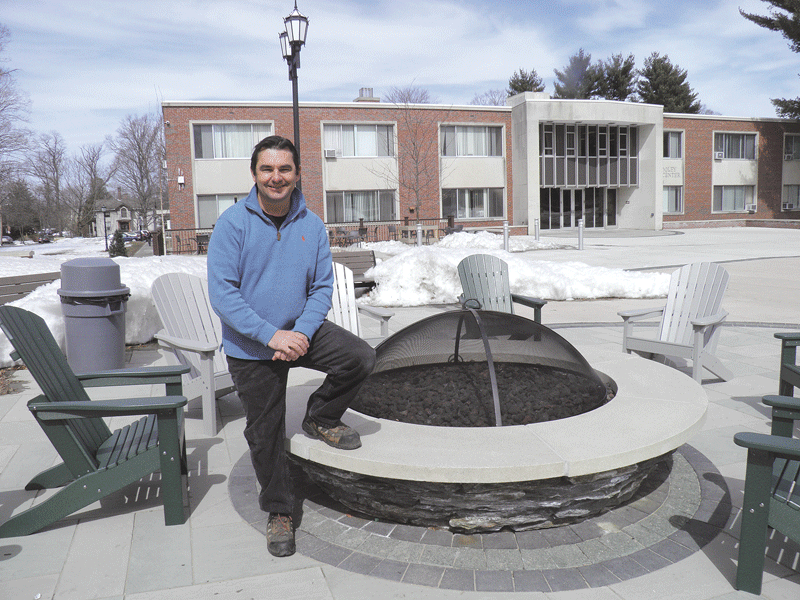
Stephen Roberts shows off a gas firepit that Elms College recently installed in a courtyard.

Last summer, a successful businessman asked Stephen Roberts to construct an edible forest on several acres of his backyard property.

“He said he wanted to go home after work and have a place where he could ‘devolve.’ He grew up on a farm and loves gardening and the outdoors,” said the owner of Stephen A. Roberts Landscape Architecture and Construction in Springfield.

The design Roberts created includes fruit trees, a trail, and a woodland area with plants that range from elderberry and pawpaw to wild ginger and wintergreen, that can be picked throughout the growing season.

Although the request was unusual and most people aren’t looking to create their own forest, local landscapers say a growing number of clients are spending money on backyard retreats that provide them with a place to entertain and enjoy the outdoors.

“Nature is very important to people’s well-being, and they travel great distances to experience mighty landscapes with mountains and oceans,” said Roberts. “But travel takes a lot of time and energy, and since people can create attractive spaces in their backyards where they can relax and spend quality time with families and friends, they are continuing to invest in outdoor rooms with amenities.”

Justin Pelis agrees.

“People are bridging the gap between their home and the outdoors,” said the co-owner of North Country Landscape and Garden Center in Westhampton. “Years ago, people simply planted shrubs and mowed their lawns. But today, they want to spend more time outdoors and are moving away from aesthetics to the experiential.”

Justin Pelis

Justin Pelis says people want the experience of growing fruits, vegetables, and herbs in their backyards with their families.

He added that an increasing number of young families want to grow vegetables and fruits with their children, watch birds and feed them, and cook outdoors in spacious kitchens boasting built-in, stainless-steel appliances.

“People are also looking to create wildlife habitats, and many want to grow wine-bearing grapes and hops,” he said. “Due to the large number of local microbreweries, people are being inspired to produce their own wine and beer, so we have been holding seminars in our garden center to teach people how to grow grapes.”

He noted that participants are taken on a tour of the nearby Blackbird Vineyard, where all of their questions are answered.

“Organic gardening and composting is also becoming popular, and we get many requests from people who want to grow their own food,” Pelis continued. “They are looking for an experience that begins with planting seeds and ends in harvesting what they have produced.”

Steve Prothers, who owns Amherst Landscape & Design Associates and has designed more than 3,000 commercial and residential landscapes, agrees that people want their backyards to be as pleasing, attractive, and fruitful as possible. Natural landscapes are in style, and he said swimming-pool areas are being updated by replacing concrete with natural stone or Travertine tiles, which come in white, tan, cream, and rust-colored varieties.

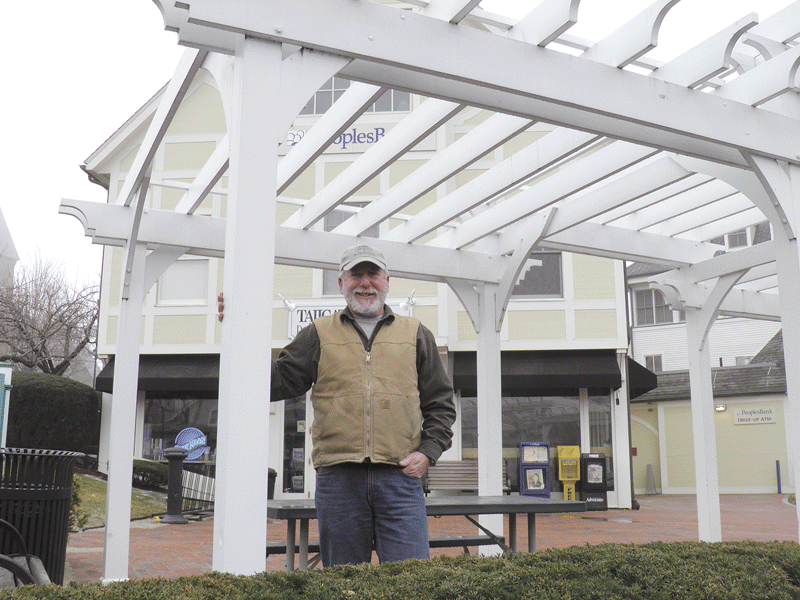
“They give the area an Old World look,” Prothers said, adding that his company specializes in hardscapes that includes patios, retaining walls, walkways, and pool surrounds. Many clients ask for a pergola, because its mini-roof gives an outdoor space the definition of a room.

“It’s a very decorative feature that frames in an area and creates an intimate space. But a pergola can also be functional because it can provide shade,” he said, noting that roof rafters can be placed close together to block the sun, or the structure can be planted with scented vines, such as wisteria or bougainvillea, that give it a tropical feel.

Pelis has built pavilions with roofs over patios that people use as sitting areas. “They put TVs in them, and the patio can extend beyond the sitting area,” he said.

In fact, patios are becoming more popular than decks because they require less maintenance. “Patios give people more flexibility to expand and can be built with pavers, which come in a wide variety of contemporary styles. Some look like wood, others look like granite, and some are very modular,” Pelis said.

Since landscaping is an ongoing process, many people have their yards done in phases and add a new area each year. However, the work often begins with creating new entryways to the house.

“Permeable pavers are being used to replace concrete,” Prothers said. “They have a softer look than concrete and allow water to be absorbed and carried away from the home.”

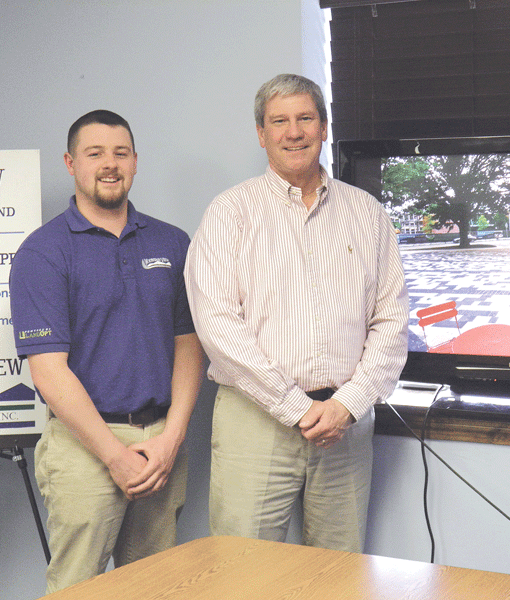
Nic Brown and Steve Corrigan

Nic Brown and Steve Corrigan say many towns and cities are adding spray parks for children and adults to enjoy.

Plans with a Purpose

The desire to create a backyard oasis gained momentum in 2008 when the economy tanked and so-called ‘staycations’ became a household word. But local landscapers say many people held off on projects due to uncertainty over jobs, and pent-up desires are more apt to be realized this summer than they were in the past.

“The recession impacted landscaping projects, but now that the economy is improving, I think we will get more requests,” Roberts said.

Coveted plans typically include backyard areas designated for specific activities. “It’s not unusual for a family to want a cooking area with a built-in grill, a place to sit and eat, a firepit, and another space with an outdoor couch and a coffee table,” Roberts said.

Stephen Corrigan agrees. “More and more people are spending money to create outdoor kitchens and living areas with TVs in a protected area,” said the owner of Mountain View Landscapes and Lawncare in Chicopee.

In fact, interest in outdoor cooking is heating up, and Roberts said his firm has built outdoor kitchens that include granite or faux-stone countertops and built-in appliances such as refrigerators, grills, and rotisseries. “People are taking grilling to the next level.”

Firepits have burned brightly for some time, but today, many people are turning to gas to light up the night. “People love to gather around a fire, and if they use gas, all they have to do is press a button,” Roberts said, adding that Elms College recently had his firm redesign a central courtyard that now includes a large gas firepit with Adirondack chairs. “It is turned on every afternoon and has become a popular gathering place for students and staff members.”

Another advantage of a firepit is that it can create a focal point in an outdoor living room. “People put furniture around it in the same way they would put it near a fireplace inside their house,” Prothers said.

Steve Prothers

Steve Prothers says many homeowners and businesses use pergolas to create an outdoor room, which can be aromatic if covered with flowering vines.

Water features are also in demand, but instead of swimming pools, most people are choosing simple but soothing options such as waterfalls. “They are beautiful and attract birds, but don’t require much maintenance,” Roberts said.

One client with a back problem installed a hot tub surrounded by beautiful plants with a waterfall a short distance away that could be lit up at night. “He could sit in the hot tub in the evening, enjoy the sight and sound of the waterfall, and get relief from his pain,” he noted.

Roberts added that small ponds or plunge pools are still popular. “But people don’t want to use chemicals in them. They want biological filters,” he said, explaining that the ponds he installs are typically four to five feet deep with ledges that people can sit on.

Pelis said his clients are getting away from ponds, but do want water features that look natural, and often choose a fountain or pondless waterfall that pours into a rock filtration system. “They want the sound and sight of water without having to do a lot of maintenance,” he explained, adding that another option is to have water flow from the undersides of raised patio walls into a decorative bed of stone, which filters it into a concealed basin, where it is recycled.

Plantings play an important role in landscape design, and Prothers said ground covers and plants that provide seasonal interest throughout the year are in fashion.

“But landscaping is an ongoing process, and many people do their yards in phases,” he said. “They establish an area, live with it, and then grow their plan. A good landscape design takes into consideration what things will look like five to 10 years down the road.”

Pelis added that native plants such as milkweed, which attracts Monarch butterflies, along with wildflowers and species that attract bees, have become popular as people seek to create natural environments.


Natural Alternatives

Local landscapers expect the season to begin late this year due to the volume of snow. “Spring is in the air, but people have just started to come out of hibernation,” Roberts said.

Corrigan agreed. Although his company is often working by mid-March, this year, the timeline will be pushed out until mid-April.

Most of his business is commercial, and trends are also emerging in that arena, with water conservation and stormwater runoff among the ingredients that weigh heavily in public projects today.

“Permeable pavers are an attractive, green solution that take the place of concrete and asphalt; they allow as much water as possible to be kept on the site,” said Project Manager Nic Brown.

In some cases, it is funneled into rain gardens, said Corrigan, adding that Mountain View has built parking lots with rain gardens at the perimeter where very porous soil absorbs and holds water before any overflow goes into the sewer system.

He cited the Massachusetts Green High Performance Computing Center in Holyoke and a new science building at UMass Amherst as examples of structures where water drainage has been curtailed, and said some systems are designed so rainwater and melting snow from the roof are channeled into a filtration system of tanks that feed rain gardens.

His company recently won a regional award for its work on the town square in Mansfield, Conn., in conjunction with the architect who designed it. The area is the focal point of a newly created neighborhood that contains four five-story podium buildings with 414 rental units and 101,553 square feet of commercial and retail offerings at street level adjacent to the University of Connecticut.

“We used gray and black permeable pavers in the park,” Corrigan said, showing off a photo of the attractive design. “Traditionally, pavers are installed tightly together over a gravel base with two inches of sand. These were placed three-eighths of an inch apart over a 12-inch base of crushed stone.”

Another growing trend is spray parks, and new ones will be built this year in Agawam, Springfield, Greenfield, and Northampton.

“Cities and towns are replacing swimming pools and wading pools with spray parks; they have become more and more popular in the last three to five years,” Corrigan said, adding that they provide safe, cost-effective areas where people can congregate and relax during the hot summer months.

The spray features can be programmed to go off during times set by the town, city, or organization that builds them. When someone presses the mechanism that activates the system during the specified time, the features begin to spray water in a preset sequence, and children quickly learn to run from one station to another.

“Some sprays come up from the ground, while at other stations, buckets set ten feet in the air fill with water and dump it on people beneath them,” said Corrigan. “There are hoops with water sprays that kids can run through, sprays that spurt like a geyser, and ones that look like flowers. They have come a long way in recent years.”

Growing Desire

The desire to spend time outdoors in public and private spaces continues to grow, and whether someone is planning a commercial or residential project, environmental concerns are taking an expanded role in today’s landscaping projects.

Roberts said his customers are requesting blueberry bushes, strawberries, and herbs as well as small plots where they can grow vegetables. Other landscapers report similar requests and agree that enjoying a backyard involves far more today than it did a decade ago.

“Whether people are outside watching birds, picking berries, or watching TV with their friends, they want an experience,” Pelis said. “It’s been a long, cold winter, and although we may get a later start on landscaping than we have in the past, we expect these trends to become more prevalent than ever.”

Landscape Design Sections
Sustainable Building, Remodeling Is an Investment in the Future

Andrew Crane

Andrew Crane says some clients are more environmentally sensitive than others, but they typically appreciate the long-term cost benefits of sustainability.

Andrew Crane says homeowners love the idea of energy efficiency and green construction — it’s the price tag they don’t always like.

“Whether building or remodeling, as far as energy efficiency and sustainable building, people all care about it; they all mention it, they’ve heard about it, and it’s advertised like crazy — ‘save this, low-flow that,’” said Crane, president of A. Crane Construction in Chicopee. “But it comes with a big cost. Everybody wants to include it, but many times, cost will prevent them from actually doing it.”

It’s true that, in most cases, switching from traditional to energy-efficient products will save money over time, the initial cost can be an obstacle to homeowners remodeling on a budget.

“One example would be LED lighting,” Crane said. “LED is great — it lasts forever, and it uses very, very little electricity, but the products themselves oftentimes are cost-prohibitive. The cost of regular incandescent lightbulbs might be 87 cents, fluorescent might be $2.50, but one LED bulb might be $22.50.”

Nick Riley, president of N. Riley Construction in Chicopee, agreed, but added that some energy-efficient home improvements are already becoming standard, including Energy Star-rated appliances and insulating window glass.

“As you get more in depth into remodeling, as far as ripping down walls and reinsulating, people are concerned about it and ask about ways in which they can do it — but cost sometimes can be a pretty big factor in whether they decide to do it or not,” Riley explained.

“We’re definitely seeing more people interested in ways they can make that happen,” he added. “But you want to be more energy-efficient, there’s going to be a little more cost, obviously.”

Still, sustainable building is on the rise. The National Assoc. of Home Builders (NAHB) recently surveyed members about the features they’re most likely to include in new homes this year, and the top 10 included Energy Star-rated appliances and windows and programmable thermostats. Meanwhile, the organization reports an overall uptick in construction that incorporates energy, water, and resource efficiency; improved indoor environmental quality; and sustainable and locally sourced products.

“More people care about the footprint, so we kind of have to feel that out,” Crane said. “Many clients come to us as environmentally sensitive people, and others don’t care. But there is a growing passion for protecting the environment, and they’re not afraid to spend more up front if that’s what it takes.”

Energy Stars

John Majercak understands sustainable building and remodeling. As president of the Pittsfield-based Center for EcoTechnology (CET), he helps clients — who include both contractors and homeowners — go green in their projects.

For example, “we do what’s called a home energy rating for homeowners; we work with builders and architects and try to figure out how we can make a home the most energy-efficient it can be,” he explained. “We predict how the home will perform from an energy perspective and whether the work being done will qualify for different code requirements or certifications, whether LEED or Energy Star or others. It really depends on the scale; a lot of those programs are set up for new construction, but they can be appropriate for remodels as well.”

Another resource is CET’s EcoBuilding Bargains store in Springfield, which sells reclaimed building materials.

“We have a lot of folks who — when they’re remodeling and need to throw away a lot of materials from their home — can donate them here and keep them out of the landfill, which is a very green thing to do,” Majercak said. “We’re also seeing more home builders and architects reusing green materials in their building and remodeling. It can be both visually appealing and green.”

Nick Riley

Nick Riley says today’s contractors feel a responsibility to explain sustainable options to customers.

Another resource, he noted, is the Mass Save program, which provides energy audits for homeowners and introduces them to incentives and rebates available for certain sustainable upgrades, from boilers and appliances to insulation and windows.

Those incentives make a difference in decision making, he added. “People are concerned — ‘what is this going to cost me? Is this super expensive?’”

But as more contractors become skilled in sustainable construction and building codes begin to move in that direction, growing competition should bring up-front costs down for customers, he said. “Everyone is paying attention these days. It’s a big concern for people; they want their home to perform in a way that uses a lot less energy. That’s a good long-term investment, and homes that are built better will last longer and have fewer problems.”

The NAHB survey revealed that nearly 25% of home builders have installed alternative-energy-producing equipment in new construction, including geothermal heat pumps and photovoltaic solar panels. The current 30% tax credit available for homeowners who install this equipment is set to expire at the end of 2016, which makes this a good time for interested buyers to consider purchases.

“Our builder members are telling us that more and more buyers are looking at new homes for their efficiency in design and functionality,” notes NAHB chairman Tom Woods. “Whether it’s improved insulation or sustainable building materials, today’s new homes can reach higher energy performance and greater durability than was possible even 20 years ago.”

Millennial buying trends suggest that sustainable building options should outlast any expiring rebates. Another NAHB survey revealed that Energy Star certifications are a priority for these young home buyers, and 84% of this group is willing to pay 2% to 3% more for an energy-efficient home as long as they can see a return on their power bills.

One example is spray-foam insulation (see related story, page 23). “Generally, it’s twice as expensive if not more,” said Crane, whose company uses the product in 90% of its residential projects.

“It adds a substantial cost — in a 2,000-square-foot home, it could be $5,000 just for insulation in the walls,” he said, noting that expenses like granite countertops are easier purchases for some people because they can see and enjoy them every day. “Insulation is behind the walls, so you don’t notice it once you pay for it. But when your house becomes energy-efficient, you notice it in the monthly bills.”

Code Green

There’s no doubt in Majercak’s mind that sustainable building and remodeling is poised for continued growth, if only because building codes are increasingly reflecting green priorities.

“That’s just upping the game for everybody, the same as if you or I buy a car or appliance, and it’s more energy-efficient because the standards are making it happen,” he told BusinessWest. “That’s what’s happening with building codes. I think a lot of requirements in codes are improving, and building contractors are complying with these. We offer a few workshops to builders about energy-efficient codes, what the changes are, and how to comply with them.”

At the same time, Majercak said, more homeowners today are doing their own research and recognizing the value of sustainable choices.

“I think there are a lot of reasons people want to build green,” he said. “One of them is to help protect the environment, but they also like the durability, having the house last longer, using better materials that resist moisture. Then there’s the comfort and performance inside the home, where it really feels comfortable in summer and winter. Another thing is indoor air quality and health. A lot of people want to make sure the house is successfully ventilated. So it’s not just environmental benefits.”

Reflecting that public mood, Riley said, builders today feel a greater responsibility to inform customers of ways they can make their homes more green and energy-efficient.

“I think it’s our responsibility as contractors to educate the homeowner and then leave it up to them,” he said. “The initial conversation usually includes something about how to make it happen.”

Meanwhile, even homeowners who aren’t remodeling can take steps to cut into their utility bills, Crane said.

“There are some simple things people can do, like wrapping heating pipes with insulation. That can be done by anybody. Or wrapping duct work for the bathroom fan, which is basically a hole in the ceiling letting heat out. You can get a little bit of energy savings there. Or low-flow showerheads and faucets.”

When remodeling homes, Crane said, his company donates as much “gently used” product as it can to organizations that recycle it. “Tubs, walls, recycled countertops, cabinets, flooring — they can be recycled, and you wouldn’t even know the difference.”

Meanwhile, “we’re careful about what we buy and where we buy it. We want to be that person that cares about their environment.”

At a time, it seems, when homeowners increasingly want to do the same.


Joseph Bednar can be reached at [email protected]

Law Sections
Recent Cases Should Serve as Wake-up Calls for Employers

By JOHN S. GANNON

John Gannon

John Gannon

Managing employee medical leaves of absence can certainly give employers a headache.

The Family and Medical Leave Act (FMLA) and the Americans with Disabilities Act (ADA) have been around for more than two decades, yet human-resource professionals still consider these laws to be among the most challenging to navigate.

When an employee requests medical leave, employers are left to ponder a multitude of questions. Do we need to grant this request? What can we do while the employee is out of work? What kind of documentation can we ask for? How long is too long?

To further complicate things, recent legal developments prove one thing: ADA and FMLA violations are fertile ground for both class-action and single-plaintiff litigation. The Equal Employment Opportunity Commission (EEOC), which is responsible for enforcing federal laws prohibiting employment discrimination, has taken aim at vulnerable employer medical leave-of-absence policies in two lawsuits. What follows is an overview of those suits.

Case #1: Equal Employment Opportunity Commission v. United Parcel Service Inc.

In this case, the EEOC claims that United Parcel Service (UPS) violated the ADA by denying medical leaves of absence for its employees with disabilities. The lawsuit contends that these medical leaves were required as a reasonable workplace accommodation.

According to the EEOC’s lawsuit, since 2002, UPS maintained a leave-of-absence policy that “administratively separated from employment” any employee who took more than 12 months of medical leave. UPS did not make exceptions to this policy based on the employee’s job or the nature of the disability.

For example, one employee took a 12-month leave of absence from work when she began experiencing symptoms of multiple sclerosis. After the leave, she returned to work for a few weeks, but started feeling negative side effects from her medication. The employee needed another two weeks off to receive therapeutic treatment, but instead of granting her request for additional leave, UPS fired the employee, citing its rigid 12-month leave policy. Other employees were also fired under UPS’ “inflexible” leave-of-absence policy after requesting leave for longer than 12 months.

The EEOC filed a class-action suit alleging that UPS violated the ADA by failing to accommodate its disabled employees. The ADA requires employers to provide employees (or applicants for employment) with reasonable workplace accommodations, unless such accommodation would cause an undue hardship. Common workplace accommodations can include an unpaid, job-protected leave of absence, in addition to job restructuring, modified or part-time scheduling, modified workplace policies, and transfer to vacant positions for which the employee is qualified.

Once an employer becomes aware of the need for a reasonable accommodation, the ADA obligates it to engage in an interactive process with the employee to identify and implement appropriate, reasonable accommodations. In the UPS case, the employer did not engage in any interactive process to determine whether it could accommodate its employees. Instead, the employer administratively terminated disabled employees as soon as they exceeded the 12-month leave-of-absence high-water mark. UPS filed a motion to dismiss the class action last year, but its motion was denied by the court, and the litigation is ongoing.

Case #2: Equal Employment Oppor-tunity Commission v. ValleyLife

Last month, the EEOC filed a lawsuit against ValleyLife, a disability-support-services company, alleging ADA violations, once again linked to the employer’s leave-of-absence policy. The lawsuit claims the employer discriminated against disabled employees by refusing to provide them with reasonable accommodations after they exhausted their available leave under the Family Medical Leave Act.

The FMLA provides eligible employees with 12 weeks of job-protected leave for a variety of medical and family reasons if they work for a covered employer. According to the EEOC’s lawsuit, ValleyLife’s “inflexible” leave-of-absence policy called for automatic termination of employees who requested medical leave after exhausting all of their FMLA time. The EEOC claims that ValleyLife did not consider whether an extended leave of absence was a reasonable accommodation option and therefore failed to engage in the interactive process.

In one case, the EEOC alleges that ValleyLife forced out an employee who used up all available FMLA leave and needed another surgery. ValleyLife did not engage in any interactive process to determine whether any accommodations (including additional leave) were possible.

Another employee was unable to return to her job after her 12 weeks of FMLA benefits were used up. ValleyLife allegedly terminated her employment pursuant to its leave-of-absence policy without considering whether the additional leave would impact the business.

Tips for Employers

The EEOC has made it clear that an “inflexible” leave-of-absence policy calling for automatic termination after an employer-established medical leave threshold violates the ADA.

For instance, many employers put a hard six- or 12-month cap on the amount of medical leave available to employees. These policies will not pass muster under the ADA because of their rigidity. Instead, employers must engage in the interactive process with every leave request based on an employee’s disability to determine whether the request poses an undue hardship to the business. Often, a six- or 12- month leave of absence will have harmful staffing implications or impact customer satisfaction, particularly where the position is not suitable for temporary employment or backfilling.

Under those circumstances, the employer might be able to deny the request if it properly considers the business impact and discusses other options with the employee.

Bottom Line

Denying medical leave-of-absence requests without careful consideration puts employers at risk of costly and time-consuming litigation. If you need assistance reviewing and analyzing a medical leave-of-absence request, you should contact experienced employment counsel for assistance. n

John S. Gannon is an associate with Skoler, Abbott & Presser, P.C., and practices in the firm’s Springfield office. Since joining the firm in 2011, he has defended employers against claims of discrimination, retaliation, harassment, wrongful-termination claims, as well as actions arising under the Family Medical Leave Act and wage-and-hour law. Gannon also has experience with lawsuits seeking to enforce restrictive covenants and protect trade secrets; (413) 737-4753; [email protected]

Law Sections
SJC Interprets Key Provisions of Alimony Reform Act

By KATHERINE E. McCARTHY

Katherine McCarthy

Katherine McCarthy

The passage of the Alimony Reform Act of 2011 brought about widespread changes to alimony in Massachusetts. Perhaps not surprisingly, the act also left many questions regarding how it would be interpreted by the probate and family courts.

Over the past few years, attorneys, judges, and litigants alike have questioned whether certain provisions of the act permit relief to individuals seeking to modify or terminate alimony orders that predate the passage of the act. This question was answered in part by recent decisions rendered by the Commonwealth’s highest court, the Supreme Judicial Court (SJC).

Three cases were argued before the SJC, all relating to the effect of the act on separation agreements or divorce judgments that predate the act. The SJC determined that the only provision of the act that is applicable to separation agreements and/or divorce judgments that are dated prior to March 1 2012 is a section in the act that allows for the modification of alimony based on the length of the marriage.

One major change brought on by the act is that, under most circumstances, general-term alimony will end once the payor reaches full retirement age under Social Security, unless the divorcing parties agree to another end date or the court deviates from this rule. But the question remained whether that provision of the act would apply to alimony orders that entered before the effective date of the act — in other words, whether the new retirement provision could be applied retroactively, or whether it applied only to alimony judgments that were entered after the date of the act.

The SJC determined that the Legislature did not intend for the retirement provision to apply retroactively. Consequently, a payor under a separation agreement or judgment entered prior to March 1, 2012 may not seek to terminate his or her alimony obligation based solely on the fact that he or she has reached full retirement age under Social Security. Rather, the payor must establish that there has been a material change of circumstances since entry of the alimony order which would justify the termination.

Another issue addressed by the SJC was whether the cohabitation provision of the act applies to alimony orders that entered prior to the effective date of the act. Under the act, a payor may seek to terminate his or her alimony obligation if the recipient is cohabitating with another individual as that term is defined in the act. The SJC decided that this provision, similar to the provision regarding retirement, is not retroactive and applies only to alimony orders entered into following the enactment of the act.

Therefore, payors who entered into agreements to pay alimony or are subject to divorce judgments prior to the enactment of the act must establish a material change in circumstances in order to modify or terminate their alimony obligation.

But it is not all bad news for payors of alimony established in agreements or judgments dated prior to the act, at least not those who were married for fewer than 20 years. The new alimony law allows a payor with an alimony order that predates the passage of the act to seek a modification based solely on the length of the marriage. The act contains detailed guidelines dictating when a payor can seek a modification or termination of alimony on these grounds.

In sum, while these recent cases have clarified some of the limits of the act, they are just the beginning of what are likely to be more challenges to the interpretation of the language of the act and the legislative intent behind the law.

Katherine E. McCarthy is an associate with Robinson Donovan, P.C., where she concentrates on domestic relations; (413) 732-2301.

Cover Story Golf Preview Sections Sports & Leisure
Golf Industry Adjusts to a Changing Climate

GolfPreviewDPlayersART
While golf courses in the Pioneer Valley will certainly be opening earlier than those east of Worcester — where close to nine feet of snow fell in less than two months and temperatures have not induced much melting — they will be getting down to business later than what would be considered normal or desirable.

And that has Kevin Kennedy a little worried.

The head professional at Springfield’s two municipal courses, Franconia and Veterans Memorial, told BusinessWest that golf seasons have a tendency to reflect how — and often when — spring begins.

“I really believe that, if you get off to a good start in the spring, it trickles down to club sales and everything else — everyone’s raring to go,” he explained. “I’d rather have a good spring than a good fall; if they don’t excited about golf in the spring, some people may not get excited for the whole year. A good spring start is imperative.”

However, it looks like area courses won’t be getting that good start. As BusinessWest went to press on April Fool’s Day, the professionals we spoke with were predicting it would be at least another week and probably two before anyone would be putting a peg in the ground.

Kevin Kennedy

While many in the golf industry are content to whine about business, Kevin Kennedy says, he prefers to be optimistic about the present and future.

That’s a few weeks later than normal — many courses are typically able to open in late March — and this year it’s after Good Friday, which is usually one of the busiest golfing days of the year. In fact, area courses with a lot of snow will likely kick off after the Masters tournament (April 9-12), which has become a symbol to many golfers in colder climates that it’s time to get out and play.

And a slow start certainly isn’t what courses need at a time marked by myriad and, in some cases, historic challenges for the industry — everything from the lingering effects from the recession, especially when it comes to discretionary spending, to an oversaturation of the local market when it comes to courses (although that’s certainly not a recent phenomenon); from continued discounting and price stagnation that has many consequences, to societal changes that have left many people, especially younger audiences, with little if any appetite for an activity that consumes five hours or more.

Yet, despite all this, there is optimism to be found among the pros we spoke with, who said they’re learning to adapt to this new environment.

E.J. Altobello, long-time professional at Tekoa Country Club in Westfield, said the course registered “minor growth” in 2014, another season that started later than what would be considered normal, a byproduct of predominantly solid weather during the summer and few lost weekend days. Overall, he said the golf market has stabilized somewhat after several challenging years immediately following the Great Recession.

“We’ve been pretty steady the past several years,” he said, referring to both Tekoa and the regional market in general. “I think we’ve managed to stop some of the bleeding from six or seven years ago. We’ve had minor growth — nothing off the charts — and that’s what we’re probably going to see this year.”

Mike Zaranek, head pro at Crumpin Fox, a higher-end course in the Franklin County community of Bernardston, agreed.

“We had a good year last year, with about the same number of rounds as we did in 2013, which I really can’t complain about in this golf world,” he said, adding that this was despite a similarly late start, April 19 to be exact. “Our membership has been hanging on — the numbers are steady, which, for our neck of the woods and this business climate, is pretty good.”

Even Kennedy, despite his apprehension about a late start, takes a decidedly glass-is-more-than-half-full attitude as he talks about the local market, the state of the sport, and the industry’s prospects for the future.

“I tend to be a little more optimistic than many,” he said. “There are some people in the industry, and not just locally, who prefer to sit around and whine about the golf industry and how bad it is. It’d definitely challenging, but I think the game is healthy, and we can grow it.”

Still, challenges abound, and for this issue and its focus on sports and leisure, BusinessWest looks at how they are forcing clubs to bring their A-games to the table in order to post some solid numbers.

Par for the Course

To summarize the state of the game and the environment in which clubs are operating today, Kennedy summoned some numbers to get his points across.

“In 1995, there were about 25 million golfers,” he said, noting that was the year before Tiger Woods joined the PGA tour and inspired people of all ages to not only watch the sport on TV, but take it up. “And in 2013 there were … about 25 million golfers.”

In between, or roughly around 2000, there were maybe 31 million or 32 million, he went on, noting that this surge, fueled by Woods and a strong economy, was greeted with a wave of new course construction that was country-wide and included Western Mass.

Indeed, this region saw the construction of several new tracts, including the Ledges in South Hadley, the Ranch in Southwick, and, most recently, Cold Spring in Belchertown.

“The overall supply of golf courses skyrocketed — every developer wanted to build 100 condos with courses around them,” said Kennedy, talking about the scene nationally, adding that demand is currently what it was two decades ago and much less than at the start of this century.

Mike Zaranek

Mike Zaranek says courses like Crumpin Fox can’t compete on price, so they must focus on value and providing an experience.

The laws of supply and demand dictate that there would be some attrition, that some courses would fail, he went on, noting that this happened nationally, with several hundred courses closed or soon to close.

But it hasn’t happened regionally, where the inventory has only grown.

And that has left clubs and their managers to take whatever steps they deem necessary to compete, he went on, adding that this means keeping prices stable (the two Springfield courses have not had an increase the past three years, for example), adding value wherever possible, focusing on good customer service, and, in many cases, marketing themselves far more aggressively than they did years ago.

Altobello agreed, and noted that the greater inventory of courses, even just a few new layouts, impacts everything from daily fee play to league play to the myriad outings and charity tournaments staged each year. And it all matters when there is already little margin for error.

“We’ve lost a few tournaments to some of the newer courses,” he said, noting the Ranch specifically because of its proximity. “Every new option out there hurts a little bit and dilutes the business for the rest of us.

“The real issue around here is saturation,” he went on. “It’s great for the consumer — this is a wonderful place to play golf — but not so great for course owners and operators.”

Using his own specific competitive situation, or “micro-climate,” as he called it, to illustrate his points, Altobello said that, although he’s competing against courses across the Pioneer Valley, the situation in his own backyard is especially intense.

Indeed, there are six public or semi-private courses in Westfield and neighboring Southwick alone — Tekoa, East Mountain, and Shaker Farms in Westfield; Southwick Country Club, Edgewood, and the Ranch in Southwick — along with two driving ranges and a par-3 course. And they serve only about 65,000 people, said Altobello.

“That’s a huge number — this is a tough environment to compete in,” he told BusinessWest, adding that a few of those courses are offering “ridiculously low” yearly rates to woo members and keep the daily time sheets full.

Given this competitive climate, Tekoa and other higher-end courses are forced to compete on quality, because they can’t compete on price.

“I certainly feel that our facility is a little better, and hopefully that wins out in the end,” he said, adding quickly that, while quality is important to some, increasingly, the golfing public is being motivated by rates and deals.

That’s because there are so many of them — available through coupon books, Groupon, Golf Now, and other online phenomena, and individual courses looking to drive traffic, especially on the slower weekdays, through golf-and-lunch specials.

“Some people are just looking to get out quick and get the lowest price available,” said Altobello. “It’s different strokes for different folks.”

Zaranek agreed. “People will ask, ‘what’s the special of the day?’ and ‘how much is this going to cost me?’” he said, adding that many will look to do better than the prices posted at the counter. “Everyone wants a deal — that’s the battle you fight.”

At Crumpin Fox, where daily rates average around $100, the club has to specifically focus on those for whom quality and excellent course conditions are a priority, he added.

“There are some places south of us where people can play three rounds for what it costs to play one at Crump,” he explained. “Our job is to get them to come up and understand the value attached to that high-end daily-fee golf course — how you’re treated, the experience you get, the golf holes you remember, the conditions you play under — and make it worth their trip once, maybe twice a year.”

Course Corrections

Meanwhile, there are many other challenges for club owners and professionals — everything from declining sales of clubs (generally, people are holding onto equipment longer than they did even a few years ago and buying last year’s models at a fraction of the cost of new sticks) to a younger generation that seemingly has no patience or passion for a game that takes so much of their time.

“The retail side of the business has changed considerably since the recession of 2008 and 2009,” said Altobello. “Guys aren’t spending money like they used to, and the equipment makers have trained people on when to buy; the 2015 driver is $400, but the 2014 driver is now $149. Is the 2015 driver $250 better than the 2014 model? Probably not. And when the next new driver comes out, people will know to wait it out.”

As for attracting younger audiences — and even those a little older who have similarly stiff competition for their time and attention — clubs are doing what they can to spark interest and hold it.

But it’s an uphill battle.

“Young kids want instant gratification — they want to pick up their phone and play a game, they want to go do this and then do that,” Kennedy explained. “Five hours? If I tell my daughter she’s going to have something good in five hours, she looks at me like I have seven heads. Five hours? How about five minutes? That’s what they have patience for.”

Despite those sentiments, clubs are being more aggressive with programs aimed at attracting younger audiences and, when possible, keeping them in the game, said Zaranek, noting that Crumpin Fox has pricing programs for families and juniors. Meanwhile, it is stressing options for time-strapped individuals, such as nine-hole outings or even playing a handful of holes.

Clubs are also working hard to keep younger individuals and families interested in golf through that challenging period when they are otherwise preoccupied with their career and their family.

Altobello said an all-too-common pattern is for young people to start playing the game in high school, maybe stay with it through college — although that’s challenging as well — but then drop the game when the responsibilities of parenthood and their career consume most all of their time.

“I don’t think the 17-and-under crowd is playing any less than they were 10 or 15 years ago,” he explained. “But I think that, as they get into business and get into their 20s, it seems like we lose them for about 10 to 12 years.

“The whole dynamic of the family has changed over the past 25 or 30 years,” he went on, adding that, while this isn’t a recent phenomenon, societal changes have amplified its impact. “Today, both parents are working, and kids are into more things — and parents need to be there, whether it’s a soccer game or practice or dance. It’s a time factor.”

The challenge for clubs is to try to keep people in the game, he went on, or at least make sure they get back into it when their children get older and time is more plentiful.

There are some positive developments, said the pros we spoke with, although the impacts are more likely to be felt down than the road than in the present.

One is the retirement and pending retirement of the huge Baby Boom generation, said Altobello, adding that this constituency has two things the golf industry requires — time and, generally speaking, disposable income. And many have the wherewithal to retire early.

“The real factor for most people is time,” said Altobello. “If you have a family and you’re working, you just don’t have a lot of time. Anyone who’s retiring early, people in their late 50s and early 60s — that really helps out, and we’re seeing more of those people, men and women, out there.”

Spring in Their Step

It will probably be at least mid-April before they’ll be out on many of the courses in this region.

That later start will only add to the many challenges facing golf-course owners today as they deal with changing societal patterns, lingering effects from the recession, a time-challenged population, and, yes, the weather.

In this climate, ‘steady’ is a reasonable goal and, in the end, a good number on the scorecard.


George O’Brien can be reached at [email protected]

Features
Toastmasters Helps Members Do More Than Talk the Talk

Toastmasters DPart0415aIn her role as a credit analyst for TD Bank, Alicia Raymond spends most all of her time crunching numbers and helping to gauge risk. She’s not often interacting with clients or making presentations.

But with an eye toward the future, she knows that, to advance into commercial lending and one day have her own portfolio of clients, she must build confidence and improve her communication skills.

And those are the primary reasons why, nine months ago, she joined he downtown Springfield chapter of Toastmasters International, an organization that, as the name implies, has 313,000 members in 14,650 clubs in 126 countries around the world.

“I never felt comfortable doing it,” said Raymond, using that collective to describe the broad range of what would be considered public speaking. “It was something I knew I needed to work on if I wanted to advance.”

She first entered the room — in this case, a donated conference room at Cambridge College’s downtown facility in Tower Square — with curiosity and trepidation (more of the latter, to be sure), but soon found the group the group to be laid back, and that put her at ease.

Still, she remembers being quite nervous for her first two-minute speech, on a topic she can’t even remember. That’s because there have been so many since, and in the process of giving them and participating in a host of other exercises, including the regular ‘Table Talk’ sessions, during which random topics are discussed, she has greatly expanded her comfort zone when it comes to speaking in front of other people.
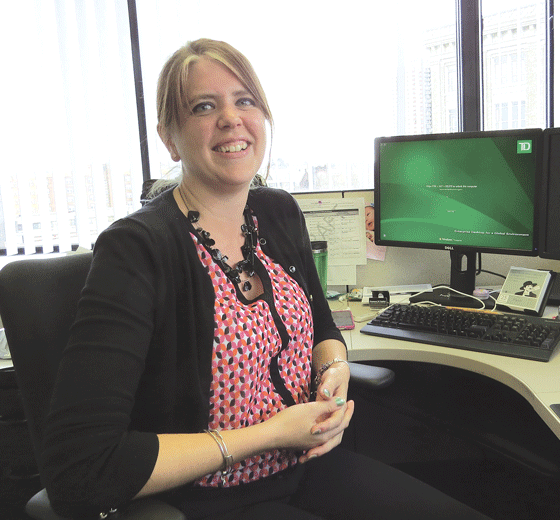
Alicia Raymond

Alicia Raymond understood that she needed to gain confidence and improve her communication skills to advance, and has done both through Toastmasters.

Meanwhile, she’s gained critical feedback and can measure improvement in several ways — from her considerably more-relaxed state to a marked decrease in the number of times she says ‘um’ or ‘ah’ when speaking in general.

In all of these respects — from the reasons for joining to first impressions to the results — Raymond is very typical of the people who find Toastmasters and often stay with the organization for years, if not decades, said Shera Cohen, who certainly speaks from experience.

Indeed, she had those same sentiments, fears, and emotions when she first attended a Toastmasters meeting nearly three decades ago, and she’s watched hundreds of others experience them as well.

“I didn’t give a speech for nine months after I joined — I could have given birth in the time it took to finally give one,” said Cohen, who heads up In the Spotlight, a nonprofit group that promotes the arts, and also leads the Springfield Armory Alliance, another nonprofit. “I was nervous about being judged and that I would not be coherent at all, and that I would use all those filler words like ‘um’ or ‘ah’ or ‘er,’ and that I wouldn’t sound professional.”

She eventually overcame all that with the help of a good mentor within the club, started with a short speech, worked toward longer ones, garnered invaluable repetition, and improved continuously.
Shera Cohen

Shera Cohen says Toastmasters provides a positive environment where members can progress at their own pace.

That’s what the organization has helped thousands of people achieve worldwide, said Cohen, unofficial president and spokesperson for the downtown Springfield club. She told BusinessWest that, while common perception holds that Toastmasters will help members give speeches in front of 400 or 500 people, or, as the name implies, give a toast at a wedding (and it will do that), it is more focused on building confidence, making people more comfortable in a range of settings, and enabling participants to think on their feet — an important skill in many professions.

Membership has brought a number of benefits for Sharon Gates, who owns a franchise of Conference Direct and assists clients of all sizes with finding sites for meetings and conferences. In that role, she’s making presentations to business owners and making pitches to prospective new clients — skills she was looking to improve, and has.

“I would say the difference is substantial,” she said when comparing things before she found the Springfield chapter through a web search three years ago and now. “Before I arrived, there was a lack of confidence with public speaking, and the nerves took over. Now, I’m much more in control; the more you do something, the more comfortable you get.”

For this issue, BusinessWest talked with several members of the Springfield chapter about how Toastmasters has helped them overcome what is widely considered one of society’s greatest fears — public speaking is right up there with flying, death, heights, the dark, failure, rejection, and spiders — and gain needed self-confidence along the way.

Speaking Up

Ellen Freyman has been a practicing attorney for more than 30 years. She focuses primarily on real-estate and business law, which means she spends almost all her time at her desk or at the Registry of Deeds, rather than in the courtroom.

But when she’s not at work, she’s active with one of many groups she supports in various ways, including the Affiliated Chambers of Commerce of Greater Springfield, which she currently serves as board chairman.

When she took on that responsibility, she understood that it would place her behind the podium — not often, but enough. And not for major policy speeches, certainly, but for general remarks, such as welcoming an audience, introducing a speaker, or kicking off a program.

She knew she could do all those things, but also knew she wanted, and needed, to do them better, and especially without the prepared notes that made her remarks seem, well, scripted, which they were.

That’s the primary reason why, even though she’s probably less than a decade from retirement, she chose to join the Springfield chapter of Toastmasters, and why she’s going to make a strong commitment to improving her recent attendance at meetings; she wants to get better and become more comfortable behind a microphone, and when speaking in general.

“Every time I speak in front of people, I need to use a script, and I’d love to be able to be more extemporaneous,” she said, noting one specific goal. “Overall, I want to feel comfortable — and more confident — when I’m up there talking.”

This is a common theme among those who join Toastmasters, said Cohen, adding that the Springfield chapter is one of three public groups regionally — the others are in Northampton and East Longmeadow — along with several private chapters at MassMutual.

There is a one-time entry fee of $20, she said, adding that annual dues are $48, with that money going toward rent, advertising, manuals, and local, regional, national, and international competitions, among other expenses.

Membership in the downtown Springfield chapter is capped at 20, and it is around that number now, she said, adding that individuals join at all ages, represent a wide range of professions, and arrive with a singular goal of controlling and overcoming their fear of public speaking.

This is accomplished through a very structured format designed to ease people into speaking in front of others, she noted, adding that all meetings unfold in a similar fashion.

There are generally one or two formal speeches given each session, she said, adding that members progress through a series of speeches carefully outlined by Toastmasters International, starting with shorter ones and progressing to longer, more involved talks — and always at the member’s pace.

“We don’t rush people,” Cohen said, recalling her own hesitation with giving a speech. “When they’re ready, they’re ready.”

While some members give speeches, others handle a variety of other roles, including timing the speech, counting the ‘ums’ and related words, and providing feedback.

This last individual, the ‘designated evaluator,’ is coached to provide positive feedback, with the accent on positive, to help build confidence, not shatter it.

“Everything is done kindly — we start with something good to say, and we end with something good to say; we clap all the time,” Cohen explained, adding that feedback is offered to address everything from body language to the smoothness of the delivery, all with the goal of helping the speaker improve.

“We give the results at the end … some people might not want to know, but others want to know exactly how they did,” she said. “I say ‘so’ a lot, so I want to know how many time I say that word.

“People gradually get into it, and it really helps when there’s a mentor, whether a formal one or an informal one,” she went on. “Toastmasters encourage the experienced members to help the newbie; I had a mentor whom I didn’t ask for; he was a little tough on me. But it worked — he encouraged me.”

Each meeting also features a segment called Table Topics, which, as the name suggests, involves a topic — almost anything except politics or religion — discussed around the table.

People don’t know what the topic is until they hear it, said Cohen, adding that it could involve a current event, an upcoming holiday, asking someone to comment on their favorite vacation, or another topic that could generate a wide range of responses and encourage participants to think quickly.

“Some of the topics are really simple, like, ‘what are you going to do for Easter?’” she explained. “But the ones that ask you to think a little more are interesting; some of the answers are funny, and some are very serious.”

The Subject at Hand

These Table Talk sessions have been particularly helpful for Dave Malloy, client services manager for United Personnel in Springfield. In that role, he handles everything from client retention to improving the recruiting pool, and is often interacting with the many types of clients the company has.

Dave Malloy

Dave Malloy says Toastmasters has helped him most with extemporaneous speaking — getting him to think quickly on his feet.

Previously, he handled business development at National Ambulance in Springfield and worked for several manufacturers on the operations and logistics side of the business.

He’s been involved with Toastmasters since 2008, or roughly since he discovered that what he needed to improve his communication skills and ability to organize thoughts was repetition, something this organization provides in large quantities.

“What I first thought about Toastmasters was, ‘this will help me give presentations in public to 20 people, 50 people, or more — and that’s certainly something that someone can work on and polish,” he said. “But where it’s really helped for me is with Table Topics, which is more devoted to spontaneous speaking, or extemporaneous speaking, as opposed to having prepared comments.

“To me, that’s where I find more value, because it’s allowed me to be better in my work in terms of being more responsive to people,” he went on. “In the old days, when someone would come up to me at work and they’d have a question, I would feel like I’d have to go back to my desk, research things, and figure out what my answer is. Through Toastmasters, when someone asks me a question, I feel more comfortable, and I can draw from the knowledge I possess more readily, and I think that’s from practice.”

All that practice has made him a better, more valuable employee, he told BusinessWest, because he’s more efficient and can respond to people more quickly and effectively.

“That’s what comes from having to respond and comment on a topic when, a minute earlier, you didn’t know what that topic would be,” he continued. “It teaches you to think on your feet — and where else do you get the chance to practice that?”

Gates agreed, adding that, above all else, Toastmasters has provided her with needed self-confidence she’s gained through various speeches, but also from those spontaneous speaking exercises.

“I pushed myself to attend the meetings, number one, and when I attend, I do some speaking, whether it’s a short speech or Table Topics,” she explained. “And that really pushed me to get in front of an audience, get the feedback, and get the repetition, which has allowed me to be much more comfortable.

“So much so,” she went on, “that I recently gave a presentation to 200 people. I was a little nervous, of course, but it was fine. I was in control, where in the past, I would not have felt in control.”

Raymond can’t speak with as much experience, but she uses very similar language to describe how the group is helping her with a recognized need.

“I’m still nervous when I get up in front of people, but it’s a much more manageable level of nerves,” she explained. “I’ve become less reluctant to get in front of groups — I have the confidence that now I can do this, whereas before I started, when someone said, ‘we need someone to present for such and such,’ I would say, ‘pick someone else — not me, not me, not me!’”

Getting the Last Word

Malloy told BusinessWest that, although he’s been part of Toastmasters for eight years, he’s never considered his work with that group anywhere near done, because he needs to keep getting those reps he described as so valuable to his work and career.

“I will always need this. I know what the stats are — 98% of the public is afraid of speaking in public, or something like that; whatever it is, it’s a very large number,” he said. “I’m one of those people, and I’ll never not be one of those people. But what Toastmasters allows me to do is take this part of who I am and work on it.”

With that, he spoke for all those whose goal it is to speak more clearly and more effectively.

George O’Brien can be reached at [email protected]

Community Spotlight Features
Northampton Expands Housing and Its Downtown

Mayor David Narkewicz

Mayor David Narkewicz says Northampton officials are planning a major redesign of Pulaski Park.

For more than three decades now, Northampton’s downtown has been the envy of cities and towns in this region and well outside it.

It is known for — and in many cases has won awards for — its cultural community, inventory of dining establishments, vitality, diversity, liveability, driveability (with bicycles), and sustainability. And moving forward, said Mayor David Narkewicz, the goal is to essentially make this city, well, even more of all of the above.

Indeed, plans are underway or on the drawing board for additional housing (especially in the ‘affordable’ category), traffic improvements, a wide range of developments on Pleasant Street (Route 5), long-awaited revitalization efforts involving Pulaski Park in the heart of downtown, new retail, and more.

“Northampton has won awards for its walkability and for having the best Main Street in America,” said the mayor. “And I’m excited about the progress being made and am very bullish about our city.”

The net effect of these many initiatives will be to effectively expand downtown, enable more people to live in it — thus providing more foot traffic for existing businesses and potential new ones — and make the city even more of a destination.

And that’s an important factor in the casino era set to begin in Massachusetts and especially the South End of Springfield, just 20 miles to the south, said the mayor, and also at a time when rail service will improve across the region, making Northampton that much more accessible.

Overall, Narkewicz says Northampton’s initiatives to expand its downtown, add more affordable housing, and make infrastructure improvements is a “winning strategy,” one that should enable it to withstand whatever threat the casino presents to its vitality.

“We need to focus on how to prepare and position ourselves so that we can remain a successful and viable downtown destination,” he said, adding that this is a multi-pronged initiative.

For this, the latest installment in BusinessWest’s Community Spotlight series, we take an in-depth look at the many developments underway or planned for Paradise City, and how they are expected to improve what is already considerable quality of life.

At Home with the Idea

Narkewicz said one of the few downsides to Northampton’s three-decade-long resurgence has been consistently high property values that have had the effect of pricing some people out of the city and its downtown.

Plans to increase the inventory of affordable housing will not only help remedy that situation, but they could also result in a more diverse population.

Two major housing projects that will feature affordable units and are in different stages of development are part of a broad initiative to expand and improve the Pleasant Street corridor.

HAPHousing Inc. is purchasing the Northampton Lodging House and plans to transform the multi-story building from single rooms into 72 units of housing, with half of them affordable or subsidized. The new apartments will be built on the upper stories of the building, and the first floor will contain 3,500 square feet of retail space, enough for two storefronts.

In addition, the Northampton Lumber Site, which sits perpendicular to the Northampton Lodging House, is under contract negotiations. Valley CDC is planning to purchase it and convert the property’s 70,000 square feet into 55 affordable housing units, each with one to three bedrooms.

“It’s a plus for our future to have new housing near state-transit-oriented development; these two projects are on a route served by the Pioneer Valley Transit Authority and within a five-minute walk to the Amtrak passenger rail station,” Narkewicz said, adding that the rerouted Amtrak Vermonter train service is operational, and although there are only two trains stopping in Northampton each day right now, ridership is strong and will continue to grow.

“There are also other benefits associated with an increase in downtown housing, including more customers for retail stores and restaurants. The housing will also allow people to be within walking distance to jobs, and the affordability factor is important,” he continued. “We take pride in trying to make sure that Northampton remains affordable to people on every rung of the income ladder.”

New housing options will also become available this year for elders when construction on Christopher Heights is complete. The senior housing facility is being built on the grounds of the former Northampton State Hospital, and half of the 86 assisted units will be affordable.

“It is part of a continuum to try to provide affordable housing for people of all ages,” the mayor said, adding that the Christopher Grantham Group which is building the facility, applied for and received housing tax credits from the state, which were boosted by $250,000 in Community Preservation Act funding from the city.

In addition to new housing options, other developments are planned for that area of the city. The state will begin construction on a major reconfiguration of the intersection of Route 5 and Conz Street, and the fork in the road that people encounter when they enter Northampton from the south will become a roundabout.

“This is one of our busiest intersections, and many businesses are centered around it, so this will help to make the traffic pattern more efficient and will be a more aesthetically pleasing gateway from the south,” Narkewicz said.

The vitality of the roadway was enhanced when the Fairfield Inn by Marriott opened late last year on Conz Street and added 108 new hotel rooms within walking distance to downtown, increasing the city’s hotel space to 300 rooms.

Art of the Matter

Northampton touts a new initiative called “Pleasant Futures,” which Narkewicz describes as a “community re-visioning process for Pleasant Street,” and a number of public meetings have been held to get input from residents in surrounding neighborhoods about what needs to be done to increase density and expand the downtown area in the neighborhood in a way that is pleasing to everyone.

It kicked off last May and is a collaborative effort between the Office of Planning and Sustainability and the Ward 3 Neighborhood Organization. “The concerns expressed in the meetings focused on pedestrian safety and vibrancy along the corridor,” Narkewicz said.

To that end, the city filed an application for a MassWorks grant to install new sidewalks, increase on-street parking, and create an attractive streetscape that would make the roadway more walkable. Traffic-mitigation funds from a new medical-marijuana dispensary soon to open on Conz Street will be used to help fund the planning process, and the mayor said Yes Computer renovated a building there a few years ago, while the owner of the shops across the street has renovated several storefronts.

“One of the advantages of interjecting more housing is that it pushes Pleasant Street to be more walkable and increases downtown’s vibrancy, which we are looking to expand,” said Economic Development Director Terry Masterson.

Change is also occurring in the heart of downtown. The Academy of Music, the oldest municipally owned theater in America, has increased its programming, and a major capital campaign kicked off in the fall of 2013 to install new seating, repair damage to the building’s ornate plaster from a leaky roof, and return the interior to its original colors.

“The city partnered with the Academy to improve the exterior and replace the roof,” Narkewicz said. “Most of the work was done last summer when the academy went black, and the city installed a new fire-escape system in the building at that time. The Academy is a major driver for tourism and brings 45,000 to 50,000 people to the city every year.”

He told BusinessWest that arts and culture play a major role in Northampton’s success, and venues like the Calvin Theater and Iron Horse Music Hall, events such as First Night and a monthly Arts Night Out, and retail stores that showcase the work of artists and artisans are part of the thriving arts fabric.

“A really exciting development in the same realm is also taking place on the other side of town,” Narkewicz said. “The Arts Trust has purchased the Universal Fitness Center, and through fund-raising and grants, they are turning it into an arts center with a black-box theater and space for artists to work in, which is important because Northampton’s success and the growth in property values and rents has made it difficult for artists to find affordable studios to work in.”

Park Place

Meanwhile, another major development is the broad effort to revitalize Pulaski Park.

It sits in the center of the city’s downtown, and a $2.4 million renovation and addition is being planned that will create more green, open space for residents and visitors to enjoy.

“We think the park will become a crown jewel in our already-excellent downtown,” said the mayor. “It sits between City Hall and the Academy of Music and hasn’t undergone a major renovation since 1976.”

Although upgrades had been considered in the past, cost played into the equation. But revamping the park recently became a viable option due to a change in state law that allows cities to use Community Preservation Act funds for existing parks, rather than just for new ones.

As a result, last year Northampton sought and received a $400,000 Parkland Acquisitions and Renovations (PARC) Grant to help fund the construction, as well as some initial design money from the City Council.

Stephen Stimson Associates was hired to create a plan for the park, and after holding a series of open meetings with residents to determine what they would like to see done, “they produced a breathtaking new design,” Narkewicz said. It is pending approval from the Community Preservation Committee, and, if it’s granted, construction will begin in June and continue through July 2017.

“Sustainability is part of the design, and it features a unique bioswale that will collect rainwater runoff and process it in an environmentally friendly way. The park will also have a new nature play area that will replace the existing, dated play structure. It will incorporate rocks, logs, and platforms and have a small slide,” the mayor said.

However, additional funds will be needed to complete the project, and the city is seeking $1,675,000 in the next round of PARC grants. About $200,000 of that funding would be used to comply with state PARC requirements to move utilities and communications lines underground.

Narkewicz said his office, the Department of Public Works, the Recreation Department, and the Office of Planning and Sustainability are all committed to identifying construction funding through a combination of local monies and state grant opportunities.

Bottom Line

For decades now, downtown Northampton has set the standard when it comes to vibrancy, diversity, and, as mentioned earlier, overall liveability.

Mayor Narkewicz and other city officials believe that the overall impact of the many initiatives underway will be to set the bar even higher. And, in doing so, they will give new meaning to that nickname Paradise City.

Northampton at a glance

Year Incorporated: 1884
Population: 28,495
Area: 35.75 square miles

County: Hampshire
Residential Tax Rate: $15.81
Commercial Tax Rate: $15.81
Median Household Income: $57,991 (2013)
Family Household Income: $81,680 (2013)
Type of government: Mayor; City Council
Largest Employers: Cooley Dickinson Hospital; Smith College; Veterans Administration Medical Clinic
* Latest information available

Sections Sports & Leisure
For the Agawam Cinemas, There Will Indeed Be a Sequel

By KEVIN FLANDERS

Kimberly Wheeler

Kimberly Wheeler says she was pleasantly surprised by the level of enthusiasm she encountered from local movie fans who supported her Kickstarter campaign to raise funds to renovate and reopen the Agawam Cinemas.

Facing an ultimatum effected by the ever-present hand of technology, Agawam Family Cinemas was forced to shut down last year.

The deadline had been looming for some time following the announcement that 35-mm film would no longer be used. The result was a difficult decision for many theater owners — initiate the costly conversion to digital projectors or close their doors.

Then-owner Sal Anzalotti, who had run the cinemas for nearly 20 years, elected to close the business, much to the devastation of many local families who frequented the cinemas. For a time it looked like the reign of movies at the 866 Suffield St. location was over; the price of bringing movies back to Agawam was seemingly too steep.

Fast-forward almost one year, and those very families once fraught with despair are now teeming with joy and excitement. The movies are indeed coming back to Agawam, with Kimberly Wheeler leading the way.

“This was an opportunity I simply couldn’t pass up,” said Wheeler, a lifelong Agawam resident and movie buff who spent countless hours catching films at the theater with friends and family. “When it closed its doors, it was absolutely heartbreaking.”

Wheeler had no experience prior to this year in acquiring and operating local cinemas. An EMT for 13 years and also an instructor of emergency medicine, she might have been the last person one might have expected to embrace such a massive undertaking. There are many innate challenges to restoring a cinema and getting a business back on its feet — challenges that would have daunted most people.

But with a lifetime of movie memories and the desire for new ones serving as her inspirations, Wheeler excitedly took over the shuttered cinemas and hasn’t looked back since.

Total Team Effort

Having only rented the business — now called Agawam Cinemas — for 10 months, Wheeler has gone a surprisingly long way in a short period of time. Needing to raise about $150,000 in order to purchase digital projectors, it was a tall task to get the business off the ground again.

But Wheeler wasn’t alone with her aspirations. Hundreds of area residents and business owners, many with similar recollections of catching movies in Agawam, showed their support through $45,000 in donations during a month-long fund-raising effort on Kickstarter. Additionally, several individuals reached out to Wheeler to express their support of the project and congratulate her for bringing the movie tradition back to Agawam.

“I had so much support from Agawam residents and businesses. It was stunning — the most heartwarming thing I have ever seen,” Wheeler told BusinessWest. “I don’t know if I could have done this without all of the help I’ve gotten from the community. It really does take a village.”

Agawam Family Cinemas

Agawam Family Cinemas started life as the local Jerry Lewis Twin Cinemas, and is set to reopen soon as a modern, fully digital theater.

It means a lot to Wheeler to have the community’s support as she continues through the renovation phase of the project. Working closely with Easthampton Savings Bank, she will provide most of the remaining funds for digital projectors from her own pocket. A murder-mystery-dinner fund-raiser is scheduled for April 11, but those proceeds will merely help defray the cost of acoustic improvements to the theaters.

Those costs are well worth it, Wheeler said, especially since the project has come as a pleasant surprise not only to Agawam residents, but to film fans throughout the area. Many people used to travel several miles to see movies in Agawam, passing up larger cinemas to experience the quaint environment.

“I got many letters and e-mails of encouragement,” added Wheeler, who hopes construction will be complete in time for a grand reopening in May or June. “It’s so important to know that the town and region are behind you 100% when you do something like this. People really missed this place.”

Residents and town officials alike are eagerly anticipating the reopening of the cinemas. From family events to nights out with friends, Agawam Cinemas will be ideal for people of all ages.

Wheeler, who has always enjoyed watching movies with her father, wants to give others a chance to experience the thrill of taking in movies with their families as well. She has seen countless movies in all genres over the years in Agawam, from Monsters University to Philomena. One of Wheeler’s fondest memories of the Agawam cinemas was seeing the film Django Unchained with her father. Theater policies at the time required at least four guests to be in attendance for the movie to run, but for a while Wheeler and her father were the only guests.

“We were sitting in the lobby, holding our breath to see if two other people would arrive to see this film alongside us, when finally one couple arrived,” Wheeler recalled. “We all let out a sigh of relief and laughed together. It was a team effort to get this film presented that evening, and we all enjoyed the film immensely.”

Town officials, meanwhile, have plenty of great memories of the place as well, many of their recollections dating back to the early days of the cinemas. Listening to their stories, one can easily understand how the cinemas have been stitched into the fabric of Agawam.

“I am both pleased and excited about the renovation and reopening of the Agawam Cinemas at the Southgate Plaza,” said Agawam Mayor Richard Cohen. “I remember when they originally opened as the Jerry Lewis Twin Cinemas. We are fortunate that the town’s only movie theater will once again be offering first-grade services with a hometown atmosphere. I can’t wait for the ribbon cutting and the ability of watching movies once again here in Agawam.”

Showtime

Built in the late ’60s, Agawam Cinemas was originally part of a chain of Jerry Lewis Twin Cinemas franchises that sprouted up across the country, with individual operators paying around $10,000 to operate a given cinema. The two auditoriums hold 175 and 250 guests, respectively, with the unique distinction of having tables in front of every seat. The theaters used to hold more than 400 each, and the decision to add tables reduced seating capacity but increased guest comfort.

Since taking over the business, Wheeler has placed an emphasis on creating the most comfortable and convenient atmosphere possible for her guests. Upgrades are currently in progress to make the building fully ADA-compliant, and the lobby has experienced a makeover as well. In addition to standard concession choices that will be made available for snacks, Wheeler is also thinking outside the box by offering guests gourmet chocolate creations from Maureen’s Sweet Shoppe in East Longmeadow. Now that movies are coming back to town, she wants other businesses to benefit as well.

On the topic of business, Wheeler praised New England Theater Co. of Connecticut for its construction work on the building, and she’s eagerly awaiting opening night.

“We want to make it a destination for people, from the atmosphere to the exceptional customer service,” Wheeler said. “This is something that will get people out of their houses and help them forget their troubles. It will provide a great family and group experience.”

Unlike large movie theater chains, Wheeler is striving to foster the same neighborhood feel the place has always been known for, a venue where people can build friendships on the foundation of a common bond. By intertwining modern technologies with nostalgic elements, the cinema will transcend the zeitgeist of its initial creation and usher in a new era of movie magic in Agawam.

To celebrate the building’s history, the lobby will feature several items of Jerry Lewis memorabilia and other hallmarks of the cinema’s past. Prior to entering the theaters, guests will get to experience the history that connects generations of Agawam residents.

“We want the lobby to be comfortable, with a focus on nostalgia. We are digging up everything we can find, from the groundbreaking of the cinema to current day,” Wheeler said.

She plans to show first-run movies at the theaters, perhaps in an alternating sequence that allows about four movies to play on a given day, two per theater. Though the details haven’t been fully ironed out, Wheeler said she will seek input from guests on what movies they would like to see and try to create a balance.

“We want to make it flexible and give them the opportunity to let us know what they want to see,” she told BusinessWest.

For many residents and town officials, it won’t even matter which movies are playing, as long as the big screens are bright again in Agawam.

Sections Travel and Tourism
Seuss Museum Expected to Provide Boost for Quadrangle, City

AWDS5Neighborhood-Overview

Top: an artist’s rendering of one of the scenes to unfold on the first floor of the planned Dr. Seuss museum, set to open in June 2016. Above: kids visit Ted Geisel’s statue in the outdoor sculpture garden.

Top: an artist’s rendering of one of the scenes to unfold on the first floor of the planned Dr. Seuss museum, set to open in June 2016. Above: kids visit Ted Geisel’s statue in the outdoor sculpture garden.

Holly Smith-Bove says that, over the years, the bulk of the phone calls and inquiries from visitors to the Springfield Museums — maybe 80% of them by her estimate — have concerned the “Dr. Seuss Museum,” even though there isn’t one.

There is a sculpture garden featuring Seuss characters, as well as the author himself, on the museum grounds, which helps explain all those inquiries, she said. Still, many assume there is a museum attached to that hugely popular attraction. Meanwhile, there’s also an image of the Cat in the Hat on the museums’ logo, creating additional expectations.

But another huge factor is simply the strong international pull of Theodor Seuss Geisel, the most famous children’s author of all time — an estimated 600 million copies of his various works have been sold in 95 countries around the world — and knowledge of his many connections to Springfield, his birthplace, said Smith-Bove, president of Springfield Museums. And thus it is with a good deal of relief — and anticipation — that such questions will now be given a different answer.

Specifically, that the Amazing World of Dr. Seuss Museum will open its doors in June 2016 in the William Pynchon Memorial Building, which once housed the Connecticut Valley Historical Museum.

The new facility will be highly interactive and have a strong literacy component, said Kay Simpson, vice president of Springfield Museums, who spearheaded the Seuss museum project.

She told BusinessWest that the first floor of the Seuss museum, some 3,200 square feet of exhibition space, will house “The Amazing World of Dr. Seuss,” a permanent, bilingual exhibit deigned to introduce children and their families to the stories of Geisel, promote joy in reading, and nurture specific literacy skills.

“The exhibit is really focused on Ted Geisel growing up in downtown Springfield, and how the sights that he saw and some of the characters he encountered later appeared in his books,” said Simpson, noting that there are many connections, including Mulberry Street, just a few blocks from the Quadrangle, which was the focus of his first book, And to Think That I Saw It on Mulberry Street.

The second floor, meanwhile, which is due to open roughly a year later and is what Simpson called a “work in progress,” will house additional exhibits, including a planned re-creation of Geisel’s studio, an exhibition about the making of the sculpture garden, and other related displays.

“We’re calling it ‘Ted’s Room,’” said Smith-Bove. “It might include his writing desk — setting up his studio as if he just left it.”

The new museum is expected to generate perhaps a 25% boost in overall visitorship to the Quadrangle (currently about 400,000 annually), said Smith-Bove, adding that the attraction has strong potential to bring a number of economic benefits to the City of Homes, especially if the museum concept can be built upon in ways to include other city landmarks.

Holly Smith-Bove, left, and Kay Simpson

Holly Smith-Bove, left, and Kay Simpson say the new Dr. Seuss museum will bring many benefits, including a boost in sales of Seuss items in the gift shop.

Indeed, museum officials are already pondering such possibilities as Seuss walking or driving tours that could possibly include his childhood home on Fairfield Street (currently on the market), his alma mater, Classical High School, the site of his maternal grandparents’ bakery on Howard Street, and other sites.

They also envision packaging a Seuss experience with other facilities honoring artistic and literary figures, such as the Mark Twain Museum in Hartford, the Norman Rockwell Museum in Stockbridge, the Eric Carle Museum of Picture Book Art in Amherst, and others.

For this issue and its focus on travel and tourism, BusinessWest takes an in-depth look at plans for the Seuss museum and talks with those involved about how it might prompt visitors to explore not only the worlds Geisel created, but the city that inspired so much of what he drew.

Rhyme and Reason

Simpson told BusinessWest that discussions concerning a Seuss museum began in 2002, not long after the Dr. Seuss National Memorial Sculpture Garden opened, and it became immediately apparent just how powerful a draw the children’s author and his famous characters were.

“It was a huge attraction the day it opened to the public, and it still is today,” said Simpson, noting that, because people don’t have to purchase admission to visit the garden, it is hard to keep an accurate account of visitorship, but she estimates at least 100,000 people a year.

From a qualitative standpoint, she said the sculpture garden has been a hit with people of all ages, and it has attracted cars bearing the license plates of nearly 50 states.

“When the kids come onto the Quad, the minute they see the sculptures, they immediately run toward them — it’s very meaningful for people,” Simpson noted, adding that, while it is mostly a spring and summer phenomenon, weather doesn’t stop many of the faithful.

“I’ve gone out onto the Quad even during the chilly autumn,” she noted, “and you’ll see someone in the middle of a rainstorm with an umbrella just reading the text from the sculpture that represents Oh, the Places You’ll Go.”

And many of those visitors, as Smith-Bove noted, want to know where the Seuss museum is.

While there has long been a desire to create one and meet that recognized need, Simpson explained, many pieces had to fall in place for such a facility to become reality.

Such pieces included physical space, a problem that was solved when the various collections in the Pynchon building were moved to the new Lyman and Merrie Wood Museum of Springfield History in 2009, freeing up that square footage. Another was gaining the blessing of Geisel’s widow, Audrey, and Dr. Seuss Enterprises, an organization that zealously promotes and protects the Seuss name and brand, while still another was funding.

In many respects, Simpson said, those challenges were woven together.

“We had a conceptual plan for the first floor of the Pynchon building, which had received approval from Dr. Seuss Enterprises, but they had a condition,” she explained. “And the condition was that we had to raise all the money that we needed to execute that conceptual plan before we started any construction or fabrication.

“It’s been like a patchwork quilt,” added Simpson of the efforts to create the museum, adding that a key stitch came from a $1 million appropriation from the state, which, when added to roughly $600,000 and other donations, including a $150,000 gift from the Institute of Library Services, gave the Museums more than the $1.5 million needed to greenlight the project and begin work.

Following an extensive RFP process that yielded responses from firms across the country, the Springfield Museums contracted with a design group comprised of 42 Design Fab, based in Indian Orchard, and 5 WITS Productions and Boston Productions Inc., both based in Norwood, to create the interactive elements for the first floor.

The new Seuss museum

The new Seuss museum will focus on the many connections between the author and Springfield, including early vehicles produced in the city.

Visitors will enter the exhibition through a large entry hall designed to simulate elements of And to Think That I Saw It on Mulberry Street. In succeeding galleries, they’ll explore a series of environments that replicate scenes from Geisel’s imagination and encounter life-sized, three-dimensional characters and places from the books.

Character Witnesses

Overall, what’s planned for the two floors of the Pynchon Building, a Georgian Colonial Revival style structure, is a celebration of the author, his works, and his many connections to Springfield, said Simpson and Smith-Bove, adding that childhood literacy will be an important component of the facility.

That’s because one of Geisel’s primary motivations for his many children’s books was to get young people excited about reading, said Simpson.

Indeed, starting with The Cat in the Hat, published in 1957, he launched what became known as the I Can Read It All By Myself Beginner Book Series, which would also include The Cat in the Hat Comes Back, One Fish Two Fish Red Fish Blue Fish, Green Eggs and Ham, Hop on Pop, and many others.

“We’re going to be a resource for the community in terms of emphasizing reading and the importance of reading,” she said of the new museum. “And our exhibits will have literacy built into them.

“For example, the interactive displays will teach kids how to rhyme and have really fun rhyming games,” she went on. “They will teach letters of the alphabet, and they provide places where families can read together — little reading nooks. There will be a focus on vocabulary with a ‘word wall.’”

As for Springfield connections, there are many, said Simpson, noting that, while the author never lived in the city following a brief return after doing graduate work at Oxford, his birthplace was always important to him, and many of its landmarks, as well as the inventions and products with which the city is most identified, can be seen in his works.

It’s all explained in a number of informational panels on the author now on display in the history museum.

One cites the stunning resemblance between the towers in the armory building on Howard Street (set to become part of the MGM casino complex) that sat across the street from his maternal grandparents’ German bakery, and a tower in The 500 Hats of Bartholomew Cubbins.

Another panel speculates on how the Knox automobiles and Indian motorcycles manufactured in the city early in the 20th century may have influenced vehicles presented in his books, while another cites how his paternal grandfather’s brewery, the Kalmbach & Geisel Brewery, may have inspired some of his drawings. And still another informs readers of how the animals in the Forest Park Zoo — which Geisel’s father served as superintendent after Prohibition torpedoed the family brewery — inspired the many creatures in his books.

“Ted grew up on Fairfield Street, which was not far from Forest Park; he used to go over to the park as a boy, and he always had his sketchbook with him,” said Simpson. “He would go to the zoo, and he would draw all those animals — he would spend hours doing that — and it’s believed that seeing all those animals inspired him to create all those crazy creatures you see in his books.”

These myriad connections help explain why the Seuss family and Dr. Seuss Enterprises determined that, if there was to be a museum devoted to the children’s author, it should be in Springfield, said Smith-Bove, adding that it will be the only facility of its kind dedicated to his life and work in the world.

And while it will be launched in the Pychon building, there are expectations that it may be expanded down the road, said Smith-Bove, adding that, in the meantime, the other facilities in the Springfield Museums could be utilized to provide a broader Seuss experience.

“We have five museums on our campus that can hold thousands of people,” she explained. “It’s up to us to make sure that we program each of the other buildings. In the art museum, we can have Seuss’s artwork; in the history, we can talk about his life; for the science museum, there’s the Lorax … there are many possibilities.”

These extend well beyond the Quadrangle itself, said Simpson, adding that Springfield Museums and city officials should work together to use those connections between Geisel and his hometown to bring more attention — and visitors — to the museums and the city as a whole.

“Ted really knew downtown Springfield — he went to Classical, he used the main branch of the city library [on State Street], and some of his books actually to refer to what was then called the municipal auditorium, Symphony Hall,” she explained. “So we were thinking that we could do a walking tour, which goes to the idea of cultural tourism.

“We’d be making connections between the museums and other sites in downtown Springfield,” she went on, “and would really get tourists walking around the city.”

When asked about the projected impact on the Quadrangle from the new museum, Smith-Bove and Simpson again flashed back to when the sculpture garden opened. The first few years it was open, it was a huge draw, they said, adding that visitorship to the museums grew by roughly 25% over that time.

A similar increase is expected from the new facility, along with a corresponding increase in the museums’ overall economic impact on the city, currently pegged at roughly $28 million.

And for the Springfield Museums themselves, in addition to the surge in visitorship, there is an expected trickle-down to facilities like the gift shop, where sales of Seuss-related items — from books to Cat in the Hat hats to plush toys — account for more than 25% of total revenues.

Chapter and Verse

The health and vitality of both the Seuss name and brand is evidenced by the coverage given the news of the planned Seuss museum, said Matt Longhi, the museums’ director of marketing and public relations, who tracks such things.

He said stories or notes have appeared in the Boston Globe, the New York Daily News, Time, Entertainment Weekly, and even the South African Art Times and Al Jazeera’s New York bureau.

More significant than the press is the manner in which the Seuss brand continues to grow — in scope and also in terms of revenue, said Simpson, adding that the Seuss name, and the books, have enormous staying power.

“Other book series just seem to fade out over time,” she explained. “But he just keeps getting more popular.”

In addition to staying power, it is expected that the celebrated author will have drawing power — in a figurative sense — which will bode well for the museums at the Quadrangle, the city itself, and all those who want to celebrate the life of Springfield’s most famous resident.


George O’Brien can be reached at [email protected]

Sections Travel and Tourism
Berkshire East Positions Itself as Outdoor Adventure Center

Berkshire East’s new mountain coaster

Berkshire East’s new mountain coaster opened last October and has earned the distinction of being the longest alpine mountain coaster in North America.

In the fall of 1976, Roy Schaefer drove his family from Michigan to Charlemont to look at Thunder Mountain Ski Resort, which was about to go bankrupt.

Although it was failing, Schaefer was optimistic that he could bring it back to life, and he and a partner purchased it from Greenfield Savings Bank for $1, plus a debt of several hundred thousand dollars.

Schaefer renamed the resort Berkshire East, and although his hard work and dedication paid off, he dedicated only the fall and winter months to the operation.

“My father and his partner operated a ferryboat company in the summer on Mackinaw Island in Michigan, and when the ski area ended, all of their energy shifted there,” said Roy’s son, Jonathan Schafer, who co-owns Berkshire East Mountain Resort with his family.

However, Roy and his partner kept the area alive, and it became a place where generations of families learned to ski. But, because it was a seasonal operation dependent on weather, he battled Mother Nature for decades. However, his commitment and belief that outdoor recreation is a sustainable model for economic growth not only helped area businesses and provided seasonal employment, but was passed on to his four children.

Today, the resort is undergoing a $5 million transformation and is ushering in a bevy of recreational activities designed to transform it into a year-round destination that offers not only alpine skiing, but snow tubing, ziplining, mountain biking, whitewater rafting, and the opportunity to ride North America’s longest mountain coaster.

The family also added overnight accommodations to the resort last September by purchasing the nearby, 530-acre Warfield House Inn and Farm, a bed and breakfast located just over a mile from Berkshire East that operates as a working farm complete with llamas, cattle, chickens, and gardens.

Jonathan has worked alongside his father for years, and says he and his brothers developed their own vision for expanding the family ski resort into a year-round retreat years ago.

“We were all ski racers who traveled the world, and due to our racing, we got to see a lot of things: bungee jumping in New Zealand, mountain biking, and other amazing activities,” he said. “We knew that we wanted to bring them to Charlemont and also realized that the Berkshires compare to any mountain range anywhere.

“We never had a written master plan, but we knew where we wanted to go with the resort due to our shared experience,” he went on, “and our goal now is to become the number-one family, four-season resort in Southern New England.”

The vision morphed into reality in 2008, when Jonathan’s brother, James, who lives in New York City, bought out his father’s business partner in Michigan.

Change began almost immediately, and in 2009, Berkshire East installed its first new recreational venue, Zipline Canopy Tours, that would change its status from a winter resort into one that offered year-round activities.

For this issue and its focus on travel and tourism, BusinessWest looks at the many changes and additions at Berkshire East, and how the resort is now at the top of its game — in more ways than one.

Reaching New Heights

The expanded venue has been a success, and people can choose three different zipline options that begin with a ride up the mountain on a chair lift that offers panoramic views of the Deerfield Valley. The descent is exciting, moving from platform to platform through mountainous terrain, and Zipline Canopy Tours was named by USA Today as one of the top 10 ziplines in the nation.

“The tours are guided and were built to fit in with the landscape. It’s a great adventure that lasts two to two and a half hours,” Jonathan said.

The Schaefer family has always strived to be in tune with nature, and in 2011 they installed a wind turbine, followed by a 10-acre solar field in 2012.

“We were the first ski area to produce all of our own electricity, and we remain the only ski area in the world to produce renewable energy on site,” Jonathan told BusinessWest.

Berkshire Whitewater

Berkshire Whitewater will begin offering rafting trips in May, with a variety of excursions designed for people of different ages and abilities.

The wind turbine powers the pumps that transform water into snow, and from 2009 to 2013, Berkshire East made dramatic upgrades to its snowmaking operation. “We also added a mountaintop pond, which allowed us to double our snow guns and open earlier each season,” Jonathan said, adding that the resort contains 160 skiable acres. “We opened the last weekend in November, and this year is our longest season ever.”

Another new attraction has increased business and added to the operation’s year-round status. It’s a 5,400-foot, all-season mountain coaster that opened last October on Columbus Day weekend.

“It was built as a diversification against the weather; ski weekends can be wiped out due to cold and snow, so we needed a way to drive business and give people a great experience,” said Jonathan. “The things we have done allow us to be open 365 days a year, and we built a 12,000-square-foot addition onto our lodge last year. It’s beautiful, as it’s made from hand cut timber.”

He noted that the lodge has two floors, two restaurants, and a bar, and has been a tremendous boost to the property. “Many couples book their weddings here, and now their guests will be able to enjoy the activities we offer year-round.”

The mountain coaster is one of them, and it’s a noteworthy attraction. “It is the longest mountain coaster in the nation and the third-longest in the world. It’s powered by our wind turbine and solar panels, and is an inviting way for people to enjoy the outdoors, as there are no fitness or skill requirements,” Jonathan said.

The coaster’s construction proved to be an extraordinary engineering feat, because each section had to be designed to adapt to the contour of the mountain with minimal impact to the landscape. The sections were installed in 10-foot lengths, and each car is towed up the mountain by a stainless-steel cable and strategically released when it reaches the top.

“Each car is independent of the others and has its own braking system, which allows people to slow down or speed up by pulling on the handles,” Jonathan said. “However, if one car gets within 80 feet of another going down the mountain, the brakes automatically stop it.

“The track twists and turns down a mountainside of cliffs and trees, so it’s a wild ride on a dynamic hillside,” he added. “Anticipation builds in riders who are going up, as they can see others coming down because the course crosses uphill four times.”

The new attraction has attracted coaster enthusiasts from across the nation, and groups have already booked trips there this summer.

Growing Venues

Berkshire East enjoyed a cooperative partnership with Moxie Outdoor Adventures for years, and recently acquired its Deerfield River rafting operation. It has been renamed Berkshire Whitewater, and although it kept most of Moxie’s river guides, Berkshire East purchased 10 new rafts designed exclusively for the river, along with other state-of-the art equipment.

“We have 60 spots on the river, plan to open in May, and will continue the rafting trips until it gets too cold to run them in the fall,” said Jonathan. “We can’t add 1,000 vertical feet to the ski area, so we are adding world-class activities to show off what a beautiful spot we have here.”

Trips will be available five days a week and will begin when the hydroelectric Bear Swamp Generating Station releases water, which is done on a regular, scheduled basis. Since it stores approximately 1.7 billion gallons of water almost 800 feet above the river, when it is released, it turns the river into an ideal spot for rafters, kayakers, and downriver canoeists.

A variety of adventures along different sections of the river are planned for different age groups and abilities, but all rafters will receive a 20-minute safety lecture before they leave. A picnic lunch is provided for people who opt for one of the easier excursions, while another, more advanced course ends with a barbecue.

Each trip lasts four or five hours, and there are options to satisfy everyone, including a leisurely, half-day float trip that families with children ages 5 and up can enjoy.

“They float along in a whitewater raft, and there are places for them to get out, splash around, and swim,” Jonathan noted.

In addition, guided kayaking trips will be offered daily, and children ages 5 and up can accompany an adult in a boat on the four-hour adventures.

Since some people have already rafted on the Deerfield River, Jonathan said, Berkshire Whitewater is offering trips on the Millers River, east of Greenfield, and the West River in Jamaica, Vermont. “But they all start here, and people are taken to those sites in vans,” he told BusinessWest.

skiing remains a major part of Berkshire East

Despite the resort’s all-season changes, skiing remains a major part of Berkshire East’s roster of offerings.

The Schaefer family is also building a new mountain-biking park and commissioned a group from Whistler Mountain, whose track record includes building the largest and most dynamic bike trail in the world, to construct 10 miles of trails down the mountain. “We plan to open the park in early July and will have a major focus on beginners, with a learn-to-ride program,” Jonathan said.

Meanwhile, because the Schaefers know that many people want to enjoy their resort for more than a day, the purchase of the mountaintop complex that contains the Warfield House Inn will allow them to offer overnight lodging.

“It was a logical move because there was no housing at the ski area and this was a beautiful facility that needed new life. We thought it would be a great complement to our business,” he said.

The bed and breakfast, which was recently renovated, contains a meeting facility, restaurant, and pavilion with mountaintop views. “It’s a gorgeous place to get married,” Jonathan said, adding that the farm is also known for its maple-sugaring operation, producing about 1,000 gallons of the sweet treat each year.

Endless Possibilities

Over the past few years, Berkshire East also installed a new Sky Trac Quad chair lift, with the help of a helicopter and an army of loyal employees, that can deliver 2,400 people an hour to the top of the mountain to ski, mountain bike, hike, and enjoy other outdoor activities.

“For many years, we were just a ski area, and we have continued to expand the skiing and offer a lot of learn-to-ski programs for children,” Jonathan said. “But it’s a sport that takes skill. There is a learning curve, and it requires equipment, so we wanted to add other year-round activities that would give families the experience of a lifetime.”

He added that his brother Bill, who lives in Iowa, is part-owner of the whitewater-rafting business and has purchased rental properties in the area; his brother Tom, who lives in California, has also purchased rental properties; and he, his brother James, and their father run the day-to-day operation of the resort and remain committed to providing healthy, recreational outdoor activities.

Today, the family is excited about the expansion, and their goal is for Berkshire East to become known as “New England’s Outdoor Adventure Center,” Jonathan said.

“We think it is possible,” he noted, “because we have added attractions that will drive business and give people a great experience here 365 days a year.”

Law Sections
Steven Schwartz Looks Back at a Lifetime in Law

Steven Schwartz

Steven Schwartz

Steven Schwartz considers himself a lucky person, because he’s spent a career doing exactly what he always wanted.

“Some people, when they’re young, they have a dream of what kind of profession or job they would like to have when they grow up,” he told BusinessWest. If he had forgotten his childhood dreams, he was reminded when his parents were moving and uncovered a paper he had written in the sixth grade at Washington School in Springfield.

“It was a combination of autobiography and future dreams,” Schwartz recalled. “I wrote that I would like to go to Boston University Law School, which I did, and I would like to be a lawyer. When I saw this, I was very surprised because, even while going through law school, I had never expected to become a practicing lawyer, but to be a businessman.

“But,” he quickly added, “I’m so lucky that I decided to practice law, as I’ve had the most wonderful career, and had the pleasure to work with so many fabulous people in this firm, and other law firms, in pursuing my craft.”

Prior to launching the firm that bears his name — Shatz, Schwartz and Fentin, P.C. — he and Stephen Shatz were legal-services attorneys working with a neighborhood program. “We were staff members, but in 1969, we decided to set up our own firm. For about two years, we had another experienced lawyer who joined with us. In January 1971, we established our own firm without him.”

Later that decade, Gary Fentin came on board and would eventually find his name on the door as well.

“At the beginning, we were in general practice,” Schwartz said. “When you start a firm, you want to eat, and you are not too selective in the areas you are going to represent — provided that your lack of experience is not a detriment to the people who come to you with problems. Fortunately, we had many friends who were experienced lawyers who we could call on to hold our hand and give us the guidance we needed to ably represent our clients.”

Eventually, however, the firm garnered more business, to the point where the partners began developing the niche work they most enjoyed.

“Steve Shatz was interested in real-estate development and finance and banking law, and I pursued a career as a business lawyer and an estate planner,” he explained. “Fortunately, after about five years, we could focus on these areas and become specialists in our field. Over the years, we’ve added other practice areas in our firm based on later hires and the interest those lawyers had in particular fields.

“Some of the areas we were engaged in over the years have been eliminated because of changes in tax laws,” he added. “But we have been able to attract people to our firm who are interested in the areas we were interested in, and we’ve expanded those practices substantially. We now have a bankruptcy practice, a tax practice, and a regulatory practice in the area of zoning and land use.”

Today, 13 attorneys specialize in a broad range of business-law work for both for-profit and nonprofit entities, including estate planning and elder law; probate and guardianships; real-estate development, permitting, land use, and zoning; telecommunications siting and permitting; affordable-housing development and finance; corporate and business planning; contract preparation and negotiation; business exit planning; bond financing; bankruptcy; litigation; and licensing.

It’s a different legal world than it was 45 years ago, Schwartz said, and not always for the better. But he can look back at that long-ago school assignment with gratification, recognizing that not everyone actually gets to live out their sixth-grade dreams.

Start to Finish

Schwartz, who graduated from Babson College in 1963 and earned his law degree at BU in 1966, concentrates his practice in the areas of family business planning, mergers and acquisitions, corporate law, and estate planning — a range of specialties that involves representing principals in family business planning, including exit planning; representing individuals and corporations in the purchase and sale of business enterprises; strategic planning for the future of clients’ businesses; and providing advice on financing alternatives through loans and venture capital.

It’s a mouthful, but it basically boils down to helping other people reach their goals like he reached his, and there’s satisfaction in that.

“I’ve always been very interested in business, and many of my clients have included me in discussions related to the future of their business — whether to do an acquisition or not, or how to finance the business’s future,” he explained. “This has been extremely rewarding, as I’ve always taken pleasure in the success of my clients. I also learned that I’m better-positioned to be a lawyer than a manager, which takes many skills which I lack.”

Schwartz’s skill at helping business owners steer their ships has been recognized regularly on annual lists of Super Lawyers and Best Lawyers in America lists.

“It turns out, when you represent a family-owned or closely held business, a basic knowledge — and, really, more than a basic knowledge — of estate planning is necessary to represent their interests,” he explained. “Over the past few years, as many of my clients have dealt with the issue of what to do with their business when they get to retirement age, we’ve been very busy — transitioning into issues of transferring the interests of the family business to the next generation, or establishing employee stock-option plans for the business to be transferred to its employees.”

What economists call ‘Great Transfer’ — a handover of about $12 trillion from those born in the 1920s and 1930s to the Baby Boomers — has been going on for some time. But that figure is expected to be dwarfed by an anticipated $30 trillion in assets that the Boomers will transfer to their heirs over the next 30 to 40 years in the U.S. alone.

For that reason, attorneys who work in business planning are doing so at an intriguing, and busy, time in the country’s history. “Transitioning is a hot topic,” he noted, “mostly for people who own businesses.”

And with some of his clients dating back decades, Schwartz, in some ways, has had a hand in the region’s economic development over the years by helping businesses form, grow, and transition.

Love of the Game

As for Schwartz, he has no plans to transition into retirement, although communication — he’s watched landline phones and faxes give way to smartphones, texts, and e-mail — makes it easier these days to conduct business remotely. “That’s given me the opportunity to work from a different place and not retire, and still be effective at my craft.”

What makes him effective, he told BusinessWest, isn’t just knowledge and almost five decades of experience, but also a sincere love for his calling.

When he started practicing, he said, “I always felt that lawyers were interested in making a living, but their love of what they did was more important to them than the financial rewards. Today — as in many fields — the fact that there are so many lawyers means more financial pressures, and that makes the business end of the practice more important.”

Which leads to developments that confound the old-school side of Schwartz, even as his own firm has acquiesced to the times.

“I cannot remember any law firms back then having a marketing staff on board, or hiring outside agencies to service the law firm in that capacity,” he said. “I think a lot of it has to do with technology. In the early days, our new clients would come from referrals from bankers and insurance agents. Today, we get referrals for new clients from media advertising, public relations, public seminars, social media — and still some traditional referral sources.”

He even took a self-deprecating swipe at his own attire, which today involved a turtleneck and sport jacket. “That’s one substantial change,” he said. “I would never come to the office without a jacket or tie. That wouldn’t have been the case in the ’60s.”

Plenty has changed since then, of course, and many companies Schwartz helped off the ground in those early days have closed or transitioned to new owners — or, in many cases, are still growing, still contributing to business life in the Pioneer Valley.

“A lot of my clients are older,” he said, “and at some point, I’ll be dealing with their estates, which is necessary but very sad for me. I have clients in their 90s still working.”

Joseph Bednar can be reached at [email protected]

Community Spotlight Features
Lenox Aims to Become a Year-round Destination

Town Manager Christopher Ketchen

Town Manager Christopher Ketchen says winter recreation in Lenox includes snowshoeing and cross-country skiing.

On March 5, Yankee magazine named Lenox the “prettiest winter village in New England.”

The accolade was not only timely, but in perfect alignment with recent efforts by the town and the Chamber of Commerce to market Lenox as a year-round tourist destination.

“Although we are known for what happens here in the summer, we want people to realize there is a lot to see and do in Lenox 12 months a year, especially in terms of recreation and culture,” said Town Manager Christopher Ketchen.

Ralph Petillo agreed. “Lenox used to be perceived as a summer resort, but today it attracts people in every season, and the winter is the perfect time to come here, enjoy the beauty of nature, and regenerate the mind and body,” said the chamber’s executive director. “There is value in that, and this is a wonderful place to live, work, and play.

“Lenox has great cross-country skiing and snowshoeing in Kennedy Park and three downhill ski areas within a 20-minute drive,” he went on. “We’re also home to Canyon Ranch, and Travel and Leisure magazine ranked it as the number-one health spa in the nation. Bill Clinton went there five times last year.”

A second high-end resort that will add to the mix is in the approval process. The palatial, Gilded Age mansion known as Elm Court, which sits on almost 90 acres in Stockbridge with frontage in Lenox, was purchased for $9.8 million in 2012, and Travassa Destination Resorts & Spas, which runs high-end destination spas in Maui, Hawaii, and Austin, Texas, is hoping to transform it into an elaborate, upscale resort/spa with a restaurant.

In addition, plans are moving forward for a $15 to $20 million renovation of the historic, 29-acre Spring Lawn property, which will be become a 95-room, 14-building resort with a unique twist. “It will be open to the public, but will also offer memberships that will allow people to stay there at a reduced rate; the goal is to incentivize return customers and attract new clientele who like to visit the Berkshires, but don’t necessarily want a second home here,” said Gwen Miller, town planner and land use director.

The buildout of the property will occur in two phases. During phase one, the mansion will be turned into a 20-room inn with a restaurant, and the carriage house will be outfitted as a fitness center. Phase two, based on market demand, will include construction of a dozen low-rise buildings that will house an additional 75 hotel rooms.

“A number of older structures will be torn down, and the new buildings will be carefully sited,” Miller said. “The membership option will make it easier for people to come here, as they will know exactly where they will be staying. Spring Lawn is within walking distance to downtown and contains hiking trails and a skating pond with views of Stockbridge Bowl. The master planners really took the historic landscape design into consideration, and the views and trails on the property help make it a desirable location.”

The town is also being promoted by a number of popular venues offering a wide range of wedding packages. They include Blantyre (Castle), the Brook Farm Inn, and Chesapeake Inn of Lenox.

Recreational Opportunities

The Lenox Chamber of Commerce launched a phone app in late December. It is updated daily and lists restaurant specials, store sales, and things to see and do, as well as school closings and other town-related information. A number of businesses are also offering loyalty programs and promotions through the app, such as giving a 10th lunch free at a restaurant.

“We’re helping to shape the future by changing with it,” Petillo said, as he spoke about the new app. “People age 50 and under are much more tech-savvy than they were in the past, so we deemed it prudent to create this app, which we linked to Facebook and to our chamber website. It becomes a personal guide to what’s happening every day in Lenox and even has a section on weddings that lists the places that are available and the contact people, as well as a service directory with plumbers, electricians, doctors, lawyers, real-estate agents and other professionals.”

Keeping up with the times is important because the face of Lenox continues to evolve. Petillo said that, although it was once a summer getaway for the upper 2% of Americans, including the Vanderbilt and J.P. Morgan families, after Tanglewood opened 75 years ago and General Electric left Pittsfield, Lenox became the perfect place to establish year-round cottage industries.

“The number of tourist attractions here is growing, and last year Shakespeare and Co. extended its season,” Petillo told BusinessWest. “The Mount is now open eight months a year, and the National Museum of the Gilded Age and Ventford Hall Mansion and Gilded Age Museum are both open year-round.”

Special events are also staged to attract tourists, and the summer season will kick off with the town’s annual Memorial Day Races, which start and end at Tanglewood and include a marathon, half-marathon, 10k, and 5k, as well as a 15k trail race.

Last year, participants came from more than 25 states and nations, including Florida, California, Canada, the Philippines, and Brazil. “We look forward to having folks take part in this great event, especially since it helps raise money for Team Red, White and Blue, which supports veterans,” Ketchen said.

The town has also focused on promoting Kennedy Park, which contains 500 acres, is used by locals 12 months a year, and boasts several different entrances.

“It’s the recreational gem of the town and is located right in the center, off of Routes 7 and 20. It’s a five-minute walk from our downtown, which contains boutique shops and galleries and a plethora of restaurants, and it’s not uncommon to see mountain bikers stopping to get a coffee or something to eat,” Ketchen said. “But the park is also an ideal place to go snowshoeing, cross-country skiing, hiking, and horseback riding. People can rent skis and snowshoes at the Arcadian Shop, and horses at Berkshire Horseback and Undermountain Farm.”

Meanwhile, efforts are being made to revive the man-made Baker’s Pond, which sits in a remote area of the park. “It served as a water source for the cottage known as the Dormers during the Gilded Age and was acquired by the town years ago,” Ketchen said. “A number of trails go into that part of the park, but the pond has slowly filled in over time.”

Last fall, the town received a $100,000 grant from the state to restore the area, and plans were made to dredge the pond to remove invasive species, then refill it. Access to the trails is being improved, and Berkshire Community College is working with town officials to develop an environmental curriculum that will allow students to study the ecology around the pond.

“The town also hopes to eliminate hardy kiwi from around the pond. It is an invasive plant, and we are working with the Mass. Natural Heritage Endangered Species Program, under the Division of Fisheries and Wildlife, to do this,” Ketchen said, noting that Lenox is seeking a $15,000 state grant that would be matched by an equal amount from the city, if the Board of Selectmen votes to move forward with the project during its May 7 meeting. He added that Massachusetts Audubon’s Pleasant Valley Wildlife Sanctuary, which offers hiking on seven miles of trails, along with a number of other activities, is right around the corner from Kennedy Park, and has joined the effort to mitigate the impact of hardy kiwi on the properties.

Four-season Getaway

Petillo said Lenox was called “A Gem Among the Hills” in a Chamber publication in 1921, and he noted that the Church on the Hill at the entrance to Kennedy Park is the most-photographed church in New England.

Visitors can find its exact location as well as a lot more to see and do by downloading the new phone app, and Petillo believes the new technology tool, coupled with efforts to promote events taking place throughout the year, will help increase tourism.

“Our fall season has become as busy as the summer. Our Apple Squeeze and Harvest Festival features phenomenal food, artisans, and crafts, and celebrates life in Lenox. It’s Americana at its best,” he said. “And our annual Tub Parade marks the end of the summer, while re-enacting an event held in the Gilded Age. The men used to go hunting right before the cottages were closed for the summer, and while they were gone, the ladies would decorate small, horse-drawn carriages, then drive them through town when they returned.

“Lenox is steeped in history,” he went on, “and we are doing all we can to draw the tourist of today and tomorrow and let them know all that we have to offer.”

Lenox at a glance

Year Incorporated: 1767
Population: 5,077
Area: 21.7 square miles

County: Berkshire
Residential Tax Rate: $12.33
Commercial Tax Rate: $15.18
Median Household Income: $51,089
Family Household Income: $74,531
Government: Town Manager; Board of Selectmen
Largest Employers: B Mango and Bird; Cranwell Resort Spa and Golf; Guidewire Inc.; Boston Symphony Orchestra

* Latest information available

Education Sections
MassMutual Partners with Smith, Mount Holyoke to Advance Data Science

WomanDataAnalystsDPartGareth Ross says a pipeline of data scientists, or people who possess skills related to the emerging field, is critical to the future of every company. But he also knows it’s difficult to find, attract, and retain qualified job candidates.

“It’s a very, very specialized area. The analytics involved are very complex and require a doctorate in statistics, computer science, or both,” said Ross, MassMutual’s senior vice president of Data Analytics and Target Markets.

Indeed, studies show there are not enough qualified individuals to analyze, interpret, explain, and make use of the enormous amounts of data spawned by modern technology, which range from the online behavior of Facebook users to outcomes of medical procedures, to the purchasing habits of shoppers. The information has merit because it can be used to increase sales, save money, and anticipate the products and services that consumers need, want, and are likely to buy.

“About two years ago, MassMutual hired four data scientists from Boston to determine whether they would be useful,” said Ross. “And within six months, it became absolutely clear just how valuable they were.”

However, when the company began to seek more people proficient in the field, it quickly became evident that it was extremely difficult to compete with Internet giants such as Google that were scooping them up and paying them six-figure salaries. After thinking about the problem, MassMutual officials realized that the machine learning, statistics, and computer science programs at UMass are among the top 10 in the nation, and the Five Colleges are renowned for their education, so they made the decision to resolve the quandary by hiring seven graduates with bachelor’s degrees related to data science and put them in a special training program.

“We told them, if they came to work for us, we would pay them to become data scientists over a period of three years,” Ross told BusinessWest. “It is a different path than students would normally take to get a master’s or doctorate degree, but we are sending them to classes and supplementing their skills with projects here. They are incredibly bright, and we have paired them with our data scientists and built an office for them in Amherst.”

The program is so innovative that it has attracted national attention, and students from as far away as California have expressed interest in it. However, Ross said the female graduates from Mount Holyoke and Smith have done exceptionally well, and since the data science field is male-dominated, MassMutual decided to form a partnership with the two women’s colleges and create a pilot program that will begin in the fall to help more women become versed in statistics and other data-science-related disciplines.

To that end, the company has allocated $2 million that will be given to the colleges over a four-year period. It will be used to pay for five new, non-tenure track positions and will also help support the development of classes associated with data science. Smith will get two new professors, and Mount Holyoke will hire three, but students can take classes from any of them as part of the five-college exchange program.

“We believe strongly in promoting women in science and engineering. There are not enough of them in these fields, and this program will increase the pipeline of students available to us and give us a way to tap into the talent at these two schools, which are among the best in the country,” Ross said, adding that the new professors will also provide week-long training modules during the summer for students already in the MassMutual program, which include a second group hired several weeks ago.

From left, Martha Hootes, Sonya Stephens, and Amber Douglas

From left, Martha Hootes, Sonya Stephens, and Amber Douglas say 23 faculty members at Mount Holyoke College have been working to create a program that will allow more students to gain knowledge in data science.

Ross said the company is building algorithmic procedures to help underwriters determine what products their clients should purchase, based on information that includes their health and family histories, which is collected whenever a policy is sold.

“There is an enormous push to enhance profits with computer-generated recommendations,” Ross told BusinessWest, noting that their data scientists assign scores to the leads the company purchases, with the goal of determining who is most likely to buy life insurance, an annuity, a 401(k) product, or a long-term-care or disability policy. “We hope to build models that will predict what the customer will need next, and data gives us an efficient way to know our customers deeply in the same way that Google does.”

Numbers Game

These goals are in line with demand across the nation for data-science specialists. In fact, a recent report from the McKinsey Global Institute reveals that the U.S. needs to increase the number of graduates with skills to handle large amounts of data by as much as 60%, and predicts there will be close to 500,000 new jobs associated with the field in the next five years and a shortage of up to 190,000 qualified data scientists, along with a need for 1.5 million executives and support staff with an understanding of data.

The report adds that the use of big data will become a key basis for business growth, and companies will begin leveraging data-driven strategies to innovate and compete as they capture real-time information.

Those numbers — and those sentiments — underscore the importance of MassMutual’s initiative with the two women’s colleges.

Ben Baumer, a visiting assistant professor and director of the program of Statistical and Data Sciences at Smith College, is enthusiastic about the initiative.

“It’s a huge win for us because our goals are perfectly aligned,” he said. “Five years ago, we weren’t talking about this, but today virtually every industry or company is probably collecting data about something or believe it will be useful to them.

“But the problem they face is finding someone to analyze it,” he went on. “They must be rooted in statistics, be a good programmer, and be able to link data of different styles and sizes. Just creating an informative graphic can be enough to make a difference if it can be easily digested.”

He explained that the term ‘big data’ refers to the problems people have when the volume of data they have is too large to manage, and that, unlike information collected in a clinical medical trial, almost all of it is observational and obtained from places ranging from cash registers to web server logs.

Students are recognizing the importance of the subject, however, and Smith College has created a minor in applied statistics that is overseen by its department of Statistical and Data Sciences. “Enrollment in statistics and data-science classes has doubled over the last decade,” said Baumer. “It’s a national trend, and although the tech industry is a male-dominated field, we have an opportunity to change that. It’s the right time to do it, and the job market is exceptionally strong.”

Charles Staelin agreed, and said data scientists must be well-versed in math and statistics as well as computer science.

Gareth Ross says MassMutual wants to create a pipeline of female college graduates

Gareth Ross says MassMutual wants to create a pipeline of female college graduates well-versed in the field of data science.

“The tech industry is desperate to find people with these skills and is gobbling them up,” the Smith College professor of Economics told BusinessWest. “The demand for these courses has grown tremendously, and we are seeing students enroll in classes from six different departments. All of these courses are overenrolled because students realize they need to have some familiarity with statistics, as it’s a skill they will need in the workplace.”

Smith had already begun to focus on adding courses before MassMutual approached the institution, but funding that will pay professors’ salaries will make a significant difference. “It will help us to get this off the ground more quickly than we could have otherwise,” Staelin said.

Amber Douglas, associate professor of Psychology and Education at Mount Holyoke College, said the school is vested in the same goal, and the merger between statistics and computer science is helpful to professors as well as students.

“We have 23 faculty members from different backgrounds who have been collaborating to develop a curriculum across a variety of disciplines, and as we speak, data is being analyzed across genres in different time periods,” she said. “So, even if students aren’t going into data science, they need to take an introductory course in the subject so they can take part in conversations and consider the ethical implications of using it in the workplace.”

She noted that Mount Holyoke had been moving in a parallel direction with MassMutual before they collaborated to pilot the program. “Data science is the fastest-growing industry, and although some larger universities have undergraduate programs, they tend to be focused without the breadth that only liberal-arts colleges can bring to it,” she said.

Mount Holyoke hopes to create a minor and standalone major in data science, and has two pending proposals to establish internships through its Nexus Curriculum to Career Program.

Sonya Stephens, Mount Holyoke’s vice president for Academic Affairs and dean of faculty, agrees that learning about data science at a liberal-arts college yields myriad benefits.

“One of the things we do well is create flexible thinkers who can work collaboratively. That’s important, as data science involves a lot of collaboration because statistics, economics, computer-science skills, and communication skills are involved,” she said.

“We want to increase the number of women prepared to use this science, as everything we do is data-driven due to the increasing amounts of information becoming available,” Stephens added. “It is a critical skill in almost every domain and is about collaboration, creativity, and analytic ability.”

She added that the college has been extraordinarily successful in producing women scientists in a variety of fields.

“We’re thrilled to be working with MassMutual, because we have a similar agenda,” Stephens noted. “We want to advance understanding of the field and empower faculty to do their best with it, and we see this as an opportunity to work with not only a local firm, but one that has a national presence that will further our goals.”

Bright Futures

Since colleges and universities can’t turn out data scientists fast enough, creating a local pipeline of women in the field is a sure pathway to success.

Ross says MassMutual will use graduates to create ways to inspire people to purchase insurance products they need.

“Everyone wants to retire, be secure, and make good financial decisions, but 50% of Americans are underinsured, and 30% have no retirement. So, data science will help us to know our customers well enough to custom-tailor recommendations for them,” he said. “We want to drive people to take action, and having access to incredible pools of talent will help us make real progress. Our focus is to get the best scientists we can working for us.”

As the two women’s colleges and UMass continue to move forward on a parallel track with MassMutual, the hope is that graduates in this emerging field will help not only the financial services giant, but all companies in Western Mass. thrive in a world increasingly driven by technology.

Education Sections
Springfield Takes a Bold Step to Bring Diversity to the Classroom

Daniel Warwick

Daniel Warwick says Reach to Teach is an imaginative effort to address the national problem of diversity in the classroom.

Like most urban centers in this country, Springfield struggles to have its teaching force match — or even approach — the diversity and demographic nature of the students sitting in the classrooms.

But unlike most of those cities, it is taking a unique, aggressive, and highly imaginative approach to addressing that critical issue.

It’s called Reach to Teach, an ambitious partnership with Westfield State University, renowned for its education programs throughout its 175-year history (in fact, it was once known as Westfield Teachers College). The program, launched in February, seeks to recruit, mentor, and train Springfield middle- and high-school students of color and eventually return them to the classrooms of their youth through guaranteed employment in the city’s public schools.

One of its primary goals is to attract people to high-need areas, such as math, science, and special education, said Springfield School Superintendent Dan Warwick, who called this a “grow-our-own” initiative. It’s a model he believes is unique, and one that comes complete with myriad benefits for Springfield schools and their future students, the young people recruited into the program, and Westfield State.

“Rather than trying to recruit minority teachers from elsewhere, when there’s a shortage everywhere, this was a way to grow our own kids and get them to come back to Springfield,” said Warwick, himself a product of Westfield State’s education program, adding that research has shown that, when students have teachers who come from the same racial and cultural background they do, they perform better academically, have higher self-esteem, stay in school longer, and graduate at higher rates. “If they do come back, they’re more likely to live in the city, and they’re more likely to stay in the profession.”

Cheryl Stanley, dean of Education at Westfield State and a classmate of Warwick’s at Springfield’s Cathedral High School, agreed, and noted that creating more diversity in the teaching ranks is now a national priority.

“We are now seeing this as a call to duty — for all institutions to start thinking about recruitment strategies to increase the diversity in our teacher-preparation programs,” she said, adding that WSU has been addressing this issue in various ways for years. “And it results from the increased number of students of color in the public schools.

“We’re being asked to be creative in our responses to this problem,” she went on, “and part of doing that is establishing partnerships with school districts, and the best school districts to partner with are in the urban settings because this is where these students are.”

Here’s how Reach to Teach works. The initiative will provide up to 20 eligible students from Springfield with automatic admission to Westfield State, technical support on the application process, available scholarship funding during junior and senior years, and, most importantly, a guaranteed job with mentorship for one year post-graduation in the Springfield Public School (SPS) system.

There are no firm quantitative goals for this initiative, said Warwick and Springfield’s assistant superintendent, Lydia Martinez, only a determined quest for “progress” in the current number of minorities among the ranks of faculty and staff members, and they believe this can certainly be accomplished.

But there is more to it than just diversity, said Martinez, a Springfield native who graduated from Westfield State’s Urban Education program and embodies the main thrust of Reach to Teach. She said SPS teachers who grew up in Springfield share more than a birthplace with their students.

“This program also helps us with the cultural piece, not just in terms of diversity of race,” she explained. “Through Reach to Teach, we can have more teachers who grew up in Springfield and are a part of the fabric of the city here, having come up through the system. It’s coming back home to what you know and helping the next cadre get to where they need to be.”

For this issue and its focus on education, BusinessWest takes an in-depth look at the Reach to Teach initiative and its potential to change the landscape in Springfield’s schools.

New School of Thought

Springfield Public School enrollment numbers underscore the need for more teachers of color.

Indeed, 88% of the system’s students are non-white, while only 11% of SPS faculty and staff are non-white, according to 2013-14 enrollment data published by the Mass. Department of Elementary and Secondary Education. Similarly, at Westfield State for the 2014-15 year, only 11% of undergraduate, post-baccalaureate-certificate, and graduate-education-licensure candidates combined are non-white.

Reach to Teach was conceived to address this disparity, thus benefiting both entities, said Warwick, adding that discussions between the parties began last year and ended with a memorandum of understanding inked early this year.

In many ways, Reach to Teach is an effort to take an already-strong relationship between the Springfield Public Schools and Westfield State to an even higher level. Indeed, for decades now, WSU has been the lead source of teachers for not only the Springfield system but many others in the region, said Warwick, adding that the entities have partnered in many ways over the years, including a program that brings WSU students into the city’s schools for experience in an urban setting.

“This was a natural affiliation — Westfield State has a history of a great educational program, and that’s still true today,” he said, adding that Reach to Teach will tap into that relationship to address what has been a persistent and nagging challenge.

Indeed, as he talked about the need to recruit more people of color to the teaching ranks in the Springfield Public Schools, Warwick stressed repeatedly that the problem is hardly unique to Springfield.

“Like all other urban districts, we face a huge challenge recruiting and retaining a diverse, highly qualified staff,” he explained. “If you look at most school systems in the country, especially urban districts, there’s an under-representation with regard to minority teachers — and they’re all trying to do something about it.”

Thus, every major urban center is working hard to recruit minorities to its classrooms, he went on, adding that they are generally fishing in the same pond — schools with both education programs and high percentages of minority students.

“Every other major urban center is trying to do the same thing,” he said. “And they’re probably going to the African-American colleges, to Puerto Rico, and other areas; they’re all recruiting from the same places, and the competition for qualified candidates is intense.”

Cheryl Stanley, seen here with Springfield Mayor Domenic Sarno

Cheryl Stanley, seen here with Springfield Mayor Domenic Sarno, says the key to achieving diversity in the classroom is partnerships with urban school districts like Springfield’s.

In a way, Reach to Teach is creating a new pond, said those involved with the initiative, although there are still plenty of challenges to overcome when it comes to achieving the desired diversity at the front of the classroom.

Indeed, there are many reasons why there is a distinct shortage of minorities in teaching roles, ranging from the difficulty with attaining a degree and becoming certified to teach both a specific subject and at a specific level, to the comparatively low rate of pay in this field, at least when compared to other professions requiring college degrees.

“The low rate of pay to start is certainly an issue, and there’s also the testing protocol that kids have to go through now to qualify as education majors — there are a lot of barriers to people pursuing education today, said Warwick, adding that Reach to Teach will encourage young students to pursue that profession and then mentor them and assist with clearing the many hurdles involved.

“The problem with the minority teacher shortage is that not enough minority students are going on to college to pursue education,” he explained. “We want to really encourage young people to enter this field, so Westfield State has put together a framework to offer them assistance to get through college, and our head of guidance is providing some assistance in high school, encouraging them to pursue this.

“And we said that, if we can bring our kids back, and they complete Westfield State’s program, we’d be glad to hire them,” he went on.

This guarantee of employment is one of the program’s best selling points, said Martinez, adding that the process by which Springfield will seek to grow its own will begin with recruitment of students while they’re still in middle school, although for the first few years the targets will obviously be high-school students and those already in the workforce seeking a possible career change.

“We want to identify potential candidates as early as possible, ideally in middle school,” she explained, adding that, by doing so, the SPS can mentor the students and help prepare them for the road ahead through participation in the Future Teachers of America program and other initiatives. “We want to teach them as they enter high school so we can mentor them, track them, help them get to Westfield State University, and then help them come back.”

While those involved hoped to have some students enrolled in the education program at WSU this fall, they expect the initiative to really get rolling in the fall of 2016.

There is a need for minority teachers across the board, said Stanley, but the need is especially acute in the STEM fields (science, technology, engineering, and mathematics), mostly because of the rugged path to attaining licensure to teach those subjects, the perception that such positions are beyond one’s grasp, and the immense competition across several fields for students who develop such aptitudes.

“When you think about the best and the brightest, we’re competing against many other occupations for those individuals,” she told BusinessWest. “This includes corporations that can offer much more in terms of dollar signs. So the world has really opened up, and all fields are looking for people of color, and they have choices. And teaching doesn’t appear to be as rewarding as other fields where you might get a bonus up front, a full scholarship right up front, and a guaranteed job right up front. That’s what teaching is competing against.”

Despite all that competition, Stanley said the Reach to Teach initiative is already garnering some interest within the community — primarily because of the guaranteed jobs for students who successfully complete the program — and noted that some potential career changers are making inquiries.

Learning Curves

As he talked about the demographic disparity in the SPS between the students and those teaching them, Warwick said he didn’t have any hard numbers when it came to percentage of teachers who would be considered minorities.

“Let’s just say it’s not what we want it to be and we need it to be,” he told BusinessWest. “I think inroads have been made, but there’s certainly more opportunity there.”

To realize those opportunities, something bold and imaginative is needed, he went on, adding that Reach to Teach certainly fits that description.

If it succeeds as planned, other urban centers may have an effective blueprint to follow. Meanwhile, and more importantly, Springfield will have a base of faculty and staff far more reflective of the community being served.


George O’Brien can be reached at [email protected]

Education Sections
Businesses Help Link to Libraries Carry Out Its Critical Mission

Susan Jaye-Kaplan says the Business Book Link Project

Susan Jaye-Kaplan says the Business Book Link Project is about far more than monetary donations.

When Susan Jaye-Kaplan and Janet Crimmins founded the Link to Libraries program in 2008, their mission was simple: to put free books in the hands of needy children who might not otherwise have them in their homes.

Their success has been laudatory, and since that time, more than 225,000 new books in seven languages have been distributed to students in preschool through grade 7 through schools and nonprofit organizations. But it would not have been possible without help from local businesses, whose generous contributions of time and money have made a significant difference in the lives of local children.

To that end, Link to Libraries launched its Business Book Link project in September 2013 to raise awareness about the program, and 51 companies signed up and agreed to two requirements: to perform some sort of volunteer service at the school they adopt and make a donation of $1,200 a year for three consecutive years, with the guarantee that the school or group will receive 250 to 400 books each year to give away or put in their library.

“It’s important to build home libraries because 60% of the children we serve have never owned a book,” Jaye-Kaplan told BusinessWest, adding that more than 85% of the children in schools Link to Libraries works with qualify for free lunch.

Businesses that join the program visit the school they adopt, where they meet the principal, are taken on a tour of the building, and receive a plaque as well as a wish list of intangible and tangible things the school needs but cannot afford.

However, Jaye-Kaplan said they are not mandated to provide anything on the list. Instead, they talk with the principal and figure out what they can do to help that is mutually agreeable, which can be as simple as sending someone to read a book to a classroom.

Jaye-Kaplan said a business with six employees decided to knit hats, mittens, and scarves for children who needed them, while others have taken students on tours of their workplaces or purchased a computer, TV, or picnic tables for a school’s playground.

But the most critical component of the program is the relationships that are forged. “This program is about far more than making a monetary donation,” said Jaye-Kaplan, explaining that, when a business professional takes time to interact with children in a way that promotes literacy, it encourages them to read and lets them see that people in the community care about their future.

Crimmins says the experience is rewarding for volunteers.

“It’s easy for our community business partners to get hooked when they realize the program is an opportunity to put their resources to work by offering children exposure to their world,” she said. “Whether they send an employee to a school to provide computer tutoring or take students on a field trip, the activity ignites the children’s natural curiosity. And once their interest is sparked, they are encouraged to read a book about the topic.”

Unexpected Benefits

David Kalicka told BusinessWest that being involved with Link to Libraries, which provided 70,000 new books and 3,000 gently used tomes to children in fiscal year 2014 alone, is a gratifying experience. He’s a partner at Meyers Brothers Kalicka, CPA, and his wife is a guidance counselor at Sullivan Elementary School in Holyoke, which the firm adopted.

“I have a deep connection to Holyoke schools; I graduated from Holyoke High and believe literacy is critical to children and businesses have an obligation to give back to the community,” he said. “Although this is not the only organization we are involved with, it’s very rewarding to see the excitement on the children’s faces when I visit the school, read to them, and give them books to take home.”

Bill Trudeau concurs, and said that when he made the decision to have the Insurance Center of New England join the Business Book Link project, he had no idea his wife and children would become involved and that he would find the program so rewarding, he would convince another business to sign up and adopt a school.

But that’s exactly what happened.

“Reading is so important, and it’s easy to see the results of this program. It strengthens the Pioneer Valley in many different ways,” Trudeau said as he spoke about children at the Martin Luther King Charter School of Excellence in Springfield, which his firm adopted.

But despite the altruism of many local businesses, Link to Libraries still has 28 schools on its waiting list, and the need for help continues to grow.

“Getting sponsors is a big challenge for us, so we are thrilled when a business wants to visit our site and learn about our grassroots organization,” Jaye-Kaplan said, adding that making a large financial donation is unnecessary. “Having heart and soul and a commitment to the community is what is important.”

She noted that 90 cents of every dollar donated is used to purchase books, and the $1,200 businesses donate to the program annually does not cover the cost of the tomes the school they adopt receives.

Grants and private donations make up the difference, and she has forged strong relationships with publishers who provide discounted pricing, and with educators who provide lists of books appropriate for different age groups.

“We also work very closely with the Irene and George Davis Foundation, as they are the leaders in education in Western Mass.,” she continued.

Limitless Possibilities

Link to Libraries has a Read Aloud Program for elementary-school students, one for homeless children, and another that provides every kindergartner in Springfield, Chicopee, and Holyoke with a welcome bag containing a bookmark, books, and educational materials from the Davis Foundation and Big Y.

“The children we serve today are the leaders, parents, and employees of the future,” Jaye-Kaplan said. “Books are food for the brain, and the Business Book Link project allows local companies to give children a gift that is truly meaningful.”

Businesses or individuals who want to learn more about the Link to Libraries Business Book Link program are invited to call (413) 224-1031 or e-mail [email protected].

Health Care Sections
Community Hospital Explores Affiliation with Baystate Health

Noble HospitalNine years ago, Baystate Health was in serious talks to bring Noble Hospital into its system, but the potential deal fell through late in 2006.

But that was a much different time, said Ronald Bryant, who became Noble’s president and CEO four years ago and is engaged in revived talks to become a Baystate affiliate — the fifth acute-care hospital, in fact, under the Baystate banner.

“It’s a different healthcare environment today,” he told BusinessWest, while being unable to specifically address what happened in 2006. “Noble is a different organization, and Baystate Health is a different organization. I can only deal with what’s in front of me.”

Specifically, that’s a financial and care-delivery landscape that has changed significantly for hospitals over the past decade, as economic pressures, technology costs, and regulations governing safety and quality have all increased, creating a perfect storm for small, independent, community hospitals like Westfield-based Noble.

For that reasons, the boards of trustees of Noble Hospital and Baystate Health have authorized the organizations to sign a letter of intent exploring, once again, the potential of Noble becoming a member of Baystate Health. That changing landscape, Bryant said, could make a merger a more attractive scenario for both entities.

“A few things are driving this change,” he said. “Obviously, the healthcare environment and new regulations are forcing hospitals to act differently from a reimbursement and quality angle. The market is being driven toward alternative payment methodologies and population health, and if we’re going to compete in those areas, we should be part of a system with greater resources.

“With that said, we’re all being measured more on quality today than at any other time. That’s only going to increase. If we want to maintain the quality we provide — and Noble has some of the best quality scores in the Valley — we want the resources and access that allows you to do that,” Bryant continued. “Because of the changing healthcare environment and demands on us to maintain quality and programs and equipment and our employee base, there’s pressure on community hospitals. As part of a system, we can ensure that we have healthcare in Westfield for many years to come. So, really, this is a product of the marketplace.”

Ron Bryant

Ron Bryant says community hospitals are being squeezed by a tighter fiscal environment and increasing regulatory demands.

It helps, he added, that Baystate and Noble are partners (along with other hospitals) in a regional heart-attack program that expedites emergency cases to Baystate Medical Center, the region’s designated angioplasty center. In addition, Baystate and Noble collaborate on telemedicine for stroke patients and women’s services, partnerships that have grown stronger since the failed merger in 2006.

“We have worked closely with Noble and its team of caregivers for a long time, and we recognize the excellent quality of care and compassion they provide to their patients,” said Dr. Mark Keroack, president and CEO of Baystate Health. “Given our common commitments to high-quality and high-value care, I share with our board members a strong belief that this potential partnership would serve the missions of both organizations and the needs of our communities.”

Taking Wing

The announcement comes just six months after Wing Memorial Hospital in Palmer officially became part of Baystate Health. Wing was the region’s third community hospital to join the system, following Franklin Medical Center in Greenfield in 1986 and Mary Lane Hospital in Ware in 1991.

Baystate officials said the Wing affiliation strengthens what the health system calls its Eastern Region, which also includes Baystate Mary Lane. Noble would represent a significant western expansion, as Noble serves patients from Westfield, Southwick, Agawam, and the hilltowns.

“We talk informally with many other organizations from time to time,” said Ben Craft, director of Public Affairs for Baystate Health, noting that the time seemed right to reconvene affiliation talks with Noble.

“It’s hard to pinpoint a formal start date, but our discussions with the Noble organization picked up in the past several months,” he told BusinessWest. “In the current environment, with all its change and strains, I’d say the majority of healthcare providers are looking at their current relationships and affiliations and any potential new ones, and assessing what’s going to be best for the patients and communities they serve.”

Craft said moves like the Wing merger and a similar potential move with Noble don’t spread Baystate Health too thin, but rather strengthen both the system and its individual hospitals.

“We believe a well-coordinated, cost-effective, and high-quality regional network of care is a critical element of the long-term health and success of our Western Massachusetts community,” he explained. “We believe this potential new relationship would help us better coordinate healthcare and wellness efforts, provide high-level care as close to home as possible, and reduce instances where patients need to travel outside their community for care when they prefer not to.”

Baystate and Noble have a history of working together, and this new partnership would be building on existing relationships, including referral relationships in which Noble’s providers already refer a significant number of patients to Baystate. Baystate Reference Laboratories provides clinical diagnostic services in partnership with Noble, which also maintains its own on-site lab services and Blood Donor Center.

“Our organizations already collaborate in many areas, including lab services, heart and vascular care, women’s services, and neurology,” Craft noted. “There is a strong referral relationship between Noble and Baystate. We’ve learned from these partnerships how well we can work together, and that leads us to believe that both organizations, and most importantly our patients, would benefit from a closer relationship.”

Bryant agreed. “Having a strong working relationship just makes the transition easier,” he said. “Any time you have an organization of their caliber so close, and they can help you bring more resources to your organization and to your patients — which they have been doing — it just makes any type of relationship going forward that much easier and stronger. The physicians are already familiar with each other at some levels, management is familiar with each other, and so are many employees. It makes for a more natural, fluid process.”

Bryant noted that many patients who come to Noble’s emergency room are transferred to Baystate, the region’s only level-1 trauma center and tertiary-care center, receiving referrals from across Western Mass. “In many ways, we’ve already been complementing them, and they’ve been complementing us for years.”

He emphasized the latter point, noting that Baystate isn’t the only organization bringing value to a potential merger. “We’ve done tremendous things in the community. Four years ago, we employed one primary-care physician; now we have 16 at Noble Medical Group. Our physician-practice group has gone from 35 employees to 70.”

In addition, recent improvements include a renovated patient wing; a new Comprehensive Primary Care Office building; a new, $450,000 Noble Walk-In Express Care service next door that sees some 1,100 patients monthly; a urology practice; new orthopedic offices; and comprehensive breast cancer services with a full-time breast surgeon.

“We’ve done more and more each year, and we want to continue to do that, to provide more services to the community,” Bryant said. “If we partner with Baystate, we want to be sure we complement them and they complement us. It would really be a win for Westfield and the surrounding area. You could walk into Noble Hospital with the confidence that we’re backed up by an academic, tertiary-care center with the status of Baystate Health.”

What’s Next?

Noble’s potential affiliation with Baystate Health now enters a period of review and due diligence within the organizations and in partnership with relevant regulatory and oversight bodies — work expected to occur over the next several months. In the meantime, Bryant and Keroack said, it will be operations as usual for both organizations.

“At this stage, we’re at the beginning of a discussion about this potential partnership, and patients should not expect to see any changes for the near future,” Craft noted. “I think we share with the leadership of Noble a lot of optimism about the potential in this proposed relationship, and we’d certainly apply that optimism to the future of Noble Hospital if we move forward.”

Added Bryant, “we’re in the due-diligence phase, where we share documents and regulatory agencies look at bylaws and financial-quality indicators. We want to make sure each organization is comfortable with the other. It’s a feeling-out process. Once we go through that and both sides are comfortable, then we’ll continue.”

Of course, there’s the matter of what a merger would do to Noble’s employment needs and which positions, if any, might be consolidated. Noble now boasts about 750 employees, while Baystate Health employs some 11,500 across its network of hospitals and other provider practices.

It’s much too early to say what might happen with staffing after a merger, Bryant told BusinessWest. “We do know, certainly, that there’s apprehension among the employees. That part is natural. But this is about increasing utilization and access to care in our community.”

“There’s a lot of complexity in healthcare today,” he added. “But this is a process — a natural process.”

And one that might become more common for community hospitals weighing the benefits of joining a larger system or standing alone.

Joseph Bednar can be reached at [email protected]

Health Care Sections
Healthcare, IT Experts Discuss How Their Worlds Are Colliding

From left, Michael Feld, Dr. Neil Kudler, and Delcie Bean

From left, Michael Feld, Dr. Neil Kudler, and Delcie Bean discuss how information technology in healthcare is increasingly driven by medical needs.

When the federal government gave physicians a deadline to implement electronic medical records (EMR) in their practices, they were met with a flood of options, said Delcie Bean, president of Paragus Strategic IT, who saw a business opportunity to guide doctors through the process.

Unfortunately, “when medical records first came out, they were designed by technologists, not doctors. We saw that disconnect; they weren’t designed around how interactions are normally done,” Bean said at a recent seminar, “Technology Has the Power to Change Healthcare,” produced by BusinessWest and the Healthcare News, and sponsored by Comcast Business.

As a result, he continued, many practices tried out two or even three EMR systems before finding one they could work with, and that came with a cost. “We’ve seen improvements in that area, but there’s still a long way to go.”

Delcie Bean

Delcie Bean

The EMR landscape is just one facet of a larger problem, one discussed at length by Bean and two other panelists: Neil Kudler, vice president and chief medical information officer (CMIO) for Baystate Health; and Michael Feld, CEO of VertitechIT and acting chief technology officer of Baystate Health and Lancaster General Hospital.

That problem, in a nutshell, is that information technology in healthcare has not, to this point, been driven by the needs of care providers, and that has caused frustration and confusion and led to a situation where, Kudler argued, healthcare is at least two decades behind other industries in implementing new IT advances.

For instance, he said, compare IT in healthcare with the way the Internet has altered retail consumer habits. “None of you use a travel agency anymore, or go to one store, then another store, then another store,” he told about 100 people who attended the event. “When I grew up in the ’70s, it was a rite of passage to go to the mall. But my kids shop on Amazon quickly and easily, with the same momentary thrill as I had when I bought records in a record store.”

The difference, of course, is that IT advances in retail met well-established needs: greater convenience and the ability to quickly compare prices, which drives down costs. Bean said healthcare has been slow to identify exactly what it wants from technology.

“We’re all about grabbing market share, not creating better products,” he said, noting that poor EMR products left a bad taste in doctors’ mouths. “It’s leveling out now, though, and we’re starting to see need drive the innovation. We’re adopting technology because we want to do something better. As long as need drives the technology, we’ll wind up with products that are sustainable.”

Feld understands this, noting that his firm, VertitechIT, recently hired a doctor. “We’re pure IT,” he said. “We need to know more about medicine. IT often has blinders on; it doesn’t know what the customers require.”

Dr. Neil Kudler

Dr. Neil Kudler

As a result, he said, healthcare organizations — which have made striking advances in the use of technology to improve imaging, surgery, and overall quality of care — continue to struggle when it comes to implementing information technology.

But that story might be changing.

Pushed Along

Specifically, Kudler said, if healthcare is moving forward, in some cases, it’s being moved by outside forces.

“The Affordable Care Act has really pushed us along, and has rocketed healthcare IT over the past five or six years because of federal mandates requiring us to make use of these technologies,” he noted. “Now, I hear from my friends and colleagues, ‘I didn’t go to medical school to be a data analyst, or to sit in front of a computer screen.’”

As the CMIO at Baystate, he continued, “my approach to healthcare IT is really, how do we make these technologies more seamless and integrated into workflow, so people are not held up by the computer itself, and so computers don’t take the place of a person? That really is the crux of technology: how can we engage the patients in their own care — and engage doctors, nurses, all the allied professionals — and make sure these technologies improve care without disrupting it in negative ways?”

Michael Feld

Michael Feld

Kudler said healthcare is at a sort of “nexus point” where providers must better understand technology if they don’t want to be frustrated by it, because changes are definitely coming — one of the reasons his role at Baystate is so critical.

“The CMIO is a position cropping up across the country and various health systems,” he explained. It is, in fact, an evolution from doctors who have long taken an interest in IT and promoted its adoption among their peers. It’s an important role, he added, because, in most cases, “there’s a very clear distinction between information technologists and those who deliver healthcare.

“Having not only the right resources and technology, but the right clinicians in place,” he added, “will drive demand for those technologies while building a powerful infrastructure.”

IT doesn’t come without concerns, however, among them the thorny issue of information sharing in an age of heightened privacy regulations.

“Privacy is a mandated issue; there are rules we all have to follow,” Feld said. “The real issue in sharing, from a technological point of view, is compatibility. That, frankly, is proving to be much more difficult.”

In short, he said, computer systems in various health systems were not built to be interconnected. “It’s parochial in nature. There’s no centralized location I can go to get data about a patient. These are problems that need to be overcome for proper sharing.”

And if patient data will eventually be connected, what about the challenge of ensuring that all providers have the necessary bandwidth access to reach it?

“There has been a lot of progress in that field in the last 10 years,” Feld noted. “The amount of infrastructure, fiber, and wireless towers installed in this country is amazing. Europe is still ahead of us in cellular technology and wired technology to houses, but that gap is narrowing quickly.

“We may have all this technology to collect data,” he added, “but unless this data is moved around to where it can be used, it doesn’t do much good.”

Even cities known for plentiful bandwidth, like Springfield, have gaps, Bean was quick to note.

“You can’t say, ‘Springfield is all set, Agawam is all set.’ Oftentimes, they’re not. If you open an office on the wrong street, you don’t have bandwidth. We have clients in Springfield who don’t have bandwidth, and they have to bear the construction costs of the carrier — $50,000, $80,000, $90,000. So many small practices can’t afford to bring bandwidth to their office.”

The panelists also touched on the issue of data breaches, like the recent one involving Anthem, which may have exposed 11 million customers’ medical and financial data to hackers. Feld said one challenge is convincing organizations that everyone must understand security matters, not just the C-suite and IT professionals.

“The real issue is that people aren’t aware of the security requirements in their daily operations,” he said. “It’s a dangerous thing to make two, three, or four people responsible for it. The community has to be responsible for it. At Baystate, we’re going to different groups; we are educating every one of the employees on proper security procedures — things as simple as password controls and not storing things on certain devices.

“It’s a major effort,” he added, but one that will bear fruit as more companies get serious about it. “You’ll see these kinds of breaks in the future, but you should see them start to decline. But it’ll take time.”

Bean agreed on the importance of educating entire organizations. “It could be reception, could be the HVAC installer, could be a more innocuous part of the organization that causes a breach in security,” he said. “You have to educate the end users, the vendors. You have to think about where the doors are being kept open right now.”

Tools of the Trade

None of the panelists doubted that healthcare has the ability to close the 20-year gap Kudler spoke of. But change might not be driven by large health systems alone, Bean noted.

“Because of the availability of technology and the fact that its cost is scaled to the size of the organization, we’re seeing some of the most advanced technology being used by the smallest groups,” he said. “Technology is an equalizer. Sometimes smaller companies are the most innovative, plowing a path for other organizations to see what works and what doesn’t work. Smaller clients are able to be more nimble than large organizations.”

In the end, though, “technology is not a silver bullet; technology is a tool,” Bean said. “You can’t advance technology without defining what outcomes you want to achieve — whether its more convenience or better care — and work backward from those. You can’t just say, ‘technology is a solution; let’s implement it, and good things will happen.’”


Joseph Bednar can be reached at [email protected]

Health Care Sections
Government Likely to Reverse Recommendations About Cholesterol

Richard Wood

Richard Wood says nutrition is a very individual matter, and the relationship between cholesterol and heart health is a complicated one.

For more than 50 years, the federal government has warned people that eating foods high in cholesterol could raise their cholesterol levels and lead to heart disease.

But that warning, which led many consumers to drop eggs from their diet and caused a 30% reduction in consumption, is likely to be retracted by the end of the year.

A preliminary report issued in December by the Dietary Guidelines Advisory Committee, stating that “cholesterol is not considered a nutrient of concern for overconsumption,” is expected to be reflected in the 2015 Dietary Guidelines that will be issued by the Agriculture and Health and Human Services departments in the coming months. However, warnings about high levels of LDL or ‘bad’ cholesterol in the blood, which have been linked to heart disease, will not be reversed.

Still, dieticians say the government is finally catching up to what research has shown for decades: that foods high in cholesterol do not have a direct correlation to heart disease, and the cause of high cholesterol is indeed a complex matter.

“People forget that the liver can make cholesterol,” said Paula Serafino-Cross, a registered dietician nutritionist at Baystate Medical Center. “I know someone who was slim and ate all the right foods and still had a heart attack. It’s a much more complex issue than we originally thought.”

Richard Wood agreed. “It’s great to see the government finally making progress, but this information is long, long overdue,” said the associate professor and director of the Center for Wellness, Education and Research at Springfield College. “Nutrition is a very individual matter. Some people can eat foods high in cholesterol with no ill effects, while the same foods cause a rise in others. But there are many, many steps between eating an egg yolk and developing atherosclerosis, or hardening of the arteries, and even though food may have a lot to do with heart health, so does exercise, smoking, stress, sleep, and the level of inflammation in the body.”

Nancy Dell told BusinessWest there is no one formula or “right” way of eating that works for everyone.

“The guidelines are finally catching up to what dieticians and health experts have known for years,” said the registered dietician, nutritionist, certified diabetes educator, and owner of Nancy Dell and Associates Nutrition Counseling.

She cited results from the Framingham Heart Study, which began in 1948 with 5,209 adult subjects from Framingham and is considered by researchers to be the gold standard, because it has continued and is now following a third generation of families. Dell said the study shows that, although LDL, or ‘bad’ cholesterol, is one of the risk factors for heart disease, other variables such as high blood pressure, obesity, smoking, and psychosocial factors play a role in the equation.

Nancy Dell

Nancy Dell says there’s no one formula or “right” way of eating that works for everyone.

“The only three foods in our diet with really high levels of cholesterol are egg yolks, shrimp, and liver, but they don’t have a great impact on the cholesterol in blood,” Dell said. “And eggs are simply not an issue. People in a Tufts University study ate six eggs every day for eight weeks, and only two people had their cholesterol levels go up,” and those very minimally.

Wood concurred. He said Springfield College has run studies in which participants ate three eggs a day for a month, and only a small percentage saw any increase in their blood cholesterol.

“If the diet-heart hypothesis was true, everyone’s cholesterol would go up,” he said. “So, in essence, the risk of eating foods with high cholesterol levels is very small.”

Experts in the field of nutrition expect the government’s new dietary guidelines to contain recommendations to eat more vegetables, fruits, and whole grains and advise people to watch their intake of sodium and, more importantly, saturated fats.

But the latter is an ingredient many people ignore.

“I often get clients who schedule an appointment because they are concerned about their cholesterol levels; they tell me they are doing well because they have stopped eating foods with a high cholesterol count and are looking at the amount of cholesterol on food labels. But it’s the wrong thing to look at,” Dell said, explaining that trans fats and partially hydrogenated oil are much more damaging to health than foods high in cholesterol, and that carbohydrates and sugar also effect cholesterol in the bloodstream.

Critical Findings

Wood said the chemical reactions that take place in the body with regard to cholesterol are complex.

“Since it’s a fat, it doesn’t dissolve in water, so the body packages it into particles of different sizes,” he said, explaining that ‘good’ HDL particles remove cholesterol from the bloodstream and carry it away, while ‘bad’ LDL particles tend to stick to the artery walls and form plaque.

“Eating an excessive amount of carbohydrates can increase LDL, decrease HDL, and increase inflammation,” he continued, explaining that, after government warnings to eliminate foods high in cholesterol were issued, people began consuming products like margarine that were created by food manufacturers to mimic the real thing.

Dell explained how products such as Crisco are made. “If you take oil and add hydrogen to it, it becomes hard. People like the semi-solid texture, and it makes crackers and chips crispier and pie crusts flakier,” she said.

However, consuming it is far from heart-healthy. Dell said when 200 women in a Harvard study ate an extra 1.6 grams, or a third of a teaspoon, of trans fat a day, their risk of heart disease increased by 500%.

She also cited the example of a client whose cholesterol level shot up without warning.

“I talked to her about what she was eating and discovered she had started using fat-free coffee creamer every day. The first ingredient in it is partially hydrogenated oil, and she was consuming three to four grams a day without realizing it. A month after the woman stopped using the creamer, her cholesterol dropped by 50 points,” said Dell, adding that products such as microwave popcorn contain trans fat.

The particles the body forms to carry cholesterol through the bloodstream come in different sizes and shapes, and new research shows that people whose LDL cholesterol particles are predominantly small and dense have at least a threefold greater risk of coronary heart disease than people with large particles. In addition, some studies suggest that determining the number of small, dense particles in the blood provides a more accurate prediction of heart disease than simply measuring total LDL cholesterol.

Blood tests can measure particle size, and special diets that cut carbohydrates and sugar, but allow people to eat foods with a high fat content, have been created for individuals with an abundance of small LDL particles.

But clinicians fear that people will make their own assumptions if and when the dietary guidelines change.

“Some people may take the new information about cholesterol as an excuse to eat anything they want,” said Serafino-Cross. “But the government recommendations are not going to change much, particularly when it comes to the need to eat more vegetables, fruits, and whole grains. The consumption of vegetables in this country has gone down.”

Dell says strategies to increase good cholesterol in the bloodstream include losing weight, adding exercise to one’s daily routine, eliminating smoking, reducing white flour and sugar, and taking the supplement CoQ 10.

In addition, research has shown specific foods can help reduce LDL. Although eating them doesn’t cause a dramatic reduction, it can make a difference over an extended period of time. “Oats can reduce LDL by 2%; a half-cup of nuts a day can lower it by 4% to 24%; 10 grams of fiber can reduce the risk of heart disease by 17%; and an ounce of pistachios daily cuts LDL by 9%,” Dell said, citing results from studies.

She added that tea (with the exception of herbal varieties), fish, and whole soy foods, such as edaname and roasted soybeans, along with nuts and foods naturally high in fiber, can also help lower cholesterol. “But it’s better to get the fiber from fruits and vegetables. It doesn’t have the same effect when it has been separated and ground into food as when it is found in nature.”

Wood says it can be helpful for people to keep a dietary log of what they eat and how they are feeling. “Adding more vegetables is fine for everyone, but people need to look at the total amount of carbohydrates and sugar they are consuming as well as their total calorie consumption and how often they prepare foods as compared to buying prepared foods.”

Personal Prognosis

Each person’s body is different, and there is no formula that guarantees equal or positive results, especially since medication, exercise, sleep, stress, and other factors enter into the heart-health equation.

“Exercise reduces inflammation, and employing stress-management techniques can be helpful,” Wood said. “But it’s complicated, and most people would really benefit from meeting with a nutritionist who can investigate their eating patterns and how they relate to their current state of health.”

Serafino-Cross concurred. “People need to examine their overall dietary patterns. But most don’t want to do the hard work, which involves looking at everything they eat and cooking from scratch, as it takes a lot of effort.”

And although some people may need to be more strict than others, Dell told BusinessWest, “ultimately, it’s about finding a balance.”

Entrepreneurship Sections
Grinspoon Foundation Inspires Students’ Entrepreneurial Dreams

Bill Goldfarb and his wife, Melissa

Bill Goldfarb and his wife, Melissa, display products from Lefty’s Brewery at a Grinspoon conference.

Five years ago, Bill Goldfarb was a college student with an interest in making beer.

“I was going to Greenfield Community College, taking business classes,” Goldfarb said. “While I was there, a professor recommended I apply for a Grinspoon Foundation award, so we put together a presentation, and I was picked for a grant. That was the first funding I received for my company, and that helped me get my first set of brewing equipment. That was huge.”

These days, as Lefty’s Brewery celebrates its fifth anniversary, the Bernardston-based enterprise boasts 10 employees and about 250 clients — and can trace its success back to that one initial award from the Harold Grinspoon Charitable Foundation, the arm of the Harold Grinspoon Foundation that supports entrepreneurship efforts among young adults.

But the value of that $1,000 award went well beyond a dollar figure, he added.

“Obviously, the financial part was extremely helpful,” he told BusinessWest, “but just the encouragement from my professors, and the encouragement through the Grinspoon Foundation for student entrepreneurs, helped me lay the groundwork for a lot of business planning, as well as giving me the incentive that this was something I could do. It was my incentive to get the ball rolling.”

And roll it has. Lefty’s Brewery crafted 128 barrels in its first year; it’s on track for 2,000 barrels this year. “I’d say that’s decent growth, to say the least,” Goldfarb said. “Things are moving right along for us.”

His is not an isolated story.

Indeed, since launching his entrepreneurship programs in 2003, Grinspoon and his staff have supported more than 525 college students with more than $500,000 in grants, through a series of tiered programs aimed at different stages of the startup process.

“Harold’s vision is for college students to understand that entrepreneurship is not only a viable option, but also a prestigious one,” said Cari Carpenter, director of entrepreneurship initiatives at the Grinspoon Charitable Foundation.

“Over the past 12 years, we have engaged all 14 colleges in the Valley in an endeavor to collaborate to really support students exploring those career options,” she added. “I really think the fact that we have this intercollegiate collaboration, where each college has a faculty-member liaison on campus, and they encourage students to participate in our high-profile events, encourages business creation in the Pioneer Valley.”

Cari Carpenter

Cari Carpenter says the foundation encourages students to see entrepreneurship as a viable, even prestigious, career option.

For this issue’s focus on entrepreneurship, BusinessWest explores the many ways in which the Grinspoon Foundation and its programs are encouraging young men and women to turn their ideas and passions into viable businesses and gratifying careers — and, at the same time, give a boost to an emerging, and important, sector of the region’s economy.

From Idea to Reality

The foundation actually offers four types of awards each year, each aimed at a different stage of the startup experience: elevator-pitch awards for compelling ideas, concept awards for startups in the pre-revenue stage, Entrepreneurial Spirit awards for companies that have begun to generate revenue, and alumni awards for later-stage successes.

The foundation’s annual spring banquet — this year slated for April 22 at the Log Cabin in Holyoke, with keynote speaker Aaron St. John, co-founder of HitPoint Studios — attracts about 600 attendees, including budding entrepreneurs from all 14 colleges and universities. The event features the presentation of the Spirit awards and the elevator-pitch competition, which is financially supported by local banks and judged by commercial bankers.

Meanwhile, an annual fall event, typically drawing about 500 people, is positioned more as an educational program, with speakers and breakout sessions giving students an opportunity to learn more about entrepreneurship. “In many cases,” Carpenter said, “it’s their first professional conference.”

Parker Burr was one beneficiary of a Spirit Award, earning $1,000 last spring after being nominated by a professor at UMass Amherst. Combined with $200 he had won in a class competition, Burr put the funds toward his first piece of equipment — a hot-iron press — for a sock-making enterprise he calls Feat Socks.

“Feat Socks are printed by hand right here in Amherst,” he explained. “I’m basically trying to create a sock for every shoe; we don’t want to sell you a running sock, a dress sock, a business sock … we want your sock to go with any shoe. Our patterns and designs are a little more unique than the next company because we’re not printing hundreds of the same sock. These are handmade in Western Mass.”

Like Goldfarb, he said the Grinspoon award was critical to simply getting production rolling. “I’m still using the equipment I bought to print today. That’s what really got me going.”

Carpenter cited, as another example, Marcie Muehlke, who won an award several years ago that helped her launch Celia Grace, an Amherst-based company that sells fair-trade wedding dresses.

“She got married and couldn’t find anything in the parameters of fair-trade wedding gowns,” Carpenter explained, adding that Muehlke began working with seamstresses in Cambodia and India whose shops abide by safe working conditions, pay a living wage, and prohibit child labor. “Again, she called her award a vote of confidence that allowed her to get started.”

Many of the startups that benefit from Grinspoon’s programs were similarly born from a passion or an interest — everything from supporting overseas labor standards, as Muehlke does, to installing custom beer taps in bars, restaurants, and ‘man caves,’ as Audra Quintin decided to do as an MBA student at Bay Path University. Today, Wilbraham-based East Coast Taps continues to expand right along with the ever-growing craft-beer market.

“When I asked her how the Spirit Award helped her,” Carpenter recalled, “she said, ‘this really was one of the first votes of confidence in our idea. It allowed me to purchase some materials and make the first prototype and buy some marketing materials and really start to expand.’”

She returned to the concept of a ‘vote of confidence’ several times while talking with BusinessWest. “I think that’s a huge aspect of this. And when we do these high-profile events, and when students at the early stage of business see other students at the early stage, it’s very contagious to be part of all that energy.”

Reason to Believe

Lauren Way agreed.

“It’s not only money, but support,” said Way, director of the master’s program in Higher Education Administration at Bay Path University, who also advises students in Grinspoon entrepreneurship initiatives. “That money says people believe in you, and that alone has an emotional underpinning — ‘yes, this is real, what you’re doing is real, and we support it and applaud it, and we’ll give you money to advance it.’”

That’s a critical part of the foundation’s entrepreneurship initiatives, Carpenter said. “Mr. Grinspoon wants to reward them, not only with financial awards, but with public recognition.”

Not all ideas will be successful, of course, and some young entrepreneurs don’t find a winner with long-term potential until their third or fourth different attempt, she noted. And not every startup has designs on explosive growth.

“Lots of students have done less-scalable types of businesses — custom greeting cards, woodworking, we’ve had students start landscaping businesses … it just runs the gamut. When we go to events, we see the breadth of their ideas.”

Way said the Grinspoon programs have helped to cultivate a culture of entrepreneurship on campuses and collaboration among them.

Parker Burr

Parker Burr shows off some of the hand-printed offerings of Feat Socks.

“It’s a catalyst for the schools to work together in ways they otherwise wouldn’t work together and share best practices,” she told BusinessWest. “It’s also a catalyst for schools to make more of an impact on the community than they could do individually. Finally, it brings students together at these events in large numbers, where they get to know each other’s work as well as compete with each other.”

Way noted that grant applicants aren’t just young 20-somethings, but many are older adults with past business experience or startups well past the initial stages. She recalled one whose business was on track to make $1 million in its first year. “The [award] money doesn’t matter to her. But she really wanted that award.”

The reasons for such enthusiasm are varied. “Winning means you can put the recognition on your website and in press releases. You can call yourself an award-winning business. It’s huge. So, I feel like the foundation helps us reach students at both ends of the spectrum.”

At a time when local economic-development leaders are emphasizing the importance of entrepreneurship to the region’s vitality, Carpenter said, the collaborations being encouraged by these initatives is especially valuable.

“We feel like a critical part of this ecosystem. We are very closely tied into other initiatives and programs in the region,” she noted, making a point of crediting Valley Venture Mentors for its accelerator program, offering incubator support to burgeoning startups.

“College students have very developed mentoring programs, but once they graduate, once their businesses get to a certain stage, there isn’t a lot for them,” she went on. “[VVM] has created this mentoring program, and we have been a feeder with some of our awardees going into their mentoring programs, into their accelerator. They’ve been very supportive.”

VVM has also opened its doors to college students to work internships with companies in its accelerator — a win-win for the students to gain business experience, and the startups to gain low-cost assistance in taking their enterprises to the next level, Carpenter added. “We have a very nice relationship with them; they’re so supportive, and what they’re doing is so important.”

Dance Fever

Carpenter told BusinessWest how Grinspoon, after the spring banquet a few years ago, told her to add a dance competition. He wasn’t joking.

“So we give $100 awards for the 10 best dancers,” she said. “He was thinking, there’s so much positive energy at this event, and it dissipates when people walk out the door. So he wanted to capture that fun and energy. It’s really fun; the students love it.”

The exuberance of the spring event finds a counterpart in the nitty-gritty of the fall seminar, Way said, and together, they inspire and educate potential entrepreneurs — two ways of encouraging the next generation of business successes. “They come together with students from other schools, and say, ‘wow, this is a viable career path for me.’”


Joseph Bednar can be reached at [email protected]

Commercial Real Estate Sections
MGM Springfield Set to Begin Changing the Landscape

Casino Rendering Main StMike Mathis wasn’t offering much by way of details.

MGM Springfield is slated to stage a groundbreaking on March 24 for its $800 million casino complex in Springfield’s South End, and there is naturally widespread speculation about what’s on tap for that event, given the nature of the company staging the ceremony and an intriguing, more flashy time for groundbreaking ceremonies in general.

Indeed, recent events in Boston, which is witnessing an explosion in new construction, have featured everything from mimes to confetti cannons to mayors operating backhoes. Meanwhile, the casino industry has long been noted for its imagination and extravagance with such events.

Mathis, president of MGM Springfield, hinted that there might be something dramatic unfolding that morning on the grounds of the former Zanetti School, the first of several buildings that will come down over the next few months. But for the most part, he was, as might be expected, keeping things pretty close to the vest.

“We’re still finalizing some of the details. We’ll have a show — that’s all I want to say for now,” said Mathis. “We’re known for throwing good parties — and for keeping the details of those parties under wraps. Suffice to say, we won’t disappoint.”

He was, however, much more forthcoming about what will transpire after the ceremonies.

Indeed, after years of planning, formalizing its unique inside-out concept, negotiating with Springfield and a host of neighboring communities, and eventually winning the contest for the coveted Western Mass. casino license, MGM is finally set to begin altering the landscape — and in a number of ways.

But especially with the look and feel of several blocks within Springfield’s South End.

Things will start with the demolition of nearly 20 properties, starting with the tornado-damaged school, but then moving on to a host of buildings on State, Main, Howard, Bliss, and Union streets. And as structures start coming down, MGM’s huge parking garage, able to accommodate more than 3,000 cars, will start to go up, probably by this summer, said Mathis, adding that it is due to be ready for occupancy by the end of 2016.

The next structures to take shape will comprise what’s known as the project’s “podium,” meaning the low-rise buildings on the property, said Mathis, evoking an industry term. The signature hotel tower — 25 stories tall, according to the latest plans, and easily the most visible component of this complex — will be the last component to take shape.

As for the overall look of the project. Mathis said the phrase “final design” is not one that he’s comfortable using, because, well, things are far from final, and that state will continue to be a moving target in many respects.

“The concept continues to evolve,” he told BusinessWest. “There are certain elements that are fairly permanent, and there are others that we’ll continue to tweak; 90% of the project will stay largely the same as what we’ve shown in the past.”

The former Zanetti School on Howard Street

The former Zanetti School on Howard Street will be the first of 19 buildings razed to make way for MGM Springfield.

By that, he meant the concept seen in the artist’s rendering on page 41, which shows the hotel tower, casino area, retail elements, and more. There is a tight timetable for getting it all done, and the clock essentially started ticking at midnight on Nov. 5.

“Technically, we could go into 2018 in terms of an outside date for getting this done,” he explained, “but we certainly want to get this project up and going as quickly as we can for the benefit of the city and the Commonwealth, as well as our company and our stockholders. We’re looking at a 33- to 34-month window that should put us into the fall of 2017.”

For this issue and its focus on commercial real estate, BusinessWest talked with Mathis about the next steps in this, the largest commercial project in the region’s history, and how and when the skyline will begin to change.

Razing Their Game

As he talked with BusinessWest from Las Vegas, where he still spends most of his time, Mathis joked that he hoped what the region has witnessed over the past 90 days or so constitutes what he called a “100-year winter,” and that it’s officially over by the time work commences March 24.

“I hope you’re getting it all out of the way before we really get going — and we don’t need another one like this,” he said with a laugh, noting that frequent snowstorms and bitter cold aren’t helpful when it comes to meeting a tight construction deadline.

But, then again, neither are the 120-degree days that frequent Las Vegas, he went on, adding that the company has worked through and around those while building the massive City Center project and other initiatives there.

“Las Vegas construction is as sophisticated as any in the country or the world,” he explained, while noting that the company is well-versed with large-scale projects and demanding timelines. “City Center was many times the size and cost of what we’re doing here. This [MGM Springfield] is well within our comfort zone in terms of scale.

“What makes it unique are the historical aspects and the New England environment,” he went on, adding that the company now has three projects underway simultaneously — MGM Springfield, the National Harbor project just outside Washington, D.C., and a large casino complex in Macau.

Overall, it’s been a busy four months of activity for MGM since the state’s voters turned aside a referendum question that would essentially have outlawed casinos in the Commonwealth.

As chronicled in the real-estate-transaction pages of this magazine, the company completed acquisition of the various properties it secured options on in 2013 and 2014, and then proceeded to issue notices to vacate to occupants of the buildings to be torn down or made part of the casino complex (see related story, page 44).

There have also been discussions and negotiations with the city’s Historical Commission regarding some of the properties in the footprint — including 73 Main St., the former Electric Light building, the Western Mass. Correctional Alcohol Center (formerly a YWCA) and its façade, and the State Armory on Howard Street — and some of those talks are ongoing.

“As always, this is about striking a balance,” Mathis explained, “and we’ve been recognized by the Gaming Commission for going above and beyond the work that many other developers would do in terms of incorporating historic buildings into the plan.”

As an example, he cited one recent tweak to the overall plan for MGM Springfield. Indeed, 95 State St., one of the properties vacated and scheduled to come down, will instead become part of the new casino complex, likely housing MGM administrative offices. Meanwhile, 101 State St., which was targeted for internal use, will instead be leased to outside tenants.

“The plan was to put our executive offices into 101 State, but that would not have left much capacity for other commercial tenants,” he explained. “Keeping 95 State is a significant step toward giving some capacity back to the downtown.”

As for the Correctional Alcohol Center, tests on that site have determined that the façade cannot be saved and the building will have to be razed, he noted, adding the MGM has proposed replicating some of its architectural elements elsewhere in the complex.

Demo Daze

MGM also named a general counsel — Seth Stratton, formerly with Fitzgerald Attorneys at Law, and, earlier this month, it named Brian Packer vice president of Development and Construction. In that capacity, he will provide executive oversight for all aspects of construction and program-management activities at MGM Springfield.

The company has also hired a construction manager, Tishman Construction of Boston, in a departure from the general-contractor model, said Mathis, a move that brings numerous advantages for the developer.

This aerial architect’s rendering

This aerial architect’s rendering shows the various elements of MGM Springfield, including the 25-story hotel tower.


Elaborating, he noted that a CM, as one is called, is traditionally brought into a project at the very beginning as a partner of sorts, handling every phase of the construction program, fielding bids, managing the job, crunching numbers, and devising ways to add value. A general contractor, meanwhile, is brought in after a full set of finished architectural and engineering drawings have been created. The GC then bids out the various components of the job and presents the client with one final number.

In the CM model, MGM will have greater flexibility when it comes to parceling out in the work in various-sized packages, or “spreading the wealth,” as Mathis put it, especially among local firms.

“We don’t intend to give the entire project to one general contractor that would then typically bring in their own established teams of subcontractors — the traditional list of people they would go to,” he explained. “This [CM model]gives us the ability to break the project up into components and allow smaller packages for more local opportunities.”

As one example of this, he cited the demolition work soon to commence at the former Zanetti School and other buildings in the casino footprint. Rather than include the fencing that accompanies such work in the demolition package, that item has been kept separate, giving more companies, and especially those in the 413 area code, a slice of the pie.

“Not surprisingly, there’s a pent-up desire for a health capital project like this one,” he explained. “We’ve done general notices on certain construction packages for demolition, excavation, fencing, and other elements of this work because we want to make sure we reach as many different companies as we can about the various opportunities.

“We’re going to work hard to create smaller packages, which is somewhat unique,” he went on. “We’re customizing things to this market to provide as many opportunities to different contractors as we can. There will be smaller, less-lucrative single packages, but we’ll be able to touch more smaller businesses this way.”

Building Momentum

While the specifics of the March 24 groundbreaking remain a closely guarded secret, the company’s plans, as Mathis said, will not disappoint.

And it will certainly work to make sure the same can be said for each aspect of the project — from the design to the construction timeline, to the opportunities for local business to share in the wealth from the $800 million.

Whether all that goes as planned remains to be seen, but one thing is certain: the landscape is going to start changing, and in some very big ways.


George O’Brien can be reached at [email protected]

Commercial Real Estate Sections
Shakeout from Casino Project Stabilizes Downtown Market

Attorney Gerald Berg

Attorney Gerald Berg in his new office at 130 Main St. in Springfield. In the background is 95 State St., his former business address.

Attorney Gerald Berg says the letter arrived in late January.

It was from MGM Springfield, and it essentially informed him that he had to vacate his offices at 95 State St. in Springfield, inside the footprint of the planned $800 million casino complex, within 30 days.

He was expecting such a missive — as well as that time frame — and basically knew he would have to find new quarters once the election returns started coming in last Nov. 4 and it became clear that voters would reject a referendum question that would have effectively ended the casino era before it really got started.

So Berg, who specializes in real-estate and domestic-relations law, started looking for a new mailing address within days of the election. He briefly considered leaving downtown Springfield after spending nearly four decades in a succession of offices at 95 and 101 State St., but eventually concluded that he still wanted to be within walking distance of the various courts and the Hampden County Registry of Deeds just down the street.

What’s more, he feared that casino construction and pending repair work on the I-91 viaduct would make parking in the vicinity of the court complex a nightmare, so he passed on the suburbs.

He looked at several locations in the central business district, experienced some mild (but, again, certainly expected) sticker shock as he looked at certain properties, especially the Class A buildings, and eventually settled on 990 square feet in 1350 Main St., a.k.a. One Financial Plaza.

“It’s a nice spot,” he told BusinessWest. “It’s good space, I’m on the 11th floor, we have a nice view, we face southeast, so we get the sun … things worked out well.”

With those comments, Berg is truly representative of what has transpired since the election and during the great commercial-real-estate shakeout prompted by MGM’s pending transformation of Springfield’s South End. The shuffle isn’t officially over yet, but most of the dust — at least the immediate fallout from MGM’s property acquistions —has settled.

And while this wasn’t exactly a seismic event, it has had a definite impact on the downtown market, in terms of filling some long-vacant space and bringing a dose of stability to rates when, by most all accounts, some was needed.

“There’s still a good amount of office space left in downtown Springfield,” said Doug Macmillan, president of Macmillan & Son Inc. “But this has done a lot to stabilize rents; it’s put something solid under lease rates that had been vacillating and floating up and down for years.”

Evan Plotkin, a principal with NAI Plotkin and co-owner of 1350 Main St., agreed, and said MGM’s movement into the South End and the forced relocation of several commercial tenants helped improve an occupancy rate that had been lagging for the better part of the past 15 years and certainly since the economic downturn.

“It’s great for the market when you can absorb office space when we’ve had chronically high vacancy rates in the Class A office market, as well as Class B and C,” he explained. “There’s long been a glut of office space downtown, and that’s why I’ve been against the development of new space.”

But while most everyone forced to relocate by the casino project has found a new home or is close to doing so, the overall impact from the MGM project downtown may be far from over.

Indeed, Kevin Jennings, owner of Jennings Real Estate, who has placed — or is placing, to be more precise — several of the impacted businesses, says he’s seeing heightened interest downtown from those not in the official casino footprint.

“I don’t think we can look at it purely in terms of those who needed to be relocated,” he said. “I think there’s activity in addition to those parties, a heightened interest in downtown overall.”

For this issue and its focus on commercial real estate, BusinessWest looks at what’s transpired in recent weeks — and might happen next — as the casino era enters a new and intriguing phase in Springfield.

New Lease on Life

Macmillan called it “an interesting footrace.”

That’s how he chose to describe the past four months or so, or since the fate of the referendum question became clear.

What that vote did was send dozens of commercial tenants — a slew of lawyers, a few nonprofit agencies, Springfield’s Office of Health & Human Services, and the Hampden County Alcohol Correctional facility, among others — looking for new quarters into a greatly accelerated process of acquiring space.

“It’s been interesting because many of them had a demanding timeline to meet,” he explained. “It was ‘here’s your notice; you have less than 90 days to get out.”

95 State St.

Tenants in 95 State St., most of them attorneys, were among those who had to relocate to make way for MGM Springfield.

The lawyers, spread out across 73, 83, 95, and 101 State St. — long-time homes to the legal community because of their proximity to the court complex and Registry of Deeds — all faced the same basic questions. These involved whether to stay downtown, and, if so, where.

Some did go to the suburbs — Macmillan said he placed a few in surrounding communities — but most chose to stay in the central business district (CBD), and for those reasons listed by Berg.

There were some incentives offered by MGM to do so — $3 per square foot to stay in what’s considered downtown and $4 to remain in the CBD (generally considered to be the stretch between the Arch and State Street) — but Travaun Bailey said that was not a real consideration in his decision to relocate his office at 83 State St. to 1350 Main.

He was swayed more by convenience and parking, and that’s what prompted him to grab nearly 3,000 square feet on the third floor, a large portion of which he’s subleasing out to several other lawyers.

“We had a conversation about moving out of downtown, but it wasn’t seriously considered, said Bailey, who specializes in criminal defense, personal injury, and family law. “We wanted to stay close to the courts.”

Overall, 10 lawyers landed in 1350 Main, the Class A building closest to the court complex, together occupying nearly 8,000 square feet on three different floors. Others touched down in 115 State St. (a.k.a. the Clocktower Building), the Colonial Block further south on Main Street and across from the casino site, as well as Monarch Place, Tower Square, the TD Bank Building, and the buildings between Harrison Avenue and Falcons Way.

“Almost every building downtown has benefited from these relocations, in addition to those coming in from outside the market,” said Jennings. “It’s just been a real healthy shot in the arm for downtown.”

Some of the displaced entities are still looking for homes, including a few law firms, HHS, and the correctional facility, but much of the shakeout is over.

However, the overall activity level remains high — or at least higher than it’s been for much of the past 10-15 years.

Jennings said he’s been talking with interested parties about space in Harrision Place, including the long-vacant and highly visible ground floor, and to others, including a restaurateur, about storefronts along Main Street.

Meanwhile, Plotkin said he’s showing space at 1350 Main to a number of prospective tenants, including an insurance company, an entity specializing in shared office concept, and others.

Both attribute at least some of this interest to the casino and, more specifically, the interest they believe it is generating in Springfield and its downtown.

“There’s a new optimism concerning Springfield,” Plotkin said, choosing that word carefully. “And much of it stems from the building of this resort. Forget for a minute that it’s a casino as well, which is a huge draw; this is a resort, a destination resort, and one that will bring 8 million visitors a year to Springfield. The spinoff and benefit from that tourism and that activity in the downtown is huge.

“There’s been a lot of interest in downtown office space from some of the large real-estate search firms, the site selectors that are looking at space for clients based outside of the area that are looking for locations in different markets,” he went on. “And Springfield is one of them.”

Jennings agreed.

“We’re showing space to a lot of interested parties, and it runs the gamut, from restaurants to professionals,” he told BusinessWest. “It’s an exciting time for Springfield.”


Building Momentum

Meanwhile, Plotkin believes the destination resort that will be MGM Springfield will have an impact throughout downtown, not only in the direct vicinity of the casino’s footprint, including Pynchon Park, Union Station, Stearns Square, and other landmarks.

“Now that there’s new optimism and a new direction for downtown — and more money available to do these kinds of things — I see lots of positive things happening,” he said.

In other words, the impact downtown will likely extend far beyond the recent game of musical chairs.


George O’Brien can be reached at [email protected]
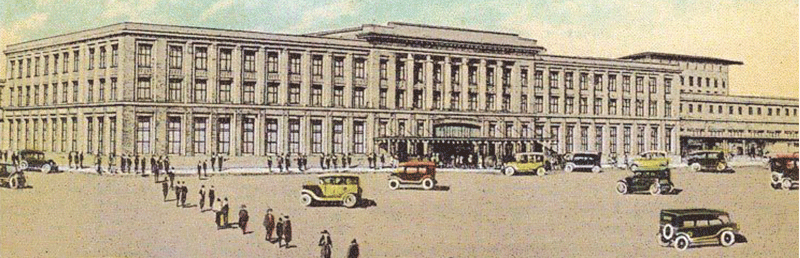
Community Spotlight Features
Chicopee Officials Take Balanced Path to Growth

From left, Mayor Richard Kos, Carl Dietz, and Lee Pouliet

From left, Mayor Richard Kos, Carl Dietz, and Lee Pouliet stand near the former Lyman Mill, which a developer plans to turn into 50 market-rate loft apartments.

Mayor Richard Kos is taking a multi-pronged approach to economic development in Chicopee.

Rather than focusing strictly on new initiatives, he and other city officials are taking steps to preserve and repair existing infrastructure, while preparing for the future.

“Balance is important. People like to see things that are different, but we also have to take care of what we have,” said Kos, citing a wide variety of projects that will help revitalize the downtown area, promote pride in home ownership, and pave the way for ambitious undertakings on sites once used for military housing, as well as the former Facemate and Uniroyal properties.

Since Kos took office for the second time 14 months ago, one-third of the senior management staff has changed, and new ideas are being generated. “Some positions were vacant, and some became open through attrition and retirement,” he said. “We brought in some new talent, and the people on board are continuing the work that has been done with fresh eyes, new ideas, and skill sets in a seamless manner.”

The effort includes making full use of City Hall and the auditorium on the third floor, which has been closed for years and is now being renovated. The graceful room contains beautiful stained-glass windows, two balconies, and architectural details difficult to replicate today, and Kos hopes that, when repairs to the crumbling plaster are complete, it can be used to televise all meetings of city officials as well as school events and other city functions. “We want to make sure everything we do is accessible to the public; that type of transparency is really good for the city,” he said, explaining that the telecasts will be also be put on the city’s website so people who do not have cable TV subscriptions can view them.

Through a partnership with Mass IT, Chicopee has also become one of the first cities in the state to offer free wi-fi service downtown. “We’re calling it Chi-Fi; it’s an initiative designed to bring people downtown,” Kos said.

Others include more public parking, and last month the Munich Haus restaurant purchased the former, long-abandoned Ferris parking lot on Center Street with help from the city, which included $150,000 in block-grant funding.

“They will make 15 of the 50 parking spaces public and will also create five new full-time positions,” said Carl Dietz, the city’s building commissioner and director of community development.

The city also purchased and demolished an abandoned, multi-family home on Front Street, and the lot will be used to create dozens of additional parking spaces.

Although Kos said a plan to convert the former Cabotville Mill into new housing units is not likely to happen, a developer is pursuing the purchase of the former Lyman Mill property on lower Front Street. “It’s very exciting, as he plans to turn it into 50 market rate, loft-style apartments.”

Lee Pouliot agreed. “The apartments will be built in a way that will allow people to work and live in them,” said the city’s acting planning director.

In addition, an innovative owner-occupied, multi-family grant program will kick off this month in Chicopee Center, Chicopee Falls, and Willimansett to help make properties in those neighborhoods more marketable.

“The city worked with Polish National Credit Union and Chicopee Savings on the program, and we will provide entitlements of up to $16,000 to help people purchase homes,” Kos said, noting that buyers must live in them and will receive $1,000 each year for up to 16 years if they remain in the homes. “We believe this will improve the quality of life; landlords who live in a property they own are more likely to keep it clean and hold tenants responsible for their behavior than absentee landlords,” Kos said, adding that he believes well-maintained homes and pride in ownership are far more effective in improving neighborhoods than additional police patrols and efforts to enforce compliance codes.

Another new project is about to begin in Aldenville. “Wells Fargo foreclosed on a very small, single-family home on 42 Grace St. and offered the city $10,000 to use toward its redevelopment,” Pouliot said. “We expect to demolish it and have students from Chicopee Comprehensive High School build a new home on the site.”

Restoring Vitality

Memorial Drive has been a busy commercial strip for decades, and it continues to add vibrancy. Ground will be broken this spring for a new PetSmart store at Chicopee Crossing that will create 50 new jobs. But even though the 3.7-mile corridor is flourishing, Kos said it is not being ignored.

“Memorial Drive is our major commercial area, and although it continues to grow, we want to see if there are ways to make it better,” the mayor told BusinessWest.

So, last fall, the city contracted with UMass and a group of students in the Architecture and Regional Planning master’s program who called themselves Hill House Planners, to undertake a study of the roadway. They divided it into three sections and examined traffic flow, the vacancy rate, potential redevelopment strategies, and how much space is available for green infrastructure, along with zoning conflict resolution in areas where commercial property abuts residential property.

The study was completed in December, and suggestions include reducing the speed limit, adding new signage and multiple roundabouts, creating a bicycle path (which would be of particular benefit to residents on the South Hadley end of the corridor), and installing new sidewalks on both sides of the street that would improve access to shopping and commercial properties.

Kos said the results of the study are helpful and under consideration. “It’s one more area where we are looking for new ideas,” he told BusinessWest, explaining that the undertaking is in line with his plan to maintain and improve things that work, while addressing problem properties and issues.

The old library building, which has become an eyesore in the city’s center since it was vacated in 2003 when a new library was built, is one of those problem areas. The City Council allocated funding to remove a significant amount of asbestos and lead paint in the interior, and EDM Achitecture has been chosen to examine possibilities for reuse. “It’s just part of what we are doing to remove impediments to progress through preparation,” Kos said.

Progress is also being made on a plan to convert the former Chapin School, located between Meadow and Chicopee streets, into 40 apartments for homeless veterans through the Soldier On program.

“The school has been vacant and unused for 12 years, and this will be great for the neighborhood, as the veterans in the program have a history of taking great pride in their homes,” Dietz said.

In addition, interest in the former Facemate site and the Chicopee River Business Park, located just off Route 291, has escalated over the past year, officials said.

“In the last six or eight months, new companies have leased space both inside and outside of the park, and we are anticipating an active spring,” said Dietz, adding that, in the next few months, the city will put out a request for proposals to redevelop about five acres of land next to the new, $8.2 million RiverMills Center on West Main Street, which was constructed after former Facemate factory buildings were demolished and hazardous waste was removed from the property.

Westover Air Reserve Base has always played a prominent role in the city, and Kos said a plan created to expand its use through partnerships will help it thrive, which is especially important in light of the budgetary cuts the government has been making at military installations across the country.

“The state has allocated $5 million to UMass to lease and transform a vacant building on the base into a National Aeronautics, Research, Development and Training Center, and private investments around or on Westover will also provide jobs,” Kos said, speculating that, at some point, an aviation training program could be established at Chicopee Comprehensive High School that would contribute to jobs within that industry.

Dietz added that Westover Metropolitan Airport Development Corp. is playing an important role in the joint effort to ensure that Westover remains open. The corporation oversees the airport as well as four industrial parks built on land vacated by the military.

“They are partnering with the base to make things more efficient so they can play a larger role in the aircraft-maintenance business,” he said. “As the private side grows, the military is able to reduce its costs.”

The corporation also hopes to develop an unused, 100-acre site near the airport which could attract new businesses related to the aeronautics industry.

Kos said the state has also given the city $1 million to help demolish antiquated Navy housing off of James Street on a 26-acre plot, which Chicopee acquired at no cost in 2011. The plan is to build a 4-megawatt solar farm on the property, leveraging the state grant with an additional $1 million from city coffers.

“The electricity that will be generated should save Westover $100,000 each year and will also save our residents money,” Kos said. “Plus, Westover will receive $900,000 from the state’s military bond bill to do energy-infrastructure work that will make it more efficient.”

Changes are also being made to other properties throughout the city. “We are completing $250,000 in improvements to Wisnowski Park, and the wading pool is being turned into a splash pool, and the City Council appropriated $185,000 to fix structural problems in the administration building on the former Uniroyal-Facemate property,” Pouliet said.

Future Possibilities

The city will continue to seek ways to redevelop unutilized properties, and Kos said officials from the Roman Catholic Diocese of Springfield told him they will consider building a new regional Catholic high school on the former Uniroyal factory site.

“Our city is strong; we have maintained our savings, our growth, and the services we offer, and a lot of our initiatives have received wholehearted support from the City Council and our legislative delegation,” said the mayor. “Chicopee is fortunate to have four representatives and three senators, led by Rep. Joe Wagner, as they have played a monumental role in our success.”

The mayor and other officials have high hopes for downtown and view it as an ideal location for new restaurants and businesses related to the healthcare industry.

“People come from all over Western Mass. to go to the Herbarium for holistic care, and the Munich Haus and Collegian Court have been real successes,” said Kos. “So, we believe the work that will be done on Interstate 91 for the casino will provide an opportunity for new restaurants in a spot with plenty of free parking that lends itself to future growth.”

During his recent State of the City address, he said the last year has been fruitful, but credited it to a team effort. “When I took office, I promised to work to make the city better. And I’m pleased to report that, together, we are doing that.”

Chicopee at a glance

Year Incorporated: 1848
Population: 55,717 (2013)

Area: 23.9 square miles

County: Hampden
Residential Tax Rate: $17.54
Commercial Tax Rate: $31.67
Median Household Income: $46,708 (2010)
Family Household Income: $57,760 (2010)
Type of government: Mayor; City Council
Largest Employers: Westover Air Reserve Base; City of Chicopee: ; J. Polep Distribution Services; Turbo Care Inc.
Latest information available

Business of Aging Sections
Aging Population Creates Myriad Healthcare Challenges

Dr. Rebecca Starr

Dr. Rebecca Starr says the role of geriatricians and others who treat the elderly will become even more important as the over-65 population dramatically expands in the coming years.

It’s no secret that the nation’s demographics are skewing older. Paul Judd doesn’t think that’s all bad.

“People talk about aging of America, but it sure beats the alternative, which is not aging,” said Judd, vice president of Talent Acquisition and Workforce Planning for Baystate Health.

That said, the aging trend is no laughing matter for the healthcare industry, which faces a number of challenges directly related to the fact that Americans are living longer, often with multiple and chronic health conditions, than ever before, and the massive Baby Boom generation — all 75 million of them — will continue to swell the ranks of the over-65 crowd.

“In 2012, there were 40 million people over the age of 65. By 2040, it’s expected to double to 80 million. Really, that’s tremendous growth,” said Dr. Rebecca Starr, a geriatrician with Baystate Medical Center.

The cause isn’t solely generational; the fact is that modern medicine keeps sick people alive much longer than in decades past.

“We’re doing a great job treating heart disease, diabetes, COPD [chronic obstructive pulmonary disease],” she continued, “and as a result, people are getting through these very significant things that they didn’t used to survive, and people are growing older. And because they’re living longer, that means we’re seeing more dementia as well.”

All of that comes with a cost. In 2010, senior citizens accounted for 13% of the population but 34% of the heathcare costs, according to the Centers for Medicare & Medicaid Services. But national health expenditures are projected to grow at an average rate of 5.7% through 2023, and older Americans will drive the largest percentage of that cost.

At the same time, the role of geriatricians is expected to become more prominent, Starr said.

“We have extra training, we’re fellowship-trained, and we specialize in taking care of people over 65,” she explained. “Our goal is keeping people living independendly as long as possible, and healthy as well. We look at the whole person. We take a look at all their diseases and all their medications, and we make sure their medications are appropriate for them and don’t cause adverse side effects and also that we’re not treating the side effects of their other medications, what we call a prescribing cascade.”

That said, there’s a “tremendous shortage of geriatricians,” Starr said. “I think it’s pretty significant.”

In fact, many health fields may face shortages in the coming decade, because at the same time an older population is placing more demand on the industry — for both acute care and myriad services aimed at seniors’ health maintenance and quality of life — Boomers are aging out of the healthcare workforce as well, posing what could be a difficult recruiting landscape for health organizations large and small.

Age-old Concerns

It’s an issue Judd is deeply involved with, but Baystate isn’t waiting around for that coming wave of retirements.

“If there were a silver bullet, everyone would be doing it. It would be an easy fix, and it’s certainly not,” he told BusinessWest. “With the aging of the workforce, the approach we’ve taken is to truly understand where our aging is. So we’ve done a lot of workforce planning, to try to understand where we’ve got issues and what we need to do to fill these pipelines, if you will, well in advance of it becoming a problem.”

So Baystate has launched a number of workforce-development programs with area schools and colleges, and partnered with other health systems through the Regional Employment Board of Hampden County on worker-training initiatives.

“Instead of trying to steal from each other, we’re trying to take a look at the healthcare needs of the whole Pioneer Valley and say, ‘here’s what we all need; let’s create pipelines to fill all of our needs,’ instead of Baystate doing the training and everyone tries to steal them from us.

“We have to look at it from a community perspective,” Judd added. “You see we have all these healthcare offerings in the community, and they’re all important. From a community perspective, we’ve been somewhat successful at building some healthcare pipelines, working with places like HCC and STCC, developing programs and creating oppportunties for jobs. Some of the demand to do with aging, some with changing regulations with healthcare. We’re trying to get ahead of it, create these pipelines before it gets to where there’s an issue.”

Internally, Baystate has identified a number of areas where an aging workforce and other factors could come into play — operating-room nurses, for example.

“They can be a little difficult [to recruit], because a lot of nursing schools don’t have a rotation through the operating room anymore, as they did in past years,” Judd said. “Getting young nurses interested in going into the OR can be a bit of a challenge. So we created an internship, a nine-month orientation, for any registered nurses interested in going into the OR. That’s an issue I anticipate will become more acute over the next 10 years.”

Shortages are expected to be especially high in primary care, an issue that’s already rearing its head. In its most recent Physician Workforce Study, the Mass. Medical Society listed family medicine and internal medicine atop its list of specialties facing shortages already, and new recruits into primary care aren’t expected to match the anticipated retirements of older doctors.

Keeping the Pace

That’s one reason why keeping older people healthy has taken on a new importance in America — a reality that has seen the emergence of a number of programs to help families do just that.

Take, for example, Mercy Life, a PACE (Program of All-inclusive Care for the Elderly) program run by the Sisters of Providence Health System. Medicaid oversees PACE programs, which are on the rise in the U.S. because the role they play — providing a range of adult-day health programs aimed at keeping seniors out of nursing homes — is becoming more prominent.

Since Mercy Life opened its doors a year ago on the former Brightside for Children and Families campus in Holyoke, it has expanded its census to 82 seniors who come for primary care; physical, occupational, and speech therapy; and the services of a social worker, dietitian, nurse, and other care providers as needed.

“From anecdotal comments from people, the sense is that, in a really short period of time, people who come to the PACE program are experiencing an awakening of sorts,” said Chris McLaughlin, chief operating officer of the Mercy Continuing Care Network, which encompasses a number of independent-living, assisted-living, and skilled-nursing facilities, as well as home-care, hospice, and adult day programs.

He told of one man, about 60, who had been living with his father and never ventured out of his room. “He was kind of a curmudgeon. His brother-in-law said he reawakened when he came to the program. He didn’t think he’d like it — he wasn’t a social person — but he made friends, he’s smiling, he’s happy. His brother-in-law told me, ‘we’re seeing the old Bob we used to know come out.’”

Another woman whose husband was participating at Mercy Life told McLaughlin, “‘you’ve improved the quality of my husband’s life. He walks better, he’s not afraid he’s going to fall, and he’s regaining limited use of his hands via therapy and other work done with him.’

“People love the fact that their loved one can continue to live at home,” he continued. “We run some great nursing homes, but we never have anyone walk through the door and say, ‘geez, this is wonderful. I’ve always wanted to come here.’ They want to stay with their loved ones, in their own environment. And this has improved people’s vitality so they can continue living where they’re most comfortable.”

In a way, McLaughlin said, PACE programs are a form of accountable care, the model becoming more common at hospitals nationwide, which involve teams of providers being paid by insurers to keep patients well over a period of time, rather than being paid for each treatment, test, and hospital stay. It’s a model that becomes more challenging when dealing with an older population grappling with chronic conditions.

“As hospital stays decline, more care is being provided in people’s homes, where most of us prefer to receive care,” he told BusinessWest. “In a PACE program, we’re at risk for outcomes and at risk for managing seniors’ health within their means. The goal is to manage someone’s care and get them to a better state in terms of wellness and overall health.”

Hospital to Home

When she considers the aging of America, Starr recognizes a range of needs — specifically, growing demand for home care, residential care, adult day health, and various other services along the continuum for senior citizens. Part of her role is coordinating patient transitions into these various programs.

“That’s the goal, but it’s very difficult to put into place,” she said. “We have these multiple transitions of care; we have people transferred from one hospital to another for more acute care, they can go to rehab, perhaps home — that’s three or four transitions where you can have errors in medication, can lose track of follow-up … it can be a real problem.”

The key is communication between the different providers, especially at a time when the accountable-care model of healthcare is forcing hospitals to emphasize population health and reduce readmission rates — a task that becomes more challenging as the aging trend in America means more people living with chronic conditions.

“I think it obviously starts at home, and making sure that primary-care physicians have some geriatric training,” Starr said. “Then hospitals have to make sure the care of older adults meets the standard of geriatric care.

“Our goal is to keep people healthy by preventing and managing disease and helping people maintain function, the things they should be able to do — get out of bed, shower, get dressed, toilet themselves — because if that’s not maintained, that means extra care, that can mean nursing home as well.”

To better meet those goals, she explained, “one of the things we’re starting now is an acute-care floor dedicated to providing care for older adults, with the goal of maintaining function, preventing delirium, and having get them back home so they don’t need short-term rehab or, even worse, long-term care.”

It’s a model that might become more common over the next decade, she added. “It’s not as common as I think it should be, but where it’s been taken up, it’s shown things like reduced readmission rates, reduced length of stay, and reduced delirium. Getting people back home is really important.”

To do that effectively, Judd understands that hospitals and other providers need to be well-staffed, so he continues to cultivate programs to ensure a healthy future for Boomers in Western Mass.

“We’re taking a planning approach to it, getting in front of it, working with the local community colleges to build programs, and creating pipelines of people in the future,” he told BusinessWest. “I think, for communities like us, this will continue to be an issue.”

Joseph Bednar can be reached at [email protected]

Features

BizDiffMakrsLOGO2011

Seventh Annual Gala Set for March 19 at the Log Cabin

The big night is almost upon us.

That would be March 19, of course, and the annual Difference Makers gala, an event that has become a not-to-be-missed networking opportunity and, much more importantly, an opportunity to celebrate groups and individuals who are making a difference in Western Mass.

The tradition began in 2009 with the first class of Difference Makers, which featured a diverse group that showed the many ways one can make a positive impact. It included Bill Ward, director of the regional Employment Board of Hampden County; Susan Jaye Kaplan, founder of GoFIT and co-founder of Link to Libraries; the Young Professional Society of Greater Springfield; and PeoplesBank President Doug Bowen and Kate Kane, managing director of the Springfield office of Northwestern Mutual, both of whom have donated countless hours to area nonprofits and economic-development-related agencies.

Each successive class has had both its own unique character and a common bond with all the others — individuals, groups, or companies who have stepped up and used their talents, energy, and imagination to improve quality of life in this region.

The class of 2015 HERE carries on that legacy. This year’s honorees are:


• Katelynn’s Ride:
The K-Ride, as organizers call it, was created in 2011 to honor the memory of Katelynn Battista, who lost her courageous battle to leukemia at age 11. The event raises money for both Baystate Children’s Hospital and the Dana Farber Cancer Institute through the Jimmy Fund. Locally, some of the funds awarded to Baystate have gone to support a new position, a nurse practitioner who acts as a liaison between the families of cancer patients and the teams of specialists that provide needed care.

• MassMutual: The financial-services giant is being honored not simply for the depth of its philanthropy or community involvement, but the strategic nature of such endeavors. Focused in three areas — education, economic development, and ‘community vitality,’ the company’s many contributions are long-term in focus with the goal of strengthening the community and building a quality workforce.

• Judy Matt, president of the Spirit of Springfield: For more than three decades, Matt has been at the forefront of coordinating family-focused events for the residents of Springfield and surrounding communities. That list includes Fourth of July fireworks, the annual pancake breakfast (once touted as the world’s largest), the Big Balloon Parade, and Bright Nights, the holiday lighting display that is on many national lists of must-see attractions.

• The new ownership team of the Student Prince and the Fort: Last summer, Rudy Scherff, second-generation co-owner of the Springfield-based institution known as the Student Prince and the Fort, announced that, if new ownership could not found, the iconic restaurant and tavern would likely close amid falling profits and rising costs. Into the breach stepped a somewhat unlikely group — Peter Picknelly, owner of Peter Pan Bus Lines; the Yee family, owners of the Hu Ke Lau in Chicopee and other restaurants; and Kevin and Michael Vann, father-and-son consultants who have worked with a number of restaurateurs over the years.

• Valley Venture Mentors: Through a host of initiatives ranging from monthly mentoring sessions to shared-workspace initiatives, to a new accelerator program which just welcomed its first cohort of 30 companies, VVM is, according to many observers, making real progress in creating an entrepreneurial renaissance in Springfield and the region as a whole.

The March 19 event will feature butlered hors d’oeuvres, lavish food stations, a networking hour, introductions of the Difference Makers, and remarks from the honorees. Tickets are $60 per person, with reserved tables of 10 available.

For more information or to order tickets, call (413) 781-8600, ext. 100, or go HERE.

Environment and Engineering Sections
The Goat Girls Offer a Green Solution to Invasive Plants

Hope Crolius, seen here with Dan

Hope Crolius, seen here with Dan, says the goat business came with a steep learning curve.

Hope Crolius remembers that it all started … well, quite organically.

She had left a career as a writer — she started as a reporter with the Daily Hampshire Gazette and later freelanced, working for several area colleges — and was doing well with her next entrepreneurial venture, known as Artemis Garden Consultants, LLC, what she described as a “garden-revival company.”

The customer inquiry that changed and enriched her life in several ways came in 2010 from a landowner in Shutesbury who had a barn and pasture that hadn’t been visited by grazing animals in some time and was starting to fill in with what Crolius called “early-succession woody plants” — red cedar and certain kinds of cherries.

“I said flippantly — I wasn’t serious, but in a way, I was — ‘you should really just get some sheep,’” she recalled. “And he took me up on it — he said, ‘go for it,’ and I went for it.”

Actually, before going for it, she did a little research and quickly discovered that what this landowner really needed were some goats, not sheep, because the former ‘browse’ while the latter graze, an important distinction. And she went about getting some — not for him, as it turned out (although she didn’t really know it at the time), but for her.

“I was driving by a farm in Amherst and saw a herd of goats wandering around the farmyard,” she recalled. “I knocked on the door and said, ‘would you ever be interested in selling any of these goats?’ and she said, ‘I’d definitely be interested; we have too many of them.’”

Crolius eventually acquired three mixed-breed ‘mongrels’ that would form the foundation of an enterprise known now as the Goat Girls.

It’s known not only throughout this region, but across the state and in other parts of New England. That’s because there aren’t many operations like this in the Northeast — they are more popular in other regions — and also because there is a rapidly growing constituency that, like the landowner in Shutesbury, would prefer to clear brush and invasive plants in a decidedly green fashion.

Indeed, while this is definitely the off season for the venture’s 19 goats — who are spending their time enduring the cold (something they do rather easily) while dining on a large supply of donated Christmas trees, among other things — the spring’s schedule is filling up, and fast.

And it’s been that way almost from the beginning.

“Right away, the phone started to ring; people would say, ‘I hear you have goats to rent,’” she told BusinessWest. “This thing just happened, and it just took off.”

The Goat Girls’ 19 goats

The Goat Girls’ 19 goats are currently feasting on hay and Christmas trees, but soon they’ll have tastier fare, such as poison ivy and bittersweet, to munch on.

Today, teams of goats (usually six or seven to a team) are dispatched to jobs large and small, at a rate that averages $575 per week. Clients have ranged from homeowners looking to clear a portion of a two-acre lot to the administrators of the 64-acre Boulder Brook Reservation in Wellesley, who hired the goats and their herders to clear the poison ivy, wild grape, and bittersweet that started invading the premises after crews for a nearby landowner cut down nearly 100 trees in 2011, letting the sunshine in.

There is no five-year plan for this venture or something approaching a firm, long-term strategy, but there is already talk of expansion and perhaps even licensing or franchising the operation. Meanwhile, one new, and popular, twist is an intensive training course the company offers to those from outside its service region who may want to start something similar.

It all sounds easy, but there was actually a steep learning curve involving everything from pricing to goat maintenance and veterinary care; from the ins of outs of electrified fencing to simple math — how many goats does it take to clear a certain amount of acreage?

For this issue and its focus on environment and engineering, BusinessWest takes a look at that learning curve and how the Goat Girls, even though it remains a very small venture, has became a rare breed of business success story.

Branch Offices

While quite proud of what she’s done with the Goat Girls, Crolius stressed repeatedly that this concept is certainly nothing new or imaginative — at least not the part about goats doing the work of lawnmowers, pruners, and herbicides.

Indeed, she said goats are second only to dogs in terms of the origin of their domestication, and there are those who say they actually predate canines in that regard. Meanwhile, goats have been used to clear brush and unwanted plant species for centuries; during World War II, when gas was heavily rationed, homeowners, golf courses, and park superintendents used sheep and goats to keep their grounds in order.

More recently, goats have been used in forest-fire-prone states like California to clear the undergrowth that can fuel such a blaze and extend its life, and sheep now patrol a number of landmarks in Paris as an alternative to lawnmowers.

What is relatively new — again, at least in this region — is the notion of goats as a viable, profitable business, said Crolius, stressing the importance of both those adjectives.

This brings her back to that learning curve she mentioned, because, in her estimation, it took probably three years to “figure all this out” and enable this subsidiary to finish a year in the black.

By ‘all this,’ she was referring to everything from goat diet and nutrition to determining how much the animals could clear in a day, week, or month; from understanding good goat working conditions (they don’t mind heat or cold, because they’re essentially desert animals, but really don’t like rain or wind) to determining how many times a crew would have to return to a site to effectively subdue a patch of poison ivy (three or four, by her count).

There were also lessons in worker productivity (only females and spayed males, known as wethers, are used, to make sure the help is focused solely on their work).

The process of learning these and other things began not long after that Shutesbury landowner said ‘go for it,’ said Crolius, adding that her foray into goats was a natural extension of what she was doing at the time.

And that was fulfilling an entrepreneurial urge that took her far afield from journalism, quite literally.

“I gave up writing for something more physical, and also to have my own time,” she explained. “Of course, I learned that going into business for yourself does nothing of the sort — a 9-to-5 job looks positively luxurious right now.

“But I still wouldn’t trade what I’m doing for a 9-to-5,” she went on, adding that Artemis Garden Consultants specializes in what she called “non-mechanical dimensions of landscape care — anything but mowing and blowing,” with a heavy accent on weeding, edging, and mulching.

The Goat Girls

The Goat Girls venture now has a wide array of clients, each one looking for a ‘green’ solution to their landscaping problem.

“If someone’s yard is tired and overgrown, or they don’t have time to take care of it, we’ll come in and prune small trees and shrubs,” she noted. “We’ll weed … we give definition to things.”

Over the years, she had built up a large portfolio of residential and commercial clients, most of them in Hampshire and Franklin counties, and wasn’t exactly looking to diversify into four-legged brush clearing, but, as they say, opportunity knocked, even if she didn’t realize it at the time.

Crunching the Numbers

The goats Crolius purchased from that farm owner back in 2010 went for roughly $100 each, or a fraction of what a purebred Labrador retriever puppy might run.

But while the animals, at least the mixed-breed varieties, certainly won’t break the budget, the overall startup costs, though light compared to some other businesses, are not insignificant, she told BusinessWest. One must factor in housing for the animals — she’s renting about a quarter-acre within a large farm in East Amherst and built an elaborate pen/office complex on it — as well as transportation to get the goats to and from a job; the electrified fencing that keeps them focused on their assignment and not the roses, hostas, or geraniums that they will also eat; and other factors.

But there is certainly enough demand for ‘green’ landscaping services, not to mention the frequent requests for goats for children’s birthday parties, festivals, and other occasions, to recover those costs, said Crolius, adding that the key to profitability is analyzing the numbers, making smart decisions with resources, and creating a workable model, which, as she said, took some time.

Dan Green, president of the Green Internet Group, who helped Crolius get the operation off the ground and expand it, and currently handles the Goat Girls website, agreed, saying this amounts to a new business sector, one where the entrepreneur has to learn by doing.

“If you want to start a dry-cleaning operation or a photo studio, you have many other ones to compare benchmarks to so you can figure out where that curve should be,” he explained. “There are not a lot of comparison-shopping opportunities for a goat business.”

Over time, Crolius calculated that a team of seven goats could clear a quarter-acre in a week, or an acre a month, performance that varies with the density of the brush and the frequency of fence moving. This allowed her to effectively price and allocate her services for what usually amounts to a 28-week season.

But as she became more experienced, Crolius, like all successful business owners, learned new ways to become more efficient and, therefore, more profitable.

For example, she realized a few years in that she could reduce expenses significantly, and make customers even more happy (in most cases, anyway), by leaving the goats with a client for the duration of their assignment (they hang in a portable pen), rather than dropping them off and picking them up every day, along with their herders.

“You instruct the client on how to take care of them, and believe me, the clients can’t get enough of them; they change their water, they talk to them … they hate to see them go,” she said, adding that, because most clients have gardens, they’re even grateful for what the goats leave behind after all that munching.

While making her foray into goats profitable, Crolius has, along the way, taken a number of steps to make it more rewarding personally. One is an extension of what she called an apprenticeship program at Artemis Garden Consultants that enables young people to join the venture as interns and gain invaluable experience toward a variety of different careers.

“My joy in life is hiring young people and giving them the opportunity to have hands-on, on-the-job field training,” she told BusinessWest, referring to her gardening business while noting quickly that she has taken that same passion to the Goat Girls.

Indeed, as she was saying those words, as if on cue, Emilie Rabideau, a pre-veterinary-science major at nearby UMass Amherst, arrived to help tend to the goats.

“It’s a really good résumé builder,” she said, “as far as experience and learning how to manage a business at the same as you work with the animals.”

As for the training program, set to commence in a few weeks, Crolius stressed that she is not breeding competition, but rather creating opportunities for more goat businesses and, therefore, more ‘green’ landscaping.

Over the course of two intense days, attendees can learn about everything from field work to care for the animals to marketing their goat venture, said Crolius, noting that there are three sessions slated for this spring, and a great amount of interest has been shown.

Looking ahead, but not that far, because that’s difficult to do in this business, Crolius said expansion is possible, although there comes a point where simply adding more goats is not cost-effective. Meanwhile, licensing the concept is an option that’s being explored.

For now, she’s focused on honing that business model, providing opportunities for young people to learn while doing, and making the region more green while also making some overgrown areas, well, far less green.

Brush with Fame

As she wrapped up her talk with BusinessWest, Crolius went to assist Rabideau with letting the goats into the front portion of their pen for a late-afternoon meal of hay.

Before doing so, she issued a recommendation — more like a warning, actually — to steer clear, because the goats will not go around anyone who happens to be standing in their way once the gate is opened.

It was a warning well-heeded.

Soon, the extreme energy the goats exhibited as they raced for their dinner will be directed toward the eradication of brush and invasive plants of all types and at all manner of venues.

Spring is almost here, which means it’s time for the goats to shine and give a new definition to the phrase ‘green business.’


George O’Brien can be reached at [email protected]

Environment and Engineering Sections
FloDesign Continues to Ride a Wave of Innovation

Stanley Kowalski says FloDesign

Stanley Kowalski says FloDesign and its spinoffs are continuing a pattern of turning ideas into breakthroughs — and new companies.

Stanley Kowalski III says filters will soon become obsolete.

“They will never be needed in anything again — during manufacturing, in automobiles, airplanes, furnaces, faucets — anything you can possibly think of,” Kowalski, chairman of the board at Wilbraham-based FloDesign Inc., told BusinessWest, adding that he and his team at FloDesign Sonics, a spinoff venture, are developing technology that will use sound waves for that work.

That technology is based on a scientific discovery made two years ago by a team of engineers at FloDesign Sonics, co-founded by Kowalski, Bart Lipkens, Louis Masi, and Walter Presz, after Lipkens received a grant from the U.S. Department of Homeland Security to figure out how to rid reservoirs of anthrax.

“During a process of trial and error, we discovered that acoustics could play a vital role in detection,” said Kowalski. “It led to the discovery of a three- dimensional wave that we did not predict, and since literature didn’t capture what we saw and the theory for it was not fully developed, we went on a quest to find out why and how it worked.”

The principle they discovered is complex, but Kowalski provided a simplified way to explain it. “First, think of sound waves as an invisible force field that can be used to manipulate and hold things in space,” he said. “Next, imagine a chamber filled with fluid; if you generate a consistent flow of sound waves through it, then introduce living cells or debris into the wave, it will be held there by the invisible force field, and the cells will be gently pushed together and form clumps. When they get big enough, they either fall out of the solution due to gravity or rise to the top due to buoyancy.

“The 3-D wave is like an invisible catcher’s mitt,” he continued. “It retains the contaminant, and, because the diameter of the debris is increased due to acoustic forces, the gravity or buoyancy becomes dominant, and the clumps rise or fall out.”

This invisible catcher’s mitt has a seemingly unlimited number of practical applications, including drug manufacturing and filtering blood during surgery, said Kowalski, adding that the sound-wave technology is one of many interesting developments at FloDesign and its many spinoffs.

These include work on a firearms noise suppressor for the military, a development that will reduce high incidences of hearing damage, as well as new prototype development for a diverse set of clients.

Wayne Thresher, who took the helm at FloDesign three years ago, said engineers who work for the company and its spinoffs pride themselves in thinking outside of the box, executing a design efficiently, and manufacturing a prototype.

“We recently finished a product for a company related to fluid flow; they had needed it for three years, but couldn’t figure out how to make it. But Dr. Presz and I went to their location, and within 20 minutes, we came up with two concepts,” he said. “We like a good challenge, and a lot of things relate to fluid flow and air flow. This is our 25th year in business, and we have some really good success stories.”

For this issue and its focus on environment and engineering, BusinessWest looks at some of those success stories and others that are still being written.

Down to a Science

Kowalski said FloDesign Sonics’ sound-wave technology was patented and has earned the company several prestigious grants in a highly competitive market.

The first was from the National Science Foundation, which issued a challenge to find a way to separate oil and gas contaminants from water. This is critical work because a number of states have had their water supplies polluted due to a process called hydraulic fracturing, or fracking. It involves pumping hundreds of thousands of gallons of water, sand, and chemicals into the ground to break apart rock and free the gas inside, which is problematic because some of the water that returns to ground level is contaminated.

From left, Bart Lipkens, Stanley Kowalski, Brian McCarthy, and Matthew Wilander

From left, Bart Lipkens, Stanley Kowalski, Brian McCarthy, and Matthew Wilander show off new technology used to manufacture pharmaceuticals.

FloDesign Sonics received a grant in 2012 for the initial phase of the project, and another in 2013 to build a prototype, said Kowalski, adding that, later that year, it also tested a prototype for a life-sciences application that involves harvesting and filtering cells derived from the ovaries of Chinese hamsters that are used to make injectable monoclonal antibody drugs, which are being used to fight cancer, diabetes, and other illnesses.

“Most drug manufacturers use a process called ‘harvesting’ in which the Chinese hamster cell is separated via filtration or centrifuge and then killed. Genetic engineering has enabled cells to reproduce readily and create higher concentrations per batch, but the higher concentrations put a burden on the current filtration and centrifugation methods that results in fouling of filters and loss of product,” Kowalski explained. “But FloDesign Sonics’ new method does not touch the cell. We can handle higher cell concentrations for batch processes and enable continuous manufacturing where the cell is kept alive; it is continuously fed with nutrients and continues to express the protein.

“This is the holy grail of drug manufacturing. All future drugs will be made this way, and FloDesign Sonics believes they have unlocked this potential,” he told BusinessWest, adding that the company used venture-capital money to perform more than 100 trials with leading biopharmaceutical companies, which resulted in six prototypes and a machine it is now selling.

In March 2014, the company hired 14 new employees, and in September of that year, it received another prestigious grant from the National Institute for Health, which came with a new challenge: devising a better way of filtering blood during bypass surgery.

“Although it’s the most popular surgery in the world, it is so invasive that incisions to the body cause fat and debris to be released into the bloodstream; the particles can get caught in the brain and cause strokes, which is referred to as ‘pump head,’” said Kowalski, explaining that this phenomenon occurs because the particles are not captured when they go through the centrifuges and filters used in the bypass process.

FloDesign Sonics used the $100,000 grant to put its acoustic-separation technology to work in a new machine that captures the particles, which it is testing on pigs. “We hope to have human trials with it shortly,” Kowalski said.

So, although the company has yet to create its own website or launch a marketing campaign, it has undergone remarkable growth over the past 18 months, including the securing of $10 million in investments, $3 million in grants, and frequent offers to buy the firm out.

“The discovery we made has limitless possibilities, which range from cleaning the planet’s water supply to use in the life-science field and manufacturing adaptations,” Kowalski said. “When we first started, we were really just replicating what others had done, but when we began getting into theories of acoustics, we found missing holes that we probed. We had already developed a system that worked through trial and error, but it was kind of a 3M moment when we understood the depths of what we had discovered.

“Recall that 3M discovered a glue ideal for the Post-it Note and didn’t realize how important the invention was,” he went on. “We had also discovered an amazing tool, but had to identify needs for it in industry. It blows us away that we’re now helping get life-saving drugs to people faster and cheaper.”

Lipkens, who secured the prestigious grants, said it’s exciting to take new technology and put it to use in successful commercial applications.

“It was always my dream to take a discovery in the lab and transform it into a startup company and see everyone involved, including students, become part of a successful endeavor,” he said, adding that he taught a course with his wife, Kirsten, in how acoustics work in musical instruments before the discovery was made at FloDesign Sonics.

Designs on Growth

Taking discoveries and turning them into products and companies, while also involving students in those developments, has been the pattern at FloDesign from the start.

The aerospace firm has designed, prototyped, and developed products ranging from noise suppressors for jet engines to something called a RAP nozzle, which transmits a fluid force, gas, or fine particles over a distance with minimal loss. The company recently purchased a new CNC mill and lathe, which will allow it to manufacture more prototypes in its Wilbraham location.

This ability to take a concept from the design stage to production is important to Thresher, whose former employers included United Technologies. “They outsourced all of their machine work, eliminating local mom-and-pop operations, and I thought it was the wrong way to do business,” he said.

Although FloDesign is not set up to do mass production, it has the capability of manufacturing up to 2,000 parts for a company, which sets it apart from other contract-engineering firms in the area.

“Engineering companies don’t usually have their own machine shops or the ability to manufacture what they design,” Thresher said, adding that, as a result, many engineers don’t consider factors such as cost when they create a design. “But we do, as we specialize in prototype development.”

Presz created the company in 1990 while he was an engineering professor at Western New England College so he could give his students an opportunity to put theory into practice, and, as a result, FloDesign has a history of using student interns. The experience has proved invaluable for many, including Amanda Kalish, who was unable to find a job after graduating from Worcester Polytechnic Institute.

“Employers want you to have work experience, so this allowed me to bridge the gap while giving me the flexibility to finish my master’s degree in mechanical engineering,” she said.

It has also given her the opportunity to take an idea from concept to prototype and, in some cases, a finished product. “What they do here is unique,” she told BusinessWest. “In a larger company, you are only assigned one aspect of a project and don’t get to see the whole cycle.”

Kowalski said FloDesign Sonics is just one of several spinoff companies that have come out of FloDesign. They include FloDesign Wind Turbine, which was founded in 2008, and FloDesign Water Turbine, which was established in 2009. “They all have something to do with fluid dynamics and acoustic solutions. We have the best people in the world working on this.”

A new product may soon spawn another company. It’s a firearm suppressor that FloDesign developed for the U.S. Marine Corps, and Kowalski said there is enormous potential for it.

He explained that almost every soldier in combat returns with hearing loss, which costs the government more than $2 billion each year. “If they can put a suppressor on every firearm, it could result in a paradigm shift,” he noted.

Although suppressors have existed for some time, they are prohibitively expensive and last only one-tenth as long as the barrel of a gun. “But the prototypes we have developed last longer than the barrel,” Kowalski said.

Expanding Horizons

Mike Harsh, who has recently been appointed to FloDesign Sonic’s board of directors, spent almost 36 years in medical instrumentation and imaging at GE Healthcare, he told BusinessWest, and he has never seen anything like the technology FloDesign Sonics has developed.

“It has the potential to fundamentally change entire industries and the way they think about filtration,” he said. “The entrepreneurial spirit in this company is contagious, and the convergence of this unique and innovative application of acoustics to filtration will unleash a new tool in healthcare that can also be leveraged into other industries.”

Kowalski is also enthusiastic and describes FloDesign’s Wilbraham location as a “think tank.”

“We have created more than 300 jobs, and, although this is our hub, we also have offices in Charlton and Waltham. But it all started here,” he said, as he watched fluid circulate in and out of the machine created by FloDesign Sonics to solve filtration problems related to the manufacture of new pharmaceutical drugs.

“We plan to save people’s lives and eventually clean the planet with our invention,” he said, describing what has become a very fluid path to success.

Banking and Financial Services Sections
Westfield Bank Continues to Grow After Connecticut Expansion

Westfield Bank President and CEO James Hagan

Westfield Bank President and CEO James Hagan

Westfield Bank recorded an especially strong year in 2014, thanks partly to the success of two new branches in Connecticut. At a time when more banks are looking across state lines for growth opportunities, Westfield’s president says the moves made sense because the bank’s name was already well-known in the border towns of Granby and Enfield. However, as the bank continues to expand and add services — like a new wealth-management division — its leaders don’t want to lose the community involvement for which it’s well-known.

Kevin O’Connor says it’s just a dotted line separating Massachusetts and Connecticut — a line Westfield Bank has crossed with considerable success.

“Part of our strategic plan is to look at expansion and strategic opportunities,” said O’Connor, the bank’s senior vice president of Retail Banking, Consumer Lending, and Marketing. “Certainly Connecticut represents natural growth for us.”

Specifically, the bank opened new offices in Granby, Conn. in 2013 and Enfield late in 2014. “That’s very new for us, to go into the Northern Connecticut marketplace,” said James Hagan, the bank’s president and CEO. “We’ve never had a presence there, but we thought it would be a nice opportunity for us to expand, especially in our commercial-loan portfolio.”

While it doesn’t tell the whole story, the success of those two branches has contributed to a $17.1 million increase, or 2.1%, in total deposits during 2014, and especially an $87.3 million jump, or 13.7%, in total loans over the same period.

It helps, Hagan said, that Connecticut customers have long been aware of the Westfield Bank name, thanks to its presence in Agawam, Feeding Hills, and Southwick.

“There has been some shakeup in the marketplace through mergers and acquisitions, and our name has played very well there,” he told BusinessWest. “We weren’t unknown. We had some name recognition. And it has gone better than we’d budgeted or anticipated. We’re very pleased with the Northern Connecticut marketplace, and we’re ahead of our plans in both branches.”

Banking lines have increasingly been falling, with several recent cross-border mergers and expansions in recent months, from United Bank joining with Rockville Bank to Connecticut-based Farmington Bank setting up shop in the Pioneer Valley. O’Connor said these moves often make sense, especially with many people living in one state and working in another.

“I think it makes life easier for them to have us on both sides of the border,” he said. “You see the dotted line of the state border, but really, it’s nothing more than moving from one town to the next.”

To boost business, Hagan said the bank keeps the two new branches open seven days a week, building off a successful model at its East Main Street branch in Westfield, and made a point of hiring bankers from the Northern Connecticut marketplace to run the new offices.

“The Connecticut people have brought a base of business with them, which has been tremendously helpful. They have professional contacts, personal contacts, and as they move from one institution to another, they’re able to bring their customer base with them.”

O’Connor agreed. “We have a lot of nice connections in the community, and we’re reaching out to those communities to make sure we understand and address their needs.”


Providing Solutions

Growth for Westfield Bank has not been limited to branch expansion, however.

“We’ve continually looked at our products and services to make sure we’re well-matched against national banks and regional banks,” O’Connor said. “So, while having a community-bank model, staying true to our culture, we want to offer products and services people are looking for, that resonate well in the community. Over the last few years, electronic banking services have been a good example of how we’ve stayed matched with other banks.”

O’Connor also heads up Westfield Bank’s new Wealth Management division, for which it has partnered with Charter Oak Insurance and Financial, an affiliate of MassMutual.

“We started that in February of last year,” he said. “We spent a lot of time looking for the right partner before partnering with Charter Oak.

“We had not offered those services before” he added. “A lot of times, customers were looking for those solutions — insurance, investments — and we wanted the best match for those services. That continues to grow month over month.”

Hagan said bank leadership is pleased with the alliance, and said a full range of wealth-management services for individuals and businesses was long overdue.

“We want to be that full-solutions provider,” O’Connor added. “If we can’t do something ourselves, we’ll form an alliance or partnership with somebody, so we can bring our services full-circle.”

Kevin O’Connor

Kevin O’Connor says Connecticut represents natural growth for the bank, considering its well-established presence along the state line.

As for electronic and mobile banking, “we’re trying to stay ahead of the curve in our communities and make sure our customers have the conveniences they need,” he said, noting that adoption of the bank’s mobile app was very strong. “We rolled out mobile deposit a few weeks ago, and we’re really happy with that. Also, as we redo the ATMs, instead of old envelope ATMs, we’re going to image ATMs. Again, it’s easier for the customer, easier for us.”

Despite the uptick in online and mobile banking, he added, bricks-and-mortar activity hasn’t declined, partly because of the new branches. “We’re gaining so many customers while we’re seeing more customers going electronic, so we’re hitting on all barrels in that regard.”

Seeing opportunities in the commercial-lending arena, Westfield Bank is also seeing its move to Tower Square in Springfield paying off.

“One reason why we moved our mid-market and core commercial lenders there was to be closer to spheres of influence — to be downtown, in a center for accounting firms, law firms. Our small-business leneders are still here [in Westfield], but for larger relationships, we wanted a central location, and to be closer to our Connecticut ventures as well.”

Added O’Connor, “that was an extension of our plan to better align ourselves with Springfield and the 91 corridor, without losing our roots.”

Hagan pointed to that 13.7% growth in loan volume between December 2013 and December 2014 as evidence that the strategy is working.

“That’s very strong; actually, anything in the high single digits is an excellent year, and we were able to approach the 14% figure.”

Part of that growth must be attributed to a strengthening economy, he noted, but he also credits the bank’s aggressive follow-up efforts to obtain new business.

“We have a constant calling effort,” he said. “We’ve always had a philosophy here at the bank that we’ll continue to call on various accounts, because sometimes it takes two, three, even four years to move one account to this bank. If we were somebody’s close second choice, they would always say, ‘gee, if anything happens, if my bank sells out or my loan officer leaves, I’ll come to you guys.’ That’s part of it — and there has been some disruption in the marketplace. Our calling effort is something we pride ourselves on.”

Community Ties

Westfield Bank also prides itself on its community-support efforts, O’Connor said. “Jim has been such a leader in commitment to communities, to charitable giving — and that legacy plays out across the region.”

One example is the bank’s recent $150,000 donation to the Sr. Caritas Cancer Center being expanded at Mercy Medical Center in Springfield.

“That was eye-opening,” Hagan said. “Kevin and I took a tour there, and we learned that 45% of the population in Western Mass. will use this facility, 45% will use Baystate, and the remaining 10% will go to Boston or Hartford or elsewhere. We thought that was an important statistic.

“When we grant out funds from our Future Fund,” he continued, “we want to support as many people in as many communities as we can. It’s a central location for folks battling cancer, so we thought it was a worthy donation, and absolutely something we wanted to get involved with. We look for organizations that can service the most people within their particular area, whether it’s Western Mass., Northern Conn., or wherever our branches are. We want to serve all those areas with our dollars.”

O’Connor said making choices about which causes to support gets tougher every year, simply because of the growing number of requests.

“We have large things like Sr. Caritas Cancer Center or the Westfield Senior Center, which we committed to last year, but we also try to be very attentive to the small needs; you have to try to balance the large requests with the smaller ones.”

The reason, Hagan noted, is that “you may make a $2,000 donation to someone, and it’s every bit as important as a $10,000 donation to someone else, because it’s about their survival and their ability to service the needs of their clients. We’ve always supported programs that our employee base is involved with — backed them with funding from the Future Fund, supported golf tournaments, wine tastings, many of those events. We want to get involved.”

O’Connor noted that the bank also encourages volunteerism by giving every employee a full paid day each year to use for volunteer efforts. “Many employees go well beyond by volunteering at events; it’s not just financial contributions.”

One key question now is which communities Westfield Bank will set its eyes on next. Whatever the case, O’Connor said, the institution will continue to focus on smart, measured steps.

“As big as we might get, Jim always emphasizes what made us who we are — that connection to our communities. It’s important that we represent our communities well,” he told BusinessWest. “At the same time, a couple of years ago, Jim charged each senior officer to continually look for improvements and efficiencies. So we’re growing very carefully, with smart growth, efficient growth.”

On both sides of the dotted line.

Joseph Bednar can be reached at [email protected]