Home Posts tagged Features (Page 11)
Autos Sections
Outlook Brightening for Auto Makers, Dealers
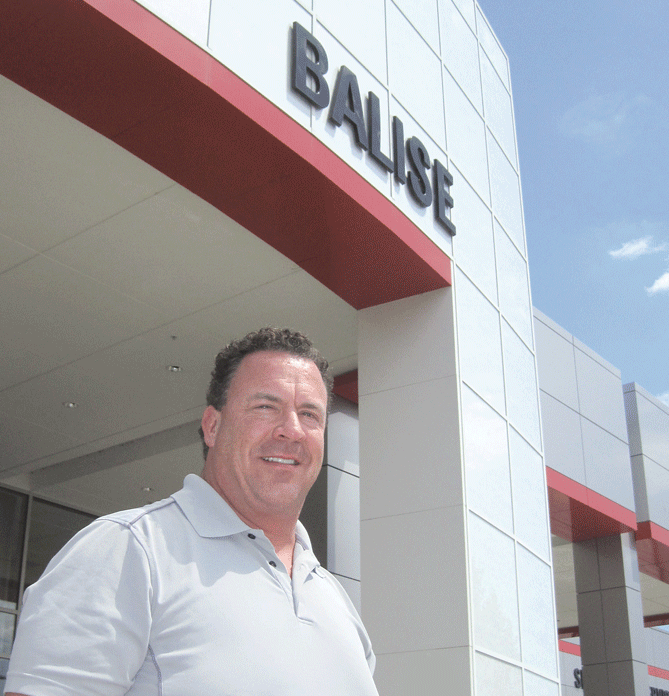
Mike Balise

Mike Balise says manufacturers are building more cars than consumers will buy, which will benefit car shoppers by deflating prices.

The highways are getting a little shinier.

The Great Recession hit many industries hard, and auto dealers were no exception. As consumers put non-necessary expenditures on hold and hung onto their clunkers a little longer, the average age of cars on the road soared past 12 years.

But they couldn’t put off those trade-ins forever, and with the economy showing signs of life and consumer confidence inching up, carmakers and dealers are reaping the benefits.

“New-car sales are hot,” said Mike Balise, vice president of his family’s regional chain of dealerships. “The overall trend in the industry is up; they’re making 16 million cars again.”

In fact, just five years ago, that was the standard number of vehicles rolling off North American assembly lines. But after dropping below 16 million in 2008 for the first time in 10 years, new-car production bottomed out at around 8 million a couple years later. The fact that manufacturers are producing with confidence again bodes well for dealerships in Massachusetts and everywhere else.

According to the Fabricators & Manufacturers Assoc., manufacturers have curtailed production and instead focused on keeping their operations lean while still meeting the rising demand for auto parts — another result of aging cars on the road. They note that the increased production, expected to top 16.7 million units in 2015, will result in higher employment in auto manufacturing as well.

It will also impact the used-car market, Balise said. “You saw used-car values peak in the spring, and they’re starting to come down faster than they normally would because the new-car manufacturers are coming on stronger; they’ll suppress the market in terms of transaction prices.

“As these manufacturers ramp up capacity,” he explained, “they’re building too many cars. They’re talking about building 16 million, and that is true, but they’re only going to retail 14.5 million. The other 1.5 million will go to Enterprise, Hertz, Avis, your fleets, and they only use them six to 13 months. So there are going to be lots of 5-, 6-, 10,000-mile current-year used cars going to auction.”

In short, he said, “new-car sales are brisk, prices are going down, because the capacity to make cars is still greater than the marketplace, and that will lower the prices of cars and lower the value of late-model used cars.”


Lease of Their Concerns

Gary Rome, president of the Hyundai store in Holyoke and the Kia dealership in Enfield that bear his name, said he has not yet experienced a huge spike in business stemming from the new manufacturer confidence. “But our service and our parts sales have increased dramatically — about 28%.”

Leases are soaring too, he added.

“That’s the other thing — we’ve seen an increase in leasing from a lot of folks,” he said, noting that, on average nationally, leases account for around 11% of all new-car transactions. At Gary Rome, the number currently approaches 35%.

“People are looking to get more car for less money, which they can do with a lease,” he said, noting that the popularity of the option tends to ebb and flow according to how aggressively car makers are pushing special lease programs. “When manufacturers have inventory and they want to move it, they’ll incentivize the leasing to make it more enticing for customers. And customers are responding to that — interest rates are lower, payments are lower, with little or no money down.”

Retail incentives to buy have steadily decreased since peaking during the heart of the recession, when 0% financing was all the rage.

“In general, the car companies have shown some restraint in discounting,” writes Jim Henry in Forbes. “In fact, average actual transaction prices hit a record [in May] of $28,921, according to J.D. Power and Associates. That is what consumers actually paid, net of incentives. In May 2008, that number was $24,404.”

What they want to pay for, Balise said, hasn’t changed much.

“Mileage, reliability, and safety tend to dominate everything,” he told BusinessWest, noting that gas has hovered close to $4 per gallon for so long that people have made gas mileage a permanent part of their car-buying priorities.

“I think it’s always in people’s minds; they’re always considering it. Even my friends buying things like Denalis and Explorers — one guy in particular tows a racecar, and he was very conscious about a three-mile difference between two choices. For most people, it’s very top of mind, and certainly the manufacturers are producing models with better mileage than ever, lots of great choices.”

That enthusiasm has not, however, crossed over to electric vehicles.

“In general, I think that the tendency toward electric cars is going at a very slow pace,” Balise said, noting that GM has lowered the price of its Volt about 20%.

“Those cars seem to be more peripheral. No one bought the Volt except a few people who wanted to be at the cusp of that technology.  Everyone else, if Chevy showed you a Malibu and a Volt and then showed you the price, 99 out of 100 people are going to choose the Malibu all day long.”

The U.S. government has attached tax incentives to electric cars, but Balise said consumers simply haven’t been responsive to them. “The government is trying to create a market that doesn’t exist. Who wants a car you have to recharge, and that takes three or four hours to recharge?”

Analysts have noticed the same trend. “Increased sales are in store for fuel-efficient cars and trucks, especially compact cars, subcompact cars, and hybrids. Despite fairly steady gas prices, consumers are finally ready to commit to these segments for longer than the length of a gas price spike,” noted Colorado-based Accurate Auto Body in its blog.

“They are not eager to commit to all-electric vehicles, though, so automakers will increasingly concentrate their efforts on plug-in hybrids and hybrids. And for those consumers desiring hybrid technology without the hybrid cost, additional hybrid features will be found in more economical conventional cars as manufacturers upgrade their efforts to meet the government’s corporate average fuel economy (CAFE) standards.”


Smart Shoppers

Meeting consumer demands has become more challenging at a time when shoppers are showing up at dealerships with more information and research than ever at their fingertips, Rome said. But he considers that not a negative, but an opportunity to meet their questions with knowledge and attentive service.

“We know that 90% of our customers are going on the Internet to do research, and our job is to provide them with efficient responses that are informative. It’s not unusual for customers to be on the lot at our dealership while using their smartphones to look elsewhere or verify information, to make sure they’re getting a good deal, to look at reviews, to make sure they’re doing business with the right dealership. It’s actually good to see.”

That’s because the Holyoke dealership recently won the Hyundai President’s Award for customer satisfaction, ranking sixth out of 812 dealers in the country. “We’ve seen stability, even in a down market, because of the way we treat our customers,” Rome said, which extends to the company’s charitable involvement in the community. “We have a mantra that we use here: people today come to expect more, so extraordinary is the new ordinary, and people have come to expect an extraordinary experience.”

Across the country, car buyers are increasingly seeking those experiences. According to more than 70 economists and analysts from business, academia, and government who participated in the Chicago Fed’s annual Automotive Outlook Symposium in May, the nation’s economic growth is forecast to be solid this year and strengthen somewhat in 2014; they expect that to translate to 15.3 million new-car sales this year and 15.8 million in 2014, after bottoming out at 10.6 million in 2009.

Truck sales are a particular bright spot. Kenny Veith, partner with Americas Commercial Transportation Research Co., noted at the symposium that, while heavy-duty truck sales are forecast to decrease from 278,700 units in 2012 to 262,300 units in 2013, they are expected to surge to 300,900 units in 2014, while medium-duty truck sales are projected to grow from 188,400 units in 2012 to 197,600 units in 2013 and 213,700 units in 2014.

“For domestic brands, rising pickup truck sales are expected to be another significant factor,” adds Henry in Forbes. “Pickup sales are an important sign of recovery in the housing market. They’re also big-ticket, highly profitable sales in a product segment where the domestic manufacturers still dominate. J.D. Power said it expects full-size pickups to account for 11.4% of industry retail sales, up from 9.7% in May 2012.”

Balise has seen that activity at his own dealerships. “It’s been a really good year for most manufacturers, and trucks are as hot as they’ve been in a long time,” he said.

Rome is confident enough in the industry outlook that he plans to renovate his Holyoke dealership, following a recent renovation of the Kia store in Enfield. “We’re going to reinvest,” he told BusinessWest.

In other words, he keeps rolling along — just like the industry as a whole.


Joseph Bednar can be reached at [email protected]

Education Sections
Holyoke Catholic Survives Through Its Close-knit Community

Theresa Kitchell’s quilt

Theresa Kitchell’s quilt, which showcases previous homes for Holyoke Catholic High School, tells only part of the story of this resilient institution.

Theresa Kitchell says she’s been quilting for decades now.

And like other practitioners of this time-consuming pastime, she enjoys it because it provides relaxation, as well as the ability to tell a story through one’s artistic expression.

The piece hanging in her office at Holyoke Catholic High School, which she has served as principal for the past three years, certainly does that. It features images of many of the historic buildings that were part of Holyoke Catholic decades before that name was ever put over a door — and there have now been several doors that have had that honor.

The only landmark missing is the current mailing address, 134 Springfield St. in Chicopee, said Kitchell, noting that she created the piece before the move to that location in 2008. (The quilt was created to be a featured prize at a fundraising auction, was given by the high bidder to his mother, an alum, and was then gifted back the school after she passed away).

But the quilt showcases only physical structures, Kitchell went on, so it tells only part of a remarkable story. The far more important chapters involve the perseverance and vision required for this school to live on through several forced relocations (more on those later), and the dedication of an alumni base and a current generation of parents who value quality and tradition more than a modern gymnasium and state-of-the-art auditorium — although those may also become reality in the not-too-distant future.

“I think ‘resourceful’ is a great adjective for us because we’ve had to make do for so many years,” said Kitchell, referring first to a move to Granby and the former St. Hyacinth Seminary, and later a move to the current address. “We had to start from scratch, in everything, and the faculty has been incredibly willing to do whatever needed to be done, in whatever facility we found ourselves.”

Today, Holyoke Catholic, with annual tuition of $8,000, boasts an enrollment of roughly 300, with students from 30 area communities and several from China. That number has remained steady in recent years despite a deep economic recession and the latest of those aforementioned moves.

Kitchell and Liz Adzima, director of Advacement, attribute this consistency to recognition among parents that, while the school still lacks some amenities, it is synonymous with value and excellence.

These are exemplified in the price tag — well below what is charged at area private schools — but also in the award-winning STEM (science, technology, engineering, and mathematics) curriculum, multiple partnerships with neighboring Elms College, and strong performing-arts and internship programs, among other initiatives.

“Parents make that decision to send their children here because they know that the sacrifices to be made are well worth it for the quality of education their children will receive here,” said Adzima.

For this issue and its focus on education, BusinessWest turns the spotlight on Holyoke Catholic, which has a rich, intriguing history and — because of that aforementioned resilience and vision — is adding new chapters to the story told by Kitchell’s quilt.


Quite a Yarn

Some of the institutions that came together to form what is now Holyoke Catholic High School can trace their histories back to the late 1800s, said Adizma, noting that Holyoke once had many small parish elementary schools and high schools.

These schools weren’t large enough to field their own sports teams, she went on, adding that, by the middle of the 20th century, several, including Holy Rosary, Sacred Heart, and St. Jerome’s, were bringing their athletes together to compete under the name ‘Holyoke Catholic.’ And as it became increasingly difficult for those smaller schools to exist on their own, discussions intensified about taking the concept of Holyoke Catholic beyond the playing field.

“Through that on-field unity, people started seeing that maybe it was time to come together,” said Adzima, adding that Holyoke Catholic High School was formed in 1963 on the campus of St. Jerome’s, located in the heart of the city’s downtown.

Eventually, however, those facilities became overcrowded and, worse, structurally unsafe — a determination made by Thomas Dupre, bishop of the Catholic Diocese of Springfield, in 2002.

The search for what all agreed would be temporary quarters eventually focused on the 500-acre St. Hyacinth College & Seminary in nearby Granby, said Kitchell, adding that, while the location was not ideal, especially for families in Holyoke, the school managed to maintain consistent enrollment numbers.

And while there was an initial push to raise funds to build a new Holyoke Catholic, fiscal constraints brought a focus on retrofitting an existing educational facility, Adzima went on, adding that sights were eventually set on a former elementary school on Springfield Street in Chicopee, between the Holy Name and Assumption parishes, and only a few hundred yards from Elms College.

The process of retrofitting the facility was completed in the summer of 2008, and the new Holyoke Catholic opened that fall, said Kitchell, adding that the move brings a number of advantages for the school, ranging from accessibility to the natural connection with the Elms.

“The parents have been most supportive; they wanted their children to go to Holyoke Catholic, and they made the move to Granby, which was really inconvenient, and then they made the move here,” Kitchell told BusinessWest. “The move to Chicopee was certainly the most feasible economically, and there were other real pluses; first, we’d be back in an urban setting, and second, we’d be in close proximity to the Elms.”

Elaborating, she and Adzima said the new location, just minutes off interstates 91 and 391, makes the school not only affordable, but also quite accessible, especially to major population centers such as Chicopee, Springfield, and Holyoke.

As for the Elms, that institution brings facilities and collaborative efforts that greatly enhance the value of a Holyoke Catholic education, she said.


Sewing Seeds

The partnership with the Elms only begins with Sr. Mary Reap, the college’s president, who serves on the Holyoke Catholic board of trustees.

It extends to the institution’s library — which extends full privileges to Holyoke Catholic students, who can now take in a number of exhibits and programs, such as last year’s Holocaust exhibit — and the Veritas Auditorium, which has become home to the high school’s performing-arts programs.

However, and ironically, due to construction at the Elms, those programs are utilizing facilities at the former MacDuffie School in downtown Springfield. (MacDuffie relocated two years ago to the former St. Hyacinth’s Seminary.)

The drive to Springfield is somewhat inconvenient, but such headaches are certainly nothing new for loyal parents and alums, said Adzima, adding that the performing-arts program has enjoyed great success.

She explained that students, including incoming freshmen, work throughout the summer to produce the popular annual fall performance; recent shows (there are three a year) have included Hello, Dolly!, How to Succeed in Business Without Really Trying, and Godspell, and this year The Wizard of Oz is on the schedule.

While quality and high expectations are the foundation of the Holyoke Catholic curriculum, and, historically, the English department has been very strong, Kitchell is proud of recent recognition from the state for the science department, which recently earned the 2013 Secretary’s Award for Excellence in Energy and Environment Education.

The award is fitting, she added, since 10 faculty members and 10 students were involved last year in a ‘technology frontier experiment,’ during which teachers and students used iPads daily in all departments to deepen their knowledge of that form of technology in a school setting.

“The use of handheld devices, not just pen and paper, is coming; that’s their world, and we just have to figure it out,” said Kitchell. “Students and faculty have been learning, literally, from each other across the board.”

Another perk of the school’s proximity to the Elms is the college’s advanced-placement program, which allows qualified area high-school students to take up to three college credits each semester in their junior and senior years, graduating from high school with a possible 12 college credits. Offered at reduced-credit cost, the late-afternoon and evening courses are a convenient walk across the street for about 30 Holyoke Catholic students per year, said Kitchell.

In addition to that program, Holyoke Catholic requires every senior to undertake a 50-hour internship at an area business or nonprofit. To fulfill that requirement, they must write a paper about their experience and present to members of a faculty panel.

“This year, we had students in the operating room with a surgeon at Baystate Medical Center, in court with attorneys — one student actually dug into the research and helped solve a case — and they really get put to work,” said Adzima. “It lets them see what it’s like in the real world, and the more time and attention that they give to identifying the correct spot for them, the better experience they have.”


Common Threads

Looking ahead, Kitchell said the school is looking at ways to fill in some of the missing pieces from its bricks-and-mortar presence, including a performance-arts facility and a gymnasium.

Two parishes in that section of Chicopee have merged, she noted, and this development may create opportunities for expansion down the road if the fiscal health of the diocese permits.

In the meantime, the school will continue to carry on and make do, something it has become quite proficient at in recent years, displaying vast amounts of imagination and resilience, skills that are among the many it tries to impart to its diverse student population.

Thus, while Kitchell says there are no plans to add new segments to that quilt on her wall, there are certainly new chapters to be written in the history of a school that has found its place — in more ways than one.


Elizabeth Taras can be reached at [email protected]

Banking and Financial Services Sections
Mobile Banking Is the Hot Trend in Personal Finance

MobileBankingDPartMore than ever, Susan Wilson says, people aren’t content to just get around. They want to get things done, even while moving from place to place.
“Everyone is on the go, and everyone’s got some kind of mobile device, whether it’s an iPad or an iPhone,” said Wilson, vice president of Corporate Responsibility at PeoplesBank. “Take a look out the window and watch people walking down the street.”
Indeed, smartphones and tablets have made it possible for individuals to e-mail and text friends, engage in social media, and play games while on the move. And, increasingly, get a little banking done.
“Right now, we have a mobile browser and mobile apps for both iPhone and Android,” said Mike Raposo, eChannel product manager at PeoplesBank. “They can use it for transaction history, transfers, and bill payments, and we have some graphs to track their expenses; these are the main components of the mobile app right now.”
Five years after introducing mobile products to customers, the bank has witnessed a dramatic rise in their use, he noted. “We typically see about 50% growth in mobile users each year, and that’s pretty consistent with what we’re forecasting going forward.”
Joan Klinakis, senior vice president of Operations at United Bank, said her institution also launched mobile banking about five years ago and has seen a steady increase in its use.
“It is definitely becoming more and more popular,” she told BusinessWest. “We have an app customers can use; you can find it in the iTunes app store or the Google Play shop if you have an Android.” Like most banks, United also has a text offering, where customers can text a code to check information like balance transfers.
The ubiquitous nature of mobile devices has most banks following suit, including Florence Savings Bank, which introduced what it considers a ‘basic’ mobile suite in March, said Becky Lynch, eproduct manager.
“The customer can either use the browser on their cell phone, use our app if they’re running iPhone or Android, and also do SMS texting to do basic functions like account history and transferring funds, as well as get the bank’s locations and that type of information.”

Becky Lynch says Florence Savings Bank will soon expand on its recently launched mobile platform.

Becky Lynch says Florence Savings Bank will soon expand on its recently launched mobile platform.

Increasingly, a smartphone culture is becoming more accustomed to moving functions once performed on desktops to the computers they carry in their pockets and purses. Rohit Sharma of Virtusa Corp., an information-technology consulting firm, recently wrote at banktech.com that mobile devices have already displaced desktop-based Internet access and will soon become the preferred vehicle for carrying out banking activities.
In fact, as far back as late 2010, according to research by Google, more consumers were using smartphones to access the Internet than PCs, and that trend has only accelerated. “As such,” Sharma said, “the tipping point for smartphones has already arrived.”
And banks, increasingly, are responding to that shift.

Smart Response
Klinakis said use of United’s mobile platform continues to grow every month, a direct result of people becoming more reliant on their smartphones and tablets. “That seems to be where everyone is going; we see a steady increase month after month in adoption rates.”
And the shift seems to be occurring across all age groups, not just the younger generations who were the first to embrace online banking a decade ago. “It doesn’t seem to be age-related any longer,” she told BusinessWest. “It may have started out that way, but these devices are popular across the board, and everyone is following suit.”
United is no stranger to technological change, having delivered online-banking options since 1997. “Back then, we still had to mail floppy discs to customers,” Klinakis said with a laugh. “I think mobile is still something that’s still up and coming; it hasn’t plateaued yet. It’s still moving in a forward direction.”
Raposo agrees. “As more and more mobile phones and tablets get in people’s hands, the age doesn’t really matter. Whoever has mobile devices use them for their banking,” he said. “Especially over the last few years, people are feeling more secure using mobile devices for everything.”
Data security is, of course, a concern, but it’s one that customers are less anxious about, according to the banks we spoke with.
In fact, “they say nothing. They just forge ahead and use these services,” Lynch said. “We have a level of trust with them. We consider mobile part of our online channel, even though it’s not Internet-based, because the service goes through all the same security reviews and risk assessment that our online banking does. Customers don’t ask about it because they know we’re securing their online banking session, and they think of them similarly.”
Wilson agreed, noting that, “based on our adoption rates, we would say it’s not a primary concern.”
Those rates, she added, have been strong. “We’ve seen tremendous growth. We started this journey in 2008 when we introduced the mobile app, and since then we’ve been adding to it. Last year we introduced the mobile triple play,” which is a combination of browser, app, and text services on one platform.

Joan Klinakis

Joan Klinakis says growth in mobile banking is largely related to Americans’ increasing reliance on their smartphones.

Although customers turn to mobile banking for a number of uses, Wilson noted, transferring funds seems to be one of the most popular, based on the bank’s internal statistics. “Sometimes people are making some sort of impulse purchase and want to transfer the funds to make sure they’re available.” Meanwhile, she added, mobile bill payment is on the rise as well.
Lynch said the majority of users of Florence Savings Bank’s mobile services check balances and transfer funds. “If you need to pay a bill, you can move money from one account to another to avoid fees. You can set up alerts based on low balance and any other kind of activity. You can move money into savings, that kind of thing.”

Making Connections
Chrissy Kiddy, eChannel specialist at PeoplesBank, told BusinessWest that even mobile users who don’t want to download an app can engage in commerce on their smart devices through a ‘responsive website.’
“In the past, PeoplesBank has always prided itself on offering customers the tools they need to be financially successful. In the case of mobile devices like smartphones and tablets, we’ve taken it upon ourselves to launch a new, responsive website that really optimizes to whatever mobile device you’re on, which makes navigation much simpler for our customers.”
The issue with many websites is that they’re optimized to be viewed on a PC screen, not on the smaller screen of a mobile device, but PeoplesBank has customized its website to be easily readable and navigable on any device.
“Whether they have a smartphone or tablet or desktop, they’re able to see all the information they need to see in order to make the transaction — do online banking, view products, view rates,” Kiddy explained. “No longer do customers have to pinch and zoom on mobile devices. Our customers are now able to receive accurate online information and view it on their mobile devices.”
She cited a report at mashable.com suggesting that many mobile users would rather use their browsers than an app, so providing both makes sense. “We’ve now optimized our website and app to cover all customer bases.”
Klinakis agreed that many customers still want to use a browser, and the banktech.com report suggested that online banking on desktops isn’t going away anytime soon.
“Smartphones are predominately used for transactional or quick access, such as looking up restaurants, products, or transit information. A consumer is more likely to use a tablet or a desktop for more analysis-based activity,” Sharma said. “In terms of banking, one can think of transactions being completed through mobile devices, but budgets or financial planning will still be done on desktops, potentially to be replaced by tablets.”
Klinakis added that more mobile features could be in the works, including the ability for customers to snap a photo of a check and send the image to the bank to deposit it. “That’s one of the key things I hear everyone moving toward. In general, customers seem to like that feature.”
As for Florence, it’s relatively new mobile platform won’t stay ‘basic’ for long.
“We will continue to enhance it, to offer solutions that will allow for some bill payments and mobile alerts — account alerts you set up yourself to deliver to your cell phone,” said Lynch. “You’ll eventually have the ability to deposit checks using the camera on your cell phone — what we refer to as ‘consumer deposit capture.’ That’s really kind of a next step. Big banks have been doing it for awhile. For us, we’re just trying to analyze risks and costs, and we’ll more than likely have more solutions soon.”

Rolling It Out
With only a few months under its figurative belt, Florence’s suite of mobile services are being used by only some 5% of customers, and the bank has tried to roll it out quietly as it evaluates user response and gauges what needs to be done next. But if the accounts of other banks hold true, the user rate won’t remain in the single digits for long.
“It really goes hand in hand with smartphone adoption, which isn’t surprising,” Lynch said. “If people are comfortable with a smartphone, they’ll want to get their banking done as well.”

Joseph Bednar can be reached at [email protected]

Agenda Departments

Yidstock 2013
July 18-21: Yidstock 2013: The Festival of New Yiddish Music will bring the top names in klezmer to the stage at the Yiddish Book Center in Amherst. The Klezmer Conservatory Band will kick off Yidstock on July 18, and the festival will continue with Klezperanto and Margot Leverett & the Klezmer Mountain Boys; Brass Khazones: Steven Bernstein and Frank London; the Wholesale Klezmer Band; Golem; and the Yidstock All-Stars. The weekend will conclude with a massive jam, featuring a Yidstock All-Stars band with players from the weekend’s bands, under the musical directorship of Frank London. Among those all-stars are two of the greatest clarinetists in klezmer, Ilene Stahl of Klezperanto and Margot Leverett of the Klezmer Mountain Boys. A series of workshops and talks is also on the schedule, including a Yiddish folk-dance workshop led by internationally renowned Steve Weintraub; a lecture by Hankus Netsky, a founder of the Klezmer Conservatory Band; an instrumental klezmer workshop; and a talk by author and music critic Seth Rogovoy. Back by popular demand, Yosi’s Kosher Falafel Tent will once again be serving an assortment of great food. For more information and to purchase tickets, visit yiddishbookcenter.org/yidstock or call (413) 256-4900.

Golf Tournament
July 22: The Women’s Fund of Western Massachusetts will hold its Annual Golf Classic at Crestview Country Club in Agawam. Registration opens at 10:30 a.m. with a noon shotgun start for an 18-hole scramble. The cost is $140 per person, which includes golf and cart, lunch and tournament banquet, and team and skill prize eligibility. New this year is the Tee & Tan Golf Option, a nine-hole golf scramble followed by relaxation on a chaise at Crestview’s scenic pool area. The cost for the banquet only is $30. For registration and details, visit www.womensfund.net.

‘Second Chances’ Exhibit
Through July 25: Springfield Pulse Artspace presents a unique exhibition featuring innovative and colorful local artist Whitney Wood Rahm. “Second Chances: Balancing Passion, Purpose, and Obligation” features an eclectic range of original works by Rahm, including her whimsical and popular “Friendly Monsters,” made from barn board, scrap lumber, and found parts. Also on exhibit are Rahm’s highly inventive rescued and revived furniture, contemporary paintings, and unique photography. In addition, the exhibition will include a participatory art experience, where viewers will have a part in providing input for an upcoming piece to be created by Rahm. The exhibit is on display at 11 Pearl Street, Suite 235, Springfield, weekdays from 11 a.m. to 4 p.m. or by appointment.

Cars for a Cause
July 28: Berkshire Bank will sponsor Cars for a Cause, a community car-show event, in downtown Westfield from 11 a.m. to 3 p.m., rain or shine, at the bank’s Court Street branch. In addition to showcasing hundreds of classic and modern cars from across the region, the event will feature live music, food, and vendors along with hundreds of cars. Berkshire Bank’s Court Street parking lot will be closed to the public to allow for cars and vendors. Car enthusiasts interested in exhibiting their cars at the show should arrive between 10 and 11 a.m. the day of the event. There is no pre-event registration, and cars will be admitted until space runs out. Cars in the show are asked to enter the bank parking lot from Court Street, where volunteers will assist with parking. Cars for a Cause costs $3 per person to attend, and there is a $10 entry fee for car exhibitors; all funds raised will be donated to the One Fund Boston to benefit the victims of the Boston Marathon bombings in April. Awards will be distributed to the top cars. For more information on exhibiting a car, call Kyle Rosa at Berkshire Bank at (413) 564-6219.

Wistariahurst Exhibition
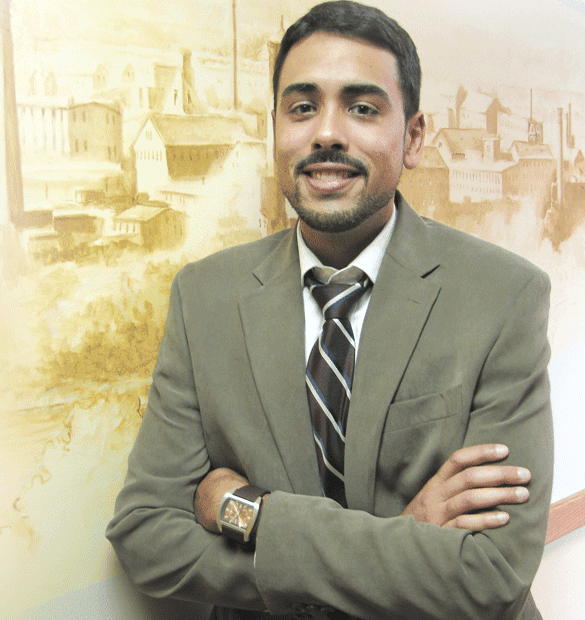
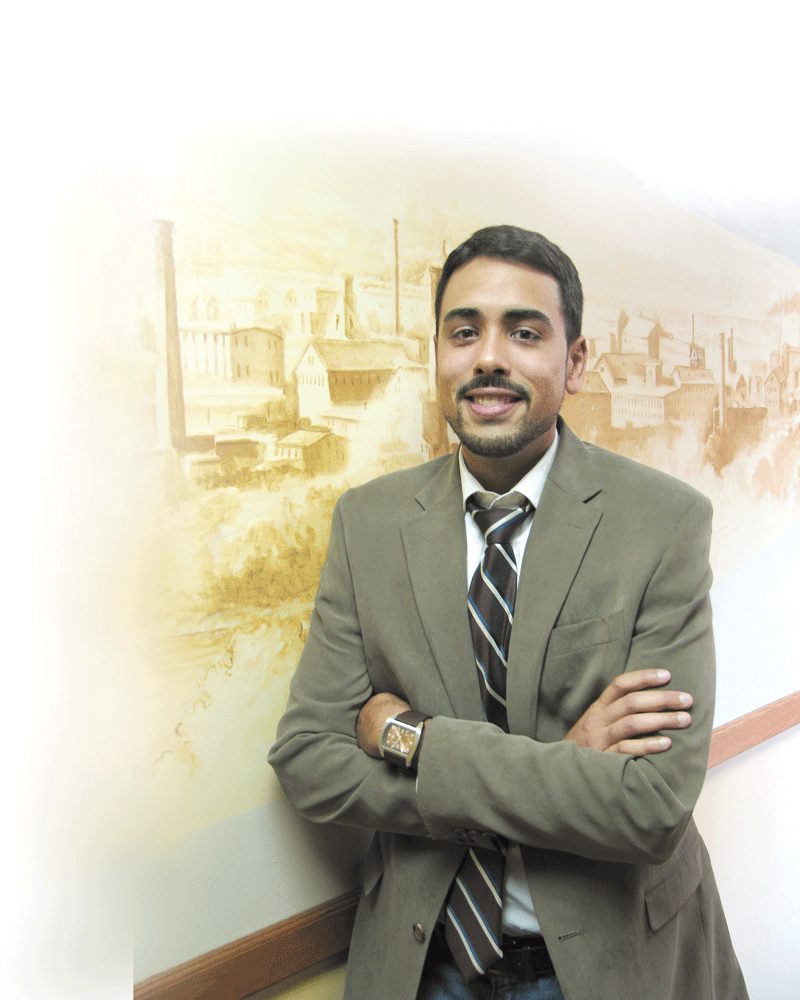
Through August: Wistariahurst Museum in Holyoke has unveiled its Summer Gallery Exhibition, “Behind the Scenery: Sketches to Cityscapes.” Local artist Caleb Colon gives an intimate look at the artist’s process of selection, direction, and creation, featuring displays of the works as paintings begin, progress, and finally reach completion. Works shown in the exhibition are inspired by local scenes and sites along the Connecticut River. Studies, sketches, and photos are also on view, showing another layer of the process. Gallery admission is $3.

Western Mass. Business Expo 2013
Nov. 6: Planning is underway for the Western Mass. Business Expo 2013, a day-long business-to-business event to take place at the MassMutual Center in downtown Springfield. This fall’s show, the third edition of the Expo, which is again being produced by BusinessWest, will feature more than 150 exhibitors, seminars on timely issues of the day, special Show Floor Theater presentations, breakfast and lunch programs, and the wrap-up Expo social, which has become a not-to-be-missed networking event. Details will be printed in upcoming editions of BusinessWest and can also be seen online at www.wmbexpo.com or www.businesswest.com. For more information on the event or to reserve booth space, call (413) 781-8600, ext. 100.

Cover Story
25 Ways to Enjoy Everyone’s Favorite Season

SummerInTheValleyIt’s officially summer in the Pioneer Valley, an exceedingly enjoyable, if all-too-short time marked by a seemingly endless variety of diversions. Some of these — Six Flags, Tanglewood, and Jacob’s Pillow come to mind — are well known, or should be. But others fall into that ‘best-kept-secret’ category, and shouldn’t. These include everything from the Holyoke Blue Sox to the Nash Dinosaur Tracks in South Hadley; from one of the few remaining drive-in movie theaters (located near the New Hampshire border) to the often-overlooked Quabbin Reservoir. For this issue, BusinessWest offers 25 intriguing suggestions for how one can devote some time during this summer in the Valley. There are myriad more, but these provide a good indication of what this region has to offer during everyone’s favorite time of the year.

Berkshires Arts Festival

www.berkshiresartsfestival.com
Ski Butternut, 380 State Road, Great Barrington, MA
(845) 355-2400
Schedule: July 4-6 and July 12-14
Admission: $5-12

The Berkshires Arts Festival has proven to be so successful in its 12 years of existence that organizers have expanded the event into a second week. The festival attracts hundreds of acclaimed artists and big-time collectors from across the country for two consecutive weekends, transforming Butternut from a ski lodge into an outstanding art gallery. And while the artwork is the main focus, the festival also provides musical entertainment from renowned local, national, and international acts. Visitors can also participate in fun, interactive events like a puppetry and storytelling workshop. Besides, it’s hard to turn down tented AC and free parking.

Berkshire Botanical Garden

www.berkshirebotanical.org
5 West Stockbridge Road, Stockbridge, MA
(413) 298-3926
Schedule: May 1 to Oct. 14, 9 a.m. to 5 p.m. daily
Admission: Free for members; adults, $15; seniors, $12; students, $12; children under 12, free

If the flora indigenous to, or thriving in, the Berkshires of Western Mass. is your cup of tea, try 15 acres of stunning public gardens at the Berkshire Botanical Garden in Stockbridge. Originally established as the Berkshire Garden Center in 1934, today’s not-for-profit, educational organization is both functional and ornamental, with a mission to fulfill the community’s need for information, education, and inspiration concerning the art and science of gardening and the preservation of the environment. In addition to the garden’s collections, among the oldest in the U.S., visitors can enjoy workshops, special events, and summer-guided tours on Wednesdays, Fridays, and Saturdays at 10 a.m., from June 15 through Sept. 1.

Blandford Fair

www.theblandfordfair.com
10 North St., Blandford, MA
Schedule: Labor Day weekend, Aug. 30 to Sept. 2
Admission: $5-10

Not much appears to have changed in the 145 years of the Blandford Fair, but that’s what makes it so charming. This Labor Day weekend, at the 146th edition of the event, fairgoers can witness the classic rituals of the giant pumpkin display, the pony draw, and the horseshoe tournament. Most likely not seen in the earlier days is the fantastically loud but always-intriguing chainsaw-carving demonstration and the windshield-smashing demolition derby, both highlights of this year’s fair. With many more exhibits and attractions to offer, a weekend at the Blandford Fair is a wonderful way to close out the summer.

BridgeOfFlowers

Bridge of Flowers

www.bridgeofflowersmass.org
Shelburne Falls, MA
Schedule: April 1 to Oct. 30
Admission: Free
Where can you find Siberian Iris and Iris Germanica (the bearded beauties, of course), Wild Wings, Ghost Train, Fire Breather, or False Indigo? The Bridge of Flowers, of course. With interesting names, and even more amazing flowers, this once-abandoned trolley bridge is now a garden pathway, cared for by the Shelburne Falls Area Women’s Club Bridge of Flowers Committee for more than 80 years. While advances in transportation doomed its original use, the bridge eventually bloomed as a tourist attraction, and from bulb season to Dahlia season, and every bloom season in between, it welcomes flower followers from all over the country.

Brimfield Antique Show

www.quaboaghills.com
Route 20, Brimfield, MA
(413) 283-6149
Schedule: July 9-14, Sept. 3-8 (Tuesday-Sunday); open from sunrise to sundown
Admission: Free
Call it tkotchke heaven, or adopt the old phrase ‘one man’s junk is another man’s treasure.’ But whatever your connection to this wide variety of aged items, you’ll find folks flocking to a mile-long stretch of antiques and collectibles along Route 20 in Brimfield during six days in July, rain or shine. The annual Brimfield Antique Show labels itself the “Antiques and Collectibles Capital of the United States,” and it’s hard to disagree when, during the course of three events a year — in May, July, and September — the shows attract 6,000 dealers who buy, sell, and trade items from bygone eras to more than 130,000 antiques aficionados from around the world.

Green River Festival

www.greenriverfestival.com
Greenfield Community College
One College Dr., Greenfield, MA
(413) 773-5463
Schedule: July 20-21
Admission: $65-75; weekend pass, $90; children 12 and under, free

The Green River Festival remains the Pioneer Valley’s one-stop option for fans of both hot-air balloons and eclectic musical acts. Located on the Greenfield Community College campus, the festival began in 1986 as purely a hot-air-balloon affair, but quickly integrated musical entertainment into the event. Now, the festival features a packed weekend lineup including acclaimed musicians drawn from an assortment of traditional as well as unconventional genres such as ‘high-intensity gypsy swing’ and ‘adventurous folk.’ Sore from the high-intensity dancing, visitors can sample the local cuisine, try their hand at a crafts workshop, or check out all the action from above in a colorful balloon.

HancockShakerVillage

Hancock Shaker Village

www.hancockshakervillage.org
1843 West Housatonic St., Pittsfield, MA
(413) 443-0188
Schedule: Through Oct. 27
Admission: $8-18

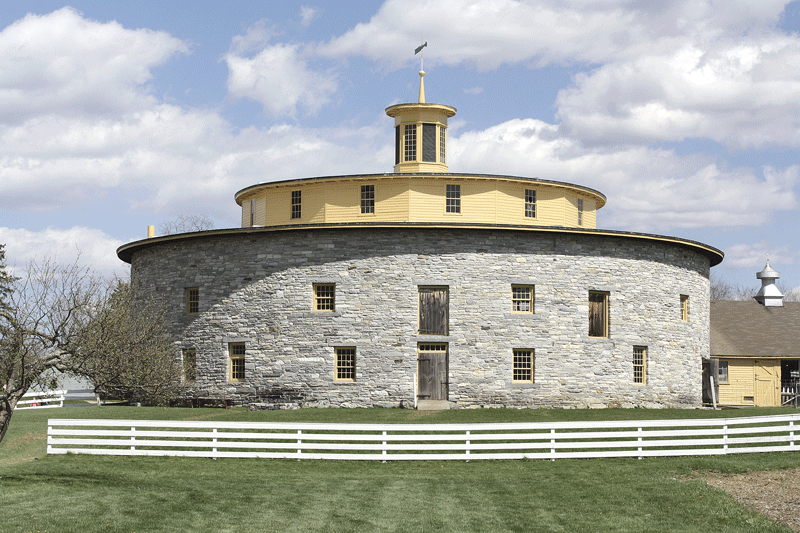
In 1774, a small group of persecuted English men and women known as the Shakers — the name is derived from the way their bodies convulsed during prayer — landed in New York Harbor in the hopes of securing religious freedom in America. Nearly 250 years later, their utopian experiment remains available to the public in the restored 19th-century village of Hancock. Through 20 refurbished buildings and surrounding gardens, Shaker Village successfully illuminates the daily lives of its highly productive inhabitants. After spending a day in the recreated town, visitors will surely gain a greater appreciation of the Shakers’ oft-forgotten legacy in the region.

2013BlueSoxOpeningDay

Holyoke Blue Sox

www.holyokesox.com
MacKenzie Stadium, 500 Beech St., Holyoke, MA
(413) 533-1100
Schedule: June 6 through early August (playoffs Aug. 4-12)
Tickets: $4-6; children 5 and under, free; group rates available

Valley residents do not have to trek out to Boston in order to catch a Sox game this summer. The Holyoke Blue Sox, members of the New England Collegiate Baseball League, play close to home at MacKenzie Stadium in Holyoke. These Sox may not have David Ortiz batting cleanup, but they do feature a roster comprised of elite collegiate baseball players from around the country, including some who have already been drafted into the major leagues. Frequent promotional events like postgame fireworks and numerous giveaways help make every game at MacKenzie Stadium a fun, affordable event for the whole family.

JacobsPillow

Jacob’s Pillow Dance Festival

www.jacobspillow.org
358 George Carter Road, Becket, MA
(413) 243-0745 (box office)
Schedule: June 15 – Aug. 25
Admission: $22 and up

As the 81st season of Jacob’s Pillow opens this summer, the annual dance festival finds itself firmly rooted as one of the premier venues for dance in the U.S. The picturesque, 220-acre campus in the Berkshires is a national historic landmark, and was recently awarded a National Medal of Arts by President Obama. Dance enthusiasts will surely marvel at the 350 free and ticketed recitals performed by celebrated companies from around the world, but any devotee of the arts will enjoy Jacob’s Pillow’s other offerings of photography and art exhibits, seminars, discussions, and film screenings, many of which come at no cost.

Lady Bea Cruise Boat

www.brunelles.com
1 Alvord St., South Hadley, MA
(413) 315-6342
Schedule: May through early October
Admission: $10-20; season passes available

Western Mass. residents should be reminded that Interstate 91 is not the only direct thoroughfare from South Hadley to Northampton. The Lady Bea will take you up and back on daily cruises along the Valley’s other major highway: the Connecticut River. If you don’t feel like sharing the 75-minute narrated voyage with others, rent the boat out for a private excursion. Or take advantage of the entertainment and themed cruises that feature local artists. Just like your car, the Lady Bea is climate-controlled and chock full of amenities, though your Honda Civic doesn’t come equipped with a full bar.

LupaZoo

Lupa Zoo

www.lupazoo.org
62 Nash Hill Road, Ludlow, MA
(413) 583-8370
Schedule: 10 a.m. to 5 p.m. daily
Tickets: $6-10

Lupa Zoo brings the African savannah to Western Mass. residents. The late Henry Lupa fulfilled his lifelong dream of creating a zoo right next to his Ludlow house, filling it with hundreds of animals and instilling a warm, familial atmosphere. At Lupa Zoo, you can be entertained by monkeys, feed giraffes on a custom-built tower, or marvel at the bright colors of tropical birds. In addition to offering animal shows and animal-feeding programs, the staff at Lupa Zoo promotes conservation and sustainability, so if you’re thinking about heading to the zoo, grab your bike from the garage and start pedaling.

MASS MoCA’s Bang on a Can

www.massmoca.org
1040 MASS MoCA Way, North Adams, MA
(413) 662-2111
Schedule: Museum summer hours: 10 a.m. to 6 p.m. daily. Bang on a Can: July 15 to Aug. 3, weekdays, 1:30 p.m. and 4:30 p.m.; Saturdays, 4:30 p.m.
Admission: Adults, $15; students, $10; children 7-16, $5; children 6 and under, free; members, free

MASS MoCA has a big-bang theory that large-scale, contemporary art isn’t the only interesting reason to venture to the northwest corner of the Commonwealth. So at MASS MoCA, the former 19th-century factory buildings turned art galleries, the annual Bang on a Can music series turns the whole campus into a spontaneous combustion chamber for music from talented students and renowned guest conductors. Daily gallery recitals offer an extra measure of creative expression during a visit to the multiple buildings housing contemporary forms of art. Bang on a Can recitals are free with museum admission.

Mountain Park at Mount Tom

www.iheg.com/mountain_park_main.asp
Mountain Park Access Road off Route 5, Holyoke, MA
(413) 586-8686 (box office)
Schedule: July 27 and Aug. 16; 8 p.m.
Admission: $31-75

Tucked inside dense woods near the base of Mount Tom is one of the Valley’s hidden gems. What began as a recreation area near a trolley station more than 100 years ago became a popular amusement park in the early to mid-1900s, only to fade from the landscape in the late ’80s. Reconstituted as a concert venue in 2009, Mountain Park is back in favor and playing host to established musical groups in a summer concert series. This summer, jam to English prog-rockers Yes (July 27) and Boston punk stars Dropkick Murphys (Aug. 16) at the park’s scenic amphitheater.

MtSugarl;oaf

Mount Sugarloaf State Reservation

www.mass.gov/dcr/parks/central/msug
300 Sugarloaf St., South Deerfield, MA
(413) 665-2928
Schedule: May through October, dawn to dusk
Admission: Free

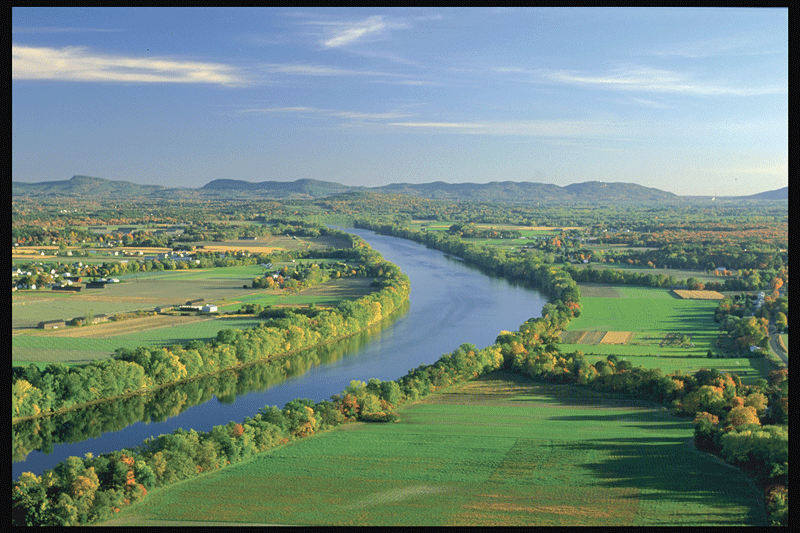
If you really want to commemorate your summer of 2013, then you might want to drive or climb the steep road up Mount Sugarloaf in South Deerfield to take some photos with the family at one of the most picturesque locations in Western Mass. Indeed, the view from the Observation Tower atop the peak, overlooking the curved, tree-lined Connecticut River far below, is the most brochure-worthy, and published, image of this region. The state reservation, which consists of two summits, North and South Sugarloaf, boasts more than 500 acres of land for picnicking, picture taking, and hiking the many trails.  Be warned, some of the trails will be quite challenging … and provide some of the most stunning views of the Connecticut River Valley.

Nash Dinosaur Track Site and Rock Shop

www.nashdinosaurtracks.com
594 Amherst Road, South Hadley, MA
(413) 467-9566
Schedule: Thursday through Monday, 10 a.m. to 4 p.m.; Sunday, noon to 4 p.m.
Admission: Adults, $3; children, $2

Walk where the dinosaurs walked, literally. It’s hard to believe that the first documented dinosaur tracks found in North America were on the shores of the Connecticut River, near today’s site of Nash Dinosaur Track Site and Rock Shop in South Hadley. Originally uncovered in 1802 by a farmboy plowing his family farm, the findings weren’t officially called dinosaur tracks until the 1830s. Over the years, thousands of dinosaur tracks have been discovered; many were sold to museums and private individuals all over the world, but many more can be seen due to the extensive work of Carlton S. Nash. Visit the site and learn about some of this region’s earliest inhabitants, and also about the geology of the area.

NoprthfieldDriveIn

Northfield Drive-In

www.northfielddrivein.com
981 Northfield Road, Hinsdale, New Hampshire
(603) 239-4054
Schedule: Fridays and Saturdays at dusk, rain or shine
Admission: Adults, $9.50;
children under 12, $5.50

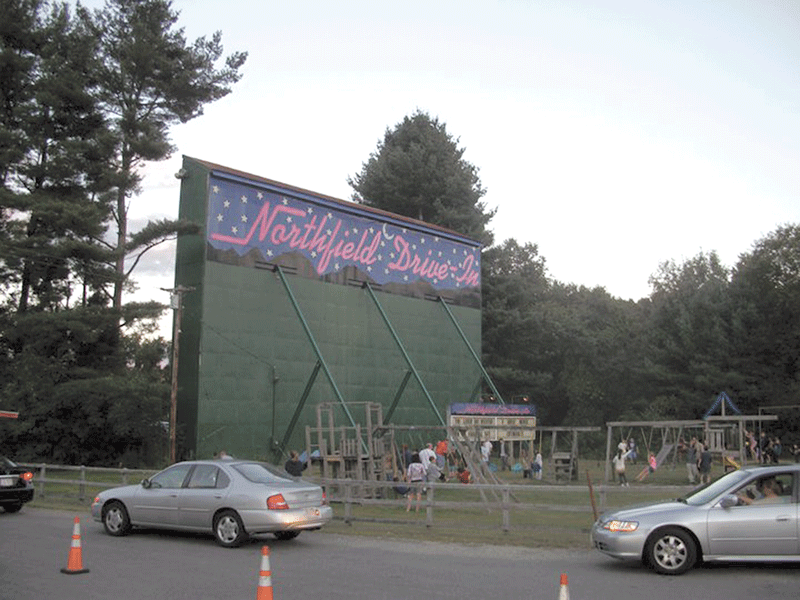
Take a trip back in time to the Northfield Drive-In and experience summer movie watching like your parents used to do … under the stars. Serving Massachusetts, New Hampshire, and Vermont for 65 years, the venue welcomes families to gather for a summer Friday or Saturday evening of clean, fun-filled entertainment, which includes two or three first-run movies. And don’t forget the hot dogs, pizza slices, and hot, buttered popcorn from the snack bar, of course.

Quabbin

Quabbin Reservoir

www.mass.gov/dcr/parks/central/quabbin
485 Ware Road, Belchertown, MA
(413) 323-7221
Schedule: Open dawn to dusk, year-round
Admission: Free

If you love the outdoors, there is nothing but pure nature on more than 25,000 acres overlooking the man-made, 412-billion-gallon Quabbin Reservoir. A warm summer day can be filled with hiking, biking, picnicking, nature photography, fishing, and wildlife watching, especially the growing population of resident eagles. After flooding five towns, the Commonwealth created the Quabbin during the 1930s as the main drinking-water source for the city of Boston. It has since become the ‘accidental wilderness’ due to the thousands of acres of protected watershed area. Be sure to visit the Quabbin Interpretive Services Program in the Quabbin Visitor Center to learn more about this carefully regulated, yet open-to-all, park.

SixFlags

Six Flags New England

www.sixflags.com/newengland
1623 Main St., Agawam, MA
(413) 786-9300
Schedule: Six Flags: weekdays, 10:30 a.m. to 9 p.m., weekends, 10 a.m. to 10 p.m. Hurricane Harbor: weekdays, 11 a.m. to 6:30 p.m.; weekends, 11 a.m. to 7 p.m.
Admission: $45-55; advance tickets and season passes available

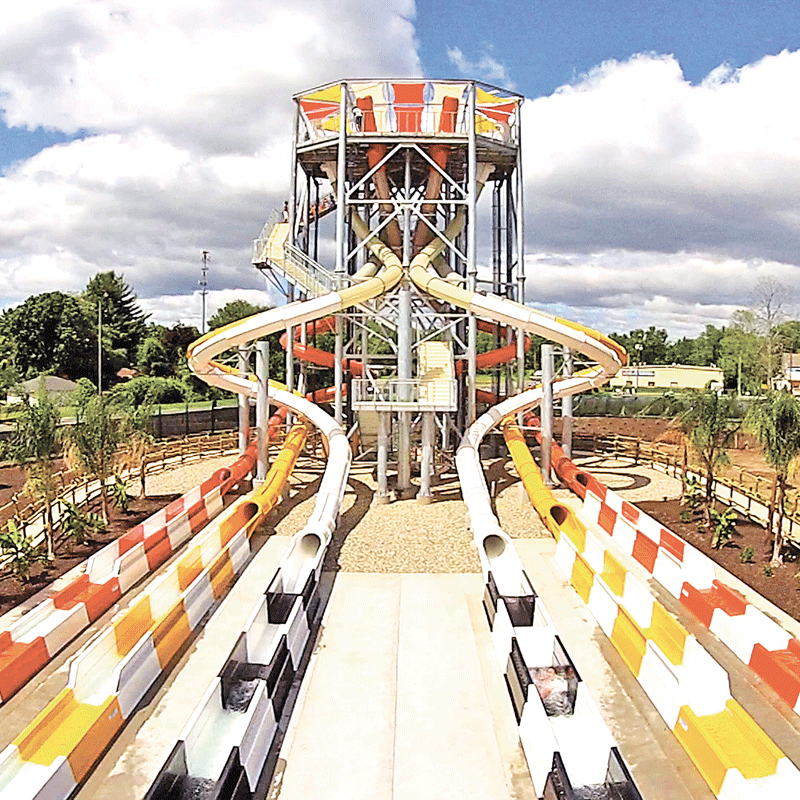
Summer doesn’t have to be filled with lazy days. Consider a free-fall through a 250-foot enclosed waterslide at Six Flags New England called the Bonzai Pipeline. Just launched this summer, the all-new, 65-foot tall waterslide complex is in Hurricane Harbor water park and joins numerous rollercoasters boasting foreboding names like Scream, Mind Eraser, and Cyclone — and, of course, the world-famous Bizarro coaster, the centerpiece ride of the popular theme park. But fear not: the park has attractions for everyone along the stomach-queasiness spectrum. The carousel and bumper cars are significantly closer to sea level, as are the two giant wave pools in Hurricane Harbor. No matter what type of ride you prefer, Six Flags will provide many smiles — or screams — on a summer day.

stearnschristine

Stearns Square Concert Series

www.springfielddowntown.com
Worthington and Bridge streets
Springfield, MA
(413) 781-1591
Schedule: Thursdays, July 11 through Sept. 12; opening bands, 6-7:30 p.m.; headline bands, 8-9:30 p.m.
Admission: Free

The sounds of guitars, saxophones, and drums bouncing off the buildings in downtown Springfield tells you it’s summer in the city when the Stearns Square Concert Series makes its run from July 11 to Sept. 12. What started 13 years ago as the coolest free Thursday-night summer concert series to liven up the cerntral business district has become the hottest outdoor spot to catch a diverse range of live music, people watch, and marvel at the spectacle of motorcycles parked along the park that have given the successful series a secondary moniker — ‘Bike Night.’ This year’s slate of performers includes internationally acclaimed musicians Ana Popovic (Aug. 8), Springfield native Taj Mahal (July 18), and returning favorites FAT (Aug. 22), Roomful of Blues (Aug. 29), and Georgia Satellites (Sept. 5), to name a few.

Tanglewood

Tanglewood

www.bso.org
297 West St., Lenox, MA
(617) 266-1200
Schedule: June 23 through Sept. 1
Admission: $21 and up

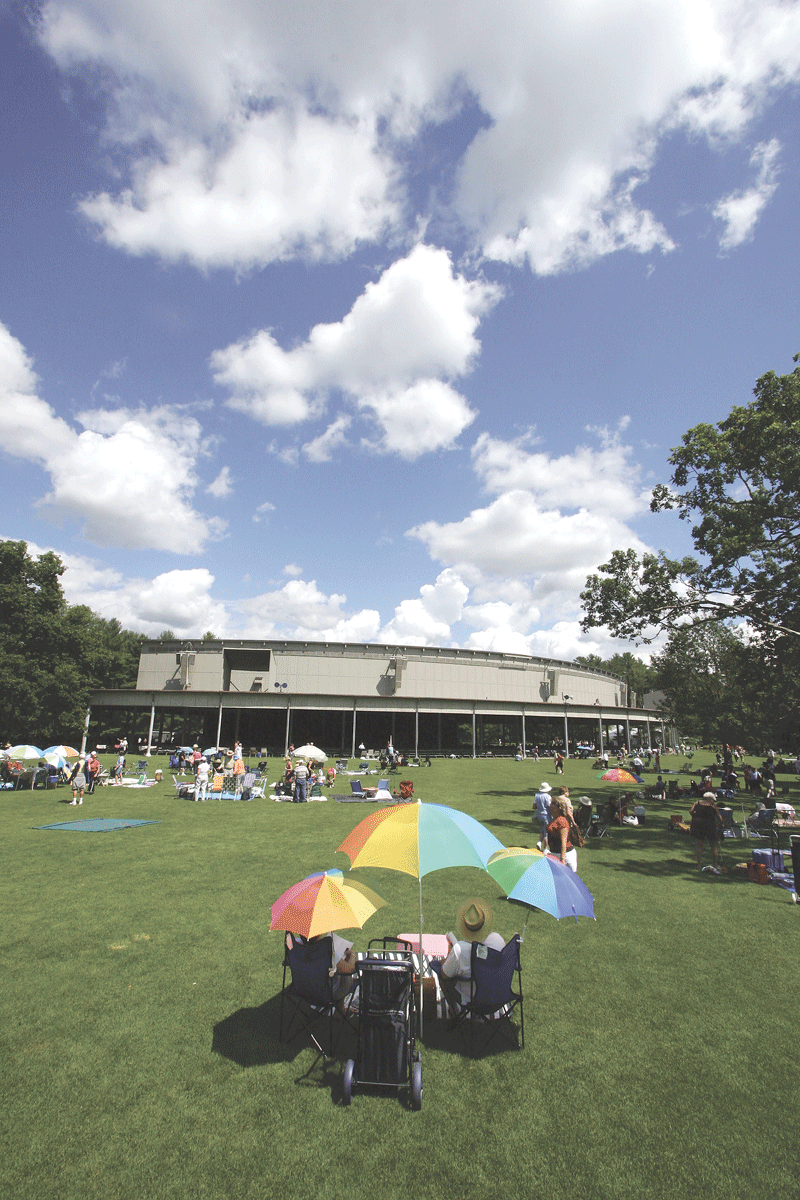
For outdoor music, Tanglewood represents the best of what Western Mass. has to offer. This beautiful campus in Lenox has been the summer home of the Boston Symphony Orchestra since 1937, and has been drawing visitors from around the country for just as long. Pack some sandwiches for a picnic, throw a blanket and folding chairs in the car, and take in a magical evening of music on the lawn. While Tanglewood always puts forth its fair share of classical programs with superb concert soloists, it also offers performances by contemporary groups, like this summer’s shows by the Steve Miller Band and Guster, for those more inclined to the Beatles than Beethoven.

Western Mass. Vineyards and Wineries

www.masswinery.com
Various towns in Western Mass.
Schedule: Check websites
Admission: Free

Western Mass. is the perfect place to ‘wine’ down with friends at a winery, and there are several to choose from. Consider Green River Ambrosia in Greenfield (ever heard of honey wine?); or Mount Warner Vineyards in Hadley, open by appointment; or the Black Birch Winery in Southampton, which offers summer wine tastings on weekends. If you’re still thirsty for more local variety, try the Amherst Farm Winery in Amherst, Les Trois Emmes Winery & Vineyard in Hadley, or the Pioneer Valley Vineyard in Hatfield, which all have retail shops to explore as you’re sipping the fruits of the past year’s labor.

Williamstown Theatre Festival

www.wtfestival.org
1000 Main St., Williamstown, MA
(413) 597-3400
Schedule: June 26 through Aug. 18
Admission: $20 and up; some events free

For 58 years, the Williamstown Theatre Festival on the campus of Williams College has been offering Tony Award-wining theater in the Berkshires. During that time, the theater venue of the Main Stage and Nikos Stage has attracted such performers as E.G. Marshall, Blythe Danner, Colleen Dewhurst, and Christopher Reeve, and the summer of 2013 will be no different. The festival will present a range of both classical and original productions, late-night cabarets, free theatre, and other special programs like the Family Friday Workshops, from 4 to 6 p.m. from July 5 to August 9.

Yidstock

www.yiddishbookcenter.org/yidstock
Yiddish Book Center
Hampshire College, 893 West St., Amherst, MA
(413) 256-4900
Schedule: July 18-20, 7 p.m.; July 21, noon, 2, 4, and 7 p.m.
Admission: $8-38; festival pass: $135 for members or $175 general admission; pass includes admission to all concerts, lectures, and workshops

Forget Woodstock; discover the best in klezmer and new Yiddish music at the 2nd annual Yidstock. Set on the stage at the Amherst-based Yiddish Book Center, the weekend will offer an engaging glimpse of Jewish roots and jazzy soul music through popular Yiddish bands like the Klezmer Conservatory Band, Klezperanto, Margot Leverett & the Klezmer Mountain Boys, and the Yidstock All-Stars. Come early on Friday for a lecture on lost Hebrew musical treasures or learn Yiddish folk dance.

ZoarOutdoors

Zoar Outdoor

www.zoaroutdoor.com
7 Main Street, Charlemont, MA
(800) 532-7483
Schedule: Through Oct. 15
Admission: Varies; family packages available

This summer it may be time to cancel that Netflix account and take advantage of the many outdoor opportunities found at Zoar Outdoor. Zoar offers virtually every option available to the adventurous soul in Western Mass.: kayaking, rock climbing, white-water rafting, canoeing, and ziplining in the trees down a mountain that overlooks the Deerfield River. Zoar offers on-site camping and lodging to those itching to escape the pressures of the city and suburbia. For those inclined to get really close to nature and experience the Berkshires in the trees and on the water, the staff at Zoar also lead overnight rafting and zipping tours into the wilderness.

The Zoo in Forest Park and Education Center

www.forestparkzoo.org
Forest Park, 302 Sumner Ave., Springfield, MA
(413) 733-2251
Schedule: Weekdays, 10 a.m. to 4 p.m.; weekends, 10 a.m. to 5 p.m.
Admission: $4-8.50

Located in Springfield’s historic Forest Park, the Zoo and Education Center offers a number of exhibits and educational programs to the Valley’s animal lovers. Visitors to the zoo can behold the power of an African lion and alligator, or determine for themselves whether the Madagascar hissing cockroach lives up to its name. Children can be especially engaged at the Zoo in Forest Park through Zoo Camp and the Crew in Training volunteer program. End the visit with a train ride through the grounds.

Agenda Departments

‘Second Chances’ Exhibit
Through July 25: Springfield Pulse Artspace presents a unique exhibition featuring innovative and colorful local artist Whitney Wood Rahm. “Second Chances: Balancing Passion, Purpose, and Obligation” features an eclectic range of original works by Rahm, including her whimsical and popular “Friendly Monsters,” made from barn board, scrap lumber, and found parts. Also on exhibit are Rahm’s highly inventive rescued and revived furniture, contemporary paintings, and unique photography. In addition, the exhibition will include a participatory art experience, where viewers will have a part in providing input for an upcoming piece to be created by Rahm. The exhibit is on display at 11 Pearl Street, Suite 235, Springfield, weekdays from 11 a.m. to 4 p.m. or by appointment.

Wistariahurst Exhibition
Through August: Wistariahurst Museum in Holyoke has unveiled its Summer Gallery Exhibition, “Behind the Scenery: Sketches to Cityscapes.” Local artist Caleb Colon gives an intimate look at the artist’s process of selection, direction, and creation, featuring displays of the works as paintings begin, progress, and finally reach completion. Works shown in the exhibition are inspired by local scenes and sites along the Connecticut River. Studies, sketches, and photos are also on view, showing another layer of the process. Works are on view through August. Gallery admission is $3.

Yidstock 2013
July 18-21: Yidstock 2013: The Festival of New Yiddish Music will bring the top names in klezmer to the stage at the Yiddish Book Center in Amherst. The Klezmer Conservatory Band will kick off Yidstock on July 18, and the festival will continue with Klezperanto and Margot Leverett & the Klezmer Mountain Boys; Brass Khazones: Steven Bernstein and Frank London; the Wholesale Klezmer Band; Golem; and the Yidstock All-Stars. The weekend will conclude with a massive jam, featuring a Yidstock All-Stars band with players from the weekend’s bands, under the musical directorship of Frank London. Among those all-stars are two of the greatest clarinetists in klezmer, Ilene Stahl of Klezperanto and Margot Leverett of the Klezmer Mountain Boys. A series of workshops and talks is also on the schedule, including a Yiddish folk-dance workshop led by internationally renowned Steve Weintraub; a lecture by Hankus Netsky, a founder of the Klezmer Conservatory Band; an instrumental klezmer workshop; and a talk by author and music critic Seth Rogovoy. Back by popular demand, Yosi’s Kosher Falafel Tent will once again be serving an assortment of great food. For more information and to purchase tickets and festival passes (a limited number of passes are available and sell out quickly), visit yiddishbookcenter.org/yidstock or call (413) 256-4900.

Golf Tournament
July 22: The Women’s Fund of Western Massachusetts will hold its Annual Golf Classic at Crestview Country Club in Agawam. Registration opens at 10:30 a.m. with a noon shotgun start for an 18-hole scramble. The cost is $140 per person, which includes golf and cart, lunch and tournament banquet, and team and skill prize eligibility. New this year is the Tee & Tan Golf Option, a nine-hole golf scramble followed by relaxation on a chaise at Crestview’s scenic pool area. The cost for the banquet only is $30. For registration and details, visit www.womensfund.net.

Western Mass. Business Expo 2013
Nov. 6: Planning is underway for the Western Mass. Business Expo 2013, a day-long business-to-business event to take place at the MassMutual Center in downtown Springfield. This fall’s show, the third edition of the Expo, which is again being produced by BusinessWest, will feature more than 150 exhibitors, seminars on timely issues of the day, special Show Floor Theater presentations, breakfast and lunch programs, and the wrap-up Expo social, which has become a not-to-be-missed networking event. Details of the specific programming will be printed in upcoming editions of BusinessWest and can also be seen online at www.wmbexpo.com or www.businesswest.com. For more information on the event or to reserve booth space, call (413) 781-8600, ext. 100.

Sales and Marketing Sections
To Remain Competitive, You Must Adjust Accordingly

Research shows that more than 50% of all cell phones are now smartphones. Add to that the growing number of people who own tablets, and it is estimated that mobile Internet users will exceed the number of desktop internet users by 2014.
The rapid rise in mobile technologies has dramatically changed the way that we communicate at work, at home, and while out and about, and business owners must adjust to this phenomenon.

We Love Our Smartphones
The majority of cell-phone purchases are now smartphones because they quickly become the preferred technology. Smartphones let you make phone calls, but what makes them so smart is that they have an operating system and can run software. This enables them to have features similar to those found on your computer, including web browsing, sending and receiving e-mail, and the abilities to open and read documents, take photos, listen to music, and watch videos.
Smartphones are getting faster at accessing the Internet and letting us view websites, engage in social media, download apps, and access driving directions via GPS. No wonder we love them.
Because mobile devices have become so convenient to use, they are now an integral part of our on-the-go lifestyle. That means many of your customers are trying to access your website on a mobile device. Most mobile devices will display your website correctly, but it will be incredibly tiny, and users will have to enlarge it and scroll from side to side to read the content. If you do not currently have a mobile-friendly website, now is the time to begin putting one in place.

Two Key Options

Options for having a mobile-friendly website include a mobile redirect or responsive web design. A mobile redirect can be accomplished in a variety of ways. Essentially, it redirects mobile users accessing your website to a separate website optimized just for mobile devices. In this case, you have two separate websites that need to be updated and maintained.
Another option is to make your website mobile-friendly by using responsive web design. Responsive web design uses fluid grids, CSS (the coding language for formatting and styling web content), and media queries to control how your website is displayed based on a device’s screen size. Responsive web design provides the advantage of just one website to update and manage versus having a separate mobile site to maintain.
Whatever method you choose, you should minimize the amount of information displayed on your mobile site by tailoring it to the needs of a mobile viewer. Consider what information your website visitors need when accessing your site while on the go. Some basics include business address, directions, an interactive map, hours of operation, and contact information. If you have a retail operation, then sales, special offers, and events should be easily visible to entice mobile web visitors to stop by.

Mobile Search
According to Google, there has been a fivefold increase in mobile search over the last two years. Research also shows that more than half of all consumers use their smartphones to search for products even when they are at home and could use a desktop or laptop computer. This data emphasizes the need for a mobile-friendly website.
If someone searches for your business and finds you, they should be taken to a website designed for a mobile device. If you are investing money in paid search, and those searches are on mobile devices, you are wasting your money if those ads don’t lead to a mobile-friendly website.

Local on Mobile
Your customers are searching while they are out and about, looking for places, products, and special offers. Roughly 70% of searchers are looking for a local product or service, and more than 80% of people searching for local information will take action within a day. Mobile searchers have a need, and most often it is an immediate one.
I encourage you to register your website for local search. This will let you control the quality of your local search results, ensure the accuracy of the information, and help increase your search ranking. Here are several major search engines you can register with; some have a verification process by phone or mail.
www.google.com/places
www.bing.com/businessportal
listings.local.yahoo.com
listings.mapquest.com/apps/listing

Social on Mobile
Social media seems to be made for mobile, as it’s all about what we are doing right now and sharing that with our friends. About half of the people using social media do so on a mobile device. Mobile users log in more often and spend more time on social-media sites. Mobile devices nicely integrate social-media apps that make it easier to post on a mobile device than from your desktop.
For example, you can snap a photo with your phone and post it right to Facebook. Knowing how your customers use their mobile devices is important when developing social-media campaigns. Businesses need to start their planning with a mobile perspective and tailor their ideas accordingly.

Mobile Commerce
Mobile commerce (m-commerce) is defined as consumers shopping and conducting other financial and promotional activities on their wireless, handheld devices. Browsing, shopping, and purchasing are increasingly done on mobile devices, and that trend continues to grow.
As the technology for online mobile shopping is improved and simplified, the shopping experience becomes easier and more convenient. Millions of American smartphone owners use apps for shopping, and even more use a retailer’s mobile website. It is clear that mobile shopping will continue to grow and your customers will be looking for this purchasing option.

Geolocation for
Customer Tracking
Mobile devices also provide GPS and wi-fi technology that can determine where a user is located. This allows you to leverage that information and send real-time mobile offers that can drive people to your business and generate a purchase. As we continue to gather data on our customers, we can move toward using demographic, psychographic, and past-purchasing behavior combined with current event data to deliver highly customized messaging.
Not everyone likes the idea that their smartphone knows where they are, so you will need to communicate the value consumers can expect to receive from your geolocation programs and give them options on participation.

Develop Your Mobile
Marketing Plans
Reviewing the trends and technologies that are making your customers mobile reinforces the need to provide a mobile experience to your customers. The combination of a mobile-friendly website, local search, m-commerce, geolocation, and social media provides you with powerful ways to reach your customers and prospects while they are on the go.

Tina Stevens is principal and creative director at Stevens 470, a full-service, multi-channel marketing firm providing strategic marketing, print communication, and web development; stevens470.com

Sales and Marketing Sections
How to Avoid These Nine Common Marketing Mistakes

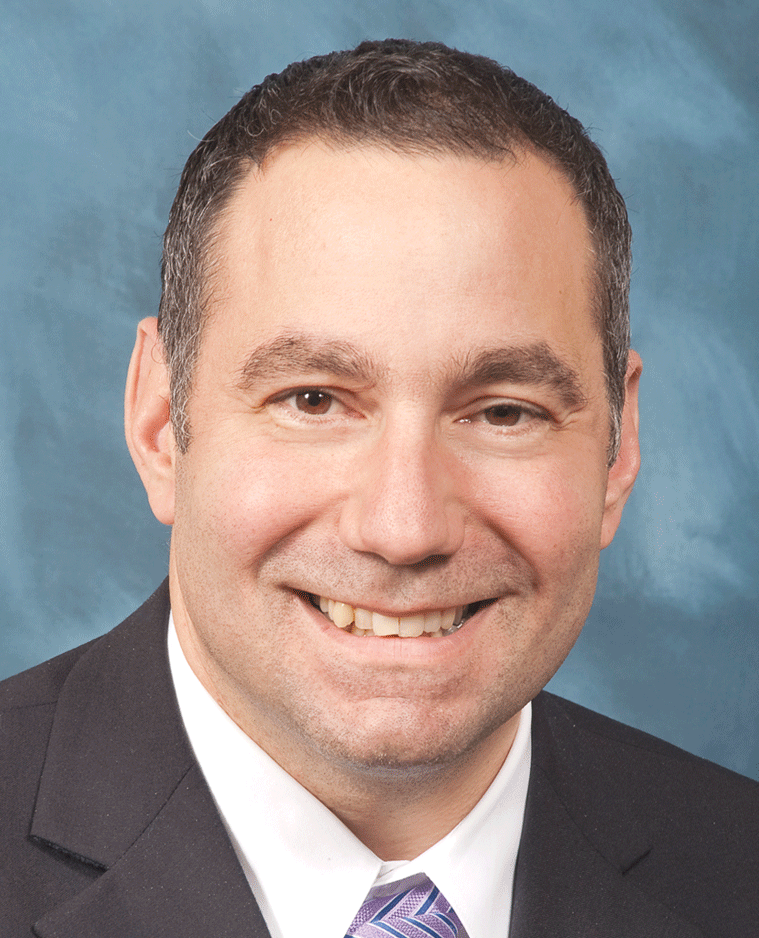
Christine Pilch Mancini

Christine Pilch Mancini

Business generally doesn’t just find you. You have to work hard to educate and attract the people who want and need your product or service. That’s marketing.
But the game has changed dramatically over the last five years or so, as the economy forced businesses to tighten up their expenses. In addition, social media has leveled the playing field and enabled small companies with tiny budgets to compete with much larger companies that have deep pockets. It has become very tempting for businesses to consolidate staff or try a do-it-yourself approach to their marketing.
Be it unfamiliarity, lack of education, or square pegs in round holes, there are a lot of marketing mistakes costing companies precious dollars these days. Are you making any of the following mistakes?

1. Me, Me, Me Messages
Nobody cares about how great you are, how long you’ve been in business, and that you’ve got good service. They only care about what they get. The old adage, ‘what’s in it for me?’ is truer now than ever before in people’s over-scheduled lives. They care about things that make their lives easier, save them time, help them, and solve a problem, so don’t bother with marketing messages that don’t point out how you can benefit them.
Benefits are much more effective in piquing interest than features. Take care to minimize and remove language that emphasizes the words, I, me, we, us, my, and our and turn your message around to what ‘you’ get.
Hint: Read the first page of your website. If your message isn’t primarily about ‘you,’ meaning ‘your customer,’ you might be wise to hire a good copywriter for a tuneup.

2. Not Tracking Results or Return on Investment

If you aren’t tracking results, how can you be sure which marketing efforts are paying off? This should be true of every marketing tactic that you use, be it something traditional — such as a TV ad, membership in an organization, or a print ad — or new-media initiatives, like a Facebook page, Google AdWords, or a Pinterest contest.
Tracking results can help you react quickly when something isn’t working quite right. If you watch carefully, you will be able to switch gears when messages get stale or don’t hit their mark. Pinpointing lead sources is certainly more difficult, as people tend to jump all around the web en route to you, but there are ways to track your results, and it’s to your advantage to know where you’re getting the best bang for your buck.
Hint: If you want to drive traffic to your website, Google Analytics is a terrific tool for gauging the success of your efforts. You can see exactly where your traffic is coming from. You can also build unique landing pages on your website that are fed from different lead sources. Or you could obtain a special phone number or embed a special offer to track a particular advertisement. The more specific you can be, the better.

3. Neglecting to Set Goals
If you haven’t set goals, how will you determine when something is successful? Every business has its own measurement of success, and, likewise, each marketing tactic and/or campaign should also have its own objectives. Be specific. For example, a Facebook page could have many different objectives over its lifetime: growing its fan base (‘likes’), building interaction, or driving traffic to your website. Set your goals before you implement something new, and set new ones for subsequent campaigns.
Hint: If you want to increase sales of a particular product, check how your numbers have been in the past, decide on a reasonable expectation for the promotion you plan to put forth, and establish a number that you want to hit within a certain timeframe. This will allow you to react during the process, adjusting your marketing or augmenting if necessary, so you can achieve your goal.

4. Not Testing
The ability to cost-effectively test something new varies by media, but it is usually very easy to do on new-media channels. Use them to see who is attracted to particular messages, what time they see them, etc., and then use this information in other venues to help better target your ads.
Hint: Many companies test-market videos on YouTube, which gives them the ability to see how many people watch their videos within a particular timeframe, the demographics of those viewers, and how much of the video they watched, without having to buy expensive TV time. Post your own test videos and use this information to customize future videos and marketing messages that better appeal to your target audience.

5. Refusing to Try Something New (Especially When the Old Stuff Stops Working)
Familiarity is comforting, but an old advertising tactic that used to work, but is barely producing new leads, is wasting your money. Suppose you used to get lots of business whenever you ran a particular TV ad, and you haven’t seen those results for a long time, but you keep running the same old ad because you like having your friends and family see you on TV. Wouldn’t it make more sense to shift that money into something new? This could be a fresh, new TV spot, direct mail, radio, or new media. The possibilities are endless.
Hint: Don’t let your ego get in the way of bringing business through the door. Business owners, their kids, and their pets are usually not the best TV personalities, and they often actually turn off potential customers.

6. Misusing QR codes

A QR code is a two-dimensional bar code that can be scanned with a smartphone and takes a user to a webpage. They are best utilized for a user to get more information about whatever you are promoting in print, which could be on something such as a mailer or print ad. The single greatest misuse of a barcode is using it to link to a webpage that is not optimized for mobile. This just wastes the user’s time and causes frustration because non-mobile-optimized pages are very difficult to read and navigate on a small screen.
Other mistakes include neglecting to provide the ‘more information’ that you promised, and using QR codes on the web or within e-mail.
Hint: You can stop printing product information through the simple use of a QR code applied to your product, which brings your customer to the right page on your website for all the information he needs for the use and service of your product.

7. Buying Lists and Fans
You’ve likely seen offers of thousands of e-mail addresses or Facebook fans for your page, but what is the worth of someone who doesn’t want or need what you have to sell? Doesn’t it make more sense to talk to someone who has interest in your product or service and may actually purchase from you? Lists that you can purchase are usually not targeted, and the e-mail addresses are usually not connected to people who opted in to receive your messages, so they will consider you a spammer. That can lead to big problems.
Purchased Facebook fans are no more valuable, as it’s easy enough to hide a page feed from one’s newsfeed, so your messages aren’t being seen. Yes, your number of fans may seem impressive, but those fans are worthless if they never receive your messages and have no interest in what you’re selling.
Hint: Even when creating your own e-mail list, make sure it is comprised only of people who opt in to receive your messages. Sending to the e-mail addresses of your social-media connections and those from business cards that you collect is impolite and unprofessional. These people will likely consider your messages spam.

8. Letting a Non-marketer Coordinate Your Social Media
Social media for business is a marketing function. Yes, any kid fresh out of college can set up a Facebook page and Twitter account for you, but what do they know about marketing your business? What messages will they send? How will they handle angry or disappointed customers? Will they plan and track?
Hint: There is a reason that it’s called social-media marketing. When looking for someone to handle your social media, make sure that they understand how to market your business. If you wouldn’t put them in a traditional marketing job, they are not qualified to handle your social media either, unless working under the direction of someone who is a marketer.

9. Separating Digital Marketing from Traditional Marketing

Social media and traditional marketing are so closely intertwined within companies these days that separating them makes as much sense as having your sales and marketing departments operate exclusive of each other. Campaigns should be synched so that you’re not sending competing or non-complementary messages. This also prevents the danger of one department not knowing what the other is doing and possibly undercutting each other.
Hint: Create a system whereby information freely flows between traditional- and new-media people within your business. This could be accomplished via daily or weekly meetings, a spreadsheet that team members update, or perhaps even through a private Facebook group, where departmental activity and plans are logged. Facebook displays to the group leader who reads what content on its groups, so it is apparent when something has or has not been read. Regardless of the method, communication is critical.

Bottom Line
Everybody wants a good return on their marketing investments, so if you’re making any of the above mistakes, changing course just might not only save you money, but also bring in more business to boot.
If you’re in over your head or many of the techniques mentioned above are Greek to you, perhaps it’s time to call in a qualified marketer to bring fresh ideas to the table.

Christine Pilch Mancini owns Grow My Company and is a marketing strategist. She trains businesses to utilize LinkedIn, Twitter, Facebook, YouTube, Pinterest, blogging, and other social-media tools to grow, and she collaborates with professional service firms to get results through innovative positioning and branding strategies; (413) 537-2474; growmyco.com; linkedin.com/in/christinepilch;
facebook.com/growmycompany

Agenda Departments

Networking Event
June 18: The Professional Women’s Chamber of Western Massachusetts will host a free networking event from 5 to 7 p.m. at Cooper’s Gifts, 161 Main St., Agawam. Attendees can relax and enjoy the company of other area businesswomen, and can register to win a $100 Cooper’s gift card. Refreshments will be served. Registration required [email protected].

‘Second Chances’ Exhibit
Through July 25: Springfield Pulse Artspace presents a unique exhibition featuring innovative and colorful local artist Whitney Wood Rahm. “Second Chances: Balancing Passion, Purpose, and Obligation” features an eclectic range of original works by Rahm, including her whimsical and popular “Friendly Monsters,” made from barn board, scrap lumber, and found parts. Also on exhibit are Rahm’s highly inventive rescued and revived furniture, contemporary paintings, and unique photography. In addition, the exhibition will include a participatory art experience, where viewers will have a part in providing input for an upcoming piece to be created by Rahm. The exhibit is on display at 11 Pearl Street, Suite 235, Springfield, weekdays from 11 a.m. to 4 p.m. or by appointment.

Wistariahurst Exhibition
Through August: Wistariahurst Museum in Holyoke has unveiled its Summer Gallery Exhibition, “Behind the Scenery: Sketches to Cityscapes.” Local artist Caleb Colon gives an intimate look at the artist’s process of selection, direction, and creation, featuring displays of the works as paintings begin, progress, and finally reach completion. Works shown in the exhibition are inspired by local scenes and sites along the Connecticut River. Studies, sketches, and photos are also on view, showing another layer of the process. Works are on view through August. Gallery admission is $3.

40 Under Forty
June 20: BusinessWest will present its seventh class of regional rising stars at the annual 40 Under Forty gala at the Log Cabin Banquet & Meeting House in Holyoke. The event will feature music, lavish food stations, and introductions of the winners, who were profiled at length in the April 22 issue. Call (413) 781-8600, ext. 100 for more information.

Yidstock 2013
July 18-21: Yidstock 2013: The Festival of New Yiddish Music will bring the top names in klezmer to the stage at the Yiddish Book Center in Amherst. The Klezmer Conservatory Band will kick off Yidstock on July 18, and the festival will continue with Klezperanto and Margot Leverett & the Klezmer Mountain Boys; Brass Khazones: Steven Bernstein and Frank London; the Wholesale Klezmer Band; Golem; and the Yidstock All-Stars. The weekend will conclude with a massive jam, featuring a Yidstock All-Stars band with players from the weekend’s bands, under the musical directorship of Frank London. Among those all-stars are two of the greatest clarinetists in klezmer, Ilene Stahl of Klezperanto and Margot Leverett of the Klezmer Mountain Boys. A series of workshops and talks is also on the schedule, including a Yiddish folk-dance workshop led by internationally renowned Steve Weintraub; a lecture by Hankus Netsky, a founder of the Klezmer Conservatory Band; an instrumental klezmer workshop; and a talk by author and music critic Seth Rogovoy. Back by popular demand, Yosi’s Kosher Falafel Tent will once again be serving an assortment of great food. For more information and to purchase tickets and festival passes (a limited number of passes are available and sell out quickly), visit yiddishbookcenter.org/yidstock or call (413) 256-4900.

Golf Tournament
July 22: The Women’s Fund of Western Massachusetts will hold its Annual Golf Classic at Crestview Country Club in Agawam. Registration opens at 10:30 a.m. with a noon shotgun start for an 18-hole scramble. The cost is $140 per person, which includes golf and cart, lunch and tournament banquet, and team and skill prize eligibility. New this year is the Tee & Tan Golf Option, a nine-hole golf scramble followed by relaxation on a chaise at Crestview’s scenic pool area. The cost for the banquet only is $30. For registration and details, visit www.womensfund.net.

Western Mass. Business Expo 2013
Nov. 6: Planning is underway for the Western Mass. Business Expo 2013, a day-long business-to-business event to take place at the MassMutual Center in downtown Springfield. This fall’s show, the third edition of the Expo, which is again being produced by BusinessWest, will feature more than 150 exhibitors, seminars on timely issues of the day, special Show Floor Theater presentations, breakfast and lunch programs, and the wrap-up Expo social, which has become a not-to-be-missed networking event. Details of the specific programming will be printed in upcoming editions of BusinessWest and can also be seen online at www.wmbexpo.com or www.businesswest.com. For more information on the event or to reserve booth space, call (413) 781-8600, ext. 100.

Meetings & Conventions Sections
UMass Hotel and Conference Center Offers Diverse Menu of Options

Van Sullivan, left, Retail Dining Services Campus Center manager, and Hotel Manager David O’Connor

Van Sullivan, left, Retail Dining Services Campus Center manager, and Hotel Manager David O’Connor show off two of the international dishes available in the Blue Wall Café.

An entire wall in the lobby of the UMass Hotel and Conference Center in Amherst is dedicated to plaques and framed certificates showcasing awards, which range from accolades for green initiatives and cleanliness, to Trip Advisor’s Certificates of Excellence and a designation as the best hotel in Amherst, to being named the best college hotel in Massachusetts by Yankee magazine, as well as numerous prestigious honors for its extraordinary, world-class cuisine.
In 2012 alone, the AAA three-star-rated hotel won eight national awards for its food. In addition, Ken Toong was feted with the distinguished Silver Plate award during the International Foodservice Manufacturers Assoc. conference held last month. “Groups have chosen to come here just because our food is so good,” said Toong, executive director of Auxiliary Enterprises for UMass Amherst. “Our food has been ranked third in the country by the Princeton Review, and visitors can choose to eat at our University Club and Restaurant, in our food court, or in one of four dining commons.”
The self-supporting boutique hotel/conference center accommodates groups of fewer than 10 people or as many as 10,000, thanks to its access to apartments and rooms on campus during the summer months, as well as the Student Union Campus Center, two auditoriums which each seat 600 people; the Fine Arts Center, which seats 2,000; and the William D. Mullins Memorial Center, which seats close to 10,000. In addition, more than 200 classrooms are available during the summer.
“We are an affordable alternative with a vast number of options that people may not have considered,” said Meredith Schmidt, director of the Campus Center Student Union Complex, adding that the hotel is used by many national and international organizations and is positioned in the heart of the campus within a 400,000-square-foot complex that includes the university store, a credit union, a hair salon, and a wide variety of dining options. Sports organizations can access playing fields, and the staff works closely with the area’s five-college community as well as the Amherst Business Improvement District (BID).
Guests can also enjoy events held on campus, stroll through its miles of walkways, mix and mingle with students, and visit the student-run Franklin Permaculture Garden, an ecological center which has been formally recognized by President Obama.
The $5 million in annual revenue generated from the hotel, and 350 annual conferences held there, also helps to support the university and the Amherst BID. Each hotel guest is charged a daily $1 fee, which goes to the BID, and, like other revenue-based operations on campus, the hotel and conference center pays administrative overhead to the central UMass budget office.
“It’s a domino effect,” Toong said, as he talked about how the revenue this operation raises contributes to the economy.

Unlimited Resources

Ken Toong, executive director of Auxiliary Enterprises

Ken Toong, executive director of Auxiliary Enterprises, says the award-winning Franklin Permaculture Garden is one of many attractions on the Amherst campus that people who stay at the hotel/conference center can enjoy.

The hotel’s guests represent a wide spectrum of business opportunities. Some attend conferences, while others are there for events sponsored by the university, which include graduations, open houses, and career fairs. There are also guest lecturers, performing artists, visiting sports teams, alumni, and the general public, who find the location and hotel convenient if they are visiting the area or attending events such as Amherst’s annual craft fair.
The hotel also hosts wedding receptions, often held on the 11th floor, which features sweeping views of the campus and the Pioneer Valley.
Rooms in the state-of-the-art hotel average $135 a day for visitors. Conference rates for rooms in residence halls are much lower, however, and typically cost $25 per person per day without air conditioning, or $50 for an air-conditioned space. Three meals a day featuring award-winning cuisine can be added for an additional $30 per person per day.
Although there is lots of space available, the campus is constantly expanding, and the hotel offerings continue to grow. Commonwealth College will open a residential complex there on Aug. 13 with 1,500 beds, which will add to the number of rooms that can be reserved during the summer months.
“People can stay at the hotel or in one of our 10,000 rooms,” Toong said. “One of the big advantages we offer is a multitude of choices.”
There are also continual upgrades, and a new front entrance to the hotel with valet parking is expected to be complete within two years. “We are also putting in a new restaurant inside the hotel that will have 200 seats,” Toong said.
He told BusinessWest that employees focus on providing exceptional service, for which they have been feted, and guests as well as the student population enjoy the international cuisine, with choices such as an all-you-can-eat sushi bar. “We serve only sustainable seafood and offer students 15 food choices from around the world at every meal. We promote healthy eating, so we check the sodium content of everything we serve and use a lot of fresh herbs and fruits and vegetables,” Toong explained.
The food-service operation spends $2.3 million each year for fresh produce, and 27%, or about $600,000, is purchased from local farmers. “It’s also very important to us to buy meat from animals that have been treated humanely. Plus, we compost everything, including our plasticware and the paper coffee cups used at conferences,” he noted. “Our goal is to give our customers the best, and we want to be a leader in supporting the environment.”
During the past year, the operation has generated an additional 48 tons of compost due to an increase in recycling efforts.
Toong also cited a number of organizations the facility belongs to, such as the Community Involved in Sustaining Agriculture program. “Students and guests want us to do this, and we find that, if we give people great value, they come back,” he said. And since the school has 16,000 students signed up for its full meal plan, it’s easy to accommodate groups of any size. “The hotel gets 24,000 guests each year, and large numbers don’t scare us.”

Group Offerings

About 40% of conferences held on the campus are related to academics, and professors from the university’s 200 departments often bring in key people from leading organizations they belong to.
Toong organizes the annual Taste of the World Chef Culinary Conference, which is held at UMass Amherst and attracts 300 accomplished chefs from across the nation, who engage in research and development during the week-long event. This year, they will include Robert Irvine from the television show Restaurant Impossible and Jet Tila, celebrity guest judge from the TV series Chopped.
Although he is integral to the hotel/conference center’s operation, Toong said the staff makes it easy to host events there, as they employ a one-stop-shopping approach. “We are able to be flexible, and because we are part of the UMass family, we seldom say ‘no’ to requests,” he explained.
Special needs are recognized even when there are no requests, and to exemplify this, Toong pointed to a recent conference attended by senior citizens, where food-service staff brought meals to their tables to make things easier for them, even though that had not been part of the arrangement.
“We want to create jobs for staff members and bring more business to campus; there are so many great buildings here, and we make sure people get great value in terms of food and service,” he said, adding that price is always negotiable.
Schmidt agreed. “We give people lots of options because we can,” she said.
Meredith Schmidt, director of the Campus Center Student Union complex

Meredith Schmidt, director of the Campus Center Student Union complex, says the hotel’s 116 rooms were gutted and completely renovated several years ago.

That includes technological advances. The hotel renovations have allowed the Hotel and Conference Center to keep abreast of trends, and iPod docking stations and charging areas are built into desks in each room. In addition, wireless Internet is available everywhere on campus. “And we have the best views in the Valley, especially during fall foliage season,” she said.
Toong said the center takes pride in bringing visitors to the university. “Our job is to enhance revenue, as we are self-supporting. But we also want to share this world-class university.” And there are many events that guests can enjoy on campus, such as a guest chef who is brought in to make a weekly presentation.
The award-winning Franklin Perma-culture Garden is one of the attractions. It provides a popular walking destination that hotel and conference attendees enjoy. It is shaped like a leaf and was created by student volunteers who used more than 500,000 pounds of composted food and mulch to turn a section of lawn into a sustainable ecological plot.
“Last year, we grew 1,500 pounds of vegetables there, and this year we expect to grow 2,000 pounds,” Toong said. “The garden contains more than 1,200 species of plants and herbs.”

Ongoing Mission
Toong said the future of the hotel and conference center is bright, but its administrators are aware of the need to be continuously proactive in their marketing efforts. But it’s a worthwhile task.
“This hotel and conference center is good for Western Mass.,” said Toong. “There are so many great buildings on campus, and it’s efficient and effective for us to use these resources.
“We offer a lot of options because we care — it’s the little things that make a difference,” he continued, adding that, together, they add up to a big opportunity for the university to generate revenue and gain exposure.

Meetings & Conventions Sections
Cranwell Resort Blends History, Stunning Views, and Accessibility

Cranwell Resort, Spa & Golf Club

Cranwell Resort, Spa & Golf Club offers stunning views of the Berkshires and an off-site alternative for corporate meetings.

Norma Probst, director of marketing for the Gilded Age Tudor-style mansion and grounds known as Cranwell Resort, Spa & Golf Club in Lenox, has a favorite phrase for summing up this destination.
“We’re high-end, not haughty,” she said, adding that this is a sentiment that covers the leisure market as well as the corporate market for meetings and retreats.
“‘Open to the public and year-round access’ is the overall message we put out there,” noted Probst, adding that the sign over the main entrance pretty much says it all: ‘public welcome.’
And the public heeds the sign.
Indeed, 70% of the spa services at the Spa at Cranwell, the largest such facility in the Northeast, are used by the local residents, meaning those who live in and around Lenox year-round or have second homes there. Meanwhile, Sloane’s Tavern, with its panoramic mountain views overlooking the golf course, seats 80 inside and 80 outside on the deck, and sees plenty of locals for weekly meals, including brunches and holidays.
This is not what some might expect when they visit a destination spa and resort traditionally defined by such adjectives as ‘elite’ and ‘high-end,’ but it is an operating philosophy that has served this institution well over the past 20 years, enabling it to bolster its reputation and ride out the economic downturns that can cripple such facilities.
Couple this accessibility with a down-to-earth operating style (something else one might not expect at such a prestigious address), and it’s easy to understand why Cranwell is ranked among the top 150 U.S. Resorts by Condé Nast Traveler, is a member of the Historic Hotels of America (HHA), and is a recipient of a host of other travel-industry accolades. And they also help explain, along with superb resort amenities and some different life-enriching options — Probst calls it “content of value” — why this destination overlooking the Berkshires is so unique.
Of course, the resort is perhaps best-known as a site for corporate meetings and retreats, and this side of the business has grown steadily over the years, thanks to word-of-mouth referrals, but also that brand of service that has earned high praise from guests, said Tim Paulus, director of sales, who shared some commentary.
After a managers meeting, Liberty Mutual Group responded with the following: “this year, our annual meeting was quite a success; just about every attendee had some comment about the excellent food, the uniqueness of their room, or the hospitality of your staff.”
Associated General Contractors of Massachusetts had similar comments: “facilities were excellent; staff at all levels was outstanding and extremely accommodating.”
For this issue’s focus on meetings and conventions, BusinessWest offers an up-close look at Cranwell, one that will explain how, in 20 short years, it has established itself as one of the premier destinations in the region.

History Lessons

Norma Probst and Tim Paulus

Norma Probst and Tim Paulus, in the newly renovated ballroom, credit Cranwell’s open-door policy for its continued success.

Upon entering the stunning, gateless grounds of Cranwell, one’s attention is immediately drawn to the mansion that dominates the grounds. But it quickly moves to the many other structures on the campus, built during various points of Cranwell’s 116-year history, and representing myriad architectural styles.
To understand the current campus, one needs to know its history, which is replete with multiple ownership changes and several uses, from residence to boarding school to resort, with three attempts at the latter category, the last being successful.
Both the www.cranwell.com and www.historicinns.org websites explain that, in 1853, Rev. Henry Ward Beecher — a man who had presidential aspirations and was active in the women’s suffrage and anti-slavery movements — purchased Blossom Hill, where the current Cranwell mansion now stands, for $4,500.
A scandalous affair ended Beecher’s political hopes, and his sister, Harriet Beecher Stowe, author of the famous anti-slavery novel Uncle Tom’s Cabin, inherited the home.
Gen. John Rathbone purchased the property from Beecher in 1869 and built Wyndhurst, which was enormous by any standard of the day. But in 1894, the next owner, John Sloane, a relative of the Vanderbilts and co-owner of a furniture firm, demolished that mansion and constructed another Wyndhurst, which rivaled the enormity and elegance of the first.
It was during this grand era, the Gilded Age (1880-1920), that Sloan also commissioned Frederick Law Olmsted, famous landscape designer of New York City’s Central Park (and also Forest Park in Springfield), to design Cranwell’s grounds and original gardens. The Wyndhurst, the namesake of one of the three restaurants at Cranwell, is the mansion one sees today.
In 1925, Sloane’s daughter, Evelyn, sold the estate to a group of Florida developers who tried to run the property as the Berkshire Hunt and Country Club, but the Depression ended this first real attempt at a resort destination.
Then, in 1930, Edward Cranwell purchased the property and later deeded the estate to the Society of Jesus of New England, to be turned into a private school for boys.
A young Ted Kennedy attended for a few semesters, said Probst, noting that, after prospering for many years, the school slipped into decline, closing its doors in 1975.
The property’s current owner, Burak Investments, purchased the then-bank-owned Cranwell in 1993 after it had been a condominium development and, according to Probst, was starting to be reborn as a resort, with renovations to the mansion. But this venture languished during the tepid economic times, and the company eventually went bankrupt.
Today, Cranwell Resort, Spa & Golf Club, with much of its original grandeur restored, thrives as a premier four-season resort, offering the world-class, 35,000-square-foot Spa at Cranwell, three restaurants (the award-winning Wyndhurst, the Music Room, and Sloane’s Tavern), an 18-hole championship golf course designed by Stiles and Van Cleek, and 114 deluxe rooms and suites situated in various buildings on the campus.
These structures offer stark contrasts, from the opulence of the Gilded Age evidenced in the mansion to the utilitarian, red-brick dorms built by the boarding school, now home to 38 completely refurbished guest rooms and the administrative offices. There are also 60 privately owned condominiums, two cottages, and the elegant Carriage House.
However, the Carriage House that now stands is the second on that footprint. In December 2010, an electrical fire took the original facility, built in the late 1890s, and a new structure opened roughly a year ago, just a few yards uphill from the original to take advantage of the view from the third floor. The original architectural drawings for the Carriage House were retrieved from the Boston Public Library.
“They recreated much of the same architectural features of the original, including the turrets,” said Probst proudly. That consideration to honor architectural detail is what makes Cranwell an exemplar of the HHA.
A member since 2000, Cranwell is in the elite company of 240 other historic hotels. A member has to be at least 50 years old and listed in, or eligible for, the National Register of Historic Places. Member hotels are promoted nationally and internationally to those who prefer historic settings for their leisure and business travel.
“This, too, is what Cranwell is all about,” said Probst.

Trend Setters
After guests take in the stunning, 360-degree show of green in summer, harvest colors in the fall, or the winter’s snow-covered mountains, Cranwell offers many outdoor activities, including hiking, tennis, mountain biking, cross-country skiing, bonfires, and, of course, golf. And with Cranwell’s open-door policy, the resort caters to several markets.
“We have different sectors within each department,” Probst explained, referring specifically to golf. “For instance, we have golfers with full-season memberships, guests with golf packages, local residents who book a random tee time — so we are catering to quite a diverse group of guests.”
While the spa is also a strong local draw, and Cranwell’s overall market is global, 80% of leisure, banquets, weddings, and corporate meetings are booked from clients from Massachusetts, Connecticut, New York, and New Jersey.
“We do about 50 weddings a year,” said Probst. “which is a lot considering we have exclusivity; we don’t have two Saturday-night weddings going on at one time.”
About four years ago, Probst started promoting winter weddings, which has added to the hundreds of single- and multi-day meetings and conferences that Cranwell hosts.
But since the Great Repression, some trends have emerged, said Probst and Paulus, noting that, while companies are still willing to spend (perhaps not quite as much as before), there is a greater emphasis on value. Meanwhile, there is an accompanying demand for facilities and operations that are ‘green,’ and Cranwell is responding accordingly in both cases.
“From a meeting standpoint, I’ve seen more meeting planners wanting more content in their events that are away from the business part of the agenda, and then they can rationalize why they need to have an off-site meeting,” explained Probst, adding that she’s noticed that meeting planners’ jobs have become more difficult.
“They’re under a lot of pressure to deliver a full and robust meeting,” she said, “and they’re under budget constraints much more now than ever before.”
Some of the content that brings value includes Scotch and wine tastings, chef-assisted culinary demonstrations, Afro-Caribbean drumming (a personal addition by Probst), and other unique, interactive group activities.
“We’re trying to engage our guests more and help them come up with something that is more life-enriching that they can take with them,” she noted.
Meanwhile, in the ‘green’ realm, Paulus told BusinessWest that more attention is being paid to sustainability, on the part of both individual guests and corporate meeting planners.
“It’s a huge decision factor when it comes to choosing certain hotels and resorts,” he noted. “In fact, in my office, the last five or six trade journals [of the meeting and convention industry] have ‘green’ on the cover.
“So we’re undertaking more strides to be green here,” he continued. “We’re putting ourselves through some certification processes, which have to do with how we recycle things, how we buy locally, and how we maintain the golf course, reuse rainwater, and deal with electric usage.”
Paulus pointed to the Cranwell meeting rooms and their conference worktables as one example; there are no more tablecloths or skirting because it’s an excessive use of a product that will have to be washed and dried using electricity.
A very welcome trend both Probst and Paulus are starting to see is corporations opening their purse strings a bit more over the past few years.
Like all hospitality-related businesses, resorts suffered through the Great Recession as businesses cut back on discretionary spending, said Probst, adding that the resort sector was also set back by the negative publicity that accompanied lavish corporate outings staged by companies, such as American International Group (AIG), that eventually had to be bailed out by the federal government.
“We actually changed our promotional focus to ‘resort meetings at inn prices,’” she went on. “We wanted people to know that our meeting prices really weren’t any different than a cookie-cutter hotel down the street.”

Welcome Mat
Guests don’t find anything typical about Cranwell — no slightly stuffy attitude, no restrictive warnings or ordinary accommodations in the 114 rooms and suites spread between the mansion and the other buildings.
The mansion, for example, built in the late 1800s, has “a different configuration than a typical hotel downtown that is all stacked and every room is the same; it doesn’t quite lay out that way.”
And that unusual layout is what makes an historic Gilded Age Mansion so unique; the room shapes and the architectural detail, along with the 17 different fireplaces and elegant furniture, all add up to a memorable experience.
And that goes for all guests at the Cranwell, from corporate CEOs to those for whom the ‘public welcome’ sign was erected.

Elizabeth Taras can be reached at [email protected]

Sections Technology
The Effect of ‘Bring Your Own Device’ on Today’s Businesses

By CHARLIE TZOUMAS

Charlie Tzoumas

Charlie Tzoumas

Gartner Inc. recently reported that ‘bring your own device’ (BYOD) programs, which allow users to conduct their daily business activities with their smartphones and tablets, are the “most radical shift in enterprise client computing.”
But despite the potential cost savings in not having to purchase and maintain expensive computer equipment, this new shift to BYOD does bring serious concerns about both network performance and security.

In the Beginning
When portable technology first made its foray into the business world, it was typically through the use of company-provided laptops and cell phones, which were intended solely for professional purposes. While these were difficult to maintain and expensive to purchase, they provided each IT department with almost full control over which devices could access a given company’s network.
With the dawning of these devices for personal use, however, employees were reluctant to sacrifice their iPhones, iPads, and Android devices while at the office, which led to the push for BYOD.
As time has gone on, more and more businesses have accepted that their employees will use at least one — and sometimes two, three, or more — personal devices while in the office. It’s easy to imagine that at least one of your colleagues uses a laptop for day-to-day business activities, an iPad to take notes during a meeting, and/or a smartphone while sitting in traffic en route to the office.
On the bright side, this means that IT departments do not need to conduct as much training as they may have once needed to, but this also means that there are increasing security risks and more bandwidth congestion on these networks, which can be far worse of an inconvenience if not handled correctly.

Keeping Tabs on Network Performance
Gartner also stated that 80% of recently installed corporate wireless networks will become obsolete by 2015 due to poor infrastructure planning, and this is largely because of the growth of BYOD and the impact that this influx of devices can have on a network’s performance.
As more and more devices are added to a network, that network logically slows down. If there are enough devices, it can get overwhelmed. An overwhelmed network dramatically affects productivity, causes unnecessary anxiety for everyone involved, and, at the most severe level, can completely shut down an entire company until the situation is resolved.
How can this be fixed? Businesses must ensure that their internal wireless networks can handle these influxes of devices while still delivering the same speed and performance that their employees need to get their jobs done. Cable operators and other service providers carry a majority of the bandwidth responsibility, so choose a communications partner that has a high-capacity backbone that can be easily scaled up or down to mirror whatever needs your business may have. And make sure your provider can do this quickly, as waiting around for weeks to upgrade your bandwidth can have dramatic effects on your bottom line.

Identifying and Eliminating
Security Risks
Since the devices now being brought into today’s office environments are not company-owned, the IT department does not have full control over them, which means that accidental malware downloads or computer viruses are not only commonplace, but can easily spread to an entire company’s network in a matter of seconds.
If these devices do not have the proper security safeguards in place to protect them, they can potentially allow unknown users to access sensitive company data, which puts the entire organization at risk.
How have IT departments been addressing these concerns? They’ve focused on finding ways to limit access to critical data or to verify employee identities when accessing certain devices and applications, data, or other company resources. Software is consistently being introduced to the market — some of it coming from places as unexpected as the cable company, like Comcast’s recently introduced Upware platform — to allow software administrators to set controls so that users cannot access certain programs without prior authorization.
It may seem minor, but these small changes can help to protect your network from a number of security risks, many of which you may not even know you have.

BYOD Is Here to Stay
At the end of the day, the ability for employees to access corporate networks from their personal devices 24/7 does improve productivity and can drive business growth — and when that also translates to less cost, training, and support required on the IT department’s part, it’s unlikely that it will be going away anytime soon.
And that’s good, because Jupiter Research recently predicted that the number of BYOD devices would double by 2014, which means that enterprises really don’t have a choice, since the number of devices already in the hands of their employees makes it relatively impossible for businesses to ignore them. In fact, a large percentage of supporters for BYOD are C-level company executives themselves, who ultimately oversee IT management and push for BYOD programs to be implemented because they, too, want to use their own devices.
This means that IT departments need to invest in a reliable network infrastructure that has the capacity and bandwidth to support this growing trend, and that offers the scalability and security features to accommodate the ever-changing needs of their employees. Doing this will not only make their lives much easier and less anxiety-ridden, but will also help to improve the ultimate longevity of their company.

Charlie Tzoumas is regional vice president of Comcast Business; [email protected]

Mind Body Spirit Sections
Monastery Heights Caters to the Mind, Body, and Spirit

Monastery Heights resident Arlene Welsh

Monastery Heights resident Arlene Welsh relaxes during a Reiki session conducted by practitioner Michelle Noel Plante.

A peaceful oasis sits high on a hill in West Springfield, surrounded by 18 acres of grounds that are punctuated by walking paths and a beautiful grotto with a gazebo.
For more than 75 years, the historic stone building on the site was home to Passionate priests and brothers, and when a retreat center was added, people who visited Our Lady of Sorrows Monastery found hope and healing there.
Today, the well-known property is still a place that tends to the emotional, spiritual, social, and physical well-being of people. However, it has been transformed into a senior-living community known as Landmark at Monastery Heights, which caters to elders at all stages of life, from those in independent-living and assisted-living apartments to individuals in its Morningstar memory-care neighborhood, which offers 24-hour supervision and a full schedule of activities in a secure setting.
Residents who live on the independent- and assisted-living floors are housed side by side, which makes it easy for them and their families to add additional care when needed. It also makes moving unnecessary, and no one receiving extra assistance is ever identified as living within a particular unit.
But the hallmark of this senior community is the philosophy behind it —  a holistic approach to life and the concern paid to the total well-being of each resident, which has been enhanced by a plethora of new offerings this year that range from pet therapy to massage therapy to Reiki.
“We’ve added new programs that incorporate people’s mind, body, and spirit as we want to promote optimal well-being and health,” said Marketing Director Mary-Anne DiBlasio. “People want their parents cared for from a medical perspective, but also want them to live in a place where they are loved and respected, and that has a home-like setting.
“Everyone wants a beautiful location, but what really matters most is how the residents feel,” she continued. “This is a whole new way of community-based living that promotes the independence some people may have lost. Pride and dignity are very important to us.”
Residents have input into what happens, and as their interests are varied, they are encouraged to attend resident council meetings. Some have started their own programs, which include cribbage and Scrabble groups, while a close affiliation with the West Springfield Senior Center has allowed others to institute programs there such as a Seder service started by a Jewish resident.
“We try to give them as much say as possible,” said Regional Marketing Director Sharon Beaudry, adding that the facility recently met a request to add an extra day to the schedule of the hairdresser who works at Monastery Heights.
There is also a lot of interaction with the community, and the Monastery is home to family events as well as programs open to the public, such as a Fall Festival with a farmer’s market on the lawn, which features horse-drawn carriage rides and a vendor fair that includes a booth where Monastery residents sell crafts, photography, and artwork they take pride in. “It really brings out their creativity. The more engaged they become and motivated they are, the higher their level of self-satisfaction and self-worth, which is reflected in better health and wellness,” DiBlasio said.
The West Springfield Parks and Recreation Department holds its summer concert series at Monastery Heights, and residents join the public for relaxing evenings on the lawn. “It’s a way to continually keep ties between the community and what is happening here,” Beaudry said.
DiBlasio said choosing a new home for oneself or a parent can be difficult. “When people come to us, they are overwhelmed. But even if Landmark Heights is not appropriate, we take the time to listen and will make referrals,” she told BusinessWest. “Although we are always making improvements to the property, our focus is always on people.”

Renovating History

Mary-Anne DiBlasio, right, says developing a strong sense of community is a key to growing a successful facility.

Mary-Anne DiBlasio, right, says developing a strong sense of community is a key to growing a successful facility.

Beaudry said that, when the building’s interior was gutted by developer Simsbury Associates after it purchased the property in 1996, the company took care to maintain its historical charm.
“Whenever possible, they left exposed wood and marble as well as the brothers’ chanting chapel,” she said. Thought was also put into what is now the Morningstar neighborhood for people with dementia, which has its own courtyard and garden area.
And since the property opened as Landmark at Monastery Heights, elements such as bird feeders have been added outside and benches placed so people can enjoy nature whenever they venture outdoors.
But creating a strong sense of community is even more important than the surroundings, DiBlasio noted. “This is a new beginning for people, and we have modified our programs in the last year,” she said as she talked about meditation, reflexology, aromatherapy, and extras added to promote health and relaxation. For example, after each yoga class, a licensed reflexologist gives each (willing) participant a hand massage using essential oils.
Art therapy also proves soothing to the spirit, while a wide range of exercise classes that include tai chi, strength training and weekly yoga offer physical benefits.
Monastery Heights also boasts a walking club, and many residents, such as DiBlasio’s mother, Rosemarie Fernandes, enjoy walking the grounds.
Other physical needs are addressed by three full-time nurses, who are in charge of a range of programs and services that include balance assessments and laboratory and pharmacy services.
The former Passionate chapel, with its vaulted, carved ceiling, is a place where peace is almost tangible, and since Monastery Heights is interdenominational, both Catholic masses and Christian services are held there.
Residents also enjoy activities and performances at the West Springfield Senior Center, as well as on-site baking classes that people in independent living, assisted living, and the Morningstar neighborhood participate in. “There is no ‘us’ and ‘them’ here, and our residents with memory impairment are always co-mingling,” Beaudry said.
However, she noted that the number of people seeking independent-living apartments at Monastery is on the rise.
“People come here because they are isolated at home. Even if their children live locally, it is very difficult for them to manage their care, and it doesn’t solve the problem of their isolation,” Beaudry explained, adding that many can no longer drive.
“Living here gives them a level of independence again,” she continued, adding that residents are age 62 and older. “We take them to the grocery store, to do their banking, and to doctor’s appointments.”
A podiatrist visits the facility, and physical and occupational therapy are also administered on site, due to collaboration with a local agency. In addition, everyone who moves in is given a free physical evaluation to determine special needs, such as a raised toilet seat or having fluorescent tape put at the edge of a shower stall and grab bars to help those with poor vision.
“Someone with a walker may also be walking with it incorrectly,” Beaudry said. “We do things to help increase strength, agility, and core balance, and really keep a watchful eye on people. All of our staff is very mindful of that.”
Monastery Heights has its own store, which is stocked with items residents tend to run out of. “We want to be able to accommodate people and maximize their stay. This is their home, and we want to make sure they are completely happy. We always think about them as if they were our own mom or dad,” Beaudry said.
And there are two resident cats, as research shows that pets improve the overall quality of life. Residents can also bring their own small dogs to live there. “Studies have shown that having pets around brings health and happiness to people,” DiBlasio said, adding that the facility recently hosted a dog show.

Dementia Program
Three certified nursing assistants provide care to residents who live in 18 apartments in the Morningstar program, created for residents with dementia. “We invest equally in them as well as in our staff,” said Beaudry. “It all fits into the holistic aspect of our community.”
When residents in this area of the building — or any other — are experiencing anxiety, which can occur for people with dementia at sundown, specially trained staff members are able to give them hand massages or administer Reiki.
“They talk to them while quiet music plays,” Beaudry said. “We also have pet therapy. A woman comes in once a week with her dog, and you can see the residents’ demeanor change.”
In addition, Monastery staff members work with the Alzheimer’s Assoc. to determine the best way to engage residents in meaningful activities and help them express their feelings, since their verbal capacity is diminished.
Beaudry said the facility has adopted the association’s ‘Memories in the Making’ program, which uses artwork ranging from drawing to sculpture and cutting paper, then organizing it, as a creative outlet. “We frame their art and put it on display once a year. It makes the residents feel proud and very special,” she told BusinessWest.
There are also monthly outings to places such as vegetable stands or to take a cruise on the Connecticut River, as well as weekly trips to get ice cream.
“When people have memory loss, they still know who they are as a person and remember their history,” Beaudry said. “We find out what they used to enjoy doing and capitalize on that so our residents feel purposeful and proud.”
For example, a special area was set up for a man who enjoyed workworking, while those who loved to garden can do so in the Morningstar courtyard. Some residents help set the tables for meals, while others enjoy folding laundry.
“They love the tactile feeling, and it makes them feel useful,” Beaudry said. “We promote as much independence as possible, and knowing that they still have the ability to perform simple tasks gives them self-satisfaction, confidence, and a feeling of purpose. We focus on what they still can do.”
Thought is also given to the menu. “Research shows that diet is extremely important to the body and mind, so we work with nutritionists to create food that is reminiscent of what our residents grew up with, and we use organic, local vegetables whenever possible,” she noted.

Rounded Approach
DiBlasio said the facility’s low vacancy rate is the result of a community-based, comprehensive approach to senior living. “Our success comes from the respect and friendship we earn from our residents.
“We are committed to enhancing each resident’s sense of well-being and fulfillment,” she added, “by understanding and meeting their physical, social, and emotional needs on a daily basis.”
Which is, indeed, a truly holistic approach.

Restaurants Sections
The Whately Inn Has Come a Long Way Since It Hosted Burlesque

Chip Kloc

Chip Kloc says the fire in 1984 was disruptive, but it ultimately proved to be an important turning point for the Whately Inn.

Stephen “Chip” Kloc III, chef and owner of the Whately Inn, remembers cooking dinner for his regular Wednesday-evening crowd back on Sept. 13, 1984.
The date is etched into his mind because what happened that night was unforgettable, and what’s happened since has become another important chapter in the long and intriguing history of this landmark establishment and family business.
“I noticed the ceiling — the paint was bubbling,” he recalled. “So I poked it, and a hole formed. I’m looking up, and all of a sudden it sounded like a train going through once the air got to it.”
‘It’ was a small fire that broke out in rafters dried by the intense heat generated by the broiler located below. The blaze went straight up a dormer, ignited the roof, and then proceeded to burn down from the second floor.
“There were probably 30 people in here at the time,” recalled Chip’s father, Steve, who followed his father, Steve Sr., into the restaurant business and eventually inspired the third generation to do the same. “But over the years, about 500 people have said they were at the inn that night.
“No one wanted to leave,” he continued, adding that there was a remarkable sense of calm amid the calamity. “Some people were saying, ‘oh, the fire’s just in the kitchen; it’ll be fine.’”
Several patrons left, but took their plates with them, said Chip, adding with a laugh that most people did, in fact, pay their bill.
With help from several fire departments, the first-floor kitchen, bar, and dining area were saved, but the entire second floor, except for the porch deck, was a loss. A renovation that took more than a year to complete provided a new, 75-seat second-floor banquet room where there had been none.
Though devastating for the Klocs, the fire turned out to be a pivotal turning point for the inn, which today focuses much more on quality cuisine and banquets and weddings — a far cry from its former role as a home for burlesque shows that played out on a stage that is now part of the dining room (more on that later).
These days, the excitement is in the delectable flavor and value of traditional American cuisine with French influences that Chip Kloc has perfected over his three decades learning and working alongside his father.
From the rack of lamb dijonaise to the broiled jumbo shrimp Francoise to the house specials of broiled filet mignon, beurre noisette, and prime rib, fine cuisine now takes center stage.
For this Restaurant Guide’s focus on landmark institutions in the Pioneer Valley, BusinessWest toured the historic inn that markets itself with the slogan ‘eat greatly at the Whately,’ and spoke with this father-and-son team about the establishment’s evolution and the family’s ability to capture and keep a following that is hungry and loyal, no matter the state of the economy.

Back in the Day

The Whately Inn’s historic dining room

The Whately Inn’s historic dining room features a stage area that showcased burlesque dancers in the 1950s and 1960s.

To help him provide a history lesson, Chip Kloc summoned a yellowed print advertisement for the Whately from January 1966. It hyped floor shows, including burlesque entertainment with comedians as emcees, as well as dinner and dancing in the the Rainbow Room. Boiled lobsters were priced at $1.50.
In addition to underscoring the rate of inflation over the past 47 years, the clipping begins to tell the story of how much has changed at this landmark on Chestnut Plain Road.
Popular from the 1860s to the 1940s, burlesque featured bawdy comedy and female striptease in cabarets and clubs, as well as theatres, and the Whately Inn was one of the few in the region to present the spicy form of amusement.
Chip was 6 in the mid-1960s and can remember the crowds.
“I used to sell the girls towels for 25 cents as they were coming off the stage,” he said with a laugh, noting that this stage still stands in the main dining room, next to the historic fireplace. “It sure was a destination back then.”
To explain how it became one, the Klocs went back further in time, to the years just after World War II ended, when Steve Sr. made his foray into the hospitality industry with two restaurants — the Williams House in Williamsburg and the Rainbow Club in Haydenville. The latter, which was destroyed by fire in the mid-’50s, was in many ways an inspiration for the Whately Inn, which the elder Kloc acquired later that decade.
“People used to come in here [to the Whately Inn] and say how much they loved the Rainbow Club,” said Chip, adding that this affection was spawned by the food and the entertainment, both of which were brought to the Whately by his grandfather and father.
Steve Jr. cut his teeth in the business at a popular restaurant and dance hall on the Connecticut River in South Hadley called the River Lodge, later renamed the Riverboat. He would essentially recreate that establishment’s menu at the Whately, which was sold by his father in 1969, beginning more than a decade of sharp decline for the landmark in terms of both its physical state and popularity.
Steve Jr. watched this downward spiral from afar, as co-owner (with his father and others) of other restaurants, including the Captain’s Table in Northampton. “The roof over the stage had collapsed because of snow,” he recalled, adding that, by the mid-’70s, the inn was in terrible condition.
“It was awful,” added Chip, “but the second owners after my grandfather sold it fixed it up a bit and restored it. The bar, the chandelier, and the front door are all handmade from trees in Whately.”
These owners were not able to turn the eatery’s financial fortunes around, however. And when they put the landmark on the market in 1980, Steve Kloc Jr. saw an opportunity to turn back the clock while also focusing on the future.

Holding Steady
While the fire in September 1984 was in most ways a setback, Chip and Steve both described it as a blessing in disguise because it pushed them to make updates to decades-old electrical wiring, put in four larger hotel rooms where there had originally been six, and add a second-floor banquet room.
When it reopened in 1985, the inn was a more flexible and responsive player in the hospitality sector, with fine dining, a banquet facility, and a hotel. And it has taken full advantage of this attractive mix of services.
With most customers coming from within a 50-mile radius, the inn has thrived through its regulars, those who have heard about it though word-of-mouth referrals and want to experience it, and a growing banquet business. The main key to its success is repeat business.
“Many people come at least once a month, and one couple has been coming every Sunday since the fire,” said Chip, noting that, during the recession, when other hospitality-related businesses were suffering or closing, the Whately Inn held steady.
“There was a decline, but nothing that seriously affected us,” Chip explained. “We’ve built this business consistently over the years, and we’ve been growing little by little every year. After the fire, there was maybe a little bit of a rush, but overall it’s been consistent growth.”
Since the recession, however, Steve has seen customers give more attention to the value they are getting with everything they buy.
“Some people look at our menu and say we’re expensive,” he said, “but if you look at what you get, we’re very reasonably priced.”
Specifically, what the Whately Inn is known for, besides its popular French-American traditional-style cuisine, is a five-course, prix fixe dinner, including appetizer or soup of the day, salad, potato, vegetable of the day (usually in season, fresh, and local), gourmet entrée, choice of dessert, and coffee.
Historically, the two most popular dishes have been the 12-ounce filet mignon and the 18- to 24-ounce prime rib for $30.95. Meanwhile, there is one item generally not found anywhere else — frog legs from Bangladesh and Thailand.
“We sell 30 pounds per month,” said Chip. “No one sells them anymore so we have them for the customers that want them.”
“We’ve had the same menu since day one,” Steve added. “We add daily and weekend specials every week, but the old menu has been good for us; it’s what brings the people back.”
The dining room holds 120, and on an average Saturday night, Chip and his staff will serve between 250 to 300 patrons. On holidays, reservations are made months in advance, and a typical Thanksgiving, Mother’s Day, or Easter will attract 600 to 700 diners.

Just Desserts
In addition to consistent, quality cuisine, Chip said the Whately Inn’s employees are another key to success. One staffer has been with the Klocs since he was in high school, dating back to the Captain’s Table days in the 1970s. Chip’s mother, Fran, manages the bar, while his wife, Lisa, manages the dining room and schedules the waitstaff and any reservations. Chip’s brother Gary helps out as a waiter, and various other family members have pitched in over the years.
While Steve ‘officially’ retired this past January, when not in Florida, he still can be found helping out in the kitchen.
In his new role as the president of the family business, Chip said the goal is to keep the last three decades of fine dining and value steady, so loyal customers can continue to ‘eat greatly at the Whately.’

Elizabeth Taras can be reached at [email protected]

Accounting and Tax Planning Sections
It’s Not Too Early to Start Thinking About Next Year

Cheryl Fitzgerald

Cheryl Fitzgerald

It’s never too early to start thinking about tax-planning ideas for 2013 for businesses and individuals.
With some of the new Obamacare taxes kicking in for 2013, as well as tax increases from the American Tax Relief Act of 2012, the sooner you start planning, the more you’ll be able to minimize your taxes.
Here are some things to think about.

Businesses
• General depreciation: New assets generally acquired and placed in service before Jan. 1, 2014 continue to be eligible for 50% bonus first-year depreciation.
Start planning for your acquisitions now so that assets that need to be ordered will be received and installed before the expiration of this provision. Buying a used asset does not qualify for the additional bonus depreciation; it must be a new asset, and not just new to you. Section 179 is still available for used assets.
• Qualified leasehold improvement depreciation: Qualified leasehold improvement property placed in service before Jan. 1, 2014 is depreciated over a reduced 15-year period. There are related party limitations, but if improvements qualify, this is a significant benefit over the 39-year life which is scheduled to return on January 1, 2014.
• Business tax extenders: The Tax Relief Act also extended many business-tax credits and other provisions. Notably, it extended through 2013 the research and development credit. Other business provisions extended through 2013 are the work opportunity tax credit, the employer wage credit for employees who are active-duty members of the uniformed services, and numerous other business credits.

Individuals
• Tax rates: 2013 brings us a new rate bracket that begins with the 39.6% rate. The threshold amounts are keyed to taxable income and are: $450,000 for married individuals filing joint returns and surviving spouses, $425,000 for heads of household, $400,000 for single individuals, and $225,000 for married individuals filing separate returns.
Therefore, for those within the new 39.6% range, above-the-line deductions and exclusions — and strategies to maximize them — now become ever-more valuable. At these same thresholds, the top capital-gains rate increases from 15% to 20%.
The Medicare portion of the FICA tax on wages increases from 1.45% (2.9% for self-employed) to 2.35% (3.8% for self-employed) for wages over $200,000. Individuals or couples with multiple W-2s may not have this tax withheld by their employer, but will be subject to the additional tax upon filing their 2013 income-tax return. To avoid a surprise liability on April 15, 2014, individuals with multiple sources of wages may want to consider increasing their federal withholding.
• 3.8% net investment income surtax: For years beginning in 2013, under the Patient Protection and Affordable Care Act of 2010, a new-investment income (NII) surtax applies. The NII surtax on individuals generally equals 3.8% of the lesser of:
• NII for the tax year, or
• The excess, if any, of modified adjusted gross income ($250,000 for filing status of married filing jointly or surviving spouse, $125,000 for filing status of married filing separately, and $200,000 for any other filing status).
NII includes not only interest, dividends, and capital gains, but also income from passive activities such as partnerships and rental real-estate income. One category of income notably excluded is flow through income from an S corporation in which the shareholder actively participates.
This gives a significant advantage to flow through K-1 income over W-2 wages taken by the shareholder, since that is subject to the 2.9% employee/employer combined Medicare tax and the added 0.9% when wages exceed $200,000. Although it appears simple that a shareholder would want to minimize their wages, rules related to reasonable compensation as well as state-tax consideration make this a complex planning area involving the business and individual.
Given that the thresholds are lower for the 3.8% tax than the 20% maximum tax on net capital gains, capital gains subject to the 20% tax invariably will also be subject to the additional 3.8% surtax, while net capital gain subject to the 3.8% surtax will not necessarily be subject to the maximum 20% rate.
Individuals who planned large capital-gain transactions prior to Dec. 31, 2012 most likely benefited from an 8.8% savings. If the sale qualified for installment-sale reporting, this additional tax might be an incentive to elect out-of-installment sale treatment.
• Roth conversions: This lifts most restrictions and now allows participants in 401(k) plans with in-plan Roth conversion features to make transfers to a Roth account at any time.
Those making such conversions may be recognizing a large amount of income that may push them into a higher income or capital-gain threshold bracket and result in the NII surtax applying. Timing conversions, doing them over a period of years, and/or reducing capital-gain recognition events during those years are strategies now worth considering.
• IRA distribution: The Tax Relief Act extends, through Dec. 31, 2013, the provision allowing tax-free distributions from individual retirement accounts to public charities by individuals age 70 1/2 or older, up to a maximum of $100,000 per taxpayer each year. Taking advantage of this provision for charitable giving may also help reduce exposure to one or more of the threshold amounts discussed earlier.
• Phaseout of itemized deductions and personal exemptions: The phaseout of these items are reinstated, but at modified adjusted gross income thresholds of $250,000 for single taxpayers, $275,000 for heads of household, and $300,000 for married taxpayers filing jointly.

Bottom Line
So, as you can see, 2013 tax planning needs to incorporate the interplay that one idea may have on another.
Additionally, it is important to monitor your tax planning as the year goes on instead of waiting until the end of the year. It is never too early to think about these things in order to help minimize some potential taxable transactions that occur throughout the year.

Cheryl Fitzgerald is a senior tax manager with the certified public accounting firm Meyers Brothers Kalicka, P.C. in Holyoke; (413) 536-8510.

Chamber Corners Departments

ACCGS

www.myonlinechamber.com

(413) 787-1555


• April 10: April After 5, 5-7 p.m., at Twin Hills Country Club, 700 Wolf Swamp Road, Longmeadow. The event will feature the ERC5 Feast in the East. Join us for a culinary event sure to please your palate as dozens of local restaurants present their signature dishes. Proceeds benefit the ERC5 Scholarship Fund. Sponsorship opportunities are available. For more information and to purchase tickets, contact [email protected].


• April 3: ACCGS Business@Breakfast, 7:15-9 a.m., at the Springfield Marriott, 2 Boland Way, Springfield. Guest Speakers will be Carol Leary, president of Bay Path College, and Ira Rubenzahl, president of Springfield Technical Community College. They will speak on the subject “The Importance of Public and Private Higher Educational Institutions in Workforce Development.” Chief greeter: Sarah Tsitso, executive director of the Boys and Girls Club Family Center. Salute: the Horace Smith Fund, for its 115th anniversary. For more information and to purchase tickets for the breakfast event, contact [email protected].


AMHERST AREA

CHAMBER OF COMMERCE

www.amherstarea.com

(413) 253-0700


• April 10: Amherst Area Chamber Breakfast, 7:15-9 a.m., at Applewood at Amherst, 1 Spencer Dr., Amherst. Tickets: $17 for members, $20 for non-members. RSVP to [email protected] or register online at www.amherstarea.com.


CHICOPEE CHAMBER OF COMMERCE

www.chicopeechamber.org

(413) 594-2101


• April 17: April Salute Breakfast, 7:15-9 a.m., at the Kittredge Center, Holyoke Community College. Tickets are $20 for members, $26 for non-members. Sign up online at www.chicopeechamber.org.

• April 8: Meet Your Legislators, 5-8 p.m., at the Castle of Knights, 1599 Memorial Dr. in Chicopee. Meet the legislators who represent you and your business, and start a relationship and a partnership with the Commonwealth’s leadership. Your chamber membership affords you a valuable voice on issues that impact your bottom line. Sponsored by Mohegan Sun. Sign up online at www.chicopeechamber.org.


FRANKLIN COUNTY

CHAMBER OF COMMERCE

www.franklincc.org

(413) 773-5463


• April 19: Chamber Breakfast, 7:30-9 a.m., at the Franklin County Fairgrounds. Program to be announced. Sponsorship opportunities are available. For more information, contact the chamber at (413) 773-5463.


GREATER EASTHAMPTON CHAMBER OF COMMERCE

www.easthamptonchamber.org

(413) 527-9414


• April 13: REACH Fest Day, starting at 10 a.m. REACH invites local and national artists to show in a multi-city exhibition of contemporary practitioners working in a variety of non-traditional formats. REACH promotes visibility, aims to bridge the arts and spaces in neighboring cities, encourages collaborative experimentation, and invites community members to participate in experiencing an array of contemporary art practices that are exhibited in a variety of traditional, non-traditional, and underutilized spaces throughout participating cities and towns. With more than 25 artist installations and exhibitions, a series of events are scheduled for REACH Fest Day. There will be performances in Easthampton and Holyoke by contemporary movement and sound artists and the One-Minute Vidfest, a film festival at Popcorn Noir in Easthampton featuring one-minute short films submitted by more than 80 artists from Easthampton to Serbia. All exhibitions will be open for visitation in Holyoke from 10 a.m. to 4 p.m. and in Easthampton from 4 to 9 p.m., in conjunction with the monthly Art Walk Easthampton. For more information visit www.reachfest.com


GREATER HOLYOKE

CHAMBER OF COMMERCE

www.holycham.com

(413) 534-3376


• April 17: Chamber Business Connections, 5-7 p.m., Renaissance Manor on Cabot Street. members of nonprofit organizations may attend as our guest; limit two employees per organization. Tickets are $10 for members, $15 for non-members. For more information or to register, call the chamber office at (413) 534-3376 or visit www.holycham.com.


• April 18: Accessing Workforce Training Funds, 8-10 a.m., in the PeoplesBank Conference Room in Kittredge Center on the campus of Holyoke Community College. Learn if your company qualifies and what you have to do to get a piece of the pie. Price includes a continental breakfast. Tickets are $20 for members, $30 for non-members. For more information or to register, call the chamber office at (413) 534-3376 or visit www.holycham.com.


• April 25: Beacon Hill Summit. Buses depart at 7 a.m. and return at 7 p.m. Ticket cost of $180 includes transportation, breakfast, lunch with legislators, materials, and wrap-up reception. Call the chamber at (413) 534-3376 for more details or to sign up.


GREATER NORTHAMPTON CHAMBER OF COMMERCE

www.explorenorthampton.com

(413) 584-1900


• April 3: Arrive@5, from 5 to 7 p.m. at Smith Vocational and Agricultural High School, 80 Locust St., Northampton. Sponsored by King And Cushman Inc. and ACME Auto Body & Collision Center. Arrive when you can, stay as long as you can for a casual mix and mingle with your colleagues and friends. Tickets are $10 for members, $15 for non-members. To register, call the chamber office at (413) 584-1900 or visit www.explorenorthampton.com.


GREATER WESTFIELD

CHAMBER OF COMMERCE

www.westfieldbiz.org

(413) 568-1618


• April 10: WestNet Connection, 5-7 p.m., at Betts Piping Supply Co., 14 Coleman Ave., Westfield. Spend a couple of hours networking with local businesses. Tickets are $10 for members, $15 cash at the door for non-members. For more information or to register, contact Pam Bussell at (413) 568-1618 or e-mail [email protected].


YOUNG PROFESSIONAL SOCIETY OF GREATER SPRINGFIELD

www.springfieldyps.com


• April 18: Third Thursday, 5-7 p.m., at Adolfo’s Restaurant, 254 Worthington St., Springfield. Join YPS at Adolfo’s, an Italian restaurant and bar situated across from historic Stearns Square in the heart of Springfield’s Entertainment District. The menu features a selection of traditional Italian dishes along with creative house specialties and a wide choice of wines to match.

Construction Sections
Schools Say Green Construction Benefits Students, Teachers

The new West Springfield High School

The new West Springfield High School is expected to be certified as a LEED Silver building when it’s completed.

‘Green’ is definitely the hot trend when it comes to school construction — and a new, comprehensive report suggests that the benefits are wide-ranging.

While businesses of all kinds are increasingly calling for more environmentally friendly, energy-efficient building designs — with many seeking certification from Leadership in Energy and Environmental Design (LEED), a rigorous program of the U.S. Green Building Council — in many ways the education sector has been leading the way.

And, according to a report recently issued by McGraw-Hill Construction titled “New and Retrofit Green Schools: The Cost Benefits and Influence of a Green School on Its Occupants,” schools of all levels — elementary, middle, and high — as well as universities, report significant benefits from studying and working in green buildings — advantages that extend well beyond economics.

It’s an area ripe for study; McGraw-Hill characterizes the education-construction market to be at the “vanguard” of green building, estimating that 45% of total construction starts in the education sector in 2012 had green components — a sharp increase from 15%
in 2008. “And that estimate,” the authors note, “does not even include the full scope of work being done to green existing buildings through retrofits and green operations and maintenance.”

In Western Mass., the trend is pervasive. Many recent and ongoing high-school projects in the region — including new buildings for Easthampton High School, West Springfield High School, Longmeadow High School, and Minnechaug Regional High School, to name a few — feature significant green aspects, from photovoltaic energy production to extensive natural light to a building materials relatively free of toxins and respiratory irritants.

“What is driving this market?” the report asks. “Like
all other sectors, schools are driven by
the goal of saving money and energy. However, this sector is unique among all those studied by McGraw-Hill construction … because the impact of green buildings on the health and well-being of their students is as important as energy in encouraging new green investments. In fact, the level of green work is so high in this sector because many report seeing the financial, health and well-being, and productivity benefits that they seek.”

The new Longmeadow High School

The new Longmeadow High School offers copious amounts of natural light among its features.

Indeed, two-thirds of the surveyed schools report that they have an enhanced reputation and ability to attract students due to their green investments. Meanwhile, 91% of K-12 schools and 87% of higher-education institutions state that green buildings increase health and well-being, while 74% of K-12 schools and 63% of colleges and universities report improved student productivity.

Additionally, 70% of K-12 schools and 63% of universities report that student tests scores increased in the wake of green construction. Employees are happier, too, as 83% of K-12 schools and 85% of university leaders report increased faculty satisfaction as a result of teaching in a green building.

Whatever the metric, there appears to be growing evidence that green building design is more than a fad in the educational world, but a trend with real long-term benefits.


Cost and Effect

When deciding to go green at their facilities, many businesses look first at the cost, and that’s no different for municipalities or colleges looking to erect school buildings. And a 2006 study conducted by Capital E, a national clean-energy and green-building firm, argues strongly for the fiscal benefits of such construction.

Its cross-country review of 30 green schools demonstrates that green schools cost less than 2% more to build than conventional schools — or about $3 per square
foot — but provide financial benefits that are 20 times as large. In fact, the report argues, that extra $3 pays off in $71 worth of ancillary financial benefits, from energy and water savings to asthma and flu reduction, to decreased absenteeism and greater teacher retention.

“Greening school design,” notes Gregory Kats, managing principal of Capital E, “provides an extraordinarily cost-effective way to enhance student learning, reduce health and operational costs, and, ultimately, increase school quality and competitiveness.”

He concedes that his report — co-sponsored by the American Federation of Teachers, the American Institute of Architects, the American Lung Assoc., the Federation of American Scientists, and the U.S. Green Building Council — doesn’t quantify every possible benefit of green buildings, including reduced teacher sick days, reduced maintenance costs, reduced insured and uninsured risks, increased state competitiveness, and others.

The recent McGraw-Hill study isn’t all-encompassing, either, but it does delve deeply into the question of how significantly a school designed to reduce its environmental impact on the world
can affect the health and learning abilities of its students, in ways ranging from reducing respiratory illnesses
and absenteeism to improving test scores.

“Given the complexity of interactions between people and their environments, establishing cause-and-effect relationships between an attribute of a green school and its occupants has been a challenge,” the report notes. But it does detail several possible benefits of a greener environment, including:

• Indoor air. Plenty of research exists to demonstrate that the health of children and adults can be affected by indoor air quality, and that increased particulate matter, volatile organic compounds (VOCs), toxins, irritants, and allergens from mold can lead to respiratory illnesses and asthma.

On the other hand, good indoor air quality is typically marked by effective ventilation, filter efficiency, temperature and humidity control, and stricter operations, maintenance, and cleaning practices. For instance, in a 2002 study in Finland, researchers identified an average 15% reduction in the incidence of the common cold in schools that had no moisture or
mold problems. And according to researchers at Lawrence Berkely National Laboratories, when ventilation rates drop below minimum standards, student performance test results drop by 5% to 10%.

“Good ventilation is the most impactful way to protect lung health in a green school, but reducing and preventing the source of indoor air pollutants is another key area,” notes Janice Nolen, assistant vice president of National Policy and Advocacy for the American Lung Assoc., in the McGraw-Hill report.

“Indoor air pollution such as particulate matter, volatile organic compounds, and irritants can originate from various sources indoors, such as building equipment, furnishings, flooring, and cleaning equipment,” she continues. “For example, it is important not to use cleaning supplies within schools that are going to cause irritations and breathing problems such asthma or chronic lung diseases.”

• Lighting. As recently as the 1970s and even the 1980s, the report notes, conventional wisdom held that lack of daylight, while irksome to some students, had no discernible impact on test scores. But since then, studies have shown that daylight can affect student health and learning.

Indeed, 48% of K-12 survey respondents and 56% of university leaders said increased access to natural light and outside views from their classrooms increased student engagement. Among other studies, one conducted by the Heschong Mahone Group in 1999 showed that students in classrooms well-lit by natural sunlight had 7% to 26% higher test scores over the course
of a year, compared with students in windowless classrooms.

• Thermal comfort. Recent research, McGraw-Hill notes, has begun questioning the prevailing thinking that keeping indoor temperature within a narrow band — typically the low to mid-70s — year-round is ideal. One recent study showed that student speed on a standardized test increased as a result of lowering the temperature from 77 to 68 degrees. Meanwhile, research conducted from the 1990s and onward suggest that teachers have a strong preference for personal control over temperature and see it as having an impact on student performance.

• Acoustics. Significant research has been undertaken to study how classroom design impacts the ability of students to hear, pay attention, and absorb information. Outdoor noise can be a negative factor as well; a recent study shows that students in a school under the regular flight path of an airport performed up to 20% lower on a reading test than children in a nearby school.

McGraw-Hill also cites research suggesting that a room’s acoustic and sound-insulation properties have a direct effect on speech intelligibility and, consequently, student learning. Of its survey respondents, 44% of K-12 schools and 51% of university leaders who included improved acoustics in their green projects reported better student attentiveness as a result.


Crunching the Numbers

According to the study, 74% of green K-12 schools are attempting to measure the impact of the building design on student health, but only 47% in higher education are doing the same. That might be because K-12 schools can more easily track metrics such as absenteeism, asthma complaints, and visits to the school nurse. Meanwhile, colleges and universities are more likely to glean data from student and staff surveys.

Of the K-12 respondents, 32% of schools said their green-building efforts have reduced absenteeism, while just 2% found an increase; 67% reported no change. However, of the participating schools that achieved the stricter LEED certification, 45% reported decreased absenteeism, and 44% of the buildings that received an Energy Star label reported the same.

The study noted that the connections between green building design and student health and performance are still being developed and aren’t nearly as clear as those that compare physical activity and health. “Studies show that 15% of school-age children are overweight, and this number is three times higher than it was in the late 1970s,” the report notes. “Unfortunately, there is insufficient data to attribute success to any particular solution that relates to school buildings.”

At the same time, McGraw-Hill notes that much more data is necessary to fill in the gaps and presumptions that have arisen around environmentally friendly construction. For example:

• More research is needed into the lack of adequate ventilation in America’s classrooms, even though the codes and practices of the HVAC industry have been around for a long time. More information is needed on how HVAC system designs and maintenance procedures impact air quality. Also, more research is necessary on how materials selection, such as those that include VOCs, affect student health and learning.

• There is a need for more performance-based design guidelines that can reliably produce excellent visual environments in terms of natural light. And, as an emerging technology now making its way into school buildings, light-emitting diodes, otherwise known as LED lights, warrant more intensive research.

• As new technology is developed and low-energy heating and cooling methods become prevalent in high-performance buildings, their potential impacts on student health and well-being need to be researched. At the same time, more information is needed concerning the ideal temperature in a classroom and what level of teacher control is warranted.

• Finally, more information is needed on the factors that go into the acoustic performance of a classroom, and how best to provide for the needs of hearing-impaired children in classrooms.

Still, the education world — and the architecture and construction industries — are taking notice. “Building healthy, high-performance school buildings is now far more fiscally prudent and lower-risk than building conventional, inefficient, and unhealthy school buildings,” Kats argues.

There are educational benefits as well, says Darryl Alexander, health and safety director of the American Federation of Teachers, in the McGraw-Hill report.

“We’ve heard from teachers that green schools have been useful as learning tools and allowed them to incorporate sustainability into the curriculum — teaching them, for example, how to measure and track energy use,” he notes. “Green roofs have allowed them to explain benefits such as reduced energy use, greenhouse gas emissions, and reduced stormwater runoff.”

But perhaps the most significant benefit is healthier — and more focused — children and young adults.

“Teachers, whether they know much about green schools or not, once they enter one of these buildings, they are excited because these schools are quite different from conventional school buildings,” Alexander says. “The natural lighting, the acoustics, the air quality and comfort really allow them to focus on their jobs more easily. It is amazing to watch.”


— Joseph Bednar

Golf Preview Sections
Elmcrest’s Manager Puts Some Imaginative Spins on Golf Operations

Jim Haberern

Jim Haberern says Elmcrest has had to evolve from a somewhat closed society into one that’s much more open.

Jim Haberern called it his “temporary office.”

This would be the small, cluttered desk, chair, credenza, copier, and other pieces of equipment positioned in the center of what he termed the small-events room at the grille, or 19th hole, at Elmcrest Country Club in East Longmeadow, which he serves as manager.

Like the small room that is his permanent office, this space is getting a much-needed facelift. Indeed, as Haberern explained, while the club has undertaken many improvements over the years, some of the features would represent original equipment from when it was built almost 50 years ago.

“We’ve been doing a lot of painting and giving the place a new look,” he explained. “With the changes we’ve made, the room is much more versatile — and it’s also a lot cleaner, because just about everything in here had been here since day one. This was long overdue, and it was the right moment to do it.”

And just as the dance floor, some of the walls, ceilings, and woodwork from the club’s early days have required some change and modernization, so too have some of Elmcrest’s operating philosophies.

As Haberern explained, for decades the club operated as what he called a “closed society.” And by that, he meant the original core of members (only a few of whom remain) and the new members brought in on a steady basis until about 15 years ago, when those individuals started hitting 70 — and not on the scorecard.

As that group of original members dwindled in number, Elmcrest essentially had no choice but to become an open society, or at least one that was far more open than it and most other private clubs in this area have been historically.

And by open, he meant open to both new members of all ages and new ideas for attaining them. These have included many forms of marketing — something most private clubs had never done and some still refrain from — including print ads and sponsorship of a popular Saturday-morning golf show on radio station WEEI. But it also includes hosting more tournaments to introduce more people to the course and its amenities, and then giving participants a gift card good for another round, a practice that has paid off.

“Membership is moving in the right direction,” said Haberern, adding that there have been fairly steady increases over the past several years. “And a big reason for that is that people know who we are now. We were a closed society, and I had to open it up quite a bit.”

His efforts to continually cast a wider net continue with another new initiative aimed specifically at women. Noting that there are many professional women who may want to join a club but are reluctant because of their lack of golf skills, Haberern is putting together a package that would begin with lessons from a professional and eventually ease the individual into a golf membership.

Long-term, said Haberern, the unofficial goal for Elmcrest is to become more of a closed society again, meaning membership numbers closer to the 500 the club once enjoyed than the current 300. That day is still at least a few years away, he noted, adding that the economy is still far from fully recovered from not only the Great Recession, but the years just prior, when the golf industry started a decline that in many ways continues today.

So, for the immediate future, Haberern and his staff will continue to look for ways to be creative and keep this half-century-old club vibrant and on the cutting edge of new ideas on how to attract members and then provide them with value.


A Cut Above

Before talking about golf and the business that it is, Haberern wanted to discuss … carpentry.

Not the projects going on around his temporary office, necessarily, but the work of his uncle, Joe Pagos, who started Elmcrest with some business partners in the early ’60s.

Haberern said he started working at the club, and for his uncle, in the mid-’70s, when he was 10, and was soon handling odd jobs ranging from cleaning toilets to washing dishes to mowing greens. While performing such tasks, he did something that would pay dividends years down the road — watch, and, more importantly, listen to Pagos talk about business and serving people.

“Working with my uncle wasn’t easy, especially for a 10-year-old, because he was a very hardworking person and pretty demanding,” Haberern recalled. “But you learned his work ethic, his morals, and how things go. I’d have to say that it was probably the best education I ever had, sitting back or standing behind him and watching his business sense.

“He said, ‘I’m going to teach you everything; just keep your mouth shut and listen,’” he went on. “He taught me everything I needed to know, and mostly what he taught me was to be good to people, because if you are, they’ll be good to you.”

Such lessons served Haberern well when he assumed a leadership role in the family business in 2000. Learning the ropes from the ground up — not to mention all that insight from Pagos — gave Haberern a solid background in all aspects of a golf operation, and likely helped him interpret the warning signs about a decline in the industry that he started seeing as early as 1999.

“I could see then the golf business was heading for trouble,” he said, “and that you were going to have to do something more than open up the doors and expect new members to come in.”

In response to these trends, Haberern started taking the initiative, with some tactics that would have to be considered cutting-edge, if not well ahead of their time, when it comes to private clubs.

This included advertising, and, eventually, his strong presence on the radio, with a golf show that has the Elmcrest name attached to it. Haberern has also given the club a presence at the region’s annual golf expo, a stage usually preferred by public and resort courses open for general play.

“Almost everyone is doing things like that now,” he said of private clubs and marketing in general. “I was doing it five, six, or seven years ago; I’ve also liked to think outside the box.”

Other initiatives include being imaginative when it comes to tailoring membership packages to suit the needs of a specific demographic group, or even an individual.

To emphasize this point, Haberern showed BusinessWest a breakdown of current packages, many with deferred initiation, designed for families, individuals, younger individuals (there are two age groups, 30-35 and 19-29), seniors, juniors (ages 14-19), those on active duty in the military, and even those who live outside the area but have family here and visit frequently.

“I started hitting every demographic group I possibly could — kids under 30, people between 30 and 35 … before, clubs had individual and family memberships; now, I have a long list of them,” he noted. “Most people will fit into one of them, and if not, I can make one up for them.”

A willingness to take on more tournaments (but without negatively impacting members) has also benefited the club, said Haberern, noting that he is now staggering tournaments, starting earlier and ending later (Nov. 10 this year, with the seventh annual Marine Corps Breakfast & Golf Tournament) to achieve that result.

“I took a lot of dead time and filled it in with tournaments,” he said, adding that such outings bring in additional revenue — memberships certainly don’t cover all the costs at a private club — but, perhaps more importantly, also introduce players to the course, its clubhouse, and other amenities.

“Tournaments get people in the door,” he noted, “and that’s when you can give them information about the course and perhaps spark some interest. And with the free round you give them, we get a second opportunity to talk with them about membership or about bringing their own groups down for tournaments.”

The new initiative involving women members is something Haberern has been contemplating for some time, and he’s now ready to pull the trigger and implement it for this season.

“Everyone I’ve talked to about this likes the idea, and they think it will be well-received,” he told BusinessWest. “It’s a transition, from taking lessons to actually playing on a golf course. It should help people in business ease their way into the game and be less intimidated about playing.”


Course Correction

Haberern said he’s noted some improvement in the overall climate when it comes to the golf business.

“The economy has recovered somewhat, and people seem more willing to spend money on things like a club membership,” he noted, adding that it will likely be several more years before Elmcrest can be anything approaching that closed society he says it was years ago.

Which means he will continue to push the envelope when it comes to new and different strategic initiatives to brand Elmcrest and bring people to its front door and first tee.


George O’Brien can be reached at [email protected]

Landscape Design Sections
Landscape Architects Say People Are Investing in Their Backyards>

Brian Campedelli

Brian Campedelli says landscaping is a way for people to extend their home into their yard.

Last summer, Brian Campedelli sat in a client’s backyard, enjoying a lobster dinner, while soft music played and low-voltage lighting lit up the plantings, firepit, and other improvements made to the property.
“You could hear the waterfall in the background and the sound of the grasses rustling, and my client told me she felt like she was in Hawaii,” said the president of Pioneer Landscapes Inc. in Easthampton.
His comments mirrored those of other local landscape architects who say that, although the economy has not fully recovered, business on the home front is improving, and many people are investing in their own backyards and turning them into private oases.
“People want to be able to utilize their property every day, and by creating an outdoor room, they are extending their home into their yard,” Campedelli told BusinessWest. “Last year was a stellar year, and we couldn’t even get everything done, so we are carrying over quite a bit of work and are already running in many directions. I have three full-time estimators for residential work.”
Drew DeMay, owner of Fountain Bleu Landscape and Outdoor Design in West Springfield, agreed, and noted that people’s interest in transforming their backyards is growing. “People want a private area where they can enjoy themselves, relax, have some food, and sit by water, because they are staying home and not going out as much.”
In fact, his company “switched lanes” a few years ago when construction died down and businesses stopped spending money. He invented the Water-Vac professional-grade vacuum to clean ponds that hit the market about a year ago, and said the company is doing more residential work, with homeowners requesting improvements that include patios and shrubs.
“Last year was a really good year. People got tired of holding onto their money and started to spend it,” he said. “But last year at this time the weather was 70 degrees, and people already had their yards cleaned up, so we are at the beginning of what will happen over the summer. But people want to be able to come home and have a place to relax,” he told BusinessWest.
And the trend is so strong that William St. Clair said his company, St. Clair Landscaping and Nursery Inc. in Hampden, is developing a program called Beautiful Backyards, which will allow people to incorporate plantings, patios, walls, perennial gardens, water gardens, sitting gardens, privacy hedges, firepits, and more into their personal landscape.
He said the company has done some extravagant projects during the past decade, including waterfalls that cascade into pools, firepits, sitting gardens, and more. And although this is not the norm and many people have downsized their dream of what a backyard retreat will entail, they still want to create a place that is tranquil.
“We’ve done a lot of work for college professors who like to sit on a bench in their backyard and read,” St. Clair said. The benches can be put next to a water garden or pondless waterfall, or “an area that has been created where people can sit and relax.”
Firepits are extremely popular, and last year St. Clair installed 18 of them. “One was elaborate and had a patio around it that can sit two to six people,” he said. Other homeowners want walls to surround their firepits, which creates additional seating.
“There are a lot of really neat things that can be done,” he said. “People tell us, when they come home at the end of the day, they want their yard to look pristine and be something really special.”
Steve Prothers, owner of Amherst Landscape and Design Associates, validated the trend. As the economy regains strength, he said, people are willing and ready to spend money on their homes again.
“We’ve seen a resurgence in spending over the past two years,” he noted, “and people are doing things they have wanted to do for a long time; their goal is to be able to enjoy their outdoor space without having to leave town.”
Commercial business is also on the upswing. “We’ve seen some vibrancy in the last few years in terms of the amount of work and competitiveness,” Prothers told BusinessWest. “I have a small company, but there is a feeling across the board in our industry that things are looking brighter, which is a good sign.”

Changing Climate
St. Clair said this past year was a “very, very good one.”
“Our forte is high-end residential projects, and last year we did several of them,” he reported. In fact, his business increased by about 32%.
But it has still not returned to what it was before the recession, and several years ago the company added maintenance to the services it offers, in part to fill the void, but also because people who spend a significant amount of money want their property professionally maintained.
“We used to have 18 people working for us, and last year we had between 10 and 13,” he said. “This year, we’re starting off with the same number. But we’re doing things to become more efficient — buying smarter and asking our employees to become more cognizant of waste.”
In addition, for the third year in a row, St. Clair’s employees are working four 10-hour days, which allows them to get more done and also gives them Friday and Saturday as makeup days in case of inclement weather, which can help them meet deadlines. Still, last year they weren’t able to finish up one of their biggest projects because the ground froze.
“And right now, we have enough work to take us through July 1, which is not bad for any business,” he said.
He attributes part of his success to the personal relationships he builds with clients. But the tornado of 2011 also resulted in work, such as a property in Longmeadow that suffered extensive tree damage. In addition to ripping out an entire row of pines damaged by the storm and replacing them with emerald-green arborvitae, the homeowners had their entire front and backyard landscaped.

Bill St. Clair

Bill St. Clair says homeowners want to build spaces that promote relaxation, whether it’s a firepit, water feature, or a pergola like this one — a structure that’s becoming more popular.

“And right now, we have four jobs on the books to replace privacy hedges that were damaged by the tornado,” St. Clair added.
Walter Cudnohufsky, owner of Walter Cudnohufsky Associates Inc. in Ashfield, is also doing more residential work. In some cases, people are buying property and fixing problems that were never resolved, such as drainage issues, but in others they are upgrading their landscapes. “But the first words we hear from everyone are ‘low maintenance,’” he said.
Cudnohufsky also handles a lot of commercial work and has been busy for the past two years. He said towns, like homeowners, want to make improvements that the community can enjoy. But he believes there is a real misunderstanding about the importance of design.
“People have grown up in houses and yards, so they don’t think they need assistance. But even if they get a short consultation, it’s an insurance policy against making a major error and spending money frivolously and needlessly,” he explained. “You want to be able to do as much as you can with your budget.”
For example, a granite countertop for a barbecue could equal the cost of renovating the entire landscape, when there are other choices, such as outdoor concrete, which are attractive and durable, Cudnohufsky said.

Popular Features
Although people are spending money, DeMay said, many have “downsized their imagination,” especially when it comes to water features. “Bigger used to be better, and we used to build a lot of large ponds and courtyards.”
But today, people are spending less and want to avoid the maintenance that ponds with fish and vegetation require. “Many prefer to have a small pond with a waterfall for the simple fact that it costs a lot less money,” he said. “They can still get the sound and the effect of tranquility, but want be able to come home and just relax outside.”
St. Clair agrees that people don’t want to have to work to keep their landscape attractive. “There is no such thing as no maintenance, but everyone wants to minimize it. They don’t want to be married to a water feature or their yard,” he said.
So many are opting for waterfalls. “The sound of tranquility that comes from water flowing is mesmerizing, and people can sit by it, relax, and contemplate,” DeMay said.
Campedelli said pondless waterfalls free people from liability, and can be enhanced by ornamental grasses that complement the soothing sound of the water. “They grow seven to nine feet high, and when they are planted around seating areas and waterfalls, they are beautiful to look at, and the sound is soothing whenever a slight breeze blows through them.”

Drew DeMay

Drew DeMay says a slowdown in commercial work in recent years has coincided with increasingly strong residential demand.

Firepits are also enormously popular. “Everyone wants one. Their kids can sit and roast marshmallows, or they can have their neighbors over and put their feet up and relax,” Campedelli said. “Our clients want to keep their fires going during the summer, even when it’s really hot, because of the atmosphere it creates.”
St. Clair concurred. “We are also putting in a lot of firepits. They have really become a big trend, and we have clients who are using them throughout the winter.”
Some people choose gas burners, while others opt for the traditional wood-burning style, built with drains inside so the fire can be extinguished without having to leave coals smoldering.
“More and more companies are creating gas inserts, and some units are built to look like fireplaces,” DeMay said, adding that firepits and outdoor cooking have become so popular that some people are having outdoor kitchens built, a trend he expects to continue. “They are incorporating them into small courtyards.”
Another growing market is patios and walkways, which local landscape architects say are becoming more popular than wood decks. “Even the composite materials weather and need pressure washing or replacement,” Campedelli told BusinessWest, adding that the materials available today “are gorgeous and come in many different patterns.”
St. Clair said pergolas are also seeing interest. The structures are similar to a large arbor, and plants such as wisteria climb the sides and form a leafy roof as they grow to cover the rafters.
Lighting is another factor that plays a significant role in the ambience of outdoor spaces after the sun sets.  Low-voltage lighting is being built into walls, hung on trees, or arranged to illuminate walkways or the entire perimeter of a landscaped area. It is also being installed around firepits, in sitting gardens, or on fireplaces.
“I’m also a big fan of torches,” Campedelli said. “They’re a key element in lighting. There is nothing like flickering light with shadows, so we create an atmosphere using a combination of torches and low-voltage lighting.”

Worthwhile Investment
Campedelli said some people are having outdoor areas wired for a TV, with speakers built into the sitting area. “It’s a theme-park type of feel with background music. Think of the worst day at work you ever had, then imagine coming home and opening your back door and feeling like you are on vacation or at the beach. We build that feeling.”
And once the work is done, families can stay home and relax in their surroundings. “People don’t want to have to drive anywhere once they get home from work,” DeMay said.
In short, the future looks bright indeed for landscape architects as homeowners take steps to create their own private refuges and places of relaxation.

Chamber Corners Departments

ACCGS

www.myonlinechamber.com

(413) 787-1555


• March 28: Lunch ‘n’ Learn, 11:45 a.m to 1 p.m., at the TD Bank Conference Center, 1441 Main St., Springfield. The topic will be “Implementation of the Healthcare Cost Containment Law: What Does It All Mean?” The guest speaker will be David Seltz, executive director of the Health Policy Commission. He will discuss the role of the Health Policy Commission and how the commission will develop policies to reduce overall cost growth while improving access to quality, ensuring accountable healthcare, and reforming the way healthcare is delivered and paid for in the Commonwealth. Tickets are $20, which includes a boxed lunch. For more information and to purchase tickets, contact [email protected].


• April 10: April After 5, 5-7 p.m., at Twin Hills Country Club, 700 Wolf Swamp Road, Longmeadow. The event will feature the ERC5 Feast in the East. Join us for a culinary event sure to please your palate as dozens of local restaurants present their signature dishes. Proceeds benefit the ERC5 Scholarship Fund. Sponsorship opportunities are available. For more information and to purchase tickets, contact [email protected].


• April 3: ACCGS Business@Breakfast, 7:15-9 a.m., at the Springfield Marriott, 2 Boland Way, Springfield. Guest Speakers will be Carol Leary, president of Bay Path College, and Ira Rubenzahl, president of Springfield Technical Community College. They will speak on the subject “The Importance of Public and Private Higher Educational Institutions in Workforce Development.” Chief greeter: Sarah Tsitso, executive director of the Boys and Girls Club Family Center. Salute: the Horace Smith Fund, for its 115th anniversary. For more information and to purchase tickets, contact [email protected].


AMHERST AREA

CHAMBER OF COMMERCE

www.amherstarea.com

(413) 253-0700


• April 10: Amherst Area Chamber Breakfast, 7:15-9 a.m., at Applewood at Amherst, 1 Spencer Dr., Amherst. Tickets: $17 for members, $20 for non-members. RSVP to [email protected] or register online at www.amherstarea.com.


CHICOPEE CHAMBER OF COMMERCE

www.chicopeechamber.org

(413) 594-2101


• April 17: April Salute Breakfast, 7:15-9 a.m., at the Kittredge Center, Holyoke Community College. Tickets are $20 for members, $26 for non-members. Sign up online at www.chicopeechamber.org.

• April 8: Meet Your Legislators, 5-8 p.m., at the Castle of Knights, 1599 Memorial Dr. in Chicopee. Meet the legislators who represent you and your business, and start a relationship and a partnership with the Commonwealth’s leadership. Your chamber membership affords you a valuable voice on issues that impact your bottom line. Sponsored by Mohegan Sun. Sign up online at www.chicopeechamber.org.


FRANKLIN COUNTY

CHAMBER OF COMMERCE

www.franklincc.org

(413) 773-5463


• April 1: Medicare & Social Security Workshop, 4:30-6 p.m., at the Franklin County Chamber of Commerce. Learn how to prepare for healthcare expenses. If you are concerned about healthcare expenses in retirement, now is the time to start planning. This begins with an overview of Medicare to help you understand the way healthcare works in retirement and what decisions you need to make now. Next, learn how to maximize your Social Security retirement income. Find out what you need to make the most of your benefits. You will learn important rules and strategies for collecting your retirement benefits, maximizing your spousal benefits, and coordinating Social Security with other sources of retirement income. To register, call the chamber office at (413) 773-5463 or e-mail [email protected].


• April 19: Chamber Breakfast, 7:30-9 a.m., at the Franklin County Fairgrounds. Program to be announced. Sponsorship opportunities are available. For more information, contact the chamber at (413) 773-5463.


GREATER EASTHAMPTON CHAMBER OF COMMERCE

www.easthamptonchamber.org

(413) 527-9414


• April 13: REACH Fest Day, starting at 10 a.m. REACH invites local and national artists to show in a multi-city exhibition of contemporary practitioners working in a variety of non-traditional formats. REACH promotes visibility, aims to bridge the arts and spaces in neighboring cities, encourages collaborative experimentation, and invites community members to participate in experiencing an array of contemporary art practices that are exhibited in a variety of traditional, non-traditional, and underutilized spaces throughout participating cities and towns. With more than 25 artist installations and exhibitions, a series of events are scheduled for REACH Fest Day. There will be performances in Easthampton and Holyoke by contemporary movement and sound artists and the One-Minute Vidfest, a film festival at Popcorn Noir in Easthampton featuring one-minute short films submitted by more than 80 artists from Easthampton to Serbia. All exhibitions will be open for visitation in Holyoke from 10 a.m. to 4 p.m. and in Easthampton from 4 to 9 p.m., in conjunction with the monthly Art Walk Easthampton. For more information visit www.reachfest.com


GREATER NORTHAMPTON CHAMBER OF COMMERCE

www.explorenorthampton.com

(413) 584-1900


• April 3: Arrive@5, from 5 to 7 p.m. at Smith Vocational and Agricultural High School, 80 Locust St., Northampton. Sponsored by King And Cushman Inc. and ACME Auto Body & Collision Center. Arrive when you can, stay as long as you can for a casual mix and mingle with your colleagues and friends. Tickets are $10 for members, $15 for non-members. To register, call the chamber office at (413) 584-1900 or visit www.explorenorthampton.com.


GREATER WESTFIELD

CHAMBER OF COMMERCE

www.westfieldbiz.org

(413) 568-1618


• April 10: WestNet, 5-7 p.m., at Betts Plumbing, 14 Coleman St., Westfield. Come an enjoy a night of networking. Meet chamber members and bring your business cards for a great networking opportunity. Tickets are $10 for members, $15 non-members. Payment can be made in advance or at the door with cash or check. Walk-ins are welcomed. Call the chamber at (413) 568-1618 or e-mail Pam Bussell at [email protected]. Your first WestNet is always free.


YOUNG PROFESSIONAL SOCIETY OF GREATER SPRINGFIELD

www.springfieldyps.com


• April 18: Third Thursday, 5-7 p.m., at Adolfo’s Restaurant, 254 Worthington St., Springfield. Join YPS at Adolfo’s, an Italian restaurant and bar situated across from historic Stearns Square in the heart of Springfield’s Entertainment District. The menu features a selection of traditional Italian dishes along with creative house specialties and a wide choice of wines to match.

Commercial Real Estate Sections
Understanding the Fine Print Can Save Your Company Money

Paul Kinney

Paul Kinney

Office tenants are at risk of wasteful and inflated overcharges on their rents.

This business warning was issued by the National Retail Tenants Assoc. (NRTA) as the organization unveiled a new education program for office-property administration professionals, including many in the Western Mass. area.

The program included a presentation made to the organization by Rick Burke, a leading lease-administration professional and NRTA member. He noted that many office tenants in the Greater St. Louis region and beyond oversee their real-estate portfolios very informally without a designated lease-administration department or a trained person to review landlord billings. In fact, they often just pay what is billed by the landlord without any review, basically throwing money away.

So often we hear office tenants ask, “should I be asking my landlord for all the invoices to verify our operating cost?” or “we want to start a lease administration department; who do we hire, and how do we train them? ”

For the past 17 years, the NRTA has provided education programs designed to help retail real-estate professionals improve their lease-administration skills. Now, the NRTA has expanded its reach to office tenants seeking lease-administration training in order to answer these types of questions.

The NRTA advises office tenants to seek out lease-administration training in order to answer these types of questions. One such resource is an annual conference hosted by the NRTA. This three-day event typically attracts upwards of 500 professionals representing the leading retail and office tenants from across the nation. NRTA classes focus on lease-administration best practices and cost-recovery skills relating to common-area maintenance expenses and overall occupancy cost.

Today’s business environment mandates that an office tenant with multiple office locations must put a process into place to safeguard critical lease information and review all landlord billings for overcharges. It is essential for larger portfolio tenants to have a lease-administration software system, so information such as rent amounts, option notices, and operating-expense exclusions is readily available. A single mistake in any one of these areas can prove very costly to the tenant, often without them ever knowing it.

For example, during a recent audit for an office tenant, auditors found the landlord was overbilling for parking-garage expenses that were not included per the lease. The tenant was paying on a per-space basis outside of the lease as well as paying for all the cost of the parking garage through the operating expenses. The dollar-for-dollar savings to the tenant was $150,000.

Another recent audit compared base-year expenses with the current-year expenses. It identified many accounts that were not in the base year that were being billed in the current year. The landlord included management and other salary accounts not in the base year, thus overstating the current-year expenses in comparison to the base year. This allowed the tenant to reduce the current-year operating expense as well as recover amounts for the three prior years of operating expenses totaling $220,000.

A common expense that is frequently an overcharge to the tenant is real-estate taxes. Much like the review of taxes in retail audits, office and industrial tenants find themselves paying for real-estate tax parcels that are not defined as part of the building or property. The parcel could include a building or land that the landlord owns next to the office building, or perhaps it could be for undeveloped land that the landlord has slated to build on in the future, or an abated assessed value that did not get passed through to the tenant. These types of overcharges are not uncommon and, if identified, will reduce the tenant current and future operating cost.

Large overcharges to tenants can occur when calculating the ‘gross-up’ lease clause. The gross-up is the method of increasing operating expenses for a non-fully occupied building to represent a fully occupied building. How the gross-up is applied to fixed and variable expense accounts and how it is applied to the base year could result in a significant overcharge to the tenant.

Other areas where landlord overcharges loom are in management fees, overtime HVAC, pro-rata-share allocation, and capital expenses. Unless the reviewer is trained to understand these issues, the overbilled amounts can continue undetected.

This year’s NRTA annual conference is at the Renaissance Hotel at Sea World in Orlando. Its education program features 52 lease-administration classes and 17 small-group discussions in which practitioners are able to meet with people having similar challenges.

Classroom presentations are organized into six tracks: lease administration, occupancy cost, office leases, real estate, legal, and professional development.

Office-tenant courses cover topics such as “Understanding Operating Expenses,” “Reviewing and Auditing Operating Expenses,” “Negotiating an Office Lease,” “Understanding Mixed Use Cost,” and “Global Issues in Lease Administration.” Office tenants explore best practices designed to safeguard lease information, help them be more efficient, and save their company money. Companies such as Lease Administration Solutions, Cresa Partners, Cassidy Turley, and Fresenius Medical Care are among the presenters for the office classes.

For more information on the conference and membership, visit the conference page on NRTA’s website, www.retailtenants.org.


Paul Kinney is executive director of the National Retail Tenants Assoc.; (413) 525-4565; [email protected]

Banking and Financial Services Sections
Taking Steps Now Can Help Ensure a More Comfortable Retirement

Charlie Epstein

Charlie Epstein

This past month I had the occasion to speak at the American Society of Pension Actuaries  401(k) Summit in Las Vegas. As I wandered around the slot machines and blackjack and craps tables, I thought, what an interesting location for a conference on creating a secure retirement for America’s workers.

For the majority of people, saving in their 401(k) over the last few years may have felt like putting their chips down on red number 7 at the roulette table and praying for the ball to fall on that number.

If you had invested in the S&P 500 index for 10 years ending Dec. 31 2008, your average annualized return would have been -1.38% At that time, financial magazines were hyping the “new normal” and the “death of equities.” Fast-forward four years, and the 10-year return was +7.10%. Investing, in any asset class, is a long-term proposition. Just ask Warren Buffett.

So what’s the real message, for both 401(k) participants and their employers who create plans? That we need to begin to focus more on the most important part of the retirement equation. This is ascertaining the income placement for retirement, or what I like to call ‘paychecks for life.’ By receiving education through the advisory firm on their 401(k) plan, participants can use this benefit prudently and not haphazardly from trending financial propaganda.

Here are some steps that should be taken right now:

• Education sessions: Make sure your current advisor and 401(k) carrier provide regular education meetings that not just focus on investment performance, but teach your employees how to calculate exactly what they need to save every month, at a reasonable rate of return, to accumulate enough money at retirement to pay for all the things they  desire to do. I call this ‘desirement’ planning.Why? Because Webster’s definition of retirement is to “put out of use.” I don’t know anyone working today who wants to be out out of use when they retire.

Working today should allow you to retire successfully and do all the things you desire to do tomorrow.

• Annual gap statement: Your current 401(k) record keeper can now provide each employee a gap report to show them, based on their current savings rate and a reasonable interest assumption, how much money they will have at retirement.  Many of the providers will convert this lump-sum number into a monthly benefit — or paycheck for life. Your employees can see how much money they would actually have every month coming to them from their future 401(k) value. For many employees, this benefit is an eye-opening number and something they can easily relate to their current paycheck. It will indicate to them if they are on track or how far they are from replacing their present-day income.

• Plan level employee success: Ask your current record keeper if he or she can provide you with an overall plan-level participant report. This will allow you to analyze plan level demographics and how efficient your employees’ savings behaviors are. The data will allow you and your advisor to customize education meetings for employees who potentially have a major shortfall in obtaining a successful retirement. These outcomes are very effective in getting employees to increase their savings rate or adjust their investment allocations, and even with getting non-participants to start taking advantage of the benefit.

• Bold plan design: National 401(k) studies have proven that employers that implement automatic features encouraging their employees to save and progressively save more will improve the plan’s performance, resulting in healthier 401(k) balances for participants.

Here are the best automated features you should consider adding to your 401(k) plan:

—  Automatic enrollment: All employees, once eligible, are automatically enrolled in the plan. They always have the option to opt out. The more successful plans automatically enroll their employees, not at the minimum 3% savings rate, but at the employer matching rate, which could be 6%. To be eligible to participate in the Exxon Mobil 401(k) plan, an employee must save a minimum of 10%. That’s bold plan design, but it works. The truth is, employees must be saving at least 10% of their pay to achieve a paycheck for life. For older employees, the rate may be higher.

— Automatic increase: One way to get employees to the magic 10% savings rate is to automatically increase their contributions by 1% per year. This is incremental success, and it works. If your employees are at 6% today, you will do them a great service by automatically increasing their contribution by 1% a year until they get to 10%. Again, employees always have the option to opt out of this feature.

These simple steps — customized education, income-gap statements for all your employees, along with two automatic plan-design features — will go a long way toward helping your employees view their 401(k) as a personal paycheck-manufacturing company. Leave the gambling to the casinos.

The Department of Labor greatly encourages you to use these automatic features, to such a degree that, if you follow the proper steps in communicating these automatic features to your employees, they will be granted fiduciary protection.


Charlie Epstein is the author of Paychecks for Life. His book teaches nine principles to help employees turn their 401(k) plans into paycheck-manufacturing companies; [email protected]. His book is available at www.paychecksforlife.org and at amazon.com.

Cover Story
UMass Chancellor Will Make Proper Planning a Priority

COVERart0313bAs he talked about UMass Amherst and the course he projects for the school he now serves as chancellor, Kumble Subbaswamy summoned a well-worn quote from Dwight Eisenhower: “plans are nothing; planning is everything.”

Those words were uttered in reference to preparations for D-Day, the largest amphibious invasion in history, but they’ve been borrowed by leaders in virtually every field, including academia, to describe the difference between having a plan on paper and engaging in effective, thorough, sensible planning.

There is a new strategic planning initiative underway at the Amherst campus, said Subbaswamy (known to colleagues as ‘Swamy’), one that will provide a detailed outline of where this soon-to-be-150-year-old institution needs to be with regard to everything from the life sciences to economic-development initiatives within the Commonwealth; from increasing the volume of research initiatives on the campus to improving graduation rates.


The faculty-led initiative, which should be ready by the summer, will shape the school’s trajectory for the next several years, said Subbaswamy, who came to the Amherst campus last July.

“Eisenhower was correct — planning is a forcing mechanism for us to think seriously about where we want to go,” he told BusinessWest. “Without planning, anything goes.

“This is a time when economic development is on a lot of people’s minds,” he continued, while juxtaposing the school’s current mission against the one it started with as one of the institutions created through the Land Grant Act of 1862. “Globalization has had an impact on what it means to be a 21st-century economic power; we still have a lot of assets that the state has invested in that can produce direct benefits to the Commonwealth and beyond, and we will be articulating that as part of our strategic plan.”

But planning has become a far more challenging assignment in the current fiscal climate, one in which state contributions to the state university have been declining, said Subbaswamy, adding that the funding situation leaves many question marks about everything from further progress in what has become known as the ‘Springfield Initiative’ to efforts at the university to help the state’s businesses become more globally competitive.

“If the expectation is that planning means that new resources will suddenly and magically appear, that’s unrealistic; that’s not what happens,” he said. “But if the goal is to say, ‘whether new resources come in or not, we want to prioritize where we spend our money,’ then the planning exercise is a very important one and a necessity.”

Moving forward, he said the school, its administrators, and faculty will be addressing what he called some of the “new challenges” facing those in higher education today. He put on that list such matters as the emergence of online education and what it means to residential institutions to continuously hone the model for a successful research university.

Meanwhile, one additional challenge for the UMass Amherst campus, and it’s not a recent phenomenon, is making its various programs and reputation for excellence as well-known within the state as it is outside.

“Sometimes, it feels like UMass Amherst is the best-kept secret inside the Commonwealth of Massachusetts — it has a far better reputation outside the state,” he explained, adding that this is likely due in large part to the Bay State’s many prestigious and well-known private institutions — Harvard and MIT top that lengthy list — which often overshadow the state university’s flagship campus.

“But I think people are beginning to recognize the difference between the publics and the privates,” he went on, “and, in particular, the important role that public institutions play within the Commonwealth. When you get into deeper conversations, you see that there is high and growing regard for UMass Amherst; people recognize, for example, that admission standards have gotten pretty high, and they recognize that the Commonwealth Honors College is a destination place for the best and the brightest inside the state and outside it as well.”

The Commonwealth’s stock of private schools may also play a role in what many have described as a less-than-passionate alumni base when it comes to the university, said Subbaswamy, who didn’t exactly disagree with that characterization. He said the school suffers from geographic challenges — many of its graduates live and work across the state, which is not a huge distance comparatively, but certainly psychologically — and also from a lack of what he called “connecting points.”

And he placed in that category everything from buildings and features on the campus itself — perhaps the most historic and best-known building, the chapel, has been closed for more than a decade — to a big-time sports program.

For this issue, BusinessWest conducted a wide-ranging interview with Subbaswamy, one that touched on everything from rising in the ranks nationally among research institutions to possible expansion into downtown Springfield — and how it all comes back to planning.


Class Action

After arriving last summer after a stints at two other major public schools — the University of Kentucky’s Lexington campus and the University of Indiana’s flagship campus in Bloomington — Subbaswamy said he commenced a lengthy, and in some ways ongoing, series of “meets and greets” with individuals and groups at both ends of the state.

The constituencies involved were both internal — faculty, staff, and students, among others — and external, ranging from alumni groups to state legislators to the Cranberry Growers Assoc., which, while based in Wareham on Cape Cod, boasts many members from the UMass School of Agriculture, and certainly isn’t among those lacking an appreciation for the state university.

“Among the cranberry growers, there is true adulation and respect for the institution,” said the chancellor, “because they readily admit that their business would not be what it is today without the continued work on the campus.”

In some respects, these meetings involved varying degrees of what Subbaswamy called “repairing relations” — his predecessor, Robert Holub, was essentially forced out after three years at the helm, and there has been considerable turnover in the chancellor’s office in recent years — but he told BusinessWest that this work is essentially done.

“Part of this work was reassuring our support base that everything is continuing on campus, that the positive momentum generated by my predecessors has not been slowed down, and that we’re on track to dealing with the new challenges in public higher education,” he explained. “The other was securing their continued support as we commence our 151st year.”

Those aforementioned constituencies have moved on, he explained, to the broader topic of what to expect from the school’s new leader.

And the answer to that question is clouded by a number of issues, but mostly the challenging fiscal situation, said the chancellor, adding that those who have expectations should manage them appropriately given the financial landscape.

And this mindset applies to both aspects of how a flagship university impacts economic development, he said, referring to both the narrow focus — the jobs at the campus and the spending it generates, for example — and the broader role stemming from transferring research into business opportunities, assisting existing businesses with becoming more competitive and moving in new and profitable directions, and drawing new businesses to the region.

“This is a role than can only be played by major research universities, public or private, and in this region, we’re it,” he explained. “And in a climate where the state has been reducing our appropriation over the past five or six years, we don’t have the resources that we can come up with to play that additional role in economic development.

“We have the knowhow, we have the expertise, and we have the desire,” he continued. “But we have a very limited ability to get engaged unless we find resources, whether it’s through the state, the local region, or federal assistance, to do it on the scale that’s needed to be a true catalyst.

“And we’re only one element in bringing about systemic change,” the chancellor went on. “The local government, local businesses, the state government, and the private sector — they all have a role to play in this. We’re ready, and we have a track record of getting involved with social change and economic development, but we can’t do it without resources.”

Quantifying matters, Subbaswamy said the university has been coping with a 26% reduction in state appropriations over the past several years. A current proposal from the governor to reverse the course of state assistance would certainly help, he went on, but it wouldn’t put the university even back to where it was five or six years ago.

Meanwhile, the campus infrastructure continues to age and deteriorate, he told BusinessWest, adding that the vast majority of the buildings are now more than 50 years old or fast approaching that number — there was a huge building boom in the ’60s and early ’70s, but then virtually nothing for the next 30 years — and there is currently $1.6 billion in deferred maintenance that needs to be undertaken.

The school has responded with efforts to become more efficient and cut fat where possible, but higher tuition and fees have also become reality, bringing the school dangerously close to limiting one of its historical assets in the Commonwealth — access to all economic classes of students.


Progress — by Degrees

The ongoing fiscal challenges are also going to play a role in the university’s involvement in the region’s largest community, said Subbaswamy, adding, again, that there are expectations about what the institution can and should do with regard to the City of Homes.

The Springfield Initiative has a number of moving parts, involving everything from the arts to biosciences (the Pioneer Valley Life Sciences Institute); from creating an active presence in the downtown — the university’s Design Center was relocated to Court Square — to work with Davis Foundation on issues involving education in urban settings.

The most recent talk, or speculation, has centered on broadening that downtown presence with a satellite facility, said Subbaswamy, adding that terminology, not to mention expectations, must be put in proper perspective.

“Somehow, the expectation that a large campus can be created suddenly, and without a comprehensive needs analysis, is unrealistic,” he explained, opting to use the phrase ‘satellite center’ to describe what, if anything, could develop. “Different people have different views on what they expect from UMass, and, in general, these expectations need to be managed properly.”

Elaborating, he said that many area officials have an ‘if-you-build-it-they-will-come’ thought process when it comes to a UMass facility in downtown Springfield, while he considers smaller, phased-in growth to be more practical, especially in these times.

“If you want to grow organically, and start with what we consider to be the highest priorities — how can we make a difference,” he said, “and then, based on that success and additional resources, grow more, I think that’s a much more realistic approach for today’s financial climate.”

And this brings him back to the subject of planning and the ongoing initiative at the university to chart a course for the years and decades to come.

UMass already has a number of stated priorities and strategic initiatives — some more clearly articulated than others, he said, adding that putting such matters within a plan, with clearly stated goals and methods for measuring results, makes it easier to achieve progress with those goals.

He cited work within the broad realm of life sciences as one example.

“We understand that the life sciences are of major importance to the state at this time, so we will have a focus on life-sciences research and development in this plan,” he explained. “We’re already doing [work in that field], but we haven’t explicitly stated it. By stating it, that allows different colleges and departments to align their resources in this general direction.”

Moreover, the strategic plan in progress will not only prioritize matters and provide a road map for reaching certain goals, it will ultimately leave the university better prepared for when the financial skies clear, said the chancellor.

“When you make an argument for new resources, having a cogent plan allows you to make an argument for those resources better than if you simply said, ‘give us money, and we’ll do good things,’” he told BusinessWest. “I’m sure we’ll do good things, but what is the benefit to society; what is the benefit to the Commonwealth?”

While undertaking this strategic planning, the new chancellor will look to address some of the other priorities that were reinforced during those meet and greets. These include making the school less of a well-kept secret within the Commonwealth and getting graduates more engaged with their alma mater.

The school’s almost-year-long sesquicentennial celebration may provide one of those key connecting points for the alumni base that Subbaswamy described.

The chancellor said the planned events, including a Founder’s Day that will be expanded into a Founder’s Week, will offer a springboard for fund-raising efforts that have been delayed by the change in the chancellor’s office, with the so-called ‘public phase’ of that initiative set to begin April 27. Meanwhile, it will also dovetail in many respects with the strategic-planning initiative and offer opportunities to show how, while the school may have changed in countless ways since 1863, its overall mission really hasn’t.

“When the Land Grant Act was passed 150 years ago and our campus was created, there were specific expectations about educating the general populace and conducting relevant research and making sure that this research translated into benefiting society,” Subbaswamy said. “As times have changed, the role of research universities has also evolved, but land-grant universities have maintained that original mission — teaching, research, and outreach.

“This will be a time for reflection on where you’ve come from,” he continued, “and also an opportunity to rethink how you want to focus for the future.”


School of Thought

As he talked about where the Amherst campus has been, where it is, and where it’s going, the chancellor didn’t borrow another famous Eisenhower quote — “unless we progress, we regress” — but that was the essence of the message he left with BusinessWest.

The school does, indeed, have the same mission it had when it was launched at the height of the Civil War, but education, technology, and the global economy have all changed in myriad ways.

Subbaswamy has many items on his to-do list, but proactive response to those changes are at the top of the chart — along with the constant planning that is, as Ike said, everything.


George O’Brien can be reached at [email protected]

Employment Sections
Cambridge College’s Move Downtown Increases Visibility, Accessibility

Terrie Forte

Terrie Forte shows off the computer lab in Cambridge College’s new location in Tower Square.

Terrie Forte says there were a number of motivating factors behind Cambridge College’s relocation from Cottage Street in Springfield into former retail space in Tower Square, in the heart of downtown.

There was the desire to upgrade and modernize the facilities at the Cottage Street location, she said, noting that they had been in use for more than 20 years and had been carved out of former industrial space not exactly suited for higher education. And there was a need for both more immediate space and room for likely expansion of this school that serves mostly working adults who need graduate or undergraduate degrees to advance their careers.

But the overriding motivations were the need for both more exposure and better accessibility, factors that have been verified since the doors to the new facility opened several weeks ago.

“The most interesting thing we’ve learned in this relocation process,” said Forte, director of the school’s Springfield Regional Center, “is that, even though we’ve been in the area for 20 years, many people don’t know about us and what we do. But it shows us just how much potential we have here.”

Indeed, Forte has already noticed an uptick in inquiries from prospective students, especially younger individuals looking for degree-completion options — one of the school’s many realms of service.

“What we’ve seen is a lot of younger people coming in, just because of the new location,” she said. “And generally, they will come to us for degree completion.”

And while the new location appears to be already paying dividends for Cambridge College, the move is also benefiting the long-struggling Tower Square.

For starters, space that had been dark for more than a decade (since former tenant U.S. Factory Outlets moved out) is now vibrant again. And the presence of students, faculty, and administrators on the ground floor of the retail and office complex is breathing some new life into the facility.

“Every time I go down the escalator and see those windows [adorned with the Cambridge College logo], it puts a big smile on my face,” said Fred Christensen, senior property manager for CB Richard Ellis, which manages Tower Square.

The new Springfield Regional Center includes 18,000 square feet of space fronting Boland Way, compared to 16,000 in the Cottage Street facility. The new location features 14 classrooms (six more than the school had previously), complete with daylight and motion sensors for all lighting, ergonomically designed chairs, smart boards, ceiling projectors, and other high-tech elements that make instructors’ jobs easier while enhancing the learning experience.

The move took more than two years to plan and execute (somewhat longer than initially expected),  but it already appears to be a smart move, in more ways than one, with the school gaining valuable exposure from its Main Street address, as well as much greater accessibility off nearby I-91.


School of Thought

Turning back the clock roughly three years, Forte said senior administrators at Cambridge College had reached the conclusion that, while the Cottage Street location was still in some ways adequate, a larger, more modern, more accessible location was needed if the Springfield center, one of six located across the state, was to grow.

“Being the first regional location for the college over 20 years ago, we were the one most in need of an upgrade,” explained Forte. “But once the college decided they would make the investment, it was the question of, ‘where do we do it?’”

Many locations in the city were considered following strong response to a request for proposals issued by the school, she told BusinessWest, adding that the Tower Square site most effectively addressed the college’s needs and concerns.

“Not only could we provide them with a large, contiguous space and exterior street exposure,” said Christensen, “but the parking component was a big factor in terms of keeping their students safe.”

Forte agreed. “The average age of our students is 38, and they are adults in career transition,” she explained. “Some don’t have cars, or they’re busy parents who require flexible schedules, so most of our class time is nights and weekends, and safety, from the very beginning, was absolutely my number-one concern.”

Overall, the new location will enable the Springfield center to better attract and then assist the many constituencies it serves, she went on, noting that Cambridge College caters to a diverse population of adult learners for whom higher-education opportunities may have been limited.

In this tight job market, she noted, employers can be somewhat demanding, and that means that many job seekers will need additional skills or degrees to advance in their chosen field or move into a new one.

“We’re seeing many people who find themselves unemployed or underemployed and are looking to change that, and what’s great about Cambridge College is our rolling admission policy,” said Forte. “There aren’t any barriers; you get here, and you prove yourself.”

To emphasize that point, she referenced one of the school’s newest offerings, called the Portfolio Program. It allows students who have already been working in the human-services field, for example, to earn a degree in that course of study.

The most appealing aspect of the program, Forte explained, is that work-life experience is taken into account, and while most students still have considerable work to do to earn their degree, attending a rotating class schedule is not necessary; meeting periodically with the advisor is. Essentially, the Portfolio Program is customized for each student, based on what skills and experiences he or she has gained over time.

“It’s definitely not an easier path by any means,” she said, “but for some of our students, it does allow them to not have to go to class.’”

Currently, Forte said, the college serves approximately 300 adult students and employs 50 faculty members, 10 of whom hold administrative posts. The school offers graduate-degree programs in education, management, and counseling and psychology, many of which lead to licensure and certification. Undergraduate degrees are also offered in human services, management, and multidisciplinary studies.


— Elizabeth Taras

Features
Holyoke’s Planning Leader Welcomes Sky-high Expectations for the City

PlannerMarreroHolyoke


Marcos Marrero remembers that there was about a month between when he received the phone call from Mayor Alex Morse telling him he was being offered the job of planning and economic development director for Holyoke (which he quickly accepted) and when he actually moved into his office at One Court Plaza.

And he recalls spending it doing some very hard cramming on the nation’s first planned industrial city.

“That was Holyoke-intensive studying — I was consuming, eating, and breathing Holyoke every day for a month,” he told BusinessWest, adding that he learned as much as he could about its history, demographics, politics, neighborhoods, ongoing projects, and future prospects. “I said, ‘give me all the plans … I want the master plan, any redevelopment plans — just lay it on me.’”

Along the way, he remembers having an odd sensation of feeling sorry in some way for the people who held that post before him. They had essentially laid the track, he said, referring to predecessors Kathleen Anderson, now president of the city’s Chamber of Commerce, and Jeff Hayden, now an administrator at Holyoke Community College, and he was going to be in a position to see that hard work yield some tremendous benefits for the city.

Such initiatives include the Massachusetts Green High Performance Computing Center, which opened its doors last year; the pending reintroduction of rail service to the city, a development that should open some new doors of opportunity to the community; completion of the challenging renovation of the downtown fire station into a intramodal transportation center and education facility; movement toward creation of a thriving creative economy in the city; and continued evolution of this former manufacturing hub into a more diverse economy that also features the arts, technology, and retail.

“My impression was that this was really unfair to all my predecessors,” Marrero recalled. “Because I could see the arc of the past 20 years, and how everyone in Holyoke had worked together to put Holyoke in the position it’s in today.

“Not that this a slam dunk, by any means, what’s happening now,” he continued. “But I felt the conditions were such that, with good leadership, good vision, and help from community stakeholders, this city could just take off. I’m standing on the shoulders of the work that other people have done.”

And while appreciative of that hard work that’s been undertaken by those who occupied the office before him, Marrero, who just turned 30 and is part of a youth movement in Holyoke city government (Morse is only 24), said there is obviously considerable work still to be done, specifically in the realm of meeting and perhaps even exceeding the sky-high expectations many have for Holyoke to become a place where people want to live, work, and start a business.

“Right after the press announcement of my appointment, I remember being taken aback by the expectations that were thrown out there, and I said to the mayor, ‘this is not my modus operandi — I’d rather promise little and overdeliver,’” Marrero recalled. “And he said something to the effect of, ‘nope, you can’t do that here — the expectations are really high.’ And I said, ‘OK, challenge accepted.’”

For this issue, BusinessWest talked at length with Marrero about this very intriguing time in Holyoke’s history, those high expectations he mentioned, and how he, Morse, and other city officials plan to work together to turn potential into reality.


Background — Check

When asked how he came to occupy the front office in the municipal facility just a block or so from City Hall, Marrero paused for a second, glanced toward the ceiling, and offered a heavy sigh.

He did all that to indicate that there were a number of circumstances that brought him to this place and time — from developments in his wife’s medical career that eventually took her to Baystate Medical Center and the couple to Western Mass., to the departure of Anderson, to the ascension of Morse, who, as he interviewed a number of candidates for the planning and economic development post, became impressed with Marrero’s opinions on everything from modern urban renewal to reinventing Gateway cities.

Our story starts in New York City, where Marrero was born, but the scene quickly shifts to Puerto Rico, where he spent much of his youth, was educated, and started his career in planning and economic development. While attending the University of Puerto Rico, he initially majored in computer science (the technology field was still booming at the time), but soon shifted gears and ventured into political science and economics.

Upon graduating in 2004, he took a job as an economic analyst for the Puerto Rico Industrial Development Co., and soon thereafter started applying to graduate schools. He was accepted into the Woodrow Wilson School of Public and International Affairs and earned dual master’s degrees in Public Affairs and Urban and Regional Planning. While there, he studied under Lisa Jackson, who would go on to lead the Department of Environmental Protection and do considerable work in the broad field of climate change.

He took those diplomas and went to work in the governor’s office in San Juan, Puerto Rico, acting as a deputy advisor on federal affairs, energy, and climate change. When the governor lost in the next election, though, he was out of a job.

It was about this time that Marrero’s wife, Wanda, was applying for residency positions and found one within the Tufts University system “at somewhere called Springfield,” he remembers her saying. From there, she took a job at St. Vincent’s Hospital in New York, and Marrero found employment at the New York City Economic Development Corp.’s Energy Policy Office.

But they both had to start sending out résumés when St. Vincent’s abruptly closed after a prolonged period of economic woes. Wanda found a position at Baystate, while Marcos eventually found work as an adjunct professor at UMass Amherst, teaching Environmental Policy. He would later apply for, and win, a job as a land-use environmental planner for the Pioneer Valley Planning Commission in 2011.

This takes us up to the spring of 2012, when Anderson became the successor to Doris Ransford, the longtime director of the Greater Holyoke Chamber of Commerce, and Morse commenced a search for someone to fill her shoes. He eventually contacted Marrero at the recommendation of a mutual friend, and an interview was scheduled, although Marrero had his apprehensions about the position.

“Having worked with economic-development corporations before, I had the sense that a lot of politicians had a very narrow view of economic development,” he explained. “Like corporate welfare, or just getting projects done at any cost or without any regard for a more comprehensive view of what makes an economy work and what makes a city work.

“Sometimes you can’t really explain it all in dollars and cents,” he went on, adding that, the more the two talked, the more he came to believe that Morse had a better, much broader view on the subject. “The meeting was a feeler as much for me as it was for him.”

Those vibes, coupled with his strong first impressions of the city, erased any doubts he had about the position.

“I said, ‘these people get what economic development is all about,’” he recalled. “And I saw the layout of Holyoke, the canals, the grid, and the old buildings … there’s something about this place. It’s abuzz with energy, and when I got that same feeling from the mayor, I said, ‘I really want this job.’”

State of the City

Marrero remembers one of his first encounters with the City Council; actually, it was one of its subcommittees.

There was some tension and disagreement over items up for discussion, to the point where one of the councilors offered a form of mild apology. Marrero recalls being taken aback by such talk — as well as his desire to put things in their proper perspective.

“I said, ‘have you seen Puerto Rican politics?’” he recalled with a hearty laugh. “I said, ‘I thought it was a great meeting.’ The governor in Puerto Rico that I was working for had a legislature dominated by members of the other party; it was sort of like what President Obama is going through with the Republican House — but on speed. There was no legislation he could get passed, and in fact the government shut down in 2006 because they couldn’t agree on anything.”

That experience in council chambers has been part of an intriguing learning curve for Marrero, one he said is certainly ongoing, and also one of many examples of how he intends to put some of those stops on his résumé — and even his time studying computer science — to work in his current position.

To date, he said there has been progress on many key issues, and what he considers a solid working relationship between the administration and the City Council. As just one example, he cited the hiring of the city’s first ‘creative economy coordinator.’

“The mayor had presented the idea for an arts and culture director,” he explained. “There were some reservations, and I think the mayor was very receptive to some of the comments and concerns the councilors had, and, to his credit, he modified the proposal to include some of those comments, on such matters as the administrative costs related to that position and how it will support economic development.”

Looking ahead, he said he’s anticipating a similar cooperative spirit on such matters as leveraging the High Performance Computing Center, redeveloping the former Holyoke Catholic High School campus in the heart of downtown (work is slated to begin later this year), progress on the next stages of the Canal Walk, bringing passenger rail service back to the city (construction on the new platform is slated for the fall), building on what is already a solid foundation in the creative economy, and attracting more businesses and residents to the city.

“There are a lot of things going on in the city, and when individuals’ hopes and work are rewarded by seeing these physical manifestations of their efforts, it feeds in a positive way into their expectations, but also the belief that their hard work will pay off. So 2013 is going to be a very exciting year.”

Looking further down the road, Marrero said that, while his predecessors have done considerable work to fill in some of the canvas that is Holyoke’s present and future, there is still the need for more broad strokes and imagination.

As an example, he cited the large number of vacant, unused properties that still remain in Holyoke and have been identified for acquisition by the city in its urban-renewal plan — a total of about 32 acres of land, by his estimation.

“Holyoke has plenty of space to grow, and we need to do it in a way that’s different than urban renewal in other cities, which unfortunately has meant urban removal of certain communities, usually the poor, ethnic minorities, people who speak differently,” he explained. “That’s the tarnished past of urban renewal; it’s just a reality. We have the opportunity here to do it differently and do it in a way that builds on the strengths of our community and creates opportunities for everyone in the community.”

And this brings him back to that subject of expectations, something he’s not intimidated by because there are others working with and beside him to meet them.

“The reality is that with expectations comes a lot of support, and people here are willing to go the extra mile,” he said, referring to a number of constituencies — “be it a board member or volunteer, people who just want to share their ideas, state partners that are willing to look at your proposals more than once, partners who provide vital funding to make projects happen, people who connect with other partners to make projects happen, like the Innovation District Task Force, and city employees who are willing to stay until 10 at night with you to get something done.

“You don’t see that everywhere and at anytime,” he went on. “And that’s why I feel comfortable with the expectations; it’s not just on me. I think this city expects a lot of itself, and people come through.”


Bottom Line

Returning to his thoughts on what he learned and what he experienced during his month of Holyoke-intensive studying, Marrero said there was a good deal of humility when it came to all the track-laying work undertaken by his predecessors in planning and economic development.

That emotion has essentially given way to resolve, he went on, and a commitment to take full advantage of the hand that he’s been dealt and fulfill those sky-high expectations for the city.

As Morse told him when Marrero was first introduced to the media, there is no promising little and then overdelivering in Holyoke — there’s too much progress in many key areas and too many critical building blocks already in place for that.

But, as he said in response to the mayor, ‘challenge accepted.’


George O’Brien can be reached at [email protected]

Features
Pittsfield Remakes Itself as Center for Arts, Sciences
Daniel Bianchi

Daniel Bianchi says young people are moving to Pittsfield from metropolitan areas and opening businesses that utilize cutting-edge technology.

Mayor Daniel Bianchi has a vision for the future.

It’s decidedly ambitious, but coupled with a strategic plan designed to make Pittsfield the center for life sciences in Western Mass.

“Gov. Deval Patrick is adamant about making Massachusetts the life-science capital of the world, and I want Pittsfield and Berkshire County to be the western end of that,” Bianchi told BusinessWest.

The cornerstone of his plan is the proposed Berkshire Life Sciences Center, which has a $6.5 million earmark from the state and will be situated in the new William Stanley Business Park, on 50 acres of ground once occupied by General Electric’s large transformer-manufacturing complex.

“We like to think that ideas can be brainstormed in Boston but can be built here in the Berkshires, and we plan to leverage the $6.5 million with private investments. We know we won’t attract research companies, but once they are ready to commercialize a product, they can come to the beautiful Berkshires and rent space at $50 a square foot,” Bianchi said, adding that agriculture plays a significant role in the area and is related to the life sciences and green energy.

Another part of the park will be utilized for traditional manufacturing, but Bianchi noted that Pittsfield is a great place for any business to position itself, due to its geographic location and comparatively low cost of living. “Synergy is a key word here, and we are examining that as part of our business plan, because clustering is so important, especially in the life sciences.”

The plastics industry is already flourishing in Pittsfield, as are small companies that make innovative medical devices. And some of the most sophisticated work being done for the armed forces is taking place at General Dynamics Advanced Information Systems.

In addition, the city’s Economic Revitalization Corp. was selected as one of four communities in the state to receive a $150,000 grant to help small businesses increase their Internet use.

Bianchi has also started a fund for small companies that are successful, but need help to expand their operations. “We are hoping to grow from within, and the money we set aside for these businesses is pegged for job creation,” he said. “But our strength isn’t only in our community, but the entire region. Pittsfield is the largest city in Berkshire County, but we are fostering collaborative economic development.”

Meanwhile, the city has undergone a real renaissance, especially in the cultural arena. Year-round events staged by the Office of Cultural Development have spawned a number of new restaurants and retail shops, as well as new apartment complexes created within the shells of historic buildings that are rented as quickly as they are built.

In fact, young people are flocking to the city from New York and other metropolitan areas and opening businesses that utilize cutting-edge technology. As Bianchi sees it, they are moving to Pittsfield for a reason.

“There is a lot to be said about the great lifestyle here. People who live here can leave work at 5 p.m. and be on a ski lift at 5:30,” he said. “We have state forests, beautiful lakes, and very competitively priced land and real estate, along with a solid educational system that includes both a four-year and two-year college. And one of my goals is to build a technical vocational high school, which will be a great boon to economic development.”

Bonnie Galant, acting director of the department of Community Development, is working collaboratively with Bianchi and others to fuel the city’s progress. “There is so much going on here that it is hard to keep track of, and it’s incredible to see how much Pittsfield has changed,” she said. “People who haven’t been here for years wouldn’t even recognize the city. There is an amazing difference in the skyline, and we are trying to encourage the life sciences because it is an up-and-coming industry for the future, especially here in the Berkshires where the cost of living and doing business is significantly less than in Boston.”


Cultural Leader

Bonnie Galant

Bonnie Galant says people are amazed at the amount of money being invested in Pittsfield.

Pittsfield’s new Upstreet Cultural District was the first area west of Boston to be designated as a cultural district by the state, and director of Cultural Development Megan Whilden has been named a Gateway Cities Innovation Institute senior fellow.

“We are one of only five communities in Massachusetts with this designation; the rest are in the eastern part of the state, and we are seen as a leader in cultural revitalization, especially among Gateway Cities,” she told BusinessWest.

The Upstreet District encompasses most of the downtown area, and the name is a throwback to yesteryear. “Upstreet was what the old-timers called downtown. We have tried to integrate the old with the new so everyone feels included when it comes to the arts,” Whilden added.

Their efforts have been successful, and thousands of people visit Pittsfield each year to take part in cultural offerings, which range from First Friday Art Walks to Third Thursday events, an annual Jazz Festival, the Latino-American Family Fiesta de Pittsfield, and a popular Ethnic Fair.

In addition, the Office of Cultural Development manages the Lichtenstein Center for the Arts, a year-round community-arts center owned by the city, which features monthly exhibitions, performances and classes, as well as working artist studios.

Its most recent event was the 10×10 Upstreet Arts Festival, held Feb. 14-24, which was an enormous success. “It’s a contemporary arts festival held downtown that we started last year,” Whilden said, noting that there were more than 75 offerings this year, ranging from comedies and theater performances to dance, music, film, art shows, and other offerings.

“We had more than 20 programming partners, which is an example of how we work collaboratively to create new events and initiatives that will benefit residents and attract visitors,” Whilden said. “The festival was a hallmark of what we do and will continue to do.”

Another celebration held last summer was named “Call Me Melville” to pay tribute to author Herman Melville, who wrote Moby-Dick when he lived in the city. “We had new plays written for the celebration and brought in a rock band from Brooklyn that wrote a song for each of the 135 chapters in the book,” Whilden said. “We also had an online book club which posted a chapter from the book each day.”

The event included youth initiatives, and high-school students formed a giant white whale on their football field in a flash mob. “We like to be creative, collaborative, and inclusive so everyone is part of the cultural life in Pittsfield,” Whilden explained.

Other cultural attractions include the Berkshire Museum, which has undergone a $9 million addition; Berkshire Community College; Berkshire Athenaeum; Wahconah Park; Canoe Meadows Wildlife Sanctuary; and Bousquet Ski Area and Summer Resort.

There is also the historic Colonial Theater and the Tony Award-winning Barrington Stage Company. The two joined forces over the past two years and formed the Berkshire Theater Group, which stages a full roster of performances.

Galant says the Common, a park within walking distance of downtown, is being restored, and new housing continues to be built. “The Amsterdam Apartments are a block west of downtown, and last year a $15 million historic renovation was completed on the former Rice Silk Mill, which turned it into 45 apartments. It’s a really interesting building, and they kept the beams, bricks, and large windows as well as a lot of other architectural features.”

In addition, the Onota Building has been purchased and will be renovated into 25 apartments with commercial space on the ground floor, while the Howard Building, which sits a block from downtown near City Hall, has also been purchased with plans to create 39 high-end apartments, along with a roof terrace, workout room, and other amenities.

“People are astounded at the change and the amount of money that has been invested in the city,” Galant said. “Berkshire Regional Transit runs an $11 million intermodal station that opened in 2004, and $100 million has been invested downtown in the past 10 years. The McKay Street parking garage is undergoing a $7.6 million renovation, $14 million has been put into streetscapes so far in an improvement project that is expected to exceed $20 million, the Colonial Theater underwent at $19.3 million renovation, the Barrington Stage project cost $6 million, and the multiplex Beacon Cinema Center cost $23 million.”

In addition, a $40 million expansion of the municipal airport was completed last fall, which will make it accessible for larger jets.

Plus, the healthcare sector continues to expand, led by Berkshire Health Systems. Berkshire Medical Center boasts a new surgical wing and emergency room, which cost approximately $43 million, and a new, state-of-the-art, $32 million cancer-treatment center is in the works. “They will break ground for it this summer,” Bianchi said, adding that these projects, combined with the city’s proximity to UMass Amherst and the fact that the Massachusetts College of Liberal Arts is building its own life-science center, makes it an ideal place to establish the Berkshire Life Science Center.

“We will have a strong case to make in Boston because we can build on our existing strengths,” he said.


Winning Combination

Overll, Pittsfield’s future holds great promise on many levels, from the arts to the life sciences to its attractiveness as a home to young professionals.

“Our collaborations with successful businesses and government, combined with civic support, will accelerate innovation and success,” Bianchi said. “We are engaging young people on our boards, have an old-fashioned marketing and recruitment effort planned, and are very confident we will be successful.”

Chamber Corners Departments

ACCGS

www.myonlinechamber.com

(413) 787-1555


• Feb. 6: Business@Breakfast, 7:30-9 a.m., at the Springfield Marriott. The monthly Business@Breakfast series pays tribute to individuals, businesses, and organizations for major contributions to civic and economic growth and for actions that reflect honor on the region. The Business@Breakfast gives your company exposure to business owners, upper management, and salespeople. For reservations, contact Cecile Larose at (413) 755-1313.

• Feb. 13: Murder Mystery! After Hours, 5-7 p.m. at City Place Inn and Suites, 711 Dwight St., Springfield. For reservations, contact Cecile Larose at (413) 755-1313.


AMHERST AREA

CHAMBER OF COMMERCE

www.amherstarea.com

(413) 253-0700


• Feb. 13: Amherst Area Chamber Breakfast, 7:15-9:05 a.m., at the Hampshire College Red Barn. Features a Hampshire County Regional Tourist Council update. Cost is $17 for members, $20 for non-members. RSVP to [email protected] or register online at www.amherstarea.com.

• Feb. 27: Chamber After 5, 5-7 p.m. at the Hampshire Athletic Club, 90 Gatehouse Road, Amherst. Admission is $10 for members, $15 for non-members. For more information, visit www.amherstarea.com.


CHICOPEE CHAMBER OF COMMERCE

www.chicopeechamber.org

(413) 594-2101


• Feb. 20: February Annual Meeting/Salute Breakfast, 7:15-9 a.m., at the Castle of Knights. Tickets are $20 for members, $26 for non-members.

• Feb. 27: February Business After Hours, 5-7 p.m., at NUVO Bank & Trust Co. Admission is $5 for members, $15 for non-members.


GREATER HOLYOKE

CHAMBER OF COMMERCE

www.holycham.com

(413) 534-3376


• Jan. 28: Basics of Marketing Seminar, 8:30-10 a.m., chamber office. Learn some free and low-cost ideas on marketing your business. Cost is $10 for members and $20 for non-members. A continental breakfast is included in the price. Call the chamber at (413) 534-3376 to register or visit holyokechamber.com to sign up.


GREATER NORTHAMPTON CHAMBER OF COMMERCE

www.explorenorthampton.com

(413) 584-1900


• Feb. 6: Arrive @5, 5-7 p.m., at Easthampton Savings Bank, 241 Northampton St., Easthampton. Arrive when you can, stay as long as you can; a casual mix and mingle with colleagues and friends. Admission is $10 for members, $15 for non-members.


WEST OF THE RIVER

CHAMBER OF COMMERCE

www.ourwrc.com

(413) 426-3880


• Feb. 6: Wicked Wednesday, 5-7 p.m., at Chez Josef, 176 Shoemaker Lane, Agawam. Free for chamber members, $10 for non-members. Wicked Wednesdays are monthly social events, hosted by various businesses and restaurants, that bring members and non-members together to network in a laid-back atmosphere. For more information, contact the chamber office at (413) 426-3880, or e-mail [email protected].

• Feb.  28: Legislative Breakfast, 7-9 a.m., at Springfield Country Club, 1375 Elm St., West Springfield. Panel of elected officials will include state Reps. Nicholas Boldyga and Michael Finn, Agawam Mayor Richard Cohen, West Springfield Mayor Greg Neffinger, and state Sen. Michael Knapik. Tickets are $25 for members, $30 for non-members. For more information, contact the chamber office at (413) 426-3880, or e-mail [email protected].


GREATER WESTFIELD

CHAMBER OF COMMERCE

www.westfieldbiz.org

(413) 568-1618


• Feb. 4: Mayor’s Coffee Hour, 8-9 a.m., at Miss Sweets, 4 Russell Road, Westfield. The mayor will share information about what’s happening in the city. For more information or to register, contact Pam Bussell at the chamber office at (413) 568-1618.

• Feb. 13: February WestNet, 5-7 p.m., at Shaker Farms Country Club, 866 Shaker Road, Westfield. Meet chamber members and bring your business cards. Sponsored by Ashton Services. Admission is $10 for chamber members, $15 for non-members. Payment can be made in advance or at the door with cash or check. Walk-ins are welcomed. Call the chamber at (413) 568-1618 or e-mail Pam Bussell at [email protected]. Your first WestNet is always free.


YOUNG PROFESSIONAL SOCIETY OF GREATER SPRINGFIELD

www.springfieldyps.com


• Feb. 21: February Third Thursday Networking Event, 5-7 p.m., at Samuel’s Tavern, 1000 West Columbus Ave, Springfield. The event is free for members, $10 for non-members. For more information, visit www.springfieldyps.com/events.

Chamber Corners Departments

ACCGS

www.myonlinechamber.com

(413) 787-1555


• Feb. 6: Business@Breakfast, 7:30-9 a.m., at the Springfield Marriott. The monthly Business@Breakfast series pays tribute to individuals, businesses, and organizations for major contributions to civic and economic growth and for actions that reflect honor on the region. The Business@Breakfast gives your company exposure to business owners, upper management, and salespeople. For reservations, contact Cecile Larose at (413) 755-1313.

• Feb. 13: Murder Mystery! After Hours, 5-7 p.m. at City Place Inn and Suites, 711 Dwight St., Springfield. For reservations, contact Cecile Larose at (413) 755-1313.


AMHERST AREA

CHAMBER OF COMMERCE

www.amherstarea.com

(413) 253-0700


• Jan. 23: Chamber After Five, 5-7 p.m. Location to be announced. Admission is $5 for members, $10 for non-members. Visit

www.amherstarea.com for more information.

• Feb. 13: Amherst Area Chamber Breakfast, 7:15-9:05 a.m., at the Hampshire College Red Barn. Features a Hampshire County Regional Tourist Council update. Cost is $17 for members, $20 for non-members. RSVP to [email protected] or register online at www.amherstarea.com.

• Feb. 27: Chamber After 5, 5-7 p.m. at the Hampshire Athletic Club, 90 Gatehouse Road, Amherst. Admission is $10 for members, $15 for non-members. For more information, visit www.amherstarea.com.


CHICOPEE CHAMBER OF COMMERCE

www.chicopeechamber.org

(413) 594-2101


• Feb. 20: February Annual Meeting/Salute Breakfast, 7:15-9 a.m., at the Castle of Knights. Tickets are $20 for members, $26 for non-members.

• Feb. 27: February Business After Hours, 5-7 p.m., at NUVO Bank & Trust Co. Admission is $5 for members, $15 for non-members.


FRANKLIN COUNTY

CHAMBER OF COMMERCE

www.franklincc.org

(413) 773-5463


For more information on our upcoming events, visit the chamber online at www.franklincc.org.


GREATER EASTHAMPTON CHAMBER OF COMMERCE

www.easthamptonchamber.org

(413) 527-9414


• Jan. 24: Chamber Annual Meeting and Annual Awards Dinner, 5 p.m., Southampton Country Club. We’ll review a successful 2012 and celebrate member milestones. The event will feature presentation of awards for Business, Business Person, and Community Service Members of the Year. Event Sponsor is Easthampton Savings Bank. Cost is $30 per person, inclusive. For more information, e-mail [email protected].


GREATER HOLYOKE

CHAMBER OF COMMERCE

www.holycham.com

(413) 534-3376


• Jan. 16: Chamber Business Networking, 5-7 p.m., at Homewood Suites, 375 Whitney Ave., Holyoke. Sponsored by CareerPoint. Admission is $10 for members and $15 cash for non-members. If you are a member of the hospitality industry or a small retailer, please attend as the chamber’s guest at no charge. Call the chamber at (413) 534-3376 to register, or visit holyokechamber.com to sign up.

• Jan. 17: The Greater Holyoke Chamber of Commerce and the Holyoke Police Department are teaming up to co-host the chamber’s Open House and a ribbon cutting at the grand opening of the department’s ‘Hub’ office. The events will take place at 176 and 177 High St., 4-7 p.m. Both events are open and free to the public.

• Jan. 28: Basics of Marketing Seminar, 8:30-10 a.m., chamber office. Learn some free and low-cost ideas on marketing your business. Cost is $10 for members and $20 for non-members. A continental breakfast is included in the price. Call the chamber at (413) 534-3376 to register or visit holyokechamber.com to sign up.


GREATER NORTHAMPTON CHAMBER OF COMMERCE

www.explorenorthampton.com

(413) 584-1900


• Feb. 6: Arrive @5, 5-7 p.m., at Easthampton Savings Bank, 241 Northampton St., Easthampton. Arrive when you can, stay as long as you can; a casual mix and mingle with colleagues and friends. Admission is $10 for members, $15 for non-members.


NORTHAMPTON AREA YOUNG PROFESSIONAL SOCIETY

www.thenayp.com

(413) 584-1900


For more information on our upcoming events, visit the society online at www.thenayp.com.


PROFESSIONAL WOMEN’S CHAMBER

www.professionalwomenschamber.com

(413) 755-1310


• Jan. 16: Business Expo, 11:30 a.m.-1:30 p.m., at Max’s Tavern at the Basketball Hall of Fame. Sign up to showcase your company’s products and services or to attend the event. Display price includes a draped table and lunch for one. General-admission tickets include specialty sandwiches, fruit, chips, and dessert. Tabletop cost (includes one lunch ticket): $70 for PWC members, $100 for non-members. Admission cost (lunch included): $25 for PWC members, $35 for non-members.


QUABOAG HILLS

CHAMBER OF COMMERCE

www.qvcc.biz

(413) 283-2418


For more information on our upcoming events, visit the chamber online at www.qvcc.biz.


SOUTH HADLEY/GRANBY CHAMBER OF COMMERCE

www.shchamber.com

(413) 532-6451


For more information on our upcoming events, visit the chamber online at www.shchamber.com.


THREE RIVERS

CHAMBER OF COMMERCE

www.threeriverschamber.org

413-283-6425


For more information on our upcoming events, visit the chamber online at www.threeriverschamber.org.


WEST OF THE RIVER

CHAMBER OF COMMERCE

www.ourwrc.com

(413) 426-3880


• Feb. 6: Wicked Wednesday, 5-7 p.m., at Chez Josef, 176 Shoemaker Lane, Agawam. Free for chamber members, $10 for non-members. Wicked Wednesdays are monthly social events, hosted by various businesses and restaurants, that bring members and non-members together to network in a laid-back atmosphere. For more information, contact the chamber office at (413) 426-3880, or e-mail [email protected].

• Feb.  28: Legislative Breakfast, 7-9 a.m., at Springfield Country Club, 1375 Elm St., West Springfield. Panel of elected officials will include state Reps. Nicholas Boldyga and Michael Finn, Agawam Mayor Richard Cohen, West Springfield Mayor Greg Neffinger, and state Sen. Michael Knapik. Tickets are $25 for members, $30 for non-members. For more information, contact the chamber office at (413) 426-3880, or e-mail [email protected].


GREATER WESTFIELD

CHAMBER OF COMMERCE

www.westfieldbiz.org

(413) 568-1618


• Feb. 4: Mayor’s Coffee Hour, 8-9 a.m., at Miss Sweets, 4 Russell Road, Westfield. The mayor will share information about what’s happening in the city. For more information or to register, contact Pam Bussell at the chamber office at (413) 568-1618.

• Feb. 13: February WestNet, 5-7 p.m., at Shaker Farms Country Club, 866 Shaker Road, Westfield. Meet chamber members and bring your business cards. Sponsored by Ashton Services. Admission is $10 for chamber members, $15 for non-members. Payment can be made in advance or at the door with cash or check. Walk-ins are welcomed. Call the chamber at (413) 568-1618 or e-mail Pam Bussell at [email protected]. Your first WestNet is always free.


YOUNG PROFESSIONAL SOCIETY OF GREATER SPRINGFIELD

www.springfieldyps.com


• Jan. 17: January Third Thursday Networking Event, 5-7 p.m. at he Colony Club, 1500 Main St., Springfield. The event is free for members, $10 for non-members. For more information, visit www.springfieldyps.com/events.

• Feb. 21: February Third Thursday Networking Event, 5-7 p.m., at Samuel’s Tavern, 1000 West Columbus Ave, Springfield. The event is free for members, $10 for non-members. For more information, visit www.springfieldyps.com/events.

Banking and Financial Services Sections
My Holiday Wish List for Your 401(k) Plan in 2013

Charlie Epstein

Charlie Epstein

Here are eight action items for you to put in your Christmas stocking or under your menorah to create successful retirement-plan outcomes for you and your employees in 2013.

• Create or review the investment policy statement (IPS). If your 401(k) plan was audited by the U.S. Department of Labor (DOL), which is a greater possibility now that the DOL has hired an additional 300 auditors, one of the first documents they will ask for is your plan’s IPS. The ideal IPS gives clear guidelines, creates a reasonable process, provides a roadmap for making sound, long-term-oriented investment decisions, and even outlines criteria for keeping the investment committee, or a solo-business-owner plan sponsor, on track.

• Benchmark plan fees and services. You should review your plan fees and services on an annual basis and, at least every three to five years, perform a full RFP (request for proposal) and benchmark your plan’s fees and services to determine the ‘reasonableness’ of the fees you are paying and the level and quality of the services you receive from all your service providers.

The onus is on you, the plan fiduciary, to benchmark the fee and service data you now possess. This can be a detailed and lengthy process, requiring considerable expertise. This is where the services of an advisor with the knowledge and expertise of the retirement-plan industry can be an invaluable asset.

• Perform investment due diligence. You should review your plan’s investment options and benchmark the performance and fees on a regular basis — either quarterly, semiannually, or annually — to insure your participants are receiving ‘best in class.’

• Assess the plan’s investment menu. In the current, dynamic investment environment, you should perform investment-structure evaluation as part of your regular due-diligence process. Some things to consider:

— Is your money market the most appropriate ‘cash’ account for your plan?  Most are paying 0% after expenses today.

— Should you streamline the investment-fund lineup? Less is more. As a rule of thumb, 16 to 18 fund choices should be enough.

— Are diversification funds, such as real estate, natural resources, emerging markets, and inflation-protected bond funds appropriate options to add?

— Should you add low-cost index or ETF fund options to mitigate costs?

— If your qualified deferred investment account is a money-market or guaranteed account, you should consider changing to a target date, lifestyle, or age-based managed account for greater fiduciary protection.

• Examine your plan’s target-date fund. After the passage of the Pension Protection Act in 2006, plan sponsors rushed to add target-date funds as their qualified default investment alternative (QDIA), and many settled on their record keeper’s target-date fund. At least 50 to 60 new target-date fund options have been launched since 2006.

What seemed like a good fit six years ago might not be so today. You should consider re-evaluating your target-date fund for a number of reasons: performance, fees, and glide path — is your QDIA a glide-to or glide-through retirement glide path, and which do you deem appropriate for your employees? Actively managed target-date funds and funds with tactical and asset-protection strategies have entered the market. You should evaluate your target-date fund’s appropriateness at least once a year.

• Revisit auto features. I wrote an article titled “Bold and Scold” some time back. In it, I encouraged you and your plan advisor to consider adding auto features to increase the chances of your employees achieving greater success at retirement. You should add all auto features that the Pension Protection Act offers, not only because you are protected as a plan fiduciary, but because these feature automatic enrollment, automatic increase of employee contribution by at least 1% a year, and auto-default into your plan’s target-date fund; all have been proven to increase an employee’s chances of retiring with more money in their plan and thus more income at retirement.

• Increase employee education and communication. Your employees need help and encouragement to save an ever-increasing amount throughout their working years. Your 401(k) plan is the single greatest mechanism they have to achieve a successful retirement with what I call a ‘paycheck for life.’ In addition, the two largest assets your employees will own in their lifetime are their home and their 401(k) account balances.

They treat their home with respect. By this I mean they would never go to Foxwoods or Mohegan Sun and bet their home on ‘red 7.’ Yet, every day, they treat the 401(k) like a casino, because the average employee does not have the time, tenacity, or expertise to pick investments. They need help, and they need it on an ongoing basis. At a minimum, you should have your plan’s advisor available twice a year to provide group education and meet once a year, one-on-one, with all employees to assist them in making more informed and more appropriate saving and investment decisions designed specifically for their personal financial situation.

• Document, document, document. The DOL has essentially stated in numerous retirement-plan litigation cases that, if it wasn’t documented, it never happened. Make sure you document everything you do related to your company’s 401(k) plan. Record all investment due-diligence meetings and fee-benchmarking and RFP analysis. Record all education meetings and plan communications. Keep a plan file with all plan documents and reports. Be prepared for a DOL audit in advance.

I hope you will unwrap all eight of these plan recommendations and put them into action in 2013 and beyond. You will sleep easier, and your employees will be more successful in creating paychecks for life.


Charles D. Epstein is the author of Paychecks for Life: How to Turn Your 401(k) into a Paycheck Manufacturing Company. As the 401(k) Coach, he has been nominated one of the top 100 most influential individuals in the 401(k) industry by 401kWire; (413) 478-8580; www.paychecksforlife.org

Health Care Sections
Baystate’s New ED Is Focused on the Patient Experience

Ann Maynard

Ann Maynard says the new emergency department at Baystate Medical Center was designed with the patient experience in mind.

Ann Maynard acknowledged that visitors to Baystate Medical Center’s new, 73,000-square-foot emergency department will likely spend less time there, on average, than they would in the 17,000-square-foot facility it is replacing.

But getting patients seen, treated, and back out the door in good order is not the overriding mission of the new ED — although that’s certainly a big part of it, said Maynard, a registered nurse and director of Emergency Services for Baystate.

Instead, overall patient satisfaction is the guiding principal behind every facet of the new facility — from the colors on the walls to the sheltered ambulance bays; from the private rooms (each with their own sink and supplies) that replace bays with sliding curtains in the old ED, to a more comprehensive triage system.

“We’ve focused on comfort and privacy as much as expediency,” said Maynard, stressing repeatedly that so-called wait times will be improved. “This is not about time, but what’s happening while you’re waiting. Now, you’ll be in a private room with your family, and not in a hallway where people have to move your stretcher to get to a sink.”

Maynard made these observations and many others as she gave BusinessWest a tour of the expansive, $45 million ED, which officially opened its doors on Dec. 3.

Part of what was known before it was built as the Hospital of the Future, the ED was christened at an elaborate grand opening on Nov. 30 that was attended by more than 200 people and featured comments from Maynard; Baystate President and CEO Mark Tolosky; Richard Steele, chairman of the Baystate board of directors; and Niels Rathlev, chairman of Emergency Medicine for the system.

Among the many common threads among those speeches were the phrase ‘state of the art,’ the clear need for such a facility within the community, and the fact that the new ED came about through exhaustive research and the feedback of not only who will work in this unit, but those who will be treated there.

This point was stressed repeatedly by Maynard as she took BusinessWest through the new ED’s six ‘pods,’ waiting rooms, and other facilities a few days before the unit opened its doors.

“When we started this project, there were some guiding principles,” she said. “When we made decisions, we made them looking through the patient’s eyes and the staff’s eyes. And we always went back to patient safety — with each decision we made, we started with, ‘how will this affect our patients?’”

And this philosophy helps explain everything from the tiny, low-to-the-ground toilets that sit beside standard units in the pediatric pod, to the laptops in the children’s waiting room, to an expedited registration process.

For this issue and its focus on healthcare, BusinessWest takes readers on their own tour of the facility, in a figurative sense, and explains the many thought processes behind its design and operating model.

Space Exploration

The pediatric pod at the new ED

The pediatric pod at the new ED has its own entrance, triage area, look, and feel.

Maynard said the new ED was originally scheduled to be a big part of phase 2 of the Hospital of the Future, but was eventually moved into what she called the “fast lane” because of the basic inadequacy of the facility it has replaced.

The now-former ER, last updated in 1985, was originally designed to treat roughly 60,000 patients a year. In recent years, however, it was administering services to roughly twice that volume, and with obvious negative impact on overall patient experience.

“Just that constraint alone needed to be fixed,” she said, referring to the ED’s footprint. “We were really limited by the space we were in.”

The new ED is not merely almost four times larger than the old one in terms of square footage, said Maynard, noting that, in addition to more room — 94 private rooms compared to 48 bays — it has a design and individual components chosen to both create efficiencies and improve the overall experience for patients and family members.

And as she talked about how it all came together, Maynard said those designing and building the new ER took the simple yet effective approach of putting themselves in the shoes of both the ED staff member and the patient, whether that individual was 4 or 94.

“We’ve had family-advisory groups that we’ve met with and had discussions with about their visit with us and their perception of the experience,” said Maynard, adding that those perceptions, perhaps as much or even more than the actual care administered, played into how the new facility was designed. “People think things like, ‘does anyone know I’m here?’ and ‘does anyone care that I’m here?’

“We save lives every day in this emergency department,” she continued. “And those people send us thank-you notes. It’s the patients who wait for five or six hours that became frustrated because of the  process that we had in place.”

The new ED was designed, in essence, to make such questions, and such frustrations, relics of the past, she said, adding that she was part of a large team that visited other emergency departments, conducted extensive research, and asked myriad questions of patients and staff to design a facility that will serve the system and the region for decades to come.

That team included ED staff and leadership, the architect firm hired to design the facility (Boston-based Steffian Bradley, which also designed the MassMutual Wing, another part of phase 1), and others within the system. This group visited other ERs of comparative size to Baystate, which is the second-largest facility in the state.

Those visits, and the answers to the questions put to staff, patients, and family, helped inspire a design and operating system that Maynard believes will address those issues of comfort, privacy, and expediency.


The Lights Fantastic

The feedback Maynard described has led to what she considers some vast improvements over the old emergency facilities.

And perhaps the most visible example is the pediatric pod, with its Disney-inspired characters on the walls in the waiting area, bright colors, counters shaped like lilypads, and even a strobe-light effect in the imaging room, designed to take the patient’s mind off what they’re going through.

Such features, in addition to the dedicated entrance, waiting room, and triage area, make sense on a number of levels, said Maynard, adding quickly that young children are not adults, nor should be treated like them — or near them — in the emergency department.

“Children should not have to compete for the adult resources or with the adult resources,” she explained. “Meanwhile, parents don’t want want to have their children exposed to what we see in the adult pods.”

The children’s waiting area has a reading area and computers, and each private room in that pod has a television set, she continued, adding that all of these features are designed to help make what is usually a traumatic experience for young people less so.

In their own way, each of the other pods — designated by letters and designed for various levels of emergencies — embodies that basic philosophy of the children’s unit, meaning a patient-focused approach.

The private rooms are good examples, she said, adding that, in addition to a sink — there were only 14 sinks total in the old ER — each one has its own supplies, chairs for family members, and adequate privacy. What’s more, staff members in each pod face these private rooms, where in the old ED, they had their backs essentially turned to patients.

“If you’re a patient and you’re on one of these stretchers, I [the attending nurse] have a computer I can do my documentation with, a monitor … all the supplies and equipment I need to take care of the patient are right here in this room,” she said while taking BusinessWest into one of the units in Pod B. “This makes things much more efficient when it comes to time — I no longer have to leave the room to get anything; it’s already here.”

The supply carts in each room, she went on, are stocked to handle the needs of four or five patients, which is about how many times a room will be turned over each day, saving more time for those attending to patients.

And these are just some of the elements that should enable the new ER to create quicker, as well as better, stays for the patients, said Maynard, adding that several measures and design features will likely improve wait times.

“From the minute the patient walks in the door, the focus is on how we get the patient to the doctor to start the treatment as quickly and safely as possible,” she said, adding that this process starts with triage, or, to be more specific, streamlining that process.

At Baystate’s new ED, triage and registration (known as ‘quick reg’) are essentially combined, with a nurse handling both duties, said Maynard, adding that treatment essentially begins at the point of triage.

Meanwhile, nurses can also handle protocol orders — blood draws, urine samples, and other matters — so that, by the time a patient sees a doctor, results from those tests are back.

As she talked about the improved triage system, she referenced something known as the emergency services index (ESI), which rates patients’ situations on a scale of 1 to 5.

That highest number might be assigned to someone with a minor rash, she explained, while a 1 would be an individual “with the potential of dying,” a patient with severe trauma, for example, or one going into cardiac arrest.

The pods in the adult portion of the new ED are arranged to treat people at various spots on the ESI spectrum, she explained, adding that, in the old ER, there was far less segregation, and therefore less efficiency.


To the Future

Maynard told BusinessWest that the new ED will not magically reduce the waits in the ER from four or five hours down to one or two.

It will still take time to properly and safely administer care, she stressed repeatedly, and the new facilities were designed to create a better, more efficient, more patient-friendly environment in which that can happen.

All this is certainly worth celebrating, and that’s exactly what the Baystate community did on Nov. 30.


George O’Brien can be reached at [email protected]

Holiday Gift Guide Sections

Wilson “Hope” Golf Box Set: $299.99
Dave DiRico’s Golf Shop and Racquet Center
A pink golf set made for the starter or intermediate woman golfer; a portion of proceeds go towards breast-cancer research.
21 Myron St., West Springfield, MA 01089
(413) 734-4444; www.davediricogolf.com


iSound Fire: $29.99
Ideal for iPod, iPhone, iPad, and any audio device with a 3.5mm output; powerful built-in speaker allows music to be heard with depth and clarity; built in Li-ion battery (5-hour life at 70% volume).
2078 Memorial Dr., South Hadley, MA 01075
(413) 535-0200; www.familywireless.com
(See website for other locations)


explorenorthampton.com Gift Card:
Any Denomination
Greater Northampton Chamber of Commerce
Honored at more than 60 Northampton shops, restaurants, salons; purchase at the Northampton Visitors Center or online; reload funds at any time and check balance online.
Northampton Visitors Center
99 Pleasant St., Northampton, MA 01060
(413) 584-1900; www.explorenorthampton.com


Old World Italian Gift Basket: $100
Frigo’s Foods
From the northern village of Dolo, Italy, the Frigo family has been serving Western Mass. since the 1950s; the Old World Italian basket holds a mix of seasonal gourmet products; other baskets in different prices available
90 William St., Springfield, MA 01105; (413) 732-5428
159 Shaker Road, East Longmeadow, MA 01028
(413) 525-9400; www.frigofoods.com


Kia or Volvo Remote Car Starter Kits:
$350 – $595
Fathers & Sons Dealer Group
Kia and Volvo factories now offer factory-brand car starters that are compatible with each car’s wiring system; can be ordered with new car purchase or as a gift accessory.
Kia: $350-$595 installed (depending on year of car)
468 Memorial Ave., West Springfield, MA 01089
(877) 484-3442
Volvo: $519 installed
989 Memorial Ave., West Springfield, MA 01089
(877) 332-8579; www.fathers-sons.com


The GET Skiing Program: $89
Jiminy Peak Mountain Resort
Guaranteed Easy Turns (GET) program offers a learn-to-ski class and free lift ticket for gift giver.
37 Corey Road, Hancock, MA  01237
(413) 738-5500; www.jiminypeak.com


Family Sports Basket: Various Prices
Create your own sports basket for a family by purchasing tickets or gift cards/promotions from these local museums and sports teams (based on a family of four):
 

Naismith Memorial Basketball Hall of Fame: $76 Family Four Pack
Children 4 and under free
1000 Hall of Fame Ave., Springfield, MA 01103
(413) 781-6500; www.hoophall.com


Springfield Falcons Hockey: $40
Falcons’ Dunkin’ Donut Holiday Hat Trick Package; $80 value includes two hats, two Falcons tickets for any game, two $5 Dunkin’ Donuts gift cards.
45 Falcons Way, Springfield, MA 01103
(413) 739-3344; www.falconsahl.com


Springfield Armor: $49
All-You-Can-Eat Four-Game Plan includes tickets to four basketball games (Jan. 5 and 26, Feb. 9, March 23) two of which include all-you-can-eat hot dogs, popcorn, and soda (Jan. 26 and March 23); one Springfield Armor hat; one Springfield Armor t-shirt; starts at $49; team plays at MassMutual Center.
One Monarch Place, Suite 220, Springfield, MA 01144
(413) 746-3263; www.armorhoops.com


Family Fun History Basket: Various Prices
Create your own history and educational basket for a family by purchasing tickets or gift cards/promotions from these local museums and organizations (all based on a family of four):


Zoo in Forest Park and Education Center: $23 Family Four Pack
Adults: $6.75; senior citizens: $4.75; children ages 5-12: $4.75; children up to age 4: $2.50
302 Sumner Ave., Springfield, MA 01138
(413) 733-2251; www.forestparkzoo.org


Historic Deerfield: $34 Family Four Pack
Adults: $12; children 6-17: $5; children under 6: free
84B Old Main St., Deerfield, MA 01342
(413) 774-5581; www.historic-deerfield.org


Springfield Museums: $46 Family Four Pack
Adults: $15; seniors: $10: college students: $10: children 3-17: $8; children 2 and under: free
21 Edwards St., Springfield, MA 01103
(800) 625-7738; www.springfieldmuseums.org

Custom Holiday Floral Centerpiece: $20 and up
A New Leaf Flower Shop
A social enterprise of the nonprofit Center for Human Development (CHD); people with mental health and developmental challenges grow beautiful plants and create fabulous flower arrangements; full-service florist, handcrafted jewelry and specialty items.
50 Warehouse St., Springfield, MA 01118
(413) 733-2179; www.chd.org/anewleaf


1st Timer Learn to Ski Package: $75
Ski Butternut
With lift ticket, rentals, and lesson included, it’s a $135 value for only $75. Then keep coming back for more lessons, also with lift tickets and rental included, for only $100 per session.
380 State Road, Great Barrington, MA 01230
(413) 528-2000; www.skibutternut.com


Troy Rear Folding BattleSight: $119.00
Troy Industries
Durability and dead-on accuracy have made Troy Industries Folding BattleSights the hands-down choice of special ops and tactical users worldwide.
151 Capital Dr., West Springfield, MA 01089
(413) 788-4288; www.troyind.com


Cellulite-reducing Clay Mask Treatment: $65
SkinCatering at Bella Vita Salon
Deluxe body mask targets the cellulite on hips and the backs of thighs and includes a relaxing therapeutic back massage; results last 7-10 days.
491 Granby Road, South Hadley, MA 01075
(413) 539-0793; www.skincatering.com


Brightside Angel Kringle Candle: $18
Brightside for Families and Children
New Brightside Angel Kringle Candle features a vanilla lavender fragrance offered online and at O’Connell’s Convenience Plus locations; proceeds directly benefit more than 400 local children and their families with in-home counseling and family support.
271 Carew St., Springfield MA 01102
(413) 748-9920; www.brightsideangels.com


A Nonprofit Donation in Someone’s Name: Any Denomination
Community Foundation of Western Massachusetts
Give a gift in honor of a family member, friend, or colleague to the Community Foundation of Western Massachusetts’ Annual Fund. Gifts to the Annual Fund help the Foundation support the region through scholarships for students and grants for nonprofits.
1500 Main St., Suite 2300, Springfield, MA 01115
(413) 732-2858; www.communityfoundation.org


Petra Azar Necklace: $235
Hannoush Jewelers
A brand-new collection; great for any age (even for those with shoulder or hand mobility issues); pendant is actually the magnetic clasp; comes in silver and gold; necklaces, bracelets, and rings.
1655 Boston Post Road, Springfield, MA 01129
(413) 439-2830; www.hannoush.com
(Check website for other locations)


Zip Line Canopy Tour: $94
Zoar Outdoor
The three-hour zip line canopy tour leads adventurers on an aerial trek though the woods by means of 11 zip lines, 2 sky bridges, and 3 rappels suspended in the trees (April 1 to Nov. 24, 2013); cost is per person.
7 Main St., Charlemont, MA 01339
(800) 532-7483; www.zoaroutdoor.com


Atkins Savory Suppers: $55
Atkins Farms Country Market
The Pioneer Valley’s first meal prep and assembly center; Savory Suppers allows one to prepare economical entrees quickly and easily with farm-fresh ingredients that can be taken home, frozen, and prepared when convenient; session includes 3 entrees to assemble or gift card can be purchased in any denomination.
1150 West St., South Amherst, MA 01002
(413) 253-9528; www.atkinssavorysuppers.com


Wine and Chocolate Tasting
Hosted by Michael Quinlan: $40
Table & Vine
Table & Vine will help one explore chocolate and wine together, with eight pairings. Cost is per person; reservations required.
1119 Riverdale St., West Springfield, MA 01089
(413) 736-4694; www.tableandvine.com


Collectible Children’s Patriotic Drum: $34.95
Noble & Cooley Drum
Tin-body drum, strung with white cord and leather ears, has patriotic theme of Uncle Sam surrounded by eagles, stars, and stripes (carrying strap and sticks included); dates back to 1906. Visit the museum, www.ncchp.org
42 Water St., Granville MA 01034
(413) 357-6321; www.noblecooley.com


Mudpie Sentiments Serving Collections: $26.95 – $56.95
Cooper’s Gifts and Curtains
Beautiful thoughts and sentiments on ceramic, brushed silver, and glass tableware.
161 Main St., Agawam, MA 01001
(413) 786-7760; www.coopersgifts.com


Manny’s Olive Oil: $15.99
Fresh from the tree to the bottle; cold-press olive oil straight from the Island of Crete, Greece; order online or purchase in local food outlets.
(413) 233-2532; www.mannysoliveoil.com

Health Care Sections
SPHS Breaks Ground for a New Medical Office Facility

Dan Moen

A new, three-story, 75,000-square-foot medical office building is one more phase in what Dan Moen believes will be continued growth for Mercy Medical Center.

Dan Moen, president and CEO of the Sisters of Providence Health System (SPHS), is rather proud of the new silver ceremonial shovel in his office.

He told BusinessWest that it’s more than a souvenir from an elaborate groundbreaking ceremony staged late last month for a medical outpatient office building at the corner of Carew and Chestnut streets. It’s also a symbol of an intriguing partnership — and a fairly new and different business model.

Indeed, in a departure from past practice, SPHS will not own the three-story, 75,000-square-foot facility to be built on the Mercy Medical Center campus that will become the new home to the Weldon Rehabilitation Hospital’s outpatient rehabilitation programs, the Mercy Hearing Center, and two Mercy-affiliated physician practices. (Hampden County Physician Associates will also occupy half of the office space in the new facility through consolidation of several existing medical-practice sites in the area.)

Instead, it will lease the space from developer Carew Chestnut Partners, a firm with medical-commercial real-estate development and management. Under the terms of a construction and land-lease agreement, Carew Chestnut Partners will develop and own the new building, while the SPHS will maintain ownership of the land, which it will lease to Carew Chestnut Partners.

“In this case, we get revenue from leasing the land to the partnership, so that’s a plus for us, and we’re not using our own capital for a facility that we really need,” Moen explained. “For lack of a better term, it’s what we call a ‘non-core’ asset, meaning we don’t have to own it because there are developers out there that do a very good job at medical development, so it’s a win for everybody.

“I’m a big believer in the concept that we don’t have to own everything,” Moen continued, adding that the lease-back model is becoming popular among healthcare systems nationwide because it allows the hospital or system to do what it does best — while also freeing up resources for other medical programs — and developers to do what they do best.

“Many hospitals and healthcare systems across the country are doing this type of partnership these days because access to capital for hospitals can be scarce, and we want to make sure we are saving our debt capacity for those projects that only the hospital can do,” Moen explained.  “So if we want to expand a particular service that is hospital-based, an in-patient service or a cancer program, we want to make sure we have the ability to borrow money to do that.”

Andrew Henshon, managing partner of Carew Chestnut Partners, said his company has extensive experience not only in the construction and development of medical office space, but also in the management of such properties.

“We’re very pleased to participate in this new venture with Mercy Medical Center and Hampden County Physician Associates,” he said. “The new, environmentally friendly medical office building promises to be one of the region’s leading destinations for outpatient medical care and services.”

Plans for the facility were taking shape when Moen took the helm at SPHS in early 2011, but over the past 12 months, the project has come off the drawing board, and with a design that places a heavy emphasis on mopdern, ‘green’ building features and techniques.

“Whatever type of construction we want to do these days, we have to pay attention to the environment,” Mosen explained. “It’s the right thing to do, and it will cost us less money over the long run.”

Henshon told BusinessWest that green aspects of the development include solar panels, green roofs, water-efficient fixtures, high-efficiency heating and cooling systems, and recycled and environmentally friendly materials, including limited use of volatile organic compounds (VOCs).

The Mercy Hearing Center building, built in 1927, as well as an on-site maintenance building, will be torn down to make way for the new development, which Moen said is expected to be complete by December 2013.

The design, not to mention the operating model, are a reflection of the health system’s broad mission, said Moen.

“Mercy Medical Center is committed to the delivery of outstanding patient care and the best healthcare experience possible,” he explained. “This innovative partnership will allow us to further that goal so we can offer patients quality care in a spacious, bright, state-of-the-art setting that also features easily accessible parking.”

As the construction commences, Moen added that plans past the new building are being discussed.

“We just engaged a firm, MorrisSwitzer, to help us with a facility master plan for the campus,” he said. “This is a very experienced healthcare consultant firm, and it will help us look at what the campus will look like five or 10 years down the road.”

The master-plan discussions, being undertaken with all departments at SPHS, should take about six months to complete, he said.

For now, though, the focus is on the project just launched, which, like the shovel in Moen’s office, is symbolic of new partnerships and imaginative ways to meet the system’s mission and improve service to the region.


— Elizabeth Taras

Holiday Party Planner Sections
After Extensive Renovations, ‘the Jeff’ Is Again Open for Business

Robin Brown

Robin Brown, standing in the wine-tasting room, brings years of culinary and hotel-management experience to the newly renovated Lord Jeffery Inn.

Robin Brown, director of sales and catering for the Lord Jeffery Inn, located just off the Amherst Common and part of Amherst College, is still trying to master the proper way to say the name of this community.

That would be the way residents pronounce it: phonetically, it’s Am-erst — the ‘h’ being silent. She’s working on it and making considerable progress, though she admits that she can’t quite bring herself to call the inn by the name most in Amherst do: ‘the Jeff.” (The inn, like the town and college, owes its name to Lord Jeffery Amherst, best known as one of the victors of the French and Indian War.)

“I still just say it all out: Lord Jeffery Inn,” she said with a laugh. “I’ll get the ‘Am-erst’ soon; I’m practicing.”

Coming from the eastern part of the state, she brings 30 years of sales and catering experience to the Jeff as the second employee hired, just after General Manager Robert Reeves, during an extensive renovation that closed the landmark for an extended period.

The historic inn is owned by the Amherst Inn Co., an affiliate of Amherst College, and managed by the Waterford Hotel Group, and is a member of the Historic Hotels of America. The three-year, $14 million overhaul, the most extensive rehab since the facility opened in 1926, was completed late last year, and the inn reopened on Jan. 5.

Brown arrived in April 2011, enabling her to start her wedding and event sales from a clean slate. “I was temporarily put up in the dorm building, and this area [a new patio with perfectly set pavers that lead into the new, 160-seat ballroom] was a mud pit, and I had to walk across the boards to the door with my hard hat on,” she said. “I was literally booking weddings off of swatch boards, carpet samples, and artists’ renderings. I’d put hard hats on brides and bring them to the parking lot.”

She said she couldn’t bring the brides in, largely for insurance reasons, but, more importantly, because they tend to be very emotional.

“I would never have sold a thing,” Brown said, adding that, despite the handicaps, she did manage to sell the inn to those brides-to-be; this first full year, the Jeff will host more than 26 weddings, and her goal for 2013 is 40. Meanwhile, she has booked many other events as well.

It’s been a solid comeback for the landmark, which was closed but certainly not forgotten in the Amherst community. “I’m sure that there were some who wondered … but we’re open now, and look how elegant it is.”

For those who are fans and followers of the inn, gone is the darkness of millwork, the dated hotel rooms, and the musty smell. This elegant new Lord Jeffery Inn is everything an historic inn should be: a showcase of 1920s architecture, but with a present-day flair. For this focus on the holiday banquet season and local meeting facilities, BusinessWest takes an up-close look at the stately inn to see how the new fits very comfortably within the old.


Up the Ladder

Brown brings an intriguing résumé to the Jeff.

“Right out of college, I was working in the kitchen of the Ritz [now the Taj] in Boston — it was awesome,” she said, adding that there were many interesting career stops even before that. “At 15, I was a private, personal chef for a Virginia brewery company, at their summer home in Maine. The woman [owner] said, ‘no 15-year-old can meet my standards,’ and I said, ‘then let me work for you for a week, and if what you said is true, then don’t pay me,’ and a week went by, and she gave me a 50-cent raise.”

With degrees in Culinary Arts and Food & Beverage Management, she loves, and knows, a catering kitchen inside and out. And she and Dino Giordano, the executive chef, also know they are lucky to be a part of an inn and banquet facility that is literally brand-new, or at least as much as possible to stay within the Historic Hotels of America designation.

“I drive to work each day, and I still can’t believe how lucky I am,” said Giordano, as he looked at the kitchen, one of three at his disposal. “I’m used to hot and small, and this … this is just phenomenal.”

In addition to two full-size kitchens and one smaller one, 49 hotel rooms and suites were completely gutted, said Brown, adding that there is now a wide selection of room choices, with deluxe rooms coming with a sun porch.

And the meticulous attention to detail is apparent. Brown showed BusinessWest a variety of suites that have completely new bathrooms, but look as they would have in 1926. The bridal suite is one of Brown’s favorites. “Our brides can look out over the lawn and tent to see their guests arrive,” she said.

And many brides will continue to watch guests arrive for the entire event. It’s a definite trend Brown has seen, called the ‘on site’ wedding, where the ceremony and reception occur on the same grounds. “Years ago, you were expected to get married in a church,” said Brown. “Now, there is more creativity and freedom.”

And the layout for this new trend, as well as traditional weddings and corporate events, is one reason for the specific additions and their locations in the the Jeff.

Brown explained the extensive restoration to the property, noting that it includes additions to a 2,360-square-foot ballroom on the site of the former tent area. The ballroom roof is now a posh rooftop deck complete with a 30-foot-high outdoor fireplace. The newly positioned tented garden area offers a 40-by-80-foot tent that will seat 180, and is open from the end of April through October.

But one of the key elements to the entire renovation, said Brown, is the focus on environmental sustainability that features amenities such as organic bath products, an extensive recycling program throughout the inn, and the distinction of being one of the Pioneer Valley’s greenest hotels.

“We’re a green inn,” she explained. “The college has a definite commitment to sustainable design, so the owners are seeking LEED certification per their incorporation of several sustainable features such as 50 geothermal wells, which are each 500 feet deep and will provide environmentally friendly heating and cooling to the facility.”

The renovations, she continued, include more than $1 million in energy-efficiency improvements, most of which guests will never see, but all of which retain the historic look of the building. In addition, none of the elegant millwork was altered.

Once guests appreciate their first introduction to the newly painted inn — which is now white, as it was when first opened, according to Brown — the delightful aroma of farm-to-table cuisine is where she and Giordano feel they’ll capture even more fans.


Soups On

Stepping into the new 30 Boltwood restaurant, the former Boltwood Tavern, is like stepping into a contemporary wine-country kitchen. The dark paneling has been replaced by soft natural colors, the wooden tables and chairs replaced by comfortable and stylish booths, and a chic, new curved bar, a large fireplace, and contemporary chandeliers combine today’s designs with traditional New England architecture.

The restaurant offers a private, eight-person dining area, a 16-person greenhouse room with views to the stars at night, and a small wine room. The description of this new restaurant is the latest buzzword in the culinary world: ‘farm table’ or ‘farm-to-table cuisine.’

“Everything we do, we try to get locally first, and we are a part of CISA [Community Involved in Sustaining Agriculture],” Brown told BusinessWest. “And certain times of the year, our chef will go to the farmers market on Saturday, with the clients that have the inn’s Farmers Market Package, and he shops with them and cooks for them.”

While the new restaurant is open for all meal periods, Brown said, one feature is the traditional Sunday brunch.

Giordano, hand-picked by the Waterford Hotel Group and classically trained in New York City, has a flair with gluten-free and vegetarian dishes, Brown explained.

“We’re working on our signature dishes,” added Brown. “We don’t want to just jump out of the gate and say we have a signature dish.” To that end, she and Giordano are looking for staff and guests to help identify their favorites.

And as the holidays approach, the institution of the farm-table menu will be coupled with new traditions, Brown said, that the inn hopes the community will accept. She points to Breakfast with Santa on Sundays leading up to Christmas, Holiday Tea in the library on December Saturdays, a giant gingerbread house in the new foyer, and holiday carolers outside the inn on specific nights around the holidays.

Overall, the Lord Jeffery Inn is creating new traditions on many levels.


Welcome Mat

Stepping her toes deeper into the Amherst area, Brown is serving with the Amherst Chamber of Commerce board on the programming and ambassador committees, and also serves on the newly formed Regional Tourism Council for Hampshire County, which helps to brand the county.

And while becoming more involved in the community, she is, as she said, making definite progress with pronouncing the town’s name like a local.

She still won’t call her place of employment the Jeff, but by whatever name it’s known, the inn is back, once again assuming a position of prominence in this proud community.


Elizabeth Taras can be reached at [email protected]

Briefcase Departments

City Issues RFQ/RFP for Casino; Consultant Cleared

SPRINGFIELD — Springfield has issued its Phase I request for qualifications/request for proposals for a proposed destination casino resort development to be located in the city. Through this RFQ/RFP process, the city seeks to pre-qualify enterprises desirous of participating in the city’s Phase II process, the purpose of which will be to select one or more enterprises with whom the city will negotiate a host-community agreement for the development, construction, and operation of a destination casino resort project. Upon the successful conclusion of those negotiations, targeted for the end of April 2013, the final host-community agreement or agreements will be submitted to the City Council for approval and then to the city’s voters. Once approved in this manner, the host-community agreement must be provided to the Mass. Gaming Commission by any applicant for a gaming license.  The RFQ/RFP can be downloaded at www.springfield-ma.gov/casino. “We are excited to formally launch the casino selection process,” said Mayor Domenic Sarno. “We look forward to a robust competition which will determine the company or companies with whom we will enter into a host community agreement. This is an important first step that we anticipate will result in the largest economic-development project in the city’s history, bringing thousands of good-paying jobs to our great city, along with significant opportunities for our business community and sustainable economic benefits for our residents for many years to come.” In other developments, the state Ethics Commission cleared Springfield’s casino consultant of a possible conflict of interest. The chairman of the Massachusetts Gaming Commission had questioned whether that Shefsky & Froelich — a registered lobbyist in Illinois for Penn National Gaming and MGM Resorts, two of the companies seeking a casino license in the city — could be objective in advising Springfield. “We are pleased with the Ethics Commission’s opinion and thank the commission for its time and consideration of this very important matter,” said Cezar Froelich, chairman of the firm, in a statement. “By filing the disclosure forms required by Massachusetts law, we believe we have fully complied with such law in a manner that allows us to provide unbiased advice to the city.”


UMass Awarded $308,000 for Life Sciences Project

AMHERST — The Massachusetts Life Sciences Center (MLSC) announced the approval of a $308,000 capital grant to support a research project at UMass Amherst titled “Life Sciences Research & Innovation: Growth Strategy for UMass Amherst in the Massachusetts Bioeconomy.” The project is a formal study of opportunities to catalyze life sciences and life sciences-related economic development in Western Mass. The $308,000 grant will enable UMass Amherst to increase the breadth and depth of industry collaborations; enhance access of other stakeholders to assets at UMass Amherst and in the Pioneer Valley, such as the Pioneer Valley Life Sciences Institute (PVLSI) in Springfield; serve as a connector to the UMass system, the Commonwealth, and beyond; and catalyze the Western Mass. innovation ecosystem, especially in the life sciences. The MLSC is the agency charged with implementing the state’s 10-year, $1 billion Life Sciences Initiative, proposed by Gov. Deval Patrick in 2007 and approved by the Legislature in 2008. The Life Sciences Initiative targets $95 million in capital funding for UMass Amherst to construct an additional building within its new life-sciences complex, in which the school has already invested $270 million in recent years. The data collected during the project will inform UMass Amherst’s and the center’s future life-science-related investment plans in the region, including the building that is targeted for funding in the Initiative. “Gov. Patrick and I want to see positive development within the life-sciences industry for Western Mass.,” said Lt. Gov. Timothy Murray. “With this planning grant, the information gathered will inform our strategy for life-sciences growth in the region and further strengthen our state’s global leadership in this important field.” Added Dr. Susan Windham-Bannister, president and CEO of the MLSC, “as we pursue our mission of accelerating growth in Massachusetts’ thriving life-sciences supercluster, we are very focused on making investments across the entire Commonwealth, including the western part of the state. UMass Amherst is an important partner in that effort, and we are pleased to award this funding to support their forward-looking plans for life sciences growth in the region.”


Leadership Pioneer Valley Announces 2012-13 Class

CHICOPEE — Leadership Pioneer Valley (LPV) officially kicked off the 2012-13 leadership development class of 40 emerging and established leaders. Leadership Pioneer Valley is addressing the need to build a diverse network of leaders who aspire to work together across traditional barriers to strengthen the region. The new class members will take part in a 10-month program of experiential learning that will take place at locations across the Valley. The field-based and challenge-based curriculum is specifically designed to help the class members refine their leadership skills, gain connections, and develop a greater commitment to community stewardship and cultural competency. “The curriculum builds on the strong feedback from our inaugural class with some adjustments to make this an even stronger program,” explains Leadership Pioneer Valley Director Lora Wondolowski. “The program is divided equally between seminar-style days that will focus on advanced leadership skills and field experiences, where participants will get a hands-on view of communities throughout the Valley. The program also features small-team projects, where class members will address a regional need.” The 2012-13 class members are: Jessica Atwood, Franklin Regional Council of Governments; Jeff Bagg, Town of Amherst; Krista Benoit, Dietz & Co. Architects Inc.; Suzanne Bowles, Alliance to Develop Power/ADP; Nancy Buffone, UMass Amherst; Nicolle Cestero, American International College; Kristin Cole, Greater Northampton Chamber of Commerce; Ayanna Crawford, YMCA of Greater Springfield; Nicholas Criscitelli, MassMutual Financial Group; Laurie Davison, Westfield Bank; Charity Day, Franklin County Regional Housing & Redevelopment Authority; Roshonda DeGraffenreid, Baystate Health; Kyle Kate Dudley, Drama Studio Inc.; Julie Federman, Town of Amherst; Tony Franco, United Bank; Julie Gentile, Hampden Bank; Jeannette Gordon, New England Farm Workers’ Council; Erica Johnson, Pioneer Valley Planning Commission; Lori Kerwood, Cooley Dickinson Hospital; Dawn Koloszyc, Cooley Dickinson Hospital; Ljuba Marsh, Paulo Freire Social Justice Charter School; Dr. Julio Martinez-Silvestrini, Baystate Health; Irma Medina, Holyoke Community College; Donald Mitchell, Western Mass. Development Collaborative Inc.; Georgia Moore, Cooley Dickinson Health Care Corp.; Benjamin Murphy, United Way of Hampshire County; Glenn Posey, Western Massachusetts Electric Co.; Jon Queenin, Specialty Bolt; Jason Randall, Peter Pan Bus Lines; Lidya Rivera, Springfield Housing Authority; Debra Roussel, Town of Amherst; Alfonso Santaniello, the Creative Strategy Agency; Mark Sayre, MassMutual Financial Group; Sarah Schatz, Sarah’s Pet Services LLC; Maureen Trafford, Community Foundation of Western Mass.; Emmanuel Vera, MassMutual Financial Group; Janice Watson, YMCA of Greater Springfield; Tracye Whitfield, City of Springfield; Danielle Williams, GADA; and Anthony Wilson, City of Springfield.


MGM Casino Plan

Includes Union Station

SPRINGFIELD —  MGM Resorts International announced that it will include a plan to integrate a revitalized Union Station into its hotel, casino, and entertainment district proposal for downtown Springfield. The newest piece of MGM’s $800 million dining, retail, and entertainment district proposal is in response to the city of Springfield’s initiative to restore the historic Union Station to its full potential. As part of its plan, MGM would locate its regional corporate office and its regional training institute for new employees to Union Station. “Our project isn’t just about one neighborhood or community or interest group,” explained Bill Hornbuckle, MGM’s chief marketing officer and president of MGM Springfield. “It is about helping to create a better future for an entire city, and tying in Union Station is just one example of how we intend to leverage the global strength of MGM to attract new opportunities, growth, and prosperity to every corner of Springfield.” MGM has been meeting with city officials, community leaders, and residents in neighborhoods across the city to discuss MGM Springfield, which was first announced on Aug. 22. Over the course of those conversations, it became clear to the MGM team that restoring Union Station to its former glory was a top priority and major focus for the City of Springfield. “The vision Springfield’s elected leaders and city officials have put forward for Union Station is truly inspiring,” said Hornbuckle. “We’ve heard loud and clear that restoring this landmark is a key priority, and we want to play a leading role in making this a reality.” Hornbuckle said he has personally toured Union Station on multiple occasions, along with Jim Murren, MGM’s chairman and CEO. “The minute we first set foot in that building, we knew this was a place where we had to be,” said Hornbuckle. “We fell in love with the history and architecture, as well as the opportunity to help revitalize passenger rail service in Springfield.”


BCBS Names Leaders in Healthcare Access

BOSTON — Eighteen emerging leaders in healthcare access have been named to the seventh class of the Mass. Institute for Community Health Leadership (MICHL), a leadership-development program designed to help high-potential professionals increase their personal impact and enhance their health organization’s influence in the community and the healthcare system. The 18-day educational program takes place over the course of nine months, offering a highly experiential curriculum that includes classroom work, peer-to-peer exchanges, and collaborative learning.  During the program, students develop and implement a project that addresses a healthcare issue impacting low-income and vulnerable people in Massachusetts. MICHL engages participants in exploring the leadership challenges facing healthcare organizations in Massachusetts, identifying and building the capacities and competencies leaders will need to meet the challenges, and fostering collaboration among private nonprofits, public agencies, and academic institutions. The 2012-13 class includes: Rebecca Balder, Health Safety Net director, Division of Health Care Finance & Policy; Melinda Burri, director of Operations, Windsor Street Health Center; Paulette Renault-Caragianes, director, City of Somerville Health Department; Marta Chadwick, director, Violence Intervention & Prevention Program, Brigham & Women’s Hospital; Kevin Coughlin, executive director, Greater Lowell Health Alliance; Holle Garvey, nurse practitioner, Sisters of Providence Health System; Katherine Howitt, senior policy analyst, Community Catalyst; Jacqueline Johnson, chief operations officer, Caring Health Center; Stacey King, director, Community Health & Wellness Program, Cambridge Public Health Department; Joanna Kreil, quality initiatives manager, Mass. League of Community Health Centers; Nancy Mahan, senior vice president, Program Services, Bay Cove Human Services Inc.; Matthew McCall, senior consultant, the Home for Little Wanderers; Anne McHugh, director, Chronic Disease Prevention & Control, Boston Public Health Commission; Lenore Tsikitas, health access and promotion coordinator, Mass. Department of Public Health; Rossana Valencia, clinical policy analyst, UMass Medical School; Jennifer Valenzuela, national director of program, Health Leads; Alyssa Vangeli, policy analyst, Health Care for All; and Cathy Wirth, project manager, Healthy Kids, Healthy Future.


Job Gains Remain Elusive in Region, Commonwealth

BOSTON —The Executive Office of Labor and Workforce Development reported that the August 2012 seasonally unadjusted unemployment rates in Massachusetts were down in 17 labor areas, unchanged in three areas, and up in two areas over the month. Over the year, the rates are down in all 22 labor areas. Statewide, the August seasonally unadjusted unemployment rate was 6.4%, down 0.2% from July. Over the year, the statewide unadjusted rate was down 0.8% from the August 2011 unadjusted rate of 7.2%. In August, the Greater Springfield area, which includes most of Hampden County and parts of Hampshire County, saw unemployment fall to 7.8% from 8% in July, and from 8.4% in August 2011. However, the seasonally adjusted statewide August unemployment rate, released on Sept. 20, was 6.3%, an increase of 0.2% over the July figure, and down 1.1% from the 7.4% rate recorded in August 2011. The statewide seasonally adjusted jobs estimate showed a 4,800 job loss over the month. The national unemployment average, adjusted for seasonality, was 8.1% in August.

Company Notebook Departments

Balise Ford in Wilbraham to Expand

WILBRAHAM — Balise Ford in Wilbraham has relocated temporarily just down Boston Road to the former Medieros Chevrolet location, the company announced. Construction for the all-new Balise Ford of Wilbraham is underway on its permanent site at the corner of Boston Road and Stony Hill Road. The new dealership will include 27,000 square feet. The state-of-the-art building will feature a large, customer-friendly showroom and a customer lounge with flatscreen TV and free wi-fi. The construction will also implement many green features, such as LED lighting, throughout. “This new Ford store has been a long time coming,” said company President Jeb Balise. “Our customers need and deserve a more spacious building. The new dealership will give our customers a bigger selection of new and used vehicles, as well as some customer amenities that we have long wanted to include. We’re excited about what this new dealership means to our customers and the communities it serves.” The service area will be improved by an indoor service drive and write-up area, 16 service bays, and the area’s largest Ford truck-service facility. A new Quick Lane Tire & Auto Center will offer full service and everyday low prices for all makes and models. Construction of the new site will be handled by Associated Builders of South Hadley. The new dealership will open for business before Memorial Day 2013.


Bay Path Receives

$3 Million in Grants

for Programs

LONGMEADOW — In recent weeks, Bay Path College has college has received nearly $3 million in federal funding for two programs. School officials and U.S. Rep. Richard Neal announced first that the college has been awarded a five-year grant for $999,841 by the Health Resources and Services Administration (HRSA) for the Physician Assistant Training in Primary Care Program. A few weeks later, it was announced that the school would receive $1.9 million from the U.S. Department of Education for several initiatives, including further development of its Women as Empowered Learners and Leaders program, which all undergraduate students must complete. Money will also be directed toward efforts to help students make it to graduation, and for new technology as well. In 2012, only 12 grants were distributed nationwide by HRSA in a highly competitive process, and Bay Path’s Master of Science in Physician Assistant Studies was the only program in New England to receive this award. The focus of the grant is to increase the number of primary-care practitioners, particularly for underserved areas; provide opportunities for physician assistants in community partnerships with the program to have a dual role as clinical faculty; and facilitate the recruitment and retention of minorities and veterans. Currently, Hampden County is ranked last among the 14 counties in Massachusetts for its poor health statistics and outcomes. A similar trend in poor health outcomes is also evident in nearby Berkshire County. Bay Path’s Physician Assistant Studies Program was selected in part because of its partnerships with area healthcare providers, including Baystate Health Center, Caring Health Center, Hampden County Physician Associates, Tapestry Health, and Berkshire Health Systems, in their collaborative efforts to focus on providing accessible and quality healthcare for the underserved in these regions. “The master of science in Physician Assistant Studies is a direct result of the college’s Vision 2013 master plan,” said Bay Path President Carol Leary. “There is a tremendous need for physician assistants. This demand, combined with our investment in our science facilities and academic initiatives over the past several years, led us to launch this highly successful program. We are honored to have been recognized by HRSA, and it is a strong endorsement of the good work of our board of trustees, faculty, and staff.”

Bradley Airport Opens

Cell-phone Waiting Lot

WINDSOR LOCKS, Conn. — The Connecticut Airport Authority (CAA) and Bradley International Airport (BDL) have announced the opening of a cell-phone waiting lot at the airport. This waiting area is equipped with a sign with a QR (quick response) code that allows customers to use their smartphones to scan the code and be connected directly to Bradley’s latest flight-arrival information. It is located on Light Lane, which runs parallel to Route 75 (Ella T. Grasso Turnpike), near the intersection of Route 75 and Schoephoester Road. This secure, lighted location is a two- to three-minute drive to the BDL arrivals area. Motorists should follow the posted signs on Schoephoester Road, which will direct them to the cell-phone waiting lot. “The opening of this cell-phone waiting lot is in direct response to our customers’ requests,” said CAA Chair Mary Ellen Jones. “We are committed to enhancing our stakeholders’ total travel experience at Bradley International Airport.” Said CAA Executive Director Kevin Dillon, “over the next few months, airport staff will be closely monitoring this new customer amenity here at Bradley; we have heard and will continue to respond to the traveling public in order to fulfill the state of Connecticut’s commitment to total quality customer satisfaction at BDL.”


Liberty Mutual Employees Pitch In for Square One

SPRINGFIELD — Liberty Mutual Insurance’s Springfield Customer Response Center staged a recent school-supply drive to assist Square One’s afterschool and out-of-school programming. More than 700 items were collected. “During a recent meeting with the good folks at Liberty Mutual Insurance, we were describing the needs of the many children and families who are living in area hotels,” said Kimberley Lee, vice president of Advancement for Square One. “The company responded immediately by organizing a school-supply drive, and the outpouring of employee support was overwhelming. More than 700 items were donated, including notebooks, pens, pencils, pencil sharpeners, crayons, colored markers, writing paper, rulers, folders, binders, staplers and more. To think that there are children unable to do their schoolwork or participate in class because they are without the necessary school supplies was both unacceptable and unimaginable. These employees really came through, as they always do, and have made an immediate impact in the lives of so many school-age children.”


High-performing Culture Earns PeoplesBank Honors

HOLYOKE — PeoplesBank recently was named an Employer of Choice by the Massachusetts Chamber of Commerce and a Top Corporate Charitable Contributor by the Boston Business Journal. The designation came after a rigorous evaluation that analyzed the bank’s culture, training and development, communication, employee-recognition programs and rewards, as well as life-work balance. According to Janice Mazzallo, senior vice president of Human Resources, PeoplesBank has been implementing a culture shift for several years. “Studies have shown that employers who focus on creating a strong culture and a high level of employee engagement also have strong financial performance. It is sort of a win-win.” Mazzallo noted that the management-development program, in-house learning center, employee-led think tanks, and efforts at creating an optimal life-work balance are just a few of the efforts that PeoplesBank has put into place to enable and support that culture shift. A record-setting $1 million in annual charitable contributions set the stage for the Boston Business Journal naming PeoplesBank a Top Corporate Charitable Contributor for the fifth year in a row. The bank’s employees have also been historically ranked in the top 10 by the publication for volunteer hours and individual charitable contributions. During the past year, PeoplesBank made substantial contributions toward tornado relief and regreening in impacted areas of Western Mass., supported the construction of a greenhouse at an elementary school so students could learn about growing their own healthy food, and helped fund new library construction in several communities.

Green Business Sections
PeoplesBank Branch Achieves Gold Status for Green Design

The branch pre-treats stormwater runoff

The branch pre-treats stormwater runoff with a landscaped and vegetated rain garden, so that about 80% of suspended solids in the water are removed on site before entering the stormwater system.

In the world of banking, the terms green, silver, and gold have always signified wealth. But locally PeoplesBank is changing that perception — and President Doug Bowen says the institution, and its customers, are richer for it.

Peoples made news in 2011 when its new branch on St. James Avenue in Springfield received Silver certification from Leadership in Energy and Environmental Design (LEED), a program of the U.S. Green Building Council that promotes energy-efficient and ecologically friendly construction across the country.

This summer, PeoplesBank exceeded that benchmark with its new branch on Memorial Avenue in West Springfield, to which LEED has awarded Gold certification, only the second community-bank branch in Massachusetts to achieve that status. Bowen says it won’t be the last.

“For years, PeoplesBank has been supporting the community in a variety of ways. That’s what community banks do,” Bowen said. “We have taken that thought — supporting the community — and extended it to the environment.

“These green branches, built in a very responsible way, are a natural progression for us,” he added, noting that customers have been receptive to a host of environmentally conscious efforts — including the bank’s financing of more than $50 million in wind, hydroelectric, and solar-energy projects throughout the region.

“They’re a key part of why we do this. It’s a value that’s important to our customers, and whenever we can, as a company, we try to align our corporate values with those of our customers, community, and employees.”


On Point

LEED operates on a system of points, which developers amass with each ‘green’ feature implemented in a building project. Among the amenities at the new PeoplesBank branch in West Springfield are:

• A healthy interior space that utilizes low-VOC paints, coatings, adhesives, sealants, furniture and carpets. VOC stands for volatile organic compounds, which can be unhealthy to breathe in;

• Improved indoor air quality using high-efficiency air filters and dedicated room exhaust systems;

• Cool-roof materials that reduce the amount of solar heat absorbed and radiated back into the environment;

• Increased natural daylight in the building, reducing the need for interior lighting;

• Installation of recycling bins for metal, plastic, glass, paper, and cardboard;

• Drought-resistant landscaping and irrigation systems to reduce water consumption;

• Systems that reduce clean-water usage by more than 44%;

• Energy-saving HVAC and lighting systems; and

• More than one-third of all building materials were extracted, harvested, recovered, or manufactured within 500 miles of the project site, reducing the need for fossil-fuel-consuming transportation.

The building also scored points for replacing an existing structure, rather than using undeveloped land, Bowen explained.

“West Springfield is not a new construction,” he said. “We used the footprint of a building which had been at that location, and when you reuse land, reuse an existing property, you’re keeping waste and demolition material from landfills. In fact, we recycled 95% the [demolition] material that was there. By reusing materials and recycling, it certainly reduces the impact on the landfill, and that gets greater credit in the LEED process.”

Because the building operates more efficiently than a conventional bank branch, the improvements will pay off over time in cost savings. That’s true of the St. James Avenue site as well, but the West Springfield site went beyond that first LEED project in other ways, contributing to its Gold status.

“Here, we’ve got a rain garden that collects water runoff, and we’ve got drought-resistant landscaping. Those were two features not fully implemented with St. James Avenue,” Bowen said. “And then we’ve got the usual high-efficiency water, and we’ve made strategic use of lighting, which reduces utility costs. And the low-emitting paint is also a green element — all these things make buildings better and healthier for people to work in.”


LEED by Example

Ludmilla Pavlova-Gillham, chair of U.S. Green Building Council, Massachusetts Chapter, West Branch, noted that PeoplesBank is in many ways a community organization with responsibilities in its cities and towns. “It is a bank that supports local investment is already tied to the community in a big way. So when then choose to do something better, everyone benefits.”

The bank’s environmental investments have far-reaching effects, Bowen said. For instance, the hydroelectric power generation financed by Peoples will help supply energy to the Massachusetts Green High Performance Computing Center in Holyoke.

“We want to bring that care for the environment into our core banking activities,” he told BusinessWest, and so the green branches are an expression of that.”

Expect such branches to become the norm, too, as PeoplesBank expands. It has already broken ground on a new branch in Northampton which will seek LEED certification, and another to follow in Wilbraham will do the same.

“We’re committed to building all our branches green” going forward, Bowen said. In addition, the bank is installing electric car charging stations at its West Springfield and Northampton locations, as well as its corporate headquarters in Holyoke — reflecting what the president calls a green-centric culture throughout the company.

“We have an active environmental committee that runs an Earth Day Fair every year, in addition to many other activities, to keep us focused on being green at home and work,” he said.

“Being green and doing business in an environmentally friendly way and supporting energy efficiency and community efforts that accomplish these same efforts — that’s all part of our values. That’s where our passion lies, and it’s that passion that makes PeoplesBank unique.”

Joseph Bednar can be reached at [email protected]

Features
South Hadley & Granby Chamber Relies on Support

Susan Stockman and Steven Markow

Susan Stockman and Steven Markow say the chamber relies on a support network woven from about 100 mostly small businesses and organizations in the two towns.

Steven Markow was talking about life as a small-business owner in a small community. And to make his point about what he liked most about that life, he recalled a recent episode at the supermarket.

“A customer came up to me, called me by name, and said, ‘I need your help; I’ve broken my glasses,’” said Markow, an optometrist and owner of Village Eye Care in South Hadley. “I really like that. It’s just what I love about living and having a business in a small town; my customers can come up to me in the grocery store, and I know them by name, and I can know right away what they need.”

The business community in South Hadley and neighboring Granby is dominated by such small businesses, he went on, noting that, while this constituency certainly contributes to the social fabric of those towns, it creates challenges, as well as opportunities, for the South Hadley & Granby Chamber of Commerce, which he will serve as president beginning in January.

Elaborating, he said that, while the chamber has some larger members — Mount Holyoke College would definitely be in that category — most of the 100 businesses and organizations involved with the chamber would be considered small if not very small. This creates fiscal challenges (dues are set based on overall employment figures) and limitations on overall support for chamber initiatives, he noted, adding that what this chamber lacks in terms of a membership base and large companies, it makes up with imagination, energy, and resourcefulness.

Those were some of the words chosen by the chamber’s part-time executive director and only employee, Susan Stockman, former director of Corporate Communications for Yankee Candle. She said the chamber is able to carry out its broad mission of serving members and promoting the business community through the donations of time, talent, resources, and vision from supporters such as Mount Holyoke and its president, Lynn Pasquerella, who Stockman refers to as “a dynamo.”

“A while back, she opened her home to our members, and it was a highly attended networking event,” Stockman explained. “We have to rely on others in the community to support us in various ways so we can support our members. The police and fire department, South Hadley School Band, and even our small group of volunteers that produce the annual Holiday Stroll [an outdoor winter festival filled with music, shopping discounts, and food in the Village Commons], they all help.”

Markow agreed. “We take advantage of working as a group, and we’ve even gained members who want to help with the Holiday Stroll, which helps to develop our betterment goals for the community.”

For this issue’s Getting Down to Business focus, BusinessWest talked with Stockman and Markow about this support network that has evolved over the years, and how it is integral to the chamber’s efforts to help improve quality of life in South Hadley and Granby.


It Takes A Village

When Stockman retired from Yankee Candle in the fall of 2005, it took less than four months, even through the typically busy holiday season, for her to realize that full days of downtime were not for her.

“I was so bored, I couldn’t stand it,” she told BusinessWest. “But this opportunity came about, and I had a good deal of experience working with the Franklin County Chamber of Commerce, since Yankee Candle was the largest employer in that area.”

Her background in corporate communications at the renowned tourist attraction was a good fit for the town of South Hadley, and since the position was only part-time, skills that included effectively communicating business objectives and working with volunteers through past chamber functions were welcomed, said Stockman.

But the road hasn’t been easy. “We’re very different from every other chamber in the region in that we are not in a tourism area, and that doesn’t offer us any funding sources, like the state funding that Springfield or even the Berkshires receive.”

But Markow adds that what South Hadley lacks in tourism destinations, it makes up for in the nationally recognized college — Mount Holyoke — and the aforementioned high quality of life and atmosphere that both towns offer. While Granby may be more of an agricultural community, it recently became the new home of the MacDuffie School, a highly respected, private, international boarding high school, which relocated from downtown Springfield.

Markow says there are still many businesses in Granby, but those come with what he calls “outreach issues.”

“Granby has plenty of business, but it tends to be home-based, like contractors, electricians, and plumbers — those businesses that are service-related,” he explained. “And with just a part-time executive director and those of us in the chamber who are already very busy running our own businesses, it’s difficult to go out and speak to them about the pluses of being with the chamber.”

Still, membership has held fairly steady in recent years, despite some losses prompted by the Great Recession.

“It’s been a hard time for many, but most of those that we lost are small, one-person businesses or those that had personal or family concerns,” said Stockman, who noted that membership, which was at 125 a few years ago, is now closer to 100. She noted a spate of recent closings or businesses restructurings, mostly in the restaurant industry along the Route 202 corridor. “But already, we see new businesses taking over those spaces — a gourmet deli, for one — and that is encouraging.”

Overall, membership is just one of the areas where the chamber relies on its members and volunteers to help grow membership and otherwise enable the chamber to carry out its mission, said Markow. “It’s as a group that we can make progress.”

Stockman noted that even the small town of Greenfield has a paid official charged with business development. “We are that person for South Hadley and Granby.”

Despite these challenges, the chamber has been able to bring value to members — and help many small businesses mature and grow — by enabling them to make contacts, largely through a host of formal and informal networking events, as well as informational sessions designed to keep them abreast of issues impacting all businesses in the Commonwealth.

“We’ve had a lot of success over the past few years with our Beyond Business monthly events (essentially an after-5 networking event), and we are very flexible with the days, but members do help out.”

She offered a recent example of group-effort support: Chris Brunelle, owner of Brunelle’s Marina, offered the Lady Bea vessel (on which the company provides cruises down the Connecticut River) as the venue for a networking cruise event on August 28, which will keep the cost of the event down for members.


School Is in Session

Stockman is also preparing for a special Beyond Business at the Old Firehouse Museum in September that will honor premier members. But aside from the networking and recognition, Stockman said there are two standout events in the chamber’s educational program: an annual legislative breakfast, which offers members an update on the political landscape from state Rep. John Sciback and state Sen. Stan Rosenberg (who missed this past spring’s event due to cancer treatments); and the annual Economic Forum, now in its sixth year, which features Mount Holyoke College Professor James Hartley.

“The Economic Forum is especially well-received due to Jim Hartley, who heads the department of Economics and, in fact, was recently named as one of the best 300 professors in the nation by the Princeton Review,” Stockman told BusinessWest.

Indeed, that book, The Best 300 Professors, compiled by the well-regarded Princeton Review, lists no less than 14 Mount Holyoke College professors, more than any college in the Commonwealth listed in that publication.

It is through this high caliber of talent within the South Hadley and Granby area, Markow noted — not just from the large businesses like Mount Holyoke College, but from enterprises of all sizes — that the chamber is able to pool support that helps to educate and better the business and personal lives of those in the area, even if they aren’t chamber members.

“I’m really proud of the quality of life in this community,” he said. “We’re working to make both towns a more attractive place to live and work.”

As a final example, Markow mentioned that, even though he doesn’t own a dog, he suggested that the chamber help make possible the creation of a dog park, a concept he says is becoming increasingly popular in towns across the nation, and certainly a act of ‘betterment’ in the community.

“Dogs these days, with all the town policies, rarely have a chance to be off-leash, and while we can’t take this all on ourselves, we’ll help to facilitate and get it going,” he said.

While every program, initiative, or event isn’t exactly a walk in the park, so to speak, Stockman says each effort — small or large and usually group-oriented — is just one more step in the right direction for the chamber and the communities it serves.


Elizabeth Taras can be reached at [email protected]
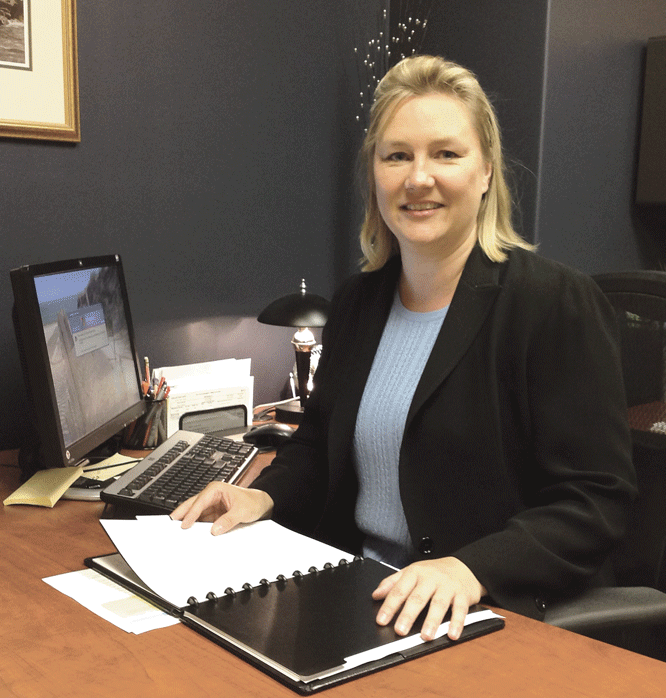
Agenda Departments

Massachusetts Chamber Business Summit

Sept. 9-11: The Massachusetts Chamber board of directors will conduct its annual Business Summit and Awards Ceremony at the Resort and Conference Center at Hyannis. The two-day meeting allows participants to meet with business professionals from across the state, as well as listen to state and local elected officials who will discuss the future of business in Massachusetts. Additionally, representatives from the Mass. Office of Economic Development will discuss loans, grants, and tax incentives available to business owners. Industry experts will also be on hand to discuss topics such as leveraging social media, search-engine optimization, and health care cost containment. The winners of the Business of the Year Award and the Employer of Choice Award will also be announced during the summit. For more information, call (617) 512-9667 or visit www.masscbi.com.


The Big E

Sept. 14-30: From live music and parades to sea lions and a circus, there’s something for everyone at the Big E. Country music artist Rodney Atkins will play a concert at the outdoor Comcast Arena Stage on Sept. 23 at 7:30 p.m. The Big E’s Mardi Gras Parade returns to the fair with eight custom-made floats specially designed and built by the Kern Companies of New Orleans. The Big E Super Circus features aerial daredevils the Marinofs, the wonder dogs of David Rosaire’s Perky Pekes, the equilibristic ability of Dany Daniels and Edina, comedy, and more. In addition, the Big E will feature a show with the Peking Acrobats, horse shows, the U.S. Freestyle Motocross National Championship series, hypnotist Catherine Hickland, the Sea Lion Splash show, and much more. Look for details and show times at www.thebige.com. Gates open each day at 8 a.m., and building exhibits are open 10 a.m. to 10 p.m. The Avenue of States is open 10 a.m. to 9 p.m., Storrowton Village is open 10 a.m. to 9 p.m., Craft Common is open 10 a.m. to 10 p.m., and the Midway is open Sunday through Friday, 11 a.m. to 10 p.m., and Saturdays, 10 a.m. to 11 p.m.


World Affairs Council Annual Meeting

Oct. 10: Hampshire College President Jonathan Lash will speak at the World Affairs Council of Western Mass. Annual Meeting & Dinner in the Mahogany Room of the Springfield Sheraton Hotel in downtown Springfield. More details will be forthcoming. Lash is an internationally recognized expert on practical solutions to global sustainability and development challenges. Before he became president of Hampshire College in 2011, he served as president of World Resources Institute (WRI), an environmental think tank with offices in eight countries and partners in more than 50 countries. WRI is an international leader on issues ranging from low-carbon development to sustainable transportation. From 1993 to 1999, Lash was co-chair of the President’s Council on Sustainable Development, a group of government, business, labor, civil-rights, and environmental leaders appointed by Bill Clinton that developed visionary recommendations for strategies to promote sustainable development. He played a key role in the creation and success of the U.S. Climate Action Partnership, which in 2007 issued the highly influential “Call to Action” on global warming. Prior to WRI, Lash held posts as director of Vermont Law School’s Environmental Law Center, Vermont secretary of Natural Resources, and Vermont commissioner of Environmental Conservation, as well as a federal prosecutor. For more information on the event, call (413) 733-0110.


Western Mass.

Business Expo

Oct. 11: BusinessWest will again present the Western Mass. Business Expo. The event, which made its debut last fall at the MassMutual Center in downtown Springfield, will feature more than 180 exhibitors, seminars, special presentations, breakfast and lunch programs, and the year’s most extensive networking opportunity. Comcast Business Class will again be the presenting sponsor of the event. Details, including breakfast and lunch agendas, seminar topics, and featured speakers, will be printed in the pages of BusinessWest over the coming months. For more information or to purchase a booth, call (413) 781-8600, e-mail [email protected], or visit www.wmbexpo.com.


40 Under Forty Reunion

Nov. 8: BusinessWest will stage a reunion featuring the first six classes of its 40 Under Forty program. Details on the event will be forthcoming. What is known is that it will be staged at the Log Cabin Banquet & Meeting House in Holyoke, and will be open only to 40 Under Forty winners, sponsors, and their guests, as well as judges of the first six contests. For more information on the event, call (413) 781-8600, or e-mail [email protected].

Sections Travel and Tourism
MASS MoCA Fills In the Wide Canvas of Contemporary Art

Joe Thompson

Joe Thompson says MASS MoCA’s constantly changing installations and inclusion of performing arts make it more vibrant than a static art museum.

Joe Thompson was talking about how, over its 13-year history, the Massachusetts Museum of Contemporary Art (MASS MoCA) had solidified its reputation as a unique showcase of what is called ‘new art’ — in all of the many forms that takes — and as a facility that is never afraid to take a chance on exhibits, programs, and events that are, in a word, different.
And with that, as if on cue, the sounds of people banging on metal drums, accompanied by a woman singing opera, could be heard from the floor below.
This was the New York City-based, multi-faceted classical-music organization Bang on a Can, which, according to its Web site, is “creating an international community dedicated to innovative music, wherever it is found.” With that mission in mind, the group, led by composers and founders Julia Wolfe, David Lang, and Michael Gordon, sought out MASS MoCA as the home for a summer educational and residency program for fellows and students in all forms of music.
The 18-day festival, which concluded on July 28, is sometimes called ‘Banglewood,’ in reference to the nearby, and much more traditional, Tanglewood Music Festival in Lenox. It is is dedicated, said the group, “entirely to adventurous contemporary music; we will write it, we will perform it, we will think about it, and we will talk about it.”
And for all that, the museum in North Adams, created out of several old mills that were part of the Sprague Electric complex, has become a venue Wolfe called both supportive and inspiring.
“MASS MoCA is a gold mine of support and atmosphere,” Wolfe told BusinessWest, “and this program, with all the surrounding art, allows for students to create and perform as colleagues, side by side with seasoned performers. It gets music into art spaces.”
Creation of this powerful learning environment is one of many ways to qualify and quantify the success MASS MoCA has recorded since opening in the summer of 1999, said Thompson, the museum’s director, adding that others include solid attendance figures (130,000 last year, a new record), a growing endowment (currently $14.5 million), and a large number of return visitors, a statistic that lies at the heart of the facility’s current operating philosophy.
Indeed, instead of a static museum dedicated to contemporary art, MASS MoCA is an ever-changing institution that showcases paintings in canvases, but also film, video, sculpture, and, yes, music.
“The farther away you get from North Adams, the more people think of MASS MoCA as a museum; the closer you get to North Adams, the more people think of MASS MoCA as the place where they see theater or dance events,” said Thompson, adding that this range of descriptions speaks to just how the museum has become different things to different people.
Julia Wolfe and David Lang

Julia Wolfe and David Lang say MASS MoCA helps enable Bang on a Can to “get music into art space.”

For this issue and its focus on the region’s tourism industry, BusinessWest looks at how MASS MoCA continues to grow and evolve while finding new ways to meet its two main goals: to provide a state-of-the-art (and arts) platform for contemporary works of all kinds, and create jobs in a corner of the state that needs some.

Exhibiting Determination
It’s called Solid Sound.
That’s the name that was given to a three-day music festival launched by MASS MoCA administrators in 2010, featuring Wilco, the American alternative-rock band based in Chicago.
Thompson said he and others were confident that Wilco and its opening acts would draw a good turnout, but they actually got a lot more than they bargained for — and more than the town was prepared for. More than 5,000 fans descended on North Adams, filling every available parking space and prompting restaurants to run out of food. Thompson and city officials who helped stage the event feared that litter would be scattered throughout downtown the morning after the event wound down.
“But all throughout downtown, all we saw were full garbage cans and neatly stacked cups and lined-up bottles — by recyclable type — next to each can,” said Thompson with a laugh. “It’s due to the type of engaged and environmentally conscious following that Wilco has.”
And this is, by and large, the same type of audience that is attracted to contemporary, or new, art, he continued, adding that the museum draws more than 120,000 visitors per year — a tribute, he believes, to an operating philosophy that he and others involved with this project agreed upon as they raised and then spent more than $31 million to convert portions of the Sprague complex into one of the largest (area-wise) contemporary-art museums in the world.
Going back to the early and mid-1990s, Thompson said he slowly grew away from his original, and firmly rooted, belief in the concept of a museum with large, fixed installations devoted to pared-down ‘minimal art’ of the ’70s and ’80s. While he admits they look great in the generous, rough-hewn spaces afforded by mill buildings, and don’t require fancy climate control, he came to think that static art offered far too limited a vision — perhaps a dangerously constrained one.
“Many people who shared my love of new art worried out loud whether visitors would make repeat visits to a permanent, fixed installation,” he explained. “That question — ‘would people come twice?’ — that was a tough question, and led me to think that a program of changing, shorter-term exhibitions might be a more engaging way to begin.
“As artists had become increasingly fluid in the way they work, with art-making practices that cross from sculpture to set design to video and film,” he continued, “it became clear that an institution that was to be truly responsive to the needs and trajectories of new art had to incorporate the performing arts as well.”
In a nutshell, the past 13 years of operation have essentially proven Thompson and others right in their thinking. The museum has changed exhibits regularly and hosted a broad mix of media — as evidenced by Solid Sound, Banglewood, and other projects and events — and visitors have come back repeatedly.

Creative Economy
The list of current and upcoming exhibits speaks volumes about the diversity created at MASS MoCA and the ability to present a different museum every time visitors venture to North Adams.
There’s “Oh, Canada” (through next April), the largest survey of contemporary Canadian art produced outside of Canada. It features the work of more than 60 artists who hail from every province and nearly every territory. There also “Invisible Cities,” showing through next February. Titled after Italo Calvino’s book — which imagines Marco Polo’s vivid descriptions of numerous cities of a fading era to Kublai Kahn — it features the work of 10 diverse artists who reimagine urban landscapes both familiar and fantastical.
Meanwhile, “Stanford Biggers: The Cartographer’s Conundrum” is a major multi-disciplinary installation by New York-based artist Stanford Biggers, and was inspired by the work of his cousin, the late artist, scholar, and Afro-futurist John Biggers.
And then there’s “Sol LeWitt; A Wall Drawing Retrospective, which is an ongoing, semi-permanent display that is the one notable exception to Thompson’s basic operating strategy of changing exhibits. It includes 105 large wall drawings — many would use the term murals — created by artist Sol LeWitt, who is considered by many in the art world to be the most influential conceptual artist of our time.
It is due to the sheer size of LeWitt’s large-scale art, some of it measuring more than 30 feet long by eight feet or more in height, that MASS MoCA was considered an ideal home for these works. Thompson told BusinessWest that a call early in 2003 from Yale University Art Gallery Director Jock Reynolds set in motion the process for bringing LeWitt’s art to North Adams, but first he had to be sold on a permanent display.
As Thompson explains it, Reynolds and LeWitt needed the space to construct LeWitt’s legacy (the artist never lived to see the unveiling in 2007) and focused on MASS MoCA because no other museum in the Northeast could dedicate tens of thousands of square feet of space to such large works. Thompson said the collaboration between Yale, the Williams College Museum of Art, and MASS MoCA resulted in a stunning “museum within a museum,” as he called it, on three floors, totaling 30,000 square feet.
“As much as we love our changing program, and you’re only as good as your last show, this was a rule-breaker for us,” Thompson said. “Suddenly, we had this beautiful milestone installation of Sol LeWitt’s, and it’s super-high-quality, it’s colorful, full of detail, and it just leaves you smiling — it just makes you feel good.”
It was a turning point for Thompson. “It made me think that the ideal museum is one that has both a core, permanent collection, but also lots of room for change; you want masterpieces that people return to over and over again, but you also want a vibrant roster of changing exhibitions that trigger the return visit. Sol LeWitt helped us see that.”

Broad Strokes
While MASS MoCA hasn’t yet matched its goal for creating 600 jobs, it has succeeded in contributing to the economic development of North Adams and the Berkshires in general, said Thompson, adding that it has become a day-tripping destination while also filling some hotel rooms as well.
Meanwhile, it has become that proverbial ‘different sort of venue’ that has attracted the likes of Bang on a Can, Wilco, and visitors who want to experience the full range of new art.
Perhaps David Lang summed it up best when he said that, because the museum, perceptions of North Adams have changed.
“Before, it was always a place you could visit,” he said. “Now, it’s a place you have to visit.”

Elizabeth Taras can be reached at [email protected]

Briefcase Departments

$21 Million Approved for Union Station and PVTA
SPRINGFIELD — Congressman Richard Neal recently announced that nearly $21 million in federal funding has been formally approved for the planned renovation of Springfield’s Union Station, a historic landmark, and the Pioneer Valley Transit Authority (PVTA). Of the $21 million, $17 million will help support the renovation of Union Station into a regional transportation center, which is estimated to cost $45 million. The remaining $3.9 million will be directed to the PVTA to help underwrite maintenance of the local public-transportation system. U.S. Secretary of Transportation Raymond LaHood visited Springfield in late July to tour the historic train station and meet with local officials to discuss the redevelopment project. Neal, who has spearheaded this project since the late 1980s, expressed his satisfaction with the recent funding approval and thanked LaHood for his attention and assistance. “I have been determined to turn Union Station into a modern intermodal transportation center for many years,” said Neal. “Restoring this historic structure and turning it into a thriving 21st-century transportation center has been a top priority of mine going back to my days as mayor of Springfield. I remain convinced that the successful renovation of Union Station can literally transform the northern blocks of downtown Springfield. The renewal of this local treasure has been confirmed with this announcement, and a new generation of travelers will soon be passing though its doors.” Neal reported that $72 million in federal funding is being used to renovate the Connecticut River rail line and bring high-speed rail to Western New England, and more than $100 million is being invested in the local infrastructure. The Springfield Redevelopment Authority owns Union Station, built in 1926. Demolition of a portion of the building will commence late this year, with construction for the new renovations expected in the spring of 2013.

Pro Springfield Media Launches Web Publication
SPRINGFIELD — Pro Springfield Media, a nonprofit organization that was established in 2011 with a campaign to encourage area residents to “say something nice about their city,” recently launched an online publication called Speaking of Springfield. The publication will feature good news about the city — upbeat, up-close, and uplifting stories about residents, businesses, and neighborhoods. A section entitled “Sensations” features city sights, sounds, and signs as part of the editorial content. The publication is being managed and produced by TSM Design with support from local writers, photographers, and videographers. Speaking of Springfield is a free public medium and is funded through the support of corporations, foundations, and individuals through grants, underwriting, and donations. Individuals are encouraged to subscribe to the e-zine in order to be notified when articles are posted by logging onto www.speakingofspringfield.org.