Home Posts tagged Features (Page 5)
Company Notebook Departments

United Financial Announces Q1 Earnings, Dividend

GLASTONBURY, Conn. — United Financial Bancorp Inc., the holding company for United Bank, announced results for the quarter ended March 31.
The company had net income of $11.9 million, or $0.24 per diluted share, for the quarter ended March 31, compared to net income for the linked quarter of $9.9 million, or $0.20 per diluted share. Operating net income (non-GAAP) for the first quarter of 2016 was $10.9 million, or $0.22 per diluted share, compared to $11.3 million, or $0.23 per diluted share for the linked quarter. Operating net income is adjusted for purchase accounting impacts and net gain on sale of securities.
Additionally, in the first quarter of 2016, operating income was also adjusted for Federal Home Loan Bank of Boston pre-payment penalties. The company reported net income of $13.0 million, or $0.26 per diluted share, for the quarter ended March 31, 2015.
“In the first quarter of 2016, linked quarter annualized growth included a 13% increase in demand deposits, 9% growth in total deposits, and a seven-basis-point expansion in the net interest margin. Non-interest expense to average assets declined to 2.03% on an operating basis, and asset quality remained excellent. Tangible book value increased by 5% compared to the linked quarter (annualized) as we announced our 40th consecutive dividend payment,” said William Crawford IV, CEO of the company and the bank. “Given the interest-rate environment, we believe execution on the aforementioned key variables gives us the best opportunity to continue building long-term shareholder value.
“While volatile interest rates reduced mortgage-banking income and headline company profitability in the first quarter of 2016, management is focused on growing revenue centered in net interest income and core fee income,” he went on. “I remain bullish on United Financial Bancorp Inc.’s outlook for 2016 earnings and tangible book value growth.”
The report’s financial highlights include return on average assets of 0.76%, return on average equity of 7.59%, a net interest margin increase to 3.09% from 3.02% in the linked quarter, and operating non-interest expense/average assets of 2.03% for the quarter (annualized) balance sheet. Total assets at March 31, 2016 increased by $90.7 million to $6.3 billion from $6.2 billion at Dec. 31, 2015.
At March 31, 2016, total loans were $4.6 billion, representing an increase of $34.9 million from the linked quarter. Despite the typical softness experienced in the first quarter in general, total commercial loans increased by $38.5 million, or 6% annualized. Residential mortgages declined during the first quarter of 2016 by $3.6 million, reflecting the company’s strategy to reduce on-balance sheet exposure to residential mortgage loans.

Balise Kia Dealership Opens in West Springfield

WEST SPRINGFIELD — The new Balise Kia in West Springfield, located on Riverdale Street next to Balise Mazda, opened on April 14. The completely renovated, 15,000-square-foot dealership replaces the Balise-owned Mighty Auto Parts warehouse, which has been relocated to a nearby facility. The new Kia building features a customer-friendly showroom and comfortable waiting area with free WiFi. The dealership also offers a covered service drive-up for customer convenience. Bill Peffer, president and COO of Balise Motor Sales, said he’s excited to welcome a rapidly growing brand to the Balise family. “The addition of Kia, one of the fastest-growing brands in the United States, aligns perfectly with the Balise philosophy of putting the customer first,” he said. “With numerous accolades in the areas of quality, safety, and sustainability, we’re thrilled to continue serving Kia customers throughout Western Massachusetts with a high-quality product.” Construction and renovation of the facility was completed by Associated Builders of South Hadley. This is the first Kia dealership for the Balise group and will be the only Kia Motors America franchise in the Springfield Metro area.

W.D. Cowls, Beacon Communities to Partner on Third Phase of Mill District

NORTH AMHERST — W.D. Cowls Inc. announced the start of phase three of its Mill District development, with a preliminarily agreement with Beacon Communities, a multi-family housing development, management, and investment company based in Boston.
Mollye Lockwood, W.D. Cowls’ vice president for Real Estate and Community Development, initiated a relationship with Beacon Communities for what she expects will be the next phase of the Mill District.
Beacon envisions a development that will feature mixed-income rental housing and first-floor commercial/retail space for lease, all to be located on the south side of Cowls Road, across the street from the Trolley Barn, between Atkins Farms and Cowls Building Supply. The project is still in its initial stages of site due diligence, community engagement, and concept brainstorming.
With the redevelopment of the Mill District, Cowls seeks to bring back community in this less-personally connected Internet age. “So many people today don’t belong to sporting clubs, fraternal organizations, or churches like they used to. Shopping malls and huge grocery emporiums on highways have taken away community interactions that were once naturally organic,” said Lockwood. “The Mill District seeks to bring back community by creating a sense of place through a mixed-use destination, where people live, dine, recreate, buy things better bought at a store rather than on the Internet, and enjoy services such as salons and health clubs.”
For several years, Cowls has been looking for the opportunity to create a mixed-income rental community in the Mill District and has heard from its neighbors and the Amherst community that this much-needed housing would be welcomed.
“I’ve worked with the impressive principals of Beacon Communities in the past,” Lockwood said, “and the town of Amherst has admired this Massachusetts company for stepping forward to protect the town’s affordable-housing inventory by purchasing and soundly managing Rolling Green Apartments.
“We have heard and responded to the wishes of our neighbors,” she added. “Our goal is to create a high-quality community that serves a diverse income range and offers housing options that will appeal to young professionals, young families, and those who are downsizing their homes.”
While Beacon will own and professionally manage all apartments, as it does with all of its properties, the first-floor commercial/retail space will be controlled by Cowls in order to provide and ensure a diverse community gathering space with a balanced mix of restaurants, shops, and services.

Agenda Departments

‘Wolf to Woof’

Through May 12: In today’s society, dogs enhance the lives of millions of people in countless ways, but they are also some of our oldest friends. Ancient clues like cave paintings and burials reveal that dogs and people have lived together for thousands of years. But why have humans formed such close relationships with dogs, and not cows or chickens? “Wolf to Woof: The Story of Dogs” is the largest and most comprehensive traveling exhibition ever created on the history, biology, and evolution of dogs. The exhibit, on view at the Springfield Science Museum through May 12, attempts to sniff out the facts on dogs and explore what makes the human/dog relationship so unique. It uses the familiarity and love of these four-legged friends to explore science and biological concepts. The exhibit has four themed sections including multi-media displays, artifacts, photo murals, and dioramas of taxidermied wild canines and sculpted modern dog breeds. Additionally, interactive, hands-on components demonstrate key exhibit concepts. For example, visitors can enter a ‘howling area’ and guess what dogs are saying, test their nose against a dog’s great sense of smell, and examine fossil and genetic evidence of how modern-day dogs are descended from wolves. “Wolf to Woof: The Story of Dogs” is sponsored by United Bank. MassMutual is the 2015-16 Premier Sponsor of the Springfield Museums.

Valley Gives Day

May 3: Nearly 500 community organizations will participate in the Pioneer Valley’s 24-hour e-philanthropy event, Valley Gives — the fourth year for the event, but the first time it is being held in the spring. Valley Gives is hosted by the Community Foundation of Western Massachusetts. Valley Gives will take place from 12 a.m. to 11:59 p.m. Participating community organizations span the Pioneer Valley and are eligible if their work is focused on Franklin, Hampden, or Hampshire county. Organizations include nonprofits, schools and educational institutions, places of worship/religious organizations, and local community groups that can be fiscally sponsored by nonprofit organizations. Since Valley Gives began in December 2012, $5.8 million has been raised from more than 24,000 donors in support of 559 nonprofits that are doing good work in every corner of the Pioneer Valley. With nearly 500 organizations signed on to participate this May, Valley Gives is expected to add substantially to those numbers again this year.

Kentucky Derby Day

May 7: Starting at 4:30 p.m., the Colony Club in Springfield will the setting for hats, horses and hors d’oeuvres to celebrate the 142nd annual Kentucky Derby. Presented by The Gaudreau Group, with support from Northeast IT, as well as the Colony Club and host Jeffrey Lomma, the event will raise much-needed funds for Square One’s programs and services. Tickets are $35 and include big screen monitors to enjoy the race, hearty hors d’oeuvres, and a complimentary mint julep. Prizes will be awarded for the best Derby attire. Tickets may be purchased via Eventbrite or by contacting Heather at Inspired Marketing at (413) 303-0101.

‘Creating a Western Massachusetts Renaissance’

May 11: The Springfield Regional Chamber, in partnership with the Western Mass. Economic Development Council (EDC), will present a panel discussion, “Creating a Western Massachusetts Renaissance,” from 7:15 to 9 a.m. at the MassMutual Center, 1277 Main St., Springfield, sponsored by People’s United Bank. Panelists will discuss the Massachusetts economy and how communities across the Commonwealth can work together to create a broader and more robust economy. Panelists will also outline local economic-development initiatives at work in Western Mass. and how the region can capitalize on its existing assets and develop its growth engines, and the important role the healthcare sector plays in developing centers of excellence for future growth. Panelists will include John Traynor, executive vice president and chief investment officer at People’s United Bank; Rick Sullivan, EDC president; and Dr. Mark Keroack, president and CEO of Baystate Health, and the discussion will be moderated by David Hobert, the bank’s regional president. Reservations for the breakfast event are $35 and may be made online at www.springfieldregionalchamber.com or by e-mailing Sarah Mazzaferro at [email protected].

Community Enterprises 40th-Anniversary Luncheon

May 12: Richard Venne, president and CEO, invites the public to join Community Enterprises Inc. in celebrating 40 years of empowering individuals with disabilities to live, learn, work, and thrive in the community. A luncheon will be held at the Log Cabin in Holyoke from 11:30 a.m. to 2:30 p.m. Individual tickets are $50 per person, a reserved table for eight is $400, and tickets for clients and staff of Community Enterprise are $30. For more information about tickets, sponsoring the event, or placing an ad in the program, e-mail Krystle Bernier at [email protected] or call (413) 584-1460, ext. 120. Community Enterprises is a human-service organization that provides employment, education, housing supports, and day supports for people with disabilities. Headquartered in Northampton, it maintains 27 service locations in Massachusetts, Connecticut, New York, Oklahoma, Rhode Island, and Kentucky. Massachusetts offices include Gloucester, Greenfield, Holyoke, Pittsfield, Plymouth, Salem, Somerville, Springfield, Wakefield, and Worcester.

‘Maximize Your Website for Business Growth’

May 13, 20, 27: MarketingWorks, a series of educational programs for business owners, marketing professionals, and entrepreneurs hosted by Stevens 470 in Westfield, announced an upcoming program called “Maximize Your Website for Business Growth.” It meets weekly for three Friday mornings, May 13, 20, and 27. Customers, prospects, and associates make an immediate assessment of a business based on the content of its website. Participants in this group program will evaluate their current website and clarify the steps needed to make it the company’s most valuable marketing channel. For program details, visit www.stevens470.com/educational-programs.html or call Tina Stevens at (413) 568-2660.

Youth Mental-health First-aid Training

May 13, 20: Funded by a three-year grant by the Substance Abuse and Mental Health Service Administration (SAMHSA) through the White House’s “Now is The Time” initiative, Clinical & Support Options Inc. is now offering free youth mental-health first-aid trainings to the community. The free, two-day training will be held at CSO’s administrative offices in Northampton; attendance both days is required. Youth mental-health first aid is designed to teach parents, family members, caregivers, teachers, school staff, peers, neighbors, health and human services workers, and other caring citizens how to help an adolescent (age 12-18) who is experiencing a mental health or addiction challenge or is in crisis. The training is primarily designed for adults who regularly interact with young people. The course introduces common mental-health challenges for youth, reviews typical adolescent development, and teaches a five-step action plan for how to help young people in both crisis and non-crisis situations. Topics covered include anxiety, depression, substance use, disorders in which psychosis may occur, disruptive behavior disorders (including ADHD), and eating disorders. Identified on SAMHSA’s National Registry of Evidence-based Programs and Practices, the training helps the public better identify, understand, and respond to signs of mental illnesses. Registration is required; e-mail [email protected] for a registration form. CSO is also available to bring this training on site to local agencies and businesses that wish to have a group of people trained for free. For more information on bringing this training to your agency or business, contact Allison Garriss, director, Business Development and Projects at CSO, at (413) 773-1314, ext. 5502 or [email protected].

‘Grieving the Death of a Child’ Workshop

May 14: The Garden: A Center for Grieving Children and Teens announced a free workshop, “Grieving the Death of a Child,” from 12:30 to 4 p.m. The workshop is open to adult parents and caregivers who have experienced the death of a child. The workshop will include a screening of the video “Helping Parents Grieve: Finding New Life After the Death of a Child,” which was produced by Paraclete Press and features real stories about families who have lost a child. The video has five parts, including knowing you are not alone, loss of hopes and dreams, death of a baby, families, and honoring and remembering. Following each section there will be a break for discussion and an activity. Parents and caregivers who have experienced the death of a child are welcome, and there are no limits on how, where, or when the child died. The workshop is for appropriate for adults only and is open to the public. It will be held at the Cooley Dickinson VNA & Hospice, 168 Industrial Dr., Northampton. The event is free, but registration is required. For more information, contact Shelly Bathe Lenn, coordinator at the Garden, at (413) 582 5312, or [email protected].

Mental Health and Wellness Fair

May 18: In celebration of Mental Health Awareness Month, Clinical & Support Options Inc. (CSO) will host its 14th annual Mental Health and Wellness Fair at the Energy Park in Greenfield from 10 a.m. to 2 p.m. Featuring CSO’s Green River House and Quabbin House Clubhouse members, the fair will be an afternoon of music, singing, poetry, and testimonials by members to highlight mental-health illness, wellness, and recovery. The fair started in 2002 in an effort to bring awareness and information to the community about mental-health illness and recovery. The event is an opportunity to dispel the stigma around mental-health illness, encourage people to seek support, and spotlight agencies available to assist. This year, the theme is “Mental Health Matters.” Local mental-health and wellness providers are welcome to present their materials and programming for free by registering for a table by calling the Green River House at (413) 772-2181. In addition to local community providers sharing information, there will be live music, a food vendor, and raffles, and WHAI will be on site doing a live broadcast. For questions or more information on how to be a part of this event, call the Green River House at (413) 772-2181.

‘Women Lead Change’

May 23: The Women’s Fund of Western Massachusetts (WFWM) will host “Women Lead Change,” a celebration of the Leadership Institute for Political and Public Impact (LIPPI) class of 2016, at the Log Cabin in Holyoke from 6 to 8 p.m. The event will include remarks from Mass. Lt. Gov. Karyn Polito, and a keynote address from Julie Chavez Rodriguez, special assistant to the president and senior deputy director of Public Engagement at the White House. WFWM will acknowledge the lieutenant governor as well as Rodriguez with a “She Changes the World” award presented to honor exceptional contribution to social change, creating economic and social equity for women and girls. More than 300 participants are expected to attend the annual celebration of graduates of the Women’s Fund LIPPI program. LIPPI is the only program of its kind in Massachusetts. Through 11 sessions over eight months, the program is designed to respond to the shortage of women stepping into leadership at all levels. LIPPI gives women the tools and confidence they need to become more involved as civic leaders in their communities and to impact policy on the local, state, and national levels. The event is open to the public with online registration at www.womensfund.net. The current graduating LIPPI Cohort  represents 60% women of color, and LIPPI graduates also embody a wide spectrum of backgrounds, ethnic groups, and ages with ranges from 18 to 60. They represent the entire state of Massachusetts, from the Berkshires to Boston-area counties. Together, graduates form a strong cohort of like-minded women who support each other when they run for office, meet with policy makers, form coalitions, and get-out-the-vote efforts. The Women’s Fund of Western Massachusetts (WFWM) is a public foundation that invests in local women and girls through strategic grant-making and leadership development. Since 1997 the Women’s Fund has awarded more than $2 million in grants to over 100 organizations in Western Mass.

40 Under Forty

June 16: The 10th annual 40 Under Forty award program, staged by BusinessWest, will be held at the Log Cabin Banquet & Meeting House in Holyoke, honoring 40 of the region’s rising stars under 40 years old. An independent panel of judges has chosen the winners, and their stories were told in the April 18 issue. This is a sell-out event, and only a limited number of standing-room-only tickets remain. The event is sponsored by Northwestern Mutual and Paragus Strategic IT (presenting sponsors), EMA Dental, Health New England, Isenberg School of Management at UMass Amherst, Moriarty & Primack, United Bank, and the Young Professional Society of Greater Springfield. For more information, call (413) 781-8600s, ext. 100.

Daily News

Six local community banks will sponsor a live elevator pitch competition at the 13th Annual Awards Banquet for the Harold Grinspoon Charitable Foundation’s Entrepreneurship Initiative. Representatives from each bank will also serve as judges at the annual event planned for April 27 at the Log Cabin in Holyoke.

The banks are: Berkshire Bank, Country Bank for Savings, First Niagara, PeoplesBank, United Bank, and Westfield Bank.

An elevator pitch is an overview of an idea for a new business. The name reflects the fact that an elevator pitch can be delivered in the time span of an elevator ride. The term is used when an entrepreneur pitches an idea to a venture capitalist to receive funding.

The competition will feature a student representative from each of the participating local colleges who has already won the internal competition on their campus:  American International College, Amherst College, Bay Path University, Elms College, Greenfield Community College, Hampshire College, Holyoke Community College, Mount Holyoke College, Smith College, Springfield College, Springfield Technical Community College, University of Massachusetts, Western New England University, and Westfield State University.

The judges will pick the top three students who will receive cash awards with the winner receiving $1000. The Live Elevator Pitch competition is always one of the highlights of the evening. Other features of the banquet include: Entrepreneur business exhibits featuring 78 student entrepreneurs from area colleges, each of whom has won a Grinspoon Entrepreneurial Spirit Award. Additionally, the keynote speaker is Brendan Ciecko, founder of Cuseum, which powers mobile-first experiences that help museums engage their visitors.

Ciecko won a Grinspoon Entrepreneurial Spirit Award in 2008.

The Entrepreneurship Initiative is one of many Western Massachusetts programs supported by the philanthropy of Longmeadow resident and businessman, Harold Grinspoon. For more information about the Harold Grinspoon Charitable Foundation visit hgf.org or contact Cari Carpenter at (413) 335-3535 or [email protected].

40 Under 40 The Class of 2016

Co-owner, Center Square Grill; Age 36

Michael Sakey

Michael Sakey


Michael Sakey likes to joke that he was an accidental restaurateur.

Indeed, he studied theater in college, planning for a much different career path. Even then, though, he was a restaurant veteran, having worked at pizza, sub, and coffee shops from age 14. In early 2000, he took a job with Claudio Guerra, the serial restaurateur behind the Northampton-based Spoleto Group. Sakey helped Guerra open six concept restaurants and also spearheaded Spoleto Catering, which specialized in full-service weddings.

“I went in thinking, ‘it’s just going to be for now, until I figure out what’s next,’” he said of his work with Guerra. But the restaurant life turned out to be the ‘next’ after all.

It’s not like he was abandoning his theatrical roots, however, as he sensed a connection between food and his other passion. “Restaurants can be theatrical. It’s kind of like throwing a party every night. If you can make them all happy, that’s something really unique, not like any other industry I can think of.”

Sakey — along with his business partner, fellow Spoleto Group veteran, and past 40 Under Forty honoree Bill Collins — has been making people happy at Center Square Grill since 2014, when the pair struck out on their own and launched the successful eatery near East Longmeadow’s famed rotary.

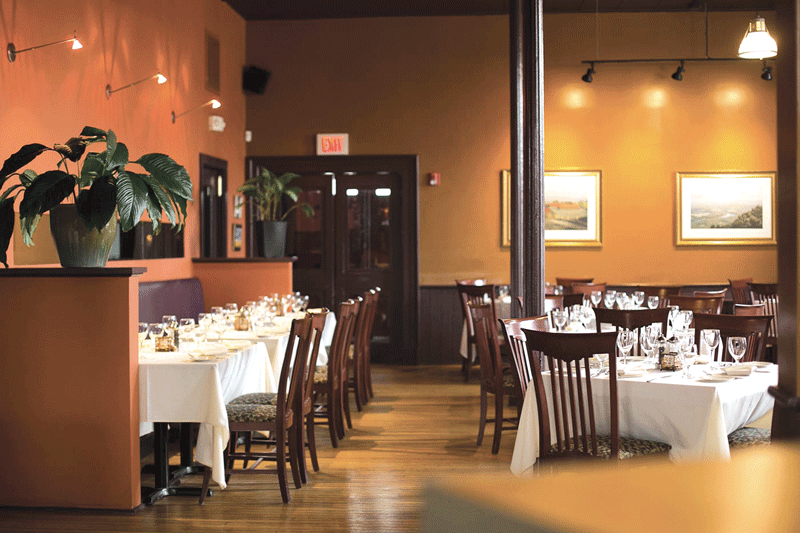
Breaking away from the Italian fare Guerra specializes in, the partners call their restaurant a “creative American grill,” pulling in influences from South America, classic French cooking, New Orleans, Jamaica, even Asia. The restaurant features a few different dining areas, from a formal dining room to a small room for private events to a lively bar area. Sakey takes particular pride in the restaurant’s impressive — and affordable — array of wine, beer, and cocktails.

He’s also proud of his civic work outside the restaurant, as he’s active in the East of the River Five Town Chamber of Commerce, participates in the Food Bank of Western Massachusetts Gala, and sits on the board for UNIFY, an anti-bullying nonprofit. He has also donated to some three dozen area charities, spreading the success of a restaurant that has earned ‘Best Restaurant,’ ‘Best Bartenders,’ ‘Best Outdoor Dining,’ and ‘Best Waitstaff’ honors from MassLive, among myriad other awards.

But it’s a four-and-a-half-star Yelp rating that truly drives Sakey — a reminder that he and Collins are doing plenty right, but can always aim higher.

“Nothing’s ever perfect,” he said, “but we can be really good.”

— Joseph Bednar


Photography by Leah Martin Photography

Sections Travel and Tourism

Treasure Trove

Shows are held in May, July, and September

Shows are held in May, July, and September, and unusual statues are among the many items for sale.

Patricia Schultz’s New York Times bestseller 1,000 Places to See Before You Die includes the Brimfield Outdoor Antiques Show, and, as a result, the world-renowned event has been put on many people’s bucket lists.

“I had a lady call from Michigan last week who is coming in May just for that reason,” said Lenny Weake, president of the Quaboag Hills Chamber of Commerce, which fields an untold number of calls every year about the show that began 57 years ago and features about 6,000 vendors on 1,200 acres of privately owned property that stretch along a one-mile strip of Route 20.

The event is held three times a year, and the first show of 2016 will take place May 10-15. Many people make reservations a year in advance, and local hotels and motels from Springfield to Sturbridge take bookings from all over the U.S. and as far away as England, France, and Korea.

“Anything you could ever dream of can be found here,” Weake said. “It’s not just small items and trinkets. There are life-size statues, vintage ice-cream stools and counters, all types of period furniture, antique signs, toys, clocks, trains, jewelry, old magazines, movie posters, and buttons so intricate you need a magnifying glass to see the mosaics on them.”

But he admits it can be a test of endurance when a dedicated collector is in search of a specific item because vendors are not grouped by the type of merchandise they sell or the fields where they are located. In fact, there is no map to help locate a particular vendor, which makes it especially important for people to get receipts with names and phone numbers when they make a purchase, in case they want to return to the booth.

It takes days to walk the properties, and Weake advises people to dress comfortably and bring a backpack or wagon to hold their purchases because their vehicle may be parked six fields away from where they find what they want.

Some fields are open only on selected days, and because there is an endless bounty of things to see, many shoppers browse Wednesday through Sunday, including avid antique enthusiasts and collectors determined to be among the first on hand when a new field opens.

Over 1 million people attend the three annual outdoor showcases, which will be held this year May 10-15, July 12-17, and Sept. 6-11. However, the May show typically contains the most merchandise because dealers buy pieces all winter and often bring so much, they need to rent more than one spot to put it on display.

David Lamberto began helping the owner of Hertan’s Antique Show 25 years ago. That’s the name of the field he eventually purchased and runs today. He explained that the words ‘field’ and ‘show’ are used interchangeably, but the reality is that each show is its own entity and run by the person who owns the property.

The town of Brimfield is not involved with the event, although property owners must get permits, and Massachusetts state tax is collected on purchased items.

Vendors plan for the events far in advance, and many have been returning for decades, setting up their wares in booths next to their friends.

“They regard it as more than an opportunity to sell things,” Lamberto noted. “They also come to buy and network. It’s almost like a convention of antique dealers from all over the country.”

Expanding Horizon

Auctioneer Gordon Reid staged the first notable Brimfield antique show in 1959 after he purchased a piece of property on Route 20. It featured 67 dealers, attracted about 300 people, and was so successful he held a second one the same year.

Lenny Weakes

Lenny Weakes says people come from all over the world to buy and sell at the Brimfield Outdoor Antiques Show.

By the time Reid died in 1974, the 25 acres dedicated to his show had become home to about 800 vendors, and many marked the annual events on their calendars. After he passed away, his daughters, Jill Lukesh and Judy Mathieu, took over and changed his business name from the Gordon Reid Company to J & J Promotions.

Word spread about Gordon’s success, and when they began turning dealers away due to lack of space, many started knocking on neighbors’ doors, and the show expanded as owners of adjoining properties cashed in on the opportunity.

Every show or field charges for parking, and a few, including J & J, charge the first day they open, but many have no admission charge. In addition, a plethora of food vendors are spread out over the mile-long strip so visitors don’t have to worry about where to eat. Most dealers have porters that can help with large, bulky items.

And although the Brimfield Outdoor Antique Show is a venue unto itself, local businesses including restaurants, gas stations, hotels, motels, and bed-and-breakfast operations benefit from each seasonal show and have come to rely on it for part of their annual revenue.

The Quaboag Hills Chamber of Commerce receives endless calls about where to stay and what there is to do in the area, since families and spouses often attend together, but not everyone likes to shop. Weake and his staff work hard to educate them, promote their members, and tell callers about area historical or tourist attractions they might enjoy.

He added that transportation is often a critical part of a discussion because many visitors arrive at Bradley International Airport or on Amtrak and need to rent a vehicle. “People from places like New York City can’t envision what the show is like or the geography of it is like,” Weake explained. “They’re flabbergasted when I tell them there is no public transportation or taxi service in Brimfield.”

But the event is definitely an economic driver for the area, and Weake’s goal is to get people to stay at least an extra day. Many do, and visit attractions that range from the Basketball Hall of Fame and Springfield Museums to Yankee Candle and Old Sturbridge Village, while others drive to see historic sites, such as the 14 milestones Benjamin Franklin erected in 1767 when he was assistant postmaster general of the U.S. and mail was delivered to towns along the Old Boston Post Road.

The owners of properties who rent space formed the Brimfield Show Promoters Assoc. some time ago and advertise the event via the Internet, TV, and print media. They also belong to a number of different chambers and visitors and convention bureaus that help to spread the word. And some, including J & J Promotions, do their own advertising.

Social media has also helped raise awareness, and five years ago, Gretchen Aubuchon of Aubuchon Hardware started a tent for designers at Hertan’s by advertising it on Twitter. It was well-received, and for three years, busloads of designers from across the country gathered in a beautifully decorated private tent outfitted with chandeliers and a bar where they relaxed, compared notes, and stopped to rest during shopping sprees.

The tent ceased to exist two years ago after Aubuchon moved to a different job, but designers still band together, and last week Lamberto received a call from a Chicago group that will attend the May event. There are also celebrities and buyers from many different places, including local antique shops that rely on the show to boost their inventory of sought-after items.

“Ralph Polo sends a team to find things to decorate their stores, and we see people like Barbra Streisland and Martha Stewart every year,” he told BusinessWest.

The popular TV show Flea Market Flip usually stages a taping in Brimfield at least once a season, and Weake said the newest, most-sought-after items include repurposed furniture and building materials that have been transformed into lights, wine racks, and other one-of-a-kind pieces.

Collecting Memories

When eBay first became popular, business decreased slightly, and although people still use their cell phones to compare prices and haggle, there is nothing like the joy of finding something unexpected, being able to touch it, and bringing it home that same day.

“Our father was a visionary. He pioneered the show, did beautifully with it, and we hope we are making him proud,” Lukesh said.

Leake is happy it draws so much attention to the Quaboag region and also benefits area businesses.

“It’s the place to be, and people come here from all over the U.S. as well as from other countries,” he said. “We want them to have a good time, and they do. It’s a beautiful area and a treasure hunt; there is everything under the sun, and you never know what you will find.”

Landscape Design Sections

Going Yard

Amherst Landscape & Design Associates

One of Amherst Landscape & Design Associates’ many hardscape projects.

After several lean years during the recession, followed by the slow revival of the home-building and commercial-construction sectors, landscape designers are finally feeling like their industry is surging, with customers jumping on trends ranging from outdoor kitchens to landscape lighting to sustainable elements. A mild winter meant an early start for these professionals, who are optimistic the brisk business will continue throughout 2016.

It’s a simple question, just four words. But it speaks volumes about the optimism area landscape designers feel about the 2016 season.

“The golden question we’re hearing is, ‘when can you start?’ Not ‘let me get back to you,’ but ‘when can you start?’” said Stephen Roberts, president of Stephen A. Roberts Landscape Architecture & Construction in Springfield. “We haven’t heard those words much the last eight years, but we’re starting to hear them. People want to pull the trigger and go.”

That’s not to say the last few years haven’t been positive. Since the lean times caused by the Great Recession, the landscape-design business, like other construction trades, has been on an upward arc. But something seems different — even more positive — this year, Roberts said.

“We’ve seen an uptick in calls coming in, contracts have been signed already, and the backlog is stacking up,” he noted. “It seems stronger than the past few years.”

He admits the unseasonable winter — one in which the Pioneer Valley totaled well under two feet of snow and bare lawns, not mounds of snow, dotted the landscape throughout much of January and February — had something to do with that.

“Of course, we had the mild winter; last year, there was still plenty of snow on the ground at this time, and people weren’t thinking about landscaping,” he said when he spoke with BusinessWest at the start of April. “This year, with hardly any snow, people have been looking at their dreary landscape all winter and thinking about what to do.”

The warm weather also allowed for an early start to work, Roberts said. “We were able to get out much earlier because the ground wasn’t frozen; we could start excavating and preparing for construction. And because we got out into the community earlier, people saw the trucks, and that generated even more action.”

Steve Prothers, president of Amherst Landscape & Design Associates, senses similar optimism in the air.

“It’s exciting. There’s a lot of energy out there, a lot of excitement for the new season,” he said. “Of course, that’s true after every winter, regardless of the severity; come spring, people are excited to be outdoors, and they look to landscaping to make their property a beautiful and desirable place to hang out.”

Still, the mild winter and early onset of warm weather — give or take a couple late-season accumulations that melted quickly — gave landscapers about a four-week start on the time they usually start cranking up, which is typically mid-April.

“From what I can tell, this is going to be a very busy year,” he said. “That shows there’s a lot of construction going on. Landscaping is always the result of a lot of physical building and remodeling, and it’s kind of a snowball effect. We can’t help but benefit. As they go, we go. When they’re down in flow, so are we. I’ve been doing this for 37 years, and maybe we’re a little insulated in this region, but we’re still affected by the ups and downs of the national and local economy.”

Roberts agreed that a strong flow of work among both commercial contractors and home builders over the past few years has definitely trickled down to landscapers.

“A lot of new construction is getting ready for landscaping,” he explained. “When the engineers are first getting busy, we’re usually two years out from them. But you’re seeing contracts being signed now for the landscape phase.”

At Home Outdoors

As a specialist in hardscaping, Prothers is in a good spot these days, as that aspect of landscape design has been on an upward track since the recession began to fade and people began reinvesting in their homes in earnest.

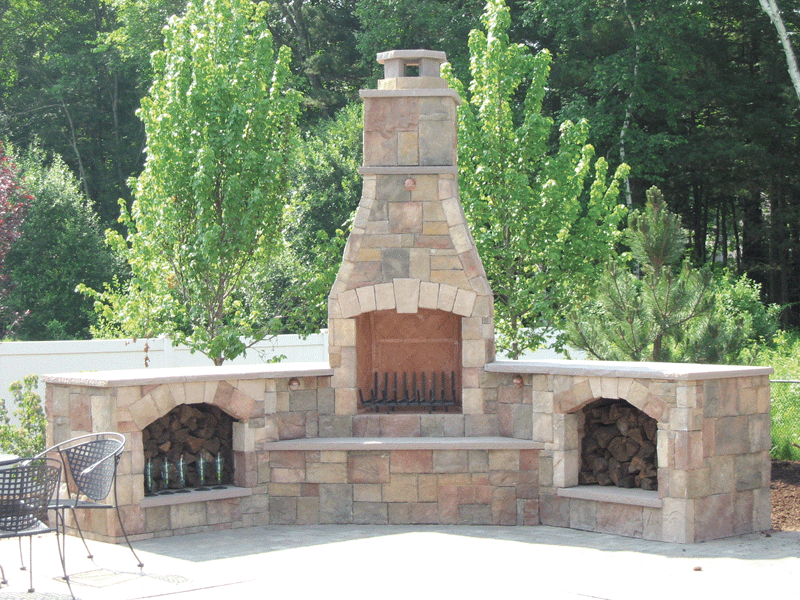
“We’re seeing a lot of landscape construction from people who are remodeling or expanding and want to expand their outdoor living rooms, using walkways, patios, gazebos, pergolas … anything that makes the space more inviting to hang out or entertain.”


Click HERE for a chart of area landscape design companies


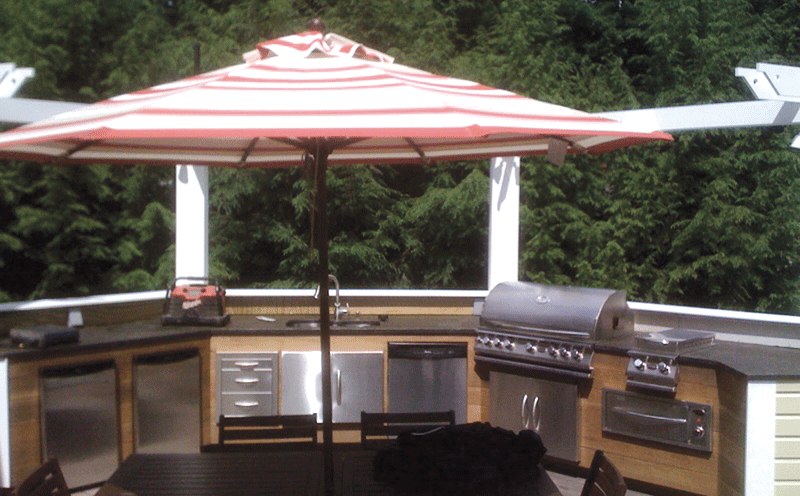
He said water features and outdoor firepits have become especially popular with customers, not to mention kitchen areas where families can cook and dine outdoors — in some cases, poolside. Others are hardscaping around hot tubs and better connecting the poolside experience to the overall landscape — in both cases, making pools and hot tubs part of the entire outdoor-living experience, rather than standalone spots to enjoy a dip or a soak. “People want to feel like they’re spending vacation time in their backyard.”

Roberts agreed that demand remains strong for outdoor living rooms, cooking areas, and firepits. “Those are still high up on the want list for a lot of customers. And the trend is more toward gas features, which are easier to operate.”

Beyond the cooking aspects, he added, homeowners have moved well beyond lawn chairs and favor durable and weatherproof outdoor furniture. “They want to create comfortable, casual spaces. They want to gather and relax in a little more upscale environment than what they’ve had in the past.”

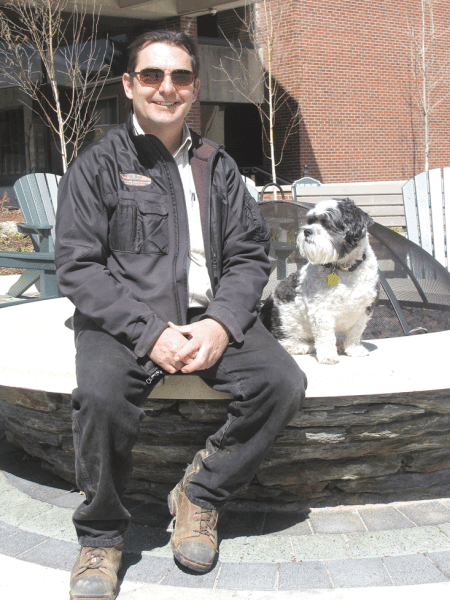
Steve Roberts and his dog, Max

Steve Roberts and his dog, Max, enjoy a moment at the firepit on the Elms College quadrangle, which his company gave a significant makeover recently.

They’re also increasingly looking to install artistic landscape lighting, also known as architectural lighting, a niche popular in the South that is coming into its own in the Northeast. As opposed to powerful floodlights, landscape lighting uses a variety of smaller accent lights to highlight the features of a home and yard.

“Outdoor lighting is being requested a lot more, with the LED lights available now,” Roberts said. “Those are more energy-efficient, and more people are gravitating toward them than in the past. They’re coming up earlier in the conversation, instead of something being added on in the future; people are asking for lighting up front.”

All these features reflect national landscaping trends, according to Corinne Gangloff, media relations director for the Freedonia Group, which studies landscaping trends. She writes that, “as part of the outdoor living trend, homeowners create outside kitchens and living rooms, and businesses extend outdoor areas to expand their seating space. Urban communities increasingly create ‘parklets,’ small green spaces that may feature flower beds, container gardens, walking paths, water features, seating, bird-watching opportunities, and statuary. Some communities have used these parks as a way to address the issue of abandoned homes in blighted neighborhoods, tearing down the structures and replacing them with this type of public green space.”

Other trends in this $6.3 billion industry, according to the organization’s 2016 survey, include heating elements, pavers, and environmental concerns, driving the popularity of solar-powered features, water conservation, and recycled materials.

“Sustainability is a growing concern and desire for homeowners,” writes Jill Odom, associate editor of Total Landscape Care. “As houses get renovated to conserve energy, yards will be redesigned to conserve water. There are plenty of design options that can be used to achieve this, but the two main options will be low-water-use plant material and better irrigation systems.”

Practical features are popular too, Roberts noted. “A lot of people want to add gardens and grow vegetables and fruit. I think there’s definitely a trend toward having some type of edible landscape aspects to their properties, even if it’s just an herb garden, just to have something to pick and throw on a salad. We see that as kind of a trend.”

Heating Up

While the hot choices in landscaping features might vary from customer to customer, Prothers told BusinessWest, the professionals working in the field report similar levels of enthusiasm for what the spring and summer of 2016 will bring after that remarkably mild winter.

“If it’s not overwhelming, it’s certainly steady work,” he said, noting that customers are starting to think about their spring plans sooner — as in the previous winter or even fall — and booking their projects instead of waiting, as they might have in past years. “They realize these jobs have a schedule, so they want to lock them in, and they’re thinking in advance.”

There are plenty of reasons for that, he added, but in general, people have a little more money to spend right now, and they want to invest it in their homes — specifically, in extending their homes outside. “There are a lot of larger renovation jobs taking place, which is great, but also a lot of older landscapes that were installed 30, 40 years ago, and are tired and need a little attention. People want something that’ll go the rest of distance they’re in their homes — or help them resell their homes.”

The almost complete lack of snow this year, while a relief for the average Massachusetts homeowner weary of long, harsh winters, did pose some stress to landscapers — Roberts included — who turn to snow removal during the cold months. But he’s not complaining about the flip side.

“We rely on that winter income for our overhead, and to give us a little cash going into the spring, and that money wasn’t there this year,” he said. “But, luckily, things are on the upswing now.”

Joseph Bednar can be reached at [email protected]

Agenda Departments

‘Wolf to Woof’ Exhibit

Through May 12: In today’s society, dogs enhance the lives of millions of people in countless ways, but they are also some of our oldest friends. Ancient clues like cave paintings and burials reveal that dogs and people have lived together for thousands of years. But why have humans formed such close relationships with dogs, and not cows or chickens? “Wolf to Woof: The Story of Dogs” is the largest and most comprehensive traveling exhibition ever created on the history, biology, and evolution of dogs. The exhibit, on view at the Springfield Science Museum through May 12, attempts to sniff out the facts on dogs and explore what makes the human/dog relationship so unique. It uses the familiarity and love of these four-legged friends to explore science and biological concepts. The exhibit has four themed sections including multi-media displays, artifacts, photo murals, and dioramas of taxidermied wild canines and sculpted modern dog breeds. Additionally, interactive, hands-on components demonstrate key exhibit concepts. For example, visitors can enter a ‘howling area’ and guess what dogs are saying, test their nose against a dog’s great sense of smell, and examine fossil and genetic evidence of how modern-day dogs are descended from wolves.

‘125 Years Of Memories’ at Academy of Music

April 21: The Academy of Music Theatre will host a “125 Years of Memories” benefit at 6:30 p.m. in the theater. In the late 19th century, Edward H.R. Lyman, a philanthropist and Northampton native, had a vision for a new venue for culture and theater in his hometown. On May 23, 1891, the 800-seat Academy of Music Theatre opened its doors to the public for the first time, and it quickly became a favorite stop on tours of leading troupes and big-name performers. Today, the 800-seat Academy of Music has been renovated and reclaimed as a venue for live theater, as well as dance, film, music, and performing-arts education. The “125 Years of Memories” benefit will begin with a cash bar reception in the lobby, where guests will mingle and enjoy hors d’oeuvres, craft beer, and wine. In addition, silent-auction items donated by local businesses and artists will be on display. At 6:30 p.m., guests will move into the theater for a brief program, paying tribute to the Academy through the decades. Following the production, attendees will be invited onstage for the party, with musical accompaniment by jazz pianist Jerry Noble, appetizers from River Valley Market, craft beer, and wine provided by Black Birch Vineyard. Tickets for the event are $50, and can be purchased online at www.aomtheatre.com. For those who prefer to pay by check, tickets are available at the Academy of Music Theatre box office, Tuesday through Friday, from 3 to 6 p.m. Any questions can be directed to Development Coordinator Kathryn Slater at (413) 584-9032, ext. 101, or [email protected].

Spring Sip & Shop

April 28: The Arbors at Chicopee will host a Spring Sip & Shop event in honor of Mother’s Day on Thursday, April 28 from 4 to 8 p.m. at 929 Memorial Dr. More than 15 vendors will gather and display their products for sale. Items include scarves, jewelry, totes, bags, makeup, homemade lotions and soaps, and much more. The event is sponsored by Tastefully Simple, and all proceeds will go toward the Alzheimer’s Assoc. The event will feature a silent auction, raffle, passed hors d’ouvres, and complimentary sangria. The suggested donation upon admission is $5. RSVP by calling Noelle at (413) 593-0088 or e-mailing [email protected]. Walk-ins are welcome.

‘A Night of Laughter’

April 30: Smith & Wesson will host its annual live comedy show, “A Night of Laughter,” to support two local children’s charities, Shriners Hospitals for Children and the Ronald McDonald House. The event will be held at the Cedars Banquet Facility, 419 Island Pond Road in Springfield. The show will feature two comedians, Chris Zito and Tony V. Zito is a mainstay of the Boston comedy scene and made appearances on Comedy Central, USA, A&E, and NESN. He has been heard on New England radio for more than 20 years, and currently “Zito and Kera” can be heard on weekday mornings on Mix 93.1. Tony V started his comedy career in 1982 in Boston. In 1986, he was named “Funniest Person in Massachusetts” by Showtime. He has also appeared on HBO, A&E, Comedy Central, and MTV. His big-screen performances include State and Main, Celtic Pride, Housesitter, One Crazy Summer, and Shakes the Clown. The doors will open at 5:30 p.m., and the comedy will begin at 7:15 p.m. Tickets are $35 per person and include an evening of laughs, hot and cold hors d’oeuvres, cash bar, raffles, and more. Tickets are now available at eventbrite.com. For more information, contact Elaine Stellato at (413) 747-3371 or [email protected].

Community Enterprises 40-Year Luncheon

May 12: Richard Venne, president and CEO, invites the public to join Community Enterprises Inc. in celebrating 40 years of empowering individuals with disabilities to live, learn, work, and thrive in the community. A luncheon will be held at the Log Cabin in Holyoke from 11:30 a.m. to 2:30 p.m. Individual tickets are $50 per person, a reserved table for eight is $400, and tickets for clients and staff of Community Enterprise are $30. For more information about tickets, sponsoring the event, or placing an ad in the program, e-mail Krystle Bernier at [email protected] or call (413) 584-1460, ext. 120.

‘Maximize Your Website for Business Growth’

May 13, 20, 27: MarketingWorks, a series of educational programs for business owners, marketing professionals, and entrepreneurs hosted by Stevens 470 in Westfield, announced an upcoming program called “Maximize Your Website for Business Growth.” It meets weekly for three Friday mornings, May 13, 20, and 27. Customers, prospects, and associates make an immediate assessment of a business based on the content of its website. Participants in this group program will evaluate their current website and clarify the steps needed to make it the company’s most valuable marketing channel. For program details, visit www.stevens470.com/educational-programs.html or call Tina Stevens at (413) 568-2660.

Youth Mental-health First-aid Training

May 13, 20: Funded by a three-year grant by the Substance Abuse and Mental Health Service Administration (SAMHSA) through the White House’s “Now is The Time” initiative, Clinical & Support Options Inc. is now offering free youth mental-health first-aid trainings to the community. The free, two-day training will be held at CSO’s administrative offices in Northampton; attendance both days is required. Youth mental-health first aid is designed to teach parents, family members, caregivers, teachers, school staff, peers, neighbors, health and human services workers, and other caring citizens how to help an adolescent (age 12-18) who is experiencing a mental health or addiction challenge or is in crisis. The training is primarily designed for adults who regularly interact with young people. The course introduces common mental-health challenges for youth, reviews typical adolescent development, and teaches a five-step action plan for how to help young people in both crisis and non-crisis situations. Topics covered include anxiety, depression, substance use, disorders in which psychosis may occur, disruptive behavior disorders (including ADHD), and eating disorders. Registration is required; e-mail [email protected] for a registration form. CSO is also available to bring this training on site to local agencies and businesses that wish to have a group of people trained for free. For more information on bringing this training to your agency or business, contact Allison Garriss, director, Business Development and Projects at Clinical & Support Options, at (413) 773-1314, ext. 5502 or [email protected].

‘Grieving the Death of a Child’ Workshop

May 14: The Garden: A Center for Grieving Children and Teens announced a free workshop, “Grieving the Death of a Child,” from 12:30 to 4 p.m. The workshop is open to adult parents and caregivers who have experienced the death of a child. The workshop will include a screening of the video “Helping Parents Grieve: Finding New Life After the Death of a Child,” which was produced by Paraclete Press and features real stories about families who have lost a child. The video has five parts, including knowing you are not alone, loss of hopes and dreams, death of a baby, families, and honoring and remembering. Following each section there will be a break for discussion and an activity. Parents and caregivers who have experienced the death of a child are welcome, and there are no limits on how, where, or when the child died. The workshop is for appropriate for adults only and is open to the public. It will be held at the Cooley Dickinson VNA & Hospice, 168 Industrial Dr., Northampton. The event is free, but registration is required. For more information, contact Shelly Bathe Lenn, coordinator at the Garden, at (413) 582 5312, or [email protected].

Mental Health and Wellness Fair

May 18: In celebration of Mental Health Awareness Month, Clinical & Support Options Inc. (CSO) will host its 14th annual Mental Health and Wellness Fair at the Energy Park in Greenfield from 10 a.m. to 2 p.m. Featuring CSO’s Green River House and Quabbin House Clubhouse members, the fair will be an afternoon of music, singing, poetry, and testimonials by members to highlight mental-health illness, wellness, and recovery. The fair started in 2002 in an effort to bring awareness and information to the community about mental-health illness and recovery. The event is an opportunity to dispel the stigma around mental-health illness, encourage people to seek support, and spotlight agencies available to assist. This year, the theme is “Mental Health Matters.” Local mental-health and wellness providers are welcome to present their materials and programming for free by registering for a table by calling the Green River House at (413) 772-2181. In addition to local community providers sharing information, there will be live music, a food vendor, and raffles, and WHAI will be on site doing a live broadcast. For more information, call the Green River House at (413) 772-2181.

40 Under Forty

June 16: The 10th annual 40 Under Forty award program, staged by BusinessWest, will be held at the Log Cabin Banquet & Meeting House in Holyoke, honoring 40 of the region’s rising stars under 40 years old. An independent panel of judges has chosen the winners, and their stories are told in the pages of this issue. The event is sponsored by Northwestern Mutual (presenting sponsor), Paragus Strategic IT (presenting sponsor), EMA Dental, Health New England, the Isenberg School of Management at UMass Amherst, Moriarty & Primack P.C., United Bank, and the Young Professional Society of Greater Springfield.

Daily News

WEST SPRINGFIELD — The new Balise Kia in West Springfield, located on Riverdale Street next to Balise Mazda, opened on Thursday, April 14.

The completely renovated, 15,000-square-foot dealership replaces the Balise-owned Mighty Auto Parts warehouse, which has been relocated to a nearby facility. The new Kia building features a customer-friendly showroom and comfortable waiting area with free WiFi. The dealership also offers a covered service drive-up for customer convenience.

Bill Peffer, president and COO of Balise Motor Sales, said he’s excited to welcome a rapidly growing brand to the Balise family.

“The addition of Kia, one of the fastest-growing brands in the United States, aligns perfectly with the Balise philosophy of putting the customer first,” he said. “With numerous accolades in the areas of quality, safety, and sustainability, we’re thrilled to continue serving Kia customers throughout Western Massachusetts with a high-quality product.”

Construction and renovation of the facility was completed by Associated Builders of South Hadley. This is the first Kia dealership for the Balise group and will be the only Kia Motors America franchise in the Springfield Metro area.

Daily News

WESTFIELD — The American Council of Engineering Companies of Massachusetts presented Tighe & Bond and Borrego Solar Systems with a Silver Award for the 3.5-megawatt North Adams E Street solar photovoltaic (PV) system during its 2016 Engineering Excellence and Awards Gala.

Held on March 16 at the Royal Sonesta Hotel in Cambridge, this annual competition and event recognizes recent engineering achievements that demonstrate the highest degree of merit, ingenuity, complexity, and client satisfaction.

Tighe & Bond, a New England leader in civil and environmental engineering, teamed with Borrego Solar Systems to develop a solar PV system on top of the closed E Street landfill in North Adams. Completed last year, the new solar system is one of the largest of its kind in Western Mass.

Its output, when combined with power being purchased from two other nearby PV sites, makes the city 100% solar-powered. All of its municipal buildings and facilities (schools, state-owned skating rink, and street lights) are running on clean, renewable energy. Borrego Solar Systems estimates that the array offsets 2,989 tons of carbon annually, the equivalent of removing 630 cars from the road or the amount sequestered by 2,450 acres of U.S. forests in a year.

Tighe & Bond provided site design, permitting, and construction administration for this project that sits on approximately 11.7 acres of the 31-acre capped landfill. Additional project features included the construction of access roads and the installation of ballast trays with concrete blocks to support the photovoltaic panel racks and solar panels. It also included equipment pads for the inverters and transformers, as well as a variety of other electrical infrastructure and support features.

Borrego Solar Systems was the developer of the solar system, and Syncarpha Capital is the system owner.

Daily News

SPRINGFIELD — The Springfield Museums have announced their lineup of activities for the upcoming school vacation week. This year’s theme is “Claws, Paws, Scales and Tales,” in connection with the ongoing Wolf to Woof: The Story of Dogs exhibit at the Springfield Science Museum.

The week kicks off with the Springfield Museum’s 25th annual Earth Day Festival, which takes place on April 17, from 11 a.m. to 4 p.m. A wide range of environmentally friendly groups will be on the Quadrangle Green, including Western Mass. Master Gardener’s Assoc., the Center for EcoTechnology, Hampden County Beekeepers Association, Girl Scouts of Central and Western Mass., and Keep Springfield Beautiful, along with interactive displays from the Mass. Wildlife Angler Education Program, ECOS (Environmental Center for Our Schools), and the Western Mass Council of Boy Scouts. There will also be the annual appearance by the bluegrass trio “The Boys of the Landfill” (11:30 a.m. & 1 p.m.), plus free seedlings from the Springfield Forestry Division and free ice cream, while supplies last. The event is free to the public; however, if weather forces a move inside, general museum admission will be required to attend the Festival. Event sponsors are Astro Chemicals, Doctor’s Express Urgent Care, GZA Geoenvironmental, and Solenis.

In honor of the 25th anniversary the Earth Day Festival, two nature-oriented events are taking place off-site on April 17. From 10:30 a.m. to noon, the Pioneer Valley Riverfront Club will host a Riverfront History & Photography Tour. Parking is available at 121 West Street, Springfield. At noon that day, the Naturalist Club and Springfield Science Museum will host a field trip to explore the Fannie Stebbins Wildlife Refuge. Space is limited for both events, and preregistration is required; call (413) 263-6800, ext. 404, or email to [email protected]. The Silvio O. Conte National Fish and Wildlife Refuge’s mobile Watershed on Wheels (WoW) Express Program will be stationed on the Quadrangle starting April 17 and remain throughout the week.

Monday, April 18 marks the beginning of the Museums’ “Claws, Paws, Scales and Tales” programs for April school vacation, featuring daily family shows, live animal demonstrations, hands-on science and art activities, and planetarium shows, all free with museum admission unless noted. The schedule of performances includes:

  • April 18 (11 a.m.): In the Nick of Time. Nick Deysher presents his energetic, interactive, and joyful performance featuring a generous blend of rock, pop, reggae, jazz, and funk;
  • April 19 (11 a.m. and 1 p.m.): Live Birds of Prey with Tom Ricardi. Using a variety of live birds, Tom shares his considerable knowledge to inspire viewers to appreciate, respect and conserve these important members of our animal kingdom;
  • April 20 (11 a.m. & 1 p.m.): Animal Adventures presents The Premium Live Animal Show. This engaging program, offered by an “Adventure Guide” features a variety of rare and exotic animals;
  • April 21 (11 a.m. & 1 p.m.): Pumpernickel Puppets presents The Three Billy Goats Gruff and The Lion and the Mouse. Two classic tales filled with a cast of colorful puppet characters, audience participation, sound effects, and fast-paced scripts; and
  • April 22: (11 a.m. & 1 p.m.): Magician Jungle Jim performs Star Wars Jedi Knight Training. Star Wars fans get a chance to interact with a real Jedi Knight through a series of challenges like Jedi Force Magic, the Laser Balloon Barrage and Jedi Teamwork culminating in an epic lightsaber duel with the Jedi Master himself.

The Museums have also scheduled a full slate of educational activities during the week, including live animals from Forest Park’s “Zoo on the Go” program on Tuesday and Thursday from 1 to 2 p.m. Visitors can also check out the Science Museum’s emu egg incubator for any new arrivals. Rounding out the week’s activities will be the following daily events (Monday – Friday):

  • Gallery activities (locations vary): 10:30 a.m. – 4 p.m., Science Museum
  • Seymour Planetarium shows at 11:15 a.m., noon, 1 and 2 p.m. (extra fee applies); and
  • Hasbro Games Art Discovery Center, 12-4 p.m., GWVS Art Museum.

Admission is $18 for adults, $12 for seniors and college students, $9.50 for children 3-17, and free for children under three and museum members. General admission is free for Springfield residents with proof of address. There is a $5 per person special exhibit fee to view Wolf to Woof. Hours during school vacation week are Monday through Saturday, 10 a.m.-5 p.m., and Sunday, 11 a.m.-5 p.m. MassMutual is the 2015-16 premier sponsor of the Springfield Museums.

Daily News

SPRINGFIELD — The Springfield College Athletic Administration Graduate Program will host its annual spring leadership series, titled “One Graduate Degree. Endless Possibilities,” on Wednesday, March 30, at 7 p.m. in the Cleveland E. and Phyllis B. Dodge Room in the Flynn Campus Union. The event is free and open to the public.

The event features panelists Ryan Bamford, UMass Amherst director of Athletics; Rachel Horn, Eaglebrook School director of Athletics; and Heath Rollins, Wayland High School director of Athletics.

All three panelists earned a master’s degree from Springfield College in 2003, and they gained experience working in the Springfield College Office of Athletics during their graduate-school years. The trio represent three different levels of athletic administration, including junior high school, high school, and college athletics.

Launched in the spring of 2011, the Athletic Administration Leadership Series is held each semester and alternates a focus between high school and intercollegiate athletics.

Commercial Real Estate Sections

Landmark Development

Peter Picknelly outside Hubbard Hall.

Peter Picknelly outside Hubbard Hall.

Peter Picknelly calls it the right property — and the right project — at the right time. He’s referring to Historic Round Hill Summit, a luxury-apartment complex being created at the former Clarke School for the Deaf complex in Northampton, an initiative that will bring the past, present, and future together in intriguing fashion.

Peter Picknelly says he understood, when he submitted what would eventually become the winning bid for the former Clarke School for the Deaf property in Northampton, that there would be some significant challenges standing in the way of developing the various buildings on the campus for commercial and residential purposes.

As things turned out, he didn’t know at the time just how stern those hurdles would be. But he told BusinessWest that those challenges are the same things that make the property — and his project — so unique and attractive.

Indeed, this complex of buildings is historic — Calvin Coolidge, the nation’s 30th president, and before that, governor of Massachusetts, and before that, mayor of Paradise City, once lived in one of the buildings — and most of the structures are a century or more old. Meanwhile, the views of the surrounding area are stunning, and Northampton’s eclectic, bustling downtown is about 10 minutes away by foot.

The challenge? Blending the old (while at the same time preserving it) with the new, as in modern amenities and liveability in the luxury apartments that Picknelly and several partners will carve out of two former classroom buildings.

The preserving part of that equation is the most demanding, said Max Hebert, project manager for this $10 million endeavor, noting that these two properties, Hubbard Hall and Rogers Hall, like most others on the campus, are on the National Register of Historic Places — which means each nuance of the plans must be approved by the National Park Service before work can proceed.

“That process in itself was very complicated and very lengthy — it was an educational experience and it took much longer than we thought,” said Picknelly, but overall, work is progressing on an ambitious project that be believes represents the right product at the right time, and in the right location.

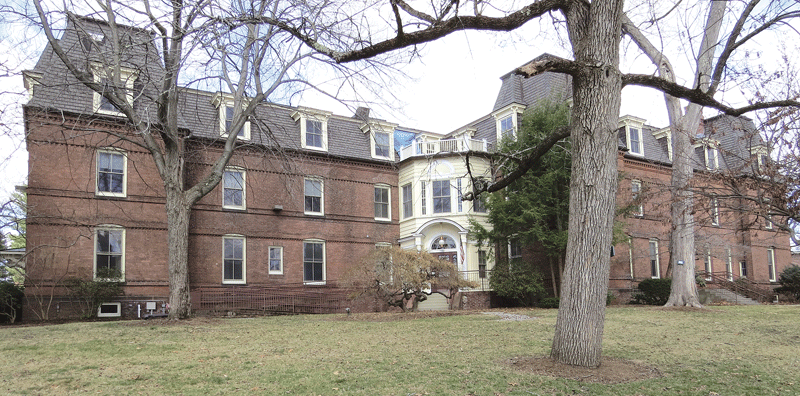
The Clarke School

The Clarke School property has a number of unique buildings being converted for residential and commercial development.

“Apartment living is becoming increasingly popular — people want to get out of their home and live in a vibrant community,” he said, noting that it has become an attractive option for both young professionals and empty nesters looking to downsize but still enjoy luxury.

As for the location, he said it’s ideal for both of those constituencies he described. Northampton is one of the region’s most walkable communities, and Historic Round Hill Summit is just minutes from a bike trail, Cooley Dickinson Hospital, Smith College, and everything downtown has to offer.

“The location is ideal, and there’s nothing else on the market like what we’re going to build here,” he said. “We think it’s an incredible mix.”

For this issue and its focus on commercial real estate, BusinessWest takes an in-depth look at that mix and how Picknelly and his partners are writing an intriguing new chapter to the already-rich history of this property.

Taking Things to New Heights

Picknelly, CEO of Peter Pan Bus Lines and the third-generation owner of that Springfield-based company, has — like his grandfather and father before him — always been entrepreneurial.

He’s picked up several businesses over the past few decades, with Springfield’s iconic Fort Restaurant, which he acquired with several partners from the Scherff family in 2014, the latest example. And, again, like his father, who famously acquired Monarch Place in 1994, he has been an aggressive player in the commercial real-estate realm.

He was a player in the bid to locate a casino in Springfield’s North End, on the Peter Pan property and adjoining parcels, for example, and the Opal Real Estate Group, which he also owns, is advancing plans to convert the former Court Square Hotel property in Springfield into a mixed-use complex blending retail, office space, and market-rate housing.

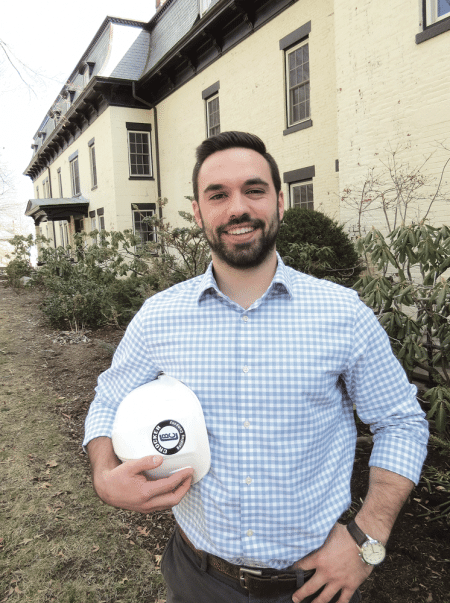
Max Hebert

Max Hebert is seen here outside Rogers Hall, phase two of the Historic Round Hill Summit project.

The plan for Historic Round Hill Summit is much the same, but the project is moving forward more quickly, with one of the old Clarke structures, Coolidge Hall, already home to several commercial tenants, and phase one of the ambitious residential component of the work already underway.

That would be the renovation of Hubbard Hall into 22 apartments — a mix of studio, one-bedroom, and two-bedroom units — which should be ready for occupancy by summer.

As he offered a hard-hat tour of the work in progress at the 36,000-square-foot Hubbard Hall, Hebert talked about that challenge of enabling the historic elements of the property to co-exist with modern needs, building codes, and a focus on energy efficiency.

As an example, he pointed to the windows — specifically a few in one unit that offer views of downtown Northampton and the Holyoke Range well beyond.

They are large (eight feet in height), in keeping with the original design, but the glass being looked through is an energy-efficient, double-paned product.

“You still have the historic charm of the window, but you don’t get the cold draftiness,” he explained, adding that, whenever possible, the historic integrity of the property has been maintained.

Beyond the windows, there are many other examples of maintaining many of the original historic features, said Hebert, who listed everything from the chalkboards that graced the classrooms to the wood trim; from fireplaces to the original Clarke School president’s safe.

But the past will also be blended with the present and even the future in the form of transitional-style fixtures, granite and quartz countertops, in-unit laundries, energy-efficient heating and cooling systems, and a commodity that has become a luxury item in Northampton — on-site parking.

All this comes with a steep price. Indeed, these units represent the very high end of the luxury-apartment market, with units going for between $1,500 and $2,900 a month.

Picknelly believes there is sufficient demand for such a product, and the early levels of interest, and even a few deposits on units, would seem to bear that out.

“We believe there is going to be a solid market for these units given the location, the views, the amenities — the whole package,” he said, listing professionals at Smith College, Cooley Dickinson Hospital, and other companies, as well as the growing number of retirees eyeing Northampton as a suitable landing spot, as potential tenants.

The Final Word

Time will tell if he’s on target with that assessment, and if Historic Round Hill Summit becomes a sound investment.

But, at the moment, Picknelly believes he has a winning proposition.

And in a nod to Calvin Coolidge and his legendary frugality with words, Picknelly was brief and to the point when asked if he was optimistic about the next life for this historic property.

“Absolutely,” he replied.

George O’Brien can be reached at [email protected]

Landscape Design Sections

Painting Pictures with Light

Illumascape Lighting

Illumascape Lighting

When some people think of outdoor lighting, they may think of floodlights and porchlights — but many more options are available in the emerging world of architectural lighting, which accents the details of front and backyards, melding safety and security with atmosphere and aesthetics. Designing and installing these systems is both art and science, say experts in the field, who are always gratified by the ‘wow’ factor when homeowners flip the switch.

After 23 years as a graphic designer in the sign-making industry, Rob Larkham decided to design and install landscape lighting for a career — a job that requires long hours of manual outdoor labor.

“Everything we’re doing is by hand. It’s labor-intensive,” said the owner of Illumascape Lighting in South Hadley. “But at night, when we turn the switch on, it’s a rewarding moment.”

Larkham is actually the second owner of Illumascape. Phil Costello, who founded the business, was one of Larkham’s customers, and when he was nearing retirement, he approached the graphic designer, believing he would be a good choice to take over the landscape-lighting company. So Larkham came on board four years ago and took over the reins a couple years after that.

“He saw me as a hard worker with an artistic eye — because, what we do is paint pictures with light,” Larkham said of why the opportunity appealed to him. “If it weren’t for the artistic end of it, I wouldn’t have made the transition. You’re outside digging ditches all day, but then you get to the end of the day, when it’s dark, and you flip the switch and get that ‘wow’ moment.”

Landscape lighting, also known as architectural lighting, has long been popular in warmer climes, but in the Northeast, most homeowners have been satisfied with porchlights and maybe a floodlight out back. But, increasingly, they’re seeing the aesthetic value in the variety of techniques available from companies like Illumascape and numerous landscape-design firms.

As Larkham explained, landscape lighting is the permanent placement of lighting fixtures in the outdoor environment, with the aim of highlighting the form, texture and definition of landscape plantings as well as enhancing the architectural features of the home. In contrast to one or two floodlights, architectural lighting may utilize dozens of smaller, strategically placed fixtures to accent the details of a home and yard.

Rob Larkham

Rob Larkham says customers choose architectural lighting for both aesthetic and security reasons.

“It’s still really in its infancy here,” he told BusinessWest, adding that customers choose landscape lighting for two reasons: to add beauty to their property and for security. “A well-lit home is less likely to be broken into than the house next door. Plus, you’re more likely to slip on dark stairs and dark sidewalks.”

Gary Courchesne, owner of G&H Landscaping in Holyoke, said the emergence of energy-efficient LED diodes has made landscape lighting more popular, because people see the long-term value in what, admittedly, can be a hefty up-front investment.

He explained that a transformer installed in the yard converts the 120-volt household current to 12 volts, and the LED diodes reduce the energy drain even further. “From an energy standpoint, you’re getting the benefit of cost savings. That’s key for people.”

He and Larkham both noted how the fixtures are designed to direct each beam in a specific direction, with techniques ranging from uplighting and downlighting to path lighting and ground lighting.

“In other instances, we use well lights buried in the ground that give that upward lighting effect,” Courchesne explained. “You may have ornamental plants, which you want to show off and shed a little more light on.”

Added Larkham, “I just think people are seeing the value in it, whether it’s beauty, safety, security, or curb appeal. People are spending more time in their backyards. I really think the growth in this industry will be extensive.”

Professional Touch

The key to successful lighting, Courchesne said, is professional design. He noted that a flood of low-voltage lighting kits hit retail stores over the past decade, and many people bought them, were unsatisfied, and didn’t think about it again. That’s because they didn’t have a skilled designer and installer on their side.

“When people buy a big-box store kit, they’re compelled to use every light in it. But, in the instance of low-voltage lighting, less is more. You don’t want your sidewalk or shrubbery to look like a runway. You want it to highlight, accent, and provide adequate light for pedestrians and the security element.”

With homeowners in the Northeast investing more money in their properties in recent years, he went on, many are now becoming aware of professional landscape-lighting design, which is ubiquitous down South.

Larkham said customers run the gamut from contractors building a new house and including landscape lighting in the initial design to homeowners who have been in their homes 25 years or more and have an itch to do something new and dramatic with their outdoor space.


Go HERE to download a PDF chart of area landscape design firms


“Sometimes it’s a complete landscape remodel — a landscape architect may be doing the whole backyard and will call me and say, ‘hey, we’d really like to do landscape lighting in this remodel.’ That said, I’ve gone out and done simple installations of five path lights, and, on the other end, 200-light installs.”

In other words, although architectural lighting is a high-end product in the world of landscape architecture, there’s typically something for every budget. Larkham said he often works within someone’s budget for an initial installation, but might put in a larger transformer if a client expresses interest in adding to the design later. “Maybe they’ll do the front of the house this year, and the backyard next year.”

With a budget in hand, Larkham then draws on his artistic side. “That’s my job as a designer — I show up, meet with client first, figure out what they’re looking to do on their property, and come up with a design using the proper fixtures.”

small, strategically placed lights bring out the details

This Illumascape project demonstrates how small, strategically placed lights bring out the details of a house and yard.

For example, the same kind of tree could be lit using completely different techniques, depending on the yard.

“We’ll go out and do a lighting demonstration before we ever sign a contract, with about 100 demonstration lights, to show you what the final product might look like,” he said. “We don’t have clients come out until it gets dark so we have that ‘wow’ moment. More than nine times out of 10, they come out and say, ‘wow, we had no idea.’”

In many cases, he added, a customer’s neighbors may have architectural lighting, but when someone sees it on their own property, it’s a much more impactful experience.

“You have to look at the key elements of what people are trying to accent and highlight, then decide how to use the lights,” Courchesne said. “Some people want it on the front door to highlight a wreath, using it as a spotlight. In some cases, they want to flood the area with some light. But the whole key is subdued lighting, not offensive lighting.”

He told BusinessWest that the results are gratifying.

“Some of the comments I hear are, ‘can you believe my house now?’ I hear that time and time again. I would say 75% of the folks who buy landscape lighting, accent lighting, buy it for the aesthetic value. The other 25% also want it for the security value because lights deter a burglar; they’d rather go to a house that’s dark as opposed to a house that’s lit up.”

Left to Their Own Devices

As landscape lighting becomes more prominent in the Northeast, customers are accessing some high-tech features not previously available. Residential Lighting magazine noted that, while low-voltage LED lighting is the key industry driver these days, linking lighting systems to smartphone apps, to control them remotely, is also a hot trend.

Other systems are timed to come on automatically, Larkham said, so that, “in the winter months, when it’s dark when you pull into the driveway, the house is warm and inviting already. That’s nice. Floodlights tend to be Fenway Park bright; obviously, what we’re doing is soft and subtle. That’s really what we’re looking for.”

Gary Courchesne

Gary Courchesne says the goal of any landscape-lighting project is subdued, artistic light.

Courchesne also stressed the importance of subtlety in a lighting plan. He said today’s LEDs can bathe their target with a soft, warm, white glow, as opposed to the harsh blue light with which some people associate earlier LEDs.

“Not everyone can afford this,” he stressed. “It’s cost-effective from an operational perspective, but there’s capital investment involved for a quality system. Like anything else, you truly get what you pay for.”

Larkham added that, as time goes on and LEDs become more universal, costs should come down, and are already starting to creep in that direction, which is a good sign for homeowners who want to add a little artistry to their landscapes.

“It’s becoming more popular, it seems the technology is advancing every year, there are always new things happening,” he concluded.

In other words, the future is bright.

Joseph Bednar can be reached at [email protected]

Landscape Design Sections

Business Is Heating Up

built-in kitchen appliances

Brian Campedelli says built-in kitchen appliances like these are often just the starting point for a backyard project.

For American families on the go, Brian Campedelli says, home should be an oasis from workplace stress and the general bustle of life.

“I think they’re looking for a general sense of relaxation in their yard. When they get home from work, they tend to be stressed out, and they want to kick their shoes off, throw on some flip-flops, head to their backyard resort, and forget about things for a while,” said the owner of Pioneer Landscapes in Easthampton, explaining why outdoor kitchens and living spaces are becoming more popular, and elaborate, in the Northeast.

“Some people are doing it because they want to entertain,” he added. “Some do pool installs and include an overhang [off the house] and fireplaces … a whole backyard development,” he went on. “They’re looking for a resort lifestyle, where they don’t have to go anywhere except their own backyard to get that feeling. It’s pretty nice.”

Outdoor kitchens — which can include anything from a simple built-in grill to expansive cooking surfaces, refrigeration, plumbing, audio-visual hookups, and more — are at or near the top of most lists of hot landscaping trends, along with firepits, water features, and architectural lighting, even in a region where people don’t want to spend much time outside for several months a year, the current mild winter notwithstanding.

“It’s definitely a growing industry, and it’s more than outdoor kitchens — it’s backyard living,” said Jason Harrington, manager of Ondrick Natural Earth in Chicopee. “Not only are people doing kitchens, they’re doing firepits, fireplaces, pizza ovens … basically a complete package of entertainment in the backyard. We’ve seen a real increase of these things in the past five years.”

He, like others BusinessWest spoke with, agreed the Northeast has lagged somewhat behind other regions of the country, particularly warmer climes, in expansive outdoor living spaces, he added, but that’s changing.

“People are focusing on their backyards in general; they’re creating a getaway in the backyard. Instead of going on vacation, they’re taking that money and putting it into a pool and patio space and creating a vacation feel in the backyard.”

Jason Harrington

Jason Harrington says homeowners are increasingly seeking a resort-type feel in their backyards.

According to the Hearth, Patio & Barbecue Assoc., patios are consistently among the top three features requested by new home buyers, and most aren’t leaving them bare, opting for permanent cooking fixtures, refrigerators, and other amenities. Meanwhile, noted Rick Miller, owner of RJM Landscaping in Southampton, existing homeowners are increasingly itching to bring the indoors outside.

“It’s slowly catching on and moving up people’s to-do list, particularly in the past two to three years,” he said. “Kitchen spaces are more popular now, maybe because people are aware of what’s out there and realize they can do something really simple, or they can get really elaborate. There’s an option for everyone’s budget.”

Soaring Budgets

Indeed, Miller noted, “kitchens tend to be a little on the pricey side because of all the gadgets and such. Typically, a basic one will have a built-in grill and maybe a fireplace tied into either propane tanks or natural gas so you don’t have to deal with filling tanks. More elaborate spaces will have a built-in grill, refrigerator, sink, cabinet space — sometimes they’ll go as far as putting in a pizza oven.”

Justin Pelis, president of North Country Landscapes & Garden Center in Westhampton, said outdoor kitchens can run into serious costs on appliances alone, since they’re typically built into the stonework.

“You can’t take a normal grill and insert it into stone; it’s not meant for that,” he said. “So it can be just as costly as redoing your whole kitchen inside. You can spend easily between $40,000 and $50,000 just for an outdoor kitchen area, including the patio and everything else — the electrical hookups, the water hookups … it can get complicated.”

Those who opt for the higher-end designs tend to be committed to outdoor entertaining to justify the cost, Miller added.

“We’re seeing more people putting in outdoor kitchens, pools, large backyard spaces, because they want to entertain into the evening. That’s where I’m seeing the trend starting to go,” said Rob Larkham, owner of Illumascape Lighting in South Hadley, which benefits from that trend because homeowners then want to light those areas (see story, page 31). “They want well-lit spaces; some install under-counter lights. People are not just entertaining in the home, but trying to bring it into the backyard.”

Harrington said homeowners on a budget shouldn’t be scared off by the sheer range of amenities available for outdoor cooking and living spaces.

“You can actually find a backyard setup to fit a wide range of budgets; it doesn’t have to be on the extreme high end,” he said. “Part of our job as salespeople is to try to help them get as much as they can for their dollar.”

That said, customers who can afford more than a grill and fridge often look to cabinets, trash disposal, bar areas, pizza ovens, and fireplaces, he went on. “And fireplaces don’t even have to use wood; you can hook gas into it. For people who want to spend real money, we can basically custom-design something of any size.”

Campedelli agreed. “We’ve done all sizes, from poolhouses with full kitchens in them to just built-in barbecues. Mostly, around here, what people are doing is nice, built-in barbecues set up for convenience, with a little refrigerator, things like that.”

Some customers intend to start there but expand their plans to larger seating areas, firepits, and patio extensions as they catch the vision of outdoor living, he went on. “We usually do one or two large projects a year like that. Some go as far as adding an overhang off the back of the house or a pool house. For people who don’t want to go that far, most of what we hear is there’s not enough time in the [warm] season to use it, but others don’t have a problem with that at all, and really go to town.”

Feeling at Home

Miller has tracked the same statistics known across his industry, how Americans, over the past 15 to 20 years, have increasingly chosen to forgo travel and invest in their homes and yards.

“People are going away less and less, with what’s been going on with travel costs and such, staying close to home, utilizing their backyards more,” he told BusinessWest. “So kitchens have absolutely become more popular. We call them outdoor living spaces because not everyone does a kitchen, necessarily; some people just want a larger-than-usual patio with seating, walls, and lighting. Two of my more recent projects also had pavilions installed to create a little shade if it’s rainy or too hot.”

fireplace

This Pioneer Landscapes project features a fireplace as the centerpiece.

Harrington added that he’s seeing more business at existing homes than at new construction. “Generally, when someone has been in their home for a while, built up some equity, been there long enough to get their savings back up, they want to invest back in their homes.”

And it’s not just for the adults, he added.

“We’re finding people are building backyards for their kids. I’ve seen it get as elaborate as movie theaters in the backyard with screens coming out of the ground. They’re building areas for their kids to play in and have friends over. They want to make an outdoor area for everyone.”

The bottom line, Pelis said, is that homeowners are increasingly seeing not only the potential aesthetic value of their yards, but the functionality, and kitchens and other outdoor-living features are a big part of that.

“People want to have more experiences in their yards and spend more time there, as opposed to just mowing the lawn and trimming the shrubs,” he added. “They want quality time with their family, and they want to get more use out of their yard.”

Harrington agreed. “It can be as simple as the family wanting a patio and a firepit to sit around at night, or something more complex. Everyone has their own vision.”

Joseph Bednar can be reached at [email protected]

Community Spotlight Features

Community Spotlight

By JACLYN C. STEVENSON

Mike Sullivan

With many key projects completed last year, Mike Sullivan says, the town is now assessing its next moves.

Town Administrator Mike Sullivan said 2016 is shaping up to be a transitional year for South Hadley, but not necessarily a quiet one.

“A lot of projects finished last year,” he said, listing completion of a new library, high school, elementary school, and two new parks among them. “Things are steady. Now we’re assessing where we’re at and where we need to go.”

Several avenues have already been pointed out for the Hampshire County town of 17,000, guided by an expansive, town-wide renewal plan with a focus on creating healthy environments, giving the overall commercial landscape a boost, and collaborating whenever possible with neighboring communities.

The latter has been a necessity for South Hadley since its incorporation in 1775, largely due to geography. It’s in a unique spot; bordered by Hadley, Amherst, Granby, and Chicopee, and separated from Holyoke and Easthampton by the Connecticut River, South Hadley is insulated by a series of canals, rivers, and reservoirs, and isn’t fed by any interstate highways. It’s long depended on cooperation with its neighbors, particularly Holyoke, but with the town on solid footing with some new, positive developments on the horizon, Sullivan said South Hadley is positioned to offer its neighbors plenty in return.

South Hadley formed an official redevelopment authority last year, which is now working out a plan for revitalization that will begin in the area of South Hadley Center — commonly known as ‘the Falls,’ a former mill village with historic industrial roots — and branching out across town from there.

“It’s been a detailed and aggressive endeavor,” he said, noting that the plan will be presented to town meeting this year and, if approved, must then also be accepted by the state in order to access grant funding and other opportunities.

“Like most mill villages, we’re looking to regenerate the community and adapt it to be a cool place. The attempt is not to gentrify the mill village by any means — the attempt is to make it more habitable, safer, and particularly more pedestrian-friendly.”

As arguably South Hadley’s largest presence, Mount Holyoke College — and the college-owned Village Commons and Orchards Golf Club — is an active presence in the town’s revitalization efforts. Kevin McCaffrey, director of Government and Community Relations in the office of the president at the school, said Mount Holyoke has ramped up its community-support efforts of late, ranging from collaborations with the town’s schools to planning assistance for a new network of recreational trails that extends the walkable-town concept across the community.

“Mount Holyoke has very close ties to South Hadley in terms of economic development and revitalization, and we work every day to strengthen our relationship to the community,” he said, noting that, most recently, the college contributed $300,000 toward the Bachelor Brook Stony Brook Conservation Area and constructed a new boathouse with a community-rowing component, among other projects.

“Mount Holyoke is closely involved with South Hadley in planning efforts around issues such as development of new bike- and hiking-trail opportunities to enhance the quality of life for residents and our students alike,” added McCaffrey. “Our local connections, already strong, have strengthened further under President Lynn Pasquerella, who is very committed to community outreach, and should continue to grow under acting President-elect Sonya Stephens.”

Jeffrey Labrecque, chief operating officer of the Village Commons, has a similarly positive view of South Hadley’s overall business picture and how it’s positioned for the coming years. Today, the town has an opportunity to tackle some key issues surrounding growth in the business sector, he said, including increasing the commercial tax base in hopes of reducing the residential tax burden.

“I see business in South Hadley as being very steady, with a sudden increased interest in commercial and retail opportunities and with restaurant growth exceeding expectations,” he said, noting that conditions at the Village Commons reflect this stability; the mixed-use complex with a focus on retail, restaurants, office, and residential space is currently at 98% occupancy.

“On the office side, interest has calmed down, but business is stable. South Hadley’s ‘big little village’ continues to thrive and brings in business from all over the Valley,” he went on. “Most importantly, we are here to stay, we are invested, and we voluntarily support the community, its events, and its goals on a variety of levels.”

The Commons is eyeing possible expansion opportunities of its own, perhaps in the areas of additional leasable space or parking. Any move on the part of the Commons or South Hadley at large, said Labrecque, should be made to ensure a strong position in the local market, and always with an eye toward what’s happening in adjacent towns.

“There is a lot of growing competition in neighboring communities, and the future may very well lead to shared departments and services with neighboring towns,” he said. “We would be remiss in our position to sit back and watch; we need to always be looking for new ways to improve growth.”

Making Paper Tigers

In that regard, Sullivan said South Hadley has recorded a few wins lately. One of the most heralded developments in the Falls recently was the arrival of Mohawk Paper, the largest family-owned producer of envelopes in the country. Mohawk’s plant moved into a group of buildings formerly known as the U.S. Gaylord properties last year, and makes more than a million envelopes a day.

“It was quite a coup,” said Sullivan. “They were looking at plants not only in this region — in Chicopee, Westfield, Holyoke — but also locations in other states, including New Hampshire and Connecticut. We see having them choose South Hadley as a big success.”

What’s more, the properties still have more than 200,000 additional square feet of space available that the town is now actively looking to fill. Labrecque said Mohawk’s arrival was exactly the kind of boon South Hadley was hoping for, and added that he sees several other hot spots for development, including the now-vacant Newton Shopping Plaza.

The Village Commons

The Village Commons, a mixed-use complex of retail, eateries, offices, and apartments, is 98% occupied.

“We’re seeing some great growth on the commercial-industrial side, and I remain hopeful that will support additional commercial interest,” he said. “While there are many areas of concern, I hope that much of the focus goes to Bridge and Main streets and the corner of Newton and Lyman streets. Route 33 from Newton Street to Chicopee also has prime areas of opportunity.”

Labrecque noted that growth in the commercial sector is the ultimate goal, but he does see development in the housing market as one of the town’s most immediate opportunities.

“I foresee huge opportunities, especially in the area of rental housing,” he said. “For some 26 years, the Village Commons has maintained a residential waiting list that at times could exceed 30 anxious prospective tenants. Whether you add housing on Main Street or College Street, there will continue to be a need.”

Sullivan agreed that South Hadley’s residential base is solid, and improvements to its infrastructure are very much on the town’s to-do list, in order to continue to attract residents, visitors, and businesses alike.

“We need to improve the housing stock,” he said. “We’re hoping this spurs investment in other properties from people around them who haven’t invested in years but might start feeling a new level of confidence. We’ve been very aggressive enforcing codes and health and safety regulations, particularly among absentee landlords.”

Age-old Practices

Two separate condominium projects are now underway in town — six units in the former public library through a $1.8 million investment, and plans for a second condo development near the new library building have just been approved, raising that investment in housing to nearly $3 million.

It’s a move that goes back to the overall redevelopment plan for the town — “those are the kinds of gateways you want to make really inviting to have people see the value of the community right away,” noted Sullivan — but development in the housing sector is also one aspect of a larger effort to continue to cultivate South Hadley’s strong niche in the business of aging.

“South Hadley is not an aging community so much as it is a community that is investing in aging,” he said. “Whether the community recognized it or just through happenstance, they have positioned the town very well to be ready for that industry.”

Sullivan listed elder-care businesses including Loomis Communities, Wingate at South Hadley, and Hubert Place, a federally funded supportive housing development for residents 55 and older, as examples.

“There are also early talks happening now regarding the construction of a new senior center for the town,” he went on, “and of becoming a ‘dementia-friendly community,’ a commitment to working with issues around people with changing abilities due to diseases of the brain.”

To that end, April will be Dementia Awareness Month in South Hadley, and the town is now exploring AARP’s Age-friendly Communities program to develop practices for walking, biking, and other outdoor recreation opportunities that are suitable for users of all ages. If approved, South Hadley would be the first community in Western Mass. to hold the title, and Sullivan hopes the focus on creating walkable areas will resonate with residents of all ages.

One project underway is a shift in operations at the town-owned Ledges Golf Club. The course’s general manager will now serve as the town’s recreation director, with the goal of attracting more South Hadley residents to the property for myriad activities year-round, from walking to snowshoeing. Sullivan said he’s also keenly interested in creating a walking path to Holyoke’s train station, less than a mile away from the center of South Hadley.

“People could walk across a bridge and access transportation to New York or Montreal,” he said. “We think that’s one of those cool features that could be an economic catalyst for South Hadley.”

Stakes and Bonds

All of these endeavors demand collaboration within South Hadley and beyond, but Sullivan, McCaffrey, and Labrecque each told BusinessWest that the climate in town is one more accepting than ever of cooperative ideas aimed at cost savings, efficiency, and economic growth.

“We work with the college quite a bit,” Sullivan said, “and we get a lot of cooperation from many surrounding towns, including Granby, Ludlow, Hadley, Chicopee, and particularly Holyoke. Holyoke Mayor Alex Morse understands the connection that exists between the city and South Hadley.”

McCaffrey said Mount Holyoke also sees that link and many others, and is actively creating programming aimed at the revitalization of South Hadley and economic growth region-wide.

“We’re very interested in discussing further opportunities,” he noted. “South Hadley’s economic health and our health as a college are intertwined, and we are always looking for opportunities to strengthen the bonds of South Hadley.”


South Hadley at a glance

Year Incorporated: 1775
Population: 17,514 (2010)
Area: 18.4 square miles
County: Hampshire
Residential and commercial Tax Rate:    $19.85 (Fire District 1); $20.49 (Fire District 2)
Median Household Income: $46,678
median family Income: $58,693
Type of government: Town Administrator,      Town Meeting
Largest employers: Mount Holyoke College, Loomis Communities, Mohawk Paper
* Latest information available

Community Spotlight Features

Community Spotlight

From left, Linda Leduc, John Rahkonen, and Charlie Blanchard

From left, Linda Leduc, John Rahkonen, and Charlie Blanchard say Northern Construction’s new, $1 million office building contains cutting-edge technology that will help the company stay competitive.

The scope of economic development in Palmer is so diverse that Charlie Blanchard had to make a list to ensure he didn’t forget any major projects when he spoke about them with BusinessWest.

“We have a lot of commercial activity taking place. There has also been an increase in high-tech manufacturing; new medical office space is being developed, and we have a new recreational motorsports raceway,” said the town manager. “Progress continues in Three Rivers, and we are working to revitalize the Thorndike Mills.”

Linda Leduc, the town’s planner and economic development director, added that projects that were permitted years ago are coming to fruition, and commercial properties that sat on the market for years are finally being purchased.

“I’ve seen a 180-degree turnaround this year, and it has brought a multitude of new jobs to Palmer,” said Leduc, who attributes recent growth to a resurgence in the economy.

And, as she noted, change and progress is taking place in all parts of the community, including the Palmer Industrial Park in Bondsville.

Blanchard said Detector Technology Inc. needed room to expand and purchased a building from Wayne Buxton, who was using it to house his ShedWorks Inc. business.

“Wayne needed to downsize but wanted to stay in Palmer, so he kept half the lot and built a new, smaller structure on it,” Blanchard noted.

The decision reflects a trend he and Leduc are seeing: businesses are choosing to stay in Palmer, whether they are downsizing or expanding, if they can find appropriate space — a pattern town officials believe is based on the town’s location, competitive tax rate, good school system, and excellent municipal services.

“We’re right on the Mass Pike, which is ideal for businesses and for their customers coming from the east and west,” Blanchard said, adding that interviews with owners and executives of 16 companies showcased in a 2014 promotional video titled “Industry Alive in Palmer: An Inside Look at Local Businesses” showed they are happy with the educated workforce in the area and have dedicated, exemplary employees.

Growth is also occurring in the downtown area known as Depot Village, which is the first commercial district travelers encounter after they exit the Turnpike. It’s a prime commercial area and the place where O’Reilly Auto Parts chose to expand their New England presence.

“They purchased a vacant building on 1569 North Main St. that had been an eyesore for years,” Blanchard said. The old structure was demolished, and a new, state-of-the art distribution center has been built on the lot.

In addition, the American Legion building on 1010 Thorndike St. was purchased by Fire Service Group two days after it went on the market last May; the company was located in a smaller building in town but wanted to expand.

Meanwhile, Michael’s Party Rentals is moving from Ludlow into the former home of Baldyga’s Auto and RV Sales Inc. on 1221 South Main St. Company President Michael Linton said he purchased the 20,000-square-foot building in early January, and it is undergoing a substantial renovation.

“We’re building a showroom and design center so that we have a dedicated space where wedding planners, brides and grooms, and corporate clients can see our inventory and design capabilities,” he noted. “We’re also adding office space, as there wasn’t any in the building, and plan to install a $60,000, state-of-the-art tent-washing machine which will allow us to clean the tents we rent with less labor.”

The cost of the building, renovation, and new machine are expected to total about $712,000, and Linton anticipates moving in May or June when it is complete.

“My entire staff is excited. We are extremely cramped in our current location and looked for a building for two years,” he continued. “A combination of factors led to the decision to relocate in Palmer: the price of the building, its access to the Mass Pike, Palmer’s commercial tax rate, and the proximity to my home in Sturbridge.”

For this, the latest installment of its Community Spotlight series, BusinessWest looks at the many reasons why development is occurring in Palmer, and the various forms it is taking.

Progress Report

While Baldyga’s sold its property for the Michael’s relocation, the business didn’t leave Palmer; Blanchard said the owner purchased an empty lot on Park Street and has plans to construct a new, smaller building on the site, which is in the permitting stage.

In addition, a former Knights of Columbus hall was purchased last fall by Joe Kelley of Angelica Properties. It sits on the corner of Route 32 and River Road and had been for sale for more than a year; it is currently in the permitting stage, and the plan is to renovate it and turn it into state-of-the art medical office space.

Meanwhile, Northern Construction Service Inc. is another company that has chosen to expand in Palmer. About three years ago, owner John Rahkonen purchased a lot adjacent to the business that contained a mini-golf course and batting cages. They were demolished, and a new, state-of-the-art, 7,400-square-foot building, which cost about $1 million, opened in early February.

The company has grown from a $2.5 million operation in 1994 to a $45 million to $50 million business today, and although Rahkonen has two other locations, the new office space, which features skylights and advanced technology, was critical to continued success.

Today, the business occupies about 12 acres, but Rahkonen wishes there were more space available in Palmer so he could continue to expand there.

“I could use another 10 acres,” he told BusinessWest, adding that he agrees with town officials that Palmer’s location is ideal due to its access to key roadways. “We’re in the middle of the state, an hour from Boston and the New York border, and 40 minutes from Hartford. Interstate 91 is around the corner, the Mass Pike is here, and I-84 is 20 minutes down the road.” The company’s work requires moving heavy machinery all over New England, up to the Canadian border, and as far away as White Plains, N.Y., as well as to Block Island and Martha’s Vineyard, so access to a multitude of roadways is helpful.

The town also boasts a new recreational facility called Palmer Motorsports Park. It opened last May on a 500-acre tract of land, and since that time, Road & Track magazine has named it as one of the top 10 racetracks to drive on in North America.

However, it was one of the aforementioned projects that didn’t get off the ground for years due to the flagging economy.

“The Sports Car Club of America permitted the site for a sports motorpark in 2007 because they wanted a track in the Northeast,” Blanchard explained. But the land was not developed until 2012 when club member and private investor Fred Ferguson built the multi-million-dollar recreational facility with its 2.3-mile track, which has since brought new people to Palmer and had a beneficial impact on businesses in the north end of town.

As noted earlier, it is just another of a slew of projects that is expanding and diversifying the economy of a community that just three years ago was pinning its hopes on a resort casino.

New Initiatives

Efforts to revitalize the Thorndike Mills, situated north of Depot Village, are another example of continued progress.

The property consists of seven linked mill buildings that contain 90,000 square feet and sit on 15 acres. They were once home to the thriving Diamond Cascade Manufacturing Co. but have been vacant since 2000, although a hydropower turbine operation has been installed at the site.

“The hydro units are under the floors because the canal runs beneath the buildings,” Leduc said, noting that some units are also located near the dams. But, despite the fact that she has worked with the mill owners for more than a decade to find new uses for the property, they couldn’t seem to make any progress.

However, new hope was generated last fall, thanks to state Sen. Anne Gobi, who was instrumental in introducing them to the Central Mass. Regional Planning Commission (CMRPC), whose work includes revitalizing the Warren Mill in West Warren, the Hardwick Knitters Mill in Hardwick, the Holland Road Mill in Sturbridge, and now, Palmer’s Thorndike Mill.

Leduc said a tour of the properties was conducted last fall as part of a larger project that includes the Jefferson Mill in Holden.

“We’re working with the CMRPC, MassDevelopment, and the Mass. Department of Housing and Community Development,” she noted. “It’s an interesting and important collaboration because these mills are significant historic structures. Our mill was once the center of Thorndike Village.”

The Center for Economic Development at UMass Amherst is also involved, and will hold a conference titled “The Future of the Massachusetts Mill Community” on April 12 in the campus center. In addition, UMass Professor of Planning John Mullin and a group of his students are working to identify common themes shared by these mills.

“We were on our own for years, so it’s wonderful to have this support,” Leduc said.

Growth is also occurring in Three Rivers, and collaborative efforts to revitalize Main Street are coming to fruition, thanks to work by the consortium On the Right TRACK (the acronym stands for Three Rivers Arts Community Knowledge).

Partners include North Brookfield Savings Bank, Palmer officials, the Palmer Historical and Cultural Center, the Three Rivers Chamber of Commerce, the Palmer Redevelopment Authority, and the Quaboag Valley Community Development Corp., all of which have been working to build a cultural and creative economy that will attract visitors.

Alice Davey, the town’s community development director, noted that the Quaboag Valley Community Development Corp. was successful in its bid to win a $13,500 Adams Art Grant for fiscal years 2016 and 2017, and the town completed a market-assessment and business-recruitment tool as well as a feasibility study showing that a building on 2032 Main St. obtained through the tax-title process has potential for redevelopment.

In addition, Davey said, “Palmer also signed a Community Compact agreement with the Commonwealth which will provide us with assistance. We’re taking positive steps forward, and many things are in the planning stages.”

The town also boasts five solar farms, and permits for four new ones have been issued. The newest operations include a five-megawatt farm on the grounds of the former Palmer Metropolitan Airfield that went online last February. It was built by Borrego Solar and is financed, owned, and operated by Syncarpha Capital.

In addition, a 4.8-megawatt operation on Baptist Hill Road, which was developed by Blue Wave Capital and is owned by Sun Edison, went online earlier this month. Blanchard said the town will purchase 2.8 megawatts of the generated electricity, which will meet 100% of its municipal needs and should result in a 20% to 30% savings on its electric bill.

Positive Outlook

Overall, officials expect growth in Palmer to continue. “There is so much going on here, and we are touching so many areas of the economy that are growing,” Blanchard said.

As a result, optimism is running high as new ideas to revitalize the Thorndike Mills are brought forward, and the creative economy in Three Rivers, the new racetrack, and a host of other growing enterprises attract people to “the town of seven railroads” from many different roadways.


Palmer at a glance

Year Incorporated: 1775
Population: 11,049 (2015)
Area: 32.14 square miles
County: Hampden
Tax Rate (Residential and Commercial): Palmer, $21.27; Three Rivers, $22.19; Bondsville, $22.13; Thorndike, $22.30
Median Household Income: $50,050
Family Household Income: $58,110
Type of government: Town Manager; Town Council
Largest Employers: Baystate Wing Hospital; Camp Ramah of New England; Big Y World Class Markets

* Latest information available


Business of Aging Sections

Peace of Mind

Anne Thomas (left) and Joelle Tedeschi

Anne Thomas (left) and Joelle Tedeschi say it’s critical that the Garden at Ruth’s House tailors programs to the individual interests and abilities of residents.

While researchers have hope, so far there’s no cure for Alzheimer’s and many other forms of dementia — conditions that currently affect some 5.3 million Americans but could soar in frequency as the massive Baby Boom generation heads into the golden years. That trend places greater importance than ever before on memory-care units, specialized neighborhoods in assisted-living and skilled-nursing facilities that seek not only to care for residents with dementia, but strive to give them back as much of their old lives as possible.

It’s not always easy to walk in someone else’s shoes, especially when that person suffers from dementia. But at Loomis House in Holyoke, they’re trying.

The training program for Loomis employees who work in the memory-care unit includes a mandatory activity called a ‘virtual dementia tour.’ They’re put through a sensory simulation including shoe inserts to make their feet uncomfortable, hazy goggles that mimic macular degeneration, headphones pumping in white noise like a ringing phone and an ambulance siren, and gloves to impair sense of touch.

“Then we ask them to do tasks. They quickly understand the frustration,” said Lori Todd, Loomis House administrator. “What we try to teach them is, you’re experiencing this for 10 minutes; imagine this all day long. Some people call it sundowning, but after eight hours, I’d be frustrated.”

A perceived need for better training led to the adoption two years ago of new regulations for Massachusetts nursing homes. Specifically, workers in specialized Alzheimer’s and dementia-care units are now required to undergo at least eight hours of initial training to care for such residents, and four additional hours annually. Proponents noted at the time that increased training is critical because roughly 60% of nursing-home residents have some form of dementia.

Lori Todd

Lori Todd says Loomis House works to counsel and reassure families, who are often dealing with wrenching emotions around their loved ones’ dementia.

At Loomis House, which maintains two separate memory-care units totaling 41 residents — there’s always a waiting list — administrators have taken staff training seriously for much longer than that, Todd said. In fact, the way staff assesses and engages its Alzheimer’s and dementia population is indicative of a wider trend in senior care, one that acknowledges that dementia is not going away as the Baby Boom generation continues to stream into its retirement years.

For example, while many facilities place residents with dementia into one of three categories of memory function, Loomis uses seven, in order to develop as individualized and specialized a care plan as possible. “If you’re stage three, you may be able to do a 100-piece puzzle for an activity,” Todd said. “In further stages, you may still be able to do a puzzle, but it may be a four-piece puzzle so you’re not frustrated.”

That said, the goal is to maintain as much independence as possible for residents through an individualized plan that determines what activities will keep them active and engaged. “We have to get an understanding of who they were and what made them tick — basically utilize that information to develop a plan that will be of interest to them.”

Similar strategies are put into play at Ruth’s House in Longmeadow, an assisted-living residence operated by JGS Lifecare. It features the Garden, a 30-bed memory-impaired unit with a central kitchen and living area and an enclosed, secured outdoor courtyard.

“It’s very home-like, which is really important,” said Anne Thomas, vice president of residential health. “But the one thing that distinguishes us from others is our exceptional programming structure, which is really important to people with dementia. If they’re not given some structure, they don’t do well. They need that schedule, that routine.”

Joelle Tedeschi, executive director of Ruth’s House, explained that every new resident is evaluated by the resident care director to determine how they fit into the site’s programming, which includes sensory activities, art and cooking groups, cultural-enrichment programs, and much more.

“We try to find out as much as we can about each person and craft programs based on that,” Thomas added. “It’s about engagement, but also creating an environment as much like their real home as possible. All the things a person enjoyed before should continue here — it shouldn’t change.”

Like Todd, Thomas noted that the population is aging, and the number of Americans living with some form of dementia — currently 5.3 million — is only expected to rise, meaning more nursing homes and assisted-living facilities are making a commitment to taking care of this population.

“With dementia, unfortunately, there’s no cure in sight; we don’t see the disease going away,” Thomas said. “Our responsibility is to create a wonderful program. Boomers are very discerning; they have disposable income, and they expect a lot, and they should. We’re designing things that we as Boomers would want for ourselves and our parents.”

Individual Focus

That begins with meeting each resident where they are, Todd said.

“There’s a lot of emphasis on understanding that we are guests in the home of the people who move in here. When people come to the dementia unit, they stay here; this is their home,” she said, explaining Loomis’ long-time philosophy of person-centered care. “So, if they want to get up at a certain hour, they can have their medicine when they wake up, rather than right at 8 in the morning. The satellite kitchen is open 24 hours a day, and they can eat when they want.”

Tedeschi said the Garden provides a similar sense of autonomy, including no set times for going to bed or waking up, and a kitchen where eggs can be cooked to order at any time. “Some folks don’t want to be up early for breakfast, so we’ll make them breakfast right before lunch if that’s their preferred time.”

The touches of home — and even pampering — continue with amenities like a full-service salon, live entertainers who get residents singing and dancing, and rules that allow residents to bring their pets with them. In addition, family members often volunteer to lead enrichment programs.

“Just today, one of the resident’s families brought in some old tools, and the residents sat around and reminisced about their lives. There were tools there I couldn’t identify, but some of our residents worked on farms as children and worked all day with these tools, and they talked about it. It was one of the most beautiful things I’ve ever seen.”

The Garden also recently introduced holistic-wellness activities including Reiki, aromatherapy, and reflexology, all conducted by student volunteers, said Mary-Anne DiBlasio, sales manager at JGS Lifecare, who has a background in alternative health. Meanwhile, a small activity room is being converted to a sensory meditation room.

In addition, JGS Lifecare takes part in the Music and Memory program, which works with residents’ families to develop a personalized playlist of meaningful songs, which they can play on donated iPods.

“We’ve seen some remarkable success stories with it,” said Alta Stark, director of marketing and public relations. “One woman’s daughter said she could tell immediately if her mother had her music therapy that day because she could have regular conversations with her. She said that had not happened for such a long time — it was like getting her mother back.”

Thomas is equally effusive. “I witnessed something walking through one day on the weekend — a resident in memory care was weepy, crying, and she wanted to go home. A life-enrichment person came over and consoled her, reassured her, got her iPod and earphones … and it calmed her down immediately.”

Tedeschi said it’s always a challenge to customize individualized programs when dementia has such a wide range of stages. Some residents can live relatively independently but need to be in a secure environment, she noted, while others wouldn’t even know how to press an alert pendant if they need help. “We need to anticipate what their needs would be. We have to customize a program for everyone and continue to add services according to their care needs.”

The complexity of caring for this population is why the Department of Public Health pushed for the new mandatory-training rules two years ago. In order to comply, staff members must be trained in the foundations of Alzheimer’s and other dementias, communication and connecting with these residents, techniques and approaches to care for this population, the components of person-centered care, working with families, the dietary needs of residents with Alzheimer’s and other dementias, social needs and appropriate activities in the care of such residents, recognizing and responding to caregiver stress, and preventing, recognizing, and responding to abuse and neglect of residents.

“Everyone who works here — even maintenance and housekeeping — has to have 12 hours of training,” Todd said. “And I’ve seen the benefits in training, retraining, and sensitizing. The regulations are strict, but it benefits the residents; it really does.”

Family Burdens

No one wants to admit their parent has dementia, Todd said, but the services provided in a specialized memory-care unit are critical when that decision looms.

“Most people who live here are a little more advanced than you see at home, and they’re at risk being in the community. Really, it’s a safety issue, and the caregiver can’t do it anymore,” she explained, noting that Loomis House provides a continuum of care that includes hospice services near the end of life.

It’s emotionally wrenching, she added, when someone understands that their loved one doesn’t recognize them in the same way anymore, but noted that Loomis provides a social worker to help families process that experience, and family support groups that help each other through the transition.

“At first, there’s a lot of fear, guilt, and anxiety,” she went on. “Then they begin to trust us. They see they can go home at night and their parents will be cared for. They have to trust that our people are caring for their parents because their parents can’t always tell them.”

Thomas agreed. “Sometimes it’s harder on the family than on the person who has this illness, to see that person changing before their eyes. That’s why we offer support groups for families.”

In addition, as part of the admissions process, Tedeschi said, families help residents assemble a shadowbox of photos and memories, to hang outside their room. Not only do the boxes help residents identify where their rooms are, they give the staff a better idea of what that person is all about. Families also fill out a profile about their loved one’s likes and dislikes, interests and hobbies, to help the staff build a satisfying daily routine.

Once they’re comfortable in their new home, DiBlasio said, “family members don’t have to be full-time caregivers anymore. We let sons be sons, daughters be daughters, and we become the caregivers. If we know the idiosyncrasies of the person, we can become part of the family, and they look at us as part of the team.”

The worst feeling a loved one can have, Thomas said, is the idea that “‘this is my mother; there’s nothing left to her.’ We want to demonstrate that this person has a lot left, and we want to bring that out in them. That’s our job, to bring out the best in the person so the family can experience that as well. The employees that work here find it gratifying that they can make a difference in many small ways, just by getting to know the person.”

Joseph Bednar can be reached at [email protected]

Business of Aging Sections

New Frontiers

Dr. Matthew Richardson (left) and Dr. John McCann

Dr. Matthew Richardson (left) and Dr. John McCann say Baystate’s clinical-trials program both helps current patients and advances research down the road.

When Linda Tedone was diagnosed in September with multiple myeloma, it wasn’t long before her oncologist at Baystate Medical Center, Dr. Syed Ali, came across an opportunity not available to many patients — yet.

It was a national clinical trial, one of dozens in which Baystate patients are enrolled at any given time. In Tedone’s case, her chemotherapy includes a drug, carfilzomib, that was FDA-approved in 2012, but only for relapsed patients who had undergone other therapies. Now, researchers are studying its effectiveness for first-time diagnoses.

“They explained it to me and my family, and we talked about it and were very interested,” Tedone told BusinessWest. “I have a lot of confidence in Dr. Ali. Being in a clinical trial, not only do I have him and his expertise, but lots of other great minds are involved in this, all watching my progress. And I’m reacting well to the medication; the chemotherapy is doing exactly what Dr. Ali wanted it to do.”

A robust clinical-trials program at Baystate — patients are currently participating in about 60 different ones — is available for both adult and pediatric patients, depending on need and what’s available, said Dr. John McCann, a medical oncologist at Baystate who works with adult cancer patients.

“Basically, we’re an academic medical center, so we’ve had a clinical-trials program here for quite a few years,” he explained. “The newer clinical trials are focusing on the specific molecular features of patients’ individual cancers and bringing new treatments to the cancer center that we can use. Because we have an entire team of clinical researchers working with us, we’re able to do sophisticated clinical trials right here at home, so patients don’t have to travel to go to another academic medical center.”

He cited, as one example, a new trial that seeks to evaluate three immunotherapy drugs given simultaneously for patients with advanced melanoma. “It’s very important that patients get really leading-edge clinical trials right here in Western Mass.,” he added, noting that Baystate’s clinical-trials division accesses national trials through organizations like the National Cancer Institute, the National Institutes of Health, and pharmaceutical companies.

And Baystate isn’t alone. When Cooley Dickinson Hospital merged with Mass General Hospital in 2014, it opened up a referral pipeline for oncology patients being treated at CDH to enroll in the kind of clinical trials Mass General has been involved in for decades.

“We joke that doctors frequently have hallway conversations, and we have the same thing, except the hallway is Route 90,” said Avital Carlis, administrative director of the Mass General Cancer Center at Cooley Dickinson Hospital, which opened last fall. “And these relationships are where our connections to clinical trials emanate from.

“I’m very excited that the Mass General Cancer Center will be integrated with the clinical trials available there,” she went on. “Our doctors constantly review cases, and if a patient has unique circumstances, they’ll reach out to their colleagues in Boston, and the doctors in Boston might say, ‘great trial available,’ or ‘perfect match’ or ‘we really should get them in this,’ and we can get our patients involved in these clinical trials. There is a huge spectrum of trials open to us.”

Mercy Medical Center, like Cooley Dickinson, will soon be able to access trials through a new affiliation — in its case, with Smilow Cancer Hospital at Yale-New Haven Hospital, with which is has signed a letter of intent to pursue a relationship that will enhance cancer care at Mercy.

The partnership with Smilow will create new opportunities for patients in Western Mass. to enroll in clinical trials for a wide variety of cancers, said Dr. Philip Glynn, director of medical oncology at the recently expanded Sr. Caritas Cancer Center on the Mercy campus.

Dr. Philip Glynn

Dr. Philip Glynn

“Trials are really important because people get a chance to see if a new treatment can help them — or help a population of patients in general,” he explained. “It’s almost like having a built-in insurance policy; you know you’re getting the most recent treatment. It’s been reviewed by experts, and you’re being very carefully monitored by your doctor.”

The downside, of course, is that previously unknown side effects may arise, and the treatment simply may not work.

“Ideally, you’re being carefully monitored so you can be taken off if it becomes clear it’s not working and there are another alternatives,” Glynn said. “Another downside is that some of these trials have placebos, and people don’t necessarily get the treatment they hoped they’d get.”

With more hospitals joining Baystate locally in providing access to clinical trials available nationwide, it’s a decision patients will increasingly have to answer.

Put to the Test

Simply put, Glynn said, a clinical trial is a research study, and patients participate to answer a question or help improve or advance treatment of a disease.

“In my field, oncology, patients volunteer for clinical trials that test new treatments, to see how they compare with current treatment standards. Sometimes they test lifestyle changes to see if it lowers the chances of getting cancer. Sometimes they test new ways of finding out if people have cancer — diagnostic studies.”

Typically, trials are divided into three types, he explained. Phase 1 trials, which are most commonly conducted in a university setting, aim to answer questions about safety in terms of timing, dosage, and side effects. Phase 2 — the type of trial most-often available locally — delves further into safety but focuses more on effectiveness. Phase 3 trials compare the new treatment with the current standard, by placing patients randomly (and blindly) into one group or the other.

Not everyone who wants to take part in a trial may do so, Glynn noted, due to any number of contraindication factors. “There are times people may want to be in a study but are excluded based on pre-existing conditions.”

But plenty are able to enroll, McCann said, noting that some patients inquire about what opportunities are available to try new therapies, while others are steered toward trials by their doctor.

“If a patient is eligible for a trial, we go through the process in detail and talk about risks and potential benefits,” he explained. “Then the patient makes the decision whether or not they wish to participate in the trial.”

Which means they’re well-informed of all known risk factors, he went on. “Every clinical trial has risks associated with it. We are committed to the highest standards in terms of minimizing risk and also explaining very clearly to patients what risks are associated with the treatment.”

In many cases, however, patients have reached a point of desperation, said Dr. Matthew Richardson, a pediatric oncologist with Baystate Children’s Hospital.

“For some conditions, where the prognosis with traditional medicine is poor or at least not optimistic, I think people are motivated to try new things,” he told BusinessWest. “They also realize it may help other children in the future. I think that appeals to many patients — that ability to help other families and other people’s children in the future.”

The goal of any clinical trial, particularly in phase 3, is to compare new treatments or tests to standard tests, and that can’t be done with just one or two patients; researchers need hundreds — and because certain pediatric cancers are so uncommon, no single center will be able to provide that, he explained. That’s why Baystate is part of the Children’s Oncology Group (COG), which gives patients there access to the same trials offered at other children’s hospitals across the country.

Richardson is one of several doctors — as well as pharmacists and people not directly involved in the medical community — who sit on an institutional review board (IRB) that evaluates clinical-trial opportunities to make sure they’re appropriate for Baystate, that the science is sound, and that potential risks are not worse than the standard treatment — or, if the risks are high, that the potential benefit outweights the risk.

“We conduct a very thoughtful analysis, through very extensive discussions, before a clinical trial even begins at the hospital,” he said. “And if a member of the IRB is involved in the clinical research, they’re not allowed to weigh in on approval.”

Expanding the Pipeline

An added benefit to clinical trials, Glynn noted, is that people feel gratified to be able to help advance new types of research.

“That’s absolutely true,” said Tedone, the Baystate patient. “I mean, this is definitely my journey, and I want to have success, but at the same time, I also know that, if this is going to work for me, it will work for other people and make their journey easier, too. I’m all about research, and we need to get rid of this horrible disease — get rid of all these cancers.”

Patients intrigued by opportunities to participate in this type of research have to be gratified by the new opportunities cropping up in Western Mass., from Mercy to CDH to, yes, a widening pipeline at Baystate.

We’re referring to UMMS-Baystate Health, a campus of UMass Medical School expected to open in Springfield in the fall of 2017. The project — a collaboration between the medical school, UMass Amherst, and Baystate Health — is intended to meet three goals: increasing access to students in Massachusetts seeking an affordable medical education, responding to the healthcare needs of the Commonwealth by increasing the number of Massachusetts physicians trained in urban and rural primary care, and applying academic research to improve population health, reduce health disparities, and make healthcare better integrated, more efficient, and more effective.

“It’s really a game changer for the region,” said Dr. John Schreiber, chief physician executive for Baystate Health, and one of the reasons is access to new avenues for clinical trials through UMass Medical School. “We’ll be able to offer patients in the Pioneer Valley much more than we have previously.”

And one of the goals for physicians coming out of the program is that they understand how to be part of a clinical trial and how to connect patients with experimental therapies. “We want to be able to access that across the Baystate system, not just in Springfield. The outlook is bright.”

With all the optimism over clinical trials, CDH’s Carlis stressed that eligibility criteria can be narrow. “What’s nice about our relationship with our colleagues in Boston is, many of these physicians are world-renowned experts in their field; they know these criteria backward and forward. So, if we think a patient might be eligible, there’s no assumption made until they speak with the people in Boston for a full criteria check.”

That said, the big picture is important. “Through clinical trials, we’re trying to identify where care is going in the future, what are the best combinations of drugs. It opens opportunities for patients they would not otherwise have access to.”

Glynn agreed. “Clinical trials are designed by experts to answer specific questions about therapies,” he explained. “It’s very important, especially today, because there are so many new therapies available for patients in oncology. We want to be able to offer patients as broad a spectrum of potential treatment options as we can.”

Seeking Answers

After all, Richardson concluded, these are matters of life and death.

“We’ve gone from acute lymphoblastic leukemia in children being a uniformly fatal disease to having some types of leukemia with a 90% cure rate,” he said. “And that’s only been through cooperative clinical trials.”

Tedone, who has been active in her trial for more than four months, tracks other cancer research as well.

“In the past few months, three new medications came out for my specific cancer; the FDA has approved them,” she told BusinessWest. “They’re making progress on my specific cancer by leaps and bounds, which is good news for me, that’s for sure.”

In the meantime, she said, “I’m being positive. I feel like I’m getting great care, and if I have lots of scientists watching me, that just more people on my side.” n

Joseph Bednar can be reached at

[email protected]

Features

Flour Power

Dino Fecente

Dino Facente and Gov. Charlie Baker

Dino Facente with his Boston cremes (above), and with one of his biggest fans, Gov. Charlie Baker.

It all started innocently enough, during Massachusetts Day at the Big E in 2014. Charlie Baker, then candidate for governor, took a bite of one of Dino Facente’s Boston creme cupcakes, and a spark was lit. Over the ensuing 17 months, candidate and then Gov. Baker would become a highly visible and unpaid spokesperson for Facente’s Koffee Kup Bakery, and the business would become a good-luck charm for the New England Patriots — yes, even after that loss to the Broncos.

Dino Facente knows full well that politics and commerce generally don’t mix, and that it’s never a good idea for a business owner to wear his or her preference for a party, candidate, or elected official on their sleeve.

But in this case, he knew he had to make an exception — and he did.

It comes in many forms, but perhaps most notably the ‘Baker/Polito’ campaign sign that is impossible to miss as one enters his establishment in the Springfield Plaza, Koffee Kup Bakery.

It’s there for a reason — actually, several of them.

In fact, it wouldn’t be an exaggeration, in any way, shape, or form, to say that no governor of the Commonwealth has done more for any small business — at least one in the 413 area code, or from a marketing perspective — than Charlie Baker has for Koffee Kup.

It all started in the Massachusetts Building at the Big E in late September 2014, when then-candidate Baker first took a bite of one of Facente’s Boston creme cupcakes — and new chapters to the story have been added almost monthly, it seems.

Indeed, until Baker came along, the Boston creme cupcake was just another item on a vast menu of options offered at Koffee Kup, which is perhaps best-known for its birthday cakes — it makes roughly 300 of them a week. Now? Well, it’s a bestseller that has gained celebrity status thanks to Baker — underneath ‘Koffee Kup Bakery’ on Facente’s business card, it reads ‘Home to the Governor’s Cupcake.’

And it will soon be named the state’s ‘official cupcake’ — that is, if state Rep. Angelo Puppolo, D-Springfield, can succeed in getting legislation he has filed to that effect through both houses.

It’s already been quite a year and a half for the Boston creme cupcake. And Facente. And Baker. And the New England Patriots, for that matter. The governor held up one of the items at the Springfield Regional Chamber’s Outlook luncheon roughly a year ago. There was also the governor’s inaugural, for which Facente baked 500 Boston cremes. And when the governor was out in Springfield with his cabinet several weeks ago, Boston creme cupcakes were on the menu.

Politics and commerce usually don’t mix, but in the case of candidate Baker and then Gov. Baker, Dino Facente knew he had to make an exception.

Politics and commerce usually don’t mix, but in the case of candidate Baker and then Gov. Baker, Dino Facente knew he had to make an exception.

Then, of course, there are Baker’s sports bets, which have put Koffee Kup on the map — and the 5 o’clock news — perhaps more than anything else.

Before the recent AFC championship game between the Patriots and Broncos, Baker was five for five when he wagered Facente’s Boston cremes in bets with various governors — four involving the Pats and one on Boston University in the 2015 Frozen Four hockey finals.

And although the Pats lost the game against Denver, the mystique of Facente’s cupcakes only grew, because, to make a long story short, Baker never got a bet down on that game because he couldn’t connect with Colorado Gov. John Hickenlooper.

“We’re still undefeated,” said Facente, referring to his cupcakes, not the football team, obviously. “We’ve become a good-luck charm for the team and the governor.”

And Baker has brought some good luck to Koffee Kup. While not hidden in the Springfield Plaza, the business has generally had limited visibility from a marketing perspective, relying through the decades almost entirely, and effectively, on word of mouth.

The governor has changed all that, becoming an unofficial, highly visible — and unpaid — spokesperson.

Facente (whose e-mail address is [email protected]) thought about trying to quantify the impact of Baker’s involvement with his venture, but then decided that really wasn’t doable, so he qualified instead.

“It’s definitely had an impact — when he mentions us, people come in; they want to see what all the buzz is about,” said Facente, who will soon undertake a major renovation of the business. “What can I say — he’s put us on the map.”

For this issue, BusinessWest talked at length with Facente about his corner-office pitch person, how this relationship came about, and how these two have become great fans of each other.

When You Yeast Expect It

As he talked with BusinessWest on the Thursday before the AFC title clash — because he was expecting a crush of media on Friday, when a bet with Colorado’s governor was due to be announced — Facente paused often to find and then show off photos on his phone.

Collectively — and the portfolio keeps growing, to say the least — they speak to how this relationship with the governor has evolved over the past year and a half.

There are several shots of Facente with Baker, including a frequently used photo of the two with a tray of Boston cremes. But there are many others of Facente with various members of the Baker administration, other State House officials, and former Gov. Bill Weld.

There’s even a shot of the cake Facente baked for the governor on the occasion of his 59th birthday last November, one that features a reproduction of a photo of Baker’s family.

This is not the kind of electronic photo album most small-business owners can summon, and it’s not a collection Facente could have imagined when the hard-to-miss, six-foot, six-inch Baker walked into the Massachusetts Building during the 2014 Big E.

Indeed, meeting governors and candidates for that office and many others was nothing new for this business owner. He said he’s lost track of how many he’s met since he first set up shop on the Avenue of States nearly a dozen years ago.

“On Massachusetts Day, a lot of politicians pass though there,” he noted. “I’ve met people running for all kinds of different offices.”

Most of them took a passing interest in his business — and especially his wares, as Baker did, taking some of the Boston creme cupcakes home with him — but most all of those encounters turned out to be one-and-dones.

Not so with Baker.

To explain, Facente recalled a phone call he received on a Saturday morning a few weeks after that initial encounter. It was from Springfield City Councilor Tim Rooke, a Democrat who nonetheless became a strong supporter of Baker and his unofficial go-to person in this region.

“He said, ‘Dino, do you know Charlie Baker?’” Facente recalled, adding that he correctly identified him as ‘that guy running for governor.’ “He told me, ‘you’re not going to believe this, but he’s been craving that Boston creme cupcake and he wants to come to your bakery.’”

Indeed, Baker was planning to attend his son’s college football game in New York, and wanted to swing through Springfield on his way and pick up some cupcakes.

The sticker placed on each box of Koffee Kup

The sticker placed on each box of Koffee Kup products tells the story: this is, indeed, home to the governor’s cupcake.

Word of his intentions leaked out, as they often do during election season, and this pass-through became a media event and gathering of Republican leaders.

“The next thing you know, the bakery is packed with people,” Facente recalled, adding that, while he was grateful for the exposure, he was also impressed with the candidate for following up on an informal pledge to return to Western Mass.

“I told him, ‘a lot of politicians pass through the Big E, but you said you were going to come by, and you kept your word,’” Facente said. “Most of those candidates make similar promises, but they never honor them; he’s probably the only one, and I’ve been here 22 years.

“So we took a liking to each other, and he took some cupcakes to go,” he went on, adding that the candidate actually gave him some money to help pay for the wedding cake of a young couple he met at the shop that day.

Just before leaving, Baker vowed to feature the Boston cremes at his inauguration if he was elected. It was another pledge he would make good on.

All that was enough to prompt Facente to ask for a campaign sign for his window, something he’d never done before.

“Being in business, you just don’t do stuff like that,” he explained. “But I really took a liking to the guy and wanted to support him.”

Just Desserts

The feeling, of course, was mutual, and, as things turned out, the inauguration — for which Facente, the only Western Mass.-based baker to be invited to take part, provided 500 Boston cremes — was only part of what would turn out to be a memorable start to 2015 for Facente and his bakery.

Indeed, as the Patriots rolled to the Super Bowl, Koffee Kup cupcakes were the then-governor’s wager of choice. It started with the divisional-round win against Baltimore, and Baker stayed with the company through the Championship Game beatdown of Indianapolis and the Super Bowl win over Seattle.

Soon, that fledgling tradition, which continued last month with the Pats’ divisional-round win over Kansas City, gave the business a new identity, especially in the central and eastern parts of the state: specifically, ‘that bakery out in Springfield that makes the cupcakes the governor bets in the Patriots games.’

Meanwhile, the chamber’s annual Outlook 2015 luncheon was another coup. The governor was the keynote speaker, and he got things rolling by referencing the cupcake, his fondness for it, its role in bringing a fourth Lombardi trophy to Foxboro, and how the business exemplifies the depth and resilience of the state’s core of small businesses.

More than 800 attendees took in this testimonial, and some took the opportunity to congratulate Facente on his marketing good fortune.

“People were texting me saying, ‘how much are you paying this guy?’” he recalled. “I said, ‘I’m not giving him a penny; he just took a liking to me.’”

Over the course of the year, there were more opportunities for both parties to build on the relationship, from holiday-lighting ceremonies at the State House (Baker invited Facente to attend) to the governor’s birthday cake, to the Kansas City game a few weeks ago.

So what does it mean to have the governor as a spokesperson?

It has certainly meant additional and much-appreciated exposure — even if it’s in the form of ‘that bakery in Springfield’ — for the Koffee Kup, which was one of the original anchor tenants when the Springfield Plaza, built on the site of an old airport, opened in 1954.

Retail outlets and other ventures, including a few different movie-theater operators, have come and gone, but Koffee Kup remains. Facente and two of his uncles (since bought out) acquired the business in the early ’90s. The venture eventually expanded into Holyoke and West Springfield, but those locations have since been sold.

Overall, the business has been solid on both the retail and wholesale sides — the company provides products to a number of smaller outlets, he said, again referencing those birthday cakes, as well as a number of dates on the calendar that provide surges in business. Those include Valentine’s Day, St Patrick’s Day (he’s known in some circles as ‘the Italian doing all the Irish bread’), graduations, the Big E, Halloween, and other holidays.

“Being an American baker, I don’t have to specialize in one thing,” he explained, adding that this diversity has certainly been an asset.

As has the governor’s support, especially the bets on Patriots games, which twice now have helped the company through January, one of the few slower periods of the year.

“Last year, when the governor mentioned it, Saturday and Sunday sales were booming,” he recalled, noting that the bets were generally placed toward end of the week. “Everyone wanted to see what all the fuss was about. It happens every time he does it.”

Some Local Flavor

Baker could not be reached for this story, but Facente said the governor has told him that, if the bill designating the Koffee Kup Boston creme as the state’s official cupcake reaches his desk, he’ll sign it.

That will be the latest, and perhaps the most significant, form of support the Bay State’s corner office holder has provided for this business owner.

Facente, as he did with other such inquiries, preferred not to speculate specifically on what that means for this six-decade landmark. Instead, he chose to focus on the significance of such an action to small businesses — and also Western Mass.

“I think it’s important to recognize the small guy, and this would do that,” he explained. “It would also show that the governor’s committed to the whole state, not just Eastern Mass.; putting me on the map like that would be huge.”

Suffice it to say, if it does become reality, it will certainly be something Facente has been specializing in throughout his career — icing on the cake.

George O’Brien can be reached at [email protected]

Community Spotlight Features

Community Spotlight

By JACLYN C. STEVENSON

Corydon Thurston

Corydon Thurston says GE served Pittsfield well, but long gone are the days when the city should strive to be a one-industry town.

The pervasive feeling in the city of Pittsfield — the Berkshires’ largest city and county seat — is that it’s done trying to return to its heyday.

Rather, elected officials, business-development professionals, and entrepreneurs alike are calling for a new day in Pittsfield, one that celebrates the creative economy, makes great use of existing resources, and stands ready for entrepreneurial endeavors of all types and sizes.

Mayor Linda Tyer, who took office in January and will serve Pittsfield’s first-ever four-year mayoral term, made these tenets some of her key platform points during her campaign, and the message appears to have resonated. The former Pittsfield City Clerk defeated two-term incumbent Mayor Daniel Bianchi with 59% of the vote, winning all 14 precincts.

Tyer said the city has long suffered from what she calls “group depression” following the departure of General Electric, which became part of the Pittsfield landscape in 1903 and at its peak provided 13,000 jobs in a city of 50,000 residents. Its influence on the city’s economy dwindled steadily through the ’70s, ’80s, and ’90s, but many people long held hope that another outfit similar in size and scope may someday return.


Mayor Linda Tyer Embarks on First Term in Pittsfield

BusinessWest spoke with Pittsfield’s Mayor Linda Tyer on day 11 of her administration.

Read more …


“Pittsfield has a tendency to say, ‘someone is out there,’” Tyer noted. “But we’ve already seen that one business will only be able to sustain us for so long. I’m interested in who is already here, on the cusp of expansion or ready for something new. In the end, the best investment is local, big or small.”

Corydon Thurston, executive director of the Pittsfield Economic Development Authority (PEDA), has a similar, if not more concentrated, view of the city and its opportunities for business development.

“The chances of landing a major corporation are akin to winning Powerball,” he explained. “Today, competition isn’t just statewide, it’s worldwide, and finally the realization here is that we need to support who we already have, help them grow, and find ancillary opportunities for additional growth and added diversity — not create another a one-industry town.”

If You Build It…

The largest development currently underway is the creation of the Berkshire Innovation Center (BIC), which will be located at the William Stanley Business Park (created at the massive former GE complex) and cater to small and medium-sized businesses positioned to add to the supply chain of various life-science and biotechnology projects.

“The BIC is designed to provide access to high-tech equipment that will allow businesses to innovate, grow, and respond to customer demands in an efficient and timely fashion — rapidly prototyping products and bringing them to market,” Thurston said. “Temporary space will be available for lease within the center to allow companies to mature, and hopefully they will stick around. Pittsfield has plenty of existing manufacturing space at low cost, and once we get them here, we can grow them here.”

He added that support of the BIC, which was made possible by a $9.75 million state grant, has been citywide and dovetails with a number of other initiatives in the areas of workforce training, real-estate development, and education. In the coming year, PEDA is expected to blend its efforts with 1Berkshire, a regional economic-development organization, and Pittsfield’s Office of Community Development.

“One of the reasons why we’re so bullish on the innovation center is it has a broad base of community support at every level,” Thurston went on. We also believe that a young startup company, whether it’s in Worcester, Boston, Albany, or Rensselaer, that is looking for a place to commercialize or test their ideas and inventions, will be attracted here because of our existing manufacturing structure and lower costs of doing business.”

A built-in mentor network will be part of the BIC’s offerings, with 19 mentoring partners from across Pittsfield already signed on, along with several academic partners from across the Northeast, including UMass and Rensselaer Polytechnic Institute.

“The support from the education side is rewarding to me because it’s a foundational element that will create a number of new opportunities for our industrial base,” Thurston said, noting that Berkshire Community College has been a particularly active participant.

In the absence of a physical building, for instance, BCC has taken the lead on the programmatic components of the center, identified a variety of courses to complement the BIC’s eventual hands-on work, and set up a temporary center at Pittsfield’s Taconic High School that includes a pipeline for students to pursue advanced-manufacturing careers.

Hire Education

Ellen Kennedy, president of Berkshire Community College, echoed Thurston’s excitement for the BIC.

“This could be the most promising economic-development engine to enter Pittsfield in a long time,” she said. “As the facility itself comes into play, training opportunities are already in place that allow existing businesses to share research and identify workforce-development needs.”

Kennedy said BCC has been instrumental in identifying academic opportunities for Pittsfield students from grade school to college, as well as career-development and refresher courses for the workforce. It received $500,000 in funding from the Massachusetts Life Sciences Center last year in order to create educational components to support the BIC, such as the purchase of state-of-the-art equipment and new courses in advanced manufacturing and engineering technology, and another $10,000 just last month to fund career-path programming for middle- and high-school students.

The BIC has also become the new lead organization of the Berkshire Robotics Initiative, with an eye toward underscoring the use of robotics in today’s manufacturing world and the career opportunities that may arise.

“We’re looking to build on students’ interests, allow them to see the different employment opportunities open to them, and start them on a career path,” Kennedy noted, adding that this and other projects have the dual benefit of increasing the college’s profile among prospective students, and therefore that of the city, which has an aging population.

“Berkshire County’s demographics are challenging, and it has become the job of both Pittsfield and BCC to keep the younger population engaged,” she told BusinessWest. “In a sense, we’re making a commitment to the Millennial.”

For Kennedy, that means offering more opportunities for the community to visit the campus, be it to play sports, attend a career fair, or utilize campus amenities. By extension, she hopes the city’s cultural destinations, retail shops, eateries, and nightlife will also get a boost.

“In order to attract people here to experience what we have to offer, we all need to market the quality of life and the world-class culture. In that respect, we are tied at the hip with the city of Pittsfield.”

North Star of Our Nights

That’s a construct the team involved with Hotel on North, a boutique hotel on Pittsfield’s main thoroughfare that just opened its doors in June, subscribes to as well.

Owned by Berkshire residents David and Laurie Tierney and managed by Main Street Hospitality Group, a hotel-management company based in Stockbridge that manages three other properties in the county, Hotel on North includes a restaurant, bar, event space, and gift shop housed in a pair of adjoining 19th-century buildings that are on the National Register of Historic Places.

Sarah Eustis

Sarah Eustis says Hotel on North was designed to reflect the character of its region, with plenty of local contributions.

Sarah Eustis, CEO and part-owner of Main Street Hospitality Group, said work between the partners began in earnest in 2012, and moved swiftly into “two solid years of highly collaborative project work.”

“We represent two deeply rooted Berkshire businesses with different skills that we wanted to apply to Pittsfield, to contribute to the renaissance that is happening here,” she said, noting that a hospitality venue in Pittsfield has been a goal of Main Street Hospitality Group for several years. “We looked originally to Pittsfield to build on a base, and now we have an undying passion that this is right for the city. That belief comes from both gut and numbers.”

The hotel features brick walls, tin ceilings, and hardwood floors that hearken back to the buildings’ original décor, as well as Victorian themes paired with nods to the Berkshires in the form of vintage maps and organic elements. The scheme is bound together with the ‘on North’ tagline, i.e. ‘Eat, Drink, Stay on North.’

In more ways than one, the entire business was “made on North,” said Eustis, by partnering with local vendors and craftsmen whenever possible, from architects to designers to furniture and décor makers.

“We like to create hotels that give you a sense of where you are, and we realized early on that it had to be ‘by Pittsfield for Pittsfield,’ with influences from around the world. That’s one reason we didn’t partner with a large brand or make a slick New York hotel and plop it in the Berkshires,” she went on. “The ‘on North’ concept arose from that idea of using local businesses.”

One of the hotel’s owners, Laurie Tierney, added that she hopes its luxurious feel paired with local accents will instill a feeling of pride in Pittsfield’s residents, and attract them downtown along with other visitors to the region.

“My goal is to change perceptions so people realize what’s downtown and feel safe,” she said. “The locals need to be brought into the change, and I do believe that there is a movement afoot.”

Sometimes, Tierney added, getting big things to happen in a city is like starting a lawnmower.

“You pull the cord, but it often takes a few times to start. That’s how it’s been in Pittsfield … almost, not quite, almost, not quite. I’m hoping this is what turns the engine.”

Indeed, it’s been nearly 90 years since GE made Pittsfield a boom town, and many people are now seeing the city’s heyday as something ahead of them, not behind. The key, says Tierney, is to maintain momentum.

“We can’t stop; we have to keep going,” she said. “I hope to be in a place someday where I can sit back and watch the ball roll a little, and maybe be a background person who whispers in someone’s ear, ‘hey. You know what we should do?’”

One person Tierney may be able to whisper to is Mayor Tyer.

“I’m interested in anyone who wants to make an investment in the city,” Tyer said in conclusion. “The idea of a hip, walkable urban center is coming back, and we have the infrastructure for it. Now, we just need to be plugged into the modern economy.”


Pittsfield at a glance

Year Incorporated: 1761
Population: 43,697
Area: 42.5 square miles
County: Berkshire
Residential Tax Rate: $18.76
Commercial Tax Rate: $38.06
Median Household Income: $35,655
Family Household Income: $46,228
Type of Government: Mayor, City Council
Largest Employers: Berkshire Health Systems, General Dynamics, Berkshire Community College, SABIC Innovative Plastics

 Latest information available


Autos Cover Story Sections

Turbo Charged

Jennifer Cernak

Jennifer Cernak says Buick’s new models, including its first convertible in 30 years, due to arrive in a few eeeks, are just one of many reasons to be optimistic about 2016.

Last year was nearly one for the record books when it came to new-car sales, with more than 17 million transactions recorded nationwide. There were a host of factors that contributed to that stellar performance, from attractive interest rates to low gas prices to an aging fleet of vehicles on the road. As the new year kicks into second gear, little has changed, playing-conditions-wise, so dealers are expecting more high-octane results.

Jennifer Cernak says there’s an intriguing story behind the 1922 Buick, model 22 37, parked in the showroom of the dealership her grandfather, Samuel, opened on Route 10 in Easthampton in 1940.

It turns out the car was a trade-in, a key piece in a deal the elder Cernak clinched in 1962.

“It wasn’t worth a lot of money, but my grandfather really wanted the antique, so he took it in trade,” she explained, adding that it’s been front and center, in one respect or another, ever since.

It’s been driven in various parades over the years, for example, and it’s been put on display at several classic-car shows across the region. But while it still runs fine, it hasn’t been out of the showroom much lately, Cernak told BusinessWest, because it doesn’t easily negotiate the ramp used to bring vehicles in and out of that room.


Go HERE for a PDF chart of area auto dealers


But it might soon have to make that trek and lose the spot it has owned for years, she went on, because Buick has a number of new models coming out over the next few months, and showroom floor space will be at a premium, to say the least.

“We’re already thinking about what to do,” said Cernak, adding that, while the antique holds a special place in this three-generation family business, it may have to go — somewhere — to make room for the Cascada and the Envision.

The former is a convertible, the first one Buick has offered in perhaps 20 years, and it’s due to arrive later this month. The latter, expected by summer, is a mid-sized SUV, smaller than the company’s Enclave and bigger than its Encore. Both are expected to be real assets in the carmaker’s ongoing efforts to convince the buying public that Buick isn’t just a model for your uncle or grandfather.

“There’s a lot of buzz about these cars, and we’re really excited to have a lot of new models,” Cernak explained, adding that the new nameplates are just one of many reasons why she believes the robust performance of 2015 — witnessed across the auto industry — will carry over into this new year.

And she’s not alone in that assessment.

Bill Peffer, COO at West Springfield-based Balise Motor Sales, told BusinessWest that industry analysts are predicting another solid year for sales, perhaps even something approaching the 17.4 million new cars sold in 2015, a total just shy of the record set some 15 years ago.

The reasons for such projections include everything from attractive interest rates (0% is still available, although harder to find), to low gas prices; from a still-strong economy to lingering, pent-up demand in the form of many older cars still on the road that need to be replaced; from decent weather (knock on wood) to an abundance of intriguing, well-made products.

“The stars are certainly aligned,” Peffer said of the current auto-sales sky, adding that, while this is a buyer’s market in every sense of that phrase, it’s an environment in which many constituencies benefit.

This includes consumers, dealers, and auto makers, who are, he said, taking the profits from the surge in sales and plowing them back into research and development, which will in turn lead to innovations and new products, which will continue the current cycle and fuel more growth.

“Forecasts we’re getting from various sources show growth this year,” he told BusinessWest. “Gas prices are lower, consumers have access to credit and low rates, we have a fairly robust economy, we’re seeing demand for vehicles, and there’s adequate supply. It all adds up to a very positive environment for sales.”

For this issue and its focus on auto sales, BusinessWest talked with several area dealers about what to expect in the months to come, and why all the experts are expecting another year in the fast lane for this industry.

Firing up the Grille

Don Pion calls it “old iron.”

That’s an industry term of sorts that Pion, second-generation president of Bob Pion Buick GMC in Chicopee, summoned to describe the volume of elderly vehicles still on the road.
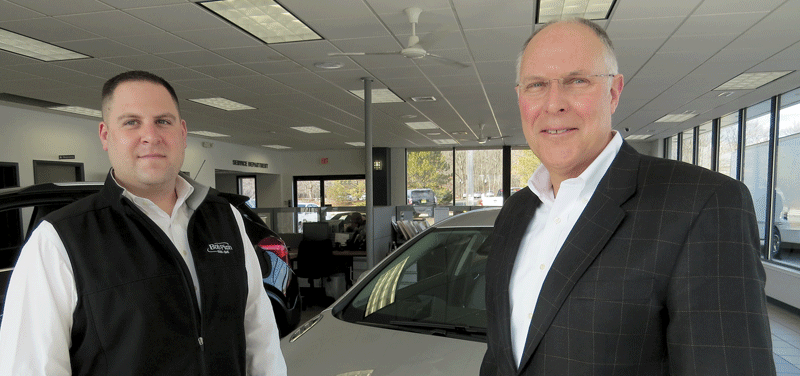
Don Pion and his son, Rob

Don Pion and his son, Rob, note that many factors point to continued solid sales in 2016, especially all the “old iron” still on the roads.

There are many of them, he said, noting that there are a number of contributing factors to this phenomenon, including better quality, which prolongs a car’s life, and several years of lingering doubts about the economy and the direction in which it was headed, which prompted many consumers to get another year — or two, or three, or four — out of their vehicles.

“The age of the fleet, the cars on the road today, remains at an all-time high,” he said. “It’s almost 12 years, according to the reports I’ve heard, which is pretty remarkable given the number of cars that were sold last year.”

This old iron — and ‘old’ is a relative term, certainly — is one of those aforementioned stars now in alignment and a contributing factor to solid projections for the year ahead, said those we spoke with.

Indeed, the more elderly vehicles — which have kept service departments jammed, providing a different source of revenue — are finally being traded in, spawning sales of new and used cars. Meanwhile, a large amount of younger old iron — especially a huge number of cars coming off leases after 36, 24, or even 12 months — is creating attractive inventory for the used-car market, where profit margins are usually better than those for cars right out of the box.

It’s part of an intriguing cycle, with a number of moving parts, but sales of the new models definitely set the tone.

“The new-car side of the business is kind of the catalyst that makes everything go,” said Pion. “It keeps everything running.”

Peffer agreed, and said that current trends collectively comprise the best news for the industry — the fact that there is plenty of fuel to keep this fire burning through the year and probably well beyond.

Indeed, while more than 50 million cars were sold in 2015 — those 17 million new models and north of 40 million used cars — there is still plenty of demand for both.

“There is a lot of activity out there, and as dealers we sell new and used vehicles,” he explained. “When you take a used vehicle in, you sell a new vehicle, so that helps new-car sales. You recondition and then sell the used car, creating another transaction, creating more service department work, creating another customer that comes back for repeat business and service.”

Meanwhile, in a departure from recent years for some models, there is ample supply of new cars and trucks, although dealers could always use more.
The 1922 Buick at the Cernak dealership

The 1922 Buick at the Cernak dealership may soon have to find a new home to make way for the new models to roll in over the next few months.

“For many years following the recession [in 2008], you had a situation where there was maybe more demand than there was supply,” said Peffer, adding that this scenario was true with some carmakers more than others. “Most manufacturers, though, have caught up, and will, or already have, satisfied demand through additional production.”

As for the nature of that demand he and others mentioned, it comes in a number of flavors, and this is yet another reason for the rosy outlook for the industry.

Much of the focus, of course, is on the huge and seemingly insatiable appetite for SUVs and trucks, and especially the latter. Peffer said these vehicles have always been popular, and become even more so when gas prices fall below $3 a gallon. When they’re below $2, like they are now, it’s hard to keep trucks on the lot, and soaring truck sales, he noted, create a rising tide that, as the saying goes, lifts all boats.

“Low fuel prices generally move people into bigger vehicles, heavier vehicles — truck-based vehicles, so trucks are really hot right now,” he explained, putting additional accent on ‘really.’ “And when people buy more trucks, that’s good for the manufacturers — they take that money and put it into R&D, and that yields new products. The truck business is profitable for the manufacturers, and it’s profitable for dealers as well.”

But while trucks are white hot, so, too, are SUVs, a class of vehicle that has seen its appeal spread well beyond soccer moms.

“They’re attracting people of all ages, including a growing number of older individuals because they’re much easier to get in and out of,” said Rob Pion, Don’s son and a member of the third generation of management at the dealership. “There’s interest across the board.”

So much so that there is now demand for a host of different-sized and variously appointed SUVs to meet the wide variety of needs within that growing market. And that’s why Cernak is so enthusiastic about the Envision.

“Some people find the Enclave too big and the Encore too small,” she explained matter-of-factly, adding that the Goldilocks factor is prompting all makers, including Buick, to respond accordingly. “We really needed a mid-sized SUV, and now we’re getting one.”

And with gas prices low and expected to stay that way for the near future, sales of these vehicles should remain brisk, said the Pions, both noting that the near certainty that these prices won’t last isn’t nearly enough to deter most all buyers of these larger vehicles.

Setting a President

Don Pion’s memories of life in the auto business stretch back more than a half-century, to when his father was a salesperson at the old Boulier Chevrolet in Springfield and he would accompany him to the lot.

He recalls the fall season, when the new models would roll in and the dealership would cover the showroom windows with brown paper to build suspense and draw customers in.

He also remembers Presidents Day and how it was a much bigger deal decades ago, when red, white, and blue balloons would often populate the showroom, dealers would give away cherry pies with sales, and area newspapers would be crammed with full-page ads announcing deals.

Most all of that is gone now, especially the newspaper ads, he said with a hint of lament in his voice, adding that the Presidents Day sales, always a bigger event in the Northeast than other parts of the country for some reason, were designed to break the winter doldrums and give people a reason to get into the showrooms.

Such sentiment still exists, and some dealers continue to mark the holiday with special sales, he told BusinessWest, adding quickly that promotions are now a near-constant in this business, with new incentives on a monthly or quarterly basis. As for February, in many respects it’s just another month, although sometimes a challenging one when winter hits with full fury, as it did in 2015.

This year, of course, it’s expected to be a solid month, as all those aforementioned stars continue to shine an optimistic light on the industry.

“Everything is very favorable right now,” said Don Pion as he surveyed the scene. “All the signs are positive.”

There are always threats to this sector, though, and things could change in a hurry. But most potential stumbling blocks, such as the stock market’s dreadful start to the year, are minor or temporary in nature, said Peffer.

Bill Peffer

Bill Peffer says the “stars are aligned” when it comes to the auto industry and sales projections for 2016.

Still, while most of the arrows are pointing up for this industry, there are challenges in various forms, starting with heightened competition in the form of quality vehicles carrying seemingly every nameplate.

“Where quality was once a market differentiator decades ago, now it’s cost of entry,” said Peffer. “I can’t think of a brand that doesn’t have really good quality.

“There are so many new-product offerings on the market right now that are full of technology, full of safety features, full of performance and styling,” he went on, adding that all this competition is in many ways a positive more than a negative. “All this really piques a customer’s interest; it’s a very good time to be in the market for a new or near-new vehicle.”

Pion agreed. “In the age of consumerism that we have now, bad products don’t survive in any segment, whether we’re talking about automobiles or whatever,” he explained. “You have to build a good product because anyone can go online and read the reviews — and people do that before they buy.”

For the Buick dealers, meanwhile, there’s the almost age-old (no pun intended) challenge of convincing younger audiences that this brand is not just for their father or grandfather.

Rob Pion recalls a recent episode involving a younger individual who test-drove one of the Buick models, liked it, but then offered, ‘I’m not old enough to drive a Buick,’ or words to that effect. And that’s a fairly common refrain.

“We battle that all that time,” said the younger Pion. “If I could just blindfold people until they got in the car and took it for a test drive, I know I could sell more people on these vehicles.”

Super Models

Time will tell whether that 1922 Buick retains its long-held parking space at the Cernak dealership. But at the moment, it looks like the family may well have to find a new home for the antique.

The Cascada will be arriving in a few weeks, and the Envision not long after that. In the meantime, the existing models, including more traditional offerings like the Lacrosse and the Verano, are in solid demand.

Add it all up, and the focus clearly shifts to the present and future, not the past.

And to the stars, which, as Peffer and other dealers said, are certainly aligned.

George O’Brien can be reached at [email protected]

Agenda Departments

‘Wolf to Woof’ Exhibit

Through May 12: In today’s society, dogs enhance the lives of millions of people in countless ways, but they are also some of our oldest friends. Ancient clues like cave paintings and burials reveal that dogs and people have lived together for thousands of years. But why have humans formed such close relationships with dogs, and not cows or chickens? “Wolf to Woof: The Story of Dogs” is the largest and most comprehensive traveling exhibition ever created on the history, biology, and evolution of dogs. The exhibit, on view at the Springfield Science Museum through May 12, attempts to sniff out the facts on dogs and explore what makes the human/dog relationship so unique. It uses the familiarity and love of these four-legged friends to explore science and biological concepts. The exhibit has four themed sections including multi-media displays, artifacts, photo murals, and dioramas of taxidermied wild canines and sculpted modern dog breeds. Additionally, interactive, hands-on components demonstrate key exhibit concepts. For example, visitors can enter a ‘howling area’ and guess what dogs are saying, test their nose against a dog’s great sense of smell, and examine fossil and genetic evidence of how modern-day dogs are descended from wolves. In addition, the weekly Museums à la Carte lecture on Thursday, March 17 will feature a talk by Eliot Rusman, president and CEO of Fidelco Guide Dog Foundation. Tickets for this lecture are $4 for the general public and $2 for members. “Wolf to Woof: The Story of Dogs” is sponsored by United Bank. MassMutual is the 2015-16 Premier Sponsor of the Springfield Museums.

Grief Through Story Workshop

Feb. 10: The Garden: A Center for Grieving Children and Teens will present a Grief Through Story workshop from 6 to 7:30 p.m. at Sunderland Public Library, 20 School St. The workshop, co-hosted by the Sunderland, Deerfield, and Hatfield public libraries, is geared toward adult caregivers and community members who are interested in learning how to initiate gentle conversations with youth about death, dying, and grief. The purpose of the workshop is to use children’s literature as an effective tool in talking with children about these difficult topics. Participants will join in a guided conversation about grief and will discover resources in various mediums that can be used to facilitate these important conversations. Family members, friends, and loved ones in the lives of a grieving young person, as well as anyone interested in grief work with children, is invited to attend.   The snow date is Wednesday, Feb. 17 from 6 to 7:30 p.m. The event is free, and drop-ins are welcome. The Garden provides bereavement support at no cost to grieving families with young children no matter where, how, or when a death occurred. For more information about its programs, call Shelly Bathe Lenn, Garden coordinator, at (413) 582-5312.

Chocolate Fantasy

Feb. 12: Baystate Franklin Medical Center’s volunteers and members of the Baystate Franklin Auxiliary (BFA) will hold their annual Chocolate Fantasy fund-raiser from 9:30 a.m. to 3:30 p.m. in the hospital’s main conference rooms. This year, funds raised at the Chocolate Fantasy will support the hospital’s Cardiopulmonary Department and Mental Health Unit. The event also features Valentine-related crafts and a raffle with baskets of items from local businesses. BFMC Clinical Notes, the hospital’s women’s a cappella chorus, will present a mini-concert of love songs at 12:15 pm in the main lobby. “Many local organizations and BFMC staff and volunteers have graciously and generously donated chocolate items, from chocolate-chip cookies to chocolate-covered apples to truffles and fudge, and much more,” said Sydney Ramey, chair of the Chocolate Fantasy committee. “We always invite contributors to think creatively as they consider what to send in for the sale.” A highlight of this year’s Fantasy is the raffling of an original watercolor by John Tomasetti, a member of the Old Deerfield Painting Group. The painting is on display in the BFA Gift Shop window. Raffle tickets may be purchased in the shop for $2 each, three for $5, or $10 for a baker’s dozen. The drawing will take place at the Chocolate Fantasy. For more information on the event, or to donate chocolate goodies or raffle items, contact Becky George, manger, Volunteer Services, BFMC, at (413) 773-2318  or [email protected].

Red Cross Blood Drive

Feb 16: The MassMutual Center will host its annual American Red Cross blood drive from 11 a.m. to 5 p.m. Severe winter weather across the nation since Jan. 1 has forced the cancellation of more than 300 blood drives, resulting in more than 9,500 donations uncollected, further depleting an already-low winter supply. In order to fulfill the need, blood products are being distributed to hospitals as quickly as donations are being collected. “The MassMutual Center is proud to hold our annual blood drive in support of the Red Cross. We are committed to serving the Springfield community and working with partners such as the Red Cross whose mission is to provide compassionate care to those in need,” said Stacey Church, general manager of the MassMutual Center. Visit redcrossblood.org or call (800) 733-2767 to schedule an appointment. Walk-ins are welcome, but appointments are preferred.


Informational Seminar on
Alzheimer’s, Dementia

Feb. 16: The Arbors at Chicopee will host an informational seminar on Alzheimer’s disease and dementia at 6 p.m. Ed Walters-Zucco, RN at Integra, will offer a brief presentation on the differences between the two diseases and the signs and symptoms. More than 5 million Americans suffer from Alzheimer’s disease. Community and resident family members will gather to learn how to cope with this statistic. Following the presentation will be a question-and-answer session and a raffle drawing. Refreshments, cookies, and cheese and crackers will be served.


Dinner, Conversation
About Race in America

Feb. 21: Blue Heron Restaurant will host “On the Bus: Dinner and a Conversation About Race in America with Julius Lester and Barry Moser.” Lester and Moser, writers, educators, and artists who currently reside in Western Mass., both came of age in Tennessee in the 1950s and 60s. Although they both rode public buses in the South, their experiences differed greatly because of the color of their skin. Their experience provides a lens through which the two will begin a discussion on race, racism, and segregation in the U.S. Local poet, author, and gallery owner Richard Michelson will moderate the discussion. Guests will be invited to pose questions to the panelists and share their own thoughts and experiences on the subject. The evening’s menu will draw from the culinary heritage of the American South. The meal will begin with a root vegetable soup served with pimento-cheese crostini. For the main course, guests will choose from a selection of chicken-fried steak with cream gravy, fried catfish with jalapeño remoulade, or squash and cheddar soufflé. Side dishes will be served family-style, and include collard greens, hoppin’ John, sautéed okra, and housemade biscuits. The meal will conclude with a slice of chess pie, a staple of Southern cuisine. The event will begin at 5:30 p.m., and the cost is $40 per person, not including tax or gratuity. The full menu is available to view at www.blueherondining.com/special-events. Reservations are recommended and can be made by calling (413) 665-2102 or e-mailing [email protected].


Real-estate
Licensing Course

Feb. 22: Beginning Monday, Feb. 22, the Realtor Assoc. of Pioneer Valley will sponsor a 40-hour, 14-class sales-licensing course to help individuals prepare for the Massachusetts real-estate salesperson license exam. The course will be completed on Wednesday, March 23. Tuition is $359 and includes the book and materials. For an application, call the Realtor Assoc. of Pioneer Valley at (413) 785-1328.


Celiac Disease and
Gluten-free Diets

Feb. 24: Many people are on gluten-free diets, either due to celiac disease, gluten intolerance, or just because they think it’s healthier. The community is invited to attend a luncheon program titled “Separating Facts from Fad: Gluten-free Diets,” presented by Dr. Harbir Sawhney, gastroenterologist from Baystate Medical Practices – Mary Lane Gastroenterology from 11:30 a.m. to 1 p.m. at Baystate Wing Hospital in Palmer. “Dr. Sawheny will discuss celiac disease, gluten-free diets, and all things gastrointestinal,” said Susan Fontaine, senior coordinator of Loyalty Programs at Baystate Health. “Celiac disease is a digestive disorder in which the body can’t tolerate gluten, a protein found in wheat, rye, barley, and sometimes oats. According to the National Foundation for Celiac Awareness, an estimated 1 in 133 Americans, or about 1% of the population, has celiac disease. “If you need to cut gluten from your diet, it may seem difficult, but there are many healthy and delicious foods that are naturally gluten-free,” said Fontaine, noting that the program will include a gluten-free bag lunch. The program is sponsored by Baystate Health Senior Class and will include lunch at no cost. Space is limited, and registration is required by calling Baystate Health Link at (800) 377-4325. For more information about the Senior Class Loyalty Program, visit www.baystatehealth.org/seniorclass.


Academy of Music
Historic Tour

Feb. 24: The Academy of Music will offer a free tour of the historic theater at 5:15 p.m. Led by Academy of Music Development Coordinator Kathryn Slater, the tour will provide insight into the history behind this Northampton mainstay, including details about the organization’s founder and interesting notes about the many revitalizations. Built in 1891, the Academy of Music was the first municipally owned theater in the U.S., and home to the first stock theater company in the nation, the Northampton Players, formed in 1912. For nearly 125 years, the Academy has hosted an impressive array of performers, and the building holds the tales. See for yourself the century-old hole cut in the stage floor for Houdini’s disappearing act; Cole Porter’s grandfather clock; dressing rooms used by Sarah Bernhardt, Boris Karloff, Ethel Barrymore; and more. Step on the stage and see the Academy of Music from a whole new perspective, and take in the results of the 2014 restoration that refurbished the 800-seat auditorium, which earned a Mass. Historical Commission Preservation Award. This walking-and-talking tour begins promptly at 5:15 p.m. in the main lobby and is expected to run approximately 45 minutes. Admission is free, but reservations are required, as attendance is limited to 20. Reservations may be made through the Academy of Music Box Office by calling (413) 584-9032, ext. 105, Tuesday through Friday from 3 to 6 p.m., or by e-mailing [email protected].


Springfield Falcons
Dr. Seuss Night

March 12: The Springfield Falcons, in partnership with the Springfield Museums and Dr. Seuss Enterprises, announced Dr. Seuss Night, to be held during a game against the Portland Pirates starting at 7 p.m. Dr. Seuss Night and the game will be sponsored by Berkshire Bank. For the first time ever, Dr. Seuss Enterprises has partnered with the Falcons and the Springfield Museums in presenting this special night to honor Theodor Geisel, a.k.a. Dr. Seuss, who was born and raised in Springfield. The Springfield Museums are preparing to open the Amazing World of Dr. Seuss Museum in 2016, an exhibit featuring interactive activities for children and a one-of-a-kind experience that will provide a look at the man behind the drawing board. “We are excited to partner with the Springfield Museums and Dr. Seuss Enterprises in presenting this special night to honor one of Springfield’s most famous native sons,” Falcons President Sarah Pompea said. “We have been anticipating this night since the summer months and are excited to aid the launching of the new museum in support of a unique family entertainment night around a favorite children’s author.” The night will include appearances by the Cat in the Hat and Thing 1 and Thing 2 costumed characters. In addition, specialty jerseys will be worn by Falcons players and auctioned off, with proceeds donated to the Springfield Museums to help support the creation of the new museum. “We are thrilled that the Falcons are stepping up in support of our fund-raising campaign,” said Kay Simpson, president of the Springfield Museums. “It’s wonderful to have the support of one our best downtown neighbors.”

Difference Makers

March 31: The eighth annual Difference Makers award program, staged by BusinessWest, will be held at the Log Cabin Banquet & Meeting House. Tickets cost $60, and tables of 10 are available. To reserve a spot, call (413) 781-8600, ext. 10, or visit businesswest.com. Difference Makers is a program, launched in 2009, that recognizes groups and individuals that are, as the name suggests, making a difference in this region. This year’s class was profiled in the Jan. 25 issue, and their stories can also be read online at businesswest.com. They include Hampden County Sheriff Michael J. Ashe Jr.; Mike Balise, Balise Motor Sales, philanthropist (1965-2015); Big Brothers Big Sisters of Hampden, Hampshire, and Franklin counties; Bay Path University President Carol Leary; and John Robison, president, J.E. Robison Service. Difference Makers is sponsored by EMA Dental, First American Insurance Agency, Health New England, Meyers Brothers Kalicka, P.C., Northwestern Mutual, PeoplesBank, Royal LLP, and Sunshine Village.


5K Run & Walk
for a Noble Cause

April 30: Registration is now open for Baystate Noble Hospital’s 32nd annual 5K Run & Walk for a Noble Cause, being held at Stanley Park in Westfield. The race begins at 9 a.m., with registration from 7:30 to 8:30 a.m. near the Children’s Pavilion. The Baystate Noble 5K is a competitive road race for all levels of runners, from the novice to the serious athlete. The 3.1-mile course is flat out and back through Stanley Park and the surrounding residential area. A family-friendly, non-competitive walk follows the same route as the road race. Individuals, teams, wheelchair racers, and school groups are all encouraged to participate. After the race, refreshments, activities, and vendor tables will be located near registration, and awards will be given out. Early registration is encouraged. The registration fee for ages 13-59 is $35 through April 29 (seniors 60 and older are $25). The registration fee for ages 13-59 is $40 on April 30 ($30 for seniors). Children 12 and under participate free when accompanied by a paying adult. T-shirts in various sizes are available to registrants on a first-come, first-served basis while inventory is available. To register online, download registration materials, and read general information, visit baystatenoblehospital.org/5k. Sponsorship and vendor table opportunities are also available. For more information, visit baystatenoblehospital.org/5k or contact the Community Development Office at [email protected] or (413) 568-2811, ext. 5520.


40 Under Forty

June 16: The 10th annual 40 Under Forty award program, staged by BusinessWest, will be held at the Log Cabin Banquet & Meeting House in Holyoke, honoring 40 of the region’s rising stars under 40 years old. The magazine will continue to accept nominations for the class of 2016 until 5 p.m. on Friday, Feb. 12. The nomination form, which can be found at businesswest.com, requests basic information and can be supported with other material, such as a résumé, testimonials, and even press clippings highlighting an individual’s achievements in their profession or service to their community. An independent panel of judges (see profiles on page 9 of this issue) will choose the winners, and their stories will be told in the April 18 issue. The event is sponsored by Northwestern Mutual and Paragus Strategic IT (presenting sponsors), EMA Dental, Health New England, Isenberg School of Management at UMass Amherst, Moriarty & Primack, and United Bank. More details on the gala will be revealed in upcoming issues.

Agenda Departments

‘Better Angels’ Exhibit

Through July 10: In the months prior to 9/11, firefighter Peter Freund had been considering a career change after 23 years with the FDNY. One week after he perished at the World Trade Center, Freund’s family received a letter confirming his acceptance to teach high-school mathematics. Described by some as “a living saint,” chaplain Mychal Judge was the first FDNY casualty listed on 9/11, entry number 0001. His helmet was later presented as a gift to the Pope. A proud first-time uncle, firefighter William Johnston, had been looking forward to the baby shower on Sept. 30. His remains were found at Ground Zero that afternoon. These are just a few of the stories that await visitors who come to view “Better Angels: the Firefighters of 9/11,” a new traveling exhibit at the Lyman & Merrie Wood Museum of Springfield History opening Tuesday, Jan. 12 and running through July 10. The exhibit features 343 portraits by artist Dawn Howkinson Siebel, one for every New York City firefighter lost in the World Trade Center attacks. Together, the images create a wall measuring 21 feet long, allowing visitors to come face to face with men who made their living running toward danger and saving lives, even at the risk of their own. Siebel, a current resident of Easthampton, was living in Colorado at the time of the attacks, but had been a longtime resident of Manhattan in the years prior. Inspired when the New York Times printed photos of all 343 fallen FDNY members, Siebel set out to paint a portrait of every firefighter lost on that fateful day. Over the next few years, she painstakingly hand-painted each portrait onto a block of charred wood. In total, the exhibit took 3,000 hours and over six years to create. In her artist statement for the exhibit, Siebel said, “these 343 firemen represent New York, the FDNY, their selfless profession, and also — in the way of heroes — the possibility that each of us may rise to the ‘better angels’ of our own nature.”

‘How to Talk to Kids About Therapy’

Feb. 9: The Garden: A Center for Grieving Children and Teens, a program of Cooley Dickinson VNA & Hospice that provides support to grieving young people and their families, announced a free workshop with Sarah Abel, LICSW. This workshop, titled “How to Talk to Kids About Therapy,” will take place from 6 to 7:30 pm at the Cooley Dickinson VNA & Hospice offices at 168 Industrial Dr. Geared toward adult caregivers, the purpose of the workshop is to provide an understanding of child therapy and to prepare parents, caregivers, and teachers to talk about therapy with kids. Participants will be able to discuss children’s behaviors and what they reveal about underlying feelings. Participants will also consider when to consult with a therapist around concerns about a child. Abel has been a psychotherapist since 1994 and aims to help families prepare their children to enter into therapy and face this vulnerable moment for both parents and children. She is a graduate of New York University School of Social Work and the Institute of Child, Adolescent and Family Studies, and completed a post-graduate fellowship in psychoanalysis at the Massachusetts Institute for Psychoanalysis. She has taught child development at Smith College School of Social Work and currently treats children, adolescents, and adults in her private practice in Northampton. This event is free, and the snow date is Thursday, Feb. 11 from 6 to 7:30 p.m. To RSVP, contact Shelly Bathe Lenn, coordinator at the Garden, at (413) 582-5312.


Heart Walk Kickoff Breakfast

Feb. 12: The American Heart Assoc./American Stroke Assoc. invites the public to the 2016 Pioneer Valley Heart Walk Kickoff Breakfast from 8 to 9 a.m. at the Delaney House, 3 Country Club Road, Holyoke. The free event includes a hot breakfast. Team captains or those interested in leading a team are encouraged to attend to receive their team-captain kits, hear a panel of guest speakers, and learn more about the Heart Walk and new 5k Run, set for Sunday, May 1 at Look Park in Florence. To attend the breakfast, RSVP by Tuesday, Jan. 26 with Traci Heath at (413) 262-3223 or [email protected]. For more information, visit www.pioneervalleyheartwalk.org.


Academy of Music Historic Tour

Feb. 24: The Academy of Music will offer a free tour of the historic theater at 5:15 p.m. Led by Academy of Music Development Coordinator Kathryn Slater, the tour will provide insight into the history behind this Northampton mainstay, including details about the organization’s founder and interesting notes about the many revitalizations. Built in 1891, the Academy of Music was the first municipally owned theater in the U.S., and home to the first stock theater company in the nation, the Northampton Players, formed in 1912. For nearly 125 years, the Academy has hosted an impressive array of performers, and the building holds the tales. See for yourself the century-old hole cut in the stage floor for Houdini’s disappearing act; Cole Porter’s grandfather clock; dressing rooms used by Sarah Bernhardt, Boris Karloff, Ethel Barrymore; and more. Step on the stage and see the Academy of Music from a whole new perspective, and take in the results of the 2014 restoration that refurbished the 800-seat auditorium, which earned a Mass. Historical Commission Preservation Award. This walking-and-talking tour begins promptly at 5:15 p.m. in the main lobby and is expected to run approximately 45 minutes. Admission is free, but reservations are required, as attendance is limited to 20. Reservations may be made through the Academy of Music Box Office by calling (413) 584-9032, ext. 105, Tuesday through Friday from 3 to 6 p.m., or by e-mailing [email protected].


Difference Makers

March 31: The eighth annual Difference Makers award program, staged by BusinessWest, will be held at the Log Cabin Banquet & Meeting House. Tickets cost $60, and tables of 10 are available. For more information, go HERE. Difference Makers is a program, launched in 2009, that recognizes groups and individuals that are, as the name suggests, making a difference in this region. This year’s class is profiled in this issue HERE. Difference Makers is sponsored by EMA Dental, First American Insurance Agency, Health New England, Meyers Brothers Kalicka, P.C., Northwestern Mutual, PeoplesBank, Royal LLP, and Sunshine Village.


40 Under Forty

June 16: The 10th annual 40 Under Forty award program, staged by BusinessWest, will be held at the Log Cabin Banquet & Meeting House in Holyoke, honoring 40 of the region’s rising stars under 40 years old. The magazine will continue to accept nominations for the class of 2016 until 5 p.m. on Friday, Feb. 12. The nomination form, which can be found HERE, requests basic information and can be supported with other material, such as a résumé, testimonials, and even press clippings highlighting an individual’s achievements in their profession or service to their community. An independent panel of judges will choose the winners, and their stories will be told in the April 18 issue. More details on the gala will be revealed in upcoming issues.

Daily News

SPRINGFIELD — In the months prior to 9/11, firefighter Peter Freund had been considering a career change after 23 years with the FDNY. One week after he perished at the World Trade Center, Freund’s family received a letter confirming his acceptance to teach high-school mathematics.

Described by some as “a living saint,” chaplain Mychal Judge was the first FDNY casualty listed on 9/11, entry number 0001. His helmet was later presented as a gift to the Pope.

A proud first-time uncle, firefighter William Johnston, had been looking forward to the baby shower on Sept. 30. His remains were found at Ground Zero that afternoon.

These are just a few of the stories that await visitors who come to view “Better Angels: the Firefighters of 9/11,” a new traveling exhibit at the Lyman & Merrie Wood Museum of Springfield History opening Tuesday, Jan. 12 and running through July 10. The exhibit features 343 portraits by artist Dawn Howkinson Siebel, one for every New York City firefighter lost in the World Trade Center attacks. Together, the images create a wall measuring 21 feet long, allowing visitors to come face to face with men who made their living running toward danger and saving lives, even at the risk of their own.

Siebel, a current resident of Easthampton, was living in Colorado at the time of the attacks, but had been a longtime resident of Manhattan in the years prior. Inspired when the New York Times printed photos of all 343 fallen FDNY members, Siebel set out to paint a portrait of every firefighter lost on that fateful day. Over the next few years, she painstakingly hand-painted each portrait onto a block of charred wood. In total, the exhibit took 3,000 hours and over six years to create.

In her artist statement for the exhibit, Siebel said, “these 343 firemen represent New York, the FDNY, their selfless profession, and also — in the way of heroes — the possibility that each of us may rise to the ‘better angels’ of our own nature.”

To mark the opening week of the exhibit, Siebel will speak at the weekly Museums à la Carte lecture on Thursday, Jan. 14 at 12:15 p.m.

Daily News

PITTSFIELD — John Bissell, the new president and CEO of Greylock Federal Credit Union, is the first chief executive in Berkshire County to sign on to CEOs Against Stigma, the statewide workplace campaign created by the state chapter of the National Alliance on Mental Illness (NAMI Mass). Bissell says he is committed to helping eliminate workplace stigma in the Commonwealth of Massachusetts, starting with his 257 employees.

“Every one of us has a friend or family member who has struggled with mental-health issues,” Bissell said. “It is time to demonstrate that we care about them, and that we support them in meeting their mental-health challenges.”

Mental-health disorders affect one in five adults and are the leading cause of workplace disability. But they are often not discussed in the workplace because of the stigma that surrounds them. CEOs Against Stigma is designed to create a stigma-free workplace by changing misconceptions about mental illness so people can speak freely about the conditions that affect them and their families. That change starts at the top.

“I believe bringing these issues and challenges out in the open, free from stigma and stereotype, is a vital step to helping all of our employees and colleagues to lead full and productive lives,” Bissell said.

By signing the pledge, he promises to promote a stigma-free environment by encouraging more dialogue about mental-health conditions, providing information to both managers and employees to keep them better informed, and bringing NAMI’s In Our Own Voice presentations into the workplace. Recognized by a leading national mental-health researcher as the most effective anti-stigma program in America, IOOV features two people sharing their personal stories of recovery. These presentations are an important component of the campaign.

“CEOs Against Stigma is moving full steam ahead to change work environments across the state,” said NAMI Berkshire County Executive Director Brenda Carpenter. “We are proud to have Mr. Bissell and Greylock Federal Credit Union as the first in Berkshire County to join our team.”

CEOs Against Stigma is working to sign 250 executives to the campaign and reach a half-million employees. Any Massachusetts company with at least 50 employees can join. For more information about CEOs Against Stigma, visit ceos.namimass.org.

Daily News

SPRINGFIELD — The Springfield Museums recently created an entirely new, mobile-friendly website highlighted by new and expanded information on the museums’ combined collections. The site uses the same URL address as the previous website, springfieldmuseums.org.

The website was created through the combined efforts of Merideth Ross, design and website manager for the Museums, and Joseph Casciano, the Museums’ administrative and social-media associate. Additional development assistance was provided by Noah Kuhn of Pilotmade in Amherst.

The Museums’ new website is optimized for mobile browsing, a critical feature in an age where more website visitors are using tablets and smartphones than ever before. The site has also been reorganized based on feedback gathered from a ‘card sort’ survey of site users, creating a more intuitive navigation. Other useful features include an easy-to-use portal for online donations and enhanced functionality to house additional content like videos and a new blog.

A major new element of the redesigned site is the presence of high-quality photos and background information on many spotlight objects from the Museums’ combined collections. This new feature will allow the Museums to reach an even wider audience with information about their signature collections, from antique Asian and Islamic art to scientific and anthropological specimens; from rare cars and motorcycles to Currier & Ives prints. Visitors to the site can browse these items by category or tag, and can search the collections using any keyword. As with other major museums, digitization and online access of images and catalog data will be a major focus for the Springfield Museums in the coming years.

“We are very excited to introduce this new website, which will allow us to share information on the unique breadth and quality of our collections, events, and exhibits in a way that is flexible and easy to access,” said Springfield Museums President Kay Simpson.

The site will continue to expand in the future to include more collections data, an online store, and articles offering a look at the people and stories behind the Museums’ exhibits and events.

Sections Travel and Tourism

Plane Speaking

Janice Webb

Janice Webb says that the strong dollar, coupled with a desire among Baby Boomers to see the world, is the prevailing force when it comes to travel in 2016.

Janice Webb says three area couples put down their deposit for a trip to Paris for next April on the morning of Nov. 13, just hours before news of the terrorist attacks across the City of Light first broke on CNN.

Webb, owner of Emerald City Travel in Springfield, circled back with the group the next day to see if they had any questions or concerns — or intentions to change their travel plans.

They had some of the former, certainly, but none of the latter, she told BusinessWest, adding that the prevailing attitude was that, while the attacks that killed 130 people were alarming, they were not enough to prompt cancellation of a trip, which would continue with a river cruise to Amsterdam, that those involved have been looking forward to for most of their lives.

“They all e-mailed back and said, ‘let’s do this and hope for the best,’ and that appears to be the common sentiment,” said Webb, a 30-year industry veteran who noted that the various forms of turmoil in Europe are colliding head on with a potent package — a weak euro combined with a powerful desire among retiring Baby Boomers and others to get out and see the world, or at least the homes of their ancestors.

The latter is, by and large, the much stronger force at the moment.

“People want to travel, and they’re not going to let this stop them,” she said, using ‘this’ to describe the sum of the international and domestic turmoil. “They’re going to be more cautious, certainly, but they’re still going to travel.”

Paul O’Meara agreed. He’s the business development manager for the Globus family of travel brands, which includes Avalon Waterways, Cosmos, and Monograms. He told BusinessWest that, since 9/11, and even moreso in recent years, international travelers have adapted to what he called a “new norm.”

Roughly translated, this equates to expectations — for longer lines and tighter security at airports, armed soldiers at many popular tourist destinations in Europe, and, yes, possible incidents involving terrorism.

“People are more experienced now, they know what to expect, and they’re more aware of their safety and more aware of their surroundings,” he said, adding that such travelers would certainly take notice of the recent global travel alert issued by the U.S. State Department (in effect until February), but they would not be intimidated or frozen by it. “This is not 1985 or 1965; travelers are more sophisticated now, and they’ve adjusted to this new norm.”

As for the attacks in France’s capital city and their impact on travel there, he summed things up with a line he would utter more than a few times.

“Paris is Paris — there’s a reason why 30 million people go there every year,” he said, adding that his company books more visits to that city than any other except Rome. “We have about 500,000 people booked on various trips to Paris, and fewer than a dozen have cancelled.”

But an attitude of defiance when it comes to not letting terrorism get in the way of a long-planned, long-dreamed-about trip to Europe also extends to Berlin, London, Venice, Belgium (despite the fact that Brussels was locked down for several days last month), and, to a lesser extent, Istanbul, although some cruise lines and travel companies are changing some itineraries in Turkey.

“The knee-jerk reaction to what happened in Paris or in Brussels is that people aren’t going to travel there,” said O’Meara. “But that’s not what’s happening.”

For this issue and its focus on travel and tourism, BusinessWest looks at how recent events are spawning concern, but they’re not keeping travelers from reaching their destination — whatever that might be.

Cruise Control

As he talked about travel to Europe and why he doesn’t expect it to be seriously dented by the attacks in Paris and other terrorist actions in that part of the world, O’Meara started his explanation by detailing one of his company’s current offerings.

It’s a package known as ‘Italian Vista,’ and it features eight days with stops in cities like Rome, Florence, Milan, and Venice, and includes hotel stays, meals, and guided tours. The price this fall was an already-attractive $1,999, and for next year, it’s a jaw-dropping $1,449.

“That’s all due to the weak euro and the attractive exchange rates,” he told BusinessWest, adding that such sticker prices on trips across the continent help explain why bookings for 2016 are running roughly 13% ahead of the pace for last year, despite the attacks in Paris, the bomb that brought down a Russian airliner, the refugee crisis, and other forms of turmoil.

“This is the time to book, and people are doing it,” he said. “The prices are attractive, the dollar is strong … these are great opportunities, and people don’t want to miss out on them.”

the City of Light

The terrorist attacks in Paris were unnerving, but thus far, they do not appear to be a deterrent for those making plans to visit the City of Light.

That’s not to say that the terrorist attacks in Paris are not having an impact in that city or others. Indeed, the general manager of the Palace Hotel Park Hyatt Paris-Vendome and Park Hyatt’s vice president for France recently told The New York Times, “Naturally, occupancy is drastically decreasing in the wake of the attacks … we noticed a lot of cancellations right after the attacks for the following days and weeks, with the decrease more significant on bookings from the leisure traveler segment than the business one.”

But overall, O’Meara says travelers are simply pausing before traveling to Paris and other destinations, and the sentiment within the travel industry is that they won’t be pausing for long, unless there are more incidents.

Webb agreed. She said fall is the time when travel companies put out deals designed to fill cruise ships and hotels for the coming season, and thus far, travelers have not been shy about snapping them up.

“They offer these deals, which include airfare sales, percentage discounts, and past-passenger discounts, to get the product rolling,” she said, adding that these discounts are typical of what’s been offered the past several years. “And I’ve had a lot of people make reservations starting the first week in October; it’s been steady since, and it’s mostly European product.”

She said there are many factors at play when it comes to the ongoing surge in international travel — and travel in general. They include the strong dollar, which is now worth almost as much as a euro, when three years ago the rate was almost 1.4 dollars to the euro.

But there’s more to the equation. Bad winters, especially the one in 2015, have promoted many to conclude that, to endure such punishment, they need to break it up with a week or 10 days someplace warm, usually coinciding with February school vacation.

Adventure-packed destinations are still very much in vogue, which means Costa Rica is still hot, said Webb, adding quickly that many people young and old have already been there and done that, and now, most are just looking for a good deal and a good beach.

Then there are the aging Baby Boomers, many of them with disposable income, and others as well, who want to visit places they’ve heard about or the country their family calls home.

For many in this region, that means Italy or Ireland. “It seems like there’s lots of Irish and Italians in the Springfield area,” said Webb, who is booking lots of trips to both countries.

But there is still another factor in all this, she went on, noting that, overall, events like those that took place in Paris have only a temporary impact on travel — if other conditions are favorable, such as the economy — and usually not a deep impact.

An exception to that rule was 9/11, Webb added quickly, noting that the industry suffered greatly as business was frozen by uncertainty. But even then, there were groups and individuals who were undaunted and determined to seize opportunities.

“People were generally fearful at first,” she said of the days and weeks following 9/11. “But there’s one contingent of people who travel right away because they know the prices are going to be low, and they’re going to book the bargains. And then, a second contingent of people come right behind them, because they’re just tired of not doing what they want to do, and at that point, they perceive the risk to be worth taking to see what they want to see or live the way they want to live.”

Whether this pattern continues in the wake of this tumultuous fall remains to be seen, but all indications are that it will.

But while travelers will be undaunted, for the most part, they will also be more cautious, Webb predicted. She predicted that some may opt to travel with a group rather than visiting a city or region on their own, which is good for cruise-ship lines and tour operators.

Meanwhile, others may seek out destinations deemed to be safe, or at least safer.

“Sometimes a travel warning like this will push people to cruising,” Webb explained, “because if a port is deemed unsafe, the cruise line won’t go there; they’ll just substitute another port, and so people feel confident that, if the cruise lines go there, it’s a safe place to go.”

Not Tripped Up

Even within the confines of that ‘new norm’ O’Meara described, the terrorist attacks in Paris were certainly unsettling — for travelers and the travel industry.

Thus far, though, it appears that the package of attractive fares, a strong dollar, a desire among Boomers to see the world, and ‘Paris being Paris’ is creating opportunities well worth the sum of the risks involved.

Like those three local couples bound for Paris next spring, people are booking, and hoping for the best.

George O’Brien can be reached at [email protected]

Business of Aging Sections

Practicing What They Preach

Employees engage in unexpected ‘stress wellness breaks

Employees engage in unexpected ‘stress wellness breaks’ in which they are told to stretch, take a short walk, do push-ups, or engage in other physical activities for a few minutes.

On June 1, Karen Drudi completed her first five-kilometer run.

It was her 55th birthday, and she took third place in her age group. “I call it my marathon, and I have the medal I won hanging on a doorknob at home,” said the executive assistant at Dowd Insurance Agency in Holyoke.

Drudi is proud of her accomplishment, and knows that running a 5K is something she probably would never have attempted on her own. But thanks to the Dowd Wellness Program, which kicked off at the beginning of the year for employees in the company’s main branch and all its satellite offices, she was motivated to take up the sport.

The program was created to inspire people to eat a healthy and well-balanced diet, exercise on a regular basis, and engage in stress-reducing activities. It has had a marked effect on participants, and led employee Cathy Sypek to start a ‘Couch to 5K’ running group to share her love of the sport, which Drudi and other non-runners joined, meeting after work to train at the nearby Ashley Reservoir.

“I had tried running in the past, but had never been successful. So I thought that, whether I completed it or not, it would still be a challenge,” Drudi said. “We started in April, and within a few weeks, I felt it was something I could achieve. There was a lot of camaraderie, and whenever someone lagged behind, the rest of the group encouraged them to keep going. And since Dowd’s program began, other people have tried things like yoga or lifting weights. It’s motivating when we get together and hear about the success of other people.”

Catherine Palazzo, the company’s Human Resources director, conceptualized the idea for the Dowd Wellness Program after listening to representatives from other companies talk about wellness initiatives during a group meeting.

“When I returned, I did some research on wellness programs and found they were good for overall morale, health, and team building,” she said, adding that she presented the concept to President and CEO John Dowd Jr., who approved it wholeheartedly.

Which means that the company now follows the advice it gives others.

“We tell our commercial clients to try to implement an atmosphere in their workplace that inspires employees to be safe and stay healthy; it results in greater productivity and fewer sick days, and is also beneficial as it shows employees the company cares about their people,” said Dowd. “So I thought that, if we are going to preach it, we needed to practice it.”

Palazzo began designing the program with help from fellow employee Lynn Ann Houle, and asked people to volunteer for a wellness committee.

“The intent of the program is to support the overall health improvement and morale of our employee population,” Palazzo said, explaining that programs and activities have been designed to raise awareness about health and nutrition and increase overall physical activity levels, with recognition and incentives awarded on a regular basis.

For this issue, BusinessWest talked with employees at Dowd about how they created this program, and why they believe it is a blueprint for other companies to follow.

Changes in Behavior

The wellness program, which kicked off in February, features a number of components, including a weekly online questionnaire. Employees who reply earn points for positive responses to a series of health-related questions. They are asked about their food choices, whether they consumed eight glasses of water each day, and if they have engaged in the listed exercises, which range from doing an hour of cardiovascular activity during the week to lifting weights, running, or doing yoga.

Every few months, the activities on the list are changed  — with advance notice — to inspire people to try new sports such as kayaking or hiking.

Points are tabulated, and prizes are awarded at a monthly luncheon, where people’s birthdays, anniversaries with the company, and other milestones, such as exceeding sales goals, are also recognized.

At that time, the grand-prize winner receives a gift certificate to a sporting-goods store, and second- and third-place winners choose from an array of exercise-related items, such as yoga mats, cookbooks, and videos.

In addition, food in the company snack bar has been changed; unhealthy items have been replaced with fresh fruit and other nutritious offerings. Free fruit is also put out once a week at lunchtime, and Houle announces unexpected ‘stress wellness breaks,’ in which employees are told to stretch, take a short walk, or do other physical exercises.

There are also periodic activities that allow participants to earn bonus points. In July, Houle planned a golf outing, and employees from different offices played 18 holes of pitch and putt at Annie’s Driving Range in Chicopee. She brought a fruit salad in a watermelon, as well as healthy beverages. “We all had a blast,” she said.

The following month, her goal was to “bring out the inner child” in each member of the staff, which led to the creation of Dowd Field Day.

More than a dozen people gathered outside the Holyoke office and played ladder ball and hopscotch, took part in a hula-hoop contest and a sidewalk-chalk art competition, then enjoyed healthy snacks prepared by committee members who used Weight Watchers recipes.

Houle said the event was truly enjoyable. “There is nothing better than laughter and a smiling face. It makes you feel good about yourself and is projected in your outward demeanor.”

This is what organizers had in mind when the program was launched at the annual company meeting. On that occasion, Dowd talked to the employees about why it was being implemented.

“I told them the firm is concerned about each person’s well-being, and we wanted them to take steps to improve their health,” he recalled. “We challenged them to begin an exercise regimen and to eat healthy foods, and told them, if the opportunity came up to participate in a walk for charity or something similar, to do it. Good health is achievable with exercise and proper diet and results in positive benefits.”

Each employee received a kick-off goody bag, with information on how to log their food intake and activity on myfitnesspal.com, as well as a stress ball, a healthy snack, bottled water, and other health and fitness items. In addition, everyone has been encouraged to complete Health New England’s annual online health survey.

Palazzo said participation has steadily increased since the program began, and enthusiasm continues to grow. To that end, the agency subsidizes gym memberships, and committee members share articles, healthy recipes, and information on physical activity and exercises that people can do at home.

Healthy Outlook

Houle is chair of the program and plays an active role in keeping people motivated. She told BusinessWest that she speaks to employees about how they are doing and sends periodic upbeat e-mails to keep everyone encouraged.

Houle lost 40 pounds on Weight Watchers two years ago, and said it enhanced her self-esteem. “It made me passionate about feeling good and being happy,” she said, adding that, as a result, she loves playing a leading role in the program because she wants others to feel equally good. “The people who choose to participate in this really enjoy it.”

Carol Andruss has lost eight pounds since the Dowd Wellness Program began by making small lifestyle changes, and said participating employees have lost more than 100 pounds overall, an estimate garnered through conversations in the office and at the monthly meeting and extracurricular events.

“I’m trying to watch what I eat and have been walking a few times a week, which is more than what I was doing before this started,” she said.

But it hasn’t been difficult, because she joined the committee and is responsible for stocking the office snack bar.

“I buy things like trail mix, low-fat pretzels, and popcorn,” she said. “And I pick up fresh fruit or fresh vegetables and hummus once a month for everyone to enjoy in the afternoon. I volunteered to do this because I wanted to raise awareness about healthy eating and become more involved at the office.”

Sypek, meanwhile, is a dedicated runner, and was so inspired by the program, and the fact that many employees began walking together as a group at lunchtime, that she decided to start the ‘Couch to 5K’ running program.

“I announced it in all of our offices,” she said, adding that the program has a set agenda — with intervals of walking, followed by running, then walking again — until the person can run three miles non-stop, which equates roughly to five kilometers.

Much to her delight, five non-runners decided to join. “We met five days a week for 30 to 45 minutes after work,” she said, explaining that each runner chose a 5K run they wanted to complete, and everyone has met their goal. “I love running, and this has given me a true sense of satisfaction. Many people think they can’t run, but they can, if they go at their own pace.”

Long-term Benefits

Employees who have chosen to take part in the Dowd Wellness program say it has been extremely beneficial and has resulted in positive life changes.

For example, Debbie MacNeal joined Sypek’s running group, which was a new activity for her. “I completed the Taste of the Valley 5K Run in West Springfield,” she told BusinessWest. “I’m pretty active and go to the gym a lot, but the 5K is something I would never have done on my own. It felt great to finish, and I am still running.”

Andruss is more conscientious about her food choices, and says walking with a group of people at lunchtime is motivating. “It has been proven that people are more inclined to exercise if they have someone to do it with.”

The weekly online survey has made Sypek more conscientious about the amount of water she drinks and whether she is consuming her fair share of vegetables.

“This program is great. Everyone needs to be reminded from time to time about things they can do to improve their health,” she said.

Dowd is satisfied with the results and plans to keep the program going. “A lot of people are participating, which is exactly what we hoped for. There is strength in numbers; it’s very positive, and the enthusiasm it has generated has been contagious. Plus, it’s important to practice what we preach,” he reiterated.

Palazzo is also pleased. “I’m happy there has been so much interest in our wellness program. It has really taken off and is good for employee morale and team building,” she said.

Houle agreed. “It has great benefits and shows that management cares about our overall well-being. They are willing to assist us by thinking outside of the box.”

Agenda Departments

Santa’s Trains at Look Park

Through Dec. 24: This holiday season, Look Memorial Park is celebrating with a selection of running model trains whirling by displays of a whimsical wonderland of Christmas favorites and village landscapes. The Garden House, transformed into a Victorian-style train station, offers sights and sounds of the holiday season. Chat with authentic engineers, view themed holiday trees, and visit with Santa and Mrs. Claus before relaxing with a holiday cookie and hot chocolate. Each evening features a special guest conductor and station master from the community. Santa’s helpers will be happy to deliver your letter to Santa personally and let him know you are ready to visit him. Santa’s Trains at Look Park is open to the public daily from Dec. 10 to Dec. 23 from 4 to 8 p.m. and on Dec. 24 from 10 a.m. to 2 p.m. This holiday event is free for all ages. Visit www.lookpark.org for information. Also, during Santa’s Trains at Look Park, step aboard the park’s train and take a one-mile ride on the Look Park Holiday Express to view more than 50 holiday light displays made by the park’s grounds and maintenance staff. The cost is $5. The train departs nightly every 20 minutes beginning at 4:20 p.m. The last departure is at 7:40 p.m. More than 20,000 visitors annually visit the park during the holiday season to visit Santa’s Trains, view the light displays, and share holiday dreams with Santa.

‘Firearms of Famous People’ at Museum

Through April 24: “Firearms of Famous People: From Target Shooters to Presidents,” a temporary exhibit of extraordinary firearms and memorabilia owned by well-known politicians, presidents, and celebrities, is now on view at the Lyman and Merrie Wood Museum of Springfield History. The exhibit, which was organized in cooperation with the Smith & Wesson Collectors Assoc., is on display through April 24, 2016 in a space adjacent to the Smith & Wesson Gallery of Historic Firearms. The exhibit includes three presidential pistols, including a .44 double-action Smith & Wesson revolver owned by Teddy Roosevelt, along with a belt knife used by Teddy’s Rough Riders during the Spanish-American War. Also featured is a .32 safety hammerless Smith & Wesson acquired by Franklin Delano Roosevelt when he was employed as an attorney in New York in the 1920s. The third presidential weapon is a .357 Magnum made especially for John F. Kennedy, featuring the handiwork of master engraver Alvin White. The revolver is fully engraved and inlaid with gold and silver, and bears the Great Seal of the U.S. on the side plate. This exhibit also includes three guns owned or used by movie stars, including a .32 caliber Smith & Wesson belonging to George Montgomery, well-known for his career as a film actor in many westerns. Clint Walker, best-known as the star of the Cheyenne TV series, owned a Smith & Wesson Model 3 that is on view. Also on display is a prop gun designed to look like a .45 caliber U.S. Army automatic pistol, used by Lee Marvin in the film Delta Force in 1986. Probably the two most famous gunmakers in the history of this country are Horace Smith and Daniel Wesson, and this exhibit features firearms connected to both of these innovators. Other firearms featured in this exhibit were owned by FBI Director J. Edgar Hoover, Theodor Robert Geisel (the father of Dr. Seuss), and Christina Nilsson, one of the opera stars of the 19th century. Admission prices are $18 for adults, $12 for seniors and college students, $9.50 for children 3-17, and free for children under 3 and museum members. The fee provides access to all four museums. General admission is free for Springfield residents with proof of address.

‘Look Good…Feel Better’

Jan. 28: The Baystate Regional Cancer Program at Baystate Mary Lane Hospital and the American Cancer Society will present “Look Good…Feel Better,” a free program for area women from 10 a.m. to noon. The program teaches beauty techniques to women who are undergoing cancer treatment. The session offers support, information, and an enjoyable first step toward renewed self-esteem, self-confidence, and emotional recovery for cancer patients undergoing radiation or chemotherapy. Deb Rozzen, volunteer cosmetologist with the “Look Good…Feel Better” program, will be on hand to work with each woman and help them learn how to enhance their appearance using makeup techniques. Wig care, scarf and hat use, skin care, and nail care will all be discussed, and all participants will receive a free makeup kit. Sessions are limited to 12 people, are open to any woman undergoing cancer treatment in the area, and will be held at the hospital in Ware. Pre-registration by Tuesday, Dec. 22 is required by calling Camille St. Onge, oncology social worker at Baystate Mary Lane Hospital, at (413) 967-2245.

Difference Makers

March 31: The eighth annual Difference Makers award program, staged by BusinessWest, will be held at the Log Cabin Banquet & Meeting House. Details on the event will be published in upcoming issues of the magazine. Difference Makers is a program, launched in 2009, that recognizes groups and individuals that are, as the name suggests, making a difference in this region. The magazine’s editor and publishers have chosen this year’s class, which will be profiled in the Jan. 25 issue.

Daily News

FLORENCE — This holiday season, Look Memorial Park is celebrating with a selection of running model trains whirling by displays of a whimsical wonderland of Christmas favorites and village landscapes.

The Garden House, transformed into a Victorian-style train station, offers sights and sounds of the holiday season. Chat with authentic engineers, view themed holiday trees, and visit with Santa and Mrs. Claus before relaxing with a holiday cookie and hot chocolate. Each evening features a special guest conductor and station master from the community. Santa’s helpers will be happy to deliver your letter to Santa personally and let him know you are ready to visit him.

Santa’s Trains at Look Park is open to the public daily from Dec. 10 to Dec. 23 from 4 to 8 p.m. and on Dec. 24 from 10 a.m. to 2 p.m. This holiday event is free for all ages. Visit www.lookpark.org for information.

Also, during Santa’s Trains at Look Park, step aboard the park’s train and take a one-mile ride on the Look Park Holiday Express to view more than 50 holiday light displays made by the park’s grounds and maintenance staff. The cost is $5. The train departs nightly every 20 minutes beginning at 4:20 p.m. The last departure is at 7:40 p.m.

More than 20,000 visitors annually visit the park during the holiday season to visit Santa’s Trains, view the light displays, and share holiday dreams with Santa.

Holiday Gift Guide Sections

Buying Local

It’s not always easy to find the perfect gift item for everyone on your list, but, thankfully, Western Mass. provides a plethora of options, from spa experiences to go-karts; from sporting events to concerts and museums; from art classes to a particularly unique landscaping service. Even better, all support local businesses and organizations and, in turn, boost the region’s economy. Happy holidays, and happy shopping!

Amherst Laser & Skin Care Center

264 North Pleasant St., Amherst

(413) 253-2214; amherstlaser.com

This state-of-the-art practice in downtown Amherst offers laser and aesthetic services ranging from facial and body rejuvenation to laser hair removal; from laser body sculpting to facials and peels, and much more. First-time consultations are complimentary. Promotions change on a regular basis, so check the website for prices and specials.


Black Birch Vineyard

155 Glendale Road, Southampton

(413) 527-0164; blackbirchvineyard.com

One of several wineries in Western Mass. that offer vineyard tours, Black Birch — whose owners call the vineyard “a family that moves wine and the nuanced process of creating it” — provides a number of gift-giving opportunities, from wine-tasting events to enrollment in a wine club that includes 12 seasonal bottles throughout the year at a 15% discount. Visit the website for more information on events and available wines.


Blue Heron Restaurant

Blue Heron Restaurant

Blue Heron Restaurant and Catering

112 North Main St.., Sunderland

(413) 665-2102; www.blueherondining.com

For a truly special night out, send someone to the center of Sunderland, to the historic, 150-year-old building that houses the Blue Heron, where Deborah Snow and Barbara White serve up an eclectic, seasonal menu based on fresh, local, sustainable ingredients. The food is a reflection of Snow’s grandmother’s teachings: “eat fresh and eat the season, and all of it with love.” Gift certificates aere available online.


Cap & Hitch of New England

2001 Riverdale St., West Springfield

(413) 73304178; capandhitch.com

Have a friend who loves his vehicle and is looking for ways to improve his ride? Whether you’re looking to upgrade a factory stereo, add Bluetooth hands-free integration, add an alarm system, or have a full stereo system installed, Cap & Hitch of New England has you covered. The store also offers heated seats, bike racks, snow plows, hitch accessories, tonneau covers, and much more.


Cathy Cross Fashion for Women

151 Main St., Northampton

(413) 585-9398; cathycrossfashion.com

Cathy Cross is a Northampton shop that offers fashion-forward designs as well as timeless classics, with options ranging from jeans to power-suiting, lots of dresses, casual and contemporary wear, and constantly rotating seasonal collections that focus on the current trends. Gift cards are available in any demonination, and can be purchased at the store or online.


Symphony Hall

Symphony Hall

CityStage/Symphony Hall

One Columbus Center, Springfield

34 Court St. Springfield

(413) 788-7033; symphonyhall.com

There’s always plenty of variety at Springfield’s premiere entertainment venues, which features, this season, “Moondance – the Ultimate Van Morrison Tribute Concert,” “Sing Along with the Muppet Movie,” “Best of Boston Comedy Festival: Italian Comedians,” “Yesterday and Today: The Interactive Beatles Experience,” “Adam Trent: The Futurist,” and much, much more. Visit the website for a full calendar and to purchase gift cards.


Gateway City Arts

Gateway City Arts

Gateway City Arts

92 Race St., Holyoke

(413) 650-2670; gatewaycityarts.com

Conveniently located in the heart of Holyoke’s Arts and Innovation District, and host to a plethora of studios, galleries, and event spaces, Gateway City Arts a co-working space for artists and creatives in a variety of disciplines. Among its many programs, the center offers art classes for the casual creator and the professional artist. Check online for the latest offerings, and give someone the gift of inspiration.


The Goat Girls

(413) 461-6832; thegoatgirls.com

The Goat Girls is the Valley’s best and newest solution to invasive plants, like multiflora rose and bittersweet, and irritants like poison ivy and sumac. Goats are delivered to the property to be cleared for several days or weeks. Agile, hardy, yet lightfooted, they can get to hard-to-reach parts of your property and gently, yet quickly, clear unwanted brush. Gift certificates are available online.


KiddlyWinks

801 Williams St., Longmeadow

(413) 567-0688; kiddlywinks.com

KiddlyWinks takes pride in its selection of award-winning and hard-to-find, unique toys for children of all ages. The focus is on children’s toys that inspire as well as entertain, including a wide selection of arts and crafts toys for kids of all ages, from preschool through teens. Check out the website for staff recommendations, lists of award-winning toys, and to place orders online. Free shipping on all orders over $100.


PetSimpl

PetSimpl

PetSimpl

[email protected]; petsimpl.com

Millions of pets are lost each year, and microchips are helpful only if your pet is found and scanned. Even if found, fewer than 50% of pets with microchips are returned to their owners. With its innovative pet-tracking product, called Pip, PetSimpl raises the bar in terms of quality, comfort, and ease of use. Pip is smaller than other trackers and attaches comfortably to your pet’s collar. Order the product and a subscription plan online.


Pioneer Valley Balloons

130 Cross Path Road, Northampton

(413) 218-7823; pioneervalleyballoons.org

Pioneer Valley Balloons has been providing hot air balloon rides for people of all ages for more than 25 years — an experience guaranteed to create memories that will last a lifetime. Choose from a sunrise or sunset excursion on a balloon manned by owner and chief pilot Lisa Fusco. The cost is $250 for a group excursion, $700 for a private ride for two, and specials are occasionally available. Gift certificates may be purchased online.


Pioneer Valley Indoor Karting

Pioneer Valley Indoor Karting

Pioneer Valley Indoor Karting

10 West St., West Hatfield

(413) 446-7845; pioneervalleykarting.com

A 23,000-square-foot track offers an area where karts can reach speeds up to 40 mph. The 1,000-foot road course challenges the most experienced drivers through seven left turns and four rights. Every race is timed down to .001 of a second, and each driver will receive a time sheet after their race to compare. Kids 8 and older can ride as well as adults. Purchase special race packages and gift certificates online.


Refresh Whitening Spa

16 Gerrard Ave., East Longmeadow

(413) 732-6281; emadental.com

Emirzian, Mariano & Associates, a general, esthetic, and prosthodontics dental office, now offers a new concept in teeth whitening and dental hygiene delivery. With several whitening options available, the team helps each customer select the best method for them. Services include a 60-minute cleaning and whitening, 30- and 60-minute whitenings, and more. Gift certificates are available.


Ski Butternut

380 State Road, Great Barrington

(413) 528-2000; www.skibutternut.com

Skiing and snowboarding definitely make those New England winters more tolerable. This family-oriented ski area in Great Barrington provides 110 acres of skiing spread across 22 trails. If you are shopping for someone who loves the outdoors, a gift certificate to Ski Butternut may open the doors to a new passion. If they’re already hooked on skiing, a lift ticket will be most appreciated. Check out the website for prices and deals.


SkinCatering Massage & Skincare

1500 Main St., Upper Level, Springfield

(413) 282-8772; skincatering.com

Pamper someone special with a massage and facial combo, or, better yet, book a one-hour couples massage and enjoy a true spa experience together. SkinCatering offers a release from the hectic holidays, and after all the stress and strain, an extra-special, very personal gift is just what the doctor ordered. Gift certificates are available in any amount online or in person.


Springfield Falcons

45 Falcons Way, Springfield

(413) 739-4625; falconsahl.com

A great deal for big-time hockey fans and folks who simply enjoy a fun night out with the family, Falcons games are reasonably priced entertainment in Springfield’s increasingly vibrant downtown. The AHL affiliate of the NHL’s Columbus Blue Jackets, the Falcons play home games through April at the MassMutual Center. Purchase tickets at the box office or online.


Springfield Museums

1 Edwards St., Springfield

(413) 263-6800; springfieldmuseums.org

Explore “Cabinets of Curiosity” at the George Walter Vincent Smith Art Museum, “Still of the Night: Nocturne Scenes by Currier & Ives” at the D’Amour Museum of Fine Arts, “Firearms of Famous People” at the Wood Museum of Springfield History, planetarium lectures at the Springfield Science Museum — and those are just a tiny sampling of the current offerings at the Quadrangle. A Springfield Museums membership provides access to all of it, and is a great gift.

Joseph Bednar can be reached at [email protected]

Commercial Real Estate Sections

Reason to Smile

Stacy Building

Stacy Building

The new logo for Taylor Street Dental doesn’t picture anything, well, dental. No mouth, no teeth, no dental chair or examination equipment.

It’s a building. An important building, said Dr. David Peck.

“We wanted to meld this old, historic building with our dental practice — meld them together, old and new,” he said of the logo, but also of his practice itself, which for 30 years had been known simply as David I. Peck, DMD and been housed in a storefront on Worthington Street, in downtown Springfield’s club district.

But he was looking to move, and became intrigued by the Stacy Building a block away — its striking architecture, solid bones, and storied history, but also its proximity to where he had been treating patients for three decades.

“I knew I wanted to move the practice into another building, to expand and gain more space,” Peck told BusinessWest. “I started looking in the city. I could have gone to the suburbs — Longmeadow, East Longmeadow, Wilbraham — but I’ve been downtown 30 years, and I really believe my success is due to the city of Springfield — due to all my patients, past and present, who had no problem coming to downtown Springfield. I felt like it was time to pay it forward by building them an office where they’re comfortable and happy and feel great about the surroundings.”

He found it in the Stacy Building on Taylor Street, which he bought in 2013 from Plotkin Associates and now houses 3,700 square feet of dental space on the fourth floor — a striking top-level office boasting plenty of exposed brick, chestnut beams and columns, skylights, and barn-style sliding doors.

“We wanted to keep all the old parts of the building that are so beautiful — the large windows, the wood beams and columns,” he explained. “Construction always takes longer than you expect, but we finally moved in this past August.”

One aspect of the project that caused delays was making sure the building was completely handicapped-accessible, including installation of a new, larger elevator cab that opens to both the lobby of the building and at ground level; previously, the lobby was accessible by stairs only.

“We wanted to make sure all my patients, young and old, could get from the ground floor to the fourth-floor office,” Peck said. “We now have handicapped accessibility to all four floors.”

Dr. David Peck

Dr. David Peck, owner of Taylor Street Dental and, now, the Stacy Building that houses it.

That’s just one element that pleases him about the building, which still houses NAI Plotkin on the first floor and two marketing agencies on the second. The third floor has 2,500 square feet of space yet to be leased, in addition to some conference space for Taylor Street Dental.

“The building looks as good as it does because of the hard work of Laplante Construction in East Longmeadow,” Peck said. “They were pivotal in the design and construction and successful outcome of this building. We owe them a debt of gratitude for doing such an amazing job.”

Old and New

The Stacy Building is best-known as the place where brothers Charles and Frank Duryea built the first American gasoline-powered car in 1893. Within a few years, they were making 13 cars a year there.

“The building was in good condition, but I knew I wanted the dental office on the fourth floor, which was small offices, so we demoed the third and fourth floor, modernized it, sandblasted the brick to keep the aesthetics of the brick, kept the beams and the wood columns, and cleaned up the molding around the large windows.”

The space now boasts nine treatment areas, up from five on Worthington Street, and Peck is looking to add staff — he currently employs 11, including two other dentists — to make use of the additional space.

“We renovated all new — we didn’t even bring any of our existing equipment over,” he said, referring to state-of-the-art devices like CT scanners, medical lasers for treatment of soft tissue, and movie-projecting goggles for patients to wear during their procedures. “We wanted all brand-new equipment.”

The construction work isn’t totally complete, however, as exterior façade work will continue in the spring. But the Stacy Building has taken a big step into the 21st century, with a new, more efficient HVAC system, a new fire-alarm system, and new lighting.

“We totally converted the entire building to LED lighting. My daughter, a civil engineer, said, ‘Dad, you’ve got to go LED and be as green as you can.’ So, as a tribute to my daughter, I changed out all the fluorescent lights in the whole building.”

Peck’s patients have already expressed approval of the new office.

“Let me tell you — when patients come here, their mouths drop open. They love it. They say, ‘as comfortable as I felt with you in the other office, Dr. Peck, I’m so much more comfortable here in the new office.’ They say when they come in, they feel even more relaxed, more comfortable, more at peace. When you go to the dentist, you’re nervous, but they feel like they’ve come into a spa environment; their anxiety and nervousness is at a much lower level. They come in and say, ‘it’s just like a spa. I want to sit here and never leave.’”

Those are compliments he relishes.

“It’s just a nice feeling. That’s what I want to do. With any business establishment, you want to provide the very best for your patrons, customers, patients,” he said, adding, “my wife, Susan, was very much involved in helping me design this. We have a partnership; we’ve been married for 35 years, and we just love designing together. I thank my wife for helping me make this place such a success, and something that’s so beautiful for my patients.”

exposed brick and beam features

Dr. David Peck wanted to keep the exposed brick and beam features of the Stacy Building.

Those patients visit Peck for a full range of general, cosmetic, and implant dentistry, he explained, adding that he designed his practice as a one-stop site for dental needs — and, now, a coffee bar with USB chargers.

Those are the sort of funky touches that appeal to a downtown Springfield clientele, one that doesn’t necessarily need a storefront window to draw them in. Parking is plentiful, he added, from validation at a neighboring parking garage to on-street spaces to a small lot dedicated to Taylor Street Dental. “We try to give patients every reason to come to us.

“I bought this place because I wanted to stay in Springfield,” he went on. “It’s a gorgeous building. Just look at it from the outside — I love the way the building looks in springtime, when the trees bloom. It is an absolutely gorgeous building, and with the architecture, the way the brick is laid, the façade, and even the windows, I fell in love with the building.”

Positive Story

Peck’s clear affection for his location explains the logo. “This melding of the dental practice with the historic building creates — as corny as it sounds — a marriage made in heaven,” he told BusinessWest. “It feels great when I come in here. It’s amazing, the beauty they were able to build into it back then, without the heavy machinery we have now. I love coming in here every day.”

The Duryea Historical Society sent Peck a plaque for the office, and when he schedules a grand-opening celebration, he’s going to try to get some Duryea descendants to join in, if only to celebrate another success story in a city seeing more of them these days.

“There’s a perception that Springfield is unsafe. But I’ve been here 30 years; I’ve walked out at 12, 1 in the morning. I’ve never had a problem,” he said. “I love Springfield, and Springfield loves us. I think about times when people felt more positive about the city they work and live in, but they should appreciate what they have here in Springfield. We have museums at the Quadrangle, the Basketball Hall of Fame, MGM wants to come in … these are all positive things. It’s a beautiful city, so let’s start appreciating what we have and stop bashing it.”

That’s why he refuses to discount the City of Homes, but rather continue to support it — with a highly visible investment in the future of its downtown.

“I’ve seen other business around downtown Springfield that had no interest in staying, but not Taylor Street Dental,” he said. “We’re here to stay for the long term.”


Joseph Bednar can be reached at [email protected]
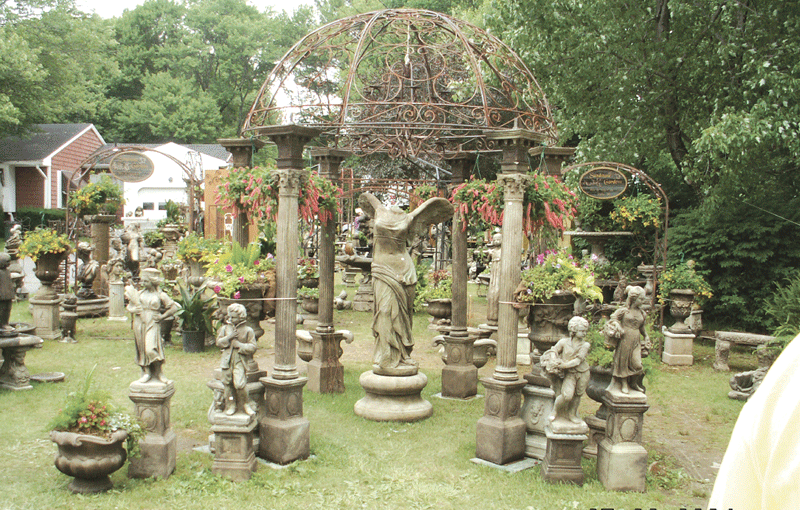
Agenda Departments

Lectures, Tours at Springfield Museums

December: The Springfield Museums’ monthly tour and lecture schedule continues in December with the popular Museums à la Carte lectures, which take place each Thursday at 12:15 p.m. in the D’Amour Museum of Fine Arts. Admission is $4 ($2 for members of the Springfield Museums); visitors are invited to bring a bag lunch (cookies and coffee are provided). For more information about Museums à la Carte, call (413) 263-6800, ext. 488. This month’s lectures include “Secrets of Leonardo da Vinci’s Virgin of the Rocks Revealed” (Dec. 3), in which Andrew Linnell, author and lecturer from the University of Michigan, unlocks the riddles of da Vinci’s two mysterious paintings of the Virgin Mary; “Cabinets of Curiosity: Historical and Contemporary Interpretations” (Dec. 10), in which Heather Haskell, director of the D’Amour Museum of Fine Arts and the George Walter Vincent Smith Art Museum, provides historical context for the current exhibit at the George Walter; and “The Star of Bethlehem: Investigating an Ancient Mystery” (Dec. 17), in which Richard Sanderson, curator of Physical Science, Springfield Science Museum, and Jack Megas, planetarium educator, Springfield Science Museum, explore one of history’s most enduring mysteries. No à la Carte lectures will be held on Dec. 24 or Dec. 31. As part of the Museums’ members-only Continuing Conversations series, museum docents Deena Maniscalchi and Pat McCarthy will also lead a guided gallery discussion at the George Walter Vincent Smith Art Museum following the Dec. 10 lecture. On Friday, Dec. 4, the Springfield Science Museum’s large rooftop telescope will be open for public skygazing at 7:30 p.m. as part of the Stars Over Springfield observatory series. These programs are organized by the museum and the Springfield Stars Club, and take place on the first Friday of each month. Each event features an introductory talk on topics such as space exploration, seasonal sights of the night sky, current astronomical research, or upcoming events like eclipses or comet appearances. This month’s featured speaker will be Alan Rifkin, Springfield Stars Club president, whose talk is titled, “Astronomy Gifts: All I Want for Christmas or Chanukah Is…” Stars Over Springfield programs are best suited for families with children ages 8 and older; however, younger children are also welcome. Admission is $3 for adults and $2 for children 17 and under. These programs are held rain or shine. If it is cloudy, a planetarium show will be presented in place of telescope viewing. For information about astronomy programs at the museum, call (413) 263-6800, ext. 318.


Affordable Care Act Breakfast Seminar

Dec. 3: Insurance Center of New England (ICNE) will host a breakfast seminar covering a range of financial topics related to the Affordable Care Act, also known as Obamacare. The seminar will be held at the Delaney House, 3 Country Club Road, Holyoke. Registration begins at 8 a.m., and the seminar gets underway at 8:30 a.m. This event is free and open to the public, and a hot breakfast will be served. RSVP for the seminar by Monday, Nov. 23 by calling (413) 750-7150 or e-mailing Erika Noble at [email protected]. Keynote speakers for the seminar include Peter Whalen, regional manager for CheckWriters Payroll, who will be discussing IRS Forms 1094 and 1095, and Shemeka Browne-Pohlman, ACA compliance specialist with Insurance Center of New England, who will be discussing the so-called ‘Cadillac tax.’ “For 2016, another level of implementation is taking place with the Affordable Care Act, so it’s important for individuals, families, and business owners to stay informed of their rights and responsibilities under the act,” said William Trudeau, president and CEO of ICNE. “This seminar is another example of our commitment to serving as an information resource regarding the often-complex world of insurance.”

Amnesty Day for Computer Parts

Dec. 12: Goodwill Industries of the Pioneer Valley will hold an Amnesty Day from 10 a.m. to 3 p.m. at each of its eight retail stores in Hampden and Hampshire counties, as well as at the corporate office located at 570 Cottage St. in Springfield. Visit www.ourgoodwill.org for individual store information. Any brand of computer or computer components will be accepted at no charge to the donor through a partnership with Dell. This free program promotes responsible recycling while diverting e-waste from landfills. Dell Reconnect, as the partnership is called, makes getting rid of old technology easy as well as free. Make sure to remove your personal data from hard drives or other storage media before donating to Goodwill. Bring monitors, scanners, mice, printers, keyboards, speakers, cords, and cables. Television sets will not be accepted, however. “Dell has come up with an innovative way to reduce e-waste and recycle old computers,” said Steve Mundahl, Goodwill Industries president and CEO. “Previously, we had to charge consumers for each piece of electronics they wished to donate, as we were unable to find a suitable vendor. Partnering with Dell means this is now free to the consumer. And all donations help us forward our mission of helping people with disabilities and other barriers to employment get jobs.” In addition to its retail stores, Goodwill Industries of the Pioneer Valley offers employment and training programs, adult foster care, and community-based day services.

Departments Picture This

Send photos with a caption and contact information to:  ‘Picture This’ c/o BusinessWest Magazine, 1441 Main Street, Springfield, MA 01103 or to [email protected]


Government Reception

Pic This 1
Pic This 2
Pic This 3

The Springfield Regional Chamber of Commerce staged its annual Government Reception on Nov. 19 at the Carriage House at Storrowton Tavern. More than 200 area elected officials and business leaders gathered for networking and updates on current initiatives. Top to bottom: state Rep. Angelo Puppolo (right)chats with Springfield Regional Chamber President Jeff Ciuffreda; Robert Ziomek, assistant vice president for Development at Western New England University and the chair of the chamber’s legislative steering committee, addresses the audience; state Rep. Stephen Kulik (right) talks with Rick Sullivan, president and CEO of the Western Mass. Economic Development Council.


Pynchon Award Winners

Pic This 4
The Advertising Club of Western Massachusetts recently honored the 2015 Pynchon Award winners at ceremonies at the Museum of Springfield History. The honorees are, from left: Harold Grinspoon, Sue Ellen Panitch, Ronn and Donna Johnson, and Gary Bernice.

A ‘Top Place to Work’

Pic This 5
For the fourth year in a row, the Boston Globe has named PeoplesBank a “Top Place to Work.” The bank competed with companies around the state for the honor and attributes its continued success to its “high-performance culture.” Pictured here with the awards are Douglas Bowen, president and CEO, and Janice Mazzallo, executive vice president and chief Human Resources officer.


Habitat Guatamala

Pic This 6
Pic This 7
Volunteers and friends of Greater Springfield Habitat for Humanity (GSHFH) traveled to Tecpán, Guatemala recently to support the efforts of Habitat Guatemala, including local residents, in reaching 75,000 housing solutions. Top: Jennifer Schimmel (GSHFH executive director), Walt Tomala (GSHFH board president), Amy Scott, Ellen Moorhouse, Rose Vigdal, Susan Austin, Marg O’Conner, Aimee Giroux (GSHFH operations manager), Mark Rogerson, Stephen Messier, and Kim Rexford with other volunteers. Bottom: from left, Vigdal, Jillian Severinski, and Liz Persch are into their work.


Cutting the Ribbon

Pic This 8Marcotte Ford in Holyoke recently cut the ribbon on its new Marcotte Commercial Truck Center on Main Street. A host of city leaders, customers, and key stakeholders were on hand for the grand opening of the state-of-the-art facility, which the company believes will enable it to bring customer service to a new and even higher level.

Branching Out

Pic This 9
Farmington Bank recently announced its newest branch office in Western Mass. at 61 North Main St. in East Longmeadow amid a host of events and promotions, many of them involving the bank’s new spokesperson, former Red Sox hurler Tim Wakefield. The branch follows the opening of its first office in Massachusetts at 85 Elm St. in West Springfield in October. The new East Longmeadow office features an open floor plan with approximately 2,000 square feet of space, allowing customers to interact with Farmington Bank’s personal bankers without teller lines. The branch will also offer a drive-up window and a 24-hour drive-up ATM. To mark its entry into East Longmeadow, Farmington Bank is hosting a month-long grand-opening celebration at the branch from through Dec. 19.  A highlight is the Dec. 12 appearance of Wakefield, from 11 a.m. to 1 p.m., during the Bank’s Family Day event. Seen here with a likeness of the new spokeperson are, from left, Ken Burns, executive vice president and director of Retail Banking and Marketing; Collen Phelps, assistant branch manager; Steven Gardner, vice president and branch manager; and Michael Moriarty, senior vice president and Commercial Team leader.

Daily News

SPRINGFIELD — People looking for another way to give this holiday season might consider purchasing cards from the Baystate Health Foundation holiday collection.

The collection features a variety of wintery and holiday scenes and artwork from children, including a card created by Baystate Children’s Hospital patient Emilia “Mimi” LaPierre. Printed on recycled paper, Mimi’s colorful card brings cheer to a holiday landscape featuring a red cardinal in a tree with snowflakes falling in the background.

“Art is my favorite subject in school, and I was excited when asked to draw a card, because I knew it would bring money to the hospital which took care of me,” LaPierre said. “I drew a similar scene in art class, and I think it looks very good as a card. We’ll be sending them out for Christmas.”

LaPierre was diagnosed with acute lymphoblastic leukemia in August 2009 and was in treatment until November 2011. She is now in remission. The Chicopee youngster is one of the hospital’s Miracle Kids, whose photo was made into a life-sized cut-out that was placed at various locations throughout Western Mass. to bring attention to Baystate Children’s Hospital and to encourage donations.

The cards — which can also be customized online with the verse and personalization of one’s choice — are produced by Good Cause Greetings, a Springfield-based manufacturer of custom charity cards supporting nonprofit organizations worldwide. In addition to the individual holiday designs, a Baystate holiday assortment is also available. Thirty percent of all sales benefit Baystate Children’s Hospital through the Baystate Health Foundation.

To order cards, visit baystatecards.com or call (877) 543-1515. For more information about Baystate Children’s Hospital, visit baystatehealth.org/bch.

Daily News

SPRINGFIELD — “Firearms of Famous People: From Target Shooters to Presidents,” a temporary exhibit of extraordinary firearms and memorabilia owned by well-known politicians, presidents, and celebrities, is now on view at the Lyman and Merrie Wood Museum of Springfield History. The exhibit, which was organized in cooperation with the Smith & Wesson Collectors Assoc., is on display through April 24, 2016 in a space adjacent to the Smith & Wesson Gallery of Historic Firearms.

The exhibit includes three presidential pistols, including a .44 double-action Smith & Wesson revolver owned by Teddy Roosevelt, along with a belt knife used by Teddy’s Rough Riders during the Spanish-American War. Also featured is a .32 safety hammerless Smith & Wesson acquired by Franklin Delano Roosevelt when he was employed as an attorney in New York in the 1920s. The third presidential weapon is a .357 Magnum made especially for John F. Kennedy, featuring the handiwork of master engraver Alvin White. The revolver is fully engraved and inlaid with gold and silver, and bears the Great Seal of the U.S. on the side plate.

This exhibit also includes three guns owned or used by movie stars, including a .32 caliber Smith & Wesson belonging to George Montgomery, well-known for his career as a film actor in many westerns. Clint Walker, best-known as the star of the Cheyenne TV series, owned a Smith & Wesson Model 3 that is on view. Also on display is a prop gun designed to look like a .45 caliber U.S. Army automatic pistol, used by Lee Marvin in the film Delta Force in 1986.

Probably the two most famous gunmakers in the history of this country are Horace Smith and Daniel Wesson, and this exhibit features firearms connected to both of these innovators. Other firearms featured in this exhibit were owned by FBI Director J. Edgar Hoover, Theodor Robert Geisel (the father of Dr. Seuss), and Christina Nilsson, one of the opera stars of the 19th century.

Admission prices are $18 for adults, $12 for seniors and college students, $9.50 for children 3-17, and free for children under 3 and museum members. The fee provides access to all four museums. General admission is free for Springfield residents with proof of address.

Sections Technology

Always Connected

Apple Watch OS2

Apple Watch OS2

An on-the-go society demands on-the-go technology, and the array of smartphones, wristband health sensors, and tablets only continues to expand as the major players compete for their share of a growing pie. In its annual look at some of the hottest tech items available, BusinessWest focuses this year on those mobile devices, which are connecting more Americans than ever, 24/7, to all the data they could possibly want.

In an increasingly connected world, mobile technology continues to advance in ways both predictable and surprising, with the final market potential still unclear.

Take the newest iteration, the ‘wearable tech.’ A recent Forbes study reported that 71% of 16- to 24-year-olds either use or want wearable tech, which includes the Apple Watch, the Fitbit, and the Microsoft Band. Those products are where BusinessWest begins its annual look at the most popular and best-reviewed technology available, with a focus this year on mobile devices.

Apple is banking on continuing demand by improving its Apple Watch OS2 ($339), which Digital Trends calls “a piece of wearable tech that feels friendly and has a little bit of quirky character about it. It’s not without its issues, but they’re not too bad. The effort to learn the interface feels worth it to us.”

CNET calls the product, which packs the apps of a smartphone into a small package that fits on the wrist, “a beautifully constructed, compact smartwatch. It’s feature-packed, with solid fitness software, hundreds of apps, and the ability to send and receive calls via an iPhone.” However, it continues, the battery doesn’t last much more than a day, and the interface can be confusing.

Still, Digital Trends notes, “the world of wearable tech has been crying out for a product that engages people — something that operates as a companion device to our phone, but also goes a step further. For Apple, that step was using it to connect people in unusual, fun ways.”


Go HERE for a chart of area telecom/voice/data providers


As Apple Insider explains, initial response to the Apple Watch has promoted competition in the marketplace from upstarts like Pebble, which is offering a new model starting at $250 — almost $100 cheaper than the Apple Watch — in addition to models above and below that price point.

Many consumers love wrist-worn devices for their health-tracking capabilities, a category currently dominated by Fitbit. “I think back to when fitness wearables first emerged — devices like the Fitbit — and wonder, what made them so great? Why did people get so excited?” CNET’s Scott Stein asks. “Was it really the fitness, or was it the idea of turning fitness-based into something fun?”

He noted that the devices counted steps like their pedometer predecessors, but made a game of it — hit a goal, get a reward; share progress with friends and compete. “Gamification, a catchphrase a few years ago, is exactly what these [devices] provided: they’re carrots on a stick to motivate exercise.”

Fitbit Charge HR

Fitbit Charge HR

That said, he likes what he sees in the Fitbit Charge HR ($139), which adds heart-rate tracking to the mix and syncs all data to the user’s smartphone. “The more expensive $250 Fitbit Surge does practically the same things, but adds a larger watch display and can track runs via standalone GPS.”

But, while $150 for the Fitbit Charge HR is a good price for a full-featured device, Stein adds, “in practice, something about the Charge HR feels a step short of exciting. It’s how Fitbit handles heart rate. It’s how it feels to wear. And, it’s how useful — or not — I found the addition of heart rate to be in my daily routine. It’s one of the best wrist-worn heart-rate trackers out there, but it’s not the complete slam-dunk fitness band I expected it to be. It is, however, the best Fitbit band currently available.”

Microsoft Band 2

Microsoft Band 2

Microsoft is a player in this field as well, and Yahoo’s David Pogue calls the just-released Microsoft Band 2 ($250) “a smartwatch with more sensors and fitness-monitoring capabilities than anything else you can buy,” from original features like a GPS antenna to track runs or bike rides, a heart-rate monitor, UV light detectors, and a skin-temperature sensor, to new additions including a barometer for measuring elevation (a bonus for hikers and climbers) — 11 sensors in all, in fact.

It’s not for everyone, however; Pogue declares the Band the winner for serious exercisers, but says the Fitbit Charge HR is better for the all others — those who aren’t hardcore about exercise but could benefit from gentle reminders and motivators.

Smartphones Everywhere

Of course, smartphones remain the go-to mobile device for most Americans, with 64% of all adults and a whopping 85% of the 18-29 age group among their users, according to the Pew Research Center.

PC Advisor notes that fierce competition in the smartphone market means there’s a quality device for everyone at just about every price point — and consumers are typically happiest with the operating systems they are comfortable with.

“Although there are others around, it’s best to stick with the big names, including iOS, Android, Windows Phone, and potentially BlackBerry. If you’re already using one, then it might be best to stay in that camp — especially if you’ve invested time and money in its apps. However, it’s not difficult to switch, so you should consider them all.”

Design will come down to personal taste, the site adds, and most of the top smartphones now have a very thin and light chassis. “The best smartphones typically use premium materials like glass, aluminum, or even steel, and on this front you’re best off trying a phone out in the flesh to see whether it feels good for the size of your hand.”

Despite the greater competition, most of the tech press still places Apple’s iPhone and Samsung Galaxy atop their lists of best phones.

Samsung Galaxy S6

Samsung Galaxy S6

For example, TechRadar calls the Samsung Galaxy S6 ($499) “a brilliant phone that shows Samsung still has what it takes.” An improvement from the Galaxy S5, the latest edition boasts improved camera performance and audio quality, and the sharpest video display on the market.

In addition, “the design is finally something we’re pleased to hold in our hand, rather than the plastic cheapness of last year,” TechRadar notes, and “it’s actually extended its lead at the top thanks to some amazing price drops — so you can now get the best phone on the market for an incredibly low price these days. A no-brainer.”

PC Advisor piles on the praise as well, calling the Galaxy S6 the best Android phone of 2015. “It’s fast, it’s well built, it has a gorgeous screen, and the software isn’t overly intrusive. The fingerprint scanner is vastly improved, the heart-rate scanner a potential draw for some users, and the wireless- and fast charging welcome inclusions.”

But Apple’s iPhone 6S Plus ($499) tops many rankings as well. CNET praises the latest version’s improved speed, better camera, always-on Siri, pressure-sensitive display, longer battery life, and bigger, higher-resolution screen — all improvements over the 2014 model. In fact, the screen size has grown so much that some people might consider it too bulky. “The iPhone 6S Plus has a few key advantages that give it an edge for serious iPhone users, but its big body may not fit for a lot of people.”

iPhone 6S Plus

iPhone 6S Plus

Meanwhile, Phone Arena says it’s not surprising that the iPhone 6 is the world’s bestselling smartphone, citing the 3D Touch display and Live Photos as desireable improvements, as well as an improved system chip and better battery life.

“Put in simple words, the new iPhone has a much faster processor and memory. It also comes with a new, 12-megapixel camera that now is able to capture a more detailed images than before and records video in the trendy 4K resolution, plus it supports new slo-mo options. Add to this the rich iOS ecosystem that continues to secure the best apps and games first, and one starts to understand the huge appeal of the iPhone 6s.”

Still, Apple and Samsung have some competition in the market. PC Advisor offers praise for Sony’s Xperia Z5 ($349), which comes with an aesthetically improved rear cover and adds a fingerprint scanner, but keeps much of its previous design.

“Once again, the camera is great, but it’s tough competition out there, and arriving late in 2015 means rivals are now available for a decent chunk less,” the site explains. “Once the price drops, which it will, this will be a great option for those of you looking for a waterproof flagship with a Micro-SD card slot.”

A Bigger Canvas

Smartphones are far from the only tech battlefield, however. The tablet market continues to be hotly contested as well. According to TechRadar, Apple still tops the game with its iPad Air 2 ($599) — a remarkable improvement over even the “remarkable achievement” that was the original iPad Air.

iPad Air 2

iPad Air 2

“It’s even thinner and lighter than last time around, and to a noticeable extent. The screen is better, with more vibrant colors, it’s more powerful thanks to its A8X processor, and the battery life holds up just as well. It even benefits from Touch ID and Apple Pay, and while these features aren’t as exciting here as they are on phones, they’re still nice to have. In short, the iPad Air 2 really is the complete package, and while you can always find things to niggle about, there are no significant flaws.”

As always, however, Apple has competition. PC Magazine touts the Samsung Galaxy Tab S2 ($399), calling it an improvement over its predecessor in every way, including a thin and light design, upgraded performance, and better-quality camera.

“Do tablets matter anymore?” the site asks? “Samsung would like you to think so. Despite releasing some very large phones recently, the company still believes there’s a home for tablets in a market crowded with enormous phablets. And Samsung’s latest offering, the Galaxy Tab S2, definitely makes the case that, yes, tablets are still very much relevant.”

It’s the same story told in many different ways — Apple continues to set the pace, but its main competitors keep closing the gap. That’s healthy for consumers, no matter which device they prefer to take on the go.

Joseph Bednar can be reached at  [email protected]
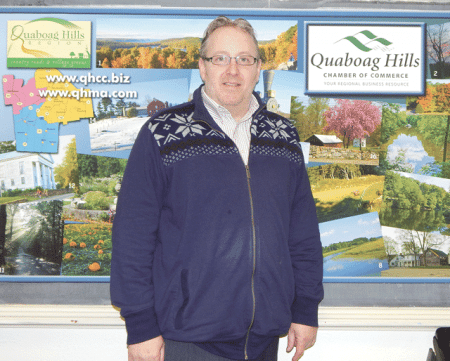
Community Spotlight Features

Community Spotlight

Carmina Fernandes and Douglas Stefancik

Carmina Fernandes and Douglas Stefancik say the redevelopment of Ludlow Mills will preserve the town’s history while providing opportunities for economic growth.

Town Planner Douglas Stefancik calls it “the crown jewel of the mills.”

He was referring to the recently completed HealthSouth Rehabilitation Hospital of Western Massachusetts, the first new structure to be built on the Ludlow Mills property, owned and being redeveloped by Westmass Area Development Corp.

The $28.5 million, 74,000-square-foot hospital has 53 private rooms and a state-of-the-art physical therapy center, said Stefancik, adding that the project received the prestigious national Sustainability Impact Award at the Redevelopment and Renewal Awards Ceremony in Chicago.

“It is serving as a model for other HealthSouth facilities, and our intent was for it to become a catalyst to other growth and development on the Ludlow Mills site,” he went on. “Fortunately, we’re seeing that come to fruition.”

Indeed, officials are happy to have HealthSouth in the mill district and are looking forward to another exciting project.

“The HealthSouth building is historically accurate, and the second jewel will soon be built,” said Stefancik, referring to the town’s decision on Oct. 8 to grant Winn Development and Westmass the approvals needed to transform what’s known as Mill #10 into a senior-housing development.

The four-story structure will be converted into 75 one- and two-bedroom apartments; 66 will be affordable, and the rest will be rented at market rate.

“It’s fantastic because it will preserve the whole building and help continue revitalization of the downtown area,” said Stefancik. “There will be new landscaping surrounding the parking lot, traffic islands with seating areas, and a patio, which will help it to become a nice residential community.”

Westmass President and CEO Kenn Delude said the plans were approved in 17 days, which is highly unusual, because it typically takes months for a project of this magnitude. “We’re proud because the town found these plans consistent with their master plan,” he told BusinessWest. “It shows how strong the partnership is between WestMass, Winn Development, and the town.”

Westmass will sell Winn three acres of the mill property, with closing anticipated to take place at the end of December. The work should start in February, and the units should be complete and occupied by June 2017, Delude said, adding that the town has a backlog of 150 seniors seeking affordable housing, and this will help fill the gap.

“Winn will spend $19 million in 14 months, and we anticipate 300 new construction jobs; we’re pretty proud of this,” he continued.

In addition, the first phase of a 1.5 mile Riverwalk is complete and just opened to the public. It runs behind the mill property along the Chicopee River, features beautiful overlooks, and was a private project; HealthSouth contributed $600,000, and WestMass did the engineering, permitting, and other necessary work.

“We’re excited about the redevelopment of the mills and the partnership with the town, as well as the shared vision for the preservation of some of the buildings,” Delude said. “We’re on our way, and although the project is not near completion, $74 million has been invested in Ludlow Mills over the last four years. It’s a great start, and we hope to work with other developers to preserve things like the historic clock tower.”

But while Ludlow Mills continues to be the story in this community of 21,000, it is far from the only news.

There is a solid mix of residential and commercial development taking place, said Stefancik, adding that the town has a number of attractive selling points, including its reputation as a safe community, a relatively low tax rate, and many amenities, such as free limited trash pickup, a free van service for seniors, and its own ambulance service, which people can subscribe to for $40 annually and use as often as they need.

Together, these attributes make this an attractive community in which to live, work, and do business, its leaders say. For this latest installment of its Community Spotlight series, BusinessWest looks at how Ludlow intends to build on a current wave of momentum.

A Developing Story

Carmina Fernandes, chair of the Board of Selectmen, said the mills were the heartbeat of the town in their heyday, and the redevelopment is encouraging reinvestment within the community.

“The Iron Duke Brewing microbrewery moved into a mill building two years ago and is already expanding; they want to put in an outdoor patio near the Riverwalk,” she said, adding that the former Montelegre Restaurant on State Street, located across the street from HealthSouth, is under new ownership and has been renamed the Com e Cala-Te Restaurant. It’s owned by Pedro and Joe Fernandes (Carmina’s brothers), and since it reopened two months ago, it has been booked solid on weekend nights.

Those are are just a few of the many signs of progress in the community. Indeed, Stefancik said, additional residential development is taking place, and the town is continuing to grow in every respect.

Last year, HAPHousing completed a $7.4 million conversion of the Stevens Memorial Building into 28 affordable rental apartments for seniors. The three-story 23,760-square-foot building at 12 Chestnut St. was built in 1906 by the Ludlow Manufacturing Co. as a recreation facility for its employees. The town acquired it in 1949, and it was home to the Ludlow Boys & Girls Club until 2005.

“It’s a great project because it’s across from the senior center and near restaurants, the library, shops, the post office, and a number of mom-and-pop stores,” Stefancik said.

He added that, in addition to affordable housing, there has also been an uptick in the number of proposed subdivisions. Roughly 40 single-family lots were approved earlier this year as the second phase of a Parker Lane Extension project, with an estimated infrastructure cost of $1.5 million; a 19-lot subdivision extension on Cislak Drive with an infrastructure cost of $780,000 was just approved; and a definitive plan is expected late this month for 14 lots across the street from Cislak Drive on Maria’s Way.

“These homes will bring in additional tax dollars to the community,” Stefancik said. “It’s a positive sign when this much building is going on.”

However, commercial growth is also taking place.

The Cumberland Farms store on West Street is undergoing a $500,000 renovation, and the Planning Board approved a site plan and special permit for the East Street store, which will result in a new building that will help to further revitalize the street, Fernandes said.

Stefancik explained that the company purchased a former bar with two parking lots on East Street next to the existing store, which will be knocked down to make way for a new building.

It’s a project that was planned with community feedback, and is in line with the Board of Selectmen’s request that businesses seek input from neighbors when making changes. In this instance, the feedback led to an agreement to install a fence to block views of the store, additional landscaping, noise deflectors on the air-conditioning units, and glare-free lighting.

In addition, the Colvest Group has begun work on the former Mobil station property at 450-456 Center St. across from CVS. The firm received approval for two commercial buildings in April; one will have a drive-thru, and both can house up to three suites.

Growth is also taking place on Holyoke Street, where Black Diamond Development LLC just completed work on a new medical building.

Commercial investments are definitely on the rise, but Fernandes says town officials strive to balance residential and commercial growth. Still, the town is doing everything it can to make it easy to open a new business. Its permitting process went online in the last year, which helps the growing number of home-based firms.

“In the past, people had to go before the Planning Board, but we have eliminated that step,” Fernandes told BusinessWest. There is also a new computer screen outside the entrance to the Building Department which allows people to access information if they are closed, and Ludlow Community Television installed new technology on their website that allows viewers to look at presentations put before the Board of Selectmen.

Continued Progress

Everything being done falls in line with Ludlow’s master plan, which was approved last year.

“Ludlow is a great place to own a business, live, and play. It’s a vibrant town, and we were recently selected to be on Terry Bradshaw’s Communities of Distinction TV show because of our economic development and quality of life,” Fernandes said.

The hope is that Ludlow Mills will become the heart of the community once again as redevelopment efforts transform the property. “It’s in an ideal location and will become vibrant because it’s within walking distance of restaurants, storefronts, hairdressers, and many other businesses on the intersecting streets,” Fernandes said. “But the most wonderful thing is the symbiotic relationships that are being created with the town. There are a lot of things in the pipeline that are very exciting.”

Delude agreed. “We are proud of this project,” he said, “and it’s important to the community.”


Ludlow at a glance

Year Incorporated: 1774
Population: 21,103
Area: 28.2 square miles
County: Hampden
Residential Tax Rate: $17.29
Commercial Tax Rate: $17.29
Median Household Income: $57,803
Family Household Income: $71,601
Type of government: Town Administrator; Board of Selectmen; Open Town Meeting
Largest Employers: Hampden County House of Correction; Ludlow Public Schools; R & C Floral Inc.; Town of Ludlow; HealthSouth Rehabilitation Hospital
* Latest information available

Luxury Living Sections

Personal Space

Rick McCullough

Rick McCullough learned plenty of lessons from his father, who launched what is now a second-generation home-construction business 60 years ago — among them hard work, integrity, and an emphasis on personal relationships. It’s that hands-on quality of his work that McCullough counts among the most enjoyable aspects of his job — not to mention an economy that has shed some lean years and is roaring with new life as families once again invest in high-end, custom homes.

Richard McCullough runs a successful home-building company, but he still refers to it as “my dad’s business.”

That’s because he grew up around R.A. McCullough Inc. — the construction firm launched by his father during the 1950s — and, along the way, picked up plenty of inspiration and lessons for his future career as the second-generation president of this Longmeadow-based family business.

“He first sold houses for other builders as a Realtor, and as he looked at what people were building, he said, ‘I can do this, and I can do it better,’” McCullough told BusinessWest. “So he purchased some raw pieces of land and developed them, and just built the company from there over the decades.”

After he graduated from college in 1995, he went into his father’s business full-time.

“Before that, I was out in the field, doing the grunt work, but after college, I graduated to the office,” he said — a decision that wasn’t always set in stone. “My dad was this amazing businessman, builder, and developer, but I didn’t seriously consider it until I got older. During my college years, I began to see [construction] as a natural fit for me.”

As one of the region’s most prominent builders of high-end and custom residences — typically 3,000 square feet and up — McCullough says he enjoys the hands-on aspect of dealing with clients and helping them turn their design visions into reality.

“I love helping them make decisions around building custom homes,” he said. “And I find there’s less miscommunication when I’m hands-on. I don’t get that phone call saying, ‘so-and-so didn’t call me back; what’s going on?’ There are fewer surprises that way. But I really do enjoy every aspect of this business, everything that’s involved in building homes, from the design through the end result.”

For this issue’s focus on luxury living, McCullough talks with BusinessWest about the changing nature of what a custom home is — and why he enjoys keeping up with those changes.

Beyond the Floor Plan

Make no mistake, he explained — ‘custom’ has meant different things over the decades.

“For example, in the ’80s, bigger was better, and customizing didn’t mean quite what it does nowadays. Back in the ’70s and ’80s, there wasn’t a whole lot of custom millwork, for example, unless it was in the ultra-high end. People today are less concerned about size and more about quality, what goes into it, the finishes.”

Today’s home buyers seem more educated and sure of the touches they desire in a home. As he walked along Bridle Path Ridge in Somers, Conn., a small development of high-end homes his company developed, he explained that, while the exteriors reflect a consistent — but not copycat — look, the interiors are very different, based on their buyers’ preferences.

“The houses’ architecture matches — you can tell it’s the same builder — but they’re very different from each other,” he said. “I love the challenge of creating something different. Sometimes they’ll see a house next door to where they want one built, and they’ll say, ‘that’s what I want.’ Well, we can do that floor layout, but let’s do something unique and something that won’t be a carbon copy of your neighbor.”

Those differences encompass everything from materials to finishes to subtle stylistic changes. “We can mix it up a little bit without going crazy — we’re not going to build a contemporary next to a colonial. It’s a different flavor while staying in the same realm of style.”

As for interior layout, customization today is largely a reflection of the family’s lifestyle.

“It’s really about customizing to an owner’s needs,” he said. “Where is the focus? It’s normally still through the kitchen, through the family room, areas where you spend the vast majority of the time, for ease of entertaining. Or you might want areas for a child to be close to the main part of the house, but have their own separate area.”

Home buyers are always going to focus on price — a home is likely their biggest investment — but McCullough said square footage doesn’t tell the whole story.

“Plenty of people say, ‘what’s the price per square foot,’ but what’s in the house? People think going from 3,500 to 2,500 square feet translates very easily from a cost-per-square-foot standpoint, but if you’re spending, say, 175 per square foot on a 3,500-square-foot home and you want to go to a smaller footprint, you’ll probably have the same size kitchen, same number of bathrooms, same finishes — so you’re going to spend more money per square foot.”

Particularly in the high-end housing market, he added, it’s important to keep an eye on a home’s future marketability. “You say you want only three bedrooms. Well, at least leave space to have a fourth bedroom — over the garage, unfinished. Marketability-wise, that adds a little value for the next person who’s going to buy it down the road.”

Priorities have shifted somewhat for homeowners in the realm of energy efficiency, McCullough said, noting that airtight construction and energy options like geothermal heating are becoming more popular.

He also noted that technology has impacted the features that high-end homebuyers are looking for today — and not just in the realm of home entertainment.

“People want things to be automated now; they want their lighting systems working off their smartphones. Controlling your heating and cooling from outside your home — that’s a relatively new thing in our industry, and you can’t underestimate that part of the business and how much that will grow.”

Bridle Path Ridge in Somers, Conn

Bridle Path Ridge in Somers, Conn. is one of McCullough’s recent developments of high-end, custom homes.

That goes for retrofitting existing homes as well, he added, a process made easier these days by the emergence of wireless technology.

“Cable companies are offering security systems — 20 years ago, you wouldn’t have guessed that would be happening. We have complete home automation … lights, thermostat, cameras you can view on a smartphone,” he went on. “There are so many apps, so many security systems. And it’s evolving so fast. Once you get these systems installed, things will change even more. It happens quickly.”

Ups and Downs

With the homebuilding industry on the upswing, McCullough is happy the recession years are well behind.

“That was an incredible challenge, and something that definitely left a mark on every developer, builder, and remodeler. Some fared better than others, but it was a rough recession,” he said, adding that it was difficult to tell when the tough times would end, challenging developers who wanted to time their investments.

“If a developer saved money throughout the recession, they might have been able to pick up properties, be opportunistic as they prepared for a turnaround, but the turnaround took longer than we thought. Developers were thinking, ‘we’ll have another year or two of this,’ but it lasted a little longer,” he explained. “There’s no book to go to on how to play it. It changed our industry somewhat, and hopefully we don’t forget the lessons of what we went through.”

As a recent past president of the Home Builders & Remodelers Assoc. of Western Mass. — an organization that advocates for contractors on the legislative level and educates consumers about companies and services — McCullough was in regular contact with builders during the extended downturn and came away impressed by their resilience.

“Everyone kept their heads up, even though it was obviously tough,” he said. “It’s a tough industry. We all know it. But our membership has significantly increased recently, which tells you where the economy is.”

The word he chose to describe the current mood? “Euphoric.”

“The market hasn’t fully recovered; we may not reach the level of the early to mid-2000s, when things were flying. But it was so bad for so long, and everything is good right now, in my mind — everything from existing home sales to remodeling to new construction.”

That’s partly because many potential buyers were just waiting out the storm but never ditched their plans for a new residence.

“A lot of people doing that work now had the money to do it, but had a lot of uncertainty — ‘will I get my investment back if I spend a premium on a major remodel or a new home?’ You don’t do that unless you have some view of the future that’s positive. It’s been great getting back into the swing of things after so long a downturn.”

The year has been so positive for the industry, in fact, that even the cold months will be productive in many corners.

“I normally see the vendors and the subcontractors I work with go into seasonal adjustments, down periods heading into winter,” McCullough said. “But people are staying busy through the holidays. Not everyone believes contractors work through the holidays because of the frozen ground, and they wonder whether that’s a good time to have something done. But it’s busier now than it’s been in years.”

Two Hats

McCullough’s father continued to work in real estate in the ’70s, at a good-sized brokerage firm called McCullough & Taft Realty — a tradition the junior McCullough continues today as a real-estate agent at Keller Williams Realty in Longmeadow.

“I’ve been a real-estate agent, where I’m helping a client negotiate with a builder, and I look over the specifics of the contract. It’s an interesting perspective, being more on the outside.”

But there’s something special about being on the construction side.

“I love being hands-on and engaged in every aspect of the project; that’s something I enjoy,” he said, noting that, even though the company has fluctuated in size over the years, he’s always stayed closely involved in projects — an emphasis on relationships he learned from his father.

“My dad was so honest and straightforward,” McCullough said. “I’ve told people he was no rocket scientist, but he worked hard, and his integrity was at the forefront of everything he did. And that’s the way I choose to follow. In the old days, everything was done on a handshake, and it’s nice to feel like we can do that in certain circumstances.”

That’s why he tells people R.A. McCullough is his father’s business.

“To me, it’s more about maintaining the same standards he had. That definitely builds the passion with me — wanting people to be happy, wanting people to have a good experience. It’s definitely not about the money. It’s about everything my dad stood for.”

Joseph Bednar can be reached at [email protected]

Daily News

SPRINGFIELD — The Springfield Museums’ monthly tour and lecture schedule continues in December with the popular Museums à la Carte lectures, which take place each Thursday at 12:15 p.m. in the D’Amour Museum of Fine Arts.

Admission is $4 ($2 for members of the Springfield Museums); visitors are invited to bring a bag lunch (cookies and coffee are provided). For more information about Museums à la Carte, call (413) 263-6800, ext. 488. This month’s lectures include:

• Dec. 3: “Secrets of Leonardo da Vinci’s Virgin of the Rocks Revealed.” Andrew Linnell, author and lecturer from the University of Michigan, unlocks the riddles of da Vinci’s two mysterious paintings of the Virgin Mary.

• Dec. 10: “Cabinets of Curiosity: Historical and Contemporary Interpretations.” Heather Haskell, director of the D’Amour Museum of Fine Arts and the George Walter Vincent Smith Art Museum, provides historical context for the current exhibit at the George Walter.

• Dec. 17: “The Star of Bethlehem: Investigating an Ancient Mystery.” Richard Sanderson, curator of Physical Science, Springfield Science Museum, and Jack Megas, planetarium educator, Springfield Science Museum, explore one of history’s most enduring mysteries.

No à la Carte lectures will be held on Dec. 24 or Dec. 31.

As part of the Museums’ members-only Continuing Conversations series, museum docents Deena Maniscalchi and Pat McCarthy will also lead a guided gallery discussion at the George Walter Vincent Smith Art Museum following the Dec. 10 lecture.

On Friday, Dec. 4, the Springfield Science Museum’s large rooftop telescope will be open for public skygazing at 7:30 p.m. as part of the Stars Over Springfield observatory series. These programs are organized by the museum and the Springfield Stars Club, and take place on the first Friday of each month. Each event features an introductory talk on topics such as space exploration, seasonal sights of the night sky, current astronomical research, or upcoming events like eclipses or comet appearances. This month’s featured speaker will be Alan Rifkin, Springfield Stars Club president, whose talk is titled, “Astronomy Gifts: All I Want for Christmas or Chanukah Is…”

Stars Over Springfield programs are best suited for families with children ages 8 and older; however, younger children are also welcome. Admission is $3 for adults and $2 for children 17 and under. These programs are held rain or shine. If it is cloudy, a planetarium show will be presented in place of telescope viewing. For information about astronomy programs at the museum, call (413) 263-6800, ext. 318.