
Home Posts tagged Security (Page 9)
Sections Wealth Management
Critical for Effective Wealth Building

WealthBuildingSome watched the financial collapse in 2008 severely hamper their parents’ retirement plans. Others are simply working at jobs without pension benefits and doing the math.
For whatever reason, young people are starting to take a more serious look at their long-term financial future — a trend Patricia Grenier finds gratifying.
“For the first time in many years, I’m actually seeing young professionals — dual-income couples in their early 30s — coming in to talk about financial planning,” said Grenier, general partner with BRP/Grenier Financial Services in Springfield.
“That’s very surprising because, in the past, I always used to say, ‘I wish I could get them when they’re young, when time is on their side and they can ride the many ups and downs in the market.’ But now, they’re coming in at a much younger age, which gives us a lot more flexibility, a lot more time. It allows us to fix things and make adjustments as we go along.”
George Keady, senior member of the Keady Ford Montemagni Wealth Management Group at UBS Wealth Management in Springfield, makes a similar observation.
“The clear trend in the past five to seven years has been people starting younger,” he told BusinessWest, noting that some of that may be based on encouragement from their employers, many of which enroll them in self-funded retirement accounts almost immediately, and the employer must take the initiative to unenroll.
“Young people today assume they’ll have to take full responsibility for their retirement,” Keady said. “The era of defined benefits and pension payments is being reduced dramatically, so people are taking responsibility through 401(k) plans and savings.”
Doug Wheat agrees. “Certainly, many employers now automatically enroll new employees in 401(k) plans, and that has made a huge difference in what the participation rates are,” said the senior manager of Family Wealth Management in Holyoke. “While there may be more awareness, I think the automatic enrollment has made the most impact.”
While the world of the Internet age is definitely more educated on financial matters than it used to be, Grenier said many young professionals took lessons from the 2008 crash and what it did to the retirement savings of people they know, including their parents. Whatever the reason, they’re increasingly starting early to seek strategies to build and protect wealth.
“They’re more aware,” she said. “We have more knowledge 24/7; we know what’s going on. You can turn on the TV anytime and see exactly what’s happening in the world and in the economy. But there are strategies you need to apply that can’t be learned by turning on the TV. You have to sit down and plan.”

Planning Ahead
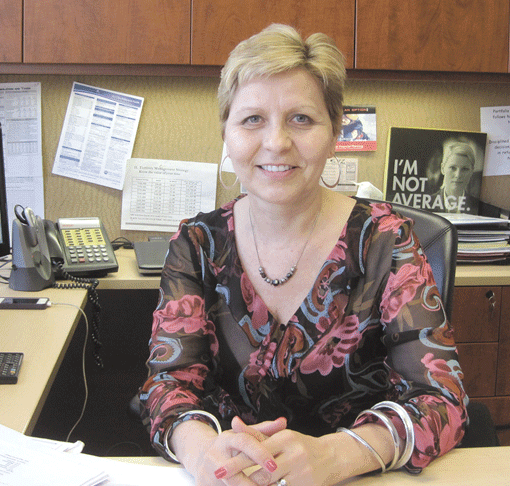
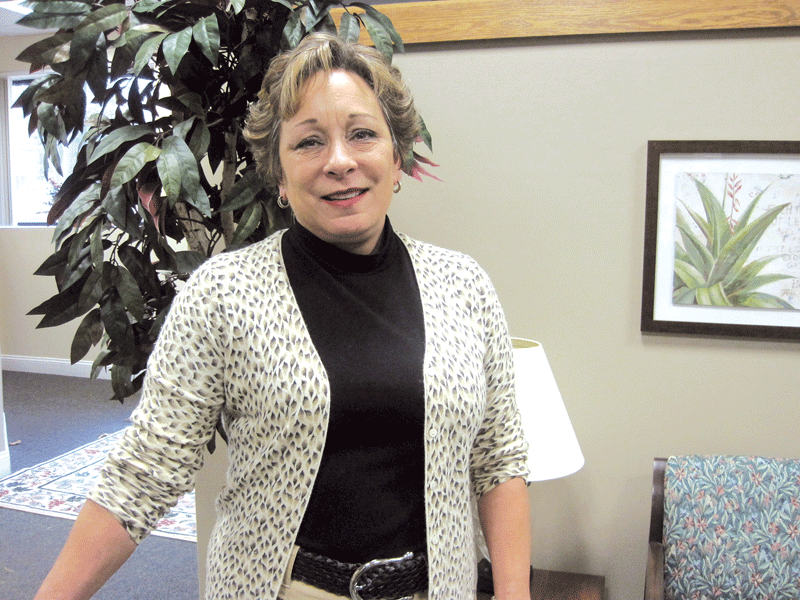
Pat Grenier

Pat Grenier says one of the biggest financial mistakes people make is underestimating how much money they will truly need down the road.

Some strategies are time-tested common sense, Grenier noted: save at least 10% toward retirement, prioritize spending and stay within one’s means, and do not build credit-card debt.
As for specific plans beyond the basics, when Grenier talks to younger investors, “they’re asking, ‘am I doing the right thing?’ even though retirement is 30 years down the road for them,” she told BusinessWest. “The lesson to be learned from this big downturn is you need to plan, you need to have a plan B, and if you think you have enough money, you don’t. You always need more money.”
To that end, she added, “I am seeing the younger ages more willing to plan and be flexible. And, unlike older clients, both spouses are usually involved in the decision-making process.”
Wheat said young professionals need to use the time they have to save for retirement, even though it seems so far down the road, “because they can take advantage of compounding interest by starting early. When you do that and build wealth slowly over time, the ultimate goal can be less daunting.
“If young people can target 10% to 15% of their take-home pay to put automatically in a 401(k) or 403(b) plan at work, it makes it relatively painless to contribute to retirement goals down the line,” he continued. “If they do that, it’s much easier to reach a retirement-savings goal which maintains their standard of living in retirement.”
That’s because, “in general, people underestimate how much they may need, and even when they’re contributing to a retirement plan, they often don’t contribute enough.”
If nothing else, Keady said, workers should maximize their company match if there is one, because every dollar makes a difference compounded over time. “If somebody starts putting $15 a week away in their 20s, in 40 years at 6%, they’d have $130,000.”
But that’s just the beginning, he said. “If they get started early, they can sit down and construct a real plan, not a one-size-fits-all solution. We have clients show up in their late 50s, and they’ve accumulated some money, but they really don’t totally comprehend what they need in the years ahead. People in their 40s who have accumulated some money have more options in the planning process.”
One reason young people might be starting on a savings and investment plan early is the cost of college tuition, which has far outpaced the general inflation rate over the past quarter-century.
“The young couples I’ve had this year are really concerned about the cost of education, what it will cost them to educate their children. Personally, I think college tuition is the next big bubble; it’s unsustainable,” Grenier said, noting that the average private college costs about $55,000 per year for tuition, room, and fees. “Even if their kids aren’t going to school for another 10 or 15 years, at today’s cost of college, there’s no way they’re going to be able to save enough money. Coming up with a strategy for them to alleviate the college load is really important.”
Wheat, who wrote about planning to pay for college in the May 6 issue of BusinessWest, agreed that it’s a daunting prospect. “Most people don’t have nearly enough to pay for college. The question becomes, how much debt are they willing to bear? Sometimes they take on more than they should — both college students and parents — and don’t think carefully about taking on more debt.”

Age-old Questions
For older individuals and couples, of course, expenses change as the retirement years loom.
“For people in their 50s and 60s,” Keady said, “those are the years where maybe tuition responsibilities are behind them, they’ve paid for their home, and now they’re thinking about themselves, thinking about retirement income, but also thinking about long-term care issues. That comes with longer life expectancy.”
What those people need to do, Wheat said, is to think about how much they need to maintain their standard of living, and then decide whether their goals are reasonable based on their expected income. If not, “are you going to cut back on your standard of living now or wait until retirement to do that, or do a little bit now and a little later?
“Most people, when they’re thinking about wealth building, really need to start with the basics of what they’re spending their money on and what their total expenses are,” he continued. “Are they spending money on things they really value, or are there places in their budget where they can cut back? For some people, creating artificial spending barriers is helpful for doing that. One of the classic ways to create an artificial spending barrier is to have part of your paycheck go directly into a savings account, where maybe it’s not as easily accessible and not as easily spent.”
Keady also suggested workers increase their withholding with every increase in their salary as another means to painlessly boost their savings. Still, Wheat said, most often the main issue is spending, not saving.
“It’s surprising how few people really know how much money they spend every year,” he told BusinessWest. “People know what their take-home pay is every week or every month, but they don’t necessarily think about it in terms of how much they’re spending for a whole year. The end result, for a lot of people, is spending small amounts of money on lots of things that are not that valuable to them, and it ends up being a lot of money — $20 on this, $25 on that, and $30 on this, and pretty soon it’s thousands of dollars every year.”
It’s an issue that knows no age limitations. “For younger people, the strategies are different because they’re in the saving mode and the spending mode; they might have young children,” Grenier said. “We know their expenses are going to be high, so we come up with a spending plan that suits their needs.”
Similarly, “if I have an older couple who are going to be retiring within the next few years, we’re going to try to find out what their expense needs are going to be and the sources of revenue coming in,” she explained. “If we can cover their fixed expenses, that’s strategy number one; then the rest of the money is gravy, the icing on the cake that allows them to keep up with inflation, allows them to do all those extra things, allows them to have peace of mind if the market drops, so they don’t have to panic.”
Still, the crash of 2008 has changed many experts’ minds about how to build an emergency fund. “Before the crash, we said, ‘make sure you have six months of living expenses.’ Now it’s one year, maybe two years of living expenses in investments they can easily get their hands on.”

Working for a Living
While younger professionals are still mapping out a career path, Wheat said, many older workers are realizing they’re going to have to work longer than they expected, and not just because of the impact 2008 had on many people’s savings.
“Over the past three or four years, Social Security has placed an incentive for people to delay accessing their Social Security benefits, keeping people in the workforce longer,” he said, noting that the traditional average retirement age of around 62-65 has slowly risen to around 65-67. “The fact is, people are living longer — 20 to 30 years after retirement.”
And, in many cases, Grenier said, “they’re outliving their money. It’s tough.”
Even the best-laid plans, for both younger and older investors, aren’t foolproof, which is why it’s important to continually reassess one’s goals and strategies, she added. “Planning is a dynamic process, and you have to make adjustments as life goes on, because life events happen. If you start early, you’ll have more options as to how to get there.”
Wheat said people often become overwhelmed by the prospect of changing course in their wealth-building plans, when actually making a change may not be so difficult. “Taking a half-hour or hour to make small changes can make a big difference.”
Fortunately, said Keady, whose group specializes in higher-net-worth individuals, today’s investors tend to be very engaged. “Clients are much more sophisticated and demanding. They want a comprehensive plan as they accumulate wealth. They expect more out of us than just investment advice. So we’ve got to adapt to changing client demands.”
Those demands, Grenier noted, are much easier to meet when clients start young, so they’re able to ride the inevitable ups and downs of the markets and take a long-term view.
“They can take more risks and look at alternative investments,” she said. “It’s exciting to me to see the younger people becoming more engaged.”

Joseph Bednar can be reached at [email protected]

Health Care Sections
When Disaster Strikes, Caregivers Spring into Action

ResponseAs a surgeon at Brigham and Women’s Hospital in Boston and associate director of its Center for Surgery and Public Health, Dr. Atul Gawande knows a little something about how hospitals respond to emergencies.
And as a staff writer for the New Yorker, he was able to share some of that insight after twin explosions rocked the Boston Marathon last month, killing three people almost instantly and injuring more than 250 others, all of whom survived.
“They had their limbs blown off, vital arteries severed, bones fractured, flesh torn open by shrapnel or scorched by the blasts’ heat,” he wrote the day after the terrorist attack. “Yet, it now appears that every one of the wounded alive when rescuers reached them will survive. Medically speaking, this is no small accomplishment.”
He noted that, within minutes, the runners’ first-aid tent was converted to a mass-casualty triage unit, and emergency medical teams mobilized en masse throughout Boston, resuscitated the injured, dispersed them to eight different hospitals, despite the chaos and snarled traffic.
“How did this happen?” he asked. “Something more significant occurred than professionals merely adhering to smart policies and procedures. What we saw unfold was the cultural legacy of the Sept. 11 attacks and all that has followed in the decade-plus since. We are not innocents anymore.”
Gawande’s words resonate with Brian Rust, manager of Security Services at Cooley Dickinson Hospital.
“My philosophy has always been to steer away from the complexity of information-management systems and all this other stuff that sounds good when you get a degree in emergency preparedness,” he told BusinessWest. “Because, when something happens, people revert to what they know best. Doctors and nurses know how to take care of patients — two at a time, 10 at a time, it’s pretty much the same concept. That’s why hospitals respond so well to these events — they’re used to it. They deal with stressful situations all day long.”

In a disaster situation, says Jim Keefe (left, with Emergency Preparedness Coordinator Bob Moore),

In a disaster situation, says Jim Keefe (left, with Emergency Preparedness Coordinator Bob Moore), Holyoke Medical Center relies first on the accurate assessment and triage performed at the scene.

Gawande echoed that sentiment, noting that events in Boston happened too quickly for any well-practiced disaster plan to fall into place. Dr. Stanley Ashley, chief medical officer at Brigham and Women’s Hospital, told his colleague that “I mostly let people do their jobs.” And without being called, scores of doctors, nurses, and other staff just showed up at the hospital, ready to do what they knew how to do.
Yet, no hospital downplays the importance of planning for a mass-casualty event and then playing out their strategies during periodic drills — a challenge, given that no two scenarios are the same.
“The response is based on the nature of the event,” said Dr. Niels Rathlev, chair of Emergency Medicine at Baystate Medical Center. “With what happened in Boston, clearly trauma surgeons would play a role at the forefront of managing these victims. With a flu pandemic, it would be people from infectious diseases. With a fire like in West, Texas, there would likely be trauma surgeons and toxicologists” because of the toxicity of the chemicals in the fertilizer plant.
But there are similarities in each case, too. Baystate, like most hospitals, follows an incident command system in which emergency responders, police, fire, and other officials set up a command center near the disaster site and communicate with area hospitals about how many patients each is able to accept. Baystate, being the region’s only level 1 trauma center, would receive the most critically injured.
“We implement what we call our disaster plan — all hands on deck,” Rathlev said, meaning no one is allowed to leave, and additional medical professionals are called in. It also means sending home patients who don’t need beds, canceling non-urgent procedures, and clearing out the emergency room as much as possible, moving patients already admitted there to other beds in the hospital.
James Keefe, vice president of Inpatient Services at Holyoke Medical Center, said that facility follows a similar policy of not letting anyone go home during a crisis.
Meanwhile, “we rely on a lot of accurate assessment and triaging outside the hospital at the scene, and we provide resources according to our availability here. If we were going to receive a large number of injured, we would say, ‘don’t start any more elective surgeries. We need the operating rooms empty; don’t put another case in there.’”
In short, once incident commanders let hospitals know how many patients need care, each hospital must make a call based on its capacity. “And every day is different for us,” Keefe said. “We could have the emergency room jammed with 100 patients that day, or it could be empty.”
Planning for a contingency no one can really predict — after all, who foresaw a tornado touching down in Springfield two years ago? — may seem like an impossible task, but hospital leaders say it’s necessary. One look at the TV on Patriots’ Day demonstrates why.

Prepare for the Worst
“Speaking of the tornado, we’ve had our fair share of practice here — I’ve been here four years, and we’ve had three major events,” Rathlev said, referring to the twister, last November’s natural gas explosion in downtown Springfield, and the freak October 2011 snowstorm, which in many ways was more challenging for the hospital than the other two scenarios. “Everyone lost power, and we were inundated with patients who came here needing to plug in ventilators, home oxygen, BiPAP and CPAP machines. They came here because we had backup power.”
Tom Lynch, Baystate’s chief of Security, explained that the hospital has an emergency-planning committee — a multidisciplinary team of employees that includes physicians, other providers, and support staff — and part of the team’s role is to examine all disaster possibilities and try to determine which are most likely to occur locally. “We take that as a starting plan.”
He explained that regulatory agencies dictate some of the things that all hospitals have to do, including the exercise of at least two drills per year. “One has to be a mass-casualty drill, and it has to be community-based; that is the key. The whole idea is to have the involvement of public safety. It’s important for people inside the hospital to know who the outside players are, and for people on the outside to know what we’re doing. It makes it easier to communicate.”
Afterward, Lynch explained, the various players break down what happened during the drill. “It’s helpful to have people sit down in a room, see what we’re doing, and make suggestions about ways to improve it.
“We try to take advantage of every opportunity to learn something, even if it’s outside of our scheduled drills,” he continued. “If a situation presents itself, we say, ‘if it had gone to the next level, how would we handle it?’”
He gave two examples of using real-world, non-crisis situations to simulate emergencies. One was the opening of Baystate’s MassMutual Wing. When patients were moved into that area, the hospital essentially ran the transition like an evacuation drill. “We had observers come in from the city and from the Department of Public Health,” he explained.
Then, when the hospital opened its new Emergency Department, it ran a similar drill when moving patients. “When we had to close in one area and open in another area, it’s a great opportunity for a planning session in real time,” Lynch said. “Again, we had people come in from the outside to evaluate how we did that. Those are the kinds of things that build confidence and skills and allow you to work with people in the community. Then, in the event of some kind of issue, we feel like we have a place to start, and we know what to do.”

Brian Rust

Brian Rust says strategies and drills are important, but most critical are caregivers who know what to do in a crisis.

Specific considerations come into play depending on the emergency, Rathlev said, from decontamination in the case of a chemical explosion to the possibility that some victims will arrive at the hospital on their own, not by ambulance. “You have to secure the perimeter of the hospital and not let anyone in unless you’re sure they’ve been adequately decontaminated. Once that happens, they can be brought in.”
Hospitals also must prepare for an inflow of concerned family members, as well as media members, who want to know what’s happening at every turn. “It’s all very systematic, and we practice it on a regular basis,” Keefe said. Those practices often take the form of drills that are unannounced to virtually all participants until they launch, followed by a debriefing and discussion period involving all stakeholders.
Meanwhile, the hospital is constantly monitoring medical trends as part of its planning, since an emergency can conceivably take the shape of a widespread pandemic, not just a localized disaster.
“Every year, we review our policies and procedures, and this year we predicted a tough flu season,” he said, noting that flu cases were showing up earlier than usual, in October, and vaccines were proving ineffective for more than one-third of recipients. The situation never became too serious, but hospitals were alert to the possibility.
“The Department of Public Health asked us to test our ability to handle an influx of flu patients, but we do that anyway,” Keefe said. “If we know we’re going to get a large flu population, we’d open up more beds to take care of the less-ill population; we’d look for alternate locations to treat patients besides the ED.”

Hope for the Best
Rust noted that Cooley Dickinson, like virtually all acute-care hospitals, conducts drills regularly. “We try to plan for everything and anything, but the bottom line is, no matter what it is, it’s sort of the same response. Whether we have a large number of patients come in with a contagious disease or a large number with burns, it’s all about caring for patients.”
Rathlev noted that the larger hospitals in Boston quickly admitted around 25 or 30 patients each, and emergency response personnel worked very quickly to distribute all the injured who needed hospital care — about 140 in all. That kind of response is a reflection of both intensive planning and, as Gawande noted in the New Yorker, caregivers who simply knew what had to be done.
“There is a reason to have plans. That’s important. But that’s not the most important thing; to me, it’s having people who are available,” Rust said, noting that it can be a challenge to mobilize the entire hospital at once, and Cooley Dickinson is working on improving its notification system to manage it more quickly. Still, said all those BusinessWest spoke with, once word of a crisis gets out, medical professionals don’t need much prodding.
“People in our line of business would be rushing to help,” Keefe said. “We would have a hard time keeping people away; they’d want to come. I’m sure Mass General had people coming out of the woodwork — interns, residents, fellows … they want to help. Those guys deal with traumas on a daily basis.”
Rathlev isn’t surprised that disaster management has a high profile right now. “Since 9/11, interest in the public eye has somewhat waned, and now it’s obviously back at the forefront, given what happened in Boston,” he said. “I think it’s very important to teach young medical students and doctors how to manage these situations. The fire in West, Texas, the bombings in Boston … they could happen anywhere. That’s one lesson you have to come away with.”
People often have a short attention span regarding disaster preparedness, Rust agreed, expecting public interest, just like after 9/11, to spike and then fade — except for the people, like him, who are tasked with thinking about it all the time.
“Like everything else, it’s important right after something happens, and then the interest begins to wane and takes a back seat,” he said. “Everyone is so busy dealing with today and yesterday that it can be a challenge getting people thinking about tomorrow.”
But considering the various possibilities is critical, he continued, because large-scale events can occur at any moment. “We know something could happen. Whether it’s a bus tipping over or a dramatic terrorist attack, there’s no longer that shock.”
And, as Boston demonstrated, it won’t be shocking when doctors, nurses, and other caregivers spring into action immediately.
“It’s really that simple,” Rust said. “When we look at the concept of emergency preparedness, it goes back to what you do every day — just on a larger scale. It comes down to having people who know what to do every day, so they can do it any day.”

Joseph Bednar can be reached at [email protected]

Departments People on the Move

The Springfield-based law firm Bacon Wilson, P.C. recently announced the addition of associate attorneys:

Thomas Reidy

Thomas Reidy

Spencer Stone

Spencer Stone

Kathryn Crouss

Kathryn Crouss

• Thomas Reidy is a member of the litigation and real estate and zoning teams, and earned his J.D. from Western New England University (WNEU) School of Law and his BA from Assumption College;
• Spencer Stone is a member of the bankruptcy and reorganization, real estate, and business and corporate departments. He earned his J.D. magna cum laude from WNEU School of Law and his BA from UMass Amherst; and
• Kathryn Crouss is a member of the litigation department and earned her JD cum laude from WNEU School of Law and her BA from Allegheny College.
•••••
Ronald Maniscalco, P.E., recently joined Tighe & Bond Inc. as a Senior Electrical Engineer in the Westfield-based firm’s expanding electrical and mechanical engineering team. With more than 20 years of experience in electrical and telecommunication design for both public and private clients, Maniscalco’s expertise includes designing, specifying, and reviewing power, lighting, technology, instrumentation, lightning protection, fire detection, security, video surveillance, as well as telephone and instrumentation systems. He also provides electrical energy-efficiency studies and electrical-services surveys to establish equipment condition and National Electrical Code compliance, and electrical arc flash analyses with overcurrent protective-device coordination studies are a specialty. Maniscalco earned his BS in Electrical Engineering from the Rochester Institute of Technology and is a registered professional electrical engineer in 12 states.  He is a member of the National Council of Examiners for Engineering and Surveying, the Illuminate Engineering Society, and the American Society of Mechanical Engineers.
•••••
Louis Abbate, retiring President and CEO of Willie Ross School for the Deaf, was presented the Member Emeritus Award by the Mass. Assoc. of 766 Approved Private Schools. The award was created in 2004 by the association’s directors to recognize those individuals who have made outstanding contributions of voluntary leadership and professional expertise to the association and its member schools. Abbate began his tenure at Willie Ross as executive director in 1985 and is responsible for numerous capital improvements and the development of the Partnership Campus with East Longmeadow, a model program that has been recognized throughout the nation. Abbate will retire in June.

40 Under 40 The Class of 2013
Attorney and Owner, Law Office of Isaac J. Mass, age 36

Mass-IsaacIsaac Mass’s accomplishments include owning a law firm, serving four terms as a Greenfield town councilor, playing an active role in the town’s economic-development efforts, and being feted with a long list of awards and special recognitions. But the father of three girls, who are all named after cities in Massachusetts, says none of this would have been possible if people hadn’t gone out of their way to help him and given him opportunities to participate in a wide variety of activities when he was young.
“I came from humble beginnings and grew up in public housing, but a lot of people helped me out,” he said. “I consider myself an old-fashioned country lawyer, enjoy helping others, and have always felt it was my obligation to give back to the community.”
Veterans hold a special place in his heart because Mass served in the Army National Guard for eight years and was deployed to Bosnia during that time. “So, whenever I can, I try to help other veterans,” he said. One case he takes pride in was getting Social Security disability benefits for a veteran who served in Iraq and Afghanistan and was injured in an IED attack. In addition, Mass was the first defense attorney to obtain inpatient treatment at Soldier On in Northampton as an alternative disposition for a case heard in Greenfield District Court.
Last year, Gov. Deval Patrick appointed Mass state ballot commissioner. He has held many civic positions in Greenfield and is active on the Greenfield Community College Alumni Scholarship Committee. He also enjoys aiding young people, and is state chairman of the Massachusetts and Rhode Island Loyal Order of the Moose Assoc. Youth Awareness Program and district chair of the American Legion High School Oratorical Contest.
“Nothing makes me happier than watching people I have helped succeed and become involved in the community, whether they are clients or students,” said Mass, whose own drive to give back has led him to coach soccer, judge transactional law meets, and otherwise do all he can to make a difference in Greenfield and Franklin counties.

— Kathleen Mitchell

Features
Springfield Eyes Bright Future, Casino or Not

SpringfieldProfilesMAPDomenic Sarno has been talking about a potential Springfield casino for a long time. But that’s not all he wants to talk about.
“We’ve handled the casino as a potentially $1 billion economic-development project with a gaming component,” the Springfield mayor said of the dual proposals put forth by MGM Resorts International and Penn National Gaming, “but we’re moving on three or four different other fronts besides the casino.”
Three or four would be a gross understatement. Those fronts range from ongoing tornado recovery to Union Station, which will begin its $78 million transformation to a multi-use transportation hub later this year; from the new data center at the former Technical High School — one of the final pieces of an ongoing revitalization of the State Street corridor — to continued efforts to draw more businesses and foot traffic downtown, among many other efforts.

Mayor Domenic Sarno

Mayor Domenic Sarno says efforts to locate a casino in the city constitute one of many economic-development related initiatives taking place in Springfield.

“So it’s more than just the casino,” Sarno said, before admitting he certainly welcomes such a huge development and the $15 million to $20 million in property-tax revenue that might accompany it  — not to mention thousands of jobs and, hopefully, opportunities for local businesses to partner with the casino developer, if Springfield does indeed land the project. “Both entities understand that they have to connect to the fabric of the city.”
Jeff Ciuffreda has become a bit weary of the casino issue as well. As executive director of the Affiliated Chambers of Commerce of Greater Springfield, he knew any stand taken by the ACCGS would be controversial with some, “so we supported it with one caveat — that it not distract from ongoing economic development.”
After all, an $800 million casino does change the equation downtown, and is not exactly the sort of project the City of Homes is accustomed to. Ciuffreda wants assurances that MGM or Penn National won’t ignore the small businesses that are in many ways the city’s backbone.
“We’ve had discussions with both developers, and there seems to be genuine interest in looking at ways for spinoffs of the casino to really benefit small and medium-sized businesses,” he said, noting that a casino is expected to purchase some $50 million to $55 million in goods and services annually.
“We’ve been trying to encourage them to be cognizant of the fact that they’re moving to an area with a lot of small to medium-sized businesses that may not be able to produce the quantity of goods and services they’re looking for, but maybe they can carve out a portion of those goods and services.”
So, the casino is certainly the elephant in the room when planning for the future. But while it’s not possible to move every project forward until the gaming question is settled, city leaders say, there is plenty more going on in Springfield, a community they insist is on the rise — no matter what the Mass. Gaming Commission decides later this year.

City on the Move
When they sat down with BusinessWest, Sarno and Kevin Kennedy, the city’s chief development officer, enthusiastically ran through a deep list of recent and ongoing economic-development initiatives.
Take Union Station, for example. Sarno cited the impact of other Union Station projects undertaken in various cities, from New Haven, Conn. to Washington, D.C. “In D.C., it was a decrepit, crime-riddled, drug-infested area, but when Union Station was done, it changed the whole thing. It’s not only about transportation; it’s an economic catalyst.”

ACCGS Executive Director Jeff Ciuffreda

ACCGS Executive Director Jeff Ciuffreda says many downtown businesses no longer have the “bunker mentality” that prevailed after the recession.

Kennedy also mentioned the interest UMass Amherst has shown in a downtown location. “That is real. We’re having discussions with them, and we’re expecting they will come to fruition, and a year from this fall, it’ll be the UMass Springfield campus.” That’s an important development, he said, “because bringing students downtown brings vibrancy; it creates excitement. It helps with the restaurants and all the retail along Main Street.”
And with the completion of the data center and a recently announced, $25 million redevelopment of the Indian Motorcycle property in Mason Square — a project being undertaken by American International College and First Resource Development Co. — the State Street corridor continues its impressive momentum. “AIC is really happy,” Kennedy said. “MassMutual is happy. The residents of Mason Square are happy.”
Ciuffreda noted several other recent successes, from new life in the former federal building on Main Street to the downtown relocations by the likes of Thing5, Accountable Care Associates, Cambridge College, and other businesses, to small but noticeable aesthetic improvements, such as James Kitchen’s art installations.
Then there’s the just-announced lighting project being undertaken along some of the city’s main thoroughfares: on Main Street in the downtown club district, on North Main Street in the North End, and along Sumner Avenue near the entrance to Forest Park.
The city has teamed up with Western Mass. Electric Co. to replace outdated light fixtures in those areas with lights that are both brighter and more energy-efficient, with an eye on expanding the effort to other neighborhoods.
Particularly in the historic neighborhoods, Kennedy said, the old, decorative light fixtures have a place, but the switch “saves us money and saves WMECo money, and citizens benefit because we’re changing the whole image of downtown safety and security; by improving the lighting, people will have more confidence to come downtown, and they’ll feel more safe and secure.”
Ciuffreda understands the reason for the change, noting that chamber members are being asked for their feedback on the new lights being tested. “I’ve heard people say, ‘I went to a Falcons game, and for the first time in a long time, I felt safe after I left, but then I walked down the street, and it was kind of dark.’”
“We want people to tell us what they think,” Kennedy said. “What we’re trying to do downtown is change the whole lighting arrangement, from decorative lighting to better illumination. In addition, we’ll soon be announcing a new security arrangement downtown so, generally, when someone gets out of work downtown, they’ll see a cop. When they go to an event at the MassMutual Center or CityStage, they’ll see a cop.”
“When people feel safe, they’re more likely to visit, and more bodies on the street means more vibrancy,” added Sarno, noting that further economic development will be limited unless the city addresses the safety issue — both perception and reality. “We’ve thought this out very well, and we’re trying to connect all the pieces of the puzzle. There’s a lot of work that might not seem very sexy up front, but behind the scenes, it’s helping us do the more sexy things.”

Still Standing
Impressively, Sarno noted, all this is taking place in the wake of a devastating tornado that ripped through several city neighborhoods in June 2011. A strategic disaster-recovery plan has been in the works for almost two years, but now federal money is beginning to arrive — including $21.9 million from the Department of Housing and Urban Development and $1.3 million from the Federal Emergency Management Agency — to put the plan into action.
“We were dealing with the disaster 24/7 for three months. And in the first two weeks, we started to think about how this could be an opportunity to redefine the city,” Sarno said. “That’s when we started piecing together DevelopSpringfield; we wanted a vision not only for the affected area, but a chance to redefine the whole city — to highlight strong areas and make areas in need better. Now that the money is starting to come in, we’re seeing fruit from these projects.
“It’s tough enough for an urban center as it is, and we were hit with one disaster after another,” he said of the freak weather events of 2011 and the natural-gas explosion downtown last fall. “A lot of people thought the tornado was a haymaker, the knockout. But the exact opposite happened. After seeing our resiliency, people are taking a second look at Springfield. We’re not saying we don’t have urban challenges; we do, and we’ll conquer them. But people have their eyes on the city.”
Kennedy agreed. “Confidence is back in Springfield,” he said, adding that progress has been aided by the “reliable and predictable way of going about our business. We developed a strategy and stuck to that strategy, as opposed to being all over the lot.”
Yet, Ciuffreda was quick to add that some projects — from the next phase in a downtown parking study to a UMass Springfield campus — simply can’t move forward until the site of the casino is known.
“My feeling is, [UMass] wants to do something that won’t compete with the other colleges and universities, but until the casino is sited, it makes it difficult for them to figure out where they want to be,” he said. “The parking, the lighting, the UMass presence — they’re all being overshadowed. Now, you can’t rush an $800 million development, but these other things can’t wait in the wings forever.”
That said, “the mayor and Kevin (Kennedy) have an eye on all of this and haven’t been distracted by casinos,” Ciuffreda was quick to add. “All these other projects seem to be getting their due attention.”
Even the 2009 decision to increase the mayoral term from two years to four has had an impact on development, Kennedy said, because it means the mayor no longer has to spend more than half his term in campaign mode. “It gives you the time to sketch out the vision and, more important, implement and execute that vision. That’s what we’re in the midst of doing now.”
Added Sarno, “you’ll always get naysayers asking ‘why are you making that move?’ But it’s like a chess game. Each move sets up another move, although it might not always be obvious.”

Better Days
From the chamber’s perspective, Ciuffreda said, Springfield is on the rebound from the Great Recession.
“Starting three years ago, we could see some small and mid-sized companies leaving the chamber, for mostly economic reasons,” he said. “We haven’t seen that in the last year or so; our numbers show a firming up of the economy. We’re seeing more participation in our programs. Folks aren’t in as much of a bunker mentality downtown — they’re coming out, they’re moving forward. I think there’s some momentum there.”
How a potential casino impacts that progress, both positively and negatively, remains to be seen.
“I can’t lie to you; there will be small businesses that will be hurt if Springfield wins the gaming license,” he noted. “But our hope is that, through employment and other opportunities, we can minimize those losses. Our real concentration is on maximizing the upside, the spinoff that will occur in these other areas. On balance, the chamber decided there was more good than bad, more upside than downside. That’s why we’re supportive of it.”
Meanwhile, Kennedy said, it’s business as usual on the economic-development front, and city leaders aren’t about to sit around waiting for the Gaming Commission’s verdict.
“Everyone knew the downtown was a problem, and we had to do our homework and spadework before we could fix it,” he told BusinessWest. “Even without the casino, if you add up Union Station, Indian Motorcycle, different road projects, the new schools — those are real, and we’ll see more things happening over the next two years. So we are working really hard to make sure we are not casino-centric, because we may not get the casino.”

Joseph Bednar can be reached at [email protected]

Accounting and Tax Planning Sections
There Are Financial Milestones That Come Along with Many Birthdays

Jim Kenney

Jim Kenney

As Baby Boomers age, I’ve found a great many of them to be unaware of some of the financial milestones that came with each birthday.

Having always been a numbers guy, I thought it might be a good time to share some important financial-planning thoughts for some of these important digits.


50

The 401(k) annual contribution provision allows for a catch-up contribution of $5,500, increasing the allowable contribution to $23,000 in 2013. IRAs have a $1,000 catch-up provision, and the SEP-IRA maximum contribution goes to $51,000.


55

If you are 55 or older and you lose your job, then you are allowed to take a distribution from your 401(k) plan without incurring the 10% penalty.  Keep in mind that you will still have to pay taxes on the amount distributed.


59 1/2

This is the age when you can begin taking withdrawals from whatever type of retirement account that you have without having to pay that dreaded penalty. If the original contributions weren’t taxed, then the withdrawals will be. However, Roth IRAs are tax- and penalty-free if the account is at least five years old.


62

You can begin collecting Social Security benefits (this can occur earlier if you are disabled) if you are willing to take a haircut on your benefit of about 25%. Also, if you continue to work and make above a certain amount, the benefits may be further reduced. This decision takes some planning and needs some thoughtful consideration.


65

You can now apply for Medicare. (You will be automatically enrolled if you already started collecting on your Social Security benefits.) Most financial planners recommend you take this step three months in advance of your birthday.


66-67

At the IRS designated full retirement age, you can begin collecting your full retirement benefits regardless of whether or not you are still working. If you delay collecting until age 70, your benefit will increase by 8% per year.


70

That 8% increase benefit stops at age 70, so I can’t think of a good reason not to take advantage of the Social Security system that you contributed to.


70 1/2

You are now required to take withdrawals from your tax-advantage retirement accounts unless you are still working or it is in a Roth IRA that you either started or inherited from your spouse. The required distributions are computed based on a life-expectancy formula and must be withdrawn by Dec. 31 (first-year distributions can be delayed until April 1 of the next year, but that will double year two’s income). You should consider consolidating your IRAs to make the calculation easier.

That’s a quick look at your decisions by the numbers. Now it’s time to crunch the numbers and make some decisions.


James P. Kenney, CPA, MBA is a member of the firm with Wolf & Co., P.C., which has several offices in the Northeast, including Springfield; (413) 747-9042.

Banking and Financial Services Sections
Country Bank Maintains Its Community Focus

Paul Scully

Paul Scully says Country Bank’s community involvement extends beyond philanthropy to financial-education programs for young and old.

To describe how Country Bank is getting stronger, Robert Kolb used an apt analogy.

Specifically, Kolb — the bank’s senior vice president and chief commercial banking officer, who came on board six months ago — said he wants to take a “barbell approach” to growing its loan portfolio. Picture Country’s reach geographically, he said, with Springfield and Worcester representing the weights and all the smaller towns in between, where Country has a branch presence, as the bar.

“If we want to continue to grow the portfolio, we have to put our toe in the waters of other areas,” Kolb said, noting that the bank does not have physical branches in those two larger cities, but sees opportunities there. “We’re looking to do more in the Worcester market and the Springfield market … we want to expand our presence in those markets.”

As a mutual savings bank with $1.4 billion in assets, and boasting 14 branches and 245 employees — Country has the reach to grow, said its president, Paul Scully, but continues to maintain an emphasis on small communities.

“We’re still focused on providing a full range of consumer and business products and services within our marketplace, and we view our marketplace as the geography between the Worcester and Springfield areas,” he noted. “Our branching strategy is the same: smaller towns.”

However, he noted, “branch locations don’t matter as much anymore; between mobile banking, remote capture, and other services, customers have really caught on to the fact that they can do all their banking and really never go into a branch. Technology has allowed us to expand our product offerings within more urban marketplaces without having a physical presence there.”

And growth is what Scully has in mind.

“Last year we originated about $105 million in commercial loans — pretty respectable, considering what the market was and what the competition is,” he said, noting that the bank boasts a loan portfolio of $838 million. “A lot of banks are looking for the same opportunities as we are, but there aren’t as many opportunities to go around. What every bank tries to do is differentiate themselves from the crowd.”

One of the ways Country has always tried to do so is through an emphasis on service.

“We look at ourselves as a small business,” Scully said. “We’re a good-sized bank, but we’re still a small business able to offer personalized service. We don’t have a high level of turnover; people who come into the branches see the same people who have been working with them for a long time. Customers are recognized and feel comfortable with the people they’re doing business with. They’re not calling an 800 number where someone across the country is answering. The service element is really a key factor in our success and has set us apart since 1850.”

Added Kolb, “on the commercial side, as an organization, we provide a nice match for what the market demands. We’re not too big and not too small.” But he also echoed Scully’s sentiments about service.

“The money’s still green at the bank across the street. It’s a pretty homogenous product. We all make mortgages and commercial loans; we all do deposits,” he said. “But what really differentiates us is service. It’s not just a tagline; it’s something that’s ingrained and apparent.

“When you walk around the teller line, the average tenure there is 20 years. In the business lines, it’s 10 to 15 years. They don’t stay here because it’s a local, sleepy bank in Massachusetts; they take a lot of pride in the relationships they’ve forged. It is the difference between us and the bank across the street.”


Wiring of the Green

Bob Kolb says Internet and mobile banking are key to a bank’s success today

Bob Kolb says Internet and mobile banking are key to a bank’s success today, but so is the personal service available at a branch.

But how important is that physical bank on the street, in the era of Internet and mobile banking? Kolb said it will always have its place.

“There are still customers out there that like to see the branch bank on the corner,” he explained. “Having that visibility is important, and it’s never going away; it’s the doorstep to us being active in the community. And giving back to the community is really part of the culture at Country Bank.”

But technology has certainly changed the way customers interact with banks, Scully told BusinessWest.

“We’re pretty much able to have a full range of products to meet everyone’s expectations, from savings accounts straight through to mobile banking and e-bill payment,” he said. “Last year, we converted our ATMs to digital ATMs, so there are no more envelopes; you put the check right into it. That’s the convenience factor; it expedites the transaction for a person sitting in their car with a couple kids or a dog who wants to be somewhere else.”

Those high-tech advances extend to remote capture for businesses that can conduct transactions without going to a branch, and retail online banking has come into its own as well, but there’s no longer as dramatic a split in the ages of people who use it.

“We used to think of it as a generational thing, with the older client base wanting to come into the branch,” Scully said. “People still want to know the branch is on the corner, but we’ve learned that age doesn’t matter. Almost everyone uses a computer, and we have a lot more seniors using e-billing and other technology, and we have people feeling more and more comfortable with security.”

For that reason, the bank’s educational outreach spans generations as well. Country conducts a banking program in area elementary schools, building early financial literacy by teaching students about savings and investment and providing them with passbooks to open their own in-school accounts. It has since expanded that to a ‘credit for life’ program for high-school seniors, teaching them about credit scores and smart handling of paychecks and expenses.

“But the other thing we’re focused on is the senior piece,” Scully noted. “We do a lot with senior centers, talking about banking technology and security, so they don’t feel intimidated using a computer for their banking.”

When Social Security switched over to electronic payments, “we did a lot with senior centers about what that change means and why e-banking is very secure,” he added. “Once seniors feel more comfortable with the technology and understand that their money is not at risk, they want to use e-banking; they want to use mobile banking.”

“The key,” added Kolb, “is to make those channels available, whether through the computer, at a branch, or on the phone, whether someone is 18 or 88 years old.”

In fact, Scully said, there’s no reason why remote banking shouldn’t be embraced by seniors. “Once people realize, ‘OK, I don’t have to go out in the snow and possibly fall down,’ suddenly they feel really good about it.”

For younger customers, he added, “it’s all about smartphones. They’re not looking to have a passbook; they don’t want to bring in some clunky old thing.”


Hometown Appeals

The Country Bank name is only 32 years old, but the institution has been around since 1850, when it was known as Ware Savings Bank. It took on its current name after a 1981 merger with Palmer Savings Bank; another merger with Leicester Savings Bank 17 years ago further increased the bank’s holdings.

From the time of the name change, Scully said, it has been important to communicate a sense of community ties. That’s why the name of each branch reflects its hometown: Country Bank of Ludlow, Country Bank of Palmer, etc. “We like to think of ourselves as that town’s small-town bank, their community bank,” he said — despite the occasional confusion of a customer who goes into a branch in a different town and wonders whether he can bank there because of the different name.

The small-town focus is a positive when it comes to lending, Kolb said.

“Small business is really the backbone of America, and it’s certainly the backbone of the small areas we operate in,” he told BusinessWest. “In Central and Western Mass., it’s about small business; it’s about Main Street. With our branch network and experienced lenders on the commercial side and on the mortgage-origination side, that puts us in a great spot to serve the community with the resources of a big bank, yet we’re small enough to be able to jump in the car and see someone at 7 at night, or be reminded when walking down the aisle of the grocery store that you need to see somebody.”

The hometown emphasis is also at the heart of Country’s philanthropic efforts. In 2012, Scully noted, the bank donated more than $600,000 to community organizations.

“They’re causes that people don’t think about because they don’t necessarily apply to their life, but there are so many people whose lives are affected,” he said, citing the bank’s support of domestic-violence task forces, food pantries, and other organizations. “Unless you need that service, you might not pay attention to the fact that their funding sources have been reduced, or that their needs have grown.”

But the bank offers more than money, he was quick to add, noting that management staff alone volunteered more than 1,400 hours last year at community events — “that’s personal time, nights and weekends” — and the bank has been expanding volunteer opportunities for all employees as well. “Now we have more than 100 volunteers giving back to the community.”

All the bank’s efforts — from its lending business to its charitable work — boil down to an effort to improve people’s quality of life,” Scully said. “Maybe we lend to a business that puts up a building and hires more people. Or we could be giving a scholarship to a kid who then graduates from college. Or we could be supporting social services. It’s all full circle, quality of life.”

Kolb was quick to note that “philanthropy is not something that drives revenue; it’s not a profit center. What it is, really, is part of the culture; it’s consistent with the mutuality of the company. What we’re trying to do for the communities we serve is not a revenue driver; it’s really part of who we are.”

Specifically, Scully added, “the profit is in the long-term impact in the community. Everyone benefits from it. And we didn’t start those things; it’s the legacy of the bank as it relates to every aspect of community life.”


Bottom Line

In many ways, despite its asset growth, some things have remained the same at Country Bank, Scully said. “Community banking is consistent banking. We’re taking what we believe we’ve done well and expanding it.”

And that requires constant reconsideration of business strategies. For example, “the [loan] portfolio is very heavy in real estate, so one of my objectives in coming here is to diversify the portfolio,” Kolb said, a process that will take some time considering an economy that is improving, but still far from thriving. “The idea is to start with small businesses and identify opportunities in that space where we can exploit our leverage with our infrastructure and the experience of our lenders and our service.”

Scully called today’s banking environment “an exciting time, but a challenging one,” but he noted that, particularly since the financial collapse in 2008 that was brought on partly by the misdeeds of the largest banks, there’s something appealing to many customers about a community bank’s consistency.

“That’s not to disparage super-regionals, but those organizations use their customer base as a means to produce revenue and income, which increase shareholder value,” Kolb noted. “What sets us apart, as a mutual bank, is that our depositors are in essence the drivers, and our mission is to service those individuals.”

“We have sort of a split personality,” Scully added. “Are we a big little bank or a little big bank? We’re sort of both; we can do almost any type of transaction a big bank can do, and by any standard we’re considered large, but by having a focus on the customer, the community perceives it as a little bank.”

But one that, barbells or not, is growing stronger.


Joseph Bednar can be reached at [email protected]

DBA Certificates Departments

The following Business Certificates and Trade Names were issued or renewed during the months of January and February 2013.


AGAWAM


Carefree Gourd Gallery

75 Simpson Circle

Ceclia Rossi


Fozzies Gourmet Bakery

694 Barry St.

Ellie Kozak


Real Estate Solutions

10 Abbey Lane

Jeff Dubiel


CHICOPEE


A.J. Chimney Services

32 Hajel Circle

Adolf Andruleonis


Cutting Edge Cuisine

100 Northwood St.

Jaime Duclos


Family Nutrition Consultants

335 Grattan St.

Sallie T. Czepiel


Midas

704 Memorial Dr.

Scott Gonyer


Olde Time Service

35 Glade Ave.

Brian Kennedy


EAST LONGMEADOW


Nails by Kat

124 Shaker Road

Kateryna Derkach


Network Security Partners

132 Shaker Road

Eric Mance


Plouffe Realty Inc.

217 Shaker Road

Raymond Plouffe


R.E. LaPlante Construction Inc.

94 Maple St.

Ray E. LaPlante


Sayegh Jewelers Inc.

60 Shaker Road

Jamil A. Sayegh


Stephen Allen Jewelers

35 Maple St.

Stephen Lewis


GREENFIELD


Antonio’s Pizza

201 Main St.

Amy Long


Bill’s Auto Sales

330 Federal St.

William Redmond


Creek Massage Therapy

116 Federal St.

Heather Creek


Harmony Home Care

83 Thayer Road

Tammy Zellman


Harpers Store

404 Colrain Road

William Valvo Jr.


JC’s Market

259 Conway St.

Bruce Bednarski


Ravenous MMA

158 Main St.

Joseph Leonard


Ray’s Cycle Center Inc.

332 Wells St.

Theresa Pydych


Winterland Country Club

76 Hope St.

Joseph A. Poirier Jr.


HOLYOKE


Fashion Nails

293 High St.

Tai Do


Holyoke Sporting Goods

1584 Dwight St.

Elizabeth A. Frey


JD’S Transmission Auto Sales & Repairs

358 Main St.

Julio DeJesus


Melo Deli Grocery

512 South St.

Luis S. Melo


New Fashion

303 High St.

Rosimary Ramirez


Scents Remembered

540 County Road

Tom Paquin


LUDLOW


Pires Realty

160 East St.

John Pires


Poppi’s Pizzeria

351 West St.

Kevin Fonseca


Studio DCC

48 Pine Glen Dr.

Denise L. Catuogno


Superior Networking Solutions

476 East St.

Michael Richter


T-Clectic

194 East St.

Treena Peltier


PALMER


Ray Croteau Electric

244 Burlingame Road

Raymond Croteau


Stephens Tree Service

1022 Chestnut St.

Shane Stephens


SPRINGFIELD


Minh Tai Inc.

308 Belmont Ave.

Tony M. Tai


Optical Expressions Inc.

1514 Allen St.

Shelia Gibbs


Rah’s Express, LLC

51 Maebeth St.

Raoul Harvey


Rocktenn CP, LLC

320 Parker St.

Angela Rosado


Rosario’s Scooters

74 Glenmore St.

Hector M. Rosario


Snack Time

423 ½ State St.

Jason L. Ocasio


Sovereign Investigative

67 Wollaston St.

Alexander Buor


The School Store

1089 State St.

Henry G. Cockett


The Traveling Toolbox

109 Carver St.

Alan G. Jarvis


Wholesale Auto Outlet

480 Central St.

Attilio Cardaropoli


WESTFIELD


A Time to Grow

6 Mainline Dr.

Cheryl Ouellette


BGK Clothing Company

12 Fowler St.

Joseph Bushior


Main Street Hair Company

32 Main St.

Megan Clauson


MG Snow Plowing

542 West Road

Michael Gogol


VCW Interior Solutions

29 Bayberry Lane

Vitaliy Shpak


Whip City Networking

89 Yeoman Ave.

Matthew Biegalski

Columns Sections
A Primer on What the Compromise Means for All Taxpayers

Kristina Drzal-Houghton

Kristina Drzal-Houghton

After much back-and-forth negotiation — fraught with the possibility of a deadlock and failure — the terms of a fiscal-cliff resolution have finally been successfully negotiated.

Early on Jan. 1, the Senate, by an overwhelming vote of 89 to 8, approved H.R. 8, the “American Taxpayer Relief Act.” Late the same day, the House of Representatives followed suit and passed the bill by a vote of 257 to 167. The President quickly signed and enacted the bill into law on Jan. 3.

Understand that the American Tax Relief Act is nowhere close to the sweeping legislation envisioned by the president after the November election. It is effectively a stopgap measure to prevent the onus of the expiration of the Bush-era tax cuts from falling on middle-income taxpayers. The Budget Control Act of 2011 imposed sequestration (across-the-board spending cuts), effective after 2012. The American Taxpayer Relief Act temporarily postpones sequestration for two months. Congress is likely to revisit tax policy and spending cuts when it tackles the expected increase on the nation’s debt limit in February.

The American Taxpayer Relief Act of 2012 makes permanent for 2013 and beyond the lower Bush-era income-tax rates for all, except for taxpayers with taxable income above $400,000 or $450,000, depending on tax-filing status. Income above these thresholds will be taxed at 39.6%.

While this means that the federal tax-payroll withholdings for most taxpayers will not be changing, nevertheless, all taxpayers will find less in their paycheck in 2013. The tax relief act effectively raises taxes for all wage earners (and those self-employed) by not extending the 2012 payroll-tax holiday that reduced the OASDI part of Social Security taxes from 6.2% to 4.2% on earned income up to the Social Security wage base of $113,700 for 2013.

While the individual marginal tax rates of 10%, 15%, 25%, 28%, 33%, and 35% will remain, for those individuals with income above the $400,000/$450,000 threshold, the bracket ranges for the 35% rate now cover only a relatively small sliver of what constituted the upper-income range. On the positive side, taxpayers who find themselves in this higher 39.6% tax bracket will continue to benefit from the extension of the Bush-era rates below the 39.6% amount.


Other Changes

The American Taxpayer Relief Act also extends the beneficial Bush-era tax rate of 15% for capital gains and dividends. However, these same taxpayers will find themselves subject to a higher capital-gains and dividends rate of 20%, up from the previous 15%. All others will continue to enjoy the old, preferential rates, including the zero-percent rate, if their total income does not exceed the 15% bracket. Installment payments received after 2012 are subject to the tax rates for the year of the payment, not the year of the sale.

Also effective for 2013 and later is the Patient Protection and Affordable Care Act’s (PPACA, better known as Obamacare) 3.8% additional tax on net investment income for taxpayers with taxable income exceeding the thresholds of $200,000 or $250,000, depending on filing status. Therefore, starting in 2013, capital gains for these high-income taxpayers will effectively become 23.8%. In anticipation, many taxpayers completed transactions in 2012 to benefit from these lower rates. If any of these transactions are eligible for installment reporting, careful consideration should be given to the effect of such an election.

Short-term capital gains remained taxed at the ordinary income marginal rates. The 28% and 25% rates for certain long-term gains also remain unchanged.

The American Taxpayer Relief Act ‘patches’ the alternative minimum tax (AMT) for 2012 and subsequent years by increasing the exemption amounts and allowing non-refundable personal credits to the full amount of the individual’s regular tax against AMT. Without the patch, the AMT exemption amounts for 2012 would have been significantly reduced as compared to 2011. This patch saves more than 60 million taxpayers from being subject to AMT on returns filed in 2012.

The American Taxpayer Relief Act officially revives the phaseout of itemized deductions and personal exemptions for higher-income taxpayers.  This phase-out, known as the ‘Pease’ limitation, was eliminated by the 2010 Tax Relief Act. However, its return will impact fewer taxpayers since the thresholds have increased to $300,000 for married taxpayers and $250,000 for single taxpayers. These thresholds are approximately 165% of the inflated thresholds under the previous sunset rules.

In summarizing the phaseout thresholds for the various changes, you should note that, in almost all cases, if a married couple elects to file separately, most of the thresholds are cut to one-half of the higher married threshold, which is lower than the stated single thresholds.

The recently passed legislation retained the $5 million exclusion for decedents dying after Dec. 31, 2012 and permanently provides for a maximum tax rate of 40%. Of course, ‘permanent’ is a very relative term.

Also retained and made permanent is the ‘portability’ between spouses. This allows a surviving spouse to use any unused exclusion of their previously deceased spouse. These rates and exclusions apply to gifts made after Dec. 31, 2012 as well.

Other noteworthy extensions for individual income tax payers include:

• Permanently extending the $1,000 per-child tax credit, subject to comparable phase-out provisions;

• Earned-income credit provisions in the Bush-era and subsequent legislation are extended through 2017, while some provisions are made permanent;

• Adoption credit/assistance provisions were extended permanently, subject to comparable phase-out provisions;

• The child and dependent-care credit amounts and expenditure caps from Bush-era enhancements are permanently extended;

• The American Opportunity Tax Credit for qualifying tuition was extended through 2017, subject to comparable phaseout provisions;

• Provisions related to above-the-line tuition deductions and certain student-loan interest deductions have been extended;

• The teacher classroom-expense deduction for up to $250 was extended through 2013;

• The exclusion from income of up to $5,250 of qualifying, employer-provided education assistance was extended permanently; and

• Tax-free distributions of up to $100,000 (per taxpayer, per year) to charities from IRAs by individuals over age 70 1/2 was extended through Dec. 31, 2013.

Many popular but temporary tax extenders relating to businesses are also included in the American Taxpayer Relief Act. Among them is Code Section 179 small-business expensing, research credit, and the Work Opportunity Tax Credit.

The American Taxpayer Relief Act extends through 2013 the enhanced $500,000 Code Section 179 dollar limitation for 2012 and 2013. The rule allowing off-the-shelf computer software is also extended. Also extended is the 50% bonus depreciation through 2013; the limitation was previously set at $139,000 for 2012 and $25,000 for 2013.

The act extends through 2013 the Research Tax Credit. This credit had expired at the end of 2011, but continues to enjoy bipartisan support in Congress, and President Obama has called for making the credit permanent.

The measure also extends through 2013 the Work Opportunity Tax Credit, which rewards employers that hire individuals from targeted groups with a tax credit.

Many other business provisions and credits with extremely narrow application were also extended through 2013. Perhaps the most notable is the reduced recognition period of five years for S corporations with built-in gains.


Bottom Line

To properly evaluate how this tax act affects you or your business individually, you should consult with your tax adviser. However, you should keep in mind that, since the passage of the 2010 Tax Relief Act, several proposals for comprehensive tax reform have been unveiled in Washington that may hold promise for a more permanent solution.

For example, a presidential panel developed the so-called Simpson-Bowles plan. Also, the GOP has put forward several proposals for comprehensive tax reform, also calling for reduced individual income-tax rates, while both parties struggle to strike a grand bargain.

Later in 2013, a broader, more permanent solution may be found.


Kristina Drzal-Houghton, CPA MST is the partner in charge of Taxation at Holyoke-based Meyers Brothers Kalicka, P.C.; (413) 536-8510.

Briefcase Departments

PVPC Issues Top 10 ‘Resolves’ for 2013

SPRINGFIELD — The Pioneer Valley Planning Commission has released its top 10 ‘resolves’ for 2014. In condensed form, these include commitments to: (1) work in concert with a broad array of partnering organizations to support, guide, and complete a regionwide economic-growth study targeted at 500 small and mid-sized Pioneer Valley firms demonstrating significant growth and job-expansion potential; (2) participate in and contribute to a statewide transportation-funding advocacy campaign and strive to ensure that the priority transportation needs and projects of the Pioneer Valley are addressed in an effective, timely, and equitable manner; (3) organize and undertake a regional effort designed to coordinate as well as provide technical assistance to potential
casino host and surrounding communities that are located within the Pioneer Valley region, working with the Mass. Gaming Commission, affected municipalities, casino developers, and other interested parties; (4) organize and launch the PVPC’s scheduled 10-year review and overhaul of the Pioneer Valley Plan for Progress; (5) continue with support provided by the Commonwealth’s District Local Technical Assistance Program to pursue
a variety of municipal shared-service initiatives and planning projects based on a regionwide solicitation process; (6) assist and support the Mass. Department of Transportation and the federal Railroad Administration as these agencies jointly launch the long-awaited ‘Inland Route’ rail-passenger-service feasibility analysis, and help to focus this study on the Boston-Worcester-Springfield east-west rail corridor and its potential to connect these cities and their surrounding areas with New York City and Montreal; (7) prepare, refine, and issue the draft and final versions of seven distinct element plans (e.g., food security, housing, climate change, etc.) which have been developed by the PVPC staff in tandem with work groups that were convened to provide advice, expertise, and feedback; (8) initiate, with 10 project partners, a two-year, $1.9 million Centers for Disease Control-funded Community Transformation Project aimed at improving the health of Springfield residents adversely affected by chronic diseases through healthy food and nutrition programs, physical activities, public-health interventions and infrastructure improvement projects, among others; (9) continue efforts undertaken over the past two years to assist PVPC communities to recover from the June 2011 tornado and pursue measures that could strengthen the level of community resilience to better address and respond to future natural and man-made disasters; and (10) work with state lawmakers and Massachusetts legislators in Washington to shape and advance policy and legislative initiatives at both the federal and state level that support and benefit
the Pioneer Valley and its member communities and residents. The complete list of resolves is available at www.pvpc.org/resources/2013%20resolves.pdf.


Construction Industry Loses Jobs in November

WASHINGTON, D.C. — National construction-industry employment fell by 20,000 jobs in November, pushing the sector’s unemployment rate to 12.2%, up from 11.4% the previous month, according to the Dec. 7 employment report by the U.S. Department of Labor. Year over year, construction employment is down by 6,000 jobs, or 0.1%. The non-residential building construction sector lost 4,300 jobs in November. The residential building construction sector lost 6,800 jobs for the month and has lost 15,700 jobs, or 2.8%, since November 2011. Non-residential specialty trade contractors lost 7,400 jobs for the month and have lost 16,000 jobs, or 0.8%, year over year. In contrast, residential specialty trade contractors added 3,200 jobs in November and have added 20,700 jobs, or 1.4%, compared to the same time last year. Heavy and civil-engineering construction sector employment decreased by 3,800 jobs in November, but has increased by 5,900 jobs, or 0.7%, during the past 12 months. Across all industries, the nation added 146,000 jobs as the private sector expanded by 147,000 jobs and the public sector shrunk by 1,000 jobs. The national unemployment rate decreased to 7.7% in November from 7.9% in October. “If there was any question that the construction industry continues to struggle in this economy, [this] Labor Department employment report provided the answer,” said Associated Builders and Contractors Chief Economist Anirban Basu. “In November, the economy essentially wiped out the previous gains that had been registered in the construction industry.” The other major sector to lose jobs in November was manufacturing. The fact that construction and manufacturing both lost jobs is not coincidental, Basu said, as many economic decision makers have adopted a wait-and-see attitude due to the nation’s fiscal cliff and other sources of uncertainty, including geopolitical uncertainty. “While many businesses maintain their standard daily operations, and some even add jobs in the process, larger decisions and investments are put on hold. These decisions often revolve around major investments in plants and equipment. When these types of expenditures are postponed, related industries like manufacturing and construction suffer.”

Company Notebook Departments

Springfield College, STCC Sign Articulation Agreement for IT Students

SPRINGFIELD — Springfield Technical Community College (STCC) and Springfield College recently signed an articulation agreement allowing students at Springfield College to take Information Technology classes at STCC, recognizing the high quality of the Computer and IT Security program offered at STCC. Additionally, the agreement allows STCC students completing an associate’s degree in Computer Information Technologies to transfer to Springfield College as juniors in their Computer and Information Sciences major. “The agreement between STCC and Springfield College is historic because it gives bilateral pathways for STCC students to continue their education by earning a bachelor’s degree at Springfield College and it allows Springfield College students to gain access to the computer networking and security curriculum and expertise offered at STCC,” said Brian Candido, STCC Computer Information Technologies program chairman and associate professor. “It is a true win-win scenario for all students and faculty at both institutions.” Candido said the two colleges have been working together in this capacity since 2008 through the Cooperative Colleges of Greater Springfield (CCGS). The formal signing of this articulation agreement not only creates an opportunity for STCC students to transfer to Springfield College as juniors, but also allows STCC students to become eligible for school-based scholarships based on their grade-point averages. For Springfield College student Karon Perkins, the partnership between STCC and Springfield College gives him access to a top-notch IT program as well as a chance to experience campus life at another college besides his own. “STCC offers a good selection of programs not offered at Springfield College,” said Perkins. “And having the opportunity to come to STCC gives me a taste of a different college — what it’s like to be on a different campus — and I’ve learned a lot.” Leona Ittleman, dean of STCC’s School of Business and Information Technologies, credits both STCC and Springfield College faculty for the work they have done to make this agreement between the campuses a reality. “Some of our best students transfer to Springfield College and receive the benefits of our colleagues’ experience and dedication to student learning,” she noted. The Computer and Information Sciences major at Springfield College is a professional program that offers a solid core of theoretical and applied computer-science courses and provides students with the choice of one of four required concentrations: Information Systems, Software Development, Game Programming, or Internet and Network Security.


Big Y Raises $194,000 to Fight Breast Cancer

SPRINGFIELD — In order to raise awareness and funds to fight breast cancer, all Big Y Supermarkets donated proceeds from the company’s October initiative “Partners of Hope” to 17 breast-cancer support groups throughout Massachusetts and Connecticut. This month-long program reflects the partnership, commitment, and support of breast-cancer awareness and research that are so vital for many. In October,  Big Y raised $194,000, which was donated to nearly two dozen organizations. Locally, these included the Women’s Imaging Center at Berkshire Medical Center, Rays of Hope, and the Mercy Breast Care Center. “Big Y is committed to promoting breast-cancer awareness to our community,” said Big Y CEO Donald D’Amour. “Over the past five years, we’ve made tremendous progress thanks to our customers, vendors, and employees. In addition, these funds benefit local programs throughout our region. It is truly a collaborative effort.” Since 2007, the chain has raised more than $863,000 for this cause. During the entire month of October, specially marked ‘pink’ products and promotions involved almost every department in the store. Big Y donated a portion of the proceeds from several departments, including floral and produce. Many other items with pink packaging were available, and their manufacturers also made a donation of a portion of their proceeds for breast-cancer research as well. Big Y’s pink, reusable, earth-friendly shopping bag highlighting the breast-cancer awareness campaign were available, and every store promoted Partners of Hope pink ribbons for $1 as a way of generating additional proceeds for breast-cancer organizations throughout Massachusetts and Connecticut.


Cooley Dickinson Named a Leapfrog Top Hospital

NORTHAMPTON — Cooley Dickinson Hospital is one of 92 hospitals nationwide and eight in Massachusetts named to the Leapfrog Group’s annual list of Top Hospitals, which was announced on Dec. 4 at Leapfrog’s annual meeting. “It is because our doctors, nurses, allied-health professionals, and staff take the steps necessary to ensure that our patients receive safe, high-quality care that Cooley Dickinson achieved this recognition,” said Craig Melin, president and CEO. “Being named a Top Hospital is validation from an independent authority that our staff is continuously focused on delivering a high quality of care. Ultimately, our patients benefit most from our efforts, because they are less likely to experience quality or safety events at Cooley Dickinson.” Leah Binder, president and CEO of the Leapfrog Group, said the Top Hospital distinction “is by far the most competitive award a hospital can receive. Leapfrog holds hospitals to the highest standards on behalf of our purchaser members and their employees. By achieving the Top Hospital accolade, Cooley Dickinson has demonstrated exemplary performance across all areas of quality and patient safety that are analyzed on the Leapfrog Hospital Survey.” Besides announcing this year’s Top Hospitals, the Leapfrog Group focused on transparency as the key to improved hospital safety at its annual meeting. Cooley Dickinson was selected as a Top Hospital out of nearly 1,200 hospitals participating in the Leapfrog Group’s annual survey. Hospitals reaching this achievement include academic medical centers, teaching hospitals, children’s hospitals, and community hospitals in rural, suburban, and urban settings.

Top Hospital selections are based on the results of the Leapfrog Group’s annual hospital survey, which measures hospitals’ performance on patient safety and quality, focusing on three critical areas of hospital care: how patients fare, resource use, and management structures in place to prevent errors. The results of the survey are posted at www.leapfroggroup.org/cp.

Features
42 design fab Puts on a Display of Entrepreneurship

Todd Harris, left, and Jack Kacian

Todd Harris, left, and Jack Kacian look over one of 42 design fab’s many creations, this one an ‘alien life form’ for the company’s booth at a trade show.

It’s called the “walk-in tree,” and that name pretty much explains what this exhibit would be.

“This is a tree that people could literally walk inside,” said Todd Harris, co-owner of 42 design fab in Indian Orchard, who came up with the concept while working as a consultant for a company called the Holbek Group on a master-plan project for the Harry C. Barnes Memorial Nature Center in Bristol, Conn. “People could learn about a tree from the inside out — how the tree works, the insect life, and much more.”

The Barnes Center hasn’t created the walk-in tree yet — it is still exploring funding options for this and many other items in the plan — but it has contracted with 42 design fab, the company Harris started with model builder Jack Kacian (formerly with the Holbek Group), on several other projects, from outdoor signage shaped like a broken tree to the gift shop.

And these items have become part of a growing portfolio that includes everything from displays for the Basketball Hall of Fame (such as the ‘vertical leap’ exhibit and a tribute to Bob Cousy) to trade show booths for Fortune 500 companies. Expanding and diversifying that portfolio are the top priorities for Harris and Kacian as they look to take this unique design-and-fabrication company — hence the name — they started together in 2010 to the next level.

And to do so, they’ll attempt to maximize their own talents and those of the six other team members now working in a large space on the fourth floor of the Indian Orchard Mills.

Harris, who was a CAD program instructor at Holyoke Community College years ago, has extensive background in strategic planning and project management, working as an independent consultant for nearly two decades on everything from SAP implementation to a large Y2K initiative, to the building of a few chemical plants in Saudi Arabia. Kacian, meanwhile, is an artist and designer who has been involved in several signature projects in the area, including the so-called Money Tree in Greenfield — an ATM built into a 25-foot-high artificial tree that was designed and fabricated by the Holbek Group for Greenfield Savings Bank — and the model of a GeeBee airplane, built in Springfield in the late ’40s, that now sits in the Springfield History Museum after residing for years in the Visitors Center near the Hall of Fame.

Todd Harris

Todd Harris stands beside one of the many exhibits 42 design fab has created for the Basketball Hall of Fame.

Together, the two partners look to shape a winning business strategy grounded in finding solutions for clients and creating new and different ways to convert their imagination and skills into reliable revenue streams.

“We want to be the most creative, most versatile design-fab shop around,” Harris said, “whether it’s custom furniture or trade-show items, restaurant interiors, or corporate offices.”

For this issue, BusinessWest goes behind the scenes — both literally and figuratively — at a company that certainly has designs on continued growth and an international reputation for imaginative solutions.


In the Right Mold

As he talked about some of the work 42 design fab has done for natural-history museums and facilities like the Barnes Center, Harris went over to a bookcase filled with some of the sculpted flora and fauna that have become part of various dioramas and exhibits.

There’s a giant slug that’s much larger than what actually appears in nature, a centipede (again, much larger than real life), the top half of a chipmunk (this one was coming up out of the ground), and a large eel built for the Shelter Island Nature Conservancy on Long Island, which went to great lengths to make sure the item was anatomically correct.

“They actually brought up a dead eel and said, ‘we want it to look just like this,’” said Harris, adding that the company was able to comply with that request, which is one of the keys to earning the repeat business and referrals that are the lifeblood of the business.

How Harris and Kacian joined together to design and fabricate eels, insects, trees, and Hall of Fame exhibits in this business venture is an intriguing story that blends elements of entrepreneurship, timing, and market opportunities.

Harris told BusinessWest that he enjoyed his consulting work, but certainly not the long hours and time away from home that his assignments demanded. “It was tough being a road warrior … you lose a bit of yourself with every job,” he explained, adding that, on the positive side, his consulting work introduced him to what he called “the museum world,” largely through work with Tor Holbek, an exhibit designer and former student of his at HCC who eventually started the Holbek Group and hired Kacian as his art director.

“Over the years, as a consultant, designer, and engineer, when I was between other gigs, I would stop and stay in touch with Tor,” said Harris. “I’d help him out with design projects here and there. It was interesting work — you never think about where things come from in a museum, but someone has to design and build them.

“Museum work fascinated me, and I got to know Jack over the years … and one thing just led to another,” he continued, fast-forwarding through some intervening years during which he worked on some project-management initiatives at museums and art galleries, and became increasingly drawn to that little-understood business.

When asked if his consulting work was lucrative, Harris joked, “more lucrative than starting a design and fabrication company in the middle of a recession.”

What propelled him forward, despite those challenges, was that aforementioned fascination he had with the museum realm, as well as confidence that he and Kacian, with whom he had worked on several projects, and who had by then won acclaim nationally for his model-building exploits, could mold an effective business model.

The Money Tree project in Greenfield helped shape Kacian’s reputation — it earned headlines in many different kinds of publications — as did the GeeBee initiative, undertaken by the city of Springfield. Kacian remembers working on a shoestring budget and stretching his imagination to make the model as authentic as possible while also controlling cost.

“That was a great job for me because it involved something I was really interested in,” he explained, adding that he did extensive research on the plane, which included a few trips to the attic of the widow of the man who built the original plans and blueprints. “The challenge was to build it as realistic as possible, and I used every trick in the book I could think of to fabricate it.

“I used a lot of foam, including with the wings,” he explained. “We sanded them and covered them with craft paper soaked with white glue, which gave it stiffness and a nice, smooth finish. The fuselage itself was built like a big model airplane.”

Kacian remembers installing the 400-pound model in the Visitors Center, taking instruction from a city official driving back and forth on I-91 via cell phone. “She kept saying, ‘pull it up a little in front,’ or ‘take it down a little in the back,’ trying to get the angle just right so people could see it from the road.”

Eventually, Harris, who desired a second career, and Kacian, who was looking for a setting in which he could better flex his design muscles, came together in a venture they called 42 design fab, with 42 being “the answer to the ultimate question of life, the universe, and everything” in Douglas Adams’ The Hitchhiker’s Guide to the Galaxy.

Since the start, their hope has been to make their company the ultimate answer for a wide array of museums and companies who need something visual — and educational — to inform people and promote themselves.

The Shape of Things to Come

More than two years later, a team is in place, and a game plan is coming together.

It calls for the company to exploit its uniqueness as a firm that handles both design and fabrication (most do one or the other), and create the portfolio diversity that is necessary to maintain steady cash flow and survive fluctuations in the economy.

A look at one wall in the office area of the company’s facilities at the mill reveals that it is making solid progress with those goals.

On it are images from various projects, both completed and in progress.

That latter list includes some recent initiatives undertaken for the Basketball Hall of Fame, including new exhibits to tests visitors’ rebounding skills and gauge their wingspan — the distance between the fingertips when one’s arms are spread apart.

Over the past few years, the company has undertaken a number of projects for the Hall of Fame, including the Cousy exhibit, the display dedicated to Dennis Rodman after his enshrinement in 2011 — one that showcases one of the many dresses he’s worn over the years — and a large display called the “MAAC Experience,” which tells the story of the Metro Atlantic Athletic Conference.

There’s also work for former Boston Celtic Ray Allen’s Rays of Hope Foundation — specifically, his ‘Wall of Hope,’ a display of his sneakers meant to inspire young people to realize their full potential — as well as contributions to a Department of Homeland Security campaign.

A few photographs capture projects undertaken for various natural-history museums, such as a diorama chronicling the life of an acorn. Meanwhile, there are drawings for a new trade-show booth for the Harold Grinspoon Foundation.

Overall, projects have been undertaken for a host of museums and institutions, ranging from the Puget Sound Naval Museum — one of the company’s first clients — to to the Quadrangle in Springfield.

The Basketball Hall of Fame and the Environmental Learning Centers of Connecticut (ELCCT) are both good examples of the type of client the company wants to attract and add to its portfolio, said Harris, noting that, in each case, there is an ongoing relationship and opportunities to handle a wide range of work.

The ELCTT operates two facilities — the Barnes Nature Center and the Indian Rock Nature Preserve, both located in Bristol. For the former, 42 design fab has created designs for many potential new exhibits — with names like “Interactive Wetland Diorama,” “Everything About Beaks and Feet,” “Nest and Egg Educational Module,” and the aforementioned walk-in tree — and has already completed several interior and exterior projects, including the signage and new gift shop.

And for the Indian Rock facility, it has a created, among other items, a waterfall that essentially camouflages an elevator shaft. Built in three sections, the waterfall reaches the top of the 18-foot ceiling in the center’s Great Hall and comes complete with fish, turtles, and seats for visitors.


Imagination — on a Large Scale

The projects undertaken for both the hall of fame and the ELCTT are also good examples of how 42 design fab works with the client to help it achieve specific and long-term goals, said Harris, returning to the Barnes Center once again, and the desire among administrators there to create learning opportunities on a number of levels.

“They balance funding availability with educational objectives,” he said, adding that the company works in partnership with the center to maximize its resources and create a number of different learning experiences.

As an example, he cited a planned magnetic wall within the center that would have several teaching curricula on it.

“An educator would stand there and work with a class of students on subjects like water cycles,” he explained. “They might put clouds up here to show how rain comes down and flows here. They can show what happens next, or what results if the rain doesn’t happen. There are many things you can do with a wall like this.”

Looking forward, the two partners say their primary objectives are to build their portfolio through strong word-of-mouth referrals while also diversifying, in terms of both the type of project and the size.

And they see some potential opportunities on the horizon for accomplishing both.

One is the casino industry, which will, in all likelihood, be coming to the Bay State and, more specifically, Western Mass., within the next few years. Harris said casino builders are known for incorporating elaborate designs into everything from their main entrances to their themed restaurants, which could add up to opportunities for the company.

“If there’s any casino action, we’d like to get a piece of that,” he said, “whether it’s the tree or rock work, or, if not, the retail and dining areas. Maybe they’ll want a western-themed saloon or restaurant; that’s something we could get into.”

Another potential source of new business is a different kind of gaming industry — the video-game sector, which is also known for creating imaginative workspaces.

“We’d like to see some of those kinds of projects through,” he said, “where you have a successful, fast-paced, super-creative startup that wants a custom space.

“If someone comes in and says, ‘I want my office to look like a submarine interior,’ we can do that,” he continued, citing an actual case he heard about in California, adding, “we’re just dying to find the clients out here who will do it.”

One of the company’s broad goals is to optimize its design-fabrication workflow through digital fabrication, said Harris, thus quickening the pace of taking something from the drawing board to the museum floor or trade show floor, bringing benefits for both the company and its clients.

“The faster we can go from a digital model in the computer to the CNC routers and efficiently fabricate the core of the components, the better it will be for us,” he explained. “We need to get better at that game because that lets us free up the high-value artistic labor to do the final touches.

Another broad goal is to create steady revenue streams — perhaps year-round or at least steady production of various lines of furniture — to smooth out some of the ebbs and flows that are part and parcel to the kind of project work the company handles.

“We’re looking down the road at ways to manufacture inventory,” he explained. “There has to a be a mix, because when you’re a project-oriented company, it’s either feast or famine. As one of our colleagues in the industry says, ‘you’re exactly one of two sizes in this business — you’re either too big or two little; one project coming in is not enough to keep the lights on, and three will kill you.”


Numbers Game

When asked to describe their transition to business owners, both Harris and Kacian used the phrase ‘learning experience’ to describe their first few years.

There’s irony there, because that’s exactly what the company also creates, whether it be for Hall of Fame visitors looking to measure how high they can jump, or grade school students paying a visit to something approximating the forest floor at the Barnes Center.

It all comes back to that number that’s now on the company’s letterhead, said Harris, referring again to a host of literary and cultural references.

“While we don’t know what your challenge is,” he told BusinessWest, “we know the answer is 42.”


George O’Brien can be reached at [email protected]

Opinion
The Dangers of Our Budget-deficit Minuet

The day after Barack Obama was re-elected, the Dow Jones lost 312.96 points. It wasn’t just that investors were hoping for the lower taxes and further deregulation that would have come with a Romney win. The news from Europe was bad, and pundits were obsessively focused on the ‘fiscal cliff’ of mandatory budget cuts that will drive the economy into a new recession unless Congress jumps off its own budgetary cliff first.

For once, the markets are right. But the news from Europe entirely contradicts conventional assumptions about the fiscal cliff.

Greece, which has dutifully cut its budget as demanded by the leaders of the European Union and the European Central Bank, is deeper in depression than ever. The latest reports show that its economy has shrunk by more than 20% over four years and that the more that it cuts its deficit, the more its national debt grows.

How can that be? Budget cutting in a depression just deepens the depression. The deeper the depression, the less revenue the government takes in.

So if the U.S. does not want to become like Greece, cutting the deficit in a still-depressed economy is the wrong way to go.

The ravages of Hurricane Sandy, with rising oceans forecasted to worsen in coming years, suggests that we will need to spend hundreds of billions of dollars on rebuilding coastal infrastructure — a policy that will also create jobs and stimulate a recovery.

But the deficit-reduction minuet is proceeding as if Sandy never happened.

President Obama and House Speaker John Boehner are on track to cut a deal that Wall Street has been slavering over for a decade — a small dollop of revenue increases, mainly through loophole closings, coupled with massive spending cuts, including in Social Security and Medicare, adding up to $4 trillion to $5 trillion of budget cuts over a decade.

Obama is convinced that this sort of grand bargain is necessary because financial markets expect it. Yet the same financial markets are happy to lend the government money for 30 years at less than 3% interest.

If Obama and the Republicans do make such a deal, growth will slow to a trickle.

Ironically, the president, having humiliated the Republicans on Election Day, holds most of the cards.

He can declare that he has no intention of cutting Social Security or Medicare and instead propose new, must-pass infrastructure legislation. And he can insist that any budget deal needs to include higher taxes on the rich. (California Gov. Jerry Brown just demonstrated that such a stance is good politics. The initiative that he sponsored and worked for, raising taxes on the rich to increase funding for California’s public schools, was approved by the voters.)

Time is on Obama’s side. On Jan. 1, taxes increase on everybody, and automatic spending cuts of $1.2 billion kick in. He needs to set up the Republicans to take the blame because of their wildly unpopular conditions for a deal. Bill Clinton, who won a similar game of chicken with Newt Gingrich in 1996, can give Obama lessons in the art of the bluff.

Re-elected presidents often face a jinx in their second terms. The worst possible start for President Obama would be to agree to a deal that harms the economy and sells out the people who just re-elected him.

If there is one thing worse than a fiscal cliff, it is a fiscal cave. This is no time for Obama to cave into Republican and Wall Street pressure for a budget deal that will leave history to remember him as the Democrat who presided over eight years of a depressed economy. v


Robert Kuttner is co-founder and editor of The American Prospect.

Accounting and Tax Planning Sections
And with It Come Questions and Uncertainty for Taxpayers

Nicholas LaPier, CPA

Nicholas LaPier, CPA

On Jan. 1, the country may find itself falling back into recession, personal income taxes will go up, federal government spending will be cut, and unemployment most surely will rise. The good news, however, is that the federal deficit will undoubtedly be somewhat reduced.

This fiscal cliff, as it’s called, refers to a frenzy of fiscal changes that, collectively, have a far-ranging impact on all taxpayers and the economy. These changes in law are a result of a dizzying variety of tax laws enacted, altered, modified, or extended during the past 10 to 12 years. Congress’s failure to agree on its own budget cuts last summer forced the automatic spending sequestration of approximately $1.2 trillion in non-discriminatory spending cuts, across all line items, to be made over the next decade.

The Congressional Budget Office (CBO), a non-partisan arm of the U.S. Congress, estimates that the federal government could collect more than $200 billion more in personal income taxes in 2013 as a result of the changes in the personal income-tax laws. In addition, the CBO estimates that the expiration of the currently popular payroll tax cut of 2% on Social Security taxes will generate another $90 billion in revenue.

Obviously these gains are desperately needed to help balance the books of the U.S. government. However, they, in conjunction with the automatic spending sequestration, which is estimated to save the government $109 billion in 2013, will still fall well short of balancing the budget.

Other fiscal changes include the return of the 55% estate-tax rate. This item is actually a popular topic of discussion among most legislators, and has better curb appeal in getting reversed. However, the discontinuance of federally extended unemployment benefits is a hot potato, and their expiration could have a more serious impact on the U.S. economy, which relies heavily on consumer spending.

Other than a possible recession, the biggest impact of the fiscal cliff would be felt by individual taxpayers as the infamous Bush tax cuts are all reverted back to levels not seen since 2000. Gone would be the 10% income-tax rate and the imposition of a maximum 39.6% personal income-tax bracket. Also set to expire is the maximum 15% tax rate on long-term capital gains and qualified dividends.

In 2013, long-term capital-gains tax could be as high as 20%, and qualified dividends would be taxed at an individual’s ordinary tax rate, which could be as high as 39.6%. Both of these items, otherwise known as unearned income, would also be subject to an additional 3.8% surtax for taxpayers with adjusted gross income over certain levels.

The alternative minimum tax (AMT) will come into play for another 30 million taxpayers. The AMT is an archaic part of the tax code, first enacted in 1969 to increase the effective tax paid by taxpayers who, for a variety of reasons, were not paying any personal income taxes. The AMT basically increases the effective tax you pay by disallowing certain deductions that are allowed under the regular tax code.

Ironically, ever since the Bush tax cuts, more people became subject to the AMT because the built-in minimum tax rates of 24-26% had essentially wiped out the 10% and 15% tax brackets for higher earners. The CBO estimates that, even with the increase in the regular tax rates, the reduction in AMT income thresholds will still increase overall personal tax revenues. Taxpayers who reside in states where they pay higher real-estate taxes and a state income tax tend to be the victims of the AMT.

For residents in Massachusetts or Connecticut, it is very probable that an average married couple whose combined income is more than $100,000 will have the AMT.

Another area of concern is on the new 3.8% Medicare tax surtax that will be payable on unearned income, mostly by taxpayers in higher tax brackets (for example: a married couple with combined income of more than $250,000). This new tax could cause many people to shift their taxable investments, which may have an impact on financial markets.

With the expiration of the 2% Social Security tax cut, which was first enacted in 2011 and extended into 2012, an employee or self-employed individual should expect to pay up to an additional $2,202 more in Social Security tax in 2013.

So what does all this really mean? The fiscal cliff is getting nearer as Dec. 31 approaches, and without congressional action, the economy could very well give back the gains it recently made after the last recession from December 2007 to June 2009. Many experts suggest that, even though the country is not in a recession, the Jan. 1 fiscal changes will have a negative effect on the economy.

Government spending cuts will increase unemployment, higher income taxes will decrease consumer spending, and small-business owners may cut or curtail hiring. Meanwhile, investors may start shifting their portfolios to avoid the higher taxes on unearned income like capital gains and dividends. Basic uncertainty over fiscal policy and taxation is enough to make citizens pause and maintain the status quo; that alone will stymie an already semi-stagnant economy.

As a professional tax practitioner, I have learned to plan based on the tax code currently in effect. That code is complex and ever-changing. Changes in tax rates are a large part of careful tax planning, so making rash decisions or no decisions at all could increase your total tax burden.

We last saw major tax law changes at the end of 2010, but 11th-hour politics prevailed, and some tax relief was had as we headed into 2011. All taxpayers should stay abreast of the tax law changes, now and in the future, through self-awareness and professional support. Cautious optimism is my rule of thumb; the tax code is always in flux, and only over the long haul will proper tax planning really be effective, cliff or no cliff.


Nicholas LaPier, CPA, is the principal at Nicholas LaPier CPA P.C. in West Springfield; (413) 732-0200; www.lapiercpa.com

Insurance Sections
Voluntary Benefits Are Becoming More Popular with Employees

Patti D’Amaddio

Patti D’Amaddio says employees, especially those in Gen X and Gen Y, embrace voluntary benefits, even though they pay much of the costs.

By definition, an employee benefit is a perk largely paid for by the employer.

Right?

Actually, that’s not always the case these days, as a concept called ‘voluntary benefits’ is becoming increasingly prominent in workplaces across America. These are benefits made accessible to employees but are paid for mostly or fully out of their own pockets.

And workers, for the most part, are responding positively.

“The voluntary benefit is really an increasing trend, no question,” said Patti D’Amaddio, human resource generalist at the Employers Assoc. of the NorthEast, “because it allows the employer to add value to their benefit plan without adding a lot of cost. Instead of not offering things they feel they can’t afford, they’re offering voluntary benefits and letting people tailor them to match their personal needs, whether it’s long-term care or a number of other things.”

A survey conducted by EANE registered growing use of voluntary benefits, or VBs. Of the member companies that responded, 62% of them offer VBs of some kind. Of this group, 93% offer supplemental life insurance, 70% offer dependent life insurance, 20% offer auto insurance, 18% include long-term-care insurance, and 10% provide legal services. Four percent even offer pet insurance.

“That’s valued especially by Baby Boomers, whose kids have grown up; they’re spending a lot of money on their pets,” D’Amaddio said. “Again, anything can be tailored to the employees’ needs. Even if it costs the employee, it’s seen as a benefit being offered by the employer to the employee.”

Jim Mooradian and Bryan Lambert, founder and broker, respectively, with Jim Mooradian and Associates, a Boston-based insurance-brokerage firm, recently wrote on the topic of voluntary benefits for the Northeast Human Resources Assoc.

They note that, in today’s changing financial landscape, companies are looking for creative ways to expand their benefits packages while tightening their belts in other ways. In many cases, businesses are looking to control costs in their medical plans and other employer-funded benefits, from gym memberships to eye care.

Scott Llewellyn, western regional sales vice president at the Ameritas Group, recently told California Broker magazine that the idea of spending a few dollars per paycheck for that peace of mind is appealing to many employees — especially at a time when employers are paring back the health and dental benefits they traditionally pay for.

“Offsetting some of the lack in demand created by the down economy is a host of very new and creative voluntary benefits,” he notes. “Brokers are using these benefits to help increase their income, given the new realities of lower commissions from medical carriers.”

As Mooradian and Lambert point out, “companies increasingly see voluntary benefits as an effective tool for boosting employee commitment at little to no cost. Since voluntary benefits are employee-paid, corporate expenses are minimal, yet VBs deliver an immediate, tangible benefit to employees. Once the benefit is set up, there are virtually no ongoing demands on HR staff resources, since claims are administered directly by the carrier.”

It’s a win-win, but only if employees feel voluntary benefits are worth the expense. Increasingly, they do.


Youth Appeal

D’Amaddio cited a MetLife study that suggested that younger workers — both Gen X and Gen Y — are driving the new interest in voluntary benefits.

According to the survey, one half of such workers in smaller businesses (those with fewer than 500 employees) said current economic conditions make them look more toward employee benefits to achieve financial security — even if they have to fund 100% of the cost themselves.

Timm Marini

Timm Marini says chronic disease coverage, such as cancer insurance, is one of the hottest trends in voluntary benefits.

Businesses, in turn, are seeing voluntary benefits as a recruiting and retention tool. Four out of five employers of smaller businesses surveyed in MetLife’s 10th annual Study of Employment Benefit Trends ‘strongly agree’ that retaining quality workers is an extremely important objective of employee benefits. Meanwhile, the survey found that 72% younger workers who are very satisfied with their benefits feel a strong sense of loyalty to their employers, compared with 46% of younger workers overall.

“It’s hard to overestimate the importance of responding to the needs of younger workers on whose shoulders the future of a small business can depend,” said Anthony Nugent, executive vice president of Group, Voluntary, and Worksite Sales at MetLife. “Our study underscores that the generational differences about benefit needs and preferences are not just reflections of age. Younger workers, particularly those in many smaller organizations that were hit very hard by the recession, and who are unsure about the future of Social Security, have a different benefits perspective than older generations.”

The survey was reported by World at Work, a national employer-resources firm, which also noted that Gen X and Gen Y members, who collectively comprise 56% of the workforce, recognize that a broad range of benefits carries a cost, and they are more willing than their predecessors to bear some of those costs, despite the financial stresses many of them are feeling in the current economy.

“Two-thirds of Gen X and Gen Y would rather pay more than lose those benefits,” D’Amaddio said, again citing the MetLife survey. In fact, 54% of younger workers would be interested in having a wider array of benefits options even if means paying the full cost of certain voluntary benefits, such as life, dental, vision, disability, critical illness, or homeowner/auto insurance.

Such workers are essentially making a cost-benefit calculation between the cost of premiums for some coverages — which can be as little as $3 or $4 per week — and the the benefit, which is often a predetermined lump sum, with few strings attached, paid when a covered event occurs, such as an accident or a debilitating illness such as cancer, stroke, or heart attack, Mooradian and Lambert note.

Voluntary benefits, they write, “offer simple, affordable solutions to very real problems. An average accident policy, for example, costs an employee about $3.75 a week — about the same as a cup of coffee and a doughnut.”

And the terms, they note, are straightforward. “If an employee’s child falls off the swingset and breaks her wrist, the policy could pay $400 to be used for any purpose. If an employee slips and dislocates a shoulder, the policy could pay $500. Unlike core health and disability benefits, the money from this accident policy can be used to pay anything from uncovered medical costs to household expenses such as a utility bill. For rank-and-file employees, getting cash in hand during a difficult time is crucial to their financial well-being.”

Voluntary benefits can bring peace of mind during more serious medical situations as well, said Timm Marini, president of FieldEddy Insurance.

“We do a lot of voluntary benefits,” he said. “Historically, it’s been dental and disability, but all of a sudden, more and more, it’s critical illness and cancer coverage, things of that nature. That’s the hottest trend right now.”

That development may be in response to a couple of colliding trends — the fact that Americans are living longer than ever, often with chronic conditions, and the ever-soaring costs of health care, particularly for older and sicker patients.

“I think a lot of this is congruent with the life tables going up — more and more people are living longer, the medicines are better, and they’re living longer even with cancer and things of that nature,” Marini said. “Diseases are certainly as preventable as they’ve ever been, and the success rate is higher in treating cancer and putting it into remission.”


When Trouble Strikes

Studies increasingly show that families appreciate the way VBs allow them some spending flexibility during a rough patch. According to MetLife’s annual survey, having enough money to cover bills during sudden illness is the number-one concern of 63% of full-time employees and 75% of young families with children.

“One of the biggest issues facing America’s working families during a health crisis isn’t the cost of care itself,” Mooradian and Lambert point out. “It’s the loss of cash flow that results from being out of work, coupled with uncovered expenses associated with aftercare and treatment. If a family is living paycheck to paycheck, having the primary breadwinner miss a week of work has a significant impact on their financial stability.”

D’Amaddio also noted that voluntary benefits are convenient, in that they’re paid with a payroll deduction, and they are typically transferrable, so workers can take these benefits with them when they change jobs. “They’re not tied directly to the employer — and with the transient nature of employment right now, people aren’t staying 40 years with the same company, and they can take these benefits with them wherever they go.”

In addition, according to MetLife’s annual survey, 55% of employees feel that payroll deductions for voluntary benefits help them to be more disciplined about saving. This discipline — coupled with the financial safety net the benefits provide — can also translate into increased enrollment in company-sponsored 401(k) plans. At the very least, the report suggests, accident and critical-illness insurance might help curb a trend toward increasing credit-card debt incurred by participants in high-deductible health plans.

And companies are beginning to see quality VBs as retention tools. The MetLife survey suggests that employees who feel good about their company’s benefit package are much more likely to enjoy their jobs and to feel loyal to their employers.

“In small to mid-sized companies, when Joe or Jill has a heart attack, everyone knows about it,” Mooradian and Lambert write. “A $10,000 critical-illness payout within weeks of a diagnosis becomes good news that travels fast. Maybe that’s why critical-illness coverage is experiencing double-digit growth.”

But D’Amaddio cautioned employers about who they partner with to administer such benefits.

“We’ve heard some horror stories,” she told BusinessWest. “You want to make sure your partner is all about service for your employees, because an employee might say, ‘this is a great benefit, even if I have to pay for it’ — until they can’t get a claim processed, or they can’t get hold of a representative, or the service is inadequate. Then it becomes a detriment.”

In most cases, however, voluntary benefits are proving to be a key safety net for employees, one they’re more than happy to pay for.


Joseph Bednar can be reached at [email protected]
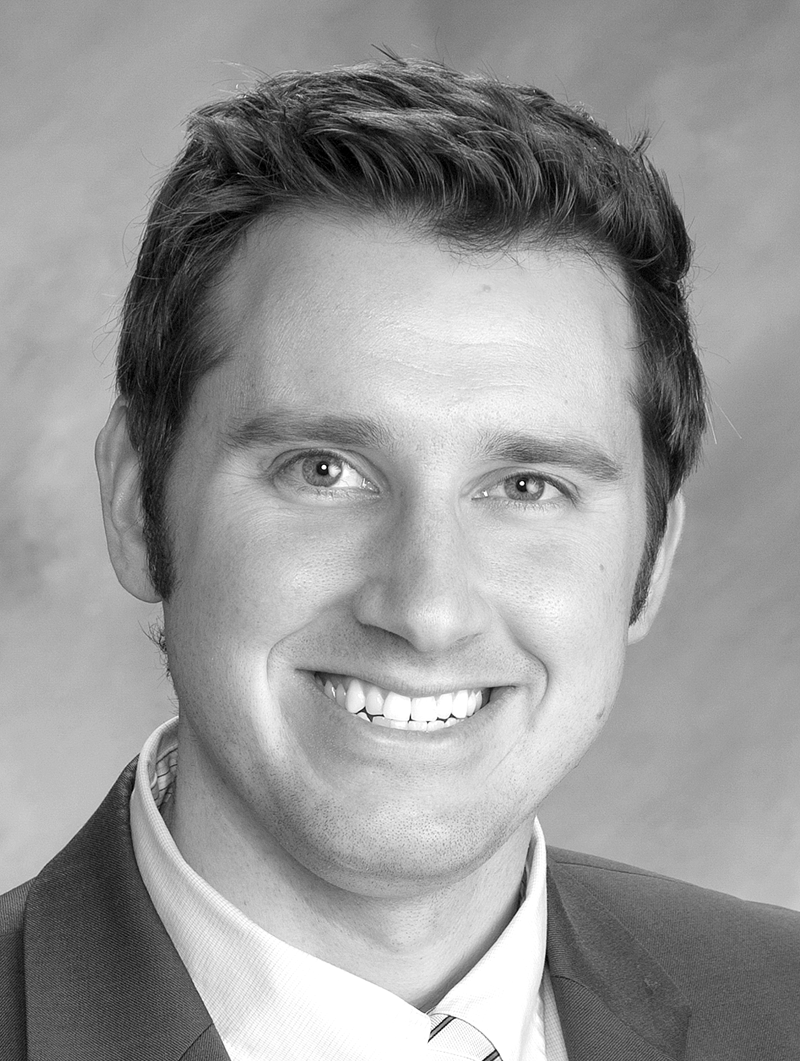
Accounting and Tax Planning Sections
There Are a Host of Vanishing Tax Provisions for Small Businesses

Jana Bacon

Jana Bacon

It has been difficult to miss all the hoopla over vanishing tax provisions. This article addresses the more common provisions affecting small businesses, including the fixed-asset expensing provisions, bonus depreciation, depreciation of specialized real-estate assets, the research credit, the new-markets tax credit, and the Work Opportunity Tax Credit (WOTC).

Section 179 and Bonus Depreciation

Since 1997, Internal Revenue Code Section 179 has allowed for the deduction of certain qualified expenditures that normally would be required to be capitalized and depreciated. Section 179 property is defined generally as tangible personal property acquired and placed in service in connection with the active conduct of a trade or business. Over the years, the maximum allowable deduction amount has varied.

For 2011, the maximum allowable deduction was $500,000 and was reduced dollar-for-dollar as qualified expenditures exceeded $2 million. For 2012, the maximum allowable deduction is $139,000 with reduction as expenditures exceed $560,000. For 2013, the maximum amount is currently scheduled to decrease to $25,000 with the phase-out beginning at $200,000.

Bonus depreciation is another tax benefit scheduled to disappear after this year. In 2011, 100% first-year bonus depreciation applied to qualified tangible personal property additions with no limit. In 2012, that was reduced to 50% first-year bonus depreciation.

Although there has been considerable discussion about the fate of these provisions — because we have no idea whether they will be reinstated by Congress or, if so, at what levels — businesses may wish to take advantage of the higher Section 179 amount and/or bonus depreciation for this year by acquiring and placing in service qualified tangible personal property purchases prior to Dec. 31, 2012.


Cost Recovery for Specified

Real Property

Qualified leasehold improvements and qualified restaurant property placed in service between Oct. 22, 2004 and Dec. 31, 2011, and qualified retail-improvement property placed in service between Jan. 1, 2009 and Dec. 31, 2011, were subject to straight-line depreciation over a 15-year period. For such property placed in service after 2011, however, straight-line depreciation over a 39-year period is required.

Also, because these assets were previously considered 15-year property, they had qualified for Section 179 expensing and bonus depreciation. Effective Jan. 1, 2012, they no longer qualify for either.


Research and Experimentation Credit

The tax credit for research and experimentation expenses (R&E credit) was originally enacted in 1981, and applied to amounts paid or incurred on or before Dec. 31, 1985. The credit had been extended 14 times since then but expired on Dec. 31, 2011. The R&E credit had been allowed to expire only once before from July 1, 1995 through June 30, 1996. The traditional R&E credit provision had allowed a taxpayer to claim a credit equal to 20% of the amount by which the taxpayer’s qualified research expenditures exceeded a base amount.

The base amount reflects past research expenditures that were incurred over a fixed period of time, so the credit was really a credit on incremental increases in research costs. The credit was generally available on both in-house and contract research costs. Also available was an alternative simplified credit, which was only partially incremental and utilized a rolling three-year base period and a 14% credit rate.


New Markets Tax Credit

Originally enacted in 2000 for investments made after Dec. 31, 2000, the new markets tax credit provided a credit on qualified investments to promote economic and community development in low-income communities. The credit was taken over a seven-year period and totaled 39% of qualified equity investments made in a qualified community-development entity (CDE).

CDEs were required to invest in qualified low-income community business, and applications were required by CDEs to obtain an allocation of a portion of the credit authorized for the year. The last amount authorized was $3.5 billion for 2011.


Work Opportunity Tax Credit

Enacted in 1997, the work opportunity tax credit (WOTC) provided a credit to employers on wages paid to eligible employees who began work for the employer before Jan. 1, 2012. The amount of the credit ranged from $2,400 to $9,000 per each eligible employee, depending upon the type of eligible employee. Eligible employees included qualified members of families receiving assistance under the Temporary Assistance for Needy Families (TANF) program, qualified veterans, qualified ex-felons, designated community residents, vocational rehabilitation referrals, qualified summer youth employees, qualified members of families in the Supplemental Nutritional Assistance Program (SNAP), qualified Supplemental Security Income recipients, or long-term family-assistance recipients.

To qualify for the credit, the employee had to complete at least 120 hours of service for the employer. The credit has been extended for wages paid through Dec. 31, 2012 only for qualified veterans.

The uncertainty of whether Congress will reinstate or extend these tax benefits makes planning extremely difficult.  Pay close attention after this year’s elections to see if any new or extending tax legislation is enacted that may affect your business.

Please note that this article contains only a general discussion, so you should consult your tax advisor for additional information or assistance.


Jana Bacon is a member of the firm at Wolf & Company, P.C. and focuses on tax compliance and planning services; (413) 747-9042.

Banking and Financial Services Sections
The Growing Problem of Tax-return Identity Theft

One of the great scams being perpetrated today is what’s known as tax-return identity theft. Unscrupulous thieves are using stolen identities to prepare tax returns on behalf of unsuspecting individuals, and reaping thousands of dollars per false return filed.

How big of a problem is it? Treasury Inspector General Russell George said back in May that criminals who file fraudulent tax returns by stealing people’s identities could rake in an estimated $26 billion over the next five years because the IRS cannot keep up with the volume of the fraud. That’s a sobering figure.

How do you know if you have been subject to tax-return identity theft? Basically, after you file your actual tax return, you will get a letter from the IRS that says something like, “thank you for filing your tax return. However, we already received your tax return back in February.” That should trigger a big alert that something is seriously wrong. Residents of Puerto Rico have it even worse, since they don’t need to file a U.S. tax return unless they have U.S. activity. As such, when their identities are stolen for tax-return purposes, they don’t even get a warning letter, because they may not have had to file a U.S. tax return. Thus they don’t even know their identities were stolen in the first place. As a result, Puerto Rico has become a priority for the IRS.

The identity thieves basically make up everything on the tax return and prepare the return in such a way that a huge refund is expected. The refund is sent electronically, and the thieves now have loaded-up debit cards. The average theft appears to be in area of $5,000, and the aggregate problem is in the billions of dollars.

It is absolutely imperative that people be more diligent with respect to whom they provide their private and financial information. Further, it is more important than ever for businesses to be extra diligent in the safeguarding of that information. Massachusetts General Law CMR 17 mandates that organizations maintaining private information do so with strict accordance to the law. Therefore, ask how your lawyer, accountant, tax preparer, medical center, new or used car dealer, mortgage lender, bank, etc., safeguards your personal information.

I don’t believe it is unreasonable to predict that random, educational ‘spot testing’ by taxing authorities, in the form of actual physical visits, is in the future to help alleviate the hemorrhaging of personal information. As such, the best advice I can offer to everyone is to prepare to be able to explain to clients, customers, and the IRS, for that matter, exactly how you safeguard private information.

Here’s an example. Our office is on the top floor of our building, and there is no elevator access after working hours or weekends and holidays without an access key. Besides the small fortune we invested in electronic security, our office is equipped with motion alarms and continuously recording cameras. We have a camera in our file room. With the permission of our building owner, we even have cameras outside of our leased office space. That’s how serious we have become with security.

Although this whole issue is due to unscrupulous individuals, I believe both the IRS and the Commonwealth of Massachusetts bear some responsibility here. The rush to mandate e-filing for everyone obviously happened faster than the IRS and the Commonwealth’s ability to monitor it, as we can see from the epidemic of tax-return identity theft. At least with paper returns, W-2s were attached, and the returns were signed by taxpayers and preparers. Presently, none of these safeguards are required by thieves, and the proverbial rooster is in the electronic hen house.

Tax returns can be filed electronically from anywhere; interestingly, one of the great tax-return identity-theft operations originated out of the Dominican Republic. The only reason this operation was discovered was because several New York City postal employees were contracted by the thieves to deliver tax refunds to certain P.O. boxes. The only ones captured were the postal employees, because the organizers of the fraud were never caught.

Even the IRS inadvertently discloses personal information. I am personally aware of a very recent situation where an IRS letter was inadvertently sent to the wrong address. As a safeguard, the IRS letter indicated only the last four digits of the taxpayer’s Social Security number. The recipient wanted to do the right thing and wrote a letter to the IRS with a copy of the original letter, in the hopes that the IRS would understand that they had the wrong address. The IRS responded with a “thank you, we’ll get back to you” and, as an added bonus, provided the entire Social Security number of the taxpayer to this complete stranger. Now that is a very serious breach of security. We have notified the IRS Commissioner in Washington of this particular situation, and we hope we are able to help prevent an unfortunate security breach from occurring again.

Exempt organizations need to be more careful also. Lois Lerner, the IRS director of Exempt Organizations (and a Western New England University graduate), in a speech this past April at Georgetown University, warned about “an important issue of the day.” Between 2001 and 2006, more than 132,000 charities included at least one Social Security number on their tax returns. Those were the Social Security numbers of donors, trustees, employees, directors, scholarship winners, and the tax preparers themselves (the last of which is inexcusable, given the availability of preparer tax-identification numbers). Thus, make sure that any not-for-profit organizations that you are involved with aren’t revealing anyone’s private information, because once it’s on Guidestar, it’s public.

In summary, tax-return identity theft is real, and it’s going to be with us for a while. In the interim, it is imperative to be more diligent with your private information than ever before, ask more questions of those who maintain your private information, file your tax returns as early as possible (thus circumventing a theft), and, for business owners and professionals, treat your customers’ and clients’ private information as though it were currency, because, frankly, it now is.

Paul L. Mancinone is a principal with Paul Mancinone Co., P.C. in Springfield. His practice is primarily focused on taxpayer representation before federal and state agencies, and also has a recurring client base of individuals and business entities; [email protected]

Law Sections
Recent Decision Could Impact Financially Challenged Borrowers

James B. Sheils

James B. Sheils

A recent Court of Appeals decision interpreting the Bankruptcy Code may result in limiting the ability of struggling commercial borrowers to obtain replacement financing from a new lender.

TOUSA Inc. was the 13th-largest homebuilding business in the U.S., with operations in Florida and many other states. It incurred significant debt to expand its business, largely through acquisitions; one such purchase involved a Florida entity. While TOUSA had numerous subsidiaries, and those subsidiaries had guarantied other debt owed by TOUSA, the subsidiaries did not guaranty the debt incurred to the original lenders providing the Florida acquisition financing.

The economic downturn, especially affecting real estate, significantly impaired TOUSA’s business, including the Florida entity it had acquired. The original lenders who provided the acquisition financing brought suit; as part of a settlement, TOUSA borrowed in excess of $470 million from a group of new lenders, whose funds were used to pay the original lenders. As collateral for the rescue loan, the new lenders obtained guaranties from TOUSA’s subsidiaries, secured by the assets of those subsidiaries. Those assets constituted collateral which had not secured the original lenders’ financing.

Despite the new funding, TOUSA ultimately sought Chapter 11 protection. The security interests of the subsidiaries were challenged by the creditors’ committee as “fraudulent conveyances,” based upon a claim that the subsidiaries did not receive “reasonably equivalent value” in exchange for the liens granted to the new lenders. The subsidiaries had not received any loan proceeds, but the new lenders argued that the funding they provided allowed TOUSA, and as a result the subsidiaries, to continue in business, even if the business ultimately failed.

The Court of Appeals endorsed the original decision of the Bankruptcy Court that ‘fair consideration’ is a fact-based determination, and that the almost-certain costs of the new loan far outweighed any perceived benefits. An argument that the subsidiaries faced an existential threat absent the new loan was rejected; the court stated that not every transfer that decreases the risk of bankruptcy for a corporation can be justified. The decision almost certainly will result in increased caution by lenders where upstream guaranties are an integral component of the financing.

The loss of the liens securing the new lenders’ loans was not the only action addressed by the Court of Appeals. The Bankruptcy Court also required the original lenders to ‘disgorge’ (i.e. pay back) $403 million received from the new lenders. The disgorgement issue involved a discussion of Section 550 of the Bankruptcy Code, which deals with recovery of property if a ‘transfer’ is avoided, as was the case with TOUSA’s subsidiaries. Section 550 allows recovery of a transfer from the initial transferee or from an entity for whose benefit such a transfer was made. The original lenders had argued that, since the liens went to the new lenders, the original lenders were ‘subsequent transferees,’ not entities that benefited from the initial transfer. The Court of Appeals disagreed; the loan agreements with the new lenders required the loan proceeds to be paid over to the original lenders.

The case was remanded to the District Court for further action regarding damages; if the initial Bankruptcy Court decision is fully upheld, the unwinding of the refinancing will result in the disgorged funds to be first used to repay the transaction costs for the new loan, then the costs incurred by the creditors committee in bringing and prosecuting the challenge and any decline in the value of the collateral, all before any funds are returned to the new lenders.

The TOUSA decision could complicate the ability of financially challenged borrowers to stay out of Chapter 11 because it raises questions regarding the enforceability, in certain circumstances, of upstream guaranties and highlights risks to lenders who are paid off by a borrower. The benefit to the total enterprise can’t be assumed to provide sufficient consideration. It’s also likely to increase the scrutiny of debtors/trustees in connection with potential claims to include prior lenders who, it will be asserted, are included in the ‘for whose benefit’ language of Section 550 of the Bankruptcy Code.

It is possible that further appeals may be taken, or that the 11th Circuit Court of Appeals may decide to have the entire court consider the case (a so-called ‘en banc’ review), but for now, the tussle with TOUSA may have chilled the air a bit for lenders to distressed businesses.


Attorney James B. Sheils is a shareholder with Shatz, Schwartz and Fentin, P.C., and concentrates his practice in the areas of commercial finance law, creditors’ rights, banking law, and telecommunications siting matters; (413) 737-1131.

Health Care Sections
Care @ Home Keeps Clients Independent and Moving to the Beat

Sherill Pineda

Sherill Pineda says she started Care @ Home with some inspiration from her friends and a desire to bring a higher level of service to the region.


Sherill Pineda calls them her “angels.”
These are the close friends who starting coming to her in the summer of 2010 looking for help with the care of aging parents, many of them veterans, in their homes. And they are the individuals Pineda, a veteran of the home health care industry, credits with giving her the motivation, confidence, referrals, and a solid foundation in the form of a growing client base to start a business she calls Care @ Home.
“My friends said, ‘don’t worry about the money — worry about taking care of our parents; that’s the most important thing,” said Pineda. “That same set of values — safety and independence and quality care — is what we have put in place for all our clients.”
And today, it is those friends, not to mention a host of other clients, who are using that word ‘angel’ to describe Pineda and her staff members, who bring a decidedly personalized style of care to their work, one that has enabled the company to achieve steady growth and a reputation for education, innovation, and giving back to the community.
Regarding the latter, Pineda has created what she calls the CARE Foundation, which stages a number of fund-raising events, with some of the proceeds funneled to local charities, veterans groups, and other local help organizations. “We try to do our part, whether it be big or small,” she told BusinessWest.
As for education and innovation, Pineda does a good deal of speaking, especially on the subjects of Alzheimer’s disease and the importance of physical fitness to the quality of life of all seniors. In fact, she’s a certified instructor in what’s known as Zumba Gold, a modified version of the increasingly popular Latin dance workout program designed especially for Baby Boomers.
And she’s brought it to a number of area senior centers and other gathering places, with solid results in terms of participation and reception.
She admits that she never thought that she’d be educating and entertaining seniors to the beats of ’40s ‘boogie woogie’ or ’50s Elvis Presley tunes through the popular Zumba dance-exercise routine, but it has become a big part of her community outreach.
In fact, it’s working so well that her fitness work, and her ties to the veterans community, led the 44-member 215th U.S. Army Band to reach out to Pineda and volunteer its talents for a CARE Foundation fund-raiser that became “A Tribute to Our American Heroes,” staged recently in the Holyoke High School auditorium. The event raised funds for homeless veterans.
Pineda told BusinessWest that other programs, in addition to 24/7 home care, include educational outreach in the workplace (called Care @ Work), at assisted-living centers, or anywhere she can plug in her speakers and iPod and get people dancing. In some way or shape, Pineda says all outreach, volunteer or otherwise, benefits the company, the client, or the community.
With a trained staff of 40, Care @ Home is well on its way to securing a firm foothold in the home-care industry in the Pioneer Valley. And for this issue, BusinessWest takes a look at the company and its ability to give back to the community in unique ways, while also offering skilled nurses and certified nursing assistants (CNS) to care for those who need compassionate, sometimes physical, and usually fun care and attention.

Working Relationships
In Pineda’s East Longmeadow office, there is a wall of yellowed, official Armed Services portraits, as well as recent photos, that showcase some of her first clients.
While veterans are not her only target group, they are the core of her young company’s client base. The company is an authorized agency for the Veterans Administration (VA), she explained, “and based on their eligibility and the VA requirements, if veterans meet the standards, they can receive home-care services through what is known as the Home Base Program; our state really supports our veterans.”
Kathleen Plante, care transition and community liaison for Care @ Home, adds that the Home Base Program’s goals mirror those of the agency, and include safety, independence, and reducing the need for future hospitalizations.
“The program is designed to facilitate keeping them at home as opposed to having to go into an institution or other facility,” she explained. “Our person-centered approach is the mission of the agency, and it secures the best possible outcome for our clients and their families. And, of course, our skilled nurses work with the physician, all to reduce the potential for relapse of a health issue, which could mean going back into an institution and the loss of their independence.”
Potential clients are introduced to the agency through relationships built by Pineda and her team. In fact, it is through current relationships, especially connections in the business community, that she projects strong growth for the new Care @ Work program.
The planned outreach to employers and employees through Care @ Work serves to explain to those still working and caring for a family member of any age, and for pretty much any medical reason, that help is available. The presentation, which is in the development phase, is designed to move through a human-resources department or employee-assistance program.
Whether from a work-related injury or one of the top four health issues Pineda sees — dementia, post-traumatic stress disorder, diabetes-related aliments, and cancer — transitional efforts from hospital to home or assisted living can be traumatic. Pineda and Plante both say that, from the start, effective care planning and medical follow-through both lead to better overall health and a sense of security for the clients and their families, including the need for respite services.
Early transition planning, quality care, and engagement, said Pineda, are qualities that make Care @ Home a different and innovative aging-in-place company.
“We are clinically and socially involved with our clients,” she noted. “We’re creating an individualized care plan and making sure we continue to have activities with them.”

Young at Heart
But when Pineda means ‘activities’, she’s not talking about crossword puzzles and bingo. In fact, she finds that some of her volunteer speaking and Zumba Gold requests stem from the fact that older individuals don’t want to play bingo anymore.
“They say to me, ‘we don’t want to hang out with those ‘seniors’ at senior centers … we want to learn new things; we’re tired of playing bingo,’” said Pineda.
Plante added good naturedly, “they don’t think they’re old; they think the others are old!”
And that dislike of a ‘center for old people,’ explains Pineda, is what is keeping many younger seniors away from physical activity, which is typically offered only in the local senior centers — and she notes that using the words ‘senior,’ ‘golden,’ and ‘elderly’ is already becoming increasingly unpopular among her clients.
This changing view of what old age really means to her clients, coupled with her awareness of the importance of staying active throughout one’s life, explains the emphasis Pineda places on physical and mental fitness in her work.
Last year, she became an Advisory Council member of the Western Mass. Healthy Aging Coalition, and a Matter of Balance coach in partnership with the Mass. Department of Public Health.
“Through the Matter of Balance program, we do a series of eight sessions that are two hours each, educating our aging population about fall prevention,” said Pineda, adding that one bad fall can physically and emotionally shut a person down due to the severity of the incident, resulting in depression and the often-debilitating fear of falling again.
But Pineda says learning and then practicing dance can potentially provide a needed confidence level to those who have fallen and fear a repeat, and this is one of many reasons she has tried to introduce audiences to Zumba Gold and its many potential benefits.
As a certified Zumba Gold instructor, Pineda has incorporated her exercise routine, a combination of Latin and international music with a fun and effective workout program, into weekend programs in which she educates her audience (people in their 60s and 70s), about the importance of staying active, no matter their age.
In that class, she discusses exactly what Alzheimer’s disease is, the early signs, what future help will be needed, and, more importantly, how staying healthy may slow or prevent the onset of the disease and various forms of dementia. Staying as active as possible is the key, said Pineda, who also serves as chairperson of the Alzheimer’s Assoc. Diversity Advisory Council of Massachusetts and New Hampshire.
After some quick discussion with questions and answers, she explained, Zumba begins.
“Then, and only then, do they get to do the dancing; they have to listen first, and then we have fun.”
But she stressed repeadedly that the dancing is far more than just fun; it’s medically important, and will become ever more so as the huge Baby Boom generation continues to age.

All for One, One for All
While Pineda is building her business to care for those in need now and in the future, she and Plante will complete the structure of the CARE Foundation, and will soon have a board of directors to determine the future beneficiaries of fund-raising events for local charities, and a possible endowment for clients that need help with financing their care.
To that end, Pineda says Care @ Home is constantly looking for collaboration and partnership, not just in home health care and fund-raising, but with other skilled professionals who can assist Pineda with bringing more educational outreach to the seniors and family members.
“We’re bringing health care to the next level,” said Pineda. “And that next level means breaking old molds and keeping as many seniors moving, educated, and engaged as possible.”
Plante agreed. “This whole model of reaching into every piece of people’s lives is what health care is going to be; we’re being proactive about it.”
And Pineda, who by all accounts is now fulfilling that role of ‘angel’ to her clients, will be singing and dancing to Elvis, or whatever song of choice her audience wants to step to, just to keep them moving, safe, and independent at home, or wherever home is.
“As long as I have my portable speaker, my iPod, and my flats,” she said, “I’m ready to go.”

Elizabeth Taras can be reached at [email protected]
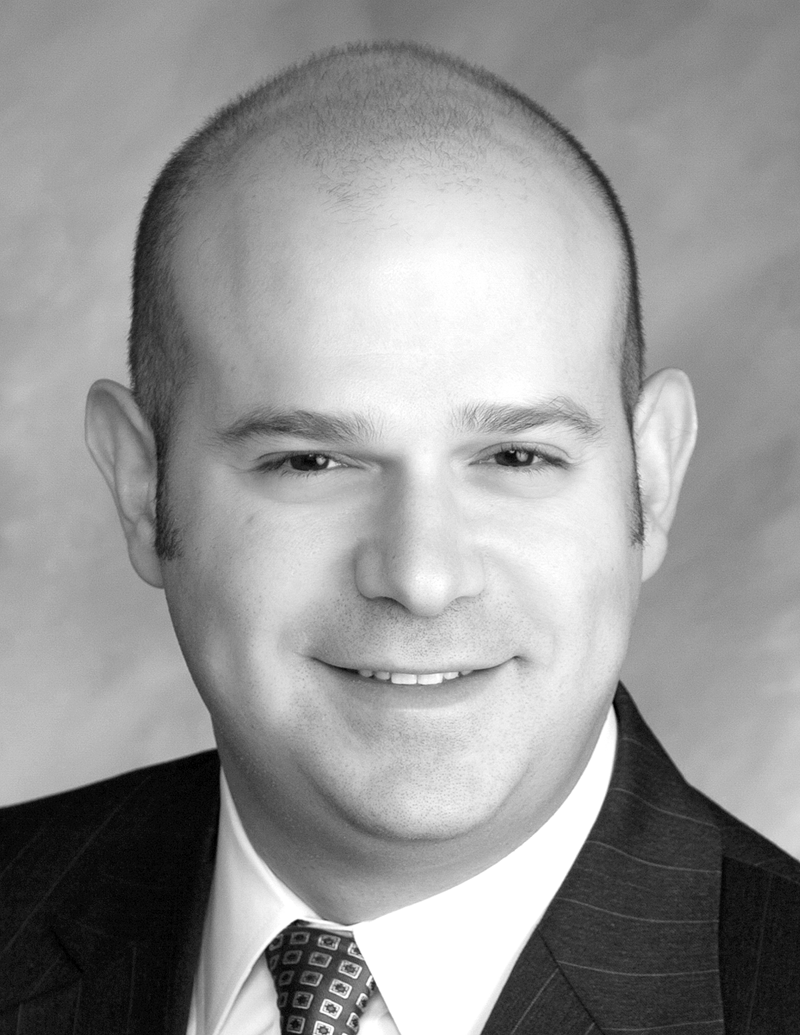
Court Dockets Departments

The following is a compilation of recent lawsuits involving area businesses and organizations. These are strictly allegations that have yet to be proven in a court of law. Readers are advised to contact the parties listed, or the court, for more information concerning the individual claims.

CHICOPEE DISTRICT COURT
Air Distribution Corporation v. Curry Realty, LLC and Curry Automotive, LLC
Allegation: Plaintiff asserts its mechanics lien rights for materials provided in a construction project owned/leased by the defendants: $20,330
Filed: 7/25/12

Lisa Pereira v. Hampton Inn
Allegation: Negligent maintenance of property causing slip and fall: $3,343.12
Filed: 7/19/12

FRANKLIN SUPERIOR COURT
Donald K. Carew v. Riverside Industries Inc. and Carolyn M. Dineen
Allegation: Motor vehicle negligence and personal injury: $45,906.85
Filed: 6/13/12

LaMountain Brothers Inc. v. Pan Am Southern, LLC
Allegation: Action to enforce a mechanics lien upon the property of the defendant: $91,733.33
Filed: 6/17/12

HAMPDEN SUPERIOR COURT
Carol and John Walsh v. New Tradition Millwork Inc.
Allegation: Breach of construction agreement: $29,692
Filed: 6/21/12

Edward and Joan Haley v. Verizon New England Inc.
Allegation: Placement of utility poles without owner’s consent: $2,800
Filed: 6/28/12

Hampden Bank v. Patient Edu, LLC
Allegation: Non-payment of promissory note: $1,175,000
Filed: 6/25/12

Isabel and Jose Sanchez v. Hani Haddad, M.D. and Valley Women’s Health Group, LLV
Allegation: Medical malpractice: $25,000+
Filed: 6/25/12

Lillian Colon, as administratrix of the estate of Jose Colon v. The Mardi Gras
Allegation: Negligence in security causing wrongful death when the decedent was shot and killed by another patron of the Mardi Gras: $1,000,000+
Filed: 6/26/12

PALMER DISTRICT COURT
Camerota Truck Parts v. L.J.R. Trucking, Inc. and Robert Levesque
Allegation: Failure to pay for goods provided and breach of contract: $10,299.95
Filed: 7/6/12

SPRINGFIELD DISTRICT COURT
A-Tech Commercial Parts & Service Inc. v. Kentucky Fried Chicken
Allegation: Non-payment of goods sold and delivered: $7,483.22
Filed: 6/21/12

Baystate Elevator Company v. Western New England University
Allegation: Non-payment of labor and materials for repair and maintenance of elevators: $8,760.00
Filed: 7/31/12

Bradco Supply v. C.S. Alexander Inc.
Allegation: Non-payment on promissory note: $3,910
Filed: 7/6/12

Perkins Paper Inc. v. Chez Josef Inc.
Allegation: Non-payment of goods sold and delivered: $4,075.64
Filed: 6/25/12

Sesac Inc. v. Skyplex
Allegation: Breach of performance license agreement: $6,160.07
Filed: 7/5/12

Departments Incorporations

The following business incorporations were recorded in Hampden, Hampshire, and Franklin counties and are the latest available. They are listed by community.

AGAWAM

Squires Bistro Inc., 161 Main St., Agawam, MA 01001. Frederick C. Withee, 111 Cottonwood Lane, Agawam, MA 01001. Bistro/restaurant.
 
ATHOL

North Quabbin Trails Association Inc., 100 Main St., Athol, MA 01331. Robert Curley, 329 Bearsden Road, Athol, MA 01331. To sustain and work toward outdoor trail development, maintenance, and improvements, and to create stewardship with other
outdoor organizations, groups, and individuals to further this goal.

CHICOPEE

Out of Wood Inc., 291 Burnette Road, Chicopee, MA 01020. Phil Karwonski Jr.,
55 Yvette St., Chicopee, MA 01020. To engage in the sale and service of bowling equipment and supplies.

Yankee Auto Sales Inc., 162 Chicopee St., Chicopee, MA 01013. Russel R. Foisy, 16 Lathrop St., South Hadley, MA 01075. Used auto sales.

GREENFIELD

Smith Ventures Inc., 73 River St., First Floor, Greenfield, MA 01301. Tyler S. Smith, same. E-commerce.

HOLYOKE

Gilburg Global Enterprises Inc., 88 Westfield Road, Holyoke, MA 01040. Karen L. Gilburg, same. E-commerce.

LEE

Genesis of Lee Inc., 980 Pleasant St., Lee, MA 01238. Khandubhai Patel, same. Hotel.

LUDLOW

HK Collections Inc., 78 Glenwood St., Ludlow, MA 01056. Hanil Kang, same. The operation of a debt-collection agency.

LONGMEADOW

Goldsmith, Katz & Argenio, PC., 1350 Main St., Suite 1505, Springfield, MA 01103. Jonathan R. Goldsmith, 104 Fairhill Dr., Longmeadow, MA 01106. Law practice.
 
 
NORTHAMPTON

Igualidad as Friends of the Paulo Freire Social Justice Charter School Inc., 67 Woodlawn Ave., Northampton, MA 01060. Janet M. Sheppard, same. To provide educational and financial support to the children at the Paulo Freire Social Justice Charter School.

PITTSFIELD

J. Allen’s Clubhouse Grille Inc., 15 Marcella Ave., Pittsfield, MA 01201. David Powell, same. Restaurant.

SOUTHAMPTON

The Greater Easthampton St. Patrick’s Day Committee Inc., 22 Pomeroy Meadow Road, Unit 1, Southampton, MA 01073. Nancy L. Lech, same.

SPRINGFIELD

Accountable Care Clinical Services, P.C., 354 Birnie Ave., Springfield, MA 01107. Phillip F. Gaziano M.D.,16 Peak Road, Wilbraham, MA 01085. Practice medicine.

Campus Neighbors of Springfield MA Inc., 15 Birchalnd Ave., Springfield, MA 01119. Shawn Corbitt, 69 Ashland Ave, Springfield, MA 01119. Nonprofit corporation.

CHC Realty Manager Inc., 1145 Main St, Springfield, MA 01103. Elizabeth Glenn. 664 Roosevelt Ave., Springfield, MA 01109. Domestic profit corporation.

Hampden Investment Corporation II, 19 Harrison Ave., Springfield, MA 0110. Glenn S. Welch, 55 Rosewood Dr., Suffield, CT 06078. Security corporation status under Massachusetts general laws.

Hidden Capitol Group Inc., 1350 Main St., Springfield, MA 01103. Christopher Lessard, same.

Iglesia Pentecostal Jehova-Jireh Inc., 712 Dwight St., Holyoke, MA 01040. Jaqueline Villanueva, 1375 Dwight St., Springfield, MA 01109. Church.

Keep Youth Dreaming and Striving Inc., 1498 Plumtree Road, Springfield, MA 01119. Latoya Bosworth, 43 Pearl St., Chicopee, MA 01013. Charitable organization dedicated to making contributions to tax exempt 501(c)3 organizations.

Naranjan Inc., 55 Briarwood Ave., Springfield, MA 01118. Sukhbrir Kaur, 22 Hopkins Dr., New Haven, CT 06512. Restaurant.

One Source General Contractors Inc., 36 Colonial Ave., Springfield, MA 01109. Dennis Forbes, same. General contractor.

SOUTH HADLEY

IQRA Inc., 24 Michael Dr., South Hadley, MA 01075. Amir Paracha, same.
 
LBLeasing Inc., 27 Hadley St., outh Hadley, MA 01075. Carol D. White, Same. Leasing of vehicles.

TURNERS FALLS

Humphrey Garden Design and Landscape Inc., 8 Burnett St., Turners Falls, MA 01376. Kevin Humphrey, same. Landscaping service.

WEST SPRINGFIELD

1st Stop Café Inc., 369 Walnut St. Ext., Agawam, MA 01001. Jennifer K. Haile, 55 Irving St., West Springfield, MA 01089. Coffee shop and restaurant.

F.T.N. Realty Inc., 1424 Piper Road, West Springfield, MA 01089. Thomas J. Nault, same. Own, rent, lease, and manage real estate.

WESTFIELD

Bahre’s Cure Cancer Concerts, Corp., 40 Pinewood Lane, Westfield, MA 01085. Jason E. Bahre Sr., same. Non-profit organization established to host public concerts to raise money/donations, which will be donated to the American Cancer Society.

Complete Tax Service Inc., 85 Reservior Ave., Westfield, MA 01085. Shelley Hope Lacross, same. Bookkeeping and tax-preparation services.

Mancino Farms Inc., 354 North Road, Westfield, MA 01085. Joeseph A Mancino, Same. Farming with retail sales.

TCIS Inc., 83 Ridgecrest Dr., Westfield, MA 01085. James C Tierney, Same. Private investigation services.

DBA Certificates Departments

The following Business Certificates and Trade Names were issued or renewed during the month of July 2012.

AGAWAM

Advantage Insulation Group
1057 Main St.
Rhiannon Eiffort

Crazy for Charms
409 River Road
Barbara Cross

Handyman Cleaning Services
204 Brookfield Lane
Helen Schuler

Patriot Auto School
301 Springfield St.
Anthony Spear

Smiling Stars Photography
569 Springfield St.
Matthew Hanlon

CHICOPEE

BCN Mechanical
100 Lawndale St.
Benjamin Nyzio

Jan’s Novelty Gift Shop
38 Oriole Dr.
Janice E. O’Connor

KNS Construction
83 Ingham St.
Keith Robitaille

Strong Backs Moving & Hauling
54 Warwick Road
Keith Godek

EAST LONGMEADOW

Dollar Tree
406 North Main St.
Rosalie Beaugard-Lee

Pride Market
13 North Main St.
Robert Bolduc

White Dog Services
191 Maple St.
Robert Nowak

GREENFIELD

Barlow Tree Landscaping & Excavation Inc.
77 Davis St.
Bryan Barlow

Floral Affairs
324 Deerfield St.
Rebecca Guyer

Goly’s Garage
286 Federal St.
James Byrne Jr.

Heart Boats Music Therapy
76 Hastings St.
Michael Williams-Russell

Metals Plus
23 Woodard Road
Lawrence Foster

Pale Circus
24 Franklin St.
Alexander Phillips

Shaw’s Mart
239 Main St.
NaxMart LLC

HOLYOKE

A-1 Nolan Realty LLC
580 Appleton St.
Patrick S. Nolan

Claire’s
50 Holyoke St.
Sonia Tejada

G & P, Inc.
50 Holyoke St.
Rajat Ghosh

Hillside Holdings Inc.
80 Jarvis Ave.
Jeffrey S. Aldrich

Holyoke Towers Associates
582 Pleasant St.
James N. Sullivan

Milkman & Co. Inc.
16 Arden St.
Terril L. Mancuso

Sephora USA Inc.
50 Holyoke St.
Sherman Hoo

LUDLOW

Bridge Premedia
45 Tyburski Road
Ann Lukasik

PALMER

Accu-Siding and Home Improvement
P.O. Box 127
Wayne Quinn

Awsstores.com
1581 North Main St.
Brian Green

Azaya Inc.
1059 North Main St.
Jitendra Changela

Baldyga Inc.
1221 South Main St.
Mark T. Baldyga

Buddy’s Cities Service
1150 Park St.
Arthur D. Tripp, Jr.

Dream Catchers
1440 North Main St.
Charles L. Hood, III

Flamingo Racing
2 Wilbraham St.
Eric W. Sanderson

Floormax Coating
21 Wilbraham St.
John C. Becker, IV

Friendly’s Ice Cream
1519 North Main St.
Shanna Rhoades

SOUTHWICK

Jericho Builders
6 Hidden Place
Bernard Berard

SUP Lake Congamond
49 Mort Vining Road
Diana M. Flynn

SPRINGFIELD

Griffin Consulting Firm
1592 Plumtree Road
Nicole Griffin

Heavenly Air
83 Kathleen St.
Michael R. Rock

Heavenly Essence
588 Carew St.
Hamzah A. Latif

Johnny’s Janitorial Service
51 Nelson Ave.
Johnny M. Kyles

Jupiter Consulting Group
97 Overlook Dr.
Moira Catherine

Kitchen Counsel
270 Maple St.
Michael L. Talmadge

Lamontagne Auto Body Inc.
33 Stafford St.
Glen Robert

Lyndale Garage Inc.
87 Warehouse St.
David E. Vedovelli

Mexico Money Express
2766 Main St.
Ady N. Rosario

N.Y.C. Variety
195 Pine St.
Johnnie Young

Nayab Enterprises LLC
273 Hancock St.
Muhammad Imtiaz

New England Export and Import
764 Main St.
Riswan Raufdeen

OSB and Services
346 Page Blvd.
Carlos E. Martinez

Platinum Image Luxury
57 Haskin St.
Tamika McKenzie

Real Talk Tee’s
34 Clarendon St.
Evelyn Bethea

Robert Valenti Design
25 Hilltop St.
Robert A. Valenti

Roberto’s Bar & Grill Inc.
80 Worthington St.
Paul Ramesh

Saigon Springfield LLC
398 Dickinson St.
Thomas Vuong

Silver Shield Security
185 Belmont St.
Gary L. Berte

TD Bank
1800 Boston Road
Diane Ryan

Vito’s Barber Shop
654 Page Blvd.
Ciro Ricciardi

Wingate at Springfield
215 Bicentennial Highway
Sec Springfield Inc.

Wolfetones Gaelic Football
33 Progress Ave.
John B. O’Reilly

Xtraordinary Recording
2 Chestnut St.
Tony A. Mebane

WESTFIELD

Sandy L. Design
39 Magnolia Terrace
Sandra Fiedler

Timber Ridge Tree Expert
217 Lockhouse Road
Christopher Rafus

WEST SPRINGFIELD

Flowers by Webster LLC
82 Elm St.
Gail Kelly

Friendly’s
1094 Riverdale St.
BDL Restaurant Inc.

K Brothers Construction
1111 Westfield St.
Yuriy Krasnov

Knightly Billing
126 Maple St.
Paul M. Corey

Mind, Body & Skin
117 River St.
Kelly L. Rondeau

Paul H. Boudo & Associates
519 Gooseberry Road
Paul H. Boudo

Power Washing
29 Neptune Ave.
Thomas M. Bienia

Banking and Financial Services Sections
PeoplesBank Expands Its Mobile Offerings for Customers

Karen Buell says younger customers are particularly open to mobile banking.

Karen Buell says younger customers are particularly open to mobile banking.

Considering that banking a generation ago always involved visiting a branch — or at least an ATM — it says something that even logging on to a Web site may be too slow for some customers.
But when PeoplesBank added text banking to its growing stable of online and mobile services, it established a new standard for speed.
“It’s pretty quick and efficient,” said Karen Buell, the institution’s Internet branch manager. “You don’t have to call or anything like that, and it’s faster than a browser; if you want a quick balance check, you don’t have to log on.”
To use the option, customers can text a short code — just a few characters — to the bank to access balances, transaction history, and other information immediately. Its functionality may be limited compared to the bank’s other remote-banking services, but Buell said it’s a logical next step for customers on the go needing quick information.
“PeoplesBank has been a leader in mobile banking since 2008, since we introduced our first mobile app, one of the first in the country,” she told BusinessWest. “A lot has changed since then. We try to continue to innovate as technology changes and advances.”
For example, “we have a mobile banking app that will work for any platform — iPhone, Android, BlackBerry,” she said. “We also have a mobile browser which allows you to have the mobile-banking experience from any phone that has an Internet plan, so you don’t have to download the app.”
To develop these offerings, the bank partnered more than a decade ago with Online Resources Corp. (ORCC), which provides Web- and phone-based financial services, electronic payments, and marketing services to financial institutions. “PeoplesBank and Online Resources have been working together for more than 12 years. We started with online banking, then merged into mobile solutions,” said Lori Mark, ORCC’s director of Product Management.
The company estimates that the total number of mobile-banking users in the U.S. will grow from 25 million in 2011 to 42 million by the end of 2013 — a surge driven by the continuing uptick in smartphone adoption, a wider range of modes (mobile apps, text banking, etc.) appealing to a wider range of customers, and ever-improving usability. In addition, according to the Forrester Research Mobile Banking Forecast 2012-2017, 47% of all adults online in the U.S. will be using mobile banking by 2017.
The shift is evident locally, Buell noted. “We continue to see great increases. Browser sessions are going up about 5% month over month; people are logging in to check their balances, transfer money, and pay bills. Personally, I like it; when a bill comes, I pay online, and I’m good to go.
“We’re seeing huge increases in mobile visits to our Web site,” she added. “In the second quarter of this year, mobile devices were 14% of our total Web site volume. We know that there’s demand for it, and people are using it.”

Addressing Concerns
Buell said she recently attended a conference in San Francisco on mobile banking and e-commerce. There, the American Bankers Assoc. presented poll results showing that increasing numbers of people plan to adopt mobile banking if they haven’t done so already; the biggest percentage increase is in the 18-34 age group, followed by the 35-49 crowd.
“We know that Generation Y and Generation X are searching for this technology, and they want to do things on the go,” she told BusinessWest. “That’s being confirmed nationally.”
Some potential users might be put off at first by wireless transactions, worried about the security of their data, but Mark said those anxieties are baseless.
“Financial institutions, just because of how highly regulated they are, tend to be very security-conscious, and so are we,” she said. “We have the same parameters, and we take a lot of time educating our client base about security from hackers. We do what we can to allay those fears.”
Breaking down that trust barrier is key, Buell added.
“When they trust it, they embrace it,” she said. “Out of all our online customers, 25% to 30% are using mobile banking. I think, if you’re already comfortable doing something online or electronically, mobile banking becomes just another way to do transactions electronically.”
She conceded that many customers, particularly of the older generations, prefer to bank only in physical branches, “but if you’ve already embraced the technology, mobile is just another step. There don’t seem to be any barriers.”
Mark said the numbers of users across all platforms — browser, app, and text — continue to grow. “On our side, the smartphone usage is where we’ve seen the growth,” she noted. “Today, 6% of all Internet banking activity comes from mobile devices, and it’s increasing on a daily basis, with the vast majority of that usage coming from iPhones and Androids.”
Buell said PeoplesBank, where the mobile-user percentage is even higher, markets its high-tech banking options through its Web site — a logical place to attract customers who are already comfortable online, many of whom are happy not using brick-and-mortar branches at all.
“We’ve also done a lot of online advertising, Facebook and Twitter posts — and we had a billboard recently, just trying to spread the word that, if you’re looking for technology, PeoplesBank has it.”
The numbers back up the demand, as total mobile visits at PeoplesBank in the second quarter of 2012 were up 178% over the same period last year.
“We know customers are using smartphones, which are changing their lives in meaningful ways,” Buell told BusinessWest. “Our commitment is to answer that desire for convenience.”

Joseph Bednar can be reached at [email protected]
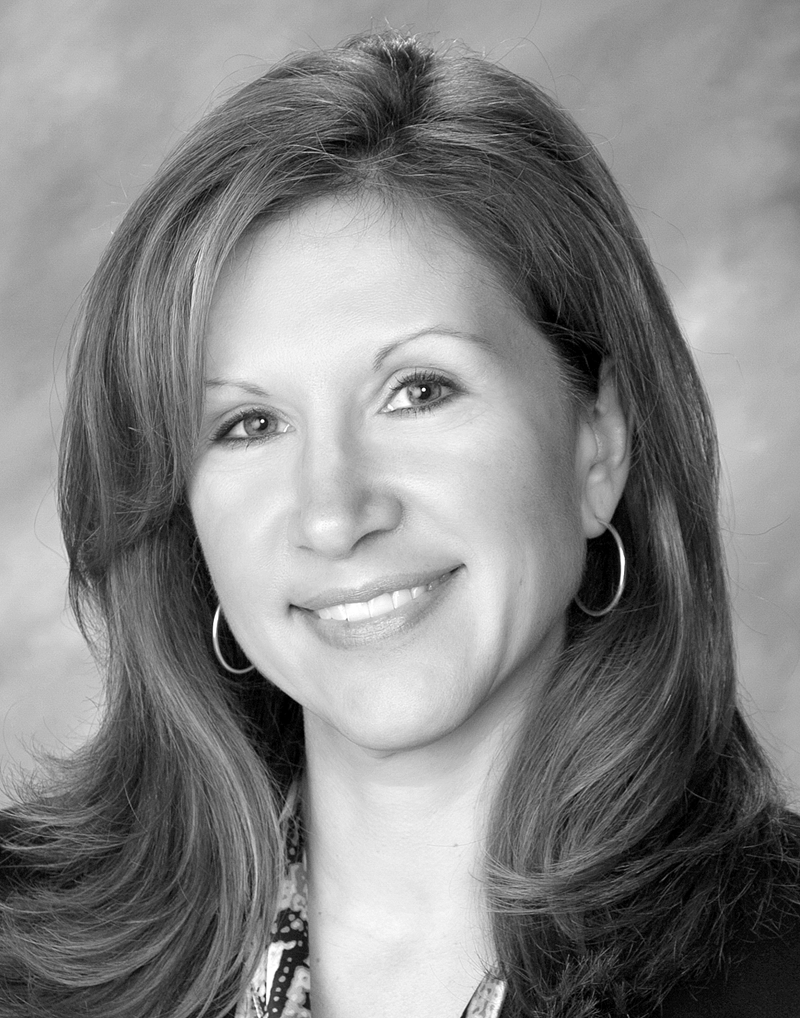
Construction Sections
High Performance Computing Center Touts Energy, Security Innovations

The MGHPCC, which will open along the canals in Holyoke this fall.

The MGHPCC, which will open along the canals in Holyoke this fall.

For John Goodhue’s father, it took a tour through the Massachusetts Green High Performance Computing Center to understand exactly what goes into housing — and protecting — computers.
“When my dad toured the center,” said Goodhue, the center’s executive director, “he came out the other end and said, ‘I finally get it! It’s not about computers; it’s about bringing electricity in and creating a lot of heat and then removing that heat from the building.’”
Bingo.
Of course, that has been just one of the challenges — albeit a critical one — of preparing the MGHPCC to open in Holyoke later this year. The $95 million facility is a joint venture between UMass, MIT, Harvard University, Boston University, and Northeastern University, as well as technology giants EMC Corp. and Cisco Systems Inc., to create a high-tech research center.
To create that all-important cooling effect, the facility will use a continuous water loop in and out of the building. A chilling system will cool the water, which will then be pumped into air-conditioning units placed beside the computers; the heat generated by the equipment will then be exhausted outside, and the process begins again. Constantly.
“The cooling took an enormous amount of effort,” Goodhue said, explaining that the two major techniques used for the process involve air and water, respectively. After six weeks debating which technique to use, architects and builders decided on the chilled-water option. “And we’re bringing it quite close to the computers; for every two racks full of computers, right next to them is a little air-conditioning rack. It takes water into it and cools the air around the computers, and takes the water out.
“Water is actually much better at carrying heat and absorbing heat than air is,” he continued. “A very small volume of water, relatively speaking, can carry the same heat as a much larger volume of air, and it’s one of things that allows us to run the center more efficiently. The cooling system really allowed us to cool these computers that are very, very hot. Some machines pack a considerable amount of electronics into a very small space, and we have to be extra vigilant about cooling — and water is better at doing that.”
But that raises challenges regarding energy efficiency — another goal of the computing center’s leaders. Meanwhile, designers were also faced with protecting sensitive equipment and data from more than heat, so decisions about building security were high on the priority list as well.
For this issue, BusinessWest delves into some of these questions, and how the MGHPCC is proving to be an innovative facility long before going online this fall.

Green for a Reason
From the start, the Holyoke center was designed to be energy-efficient, Goodhue told BusinessWest. “One of the things that drew us to Holyoke is that the power came principally from renewable energy. Holyoke Gas & Electric generates 70% of its power from renewable sources — primarily the dam, but it also has the largest solar array in the state, and also has ideas about adding other resources to their portfolio.”
Holyoke’s dam on the Connecticut River generates hydroelectricity that is then sold to industrial users for about 8 cents per kilowatt hour, compared to a state average of more than 12 cents, according to the U.S. Energy Department.
That’s good, because data centers tend to suck up a lot of energy — partly because they never shut down, partly because of the power the equipment uses. “There has been a trend in recent years toward operating computers and servers at higher and higher temperatures,” Goodhue noted.
In fact, according to a 2011 Stanford University report, data centers account for about 2% of the nation’s energy consumption, and many use electricity generated by coal-fired power plants, not exactly a clean energy source. Because of its power supply and design, the MGHPCC is expected to use at least 25% less energy than the typical data center.
Goodhue said the computing center has applied to be a Leadership in Energy and Environmental Design (LEED) project, aiming for Gold status — the second-highest accreditation — from the national recognition program run by the U.S. Green Building Council.
“Again, that’s by paying attention to hundreds of details, from how we manage stormwater to the white reflecting roof; from what landscaping materials we use to the chemical basis for our paints,” he explained, noting that the paint must not contain what are known as volatile organic compounds, or VOCs; when breathed in, these are not acutely toxic, but can cause long-term health effects.
“There are dozens of small things that, taken individually, add up to a very different way of designing and building this center, so that it has a much lower environmental impact,” Goodhue continued. “The good part about it is, people have thought very carefully about the environmental impact, so you don’t have to reinvent the wheel — just follow the best practices you know, none of which are crazy or over the top. They just make good design sense.”

The Springfield Data Center, currently under construction on the former Technical High School site.

The Springfield Data Center, currently under construction on the former Technical High School site.

Some of the same focus on energy efficiency is evident at the Springfield Data Center (SDC), set to open in 2013 on the site of the former Technical High School. The facility will be one of the state’s two primary data centers, backing up and supporting the Massachusetts Information Technology Center in Chelsea.
New York-based Skanska USA, the contractor for the SDC, has also incorporated a number of energy-efficient elements in aiming for Silver certification under LEED. “This is one of the most energy-efficient buildings of its type in the United States right now,” said Steve Eustis, senior vice president and project executive for Skanska.
The design includes selecting materials that are energy- and water-efficient and incorporates ‘daylight harvesting,’ which uses sensors in the lighting system to shut off the lights when there is sufficient daylight; 90% of the occupants will have daylight views. The roof will be also be a reflective white, and HVAC systems were designed with energy conservation in mind. In fact, the air-conditioning system that cools the computers will capture the waste heat and reuse it.

Securing the Data
Of course, protecting computers from heat damage while keeping energy costs low is only one balancing act a data center must perform. Another is keeping data private while not hindering the ability of the facility’s users to conduct and share their research.
“Security is of critical importance. If you’re doing medically oriented research, for instance, you might have sensitive patient data in the center, and it’s very important to protect that,” Goodhue said. “At the same time, this is a research center, and it’s very important to give people as much flexibility as possible to share data.
“So we have these two conflicting constraints, and we handle that in two ways,” he continued. “One has to do with the physical infrastructure. There are maps that label every room as a security zone, with relatively small lists of people who are allowed to go into each room in the building, and that drives our keycard-access system. Your ID will let you inside doors and won’t let in others.
“So, if you’re an electrician servicing the transformer,” he went on, “you probably don’t need to go into the computer room, so that person’s card will let him into the transformer room and maybe one or two other adjacent rooms. Similarly, if you’re operating a computer in the computer room, you probably have no business hanging around the transformers.”
The other element is how networking is handled, Goodhue continued.
“Every institution that uses the facility — Harvard, MIT, UMass, and so forth — already has well-developed methods of protecting data when it flows across their networks,” he said. “So, imagine that, on the floor, there’s one network that we’ve arranged so it’s an extension of the MIT campus network, and one we’ve arranged as an extension of the Harvard campus network, and so on. Each exists here in parallel universes; they don’t see each other, but are kept separate. If you’re at MIT, you can think of the building as just another building on campus, but farther away, and BU folks can see it the same way.
“That gets you the protection,” he noted. “So how do you get flexibility?”
For that, the center uses what Goodhue called a “meet-me switch,” which allows two or more users from different networks to exchange data. “Again, it’s the balance between access and flexibility and making sure the data is protected and controlled.”
In addition, each rack of computers has its own set of keys, so only authorized people can access each one. “This isn’t like the movies where you see these places with barbed wire and armed guards and so forth,” he said. “We are a high-tech facility, and we’re very careful about protecting it, but we’ll put on a slightly friendlier face than what you see in the movies.”

Little Things
Goodhue said the MGHPCC will open on time and under budget, but that’s far from the only positive aspect of it.
“People often ask me, ‘what’s one unique thing about the data center that makes it the best in some way?’” he told BusinessWest. “But there’s not just one thing. It’s lots of attention paid to literally hundreds of details that gets you there.”
And that’s when the real excitement — the research itself — begins.

Joseph Bednar can be reached at [email protected]

Court Dockets Departments

The following is a compilation of recent lawsuits involving area businesses and organizations. These are strictly allegations that have yet to be proven in a court of law. Readers are advised to contact the parties listed, or the court, for more information concerning the individual claims.

CHICOPEE
DISTRICT COURT
TBF Financial, LLC v. JSLC Corp., and Sandra and Joseph Marlin
Allegation: Breach of lease agreement: $21,378.06
Filed: 6/15/12

HAMPDEN
SUPERIOR COURT
Aaryn Blain v. Porterhouse Media
Allegation: Breach of contractual agreement: $25,000+
Filed: 5/8/12

Country Development Corp. v. Colorful Creations Bead Co. Inc. and Patricia and Stanley Pawlowicz
Allegation: Breach of lease agreement: $77,643.88
Filed: 5/2/12

Jenco Property Maintenance Services v. ITT Power Solutions d/b/a Exelis
Allegation: Breach of contract for snow plowing: $450,000
Filed: 5/18/12

John J. Walczak v. Turley Publications
Allegation: Breach of contract: $25,000
Filed 5/31/12

Michelle Michaels v. Superior Oxygen Systems Inc. and Inova Lab Inc.
Allegation: Failure to pay promissory notes: $150,000
Filed: 5/23/12

Rafal Lasiuk v. Liquor Town
Allegation: Action for monies had and received, unjust enrichment, and fraud: $96,817.50
Filed: 5/11/12

Shawntell Lee Waldon, administratrix of the estate of Aaron Lavanta Waldon v. Helsant Inc. d/b/a LACE
Allegation: Careless and improper security and maintenance at Club 418, causing wrongful death: $500,000+
Filed: 5/16/12

HAMPSHIRE
SUPERIOR COURT
Eclipse Manufacturing Inc. v. Gillespie Corp.
Allegation: Non-payment of monies loaned: $60,000
Filed: 5/23/12

Felix Perez v. Anthony’s Dance Club
Allegation: Negligent hiring and supervision, causing personal injury: $40,000
Filed: 5/15/12

R.E. Laplante Construction Inc. v. Harold L. Eaton Associates Inc.
Allegation: Breach of contract to supply land survey: $25,000
Filed: 5/29/12

NORTHAMPTON
DISTRICT COURT
American Express Bank FSB v. Pitt-singer P&H and Donald R. Pittsinger
Allegation: Non-payment on previous judgment: $10,759.23
Filed: 5/27/12

Constellation Newenergy Inc. v. Stop n’ Save
Allegation: Non-payment of services rendered: $8,342.50
Filed: 5/17/12

Eastern Brothers, LTD, d/b/a Black River Produce v. Sunflower Inc., d/b/a Green Street Café and John A. Sielski
Allegation: Non-payment of goods sold and delivered: $10,666.94
Filed: 6/14/12

Santa Buckley Energy Inc. v. Volkswagon of Northampton
Allegation: Non-payment of services and goods: $7,016.38
Filed: 6/1/12

WESTFIELD
DISTRICT COURT
Cach, LLC v. Daval Home Services Inc. and Keith G. Roy
Allegation: Breach of credit-card agreement: $16,840.11
Filed: 5/25/12

Cover Story
Roger Crandall Shapes a Vision for MassMutual

The six-foot-long fish mounted over Roger Crandall’s desk certainly looks real.
But in fact, this work of art, as he calls it, is a wood carving fashioned with the help of several dozen photographs of the 140-pound tarpon that Crandall hooked, battled for more than an hour and a half, landed, and then released off the Florida keys in 2006.
“I was looking through a fishing magazine, and found this woman in New Hampshire who does wood carvings of what are usually trout or salmon,” Crandall, the chairman, president, and CEO of MassMutual explained. “I sent her 50 pictures, she did some research on tarpon to get the dimensions right, and it took her three years to do it.”
Like just about everything else assuming floor, wall, and shelf space in Crandall’s large office at MassMutual, which he jokingly refers to as the hall of dinosaurs, the wood carving has meaning and tells a story — or several of them. In this case, the fish, which he admits probably wouldn’t fit anywhere else, relates his passion for the sport, which he enjoys for the challenge of fights like he had with the tarpon, but more for the relaxation it provides as well as the opportunity to get away from the numbers that have dominated his life and career.
“In a world, and a job in particular, where information is constantly coming at you, getting out onto a river or a flat is great,” he explained. “For that two, three, of four hours, there’s no Blackberry, there’s no crisis in Greece, there’s no low interest rates, no unclear regulatory policy, none of the things I deal with on a day-to-day basis; it’s a great way for me to de-stress and relax.”
Moving around the room, one will find dozens of objects that speak volumes about Crandall’s work and the mindset he brings to it. For example, there’s the 107-year-old grandfather clock, presented as a gift to a former president of MassMutual by the general agents association. Still keeping good time, the clock is there as a reminder of the importance of the relationship between the company and its agents and general agents, he said.
Hanging on a wall a few feet away, meanwhile, is a framed copy of an insurance policy sold in 1894. “We literally sell the same type of policy today,” said Crandall, adding that the document is a reminder that the foundations on which the company was built haven’t really changed — and won’t. “One of our best-selling products in the 1890s was also one of the best-selling products in 2011.”
And then, there are the model planes, or what Crandall referred to as “deal toys.” There are more than a dozen of them in total, and they represent individual aircraft or airlines that MassMutual has owned or invested in over the decades, he explained, noting a few that he’s particularly proud of. One would be a model of a jet owned by Morris Air, a small outfit started by David Neeleman in Salt Lake City that caught Crandall’s attention when he was an analyst for MassMutual in the early ’90s.
The company tripled its investment in Morris Air in just over 18 months when that venture was sold to Southwest Airlines, Crandall recalled, adding that the story got better — and the deal-toy collection grew significantly — when, after his non-compete agreement with Southwest expired, Neeleman started another airline that MassMutual became an original private equity investor in — JetBlue. “I think we made $80 million on a $15 million investment,” he said.
Although it would outwardly appear that Crandall’s office is outfitted as a way to salute past achievements, he described it collectively as an inspiration for the future — the tense that certainly occupies most of his time and attention.
He told BusinessWest that he’s focused on the year 2040, for example. That’s the year the U.S. is expected to be a nonwhite majority, and while that’s 28 years away, he’s already taking steps to position the company for that time, with steps ranging from a comprehensive effort to change the demographic mix of the company’s roster of agents to the introduction of many new products, to aggressive marketing to target groups ranging from African Americans to gays and lesbians.
A big part of getting the company positioned for the future is to remind customers and potential customers of the need to secure their futures — and then provide the products and services to help them do it, Crandall said, summing up matters by first borrowing an old Mandarin proverb — “when you’re safe, think about danger” — and then a quote attributed to Albert Einstein: “the most powerful force in the universe is compound interest.”
For this issue, BusinessWest talked at length with Crandall about tarpon, investments in airlines, and company history — but mostly about the future and how he intends to position the 161-year-old company to be fully ready for it.

On a Grand Scale
Crandall remembers that while he was in grade school, he would often go to the office on Saturdays with his father, a group life and health salesperson for MassMutual.
“I would stuff envelopes for him so he could do mailings, and got a penny an envelope,” he said, adding that he eventually took on more far-reaching duties. Indeed, when personal computing came into prominence, he would use an early spreadsheet program called VisiCalc (which predated Lotus and Excel) to help his father show prospective clients how much the premiums would be for group life insurance.
“Later, during summers when I was in college, I would go out on sales calls with him and sit in on meetings with MassMutual pension customers … that’s how I got a serious introduction to MassMutual,” he said, adding that while his father spent 34 years with the company, he didn’t picture himself following in those footsteps, let alone becoming CEO.
However, a series of circumstances, starting with the economic landscape he encountered upon graduating from the University of Vermont with a bachelor’s degree in 1988, put him on course that eventually led to that office on the second floor of the company’s State Street headquarters.
“I started in the real estate investment department, and it was the perfect time to get into that sector,” he recalled, “because we were about to have the biggest commercial real estate collapse since the Great Depression; it was actually a wonderful learning experience.”
MassMutual gave him the opportunity to take the charter financial analysts exam, and he eventually moved from real estate to the investment division to the securities investment division, where, fortuitously for him, the analyst assigned to watch the airline industry had just retired.
“At that time, my uncle, Bob Crandall, was president of American Airlines,” he explained. “So the guy I worked for said, ‘at least you’ll have one person to call,’ and told me to watch the airline industry.”
With a little guidance from his uncle, but mostly a keen eye for potential-laden ventures, Crandall steered MassMutual toward the Morris Air, JetBlue, and other deals now commemorated in his office. In 2000, he joined Babson Capital Management, LLCV, a MassMutual subsidiary, and in 2002 was named managing director of that company and head of its Corporate Bond Management, Public Bond Trading, and Institutional Fixed Income units.
In 2005, he was appointed chairman of Babson Capital and executive vice president of chief investment officer of MassMutual, eventually becoming president and CEO in January of 2010, and later named chairman as well.
He took those final steps to his current post at the height of the Great Recession, a downturn that severely tested all financial services institutions, but also brought a number of opportunities for MassMutual.
“The company is much stronger today than it was at the end of 2007,” he explained. “Our sales are higher, our earnings are higher, and our capital is higher. It was Rahm Emanuel (President Obama’s former chief of staff) who said, ‘don’t let a good crisis go to waste,’ and from our perspective, it became a great opportunity to remind people about the strength of a mutual company and how we differ from a stock company.
“It was also a time to remind people of the inherent strength that the mutual life insurance company products have,” he continued. “So we’ve actually been able to take market share as well as grow over the past three or four years.”

Dollars and Sense
Elaborating, he said MassMutual has done so essentially by focusing on what he called the “basics.”
And by this he means the three main pillars of the company’s operations — providing customers with financial security, paying the best dividends, and providing exceptional customer service.
For example, the company has “doubled down” on its roster of agents, going from 3,700 a few years ago to more than 5,000 today, he said, while also investing in new products, including a number of creative life insurance options, designed to meet the various needs of customers.
Such steps are part of those aforementioned efforts to position MassMutual for both today (and those opportunities from the fiscal crisis Crandall described) and the much different look and feel that this country — and the world — will have two, three, and four decades from now.
And with that, he turned to another item in his office, a framed commemorative photo, a gift from a Chinese entity that MassMutual has partnered with on a utility venture.
“My guess is that 20 or 30 years from now, someone’s going to look at that and say, ‘wow, MassMutual was thinking not five years ahead, but 10 and 20 years ahead in dealing with China. So I put that there to remind whoever’s sitting here in the future of that.”
To further explain his mindset, he referenced that acquired skill attributed to hockey legend Wayne Gretzky. “He said he would skate not to where the puck was, but to where he thought he would be,” said Crandall. “That’s what we’re trying to do.”
And in a figurative sense, the puck is going to a place and time, not far off, and in some cases, already here, where the demographic picture will be much different. The company has responded in a number of ways, he said.
“One of the big things we did was realize that the face of America is changing, and we needed a much more aggressive diversity strategy,” he explained. “So we’ve gone from having maybe 100 of our agents being multicultural to perhaps 1,000 over the past four years.
“Meanwhile, we’ve gone from having no dedicated multicultural marketing campaigns,” he continued, “to having dedicated campaigns for Hispanics, African Americans, Asian Americans, the gay and lesbian markets … we’ve really embraced diversity in a big way, and it’s making a huge difference for us. And we’ve only scratched the surface of the opportunities there.”

It’s not Foreign Policy
Another component of the company’s ‘getting back to basics’ strategic initiative is using marketing and other vehicles to emphasize the inherent advantages from doing business with a mutual company, Crandall continued.
“We’re owned by our policy holders, so we don’t get torn between two opposing views,” he explained. “Shareholders, we believe, are inherently, and rightly, more willing to take more risk than the policy holder is. Since we have just one constituency, we think that’s a huge advantage over having two, and you have to look no further than to a few public companies that are undergoing very sigfificant changes because their shareholders are pushing them to do that — their policy holders are not a big part of that public discussion.
“We’ve spent a lot of time redoing our advertising and marketing to remind people about mutuality,” he went on, pointing to a recent ad now framed and on his wall as one example. “We’re reminding people that we’re 160 years old (now 161) and we’ve been focused on policy holders since we were founded.”
These various pieces, from investment in new products to bolstering and greatly diversifying the roster of agents, to more aggressive marketing have all helped the company, said Crandall, noting that in 2011, MassMutual set records for sales of whole life insurance products and retirement products, and ended the year with record capital. And those trends have continued into the first half of 2012.
Looking ahead, he said there are tremendous opportunities to build on that recent progress, as evidenced by what many would describe as alarming statistics regarding Americans and how little they’ve done to secure a solid financial future.
“There are 50 million Americans who don’t have any life insurance, and that’s a huge opportunity for us,” he explained, adding that this is one of the reasons why, in addition to taking market share from competitors, the company can grow simply from what will, or should be, a much larger pie. “The other huge opportunity stems from the fact that Americans simply haven’t been saving enough money for probably the past 25 years.
“They’ve suddenly realized that they haven’t saved enough, and also realized that their house isn’t worth what they thought it was,” he continued. “So savings rates have tipped up, and we’ve done what I think is a very good job in our 401(k) business of reminding people how effective it is to save for retirement in that way, how steps taken in your 30s and 40s can make a difference when you’re in your 60s.”
Which brings him back to Albert Einstein and his comment on compound interest.
“Fundamentally, if you start saving early enough, you can solve all these problems,” he said, referring to the possibility of not having enough money for retirement, health care, or long-term care. “It’s very hard to take care of those things if you wait until you’re 60, and we want to help people understand that and start saving early.”

The Bottom Line
Among the myriad artifacts in Crandall’s office is a photograph of himself with David Neeleman in front of a JetBlue plane at New York’s JFK Airport.
Like the grandfather clock, framed insurance policy, and assorted deal toys, it is, as he said, a celebration of a past achievement, but also serves as inspiration for future success.
And it’s yet another example, said MassMutual’s top executive, of how even a company with 160 years of history to look back on, can only succeed if both eyes are on the future — and especially the distant future.

George O’Brien can be reached at [email protected]

Law Sections
10 Things to Know About ‘Scary’ Retirement-plan Beneficiaries

Ann I. Weber, Esq.

Ann I. Weber, Esq.

The terrific thing about retirement plans (including individual retirement accounts) is that they grow income-tax free within the plan. The price of this benefit is that, upon distribution, income tax is assessed on the entire amount distributed. At the death of the plan participant, individual plan beneficiaries can stretch out the distributions over their life expectancy and defer income taxes until a distribution is actually received.
Minimum distributions (MRDs) are required over this period, and spouses have special rules applying to them, which allows them to add 10 years to the payout period. This works wonderfully for most beneficiaries because it allows income taxes to be paid over time with all taxes on the amount not distributed deferred.
However, this may not be such a great benefit if a minor, disabled individual, or otherwise scary person is named as a beneficiary of the plan, because the plan participant may not want such an individual to receive their distributions outright. Here are 10 things to think about if you have potential plan beneficiaries in this situation.

Minors. Many parents do not want their children to receive a large sum of money outright. In Massachusetts, the age of majority is 18, but many parents would tell you that maturity arrives much later.

Disabled Persons. For persons under a legal disability who are receiving public benefits such as Medicaid or Supplemental Security Income (SSI), any mandatory income payment will be considered countable income for purposes of any benefits to which they might otherwise have been entitled. The value of the entire plan will be considered a countable asset if the disabled person can access the plan proceeds on his or her own. As a result, an individual on Medicaid or SSI who is the named as a beneficiary of the plan could very likely lose his or her medical or supplemental assistance as a result. The retirement benefits would then be spent down to pay medical and other expenses until the disabled individual was impoverished and could reapply for benefits.

Otherwise scary persons. These may include, among others:

• Business owners. Many business owners have personally guaranteed business debts and do not want any retirement benefits they receive from their parents (or any other plan participant) to be subject to claims of their creditors.
• People who are or may be going through a divorce. Most plan participants do not want their retirement funds going to an ex-spouse.
• Technical adults. Many people do not mature at 18, and parents may be concerned that a child might not have the skills to handle a significant sum of money, leading to some unwise decisions.
• Individuals in risky occupations. Doctors, lawyers, and maybe even Indian chiefs may be concerned about possible malpractice or other claims of unknown amounts and, consequently, do not want to have the outright ownership as a plan beneficiary.
• Temporary situations. An individual may be in a precarious situation at the present time, but is likely to resolve it sometime in the future.

Conventional Trusts. Most conventional trusts are tricky to use as retirement-plan beneficiaries because retirement-plan benefits paid to a trust are subject to income tax in full upon receipt. Thus, if such a trust is named as a beneficiary of the plan, the plan benefits would ordinarily be distributed to the trust in full, and would be subject to income tax in the year of receipt.
When a Conventional Trust Is a Good Idea. Where the plan beneficiary is very young or under a legal disability and receiving needs-based public benefits such as Medicaid or SSI, the payment of tax might be an acceptable price to pay for the security of having the asset managed by a trustee and distributed to the beneficiary only at the trustee’s discretion.
When a Non-conventional Trust is Better. Special trusts blessed by the IRS can protect the undistributed portion of the plan benefits while allowing a trust beneficiary to receive minimum required distributions (MRDs) annually. They work well when the plan participant is concerned about naming the beneficiary outright.
‘See-through Trusts’ Great for Scary Beneficiaries. A see-through trust can be created by the plan participant and named as the beneficiary of the plan. At the death of the plan participant, the trustee receives from the plan and distributes to the trust beneficiary only the mandatory annual MRD. For scary beneficiaries, these trusts can be a home run, and the trustee can be empowered to reach the rest of the plan asset in its discretion.
Discretionary Trusts. Though not as clearly blessed by the IRS, it is also possible to name a trust with multiple beneficiaries as the named beneficiary of a retirement plan. The advantage here is that the trustee can decide how to apportion the MRD (and additional principal payments, if desired) among trust beneficiaries. The measuring life for the MRDs is the life expectancy of the oldest beneficiary. Note, however, that these trusts are more technical, and stricter rules apply regarding remainder beneficiaries.
Trustee Must Be an Independent Third Party. The beneficiary may not be named as a trustee because the discretionary ability to reach the principal of the trust may render all the plan assets subject to the claims of creditors, divorcing spouses, etc.
Trustee May Name the Beneficiary Trustee at a Later Date. In circumstances where the plan participant wishes to limit access to the plan for a limited period only, the trustee may be given the authority to name the plan beneficiary as successor trustee at a certain point or at the trustee’s discretion. This works well for individuals whose financial situation or level of maturity is likely to change for the better — for example, when an individual undergoing a divorce is no longer subject to claims of the spouse, or when a child reaches a certain age.
Although there are no perfect solutions in this situation, with a little pre-planning, retirement plans can be transferred to these special beneficiaries in an optimal fashion.

Attorney Ann I. Weber is an attorney with the Springfield-based firm Shatz, Schwartz and Fentin, P.C., and concentrates her practice in the areas of estate-tax planning, estate administration, probate, and elder law, and has a particular interest in creative estate planning for authors and artists, farmers, and landowners. She is a board member and past president of the Estate Planning Council of Hampden County Inc., and is a former (and founding) board member and current member of the Massachusetts chapter of the National Academy of Elder Law Attorneys. She is also a frequent author and speaker on issues regarding estate planning; (413) 737-1131.

Court Dockets Departments
The following is a compilation of recent lawsuits involving area businesses and organizations. These are strictly allegations that have yet to be proven in a court of law. Readers are advised to contact the parties listed, or the court, for more information concerning the individual claims.


CHICOPEE DISTRICT COURT

Brandi Sabourin v. Stop & Shop Holdings Inc.

Allegation: Negligent maintenance of premises, causing injury: $4,667.23

Filed: 4/25/12


Granite City Electric Supply Co. v. Pelland Electrical Contractors Inc. and John Pelland

Allegation: Breach of contract for electrical materials supplied: $19,510.01

Filed: 6/4/12


FRANKLIN SUPERIOR COURT

Russell and Kathryn Scott v. Farm Family Insurance Co.

Allegation: Failure to pay on insurance policy: $80,000

Filed: 4/13/12


HOLYOKE DISTRICT COURT

Lillian Santos v. Holyoke Mall Co. and UGL Services UNICCO Operations

Allegation: Slip and fall on foreign substance: $4,766.97

Filed: 5/30/12


PALMER DISTRICT COURT

Cach, LLC v. Linda Mason aka Linda L. Johnston and Joe’s Handyman

Allegation: Breach of credit-card agreement: $4,818.96

Filed: 5/24/12


SPRINGFIELD DISTRICT COURT

Catherine Gaynor v. Price Rite

Allegation: Slip and fall: $6,883

Filed: 5/18/12


Constellation New Energy Inc. v. Apple Tree Market Inc.

Allegation: Non-payment of services rendered: $19,812.27

Filed: 5/17/12


Wanda Roche v. Patalono Pizza, LLC

Allegation: Failure to clear ice, causing slip and fall: $16,097.18

Filed: 5/17/12


WESTFIELD DISTRICT COURT

Bobbie Demers v. Walmart Stores Inc.

Allegation: Failure to provide adequate security, causing personal injury: $9,550.36

Filed: 5/15/12


Vellano Brothers Inc. v. Lagone Plumbing & Heating Supply Inc.

Allegation: Non-payment of goods sold and delivered: $3,925.26

Filed: 4/6/12

Employment Sections
What You Should Know About Worker Misclassification

Charlotte Cathro

Charlotte Cathro

Since the downturn in the economy, businesses have been looking for ways to cut costs, and the largest cost for many is payroll. Companies might engage more part-time and temporary workers, in addition to independent consultants, to reduce expenses. However, business owners could find themselves in a difficult position if they don’t know the rules of how to classify these workers.
Due to tight budgets and decreased collections, federal and state governments are also cutting costs and looking to generate additional revenue. These governments have focused efforts on misclassification of workers to collect unpaid employment taxes. A similar push by the IRS from 1988 through 1994 reclassified 483,000 workers as employees and resulted in $751 million in assessments.
Business owners trying to reduce costs would rather have their workers classified as independent contractors than as employees. Employers are required to withhold and submit federal and state withholding taxes from an employee’s payroll, and pay Social Security, Medicare, and unemployment taxes on their behalf. Depending on how the company’s plans are set up, they could also provide health, dental, retirement, and other benefits to everyone classified as an employee. Sick time and vacation time might also be paid. State protections such as wage-and-hour laws may apply only to employees, and employment arrangements can be much more difficult to terminate.
Independent contractors are considered self-employed individuals. Some workers appreciate the flexibility and the ability to deduct additional un-reimbursed expenses against income. The contractor is responsible for paying the employer and employee contributions for Medicare and Social Security taxes, and they receive a deduction on their tax return for the employer portion. They are expected to make quarterly estimated tax payments on their income since they are not having taxes withheld. Health and other insurance is the self-employed individual’s responsibility, and they may be entitled to a deduction for tax purposes. The company using their services is responsible for acquiring the appropriate federal identification number and issuing a form 1099 at the end of the year if they paid the worker over $600, but they do not incur payroll-tax liabilities.
Issues with classification are generally noted when a worker applies for unemployment, since employees are eligible, while self-employed individuals are not. Effective in 2008, the federal government implemented the Emergency Unemployment Compensation Program, which provides federal funding to extend unemployment benefits up to 53 weeks. An additional program effective in 2012, the Federal-State Extended Benefits Program, provides for an additional 20 weeks of unemployment during periods of high unemployment on a state-by-state basis.
Therefore, depending on the employee’s state, the individual may be eligible for up to 99 weeks of payments. The more attractive the unemployment benefits become, the more likely individuals are to apply and open up the inquiry into whether they were previously employed.
Determining whether a worker is an employee or an independent contractor is more complex than simply how the worker is paid or whether they work full-time or part-time. The IRS has historically used a series of questions referred to as the ‘20-factor test’ to establish worker status. The 20-factor test was not intended to be used as a pass-or-fail determination. However, the results were often unclear because some of the questions did not affect the final result of the test.
In a 2009 update to its manual for auditors, the IRS noted that some of these questions could be inapplicable, other pieces of information could be pertinent, and relevancy changes over time given the circumstances. Therefore, it revised its approach to include more general considerations organized into three categories: behavioral control, financial control, and relationship of the parties.
Behavioral control exists when the employer directs the employee in the way that they perform their duties. The level of instruction and training the worker receives, who provides the tools or equipment, and when and where the work should be done would all be factors to consider in this area. The business can, of course, indicate the result of the work to be performed, but when it also has control over the means and methods to achieve the result, it is acting more like an employer.
Financial control includes considerations related to whether the worker acts like a self-employed person. For example, to what extent do they make themselves available to assist multiple businesses? An independent contractor might also have made their own financial investment in facilities, tools, or equipment; might incur unreimbursed expenses related to their work; and could achieve a profit or a loss. To establish the relationship between the business and the worker, the IRS would look at the permanency of the relationship as well as to what extent the work performed is an integral part of the company’s business.
A written contract would be a consideration in determining the relationship of the parties, but it cannot be used to avoid classification as an employee if other factors indicate that relationship.
Many states, including Massachusetts and Connecticut, have moved away from the IRS definition of ‘employee,’ and have adopted another test for determining worker status. In addition, some states have separate tests for unemployment and workers’ compensation classifications. Often, specific industries, such as construction contractors, have stricter rules.
The most common non-IRS test is called the ‘A, B, C’ test. This test has three factors, all of which must be met for the worker to be considered an independent contractor. The first test is whether the employer exercised control and direction over the worker. This is similar to the behavioral-control test. The second test asks whether the duties performed were outside of the usual course or all normal places of business; integral functions of a business generally would be performed by employees. The final test is the most stringent, and is where this type of test differs from the IRS. A contractor must be engaged in an independently established trade or business. To meet this definition, it could be shown that the worker has his or her own business license, insurance, or federal identification number.
Penalties for misclassification of workers differ depending on whether the misclassification is considered an intentional disregard for the requirements. If it is deemed intentional, the employer is responsible for all back taxes. If no intentional disregard is found, the employer can use Section 3509 rates to calculate their federal liability. The rates are lower if the employer issued the appropriate 1099 forms.
If the forms were filed, the employer is liable for the employer’s share of Social Security and Medicare plus 20% of the employee’s portion. In addition, the employer is responsible for income tax at a rate of 1.5% of wages. If the 1099s were not filed, the amounts increase to 40% of the employee’s portion of Social Security and Medicare and 3% income taxes. The employer owes even if the worker properly paid income taxes and self-employment taxes on their income, and cannot recover amounts from the employee. The business would be responsible for unpaid benefits such as retirement-plan contributions for the reclassified employees. On top of the federal requirements, the employer will likely have state tax liabilities and may face steep fines and penalties.
A business can be absolutely certain that the IRS will agree with its worker classification only by obtaining a determination letter directly from the source. Form SS-8 is organized with questions in the three factor categories and provides information the IRS can use in issuing the determination. The form can be filed with the IRS by a firm or by a worker to receive a resolution for purposes of federal withholding and employment taxes only, although many states that conform to IRS rules will accept the determination. States that do not conform to IRS rules generally also have a request form to file with their employment divisions.
The IRS and many states have voluntary settlement programs whereby a company is required to file and pay only for the last few years, but these programs are available only if no notices or inquiries have been received. If you are unsure whether your workers are properly classified, it is best to speak with your accountant or labor attorney as soon as possible to gauge your exposure.

Charlotte Cathro is a tax manager for the Holyoke-based public accounting firm Meyers Brothers Kalicka, P.C.; [email protected]

Cover Story
Wayne McCary Exits the Big E Stage with Plenty of Memories

Cover-BW0512bWayne McCary was asked to speculate on how many visits he might make to the Big E this fall.
He offered a slight chuckle and then a wide grin that spoke volumes. “I really don’t know, but I’m sure I’ll get there — I’ll be one of those people eating my way through the fair,” said the Big E’s outgoing president as he thought ahead briefly to what will be his first trip to the West Springfield landmark as a non-employee in more than four decades.
“I certainly don’t want to be a shadow,” he continued, referring to his desire not to even appear to be looking over the shoulder of his successor, Gene Cassidy, who will take over in a month. “However, I’m looking forward to seeing it through the eyes of a spectator, rather than having the 24/7 responsibility of running the show.”
And while he might enjoy not having that burden of responsibility, McCary made it clear that he’s had a lot of fun at the fair in his many capacities over the years. “Every business has its trials and tribulations, and we’ve had plenty, but I’ve enjoyed every day that I’ve ever been here.”
This attitude, if that’s what one chooses to call it, explains a lot about McCary, his lifelong love affair with outdoor entertainment, and especially his passion for the Big E. Indeed, he told BusinessWest (and he’s told just about everyone else) that the very first time he visited it, as a high-school student growing up on the Connecticut shore, he said to himself that he wouldn’t just work there someday — he would like to run the place.

Wayne McCary

Wayne McCary knew from his first visit to the Big E that this was an institution he wanted to be part of — and someday manage.

He’s done just that for the past few decades, orchestrating a number of changes, but also maintaining many traditions, some that go back as far as the fair itself — 1916. It’s been a delicate balancing act, he said of this mix of old and new concepts, and a necessary one in an age when people have less time to devote to recreation and entertainment, and so many more options when it comes to how to spend that time.
And as he reflected on his long tenure with the Big E, McCary used both words and numbers to convey what he considers an economic success story, as well as a career path that met and probably exceeded all his dreams.
With the latter, he tossed out figures like 40 million — the number of people he estimates have passed through the Big E gates for year-round events during his 21 years as president — and also 95%, the number of survey respondents who said they enjoyed the fall fair enough to plan a return trip; $225 million, the amount the Big E contributes to the local economy each year; and 1.26 million, the Big E attendance record, set in 2009.
As for the former, well, he turned to Robert Frost and borrowed the last two lines from his classic poem “The Road Not Taken” to wrap up his sentiments on his time at the Big E for its 2001 annual report: “Two roads diverged in a wood, and I — I took the one less traveled by, and that has made all the difference.”
For this issue, BusinessWest will look back with McCary on his lengthy career and, in essence, explain why he would choose that verse.

A Hard Act to Follow
Although McCary didn’t officially start working for the Big E until 1973, when he took the title executive assistant, he said his fingerprints have been on the current incarnation of the fair since the mid-’60s.
By then, he was booking talent for a Boston-based company called Lordly & Dame Inc., and the Big E was one of his clients. He told BusinessWest that he collaborated with then-Big E President Bill Wynne to orchestrate an important change in the fair’s philosophy on entertainment.
Up to that point, he explained, the fair was featuring well-known names from television and Hollywood — Jack Benny, Bob Hope, and Lorne Greene were among the names he mentioned — and charging patrons to see and hear them. “One of my early charges from him [Wynne] was to reinvent the format for entertainment at the Big E, and the biggest change was to go from paid celebrity concerts and appearances to free entertainment.”
And one of the first big acts to appear with this new format was Diana Ross & the Supremes, a group that that been selling out venues across the country, which prompted McCary and officials at the Big E to make elaborate plans for overflow crowds.
However, there were many empty seats in the Coliseum for both shows, and for a few reasons. “People either didn’t believe that it was the real group, or they didn’t perceive it would actually be free — that was such a new concept,” McCary recalled. “So it took a few years before the general public became acclimated to the fact that the Big E was actually going to give away that magnitude of talent.”
But the adjustment was eventually made, he continued, and today mostly free entertainment — there is paid admission to a few shows a year — remains one of the hallmarks of the Big E. And that development has been just one of many changes, large and subtle, to come to the show in recent decades.
How McCary would come to preside over them is an intriguing story that really starts in a different New England entertainment venue — Ocean Beach Park in New London. It was there that he spent countless hours as a teenager, getting a “taste,” as he put it, for the outdoor-amusement industry. “I spent most of my youth around that beach, almost every day of every summer; I first went to work there when I was 14.”
It was soon after that he made his first trip to the Big E in the late ’50s, a trip that would eventually shape the career path he chose.
“I was blown away by the diversity of what was here,” he said of the first visit to the Big E. “I left there thinking, ‘this would be a great place to work and be part of the management team in the future.’”
But it would be several years before he would get to find out first-hand.
Indeed, after graduating from the University of Hartford with a business degree, he would take a job with Hartford Bank & Trust, knowing that his real interests lay elsewhere. “I knew my destiny was in the outdoor-entertainment business.”
He eventually landed at Lordly & Dame, and was soon booking entertainment for 25 fairs and circuses, including many rising country music stars, such as Dolly Parton and Barbara Mandrell.
Although he enjoyed his work, McCary desired to work at a venue. And although he had opportunities to take his career in a number of directions, geographically and otherwise, he chose the Big E because of its diversity, strong agricultural heritage, and totally unique multi-state character.
As executive assistant, he said he “rode shotgun” on entertainment and handled a number of specific projects, such as an expansion and renovation of the midway in the mid-’70s.
He worked in that capacity for a a decade before leaving to become executive director of the Cumberland County Civic Center in Portland, Maine, only to return to the Big E as senior vice president in 1986. He would become executive vice president in 1989 and president in 1991.
And through his tenure in that position, he said he was driven by a single goal: “to make the Big E the Disney of the fair industry.”

Show of Resilience
Looking back on the past 40 years, and especially his tenure as president, McCary believes he’s succeeded in that goal.
For evidence, he returns to those numbers regarding attendance, economic impact, and repeat visitation, but also to the fact that the Big E has survived and thrived over the past several decades, while many state fairs have downsized or ceased operations altogether.
“The Big E is a nonprofit 501(c)(3), but it’s never been subsidized,” McCary explained, “and many of our counterparts, many of the big fairs in this country, are heavily subsidized by the state, and that’s turning out to be an albatross in today’s world.”

It took some doing, but Wayne McCary was finally able to coax a Big E visit out of of then-Massachusetts Gov. Mitt Romney.

It took some doing, but Wayne McCary was finally able to coax a Big E visit out of of then-Massachusetts Gov. Mitt Romney.

Elaborating, he said that, as states struggle financially — and most all of them are — they have been forced to cut back on their support for fairs, and there have been some casualties, such as the Michigan State fair, which ceased operations last year.
“It was a creature of the state, and the state could no longer afford to subsidize its existence,” said McCary, noting that California is another state that has dramatically reduced its support for fairs. “And there are other fairs whose destiny is in harm’s way.”
McCary attributes the Big E’s longevity and continued growth to a number of factors, including everything from its six-state personality to its focus on the visitor experience, to a successful bid to lengthen the fair from 14 to 17 days in 1994.
The addition of that third weekend — a proposal twice rejected by officials in West Springfield before they approved it — has provided the fair with a needed cushion against revenue-sapping bad-weather days as well as a way to lessen what is still a considerable traffic burden on neighborhoods surrounding the Big E.
“The 17-day fair has helped put a much more solid economic foundation under the fair,” he explained. “It alleviated the worst traffic conditions and allowed for some moderate growth.”
Another key to the Big E’s financial success has been the ability to grow its book of business for events throughout the year to more than 120, although those numbers have been challenged in recent years by the opening of the MassMutual Center and other publicly supported venues.
Maintaining and growing that year-round business will be a challenging but necessary assignment in the years to come.
“We need to continue to be successful in attracting as many year-round events as possible,” McCary told BusinessWest. “The cost of sustaining the exposition can’t be driven solely by the revenues that come in during the Big E. As good as they are, as with every business, overhead here doesn’t shrink, and that will be a challenge going forward.”
Lengthening the fair and expanding the year-round side of the business have been two of many accomplishments he can cite during his tenure. Others include:
• Establishment of the Big E/West Springfield Trust, whereby 1% of the Eastern States Exposition’s gross revenues are contributed to the fund annually, with allocations made to worthy organizations and town projects; since the fund’s inception in 1994, contributions have totaled nearly $2.5 million;
• More than $36 million in capital improvements to the infrastructure and new facilities, including a new Equine Arena last year;
• Creation of the Big E Super Circus, with is seen by 80,000 fairgoers each year; and
• Many new innovations, including an authentic Mardi Gras parade and many international exhibits.
And as he talked about these developments, McCary stressed repeatedly that success in business is never the result of just one individual, and that is especially true with the Big E.
“The positive outcome that we have had is the result of the hard work of dedicated employees, volunteers, agricultural exhibitors, concessionaires, and entertainers,” he told BusinessWest. “I’ve always had tremendous respect for every individual who plays a role on the outcome of the exhibition — be it a ticket taker, a volunteer in Storrowton Village, a ride operator, shuttle bus driver, or a 4-H exhibitor; every single person’s contribution makes a difference.
“I’ve never seen my job as being more important than any other person’s as part of the fabric of producing this place,” he continued. “And that’s something I’ve tried to instill in everyone here; it takes a lot of people working together to make all this happen.”

State of the Eastern States
McCary is fond of saying that the Big E is “in the business of making memories.”
He’s referring to visitors and participants when he says that, but he has many of his own. They involve interaction with individuals and families, weather (good and bad), and specific episodes — everything from meeting a number of celebrity entertainers to being able to shake then-Massachusetts Gov. Mitt Romney’s hand at the fair — finally.
“We had to basically shame him into coming,” he said, noting that the presumptive Republican presidential candidate was by far the most reluctant Massachusetts governor when it came to making personal trips to the Big E, although he eventually stopped by near the end of his tenure.
And then, there was 9/11.
That day and the ones that followed (the fair was slated to open three days after the terrorist attacks) led to some of the most difficult decisions he had to make in his tenure. And with the benefit of hindsight, he can say that most all of them were made correctly.
“Planes weren’t flying for a few days; professional sports were shut down,” he said when recalling the time just after the attacks. “We had to make the decision whether we should open the exposition. Would it be appropriate? Would it be safe to open? Those were the questions we needed to answer.
“We had a lot of discussions with many officials in the six New England states, from the governors’ offices to security to police,” he continued, “and in the end the chairman of our board said, ‘it’s your call.’ We did decide, obviously, to go forward, and our thinking was that you didn’t have to come to the Big E, but you could if you wanted to. And I had a feeling that, perhaps because of the nature of the fair and its tradition, and being part of the culture of New England, that it might be able to contribute to the healing process.”
As it turned out, he was right.
More than 1 million people came to the fair, said McCary, adding quickly that, while there was a different feel than anyone had ever experienced there, the fair did indeed help people move on after the tragedy. “People wanted an opportunity to be with other people,” he went on. “I think the fair and its traditions exemplified the spirit of America; people were not willing to let what happened in New York compromise their life.”
Looking ahead, McCary said that he considers it part of his job description as president to see that the tradition of the Big E is handed down to the next generation of leadership, just as it was handed down to him.
Thus, he’s working closely with Cassidy, long-time Big E CFO, on transition issues, with the goal of a seamless transfer of control. Until his last day, June 26, he intends to continue what has been an ongoing process of passing on what he knows to those who will lead the Big E into the future.
“When you’ve had a career that’s spanned nearly 40 years here, most of what you’ve learned isn’t written down anywhere,” he explained. “You carry it with you, and I’m trying to share as much of that experience as I can with my successor and others in leadership here.”
McCary believes he’s handing over a Big E that, despite numerous challenges, is well-positioned for the future. He lists a number of positive attributes, including its traditionally strong entertainment lineups and ability to attract top talent, a first-class physical plant (“it’s old, but in great shape”), a highly respected professional staff, ongoing commitments from the six New England states to maintain and strengthen their participation along the Avenue of States, and devotion to the agricultural traditions that have been part of the show since the beginning.
“I believe this is an opportunity for a new generation to pick up the torch and build, hopefully, on what I’m leaving behind,” he explained. “There will be new ideas, new challenges, and different approaches; it’s important to keep any company  healthy and prosperous going forward.”
Overall, he believes that, if the Big E can continue to provide the quality visitor experience it has historically, while also remaining on firm financial footing, it should remain viable decades into the future.
“To borrow that old Coke slogan — this is the real thing,” he said of the fair experience in general and the Big E in particular. “It’s a family destination, and there’s only a few remaining.”
And even at a time of unparalleled competition for individuals’ time — be they adults or children — McCary believes there will always be room for the fair.
“Our lifestyle today is such that so much of it is computerized and electronic, and quite often, people don’t even have a chance to socialize in the workplace — a lot of people work from home,” he explained. “But there is still something within most of us; we want to get out and touch things and smell things and be part of something. And the fair can bring all those things together, and that’s why 1.2 million people come here in September — they like the excitement, and they like the diversity.”

Eyes on the Prize
McCary is due to become a grandfather for the first time in a few weeks. That’s just one of many things he’s looking forward to as he hands over the reins. “My wife [Annette] and I are looking forward to doing more of the things we want to do, as opposed to things we have to do.”
And he’ll be transitioning to the next stage of his life with few, if any, regrets and a great deal of gratitude for what he’s been able to do professionally.
“Not many people have the luxury of working at something for most of their career that they have a passion for,” he said. “I’ve clearly had that luxury; it’s been a 40-year adventure.”
And this fall, he’ll have another luxury — a chance to relax and eat his way through the fair like everyone else.

George O’Brien can be reached at [email protected]

Banking and Financial Services Sections
Many Factors Go into Determining the Success of a 401(k) Plan

Charlie Epstein

Charlie Epstein

The future retirement of many Americans depends on the success of their retirement plans. Although some believe that Social Security will be enough to provide a satisfactory standard of living in retirement, the administration’s funds are quickly running dry; Social Security trustees estimate that funds will be completely depleted by 2038.
The 401(k) retirement plan has increasingly become a means to providing an adequate retirement, but plan sponsors (employers) often have trouble determining what qualifies as a successful plan.
What follows are suggestions to ensure successful retirement for both plan participants and sponsors.

Creating Success for Plan Participants
The ultimate measure of the success of a plan is in providing paychecks for life, an adequate amount of money throughout retirement. However, many participants do not have the time, energy, or knowledge to ensure that their retirement years will be their desirement years — the time in which they enjoy everything they desire. Employers can help employees by using what I call the ‘401(k) on autopilot’ system:
• Automatic enrollment: Enrolling in a plan is the first step in creating a successful retirement. However, many employees do not enroll in their companies’ 401(k) plans. Each year, employers can notify employees that, if they do not opt out of the companies’ 401(k) plans, they will be automatically enrolled. More often than not, the employee’s inactivity will work in their favor, and they will begin saving for their future automatically. Not only does increased enrollment help the employees with their future retirement savings, but it provides additional tax benefits for the employer and, in certain instances, helps to boost the employer’s tax-deferred contributions as well.
• Automatic increase: This is another feature that employers can take advantage of in creating successful retirements for employees. It is commonly said that contributing 10% of one’s income will be enough for a successful retirement. However, most participants will start contributing at a level well below 10% (sometimes only 2% or 3%). By automatically increasing contributions by 1% each year until they reach 10%, employees can painlessly move toward the target percentage. By explaining automatic increases to employees, as well as other elementary financial concepts, employers help their participants become more financially savvy in understanding retirement benefits.
• Automatic default into a qualified default investment account (QDIA): Today, most 401(k) plans allow participants to choose their contribution allocations. However, many participants don’t have the time or knowledge to understand which investments will give them the greatest returns at an appropriate risk. Contributions without a predetermined destination default into QDIAs, which provide participants with greater returns on their money at appropriate risk, based on their target years to retirement. As long as plan sponsors conducts due diligence when selecting QDIAs, they receive fiduciary protection through ERISA.
• Automatic open re-enrollment: This auto feature not only keeps participants enrolled in the plan, but it also nudges them into QDIAs. Once a year, plan sponsors can inform their participants that they have 30 days to review their investment choices and that, if they do not make a selection, their contributions will go into QDIAs. This further enhances the fiduciary protection of the plan sponsor and ensures that participants’ contributions will be invested in appropriate funds.
If left to their own devices, most participants would not be able to create paychecks for life; however, employers can help by putting their 401(k) plans on the autopilot system and educating employees about fundamental retirement-plan concepts. For more information on how to use these auto-features for your plan, contact your financial advisor.

Creating Success for Plan Sponsors
Retirement plans don’t just help participants achieve paychecks for life. Employers receive a number of benefits from retirement plans as well, and should measure their plans’ success based on the following metrics.
Tax deductions: Employers are able to deduct the amounts that they match in employee contributions.
Tax deferrals: Success for employers, like success for employees, often comes down to how much money they can save. This money grows even more productively if contributed on a pretax basis. Employers have a number of plans that they can take advantage of, including 401(k), profit sharing, and cash-balance plans. If you are able to contribute up to $250,000 per year to retirement plans but are not doing so, you should consult an advisor. You will not only benefit from more tax deductions, but you will also have tax deferrals, which will allow your money to grow more rapidly than after-tax contributions.
Success in retirement ultimately depends on one thing: providing paychecks for life. As Social Security funds dwindle, employers must look for an alternative way to provide adequate retirement funds for themselves as well as their employees. By taking some of the steps listed above, plan sponsors can ensure adequate funds for participants in addition to receiving fiduciary protection and taking advantage of tax deductions and deferrals for their own retirement savings.

Charlie Epstein, CLU, ChFC, AIF is the president of Holyoke-based Epstein Financial.  He is the author of the book Paychecks for Life, which offers nine principles for participants to turn their 401(k) plans into a secure retirement income. Epstein has frequently been named to 401(k) Wire’s Top 100 Most Influential People in the 401(k) Industry List and Top 300 Most Influential DC Advisor List. He is a member of the Legg Mason Retirement Advisory Council; (413) 932-6236; [email protected]

DBA Certificates Departments

The following Business Certificates and Trade Names were issued or renewed during the month of April 2012.

AGAWAM

A. Russo Concrete
76 Highland St.
Anthony Russo

Cars by Joseph
33 Portland St.
Joseph Rose

HBH Direct
42 Warren St.
Victoria Orlova

JBM Odds & Ends
475 Meadow St.
Brian Anderson

Law Office of Tyson Ence
100 Main St.
Tyson Ence

Legacy Realty Group
32 Losito Lane
Mario Maloni

Most Build General Contractors
113 Bridge St.
Jason Wolfe

Romel’s Furniture Repair
420 Main St.
Romel Lteif

The Decksperts
6 Hope Farms Dr.
Dwain Devine

CHICOPEE

Encores
30 Asselin St.
Ruth Niernasz

Ironclad Security Systems
57 Elm St.
Jason Boulet

John’s Carpet and Upholstery Cleaning
23 Polaski Ave.
John Derosambeau

Kamy’s Food and Fuel Inc.
817 Front St.
Kamini Sanghui

Muse Salon & Spa
665 Prospect St.
Teresa Moran

South Side Renegades
45 Pearl St.
Emanuel Floyd

EAST LONGMEADOW

Beauty Time LLC
16 Maple St.
Lillian Lam

Ciao Bella Salon
128 Shaker Road
Christine M. O’Connell

Elite Therapeutic Massage
489 North Main St.
Jennifer Fijel

Peppas by the Slice Pizzeria
33 Harkness Ave.
Argira DeGuglielmo

Reliable Bookkeeping & Tax Services
674 North Main St.
Ming L. Tsang

Tickets for Groups Inc.
337 Pinehurst Dr.
Deborah S. Axtell

Visual Changes
35 Harkness Ave.
Laura Webb

GREENFIELD

Cowan’s Garage
93 Vernon St.
James Cowan

Dollar Tree
255 Mohawk Trail
Dollar Tree Stores Inc.

Nlitn Media Group
310 Chapman St.
David Browning

Peaceful Body Works
278 Main St.
Aleashia Pease

Scott’s Barber Shop
372 Federal St.
Scott Greaves

Stitch Lounge
30 Mohawk Trail
Jenna L. Smith

Unified Body Therapy
5 Park St.
Charles Cooper

V.O. Rell Enterprises
332 Deerfield St.
Dan Oros

Walgreens
329 Conway St.
Michael Felish

HOLYOKE

JRE Masonry
24 Thomas Ave.
Jerome R. Ezold

Juju’s Boutique
592 Dwight St.
Dilli Vassallo

Nobody Productions
27 Wolcott St.
Roberto Deza

South Summer Motor
525 South Summer St.
John A. Galivan

LUDLOW

9 to 5 Business Solutions
1 Swan Ave.
Carmina Fernandes

Compass Restoration Services, LLC
563 Center St.
Victor Rodrigues

Tony’s Auto Appraisal and Service
25 Joy St.
Fernando Barros

PALMER

Blatant Beer, LLC
101 Bishop St.
Blatant Brewery, LLC

Fordable Used Cars
1317 Main St.
Ivan Vlasyuk

Hollywood Cuts and Styles
1622 North Main St.
Naomi L. Mills

Jimmy’s Pizzaria
1365 Main St.
James Carvalho

Nesco Sales, Inc.
89 ½ State St.
Kevin Comstock

SPRINGFIELD

Alpha to Omega Painting
126 Barre St.
Augustine J. Stuetzel

Awesome Windows
30 Aeden St.
Richard Bianchi

Baystate Builders
28 Gilman St.
Gino Decesare

Brr Mix A-Lot
888 Sumner Ave.
Vu T. Nguyen

Bryant Northeast
467 Cottage St.
Carrier Enterprise

Buckle-Up #2
1655 Boston Road
Victor Davila

Checkerboard Panini
43 Glenmore St.
Charyl A. Ricapito

Chili Dogs
50 Sanderson St.
Eugene Pretlow

Common Good Builders
250 Albany St.
Robert Anthony

Compucell
1097 State St.
David J. Rodriguez

De la Rosa Lawn Sprinkler
306 St. James Ave.
Rigoberto De la Rosa

Eastfield Tire and Auto
1514 Boston Road
Holyoke Tire and Auto

Equitable Real Estate
175 State St.
Albert J. Beaumier

Europa Cleaning Service
1350 Main St.
Luisa Cardaropoli

Exclusive
79 Gold St.
Myriam Vega

Family Mini Market
234 Orange St.
Erica I. Nunez

Fashion Rite
625 Boston Road
Muhammed Waseem

First Step
29 Marble St.
Linda Colon

G & T Lawncare
67 Johnson St.
Thuy Lee

HB Collectibles
34 Leyfred Terr.
William F. Boyden

Hair Cuttery
1712 Boston Road
Creative

Homans Associates
467 Cottage St.
Carrier Enterprise

I Can Help You
57 David St.
Donald E. Freeman

Innovative Roomscapes
1105 Sumner Ave.
Christopher Phelps

WESTFIELD

Aguda Services Run Your Errands
163 Joseph Ave.
Melody Aguda

AMR Building & Remodeling
113 Westwood Dr.
Stuart Richter II

Appalachian Enterprises
97 Reservoir Ave.
Denise Atkinson

Charter Tree Service
5 Pearl St.
Allison Charter

Cusson Remodeling
64 Yeoman Ave.
Christopher Cusson

First Choice Real Estate
72 Mill St.
Eve M. Crampton

Good Choice Home Improvement
21 Paper St.
Igor Khomichuk

Legacy Funeral Home Inc.
4 Princeton St.
Joseph Kozikowski

Sherry Dvorchak
45 Meadow St.
Sherry Dvorchak

The Wright Pet Sitter
85 City View Boulevard
William Wright

WEST SPRINGFIELD

Cornerstone Construction Company
105 Hampden St.
Anatoliy Paliy

E. Scott Landscaping
320 Massachusetts Ave.
Eric Scott

Hale Channel Photography
124 Lincoln St.
Brian M. Hale

Lattitude
1338 Memorial Ave.
Jeffrey Daigneau

North Garden Chinese Restaurant
42 Myron St.
Raymond Kan

The Puppy Place
935 Riverdale St.
Richard Carty

Van Deene Medical Building Partner
75 Van Deene Ave.
Jonathan C. Sudal

Westside Checking
205 Elm St.
JMT Check Cashing Inc.

Agenda Departments

Author Lecture on
Constitution Café
April 10: Author and philosopher Christopher Phillips’ latest book, Constitution Café, draws on the nation’s rebellious past to incite meaningful change today. He proposes that Americans revise the Constitution every so often, not just to reflect the changing times, but to revive and perpetuate the original revolutionary spirit. He will present a free lecture at 8 p.m. in the dining hall at Blake Student Commons, on the Bay Path College campus, 588 Longmeadow St., Longmeadow. The lecture is part of the annual Kaleidoscope series. For more information, call (413) 565-1000 or visit www.baypath.edu.

Lecture on
Marketing Basics
April 11: The Mass. Small Business Development Center Network will host a lecture titled “Marketing Basics” from 3 to 5 p.m. at the Greater Northampton Chamber of Commerce, 99 Pleasant St., Northampton. Dianne Doherty of the MSBDC Network will present the workshop that will focus on the basic disciplines of marketing, beginning with research (primary, secondary, qualitative, and quantitative). For more information, call (413) 737-6712 or visit www.msbdc.org/wmass. The cost is $40.

RetireSmart Seminar
April 11: MassMutual’s Retirement Services Division continues its web-based RetireSmart interactive participant education series with “Understanding Target-Date and Target-Risk Investments” at noon. The 30-minute presentation will cover taking charge of your retirement-investing strategy in today’s market environment; the ABCs of target-date and target-risk strategies, and how these investments may fit into your overall plan. Space for the live online seminar is prioritized to retirement-plan sponsors and participants on MassMutual’s platform. MassMutual retirement-plan clients can register by logging into their retirement-plan account at www.retiresmart.com or by visiting www.retiresmartseminars.com.

Slam Poet Lecture
April 13: Taylor Mali, a former high-school teacher who has emerged from the slam-poetry movement as one of its leaders, will discuss his performances at 10:10 a.m. and 11:15 a.m. in Scibelli Hall Theater, as part of the Ovations series at Springfield Technical Community College. The talks are free and open to the public. For more information, call (413) 755-4233.

Christo to Keynote Riverscaping Conference
April 19-22: An international conference on the art, history, and science of the river will feature the celebrated artist Christo, whose latest project will be to install 5.9 miles of fabric over a stretch of the Arkansas River in Colorado. The Five College Riverscaping Conference also includes lectures, gallery openings, student poster sessions, and a two-day symposium opened by Jonathan Lash, Hampshire College’s new president and the former president of the World Resources Institute. The conference marks the conclusion of the 18-month Five College Riverscaping project, funded in large part by a grant from the American delegation to the European Union and in partnership with river experts from Hamburg, Germany. Aimed at developing sustainable approaches to reconnecting people with the river, the Riverscaping effort has brought together students, policy makers, artists, academics, entrepreneurs and environmentalists in a series of ‘laboratories.’ Centered around education, research, and design, the laboratories focus on Massachusetts’ stretch of the Connecticut River and the Elbe River in Hamburg. Christo’s address, at Smith College’s John M. Green Hall, will open the conference on April 19. He will discuss the two current projects that he and Jeanne-Claude (who died in 2009) have initiated: “Over the River” on the Arkansas River and “The Mastaba,” in the United Arab Emirates. The river installation, planned for the summer of 2015, will involve suspending nearly six miles of luminous fabric panels over a 42-mile stretch of the upper Arkansas River in Colorado. The project, while controversial, has received federal and state approval. Lash will open Saturday’s symposium sessions with his comments on “Why the River Matters.” Other highlights of the symposium on Friday and Saturday include papers by a wide range of designers, scientists, and scholars from around the world, including Jinnai Hidenobou of Hosei University in Tokyo, Johan Varekamp of Wesleyan University, and T.S. McMillin of Oberlin College, author of The Meaning of Rivers. A student session takes place on Friday evening, and a performance of music and readings will follow on Saturday. The entire conference, including Christo’s address, is free and open to the public, but online registration is required. Visit www.riverscaping.org to register for the Christo address and all the other events.

Comedy Night to
Benefit Charities
April 21: Smith & Wesson Corp. will host a benefit comedy show to support two local children’s charities, the Shriners Hospitals for Children and the Ronald McDonald House, beginning at 6 p.m. at the Cedars Banquet Hall, 419 Island Pond Road, Springfield. Tickets are $30 per person, and include the show, hot and cold hors d’oeuvres prior to the show, a cash bar, raffles, fund-raising, games, and music. Teddie Barrett of Teddie B. Comedy will emcee the event, featuring professional comedians Bill Campbell, Dan Crohn, and Stacy Yannetty Pema. For tickets or more information, contact Phyllis Settembro, Smith & Wesson, (413) 747-3597; Karen Motyka, Shriners Hospital, (413) 787-2032; or Jennifer Putnam, Ronald McDonald House, (413) 794-5683.

Supply Chain Strategies
April 24: Western Mass. APICS (the Association for Operations Management), will present a seminar called “Building and Sustaining Transformational Supply Chain Capabilities” at 5:30 p.m. at the Yankee Pedlar in Holyoke. The program will be presented by Edna Conway, Cisco Systems’ chief security strategist for customer value chain management. For more information or to make reservations, call (413) 527-2832, or visit www.wmass-apics.com.

Walk of Champions
May 6: The Goodnough Dike area of the Quabbin Reservoir will be the setting for the seventh annual Walk of Champions in Ware. Participants walk in honor or in memory of loved ones affected by cancer, with the determination to make a difference in those affected by the disease. The event offers a five-mile or two-mile walk, with entertainment and refreshments along the route. For more information, visit www.baystatehealth.org/woc or e-mail Michelle Graci, manager of fund-raising events at Baystate Health at [email protected].

Small-business Seminar
May 16: Local business owners will talk about what they have done to keep ahead of the many demands on their time, and at the same time adjust for the economic environment, during a workshop titled “Adapt, Diversify, Reinvent & Grow” at the Scibelli Enterprise Center, 1 Federal St., Springfield. Presenters include Paul DiGrigoli of Digrigoli Salon & School of Cosmetology; Tara Tetreault of Jackson & Connor; Kate Vishnyakov of Kate Gray Inc.; and Rick Ricard of Larien Products. The 9 to 11 a.m. session is sponsored by the Mass. Small Business Development Center Network. The cost is $40. For more information, call (413) 737-6712 or visit www.msbdc.org/wmass.

Management Fundamentals Workshop
May 24: Lyne Kendall of the Mass. Small Business Development Center Network will present “Business Plan Basics” from 9:30 a.m. to 12:30 p.m. at Amherst Town Hall, first floor meeting room, 4 Boltwood Walk. The workshop will focus on management fundamentals from startup considerations through business-plan development. Topics will include financing, marketing, and business planning. The cost is $40. For more information, call (413) 737-6712 or visit www.msbdc.org/wmass.

NYC Bus Trip
June 30: The Chicopee Chamber of Commerce will host a bus trip to New York City, leaving the chamber parking lot at 7 a.m. and returning around 9:30 p.m. Participants are on their own for the day in New York City. Tickets are $45 per person. For more information, contact Lynn at (413) 594-2101.
40 Under Forty
June 21: BusinessWest will present its sixth class of regional rising stars at its annual 40 Under Forty gala at the Log Cabin Banquet & Meeting House in Holyoke. The June 21 gala will feature music, lavish food stations, and introductions of the winners. Tickets are $60 per person, with tables of 10 available. Early registration is advised, as seating is limited. For more information, call (413) 781-8600, ext. 100, or visit www.businesswest.com.

Western Mass.
Business Expo
Oct. 11: BusinessWest will again present the Western Mass. Business Expo. The event, which made its debut last fall at the MassMutual Center in downtown Springfield, will feature more than 180 exhibitors, seminars, special presentations, breakfast and lunch programs, and the year’s most extensive networking opportunity. Comcast Business Class will again be the presenting sponsor of the event. Details, including breakfast and lunch agendas, seminar topics, and featured speakers, will be printed in the pages of BusinessWest over the coming months. For more information or to purchase a booth, call (413) 781-8600, or e-mail [email protected], or visit www.wmbexpo.com.

DBA Certificates Departments

The following Business Certificates and Trade Names were issued or renewed during the months of February and March 2012.

AGAWAM

1st Stop Café
369 Walnut St.
Jennifer Haile

Agawam Fruits and Vegetable Market
301 Springfield St.
Andrey Akimov

Cordi Truck LLC
470 Shoemaker Lane
Robert Arrington III

Security Consultant
37 Royal St.
Greg Norman

TNT Tent and Table Rentals
362 North St.
Anthony Boido

AMHERST

Boston Dance Challenge
200 West Pomeroy Lane
John Schimmel

Golden Booty Tanning
6 University Dr.
Kimberly Gomes

Markamusic
12 Charles Lane
Alfredo Chapelliguen

CHICOPEE

Ashley’s Fashion Place
342 Front St.
Victor Davila

Commercial Services
6 Stone Ave.
Mark Skrodzki

David’s Home Plans
188 Wildermere St.
David Dejordy

Keaton’s Kleaning Service
43 Juliette St.
Jason Keaton

The Fab Glam Boutique
148 Broadway St.
Isaiah Weldon

The Flyin Donkey
17 Barre Cir.
Garvin C. Headley Jr.

Top Dog Removal Services
340 Grattan St.
James Mcgourn

Western Mass RV Rental
376 Chicopee St.
Shawn-Ellen Krajcik

EASTHAMPTON

Dawson Home Health Assistance
2 Culdaff St.
Kobina Dawson

Hairy’s Pet Supply
155 Northampton St.
Scott Murray

Hero Watch Repair
4 Wilton Road
Avrey LaValley

New England Remodeling General Contractor
67 Division St.
Thomas M. Bacis

Pioneer Laptop Repair
19 Dartmouth St.
Derek Pevey

R & H Roofing, LLC
59 South St.
Charles Robertson

HADLEY

Aegis Chiropratic
241 Russell St.
Lisa Sanderson

HOLYOKE

Al’s Snack Shop
147 High St.
Natasha M. Correa

Fudge Puppy
56 Suffolk St.
Danielle Pikul

M & H Construction
635 Homestead Ave.
Mark Haradon

Seeds of Life
205 Bemis Ave.
Theresa Grisanti

Subway Restaurant
1506 Northampton St.
Rajendra Patel

Western Mass Ob/Gyn
15 Hospital Dr.
Hank J. Porter

NORTHAMPTON

7-Eleven
60 King St.
Kimberly Tasneem

AD Firearms Education and Training
92 ½ Maple St.
Andrew R. Davis

Andy’s Spacework
142 Riverdale Dr.
Ann E. Dollard

Antiques Corner
5 Market St.
Louis M. Farrick

Delap Real Estate LLC
158 North King St.
Dennis Delap

Fight for the Future Center for Rights
217 Pine St.
Tiffiny Cheng

Hinge
48 Main St.
Brian Aussant

Living Out Studio
219 Main St.
Scot P. Padgett

Orzel Tree & Logging
150 Federal St.
Justin Vezina

Root
11 William St.
Tanya Hart

The Foundrey
24 Main St.
Sally Noble

PALMER

Elite DJ Services
1330 Ware St.
Robert A. Roy

Hollywood Cuts and Styles
1622 North Main St.
Naomi L. Mills

The Yellow House Inc.
1479 North Main St.
Bonny Rathbone

SPRINGFIELD

7C’s Press
208 Main St.
Edward S. Kamuda

A.J. Electric, LLC
22 Rapalus St.
Nidal Adeid

Affordable Heating
12 Fairhaven Dr.
Wilfredo Cruz

Ahava Flora Inc.
81 Beacon Terrace
Juan C. Ocasio

American Lung Association
393 Maple St.
American Lung

Aqui Me Quedo 2
15 Locust St.
Jose DeJesus

Arce’s Print
2460 Main St.
Adrian Arce

Atlas Convenience Store
411-417 St. James Ave.
Aziz Ahmed

Audri’s Catering
47 Manor Court
Audri Lavern

Auntie Sue’s Cookies
48 Groton St.
Susan M. Byrne

Bettey Rips & Things
339 Boston Road
Betty Seibles

Boylan Overhead Door
90 Tapley St.
Sean A. Boylan

Captain Pizza
30 Fort Pleasant Ave.
Nelson Rivera

Chase and Sons Chainsaw
20 Maple St.
Sheryl A. Chase

Contractors Kitchen
88 Industry Ave.
Joseph A. Frye

Dallas & Co.
161 Laconia St.
Richard Anthony

Daly Appraisal Services
40 Bangor St.
James M. Daly

Discount Smoke & Groceries
431 White St.
Nafees Niazi

E.V. Translation Services
6 Temple St.
Edgar Vaskanyan

Eddie Moore Carpentry
40 Ionia St.
Eddie L. Moore

Emely Market
168 Eastern Ave.
Rony Almonte

Executive K9
87 Hanson Dr.
Michael Vincent

Executive Real Estate Inc.
535 Main St.
Amy F. Rio

Floor Maintenance Service
1655 Main St.
Ramon L. Rosado-Cruz

Gary Kennett
95 Forest Park Ave.
Gary Kennett

Geeta Foods Inc.
191 Berkshire Ave.
Mohammad N. Galani

Gentle Smiles LLC
1410 Carew St.
Annie Watson

Hess
453 Cooley St.
R.J. Lawlor

Hispanic Communications
133 Maple St.
Norma Rodriguez

Hollywood Tans
354 Cooley St.
Steven J. Corvin

International Barber Shop
13 Locust St.
Francis A. Rivera

J.T. Sound Factory
485 Central St.
John Feliciano

Tripticstar
298 Allen Park Road
Michelle Barnaby

Unlimited Pawn
1199 Sumner Ave.
Andrew Phan

Western Mass Warriors
335 Newbury St.
Junior S. Williams

WEST SPRINGFIELD

911 Expedited Trucking
82 Grove St.
Ellen F. Gregory

Aardvark Property Holdings LLC
1457 Riverdale St.
Arthur R. Doty

Advance Welding
47 Allston Ave.
Melinda Mitton

Carolina Bedding of Western Mass
1702 Riverdale St.
Daniel A. Wells

Elegant Nail Salon
1333 Westfield St.
Lien T. Tran

Freihoffer’s Baking Company
358 Park St.
Andrew Shulman

Goodhind, Harten, & Associates
1252 Elm St.
Alan R. Goodhind

Integrated Equity Services
975 Elm St.
Thomas P. Sweeney

Irizarry & Irizarry Consultant Services
183 Greystone Ave.
Jose H. Irizarry

J Squared
136 Nelson St.
James J. McMahon III

Michael Gousy Inc.
180 Westfield St.
Michael J. Gousy

Point Blank Paintball Inc.
1457 Riverdale St.
Arthur R. Doty

The Official Cuts Barber Shop
715 Main St.
Luis A. Marrero

Western Mass Services
208 Labelle St.
Leonard Cowles

Court Dockets Departments

The following is a compilation of recent lawsuits involving area businesses and organizations. These are strictly allegations that have yet to be proven in a court of law. Readers are advised to contact the parties listed, or the court, for more information concerning the individual claims.

GREENFIELD DISTRICT COURT
Marcone Appliance Parts Co. v. Applianceman and James H. Mercier
Allegation: Non-payment of goods sold and delivered: $16,203.20
Filed: 12/15/11

HAMPDEN SUPERIOR COURT
Alexander Sierra v. Progressive Direct Insurance Co.
Allegation: Unfair and deceptive trade practices: $2 million
Filed: 12/29/11

Baystate Health Inc. v. Veritech Corp.
Allegation: Defendant breached agreements to market jointly developed multi-media instructional programs: $25,000+
Filed: 1/11/12

Cowles and Cowles, LLC v. R. Levesque Associates and Terrence R. Reynolds, P.E.
Allegation: Breach of contract: $300,000
Filed: 1/4/12

Donna J. Dowdall v. City of Holyoke, Alex Morse, and Adam Pudelko
Allegation: Breach of contract: $100,000
Filed: 1/9/12

Tyde Richards v. Steven Graziano, Media Realty, and Patient EDU, LLC
Allegation: Non-payment of a promissory note: $34,936
Filed: 1/20/12

Vanessa Cestero v. Century 21 Mortgage Inc. and PHH Mortgage Corp.
Allegation: Defendant failed to implement contracted loan modifications: $25,000+
Filed: 1/20/12

Weston McLain v. Springfield Towing and Robert Jones
Allegation: Breach of contract: $5,220
Filed: 1/9/12

PALMER DISTRICT COURT
Custom Security Inc. v. Akcess Biometric Corp.
Allegation: Plaintiff seeks reimbursement for monies that were prepaid to the defendant for services that were not provided: $16,102.32
Filed: 1/27/12

SPRINGFIELD DISTRICT COURT
Accu-Tech Corp. v. RF Communications Services Inc.
Allegation: Non-payment of goods sold and delivered: $11,213.97
Filed: 1/10/12

Liberty Mutual Insurance Co. v. Impact Carpentry Inc.
Allegation: Non-payment of a workers’ compensation policy: $20,554.05
Filed: 1/19/12

MVA Center for Rehabilitation v. Travelers of MA
Allegation: Denial of payment for necessary and reasonable medical bills: $5,391.83
Filed: 1/19/12

Paul’s Crane Service, LLC v. Statewide Mechanical Contracting Inc.
Allegation: Non-payment of services rendered and breach of contract: $5,204.88
Filed: 1/10/12

United Rentals Inc. v. Synergyone Solutions Inc. f/k/a/ Aircare Environmental Services Inc.
Allegation: Non-payment of materials, equipment, and services provided: $14,446.51
Filed: 1/9/12

Western Mass. Electric Co. v. Beloff Billiards Inc.
Allegation: Non-payment of utility services: $3,586.43
Filed: 1/9/12

Columns Sections
When Companies Want to Know What’s Really Going On

You have likely seen the CBS television show Undercover Boss, where the chief executive officer and/or family owner of a large corporation goes undercover in their own company.
They pose as a new employee or trainee and spend one day with each of three or four different employees. Of course, the employees don’t know the $10-per-hour trainee is the CEO of the company, so they dish out personal stories, share complaints about the company, and even share ways they shortcut the company. The boss comes away from the experience suitably charmed by some, but almost always flabbergasted by what is really going on in their company day to day.
Doing an undercover assessment is a great idea, and can really improve your company whether you do it yourself or hire someone. But I can tell you from experience that what you see on television is only part of the story. Our firm has been providing this service for years to companies under 200 employees where everyone knows the boss. We go undercover as an employee, trainee, temp, or whatever the owner is comfortable with, and real life is a little different.
Like all good TV, things get edited. In the case of prime-time TV, all the boring stuff and dead time gets cut, and so does some really good stuff. In the real world, doing an undercover assessment is a little like surveillance. Actually, it’s a lot like surveillance. You watch and listen to a whole lot of nothing for what seems like forever, and then, suddenly, you witness something big.
As an undercover employee, you train with co-workers, hang out at the water cooler, go to meetings, and start to make friends. You typically learn a few things right away that help the company. But for the most part, it can stay pretty benign for weeks or even months. The reason varies, depending on the size of the company. For smaller companies, people are more cautious of what they say and do ‘outside the family’ and can maintain formality for quite some time. Small companies just tend to be too tightly knit for anyone to give dirt to a stranger right away or let them see the family’s dysfunction.
Three to six months is a magic time frame when people start to get tired of faking who they really are day to day. The bigger the company, the more likely there exist employees who feel removed enough that they never fake formality and always act and speak freely, but in a bigger company, you have to find them.
So now you know that real-life undercover assessments can be significantly longer and much duller than on television. But in real-life assessments, we also see some very serious issues that might be too much for television or too embarrassing for the CEO to publicly share. Of course, for our clients, it stays between the boss and the consultant.
Over the years, we have learned about various seedy activities performed by employees. We have seen employees engage in immoral behavior while requiring subordinates to watch guard. We have seen the most respected member of a management team threaten and assault the employees of an entire department as part of their natural management style. We have seen groups of employees in one department band together to undermine another department. We have seen employees purposely provide poor service to customers they didn’t like and brag with a sense of accomplishment after chasing them away. Extreme? Yes, but more common than you think.
On the less dramatic, but just as damaging, side are the bookkeepers who really don’t know how to keep the books, employees who get angry about the boss’s new car and retaliate by lowering their productivity, and the snoops who go through the boss’s desk and computer when alone and then brag about it. The part that should surprise and shock you the most is that the overwhelming majority of these examples involve the longest-term and most-trusted employees.
Why the long-term employees and not the new employees? The new ones can certainly pull some doozies, but they can’t get away with such nonsense for long. They haven’t been there long enough to have the support and/or fear of the other employees. They do something wrong, and the current employees sell them out.
Finding and correcting the issues above can have a huge impact on your organization. It can help avoid lawsuits, improve morale, and make the whole company more productive. But we find many issues that are far less dramatic, yet equally important, like inefficiencies, safety issues, and potential breaches in data security.
We always find improvement opportunities that increase the bottom line, and that is the true value of the undercover assignment, whether it’s real life or television.

Eric Egeland is the president of Capacity Consulting Inc., which provides strategic consulting for multiple industries, including insurance, real estate, education, energy, and Internet. He has personally created 10 successful startups, including seven insurance groups, and has consulted on hundreds of projects, closures, startups, plans, assessments, turnarounds, and reorganizations; [email protected]

Banking and Financial Services Sections
The 401(k) Coach Gets Write to It

Charlie Epstein says that, as he was pondering a title for his recently released book, he was, for a very short time by his estimation, thinking about something Steven Covey-like — “maybe ‘Nine Habits of Highly Successful Savers.’”
But while those habits, or principles, as he calls them, are, indeed, the foundation of the book, and he has a patent pending on them, he opted instead for a phrase he started putting to use several years ago  — ‘paychecks for life’ — because he believes it’s far more forceful, attention-grabbing, and to the point.
And it also helps him in his quest to entertain as well as educate, a quality he maintains is missing from most everything else that has been written on the subject.
“When I was starting in the retirement industry and reading through what was available for educational material … it was absolutely atrocious,” Epstein, president of Epstein Financial Services and the 401(k) Coach, told BusinessWest. “The average person comes into a 401(k) meeting with the expectation that they’ll be asleep in 10 minutes. You have to create a Disney-like experience for people today; you have to entertain them.
“That’s hard to do, but the principles are engaging — and they’re simple,” he went on, while explaining his approach taken with Paychecks for Life: How to Turn Your 401(k) into a Paycheck Manufacturing Company, a detailed look at effective retirement saving — although Epstein doesn’t use the word retirement any more.
Well, he does, but only in an exercise he’s probably repeated several hundred times, in which he asks the person he’s sitting across from (be it a reporter, client, or potential client) to give Webster’s definition of the term. Usually he doesn’t wait long before giving the answer himself — ‘to be put out of use’ — and then asking, “do you know anyone who’s working to be out of use?”
So he’s created the phrases ‘desirement,’ ‘desirement plan,’ ‘desirement mortgage,’ ‘desirement years,’ and others, which are at the heart of his motivation to pen and then self-publish Paychecks for Life.
“My book is not about how to invest your money better,” he explained. “It’s about the nine principles to get you to save smarter, and then how to maximize this mechanism that the government calls the 401(k).”
Elaborating, Epstein said he wrote the book ($22.99 hardcover, available through Amazon and paychecksforlife.com) to change people’s attitudes about saving for the years after they’re done working. When asked what needs to be changed, he said many things, but especially the still-wildly held opinion that Social Security or a company pension will be there and be an adequate source of income, and also the sentiment among many people that they simply cannot afford to save for retirement — or save enough to create what Epstein calls a paycheck-manufacturing company.
Which brings Epstein to one of those nine principles, the ‘desirement mortgage’ (which he calls the centerpiece of the book), and the many parallels he makes between this and a traditional mortgage.
Indeed, Epstein advises individuals to follow what he terms the “home-ownership formula for success” when they craft a retirement-savings strategy, with the following thought processes:
• You identified your dream house and what it would cost;
• You committed to paying for your dream house within a certain period of time;
• You calculated what it would cost, i.e. what you could afford to finance each month as a mortgage payment;
• You saved for your down payment;
• You adjusted your plan and budget to overcome unforeseen financial obstacles that might prevent you from achieving your dream of home ownership;
• You never stopped believing you could save for and finace your goal of home ownership; and
• You achieved your dream (desirement) and purchased your first home.
For this issue, BusinessWest turns some of the pages in Epstein’s book, in a figurative sense, while talking with the author to gain some perspective about how he came to write Paychecks for Life, and why he firmly believes it will successfully change some mindsets.

Past Is Prologue
“Your Annual Eviction Notices.”
That’s the title Epstein put on one of the earlier, introductory chapters of his book, and it’s a phrase designed to grab some attention, but also to drive home his points about Social Security and company pensions.
He notes that, when most people get their annual Social Security statements in the mail, they immediately turn to the page that breaks down what they’ll receiving in benefits if they retire at 62, 65, and 67, respectively. What just about everyone neglects to do, Epstein goes on, is look at the first page, where the following notice is printed:
“Social Security is a compact between generations. Since 1935, America has kept the promise of security for its workers and their families. Now, however, the Social Security system is facing serious financial problems, and action is needed soon to make sure the system will be sound when today’s younger workers are ready for retirement. In 2015, we will begin paying more in benefits than we collect in taxes. Without changes, by 2037 the Social Security Trust Fund will be able to pay only about 76 cents for each dollar of scheduled benefits.”
While discussing this fine print, as he called it, Epstein digressed to talk about why he and many others believe the Social Security system must be changed — with wealthy Americans removed from it, among other adjustments — but quickly returned to the matter at hand, which was getting readers to think well beyond checks issued by the U.S. Treasury when they consider their desirement years.
And the same goes for pension plans, he writes. “In 2007, of all the Fortune 500 pension plans that existed in 1996, 25% had been terminated, closed, or frozen. Between 1996 and 2007, Fortune 500 plans were closed or frozen at the average rate of 3% per year. In 2006, Verizon and IBM shocked the corporate world by freezing their pension plans (managers only in the case of Verizon), which created a standard that others soon followed.”
Which brings Epstein back to the 401(k) — the vehicle that enables employees to put a portion of their current income (a contribution) into several investments on a pre-tax basis — which has been the victim of some negative PR in recent years. Examples include the term ‘201(k),’ used often during the height of the Great Recession, when participants were seeing their balances take hits of 30% or more, and also a Time magazine cover which came out in October 2009 with the headline, “Why It’s Time to Retire the 401(k) (and What You Can Do Instead).”
“That was the worst journalism I think I’ve ever seen in my life,” he said of the Time article, adding that such bad press helped inspire Paychecks for Life. But the seed had actually been planted well before, when the idea of the 401(k) as a paycheck-manufacturing plant started gelling in his imagination.
But merely having such a plan isn’t enough to meet that mission of providing paychecks for life, Epstein told BusinessWest, noting that this simple fact is what compelled him to draft his nine principles for carrying out that task — and then writing about them. They are, in order:
• Act like an entrepreneur;
• Determine your desirement mortgage;
• Use other people’s money to capitalize your business;
• Harness the power of compound interest;
• Use technology to save automatically;
• Manage risk by outsourcing;
• Control fees and expenses;
• Guarantee your paychecks for life with annuities; and
• Take advantage of tax benefits with a Roth.
All the principles are important, said Epstein, noting that, together, they send a clear message — that, for a 401(k) to work as designed, the participant must take full ownership of it. His book, in essence, explains how to do that.

The Plot Thickens
It all starts, literally and figuratively, with that part about thinking like an entrepreneur, writes Epstein, who adds to the generally used definitions of that term his own spin: “one who figures out what products and services are needed and then finds the people (talent) who can make the idea become reality, all the while spending less money than will be received. In other words, one who recognizes opportunities and seizes them.”
Elaborating, Epstein notes that, when he asks many business owners to identify their retirement plan, they almost always answer, ‘you’re sitting in it.’ The bottom line is that entrepreneurs work hard to create value in their business so they can later transform it into paychecks for life. Employees need to do the same thing, he writes, through a 401(k).
“Your employer is saying, in essence, ‘I’m going to give you an opportunity to build a business inside my business that you can sell someday,’” he explained. “The government calls it the 401(k); I call it your own personal paycheck-manufacturing company, the single greatest mechanism you have to accumulate wealth in the most tax-advantaged way — but you have to act like an entrepreneur.”
There are similar calls to action, supporting charts and graphs, acronyms (such as YEM, your employer’s money; and USM, Uncle Sam’s money), and what Epstein calls ‘paychecks-for-life action steps’ for each of the principles. Consider these as typical:
• “The dollars you invest in your PCM Co. are like the employees your boss hires to work in his or her company, only better. Your employees work 24/7/365 and never complain. Hire as many as you can as fast as you can.”
• “To act like an entrepreneur, you must practice marginal thinking. Always think and act in small increments. The results will be exponential.”
• “Uncle Sam’s money (USM) is offered to you interest-free. You can either take it now and invest in your PCM Co. or let Uncle Sam keep it, never to be seen again.”
• “Think of your desirement mortgage the same way you do your home mortgage. Use the lowest interest rate possible and sleep at night. Treat it with respect. Never gamble with it.”
• “Slow and steady wins the race. Compounding takes a while to get started, but once it does, the process accelerates, and your savings grow more substantially every year.”
Epstein also uses a number of catchphrases and mantras he hopes will become part of the reader’s vocabulary, such as the ‘10-1-NOW’ rule.
The ‘10’ stands for 10% of the participant’s pay — the number Epstein and other experts say is needed to generate those paychecks for life. As for the ‘1,’ if you can’t save 10% now, increase the contribution by 1% of your earnings until you get to 10%.
“If you can get a participant to increase their contribution by just 1% to 2% a year, the impact is hundreds of thousands of dollars,” he said, making use of the chart that appears on page 36 to drive home his point.
Overall, Epstein said he tried to make the book entertaining — and he believes he’s done that — “but you can’t get away from the numbers — although I made the numbers simple.”
As for his own numbers, Epstein said the initial printing of the book was for 5,000 copies, which are selling well thus far. There are two main audiences, he continued, listing the “advisor world” and individuals, with the former being the primary target at present.
More than 1,000 copies have been sold to date, with Legg Mason putting in an order for 500, he told BusinessWest, adding that Epstein Financial and the 401(k) Coach is in the process of packaging the nine principles so that advisers can effectively purchase material to teach them to clients and potential clients.
“There will be a video for each principle, and instructions on how to teach them,” he explained, “because advisors need to know how to teach these principles and educate and entertain people.”
As he talked about Paychecks for Life, Epstein — recently named one of the Top 100 Most Influential People by 401(k) Wire — repeatedly referred to it as his first book, with the clear implication that there would be more.
He gave no specifics on potential subject matter for future works, but hinted strongly that they will be similar in their intent to inform, educate, and help people enjoy a long, comfortable desirement.
And they will undoubtedly entertain as well, as Epstein strives to not only keep people awake through an intense discussion of effective 401(k) management, but firmly focused on his now-copyrighted and registered phrase ‘desirement planning.’

George O’Brien can be reached at [email protected]
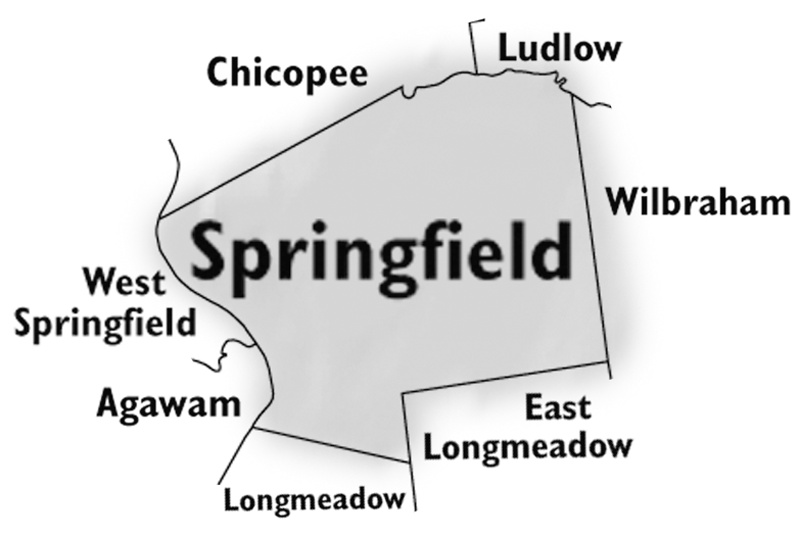
Law Sections
Curran & Berger Works to Ease the Path to Immigration

From left: Daniel Berger, Joseph Curran, and Megan Kludt

From left: Daniel Berger, Joseph Curran, and Megan Kludt

The immigration lawyers at Northampton-based Curran & Berger paint a picture of immigration far different from commonly held stereotypes about foreigners scaling walls and taking advantage of the system. They say they work with people unjustly separated from their families over technicalities, and of extremely talented professionals with much to offer this country. These lawyers must overcome a maze of statutory barriers and systemic suspicion that makes their jobs more challenging — but the inevitable success stories even more gratifying.

Joseph Curran likes to talk about a “culture of no.”
Well, ‘likes’ may be inaccurate. He would much rather talk about a culture of ‘yes,’ but Curran — a partner with Curran & Berger in Northampton — is just being realistic about some of the challenges of being an immigration lawyer.
“The culture of no is firmly entrenched. We’ve made very little headway,” he said, referring to changes in immigration policy at the federal level that came about after 9/11. Prosecutors tasked with enforcing those laws “are supposed to use prosecutorial discretion; they’re supposed to be focusing on drug dealers, criminals, terrorists — the bad guys.
“No one ever gets punished for overzealously prosecuting even small things,” he added, “but they could face discipline if anyone thinks they’re being too slack and easy on these people.”
One such ‘small thing’ involved a Portuguese man who had lived in America since 1980 and had grown children and grandchildren living here. He ran into some trouble recently in his home country — it involved surgery — and apparently spent too much time there. “When he returned, the Immigration Service wanted to send him back; they said he had abandoned his green card,” said attorney Megan Kludt, who joined the firm last year.
She went to the prosecutor, who worked for the Department of Homeland Security, Curran recalled, “and said, ‘there are only so many hours in the day; do you really want to waste a whole half-day on an 80-year-old man who has never done anything wrong, when there are so many other cases to work on?’ Even the judge was irritated.”
While immigration is the firm’s specialty, Curran said, there are many subspecialties within that field.
“We are a full-service firm,” Curran said, noting that he, partner Daniel Berger, and Kludt — along with a diverse staff of paralegals and researchers — work with a wide variety of clients, from businesses and colleges looking to bring foreign workers on board to families trying to stay together in the U.S. when one member is faced with deportation.
“I deal personally with a lot of foreign national doctors coming to the U.S.,” he noted. “They make a deal with the Immigration Service and the Department of Labor to work in medically underserved areas in exchange for a green card — and there are a lot of medically underserved areas in Western Mass., including Springfield, Holyoke, Greenfield, and outlying towns. They can’t find physicians, especially primary-care physicians.”
In fact, Kludt said, despite rampant unemployment in the U.S., many businesses and health care organizations are in desperate need of skilled workers that they cannot find, and talented foreign-born workers can fill that gap. The Department of Labor must perform a balancing act in these situations, she added, because it wants to make sure businesses have the staff they need, yet it also needs to protect the interests of U.S. citizens who might lose out on jobs.
Still, “people are not scaling the fence coming in from Mexico; that’s a common misinterpetation of the immigration situation,” she told BusinessWest. “The border is actually fairly quiet, but we’re seeing some highly eduated people struggling to get in, people who could benefit the U.S. One researcher from Iran won’t travel [outside the U.S.] because it’s always a hassle, and he’s never sure he’ll get back in.”

People Who Need People
Early in his law career, Curran explained, he was drawn to a field that gave him more personal satisfaction than, say, divorce law or tort law.
“I chose early on to do just immigration,” he said, noting that his passion was likely sparked at a young age, by a family heavily involved in international matters. “We always had foreign students in our house — maybe a dozen different students over the years. There would be someone from Botswana or Korea or Brazil, talking to me about what life was like in other parts of the world. I didn’t really think about it until later on, but it was something ingrained in me. Then after law school, I met a couple of immigration lawyers and got into this field.”
The firm’s newest lawyer said she was drawn into the immigration niche by the opportunity to make a positive difference in people’s lives.
“I thought I was heading into a career in international relations,” said Kludt, who holds degrees in that field. “My plan was always to do international work, but after graduating from law school, I realized I could do much more here in the U.S. In another country, you make a small difference as part of an international organization, but here, you can make a difference with every single family; every time you win a case, you can look at that person and see them smiling. It’s gratifying.”
She said the job is endlessly varied, and she essentially travels the globe from her office; in a single week before speaking with BusinessWest, she had worked with clients from Denmark, the United Kingdom, China, Brazil, Mexico, and other nations.
But the field can be heartwrenching as well as gratifying. One client had a green card pending when he took an unauthorized trip to Brazil to be with his dying mother, which jeopardized his immigration status. Curran & Berger has been fighting to allow him to stay in the U.S., with no positive resolution yet. “He might give up and go home,” Kludt said. “Sometimes it comes down to that.”
Both Curran and Kludt say they enjoy working through the highly complex statutes surrounding immigration law, but it’s a challenge as well.
“The statute part is very complex, like a Sudoku puzzle,” Kludt said. “Immigration law is one series of immigration reform piled onto another.”
Differences in state laws can pose difficulties as well. Typically, a “crime of moral terpitude” will jeopardize someone’s immigration status, she explained, yet definitions of those crimes can vary from state to state, often with severe consequences.
For example, one state might define assault as any innocuous scuffle, while another might reserve the charge for more serious matters. Yet, because a simple admission of guilt carries the same weight as a conviction in immigration law, someone who admits to a very minor assault charge, resulting in no real punishment, may do permanent damage to his chances of staying in the U.S., so it’s often better to go to court. Kludt said she is often consulted by criminal lawyers to help them avoid such pitfalls.

Dream On
The firm has also been supportive of the Development, Relief, and Education for Alien Minors (DREAM) Act first introduced in the U.S. Congress a decade ago and reintroduced earlier this year. The legislation addresses the plight of young immigrants who have been raised in the U.S. without proper documentation, and would offer a path to legal status to those who have graduated from high school, have stayed out of trouble, and plan to attend college or serve in the U.S. military for at least two years.
“We’re doing a lot of work with students all over the country, and we’ve been hoping for passage of the DREAM Act for the sake of people who came in very young, grew up here, and are highly educated with no place to go,” Kludt said. “We’re working with as many students as possible; a lot of them never talked with immigration lawyers and have no idea what their options are. We’re seeing what we can do for them.”
The problem with current hurdles to immigration, she said, is that too many bright, foreign-born people — some with hard-to-come by skills that could benefit medicine, science, the arts, and other fields — are studying here and then taking that valuable knowledge back to their home countries.
In fact, Curran & Berger specializes in serving “aliens of extraordinary ability,” Kludt said, a legal term for foreign-born individuals who are at the top of their field and are able to self-petition the government for citizenship without being sponsored by a university or other organization.
“Typically, what these people do is extremely complicated, like a seismologist discovering new things about earthquakes,” she said. “We spend a lot of time learning about these things ourselves so we can explain it to the government; we put together packets sometimes two inches thick to try to convince the government that this person is unique, and we don’t want to lose them.”
Of course, many cases are more emotional, such as people who have found their way into the U.S. through educational or humanitarian means and who petition the government for asylum because they have been battered, tortured, or harassed in their home country. Sometimes it takes a long time, with many meetings, for such people to fully explain their story to the point where it will be convincing to a judge.
It’s the successes, Kludt said, that stand out most and continue to energize and motivate the whole team — like in the case of the old man making his way back from Portugal.
“We had the whole family in the back of the courtroom, crying,” she said. “It was a really celebratory event.”

Joseph Bednar can be reached at [email protected]
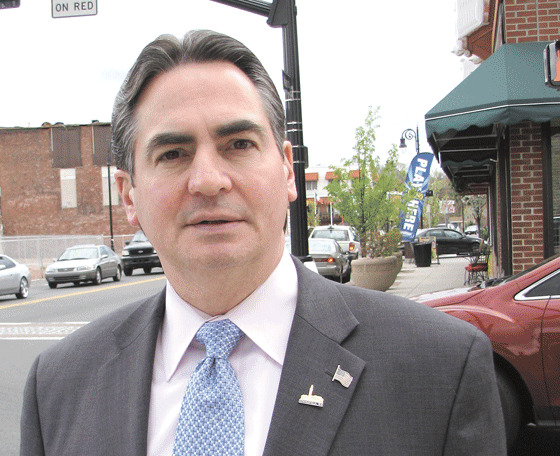
Cover Story
Troy Industries Has Growth, Diversification In Its Sights

Steve Troy calls his venture, “the biggest company no one’s heard of.” And that’s largely due to his hard work to fly under the radar screen as he’s nurtured Troy Industries, a government contractor that designs, manufactures, and markets advanced small arms components and other products, into a diverse, cutting-edge company that will soon have 100 employees. But remaining anonymous is becoming increasingly difficult as this unique success story adds new and intriguing chapters.

Steve Troy already had plenty of evidence that his company was becoming a real force in the large but mostly unseen world of modern small arms design and manufacturing.
There were the soaring revenues, which had doubled nearly every year since the venture was started in 2003, as well as a rapidly expanding workforce, which stood at six only a few years ago, and is now approaching 100. And then, there was the growing collection of trade magazine covers featuring company products —  publications such as Guns & Ammo, Tactical Weapons, American Rifleman, Shotgun News, and SWAT magazine.
But then came some additional proof that made him pause and reflect.
Indeed, when Troy, a Massachusetts state trooper stationed in Lee (he calls that his “night job”) was issued his MP 15 semi-automatic patrol rifle roughly a year ago, he noticed that the Smith &Wesson-made product bore several components with the Troy Industries name on them.
“I looked down, and there they were, a Troy sight and a Troy handguard,” he said, adding that he was not involved in the procurement process, and, to the best of his knowledge, the state police didn’t know he manufactured the components. “For them to endorse that product was personally rewarding, and it also drove home the importance of the high quality standards we set here; I’m using this gun.”
Personal satisfaction has come in a number of forms for Troy since he started the company not long after a deployment in Kuwait as a security forces team chief with the  U.S. Air Force in 1998, during which he concluded that he could design and manufacture a gun sight better than the one on the weapon he was issued — and then set out to prove his point.
Since then, Troy Industries has seen its product catalog expand to more than 300 items — including sights, slings, upgrade kits for existing weapons (much more on that later), and a gun stock that comes complete with an embedded GPS device — and revenues skyrocket. (Troy, the sole owner of the venture, wouldn’t release specific numbers, but said sales are now in eight-digit territory and he believes they could hit nine in only a few years.)
The company is now a vendor for some of the best-known arms makers in the world, including Smith & Wesson, Sturm Ruger, Viking Tactics, LaRue Tactical, and many others, and its products are being used by U.S. Army Special Forces (Green Berets), SEAL teams, SWAT units, traditional law enforcement, government agencies, the Colombian National Police, and similar outfits in other countries.

Law enforcement is another market in which Troy Industries is looking for greater market share.

Law enforcement is another market in which Troy Industries is looking for greater market share.

Along the way, there have been several prominent success stories, probably the most significant of which is an upgrade kit, known as the “M14 modular chassis system,” that has enabled the U.S. military to take thousands of mothballed M14 carbines produced at the Springfield Armory in the years just prior to its closure in 1968 and put them back into productive use as a more attractive alternative to the smaller-caliber M16.
“We’ve taken a weapon that was 50 years old and transformed it into the front-line, tip-of-the-spear of American special operations and airborne brigades,” he said, adding that the chassis system reduces recoil, enabling users to fire more quickly and accurately, while also allowing users to add scopes and other hardware that transform the basic M14 into a sniper weapon. “These are being used all over Afghanistan and Iraq, and soldiers are doing very well with them.”
Meanwhile, the company has produced its own version of the M-4 carbine, one of the mainstays in the U.S. military today, and has submitted the entry in hopes of winning a large government contract to replace the current Colt product now in use.
At least that’s the ultimate goal.
At the very least, Troy Industries wants to use this exercise to showcase individual components of the product — everything from the sight to the magazine — with the hope and expectation that some of those parts will become specifications for the eventual weapon chosen for production.
As that project and a host of other initiatives are advanced, the main challenge for this company moving forward, said Troy, who is still a part-time CEO in this venture — he parks his state police car, No. 2061 in a designated spot behind the building — is to effectively control the growth of this rapidly expanding company and create an effective balance of on-site production and outsourced work.
“The growth has been phenomenal, but we need to carefully control growth going forward,” he explained. “The business is there for us because of the reputation we’ve built, and it’s easy to attract new business, but we want to make sure that we can deliver on what we promise.”

Taking His Shot
The Troy Industries logo says a little about the company, sort of, but a lot more about its founder.
And it’s not the design — a somewhat mean-looking Trojan horse with what appear to be heavily armed soldiers rappelling down it — that speaks volumes, as much as the time and energy Steve Troy says he put into it.
“I came up with it myself and I’m rather proud of it,” he said, adding that there was much thought and imagination that went into the concept, which is both a play on his last name and a nod to modern weaponry and technology, as well as great attention to detail.
And the same can certainly be said for every other aspect of this venture, which Troy started with a $10,000 home equity loan, some mechanical ability but no formal training in that area (he said he built that house himself), and certainly no shortage of confidence as he went about designing and manufacturing improvements over what he saw and experienced first-hand when it came to weaponry.
Retelling the story, Troy said that he was already involved in a different kind of entrepreneurial venture with a colleague from his deployment in Kuwait when he started to conceptualize what would become Troy Industries. That business was called Basher Tactical, which he started with Matthew Picardi, now a lieutenant colonel in Homeland Security. It provided training seminars for police departments and federal agencies seeking to learn how to handle so-called “active-shooter disturbances,” such as the incidents at Columbine in 1999, Heath High School in West Paducah, Ky., in 1997, and Virginia Tech in 2007.
“We’d set training scenarios for between 100 and 150 students,” he explained, “where we had both a classroom session and an active portion where we actually seize control of a school; we’d teach the history of active shooters, and some theories on response, touch on motivation, and then do a training scenario in which they’d be responding, containing, and assaulting the situation.”
Eventually, Picardi would opt to continue his work in training, while Troy would launch his own venture, focused on small arms components and accessories, that started with some R&D and crude prototyping in his basement.
“While I was in Kuwait, I saw some shortfalls in the weapons they had,” said Troy, an expert marksman, “pistol master,” and trained sniper. “I decided that I could do better; I saw what was out there, and no one was really hitting it right on the head, so I developed a set of folding sights for a federal contract that I responded to and won for internally silenced rifles for tunnel fighting for homeland security.”
To date, the company has delivered more than 500,000 of these or similar sights, while also expanding the product catalog to more than 300 products. These items come with names — such as ‘battlerail,’ ‘prograde sling adapter,’ ‘low-profile gas block,’ ‘mash hook,’ ‘NAV stock’ (that’s the GPS device), and ‘Medieval flash suppressor,’ to name just a few — that mean little to those not versed in automatic or semi-automatic weapons, and some sell for just a few dollars each.
But together, this roster of products has become a very effective niche for the company, and for a number of area manufacturers as well; while Troy produces some of these components and accessories at its facilities on Capital Drive in West Springfield, a former U.S. Postal Service processing facility, many others are outsourced to a host of businesses, all within 10 miles of the Troy plant.
Most all the products now in the catalog have come to fruition though the same basic formula, if you will, that Troy employed with the folding sight that he started with: observing, listening, and learning, and then applying that data to improve upon products already on the market.
And it has obviously been a winning formula, based on Steve Troy’s ambitious sales projections, as well as the amount of expansion going on at the company’s facility. And if the growth has come quickly and steadily, it has also come quietly. Indeed, with the exception of those trade-industry magazine covers and stories — seen by a relatively small percentage of the population — Troy Industries has flown effectively under the radar, especially in this region.
“We’re probably the biggest company no one’s heard of,” said Troy, adding that BusinessWest’s look inside is the first provided to local media. Nationally? Well that’s a slightly different story; Troy has been starting to get some attention, he noted, adding that one of the Hollywood studios has expressed interest in doing a television segment on the company and recently asked for background information with which to start preliminary research.

Staying on Target
While giving a tour of his facility — which included stops at everything from the injection molding area to the procurement warehouse, complete with razor wire (security is ultra tight here) to a new employee-wellness center now taking shape in an area being built out on the second level of the 55,000-square-foot complex — Troy stopped to pick up one of the M4s that he and his engineering team designed from scratch.
Moving his hands quickly across the weapon, Troy pointed out several features that he thought made the gun stand out, from the sight to the hand rest, and reiterated his hope that at least some of these individual components will catch the attention of those who will eventually award the contract.
“We’re competing against 60 other companies, and from what we understand, we’re in the top of the competition,” he said. “What we think the Army will do is say, ‘we’d like to take the features on these various weapons and combine them’; we’re just trying to enable the government to see our accessories, which is our main line, and our enhancements, and maybe incorporate them into the rifle of the future for the military.
“Right now, basically only commando forces are using our products,” he continued. “They’re choosing them over the general-issue items, because we’re superior to everything that is issued in the Army, but we’re not mainstream, or general issue.”
While gunning hard for such broader customer bases, Steve Troy is focused on many other aspects of a rapidly evolving business plan.
Chief among is them is the expansion of his operations and manufacturing facilities, a definite work in progress being undertaken with expected further growth, diversification, and new-product development in mind. Indeed, as he showcased different areas of the business, Troy noted that many were at some level of transition to new and larger quarters.
One in particular is the engineering department; 10 people are currently crowded into cramped quarters that will soon be replaced by a much larger suite of offices on that second level.
Meanwhile, in addition to an ongoing push to increase the quantity of items in the colorful product catalog, there is also a greater stress on quality and efficiency. The company recently received ISO-9001 status — Troy proudly displayed the plaque — and is engaged in an organization-wide ‘lean’ initiative.
“Most people in our industry choose not to do this,” he said of ISO certification. “It’s not required in our industry, but as a growing company working toward being different and unique among the competition, I chose that as a way of strengthening our quality and our processes.
“With this rapid growth that we’ve had, we just haven’t had time to slow down,” he continued. “With many things, we’ve just thrown money at them; we’ve characteristically had a high scrap rate, rather than really getting into the problems that were scrapping parts.”
The stronger focus on lean will enable the company to continue its insistence on only sending out parts that meet the highest of standards — “the user is betting his life that the product will perform properly,” said Troy — while also reducing waste and therefore cost.
Part of the quality initiative is to continue to increase the amount of work done on-site, he continued. “We’re not looking to take all our production in-house, but we certainly want to have more involvement in especially our military product line,” Troy told BusinessWest. “Doing so will only help ensure quality.”
Marketing is another area in which the company is sharpening its focus. While it is still somewhat press shy (and that is changing), Troy is being aggressive with getting its name and product list known across the broad market in which it operates. Initiatives include everything from a large, high-tech trade booth display, taken to several dozen shows a year, to an interactive Web site designed, in large part, to tell the company’s story.
There is also ongoing work in research and development, much of it following intensive research, consultation with customers and potential customers, and lots of hard questions about what’s needed in the field.
“There are some incredible things that are happening around the world that we’re involved in,” he said. “We’re doing consultation for governments, as well as counter-terrorism training, consultation on product design and development for larger weapons manufacturers, and other work that I’m passionate about.”

Bullet Points
‘Passion’ was the word Troy used to also describe his work with the State Police, and explain why he is still a part-time CEO at the company he started.
“I guess it’s one of the ways I give back the community,” he said of his police work, adding quickly that he is at least thinking about retirement and devoting more time and energy to Troy Industries.
For now, though, his police uniform still hangs on a locker in his cramped office (he’s also due to get larger quarters through the renovation project), where the walls feature photos, citations, and assorted memorabilia from his days in the military.
Those experiences helped provide the spark for the largest company that most people have never heard of, but will probably know much more about soon, because it’s going great guns — and in more ways than one.

George O’Brien can be reached at [email protected]