Home Posts tagged Technology (Page 25)
Education Sections
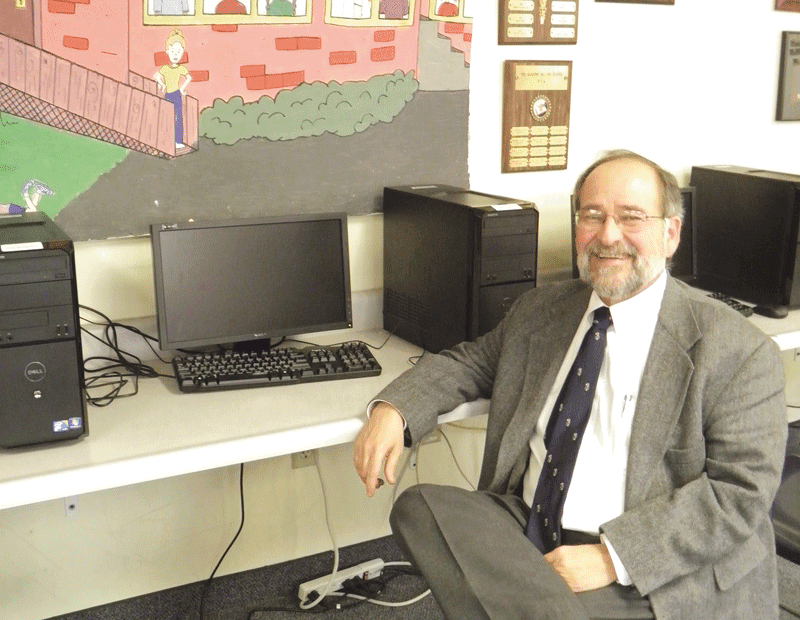
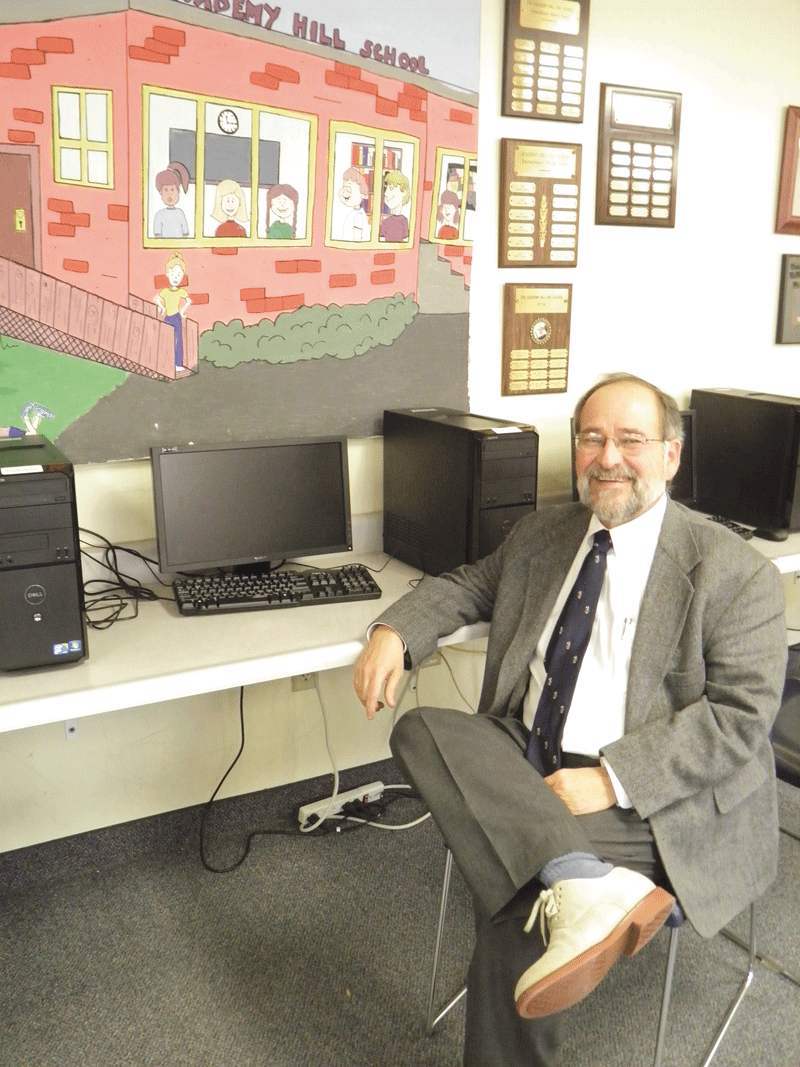
Head of Academy Hill School Plans to Change the Way Students Learn

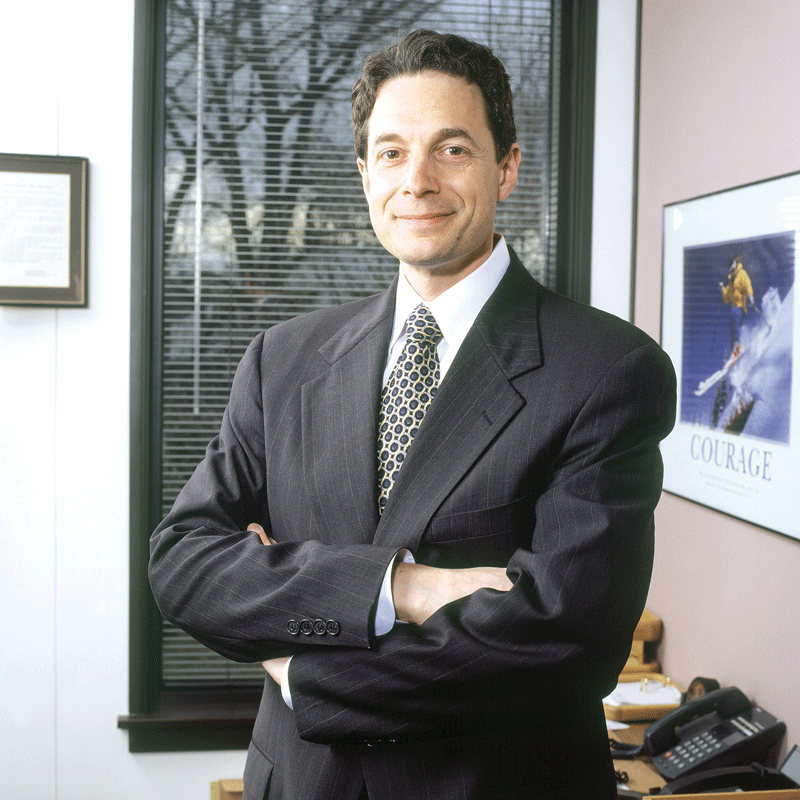
Stephen Edele

Stephen Edele has ambitious plans to institute an inquiry-based learning program to promote students’ interest in what they are learning.

Stephen Edele has ambitious goals for Academy Hill School in Springfield.
The newly appointed head of school wants to change the way students learn so that, in addition to succeeding academically, they become fully invested in and enthusiastic about all aspects of their education.
Although that may seem idealistic, Edele’s 40-year track record of instituting similar change proves it’s possible in an independent educational setting.
Academy Hill School caters to gifted and talented students, and Edele’s appointment last summer is a dream come true for the educator/administrator who has spent the majority of his career working in independent schools. He is glad to be back in New England after heading schools on the West Coast, and is excited to begin working on several goals he has set.
“When you talk about teaching bright kids, the assumption is that they learn faster than others,” he explained. “Most of the time it’s true, and while it is important to make sure the pace is appropriate, we can’t lose sight of the other side of learning, which is depth. We want to make sure that our students take the information they learn and apply it in ever-increasing levels of complexity by using it to solve problems with real-world applications.”
The school has 110 students in kindergarten through grade 8 who come from cities and towns across Western Mass. and Connecticut. And although many small, independent schools have experienced difficulties in recent years, Edele said Academy Hill has remained strong and continues to grow. He credits its success to the fact that “we have stayed absolutely true to our mission. We are a school for bright kids and don’t try to be anything other than that. We have done well by recognizing our niche and holding on to it.”
Edele has plans to take Academy Hill to new heights. One of his goals is to define the way technology is used in the classroom. Another is to develop a holistic program based on inquiry-based learning, which is an instructional method developed during the 1960s. It differs from traditional learning, which requires students to memorize material. Instead, it is an active form of schooling, where progress is measured by how well students develop experimental and analytical skills rather than by how much knowledge they possess.
“The teacher becomes more of a coach, instead of just being a fount of information,” Edele said. “The heart of it is about learning, then using the information to think critically and solve problems. Our job is to teach students how to be successful in the world on many different levels, and I am absolutely convinced that inquiry-based education is the best way of preparing them to enter the world. It allows students to be directly involved in their own learning and needs to be at the heart of what we are doing, not just an add-on.”

History Lessons
Edele brings a wealth of experience to his new position. “I have been through so much with so many kids and parents, you would have to try really hard to surprise me with something,” he said.
His career began in the early ’70s when he was hired to teach high-school English in a West Philadelphia public school. “It was a wonderful position; I learned a lot and got along well with the students,” he said, adding the majority of students were African-American and Vietnamese. “It was a fairly tough neighborhood, but that’s not what sent me scampering,” he told BusinessWest.
He said he felt a lot of pressure to conform, and when Edele was ordered to terminate an afterschool theater program he had begun, he made the decision to leave. The students had asked him if he would start the program because they hoped to stage a few small productions.
“I felt as if I were a puppet on a string. I had absolutely no say over what or how I taught,” Edele said, adding that he was teaching a class of ninth-grade gifted students.
His next stint was at the Pennington School in New Jersey, which catered to students in grades 6 through 12 via a boarding and day program. “I fell in love with the place and was there for 20 years. It was one of the first schools in the country with a program for kids with diagnosed learning differences,” he said.
Edele taught middle-school students in the school’s Center for Learning and discovered he loved working with the age group. “I really believe middle school is our last real chance to influence students in terms of who they will become. They are just beginning to separate from their parents and form their own identity and begin to think for themselves, but they have no idea how they will fit in the world,” he said, acknowledging that working with students of this age is a “roller-coaster ride, as their emotions are all over the place as they face enormous peer pressure.”
Edele believes schools have an obligation to educate the whole child. “It’s not just about making them the best in math, but about making them the best person they can be. It doesn’t just happen by itself, and it’s important for adults to guide students in how to make the right decisions,” he said.
He held a wide variety of roles at the Pennington School, including a stint as its first director of residential life, teaching advanced-placement courses, heading the middle school, then the upper school, coaching baseball and football, and directing middle-school plays.
“I loved it there until I had my own kids. And by 1995 I was itching to head my own school,” he said. So, he took a job at a facility in rural Virginia, then moved two years later to the Pegasus School in Huntington Beach, Calif., which catered to gifted and talented students.
Three years later, was recruited as head of the Harborside School in San Diego, a private school for students in preschool through grade 8. Seven years later it closed after losing a major benefactor, but Edele helped transition it into a charter school, then moved to a school on Vashon Island in Puget Sound, which was a 15-minute ferry ride from Seattle.
Although he and his family were attracted to the idea of life on an island, he found it isolating, and after three years, “I had the great fortune to end up here.”
But along the way, he learned many things, and one of the most important is how well inquiry-based learning works. He instituted the teaching method at the Harborside School and found the results were astounding.
Edele will never forget a project undertaken there by middle-school students. It was an election year in the U.S., and the students were tasked with learning Mexican history.
So the teachers divided the classes into two political parties and set up their own school election. One party supported a fictional candidate named Cortez, and the other supported a candidate named Montezuma.
The students did everything in their power to woo voters. They conducted research, used history from real-world politics to make their points, held debates, and developed comprehensive advertising campaigns within a budget.
Edele doesn’t remember who won that election, because the candidates were not real. But he does remember the effect it had. “The students were actually engaged in learning rather than reading about the subject in a textbook,” he said. “It was fun, and they will remember it forever. The old ways of teaching — reading a textbook and answering questions at the end of a chapter — are simply dull and boring and will certainly kill any child’s enthusiasm for learning. It’s important to keep them excited and engaged so they are active participants in their own learning, not passive recipients of information.”

Textbook Examples
Edele’s history has made him realistic about the time and energy it takes to bring a new style of teaching to a school.
“It’s not going to happen overnight. And I want to be absolutely certain that parents understand what I am trying to do and how and why new and different ways of teaching will benefit their kids. I also want to make sure that the faculty has all of the resources they need,” he said, adding that the staff will have to become fully grounded in inquiry-based learning.
But he knows it will add value to the Academy Hill program. “There isn’t another school in the Pioneer Valley with the same mission,” he said. “And what we’re going to do is the best way to prepare students for life after Academy Hill and beyond. Our students are bright, curious, and gifted, and this is our niche.”

Employment Sections
Program Readies Students for Arts, Entertainment Careers

Jeanie Forray

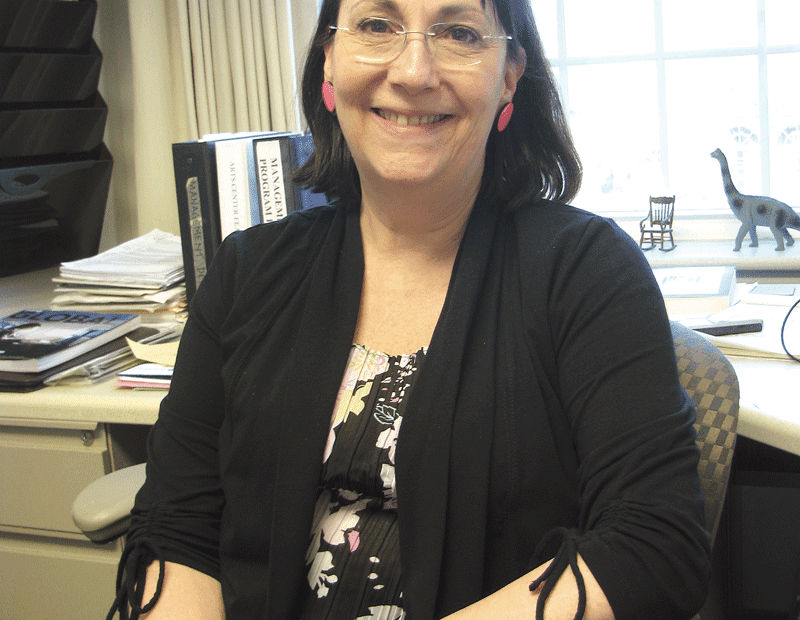
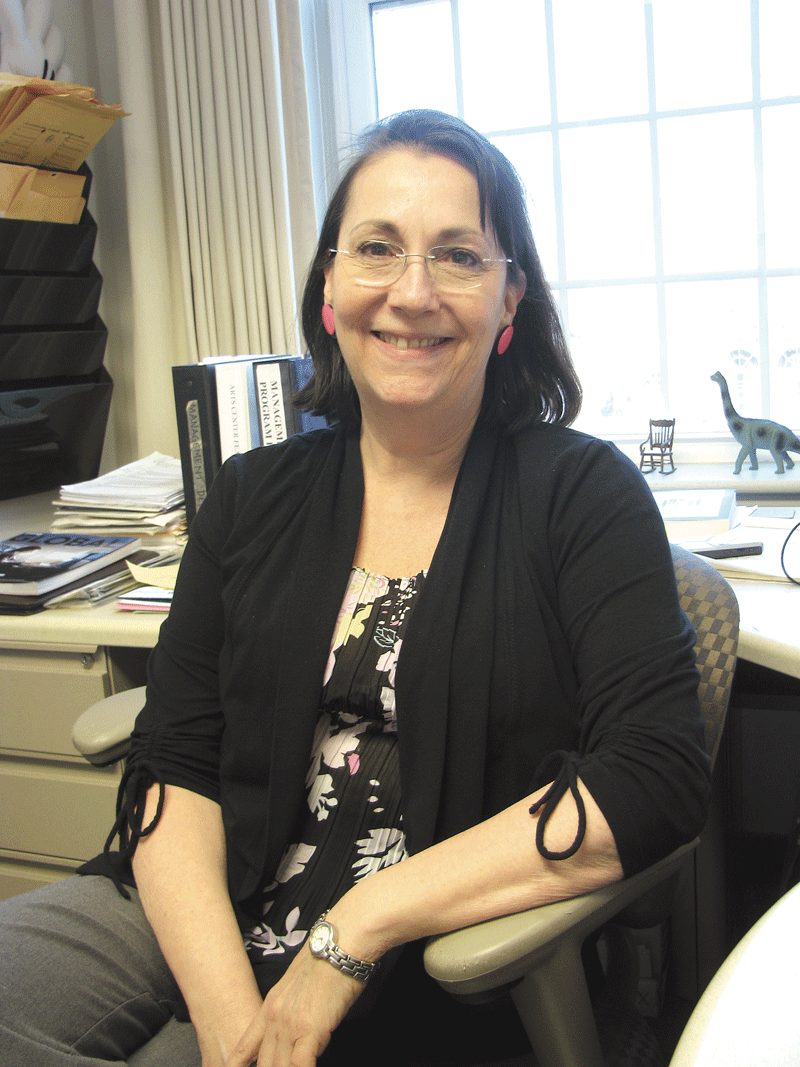
Jeanie Forray describes the arts and entertainment field as a growth industry.


As he talked about his exploits with the bass guitar, or at least as far as organized performances are concerned, Jonathon Eells made repeated use of the past tense.
“I was in a band with some friends … we played in high school for a while, but that was pretty much it,” said Eells, his voice tailing off. But he made it abundantly clear that, while his performing days are apparently over, he very much wants to still be involved with music — and make it his career, perhaps in the realm of managing bands, individuals, or a concert hall.
“I know a lot of people who play still, and I’d like to manage a band,” he said, adding that there are many directions his passion for the industry could take. “I could also manage a venue; I just want to be around music.”
This explains why Eells became one of the first students at Western New England University to sign on for a program that gives him one of the more intriguing — and envied — answers to the age-old question, ‘what are you majoring in?’
His reply is ‘Arts and Entertainment Management,’ and it’s a comeback that he says has earned more than a few responses like ‘that’s cool,’ or ‘I wish I was majoring in that.’
But he isn’t out to impress his classmates; he’s trying to position himself for a career in a sector that many 21-year-olds are intrigued by, and one that Jeanie Forray, associate professor and chair of the Department of Management (and chief architect of the new program), believes is very much a growth field, in both the arts and entertainment realms.
“This is a multi-billion-dollar industry with a need for individuals with knowledge and skills focused on the business side of the creative enterprise,” she said. “This is considered a growth field, especially with what’s happening with technology and the Internet, and graduates of this program will be prepared for a wide range of careers.”
Alyssa Beecy certainly hopes she’s right. She is another of the students who switched into this major, and, like Eells, she has her eye on a career in music, preferably representing artists or handling bookings for a venue. She knows this is the ambition of many people, and she’s still trying to figure out the road in front of her — probably to begin with one of many large firms (most of them located in Los Angeles or New York) that manage musicians and bands.
She also wants to be positioned for other kinds of opportunities in this broad realm, and for that reason she is interning this spring at CityStage and Symphony Hall in Springfield.
“We’ll see if that changes my direction at all,” she said of her internship, adding that she’s leaving her options open regarding both what she wants to do and where the jobs are. But for now, she believes she’s in the right major at the right time.

Achievements of Note
Forray told BusinessWest that the Arts and Entertainment Management program came about the way most recent additions to the portfolio of degree offerings have — through collaborative discussions among faculty members in various disciplines.
In this case, the dialogue focused on the recognized need for a management program focused specifically on arts and entertainment — similar to how Sports Management concentrates on that still-emerging field — and how the university could meet that need.
“I have had contact with the theater instructor and the music instructor at various times, and we’ve talked about the arts on campus and the curriculum,” said Forray, who brings to the table extensive experience in television production and post-production, facilities operations and sales, and work with such production companies as Entertainment Tonight, the Disney Channel, and Paramount. “And I’ve always had an interest in somehow linking my professional background with academia.”
The answer was a new major that would address both universal aspects of business management, and issues and challenges unique to the arts and entertainment worlds. And there are many of each, she noted, listing everything from the many challenges involved with running a not-for-profit agency (a description that covers most arts-related endeavors) to the rigors of the musician-management positions both Eells and Beecy are eying.
Meanwhile, it would also dovetail nicely with an institution-wide strategic initiative to elevate the arts on campus. “It seemed like an ideal collaboration to situate arts and entertainment in the college of business in a way that would be attractive to students who have an interest in the arts, but who are not planning to be performers or creatives in the process, but rather the people behind the art, behind the scenes,” Forray said.
Students who complete the program could see their diplomas translate into a number of intriguing job titles on business cards, representing talent or managing everything from arts festivals to community theaters; orchestra companies to television stations; art galleries to historical museums, she explained.
Forray told BusinessWest that the first offering in the program this past fall, a course she taught called ‘Managing Arts and Entertainment Organizations,’ featured textbooks, some guest speakers from within the industries, and some learning by doing — and that many of the courses will unfold in the same manner.
In this case, students read both Management of the Arts and Performing Arts Management: A Handbook of Professional Practices, while also hearing from a broad range of speakers. That list include Alexander Kennedy, executive director of the Eric Carle Museum of Picture Book Art; Tina D’Angostino, interim president, and Bevan Brunelle, marketing manager for Springfield CityStage and Symphony Hall; Dawn Helsing Walters, managing director of the Milwaukee Repertory Theater; Becky Schutt, senior consultant with Festivals & Events International, and Michael Kane, managing partner of Mt. Auburn Associates, the Boston-based planning, strategy, and evaluation company that has become a leader in the creative-economy field.
“This class is an introduction to the structure of arts organizations and entertainment organizations, which tend to be somewhat different than other industries in that they have both creative and functional sides,” she explained. “Students do research on a company in an area that interests them to determine what the challenges are for that kind of organization in the current business environment, and we have a number of speakers.”
Other arts- and entertainment-specific courses include:
• Business Law for Arts and Entertainment Management, which focuses on, among other things, industry-related matters such as intellectual property, copyright, First Amendment, representing talent, provenance, and autehtication;
• Arts and Entertainment Venue Operations, which provides an overview of venue management, including issues related to various arts and entertainment facilities;
• A Seminar in Arts and Entertainment Management, a capstone course that examines contemporary issues and challenges for managers in the industry; and
• The Arts and Entertainment Practicum, which focuses on the management process involved in producing events within the arts and entertainment domain. During the course, students produce an arts or entertainment event on campus or in the local community.
As with other business and management programs at the university, internships will be a key part of the learning experience, said Forray, adding that such opportunities provide exposure to the industry, hands-on work in that field, and the potential to make a connection that could lead to employment upon graduation.
She said students like Beecy are finding internships with area organizations like CityStage and Symphony Hall, and that such experiences could help keep graduates in Western Mass., where they could become part of the effort to expand the cultural community regionwide.

The Big Finale
Eells said he looked into sports management early in his college career because he was (and still is) intrigued by that industry.
But he found that his real passion is music, which holds a number of career possibilities beyond performing, as he’s learning. If all goes well, he’ll accomplish his main goal of “still being around music,” but going much further and making it a rewarding career as well.
In other words, even though he doesn’t perform on stage anymore, he can still make some achievements of note — quite literally.

George O’Brien can be reached at [email protected]

Modern Office Sections
Social Media Poses Opportunities and Traps for Employers

Mark Adams

Mark Adams says some companies are starting to realize that barring all social-media use can be counterproductive.

Business owners and managers are increasingly realizing that social media is here to stay, but it’s not easy to craft workplace policies for social networking that are effective and enforceable. The challenges arise in three sticky areas: personal online activity during work time, companies controlling their own Internet presence, and employees badmouthing their employer through social-media channels after work hours. The answers don’t come easy in any of these cases, but popular opinion — and legal precedent — are beginning to crystallize.

By JOSEPH BEDNAR

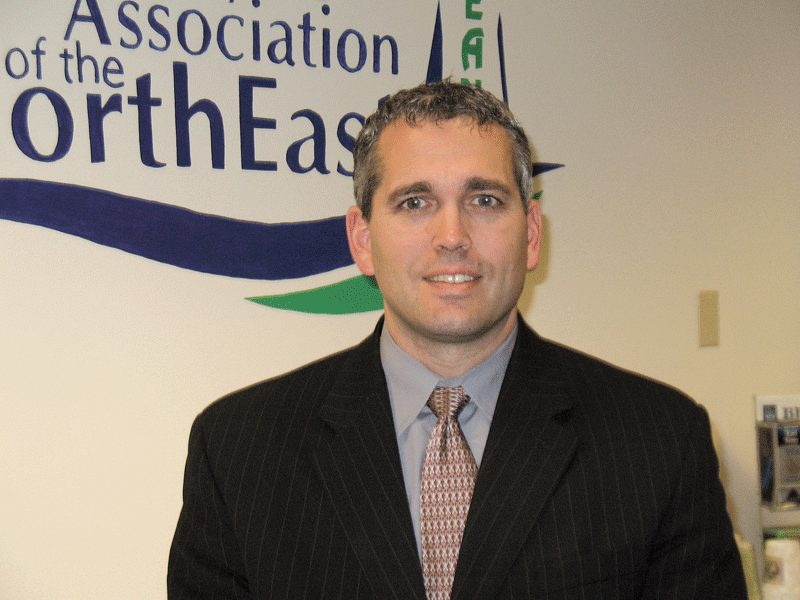
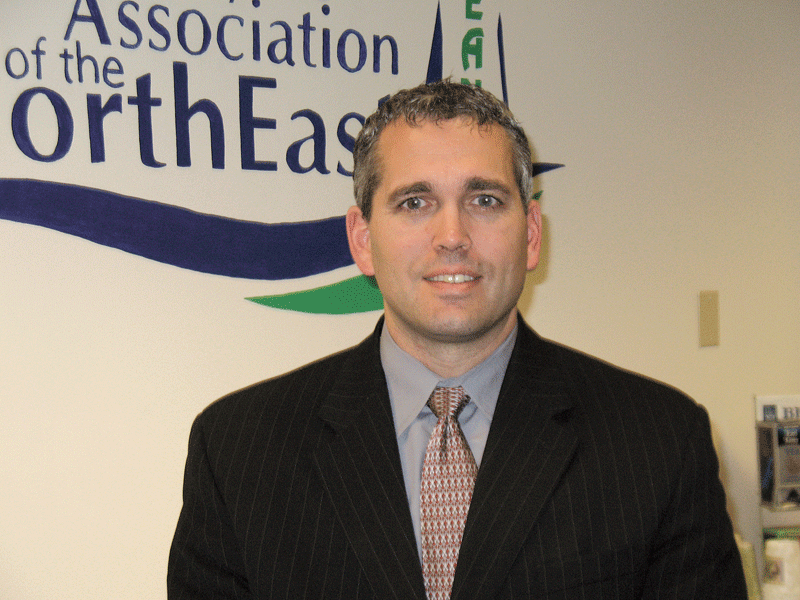
As director of HR Services for the Employers Assoc. of the NorthEast, Mark Adams deals with some 800 area companies. And one aspect of the modern workplace has been particularly confounding for them.
“In some of the discussions I’ve had with companies, when social media comes up, there are some very strong viewpoints on it,” said Adams. “Some say they don’t want it in the workplace at all, that they abhor it in the workplace. They figure it’s a drain on productivity and can create a disturbance.”
But companies that see social media as more of a nuisance than a tool are missing an opportunity, said Christine Pilch Mancini, social media strategist, speaker, and trainer with Grow My Company.
“We’re in a world of emerging technology, and social media is a tool to get work done these days,” she said. “It allows quicker collaboration with other people to solve problems, and it allows people to share ideas.”
But it also poses a conundrum for employers who don’t want their workers distracted by online chatter during work hours — and who, in many cases, have instituted policies curbing its use, or blocked sites like Facebook and Twitter outright.
In the age of Web-enabled smartphones, Pilch said, that’s simply misguided. “Quite frankly, companies that are trying to block social media are sticking their heads in the sand, because every employee is holding the Internet in their pocket.”
So what’s an employer to do?
“Some companies use social media as a positive tool, or they acknowledge its existence and are providing some meaningful use of it,” Adams said. “For example, employees can use it on their own time — break times, what have you. In that respect, it’s akin to what some companies do with e-mail; they’re not going to bar all personal e-mail.”
Pilch Mancini and Adams are hardly alone in their assessment of the social-media paradigm at work; in fact, others go so far as to argue that tweets and status updates actually contribute to a healthy work environment, although most U.S. employers have yet to see it that way.
Socialcast, a microblogging platform, surveyed 1,400 chief information officers at U.S. companies and found that only 10% of those employers allow unlimited social networking on work time. Another 19% allow access for business purposes only, while 54% do not allow employees to use social networks for any reason while at work.
However, according to a University of Melbourne study, employees who engage in ‘workplace Internet leisure browsing’ — such as watching videos and keeping up to date with friends — while at work are 9% more productive than those who don’t.
The reasons touch on the benefits of a satisfied and de-stressed workforce, but Pilch said there are morale issues involved as well. “If you’re blocking social media, you’re telling employees you’re not treating them like adults and respecting them enough to know how to delegate their time and still get their work done.
“This is how people communicate,” she continued. “Employers allow personal phone calls at work. Every child has to be able to talk to their parents; people need to be able to talk to their family members. Husbands and wives communicate on the phone every day.”
Social media, she said, “is another means of communication, and if you slam that shut, employees will default to the other Internet in their pocket. Would you rather someone checked their computer screen once in a while for instant messages, or checked their Facebook or Twitter account, or had their nose in their cellphone all day? Because that’s what you’re going to have” by barring social media at work completely.

Honing the Message
That’s not the only new ground employers are navigating when it comes to social media. Completely different issues swirl about how a company presents itself on social-media platforms, and who controls the message.
“As far as corporate use of it, for marketing purposes, where we see companies getting into problems is consistency of substance and who is going to post things up on a company’s Facebook profile,” Adams said.
“Is it going to be centralized or decentralized? And if it’s going to be decentralized, does the content still have to be vetted, or left up to the individuals? Are there standards on how to craft those messages? There are a lot of companies that craft policies that don’t get into all those details,” he explained, while other businesses might have little if any consistency about how those policies are enforced.
Joshua-Michéle Ross, vice president of consulting firm O’Reilly Radar, writes in Forbes magazine that social media is an opportunity for savvy businesses, but employees shouldn’t be sent in without training.
“Begin from a position of trust,” he writes. “While there are possible negatives involved in having employees on the social Web, most employees have common sense. Begin with a set of possibilities first (increasing awareness, improving customer service, gaining customer insight, and so on), then draw up a list of worst-case scenarios (badmouthing the company, inappropriate language, leaking intellectual property, to name a few).”
Among the guidelines Ross suggests are: listen before jumping into a conversation; be upfront about your relationship to the company; show your personality (“you weren’t hired to be an automaton”); respond to ideas, not people; know your facts and cite sources; own up to mistakes; and never say anything online you wouldn’t say to someone’s face or in the presence of others.
In general, Ross concludes, companies should “encourage employees to use social tools to engage and interact with one another and with customers. In all likelihood they are already using the social Web. The difference is that currently they are using these tools without any guidance.”

Letter of the Law
Often, however, it’s employers who need guidance on social-media use, particularly when the law becomes involved.
“The National Labor Relations Board has said that, when employees converse among one another in a social-media context, that can be protected activity under the National Labor Relations Act,” Adams said. “We’ve seen a number of cases where companies have taken adverse action on people for discussions in a social-media context; that can be unlawful.”
Indeed, the NLRB has dealt with a number of cases over the past year alone in which employees were fired for badmouthing their employers through social-media channels away from work — and has come down fairly consistently in favor of the employee.

Meghan Sullivan

Meghan Sullivan says employers need to tread carefully when crafting a social-media policy and enforce it consistently.

“An employee’s speech is usually protected as long as it’s not publicly disgracing the employer,” said Meghan Sullivan, an attorney with Sullivan, Hayes & Quinn in Springfield. But even that description can be stretched, she said, noting that a recent case involved a worker using some fairly salty language to insult his boss — but, because it was posted in the context of some specific workplace complaints (how the company applies certain tax withholdings), the NLRB determined it to be protected speech.
“Employers definitely need to be careful,” Sullivan said. “The board has been looking very closely at employers’ policies and insisting that they be designed in such a way that they don’t restrict employees from talking with each other about the workplace, or determining whether the policy may be so overly broad that somebody thinks they’re not supposed to talk about the workplace.”
In one example, a hospital established a social-media policy forbidding employees from posting “anything confidential.” The hospital intended only to protect confidential patient data under the Health Information Portability and Accountability Act, but employees were confused by the language and thought they couldn’t discuss anything work-related online. “You’ve got to be more specific than that,” Sullivan said.
When a complaint arises from an employee alleging unfair treatment in a social-media situation, she continued, “the first thing the board’s going to look at is your policy, and whether it infringes on employees’ rights under the National Labor Relations Act to engage in protected speech.”
And if workers are allowed to badmouth their bosses online, it’s even more difficult to regulate employees simply naming or neutrally discussing their employer — although some businesses have tried.
“Some companies I’ve worked with have tried to regulate mentioning the company employees work for on their own personal pages,” Adams said, “but more and more, they’re realizing that they’re hard-pressed to enforce those standards aggressively.
“It’s an area where technology is ahead of what the law cases are,” he added. “Technology is evolving at such an extraordinary pace that we always have to catch up to it.”

Bottom Line
It seems as if social media is here for the long haul, said those we spoke with, and employers are better off understanding its dynamics and channeling their employees’ energies than cutting off something that is becoming as ubiquitous as e-mail.
“If your employees are using Facebook at work, they are also likely checking work e-mail after dinner or at odd hours of the day. Don’t ask them to give up the former if you expect them to continue the latter,” Ross writes. “If you have good performance measurements, playing the ‘lost productivity’ card is a canard.”
Pilch Mancini agrees. “If you really are concerned about social media sapping the productivity of your employees,” she said, “maybe you need to take a good, hard look at who you have working for you. There are plenty of other temptations to take you away from your work, and good employees know how to delegate their time.”

Joseph Bednar can be reached at [email protected]

Opinion
Investment Key to a Resurgent Springfield

While visiting Grand Rapids, Mich. recently, several members of a delegation from Greater Springfield (see related story page 20) — participants in a program called City2City — engaged in a little game of ‘what if …’
“Suppose a group from Grand Rapids were to come to the City of Homes,” those initiating the exercise began. “Where would we take them, and what could we show them that would make them say, ‘wow!’”
There was some disagreement, but the general consensus was that such a delegation should certainly visit the Technology Park at Springfield Technical Community College and its Scibelli Enterprise Center, both unique facilities. Baystate’s Hospital of the Future (a $250 million initiative) would certainly be on a tour agenda, as well as the Pioneer Valley Life Sciences Institute, which the health system has developed in conjunction with UMass Amherst. The Quandrangle might warrant a visit (especially its new history museum, a tribute to Springfield’s industrial past). The Basketball Hall of Fame might make the itinerary, and perhaps the convention center, although every major city seems to have one of those.
So those playing this game concluded that, while Springfield has some things going on, there probably isn’t enough to fill a two-day visit with interesting stops, and thus certainly not enough to qualify Springfield for the same title Grand Rapids has earned: ‘resurgent city.’
It’s easy to see why Springfield is on the wrong end of the City2City tours: while those communities have successfully reinvented themselves and diversified their economies from strong manufacturing bases (or are well down that road), Springfield is still in the early stages of that process.
But there is something else missing as well. It was a word heard repeatedly in both Winston-Salem and Greensboro, N.C., visited by a City2City delegation a year ago, and again in Grand Rapids: investment. Individuals and corporations are investing in those three communities. Some are investing in Springfield (MassMutual, Baystate Health, and Big Y, for example, can’t be expected to do more), but simply not enough.
Instead, many businesses and individuals are dis-investing, by moving out of the city and especially its downtown, or by standing on the sidelines and hoping that someone else will take the lead in revitalizing Springfield. Such actions are still signs of the troubling times for the region’s largest city and unofficial capital.
The Grand Rapids city manager told the Springfield delegation that many of the professionals and businesses that had moved out of the Furniture City in the ’70s and ’80s have moved back in. The reason? Because they not only want to be there, but feel they need to be there. How many business owners can say the same about Springfield?
Not enough, certainly, and the reason is obvious: the city hasn’t given them enough cause to feel that way. Despite the many stops of interest listed above, Springfield is still lacking momentum, lacking what those in Grand Rapids called “game-changers,” and lacking investment.
The June 1 tornadoes and the vacant lots they’ve created in the South End and elsewhere provide opportunities for some investment, and the possibility for some true game-changers. In the meantime, there were plenty of vacant and underutilized properties before the twister struck, and a general lack of vibrancy on most days.
But Springfield is a classic chicken-and-egg case. Specifically, why would people invest in a city that lacks momentum and vibrancy? But how does a city gain vibrancy unless people are willing to invest?
Somehow, both things have to start happening at once. Most say this will occur when there’s a spark, something like the huge hotel renovation project in Grand Rapids or that city’s new downtown arena. Sparks are good, but what’s better is a general understanding that investments in Springfield are investments in this region — and investments in a better future for everyone.

Education Sections
Study on Community Colleges Prompts Questions, Criticism

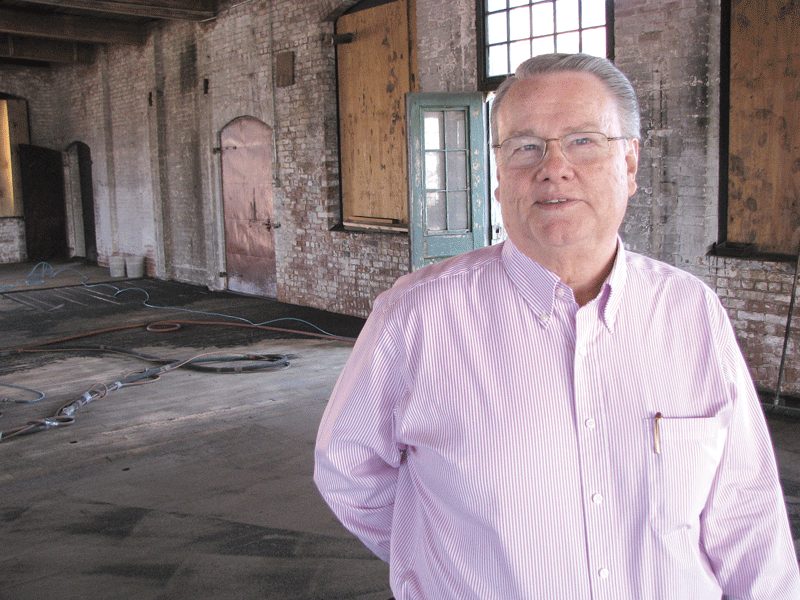
Bill Messner

Bill Messner


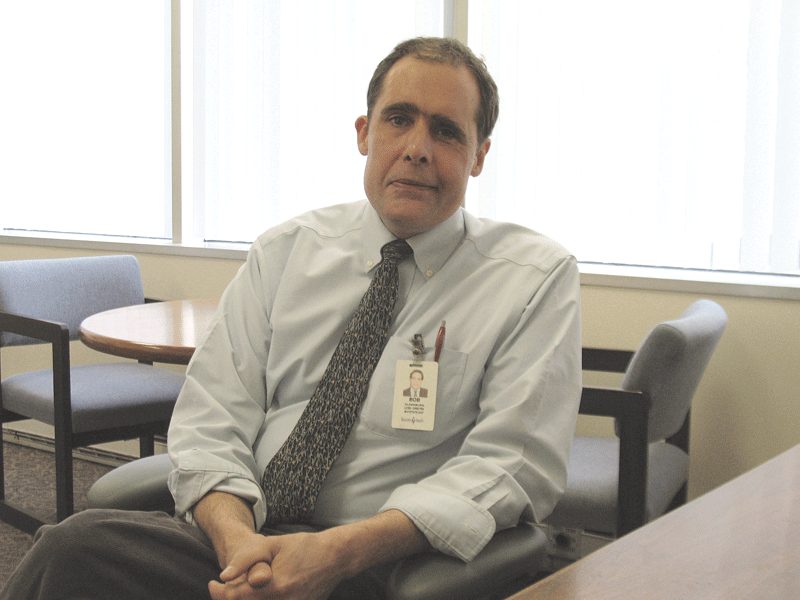
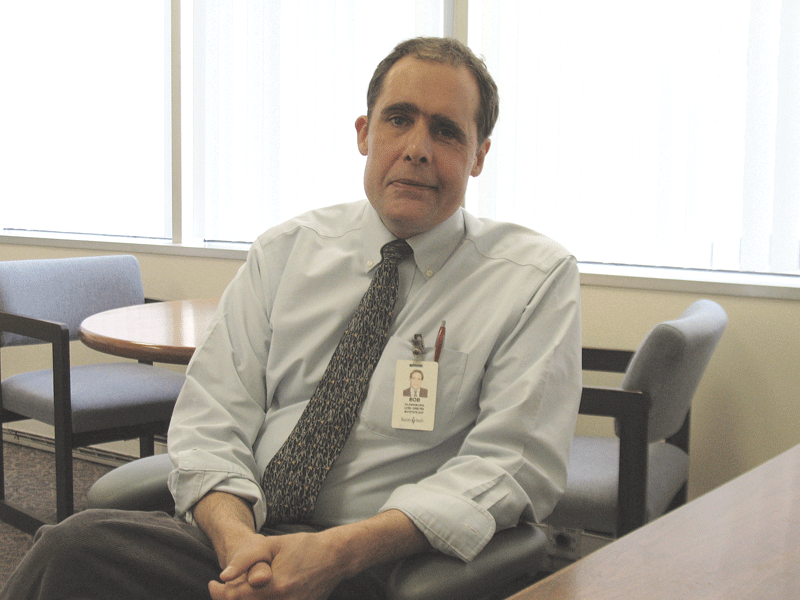
Bob Pura says he found at least a few things to like about the recent Boston Foundation report titled “The Case for Community Colleges: Aligning Higher Education and Workforce Needs in Massachusetts” — especially the main subject of the account.
“I’m glad they focused on community colleges — we need and deserve that kind of attention,” said Pura, the long-time president of Greenfield Community College, noting that this segment of the Commonwealth’s higher-education portfolio is often overlooked due to the prevalence of top-shelf private colleges. He also liked the fact that the report, released late last month, said the 15 institutions are woefully underfunded and that the state needs to step up its commitment to the schools.
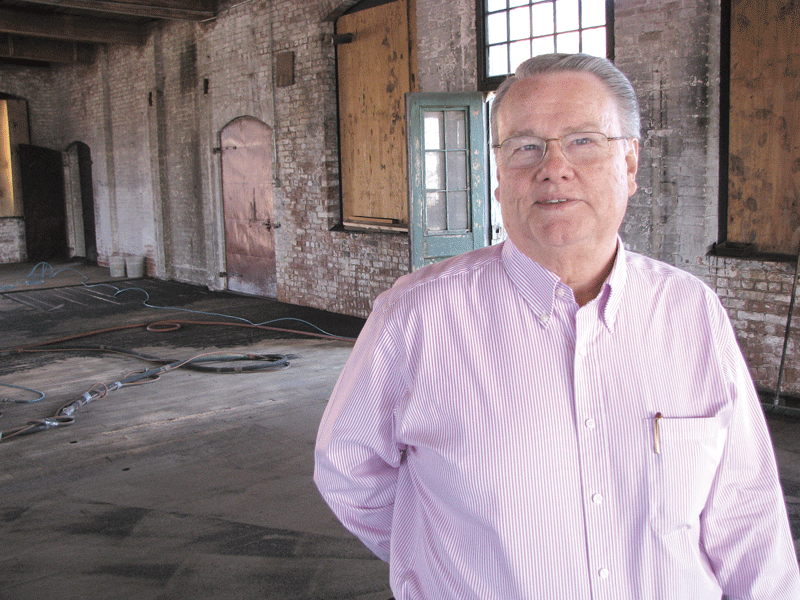
Bob Pura

Bob Pura

But beyond that, Pura had some major reservations about the document and its primary message — summed up by a recent local headline: “Report Slams Community Colleges” — that these institutions were essentially failing in one of their primary missions, to train individuals to succeed in today’s technology-driven job market.
Actually, this was the conclusion of two reports released within the same week. In the other, the Commonwealth Corp., in a report titled “Critical Collaboration,” found that the state’s community colleges are not properly aligning their training programs with the specific needs of the health-care industry. According to the report, the schools are not creating important standards that ensure sufficient academic performance from students.
This double whammy had many community-college presidents on the defensive, but those we spoke with mixed praise for the reports — especially the Boston Foundation document — with criticism that it was recommending that things be fixed that aren’t necessarily broken.
Pura said the report seemed far too Boston-focused to be considered complete and fully accurate — one of its main recommendations is the merger of Roxbury and Bunker Hill community colleges — and surmised that those doing the research might not have ventured west of Worcester or even Route 128 as they went about their work. If they were more thorough, he argued, they would have found plenty of evidence that community colleges are successfully training and retraining thousands of individuals.
Bill Messner, president of Holyoke Community College, agreed, and took exception to some of the report’s primary recommendations, including a centralization effort that would do away with local boards of trustees at the community colleges, and a call for a more singular focus on workforce training, presumably, he believes, at the expense of one of his school’s historical strengths — transfer programs to four-year schools.
Meanwhile, Messner, Pura, and others said a move back to a centralized board for all 15 institutions would rob those schools of individuality and probably stifle ongoing efforts at various schools to address many of the concerns listed in the report.
“How’s that going to enhance workforce efforts? I don’t know,” asked Messner in reference to the centralization proposal before answering his own question.
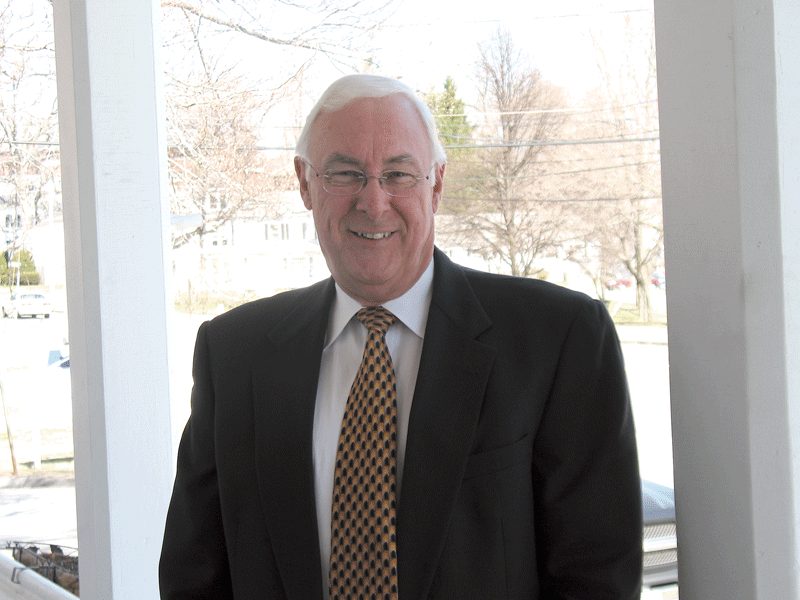
Ira Rubenzahl

Ira Rubenzahl

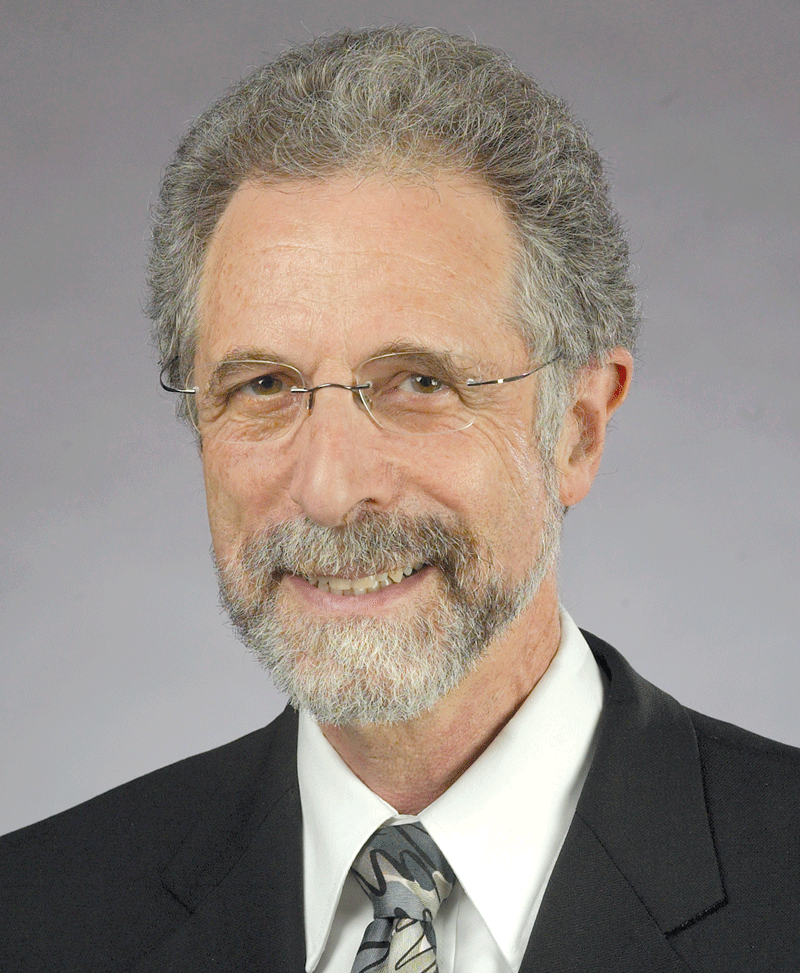
Meanwhile, Ira Rubenzahl, president of Springfield Technical Community College, said that, while many of the report’s conclusions can be debated, its basic argument — that community colleges have a huge role in both workforce development and economic development, and need more financial support to carry out that role — cannot be.
And this is what he hopes everyone — including the community-college presidents that have assailed the report — can take away from this exercise moving forward.
“The reason for looking at community colleges now is economic,” said Rubenzahl, referring to both the timing of the report and its main thrust. “We’re still in the throes of the Great Recession, and certainly employment has not responded. And if we’re going to have a vibrant economy in Massachusetts, the report argues, and I agree, that community colleges have to play an important role — a bigger role — for that to happen.”

Schools of Thought
The crux of the Boston Foundation’s report — and the reason for its focus on the role and performance of community colleges — can be found in its executive summary:
“Massachusetts has one of the lowest unemployment rates in the nation and has added more jobs throughout the recession than most states. However, this transition has not benefited everyone,” it reads. “Rather, as blue-collar jobs continue their long decline, it is leaving far too many workers on the sidelines. There are great rewards for those with the requisite levels of education and skills — and far fewer options for everyone  else, as the economy becomes more and more highly specialized.
“While traditional jobs are disappearing, the gap between the needs of the knowledge economy and the educational attainment of the state’s residents is growing every year,” the report continues. “The recession has been especially tough on on those with less than a high-school diploma, leading to unemployment rates that are four times greater than those of college graduates. Already there are regions of Massachusetts where low rates of educational attainment have exasperated high unemployment levels and stalled economic recovery.”
“The economic imperative for aligning the workforce needs of Massachusetts with the needs of students attending community colleges is powerful and growing,” the authors go on. “Massachusetts is at a crossroads in its capacity to compete — and the ability of its residents to fully participate in the current economy and the rewards that employment brings. For the Commonwealth to flourish going forward, a high priority must be placed on training the workforce that is needed by the industries that are driving the Massachusetts economy. That responsibility falls squarely on the Commonwealth’s public higher-education system, most predominately the 15 community colleges.”
To enable these institutions to effectively carry out that assignment, the report’s authors recommend a number of steps, starting with a clarification and simplification of the schools’ mission. Not only is that mission too wordy, says the foundation (252, compared to 102 for North Carolina and an ultra-concise 18 in Virginia), but it is too broad.
The mission statement “is indicative of a lack of focus and an attempt to be all things to all people,” the authors state. “It is time for community colleges to embrace their role as the link between elementary education and career. This encompasses transfer to to a four-year college, technical education, certificate programs, and career retraining programs. The mission should be providing the Commonwealth’s residents with the education and skills necessary for a productive career with a family-supporting wage.”
Other recommendations include:
• “Developing a strategic blueprint for building a system that effectively leverages the capacity of community colleges to be leaders in meeting the workforce needs of Massachusetts”;
• Strengthening the community-college system of governance and accountability. “The existence of 15 community college governing boards, to whom the presidents report, completely independent from the Board of Commissioner of Higher Education, is not conducive to achieving state and regional workforce-development goals,” the authors write;
• Adopting performance metrics;
• Better preparing students for community-college-level work and graduation;
• Forming a community-college coalition; and
• Stabilizing community-college funding and consolidating the funding into one line item managed by the commissioner of Higher Education.
Paul Grogan, CEO of the foundation, told the Boston Globe, “I hope the colleges see this is not a blame game, not an assault, but just the reverse — we’re saying these institutions are crucial to the economic future of the state.”

Grade Expectations
The community-college presidents we spoke with said this message is certainly embedded in the report, although they believe it may likely get lost amid headline-making recommendations such as merging two of the schools, eliminating local governance, and narrowing the schools’ broad focus to workforce-related initiatives.
Meanwhile, they hint strongly that the authors may have overlooked Western Mass. in their research, and thus some evidence that the schools are working on some of the issues the report details — specifically that often-mentioned jobs-skills mismatch — and achieving progress.
“I thought the study lacked perspective on Western Massachusetts,” said Pura. “I thought that the wonderful work that’s going on in Springfield, Holyoke, the Berkshires, and here in Franklin County was not spoken to. That fact is that community colleges are very tied to the workforce agenda, and they’re serving the communities of this region in a rather powerful and significant way.”
As examples, he cited work at Berkshire Community College to partner with business leaders there to help make graduates workplace-ready; a regionwide effort called the Healthcare Workforce Partnership of Western Mass., designed to draw more people into health care fields and train them for those jobs; and the recently announced collaborative between HCC and STCC called TWO (Training and Workforce Options) through which the schools are essentially combining their workforce-training initiatives.
And he also summoned a recent anecdote from his own school that he believes is quite typical of what’s happening across the region.
“I know of one particular individual who was laid off; he worked with the regional employment board, and essentially went through the system,” Pura explained. “He had never been out of work before, and didn’t know how he would provide for his family. He wound up at GCC, got involved in our sustainable-energy program, did an internship with Sandri Energy Co., and is now gainfully employed there.
“If you asked him, this gentleman would say that the system works,” he continued, “and there are countless other people who could say the same thing.”
Messner had some similar observations, but noted quickly that workforce preparation is simply a part of the community-college mission — a large part, to be sure, but only one component that should not become the singular focus of such institutions.
“As you read this report, you come away with the sense that what they mean is we should be focused on short-term training and technical training, and that this whole focus on general education and liberal-arts transfer amounts to resources that are misallocated — which we simply don’t agree with here,” he told BusinessWest. “We’re a comprehensive community college; that’s our mission. We do transfer, we do liberal arts, we do adult basic education.
“Is that a lot? Yes, but that’s what we’re in business to do; that’s what we’re charged with doing,” he continued. “And the notion that we’re somehow going to truncate our mission doesn’t make sense; more and more students are coming to us because they’re being priced out of four-year education, and they’re coming to us for a start in that direction.”
Rubenzahl, meanwhile, without necessarily disagreeing with his colleague’s comments, said he’s choosing to view the report in the most positive way he can, and that is by focusing on its central theme — that community colleges are at the crossroads of education and the workplace, and must function effectively in that role if the state is to reverse those recent trends concerning out-migration, unemployment, and underemployment.
“There has been a fundamental change in the way education has to interact with the economy,” he explained. “We all have to be very thoughtful about how to improve education in order to help the economy recover.”

Thoughts in Passing
Echoing Pura’s thoughts, both Messner and Rubenzahl praised the report’s authors for bringing needed attention to the plight of community colleges as they go about their work.
“I was generally pleased that we’re getting this kind of attention,” said Rubenzahl. “Because generally, community colleges have labored in this state without a lot of recognition, and without the kind of support that goes with more recognition.”
Whether that support is coming is a matter of conjecture, but for now, community-college leaders and state legislators have been given something to think about — and debate — concerning the future of institutions who are finally getting some due, even if it comes complete with large doses of controversy.

George O’Brien can be reached at [email protected]

Commercial Real Estate Sections
Holyoke Project is a Study in Perseverance

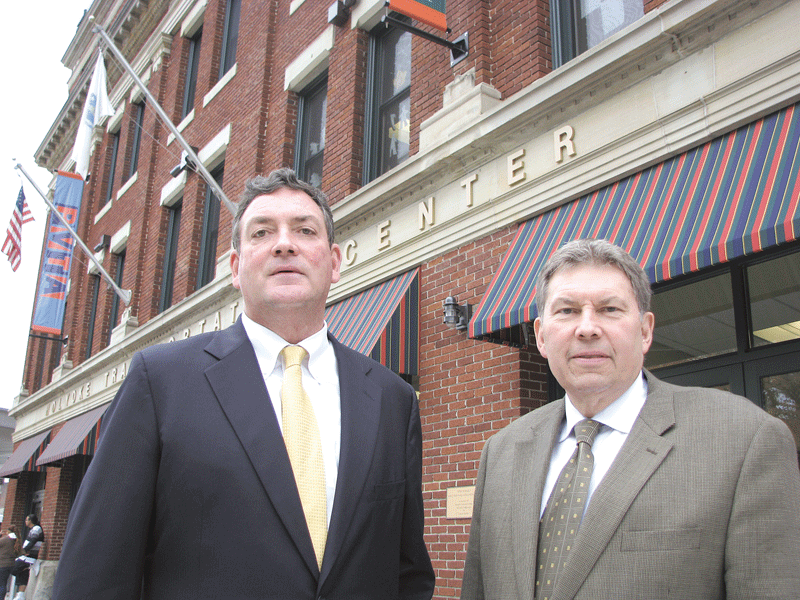
Mike Crowley, left, and Bob Schwarz

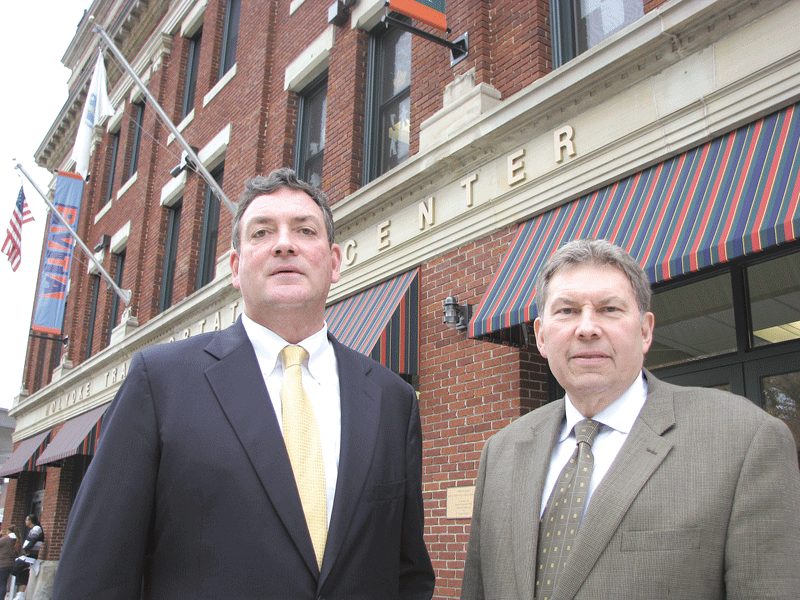
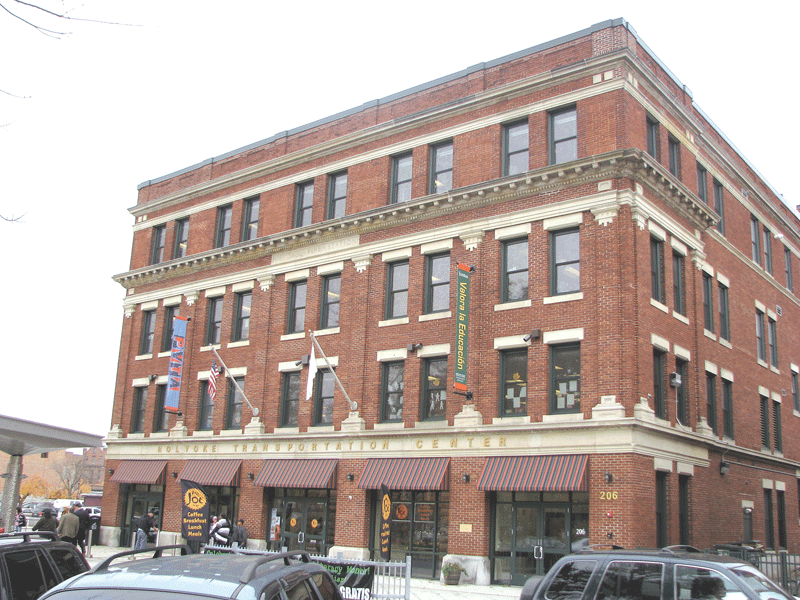
Mike Crowley, left, and Bob Schwarz in front of the Holyoke Transportation Center, a unique project that overcame innumerable hurdles.

The concept initially came together nearly a decade ago. It was a unique and ambitious plan — to combine a transportation center with adult basic education programs and a childcare facility — but it made sense on many levels. So much so, that the Holyoke Transportation Center was able to withstand myriad challenges, many of them capable of scuttling the initiative. The end result is what one of the private-equity investors calls “a one-stop shop to improve your life.”

Mike Crowley says that from a strict bottom-line perspective, the initiative that became known as the Holyoke Transportation Center never really made complete sense, and always came complete with a large amount of risk.
Indeed, when asked when and if this unique commercial real estate venture will become a financial success, Crowley laughed and then offered an expression that seemed to say, ‘who knows?’ — a reaction that essentially told the story. Well, not really.
That’s because this project was never about economics — or all about economics, said Crowley, a commercial real estate consultant, developer, and eventual partner with members of the Picknelly family and a host of public entities in this initiative that transformed the old central fire station on Maple Street in Holyoke into a transportation and education complex that those involved say should become a model for other communities.
Instead, it was about fulfilling a commitment made by Peter L. Picknelly more than a decade ago to create a groundbreaking public-private partnership that would blueprint and then build a unique facility that would become both a transportation hub and center for adult basic education programs — two passions for Picknelly, who was still conceptualizing the facility when he died in 2004.
And it was essentially the unwavering desire on the part of his son, Peter A. Picknelly, to honor this commitment that enabled the project to overcome a lengthy laundry list of challenges and the temptation on the part of any or all of the various players — the Commonwealth, the Pioneer Valley Transit Authority, the Federal Transportation Administration, Holyoke Community College, and other entities — to say that this project just wasn’t doable.
“Every time we were faced with a 10-foot wall with barbed wire on top, we somehow found a way get over it,” said Crowley, who has a number of successful real estate ventures, including several medical offices, on his portfolio, and has worked with the Picknelly family on several of its projects over the years.
He said the barriers in Holyoke were both bureaucratic — an inevitable scenario when one considers the alphabet soup of federal, state, and local agencies involved (from HCC to the PVTA to the FTA), as well as the leadership changes that took place within some of these agencies— and construction logistics he summed up neatly and succinctly when he joked, “they told us this building had great bones; well … they lied.”

The Holyoke Transportation project

The Holyoke Transportation project was a complicated endeavor that involved a number of federal, state, and local agencies.

Indeed, detailed inspections revealed serious problems ranging from asbestos in the flooring (originally thought to be concrete), removal of which added $500,000 to the pricetag, to greatly deteriorated steel under the main floor, where the weight of fire trucks and the corrosive effects of road salt took their toll.
Eventually, state funds were secured to cover some of the additional costs, imaginative solutions were found for each of the construction challenges, and the parties involved essentially drew their own map for navigating uncharted waters in the form of an unprecedented public-private collaboration to create the center.
“We were essentially paving new ground; this was the first joint-development agreement undertaken in the country under the new FTA rules and regulations,” said Bob Schwarz, executive vice president of Communications for Peter Pan Bus Lines, and an individual Crowley credited with keeping the project on the rails during the innumerable times it appeared to heading off the tracks. “So we had nothing to go on; no one had ever done this before; we were laying the road.”
And as result of all this imagination and determination, the participatinbg parties were able to cut the ribbon last fall on a facility that Picknelly says makes a great deal of sense for the community.
“It’s a one-of-a-kind concept that has received national attention,” he said. “The components come together naturally — adult basic education, transportation to take people to those programs, and a childcare center for those with children.
“This is a one-stop shop to improve your life,” he continued, referring specifically to the many programs taking place in the Picknelly Adult and Family Education Center, named for his father. “It’s a place where people can make connections that can change their life.”
For this issue, BusinessWest chronicles the Holyoke Transportation project, a triumph over adversity in many respects, and now a working model that other communities may be looking to emulate.

Route of the Problems
As Crowley retold the story of how the center eventually came to fruition, he said that by the time Picknelly called him in 2006 and asked him to get involved, the project had been effectively dormant for some time.
There had been a memorandum of understanding inked between the Picknelly family and the PVTA in 2003 that outlined the partnership and the main battle plan for building the center, said Crowley, and many additional partners, from HCC to Head Start, to the city of Holyoke (which provided the real estate), had come on board, and thanks to the ardent support of U.S. Rep. John Olver, the various components of the project, and needed funding sources, were coming together nicely.
“They visualized a multi-modal transportation facility that would link inter-city and intra-city bus services involving carriers like the PVTA and Peter Pan, that would provide superior transportations services for the people ot Holyoke and the surrounding communities,”Crowley explained. “But what they also recognized was an absence of critical adult basic education services in the community, and looking at the demographics, this was a glaring problem — the fact that none of these services were being provided in a cohesive fashion.”
“What Peter (Picknelly), Bob (Schwarz), and Congressman Olver realized was that many of the people who needed adult basic education needed transportation to those services,” he continued. “Further, they understood that many of them also had kids, and in most cases, couldn’t leave those children to receive these education services — so Head Start became another critical element in the equation.”
This apparently solid game plan gained the support of the FTA and the state Executive Office of Transportation), which together had committed grants covering two-thirds of the project’s cost, and HCC had agreed to become anchor tenant and provide the adult basic education services.
But due to a series of circumstances — from the death of the elder Picknelly, who was providing the private equity for the project ($1 million) to turmoil at the PVTA and a subsequent change in leadership at the agency — the ambitious plans had been effectively back-burnered, although certainly not forgotten, said Crowley.
Indeed, by 2006, the PVTA, then being led by Mary MacInnes and determined to upgrade its facilities in Holyoke, one of the larger communities served by the agency, generated some dialogue about getting the initiative back on track.
But the landscape had changed considerably since 2003, said Crowley, noting that by then, the commercial real estate market was booming and construction costs were soaring, which meant that that the agreements between the parties would have to be renegotiated.
“When I looked at the development proposal that Peter had agreed to, and looked at the agreements that Head Start and Holyoke Community College had agreed to as tenants, and looked at the agreement that the PVTA had, it was evident to me that the project was financially unfeasible, and I indicated that (to the younger) Peter,” he explained. “But Peter, who recognized and appreciated that this was one of his father’s principle goals in life — to create this adult basic education center — didn’t want to give it up.”
Fast-forwarding a little, Crowley said the various agreements with the parties involved were revisited, and those leading the initiative went to Olver in the hopes of securing additional funding from the FTA to cover those escalating costs; a revised budget from the architect had moved the pricetag from the $7.5 million in 2003 to roughly $9.3 million (for both the building and an adjoining parking garage that was never built).
However, by this time (late 2006), the country was starting to slide into recession, and the federal government was putting the brakes on a number of projects, including many that were transportation related. So the parties involved with the Holyoke project agreed to essentially move forward knowing that there was a significant funding gap, said Crowley, adding that this was only one many serious problems lying in wait for this initiative.
“There were a number of points in the JDA where I think all the stakeholders, at one point or another, and for various reasons, almost threw in the towel,” he explained. “It was a daunting, daunting process. There was a ton of agencies involved — at the federal level, the state level, the city level … it was incredibly complex.”

Miles to Go …
Meanwhile, close inspections of the old central fire station revealed that those claims of ‘great bones,’ were untrue, or at least greatly exaggerated, and this meant that the recently revised budget was certainly imperiled.
For starters, the building, vacated at the start of the decade but still used for some training programs, had been exposed to the elements for seven years before construction was due to begin. This led the developers to do their own structural and environmental analyses — earlier reports indicated that the building was ‘clean’ — that found a number of large and costly problems.
Chief among them was the asbestos-based coating on the floors on the second, third, and fourth levels, a material applied 70 years earlier. “Everyone thought it was concrete, and we planned to just skim-coat over it,” Crowley explained. “And there was no way to get it up, other than with jackhammers and hand demolition.
“We had two options — encapsulating it, or removing it,” he continued. “But knowing that we were going to have Head Start and their children, and knowing the level of traffic this building was going to get from the general public, we made the decision to remediate it in its entirety, and if we couldn’t remediate it, we were going to scrap the plan.”
A subsequent inspection revealed that the deterioration of the I-beams that were carrying the first floor was so significant that they would have to be replaced, adding another $250,000 to the project’s cost.
“So now, we’re $770,000 behind the 8-ball, and this is before we’ve gone to bid to find out what it’s going to cost us to do the building,” he went on. “So that delayed us probably four months, because we, as the private-equity investors said, ‘we’re not going forward this — this is crazy; there are just too many unknowns.’”
But eventually, the many delays in negotiating agreements, securing the needed funds, inspecting the building, and resolving construction issues, turned out to be a blessing, because the rapidly deteriorating economy served to bring down the constructions costs associated with the project — and in a dramatic fashion.
“In most cases, time is you enemy with projects like this; in this instance, it was our friend,” said Schwarz, adding quickly that even with the attractive bids that would eventually be recived, the project would likely have been scuttled if state legislators had not secured a $750,000 grant from the EOT to handle the asbestos-removal efforts and floor replacement.
Construction wound up coming in two phases — demolition, handled by Kurtz Inc., in Southampton, and then reconstruction, undertaken by Western Builders in Granby, a subsidiary of Daniel O’Connell’s Sons in Holyoke — and there were myriad challenges in both cases.
Indeed, demolition of the floors proved to be a formidable obstacle, said Crowley, noting that due the composition of the concrete under the asbestos coating (sand mixed with large stones), the demolition efforts left a scarred, pitted surface that “looked like the surface of the moon.”
Rectifying the situation would require roughly three inches of new concrete, he continued, but the structural steel wouldn’t support that much weight. So a silicon-based substance, five times more expensive than concrete, had to be used.
Eventually, officials at HCC were able to secure a $550,000 federal grant that effectively enabled the developers to absorb ballooning expenses from the construction challenges and bring the project to completion, said Crowley, who stressed repeatedly, that there many figurative 10-foot walls with barbed wire that appeared to be insurmountable barriers, but solutions were ultimately found.
As they provided BusinessWest with a tour of the center, Crowley, Schwarz, and George Kohout, who directs the System for Adult Basic Education Support (SABES) for Holyoke Community College, at the Picknelly Center, all implied on numerous occasions that the facility was certainly worth all the aggravation, and that the unique model is working as those who blueprinted it intended.
Kohout said there are a number of programs conducted on the third and fourth floors of the facility, involving a number of agencies, from HCC to the New England Farmworkers Council; from the HALO (Holyoke Adult Learning Opportunities) Center to the Community Education Project; from the Holyoke Public Schools to CareerPoint.
Together, these partners offer services that include English as a Second language classes, GED testing, MCAS preparation, career counseling, “fast-track math,” English writing and composition, and computer training.
The central location, coupled with the accompanying transportation and childcare elements, not to mention the modern facilities, have all contributed to high enrollment and attendance levels that are certainly not coincidences, Kohout continued.
“Attendance has gone off the charts,” he explained. “And part of the reason for that is that many of these programs have been offered in places like the basements of churches or in other buildings with used furniture; when people come here and see the modern facilities, the state-of-art technology, bright colors, and the clean walls, it really ramps up what we call their ‘persistence’ in classes.”
In the big-picture perspective, that’s a word that can be applied to every aspect of this project.

Passing the Test
Looking back on all that transpired since that conversation with Peter Picknelly back in 2006, Crowley shook his head and said, “had I known then, what I know now …”
He didn’t finish the sentence, but the implication was certainly clear enough, and if it wasn’t, he then made it so by adding, “was this a labor of love? Maybe, but mostly, it was a just a labor.”
And mostly because all the parties involved didn’t know then what they know now, this unique project was able to come to fruition, bringing transportation, adult basic education, childcare, and even a coffee shop, together in an historical and improbable setting.
And so, the Holyoke project has become a study in perseverance — in more ways than one.

George O’Brien can be reached at [email protected]

Features
Leadership Pioneer Valley Gets Down to Business

Kimberly Williams

Kimberly Williams hopes to gain deep insight into the issues and challenges confronting area communities through Leadership Pioneer Valley.

Kimberly Williams said she was “almost” embarrassed to admit that she needed her car’s GPS device to get her to Westfield and, more specifically, the Genesis Spiritual Life Center just a few blocks from that city’s downtown.
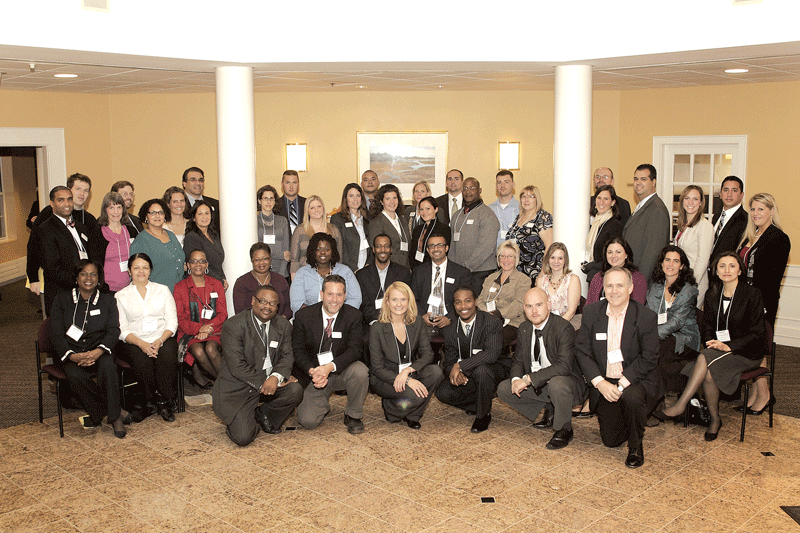
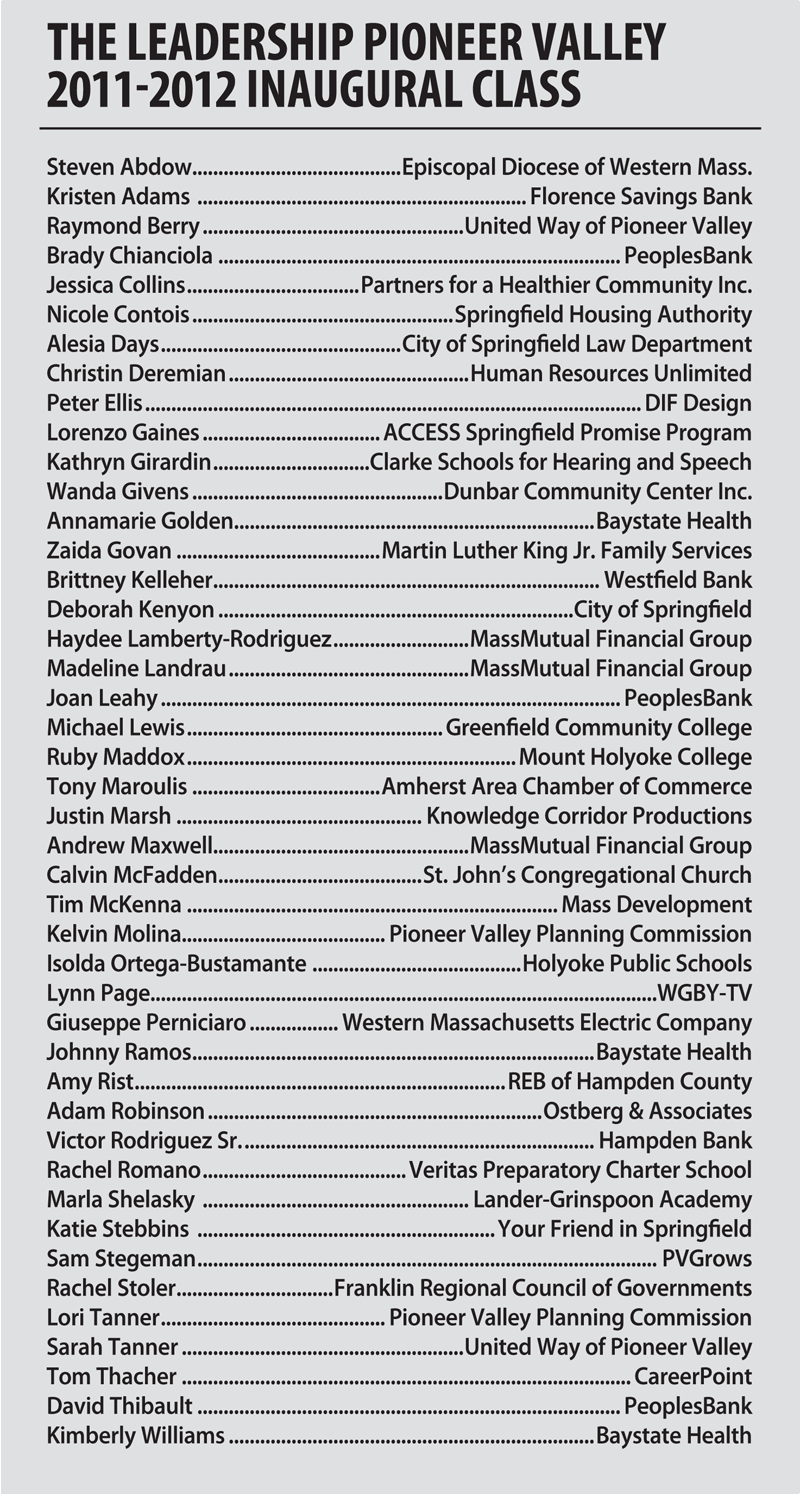
But she fessed up to help drive home one of many points about why she’s one of the 44 individuals in the inaugural class of a program called Leadership Pioneer Valley (LPV), and why she’s excited about its potential to become a real learning opportunity.
Williams, a consultant in the Office of Diversity at Baystate Health, grew up in Springfield, left the area upon graduation from high school, settled in Washington, D.C., and returned to this area nine years ago. She says Springfield has changed considerably since her childhood in the ’70s, and admitted that, while she and her two children have taken a number of day trips across Western Mass., she doesn’t know much at all about many of the cities and towns in which her co-workers at Baystate live.
LPV, which staged a weekend-long retreat at Genesis in late October to kick off its program, will help enlighten her by taking her into many of those communities, including the Amherst-Northampton area, Franklin County, Holyoke, and Chicopee, where she anticipates getting much more than an understanding of Western Mass. geography.
“I have what I’d call a surface understanding of many of the communities, and this region as a whole,” she said, adding that she wants to greatly expand that base of knowledge while also honing leadership skills.
Tony Maroulis, executive director of the Amherst Area Chamber of Commerce and another member of the inaugural class of leaders, agreed. He told BusinessWest that he has a particular fascination with cities, and expects that his nine-month tour of duty with LPV will provide a greater understanding of the issues facing Springfield, Holyoke, Chicopee, and other area urban centers.
But well beyond that, he anticipates that the interaction with his 43 classmates and the projects they become involved in through LPV will help advance the cause of regional thinking and doing in Western Mass., and the removal of boundary lines real and imagined.
“I’m lucky enough to sit on the board of the Greater Springfield Convention and Visitors Bureau, so I get a little more of a valley-wide perspective, but I still get wind up getting in my own silo sometimes because there’s so much to do in Amherst,” he told BusinessWest. “Sometimes, I don’t have a valley-wide view, and I entered this program thinking, ‘what are the connections that we can make and the synergies we can create? And through those connections and synergies, what can we solve?’
“This is a very diverse place that covers a big geographic area,” Maroulis continued, referring to the Pioneer Valley. “And its geography is both an asset and a curse in a way; we have a river that cuts us right down the middle, and we’ve got mountain ranges that go ways they don’t anywhere else.
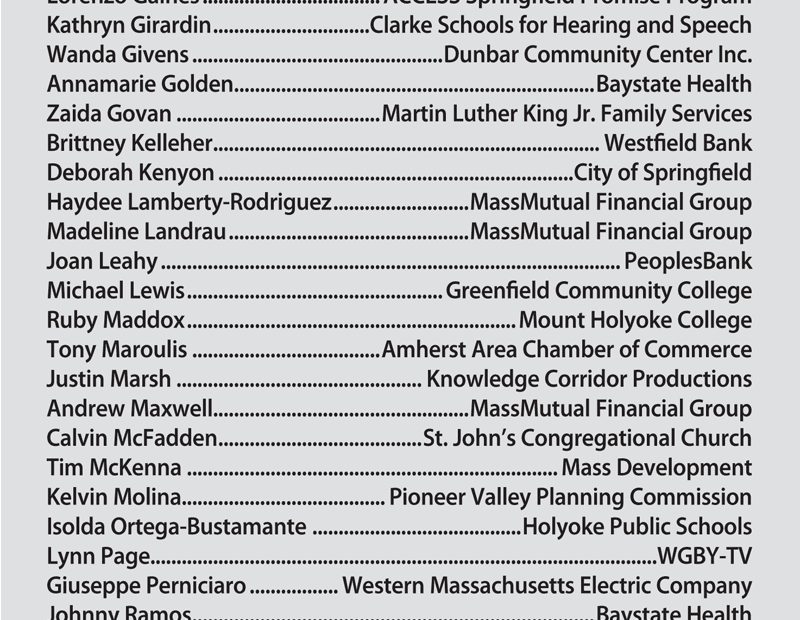
The 44 members of the inaugural class of Leadership Pioneer Valley.

The 44 members of the inaugural class of Leadership Pioneer Valley.

“We need to break through all that … and eat through the tofu curtain from my end,” he went on, referring to the term that has come to describe an invisible barrier between the Northampton-Amherst area and points of the Holyoke Range.
Achieving progress toward such ambitious goals are among the many motivations for LPV, said its program director, Laura Wondolowski. She noted that the initiative was sparked by an action item in an overhaul of the Pioneer Valley Planning Commission’s Plan for Progress, one calling for a vehicle to “recruit and train a new generation of regional leaders.”
For this issue, BusinessWest talked with Wandolowski and some of the members of the class of 2012 to get perspective on the work ahead of them, and their expectations for this ambitious endeavor.

Heading in the Right Direction
Wondolowski said this first class of leaders represents diversity in a number of forms.
Introduced at a reception on Oct. 18 at the MassMutual Conference Center in Chicopee, the class includes individuals from across Hampden, Hampshire, and Franklin counties, represents several major employers and most industry groups — from health care to financial services to technology, as well as the broad nonprofit realm — and is culturally diverse as well. And while most class members are in their late 30s and 40s, some are much younger, and others can remember growing up in the ’60s.
Such a mix will provide the group with a number of different perspectives, which is important as it goes about the task of not only building leadership skills, but also broadening its participants’ base of knowledge concerning the region and its population, said Wondolowski.
“We wanted to make sure we had a good mix of individuals,” she said, adding that aggressive recruiting efforts helped create the high level of diversity and representation within industry sectors and geographic regions. More than 50 applications were received.
Participants will take part in a nine-month program of experiential learning that will take place at organizations and locations across the region, she explained, adding that there will be sessions devoted to team-building exercises and development of leadership skills, as well as field visits to many area communities.
“The field-based and challenge-based curriculum is specifically designed to help class members refine their leadership skills, gain connections, and develop a greater commitment to community stewardship and cultural competency,” said Wondolowski. “The program also features small-group projects, where class members will take action to address a regional need identified in the Pioneer Planning Commission’s Plan for Progress.”
Williams, 43, said she entered the program with a number of goals and expectations, but especially a desire to gain a better understanding of the region as a whole and many of its individual communities, knowledge and insight she believes will help her in her professional capacity at Baystate.
And she’s excited about LPV’s model, which involves learning while doing.
“That’s a critical component of adult education,” she said. “Adults learn by doing something as opposed to reading about it or getting instruction. This program is going to give all of us the chance to hone or develop new leadership skills, while also applying those skills within the community; it’s a learning opportunity on many levels.”
Maroulis, meanwhile, is looking forward to learning about other communities and the challenges they face, and also making real progress with perhaps removing that ‘tofu curtain’ from the local lexicon.
“We’re still trying to figure out how to work regionally in Hampshire County,” he said, adding that there remains a great divide between Amherst and Northampton symbolized by the Coolidge Bridge. “I think we’re doing it better and better, but we’re not there, not completely, and there’s much work to do across the entire valley.”
“To get more of a handle on that, and meet some people from the lower valley and to start working with those same people and getting them to think about those issues, will be a challenge and also a lot of fun,” he continued. “And fun is a big part of it for me.”

The Road Ahead
Maroulis doesn’t recall exactly how, but he remembers some discussion from the opening retreat focusing on the town of Gill. To which more than a few of the individuals present said, ‘where’s Gill?’
“No one from Hampden County had a clue, but the three people from Franklin County set everyone straight,” he recalled, noting that he already knew, and now others are aware that the community is just northeast of Greenfield, not far from the Vermont line.
By the time this inaugural class has graduated next spring, members will have benefited from much more than geography lessons, Maroulis went on, adding that, while learning new leadership skills, participants will also gain a better understanding of the many issues facing the area, and perhaps make progress on the task of thinking and acting like a region.

George O’Brien can be reached at [email protected]

Opinion
Jobs: The Next Global Conflict

“As of 2008, the war for good jobs has trumped all other leadership activities, because it’s been the cause and effect of everything else that countries have experienced. This will become even more real in the future as global competition intensifies. If countries fail at creating jobs, their societies will fall apart. Countries, and, more specifically, cities, will experience suffering, instability, chaos, and eventually revolution. This is the new world that leaders will confront.”
This is a passage from a recently released book called The Coming Jobs War, written by Jim Clifton, chairman of Gallup. In it, he contends that the next great global conflict won’t be about ideology or religion or territory; it will be all about jobs, or, rather, what he calls “good” jobs.
He defines these as jobs with a paycheck from an employer and steady work that averages 30 or more hours per week. He contends that there are about 1.2 billion of these good jobs in the world right now, and Gallup polls show that roughly 3 billion of the 5 billion adults in the world work or want to work and need a good job.
That’s a roughly 1.8 billion shortfall. The cities, regions, and countries that fare well in closing this gap will prosper. As for those who don’t … what did Clifton say again? “Instability, chaos, and eventually revolution.”
Those are strong words, but they are pretty hard to argue with. About the only fault we find with Clifton’s argument is his persistent use of the future tense with regard to this global jobs conflict. It isn’t coming — it’s already here, and elected officials, economic-development leaders, and this region’s business community should definitely take heed.
For evidence of the severity of the situation, they need only review the latest data from the Census Bureau about the increasing number of people falling into poverty. There are now 46.2 million poor Americans, or 15.1%, the highest rate in nearly two decades. Of those, 2.6 million fell into poverty last year.
Some did so because they didn’t have a job, but for many, the cause was lack of one of those good jobs, which this region and this country as a whole are simply not creating in the numbers that they have in the past. The reasons are many, from the lingering recession and advancing automation to the migration of manufacturing to other regions and other continents, but the bottom line is that this country is failing on what is now the most important battleground of all.
How do we create good jobs? If the answer to that question came easily, 1.8 billion wouldn’t be looking for them today. The answer is complex, and it involves many components, starting with a greater focus on math and science, similar to what happened more than a half-century ago, a spark that did a lot more than put a man on the moon in 1969; it also helped inspire most of the advances in computer and information technology over the past 40 years.
What is also needed is continued emphasis on entrepreneurship, which is needed to take new ideas and transform them into producers of not only jobs, but those good jobs. And our region must be able to compete for the entrepreneurs and the companies and jobs they will create. This means a large, qualified workforce, costs that are at least in line with other regions, and an environment where ‘pro-business’ is more than a catchphrase — it’s a way of life.
In his book, Clifton compares the jobs conflict to World War II. The latter, he writes, was fought for freedom and for leadership of the free world. “It was for all the marbles … and a loss would have changed everything.”
The jobs war is also for all the marbles, and a loss will change everything.
And, as we said, that war isn’t coming; it’s already here.

Opinion
Idea Mill Points Way to a Vibrant Holyoke

“Being down at the bottom gives you the chance to come back.”
That was one of the many messages that John Geraci, who has launched several Internet-based startups, left with participants at Idea Mill (see cover story, page 38). He was addressing an audience of entrepreneurs, business leaders, city-planning experts, and others interested in seeing Holyoke make exactly that kind of comeback.
‘Down at the bottom’ may have been a harsh way to put it, but it’s undeniable that this unique community — one of the nation’s first planned industrial cities, with a central manufacturing district built along a series of canals — has seen better days; it still ranks among the poorest cities in Massachusetts, and many of those formerly bustling mills have been vacant for decades.
But change is in the air.
Local economic-development officials have been talking about the rise of an Innovation District along the canals, and city leaders are buoyed by the ongoing development of the high-performance computing center that won’t produce many jobs, but will surely raise the city’s profile in attracting other high-tech businesses.
Idea Mill, which brought together a few dozen visionaries to discuss Holyoke’s potential, further focused those goals by emphasizing, throughout the day, the concept of ‘entrepreneutial density,’ the idea that many innovative companies, startups and established firms alike, working in one area raises the bar for all of them — not just through competition, but collaboration as well.
The idea of CEOs discussing current projects and future ideas among one another wasn’t the paradigm 20 years ago, said Baer Tierkel, another serial entrepreneur, but that kind of shared passion can be the lifeblood for a growing economy — in this case, one that could spring up in the old mill buildings along the canals.
That’s why another recurring theme at Idea Mill was promoting those buildings themselves, and convincing entrepreneurs to see them not as relics from a long-ago past, but living real estate with a palpable sense of history mingled with a modern, funky vibe. Many businesses have already caught on — the success of Open Square, where the conference was held, speaks to that — but event organizers believe the Innovation District can be so much more.
There’s plenty to be excited about in the Paper City these days, from the high-performance computing center to the possibility of a large resort casino. But what the speakers at Idea Mill made abundantly clear is that the city’s fortune won’t rise on technology itself, or any individual building project, but on people with passion and a vision, competing with each other while collaborating on something greater: a new, vibrant Holyoke.
We’ve said many times that economic development and job growth in this region will come organically. It will happen the same way it happened 200 years ago, with entrepreneurs taking concepts for new products and turning them into businesses. There are many ways to foster entrepreurship, and one of them is to relate success stories that happened here (complete with the challenges and struggles that are part and parcel to each of those stories) with the hope that they will inspire others who want to choose that path, and convince them that they don’t have to move to Cambridge or Silicon Valley to achieve those dreams.
That’s what Idea Mill is all about, and we consider it an exciting addition to the many endeavors taking place in the Valley to inspire the vision and entrepreneurial daring it will take to transform Holyoke and the entire region.
And that’s an idea worth developing.

Features
New UMass President Says That’s a Big Part of His Job Description

UMass President Robert Caret

UMass President Robert Caret at the site of the high-performance computing center in Holyoke.

“On the Road Together.” That’s the name new UMass President Robert Caret and his staff gave to a four-day, 400-mile bus tour he took of the state and the university’s five campuses. It was called that to drive home the point that the state and university must travel together if they intend to get where they both want to go, said Caret. He emphasized repeatedly in an interview with BusinessWest that more support from the Commonwealth is needed to reverse an alarming trend that has seen the public institution increasingly take the look and feel of a private university, with possible limits on access.

Robert Caret said he was repeating a joke, and while his comments drew many laughs, overall, he finds little humor in what he was saying.
He was talking with business leaders in Greater Springfield about the medical school in Worcester, how it carries the name UMass in front of those two words, and wondering, sort of, why that’s the case.
“The medical school’s budget is almost $1 billion, and only 4% is state-supported,” Caret, the recently installed president of the five-campus University of Massachusetts, told his audience over breakfast at the Springfield Sheraton. “I joked to the governor’s team that I could get more than 4% if I sold the name to Gillette or EMC or Peter Pan. Why do we have Massachusetts on the label if Massachusetts isn’t paying for it?”
Obtaining better support from the Commonwealth is just one of the many goals and aspirations Caret brings with him to his office in Boston as he takes the helm at a public institution ranked as the 19th-best university in the world in the Times of London 2011 World Reputation Rankings, but one that has historically received much less respect (in the form of funding) from the state in which it plays such a key role in economic development and job creation — $5 billion annually, by his estimates.
Overall, only 23% of the roughly $2.6 billion for the system comes from the state, he went on, adding that options for the rest are few, with tuition being the primary source. And as tuition rises, which it has steadily over the past few decades, public schools must devote more resources to student aid, said Caret, while also contributing more to new capital projects and relying more on endowments to meet the bottom line.
“We’re becoming a private institution,” he explained, adding a pause for effect. “That’s the model of a private university — high tuition, high aid, build your own buildings, raise your own money, 70% of your revenue comes from tuition. That’s a private university, and that’s where we’re all going.
“And the problem if we all go private is we’ll all provide high quality,” he continued, “but a lot of people aren’t going to get in, because you can’t run a 70,000-student enterprise using that model. You can run Smith, Mount Holyoke, and Amherst using that model, but not a school this large.”
Efforts to change that equation and improve such numbers are part of a complex job description that Caret attempted to simplify down to a few overriding tasks, with “telling and selling” being perhaps the most important. “That’s a big part of what I do,” he explained. “It’s all about getting out and telling the story.”
He would add another action verb to that list — listening, which he says is an important attribute and a big part of the process of making the university more of the force that economic-development officials statewide, and especially in the regions near the five campuses, want and need it to be.
Caret did copious amounts of telling, selling, and listening on a recent four-day, 400-mile bus tour of the state that took him from Adams to Buzzards Bay. Called “On the Road Together,” so-named to drive home the point that the state and university must travel together if they intend to get where they both want to go, the bus tour made stops locally in Pittsfield, downtown Springfield, the Smith & Wesson facility on Roosevelt Avenue, the high-performance computing center and intermodal transportation center, both in Holyoke, and the Engineering Research Center for Collaborative Adaptive Sensing of the Atmosphere (CASA) on the Amherst campus.
BusinessWest rode on the bus for several legs of the junket, seizing an opportunity to talk with Caret about this latest stop on a 30-year career in higher education (all of it spent in the public arena), his vision for the university, and the strategic plan he’s creating to better tell the university’s story and drive home his points about the ominous trends unfolding.
“We need society to understand that they’re closing the doors to education,” he said. “If government doesn’t step up, we’ll continue to build quality, but as we build quality, we’ll become more privatized, and as we become more privatized, access becomes the thing that suffers, and we just don’t want that to happen.”

Back to His Routes
Caret calls it the “Rodney Dangerfield effect.”
That’s the phrase he summoned to describe the situations he’s found himself in at the three stops on his résumé, including the latest.
Elaborating, he said that, at Towson University in Maryland, which he served in many capacities and lastly as president for eight years, the school operated in the very large shadow of Johns Hopkins University, just 20 miles away. And at San Jose State University in California, which he served as president from 1995 to 2003, Stanford was just down the road.
In Massachusetts, Harvard is the iconic private institution, but there are more than a dozen other major private colleges vying for students, media coverage, research money, and the attention of the public.
At Towson and San Jose, Caret said he learned early on that the best strategy wasn’t to try to compete with those institutions, but to complement them. And he intends to take the same approach in the Bay State.
“We want to be in a state of complementation; society needs public, private, two-year, four-year, state universities, community colleges, and universities to handle all its economic and social needs,” he explained. “What we all need to do is decide what piece we do, and how we can do it with high quality.
“And if you look at schools like Johns Hopkins, Stanford, Harvard, and MIT, only about 20% or less of their graduates stay in the state in which those schools reside, because they’re playing largely to an international audience; they take people from all over the world, and they go back all over the world,” he continued. “The University of Massachusetts takes 80% of its students from the state of Massachusetts and 80% of them stay here; we graduate 13,000 or 14,000 new citizens a year who go into the workforce and pay taxes. And all those campuses I’ve been involved with … you may get more startups out of Hopkins, MIT, and Stanford, but 20 years from now, UMass graduates are going to be running those companies because we’re going to permeate the ranks of those companies.”
Beyond these complementation efforts, Claret presided over periods of significant growth at both of his previous stops, career-wise, and gained national acclaim for eliminating race-based graduation disparity at Towson.
Indeed, under his leadership, the six-year graduation rate for all Towson students rose from 60% in 2003 to 75% in 2010. What’s more, the six-year graduation rate for African-American students rose from 48% in 2003 to 76% in 2010.
Caret wasn’t necessarily looking for a new job — although he’s always been receptive to new challenges — when UMass commenced its search for a successor to Jack Wilson last fall. He said he was lured by the opportunity to lead a system, and especially one with a strong research component, something he hadn’t experienced previously. Meanwhile, Boston was also an attraction; he did his undergraduate work there and grew up in New England.

Road Map for Progress
Starting back in the interviewing process, Caret said he’s been doing a lot of “reading, Googling, and learning” about the university, its five campuses — Amherst, Worcester, Boston, Lowell, and Dartmouth — and specific initiatives at those campuses and the communities that surround them. That process has only accelerated since he was hired in July.
“I was given three briefing books on an iPad that were probably a total of 450 pages of briefings on every piece of the UMass system — from campuses to budgets to the high-performance computing center, the stem-cell bank, everything we were doing,” he said. After he was hired, he complemented this reading and learning with roundtable meetings on the various campuses with faculty senates, unions, vice chancellors, deans, student groups, and other constituencies.
The bus trip, which included 24 stops, was, in many ways, a continuation of those research efforts, while also serving as a vehicle — literally and figuratively — for doing more of that telling and selling.
At Smith & Wesson, for example, he learned not only about that company’s expansion initiative and the adding of more than 200 jobs, but also about the many challenges facing area manufacturers — recruitment of talent topping the list — and the university’s efforts to address them while also spurring innovation.
In Holyoke, he spent time with city leaders at the high-performance computing center — a prime example of the university partnering with both private colleges (MIT and Boston University) and the business community — and also learned of that community’s efforts to create an Innovation District and use public transportation to help achieve growth.
Other stops on the tour included the Emerging Energy Technology & Innovation Center at UMass Lowell, a biomanufacturing facility in Fall River, Venture Development Center at UMass Boston, and the medical school itself.
What has he learned?
“There are a lot of similarities in what people are looking for from UMass,” he explained, referring to just the first few legs of his trip in Western Mass. “In North Adams, Pittsfield, Lee, and Springfield, they want more help with economic development, especially with technology transfer; if they have startup companies, they want a workforce to continue to feed those ventures, especially in the new technologies areas like biotech, life sciences, IT, and clean energy. But the further you are away from the main campuses, the harder it is to maintain those relationships.
“The other piece we see is the educational piece itself, which also feeds into workforce,” he continued. “But it also feeds into advanced manufacturing. And the third one is basic quality of life; Springfield, for example, would like to have much more of a cultural linkage with Amherst, and have more of the kinds of things that happen on the campus — like plays and other kinds of performances — in Springfield.”

Moving in the Right Direction
At most of the stops on the tour there was at least one meeting with the local business community, which Caret described as one of the constituencies with which the university must build relationships — and draw support.
Indeed, as he wrapped up his remarks at the Springfield Sheraton, Caret asked those assembled for advocacy in several different forms.
“We’d like some financial advocacy,” he said, meaning monetary support. “But we also need political advocacy, which can be almost as important as financial advocacy. And we’d also like a little emotional advocacy; every once in while, give us a pat on the back or a hug — we’d like to feel good every day about what we’re doing.”
When asked to elaborate on what he wants to accomplish at UMass, Caret listed several of the things he’s achieved at Towson and San Jose State, everything from higher graduation rates to stronger partnerships with business, other colleges (public and private), and the state itself. He also listed stronger linkages between the individual campuses, the regions surrounding them, and individual cities.
Which brought the conversation to the link between the flagship campus in Amherst and Springfield, and efforts in recent years to bolster that relationship and leverage the university’s many assets in a city trying to revitalize and reinvent itself.
“I will be a strong advocate for all of our campuses being aggressive with their local regions — but then you have to define ‘region,’ which becomes more complex,” he explained. “But I do think Amherst and Springfield are a logical pairing.
“If you look at studies from the Brookings Institute and other groups, you’ll find that, in most instances, for a vibrant city, you need a university at the core of its economic focus,” he continued. “And we want to play that role.”
And when asked how he would measure his success rate with his many goals, he again referenced his previous stops and said, “when I’m done here, I want to be able to say the same things I’ve said at the other two campuses.”
Elaborating, he said that, at both Towson and San Jose State, he presided over a number of capital projects that changed the faces of both schools. “I’ve probably done $2 billion worth of infrastructure at the two schools, and more than $1 billion at the last one (Towson), and they hadn’t had a new building in 30 years; it was a transformational change.”
But he is more proud of his success with improving the image of both schools, both in their respective regions and globally.
“At both schools, I raised the image of the campus, I raised the sense of pride among the people working there and graduating from there, and got the world excited about those campuses again; these were schools that were among the best of their breed, but they just weren’t getting the recognition they deserved.
“The biggest thing I’ve done is to revitalize a school, make people feel good about it, and energize the campus,” he continued. “And I’d like to say that about UMass, because if I can do that, then all those other things will happen; the rankings will improve, the funding will improve, the political advocacy will improve, and all the rest will happen.”

Next Stop?
There is no simple strategy for energizing a campus, he told BusinessWest as the bus was pulling into downtown Holyoke for its next stop. But a big part of that equation is that ‘telling-and-selling’ component of his job description.
But it’s also the next step in that process — delivering.
“After the telling and selling, you come back and you produce something and you get people excited,” he said. “You do put your money where your mouth is.”
That’s something both the university and state need to do, adding that sometime soon he’d like to be able to stop making jokes — if that’s what they are — about selling the name on the medical school in Worcester.

George O’Brien can be reached at [email protected]

Commercial Real Estate Sections
Springfield’s Rebuilding Effort Comes at Intriguing Time for Urban Centers
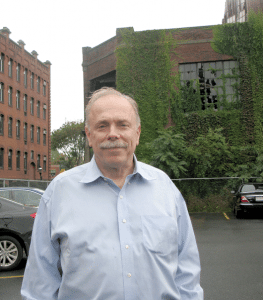
Dave Dixon

Dave Dixon says there is a surge in interest in urban living, which presents huge opportunities for cities like Springfield.

As local officials, hired consulting firms, and city residents combine forces to craft a rebuilding plan for Springfield in the wake of the June 1 tornado, they do so at a time of change and opportunity for many urban centers. Officials with the firms contracted to lead efforts to blueprint a revitalization strategy say there is a rise in the popularity of urban living, a trend that could facilitate the recovery process in many ways.

Dave Dixon was understandably wary about incorporating the phrase ‘silver lining’ into any statements he made concerning the June 1 tornado and its aftermath.
But he nonetheless put it to use as he talked about the efforts to rebuild Springfield and, more specifically, the work to revitalize the downtown and South End sections of the city. And that silver lining is all about timing and emerging trends in urban centers, he explained.
“If this tornado had struck 10 years earlier, let’s say, I think this would be a much grimmer task, because we’d be rebuilding in the face of continuing disinvestment in the city,” said Dixon.
He’s the principal in charge of planning and urban design at Goody Clancy, the Boston-based architecture, planning, and preservation firm now co-leading the efforts to blueprint a rebuilding plan for Springfield with New Orleans-based Concordia (see related story, page 62).
Elaborating, Dixon said that, over the past several years, there has been a discernable upswing in the popularity of urban living. Spawned by a number of factors, including a desire among aging Baby Boomers to live in places where they can walk rather than drive to most required destinations, the trend has helped transform a number of urban centers, many with the same social and economic challenges as Springfield’s central business district and South End.
“Ten years ago, the world didn’t look like this,” said Dixon, who has seen or helped orchestrate revivals in cities ranging from Baltimore to New Orleans to Wichita, Kan. “This disaster in Springfield, like the one in New Orleans, happened at a time when cities are changing and have opportunities that they haven’t had for 40 or 50 years.
“What has gone on, particularly over the past decade, has been a profound transition in demographics, in the way real-estate markets work, in the values that the folks who bring investment with them because they attract employers, have all undergone,” he continued, adding that there are more single individuals or couples (as opposed to families) than was the case a decade ago, and income levels for such people are higher. “There are simply more people that could decide they want to live in an urban environment. They may have wanted to in the past, but it didn’t work for them. And now they’re looking to make it work.”
Indeed, the real silver lining for Springfield, said Dixon, is an apparent, and growing, pent-up demand for downtown mailing addresses. To illustrate, he took out a piece of paper and sketched a simple chart showing the rising popularity of urban living.
The line moves upward at a steady clip, he explained while drawing, but the recession of the past several years has restricted the angle of ascent because, among other factors, homeowners looking to relocate to urban centers are still having trouble selling their homes, and market-rate housing builders are still being challenged in their efforts to finance such endeavors.
Like a dam holding back water, these factors are effectively bottling up demand, he continued, adding that, when conditions improve and that figurative dam breaks, cities properly positioned to capitalize on the trend could benefit significantly.
And in many ways, the tornado has helped put Springfield in such a position, he went on, acknowledging that the city still faces a number of challenges in this regard — including crime, the perception of same, and a concentration of subsidized-housing projects in both the downtown and South End — and that progress certainly won’t occur overnight.
But the city has many of the key ingredients to join the list of other success stories, he said, listing a decent “walkability index” — more on that later — a solid existing inventory of buildings that can be converted into market-rate housing, and, thanks to the tornado, some vacant acreage on which to build such housing, as well as businesses to sustain an urban population.
Dixon acknowledged that many are skeptical that such urban living could help transform Springfield’s downtown area, but he’s seen enough evidence of the trend in other parts of the country to believe it could certainly happen here.

Walking the Walk
As he talked with BusinessWest, Ron Mallis, a senior planner with Goody Clancy, was using his iPhone to see how well several downtown Springfield addresses fared on a Web site called walkscore.com. The site essentially assesses a location based on one’s ability to walk to amenities ranging from coffee shops to entertainment venues to banks, and gives it a score from 1 to 100, with the latter being the best.
The DevelopSpringfield office at 1182 Main St. earned an 89, while the Red Rose restaurant just a few blocks south notched an 82. Those statistics are not to be discounted, said Mallis, because many constituencies, from young artists to aging Boomers to business owners, are looking at such numbers with greater interest.
“People are more health-conscious than they were years ago,” he explained. “People have woken up to the fact that walking and health have a direct correlation, and that certainly plays a part in the decisions people are making about where they want to live.
Dixon agreed. “If you look at surveys about how much people want to drive, it used to be that, the younger you were, the more you liked getting in the car and driving; now it’s the reverse, and some of it is health-driven; it’s viewed as unhealthy to be in a car a lot.”
But there’s more to this trend than exercise, he continued, adding that many individuals within different age groups, when queried about what they want from a residential address, put that intangible ‘community’ high on their list. “And people think of urban areas as offering much more opportunity for community — to run into each other and meet each other.
“When you look at the top-10 criteria that people listed for where they wanted to live, from the ’60s up until probably 2003, or at least through the ’90s, it was golf courses, near golf courses, on a golf course, and as far away from work as possible,” he went on. “None of those are on the list in 2011. Surveys now show it’s proximity to Main Street, diversity, the ability to walk to work … and even telecommuters are much more interested in living in denser, walkable areas, perhaps because they spend the day by themselves.”
Dixon and Mallis have seen such trends emerge as they’ve helped Goody Clancy compile an extensive portfolio of work in older urban areas. The firm has taken part in a number of downtown projects, from guiding 12 million square feet of mixed-use development around the Massachusetts Institute of Technology to revitalization plans for communities as such as Baltimore, Akron, Ohio, Jamestown, N.Y., and, locally, Greenfield.
To illustrate his point on urban living and add a measure of credibility to the argument, Dixon pointed to Wichita, a city of about 900,000 and a downtown still fighting its way back from decades of disinvestment and an out-migration of people and businesses.
“Even the lawyers moved out of the downtown, which is unusual,” he said. “Compared to many parts of downtown Wichita, Springfield’s South End would look cool — it would look like an arts district. But downtown is beginning to take off; there are several hundred units of new, cool lofts — they’re rentals right now because the condo market isn’t there yet; one was rented out before it was finished, and another, more expensive building is almost rented out.
“Meanwhile, there’s another, more conventional project with larger, more expensive units that’s just sitting there because that’s not what the market’s going to come back to,” he went on. “The market’s about cool, urban, walkable living spaces. It’s more about living near a cool bakery than it is about giving a view.”
In Springfield, the firm has been assigned the task of coordinating efforts to develop strategic initiatives focused on the downtown and South End, one of three areas, or districts, of concentration involving neighborhoods impacted by the tornado. Since being hired in September, the firm’s representatives have undertaken a general inventory of this sector’s assets and liabilities, said Dixon, adding that there are more of the former than many people might think, and some could help the city take advantage of the pendulum moving back toward urban living.
And in many ways, the city is already making some strides, said Mallis, noting efforts to attract artists to the Morgan Square apartment complex (see BusinessWest, Aug. 29), and other initiatives to create more market-rate housing at several downtown-area properties.
As for the South End, Dixon said it has the potential to be “a hip place,” given its diversity, solid walk scores, proximity to many restaurants and cultural attractions, and decent inventory of properties that could, with some imagination, entrepreneurial flair, and requisite demand, be retrofitted into housing units.
As he walked with BusinessWest down Main Street, Dixon pointed out several such buildings near an already-thriving market-rate complex, the Willows, created from the former Milton Bradley manufacturing complex off Union Street. He gestured to everything from office and retail properties with large vacancy rates to abandoned or underutilized manufacturing and warehouse structures.
“You can just look at those properties and see that, if the market is there a half-block away,” he said, “it can be at those sites as well.”
There are also several currently vacant parcels, including the former Gemini site and some others created by the tornado, which provide opportunities for developers with vision.
Beyond vacant lots, though, the tornado has provided a spark for the city, said Dixon, when pressed about why market-rate housing and related developments haven’t happened sooner.
“As horrible and painful as the tornado has been for many people,” he said, “it has sort of galvanized the moment; it has the community focused, the city focused, everybody focused on how to rebuild better.”

Building Momentum
This combination of focus and determination has arrived at the intersection of rising interest in urban living and pent-up demand. It’s an intriguing situation that could make Springfield’s downtown the right place at the right time.
“Put all these things together, and Springfield, like many cities, has opportunities that it hasn’t had for a very long time,” said Dixon. “They don’t happen automatically, though. Cities have all these problems — fragmented land ownership, zoning, tax structures — which are not necessarily geared to the kind of development you want, and crime and the perception of crime.
“But there are lot of cities that have been very patient over the past 10 years, looking at what’s happening, removing the obstacles, investing in downtowns, and getting tremendous payoffs. Springfield has that opportunity; something like the tornado is a kind of wakeup call that it’s not just time to change, but to take stock. And when you take stock, you can take advantage of these opportunities.”
In other words, this could a silver lining that makes Springfield a shining example of how urban centers can be revitalized.

George O’Brien can be reached at [email protected]

Involvement, Strong Leadership Called Keys to Rebuilding Effort
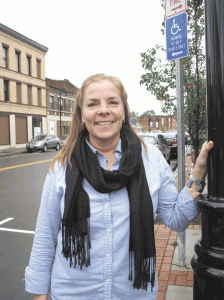
Bobbie Hill

Bobbie Hill says plans and process are important, but involvement and leadership are the keys to revitalizing a city.

Bobbie Hill was asked about process, plans, and potential projects.
And she said there will be all three when it comes to the task of rebuilding Springfield in the wake of the June 1 tornado. However, none will be the real key to a successful effort.
Instead, the most vital component — and she says she’s learned this from considerable experience — is getting the residents of the community in question to take a real ownership stake in the recovery initiatives.
“It’s the relationship-building, the community-capacity-building, the taking-ownership piece,” said Hill, a consultant with the New Orleans-based planning and architecture firm Concordia, which is heading the team of companies coordinating Springfield’s rebuilding-plan process. “Those are the keys; it’s ownership, and holding yourself, your neighbors, elected officials, and developers accountable to doing it and doing it right.
“That engagement component, that people component, is as important if not more important than individual concepts,” she continued. “This can’t just be about development projects; that’s not what transforms a community.”
What does, she stressed again, is a willingness on the part of residents to get involved and stay involved, and not give in to the theory, or temptation, that government will take care of things. And it comes through leadership, she went on, noting that, in most every community where the 11-person firm has lent its disaster-response, planning, and design expertise, leaders from the community have emerged.
The process of getting the community involved in the rebuilding effort began earlier this month with neighborhood meetings in the three identified sectors involving areas of the city damaged by the tornado. Sector 1 is the metro center (downtown) and the South End, while Sector 2 is composed of Six Corners, Upper Hill, Old Hill, and Forest Park, and Sector 3 includes Sixteen Acres and East Forest Park.
Those neighborhood meetings were followed up with a city-wide gathering a few days later, and two more sessions of neighborhood meetings and another city-wide session are scheduled for November and December, said Hill, adding that the four firms collaborating on the endeavor will present an implementation and financing plan to a community congress on Jan. 5.
That’s the process, in simple terms, she said, adding that it’s too early to discuss specific potential redevelopment projects, although plenty of suggestions — from a supermarket to market-rate housing projects to reforestation proposals — have come forth at the neighborhood sessions.
In subsequent neighborhood meetings, the suggestions will be discussed at greater length, and eventually priorities will be established, and consultants will “put numbers” to potential recommendations in an effort to determine which ones make sense and which ones don’t.
More importantly, though, the initial sessions have yielded evidence of the requisite level of involvement, leadership, and community spirit that will be necessary for a successful recovery effort.
“I was really encouraged by what I saw and heard the other night,” she referring to the neighborhood meeting in Sector 2. “There was definitely a strong sense of community, people really caring for other and celebrating diversity — that really came across.”
There are four firms involved in the process of coordinating the neighborhood meetings and compiling the report to be completed Jan. 5. They are:

• Corcordia, which, among other projects in its portfolio, led coordination for the Unified New Orleans Plan after Hurricane Katrina that included selection and management of 12 national, regional, and local planning firms that created plans for 14 planning districts and an overall city-wide recovery plan;

• Goody Clancy, a Boston-based urban planning and design firm that has coordinated revitalization efforts in a number of major cities (see related story, page 60);

• Berkebile Nelson Immenschuh McDowell Inc. (BNIM), considered the most experienced firm in the country when it comes to helping tornado-impacted communities engage in a transformative recovery planning process; and

• The Project for Public Spaces (PPS), a nonprofit planning, design, and educational organization dedicated to helping people create and sustain public places that build stronger communities.
For more information on the process or to submit ideas online, visit www.rebuildspringfield.com. The schedule for future neighborhood and citywide meetings is as follows:

• Six Corners, Upper Hill, Old Hill, and Forest Park: Nov. 15, 6:30 to 9 p.m. at the J.C. Williams Center, Florence Street;

• Sixteen Acres, East Forest Park: Nov. 16, 6:30 to 9 p.m. at the Holy Cross gymnasium, Plumtree Road;

• Metro Center, South End: Nov. 17, 6:30 to 9 p.m. at the Gentile Apartments Community Room, Williams Street;

• Metro Center, South End: Dec. 6, 6:30 to 9 p.m. at the Gentile Apartments Community Room, Williams Street;

• Sixteen Acres, East Forest Park: Dec. 7, 6:30 to 9 p.m. at the Holy Cross gymnasium, Plumtree Road;

• Six Corners, Upper Hill, Old Hill, and Forest Park: Dec. 8, 6:30 to 9 p.m. at the J.C. Williams Center, Florence Street;

• City-wide: Dec. 10, 8:30 to 11:30 a.m. at the MassMutual Center; and

• Community Congress: Jan. 5, 6:30 to 9 p.m. at the MassMutual Center.

— George O’Brien

Health Care Sections
Baystate’s Hospital of the Future Set for Spring Opening

The facade of the soon-to-be-opened expansion along Chestnut Street.

The facade of the soon-to-be-opened expansion along Chestnut Street.

Baystate’s quarter-billion-dollar expansion project, known since its announcement several years ago as the Hospital of the Future, is precisely that, creating new, cutting-edge space for the Heart and Vascular Program and the Emergency Department, yet reserving vast areas of shell space for future needs, which can often be unpredictable in the fast-moving world of health care. The project is on track for its planned 2012 opening; here’s a look inside.

When the Hospital of the Future opens to the public in March, only about half of the newly constructed building will be usable.
But without the hundreds of thousands of square feet of shell space included in the project, Baystate Medical Center might as well dub it the hospital of today, said Stanley Hunter, project executive. And that would miss the point.
“We call it the Hospital of the Future because we’ll be able to respond to the changing needs of health care in the coming years,” he said while taking the BusinessWest on a tour of the floors that will be bustling with patients this spring.
“The building itself is 640,000 square feet, which we’re fitting out in phases,” Hunter explained. “The first phase, just under half the building, will house our Heart and Vascular Program.”

Stanley Hunter

Stanley Hunter, outside what will eventually be the hospital’s new main entrance, says heart and vascular employees will start moving into the expanded space this fall.

The construction itself is within a month of completion, and patients will be able to use the facility in March, Hunter said. “The time period in between is for fitting out the building with equipment, training of staff, and Department of Public Health approvals in preparation for the opening. There are a lot of logistics to consider over the next four months in those areas.
“We’re excited that we’re on schedule,” he added. “We’ve always had that [March] date in mind, so it’s exciting that we’ll be able to keep to that. Construction started in mid-2008, and now, just over three years later, construction is still on track.”
What will follow, in late 2012, is the creation of a much larger, state-of-the-art Emergency Department in the new building, replacing a current ER that was designed to handle much less traffic than it does. Beyond that is deciding what will come of that aforementioned shell space.
But that’s a discussion for down the road. For now, Baystate officials are excited to unveil the results of this ambitious, quarter-billion-dollar investment in the hospital’s — and community’s — future.

Heart of the Matter
As Hunter walked through the new Heart and Vascular space — an ICU floor for more serious patients, two regular inpatient floors, space for outpatient procedures, and a spacious operating suite — he pointed out technology such as the large monitors that loom above the surgical tables.
“Recent technology has improved our ability to do procedures on heart and vascular patients, and that includes a lot of image-guided surgery, which is being able to see the images on the screens as physicians are doing the surgery itself,” he explained.
Most people, however, will first notice the patient rooms, all of them single-occupancy.
“Our current rooms are all double-occupancy,” Hunter said. “But studies show that single-occupancy rooms create an environment for better care and promote patient healing, so that’s going to be one large advantage for patients.
“There are also a lot more opportunities for family interaction with patients, family involvement in care, and making that transfer of care from the doctor and the clinical team to the family, so that when they leave they’re able to have a lot more insight into the care of the patient. There’s also a family area in each room, and family members will be able to stay overnight.”
The hospital is also installing the latest in telemetry and monitoring equipment, as well as the advanced electronic systems already in use to streamline drug prescribing and reduce medication errors.
Outside those hallways, Hunter said, “another thing we’re doing is remodeling the entry to the hospital. It’s sized and configured in a way that, when people come into the hospital, it’s a much clearer entry,” one that funnels patients from a central information desk to either the Daly building or the new structure. Parking has also been reconfigured, with much of Baystate’s north-side employee parking moved off-site to make room for more spaces for patients and visitors.
The second phase of the Hospital of the Future expansion, set to open in the fall of 2012, is a new Emergency Department.
“That was really a response to what our senior leadership heard from the community, from donors, and from staff — that the Emergency Department was greatly in need of upgrading,” Hunter said.
“We’ve been working with clinicians to design a contemporary space that meets the needs of patients,” he continued, adding that the hospital is also working to upgrade the technology and telecommunications systems used in that space.
“The Emergency Department will be three times bigger than it is now, with a dedicated children’s area and new trauma rooms where the most severe patients will be handled right away,” he explained. “The current Emergency Department was built in the ’80s for a much lower patient volume than what they’re experiencing now, so this will be built to the current patient volume.”
Baystate is still trying to determine what to do with space in the current hospital that will be vacated when the Heart and Vascular Program, ER, and other services move to the new building. In addition, the Porter building, which had been used most recently for administrative offices, was torn down to make room for the Hospital of the Future expansion, which looms over Chestnut Street.

Lean and Green
The new building is modern in more ways than one. In addition to how it meets the needs of patients, Baystate engineered several ‘green’ touches. Skylights will bring plenty of natural daylight to interior spaces, reducing energy requirements.
In addition, energy-efficient lighting will be used. Sensors will rely on daylight wherever possible, and lower lighting levels at night. Patient rooms and family areas will be located along exterior walls to maximize access to natural light.
Meanwhile, high-quality window systems will assist with insulation, and the building’s cooling and air-handling systems will be energy-efficient. Baystate has also scheduled large tree plantings along the main road and is constructing a green roof accessible at the third floor but visible from dozens of rooms on higher floors as well.
“It’s an outdoor space between the buildings with a walking trail and benches so that patients, family members, and staff can get outside and get refreshed,” Hunter said. “It’s an amenity to be able to get out there in the sun on nice days.”
Even for those rooms that only overlook the area, “it’s an attractive feature to look out on instead of having a black rubber roof,” he noted. “And there are also environmental aspects; it helps us with temperature control and water conservation, because we collect the water for irrigation.”
Hunter said the project has injected some green of another kind into the area’s construction industry, with between 250 and 300 workers on site daily — about 70% of them based in Springfield or the Pioneer Valley.
“We’ve been able to keep these jobs local because, especially in these times, we know there’s an interest in keeping work local in such an important project for the area.”
That work will eventually slow down, however, and a brand-new building will begin to fill with furniture, equipment, and hospital staff — and the future of Baystate Medical Center will begin in earnest.

Joseph Bednar can be reached at [email protected]

Banking and Financial Services Sections
Many Alternative and Supplemental Financing Sources Exist for Business

Gary G. Breton

Gary G. Breton

So, you’re looking for financing for your business to allow it to remain viable through these difficult and volatile economic times. But you find that all your traditional sources of financing have dried up. What can you do, and where can you look for such needed funding?
There are several non-traditional avenues of obtaining needed business capital that can be complementary to any existing financing that you may already have in place for your business. These alternative sources may include quasi-public bond financing, several federal and state tax-credit programs, and private financing. They each have certain advantages, but in order to receive them, you must relinquish something in return.
In the area of quasi-public bond financing, the Mass. Development Finance Agency (MassDevelopment) has a number of available programs that can be utilized to provide financing for both for-profit and not-for-profit business entities. For example, tax-exempt bonds, which are exempt from federal taxes and, in certain cases, state taxes, can provide the lowest-interest-rate option for certain types of projects, including real-estate development and new equipment purchases. In better economic times, these bonds were traditionally bundled into large-denomination packages and sold on Wall Street to institutional investors.
The more likely scenario in today’s marketplace is that such bonds would be purchased directly by your company’s current bank or possibly another area financial institution. The fact that the interest income received by the holders of these bonds is exempt from federal and (in many cases) state tax allows for a lower-than-market interest rate to be offered, which, depending on the amount of such bonds, can provide a substantial savings over the life of the bond.
According to information contained on MassDevelopment’s Web site, such financing must be eligible for tax-exempt financing under the federal tax code, which can include 501(c)3 nonprofit real estate and equipment, affordable rental housing, assisted living and long-term-care facilities, public infrastructure projects, manufacturing facilities and equipment, municipal and governmental projects, and solid-waste recovery and recycling projects.
Additionally, MassDevelopment has other available loan and guaranty programs, as well as specialty programs, that include financing for companies that either currently export or will be exporting their products or services internationally, and technology companies that may be commencing or expanding their business operations in Massachusetts; visit the Web site for further information.
A second alternative source of non-traditional financing is in the area of available federal and/or state tax-credit programs, which are available for certain projects and industries. For example, Low-income Housing Tax Credits (LIHTC) are dollar-for-dollar tax credits benefiting developers undertaking affordable-housing investments. This program was created under the Tax Reform Act of 1986, which provided incentives for the utilization of private equity in the development of affordable housing aimed at low-income Americans, and it accounts for the majority of all affordable rental housing created in the U.S. today. Tax credits are more attractive than tax deductions because they provide a dollar-for-dollar reduction in a company’s federal income tax, whereas a tax deduction provides only a reduction in its taxable income. In Massachusetts, LIHTCs are administered by the state Department of Housing & Community Development.
A second type of tax-credit program that has seen increased activity over the past several years is the New Markets Tax Credit (NMTC) Program, which was established in 2000 as part of the Community Renewal Tax Relief Act of 2000. The goal of this tax-credit program is to spur revitalization efforts of low-income and impoverished communities across the U.S. The NMTC initiative provides tax-credit incentives to business investors for equity investments in certified Community Development Entities, which have a primary mission of investing in projects located in low-income communities. The scope of the NMTC program can include the development of projects that could provide funding for project components, including real-property acquisition, building construction, and machinery and equipment purchases.
A third type of tax-credit program, which has provided fertile ground for available alternative financing, is the Federal Historic Preservation Tax Incentives program, which has been the largest, most successful, and most cost-effective federal community-revitalization program in recent memory. It seeks to preserve historic buildings, stimulate private investment, create jobs, and revitalize communities. This program has leveraged more than $58 billion in private investment to preserve and reuse more than 37,000 historic properties nationwide since 1976. This program is administered by the National Park Service and the Internal Revenue Service in conjunction with the Mass. Historical Commission.
Each of the above programs can provide either needed alternative financing or real incentives that will attract the necessary funding to undertake various types of projects. These projects, by their very nature, will generate activity for a multitude of allied businesses, such as general contractors, subcontractors, equipment vendors, insurance agents, accountants, attorneys, appraisers, and so on.
Finally, a company can seek the infusion of private capital, which will generally be provided as a mezzanine-type loan or equity investment. Depending on the nature of your business, you can seek out and, in many instances, obtain a private investor or group of investors that will provide what is essentially a commercial business loan normally secured by a junior lien position on certain specific collateral behind the company’s primary senior lender. Since taking a junior position results in a greater degree of risk for such investors, the rates of interest charged on such credit facilities is generally higher than a commercial business loan from a conventional bank lender, and any applicable financial covenants are more stringent.
Alternatively, such a private investor may elect to contribute its funds by way of an equity injection into your company so as to provide additional working capital, in return for which the investor will require an equity/ownership interest in the company. This equity interest may require certain perquisites, such as a preferential return on its investment to be made prior to any distribution to the holders of non-preferential equity interests; or perhaps take the form of a stock option, which will allow the investor, in its discretion, to convert such options to an equity/ownership interest at a future date; or an option whereby the investor has the right to require the company to repurchase its equity/ownership interest at a time of its choosing, based on an agreed-upon repurchase price formula.
The bottom line in undertaking such private financing is that it traditionally results in your relinquishing a certain degree of sovereignty in your control of your company.
One final suggestion is that, while it behooves you to research and fully evaluate any number of possible sources of alternative financing, once you have determined which you feel would be most beneficial for your company, you need to ask for it. Many times, business owners are reluctant to initiate a request for credit based on what they perceive are insurmountable obstacles to obtaining a favorable response, when in fact many such alleged obstacles may be able to be satisfactorily addressed and overcome by working in concert with professional advisers who can provide you with sophisticated counsel and bring both creative and fiscally responsible alternatives to the table.

Gary G. Breton, Esq. is a partner with Bacon Wilson, P.C. and a member of its banking and finance department. His major emphasis of practice includes representation of financial lending institutions, as well as both individual and business borrowers. He also represents numerous business clients in startup and ongoing business operations as well as the purchase and sale of businesses; (413) 781-0560; [email protected]

Company Notebook Departments

Girls Inc. Benefits From Comedy Night
HOLYOKE — The Women Business Owners Alliance of the Pioneer Valley (WBOA) recently presented Girls Inc. of Holyoke with a check for $2,950, proceeds from a Women’s Night of Comedy. The spring fund-raiser featured comediennes Tina Giorgi, Julie Barr, and Jenny Zigrino. “We are delighted to receive this gift,” said Suzanne Parker, executive director of Girls Inc. “In addition to the generous donation from the WBOA, some members of our board of directors were so inspired at the check presentation that they made additional gifts of their own as well. These donations will help us to continue to offer the cutting-edge, educational, and fun programs that inspire girls to be strong, smart, and bold.”

United Bank Aids
Tornado Relief
WEST SPRINGFIELD — With its partnership in the ABC40/FOX6 Tornado Relief Fund as well as grants awarded by its foundation, United Bank recently announced that a total of $89,500 in donations has supported local tornado relief and recovery efforts. The amount is in addition to the bank’s earlier gift of $25,000 to the Red Cross immediately following the June 1 tornado. The ABC40/FOX6 fund raised $40,000. Individual grants of $10,000 each were awarded to the American Red Cross, Pioneer Valley Chapter; the Salvation Army, Springfield Corps; the Community Foundation of Western MA Tornado Relief Fund; and United Way of Pioneer Valley Tornado Recovery Fund. Also, the United Bank Foundation awarded $49,500 to nine organizations that were impacted by the tornado and those providing immediate relief to the community. The recipients were: Dakin Pioneer Valley Humane Society, $2,000; DevelopSpringfield Corp., $10,000; Holyoke Chicopee Springfield Head Start, $4,000; Pioneer Valley Montessori School, $2,500; Rebuilding Together Springfield, $10,000; South End Community Center, $2,500; Springfield Rescue Mission, $2,000; Square One, $12,500; and Westfield Public Schools, $4,000.

Johnson & Hill Donates to Link to Libraries
PIONEER VALLEY — Johnson & Hill Staffing Services and Link to Libraries Inc., have joined forces for its inaugural Welcome to Kindergarten “Read Together” Literacy Bag Project. The newest initiative for Link to Libraries is the donation of more than 2,000 literacy kits to children entering kindergarten in Springfield and Holyoke public schools. The literacy bags include new bilingual books, bookbags, bookmarks, and parent educational materials supplied by the Irene and George Davis Foundation. “It is most important that our local children have the tools they need to start the school year on the right foot and to help them achieve their intellectual potential,” said Susan Jaye-Kaplan, co-founder of Link to Libraries. “We hope that these literacy kits will stimulate interest in reading and provide books to begin their own home library. We greatly appreciate the support of Andrea Hill-Cataldo and the staff of Johnson & Hill Staffing. It is community partners like this that help us reach our goals.”

Big Y to Eliminate
Self-checkouts
SPRINGFIELD — Big Y Foods Inc. has announced it will eliminate all self-checkout lanes in all its stores by the end of the year. Big Y first implemented self-checkout lanes in 2003. After extensive research, Big Y noted that the self-checkout lanes not only do not save customers time, but usually take them even longer to check out than customers in standard checkout lanes. Big Y concluded that the self-checkout technology could neither improve nor replace the value of a friendly cashier who is able to personally help each customer in their lane, according to Michael Tami, vice president for information resources and technologies. “Our self-checkout technology could not deliver on the service needs of our customers,” he said. “In short, we were not able to provide the exceptional customer service through them that has made Big Y what it is today.”

ACC Bistro Open for Cooking Classes
ENFIELD, Conn. — Hands-on cooking experiences are available to students this fall at Asnuntuck Community College (ACC), led by chef Bill Collins. Collins, a personal chef in Western Mass. and a professional chef for more than 18 years, provides a variety of course options to students looking to enhance their culinary prowess at ACC’s Bistro. Experience in the kitchen is not a prerequisite for the classes. The only requirements are that students bring a chef’s knife, a paring knife, a dish towel, and storage containers to bring home leftovers. All classes will include copies of the recipes Collins will be teaching. Classes are being offered at a variety of lengths ranging from one to four evenings. For more information on classes, visit www.acc.commnet.edu or call (860) 253-3034.

TNR Global to Attend UMass Career Fair
AMHERST — Karen Lynn, director of business development, and Natasha Goncharova, co-founder and managing director of TNR Global, will be representing the firm at UMass Amherst’s Career Fair for Engineering, Natural Sciences & Technology students on Sept. 28. “The University of Massachusetts offers a comprehensive computer science program where students emerge strong candidates for the kind of technical work required of TNR software developers,” said Michael McIntosh, vice president of search technologies. TNR Global is a systems design and integration company focused on enterprise-search and cloud-computing solutions for publishing companies, news sites, Web directories, academia, enterprise, and SaaS companies.

Banks Announce
Merger Plans
ADAMS — Adams Co-Operative Bank and South Adams Savings Bank, both headquartered in town, have agreed to combine their two institutions to form a new community bank serving Berkshire County. A joint announcement of the plan was made recently by Joseph Truskowski Jr., president and CEO of Adams Co-Operative Bank, and Charles O’Brien, president and CEO of South Adams Savings Bank. The combined bank will consist of seven full-service offices located in Adams, Cheshire, Lanesboro, Lee, Williamstown, and North Adams. Truskowski and O’Brien emphasized that both banks are committed to creating jobs in Berkshire County, and no jobs will be eliminated as a result of the merger. The two bank headquarters, which bookend downtown Adams, will also remain fully used. The new bank will be formed under a Massachusetts savings bank charter, with Truskowski serving as president and O’Brien as CEO. The managing boards of the two banks will be merged to create a new board of trustees. In addition, all deposits will continue to be insured in full at the new bank through a combination of coverage from the Federal Deposit Insurance Corp. and the Depositors Insurance Fund of Massachusetts. The merger is subject to approval by the depositors of Adams Co-Operative Bank, corporators of South Adams Savings Bank, and regulatory agencies. The merger is expected to be completed during the first quarter of 2012.

United Rentals Supports Extreme Makeover
SPRINGFIELD — United Rentals in Ludlow worked around the clock in early September providing construction equipment and services to the latest project in Springfield chosen by the ABC show Extreme Makeover: Home Edition (see related story, page 36). The build benefits Sirdeaner Walker, who has become a national voice against bullying in schools after surviving the loss of her son. The build is also part of United Rentals’ fifth year of partnership with the award-winning television show, which has relied on the company for equipment and volunteers on more than 80 new-home constructions. “Over 80 projects and more than 5,000 pieces of equipment, United Rentals has come through for us every time,” said Diane Korman, senior producer of Extreme Makeover: Home Edition. “Even in remote locations, United Rentals always has a branch close enough to arrange all the equipment we need, ensure its reliability, and deliver it within a three-hour window. Most importantly, they share our ‘safety first’ philosophy.” The episode featuring the Walker family will air on ABC on a date to be announced.

Columns Sections
Understanding Older Generations at Work

Mandatory retirement has been illegal in most industries for decades, but some managers are still reluctant to hire and retain workers older than 65. Frequently workers in this age group are characterized as inflexible, slower, and reluctant to evolve with technology. But most employers find that today’s older workers challenge these stereotypes and can be real assets.
Biological and psychological changes occur as we get older. Each generation is also different sociologically from other age groups. Awareness of age-related differences can empower employers to capitalize on senior workers’ positive attributes and consider making workplace adaptations for their limitations.

Biological Age-related Changes
While most stereotypes about older adults are greatly exaggerated, many biological changes do take place both physically and cognitively. Nearly every organ and system in the body is a bit less efficient than it once was, but this does not mean inevitable disease or disability. The stereotype that seniors can’t hear or see well is false, but it is true that hearing and vision are not quite as sharp as they once were when we are younger. While Alzheimer’s disease and dementia are not part of the normal aging process, tip-of-the-tongue moments and slower reflex, reaction, and recall times are.
Due to changes in eyesight and hearing, consider moving an older worker’s seat at a meeting table to enable a better view of a projection screen. Recognizing normal changes that happen to the aging brain can help managers understand older workers’ behavior. For example, some older workers may be quiet during that meeting but submit great ideas a few hours later, after they’ve had time to process.

Sociological Age-related Changes
Sociologically, older workers are generally highly dedicated employees. Many seniors, particularly older women, are motivated by financial need. There are numerous advantages to deferring Social Security payments, so many seniors want to put off collecting for as long as possible. Most older adults have also witnessed steep declines in their retirement accounts, so there is a genuine need to supplement their income. Others simply did not adequately plan for retirement and require additional income from a full- or part-time job.
Generationally, workers older than 65 are known for a strong work ethic. Even if there is not a significant financial incentive, they were raised in an era that idealized hard work. They are team-oriented and unlikely to leave coworkers in a bind. This age group has likely finished raising their families so they can be open to working more hours when necessary. They are known for honoring commitments and respecting authority.
This age group also is typically good at interpersonal communication. Having worked for most of their careers without access to e-mail and texting, these workers have had to rely on their people skills to get things accomplished. They tend to also be more resourceful than younger generations who have come to rely only on the Internet for research and problem-solving.
Since this age group may have less computer experience than their younger coworkers, it is important to assess and respond to needs for training. Older workers are sometimes thought to be technologically challenged, but often it is because they have not had the opportunity to learn the appropriate skills.

Psychological Age-related Changes
Psychologist Erik Erikson believed that older adults experience a crossroads in their life: a stage he called “ego integrity vs. despair.” The concept of ego integrity is that, when a senior reviews his life thus far, he finds meaning in the way he has spent his time, which leads to wisdom and acceptance of his mortality. On the other hand, if a senior’s life review is focused on feeling resentful or disappointed about the way his time has been spent, he feels despair, which can sometimes even trigger depression.
Meaningful work often promotes increased self-worth in older adults, regardless of whether they are experiencing ego integrity or despair. In understanding this, managers can best motivate older employees by critiquing gently and praising publicly when it is earned. A manager singling out an older employee for a job well-done provides psychological benefits for the senior but also goes a long way to dispelling false stereotypes about older workers.

Tips for Accommodating and Embracing Older Workers
The best strategy in managing and accommodating older workers is the same as with employees of any age: observe , identify strengths and weaknesses, and work with that person to optimize performance. Nearly every employee requires some accommodations in order to do the best job possible. For example, a manager may have to spend time with a new college graduate explaining when, and if, it is appropriate to text customers. The same concept is true with older workers.
It is also important to re-evaluate a worker’s duties as he ages during employment with an organization. For example, a 70-year-old hotel shuttle driver who has been with a company for 20 years may be better-suited to a front-desk assignment if age-related changes are interfering with driving abilities.
Older workers have so much to offer: experience, work ethic, potential to mentor, and, frequently, fewer family obligations that will interfere with work. The key to maximizing value with older employees is recognizing and accommodating their differences.

Jennifer FitzPatrick, MSW, LCSW-C is an author, speaker, and educator. Founder of Jenerations Health Education Inc., she has more than 20 years’ experience in health care. She is a frequent speaker at national and regional conferences and was an adjunct instructor at Johns Hopkins University. Her new book, “Your 24/7 Older Parent,” is addressed to those dealing with the care of an elderly parent; www.jenerationshealth.com

Environment and Engineering Sections
Cooley Dickinson Cops National Award for Sustainable Practices

John Lombardi (left, with Assistant Director of Facilities Scott Johnson)

John Lombardi (left, with Assistant Director of Facilities Scott Johnson) says CDH has long made it a priority to promote healthy living and a healthy environment.


Cooley Dickinson Hospital in Northampton has long taken what it considers a leadership position in terms of green practices and operating philosophies. And now, it has some paperwork to back up those claims.
Indeed, the Volunteer Hospital Assoc. (VHA), a national health care network, recently presented John Lombardi, director of Facilities and Engineering at CDH, with its 2011 Leadership Award for Sustainability. That term ‘sustainability’ means using a resource so it is not depleted or permanently damaged, and the hospital has proven it has a burning desire — exemplified by its wood-burning co-generation system — to protect the environment and the health of the community.
Cooley Dickinson was one of only 13 health care facilities across the nation recognized at VHA’s recent annual conference in La Jolla, Calif. with a Sustainability Excellence/Best in Class Individual Program award.
In fact, its system is so unique and successful that Lombardi was asked to speak about it the week before he accepted the award at the Sustainable Hospitals 2011 conference in San Diego, sponsored by Active Communications International. The purpose of that conference was to help hospital officials understand how creating a sustainable environment can reduce operational costs, improve staff retention, and enhance the patient experience.
“It’s always been a Cooley Dickinson initiative to promote healthy living and a healthy environment,” Lombardi said, adding that it is the first hospital in New England to use woodchips to heat and cool its facility. “Hospitals use a lot of energy and resources to keep up with patient care, and it would be easy to burn oil and use nasty plastics and not be conscious of ecology. But we have been ahead of the game since 1980.”

Firing Up
Cooley Dickinson has been burning woodchips to heat and cool its campus for 25 years. “The hospital applied for a grant to install its first wood-burning operation,” said spokesperson Christina Trinchero. It was approved, and in 1985, the federal government funded half the cost of a new woodchip plant. The chips are purchased locally and consist of scrap wood from milling operations or old trees.
“Our boiler was designed and installed to eliminate the need to burn high-sulfur fuel oil when oil cost less than 50 cents a gallon,” Lombardi said. “The design of the hospital’s power plant has been in the forefront of running on sustainable energy since the ’80s.”
In 1996, a 500-ton steam-absorption chiller was added to provide chilled water for air conditioning. Lombardi explained that the steam supply for the chiller comes from the woodchip plant and reduces the electrical power needed for air conditioning.
In 2006, hospital officials made the decision to continue to expand their green initiative. Before building a new 110,000-square-foot surgery center, they invested in a second woodchip boiler. It was designed with an efficient-emissions package approved by the Mass. Environmental Protection Agency and the city of Northampton.
Lombardi said this was no small investment, as the unit costs about $2.5 million. But it offers many benefits. The wood chips are purchased locally, and since much of the material comes from waste, it reduces the load on landfills. The operation also creates jobs that Lombardi says would not otherwise exist, and the ash produced by the boiler system been donated to farms for fertilizer.
In 2008, the hospital employed an agency to conduct an energy study. As a result, additional measures were implemented to help produce electricity and continue to reduce Cooley Dickinson’s dependence on energy from other sources. Modifications were made to the power plant, which included drilling a new well, and today CDH’s energy-saving measures benefit the environment and save the hospital approximately $450,000 each year.
Recent energy initiatives that began in January of 2010 include installing 4,600 energy-efficient light fixtures, along with new heating, ventilation, and air-conditioning controls, and upgrading the steam-distribution system. In addition, the hospital launched a food-waste composting program in February, which reduces costs by taking waste out of the trash system.
“We realize that waste is inefficient and there is a lot of waste in things we do. So, the right thing to do is to minimize our waste,” Lombardi said. “We also believe in a healthy environment, and wood is cleaner to burn than oil.”
The hospital operates its burner under an Environmental Protection Agency permit that requires it to remove dust particles from the smoke. “So the emission from the smokestacks is mostly steam,” Lombardi explained.
He told BusinessWest that the new clean-energy features, along with micro-turbines installed in 2009 and 2010, save approximately 825,000 gallons of fuel oil and prevent 1,534 metric tons of carbon-dioxide emissions from being released into the atmosphere.
“That equates to 301 passenger cars not being driven for a full year, or 179 typical households being taken off the energy grid, or 469 tons of waste recycled,” he said.

Winning Idea
When he decided to fill out the application for the award, Lombardi never thought the hospital would win.
“It was a national competition, and there were a lot of other hospitals involved. I thought there would be bigger hospitals with bigger stories than ours at Cooley Dickinson,” he said. “Our story is simple — we burn wood and make electricity and heat and cool with it.”
So he was very proud when he was introduced at the gala. “We were honored to receive the award because it takes a lot of work on the part of our staff members and engineers to maintain the system. There are a lot of components and technology that affect many people at the hospital who have to coordinate their efforts to keep the system running at capacity and efficiently. So it was nice to be recognized nationally.”
During the conference, participants from other medical facilities expressed admiration and awe. “They didn’t understand how we could generate air conditioning out of wood. But to us, it’s easy,” he said.
Lombardi is proud of CDH’s system, and credits hospital officials for their support.
“Our senior leaders had confidence in the facilities team that the investment would pay off,” he said. “The old-school hospital mentality is to spend money on bigger machines and state-of-the-art technology. But that continues to waste energy, which is needed to run the machines. Instead, we are spending our money wisely in regard to sustainability and the environment, and it has paid for itself and also provided jobs for people.”

Features
Easy Access to Highways Drives Business Success

Kathy Miro

Kathy Miro says she was impressed by how supportive the business community is, and how loyal customers are, after opening a pizzeria in Enfield.


Several months ago, Michael “Monte” Monteforte and Jay Bellamo opened Bellmont Kitchen and Bath in Enfield, Conn.
“This location is perfect,” Monteforte said as he stood in their gleaming new showroom on Hazard Avenue, otherwise known as Route 190, explaining that they looked at sites in Windsor Locks, East Windsor, and Enfield before finding exactly what they wanted in the former Video Galaxy Plaza.
“This is a key location because we wanted to be right off a highway,” Monteforte said. “Enfield has four exits off of Route 91, there are plenty of stores and restaurants which draw customers here, and Route 190 gets all of the traffic going to and from Somers.”
Ray Warren, Enfield’s director of Development Services, agrees that the town’s location makes it an excellent spot to own and operate a business. Since it is bordered on the north by Longmeadow and East Longmeadow, it draws traffic from Massachusetts as well as from Somers to its east, East Windsor and Ellington to its south, and Suffield and Windsor Locks to its west.
“Enfield has a population of 45,000 people, which makes it a good-sized small town. We have more than 1,200 small businesses along with many large operations. Lego, Hallmark, MassMutual, and the headquarters for Brooks Brothers are all here,” Warren said.
The majority of the retail sector is located along two main corridors, although Route 5 also has its share of entrepreneurs. They are Hazard Avenue and Elm Street, thoroughfares that run parallel to each other. “Our retail sector is in a very concentrated area with shopping on both sides of the streets,” said Mayor Scott Kaupin.
The town’s biggest constraint in terms of new development is lack of land. “We have turned away businesses due to lack of space,” Warren said. But there are still a number of businesses under construction, and the many stores in Enfield Mall and the adjacent shopping centers represent substantial investments.
“This year, we issued more than $43 million in construction value of building permits,” Warren said. “In FY 2011, the town estimated it would take in $350,000 in building-permit fees. But we took in more than $700,000.”

New Horizons
Although the town has little commercial land available, there is space available for renovation of existing properties and property zoned for industrial development.
Enfield has also seen growth in the professional sector, and both Hartford Hospital and St. Francis Hospital recently built medical offices there.

Michael Monteforte and Jay Bellamo

Michael Monteforte and Jay Bellamo say Enfield’s location alongside I-91 and Route 190 was a factor in locating there.

Larger companies are also expanding. “Lego did a 75,000-square-foot renovation to expand their operations. And Eppendorf Manufacturing, which is an international company that specializes in biosciences, has chosen Enfield as its growth center and made a $25 million investment here,” Warren said.
When Eppendorf moved to the town several years ago, it purchased a large campus. “They are just about to complete their first expansion, and we are already in conversation about a second expansion,” Kaupin said.
The company had access to a large, professional labor pool in New York, but executives have told Warren they found an equally capable and educated workforce here.
“We are part of what is known as the Knowledge Corridor,” Kaupin said of the stretch of land running from the Northampton/Amherst area past Hartford that contains a plethora of colleges and universities, which results in a large pool of well-educated people. In addition, Asnuntuck Community College in Enfield is a leader in the field of machine technology and has forged great relationships with local companies.
Warren said 30,000 people from Massachusetts work in Enfield, and most companies employ workers from the north and south. “The fact that there is a supply of labor which stretches from Springfield to Hartford in a two-state region makes this a very attractive place to do business.”
Enfield has been chosen as a stopping place on the proposed New Haven-Hartford-Springfield commuter-rail line. Its station will be located in the village of Thompsonville, an old mill area of Enfield which is in need of a great deal of revitalization.
Kaupin is hopeful that, when the project is complete, it will lead to a rebirth in the village, boosting demand for housing as well as for new businesses and restaurants that will be needed to provide service to commuters.

Helping Hands
Kathy and Michael Miro opened Mama Miro’s Pizzeria and Restaurant in January after spending $90,000 and eight months gutting and remodeling a building on Hazard Avenue that had sat empty for about two years.
Kathy said they have been impressed by how friendly other business owners have been since they opened their eatery. “Business owners here help each other,” she said, adding that the pizzeria is their first venture. They have also been surprised by how quickly they gained loyal customers. Although business was slow at first, their weekend breakfast offering has proved so popular, they recently expanded it to seven days a week.
The couple, who moved to Enfield from Brooklyn, N.Y. the fateful week of Sept. 11, 2001, said people come from as far away as Chicopee and Manchester, Conn. to enjoy their thin, New York-style pizza. “Our customers have become our friends, and we have made a lot of them since we opened. One woman comes here three times a day, three days a week, and we have a group of widows who met here and continue to come here for comfort,” Kathy said.
Although they could have located closer to the mall, they chose the site because it has its own parking lot and they will be able to hold fund-raisers there if and when they choose.
Kaupin said the Miros’ experience is not unusual, as the town has a very strong chamber of commerce which serves Enfield, Somers, Suffield, and East Windsor. “The North Central Chamber of Commerce is heavily weighted towards small business. Other chambers in the state are very large, but the members here are very good at networking and share their challenges as well as solutions to problems,” he explained.
Town officials are also doing all they can to encourage economic development, which has included freezing the tax rate for four years in a row. “This was a very deliberate effort which occurred without any reductions is essential services,” Kaupin said. “In the past, the town had been on the higher end of the tax structure, but now we are very competitive.”
The town also created an Administrative Review Team to expedite the permitting process. Team meetings bring everyone to the table who will be involved with a new business. “We meet with business owners, review their plans, and offer advice,” Warren said, adding that money and time are saved by identifying issues and addressing them in the planning stage. “And if they are on a tight timeline, they can go through the Land Review and Building Department simultaneously, which shortens the whole review process. It’s very important, as this is New England, where development is governed by a large body of rules, and we want people to succeed.”
Kaupin said their team approach provides “proverbial one-stop shopping” for new business owners, which is critical in this community, since there are five fire districts and a regional health district independent of the town. The retail arena continues to grow, and available space is always filled quickly. “First and foremost, we are known as a regional shopping area.”
And one that attracts businesses with a pitch that is very appealing — a location that literally drives customers right to their doors.

Cover Story
Why Area Businesses Need a Disaster Recovery Plan

There’s no doubt that the summer of the tornado, hurricane, and earthquake in Western Mass. got more businesses thinking about the importance of a disaster-recovery plan. But the truth is, it doesn’t take a natural disaster to suddenly shut a company down; a freak fire or flood will do the trick, too. Employers who have developed business-continuation strategies in case of an adverse event — and those who wish they had done so sooner — agree that there’s plenty of value in preparing for the worst.

No one goes to work expecting the roof to come off. Gretchen Neggers certainly didn’t.
She’s the town administrator in Monson, and she recalls the fateful late afternoon of June 1, when a tornado cut a path right through downtown.
“It passed right over our town offices and police station, causing significant damage to that structure,” she told BusinessWest. “It essentially blew the roof off.”
The initial concern, of course, was to see if anyone was physically hurt. The next was how to keep municipal services running at a time when residents would need them more than ever.
“Obviously, that facility houses critical operations,” she said. “All the town’s vital data, our permanent records, everything was housed in that building, and all the essential functions we perform as a town happen there. So it was a challenge to respond to the needs of residents in the community, and at the same time deal with the disaster within our own building.”
One of the town’s first calls was to CMD Technology Group in East Longmeadow, which handles a variety of information-technology services for Monson.
“We said, ‘we need to get our servers out of here,’” Neggers said. In the meantime, someone had the sense to do what they could to protect them before CMD was able to move them — in this case, covering the equipment with a tarp and setting up a fan to blow cool air at it.

Charlie Christianson

Charlie Christianson says disaster-recovery plans should have many facets, from IT to relocation to communication plans if the phones go down.

“We were very fortunate that our data survived,” she told BusinessWest. “There was some blessing in that; had we lost our data, the recovery would have been much harder. We did have some limited backup, but we didn’t have any off-site backup, which is something I now strongly recommend. It was a lesson learned.”
The town offices were relocated, and the town undertook what she called “an intense effort” to get operations up and running in a few days. Importantly, no municipal employees had any paychecks delayed.
“It was something you say, ‘that’ll never happen,’” Neggers said. “Unfortunately, what we learned is that the unthinkable can happen, and you do have to be prepared for it.”
After a summer when Western Mass. was hit with a tornado, the remnants of a hurricane (and plenty of flooding), and even a minor earthquake, companies, municipalities, and nonprofit agencies are looking more seriously at having a plan in place to keep their business operating even if their place of business is no longer usable.
Joan Kagan knows what that’s like. The president and CEO of Square One, whose Springfield headquarters was demolished by the tornado, did indeed have a disaster-recovery plan in place, meaning luck was less of a factor than it was at Monson’s town hall.
“We had completed the first phase of our plan, which was focused on our financial data, which we backed up every night on computer servers down in Connecticut, far from any of our facilities,” she said. “All our our financial data was backed up every night. That allowed us to get back into business right away, and we didn’t lose any of our data. That was critical to us.”
Why? For one thing, “we bill the state electronically for 1,200 kids every month,” Kagan said. “What if we had to go back and recreate the ID numbers and what the services are that we provided that month, so we could bill the state for it? We’d probably still be working on it now. Instead, we were able to get back in business right away.”
For a business like child care, where so many clients depend on those services every day, that continuity is particularly important, she added.
Joan Kagan (center, with Sarah Smith, vice president of Finance, and Phil Klimoski, director of IT)

Joan Kagan (center, with Sarah Smith, vice president of Finance, and Phil Klimoski, director of IT) says Square One not only had a disaster plan, but actively practiced it.

“These are critical services for families, and also, our employees depend on us for their paychecks,” she said. “Some are single or heads of household. You’re talking about hundreds of people who could be impacted if they go without paychecks. But we were able to get payroll out three days after the tornado because we had a backup system. A lot of people lost jobs because of that storm, but we were able to keep everyone employed.”
In this issue, BusinessWest examines the issue of disaster response, and how having a plan — and, just as important, making sure employees understand it and train on it — can make the difference between being helpless and staying in business when there’s no longer a physical business to go to.

Banking on Trouble
Paul Scully knows a little about disaster planning. That’s because Country Bank, of which Scully is president and CEO, has long had such a plan, and trained on it often — which turned out to be extremely fortunate the day a fire broke out at its main office in Ware in 2008, causing no injuries but significant smoke damage.
“It doesn’t matter what the size of your company is; if you could potentially have an interruption in cash flow and business, you have a problem,” Scully said. “You should never think you’re too small to prepare, even if you’re just a two-person company.”
With 44,000 square feet of space rented nearby, stocked with dozens of spare computers, and plenty of server redundancy, every bank office except the one affected by the fire (which had to be cleaned and renovated) was open for business the following morning (a Saturday), with no loss of data for any customer.
“The real key to having a plan is testing it — on an annual basis at mininum — but, in addition to testing it, updating it,” he said. “We do a mock disaster drill every year; we literally make the switch over as if we had just had a disaster. Not only do we switch the operating system over to backup, but we have people come in and do testing at the backup site that day.”
The reasons for repeating the training often are obvious, he said.
“A lot of folks wear different hats, their job responsibilities might change, or they might leave the organization,” he explained. “If Joe was in charge of making sure everyone is accounted for, and suddenly Joe’s gone, then who is the person responsible for that?”
Kagan also stressed the importance of having staff trained in disaster-recovery procedures — “particularly, in our case, with safety measures, evacuating children, which allowed us to avoid any tragedies or having anyone injured. We practice that in our centers and have fire drills once a month, so the staff are trained in how to safely evacuate, and children know how to go to a safe place. That worked to our advantage.”
She emphasized the need for a communication plan after an event. “We make sure that people have their cell phones, that people are in communication and identifying what the needs are,” she explained. “We were able to do that, and the next morning we were able to use our contacts in the community to help us identify space [to set up shop]. The community was very responsive, and from day one people offered us space.”
Dave Delvecchio, president of Innovative Business Systems in Easthampton, recently opened a data center in Marlborough that acts not only as a remote office, but as a disaster-recovery suite for clients. If a customer’s place of business is suddenly rendered unusable, IBS can transfer the contents of the client’s entire network to the Marlborough office, which is equipped with four workstations, in effect providing a location for that customer to continue to operate.
It’s not just disasters business owners should worry about, he said, but everyday mishaps. For tenants in a mixed-use, multi-tenant building, he explained, the odds of a localized disaster — anything from a candle fire to a knocked-out sprinklerhead — go up by a factor of 10. But the past summer’s weather events have really got clients talking.
“We’ve definitely received some cold calls from a few folks about disaster response this year,” he said — as well as a humorous moment the day the Valley trembled. “I was talking with a client one day about potential solutions, and he said, ‘is the floor moving?’ As soon as the earthquake ended, he said, ‘all right, you’ve made the earth move — I’ll sign anything!’”
On a serious note, though, sometimes it takes a disaster for people to realize the importance of their computer infrastructure.
“They don’t have paper-based forms to fall back on anymore. A hotel can’t make a reservation without going online. Insurance companies can’t process claims without going online. Whether you’re a large, regional bank, a single-location business with 10 employees, or a nonprofit agency, we’re finding that disaster planning is meaningful to businesses.”

In Touch and in Business
Charlie Christianson, president of CMD and its sister company, Peritus Security, which offers risk-management services to businesses, echoed the importance of backing up data off-site.
“A lot of people just plug a USB drive into the server and create another hard drive — but all the hard drives are sitting on one site,” he said. “What if the building gets crushed? It’s great on a day-to-day basis if a file gets lost, but it certainly doesn’t protect against catastrophic failures. If a catastrophic event comes through, or an electrical event occurs, you run the risk of losing it all.”
And that means possibly losing business — permanently. After the tornado, the CMD/Peritus offices had no phone connections or Internet access; even cellular service wasn’t active. So the team “triaged,” Christianson said, at a local coffee shop where service was available.
“We started going down the customer list and calling our clients, letting them know how to get hold of us, finding out what they needed, and we started slapping priorities on things,” he said. “You could have people who have been customers for years, and when they can’t get hold of you during an event like this, instead of thinking, ‘maybe there’s a problem with the phones,’ it’s ‘oh, we hope you’re not out of business.’ That’s how quickly people turn nowadays.
“You have to have systems in place on the technology side,” he added, “and it’s equally important to have this stuff written down. Because as calm and cool as people think they’re going to be when stuff hits the fan, that’s not a good time to be figuring things out.”
Scully agrees with the importance of a business-continuity plan. “What do you do if the building isn’t accessible for months? How would you operate? Sure, you may have business insurance, and that may help with cash flow, but what it doesn’t do is satisfy your customer base, and that’s a risk you can’t quantify.”
Some customers would go elsewhere, he said, while competitors would have no problem exploiting the situation and reaching out to welcome them. “I don’t think you can underestimate the the impact of not having a disaster-recovery plan or a business-interruption plan. It’s worth its weight in gold.”
That goes for all kinds of operations, Neggers said.
“A lot of business are regulated — like banking — and are required to have disaster-recovery plans, but I can see why it’s something that everyone should put a lot more attention into,” she told BusinessWest. “It’s not something you want to develop after a disaster happens.”
And just having a plan isn’t enough, she said. “Your plan needs to be precise, it needs to be comprehensive, and you need to train on it. What are you going to do if you can’t go to the office tomorrow, if you don’t have your computer, don’t have your files, don’t have your phone? How are you going to perform the essential functions of your business?
“I hope our experience is something that other entities can learn from,” she continued. “We were lucky in many ways because we didn’t lose our server, but you can’t have your critical functions reliant on luck. It’s something I know we’ll take a lot more seriously moving forward.”

Shelter from the Storm
Christianson still marvels at the sudden outburst by Mother Nature.
“Western Mass. never used to have such radical swings in weather. Maybe once in a great, great while,” he said. “But during the course of the summer, we had a tornado, an earthquake, a hurricane, multiple borderline tornadic events — it seemed like every two weeks we were having a windfall of activity.
“It certainly kept us busy,” he added. “You don’t like to see it happen to people, of course. But no sooner than we’d get one mess cleaned up, the next thing you know, another storm ripped through, causing damage or flooding.”
It shouldn’t take a natural disaster to get employers preparing for the worst, he said, but it’s an effective reminder.
“You need to step back and think outside your box,” he said. “You can’t just say, ‘oh, it’ll never happen,’ because we saw it happen.”

Joseph Bednar can be reached at [email protected]

Opinion
Massachusetts Can Be a Model for Growth

During my travels across Massachusetts in the past few weeks, residents have expressed frustration and outright disgust with Washington. They don’t need Standard & Poor’s to tell them what they already know: Washington spends too much, borrows too much, and has for the most part been unable or unwilling to address our debt and deficit challenges in a bipartisan way.
We need to stop the finger-pointing and come up with a bipartisan and bicameral compromise to solve the nation’s fiscal problems. There are three key steps we need to take: cut spending, create a sound long-term fiscal plan, and enact a pro-jobs legislative agenda. In each case, recent history in Massachusetts can be a useful guide.
First, we need to stop spending so much.
In 2001 and ’02, the bursting of the technology bubble hit the Massachusetts economy hard. Our unemployment rate was growing faster than any other state in the country, and we faced a fiscal crisis that many experts said was the worst since World War II. The projected deficit for 2003 was nearly $3 billion.
But instead of raising taxes, Democrats and Republicans worked across the aisle: we tightened our belts and balanced the books by cutting spending. It wasn’t easy, but after some tough negotiations and resetting of priorities, we turned our deficit into a surplus, and the economy and jobs started coming back.
In Congress, we need to stop dithering and start looking at every opportunity for savings, both big and small. We can save at least $5 billion by stopping the ethanol subsidy, $15 billion by selling unused federal properties, and $150 billion by addressing the duplicative programs and improper payments recently brought to light by the Government Accountability Office. These are just a few examples of the waste that steals money from worthy projects. These are the types of bills we need to send to the president.
Second, Washington needs a solid long-term plan to get the $14.5 trillion federal debt under control.
In 2005, when S&P upgraded Massachusetts’ credit rating, it cited two key factors: reduced spending and greater budget certainty. Washington needs to do the same thing.
Many businesses in Massachusetts say they are paralyzed by uncertainty about Washington’s next move and overregulation. They can’t plan, and they are too nervous to hire new workers.
Congress needs to take a hard look at the long-term drivers of our debt — entitlements, the defense budget, annual spending, and our tax code — and have an honest conversation with the American people about how their money is being spent. Both Democrats and Republicans will have to accept less than 100% of what they want to get a big deal done, but that deal would give our job creators some of the stability that they are craving. And we must ensure that, in crafting reforms, those at or near retirement do not see changes to their promised benefits.
Finally, we need to implement a broad, pro-growth agenda.
In decades past, Massachusetts was often cynically referred to as ‘Taxachusetts’ and derided for its anti-business environment. But when the Legislature was faced with those daunting deficits in 2003, we didn’t panic and increase taxes. By holding the line, Massachusetts’ national tax burden ranking improved. We can do the same thing in Washington to compete globally. With personal income tax rates about to increase for millions of Americans in 2013, we need a broad tax-reform package that eliminates the special loopholes, simplifies the tax code, and lowers rates.
We should finally get moving on the stalled trade agreements with Korea, Panama, and Colombia that will open new markets to our products. And we should implement a common-sense approach to regulation that tells the world (including our own entrepreneurs) that America is open for business.
Americans know that borrowing 42 cents out of every dollar we spend is unsustainable, and that a record $14.5 trillion debt threatens our economic stability and future. However, despite our current challenges, America still has more potential for economic growth and job creation than any other country on earth. It’s time for us here in Congress and the administration to put our differences aside and do our job.

Scott Brown is a Republican U.S. senator from Massachusetts.

Cover Story
For the ‘Prez,’ It’s All About Building Connections


Vince Maniaci was talking about the profile of the typical American International College student.
Before doing so, the school’s president made a point of qualifying things by noting that there is a great deal of diversity on his campus, and that individuals with varied backyards wind up there. That said, though, he admitted that many have certain things in common.
For starters, a good percentage of the student population comes from urban areas, he told BusinessWest, and most do not come from what would be considered wealth, as evidenced by the fact that 51% are eligible for federal Pell Grants.
“A lot of our students are smart enough to have gone to any college in the country,” he said, “but for the fact that they’ve had virtually no academic foundation, no intellectual stimulus, growing up. Many of them come from homes where their parents have not gone to college, and they didn’t even know anyone who had gone to college.
“They’ve gone to schools that are not particularly strong, but they’re inherently bright,” he continued, “and they realized at some point that getting an education is a way to improve quality of life. So they come here, and when they get here, their value added is tremendous, because they want to be in school, and they don’t have a sense of entitlement.”
In other words … they are a lot like Maniaci was when he agreed to join a childhood friend and attend City College of San Francisco 35 years ago — mostly with the mindset of playing sports — and also when he moved on from there to the University of California at Berkeley, where he would earn a degree in Sociology.
And this is a big reason why Maniaci feels very comfortable on the campus wedged between Boston Road and Wilbraham Road in Springfield’s economically challenged Mason Square neighborhood, and also why he feels he connects well with the student body.
So well, he said, that most students call him ‘prez’ or by his first name.
And with that, he walked over to the bookcase at the front of his office and grabbed a well-worn, youth-sized football bearing the logo of the team he watched growing up — the San Francisco 49ers.
“This has touched a lot of hands,” he said of its condition, while noting that he takes it with him to the school’s quad most Friday afternoons, and invariably winds up playing catch — and sometimes a quick pick-up game — with several students. “This is a tool I use to build connections.”
But it’s just one of many tools, he stressed, as he reached behind his desk for another — a multi-page rundown of the incoming students this fall, complete with small pictures of each one.
“I try to memorize all the students’ names; each year it gets a little harder because each year I get a little older,” said Maniaci, 53, adding that he spends a good deal of time on this exercise because he believes that a college president calling a student by his or her first name is much more than a symbolic gesture. And he goes well beyond just names.
Indeed, he gets to know a little of each student’s story, and if he sees that one of them is having problems academically, he’ll seek out that individual and offer some advice and encouragement.
“Knowing someone’s name, knowing where a kid is from, knowing what a kid’s story is … those are the kinds of things you can know at a small institution, and those are the things that, if you’re willing to know, can make a difference in someone’s life,” he said.
But there’s much more to his job than simply making connections with students, he acknowledged, adding that one of his priorities has been long-term strategic planning, with ‘long’ being a decidedly relative term in this age of constant change in higher education.
“Strategic planning is critical, now more than ever, because the landscape is moving faster on every level,” he explained. “The economic landscape is highly volatile, technology is changing the shape and form of pedagogy … everything’s evolving at a rapid rate.”
For this, the latest in its profile series, BusinessWest talked with the colorful Maniaci about everything from the state of higher education to the condition of his throwing arm, to phrases he uses like “mission-attractive and market-adaptive” to describe what his school must become.

Making Big Gains
As he spoke, Maniaci made a few references to a talk he would soon be giving to the school’s incoming freshman athletes.
An address from the prez has become part of an orientation of sorts for the students, said Maniaci, adding that he had been thinking about what he will say, and was likely to meet the request of the program’s leader and relate his experiences in community college and then Berkeley, and the lessons to be drawn from them.
It’s a story he shared with BusinessWest, and it starts with his youth — and cultural heritage.
“My parents were both Sicilian, and they spoke the Sicilian dialect as a first language, and in that culture, it’s actually considered disrespectful, at least as far as I knew, to be better-educated than your father,” he said, perhaps to help explain why he wasn’t a great student in high school and had no real plans to go to college.
But he was a pretty good athlete, and much heavier (225 pounds) than he is today. And thus, with the urging of a former youth football teammate, he went to San Francisco City College, basically to perform on the gridiron. (The school had — and still has — a solid tradition of excellence in that sport, he said, noting that O.J. Simpson played there before going to USC.)
Maniaci tore up his knee in the third game he played in, however, and was left to ponder what was next. And this is the part of the story that he emphasizes for the incoming freshmen.
“I wanted to hang out, because I got to know the guys and was having fun, and the only way to do this was to actually go to class,” he explained. “I’ve always been competitive by nature, and I started to think that, if I could be competitive in sports, why should the guy next to me in the classroom be any better than me if I try to do my best?
“So I got what I call ‘competitive with an edge,’” he continued. “I looked at the guy across the aisle from me and said, ‘he’s no smarter than I am,’ and I started to apply myself. And I did three very basic things which I still hold today as being the platform for success: show up, do everything you’re asked to do, and do the best you can.”
He’s followed those guidelines along a circuitous route to the president’s office at AIC, one that continued at Berkley — which he chose mostly because of its affordability — and then at law school, although, by the time he graduated, he had pretty much decided that he didn’t want to be a lawyer.
“I did not like the adversarial nature of law,” he said, adding that he eventually took a job that made him part of a small fund-raising campaign at the University of San Francisco to build a health and recreation center.
He stayed at USF for five years and three different positions, all in the broad realm of development, before moving on to Occidental College in Los Angeles in a vertical move, and from there to the University of Tulsa and eventually to Bellarmine University in Louisville, Ky., and the position of vice president for Institutional Advancement.
It was while in that job that he started thinking about running his own college, and then applying for such jobs.
When asked how he came to the AIC campus, he said the choice — for himself and the college — came down not to credentials, although they always play some part, but to the overall fit.
“I believe that the key to a presidency is not necessarily who’s the smartest, who’s the best writer, or who’s the best manager,” he explained. “But it really has to do with the chemistry, the fit. I was an urban guy, I have a very strong urban sensibility, and the kind of students we get here remind me a lot of the kind of kid that I was.”

Scoring Points
Since Maniaci arrived at AIC, the football-tossing activity has been a constant —  “it gives the students a lift, it creates a sense a humanity for the administration, and it creates a sense of campus community,” he said — as has his work to memorize names, as well as a well-documented tradition of donning blue jeans and a baseball cap and helping students unload cars on moving-in day each September.
Such practices are components of his operating style, and methods to ease the transition to college for students who, as he said, probably have no real academic foundation, and could use some support.
“One thing I know about college-aged kids is that they don’t need older people — adults, for lack of a better term — a lot in their lives, but when they need you, they really need you, and you have to be there. When a kid knows that there’s someone in their life who’s there for them, it subconsciously creates a sense of confidence and well-being in that individual that helps them excel.
“One of the things I do is look through the five-week warnings for our freshmen,” he continued. “And if I see a kid got a warning, just pulling that kid aside and saying, ‘hey, Johnny or Betty, I saw that you didn’t do so well in English; are you going to class? Have you talked to your professor? Are you thinking of that?’ … all that can make a difference.”
And while being careful not to make too many analogies to sports, he thought one was appropriate for this point in the discussion.
“It’s human nature; if you know someone’s watching, you tend to play a little better, you get a little more jazzed about playing,” he said of athletic competition. “And if you think someone’s watching how you’re doing academically, you tend to think about it a little more subconsciously.”
Today, Maniaci is watching, counseling, and tossing spirals to students from a few blocks away, a few time zones away, and even a few continents away, as evidenced by the collection of gifts from foreign students now crowding the front left corner of his desk. It includes items from Egypt, Russia, Holland, China, Brazil, and many other nations.
And it speaks to the reach of the strategic-planning initiatives the school has undertaken, he told BusinessWest, adding that the first such plan, blueprinted soon after he arrived, was focused squarely on two priorities — being “mission-centric and market-smart,” with the goal of increasing enrollment.
“To that end, we focused on attraction and retention, using financial aid, athletics, and transfers as a point of emphasis,” he said, “and also trying to generate more revenue on the perimeter from our graduate programs.
“We were astonishingly successful in all areas,” he continued. “Our enrollment grew by 125% over the past six years; there are few institutions in higher education that have seen that kind of growth.”
The school’s efforts to increase enrollment have taken a number of forms, even marketing in several areas of California where getting seats at public two- or four-year colleges is becoming ever-more challenging. To date, 19 students from the Golden State have enrolled at AIC, a number Maniaci thought would be much higher, but is still respectable in his estimation.
But the abrupt changes to the economy that started in mid-2008 and have continued since have certainly slowed the pace of progress at AIC, he continued, because the demographic constituency served by the school has been the one most impacted by the recession and slow recovery.
“It turned almost overnight … the private loan market dried up, the unemployment rate soared, and when that happens, kids from those backgrounds tend to be impacted the most,” he said. “So what was a growth market turned almost overnight into a mature market. And when that happens, those kinds of tactics don’t work as well.”
So the strategic plan has been tweaked somewhat, he said, noting that, while being mission-centric and market-driven are still important, given the sluggish economy and the ongoing changes in higher education, those qualities are no longer enough.
“So now I’m focused on us being what I call ‘mission-attractive and market-adaptive,’” he said. “What I mean is that we have to move the demand curve; this comes down to affordability, and when I talk about affordability, I’m not talking about price and cost, but about offering an education that parents and students are willing to either pay for out of pocket or borrow to obtain.”
“Our mission, what we’re offering, has to have a strong sense of attraction,” he continued, adding that to be market-adaptive, he means identifying, on what he called the “perimeter,” strong programs in degree-completion, graduate, and non-traditional-student initiatives to boost volume.
“We need to identify what’s strong and what the market demands,” he said, “and we need to be able to move into it quickly, effectively, and efficiently, whether it’s using different kinds of delivery functions through technology, or the pedagogy has to change. We have to get there, and we have to be equally willing to move out of it when the market changes, because things are moving that fast.”

Getting to the End Zone
Returning to this thoughts about AIC’s students and common traits among them, Maniaci again focused on how few, if any, have any sense of entitlement. It’s most evident on the day the diplomas are handed out.
“Our graduations are a thing of beauty,” he explained, “because you see the pride and joy in the families, many of whom are watching this child, who’s now a woman or man, reaching an aspiration they never dreamed of. And you see the pride in the faces of the students, too; it’s really a great, rewarding experience to be able to do that.”
Maniaci remembers feeling the same way when he graduated from San Francisco City College and then Berkeley. He has that and many other things in common with his students, which is why he’s been able to relate to them, and not just in the quad with a football in his hands.

George O’Brien can be reached at [email protected]
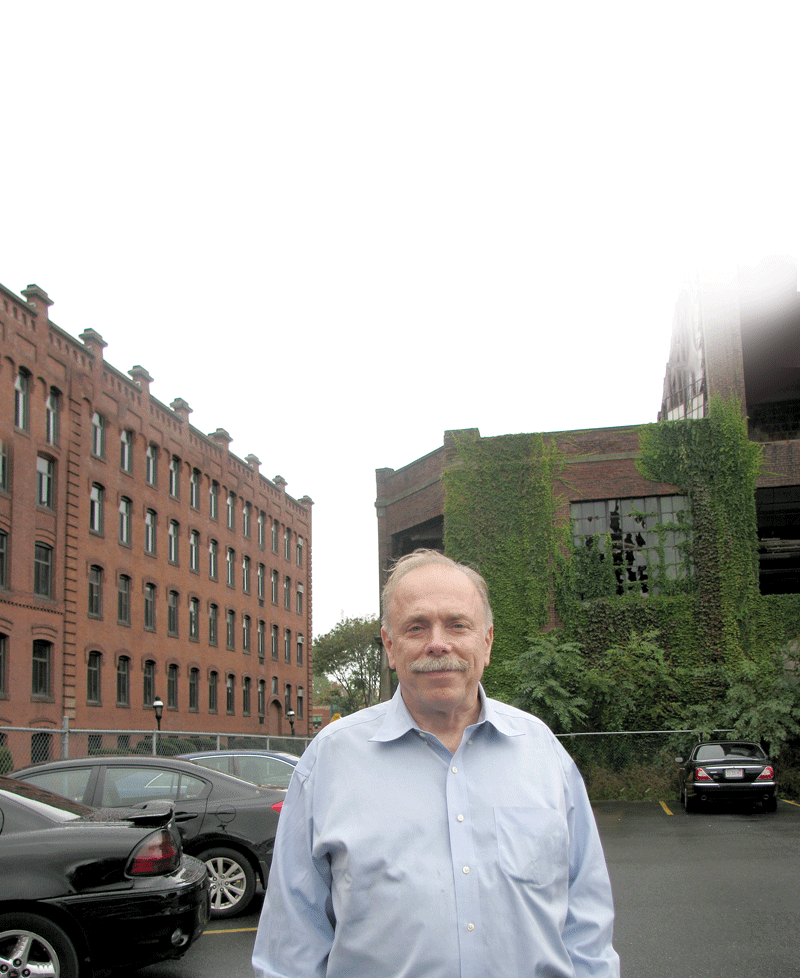
Opinion
Finding Ways to Engage Young People

Diane Garcia will tell you that she didn’t enter the General Business program at Western New England University with the intention of pursuing a career in the nonprofit realm. By her junior year, when people said the word ‘boardroom,’ she was thinking about Corporate America, multi-national corporations, and money.
By the time she graduated in the spring of 2009, however, those words meant something else altogether — the word ‘community.’ That’s because she’d not only been in a boardroom, but had a seat in one — serving the YMCA of Greater Springfield. Indeed, Garcia was a participant in the pilot program that became the school’s nonprofit board internship initiative (see story, page 24).
Inspired by her tenure at the Y, she accepted an Americorps Vista position in the National Development Office of Jumpstart in Boston upon graduation, and today works for a search firm that specializes in finding executives for nonprofits. Her story speaks to the success of WNEU’s program in accomplishing its broad mission of benefiting both students and area nonprofits by injecting youth onto those agencies’ boards. But it also speaks volumes about the ongoing need to engage more young people in this community, its businesses, and institutions.
More evidence is provided by the story on page 50, which relates the work done by Smith College student Annie Waters to help piece together a strategy to utilize the arts to bring more vibrancy to Springfield’s downtown.
As these programs clearly show, everyone wins in these situations, and especially the region, even if those young people don’t stay in the 413 area code.
Backing up a bit, the WNEU initiative was started with the idea that by placing top students on nonprofit boards and giving them full voting privileges, the students would gain experience, confidence, and a front-row seat with which to view the important work these agencies do in the community — something they couldn’t accomplish in the classroom.
Students have had the opportunity to help plan and execute such events as the YMCA’s annual fundraising breakfast, the Springfield Boys & Girls Club’s Festival of Trees, and the Hometown Heroes breakfast staged by the Pioneer Valley Chapter of the American Red Cross. And while doing so, they’ve gained an appreciation not simply for the work these agencies do, but how much support they need to keep on fulfilling their missions. And, by sitting on the boards and taking part in key votes, they can see first hand the importance of leadership and involvement in quality of life.
Meanwhile, the nonprofits have received an infusion of youth, a different perspective on the issues to come before the board, and probably an experienced voice when it comes to the matter of fully utilizing technology and social media to inform and educate.
In short, what was a theory three years ago is no longer a theory; it’s fact. And along the way, this program has provided more evidence that when we engage young people from our colleges and universities in the community, good things result, and for all the parties involved.
Moving forward, this region needs more programs like this, initiatives that not only offer real-world experiences, as people like to call them, but thrust students into the community, and into leadership roles as well. Placing a 21-year-old on a board with full voting privileges is an extreme, but there are myriad other ways in which area schools can put the talent in area classrooms to work in area businesses, nonprofits, city halls, and town halls.
On the flip side, too many businesses look upon internships and co-ops as time-consuming endeavors that are more trouble than they’re worth. This thinking is shortsighted and a hindrance to the long-term vibrancy of the region.
As Diane Garcia’s story and others like it show, the word ‘classroom’ has many definitions, and most of them don’t involve four walls and a blackboard. We need to create more ways to expand that definition further, and strengthen our region in the process.
All it takes is a little imagination.

Features
For Holyoke, the High- performance Computing Center Is Only the Beginning

Holyoke Canals

Holyoke Canals

The high-performance computing center soon to take shape in downtown Holyoke is a large project creating a good deal of excitement. Two things it won’t create directly, however, are large numbers of jobs and tax revenue. So area planning officials are hard at work looking at ways to generate both indirectly. They call it leveraging an asset. The strategies being developed have many facets, and are summed up by one official as a “surround-sound approach to economic development.”

The high-performance computing center being developed in downtown Holyoke brings together a group of public and private partners in a groundbreaking initiative that will eventually provide unparalleled computing power for the state’s most prestigious universities.
Imagine its impact on … farming.
No, really.
“The high-performance computing center will generate a lot of heat,” said Kathleen Anderson, director of Holyoke’s Office of Planning and Development. “If we did urban agriculture, we could take the heat from the computing center and pump it into greenhouses or possibly older mill buildings and start growing things.”Such a project, she said, could generate more than 100 jobs.
“Then there’s distributors, processing plants up and down the Valley … how do you include them? An asset like that in Holyoke would need distribution, processing, transportation — how can we leverage that asset to help other businesses in the Valley?”

Tim Brennan

Tim Brennan says efforts to leverage the computing centers can be described as “the surround-sound approach to economic development.”

Tim Brennan, executive director of the Pioneer Valley Planning Commission, also cited agriculture as a way to create economic development from a facility that in itself won’t generate many jobs for the city.
“Can we capture the heat it gives off and create a very large-scale urban greenhouse where we could have vegetable production year-round?” he said. “That’s an asset to much of the region; many farmers are active in agricultural production but see the winter period as downtime, because the climate in New England is not conducive to growing in every season. And it could help create middle-income jobs with benefits for people in Holyoke.”
What has members of the Holyoke Innovation District Task Force — a broad partnership charged with leveraging the computing center and related downtown efforts into large-scale economic development — so excited isn’t the prospect of growing crops in a former mill. It’s that urban agriculture represents only one of many ways to make the city’s (and region’s) economy more robust.
Urban farming, said Brennan, “is an example people can get their heads around of how we can create leverage out of the computing center and get jobs and also off-site benefits that ripple positively to the regional economy. This region is disposed to being at the cutting edge, so can we use that quality to fuel more innovation, more technological entities here? And they don’t necessarily need to all be in Holyoke.”
“The strategy,” said Anderson, “is basically to determine what industries are most likely to take advantage of the assets in Holyoke and the Pioneer Valley and where they’re likely to locate. So we’re looking at economic opportunities within the Innovation District, the entire city of Holyoke, and the whole Pioneer Valley, and asking, what are the related investment pieces and strategies needed to achieve this economic potential?”

Thinking Big
The task force, Anderson explained, developed strategies with a threefold overall goal in mind: to increase and improve job opportunities for the residents of Holyoke and the Pioneer Valley, to attract an increased level of private investment into Holyoke, and to connect the green high-performance computing center and various regional assets into an integrated economic-development marketing and delivery system.
The eight broad strategies that sprung from this multi-pronged goal target different aspects of economic development, but tend to originate from strengths Holyoke already possesses. Clean-energy innovation and development is one example.
The idea is to maintain the city’s low-cost, renewable-energy-based competitive advantage by expanding the city’s portfolio of cost-effective renewable-energy generation capacity, and eventually transform Holyoke into a global leader in clean-energy research and applications. A longer-term objective is to convert that research into the widespread manufacturing of clean-energy products.
That goal makes sense in the context of Holyoke’s hydropower capacity, one of the significant factors in the computing center being located there.
“Holyoke Gas & Electric has the cheapest electrical rates in New England for industrial customers,” Anderson said. “They (center developers) saw the low-cost real estate and also wanted clean energy with hydro, and we were able to do that.”
Holyoke Mayor Elaine Pluta is certainly thinking big about Holyoke as a renewable-energy leader.
“Our overall goal is to become as close to 100% renewable energy as soon as possible,” she said. “That’s the message, and the word will get out, because we’re going to be promoting that to the economic developers and letting them know that, if they want to do green projects, this is the city to come to. The computing center is going to be a green project, and that’s going to be one of the first of many, we hope.”
Brennan has long been an advocate of moving toward renewable energy as the world’s primary source of power — and of thinking urgently about the issue.
“High energy costs, uncertainty of supplies, and threats from climate change are changing everything,” he said. “The transition from coal as the primary fuel source in this country took 30 to 50 years. I don’t think we have 30 to 50 years this time, so those parts of the country that don’t get out in front of this wave are going to fall behind it. We’ll also take that message about low energy costs and carry it as far as we can.”
Other strategies the task force has developed include:
• making the Innovation District a sort of laboratory for innovation and entrepreneurship, with assets in place to support startups;
• leveraging the region’s colleges and universities as a critical part of its talent base and reputation;
• creating more sites ready for development and redevelopment by identifying priority sites, selectively clearing and remediating abandoned properties, and providing incentives to encourage investment;
• coordinating among all regional economic-development players to streamline the processes for attracting and retaining businesses;
• creating and growing an information-technology industry cluster; and
• retaining and growing manufacturing opportunities in Holyoke by building from the city’s existing advantages, such as low-cost energy and real estate, available workforce, and transportation access.
In short, “the high-performance computing center is coming to Holyoke, so how do we leverage that opportunity?” Anderson said. “We know there’s going to be a minimal amount of jobs and no taxes — it’s a tax-exempt entity — so this task force was established to leverage this opportunity for economic-development opportunities.”
Pluta partly disputed those jobs-and-taxes claims, noting that “there will be a small amount of jobs, and we are going to be looking at a small amount of tax revenue from them. But, yes, we are mostly looking for the spinoff on that development, and it’s going to have an effect on all our economic development, especially in the immediate area.
“We already have the building across the way from [the computing center] being rehabbed for office space, and we’re looking for more of that,” she added. “We are making progress, and I’m assured that, within a short period of time, we’ll be targeting pieces of property where we anticipate seeing development and preparing those parcels for someone to come in and develop. We’re getting very close to being at that point in time.”

Scoring Opportunities
Brennan noted that the strategy part of the process is complete; “now we’re working with what’s been handed to us and trying not to fumble it, but taking it up the field to score.
“There are multiple tracks,” he noted. “What does Holyoke need to do, and what benefits can be derived locally, and what things does the region have to do, and what benefits can be derived from a regional perspective? Then there’s obviously heavy state interest in the whole property, as much as the state itself has an investment. This is sort of a surround-sound approach to economic development.”
Brennan stressed the need to prioritize. “We can’t do everything. We have to take these recommendations and assign some priorities to them, put them into time zones. What do we need to do in the short term that’s achievable? Mid-range and longer-range items need more time, but might have a more significant payoff.”
Pluta said she foresees a snowball effect once economic development related to the Innovation District begins in Holyoke, in no small part due to factors such as the city’s affordability and capacity for renewable energy.
“We want to create a climate for businesses to come, not only to Holyoke, but to the Pioneer Valley,” Anderson said. “A lot of people in Holyoke need jobs, so what kind of strategy could we use to create them? What things can we do to deal with that?”
Again, Brennan said, the idea is to determine what can be accomplished right away, and what needs to be cultivated over time.
“I think the Holyoke high-performance computing center is an attractive force, but the ability to be a magnet and pull firms from outside the region and outside Holyoke is one of the mid- or long-term targets,” he told BusinessWest. “I honestly see that, in the short term, small and mid-sized businesses are where the action is, and we have these within this region. We need to grow our own economic base in the Valley through entrepreneurship, and nurture the businesses we have and allow them to grow.”
In Brennan’s view – and he’s been observing the business culture in the Pioneer Valley for a long time – the raw materials are there.
“One of the things this work reinforces is that what matters most to all future economic development is not tax breaks, it’s not land – it’s about talent,” he said. “Talent matters most, and diversity is a close second. There are disguised opportunities here that the work of the task force has teased out.”
Anderson heartily agreed.
“I think right now, between the urban-renewal plan in our urban core and the whole Innovation District task-force strategies, there are a lot of eyes on Holyoke and how we can make a better business climate in the region,” she said. “To me, this work solidifies the things I know to be true, but we’re still trying to accomplish what’s been very difficult to accomplish.”
Still, she added, “I’m confident we have the strategy moving forward to benefit Holyoke and the region.”

Joseph Bednar can be reached at [email protected]

Health Care Sections
Recent Study Touts the Value of CT Screening for Lung Cancer

Dr. James Stewart

Dr. James Stewart says the CT study is encouraging, but the high incidence of false positives will stir debate over costs versus benefits.

They don’t call them cancer sticks for nothing.
“If I could pick one thing to reduce the cancer burden in this country, it would be eliminating tobacco,” said Dr. James Stewart, chief of Hematology/Oncology at the Baystate Regional Cancer Program. Not only does smoking account for the vast majority of lung-cancer cases, he explained, it’s also a factor in many other cancers, such as stomach, esophageal, and bladder.
Meanwhile, lung cancer is the deadliest cancer in the U.S., with a five-year mortality rate of 10% after the disease has metastasized. The odds of survival are much higher when the cancer is caught early, but right now just 16% of lung-cancer cases are detected in their earliest stages; by the time symptoms typically become evident, the cancer tends to be too advanced to cure.
But a promising study, conducted at UCLA and reported in the June 29 issue of the New England Journal of Medicine, has the oncology world buzzing about bringing that death rate down through widespread CT (computed tomography) screening of smokers and former smokers.
The National Lung Screening Trial (NLST), conducted from 1993 through 2005, involved more than 53,000 people at 33 different sites — all of them at risk for lung cancer but not showing symptoms. The study found that low-dose CT screening reduces the lung-cancer mortality rate in smokers and ex-smokers by 20% due to early detection of cancerous tissue. Many doctors are calling the study a game changer.
“Lung cancer is a very big problem in terms of the number of deaths that it causes,” Stewart said. “It affects both men and women — in fact, a surprising number of women. When I was a medical student, it was rare to see women who had lung cancer; now, there are as many women as men. Men in this country actually slowed down their smoking, and women still have an increasing risk of lung cancer.
“There’s always been this discussion — if we screen people, can we find the lung cancer at a time when it’s curable?” he added. “Because, unfortunately, most lung cancers show up at a time when it’s not curable, when it has already spread, even microscopically.”
A technology proven to catch significant numbers of cancers during treatable stages has, obviously, stirred hope for people with a history of tobacco use.
“There is a population of people who did not smoke but have lung cancer,” said Dr. Neil Chuang, director of thoracic surgery at Mercy Medical Center. “Their cancer may behave a little differently than the one smokers get, but it’s not that common. Smokers would be the ones targeted” by any new national screening protocol.
But the medical community is far from establishing such guidelines, considering the potential financial expense of expanded screening, especially given the propensity for false positives, which — as it has recently with mammograms — will spark a debate over cost versus benefits. But the benefits look promising indeed.

Raising Hope
The response from cancer centers nationwide to the CT report has been overwhelmingly positive.
“I believe that this is not only the best study done on lung cancer mortality, but one of the best studies on cancer screening ever done,” Dr. Otis Brawley, chief medical officer for the American Cancer Society, told CNN.
“With a greater than 20% reduction in lung-cancer mortality, there are very few single things in our lifetime that will have such a positive impact with lung cancer as these new screening suggestions,” Dr. Frank Detterbeck, surgical director of the Yale Thoracic Oncology program, noted on the practice’s Web site.
However, he added, “the NLST addresses a very specific population of people. It will be important to continue to monitor the data and evolve our screening and treatment practices in the coming years so that we can maximize the positive impact it will have on lung-cancer survival rates.”
Chuang said screening guidelines, when they do emerge, might first focus on the heaviest smokers. Currently, between 80% and 90% of all lung cancer is found in people with a history of tobacco use.
“Smokers have an increased risk of having lung cancer,” he explained. “In order to get cancer, a cell has to undergo a series of mutations — usually three or four before a cell becomes a cancer cell. Smoking accelerates that process. The question is, how much smoking is required before the risk goes up?”
He said doctors have settled on 20 ‘pack years’ as the point where the cancer risk rises for smokers. To calculate pack years, multiply packs smoked per day by years smoked; two packs a day for 10 years, or one pack a day for 20 years, would be 20 pack years.
“Most people, when they represent with the symptoms of cancer, are already advanced and not curable,” Chuang noted. “Usually lung cancer is caught by accident, but screening programs are a way of catching it earlier, before it progresses. Right now there’s no standardized policy that I’m aware of put out by any national medical societies, but we’re going in that direction in the next few years, probably for people age 50, 55, or older who have a history of greater than 20 pack years.”
One drawback to widespread screening, Stewart said, is the high rate of false positives when it comes to lung cancer screening. “If you do a lot of CT scans on people who are chronic smokers or former smokers, you’ll find a lot of lung nodules,” he explained.
“The majority of them, by far, are not going to be cancer,” he continued. “So, do you biopsy them with needles? Operate to take the nodules out? Follow up with another CT scan? How do you sort out whether it’s cancer? That’s where the cost comes in, and I haven’t seen a good number crunching of that so far.”
And that introduces the sticky factor of cost also into the picture. While an X-ray is about $50, CT scans typically cost hundreds of dollars. But, according to Brawley, chief medical officer for the American Cancer Society, the average cost of an abnormal spiral CT is about $40,000 to $50,000 once additional testing and possibly surgery is factored in.
“Are you going to implement this as a public health policy, and if so, can you afford it as a society?” Stewart said. “I think those questions have not yet been answered. There are a lot of things we can do using technology that might alter the natural history of a disease in a good way, but it’s not really a question of whether you implement these things; it’s a societal question of where we want to put our resources.”
That debate, he noted, may be influenced by a perception among some people — a kind of discrimination, really — that lung-cancer victims caused their own disease, so therefore society shouldn’t be forced to pour too much of its financial resources into helping them.
“It’s particularly painful for people who have stopped smoking,” he said. “Of course there’s a much higher risk in people who continue to smoke versus former smokers, but there’s no question that former smokers have an increased risk of cancer as opposed to those who never smoked.”
Still, Stewart said, “that conversation is just starting. We’ll see in the next six months or so, some of the major cancer organizations come out with some statements about this. These conversations come at a time when everyone wants to reduce health care costs, or at least slow the increase in health care costs. But it’s still a big story, the idea that screening certain populations of people for lung cancer can be successful.”

Tobacco Road
The CT study isn’t the only exciting news in the realm of lung cancer, Stewart added.
“We’re smarter about lung cancer; it’s not just one disease, but it’s many different diseases, just like breast cancer and colon cancer,” he said. “And the testing of the molecular subtypes of cancer is leading to opportunities to use very specific treatments that will only work in that one subtype. Pathologists are moving fast on this, giving us more information about which lung cancer will respond to which treatment. That’s pretty exciting stuff.”
Still, doctors say, the best way to reduce the risk of lung cancer is simply not to smoke, or at least to quit as soon as possible.
“I always say right up front, if you really want to address lung cancer, you have to address smoking,” Stewart said. “Why we haven’t done a better job of that — well, there are many reasons, but that’s fundamental. Tobacco kills.”
But even quitters — while they’re admittedly at lesser risk than active tobacco users — are far from out of the woods, which is why the recent CT study focused on both smokers and former smokers.
“It’s a lifelong risk, even though you’ve quit,” Chuang said. “A lot of patients I see quit 10, 20 years ago, and they come in and say, ‘I quit; how come I have lung cancer?’ The reason is, by smoking, they may have already caused some of the mutations that cause cancer, and it was only a matter of time before the cell mutations required to transform into cancer cells happened.”
Detecting that progression in time to save lives has long been a struggle for doctors. Now, at least, CT screening can be a powerful tool to help them do just that. Deciding exactly how to wield that tool could prove to be just as challenging.

Joseph Bednar can be reached at [email protected]

Health Care Sections
Using Photos and Music to Trigger Memories

Steve Berube

Steve Berube turned a painful, challenging time in his life into a business that helps people recover their memories.

Steve Berube’s life changed forever in 1995 when a horrific car accident left him with multiple injuries, a double concussion, and serious memory loss. Years later, while trying mightily to recapture memories of time spent with family years earlier, Berube mixed pictures and music from his own youth. And some of the memories came back. Now, he’s trying to change other people’s lives through a product he’s developed called ‘photographic journeys.’

As a teenager growing up in the music-rich mid-’70s, Steve Berube remembers becoming almost obsessed with the work of Bruce Springsteen.
“I remember being in high school in 1975 when Born to Run came out…” he said, not finishing that thought, but instead shaking his head a number of times to effectively get his point across about how deeply the music impacted him.
He couldn’t possibly have imagined then that, more than 20 years later, subsequent songs from the Boss would help trigger memories of moments he, his wife, Lisa, and their two older children shared together — recollections he thought were lost forever after a horrific car accident in 1995 led to a double concussion, several other injuries, and tormenting memory loss.
Recalling the years after that mishap and his lengthy and difficult recovery, Berube said he would grow increasingly depressed as his daughter and son would play in the room in front of him and he would have to ask them their names. Equally maddening was staring at the seemingly endless array of Disney memorabilia in the Berube home, collected during multiple trips to Orlando, and not being able to remember anything from those excursions.
But then, through a combination of fate, hope, and something approaching science, Berube put together a chronological sequence of pictures of his children when they were young, including several from those Disney trips, and set them, digitally, to Springsteen music — specifically “Candy’s Room” and “The River.”
And some of those presumably lost memories came back.
“I was able to find the path to Disney for a number of things,” he said. “I had recollections of things I couldn’t remember before.”
It would be several years later before Berube would determine that this effective blend of sequential pictures of specific subjects and music to which an individual has an emotional attachment might constitute a successful therapy for some individuals suffering from memory loss.
On that occasion, he created a video featuring a similar mix of music and pictures for a woman suffering from Alzheimer’s, and, more specifically, the occasion of her entering an assisted-living facility.
“Three weeks later, I saw the woman’s daughter at the supermarket,” Berube recalled. “She dropped her bags, ran over to me, gave me a hug, and started bawling; she said her mother had called her by name for the first time in three months.”
Fast-forwarding a little (many more details later), Berube is working diligently toward building a business venture out of what can truly be called his discovery, this blend of two already-recognized memory-loss therapies — music and pictures. It’s called Moving Pictures Inc., featuring a product called ‘photographic journeys,’ or what he terms “cognitive memory therapy for the 21st century.”
The marketing materials recently developed for the product, a clinically based digital video production, says it “walks through a lifetime in pictures and music.” In doing so, that brochure continues, the journey “aims to improve face and name recognition, enhance self-identity, and reduce stress for the entire family.”
The literature makes heavy use of phrases like ‘aims to’ and ‘strives to,’ and the word ‘can’ (rather than ‘will’), because, in reality, the method has been used with only a handful of individuals, but with a high degree of success, said Berube. He noted that ongoing clinical trials involve several dozen people and, he predicts, add several layers of statistical evidence that this process can be a solution for some of those suffering memory loss due to Alzheimer’s, dementia, and head injuries.
Indeed, while developing his product, Berube has studied the suspected link between music and memories extensively, and said his development supports the findings of Petr Janata, an associate professor of Psychology at the University of California Davis and its Center for Mind and Body. Recently, Janata has done extensive work on the relationship between music, emotion, and memory, studying what he calls “music-evoked autobiographical memories.”
“What seems to happen is that a piece of familiar music serves as a soundtrack for a mental movie that starts playing in your head,” he said in a press release detailing his work. “It calls back memories of a particular person or place, and you might all of a sudden see that person’s face in your mind’s eye; we can see the association between those two things — the music and the memories.”
For this issue, BusinessWest takes an indepth look at the concept Berube has developed, as well as the business he’s looking to build from it.

A Discovery of Note
Berube says that, 16 years after the auto accident, he still has issues with short- and long-term memory. Unfortunately, though, one thing he remembers clearly is that early-morning mishap that changed his life in so many ways.
Brought to the surface by hypnosis for one of the legal proceedings that ensued, he said the memories have stayed with him. He remembers that he was heading home from MassMutual, where he worked as a systems analyst, at about 1 in the morning. His normal shift had him working until 3 a.m., but with advances in technology, he and others in that role were able to do more of their work from home, and on this morning he was intent on doing so.
Having made the trek down State Street at that time of day countless times before, Berube said he knew the sequence of traffic lights by heart. As he approached the light at State and Main, it was red, but he knew it would be green by the time he reached the intersection. As he coasted through, however, the car coming south on Main went through a red light, he said, and hit him broadside, propelling his vehicle into the large office building at the corner.
The recovery from numerous injuries was long and difficult, he said, adding that, among other things, he suffered from what he called “unbearable headaches,” which set off deep depression. Later, there were seizures, and tinnitus, or ringing in the ears, has lingered for some time.
There were also the issues with memory and how his brain processed information, which made it impossible to go back to work as a systems analyst, said Berube, adding that, while the inability to resume his promising and fulfilling career was frustrating, moreso was coping — or failing to cope, as the case may be — with the many lost pieces of his personal life.
He was especially frustrated by the fact that he had to keep asking his children their names, even though one of them, his daughter, was essentially named after him; he is Stephen Michael, and she is Stephanie Michelle. “I ended up trying to tie it back that way, and it still didn’t work,” he said.
The memory loss and resulting depression ultimately led him to try various things to bring out recollections.
“I needed to find a way to start being able to look at my kids and know who they were,” he said. “I needed to bring back the memories; I knew we went to Disney — we were Disney freaks and still are to some extent. We had all these pictures and all this stuff, but I had no memories. All these things were a blank.”
And because the house was decorated largely with Disney — his son’s room was “all Lion King” and his daughter’s room was “one of the Disney princesses, I don’t remember which one” — he couldn’t escape the maddening inability to remember.
Eventually, Berube scanned a number of photographs of his children and created what he called “digital videos” of their lives. And when he blended these images with “Candy’s Room” (for his daughter) and “The River” (for his son), some of the memories started coming back.
“I remembered this party we had for our daughter when she was a year and half old. I remember her getting picked up by a Hawaiian dancer. I was able to find that, and when you find things like that, other memories come back.”
Berube told BusinessWest that merely looking at old pictures didn’t trigger such memories. Rather, it was the blending of sequential pictures and music that has meaning in one’s life. Using “Candy’s Room” as an example, he said the song isn’t really about a child’s room, but to him it is, and more than that, it’s a key to unlocking memories of time spent with his daughter.
“That song, and watching that video over and over and over again for hours a day, day after day, week after week, eventually brought things back,” he said, “and it allowed me to start moving forward and not be so depressed about not remembering their names.
“The music, to me, is the key, but it has to be their music,” he said. “It has to be that individual’s favorite music from when they were growing up.”

For the Record
As he talked about how he would eventually take his concept and build a business around it, Berube said that this, too, was a long, trying process. Actually, since the accident, there have a few other forays into entrepreneurship, none of them successful.
One of these was a company that centered around the use of video to help children learn sports activities, such as hitting a baseball or shooting free throws in basketball. It was a good concept, Berube insists, noting that he sunk considerable resources into the venture, but it never took off.
The road to Moving Pictures was paved with the help of a hobby of sorts that he developed — creating videos detailing the lives of the recently deceased. He had created several of these videos, shown continuously at funerals, when he was approached by that aforementioned woman whose mother had Alzheimer’s.
“They got me the pictures, and I sat down at the computer and scanned them in,” he recalled, “and it struck me that her pictures were organized exactly like mine were for my kids. What this woman did was ask her siblings to give her pictures of them and their mom; almost every picture had the mom in it, and each would have a kid and the mom — they were in sequence, with the kid and the mom, until the kid was an adult.
“That brought me right back to my computer in Agawam trying to remember my kids,” he continued. “And I kept the photos in that order. I forget the music I used, but it was great music.”
After that encounter in the supermarket, Berube starting thinking that there was much more to the two incidents than coincidence, and so he continued to do research into the broad subject of memory and, more specifically, the ways in which pictures and music — two therapies that had been tried individually, but not in concert — could help people recover moments from their past.
His research took him to Janata’s work, which seemed to bolster Berube’s contention that music, coupled with carefully arranged pictures, could restore some memories.
“He [Janata] wired people so he could tell which parts of the brain would light up when subjects heard certain things,” Berube explained. “He found that, when people hear songs that they like, a certain part of the brain lights up.”
Other researchers have found that what triggers the memories isn’t the music as much as the emotional attachment to the music, he continued. “As certain songs are played, I can feel myself changing with the song, because each one brings you to parts of your life that your brain is attached to. When you’re young, and you listen to the same song over and over again, like I did with Springsteen, you have emotions tied to that song; that’s what you’re storing. The emotional part is stored forever, so when that song comes up, the part that stores the emotion … lights up.
“We hope that, by lighting up a part of the brain that we know works, we can reteach people,” he continued, adding that, by seeing pictures and hearing music, Berube believes individuals can relearn peoples’ names and remember things from their past.
As he explained how the photographic journeys process works, Berube popped in a display video, the same one that’s on the company’s Web site, www.journeys2remember.com. A composite of random photographs, the video doesn’t represent an actual family, but shows how the process works. Starting with the subject male’s wife, it proceeds to show photographs of an extended family, including children and grandchildren.
Each individual is moved digitally to the center of the photograph, and their name appears on or near the image. There is accompanying information as well, such as ‘first daughter’ and ‘oldest grandchild.’ This chronological collage is then set to music that, in most cases, the individual would have listened to in his or her teens and 20s.
Moving Pictures was incorporated roughly a year ago, and over the course of that time Berube has been hard at work trying to get a business started with what he considers a sound idea, but limited capital. Along the way, five photographic journeys were essentially given away to selected clients, with four of them experiencing positive results — meaning a real difference in their ability to recognize people and recall events — and the fifth at such an advanced stage of Alzheimer’s that improvement should not have been expected, in Berube’s estimation.
After some false starts with the concept, some venture capital has been raised, and an office has been created in Feeding Hills. The plan moving forward is to aggressively market the concept through the Internet and pitches to individual assisted-living communities.
Clinical trials involving perhaps 150 individuals are currently underway, Berube noted, adding that he is confident that the trials will yield considerably more statistical support for the product and act as a strong selling tool.

All the Way Home
Time will tell if photographic journeys can make the leap from clinical concept to successful business product.
Berube knows that, like his road back from his accident and the subsequent physical and neurological ailments, this trek is a long and winding road.
But he firmly believes that the memories summoned by photos of his children and some old Springsteen songs are not the product of chance, but rather a clinical success story he hopes to rewrite for people around the world.
In short, he believes this product, this breakthrough, was — as his favorite musician might say — born to run.

George O’Brien can be reached at [email protected]
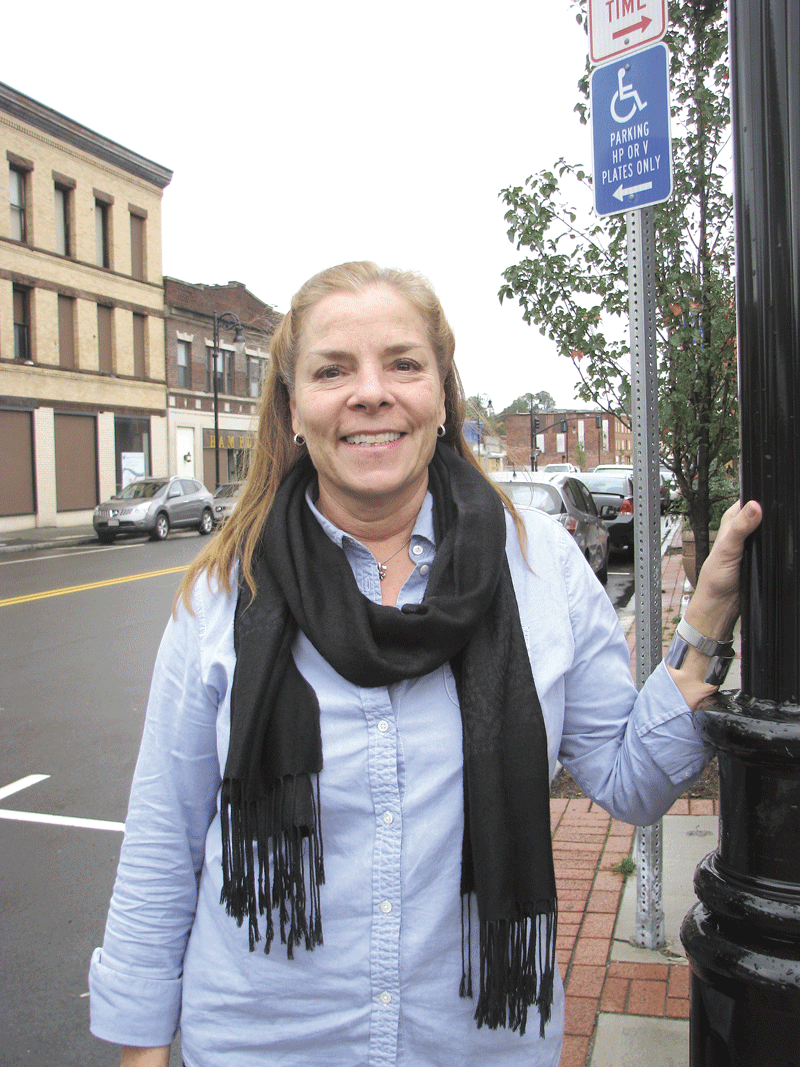
Briefcase Departments

Pair Tapped to Head Tornado Recovery
SPRINGFIELD — Gerald Hayes, vice president for administration and finance at Westfield State University, and Nicholas Fyntrilakis, assistant vice president for community responsibility at MassMutual, have been selected to lead the city of Springfield’s long-term rebuilding campaign following the tornadoes of June 1. At a news conference last week, Mayor Domenic Sarno said both men have extensive credentials in urban development and knowledge of Springfield’s history and character. They will serve at no cost to the public. In the wake of the disaster, 22 buildings in the city were demolished, 171 condemned, and more than 1,000 damaged. Hayes and Fyntrilakis will coordinate the tornado-recovery effort until Dec. 31, at which time the arrangement will be reevaluated. The rebuilding campaign, a public-private partnership that will involve the Springfield Redevelopment Authority and DevelopSpringfield, will operate out of a downtown office and will be advertising for a consultant to write a multi-year plan for recovery efforts. Hayes has more than 30 years of economic-development experience, and Fyntrilakis is a former School Committee member and current chairman of DevelopSpringfield.

PVLSI Collaborates with Seahorse Biosciences
SPRINGFIELD — The Pioneer Valley Life Sciences Institute (PVLSI) and its Center of Excellence in Apoptosis Research (CEAR) have entered into a translational-research collaboration with Seahorse Biosciences of North Billerica and Chicopee. Dr. Nagendra Yadava will be the principal investigator for the program at the PVLSI and will receive the title of John Adams Investigator, in appreciation of support from the John Adams Innovation Institute to create CEAR. Alejandro Heuck, an assistant professor of biochemistry and molecular biology at UMass Amherst and a collaborator with Yadava on this project, will also be named a John Adams Investigator. The program will foster shared research between PVLSI scientists and industry partners, to accelerate new products to the market and foster regional economic development. The new project uses intellectual property developed at the PVLSI to create a new reagent kit aiding scientists in quantifying cellular bioenergetics using Seahorse’s XF Analyzer, an instrument that measures different aspects of cell metabolism. “I am delighted to extend our relationship with Dr. Yadava, the PVLSI, and the University of Massachusetts Amherst,” said David Ferrick, chief science officer for Seahorse. “The collaborative research and development performed under this agreement will simplify mitochondrial assays and expand our understanding of the role of mitochondrial dysfunction in aging and disease.” D. Joseph Jerry, PVLSI’s science director, added that the agreement “sets the stage for PVLSI scientists to leverage their intellectual discoveries into new products, fulfilling the institute’s mission for translational research.” Patrick Larkin, director of the Massachusetts Technology Collaborative’s John Adams Innovation Institute, added that “this is exactly the type of project we were hoping for when we invested in the PVLSI. It demonstrates the importance of the institute to the region in providing an interface for the life sciences with local advanced manufacturers.” In related news, Yadava was recently named the Western Mass. Mitochondrial Champion by the United Mitochondrial Disease Foundation, and will serve as an expert on mitochondrial function to researchers and clinicians in the region. Yadava and his team recently published a paper titled “Mitochondrial Dysfunction Impairs Tumor Suppressor P53 – Expression/Function” in the Journal of Biological Chemistry.

Westmass to Finalize Acquisition of Ludlow Mills
CHICOPEE — Westmass Area Development Corporation (Westmass) recently informed the Ludlow Board of Selectmen it planned to acquire the Ludlow Mills property on or about July 1, according to Kenn Delude, president and CEO of Westmass. With a combination of state grants, private debt financing, and equity investments, Westmass has put into place a finance program that will enable the project’s permitting to commence immediately and allow building utility modifications to be made before winter. “After two years of due diligence investigations, we are now prepared to begin our long-term partnership with the community and start work on the project,” Delude said. He noted that the first visible signs of activity will occur in late summer when the Columbia Gas Co. installs a new gas main along State Street. This work will then be followed by the road reconstruction and other related infrastructure improvements. The goal is to have all the roadway improvements completed by December 2012, according to Delude. The improvements will be funded by a $3.7 million state grant the town received under the MORE JOBS program. “Westmass is committed to seeing that Ludlow Mills once again becomes a major contributor to the economic prosperity of our region,” added Delude. He noted that businesses seeking a new or expanded location, whether to lease or own, are encouraged to contact Westmass for more information.

Grants Available to
West of the River
Chamber Members
WARE — The West of the River Chamber of Commerce is taking its mission of helping local businesses to the next level with the launch of a workforce-education initiative. The chamber will award $500 grants to four businesses which can be used for classes, seminars, and workshops that will develop employees’ skills and ultimately help the business. The idea was proposed by the West of the River education committee and is based on the concept that an educated workforce equals a stronger economy. Grants are open to all members of the West of the River Chamber. The winners will be drawn lottery style at the beginning of August. For an application or more information, call (413) 426-7077 or send an e-mail to [email protected]. All applications must be received by Aug. 1. The chamber serves the business communities of Agawam and West Springfield.

Link to Libraries
Donates Books to
Monson Tornado Victims
EAST LONGMEADOW — Link to Libraries recently donated more than 250 new books for youths of all ages to Monson Savings Bank, which will be distributed to tornado victims in town. The books will be distributed to the children left homeless or with tornado damage to homes in the Monson area through the bank, according to Susan Jaye-Kaplan, president of Link to Libraries. “The books donated by Link to Libraries, we hope, will give much needed enjoyment to the families hit by this devastating tornado,” said Jaye-Kaplan. “It is our hope that the children will find pleasure in reading and an opportunity to have time to relax and be relieved of some stress and worry.” The books include reading material for preschool through the teenage years.

Salvation Army Receives Recognition, Financial Gift
SPRINGFIELD — Major Thomas Perks and his wife, Major Linda Jo Perks, both of the Greater Springfield Salvation Army, have been recognized locally with a monetary donation for the organization they manage, as well as by the national office of the Salvation Army. The Affiliated Chambers of Commerce of Greater Springfield honored both the Salvation Army and the YMCA of Greater Springfield during its annual meeting on June 15. Both organizations were recognized for their strong business models and community presence that have had a direct impact on quality of life in the Greater Springfield area. Both also received a check for $1,000. In related news, Perks and his wife were recently honored by the national Salvation Army with pins for 25 years of service. The designation illustrates the tireless efforts of the couple and the organization they oversee. In addition to assisting first responders and victims of natural disasters, the local Salvation Army helps more than 30,000 families throughout the year and more than 6,000 families during the holiday season.

Education Sections
Initiative Creates an Ambitious Agenda for Public Higher Ed

VisionProjectThere are many moving parts to the state Department of Higher Education’s Vision Project, but the bottom line is jobs, or, to be more precise, properly preparing individuals for the jobs that define a new, technology-centered economy. The Vision Project aligns all 29 public colleges and universities behind seven identified goals — from improving graduation rates to getting more people into math and science fields — and adds several layers of accountability.

Richard Freeland says there’s nothing new or particularly imaginative about the goals spelled out in the Mass. Department of Higher Education’s so-called Vision Project.
They range from improving graduation rates to increasing the numbers of people entering college; from eliminating historical disparities among racial and ethnic groups to encouraging more people to enter the math and science fields of study — and they’ve been goals for individual colleges and universities for decades.
What is new, said Freeland, the state’s commissioner of Higher Education, is a heightened sense of urgency attached to these goals, created by truly global competition and technology-focused jobs that increasingly demand a college education.

Richard Freeland

Richard Freeland

“Given where our economy is and given where our state is demographically, and given the competitiveness of the economic world, both nationally and internationally, we’re at a point in the history of Massachusetts where we need first-class public higher education,” he explained. “And I don’t think that, historically, public higher education has been the kind of priority that it needs to be today.”
And what’s imaginative is the Vision Project’s approach, a coordinated effort involving all 29 public colleges and universities that adds several layers of accountability.
“This is an attempt to pull together, against the background I’ve described, the coordinated efforts of all public high education,” Freeland explained. “We have a highly decentralized system that features a great deal of autonomy granted by statute to the colleges and local boards of trustees. That makes it extremely difficult for public higher education as an entity, as a statewide institution, to respond in a collective and focused fashion to statewide needs.
“There is a bit of a mismatch between the structure — the decentralized, desegregated, fragmented structure of public higher education — and the urgency of the concentrated focus on building a first-class system of public education,” he continued, adding that the Vision Project was created to align the 29 public campuses behind a short list of critically important goals.
To show how it will all work, Freeland talked about one of the items on that short list, the often-controversial matter of graduation rates.
“This is where the rubber meets the road,” he said of the need to see people who enroll through to commencement night. “When people talk about graduation rates, the answer, across the country, is that they’re not high enough; too many people are falling by the wayside.
To address the problem in the Bay State, a comprehensive, three-part program, developed as part of a national initiative known as Completing College America, has been implemented to move the needle in the right direction.
“The first part calls for every institution to have specific goals to improve student success,” he said, citing just one example of how the Vision Project operates. “When we surveyed our institutions, we found that that was not currently the case; while everyone’s working to do better, a number of our institutions had not formulated specific aspirational goals against national benchmarks to hold themselves accountable for forward motion.”
Ira Rubenzahl, president of Springfield Technical Community College, said he’s a strong proponent of the Vision Project, although, like others, he stressed that it will need a strong funding commitment from the Legislature to meet its goals, and he has concerns about whether that will materialize.
He stresses that the need for the initiative is real, and that while the initiative has a number of moving parts, at its core it is about one word: jobs, and, more specifically, adequately preparing people for the jobs of tomorrow — and today, for that matter.
Ira Rubenzahl

Ira Rubenzahl

“We recognize that some college is critical for young people to get jobs in this new economy, and it’s critical to grow this new economy,” he said. “All the elements — getting more students to attend college, getting more students to complete, getting students to be successful while they’re at college, eliminating disparities, and aligning with local businesses — have an economic lens to them.”
For this issue and its focus on education, BusinessWest takes an indepth look at the Vision Project, its goals, and the unique strategy mapped out for attaining them.

Schools of Thought
Freeland told BusinessWest that there are several reasons why Massachusetts has historically lagged when it comes to attention to and funding of public higher education. One has been the predominance of private institutions that attract students from across the state and around the globe.
“The success and sheer number of these schools have made it possible for state leaders at different kinds of institutions, as well as the general public, to believe that, because we have Harvard and MIT, not to mention all those other great places like my alma matter, Northeastern, we don’t necessarily have to invest in public higher education the way California does or Texas does or Ohio does,” said Freeland, who speaks with decades of experience working in the public higher realm, including a lengthy stint at UMass Boston. “But that perspective is way, way out of date.
“Over time, public higher education has grown increasingly important as an educator of young people in this state,” he continued. “When I started in 1970, the majority of high-school students were still going to private institutions for college, but today, two-thirds of the students who graduate from our high schools are going to public institutions if they pursue education in this state; we have become overwhelmingly a primary provider of higher education for the broad population of this state at a time when we’re not having a lot of in-migration, we’re not having any population growth, and we have a workforce that needs a large number of highly educated workers.”
All this adds up to what Freeland called a heightened sense of urgency that hasn’t existed before, and the need for a plan of action, or agenda, moving forward.
And thus, the Vision Project was conceived in late 2009, and officially adopted by the Board of High Education in May 2010. It completed its first full year of implementation on June 30, and the Legislature is earmaking several million dollars in the fiscal 2012 budget for the Department of Higher Education to provide incentive grants to individual colleges and universities to organize activities around the goals of the vision project.
In a nutshell, the initiative was launched with the recognition that the state is in fierce competition with other states and countries for talent, investment, and jobs, and that its primary assets in this competition are the overall education level of its people, its workforce, and the overall competence and creativity of individuals and organizational leaders driving the state’s knowledge-based economy.
“There is a heightened sense of urgency, because I do believe that Massachusetts needs the best-educated citizenry and workforce in the country, because that’s about all we’ve got in the competition among states,” he said. “And if we neglect public higher education, we’re simply not going to have that.”
The Vision Project is, in essence, the vehicle through which public higher education will remain focused on preparing individuals for this economy — and holding itself accountable for results.
Several key outcomes have been identified, said Freeland, noting that, for the state to thrive in this highly competitive environment, it must achieve national leadership in several realms, including:
• College participation, or the college-going rates of high school graduates;
• College completion, or graduation and success rates of the students enrolled;
• Student learning, academic achievements by students on campus-level and national assessments of learning;
• Workforce alignment, or alignment of degree programs with the key areas of workforce need in the state’s economy; and
• Elimination of disparities, meaning achievement of comparable outcomes among different ethnic/racial, economic, and gender groups.
Meanwhile, the University of Massachusetts must claim national leadership in research activity related to economic development, and economic activity derived from research.
As it went about creating the Vision Project, the Commonwealth’s public higher-education community considered what other states are doing well in this regard, said Freeland, adding quickly that the state’s highly de-centralized system makes it difficult to replicate what other systems are doing. Meanwhile, the state’s track record with public higher education and a lingering lack of urgency in some camps makes it hard just to put such an agenda in place.
“You don’t have to make much of an argument in Ohio that public higher education is critical to a state that has been losing altitude as the Rust Belt has declined,” he explained. “There, public higher education is understood to be the name of the game, and Ohio State is the Harvard of that region. But you do have to make that case in Massachusetts much more strongly.”

Extreme Measures
As he talked about specific goals within the Vision Project, Freeland said there is a universal aspiration for each  — that phrase “national leadership.”
This is inherently a subjective phrase, he said, but not in the case of such matters as graduation rates and diversity, where there are hard numbers to compare and contrast performance. It is one of the underlying missions of the project to create meaningful measures for the specific goals, and then to score high in each category.
Returning to the subject of graduation rates, he said the numbers used are broad and often misleading.
“The best metric for measuring student success and graduation rates, particularly at community colleges, is a vexed question,” he said. “The rate that is often cited as the national standard [about 25%] is based on whether or not students who begin as full-time students graduate in three years, which is a very small percentage of the students who actually attend our community colleges.
“So we are working to develop a much more useful metric,” he continued, “which would measure such things as how successful we are in graduating part-time students, how successful we are in graduating people who transfer in from someplace else, and how successful we are transferring students who start at community colleges and transfer on before completing a degree.”
And while graduation rates are certainly one strong focus of attention, there are several other goals within the Vision Project that are key to achieving that overarching goal of making the Commonwealth more competitive on the global stage, said Freeland.
And with that he referenced an acronym, and statewide initiative, that is gaining visibility and attention across the state: STEM. That stands for science, technology, engineering, and mathematics, and increasing the numbers of students enrolled in these fields — and then graduating them from those programs — are top priorities, said Freeland.
“Far too few young Americans are pursuing academic studies and scientific and technologically oriented careers, and far too few are coming out of our colleges with appropriate skills to drive an innovation-oriented economy,” Freeland told BusinessWest. “This has been a major focus in the business community as well as the education community.”
Local programs have been created to help spawn interest in the STEM fields, he said, listing everything from field trips to manufacturing plants to scientists coming into the classrooms to talk about careers, a “traveling road show,” as he called it, designed to inform and even entertain students.
One of the Vision Project’s goals is to build on these programs aimed at energizing students about STEM and graduating more students in those fields. “We get a good number of people coming out of high school who say they want to major in STEM fields, and start out in them,” he said, “but the dropout rate is very high.”
And the so-called ‘persistence rate’ is comparatively low, he continued, adding that this gauges how many students stay in the field of study they’ve chosen. Work to move those numbers higher is still another matter that the Vision Project will measure — and inject accountability.
The goal with all the initiatives is to prepare individuals for the job market they will face and create a workforce that will enable the state to compete for companies and jobs, said Rubenzahl, who echoed Freeland when he said the landscape has changed in nearly all aspects of business, and public higher education now has a larger role than ever in helping to create a pipeline of qualified workers.
He cited manufacturing and related fields such as biotech as examples of how things have changed, and how the role of public higher education has been broadened.
“We had some pretty good-paying jobs in various industries — originally it was textiles — that left,” he said. “And for many of those jobs, you didn’t need a college education. However, for many of the industries that stayed here or grew up here, you need much more education.
“The economy has changed, and public higher ed has a much larger role than it had before,” he continued. “Let’s face it, Harvard and MIT are not going to train highly skilled factory workers who can run these CNC machines or production workers in these biotech plants. They have a role, but we think we have a greater role as well.”

The Bottom Line
Summing up the Vision Project, Freeland said it is a comprehensive — and very visible — attempt to take public high education to a new level of excellence, responsiveness, and accountability.
“The campuses believe in these things … this isn’t about persuading schools to do things they don’t want to do,” he explained. “It is about taking it to a higher level of focus and having a higher level of aspiration and holding ourselves accountable.”
And it’s a long-term initiative, one that will play itself out over the next several years, involving perhaps many different gubernatorial administrations and college presidents. But he believes the program will stay on track, mostly because it has to if the state is going to thrive in this truly global arena.
“It’s easy for institutions to run out of gas addressing these very tough problems,” Freeland said. “You can bank on the fact that I’m not going to be here forever and Gov. Patrick isn’t going to be here forever, but these issues are going to be here forever.
“These are not issues for one day or one week,” he continued. “But once we get focus on them and get some momentum behind them, the gravitational force of statewide need will keep us focused. But it’s not going to be easy.”

George O’Brien can be reached at [email protected]
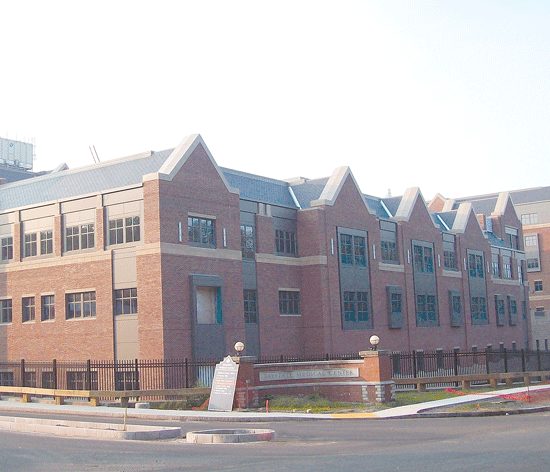
Sections Technology
Local Firm Is on the Cusp of a Microchip Breakthrough

Panève partners Stephan Rogers, Jef Sharp, Jeff Hausthor, and Steven Frank.

Panève partners Stephan Rogers, Jef Sharp, Jeff Hausthor, and Steven Frank.

Steven Frank, Jef Sharp, Jeff Hausthor, and Stephan Rogers are heading up a team whose work is so revolutionary that customers who hear about it say it is almost too good to be true.
“The feedback we are getting shows that what we are doing is the Holy Grail,” said Frank, CEO of Panève LLC, a Hadley-based management and engineering firm.
The mission of the company, founded two years ago by the four seasoned entrepreneurs, is to develop a new software-programmable, general-purpose microchip processor built from the ground up for video and graphics-intensive applications. Its use will cover a wide range of products that make life better for people and run the gamut from TVs to gaming devices to green-energy applications and medical apparatus.
The product, called the RhinoCore, is in final stages of development, said the partners, and will solve an industry problem by reducing costs as well as the time it takes to get new products to the market, while allowing programmers to write innovative applications.
“When most people think about computers, they think about PCs,” Frank said. “But a revolution is happening; computers and processors are embedded in all sorts of devices such as smartphones, tablets, and TVs.”
The number of computer chips used by manufacturers today is staggering. Sharp, founder of the Northampton-based IT solutions company TechCavalry, says the Toyota Prius he drives contains more than 50 computer chips. “A lot of people don’t know how many chips there are in everyday products today. The trend is exploding.”
What makes Panève’s work so groundbreaking is that its processor allows conventional software to take advantage of multiple chip cores as if they were one, Frank said.
He explained that, over the past four or five decades, semiconductor technology has advanced very rapidly and enabled a swift progression in the capability of products at a lower cost. “But that capability hit a technical wall. Over the past five years it has become apparent that we can’t make processors go any faster,” he said.
An example the average consumer can easily understand is that computers often contain multiple processors. “But each one is not faster, so the real problem that no one has figured out is how to make a software platform that will coordinate all these processors and make them work as one,” Frank said.
But the partners are happy to say they think they have solved that problem.

When the Chips Are Down
The mission began about seven years ago when one of the largest TV manufacturers in the world approached Frank with a problem — and an opportunity.
“They wanted to build a TV where all of the work inside was done with software. Instead of building a TV with special-purpose hardware chips, they needed a software-programmable chip that would be applicable to a large market, enable them to get their products to the market faster, and allow them to continually upgrade the device,” he said, adding that the cost of building a new computer chip is tens of millions of dollars. “What they wanted required a supercomputer in a TV, and there was no company that made a product like that.”
Frank was the chief technical officer (CTO) at Kendall Square Research, a leading supercomputer company that he had co-founded. “At the time that I was approached to put supercomputer thinking into a chip for consumer electronics, I was doing consulting work. The solution to the problem they presented me with was not obvious, but I had the framework to solve the problem because of my years at Kendall Square Research.”
Frank spent several months thinking about the problem and worked with the TV company’s consultants to redefine what was needed.
His work was essentially put aside as his wife waged an unsuccessful fight against breast cancer, but the television firm encouraged him to continue and to start a new business that would focus on a solution.
Two years ago, Frank joined together with his trio of partners who are engaged in making history. He said they have been able to operate on a budget due to their business model.
Three models exist in the semiconductor business world, they explained. One is made up of companies that design their own chips and own factories that produce them. Another simply does the design work and gets the chips ‘fabbed’ which means fabricated in tech-speak, while the third develops the design and licenses it to semiconductor and consumer-electronics companies that manufacture and sell the chips.
Panève fits into the third category, which allows it to develop technology without a tremendous amount of capital. “Our customers are semiconductor companies who sell to large consumer-electronic manufacturers like Sony, Sharp, or Samsung, who will use our technology to make the next-generation devices,” Sharp said.
Panève has met success in its quest to design a platform for a new type of chip that is software-programmable. “It will open up innovation for tens of thousands of programmers to come up with new ideas and new functionality,” Sharp said.
Frank offered two examples of how it can be used. High-end cars that are able to detect when other vehicles are nearby or when the driver is falling asleep need advanced image processing in real time, which is very expensive. “But our chip will make it easy to write software so the technology can be put into mid-priced vehicles,” he explained. The other example is that animated movies seen on televisions and smartphones look almost real on those media, but look ‘cartoonish’ on gaming devices because of the way the algorithms work with the processor. “Our chip will allow them to take a big jump in visual quality,” Frank said.

A Competitive Edge
A study conducted by the White House Science and Technology Advisory Council concluded that, over the past 15 years, hardware improvements have made computers 1,000 times faster. “The study also found that, in the same amount of time, software was responsible for making computer performance increase 43,000 times.
“Software is really a driver for new devices and the quality of life we are experiencing today,” Sharp said.
And it goes far beyond games, TV, and automobiles.
“New advances in medical-science imaging, renewable energy, and devices that use processors to help wounded veterans walk again are all examples of embedded processors at work, and we are proud to be developing a breakthrough platform that will help these kinds of technologies to improve further,” Sharp said. “What we are doing breaks through a wall that will enable continued increases in computer performance. When people think of technology, they think of gadgets, but in hospitals the amount of equipment driven by computers is incredible and enables us to live fuller, richer, and happier lives. It is an increasing part of the fabric of daily life.”
The company is finalizing a prototype that is very sophisticated and nearly ready to be brought to the market.
“Our belief that it is revolutionary is based on conversations we have had with dozens of companies who dream big and have given us feedback that this is almost too good to be true,” Frank said. “Computing is so pervasive in everything we do and everything that is important to us.”
The work has not been easy, however. “We have a team of 16 people who are making this happen through sweat and tears,” Sharp said. “But we are enjoying building something of substance and contributing to society. It’s a lot of work and involves a lot of challenges, but it is very satisfying to make progress.”
He added they would not be able to proceed without support from investors. “They are a very important part of this, and hopefully our work will inspire additional investment in other small companies,” Sharp said.
Summing it up, Frank said that “our work offers a triple play. It will make technology less expensive, more capable, and faster, and allow products to function in ways we can only dream about today.”

Departments Picture This

Send photos with a caption and contact information to: ‘Picture This’
c/o BusinessWest Magazine, 1441 Main Street, Springfield, MA 01103 or to [email protected]

Reading Aloud

Reading1Kensington Elementary School in Springfield recently hosted two guest readers as part of Link to Libraries’ ongoing read-aloud Program. At left top, BusinessWest Editor George O’Brien is seen with his fourth-grade class, while left below, Peter Rosskothen, co-owner of the Delaney House and Log Cabin, and a regular participant in the program, reads to another fourth-grade class.
Reading2The read-aloud program is presented six times a year by the nonprofit Link to Libraries, which brings in area business people to read to students in Springfield and Holyoke public schools. Students each receive a book and book bag to begin their own home library, and the school library receives between 175 and 200 new books.


Branching Out

PNCUThe Polish National Credit Union (PNCU) staged a ribbon-cutting ceremony on May 5 to celebrate the grand opening of its new full-service branch location at 25 East Longmeadow Road in Hampden. From left are: Jeffrey Ciuffreda, executive director of the Affiliated Chambers of Commerce of Greater Springfield; PNCU President James Kelly; and state Rep. Brian Ashe, D-Longmeadow.


Check Presentation

GraingerGrainger Co. staff present a $5,000 check from the Grainger Foundation to STCC Student Activities Director Andrea Tarpey and STCC Foundation Director William Kwolek. The Grainger Foundation also presented $5,000, in checks of $1,000, to five local food pantries. More than 1,400 food items donated by the STCC community were divided among the food pantries.


Howdy Awards

gscvbThe 2011 Howdy Awards for Hospitality Excellence, which honor frontline hospitality employees in the Pioneer Valley, were presented at ceremonies at the Log Cabin on May 10. At left, the winners are (from left) Amanda Malone of Chandler’s Restaurant at Yankee Candle Flagship in South Deerfield (Food category); Khia Eagan of the 7-Eleven store in Sunderland (Retail/Business category); Bob Aubrey of the Naismith Memorial Basketball Hall of Fame in Springfield (Attractions category); Elise Wright of the Belchertown United Church of Christ (Public Service category); Melanie Smith of Six Flags New England in Agawam (Howdy Spotlight Award winner); Mary Mercier of the Yardhouse in South Hadley (Beverage category); Tony Rogers of the Comfort Inn & Suites in Ludlow (Accommodations category); Jason Guzman of Valet Park of America in Springfield (Transportation category); and Judy Brinn of Peter Pan Bus Lines in Springfield (Unseen Hero category). gscvb1At below left, Melanie Smith, national tour and travel representative at Six Flags, is seen after receiving the Howdy Spotlight Award with Greg Chiecko of Eastern States Exposition (left) and Peter Rosskothen of the Log Cabin Banquet & Meeting House and the Delaney House. Smith was honored with the Spotlight Award for her ongoing efforts on behalf of the Pioneer Valley hospitality and tourism business. She also serves currently as chairman of the group tour committee for the Greater Springfield Convention & Visitors Bureau, a position previously held by Chiecko and Rosskothen.


Parking Lot Party

1
2
3The East of the River 5 Town Chamber of Commerce (ERC5) welcomed more than 100 people from the business community to a unique networking event, held in the parking lot of the Eastwood Shops in Wilbraham on May 12. The event, the ERC5 Parking Lot Party, was organized based on the belief that all the best business happens in the parking lot, after the official meeting has ended. The party included food, music, a mobile video-game unit, classic cars, a cyber café, and, of course, networking opportunities. From left top: Jocelyn Walker (left) of Turley Publications, Cheri Mills (center) of Webster Bank, and Maureen Turmel of the Gaudreau Group promote the Boston Road Business Assoc., an event sponsor; Eric Rackliffe of AT&T Mobility helps Barbara Kolosowski, from the Springfield Boys & Girls Club, check in on Facebook; Ed Nunez of Freedom Credit Union gears up for a round of Guitar Hero. Games2U served as the Game Time sponsor for the event.


Springfield’s 375th Birthday Bash

Pancake
Neal
Pancake2
Pancake4The City of Homes celebrated its 375th birthday in style on May 14 with a variety of events and activities, ranging from the annual pancake breakfast — still the world’s largest — to a parade that drew more than 1,500 marchers; from musical performances to Civil War re-enactments at the Springfield Armory; from fireworks to ceremonies involving the Massachusetts Army National Guard, which was also celebrating its 375th anniversary. Scenes from the day included, left from top, a look down Main Street as the pancake breakfast commences; Springfield High School of Science and Technology Director of Bands Gary Bernice, far right, who received a commemorative plate for his many contributions to the event, is seen with, from left, Brigadier General Paul Smith, assistant adjutant general of the Massachusetts Army National Guard, U.S. Rep. and former Springfield Mayor Richard Neal, and current Mayor Domenic Sarno; the contingent from Baystate Health makes its way down the parade route; Neal is seen with several graduates of Elms College, which staged commencement exercises at the MassMutual Center that morning.
Pancake4
Pancake 40
canon


More scenes from Springfield’s 375th birthday celebration: left, Donald D’Amour, chairman and CEO of Big Y World Class Markets, receives an honorary key to the city from Mayor Sarno (Big Y, celebrating its 75th anniversary this year, sponsored the fireworks display); below, the contingent from ABC 40/Fox 6 makes its way down the parade route; at bottom, re-enactors prepare to shoot a cannon as part of the ceremonies at the Armory.

Photos from The Spirit of Springfield

Departments Incorporations

The following business incorporations were recorded in Hampden, Hampshire, and Franklin counties and are the latest available. They are listed by community.

CHICOPEE

Sophie Adam Inc., 1747 Westover Road, Chicopee, MA 01020. William Stetson, same. Restaurant and tavern.

Spectators Sports Bar & Grill Corp., 154 School St., Chicopee, MA 01013. Robert Scribner, 28 Beaumont Ave., Chicopee, MA 01013. Sports Bar & Grill.

EAST LONGMEADOW

TJI Enterprises Inc., 56 Sanford St., East Longmeadow, MA 01028. Todd Illingsworth, same. Painting, varnishing, shellacking, enameling, oiling, and staining of buildings, structures, vehicles, and machinery.

HOLYOKE

Moskal-Dowd Insurance Agency Inc., 14 Bobala Road, Holyoke, MA 01040. John Dowd, same. Insurance agency.

U.S. Heyichang Technology Engineering Co., Ltd., 16 Maple Crest Circle, Apt J, Holyoke, MA 01040. Xinya Liu, same. Provider of goods and services through technology applications.

NORTH ADAMS

Shaw Shambhala Inc., 66 Summer St., North Adams, MA 01247. John Shaw, 5338 Main Road, Route 100, Stamford, VT, 05352. Charitable organization for the purpose of physical, spiritual, and emotional self-healing.

OTIS

Mountainview Campground Inc., 1856 South Main Road, Otis, MA 01253. Philip Bignacki, 15 Birch Hill Road, Northborough, MA 01532. Seasonal family campground.

PALMER

R.O.D. Freight Management Inc., 21 Wilbraham St., Palmer, MA 01069. Scott Desantis, 224 Boston Road, Palmer, MA 01069. Shipper of general building products.

Seven Railroads Chapter HRHS Inc., 29 Flynt St., Palmer, MA 01069. Philip Johnson, 9 Ester Ave., Palmer, MA 01301. Nonprofit organization established for historical and educational preservation.

PITTSFIELD

Mickey Bubbles Inc., 105 Dalton Ave., Pittsfield, MA 01201. Pamela Veazie, 32 Gwenn Lane, West Stockbridge, MA 01266. Hand car wash and detailing.

RUSSELL

Northeast Roofing and Construction Inc., 862 Blandford Road, Russell, MA 01071. Joseph Ravosa, same. Roofing and construction services.

SPRINGFIELD

J & P Green Partners Inc., 173 Pine St., Springfield, MA 01105. Jonathan Fonseca, same. Educate consumers and businesses on green technology initiatives.

JC Wireless Inc., 135 Boston Road, Springfield, MA 01109. Ho Jeong Han, 9 Kimbell Ct., #811 Burlington, MA 01803. Retail wireless store.

L.V. Trucking Incorporated, 321 Orange St. Floor 2, Springfield, MA 01108. Luis Manuel Villa, same. Transportation, shipping, and delivery services.

Relevant Energy Concepts Inc., 1833 Roosevelt Ave., Springfield, MA 01109. Brian Tolliver, same. Smart energy practices and solutions for businesses and residents to create a smaller carbon footprint.

S.W.A.G.G.E.R. Corp., 94 Wilbraham Road, Springfield, MA 01109. Clarence Smith, 58 Berkshire St., Springfield, MA 01109. Retail clothing store.

Sky Home Improvement Inc., 27 Continental St., Springfield, MA 01108. Gregory Garcia, same. Home improvement services.

Sponsor a Student Ltd., 64 Denver St., Springfield, MA 01109. Kafi Akillah Martin, same. Charitable organization established to provide financial support to tax exempt 501 c(3) nonprofit organizations.

The Grime Fighters Corp., 57 Merrimac Ave., Springfield, MA 01104. Luis Adams, same. Air duct cleaning for the purpose of improved energy efficiency.

Y.L.S. Inc., 442 Page Blvd., Springfield, MA 01104. Yorky Santos, same. Bar and lounge.

WEST SPRINGFIELD

Shades of Jade & JB Studios Inc., 1138 Memorial Ave., West Springfield, MA 01089. Fanta Simmons, 120 Longhill St., Apt. 8, Springfield, MA 01108. Hair salon

WESTFIELD

Quotemule Inc., 8 Darby Dr., Westfield, MA 01085. Carlton Hale, same. Internet broker between contractors and engineers with materials suppliers worldwide.

Westfield Contracting Inc., 63 Country Club Dr., Westfield, MA 01085-5009. Richard Doiron, same. General contractor.

Company Notebook Departments

Elms, STCC Offering Bachelor’s Degree Completion Program
CHICOPEE — Elms College and Springfield Technical Community College (STCC) recently announced a memorandum of understanding between the two institutions that will enable STCC graduates to complete their bachelor’s degree from Elms by taking courses on the STCC campus. The new program is now accepting applicants, and will begin in September. Initially, a bachelor of science degree will be offered in social work. The partnership honors the mission of each college to serve those in need. Through the initiative, Elms and STCC faculty will teach designated courses on the STCC campus, making it convenient for students and alumni of STCC as well as others from the community with associate’s degrees. Students with associate’s degrees will be able to substantially improve their employment and graduate-school opportunities in their chosen field in an accelerated time frame, completing their bachelor’s degree in 10 eight-week sessions, or 20 months. Under the degree-completion program, 120 credits will be needed for the degree, with a minimum of 42 Elms credits; all Elms core and program requirements must be met, and program models are based on students having at least 60 credits from their associate’s degree. Also, students can transfer in a maximum of 78 credits. Classes will be offered on Saturdays, and classes will be offered by major in a flexible cohort model of 20 to 25 students. STCC graduates who have earned an associate’s degree are eligible to apply to this program. Elms will provide a part-time program coordinator to facilitate academic advising, course registration, and orientation on the STCC campus. For more information, call (413) 265-2490 or e-mail [email protected].

Link to Libraries Receives Grant
EAST LONGMEADOW — The Rockville Bank Foundation has given a grant of $1,000 to Link to Libraries to help promote literacy and donate books to public elementary schools and nonprofit organizations in Western Mass., and also in Northern and Central Conn. The funds will be used to purchase new books and develop a read-aloud story hour for children at more than 40 of the sites. Laurie A. Rosner, senior vice president of marketing and administrative services for Rockville Bank, noted in a statement that the foundation is “proud to support the Link to Libraries program, which will enhance language and literacy skills of children of all cultural backgrounds and enable them to learn about the world through reading.” Rosner added that part of the foundation’s mission is “to make a positive difference in the lives of others.”

Organization Receives National Award
SPRINGFIELD — A 2010 Gold Standard Award has been received by Big Brothers Big Sisters of Hampden County by Big Brothers Big Sisters of America. The prestigious award, which will be presented at the Big Brothers Big Sisters of America national conference in Dallas in June, is given to the top agencies nationally in recognition of strong financial and programmatic growth and top-quality service delivery, according to Joel Morse, director of partnership development. The Springfield organization is one of 18 Big Brothers Big Sisters agencies to achieve Gold Standard status in 2010. The award letter to Beth Russell, executive director, notes that “meeting these standards means you and your agency have exhibited qualities that make your work among the top in the field.”

Yankee Mattress Factory Moves to Larger Space
SPRINGFIELD — Yankee Mattress Factory moved to a larger space in Haymarket Square in April, which will allow more space for growth, according to owner Joseph D. Noblit. Noblit noted in a statement that the move allowed the company to make some manufacturing adjustments for mattress-production innovations, as well as streamlined the process to keep offering a quality product at an affordable price. Noblit added that every mattress is assembled with “painstaking attention to detail,” and unlike big factories that make hundreds of mattresses each day, “Yankee Mattress can take the necessary time needed to make each mattress perfect.” Yankee Mattress offers “luxurious,” handcrafted sleep sets in ultra-plush, luxury-firm, and three levels of super-firm mattresses, according to Noblit. Noblit manages three locations: a manufacturing and retail store at 314 Springfield St. in Agawam, another at 104 Damon Road in Northampton, and the expanded store in Haymarket Square at 1704 Boston Road. For more information, visit www.yankeemattressfactory.com.

Bradley Receives Award for Snow Removal
WINDSOR LOCKS, CT — Acting State Transportation Commissioner James P. Redeker recently announced that Bradley International Airport has received the 2010-2011 Balchen/Post Award, an international honor presented to the snow crews of the airports in the Snow Belt. Bradley was competing against 60 airports throughout the world that were nominated for various awards at the recent 45th annual International Aviation Snow Symposium in Buffalo, N.Y. The Balchen/Post Award recognized the Bradley Team, comprised of airport operations and maintenance staff, for their dedicated efforts in maintaining the airport in safe and operational status during the past winter season. Bradley had previously won the award 28 years ago after the winter of 1982-83. Other Northeastern award-winning airports at the recent symposium were LaGuardia, Logan International, Niagara International, and Bangor International. Bradley is the second-largest airport in New England and serves an extensive geographic area, covering the entire Northeast, including New York and New Jersey.

Office Environments of N.E., BKM Merge

BOSTON and EAST HARTFORD — Office Environments of New England, LLC (OENE) and bkm Total Office (BKM), authorized Steelcase dealers, recently announced that they have combined to create a regional enterprise supporting workplace needs that will offer a broadened portfolio of products and services and expanded geographic coverage in New England. OENE has purchased substantially all of BKM’s assets. Each business will continue to operate under its individual name. By leveraging BKM’s and OENE’s combined resources and capabilities, the enterprise will provide customers with expanded audiovisual, architectural systems, floor covering and technology solutions, as well as the most comprehensive offering of contract furniture and services available in New England. “This is truly meaningful for our customers, who depend on us to help them create innovative and harder working spaces that inspire, foster collaboration, and optimize their real estate footprint,” said Robert Kelly, president of OENE. Don Griesdorn, chairman of BKM, has owned the company since 1977. He will be retiring and transitioning ownership. “I’ve had a long-standing vision of creating a stronger presence in the New England marketplace,” he said. “I’m excited to see that vision come to life as these two great organizations come together. I would like to extend my sincere thanks and gratitude to our loyal customers and dedicated employees.” Effective immediately, Larry Levine joins the company as president of BKM, with more than 25 years of contract furniture experience. Robert Kelly will continue to lead OENE as President. Orlando Corsi, CFO and COO of OENE, will expand his role across the entire enterprise. Dan Sabia, formerly BKM president, will assume a new role as executive business consultant.

Health Care Sections
Misconceptions Persist on Stuttering, Its Causes, and Treatment

Nadia Dorval

Nadia Dorval says using the phone is so difficult for people who stutter that they usually avoid it.

The Oscar-winning movie The King’s Speech is a true story that portrays how King George VI of Britain resolved his stuttering problem with the help of a speech therapist.
But, although the monarch experienced success, there is no cure for stuttering, and more than 3 million Americans and 68 million people worldwide live with the problem every day. Winston Churchill, Marilyn Monroe, and Carly Simon are a few of the well-known figures who number among their ranks.
“Many famous people were stutterers. It has nothing to do with intelligence. But people who stutter often have a sense of inadequacy and feel frustrated, angry, and depressed,” said Nadia Dorval, an adult speech language pathologist with Baystate Rehabilitation Care in Springfield.
“For some people, stuttering is developmental and can change, and for others it is chronic,” said Karen Spinelli, a speech-language pathologist at Noble Hospital in Westfield. “People usually start to notice it when children are preschoolers or about the time when they begin developing language.”
According to the Stuttering Foundation, the condition affects four times more males than females, and approximately 5% of all children go through a period of stuttering that lasts six months or more. Three-quarters recover by late childhood, and about 1% have long-term problems.
Dorval says stuttering in adults doesn’t always begin in childhood and can be caused by an injury to the brain. “It is not something that’s black and white; stuttering is very complicated,” she said. “People have the misconception that stutterers can control their problem, but even when they do, it can occur again in high-stress situations.”
For this issue, the BusinessWest looks at the causes of stuttering, what adults can do to help children who stutter, and why unrealistic expectations and a fast-paced lifestyle can make the situation worse.

Early Speech

Karen Spinelli

Karen Spinelli says materials from the Stuttering Foundation can help people become informed about the problem.

It is not uncommon for preschoolers to stutter for a period of time. “They know what they want to say, but their ability to coordinate the physical aspects of speech doesn’t always keep up with it,” Spinelli said.
She explained that three things are necessary for speech: breathing, voicing, and articulation. Voicing refers to the way the muscles of the vocal cords close and vibrate, while articulation is the way the lips and tongue move to produce sound. “Researchers tell us there is no one definitive cause in developmental disfluency,” Spinelli explained.
However, research is beginning to show that there may be a genetic component, and Spinelli says the latest findings reveal a difference in the way the brain controls the three main areas of speech in people who stutter.
Environment also plays a role. “It doesn’t cause stuttering, but can make it better or worse. The more anxious a stutterer becomes, the more it can exacerbate; stress and anxiety can cause a snowball effect,” she continued, adding that staying relaxed while speaking is critical for stutterers.
If a child begins stuttering, all of the adults in his or her life should behave in the same manner, said Spinelli, who advises them to talk slowly in a calm manner, to avoid looking worried or rushing the child, and to pause before they respond to what the child says.
“Don’t jump to answer the child quickly, and maintain eye contact so they don’t feel you are losing interest,” she continued, adding that adults should never try to help a child by finishing their sentences. “It is important for a child to feel they have your attention. If you speak for them, it can send the message that they are inadequate and create more anxiety. It is important for the child to know that what he or she is saying is more important than how it comes out, even though it can be difficult to take the extra time to listen.”
The reason speaking slowly makes a difference is because people tend to match the rate of the speech of those around them. “It is a very unconscious behavior,” Spinelli said.
Another helpful technique is singing or reciting nursery rhymes out loud with the child. “People who stutter don’t usually exhibit the behavior when they are singing or talking in unison, so it’s a good idea for parents to do these things with their child,” she told BusinessWest.
However, if frustration arises, parents should ask their pediatrician to refer them to a speech-language pathologist. There are early-intervention programs for children younger than age 3, and after that, the school department can help. “Most people don’t realize that, even if a child is not in school yet, he or she can still receive services through the school system,” Spinelli said.
Claudia Eitnier, a speech language pathologist at Mercy Medical Center, said one of the reasons it is prudent to seek an evaluation is because the stuttering may be part of a broader speech-and-language problem. “Don’t become impatient when someone stutters, and don’t treat a child or adult who is stuttering as if something is wrong with them,” she said. “It is not something the person is doing intentionally.”

Myths Abound
There are a number of myths related to stuttering. These include the thought that people who stutter are less intelligent, that the condition is caused by nervousness, that it can be ‘caught’ by imitation or hearing another person stutter, that it is caused by stress, and that it helps to tell a person to “take a deep breath before talking,” or “think about what you want to say first.”
None of these things are true. People who stutter can become nervous due to other people’s reactions, and stress can make it more difficult for them to speak fluently. But these things do not cause the problem.
The purpose of therapy is to provide people who stutter with useful strategies and help them learn ‘easy stuttering.’ This refers to teaching a person to speak with less tension in their throat and mouth.
“It makes the stuttering less pronounced,” Spinelli said. “The more emotionally anxious a person becomes, the more tense their muscles become, and the worse the stutter becomes.”
Stuttering does tend to decrease as children grow, she added, but can occur again at any point in their lives.  In fact, the goal of stuttering therapy isn’t always to make it go away.
Eitnier says technology can be useful in treating some cases of stuttering. One device used by therapists is called Speech Easy. It resembles a hearing aid, and provides delayed auditory feedback, allowing the person to hear their speech at a different pitch with a slight time delay.
“This causes the person to change their pattern of speech, and usually results in the reduction or elimination of stuttering,” she explained. “Hearing their own words played back changes the mental processes that coordinate speech.”
Biofeedback programs can also be helpful. One program works by having a person speak into a microphone while wearing a headset and listening to music or background noise. The person can see the pattern of their speech on a computer screen, and the background noise, which blocks the sound of their voice, can make speech easier for some people.
“But there isn’t one right way to treat stuttering,” said Eitnier. “Since no two stutterers are alike, what works for one may not work for another, because its roots, causes, and severity vary. And even though there is no cure, pill, or surgery for it, people can learn to manage their stuttering.
“But it is very hard work no matter what age you are,” she continued. “Adults are taught relaxation techniques; the more relaxed and comfortable they are, the more fluent they become.”
Dorval sees many adults who stutter, and says some re-learn strategies taught during their childhood. One is to stop speaking and take a deep breath from their diaphragm when they begin to stutter.  “The whole idea is to remain relaxed,” she said. “Stuttering typically happens when they are in an emotional or stressful environment. If they become angry or excited, emotions can take over their speech.”
Speaking on the phone is also difficult, because stutterers fear judgment and often don’t know who will answer when they make a call. “Most stutterers will tell you they hate the phone. They will text people or use e-mail and have other people make their doctor’s appointments for them,” Dorval said.
One technique she uses to overcome this is to have an adult call stores and ask if an item is available. They prepare a list of questions before they call, and then read them off from a checklist. Dorval advises them to take their time, speak slowly, and if they begin stuttering, to stop, take a deep breath and then begin speaking again.
“A lot of stutterers talk very fast; some repeat entire works, some repeat phrases, and some repeat the initial consonant sound. And some also use interjections such as ‘ah’ or ‘um’ between words and have hard or soft blocks,” Dorval said, adding that a block refers to the length of time that passes between words or sounds.
“A soft block may come across as inappropriate pausing while a hard block makes the words sound tense,” she explained.
Recording the person’s voice while they are speaking, then playing it back to them can also be useful. “If they hear what they doing, they can see where they could have slowed down and started again,” Dorval said.
Some stutterers develop secondary behaviors such as rubbing their leg or wincing when they speak, she continued. These actions take place because at some point, the behavior worked and as a result it became an involuntary response.
“I worked with someone who rocked and bit his hand while he spoke, and had someone else who would wring her hands,” she told BusinessWest. “The behaviors create more tension, and part of the person’s therapy is to make them aware of what they are doing, because these actions make their stuttering more obvious.”
Dorval wants adults to know that if they are talking to someone who stutters, they should not finish their sentences or interrupt the individual. “People want to help, but they need to be patient. And if you work in a public place and get a stutterer on the phone, be extra patient. It takes a lot for them to make a call,” she said.
Adults who stutter often report they have difficulty with job interviews and relationships. “They feel like they are not capable of interacting the same way as someone who speaks fluently,” Dorval said. “But if someone really wants to improve, and is ready to make a commitment, the chances of a successful outcome are increased.”

Health Care Sections
Joint Replacement Makes Significant  Strides

Dr. Henry Drinker

Dr. Henry Drinker says demographic trends and improvements in technology have combined to cause an exponential rise in the number of patients receiving new hips and knees.

It’s a surgery that doesn’t save lives, but does give patients their lives back. The field of total joint replacement has grown exponentially in recent years as technology and the materials used to replace arthritic joints have improved dramatically. Now, as the Baby Boomers enter their senior years and awareness of joint replacement grows among all age groups, procedures to implant new artificial knees and hips are expected to double and even triple in the next decade. Clearly, this is one surgical discipline making some great leaps forward.

Total joint replacement has long been considered a surgery for older, not younger, people — but not too old.
The rules, however, are changing.
“It’s mainly for arthritis, and arthritis is an age-related condition; most patients have been in their middle-aged years, some of them elderly,” said Dr. Henry Drinker, an orthopedic surgeon at Hampshire Orthopedics & Sports in Hatfield. “But more and more, we’re treating a younger patient population, due to a host of factors, including an increased emphasis on athletics and physical fitness, which has produced a lot of arthritic knees in younger people.”
Dr. Robert Krushell, medical director of the Hip and Knee Replacement Program at Baystate Medical Center, said the age of likely candidates for joint replacement has expanded on both sides of the spectrum.
“It’s common to see people coming into the office in their 50s, and sometimes younger than that, who need hip or knee replacement. And with the technology we have today, we’re much more comfortable offering it to people in that age range because it will last longer,” he said.

Dr. Robert Krushell

Dr. Robert Krushell says the age of likely candidates for joint replacement has expanded on both sides of the spectrum.

Meanwhile, “joint replacement has become much more common in people in their 80s,” he added. “I think that’s related to the fact that people are living longer, and they are staying otherwise healthy and more active. It’s common to see people coming in the office in their early to mid-80s, or older, in pretty good shape; they’re pretty robust and, if it weren’t for the arthritic joint, would be living very active lives.”
Those two trends point to one unmistakable fact: joint replacement is a very healthy field in which to practice today, with about 350,000 total knee replacements and close to 200,000 hip replacements being performed every year in the U.S., Drinker said. “And it’s on an exponential rise, partly because of Baby Boomers coming of age and experiencing arthritic joints.”
And that trend — both locally and around the country — is projected to continue over the next two decades, said Krushell. “Current projections say that the number of people getting hip replacements per year will double 10 years from now, and knee replacements will triple.”
Fortunately, doctors say, the technology that enables total joint replacement has improved, and the materials used have become more durable, to the point where the risk of complications has become much less for older patients, and artificial joints last much longer in people who undergo the procedure at a young age.
“There has always been a big concern about taking a damaged hip or knee in a young person and replacing it,” Drinker said. “You were pretty much guaranteed that the procedure would have to be done again in 15 or 20 years, or less, and redo procedures are much more invasive and much more destructive. So evolutions in the field have made it possible to bring this to a greater number of patients with joint problems.”
This month, BusinessWest takes a look inside the changing world of total joint replacement and the advances that have made the surgery safer, and the results longer-lasting, just as more and more Americans of all ages are clamoring for it.

Hip Knee Hooray
The practice of joint replacement can, and does, encompass shoulders, elbows, wrists, and hands, but the vast majority of cases involve hips and knees.
The procedure is essentially what it sounds like: removing a damaged joint and replacing it with an artificial one, usually made from plastic or metal. The materials may be cemented into place, or not cemented and instead designed for the bones to grow into the prosthesis; the latter tends to have a longer recovery time, but also lasts longer in the long run, often making it a better option for younger people.
Dr. Khalid “Kelly” Instrum, an orthopedic surgeon with Holyoke Medical Center, said patients, along with their doctors, make the decision to undergo total joint replacement based partly on how their arthritis or other condition affects their ability to partake in day-to-day activities.
“For a younger person, that might be their athletic ability, while for an older person it may be the ability to take a walk with their spouse. Joint surgery is purely elective, and it depends on how it affects them. We never tell people they have to have it; it doesn’t save their life, but what we do does improve their life. As long as someone is healthy enough to go through surgery, it is pain-relieving, and something that gives people their lives back.”
In recent years, Krushell noted, new bearing surfaces have been developed that wear much more slowly and withstand much more activity without excessive wear, increasing the projected lifespan of these implants. The cementless option is particularly exciting, he said.
“There’s no longer any glue to loosen over time. These bonds that the bone makes onto the implant seem extremely durable; we almost never see these hip implants loosen. It’s a radical change, and we’re hopeful that some of these implants will be bonded to the bone forever.
“In the area of knee replacements,” he continued, “we’ve seen similar improvements in the area of bearing materials, and we’re just starting to delve into using knee replacements that also don’t need bone cement in the hope that, just like hip replacements, we’ll find that knee replacements get more permanent bonding. That’s pretty new, cutting-edge technology for knee replacement that’s not being used much around the country, but it’s starting to slowly gain traction.”
Instrum has also observed a series of evolutions in the field, from new materials to the increasing use of minimally invasive surgical techniques.
“We can make smaller incisions without cutting the muscles, so the length of stay after surgery is reduced,” he said. “It allows people to get up and get going quicker. With the techniques we used to use, people had to watch how they bent over after hip replacement, but with modern techniques, often they don’t have to worry about those types of problems anymore.”
Drinker noted that, with minimally invasive methods, “the ease of recovery may be affected, and the pain to the patient is maybe less. Scars are smaller, and blood loss is lower.”
Still, he said, such surgeries are not standard across the discipline. “They have a steep learning curve and are fraught with complications. There will always be some surgeons who use these techniques, but I’m not sure they’ll be universally recognized everywhere.”
In addition to the emergence of minimally invasive surgery, allowing patients to recover more quickly, Krushell said, “another thing that’s been very helpful is some of the newest techniques in post-operative pain control. It hurts a lot during the first few days after surgery, but if you have good pain control, it can be a lot easier to get up and out of bed, do your therapy, and get good motion in your joint.”

Progress Around the Bend
Drinker, who is affiliated with Cooley Dickinson Hospital, touted CDH’s dedicated Joint Replacement Center as the wave of the future in this field.
“What we have here at Cooley Dickinson represents the state of the art,” he said of the 12-year-old department; before that, joint-replacement patients were part of the general hospital population. “In this segregated physical space in the hospital, those patients are the only patients on the floor. It’s almost a quarantined unit in the hospital, and it’s had a big impact on patient experience and outcomes. I believe it’s the only dedicated total joint service in New England.”
The primary advantage, he said, is that all nurses and physical therapists on the floor are trained in the subspecialty of joint replacement. Not only is the patient-nurse ratio small, but patients can expect a certain consistency of care since they aren’t being treated by nurses rotating in from other units.
“What’s really special about the joint center is that we have a specialized program for joint-replacement patients. We have a separate unit, and we have our own exercise room right here in our unit, and we have a pathway of care specifically for joint patients,” said Anne Ridabock, clinical coordinator of the center. “We try to do most joint surgeries on Mondays, then 99% of the time they’re discharged on Thursday. And they can follow this path together: group exercise every day, as well as individual exercises tailored to them.
“Our staff here is just so well-versed in caring for joint patients; they’ve undergone specialized training and have years of experience as well, and that makes for a very smooth, very efficient process,” she continued. ”The patients are continually telling us, ‘you work as a team here; you anticipate what we need.’ It’s an amazingly smooth operation.”
The setup also helps to control complications, particularly infections, Drinker said, noting that the national infection rate for joint-replacement surgery is about 1.5%, while Cooley Dickinson’s is around 0.6%. “One reason is that, by having a quarantined floor, these patients are not subject to hospital-borne infections to the extent they would be on a general medical floor.”
Ridabock said the unit’s focus on “going the extra mile” in infection control includes the hospital’s recent adoption of a cutting-edge system that disinfects patient rooms using ultraviolet light. “And all joint-replacement patients have to be cleared of infectious processes, because an infection in the joint is a real problem. Just having a specialized unit keeps complications low, patient satisfaction high, and really aggressive physical therapy possible.”
Having a specially trained nursing staff also cuts down on the incidence of dislocation in the first few days following the procedure, Drinker added. “The occurrence of a dislocation in the first few days after this operation is often related to nursing care and patient education.” Meanwhile, he added, group-therapy sessions allow patients to share each other’s apprehensions and triumphs.

One Step at a Time
Doctors share in such triumphs, too, and Instrum said it’s gratifying to see people able to do more things, whether it’s a young or middle-aged patient or a Baby Boomer who — like many members of that generation — intend to stay vigorous well into their retirement years. “Obviously it’s good for their general health and helps them be active.”
Krushell cited a patient who went on to achieve long-time goals, including visiting the Grand Canyon and the Great Wall of China. “She never thought she’d be able to do stuff like that. Then a lot of patients just say they want to go for walks with a parent or grandparent.”
Helping them get there, he said, is personally satisfying.
“I feel amazingly blessed to be in my field. In my normal day in the office, I see people starting to get their lives back again. People commonly say this is the best thing they’ve ever done, so it is very gratifying to see people who couldn’t get around before surgery get back to their lives again.”

Joseph Bednar can be reached at [email protected]

40 Under 40 The Class of 2011
Co-founder, Chief Strategist, and Creative Lead, Gravity Switch

Jason Mark

Jason Mark

In 1996, Jason Mark was a teacher. His future wife, Christine, worked for Microsoft, and another friend was making video games for Fisher Price and Nickelodeon. Together, they decided they’d rather work for themselves.
“We pooled our resources and decided we didn’t want to deal with bureaucracy,” Mark said of the origins of Northampton-based Web-development firm Gravity Switch. “It’s been a learning experience.”
The company, named after a Shel Silverstein poem — appropriate, since Mark has gone on to write two children’s books — at first concentrated mainly on animation and CD-ROM development, but quickly evolved to become one of the region’s most notable Web-design firms. “We’re on the forefront of defining what it means to develop a successful Web project,” Mark said. “And it’s been a really exciting time; over the past four years technology has taken a big jump.”
Gravity Switch has contributed its own advances, from creating the iBracket — used by hotels, museums, retail outlets, and others to securely lock an iPad in a public location — to developing Blitz Build, a patent-pending process that dramatically cuts the time required to create a Web site, thereby minimizing client time and expenses.
But Mark and his team have also been at the forefront of socially conscious business practices in the Valley, donating 15% of the company’s annual profits to various local and national charities.
“As a community member, that’s what life is all about,” he said. “You have to look at priorities; work is important, but you have to do stuff you believe in, and to give back in any way you can. That’s something that’s always been important to us.”
Gravity Switch is environmentally aware, too, with about 25% of its staff (including Mark) bicycling to work every day and about half carpooling. It’s another way he and his team live what they believe while doing what they love.
“As a business owner, you want to be around people who are inspiring, and we inspire each other,” he said. I’m a big believer in doing what you like. You have to follow your passion.”
— Joseph Bednar

Commercial Real Estate Sections
Race Street Project Embodies Progress in Holyoke’s Innovation District

Martin Kane

Martin Kane says the Race Street building that has become the Holyoke Professional Arts Center has “great bones.”

It’s called the Holyoke Professional Arts Center, or PAC, a retrofitted old mill building on Race Street in Holyoke that was once home to a company that made slitter knives. Soon, the Providence Prenatal Center of Holyoke and Tapestry Health will be tenants and thus part of a revitalization that is helping to change the look and feel of the city’s downtown and a section known as the Innovation District.

The banner gracing the front of the building at 306 Race St. in Holyoke is 25 feet wide, and it needs every bit of that length to contain all the information crammed onto it.
If one has the time and inclination, he or she could stop, read, and learn that the more-than-century-old, two-story, 18,000-square-foot building is now called the Holyoke Professional Arts Center (PAC) at Mahoney Place, with the latter part of that name referring to family members of the property’s owner, Jeff Cunningham. One could also see the creative logo for this facility, with a flywheel, similar to the ones that can be seen in the ceiling on the second floor, inside the ‘C’ in PAC.
Reading on, one could learn that the Providence Prenatal Center of Holyoke, a component of the Sisters of Providence Health System, and Tapestry Health, an agency that provides a wide range of health services to women through several locations in Western Mass., will be the first new tenants in the center. And, when seeing the name of the brokerage firm (King & Newton) handling the building — as well as a phone number and Web site — one could surmise that there is still space to be leased — roughly 10,000 square feet of it, to be more specific. Reading still further, one would note that Southbridge Savings Bank financed this endeavor, and also see some commentary in the form of a line that announces this project as “a new era in the rebirth of Holyoke.”
But while this banner tells much of the story concerning this downtown landmark and what its reuse means in the larger scheme of things, it doesn’t tell it all. Indeed, there is a lot of history to this building, and an intriguing series of developments that led to an elaborate construction kick-off ceremony on April 7, said Martin Kane, the broker with King & Newton who has handled the building for years and worked with Cunningham to give it a new start.
Meanwhile, this project is just one of several that are changing the look and feel of this section of downtown Holyoke — a few nearby buildings have been converted into artists lofts and a new convenience store recently opened — and there is the promise of much more to come.
That’s because 306 Race St. sits directly across the canal from the property that will be transformed into the Green High Performance Computing Center that is expected to fuel additional development in the downtown area, across Holyoke, and perhaps well beyond.
“We’re seeing a lot of interest in properties in that section of the city,” said Kathy Anderson, director of the Holyoke Office of Planning and Development. “We’re meeting with people and talking, and in the meantime we’re looking at what we need to do to spark private development there.”
Anderson said there are more developments — from new stages of the city’s canal walk project to the possible reintroduction of commuter rail service after a more-than-40-year absence, that could spur more progress in the central business district of the Paper City and a section now known as the Innovation District. Taken together, the initiatives are a classic case of public-sector investments designed to inspire private-sector spending.
“There’s private development happening, and that’s what we were hoping for,” she said of the Race Street project and others like it. “The Innovation District Task Force is charged with creating ways to leverage the high-performance computing center, to take advantage of it and make something more happen in Holyoke and the region because of it.
“This is just one small project taking shape across the canal,” she said of the PAC. “They’ll be seeing what’s going on outside their windows; people are getting excited about this — there’s a lot of interest in downtown Holyoke.”
For this issue and its focus on commercial real estate, BusinessWest takes an indepth look at the Race Street project and how it is just one small example of progress in Holyoke’s downtown, and evidence of that new era in the rebirth of Holyoke that the banner announces.

Building Momentum
“Great bones.”
That was the descriptive phrase Kane used at least a few times to describe the L-shaped Race Street building as he gave BusinessWest a tour of all three levels. “Rock solid” was also tossed out a few times for emphasis.
Such language was deployed to convey the sentiment that while this property has seen better days, it certainly has intriguing ones ahead of it, and has the foundation, in more ways than one, for new and intriguing uses.
Tracing the history of the property, Kane said it dates back to the late 19th century, and has housed a number of different manufacturing operations over the years. Most recently, it was home to Service Machine, an outfit that made slitter knives, which was purchased by Cunningham, a Worcester-based real estate developer, several years ago.
After that business and its equipment were moved to another facility owned by Cunningham, the property stood vacant for some time, said Kane, adding that Cunningham approached him in early 2008 to explore new options for filling the square footage.
“He asked me what I thought the highest, best use was,” Kane recalled, “ and I told him I thought it would be a good location for offices and service businesses.”
Plans to lease out the property for such purposes hit a brick wall in the form of the Great Recession, which created a huge glut of manufacturing, office, and warehouse space in Holyoke and across the region. But when Kane offered the site as a possible option for administrators at the Providence Prenatal Center of Holyoke, who were looking to trade up from space on High Street, there was strong interest.
“We explored it, and it got to the stage where there were lease negotiations, but nothing came from them,” said Kane, adding that by the spring of 2010, Cunningham was ready to put the property on the market, when the SPHS was approached one more time.
This time, a deal was struck, he said, adding that several months later, Tapestry Health, which has an office on Main Street in Holyoke, signed a letter of intent to relocate to the Race Street facility. Those two agencies will occupy the first floor of the building, said Kane, adding that the 6,000 square feet on the second floor and roughly 4,000 square feet in the lower level have a number of potential uses.
As he gave his tour, Kane gestured out an open window on the second floor to the buildings across the canal that will become the high-performance computing center, and expressed the hope — and expectation — that the much-anticipated project would attract a number of technology-related ventures to the downtown area.
“This would be an ideal site for a Web-development company,” he said of the longer leg of the ‘L,’ which has several of those aforementioned flywheels in the ceiling. “The computing center could generate a lot of interest in this space.”
The same could be said for the whole of Holyoke’s so-called Innovation District, said Anderson, adding that the HPCC is the largest of several developments that could bring new businesses — and greater vibrancy — to the downtown.
Another is the potential for the return of commuter rail, last seen in Holyoke in the late 1960s, she said, adding that the Paper City would be part of service that would run from New Haven into Southern Vermont.
City officials are currently looking at two options for a train station — the former station on Bowers Street, designed by HH Richardson, built in 1883, now owned by the Holyoke G&E, and vacant for some time, and a site for new construction at the corner of Dwight and Main Streets.
“We’re trying to get a train station up and running by the time the train goes by,” said Anderson, adding that the larger mission is to make infrastructure improvements that will connect the recently opened intermodal transporation center on Maple Street, as well as the canal walk, to that train station, wherever it is located.
Meanwhile, the canal walk project is bringing more vibrancy to the downtown area, said Anderson, adding that open studios conducted by groups of artists now located in buildings on nearby Dwight Street are creating more foot traffic in the area. One goal, long term, is to utilize a section of Race Street between Appleton and Dwight Streets for open-air festivals.
Overall, city planning officials are talking with developers now making inquiries about downtown Holyoke and its Innovation District, while also working to determine what additional steps can be taken to inspire and facilitate private-sector spending.
“We’re looking at it from the prospective of what we need to do to create more growth in that area,” she explained. “What type of public investments do we have to make in order to spur private development? We’re looking under the street, on top of the street — do we need to work on our water-supply system or fiber optic infrastructure? We’re preparing for the future growth of the city for the next 30 to 50 years.”

Positive Sign
The banner across the front of the Race Street building provides some good reading, and the expectation is that there will be more of these to appear on downtown properties in the months and years to come.
In many ways, it is a sign of the times, a sign of progress, and a sign of how public investment can spur private development — in both a figurative and very literal way.

George O’Brien can be reached at [email protected]
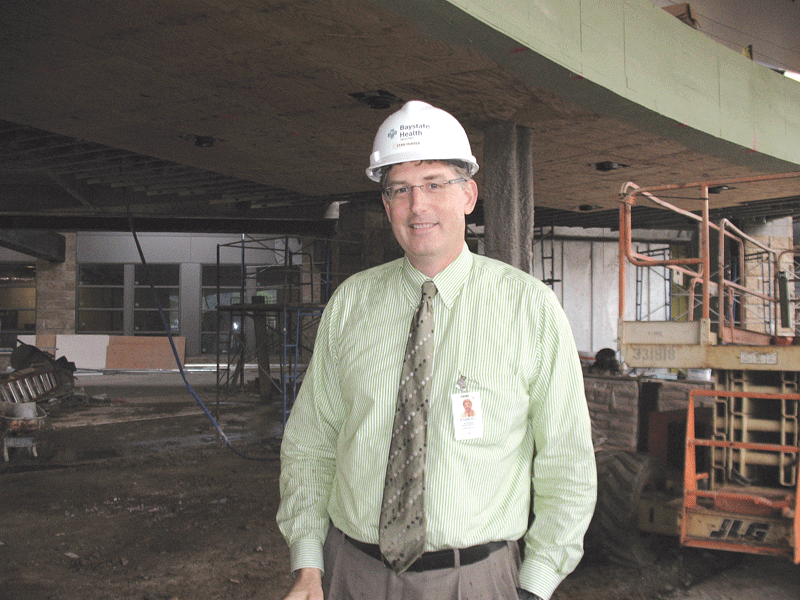
Banking and Financial Services Sections
New Monson Savings Bank President Has Ambitious Plans

Steven Lowell
Steven Lowell says his primary goal is to continue Monson Savings’ strong growth pattern.
Under the leadership of just-retired President Roland Desrochers, Monson Savings Bank tripled its assets over the past 15 years while adding two branches, a loan center, and a host of retail and business programs. After he announced his retirement last year, the bank’s trustees launched a search for someone with the vision to take MSB to the next level. They think they’ve found that person in Steven Lowell, who says he wants to continue to grow market share while maintaining the community ties that customers have come to appreciate.

Steven Lowell knows something about growing community banks.
As chief operating officer and executive vice president of Cape Cod Cooperative Bank, he saw that institution expand from $150 million in assets to more than $580 million today.
He also knows something about long commutes, for years spending about three hours each day in the car between his workplace and his Central Mass. home.
In his new position as president of Monson Savings Bank, he plans on continuing one of those trends and drastically reducing the other.
“Commuting to Monson isn’t nearly as bad as going to the Cape,” he said. “This has cut my commute in half, so that’s been quite pleasurable.”
That should give Lowell plenty of extra time to contemplate ways to continue a similar growth pattern at MSB, which, under recently retired President Roland Desrochers, has seen its assets increase from around $80 million to $236 million in 15 years. The new man in charge says that’s only a start.
“I like building things, and clearly this bank is at a point where it needs to grow,” Lowell said. “Roland has done a great job growing it to the size it is, but it’s getting harder and harder for a small bank to be able to compete. The bank has built a great infrastructure; now we’ve got to build the size of the bank to fit that infrastructure.
“The opportunity to manage that growth is a huge appeal to me,” he continued. “I had the experience of doing that on the Cape, and I look forward to doing similar things here.”
Desrochers, who will stay on as CEO until June to oversee the transition in an advisory role, is pleased with who the bank’s trustees chose as his successor.
“I felt it was appropriate to provide as much time as possible for the board to make a decision about the individual who would replace me,” he told BusinessWest. “So I announced my retirement to the board last June, and we started the search process last September.”
The bank appointed a search committee and hired a search firm to manage the process and identify a number of candidates to interview. Eventually, they whittled the list to two, and in the end chose Lowell.
“He has a community-banking background, so he definitely fit into our culture,” Desrochers said. “He’s used to working in the community as well, which is an important facet. He’s knowledgable in business, and we felt he would work very will with the management team.”
Lowell said the transition has been smooth.
“Roland has been really helpful, introducing me to people in the community, helping me get ingrained in the culture of the bank,” he said. “We are a community-based organization, and that’s been my background, too. That part of the transition has been really easy. I think I’m the beneficiary of what Roland has set up here.”
Desrochers said the bank’s threefold growth in assets in the past decade and a half are a product of a deliberate, controlled growth plan. As opposed to the rapid branch proliferation of other regional institutions, MSB has added a loan center and expanded from one branch to three (adding sites in Wilbraham and Hampden) during his tenure.
“We’ve had pretty good growth, and it’s been profitable growth,” he said. “I think that’s an integral part of it. You just can’t grow for the sake of growth; you’ve got to make sure you have profitable growth and can maintain and increase your capital position.”
“It was challenging initially as an $80 million institution — talk about economies of scale,” Desrochers added. “We weren’t doing very many retail products at the time, there hadn’t been many loan products, so we needed to expand those areas. We were just a small, sleepy, small-town bank, and there’s nothing wrong with that by any means, but we needed to do something to make sure it existed longer-term.”
Now that Monson Savings has secured a stronger foothold, Lowell intends to shepherd the 139-year-old institution to the next level. For this issue, he spoke with BusinessWest about how he plans to do that, and why he’s feeling positive about much more than a shorter commute.

High Tech, High Touch
Lowell said one of the things that impressed him about MSB was the caliber of its management team — “a really positive sign for our ability to grow in the future” — but also its Internet offerings, from its online banking services to remote-deposit capture for businesses and a mobile-banking platform that’s in development.
“The use of technology is very impressive for a bank of this size,” he said. “They have done most of the things larger banks, including the one I came from, have done; for an organization of this size, we’re really ahead of the technology curve. It’ll be a challenge to continue to do that, but it’s very important. Customers are all about convenience, and technology allows you to be as convenient as the major banks.”
Community banks these days, he explained, must balance strong in-person customer service — traditionally one of their main selling points — with the ease of the online experience, Lowell added.
“That’s the challenge. We do a great job with customers in our lobby — that’s how we build relationships — but we also want to deliver that high level of service electronically. If we can do that, then everyone wins.”
The bank also uses an active Facebook page to reach out to customers. Desrochers recently spearheaded a project to ask customers on the social-networking site to identify nonprofits and charitable organizations they would like the bank to support; MSB made contributions to the top 10 vote-getters, on top of its other giving for the year.
“It was a great program and very well-received,” Lowell said, “and it helps bring us closer to our customers and the community.”
But philanthropy only goes so far in attracting and retaining customers, and Desrochers touts a number of retail initiatives introduced in recent years, such as First Rate Checking, a high-rate savings product tied to a checking account; Cash Back Checking, an account that pays the depositor back when they use their debit card; and NextGen Banking, which targets specific age groups with different features, such as enhanced online and ATM access for college-age customers.
“NextGen Banking has turned out to be quite popular,” he said. “Part of that is financial literacy and teaching younger people how to manage their money in a way that’s responsible and hopefully builds them into good customers for the future.”
Lowell also noted that the bank allows use of foreign ATMs and refunds the fees customers incur by using them — an appreciated service at a bank with only five of its own ATM locations. “A customer on the Cape may have trouble finding us, and it’s important that they have access to our products,” he said.
Desrochers agreed. “Everyone’s looking for convenience, what makes it easy for them,” he said. “That’s also true on the business side. We have cash management we’re able to offer through our technology. It really allows businesses to keep watch over their money and move money around electronically.”

Better Days

Roland Desrochers

Roland Desrochers described his 15 years at Monson Savings as a very exciting time for the bank.

These products are being offered at a time when banks are starting to see business tick up after some sluggish years, particularly in business lending.
“We’re starting to see a little more demand for commercial loans,” Lowell said. “We see signs that companies are willing to start reinvesting in their businesses and expanding — certainly not at a really fast level, but there are positive signs, and we haven’t seen those for awhile.”
Lending for home purchases, however, remains stagnant. “The big concern is that everyone has refinanced their mortgage, so the residential-mortgage business is really slow,” he said. “Unless we see property values go up and people looking to build new homes, that’s going to continue to be low for a little while.”
That trend is balanced by an ever-growing line of investment and insurance products that make Monson Savings, as Lowell put it, “pretty much a one-stop shop” for customers who want that.
“We have financial services available to both retail and commercial customers,” Desrochers added. “It’s nice to be able to say we have these mutual funds or annuity products. We can also help businesses with 401(k)s, life insurance, things of that nature. Those are important products to be able to offer.”
Overall, it adds up to a strong foundation on which to build, Lowell said.
“The primary goal is definitely to grow the size of the organization,” he told BusinessWest. “We know it needs to be larger in order to remain relevant in the marketplace, so we’re looking to do that.
“We’re also looking to expand commercial lending, and it doesn’t have to be limited to the three towns where we’re located,” he added. “We also need to keep a close watch on expenses; we need to remain profitable.”
Meanwhile, being a community bank, he stressed the importance of continuing the bank’s civic responsibilities.
“Right now, 10% of our bottom line goes back to the community in donations,” Lowell said. “That’s something the bank has done in the past that we’re looking to keep doing as we go forward. It’s a win-win for everyone; we get our business from the community, and for us to give back to the community, I think, completes that deal.”
As for Desrochers, he has no regrets upon leaving in June.
“This is why I’m retiring,” he said at one point, holding up the mug from which he had been sipping.
No, he’s not going into the coffee business. On the plastic container are several photographs of his grandchildren, a 6-year-old and a 3-year-old twins. Despite the regulatory and other challenges in banking today, he’s enjoyed his time at Monson Savings, but at this point in his life, he says he will enjoy the extra time with his family even more.
“I can’t believe it’s been 15 years already,” he said, “but it’s been an exciting time.”
Steven Lowell thinks the future can be just as exciting.

Joseph Bednar can be reached at [email protected]

Employment Sections
Presenteeism Is a Growing Workplace Challenge

Bob Oldenberg

Bob Oldenberg says that in an era of two-income households, parents are bringing more stress and anxiety with them to the workplace.

Everyone knows what absenteeism is — staying home from work due to sickness or some other reason. Not everyone has heard of its counterpart, presenteeism — but anyone can understand the concept, which is basically coming to work but being too sick, distracted by personal issues, or just plain disinterested to get much done. It’s a major cost to employers — and a growing problem, as technology provides new ways to waste time on the job. While it’s impossible to eliminate presenteeism entirely, some human-resources experts say effective communication between management and workers can reduce its impact.

Virtually everyone has shown up at work under the weather, with nagging allergies, a nasty cold, or a more serious chronic condition.
Or they’ve spent the workday anxiously fretting over their failing marriage, their kids’ failing grades, or their parents’ failing health.
Or they’re just, well, failing to get anything done, arriving at the office more in the mood to post on Facebook and text their friends than earn the money they’re being paid.
All of these situations fall under the umbrella of presenteeism, which is a term not everyone has heard, yet is a concept anyone can understand.
Originally, presenteeism signified the opposite of absenteeism, explained Sandy Reynolds, executive vice president of the Employer’s Resource Group at Associated Industries of Massachusetts (AIM). “It meant somebody who came to work when they were sick because they wouldn’t get paid at home. And there is a cost to having people come to work when they’re sick, in terms of reduced productivity.
“Over time,” she continued, “in the business community, the definition has been expanded to people who are at work who are either not well or distracted by child-care issues, elder-care issues, marital problems, discipline issues with their kids — in general, people who are coming to work but are not fully productive because of some health-related or family-related issue.”
And for employers, it’s a monumentally costly issue. According to the Society for Human Resources Management, absenteeism costs U.S. companies $118 billion annually in medical expenses and lost productivity. But presenteeism — stemming from illness, stress, family and personal issues, and what the society calls an “entitlement mentality” — costs companies an estimated $180 million.
Other estimates are even higher, and most studies admit that it’s not an easy number to pin down. And it’s not a problem that can ever be totally eradicated — as long as human beings, and not machines, are doing the work.
“Many times in the traditional work world, things are happening in our lives that are out of our control,” said Patricia Guenette, vice president of Human Resources for Square One, the Springfield-based early-education provider. “They could be marital issues, financial issues, educational issues — a variety of things can happen in everyday life, regardless of your status.”
If this broader definition of presenteeism is a relatively new concept, that’s partly due to the fact that today’s professionals bring more personal baggage with them to work because no one’s at home to focus on these issues.
“In very many families, both parents are working,” said Bob Oldenburg, director of the Baystate Employee Assistance Program in Springfield, a department of Baystate Health.
“If you look back a generation ago, you typically had a working father and a mom at home, which freed up the dad to focus on work,” he continued. “Those days are long gone; even in intact families, quite often both people are breadwinners in order maintain a certain standard of living, and that creates pressure because neither may be available to deal with what’s going on at home.”
Reynolds, Guenette, and Oldenburg were among the panelists at a recent seminar on presenteeism sponsored by AIM and the Economic Development Council of Western Mass. They spoke to BusinessWest about reasons employers need to hear such a discussion, and what they can do to help workers who are struggling to balance work and life — and often falling short in both realms.

Present and Unaccounted For
Presenteeism is a fairly new concept, Oldenburg said.
“It was developed over the past 15 to 20 years or so, and while the term can sound pejorative, I think it’s important to point out that there’s a variety of demographic trends driving this issue. All of us can identify a time when we fell into the category of being at work but not being as efficient or productive as we could be.”
Indeed, the reasons for a notable uptick in presenteeism — and corresponding loss of productivity — are many, but most reflect changes in the modern workplace. They include:
• Two-income households and more working mothers. As Oldenburg noted, the past 40 years have seen a dramatic demographic shift in how families divide work and home duties. Where the 1950s model saw a working father and a mother holding down the home front and its attendant child-care duties, the modern family is more-often characterized by two incomes, or, in many cases, working single mothers.
This means that, when a child is too sick to go to school, or other household issues arise, one parent’s workday is often disrupted.
“One thing I urge employees to do is be better-prepared to deal with unexpected circumstances and have back-up plans for when a child suddenly becomes ill or a child needs to be picked up from school,” Guenette said.
If someone doesn’t have child-care plans they feel comfortable with, she added, “often their mental status isn’t there at all; while at work they’re thinking about the care of their child — is the child getting nurtured? Is the child eating? All those things reduce their level of productivity at work. If they had an appropriate backup plan, it’s an easier transition, and then they can really focus on going to work and giving it their all.”
On the flip side, many parents use their limited sick days to stay home when their children are home from school with an illness, and consequently don’t have any when they’re sick themselves — which risks the spread of illness throughout the office, thereby compounding the effects of presenteeism in its classic form.
• The ‘sandwich generation.’ This is a term that descibes people who are both raising children and providing some level of care to their elderly parents — while, in many cases, holding down full-time jobs. Needless to say, the distractions from the home front can mount quickly, Oldenburg noted.
“That’s a really new concept, the reality that we have a generation of people at work dealing with issues at both ends of the spectrum,” he said. “These pressures are pushing on people who are trying to work while meeting the challenges from two generations, above and below.”
• The ‘knowledge economy.’ “Before,” Oldenburg said, “many workplaces just needed your arms and legs; if you put the widget in the right place and didn’t stick your arm in the machine, that was fine. People were needed for what they could do, not their hearts and minds.”
But today, he continued, “the economy has moved in a direction where workplaces, in order to be most effective, need not only your arms and legs, but hearts and minds. That kind of engagement requires a higher level of attention and ‘presentness,’ if you will.” And that can magnify everyday distractions to the point of seriously hindering productivity.
At the same time, he said, the global economy has forced many companies to scale back and require greater productivity from each employee — making each distracted worker more of a liability to the business than he or she used to be.
• The rise of the Internet. A 1999 study sponsored by the Employers Health Coalition calculated that lost productivity from presenteeism is 7.5 times greater than that from absenteeism. That statistic has only risen since then, as the Internet — not to mention texting and other high-tech communications — has become a much more ubiquitous use of office time, and not just for work-related duties.
“It’s so much easier today to look busy because so much work is done on the computer, and unless you have all the computers facing your doorway, it’s a huge problem for employers,” Reynolds said. “Employees spend an unbelievable amount of time surfing the Web. It’s a lot easier to look busy when you’re not doing the work you’re supposed to be doing.”
• Everything else. It was easier to gauge the extent of presenteeism when it simply meant coming to work sick, but including every other distraction in the definition makes it tougher for employers to get their arms around.
“Whether it’s asthma, allergies, or chronic conditions, people might be at their desks but not productive because of how they’re feeling physically,” Oldenburg said. “But it’s more than that: anything that’s going on that keeps people from being active and engaged at work — including interpersonal or relational issues — may drive presenteeism.”

Human Resources
In the face of what must seem like overwhelming amounts of wasted time, many employers are asking what they can do to reverse the trend toward presenteeism. Equally important, Reynolds said, is what they should not do.
“Any time an employee is at work and is not able or willing to give 100% effort, it’s a problem for the employer,” she conceded. “But they can’t solve people’s personal issues. While they should give people information about resources available to them, and encourage them to take advantage of those resources, if they try to solve their problems, it’s a disaster.”
That said, any personal distraction is an issue for employers who are paying for time focused on the job.
“Ultimately the jobs have to be done,” Reynolds said. “Don’t be oblivious to what’s going on in the company, but be realistic about what you can provide and the ultimate reason the company is there and the employee is there. The best employers are not heartless; they care very much, but they realize they don’t have a magic pill, and they can’t solve everyone’s problems.”
So what can they do? She and others pointed to employee-assistance programs (like Oldenburg’s in the Baystate system) and other human-resources outreach efforts that can link employees with outside resources to help them deal with personal, financial, or family matters.
“There’s no way to eliminate presenteeism 100%, but you can diminish it greatly using a variety of different resources,” Guenette said. “Having resources to help in those difficult circumstances, and somebody to turn to on a consistent basis, is usually a big help for employees.”
Part and parcel of the employee-assistance process, Oldenburg said, is understanding the needs of the company’s workers.
“Because Baystate is a health care organization and we are a woman-dominated workplace demographically,” he explained, “in addressing presenteeism, Baystate wants to look at the kinds of issues showing up primarily for women. The goal is knowing what kinds of challenges are facing your workforce and the variety of ways you can get at that.”
Square One’s Guenette agreed. “You really need to know the demographics of your workplace, and understand the needs of your employees, to be able to respond to those needs,” she said. “If the workplace is mainly from the Baby Boom generation, their needs will be different than an organization where most employees are females and in their childbearing years.”
Another key factor, Oldenburg said, is knowing the difference between employee satisfaction and employment engagement. His organization and others are starting to move toward surveying workers on both.
“It’s management’s responsibility to know what’s going on when productivity or performance is suffering. It’s an issue,” Reynolds said. “It’s all about whether an employee is engaged and willing to give effort toward their job.
“You may have an employee who’s very satisfied; he likes the company and is paid adequately,” she added. “Yet, he may not be very engaged at all in the work he should be doing. I think that was an eye-opener to some people in the room” at last month’s seminar.
Guenette said good employers understand, for example, why parents (especially first-timers) will fret over leaving their child in the care of someone new, which is why it’s important that a working mother or father plan ahead for such contingencies. But, in the same way, employers can plan ahead too, by understanding the unique personal needs of their workforce.
“The sooner you begin to identify and address these issues, the better it’s going to go for the organization and the employee,” Oldenburg explained, adding that employers can also model good wellness habits — healthy snacks in vending machines, posted signs about handwashing and infection control — that cut down on the number of employees who come to work sick.
Meanwhile, he added, “there are many ways in which supervisors and managers can check in with employees and identify when there might be an issue, and point people in the right direction.”
Guenette agreed that communication is key.
“Our workforce knows they’re valued, and as an employer, you want to work with them to handle their issues,” she said. “When you give them opportunities and resources to choose from, it makes the whole situation much better for them, and for us as an employer.”
Meaning that life goes on — but the work gets done.

Joseph Bednar can be reached at [email protected]

Opinion
To Keep Jobs, Don’t Kill Tax Incentives

The debate about state economic policy has escalated in recent weeks, fueled by Fidelity’s decision to move jobs to neighboring states. While it’s good to have an honest and open conversation about state economic policy, we shouldn’t focus the discussion so narrowly that we miss the bigger picture.
Every month thousands of Massachusetts companies make decisions about adding, locating, or reducing jobs. The question is how to make more of those decisions go in our favor. The best way to do so is by sustaining the state’s leading industries, including financial services.
Financial services is a huge, under-realized contributor to Massachusetts’ economic strength, directly employing nearly 170,000 people and supporting one to two times that number of jobs in related industries.
The tax benefits from those jobs are immense — income tax payments representing 20% of total income-tax collections, hundreds of millions of dollars in state sales taxes, and hundreds of millions in property taxes.
How can this economic cluster be protected and nurtured in the face of competition and technological innovation that enables many of its functions to be performed anywhere in the world? A key answer can be found in a forward-thinking tax policy enacted in the mid-1990s — single-sales-factor apportionment.
The single sales factor bases firms’ state income tax on their sales in Massachusetts, instead of on a combination of sales, property, and payroll. It has been unfairly labeled a “Fidelity tax break’’ — unfair because it affects an entire industry, not just one company, and because it is not a tax break.
When Massachusetts passed a single sales factor law in the mid-1990s, it lowered the cost of employing people here. It spurred the creation of thousands of new jobs, preserved thousands more, and was fully complied with by the companies it affected.
More than half of all states have adopted some form of single-sales-factor apportionment. The adoption of single sales by neighboring and competitor states should lead us not to question its effectiveness or validity, but to strengthen our resolve to preserve it.
The financial services story — of large economic impacts, and tax policies that promote growth — applies equally to manufacturing, high technology, and other critical industries.
If we preserve the single-sales-factor, and take additional steps to lower the cost of job creation, we will win more than our fair share of battles for jobs and investment.
The future of the Massachusetts economy depends on it.

Michael Widmer is president of the Massachusetts Taxpayers Foundation. Jim Klocke is executive vice president of the Greater Boston Chamber of Commerce.

Company Notebook Departments

Tighe & Bond Plans ‘Centennial Project’
WESTFIELD — As part of its 100th-anniversary celebration in 2011, Tighe & Bond is lining up a series of events to give back to its communities, recognize its clients, appreciate its employees, and publish a book on the firm’s history. As part of the firm’s “Centennial Project,” two worthy projects for nonprofit agencies that are in need of Tighe & Bond’s services will each receive $50,000 worth of pro bono engineering services, according to Fran Hoey, senior vice president, who is overseeing the project. To identify potential projects for these services, Tighe & Bond has developed a request for proposals that nonprofit organizations can complete if they are interested. Tighe & Bond will be considering projects in the primary regions that it serves — Massachusetts, Connecticut, and New Hampshire. Preferably these will be projects that are in the planning stages and have a targeted construction date. “Tighe & Bond is looking forward to giving back to the community at large in a significant and meaningful way,” said Hoey in a statement. “We have a passionate and generous staff that believes strongly in helping others in need, so this is only natural.” For more information on the nonprofit project, visit centennialproject.tighebond.com. Submittals are due by April 29.

Hampden Savings Bank Foundation Donates to Link to Libraries
The Hampden Savings Foundation, the philanthropic arm of Hampden Bank, announced recently that it has awarded $1,500 to Link to Libraries Inc. Celebrating its third anniversary this May, Link to Libraries has thus far donated more than 26,000 books to area schools and nonprofits in Western Mass. and Northern Conn. Link to Libraries’ newest initiatives include the Link Senior Project with Loomis Communities and the Welcome to Kindergarten Project, which will supply Link to Libraries literacy packets (a book and bookbags) to 1,200 kindergarten children entering Springfield Public Schools this August on screening and testing day. “We are deeply grateful to Hampden Savings Foundation for their support to our mission.” said Susan Jaye-Kaplan, president and co-founder of Link to Libraries. “We are delighted this much needed assistance to our Read Aloud Programs is being made possible through the generosity of Hampden Bank.” Link to Libraries is a not-for-profit organization based in Western Mass. Its mission is to collect and distribute to public elementary schools and nonprofit organizations throughout Western Mass. and Northern Conn. new books to enhance reading, literacy, and language skills for children of all cultures.

Mahoney Place Construction Underway
HOLYOKE — A construction kick-off was held April 7 by Cunningham Equities, LLC for the development of Class A medical offices for the Sisters of Providence Prenatal Clinic and Tapestry Health at the former home of Charles Koegels & Sons Co. The manufacturing facility at 306 Race St. will be renovated to a first-class office building, with the first tenant, Sisters of Providence Prenatal Clinic, expected to take possession in June.

United Bank Foundation Pledges $83,500
WEST SPRINGFIELD — The United Bank Foundation recently awarded $83,500 to organizations and initiatives designed to benefit children, families, students, and schools in the Greater Springfield and Worcester regions, according to Dena Hall, foundation president. Big Brothers Big Sisters of Hampden County Inc. received a grant for $10,000 to support Chicopee youth in the community-based Mentoring Expansion Project. Also, a $25,000 grant was made to the Boys & Girls Club of Greater Westfield for its Raise the Roof Capital Campaign building expansion plans. Families will benefit from the foundation’s $4,500 award to the Community Music School of Springfield for a family concert Series. A grant of $10,000 to the Holyoke Community College Foundation will support the Community Technology Center located at the new Holyoke Transportation Center. In Ludlow, the Boys & Girls Club was awarded $5,000 to be used for scholarships and to provide access to subsidized child care for before- and after-school programs and summer camp for qualified families. Rebuilding Together Springfield was awarded a grant of $10,000 to support home repairs, modifications, and rehabilitations for low-income Springfield homeowners. The Western Mass. Council Inc., Boy Scouts of America received $5,000 for its Scoutreach Initiative for involving low-income urban youth in scouting. The YWCA of Western Massachusetts was awarded $5,000 to support renovations and the construction of additional rooms at its Clough Street facility. Also, Westfield Public Schools received a $2,000 grant. A $1,000 grant from the foundation to the Springfield Vietnamese American Citizens Assoc. will help the Family Empowerment Program provide educational support to Vietnamese students and families in Greater Springfield. With its $1,000 grant from the Foundation, Links to Libraries will provide new books to area preschools and elementary schools to promote language and reading skills. In Worcester, the foundation awarded a $5,000 grant to University of Massachusetts Medical School to support the UMass Labs Program for Worcester high school students. The foundation has awarded nearly $1.4 million in grants since it was established in 2005 as a permanent source of funding to benefit communities in United Bank’s market area.

Stitches & Ink Makes a Home at Fran Johnson’s Golf & Tennis
WEST SPRINGFIELD — Starting with embroidered hats and shirts, Tim and Rae Crary have built an apparel business into a growing offshoot of TC Sales. Calling on customers as a print broker, Tim Crary responded to customer requests to provide decorated apparel, and as the business grew, a decision was made to find a retail location. An open house was recently celebrated for Stitches & Ink at Fran Johnson’s Golf & Tennis on Riverdale Street. The new showroom includes two Brother 9100 embroidery machines, a Brother 782 digital garment printer, and a Logo Jet printer. Cindy Johnson, owner of Fran Johnson’s, noted that the opportunity for customers to get decorated apparel adds to the services already available at her store. “Customers can now get just about anything printed with their name, picture, or business,” said Johnson. “This now makes shopping for golf tournaments or special events even easier, and the no-minimum [policy] is significant.”

Departments Picture This

Send photos with a caption and contact information to: ‘Picture This’
c/o BusinessWest Magazine, 1441 Main Street, Springfield, MA 01103
or to [email protected]

ICNE 1

ICNE 2

ICNE Open House

Insurance Center of New England staged an open house and ribbon-cutting on March 31 at its new headquarters building on Suffield Street in Agawam, the former home of the Oaks banquet facility. At left below, doing the honors are, from left: Bill Trudeau, COO of ICNE; state Rep. Nicholas Boldyga; David Florian, CFO of ICNE; Dean Florian, president of ICNE; and Agawam Mayor Richard Cohen. At left top, Dean Florian chats with Ted Hebert, owner of Teddy Bear Pools & Spas. 


Link to Libraries

Link to LibrariesThe Hampden Savings Foundation, the philanthropic arm of Hampden Bank, announced recently that it has awarded $1,500 to Link to Libraries Inc. Here, Gayle Rediker, CFO of Rediker Software and a Hampden Bank and Link to Libraries Advisory Board member, accepts a check from Hampden Bank Vice President/Retail Sales Director Hector Toledo. Celebrating its third anniversary this May, Link to Libraries has donated more than 26,000 to area schools and nonprofits in Western Mass. and Northern Conn.


NASA Downlink

NASA downlinkArea sixth-grade students had a chance to talk directly with an astronaut on March 29, as Dr. Cady Coleman ‘visited’ Springfield Technical Community College via a NASA downlink from the International Space Station. The event was made possible through a partnership with UMass Amherst. Students from three schools — Springfield’s STEM Middle Academy and the Lt. Elmer J. McMahon and Dr. Marcella R. Kelly schools in Holyoke — participated in STEM (science, technology, engineering, math) activities led by UMass graduate students prior to the downlink.

Sections Supplements
Telemedicine Virtually Connects Patients with Doctors and Nurses

Mary Thomas

Mary Thomas shows off a computer monitor that displays the results of daily readings of vital signs taken by patients in their homes via a monitoring system, which transmits the data to a nurse.

It’s been called “the stethoscope of the future,” but the future is already here when it comes to telemedicine. This technology, which essentially refers to any kind of remote monitoring of patients, is used in a range of settings, from home health care agencies and visiting-nurse associations that track the vital signs of patients with chronic diseases to hospitals that use telemedicine in their emergency rooms to diagnose stroke victims. Proponents say the technology is helping people live longer, and more independently, while reducing the overall cost of health care.

Last summer Edna Ogulewicz had triple bypass surgery. When the 83-year-old returned home from the hospital, she didn’t know how to monitor her own recovery.
But thanks to the home-based telemonitoring system used by Mercy Home Care, a member of the Sisters of Providence Health System in Springfield, a nurse was able to see the octogenarian’s weight, blood pressure, and oxygen saturation every day via a computer screen without having to visit her home.
Ogulewicz was given a special blood-pressure cuff, a clip to attach to her finger to measure her oxygen, an oversized scale, and a small base unit which was plugged into the wall and into her home phone line.
Every morning between 6:30 and 7 a.m., she took her blood pressure, weighed herself, and used the oxygen monitor. That information was immediately transmitted to a central monitoring station and then to a secure Web site where a Mercy telehealth nurse could see the readings and determine whether there were any signs of trouble.
“It was very convenient. I am a very nervous person, but I found myself pretty calm doing this,” Ogulewicz said. “I am not a professional, so I didn’t know if the results were good, bad, or indifferent. It was something new, but I liked it, and it made me feel more secure.”
One day, when the scale showed she had gained a few pounds, the nurse called her and, after discussing what she had eaten the previous day, determined it was the result of consuming too much sodium. “It’s nice to have someone watching you,” Ogulewicz said, adding she found the system so beneficial that she told her doctor it would be great for all of his patients.
Ogulewicz is one of many people in the U.S. who are becoming more confident about caring for themselves and their chronic conditions as a result of telemedicine.
The technology is used locally in several settings. Many home health care agencies and visiting-nurse associations have deployed home telemonitoring systems to track the vital signs of their patients who have chronic diseases.
In addition, physicians at Baystate Franklin Medical Center and Baystate Mary Lane Hospital are using telemedicine in their emergency rooms with stroke victims.
“Telehealth is the stethoscope of the future that enables people to get information in a quick and efficient way,” said Mary Thomas, director of Homecare Operations for Baystate Health System’s Visiting Nurse Assoc.

Heart to Heart
In November 2009, the Journal of the American College of Cardiology published the results of the largest analysis ever conducted to measure the effectiveness of telehealth monitoring in patients with heart failure. They found that using the monitoring systems reduced mortality rates by 28% on average and reduced the rate of rehospitalizations for heart failure by 26% on average. That figure is significant, since people with congestive heart failure typically undergo multiple hospitalizations.
And this year, the government launched a new initiative focused on congestive heart failure through home telemonitoring to keep people with the disease out of the hospital. “Congestive heart failure is one of the biggest reasons for hospitalization and rehospitalization in patients over 65, which adds to the cost of health care,” said Sheryle Marceau, manager of clinical practice for Mercy Home Health.
“Patients often don’t understand why they ended up in the hospital or what they need to do to to prevent rehospitalization,” said Thomas.
But they learn quickly with telemonitoring, as a nurse visits their home several times a week to talk about what their daily readings mean. In addition, they are called by the telehealth nurse whenever their readings fall outside of the parameters their doctor has determined is acceptable for them.
“One of the great things is the feedback the patient gets immediately. It’s a real cause-and-effect type of learning and helps them stay out of the hospital. Plus, most patients love it because it gives them a sense of security knowing that someone is keeping an eye on them,” Marceau said.
“People who tend to be non-compliant often see the immediate effect,” she added. “If they eat Chinese food or pizza, they may see a four-pound weight gain the next day, which can put them in jeopardy, as it means they may be retaining fluids around their heart or lungs. Plus, they can call us any time to talk about their readings or ask questions.”
Sue Pickett agrees that the system works to prevent problems and educate patients. “We are trying to catch things before there is a full flareup, and telemonitoring can give us a sign that something may be wrong,” said the registered nurse and executive director of Mercy Home Health Care.
Most patients assigned to Mercy’s system use it for an average of 60 days. If there is a problem, the nurse calls and asks the person how they are feeling. In some instances, the patient is asked to take their blood pressure or other vital signs again, and at that point the nurse determines whether the situation warrants a home visit, a call to their doctor, or, in extreme cases, a trip to the emergency room. Telemedicine also benefits physicians, as they can access two months of daily monitoring results, Pickett said.
Many patients have more than one diagnosis, which can be overwhelming for them to understand. But monitoring makes a difference.
“If this can help them learn how to manage their conditions, it empowers them to have better control over their lives, which means a better quality of life with more time spent at home and less in the hospital,” Pickett said. She added that elderly patients using the system are asking more questions, and the knowledge they gain allows them to become more proactive about their own health.
It also has a ripple effect by reducing the cost of health care. “We know how to get people to live longer, but this results in chronic disease that needs to be managed better in order to not use up our health care resources,” Pickett said.
Baystate has plans to grow its home-monitoring program and include other diseases. “It’s very cost-effective,” Thomas said. “In this economic climate, we are very challenged to provide care that is cost-effective, efficient, and promotes a good outcome for the patient, and this provides us with a lot of opportunity. We have an aging nursing workforce, and telemedicine allows us to monitor people without having a nurse in their home. It doesn’t take the place of an actual visit, but is an addition at no cost to the patient.”
Right now, Baystate is using its system strictly for people with cardiac conditions while Mercy uses its telemonitoring units for patients with congestive heart failure, as well as emphysema or chronic obstructive pulmonary disease.
Mercy also has a patient using the equipment to monitor her blood pressure. “If it goes up, the doctor can adjust her medicine right away,” said Marceau. Additional equipment can be added to monitor low blood sugar or temperature, and even to allow people to do an EKG at home.

In the Hospital
Baystate Franklin Medical Center and Baystate Mary Lane Hospital are primary stroke centers. In order to earn that designation, a hospital must have a neurologist on staff around the clock. These community hospitals accomplish that through the use of telehealth technology at Baystate Medical Center.
If a person comes into the emergency room at one of the two community hospitals exhibiting stroke symptoms (which can include a sudden change in vision, garbled or slurred speech, numbness of the face, weak arms or legs, weakness on one side of the body, trouble walking, or dizziness or a headache that comes on without cause), and if the emergency-room physician thinks the person is having a stroke, they will be given a CT scan, and a neurologist can come on the scene if there is not one in house — remotely, through the use of telehealth technology.
“We have a special, giant TV screen similar to a large plasma TV which is interactive,” said Michelle Mortimer, nurse manager of the emergency room at Baystate Franklin. “The technology allows the neurologist to assess the patient by zooming in on them. They can see each other, and the neurologist works in conjunction with the emergency-room physician to do a full workup.”
This allows people who live far from major medical centers to access the options offered at one.
“Larger medical centers have more resources than community hospitals,” Mortimer said. “But telemedicine is an amazing advancement that allows community hospitals to provide services that would otherwise be out of reach. We use it to help us diagnose and treat patients, and we are able to collaborate and have an array of expanded services, which is always a benefit.”
Thomas concurred. “Technology of the future will enable people to get information in a quick and efficient way,” she said — no matter how far away they are.