Home 2021 December (Page 3)
Daily News

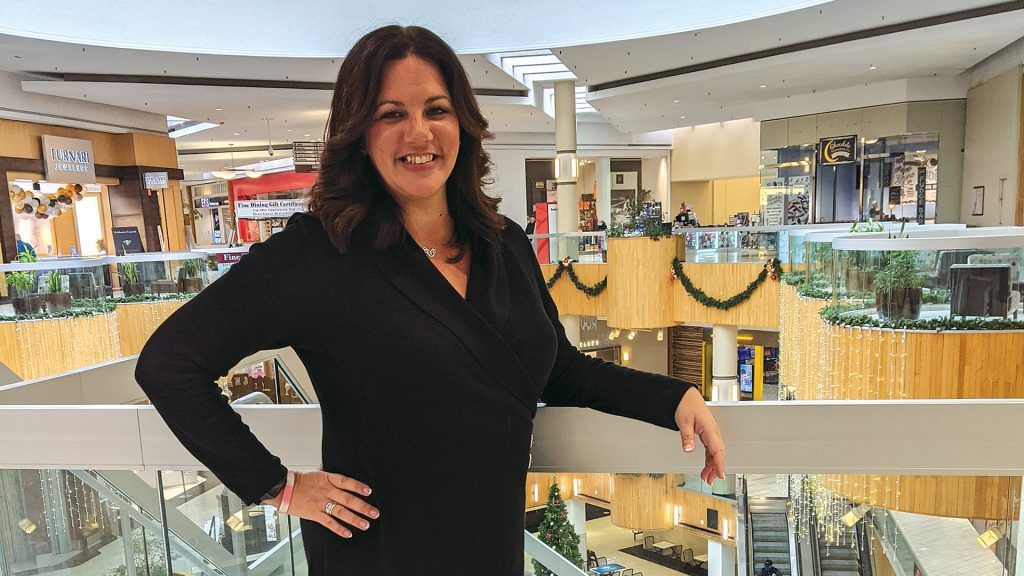
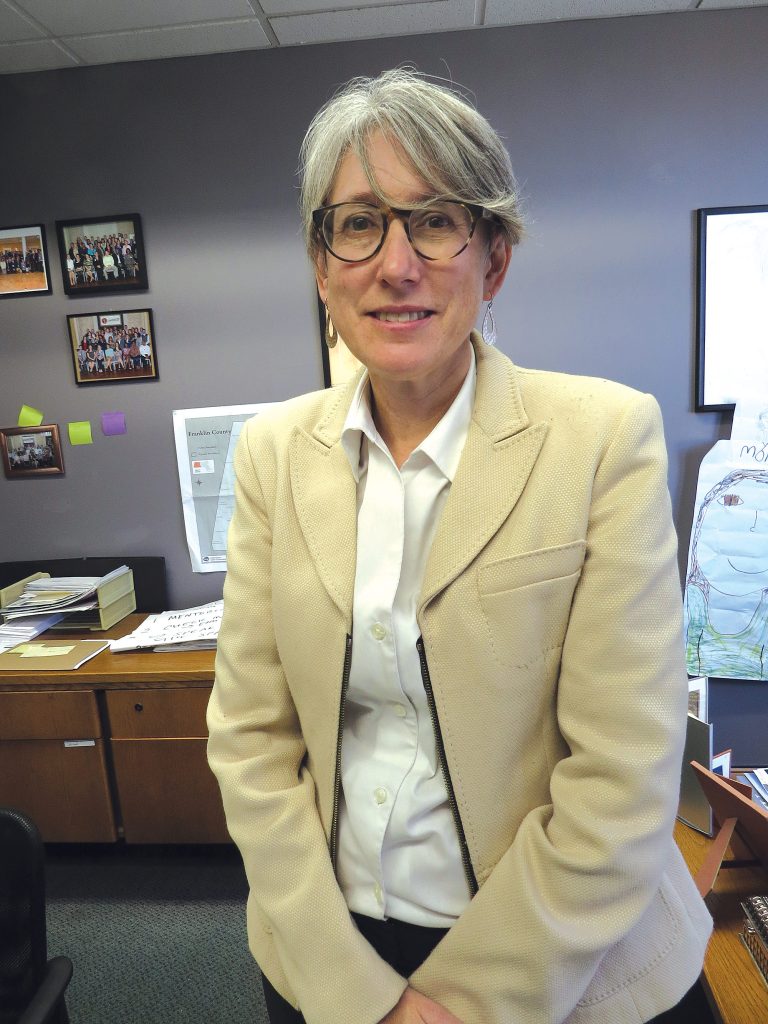
BERLIN, Conn. — Comcast has named Carolyne Hannan senior vice president of the company’s Western New England Region, leading a team serving more than 300 communities across Connecticut, Western Mass., Vermont, Western New Hampshire, and New York. In this role, Hannan is the top executive responsible for all aspects of the business, including customer experience, sales, marketing, operations, and financial performance.

“I am excited to welcome Carolyne back to our Western New England Region, where she started her Comcast career,” said Kevin Casey, president of Comcast’s Northeast Division, which includes 14 northeastern states from Maine through Virginia and the District of Columbia. “Her strong leadership, commitment to our customers, and proven track record of delivering our innovative products and services makes her a natural choice to lead the region.”

Hannan, who has held a series of progressively more senior management positions at Comcast over the past 17 years, returns to the Western New England Region, where she previously served as vice president of Sales and Marketing from 2008 to 2010. In her most recent role, Hannan served as vice president of Sales & Marketing for Comcast’s Freedom Region, which serves customers across Greater Philadelphia, New Jersey, and Northern Delaware.

“I’m thrilled to have been asked to lead Comcast’s Western New England Region and to deliver outstanding service and innovative products that enhance the lives of our valued customers,” said Hannan, who will be based in the region’s headquarters located in Berlin, Conn.

Daily News

ENFIELD, Conn. — Asnuntuck Community College (ACC) is once again offering a three-week wintersession. Registration is currently underway for 15 online accelerated courses that will be taught during the college’s winter break.

The classes begin on Dec. 27 and end on Jan. 14. The courses include Art Appreciation, Art History II, Introduction to Nutrition, Principles of Genetics, Principles of Management, Introduction to Software Applications, Spreadsheet Applications, Leadership in Early Childhood Programs, Introduction to Human Services, Massage Theory & Practice, Medical Terminology, Law and Ethics for Health Careers, General Psychology I, General Psychology II, and Principles of Sociology. Art History II and Principles of Sociology require either no or a low-cost ($40 or less) textbook. Phlebotomy Externship is also being offered.

Visit the website www.asnuntuck.edu for more information. Current non-students can click ‘Become a Student’ at the top of the page to begin. The session provides a way for students at other colleges to earn credit to be transferred back to their home institution. Students are advised to check with their college regarding transferability of courses.

Classes for the spring semester begin on Jan. 21. Registration is going on now. Visit www.asnuntuck.edu for more information.

Daily News

GREENFIELD — On Thursday, Dec. 16, the Massachusetts Department of Transportation (MassDOT) will convene stakeholders and launch a study to examine the benefits, costs, and investments necessary to restart passenger rail service from North Adams to Greenfield and Boston, with the speed, frequency, and reliability necessary to be a competitive option for travel along this corridor.

This study was required by legislation, passed in 2019, filed by state Sen. Jo Comerford and supported by state Sen. Adam Hinds and state Reps. Natalie Blais and Mindy Domb. More than 700 Western Mass. residents submitted testimony on behalf of the enabling legislation when it was heard by the Joint Committee on Transportation. The study launch meeting Dec. 16, which begins at 1:30 p.m., is open to the public. Register at www.mass.gov/northern-tier-passenger-rail-study.

Beginning in 1875, passenger rail service connected Franklin County with Boston along the Route 2 rail corridor. Passenger service from Boston to North Adams ended in 1958, followed by the end of service to Greenfield in 1960. Currently, the MBTA runs commuter rail service on the Fitchburg Line, along Route 2, but only as far west as Wachusett. The rail track through to Greenfield and North Adams remains, but is only used for freight service at the moment.

“Northern Tier or Route 2 rail is not just a transportation solution,” Comerford said. “It’s a matter of regional equity. It’s a climate change necessity. It’s an economic-development win for Western Massachusetts. And it can help solve Boston’s traffic-congestion problem and housing shortage — all at the same time.”

Blais noted that “this feasibility study is critically important as we strive to meet our ambitious climate goals while also addressing ways to reverse population losses and fuel economic development here in Western Massachusetts. Exploring the expansion of rail along the Route 2 corridor offers us the opportunity to examine transportation options that could benefit significant population centers across the Commonwealth.”

Linda Dunlavy of the FRCOG added that “we are so grateful to have an opportunity to recognize the potential of this transportation corridor and the value of passenger rail not only to Western Massachusetts but to the entire Commonwealth. The benefits of reducing traffic congestion, enhancing east-west transportation options, and contributing towards the state’s climate-resiliency goals are significant. We are excited to get started on this work in partnership with MassDOT and other stakeholders.”

Ben Heckscher, co-founder of the rail advocacy group Trains in the Valley, noted that “the restoration of passenger-rail service between North Adams, Greenfield, and Boston would provide people with an important alternative to driving Route 2. Anyone and everyone who would like to see passenger-rail service along this corridor should contribute their ideas to the work of the study team.”

Daily News

SPRINGFIELD — Today, Dec. 13, at noon, the World Affairs Council will present an Instant Issues Online webinar featuring Gedeon Werner, Novak Family Endowed Polish Chair at the School of Business at Quinnipiac University, on “Poland’s Quarrel With the EU: A Prelude to Polexit?”

Werner combines both academic teaching and leadership of the American Polish Business Leadership Scholarship program. Through this program, aspiring young Polish business professionals complete their MBA studies at Quinnipiac University and are provided with the opportunity to gain substantial working experience in American businesses. Werner also conceptualized and developed the Global Business Affairs Polish Certificate program to be offered at the School of Business. He serves on the board of directors of the the Polish Center of Discovery and Learning at Elms College.

World Affairs Council board member Michael Sweeney will moderate the program. The event is free and open to the public. To register, click here.

Daily News

SPRINGFIELD — Springfield Union Station welcomed back Vanessa Ford, the “Songstress of Springfield,” who is well-known for singing at various local area events, to record a new version of “O Holy Night” for the holiday season. She was joined by Springfield Conservatory of the Arts student Kayla Staley, who performed “The First Noel.”

The video will run on social media through Dec. 25. Click here to view it.

“This certainly is a special holiday season for us all,” said Nicole Sweeney, property manager for Springfield Union Station. “And I can’t think of a better way to start it than with the beautiful voices of Vanessa and Kayla.”

Ford began singing in the church choir at age 7, and she loves every genre of music. She is an aficionado of classical music, jazz, pop, traditional hymns, and contemporary gospel music. She has performed the national anthem for many local college sporting events, at Springfield Police Academy graduations, and for a multitude of high-profile local and national events.

Staley has been singing since she was 12. She enjoys singing at nursing homes, along with other public performances, and hopes to travel to different cities to sing and put smiles on people’s faces.

The video was planned, recorded, and produced by GCAi Digital PR Analyst Mary Cate Mannion, who is also a producer at New England Corporate Video.

Daily News

SPRINGFIELD — The famous Fort Carolers have returned to the Student Prince and the Fort Restaurant, where Christmas caroling will take place every night in the dining area through Christmas Eve.

For more than eight decades, Christmas caroling has been part of the holiday festivities at 8 Fort St. For many families, friends, and companies, it has become an annual tradition to visit the Student Prince and the Fort this time of year to hear the Fort Carolers sing the classics while enjoying the restaurant’s authentic German and American fare, along with lots of good cheer. This year they are back with ‘snow’ bubbles and lights.

“Our Fort Carolers truly put everyone in a festive mood,” Manager John Perry said. “Our team goes all out to create a joyous atmosphere with sparkling lights, festive decorations, paired Fort favorite entrees, and drinks. It’s the perfect setting whether you’re celebrating an old family tradition, starting a new tradition, or joining us for your company holiday party.”

The Student Prince and the Fort Restaurant has hosted Christmas caroling for more than 80 years. What once started out as a few carolers at the door has turned into an annual nightly performance of Christmas caroling for the many generations of customers who visit Springfield’s landmark restaurant for the holidays.

Reservations are necessary, and can be made by calling (413) 734-7475.

Business Talk Podcast Special Coverage

We are excited to announce that BusinessWest, in partnership with Living Local, has launched a new podcast series, BusinessTalk. Each episode will feature in-depth interviews and discussions with local industry leaders, providing thoughtful perspectives on the Western Massachuetts economy and the many business ventures that keep it running during these challenging times.

Episode 92: December 13, 2021

George Interviews Mark Keroack, President & CEO of Baystate Health

Peter Rosskothen

BusinessWest Editor George O’Brien has a lively, wide-ranging discussion with Peter Rosskothen, owner of the Log Cabin Banquet and Meeting House, the Delaney House restaurant, and other hospitality-sector businesses.  The two talk about everything from the state of the pandemic and its many implications for that sector to the ongoing workforce crisis in the region, to the price of steak, and how it keeps going up.  It’s a compelling discussion and must listening, so join us on BusinessTalk, a podcast presented by BusinessWest in partnership with Living Local.


Sponsored by:

Also Available On

Daily News

NORTHAMPTON — United Way of the Franklin & Hampshire Region has added four new members to its staff team, allowing it to enhance its work with partner organizations, donors, and general operations.

The new hires will augment the organization with their combined experience in leadership, education, marketing, donor relations, database management, and accounting. They are all eager to be part of a nonprofit that impacts the community in a positive way.

Jenny Coeur will serve as United Way’s program coordinator, Jenna Farrell as donor relations manager, Jennifer Nhong as database assistant, and Cathy Zimmerman as the organization’s bookkeeper.

“I am thrilled to grow the team with such successful and motivated people,” Executive Director John Bidwell said. “Each of our new employees comes with a strong skill set in the area she will oversee, and each will help us better serve people in transition or need in Hampshire and Franklin counties.”

Coeur, who began her work at United Way in mid-July, was previously a teacher and Math Department chair at Applewild School in Fitchburg. She has 13 years of experience in public and independent education as a community-focused teacher, program developer and coordinator, and department chair.

“I’ve always been driven by my passion for social justice and equity, and I enjoy collaborating with others,” she said. “The role I have taken on with United Way aligns with my experience, ambitions, and core values. Through my work, I’ve always strived to help a diverse range of stakeholders feel welcomed, heard, and supported.”

Coeur holds a bachelor’s degree in elementary education from Hampshire College and a master of education degree from UMass Amherst.

Farrell took on her role as donor relations manager in mid-September and will apply the experience she gained in the nonprofit world at UMass Amherst and skills she honed while working at for-profits in marketing and event management.

“My passion for community connection and living my values makes me a great fit for my position at United Way of Franklin & Hampshire Region,” she said. “I am a believer in this organization, and my prior work experience allows me to do my job with passion, focus, and determination.”

Farrell holds a bachelor’s degree in business administration from Western New England University.

Nhong started in her new role in early October and will help manage United Way’s database. She worked for 13 years at MicroTek, a nonprofit cable manufacturing company in Chicopee, in production, quality, and planning and management.

“I’m excited to be a part of an organization that impacts the community in such a positive way,” Nhong said. “I grew up in the Valley in a low-income household, so I know firsthand how United Way helps families and individuals in the community.”

Zimmerman, United Way’s bookkeeper, has worked as an accountant for Temp-Pro, Argotec, Sisters of Providence, and Holyoke Medical Center. She holds a bachelor’s degree in accounting from Elms College. She began her new role in early October and is excited to learn United Way’s accounting programs and systems.

Daily News

HOLYOKE — OneHolyoke CDC will hold its sixth annual Holyoke Community Dinner on Wednesday, Dec. 15 from 5 to 7 p.m. at Kelly School, 216 West St., Holyoke. The meal pickup event is free and open to all, and will feature a contact-free food giveaway in a transformed Winter Wonderland outdoor space with ice sculptures, light displays, and character inflatables.

The box of food, featuring all the fixings for a holiday dinner, will be gifted to the first 500 families that walk or drive through. This is the second year the community dinner is being held in the Flats as an outdoor event due to COVID-19.

For the past five years, the annual Holyoke Community Dinner has provided more than 350 Holyoke families with a night filled with food, fun, entertainment and the opportunity to build community among the residents of Holyoke. Past dinners have featured a hot meal catered by a local restaurant; entertainment provided by Dj Eco, Choco Band, and Bomba de Aqui; and participation by Luna Designs, Learn in Motion, Parks and Recreation, and other community members.

“Our goal with this event has been to bring people together with art, food, and entertainment. None of this would be possible without the help of our wonderful sponsors,” said Nayroby Rosa-Soriano, director of Community Engagement and Resident Services for OneHolyoke CDC. “OneHolyoke CDC wants to hold the yearly event despite the pandemic and bring back our creative outdoor Winter Wonderland event from last year. With the help of sponsors, there will be ice sculptures, light displays, character inflatables, and a box of food for the first 500 families. We are proud to partner with the Flats community and our many wonderful sponsors.”

Daily News

LUDLOW — LUSO Federal Credit Union recently announced the appointment of Rosey Mazza as vice president of Lending, as well as the promotions of Wilbraham staff members Timothy Tracy and Stephen Lopes to branch manager and assistant branch manager, respectively.

Mazza has close to 20 years of retail banking experience and previously served as LUSO’s Lending department manager for more than 14 years. As the newly appointed vice president of Lending, she will oversee the planning, directing, and organizing of the strategic and operational activities of LUSO’s retail and commercial lending programs.

“We are excited to welcome Rosey back to our LUSO family,” said Jennifer Calheno, president and CEO of LUSO Federal Credit Union. “Her experience and skill set will help guide our loan operations and build new strategies that support the changing needs of our current members, while expanding the department’s servicing platforms to grow with new members as well.”

LUSO also promoted two Wilbraham-based member service representatives. Tracy has served the community as a senior member service representative at the Crane Park branch for the last four years. As branch manager, he will be responsible for overseeing the day-to-day operations of the branch with Lopes’ assistance. Lopes began his career with LUSO in 2017 as a member service representative at the main branch and transitioned to the Crane Park location in 2020 as the head teller.

“Timothy and Stephen together hold a wealth of knowledge about the operations of our Wilbraham branch and the members who regularly conduct their banking there, as well as LUSO’s products and services,” Calheno said. “With their collective background, we know that Timothy and Stephen will make sure that our members have a positive experience each time they enter the Wilbraham branch.”

Daily News

SPRINGFIELD — Mercedes-Benz of Springfield is revving up the holiday spirit by hosting a toy drive to benefit Square One’s children and families.

“Every child deserves to experience the magic of the holiday season,” said Michelle Wirth, owner of Mercedes-Benz of Springfield. “We are happy to play a small part in making that holiday wish a reality.”

Toys may be be dropped off anytime during normal business hours through Sunday, Dec. 19. The dealership is located at 295 Burnett Road in Chicopee.

“We are so grateful to our friends at Mercedes-Benz for helping us bring holiday magic to all of our Square One families,” said Kristine Allard, vice president of Development & Communication for Square One. “It’s truly heartwarming to think about the joy that our children will experience as a result of our community’s kindness.”

Square One currently provides early learning services to more than 500 infants, toddlers, and school-age children each day, and family-support services to 1,500 families each year, as they work to overcome the significant challenges in their lives.

Daily News

BOSTON — Confidence among Massachusetts employers fell for a fourth consecutive month during November amid renewed COVID-19 concerns, supply-chain disruptions, and the highest rate of inflation in three decades.

The Associated Industries of Massachusetts (AIM) Business Confidence Index declined five-tenths of a point to 57.9 last month. The Index is now at its lowest level since March, though it remains 8.6% higher than a year ago.

Employer views of the U.S. economy turned pessimistic for the first time since January, while attitudes toward the Massachusetts economy also weakened slightly.

Overall confidence remains in optimistic territory. On the positive side, construction companies and other businesses involved in infrastructure work were buoyed by passage of the $1 trillion Infrastructure Investment and Jobs Act signed by President Biden on Nov. 15.

Employers remain concerned about their ability to obtain parts and materials.

“The only way we can continue to grow is to have the supply-chain disruptions come to an end and to have the labor shortages ease. We have had to turn away potential customers due to the inability to ensure delivery times,” wrote one employer who participated in the confidence survey.

Another wrote that “supply-chain disruption is placing a lot of strain on our ability to service our customers. I really believe the supply-chain challenges will be with us well into the later part of 2022. It’s a mess.”

The AIM Index, based on a survey of more than 140 Massachusetts employers, has appeared monthly since July 1991. It is calculated on a 100-point scale, with 50 as neutral; a reading above 50 is positive, while below 50 is negative.

The constituent indicators that make up the Index were mostly lower during November. The confidence employers have in their own companies was virtually flat at 61.1, leaving it 9.3 points better than it was a year ago.

The Massachusetts Index assessing business conditions within the Commonwealth declined 0.7 points to 57.3, up 10 points since November 2020. The U.S. Index measuring conditions nationally shed 1.5 points in November to enter pessimistic territory at 48.8.

The Current Index, which assesses overall business conditions at the time of the survey, lost 0.5 points to 57.7. The Future Index, measuring projections for the economy six months from now, declined 0.4 points.

The Employment Index was the only indicator to rise during the month, gaining 0.3 points to 56.2 as signs of a thaw began to appear in the labor market.

Large companies (56.4) were more bullish than medium-sized companies (53.6) or small companies (51.1). Companies located north of Boston (61.9) remained significantly more confident than those in other regions of the Commonwealth.

Michael Goodman, professor of Public Policy at UMass Dartmouth and a member of the AIM Board of Economic Advisors (BEA), said the Massachusetts Legislature’s newly approved distribution of federal stimulus money under the American Rescue Plan Act, combined with the rollout of substantial federal infrastructure investments, will add momentum to a state economy that slowed to a 2% annual growth rate in the third quarter.

“In addition to boosting growth in the near term, these federal funds will allow Massachusetts to address long-standing and critical challenges including job training, transportation, housing, and education,” Goodman said. “Wise public investments in these and other areas will position the state for more sustainable and equitable growth over the long term.”

AIM President and CEO John Regan, also a BEA member, said employers will watch next year’s gubernatorial election carefully now that incumbent governor and business ally Charlie Baker has decided against running for a third term.

“Any change in the corner officer on Beacon Hill affects the confidence of Massachusetts employers,” Regan said. “Gov. Baker and Lt. Gov. Karyn Polito will leave a legacy of disciplined fiscal management and policies that have allowed Massachusetts to remain a pre-eminent center of technology and commerce. From massive regulatory reform to leading the Commonwealth through the COVID-19 pandemic, Gov. Baker has employed what he calls his ‘get stuff done’ approach to create economic opportunity and prosperity for the citizens of Massachusetts.”

Daily News

NORTHAMPTON — Steve Herrell, founder of Steve’s Ice Cream in Somerville and Herrell’s Ice Cream in Northampton, announced the release of his new book, Ice Cream and Me. The book is somewhat biographical and contains stories from his 41 years as an innovator in the ice-cream industry. It is illustrated by local artist Allie Martineau.

Herrell started ice-cream making at his business, Steve’s Ice Cream, in 1973, offering a creamy and dense ice cream and originating the mix-in. He created such notable flavors as Cookies ‘n’ Cream and Heath Bar Crunch. These innovations revolutionized the ice-cream industry.

According to Jerry Greenfield, co-founder of Ben & Jerry’s, “Steve Herrell is an icon and literal giant in American ice cream. Ben and I were thrilled to meet Steve in his original store near Boston in the early ’70s. It was there that he introduced the ice-cream mix-in to the world and mechanically altered a freezer to bring back a rich, creamy ice cream. His book is full of fantastic stories, good humor, the challenges and rewards of an entrepreneur, and surprising tales that will delight you and leave you feeling hungry for a sundae!”

Ice Cream and Me is available at Broadside Books, A2Z Science and Nature, and Booklink Booksellers, all in Northampton; Amherst Books in Amherst; Odyssey Bookstore in South Hadley; and on Amazon by clicking here.

Daily News

SPRINGFIELD — The Women’s Fund of Western Massachusetts (WFWM) has invited Nancy Folbre, a scholar and expert on economics and the family, to a community discussion on gender, caregiving, and unpaid labor on Wednesday, Dec. 15 at noon.

WFWM CEO Donna Haghighat will facilitate the conversation to center the impact of caregiving on women’s careers and their livelihoods and the physical, psychological, social, financial, and emotional burdens associated with this form of unpaid labor.

Women tend to be the first people called upon to care for sick and elderly loved ones, in addition to being the primary child-rearing parent. According to the National Alliance for Caregiving and AARP, an estimated 66% of caregivers are female. The Family Caregiving Alliance posits that “the value of the informal care that women provide ranges from $148 billion to $188 billion annually.” While meeting the needs of ailing family members and juggling work and family obligations, women tend to neglect their health and well-being.

This discussion will include a holistic view of the impact of unpaid care on women’s lives. For access to this virtual community event, visit www.mywomensfund.org/wait-what-dec21. To learn more about Folbre, visit her blog, Care Talk, at blogs.umass.edu/folbre.

Daily News

DANVERS — Hancock Associates, a leading provider of land-surveying, civil-engineering, and wetland-science services, recently announced it has acquired Sherman & Frydryk, LLC, a land-surveying and civil-engineering firm located in Palmer.

With roots dating back to 1950, Sherman & Frydryk’s long list of clients includes residential and commercial developers, municipalities, service utilities, MassDOT, hospitals, and more throughout Hampden, Hampshire, and Worcester counties and the surrounding areas.

Sherman & Frydryk will operate as a division of Hancock Associates. Don Frydryk will serve as regional office manager, and the current staff will continue to be part of the Sherman & Frydryk team.

The acquisition assists Hancock in expanding services to Central and Western Massachusetts. It also adds historical survey records from W.H. and H.W. Brainerd, John Casey, Nathaniel Clapp, Charles Dingman, R.O. and G.F. Dingman, Kenneth Sherman, Sherman and Woods, Sherman & Frydryk, Richard Stowe, and Arthur Sullivan to Hancock’s collection of land-surveying and civil-engineering resources.

“Hancock Associates had been looking to expand services to Western Massachusetts, and having Sherman & Frydryk as a division checked all the boxes,” said Greg Gould, Hancock’s vice president and associate. Our type of clients, quality work, and work ethic are very much in sync. I grew up and currently live in the area, so it’s a bit of a dream come true for me to assist in the transition and be based in the Palmer office.”

Frydryk added that he and Hancock Associates President Wayne Jalbert have known each other since their days at the University of Lowell, now UMass Lowell.

“When we first discussed a possible acquisition, we quickly discovered how much our firms had in common,” Frydryk said. “By becoming a division of Hancock Associates, we’re able to continue providing the highest-caliber land-surveying and civil-engineering work, expand our wetland-science services, and provide security for our clients and employees. We’re excited about the future.”

Daily News

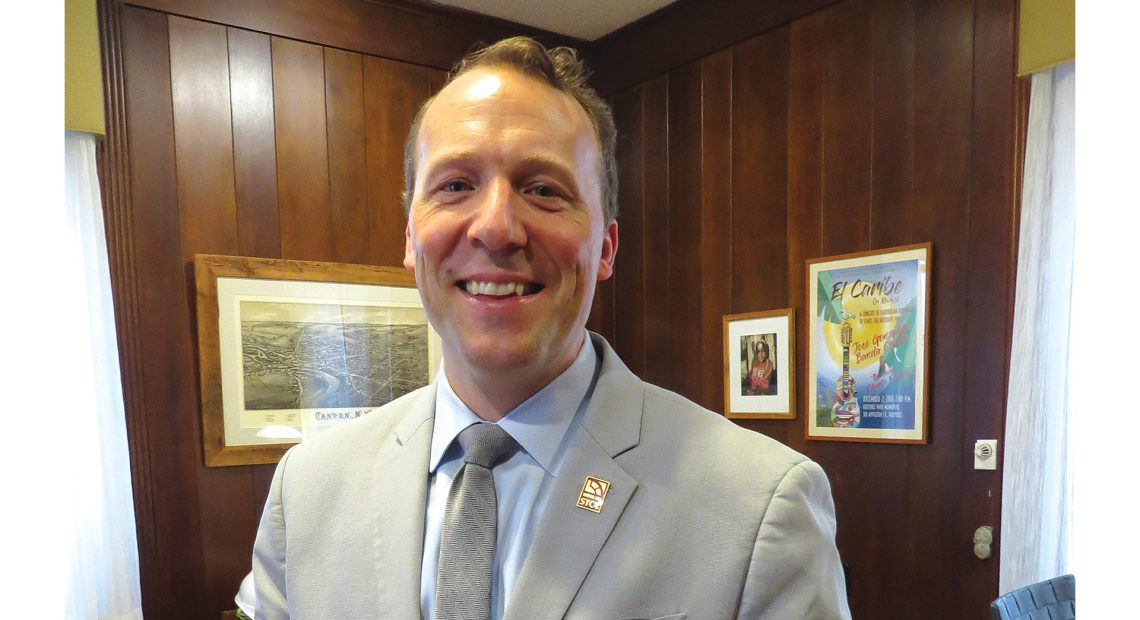
SPRINGFIELD — Springfield Technical Community College (STCC) received two grants worth $55,000 from the Community Foundation of Western Massachusetts.

A $30,000 Flexible Funding Grant awarded to the STCC Foundation will be used to boost the student-empowerment fund, which was created as a resource for students facing a variety of barriers standing in the way of their ability to complete their education.

Students in need of support for short-term housing, transportation, childcare, academic program resources, and nutritious meals can apply for the help they need through the empowerment fund, freeing them to focus on their studies and complete their programs.

A separate $25,000 grant from the Community Foundation will be used to fund the STCC’s COVID-19 vaccine video. STCC has created a video to promote vaccinations. All community colleges in the Commonwealth are requiring students, faculty, and staff to be fully vaccinated by the start of the spring semester in January.

This vaccine requirement is aimed at ensuring the safest learning and working environment possible for all members of the STCC community.

The STCC Foundation, a nonprofit organization, helps STCC meet its goals and commitment to provide superior educational opportunities to the community.

“We are very grateful for the Community Foundation’s support,” said Shai Butler, STCC’s interim vice president of Advancement and External Affairs. “They are helping us to advance our mission to support students as they transform their lives. These have been challenging times for our students. Some of them have gotten sick and have had to take time off to recover. Some have lost jobs or have had to cut back their hours to take care of their families. The funding from the Community Foundation will help them stay in college and pursue their goals.”

Daily News

SPRINGFIELD — A $100,000 Urban Agenda Grant was recently awarded to Springfield WORKS, the lead applicant in a team including Home City Development Inc. as the primary partner. The funds will be used to facilitate a community-wide collaboration, with the Western Massachusetts Economic Development Council to manage, coordinate, and support the work of numerous participating program partner organizations, in efforts to help families in Springfield achieve economic stability.

The funds will go toward the 2Generation/Whole Family Approach to Pathways to Careers and Home Ownership Program, which is a holistic, creative, and collaborative approach that helps low-income families access career-development tools and training to successfully position individuals on a positive career trajectory. This program will focus on adults and children, addressing the gaps and barriers within multiple systems, including the ‘cliff effect,’ which makes transitioning out of state assistance programs challenging. This project also brings a gender- and racial-equity lens to workforce strategies.

“This is an important partnership that helps families achieve economic gains without fear of losing an important safety net like housing,” said Tom Kegelman, executive director of Home City Development Inc.

Home City Development is the main partner in this project, which means all program participants are Home City Development residents. The program will incorporate the Springfield WORKS’ 2Generation/Whole Family Approach with Home City Development’s HUD Family Self Sufficiency program. Other partners include Dress for Success of Western Massachusetts, HCS Head Start, EforAll, Families First, Springfield Partners for Community Action, and MassHire Springfield.

Springfield WORKS leverages employer partners including Baystate Health, MGM Springfield, United Personnel/Masis, Springfield Public Schools, and others for career pathway opportunities.

“Collaborative partnerships that include wraparound supports, employers, and training partners help remove barriers to ensure that pathways to quality jobs are open and accessible,” said Anne Kandilis, director of Springfield WORKS.

Daily News

EAST HARTFORD, Conn. — The nominees are set, and the public can now vote in the latest round of American Eagle Financial Credit Union’s (AFECU) Cash Back to the Community program, which has provided nearly $163,000 to local nonprofits since the program’s inception in early 2020.

AEFCU members and the general public are invited to view the list of nominees and vote at americaneagle.org/cashbacktothecommunity. The voting period ends on Sunday, Dec. 19.

“Cash Back to the Community has been a remarkable experience for our American Eagle team these past two years,” said AEFCU President and CEO Dean Marchessault, who will be retiring from the credit union at year’s end. “I have enjoyed watching this program grow and witnessing the substantial impact these quarterly donations have had in our local communities. This is my last round of Cash Back to the Community as American’s Eagle’s president and CEO, and it’s my hope we’ll see our most vigorous voting period yet. And so I encourage everyone to log on to americaneagle.org and vote for your favorite nonprofit.”

Through its Cash Back to the Community program, American Eagle provides thousands of dollars each quarter to three nonprofit and/or 501(c)(3) organizations within its service area — Hartford, Middlesex, Tolland, and New Haven counties in Connecticut, and Hampden County in Massachusetts. AEFCU donates 1% of its credit- and debit-card interchange income, which is then evenly distributed to the top three vote getters during the Cash Back to the Community voting period.

Last quarter’s winners included the Southington Girls Softball League, the Asnuntuck Community College Food Pantry, and Our Piece of the Pie, with each organization receiving a $8,614 donation from American Eagle.

Daily News

AMHERST — Two visionary financial gifts have provided a strong foundation for UMass Amherst nurses and engineers to collaborate and lead transformational change in patient care, nursing practice, and medical-product development.

In May, alumni Michael and Theresa Hluchyj, longtime supporters of both the College of Engineering and the College of Nursing, committed $1 million in seed funding for a collaborative center. Building on their prior philanthropy devoted to graduate fellowships, their vision was to help foster partnerships between the two disciplines to identify issues and develop innovative solutions.

“Innovation is often accelerated at the intersection of different academic disciplines,” Michael Hluchyj said when announcing the gift. “The worldwide health crises resulting from the COVID-19 pandemic make clear the critical need for innovative solutions in clinical settings where both nursing and engineering play vital roles.”

Inspired by the transformational possibilities enabled by the Hluchyjs’ generosity, in September, the Elaine Nicpon Marieb Charitable Foundation gave a gift of $21.5 million to the College of Nursing, with a significant portion designated to support the Elaine Marieb Center for Nursing and Engineering Innovation.

“The innovative nursing engineering program currently being launched at the university was clearly the catalyst for capturing the interest of the foundation and is consistent with Elaine’s own spirit of innovation in learning,” said Martin Wasmer, Elaine Nicpon Marieb Charitable Foundation trustee.

In the few short months since the foundation gift was announced, the Elaine Marieb Center for Nursing and Engineering Innovation has established an initial laboratory footprint on the sixth floor of Life Sciences Laboratories, said center co-directors Frank Sup, Mechanical and Industrial Engineering, and Karen Giuliano, Nursing and Institute for Applied Life Sciences.

The center also currently supports two graduate fellowships and is accepting pilot grant applications from interdisciplinary nursing and engineering teams. Its first postdoctoral fellow and undergraduate interns are expected to begin work next summer.

As a nurse-innovator with experience in both clinical care and product development during her many years in industry, Giuliano says involving nurses in the earliest stages of the development process is crucial.

“As the nation’s largest group of healthcare professionals, nurses use more products and are a part of more services than any other healthcare professional,” she said. “Traditionally, nurses have not been included as part of the healthcare innovation process — the Elaine Marieb Center intends to change that.”

Sup added that “the mission is to advance human health and wellness by training the next generation of nurses and engineers to be leaders at the frontiers of healthcare delivery. The nurse-engineer approach represents a powerful, integrated, real-time collaboration to identify healthcare problems, iterate potential solutions, evaluate outcomes, and balance tradeoffs to optimize system performance and patient care.”

The Elaine Marieb Center has already established itself as a Center of Excellence for improving the safety and usability of IV smart pumps. Intravenous (IV) infusion pump systems are among the most pervasive technologies in healthcare, used by about 90% of hospital patients, and have numerous well-known safety and usability issues that have a negative impact on patient care. This program of research is being led by Giuliano, with results from 16 publications representing both research and thought already disseminated.

More recently, the center research is focused on flow-rate accuracy during actual clinical use, with a series of studies being led by Jeannine Blake, MS, RN. Starting in July, Blake will be the first nursing doctoral student to enter an engineering postdoctoral fellowship, with mentorship from Juan Jiménez, Mechanical and Industrial Engineering, who uses fluid flow engineering principles to better understand human systems.

Under Sup’s leadership, the center is also starting research on the use of robotics in healthcare. It teams doctoral students from both engineering and nursing, as well as an undergraduate nursing honors student, to identify challenges and develop robotic solutions to improve healthcare delivery for patients and providers.

A longer-term goal enabled by the Elaine Marieb Foundation gift will be the establishment of a lab at the university’s Mount Ida campus, which will provide a place for healthcare product and service testing with a diverse group of nurses and other frontline clinical end users.

Daily News

SPRINGFIELDBusinessWest will honor its fourth annual Women of Impact on Thursday, Dec. 9 from 5 to 8 p.m. at the Sheraton Springfield Monarch Place. Tickets cost $85 per person. To purchase tickets, call (413) 781-8600, ext. 100, or e-mail [email protected].

This year’s class, like the first three, demonstrates the sheer diversity of the ways women leaders in our region are making an impact in business, the nonprofit world, and in the community. Profiled the Oct. 27 issue of BusinessWest, they are:

• Jessica Collins, executive director of the Public Health Institute of Western Massachusetts;

• Elizabeth Dineen, CEO of the YWCA of Western Massachusetts;

• Charlene Elvers, director of the Center for Service and Leadership at Springfield College;

• Karin Jeffers, president and CEO of Clinical and Support Options;

• Elizabeth Keen, owner of Indian Line Farm;

• Madeline Landrau, Program Engagement manager at MassMutual;

• Shannon Mumblo, executive director of Christina’s House; and

• Tracye Whitfield, Diversity, Equity, and Inclusion officer for the town of West Springfield and Springfield city councilor.

The event is sponsored by Country Bank and TommyCar Auto Group (presenting sponsors) and Comcast Business and Health New England (supporting sponsors).

Daily News

SPRINGFIELD — Do you know someone who is truly making a difference in the Western Mass. region? BusinessWest invites you to nominate an individual or group for its 14th annual Difference Makers program. Nominations for the class of 2022 must be received by the end of the business day (5 p.m.) on Thursday, Dec. 9.

Difference Makers was launched in 2009 as a way to recognize the contributions of agencies and individuals who are contributing to quality of life in this region. Past honorees have come from dozens of business and nonprofit sectors, proving there’s no limit to the ways people can impact their communities.

So, let us know who you think deserves to be recognized as a Difference Maker in our upcoming class by visiting businesswest.com/difference-makers-nomination-form to complete the nomination form. Honorees will be profiled in an upcoming issue of BusinessWest and celebrated at a gala in the spring.

Cover Story

Changing Course

Susan Beaudry, founder of Beau Co. Wine

Susan Beaudry, founder of Beau Co. Wine

Among the many side effects of COVID and the so-called Great Resignation that has accompanied it has been a recognized surge in entrepreneurial activity. It has manifested itself in many ways, from soaring registration for the “Basics of Starting a Business” course at the Massachusetts Small Business Development Center to the absorption of many vacant storefronts, to area chambers filling their calendars with ribbon cuttings. Each story is different, but there are some common threads, including a desire to use the time and inclination provided by the pandemic to realize what’s important. And in many cases, it’s starting that business that one has always dreamed about.


Susan Beaudry says there’s a story behind every wine label she distributes.

That’s certainly the case with one called Sophie, a product of South Africa.

“The locals … their accents couldn’t pronounce sauvignon blanc,” she explained. “And it kept coming out ‘Sophie,’ so they named the wine Sophie. The wife of the husband-and-wife team that own it created this beautiful young woman that’s on the label — Sophie. The tagline is ‘the most beautiful woman that never was.’”

It is these stories — and, again, she has dozens of them — that go a long way toward explaining Beaudry’s fascination for wine, and her dream of creating a business that brings labels like Sophie to the 413.

It’s a dream she’s had for some time now, and one that became real because of COVID-19 — at least in some respects.

Beaudry, as many readers may know, was the executive director of the Springfield Symphony Orchestra, which was essentially shut down by COVID in early 2020, and there are now questions about when and if it will return to the place in regional culture it occupied before COVID arrived.

But that’s another story.

This one is about how Beaudry found the time — and the inclination — during COVID to move ahead and make that dream, called Beau Co. Wine, reality.

“Toward the end of 2020, we started seeing many people who were either laid off or who had left their jobs, for whatever reason, who wanted to start their own businesses.”

The wines she imports can be found, among other places, at the Springfield Wine Exchange, a new storefront in Tower Square owned by Carlo Bonavita, who is part of this movement, if we can call it that, as well. He decided a few years ago to go back into business — the liquor-selling business — for himself and found some additional motivation during the pandemic (more on that later).

Beaudry and Bonavita are far from the only ones to use this crack in time to pause, re-evaluate, and perhaps fulfill an entrepreneurial urge, said Samalid Hogan, executive director of the Massachusetts Small Business Development Center’s Western Mass. office. But not for much longer, which we’ll get to in a minute.

She told BusinessWest that, as a result of a number of colliding factors — from people losing their jobs to individuals losing interest in what they were doing, to remote workers not at all excited about orders to return to the office — there has been a surge in entrepreneurial energy.

“Toward the end of 2020, we started seeing many people who were either laid off or who had left their jobs, for whatever reason, who wanted to start their own businesses,” she explained. “And in 2021, we’re seeing a huge surge in people calling the office looking for help in starting a business. There were so many that we had to create another ‘Basics of Starting a Business’ class; we usually offer one a month, but we had to double up and increase the number of registrations from 30 people to 40 people.”

And now, she is part of this story, although she certainly doesn’t need the “Basics” course.

Indeed, she will be stepping down from her role with the MSBDC later this month to start her own consulting business.
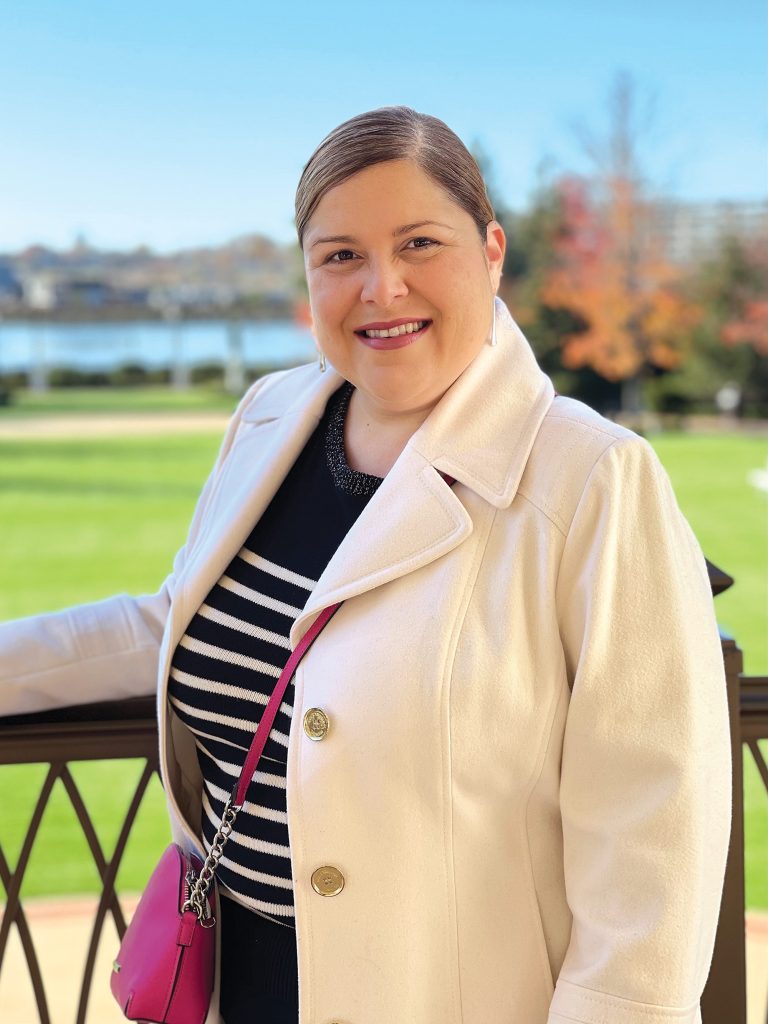
Samalid Hogan

Samalid Hogan says many people reached a crossroads during the pandemic and chose the road to business ownership — and she’s one of them.

She said that, like others during this time of COVID, she did a lot of thinking about what was important and what she wanted to do with her life. And she decided that now was the time to put her own name in the door.

Actually, that name will be Greylock Management Consulting, a nod to the highest mountain in the state, a venture that will be focused on both existing businesses and the agencies providing services to startups, especially minority-owned ventures.

Hogan said she is launching this venture with both eyes open, and full acknowledgement of the fact that consulting is often a challenging way to earn a living and a significant departure from a steady job with a steady paycheck. But it’s a gamble she’s ready to take.

Actually, she’s taking two gambles. In addition to her own business, she has become chief operating officer for the Latino Marketing Agency, launched by Veronica Garcia, who also fits the profile of someone who found time and inspiration during the pandemic to move ahead with an entrepreneurial venture.

A television producer, soap-opera actress, and influencer in the Latino community, she worked for many years at New England Public Media, where she was the host of a popular and award-winning bilingual series named Presencia. In April of this year, when NEPM announced it could no longer produce the show, she left the station to start to Viviendo Sin Limites (Living Without Limits), with the goal of having it become the go-to resource for mental health and emotional well-being for the Spanish-speaking population. She also started the Latino Marketing Agency, in conjunction with Hogan, to help Hispanic-owned businesses with that critical aspect of their operations.

“I now have the privilege to know many entrepreneurs in this region, and I’ve found that marketing is one of the areas where they need assistance, especially Latino businesses,” she said, adding that, like Hogan, she is confident that her change of course career-wise, from steady paycheck to the uncertainty of being a business owner, is the right course.


Proof Positive

As noted, Bonavita is no stranger to wines and the liquor business. Indeed, his family owned and operated several liquor stores in the area, including Riverside Liquors in Agawam, and he worked at them for a number of years.

When he left in 2002, he signed a non-compete agreement that was 15 years in duration. It wasn’t long before he started counting the years down, and after a decade or so of working in property management, specifically condominium projects, he was quite ready to go back to working for himself.

COVID only served to accelerate the process further.
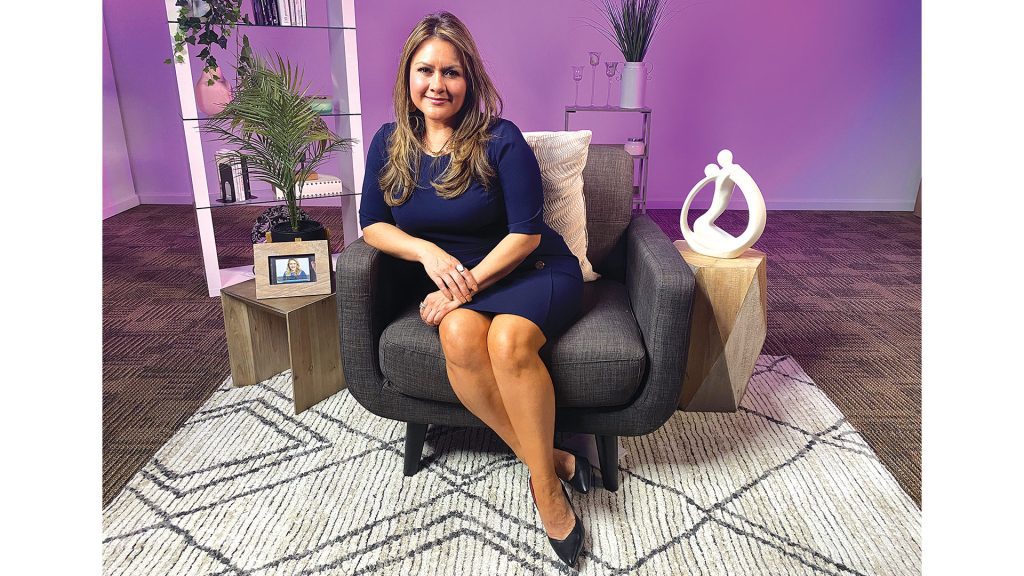
Veronica Garcia has launched two new ventures

Veronica Garcia has launched two new ventures, Latino Marketing Agency and a platform called Viviendo Sin Limites — Living Without Limits.

“When COVID hit, it changed the way we did business a zillion percent,” he explained. “It meant more hours, more everything, and at the age I was getting to, I was getting burned out and tired of this. I knew it was time to do what I wanted to do.”

And that was to open another business of his own, one he calls the Wine Exchange. He has a wide variety of labels with price tags from $7.99 to $115, and features a variety of gift baskets as well. He opened in October, good timing considering the approaching holidays, and said he’s off to a good start thanks to those who are returning to the office tower in his building and the others in the downtown area.

As for his decision to strike out on his own?

“I absolutely love it — I really do,” he said. “I’m not a guy who could retire completely, and I couldn’t sit at home. So this is perfect; it’s where I want to be at this point in my life.”

Beaudry, who provides most of the labels on his shelves and in his racks, said essentially the same thing, but her story — her dream of becoming a wine wholesaler, importer, distributor, and ‘enthusiast’ — is much different and took a lot longer to become reality.

“I was getting burned out and tired of this. I knew it was time to do what I wanted to do.”

She said her love of wine developed over time and especially when she was traveling extensively for her former employer, Simplex. Her travels would take her to its various branch offices around this country and other countries, and would inevitably involve visits to local attractions — and restaurants, preferably the ‘hole in the wall’ she asked to be taken to.

The good food she encountered was almost always accompanied by good wine as well. She would attempt to replicate what she encountered, food and beverage-wise, at dinner parties that would grow in size over time, with many of the attendees encouraging her to start her own restaurant or other related business.

She said she long desired to venture into wine importing and distributing, but life and family responsibilities made it difficult to leave a steady paycheck and take that leap.

“I think COVID presented the opportunity, with the symphony not performing and all the employees furloughed,” she explained. “Meanwhile, my daughter had just completed her first year of college, so the stars were aligned for me; I went ahead and got started.”

There are many stories like these being written in the region at this unprecedented time, when many have been sidelined by COVID and others have taken stock of their lives and decided they wanted — and needed — something different. The so-called Great Resignation (Bonavita and others we spoke to could be considered part of that) has prompted some to leave for other jobs, but others to absorb some risk and go into business for themselves, Hogan said.

The phenomenon has manifested itself in many ways, from new beer labels to the absorption of vacant storefronts, to area chambers of commerce giving their giant ceremonial scissors a workout with seemingly non-stop ribbon cuttings.

And also those soaring registration numbers for the MSBDC’s “Basics of Starting a Business” class, which is now offered online because of the pandemic, said Hogan, adding that she has seen a very diverse group of individuals gravitate to that offering.

By that she meant both older and younger men and women, those representing many ethnic groups, and people with varied backgrounds, from professionals to retirees, to some not far removed from the college classroom.

The class, as might be gleaned from its title, focuses on the basics — writing a business plan, legal considerations, licensing, insurance, business entities, and much more.
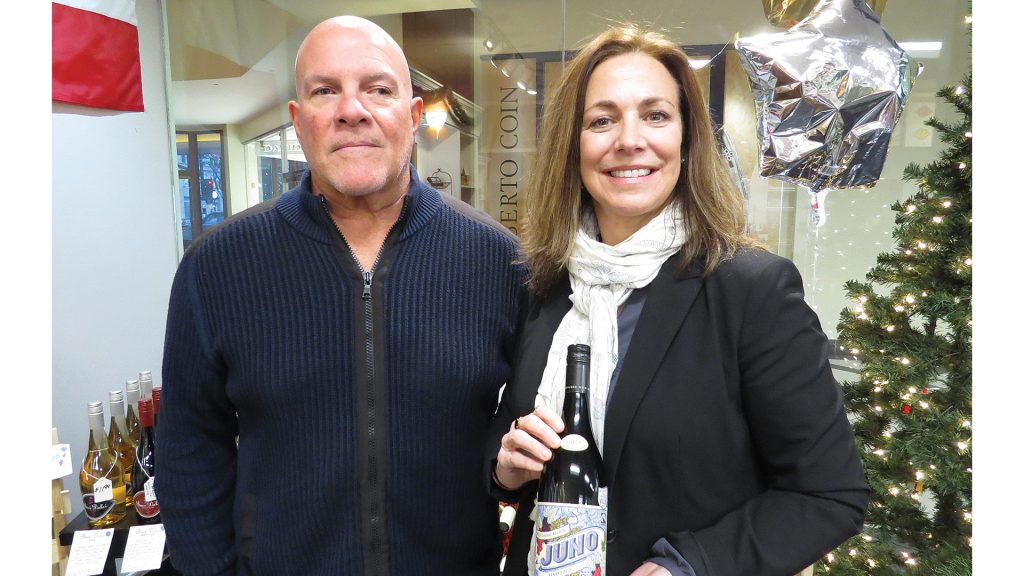
Many of the labels Susan Beaudry now distributes can be found at the Springfield Wine Exchange, founded by Carlo Bonavita, left.

“We don’t give advice during the class,” she stressed. “The goal is to give information to the attendees so they understand all that is involved with starting a business from an administrative, practical point of view; we don’t get into business models, and we don’t get into whether you have a good idea or not.”

Many who sign up for that class will eventually reach out for one-on-one advisory services from the agency, she said, adding that there has been a decided uptick in the number of people seeking such services.


Grape Expectations

As for her own venture, Greylock Consulting, Hogan is confident she has a good idea, one born from a desire help more small-business owners, especially minority-owned businesses. Her plan is to consult for individual businesses and also the various groups assisting such businesses and help streamline and improve the programs they provide.

She said she has several clients in the pipeline and is confident she can succeed in the challenging world of consulting.

“I’ve done consulting before,” she said. “You have to have a good, healthy pipeline of clients, there’s a lot of proposal writing involved, a lot of meetings prior to revenue-generating activities that you have to be willing to do and invest your time in. It’s a different world, but I like it.”

It’s a different world for Beaudry, as well, but one that she long desired to be in.

That said, she acknowledged that starting her importing and distribution company required more than time and inclination. It also requires capital, and a lot of contacts.

“It took a lot of tenacity — finding a warehouse, securing the insurances, the licenses, and everything else you need,” she told BusinessWest. “It’s really just been about working my contacts, people I know who tell me, ‘this is where we buy our great wines; the person who owns it is this … go introduce yourself.’ It’s been typical sales-call daily activity: going out, shaking hands, letting people know who I’m representing and some of the wines that I have available.

“It’s also very new — it’s just starting to gain momentum now,” she went on, adding that there have been distribution issues to contend with and other challenges, but, overall, she is making steady progress.

The next step is to create her own import activities, Beaudry said, adding that she will soon be traveling to Europe to meet with some small, boutique vineyard owners and winemakers, with the goal of importing some labels on her own.

She has a 2,000-square-foot warehouse in Westfield, one she hopes — and expects — to outgrow in only a year or two, and plans to distribute the wines she brings there to restaurants, country clubs, liquor stores, concert arenas, “anywhere you can buy a glass of wine.”

At present, she carries 58 different SKUs, and she’s connected with another distributor who will give her another 100, all them small, boutique winemakers that have a story.

“These are small businesses, family-owned, multiple generations for many of them,” she said. “I want to stick with these family-owned small options that have a lot of historic value — and they have interesting stories; the further back the history of the vineyard goes, the more interesting the story is, and a lot of people who love wines also love the stories.”

As for Garcia’s story, it’s another one where the opportunity and inclination were there to propel her to her current status as business owner.

She said she has long understood that, in general, and within the Hispanic community in particular, mental illness is something that isn’t talked about — or really understood. And she has long desired to create a forum where such issues could be discussed and both information and inspirational stories could be presented. So when NEPM announced that it would no longer produce Presencia, she gave her notice and created Viviendo Sin Limites.

Its stated mission is to “motivate, inspire, educate, and inform in a dynamic environment through interviews, blogs, conferences, sharing personal experiences related to our emotions and well-being, and offer tools to have an open, lively, positive, creative, and joyful mind,” and the goal is to be one of the first talk shows in New England for the Latino community through social media such as Facebook, YouTube, and Instagram.

As for the Latino Marketing Agency, it has already signed on a few clients to provide marketing and consulting services, she said, adding that she believes there is enormous potential for such a venture in this market — for both Hispanic-owned businesses and companies looking to market effectively to the region’s growing Hispanic community.


Dream Weavers

Summing up what she’s seeing, hearing — and doing herself, Hogan said that, because of the pandemic and issues springing from it, including those leading to all those resignations, many people are finding themselves at a crossroads.

And increasingly, they’re taking the road to entrepreneurship, one that certainly has its share of dangerous curves, speed bumps, hills, and dips. This road is not for the faint of heart, but in this climate, many people are finding they have what it takes to at least start down that road and pursue a long-held dream.

That’s how it is for Beaudry, who spends a good amount of time telling stories like the one about the Sophie label from South Africa and countless others now in her warehouse and on area shelves.

As for her own story, it’s still being written, and like the many others now generating some entrepreneurial energy, she’s finding each chapter to be everything she hoped it would be, and more.


George O’Brien can be reached at [email protected]

Construction Special Coverage

More Demand Than Supply

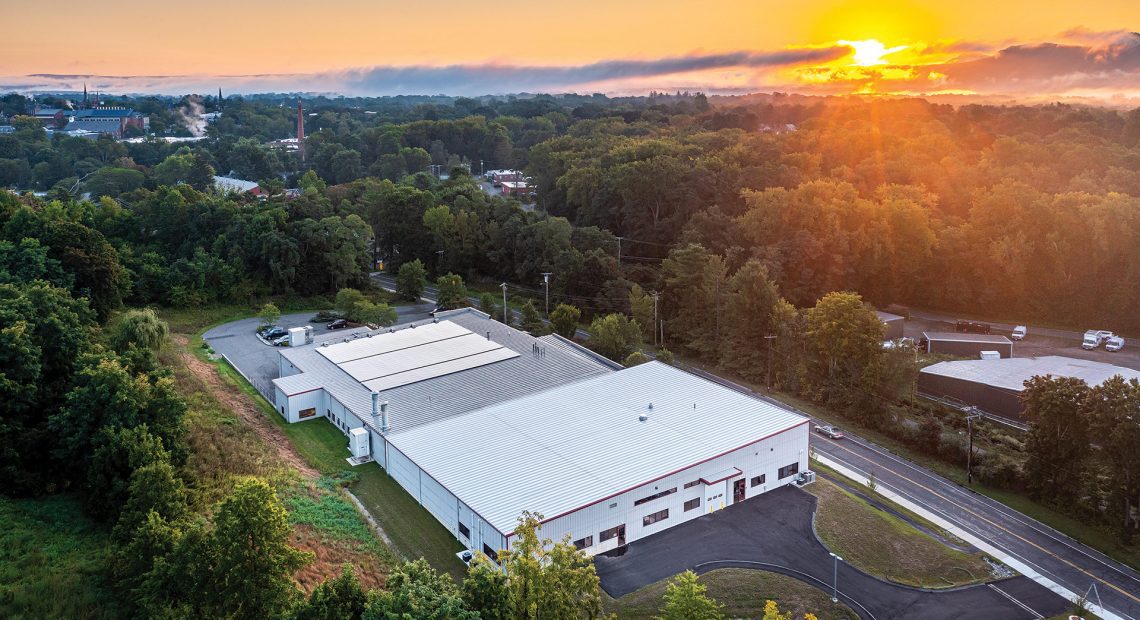
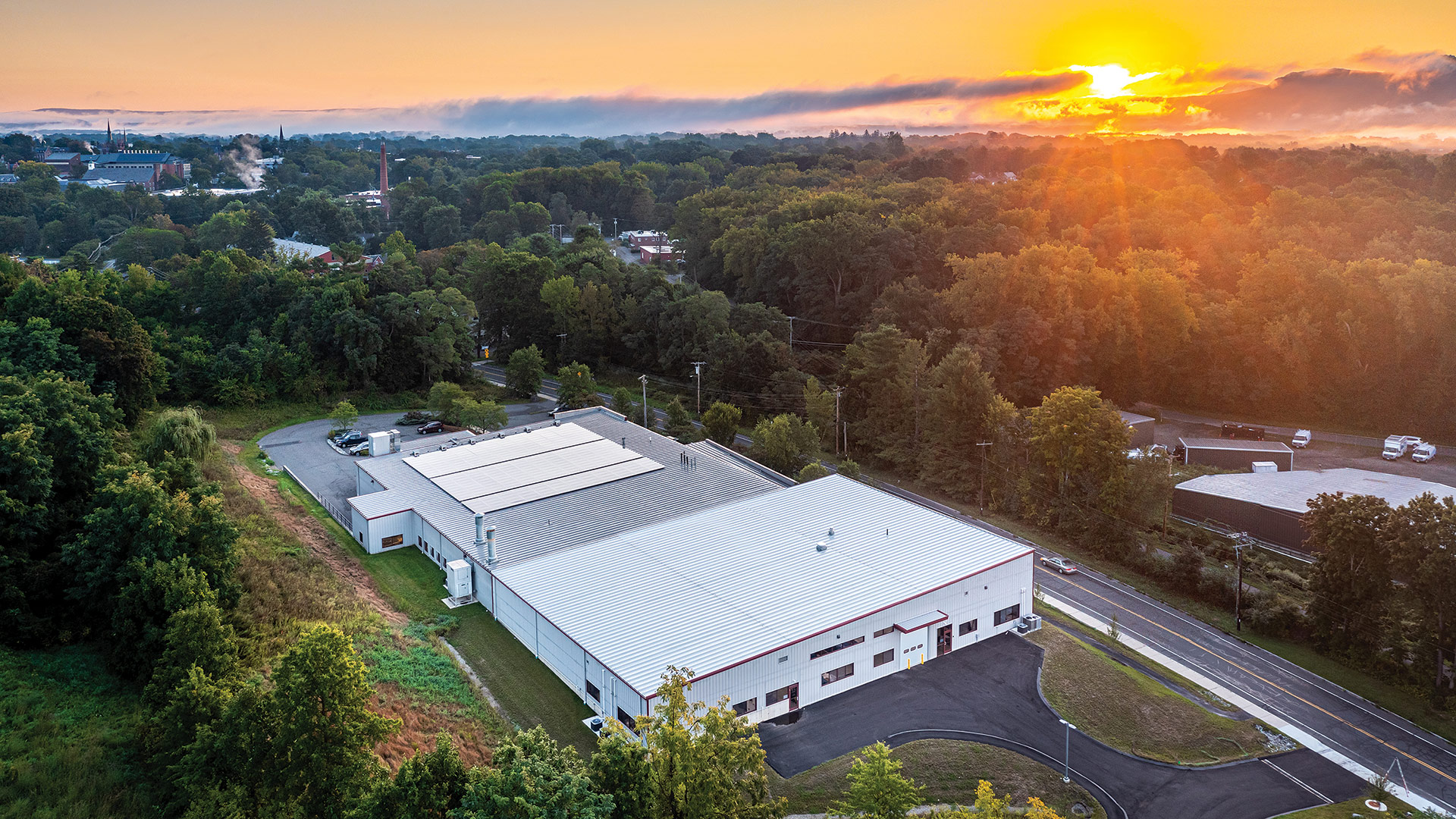
Keiter recently completed a 14,000-square-foot addition to VCA Inc. in Northampton.

Keiter recently completed a 14,000-square-foot addition to VCA Inc. in Northampton. (Photo by Leigh Chodos)

By now, the phrase ‘supply chain’ has become one of the economic buzzwords of our time, as global shortages and slowdowns of goods, not to mention staffing crunches, have impacted industries ranging from food service and retail to manufacturing and auto sales. The construction industry has been particularly vulnerable to those trends, which is especially unfortunate considering that most builders say the work is there — they just can’t tackle it all until these broader issues begin to stabilize. When they will is anyone’s guess.


Most people have heard about the challenges facing the construction industry these days, Scott Keiter said — workforce shortages and supply-chain issues foremost among them — but it’s helpful, he noted, to understand how they’re really part of one large issue.

“Part of the supply-chain issue is the workforce,” said the president of Keiter, the new name for his company, which now encompasses four divisions: commercial and industrial, residential, site work, and real estate. “But the pandemic affects people, and people are the ones who produce products. I think the demand is out there, but those other things out there are causing a little bit of a bog on the system. This is something I hear from others in construction as well.”

It’s what BusinessWest is hearing, too — that there’s plenty of demand for work, but no one is in a place to take on all they could were the workforce and supply outlooks more stable.

“Demand is a great thing,” Keiter added, “but if the supply chain is already compromised, those things can really put a strain on the system … and we have to work harder to achieve the same results.”

Carol Campbell agreed. “It’s been a year like no other,” the president of Chicopee Industrial Contractors (CIC) said. “I think I’ve said that before, but this time is very different.”

“Demand is a great thing. but if the supply chain is already compromised, those things can really put a strain on the system … and we have to work harder to achieve the same results.”

Indeed, “we are certainly affected by the labor force, or the lack thereof,” she went on. “So when you evaluate your sales or how busy you are, well, if we were at full complement, it would be a different story. We’re at reduced labor teams, so we are busy, but it’s hard to serve all our customers at the level we’re at right now.”

From a supply-chain perspective, CIC is a contractor based in the manufacturing world. “Where we have issues with the supply chain is, if we have a team scheduled to do a project, the installation may take a week or two, then, with 48-hours notice or less, we get a phone call saying the machine hasn’t even hit the dock.

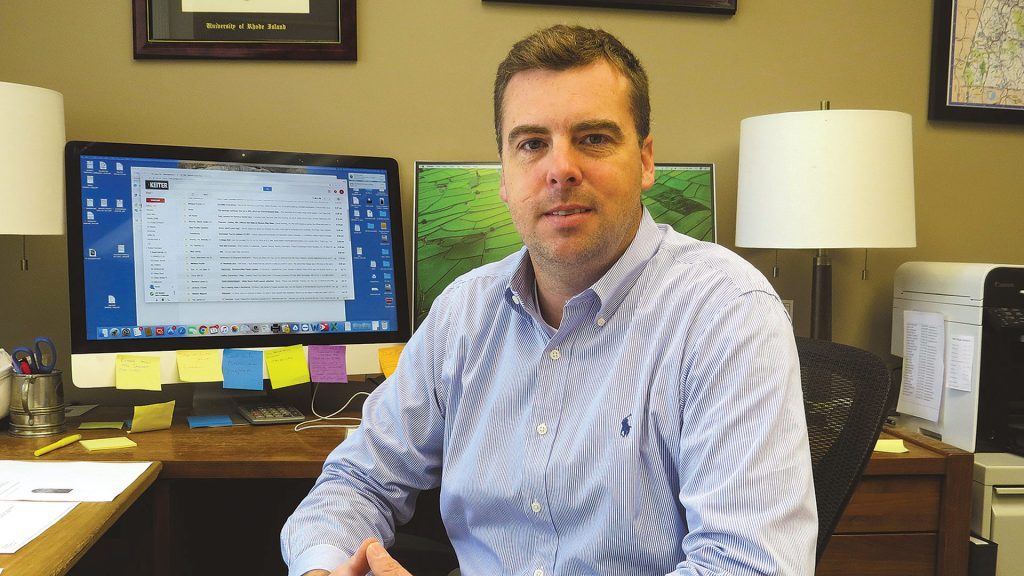
Scott Keiter says the industry is busy

Scott Keiter says the industry is busy, but new challenges make it a different kind of busy than before.

“It’s a scheduling nightmare,” she went on. “I tip my hat to our schedulers, how they keep all the balls in the air and keep all the employees working and customers happy, with all the changes that happen on very quick notice.”

The supply crunch affects both availability and cost, said Craig Sweitzer, co-owner of Sweitzer Construction. “I just got off the phone with someone who needs 12 weeks lead for replacement windows. I’ve never heard of that before. And a lot of materials are unavailable, so we have to search for substitutes.”

Co-owner Pat Sweitzer said she was bidding a project, and a plumber advised her to order a certain piece of equipment needed for the job immediately. “So you ask yourself the question, ‘do we take a chance and order it and expect to get the job?’ These kinds of questions are coming up as well.”

These challenges tend to put contractors in a tough spot, stuck in the middle between customer demands and supply realities.

“Those are real concerns,” Craig said. “At first it sounded like a lot of people complaining, but it truly is an issue. Availability, the cost of materials and shipping, getting stuff shipped to sites … it’s all tricky.”


Links in the Chain

One aspect of the supply-chain issue is trucking, Campbell said, which has impacted her firm on two levels.

“It’s been a nightmare to hire drivers to join our team, then trying to get machines delivered to our facility or to our customer’s facility. They’ll say they’ll be there at noon and may show up at 4 o’clock. So it’s hard because you have to pass some of the cost off, but who’s at fault in all this? It’s a scheduling nightmare, a financial nightmare for customers and vendors. It’s been … quite an interesting year.”

She gave an example of a hard deadline of Dec. 31 to get a machine up and running on a customer’s plant floor. “We’re at the bottom of that chain. It has to come through customs — most are made outside the U.S. — then it has to be piped by the piper, the electrician does his work, then you bring the rigger in, all those dovetail together.”

Keiter said supply shortages and delays are causing some price escalation with materials.

“It’s really causing us to have to look ahead and think about how the disruption and supply chain will affect schedules, and then, of course, the ever-moving pricing with materials is a challenge for not only us as contractors, but for clients and their budgeting. It’s very difficult — the days of just showing up and going at it are gone. We’re having to really get ahead of procurement and also securing tradesman and subcontractors. The industry is busy, but it’s a lot different than it was before.”

Windows and kitchen cabinetry have been especially problematic when it comes to significant timeline increases, Keiter noted. “That said, anything special-order, anything that’s not run-of-the-mill, anything made to order, anything not on a shelf, those seem to be taking longer on average.”

The Construction Products Assoc. (CPA) recently downgraded its forecast for construction growth in 2022 from 6.3% to 4.8% amid what it called a “perfect storm” in the supply chain, Construction Manager magazine reported.

“It’s a scheduling nightmare. I tip my hat to our schedulers, how they keep all the balls in the air and keep all the employees working and customers happy, with all the changes that happen on very quick notice.”

The association warned that supply-chain constraints are now expected to hinder growth well into next year, citing a combination of talent shortages, product availability and cost inflation, driver shortages, the impact of energy-cost increases, and delays at ports as factors in that storm.

“The biggest impacts of the supply constraints are on the small construction firms,” CPA Economics Director Noble Francis said. “Large contractors and major house builders have a greater certainty of demand over the 12- to 18-month horizon and are better able to plan and purchase in advance as well as adjust to changing economic situations. Small firms, however, are more focused on flexibility and have less visibility over demand going forward. Plus, they have less ability and resource to plan and purchase in advance.”

But the workforce issues remain problematic as well.

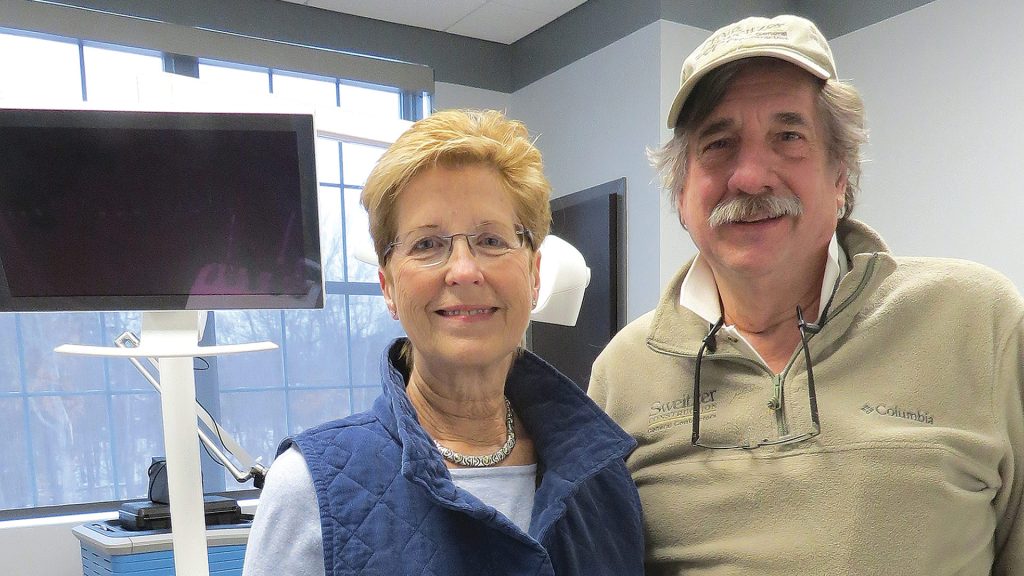
Pat and Craig Sweitzer

Pat and Craig Sweitzer say supply-chain issues affect both availability and cost of materials, and, therefore, both project scheduling and budgeting.

“We were fortunate in that regard,” Keiter said. “We have a very strong, committed team of employees. However, you can see in the workforce in general, whether it’s vendors, subcontractors, or others, I think the pandemic has really shaken things up.”

It’s an issue that worries Campbell moving forward.

“I feel optimistic in our conversations with customers, and we’re booking into 2022, but I have great concerns about the labor force,” she told BusinessWest. “We pay well, and our benefits compare with a state or municipality. And we can’t attract a skilled workforce.

“We’ve always had issues hiring skilled labor just because, coming out of high school, it requires quite a few years of apprenticing. But nothing like we have right now. Over COVID, we had a few people age out, who said, ‘that’s what it took for me to hang it up’ — some people, quite honestly, I just didn’t expect. I understand why they retired, but I think COVID gave them that push.”

Craig Sweitzer said his firm has been navigating workforce issues well, although that did necessitate a lot of personal time to deal with COVID-related issues. “All in all, we survived intact.”

However, the industry’s worker crunch has made clearer the importance of keeping workers happy. “We’ve rolled quite a bit of our profits out of our pockets and put them to use to help our employees and subs. We stress that above and beyond profitability,” he said. “It’s easier to run a business when everybody’s on the same team, pushing in the same direction. So we’re happy to forgo a little profit to have that.”

Pat Sweitzer said she understands the strain workers in all industries have felt over the past two years.

“We have been really fortunate to have our employees and our subcontracting team with us for many, many years. In terms of our employees, they have had family obligations they had to meet during COVID, such as homeschooling and schools being closed down, kids at home. So we have accommodated their needs, and they have stayed with us through the whole year and a half, and we are really fortunate and glad that they have stayed with us all this time; they bring a level of knowledge and skill to our projects that really serve our company and our customers well.”


Optimism Ahead

As noted earlier, despite the industry-wide, often global challenges, area firms have stayed busy.

“For us, this year has been a really good year,” Pat said. “Part of that is thanks to Adaptas Solutions in Palmer, which is a manufacturer in the Palmer Industrial Park that had renovations of five high-tech buildings.

“We were building a clean room and upgrading their facilities,” she added. “It really sustained us and positioned them well as a company. It was a good, steady year for us.”

Carol Campbell

Carol Campbell

“It’s been a nightmare to hire drivers to join our team, then trying to get machines delivered to our facility or to our customer’s facility. They’ll say they’ll be there at noon and may show up at 4 o’clock. So it’s hard because you have to pass some of the cost off, but who’s at fault in all this?”

The firm’s niches in medical and dental facilities continue top be strong as well, she added, and it’s starting to edge into an area with significant growth potential: cannabis.

“One thing I’m grateful about is that we have our bread and butter, our dental and medical work, and now that technical capability and knowledge we’ve developed in those industries is transferring over to the cannabis industry,” she told BusinessWest. “So we have a lot of work coming up, including projects that we hope will be coming through in the cannabis industry.”

Keiter is similarly pleased with his firm’s pipeline.

“We work with a lot of the institutions of higher learning, and those projects continue. We’re also working with a number of nonprofit organizations. We had a pretty good run in 2021. We built a number of new homes, got a lot of residential construction. All the various parts of our business are moving in the right direction.”

In other words, business is booming. That’s the big, positive takeaway amid all the industry concerns about workforce and supply — and how they are, in many ways, the same issue.

“It’s busy, and things are moving. Demand is there,” Keiter said. “We’re here and working hard, and we’re going to get through it. Everyone in construction is hopeful that we’ll start to work our way out of the pandemic and maybe stabilize a little bit.”

Craig Sweitzer agreed. “We’re bidding like mad, and I’m assuming there’s still a lot of optimism out there, so we can only hope to stay as busy as we’ve been. In spite of all the craziness, there does seem to be a lot of optimism out there.”


Joseph Bednar can be reached at [email protected]


Education Special Coverage

A Stern Test Continues

Springfield Technical Community College President John Cook

Springfield Technical Community College President John Cook


For the area community’s colleges, the enrollment numbers continue to fall, with annual declines recently in the double digits. There are many reasons for these declines, which actually started well before COVID but were greatly exacerbated by the pandemic. With many students and potential students now in a state of what one college president called “paralysis,” there are hard-to-answer questions about what ‘normal’ will be like moving forward.


It’s been a while since anyone has talked about parking at Springfield Technical Community College — or the lack thereof.

John Cook, the school’s president, sometimes yearns for the days when they did.

And that was most days. Indeed, going back decades, parking was a problem at this urban campus that sits on the site of the Springfield Armory, despite numerous efforts to add more. By the time Cook arrived in 2017, the school was still parking cars on the commons (the old parade grounds converted by the school into athletic fields) the first few days of classes to make sure all students had a space. That practice was no longer necessary after a new lot was built near the Pearl Street entrance in 2019.

These days, there’s plenty of space in that lot and all the others as enrollment at the school continues a downward trajectory, a pattern seen at the other community colleges in the area — one that is defying many of the patterns concerning these schools and the economy, but one that was already in evidence before the pandemic and only accelerated by it.

“People are in a state of paralysis. And that fear, uncertainty, and the unknown is a driving factor for a lot of people; they feel stuck, they feel lost, and they don’t have a sense of even what they should be preparing for.”

Indeed, since STCC saw enrollment hit its high-water mark just after the Great Recession of 2008, roughly 7,000 students, the numbers have been declining steadily to the present 4,000 or so.

“We were down 16 or 17% last year, and this fall, we were down another 10%,” said Cook, adding that this pattern has been seen at other schools as well, with COVID-19 adding an exclamation point to the problem. At Holyoke Community College, for example, enrollment saw another double-digit decline in 2021, and President Christina Royal said that, with just six weeks to the start of the spring semester, the numbers are down another 7% or so from this time last year.

While most all colleges are seeing enrollment declines at this time, community colleges are being especially hard-hit, in large part because the students who attend these schools, especially older, non-traditional students, are those most impacted by the pandemic and its many side effects, from unemployment to issues with childcare to overall problems balancing life, work, and school.

Christina Royal

Christina Royal says some students and potential students are stuck in state of what she called ‘paralysis,’ not knowing exactly what kind of career to prepare for.

While many have returned to the classroom, others have remained on the sidelines, and they are in a state of what Royal likened to paralysis, not knowing exactly what to do with their lives or even what course of study to embark upon. And this distinguishes what’s happening now in the economy from almost anything that has happened before.

“A recession, as difficult as it is, is a predictable circumstance — and it has been up to this point,” she noted. “People are familiar with the ebbs and flows of the economy. What we’re dealing with now is fear, uncertainty, and the unknown.

“Now people are in a state of paralysis,” she went on. “And that fear, uncertainty, and the unknown is a driving factor for a lot of people; they feel stuck, they feel lost, and they don’t have a sense of even what they should be preparing for.”

She said these factors help explain why enrollment continues to decline at a time when logic says they should be rising based on previous performance. Indeed, community-college enrollment would normally rise when the country is in recession or something close to it, when unemployment is still higher than average, and, especially, when businesses in every sector, from manufacturing to IT to healthcare, are facing a workforce crisis unlike anything seen before. And it would also be expected to rise when the cost of four-year schools continue to soar and many parents are looking to community colleges as a sound alternative for those first two years.

“A two-year college is just as good as a four-year school, and it can potentially be a feeder to the four-year college, where they will do even better because they have the foundation from us.”

Michelle Coach, campus CEO at Asnuntuck Community College in Enfield, agreed. She said enrollment at ACC (one of 12 schools currently being merged into something called the Connecticut State Community College), which hit its peak of just under 1,000 a few years ago, is now in the mid-700s for full-time equivalents, up from a low of 650. The numbers are down for several reasons, including restrictions due to COVID that kept inmates from four prisons within just a few miles of the school from attending.

Even enrollment in the school’s popular manufacturing program, which has been supplying graduates to area plants in desperate need of workers, is down, she said, adding that many who would be applying are cautious and hesitant for all those reasons mentioned above.

Overall, many factors are contributing to the falling numbers, from COVID to smaller high-school graduating classes. The ongoing challenge for schools, Coach said, is to tap into new pools of students and consistently stress the value — in the many ways it can be defined — of a community-college education.

For this issue and its focus on education, BusinessWest talked with area community-college leaders about the present and, to the extent they can project, the future as well. In short, these administrators don’t know when, or to what to extent, things will return to normal.


Unsteady Course

As she talked about enrollment and the state of community colleges today, Royal, like the others we spoke with, reiterated that the declines in the numbers started well before COVID.

Indeed, if one were to chart the numbers from the past 15 years or so, she explained, there would be a bell curve, or something approximating it, with the numbers slowly rising until they hit their peak just after the Great Recession and then beginning a gradual tumble after that.

“When I came in in 2017, we had already seen seven consecutive years of declining enrollment — this is certainly a long-term trend,” she said, adding that she believes there is some artificiality in comparing today’s numbers to the high-water marks of a decade or so ago. “If you take out the effect of the recession, both the ramp-up and the decline afterwards, it doesn’t look as extreme and bumpy.” 

Michelle Coach says there is general optimism

Michelle Coach says there is general optimism that enrollment numbers at ACC and elsewhere in Connecticut will start to move higher, especially with the many incentives being offered.

But ‘gradual’ turned into something much more pronounced during the pandemic, said those we spoke with, noting that enrollment is off 20% or more from a few years ago, and for a host of reasons.

The declines have become the most pressing topic — after ever-changing COVID protocols — at the regular meetings of the state’s 15 community-college presidents, said Cook, adding that, collectively, the schools are looking for answers, a path forward, and perhaps an understanding of what ‘normal’ will look like in the short and long term.

The answers won’t come easily because COVID has created a situation without precedent, and the current trends, as noted earlier, defy historical patterns, he explained, adding that the overarching question now is “where are the people who would be our students? What are they doing?”

And at the moment, many of them are still trying to simply cope with the pandemic.
“They’re still trying to figure out childcare in many cases,” he went on. “Or they may be reconsidering what their own career process might be. And there’s a lot of people who are standing pat and taking stock of what’s important.”

Cook said there has been growth in some numbers, especially those involving students of color and especially the Hispanic population, and there has been growth in some individual programs, such as health science, which the school didn’t have four years ago.

But numbers are down in many areas, including nursing — at least from a retention standpoint — at a time when demand for people in that profession has perhaps never been greater. It’s another sign that these are certainly not normal times.

Royal agreed. “When we have a typical recession, people don’t like the fact that they can’t find jobs or that they’re laid off,” she noted. “But they know that they have to retool, they go back to college, so that they can be prepared for when the jobs come back and the wages start to go up. Now, people are stuck.

“When you have such a global event as COVID-19 has been for our world, then it has put a lot of people in this state of ‘I don’t even know what a couple of months is going to look like — I might not even know what next week is going to look like. How can I think about going to college and starting a future when I’m not even sure what we’re here for anymore, what my purpose is, and what I want to do?’ All of this is causing people to stay still.”

And it’s prompting those running community colleges to do what they can to get them moving again, understanding this may be difficult given those factors that Royal described and fresh uncertainty in the wake of the Omicron variant and rising COVID cases as the winter months approach.

Indeed, most of the colleges are doing some targeted marketing and putting some of the federal-assistance funds to work helping students with the financial aspects of a community-college education.

“We certainly have used every tool available to us to help us with recruitment and retention,” Cook explained, adding that STCC has issued checks of up to $1,500 to help them defray the costs of their education.

“These are not loans … it’s $1,500 to use as you as you decide,” he said. “We’ve done things like that, and we’ve done it for three semesters. This is a real shot in the arm for people.”

Some are taking advantage of the unique opportunity, but many others remain on the sidelines because of COVID-related issues such as childcare, matters that $1,500 checks cannot fix.

At Asnuntuck, the school is being equally aggressive, especially when it comes to recruiting students from the Bay State. Through its Dare to Cross the Line program, Massachusetts residents can attend ACC for the same price as those in Connecticut.

“Currently, 10% of our students are from Massachusetts, and that has stayed fairly consistent,” Coach explained, adding that many enroll in the manufacturing program and a good number in cosmetology, but there is interest across the board. “We’re trying to get the word out, and we’ve done some additional outreach to Massachusetts high-school students.”

Meanwhile, thanks to a grant from the Hartford Foundation for Public Giving, ACC was able to place ‘smart classrooms’ in each of the nearby prisons to allow inmates to take classes, bringing enrollment numbers up somewhat.

Moving forward, with high-school graduating classes getting consistently smaller, there will be greater outreach to non-traditional students, but also a focus on high-school and even middle-school students — and their parents — with the goal of stressing the many advantages presented by the two-year schools.

“For the high schools, we’re trying to change the perception of community colleges,” Coach explained. “In the past, they’ve always said, ‘this is how many students are going to a four-year university.’ Well, a two-year college is just as good as a four-year school, and it can potentially be a feeder to the four-year college, where they will do even better because they have the foundation from us.”


Learning Curves

Overall, Royal and others said it’s clear that community colleges will have to make continual adjustments to bring more people to their schools and see them through to completion of their program. Changes and priorities will likely include everything from a greater emphasis on early college — enabling high-school students to earn credits for college in hopes that this might change their overall career trajectory — to greater flexibility with semester schedules and length of same, to efforts to address the many work/life/school issues challenging students, especially older, non-traditional students.

Royal noted that those who will graduate next spring will have spent their entire time at HCC coping with a global pandemic and everything that has come with it.

These students hung in and persevered, received their degrees, and, in many cases, will be moving on to a four-year school. 

“These are the students that have embraced that uncertainty, and say, ‘I’m going to do something with my life; we don’t know what’s going to happen in the world, but I’m going to further myself and be prepared for when we get to the other side of that.’ That’s who you’re going to see in our graduating class.”

What you won’t see are those who became stuck, as she called it, those who didn’t have the inclination or the ability to plow forward during the pandemic.

Just when people can and will move out of this state of paralysis is still a question mark. Until then, parking will remain a non-issue at STCC — and other schools as well — and the region’s community colleges will remain tested by a situation that is defying trends and their own history.


George O’Brien can be reached at [email protected]

Special Coverage Women in Businesss

Mall Star

Lynn Gray

Lynn Gray went from selling Holyoke Mall gift certificates at age 15 to running the facility as general manager.

Lynn Gray has truly come full circle, from attending the grand opening of Holyoke Mall as a newborn to her role as general manager there today. In a career spent in the shopping-center world, she has seen plenty of evolution and a few major challenges as well, the pandemic being the latest and perhaps most daunting. But current customer traffic and interest in available space tell her this is an industry with plenty of life, and she’s passionate about helping individual businesses succeed within it.


When Lynn Gray was two weeks old, her mother packed her up and took her on her very first outing — to the grand opening of Holyoke Mall in 1979, the center where she now works as general manager.

“How cool is that, right?” she asked.

The mall has certainly been a family affair; her mother worked there from its opening as an office manager, and her grandmother would later come on board as a customer-service manager.

“When I was 15, I started at the customer-service desk in the middle of the mall selling gift cards — well, back then it was gift certificates,” Gray recalled. “So that’s how I got into the shopping-center industry.”

It’s been a journey that has taken her across the Northeast and down the East Coast, but mostly at Holyoke Mall and Hampshire Mall, where she was general manager from 2016 until earlier this year, and is still serving in an interim role at the Hadley complex while a replacement is found. And, having been around shopping centers throughout her entire career, she’s seen plenty of evolution in the industry.

“It feels to me very cyclical,” she told BusinessWest, citing, as an example, the 10 years she spent away from Pyramid Management Group, which owns the Holyoke and Hampshire malls, as well as 12 other properties. Between 2006 and 2016, she was with General Growth Properties, taking on various marketing roles, eventually becoming marketing director for the East region.

“I was really focused on the East Coast and got to work with a lot of properties there, from marketplaces to smaller centers to super-regional centers in a variety of different markets. It was funny because, coming back to Hampshire Mall, where my management experience had started, I saw this evolution happening at the properties.”

“When I left them, I had just helped open Target and Trader Joe’s and Dick’s Sporting Goods and Best Buy,” she said by way of explanation — all of them big-name staples at shopping centers across the U.S. at the time.

“It was really a cool evolution. That seems to happen every so often, every few years, something fresh and inviting, when customers are looking for something new.”

“Ten years later, Best Buy had closed, and we had already replaced them with PetSmart. We were putting in a bowling alley; we were putting in a gym. So I saw the the transition from the early 2000s — from Kmart to Target to a variety of new big boxes coming in — and then, when I came back, I saw that cycle over to the lifestyle components like a Planet Fitness, like a bowling alley and an arcade. It was really a cool evolution. That seems to happen every so often, every few years, something fresh and inviting, when customers are looking for something new.”

Indeed, that’s the driving evolution in malls today, she went on — a move not necessarily away from retail, but complementing retail with more entertainment, experiences, and dining options.

“There’s been a lot of change even these last few years, and then, of course, COVID happened,” Gray said. “So then you see a little more of that cyclical stuff happening with the big boxes turning over and repurposing them for a variety of uses.”

And it’s not just a local phenomenon, she added. “I get to support leasing for all of our properties, so I’m not just focused on Hampshire and Holyoke; I get to see what’s happening across the Pyramid portfolio and across the industry. We’re seeing more hotels, we’re seeing apartments, we’re seeing shared office spaces in a lot of our properties. So it’s kind of cool to see it’s not just about a shopping center anymore, it’s about creating a lifestyle.”


Coming Home

Coming back to Hampshire Mall as general manager in 2016 was truly a full-circle event for someone who had built a career from the bottom up at the two local Pyramid properties. From her humble beginnings selling gift certificates at Holyoke Mall, she progressed in the mid-’90s to an office-assistant position at Hampshire Mall for a few years, which evolved into a marketing role. She returned to Holyoke in the late ’90s as assistant marketing director, then went back to Hampshire as marketing director before her stint with General Growth Properties.

“When I came back to Pyramid again,” she said of her hiring as general manager there in 2016, “it was like coming home.”

As for the recent evolution in the use of mall space, one that’s especially noticeable at Hampshire Mall, Gray said even individual tenants understand the trend.

“A lot of our partners in our tenant base have really gone out of their way to try to diversify their use,” she noted. “A great example is Pinz. You’re not just there for bowling; there’s also an arcade, there’s food, there’s dart throwing, axe throwing, all kinds of things. It’s about keeping people in these spaces longer, and that’s something we’re offering at all of our properties.”

That’s why both malls now feature a gym, bowling, and arcades, as well as shopping (including some big boxes, like Target, which is also featured at both). “We really are creating a destination for you to find everything you need. It’s creating sort of a downtown feel.”

No longer can mall managers cater only to people who want to stop in, get what they want quickly, and leave, even though there are still plenty of those. It’s about giving them more to do once they arrive and, therefore, more reasons to come in the first place.

“I think people have more choices today,” Gray said. “They have less time, more on their plates, they’re going in a million different directions, and creating a space they’re going to frequent more often because they’re not coming here just for shopping is critical, because it keeps us relevant; it keeps us top of mind.

“They’re not just going to Target to get their essentials, they’re coming here for a day with their family and going bowling, or maybe they’re coming several times a week because they’re visiting the gym. Or they’re having their birthday parties at Altitude,” she went on. “It’s a space that’s far beyond just a shopping destination. They’re coming more often and spending more time because they’re coming for a variety of different uses.”

Hampshire Mall in particular is no stranger to innovation. Gray credited the wisdom of its original owners, who built a shopping center on farmland in Hadley more than 40 years ago. The Route 9 corridor eventually exploded with much more retail, dining, and other amenities, fed by the affluent communities of Amherst and Northampton that bookend it, and, of course, UMass Amherst and other local colleges.

“We’ve been doing everything we can to support the small businesses. Here at the Holyoke Mall, 27% of our businesses are actually locally owned businesses or locally owned franchises.”

“Somebody had this idea that putting a shopping center there would be really successful, and it has been,” she said. “It’s very desirable real estate now.”

Still, no one in the shopping-center industry was prepared for the impact of COVID-19.

“The biggest challenge has been the uncertainty, which still resonates with a lot of us,” she said. “We’ve been doing everything we can to support the small businesses. Here at the Holyoke Mall, 27% of our businesses are actually locally owned businesses or locally owned franchises. Supporting those businesses, which were hit the hardest during the pandemic, has been something we’ve really tried to put our efforts into.”

That statistic surprises some people, she noted. “Some consider us to be the big-box destination and forget there are so many businesses in this center that are locally owned, here and at Hampshire, and I like to remind people of that. They live in your community, they’re supporting your kids’ schools and sports teams, and they also lease space at a shopping center. It’s not just about the big box and the large retailer.”

The good news, for tenants of all sizes, is that traffic numbers at the malls are up — not just from 2020, but from 2019.

“I think that’s a testament to people itching to get out,” Gray said. “They’ve been missing that in-person connection and getting outside their four walls, and we’ve been able to give them a reason to do that.”

And they’ve been, for the most part, gracious about safety protocols that still fluctuate between communities; in fact, Holyoke Mall currently recommends mask wearing, while Hampshire Mall requires it.

“They want to get out, so they’re going to do what they can to follow the rules so they can continue to frequent those businesses,” she added.


Leading by Example

Gray has long been active in the community, and for the past two years, she’s been president of the board directors at the Amherst Area Chamber of Commerce.

“They were obviously two of the most challenging years for small businesses in particular, so being part of a chamber supporting them was really gratifying,” she said. “Being able to be in the trenches with the executive director and the board of directors and all the various committees that were supporting businesses staying open and surviving the pandemic … I’m really proud of the work we did there.”

She also serves on the board of the Amherst Boys and Girls Club — another family connection, as her mother served on the board of the Chicopee club for many years. She’s also a state ambassador in Massachusetts for CHERUBS, an organization that raises awareness and funds around congenital diaphragmatic hernia (CDH), a condition that affects newborn babies, including Gray’s own baby, who passed away seven years ago.

As the mother of a 19-year-old son, “I think it’s important to set an example for him that it’s not just about getting up, going to work, doing your job, and coming home at the end of the day — it’s about outreach and community development and being out there. It doesn’t just make you feel good, you’re actually doing good. I think it’s important to set that example for our future leaders as well.”

At her day job, of course, she supports businesses in other ways.

“It’s a little win every time we see a new business open, whether it’s an existing business or a small business just starting up. Pyramid is a leasing company; that’s what we do. We want to lease our spaces, we want to stay fresh and relevant, so every time we have a new tenant that’s opening up, we’re excited to share that news. I think it’s a testament to us as a developer that we’ve been able to celebrate so many new openings.”

Gray has heard the rumors over the years that shopping centers aren’t doing well, or are on the decline.

“But people still want to open businesses in successful centers. We’re seeing more and more walk-in requests to look at spaces. There was a time when the phone wasn’t ringing at all, but they’re starting to see that the trend is going up and people are craving being out and about and not just holed up in their homes anymore.”

She also loves working with existing tenants on ways to expand and market their businesses. “They really took a hit, so anything we can do to support the business and spread the word, anything we can do to keep the businesses going, I want to be part of that.”

Gray’s mother no longer works in the shopping-center world; she’s in residential real estate now. But she was very excited to hear her daughter was now general manager of Holyoke Mall.

“She said she’s really proud, and I said I’m really proud, because I went from selling gift certificates at the customer-service desk and answering phones to actually leading the charge for Western Mass.’s largest shopping center. I’m the first woman general manager at Holyoke Mall, and I’m really proud of that. I’m proud to share that story because maybe a little girl can hear that and know that you can start small, and if you grow and work hard at it, someday you can do this too.”


Joseph Bednar can be reached at [email protected]

Special Coverage Sports & Leisure

Coping with the Conditions

Gary Rome, seen here with ‘Daisy,’ one of his mascots

Gary Rome, seen here with ‘Daisy,’ one of his mascots, says cars are moving off the lot as fast as they come in, with most sold long before they arrive.

For the area’s auto dealers, this will be a year, and a December, unlike most and certainly not anything approaching normal. Lots are barren, and showrooms often have used cars under the bright lights. Dealers are coping as best they can, and so are customers, and while current conditions are expected to continue into next year, there seems to be some light at the end of the tunnel.


On one wall in his office at the Hyundai dealership that bears his name, Gary Rome has a large screen that displays images captured by more than two dozen security cameras.

As he talked about the current conditions facing dealers like himself, he gestured toward pictures on that screen of one of the back lots at the massive store on Whiting Farms Road in Holyoke — a barren lot with no cars parked on it.

“Normally … that would be full — four lanes, full,” he said, noting that ‘normal’ was quite some time ago. Now, instead of normal, there is only reality, in the form of inventory shortages that have, as Rome noted, prompted dealers to put used cars in the showrooms, position cars so it looks like there is more inventory than there actually is, and even have employees park in front to provide that same effect.

He’s only taking the first of those steps, and that’s out of necessity, he said with a voice that hints at frustration, which is certainly understandable, but mostly acceptance of a situation that is far beyond dealers’ control and something they will have to live with for at least several more quarters.

“We’re just coming through the second year of the most unprecedented time that the industry has ever faced — and the forecasts for what was going to happen to this industry were far more dire.”

The frustration comes from the knowledge that these dealers could certainly sell a lot more cars if they had them, especially given the pent-up demand and the fact that many consumers have money to spend and are eager to spend it. And also the numbers — most dealers are looking at overall sales volume being down between 20% and 30% from what would be considered a ‘normal’ year. The acceptance part comes from the knowledge that consumers have responded to the situation mostly with patience and understanding, and, overall, dealers are making the best of a bad situation that could actually be worse. Much worse.

“We’re just coming through the second year of the most unprecedented time that the industry has ever faced — and the forecasts for what was going to happen to this industry were far more dire,” said Ben Sullivan, chief operating officer at Balise Motor Sales. “And we’ve actually fared pretty well, and the customers have been accommodating because they can understand; they see the news. Somehow, we’re making it through, and a lot of customers have no issues with doing it this way.”

By ‘this way,’ he meant that, instead of driving onto a lot and choosing from among the dozens of options of the model they want, they’re either ordering what they want and waiting for it arrive in a few weeks (or a few months, as the case may be) or buying something they know is on a truck and on its way — even if it might not be exactly what they want.

Carla Cosenzi, president of TommyCar Auto Group, agreed, noting that her family of dealerships has an appropriately named program that speaks to all this, called Reserve Your Ride.

“People can pick out their vehicle and order it or pick a car out of pipeline,” she said, adding that, while there may be fewer cars to actually choose from on the lots, people can still buy cars, and they are.

Ben Sullivan says there has been some improvement on the inventory front

Ben Sullivan says there has been some improvement on the inventory front, but it might be two more years before dealers see something close to pre-pandemic levels.

Sometimes, because of the inventory issues, it may not be a new car, she went on, adding that, in this environment, some are waiting patiently for the new cars to roll in, while others are opting for used cars, and still others, those with leases that are expiring, are opting to buy those vehicles.

And this is how it will be for the foreseeable future, said those we spoke with, all of whom noted that COVID-19 and its many impacts have made the future — even the immediate future — hard to predict.

As for the present, it’s December, a month that is generally a good one for dealers, and for many reasons, ranging from holiday-gift purchases (especially luxury models) to businesses buying new vehicles before year’s end for tax purposes.

“This is a time of year when people want something new — new cell phones, a new car, a new used car, a new espresso machine,” said Sullivan, adding that this desire for new coincides with a mostly healthy economy, lower unemployment rates, and, overall, higher levels of confidence. “And when people feel confident, they wind up making large purchases because they are not afraid.”

They may not be afraid, but there will certainly be fewer cars to buy, and that means this will be different kind of December, but one that still holds promise for dealers — and customers — waiting for the picture to improve.


Dropping Down a Gear

To the untrained eye, Sullivan said, it doesn’t look like much is happening at area dealerships.

Indeed, what most people see in that minute they drive by a store is lots of acreage not being occupied by new or used cars. Indeed, the vacant parking lots have become one of the enduring images of the supply-chain crisis at this stage of the pandemic.

But a closer look would reveal plenty of activity, just not the type that would be considered normal, he said.

“If you put a stop-motion camera at any dealership, you’d see 18-wheelers coming in, you’d see cars coming off of it, you’d see them going through their pre-delivery inspections and service and the salesperson calling the customer to say his vehicle has arrived, and that person picking it up the next day,” he noted. “That’s about how fast this stuff is going right now.”

Carla Cosenzi says dealers and customers alike are adjusting

Carla Cosenzi says dealers and customers alike are adjusting to a landscape that is without precedent in the auto industry.

Other dealers we spoke with echoed those remarks, saying the days of large inventories have been replaced by that new way of doing business described earlier, with the vast majority of cars sold before they reach the lot (70% to 80%, by most estimates) or within days of rolling off the truck.

This new world order is on clear display on a huge board in one of the offices at Gary Rome Hyundai, one that tracks which vehicles have been sold, by whom, and when they will arrive on the lot for the customer to pick up.

“We’re just coming through the second year of the most unprecedented time that the industry has ever faced — and the forecasts for what was going to happen to this industry were far more dire.”

It’s a different landscape, to be sure, said Rome, adding that there would normally be more than 500 cars on the Hyundai lots; currently there are roughly 140, about one-quarter of that total, with only 20 of them being new cars.

It’s the same at the TommyCar dealerships, said Cosenzi, noting that the Hyundai/Genesis dealership in Northampton would normally have 200 new models on the ground. After a shipment arrived the day before she talked with BusinessWest, there were 30 to 35. At the Volkswagen store, also in Northampton, there would usually be 80 new cars. Now, 20 is the norm.

These numbers prompt frustration because they collide with other kinds of numbers, especially the ones pertaining to unemployment, consumer spending, and consumer confidence levels, said Rome, noting, as others did, that pent-up demand remains high for all types of vehicles, but especially new models.

“Our clients, in general, have more money than they had two years ago, they have more savings, they have more equity in their homes,” he explained. “And they also feel like they want to do something good for themselves. They’ve been locked down for the past 20 months, and they’ve been looking at the same car all that time. They want to do something nice for themselves.”

Such dramatic reductions in inventory also make for obvious changes and adjustments, including those that need to be made for the holidays, said Cosenzi, noting that many of those desiring to put a new car in the driveway on Christmas morning understood that, to make that happen, they needed to place their order in November. And they might also have had to settle for their second choice when it came to color.

Meanwhile, more consumers are looking toward used cars, which are in greater abundance but still not in the pre-pandemic numbers, she said, and also at keeping a car that is coming off lease instead of trading it in for a new one.

“And a lot of those buy-out values are under current market values,” she said. “It’s a good deal for the customer.”

While things certainly aren’t normal, in some respects, the picture is actually starting to improve, said Sullivan, noting that arrivals are expected to pick up in December and be ahead of October and November levels and well ahead of months earlier this year, when supply-chain woes peaked.

“There’s cars coming in, and there’s cars going out,” he said, adding that his general managers — and there are nearly 20 of them — have reported as a group that the company should expect a solid December.

Meanwhile, looking down the road, or trying to, anyway, dealers said it is difficult to say when ‘normal’ — as in lots full of cars for people to choose from — will return, or even if they will return.

“I don’t think we’ll see it in 2022,” said Sullivan. “I think it will be 2023 before you drive by a dealership and see a stock full of cars. It’s not until the third quarter of 2022 where you’ll see maybe 65% of what you’d normally see for ground stock.”

Cosenzi concurred, but noted that projections vary with the brand, with some manufacturers responding to the worldwide microchip shortage and supply-chain crisis better than others.

“We’re anticipating that things will get better over the next few months, but it will take a long time for us to recuperate and get back to the inventory levels that we were accustomed to before COVID,” she said. “I think it will take at least a year.”

As for the longer term, Sullivan reiterated comments he made earlier this year when he said some manufacturers may not go back to those days when they built cars and then hoped dealers would sell them. They likely won’t build to order, although that’s possible, he said, but they may build fewer cars and put the hard focus on models they know the customer wants.

“Most of the manufacturers have decided that just ‘build, build, build, build, build’ isn’t that profitable for them,” he explained, “because all the cars end up on our lots, and we have to find a way to get rid of them, and they have to put incentives on them. There is a level of production that makes more sense to them.

“We’re not going to be this order-to-delivery industry, because when people want something, they want it very quickly, and some want it now,” he went on, adding that, despite this, levels of overall ground stock will likely be lower in the years to become, perhaps 75% of their current levels.


Bottom Line

But there are still far too many unknowns to make any hard projections about the future, said those we spoke with, adding that, right now, they’re dealing with right now.

And that’s the picture that comes clearly into focus on that screen in Rome’s office. Things are not as they were, and they may not be like that for a while — if ever again, in some respects.

“This is a year unlike anything I’ve seen in all the years I’ve been in this business,” said Cosenzi, who spoke for everyone in the industry with those comments, adding that, while the picture is slowly improving, what would be considered normal is still far down the road.


George O’Brien can be reached at [email protected]

Community Spotlight

Community Spotlight

By Mark Morris

Mayor Bob Cressotti

Mayor Bob Cressotti says soaring real-estate activity may lead to the tough decision to re-evaluate Enfield homes and businesses.

There is no shortage of activity in development projects for Enfield.

The most significant project involves the town, with the support of state and federal officials, constructing a train-station platform in the Thompsonville section of town. The planned station will be a stop for Amtrak trains coming from Hartford and Springfield. Mayor Bob Cressotti called it a key to Enfield’s future growth.

“If we have rail access to Hartford, New York City, and points north, such as Springfield and Vermont, we can encourage more young people to live in Enfield,” Cressotti said, noting that funding for the station will come from the infrastructure bill recently signed by President Biden. In the final legislation, Connecticut is scheduled to receive $1.2 billion for roads and transit over the next five years.

When built, the station will be located just beyond Bigelow Commons, a 700-unit apartment complex that was once the Bigelow Carpet Mill. Nelson Tereso, the town’s deputy director of Economic & Community Development, said plans by the Connecticut Department of Transportation call for a covered 220-foot platform that would accommodate entrances to four train cars. As a high-level platform, passengers would be able to walk directly into the cars.

“If we have rail access to Hartford, New York City, and points north, such as Springfield and Vermont, we can encourage more young people to live in Enfield.”

Tereso is working on a number of details for the project, among them securing a right-of-way agreement with Bigelow Commons for parking at the station. Northland, the company that owns the Commons, has indicated it supports the train-station project in Enfield.

“They’ve been very good to work with,” he noted. “In fact, many of their apartment complexes around the country are located near transportation hubs.” 

In anticipation of the train station, Tereso said the town has identified several properties within walking distance that would be ideal candidates for redevelopment. With the success of Bigelow Commons, he sees more potential for housing in that area.

On North Main Street, the Strand Theater has been closed for nearly 30 years and is slated for demolition by next summer. Next door sits the Angelo Lamanga Community Center. Tereso said the town has appropriated money for its demolition, too, but he is talking with developers to see if it’s possible to find a new use for the 27,000-square-foot building.

“We want to sell the Lamanga Center to a developer who is forward-thinking and looking ahead at the train station our town will have in a few years,” he explained. “While not as large as Bigelow, these parcels represent an opportunity to build additional market-rate apartments, especially for young professionals who are working in Hartford and Springfield.”


On the Home Front

According to Cressotti, demand for housing is certainly up Enfield. Since the pandemic began, nearly 2,200 property transfers have been recorded in Enfield. The rising real-estate market is leading to what he called the tough decision of re-evaluating houses and businesses in town.

“Residential property values have increased by 25% to 30% on average,” he said. “We’re going to adjust the mill rate to prevent a huge spike in the tax bills.”

With such large increases in home prices, getting families to locate to Enfield can be a challenge. Tereso talked about a first-time homebuyer program the town offers to increase purchasing power for eligible buyers. The program provides a deferred loan up to $10,000 at a 0% interest rate for first-time buyers who purchase a home in Enfield. For those who choose a home in the Thompsonville or North Thompsonville section of town, the loan is forgivable.

“This program provides the gap funding that many folks need in order to afford a mortgage,” he said, noting that starter homes in Enfield typically cost between $150,000 and $250,000. “It has especially helped younger families to buy their first home.”

With families in mind, the town is currently transforming Higgins Park from a softball field into a multi-faceted park. Plans call for expanding Higgins, as the town plans to purchase the gymnasium building that belonged to the former St. Adalbert parish that abuts the park. Cressotti said the final layout will feature walking trails, a new basketball court, a swimming pool, a splash pad, and a band shell for outdoor concerts.

“We are making five- and 10-year plans instead of just reacting to what’s happening now. Sure, there are challenges ahead of us, but we’ll take each one as they come and always try to do what’s right for the town of Enfield.”

“When it’s complete, the park will have appeal to all ages, and we will be able to hold sponsored events there on a consistent basis,” he noted.

When the pandemic hit in early 2020, officials tried to figure out how to keep town business operating. It so happened that a Santander Bank branch two doors down from Town Hall had recently closed and was on the market. The idea was floated to lease the former bank and use its drive-up window as a convenient and contact-free way to conduct town business during the pandemic.

“The drive-up window worked great for residents looking to apply for building permits, pick up a dog license, or pay their taxes,” Tereso said.

The town moved the entire Tax Department into the former bank and renamed it Enfield Express. The site also had enough room to locate a police substation in the rear of the building. Tereso said the town just finalized the purchase of the building, making it official that Enfield Express is here to stay.

“People love it,” he added. “We will absolutely continue the drive-up service after the pandemic is over.”

Purchasing the former bank branch also expands the amount of municipal parking and provides another entry point for the newly configured Higgins Park.

“When the Tax Department moved out of Town Hall, we turned their old space into a new conference room,” Tereso said, noting yet another benefit of creating Enfield Express.

Finding new uses for existing structures is all part of the plan in Enfield. For example, the Social Services Department recently moved from 110 High St. to the former Alcorn School, where the town’s IT Department is located, while 110 High St. is one of seven town properties Enfield has sold while it strives to efficiently use municipal space.

Enfield at a Glance

Year Incorporated: 1683
Population: 44,626
Area: 34.2 square miles
County: Hartford
Residential Tax Rate: $34.23
Commercial Tax Rate: $34.23
Median Household Income: $67,402
Median Family Income: $77,554
Type of Government: Town Council, Town Manager
Largest Employers: Lego Systems Inc., MassMutual, Retail Brand Alliance, Enfield Distribution Center
* Latest information available

As Tereso explained, “110 High Street was once a day-care center. We sold it to a day-care provider who will now be able to expand their presence in Enfield.”

Enfield Square, purchased by Namdar Realty in 2018, could be another candidate for redevelopment. The new owners were granted a zone change to reconfigure the mall and subdivide the parcels.

While malls all over the country are being redeveloped, Tereso believes Enfield Square’s close proximity to two I-91 exits is a big selling point for future use. He plans to survey residents on possible redevelopment options to get a read on what people would like to see at the mall.

“Whether it’s entertainment, market-rate housing, or outlet shops, all those things could be a successful way to develop the mall for new use,” he said.


Life in the Fast Lane

For Cressotti, life these past months has been moving fast.

In October, he won the election to be Enfield’s new mayor. On Nov. 6, he took over the position, and on Nov. 15, longtime Town Manager Christopher Bromson abruptly resigned after a heated exchange with several Town Council members.

After serving in different positions with the town since 1989, Bromson decided to retire and was recently quoted saying he is grateful to see many of the projects started during his time are now going forward. Enfield Police Chief Alaric Fox has added interim Town Manager to his job title until a new manager is hired.

Even with all that happening, Cressotti likes the direction Enfield is headed.

“We are making five- and 10-year plans instead of just reacting to what’s happening now,” he said. “Sure, there are challenges ahead of us, but we’ll take each one as they come and always try to do what’s right for the town of Enfield.”

Construction

Steady On

Thomas Crochiere

Thomas Crochiere at the Chicopee property he purchased, renovated, and tenanted up almost two decades ago.


Thomas Crochiere had a modest vision for his construction company a quarter-century ago — and, as it turned out, a successful one.

“Having worked for a company with up to 100 employees in the past, I knew I didn’t want to have a large company,” he told BusinessWest. “I was happy with a small company where I could know my employees very well and work with them and manage one or two projects at a time. I didn’t want to have a large plate of projects. So we’ve just continued in that direction for 26 years.”

Crochiere entered the construction world out of college and, as he said, worked for a large company that performed a lot of state and municipal work.

“I was working as a project manager for that company for about 10 years. But I got a little itchy; I wanted to become an owner. So my wife and I started this business back in 1995, and since I’d been doing mostly municipal and state work, and had pretty decent familiarity with that process, we stayed with commercial construction as our primary focus, and we have just picked away at jobs over the years.”

Tom Crochiere and Ann Collins-Crochiere launched Collins-Crochiere Construction Services Inc. in Palmer and rented shop space in Ludlow for a few years. Then, 18 years ago, they came across an eight-acre parcel on McKinstry Avenue in Chicopee, on which sat a large, long building in need of rehabilitation. They saw potential, not only as the company’s headquarters, but as a rental property for service businesses, under the name of Main Street Property Management.

“I was happy with a small company where I could know my employees very well and work with them and manage one or two projects at a time.”

“When we bought this, it was bankrupt, abandoned, contaminated, and pretty much in nasty shape,” he said of the property, which used to be the home of Jahn Foundry in Chicopee, the sister foundry to the Springfield site that suffered a fateful explosion in 1999. “When we bought this, we cleaned it environmentally and then started building it out for modern business space. It’s been hunky dory. But early on, it was a little sketchy.”

It has also helped him keep his employees busy during slow weeks. “We can always find something to improve here, whether it’s painting a hallway or doing some other repair that makes life better for the tenants. That’s been our filler.”

But the day-to-day business has been consistent over the past 26 years. “We have some busy years, some not-so-busy years, and our staffing ranges from around five to 10 employees. The high point was 10, but that was short-lived. It wasn’t as productive or effective as having four, five, or six.

“So we’ve stayed with that, and all of our work generally has been word of mouth,” Crochiere continued. “We don’t do a whole lot of marketing, and work just seems to come to the surface. When we’re finishing a job, someone else calls and has bought a building or is looking at a building or is planning a major renovation. That’s how work seems to fill our schedules. That’s how we got to this point. It’s worked out reasonably well.”


Work to Be Done

Crochiere noted several jobs from recent years to give an idea of the company’s work, including a renovation and addition to Ralph’s Blacksmith Shop in Northampton, similar work on a building purchased by Fire Detection Systems in Chicopee, and a renovation and upgrades to an older building purchased by Fire Service Group in Palmer. At Multicultural Community Services in Springfield, Collins-Crochiere tackled an office renovation two years ago and is currently working on a group home for the organization.

“A typical job is, somebody buys a building or is about to purchase a building, and they think they got a great deal on it, and then they invite me to do a walk-through, and I start to think about building codes, ADA codes, energy codes, and I inform my potential client that their budget is about a third of what it should be because the building codes require a certain amount of updating,” he explained.

“In a perfect world, property owners would have a contractor or architect or engineer walk through their building every five years just to give them insight into how far behind the 8-ball they are.”

“They look at me initially with ‘this isn’t part of my financial plan this year,’” he went on. “But we work through it. I work with local architects and engineers to do a full code review and come up with design requirements and upgrade requirements, and then we typically work with the owner to put together a team of subcontractors and suppliers to complete the project.”

In addition, Collins-Crochiere has been a subcontractor to some large electrical and mechanical contractors on state and federal jobs, Crochiere said. “We act as support; sometimes a large mechanical job requires two months of carpentry spread over six months. So we might be that supportive subcontractor to a larger mechanical contractor.”

Over the years, plenty of business has been of the repeat variety, he noted — maybe a former customer is growing and is buying a second or third building, or a first renovation was good for 10 years, and now they call looking for more upgrades or a new addition.

“That’s been nice. And our relationships in Western Mass. have been helpful. We often find that a new customer will call and say he’s spoken to two close friends, looking for a contractor, and our name comes up in both conversations. So he says, ‘I guess you’re someone I should talk to.’ That has led to a few jobs over the years.”

Springfield Technical Community College

One of the company’s recent projects involved repairs to this building at Springfield Technical Community College.

Consistency has been king when it comes to the company’s core of subcontractors and suppliers as well, many of which have been the same for decades.

“It’s been an asset for our business to be able to rely on our relationships with these local subcontractors who bring extra expertise in each of the trades, whether it’s electrical, mechanical, or plumbing. That means fewer surprises. That’s one factor that’s helped us with our consistent delivery of jobs.”

Even at the Chicopee property, the company has done plenty of tenant buildouts and renovations over the years. Crochiere knows properties everywhere are crying out for upgrades, but business owners often don’t realize it.

“In a perfect world, property owners would have a contractor or architect or engineer walk through their building every five years just to give them insight into how far behind the 8-ball they are, because codes change, technology changes, things wear out,” he explained. “And yet, when someone goes to sell their building or someone buys a building or someone plans an upgrade, the owner is frequently shocked at how much they have to do and how expensive a project might be — they only wanted to do a conference room and a bathroom, and it turns out to be a whole lot more.

“After so many years in the business, we’ve come to expect it, but unlike getting your car inspected each year, no one inspects their own building each year. And it would be helpful, I think, for owners to do that,” he went on. “Even with efficiencies, there are some products out there that have a short payback time, but they’re never considered until someone considers a major renovation or is purchasing a building.”


New Normal

While, as Crochiere noted earlier, some years have been stronger than others, no one was prepared for the chaos of the early days of COVID-19, and its lingering economic effects.

“When COVID hit, we were here for probably four months during that initial shutdown period, where we have some essential businesses that manufacture products here, so it was nice to be able to do some things to support them and keep our employees busy,” he said.

That was especially fortuitous because the firm had an office renovation in the planning stages, and the client — another essential service — called and decided they didn’t want anyone working in the building for a few months.

While work eventually restarted for contractors during the pandemic, this past year has seen a global supply-chain crunch impact firms of all sizes, and that remains a serious concern (see story on page 15).

“It’s hour to hour — it’s no longer planning for the week, it’s ‘what happened last night? What product isn’t going to get to the job this week that was supposed to be delivered, and it’s now six weeks out?’ It throws a wrench into everything,” Crochiere said.

“But it’s a nationwide issue, and everyone’s aware of it, so customers have been understanding when I send them an e-mail indicating we’ve had a wrinkle in this week’s plan or this month’s plan,” he went on. “Fortunately, our subcontractors are looking forward and trying to purchase long-lead items as early as possible to try to avoid significant effects on jobs. It’s a weekly — no, it’s a daily inconvenience, but everyone is trying to work through it.”

Like other contractors BusinessWest spoke with for this issue, Crochiere said demand for work is plentiful, and once the global issues clear, the future seems bright.

“I think people will continue to want to improve their buildings and make capital improvements to facilitate the changing business environment. Manufacturing has changed a bit over the last two years, and certainly office usage has changed the way we use our spaces. So I expect there will be continued work in the pipeline as a result of people adjusting their business needs.”

The other hindrance to taking on that work is, of course, persistent workforce shortages in construction — an issue that long predates COVID.

“The labor shortage is certainly an issue,” he said. “It does affect us. It would be nice to find another experienced, capable carpenter or laborer or employee, but I’d say those that respond to ads aren’t really employable for the work we do. They either don’t have the skills, don’t have the experience, or they don’t have the driver’s license that’s necessary. The labor shortage is affecting all of our subcontractors and everyone we speak to.”

Crochiere is a believer in construction as a career, though, and would like to see more young people catch the same vision.

“Very few young people are showing interest in the physical labor, but one has to be not just physically capable, but smart — technology is changing in every trade, every business, so it’s a great opportunity for young people who are motivated and want to work, with their hands and with their brain. There’s a lot to learn, but the opportunities are limitless. The lifestyle is good, the income level is good, they’re physically active during the day … it could be a good thing.”

It certainly has been at Collins-Crochiere Construction Services, for 26 years and counting.


Joseph Bednar can be reached at [email protected]

 

Construction

Continued Momentum


The engineering and construction industry has made a significant recovery from the 2020 recession, but it has also experienced multiple headwinds that are expected to persist. According to a report by Deloitte, 2022 should be another rewarding — but challenging — year, and the industry looks to be poised to capture growth opportunities.

The 2020 recession was among the shortest ever, but its impact continues to be observed across both the larger U.S. economy and the engineering and construction (E&C) industry.

In 2022, as we move into the second year of recovery, the industry has a big role in supporting the nation’s growth plan. The Infrastructure Investment and Jobs Act (IIJA), with investments across healthcare, public safety, and other public infrastructure, is expected to bode well for E&C firms and is likely to accelerate recovery across the non-residential segment. The residential segment is expected to stay strong and exhibit similar activity as it did in 2021.

“The 2020 recession was among the shortest ever, but its impact continues to be observed across both the larger U.S. economy and the engineering and construction industry.”

The industry has increased its investments in digital, including through mergers and acquisitions (M&A), as it prepares to shift toward connected construction capabilities. These technologies can help E&C firms support initiatives such as smart cities, urban air mobility, and climate-change programs, while helping to enhance internal operational efficiencies, reduce costs, and improve margins. Thus, 2022 is likely to be an exciting year for the engineering and construction industry, and Deloitte’s annual outlook explores five key themes to watch closely.


1. Several factors position the industry for strong growth amid the headwinds. The industry responded very well during the pandemic and has come out strong in the recovery period. Total construction spending recovered and peaked at $1.57 trillion in July 2021, 12% higher than 2019 average levels. In a recent survey, 91% of E&C respondents characterize the business outlook for their industry as somewhat or very positive, 23% higher than last year. Driving this business confidence is the expected strong performance of the residential segment and growth from the non-residential segment due to the $1 trillion IIJA.

Looking into the two segments in more detail, residential activities continued to stay strong despite rising material prices and the spread of the coronavirus Delta variant. In contrast, non-residential segment spending growth remained weak for much of 2021. Spending across educational, office, transportation, healthcare, and commercial facilities observed the largest year-over-year decline in July 2021.


2. Supply-chain disruption and sourcing challenges will likely affect project delivery and margins. During the second half of 2020, the pandemic exposed the vulnerabilities of global supply chains. Supply issues were expected to stabilize moving into 2021 as both global production resumed and supplies normalized. However, pandemic-induced supply shortages persist, affecting key materials such as lumber, paint and coatings, aluminum, steel, and cement, among others.

The impact of this crisis is twofold. The first challenge is the lack of materials; per an Associated General Contractors of America (AGC) survey, 75% of E&C firms indicated project delays due to longer lead times or shortage of materials. Furthermore, 57% reported delivery delays, indicating that the industry has difficulty predicting when materials would arrive.

The second impact is sharply increased costs; during the first seven months of 2021, the prices of critical construction materials observed double-digit increases every month. Overall, supply-chain disruptions and volatility are expected to be among the biggest challenges in 2022, and the firms that can navigate through them will likely emerge as winners.


3. Connected construction will help the industry unlock new value streams. The industry landscape is rapidly evolving as engineering firms, contractors, and participants across the value chain realize the benefits of, and increasingly deploy, connected construction technologies. These technologies can help bring assets, people, processes, and job sites onto one platform, making everyone work smarter, reduce downtime, optimize asset utilization and efficiency, and gain greater visibility into operations.

At the core of connected construction are emerging technologies and the data and advanced analytics that these new capabilities can enable. As the industry moves toward connected construction, developing data, analytics, and user-based insights capabilities could be critical. In 2022, connected construction will likely be a catch-all for major digital investments to connect, integrate, and automate operations and bring the entire value chain onto a secure, intelligent infrastructure.


4. M&A will help build broad-based capabilities. In 2020, most E&C firms were focused on being risk-averse and conserving cash to maintain liquidity. However, 2021 provides a stark contrast, as transaction levels for the first nine months were already 152% higher than the full year 2020 and 10% higher than all activity in 2019. The U.S. E&C industry ramped up M&A activity, registering $16 billion in deal value, during the first eight months of 2021. At this pace, the industry is likely to exceed the $20 billion deal value mark by the end of the year.

E&C companies have also shown renewed interest in technology and telecom targets to gain faster access to new digital capabilities and solutions. Between August 2020 and August 2021, U.S. E&C firms acquired as many as 27 targets across the software, electronics, technology consulting and services, and motion-picture fields. A move in the right direction, this is further anticipated to pick up pace in 2022 as E&C firms work toward acquiring technologies to help develop a connected, integrated, and automated operations foundation.


5. Firms will continue to grapple with labor shortages as the workforce landscape evolves. Emerging from the pandemic, the biggest question on the minds of most E&C firms was how to restart work at job sites safely. Surprisingly, while the industry quickly implemented the required safety standards, it is still trying to overcome the challenge of attracting workers. The impact of not filling job openings can negatively affect E&C firms in more ways than one, including project delays and cancellations, projects being scaled back, inability to respond to market needs, losing project bids, and failing to innovate, among others.

Another factor compounding labor shortages is a lack of qualified candidates. This skills gap is partly driven by industry advances into integrating digital technologies with key workstreams to further enhance productivity, efficiency, and worker safety. As we move into 2022, adapting existing talent strategies and forming new talent-management and workforce-experience strategies could be critical to navigating workforce challenges.

Construction

Glass Half Full

The latest issue of the Civil Quarterly (CQ) from Dodge Data & Analytics reveals a dramatic increase in supply-chain challenges faced by civil contractors. However, contractors remain optimistic about the state of their industry in the near future despite adversity.

The report, based on a quarterly survey of civil contractors, engineers, and owners, shows that the vast majority of civil contractors (92%) have had projects impacted by fluctuations in the cost of construction materials in 2021. The latest report also found that 89% expressed concerns about cost increases for materials over the next six months, including prices for steel, piping, paving materials, lumber, and aggregates.

Despite these concerns, more than half (53%) expect to see increases in revenue, and nearly two-thirds (63%) expect to see their profit margins hold steady or grow in the next year. This is likely due to the fact that nearly three-quarters (71%) are highly optimistic about the volume of work they expect in the next year.

The report also features new data from the survey about cybersecurity and reality capture.

The current TCQ finds that civil construction project owners are more likely to consider a cyberattack possible or likely than civil contractors or engineers. Among civil contractors, only large firms frequently consider the risk of cyberattacks a likely possibility. In fact, nearly half (43%) of small contractors with revenues under $10 million believe such an attack is unlikely to hit their firms.

Not surprisingly, there is also a direct correlation between those who consider an attack more likely and the degree to which they are prepared for such an attack. For example, owners and large companies are far more likely to have documented cybersecurity policies, engage in cybersecurity training, and employ numerous other means of protecting themselves against cyberattacks, including having a mobile device plan, protecting IoT devices, or creating an incident-response playbook.

With the overall increase in cybersecurity attacks, the leading obstacle among contractors to widen investment in cybersecurity is that they do not think the level of risk for their companies warrants further investment.

On the topic of reality capture, the findings reveal there are a wide range of reality-capture tools employed on civil job sites. Use of drones, aerial mapping, and digital cameras are widespread, but a range of other tools are also emerging in use, including project-site webcams, laser scanners, and GPS rovers, among others.

Civil contractors who use these reality-capture tools are finding wide applications for the data they gather from them, with earthwork calculations, quality-control verification, and progress documentation being the most common. Not surprisingly, these numerous applications lead to some critical project benefits, with more than half of those who use these reality-capture tools reporting improved ability to track work progress, improved ability to manage schedules and budget, and improved quality on their projects.

Education

A Class Act

Janis Santos

Janis Santos has spent nearly a half-century as an administrator, but she never lost her enthusiasm for being in the classroom and reading to children.

During the early, and darkest, days of the pandemic, Janis Santos recalls, she considered it vitally important to remain positive and find ways to permit her positive attitude to trickle down to every employee and every facet of the Holyoke Chicopee Springfield Head Start operation.

And so, in her daily communications with staff, she would include quotes designed to inspire and uplift others at a time of unprecedented challenge. She borrowed quotes from many, but leaned heavily on Fred Rogers (better known to most as Mister Rogers) — whom she described as a hero for the way he forcefully drove home the message about how very young children learn through play — and also the poet Maya Angelou.

From the latter, there was one passage she remembers using more than a few times: “I’ve learned that people will forget what you said, people will forget what you did, but people will never forget how you made them feel.”

But as powerful and effectual as those words were, it was probably some from Santos herself that helped propel her staff through those tumultuous times. 

When asked to recall and paraphrase, she said, “everyone needed to hear that we’ve been through things before, maybe not as bad as this … but we do this for children. Why are we here? What is our purpose? We’re committed and dedicated to America’s most vulnerable children. We have a big challenge to face — we need to keep the children safe and their families safe — so let’s do it together.”

Those comments are quite poignant because they sum up not only what Santos was saying at the height of the pandemic, but what she’s been saying — and doing — during a remarkable, nearly half-century-long career in Head Start that will come to a close — officially, but not in reality — on Dec. 31.

Indeed, from the time she opened a Head Start facility in the basement of the Boys & Girls Club in Ludlow in 1973, she has been dedicated to the country’s, and this region’s, most vulnerable children. But just as important, she’s been dedicated to those who work with and on behalf of those children, working tirelessly to stress the importance of early-childhood education and lobby for appropriate wages for those at the front of the classrooms.

“I will stay connected to Head Start; I’ve devoted my life to advocating for America’s most vulnerable children, and I will continue to do that.”

And, in what could only be considered irony, the pandemic that tested her mettle as no other challenge during her long career has helped reinforce that message and bring it home in ways that seem destined to bring real change to the landscape.

“During COVID, when there was a lack of childcare and no place for parents to leave their children when they went to work, it became a point of focus,” she explained. “The public finally saw that this is important; they saw how important these facilities are to parents, employers, and the economy.”

But while COVID-19 enlightened many on this topic, it also brought attention to another aspect of this profession that has been a career-long priority for Santos — the need to raise the salary levels for preschool educators.

Indeed, at a time when employers in every sector of the economy are struggling to retain workers being tempted by higher wages and better benefits elsewhere, the problem is especially acute in early-childhood education.

“This year, I’ve lost 15 Head Start teachers to public schools,” she noted, adding that, while it has always been a challenge to recruit people to this profession and retain them, at this critical juncture, it is even more so.

As noted, Santos will be retiring at the end of the year, but not leaving the scene when it comes to advocating for early-childhood education and those who provide it.

“I will stay connected to Head Start; I’ve devoted my life to advocating for America’s most vulnerable children, and I will continue to do that,” she said, adding that, while continuing those lobbying efforts, she plans to write a history of Holyoke Chicopee Springfield Head Start.

It’s a rich history, obviously, and Santos, named a Woman of Impact by BusinessWest in 2018, had a hand in most of it. For this issue and its focus on education, BusinessWest talked at length with Santos about her career, the changes that have come to early-childhood education, and the changes she believes still need to come.


School of Thought

By now, most people in the region know at least some of what we’ll call the Janis Santos story. Most versions begin when she was a mother of three enrolled in night classes at Holyoke Community College, with the dream of being a preschool teacher.

It was there, and then, that a young man in her class who was from Holyoke Chicopee Springfield Head Start encouraged her to start a facility in Ludlow. She did, eventually opening the Parkside Learning Center in that aforementioned basement of the Boys & Girls Club, in 1973. But as she would eventually learn, nothing about getting that facility off the ground — from securing the space to securing the funding — was going to be easy.

Janis Santos, seen here with the late Sen. Edward Kennedy

Janis Santos, seen here with the late Sen. Edward Kennedy, has spent a lifetime preaching the importance of early-childhood education.

She recalls that Head Start was struggling financially as an organization and was not able to actually pay her a salary.

“They offered me $18 a week in Commonwealth Corp. money, and I took it,” she recalled. “I had no benefits, no nothing, and I took that for about three years until my site started to generate some income.”

But what she also learned, rather quickly and much to her dismay, was that there wasn’t much respect within the community, and within the broad realm of education, for what she was doing with her life and her career.

“The perception was that we were babysitters out there, and I felt that people just don’t understand that these are critical learning years for children,” she said. “And the other piece is that children in that age group learn through play; some of my friends would visit and say, ‘why don’t you become a real teacher and go teach kindergarten?’”

Instead of listening to that advice, she spent a lifetime convincing others that she was a real teacher and that early education was vital to young people, their families, and society in general.

“The perception was that we were babysitters out there, and I felt that people just don’t understand that these are critical learning years for children, Some of my friends would visit and say, ‘why don’t you become a real teacher and go teach kindergarten?’”

“I was determined to change those perceptions,” she said. “I wanted people, and educators, and the community to know the importance of those years.”

She would become the director of Holyoke Chicopee Springfield Head Start in 1979 and also go on to serve on the National Head Start Board of Directors for 14 years, which gave her the opportunity to not only advocate for the nation’s most vulnerable children, but make the case for early-childhood education.

Over the years, she would meet three American presidents and lobby countless elected officials on the importance of pre-K and the need to improve the wages of those in that profession. She has pictures of herself with then-U.S. Sen. Edward Kennedy, then-U.S. Sen. Hillary Clinton, U.S. Rep. Richard Neal, several governors, and many other elected leaders.

But as important as her time with those elected leaders has been — and it has been vitally important to moving the needle on early-childhood education — Santos said the most valuable time she spent was with children in the classroom and with teachers and other staff members as a mentor.

She has taken on that role with countless individuals over the years, including the woman chosen in a national search to be her successor at HCS Head Start, Nicole Blais.

To say these two go way back is an understatement. Indeed, Santos was Blais’s preschool teacher in Ludlow in the ’70s.

Santos said she has been working with Blais during the transition, and has some pointed advice for her based on nearly 45 years of being in that job — and also advice provided by those who mentored her.

“One of them told me, ‘you have to take a bold, respectful approach,’ and I’ve never forgotten that,” she told BusinessWest.

She has some other advice for as well — to follow her lead when it comes to taking risks, something one needs to do to succeed as a leader.

“I’m a risk taker,” she told BusinessWest, referring to everything from that first gambit in Ludlow, the one that paid her $18 a week, to her partnership with MGM Springfield on a new facility in Springfield, to her involvement in the new Educare program that opened in 2019. “You can’t sit back; you have to go out there and take risks, and that’s what I tell those that I mentor. I tell them, ‘if you don’t take risks, you will not succeed.’”


Learning Experiences

“Play is often talked about as if it were a relief from serious learning.  But for children, play is serious learning.”

That’s one of those quotes from Mister Rogers that Santos used to help encourage and inspire staff during the darkest times of the pandemic.

It’s more than that, though. It’s one of the pillars on which early-childhood education is built and one of the critical points Santos has spent a career trying to drive home to a wide range of constituencies.

With a little help from COVID, there is a now a better understanding of the importance of early-childhood education and perhaps better odds for universal pre-K to become policy in this country.

In the meantime, most have stopped referring to early-childhood educators as babysitters. And at a time when Santos is being honored by a number of groups for her many accomplishments, that is probably the biggest.


George O’Brien can be reached at [email protected]

Women in Businesss

Taking a Leadership Role

Lora Wondolowski says leadership is constantly changing and evolving

Lora Wondolowski says leadership is constantly changing and evolving, and that’s one of the many intangibles that has kept her at the helm of LPV.


When Lora Wondolowski became founding executive director of Leadership Pioneer Valley (LPV), it certainly wasn’t with the expectation that she would one day be hard at work planning 10-year anniversary celebrations.

Indeed, Wondolowski said it was more her style, her pattern, to launch organizations and programs, stabilize and build them, and then move onto something else, probably in four or five years, as she did with her previous assignment, as founding director of the Massachusetts League of Environmental Voters and the Environmental Voters Education Fund in Boston.

“I’m someone who gets restless — who has trouble staying,” she said in reference to the many lines in the ‘work history’ section of her résumé. “My last two organizations, this one and the last one, were startups, and if I look at the trajectory of my career, a lot of the work I’ve done over the years is starting new programs or new organizations. I didn’t see myself able to sustain within an organization; I thought I’d get bored.”

Suffice it to say that, in this job, she hasn’t.

When asked why, she said there are several reasons, starting with the inspiration she gets from the graduates of LPV’s LEAP program and their success stories (a list that includes exactly half of BusinessWest’s eight Women of Impact for 2021 — more on that later).

But there is more to Wondolowski’s lengthy stay with LPV. Much more, as she explained.

“The work we do keeps changing and growing, and that’s because leadership is ever-changing; our curriculum is ever-changing,” she explained. There is a lot to keep me engaged and energized as I look for new opportunities for our organization.”

Over the past decade, Wondolowski has become a leader in her own right. She is currently serving on several boards, including those for the United Way of Pioneer Valley, the Public Health Institute of Western Massachusetts, and the Connecticut River Conservancy. Meanwhile, at LPV itself, she has managed and grown the organization, expanding its original mission in several different ways that have collectively made it an important addition to the region and its business community.

And, like those at the helm of virtually every business and nonprofit in the region, she has seen her leadership skills tested during COVID-19, a time of extreme challenge for LPV.

“There’s a difference between leadership in crisis, which it was in the beginning — you had to make quick decisions in a certain way — and then this sort of adaptive leadership, which we are now in, which is a lot about resilience and how to get people through change and things that are uncomfortable, because no one wants to do things differently.”

In the spring of 2020, the pandemic forced the agency to offer its programming remotely, make difficult but necessary staff cuts — Wondolowski was a one-person show (and on reduced time) for several months —and eventually take its graduation to a drive-through format similar to what was seen with area high schools.

In 2021, staffing is back to something approaching normal thanks in part to two rounds of PPP, programming has returned to the in-person format, and another class is working its way toward commencement next spring. But some companies are struggling to enroll employees in the program due to staffing constraints and other challenges, and ‘normal,’ as in what existed prior to COVID, is very much a moving target.

Meanwhile, COVID has also made its way into the curriculum. Sort of. Indeed, the pandemic and its side effects have put new emphasis on decision making, conflict resolution, and other matters that have prompted changes to some of the programs, Wondolowski said.

“There’s a difference between leadership in crisis, which it was in the beginning — you had to make quick decisions in a certain way — and then this sort of adaptive leadership, which we are now in, which is a lot about resilience and how to get people through change and things that are uncomfortable, because no one wants to do things differently,” she explained, adding that LPV changed up one of its sessions, from a hard focus on negotiation skills to one recalibrated to center on collaboration and conflict management — out of necessity and the times we’re in.

“I’m seeing more conflict,” she said. “I think some of it is dealing with people remotely, and the communication skills you need are different, and how people are approaching it is different.”

The graduation ceremonies for the LPV class of 2020

The graduation ceremonies for the LPV class of 2020 were drive-through in nature, one of the many challenges to contend with during the pandemic.

For this issue and its focus on women in business, we talked with Wondolowski about LPV as it turns 10, but also about her own leadership role in the region and that notion that leadership is ever-changing and how this still relatively new addition to the local business landscape is helping its participants navigate these changes.


Following the Leader

On one wall of her office on the ninth floor of Harrison Place — space LPV is now sharing with Tech Foundry — Wondolowski has put photos of the agency’s graduating classes. A few of the most recent classes are missing, and there are Post-it notes where those images should be — gentle reminders to fill in that space on the wall.

Wondolowski has had a number of other matters on her mind besides those photos lately. Indeed, she has been steering the agency through the whitewater churned up by COVID while also planning for the long term for an agency created to meet a recognized need cited by the Pioneer Valley Planning Commission’s Plan for Progress: to create more programming to give people the skills and confidence they need to become leaders in the community.

Overall, there are now 327 alumni of the LEAP program, a number that is a source of pride in and of itself. But the accomplishments of those graduates and their continued upward movement in terms of success in business and involvement in the community are much bigger sources.

Among those alums are a number of elected officials, including Holyoke’s first Hispanic mayor, Joshua Garcia, class of 2016, who won that office just a month ago, as well as state Sen. Adam Gomez (class of 2018) and a number of city and town councilors and school-committee members across the region.

“There’s still so much more work to do. And that’s the thing I really appreciate about this organization; it allows me to be entrepreneurial and to try new things. Some things work and some things don’t, so we take small risks. Overall, the need for leadership keeps expanding.”

“We’ve had close to two dozen of our graduates run for office since 2017,” Wondolowski noted. “There are several on the City Council in Springfield and school-committee members up and down the Valley.”

There are also a number of business leaders and, therefore, individuals who have graced the pages of BusinessWest — especially, those issues announcing winners of its various awards. Indeed, a number of the 600 individuals possessing 40 Under Forty plaques are LPV alums, with some going through the program before they were honored by BusinessWest, and some after.

Meanwhile, as noted, four of this year’s Women of Impact — Jessica Collins, executive director of the Public Health Institute of Western Massachusetts; Charlene Elvers, director of the Center for Service and Leadership at Springfield College; Madeline Landrau, Program Engagement manager at MassMutual; and Tracye Whitfield, Springfield city councilor and Diversity, Equity, and Inclusion officer in West Springfield — are also alums.

The most important statistic is that 97% of the alums are still living and working in the Pioneer Valley, Wondolowski said, adding that keeping talent in the region — by getting people engaged in individual cities and towns and the 413 as a whole — was one of the motivating factors for creating LPV.

And the business plan for the organization is simple: to keep growing those numbers and inspiring more people to become leaders and get involved. It does this through a program that, at its core, connects its participants with the community to identify needs and, through the formation of ‘leadership learning lab groups,’ address those needs. In conjunction with local nonprofit partners, Wondolowski explained, teams have developed projects related to children, youth, community and economic development, arts and culture, anti-racism, and much more.

The experience creates a progress of self-discovery and growth, she went on, adding that LEAP participants return to their organizations with stronger relational and leadership skills that they also apply to the communities in which they live and work.

As for her, the decade she has spent at the helm of the agency has likewise been a process of self-discovery and growth.

“There’s still so much more work to do,” she said of LPV and its mission. “And that’s the thing I really appreciate about this organization; it allows me to be entrepreneurial and to try new things. Some things work and some things don’t, so we take small risks. Overall, the need for leadership keeps expanding.”

This need to be entrepreneurial and take small risks was exacerbated by — and in all ways impacted by — guiding LPV through COVID.

Wondolowski said the past 22 months have been a learning experience on all kinds of levels, but especially when it comes to decision making and confronting change on a massive scale.

“It’s been a real a roller coaster,” she said. “In the beginning, it was, ‘OK, we just have to do this,’ and we pulled our board together to make some tough decisions. In the early months, we were meeting very regularly, and in some ways it was hard … but it was in different ways than it is now because there was a sense of purpose, and knowing we were all coming together helped a lot.

“As it dragged on, and it waxes and wanes, there are some days when it can just be really overwhelming and hard,” she went on. “You get decision fatigue.”

These are the same challenges confronted by all business and nonprofit leaders over the past 22 months, she said, adding that COVID and its many side effects have brought changes to how and where work is done, and thus profound changes to the dynamic of the workplace.

And many of these changes are long-term, if not permanent.

“We’re not going to go back to fully in-person workplaces for a long time,” Wondolowski said, adding that many workers have been very productive at home, and many see little, if any, reason to return to the office. And a number of companies large and small see the logic in allowing remote work to continue.

But with this seismic shift comes changes in how people communicate — and how they must lead.

“There are all these questions about work culture and how you create a culture when people aren’t not all in the same place,” she said, adding that this represents just one of new frontiers, if you will, when it comes to managing in these compelling times.

“For our last class, we actually had a session on executive presence and focused a lot on how you communicate effectively virtually, and all the things about body language and how you frame yourself on the camera,” she told BusinessWest. “These are things you would never have thought about, and now you do.”


Bottom Line

That’s just one example of how leadership is, as Wondolowski said earlier, ever-changing. And that’s one of many factors that has not only kept her in this job longer than she ever thought she would be in it, but kept her engaged and energized.

As she plans that 10th-anniversary commencement for next spring, she is also thinking about the many springs to follow and the future classes of LPV and what they will need to be impactful leaders in the community and in business.

Filling in those blanks, especially in the era of COVID and the profound changes it has brought to the landscape, is not easy. But if anything, Wondolowski has demonstrated that she not only grooms leaders — she has become one herself.


George O’Brien can be reached at [email protected]
Women in Businesss

Hidden Costs

A recent report from the Institute for Women’s Policy Research (IWPR) and the TIME’S UP Foundation shows that workplace sexual harassment has large financial costs and economic consequences.

The report, “Paying Today and Tomorrow: Charting the Financial Costs of Workplace Sexual Harassment, is the first-ever attempt to monetize the lifetime financial costs of sexual harassment to individual women. Among those interviewed, workplace sexual harassment cost individuals anywhere from $600 to $1.3 million or more over a lifetime, depending on the wages of the worker.

The report shows how sexual harassment contributes to the gender wage gap and limits women’s earning potential. These costs can be seen through job loss and unemployment, lower earnings, missed opportunities for advancement, forced job changes, and loss of critical employer-sponsored benefits like health insurance and pension contributions. The financial impact of workplace sexual harassment can be detrimental and long-lasting to those who experience it.

“As employers rethink their post-COVID workplaces, we need to ensure that work — whether it’s remote or in the office — is safe, dignified, and equitable.”

The short-term and long-term impact on the economic security of those working in low-wage jobs can be particularly severe. Workers in lower-income occupations and those impacted by historical racial and ethnic discrimination were more likely to be in economically precarious situations without significant savings. A $600 wage loss can quickly translate into increased debts and credit card fees, eviction, homelessness, and food insecurity.

“As employers rethink their post-COVID workplaces, we need to ensure that work — whether it’s remote or in the office — is safe, dignified, and equitable,” said C. Nicole Mason, president and CEO of IWPR. “This report shows the different ways sexual harassment imposes financial and economic costs to women workers.”

Added Jessica Forden of the TIME’S UP Foundation, “no person should ever choose between reporting sexual harassment or speaking up for themselves while considering whether they might lose their ability to feed their families or take their children to the doctor. When we think about the true cost of sexual harassment, we have to think about what’s at stake when women come forward and how this impacts not just them, but everyone around them: their families, communities, and more.”

For every individual interviewed, the experiences of harassment were compounded, and the costs magnified, because those who could have addressed the harassment (including supervisors, human resources staff, and colleagues) failed to act, and, even worse, often retaliated against the employees who were harassed. Few were able to seek legal advice, being kept away by uncertain immigration status, lack of funds, or lack of information on their rights.

Based on in-depth interviews with survivors of workplace sexual harassment, as well as with experts, the report charts the detailed pathways that lead to financial costs to individual workers as a result of workplace sexual harassment and retaliation. Key findings from the report include:

• The costs to economic security are particularly profound for workers in low-paid jobs. While lower earnings and lower job quality in many women-dominated service-sector jobs mean that the monetary costs of harassment are lower for those in these positions, for one fast-food worker forced out of her job, lifetime costs still totaled more than $125,600.

• The lifetime costs of workplace sexual harassment and retaliation were particularly high for those pushed out of well-paid, male-dominated occupations, reaching $1.3 million for an apprentice in the construction trades. The cost of a single year out of work for another apprentice in a construction occupation translates into a lifetime loss of $230,864 due to lost wage progression and foregone benefits.

• Forced career change may necessitate paying for new degrees or credentials. These costs came to almost $70,000 for one woman, reflecting direct tuition costs for a two-year community-college degree plus lost earnings over two years as she pursued her new degree.

The report suggests that culture change, company change, and governmental change are all needed for prevention and accountability.

“It’s clear from our interviews that a lack of enforcement is a part of what’s missing,” said report co-author Ariane Hegewisch of IWPR. “Sexual-harassment policies alone will not work unless there are consequences when they are broken.”

Sports & Leisure

On His Own Turf

Christian McCollum says Notre Dame is like the New York Yankees

Christian McCollum says Notre Dame is like the New York Yankees — it’s a team people love or hate, almost in equal numbers.

Christian McCollum says he was just about to jump on his Peloton for his evening workout when the news that had been simmering all day finally came to a boil.

Brian Kelly, the longtime head football coach of Notre Dame, was leaving to take the same job at Louisiana State University (LSU).

That bombshell immediately changed the night, the next day, and the entire landscape for a number of people, including McCollum, a lead writer for the website Irish Sports Daily, which is devoted entirely to Notre Dame sports, with, as might be expected at this time of year, a heavy focus on a football team that has a huge, national following.

Long story short, McCollum, lead recruiting writer for the site, never did get his bike ride that night, and he’s not sure when he will.

Indeed, after the news became official early in the evening on Nov. 29, the writers at Irish Sports Daily went into action, quickly turning out stories on Kelly’s departure, likely successors, and, in McCollum’s case, one on who might be on the sidelines for the Irish if they play in a New Year’s Six bowl game or even one of the playoff games.

There were emergency Zoom meetings for the writers and, for McCollum, a series of calls to recruits to gauge their reaction to what was, for most, a stunning turn of events.

Recruiting has become McCollum’s main point of focus in a career now devoted mostly to Notre Dame sports and especially football. He also has an entrepreneurial venture of his own called Play Action Pools, an office sports pool hosting site that is gaining traction and looking to hit its stride in time for next spring’s March Madness.

For McCollum, Notre Dame sports has become as a much a passion as a job or a career.

After a 10-year stint with the Republican that started when he was in college, he moved to South Bend when he was hired by Frank Publishing, which produces Irish Sports Daily.  His first job was a beat writer for both the football and basketball teams.

“I would go to all the practices, all the press conferences, and all the games, home and away — I would basically cover the team,” he said, adding that he moved back to this area in 2011 and has since focused mostly on recruiting, following the high-school players the team is recruiting seriously and taking their stories right up to signing day and beyond.

“Recruitment starts earlier and earlier these days; sometimes they’re freshmen in high school, sometimes they’re sophomores,” he noted. “I just track them throughout their journey.”

“There was some hard feelings from some of the recruits and their parents, but mostly disbelief; it took a while for it to sink in.”

He acknowledged that the school’s massive fan base has a status in sports that is much like a certain baseball team in New York. He called it a ‘community.’

“They’re the most loved — and the most hated, kind of like the Yankees, as they say, which makes a lot of sense,” he noted, adding that the message-board comments reflect every emotion when it comes to the team, from loyalty to cynicism.

“A lot of members seem to enjoy misery,” he went on. “They claim to be Notre Dame fans, but they’re not just cynical, they almost seem like they’re hoping for the worst thing that can happen. But deep down, I think they’re still Notre Dame fans; they just enjoy pain.”


Breaking News

When BusinessWest first talked with McCollum in very late November, after the final game of the season, a win over Stanford, he said much of the discussion on the site’s message boards was about what had to happen for the Irish to become one of the four teams in the FBS playoff — certain teams needed to lose in the week ahead for that to become likely — whether that would happen, and even if it should happen.

Indeed, McCollum acknowledged that some of those cynical fans were wondering out loud if it might be better for a team that has made the playoffs several times, and even the championship game one year, but have been routed in each game, to earn a New Year’s Six bowl game instead. The thinking among some is that latter scenario would actually be better for recruiting.

“That’s a big debate we have on the board all the time,” he told BusinessWest. “People say they would rather not go to the playoffs if they’re going to get beat by 30 by Georgia. I’m of the opposite camp. You’re playing these games to try to win a championship, and you can’t win it if you’re not there.

“Some people say it hurts recruiting when you lose big like that, but this is what happened in recent years, and it doesn’t seem to have hurt recruiting,” he went on. “And it’s just as easy to say it helps recruiting; you can say to a kid, ‘we’re there … we just need to take the next step, and you’re one of the players who can help us take that next step.’”

But then, Kelly dropped his bombshell — a few weeks after dismissing speculation that he might be tempted to take other college jobs, such as the one at the University of Southern California — and everything changed.

McCollum had been planning to do a number of stories on Notre Dame’s coaches, including Kelly, fanning out to different parts of the country — now that their regular season was over and another game wouldn’t be played for at least three weeks and possibly more than a month — to check in with those coming to Notre Dame and try to sway some others to come to South Bend. Now, those trips, the ones that will still happen, will be much different in tone and complexity because so much is uncertain.

As for McCollum, he’s already been working the phones to gauge the reaction of recruits and their parents to what has taken place.

“Initially, the response was disbelief,” he said of his early calls to recruits and their families, during which he was often breaking the news about Kelly. “And then, disbelief turned into frustration. There was some hard feelings from some of the recruits and their parents, but mostly disbelief; it took a while for it to sink in.”

Overall, the Kelly saga presents an intriguing day in the life for McCollum, or, to be more precise, a day unlike any other.

Indeed, when asked where he was when the news broke, he said it was more of a process than a single phone call, text, or tweet.

“I was at home during the day when I started hearing rumbles from people I trust,” he said. “It wasn’t that Kelly was going to LSU, but that LSU was going to make a serious offer, as in money that would be hard to turn down.”

From there, events unfolded relatively slowly, and Kelly’s departure, which earlier in the day still seemed unlikely, became more of a possibility, said McCollum, adding that he kept getting calls and updates all day long, even while attending his daughter’s basketball game.

“When I got home, I still didn’t believe he was going to go because of the culture fit,” he explained. “So I started texting some of my buddies to let them know that this was out there and that it would be just my luck to have this happen now and turn my world upside down.”

And … that’s just what happened. His world turned upside down.

But that’s part of life when you cover this team, one that has such a huge following. One where seemingly small news is big news, and where big news is BIG news.

Big enough to keep him off his Peloton.

Instead of the planned stories on what recruits were thinking as National Signing Day (Dec. 15) approached, now, the focus was on whether they would stay with the Irish if they were already committed — some have already de-committed — or adjust their focus if they were not.


Endless Cycle

As noted earlier, talking with recruits and following the high-stakes, often-changing competition to sign top-tier athletes has become more than a job for McCollum.

He’s now one of the foremost, and most trusted, sources on Notre Dame football and especially its recruiting efforts.

He said there is certainly a Groundhog Day nature to his work in that he’s asking the same questions of different people each year, but he noted that each story is different in some respects, and he enjoys following each one to its end — whether the recruit comes to Notre dame or goes somewhere else.

“And it never really ends — it’s always a rolling thing,” he said. “Once this class of ’22 is signed, we’re heavily into ’23 and ’24, to be honest. I enjoy it … it’s my job to really help members understand what’s going on in that young man’s head, what he’s thinking, who’s the competition, what he’s going to value when it comes to making that decision, and keeping our subscribers up to date on what’s likely to happen when it comes to recruiting at Notre Dame.”


George O’Brien can be reached at [email protected]

Opinion

Editorial

Suffice it to say that COVID-19 and its many side effects have brought a number of challenges and headaches to our region, especially its business community. That list has included shutdowns, endless restrictions on what business can be conducted and when, a workforce crisis, supply-chain issues, inflation, uncertainty, unease … the list goes on.

There are a few positives in there, obviously, including innovation born of necessity, newfound resilience, and profound changes in how work is conducted — and where.

And there’s something else. As the story on page 6 reveals, and others stories have hinted at over the course of the past 18 months or so, COVID has inspired a slew of new stories of entrepreneurship in the Valley, which is intriguing and refreshing, on a number of levels.

As Samalid Hogan, the soon to be former executive director of the Massachusetts Small Business Development Center’s regional office, told us, the pandemic was a time when many people did some pausing and reflecting — in part because they had the time to do so.

And while doing that, they figured out that what they were doing wasn’t what they really wanted to be doing. What they wanted to do was own their own business. In many cases, this was a long-held dream accelerated by COVID. For others, it was something that came about by circumstance.

In any case, when they came to a crossroads, they took the one whereby they put their name on the door.

Over the course of the past 18 months or so, individuals, husband-and-wife teams, and other types of partnerships have created new beer labels, a wine-distribution venture, new retail outlets, a Latino marketing agency, a business offering personalized hikes in the Berkshires, and countless others.

These ventures have brought new life to tired real estate in some cases, and some new excitement in communities up and down the Valley, at a time when it was sorely needed.

These entrepreneurs have discovered what countless others learned long ago, and what they probably already knew themselves — that owning your own business, while usually a dream worth pursuing, isn’t easy.

It’s been described by those who have lived that life as a roller-coaster ride, with ups and downs, and usually more of the latter than the former. There are sleepless nights, and some time spent wondering if it was a good idea to leave a steady paycheck for the great unknown.

But for many who take this route, there is the ultimate conclusion that, yes, it was a good idea. It was worth it to take those risks. It was a life-changing decision.

Many people are now experiencing these emotions, and COVID had something to do with it. They may have lost the job they had. They may have decided the job they had simply wasn’t something they wanted to do anymore. They may have found the time and energy they never had to finally turn a dream into reality.

Whatever the reason, it has happened, and it’s still happening, as those monthly totals of people becoming part of the Great Resignation make clear.

There haven’t been many good things to come from the pandemic and its many, many side effects, but this is clearly one of them. v

Opinion

Opinion

By Olivia Bernstein

More than 4 million youth and young adults experience homelessness annually in this country. It is estimated that at least 700,000 are not part of a family or accompanied by a parent or guardian. Risk factors include family conflict, a youth’s sexual orientation or gender identity, substance use, and school problems.

MHA is among the organizations that recently launched initiatives to address this issue in Massachusetts, where it is said that, on any given day, nearly 500 unaccompanied young people, ages 18 to 24, experience homelessness.

Federal grant money received through our work with the Continuums of Care in Hampden County and the Three County Continuum of Care administered by Community Action of Pioneer Valley (CAPV), which serves Hampshire, Berkshire, and Franklin counties, is funding two MHA projects over a 24-month period that support the needs of homeless youth.

One provides permanent supportive housing for eight beds annually in Springfield, as well as eight in Greenfield, and includes subsidies so participants pay only one-third of their income for rent.

The other, referred to as a Housing Navigation and Rapid Re-housing program, helps youth and young adults navigate services to obtain housing. The program covers rental and related expenses for up to two years for six beds annually.

These projects represent a more comprehensive approach to youth homelessness that provides ongoing rental and individualized case-management support.

In its pioneering report, “More Than Housing, Give Us Homes,” CAPV called youth homelessness a “crisis in our region,” and through $1.96 million in federal funds, it and its partners received a jump start toward ending the crisis. Guiding principles include prioritizing “evidence-based, low-barrier practices, such as housing first, trauma-informed care, and positive youth development.”

As one of CAPV’s partners, MHA couldn’t agree more. This is a population just starting out in life and in need of support, including subsidized housing that is in short supply in the area; services tailored to individualized needs, which may include access to behavioral-health resources; learning life skills such as budgeting; and pursuing employment or educational opportunities.

These youth and young adults, 18 to 24, have experienced more than anyone should have to in their young lives. Some of them have been out on the street or in shelters or exited foster care at 18 with no place to go. Some of them are in unsafe situations and at risk of harm. They may be living with a family member or couch surfing in an unsafe place, and many we serve identify as LGBTQ+. They may not feel accepted by their family or have family relationships that they don’t feel are safe.

MHA is seeing early success in its work with youth involved in both projects. It is, for some, their first time involved with social services, but all are eager to move into the next stage of their lives, which includes more independence and access to housing. Some are continuing a college education, others are seeking employment in their chosen field, and some are in recovery programs.

These young people have shown they are resilient and, like all of us, deserving of a place to call home. We see homelessness all over this country, but it is a huge systemic injustice that anyone should have to live out on the street.


Olivia Bernstein is clinical director of Homeless Services at MHA.

Picture This

Email ‘Picture This’ photos with a caption and contact information to [email protected]


Open for Business

Officials cut a ceremonial ribbon on Nov. 30 at Town Common, the mixed-use facility created at the former United Bank building in the center of West Springfield. The property is now at nearly full occupancy, with a tenants that include Tandem Bagel Co., Future Health, Seven Hills Foundation, Kindred Healthcare, and many others. Doing the honors are, from left, state Rep. Michael Flynn; Tyler Saremi, president of Saremi LLP; West Springfield Mayor William Reichelt; and Kevin Saremi, a partner in the project.


Every Dollar Counts

Carr Hardware recently donated $5,272.12 to the Berkshire Humane Society, first by donating the sales of more than 300 buckets to the Humane Society, and then offering customers the option to round up their purchases to the nearest dollar for the first two weeks of November. Pictured: Carr Hardware President Bart Raser (left), Berkshire Humane Society Executive Director John Perreault, and Bowser.


Recognizing Successes

State Rep. Mindy Domb (left) recently attended the Amherst Area Chamber of Commerce’s annual legislative breakfast to recognize the work of chamber Executive Director Claudia Pazmany (second from left) and Gabrielle Gould, executive director of the Amherst Business Improvement District (right). Together, Domb noted, these community leaders have been largely responsible for bringing in more than $2.1 million in state grants to small businesses in Amherst, scheduling vaccination clinics for restaurant workers, developing a microgrant program for small businesses, and implementing an innovative program of  purchasing hundreds of meals from local restaurants last winter and distributing them to families facing food insecurity. Also pictured: John Page, former marketing and membership manager at the chamber.

Court Dockets

The following is a compilation of recent lawsuits involving area businesses and organizations. These are strictly allegations that have yet to be proven in a court of law. Readers are advised to contact the parties listed, or the court, for more information concerning the individual claims.

HAMPDEN SUPERIOR COURT

Brenda C. Nihill v. Baystate Noble Hospital Corp.
Allegation: Negligence; slip and fall causing personal injury: $101,863.46
Filed: 10/29/21

Geico as subrogee of Cynthia Colon v. City of Springfield Department of Public Works
Allegation: Motor-vehicle negligence causing personal injury: $4,072.01
Filed: 10/29/21

Cristian Diaz Eusabio v. City of Springfield
Allegation: Motor-vehicle negligence causing personal injury: $12,964.98
Filed: 11/4/21

Barbara Scully v. MGM Springfield Redevelopment LLC
Allegation: Negligence; slip and fall causing personal injury: $2,563,963.25
Filed: 11/08/21

Kimberly Camp v. Andrew B. Chertoff, M.D.
Allegation: Medical malpractice: $110,000
Filed: 11/11/21

Jaclyn Marino v. Riverside Park Enterprises Inc.
Allegation: Negligence causing personal injury: $200,000
Filed: 11/12/21

People on the Move
Catherine Rioux

Catherine Rioux

Monson Savings Bank announced the recent promotion of Catherine Rioux to commercial portfolio officer. She will be based out of the Monson Savings Bank Loan & Operations Center at 75 Post Office Park in Wilbraham. Rioux is very involved in the local communities. She is a member of the Ludlow Rotary Club and the Monson High School scholarship committee, and volunteers with local organizations, including St. Patrick’s Church and I Found Light Against All Odds. She is a graduate of Western New England University, where she earned a bachelor’s degree in business administration. She is also a graduate of the New England School of Financial Studies and the Springfield Regional Chamber Leadership Institute. Rioux has had the unique opportunity of working in many departments of the bank, gaining vast knowledge of the industry. In 2006, she started her career with Monson Savings Bank as a high-school intern in the Human Resources department. When her internship ended, she accepted a position as a receptionist, shortly after moving to the Retail department. In 2013, she joined the Residential Lending department as a residential loan servicer. In early 2015, she accepted a position in the Commercial department as a commercial loan servicer. She thrived in this department and would go on to become a junior credit analyst before being promoted to credit analyst. Prior to this most recent promotion, she served as commercial portfolio manager.

•••••

Matt Eddy

Matt Eddy

UMassFive College Federal Credit Union recently introduced the newest leader of its Northampton VA Medical Center branch, Matt Eddy. Eddy began his career at UMassFive three years ago as a member service specialist at the credit union’s King Street, Northampton branch, where his standards for outstanding service quickly created a rapport among the Northampton membership and built the foundation for his promotion to manager of the Northampton VA Medical Center branch. In his new position, he now oversees the day-to-day operations of the Northampton VA Medical Center branch, including leading a team that cultivates a positive banking experience with each member interaction. He is also in charge of maintaining branch compliance.

•••••

Lachlan Harris

Lachlan Harris

Florence Bank promoted Lachlan Harris to the position of information security administration officer. Harris joined Florence Bank in 2016. Prior to his recent promotion, he had served as the information and cybersecurity administrator. In his new role, he will be responsible for security protocols throughout the bank’s information infrastructure. He is a certified information systems security professional and also a member of the Global Information Assurance Certification Advisory Board.

•••••

Jewish Family Service of Western Massachusetts (JFS) announced the appointment of Gabriela Sheehan as its new Berkshires resettlement coordinator. Sheehan comes to JFS with master’s degree in career and technical education from Northern Arizona University, and more than 10 years of experience teaching in the Pittsfield public-school system. In addition, she served on the United Educator of Pittsfield board for two years, and recently taught ESL to multilingual students in grades 5-8 at Du Bois Middle School. She will join JFS’ New American Program to facilitate the reception and placement of Afghan evacuees in Berkshire County, including coordinating with legal, housing, education, government, advocacy, and social-service agencies and businesses to advance opportunities for refugees to survive, integrate, and thrive in Berkshire County. She will also work closely with volunteer leaders and organizations taking part in resettlement efforts. She will begin her new position on Dec. 6. Sheehan credits growing up in a multi-lingual, bicultural home, and her late father, Ramiro Guerrero, who was a champion for justice for the Latino community in the Berkshires, for giving her the incentive to become a strong advocate for immigrant families. She looks forward to sharing her passion for cultural diversity with the greater community.

•••••

Cecile Mejean

Cecile Mejean

OMG Inc., a Steel Partners company and a leading manufacturer of fasteners, adhesives, and construction-productivity tools marketed through its FastenMaster and Roofing Products divisions, named Cecile Mejean director of the New Product Development & Innovation Department for its OMG Roofing Products division. She will lead the new-product development team, driving product and application innovation for the division. In addition, she will lead the Technical Services organization in delivering technical product support and managing codes and approvals. She reports to Peter Coyne, senior vice president and general manager. Mejean joins OMG Roofing Products from Saint-Gobain High-Performance Materials. She spent the past nine years in research and development and business-leadership roles, most recently as business manager for the electronic market. Before Saint-Gobain, she held research positions at Yale University Medical School and Harvard University. She holds a Ph.D. in mechanical engineering and materials science from Yale University and master’s degrees in soft matter, colloids, and polymers from the University of Bordeaux and in chemical engineering from the Ecole National Superieure de Physique et Chimie de Bordeaux, both in Bordeaux, France.

•••••

Mike Kelly

Smith Brothers Insurance hired Mike Kelly as private client practice leader. He is responsible for private-client growth initiatives, client service, and enhancing the company’s people-focused culture. Kelly brings 15 years of experience in the insurance industry on the agent, broker, and carrier sides, with key leadership roles in high-net-worth personal lines. Most recently, he was vice president, regional executive for PURE Insurance, a carrier that specializes in financially successful families.

•••••

Dr. Simone Alter-Muri

Dr. Simone Alter-Muri, Springfield College’s director and professor for Art Therapy/Counseling and Art Education Programs, recently received the American Art Therapy Assoc. (AATA) 2021 Outstanding Creative Applied Practice Award (OCAPA). Alter-Muri received her honor during the AATA’s recent 2021 virtual awards ceremony. The criteria for this award included personal art making that emphasized social justice, resilience, and the promotion of art therapy in the community. Alter-Muri’s art making has demonstrated a commitment to creative practice and has significantly influenced the art-therapy community with these art-based practices. She has demonstrated support for the value of art in art therapy as evidenced by both personal and professional practice as an artist and art therapist. The OCAPA is designated for an active member of the AATA whose contributions as an artist and art therapist (or student in a current art-therapy program) have significantly influenced the art-therapy profession. The AATA is dedicated to the growth and development of the art-therapy profession. Founded in 1969, the association is one of the world’s leading art-therapy membership organizations. Its mission is to advance art therapy as a regulated mental-health profession and build a community that supports art therapists throughout their careers.

•••••

Diane Brunelle

Diane Brunelle

Dennis Duquette

Dennis Duquette

Mark O’Connell

Mark O’Connell

The Elms College board of trustees appointed three regional leaders — Diane Brunelle, Dennis Duquette, and Mark O’Connell — to serve on the board. Brunelle, a 1984 alumna, is president of the Elms College Alumni Assoc. and has been a member of the association since 2012. She is a retired nurse executive who has more than 30 years of experience serving in leadership positions at acute healthcare facilities in both Massachusetts and Vermont, including Shriners Hospital for Children, Baystate Health, Holyoke Medical Center, and Brattleboro Memorial Hospital. She has served on numerous boards throughout her career and was the recipient of the Distinguished Alumni Award from Elms in 2013. Brunelle was a member of the college’s first RN-to-BSN class. She also received her master’s degree in nursing administration from the University of Massachusetts and is a graduate of the Wharton Nursing Leaders Program through the Wharton School and Leonard David School of Health Economics at the University of Pennsylvania. Duquette is head of Community Responsibility for MassMutual in Springfield and president and CEO of the MassMutual Foundation. He and his team are responsible for setting corporate community-relations strategy development and driving community investments, philanthropy, and community-impact program management for the firm nationally. Duquette has worked in financial services for 40 years; he began his career at MassMutual just out of college and then worked for Fidelity Investments in Boston for 27 years. He returned to MassMutual in his current role in 2016. He earned a bachelor’s degree from Boston College, graduating cum laude with a double major in communications and English. He earned a master’s degree in administrative studies, also from Boston College, and later earned a master’s degree in public policy and administration from Northwestern University. He currently serves on the board of directors at the Jump$tart Coalition in Washington, D.C. as well as the community and government relations committee for the Springfield Museums. O’Connell is a principal in Wolf & Company’s assurance group and is the firm’s president and CEO, responsible for leading Wolf’s overall strategic direction. He has more than 40 years of experience providing audit and financial reporting services to both privately held and publicly traded financial institutions, as well as holding companies (including community banks and mortgage banking institutions) across New England. He earned a bachelor’s degree in business administration from Western New England University and is a former board member and board president with the Children’s Study Home in Springfield.

•••••

Marylou Fabbo

Marylou Fabbo

Timothy Murphy

Timothy Murphy

Amelia Holstrom

Amelia Holstrom

Meaghan Murphy

Meaghan Murphy

Skoler, Abbott & Presser, P.C. announced that two of its attorneys, Marylou Fabbo and Timothy Murphy, have been selected to the 2021 Massachusetts Super Lawyers list in the field of employment and labor law. Additionally, attorneys Amelia Holstrom and Meaghan Murphy were named to the 2021 Massachusetts Rising Stars list. Fabbo has been selected to Super Lawyers 11 times and was twice prior named to the Rising Stars list. A partner and head of the firm’s litigation team, she represents employers in litigation before state and federal courts as well as agencies in Massachusetts and Connecticut. She also has more than 25 years of experience providing legal advice to clients to reduce the risk they will unknowingly engage in illegal employment practices. Murphy was selected to Super Lawyers for the third time after twice being named to the Rising Stars list. Focusing his practice on labor relations, union campaigns, collective bargaining and arbitration, employment litigation, and employment counseling, he has been included in The Best Lawyers in America every year since 2013 and was named Lawyer of the Year in 2015, 2019, 2020, and 2021. He is very active within the local community, sitting on boards of directors for several area organizations, including the Human Service Forum and Community Legal Aid. Holstrom and Murphy have both been selected to the Massachusetts Rising Stars list for the fourth time. Massachusetts Rising Stars recognizes no more than 2.5% of the lawyers in the state. Holstrom defends employers against claims of discrimination, retaliation, harassment, and wrongful termination, as well as actions arising under the Family Medical Leave Act and wage-and-hour laws. She also frequently provides counsel to management regarding litigation-avoidance strategies. She was awarded the Massachusetts Bar Assoc. Community Service Award in 2016, and was named in 2017 as an Up & Coming Lawyer by Massachusetts Lawyers Weekly at its Excellence in the Law event. Murphy advises clients regarding all employment-related matters, including compliance with state, federal, and local laws, as well as discipline of employees. She also creates workplace policies for clients and represents them in various forums, including at the Massachusetts Commission Against Discrimination, the Commission on Human Rights and Opportunities, government agencies, and in state and federal court.

•••••

Antonio Dos Santos

Antonio Dos Santos

Crear, Chadwell, Dos Santos & Devlin, P.C. announced that Partner Antonio Dos Santos was selected to the 2021 Massachusetts Super Lawyers list in the field of real estate. Dos Santos focuses his practice on all facets of commercial real estate, commercial finance, and general business law. He has significant experience representing developers, investors, and lenders regarding complex commercial real-estate transactions, including acquisitions, dispositions, leasing, financing, zoning, and permitting. Additionally, he represents many closely held businesses regarding entity formation, succession planning, mergers and acquisitions, and financing. Active in the community, Dos Santos currently serves as general counsel for a local nonprofit organization, providing advice for all its day-to-day operations, including its development of affordable housing in Massachusetts and throughout the U.S. He also currently serves as chairman of the Westmass Area Development Corp. board of directors.

Company Notebook

HCC Culinary Arts Program Ranked Among Best in U.S.

HOLYOKE — The Culinary Arts program at Holyoke Community College (HCC) has been ranked among the best in the U.S., according to Best Choice Schools, an online college resource guide. HCC placed 50th among the Best Culinary Schools in America for 2021, a list that also includes such esteemed institutions as the Culinary Institute of America, which has branches in New York, California, and Texas. HCC’s culinary program ranked third in New England after Johnson & Wales in Providence, R.I., and Southern Maine Community College in Portland. In particular, HCC was cited for the quality of its one-year certificate and two-year associate-degree programs in culinary arts, as well as its 20,000-square-foot, state-of-the-art facility, which opened in downtown Holyoke in 2018. The program summary notes that the HCC MGM Culinary Arts Institute is equipped with four modern kitchens, a bakery, a hotel lab, and a student-run dining room. Since it opened, the HCC MGM Culinary Arts Institute on Race Street has become a favorite host site for college, community, and regional events. Best Choice Schools also notes that HCC is the only public college or university in Massachusetts with a culinary-arts program accredited by the American Culinary Federation.


Polish National Credit Union to Merge with Premier Source Credit Union

CHICOPEE — Polish National Credit Union (PNCU), headquartered in Chicopee, and Premier Source Federal Credit Union (PSFCU), headquartered in East Longmeadow, have signed a definitive merger agreement. PNCU will be the continuing credit union and acquire PSFCU’s 4,526 members and nearly $70 million in assets. The PSFCU headquarters will become the East Longmeadow branch of PNCU. This year, PNCU celebrates 100 years of service and has approximately $700 million in assets. Upon completion of the merger, PSFCU members will enjoy full use of PNCU’s seven full-service branches and access to business banking services, investment services, and insurance products. Having negotiated a definitive merger agreement, both credit unions will now seek regulatory approval from the Massachusetts Division of Banks, the National Credit Union Administration, the Mass. Credit Union Share Insurance Corp., and their memberships. The merger is expected to be completed in the spring of 2022.


UMass Dining Services Awarded $319,000 to Support Use of Kelp

AMHERST — UMass Dining Services has been awarded $319,000 by the Henry P. Kendall Foundation for its “Strategies to Onboard Kelp into College Dining Programs” project. Between 2013 and 2020, the Kendall Foundation’s gift of $1,395,000 supported UMass Dining’s commitment to local, healthy and sustainable sourcing. As an example, the Real Food Challenge initiative of 20% ‘real food’ by 2020 — a goal UMass Dining exceeded, achieving 29% — was supported by this funding. In addition, the grant supported infrastructure improvements, relationship building, promotional campaigns, local partnerships, innovative programs, and regional convening for key stakeholders. This two-year project will introduce nutrient-dense, regeneratively grown New England kelp into the UMass Dining program as a choice for students and an opportunity for climate action. UMass Dining is partnering with New England-based Atlantic Sea Farms on the project as an innovative leader in the kelp industry on the East Coast. Atlantic Sea Farms offers not only kelp products, but expertise in the climate impact of growing and eating kelp, as well as the volume necessary for a large campus dining program. This partnership with Atlantic Sea Farms will drive normalization and inclusion of kelp on university menus. Along with recipe and concept development, UMass Dining plans to engage students by integrating kelp into its Low Carbon Dining campaign and its Diet for a Cooler Planet campaign. This project aims to lay the path for replication so that kelp can be introduced to menus in college and university dining programs across the country.


WNEU Offers New MS Program in Pharmacogenomics

SPRINGFIELD — The College of Pharmacy and Health Sciences at Western New England University (WNE) announced a new master of science degree in pharmacogenomics degree starting in the fall of 2022. Pharmacogenomics is a fast-growing field that helps medical practitioners prescribe personalized treatment plans to patients based on how they may respond to medications due to their DNA sequence. Pharmacogenomics supports personalized or precision medicine, which explores a patient’s genetics, environment, and lifestyle as a way to craft a treatment plan that will best suit the patient. The goal of this modern approach to medication therapy is to limit adverse effects while optimizing response and beneficial outcomes. The master of science in pharmacogenomics degree from WNE — the only degree of this type in New England — prepares graduates for careers that will revolutionize the delivery of healthcare and make the most of emerging opportunities from basic laboratory research to clinical implementation of personalized healthcare.


HCC Jump Start Program Earns National Recognition

HOLYOKE — Holyoke Community College (HCC) has been named a finalist for a national Bellwether Award in recognition of Jump Start, the college’s job-training and placement program for people who receive public assistance. HCC was one of 10 U.S. colleges selected as a finalist by the Bellwether College Consortium in its Workforce Development category, which identifies strategic alliances that promote community and economic development. Bellwether finalists represent leading community colleges whose programs and practices are considered outstanding and innovative. The Bellwether Awards are widely regarded as one of the nation’s most competitive and prestigious recognitions for community colleges. HCC was the only community college in Massachusetts selected as a 2022 Bellwether finalist. This is the second year in a row HCC has been named a Bellwether finalist. HCC’s “Together HCC” fundraising and social-media campaign was selected as a finalist for 2021. For more than 20 years, HCC’s Jump Start program has been creating sustainable career pathways for individuals who were previously unemployed or had limited education and work experience. Jump Start offers workforce training for jobs as culinary workers, nursing assistants, pharmacy technicians, customer-service representatives, preschool workers, production technicians, and bus and truck drivers. Finalists for Bellwether Awards are invited to join the consortium and take part in workshops, events, and other activities. Award finalists will undergo a rigorous second and final round of review before the winners are announced in January.


Comcast Acquires Russell Municipal Cable TV

RUSSELL — The town of Russell has a new broadband, video, and voice services provider, as Comcast announced it has acquired Russell Municipal Cable TV. Comcast plans to transition residents and businesses to its Xfinity and Comcast Business suite of services through the end of the year. Comcast is now available in 248 communities across Massachusetts and employs local residents at its Xfinity Stores in Springfield and Holyoke, and in several business and technical operations centers across the state, which serve residential customers and businesses.