Home 2021 (Page 27)
Daily News

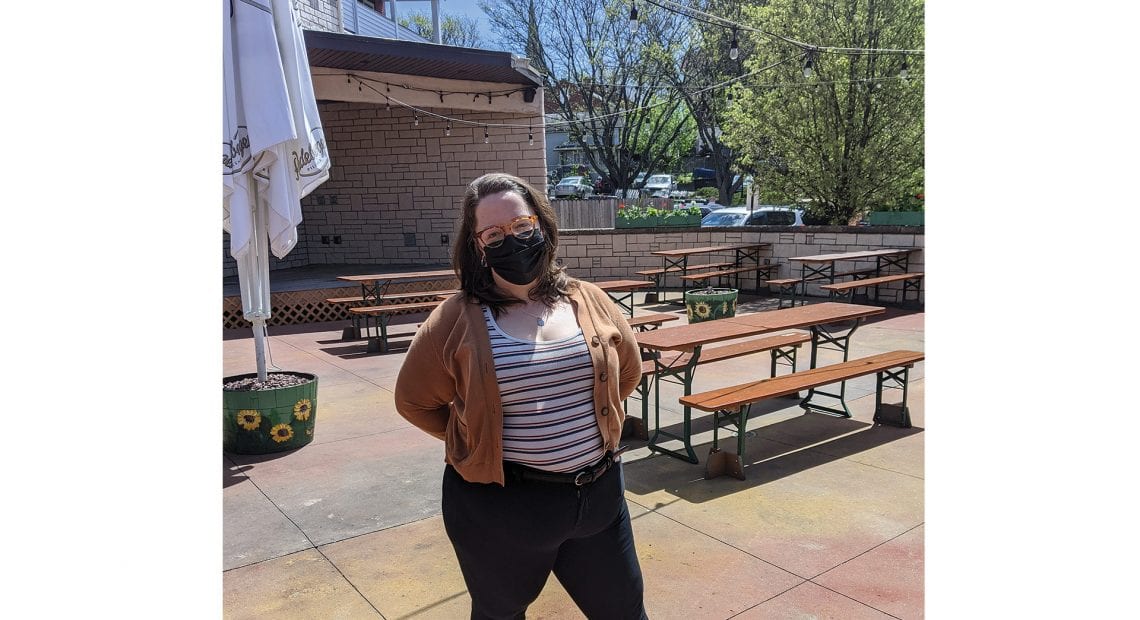
LONGMEADOW — One Way Brewing will officially open its doors at 807 Maple Road in Longmeadow on Saturday, May 22 from 11 a.m. to 3 p.m., marking the launch of Longmeadow’s first brewery.

One Way Brewing is releasing its flagship beer, Kickstarter, a New England IPA. Cans will be sold under a tent outside to accommodate social distancing. All CDC and state safety guidelines will be followed.

Saturday’s sale is for take-away cans only. Consumption of the product is not currently allowed on the premises. Due to limited quantities, sales are first come, first served, and will be restricted to one four-pack per person.

Daily News

WEST SPRINGFIELD — Healthtrax Physical Therapy has opened its third clinic combining restorative clinical treatments inside Healthtrax Fitness, 155 Ashley Ave., West Springfield.

Treatments are provided by physical therapist Brian Ferreira. Working as a physical therapist since 2006, he is a certified in manual therapy and earned his master’s degree in physical therapy at the Univer­sity of Hartford. He is experienced in advanced manual-therapy skills and outpatient orthopedics.

“My treatments are based in science and individualized to each patient to alleviate symptoms and address their underlying cause,” Ferreira said. “My goal is for patients to not only get better, but stay better. Having our clinic housed inside of Healthtrax Fitness & Wellness allows for a seamless transition in the continuum of care working with certified personal trainers to further improve strength, flexibility, and cardiovascular endurance.”

Services not only target the current issues (pain, weakness, etc.), but address underlying movement impairments, and treating these biomechanical dysfunc­tions results in better, more sustainable outcomes for each patient based on medical history, co-morbidities, and goals of therapy, Ferreira noted. The scope of diagnoses the center can treat includes low back and neck pain, rotator-cuff tendinitis, tennis elbow and golfer’s elbow, knee and hip pain, plantar fasciitis, ankle sprains, spinal stenosis, hand and thumb pain, osteoarthritis, degenerative disc and joint disease of the spine, nerve pain and sciatica, poor balance and unsteady gait, and general deconditioning due to disease or illness.

Open to the public and Healthtrax Fitness members, Healthtrax Physical Therapy treats patients of all ages and abilities, including adult and youth athletes, pre- and post-operative patients, workers’ comp injury patients, motor-vehicle accident patients, children with orthopedic conditions, and those needing work conditioning or hardening.

Daily News

SPRINGFIELD — In an effort to incorporate antiracism education and training into the student experience, Western New England University (WNEU) School of Law has added a new Antiracism and Cultural Competency (ARCC) graduation requirement beginning with incoming students in the fall of 2022.

This requirement offers students more than a dozen options from substantive courses relating to legal history, structural inequality, intersectionality, discrimination, civil rights, and theories of subordination, focusing on cultural context and cultural competency. The list of eligible courses includes “Race, Racism, & the Law,” “Business Law from an Antiracist Perspective,” “Gender & the Law,” “Diversity & Inclusion in the Legal Profession,” and many others.

“Western New England University School of Law has a long and proud history of incorporating social justice and antiracism into the education we offer. We are delighted to be in the vanguard of law schools formalizing that commitment in this way, which teaches our students about key areas of the law, but also prepares them well for the lawyering of today and tomorrow,” said School of Law Dean Sudha Setty. “Further, a cornerstone of our mission is the belief that the study of law must embrace the notion that different beliefs, backgrounds, and opinions are critical components of a well-rounded learning environment.”

WNEU School of Law currently offers a wide range of elective courses, experiential learning opportunities, engagement opportunities through its Center for Social Justice, pro bono opportunities, student organizations, and vibrant speaker series that serve to broaden students’ knowledge on legal issues related to racial justice, as well as diversity, equity, and inclusion.

Daily News

PITTSFIELD — The public is welcome to watch and vote for their favorites at Entrepreneurship for All (EforAll) Berkshire County’s virtual Spring Pitch Contest on Thursday, May 20 at 6 p.m. on Zoom. The event is co-sponsored by 1Berkshire and encourages would-be entrepreneurs to pitch their ideas and compete for cash prizes.

Nine contestants will be pitching, including Brian Pearson (Adventure East: outdoor adventures), Justin Allen (Beehive Media: Berkshire videos), Eugene Carr (Berkshire Busk! street festival), Marlee Tyska (Berkshire GreenLeaf & Wellness: outdoor hikes), Nicholas Russo (Crosswalk Coffee: bike-powered coffee cart), Leslie Woodward (Edenesque: atisanal nutmilk), Lindsey Mancari (Holistic Collective in the Shire: wellness center), Sarah Real and Mike Dell’Aquila (Hot Plate Brewing Co.: craft brewery), and Douglas Seaburg and Brian Barde (ShantyShare: ice-fishing shanties).

Registration is required by clicking here.

Daily News

CHICOPEE — The Amherst Area Chamber of Commerce will team up with the Mill District and host Mercedes-Benz of Springfield to present a family-friendly drive-in movie, Toy Story 4, at the Mercedes-Benz of Springfield dealership on Friday, May 21. Gates open at 7 p.m., and the movie begins at 8:30 p.m.

“This is an opportunity to bring people from across Western Mass. together for an evening of fun for the whole family, all with safe distancing measures in place,” said Claudia Pazmany, executive director of the Amherst Area Chamber of Commerce.

Proceeds from the event will benefit UMass For The Kids (FTK), which encourages collaboration between students, UMass Amherst, and the Amherst community by working to raise awareness and funds for local patients and families at Baystate Children’s Hospital, in connection with Children’s Miracle Network Hospitals.

“It is our pleasure to host the Amherst Chamber benefiting UMass FTK for our first event in over a year,” said Mercedes-Benz of Springfield owners Peter and Michelle Wirth. “Hampden and Hampshire county coming together once again.”

Click here to purchase tickets online. Tickets cost $15 for adults and $10 for children 12 and under.

Daily News

EAST HARTFORD, Conn. — American Eagle Financial Credit Union (AEFCU) announced that Dean Marchessault, the nonprofit organization’s president and CEO, will retire at the end of 2021, allowing for a transition process over the next seven months. Marchessault’s decision to retire will conclude 22 years of service to Connecticut’s largest community credit union, including seven as president and CEO.

“The board of directors and I would like to extend our sincere appreciation to Dean for his decades of dedicated service to American Eagle Financial Credit Union — particularly for his leadership as our president and CEO,” said Michael DePasquale, chairman of the AEFCU board of directors. “During his tenure as president and CEO, the credit union’s asset size almost doubled to $2.3 billion, and Dean has been instrumental in increasing American Eagle’s recognition as a leader and significant contributor within the community. We thank Dean for guiding American Eagle to the high level of success it enjoys today. We wish him all the best, and a long and healthy retirement.”

American Eagle has selected Howard Brady to be the credit union’s next president and CEO, starting Jan. 3, 2022. Brady has served as senior vice president and chief lending officer since 2015.

“We are confident Howard will provide the leadership necessary for the credit union to continue on its steady path of success, and we congratulate him on his promotion and new responsibilities,” DePasquale said.

During Marchessault’s time as president and CEO, the credit union’s membership and footprint have also grown exponentially. AEFCU currently provides banking services to more than 160,000 members and opened its first office in New Haven County while also being granted approval to expand its field of membership into Western Mass. in 2019. In 2020 alone, AEFCU’s monetary contributions were just shy of $300,000 and included grants from American Eagle’s donor-advised fund at the Hartford Foundation for Public Giving, corporate sponsorships, and general donations, as well as those derived from AEFCU’s Cash Back to the Community program.

In recent years, Marchessault has garnered several honors as a business and community leader, including a C-Suite Award from the Harford Business Journal in 2020, and the Business Person of the Year Award from the Connecticut River Valley Chamber of Commerce in 2018. In 2019, AEFCU was named one of the “Best Places to Work in Connecticut” by the Hartford Business Journal.

“Serving as the president and CEO of AEFCU has been a great honor, and words cannot express how I feel about our American Eagle family,” Marchessault said. “I thank the board of directors for allowing me to lead such a sensational organization, and I want to express my immense gratitude to the employees of AEFCU for all the success that they helped our credit union achieve, and for their dedicated service to our members, particularly after this challenging year. This transition will be bittersweet for me, but I know that it will be seamless thanks to the amazing team we have in place.”

Business Talk Podcast Special Coverage

We are excited to announce that BusinessWest, in partnership with Living Local, has launched a new podcast series, BusinessTalk. Each episode will feature in-depth interviews and discussions with local industry leaders, providing thoughtful perspectives on the Western Massachuetts economy and the many business ventures that keep it running during these challenging times.

Episode 64: May 17, 2021

George Interviews Julissa Colon, special programs coordinator for the Gateway to College program at Holyoke Community College

BusinessWest Editor George O’Brien continues his series of discussions with members of the magazine’s 40 Under Forty class of 2021. This week, his guest is Julissa Colon, special programs coordinator for the Gateway to College program at Holyoke Community College. The two discuss the many ways this program helps those who have left traditional education set and reach new goals — for their education … and their lives.  It’s must listening, so join us on BusinessTalk, a podcast presented by BusinessWest in partnership with Living Local.


Also Available On

Daily News

SPRINGFIELD — In celebration of the class of 2021, Western New England University (WNEU) will confer doctoral, law, pharmacy, occupational therapy, and master’s degrees during its 2021 graduate commencement ceremony on Sunday, May 16 at 1 p.m. The themed event, titled “The Future Is Ours, Let’s Make It Golden” will be a high-spirited, virtual ceremony connecting graduates and their families as they watch from home.

District Attorney Anthony Gulluni will be this year’s keynote speaker and will be awarded the prestigious President’s Medallion for his commitment and dedication to building safer communities. The award, established in 2002, is bestowed upon those who have distinguished themselves in a particular field or in service to an important cause that has benefitted society locally, regionally, nationally, or internationally. The President’s Medallion also recognizes men and women in diverse fields who are role models worthy of emulation by all.

Gulluni was sworn into office as Hampden District Attorney in January 2015 and is currently in the middle of serving his second four-year term. He is a lifelong Springfield resident who attended local schools, including WNEU, where he earned a bachelor’s degree in 2003 and juris doctorate in 2007.

As DA, Gulluni has promoted his vision of safer communities by innovative and significant investment in community building and outreach, crime prevention and education, and smart prosecution of violent offenders. The Hampden District Attorney’s Office has engaged with many community-based organizations, including Roca, the Healing Racism Institute of Pioneer Valley, and the YWCA to broaden its reach and provide equitable services to all communities in need. His office has also initiated many of its own programs to engage youth, prevent crime, help people overcome addiction, and promote social and racial equity in criminal justice.

Last year, the Hampden District Attorney’s Office created a young adult court named EACH, the Emerging Adult Court of Hope. This groundbreaking model engages young adults from ages 18 to 24 who are ensnared in a cycle of negativity and incarceration. EACH, in partnership with various community organizations and state agencies, was designed by Gulluni to disrupt this cycle, to which he saw many young people fall prey. Instead of incarceration, the court provides intensive support and programming focused on the participants’ physical and mental health, behavior patterns, housing, and ultimately the development of a pathway for careers through education and job training. The court is the first of its kind in Massachusetts and is already receiving national attention.

Gulluni was also appointed by Gov. Charlie Baker to serve on the board that oversees the Massachusetts Office of Victim Assistance and administers millions of dollars of funds to victim and survivor organizations. In addition, Baker appointed him to his statewide Task Force on Hate Crimes. Gullini is also the immediate past president of the Massachusetts District Attorney Assoc.

For more information on Western New England University’s 2021 commencement ceremonies and to view live-streaming videos, visit wne.edu/commencement.

Daily News

SPRINGFIELD — Springfield College will open its 2021 commencement weekend ceremonies with a virtual presentation on Friday, May 14, with Gov. Charlie Baker delivering the virtual commencement address. The virtual ceremony will start at 6:30 p.m. and can be viewed by clicking here.

Following Friday’s virtual opening celebration, the college will host eight separate in-person ceremonies, four on Saturday, May 15, and four on Sunday, May 16, at Stagg Field on the Springfield College main campus. Ceremonies start at 8:30 a.m., 11:30 a.m., 3 p.m., and 6 p.m. each day. Video streams and schedules of the ceremonies can be accessed through the Springfield College commencement stream webpage.

Over the weekend, Springfield College will award 434 master’s degrees, seven certificates of advanced graduate study, three doctor of philosophy degrees, 34 doctor of physical therapy degrees, and 13 doctor of psychology degrees. At the undergraduate ceremonies, the college will award 671 bachelor’s degrees. All together, 1,162 degrees are being awarded.

Daily News

SPRINGFIELD — In recognition of its efforts to help customers reduce energy use and save money through demand response programs, Eversource’s ConnectedSolutions demand-management program received the 2021 Program Pacesetter Award from the Peak Load Management Alliance (PLMA). The energy company was recognized for surpassing enrollment goals and setting a high bar for energy-demand-management programs.

“We’re honored to be recognized by PLMA for our efforts to help customers reduce energy use and save money through ConnectedSolutions,” said Penni Conner, Eversource’s executive vice president of Customer Experience and Energy Strategy. “Demand management is a valuable tool in the fight against climate change that also helps maintain reliability of our electric grid. We’re proud of our innovative approach, which has rapidly engaged thousands of customers of all sizes to help reduce energy demand at critical times.”

Eversource’s ConnectedSolutions program provides incentives to customers to reduce their energy use at times of peak demand, which helps reduce strain on the electric grid and lowers carbon emissions by avoiding additional power generation of dirtier fossil fuels like coal that still come online in New England when demand is high. Customer enrollment in 2020 across Connecticut, Massachusetts, and New Hampshire surpassed goals by more than 60 MW, reaching a total of 170 MW approved for targeted use during days with the highest energy demand and an additional 6.3 MW of storage capacity approved for daily demand reductions.

ConnectedSolutions is significant not only for the large demand reductions that can be achieved, but also for the diversity of customers and devices enrolled, including more than 600 business customers using a range of demand-reduction strategies and more than 33,000 residential devices including Wi-Fi thermostats, electric-vehicle chargers, residential battery storage, and Wi-Fi-connected A/C units.

Since 2003, PLMA has recognized a select group of outstanding load-management programs, initiatives, and achievements. This year, Eversource’s ConnectedSolutions program was chosen among two other pacesetter programs, including the Consumers Energy Clean Energy Plan and Western Power’s 100 MW Challenge in Australia.

Daily News

SPRINGFIELD — Fresh Paint Springfield, the mural festival that began in 2019 in downtown Springfield and transformed large, exterior walls into art, will be returning to Springfield on June 5-13. This year’s festival will feature new murals in downtown Springfield and in Mason Square.

“The city and I are happy to continue to support our mural festival that began in 2019,” Mayor Domenic Sarno said. “Simply put, these murals bring a welcoming vibrancy and creativity to our downtown. I want to thank Fresh Paint Springfield for their continued partnership in making our community colorful and enhancing our city’s aesthetics and pedestrian experience, which all leads to people spending money by patronizing our business and cultural amenities.”

Among the murals that will be part of Fresh Paint 2021 are “Pioneers Past and Present,” which will be painted by local portrait painters in Mason Square, and the repainting of a historic mural on the Mosque 13 building on State Street.

For news and updates about this year’s festival, visit www.freshpaintspringfield.com.

Daily News

SPRINGFIELD — American International College (AIC) President Vince Maniaci announced plans to retire at the end of academic year 2021-22. At the time of his retirement, Maniaci will have served the college for 17 years.

Joining AIC in 2005, Maniaci’s stated aim was to cultivate and progress “a diverse, urban community; strong co-curricular, athletic, and academic connections; and student-centered, culturally aware programming.” Meanwhile, faced with a multi-million-dollar deficit, he made drastic changes to business as usual, helping set the college on a steady trajectory toward fiscal health within one year of his arrival.

During his time as president, Maniaci successfully increased undergraduate and graduate programming through the doctoral level, resulting in robust enrollments; expanded athletic programs and improved sports venues; contributed to the revitalization of the college with new construction and renovation of campus facilities in support of academics, athletics, and student life; enhanced campus safety with increased personnel and technology upgrades; and pursued grant funding, including a $2.2 million grant from the U.S. Department of Education.

In 2006, after an initial downsizing and retrenchment, AIC began to grow programming and enrollment. New programming in recent years has included a minor in Spanish, the addition of a master of science in cannabis science and commerce, the statewide expansion of the master’s in education program, and the establishment of a low-residency program. Health Sciences has experienced steady growth with the introduction of exercise science, family nurse practitioner, and a doctorate in occupational therapy.

At the time of Maniaci’s arrival in the fall of 2005, graduate enrollment was approximately 380 students. As of the fall 2020 semester, the total graduate enrollment has expanded to nearly 1,250 and includes 22 program offerings. Undergraduate enrollment has grown as well. In recent years, despite downward trends in college enrollment in the Northeast, AIC has boasted two of its largest incoming first-year classes, with a current undergraduate population nearing 1,400 students.

Major grants have contributed to building the college’s success and enrollment numbers. In 2015, AIC received a grant of more than $1 million from the U.S. Department of Education allocated over five years. The Student Support Services grant was earmarked for operational and scholarship funding to benefit the AIC Core Education program.

AIC received a one-time $347,000 Nursing Workforce Diversity Grant in 2016 from the Health Services and Resources Administration (HRSA) in support of the College’s Nursing Education Achievement Program. The college was also awarded a $150,000 matching grant from the George I. Alden Trust in Worcester to help offset costs incurred by the Colaccino Center for Health Sciences building project.

In 2019, the college received a $2.2 million grant from the U.S. Department of Education to develop the AIC Plan for Excellence program, a shared curricular experience designed to achieve four main learning goals for students, including intellectual development and lifelong learning, personal growth, social and cultural competency, as well as career and professional development.

New construction and renovation of campus facilities in support of academics, athletics, and student life contributed to the revitalization of the college under Maniaci’s leadership. The Saremi Center for Career Development was created to provide internship opportunities for students through an extensive job database and assists with job-interview preparation and personality and leadership assessments to match skills with job titles. The development of the Center for Academic Success supports students — especially first-year, first-generation scholars — helping them realize academic success through to graduation and employment. The full renovation of the 500-seat Esther B. Griswold Theatre boasts a performance venue that supported the development of a theater-arts program and major. The adjacent West Wing Gallery, along with a new communication center in the lower level of the building, broadened the scope of the Karen Spague Cultural Arts Center.

The complete overhaul of the Dining Commons in 2016 (the first in 50 years) included the new and improved Stinger Pub, a popular spot for small gatherings of students and employees. The renovation of the James F. Shea Library, a full-service learning center complete with group study rooms, project-development spaces, study pods, and open reading areas, is tailored for students who wish to study in groups or alone.

Built in 2018, the Colaccino Center for Health Sciences offers spacious classrooms and hands-on labs for undergraduate and graduate students in exercise science, nursing, physical therapy, public health, and occupational therapy. The 20,000-square-foot facility provides AIC students with simulation, rehabilitation, and human-performance laboratories, as well as smart classrooms, ample study areas, faculty offices, and conference space.

A major campaign in support of athletics resulted in new and upgraded indoor and outdoor venues, among them a fitness center and athletics performance center, a field dedicated to rugby practice, the Ronald J. Abdow Field, the John Hoyt Track, the MassMutual Field, the Alumni Varsity Club Field, and the Judy Groff Softball Field.

The Schwartz Campus Center, the hub for student life, benefited from the creation of the Colaccino Lounge and deck, renovated campus store, an upgrade to the Hive café, and the addition of Starbucks. Built in 2008, Acorn Heights offers apartment-style, co-ed housing for academically successful students age 21 and up. Most recently, the construction of Acorn B, the first-ever housing exclusively for graduate students, was added to the list of projects that have enhanced campus life and helped AIC compete in the rapidly changing landscape of college recruitment and retention.

“I am proud to reflect on the many achievements that we have accomplished as an institution over what will be the course of 17 years,” Maniaci said. “Every individual on the board of trustees, as well as the faculty and administration, have all contributed to the elements that make AIC unique among colleges and universities. We share a collective passion for the mission of American International College and a sincere dedication to provide access and opportunity to a diverse population of students who are inspired to grow in both knowledge and experience, and who entrust their education to us. That tradition has been the cornerstone of the institution for 136 years and will continue well into the future.”

Daily News

SPRINGFIELD — After a career spanning more than three decades in public broadcasting, Martin Miller is stepping down from his position as president of New England Public Media (NEPM). He will continue in his role until a successor is named, and then will move into a senior counsel role focused on new fundraising efforts for NEPM’s music endowment, journalism, and engagement priorities.

Miller led WFCR radio for more than two decades, expanding it into the 13-station New England Public Radio network and relocating its main broadcast facility from the UMass Amherst campus to state-of-the-art studios in Springfield. The Five College Studios, rebuilt in 2016, remain at UMass in Hampshire House.

In 2019, Miller became president of NEPM after helping to orchestrate an alliance with public-television station WGBY to create New England Public Media, thus expanding journalism, community-engagement, cultural, and educational programs through multi-platform services. The successful merger of NEPR with WGBY brought together the resources of public radio and TV, creating a robust public-media organization positioned to continue its public-service mission well into the future.

“Martin leaves an outstanding legacy of service to public media in Western New England,” said Robert Feldman, NEPM board chair. “From his dedicated leadership at WFCR to his vision for uniting with WGBY TV, he has led with principle, insight, and wisdom, building and strengthening public media on behalf of audiences and communities across our region.”

Miller began his public-media career in 1979 at WNYC Radio in New York and continued it at WGBH Radio in Boston beginning in 1985. He served in a variety of capacities, completing his career there as program director. During his tenure, he was instrumental in helping launch The World, the first international news program for an American audience. He also produced award-winning programming including “Oy Chanukah! with the Klezmer Conservatory Band.”

In 1995, he joined WFCR in Amherst as general manager. During his nearly 26 years leading WFCR, NEPR, and now NEPM, he helped raise more than $11 million for capital improvements and new programming, developed NEPR’s Media Lab, was responsible for significant revenue and audience growth for radio, increased investments in journalism, developed a diverse board of directors and created a new community advisory board for NEPM, and, most recently, oversaw the launch of NEPM’s new local radio program And Another Thing.

“UMass Amherst, the Five College Consortium, and NEPM have provided me with the wonderful opportunity to be part of a talented group of people involved in the important work of education, civic leadership, and joyful engagement for the residents of Western New England,” Miller said. “I am very fortunate that my career has allowed me to focus in areas I cherish — journalism, education, and music — and it has afforded me the honor and privilege to work with wonderful colleagues, volunteers, members of our community, and supporters for almost four decades. Together, for our region, we have built a public-media organization that will continue to serve our communities for many years to come.”

Daily News

SPRINGFIELD — Working with several active employer and professional organizations, Unemployment Tax Control Associates (UTCA) has taken a leadership role in addressing the ‘surprise’ rate escalations triggered by the 2021 Massachusetts solvency assessment (9.23%, a roughly 16-fold increase over the 2020 rate.)

This uniform solvency assessment is designed to cover the cost of benefit charges that are not the responsibility of individual employers. This rate is computed annually in accordance with the statutory requirements of M.G.L. Chapter 151A and is not within the discretion of the Department of Unemployment Assistance.

“While we have been working diligently to raise awareness of this issue with employers, numerous media outlets, and the State House, we have all awaited guidance from the U.S. Department of Treasury as to whether any funds from the American Rescue Plan (ARP) could legally be used to alleviate this cost,” said Suzanne Murphy, CEO of UTCA, noting that the Deapartment of Treasury released a statement addressing the use of $350 billion in coronavirus state and local fiscal recovery funds. The release includes links to descriptions of permissible uses and the allocation of funds by state and county.

States should expect to receive funds twice, with 50% beginning this month and the balance delivered 12 months later. States that have experienced a net increase in the unemployment rate of more than 2% from February 2020 to the latest available data as of the date of certification will receive their full allocation of funds in a single payment; other states will receive funds in two equal distributions.

The fact sheet includes a statement that funds may be used, among other purposes, for rebuilding public-sector capacity, rehiring public-sector staff, and replenishing unemployment-insurance trust funds, in each case up to pre-pandemic levels. Recipients may also use this funding to build their internal capacity to successfully implement economic relief programs, with investments in data analysis, targeted outreach, technology infrastructure, and impact evaluations. Click here for a detailed list of state-by-state allocations.

“We encourage all employers to reach out to their legislators and advocate these monies be allocated to replenish the Massachusetts Trust Fund to directly offset the 2021 solvency assessment impact and return it to pre-pandemic levels, as per the federal guidelines,” Murphy said. “Bay State employers have made it very clear they have little capacity to withstand the substantial and unexpected financial burden of this catastrophic rate increase. Our legislators must also be reminded how critical it is for Massachusetts to compete with other states using ARP funds to relieve employers of the economic ravages of the pandemic. Time is of the essence, so please act now.”

Daily News

FLORENCE — Florence Bank announced that Kiara Sonoda, Jessica Camp, Samantha Sanger, and Lynn Formel have been selected as recipients of the 2020 President’s Award.

The President’s Award is a tradition established by the bank in 1995, affording employees opportunities to nominate their peers for this prestigious honor, which recognizes outstanding performance, customer service, and overall contribution to Florence Bank. Sonoda, Camp, Sanger, and Formel were nominated by numerous colleagues at Florence Bank.

Sonoda is a teller operations manager and customer service representative at the downtown Northampton office and has been with Florence Bank for nine years. She attended the University of Massachusetts and is a figure-skating coach for the Skating Club of Amherst.

Camp is a credit analyst at the main headquarters and has been with Florence Bank for three years. She received her bachelor’s degree from Framingham State University.

Sanger is a customer records analyst at the main headquarters and has been with Florence Bank for 10 years. She attended the University of Phoenix.

Formel is a customer service representative at the Hadley branch and has been with Florence Bank for three years.

“These four employees showcase how hard work and determination truly pay off,” said Kevin Day, president and CEO of Florence Bank. “Their peers have praised their dedication, enthusiasm, and the impressive skill set they bring to their respective jobs each day.”

Daily News

SPRINGFIELD — In light of Gov. Charlie Baker’s recent announcement that most, if not all, restrictions on events will be lifted effective Aug. 1, BusinessWest has made the decision to move its annual 40 Under Forty gala, originally scheduled for late June, to Thursday, Sept. 23 at the Log Cabin Banquet & Meeting House in Holyoke.

“We make this move because … well, we want as many people as possible to celebrate with the class of 2021,” said George O’Brien, editor and associate publisher of BusinessWest. “This gala has always been an event — one of the biggest and best on the calendar in Western Mass. for many years. We can’t predict the future, but we firmly believe that we can stage a larger, better event — one worthy of this class of rising stars, and this region — in September than we can in June.”

The class of 2021 will be introduced to the region in the magazine’s May 12 issue. Additional details on the Sept. 23 gala will be forthcoming. Tickets, which will go on sale later this spring, will be available on a first-come, first-served basis.

Daily News

SPRINGFIELD — In the spring of 2017, the Healthcare News and its sister publication, BusinessWest, created a new and exciting recognition program called Healthcare Heroes.

It was launched with the theory that there are heroes working all across this region’s wide, deep, and all-important healthcare sector, and that there was no shortage of fascinating stories to tell and individuals and groups to honor. That theory has certainly been validated.

But there are hundreds, perhaps thousands of heroes whose stories we still need to tell, especially in these times, when the COVID-19 pandemic has brought many types of heroes to the forefront. And that’s where you come in.

Nominations for the class of 2021 are due Thursday, June 24, and we encourage you to get involved and help recognize someone you consider to be a hero in the community we call Western Mass. in one (or more) of these seven categories:

• Patient/Resident/Client Care Provider;

• Health/Wellness Administrator/Administration;

• Emerging Leader;

• Community Health;

• Innovation in Health/Wellness;

• Collaboration in Health/Wellness; and

• Lifetime Achievement.

Our Healthcare Heroes event is presented by Elms College. Nominations can be submitted by clicking here. For more information, contact Jennifer Godaire, Marketing and Events Director, at (413) 781-8600, ext. 100, or [email protected].

Daily News

HOLYOKE — Girls Inc. of the Valley has raised more than $67,000 to date from its Spirit of Girls 2021 event, which will help support ongoing program needs.

The virtual event was held on May 6 and was attended by notable women such as U.S. Sen. Elizabeth Warren, former NASA astronaut Cady Coleman, Mount Holyoke College leadership fellow and political figure Carmen Yulín Cruz, actress Tequilla Whitfield, WWLP weeknight anchor Ciara Speller, and Girls Inc. President and CEO Stephanie Hull.

Girls Inc. of the Valley has had to opt for safer, virtual options, which is why this year’s Spirit of Girls event was held 100% virtually. Attendees heard directly from girls, staff, and notable celebrities regarding the importance of celebrating their place at the table. Girls Inc. of the Valley will be posting a link to a video of the event on its YouTube channel, where it will still accept monetary gifts as well.

“We are so thrilled to have had such strong, smart, and bold role models volunteer to lend their voices to Spirit of Girls 2021,” said Suzanne Parker, Girls Inc. of the Valley’s executive director.

Girls Inc. of the Valley aims to inspire all girls to see themselves as leaders with the skills and capabilities to improve and influence their local communities.

Daily News

MONSON — Monson Savings Bank announced the recent hire of Jason Berry as vice president and commercial loan officer.

“We are very happy to welcome Jay to the Monson Savings Bank team,” said Dan Moriarty, the bank’s president and CEO. “Jay has extensive banking experience and has been a commercial lender within our local market. He is extremely knowledgeable in his field and has a strong customer-service background. I am confident he will be a major asset to the bank and our business customers searching for commercial-lending solutions.”

In his new role, Berry will focus on providing customized, sensible lending and deposit solutions to businesses. He will assist in the maximization of cash flow and bringing the full scope of the bank’s products and high-tech services to the businesses he serves. He will also introduce business partners, who are experts in their field, to support businesses.

Berry graduated from Westfield State University with a bachelor’s degree in political science after earning his associate degree in liberal arts at Holyoke Community College. He brings more than 15 years of banking and financial experience to Monson Savings Bank. He most recently held the role of vice president, Business Banking relationship manager at People’s United Bank.

Berry is active in the community, offering support to various local charitable organizations and engaging with local chambers to support the local business community. He enjoys volunteering and has given his time to the Food Bank of Western Massachusetts, Susan G. Komen, United Way, and Junior Achievement. Additionally, he is a member of the East of the River Five Town Chamber of Commerce and West of the River Chamber of Commerce.

“To say that I am thrilled to be part of Monson Savings Bank is an understatement,” Berry said. “My entire career has been focused on doing the right thing for my customers and being responsive to any and all questions and inquiries. I’m passionate about advocating for businesses and helping them evolve by providing candid, strategic, and sensible solutions. I look forward to being a dependable ambassador for Monson Savings and an extension of support for our business customers.”

Daily News

HADLEY — UMassFive College Federal Credit Union recently introduced the newest leaders of its Hadley and Northampton branches and contact center: Megan Lagoy, Eurika Boulay, and Katharine Lawton.

Lagoy has expanded her role as assistant vice president of Retail Services. She began her career at UMassFive nine years ago as a call center representative, eventually taking on other various contact center roles, and most recently held the title of AVP of the contact center and interactive teller machine (ITM) department. In her new position, she will oversee the Hadley branch in addition to the contact center and the ITM department.

“I am looking forward to continuing to ensure the delivery of the highest-quality member service throughout the credit union,” Lagoy said. “This includes advocating for members’ needs through active listening, advising, and counseling, and evaluating the best options to improve their financial lives.”

Boulay has been promoted to Northampton branch manager. She began her career at UMassFive five years ago as a member service specialist in the Northampton branch, eventually moving on to becoming the branch backup supervisor, and most recently the Northampton VA Medical Center branch manager. In her new role, she leads the Northampton branch team in creating positive member experiences, maintaining branch compliance, and working with the Community Outreach manager to develop UMassFive’s presence in Northampton.

“In my new role as branch manager, I look forward to welcoming new members to UMassFive and continuing to serve the Northampton branch membership,” Boulay said.

Lawton has been promoted to contact center manager. She began her career at UMassFive in 2016 as a contact center representative and quickly progressed to lead contact center representative in 2017. In her new role, she will oversee new online membership fulfillment, onboarding, loan applications, phone-system administration, and providing resolutions to ensure positive member experiences.

“In my new position,” Lawton said, “I’m excited to lead our talented contact center team in delivering the highest-quality member service while putting the interests of our members first to make a positive difference in their financial lives.”

Class of 2021 Cover Story

When BusinessWest launched a program in 2007 to honor young professionals in Western Mass. — not only for their career achievements, but for their service to the community — there was little concern the initial flow of nominations might slow to a trickle years later.

We were right. In fact, 40 Under Forty has become such a coveted honor in the region’s business community that the flow has turned into an annual flood, with almost 200 unique nominations arriving this year — a near-record — making the task of five independent judges tougher than ever.

But it was also an inspiring task, as these nominations testified to the continued vibrancy and dedication of the region’s young professionals, even during a year that has been unusual at the best of times and, for many industries, crushing during the worst.


View this year’s 40 Under Forty digital flipbook here!


As usual, the honorees — 26 women and 14 men — hail from a host of different industries, from law to engineering; from education to healthcare; from energy to media, just to name a few. But there are, as always, some common denominators, including excellence within one’s profession, a commitment to giving back to the community, dedication to family and work/life balance, and a focus on what else they do in each of those realms.

The class of 2021 will be celebrated on Thursday, Sept. 23 at the annual 40 Under Forty Gala at the Log Cabin Banquet & Meeting House in Holyoke. That gala will also feature the announcement of the winner of the seventh annual Alumni Achievement Award, a recognition program that salutes the 40 Under Forty honoree who has most impressively added to their accomplishments in the workplace and within the community, as chosen by a panel of judges.

Presenting Sponsor

Sponsors

Alumni Achievement Award

When BusinessWest launched its 40 Under Forty program in 2007, it did so to identify rising stars across our region – individuals who were excelling in business and through involvement within the community –and celebrate their accomplishments. In 2015, BusinessWest announced a new award, one that builds on the foundation upon which 40 Under Forty was created. It’s called the Alumni Achievement Award (formerly the Continued Excellence Award). as the name suggests, will be presented to the 40 Under Forty honoree who, in the eyes of an independent panel of judges, has most impressively continued and built upon their track record of accomplishment.

This year’s nominations are CLOSED. Nominate next year’s Alumni Achievement Award recipient HERE.

2021 Alumni Achievement Award Presenting Sponsor

Features Special Coverage

Generating Results

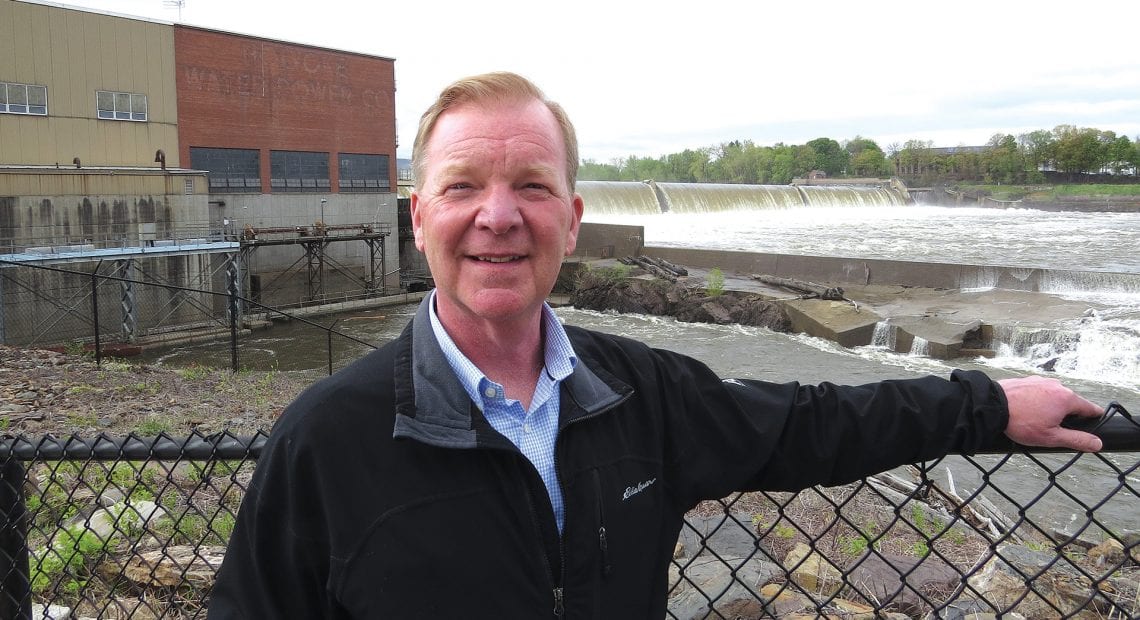
Holyoke G&E Manager Jim Lavelle

Holyoke G&E Manager Jim Lavelle at the hydroelectric facility at the Hadley Falls Dam.

Holyoke Gas & Electric was recently recognized among a handful of utilities nationwide for its leadership in transforming to a carbon-free energy system. That designation, from the Smart Electric Power Alliance, underscores a green-energy mindset at the municipal utility that is not only earth-friendly, but a powerful force when it comes to economic development in the Paper City.

Jim Lavelle acknowledged that Holyoke Gas & Electric (HG&E) has some decided advantages when it comes to clean energy and reducing its carbon footprint.

Take, for example, the hydroelectric facility at the Hadley Falls Dam on the Connecticut River, capable of generating 33 megawatts of electricity, as well as some smaller hydro units located throughout the Holyoke canal system that produce another 15 megawatts — clean-power generation that is beyond the means of many utilities, especially municipal operations.

“We’re extremely fortunate that we have this infrastructure at our disposal — 50 megawatts of hydro in our backyard,” said Lavelle, general manager of HG&E. “It’s a tremendous asset that we try to take full advantage of.”

But HG&E’s commitment to a carbon-free energy system goes well beyond the hydroelectric facility. Indeed, it also includes early adoption of utility-grade solar power (20 megawatts in all), punctuated by the Mount Tom Solar & Energy Storage System. That facility, built near the site of a former fossil-fuel plant, is a large, utility-scale battery and the second such system to be installed in the state, drawing power directly from the solar farm, the largest community solar project in the Commonwealth.

“We’re extremely fortunate that we have this infrastructure at our disposal — 50 megawatts of hydro in our backyard. It’s a tremendous asset that we try to take full advantage of.”

That commitment also includes a diverse power-supply portfolio that includes hydro, solar, nuclear, and wind, as well as efficiency and conservation programs and development of emerging clean-energy technologies, all of which have the utility well-positioned to meet the state’s net-zero target by 2050 (established in the recent clean-energy bill), as well as incremental benchmarks for 2030 (50% below 1990’s emissions levels) and 2040 (75% below).

But long before these mandates and net-zero targets were put in place, HG&E was taking full advantage of its assets, especially those in the clean-energy category, and promoting what it called “cost-competitive clean energy.”

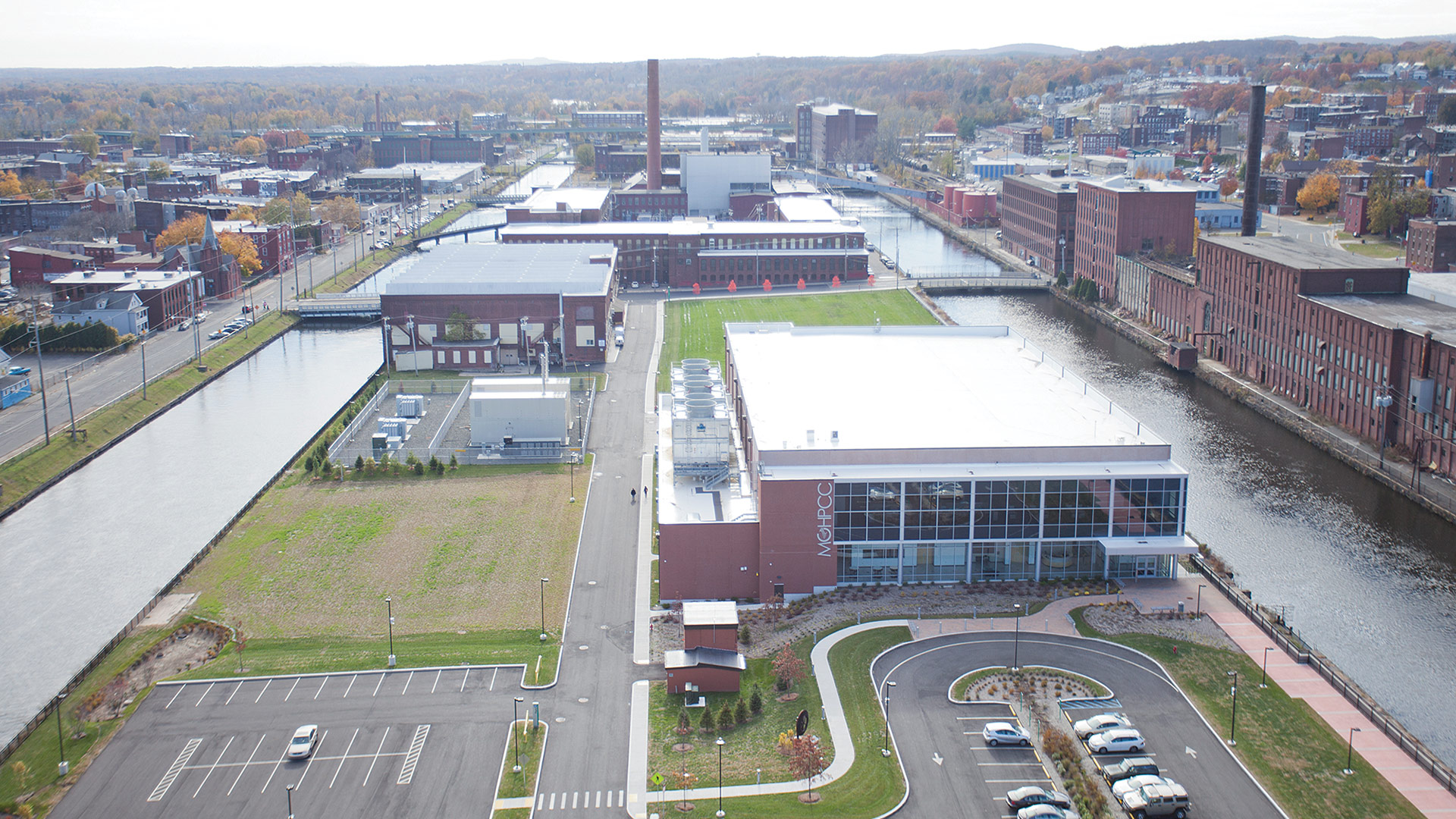
The Massachusetts Green High Performance Computing Center

The Massachusetts Green High Performance Computing Center is located in Holyoke, in large part, because of the low-cost, green energy available there.

This track record, coupled with many recent initiatives, has earned HG&E recognition among a handful of utilities nationwide for its leadership in transforming to a carbon-free energy system by the Smart Electric Power Alliance (SEPA) and a spot on the 2021 Utility Transformation Leaderboard. There, it joins just nine other utilities, all of them much larger, including Southern California Edison, Green Mountain Power in Vermont, and Consolidated Edison of New York.

While Lavelle is clearly proud of the award, what it means, and what it says about his utility, he is focused as much on what it — and all of the utility’s efforts toward clean, modern energy — mean for Holyoke. Indeed, the municipal utility and its lower-cost energy have always been selling points and economic-development engines, he said, but they become even more so as the energy becomes cleaner and greener.

“We have a ‘green team’ here that does a lot of our advanced planning on carbon-footprint management, but we also have everyone involved in some way, shape, or form in this effort. Our team is really engaged, and it’s good to see how passionate people are about working toward this objective and how creative they are.”

This was in evidence with the Massachusetts Green High Performance Computing Center, which is based in Holyoke, in large part, because of the availability of vast amounts of clean, lower-cost energy, said Lavelle, adding that these factors also played sizable roles in bringing two huge cannabis-production facilities to the city, with more on the way. And as companies of all kinds look to reduce their carbon footprints, embrace clean energy, and perhaps escape the high lease rates of major urban areas, HG&E and its drive to a carbon-free energy system could bring more businesses to the Paper City.

But while the utility has made great progress in the broad realm of clean energy, it acknowledges there will be stern challenges as it continues down this road.

“With this climate bill … if everyone’s going to convert their gas and oil and propane — their inefficient systems — to cleaner electric systems, that’s going to put a huge demand on our electric capacity,” Lavelle said. “So what we’re forecasting is that we could potentially see a tripling of our electric kilowatt-hour sales by 2050, depending on how we navigate from here to there.

“And even today, we’re seeing that, in certain neighborhoods, all it takes is one resident to put in an electric vehicle, and it taxes the transformer that’s serving that neighborhood,” he went on, adding that upgrading these transformers, built for a different time, will be just one of the many tests awaiting a utility that is committed to being ready for whatever the future brings. And that’s another reason why it’s one of just 10 utilities on SEPA’s short list.

The Mount Tom Solar facility

The Mount Tom Solar facility is the largest community solar project in the Commonwealth.

For this issue, BusinessWest takes an in-depth look at Holyoke G&E’s ongoing efforts — and true leadership — with regard to clean-energy transformation, what it means for a city looking to make history of a different kind, and what the road to hitting the state’s benchmarks might look like.


Scaling Up

As he gave BusinessWest a tour of the Hadley Falls Dam facility, which has been powering businesses for more than 150 years, Lavelle talked at length about what else goes on there.

Indeed, this is the site of the Robert E. Barrett Fishway, and the fishlift there helps migrating fish over the dam. In a normal spring, the facility would be visited by dozens of school classes on field trips — and other visitors — who can watch American shad, sea lamprey, sturgeon, and (hopefully) a few Atlantic salmon make their way through the lift and over the dam to resume their journey north. This is not a normal spring, however, and the fishway is closed due to COVID-19.

The work of ferrying fish over the dam continues, however, as does the work of producing electricity at the twin turbines, production that, as noted, is just one of the reasons HG&E finds itself among those utilities identified by SEPA as taking the lead in transforming to a carbon-free energy system.

As it went about completing its report on the state of clean-energy transformation and identifying utilities now on its leaderboard, SEPA listed what it calls the “four dimensions of utility transformation” — clean-energy resources, corporate leadership, modern grid enablement, and allied actions and engagement.

As he talked about his utilities efforts, Lavelle touched on all these elements, starting with those clean-energy resources.

HG&E now has many of them, he said, listing the dam, the Mount Tom Solar and Energy Storage System, and others, which, together, create a diverse, increasingly clean power-supply portfolio.

Beyond this portfolio is a mindset to embrace clean energy, efficiency, conservation, and planning for tomorrow, a mindset that has existed for many years now, long before the state started setting net-zero goals.

“We have a ‘green team’ here that does a lot of our advanced planning on carbon-footprint management, but we also have everyone involved in some way, shape, or form in this effort,” Lavelle noted. “Our team is really engaged, and it’s good to see how passionate people are about working toward this objective and how creative they are.”

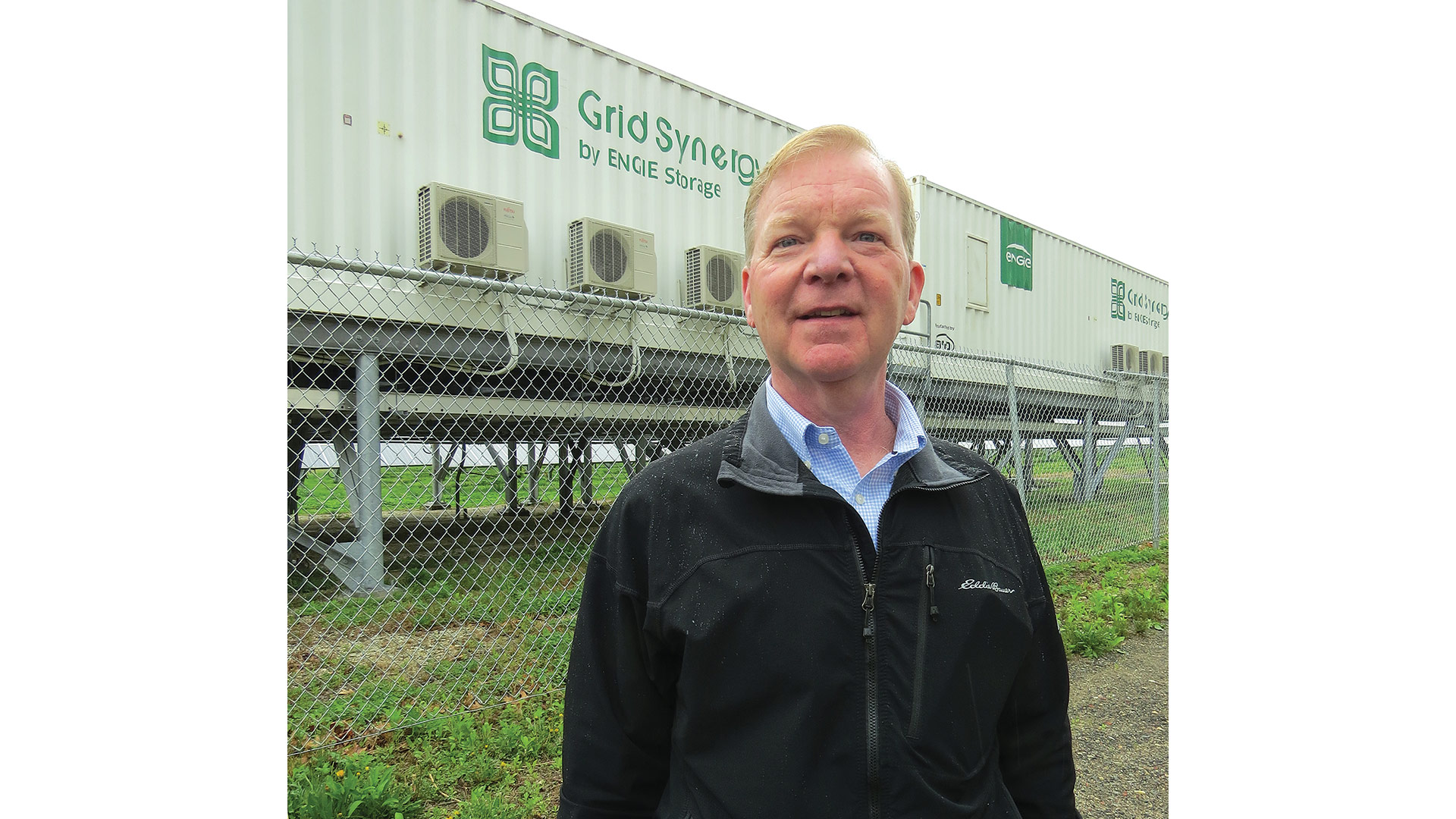
The latest example of this passion and creativity is the Mount Tom Energy Storage System. Operated by ENGIE Storage (formerly Green Charge Networks), it is designed to keep electric rates stable by reducing rising demand-based charges for HG&E and its customers by storing energy needed to reduce peak loads — in a clean, environmentally friendly manner.

“Two of the highest-cost elements in our energy ledger are capacity and transmission costs,” said Jonathon Zwirko, HG&E’s project engineer and Energy Resources coordinator. “By timing things properly and discharging the batteries at the right time, we’re able to save on both capacity and transmission costs.”

Through the use of this battery system, which can store 6 megawatt hours of energy at a rate of up to 3 megawatts per hour, the utility can save 2% to 2.5% on its total energy costs annually, a number that will go higher when a second, larger battery facility, this one on Water Street, goes online later this month.

Jim Lavelle at HG&E’s energy-storage system

Jim Lavelle at HG&E’s energy-storage system, the second such system to be installed in the state.

The solar facility and energy-storage facility are just a few components of a diverse clean-power portfolio that, as noted, also includes hydro, wind, and nuclear, a portfolio that gives the utility flexibility and the ability to offer competitive rates, Lavelle said.

As noted, this powerful combination has helped bring some businesses to Holyoke that might not otherwise have considered that zip code.

That’s especially true of the cannabis businesses, including large manufacturers, that have, well, put down roots in the city. They’ve been drawn by the hundreds of thousands of square feet of available mill space, said Zwirko, but even more important to them is the large amounts of green, comparatively cheap electricity needed for all elements of the operations, but especially the lights that enable plants to grow.

Green Thumb Industries is currently operating a plant on Appleton Street that consumes roughly 1.5 megawatts of electricity, said Zwirko, noting that Trulieve, which recently moved into the old Conklin Furniture complex just a few hundred yards from the Hadley Falls Dam, will, when operating at peak capacity, consume 4 megawatts. By contrast, Holyoke Medical Center and Holyoke Community College each consume roughly a half-megawatt.

“If we see a tripling of our load, and that power has to come from carbon-free sources, that will be a real challenge. Different camps think offshore wind will fill in a lot of the gaps, but if we’re going to see a tripling of load, every other utility is going to see a tripling of load, so there will be a huge demand.”

So these are huge users of electricity, he went on, adding quickly that HG&E can handle several more of these facilities.

“There are about 10 others that have received licenses and are in the process of construction,” he said, “and we probably have another handful that are knocking on our door, with that 5-megawatt request — each — which we’re prepared to handle.”

Lavelle agreed.

“Part of our strategy with our local grid has been anticipating this growth,” he told BusinessWest, adding that, starting with the computing center, which consumes roughly 4 megawatts, the city has anticipated that it’s blend of clean, inexpensive power would attract more large-scale users. “We weren’t anticipating the cannabis industry at that time, but were targeting and anticipating data-related loads.

The hydroelectric faciliity at the Hadley Falls Dam

The hydroelectric faciliity at the Hadley Falls Dam is just one of HG&E’s many assets when it comes to green energy.

“We’d like to see more people, more jobs, tied to these developments, and while we haven’t seen that on the data side, we’re seeing it on the cannabis side,” he went on, adding that, with improvements made to the system, the city and its utility can accommodate another 15 or 20 megawatts worth of cannabis-related businesses.


Watt’s Happening?

While the utility is well-positioned to handle the needs of the present — and the addition of several more cannabis-related businesses — the future, as noted, is dotted with question marks, especially when it comes to what’s becoming known as ‘electrification’ — of cars and many other things

“If we see a tripling of our load, and that power has to come from carbon-free sources, that will be a real challenge,” Lavelle said. “Different camps think offshore wind will fill in a lot of the gaps, but if we’re going to see a tripling of our load, every other utility is going to see a tripling of load, so there will be a huge demand.”

In the face of these seemingly inevitable surges in demand, utilities, including HG&E, will have to put an even greater emphasis on energy efficiency, conservation, and education to stem the tide, he went on.

“We’re going to have to do those things so we don’t see a tripling of load,” he said. “Can we mitigate, or offset, that growth through energy efficiency and energy conservation and educate people on how to use less energy? We’ll have to. We’ll need to educate people about how to charge their electric vehicles at the right time — at night, right now — at off-peak times.”

Elaborating, he said there will likely be more of what he called “behavioral incentives” that are already being used to change attitudes about clean energy and reduce surges in demand.

Summing up HG&E’s efforts toward transforming its energy system, Lavelle channeled Kermit the Frog by implying strongly that it’s not easy being green. In fact, it’s quite challenging.

But it’s necessary, and for many reasons. The state is demanding it, and, increasingly, customers, both residential and commercial, are demanding it as well.

Well before these demands became loud in nature, HG&E was committed to exploring and implementing strategies to make its power portfolio cleaner and more earth-friendly, knowing they would pay off, not with awards and accolades (although those have come, too) but in cost reductions and opportunities for the city to grow and attract new businesses.

These investments are certainly starting to pay off, and as they do so, HG&E is making a powerful statement, literally and figuratively.


George O’Brien can be reached at [email protected]

Banking and Financial Services Special Coverage

Making Change

As essential businesses that couldn’t shut down operations during the pandemic, banks and credit unions met some daunting challenges over the past year — both logistical and in meeting the needs of customers, many of whom were navigating difficult financial times. While things are starting getting back to normal now, the definition of ‘normal’ has shifted — and area banking leaders say they’ve learned some lessons they will certainly bring into the future.

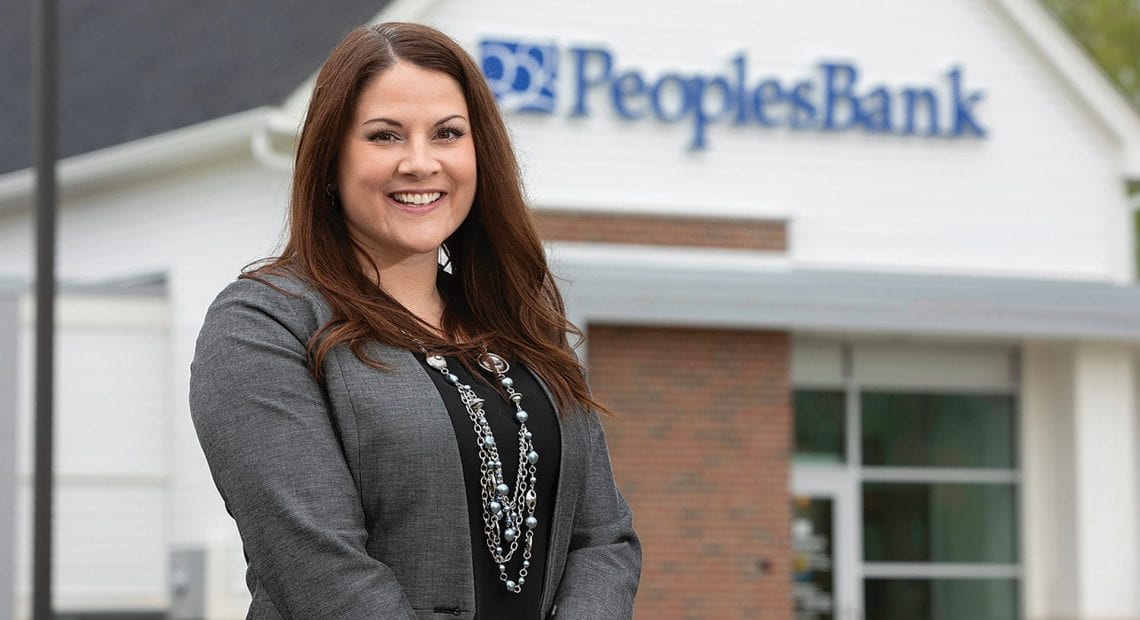
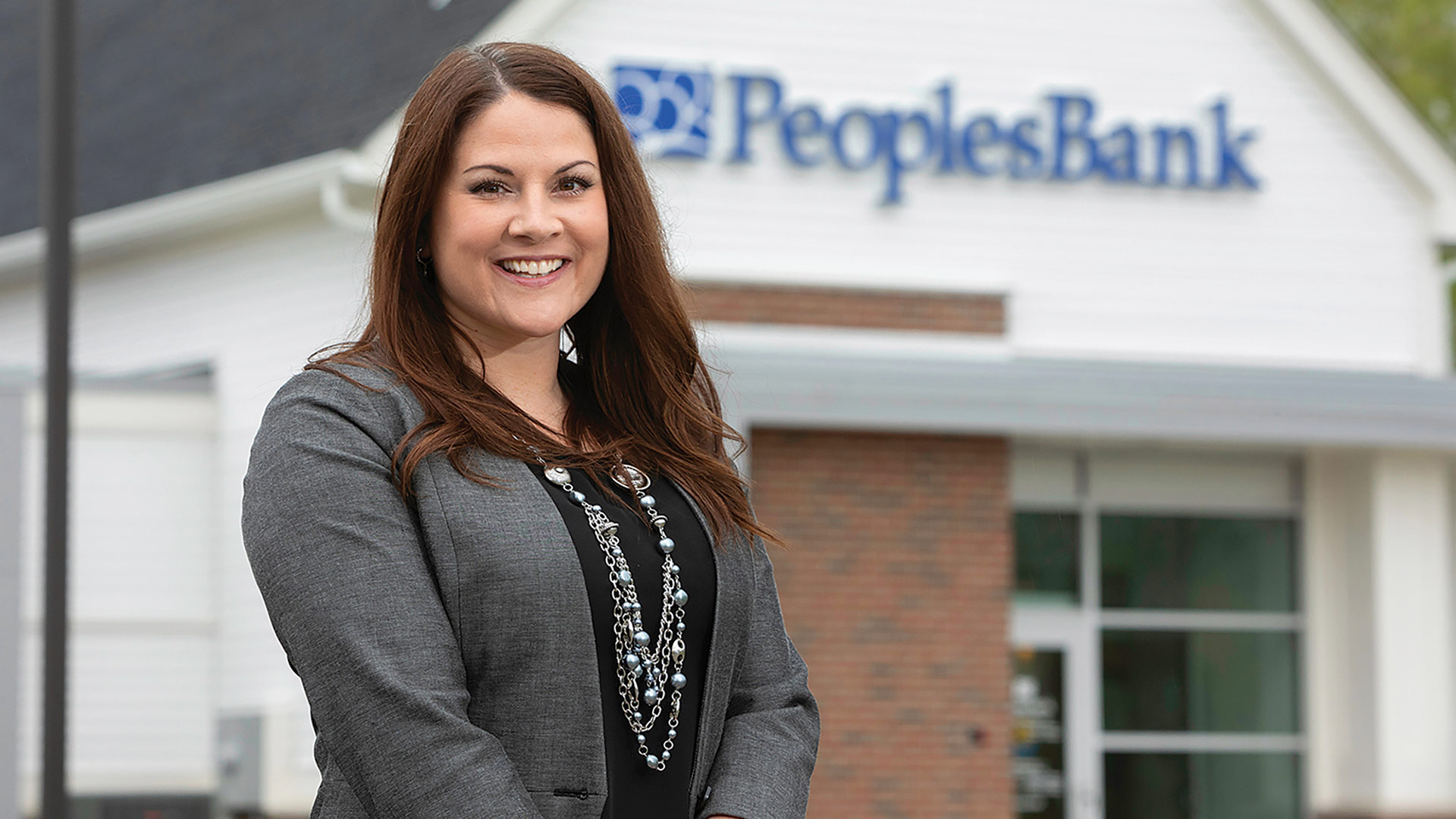
Aleda De Maria says PeoplesBank

Aleda De Maria says PeoplesBank’s call-center activity tripled over the past 14 months.

By Mark Morris

Winston Churchill gets credit for first remarking, “never let a good crisis go to waste.”

For bankers in Western Mass., the COVID-19 crisis was in many ways a chance to learn what works best for their customers and their workers.

While branch offices for most banks have reopened, they were ordered closed to the general public at the beginning of the pandemic, opening to customers only by appointment. As a result, many customers relied on online banking to handle routine transactions.

For those who needed to open an account, it was no longer necessary to visit a branch, as the entire process can be done online, said Aleda De Maria, senior vice president, Retail and Operations for PeoplesBank, who noted that new account applications doubled in the past year, and the use of mobile deposits is up nearly 40%.

“Customers who may have been reluctant in the past to try our online self-service channels are now using them,” she added. “We’ve also seen occasional users of these tools become more aggressive users.”

Because customers had plenty of questions amid the uncertainty of the past 14 months, De Maria reported a significant increase in activity on the bank’s phone lines. “Our call center tripled the volume of activity we would normally see. Now we’re back to what I would call a busy, but more normal level.”

As cars lined up at drive-up windows during business hours, many banks increased their use of video tellers to extend the hours tellers can be available. A video teller looks and functions like a standard ATM, but the customer can also reach a live professional when they have a more complex transaction.

“Customers who may have been reluctant in the past to try our online self-service channels are now using them. We’ve also seen occasional users of these tools become more aggressive users.”

“It’s as if you are standing in front of a teller,” said John Howland, president and CEO of Greenfield Savings Bank. “We had six of these in place before COVID, and they really worked well for us during that time when we could not allow people to come into the branches.” The bank has since added six more of its Teller Connect video tellers.

De Maria said video tellers made it possible to expand beyond normal business hours to even include Sundays.

Glenn Welch

Glenn Welch says credit-union CEOs have been discussing the future of hybrid work arrangements, since employees will expect that flexibility.

“We can now offer banking services seven days a week without us having to keep our banking centers open seven days a week,” she noted, adding that the pandemic made one point crystal clear: customers want options, now more than ever. “Customers want the flexibility to either interact with someone or not to interact.”

For this issue’s focus on banking and finance, BusinessWest spoke with several executives from local banks and credit unions about how they have weathered the past year, what lies ahead, and what they — and their customers — have learned.


From a Distance

In addition to new ways of serving customers, banks were challenged to become more flexible with their employees, many of whom were forced to work from home.

Glenn Welch, president and CEO of Freedom Credit Union, recalled that, at the height of the pandemic, 30 employees worked exclusively from home while another 30 split their time between home and the office. Now, 47 employees are taking a hybrid approach of splitting their work time between the office and home.

“Going forward, employees are going to expect to have an option for some kind of hybrid between working at home and the office,” Welch said, adding that an online forum of credit-union CEOs recently discussed how a hybrid approach might work. “The consensus is to bring people back to the office as much as possible while still allowing them the flexibility to work from home probably one or two days a week.”

“The consensus is to bring people back to the office as much as possible while still allowing them the flexibility to work from home probably one or two days a week.”

John Bissell, president and CEO of Greylock Federal Credit Union, said 176 of his employees work from home right now, and he has no immediate plans to require a mass return to the office.

“In fact, we are so confident in the success of the work-from-home model that we are consolidating one of our branches with a nearby operations center,” Bissell said. While Greylock has no plans to permanently close branches, it is looking into shared-space arrangements to increase efficiency and save on future real-estate investments.

All the bankers agreed that, when possible, they prefer personal interactions with their employees and customers. When that’s not possible, they are grateful for advances in technology that have made it easier to work from home. Sometimes it results in seeing certain jobs in a different light.

John Howland

John Howland says some positions, such as those in loan processing, are more suited for a remote setup than others.

“I never thought I’d say this, but there are some situations where the business and the task is better suited to work remotely,” Howland said, citing certain loan-processing positions as one example. “Because all the documents are electronic, it’s easy to measure a person’s productivity without looking over their shoulder.”

Bissell admits this past year has helped him understand how the pandemic affects employees in different ways.

“Those with school-aged children or who are caregivers have different needs than those who may be at risk themselves or have a partner who works as a first responder,” he said. “We must pay close attention to employee needs and build in opportunities to meet them where they are.”

Whether employees worked in the office or from home, they all stayed busy with mortgage applications for people buying new homes and for those looking to refinance at historically low interest rates.

“Our mortgage business was up nearly 65% last year,” Welch said. “As fewer houses are available for sale, we’re making up some of that slack in the refinancing area.”

He predicts slower growth could loom on the horizon, however. “There are only so many people who can refinance, and when you have less housing inventory to sell, it suggests a slowdown in the mortgage business may be coming.”

While the mortgage market is still active, Bissell pointed out there is a greater demand than housing supply, so Greylock is trying to help increase the supply. “We are partnering with local leaders to look at ways to stimulate development of more housing across the pricing spectrum,” he said, with the goal of a healthy housing market that is accessible to all members of the community.

On the flip side of new mortgages, job losses during the pandemic made staying current on mortgage payments a burden for many.

“We anticipated that people would have trouble when COVID hit,” Howland said, “so we allowed people to defer their mortgage payments without having to substantiate they had a need.”


By All Accounts

The pandemic — and the economic shutdown it ushered in — challenged business-banking clients as well, and for the first round of Paycheck Protection Program (PPP) loans, Greenfield Savings Bank created a task force of 43 employees to help local businesses process their loan applications. Employees often made calls on the weekend to clarify any point that might slow down the process. Several applicants received calls from Howland himself.

“It was amazing that no one complained for calling them at 8 p.m. on a Saturday,” he said. “They were all just happy we were working on their behalf.”

In the first round of PPP, Greenfield Savings processed 720 loans totaling around $60 million, and followed up with nearly the same amount in the second round. Meanwhile, the business-banking team at Greylock secured $30 million in PPP loans, which Bissell said helped save nearly 4,000 jobs in the Pittsfield area.

As everyone tries to figure out what lies ahead, bankers remain optimistic. Like every institution, Freedom Credit Union saw a surge in deposits after $1,400 pandemic-relief checks began landing in accounts, Welch noted. “People have only spent about 25% of their government checks, so there’s lot of pent-up demand out there.”

While banks had been increasing their use of technology anyway, industry data suggests COVID accelerated that shift by at least five years. Based on that trend, Welch sees bankers moving toward more of a consulting role.

“I think, eventually, people will visit a bank or credit-union branch when they need financial advice such as buying a home or a car,” he said. “Increasingly, they will handle their routine transactions online.”

Video teller machines are another example of the increased use of technology for everyday transactions.

“I think the pandemic made customers more willing to try new technology that we hadn’t offered before,” De Maria said. “We’ve seen some real success in their adoption of tools like our video banker.”

Still, while bankers are pleased with how well customers have adjusted to making technology part of their banking routine, they all look forward to the time when in-person banking becomes normal once again.

“When you get down to the basics, we provide relationship-based financial services,” Bissell said. “It’s really about personal relationships.”

In addition to engaging customers again, Howland said the camaraderie and collegiality of the staff being together is also essential.

“I’m a big believer in the small talk around the water bubbler,” he said, adding that the pandemic robbed people of those everyday social interactions that were taken for granted in the past.

“We are looking forward to a routine where we see our customers on a regular basis and we can have that friendly conversation once again,” he went on. “Everyone in our company is looking forward to that happening.”

Special Coverage Technology

Bringing a Message to Life

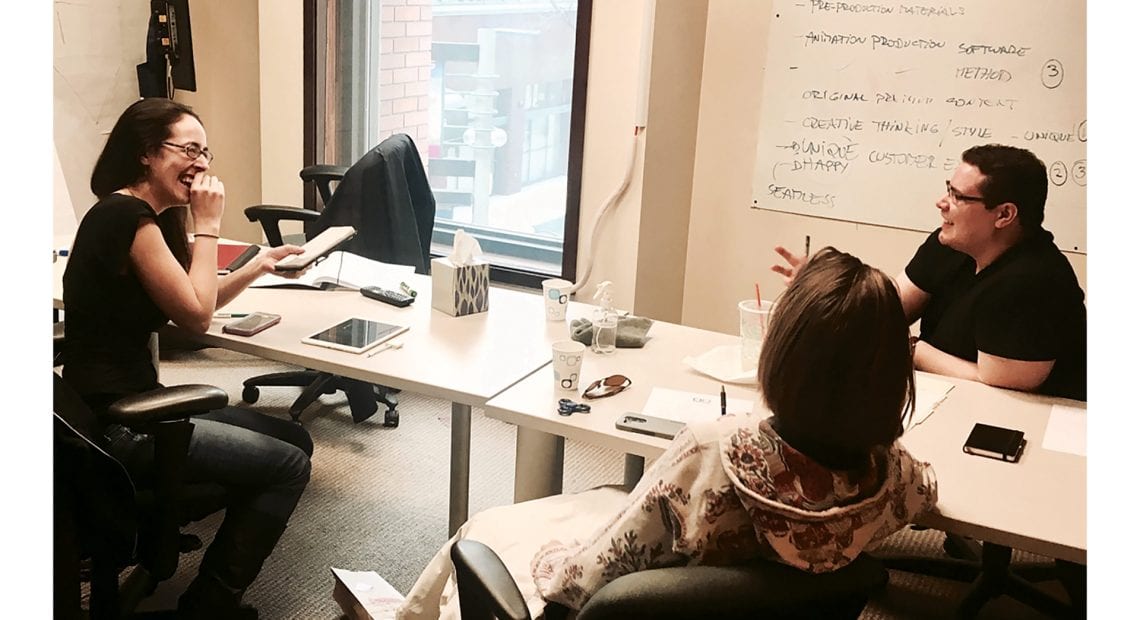
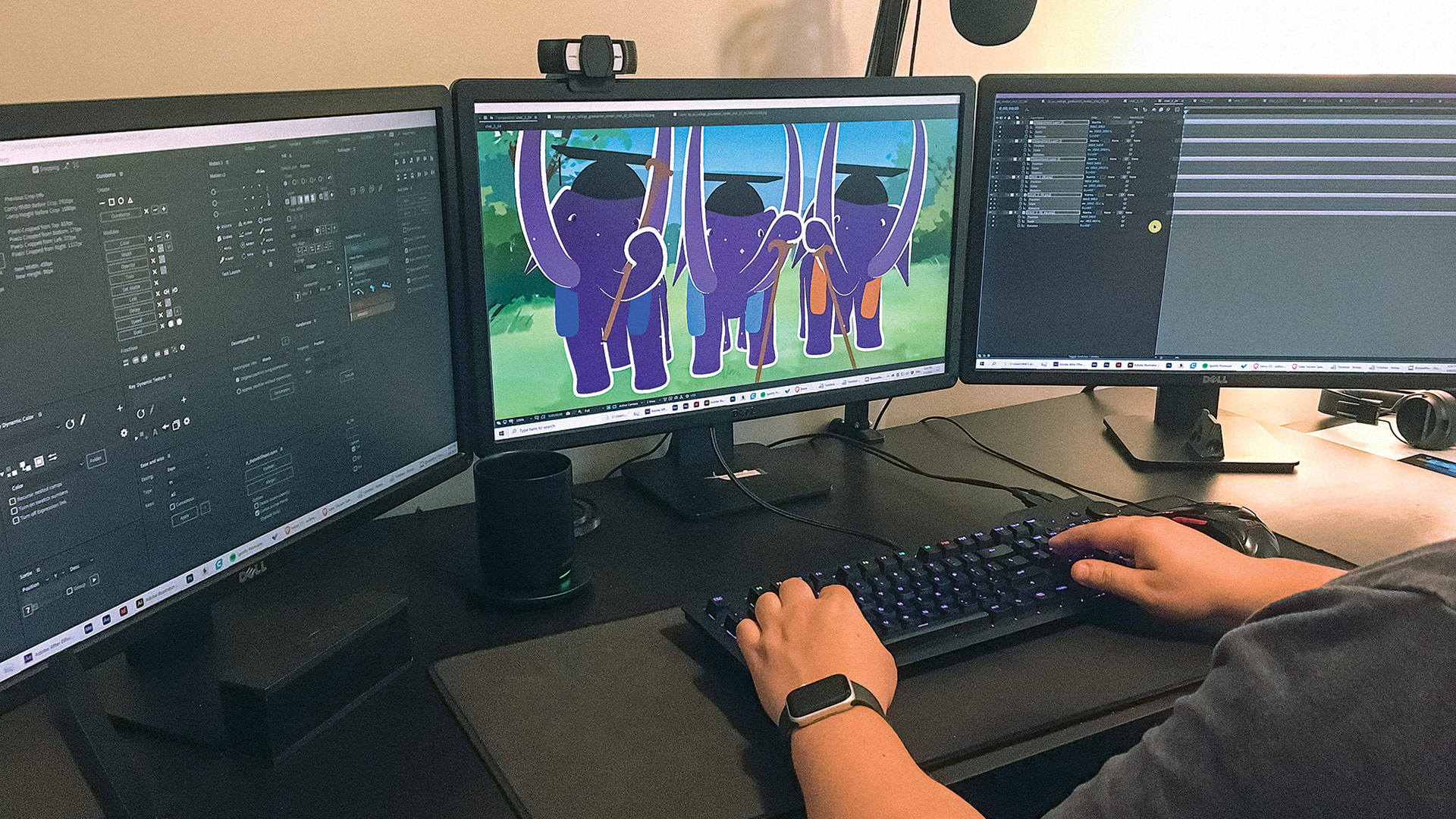
From left, Kathryn Taccone, Karen Webb, and Will Colón discuss a project.

From left, Kathryn Taccone, Karen Webb, and Will Colón discuss a project.

Will Colón, Kathryn Taccone, and Karen Webb all took different paths to a career in animation, but when the opportunity arose to launch their own company, they were certainly of one mind. That’s because they’re believers not only in the potential of animation in the business and nonprofit worlds, but that it’s still an underused tool, with plenty of room to grow. Four years after its inception, Open Pixel Studios is proving their conviction to be true.

Remote work might be all the rage right now, but it’s nothing new to the three partners at Open Pixel Studios.

“The future of work is working remotely, having the systems to do that, working with multiple people across different disciplines across the same project — all in a remote environment,” said Will Colón, co-owner of the animation studio he, Kathryn Taccone, and Karen Webb opened in 2017. These days, they work with freelancers across the U.S. to create content for business and nonprofit clients.

“We were doing the remote thing for quite a while before the pandemic hit,” Colón added. “The pandemic really raised the stakes on whether we were doing this correctly — it put us to the test a little bit. But there was almost no shift; our business did not waver at all.”

In some ways, COVID-19 actually provided more opportunity.

“What ended up happening was more people asked us for more work,” he went on. “Normally, a production requires filming and video and people in a studio or on a production set. Those roles diminished overnight, and everyone said, ‘what else can we do? Instead of having people on a screen, or talking heads, let’s do animation instead.’ It was a really big boost to our company.”

And it’s not all remote, even during the pandemic, Taccone was quick to note. “We pride ourselves on being able to communicate with clients in a way that’s comfortable for them. Sometimes clients prefer to be in person, and sometimes it’s totally fine sending e-mails. We try to match how the project is managed, and the way we communicate, to their personalities, so everyone is comfortable.”

Using animation for marketing and messaging is nothing new, Colón said, citing the well-known example of Walt Disney producing animated shorts for every branch of the U.S. military during World War II, putting beloved characters to work rallying support for the war effort.

“I don’t think the things we’re doing are much different than Walt Disney creating content during World War II. Those were ‘explainer videos,’ talking through the points the military wanted to talk about. So this isn’t new technology. What’s new is the application.”

Meaning, while animation has been a mainstay during the internet age — as part of websites, mobile games, and in movies and television — it remains underused by businesses. Colón, Taccone, and Webb are hoping to change that.

At one of Open Pixel’s production stations, well-communicated concepts become animation.

At one of Open Pixel’s production stations, well-communicated concepts become animation.

“A lot of businesses haven’t realized they can do amazing things,” Colón said. “Our job as a studio is to introduce businesses to animation for the first time.”

And do it, for the most part, remotely.

“We have 20 freelancers across the country, and I’ve met only a few in person,” he noted. “We’ve always been remote, always done Zoom calls, always done projects managed through cloud-based solutions. It’s been a breeze, and that’s a testament to our process. We were one of the first ‘pandemic industries’ pre-pandemic. We were ready for it.”

Now, they’re ready to move the needle even further when it comes to the power of animation in the business world.


Crossing Paths

Colón’s journey to the world of animation began at Hampshire College, where, during his first year in 2009, he tried to get into an advanced computer animation class, but was rejected by the instructor, Chris Perry, because he had no experience.

But after Colón excelled at an introductory course in the field, Perry — a Pixar veteran who served as a technical director on A Bug’s Life and Finding Nemo — accepted him into the advanced course.

“As I moved from the basics to more advanced stuff, I didn’t know how much I would love it, that I’d lose myself in the work, forget about time, and really enjoy the process more than the results,” Colón recalled. “I knew this was something I could go into.”

After college, he returned to the Boston area and worked at special-effects company Zero VFX, but desired a move back into animation, and landed a job at Anzovin Studio in Florence in 2013.

Characters created for a piece on Behavioral Health Network’s Crisis Healthline.

A project for Amherst College’s bicentennial

Animated messaging advocating for changes in tobacco laws

Webb, who had attended the School of Visual Arts in Manhattan and worked for a time in Los Angeles and San Diego, eventually moved to Western Mass. to work at Perry’s independent studio, Bit Films — and later started working at Anzovin Studio, where she met Colón.

Their company took shape after Anzovin decided to shift his business model into animation tools, while the production team, where Colón and Webb worked, was spun off into a separate entity. The pair then decided to go in a different direction, by launching their own studio.

Taccone’s passion for animation was sparked by a high-school trip to Pixar Animation Studios in California. She later studied animation at UMass Amherst and met Colón while taking class at Hampshire, where he was the teaching assistant. After a stint at HitPoint Studios, she worked at Anzovin from 2014 to 2016, then moved to California to work in the games industry, for EA and Toys for Bob. But in 2017, she returned to Western Mass. to help Colón and Webb launch Open Pixel.

“We decided to go into a different realm, building something new that was going to be ours,” Colón said. “Kathryn came back from California, and that was the beginning of our journey.”

Speaking of journeys, hearing Taccone describe the process of moving a concept to a finished product, it’s striking how much work happens before the actual animation begins.

“A client will come to us with an idea of the message they’re trying to send; typically they’ll have a call to action associated with that message,” she explained. “We take this from the initial script phase — whether we write it ourselves or the client provides it — and bring it into an audio-visual script, which allows us all to be on the same page with what will happen with the story.”

This all happens before visuals are actually created, she added. In other words, clear communication is key — not just with the target audience, but between all the players in creating the animation, and at every stage.

“We make a choice at the concept stage whether or not something should be represented through iconography, text, characters, or just backgrounds,” she added, noting that just using animated words can often be as powerful as talking characters. “Often we’ll use a blend of those things.”

Once the concepts are established, next comes discussion of style, tone, and other elements. Then storyboards are created, laying out the content from start to finish — again, so everyone involved can envision the final piece and make changes before the actual animation begins.

“When we do the animation,” Taccone said, “we hire voice-over artists, we do music and sound effects — again, depending on the client’s needs, but all serving the purpose of matching the tone and style and direction to the story we’re trying to tell.”

While many corporate clients rely on Open Pixel’s work in their employee training videos and modules as well as marketing, a particularly feel-good part of the team’s mission is working with nonprofits on messaging that will draw more attention and support. Nonprofit leaders aren’t always natural salespeople, Colón noted, and he and his team can help them hone their message and educate the public.

“They’re trying to make the world a better place; that’s their mission,” he said. “We’re helping them close the gap between the audience and their mission. We use animation to explain what they’re doing.”

In the end, Taccone said, even the most eye-catching animation isn’t a success if it doesn’t meet the client’s needs. “In a way, the communication is sometimes more important than the art. We’re trying to make sure everyone is on the same page.”


Mission Accomplished

For Colón, such work is especially gratifying considering that, early in his career, he never thought about running a business. But his former employer, Raf Anzovin, encouraged that growth — and, in fact, encouraged him and Webb to branch out on their own.

“I feel like the people I met along the way influenced me in continuing this work. If those people weren’t there, we wouldn’t be around,” Colón said.

Achieving the studio’s goals in Western Mass. — a region that has been steadily growing its reputation for innovation and technology — is especially satisfying, he said. Clients run the gamut from large corporations to small outfits, and the remote nature of the work allows Open Pixel to take on projects from Boston to the West Coast.

He’s also particularly proud that the company is certified as a majority women-owned business. Noting that the history of animation has not always been a friendly one for women, he hopes Open Pixel inspires other women to pursue this field.

Through it all, he, Taccone, and Webb hope to continue to expand the work they do, but also become a destination to start a career.

“In the future, we want to be a jumping-off point for folks getting out of college,” he said, noting that it’s natural for talented graduates to depart the Five Colleges and look for jobs in New York, Los Angeles, or Boston. To encourage them to start their careers closer to home, Open Pixel has developed a pipeline of interns from Amherst College and Hampshire College. “Not only can you learn the tools here, this can be an entry point into the field.”

As for those tools, they’re much more affordable and accessible than they once were,” Colón said. “You can get a license and run a studio from your home office. But what makes us special is our process and our back end, our ability to push animation further than where it currently is right now.

“So much of it is in entertainment — games and movies,” he went on, “but we’re seeing a shift toward companies creating advertising campaigns utilizing animation because it’s so limitless. You can create anything you like. That’s what we see — unlimited creative expression.”

And always in the service of the client, Taccone added.

“We pride ourselves on being a studio that takes time to understand the balance between the client’s needs and our artistic identity. That way, we all enjoy the process as we go through it.”


Joseph Bednar can be reached at [email protected]

Restaurants Special Coverage

Chain of Events

John (right) and Chris LaVoie at Hot Table’s location in Tower Square.

John (right) and Chris LaVoie at Hot Table’s location in Tower Square.

Hot Table, now a chain of panini restaurants, started humbly in 2007 with a small location in the Breckwood Shoppes in Springfield. The brand has come a long way since then, and in many different ways. There are now seven locations, with plans for four more to open this year or early next, including the first free-standing facility. After that … well, the partners talk of having perhaps 50 stores by the end of this decade. What they do know is that growth will be controlled — and strategic in nature.

John DeVoie gestured toward an array of architect’s renderings of Hot Table’s first free-standing facility, complete with a mobile pickup window, planned for Memorial Drive in Chicopee, and said, “that’s our future.”

He then corrected himself and said, “well … that’s a big part of our future.”

Indeed, the future takes a number of shapes and directions for this growing chain of panini restaurants. Indeed, while construction is due to start on that Chicopee location later this year or early in 2022, work will begin before that on new locations within shopping malls in Framingham and West Hartford, with an additional location planned for a development, blueprinted by Pride Stations owner Bob Bolduc, to reshape the land inside the jug handle off turnpike exit 3 in Westfield with Hot Table and Starbucks.

Overall, this chain, which started with one small restaurant in the Breckwood Shoppes across Wilbraham Road from Western New England University and now has seven locations, has aggressive plans to add four more restaurants by the end of this year and reach perhaps 50 by the end of this decade.

“For the most part, we’re keeping our efforts focused on New England,” said John, who launched the chain with his brother, Chris, and another partner in 2007. “And over the next 10 years, we want to become a well-known, regional brand.”

This brand is striving for a mix of free-standing facilities like the one in Chicopee and more locations leased in retail centers, and, overall, a “balanced portfolio,” said Chris, adding that the goal is measured growth.

“We’re very excited to grow, but we want to grow the right way,” he told BusinessWest. “We don’t want to add overhead and layers of management just to support a few more stores; we want to be very strategic about how and where we expand.”

Overall, with four new stores on the drawing board, 2021 is certainly shaping up as a milestone year in the company’s history, one that will take it to new markets and in new directions. This growth and territorial expansion come at a time when many restaurants have been fighting to merely survive the COVID-19 — and some haven’t. Hot Table itself was hit hard initially.

“In March and April, when the pandemic hit, we weren’t sure we had a company — we had an 80% plunge in revenue,” John recalled. “We had the same ‘what the heck just hit us?’ experience that just about everyone in the restaurant business did.”

But within the fast-casual category within this sector, many chains bounced back quickly and have enjoyed success since, said John, adding that many have benefited from the takeout nature of most business and also from an added delivery component.

Hot Table invested in an app that enables consumers to order from the menu and arrange delivery through Grubhub or another provider, said John, adding that the technology served to introduce the brand to new audiences.
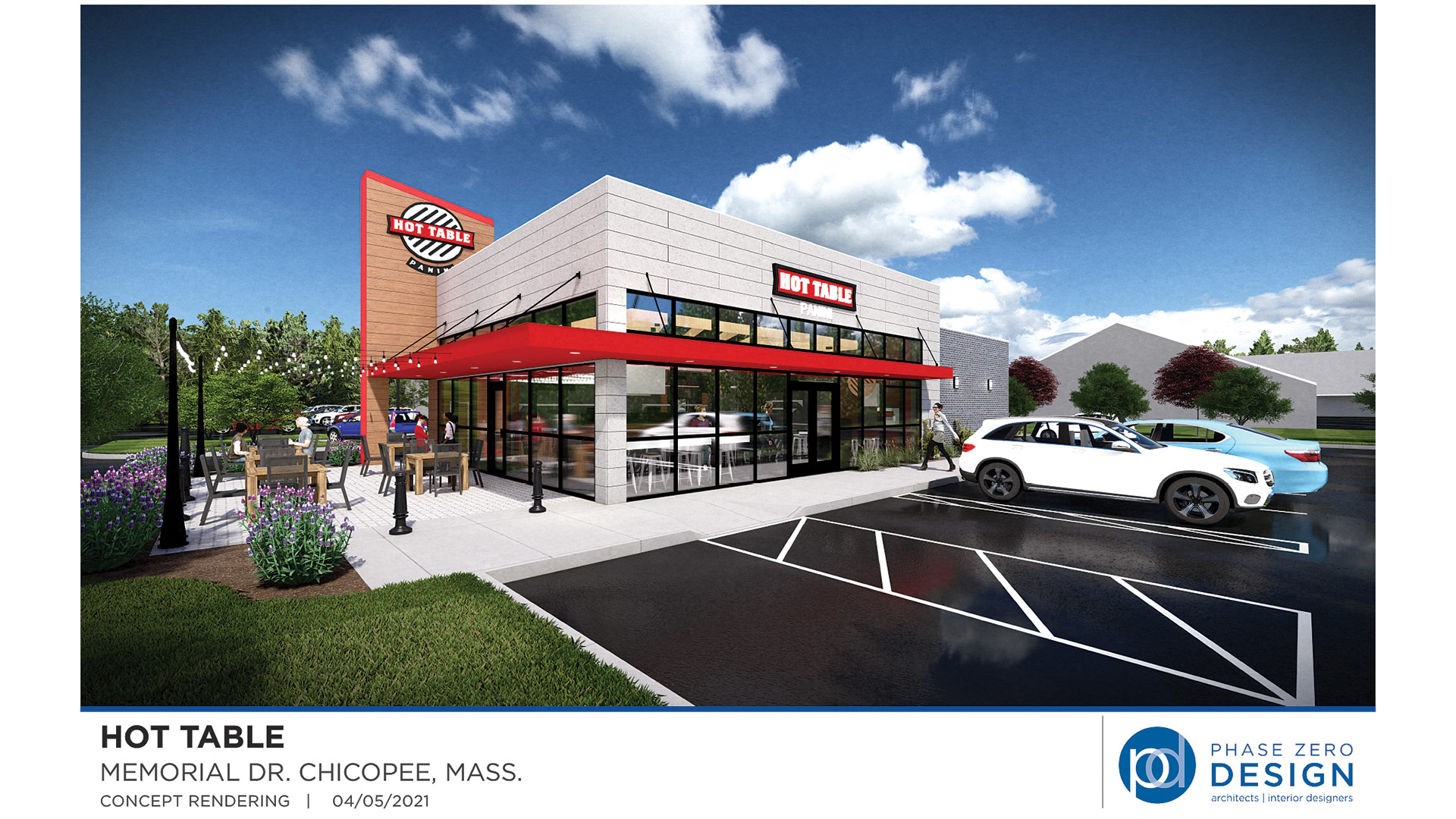
An architect’s rendering of Hot Table’s first free-standing location

An architect’s rendering of Hot Table’s first free-standing location, slated for a parcel on Memorial Drive in Chicopee.

“That was a silver lining for us,” he explained. “We had a lot of folks discover us who might have just been at home ordering from a third-party platform, who had never been in one of our stores.”

And this is just one of the ways the pandemic has actually benefited Hot Table, he went on, adding that it has made real estate both more available and more affordable.

So much so that the company, which has long considered Boston far out of its reach when it comes to real-estate prices, is being encouraged to take a good look at the Hub.

Whether this chain can actually attain a Boston address for one its locations is one of the many questions that will be answered over the next several years. For now, the company is focused on 2021, and all that it has on its plate — literally as well as figuratively.

For this issue and its focus on restaurants, BusinessWest talked with the brothers DeVoie and third partner Rich Calcasola, based in Charlotte, N.C., to get a sense for where this brand can go next and how big the portfolio can become.


Ingredients for Success

As he referenced those architectural renderings of the Chicopee site, John DeVoie pointed to what could become the ‘golden arches’ for this chain. That would be the tall red signage, or marquee, with what has become the company’s brand — a stylized slice of panini bread with grill marks running across it, with the words ‘Hot Table’ over it.

It’s not really possible to put such large, pronounced signage on the existing locations within shopping plazas, he said, adding that the new look represents another breakthrough for the company and an opportunity to not only sell more paninis, but grow its brand.

“When you build your own building, you have the opportunity to think about what your brand says on the outside — what is the golden arch for us?” he noted. “And it’s a long way from our origins at the Breckwood Shoppes.”

By that, he meant not just the marquee, but the free-standing store concept, locations on both ends of the state, aggressive plans to add four stores in just over a year, and ongoing talk about where to go next.

“For the most part, we’re keeping our efforts focused on New England. And over the next 10 years, we want to become a well-known, regional brand.”

But before talking more about the present and future, let’s recap how we got here.

Our story begins in 2006, when John and Chris, both successful in corporate sales, decided they wanted to make money for themselves, instead of someone else, and started to focus on the restaurant industry.

Blending vast amounts of experience with taking corporate clients with a healthy appetite for entrepreneurship out to eat, they started shaping a concept for the growing fast-casual category of eatery, and followed the advice of their sister, who told them about a dining model she encountered on a trip to Italy — cafés of sorts called tavola calda, which translates, literally, to ‘hot table,’ and their parents, who suggested a made-to-order panini concept.

For their first location, the two chose the Breckwood Shoppes, which they knew well because they both graduated from Western New England. The site wouldn’t attract any of the huge players in the fast-casual arena — Chipotle, Chick-fil-A, Panera Bread, Shake Shack, and others — because of the demographics of the surrounding area, but for them, it worked.

It blended the college crowd — students, professors, staff, and administration alike — with a thickly settled neighborhood, large traffic volume, and visitors to other shops in the plaza.

The large players in smart casual wouldn’t have gone where Hot Table went next — Tower Square in downtown Springfield, in 2009 — either. But the brothers, enticed by the large population of office workers in surrounding towers and an attractive offer from then-owner MassMutual, decided to roll the dice. And they essentially rolled a ‘7.’ Indeed, the site has become a popular lunchtime destination — even moreso with recent arrivals such as Cambridge College and UMass Amherst Center at Springfield — and has even thrived during the pandemic without most of those workers and students.

“We’re pretty close to last year’s numbers, overall,” said John, comparing 2020 with 2019. “What’s happened is that this has become a delivery hub for people in West Springfield, Chicopee, and other cities and towns.

“With the new model of how we do business — we have more than 30,000 users of our app, which allows people to order and then utilize a third-party platform for delivery — our business model shifted,” he went on. “So now, we’re way above pre-pandemic sales levels overall.”

After Tower Square, the DeVoie brothers, now partnering with Calcasola, have been focusing on where the large players in fast-casual have put down stakes. In fact, the strategy has been to follow them — on the theory that their research into where to locate is certainly solid — and, in doing so, create more of a critical mass of quality eateries, which creates dining destinations.

“In March and April, when the pandemic hit, we weren’t sure we had a company — we had an 80% plunge in revenue. We had the same ‘what the heck just hit us?’ experience that just about everyone in the restaurant business did.”

This was the case with the company’s next locations — in Enfield (2012) and Glastonbury, Conn. (2014), Route 9 in Hadley (also 2014), Marlborough (2017), and Worcester (2019). And that’s also the case, to one extent or another, with the Chicopee (there’s a Chick-fil-A right next door), Framingham, Hartford, and Westfield locations.

“People just drive there to eat, and you get in the rotation,” Chris said. “When Chick-Fil-A and other competitors came to Enfield, our sales went up.”


Location, Location, Location

When asked about the chain’s ‘formula’ when it comes to identifying markets they want to be in and then locations within those markets, the partners said it involves a blend of science and intuition, but mostly critical masses of traffic, retail, diners, and, yes, competitors.

All these ingredients are found in Hadley, said Calcasola, noting not only the large college population (there are four colleges within a few miles of the store’s location on Route 9), but also a host of fast-casual competitors and a large and growing cluster of retail that draws people from three counties.

Most of these same essentials can be found in Worcester, in the chain’s site in the the Trolley Yard, a mixed-use development that is also home to Starbucks, Chipotle, Sprint, and other national brands. Indeed, Worcester boasts seven colleges and a growing business base, said Chris, noting that it benefits greatly from being within easier commuting distance from Boston.

Meanwhile, in Marlboro, there are no colleges, little retail, and a less-dense population than in other communities the chain calls home. But there are a number of office parks and hotels, said John, adding that this was the store most impacted by the pandemic — although it, too, has rebounded.
An architect’s rendering of Hot Table’s first free-standing location

The Hot Table chain has come a long way since the opening of its first location in the Breckwood Shoppes in Springfield.

In Chicopee, Memorial Drive has been transformed into a retail destination over the past decade, said Chris, noting that the changes have caught the attention of Chipotle, Buffalo Wild Wings, and Chick Fil-A, which made that the address for its first (and still only) location in Western Mass.

Meanwhile, the Framingham store now under construction and set to open in June is in Shoppers World, a large retail complex boasting 27 stores, including Chick-Fil-A, Olive Garden, TGI Fridays, and Chipotle.

“That whole area is called the Golden Triangle,” said John, referring to the retail district in Framingham and Natick. “And it’s the number-one retail destination in metro Boston. So it’s kind of a big jump for us, but our business model now supports that.”

By ‘big jump,’ he meant, among other things, the rates for the property being leased, which was also the case in West Hartford and a spot in Corbin’s Corner next to Shake Shack, although, as noted earlier, the pandemic has eased some of the sticker shock, while also creating some opportunities as stores — and restaurants — went out of business.

“There are more opportunities in the form of spaces becoming available,” said Calcasola. “Meanwhile, the asking price dropped in some locations, including West Hartford; we’re still paying a good amount of money, but not what they were advertising it for a year and half ago.”

As to the question of where the chain might go next, there are many ways to answer it.

For starters, the company wants to go where those major brands listed several times above are going. In fact, that’s usually the first question being asked, said Chris, noting that, as Hot Table ponders whether to expand into Rhode Island, the presence of other chains is a key consideration.

“We’re pretty close to last year’s numbers, overall. What’s happened is that this has become a delivery hub for people in West Springfield, Chicopee, and other cities and towns.”

“We’ll ask if there are Chick Fil-As and Chipotles around,” he told BusinessWest. “Wherever they’re going, that’s where we want to be. We want to compete with the nationals.”

Availability of real estate is another issue, said John, adding that the company has long sought to be on Riverdale Street in West Springfield, specifically the stretch south of I-91, but has not been able to secure a location because of exclusivity clauses secured by some competitors. Meanwhile, price remains an issue in some areas, including Boston, although the pandemic, as noted, might bring that city into reach.

“We have a consultant that we work with. Before the pandemic, he said, ‘guys, don’t even bother going into Boston; it’s crazy — don’t do it,’” said John. “The last meeting we had with him, he said, ‘you may want to think about exploring opportunities in Boston.’”


Pressing On

When and if the company goes down that road remains to be seen. For now, its principals, as noted, have other things on their plate.

Lots of them.

Indeed, this will be a year when Hot Table takes giant strides toward becoming that established brand the partners want it to be, a year when that image of the panini top with the grill marks on it becomes known in new markets and in new ways, like that sign on the property in Chicopee.

That location isn’t the future — but it is a big part of the future, with additional growth and territorial expansion on the menu.

As John DeVoie said, this company has come a long way from the Breckwood Shoppes — and in all kinds of ways.


George O’Brien can be reached at [email protected]

Community Spotlight

Community Spotlight

By Mark Morris


As COVID-19 has encouraged many Americans to move out of large urban areas, a good number of them are moving to Pittsfield.

In April, the New York Times reported on a U.S. Postal Service survey that tracked the top metro areas where people moved during the pandemic. Pittsfield ranked sixth on the list.

According to Jonathan Butler, Pittsfield’s proximity to both New York City and Boston certainly put the city in a good spot to benefit from the migration away from larger metro areas.

“Our location positioned us well for people who have decided to move to a more rural setting and take advantage of telecommuting after their experiences during the pandemic,” said Butler, who is president and CEO of 1Berkshire, the economic-development and tourism organization for Berkshire County.

A USA Today article in March suggested that, as more people work from home, big cities may lose population to smaller areas that cost less and offer better quality of life. Using data from Moody’s Analytics, the article included Pittsfield among the top five cities that could stand to gain from the shift to remote work. Moody’s ranked Pittsfield in the 53rd percentile for affordability, and for quality of life it scored 90.2.

Mayor Linda Tyer

Mayor Linda Tyer says the city’s COVID-19 task force, which met daily at first, still gathers each week.

More than a statistical exercise, Butler said these trends are reflected in reality.

“There has been a 40% increase in net real-estate sales compared to last year,” he said, noting that the increase represents more properties selling, and selling at higher prices. “We’ve seen real-estate prices skyrocket in the Berkshires, anywhere from 10% to 30%.”

Still, while the pandemic may present many opportunities for Pittsfield, the city certainly faced difficult challenges when COVID first hit.

In her recent state-of-the-city address, Mayor Linda Tyer said Pittsfield entered 2020 with a robust agenda of ways to enhance the city when, suddenly, all priorities shifted to managing a pandemic.

Tyer led a COVID-19 task force in Pittsfield that brought together medical, police, fire, and education professionals who meet daily at the beginning of the crisis. They still meet weekly to review public-health data and plans of action. As a result, Tyer said Pittsfield now has a solid response infrastructure in place, as well as vaccinators and volunteers ready to deploy.

“State officials have recognized our task force as an example of best practices, and it serves as a model that could be replicated in other communities,” she noted.

Another key move early on was establishing the COVID-19 Economic Relief and Recovery Program, a comprehensive economic package to support small businesses, nonprofits, and residents. By the end of 2020, Pittsfield had awarded 90 grants to local small businesses and restaurants totaling nearly $700 thousand.

In addition, “we were able to provide easy access to food and supply Chromebooks to students after the schools were closed,” the mayor said. “We also created 13 ‘grab-and-go’ zones to support our restaurants with takeout and delivery services. These are just a few examples of the many ways we came together to support each other.”


Down to Business

Tyer pointed to a new, innovative company that opened in Pittsfield in 2020 despite the pandemic. United Aircraft Technologies is a veteran-owned, minority-owned, female-led business that created a new type of sensing clamp for aircraft wiring. The clamps are 65% lighter than what is currently in use, and they do not need other hardware, such as screws or bolts. Two local companies will handle production of the clamps.

“Our location positioned us well for people who have decided to move to a more rural setting and take advantage of telecommuting.”

“United Aircraft Technologies has teamed up with Sinicon Plastics to produce the clamps, and SABIC will provide the materials to make them,” she said.

For many years, officials in Pittsfield have emphasized job creation, with success stories ranging from advanced manufacturing to e-commerce. Since the pandemic, Butler said, they have a new priority. “Our emphasis is no longer on creating jobs, it’s now about filling jobs and recruiting talent to the region.”

Among its infrastructure projects, Tyer talked about several revitalization efforts happening on Tyler Street. By the end of this year, she predicts 36 new market-rate apartments and “promising new interest” in saving the historic fire station from demolition.

“There has been a 40% increase in net real-estate sales compared to last year. We’ve seen real-estate prices skyrocket in the Berkshires, anywhere from 10% to 30%.”

She also discussed a $3 million MassWorks grant for the Tyler Street streetscape project that will begin this year. “The improvements include a roundabout, upgrades to sidewalks and crosswalks, and other amenities along the corridor.”

“There has been a 40% increase in net real-estate sales compared to last year. We’ve seen real-estate prices skyrocket in the Berkshires, anywhere from 10% to 30%.”

This spring also marks the start of construction of the Ashuwillticook Rail Trail extension through Pittsfield. The bike trail will connect Adams and Pittsfield, with a plan to eventually connect the trail throughout Berkshire County.

For Butler, the trail extension is a real positive, as one of the region’s bright spots from last year was an increase in people coming to the area for outdoor activities. Whether it’s state parks or cultural attractions such as the Norman Rockwell Museum and Hancock Shaker Village, visitors were able to explore these sites while staying outside much of the time.

The past year has also brought many new hikers to the region, he added. “From Mount Greylock to October Mountain State Forest, our hiking trails have been bustling with more activity than they’ve ever had.”

Pittsfield at a glance

Year Incorporated: 1761
Population: 44,737
Area: 42.5 square miles
County: Berkshire
Residential Tax Rate: $19.25
Commercial Tax Rate: $39.99
Median Household Income: $35,655
Median family Income: $46,228
Type of Government: Mayor, City Council
Largest Employers: Berkshire Health Systems; General Dynamics; Petricca Industries Inc.; SABIC Innovative Plastics; Berkshire Bank
* Latest information available

While the additional outdoor activity couldn’t replace all the lost business in 2020, he admitted, it certainly helped, and makes him feel optimistic going forward. “We have introduced a lot of new people to the Berkshires who have not come out here previously, so that’s a positive takeaway.”

With its location in the middle of the region, Butler said Pittsfield is in a good position to benefit from the increased visitor traffic anticipated for this summer and beyond. Like every city, Pittsfield saw restaurants and retail shops struggle financially during the pandemic, with some not surviving. But as people’s comfort levels about going out increases, he believes that will generate new activity.

“The demand for those businesses is still going to be there, and it will create opportunities for new entrepreneurs to step into those closed businesses and try their own model,” he said. “It won’t happen overnight; we’re looking at it as a one- to two-year cycle.”


Gaining Momentum

While many Americans are expected to book flights for vacations this year, more are planning to travel by car — and shifts in air travel have tended to help the tourist economy in the Berkshires, Butler noted.

“We always benefit when people decide to book a three- or four-night getaway to the Berkshires instead of flying south or out west,” he said. “We expect there will be more of that than usual this summer.”

As more people visit the area, and even move there, it creates new opportunities and new challenges for Pittsfield. Tyer believes her city will rebound from the pandemic thanks to the resolve of its residents and business owners.

“As we emerge from this public-health crisis,” she said, “we will be stronger than ever before and ready for good things to happen.”

Class of 2021

Attorney, Fitzgerald Attorneys at Law; Age 34

Nick Amanti grew up in a family business where he learned life lessons he still follows.

For 60 years, his family has owned Advance Manufacturing, which provides precision-manufactured parts for a number of industries. Amanti was taught to treat the people who work for Advance like family. Though his career is outside the company, Amanti provides legal services for many different business owners and feels a true connection with them.

“I know how much they care about their business and how much they care about their employees,” he said, adding that it’s an honor to help his business clients. “It takes so much courage to actually start a business and take on the responsibility for yourself, as well as to help others support their families.”

Amanti’s decision to pursue a legal career was the result of a near-tragic event. When he was 18 years old, his father, David, suffered a brain tumor. Many of the people who came to their house were lawyers who worked hard to get all the family’s affairs in order. Amanti called this episode a turning point in his life.

“Watching them, I realized I could help people in their time of need, and I could help businesses through tough times,” he said. “Whether it was my family or other individuals, I felt this is something I could do.”

This story has a happy ending because his father survived the brain tumor, has returned to work, and these days enjoys golfing with his sons.

As an attorney, Amanti provides legal counsel to businesses from inception through all the services they need while they are up and running, to guidance at the end when a company decides to wind down.

He helped local businesses keep their doors open during the worst of COVID-19 by helping them claim federal PPP grants totaling more than $3 million. And when restaurants and taverns were hit hard by loss of business, he appealed to the state licensing board to allow them more time to pay their bills without penalty.

Meanwhile, among his many civic roles, he volunteers with the YMCA of Greater Westfield and bikes in the Pan-Mass Challenge, personally committing to raise a minimum of $5,000 for the Dana-Farber Cancer Center and the Jimmy Fund.

Through all that, his advice for a good life is simple. “Take pride in your work, show respect to others, and enjoy the ride.”


—Mark Morris

Technology

Impactful Gift

Michael and Theresa Hluchyj

Michael and Theresa Hluchyj say there’s a need for innovative clinical solutions where both nursing and engineering play a role.

Michael and Theresa Hluchyj are no strangers to giving back to their alma mater — and seeing their investments bear fruit.

For example, the couple, who graduated from UMass Amherst in 1976 and 1977, respectively, established a graduate fellowship program in 2008 to support students from the College of Engineering and the College of Nursing who are interested in clinical healthcare research.

One recipient of the fellowship, Akshaya Shanmugam, who earned a master’s degree and PhD from UMass in electrical and computer engineering, earned recognition in 2017 in Forbes’ 30 under 30 for her achievements in healthcare. She founded Lumme Inc. while at UMass, using her knowledge and research to create software to help people quit smoking.

That’s the kind of impact these alumni hope to see from their latest investment in the future, a $1 million gift to create a Center for Nursing and Engineering Innovation, bringing together two fields that can improve personal well-being and save lives. Simply put, they envision a place where nurses and engineers collaborate on clinical solutions in new ways.

“We are excited to support UMass in this new initiative,” Michael Hluchyj said. “Innovation is often accelerated at the intersection of different academic disciplines. The worldwide health crises resulting from the COVID-19 pandemic make clear the critical need for innovative solutions in clinical settings where both nursing and engineering play vital roles.”

The Center for Nursing and Engineering Innovation Fund will support participating students, staff, and faculty from both colleges, and provide financial support for activities and resources at the center such as graduate fellowships, seed funds for R&D pilot projects, and an annual symposium. Funds will be shared between the College of Nursing and the College of Engineering, enabling them to recruit top student researchers from the College of Engineering’s more than 2,800 students and the College of Nursing’s 730 students, as well as others from outside the university.

The center will not only provide students with an environment to work together, but will also integrate innovation and entrepreneurship into the current nursing and engineering curriculum. In the future, with support from faculty leaders, students will engage with industry partners on enhancing and inventing their own products.

“The worldwide health crises resulting from the COVID-19 pandemic make clear the critical need for innovative solutions in clinical settings where both nursing and engineering play vital roles.”

“We are deeply grateful to the Hluchyjs for their generous support of our vision to improve patient treatment and advance the healthcare industry through interdisciplinary collaboration,” said Allison Vorderstrasse, dean of the College of Nursing. “Since the onset of the pandemic, UMass nursing and engineering students have successfully partnered on projects addressing, for example, the need for rapid PPE-manufacturing technologies. This center is the natural progression of that partnership, and I am excited to see the innovations it produces.”

In April 2020, nursing and engineering researchers at UMass Amherst created one of the first COVID-related interdisciplinary teams to design an effective, efficient and low-cost face shield. The shield, created with rapid mass production in mind, was then shared for free with frontline workers in regional healthcare facilities.

Soon after, UMass established both symptomatic and asymptomatic testing centers on campus, and, with the release of the COVID-19 vaccines, has since created a community vaccination center. These centers have been, in large part, run by nursing students. More recently, Sarah Perry, associate professor of Chemical Engineering, launched a research collaboration with Michigan Technological University to develop a new method of keeping vaccines stable without refrigeration.

“As engineers, our students work tirelessly to build systems and products that solve some of the world’s most challenging problems,” said Sanjay Raman, dean of the College of Engineering. “By working in direct collaboration with nurses on projects for medical devices, they can also incorporate the insights and experience nurses have to offer — allowing them to make their designs safer, more efficient, and more end-user-friendly.

“A key element of our vision is an integrated nursing-engineering faculty and student team working on every problem we tackle,” he went on. “We are deeply grateful to the Hluchyj family for their forward thinking and investment in this barrier-breaking center.”

The impact that a nurse-engineer collaboration can make is not a new concept for the Hluchyjs. While Michael was working toward his engineering degree, Theresa was studying to become a nurse.

They currently live in the Boston area. Michael serves as a board member for Uptycs and is a fellow of the Institute of Electrical and Electronics Engineers. He is also an Ernst & Young New England Entrepreneur of the Year winner and has served on the Electrical and Computer Engineering Advisory Board at UMass Amherst. Theresa has served in many community organizations, including the Wellesley Service League and the Wellesley Scholarship Foundation. She is currently a member of the Newton-Wellesley Hospital Board of Advisors, a guide at the Museum of Fine Arts in Boston, and a member of the university’s Amherst Campus Council.

Karen Giuliano, joint associate professor for the College of Nursing and the Institute for Applied Life Sciences, will serve as the inaugural co-director of the Center for Nursing and Engineering Innovation along with Jenna Marquard, professor of Mechanical and Industrial Engineering.

“The ability to quickly and effectively tackle everyday challenges in healthcare requires both nursing and engineering expertise,” Giuliano said. “The power of a nurse-engineer approach is derived from mutual collaboration, where the nurse identifies the problem, the engineer creates potential solutions, and, through bi-directional, real-time, continuous collaboration, iterations and tradeoffs occur until the best solutions are found.”

Restaurants

Sunny Outlook

Debra Flynn in the alley behind Eastside Grill

Debra Flynn in the alley behind Eastside Grill, which has been transformed into a charming, colorful dining spot.

When COVID-19 arrived 14 months ago, restaurant owners everywhere went into survival mode. Bill Collins was no exception.

Fast-forward to, well, just last week, and the story is a different one.

“We just celebrated our seven-year anniversary,” said Collins, owner of Center Square Grill in East Longmeadow, who marked the milestone by donating 10% of the day’s total sales to Shriners Hospitals for Children in Springfield. “That’s something we would not have been able to do without outdoor seating.”

Reliance on al fresco dining — and gratitude for the return of warm spring weather — is a common theme for restaurants across Massachusetts, at least those that had outdoor dining space available, or the opportunity to create some.

In Collins’ case, he didn’t even wait for spring to return.

“We’ve had outdoor seating since we opened, but we definitely expanded on that,” he said. “In fact, we spent nearly $20,000 ramping up for the fall, installing greenhouses with electric heat. All winter long, we offered single-use lap blankets for people who came in.”

In doing so, he was able to serve diners at something approaching normal capacity through the cold months, even though interior capacity was still limited by public-health mandates. “It was a game changer. Really, for us, it put us in a position where we were not just able to squeak by, but to comfortably pay our bills all year, which was a great thing.”

Customers appreciate — and usually prefer — the outdoor option, too.

“When the phone rings, 90% of the time, it’s with inquiries to sit outside,” he said. “We took down the greenhouses for the summer but plan to bring them back. People are still talking about the greenhouses. They were a hit for us, and they’ll definitely be back in the fall.”

Munich Haus in Chicopee has long served patrons on a large patio known as the Biergarten, with seating for 150 — well, before physical-distancing rules, anyway — and a 24-seat bar area.

“It was a game changer. Really, for us, it put us in a position where we were not just able to squeak by, but to comfortably pay our bills all year, which was a great thing.”

“It’s been great,” owner Patrick Gottschlicht said. “A lot of our customers already knew about it. We didn’t have to put a tent in the parking lot with concrete barriers or anything; we’ve got a fully set-up Biergarten, a true outdoor area. We’ve always said we’ve tried to emulate the experience of sitting in a biergarten in Germany, to make it as authentic as possible.”

At Eastside Grill in Northampton, owner Debra Flynn has taken several approaches to allowing customers to eat outdoors. She converted an alley behind the restaurant into a cozy, colorful space lined with potted plants, colorful murals, and lightbulbs strung above the tables for the evening hours.

This year, while adding even more plants and patio umbrellas to the alley, Eastside Grill is one of a handful of restaurants and retailers set to benefit from Summer on Strong, a city initiative to close a small portion of Strong Avenue to vehicle traffic from Memorial Day through Labor Day. Eastside will be able to seat 32 more customers in the road, almost doubling its outdoor capacity to 70. Live music outdoors will be a feature on many nights as well.

Like others we spoke with — and have been speaking with since restaurants were allowed to partially reopen last spring — Flynn said many folks want to dine out, but still worry about gathering indoors, so outdoor dining is critical for business.

“We get calls every single day about it,” she said, noting that she doesn’t take reservations specifically for outdoor seating, but customers can request it and wait for a spot. “I don’t blame them. We want them to be very comfortable, and if you’re not comfortable inside, we want to make sure we have a table outside.”


Taking to the Streets

The barriers between restaurants and roadways that were a mainstay in downtown Northampton last summer have been going up again in preparation for the outdoor dining season. Despite the loss of parking that results from this concession to restaurants, city leaders heard enough positive feedback last year to allow eateries to push out past the curb again along Main Street, Pleasant Street, Pearl Street, Masonic Street, and other spots — and, in cases like Strong Avenue, well beyond the curb.

“The city has been really wonderful to work with,” Flynn said. “Everyone from the City Hall to the DNA [Downtown Northampton Assoc.] to the chamber has been really helpful. I feel really good about the way things are going right now.”

Meanwhile, a recent order by Easthampton Mayor Nicole LaChapelle will allow restaurants and retailers on Main, Cottage, and Union streets to expand their seating options and retail spaces into parking spots and other public spaces. Businesses interested in the exemption must first submit detailed plans, including a review for ADA compliance, an exterior lighting plan, and a timeline for how long the outdoor seating will stay in place.

Easthampton allowed a similar outdoor-dining expansion last year from August to November in an effort to support local businesses struggling to navigate the economic impact of the pandemic. But with the accommodation being announced late in the summer season, only one restaurant, the Silver Spoon on Main Street, ended up using parking spaces for seating. The mayor expects interest from many more businesses this year.

Keisha Fortin says the outdoor Biergarten has been a critical part of business

Keisha Fortin says the outdoor Biergarten has been a critical part of business at Munich Haus during the pandemic, and will continue to be well beyond it.

One reason is the still-prevalent sentiment, even after the majority of Massachusetts adults have been vaccinated against COVID, that dining outdoors just feels like a safer option.

“Anyone who’s concerned about coming in, we have the outdoor seating, and they can feel safe outdoors,” Gottschlicht said. “Or indoors, too — but, yeah, there’s plenty of fresh air and open space out there.”

Kiesha Fortin, longtime manager at the Munich Haus, said she looks forward to the day when distancing rules end and she can put more tables on the biergarten patio, due to how popular that option is. Most people are clamoring to eat out, she noted, but many prefer to do it outdoors.

The pent-up desire to eat out has posed another challenge to restaurants, Collins said — staffing up to meet rising demand.

“We’re seeing more and more people coming back to eat, but the biggest challenge for our business, and everyone I’ve talked to in my line of work, is the way unemployment benefits are being handled. We’re having problems getting entry-level employees in the door because everyone is making more staying at home. Typically we run around 95 employees, but we’ve been struggling to stay above 75.”

That said, “hopefully people starting to come back out will have a little patience and realize what things were like a year and a half ago is not the current scenario,” Collins added. “It’s not that we don’t want to hire people back; we just have no people coming through the door to work.”

They are coming to eat, though, especially to restaurants serving up meals outdoors — a development that, for this beleaguered industry, has certainly been a breath of fresh air. u


Joseph Bednar can be reached at [email protected]

Banking and Financial Services

PV Financial Announces Two Additions to Team

PV Financial Group recently welcomed two new members to its team — Antonio Bastos as retirement plan coordinator and Andrea Santos as digital marketing specialist. Both will be working in PV’s main office located in Ludlow.

Antonio Bastos

Antonio Bastos

Andrea Santos

Andrea Santos

Upon graduating from Nichols College in Dudley with a bachelor’s degree in Business Management, Bastos accepted a job with MassMutual Retirement Services. During his five years with the company, he represented and sold MassMutual’s qualified retirement plan platform to small and mid-sized businesses. Bastos also obtained his Series 6 and Series 63 licenses while gaining beneficial knowledge and experience with qualified retirement plans.

At PV Financial, Bastos’s role is to manage all the qualified retirement plan clients, from day-to-day servicing to fielding all inquiries from retirement plan participants and plan trustees. He will also maintain relationships with retirement-plan providers in the industry. Other responsibilities will include staying connected and up-to-date on new products, services, and ERISA compliance regulations so he can properly and confidently serve PV Financial’s retirement plan clients and participants.

“By having Tony join the team at PV Financial, we have committed to the qualified retirement plan marketplace,” said Edward Sokolowski, PV’s managing partner. “As many local financial firms have been exiting this business, Tony will be able to fill the void and offer professional guidance to companies looking for quality advice for their retirement plans.”

Santos graduated from Holyoke Community College with an associate’s degree in Business Administration, as well as from Elms College with a bachelor’s degree in Business Management and Marketing. Upon graduating from Elms, Santos accepted a job at Northwestern Mutual. During her four years with the company, she held the position of director of Client Services, where she was responsible for the oversight of new business insurance applications and investment accounts, as well as insurance underwriting correspondence. She also worked with clients directly on account inquiries and led the office’s marketing efforts.

At PV Financial, Santos will be the digital marketing specialist. She will be the first point of contact for new and current clients who are a part of PV Financial’s new program, PV Navigator. Other responsibilities include maintaining the program’s website and social media accounts, staying up to date with the services provided within the program, maintaining relationships with the program’s clients, and assisting the advisors with outreach.

“Having Andrea join our team is a major step in the future success of PV Financial,” said Sokolowski. “Andrea’s talents in social media and client relationships will be a cornerstone to our newly launched investment program, PV Navigator.  I look forward to the energy and focus Andrea will bring to our firm and the positive impact she will have on our clients.”


Country Bank Appoints New VP of Marketing

Country Bank announced that Justin Roberts has joined the Marketing and Community Relations team as vice president of Marketing. Roberts’ experience in strategic marketing spans more than a decade in various industries. As a former small-business owner, he brings not just marketing savvy, but real-life experience.

Justin Roberts

Justin Roberts

“I am excited to join the Country Bank team,” Roberts said. “Having admired the brand for several years, I am looking forward to help activate the bank’s founding partnership of the Worcester Red Sox and promoting Country Bank’s presence throughout the region.”

In Roberts’ previous positions, he worked as the Development officer at American International College (AIC) in the office of Institutional Advancement, and also worked at MassLive, where he helped lead the Digital Marketing Strategy team to support local, regional, and national clients. His entrepreneurial spirit recently led him to open his own marketing and community-relations agency before joining the Country Bank team.

Roberts, who earned his bachelor’s degree and MBA in marketing from AIC, is the founder of Suit Up Springfield, a nonprofit organization that provides professional attire and mentorship to young men in Greater Springfield.

He also serves as vice president of the board for Greater Springfield Habitat for Humanity. He has served on many nonprofits and community organizations, including Wonderfund of Massachusetts, the Young Professional Society of Greater Springfield, the Rotary Club of Springfield, and Square One. He is a member of the New England Financial Marketing Assoc. and received the Game Changer award from the Center for Human Development.

“We are thrilled to welcome Justin to the Marketing and Community Relations team. His experience in marketing and digital strategies, combined with his extensive civic and community engagement, makes him a perfect fit for Country Bank,” said Miriam Siegel, first senior vice president of Human Resources. “We’re proud of Justin’s efforts within the communities we serve and look forward to his profound passion for community service while representing Country Bank. u


Florence Bank Welcomes Experienced Lender

Florence Bank announced the appointment of Douglas Gilbert to the position of vice president of Commercial Lending. Gilbert comes to the bank with more than 27 years of banking experience.

Douglas Gilbert

Douglas Gilbert

His most recent role was at Country Bank, where he served as first vice president and team leader in the Commercial Lending department. His duties there included managing the Commercial Lending team and an extensive loan portfolio. His experience also includes serving as vice president and head of Commercial Lending at Easthampton Savings Bank and as assistant vice president in Commercial Lending at Westfield Bank.

“It is a great opportunity to be affiliated with Florence Bank, which has such an excellent reputation and does so much good in the community,” Gilbert said. “Everyone here has made me feel right at home from the beginning.”

Gilbert is a certified public accountant who earned an undergraduate degree from Westfield State University and an MBA from the University of Connecticut. He also serves on the board of the Quaboag Valley Business Assistance Corp.

Kevin Day, president and CEO of Florence Bank, added that “Doug is a great addition to the Florence Bank team. His significant lending experience coupled with his knowledge of the communities we serve will be a tremendous value to our business customers.”

Opinion

Opinion


Going back a full year now, when Gov. Charlie Baker first started reopening this state in the wake of the COVID-19 pandemic, he has taken a slow (some would say too slow) and cautious (many would say overly cautious) approach to the process.

And this pattern continues with his recent announcement that restrictions on many types of gatherings and businesses will be eased later this month, and that they will be lifted completely on Aug. 1.

From a glass-half-full perspective, this is the news all those in the business community have been waiting for — movement back to something approaching normal when it comes to where people can go and what they can do. In the class-half-empty category, ‘normal’ is coming to other states much sooner.

Indeed, many states (Florida and Texas have led the way) have been fully open for some time now. And in the Northeast, states like New Hampshire have lifted most, if not all, restrictions and are fully open for business. Even New York, which has been as slow and cautious as Massachusetts, will fully reopen for business on July 1.

While, in many respects, cautious is good, we hope the governor will look at the data and the trends when it cases to cases, hospitalizations, and vaccinations, and move up his timetable for fully reopening Massachusetts. For many businesses, especially those in the tourism and hospitality sector, summer is their time to shine. Losing another full month or more when other neighboring states are wide open is just one more heavy burden to bear.

Meanwhile, for restaurants, yes, the announced easing of restrictions will help, but they are still handicapped by the rules in place at a time when many are still struggling to keep the doors open.

But … getting back to the glass being half-full, businesses in Western Mass. can now clearly see a light at the end of the tunnel. They can see ‘normal’ — and not with a telescope. It’s right around the corner.

We can see a normal Big E coming in September. We can see tourists flocking back here for foliage season. We can see businesses in the area’s many college towns — the hotels, restaurants, and bars — turning back the clock to 2019. We can see the Thunderbirds playing to a packed house at the MassMutual Center. We can see the Bright Nights Ball and a host of other events in MGM’s ballrooms.

It’s a nice picture, and it won’t come together as easily as we might like. We have to hope people find the confidence to go back out and do all the things they did before COVID altered the landscape; recent evidence suggests they will. And businesses have to hope they can find the hired help — and everything else they need, from chicken to lumber to steel — to accommodate the surge in business they hope is coming their way, or is already here.

Aug. 1 is still more than two and a half months away. That’s an eternity for struggling businesses. We’re hoping that ‘normal’ might come sooner — and the governor says he might adjust his timetable if there is enough science to warrant it) — but at least we can now see it on the horizon.

Opinion

Editorial

When BusinessWest launched its 40 Under Forty program in the spring of 2007, there were many goals attached to that initiative.

First and foremost, we wanted to introduce 40 rising stars to the business community here in Western Mass. Second, we wanted to tell some really inspiring stories about people doing incredible things — both at their jobs and in their community. Also — and this was not an official goal, to be sure — we wanted to assure the sometimes cynical members of the older generations that there were strong leaders in place for this region for the years and decades to come.

As we introduce the class of 2021, all these goals come to the forefront. This is a tremendous class of young leaders, one that speaks volumes about our region. Indeed, Western Mass. is diverse, and its business community is also diverse, with a strong mix of ventures across all sectors, from technology to healthcare; hospitality to agriculture. Its up-and-coming leaders have chosen a number of different paths; some are entrepreneurs, others lead nonprofits, still others are professionals in fields ranging from law to accounting; marketing to financial services. Some are professionals who are also entrepreneurs.

The class of 2021 reflects all this. It reflects something else, as well — the willingness of these young leaders to step forward, serve their community, and address the many issues confronting our region, including homelessness, poverty, illiteracy, access to healthcare, and more.

The 40 remarkable stories starting on page 25 illuminate all this. They tell of young people excelling in their chosen field, and people who are making it their business to give back.

People like Dr. Jessica Bossie, the highest scorer among the nearly 200 nominees, who serves as the primary-care doctor for a program called Health Services for the Homeless and brings medical care and large doses of compassion to that population.

Or Claudia Quintero, who turned her passion for social justice — and her gratitude for U.S. citizenship — into a legal career advocating for the rights and well-being of migrant farmworkers.

Or Crystal Maldonado, who never gave up on her dream of writing a book, and, in doing so, shared her own life and perspective with teenage readers who don’t often see themselves reflected in mainstream media.

Or Matthew Kushi, an administrator at the Isenberg School of Management at UMass Amherst who also grows hot peppers and chairs Hadley’s Agriculture Commission.

Or Julissa Colón, who struggled to finish college after having her first child and now helps others achieve their dreams through Holyoke Community College’s Gateway to College program.

Or Brendon Holland, who brought a cutting-edge skillset to regional public-access television and helped keep a city and its residents connected during the critical months of the pandemic.

Or Chris Thibault, the first-ever posthumous winner of this award, who will be remembered for using his camera to help others tell their stories, but especially for how he shared his own — a courageous battle with cancer.

There are nearly three dozen more stories of this nature involving the class of 2021, a class that showcases all that is good about this region — and all that is good about the young leaders now making their mark.

Class of 2021

Regional Director of Marketing & Communications, Trinity Health of New England; Age 38

Amy Ashford got her start within the healthcare sector not in marketing, but in human resources. It was a chance conversation in the ladies’ room with the CEO of the hospital where she was employed that changed the trajectory of her career.

“She said, “we have a position in marketing, and I think you’d be a really great fit for it; would you consider it?’” Ashford recalled, adding that she had lunch with the director of that department, and … well, that was not only the start of a friendship that continues to this day, but the next important step in a journey that has taken her from a supporting role with a hospital in New Hampshire to her current role as regional director of Marketing & Communications for Trinity Health of New England.

There were steps in between, and all that accumulated knowledge and experience has certainly been needed during what Ashford described as the most difficult test, and in some ways the most rewarding experience, of her career — coordinating the region’s communications efforts during the COVID-19 pandemic.

“Those first several months, it was basically crisis communications and trying to keep the community as updated as possible,” she recalled, adding that she and other administrators were hunkered down (safely) in an incident command center. “Things were changing quickly, and it was our duty, and our responsibility, to communicate with people as much as possible.”

While excelling in her field — she recently received the Society for Health Care Strategy and Market Development’s Rising Star Award — Ashford is also active within the community. She has been the second vice president of the board of directors for Big Brothers Big Sisters of Hampden County since 2014, and is also a former board member for Symphony Hall and CityStage.

Returning to her relationship with the woman who first hired her to do marketing, Ashford said she remains a mentor to this day, and the experience has prompted her to seek out opportunities to mentor young people in this profession, which she finds quite rewarding.

“That lesson has really stuck with me, and I take very seriously the opportunity to mentor younger people in the marketing field,” she said. “I enjoy helping them grow and advance their careers.”


—George O’Brien

Class of 2021

CEO and Founder, Tech180; Age 39

To borrow a phrase from the industry it serves, Easthampton-based Tech180 has certainly taken off over the past few years.


Indeed, the company, founded by Chris Bakker — one of the true entrepreneurs in the class of 2021 — and now located in the Paragon Arts & Industry building in Easthampton, is gaining altitude in a highly competitive industry through his efforts to modernize and streamline the necessary but inefficient process of testing and certifying flight-worthy vehicles.

As Bakker, who earned his bachelor’s degree in electrical engineering and computer science at the University of California at Berkeley, explained it, “an aircraft has a lot of different computers on it that handle all sorts of things, like the flight controls, the engines … anything that moves on the aircraft has its own computer. And that computer has software on it that needs to be tested.

“To test that product, you don’t want to just put it on an airplane and then hope it doesn’t crash,” he went on. “You want to be able to test in a laboratory environment and make sure it’s completely vetted and safe before it goes on an aircraft.”

By creating such an environment, or testing system — one that “simulates the airplane” — Bakker and his team have enabled the company he and a few partners started in 2018 to grow to 30 employees and expand its footprint for a third time, adding a large warehouse and more manufacturing capacity to its suite of offices and existing manufacturing space.

In late 2020, the company announced an official partnership with NI (formerly National Instruments) and SET, two companies in the test industry. This partnership has brought Tech180 access to a larger pool of potential clients.

Such access is needed because, while COVID-19 hit every industry hard, it hit aerospace really hard, Bakker said. The company has responded by diversifying and adding military clients — flexibility that should serve it well when the market picks up again, which experts predict it will.

When asked what he does when he’s not working, Bakker joked that he “doesn’t do anything besides work.” What ‘spare’ time he does have is reserved for family — his wife, Rebecca, and daughters Inara and Juno — and also for sustainability and environmental causes.

Indeed, Bakker has served on the board of Grow Food Northampton and is currently involved in efforts to promote solarization, including at the mill buildings where Tech180 and other businesses are located.


—George O’Brien

Class of 2021

Program Manager, Public Health Institute of Western Massachusetts; Age 35

Samantha Bilal is no stranger to making real, street-level change.


For most of her professional life, she did so with Martin Luther King Jr. Family Services in Springfield, where she gradually progressed from lead camp counselor to director of Operations.

In her 15 years there, Bilal supported prevention initiatives around gang violence, substance abuse, and teen dating violence, while training young people who successfully advocated for the passing of laws raising the legal tobacco-use age to 21. She also implemented youth safe-haven programming, education around domestic and dating violence, and annual community-engagement events.

These days, she’s impacting the community in a different way, managing the Live Well Springfield Coalition, a program of the Public Health Institute of Western Massachusetts, through which she leads the Climate Change and Health Equity initiative, which aims to create strategies to reduce greenhouse-gas emissions, improve health outcomes for those in marginalized communities directly impacted by climate change, and dismantle systemic racism.

She has also led the institute’s Transforming Community initiative, which promotes health equity by targeting issues like nutritious food access and safer streets, and the Age-Friendly City initiative, which focuses on issues of housing, transportation, social services, and health to make Springfield a more livable city for older adults, so they can age in place.

“All these are very different, but they all impact community, and they all engage residents,” Bilal said, emphasizing the social-equity aspects of each. “I’m really passionate about community engagement and making sure residents are uplifted as champions — because we won’t make the biggest changes without their advice and their advocacy.

“I’m always excited to see the fruits of our work manifest into policy changes,” she went on. “That means we’re having a great impact and not just talking about ideas, but finding ways to implement change. That’s my biggest pride at work — seeing the changes in our community over time.”

Away from work, Bilal is the co-founder of A Queen’s Narrative, a personal-enrichment program for women and girls of color, which uses narrative power and storytelling to harness self-empowerment and self-awareness.

“I love youth and empowering young women — there’s so much value in uplifting people and helping them find their voice and making sure they have access to opportunities they normally wouldn’t have gotten,” she said. “When we come together to share these narratives with each other, we find commonality, but also find ways to better collaborate.”


—Joseph Bednar

Class of 2021

Assistant General Counsel and Director of Legal Services, Health New England; Age 37

When asked why she became a lawyer, Ashley Bogle started by explaining why, for a long time, she didn’t want to become a lawyer.

“I thought that all attorneys did was argue — like on Law & Order. I’m not really a fighter, so I really didn’t want to do that,” she explained, adding that she took a different route and became a pre-pharmacy major. She eventually worked in a pharmacy and didn’t enjoy what she was doing, to put it mildly, so she went to work for a law firm as a legal assistant, an experience that changed her perspective — and her career track.

Meanwhile, Bogle found Health New England through a staffing agency in 2010 and, after graduating from UConn School of Law, worked her way up at HNE to the twin duties of assistant general counsel and director of Legal Services. She described her work as a “mixed bag,” everything from reviewing contracts to keeping track of the regulatory filings with respect to maintaining licenses and accreditation.

But there is another important aspect to her work at HNE. Indeed, Bogle co-chairs the company’s diversity, inclusion, and belonging (DEIB) committee, which guides the organization toward its goals of embedding DEIB into its mission, operations, community outreach, and practices in several areas, including associate engagement, corporate social responsibility, recruitment and retention of diverse talent, advancing health outcomes, and community engagement. Bogle has initiated a diversity and inclusion e-mail inbox to allow associates to share feedback about DEIB within the organization, and regularly shares updates to all HNE associates via biweekly town halls.

“We want to push forward a diversity mindset and an equity mindset,” she explained. “It’s been a lot of work, but it’s been very exciting, and the organization as a whole has been very supportive of these efforts.”

In 2020, Bogle was appointed to represent HNE in the Massachusetts Assoc. of Health Plans’ recently established Racial Disparities Work Group, advancing the work of two important initiatives on behalf of MAHP’s member health plans.

Meanwhile, she is also very active within the community, volunteering for meal service at Friends of the Homeless, taking part in community-service projects through the United Way’s Day of Caring, and fundraising and organizing events for Go Red American Heart Assoc. Heart Walks.


—George O’Brien

Class of 2021

Primary-care Physician, Health Services for the Homeless; Age 34

It’s called ‘street outreach.’

That’s what Dr. Jessica Bossie calls the work she does on Thursday afternoons and Fridays, and it’s aptly named.

That’s because she is, quite literally, on the streets — and also under bridges, in homeless camps, and in other locations, bringing needed healthcare directly to the homeless population in Western Mass.

“Sometimes it’s Main Street in Northampton or some of the drags in Springfield — we know where our patients panhandle; we know where they go,” she explained. “If we need to find them for something serious, we’ll go find them — and we do.”

Street outreach is part of an extremely broad set of responsibilities for Bossie, the only primary-care physician working within a Springfield-based but regionally focused program called Health Services for the Homeless.

Others include seeing patients at both the Worthington Street homeless shelter in Springfield on Mondays and Wednesdays, and the homeless shelter in Northampton on Tuesdays and Thursdays; acting as a repository of information for a transient population that crosses many city and county lines; directing a harm-reduction program for the homeless patients who suffer from chronic alcohol abuse; and even overseeing and operating all aspects of an 800-square-foot community vegetable garden in Barre.

Her work is difficult to describe in much detail in this space. Suffice it to say it is 24/7 and involves caring for and advocating for the homeless population in Hampden, Hampshire, and Franklin counties, work that involves both treatment and prevention. This work resonated with the judges for this year’s 40 Under Forty program, as Bossie was the highest scorer among nearly 200 nominees.

A graduate of Boston University School of Medicine and the mother of three young girls, Bossie said she always intended to serve underserved populations, and was specifically interested in substance-abuse treatment. She had some direct exposure to Boston’s highly acclaimed healthcare program for the homeless, and has brought many of its best practices to this region.

When asked what she found most rewarding about her work, she said it’s the “human component,” the relationships she’s made with her patients.

“It’s wonderful to be able to help them in ways they’ve been wanting but haven’t found a way to get before,” she said. “Even after they move on, some of my patients travel hours just to come back and see me. It’s really flattering, and we develop these really amazing, really strong relationships.”


—George O’Brien

Class of 2021

Supervisor of Science, Technology, and Engineering, Westfield Public Schools; Age 32

Growing up in Westfield, Lauren Figy Cadigan was interested in pursuing medicine or some other field where she was helping people.
“But I had a knack for science,” she said. “What I enjoyed about it was the inquiry, being excited about figuring things out. So I started doubling up on science in high school, taking as many classes as I could.”

It’s a fervor she shares with other young people today as supervisor of Science, Technology, and Engineering for Westfield Public Schools. “I have a passion for helping people and really encouraging students to go into STEM.”

After graduating from Ohio Wesleyan University and working in the Columbus, Ohio school system, Figy Cadigan returned to her home state and taught at the High School of Commerce in Springfield, then went through a master’s in education program focused on organizational management.

That opened a door to an assistant-principal job in Westfield, and eventually her current role, where she has authored or co-authored successful grant applications including $55,000 in partnership with MassHire to get students interested in healthcare professions and obtain their CNA licenses; $30,000 to create a biomedical career pathway in the public schools; and $97,000 for a pilot program in engineering career pathways.

In all of this, she has sought to expose students to science, medical, and engineering careers they might not have considered before, and to cross-pollinate STEM fields that are traditionally male-dominated and healthcare careers that attract mostly women. “We’re making sure kids are getting a sampling of each, instead of society telling them what bucket they should fit into.”

That also goes for underserved demographics like special-education students and English-language learners. “All students can be successful, and we want these opportunities to be available to them as well.”

Figy Cadigan serves her community in other ways, too, volunteering with the YMCA of Greater Westfield, the Boys & Girls Club of Greater Westfield, Amelia Park Arena, Our House, and an annual Thanksgiving food drive.

But she’s especially gratified by the impact her efforts are having on the future leaders of STEM.

“The best part about being in education is five or six years later, when kids write back to you about what they’re doing now,” she said, adding that she’s especially excited about the future of her own daughter, expected to arrive this summer. “This is the education I want for her.”


—Joseph Bednar

Class of 2021

Chief of Operations, West Springfield Mayor’s Office; Age 25

Carly Camossi has grown up in West Springfield — in more ways than one.


Yes, it’s her hometown, but she’s also forged a satisfying, multi-faceted career here, starting as a soccer referee for the Park & Recreation department when she was just 14 years old — with her role quickly expanding over the next few years to office intern, gym supervisor, dance staff member, babysitter training course instructor, and more.

Meanwhile, she was helping care for her younger sister, Corey, who would pass away in 2015 from cerebral palsy at age 17. Carly coordinated a fundraiser for the Special Olympics in honor of her sister, which caught the attention of West Springfield Mayor Will Reichelt.

“He was like, ‘I want her to work for me.’ My involvement in his office just stemmed from there,” she recalled. As his outreach coordinator starting in 2017 — when she was still just 21 — she provided professional assistance and advice, represented the mayor at meetings, and performed a host of other tasks.

Meanwhile, in volunteer roles, such as blood-drive coordinator for the Red Cross, she gained keen insight into the ways local nonprofits can connect with the resources available in town, and work in tandem to benefit residents.

This past February, Camossi was promoted again, to chief of Operations in the mayor’s office, where she oversees certain town projects; investigates problem situations; handles marketing, press activity, and advertising for the town; and acts as a liaison among the mayor, town departments, the Town Council, and state officials, just to name a few roles.

“I think very highly of people who live in the community they work for,” she said. “When I’m in the grocery store, I’ll see someone I know who’ll ask me a question — if taxes are going up, or if they’re looking for a service in the community. It’s awesome to have that personal connection.”

She recognizes the same passion for service in her co-workers as well — especially over this past, very challenging year.

“You don’t always hear good things about municipal employees, but in pandemic times, it’s refreshing that we were able to take everything in stride and figure out how to streamline our processes and run our activities under COVID guidelines,” Camossi said. “Everyone stepped up and played key roles in making sure people’s needs were taken care of. We never skipped a beat.”


—Joseph Bednar


Class of 2021

Director of Business Systems, Clinical & Support Options Inc.; Age 32

Jes Charette-Fallon’s path to her current career has been a winding one; she originally studied political science and thought about becoming an attorney, and eventually earned a degree in art therapy.


But she then enrolled in a graduate program for mental-health counseling at Springfield College, where her time as a resident director laid bare some common needs. “I was responding to a lot of mental-health crises and got really involved in that; it felt like a natural fit.”

As part of her master’s program, she interned at Clinical & Support Options (CSO) in 2012, then came on board as an employee in 2013. “I loved working with the Springfield population; to be able to work with such a diverse population was incredibly meaningful.”

Charette-Fallon moved up quickly in the organization, first as a clinical supervisor and most recently as director of Business Systems, a senior leadership position created out of a need to have someone with a clinical background handling the administration of electronic health records.

“People questioned my transition from the clinical area because I have such a strong calling, but it really is the best of both worlds,” she said. “I’m able to have an impact on a larger scale, helping clients across all services, and also making the lives of our staff easier.

“We probably spend more time in our electronic health records than we spent with our family and friends,” she went on. “If our experience using that interface is not a positive one, we’re probably not going to deliver the best service to clients.”

At the same time, she keeps her hand in the clinical world at CSO, leading a support group for parents who have experienced trauma, and carrying a small caseload as well. “That keeps me connected to our very, very important mission,” she said, adding that she has advanced-practice certification in trauma-informed care, which is the organization’s treatment model in every program.

In her spare time, Charette-Fallon is an avid runner. “I was significantly overweight, and I lost 100 pounds after I started running,” she said. “I never thought I could run a marathon; then I did, and I kept doing it. It’s been one of the most rewarding and stress-relieving experiences, and I’m really passionate about it. If I can do something that hard, I know I can do anything.”


—Joseph Bednar