Home 2022 (Page 12)
Daily News

AMHERST — UMass Amherst and state officials broke ground on Thursday for the new, $125 million Manning College of Information and Computer Sciences building, designed to respond to enormous growth in the college’s enrollment over the past five years and provide talent to fuel business growth and research collaborations that benefit the entire Commonwealth.

The new facility is substantially funded by a $75 million state capital commitment from the Baker-Polito administration. The building will expand facilities by creating approximately 90,000 gross square feet in new space devoted to the college’s community-building, research, and teaching missions.

Speakers at the groundbreaking included UMass Amherst Chancellor Kumble Subbaswamy, UMass President Marty Meehan, board of trustees Chair Robert Manning, trustees Steve Karam and Mary Burns, Provost Tricia Serio, Manning CICS Dean Laura Haas, and Distinguished Professor Prashant Shenoy.

Daily News

MONSON — Monson Savings Bank recently announced the promotion of Sara Rodrigues to assistant vice president, Commercial Loan Operations officer.

“Sara is a strong member of the Monson Savings team. Her work with the Commercial Lending team and customers is stellar,” bank President and CEO Dan Moriarty said. “Time and time again, Sara displays her dedication to ensuring our customers have a smooth lending experience. We are grateful for her work and look forward to her continued career growth.”

In her new role, Rodrigues is responsible for managing the Commercial Loan administrative team and Commercial Loan Servicing team at Monson Savings Bank, as well as planning, organizing, and directing all Commercial Loan operations.

She has been with Monson Savings for 10 years, previously serving in the role of Commercial Loan Operations officer. She has 22 years of experience in the banking industry, 21 within the commercial-lending sector. Prior to working with Monson Savings, she worked with TD Bank, N.A. as a Commercial Loan document supervisor.

Rodrigues believes in giving back to the communities she works and resides in. Prior to the pandemic, she participated in Link to Libraries’ Monson Schools Read a Loud program. As a Link to Libraries volunteer, she read to students and helped the organization serve its mission to distribute new books to the school and home libraries of children in need. She is looking forward to the Read a Loud program starting back up again. In addition to her volunteer work, she serves on the Monson Savings Bank community reinvestment committee.

“I am proud to work for a bank that has a strong commitment to not only their customers, but also to the local communities that their customers live in,” Rodrigues said. “Monson Savings Bank also takes great care of their team members and encourages our growth. I look forward to continuing to develop my skills with Monson Savings Bank and help our commercial-loan customers along their financing journey.”

Daily News

AGAWAM — Yankee Mattress Factory, a manufacturer of handcrafted mattresses locally in its Agawam factory, with showrooms in Agawam, Springfield, Northampton, and Greenfield, is raising money to benefit the American Cancer Society now through Oct. 31.

In the past three years, the wives of two employee-owners were diagnosed with breast cancer. Both women are now in remission, and in their honor, Yankee Mattress Factory has set a goal to raise $10,000 for cancer research and support for patients going through treatment in the Western Mass. region.

“Watching these two families deal with this scary diagnosis was difficult for all our employee-owners,” said Adam Miller, president of Yankee Mattress Factory. “We are so grateful both women are in recovery and wanted to do something as a member of this community to help others on the same journey. We hope our customers will join us in our mission to raise as much as possible to donate to this great organization.”

Through Oct. 31, Yankee Mattress Factory will donate $25 for every Silver Collection mattress and $50 for every Gold or Black Collection mattress purchased at its four stores. The company is also accepting donations from customers; anyone who donates $20 or more will be entered into a raffle to win one of 10 Malpaca queen pillows valued at $240 each.

A team from Yankee Mattress Factory will also participate in the American Cancer Society’s Making Strides Against Breast Cancer walk on Sunday, Oct. 16 in Hartford, Conn. Stores will be closed that day to allow all employee-owners and their families to participate. To learn more about the event or join the Yankee Mattress Factory team, visit yankeemattressfactory.com/acs.

Daily News

AMHERST — Massachusetts businessman and philanthropist Robert Epstein has made a commitment of $1.5 million to establish the Robert L. Epstein Endowed Professorship in UMass Amherst’s Isenberg School of Management. The gift honors Epstein’s friendship with UMass Amherst Chancellor Kumble Subbaswamy and the chancellor’s decade of service to the university.

The Epstein Endowed Professorship will help attract or retain an outstanding faculty member, with a preference for faculty in hospitality and tourism management, who will strengthen the academic excellence of the Isenberg School of Management and advance industry knowledge through research, scholarship, and inspired teaching. The fund will cover costs such as salary supplementation, education and travel expenses, graduate assistantships, research expenses, and support services for the faculty member’s program.

Epstein, who earned a degree in marketing from the Isenberg School of Management in 1967, has been an ambassador for the university and an ardent supporter of Isenberg faculty and students. He has served as a member of the UMass Amherst Foundation board since 2010 and was appointed to the UMass board of trustees in 2015. In addition, he co-chaired UMass Rising, the largest fundraising campaign in UMass Amherst history; served as a guest lecturer at Isenberg; established the Robert L. Epstein Endowed Scholarship; and supported Isenberg’s Business Innovation Hub, among other university priorities.

For years, Epstein has been a leader in the beverage and alcohol industry. As co-owner and president of the Horizon Beverage Group and former chairman of Wine and Spirits Wholesalers of America, he has worked with producers, unions, legislators, and more than 15,000 retail and restaurant customers. With his gift, he aims to enhance the reputation of UMass Amherst and Isenberg within the hospitality industry and provide the university with the resources it needs to retain world-class faculty to mold the next generation of industry leaders.

“I have been inspired by the innovation and growth UMass and Isenberg have seen under Chancellor Subbaswamy’s leadership,” Epstein said. “The university is attracting students of the highest caliber who are eager to make a difference in their chosen fields, and faculty scholarship has had a considerable impact both in the Commonwealth and on the national stage. It is an honor to contribute to this upward trajectory with a gift that will further bolster academic excellence in the Isenberg School of Management.”

The university hopes to appoint a faculty member to the Epstein Endowed Chair by July 1, 2025, when the fund will have been invested with the endowment for a full year.

“Faculty are the cornerstone of UMass Amherst’s ambitions to produce revolutionary scholarship and graduates who bring insight and ingenuity to a host of sectors around the world,” Subbaswamy said. “I deeply appreciate my friendship with Bob. He has provided me important guidance along the way, and I am inspired by his dedication to his work, including his role on the foundation board and the board of trustees. His generosity will provide untold benefits for our students and industry partners in the years to come.”

Daily News

HOLYOKE — The Bartley Center for Athletics & Recreation at Holyoke Community College (HCC) is now open five days a week for pickleball after the college recently installed seven indoor courts.

Now, for a $5 per visit fee, any member of the general public can come to HCC to play what has been touted as the fastest-growing sport in America.

“We’re offering the courts and all the equipment — nets, balls, and paddles,” said HCC President Christina Royal, an avid pickleball player. “We have everything here you need to play, and it’s all new.”

The pickleball courts at the Bartley Center are available weekdays from 7 a.m. to 1 p.m. Courts cannot be reserved in advance but instead are assigned on a first-come, first-served basis. There is no pickleball fee for HCC students and other Bartley Center members.

“It’s exciting to create more access to the Bartley Center,” Royal said. “We already have a lot of people that utilize the facilities for basketball or for working out in our fitness room. Here’s another way we can open up our campus to the community.”

Pickleball, which is like a hybrid of tennis, table tennis, and badminton, became possible at HCC after the floor in the Bartley Center gym was redone over the summer. Inserts for existing indoor tennis nets were removed, and inserts for pickleball nets were installed along with permanent pickleball court lines.

“Tennis is a dying sport at the junior-college level,” said Bartley Center director Tom Stewart, who serves on the board of regents for the National Junior College Athletic Assoc. “There are no junior colleges in New England that have tennis anymore. Tennis used to be so popular, you couldn’t get on a court. Now people are having a harder time getting courts for pickleball, particularly indoors.”

Royal, once a competitive amateur tennis player, started playing pickleball a few years ago at the suggestion of former HCC trustee Julie Pokela. At the time, Royal was looking for a way to get some exercise and relieve some stress from her busy new job at HCC. She found pickleball to be the perfect outlet and a lot easier on her knees than tennis.

“I love competitive sports, and I’ve played them all my life, so to be able to get back into that was really thrilling,” she said. “When I’m interested in something, I go full immersion, so I got my own equipment and started playing regularly.”

Three years ago, Royal was playing in a pickleball league in Easthampton and invited Stewart to watch.

“She said, ‘I’d love to get pickleball courts at HCC,’” Stewart said. “The floor was scheduled to be redone anyway. I said, ‘when we redo the floor, we’ll put them in.’”

Stewart and Royal both envision the college hosting pickleball leagues and tournaments.

“In addition to my own passion for the sport, there’s a real opportunity here from an economic-development perspective for our region to draw more visitors to the area for pickleball,” Royal said. “That creates all sorts of business opportunities.”

Daily News

WESTFIELD — Boulevard Machine, a precision-machining facility, and the Western Mass. chapter of the National Tooling & Machining Assoc. (NTMA) will host an open house and car show today, Sept. 22, from 4 to 7 p.m. at Boulevard’s new facility at 326 Lockhouse Road in Westfield. Appetizers and cocktails will be served.

Boulevard Machine, founded in 1954, was acquired by Susan Kasa in 2006. It is a certified woman-owned business that provides precision-machined components for the aerospace, defense, outer space, and other technical markets.

Daily News

WESTFIELD — Westfield State University (WSU) will host a virtual information session for its master of public administration and master of science in criminal justice programs on Thursday, Oct. 13 at 6 p.m. via Zoom.

The two programs — and all of WSU’s graduate programs — offer students an affordable, flexible experience. The ability to attend full- or part-time while taking courses in the late afternoon, evening, and online during fall, spring, and summer sessions is responsive to the needs of today’s adult learner.

Westfield State’s master of public administration (MPA) program, supported by faculty in the departments of Communications; Criminal Justice; Economics and Management; Geography, Planning, and Sustainability; Nursing; and Sociology, prepares students to develop as professional administrators in public, nonprofit, healthcare, and criminal-justice settings.

“Our students are public-service-minded and are seeking to enhance their leadership and management skills,” MPA Program Director Charles DiStefano said. “The MPA program offers a collaborative learning experience, where you will learn from professors and fellow students who have a wide range of public-sector experience and expertise.”

The criminal justice graduate program focuses on theoretical and applied issues in law enforcement, corrections, administration, and public law. Its goal is to further critical thinking about significant issues in crime and criminal justice. Judges, lawyers, managers, and criminal-justice researchers supplement the faculty, bringing many practical considerations to the study of the discipline.

“The master of criminal justice provides a great opportunity for those who work in the criminal-justice field to advance their education and, potentially, their career,” Program Director Christopher Kudlac said. “It also provides a way for those interested in entering the field to earn a master’s degree to make themselves more marketable.”

Information session attendees will have the opportunity to speak with outreach team members and faculty about the programs and application process. The $50 application fee will be waived for attendees. To RSVP, visit www.gobacknow.com. For more information, call (413) 572-8461 or email [email protected].

Daily News

BOSTON — The Federal Highway Administration (FHWA) approved MassDOT’s Electric Vehicle (EV) Infrastructure Deployment Plan, which was developed as part of the National Electric Vehicle Infrastructure (NEVI) program. FHWA notified MassDOT the state is among the first group of states to have its EV deployment plan approved.

“The federal government’s approval of our plan is an important milestone in efforts to support the Commonwealth’s transition towards low-carbon transportation,” Transportation Secretary and CEO Jamey Tesler said. “Implementation of the plan will help EV buyers know they will able to charge their vehicles on major highways in Massachusetts when they take long-distance trips.”

Through the NEVI program, Massachusetts will receive significant formula funding over five years, including approximately $9.4 million for federal fiscal year 2022. These formula funds are dedicated to supporting the construction and operation of direct-current fast-charging (DCFC) stations along EV alternative fuel corridors as designated by FHWA.

The Commonwealth’s plan aims to establish a financially sustainable, equitable, and complete network of NEVI-funded fast-charging stations to support travelers taking long-distance trips in electric vehicles. The process to build out and maintain a reliable charging network will be a transparent and competitive process and will be complementary to other ongoing federal, state, and local initiatives supporting EV adoption.

The federal government is in the process of establishing regulations setting minimum standards and requirements for charging equipment funded under the NEVI program. After this rulemaking is finalized, MassDOT will initiate a solicitation for a private partner to support implementation of the NEVI plan.

Daily News

HARTFORD, Conn. — Whittlesey, an accounting, advisory, and technology firm, has been named a Best of the Best Firm by INSIDE Public Accounting (IPA), an award-winning newsletter for the public-accounting profession.

“We are honored to be one of only 50 firms in the nation to receive this prestigious accolade,” Whittlesey Managing Partner and CEO Drew Andrews said. “This award is a testament to our team of professionals’ dedication to exceptional service and their ability to bring unique solutions and unparalleled value to our clients every day.”

IPA’s annual Best of the Best list ranks top accounting firms that have delivered superior financial and operational performance in the most recent fiscal year. The firms are selected from nearly 600 firms across the U.S. and Canada. Selections for the list are based on more than 50 metrics related to firm growth, productivity, staff development, and more.

Along with being named a Best of the Best Firm, Whittlesey was also named a 2022 Top 200 Accounting Firm in the nation. There are more than 46,000 public accounting firms in the U.S.

Daily News

HOLYOKE — Hazen Paper’s 10th enshrinement yearbook cover for the Naismith Memorial Basketball Hall of Fame in Springfield was anything but a repeat performance. The limited-edition 2022 cover, created with Hazen Holography, depicts an otherworldly, three-dimensional view of the panoramic Hall of Fame interior, illuminated with depth and light.

According to Hazen President John Hazen, “though some of the visual elements — typography, portraits, logo — return, our holographic team flexes its technical prowess, amplifying the special effects each time to ensure the cover is more exciting than ever.”

For 2022, this includes Fresnel lens technology and a new holographic element Hazen calls ‘Metal-Morphosis,’ utilizing a new, deep-groove system for sharper images and greater dimensionality. Appearing to move and change with the angle of light, the holographic treatment inspires manipulation and engagement with the book.

Hazen originated the holography completely within its vertically integrated facility for superior quality, performance, and efficiency. The custom holograms were created in Hazen’s holographic laser lab, then micro-embossed and transfer-metallized onto smooth, 12-point WestRock Crescendo C2S using Hazen’s environmentally friendly Envirofoil process. Envirofoil is manufactured with less than 1% of the aluminum of traditional foil laminate, reuses the film carrier multiple times, and is recyclable as paper.

The yearbook cover was designed by agency GO of Hartford, Conn., and printed and individually numbered for authenticity on an HP Indigo digital press by Starburst Printing of Holliston.

Daily News

SPRINGFIELD — Since 2018, BusinessWest has been celebrating outstanding women from all industries through its Women of Impact award program. You certainly know some women who are actively leading and making a difference for their companies and their communities, and acting as role models and mentors for our region’s future leaders. Nominate one or more today for BusinessWest’s prestigious Women of Impact award.

The nomination deadline for the class of 2022 is Friday, Sept. 23. For nominating guidelines and to submit a nomination, click here. Nominees who score the highest in the eyes and minds of a panel of independent judges will be honored at a celebratory event on Thursday, Dec. 8.

Women of Impact was chosen as the name for the program because, while nominees can be from the world of business, they can also be from other realms, such as the nonprofit community, healthcare, public service, law enforcement, education, social work, the mentorship community, and many, many other areas.

The event’s presenting sponsors are Country Bank and TommyCar Auto Group, and the partner sponsors are Comcast Business and Granite State Development Corp. Other sponsorship opportunities are available. For more information, call (413) 781-8600.

Daily News

SPRINGFIELD — The Springfield Regional Chamber will kick off its first Rise & Shine Business Breakfast of the 2022-23 season at MGM Springfield on Wednesday, Oct. 12, featuring presentations from MGM Springfield’s Executive Director of Finance Arlen Carballo and Director of Community Affairs Beth Ward.

Carballo and Ward will address attendees over breakfast from 7:30 to 9 a.m. Celebrating the casino’s decade of commitment to the chamber and the Greater Springfield region, the pair will address MGM’s transformative economic impact on the region following the pandemic, the recent passage of sports betting that will lead to the opening of the new MGM Sports Lounge, upcoming entertainment, and more.

Ward, an award-winning journalist and former news anchor for Western Mass News, brings 30 years of experience to her role as MGM’s director of Community Affairs. In her position, she serves as the primary media contact for the casino and is also involved with philanthropy, community engagement, and diversity and inclusion initiatives.

Carballo has been with MGM Springfield since its opening in 2018, first serving as director of Financial Planning and Analysis. Before joining the casino, she worked at MGM National Harbor in Maryland as the Financial Planning and Analysis manager. As executive director of Finance, Carballo oversees all aspects of finance operations at MGM Springfield for gaming and non-gaming areas.

“We’re thrilled to kick off Rise & Shine breakfasts while partnering with MGM Springfield to showcase the myriad ways they have positively impacted the city of Springfield and the Western Mass. region,” Springfield Regional Chamber President Diana Szynal said.

Ward added that “it’s an honor to partner with the chamber on this incredible event. We’re ecstatic to showcase the impact the casino’s impact, celebrate a decade of partnership with the chamber, and let people know all the great things MGM is working on.”

Daily News

EAST LONGMEADOW — The East Longmeadow Educational Endowment Fund Inc. (ELEEF), a private, nonprofit group established in 1995 with the goal of enriching the classroom experience for students, will host its annual Spartan Sprint 5K and Kids Fun Run on Sunday, Sept. 25 at East Longmeadow High School, 180 Maple St.

ELEEF will use funds raised from this event to provide educational extras such as STEM materials, technology, library resources, arts equipment, and more to schools in East Longmeadow.

“We are excited to again be hosting this family-friendly event to raise money to fund our educational grants,” ELEEF President Adam Oliveri said. “The money raised will go directly into our school system to provide some great educational resources for East Longmeadow’s students.”

Registration begins at 8 a.m., with the race kicking off at 9 a.m. Registration is now open, and sponsorship opportunities are available. To learn more or register, visit eleef.org/events/spartan-sprint-5k.

Daily News

MONSON — Monson Savings Bank’s Wilbraham Branch will host a free Community Shred Day on Saturday, Oct. 1 from 9 a.m. to noon. All are welcome. As in past years, Monson Savings Bank is partnering with PROSHRED of Wilbraham for this event. The bank will welcome the public to dispose of their private documents safely and securely.

Storing documents that contain personal information in one’s home can pose a major security risk. Monson Savings Bank is encouraging residents to shred any documents they no longer need, especially those that contain private information. The Community Shred Day is an opportunity to properly discard unwanted documents, such as tax returns, bank or credit-card statements, bills, medical records, and more.

“At Monson Savings Bank, our number-one priority is safeguarding the personal information of our customers and community members,” said Carolyn Balicki, Wilbraham branch manager and AVP retail banking officer. “Our team is very diligent and works hard every day to keep the information of our customers and non-customers safe from falling into the wrong hands. Our Community Shred Day gives us the opportunity to help everyone dispose of their sensitive documents in a secure way, while also gathering together safely as a community for a fun event.”

The Wilbraham branch is located at 100 Post Office Park. Pre-packaged refreshments and giveaways will be available at the event while supplies last. Health and safety protocols will be carefully followed. All visitors are asked to practice social distancing.

Daily News

SPRINGFIELD — Professional Drywall Construction Inc. (PDC), a commercial drywall company headquartered in Springfield, raised $45,500 at its sixth annual PDC Charity Golf Tournament for Baystate Children’s Hospital. The event was Sept. 8 at Southampton Country Club.

“It has been an honor to host this tournament for the past six years to help an amazing organization like Baystate Children’s Hospital,” PDC co-owner Nick Shaink said. “Giving back to our community is at the core of our values as a company, and being able help children here in Western Massachusetts with this tournament is very meaningful.”

The tournament featured an 18-hole round of golf, lunch, and a dinner reception. A total of 108 golfers participated in the tournament, and nearly 40 sponsors helped PDC surpass its fundraising goals.

“We thank all our sponsors and everyone who came out to make this day such a success,” PDC co-owner Ron Perry said. “We’ve been working to raise funds for Baystate Children’s Hospital with various events over the years and believe wholeheartedly in their mission to provide quality healthcare to children.”

Daily News

FLORENCE — Florence Bank recently presented its 2022 Community Support Award to Linda Bushey, a mortgage specialist in the main office in Florence.

The Community Support Award was established by the bank in 1997 as a means of formally recognizing employees who are active in the community and give their personal and professional time to local nonprofit organizations.

Each year, the award recipient can select an organization of his or her choice, and the bank will donate $500 to that organization. Bushey chose to support two organizations, so $250 will be granted to the Hampshire, Franklin and Hampden Agricultural Society and Three County Fair, which promote agricultural education and scientific agriculture, and $250 will be granted to the Greater Northampton St. Patrick’s Committee Inc.

Bushey was hired at Florence Bank in 1994 as a teller and held a variety of positions before becoming a senior mortgage processor. She is now a mortgage specialist with 32 years of banking experience. She received the Florence Bank President’s Award for outstanding service in 2001 and is a 2017 recipient of the inaugural Leonard Von Flatern Jr. Volunteer Award presented by the Hampshire, Franklin and Hampden Agricultural Society.

Bushey serves on the Three County Fair board of directors and is a longtime fair volunteer. She is treasurer of the Greater Northampton St. Patrick’s Committee and also volunteers in many events for the committee. She also volunteers at the Hampshire County Sherriff’s picnic and has volunteered during the Northampton Family Fourth event at Look Memorial Park.

“We are pleased to make donations to these important community organizations in Linda’s name because we value community service as much as Linda clearly does,” said Kevin Day, president and CEO of Florence Bank. “Linda well-deserves the Community Support Award.”

Daily News

BOSTON — The state’s August total unemployment rate increased by one-tenth of a percentage point over-the-month to 3.6%, the Executive Office of Labor and Workforce Development announced Friday.

The Bureau of Labor Statistics’ (BLS) preliminary job estimates indicate Massachusetts gained 6,400 jobs in August, following the previous month’s revised gain of 10,500 jobs. The largest over-the-month private-sector job gains were in leisure and hospitality; trade, transportation, and utilities; and education and health services. Employment now stands at 3,680,100. Since the employment trough in April 2020, Massachusetts gained 632,500 jobs.

From August 2021 to August 2022, BLS estimates Massachusetts gained 126,400 jobs. The largest over-the-year gains occurred in leisure and hospitality; professional, scientific, and business services; and education and health services.

The August unemployment rate of 3.6% was one-tenth of a percentage point below the national rate of 3.7% reported by the Bureau of Labor Statistics.

The labor force decreased by an estimated 2,200 from 3,765,500 in July, as 6,300 fewer residents were employed and 4,100 more residents were unemployed over-the-month. Over-the-year, the state’s seasonally adjusted unemployment rate was down by 1.9%

The state’s labor-force participation rate — the total number of residents 16 or older who worked or were unemployed and actively sought work in the last four weeks — remained unchanged at 65.8%. Compared to August 2021, the labor-force participation rate was up 0.1%.

Business Talk Podcast Special Coverage

We are excited to announce that BusinessWest has launched a new podcast series, BusinessTalk. Each episode will feature in-depth interviews and discussions with local industry leaders, providing thoughtful perspectives on the Western Massachuetts economy and the many business ventures that keep it running during these challenging times.

Go HERE to view all episodes

Episode 129: September 19, 2022

George Interviews Square One President and CEO Dawn DiStefano

The challenges facing this region’s nonprofits — and cookies. Those are two of the many subjects that BusinessWest editor George O’Brien and Square One President and CEO Dawn DiStefano discuss on the next installment of the BusinessTalk podcast. There are many challenges confronting nonprofits, obviously, from finding talented help to fundraising. Which brings us to … cookies — the focal point of the agency’s new fundraiser, set for this fall. It’s all must listening, so join us for BusinessTalk, a podcast presented by BusinessWest  and sponsored by PeoplesBank.

Sponsored by:

Also Available On

Daily News

EASTHAMPTON — bankESB recently made a $5,000 donation to Behavioral Health Network Inc. toward the Katherine B. Wilson Staff Excellence Fund to support the career and professional development of the organization’s workforce.

BHN is a regional provider of comprehensive behavioral-health services for adults, children, and families whose mission is to help individuals, families, and communities improve the quality of life for those with behavioral and developmental challenges. BHN serves more than 35,000 individuals annually at 40 locations across Hampden, Hampshire, Franklin, Suffolk, and Berkshire counties, and employs over 2,300 people. The Staff Excellence Fund will provide support for scholarship funds and forgivable loans for staff to further their education at local colleges, along with licensure support.

“We are very thankful for the gift from bankESB,” BHN President and CEO Steve Winn said. “Their generous donation will support the professional development of our essential workforce, ensuring BHN’s commitment to providing high-quality behavioral-health services to the Western Massachusetts community.”

The donation was made as part of the bank’s charitable giving program, the Giving Tree, which reflects the roots the bank has in its communities, its commitment to making a real difference in the neighborhoods it serves, and the belief that everyone’s quality of life is enhanced by working together to solve communities’ biggest problems.

“We’re proud to support the hardworking staff of Behavioral Health Network,” said Matthew Sosik, president and CEO of bankESB. “Providing these staff members with more resources to unlock their full professional potential will not only benefit themselves, but the populations they serve and our community as a whole as well.”

Daily News

WASHINGTON, D.C. — Associated Builders and Contractors (ABC) reported that its Construction Backlog Indicator remained unchanged at 8.7 months in August, according to an ABC member survey conducted Aug. 22 to Sept. 7. The reading is a full month higher than in August 2021.

Backlog is down from the levels of the second quarter of 2022 but remains higher than at any point from March 2020 to March 2022. While the CBI reading fell for contractors in the South in August, it remains the U.S. region with the lengthiest backlog.

ABC’s Construction Confidence Index readings for sales, profit margins, and staffing levels increased in August. The index for profit margins bounced back into positive territory, while the sales and staffing level indices remained above 50, indicating expectations of growth over the next six months.

“Despite the high risk of recession, contractors collectively expect sales, employment, and profit margins to grow over the next six months,” ABC Chief Economist Anirban Basu said. “Backlog is down from the cyclical peak in early 2022 and has been roughly flat in recent months.

“The buoyancy of the nation’s non-residential construction marketplace is really quite remarkable,” Basu added. “Rising interest rates have already driven the single-family homebuilding market into recession, but brisk non-residential activity continues. Many non-residential contractors are operating at capacity, and their principal frustrations relate to supply-side issues like worker shortages, equipment-delivery delays, and elevated materials prices, as opposed to demand for their services.”

Daily News

AGAWAM — Allied Flooring, Paint and Design announced it has acquired Budget Cabinet Sales, a locally owned business located adjacent to Allied’s Agawam store, expanding its residential and commercial services and products. The store, located at 300 Main St., will keep its name and be managed by Jill Stefanik, who has been promoted from her position as a sales and design associate at Allied.

The previous owners of Budget Cabinet Sales, the Lloyd family, will remain part of the business, along with the other store employees. While Mario Tedeschi and Jorge Morgado now own both Allied and Budget Cabinet, they will operate them as separate entities.

“We are proud to carry on the Budget Cabinet Sales tradition of providing quality kitchen and bathroom cabinets, countertops, and accessories at affordable prices,” Tedeschi said. “Jorge and I are excited about our new venture and look forward to growing the strong relationships already in place with customers and the community.”

Morgado agreed, noting that “Budget Cabinet Sales was established in 1981, and the Lloyd family and the whole staff have long prided themselves on providing exceptional customer experiences, a tradition we will continue.”

Stefanik added that she is excited to take on her new role as the store manager. “It’s both a natural next step both for me in my career and for Allied as a whole. Adding cabinets to our extensive selection of products truly makes us a one-stop shop for homeowners and contractors.”

Allied Flooring, Paint and Design, located at 350 Main St., offers products including flooring, carpeting, paint and window treatments, and services including carpet cleaning, water damage and flood restoration and repair, and property management. It has a second location at 55 North Main St. in East Longmeadow, which features a design center.

Daily News

SPRINGFIELD — Dean Gomes recently joined Bulkley Richardson as senior manager of Information Technology. His career has been dedicated to IT management, and he spent the last 13 years as director of Enterprise Technology at the law firm of Axinn, Veltrop & Harkrider, LLP with offices in New York City, Washington, D.C., San Francisco, and Hartford, Conn.

“As a member of the firm’s senior management team, we expect Dean to add considerable value,” said Dan Finnegan, managing partner. “His recent experience at Axinn, one of the world’s top anti-trust firms, allowed him the opportunity to oversee the IT operations at an extremely sophisticated level. Dean’s breadth of information-technology experience in the law-firm environment is unmatched.”

Gomes earned a bachelor’s degree in management information systems from Pace University in New York City.

Daily News

SPRINGFIELD — The Massachusetts Gaming Commission reported that the month of August at MGM Springfield, Plainridge Park Casino, and Encore Boston Harbor generated approximately $92 million in gross gaming revenue (GGR).

MGM Springfield generated $4,474,746.40 from table games and $17,518,085.09 from slots for a total of $21,992,831.49, generating $5,498,207.87 in taxes.

MGM Springfield and Encore Boston Harbor, category-1 resort casinos, are taxed on 25% of GGR; those monies are allocated to several specific state funds as determined by the gaming statute. Plainridge Park, a category-2 slots facility, is taxed on 49% of GGR. Of that total taxed amount, 82% is paid to local aid and 18% is allotted to the Race Horse Development Fund.

To date, the Commonwealth has collected approximately $1.181 billion in total taxes and assessments from MGM, Plainridge Park, and Encore since the respective openings of each gaming facility.

Daily News

AGAWAM — The Employers Assoc. of the NorthEast (EANE) will host a half-day training opportunity on Wednesday, Oct. 12 for employers who recognize the need to develop a proactive plan that will protect their employees in the unfortunate instance of a violent occurrence in the workplace.

EANE has partnered with PASS (Protective Advanced Safety Servies) of Agawam to facilitate the three-hour training class designed to help employers assess their current safety programs, identify the common behavior patterns of potentially violent individuals, and ultimately learn how to respond during an active shooting situation in a manner that reduces casualties.

The trainers from PASS, John Nettis and Steven Grasso, have risen through the ranks of the Hampden County Sheriff’s Department and the Agawam Police Department and are skilled in active-shooter response and emergency preparedness. They strive to elevate workplace safety by offering role-playing scenarios, strategies, and suggestions to employers, and creating custom-tailored, effective emergency action plans.

Since the beginning of the COVID pandemic, there has been an increase in drug and alcohol abuse, domestic violence, political disturbances, and general volatility in workplace relationships. The October training event, “Code Red: Strategies for Preventing Workplace Violence,” tackles the subject of workplace-violence prevention.

Attendees will become acquainted with the process of conducting a physical workspace analysis, how to survey a facility and look for vulnerabilities; understand the components of an incident response plan, how to create a response to an incident at a business (evacuation plans, reunification, and communication); recognize the importance of de-escalating a situation early; and increase awareness of mental health’s role in workplace violence.

The event will take place at the Delaney House in Holyoke. Limited seats are available, and pre-registration is required. While these trainings are open to the public for $125 per person, individuals from EANE member organizations may register at a reduced rate. Registration details are available at www.eane.org/code-red-strategies-for-preventing-workplace-violence or by calling (877) 662-6444.

Construction

Survey Says

Construction’s skilled-labor shortage is a well-known and serious concern for the U.S. construction sector, but the extent of the problem shows issues that need to be resolved right away if the country is to satisfy rising construction demand.

Associated General Contractors of America (AGC) and Autodesk conducted a workforce survey, and the results show that 93% of construction companies report having positions available they are trying to fill, and 91% of those firms are having trouble trying to fill at least some of those positions, especially among the craft workforce that accomplishes the majority of on-site construction activities.

According to Ken Simonson, chief economist at AGC, the most common rationale for problems filling positions, mentioned by 77% of employers, is that available individuals lack the skills required to work in construction or cannot take a drug test.

According to the national employment figures, the construction sector’s unemployment rate as of July was actually slightly lower than that of other sectors, he added. That’s remarkable in a sector where workers aren’t always kept on the payroll once a project is completed. With a 3.5% rate, virtually no one with prior construction expertise is actively seeking employment in the industry.

However, a panel of construction professionals in a webinar hosted by AGC said the industry needs to attack the issue from every perspective, which includes education and training, public relations, and things as simple as employers improving wages, perks, and labor standards. The survey results highlight the need for public officials to invest in new workforce-development programs focused on the construction industry.

According to Simonson, federal, state, and local officials must invest in the kinds of professional and technical education programs that will introduce more current and future employees to the myriad job possibilities that exist in construction. Additionally, these programs offer the kind of fundamental capabilities employers are looking for.

On a completely separate note, Simonson proposed that, in order to help cover demand gaps, federal officials could also take action to permit more workers to legally enter the nation. Later in the online conversation, the panelists discussed how to spread the word about the advantages of a career in construction to other undiscovered labor pools, including those in the retail and hospitality industries.

The panelists also talked about considering those who have served time in prison as job seekers because many of them are trying to better their lives but haven’t had much luck finding work.

Regardless of potential remedies, the existing shortages will undoubtedly hinder the completion of projects.

Construction enterprises of all shapes, sizes, and labor arrangements are suffering from a serious scarcity of laborers, according to Simonson. These labour shortages are making it harder for businesses to deal with supply-chain risks that are driving up building material costs and causing uncertainty in delivery times and product availability.

Indeed, 82% of businesses claim that projects they are working on have been delayed due to supply-chain issues, and six in ten state that projects have been delayed due to manpower shortages. The federal government’s new infrastructure spending and more recent expenditures on semiconductor manufacturers and energy-infrastructure projects won’t deliver as much as promised if there aren’t enough people to keep up with demand, Simonson cautioned.

The findings indicate that all kinds of businesses are facing the same difficulties. Contractors working on building projects, highway and transportation initiatives, federal and heavy work, or utility infrastructure reported results that have been remarkably similar, whether they used only union craft labor or open-shop employers, contractors with annual revenues of $50 million or less, or those with more than $500 million.

Construction is becoming more expensive as a result of labor shortages and supply-chain issues. In the past year, 86% of businesses increased the basic pay rates for their employees, while 70% passed on higher material costs to project owners.

Some project owners have canceled or delayed projects due to cost and supply-chain issues; according to 58% of respondents, owners have done so due to rising costs, while one-third of enterprises say projects have been affected by extended or unknown completion deadlines.

Many construction companies claim to be taking action to address the labor shortage. Along with the fact that most companies have increased pay rates, 45% of them are now offering incentives and bonuses, and 24% of them have also upgraded their benefit packages.

Technology is a key factor in how well businesses are able to deal with difficulties like labor shortages. In fact, 87% of businesses agree that, in order to enable new technologies to succeed, staff must be proficient in digital technology. Even if few candidates have the necessary construction abilities, at least half of the responding businesses claim that the individuals they are employing have the necessary technology skills.

While the majority of construction companies are now having trouble filling vacant positions with qualified candidates, Allison Scott, director of Customer Experience and Industry Advocacy at Autodesk, noted that, as more workers retire, the labor crisis will only worsen. What’s promising is that construction companies understand this and are proactively training young people for careers in the industry.

She added that the industry is committed to taking action to build the next generation of the workforce, as seen by the increased efforts in career development and training programs, as well as an emphasis on digital skills.

The AGC is urging officials at the federal, state, and local levels to support career and technical education initiatives that will introduce more current and future workers to the diverse career options in the construction industry. In order to help bridge demand gaps until the domestic channel for training personnel is established, the group is also pleading with federal officials to permit additional workers to legally enter the country.

There is a lot of work for the business to undertake, but there aren’t enough workers or resources to finish the projects, according to Simonson. The construction industry will be able to rebuild America’s infrastructure, modernize its manufacturing sector, and contribute to the delivery of a more dependable and cleaner energy grid by addressing labor shortages and supply-chain issues. u


This article first appeared in World Construction Today.

Construction

Center of Activity

MassDevelopment recently issued a $30 million tax-exempt bond on behalf of the Berkshire School, an independent, coeducational, college-preparatory boarding and day school in Sheffield for grades 9 through 12 and post-graduates.

The school will use bond proceeds to build a 17,000-square-foot addition to the existing 31,000-square-foot student center; replace the building’s roof, windows, and mechanical, electrical, and fire-protection systems; and fund furniture, fixtures, and equipment for the building. When complete, the student center will house a kitchen, dining commons, music center, gathering space, snack bar, club space, Student Life offices, post office, bookstore, radio station, and more.

Construction is expected to begin in the late spring of 2023 and be completed in the fall of 2024. TD Bank purchased the bond, which will also fund construction of new faculty housing.

“The Commonwealth is fortunate to have many independent preparatory schools in our education ecosystem that provide quality academic experiences for students and open the door to successful career paths in our communities,” said Housing and Economic Development Secretary Mike Kennealy, who serves as chair of MassDevelopment’s board of directors. “MassDevelopment’s financing solutions gives these schools the chance to make cost-effective upgrades to their facilities.”

MassDevelopment President and CEO Dan Rivera noted that “a key component to a well-balanced academic and social experience is providing students with a place to join together outside of the classroom. We’re pleased to be a part of the Berkshire School’s investment in student life and faculty housing that will improve the foundation of its campus and community.”

Andrew Webster, TD Bank’s vice president and senior relationship manager, added that “we are thrilled to work with MassDevelopment and be a part of the expansion and improvements being made to the Berkshire School campus. The local community is an integral part of what we do at TD, and we are honored to be able to support quality education for the students and faculty who live within it.”

Established in 1907, the Berkshire School is located on a 400-acre campus and serves approximately 400 students from 30 states and 31 countries. It offers signature programs in advanced math and science research and advanced humanities research with a range of artistic and athletic offerings, along with national recognition for its efforts in sustainability. In addition, students have their choice of more than 50 extracurricular clubs, interest groups, affinity spaces, and activities to foster individual talents, promote self-esteem, and encourage leadership.

MassDevelopment has previously supported Berkshire School with tax-exempt financing. In 2018, the  agency issued a $3 million tax-exempt bond to help the school build, furnish, and equip an approximately 2,280-square-foot addition to its Spurr dormitory, demolish and reconstruct portions of the building, and replace about 185,000 square feet of existing athletic turf fields.

“Once again, MassDevelopment has stepped up to support Berkshire School in a truly impactful way,” Berkshire School Chief Financial Officer Robert Boyd said. “This financing will help us to build and create an open and multi-functional space where everyone is welcomed and has a place to come together as a community.”


Commercial Real Estate

Art of the City

As part of transformative development initiatives and rapid-recovery tourism efforts to attract more visitors to downtown, the city of Holyoke, in collaboration with the Greater Holyoke Chamber of Commerce and Print Shop Inc., will open the Artery, an art store and gallery at 289 High St., this month. It will run throughout 2023 and feature original and remade works crafted by a diverse array of regional talent. A grand-opening event is planned for Friday, Oct. 14.

“We are excited to see this project coming together,” said Aaron Vega, director of the Office and Planning Economic Development. “Our focus on tourism is supporting the economic development and future of the city. We are excited to invite people to visit the Artery and see for themselves the exciting things happening downtown.”

The Artery will be an assorted marketplace curating an eclectic mix of original and remade works of art and artisan products from creative makers from Holyoke and Western Mass. Shoppers will find unique, handcrafted, upcycled, and refinished pieces across a wide variety of disciplines and range of prices, including one-of-a-kind paintings and sculpture. The space will regularly feature local and visiting artists, hold openings and community events, and offer programming, workshops, and activities. Also functioning as an ad hoc tourism office, the Artery will promote and direct patrons to the other stores, galleries, studios, restaurants, and interesting spaces that can be visited while in the area.

The Artery will be adjacent to Cravo, a bustling restaurant, food truck, and catering business known for its fresh approach to hybrid cuisine. Owner and Head Chef Nicole Ortiz is excited to have a new neighbor, saying, “we’re elated to have this new art and culture hub right next door to our brick and mortar. This is something that downtown Holyoke has desperately needed for so long. We look forward to partnering with the space in any way possible.”

This project has been initially funded by a Massachusetts Regional Economic Development Organization grant managed by the Western Massachusetts Economic Development Council. Organizers continue to seek additional grant funding and sponsorships for startup and operating expenses. Working with Arrow Properties Inc., organizers have secured the location for six months with plans to renew as earned revenue and additional funding allows.

The Artery will be managed by Print Shop Inc., a Holyoke nonprofit running the DIY makerspace and classroom at 62 Main St. As the city’s former Creative Economy Industries coordinator, Print Shop Executive Director Jeffrey Bianchine has layers of experience popping up vendor fairs and retail storefronts in downtown Holyoke since 2013. Many of the maker members producing some of their work at the Print Shop will be featured in the Artery. The nonprofit has also incorporated into its mission an involvement with civic event organizing, placemaking, and tactical urbanism activities to spur transformative development.

“We are thrilled to be helping with this. Arrow Properties has been great getting the space ready, and there is plenty of time to get the word out there for the holidays this year,” said Bianchine, citing the rushed and short nature of pop-ups in the past. “I am looking forward to making this one stick.”

Anyone interested in selling their work at the Artery may visit www.holyokeart.com and register their work, or email [email protected] with any questions.

Daily News

CHICOPEE — Elms College announced that it has been awarded a $1.5 million grant from the National Science Foundation (NSF).

Through the six-year grant, “Growing STEM Student Success Through Scholarship and Community Building with Experiential Learning and Data Science,” Elms College will provide need-based scholarships to at least 40 high-achieving first-year and community-college transfer students who want to pursue careers in science, technology, and mathematics. The scholarship amount will be up to $10,000 per year.

“Elms College is excited to receive this grant because it will provide a pathway for Elms College STEM majors to be well-positioned to start careers in these growing STEM fields,” said Joyce Hampton, dean of the School of Arts and Sciences. According to a state report issued last October, STEM jobs will account for 40% of job growth in Massachusetts through 2028.

“The main goal of the grant from the NSF’s S-STEM (Scholarships in Science, Technology, Engineering, and Mathematics) program is to increase enrollment of students with financial need who are interested in biology, biotechnology, chemistry, computer science, computer information technology and security, and mathematics,” said Beryl Hoffman, professor of Computer Science at Elms and principal investigator on the project.

Scholarships will be available to community-college transfer students in the spring 2023 semester and to first-year Elms students beginning in the fall 2023 semester.

In addition to scholarship funding, all STEM scholars will be provided community-engaged experiential learning activities and opportunities to build data-science skills in each year of their studies, culminating in an internship or research experience.

“A terrific aspect of this project is that it will also augment the collaboration we already have with area community colleges,” said Nina Theis, professor of Biology and co-principal investigator on the project.

For more information on the S-STEM scholarships at Elms and eligibility requirements, visit www.elms.edu/academics/nsmt/elmsstem.

Daily News

LENOX — The Mount, Edith Wharton’s home, is collaborating with the Straw Dog Writers Guild of Western Mass. to offer a unique residency experience for nine emerging writers. Residencies will be for one week and include lodging at Brook Farm Inn in Lenox, a workspace at the Mount, breakfast, lunch, and a $500 stipend. The residencies run weekly from March 5 to March 25, and three writers will be selected for each week. Applications opened on Sept. 1. Visit edithwharton.org for more information and to access the application form.

This will be the ninth year the Mount has offered writers an opportunity to create at the Mount and its second year partnering with Straw Dog Writers Guild. The revamped residency now focuses on writers who are developing their craft. There is no prerequisite for being published.

“The Mount was conceived as a private retreat by a writer on the verge of her literary ascent; in the 21st century, what better way to share Edith Wharton’s home and legacy than with an organization of writers devoted to supporting emerging voices?” said Patricia Pin, director of Public Programs at the Mount.

Jacqeline Sheehan, author and president of Straw Dog Writers Guild, added that, “in collaboration with the Mount, Straw Dog Writers Guild is honored to offer residencies to writers early in their careers. Just as Edith Wharton gained her early literary footing at the Mount, our contemporary emerging writers are offered the gift of support and our belief in them.”

Daily News

WEST SPRINGFIELD — New England students at the Big E Arena will make live radio contact with an astronaut on the International Space Station (ISS) as it orbits 260 miles above the Earth, traveling at 17,500 mph. The specific date and time will be determined by NASA and is expected to be between Sept. 27 and Sept. 29. The date and time will be announced at thebige.com and on social media.

As part of an educational program intended to promote science, technology, engineering, and math (STEM) activities, the Space Chat is an out-of-this-world opportunity brought to students and Big E fairgoers by amateur (ham) radio operators. Thirteen students from New England Sci-Tech of Natick have been selected to take part in the contact experience at the Big E.

A short program will precede the contact to unpack the STEM learning activities the students are involved in, the role that the space agencies around the world play in making astronaut-contact experiences happen, and how amateur radio makes the contact possible. Following the introductory program, students will have the opportunity to ask questions of an astronaut aboard the ISS via radio communication.

As part of the program, New England Sci-Tech will sponsor a 12-month STEM education program that is free to all students in grades 4-12 and Scouts in New England. The initiative will provide hands-on learning about space science, radio communications, electronics, satellites, rocketry, astronomy, amateur radio, and more. For more information, visit the Amateur Radio Operators booth in the Better Living Center during the fair, which runs from Sept. 16 through Oct. 2.

Daily News

NORTH ADAMS — MCLA’s Division of Graduate & Continuing Education (DGCE) announced the 2022-23 schedule of information sessions for those interested in completing a bachelor’s degree or pursuing a master of business administration (MBA) degree. The 30-minute information sessions will be available in-person and online in North Adams and Pittsfield through August 2023.

The community is invited to the Tuesday, Sept. 20 information session at 5 p.m. in North Adams, MCLA Murdock Hall Room 208, or Tuesday, Sept. 27 at noon at 66 Allen St., Pittsfield, with optional remote registration for all sessions.

MCLA’s degree-completion programs are designed for adult learners seeking accelerated, non-traditional pathways to completing bachelor’s degrees. Each program uses a cohort-style learning format in which students begin their courses of study in groups with their peers and proceed through the program together.

Each information session will provide participants with an overview of DGCE programs, including the MBA, master of education (MEd), degree-completion programs (business administration and interdisciplinary studies), and certificate programs (accounting and cybersecurity).

Completion of a bachelor’s degree includes business administration or a bachelor of arts in interdisciplinary studies. Students in the interdisciplinary program may focus on children, families, and society; leadership and business; health and human services; or create an individualized plan of study with assistance from an advisor.

Program leaders will meet with session participants to provide an overview of DGCE’s curriculum and programs, including program locations, schedules, tuition costs, financial aid, and how to apply, transfer credit, academic support, student services, and career opportunities.

The program offers classes in the evening at MCLA Pittsfield and online one night per week to accommodate students meeting the demands of work, family, and their studies. Community members interested in pursuing a graduate degree or finishing their bachelor’s degree with evening classes at MCLA’s location in Pittsfield are encouraged to attend. Representatives from each program will answer questions related to academics, the application process, education timelines, and more.

For a complete schedule of information sessions and registration links, visit tinyurl.com/y8a95tsh. To learn more about MCLA DGCE’s programming and how to apply, visit www.mcla.edu.

Cover Story Healthcare Heroes

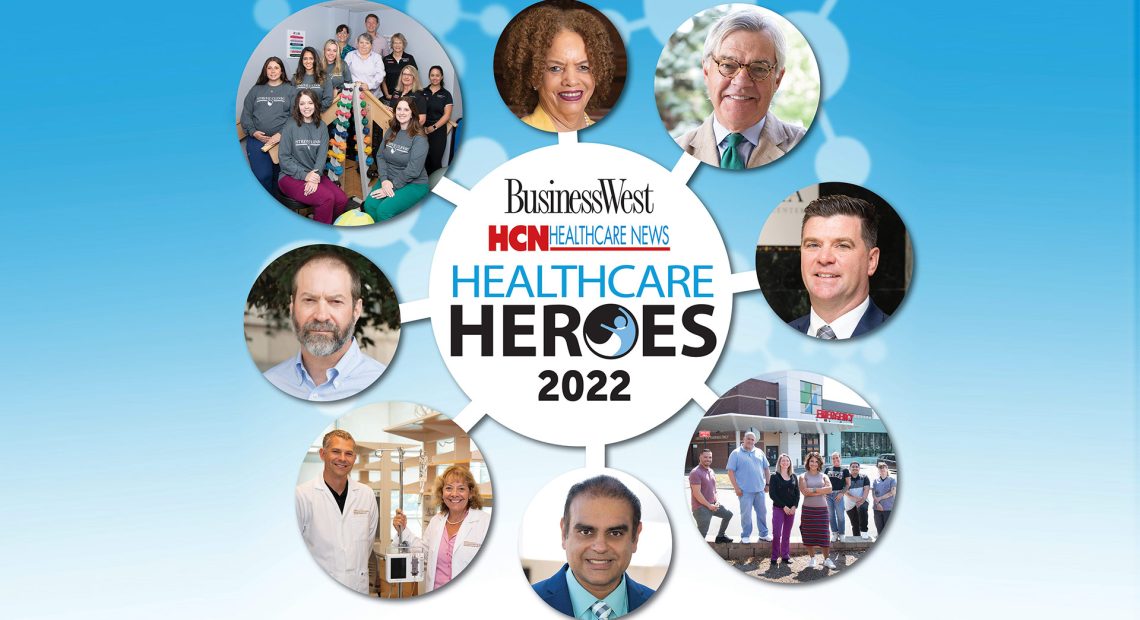
Since BusinessWest and its sister publication, the Healthcare News, launched the recognition program known as Healthcare Heroes in 2017, the initiative has more than succeeded in its quest to identify true leaders — not to mention inspiring stories — within this region’s large and very important healthcare sector.
The award was created to recognize those whose contributions to the health and well-being of this region, while known to some, needed to become known to all. And that is certainly true this year.
They are leaders. In some cases innovators or collaborators. In all cases, inspirations — people and organizations that have devoted their lives to improving the quality of individual lives and the health of entire communities. We find these stories to be compelling and inspirational, and we’re sure you will as well.

Overall, everyone who was nominated this year is a hero, but in the minds of our judges — the editors and management at BusinessWest — eight of these stories stood out among the others. The Healthcare Heroes for 2022 are (click on the names to read their stories):

See the BusinessWest 2022 Healthcare Heroes Special Section HERE.

We’re excited to celebrate our Healthcare Heroes on Thursday, Oct. 27 at the Log Cabin in Holyoke. Tickets cost $85 each, and tables of 10 or 12 are available.

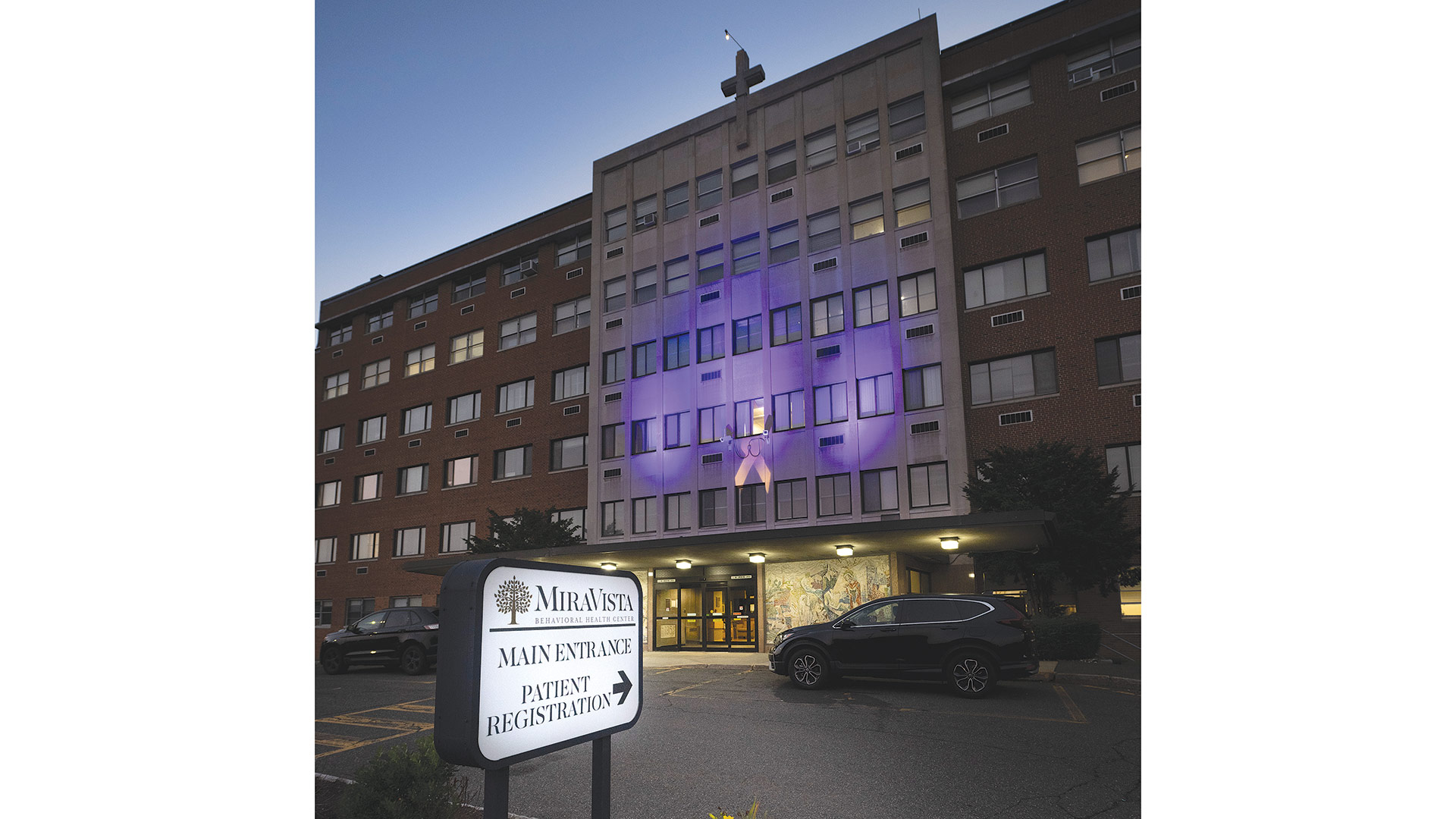
The Healthcare Heroes program is being sponsored by presenting sponsors Elms College and Baystate Health/Health New England, and partner sponsors Trinity Health Of New England/Mercy Medical Center, American International College, and MiraVista Behavioral Health Center.

Presenting Sponsors

Partner Sponsor

Features Special Coverage

School of Thought

Rachel Romano

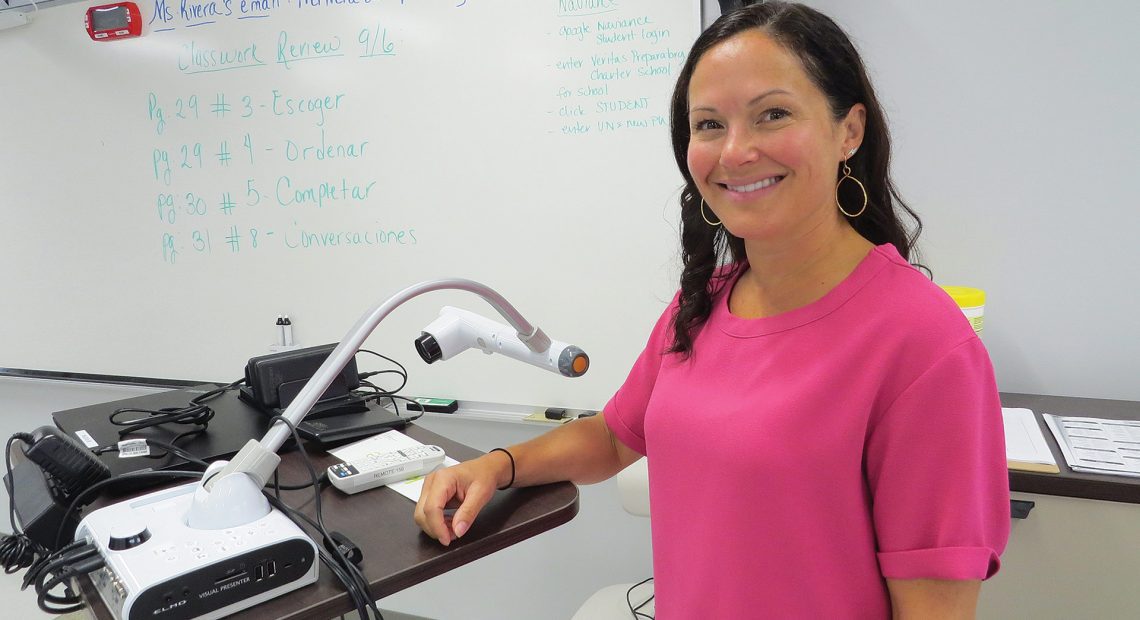
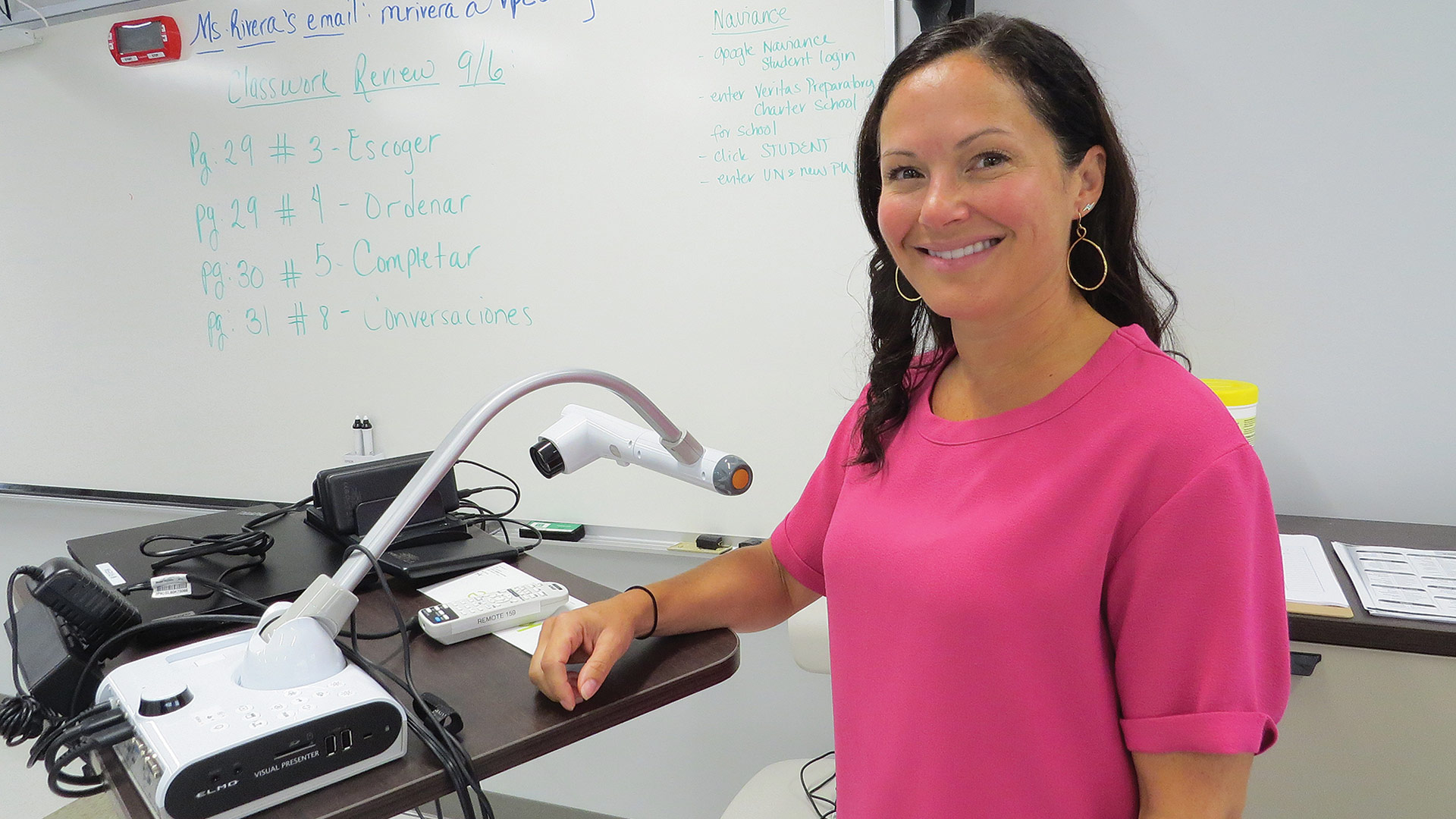
Rachel Romano, founder and executive director of Veritas Preparatory Charter School, shows off one of the classrooms in the recently opened high school.

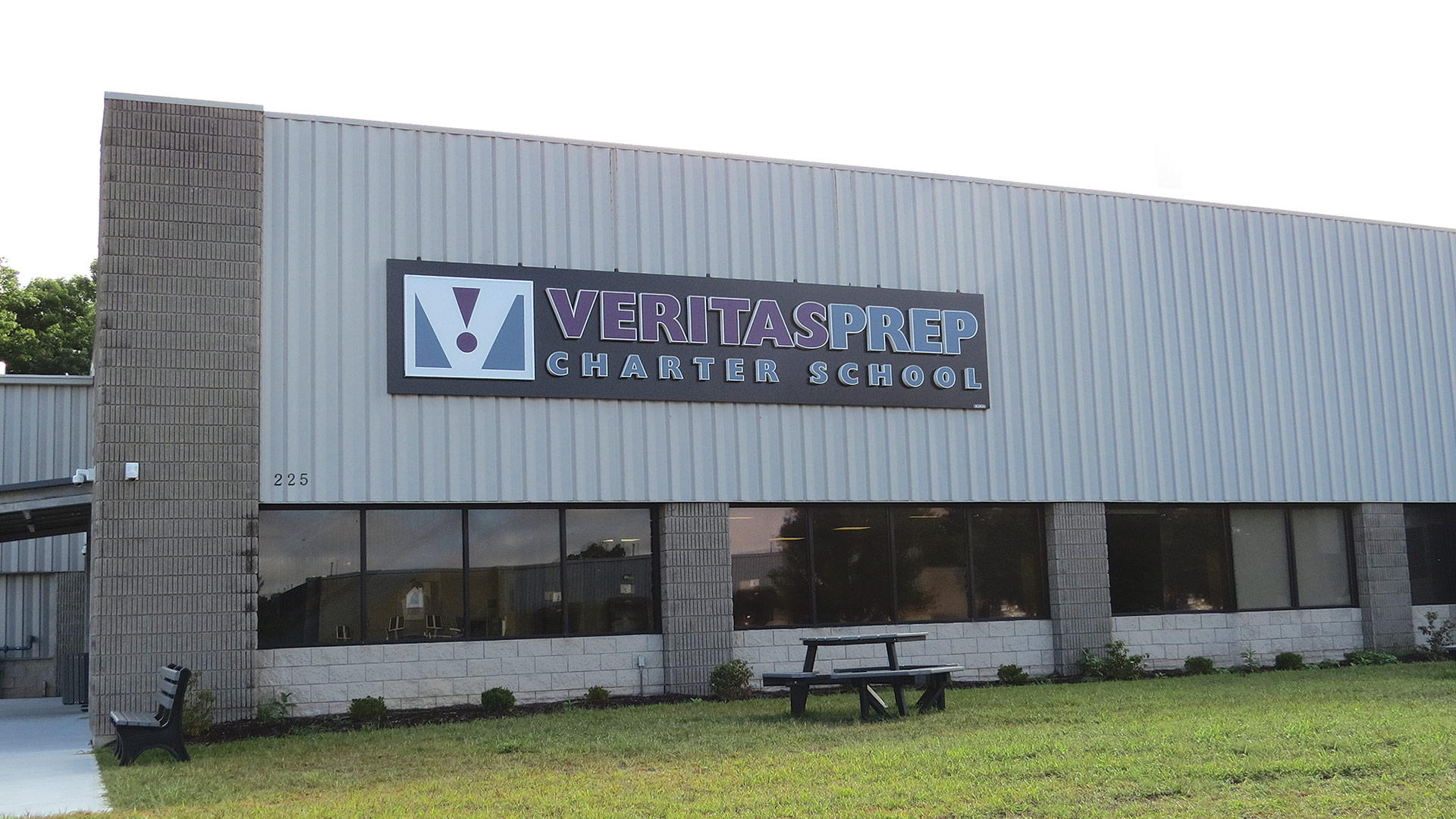
Rachel Romano says she started Veritas Prep Charter School after becoming frustrated as a middle-school teacher in Springfield with just how ill-prepared students were to succeed — at the next level in their education, and in general.

She called it “unfinished learning,” and it was occurring at many levels, especially with reading.

“They really hadn’t made that shift from learning how to read to reading to learn, which should happen around third or fourth grade,” she explained. “But if it hasn’t happened and they come into the middle school, most middle schools are not designed to keep teaching that, so students really fall behind. When your foundation is weak, there is nothing to build on.”

It was with a desire to provide middle-school students with a better, stronger foundation so they would not fall behind that Romano started Veritas Prep Charter School, opening the doors in a former nursing home on Pine Street nearly a decade ago. And almost from the day it opened, parents and students alike were asking, ‘when are we going to start a high school?’

It took several years, considerable planning, the transformation of what was manufacturing space on Carando Drive, and many other pieces to fall into place, but that high school opened its doors late last month.

As Romano, an educator but also a true entrepreneur (and BusinessWest 40 Under Forty honoree in 2013), put it, in some ways, the new Veritas facility is high school reimagined. This is a career-focused, early-college model designed, like the middle school, to enable students to succeed at the next level — whatever that might be.

“To get two years of college under their belt while still in high school … it just compresses their timeframe to earn a degree.”

For many, it will be college, she said, but higher education is not the goal of every child.

“But every kid should have the choice,” she said. “And if they’re prepared for college … then they have options open to them; the doors are not closed to them.”

The early-college model is just what it sounds like, she noted, adding that students can take college courses while in high school and could even have an associate degree upon graduation.

Having a track record of success in college even before walking across the stage to pick up their high-school diploma instills confidence in students and a mindset that they can accomplish anything they might dream, she said, adding that this model also brings great advantages when it comes to the overall cost of a college education.

“To get two years of college under their belt while still in high school … it just compresses their timeframe to earn a degree,” she explained. “That can be a huge help when they decide to go and get their degree.”

For this issue, BusinessWest talked with Romano about the new high school, but also the broader mission to provide students with that stronger foundation and the tools to build upon it.


Grade Expectations

As she offered BusinessWest a tour of the new high school, Romano started in the gym.

The gym is an important part of this equation, she said, noting that the middle school doesn’t have one, and students, parents, and others involved in the design process of the high school identified it as priority.

The gym thus represents an example of how a vision became reality, one that officially started with 90 students (many of them being graduates of the Veritas middle school), teachers, and staff gathering on opening day in late August.

The student demographic at the high school essentially mirrors the grade 5-8 enrollment, said Romano, adding that 70% are Latinx and another 20% are Black. Meanwhile, 83% have what she called ‘high needs,’ and 77% are economically challenged.

The plan is to add a grade a year and build enrollment to roughly 400 students by 2025, she said, adding that for Veritas to realize that size and scope (800 students across nine grades) is something she could not have imagined when she first started conceptualizing this concept.

Indeed, to appreciate where Veritas Prep is now, we need to go back to the beginning, and that’s where we find Romano, a frustrated middle-school teacher, looking to find something better for the city and its young students.

Actually, the story starts in New York, where Romano was working in advertising sales in 2001, and the terrorist attacks on 9/11, which essentially left her homeless and heading back to Western Mass. and her parents’ home in South Hadley. She took a job substitute teaching to essentially get out of the house — “my mom kept nagging me about what I was going to do next” — and wound up loving the work.

She applied for a full-time teaching job in Springfield for the following year and wound up at Duggan Middle School, where she worked for six years and experienced what could be called a stern reality check.

“I didn’t have traditional training as an educator, so I came in with the expectations that had been set for me as public-school student myself,” she explained. “And I sort of believed that education was the great equalizer; everyone got a public education, and if you worked hard enough, you could go on to college and do whatever you wanted.

“And when I began teaching in Springfield, I realized that this just wasn’t true for everyone,” she went on. “My eyes were really opened to the inequity that exists in our public education system.”

What stood out to her — and eventually compelled her to start a new charter school — were the expectations for students and the system’s inability to prepare students for success.

“The expectations for students in Springfield were not that high,” she told BusinessWest, adding that this is how and when the seeds were planted for a new charter school.

“I didn’t have traditional training as an educator, so I came in with the expectations that had been set for me as public-school student myself. And I sort of believed that education was the great equalizer; everyone got a public education, and if you worked hard enough, you could go on to college and do whatever you wanted.”

She started by looking at urban settings with similar demographics but different results when it came to student performance and success.

“We went to New Haven and Boston, where we found schools serving similar populations of students and getting very different results,” she said. “These kids were outperforming their neighboring wealthy districts, like kids in East Boston outperforming kids in Wellesley, and we saw the same in New Haven, and we went and looked at those schools and said, ‘wow, what are they doing?’ They were charter schools.”

The schools were different in some ways, but a common denominator was a needed level of autonomy to “actually respond to the needs of the kids in front of them and create the kind of school and systems that could generate different results.”

Fast-forwarding significantly — getting a charter school off the ground is a lengthy, complicated ordeal — Romano set about creating Veritas, a middle school that would “reset the bar,” as she put it, one that borrowed (‘stole’ was the word she used) best practices from high-achieving schools, set high standards for its students, and prepared them for high school.

And, as noted earlier, it wasn’t long before parents and students alike were asking if the same model could be used to create a high school, questions that grew louder as the first classes of Veritas students were graduating and moving on to the city’s schools.

The cafeteria in the new high school

The cafeteria in the new high school is one of the many aspects of the facility that are state-of-the-art.

Eventually, the chorus became too loud to ignore, she went on, adding that she went to the Veritas board of trustees with the concept of a high school, and the ambitious concept was greeted with enthusiasm.

A request for expansion was submitted to the state Department of Education in 2019, and, upon approval, what became a two-year planning process commenced. With that time, a design team comprised of former students (those now in high school or their first year of college), current students, families, teachers, staff members, representatives of area colleges, and community partners put together for a blueprint for a high school.


Course of Action

And by blueprint, she meant not just the actual design of the school — and its gym. Rather, she meant a plan for helping to make sure that graduates of the school would not have doors closed to them.

“We looked at different models, and we looked into what was happening — where is the innovation in high schools now,” she said, putting the accent on ‘we.’ “We focused on what we could do better and what we could do that was different.”

And the chosen model was early college, or EC, as it’s called, she said, adding that it is a somewhat unique model for this region.

“There’s not a lot of it in happening in Massachusetts,” Romano went on. “There’s a lot of talk now in the Legislature and the Department of Education about early college, but there are some great examples in other states.”

Elaborating, she said this is certainly not a new concept — many area school districts have dual enrollment, with students talking college courses while in high school. But this model is different in that it’s “wall to wall” early college and not merely for exceptional students in accelerated programs, as it is in many schools.

“Every student will be able to earn 12 college credits — it’s not for a subset, but for everyone,” she said, adding that, while some might earn as few as 12 credits, some may actually garner two full years of college credits while at Veritas.

“They can literally walk across the stage with a high-school diploma, and an associate degree awarded by Springfield Technical Community College,” she said, adding that STCC and Worcester State University have both signed on partners in the initiative.

“The cool thing about this model is that it really just breaks down the barrier that it’s really tough for a first-generation college student to access college,” she told BusinessWest. “So our kids will actually have a college transcript; they’ll have a track record of success in college when they graduate.”

And, as she noted, having that head start brings advantages on many levels, from a student’s confidence level to the cost of a college education.

“For some of our kids, they may go straight to college, while others will have to go to work, and they’re going to have to finish college at night and on weekends,” she explained. “This just gives them such a leg up because they’re halfway done — they’ve already got it, they’re on a roll, they’ve built some momentum.”

Building needed momentum was just one of the goals for Romano, the Veritas board, and other supporters as they went about conceptualizing the new high school. The overall mission is to eliminate barriers to success, open doors, and provide that leg up that she talked about, and it shows enormous promise for doing all that.

Returning to that question of why and how a high school came to be reality, she said that she and others at the middle school simply didn’t want to let go of their students.

“Many of our students come in not loving school, for whatever reason,” she explained. “School and learning hasn’t been an experience they’ve really enjoyed and felt that they’re really good at; we’ve kind of turned that around for them in the middle grades. By eighth grade, they’re really invested in their education.”

And now, they can continue investing at another important level.


George O’Brien can be reached at [email protected]

Commercial Real Estate Special Coverage

A Landmark Decision

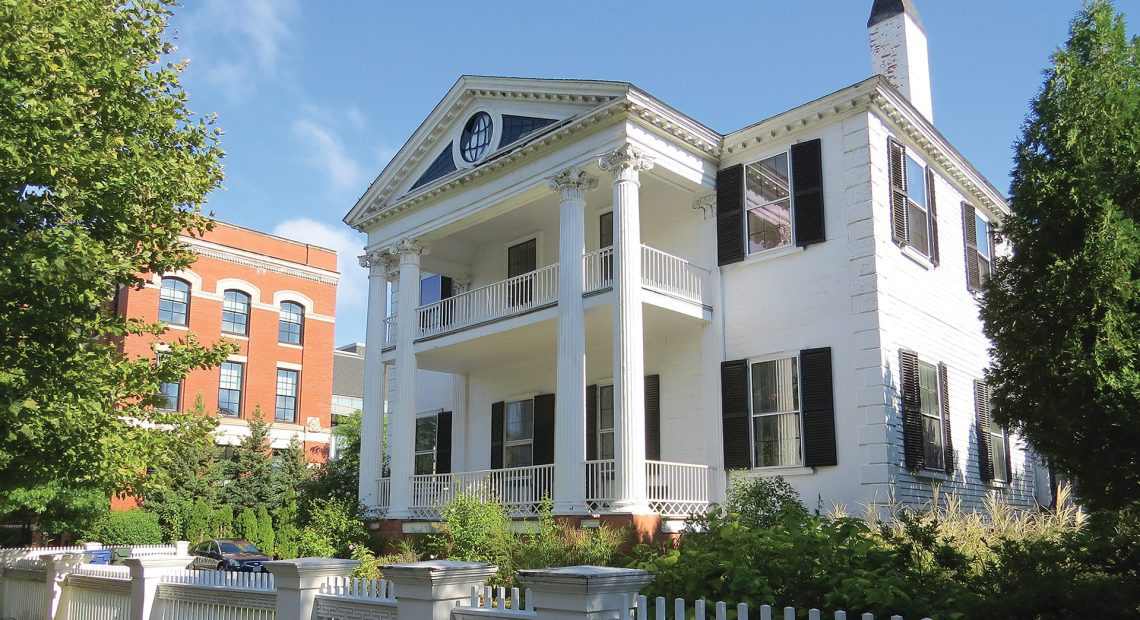
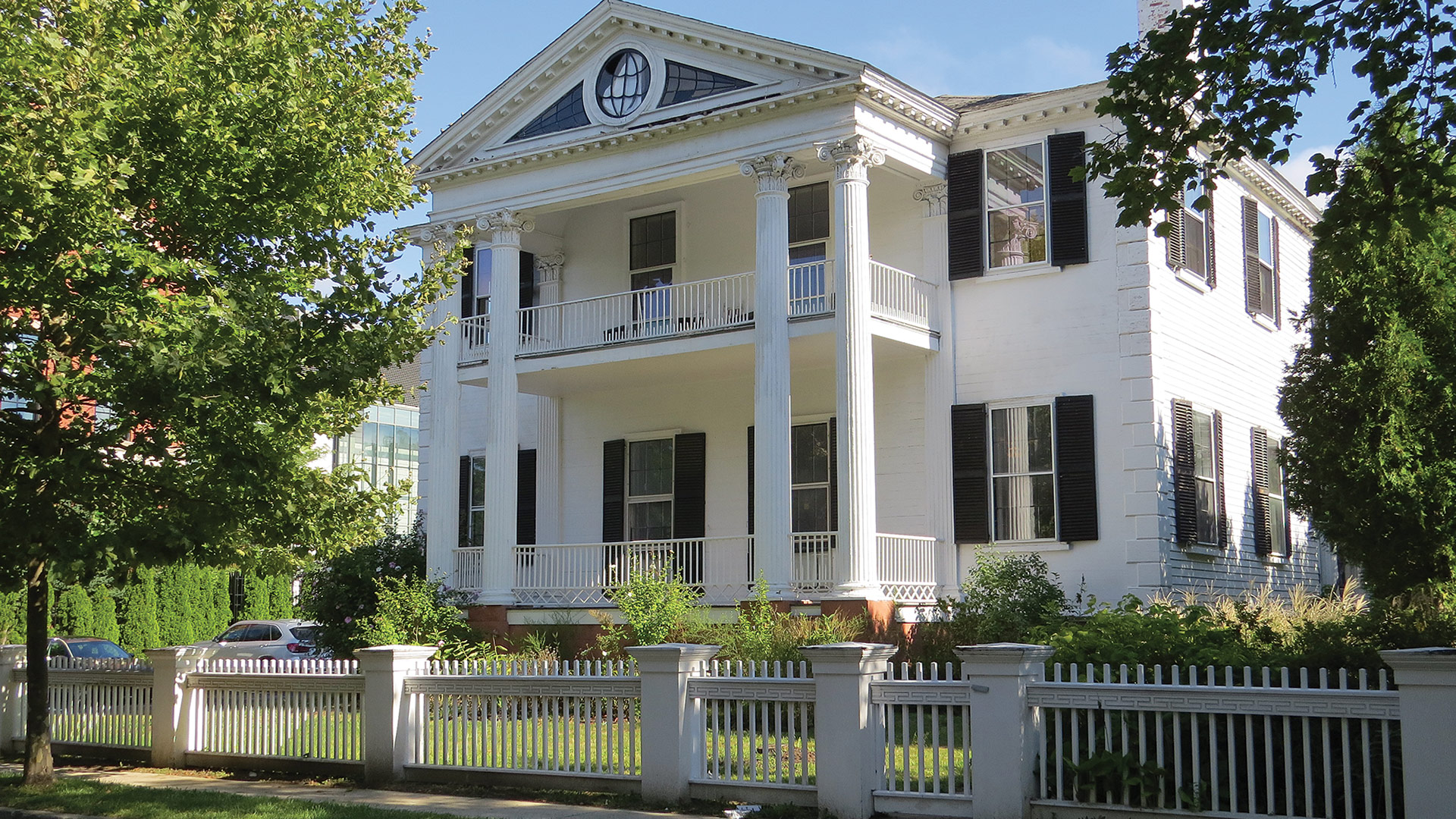
The historic Alexander House

The historic Alexander House

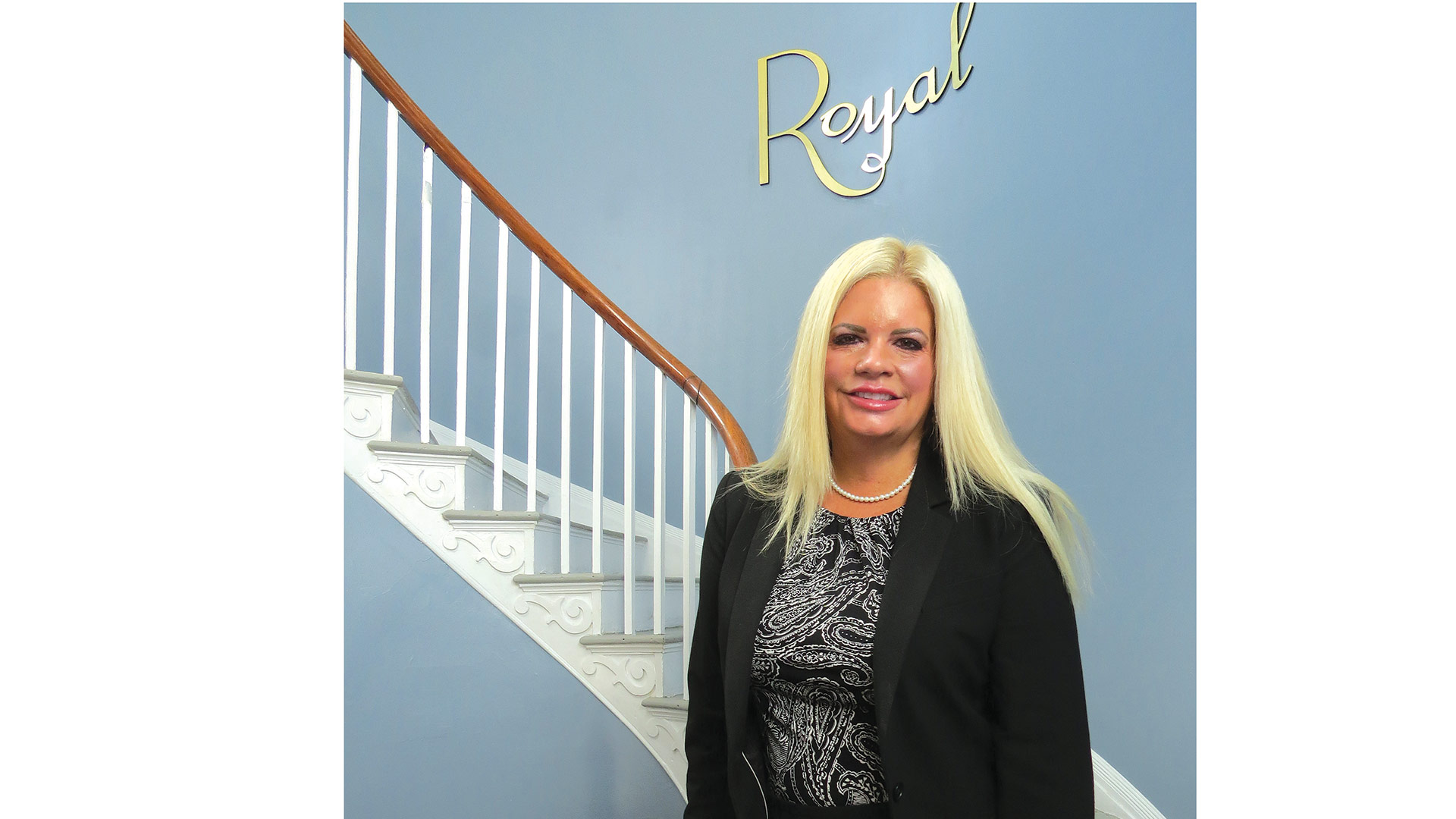
Amy Royal first started taking notice of the Alexander House in Springfield when she was a high-school student at nearby MacDuffie, and soon became taken in by its beauty, 200 years of history, and place in the city. Later, she started viewing the property in a different light — as a potential home for her growing law firm. Earlier this year, that dream came true.

Amy Royal says she’s long had an affection for the historic Alexander House in Springfield.

She first took hard notice of it when she was in high school at MacDuffie, located a mile or so away from the home’s former location on State Street. Back then, she recalled, it was a beautiful home with a lot of history, and she’s always had a fondness for structures that fit that description and now lives in a home that is nearly 250 years old.

Later, after beginning her career as an employment-law attorney and eventually starting her own firm, she started looking at the 6,000-square-foot home, built in 1811, in a much different light — as a place to locate her business.

Amy Royal, seen at the grand staircase of the historic Alexander House, has long had her eye on the landmark as a home for her business.

“I’ve always really, really loved the building,” she told BusinessWest. “Everything about it — the design, its place in the city’s history … it’s magnificent.”

These thoughts only intensified after the Alexander House was moved from its long-time location around the corner to Eliot Street to make way for the new federal courthouse in Springfield that eventually opened its doors in late 2008. Royal had business in the courthouse, and eventually found parking a few hundred yards down Eliot Street, necessitating a walk past the Alexander House.

“At that point in time, it was beautiful, but you could tell that it needed a lot of help — even though it had been moved by the federal government, it needed a lot of love,” she recalled. “I remember thinking ‘I wish I could buy that building; I wonder if that building is for sale?’”

Today, Royal is living the dream, literally — the one about moving her growing business, the Royal Law Firm, into the Alexander House’s 14 rooms, and the basement as well.

She’s needed a new home almost from the day she moved into her now-former home, leased space in the large office building at 819 Worcester St. in Indian Orchard. She looked at both options, leasing and owning, and decided that the latter made far more sense.

But owning the Alexander House? Like she said, this was a long-held dream come true.

“I’ve always really, really loved the building. Everything about it — the design, its place in the city’s history … it’s magnificent.”

For this issue and its focus on commercial real estate, BusinessWest talked with Royal about how her affection for this historic home became a quest — and eventually a dream realized. We also got a tour, one that quickly revealed why this landmark has been a career-long pursuit for Royal.


At Home with the Idea

Royal said she’s looking forward to being able to walk to the federal courthouse when she has business there, especially when she considers the large amounts of paperwork she traditionally brings with her when she’s in court.

Which … isn’t very often at all, she told BusinessWest.

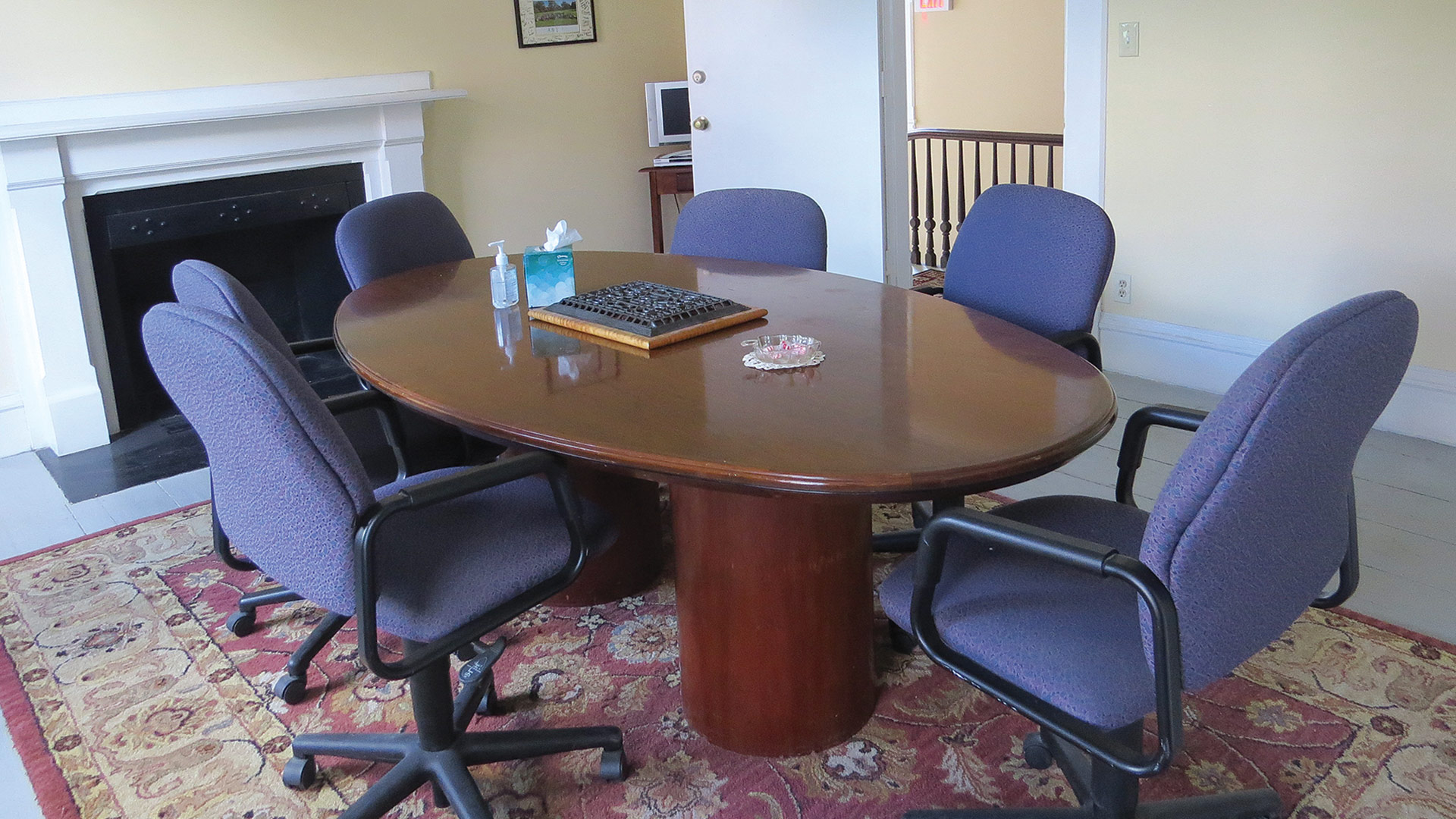
One of the 14 rooms at the Alexander House

One of the 14 rooms at the Alexander House has become home to the Royal Law Firm’s main conference room.

“We’re civil litigators … if I don’t see the inside of a courthouse in a year, that’s not unusual,” she said, adding that location, location, location, the driving force in many decisions concerning real estate, was only a minor factor in this case. It was the property that drove this decision.

Since launching her own law firm, Royal has had lengthy drives to that federal courthouse. After starting in a small office on Center Street in Northampton, she relocated to larger quarters on Pleasant Street, and remained there until moving her headquarters office — she has satellite locations in several other cities — to a suite of offices in the building on Worcester Street in March 2020, just after the pandemic found its way to Western Mass.

She wasn’t expecting to be looking for a new home so quickly, but rapid growth — traditionally put in the ‘good problem to have’ category, although it does present challenges — made a change necessary.

“I knew we were outgrowing our space where we were — I just didn’t expect to outgrow it as quickly as we did,” she explained. “I just casually started looking for something.”

In a nice twist of fate, this casual search coincided with the Alexander House being put on the market in June 2021, signaling the start of a new chapter for a home that had seen plenty of history and had become historic in its own right.

Designed by the prominent architect Asher Benjamin and built by noted builder Simon Sanborn, the Greek revival home draws its name from its fourth owner, Henry Alexander Jr., a mayor of Springfield who acquired the property in 1958. But it has another, less-known known name, the Miss Amy House, derived from Alexander’s daughter, Amy, who lived in the house for many years and was quite active in the community on a number of philanthropic fronts.

Rooms at the Alexander House have been converted into a small conference room and lawyers’ offices.

The home has had a relatively small number of owners over the years, said Royal, who has come to know the history of the property — she learned in high school that one of the dorms there was designed to reflect the Alexander House — and is always seeking to learn more about it.

When a search was commenced for a home for a new federal courthouse at the start of this century, those involved, and especially U.S. Rep. Richard Neal, became determined to find a location on State Street, long the cultural and historic thoroughfare in the city and home to several schools, churches, and government buildings.

The property on which the Alexander House stood became the preferred location, and to make it happen, a short but complicated — because of the size, age, and condition of the home — move had to undertaken, one that was well-chronicled and captured the attention of the city.

After the move, the home became to several small businesses, including an architect and an attorney, but much of it was unoccupied. As noted, it came on the market in the summer of 2021, and soon after, Royal commenced her pursuit of the home.

Because of that aforementioned move, the home now has a new foundation, one of many features that caught her eye when she toured the property after it went on the market.

“The foundation they put in is incredible — there must be 10-foot ceilings there,” she told BusinessWest, adding that her firm will use that space as a filing center but may eventually build it out.

“I’ve always really, really loved the building. Everything about it — the design, its place in the city’s history … it’s magnificent.”

But there was so much more, obviously.

“I thought it was magnificent — the spiral staircase alone just stood out to me,” she recalled. “But every facet of the architecture — the crown molding, the ornate craftsmanship in all of the trim work, the grand ceilings, the chandeliers, the fireplaces … to me, it just spoke of having a law-firm practice inside; it’s a magnificent place to have a law firm.”

Royal said she heard anecdotally that there were a number of other suitors for the Alexander House when it came on the market. She believes she prevailed because her passion for the property quickly became evident, and she convinced then-owner Thomas Schoeper that she would be a good custodian of the landmark.

“He really wanted someone who would be a good steward of the property and really cared about its history and character and the integrity of the building itself,” she noted. “I spent a lot of time talking with him about all that.”

Royal closed in February of this year and has spent the past several months giving the property that ‘love’ she said it needed. Improvements have included a new HVAC system, an alarm system, remodeling the kitchen, installing IT wiring throughout, and painting many of the rooms, she said, noting that the property is subject to historic covenants and monitored by Historic New England, and also subject to an annual inspection and historic preservation.

The firm moved in a few weeks ago and is still settling in, Royal said, adding that, with a property of this vintage, there will always be work to do.

“That’s going to be a never-ending project,” she said. “That’s the way it is with historic buildings.”

Meanwhile, her new mailing address is everything she hoped it could be and would be when she first started thinking about it as a future home all those years ago.

“Everyone here just loves it — it’s a great place to work,” she said.


Right Place, Right Time

Noting the continued growth of her law firm, Royal was asked if the Alexander House provides the requisite space for additional team members.

She said it did, but in a more emphatic voice, she noted that she would not be moving again — soon or probably ever.

“We may grow in other regions — that’s the plan — but this will be our headquarters building,” she said. “This is home.”


George O’Brien can be reached at [email protected]

Cannabis Special Coverage

Cannabis in Flux

Aaron Vega

Aaron Vega says cannabis has been a definite economic driver in Holyoke’s downtown and canal district.


According to the Cannabis Control Commission (CCC), legal marijuana is now an annual $3 billion business in Massachusetts.

The communities that have embraced it from the beginning, like Holyoke, can attest to cannabis as an economic driver in terms of commercial real estate, jobs, and other opportunities. The city now has four dispensaries, three grow facilities, and a testing lab up and running, with dozens of other applications at various stages of the permitting process — a process, city Planning & Economic Development Director Aaron Vega said, that was always intended to be easy to navigate.

“This community voted in favor. The mayor was in favor. As a state representative, I was in favor. And we didn’t want to make it more difficult. It was challenging enough with the regulations coming down from the state. We saw this as an industry that could take over some vacant and underutilized buildings, and that’s what informed how we went forward.”

That has indeed occurred. “We’re very excited about the investment that has happened — tens of millions invested in these downtown buildings because of cannabis, and 500 jobs that didn’t exist three years ago,” Vega said, noting that the cannabis enterprises themselves aren’t an endgame, but a way to spur even more investment.

“What do you do with 500 people? You make sure they’re going to your concerts, going to your restaurants and events, utilizing your local food trucks. And then there’s the ancillary businesses to the cannabis industry; how do we lure them to the city and make it even more beneficial for companies to do business in Holyoke?”

Other cities and towns have, to varying degrees, told similar stories. But the host-community agreements they’ve put forward have not always been well-received, and that was one of several issues addressed last month by a multi-faceted cannabis bill passed overwhelmingly by the state Senate and House of Representatives and signed into law by Gov. Charlie Baker.

“We saw this as an industry that could take over some vacant and underutilized buildings, and that’s what informed how we went forward.”

Among its main elements, the law clarifies the host-community agreement (HCA) process by authorizing the CCC to prioritize social-equity program businesses and economic-empowerment priority applicants for expedited review.

It also clarifies the scope of HCAs and adds new criteria, mandating that no host-community agreement can include a community impact fee that is beyond the business’s eighth year of operation, the community-impact fee must be reasonably related to the actual costs required to operate a cannabis business in a community, the CCC must review and approve each HCA as part of the license application and renewal process, and all host communities must establish procedures and policies to encourage full participation in the regulated marijuana industry by people from communities that have been disproportionately harmed by marijuana prohibition and enforcement.

“Communities of color across our country have historically been criminalized, prosecuted, and left out of the conversation in regards to cannabis legalization,” state Sen. Adam Gomez said. “When cannabis was legalized in Massachusetts, those same communities continued to be barred from the conversation table and left behind, with historic barriers preventing them from growing small businesses in meaningful ways. The legislation passed by the legislature will remove those barriers.”

The law also expedites the expungement process, Gomez noted. For individuals seeking to expunge a record for previous offenses that are now decriminalized, the law requires the court to order the expungement of the record within 30 days of the request and expunge records for possession or distribution of marijuana based on the now-legal amount.

“It is incomprehensible that anyone who was charged with a marijuana-related offense still has that on their record in our state, especially when you can drive down the street to a dispensary to buy the same product that that person was arrested for,” Gomez said. “I was proud to support this legislation and can’t wait to see cannabis businesses run by BIPOC owners flourish as a result.”


Growing Pains

The law makes other major changes as well, including a clarification of the local social-consumption approval process.

The advent of what’s known as cannabis cafés will give renters, public housing tenants, and tourists a legal place to use a legal substance. Under this legislation, a city or town may allow for social consumption sites through the passage of a bylaw or ordinance.

The legislation also creates a trust fund to make grants and loans to social-equity program participants and economic-empowerment priority applicants, which will give entrepreneurs from communities that have been disproportionately harmed by marijuana prohibition and enforcement better access to grants and loans to get their businesses off the ground.

In addition, 15% of the revenue collected from the sale of marijuana and marijuana products must be transferred to the Cannabis Social Equity Trust Fund, which will be administered by the Executive Office of Housing and Economic Development in consultation with a newly created Cannabis Social Equity Advisory Board.

“It is incomprehensible that anyone who was charged with a marijuana-related offense still has that on their record in our state, especially when you can drive down the street to a dispensary to buy the same product that that person was arrested for.”

“This legislation will create a more equitable cannabis industry in the Commonwealth,” said state Sen. Jo Comerford, noting that lawmakers “approached this issue with expertise and compassion, and the resulting bill will bring more diversity and equity to this industry.”

House Speaker Ronald Mariano added that “the passage of this legislation will help to ensure that those who have been historically impacted by marijuana prohibition can find new opportunity in the emerging industry. This legislation will help to support folks who have faced generations of inequality secure the needed capital to launch a cannabis business.”

The loan fund highlights one of the challenges of starting a business that’s technically illegal under federal law. Although there have been rumblings that the U.S. Congress could move to decriminalize cannabis and open up traditional financing to such businesses, nothing has been done so far.

“It’s still a hard-money business,” said Tim Sheehan, chief Development officer for the city of Springfield, and that affects both entrepreneurs and property owners. “That’s challenging from a real-estate standpoint. If that were to change, it would provide a more stabilized financial underpinning for the industry itself, and obviously, that would translate into folks that have space feeling far more comfortable in terms of the security they have relative to leasing and everything else. It would be accepted in the mainstream financial market.”

While Springfield didn’t embrace cannabis in the unfettered way Holyoke did — the city has put forward two rounds of retail applications and one for a grow facility, but that project, by Page Cultivate LLC in East Springfield, was derailed by the City Council in May over a site-plan change and other concerns — many of its leaders recognize the economic value of the burgeoning industry.

“Once it was legalized, there was clearly a focus on it becoming an economic benefit for the city,” Sheehan said. “Much like when gaming was legalized, we looked to see what the economic potential of the cannabis industry would be relative to both city finances and economic impact in terms of the marketplace.

“Much like when gaming was legalized, we looked to see what the economic potential of the cannabis industry would be relative to both city finances and economic impact in terms of the marketplace.”

“Obviously, the industry has had an impact on storefront and warehouse space, and I would quantify that as a positive impact,” he went on, adding that it remains to be seen what kind of impact the cannabis trade will have on the surrounding residential real-estate market.

“Caution is the watchword. As an industry, it remains to be seen what the saturation point is, and I really think that needs to be factored in through the process with regard to how many of these establishments you’re going to allow, whether it be a grow facility or how many retail establishments you’re going to allow. There is a limited market.”


In the Weeds

The cannabis industry’s potential is still unknown, though the early results in terms of new businesses, tax revenues to communities, and jobs have been positive.

But Sheehan is right that no one really knows what the saturation point is, if there is one. And the Legislature’s sprawling cannabis bill last month was an admission that plenty about the permitting process — especially for traditionally disenfranchised communities — needs to be addressed.

As Senate President Karen Spilka put it, “I am thrilled we were able to reach a deal on this bill, which will take meaningful steps toward ensuring communities who have historically been harmed by marijuana criminalization can access resources to enter this industry.”


Joseph Bednar can be reached at [email protected]

Healthcare Heroes

Here, Shared Research by Nurses and Engineers Will Benefit Patients Everywhere

Co-directors Frank Sup and Karen Giuliano

Co-directors Frank Sup and Karen Giuliano. Leah Martin Photography

Intravenous (IV) infusion pump systems are among the most recognized technologies in healthcare, used by about 90% of hospital patients.

They’re also hopelessly out of date, Karen Giuliano said.

“The design has been around a long time, and hospitals don’t buy one; they buy an entire fleet. They have to invest in training, service contracts, and IT infrastructure. To install a platform is a huge investment and effort.”

And that has led to stagnation, she added. “Over 80% of pumps are really old platforms and don’t do the job they need to do. They’re not developed for today’s standards.”

Enter the Elaine Marieb Center for Nursing and Engineering Innovation at UMass Amherst, which has made improving the safety and usability of IV smart pumps one of its first major projects. The team has been exploring flow-rate accuracy in a variety of settings and use cases, with the goal of developing pumps that eliminate inaccuracy, inconvenience, and resulting medical errors through new technology and simplified design.

The work is gaining widespread attention, as Giuliano, co-director of the center and associate professor of Nursing, and postdoctoral research fellow Jeannine Blake were recently recognized by the Assoc. for the Advancement of Medical Instrumentation (AAMI) for the Best Research Paper in 2021.

Their paper, “Nurse and Pharmacist Knowledge of Intravenous Smart Pump System Setup Requirements,” explored knowledge of intravenous smart-pump system setup requirements among nurses and pharmacists. The results were published in Biomedical Instrumentation & Technology, AAMI’s peer-reviewed journal.

“There’s already a critical nursing shortage, fatigue, and burnout. How can robotics be used to maybe alleviate some of those problems? We can use robotics as an extension of the nurse.”

“We don’t want to build a new pump; we want to build a set of requirements for manufacturers that have been sitting idle for too long without being forced to innovate for the safety of patients and the workflow of the nurses,” Giuliano told BusinessWest.

The effort demonstrates the types of innovation she and Frank Sup, associate professor of Mechanical and Industrial Engineering and the other co-director of the Elaine Marieb Center for Nursing and Engineering Innovation, intended when they launched the center in early 2021. It also reflects the cross-educational opportunities for people like Blake, the first nursing doctoral student to enter an engineering postdoctoral fellowship at UMass.

“Students have come out of here with a siloed education, nurses and engineers. There’s not a natural inkling to work together; they might not even know the importance of collaborating in that way,” Giuliano said. “What we want is to have students graduate that already have that in common, to reach across the aisle. The healthcare environment should not be a silo.”

Under Sup’s leadership, the center has also begun research on the use of robotics in healthcare. It teams doctoral students from both engineering and nursing, as well as an undergraduate nursing honors student, to identify challenges and develop robotic solutions to improve healthcare delivery for patients and providers.

The incorporation of robotic technology into the healthcare system is ongoing and already includes innovations like fully autonomous disinfecting systems and invasive surgical devices, and Sup feels it’s essential that these new technologies are integrated into the field of nursing at multiple levels, including hospital administration, the clinical workplace, and university education. And students need to interact with robots to better understand and utilize this technology in a controlled setting before patient care is involved.

“What are robotics, what can they do, what are they good for, and how can we start to train nurses and engineers in robotics? What day-to-day situations might nurses face in the hospital, clinic, and home, and what might be the best use cases for these robotics systems?” he asked. “That’s where this program started. Nurses are not typically trained in robotics, so we actually start to expose them to these things.”

That may seem like a scary thought to some, or imply that robots could replace nurses, but that’s far from the case, Sup added.

“There’s already a critical nursing shortage, fatigue, and burnout. How can robotics be used to maybe alleviate some of those problems? We can use robotics as an extension of the nurse, potentially doing things when they’re not there, like monitoring and lower levels of service.”

By bringing nurses and engineers together at the earliest stages of product innovation, the Elaine Marieb Center promises a raft of such breakthroughs that will result in better technology and, more important, better patient care.


Come Together

This is how Giuliano and Sup described the center’s mission at its opening last year:

“Today, healthcare technologies are too often made without the insights and understanding that clinicians bring to the table. Nurses are end users, facing healthcare challenges on the frontlines of patient care. Engineers have the expertise and skills to envision and create medical devices and can work with nurses who bring the real-world healthcare experience needed to design the best possible products and solutions.

“This transformation depends heavily on collaborative research and development work among nursing, engineering, and other disciplines,” they went on. “The ability to quickly and effectively develop and test innovations requires both nursing and engineering skillsets. The power of the nurse-engineer approach is derived from the mutual collaboration between the two, where the nurse identifies the problem, and the engineer facilitates potential solutions.”

One problem in the past, both of them explained to BusinessWest, was that products too often wound up in the hands of nurses too far along in the design and development process to change very much.

“I realized how important it was to have a front-end-user perspective built into the products rather than trying to back-engineer it when it’s 90% done.”

Giuliano, with more than 25 years of experience in critical-care nursing, medical product development and innovation, and patient-centered clinical outcomes research, should know. Prior to joining UMass Amherst, she spent many years working on medical product development from an industry perspective, including 12 years with Philips Healthcare.

Early in her career, she said, “I realized how important it was to have a front-end-user perspective built into the products rather than trying to back-engineer it when it’s 90% done.”

Now, at the center, “we have the ability to prototype things and test them in nursing simulation labs and test them in actual hospitals,” she added, the latter through a collaboration with Baystate Health.

Meanwhile, Sup was also a natural choice to co-direct the new center. As director of UMass Amherst’s Mechatronics and Robotics Research Lab, his research has long focused on developing human-centered mechatronic technologies for augmenting human performance and exploring how to enable robots to fluently interact physically with humans. To that end, he brought teams of nursing and engineering students together to work on senior capstone design projects.

The model was formalized as the Elaine Marieb Center for Nursing and Engineering Innovation with the help of two major gifts: $1 million in seed funding from alumni Michael and Theresa Hluchyj, longtime supporters of both the College of Engineering and the College of Nursing; and $21.5 million from the Elaine Nicpon Marieb Charitable Foundation to the College of Nursing, with a significant portion designated to support the new center.

“Innovation is often accelerated at the intersection of different academic disciplines,” Michael Hluchyj said when announcing the first gift. “The worldwide health crises resulting from the COVID-19 pandemic make clear the critical need for innovative solutions in clinical settings where both nursing and engineering play vital roles.”

And nurses need to have a seat at the innovation table early, Giuliano said.

“Nurses use more products and are part of more services than any other healthcare provicer,” she told BusinessWest. “If they’re not at the table, you’re not going to have the right products. They’re not going to be usable, and if they’re not usable, then they don’t do the job. And from an economic standpoint, they don’t generate the revenue that the company wants. So it’s a lose-lose, which we can turn into a win-win.

“We want to be a usability testing center,” she went on. “So if a company has a product at a certain point in development, has an idea what’s supposed to do and how it’s supposed to work and what its value is, we literally bring it into a sim lab.”

The usability test involves two people, a nurse and a volunteer patient, and both evaluate it, as test administrators watch how it’s used. “If the same mistake is made over and over, it’s a design flaw; it’s not a user error,” Giuliano explained. Then all those results and perceptions go back to manufacturer, who has the opportunity to make improvements early in the process.

To that end, the emerging product prototyping laboratory on the Amherst campus will enable students to design and prototype new products, while a proposed usability laboratory on the Mount Ida campus will allow for product and service testing by frontline clinical end users.

“Having a better understanding of frontline clinician knowledge is a fundamental part of our overall program of research on improving the safety and usability of IV smart pumps,” Blake said when she and Giuliano received the AAMI’s award for their research earlier this year. “We are very excited to receive this award, which supports our continued efforts in this important area of research.”


Promising Outcomes

Better research resulting in better patient care is the goal, whether it’s IV pumps, robotics at the hospital bedside, or any number of other ongoing projects at the center, from cloud-based home-healthcare monitoring to wearable sensors that record body movement to assess chronic pain.

Part of the center’s raison d’être is that nurses and engineers are both trained problem solvers who rely on innovation to find solutions, but their paths rarely cross, and the timeframes required for them to find solutions are dramatically different.

Giuliano got her PhD while at Phillips Healthcare because “I really wanted to be a better researcher so I could test products in a meaningful way.” Later, she added, “I realized I liked academia — I was a better student as a 40-year-old than as a 20-year-old — and I knew I wanted to go into academia and try to recreate the nurse-engineer pairing in the academic environment.”

By teaming up with Sup, who was already pursuing those connections, and with the help of some generous gifts from supporters who saw potential in this model, a center was created that is not only generating some impressive outcomes, but is paving a new way for diverse minds to collaborate and improve the patient experience across the globe.

“The whole idea of this center is for academic clinicians, students, nurses, and doctors to bring in industry partners,” Sup said. “It’s going to be innovative, and it’s going to make a difference.”

And it clearly lives up to the title of Healthcare Hero in the category of Innovation.

“This work that’s being done will make its way to safety standards everywhere,” Giuliano said. “Nobody else is doing that. It’s huge.”


Joseph Bednar can be reached at [email protected]

Healthcare Heroes

This Critical Team Provides Hope — and a Roadmap to Recovery

Team members of the Addiction Consult Service

Team members of the Addiction Consult Service at Holyoke Medical Center, from left: Eddie Rodriguez, John Martinez, Lauren Carpenter, Maria Quinn, Kelly Jean Deming, Em Moulton, and Jose Ramos.


Patrick Hamel remained calm and collected as he chronicled his quarter-century-long battle against addiction.

In telling that story, he recalled more relapses than he could count; how he lost jobs, alienated family and friends, and had run-ins with the law (including some B&Es to support his drug and alcohol use); getting thrown out of the house by his wife on a few occasions; the awkwardness of having his daughter visit him in a halfway house; and even that night a little more than two years ago when he decided that enough was enough and tried to end his life.

He didn’t become emotional — though he did have to stop and collect himself a few times — until he started talking about the Addiction Consult Service (ACS), or the Recovery Support Team, as members call it, at Holyoke Medical Center’s Comprehensive Care Center (CCC) and, especially, Maria Quinn, the charismatic psychiatric mental-health nurse practitioner and leader of that unit.

That’s because Quinn, those who work with her, and those to whom she has referred Hamel have enabled him to move beyond all that has happened to him and now lead a much better life.

“She just listened, and we came up with a plan. She got me hooked up with an amazing therapist. We saw each other every week — she was there for me; she was my support.”

“She is so amazing; she’s like my knight in shining armor,” said Hamel, who would then concisely and effectively sum up what Quinn and other members of this team do. “She just listened, and we came up with a plan. She got me hooked up with an amazing therapist. We saw each other every week — she was there for me; she was my support.

“Mind you, I’ve been in other types of medical treatment facilities and other programs,” he went on. “And I always felt like I was a number, or I was there to meet a quota; it was just a job. You can see with Maria that it’s not just a job; it’s something she’s passionate about.”

Patrick Hamel

Patrick Hamel says those at the Addiction Consult Service listened and helped him come up with a game plan for recovery.

Hamel didn’t nominate the ACS for the Healthcare Heroes award, but his words, and the emotion attached to them, help explain why this special unit is being honored this year in the Community Health category.

In short, there are now hundreds, if not thousands, of people, who would say the same things if they were asked — about not just what the ACS does, but how it goes about its difficult and critically important work.

“We’re essentially ever-present — we like to make jokes that we stalk our patients while they’re here, even if we’re not fully involved,” she explained, adding that this is her way of saying that Recovery Support Team members make sure that those patients with addiction issues, either from the Emergency Department or inpatient units at the hospital — many of whom don’t have anyone to visit them while they are in the hospital, for many of the reasons Hamel listed above — have someone to talk to. And, far more importantly, someone to listen, someone who can help them determine what comes next for them, whatever that might be, including ongoing support at the CCC.

“That connection needs to happen so that people can stay and continue to get the treatment that they need,” said Quinn, adding that one of the goals of the program is to build trust among those touched by the ACS, because such trust has often been missing, and it is a key ingredient in their success.

“Historically, people with addiction haven’t been treated well in the healthcare system, so there’s a lot of mistrust, and we see that,” she noted. “We talk about it often and sense that the wall may be coming down and people are starting to bloom because we see our patients become a little more trusting.”

“One thing I’ve learned in this process is that everyone’s recovery is different. You have to listen to the patient to understand what they’re looking for in their recovery. By listening to them, I’ll know what kind of direction I can give them.”

Lauren Carpenter, a certified addictions nurse, agreed. When asked how she got into this specific line of work and what she likes about her work with this constituency, she said simply, “being able to help and care for people who aren’t used to being helped and cared for — building that connection and that rapport and making sure they know there is someone there who cares.”

The ACS is comprised of a nurse practitioner, a certified addictions nurse, a recovery-support coordinator, and recovery coaches. And, as noted, it is a collaborative effort, involving partners such as Tapestry Health, the Gándara Center (which employs the recovery coaches), River Valley Counseling Center, Hope for Holyoke, and the Holyoke Health Center. Together, these agencies are working to reduce opioid overdoses and help people like Hamel find a path to a better life.

The positive results of their efforts can be seen — and heard — with people like Patrick Hamel and countless others like him.


The Power of Hope

John Martinez’s battle against addiction was and is very similar to Hamel’s.

He described several stints of incarceration, homelessness, and, by his count, four suicide attempts.

He’s been sober now for 13 years and has spent the last several as a certified recovery coach, helping others find the strength and conviction to change their lives, as well as needed referrals and direction. The process starts simply with providing hope that life can get better, he said, adding that this isn’t all that coaches provide, but it may well be the most important thing.

“I remember being hopeless — I know what that’s like,” he recalled. “One thing I’ve learned in this process is that everyone’s recovery is different. You have to listen to the patient to understand what they’re looking for in their recovery. By listening to them, I’ll know what kind of direction I can give them.”

Recovery coach John Martinez

Recovery coach John Martinez says that, among other things, he provides those he counsels with the hope that life can get better.

As noted, recovery coaches are part of the team at the Comprehensive Care Center, and part of a broad, collaborative effort that has come together at a critical time for the Greater Holyoke area.

Indeed, while much of the focus the past few years has been on the pandemic, and understandably so, addiction has only become a bigger, more dangerous, and more deadly problem for the region.

The number of opioid-related overdose deaths increased 9% in Massachusetts in 2021 over 2020. Meanwhile, there are significant disparities in overdose rates, particularly among Black and Latino individuals in Massachusetts; from 2019 to 2020, there was a 70% increase in overdose deaths among Black/non-Hispanic individuals and a 10% increase in Hispanic/Latinx individuals. From 2020 to 2021, there was a 6% decrease in Black/non-Hispanic deaths and an increase of more than 7% for Hispanic/Latinx individuals, according to the Massachusetts Department of Public Health.

Steadily rising numbers over the past several years prompted the HEALing Communities Study, whereby scientists from the nation’s leading health agencies and four major academic institutions are partnering with communities in four states, including Massachusetts, to test a set of interventions designed to reduce overdose deaths by 40% over three years in participating communities.

Through a grant awarded to Boston Medical Center, a collaborative was created involving several agencies in Greater Holyoke, with Quinn taking the lead as the appointed addiction expert for the Holyoke community. The goal is to address opioid use, with a specific focus on overdoses, she said, adding that the linchpin of the initiative was creation of the ACS and the CCC.

“Prior to that, it was just me trying to do it all — start people on medication, get referrals out, try to make appointments, trying to get people to stay here [the hospital] — and it was challenging.”

“Our goal is not to cure them; our goal is to treat them with dignity and respect, and that includes treating their withdrawal. It includes giving education and resources. Some people decide that they no longer want to use and want to work toward abstaining and not using, and some don’t.”

With the grant funds, Quinn was able to hire Carpenter as well as a recovery-support coordinator and other team members.

Together, they have put together a system to “find patients,” said Quinn, noting that, before creation of the ACS, many would essentially fall through the cracks.

“Lauren became really good at figuring out which patients we should look at, and we started finding our patients and going to them, often intervening even before a consult was sent,” she told BusinessWest. “And that’s important because people would be leaving the hospital; if you were using opioids or were addicted to opioids, in particular, and didn’t get that, you would feel really, really sick, and if your withdrawal wasn’t being treated, you would probably be leaving.

“So we’d introduce ourselves and let people know why were there,” she went on, adding that, by and large, patients were not used to such a “proactive and impactive” approach to their care, and would have questions about what they could do for them.

What they can do is listen and begin a discussion about what happens next, said Carpenter, who walked through what might be a typical case.

“Someone will come into the ED, and I’ll get notified that this person is there and that they are in withdrawal,” she explained. “At that point, I will meet with the person, gather a history, assess their withdrawal, and then I’ll get Maria involved. I’ll talk with the ED provider, Maria, the addiction consult … Maria will meet with the patient, give recommendations, and order appropriate medications to treat their withdrawal. And when someone is actually on the med floor, we’d start the discussion of ‘what do you want to do from here?’”

As Quinn noted, the course varies with the patient. Often, those at the ACS will connect them to opioid-treatment programs, including two in Holyoke, if they are not already in a program, or connect them with a recovery coach while they are in the hospital.

“Not everyone’s goal is abstinence,” she said. “Our goal is not to cure them; our goal is to treat them with dignity and respect, and that includes treating their withdrawal. It includes giving education and resources. Some people decide that they no longer want to use and want to work toward abstaining and not using, and some don’t.”

When asked how those at the ACS measure success, Quinn said it depends on what how the patient would define that term.

“For some people, having air in their lungs is successful,” she told BusinessWest. “Anyone who leaves here feeling that they’ve been treated well … that’s a big success for me.”


Impact Statement

As he talked about Quinn and those she works beside at the CCC, Hamel stressed the present tense.

He is still working with these individuals at the CCC, and they are still making a huge impact on his recovery. He’s not sure they, and especially Quinn, understand just how much of an impact. So, he made it clear.

“I wouldn’t be where I am without them,” he said, adding that these individuals are more than healthcare providers, but are, in many respects, friends and even family.

“They want to make a difference — it’s not just about an f-ing paycheck,” he said in conclusion. “That’s where I get a little passionate and emotional; two years ago, I wanted to kill myself, and now…”

He didn’t finish the sentence, but didn’t really have to. The pause explained not only the journey from where he was to where he is now, but why the Addiction Consult Service is truly a Healthcare Hero.


George O’Brien can be reached at [email protected]

Healthcare Heroes

Chief and Physician, Baystate Noble Hospital Emergency Department

He Has Devoted His Career to Improving the Community’s ‘Safety Net’ Net’

Leah Martin Photography

Dr. Sundeep Shukla, or ‘Sunny,’ as most everyone calls him, has always felt at home in the emergency room, and he has never really wanted to work anywhere else.

There is a fast pace and decidedly unpredictable nature to the work, he told BusinessWest, noting that each day, and each hour, are different from the one before and the one after. But there are many more reasons why he has chosen to spend his career in this setting, the most important being the ER’s important role, both to the hospital in question and to the community it serves.

“The emergency room is the safety net for all patients,” Shukla explained. “Many patients do not have access to healthcare; we feel that the ER can provide care to anyone who walks through the door, regardless of whether you have insurance, regardless of your background; we’ll see anyone who walks through our doors, and I’m proud to say that.”

But Shukla has done more than work in the ER. Indeed, throughout his career he has devoted time and energy to bringing new efficiencies, better ways of serving patients, and, yes, better ways of doing business to the ER, especially in his current role as chief of the Emergency Department at Baystate Noble Hospital in Westfield.

And he brings what would be considered a somewhat unique background to this assignment. In addition to his undergraduate degree from the University of Missouri and his medical degree from Manpial University in Karnatka, India, Shukla also earned an MBA, with an emphasis in medical management, from UMass Amherst in 2017.

He has used all these degrees, as well as his hands-on experience in the ER, to help improve service, efficiency, and quality, and reduce wait times and what are known as ‘walkouts’ — people who come to the ER but leave before being seen, for whatever reason.

“Having earned that MBA, I was able to reconfigure how I look at things in my brain. Before, it was all medicine-related, but by doing the MBA, I was able to focus on flow and how we could improve certain processes to make an impact on the total visit.”

“Having earned that MBA, I was able to reconfigure how I look at things in my brain,” he told BusnessWest. “Before, it was all medicine-related, but by doing the MBA, I was able to focus on flow and how we could improve certain processes to make an impact on the total visit.

“At Baystate Noble, we do small thinks like put a greeter in the waiting room so when patients come in there’s someone they can talk to, someone they ask questions to; they round, they give patients blankets or small things just to make them feel appreciated,” he went on. “We also strive to push our nurses and docs to really bring patients in when they come into the ER; they don’t sit very long in the waiting room.”

As a result of such initiatives, Noble’s ER has made great strides during Shukla’s tenure. The unit has dramatically increased patient-satisfaction scores, for example, while also gaining certification as a geriatric ED, well-suited to serve the needs of older patients in the community.

The sum of these efforts has earned Shukla the Healthcare Heroes award in the highly competitive category known as Emerging Leader. And he is worthy of that designation, not only for his work in the ER, but also at Baystate Health (he is on the system’s board of directors), in the community (he sits on the nonprofit People’s Institute and also coaches youth soccer and baseball), and even on the ice.

Indeed, Shukla is one of the team physicians for the Springfield Thunderbirds, and was with the team through its exciting run to the Calder Cup finals last season.

He described that work as fun and rewarding — adjectives he would apply to every aspect of his work in medicine and administration.


Degrees of Improvement

Shukla was born in England and came to this country with his family in 1980. Early on, he said, his father, a professor of Pharmacology at the University of Missouri, and mother, a school teacher, impressed upon him the importance of not only education, but service to the community.

He achieved both while serving as a volunteer at the University of Missouri Hospital and Clinics while in junior high school, work he described as a learning experience on many levels.

“During the summer, I went there every Tuesday and Wednesday and spent eight hours each day volunteering in different parts of the hospital,” he recalled. “It was then that I realized that this was my true calling because I really wanted to help people and really wanted to make a difference.”

After graduating from medical school, he became a resident at Baystate Medical Center with a focus initially on general surgery. But at the advice of some friends who implored him to consider emergency medicine because he seemed a natural for that kind of work, his career outlook began to shift.

Dr. Sundeep Shukla, seen here with his son, Deven

Dr. Sundeep Shukla, seen here with his son, Deven, is one of the team physicians for the Springfield Thunderbirds, one of the many ways he is involved in the community.

“I did some shadowing, I did some shifts in the ER, and eventually I went through the process of applying to be an ER resident,” he said, adding that he quickly fell in love with that setting — again, not just because of the fast pace and each-day-is-different aspect of the work.

“Not everyone has access to healthcare, and I’m a big proponent of health equity because I feel everyone should have the same access to healthcare as your next-door neighbor,” said Shukla, who, before coming to Noble, served as associate medical director in the Emergency Department at Baystate Franklin Medical Center. “When patients some come to my ER, I treat them with respect, I treat them exactly how I’d want to treat my family members, and I try to everything I can to make sure their health is better when they leave the ER.”

Elaborating, he said many people are coming to the ER on the worst day of their life, whether they’re having a stroke, a heart attack, or other medical problem, and it is the job of the ER doctor to “step up and help those patients.”

“It’s our goal to help lift them up and help them feel better,” he went on. “And in terms of mindset, you have to be able to function on the go and multi-task many different things, because there so many problems that are detail-oriented: the lab or CT scan, whether you have to stitch someone up, give different medications … there are all these processes you have to follow, and with every visit, there’s quality involved, and you have to meet certain metrics.”

Despite the fast pace and the constant flow of new patients, Shukla said he makes it a priority to truly connect with his patients.

“I always try to make a connection with my patients because, if I’m able to make that connection, whether it’s with a sports team that they like or a restaurant that they enjoy or some type of hobby they like, I feel like we can relate much better, and they can trust me. They just met me just a few minutes ago, so it’s really important that I build a trust and a relationship with them so that when I give them advice or we have what’s called ‘shared decision making,’ we can come with a good plan together. That’s why I’ll always spend the extra minute just to know them a little better.”

“They just met me just a few minutes ago, so it’s really important that I build a trust and a relationship with them so that when I give them advice or we have what’s called ‘shared decision making,’ we can come with a good plan together. That’s why I’ll always spend the extra minute just to know them a little better.”

Shukla currently works at all the hospitals in the Baystate system — Baystate Medical Center, Baystate Wing, and Baystate Noble — and became chief of the ER at Noble in March 2020, just as the pandemic was reaching Western Mass.

In each setting, and especially at Noble, he has been consumed with not only treating patients and making those important connections, but improving the overall experience.

“We try to look at the entire process — from when a patient walks into the waiting room all the way to when they go home,” he explained, adding that little things, such as having a greeter in the ER and having nurses, doctors, and other care providers working collaboratively so that patients don’t have to repeat their history and answer the same questions over and over again, often add up to big improvements in service, patient-satisfaction ratings, and statistics such as those concerning walkouts.

“The most dreaded word that most people see in emergency medicine is walkouts, which is basically a person who registered but wasn’t actually seen,” Shukla said. “That’s a problem throughout the United States, so we work really hard in the Baystate Health system to bring those numbers down. Even one patient walking out troubles us.”

Meanwhile, throughout his career, and even more so during COVID, he has put considerable emphasis on outreach and educating the community, with the goal of helping people make better, smarter choices about their health and well-being.

Indeed, he’s a frequent guest on area radio stations and has penned articles for several media outlets, all with the goal of creating a better-informed community.

“If people are educated, they can take care if their health better,” he said, adding that such efforts took on greater importance during the height of the pandemic, when the public had more questions — and needed more answers — and trust was a huge factor.

“We had a lot of COVID issues to contend with, but we also had to build up trust in the community,” he said, “because a lot of people were concerned about the ways people were contracting COVID, how they would protect themselves, the vaccines … there were many thongs we had to educate people on, and we did a lot of outreach for that.”


ERing on the Side of Caution

Overall, Shukla, as chief of the ER, assumes a role that blends medicine with administration, and, with his background and MBA training, he can bring a unique perspective to the table.

“Not many physicians go back and get a degree like an MBA; most of us go to school for a very long time as physicians, so not a lot of us go back,” he explained, adding that he enjoys both sides of the equation — business and especially medicine.

“It’s important for me to be well-rounded and understand how things are run,” he said, adding that he took a marketing class in 10th grade and since then has always been fascinated by business and management. “I really enjoy business, and so there’s the budget/financial aspect that I really like in administration, because I feel I can look at spreadsheets and Excel sheets in a different way than I did a few years ago before I earned my MBA.

“I understand the budget and the finances a lot more than I used to,” he went on, “and also how I can cut costs and improve efficiency in the ER, whether it’s flow in the ER or how I can reduce the cost of staffing or increase staffing to help show a return on investment.”

Going all the way back to when he was volunteering at the University of Missouri Hospital as a junior-high student, Sunny Shulka has known that he was destined to be in a profession — and a place — where he could help people.

That profession turned out to be healthcare, and the place is the ER, or the safety net, as he called it, which is now more his home.

For his efforts to continually improve that safety net, make it stronger, more welcoming, more comfortable, and better able to serve all those who come through its doors, Shukla is certainly an emerging leader, and truly a Healthcare Hero.


George O’Brien can be reached at [email protected]

Healthcare Heroes

Chief Operating Officer, MiraVista Behavioral Health Center

This COO Empowers Team Members and Leads by Example

Leah Martin Photography


Mark Paglia was a wrestler at Cathedral High School and later at American International College.

He said the great thing about wrestling is there is “no one-size-fits-all method that leads to success.” But there are several qualities, traits, and habits that wrestlers possess. “They trust themselves and count on their teams to train together to get better. They aren’t afraid to try new things. They are disciplined, grateful, focused, detailed-oriented, and able to adjust.”

These are qualities, Paglia told BusinessWest, that positioned him well for his current role as chief operating officer at MiraVista Behavioral Health Center, and the myriad challenges that have come with that assignment.

While working for Mercy Medical Center and its parent company, Trinity Health Of New England, Paglia served in several different roles, including executive director of Behavioral Health. He would sum up his tenure this way:

“I became the ‘project guy,’ the ‘turn-around guy,’ where I would be asked to go into departments or services that were really struggling both from a regulatory side or the financial side and turn them around,’” he said.

He was given a number of difficult assignments in that vein, such as leading efforts which led to the successful redesign of the methadone maintenance treatment program, resulting in two-year licensure with the Department of Public Health; leading efforts to open the new Clinical Stabilization Services unit; stabilizing redesign throughput for behavioral-health patients in Mercy’s emergency room; and leading the Outpatient department from a state of uncertainty to being fully licensed and financially viable. Ultimately, he was charged with winding down behavioral-health services at Providence Behavioral Health Hospital when Trinity Health Of New England made the difficult decision to close them in 2020.

As noted, these experiences, including his wrestling prowess, helped steel him for what has been his most stern career challenge, but also the most rewarding one: opening a new behavioral-health hospital, MiraVista, at the Providence Hospital site in April 2021 — in very little time, in the middle of a pandemic, in the midst of a nationwide nursing shortage and general workforce crisis, and at a time when the need for behavioral-health services was soaring due to COVID and the many ways it impacted people of all ages.

“I really find myself leading from behind, where I screen, recruit, and hire exceptional people, identify what the goals of the organization are, invite the individuals to participate, and identify what their passions are — what they believe in — and then empower them to go.”

But his efforts to open MiraVista’s doors under such difficult circumstances and then put it on a path to accreditation and expansion of both inpatient and outpatient services only partly explains why Paglia has been chosen as a Healthcare Hero for 2022 in the Health/Wellness Administrator category.

Another key consideration is the manner in which he manages — and has managed throughout his career.

He calls it ‘invitational leadership,’ which, as that name suggests, aims to ‘invite’ employees and all other stakeholders to succeed. It involves sending positive messages to people, making them feel valued, able, responsible, and worthwhile.

“I identify goals for the organization and goals for the various departments, and then invite the individuals responsible for that work to participate and own the work,” he said while explaining what this practice means to him. “Through that, I really find myself leading from behind, where I screen, recruit, and hire exceptional people, identify what the goals of the organization are, invite the individuals to participate, and identify what their passions are — what they believe in — and then empower them to go.”

Summarizing thoughts expressed by team members at MiraVista, Erin Daley, chief Nursing officer and herself a Healthcare Hero in the Emerging Leader category in 2017, wrote in her nomination of Paglia:

“His impact is garnered through his compassionate and inclusive leadership of clinical and operations teams; we find Mark, more often than not, behind the scenes working with the team and individual staff members to make them as effective and productive as they can be. Universally, team members remarked that Mark inspires them to do their best work for patients and for each other because he makes them feel their contribution is valued and an essential part of the process. Simply put, he listens. He engages people and integrates ideas, and this is what distinguishes him as a hero; his impact has longevity and grows exponentially through others.”

Such sentiments explain why Paglia will be taking the stage at the Log Cabin on Oct. 27 to be recognized as a Healthcare Hero. More importantly, they explain why he has emerged as a true leader within this region’s healthcare sector.


Taking the Lead

Paglia took what would be considered a non-traditional path to his current post with MiraVista.

Indeed, after earning a degree in business management at AIC, he went to work for a flat-glass manufacturing company. Along the way, he was asked to coach wrestling at Minnechaug High School, a role that made him realize how much he liked working with young people and helping them develop.

Mark Paglia, seen here with several team members at MiraVista Behavioral Health Center, practices what is known as the ‘invitational’ style of management.

Mark Paglia, seen here with several team members at MiraVista Behavioral Health Center, practices what is known as the ‘invitational’ style of management.

That experience inspired him to go back to school to earn a teaching degree. He would eventually land a job in Connecticut working in a day-treatment program for youth with behavioral-health issues.

“I was really drawn to the kids, but I felt like I didn’t have enough time with them in the school setting,” he told BusinessWest, adding that these sentiments led to another rather sharp turn on the career path, this one taking him to a job as director of the Adolescent and Family Services Department at the Gándara Center’s main office in Springfield.

“I think that’s where I found my passion for caring for those who are in need,” he explained. “And that’s where I started to understand business management and performance management, and that’s where I learned the invitational model of empowering people; that was the foundation for my career.”

Fast-forwarding somewhat, Paglia said he spent nine years at Gándara before becoming program director for the Brightside Treatment Center, part of the Sisters of Providence Health System, in 2009, and later became director of Outpatient Services – Behavioral Health at Providence Behavioral Health Hospital, and then executive director of Behavioral Health for Mercy Medical Center and its affiliates, including Providence Behavioral Health Hospital, Brightside, and behavioral-health services on the Mercy campus.

“I’m blessed to work with some of the most passionate, committed, extraordinary leaders … it’s a joy to come to work every day.”

While he was in that role, Trinity Health Of New England made the difficult decision to close Providence Behavioral Health Hospital in early 2021, leaving a huge void in services available to the public.

Seeking to fill that void, Health Partners of New England acquired the property with GFI Partners with the intention of bringing back inpatient psychiatric services and a compliment of substance-use programming. And it turned to Paglia to get that difficult job done.

Recalling those days and, ultimately, the reopening of that facility, Paglia said the sum of his previous experiences certainly helped him overcome a number of hurdles, adding that he was essentially starting up a new business, starting with the hiring of staff.

The first priority was the methadone clinic, which served 600 patients and needed to remain open, and did, with the transition from Trinity Health Of New England to MiraVista, sister facility to TaraVista Behavioral Health Center in Devens, taking place at midnight on April 20. What followed was a ramping up to open an adult inpatient psychiatric unit, he went on, adding that this was achieved 10 days after the acquisition, with a second unit added in June, followed by a detox unit and then an adolescent inpatient psychiatric unit, a clinical stabilization service unit, and other substance-use addiction services.

From left, Mark Paglia with Erin Daley, chief Nursing officer; Erica Trudell, director of Nursing for Inpatient Behavioral Health Services & Education; and Alicia Morel, Talent Acquisition specialist.

Overall, MiraVista has expanded inpatient bed capacity from 36 at opening to 101 today. This includes 50 acute-care psychiatric beds in separate units for adults and adolescents, 30 detoxification beds in its acute-treatment unit for substance-use disorders, and 21 beds in post-detoxification for individuals transitioning to outpatient care. And it is staffing up for the opening of another unit, a substance-use program. Meanwhile, planning and preparation continue for the opening of what Paglia called the most challenging unit — a child psychiatric facility — with an anticipated opening date of February 2023.

Overall, MiraVista has gone from one employee, Paglia, to roughly 350 team members in just over 16 months — again, in the middle of a pandemic and a workforce crisis. In a word, he described this as an “extraordinary” accomplishment, adding that “we are midway through our journey to hire the very best staff to reach an expected 650 employees.”

Equally impressive, he said, is the number of visits from the Joint Commission on Healthcare Accreditation that the facility and its team have endured on its way to accreditation.

“Typically, an organization has one visit every three years for their accreditation,” he explained. “Because we had different lines in different units open at different times, we had four surprise Joint Commission visits where they did a complete audit and survey, and I’m incredibly proud that we passed all four with deeemed status, which gives us the opportunity to qualify for our CMS-contracted services with Medicare and Medicaid, which is a difficult achievement. To do all that in one year is pretty extraordinary.”

“I picked up quickly a long time ago that when someone is passionate about what they’re doing, they have their own internal motivation to be successful.”

He credits all that MiraVista has achieved to date to the team of leaders he has assembled.

“I attribute a lot of it to the leaders that we were able to bring in to create the foundation for this organization,” he told BusinessWest. “I’m blessed to work with some of the most passionate, committed, extraordinary leaders … it’s a joy to come to work every day.”


Shared Mindset

One of the goals of invitational management is to make all members of a team feel the same way, Paglia explained, adding that he strives to accomplish such sentiment through active listening, getting employees involved, inspiring them to assume a sense of ownership in the operation, and making sure those in every position know they have an active role in the success of the company.

MiraVista Behavioral Health Center

MiraVista Behavioral Health Center is appropriately lit up for September, which is Recovery Month.

“I picked up quickly a long time ago that when someone is passionate about what they’re doing, they have their own internal motivation to be successful,” he said, adding that one of the goals for him and other leaders is to match this passion with career opportunities that will enable those individuals — and the company — to grow.

While doing all that, he also likes to bring fun into the equation. In fact, it’s a big part of the success formula.

“We plan for fun,” he said, adding that an ‘engagement committee’ he established has launched several initiatives that team members can take part in together, from a Halloween party to a recent barbecue and cornhole tournament; from an ice-cream social to fitness challenges.

The cornhole event and ‘mismatch day,’ where employees wear outfits that do not match, don’t explain why Paglia is an effective leader — or a Healthcare Hero for 2022 in the Administrator category.

But they are part of the explanation.

There are, in fact, many parts to this equation, but the result is an engaging administrator who has taken the lead at MiraVista — in every sense of that phrase.


George O’Brien can be reached at [email protected]

Healthcare Heroes

Director of Medical Oncology, Sister Mary Caritas Cancer Center, Mercy Medical Center

This Physician Provides a Needed Blend of Science and Humanity

Leah Martin Photography


On one wall of Dr. Philip Glynn’s office at the Sister Mary Caritas Cancer Center, sharing space with some diplomas and a few other photographs, is a framed, signed picture of Glynn standing beside Dr. Siddhartha Mukherjee, author of the Pulitzer Prize-winning The Emperor of All Maladies: A Biography of Cancer.

Glynn was instrumental in bringing Mukherjee to Springfield several years ago for a talk at CityStage, and prevailed upon the author, and fellow oncologist, for a photo that would become a treasured keepsake.

As he talked with BusinessWest about his career and being chosen as the Healthcare Hero for 2022 in the Patient/Resident/Client Care Provider category, Glynn gestured toward the photo — but really Mukherjee and his widely acclaimed book — on several occasions.

He did so to indicate everything from his great fondness for the book and general agreement its author on the progress made to date to the promise of great advancements in the future, to the fact that cancer, treating patients diagnosed with it, and providing them and their families with an all-important support system has in many ways defined his life and career.

Indeed, for more than 35 years now, Glynn has been at the forefront of cancer treatment in this region, touching the lives of several generations of area residents, and in many different ways — but mostly by providing quality of life, however it is to be defined by each patient, a subject we’ll return to later.

“It’s such a challenging balance — the human side and the science side. We are all disciplined to make sure that we stay abreast of the science side — that’s our fundamental responsibility, and it all starts with knowledge; there’s no substitute for that. How you integrate that into what patients need on a daily basis … that’s the art of it.”

While he is being honored as a Healthcare Hero in the Provider category, Glynn could be a recipient in almost every one of the others, with the notable exception of Emerging Leader, which would have been an apt description a few decades ago.

He has been an effective administrator and leader, having been instrumental in creating a comprehensive oncology program at Mercy that rivals anything that can be found in much larger cities such as Boston and New York.

Meanwhile, he has been innovative on many fronts, from the telehealth program he piloted in 2017 that allows Mercy cancer patients to get a second opinion on treatment from physicians at the Dana-Farber Cancer Institute in Boston, to his leadership role in creation of a new palliative-care unit that at Mercy that take the name of one of Glynn’s patients, the late restaurateur and serial entrepreneur Andy Yee.

He would certainly draw consideration in the Community Health and Collaboration categories for his work in this region to not only treat cancer but work in concert with others to diagnose and prevent it. And the sum of his many accomplishments would make him worthy of the Lifetime Achievement honor.
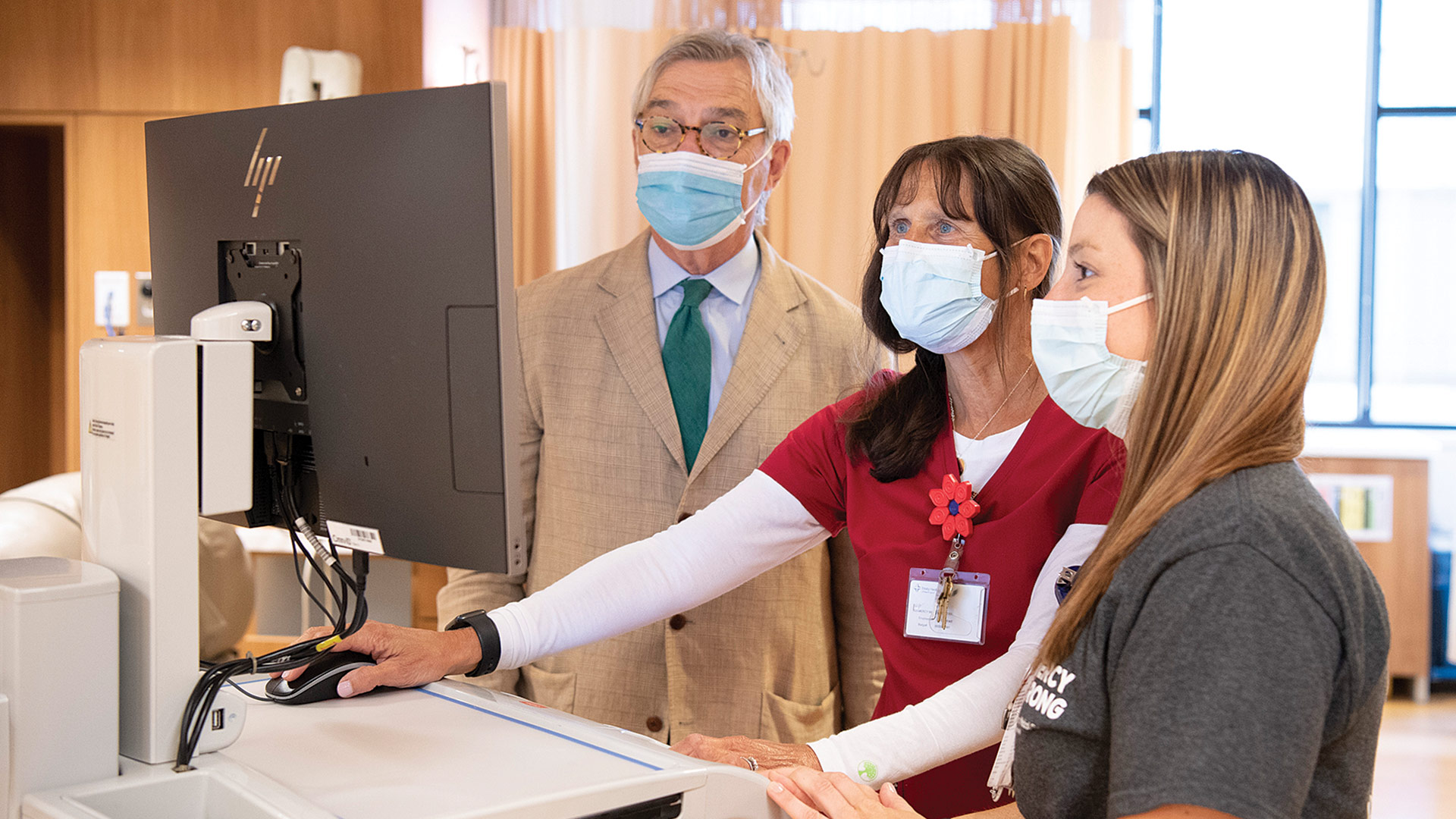
Dr. Philip Glynn, seen here with Oncology Nurse Manager Cynthia Leonard

Dr. Philip Glynn, seen here with Oncology Nurse Manager Cynthia Leonard (left) and Stephanie Palange, RN, has spent his career guiding patients and their families through their cancer ‘journeys.’

But he is being honored in the Provider category because this is what Glynn, who is certified in medical oncology, palliative care and hospice, and internal medicine is perhaps most noted for — being a provider, of not only direct care, but also information, guidance, and, on many occasions, inspiration to fight the most difficult fight of one’s life.

He is described as a fierce advocate for his patients and a great listener who enables patients and their family members to be heard. Glynn said that what begins when individuals hear that they have cancer is a journey, one that often tests them in ways they could not have foreseen or imagined, and he is there with them for every step of that journey.

Overall, he described oncology as an intricate, all-important blend of science and humanity.

“It’s such a challenging balance — the human side and the science side,” he said. “We are all disciplined to make sure that we stay abreast of the science side — that’s our fundamental responsibility, and it all starts with knowledge; there’s no substitute for that. How you integrate that into what patients need on a daily basis … that’s the art of it.

“The other thing that’s really important is that you don’t give treatment for hope. You give treatment to help people live longer and better.”

“And that’s where the greatest satisfaction comes in,” he continued. “When you sit down with someone and say, ‘here’s what we’ve got, here’s the science that will take care of this disease, here’s the limits of the science for this disease’ — that communication with the patient, with the family, brings you to the point where they’re comfortable with the plan of action.”

Making patients and families comfortable, in every sense of that term, is why Glynn is certainly worthy to be called a Healthcare Hero.


A Compelling Story

As he offered BusinessWest a tour of the Caritas Center, Glynn talked with recognizable pride in his voice about what has been accomplished at that facility.

Formerly a provider of radiation treatment, it is now a true cancer center, he said, noting that it now includes a large treatment space with more than 30 infusion bays, an oncology pharmacy, laboratory space, and other facilities. Overall, the center provides care that may include cancer surgery, chemotherapy, radiation therapy, and clinical trials that provide patients with access to new treatments.

In many respects, the expansion and evolution of the cancer center is the culmination of a career spent in oncology, one that was inspired by many factors and several role models.

Early on, however, Glynn wasn’t sure if he was a good enough student or if he would work hard enough to pursue a career a health career.

Two summers working as an orderly at an Appalachian hospital in West Virginia while he was attending Boston College eventually convinced him that he did.

“The second summer I was there, I was hooked. I said, ‘this is what I want to do,’” he recalled. “It was a great experience; it all become something that I wanted to be part of.”

Glynn earned a degree in psychology at BC, attended Columbia University for pre-med, and earned his medical degree in Italy after failing to gain admission to schools in this country (and learning Italian). After residency at St. Raphael Hospital in New Haven, he completed a medical oncology fellowship at Baystate Medical Center.

Initially, he had visions of becoming a primary-care physician in a rural setting, but during residency, several role models in oncology steered him toward that specialty. He went into private practice, first in Agawam and then Springfield, while also serving as director of Medical Oncology at Noble Hospital and the Noble VNA and Hospice Service.

In 2012, he joined Mercy Medical Center and the Sister Caritas Cancer Center as director of Medical Oncology. In that role, he wears many hats and is responsible for all aspects of the program, including cancer prevention, screening, diagnosis, state-of-the-art treatment and services, counseling, and rehabilitation. He also assists with the implementation of new initiatives, such as cancer survivorship, navigation, community outreach, and clinical research and clinical-trial participation.

He is also a provider, seeing 20 patients a day on average and guiding them through their own individual journey that generally begins with three basic questions regarding their cancer: ‘what is it?’ ‘how much is there?’ and ‘what are you going to do about it?’”

Obviously, the answer to that last question has changed most profoundly over the course of his career.

“I couldn’t have imagined it when I started; it’s changed that much,” Glynn said, gesturing toward the picture on the wall and how Mukherjee had carefully and effectively chronicled the advancements. “Seventy years ago, we did gruesome surgery, and then we had gruesome surgery with radiation, and then you added in chemotherapy. But now we’ve learned about cell biology and what drives cancer cells, so we look at genes, potential immunotherapy, a host of options; it’s absolutely exceptional.”

His ultimate goal is to bring to each patient an improved quality of life, which, as noted, varies with each case.

“If you come in, an oncologist sits down, describes to you what you have, and says, ‘this is not a curable disease; this is lung cancer that has spread to the bone,’ or ‘this is colorectal cancer that has gone to multiple different organs; you do not have a curable disease. Then, what becomes critically important is to give a treatment that is going to ideally shrink the tumor and help someone live longer and better,” he explained. “You need to avoid treatments that are going to make the treatment worse than the disease. Someone may come in with bad disease, but they’re not terribly symptomatic with it … you don’t want to give them a treatment that’s going to be terribly debilitating if you can’t give them some kind of promise that they’re going to live longer from it.

“On the other hand, if you take the other end of the spectrum, the 22-year-old kid with an advanced testicular cancer … that kind can be cured,” he went on. “You have the conversation with him and say, ‘look, the next several months are going to be hell, but you’re going to get through it, and you’re walking away. That quality of life is a quality of life you’re giving a promise to — ‘you’re going to be OK,’ as opposed to the quality of life of ‘this isn’t curable, but we’re going to make sure you’re as comfortable as you possibly can be.

“The other thing that’s really important is that you don’t give treatment for hope,” Glynn continued. “You give treatment to help people live longer and better.” All this brings him back to that integration of humanity and science that he spoke of earlier, a balance, he said, which is at the very heart of effective oncology care.

There are many aspects to this equation, he added, with one of the most important, and sometimes the challenging, being communication and providing information.

“And there are times when it gets really hard,” he explained. “We live in a world that’s packed with information. Some of it’s good, and some of it’s not so good. Patients come in with very unrealistic expectations, and that becomes a very challenging conversation.”

For that reason, he brings patients to his office, positions them in front of his computer, and directs them to websites he considers reliable, with much of the rest he described as ‘storytelling.’

He said patients — and, often, family members — want and need to know about everything from prognosis to the toxicity of treatments; from their therapeutic options to recovery time and what recovery will be like.

“But it’s also important to let them know that we’re going to have a support system there for them,” he explained. “There is going to be a doctor available 24/7.”

Throughout his career, Glynn has been that doctor, there for early-morning and late-night phone calls to make sure patients are heard, and staying with them often well beyond the end of treatment, regardless of outcome.


The Plot Thickens

Returning once again to the photo on wall, Glynn said he believes the best message of that book is the promise of the future.

“He [Mukherjee] says that we probably won’t cure cancer, and I find that sensible,” Glynn noted. “After all, we don’t cure diabetes, we don’t cure heart disease, and we won’t cure cancer.”

But there will be new advancements, new and better ways of screening, preventing, and treating the emperor of all maladies, he said, adding that, while his career is winding toward its conclusion, the oncologists who follow him will have new, previously unimagined tools with which to carry on the fight.

And they can certainly draw inspiration from him.

Glynn may not have written the definitive biography of cancer, but he has authored a remarkable career, one marked by treating patients with respect and dignity, handling the heavy burden of their care with grace and humility, and providing that critical blend of science and humanity.

And that makes him more of than worthy of the title Healthcare Hero.


George O’Brien can be reached at [email protected]