Home 2023 February (Page 3)
Daily News

HOLYOKE — For a limited time, the Cannabis Education Center at Holyoke Community College (HCC) will offer its two-day, introductory cannabis course for free on a first-come, first served basis. “Cannabis Core: Foundations of the Industry” typically costs $599 and is a prerequisite for career-specific cannabis training programs.

The next Cannabis Core program runs Feb. 11-12. All classes meet over Zoom on Saturdays and Sundays from 9 a.m. to 4 p.m. Additional Cannabis Core programs are scheduled for March 11-12, April 22-23, and May 20-21.

The spring calendar also includes multi-week, career-track training programs for cultivation assistants (Sundays, March 19 to April 16), and extraction technicians (Saturdays, April 22 to May 13).

“Any student who completes Cannabis Core can apply for a scholarship for career-track programs through our partners, Elevate and Mass CulitivatEd,” said Lanre Ajayi, director of Education and Corporate Learning at HCC.

The Cannabis Core program provides an overview of the cannabis industry in Massachusetts and is geared for people looking for general knowledge as they consider a cannabis career. The program is a foundational course and a prerequisite for career-track courses.

Cultivation assistants provide the daily care of the crops from seed to harvest and may be involved in cracking seeds, soil mixing, potting, defoliation, watering, pest control, and trimming. Extraction technicians work in labs assisting production managers in all aspects of extraction, purging, oil manipulation, winterization, distillation, solvent recovery, and quality control.

To register, visit hcc.edu/cannabis-core or contact Lanre Ajayi at [email protected] or (413) 552-2324.

Daily News

NORTH ADAMS — Eric Miller, director of Ecological Footprint Initiative at York University in Toronto, will give a talk titled “GDP Is Gross, Well-being Is Better” on Wednesday, Feb. 15 at 5:30 p.m. at the MCLA Feigenbaum Center for Science and Innovation, Room 121. The presenter will attend via Zoom. As part of MCLA’s Green Living Seminar series, this event is free and open to the public.

Miller is director of the Ecological Footprint Initiative, Footprint Data Foundation secretary-treasurer, and course director at York University. He manages multiple projects and partnerships of the initiative, including the production of the National Ecological Footprint and Biocapacity Accounts. He teaches the footprint-related courses and supports students and project staff. His prior work as a consulting economist has informed governments, industry, think tanks, and non-governmental organizations. His earlier career in public service had him leading the team of economists in the Ontario Ministry of Natural Resources, after he had worked for the Ontario Ministry of Environment and for Environment Canada.

MCLA’s annual Green Living Seminar series continues through April 19, presenting a series of lectures on the theme of “Capitalism and the Environment.” Every semester, the Green Living Seminar series centers around a different topic that is timely and relevant to current sustainability issues. Seminars take place on Wednesdays at 5:30 p.m.

The 2023 series is a presentation of the MCLA Environmental Studies Department. Podcasts will be posted online following each presentation at www.mcla.edu/greenliving.

Daily News

WESTBOROUGH — The Center for Advanced Manufacturing at MassTech Collaborative launched the third round of its Massachusetts Manufacturing Accelerate Program (MMAP), which aims to co-invest in small to medium-sized manufacturers across the state. MMAP aims to help manufacturers that are looking to increase their competitiveness, upskill their workforce, and meet the demands of ‘Industry 4.0’ by incorporating innovation-driven technologies such as automation, robotics, and connected devices into their production lines.

“The Healey-Driscoll administration is committed to supporting small businesses statewide, particularly the Massachusetts manufacturers that are critical to the Commonwealth’s economic success,” said Secretary Yvonne Hao of the Executive Office of Housing and Economic Development (EOHED). “Through MMAP, we’re helping these manufacturers upgrade their operations by incorporating 21st-century technologies that update old production lines. These new tools help these companies address customer demands, increase efficiency and sales, and hopefully grow their workforce.”

This is the third MMAP funding round launched by the Commonwealth, following the announcement of $2.1 million in grants to 13 Massachusetts companies in January 2022 and the awarding of $3.4 million to 15 companies during the statewide Manufacturing Mash-Up event last September.

“We’ve seen a strong interest in MMAP from every part of our state, which speaks to the geographic reach of this sector,” said Christine Nolan, director of the Commonwealth’s Center for Advanced Manufacturing. “Manufacturing is increasingly driven by innovation, but high-tech tools can be cost-prohibitive for smaller shops, which is the challenge the state is looking to solve through this program. With these new tools, our MMAP grantees will increase efficiencies, train and upskill their employees to more financially stable careers, and in turn be more competitive against global challengers.”

Massachusetts companies interested in applying to the program can find full details on the MMAP webpage at cam.masstech.org/mmap.

Daily News

SOUTH HADLEY — Danielle Ren Holley, noted legal educator and social-justice scholar, will become the 20th president of Mount Holyoke College on July 1. The board of trustees unanimously elected Holley following a thorough and inclusive search process.

Holley is the first Black woman in the 186-year history of Mount Holyoke College to serve as permanent president, and the fourth Black woman in history to lead one of the original Seven Sisters colleges.

Since 2014, Holley has served as dean and professor of law at the Howard University School of Law. She is widely viewed as having renewed Howard’s historically important law school and raised its stature and visibility as a leading educator of social- and racial-justice lawyers.

“In addition to her exceptional leadership and ability to cultivate shared purpose, President-elect Holley brings a strong vision for what Mount Holyoke is and, more importantly, what our college can become. She has a strong track record of strategic growth and innovation, which will serve us well,” said Karena Strella, who chairs the board of trustees. “President-elect Holley is widely recognized for her broad intellectual interests and curiosity, as well as for her rigorous advancement of racial and social justice in the legal field and beyond. We look forward to welcoming her to the Mount Holyoke community, particularly as we continue our work together to create and maintain a culture of belonging and a society that advances the dignity of all.”

Prior to joining the Howard School of Law in 2014, Holley served as distinguished professor for Education Law and associate dean for Academic Affairs at the University of South Carolina. Earlier in her career, she served on the faculty of Hofstra University School of Law and practiced law as an associate at Fulbright & Jaworski in Houston. She holds a bachelor’s degree from Yale University and a juris doctorate from Harvard Law School, and she was a law clerk to Judge Carl Stewart on the U.S. Court of Appeals for the Fifth Circuit.

Holley currently serves as co-chair of the board of directors of the Lawyers’ Committee for Civil Rights Under Law. She also sits on the boards of the Law School Admissions Council and the Howard University Middle School of Mathematics and Science. She is a Liberty Fellow through the Aspen Global Leadership Network and was also a fellow with the American Council of Education at Brown University in 2021-22, and currently serves on the board of the Watson Institute for International and Public Affairs at Brown University. She is a member of Delta Sigma Theta.

“It is an understatement to say I am excited to join the vibrant and dynamic Mount Holyoke community; in truth, I am ecstatic and exhilarated,” Holley said. “My personal and professional endeavors reflect my commitment to create educational opportunities for talented and deserving students, including those who may encounter doors that are closed or unwelcome. Mount Holyoke shares this vision — here, I have found students who want to break down barriers and create lasting, equitable change for all, and faculty, staff, and alums dedicated to helping these students strive for a brighter and bolder tomorrow. My own liberal-arts education helped me find my path forward, and what Mount Holyoke gives to its students will stay with them long after they graduate.”

Daily News

PITTSFIELD — Berkshire Bank, a leading socially responsible community-dedicated bank with financial-center locations in New England and New York, announced more than $2.8 million in foundation philanthropic investments during 2022.

During the fourth quarter of 2022, more than $764,000 was contributed to help the communities Berkshire Bank serves. The grants awarded cover a wide range of projects that help foster upward economic mobility, support overall well-being, and enhance opportunities for individual and small-business success, particularly for underrepresented populations. The investments also support the company’s BEST Community Comeback, which includes a planned $15 million in community contributions by the end of 2024.

In total, Berkshire’s foundation assisted 155 nonprofit organizations during the fourth quarter of 2022 through grants supporting a wide range of critical projects like food insecurity, health, wellness, homelessness, educational advancement, arts, culture, diversity, and inclusion. The Berkshire Bank Foundation is committed to supporting programs that work toward providing equitable opportunities for economic prosperity. In addition, the foundation supports programs that align with the bank’s Center for Women, Wellness, and Wealth to provide opportunities for women to build a future enriched with financial stability, balance, and growth.

“We are so proud of the impact we have made collectively at Berkshire Bank through our financial support and volunteer service,” said Lori Gazzillo Kiely, director of the Berkshire Bank Foundation, adding that, “during 2022, Berkshire Bank employees donated more than 23,000 volunteer hours to help our communities. We are pleased to continue to support nonprofits doing great work to positively impact individuals, families, and small businesses within our Berkshire Bank footprint.”

Daily News

GREENFIELD — Earlier this month, Cohn & Company Real Estate added Craig Shrimpton to its team of real-estate professionals. He brings more than 25 years of service in information security and technology consulting.

“Real estate is an industry that requires close attention to detail, accuracy, and especially confidentiality,” the company said in a statement. “With Craig’s experience, it is easy to see why he is excited to be turning that expertise toward real estate. With a passion for service in the Greenfield area, Craig is ready, willing, and able to help you with all your home buying and selling needs. As a proud member of the Cohn & Company family, Craig carries the values of hard work, integrity, and outstanding client service into everything he does.”

Shrimpton is a veteran and a member of the Realtor Assoc. of the Pioneer Valley and the National Assoc. of Realtors.

Daily News

SPRINGFIELDBusinessWest is currently accepting nominations for the 40 Under Forty class of 2023. The deadline for nominations is Friday, Feb. 17.

Launched in 2007, the program recognizes rising stars in the four counties of Western Mass. Nominations, which should be as detailed and thorough as possible, should list an individual’s accomplishments within their profession as well as their work within the community.

Nominations can be completed online at businesswest.com/40-under-forty-nomination-form. Nominations will be weighed by a panel of judges, and the selected individuals will be announced and profiled in the May 1 issue of BusinessWest and honored at the 40 Under Forty Gala on June 15. Event sponsorship opportunities are available.

Daily News

HARTFORD, Conn. — Whittlesey, an assurance, advisory, tax, and technology firm, recently welcomed the newest manager to its team. Alanna Madsen, CPA is the latest tax professional to join the firm’s growing leadership team.

Madsen has more than 14 years of public accounting experience and expertise in tax, accounting, and advisory services for closely held businesses, nonprofit organizations, and high‐net‐worth individuals. She holds a bachelor of business administration degree and a master’s degree in accounting from the Isenberg School of Management at UMass Amherst. She is a member of the American Society of Certified Public Accountants and the Massachusetts Society of Certified Public Accountants.

Daily News

SPRINGFIELD — The Springfield Museums is seeking nominations for the annual Ubora Award and Ahadi Youth Award. These prestigious awards — conferred by the African Hall Subcommittee — are awarded to African-American people from Greater Springfield who have demonstrated commitment, above and beyond, to fields of community service, education, science, humanities and/or the arts. The nomination deadline for both awards is March 31.

“This is a wonderful opportunity to honor the pioneers of our community who go above and beyond to make a difference in the lives of others,” said Terry Powe, chair of the African Hall Subcommittee.

True to the Swahili word that comprises its name, the Ubora Award recognizes an adult of African heritage who exemplifies excellence in their commitment to creating a better community through service. In 2022, the Ubora Award was given to Dr. Gerald “Bruce” Cutting and Carol Moore Cutting.

Named for the Swahili word for promise, the Ahadi Youth Award is presented to a young African-American who excels in academics and performs admirable service to the Greater Springfield community. Eligible candidates must be age 19 or younger, live in or have strong ties to the Greater Springfield area, and be currently enrolled in grades 10, 11, or 12. In 2022, the Ahadi Award was given to Kayla Staley.

The African Hall Subcommittee is a volunteer group comprised of educators, businesspeople, and community leaders from the African-American community. The group has administered this annual award since 1992. A full list of the awardees can be found on the Springfield Museums website.

The Ubora and Ahadi awards will be presented at a ceremony at the Springfield Museums in the fall. Nomination forms are available at springfieldmuseums.org/ubora. In addition to the electronic form, nominations may be emailed to [email protected] or mailed to African Hall Subcommittee, Springfield Museums, 21 Edwards St., Springfield, MA 01103.

The museums are also accepting donations to the Ahadi Scholarship Fund. Click here to donate.

Daily News

MONSON — Monson Savings Bank (MSB) has long held that one of its main responsibilities as a community bank is to be a virtuous corporate citizen by giving back to the communities where it conducts business. One of the many ways MSB gives back is with its annual efforts to support the United Way of the Pioneer Valley.

Every year, the bank’s Human Resources department organizes a donation and pledge drive to benefit the United Way of Pioneer Valley. The annual campaign and online pledge drive runs for two weeks. During this time, employees are invited to donate to the United Way via a one-time donation or pledge a reoccurring deduction from their payroll for the upcoming year. During the recent campaign, Monson Savings’ employees donated and pledged a total of $5,242.

Beyond the annual pledge drive, this year, Monson Savings Bank employees raised an additional $1,175 through a fun, but competitive, internal bingo game and $700 through the Bank’s TGIF Dress Down Program. The community bank also provided United Way’s Chicopee Food Cupboard with a $1,000 sponsorship, non-perishable food donations made by employees, and volunteers for its Thanksgiving meal distribution. In total, Monson Savings has helped to donate more than $8,000 to United Way this year.

“The challenges of the past several years have been enormous for many of our neighbors,” said Dan Moriarty, president and CEO of Monson Savings Bank. “We have an amazingly generous team of employees at Monson Savings Bank who are committed to supporting our communities. I am proud of their contributions to United Way, and it is our heartfelt honor to help.”

Daily News

SPRINGFIELD — The Springfield Symphony Orchestra (SSO) will celebrate “Mardi Gras!” on the Symphony Hall stage at its second Pops concert of the season on Saturday, Feb. 25 at 7:30 p.m. The evening will feature New Orleans jazz music led by conductor and trumpet virtuoso Byron Stripling.

Tickets are on sale, starting at $15, on the Springfield Symphony Orchestra website, www.springfieldsymphony.org. Attendees are encouraged to dress up for the Mardi Gras theme and wear Mardi Gras colors (purple, green, and gold).

Stripling, who is a conductor, trumpet virtuoso, singer, and actor, has led orchestras throughout the U.S. and Canada, including the Boston Symphony Orchestra at Tanglewood and the Toronto Symphony Orchestra, and has soloed with more than 100 orchestras around the world. Stripling currently serves as principal pops conductor of the Pittsburgh Symphony Orchestra and artistic director and conductor of the Columbus Jazz Orchestra.

Music of New Orleans natives such as Fats Domino, Mahalia Jackson, and Louis Armstrong will fill Symphony Hall on Feb. 25. According to the program, “from street parades in the French Quarter to late-night jams in the city’s famed clubs, this party transforms into an unforgettable Mardi Gras celebration with Byron Stripling leading the parade.”

As a soloist with the Boston Pops, Stripling, who lives in Ohio, has been the featured soloist on the PBS television special Evening at Pops with conductors John Williams and Keith Lockhart. He has also been a soloist on the worldwide telecast of the Grammy Awards, and his trumpet and voice have been heard on television commercials; TV theme songs, including 20/20 and CNN; and movie soundtracks. He has also performed with artists such as Tony Bennett and Whitney Houston.

Along with the orchestra, Stripling will also perform with his band during the performance, which includes Bobby Floyd, a jazz pianist and Hammond B3 organ player, and drummer Reggie Jackson.

“Springfield’s historic Symphony Hall will be rocking with Mardi Gras and French Quarter jazz tunes and sounds that will move our audience,” said Paul Lambert, president and CEO of the Springfield Symphony Orchestra. “Trumpet virtuoso Byron Stripling will bring New Orleans to Springfield. This pops concert will appeal to all people and all ages, and we encourage concertgoers to come dressed up for Mardi Gras. We look forward to this fun, unique performance.”

Daily News

BOSTON — A strong performance by the Massachusetts economy during the fourth quarter of 2022 was not enough to stem a two-month decline in business confidence among employers still concerned about a slowdown in 2023.

The Associated Industries of Massachusetts (AIM) Business Confidence Index lost 0.8 point to 53.2 during January. The Index began the new year 2.7 points lower than its level of January 2022 but still at a level that signals overall optimism.

Employers remain wary even though the Massachusetts economy grew at a 3.1% annual rate and the U.S. economy grew at a 2.9% annual rate during the fourth quarter. Companies are concerned that efforts by central banks to moderate inflation by raising interest rates might push the economy into recession.

At the same time, labor remains in tight supply despite high-profile layoffs at technology companies. U.S. employers added a staggering half-million jobs in January, and job vacancies remain at historic highs, with two openings for every unemployed person.

“The good news is that 12-month consumer price inflation moderated to 6.5% in December from a high of 9.1% in June 2022,” said Sara Johnson, chair of the AIM Board of Economic Advisors (BEA). “However, measures of core inflation — excluding food and energy — remain well above rates that are consistent with the Federal Reserve’s 2% inflation target. While the Fed slowed the pace of interest rate increases to just a quarter-point last week, it signaled that further rate hikes are coming.”

The AIM Index, based on a survey of more than 140 Massachusetts employers, has appeared monthly since July 1991. It is calculated on a 100-point scale, with 50 as neutral; a reading above 50 is positive, while below 50 is negative.

The constituent indicators that make up the Index were mostly lower during January. The confidence employers have in their own companies fell 0.7 points to 56.5, ending the month 2.1 points below January 2022.

The Massachusetts Index assessing business conditions within the Commonwealth declined 2.4 points to 50.2, down 5.1 points from a year earlier. The U.S. Index measuring conditions throughout the country gained half a point to 46.7 but remained in pessimistic territory for the fourth consecutive month.

The Current Index, which assesses overall business conditions at the time of the survey, fell 0.1 points to 55.6. The Future Index, measuring projections for the economy six months from now, lost 1.5 points to end the month at 50.9.

The Manufacturing Index tumbled 4.5 point to 50.8 compared to a 54.8 reading among non-manufacturing companies. The Employment Index edged down 0.6 points to 56.3 as employers continued to scour a tight labor market for qualified workers. Large companies (53.9) were more optimistic that medium-sized companies (53.5) or small companies (52.1).

Michael Goodman, professor of Public Policy at UMass Dartmouth, noted that both the state and national economies ended 2022 on a strong note, but the outlook is for slowing growth in 2023.

“While the economic outlook is clouded by significant economic, national-policy, and geopolitical uncertainty — absent some unexpected negative development or ‘economic shock’ — the most probable trajectory for the national and state economy is for what Moody’s Analytics has described as a ‘slow-cession,’ a period of much slower growth in economic activity and employment,” Goodman said.

AIM President and CEO John Regan, a BEA member, said employers are encouraged that new Massachusetts Gov. Maura Healey is committed to making the Commonwealth an attractive place to do business by addressing taxes, housing costs, and the shortage of workers.

“We face a unique challenge because workers in the post-COVID world are making different choices, many based on improving their quality of life,” Regan noted. “If workers and employers face skyrocketing housing, energy, and healthcare costs on top of transportation challenges and lack of child-care and elder-care support, they will begin to look to new locations to work and raise a family.”

Daily News

GREENFIELD — Judith Roberts, executive director of the Literacy Project, announced her retirement at the end of June 2023 after 16 years at the helm of the educational nonprofit. The Literacy Project opened its doors in Franklin County in 1984 with co-founder Lindy Whiton.

“I am honored to have worked with our courageous adult students who show up every day and work hard to make a better life for themselves and their families,” Roberts said. “I am deeply grateful to the Literacy Project teachers, advisors, volunteers, community partners, foundations, and individual donors all working collaboratively together for student success. It has been a labor of love to serve as executive director.”

The Literacy Project classrooms in Greenfield, Orange, Northampton, Amherst, and Ware are places of respect, belonging, hope, and grit. Classes offer a warm and welcoming community for adults and out-of-school youth who need another chance at success.

During Roberts’ tenure at the Literacy Project, the program has consistently been among the top three adult-education programs in the state in terms of achieving successful outcomes for more than 200 students per year. These outcomes include passing the High School Equivalency Test (also known as the HiSET or GED), moving on to community college, job-training programs, and better jobs. The Literacy Project has expanded to provide more classes during the day and evening, creating online and in-person options to meet the changing needs of the local communities it serves in Franklin and Hampshire counties.

“At the Literacy Project, we believe that education transforms lives,” Roberts said. “It has transformed my own life to be part of this rewarding work. When students read a book cover to cover for the first time, master a math equation, or write a poem, my heart leaps for joy.”

The Literacy Project is looking for qualified applicants to fill the executive director position. To find more information about the search and hiring process, visit literacyproject.org.

Daily News

EASTHAMPTON — bankESB and its employees recently made donations of more than $56,700 to the United Way of the Franklin & Hampshire Region.

Employees pledged more than $31,000 of their own funds in support of the bank’s United Way workplace campaign. Combined with the bank’s direct contribution, the campaign total of $56,714 will be donated to the United Way of the Franklin & Hampshire Region. The campaign provides employees with the opportunity to donate and direct funds, advocating for causes that are most important to them.

As a longtime contributor to the United Way, bankESB and its employees have donated more than $640,000 to United Way organizations in Western Mass. in the last 10 years alone. The United Way is a volunteer-driven organization that serves residents through its own programs and services as well as those of its partner agencies. The organization works to advance the common good by focusing on the building blocks for a good life — education, financial stability, health, and basic needs.

“United Way has a tremendous impact on improving the quality of life for our neighbors throughout Western Massachusetts,” bankESB President and CEO Matthew Sosik said. “bankESB and our employees are proud to support the organization and the work they do to help people unlock their full potential.”

Daily News

WESTFIELD — Westfield State University’s (WSU) Athletic Training program has earned the maximum reaccreditation duration after a recent review by the Committee on Accreditation for Athletic Training Education (CAATE). It is common for reaccreditation of three- or five-year periods. The 10-year reaccreditation recently earned by WSU Athletic Training program extends through the 2032 academic year.

WSU has been accredited by CAATE since 2001, and the curriculum has undergone considerable changes due to evolving practices in the field. The reaccreditation process now details compliance in 109 profession-specific standards.

Recent events, such as Buffalo Bill Damar Hamlin collapsing on the field due to cardiac arrest and a severe neck laceration suffered by an Army men’s hockey player, highlight the vital need for athletic trainers in many settings.

The extensive coordination of athletic-training education with other healthcare professions on campus prepares WSU students for interprofessional strategic planning, communication, and implementation in emergency and non-emergency healthcare situations. In addition to their rigorous academic coursework, athletic-training students are required to participate in a variety of graded clinical settings to assure a high level of technical proficiency before their graduation. Additionally, the WSU coursework emphasizes advanced, evidence-based clinical research strategies by undergraduates. This has resulted in WSU’s undergraduate students publishing articles in professional journals and presenting research at national and regional conferences over the last six years.

WSU graduates are working as athletic trainers in high schools, universities, and clinics throughout the region. Alumni are also employed in professional baseball, professional ice hockey, industrial settings, and leading research hospitals. Recent graduates have also furthered their professional knowledge by adding graduate degrees in related fields to extend their impact on healthcare delivery.

Business Talk Podcast Special Coverage

We are excited to announce that BusinessWest has launched a new podcast series, BusinessTalk. Each episode will feature in-depth interviews and discussions with local industry leaders, providing thoughtful perspectives on the Western Massachuetts economy and the many business ventures that keep it running during these challenging times.

Go HERE to view all episodes

Episode 148: February 6, 2023

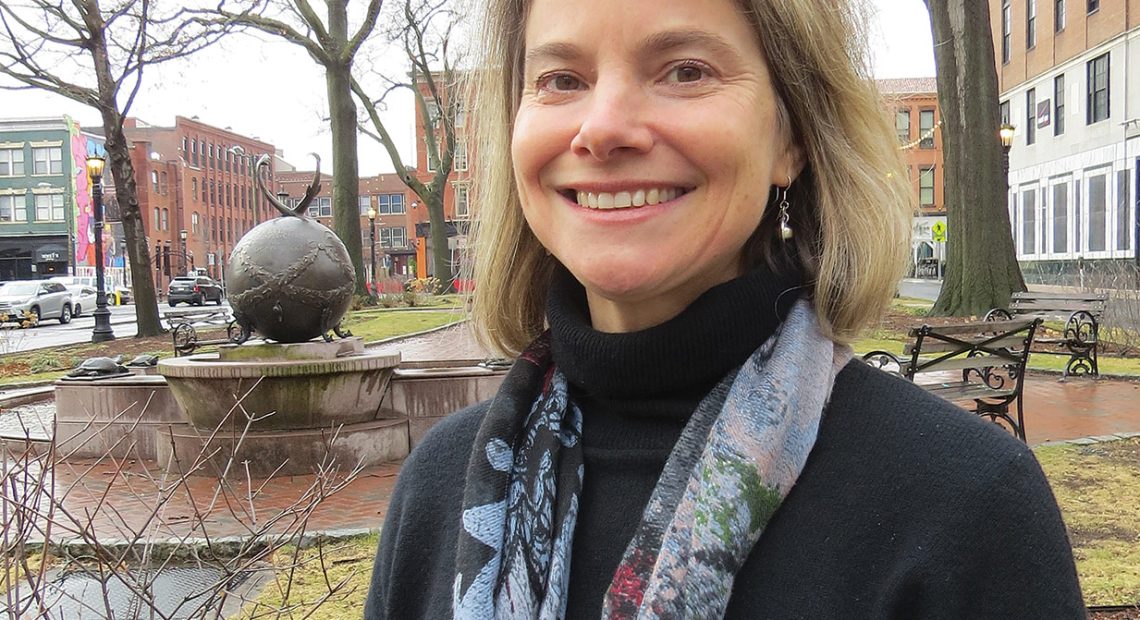
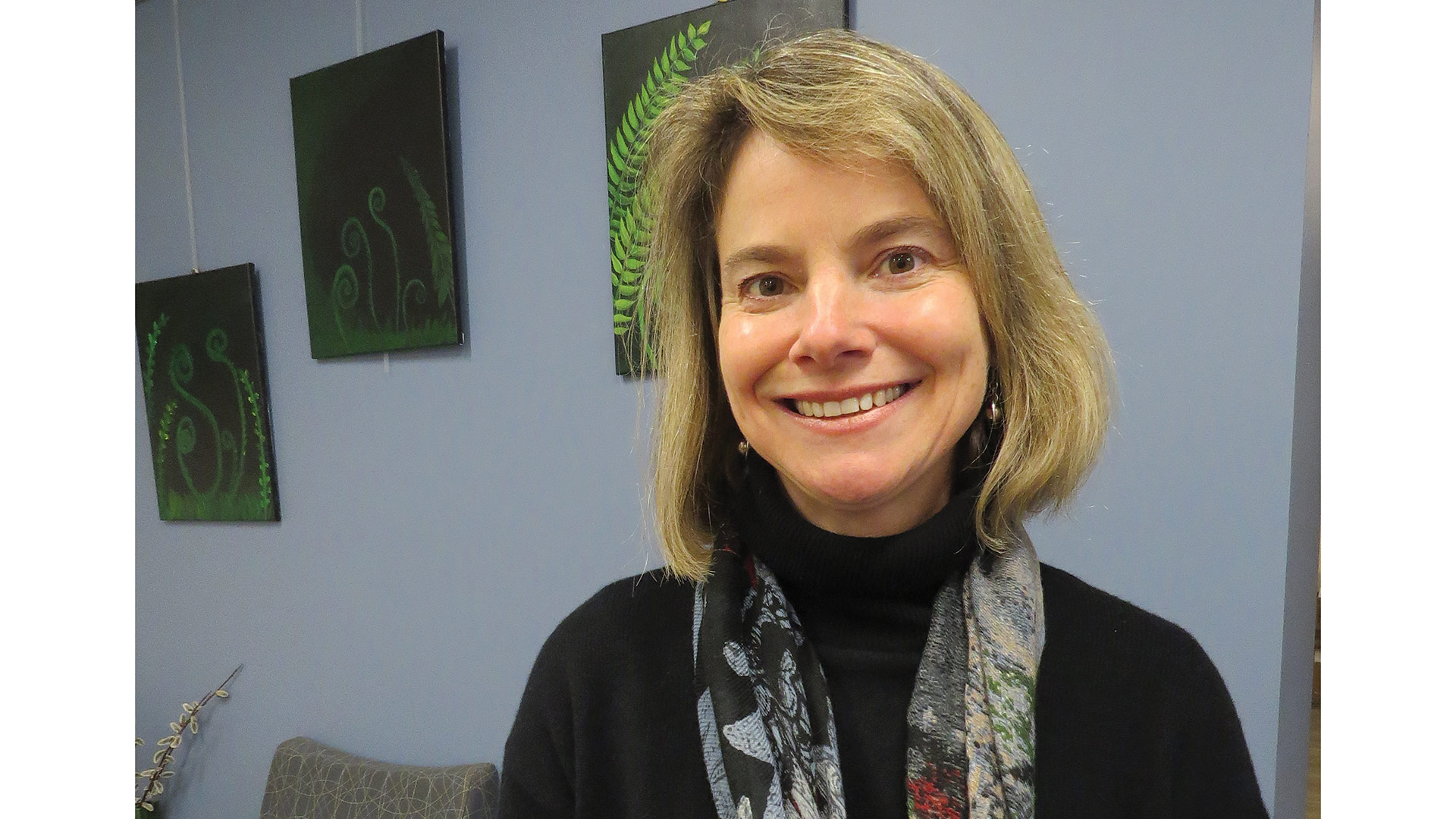
George Interviews Megan Burke, president and CEO of the Community Foundation of Western Mass.

Megan Burke says listening to the BusinessTalk podcast featuring Katie Allan Zobel, president and CEO of the Community Foundation of Western Mass., certainly helped her when she interviewed to succeed Zobel in that position. Now, she’s in that job, and it’s her turn to be the guest on the podcast. She talks with BusinessWest Editor George O’Brien about everything from her varied background to her vision for the community foundation moving forward. It’s all must listening, so tune in to BusinessTalk, a podcast presented by BusinessWest and sponsored by PeoplesBank.


Sponsored by:

Also Available On

Daily News

AMHERST — The UMass Amherst chancellor search committee has selected two finalists: Javier Reyes, interim chancellor at the University of Illinois Chicago (UIC); and Paul Tikalsky, dean of the College of Engineering, Architecture & Technology at Oklahoma State University (OSU).

Since last July, Reyes has led UIC as interim chancellor. UIC is Chicago’s largest university campus, with more than 33,000 students. The university, which holds the R1 research status in the Carnegie Classification of Institutions of Higher Education, is classified as a Minority Serving Institution, a Hispanic Serving Institution, and an Asian American and Native American Pacific Islander-Serving Institution.

With more than $440 million in research awards, the institution ranks among the top 65 out of more than 650 national universities in federal research funding. Reyes is responsible for a $3.6 billion budget, 13,000 faculty and staff, and 16 academic colleges, including one of the nation’s largest medical schools and Chicago’s only public law school.

Prior to his service as interim chancellor, Reyes was provost and vice chancellor for Academic Affairs at UIC. As provost, he advised on matters of academic policy, strategic direction, enrollment management, and academic resource planning. He was responsible for all academic affairs and for fulfilling the mission of providing students with inclusive access to academic excellence and opportunity. As chief academic officer for UIC, he worked to support and retain close to 3,000 faculty and recruit the next generation of diverse scholars, researchers, and medical professionals for the institution.

Tikalsky is completing his 11th year as dean of the College of Engineering, Architecture, and Technology at OSU. A leading scholar in the development of long-life sustainable materials, Tikalsky is also known as an advocate for the public and land-grant university’s role in higher education, engaging diverse students in experiential learning and resourcing large-scale innovation in trans-disciplinary research.

Tikalsky has spent more than three decades as an award-winning professor and academic leader at public R1 and land-grant universities, raising more than $250 million for student success and scholarships, faculty support, and building world-class facilities for teaching and research. He successfully engaged state regents, industrial leaders, legislators, and public agencies to create the case that increased higher-education funding by more than $125 million over the next 10 years through the Oklahoma Engineering Initiative. At OSU, he has transformed the college with initiatives that finish more degrees in four years, provide pre-college bridge and STEM programs for students from economically disadvantaged communities, elevate academic standards, and increase the diversity of the students and faculty.

Previously, Tikalsky was chair of Civil & Environmental (Nuclear) Engineering at the University of Utah and the deputy director of the Larson Transportation Institute at Penn State University.

Daily News

SPRINGFIELD — Doherty, Wallace, Pillsbury and Murphy, P.C. (DWPM) announced that the firm has elected Kathryn Crouss and Erin Meehan as new shareholders.

Crouss joined the firm in May 2022. She has extensive experience in both family law and employment matters. She is a certified mediator and represents family-law clients both in court and through alternative dispute resolution methods. She is currently president-elect of the Hampden County Bar Assoc., serves on the board of Community Legal Aid, and has chaired Community Legal Aid’s Access to Justice fundraising campaign for the past two years. While a student at Western New England University School of Law, she served as editor-in-chief of the Western New England Law Review.

Meehan concentrates her practice in general civil litigation and municipal law. She joined DWPM as an associate in 2014. She is a member of the board of directors of the Hampden County Bar Assoc. She earned her juris doctorate from Suffolk University Law School and her bachelor’s degree from Hobart and William Smith Colleges. She is admitted to practice in Massachusetts and Connecticut.

“Katie and Erin are very valuable members of the firm and the Springfield legal community,” said W. Garth Janes, managing partner at DWPM. “Katie is a leading family-law attorney in Western Massachusetts and also provides depth to our employment law practice. Erin continues our dedication to a strong civil litigation and municipal practice. We look forward to having them continue to serve clients throughout Western Massachusetts as shareholders of the firm.”

Daily News

WARE — Country Bank reported that its donations and sponsorships for 2022 totaled more than $1.3 million. The bank’s philanthropic efforts supported local nonprofits throughout its communities; more than 350 organizations received grants in 2022. In addition, the bank’s team members volunteered 1,091 hours of service, and 64 team members served on 33 nonprofit boards and committees throughout the region.

Recognizing the importance and overwhelming need to help organizations that address hunger, in addition to the $1 million, five-year pledge it made in 2021 to the Worcester County Food Bank and the Food Bank of Western Massachusetts, Country Bank provided an additional $100,000 in donations to food programs throughout the region.

Other organizations receiving donations included Behavioral Health Network, the Hanover Theater, Quaboag Valley Community Development Corp., Revitalize Community Development Corp., Springfield Rescue Mission, the Children’s Trust, Juniper Outreach, United Way of Central Massachusetts, Ronald McDonald House, and YWCA.

During its annual “Season of Difference” campaign, Country Bank supported more than 1,000 local individuals with gifts of toys, blankets, hats, and other essential items for those in nursing homes, shelters, local YMCAs, and Boys and Girls Clubs.

“As a community partner, we care deeply about the sustainability of our communities,” said Paul Scully, president and CEO of Country Bank. “We are honored to support many organizations through donations and volunteerism to help them with their work. Supporting and enriching our communities is not only a part of our mission; it’s who we are as an organization, and we know that it makes a difference for so many.”

Daily News

SPRINGFIELD — MassMutual has been named a World’s Most Admired Company by Fortune magazine, placing second in the life- and health-insurance industry category and leading among mutual company peers.

Notably, MassMutual ranked first for innovation in its industry category, the fifth time in the past six years the company has received this honor. The company has been named to the Fortune World’s Most Admired Company list 20 times since 2000.

“We are delighted to be named a World’s Most Admired Company again this year and to be recognized as the most innovative company in our industry,” said Roger Crandall, chairman, president, and CEO. “Accolades like this demonstrate the talent and dedication of our employees and network of financial professionals who work hard each day to reach people on their terms and deliver holistic financial solutions that bring stability and security in an uncertain and rapidly changing world. While we are honored by this recognition, we’re especially proud of what it reflects: the progress we’re making toward helping millions more Americans secure their future and protect the ones they love.”

The 2023 Fortune World’s Most Admired Company survey was conducted in the fall of 2022 among executives, directors, and analysts in 52 industries. The annual poll assessed nine reputation drivers considered to be crucial to a company’s global success: innovation, people management, use of corporate assets, social responsibility, quality of management, financial soundness, long-term investment value, quality of products/services, and global competitiveness. The full list of recognized companies and survey methodology can be found at fortune.com.

Education

It’s Not Simply Academic

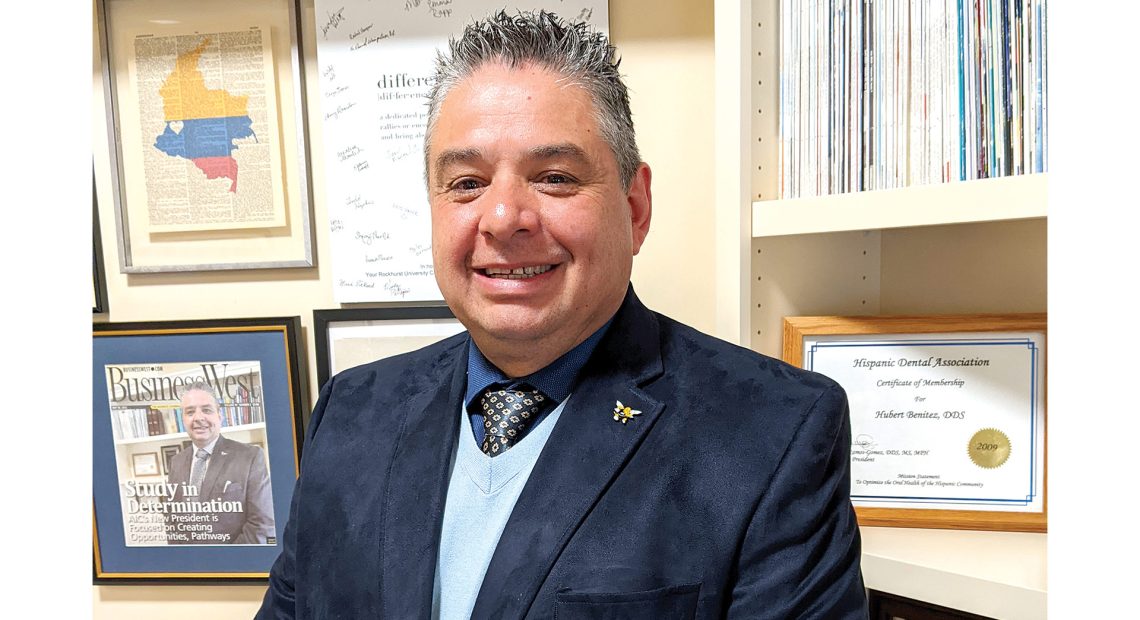
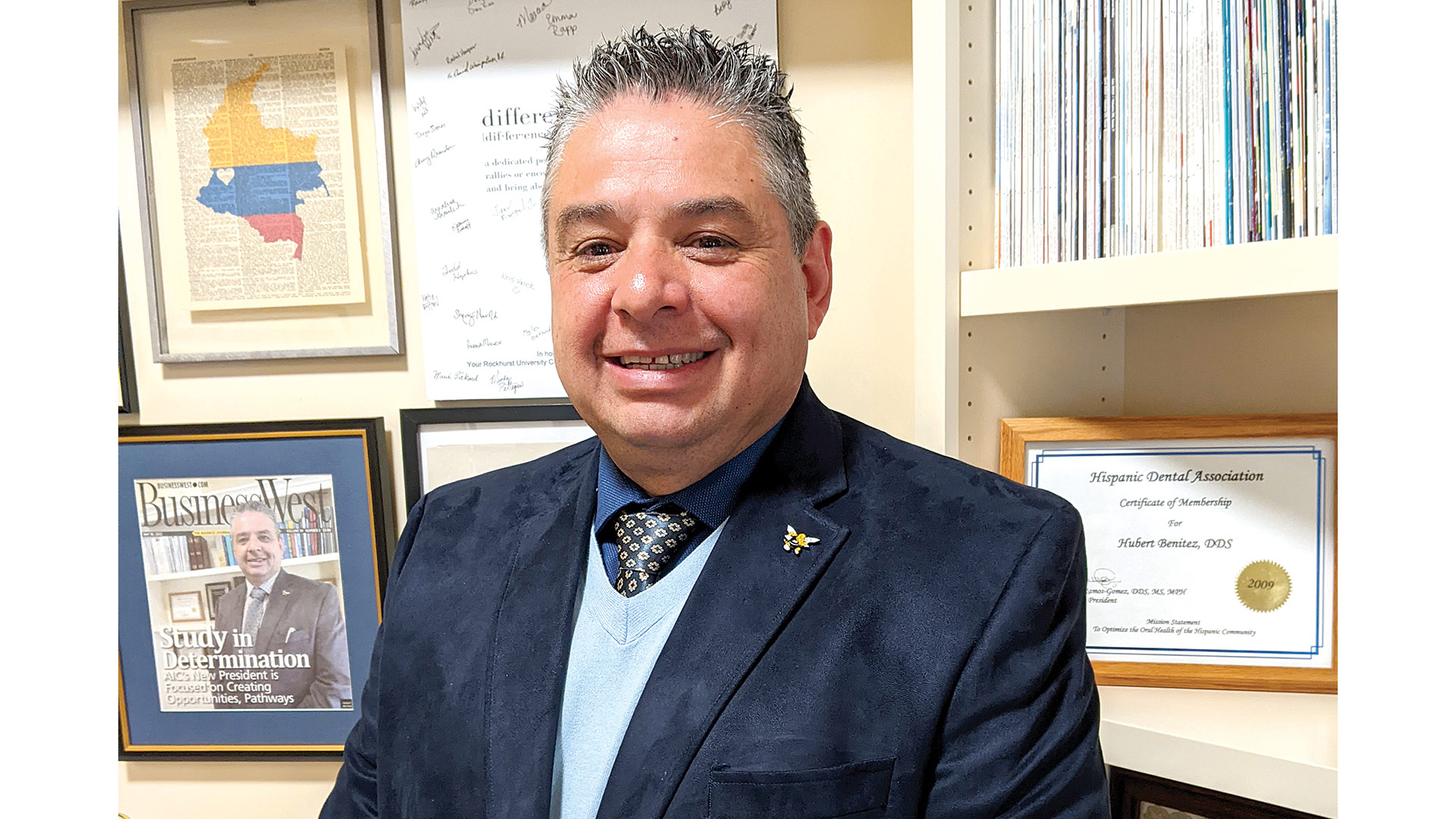
Hubert Benitez

Hubert Benitez says AIC strives to create a sense of belonging for students.

With high-school graduation numbers down in the U.S. and college enrollments following suit, Hubert Benitez says higher-education institutions must take a multi-pronged approach to enrollment management and their “overarching value proposition.”

“The academic portfolio of all our institutions across the region are very strong. So the students have options: wherever they will go, they will receive a sound education,” said Benitez, who began his tenure as president of American International College (AIC) last spring. “So, having said that, what truly differentiates one college from another?”

To answer that question, he pointed to a report called “AIC Reimagined 2022-2027,” which considers how to rethink strategies in six different pillars, including academics; student life, engagement, and support; fiscal growth; internal and external community engagement and development; diversity, equity, inclusion, and belonging, and athletics.

Take the first pillar, academics. “We realized, post-pandemic, that we have to reimagine our academic enterprise and what the collegiate experience is all about,” Benitez told BusinessWest. “We have to rethink how we offer education. Students learn differently, and they want to attend college in a different way. We have a lot of non-traditional students coming back to education, people who, post-pandemic, want to retool themselves for a career change — adult learners, students who have family commitments. If we are to address their needs, we really have to rethink how we offer our academic portfolio.”

Colleges and universities everywhere are having similar conversations about how to attract, and then shepherd to graduation, a smaller pool of potential college students than in past decades, due largely to changing demographics.

“The return-on-investment case has been made over and over again. The economics have been quite clear for a long time: people with a college degree earn over a million dollars more over their lifetime than those who don’t have one.”

According to the National Student Clearinghouse Research Center, undergraduate enrollment at U.S. colleges fell by 1.1% in fall 2022 compared to 2021, a pace of decline that’s nearly returned to pre-pandemic rates. In between was a year, 2020, when enrollment dropped 3.4%, followed by 2.1% in 2021. The net effect of those years is an enrollment total that’s down close to 7% from 2019.

“The trend for higher-education enrollment had been on the decline, but this was certainly exacerbated by the pandemic years,” Elms College President Harry Dumay said. “But things are coming somewhat back to normal these days for us.”

That’s reflected in some healthy numbers for Elms’ various segments, including first-time freshmen, traditional transfer students, and especially graduate students; the only segment that has seen some erosion is transfers from community colleges, which were hit hard by the pandemic.

A stabilization of enrollment makes sense, despite the high cost of college, Dumay said. “The return-on-investment case has been made over and over again. The economics have been quite clear for a long time: people with a college degree earn over a million dollars more over their lifetime than those who don’t have one.”

What Elms and many other schools are now doing is providing more flexibility for adult and non-traditional students, such as stackable, short-term certificates that ease the way to gainful employment and accumulate toward a degree down the line.

However, he noted, beyond the economics, what shouldn’t be undervalued is the formative aspect of college, especially for the shrinking 18-22 age demographic. “Whether you go full-time or part-time, whether residential or commuter, there is something that happens in those years — forming character, learning to think critically — which affects the value.”

Benitez said culture is a key element of AIC’s message to prospective students and their parents.

“One differentiator is how we create a sense of belonging for the students. It’s very important to today’s students,” he explained. “When they arrive on campus, they need to feel like they belong. I truly believe AIC provides that value to any student from any background because we have intentionally created an environment where every single student feels like they belong.”

Once enrolled, he added, “we follow the student along their educational journey, providing support services at every single stage of their academic journey.”

“If any students are struggling for any reason that would keep them from persisting and staying enrolled at college, we have a whole team dedicated to helping them work through that.”

Darcey Kemp

Darcey Kemp

In fact, that’s a key element of one of the six pillars, and it’s important, especially for first-generation college students, to have the peace of mind offered by such supports.

“For a parent who did not have the opportunity to attend college, leaving his or her child in an environment where they don’t know if they’re going to feel right has to be daunting,” Benitez said. “We try to approach parents and students alike, making them understand that’s important to us. I hope they are relieved when they come here and feel the caring environment.”


Support System

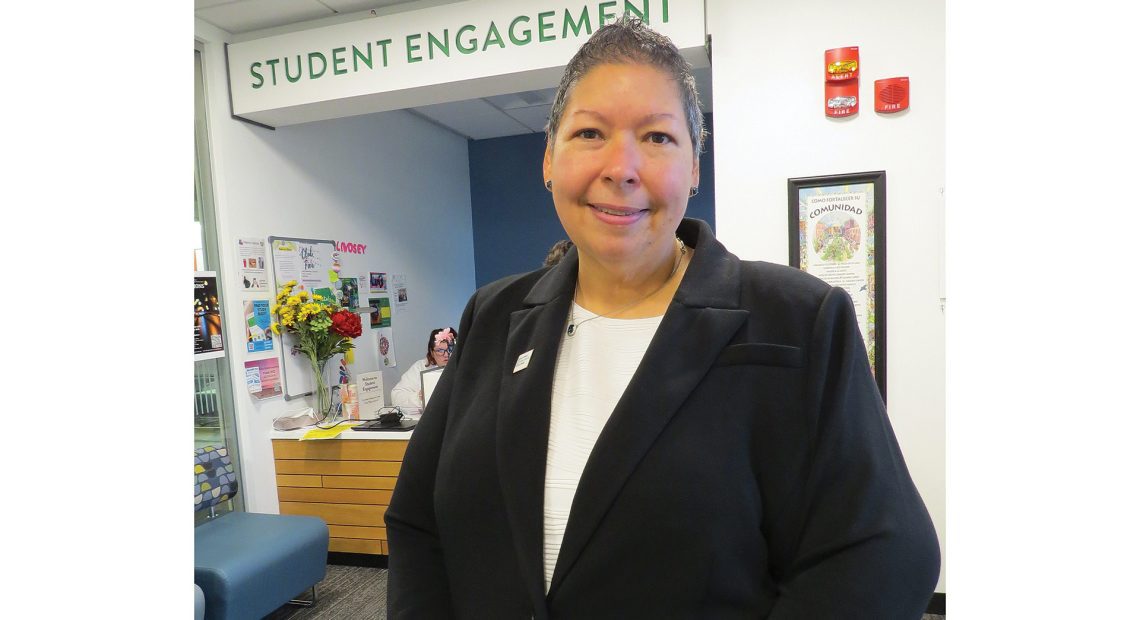
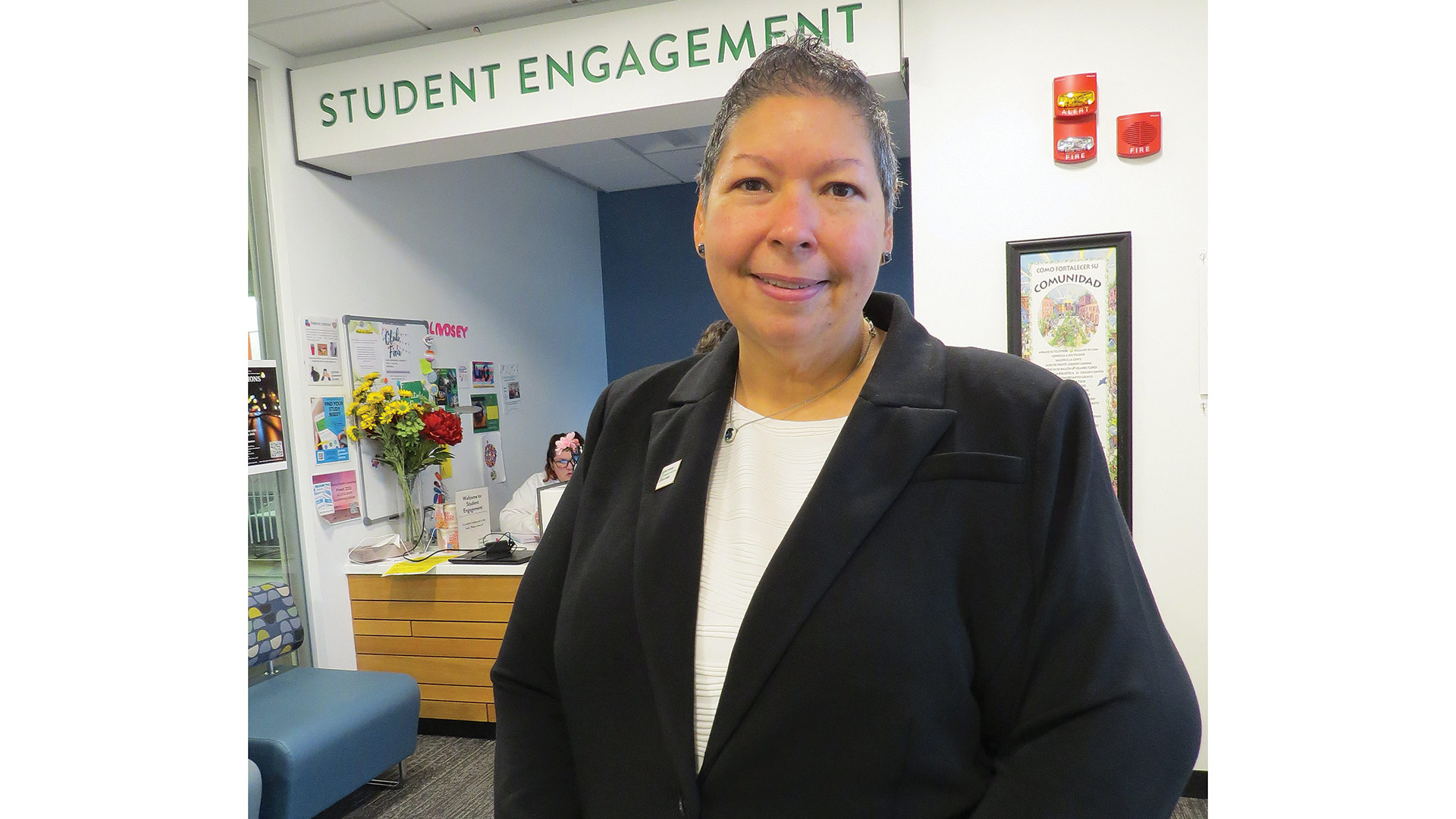
Springfield Technical Community College (STCC), whose enrollment figures are up slightly from last spring, is also heavily focused on culture and student support, said Darcey Kemp, vice president of Student Affairs.

“There’s no one-size-fits-all approach,” she added. “Our students are individuals, with individual experiences.”

The support starts early, with outreach to high-school students to help them with applications, placement testing, financial aid, choosing class schedules, and more. “We come to you,” Kemp said, noting that STCC also invites guidance counselors to campus so they can gather information to bring back to their schools.

Aware of the impact the pandemic had on men of color, who dropped out disproportionately during that period, STCC also created the Male Initiative for Leadership and Education (MILE), a program that provides inclusive academic support, mentoring, and community-engagement opportunities to male students, particularly Black and Latino students. Participants connect with professionals who serve as mentors throughout the student’s time at the college, helping them stay on track to reach their degree goals.

That can be a challenge at many institutions. The Education Data Initiative reports that first-time undergraduate freshmen have a 12-month dropout rate of 24%. Among first-time students in bachelor’s-degree programs, almost 26% do not earn their degree; among all undergraduate students, around 40% drop out.

The economic impact can be significant; the same report notes that college dropouts make an average of 33% less income than those who hold bachelor’s degrees, and college dropouts are almost 20% more likely to be unemployed than any degree holder.

That’s why student advisors at STCC work closely with students to make sure they’re taking the classes they need to achieve their degree goals, and why the college regularly looks back five semesters and reaches out to anyone who has paused their education and not returned during those two and a half years, to talk about what supports they might need to continue, and what steps to take to re-enroll.

“We need, in higher education in general, to invest time and energy into resources that help students reach their personal and academic goals,” Kemp said. “It’s an individualized conversation for each student.”

Dumay said 44% of Elms students are Pell-eligible, meaning they come from low-income families, so it’s important that they succeed. “You don’t want to come to Elms and not graduate, whether with debt or without debt, because of the investment of time. It’s really important we help our students graduate.”

With a student graduation rate and a first-year retention rate higher than the national average, that effort has paid off, he added. “There are a variety of things we put in place to ensure we help students be successful, including a physical Center for Student Access, but also supports like coaching.”

Benitez said 50% of AIC’s student body is Pell-eligible, and many are the first in their family to attend college. “We have a number of programs for first-generation college students that include very basic things like time management, how do you learn, how do you study, how to you financially plan? This is often new to them, so helping them navigate their college experience is very important to us.”

STCC’s Center for Access Services helps students tackle issues such as homelessness and food insecurity that could hinder their ability to get an education and climb the economic ladder.

“If any students are struggling for any reason that would keep them from persisting and staying enrolled at college, we have a whole team dedicated to helping them work through that,” said Kemp, adding that the STCC website also has a ‘chat now’ feature for student questions on anything from admissions to financial aid to understanding the Blackboard learning-management system. “It’s another way to demonstrate to students that we will engage with them in any way they want to engage with us.”


Rolling with the Changes

In short, Kemp said, “it’s important that we continue to share with students that there are opportunities to manage all the things they have going on. If a working parent wants to go to college, they can; they don’t have to choose between taking care of the family and obtaining a degree.”

That proposition is easier now, she added, with the program flexibility — in person, hybrid, or fully online — that emerged during the pandemic.

Benitez believes academic institutions today need to serve as engines for workforce development, and in AIC’s case, the impact is local, as most of its students hail from the region, and many stay and work here after graduation.

“We ask our business partners, what do you need in a graduate? What is the skillset, the competency set? And how are we going to revise and reimagine our academic offerings so it’s responsive to the workforce needs of this region?”

Because young people today plan to change jobs many times, one role of colleges is to teach them to be lifetime learners, he added, so they can easily adapt to their changing environment; in some cases, they’re training for jobs that don’t even exist yet. “We should prepare the groundwork for them to learn as they grow,” Benitez said.

Dumay told BusinessWest that the past few years have been a difficult time for all colleges, one in which they’ve had to be prudent financially. But he believes those efforts to tighten up and adapt are worth it.

“We’re providing a tremendous service to the general public — not just Elms, but all colleges like us — by helping the citizenry, both young people and not so young, get a foot on the economic ladder. That benefits all of us,” he said.

“If higher education struggles, the entire economy struggles,” he went on. “We are certainly staying strong, and the help that has been provided by the federal and state government helped a lot of colleges remain strong. But it is still a challenging time for higher education, and we want to remain healthy and strong so we can serve our students.”

To do that, Benitez said, requires a willingness to do things differently — in other words, to reimagine a college education. He believes the alternative, stagnation, is unsustainable.

“Academic institutions must be able to adapt to the current times, to meet the student where they are,” he said. “That’s critically important in these times.”

Cannabis

Beyond ‘If You Build It, They Will Come’

By Meg Sanders


The local cannabis industry is overflowing with weed.

The Massachusetts Cannabis Control Commission’s open data platform reports 95 cultivators were operational and licensed as of Dec. 8, 2022. Hot on those heels, another 180 provisional licensees are seeking approval that would bring the state up to somewhere around 3.6 million to 4.98 million square feet of canopy for flower cultivation within the Bay State cannabis market’s roughly 250 cannabis stores. 

If your operating and business plan is based on an outlook written for investors in the previous presidential administration, or during the halcyon days of the great green rush of the past, it’s time to face the truth: Massachusetts is well beyond the point of “if you build it, they will come.” 

So those Massachusetts cannabis businesses still in the queue or just getting open need to revisit their market overviews for investors and operators. They need to do so today. Not tomorrow, not if a market event happens — right now.

“Those Massachusetts cannabis businesses still in the queue or just getting open need to revisit their market overviews for investors and operators. They need to do so today. Not tomorrow, not if a market event happens — right now.”

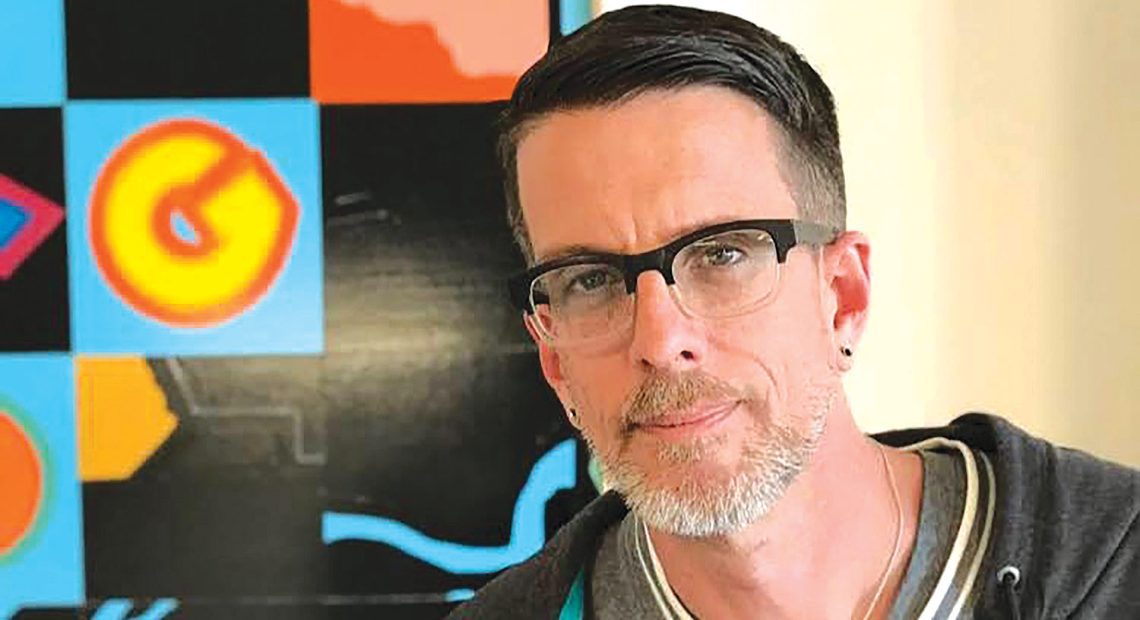
Meg Sanders

Meg Sanders

Take a very hard look at what needs to be rethought, or what needs to be immediately addressed, in regard to budgeting, SOPs, and overall market impact strategies for launch — and for long-term survival. Roughly 37% of all cannabis operators in the U.S. are not profitable, and too many businesses are unaware they are launching only to be licensed to lose money and fail.

For Massachusetts, the danger zone is already here. 


New Markets = New Consumers

As more retailers and brands emerge online, operators just now getting their operational licenses are typically doing so using plans they wrote when originally fundraising months or years back, often without taking into account how business plans and projections need to be tweaked, updated, or overhauled in the realities of the Massachusetts cannabis industry in 2023.

Canna Provisions is the ninth-largest independent cannabis company in the Commonwealth, has won multiple ‘Best Dispensary’ awards for selection and customer service, and has been named one of the best companies to work for in the nationwide industry. And even we are reworking our plans. 

Surviving the current market constriction and correction from the imbalance of supply and demand — something that has happened in other markets that came online, though it arrived faster here in Massachusetts — is a challenge of smart maneuvering and business forecasting. Ultimately, those businesses with clear eyes, that are as responsible with every dollar moving in and out of the business, will be the ones that make it out. That’s also why, to me, 2023 isn’t all doom and gloom, despite the headlines. 

Price compression has been on the industry’s collective mind for the past year, which makes it all the more important to create new strategies at the retail level. Differentiation for brands will come down to matters of quality of product, a consistent and predictable retail experience, and the education level of the consumer. 

What we know for sure, as seen from my experience in cannabis stretching back to the dawn of the legalized market in Colorado more than a decade ago, is that, when new markets flanking legalized states come online, it helps everyone in the existing legal retail market. But ultimately, the ones that really come out ahead are those with a key differentiating advantage and a realistic, thoughtful approach to the business. Many small first-time operators do not have the forward-looking business modeling abilities needed in the current market, especially when their average day-to-day will be spent just trying to stay afloat. 


Smart Business Savvy Is the Key to Success

As experience has shown, the sky doesn’t fall in an existing market when competition is tight and the supply is in surplus, but businesses do need to be responsible. For those that need a reminder, thanks to IRS Code 280E, the effective tax rate for cannabis companies is roughly 70%. Meanwhile, cannabis companies cannot deduct normal business expenditures. Our three biggest line items, in order, are inventory, payroll, and taxes (the statewide total collected for 2022 was roughly $284 million, to paint the picture).

“Surviving the current market constriction and correction from the imbalance of supply and demand — something that has happened in other markets that came online, though it arrived faster here in Massachusetts — is a challenge of smart maneuvering and business forecasting.”

In some instances, the towns themselves are waking up to the runaway nature of the market glut. Last month, Northampton city councilors set a new limit on local cannabis dispensaries allowed to open (capped at 12 retail locations now) for a municipality noted for having the most licensed dispensaries in the state. 

Even with our collective experience in retail cannabis operations and strategy, it’s still a massive challenge to make it work with so many ways our hands are tied or restricted compared to traditional industries. When the revenue numbers generated by legal cannabis in the state seem to defy the crunch-time feeling of the market, all businesses and consumers need to remember the lion’s share goes directly to the government instead of back to the business. That’s another reason why it’s important to be more careful than ever about how and where dollars are spent, and how we are utilizing the investor capital we raise for our ongoing expansion and scaling plans.


Best by Definition

Competition is already at a fever pitch in the state, and in cannabis, getting there first sometimes just makes you best by definition in the market’s eyes. At the retail level, look at any new cannabis state — say, New York — and what happens when the first stores open: lines around the block and product (or what variety there is at first) flying off shelves at steep prices that make investors smile and consumers wince. But when the market becomes more savvy and educated about the products and value system of a brand-new industry, first is no longer best. 

As challenging as this time and sector is, it’s as important for the turbulent tenor of the day to subside as much as it is important for it to simply succeed at a functional level. In fact, it must succeed for the greater industry to thrive.

There is no shortage of stories about widespread layoffs and restructuring for asset consolidation on a large scale with bigger companies, primarily multi-state operators (MSOs). But in comparison to the trials of new, very small operators that found it a matter of survival just to get to the doors-open phase, MSOs have it much easier. They can bleed money in a way small independent shops cannot. If they have operational experience already, they may still not have the ability to see the forest through the trees if they are not actively responding to the business climate of an ever-changing, statewide industry.

You will need more money — from either increased sales or investor dollars for market expansion. There will continually be massive restrictive aspects to operating as long as no new banking reform measures or full-scale legalization measures are enacted. So plan on enduring such aspects as much as you should plan to be noble and focus on what is a differentiating aspect of your business.

And don’t plan on having a future in the business until you get your business plan reflective of the industry we have versus the one we want. For those new or inexperienced operators that don’t get those lessons under their belt, theirs will be a back aching for the lash of “don’t say you weren’t warned.”


Meg Sanders is the CEO of Canna Provisions, which operates cannabis dispensaries in Holyoke and Lee.

Daily News

AMHERST — Amherst College named Michael Thomas its new chief financial and administrative officer (CFAO). On the finance side, he will be responsible for all finance functions of the college, including budgeting, accounting, financial reporting, long-range financial planning, and asset, liability, and risk management. On the administrative side, Thomas will oversee facilities, health and safety, and business services (dining and auxiliary), among key operating functions.

He joins Amherst from Middlebury College, where he was vice president for Administration and chief risk officer for the past two years and vice president for Finance and assistant treasurer for the previous four and a half years. He will report to and serve as a strategic partner to President Michael Elliott. His appointment is effective March 27, and he succeeds former Amherst CFAO Kevin Weinman, who became the president of Marist College in the fall of 2021.

In his more than nine years at Middlebury, Thomas led all aspects of financial matters, including accounting, financial systems and reporting, budgets, debt and cash management, and endowment reporting, as well as risk evaluation, campus safety, environmental health and safety, emergency management, and land and property management. He led several critical initiatives for the Middlebury enterprise, including the institution’s COVID-19-related operations; a student safety coalition initiative at the college; the acquisition, financing, and renovation of a residential housing facility of Middlebury’s Institute of International Studies at Monterey in California; the implementation of an enterprise resource planning system for a consortium of higher-education institutions, for which he serves as secretary of the board; and a major long-term financial-sustainability plan.

Before that, he was the controller and director of financial resources for Skidmore College (2006-13); the controller, manager of Financial Systems and Accounting, and a financial analyst for General Electric Silicones, Americas (1999-2006); and an associate at PriceWaterhouseCoopers (1995-98). He graduated from Union College with a bachelor’s degree in mathematics and from the University at Albany with a master’s degree in accounting.

“I am excited to be joining Amherst College as the CFAO,” Thomas said. “I look forward to working with President Elliott and getting to know and work with the students, faculty, and staff to support the mission of the institution. Supporting Amherst College in the education of some of the brightest minds from around the world is an honor.”

Daily News

SPRINGFIELD — Pan Bus Lines is planning for the future and creating a new generation of leaders to drive the 90-year-old bus company to new levels. CEO Peter Picknelly recently announced five major promotions in management, including a promotion to chief operating officer awarded to an employee who started as a bus driver 18 years ago. Other promotions include vice president of Operations, vice president of Planning and Revenue, senior director of Marketing, and senior director of Maintenance.

“We’re planning for the next generation of leaders at Peter Pan,” Picknelly said. “These are very well-deserved promotions.”

Frank Dougherty started as a bus driver and has now been promoted to chief operating officer. According to Picknelly, Dougherty sent him a 20-page letter about everything that was wrong at Peter Pan Bus Lines more than 18 years ago. Picknelly asked him to join the team to help correct the situation. Dougherty was a driver, and he will now be leading the company.

Don Soja has been named vice president of Operations. He has been with Peter Pan for more than 20 years. According to Picknelly, Soja knows all aspects of the bus company, including charters, line runs, finance, and technology. Picknelly hopes he will lead the way for decades to come.

Timothy Grabowski has been promoted to vice president of Planning and Revenue Management. Picknelly said Grabowski brings a skill set that allows Peter Pan to continue strategic growth, and that he makes Peter Pan stand out among other bus companies and keeps Peter Pan moving forward.

Danielle Veronesi has been promoted to senior director of Marketing. If there’s a special project, Picknelly said, Veronesi is the one to rely on, and she’s always the one to volunteer. He added that Venonesi has made a big difference in the company.

Joseph Picknally has been named senior director of Maintenance for Peter Pan. Picknelly said Picknally has done an exemplary job in realigning the Maintenance department, and that he has big shoes to fill in the company; Picknally’s father, Thomas, was the company’s vice president of Maintenance for decades until his passing in 2021.

Daily News

SPRINGFIELD — The Springfield Symphony Orchestra (SSO) announced the appointment of the interim Director Paul Lambert to the position of president and CEO, removing Lambert’s interim status.

Lambert joined the SSO as interim director in January 2022. He came to the SSO after serving for many years as vice president of Enshrinement Services & Community Engagement at the Naismith Memorial Basketball Hall of Fame.

Since his appointment to the interim director position, Lambert has overseen the return to the stage of the SSO with six classical and two pops concerts in the current 2022-23 season, the first in more than two years as a result of the pandemic. He has been instrumental in adding new individuals to the SSO board, hiring key new staff, re-engaging with the corporate and philanthropic community, and launching a comprehensive communications and marketing program to support the current season.

Lambert succeeded interim Executive Director John Anz, who left the SSO to take a position at another organization.

“I am truly honored and humbled to serve in this position and appreciate the trust invested in me by the SSO,” Lambert said. “I am a longtime subscriber to the SSO and know how important the symphony is to the cultural landscape of Springfield and all of Western Massachusetts. I am passionate about the symphony and what it represents to all of us who love symphonic music and the arts. A successful Springfield Symphony requires the engagement of the entire community, and I welcome this new position in leading the collective efforts to see the SSO succeed.”

Lambert’s professional experience includes nearly 20 years with the Basketball Hall of Fame, initially as vice president of Guest Experience and Programming, and more recently as vice president of Enshrinement Services & Community Engagement. His work transformed the Hall of Fame Enshrinement into a nationally recognized celebration and media event that has served as the bedrock of the Hall’s development and outreach efforts.

Prior to the Hall of Fame, Lambert served as director of Event Production for the National Basketball Assoc. (NBA), working on the development and execution of live programming, grassroots initiatives, and international events, including the NBA Jam Session program, numerous All-Star Games, and successfully staged events in Canada, Mexico, Europe, Asia, and Australia.

Before working in the basketball industry, Lambert enjoyed a career in the professional theater, including roles as general manager of the Cape Playhouse in Dennis for seven years and as executive director of the Westport Country Playhouse in Westport, Conn. He also served as a production stage manager for many years.

Lambert serves on a number of local boards and community organizations, including the National Conference for Community and Justice, New England Public Media (where he was a board chair), the Loomis Communities, and the boards of Cape Cod Center for the Arts, the South Hadley Cultural Council, Longmeadow UNICO, and the Springfield Rotary. He is a graduate, cum laude, of Boston College, with a bachelor’s degree in English and theater.

Daily News

GREENFIELD — Members of the Greenfield community are invited to learn more about and share their input on redesign plans for Main Street on Thursday, Feb. 9 from 6 to 8 p.m. at the John Zon Community Center (snow date Feb. 21, same time).

The city is hosting its first of two community workshops on the curb-to-curb configuration of Main Street, including upgrades to pedestrian, bicycle, and transit accommodations, as it works with Fuss & O’Neill to develop design plans for a complete street rehabilitation. This effort follows Greenfield’s Complete Streets Prioritization Plan adopted in 2017 and its 2014 Master Plan: Sustainable Greenfield.

The workshop will also address how the redesign will promote safety at state-identified pedestrian and bicycle-crash clusters, upgrade infrastructure, and improve the intersection of Main and High streets for the safety of all travel modes.

The focus of this first meeting is to gather input from the public before design concepts are developed. A second community workshop will be scheduled in June to present design-concept plans and gather feedback before completing the 25% design for MasssDOT review.

“If you have ideas about the configuration of parking, crosswalks, or bicycle lanes on Main Street, now is the time to weigh in, so that feedback can be included in the design process,” Mayor Roxann Wedegartner said. “Though we’re working toward the 25% design, the time to voice your ideas is now because many key decisions are made in this stage before MassDOT begins its review.”

Wedegartner has appropriated $288,900 in capital funds for engineering and design of the project, which begins 100 feet to the east of Colrain Street and ends at High Street. Construction cost is projected at $7.78 million, funded by the state and federal governments. The project is on track to be included in MassDOT’s Transportation Improvement Program, and construction is slated to begin as early as fall 2026.

Cover Story Top Entrepreneur

Benson Hyde and Bruce McAmis Make Provisions a Regional Success Story
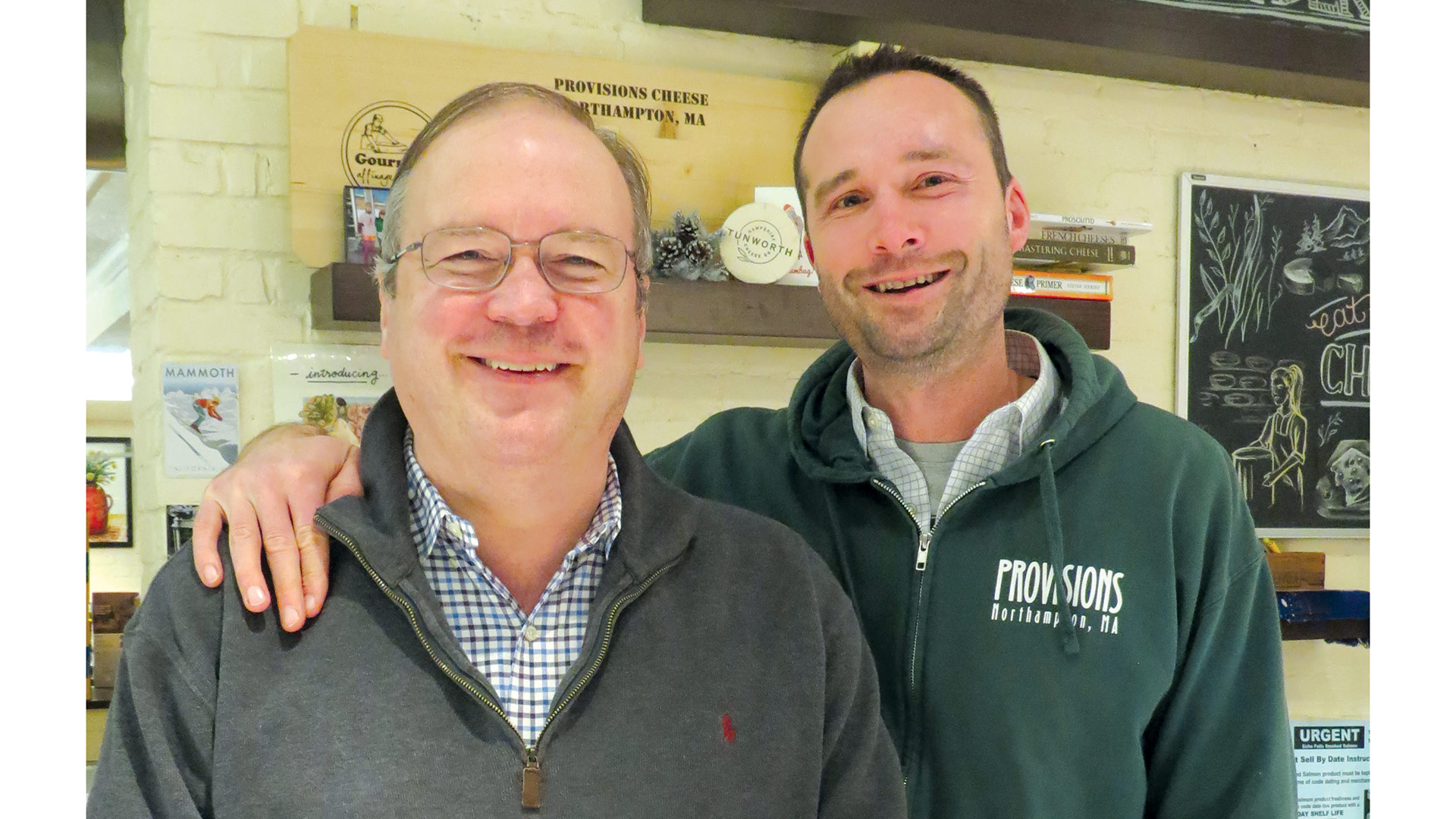
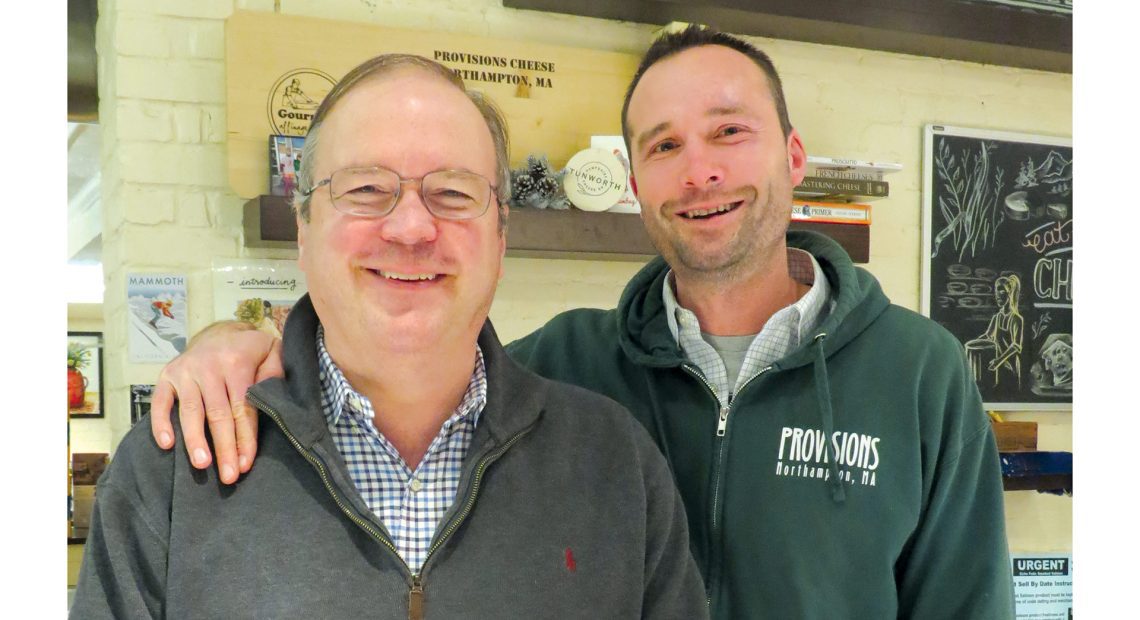
Bruce McAmis, left, and Benson Hyde, co-owners of Provisions

Bruce McAmis, left, and Benson Hyde, co-owners of Provisions


Grape Expectations

Benson Hyde was a financial advisor who wasn’t enthralled with the firm he was working for or the direction his career was headed in.

Bruce McAmis was a lawyer who would have preferred to be doing … well, just about anything else.

That was years ago. In the intervening time, let’s just say their paths crossed (we’ll fill in the details later), and they are now co-authoring one of the more intriguing entrepreneurship stories unfolding in the region.

It’s called Provisions, a wine, cheese, and much-more store that now has three locations: in Northampton, where it all started, in Amherst, where the plot thickened, and, most recently, Longmeadow, where it thickened even more, with the opening of a location in the Longmeadow Shops just before the holidays. They would have preferred to open sooner, but … well, that’s part of the story.

Indeed, expansion has come quickly — more quickly than they anticipated when they first drafted a business plan that has been revised several times already — because opportunities have presented themselves. Seizing them hasn’t been easy, but they’re managing to take a promising concept and run with it, even in the middle of a pandemic, as we’ll see.

The concept? Hyde described it in a number of ways, but maybe this one works best: “people like to talk about fine wine; we like to say we’re all about fun wine.”

By that, he and McAmis meant wine that comes with stories, products produced in ways that resonate with a younger audience that is embracing wine perhaps more than generations before them.

“Our focus is on smaller producers with a story,” Hyde said, “and being able to provide service on a personal level — when someone walks in the store and wants a recommendation, or wants to hear about where a wine came from, or wants a pairing suggestion and an idea for what would make a great gift.”

“People like to talk about fine wine; we like to say we’re all about fun wine.”

Of course, this story is about more than wine. It’s also about cheese — or cheeses, to be more precise. It’s also about spirits of all kinds now. It’s also about making connections with customers and the community, and educating people about wine, not just selling it by the bottle or case.

And, of course, it’s about entrepreneurship and two people settling into that role after working for others and not really enjoying it, and desiring something else.

McAmis and Hyde look the part, and they also sound the part, using words and phrases that anyone who has gone into business for themselves — especially over the past several years — would use.

“It’s been quite a ride … high highs and low lows; it’s been an incredible learning experience,” said Hyde as he talked about everything from accelerated expansion to coping with a pandemic that forced them to find new ways of doing business and had both of them venturing out to make deliveries themselves.

McAmis echoed those thoughts as he talked about their venture. He actually uttered the words “it’s been fun,” and then retracted the statement. Well, sort of. He said it’s occasionally been fun, but mostly it’s been a stern challenge, one that has tested them in all kinds of ways.

The Provisions owners aim to satisfy an evolving market

The Provisions owners aim to satisfy an evolving market when it comes to how people buy wine, and who is buying it.

“I love it … I rarely, if ever, take a whole day off, but that’s part of being an entrepreneur, I guess,” he said. “It’s been intense, but rewarding on many levels.”

For their work to make Provisions a regional story, one with many chapters still to be written, Hyde and McAmis have been named BusinessWest’s Top Entrepreneurs for 2022. They continue a tradition of entrepreneurship in this region that goes back more than 300 years, and they join a distinguished list of previous winners of this award.

That list includes a college president, a hospital administrator, a public utility, the founders of several tech startups, many family-owned ventures, and several individuals and partnerships like the one forged by McAmis and Hyde.

For this issue, BusinessWest tells their story and, in the process of doing so, explains why they are more than worthy of this coveted honor.


Vintage Undertaking

They call it the ‘Provisions Dungeon.’

That’s the name affixed to the basement of the Northampton location, on Crafts Avenue.

And the name fits. It’s a large, cavernous space with several rooms of various sizes, all of them now crammed with wine and other products sold upstairs. The main area off the stairs was once a classroom where experts on wine passed on their knowledge to diverse audiences eager to learn more about this far-reaching, truly global subject. Now, that space has been given over to racks holding a wide array of spirits, with the classes held at the Amherst location.

“One of the important traits we’ve shown over the years is being responsive to what we’re facing. Whether it’s having to reshape everything because of the pandemic or with growth, it’s a matter of staying aware and staying flexible, and leaning into opportunities.”

Because the main floor is somewhat cramped, with little if any room for inventory, employees are constantly going back and forth to the basement, McAmis noted.

“We almost need to have extra staff on hand because everything that needs to be restocked is in the basement, and that means a lot of carrying cases of wine up the stairs,” he said, adding that the dungeon, where we talked with the two partners, is just one of the more colorful aspects of this evolving business.

Our story starts roughly 12 years ago, said Hyde, at one of the many dinners he enjoyed with his cousin, Alex Feinstein, founder of GoBerry, the recently closed frozen-yogurt store in downtown Northampton, and his wife.
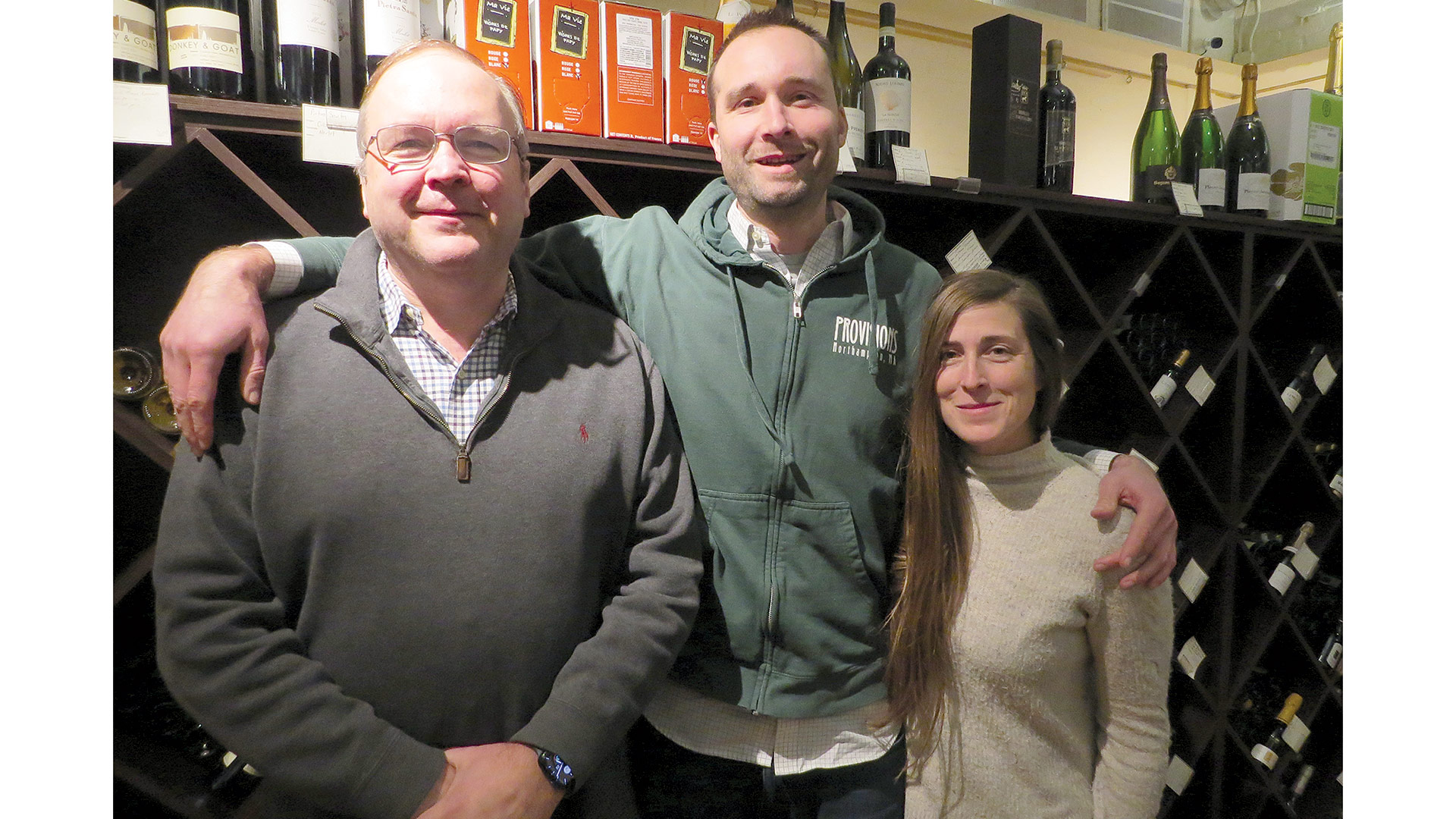
Bruce McAmis, Benson Hyde, and Hyde’s wife, Toni DeLuca

From left, Bruce McAmis, Benson Hyde, and Hyde’s wife, Toni DeLuca, also the company’s wine and spirits buyer.

“He and I had become very close in the Boston area … he and his wife would cook me dinner, and I would bring the wine,” Hyde recalled. “When they got to Northampton, he called me up and said, ‘they could use a good wine shop downtown.’

“I was working in financial services for a company that I wasn’t thrilled to keep working for, so it was pretty easy to twist my arm and talk me into moving out here,” he went on. “I was inspired by his foray into small business.”

In collaboration with the Feinsteins and two other partners, Gordon Alexander and Nancy Baker, he opened Provisions on Crafts Avenue in November 2011. One of the first wine vendors he worked with was McAmis, who, as noted earlier, had a law degree but decided he didn’t want to make that his career. Instead, he ventured into the liquor-wholesaling business with a venture called Yankee Distribution.

After three years in business, Feinstein and Hyde were the remaining partners in the venture, and in late 2019, McAmis bought out Feinstein and became Hyde’s partner in Provisions.

“I thought that we could really grow the business and take some next steps,” said McAmis, adding that he became intrigued by the possibilities — and by Hyde’s determination to take the venture to the next level and scale up.

Those plans started to materialize quickly, but first — actually, at the same time — the business had to contend with the pandemic, which hit Northampton and its downtown, dominated by restaurants and clubs, extremely hard.

“We stayed open the whole time, but we weren’t open to the public, obviously,” McAmis recalled, adding that, like other ventures of this kind, Provisions relied on pickup and delivery, which constituted new, and expensive, ways of doing business that had to be learned and mastered.

“Main Street was a ghost town,” he said, noting that he was making many deliveries himself, and could see that Provisions, State Street Liquors, and a CVS were essentially the only businesses with lights on in that historically vibrant area.
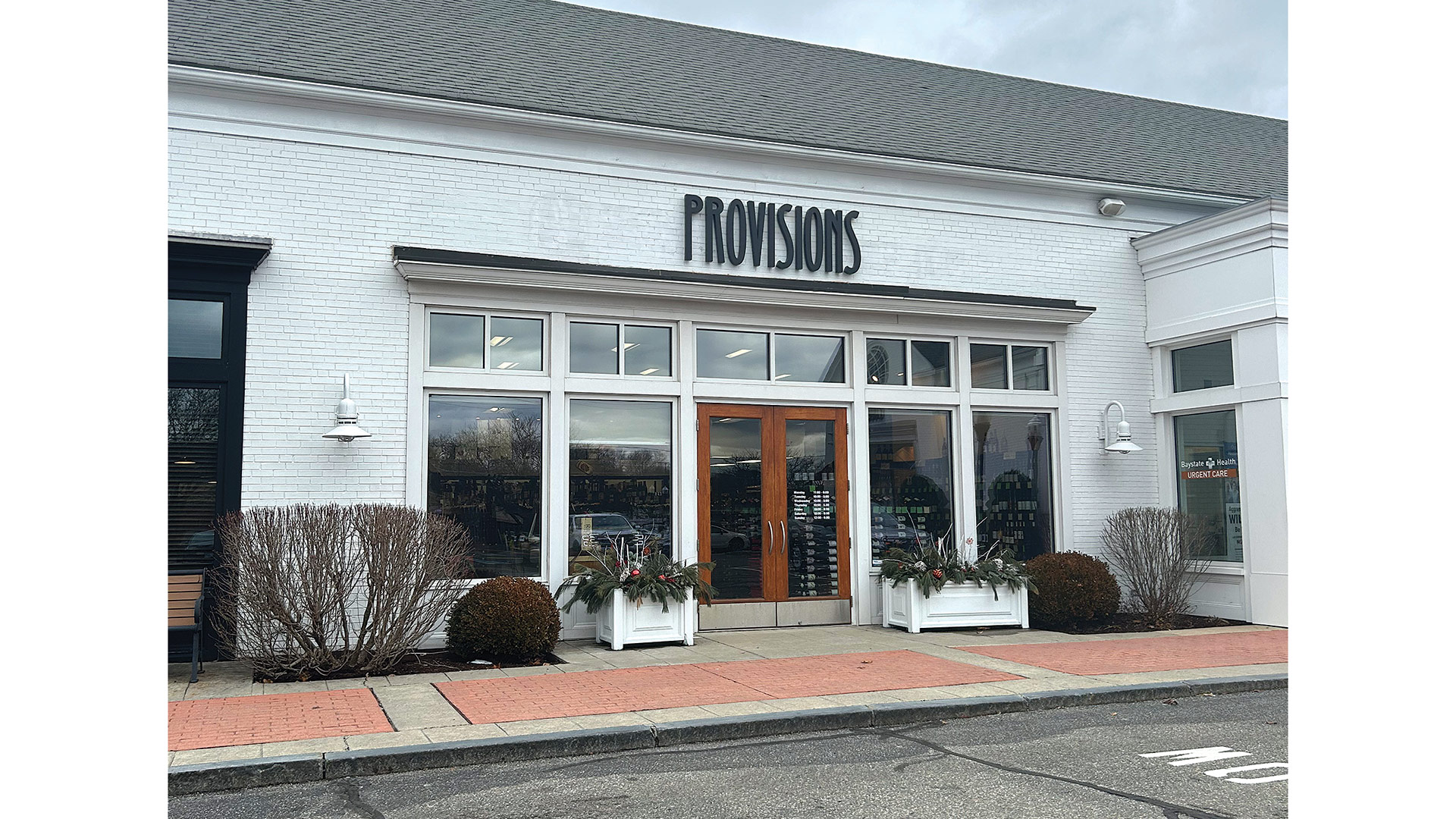
The new Longmeadow location

The new Longmeadow location came about rather unexpectedly and before the partners were really ready, but they jumped on the opportunity.

Overall, the pandemic was a learning experience and test of the partners’ mettle, said Hyde, adding that, while business was brisk — sales ballooned during the pandemic for many different reasons — business was also much more difficult.

“We had to completely pivot our business model and completely rethink how we worked with customers and how we operated the entire store,” he recalled. “It was intense, and we made a lot of mistakes before we eventually got things ironed out.

“We were really lucky because we had attracted a staff that was really committed,” he went on. “I don’t think we could have done it if we didn’t have such a loyal and committed staff — it was extremely hard.”


Case in Point

But at the same time they were enduring the pandemic and its many challenges, the two partners were still thinking about expansion and that proverbial next level.

And, as noted earlier, that expansion has come about more quickly, and more profoundly, than they had anticipated in any version of that business plan, primarily because opportunities presented themselves, and they were determined to take advantage of them.

Previous Top Entrepreneurs

• 2021: Dinesh Patel and Vid Mitta, owners of Tower Square in Springfield
• 2020: Golden Years Homecare Services
• 2019: Cinda Jones, president of
W.D. Cowls Inc.
• 2018: Antonacci Family, owners of USA Hauling, GreatHorse, and Sonny’s Place
• 2017: Owners and managers of the Springfield Thunderbirds
• 2016: Paul Kozub, founder and president of V-One Vodka
• 2015: The D’Amour Family, founders of Big Y
• 2014: Delcie Bean, president of
Paragus Strategic IT
• 2013: Tim Van Epps, president and
CEO of Sandri LLC
• 2012: Rick Crews and Jim Brennan, franchisees of Doctors Express
• 2011: Heriberto Flores, director of the New England Farm Workers’ Council and Partners for Community
• 2010: Bob Bolduc, founder and CEO of Pride
• 2009: Holyoke Gas & Electric
• 2008: Arlene Kelly and Kim Sanborn, founders of Human Resource Solutions and Convergent Solutions Inc.
• 2007: John Maybury, president of
Maybury Material Handling
• 2006: Rocco, Jim, and Jayson Falcone, principals of Rocky’s Hardware Stores and Falcone Retail Properties
• 2005: James (Jeb) Balise, president of Balise Motor Sales
• 2004: Craig Melin, then-president and CEO of Cooley Dickinson Hospital
• 2003: Tony Dolphin, president of Springboard Technologies
• 2002: Timm Tobin, then-president of
Tobin Systems Inc.
• 2001: Dan Kelley, then-president of
Equal Access Partners
• 2000: Jim Ross, Doug Brown, and Richard DiGeronimo, then-principals of Concourse Communications
• 1999: Andrew Scibelli, then-president
of Springfield Technical Community College
• 1998: Eric Suher, president of E.S. Sports
• 1997: Peter Rosskothen and Larry Perreault, then-co-owners of the Log Cabin Banquet and Meeting House
• 1996: David Epstein, president and co-founder of JavaNet and the JavaNet Café

The first such opportunity came on King Street in North Amherst, with the opening of Bottle-O, what McAmis described as “an easy, in-and-out beer and wine store where you can grab some cheese.”

As for the expansion of Provisions, the two partners had long targeted Amherst and Longmeadow as the most logical communities to take their concept, and they started with the former, primarily because opportunities in Longmeadow are harder to come by.

Specifically, they started in North Amherst and the emerging Mill District, for which Cinda Jones, architect of that ambitious undertaking, became another of BusinessWest’s Top Entrepreneurs three years ago.

When Atkins Farms decided to leave its space in the sprawling mill complex, Jones approached Benson and McAmis about taking that square footage. They did, recognizing an opportunity to take the brand to a new area and a site that is rapidly becoming a destination because of its array of shops and eateries.

The Amherst location opened in November 2020, still the height of the pandemic, and there have been some growing pains due to COVID, the emerging nature of the Mill District, and the fact that the complex is somewhat off the beaten path.

“It’s taken a little bit of time for word to get out that we’re there,” McAmis said. “But we are growing; we’re seeing green shoots.”

Hyde agreed. “We believe in their vision; they have created a really cool space there,” he said, adding that a planned move to another location at the Mill District, amid an emerging ‘food cluster’ at the complex — with a brewpub envisioned for the space they’re currently occupying — will generate even better results.

As for the Longmeadow location, McAmis said it came about through some “dumb luck.”

Indeed, a space in the Longmeadow Shops next to Max’s restaurant became available, and McAmis noticed the listing while doing a random search for space in Longmeadow last spring.

“As soon as we walked in there, we realized that it was well-suited for what we were looking for,” he told BusinessWest, adding that, while the timing was not exactly ideal because of everything else they were dealing with, they decided to press ahead and get it done, knowing that such opportunities — in that town and in that location — do not come about often.

“Longmeadow happened maybe a year or two sooner than it would have in a perfect world,” he said, noting that the partners were still engrossed in making the North Amherst location work. “It just felt like a bit of a rush to us to contemplate that, but we also didn’t think we would get a better opportunity; not only is it in the Longmeadow Shops, it’s right in the heart of it — so we went ahead. And now that it’s open, I’m happy it’s open.”

Hyde agreed. “The consequences of not taking that spot were huge; I don’t think we would ever have found something that ideal,” he said, adding that the location is close to East Longmeadow and Northern Connecticut, providing an opportunity to introduce the Provisons brand to some new customers.


Taste of Success

When asked what might come next for Provisions, Hyde and McAmis looked at each other, laughed, and offered a collective sigh.

The body language and sound effects made it clear that they’re not contemplating additional expansion at this time, and are instead focused on settling in — in every aspect of that phrase.

Elaborating, they said they want to put their new locations on solid ground, build the brand, and, well … keep doing what they’ve been doing all along.

Specifically, this means listening to customers, responding to what they’re saying, and providing an overall product that is in many ways as distinctive as the various bottles and cheeses on the shelves.

“One of the important traits we’ve shown over the years is being responsive to what we’re facing. Whether it’s having to reshape everything because of the pandemic or with growth, it’s a matter of staying aware and staying flexible, and leaning into opportunities,” said Hyde, adding that this operating mindset has served the partners well to date, and it will continue.

“The focus is going to be less on expanding our footprint in the near term, and more on expanding services and making connections within the community,” he went on. “What’s important to both of us is that we not only have a good business, but our business is part of the community; we support our community, and our community supports us.”

Meanwhile, the partners plan to continue with that theme of providing not just fine wine — they do that as well — but also ‘fun’ wine and products with compelling stories.

And while doing so — and this is perhaps the most rewarding part — they’ve earned the trust of customers.

“That’s been a cool thing — developing those relationships, getting to know people’s palates, and building that trust,” Hyde said. “People will call up and say, ‘I trust you … pick out 12 bottles for me, and I’ll come pick it up.”

That’s an example of that flexibility he described, and being responsive to what a changing audience wants and needs in a bottle of wine and the store that will sell it.

“How people shop for wine has changed, and who is shopping for wine has changed,” he expained. “There are more young people interested in wine these days than when we first opened.”

McAmis agreed. “They’re younger, and they’re interested in learning about the products; it doesn’t have to be a lot of money, but there’s an emphasis on quality, not quantity,” he noted. “We have wines that come from family-owned estates and are natural or biodynamic, organic or sustainably grown — these are all important attributes for a lot of these younger consumers.”

Wine tastings, such as this one at the location in the Mill District in North Amherst

Wine tastings, such as this one at the location in the Mill District in North Amherst, are one way the company focuses on education and engaging its customers.

These attributes and others are explained at the wine classes staged at the Amherst store, said Hyde, adding that education remains a big part of the equation at Provisions.

“There’s usually a theme to these classes,” he explained. “We’ll take people to a region, for example; it’s everything from ‘Wine 101’ to how you taste wines, to deep dives on regions or grades or producers.”

Such classes — and tastings — continued through the pandemic via Zoom, he said, noting that producers brought attendees into their operations virtually. “Having that actual producer in their winery talking about the wine is a cool way to experience it,” Hyde said, adding that the partners are looking to add more of these types of presentations in the future.

“Generally, we want to keep our eyes and our ears open to what people are wanting, what spaces we can fill, and how we can keep ourselves different from the bigger package stores,” he went on. “We do have a big selection, but we’re geared more toward service than having a ton of product; we have well-chosen, curated, thoughtful, fun products.”

Such an attitude explains not only why these two are successful, but why they are BusinessWest’s Top Entrepreneurs for 2022.


Features Special Coverage

Opening the Doors Wider

Community Foundation President and CEO Megan Burke

Community Foundation President and CEO Megan Burke

Megan Burke was taking a walk through downtown Springfield on a Sunday morning not quite a year ago, and found herself on Bridge Street, passing by the offices of the Community Foundation of Western Massachusetts (CFWM).

She stopped, looked in, and became immersed in what she was seeing, while also not quite believing her eyes.

“I looked in the conference-room windows, and I saw the papers lining the walls detailing their strategic-planning process and all their priorities for the next year,” she recalled. “And I actually took some photos, sent them to my boss in Hartford, and said, ‘look at how transparent the Community Foundation of Western Mass. is; we need to be more like this.’

“There were no secrets — they just put it right out there,” she went on. “I took pictures, I took notes … I said, ‘hey, they’re moving to the same database system we use, but more importantly, these are things they’re prioritizing for the community.’”

The ‘we,’ in this case, was the Hartford Foundation for Public Giving, which Burke was serving as director of Community Impact Grantmaking. The amazing transparency she observed that morning was and is just one of the things Burke admired about the Community Foundation of Western Mass., and which she had come to respect from afar — or not really that far at all, depending on your take; she’s a resident of West Springfield.

And that helps explain why, when the agency’s long-time president and CEO, Katie Allan Zobel, announced in the spring of 2022 (just a few weeks after Burke’s walk in downtown Springfield) that she would be stepping down at the end of the year, Burke became interested in the position, at the same time she was being recruited for it.

After several rounds of interviews, during which she would see and hear more things that impressed her, Burke was tapped to fill Zobel’s very large shoes, thus beginning an intriguing new chapter in a career marked by more than two decades of work in nonprofit management, philanthropy, fundraising, and advocacy, with a particular focus on equitable access to economic opportunities and human rights.

Her career has included work on issues ranging from advancing LGBTQ+ rights in a Latin American country, Nicaragua, to continuing efforts to ban landmines globally, to the challenge of leveling the playing field between those in urban and suburban communities in Northern Connecticut.

“I looked in the conference-room windows, and I saw the papers lining the walls detailing their strategic-planning process and all their priorities for the next year. And I actually took some photos, sent them to my boss in Hartford, and said, ‘look at how transparent the Community Foundation of Western Mass. is; we need to be more like this.’”

Summing it all up, Burke said it has been invigorating and rewarding work, which she is anxious to take to the 69 communities served by the Community Foundation of Western Massachusetts.

In a wide-ranging interview with BusinessWest just a few days after she began work in those offices on Bridge Street, Burke said her broad goal is to build on all that’s been accomplished over the past several years to take CFWM well past check writing and into a role as convener and catalyst for positive change.

“I really want to spend at least the next three months getting to know the folks who are involved in the Community Foundation and who’s not involved, and opening our doors even wider,” she explained. “And listening to people — I have a lot to learn. I think I bring a lot to the job, but I have a lot to learn from the community about what they think is important and what they believe we should be doing better.”

She said the Hartford Foundation has been able to mobilize resources and support efforts to more equitable economic and social mobility, and one of her goals is to amass similar forces and create momentum on that same front in Western Mass.

“In both Hartford and Springfield, and in pockets of the regions more generally, success for people is often more closely correlated to the zip code in which they were born than their own talents, creativity, and hard work,” she said. “And I think that’s where the experience I have is relevant to thinking about how we can change that together — not just the Community Foundation, not just our nonprofit partners or our donors, but all residents of the region.”


Questions and Answers

Burke recalls that it “almost felt like I was cheating.”

That’s almost.

In the run-up to the first of her interviews with CFWM for the president’s position last September, she noted that Zobel was the most recent guest on BusinessTalk, the weekly podcast hosted by this writer. She listened to the episode, not once but twice, and heard Zobel talk in vague terms about what might come next for her career-wise — and, in far more specific terms, about the many new programs and initiatives she and her staff introduced during her tenure, everything from Valley Gives to Valley Creates.

the windows of the Community Foundation offices on Bridge Street

Megan Burke was amazed by the transparency she witnessed when looking in the windows of the Community Foundation offices on Bridge Street. It’s a tradition she intends to continue.
Staff Photo

“It was such a helpful interview,” she recalled. “I was able to get a sense of what she felt was important and what she thought were some of the great successes here.”

Whether listening to the podcast had any impact on her performance during that interview is a subject for debate (Burke already knew a great deal about the Community Foundation, as we’ll see), but what isn’t — according to those doing the interviewing — is that Burke is a logical successor to Zobel, and this position is a logical next step for someone who has spent a career working to advance diversity, equity, and the inclusion of diverse perspectives.

It’s a career that has taken her from New York to Nicaragua to Hartford, and to remote-working opportunities long before they became the norm.

Our story starts with Burke — who earned her bachelor’s degree in political science at Wellesley and a master’s degree in international relations at Yale — working for the Ford Foundation in New York, where she served as program officer, U.S. Foreign and Security Policy, Governance & Civil Society.

In 2007, she and her family moved to Nicaragua for what she called “a different pace to her work” than what she found in New York. There, she worked first for the nonprofit Centro de Estudios Internacionales, where her efforts supported the emerging LGBTQ+ movement and the development of a nationwide campaign to advance human rights.

“My role was to support various representatives of the movement to create a platform for them to come together and establish some advocacy priorities and to really be a go-between with the funder to make sure of the direction it was moving in, and to really track the impact of the work,” she explained. “For me … I had not worked on that particular issue before; it was incredibly eye-opening. It was very humbling to be working in a second language and be the least articulate person in the room.”

“During my time there, we announced a new strategic focus on dismantling structural racism and promoting more equitable economic and social mobility. And while that work is by no means easy, it’s incredibly important, and I spent the past few years with a great team trying to figure out how to make that happen.”

Burke worked for the group for roughly three years, eventually transitioning to a new role with the Nobel Peace Prize-winning International Campaign to Ban Landmines. She started working as a researcher in Latin America — Nicaragua was a country impacted by landmines from the war in the 1980s — and eventually became executive director of the campaign.

She was still in that position when she returned to Western Mass. nearly a decade ago, eventually to ease herself out of that role — while also downsizing the organization, as more countries addressed the problem of landmines.

“It’s kind of nice to be involved in something where we could see steady progress and say we were working ourselves out of a job; it’s not often that you get to say that,” she noted. “Every year I worked there, the casualty rate declined.”

In some respects, leading a coalition to ban landmines is a world apart from work with a local foundation, she said, but in Burke’s estimation, the work is very similar.

“Sometimes people say, ‘how did you go from this international work focused on advocacy at the U.N. and traveling around the world to working for a local foundation?’” she noted. “My feeling on that is that every issue is a local issue somewhere, and what we were really trying to do at the international level is raise up local issues that were impacting people in mostly post-conflict countries, and get international attention to redistribute resources — not totally unlike what a foundation does to help those with the greatest need.”


Vision Statement

In 2017, Burke joined the Hartford Foundation for Public Giving as senior Community Impact officer, a position with a broad job description, one that included everything from work creating career pathways to efforts promote civic engagement through grants and training to increase voter engagement and participation in the 2020 Census.

In September 2020, she became director of Community Impact Grantmaking, leading the foundation’s strategic grantmaking — there was an annual budget of $25 million to $30 million — to advance equitable economic mobility and address systemic racism in Greater Hartford.

“During my time there, we announced a new strategic focus on dismantling structural racism and promoting more equitable economic and social mobility,” she explained. “And while that work is by no means easy, it’s incredibly important, and I spent the past few years with a great team trying to figure out how to make that happen.”

Not long after Zobel announced that she would be stepping down from her position, Burke received a call from a search firm to gauge her interest in the position.

It was quite high, she said, and for all the reasons she mentioned earlier — from the agency’s transparency with its goals and plans for the future, as evidenced by the uncovered windows facing Bridge Street, to its rapid and highly effective response to COVID, marked by a deep commitment to helping the region’s struggling nonprofits, along with many other successful programs in realms ranging from the arts to education.

Summing it all up, Burke said that, while she loved her work with the Hartford Foundation for Public Giving, the only thing she might like more is a chance to similar work closer to her home, something this opportunity at the Community Foundation provided her.

Still, while those on the other side of the interview table had questions for her, she had some for them, and the answers — especially with regard to a willingness to broaden efforts in the realm of equity — would ultimately determine whether this would be the right fit for her.

“I wasn’t sure where they were in terms of their own strategic vision to promote equity and opportunity,” she explained. “And I know that when you take on work like that, it’s important that everyone has bought in, feels that it’s important, and sees the value in that work.

“You never have a situation where every stakeholder is 100% all in from the very beginning,” she went on. “But from other areas of my work, I’ve seen what happens when there is great resistance, and it makes it really, really hard. I didn’t know if there was resistance, but I also didn’t know how much buy-in there was. So in many of my early conversations, I really tried to get a sense — ‘is there a serious commitment to moving this forward?’ And I got a resounding ‘yes’ from everyone I spoke to.

“It was clear that the commitment runs deep,” she continued. “And that excited me.”

Elaborating, she noted that, while Greater Hartford and Greater Springfield are different in some respects, they are similar in most, especially when it comes to disparities that exist between the urban centers and the more rural and suburban areas, and the manner in which those inequities impact opportunity.

“When everyone has an opportunity to fulfill their own potential, I think everyone wins,” she went on. “When people are held back due to the circumstances of their birth, I think everyone loses.”

Burke started at the Community Foundation on Jan. 18, the day of a scheduled board meeting. She joked that this would be the first and only time she would be at such a meeting with the primary mission of simply watching and listening.

Although she still has a lot of that to do in general, and with a number of different constituencies, she noted that she has already embarked on what she calls a “listening tour.”

Its underlying goal, as she stated earlier, is to enable her to learn about the region and the issues facing those living and working here and to generate some momentum on the broad issue of economic and social mobility and making it more equitable.

“We don’t plan to change our broader strategic vision — I think it’s a great vision,” she said. “And promoting equity and opportunity is not something that’s going to happen overnight; I think there’s a huge commitment to that, and I was brought on to help figure out how to make sure we can operationalize that as effectively as possible.

“I have to listen,” she said in conclusion, “and make sure I’m building on what’s already happening here that’s great.”


Bottom Line

When asked what she likes to do when she’s not working, Burke offered a hearty laugh as she said, “take walks in urban areas.”

She also likes to hike in more rural settings, partake in yoga, be a good ‘dog aunt,’ and keep up with friends scattered across the region and around the world.

What she really likes, though, is to work with others to address what she called “seemingly intractable problems” — meaning everything from inhumane weapons to access to healthcare and education for LGBTQ+ residents of Nicaragua to food insecurity for residents of Greater Hartford.

Throughout her long career, it has been her mission to take doors and open them wider to enable more to pass through. With her latest assignment with CFWM, the setting has changed, but that mission hasn’t.

Education Special Coverage

Looking Back — and Ahead

HCC President Christina Royal

HCC President Christina Royal


Christina Royal wanted to make one thing clear.

Her decision to step down as president of Holyoke Community College (HCC) later this year has nothing whatsoever to do the Great Resignation.

“The Great Resignation, to me, reflected people who were in various stages of unhappiness with their respective roles and looking for a change,” said Royal, the school’s fourth president, who arrived on campus in 2016. “I love this college, and I love my position.”

Elaborating, she said her decision is about finding the space to decide what she wants to do next, and at this point in time, she really doesn’t know what that might be, other than some travel (destinations still to be determined), planning her wedding, and what she calls “voluntary unemployment” until at least the start of 2024.

In a wide-ranging interview during which she looked back as well as ahead, Royal talked at length about the past three years, especially, and what it has been like, personally and professionally, to lead an institution like HCC through the pandemic. She said it was a tremendous, and exhausting, learning experience, one in which she and members of her team had to reach down and find the determination and imagination to see the college and its students, staff, and faculty through an unprecedented crisis, during which the school was mostly closed to the public for more than a year.

Indeed, while talking about the length of her tenure at HCC — which will be close to seven years by the time she steps down this summer — Royal jokingly asked if there is a “multiplier” for the COVID era, a roughly two-and-a-half-year stretch that probably seemed like it was exponentially longer.

She likened that period to another one in the school’s long history, a devastating fire that destroyed its one building in 1968. Royal told BusinessWest that she has read and heard a lot about those days, and she believes they were in many ways similar to what the college and its leadership endured starting that day in March 2020 when the governor shut down the state.

“The Great Resignation, to me, reflected people who were in various stages of unhappiness with their respective roles and looking for a change. I love this college, and I love my position.”

“I never thought that in my lifetime and during my tenure there would be another moment to rival that one, but the global pandemic did,” she said. “And being in a leadership capacity during such uncertain times, you tap all of the skills that you’ve developed over a lifetime to be able to learn and lead in such times.”

While efforts to lead the school through the pandemic have in many ways dominated her tenure, she said there have been many important accomplishments, especially in the broad realms of diversity, equity, and inclusion, as well as addressing student basic needs, ranging from food to housing to childcare.

With the former, she said the school has made significant strides, and on many different levels.

“We have really prioritized equity at all levels within our organization, including at the board level, with a statement on anti-racism, and also with the great work of our facility and staff. We’ve invested financial resources to grow our wrap-around support services for our under-represented students, and we continue to help all of our students be successful regardless of what their starting point is, who they are, and what their background is.”

With the latter, Royal, named a Woman of Impact by BusinessWest in 2020 for her work at the school and within the community (the two often overlap), said there have been some important and innovative steps forward, and several ‘firsts.’

Christina Royal meets with students

Christina Royal meets with students at the HCC MGM Culinary Arts Institute, which opened its doors in 2019.

These include the Homestead Market, at which HCC became the first institution of its kind in the Commonwealth to accept SNAP benefits.

“This was pretty significant — we had to get federal approval from the USDA to be able to accept SNAP benefits,” she told BusinessWest. “To be able to do that on a college campus is innovative and an example of how we listen to students and respond to what we’re hearing.

“Our students who found themselves food-insecure and receiving SNAP benefits said, in essence, ‘why can’t I use my benefits on campus?’” she went on. “And we said, ‘good question.’”

As for her own future and what the next chapter might be professionally, Royal said that is … still to be determined. And it may not be determined for a while yet. Indeed, while she has already received some invitations to look at opportunities, she is determined to take her time — and take at least the balance of 2023 off — and find the right fit.

In the meantime, she is focused on the remainder of her tenure at HCC, continuing the work that has been done there and preparing the school for a successful transition in leadership.


Court of Opinion

As she talked about what she and her administration have been able to accomplish over the past several years, Royal made sure she didn’t leave out pickleball.

Indeed, under her direction, and in response to the meteoric rise in popularity of the game — a combination of tennis, badminton, and ping pong — the college created several pickleball courts in the Bartley Athletic Center on campus.

“I was looking for something to burn off stress, and as a former tennis player, I really enjoyed the racket sports, and this is something that’s a little easier on my knees,” she said, adding that a former trustee of HCC turned her on to the sport. “We have seven courts here now, and the response from the community has been tremendous; people are calling and asking if we can expand the hours. I think we’ve really tapped into an outlet that people are looking for.”

Beyond pickleball, Royal can provide a long list of accomplishments and milestones that have happened during her tenure. It includes the college’s 75th-anniversary celebration in 2022— put off for one year because of the pandemic — as well as the 50th anniversary of the HCC Foundation; the opening of a new life-sciences building and the HCC MGM Culinary Arts Institute, located in a renovated mill in the city’s downtown; and extensive renovations to the Campus Center, which reopened just a few weeks before the pandemic forced it to go dark once again.

Beyond infrastructure and new academic programming, Royal said the biggest strides made at HCC have come in the areas of diversity, equity, and inclusion, and meeting those basic needs of students that she mentioned earlier.

As for meeting students’ basic needs, Royal said there have been many steps forward, perhaps none as significant, and symbolic, as the Homestead Market and the acceptance of SNAP benefits.

Today, other schools and other institutions are looking to follow suit, she said, and they are looking at HCC as a leader in what Royal called “hunger-free college campuses.”

“We’ve used this as an opportunity to be responsive to students, and also to be able to further our work with basic student needs,” she noted, adding that there was a prime motivating force behind the school’s perseverance in this matter: “it’s hard to educate a hungry student.”

“This has been an incredible journey … I think about how much I’ve grown in this role. I never imagined leading through such uncertain times, with a pandemic that few saw coming and for which there was no playbook.”

As noted earlier, meeting student needs goes well beyond food, said Royal, who has been at the forefront of many such efforts, from housing and internet service to an important recent addition to the portfolio: the President’s Emergency Fund, which is … well, just what it sounds like, a fund to help students in emergency situations.

They can apply quickly and easily, said Royal, and they get a response within 24 hours.

“We cut a check immediately,” she said, noting that funding for the program was set up through the school’s foundation and has grown through the support of alumni and other donors to the college, including faculty and staff. “If you’re experiencing an emergency, that means you don’t have weeks to wait for financial resources to come in. And this fund has made a huge difference.”

Overall, these various programs reflect an operating philosophy at the college that, especially in a community like Holyoke, students need more than the right mix of courses to succeed — however they might define success.

“When we started our strategic plan, we defined our basic needs as encompassing four key priorities — food insecurity, housing insecurity, housing, and childcare,” she explained. “And in the process of addressing those, we had a few others emerge over time, including mental-health support and digital literacy.

“We knew that, in order to really support students, not only through wrap-around services but particularly with other barriers to them successfully completing, we had to address these other basic needs,” she went on. “The public at large tends to think of colleges as needing to focus on academics and the curriculum in order to set up students for success, and that is certainly a key priority — we’re focused on having the academic rigor that can allow for students to transfer successfully to our four-year colleges and universities. And in doing so, we needed to set students up outside of the classroom for success, and that is helping to address the other barriers that sometimes hinder their ability to stay continuously enrolled.”


Forward Thinking

The decision to move on from this work and to the next stage of her career came at a time of great change and reflection in her life, said Royal, who turned 50 last summer, traveled to Bali with her partner for an extended vacation, got engaged, and, amid all that, started to think about what’s next.

“I didn’t necessarily want to leave HCC … it was more about creating space for me to expand and engage in some creative projects and simply have some space,” she noted. “This job is an intense job, and I wanted to give it its due respect. And as I turned 50, I thought, ‘here is an opportunity for the next chapter.’ But first, I wanted to have some space to figure out what that might look like. So I didn’t want to rush into something; if I wanted to move into another presidency or another CEO position, I could have easily done that, but I wanted to focus on HCC.

“I’ve had a lot of opportunities come my way, but it felt too soon to commit myself to something else because I wanted to take a break,” she went on. “And that’s very important to me; I’ve been running hard for a number of years.”

Indeed, she has, with the pandemic years, especially, testing her in ways she could not have imagined. And they have left her reflecting on how those years have changed education, the world, and, yes, what she wants to do next.

“I’m a very intentional and reflective leader, so I make this shift with a great deal of intention around creating space for reflecting on this extremely unique and significant period in our lifetime — at least in my lifetime,” she said. “This has been an incredible journey … I think about how much I’ve grown in this role. I never imagined leading through such uncertain times, with a pandemic that few saw coming and for which there was no playbook.”

With that, Royal returned to 1968 and that fire that forever changed the college, and drew some direct comparisons to how the two disasters, more than 50 years apart, forced leaders to challenge themselves — and others — to find answers to complex problems.

Indeed, there were large amounts of learning and leading over the past three years or so, she went on, regarding everything from teaching from a distance — and supporting students at a distance — to simply reopening the college when the conditions allowed.

“It made me a better leader, and it certainly took a lot out of me,” she said of that period, adding that such experiences help explain why a large number of college presidents have moved on from their jobs in recent months, and more have announced intentions to do so.

For Royal, the pandemic provided large doses of perspective on what she could do next — and should do next.

“I feel excited for the next chapter, I feel excited about the possibilities, and perhaps something the pandemic did for me was invite me to expand those possibilities in my imagination of what can come next,” she said. “It was one of the most palatable reminders of just how short life is, and that in the blink of an eye, we’re dealing with an international crisis and health threats that were unprecedented in my lifetime.

“All that had a significant impact in shifting my perspective on what I want to do with the second half of my life,” she went on, adding that she won’t get around to figuring that out for a while.

After all, she still has a college to lead.

Employment Special Coverage

Home Sweet Home

Make no mistake, Meredith Wise says — employers miss those bustling offices where all their employees used to come to work.

And after almost three years of remote work — during which the practice evolved from a temporary necessity to a ubiquitous reality — businesses are definitely grappling with what it all means, and whether they can slow the remote train down.

“A lot of businesses would like to have people back in the office,” said Wise, president of the Employers Assoc. of the NorthEast. “They’re struggling a bit with communication, with employee relations, and with staying in touch with people and knowing what’s going on with them.

“The idea used to be that people would come in, and you’d get a sense of how their night went, how their morning was going,” she added. “With Zoom communications, you just don’t get that same feeling. A lot of companies are feeling like they’re losing that personal connection with employees.”

Even some of the largest employers feel that way, as Walt Disney Co. workers found out in a recent internal memo from CEO Bob Iger, who is calling on all workers to spend at least four days a week in the office, starting March 1.

“In a creative business like ours,” Iger wrote, “nothing can replace the ability to connect, observe, and create with peers that comes from being physically together, nor the opportunity to grow professionally by learning from leaders and mentors.”

Still, Wise noted that many local companies seem to be moving in the opposite direction, by continuing to embrace hybrid schedules. “They’ve found productivity can be better when working from home remotely, where people don’t have any of the distractions of being in an office, and I think that hybrid model is going to stay.”

Amy Roberts, executive vice president and chief Human Resources officer at PeoplesBank, agreed.

“A lot of businesses would like to have people back in the office. They’re struggling a bit with communication, with employee relations, and with staying in touch with people and knowing what’s going on with them.”

“We implemented a flexible work-arrangement policy in the midst of COVID, and we still have a lot of people working hybrid, with some time in the office and some time working from home,” she told BusinessWest. “It really depends on the area a person works in and what the business needs are. We have a couple fully remote workers; we actually hired a person out of Illinois who works fully remotely.”

Like Wise, Roberts said it’s easy to see why remote work is appealing, from the elimination of commuting time to creating a focused work environment. “I think the flexibility of it is really helpful to people in terms of work-life balance. Or they might say, ‘I really need to get X done, and doing this particular work is best done when I’m home, so I can focus more.’”

Roberts said many companies are starting to pull everyone back into the office — especially businesses that stress a collaborative culture or require plenty of face-to-face work with customers — but not all. “I do think the hybrid model is here to stay, though I don’t think it works for everyone.”

Seth Stratton, managing shareholder with Fitzgerald Law in East Longmeadow, noted that, like many small businesses, his firm never fully left the office during the pandemic, and these days, everyone has been back for some time. But they have continued to use communication tools, like Zoom, that became popular when employees at most companies were at home.

“We were forced to embrace some technology and ways of working that carried over and make work more flexible, even though we’re back in the office.”

Stratton understands the value of remote work in some situations, drawing on examples from his own career.

“During the peak of the workday in the office, there are a lot of interruptions, and a lot of times, when I’m focused on revising a lengthy contract or drafting a legal brief to submit to court, I need time to focus mentally on what I’m doing, so historically, a lot of that will be done early in the morning or later in the evening, after the phone stops ringing,” he said, noting that working from home can create more time and space for such work.

Seth Stratton

Seth Stratton says remote work can reduce distractions, but also hinder communication and collaboration.

On the other hand, someone in a home office can’t just walk into the next room to tap someone else’s expertise.

“You can do that remotely, but it’s harder to get on the cell or set up a Zoom meeting; it’s not as seamless as walking 10 feet away. That affects you from a collaborative standpoint.”

And collaboration happens outside the office, too.

“In Western Mass., probably moreso than other markets, when it comes to business generation, marketing, and client development, this is a parochial business community; a lot of business is conducted through personal relationships, personal connections,” Stratton explained. “I might be having lunch at the Fort or at Nadim’s and see someone I know — ‘oh, I’ve been meaning to call you; let’s schedule a call. Or do you have a minute now?’

“It’s harder to make those connections when you’re fully remote,” he went on. “Being available, I think, is a hallmark of business development in Western Mass., at least in my experience.”


Successful Experiment

While it may have eventually surprised employers how effective their teams could be at home, Wise recalled the challenge of those first few weeks in March 2020.

“When it first started, nobody really had the computer setups or the communication tools to be able to work remotely from home,” she said. “Now, people are more able to work at home and be productive.”

These days, “while we have found some companies saying, ‘we want all employees in the office Monday through Friday,’ those are few and far between. Instead, what a lot of employers are saying is, ‘you know what your job requires; work with your manager on what days you need to be in the office and what days you can work at home.’”

As a Baby Boomer, Wise said, she understands the old-school mentality of employers who have always been able to see their employees at work, and may be hesitant to give that up.

“It can be a hurdle to get over that perspective that ‘I can’t see you, so are you working?’ Part of the communication piece is doing a better job as organizations to define productivity and what needs to happen on the job. And it’s been good for leaders and workers to tighten up some of the parameters — ‘you know what’s expected of you, and you and I need to set that ahead of time, because things can easily get out of hand if you’re not here every day.’”

It makes sense to put those parameters in writing, said John Gannon, a partner with the law firm Skoler Abbott in Springfield. “The accountability policy needs to be clear. I’ve seen policies that say, ‘we need to see proof that your children are in daycare.’ I’m not sure if I’d recommend going that far, but certainly the supervisors need to be paying attention to their employees when they’re home.”

Zoom meetings help, he said, but employees are still unmonitored for the vast majority of the workday. Some companies have even installed technology on home computers that logs keystrokes per hour.

“If they have employees working remotely, even in a hybrid fashion, in another state — which is not uncommon given Springfield’s proximity to Connecticut — they have to be cognizant of which state’s employment laws apply.”

John Gannon

John Gannon

“I don’t like that, personally,” Gannon went on. “But it’s an option for employers if they have concerns that the hybrid model results in less productivity. I wouldn’t recommend it unless an employer is having problems, because it is a privacy issue, and a lot of this comes down to trust; you want to trust your employees, and you don’t want to set up a model that says you don’t trust them.”

Wise has heard of keystroke monitoring as well, and said most employers in this region aren’t looking to go there. But they’re also still in an experimental stage when it comes to remote and hybrid schedules.

“A lot of organizations are still feeling this out — ‘let’s try this for six months; I know we did it during the pandemic, but let’s try it in the new year and see if it works out, or whether we need to make adjustments to it.’ Handbooks and policies are still catching up.”

And if employers have employees working remotely in a different state, Gannon added, they need to update that handbook to make sure employees in those states are getting a handbook with laws applicable to that state, and also make sure the company is registered to do business in that state.

“If they have employees working remotely, even in a hybrid fashion, in another state — which is not uncommon given Springfield’s proximity to Connecticut — they have to be cognizant of which state’s employment laws apply,” he explained. “If they’re working from home three or four days a week and coming in one or two days a week, their primary office is their home, and if that’s in Connecticut, they’re subject to Connecticut employment laws and Connecticut employment taxation.

Those laws touch on everything from paid family medical leave and sick time to injuries on the job.

“It may sound crazy, but you may have to address workers’ compensation,” Gannon said. “If you’re walking down your stairs in the morning to go to your home office, that’s not covered, but in your home office, if you fall out of your chair and hurt yourself, that may be covered.”


Losses and Gains

Roberts agreed that there’s an interesting dynamic at play now, with some employers worried they don’t have eyes on their employees, while others fret about losing office culture and the ability to keep workers engaged.

“How do they know if they’re happy, if they’re productive, if they’re getting what they need from their career development? If you don’t see them all the time, how do you mentor? There’s a lot of questions managers are grappling with when it comes to this new style of work.”

That said, employers who embrace remote and hybrid schedules are able to cast a wider net in recruitment, at a time when talent is difficult to come by.

“We’ve been able to advertise positions as hybrid, which certainly brings more candidates our way,” Roberts said. “People are looking for that flexibility, and if you’re able to offer a fully remote situation, you can hire someone from anywhere; you have the ability to get the best available talent. Unfortunately for us, a lot of our positions are hybrid or in the office or banking center; we don’t have the luxury of large companies that are fully remote — but we’ve increased the candidate pool for sure.”

Stratton said the tools of remote business has helped his firm expand its client base beyond Western Mass.

“It allows us to reach out geographically with clients because clients are used to working by Zoom meeting and don’t feel that same compulsion to meet in person that they used to,” he said. “That’s given us more flexibility to actually grow our footprint a little more.”

And grow it into regions where legal services cost more than they do in the 413, he added. “We always had a pricing advantage over areas like Eastern Mass. and Southern Connecticut, and we can more easily use that pricing advantage to our benefit by expanding our footprint and working farther outside Western Mass.”

Though hybrid work may be here to stay, Stratton said, most of his firm’s clients are small to medium-sized businesses, and the majority of them have emphasized getting workers fully back in the office, though some are embracing hybrid work schedules and remote-work tools.

“A lot of large, national corporations, you see fully remote, where a lot of their workers are in different offices anyway, so it’s less impactful to be spread out,” he added. “But small to medium-sized businesses in this area, in my experience, are generally pushing toward being back and find it more effective, which is consistent with our experience as a small business.”

There’s no one-size-fits-all model, however, and Roberts said everyone is still grappling with the new work styles and how to make them effective.

“We need to figure out how to mourn the loss of the old way and transcend to a new way of working. It’s not the same as it was 15 years ago, maybe even 10 years ago, where you were identified by the office you worked in, and you had celebrations and events, things happening there. It’s different now; people are looking for a different way of working, and employers have to think differently.”

Cannabis Special Coverage

After the Green Rush

The numbers are impressive, to be sure.

Adult-use cannabis shops in Massachusetts posted close to $1.5 billion in sales in 2022, up from $1.33 billion in 2021. Since recreational sales began in late 2018, the total figure is closing in on $4 billion.

That’s a big pie.

The problem, for the hundreds of dispensaries already open and many more at various stages of planning and development, is that each slice of that pie is getting smaller. As a result, prices are crashing, with some products selling for half of what they did a year or two ago.

That’s great for cannabis consumers. For businesses? Not so much.

But it’s not an unexpected development, not is it any sort of crisis, said Michael Kusek, publisher of Different Leaf magazine and one of the nation’s leading experts on the cannabis industry. But it’s certainly a challenge, one that promises to weed out some of the current players.

“You can’t solve the overabundance of product in the marketplace by transferring it to another market,” Kusek told BusinessWest. “You can’t make the product go away, so the price bottoms out. This has happened in every other market, so it’s not a shock.”

It will, however, require business owners to think smarter, focusing on quality, the customer experience, and other ways of differentiating themselves in an increasingly crowded marketplace. And the situation already has municipalities revisiting old concerns about a saturated market.

Northampton, where one of the city’s 12 dispensaries, the Source on Pleasant Street, recently closed, is the most notable case, as its City Council voted 6-3 last month to cap the number of retail cannabis shops at 12 going forward.

At press time, Northampton Mayor Gina-Louise Sciarra said she would not sign off on the cap, but with a two-thirds vote of the City Council needed to overcome any veto, the measure will likely still become law.

“We are not anti-business,” Councilor Marianne LaBarge said before the vote, as reported by the Shoestring. “We have a job, and we have heard from so many people to place a cap.”

Some residents at a hearing days before the vote expressed concerns about the impact of so many cannabis shops on the city’s youth, while councilors like LaBarge said they want to protect existing businesses from being crowded out.

Council President Jim Nash, one of the dissenters, said he favored a cap when recreational cannabis first became legal, but now believes the maturing marketplace is providing a natural cap, as evidenced by the Source’s closing and declining sales at other shops. He argues as much in a recent column in the Daily Hampshire Gazette, co-written with former City Councilor Dennis Bidwell.

“Since when does local government step in to protect the bottom line of existing businesses by excluding the entry of competition?” they wrote. “We don’t do that for beauty salons or pharmacies or anything else. It’s one thing to put a cap in place in the early stages of an industry’s development, before anyone has opened their doors. It’s another thing entirely to enact a cap that would freeze the market where it is, prohibiting further competition.”

What isn’t up for debate is that it’s getting tougher to turn a profit in an industry that’s already taxed about 70% and can’t claim many normal deductions. That reality, plus an ever-more-competitive marketplace, both inside Massachusetts and from surrounding states, is creating an environment that’s not unexpected for those who have followed the industry’s maturation in other states.

“So many people think, ‘if I get a license, I’m going to be a kajillionaire.’ Sorry, that’s not the case. If you’re in it because of the money, it’s going to be a tough road for you.”

People like Meg Sanders, CEO of Canna Provisions in Holyoke and Lee, who was in Colorado when that state, one of two, along with Washington, to pioneer legal adult-use cannabis in 2012, experienced its own ‘green rush,’ with a quickly saturated market causing prices to plummet. What Massachusetts cannabis businesses need to do, she said, is to focus on differentiating themselves in the right ways (see story on page 35).

“I think it’s going to be a painful year, but a necessary year. Honestly, it’s important,” she said. “So many people think, ‘if I get a license, I’m going to be a kajillionaire.’ Sorry, that’s not the case. If you’re in it because of the money, it’s going to be a tough road for you. We believe money is a byproduct, not a goal. We believe in running a good business, a responsible business, serving customers thoughtfully and respectfully and providing an amazing experience with lots of options on the menu. A cannabis purchase should be fun.”

Certainly more fun than selling the product at a time when economic realities in the industry are dramatically shifting.


Growth Potential

There’s no doubt that legal cannabis has been a boon to not only sellers, growers, and manufacturers, but to state and local coffers. Massachusetts imposes a 10.75% excise tax on purchases, while recreational cannabis purchases are also subject to the state’s 6.25% sales tax, and most municipalities levy 3% more.

David O’Brien, the president of the Massachusetts Cannabis Business Assoc., recently told the Boston Globe that the industry will remain strong despite its current challenges.

“Legalization has brought about change people can see. You can see it in the tax revenue, in the jobs that have been filled, in the dispensary storefronts that used to be empty, in the old warehouses that now host manufacturing companies — it’s all growth, it’s all progress, and the sky did not fall.”

Michael Kusek

Michael Kusek says the cannabis industry’s tightening profits are a natural evolution that has occurred in other states.

As for those jobs, about 22,000 workers were authorized by the state to work at licensed cannabis facilities as of December, making it an attractive field to enter, Kusek said. “Once they get a little experience under their belt, they’re infinitely more marketable. Head growers are making $100,000 to $120,000 a year.”

The problem, he noted, is that players coming into the market now are dealing with product prices that are much different than when they established their first business plans. And the regulatory hoops remain challenging in many cases, as is the decision of where to locate: in a community with limited licenses that are difficult to secure, or a community with a more laissez-faire approach, but also, as a result, much higher competition?

“I just talked to a couple of lawyers, and they’re not working as many licenses as they were two years ago,” Kusek said, and there could be several reasons for this, foremost being access to capital, which is still limited because most banks won’t lend for cannabis enterprises.

“If they can’t access capital, they’re forced to shoulder the ups and downs of the industry by daily revenues,” he added. “If you open a successful restaurant and want to open a second location, you can go back and get a loan to do that. If you want to open a second cannabis location to sell all this product you have, you can’t easily do it.”

“Regular businesses still get normal deductions, but we can’t deduct anything except the cost of goods. That creates a real challenge for overall profitability and cash flow.”

Meanwhile, cannabis investors in the Northeast are increasingly looking to what Kusek calls “the shiny new object” — New York, where shops started selling legal recreational cannabis just a few weeks ago. “That’s where the capital is going, which starves out the businesses we have here.”

And when capital dries up, it’s the mom-and-pop entrepreneurs that suffer, as well as social-equity candidates.

“The companies that operate in multiple states have more of a cushion; they can continue to roll forward,” Kusek said. “Who’s going to get hurt by this [competition]? People who have been trying to get a license for a long time. This just makes it harder for them if they didn’t get more of a leg up in the beginning.”

Sanders said the businesses that survive, both those currently operating and those just setting up shop, will be those that “hunker down a little bit and are super thoughtful with every dollar.”

“This is a business that has zero deductibility, except the cost of goods,” she added. “We have to be way more careful than any other business going through this recession. Those regular businesses still get normal deductions, but we can’t deduct anything except the cost of goods. That creates a real challenge for overall profitability and cash flow.”

Without examples from other states to consult, Sanders recalled, Colorado was immediately saturated, prices cratered, and the market became what she called “a race to the bottom,” with price trumping everything. “But as things got more sophisticated in Colorado, a lot of good operators started telling compelling stories about why you should spend money with this dispensary rather than that dispensary.”

That’s why she focuses on the stories behind Canna’s products and also on giving back to the communities in which she operates.

“Businesses need to be as lean as possible and as thoughtful as possible, and make sure you’re telling a compelling story about why people should buy your brand.”


Legitimate Concerns

In their recent column, Nash and Bidwell argued that public-safety and public-health concerns that motivated discussion about a cap on dispensaries in Northampton five years ago have not come to pass.

“There is, and always will be, an underground market for unregulated, uninspected marijuana. This black market is fraught with crime and suspect product,” they wrote. “The availability of legal marijuana puts a dent in this market, tilting the share of sales toward legal purchase rather than black-market ones. To the extent the market allows, additional regulated cannabis retail outlets will further reduce the use of unregulated, dangerous cannabis.”

And falling prices in legal shops may entice many long-time black-market customers to try different types of strains and products, Kusek said. “As prices come down, people will try and buy more. This is great for consumers; in some circumstances, it costs half of what it did. For consumers, that’s great.”

That’s even more true for medical users, he added, as they tend to be more price-sensitive than recreational users, since they often have to maintain regular usage with finite resources, since insurance won’t cover the product.

“This is still a young market, and consumers are still developing their preferences. It’s only been a couple of years, and people will develop brand loyalty and particular consumption methods, and they will spend their money to get those particular brands or products.”

Kusek agreed with Sanders that product quality is important, especially as consumers are still discovering what they like.

“This is still a young market, and consumers are still developing their preferences,” he told BusinessWest. “It’s only been a couple of years, and people will develop brand loyalty and particular consumption methods, and they will spend their money to get those particular brands or products. That will come over time.”

Kusek also believes the consumer base has room to broaden.

“People become cannabis consumers for a wide variety of reasons. We have a medical market and people for whom cannabis is a significant part of their medical treatment, and you have more people coming into the market and exploring cannabis for treating pain and sleeplessness. Those people are always going to be coming into the market, as well as people who are curious about it.

“I think one of the challenges in cannabis is connecting and finding consumers; with each new market that comes online, you get the people who are curious, or who are coming back to cannabis after not using it for a long time, people whose life circumstances have changed. There will always be new consumers.”

In other words, it may be a tougher business to navigate than when there were only a few dozen shops open in Massachusetts, but it’s still a dynamic field.

As Kusek put it, “it’s never dull, that’s for sure.”

Daily News

SOUTHWICK — Sergio Bonavita, owner of Westfield River Brewing Co. (WRBCo), located at 707 College Highway, Southwick, is working with brewery co-owner and JJK Productions founder Josh Kelleher to bring a unique wintertime music series to Western Mass.

The Winter Concert Series kicked off on Jan. 28 with a performance from the Mallet Brothers, with special guest opener Alex Rohan. Other notable acts include tributes to Jimmy Buffett, Sublime, the Eagles, Dave Matthews, Nirvana, and Johnny Cash. Attendees will be able to catch ‘80s and country cover bands, as well as the 413’s own Dr. Westchesterson.

“We are excited to bring a music lineup to WRBCo that is unique to the area because live music and craft beer are passions of ours,” Bonavita said. “Creating an platform for fans to see bands they can’t normally see in Western Mass. was an opportunity we couldn’t pass up.”

Doors open at 5:30 p.m., and showtimes vary by artist. For a full schedule and to purchase tickets, visit www.etix.com/ticket/v/15983.

Daily News

SPRINGFIELD — Tuesday morning at 10 a.m., the state’s first legal sports wager was placed at the BetMGM Sportsbook & Lounge by Springfield Mayor Domenic Sarno, along with Boston hockey legend Ray Bourque.

“The BetMGM Sportsbook at MGM Springfield is a phenomenal sports-betting hub designed for New England’s passionate sports fans,” BetMGM CEO Adam Greenblatt said. “Today is a monumental step for BetMGM and sets the stage for us to deliver a best-in-class sports-wagering experience across Massachusetts.”

Betting lines are displayed on large screens at MGM Springfield.

The BetMGM Sportsbook & Lounge at MGM Springfield offers a state-of-the-art gameday experience. The space features a 45-foot, LED viewing wall and four betting windows, making it easy for guests to access a variety of sports-wagering options. Additionally, the resort houses 18 sports-betting kiosks conveniently located throughout the gaming area.

“This has been a long time coming and brings yet another chapter of innovation to enhance the operations and development at MGM Springfield,” Sarno said.

Chris Kelley, president and chief operating officer for MGM Resorts’ Northeast Group, added that “we’re thrilled to add this new amenity, strengthening our commitment to being New England’s premier entertainment and gaming destination. We are incredibly grateful for the tireless work of the state delegation to bring this historic bill to the finish line, and to the MGC [Massachusetts Gaming Commission] for crafting the necessary regulations. The BetMGM Sportsbook at MGM Springfield allows us to create even more one-of-a-kind engagements for our guests while generating tax revenue and job opportunities for our community.”

State Sen. Adam Gomez noted that “BetMGM will bolster our economy locally and statewide. It’s a momentous occasion to have some of the first wagers on sports betting take place in Springfield today.”

State Rep. Carlos Gonzalez added that “today reaffirms our collective support to pass legislation for sports betting. It will bring more visitors to Springfield’s MGM, create jobs, and generate $20 million to $30 million in revenue to Massachusetts.”

Daily News

AMHERST — A team of researchers, led by Trisha Andrew, professor of Chemistry and Chemical Engineering at UMass Amherst, recently announced that they have synthesized a new material that solves one of the most difficult problems in the quest to create wearable, unobtrusive sensitive sensors: the problem of pressure.

“Imagine comfortable clothing that would monitor your body’s movements and vital signs continuously, over long periods of time,” Andrew said. “Such clothing would give clinicians fine-grained details for remote detection of disease or physiological issues.”

One way to get this information is with tiny electromechanical sensors that turn the body’s movements — such as the faint pulse felt by placing a hand on one’s chest — into electrical signals. But what happens when someone receives a hug or takes a nap lying on their stomach? “That increased pressure overwhelms the sensor, interrupting the flow of data, and so the sensor becomes useless for monitoring natural phenomena,” Andrew noted.

To solve this problem, the team developed a sensor that keeps working even when hugged, sat upon, leaned on, or otherwise squished by everyday interactions. The secret, which was detailed in the journal Advanced Materials Technologies, lies in vapor-printing clothing fabrics with piezoionic materials. With this method, even the smallest body movement, such as a heartbeat, leads to the redistribution of ions throughout the sensor. In other words, the fabric turns the mechanical motion of the body into an electrical signal, which can then be monitored.

Zohreh Homayounfar, lead author of the study and a graduate student at UMass Amherst, noted that “this is the first fabric-based sensor allowing for real-time monitoring of sensitive target populations, from workers laboring in stressful industrial settings to kids and rehabilitation patients.”

Of particular advantage is that this all-fabric sensor can be worn in comfortable, loose-fitting clothing rather than embedded in tight-fitting fabrics or stuck directly onto the skin. This makes it far easier for the sensors to gather long-term data, such as heartbeats, respiration, joint movement, vocalization, step counts, and grip strength — a crucial health indicator that can help clinicians track everything from bone density to depression.

Andrew and her group will next use an array of the pressure sensors under additional scenarios to determine what other types of physiological signals can be extracted, and to what accuracy.

Daily News

SPRINGFIELD — Junior Achievement of Western Massachusetts (JAWM) will hold its Bowl-a-Thon on Friday, Feb. 17 from 6 to 9 p.m. at Shaker Bowl in East Longmeadow. Registration fees will support Junior Achievement programs and events for youth throughout the region.

“We’re looking forward to this fun, family-friendly evening of bowling, pizza, and contests,” said Jennifer Connolly, JAWM president. “In keeping with our Music Legend Night theme, we will award prizes for the best group, male, and female music-legend costumes. We encourage people to come as a family or with friends and co-workers for this great night for a great cause.”

There are three levels of participation for bowling teams of four to five people: Perfect Game ($400), which includes T-shirts, three strings with shoe rental, a special JA gift per team, two large pizzas, soda, popcorn, and one alcoholic drink per adult player; Strike ($300), which includes T-shirts, three strings with shoe rental, a special JA gift per team, one large pizza, soda, and popcorn; and Spare ($200), which includes T-shirts, three strings with shoe rental, and a special JA gift per team.

For more information or to register, visit jawm.org/bowl.

Opinion

Editorial


To say that the still-emerging cannabis sector has had a profound impact on the local economy, and the local landscape, would be a huge understatement.

Indeed, this sector, now just over six years old in the Commonwealth, has brought much-needed revenue to area cities and towns, several hundred new jobs, and new life to dormant or underperforming properties ranging from old mills in Holyoke and Easthampton to the Springfield Newspapers building.

No one really knew just what to expect when this new business took off, but few could have expected this kind of impact.

And while nothing was easy for anyone getting into this sector — there are steep costs and a mountain of regulations to meet — it has been, for the most part, a ticket to success.

That’s has been.

As the stories make clear, the cannabis sector has already entered a new and exponentially more difficult phase of its existence. Competition is growing, both in this region and in neighboring states; prices are coming down; margins are becoming ever-more thin; and profitability is becoming more difficult.

To make a long story short, the laws of supply of demand are starting to catch up with this sector.

In the beginning, meaning just a few years ago, there was huge demand and not nearly as much supply as there is now. We can all recall the long lines of people around those first dispensaries that opened in this region.

It was these lines that hinted at just how lucrative this business could be, and they helped lead entrepreneurs with capital and a sense of adventure to stake a claim during what some came to call a ‘green rush.’

What these entrepreneurs are realizing, and most of them realized it long ago, is that there is a limit when it comes to just how big this pie can become. And as more people want a slice … well, the slices will get smaller and smaller.

In this environment, communities — smart ones, anyway — will take steps to limit the number of licenses, thus enabling those operating at least a fighting chance to succeed. Meanwhile, individual business owners will have to focus on quality, customer service, branding, and, overall, separating themselves from the competition and finding what it will take to survive in a changing, more competitive environment.

In that respect, they will have to be like business owners in every sector where the consumers have choices and exercise their right to choose.

History has shown that, in situations like this, it becomes a matter of survival of the fittest. And it will be the same with this sector, which has changed the landscape in all kinds of ways and continues to do so.

Cannabis has been a game changer for this region and this state, but now, the cannabis game itself is changing. It will be interesting to watch as the new chapter in this intriguing story unfolds.

Opinion

Opinion

By Valerie Harlow

We’re all facing many types of disruption from ongoing organizational transformation, new approaches on how work is done, economic uncertainty, and political discourse. Maybe, as an employer, you are seeing and hearing things like louder complaints about changes, indifference and disengagement with work and projects, burnout, resistance, negativity, etc.

Change fatigue is not something to discount or think it will just take care of itself. It has a huge impact on attrition, which will impact your bottom line. Gartner for HR lists in its “Top 5 Priorities for HR Leaders in 2023” that 43% of employees who experience above-average change fatigue intend on staying, compared to 74% who have low change fatigue.

That 31% difference could be a big cost to an organization — not just the bottom line, but also the impact on engagement, productivity, culture, and more.

What can leaders do about it? Focus on moving toward an open-source change strategy and away from the traditional top-down ‘cascading’ approach. Open-source change strategies involve employees throughout the process. It’s not about just telling employees what is happening or what will happen. Instead, it’s involving them from the beginning. They help co-create and are active participants in identifying, making, and crafting change decisions and outcomes.

In other words, employees own the change planning process. From there, they can develop individual or team change-implementation plans. Communication becomes an open conversation rather than a constant marketing message of the change and its benefits.

From an organizational perspective, it’s also important to have a pulse on the amount, size, and significance of change that is happening or being planned in the organization. This can help to ensure employees are able to participate early on, and it helps the overall organization mitigate any change overload or manage changes that really are not aligned strategically. This can also prevent change fatigue.

Change is constant and necessary to bring about innovation, creativity, and long-term growth and results. Ensuring that your employees don’t burn out or become change-fatigued is an important leadership responsibility.


Valerie Harlow is a learing advisor and facilitator at the Employers Assoc. of the NorthEast. This article first appeared on the EANE blog; eane.org

Picture This

Email ‘Picture This’ photos with a caption and contact information to [email protected]


Trees of Hope

Ronald McDonald House of Springfield and partnering sponsor Gary Rome Hyundai raised $175,686 through the second annual Trees of Hope event, far surpassing last year’s tally of $126,823.


Trees of Hope

Pictured, from left: Cathy Riley of Gary Rome Hyundai (GRH); Rosemarie Zello and Celine Hamilton Quill from Ronald McDonald House (RMH); Brianna Zemrock, Daisy Rome, and Gary Rome from GRH; RMH Executive Director Michelle D’Amore; and Dara Davignon and Brittany Zabielski from GRH.


Neighbors Helping Neighbors

The second annual Neighbors Helping Neighbors fundraising drive at bankESB collected $35,000 for 14 local food pantries. Throughout November, the bank invited customers, employees, and community members to donate at bankESB branches. All donations were matched by bankESB and the total divided equally among food pantries in Western Mass. communities the bank serves.


Neighbors Helping Neighbors

Pictured: bankESB Vice President and Easthampton Branch Officer Gary Turku presents a $2,500 check to Jillian Morgan of the Food Bank of Western Massachusetts.


New Name, Broader Mission

On Jan. 25, the Children’s Study Home rebranded as Helix Human Services. Springfield Mayor Domenic Sarno and members of the community joined board members, faculty, staff, and Executive Director Will Dávila (pictured at podium) for the unveiling at the Merriam-Webster building in Springfield. The need to rebrand the agency was identified during a seven-month strategic-planning process that involved representatives of the board and staff. Now, Helix Human Services focuses on helping not only children and women, but all adults and families affected by trauma.

Springfield Mayor Domenic Sarno and members of the community joined board members, faculty, staff, and Executive Director Will Dávila (pictured at podium) for the unveiling at the Merriam-Webster building in Springfield


New Name, Broader Mission

Executive Director Will Dávila (pictured at podium) at the unveiling of the Merriam-Webster building in Springfield


Court Dockets

The following is a compilation of recent lawsuits involving area businesses and organizations. These are strictly allegations that have yet to be proven in a court of law. Readers are advised to contact the parties listed, or the court, for more information concerning the individual claims.


HAMPDEN SUPERIOR COURT

Nydia Burgos v. MGM Springfield Redevelopment LLC and MGM Resorts Springfield

Allegation: Negligence; slip and fall causing personal injury: $19,000

Filed: 11/29/22


Charles Mead v. Consolidated Rail Corp.

Allegation: Failure to use ordinary care and caution; failure to take effective action to reduce, modify, or eliminate duties, equipment, or practices to minimize or eliminate exposure; failure to test railroad facilities, locomotives, equipment, yards, buildings, and right of ways for the presence of toxic materials and carcinogens; failure to engage in followup monitoring of facilities, equipment, yards, buildings, and right of ways for the presence of toxic materials and carcinogens; failure to properly remediate known toxic materials and carcinogens from facilities, locomotives, equipment, yards, building, and right of ways; failure to periodically test employees for physical effects of exposure to toxic materials and carcinogens and failure to take appropriate action; failure to warn plaintiff of risk of contracting cancer or other diseases as a result of exposure to known carcinogens; failure to make reasonable efforts to inspect or monitor the level of exposure to carcinogens; failure to provide plaintiff with knowledge of reasonably safe and sufficient clothing and proper protective equipment to protect against exposure to carcinogens; failure to provide plaintiff with protective equipment designed to protect against exposure to toxic materials and carcinogens; failure to comply with existing federal, state, and local statutes, ordinances, and regulations pertaining to presence of toxic and carcinogenic substances and employee exposure; failure to undertake proper medical examinations and diagnostic studies to determine plantiff’s exposures; failure to promulgate, implement, and enforce rules, regulations, and policies to eliminate or reduce exposure; failure to ensure locomotives are in proper condition and are safe to operate without unnecessary danger as required by Locomotive Inspection Act; negligence resulting in personal injury: $525,000

Filed: 11/29/22


Maria Valego v. City of Holyoke and G&H Landscaping Inc.

Allegation: Negligence; slip and fall causing personal injury: $14,600

Filed: 12/1/22


Marjorie Sullivan v. Big Y Express and Krishnakant Swadia as trustees of Yashvi Realty Trust

Allegation: Negligence; slip and fall causing personal injury: $60,000

Filed: 12/2/22


Linda Dobiecki v. Pamela Coe, personal representative for the estate of Nicholas Coe, MD; Carolyn Messere, MD; Pamela White, RN; John Doe, RN; and Baystate Medical Center

Allegation: Medical malpractice, medical negligence, negligent infliction of emotional distress: $1,000,000

Filed: 12/2/22


Leilanie Jusino, a minor, by and through her parents and next friends, Michael Jusino and Carina Diaz v. Fun Z Trampoline Park Westfield LLC

Allegation: Negligence causing personal injury: $22,295.91

Filed: 12/5/22


Roberto Hernandez, individually and on behalf of all others similarly situated v. DFA Dairy Brands Ice Cream, LLC

Allegation: Unpaid wages, violation of Massachusetts Overtime Act, violation of Massachusetts Wage Act, timekeeping system failure to properly account donning, doffing, and walking activities: $75,000+

Filed: 12/5/22


HAMPSHIRE SUPERIOR COURT

All Parts Racing LLC v. Energy Site Services LLC and the Minority Alliance Group LLC

Allegation: Breach of contract, breach of good faith and fair dealing, unjust enrichment: $55,000

Filed: 12/16/22


Marc Whalen v. Hugh Manheim and Manheim Farm Plastics Inc.

Allegation: Motor-vehicle negligence resulting in personal injury: $52,631.20

Filed: 12/19/22


Liz Cross v. Enterprise FM Trust and Joss Dore

Allegation: Motor-vehicle negligence resulting in personal injury: $119,587.60

Filed: 12/20/22


Edward Scott Corbett v. Mananto Enterprises LLC, Tala Hotels Holding LLC, and Mansour Ghalibaf

Allegation: Employment discrimination, handicap discrimination and failure to accommodate, age discrimination, race discrimination, retaliation: $5,000,000

Filed: 12/20/22


Chamber Corners

1BERKSHIRE

(413) 499-1600; www.1berkshire.com


Feb. 1, 7: MCLA Leadership Academy Information Session, 4 p.m. Leadership Academy applications accepted until April 14. These are virtual sessions. Registration is required; to register, visit www.1berkshire.com.


EAST OF THE RIVER FIVE TOWN CHAMBER OF COMMERCE

(413) 575-7230; www.erc5.com


Feb. 2: Virtual Speed Networking, 8-9 a.m. The virtual Speed Networking Coffee Hour with ERC5 and the West of the River Chamber of Commerce is back by popular demand. This is a virtual event hosted via Zoom. Register at erc5ma.chambermaster.com/eventregistration/register/4725.


Feb. 7: Arrive After 5, 5-7 p.m., hosted by Dimauro Carpet & Tile Inc., 185 Shaker Road, East Longmeadow. Enjoy refreshments and connect with other passionate networkers. This event is free, but registration is limited and required. Register online at www.erc5.com.


Feb. 22: ERC5 Government Breakfast Reception and Awards, 8:30-10 a.m., hosted by Twin Hills Country Club, Longmeadow. Join the ERC 5 as we gather to celebrate stage and local dignitaries, select board members, town managers, Town Council members, and department leaders from each of our five towns. Tickets cost $45 for members and $50 for non-members. Register online at www.erc5.com.


GREATER NORTHAMPTON CHAMBER OF COMMERCE

(413) 584-1900; www.explorenorthampton.com


Feb. 1: Arrive@5, 5-7 p.m., hosted by Progression Brewing Co., 9 Pearl St., Northampton. Sponsored by the Davis Financial Group. Our monthly networking get-together is the perfect place to expand your circle of connections in the business community. New to (or nervous about) networking? Join us at 4 p.m. for a Warm Welcome pre-party and get tips from our experts. This is a free event. Register online at www.explorenorthampton.com.


GREATER WESTFIELD CHAMBER OF COMMERCE

(413) 568-1618; www.westfieldbiz.org


Feb. 6: Mayor’s Coffee Hour, 8-9 a.m., hosted by Westfield Barnes Regional Airport, 110 Airport Road, Westfield. This month’s Mayor’s Coffee Hour will be held in the conference room in the terminal building of Westfield Barnes Regional Airport. Westfield Mayor Michael McCabe will fill us in on what’s going on at City Hall, and questions are welcome. This event is free to attend. To register, visit www.westfieldbiz.org.

Feb. 16: After 5 Connections, 5-7 p.m., hosted by Shortstop Bar & Grill, 99 Springfield Road, Westfield. Don’t miss this networking opportunity. This event is free to attend. To register, visit www.westfieldbiz.org.


Feb. 23: Morning Brew, 8-9 a.m., hosted by Shortstop Bar & Grill, 99 Springfield Road, Westfield. Join us for this networking opportunity. Introduce yourself and your business to attendees. Everyone will have a chance to discuss what their business does and what they are looking for to expand and improve. This event is free to attend. To register, visit www.westfieldbiz.org.


WEST OF THE RIVER CHAMBER OF COMMERCE

(413) 426-3880; www.ourwrc.com


Feb. 2: Virtual Networking Coffee Hour, 8-9 a.m. Join us virtually as we connect with our business friends. This event is free to attend. To register, visit www.ourwrc.com.