
Home Articles posted by Joseph Bednar (Page 15)
Coronavirus Cover Story

Baby Steps

After more than two months of a widespread economic shutdown, Massachusetts is opening its economy again — sort of. The plan, announced by Gov. Charlie Baker on May 18, allows some businesses to open their doors under tight health restrictions, while others — including restaurants, spas, and most retail — have to wait longer to invite the public inside. What’s got businesses frustrated is not knowing exactly when their turn will come — and the financial impact they continue to endure every week they have to wait.

Massachusetts is the 15th-most populous state in the U.S., yet, the day Gov. Charlie Baker released his economic reopening report, it had reported the fourth-most total COVID-19 cases in the country.

So, the reopening was never going to be a free-for-all.

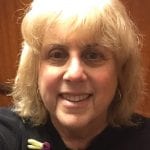
“We were all very aware that, no matter what we went forward with, there will be more infection and more deaths,” said Easthampton Mayor Nicole LaChapelle, one of 17 members of the governor’s Reopening Advisory Board. “While the public-health metrics are numbers, statistics, they’re also people — they’re your neighbors, maybe your mother or father.

“People want to open,” she told BusinessWest, “but they don’t want to put people at risk — themselves, their customers, their parents. The compassion is remarkable.”

That’s why it was no surprise that Massachusetts is reopening slowly and cautiously. Last week, manufacturing facilities, construction sites, and places of worship were allowed to return under strict guidelines (more on those later), and on May 25, the list will expand to offices (except in Boston) and labs; hair salons, pet grooming, and car washes; retail, with remote fulfillment and curbside pickup only; beaches, parks, drive-in movies, and some athletic fields and courts; fishing, hunting, and boating; and outdoor gardens, zoos, reserves, and public installations.

That covers what Baker is calling phase 1, with three more reopening phases to follow. Conspicuously not on the phase-1 list? Restaurants, spas, daycare centers, in-store retail … it’s a long list. And, for many business leaders, a frustrating one.
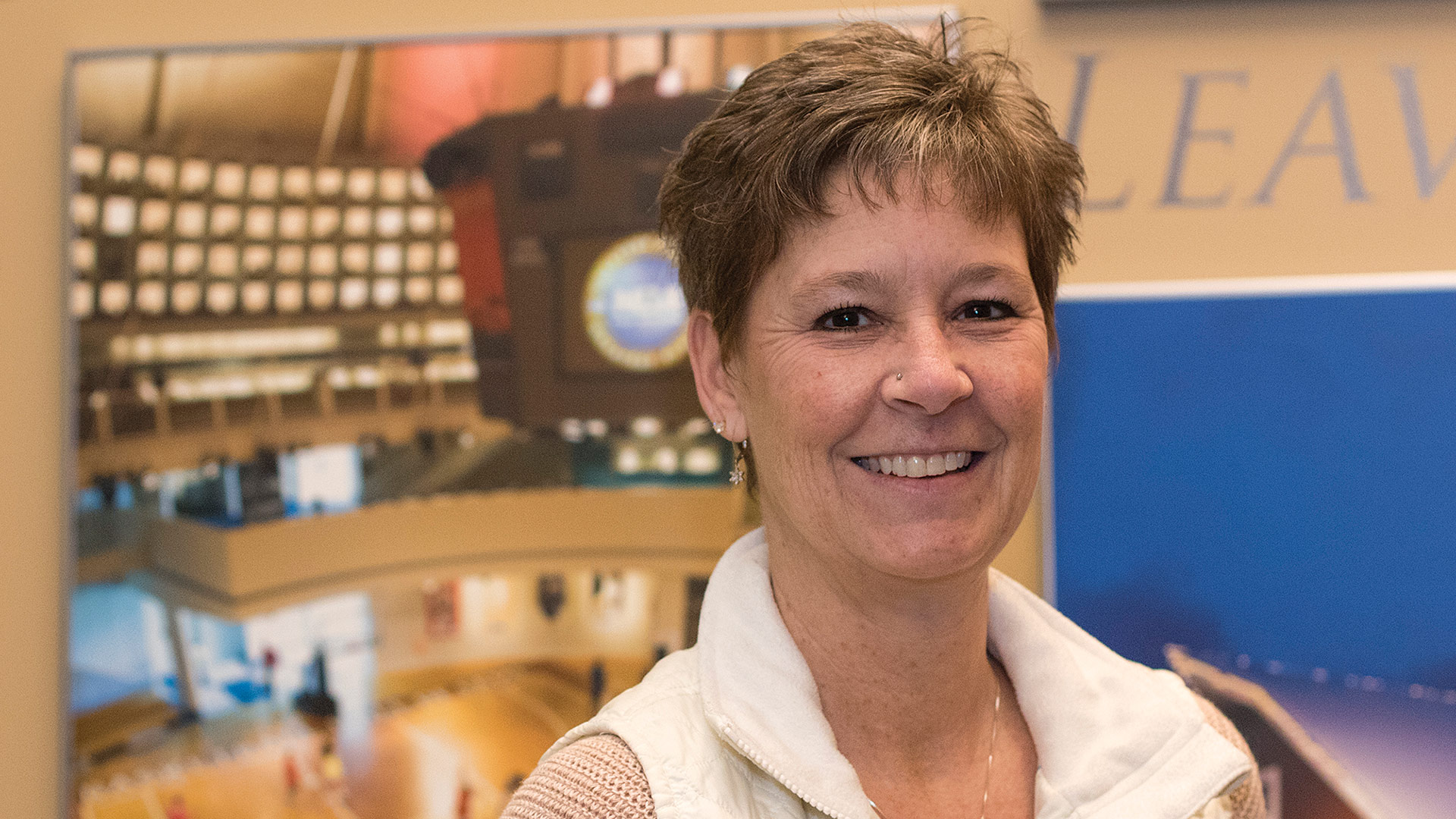
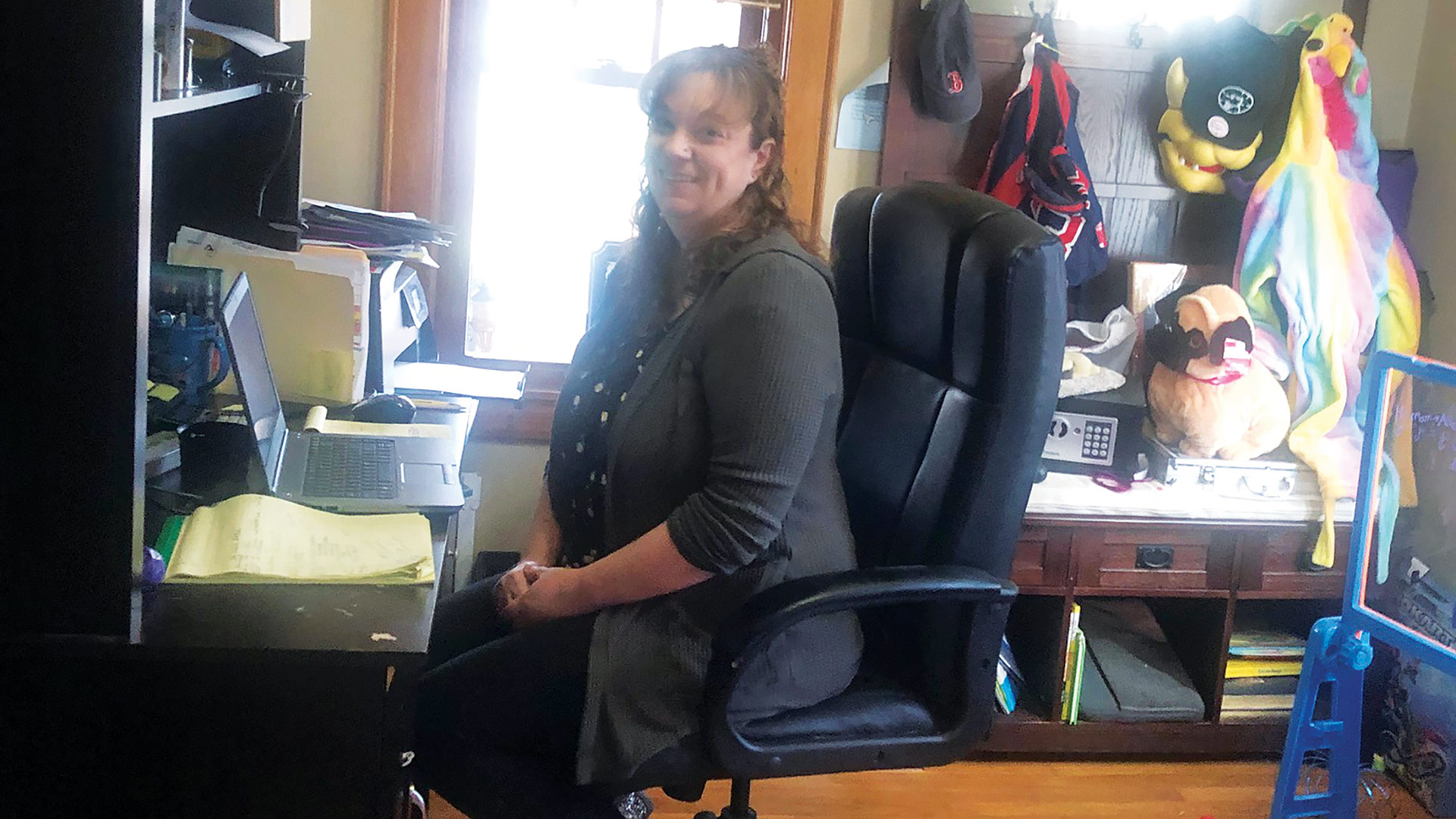
Nancy Creed

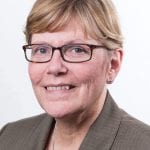
Nancy Creed says businesses in phase 1 got the clarity they were seeking, but those in phase 2 are still waiting.

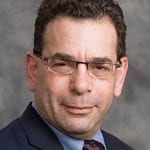
“There’s certainly an appreciation for public health, but there also needs to be some common sense, and I think it’s very hard to explain why it’s OK for 200 people to be in line at Home Depot, but a small, downtown store can’t have two or three people in it,” Rick Sullivan, president and CEO of the Economic Development Council of Western Massachusetts, told BusinessWest.

“Certainly everyone has to be smart,” he added, “but I think there needs to be more common sense brought into the reopening. I appreciate where the governor is — the balancing act — and I think the reopening committee did a great job with outreach, but there needs to be clear guidance and some common sense.”

Others were less diplomatic.

“While protecting public health is important and something we all support, it defies logic to declare that the opening of barbershops and hair salons is safe, while claiming opening small retail businesses is not,” Jon Hurst, president of the Retailers Assoc. of Massachusetts, said in a statement.

“The same is true for the opening of churches and large office buildings,” he went on. “Having two or three people in a retail shop is every bit as safe, if not safer, than the allowable businesses in phase 1. The Baker administration has consistently picked winners and losers during this crisis, and it is disappointing to see that trend continue in the reopening plan.”

As president of the Springfield Regional Chamber, Nancy Creed has been in touch with her members for almost three months now on the impact of the COVID-19 pandemic. She, like Sullivan, understands the delicate balance the state is walking.

“When we were part of the presentation to the advisory board, the last thing I said to them was, ‘our businesses are struggling, but they are surviving this. What they can’t survive is for it to happen again.”

“Certain sectors thought they’d be in phase 1, so there’s always that frustration,” she told BusinessWest. “When we were part of the presentation to the advisory board, the last thing I said to them was, ‘our businesses are struggling, but they are surviving this. What they can’t survive is for it to happen again. So we need to be smart about it and make sure we’re doing everything we can so the reopening is successful, and this doesn’t happen again.’”

She knows that’s not easy for many small businesses to hear, particularly ones with no revenue stream at all during this time.

“This is different for everyone, but businesses are muddling through it, pivoting, doing the things they need to do for basic economic survival,” she added. “But if it happens again, I don’t think we’ll survive the second round.”

Hence, baby steps, and a multi-phase reopening that offers real hope for many sectors, but continues to draw no small amount of criticism as well.

Guidance — and Lack Thereof

According to Baker’s plan, each phase of the reopening will be guided by public-health data that will be continually monitored and used to determine advancement to future phases. The goal of a phased plan is to methodically allow businesses, services, and activities to resume, while avoiding a resurgence of COVID-19 that could overwhelm the state’s healthcare system and erase the progress made so far.

Each phase will last a minimum of three weeks and could last longer before moving to the next phase. If public-health data trends are negative, specific industries, regions, or even the entire Commonwealth may need to return to an earlier phase.

Nicole LaChapelle

Nicole LaChapelle

“When talking to businesses and different groups and unions, the question was always, ‘what are the barriers right now, what are your biggest challenges, but more importantly, what do you need to see happen in order for your industry to open, and what is the timeline for that to happen for you?’”
In addition, success in earlier phases will refine criteria for future phases, including travel, gathering sizes, as well as additional openings in retail, restaurants, lodging, arts, entertainment, fitness centers, museums, youth sports, and other activities.

“Going in, the goals were, how do we safely and slowly open the Massachusetts economy?” LaChapelle said. “And that is directly tied to public-health metrics. When talking to businesses and different groups and unions, the question was always, ‘what are the barriers right now, what are your biggest challenges, but more importantly, what do you need to see happen in order for your industry to open, and what is the timeline for that to happen for you?’”

It was helpful, she explained, to seek input from myriad sectors and businesses — those deemed essential and never forced to shutter; those that had to pivot, such as retailers boosting their online presence and manufacturers shifting to making masks and face shields; and businesses that have been effectively sidelined.

“The board, at no point, even at the beginning, was like, ‘let’s get this thing going and roll it out immediately,’” she added, noting that she understands the need for companies to start ramping back up. “They may be a little disappointed, but they’ve been very understanding. There’s some education we have to do, but nobody is really upside-down about it.”

In order to reopen, businesses must develop a written COVID-19 control plan outlining how its workplace will prevent the spread of the virus. They must also create and display posters and signs describing rules for maintaining social distancing, hygiene protocols, as well as cleaning and disinfecting.

“I think there needs to be an appreciation for restaurants and small Main Street businesses that are not going to be able to just comply with the state’s protocols immediately.”

Sullivan appreciates the attention to public-health concerns, but said it offers little comfort for businesses stuck in an as-yet-undefined phase 2 — or beyond. While the reopening plan gives clear guidance for businesses in phase 1, those in phase 2 don’t even get a target date they can work toward or a set of protocols they can begin to develop. And that lack of clarity has led to frustration.

“I do think many businesses, especially smaller businesses, were kind of expecting more things to open up,” he said. “I think there needs to be an appreciation for restaurants and small Main Street businesses that are not going to be able to just comply with the state’s protocols immediately. They’ll need to plan, order some equipment, and spend some time reorganizing their business, because it’s going to be different than it was pre-COVID. And it’s not something they can do overnight. Many businesses are just looking at lead time — they want to open sooner than later, but they want lead time so they can be ready to go.”

Creed agreed.

“I think what businesses wanted, at least in the beginning, was some clarity about the guidelines, about the timelines, about the standards, about the checklists, all those things, so they can create their own plan — and that was achieved, at least for phase 1,” she explained. “But I am hearing the phase-2 people saying, ‘well, I wanted to be able to plan, but I don’t have enough guidance right now,’ so there’s some frustration.”

The Massachusetts Restaurant Assoc. said as much in a statement following the plan’s release.

“Obviously, every restaurateur is disappointed with the lack of a defined reopening date in today’s announcement,” it noted. “Massachusetts restaurants need their suppliers to have time to restock perishable inventory before it can be delivered to them. They need to notify employees about returning to work and conduct other due diligence to ensure restaurants can open effectively.”

Safety and Numbers

Across Massachusetts, the reopening plan sparked a spectrum of reactions, all acknowledging the competing health and economic interests in play, but expressing different levels of understanding and frustration — and often both.

“We realize that every employer in Massachusetts would love to hear that they can reopen immediately. But we also acknowledge that a phased reopening balances the need to restart the economy with the need to manage a public-health crisis that continues to claim 100 lives a day in Massachusetts,” John Regan, president and CEO of the Associated Industries of Massachusetts, noted in a statement.

Even as some businesses start to reopen and others plan to do so, the state Department of Public Health updated its stay-at-home advisory, replacing it with a new “Safer at Home” advisory, which instructs everyone to stay home unless they are headed to a newly opened facility or activity. It also advises those over age 65 and those with underlying health conditions to stay home, with the exception of trips required for healthcare, groceries, or that are otherwise absolutely necessary. All residents must continue to wear a face covering in public when social distancing is not possible, and individuals are advised to wash their hands frequently and be vigilant in monitoring for symptoms. Restrictions on gatherings of more than 10 people remain in effect.

The state also encourages working from home when possible, and Baker’s office released a list of 54 large companies — employing about 150,000 workers among them — that have issued statements extending work-from-home policies for the remainder of the spring, with numerous reporting intentions to extend into the summer and, in some cases, for the remainder of 2020.

“As MassMutual develops our plan to gradually return to the office, the health and safety of our employees is our top priority,” said Roger Crandall, chairman, president, and CEO of MassMutual, noting that his employees will return to the office no sooner than the beginning of September.

“We expect to come back in a slow, phased manner,” he added. “We will continue to monitor and reassess and will be factoring in a number of considerations — from federal, state, and local government and health officials’ guidance to a sustained reduction in cases in our operating locations, to broader available testing and our employees’ personal circumstances and comfort.”

Patrick Sullivan, Massachusetts President of People’s United Bank, is also promoting continued work from home where possible.

“People’s United Bank is assessing re-entry conditions and protocols to ensure the safety of our team members and our customers,” he said. “Our approach will balance the needs of employees with the needs of the business. As we have been successful in pivoting and adjusting to working from home, we will continue to encourage this behavior.”

Still, those are businesses that can at least operate in most aspects. Retail stores can’t so easily adjust — and have been devastated by the inability to invite shoppers into their stores.

“We are incredibly disappointed with how Governor Baker has treated retail businesses throughout the health and economic crisis. Massachusetts has been one of the most hostile states in the nation toward small retailers.”

“We are incredibly disappointed with how Governor Baker has treated retail businesses throughout the health and economic crisis. Massachusetts has been one of the most hostile states in the nation toward small retailers,” said Hurst, noting that Massachusetts stores are losing Memorial Day weekend at a time when other states have let them open up shop by now. “Retail businesses are ready and able to open safely now with a limited number of people in stores and for appointment shopping. By not allowing that until late June, many small, Main Street businesses will close forever.”

That’s not hyperbole for small businesses of many kinds. Matt Haskins, who operates the popular Matt’s Barber Shop in Amherst, said a recent grant from the Downtown Amherst Foundation has helped him stay afloat at a time when he doesn’t know when college business will return.

“Just five minutes before [receiving word of the grant], I was on a phone call discussing if Matt’s Barber Shop was going to make it or break it,” he told foundation officials. “The grant helps me think we’re going to make it.”

So will being able to open his doors again on May 25. And that’s all most business owners want right now — a target. Creed hears that, but at the same time, she’s encouraged by recent chamber polling suggesting the percentage of business owners who feel they’ll survive this crisis is rising.

“What that says to me is people are finding a way to make sure it doesn’t put them out of business,” she said, “which shows the resilience of the businesses we have here.”

Yes, they have resilience, in spades. Now, they want clarity — and some hard dates.

Joseph Bednar can be reached at [email protected]

Coronavirus Features

The Questions Keep Coming

The Paycheck Protection Program (PPP) was created by the CARES Act to provide forgivable loans to eligible small businesses to keep American workers on the payroll during the COVID-19 pandemic. The SBA recently provided updates to its PPP guidance and also released the form application for PPP loan forgiveness, which will help small businesses seek forgiveness at the conclusion of the eight-week covered period, which begins with the disbursement of their loans.

Here are five common questions area attorneys have been hearing from business owners concerned about how PPP funds may be used in order to be forgiven.

Where can I spend my PPP loan in order for it to be forgiven?

“You’ve got to use 75% of what was loaned for payroll purposes,” said Kathryn Crouss, shareholder with Bacon Wilson. “Obviously, that’s salaries and wages, but other money employers spend on payroll costs count as well — vacation pay, parental or family leave, paid sick leave, or if there’s an employer match for plan premiums. So the definition of ‘payroll costs’ is relatively broad.

“The remaining money can be spent on other approved expenses — keeping the lights on or mortgage or rent or utility bills, those sorts of things,” she added. “Assuming you can prove to the government that you have spent 75% of the loan on qualified payroll expenses and the remaining portion on other qualifying expenses, then the loan should be forgiven and becomes a grant rather than a loan.”

In addition, she added, “if an employer brings an employee back on and that employee used to make, say, $3,000 a month, if they pay them less, they have to be within 75% to be forgiven. That’s not true for head count — they still have to have the same number of employees; not necessarily the same people, but the same head count.”

How do you measure whether an employee’s salary or wages were reduced by more than 25%?

“This may be the area that was causing the most angst among business owners, since it seemed mathematically impossible to not have reduced compensation by at least 25% if you were comparing compensation in the first quarter of 2020 — 13 weeks — to the covered period of eight weeks,” said Scott Foster, partner with Bulkley Richardson. “Fortunately, the SBA has opted to focus only on either the annualized salary for exempt employees, or the average hourly wage for non-exempt employees. Also, with respect to the salaried employees making more than $100,000 per year during the first quarter, as long as the annualized salary remains above $100,000 during the covered period, then any reduction in salary is not considered a reduction under this test.”

What about employees that were furloughed or laid off, but now refuse to return to work?

“For any employee the business has offered to re-employ in writing, and the employee (for whatever reason) refuses to accept re-employment, this will not reduce the loan-forgiveness amount,” Foster said.

Amy Royal, CEO of Royal, P.C., noted that she’s had many questions of this type. “They’re asking, ‘if I want to make sure I get loan forgiveness, how do I address a situation where I’ve offered to bring people back and they’ve said, thanks but no thanks?’ Obviously, those people have their own unemployment issues because if they’ve been offered a job and continue to take unemployment benefits, that could, in certain circumstances, be fraudulent.”

As for the employer, “if you make a good-faith offer to rehire someone with PPP money, make sure that offer is in writing,” she added. “If the employee rejects the offer, make sure you, as a business, have documented that. It will help you when you apply for loan forgiveness. That issue has been a real concern.”

Crouss agreed, noting that some employees may have legitimate reservations about returning to work — for instance, because they have a 95-year-old parent and don’t want to infect them.

“Make sure that conversation is in writing,” she said. “If they say they can’t return, get that response in writing as well, save that correspondence, and put those documents in their personnel file. Where we’re heading is, the head-count piece may be forgiven if they have that kind of documentation.”

Interestingly, Foster noted, “the application states that any employee fired for cause during the covered period does not reduce the borrower’s loan forgiveness. Oddly, this could mean that an employee that was fired for cause prior to the covered period would still count as a missing FTE during the covered period.”

My employees have nothing to do until my business is allowed to reopen and ramps back up. What if I want to save the PPP funds for after the eight-week period?

For example, Royal said, “if you’re a restaurant, you’re not open now. Maybe, if you’re lucky, you’re doing takeout, but the bulk of your business is full service. So the timing has presented issues because they can’t be fully ramped up now, but they’ve got to avail themselves of the funds right now before they run out.”

Businesses may absolutely hang onto the money and use it beyond the eight-week window, she explained — but they will have to pay it back over two years with 1% interest.

“That’s a very attractive loan,” Crouss noted. “Many businesses are making that decision — which is a perfectly sound decision. This only goes for eight weeks, and when you get that amount of money, it should cover your payroll for eight weeks, but what happens if the world hasn’t righted itself? So maybe it makes sense to save it for a rainy day and think of it as a loan and not a forgivable grant.”

Do I have to claim the PPP loan as income?

“The good news is, the IRS has spoken and said no,” Royal said. However, expenses paid for with PPP funds are also not deductible. “That makes sense — you can’t double dip. The way I conceptualize this is, it didn’t happen. We’re going to pretend this period didn’t happen for tax purposes.”

—Joseph Bednar

Coronavirus Special Coverage

Climbing Out

It’s not easy for a business to be shut down — seriously curtailing or even eliminating all revenue — for any period of time. But it’s much more frustrating not to know how long that period of time will actually be. That’s where Massachusetts businesses deemed non-essential during the COVID-19 pandemic stand right now — in a limbo of treading water and being as flexible, creative, and patient as they can while they await word on when the state will reopen its economy, and what form that re-emergence will take.

At some point in early March, Ashley Batlle knew what was coming. And she knew what it meant for her health and wellness spa, Beauty Batlles Lounge, that she opened in Chicopee about a year ago.

“This is a personal, physical-contact business. You’re definitely in close proximity with the client, giving them a service that everyone looks forward to — something they’re accustomed to making part of their schedule,” Batlle said. Yet, the rumblings were that, at some point, the rising threat of COVID-19 was going to force businesses to shut their doors. “So we tried to get as many clients in as we could.”

And then, suddenly, those appointments that clients look forward to were cancelled, postponed until — well, nobody knows yet. And that’s the problem for businesses the state deemed non-essential: the unknown.

Toward the end of April, the Baker-Polito administration extended the statewide essential-services emergency order by two weeks, from May 4 to May 18. Businesses and organizations not on the list of essential services can only continue operations through remote means — if at all possible.

For Batlle, well … she can’t offer facials, waxing, microblading, and other treatments remotely. And she was unable to access benefits through the CARES Act and other government relief measures.

“My anxiety level has been very, very high. It hasn’t been fun, not knowing when we’ll begin to open and what kind of measures will be asked of us by the state and city to be able to reopen,” she said, noting that, as a one-woman operation, it will be easy to comply with social-distancing regulations sure to accompany any sort of reopening.

What’s less certain is how customers will respond — to all types of interactions, not just her services.

“I’m going to be able to open up my doors and get everyone in as quick as possible — that’s what I would love to do, but I think it’s going to be a soft situation, where, little by little, we’re getting back to business,” she explained, noting that some people will be leery of close contact at first, especially since the virus doesn’t tend to show symptoms for a while.

Still, most business owners shuttered by the pandemic would love an opportunity to at least try to get back to normal, even if they understand why the governor put the stay-at-home mandate in place.

Rick Sullivan

Rick Sullivan

“We may be seeing the number of cases plateauing, but [development of] a vaccine, or treatment medication, is still in its infancy, so the data still says go slow. I do think some businesses previously deemed non-essential could have protocols put in place to allow partial reopening. However, nobody wants to reopen prematurely and see worse spikes later in the year.”

“While we expected and understand Governor Baker’s decision to extend the stay-at-home advisory, that tough decision underscores the challenging circumstances we find ourselves in as a business community,” said Nancy Creed, president of the Springfield Regional Chamber. “We’re doing a balancing act between wanting to get back to work and getting back to work in a safe manner.”

Many of her members supported the two-week extension; a late-April chamber poll, right before the non-essential closures were extended by two weeks, asked what worried them more: the spread of the virus if restrictions were loosened too soon, or the negative economic impact of not reopening quickly enough. It also asked if Massachusetts was ready for a May 4 reopening.

“Seventy-seven percent responded that the spread of the virus was more worrisome, and an overwhelming number — 91% — responded that Massachusetts was not ready for a May 4 reopening,” Creed said, “clearly revealing that much of the business community is concerned about protecting those most vulnerable and stopping the spread of the disease, and demonstrating the commitment our business community has to the community as a whole.”

Rick Sullivan, president of the Economic Development Council of Western Massachusetts, took a similar outlook.

“I do not think that anyone is surprised that the shutdown has been extended, as the governor has been clear he will follow the data as to when to begin reopening the economy,” Sullivan said. “We may be seeing the number of cases plateauing, but [development of] a vaccine, or treatment medication, is still in its infancy, so the data still says go slow. I do think some businesses previously deemed non-essential could have protocols put in place to allow partial reopening. However, nobody wants to reopen prematurely and see worse spikes later in the year.”

All that may be true, but it’s still difficult — and, for many businesses, exceptionally concerning — to stay closed this long, and possibly longer. Businesses are doing what they can to be creative, in many cases opening doors of commerce they will continue to pursue after the COVID-19 threat passes, or even using the time to support other community members in need (more on that later).

But no one likes the uncertainty of not knowing whether May 18 is the real target for reopening, or just another can to be kicked down the road.

Waiting Game

Paul DiGrigoli would like to reopen, too.

“This has impacted us tremendously,” said the owner of DiGrigoli Salon and DiGrigoli School of Cosmetology in West Springfield. “We haven’t had a chance to reach out to all our clients; some we have. But we just have to wait until Charlie Baker gives us the green light, which hopefully will be May 18.”

He was able to secure a Paycheck Protection Program (PPP) loan, succeeding in the second round of that program’s disbursements after missing on the first round. That will help cover costs like utilities and mortgage interest while keeping his employees paid for eight weeks as well. “We went through Community Bank, and they were phenomenal,” he said.

And he’s getting ready for some anticipated changes when the salon does reopen.

“We bought a lot of hand sanitizer to put at the front desk in the school and the salon, we’ve gotten gloves and masks, and what we’re going to do initially is get the clients’ cell phone numbers and call them from the reception desk to let them know when their appointment is available. And we’ll stick with staying six feet apart, spreading out the stations. Both the stylist and the client will have to wear a mask until further notice. It’s going to be uncomfortable at first.”

As for the school, online training has been effective for theory, but students haven’t been able to practice what they learn.

In general, he told BusinessWest, “we’re really trying our hardest to get back to normal, but we’ve really been handcuffed. There has been frustration and anxiety because we don’t know what to expect.”

Or when to expect it, he added. “We don’t know when it will happen. They’re saying May 18, but who the heck knows? We’re hoping it doesn’t go beyond that, but thank God for the relief funds — that really saved us.”

Claudia Pazmany, executive director of the Amherst Area Chamber of Commerce, polled her members at the end of April and put some of that anxiety into raw numbers. For example, responding businesses are losing an average of $55,837 per month in revenue during the shutdown, and 61% have had to lay off or furlough employees. More than 20% have serious concerns about being able to reopen if the state of emergency extends beyond June 1.

“They’re worried,” she said. “Rent, utilities, and payroll are three areas that continue to be a struggle.”

Amherst is also in an unusual situation, as it’s a small town that loses more than half its population when UMass Amherst and Amherst College aren’t in session. The downtown businesses in particular rely heavily on students — and now there’s talk across the region that colleges might start the fall with distance learning only.

Claudia Pazmany

Claudia Pazmany

“On the flip side, this has stirred a lot of innovation from businesses who have been deemed non-essential or limited; they’ve pivoted or gone online. The creativity and innovation we’ve seen have been really exciting.”

“Initially, there hasn’t been a lot of grumbling, but they’re generally frustrated and just sad. Everything is unknown,” Pazmany told BusinessWest. “They’re fearful — so much is unknown, and delays keep coming. We don’t have a deadline or guidelines; they just keep pushing back the date, and that causes more fear and anxiety.”

Driving Innovation

And also a good deal of invention, driven by necessity.

“On the flip side, this has stirred a lot of innovation from businesses who have been deemed non-essential or limited; they’ve pivoted or gone online,” Pazmany said. “The creativity and innovation we’ve seen have been really exciting.”

Take Zanna, a clothing shop that has been a staple of Amherst’s downtown for decades, but has never had an online store. Until now.

“You have to look at the good in this crisis,” owner Amy Benson said. “In my case, it moved me — encouraged me — to get an online store open. I’ve only owned the store a year, so I didn’t have time to even think about an online store before. Now I did, so I took the time to get it up and going.

“Do I think it’s the wave of Zanna’s future? No, but I think it’s an extension. We’ll probably keep it going once we’re open,” she added, noting that it opens more opportunities. “We’re in a transient community. We see people from all over the country, between the university and Amherst College. We all want things to be the way they were, but we know we’ll have to adapt. Some of these new trends, like my online store, I’m not going to shut that off.”

Benson has been creative in other ways as well, from curbside pickup — with everyone wearing masks — to ‘virtual shopping,’ where she walks a customer around the store using an iPad and FaceTime, showing them tops and bottoms and coordinating outfits.

“We want customers to be engaged, and they want to hear from us because we form those kinds of relationships,” she said. “When we’re FaceTiming, we’re FaceTiming with a friend and shopping with a friend. It’s a really important way to stay connected.

“You have to do something,” she went on. “You can’t just close your doors and do nothing. Our customers are women who have supported us for over 40 years; we’re not going to just shut our doors and not communicate. I do whatever I can to stay engaged with our customers, they’re the lifeline of our business.”

In other words, Zanna has come a long way since last month, when Benson was in “full panic mode” and offering nothing but a gift-certificate promotion. “We’re not bringing in nearly the revenue we would normally, but we’re supporting what we’re able to do right now.”

She’s not alone, Pazmany noted, citing examples like restaurants revamping their online presence with expanded takeout menus to Amherst Books shipping and delivering items to customers, to the Amherst Area Chamber itself, which has been connecting with the business community through marketing seminars.

Doing Some Good

Or taking advantage of an unusual time to do some good in the community.

Dean’s Beans, based in Orange, has seen a surge in web sales as coffee drinkers are brewing more at home due to social distancing and telecommuting. With COVID-19 causing great economic hardship, the company has chosen to share the money from these web sales with the community by helping to fund school food programs — a total of $26,000, in fact, divided among seven Western Mass. school districts.

“Making sure children have access to food throughout this pandemic is crucial, and we are proud to support these essential programs in Springfield, Amherst, and Orange,” said Dean Cycon, founder and CEO of Dean’s Beans. “Part of a company’s profitability is the positivity it generates for others, and we are committed to helping our communities ease the pain of this crisis.”

Amy Benson

Amy Benson

“You have to look at the good in this crisis. In my case, it moved me — encouraged me — to get an online store open. I’ve only owned the store a year, so I didn’t have time to even think about an online store before. Now I did, so I took the time to get it up and going.”

Meanwhile, Batlle has launched the Hero Project, a virtual fundraiser designed to give back to those on the front lines fighting the pandemic. Funds raised will be set aside to provide complimentary self-care services at Beauty Batlles Lounge for healthcare professionals, police officers, firefighters, EMTs, and employees of sheriffs’ departments, once she can open her doors again. Visit beautybatlles.com to donate.

Considering the masks they’re wearing all day long, “they’re going to need facials when this is done,” Batlle joked, before getting serious.

“I reached out to my nurse friends and heard their stories, about the trauma they’re going through. One friend works in the ICU at a COVID unit — she goes into work one day and has four patients, and when it’s time to leave, she only has one. That has to do something to you. How can I give back to them? That’s where the idea for the Hero Project came in.”

It’s a way to pay it forward while anticipating the light at the end of the tunnel, she told BusinessWest. “This isn’t easy on anybody.”

It would be easier with some clarity from Beacon Hill, but that’s not coming right now. Instead, Baker convened a Reopening Advisory Board of public-health officials, representatives from the business community, and municipal leaders from across the Commonwealth. They are charged with advising the administration on strategies to reopen the economy in phases based on health and safety metrics, and are expected to develop a report by May 18.

That’s just the report date. So it’s easy to see why businesses might not suddenly be reopening on that date.

“Personally, every time Governor Baker gives us a date when we’re going to open, I think, ‘hmm, I don’t know if that’s going to happen,’” Benson said. “I’m always thinking, ‘what’s the worst-case scenario? June 1? They keep pushing it back.”

That’s why it bothers Batlle that some proprietors of businesses like hers continue to offer services from their home.

“We should all just be staying stationary; we’re all in the same boat,” she said. “That just puts more stress on business owners who are actually following the rules, and it’s could extend the time we’re going to be out of work.”

Which, for too many business owners and employees across Western Mass., already feels like too long.

Joseph Bednar can be reached at [email protected]

Special Coverage Technology

Drying Times

Excel Dryer

U.S. Rep. Richard Neal (second from left) gets a factory tour with Excel Dryer’s Denis Gagnon, Nancy Gagnon, and Bill Gagnon.

When it comes to the XLERATOR, his company’s signature hand dryer, filtration is nothing new, Bill Gagnon said.

“We’ve had an optional HEPA filtration system in it for years,” said Gagnon, vice president of Excel Dryer in East Longmeadow. “The typical HEPA filtration test you do is performed with bacteria, and it’s to particle sizes of .3 microns or larger. That’s standard in the industry. We’ve done that test; we already had it.”

But coronavirus isn’t bacterial, as its name makes clear. And its typical particle size is around 120 nanometers, or 0.12 microns — much smaller than the bacterial particles the filter had already been tested for.

“When we heard about coronavirus, we wanted to get ahead of this and wanted to test our product and its effectiveness against viruses, so we sent our product to our testing laboratory partner in Minnesota and said we want to do a virus-specific test,” Gagnon explained, adding that the lab put some 380 million virus particles through the system, “and basically zero came out the other end.”

Well, not exactly zero, but pretty darn close; the dryer’s filter lets through about one in 100,000 particles.

“This test shows our HEPA filtration system can filter [the virus] out of the airstream and gives the public assurance that it’s safe to use hand dryers — because it is,” Gagnon told BusinessWest. “Hand dryers are a hygienic way to dry your hands. This was something we wanted to test for — something we thought was important.”

Xlerator

One of the mobile units being delivered to the front lines of the COVID-19 fight.

On May 6, Excel Dryer hosted U.S. Rep. Richard Neal and local media to tour the company’s manufacturing facility and tout the XLERATOR’s virus-filtration capabilities — and an ongoing donation of 100 units, with HEPA filtration systems, to first responders and COVID-19 testing sites across the state.

“Talk about innovation and creativity — they established it,” Neal said of Gagnon and his father, Excel President Denis Gagnon, who invented the popular XLERATOR. “These are 52 domestic manufacturing jobs to compete with supply chains all over the world. If we’ve learned one lesson from a pandemic, it’s that relying on other parts of the world for our products and supplies is not a great idea.”

Neal and his aide, William Tranghese, were involved in early discussions establishing Excel Dryer as an essential manufacturer in Massachusetts, making hand dryers that play a critical role in achieving proper hand hygiene. After all, thoroughly washing and completely drying hands are listed as the top defense against the spread of germs — including the novel coronavirus, which causes COVID-19 — by both the World Health Organization and the Centers for Disease Control and Prevention.

“Proper hand hygiene isn’t just washing your hands, it’s completely drying your hands,” Denis Gagnon said following the factory tour. “When we originally added the HEPA filter as an option to the XLERATOR, we tested for bacteria. Because of the COVID outbreak, we retested the HEPA filter for its ability to filter viruses, and it literally filters 99.999% of viruses. So I think there’s going to be healthy demand for HEPA-filter XLERATORs going forward.”

Bending the Curve

Neal — who, like the Gagnons, Excel’s employees, and guests, wore a face mask during his visit to the plant — touted hand washing as well, and said it’s among the now-common practices, including social distancing, that are flattening the viral curve in Massachusetts.

“The CDC and the WHO have all talked about the notion of hand hygiene, how important it is. I think we’ve seen in Massachusetts the curve beginning to bend,” the congressman noted. “The stabilization — and a little bit of a decline — have had much to do with, I think, adhering to the recommendations of professional health people.”

He particularly praised Dr. Anthony Fauci, director of the National Institute of Allergy and Infectious Diseases, as “the most reliable voice in America” on coronavirus and related matters. “Whenever I’ve received an invitation over these years in Washington to an event where he was the speaker, I went to hear what he had to say.”

As for the COVID-19 progression, “there is some good news, but there is a ways to go,” Neal went on. “Hot spots seem to be declining in the larger urban areas, but they seem to be moving to new places. So while we have better news in Boston, New York, and even here in Western Massachusetts, other areas of the country are likely to go through the outbreak that we’ve all witnessed here.”

And if Excel can play a part in slowing the spread, all the better, Denis Gagnon said.

“We very much pride ourselves on making our product here in the United States,” he noted. “It didn’t take the inconvenience of disrupted supply chains to bring it back. We never wanted it to leave in the first place. As far as being a good corporate citizen, it’s in our blood. We’re happy to help in any way we can. This was kind of an impromptu solution, and I think it’s going to help on the front lines.”

Indeed, the 100 donated units are already being shipped out, Bill Gagnon said, to police and fire facilities, testing sites, and places like the first-responder recovery center being operated by the Hampden County Sheriff’s Office.

“If they test positive, they don’t want to bring it home, so they get quality food and bedding and a place to get healthy and stay away from their families,” he explained. “We’re donating units there. We’re just trying to find out where they’ll make the biggest impact.”

While the HEPA filters on the dryers are not new, the mobile units are. They came out of a conversation the Gagnons had with Neal and his staff about whether Excel’s work is considered essential.

“In that conversation, I was talking about getting mobile units out to the front lines,” Bill said, explaining that the company’s stainless-steel supplier had built a wall to show off the product in a trade show booth. “They said, ‘we can re-engineer that to be mobile, and we can get this thing out in the field.’ Two days later, the prototype was created, and they drove it up here and dropped it off — it was amazing. Two weeks later, we had the first units being used out in the field.

“So it was an amazing new product innovation,” he continued, “and we were working with the congressman’s office and just trying to figure out, how can we help? How can we get this virus-filtering hand-hygiene solution into these facilities? And now it’s here, and there’s a lot of interest in it, and we think it can make a big difference.”

“When we heard about coronavirus, we wanted to get ahead of this and wanted to test our product and its effectiveness against viruses, so we sent our product to our testing laboratory partner in Minnesota and said we want to do a virus-specific test.”

After all, he explained, while experts like the CDC and Fauci tout proper hand hygiene as the best defense against the spread of germs, it’s important to not forget the role of complete drying as well.

“Everyone talks about washing your hands for 20 seconds, but nobody talks about drying your hands,” Bill said. “You have to completely dry them. Wet hands are 1,000 times more susceptible to pick up or transfer germs. Drying hands is critical.”

Essentially Speaking

So are Excel’s operations, even in the midst of an economic shutdown, he added.

“We were in the same situation of a lot of other small businesses; when the federal guidelines came out and it was up to the states to put out their guidances, there were a lot of general categories” for what constitutes an essential service during the pandemic, he explained.

Excel seemed to fit multiple categories, Bill told BusinessWest; not only is hygiene important during a viral outbreak, but the company has contracts with the federal government to supply its product, which can boost a company’s chances to be deemed essential.

“There’s critical manufacturing, but for us, we’re such a niche market, no one calls out hand dryers specifically,” he went on. “But we felt like we fit under multiple categories, and that’s why we reached out to Congressman Neal’s office. We wanted to do everything we could to make sure we we’re doing the right thing, and they helped us with that. And when the state of Massachusetts put out their second round, a revision to the essential-services list, hygiene actually had its own category … and we’re certainly a critical part of that. So, yes, absolutely, we’re essential.”

And part of a mobile hand-drying solution that promises to reduce the spread of infection, Neal said. “There are simple things we can do in life to get through this, and they are going to be very important to us going forward.”

Joseph Bednar can be reached at [email protected]

Daily News

NORTHAMPTON — Home City Development Inc. (HCDI), a Springfield-based affordable-housing development organization, was awarded $2.88 million and seven project-based vouchers by the Massachusetts Department of Housing and Community Development (DHCD). Funds were awarded for renovations of New South Street Apartments, an 18-unit historic building located at 24-34 New South St. in Northampton. Project-based vouchers and supportive service funds will provide housing for seven homeless families. In addition, the city of Northampton awarded $50,000 of Community Development Block Grant funds for this project. 

“Home City Development is proud to provide quality affordable housing and supportive services in Northampton for homeless individuals and families,” said Peter Serafino, director of Real Estate Development at HCDI. “Gov. Baker, Lt. Gov. Polito, and the staff at DHCD understand the many challenges families face in finding housing. Home City Development would like to recognize and thank these Massachusetts leaders, as well as state Rep. Lindsay Sabadosa, state Sen. Jo Comerford, and Mayor Narkewicz, for funding the New South Street Apartments improvements.”

Homeless households will be selected from the Three County Continuum of Care Coordinated Entry system. This system includes Hampshire, Franklin, and Berkshire county emergency-assistance shelters and other assistance organizations. HCDI will provide case management and related support services for residents at New South Street Apartments, including those who were formerly homeless. 

HCDI is working with Architecture EL as project architect and Henry General Contractors as contractor. Renovation work is expected to begin this fall and take about nine months to complete.

Home City Development Inc. is a nonprofit, resident-centered developer of multi-family and mixed-use properties in Western Mass. HCDI was founded as Better Homes Inc. in 1968 by the Springfield Chamber of Commerce. Over more than 50 years, HCDI has worked to facilitate community stability and growth in collaboration with numerous partners and residents.

Daily News

SPRINGFIELD — Leadership Pioneer Valley (LPV) announced a virtual discussion with local leaders from different sectors about how they are leading during COVID-19, what is needed, and what we can expect. The event will be held on Tuesday, May 5 from noon to 1 p.m. on Zoom.

Speakers for “Letting Leadership Shine” include Jessica Collins, executive director of the Public Health Institute of Western Massachusetts; Justin Hurst, Springfield city councilor; Joanne Marqusee, president of Cooley Dickinson Hospital; Christina Royal, president of Holyoke Community College; and Katie Allan Zobel, executive director of the Community Foundation of Western Massachusetts. Other speakers will be announced.

“These unprecedented times are putting a real strain on everyone, but especially leaders,” said Lora Wondolowski, Leadership Pioneer Valley’s executive director. “We are excited to hear from local leaders on how they are leading and their forecasts for their sectors.”

To register or for more information on sessions, visit www.leadershippv.org.

COVID-19 Daily News

SPRINGFIELD — Freedom Credit Union (FCU) announced a donation of $55,000 to be dispersed among several community organizations at the front lines of the local fight against the COVID-19 pandemic. 

“The coronavirus crisis has required that the entire community come together in response,” FCU President and CEO Glenn Welch said. “At Freedom, we wanted to honor those organizations that are at the center of the community response and contribute to the resources they need to help others during the pandemic.”

FCU announced that the following slate of organizations will receive a portion of the $55,000 donation: Baystate Health Foundation; Mercy Medical Center; Cooley Dickinson Health Care; the Food Bank of Western Massachusetts; Hampshire Hospitality Group, whose Hampshire County Heroes feed first responders in Hampshire County; and Feed the Fight, an initiative of Peter Pan Bus Lines and area restaurants to feed healthcare workers and first responders in the community.

Welch indicated that FCU will continue to assist the community throughout the duration of the COVID-19 crisis. In addition to these community donations, Welch said FCU has offered resources to its individual members intended to provide financial assistance or relief during the crisis, including online banking services and the new Freedom Relief Loan, which provides up to $10,000 to members dealing with consequences of the pandemic, including layoffs, furloughs, and bills.

In addition, FCU’s Skip-a-Pay program allows members with a consumer loan — auto, mortgage, home equity, or home improvement — to defer payments up to 90 days. Members should contact their local branch for details. FCU can also work with member businesses needing financial relief on their specific circumstances. Business members should speak with the Member Business Lending department. For contact information, visit freedom.coop.

“Community and member support is a central tenet of Freedom’s work,” Welch said. “And there’s never been a more important time to give back. We’re grateful for the courageous and critical work being done by doctors, nurses, EMTs, and other first responders, as well as everyday heroes like grocery and restaurant workers, mail carriers, and delivery people. They are truly essential and appreciated, and we’re proud to join this effort to assist the entire community at a time of great need.”

Coronavirus

Trial by Fire

STCC respiratory-care students

STCC respiratory-care students Stefani Glukhova and Max La work at Baystate Medical Center.

Tallon Tomasi used to punch the same clock everyone else does when starting her shift as an LPN at the Leavitt Family Jewish Home in Longmeadow.

Not anymore. Because she works in a COVID-positive unit at the skilled-nursing facility, she enters by a different way than those in the negative units.

“Now, when we come in, we do this check-in system where we wash our hands, get our temperatures taken, we’re asked about symptoms related to COVID, about recent travels, recent exposure to people who have traveled. Then we get our gear, we wash our hands, and go to work.”

As a nursing student at Holyoke Community College, Tomasi is just beginning her healthcare career, and doing so right on the front lines of a global pandemic the likes of which haven’t been seen in more than a century.

Some aspects of it are tough to bear.

“The thing that’s very hard is not having family members being able to come in and see their loved ones as we are going through this difficult time,” she told BusinessWest. “Some of our patients have dementia, and not being able to see their families, it is challenging.”

“The thing that’s very hard is not having family members being able to come in and see their loved ones as we are going through this difficult time. Some of our patients have dementia, and not being able to see their families, it is challenging.”

That said, “I think our facility has done a good job,” she went on. “We do phone calls with family, and we do FaceTime, so I think that helps a little bit. But not being able to physically touch loved ones is hard for some of the patients and their family members.”

Tomasi paused to consider what else has been challenging about working in healthcare during the time of COVID-19.

“Everyone is so fearful of not knowing what’s going to happen,” she finally said. “That’s a big problem. We are not fully aware of how this thing will go, how to treat it, so the new big problem is fear — fear of the unknown. We don’t know everything about it, there’s anxiety around it, and I sometimes get scared because I know that I have the ability to spread it. But you know what has to be done — you have to help.”

With graduation — such as it is this year — just around the corner, many more nurses and other healthcare professionals are getting ready to transition from college into full-time work, but they’re facing an uncertain job market when so much of the sector’s energy is tied up in simply containing the pandemic.

“I checked in with some of our soon-to-be-graduates, and as far as the job market goes, I would say it’s pretty much up in the air and confusing,” said Kathleen Scoble, dean of the School of Nursing at Elms College.

On one hand, she noted, Hartford Hospital and St. Francis Hospital just down I-91 have responded “pretty expeditiously” to graduating seniors, several of whom landed positions right away. On the other hand, Baystate Medical Center has informed applicants that its new-graduate nursing program, traditionally a very popular landing spot for Elms grads, has been postponed.

Brooke Hallowell

Brooke Hallowell

“We have mechanisms to do more triage and problem solving with patients before they come to a place where they’re exposing themselves to others.”

But the need is great, she added, and Elms President Harry Dumay agreed, adding, “I’m proud of being part of this sector and proud of not only our institution, but all students and graduates on the front lines during these difficult times.”

Even if, as we’ll see, it can be a little challenging getting to those front lines.

Field Work

For Springfield Technical Community College, which boasts the largest health-simulation center in the Northeast, students not having access to campus means not being able to use those tools in their training, President John Cook said.

“That does hinder the potential of our students to finish, graduate, and work in these fields, which, if they weren’t in demand before, are certainly in demand now.”

That’s a major factor in nursing right now, Scoble said.

“If you ask students what our major responsibility is, it’s preparing them for licensure; it’s our primary responsibility as a program, to make sure they meet all their graduation requirements. And that has been a keen challenge the last semester; all of our clinical learning experiences were canceled — understandably.”

Carol Leary, president of Bay Path College, also noted that nursing students have had their clinicals put off — and there’s only so much that can be accomplished online.

“For me, that is a concern because many of them need to sit for their licensing exams before they can begin to work,” she said. “The accrediting bodies are trying to work with all the programs across the country to figure out how students can sit for exams.”

Scoble noted that only one testing site is open in the entire state where nursing students can take their licensing exam, known as the NCLEX, and that site is following CDC requirements for social distancing. “So you can imagine, with thousands of nursing graduates in the state, how long it will take for them to test the class of 2020. But they’re trying to open as many sites as they can.”

In Gov. Charlie Baker’s guidance when shuttering the Massachusetts economy in March, language was included allowing new nurses to practice without a license, if supervised by a professional nurse of equal or higher education.

“It’s really up to the employers how they would receive a new graduate who is not licensed, how they would recruit and receive them,” Scoble said. “We would provide any supporting documentation they would require.

“I checked in with some of our soon-to-be-graduates, and as far as the job market goes, I would say it’s pretty much up in the air and confusing.”

In the past, she explained, a typical student would agree to a position in early spring, then take the exam in June and start work around July.

“All that is unknown right now. Students would say the only thing they can control is finishing the program and preparing for NCLEX. We’re stressing to our soon-to-be-graduates to prepare for the NCLEX — and continue to prepare — until they have the opportunity to sit for the exam.”

In a similar situation, three respiratory-care students from STCC recently began working at Baystate Medical Center after applying for and receiving limited permit licenses, said Esther Perrelli Brookes, director and department chair of the Respiratory Care program. Eight other students have applied for limited permit licenses so they can work in the field.

“Students chose to study respiratory care because they want to help people. They want to make a difference,” Perrelli Brookes said. “I’m extremely proud of my students who are stepping up during this unprecedented health crisis. I’ve had many students reach out to say they want to find out what they can do now. I’ve been helping them get their limited permit licenses.”

“I was one of the first in my class to do it,” student Max La said. “It’s a good learning experience because other respiratory therapists are there and you can learn from them.”

The limited permit license means he can perform certain tasks, but not everything a fully licensed respiratory care therapist would do. “We can’t touch the ventilators,” he said, referring to the devices that some seriously ill COVID-19 patients use in hospitals.

At Baystate, La does not work with COVID-19 patients, but must wear a gown, mask, and other personal protective equipment (PPE), and he said Baystate takes precautions to protect him and others from contracting the coronavirus. “There’s always concern, but Baystate has a good policy. Everyone has masks, and they do temperature checks when everyone is walking in.”

STCC’s respiratory care program trains students skills in treatment, management, diagnosis and care of patients with breathing problems associated with diseases such as COVID-19.

According to the U.S. Bureau of Labor Statistics, respiratory therapists will continue to be in high demand at hospitals and medical facilities, with job growth of 21% projected between 2018 and 2028 — and that was before COVID-19 wrought what is essentially a respiratory crisis around the globe.

Seeds of Change

Demand should remain high in many health fields, said Brooke Hallowell, dean of the School of Health Sciences at Springfield College, though it may be uneven in the short term. Take physical and occupational therapists — in emergency-care settings, they’re playing an important role in patient care. But those who work with post-surgical patients for, say, joint replacement may find work more intermittent as many elective procedures are being postponed.

One area of growth is in the realm of telehealth, she added. “All of our health professionals are going through a rapid transition in terms of telehealth access, and Medicare and insurance companies are adjusting their policies related to telehealth, and reimbursement for telehealth visits is being revamped.”

These efforts are intended to reduce the spread of COVID-19, but the lessons being learned may be long-term, Hallowell noted.

“Instead of waiting in a room full of sick people to be seen at the doctor’s office, we have mechanisms to do more triage and problem solving with patients before they come to a place where they’re exposing themselves to others. I think this is here to stay … how we carry out our practices will be changing in big ways.”

Interest in some health programs may shift as well, she added. For example, cardiopulmonary rehabilitation, a specialty within physical therapy, is getting more attention for the vital role it plays in COVID-19 treatment. And Springfield College is probably launching its new undergraduate program in public health this fall at the right time, too.

“We expect that will be a popular major, as people become more aware of what public health and epidemiology are,” Hallowell said. “That’s good timing for us.”

Christina Royal, president of Holyoke Community College, told BusinessWest that a great deal of first responders, nurses, and other healthcare workers have taken classes at community colleges like HCC at some point.

“When I think about our role in ensuring that we have the workforce talent we need in healthcare, which is the primary sector in Western Mass., I think it’s important that we continue to think about the kind of training we’re doing and how to continue to support this community.”

Scoble doesn’t foresee a time when nursing is not an in-demand profession.

“I’m not sure what we’re going to experience over the next few months,” she said. “A lot has to do with how we come back as a country, as a state, and as a community, but I have no doubt that every single one of my graduates will land a position at some point. If this was a normal period of time, a normal spring, many of the graduates would be on the fringe of accepting a position. They would have had interviews and been called back. Right now, a lot of that is at a standstill.”

When they do land jobs, Scoble added, “they’ll have the knowledge and skills and competencies, but lack a great deal of experience. So my number-one concern is, will they enter a work environment where they have the kinds of orientation and support they need? It’s definitely a concern.”

Stefani Glukhova, one of STCC’s respiratory-care students who started working at Baystate in March, may put some of those concerns to bed.

“All the staff here are very kind and generous and are always willing to help you,” she said. “As it gets busier at the hospital with fighting COVID-19, the registered respiratory therapists work around the clock to help fight the virus. My fellow classmates and I do our very best to be available and help out with treatments, floor therapies such as chest physical therapy, and much more.

“This is an amazing learning experience that I would recommend,” she concluded — even if it comes during a pandemic that no one would ever recommend.

Joseph Bednar can be reached at [email protected]

Coronavirus

Mixed Bag

Matt Sosik helped Char Gentes

Matt Sosik helped Char Gentes secure a PPP loan through bankESB that kept Riverside Industries employees paid for eight weeks

Char Gentes calls the Paycheck Protection Program “a lifeline.” Her nearly 200 employees no doubt agree.

Gentes is the president and CEO of Riverside Industries, a nonprofit that serves people with disabilities, helping them find ways to achieve daily independence, from securing and maintaining jobs to undertaking activities like voting and going to the store.

In mid-March, the organization was shut down by the same mandate that has shuttered the doors on countless businesses and nonprofits across Massachusetts. Four weeks later, Riverside hadn’t laid anyone off — but that situation was unsustainable.

“We had been keeping our employees paid as we were waiting to hear what the state reimbursement was going to be; actually, a lot of nonprofits were doing that,” Gentes told BusinessWest. “The senior management, myself, and the board were all on the same page — we wanted to keep our employees home, we wanted to have their back, and we wanted, as much as possible, to continue to pay them 100% and make sure they had health insurance. These human-service workers are often people who live paycheck to paycheck.”

When bankESB approved a Paycheck Protection Program (PPP) loan to Riverside Industries, Gentes could breathe a little easier, as the loan will allow it to pay its employees for the next eight weeks.

“We’re grateful for those eight weeks, and we certainly hope to be able to open our doors sometime in June,” she said.

While Riverside’s Easthampton facilities are closed, its mission has not stopped, as the organization continues working with clients under a new remote service model. Without the PPP loan, Gentes said that she would be facing some difficult decisions on how to keep her organization operational.

That contrast — between desperation and relief — explains why so many small businesses are frustrated with the PPP, which quickly ran out of money, and also generated plenty of confusion in the banks where business owners applied for loans.

The PPP is a small-business stimulus program included in the federal government’s Coronavirus Aid, Relief, and Economic Security (CARES) Act. The PPP initially provided $349 billion for U.S. Small Business Administration (SBA) lenders like bankESB to fund loans to businesses in order to guarantee eight weeks of payroll and other costs to help businesses remain viable. To qualify, businesses must have 500 or fewer employees and demonstrate that they have been negatively affected by COVID-19.

When the $349 billion ran out in less than two weeks, the shortfall generated an immediate outcry — not only for a second infusion of funding, but because of news that large, national companies were claiming tens of millions in PPP funds while small businesses couldn’t get access.

That second round of funding — $310 billion in total, approved by the U.S. Congress on April 22 — may not last much longer, but banks have likely learned lessons from the first round.

Sense of Urgency

Matt Sosik, president and CEO of bankESB, remembers those first days of the PPP well.

“It was harrowing. They did, in fact, rush it because they felt the urgency … but the program was not ready for prime time,” he recalled. “When it rolled out, a lot of people were frustrated, but — and I’m not trying to sound defensive — I wish people wouldn’t blame local banks. We were in the dark; the customers knew what we knew, and it wasn’t enough. They didn’t provide enough instruction.

“In the end, we made it out on the other side, and we got caught up,” Sosik told BusinessWest in mid-April, noting that the three banks in the Hometown Financial Group family, including bankESB, approved $100 million under the program, and spent the next week getting money into the hands of the people who were approved.

“It was very, very difficult — a massive amount of work by our employees. They kept grinding and got us out on the other side of things,” he said.

U.S. Treasury Secretary Steven Mnuchin reported that, following the PPP launch, the SBA processed more than 14 years’ worth of loans in less than 14 days.

“The PPP enjoyed broad-based participation across the country from lenders of all sizes and a wide array of industries and businesses,” he noted. “From its start on April 3, PPP provided payroll assistance to more than 1.6 million small businesses in all 50 states and territories. Nearly 5,000 lenders participated in this critical program, including significant lending by community banks and credit unions. Nearly 20% of the amount approved was processed by lenders with less than $1 billion in assets, and approximately 60% of the loans were approved by banks with $10 billion of assets or less. No lender accounted for more than 5% of the total dollar amount of the program.”

“It was harrowing. They did, in fact, rush it because they felt the urgency … but the program was not ready for prime time.”

The majority of these loans — 74% — were for under $150,000, he noted, but that didn’t stop a swell of outrage following reports of large companies, from Ruth’s Chris Steak House to Hallidor Energy, claiming eight-figure PPP loans.

Few in Washington balked at the need for additional funding. The second round of $310 billion is part of a larger, $480 billion relief package that also includes money for hospitals and expanded COVID-19 testing. Of the $310 billion, $60 billion will be set aside for smaller lending facilities, including community financial institutions; small, insured depository institutions; and credit unions with assets under $10 billion.

The Next Wave

Bankers hope for a smoother process getting the new funds approved.

“It got off to a rocky start and got a lot of bad press — I Googled and found maybe one story with a remotely positive angle to it,” Sosik said, before coming back to Riverside Industries. “This is a story about the good parts of humanity — the work Riverside does and our ability to play a small role in helping them stay alive. They do such incredible work, such necessary work.

“Riverside is a strong organization financially,” he went on. “It’s just that, when funding isn’t coming in, it doesn’t have a war chest to keep dipping into.”

As for Gentes, she’s hoping the loan helps her not only take care of employees, but prepare them to return when the governor says it’s OK to open the doors and restart person-to-person services.

“When we’re ready, we need our workforce to come back, and we need them to be ready to come back,” she said, adding that the organization’s roughly 150 clients are called once a week, maybe twice, to make sure they’re OK. “We’re in the process of developing remote learning, and assessing what each client has available to them in terms of technology to make this happen.”

Countless other small businesses and nonprofits have equally pressing needs, and could use a lifeline, she told BusinessWest. “Without it, a lot of nonprofits will go under.”

Sosik likes hearing that.

“I have to admit, it’s heartwarming to make a difference,” he said. “And I’ve heard some other good stories. There’s so much uncertainty — ‘I’ve put all my blood, sweat, and tears into my business; is it all over for me?’ To relieve that pressure has been a heartwarming experience for us.”

Joseph Bednar can be reached at [email protected]
Coronavirus Sections Special Coverage

Shaky Ground

Curtis Edgin

Curtis Edgin says the status of jobs often comes down to how far along in the pipeline they are.

Kevin Rothschild-Shea had just gotten off a conference call with employees of his company, Architecture EL in East Longmeadow — one of many he’s undertaken since his team began working largely remotely.

“We’re doing well. We’ve jumped to working remotely and continue to function,” he said. “We’re maintaining our focus on multi-family and affordable housing, which has been strong, and we’re fortunate to have a number of projects.”

Looking 12 to 24 months out, the outlook is a bit murkier.

“We’re fortunate to have a lot of work in the pipeline, but we’re definitely seeing a reduction in new work and jobs starting out,” he told BusinessWest. “Quite a number of projects have been put on hold given the economic and COVID climate, so we’re seeing new projects hit ‘pause’ to a greater or lesser degree.

“We feel pretty comfortable with the workload right now, but when we look down the road, there are definitely concerns,” Rothschild-Shea went on. “We just want to keep everyone working and employed, keep everyone safe, and keep doing what we do.”

Curtis Edgin, president of Caolo & Bieniek Associates in Chicopee, told a similar story as he keeps in contact with his team remotely as well.

“We’re still busy — it’s not quite as efficient as working side by side and collaborating,” he said, adding quickly that his team has had no problem managing a number of projects currently in the pipeline. After that, though…

“We’re fortunate to have a lot of work in the pipeline, but we’re definitely seeing a reduction in new work and jobs starting out.”

“I think there will be a long-term impact in that people will be afraid — or forced, based on economic reasons, to slow down — until things stabilize and get back to where they need to be,” he said. “Right now, it’s hard to ask taxpayers or a corporation to spend additional money when they’re worried about other things.

“For the near term, we’re going to be busy, then we’ll probably see a slowdown,” Edgin went on. “That’s more of a long-term impact that will eventually correct itself like any other construction cycle.”

That’s the hope, anyway. Meanwhile, as definitive answers about the eventual length of the economic shutdown, and the damage it will cause, are difficult to assess right now, firms continue to plan for an uncertain future.

Moving Forward

Edgin said Caolo & Bieniek has plenty projects in various phases, and how the pandemic affects individual project can vary dramatically between jobs.

“Some projects are able to maintain their schedule,” he noted. “One of our school projects is going on, there’s a lot of site work, so nothing keeps people from working at different ends of the site. At some other projects, interior ones, [COVID-19] is starting to impact the ability to perform the work if people are working side by side. It depends on the project.”

On the municipal side, he explained, everything that needs to be voter-approved going forward — that is, when city and town halls begin ramping back up — may be a harder sell, an any tax increases during these times of sudden unemployment will be met with resistance.

“On the flip side, with the interest rates being so low, now is a wonderful time to continue,” Edgin added. “Many of these municipalities have already secured the approval of taxpayers, selectmen, or whoever makes the decision to actually move forward, and a lot of them getting really great financing rates, getting a lot of mileage out of their dollar.”

On the private commercial side, many companies and developers will wait for the dust to settle. “If they’re already committed, if we’re already moving forward, typically they keep going. If they’re just about to move on a project, maybe they have just a little hesitation.”

Kevin Rothschild-Shea

Kevin Rothschild-Shea says his firm is on solid footing in the short term, but expects work across the industry to slow somewhat after that.

In addition to its usual array of multi-family and affordable-housing projects, Architecture EL has been tackling, among other things, a Holyoke project with Local 104 Plumbers and Pipefitters and a project for Theodores’ in downtown Springfield.

“They’ve had significant slowdowns, as all restaurants have, but continue to look down the road at their overall restaurant needs, and they’re looking to keep that project on track,” Rothschild-Shea said. Meanwhile, he understands that other businesses will respond to the current economic climate by tapping the brakes and preserving cash flow.

The architecture world has responded to the COVID-19 crisis in other ways, too. For example, the American Institute of Architects (AIA) launched a task force to help inform public officials, healthcare-facility owners, and architects on adapting buildings into temporary healthcare facilities.

“On a daily basis, I am hearing from our architects who feel a deep sense of moral duty to support our healthcare providers on the front lines of this pandemic,” AIA President Jane Frederick wrote on the AIA website. “As our communities assess buildings to address growing surge capacity, we hope this task force will be a resource to ensure buildings are appropriately and safely adapted for our doctors and nurses.”

“I think there will be a long-term impact in that people will be afraid — or forced, based on economic reasons, to slow down — until things stabilize and get back to where they need to be.”

The task force has developed a model of ‘rapid-response safety space asssessment’ for AIA members that will include considerations for the suitability of buildings, spaces, and other sites for patient care.

“This is a race against time for healthcare facilities to meet bed surge-capacity needs,” Kirsten Waltz, president of the AIA Academy of Architecture for Health and director of Facilities, Planning, and Design for Baystate Health, also noted on the website. “This task force will help inform best practices for quickly assessing building inventory and identifying locations that are most appropriate to be adapted for this crisis.”

Waiting Game

Meanwhile, life goes on for local firms like Architecture EL, even if the team can’t see each other face to face.

“We see a little loss of efficiency in terms of communicating, trying to connect with the team, but we’re doing well on that front,” Rothschild-Shea said, adding that he conducts at least three project-management conference calls a week. “I’m looking forward to the camaraderie of working together.”

He believes companies, in architecture and elsewhere, will take lessons from these many weeks of remote work, many of them positive, if only an understanding the capabilities technology-supported teams have to do things more efficiently.

“It’s a whole different way of working,” he added. “We’re already looking down the road at the so-called recovery and how we will reintegrate and get back to work. But we expect there will be some changes for the better. We’re trying to look at the positives.”

Edgin said Caolo & Bieniek, like other firms, is able to keep employees busy in the short team because of the long arc of many projects, but no one can really predict the impact of a sustained economic shutdown.

“It’s different here than in retail, where you need to have someone coming through the door purchasing something to pay the sales clerk,” he noted. “We’ve got things in the works in the near term. As for the more intermediate term and the future … we’ll see.”

Joseph Bednar can be reached at [email protected]
Coronavirus Cover Story

Hard Lessons

Vacant Elms College Campus

‘Extraordinary.’ That’s how one area college president described the massive shift to online learning that colleges and universities nationwide were forced to undertake back in March. And he’s right. But these are extraordinary times — and beyond the questions about when students can safety return to campus, and concerns about declining enrollment and revenues going forward, are a series of equally extraordinary conversations about what higher education might look like on the other side of the COVID-19 crisis, and why.

Back in March, when colleges and universities everywhere began sending students home, the obvious question was, ‘when will they come back?’

That’s still the question — or, more accurately, one of many, many pressing questions.

Here’s another one: when students do eventually come back, how many will not? At a time when enrollment is already declining nationally, mainly due to smaller high-school graduating classes, some trade groups, like the American Council on Education, are predicting a national enrollment drop of 15% this fall, higher for international students.

“On one hand, it could be anxiety about students returning to the campus environment or students wanting to take a pause and see how things are going,” said Harry Dumay president of Elms College. “Then, their financial circumstances might make it difficult for them — although, with the stimulus funds, we are working with families to help them with those concerns.”

Dumay said Elms leaders are preparing for all contingencies when it comes to how and where summer and fall classes will be delivered, though it seems likely that at least the initial summer sessions, starting in May, will have to be remote.

“Every one of us is looking at potential loss in revenue. Obviously, if the parents lost jobs, or if students lost jobs, will they be able to afford to go back?”

“What’s less certain is what will happen in the fall. A number of factors go into making this decision, beginning, of course, with when it’s safe for our students, safe for our employees and faculty, and safe for the general public,” he noted, adding that Elms leadership constantly tracks the guidelines it receives from the Massachusetts Department of Public Health and the Centers for Disease Control and Prevention, and will not reopen the campus if doing so would provide an opportunity for the pandemic to spike, even if the curve is starting to flatten now.

Working in Elms’ favor, he noted, is the fact that it draws mainly from the Greater Springfield region, and in this current environment, graduating high-school seniors, whether in 2020 or 2021, and their families might prefer to choose a college closer to home.

“Those are discussions seniors and their parents are making around the kitchen table,” Dumay said. “We are certainly working with all of those students who have been admitted to Elms, trying to answer their questions so they can continue to pursue their dreams in a safe manner, and guide them in making those critical decisions in this critical time.”

From its perspective, Elms — and all colleges, for that matter — is making contingency plans of its own if enrollment does come in lower than the target.

“We’ll have a plan-A budget, a plan-B budget, and a plan-C budget. But Elms is on solid financial footing. We’re not wealthy — we don’t have a large endowment — but the institution is financially healthy, and we can withstand some shock in enrollment.”

Carol Leary, who is stepping down in June after 25 years as president of Bay Path University, certainly didn’t expect to spend her final weeks communicating with her staff remotely.

“Every one of us is looking at potential loss in revenue,” Leary said of … well, virtually all colleges and universities. “Obviously, if the parents lost jobs, or if students lost jobs, will they be able to afford to go back?”

With that in mind, she said, “everyone is doing their business-continuity planning and deciding what to do if there’s a decrease in enrollment for the fall. It’s on the table for most institutions, and certainly, at Bay Path, we’re talking about it. But we’re very well-placed in some ways; we usually use 4% or less of our endowment on operating costs. Obviously, when enrollment goes down, it will hit schools harder that rely more heavily on their endowment for the operating budget. I’m not sure that’s going to be an issue here.”

That said, Bay Path may freeze hiring and not fill open positions that aren’t absolutely essential, Leary said, while curtailing travel in the short term as well. “Every institution is looking at how the budget is crafted and may have to make some tough decisions — maybe even some furloughs and layoffs in the future.”

At the same time, she added, most institutions will have to start looking at themselves through a different lens — a topic she recently wrote about in an article marking 25 years in the president’s chair. Specifically, how can higher education, with its ever-spiraling costs, better reach and serve the majority of Americans, including those in lower income strata?

“I think the model and the cost are definitely areas that will change in the future, and the COVID crisis has forced all of us to look internally at how to begin to address those two issues,” she said.

With that, she raised perhaps the most intriguing question of all — how will higher education look when it emerges on the other side of the pandemic, and students do return to campus? Because most in this critical industry — and all four area presidents BusinessWest spoke with for this story — don’t believe it’s going to be status quo.

Digital Dilemma

Before considering those questions, John Cook took a moment to appreciate what a momentous challenge it has been for an entire nation’s higher-education system to go online with very little preparation.

John Cook says STCC is modeling fall enrollment

John Cook says STCC is modeling fall enrollment forecasts and developing budget options that consider all contingencies.

“It’s been extraordinary for higher education, and certainly at STCC, to make such a comprehensive change,” said Cook, president of Springfield Technical Community College. He explained that the college, like most others in Western Mass., was fortunate to be able to leverage spring break to transition to distance learning.

Christina Royal, president of Holyoke Community College (HCC), said it was a challenge to help 4,500 students, many of whom had never experienced online learning, to become familiar with all the technology, software, and scheduling. At the same time, many students were losing their jobs — for example, in restaurants and hospitality — and exacerbating issues of food and housing insecurity among lower-income students.

“That creates a lot of extra stress with students — ‘I’m losing my job and trying to figure out how to take classes online.’ We’ve had to spend a lot of time helping students through that,” she said, adding that HCC has hooked students up with Chromebooks and other equipment as needed. “I’ve done several town-hall meetings with faculty and staff, and meetings with students, to answer their questions and validate their feelings and acknowledge the uncertainty they’re feeling.”

Dumay was similarly thankful for the spring-break cushion that gave professors extra time to adapt their courses to the online environment.

“That creates a lot of extra stress with students — ‘I’m losing my job and trying to figure out how to take classes online.’ We’ve had to spend a lot of time helping students through that.”

“The faculty were amazing, and they turned it around,” he said. “The courses are being delivered in different ways — some are using live Zoom sessions, some are using asynchronous Zoom sessions, and some used narrated PowerPoint delivery that students can access on their own time.”

Elms recently reached out to all students to poll them on how classes were going, and 30% responded, Dumay said. Of those, the vast majority said they had what they needed to continue their learning online, while about 2.5% reported difficulty with Internet access. In response, Elms is keeping its library open for that reason — with social-distancing measures in place, of course.

“More than 86% feel confident being successful in the online environment; some students said this is a lot more work,” Dumay said, conceding that in-person learning is preferable in most cases, and for myriad reasons. “Elms is a lot more than being academically successful. Part of the value proposition for Elms College is its small, very intimate environment that emphasizes growth of the whole person — the spiritual component, the psychosocial component.”

Trying to replicate that online is difficult, Dumay said, but the college is doing what it can to build an online community where students can connect with each other and access the campus resources they need.

Perhaps no institution in the region was more prepared for the online transition than Bay Path, which has been offering its graduate programs almost entirely online since 2006, and its undergraduate American Women’s College is totally online as well. Leary feels like that’s a path forward to help all students afford an education.

“There will always be people who can afford institutions like Harvard and Princeton and Yale, but the majority of Americans can’t afford that type of education,” she said. “That’s why we’ve created a very low-cost model in the American Women’s College, putting together a well-crafted curriculum and a model that supports students, so very few will fall through the cracks.”

For now, she added, the percentage of classes that will continue online is up in the air.

“Most of us are thinking that summer school will be online, and then then we start looking at the fall. Even if social distancing is lifted, we don’t know what the impact on the college will be — on the residence halls, the classrooms, the dining rooms. As we look to the fall, we’ll be prepared to open, and we’ll also be prepared to go online. We have to be nimble.”

Profit and Loss

Leaders of the 15 community colleges in Massachusetts have kept in touch about when they might open campuses up, and even then, under what kind of social-distancing parameters, Royal said. As for summer programs, HCC’s first session has already been moved fully online, but because a handful of second-session classes will be more difficult to deliver remotely, that decision is in limbo — not to mention what will happen in the fall.

Christina Royal says many students are dealing

Christina Royal says many students are dealing with not just a shift to online classes, but job loss and food and housing insecurity.

“It’s hard to say definitively what the situation will be in September or October,” she told BusinessWest. “What I’m trying to do is position us so that, whatever the situation, we can pivot on very short notice, and respond even faster than we did this time around, because all the parameters are in place to do so.”

Cook said STCC is currently modeling enrollment projections and working with trustees on a budget that takes into consideration a possible enrollment hit. He noted, however, that community colleges in Massachusetts tend to do well during economic downturns.

Royal noted that trend as well. “We run counter-cyclical to the economy. When the economy starts to go down, people start thinking, ‘what do I need to retool myself, and how can I prepare for a career change?’ — and our enrollment goes up.”

She noted the trend becomes noticeable about 12 months after a recession begins, and, indeed, 2010 — the height of the Great Recession, which began in late 2008 — was HCC’s most recent enrollment peak; as the economy has improved, enrollment has steadily declined.

The question, both she and Cook said, is whether the same rules apply in the current environment, which is not a slow-building recession, but a full-stop economic shutdown that could, in turn, lead to an extended economic lull.

“When you think of recessions we’ve had in the past, we built toward them, but this is so sudden, with high numbers of people filing for unemployment,” Royal said. “It’s very unexpected, and we’re not sure how it’s going to play out.”

One wild card in the mix is what she called the “emotional recovery” from what’s happening now. “People have been jarred to their core; they’re concerned about their own safety and concerned about engaging in the world.”

That said, HCC was already planning for a 5% enrollment reduction this fall — largely due to demographic trends — but is now thinking in terms of 10%. “We have to plan for that contingency, and we have to deliver a balanced budget to the trustees. So that’s what we’re looking at.”

“When you think of recessions we’ve had in the past, we built toward them, but this is so sudden, with high numbers of people filing for unemployment. It’s very unexpected, and we’re not sure how it’s going to play out.”

If enrollment does decline by 15% nationally, that represents a $23 billion revenue loss for colleges — money that will be only partly offset by government relief funds. For example, more than 80 colleges and universities in Massachusetts will collectively receive more than $270 million as part of a federal relief package intended to help schools and students during the pandemic. UMass Amherst tops that list with an estimated $18.3 million in aid. Nationally, the Higher Education Relief Fund allocated $12.5 billion to 5,125 colleges and universities.

Collectively, the 15 community colleges in Massachusetts will receive $48.8 million in aid — certainly a help, but not enough to ease enrollment concerns going forward. Cook agreed with Royal that community colleges shouldn’t assume the sort of enrollment bump they usually see during recessions, even though they offer a more affordable model than private, residential colleges.

“This isn’t like any economic downturn the nation has ever experienced in the past, even the Great Recession,” he said. “Because of the public-health impact on people’s lives, it’s hard to assume enrollment will be up in the near future. People are dealing with so much else in their lives, they’re not able to turn their attention to education and workforce development.”

Future Shock

If there’s a positive lesson from the pandemic to bring into the future, Royal said, it’s the massive potential of technology to streamline education and make it more affordable and accessible.

“What’s happening now isn’t online learning; it’s emergency remote learning. I don’t want people to think that someone having to pivot and put together course materials with one or two weeks notice to deliver for the second half of the semester is the bar of online learning,” said Royal, who has a Ph.D. in instructional design and spent years heading up distance learning for a large community college in Ohio.

“I think of the potential for more innovative learning designs, highly interactive simulation labs augmented in virtual reality — those are more sophisticated than what we see in online courses now,” she added. “I believe the promise of online learning will be realized someday, but that’s going to require more inclusion and investment and professional development to really expose our educators to the possibilities.”

Some good can come out of every crisis, Leary said, citing in particular the rise of telemedicine, which will likely get a permanent boost from the COVID-19 crisis, as well as companies learning the value of remote work, lower emissions generating cleaner air in cities right now, and, yes, a greater focus on how to not only teach students remotely, but do it better.

Another takeaway, Royal said, might be a new focus on process improvement that extends well beyond remote learning. “If something takes six steps but we’ve learned how to do it in three, why are we going back to six? So, when we open our doors again, we’ll be looking at how we can streamline processes — and how to offer more virtual services in general.”

She’s not speaking about classes here; rather, it’s the routine business of paying bills, getting forms signed, and other administrative functions. “They might want to do that remotely, at 8 in the evening, at their computer, while they’re thinking about it. So, I see a lot of room for process improvement and streamlining student services overall.”

STCC is also learning it can offer value through streamlining its admissions, enrollment, and financial-aid operations online, “to make it more seamless for our students to work through the experience of getting into college and staying with the college,” Cook said — even while continuing to promote the face-to-face value of its campus advising center.

Meanwhile, through the online transition, “we’ve learned that we can move pretty quickly,” Cook said. “Sometimes higher education gets painted as slow to respond, slow to adapt, but we’ve demonstrated that we can move quickly and with a degree of grace when we need to.”

Dumay said lessons learned from the COVID-19 shutdown might change college life in America in ways both good and bad. On the positive side, while online learning can’t replicate the important interpersonal development built by campus life, going online has demonstrated there is a bigger place than college leaders might have imagined for remote programs.

“This will alleviate a lot of the fears people have about the efficacy of online learning. They’ll realize they can do it where it works, so we can have a lot more learning in the online environment,” he said. “But that doesn’t mean education will move completely online. The residential experience is a rite of passage for the growth of a lot of American youth. It would be a loss if we didn’t return to that at some point in the future.”

More worrisome, Dumay said, is the potential this crisis has to shut down many schools completely.

“It may be that some don’t make it and close their doors,” he said, noting that the most vulnerable colleges include many that serve lower-income, first-generation students, often students of color. “If higher education became less accessible, that would be an unfortunate casualty of this pandemic.”

Grade: Incomplete

The presidents who spoke with BusinessWest had a lot to say — much, much more than could fit in this story — but, while their comments were insightful, they were in many cases less than definitive. After all, it’s hard to speak definitively about a pandemic — and an economic shutdown — that offer no sure timeline.

“Within our student body and our employees, people are really hoping for clarity — that’s the element in short supply right now,” Cook said. “As we continue to work with these health guidelines, as we flatten the curve and pay attention to social distancing, when and how will that allow us to get back to some version of where our value lies — leveraging on-campus resources like labs and simulation?

“No one knows when we’ll get back to leveraging those resources,” he added, “but there’s still a lot of hope around that — and worry, because those are incredible resources for our students.”

In short, it’s impossible to deliver all the value a college offers over a computer screen, from miles away. In the meantime, everyone is learning valuable lessons — which is, after all, the point of higher education.

Joseph Bednar can be reached at [email protected]
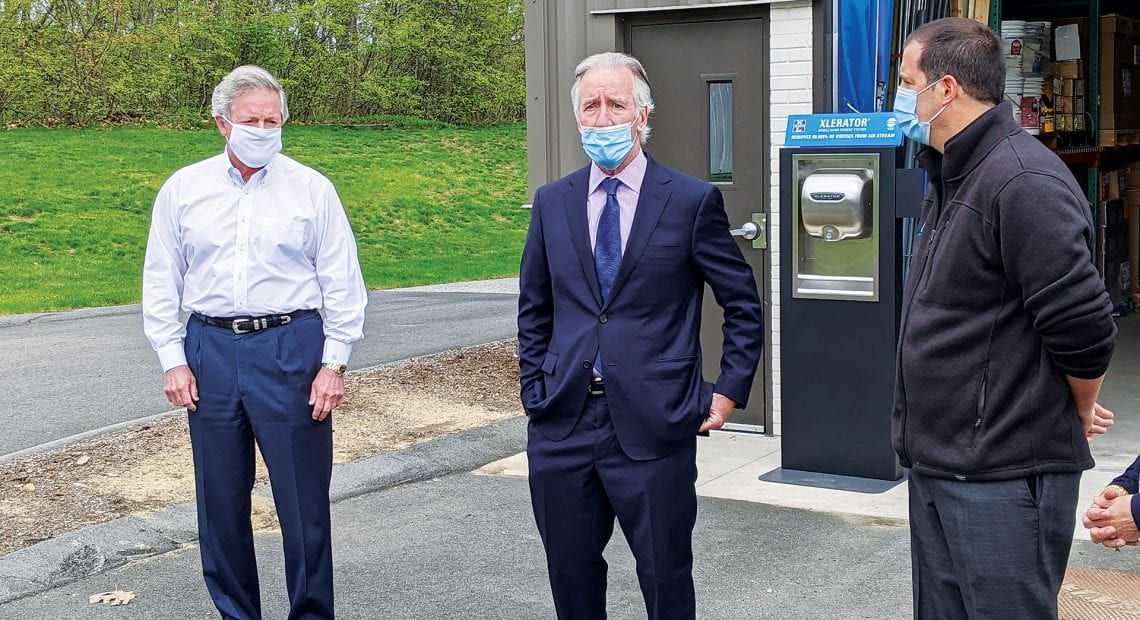
COVID-19

Play Another Day

That’s the way the ball bounces — at least when a major regional sporting event gets upended by a global pandemic.

Given the sweeping impacts of COVID-19, and with no timeline in place for reopening the region’s economy and tourism, organizers of Hooplandia, the planned 3-on-3 basketball tournament and festival scheduled for this June, announced that the event has been postponed to 2021.

At the same time, the organizers reaffirmed their commitment to the event in 2021, and, in creating a legacy celebration for the Springfield region and the birthplace of basketball, outlined a series of smaller events in 2020 to engage the community and build momentum toward next year. The newly scheduled dates for Hooplandia are June 25-27, 2021, with games hosted by the Big E Fairgrounds and the Naismith Memorial Basketball Hall of Fame.

Boys and Girls Clubs in Western Massachusetts and Connecticut will remain the lead philanthropic recipient of the event, which was slated to host 2,500 teams and 10,000 players.

“We are heartbroken that the road to Hooplandia has been closed to us in 2020, but we are fully committed and excited about bringing this to life in 2021,” said Eugene Cassidy, president and CEO of Eastern States Exposition. “There has been a tremendous outpouring of support from businesses, community partners and organizations, and basketball fans from throughout the Northeast, and we are grateful for validating this vision and being a part of it. While we cannot properly structure and execute the event this year because of these extraordinary circumstances, we are already working on our plans for next year.”

Added John Doleva, president and CEO of the Basketball Hall of Fame, “from the beginning, the intent has been to build a legacy event that will last and grow for decades, celebrating basketball and its culture in this region and beyond. Like everyone, we look forward to normalcy and our great traditions, and want Hooplandia to be one of those. The passion for Hooplandia and the sport has been awe-inspiring to me, and I know this event will be of championship caliber in 2021.”

To help build a bridge to the 2021 Hooplandia, a number of smaller events are being planned, with details forthcoming. Those include:

• Hooplandia at the Hall of Fame Enshrinement. A series of 3-on-3 courts and games will be curated for outdoor play in the parking lot of the Hall during Springfield Celebration Day on Sunday, Aug. 30, as part of Enshrinement Weekend activities. The festival environment will feature food, music, and entertainment.

• Hooplandia World Slam Dunk Championship at the Big E. High-flying entertainment comes to the Big E fair (Sept. 18 to Oct. 4), with a spectacle of slam-dunk artists from around the world competing for the title of Hooplandia World Slam Dunk Champ. Date to be announced.

• Hooplandia Showcase Games on the Court of Dreams at the Hall of Fame. During the winter of 2020-21, a series of high-profile 3-on-3 games will be scheduled for competition on the legendary hardwood. Details to be announced.

All teams that have registered and paid for Hooplandia will be issued full refunds. Teams of players age 8 and under were slated for free registration in 2020, honoring the lives of Kobe and Gianna Bryant — Bryant wore #8 during a portion of his Los Angeles Lakers career in the NBA. The free under-8 registration will be extended to the 2021 event.

Hooplandia’s Instagram account (@hooplandia) and website (www.hooplandia.com) will provide ongoing information and plans for the event and its transition.

Coronavirus

Progress Report

U.S. Rep. Richard Neal

U.S. Rep. Richard Neal

U.S. Rep. Richard Neal, chairman of the House Ways and Means Committee, took part in a Tele-Town Hall staged by the Springfield Regional Chamber on April 7 to talk about some of the relief measures flowing out of Capitol Hill to help families and businesses battered by the COVID-19 pandemic — specifically, the large-scale economic shutdown it has caused. Here are some takeaways from that conversation.

Why was it important to take action in Washington quickly?

“We’re weathering an unprecedented public-health crisis, one that demands an unprecedented response from the federal government,” Neal said. “I’m proud of what we were able to do quickly.”

Those measures include the Families First Coronavirus Response Act, which provides paid-leave benefits to employees affected by the coronavirus emergency and new tax credits and tax relief to employers; the Coronavirus Aid, Relief, and Economic Security (CARES) Act, which delivers tax rebates to families, a payroll-tax credit to employers, and expanded unemployment assistance to states; and the Paycheck Protection Program (PPP), which authorizes up to $349 billion in forgivable loans to businesses to pay their employees during the crisis.

Implementation of these three phases of relief has been challenging, Neal conceded, but once problems are worked out, lawmakers will move on to a fourth phase, expanding on much of what has already been set in motion while eyeing large-scale economic investments like infrastructure (more on that later).

He stressed that the pandemic is a health crisis first, and praised the healthcare workers on the front lines of the crisis. “They have done a first-class job trying to contain this disease. It’s important to understand that we can’t get back to rebuilding our economy until we’re able to corral the healthcare challenges.”

“Economists agree that we need to get money into the hands of people in the lower and middle income groups fastest because not only do they need it, but they’ll spend it.”

That’s why short-term relief measures are so critical, he went on. “The most important thing to do was to get a cash infusion to people on the middle and lower economic scale, who will spend that money on the day-to-day necessities families need,” he said, listing food, rent, and medications among them.

So, when are the rebates coming?

Neal noted that people whose direct-deposit information is on file with the IRS will see the funds — $1,200 per adult and $500 per child, in most cases — as soon as this week. After that, paper checks will begin to flow, starting with those on the lower end of the income scale.

“Economists agree that we need to get money into the hands of people in the lower and middle income groups fastest because not only do they need it, but they’ll spend it,” he said. “The most important thing we did is get cash to taxpayers quickly, to make sure there’s cash in their pockets to put food on the table.”

Why are some small businesses struggling with the loan-application process?

“Part of the problem is there’s no book on the shelf for this one,” Neal said, adding that banks are concerned about liability. One solution might be to relax what are commonly called ‘know your customer’ standards, so banks are willing to take on new clients in this situation.

How does the CARES Act address organizations helping people avoid loss of housing?

The CARES Act and PPP apply to all nonprofit organizations as well as for-profit entities, Neal noted. As he and his colleagues have heard about increased housing needs as people’s income situations become more uncertain, they’ve been talking about ways to address this, such as bolstering the low-income housing tax credit. As it stands, the CARES Act does include $4 billion for homeless assistance.

Does the CARES Act discourage people from working by dramatically expanding unemployment assistance?

With some people already having trouble making ends meet, to cut their salary to the level unemployment benefits would typically pay — at a time when the economy is being put into what one of his staffers called a ‘medically induced coma’ — is too much to bear, Neal said.

“We had long, contentious conversations that went on for a couple of days, and I understand the argument made by the other side, and they understand our argument as well,” he added. “In the end, the better idea is to get people what they need right now.”

What can we expect in phase 4?

“I think infrastructure is the immediate need,” Neal said. “The president has already volunteered a number of $2 trillion, and I’m accepting of that. We need, at this time, to address this very core economic issue, and we have the opportunity to do it, given that interest rates are close to zero.”

One area of focus should be broadband access, he noted. “There are areas of this country that don’t even have 911 access, areas of Massachusetts where parents drive to the library parking lot at night so their kids can do homework.”

Then, of course, are needed improvements to highways, bridges, airports, water and sewer, and rail, the latter being a particular interest among lawmakers and municipal officials in Massachusetts. “Infrastructure is investment, and that’s how we should treat it — and, by the way, it’s badly needed.”

When should people expect to get back to work?

Simply put, “when we rein in the pandemic,” the congressman said, noting that health professionals at all levels are constantly assessing the track of the virus to make those determinations, but no one should expect the economy to rev back to life soon, despite President Trump’s stated wishes to the contrary. Instead, Neal said, people should listen to people like Dr. Anthony Fauci, the director of the National Institute of Allergy and Infectious Diseases, who has emerged as the public-health face of the pandemic.

“It’s the role of the professionals to advise when the pandemic is under control, because it could flare up again,” Neal said. “I think every time Dr. Fauci steps to the microphone, people should say, ‘this is the standard; this is what we should be doing.’ He has wide regard from Democrats, Republicans, and everyone else on Capitol Hill.”

Do you have any final thoughts?

“People are actually taking the advice of public officials in social distancing,” Neal said, and that’s good — and he understands how frustrating that routine may become as the weeks drag on. But there are worse sacrifices to make. “I saw a cartoon describing veterans and what they went through — Vietnam, Korea, World War II — and all we’re being asked to do is stay six feet from each other.”

At the same time, Neal said, “we’ve heard from those on the ground about the need for more supplies and personal protective equipment, and once a vaccine is available, we want to make sure it gets to people for free.” Other healthcare-related measures being put in place are 90-day medication refills so people don’t have to visit pharmacies as often, and expanded telehealth services so people can see their doctors from home.

As for the fiscal measures put in place so far, “even though it’s been described as stimulus, many of us consider it relief and recovery,” he went on. “I will predict unemployment insurance has to be extended, and we need more money for small-business assistance … as well as more direct payments to American families.”

—Joseph Bednar

Health Care

Life on the Front Lines

Dr. Andrew Artenstein

Dr. Andrew Artenstein, chief physician executive and chief academic officer for Baystate Health.
Photo courtesy of Baystate Health

Dr. Andrew Artenstein isn’t the first to notice the lack of cars on the roads, but he’s certainly among those most invested in those open roads.

“When I leave work, I’m used to traffic, and there’s no traffic,” said the chief physician executive and chief academic officer at Baystate Health. “Every day feels like Sunday out there. The streets are a lot quieter. Hospitals don’t have visitors, so the hallways are quieter.”

Fewer people out and about means the social-distancing movement has largely taken hold in Western Mass., meaning fewer transmissions of the novel coronavirus and fewer cases of COVID-19 than would be present if people weren’t staying home. The question is, how much difference will it make in the end?

“I can tell you that I don’t know the effect, but I do know anything will help,” Artenstein told BusinessWest. “It’s the right thing to do, and it will hopefully blunt the peak. It will not prevent it totally, but if you can blunt the peak, flatten the curve, we can possibly manage the surge.”

What that surge will represent wasn’t clear at press time, when the state had tallied close to 17,000 cases of COVID-19 — a number that may be much higher as you’re reading this.

Based on expert estimates, Gov. Charlie Baker said Thursday that coronavirus hospitalizations in the state will likely peak between April 10 and April 20, with the total estimate of coronavirus cases in the state ranging from 47,000 to 172,000 over the course of the epidemic, or about 0.7% to 2.5% of the population.

“It appears the community has done a really good job of generally heeding the recommendations from our national and state public-health experts, which is, if you’re not sick, don’t come to the hospital,” Artenstein went on. “People still need other types of care; people still have cardiac issues or lung issues or kidney issues. That’s not going to stop. But people who don’t need emergency or hospital-level care, for the most part, are finding care in other ways, which is what they’re being told to do. That keeps people from transmitting infection in hospitals, and keeps them away from other patients who might be sick.”

That means patient volume for non-urgent matters is indeed down at Baystate, with some of that work being moved to telephone or telehealth platforms (more on that later), as well as outpatient clinics and urgent-care centers, all of which are also trying to enforce social distancing as best they can.

What is on the rise in the emergency room are cases of respiratory illness, fevers, and coughs, with many of those being admitted and testing positive for coronavirus.

“It appears the community has done a really good job of generally heeding the recommendations from our national and state public-health experts, which is, if you’re not sick, don’t come to the hospital.”

“There’s clearly a lot of transmission going on in the community, which is exactly what you’d expect from a pandemic,” he said. “If you look at the data, the vast majority of people [with the virus] are not sick enough to need to go to the hospital, but they’re still infectious and potentially transmitting it if they’re not isolating themselves.”

Artenstein should know all about the effects of isolation on pandemics. He founded and directed the Center for Biodefense and Emerging Pathogens at Brown University for more than a decade before arriving at Baystate, so “I have a fair amount of experience with these things. But this is a unique experience … a 100-year event.”

It’s an event that has seen Mercy Medical Center, like Baystate, shift from a strategy prioritizing preventive wellness to one that focuses on readiness and the immediate response to coronavirus — and an expansion of capacity where possible, said Dr. Robert Roose, the hospital’s chief medical officer.

“At this point, we have been heavily focused on increasing our available beds and staffing to continue to respond to the needs of the community, and we have been seeing increasing numbers of patients infected with COVID — and the acuity of those cases continues to increase,” he told BusinessWest.

That increase in the number of patients requiring hospitalization reflects what Mercy’s leaders are tracking on a national level, and he expects the trend to increase over the coming weeks.

HCC Police Captain Dale Brown stacks boxes

HCC Police Captain Dale Brown stacks boxes of personal protection equipment for delivery to area hospitals.

“In regard to our local preparedness, we have a robust surge plan that identifies three different levels of escalation to increase our capacity to treat increasing numbers of patients,” he explained. “We’re also coordinating with other local and regional hospitals on a surge-capacity plan in the event we need to share resources among different hospitals in the region.”

Testing, Testing

What would help predict and manage the coming surge is a more robust array of testing resources, but local hospitals are still hampered by a limit on how much is available at the state level.

“At the present moment, we’re prioritizing testing patients who are symptomatic and in need of care in the Emergency Department, as well as healthcare workers and first responders,” Roose said. “We’re prioritizing those groups per the CDC, and as testing capacity increases, then we’ll be able to offer more testing as it becomes more readily available.”

Artenstein reported the same protocol for priority test groups: patients hospitalized with symptoms, employees showing symptoms, and some first responders who are symptomatic. “We know it’s not in our control; it’s a national issue, and we’ve been severely limited in our ability to test. It’s starting to improve because of a tremendous effort by people at Baystate and some of our government officials to help us get more testing and more capacity and more rapid turnaround time. We’re starting to see an improvement, but it’s still not where it needs to be.”

As for the coming surge, Baystate began preparing for that in a number of ways over the past few weeks, including the construction of a rapid-response triage facility just outside the entrance to the ER. It holds around 40 chairs — each of them six feet apart — for individuals entering the ER.

“There’s community transmission of the virus at this point,” said Dr. Niels Rathlev, chair of the Department of Emergency Medicine, when the project was announced last month. “And we really are preparing for more patients showing up for screening. This is not to expand testing; the real issue is to try to keep patients that don’t require admission to the hospital — acute emergency care — and screen them rapidly out here.”

Construction of the triage center is a step that mirrors what is happening in other parts of the country, Rathlev noted, adding that some areas, such as the state of Washington, established such centers weeks ago in anticipation of a surge in visits to the ER and the critical need to triage those coming in. Meanwhile, field hospitals are being created at sites like Worcester’s DCU Center and the Boston Convention and Exposition Center.

Capacity concerns also cross over into the realm of protective equipment like masks and gloves. Roose said Mercy is working aggressively with suppliers to make sure it has what it needs. “I will say we have supplies, but I don’t think any hospital around here feels particularly comfortable with the amount they have because there may be a large influx of patients at any time.”

It’s a problem that has required some creativity. Earlier this month, Patriots owner Robert Kraft sent a team plane to China to pick up 1.2 million N95 masks. In all, Kraft partnered with the state to purchase 1.4 million masks for Massachusetts, and purchased another 300,000 protective masks for New York.

Locally, institutions have stepped up enthusiastically to meet the need. Springfield Technical Community College’s (STCC) School of Health and Patient Simulation donated personal protective equipment — including surgical masks, isolation gowns, and exam gloves — to Baystate Medical Center, Mercy Medical Center, Holyoke Medical Center, and Cooley Dickinson Hospital, in addition to emergency medical services personnel in the West Springfield Fire Department.

“We recognize there is a critical need for personal protective equipment at hospitals and medical centers,” said Christopher Scott, dean of the School of Health and Patient Simulation at STCC. “By donating our supplies, we are doing what we can to protect the healthcare workers who are running short on masks and other protective equipment. The community needs to work together to ensure we defeat this pandemic.”

Holyoke Community College donated similar equipment from its health-science programs to area hospitals. HCC Police Captain Dale Brown spent a day last month conducting an inventory of collected supplies — including boxes of isolation gowns, exam gloves, masks, goggles, hand sanitizer, and microbial wipes — at the Campus Police station. A representative from the Massachusetts Emergency Management Agency picked everything up to coordinate delivery to area hospitals.

“At this point, we have been heavily focused on increasing our available beds and staffing to continue to respond to the needs of the community, and we have been seeing increasing numbers of patients infected with COVID — and the acuity of those cases continues to increase.”

Even Dakin Humane Society pitched in, donating its in-house supply of disposable surgical gowns and booties, along with other personal protective equipment, to Baystate.

“We’ve seen news stories about the need for protective equipment being faced by those in human healthcare, so we reached out to Baystate Medical Center because they’re local,” said Karina King, Dakin’s director of Operations. “We anticipated that human health workers would need these supplies soon, so we recently stopped using disposable items at Dakin and found alternative equipment, including smocks that could be laundered and re-used instead of being disposed of.”

A researcher from UMass Amherst contributed in a different way, with a dose of data. Richard Peltier, a professor in the university’s School of Public Health and Health Sciences, partnered with Dr. Brian Hollenbeck, chief of Infectious Disease at New England Baptist Hospital in Boston, to test in his lab whether used N95 facemasks were still effective at blocking infectious particles after sterilization. They determined that, yes, masks could be safely sterilized and reused.

“While these are ordinarily disposable protective devices for medical workers, these are not ordinary times,” Peltier said, “and this science shows that sterilized face masks will protect our healthcare providers who are working under extraordinary conditions.”

Across the Distance

In short, there’s a lot going on to both help hospitals prepare for the surge and to reduce non-critical traffic as much as possible. To that end, a number of institutions have stepped up their telehealth efforts, including Valley Health Systems, which includes Holyoke Medical Center, Holyoke Medical Group, and River Valley Counseling Center.

“We are expanding our capabilities to meet the needs of our patients, especially those with ongoing health concerns that need to be treated and in contact with their healthcare providers,” said Spiros Hatiras, president and CEO of HMC. “It is important for everyone to maintain their health and safety regarding pre-existing conditions, as much as it is to protect from COVID-19.”

Behavioral Health Network (BHN) introduced a new program, BHNTeleCare, that allows individuals to continue counseling sessions with their therapists from the safety of their own homes.

According to Katherine Wilson, president and CEO of BHN, “this innovation in the way we provide therapy and counseling services is groundbreaking and allows us to render services where people are. This is particularly critical as a result of the needs that have emerged due to the spread of COVID-19. It allows a counseling avenue for those suffering anxiety and in need of support during this time of crisis affecting individuals and families.”

Meanwhile, MHA also introduced its new TeleWell virtual service delivery, which allows mental-health clinicians and their clients make virtual connections using a smartphone, tablet, or computer.

“With social distancing now part of daily life, people who receive therapy for emotional support, or who would like to, may experience uncertainty when it comes to making and keeping office-based appointments,” said Sara Kendall, vice president of Clinical Operations for MHA. “TeleWell provides another option by enabling people to keep their appointments virtually. Every day, more BestLife clients are using this option.”

All these efforts — including simply staying at home to avoid transmission — are helping, Roose said.

“I cannot stress enough how important the efforts of the community are in ensuring that our healthcare providers and resources adequately meet the needs of this crisis,” he said. “Physical distancing, diligent hand washing, isolating and quarantines when appropriate — those are the efforts that will flatten the curve and lessen the impact of this disease, and ensure that our healthcare providers have what they need to provide the care the community needs.

Meanwhile, Mercy’s incident command center continues to keep in contact with the entire Trinity Health system every day. “And every single day, I stress the importance of efforts we can all take to impact this disease. It’s something we all have the power to impact if we take proper precautions and follow the guidelines around physical distancing and quarantines. I can’t stress that enough.”

Those community efforts don’t guarantee Massachusetts won’t become as strained as New York City, Artenstein said, but they help.

“My feeling is that April is going to be very challenging in Western Massachusetts, and after that, I don’t know,” he told BusinessWest. “It quite possibly could extend well into May. I don’t think we’ll be completely out of the woods, and I do think, if you look at epidemics and pandemics, there are second and third waves sometimes.”

For example, he explained, the Spanish flu of 1918 saw a second wave late that year, and an even worse third wave arrived the following spring. COVID-19 has the potential of following a similar track because it’s new, and people haven’t built up the blanket of underlying immunity that keeps seasonal flu, while dangerous as well, under control.

“With each passing day, it becomes clearer we’re living in an unprecedented time, and with that comes uncertainty,” Roose added. “As this pandemic evolves, we are all called upon to learn quickly, work collaboratively, and constantly change how we do things. This is a community crisis, and it takes involvement and the efforts and support of everyone in our community.”

Ready for the Surge

Roose emphasized that he greatly appreciates those efforts, not just in the community, but from the selfless healthcare workers on the front lines.

“I could not be more inspired and impressed by our teams of providers, clinicians, nurses, everyone showing a commitment to putting patients first and responding to the needs of the community,” he said. “In a crisis like this, people show their true character, and it’s clear to me we’re much stronger together, and our teams are rising to this challenge.”

Artenstein agreed.

“I’ve never seen a group of more dedicated, committed, and compassionate people than I’ve seen here,” he said. “They’re working hard in adverse conditions.”

At the same time, he added, “they’re nervous, scared for their familes, and scared for themselves — and they have the right to be scared. But our people are true to their mission to provide excellent, compassionate care.”

No matter what form the April surge may take.

“This is a very unique point in our history — one that, hopefully, we’ll look back on and not have to relive.”

Joseph Bednar can be reached at [email protected]
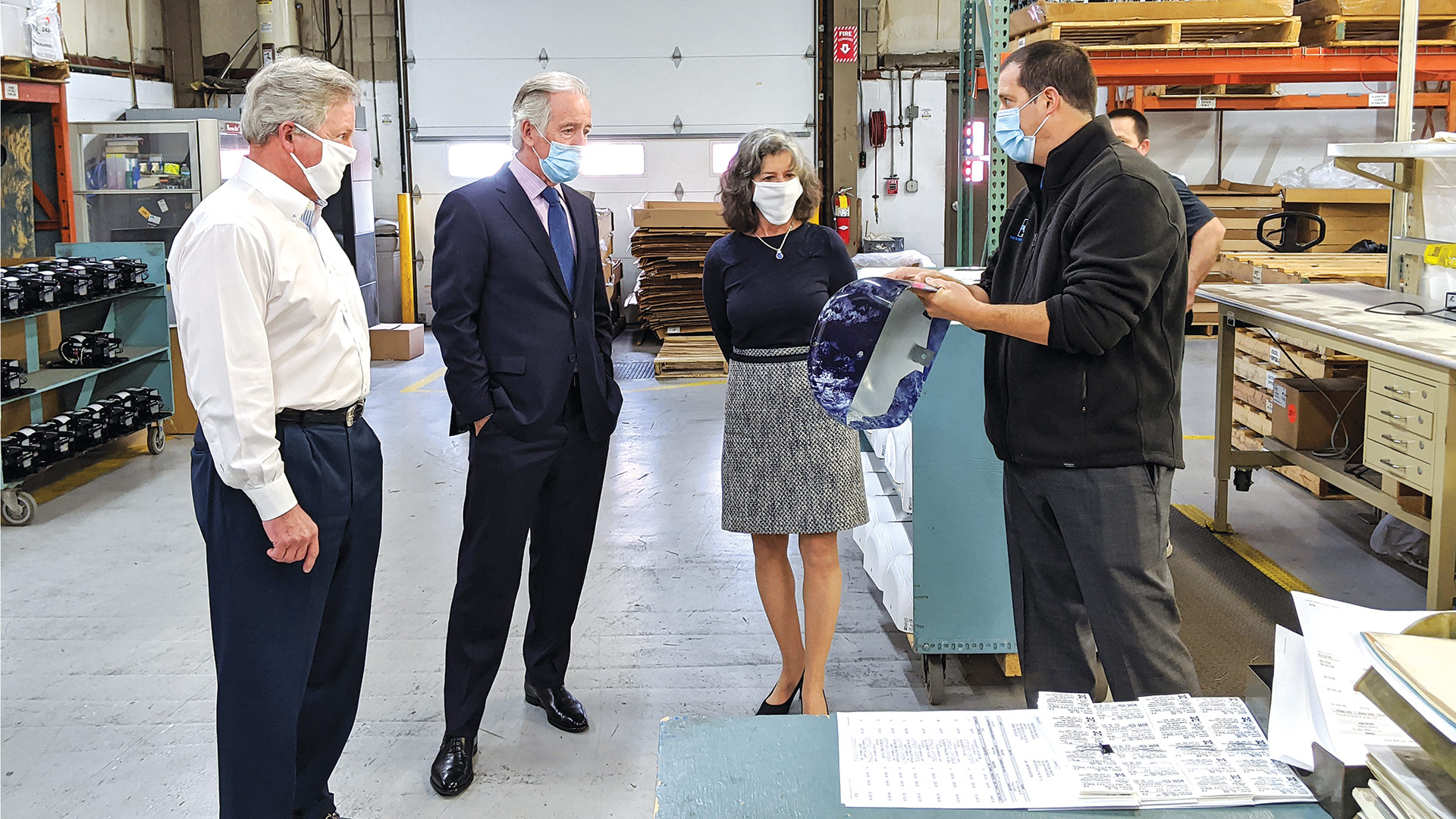
Coronavirus Cover Story

On the Home Front

On one hand, it’s good to be working — many people during the COVID-19 crisis have lost their jobs. However, those who continue to clock in every day, only from home, often face challenges they never had to contend with before, from balancing work with their kids’ education to the anxiety and loneliness that can accompany a lack of face-to-face contact. But that’s today’s new normal, and no one can predict for sure when people might start heading back to the office.

As the office manager at Architecture EL in East Longmeadow, Allison Lapierre-Houle has plenty to do, but enough time to do it. Usually.

“I handle all the administrative tasks — anything HR-related, financial-related, pretty much everything outside what the architects do,” she said, adding that she’s never had to work outside her set hours — until recently.

“Now, I’ve been working on weekends a little bit, at night a little bit, because I have to take constant breaks in between for homeschooling, and all of the distractions that come with running a house and doing my job at the same time.”

Like so many others right now, Lapierre-Houle is still doing that job, only she’s doing it from home — as a single mother of a first-grader and a third-grader, ages 6 and 9.

While the school provides a remote learning plan that students are expected to follow, and daily assignments to complete every day using Chromebooks and Google software — as well as Zoom meetings with classmates — children that young aren’t exactly self-directed, she noted.

“If they were in high school, it would be completely different. In first grade, she literally just learned to read, and now she’s expected to go on the Chromebook and complete assignments. So I do lot of side-by-side work with the kids, while also trying to manage the eight employees for the company, who are all working remotely as well. That’s been the biggest challenge.”

Allison Lapierre-Houle to balance working at home

It’s challenging for Allison Lapierre-Houle to balance working at home with two young kids — but at least they can help take a photo for BusinessWest.

David Griffin Jr., vice president of the Dowd Insurance Agencies in Holyoke, is able to split the child-tending duties with his wife, who works for Travelers in Hartford. They’re both home these days, juggling their jobs and home responsibilities as parents of two young ones, ages 2 and 3.

“We’re making the most of it,” Griffin said. “She has a more set schedule than me. Obviously, I have clients calling me, and I can’t plan when the client calls me with questions I have to go through. I get as much done as I can in the morning and late at night, and answer calls and help customers throughout the day. Right now is their greatest time of need, so I have to make myself available and be there for them to lend an ear and give some advice.”

Jim Martin knows that feeling — of working from home at a time when customers have more pressing needs than perhaps ever before. As a partner at Robinson Donovan specializing in corporate law and commercial real estate, he’s been working with clients on their submissions for the Paycheck Protection Program, deciphering the regulations and grappling with an ongoing series of often-confounding changes to them. “My clients need straightforward legal advice on what needs to be included,” he told BusinessWest.

“I do lot of side-by-side work with the kids, while also trying to manage the eight employees for the company, who are all working remotely as well. That’s been the biggest challenge.”

He’s providing that advice — and much more — largely from home, as the firm’s Springfield office is maintaining the core minimum of personnel needed to connect everyone else during a trying time.

“We were well-prepared for this; we had anticipated this may be necessary, so we had a network in place that allowed people to remotely access their desktops from home,” he explained. We got everyone equipped, so when someone comes in with mail, it’s scanned and distributed to every lawyer and the support staff. And we have remote dictation, so I can dictate right to my adminstrative assistant from home. We feel we were pretty well-prepared to make the transition to working remotely.”

While Martin doesn’t have children at home, he empathizes with those who do, as day cares are closed and people generally can’t come by to babysit.

He does, however, sometimes have to vie for the landline with his wife, a clinical doctor of psychology who continues to see patients, who are dealing with all sorts of issues, from depression to anxiety to domestic violence, all of which can be exacerbated by the current health and economic crises.

“People who need therapy, they need it more now,” he said. “She fortunately has access to certified confidential means of communication, video communication and things, but sometimes it’s over the phone if folks don’t have technology. So, I’m in one room, she’s in another, and sometimes it’s stressful in the house.”

Workers from most sectors are dealing with the same situation — doing their part to keep their companies afloat while often keeping a household together. But they’re recognizing something else as well — a general patience and understanding among those they deal with, and a recognition that we’re all in this together, even as people grow more anxious to get back to their old routines.

Alone Time

Before COVID-19, Seth Kaye, a Chicopee-based photographer, would get up each morning and go to his office to work and have meetings with clients.

“For me, that’s the biggest difference right now, just not being around people at all,” he said. “I would routinely have coffee breaks or lunch with friends and colleagues; that’s how meetings would be done, face to face. Right now, everything’s over Zoom, which has been fantastic, but nothing face to face.”

Seth Kaye

Seth Kaye is among many professionals who miss face-to-face interaction with clients.

He brought his entire workstation home, so he’s able to stay in contact with clients and even book new work.

“In terms of contracts, there’s nothing for me to photograph right now, as the commercial events have all been canceled for the foreseeable future. Weddings are the lion’s share of what I do, and people are postponing those to later this year or 2021. But business is still going on. People are still getting engaged. I’m still booking new couples to 2021. The world hasn’t stopped, and people are still planning for the future. That gives me an enormous amount of optimism.”

And also a chance to pivot to other business needs, Kaye added. “I’m trying to take the to work on my marketing and work on personal projects and try new things.”

Griffin said the team at Dowd is pivoting in other ways. “We have five offices and 47 employees, and we’ve been able to get everyone up and running from home; we’re still at full capacity. Of course, the insurance industry is considered an essential business.

“Everyone wants to make this work, but it’s been tricky to say the least,” he added, noting that technology has been a huge help. Because the company uses an internet-based telephone system, everyone was able to take their phones home and plug them into their computers.

“Our receptionist is working from home, and she answers live and transfers the calls,” he said. “And most of the staff have two computer screens in the office, and they brought one of the screens home. So it’s funny — if you go into the office and see all the desks with nothing on them, it looks like we’ve been robbed, but that’s not the case.”

Lawyers are as busy as insurance agents these days, and Martin is a good example, whether it’s helping small businesses with federal stimulus programs or assisting companies scrambling to prepare for all contingencies during the pandemic.

“I spent some time over the last two weeks dealing with transfer ownership issues between shareholders and and/or partners, so if people own a company, either shares or in a partnership, they are now feeling it’s important to establish and confirm in writing how the shares will be transferred … and what the conditions are,” he explained.

Meanwhile, employment laywers are dealing with unemployment and leave issues, while real-estate attorneys grapple with pending projects held up by wholesale postponements of meetings with planning and zoning officials, and estate planners see an uptick in business from families getting their affairs in order (see story on page 24).

The list goes on — and most of the work is being done remotely.

“It is a challenge, if you haven’t worked from home before,” Martin said. “I know some people work from home regularly, but for those of us who haven’t, it’s a big adjustment period. At least it is for me.”

It certainly has been for Lapierre-Houle, and also her kids.

“I definitely find myself, especially in the evening, saying to them, ‘it’s a school night,’” she said. “For them, it doesn’t feel like a school night. They think they can get up whenever they want and stay up as late as they want, but I’m trying to keep us on schedule — they get up like for school, and I sign on to work at 8.”

Convincing students to treat these days like regular school days is undoubtedly something parents of older kids grapple with as well. And kids of all ages are likely tiring of the social isolation.

“They can’t see their friends except behind a computer screen … that’s a significant emotional challenge because they don’t understand the social aspect. But they still have to learn and do their schoolwork,” Lapierre-Houle noted, adding that the warmer weather gives a reprieve in that they can go outside — but also provides an additional distraction because they want to be outside, rather than inside doing schoolwork.

She does appreciate her boss, company president Kevin Rothschild-Shea, who, she says, has always emphasized work-life balance, which has made this transition a little easier for employees. “He’s always been very flexible with families or children, but there’s still pressure to get work done, not to mention all the distractions at home.”

New Routine

Clients have been equally understanding of the current situation, Griffin said. “They’re not giving us a hard time — ‘I need this in two hours.’ Again, turnaround times are out the window, and people have been very accommodating and very understanding of that.”

On a personal level, he does miss meeting clients in person. “There’s nothing like going out and seeing clients face to face and talking with them, trying to see what their energy level is, how business is going … I do miss that. I’ll be excited to get that aspect of things back because it is missed. Now we have to make do with what we have, and everyone is in the same boat together — it’s not like we’re at a competitive disadvantage because of it.”

“It’s funny — if you go into the office and see all the desks with nothing on them, it looks like we’ve been robbed, but that’s not the case.”

Kaye told BusinessWest that’s been a challenge for him as well.

“I would see people regularly, just in passing or at the coffee shop — the day-to-day stuff we take for granted, now that we’re not able to have that routine. The routine now is different,” he said. “Hopefully, it’s a temporary new normal, but that human contact is gone right now.

“I’m taking the quarantine thing seriously, aside from pharmacy drives and having people put food into the trunk of my car when I order it from local farms,” he added. “I haven’t had any face-to-face contact in about three weeks. Some of my friends are doing the same. Some of our parents are not, which is interesting. But the social aspect being gone is definitely challenging.”

As the virus has still not peaked, the next couple weeks will bring more of the same, and though people he talks to are starting to go a bit stir crazy, they’re adapting as best they can, Kaye said.

“The people I’ve been speaking with, whether it’s clients not sure what their plans are going to be for 2020 or talking about postponements, they’ve been really nice about it. They have their needs as business owners, and I have my needs and concerns, and so far everyone has been really great.”

That first coffee-shop meeting will still be pretty satisfying, though — whenever that might be.

Joseph Bednar can be reached at [email protected]

Coronavirus

Opinion

Everywhere you look, the news on the COVID-19 pandemic is sobering and, in many cases, frightening.

But what we’re reading and hearing about what has gone on at the Soldier’s Home in Holyoke goes beyond that. This news is heartbreaking and, at the same time, disheartening.

We don’t know all the details, but what we do know is that people have died (six was the latest count at press time last week), many others have tested positive for the virus, and protocols were not followed. And it’s clear that the first two developments are a result of the third.

Holyoke Mayor Alex Morse told the media this week that people started dying at the facility very early in March, and no one was told about this — not him, not anyone in state government, and none of the family members of the veterans receiving care at the facility. This at a time when it was clear — or should have been clear to all — that the virus was spreading like wildfire through the facility.

According to various media reports, Morse, frustrated in his efforts to get information and receive assurance that a very dangerous situation was being addressed, resorted to calling Lt. Gov. Karyn Polito. Soon thereafter, a team of health specialists was dispatched to the 68-year-old facility.

As details continue to emerge, the story becomes more distressing and alarming. It appears that, from the start, the virus was not taken seriously, not by Bennett Walsh, the facility’s superintendent, who has since been suspended, and apparently not by Secretary of Veterans’ Services Francisco Urena.

Indeed, there are troubling reports that a Soldiers’ Home staffer who wore protective gear after treating the first veteran who displayed symptoms of the virus was reprimanded for doing so and sent a letter saying his behavior “unnecessarily disrupted and alarmed staff.”

There are other reports that veterans from infected areas were mixed with veterans from other floors, prompting comments that the spread of the virus through the facility could have been halted or slowed.

In comments to the press about the matter, Gov. Charlie Baker called what’s happening at the Soldiers’ Home a “gut-wrenching loss that is nothing short of devastating to all of us.” He went on to say that the first priority is to stabilize the situation and support the health and safety of residents and families, and the second priority is to get to the bottom of what happened.

He’s right, but he can’t forget about the second part of this equation. It seems clear that this situation was mishandled from the beginning and there was a disturbing lack of transparency with regard to how the matter was addressed. People are angry, and they have every right to be.

What’s most disturbing about this travesty is the setting in which it took place. The Soldiers’ Home cares for those who served their country in times of war and then looked to that same country to take care of them when they needed help. To say that the leaders of the Soldiers’ Home failed them — and their families — is a huge understatement.

As one family member of a resident told the media, “there are a lot of heroes in that building.” He’s right, and those heroes certainly deserve better.

Commercial Real Estate

Developing Story

Jeff Daley, CEO at Westmass Area Development Corp

Jeff Daley, CEO at Westmass Area Development Corp

Jeff Daley boasted a long career in development, with experience on the municipal, state, and private realms, when an intriguing opportunity came about last year: the role of CEO at Westmass Area Development Corp., which oversees a number of newsworthy projects in the region, most notably Ludlow Mills. He couldn’t pass up the opportunity to connect municipalities and developers on a larger scale — and help generate the sort of economic activity and job creation that makes communities strong.

Jeff Daley was working for the state in 2005 when it created a district improvement financing (DIF) program, essentially a tool that enables towns to capture incremental tax revenues from new private investment to pay for public improvement projects.

A decade later, while leading his own development firm, CJC Development Advisors, he put that knowledge to good use on the Longmeadow/East Longmeadow line. It’s the sort of experience — working with muncipalities and developers — that he brings to his latest role as CEO of Westmass Area Development Corp., which he took on last summer.

The project he referenced was a campus of sorts being developed by two entities — Baystate Health, which was building a multi-practice healthcare center on the Longmeadow side, and Berkshire Healthcare, which was building East Longmeadow Skilled Nursing Center on that town’s side of the line.

“I looked at this as a challenge. Westmass has been around for 60 years, and certainly there’s still a lot of good left that needs to be done — there are a lot of good projects out there.”

“They needed about $3 million in public infrastructure to make those projects work,” Daley recalled, referring to the extensive road, water, and sewer work undertaken a few years ago along the Dwight Street corridor. So CJC put together a DIF by which new tax dollars from the two developers’ private investment paid for the debt service for the $3 million worth of public infrastructure.

“It was the first municipal DIF in the state,” he recalled. “And it’s a huge success. Those projects would not have come to fruition, either the larger Berkshire Health building out back or the Baystate Health facility up front. They just couldn’t make it work if they had to put $3 million into public infrastructure.”

Daley wants to bring that problem-solving spirit into his current role leading Westmass, where his responsibilities include negotiating corporate acquisitions, land sales and leases, and incentive proposals; applying for grants; and marketing resources and development services to organizations and businesses considering investment in the region, as well as evaluating opportunities for new industrial-park development and coordinating federal, state, and local economic-development grants and resources.

“If there are projects that need to be done, communities may not have the staff on hand to manage projects, and we can provide services for the development of projects,” he told BusinessWest. “And, in concert with that, we’re working with developers. They may not know all the programs that are out there, and those are the kinds of programs I want to instill at Westmass. When communities and/or developers have questions about development and how to go about programs, I want them to think of Westmass first. And if we can’t do it, we’ll tell you we can’t and set you up with who can.”

After all, development is good for communities, in many ways. But his passion is more organic than that, because when Daley sees development, he sees jobs.

“I believe the creation of good, stable jobs is really most impact you can have on communities. If people are working, they have money to spend, which is good for the economy. But it’s also providing a stable environment for kids to grow up in, when mom and dad are working and able to pay the rent. I look it as more granular economic development, as opposed to just building buildings and putting people to work. It affects everybody down to young kids in our communities, and that’s important to me when we’re doing developments.”

Park Life

The former executive director of the Westfield Redevelopment Authority, Daley worked on several projects in the downtown area, which certainly needed more energy and vibrancy. He left that job in 2014 to work for a couple of construction companies before launching his own company in 2016.

“At CJC, I worked with a lot of clients, including municipalities and private developers, working on putting financial plans together for public infrastructure, commercial-development projects, and such,” he explained. “We did construction management for private developers, did a couple of urban-renewal plans, and strategic planning for those projects.”

When the opportunity arose to head up Westmass following the untimely death of its former CEO, Eric Nelson, the job seemed to mesh well with Daley’s experience and passions.

“My business was going very, very well, I had very good clients, and it was a hard decision to make,” he recalled. “But I looked at this as a challenge. Westmass has been around for 60 years, and certainly there’s still a lot of good left that needs to be done — there are a lot of good projects out there.”

Like Ludlow Mills, one of the agency’s signature projects. Last summer, Westmass announced state and federal funding to construct Riverside Drive at the rear of the complex, making the development accessible to substantially more development. The site already includes 75 Winn Development apartments in Mill 10 for those over age 55 and is host to Encompass Health Rehabilitation Hospital of Western Massachusetts.

Creating a city street behind the property creates frontage for several properties and makes it more palatable for companies to access water and sewer, which makes the sites more attractive to lease, he explained. That project is scheduled to wrap up later this year.

In all, about 35% of the 7 million square feet at Ludlow Mills is rehabbed and active. “There’s a lot of activity,” Daley said, noting that Westmass moved its main leasing office to the site in December. “Additionally, we have about 80 acres off the east side of the back road, Riverside Drive, that is high, dry, and flat. There are some wetlands, but about 50 or 60 acres that are developable out there, and by doing this new road, it’s going to get them frontage in order for us to go out and market it to companies. So that’s really exciting.”

Meanwhile, Ludlow Mills is waiting for historical tax credits on the clock-tower portion of the development, a $20 to $30 million investment that will be what Daley called “the showpiece of our investment.”

“We’re really excited about that,” he added, noting that Ludlow is building a new senior center at the site. “That’s going to be a beautiful building to showcase the property from the eastern side. So there’s a lot of momentum, a lot of people are interested, and it’s not just storage facilities; there’s a lot of jobs in there. These people are coming in and creating jobs in machine shops and other facilities that really attract businesses. This is one of our marquee projects we’re looking to grow for a long time.”

A few miles away, the Chicopee River Business Park, which Westmass has owned for 25 years, tells a different story. Harvey Industries purchased a parcel a number of years ago, but Westmass is still looking to market the mostly vacant, 170-acre complex.

“We really want to look out for the long-term benefit of the park. We are selling it as a bulk sale for 170 acres, but we’ll work with people to do what’s best for them,” he explained, noting that the location is attractive for industry, with its proximity to I-291 and the ability to get trucks in and out without disturbing residential neighborhoods.

On the other hand, Westmass’ other industrial parks — in Hadley, East Longmeadow, and Westfield — are full, Daley noted. “We continue to build parks and take on projects that benefit Western Mass., both with jobs and creating quality of life for people. That’s the endgame of Westmass; we work to get parcels ready for sale and make sure the right businesses go into them.”

Step by Step

Westmass made a real-estate deal of a different kind in December, moving its corporate offices to Monarch Place in downtown Springfield, which Daley sees as an opportunity to raise the organization’s brand and presence, while continuing its work connecting developers, municipalities, and other entities.

“We can work with towns and cities and private developers as well, and act as their economic-development arm, whether it’s putting together public infrastructure financing, putting together urban-renewal plans, putting together plans for strategic development in communities — all that is needed out there,” he told BusinessWest. “That’s the exciting part. A lot of cities and towns don’t have the ability to do that because they don’t have the staff or the means to take on those sorts of projects. We can, here at Westmass.”

He harkens back to his time in Westfield, when the city tapped into numerous funding sources to develop urban-renewal projects downtown and elsewhere.

“We just dug deep and figured out what we could do. There are more programs out there than people realize. They go about their daily business and it’s not their job to know about the programs, but Westmass can help them see what’s available for public infrastructure programs, for land deals — we can put together the infrastructure to get their project done.”

Which is good — not just for communities, but the individual families living in them.

“I believe everything good starts with people working, and the things we do to help projects get to the finish line and get developed really impact thousands of people around Western Mass. every day,” Daley said. “That’s what I’m passionate about. If people are going out to work and working hard every day, it’s a different life at home. Every little bit helps.”

Joseph Bednar can be reached at businesswest.com

Construction

Essential Questions

Since the state ordered most workplaces to close their doors last week, there has still been plenty of work going on — just less of it, in most cases, including in construction. Amid that slowdown are questions — is construction considered an essential function during this time? — and concerns, particularly concerning the amount of work being postponed in the short term and the potential long-term impact of a broad economic shutdown.

Is construction essential?

Well, to those who make their livelihood in that field, sure. Which is why they’re pleased that Gov. Baker, in his March 23 order to shutter most businesses in Massachusetts for two weeks, included among the exempt, ‘essential’ services “construction workers who support the construction, operation, inspection, and maintenance of construction sites and construction projects (including housing construction.”

That’s broad enough to include most firms — but it does nothing to prevent individual jobs from being shut down due to widespread uncertainty about the impact of coronavirus on the overall economy.

“Since Governor Baker made his announcement, I would say maybe 25% to 30% of our projects were postponed or put on hold. Some just didn’t want any outside contractors on their site,” Carol Campbell, president of Chicopee Industrial Contractors, said — only two days after Baker’s order.

The news isn’t all bad, she added, especially concerning work that’s critical to a client’s supply chain. “Our phone is still ringing, and we’re still seeing some quotes going out.”

That’s worth noting, especially as many businesses, like bars and restaurants, have closed up shop completely for the time being, Campbell noted. “We’re still working, so we’re still feel quite fortunate. But, quite honestly, I don’t know what this means in the future. We have a pipeline of work, but I don’t know when this is going to break.”

For his part, the governor doesn’t want construction to slow down too much, announcing last week that his administration is finalizing guidance to establish standards around safe practices for construction work during the outbreak of COVID-19. At a press conference, he noted that, when a project is shut down, “you may be shutting it down permanently in some cases.”

While Boston Mayor Martin Walsh ordered construction sites to shut down for two weeks, and a few other communities have followed suit, Baker is trying to avoid a broad rollback of work that could have a long-term ripple effect.

“We have a lot of housing construction currently going on in Massachusetts. To completely lose, potentially, all of that new housing for the Commonwealth, housing stock, would be a tremendous loss,” the governor added. “There’s public construction that’s going on that needs to be completed. Some of it has to do with upgrading existing infrastructure, but a lot of it has to do with expanding infrastructure that people have deemed critical and important, that needs to be continued and finished.”

In other words, essential work. Which is why Campbell hopes the economy comes back to life soon, though not at the expense of public safety.

“We have a lot of housing construction currently going on in Massachusetts. To completely lose, potentially, all of that new housing for the Commonwealth, housing stock, would be a tremendous loss.”

“The president is saying Easter, but I think that’s too aggressive,” she said, adding that she thinks other economic experts’ projections of an early-June return to normal activity seems more realistic.

“But then I fear what that means,” she added. “I made a commitment to myself two weeks ago that we’re not going to do layoffs; we’re going to go two weeks by two weeks. We are keeping people busy; when we have jobs, they’re put on jobs. We’re doing additional things in house to make sure they have a full week’s paycheck and health benefits. So, right now, my business brain is still working, but the empathy and social side of my brain and heart have me worried about my employees.”

Vital Arguments

Across the U.S., the construction sector in in varying shades of limbo at the moment because the federal government recently released a list detailing industries whose workers are “essential” and should continue normal work schedules. Although the document lists industries for which construction is critical, construction itself was not explicitly included — and some states consult that list when determining which industries can work during shelter-in-place orders, notes Stephen Sandherr, CEO of Associated General Contractors of America.

“Halting construction activity will do more harm than good for construction workers, community residents, and the economy,” he said in a statement last week, noting that construction firms are already acting to ensure the safety and health of their employees in the face of the outbreak, including increased hygiene and halting group gatherings of staff, on top of the fact that construction workers already wear protective equipment, including gloves that will help protect them and their co-workers.

“Given the precautions already in place, halting construction will do little to protect the health and safety of construction workers. But it will go a long way in undermining economic vitality by depriving millions of workers of the wages they will need over the coming days,” Sandherr added. “At the same time, these measures have the potential to bankrupt many construction firms who have contractual obligations to stay on schedule or risk incurring significant financial penalties.”

Boston’s temporary construction ban — which excludes “emergency work,” including emergency street repairs and utility hookups — has alread caused concern due to the threat of delay-related claims, note Steven Gates and John Gavin of the international law firm K&L Gates, writing in National Law Review.

“Although each contract needs to be examined individually, many contracts contain force majeure clauses that may excuse delays based on the city’s ban on construction or delays generally caused by the outbreak,” they explain, noting that an analagous situation was the restrictions put in place in New York City in the aftermath of 9/11, when courts recognized that the circumstances could support a defense of impossibility.

During the temporary shutdown in Boston, some companies are looking to make an impact against coronavirus. Associated Industries of Massachusetts (AIM) reported that Suffolk Construction of Boston is donating more than 1,250 N95 protective masks to the Mass General Brigham hospital network so they can be used to protect patients and medical personnel. The firm has also reached out to other construction companies in the Boston region to encourage them to donate their masks to local hospitals to assist in the effort.

Spreading Anxiety … and Hope

Back in Western Mass., Campbell said her company’s policies and protocols for a time like this are in order, and they’ve always been diligent about cleanliness and reducing the spread of germs.

What she’s more concerned about is the long-term damage any sort of major construction-industry slowdown will produce. The global financial collapse of 2008 spurred the Great Recession, but because of how its projects were scheduled, Chicopee Industrial Contractors had strong years in 2008 and 2009.

“Then, wham, it was like hitting a brick wall,” she said. But at least there was time to see the tough years coming. “With this, we felt it right away with everyone else, and usually we don’t because of the type of business we are.

“If you go back to every recession when I’ve been interviewed by BusinessWest, I’ve made the same statement — ‘I’ve seen nothing like this before,’” she continued — and she especially feels that way right now, even though no one can tell whether the current climate will, in fact, bring on the ‘R’ word.

“I feel every recession should be the same, right? You play by the rules and come out on the other side,” Campbell went on. “I don’t know. With the stimulus package, I hope there’s help for small businesses, yet the other side of me knows, with all the increases in taxes we’ll see, we’re going to be chasing our tails for quite a long time.”

In AIM’s report on employer concerns surrounding COVID-19, Gary MacDonald, executive vice president of AIM HR Solutions, said those he’s spoken with have, like Campbell, been busy exercising the empathy part of their brains because they know workers are worried.

“I made a commitment to myself two weeks ago that we’re not going to do layoffs; we’re going to go two weeks by two weeks. We are keeping people busy; when we have jobs, they’re put on jobs.”

“We have seen an overwhelming sense of concern from companies about their employees’ welfare. ‘How can we best keep them safe? What can we do to keep them employed? If we have to reduce our workforce, how do we continue pay and benefits the best we can?’” he noted, adding that his team has answered countless calls from worried AIM members during the past two weeks. “The crisis has really brought out the best instincts of employers as they fulfill their responsibilities as the keepers of economic opportunity in Massachusetts.”

In short, he added, “we hear this consistent expression of compassion, care, and ‘we are in this together.’”

Sandherr said he hopes that concern is reciprocated by lawmakers and governors who can, in some ways, impact the amount of construction work going forward. “We understand the need for social distancing to help slow the spread of coronavirus. But needlessly shutting down projects where workers are already protected will not help. Instead, it will threaten the livelihood of millions of craft professionals, force many small and family-owned businesses to shut down, and undermine the nation’s ability to respond to natural disasters, including the coronavirus.”

Right now, Campbell said, her employees are not too frightened.

“We’re telling them we will get through this — and it is we — and we will come out on the other end,” she told BusinessWest. “But other people I’ve talked to are panicked, and rightfully so. How many people have six to eight months of income in their savings accounts? I know all the financial advisors say to do that, but most do not.”

At a time when everyone — employers and workforce alike — are in an unprecedented kind of limbo, that other end can seem frustratingly out of reach.

Joseph Bednar can be reached at [email protected]
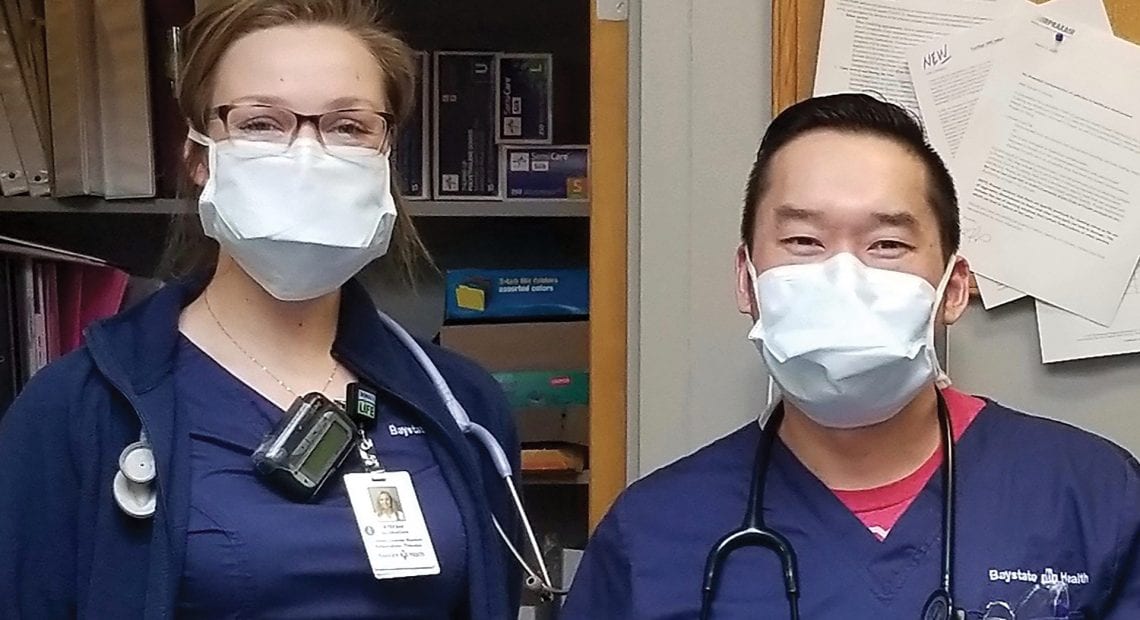
Coronavirus

Doing Their Home Work

While much of the national conversation around COVID-19 has centered around how prepared the government and healthcare sector are to deal with the pandemic, another sector has been asking itself similar preparedness questions.

That would be IT firms, especially those who handle the networks of business clients at a time when companies are sending employees home en masse — not to take time off, but to work remotely.

“We took the initiative on this last week,” said Jon Borges, president of JBit Solutions in Westfield. “Even if we had clients who did not have remote users, we went to all our clients and prepped them ahead of time with instructions: ‘if you do choose this, here’s what you need to do with their home PC, here’s what to do with your work PC.’ We support 600 to 800 desktops, so we have to get ready for this.”

Sean Hogan

Sean Hogan

Sean Hogan, president of Hogan Technology in Easthampton, has been similarly proactive, staying in regular contact with clients as the COVID-19 threat emerged. When the Centers for Disease Control and Prevention recommended avoiding gatherings of 50 of more people on Sunday — and President Trump topped that by discouraging groups of more than 10 the following day — businesses really got serious about keeping their workers away.

“When they gave that mandate, that changed everything. Companies have to give employees the ability to work remotely,” Hogan said — and he feels good about how his clients are taking on the challenge. “My IT team is cranking. I feel pretty good about it. We feel prepared, no panic at all, and we’re communicating constantly with our clients.”

He explained that cloud-voice and managed-IT clients are already configured to work successfully and securely from any remote location. “I also reached out to my other clients that are still operating in an on-premise platform. There are options for remote connectivity, but they do not have the flexibility of our cloud. The good news is that we can spin up our cloud instances very fast for our clients.”

Most of Hogan’s clients have already been migrated to Microsoft Office 365, which allows them to work seamlessly from home, collaborate, and have built-in videoconferencing, he added. “And we are offering webinars to help our clients embrace working remotely.”

In short, he and Borges, and plenty of others in the Pioneer Valley, are helping businesses of all kinds adjust to a new normal — one that, right now, offers no real timeline for when the old normal will return.

Hogan’s preparations for a week like this didn’t begin recently.

“Maybe we had a premonition,” he joked, “but we started moving clients to the cloud almost 10 years ago when nobody wanted to be in the cloud — when there was this fear factor, fear of the great unknown. But I’ve shifted my entire voice base to the cloud over the past eight years. The beauty is in explaining to clients what they have already. They don’t need to reinvent the wheel. They have the software in place for all their people to work remotely. They just have to remember how to do it.”

That, of course, is where the training, webinars, and other forms of communication come in.

“We were out there early on — we were an early adopter in this industry to promote cloud voice,” he added. “Why invest in equipment you have to be rotating every few years because it becomes obsolete? We’ve been on a quest to have zero obsolescence.”

Borges said many of his firm’s clients already have employees who work at least occasionally from home, so they have access, even if it might not be implemented throughout the whole company.

“Most clients are in networks of 10 users or more, and in those networks, firewalls act as a VPN [virtual private network],” he explained. “As long as they have that, it’s just a matter of how many licenses they need. To be honest, most of our holdup is just talking to clients and making sure what users should have access and make sure they have enough licenses. If we need to make an order, our vendors are getting bombarded, so it’s taking two or three days to come through.”

For smaller companies who don’t have that capability, Borges said, software like LogMeIn or GoToMyPC can be purchased. “Clients don’t need hardware — we will set them up on an app such as that.”

In any case, the most complicated element is training and initial setup. Once users are set up remotely, their home computer interface typically looks exactly like their work PC.

For IT professionals like JBit, clients run the gamut — in his case, encompassing insurance agencies, office settings, construction firms, wholesalers, cannabis dispensaries, and a host of others. In addition to remote access to desktops, Borges is helping clients navigate how to transfer VoIP phone connections to homes, set up meeting apps like RingCentral, and implement a number of other solutions.

“Most medium- to large-sized businesses should have hardware in place,” he added. “It’s a matter of getting licenses, educating staff, and rolling it out.”

The challenges of sending one’s entire workforce home can be both technical and non-technical, Hogan noted. “You have to deal with local wi-fi connections, which aren’t as secure as at work, and then you’ve got kids at home playing Fortnite,” he said, adding that part of this transition is setting expectations for what employees need to accomplish remotely and then establish some accountability, so they don’t get too distracted by the kids.

Remote work poses business-law issues as well, which is why Skoler, Abbott & Presser, P.C. will present a free webinar on Friday, March 20 from noon to 1 p.m. for employers to discuss how coronavirus COVID-19 is impacting the workplace. Registration is required by clicking here.

“COVID-19 is changing the way we live,” said John Gannon, a partner with the firm. “Schools are closing, travel is in flux, and events are being cancelled or postponed. Over the past few weeks, and in particular the last few days, we have received countless questions from employers about how coronavirus is affecting the workforce. Can employers send people home? Can they ask questions related to why employees are out? What about paying people who cannot come to work? Can or should they temporarily modify time off policies? Will there be a legislative measure calling for paid sick leave and/or unemployment expansion for those unemployed?”

The webinar will discuss the legal obligations of employers during a pandemic, as well as practical considerations and common-sense suggestions, and a lengthy Q & A session will follow, giving participants a chance to ask specific questions.

There’s no doubt that countless employers across the U.S. are asking those questions today, from mom-and-pop shops to the region’s largest employers, including MassMutual, which asked all employees who have the ability to work remotely to begin so earlier this week.

“We had already previously canceled non-essential domestic and international business travel and large-scale events, proactively tested our work from home capabilities, restricted non-essential guests at our facilities, and enhanced our cleaning protocols at our office, all of which continue,” Laura Crisco, head of Media Relations and Strategic Communications, told BusinessWest. “This is our latest effort to reduce the potential spread of this virus; protect the health of our employees, their families, and our community; and assure the continuity of our business operations.”

So, yes, the call to stay home affects the vast majority of industry sectors and companies of every size. Which is why Hogan and others in the IT world are so busy right now — even as much of his own staff is currently working remotely as well.

“My industry has changed so much,” he said. “But we understand the urgency; we understand the mission-critical applications that people need 24/7/365. We know how to prioritize clients — we run our call center like a medical triage — and we’re getting things done.”

Coronavirus Cover Story Features Special Coverage

Life in Limbo

It was becoming clear weeks ago that the novel coronavirus would have some sort of economic impact once it washed ashore in the U.S. — but it’s still not clear, and perhaps won’t be for some time, how severe and wide-ranging the damage could be, as people cancel travel plans, curtail business operations, shut down college campuses, and take any number of other actions to stay safe. It’s a fast-moving story, and one that’s only beginning.

The first confirmed cases of the novel coronavirus had barely shown up in the U.S. when some of Bob Nakosteen’s students in an online graduate economics course started dropping the course because they were dealing with a more immediate issue: supply-chain interruptions in their own companies.

“These companies have supply chains that stretch into China, and, well … the word ‘disruptive’ doesn’t even capture it,” Nakosteen said. “Those chains have been completely severed. These people are absolutely in crisis mode.

“A situation like this interacts with the ethic of lean production,” he went on. “People keep limited inventories — and that’s great as long as there’s a supply chain that’s frictionless and reliable. As soon as you get a disruption in the supply chain, which could happen because of a strike, because of a virus, for any number of reasons, there’s no inventory buffer. It doesn’t cause delayed difficulty to the firm; it causes an immediate one. And that’s what you’ve got now.”

Editor’s Note:

The coronavirus pandemic is impacting this region and its business community in ways that are far-reaching and unprecedented. Visit COVID-19 News & Updates  and opt into BusinessWest Daily News to stay informed with daily updates.

More than a week has passed since we spoke with Nakosteen — a professor and chair of the Department of Operations and Information Management at Isenberg School of Management at UMass Amherst — for this story, meaning another week for the supply-chain situation for manufacturers and other companies to deteriorate.

In fact, when it comes to the economic impact of the virus that causes the respiratory illness known as COVID-19, now officially a pandemic, virtually everything has only gotten worse.

“We have to assume everything will be affected. Airlines are experiencing reduced demand, cancelling hundreds and thousands of flights,” he said, noting that reduced tourism will hit numerous sectors, from hotels and restaurants to ground transportation and convention halls, that rely on travelers.

“How many firms are curtailing business travel? The NCAA now plans to play playing games with empty stands,” he went on, a decision that became official soon after — not to mention the NBA suspending its season outright. “What happens to the people who provide parking and concessions? Now multiply that over hundreds or thousands of events that are scheduled to take place over the next couple of months. It’s going to have an economic effect.”

UMass Amherst

UMass Amherst is one of several area colleges and universities that are sending students home and will conduct remote classes only for the time being.

Nakosteen’s own campus is certainly feeling that impact. The day before BusinessWest went to press, the five campuses in the UMass system suspended in-person instruction and will transition to online course delivery, at least through early April and perhaps beyond. That followed a similar move by Amherst College, whose president, Carolyn Martin, told students the college was taking to heart the announcement by Dr. Anthony Fauci, director of the National Institute of Allergy and Infectious Diseases, that the U.S. is past the point of totally containing COVID-19. Other area colleges have since followed suit, or are considering their options.

“While there continue to be no reported cases of the virus on our campus, we need to focus on mitigating its possible effects,” she said, using language that will no doubt be similar to the statements other colleges, in Massachusetts and across the U.S., are currently preparing. “We know that many people will travel widely during spring break, no matter how hard we try to discourage it. The risk of having hundreds of people return from their travels to the campus is too great. The best time to act in ways that slow the spread of the virus is now.”

While all travel is slowing — for example, the governors of Massachusetts and Connecticut have both curtailed out-of-state business travel by government employees, and President Trump issued a European travel ban — Don Anderson, owner of the Cruise Store in East Longmeadow, has seen vacation travel take a major hit.

“We’re a society where, when you’re growing up, you eat your meal, and then you get your dessert. Now we have a situation where people are not having their dessert — their vacation,” he told BusinessWest. “Imagine kids not going to the islands or not going to a park, to the annual parade, not going anywhere. We are a society that works our butts off, we put in overtime, so we can have our time off. To have a year with no time off, that’s not who we are. As Americans, we want our vacation, we want our escape, so we can recharge and come back and work our butts off again.”

But they’re increasingly calling off those vacations, even though Fauci told reporters last week that cruise ships, with all the precautions they’re taking (more on that later), are safe for healthy young people.

“These companies have supply chains that stretch into China, and, well … the word ‘disruptive’ doesn’t even capture it. Those chains have been completely severed. These people are absolutely in crisis mode.”

“The bottom line is, we are unintentionally punishing ourselves by not having an escape. A good portion of our customers are going on trips, but many are not,” Anderson said, adding that he expects the industry to recover after the crisis is over. “That’s what we’re all hoping. Otherwise, it’s a dire situation for the industry and even more so for the economies that travel impacts directly and indirectly, including the United States.”

For now, though, businesses of all kinds are in a sort of limbo, bearing the initial brunt of an economic storm spreading as quickly as coronavirus itself — no one really sure how severe it will get, and when it will turn around.

Sobering Education

Many companies, from small outfits with a few employees to regional giants, are grappling with similar questions about what to do if the virus threatens their workforce. On that upper end, size-wise, is MassMutual in Springfield, which has certainly talked strategy in recent days.

“MassMutual is taking appropriate action to protect the health of our employees, their families, and our community and assure the continuity of our business operations,” Laura Crisco, head of Media Relations and Strategic Communications, told BusinessWest. “This includes limiting non-essential domestic and international business travel and ensuring employees are prepared to work remotely, including proactively testing work-from-home capabilities.”

In the meantime, MassMutual is limiting non-essential guests at its offices, enhancing cleaning protocols at its facilities, and limiting large-scale meetings, she added. “We are continuously monitoring this evolving situation, reassessing our approach, and staying in close communication with our employees.”

Most importantly, Crisco said, anyone who is sick is encouraged to stay home, and the company is also communicating basic guidance on how to prevent the spread of germs, such as thorough hand washing, using hand sanitizer, covering coughs and sneezes, avoiding close contact with people who are sick, avoiding touching faces with unwashed hands, and frequently cleaning and disinfecting touched objects and surfaces.

Kevin Day, president of Florence Bank, told BusinessWest the institution has disaster plans in place for a host of circumstances, from epidemics to natural disasters, and has developed strategies for meeting basic customer needs in case staffing is reduced.

Bob Nakosteen

“As soon as you get a disruption in the supply chain, which could happen because of a strike, because of a virus, for any number of reasons, there’s no inventory buffer. It doesn’t cause delayed difficulty to the firm; it causes an immediate one.”

“We just checked with all our managers and asked, ‘are we comfortable that everyone is cross-trained enough, so that, if your area was out, we could function?’ Pretty much everyone said, ‘yes, we have the plans right here, we know exactly what we’d do.’

He understands, however, that no one can anticipate the extent of the crisis quite yet.

“It’s not like we haven’t seen challenges in the past. Whatever challenge is presented, we’ve just got to get the right people in the building together and think about how to continue to do what we do, which is open the door and serve the customers. We have those things in place,” Day said. “As it ramps up, and all of a sudden your employees start coming down with it, the escalation would get much greater, and you might have to take more draconian steps.”

‘Draconian’ might be a word some people used when they first heard about the college shutdowns, but there’s a logic behind that move.

“While at this time there are no confirmed cases of COVID-19 on our campus or in the surrounding community, we are taking these steps as a precautionary measure to protect the health and well-being of our students, faculty, and staff,” Kumble Subbaswamy, chancellor of UMass Amherst, said in a statement to students. “By reducing population density on campus, we will enable the social distancing that will mitigate the spread of the virus. There is presently no evidence that our campus is unsafe, but our transition to remote learning is intended to create a safer environment for all — for the students who return home and the faculty and staff who remain.”

He conceded that the move is a massive disruption for students and families, but said the university is committed to helping those with the greatest needs on an individual basis. Meanwhile, the Provost’s office is working with the deans to identify laboratory, studio, and capstone courses where face-to-face instruction is essential, and students in these courses will be notified whether they can return to campus after spring break.

At the same time, Martin said Amherst College will consider making exceptions for students who say it’s impossible to find another place to stay.

“It saddens us to be taking these measures,” she added. “It will be hard to give up, even temporarily, the close colloquy and individual attention that defines Amherst College, but our faculty and staff will make this change rewarding in its own way, and we will have acted in one another’s best interests.”

Elementary-, middle- and high schools may close as well, after Gov. Charlie Baker, as part of his emergency declaration last week, freed school districts from mandatory-days rules, so that they have the flexibility to make decisions on temporary closures due to coronavirus.

Specifically, the longest any school district will be required to go is its already-scheduled 185th day. No schools will be required to be in session after June 30. Schools may also disregard all attendance data for the remainder of the school year.

Reaction or Overreaction?

While some economic impacts may be inevitable, Anderson questioned whether some businesses are being hurt more than others based on, in his case, media spin that has focused on a couple of recent outbreaks on cruise ships.

“Honestly, I’m more concerned walking into the supermarket — that tomato I’m grabbing or fresh produce I’m purchasing, I don’t know how many people before me have touched it. I don’t know who’s touching the elevator button. I don’t know who entered their pin number on the debit/credit-card reader. Even when we voted, everyone who used the polling booth shared the same pens,” he said, adding quickly that election officials in East Longmeadow, where he is a Town Council member, did occasionally wipe down the voting surfaces and pens, as did other communities.

“What we do know is there’s been well over 20,000 deaths of American citizens from the flu this season alone, but I’m not seeing large, front-page stories about that,” Anderson noted. “Why aren’t there long lines out of the local CVS or Walgreens to get the flu vaccine?”

Dr. Robert Roose

Dr. Robert Roose

“We are regularly in touch with the state Department of Health as well as monitoring guidance from the Centers for Disease Control. That’s important to ensure all of our activities are aligned with the latest data and resources.”

The key, he said, is a balanced and measured response — and for people to use healthy practices all the time. As one example, he noted the hand-washing stations at the entrance of all restaurants on cruise ships. While at least two cruise lines have temporarily suspended voyages, those still operating strictly follow those protocols.

“You have dedicated crew reminding everyone and watching so you wash your hands before going in,” he said. “It’s not something you see in stateside restaurants. But on cruise ships, you have to wash your hands. These washing stations were a consequence years ago of the norovirus impacting a small number of cruise-ship passengers. As a result, the incidences onboard ships has lowered.”

Meanwhile, U.S. Travel Assoc. President and CEO Roger Dow worried about bold moves like barring European travel. “Temporarily shutting off travel from Europe is going to exacerbate the already-heavy impact of coronavirus on the travel industry and the 15.7 million Americans whose jobs depend on travel,” Dow said in a statement.

While many businesses struggle with the economic impact of the novel coronavirus and the anxiety it’s causing among Americans, others see it as a chance to expand their services.

For example, the Springfield-based law firm Bulkley Richardson launched a COVID-19 response team last week comprised of attorneys in the areas of business, finance, employment, schools, healthcare, and cybersecurity. Understanding that each business will be affected differently, the firm noted that taking proactive measures may help minimize the risk of business interruptions, and the COVID-19 response team has developed — and posted on its website — a catalog of issues to be considered by each business owner or manager.

Meanwhile, Associated Industries of Massachusetts published an expansive guide to employment-law issues that might arise due to the virus, dealing with everything from quarantines and temporary shutdowns to remote work and employee privacy issues. That guide is available at aimnet.org/blog/the-employers-guide-to-covid-19. John Gannon, a partner with Skoler, Abbott & Presser, also answers some relevant questions in this issue.

Righting the ship if COVID-19 sparks an actual recession could be difficult, for a number of reasons, writes Annie Lowrey, who covers economic policy for the Atlantic. She notes several reasons why a coronavirus recession could be difficult to reverse in the short term, including its uncertainty, demand and supply shocks at the same time (that supply-chain issue again), political polarization in the U.S., the global nature of COVID-19, and the fact that monetary policy is near exhaustion, as the Federal Reserve has already cut rates to near-historic lows, leaving little room to maneuver in the coming months

“They really don’t have much space to cut,” Nakosteen added. “Normally when the economy runs into trouble, the Federal Reserve runs in to the rescue. The problem now is we don’t have much room to rescue.”

He also cited the psychological factor that can quickly turn economic anxiety into something worse. “People say, ‘oh my God,’ they start drawing in their tentacles, and that’s when you have a recession.”

Lives in the Balance

None of this is to suggest that the economic impacts of COVID-19 outweigh the human ones. This is, foremost, a health crisis, one the healthcare community, particularly hospitals, are bracing for.

“We have an emergency preparedness committee, but those policies are sort of general,” said Dr. Joanne Levin, medical director of Infection Prevention at Cooley Dickinson Hospital. “We’ve had a lot of incidents in the past decade — we’ve prepared for Ebola, measles, H1N1, a lot of things. But each epidemic is different in how it’s transmitted and what to watch for. With each epidemic, we have to go through the emergency preparation plan and figure things out.”

Dr. Robert Roose, chief medical officer at Mercy Medical Center, echoed that idea. “We have a standard infection-control committee and a plan that we would activate whenever we have a surge of infectious-disease patients,” he told BusinessWest. “This particular situation is rapidly evolving. We are regularly in touch with the state Department of Health as well as monitoring guidance from the Centers for Disease Control. That’s important to ensure all of our activities are aligned with the latest data and resources.”

Meanwhile, the state Department of Public Health (DPH) continues to offer guidance to the public at www.mass.gov/2019coronavirus. It’s also urging older adults and those with health issues to avoid large crowds and events, while individuals who live in households with vulnerable people, like elderly parents, should also consider avoiding crowds. The DPH is also issuing guidance to long-term-care facilities, where sick visitors could endanger dozens of people very quickly.

Still, coronavirus is also an economic story, one with a plot that’s only beginning to take shape. It also may be a long story, with no end in sight.

“We’re in a position where we don’t know exactly what’s going to happen, but we can speculate on what parts of the economy are going to be affected,” Nakosteen said. “We’re all watching it play out without a whole lot of idea how it will play out.”

Joseph Bednar can be reached at [email protected]
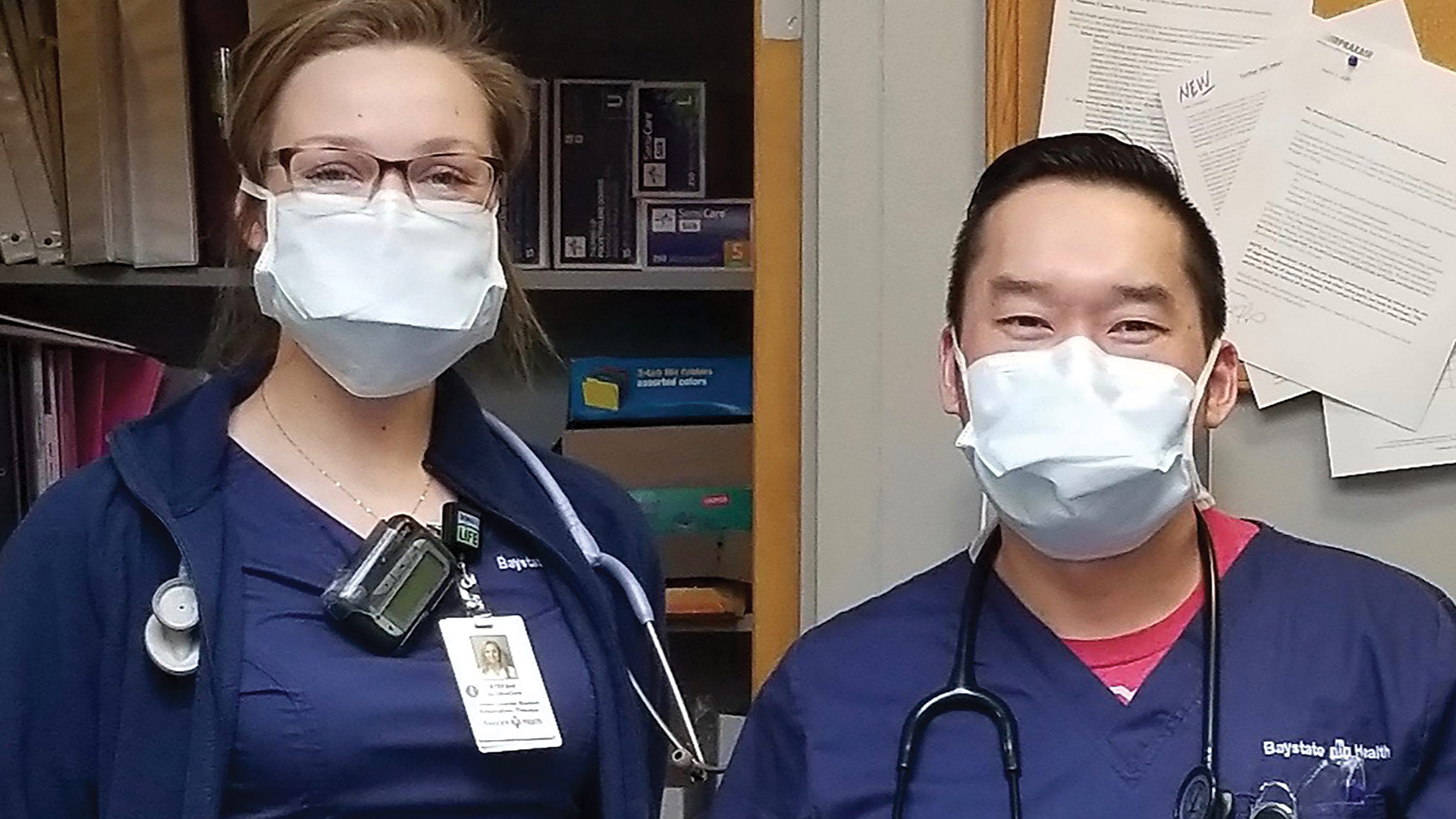
Banking and Financial Services

Natural Transition

Kevin Day

Kevin Day

In some ways, Kevin Day is no stranger to running Florence Bank — he was already overseeing about 90% of its departments as executive vice president, a series of responsibilities he gradually took on after coming aboard as CFO in 2008. So he was a natural choice to succeed John Heaps Jr., who recently stepped down after 25 years as president. Day’s mandate is simple — keep a bank known for its steady, organic growth moving forward, and keep cultivating the culture of teamwork that allows such growth to occur.

When Kevin Day joined Florence Bank as chief financial officer in 2008, he was responsible for finance, facilities, and risk management. He must have been doing something right, because his role later expanded to include compliance in 2013, residential lending in 2014, and retail banking in 2016, at which time he earned the title of executive vice president.

“Gradually, my role expanded to where, all of a sudden, I looked back one day and said, ‘wow, 90% of the bank reports to me. How did that happen?’” he said.

That broad oversight made him a natural choice to replace John Heaps Jr., who stepped down as president of Florence Bank in January after 25 years in that role. On May 1, he’ll retire as CEO as well, and Day will take on that title, too.

“Gradually, my role expanded to where, all of a sudden, I looked back one day and said, ‘wow, 90% of the bank reports to me. How did that happen?”

“In my CFO role, I tended to have fingers in a lot of different places anyway — rate setting, strategy in many areas, facilities. We had started to expand into Hampden County. I had full responsibility for that transition, along with retail responsibility,” Day explained. “Then, a few years back, when John said, ‘hey, retirement’s coming up for me. Would you be interested in stepping in after me as president?’ I said I’d be happy to.

“You know, honestly, that wasn’t a role that I came here for,” he added. “My philosophy in life in general, but certainly in business, has been ‘just do the best you can.’ It’s the key tenet I spoke to our employees about at our meeting when I was promoted. I said, ‘the number-one thing you can do is just do your best in whatever role you have.’ And that’s all I’ve ever tried to do. I would have been happy to sit here as CFO the rest of my career, but when John decided to move on, I said, ‘yeah.’”

The job is the culmination of not only more than 11 years at Florence Bank, but a lengthy career spent in the financial world, including roles at more than a half-dozen other banks. This change, at least culturally, promises to be a smooth one, he noted.

“Every job transition I’ve ever had, it takes a year to figure out, ‘what have I gotten into?’ — whether it’s good or bad,” he explained. “After a year, you can look back and say, ‘wow, this is what this place is all about.’ I don’t have any of that here. I know many of our customers, I know our staff, and they all know me. It has been extremely smooth.”

Much of the credit for that has to do with the culture fostered by Heaps over the past quarter-century, Day said — one that emphasizes teamwork in all dealings.

John Heaps Jr., who served as president of Florence Bank for 25 years

John Heaps Jr., who served as president of Florence Bank for 25 years, grew its assets and reach steadily over that time, including a successful and ongoing push into Hampden County.

“That’s the key. It’s one of two key principles I live by. The other is simplicity. I don’t like things complex. When you make decisions when you can’t understand things, you get it wrong more often than you get it right,” he went on. “John always explained things and discussed things. And with all the moves we’ve made, everyone’s been on board.”

Those moves have been many in recent years, including that aforementioned Hampden County expansion (more on that later). And Day is excited to see how the bank continues to evolve from his chair in the office he never thought he’d occupy.

Part of the Team

Immediately after earning his bachelor’s degree in business administration at UMass Amherst, Day worked for five years as a CPA for the accounting firm Arthur Young & Co. in Worcester. When he looked for a career change, he got into banking “totally by accident.”

Well, not exactly — he had been rubbing shoulders with bank controllers, treasurers, and presidents as part of his CPA work, and always found their work interesting. When a position became available as a controller for Consumers Bank, also in Worcester, “it hit all my criteria,” he recalled, and he jumped into a new role.

After three years, the bank was sold, and he jumped off for a position in New Hampshire, where he lived for 25 years and raised a family, working for a number of institutions. “I learned a lot in each job, some from really good experiences and some from really tough experiences, but all of that shapes who you are. Several things I went through in the banking world were really awesome experiences, and some I would never want to repeat again.”

“I learned a lot in each job, some from really good experiences and some from really tough experiences, but all of that shapes who you are. Several things I went through in the banking world were really awesome experiences, and some I would never want to repeat again.”

His next stop was Unibank in Central Mass., where he worked for 15 years, and figured he would remain there as CFO for the rest of his career. But he was intrigued by a job description from Florence Bank, also for a CFO — and by the interview process itself.

“The way we do interviews here, particularly for senior people, is the president and all the senior officers individually interview you. I spent the whole day here, basically every hour talking to a different person, and that really impressed me,” Day recalled. “Number one, it gave me insight into all the different people who were here running the various areas of the bank. And what struck me was, ‘wow, these people are really nice.’ They were very genuine, and the bank’s a good bank — I could tell that from the financials.”

In 2008, at the height of a global financial crisis, it may have been a dicey time to switch banks, he said, but because of Florence’s financial health — Heaps had been steadily growing assets and services since his arrival — and the impression the senior staff had made during those interviews, Day accepted the job.

Job one was moving forward from a time of great difficulty in the industry, he added. “Things started moving in a decent direction. We had low capital ratio at the time, so we put a plan in place to improve that. The economy became better, and the plan worked; our capital levels rose, and we started making decent money, and things just came together.”

That sense of teamwork and collaboration helped, he told BusinessWest. “Every organization likes to think of themselves, ‘oh, we’re a team.’ But very few actually are. We really have a great team. We’re careful to bring people in who buy in and agree with the culture we have. That sense of teamwork is important, which makes my transition to president really easy, honestly.

“There’s no jealousy, no backstabbing,” he added. “That’s one of the things that drew me in the first place. These people aren’t climbing over each other, they’re working together.”

Heading South

Lately, they’ve been working on a multi-phase expansion into Hampden County. Florence Bank, headquartered in its namesake town, has long been a Hampshire County institution, with branches in Amherst, Belchertown, Easthampton, Granby, Hadley, Northampton, and Williamsburg.

But in the past three years, it opened up branches in West Springfield and Springfield, with a site in Chicopee to follow in 2020, and then perhaps two to four more in the next five years.

“I’ve been intimately involved in site selection, branch design, branch staffing, setting up everything related to that,” Day said. “It’s been a great deal of my day-to-day responsibilities over the past several years.”

When he announced the first move a few years ago, Heaps said a recent spate of mergers of community banks in Hampden County created an uncommon opportunity for a mutually held bank that makes decisions about what’s best for customers and the community without input from stockholders.

And a geographic presence needs to be a part of that strategy, Day said — even in the mobile age.

“Branching is changing,” he noted. “Banking in general has gone electronic. Customers can do so much more away from the branch. But they still need to know who they’re banking with, and we feel you’ve got to have a footprint, and people have to be able to see you. If we’re not physically in the communities, it doesn’t feel like we’re there.”

“I feel bad for people who get up in the morning and sort of dread coming to work. I’ve enjoyed coming to work most of my career. But coming here is the best of anything I’ve done. I’m glad I’m ending my career in a place like this.”

Although online and mobile banking are now omnipresent, he went on, customers still want a place they can go to get questions answered and problems solved. “No one wants to wait on the phone — talking face to face is still important, even with all our convenience and technology. Our electronic channels are expanding, but if you have a problem, you want to go to a branch.”

That presence is a form of marketing, but traditional media messaging is important, too. The bank’s marketing emphasizes the tagline ‘always,’ reflecting its mutual form of ownership, which assures, among other things, that it can’t be forced into a sale or merger with another bank.

“We’re always going to be here,” Day said. “You never have to worry that next year we’ll be owned by someone else, and the decision makers will be in Connecticut or Boston or New York or California. The decision makers work here and live here.”

That mutual model is important to many people in the Pioneer Valley who grew up in a community-bank culture, he added. “Our mutual model is what allows us to be local and stay local. When you’re owned by shareholders, those shareholders are from who knows where, and their goals and objectives can be vastly different from what ours are.”

He added that he knows customers who have been with the bank 40 years or more, through all phases of their lives — and all the financial challenges life brings, from buying a home to paying college tuition to saving for retirement.

“I don’t know anybody who really loves change, but it’s a fact of life. You’ve got to deal with it,” he said. “It’s good to know that your banking situation is something that won’t change. Florence will be here.”

In a Good Place

During Heaps’ 25-year tenure as president, Florence Bank’s capital has grown from $24 million to $161 million, and assets have grown from $283 million to $1.4 billion, and from four branches to 11 — soon to be 12. Meanwhile, the staff has doubled from 112 full-time employees to 221 now.

While the future will see at least a couple more branches, Day said the focus will continue to be on steady, organic growth, as opposed to the merger-happy way some local banks have grown over the past two decades.

The coming years will also bring a continued emphasis on community giving, as evidenced by the 18th annual Customers’ Choice Community Grants Program, celebrated at Look Park on March 10, where 57 nonprofits received $100,000 in awards based on voting by bank customers. The program has given more than $1.2 million since its inception.

“Our customers love it, the community loves it — it’s just a heartwarming event,” Day said. “We give a lot outside that program, but this is a step above. It just cements our core mission to help as many people as we can, as best we can.”

Active in the community in other ways, Day is currently a member of the board of directors and the finance committee for United Way of Hampshire County, a board member for the Springfield Rescue Mission, a member of the finance committee for Westfield Evangelical Free Church, and board president for the Northeast Center for Youth and Families.

But serving people through his job gratifies him just as much.

“I think it’s the people I work with,” he told BusinessWest. “Yes, they’re all extremely competent in their disciplines, but I’ve worked in places with really smart people who are not fun to work with. Here, they’re smart and good at what they do and nice to be around.

“I feel bad for people who get up in the morning and sort of dread coming to work,” he added. “I’ve enjoyed coming to work most of my career. But coming here is the best of anything I’ve done. I’m glad I’m ending my career in a place like this.”

Joseph Bednar can be reached at [email protected]
Women in Businesss

Engineering Change

Ashley Sullivan

As recently as last year, Ashley Sullivan didn’t expect to one day sit in the president’s chair at O’Reilly, Talbot & Okun — but that was OK, since she enjoyed her job so much. Now, as the firm’s leader, she gets to emphasize and expand on what she likes, including a culture of mentorship and growth that encourages employees to continually learn and pursue more responsibility, all in service to clients with ever-changing needs.

There was a time last year, Ashley Sullivan said, when the principals at O’Reilly, Talbot & Okun (OTO) weren’t sure how the company’s succession plan would proceed, or who would be its next leader. But they knew they had to talk about it.

“So many other companies are at the same age, where the leaders are getting ready to retire, so what now?” said Sullivan, who was named president of the 26-year-old geoenvironmental engineering firm in January. “I kept hearing maybe they’d look for an outside buyer, and I think it was just put off, put off, put off, because they were having fun doing what they were doing.”

But the conversation had to proceed, she went on. Of the three founders, Jim Okun works part-time, Kevin O’Reilly plans to cut back as well. While Mike Talbot plans to be around full-time for awhile, the firm needed direction for the future.

“They didn’t want to close the doors. We have a great company and a great staff,” Sullivan told BusinessWest. “So I think people at different stages, so it was maybe people wanted different things, and it was just put off.”

When the conversation got serious, the solution, they found, was right in front of them.

“I’ve learned through this process, and talking to other companies going through it, that it’s not an easy thing to transition from the founders to a generational company. Once you get past that, it gets a little easier.”

“I’ve learned through this process, and talking to other companies going through it, that it’s not an easy thing to transition from the founders to a generational company,” she said. “Once you get past that, it gets a little easier. So it was just something we had to work through and negotiate through. The choice ended up being, can we transition internally? Can we make this work? Do we have the people to make this work? And we just fought like hell to make that work.”

The transition has been well-received, said Sullivan, who came on board at OTO 20 years ago. Since then, she has been instrumental in growing and developing business in the geotechnical and construction services of the company. She has also been a key mentor to junior staff and an advisor to upper management, as well as an influencer on the firm’s marketing, work culture, and business development (more on all of that later).

Ashley Sullivan discusses the One Ferry Street project

Ashley Sullivan discusses the One Ferry Street project in Easthampton with OTO field engineer Dustin Humphrey and client Mike Michon.

“The energy here is fantastic. Last year was tough — when you’re working on any sort of change, it’s hard because everybody’s a little nervous: ‘what does this mean for me?’ And sometimes you lose focus on the overall goal,” she explained. “We have the clients, we have the work. We just had to figure out how to keep it going. So last year there was a little uncertainty and fear, for lack of a better word. This year, once the paperwork was done, the energy is through the roof.”

Culture Matters

It was during a time when she was working fewer hours that Sullivan came to understand and appreciate her workplace and its culture.

“They allowed me to have a flexible schedule when I had children, and it was something you didn’t see a lot at that time,” she said, noting that she cut back to 24 hours in 2005, sometimes more if she was needed, and was still working 32 hours not too long ago. Not surprisingly, she’s a strong advocate of work-life balance.

“I was still allowed to progress and advance my career in that way, and now I can say that it works. You can let people have a balance of where they want to be home. I wanted to get my kids on and off the bus, but I wanted to have a meaningful career too, and I found that difficult at 40 hours. So it’s something that I strongly feel works, and I want to continue to develop that culture here.”

Sullivan also instructs the civil engineering capstone design course at Western New England University. In this role, she guides graduating students through a mock building project where many of her peers join her in presenting practical technical knowledge, writing skills, and soft-skills training.

“I like to make a difference with the younger engineers, especially women,” she said. “We don’t see a lot of women in this field, and if girls don’t see women in those roles, they don’t even know it’s possible. But my children think nothing of women engineers. They just know it’s possible.”

Teaching also requires her to constantly learn more, she added. “Plus I was doing something I loved, working with students. The energy in a classroom … it just re-energizes me. Mike Talbot is now teaching a class because we see the benefit to being in community. I’ve hired a couple of my students — I have an intern from there now. It’s a great feed to get great engineers. It’s been so helpful in ways I never thought it would be.”

Sullivan enjoys being a mentor in other ways as well, including for young engineers at work.

“I love to build confidence in people,” she said. “I was a very shy kid, and I think engineering, amazingly, somehow gave me confidence in school, and that’s what I like to do for other people. I like to encourage them or say, ‘you can do more than this,’ or ‘here are some habits that will help you,’ and you see them just soar.

“There are so many amazing people here,” she said, and she strives to encourage them. “‘You got this.’ ‘You can do this.’ ‘Go to that meeting; you’re going to kill it.’ What can we do to help you?’ That’s what really gets me excited in the morning, helping people and seeing them achieve — and seeing how it builds on itself and builds on itself.”

But encouragement comes not just in words, but in opportunities. She cited the example of Christine Arruda, who started with the company in an administrative role, then took classes in drafting and computer-aided design, and now manages much of the firm’s industrial-hygiene work as a technical specialist.

Ashley Sullivan observes soil-investigation and foundation work

Ashley Sullivan observes soil-investigation and foundation work at the One Ferry Street project.

“It’s not uncommon here for people to come in and try different things. We have a culture of, ‘do you want to try to do that? Let’s do it.’ It’s a growth mindset, and I want that to continue and explode,” she said. “What do people want to do? What are some of their goals? Let’s get people into the roles they enjoy and then support them in whatever ways they can be supported. You get people doing the things they really enjoy.”

Much of the company’s evolution over the year has been tied to industry trends and the shifting needs of clients, and this focus on continuing learning serves that growth well, she said, again citing Arruda’s interest in radon, which is something schools have been concerned about in their buildings.

“Our big thing is, how can we provide value for a project?” she said. “There are only so many clients in this area. To be successful, we have to continually adapt to what clients’ needs are. So we’re always adapting and growing, and I think people who work here like that.”

Changing with the Times

Change — and taking advantage of opportunities — have been constant since the early days of O’Reilly, Talbot & Okun. Before the three founders launched their venture in 1994, they were working together at an environmental-services firm in Connecticut.

The Bay State had just developed the Massachusetts Contingency Plan, a law that tells people how to go about cleaning up spills of hazardous materials. As that program rolled out, the three saw an emerging need for people with their skills. So they started a company.

“I like to make a difference with the younger engineers, especially women. We don’t see a lot of women in this field, and if girls don’t see women in those roles, they don’t even know it’s possible. But my children think nothing of women engineers. They just know it’s possible.”

Over the years, OTO’s services have included testing commercial properties for hazardous materials and overseeing cleanup, asbestos management in schools and offices, brownfield redevelopment, indoor air-quality assessments, and geotechnical engineering, which may involve helping developers assess how much force and weight the ground under a proposed structure can stand, or determining the strength of an existing building’s foundation and surrounding topography.

Sullivan said Massachusetts has done a good job cleaning up its largest contaminated sites, so the firm now focuses more on-site redevelopment.

“The big cleanups mostly are done, but you still have things that were left in the ground because they said it’s OK to leave them in the ground, but if you’re going to redig or redevelop that site, you need to manage it,” she explained, noting that it’s tougher these days to find untouched land to develop in Massachusetts, Connecticut, and Rhode Island, so geotech services on redevelopment projects are becoming more important. “We shift to what our clients need.”

The end result is often satisfying, especially when a vacant eyesore, like the old mills in Holyoke and Easthampton, come to live.

“Those are some of our favorite projects, because whenever we see a property get redeveloped and reused and come back to life, that just benefits the neighborhood, the community, and us. Those are great projects.”

Suffice to say, Sullivan loves her job on a number of levels, and wants her employees to feel the same way, which is why she keeps raising the bar when it comes to culture, mentorship, and growth.

“We’re not afraid to ask for help,” she told BusinessWest, explaining that she brought in a leadership group — the Boulder Co., based in Connecticut — to cultivate soft skills and leadership training.

“We had a retreat, and it was absolutely amazing. It’s really giving people skills like emotional intelligence and how to get over fears of speaking in public and how to work together better. It’s led to a big energy change here, and you’re seeing people step out of their shells and believe they can do more,” she explained. “We always know we need to be technically proficient and get that training, but sometimes, as engineers and scientists, we forget about the other half — that all our work is based on relationships, and if we continually work on that, we’ll do well.”

It’s a message Sullivan doesn’t mind sharing far and wide.

“My goal right now is to be one of the best places in Springfield to work because I think that’s how you attract the best people,” she said. “One of the reasons I stayed here was because I was able to do these things.”

Joseph Bednar can be reached at [email protected]
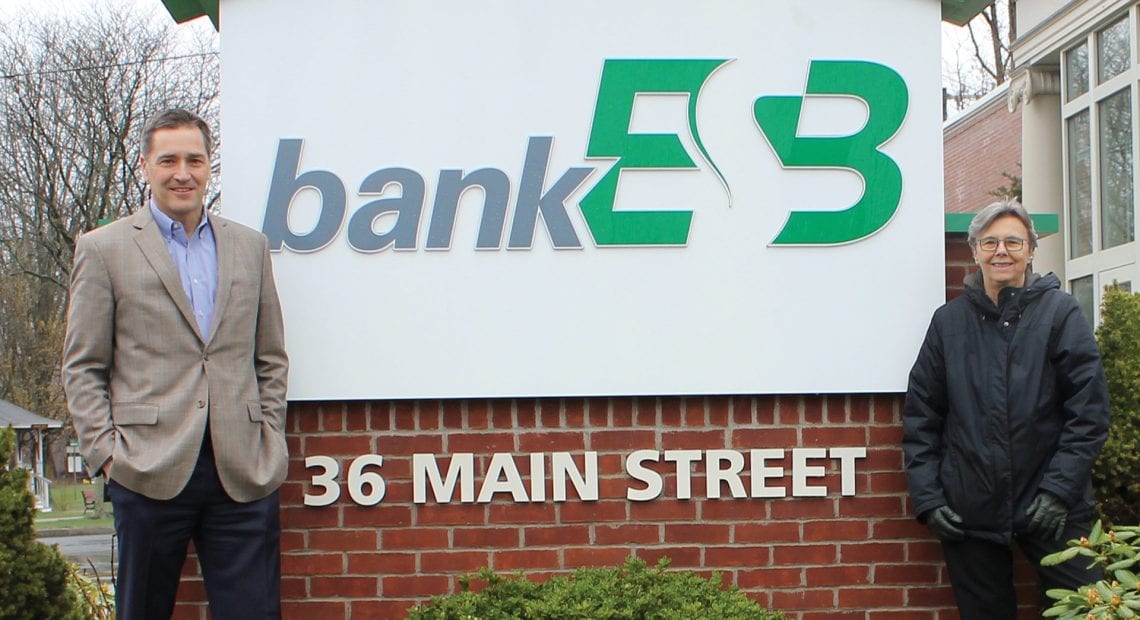
Home Improvement

Age of Automation

The design trend known broadly as home automation comes in many forms, from a command to Amazon’s Alexa to turn off the lights to a smartphone app that controls door locks and room temperature — and a dozen other functions — from across the country. This technology is attractive, says one local expert, because it solves problems in a very individualized way — and people like technology that makes their lives easier.

When people think of home automation, what comes to mind? Heat controls and security cameras, for sure. Maybe the TV and music, or door locks, or window blinds.

Bill Laplante also thinks of his shower.

“I have a digital control panel in my shower,” said the president of Laplante Construction in East Longmeadow, noting that he inputs a ‘user profile’ that gives him the exact temperature and flow he wants. “My wife has a different profile, so hers is four or five degrees cooler, and a different shower head. A lot of this stuff is pretty cool.”

It’s stuff that’s becoming more common in the modern home, as the rise of what’s known as the ‘Internet of things’ has people connecting any number of household functions to the Internet and controlling them from smartphone apps.

“Take lighting systems. We changed our bulbs, and now the lights are controlled by cell phone,” Laplante told BusinessWest. “I’ve gotten pretty lazy with the technology — instead of getting up to turn on the lights, I just grab my phone.”

But he’s not just enjoying smart-home technology at his own house; he’s building homes for customers who increasingly demand such features themselves. He works with EPOS Systems in West Springfield — a company whose motto is “Your future home. Today.” — on whole-home automation systems that run off one app, known as Control4. But people can take an a la carte approach as well.

Bill Laplante says homeowners have many options when it comes to automation, but many today are opting for full-home systems that run off a single app.

“I see a combination of both. Some people, usually in the higher-end homes, will want a whole-house smarthome system that’s controlled by one app and can do multiple things with lighting, television, heat, cameras, all of that stored on one app,” he explained. “And then there are other people who want less expensive options, who have multiple apps that do different things, but it’s not necessarily controlled by one central program.”

The uses for such a system are myriad.

“When you’re away for vacation and you forgot to turn your heat down, you can do it remotely. Even the door locks — you can send a code from your phone to unlock the door for someone cleaning the house or someone coming over to watch your kids,” Laplante said. “Control4 is really a home-management system, a technology-management system. You can create lighting scenes, you can control television, music, security, garage-door cameras — virtually everything that could link together, you can link through this central system.”

The popularity of so-called ‘smart homes’ is only expected to increase as more people experience it and costs continue to drop. According to Forbes, the value of the smart-home device market will grow from $55 billion in 2016 to $174 billion by 2025.

Dan Crouss says home automation is about solving problems — and quality of life.

Dan Crouss, owner of EPOS, said homeowners have many points of entry to choose from.

“Sometimes you start out small, but then we tie in the music and the TVs and all that stuff into one app. You kind of piecemeal it as you go — start small and work your way up over the years. Some people do it all at once when they build their house, but usually it’s small increments.”

And it’s not as foreign a concept as some people may think, he added.

“Everyone’s got some type of automation from their phone, even if it’s just Siri or Alexa controlling the lights. What we do is take it a step further, put it into one app instead of having 15 apps. Everybody’s got a little bit, but we’re able to tie it all into one interface.”

Problem Solvers

EPOS was launched in 2007, the merger between two companies, Perfect Sound and Olympic Electric. Its services have evolved considerably since then, both because technology is always advancing and because people are attracted to products that make their lives easier, Crouss said.

“Home automation can start out as a simple Alexa that turns on lights. Then door locks and heat are two things people usually do. Being able to unlock your door for somebody when you’re not home is a big deal. And with heat, I can save a lot of money. I get home at random times because of my job, so, if I’m getting home at 5:30, I can log on at 4 and pump up the heat a little bit, so when I get home, it’s nice and warm, but I saved a lot of money during the day.”

Then homeowners may add options from there, he added, from window shades — which can be adjusted or programmed to bring some extra sunlight into the house during the winter or keep it darker and cooler in the summer — to strategically placed cameras, both for outdoor security and to monitor the interior of a home when residents are away for the winter.

“Sometimes you start out small, but then we tie in the music and the TVs and all that stuff into one app. You kind of piecemeal it as you go — start small and work your way up over the years. Some people do it all at once when they build their house, but usually it’s small increments.”

“You can get a notification on your phone if you have movement at the front door,” Laplante said. “And you can pull up the camera view and pull up the audio and say, ‘can I help you?’ and do it all remotely. You can be on vacation and you’re answering your door, essentially. There are all types of things like that that are pretty cool, and most manufacturers now are incorporating things like this into their own apps and making everything as seamless as possible.”

As he noted earlier, many people opt for buying individual devices, such as one that manages the garage door.

“When your car pulls into the driveway, it will automatically open the garage door rather than actually pushing a button. You can also let somebody in your garage door remotely with your app. So you have individual products like this, with their own apps, which create the, quote-unquote, ‘smart home,’ or you can have a central control system that controls all of the various components of the house.”

The whole-house system can be preset for any number of situations, from delivering the exact heating and lighting arrangement upon waking up in the morning to creating a variety of ‘lighting scenes’ in the kitchen, such as for cooking, dining, or hosting a party — or telling the Christmas tree when to turn on and off every day.

“Basically, what home automation does is solve people’s problems, and everybody’s got different ones to solve,” Crouss said. “When my kids were growing up, they’d get off the bus and would put in their [front door] code, and I would get a text to let me know my daughter was off the bus. Or let’s say cleaners come to your house, who bill by the hour. There’s a time stamp when they put in the code and a time stamp when they lock the door.”

As another example, “people with oil tanks have smart sensors that automatically e-mail you when the tank is getting low, or e-mail people who deliver the oil. A lot of people with vacation homes show up, and the oil is way down. This is a way to avoid that problem.”

Price and Promise

In Forbes, Bernard Marr, a futurist, author, and business and technology advisor, recently noted a few developments on the horizon when it comes to smart homes. One is increasing standardization, as manufacturers of smart-home devices are increasingly ensuring their products and services will work on platforms provided by Amazon, Google, Samsung, and Apple to capture the broadest customer base.

He also sees smart homes actually becoming smarter over time as they make use of machine learning, computer vision, natural language processing, and other technologies that are capable of making decisions and learning. Smart thermostat systems from Nest and Honeywell already use machine learning to adapt their behavior to the inhabitants of a house, based on observing and then replicating their habits, and that trend should accelerate to other devices as well.

Finally, the global rollout of 5G, as well as improved wi-fi technology, mean smart-home devices will be linked by faster, more powerful networks, meaning better access to data and processing resources in the cloud.

“The smart-home technology has come way, way down in price,” Laplante said, especially when it comes to buying multiple devices. “The Control4 system is nice because everything runs through one app. But people have multiple apps on their phones for multiple things anyway.

“There are many different components,” he added. “The cost depends on how much you bring into the system. The big advantage to having a one-hub system is that everything runs through that system, so you’re going to one app.”

EPOS continues to introduce new services, Crouss said, like ‘smart outlets’ that can reboot cable or Internet if it goes down, rather than having to deal with physical plugs and wires. In fact, those devices can now send a signal on their own and be rebooted automatically when a problem is detected.

“Most of my customers want this technology, want to be able to do those things,” Laplante said. “Especially when you’re going away, you want to be able to control things, you want to keep an eye on the house. If you go away for the winter, you want to be in contact with your home, to monitor the temperature and see if there are any issues.”

Not to mention that much of this technology — whether it’s changing the music coming out of the ceiling speakers or stepping into a perfect shower — is just, well, fun.

“It’s something the average person today is expecting — especially the younger generations,” he said. “They grew up with technology, and they expect it. And it is kind of neat.”

Joseph Bednar can be reached at [email protected]
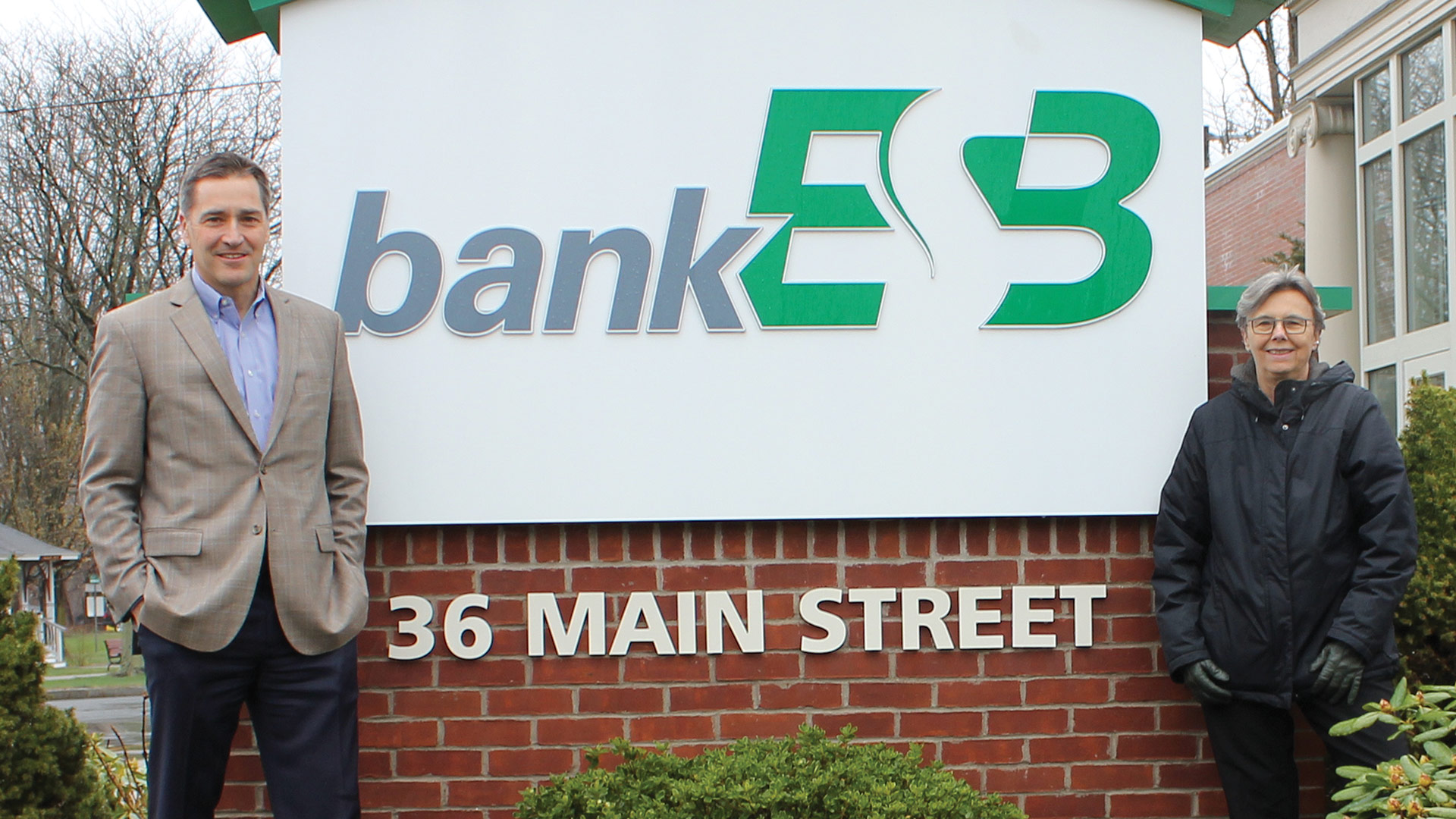
Business of Aging

Shifting the Balance

Visiting Angels Director Michele Anstett

When Michele Anstett opened a Visiting Angels franchise with her husband in 1999, it was only the ninth branch of a home-care company that now boasts more than 500 locations in the U.S. and overseas. Home care in general had yet to proliferate; maybe a dozen agencies were offering such services in the Pioneer Valley.

The law of supply and demand meant there were more caregivers than jobs, which was great for companies, she noted.

“We had more control, and they were more willing to do what we said. Because there were fewer agencies for these caregivers to go to, they had less choice. They were easier to hire back then — you could find a well-trained one easily because there was a deeper pool, and they were more experienced. The pay was lower — like $7.50 an hour when we started. And more of them were willing to work full-time. They were more likely to take whatever you could give them.”

These days, that balance has shifted, to say the least. Home-care services, both small independents and national chains, now dot the region, and workers are in demand.

“Now, it’s not us with the control,” Anstett said. “They have the control. They can pick where they want to go. They can choose how many hours they want to work. They’re less willing to take whatever you want to give them.”

It helps, she said, that her Visiting Angels franchise, now celebrating its 21st year, is a known name with deep roots in the community.

“You don’t have someone down the hall where you can yell, ‘hey, can you help me?’ This can be a challenge for some nurses, but the nurses we have appreciate meeting with a patient exclusively, being able to develop relationships they often don’t have time for in an acute-care setting.”

“When we first started, there were only a few businesses like this. It was just emerging, and it was something that was really needed,” she told BusinessWest. “Our model was based on what people wanted. We matched the caregiver to the client. We weren’t telling people, ‘we’ll come here at this time.’ We made it all about the client. But we also matched them with a caregiver, and they could meet their caregiver and say, ‘yes, this works,’ or ‘no, this isn’t a good fit.’ There’s a lot of work in matching a personality, skill level, schedule — it’s really challenging.”

That philosophy hasn’t changed over the years, but the challenge has become more intense with increased competition for certified nursing assistants, home health aides, and personal-care assistants.

Also more challenging is the level of care many patients require, in an era when hospital stays are shorter and Americans are living longer than ever before.

“I was a home-care nurse fresh out of nursing school in the early ’90s, and compared to the patients we saw then — even compared to five years ago, really — the patients are much higher acuity, much more complex, and they really need a lot of care coordination and are on so many medications,” said Priscilla Ross, executive director of Cooley Dickinson VNA & Hospice.

“One of the biggest roles of the home-care nurse is reconciling those medications, because medication errors are one of the most common reasons for rehospitalization,” she went on — for example, people often don’t follow instructions, or aren’t aware of certain drug interactions, or are mixing pharmacy prescriptions with mail-order drugs. “Things are so much more complex than years ago, with hospitals focused on shorter stays, and there’s pressure on skilled-nursing and rehab facilities for shorter stays as well, so people are coming home with more needs.”

Michele Anstett (second from left) with some of her team at Visiting Angels, from left, Julie Dewberry, Helen Gobeil, and Natali Pilecki.

For this issue’s focus on the business of aging, BusinessWest spoke with several home-care professionals about what’s appealing about this critical work, what’s challenging, and why those challenges are only increasing as the senior population in the U.S. continues to swell.

Return to Form

The VNA has a sizable clinical staff, as many of its clients have been in and out of hospitals or acute rehab settings. But the focus isn’t on the illness itself, Ross said, but returning people to functional status in the short term. “They want to get back to making dinner, doing the laundry, taking care of grandchildren. With nursing and rehab, that process can happen much more quickly.”

She noted that the national shortage of non-medical home health aides may be more pronounced than the shortage of nurses, but it’s a struggle for organizations to recruit both. For nurses, not only is the pay scale less than in, say, a hospital setting, but some nurses don’t like the autonomy and independence that home care requires; they’d rather work in a team setting. Of course, other nurses desire the opposite, and relish the idea of focusing on one patient instead of several at a time.

“You don’t have someone down the hall where you can yell, ‘hey, can you help me?’ This can be a challenge for some nurses, but the nurses we have appreciate meeting with a patient exclusively, being able to develop relationships they often don’t have time for in an acute-care setting.”

Julie Dewberry, marketing and recruitment specialist for Visiting Angels, agreed. “They like the one on one,” she said. “They don’t have the pressure of one person with five different patients. Some come from nursing homes and say they don’t want to do that.”

Helen Gobeil, staffing supervisor for Visiting Angels, said determining who will be a good care worker is as much art as science.

“It’s a mother’s instinct — you’ve got to feel it,” she said about sitting with prospective staff. “You see they’re caring, they want to work, they really enjoy elders. They don’t call them old people; they respect them. I have to feel it.”

That ‘feel’ can be as simple as whether the interviewee makes eye contact, Anstett said. “What’s their demeanor? Are they a warm and caring person? If they’re warm, caring, and compassionate, that’s the basis, and we can move on to skill.”

That skill can be reflected in many ways — their degree, their experience, perhaps a referral. Sometimes, the agency will bring on someone whose only experience was taking care of their grandmother. “If they have good character, we’ll put them on a companion case, with a mentor, and help them get more education. We didn’t do that before. Now that the pool is lower, we’re trying to find ways to bring in more people.”

One way is to offer more training to staff. In addition, Visiting Angels has done well bringing on nursing students from area colleges, who are able to supplement their income while gaining on-the-job experience. “They’re very good workers,” she said.

The shallower pool of talent is only one growing challenge; a tougher financial climate is another. Wages are higher — Anstett said her goal is to keep what she pays workers above Massachusetts’ minimum wage as it creeps toward $15 over the next few years — as well as higher recruiting costs and expanded paid medical and family leave in the Bay State.

Finally, as noted earlier, workers increasingly eschew full-time work and often make home care one of two jobs, and they increasingly resist set shifts in favor of flexible schedules.

“We are a known name with deep roots, but it is a challenge,” she said. “We do well, though — we’re finding people of quality. Because of our experience, we understand what makes a good caregiver and who wouldn’t make a good caregiver, and how to screen them properly.”

Constant Mission

Roseann Martoccia, executive director of WestMass ElderCare, says her 45-year-old organization’s goal has long been in line with the goals of the home-care industry.

“From the beginning, our mission has been constant: to help people remain at home with the supports they need,” she said, noting that most people, as they age, want to remain in their homes, with some measure of independence.

To help them achieve that goal, WestMass ElderCare offers a broad range of supports, not just home care, aimed at helping seniors live independently. These range from nutrition services — it delivers about 1,400 hot meals daily in seven communities — to adult foster care; from housing support to personal-care management, helping people with chronic conditions or disabilities direct their own care by hiring and supervising personal-care attendants.

In the realm of home care, the goal is similar to other agencies: to help transition people from rehab settings into the home, and to maintain their function there.

“Our goal is to provide compassionate care and guidance so people can live in their homes and communities,” Martoccia said. “When we visit the home, we’re setting up a plan of care. What is your family doing? What do you need help with? What do you want help with? What’s most important?”

“Generally, people have chronic conditions, and their family may be at a distance, or they may not have a lot of family supports,” she continued. “In that case, we might be providing more services to them, helping them with many things they may not be able to accomplish on their own.”

WestMass focuses on the needs of family caregivers as well as patients, she added — people who have to work or raise families, but still want to make sure their parents or grandparents are OK.

“A lot of times, we hear caregiver stories about how what we do helps them and gives them peace of mind,” she said. “They may be checking in daily or weekly, but they know services will be coming.”

Cooley Dickinson VNA & Hospice has a different model than home-care agencies that focus on non-clinical assistance, often over the long term. Instead, it hires nurses and physical, occupational, and speech therapists, among other team members, to help clients transition from an acute or rehab setting to home life over a shorter term. Involving family caregivers in the process is often critical.

“We offer things your average person can’t provide without some training — wound care, IV therapy, or teaching about disease processes and how to manage an illness and manage medications,” Ross explained. “We’re teaching family members how to do wound care, how to provide care at home.”

The other side of the company is hospice care, which can be a longer-term engagement for people who are grappling with terminal illness and the decisions that come with it.

“What matters to you? What are your goals? How do you want your care to play out? It’s really hard to have that conversation, introducing that sense of taking away hope from people,” Ross said.

“But often, when you open those conversations, you’re relieving a burden for the patient and their family, and giving them an opportunity to actually talk about the elephant in the room — and that can lead to earlier access to care,” she went on. “Studies show that the earlier patients get on hospice, the better they do in the course of their terminal illness and the better the family does in the bereavement process.”

Giving Back

There’s a large, framed photograph at Visiting Angels of an aide with Anstett’s mother-in-law, who required home care due to Alzheimer’s disease around the time she and her husband opened the franchise; she passed away a few years ago. It’s a reminder that these services hit close to home for many people, and they’re important.

And not just for the clients, said Natalie Pilecki, the company’s administrative specialist. For workers in this field — at least the good ones — it’s more than a job.

“Spending time with the elderly is always nice,” she told BusinessWest. “The hours are good, the flexibility is always good, and they enjoy socializing with the elderly. Every day is different — it’s different every time you walk into their house.”

A good work experience starts with the employer, though, Anstett said. “I think we all have to value our workforce. We did a survey of our caregivers, about what’s most important to them. They put the highest value on how they’re treated. Pay was second, and benefits third. We listen to our caregivers, and those are the things we work on.”

She noted that one client has been with the company for 13 years, just one of many long-term connections being made.

“You develop a relationship with clients and their families. It’s about giving, and when you give, people respond. The job gives back.”

Joseph Bednar can be reached at [email protected]

Technology

Into the Breach

Cybersecurity experts say there’s still plenty of misunderstanding when it comes to the reality of data threats. For example, it’s not just big companies being attacked — these days, everyone is a target, and data thieves are becoming more subtle and savvy with their methods. That means companies need to be more vigilant — but it also means career opportunities abound in a field that desperately needs more young talent.

Everyone knows what cybersecurity is. Fewer know what people who work in the field actually do — and how much they earn.

And that’s a problem, Tom Loper said, when it comes to drawing young talent into a field that desperately needs it — and will need it for many years to come, as the breadth and complexity of data threats continue to evolve.

“That’s why we need to start with the high-school students,” said Loper, associate provost and dean of the School of Science and Management at Bay Path University. “They don’t really understand cybersecurity, and that’s a big problem because we have this incredible shortage of folks qualified to work in cybersecurity.”

Bay Path is doing its part, he said, not only with two undergraduate programs in the field and a graduate program in cybersecurity management, but by actively promoting those tracks to incoming students with undecided majors.

“We allow them to take cyber courses that first semester just to try it out, and the whole faculty is steering them toward it because the pay is so good in this field. Most of the ones who take it, believe it or not, they stay in that field,” he said, noting that about 90 students are currently enrolled in the three programs. “That’s a pretty good number for a small school like this. Now, we’re trying to get more high-school students to understand.”

“Companies are becoming more savvy. They’re asking, ‘how protected am I?’ The word’s getting out there, but unfortunately, it’s getting out because someone hears that a friend or another company got attacked.”

Loper said Bay Path’s programs are tailored specifically to the requirements of various cybersecurity careers, so students can get entry-level jobs immediately and go on to earn whatever further industry certifications they may need. “We have graduates making $60,000 to $80,000 coming out of school with these degrees. And if they get some experience before graduation, they’re worth even more.”

Tom Loper said cybersecurity is a complex challenge best tackled from a region-wide, ‘ecosystem’ perspective.

To that end, Bay Path recently won a grant from the Mass Cyber Center at MassTech to support internship and workforce experiences for students. That’s just one aspect, he said, of the way the region can build a cybersecurity hub from what he calls an “ecosystem perspective,” one that encompasses high-school and college students, workforce-development programs, government agencies, and business sectors where cybersecurity is important. These days, that’s most of them.

“Companies are becoming more savvy,” said Mark Jardim, lead engineer at CMD Technology Group in East Longmeadow. “They’re asking, ‘how protected am I?’ The word’s getting out there, but unfortunately, it’s getting out because someone hears that a friend or another company got attacked. But they are calling us and saying, ‘how can we be more protected?’”

Chris Rivers, vice president of Phillips Insurance in Chicopee, agreed that more companies are coming around to the threat potential.

“It sometimes depends on whether they’ve had an incident or a near miss,” he said, adding that, while people may hear news reports about data breaches at large companies, no business of any size is totally immune.

In fact, “smaller businesses tend to have less security, and sometimes it’s easier for hackers to get in there, taking credit-card information or any type of information, really. Think of a law office, and the risk of private information being taken and used against clients.

“Things we’ve preached over the years still hold true — they just keep changing the vector of attack. And the damage to smaller companies is more significant because they often don’t have the resources to deal with it, and it’s painful.”

“If you have a breach and data is stolen,” Rivers added, “it can get pretty costly.”

Data security has become a primary form of business insurance at all commercial agencies, but a policy to recover damages, even a comprehensive one, isn’t enough; the long-term brand damage, Rivers noted, is much harder to quantify. “Once your reputation is gone, it’s gone.”

The fact that businesses are catching on to this reality, combined with high-tech advances that will making defending against cybercrime more challenging, has created significant opportunities in what promises to be one of the most important career fields over the next decade.

Human Nature

Charlie Christianson, president of CMD and its sister company, Peritus Security, said data breaches cost companies $11.5 billion in 2019. And the threats come in many forms.

“Things we’ve preached over the years still hold true — they just keep changing the vector of attack,” he told BusinessWest. “And the damage to smaller companies is more significant because they often don’t have the resources to deal with it, and it’s painful.”

The human element to data breaches is still prominent, as e-mail phishing schemes remain the number-one way cybercriminals gain access to networks. These often arrive with URLs that are very close to a legitimate address. More importantly, phishers are ever-honing their ability to replicate the tone, language, and content of the supposed sender.

“They look incredibly realistic,” Christianson said. “A week doesn’t go by where we don’t get one and say, ‘wow, this looks good.’ For people who don’t live it every day, it can be very easy to fall into the trap. The trick is to just stop and think about it before you click on it.”

These attacks are more specific and targeted in the past, he went on, but they’re not the only way data thieves are getting in. Another is through employees’ personal devices, which don’t typically boast the security features of a large corporate system.

“Devices are hit and used to launch an attack, or they’re infected and brought into a secure environment. What’s on that device can get into the corporate network and spread,” he explained, which is why many companies have tightened up their BYOD (bring your own device) policies.

“That’s slowing down as businesses are becoming aware of the risk,” Jardim added. “We’re actually seeing a trend of slowing down the bring-your-own-device idea in the workforce; companies are saying, ‘maybe we shouldn’t do that because attackers are using those vulnerabilities.’”

The trend known as the internet of things, or IoT, poses new threats as well, Christianson said.

“When people think about securing their network, they think about their computers, their servers, their tablets, things like that. But they don’t think about the SimpliSafe security system or the time clock that hangs on the wall or the voice-over-IP phone system they use every day. You have all these devices that aren’t being maintained — they just let them run.”

He knows of one company that was attacked through its security-camera system, and said segmenting networks is one way to minimize such a threat. “That shouldn’t be on same network as your finances.”

The defenses against breach attempts are myriad, from password portals and multi-factor verification of online accounts to geoblocking traffic coming from overseas.

“A lot can be done with training,” Christianson said. “The most important thing you have in your business is your people, and educating people how to act and what to do when they see something — to make your staff savvy — is one of the most beneficial things you can do.”

Mark Jardim (left) and Charlie Christianson say cybercrime is constantly evolving, and so must the strategies businesses employ to prevent it.

It’s definitely a challenge, Jardim added. “We have to protect every single door and window, we have to be right 100% of the time, and a hacker just needs to find one vulnerability.”

Cultivating an Ecosystem

That list of threats and defenses — which only skims the surface — drives home the need for a more robust cybersecurity workforce, Loper said.

“We believe you have to take a regional approach to cybersecurity,” he noted. “We don’t believe you can just think of yourself as island unto yourself. Whether you’re a big organization or a small organization, you’re part of the supply chain, and there are opportunities for breaches. Everyone is connected.”

Boosting workforce-development programs is one spoke on the wheel. “It needs more attention. At one point, we didn’t have enough tool and die makers. The Commonwealth got behind it, and now we have enough. Something like that is going to happen in the high schools, and across this region, where we’re retraining people to work in this space just because there are so many opportunities.”

“The most important thing you have in your business is your people, and educating people how to act and what to do when they see something — to make your staff savvy — is one of the most beneficial things you can do.”

One plan is to develop a ‘cyber range,’ which is a simulated IT environment that emulates the IT structure of businesses, Loper explained. “We can bring people into the cyber range and help them deal with threats to a simulated environment.”

All these strategies are running headlong into the rise, in the very near future, of 5G wireless connectivity, which will dramatically increase data speed — and perhaps security threats as well.

“The threat we have now is going to go on steroids with 5G and with IoT,” Loper said. “The opportunties for business development will be greater than ever, and the opportunities for penetration will be greater than ever as well. It’s amazing what’s happening with 5G — it’s mostly good, but pretty darn challenging.”

Those threats provide business for commercial insurers, and that coverage is important, Rivers said, but businesses have to think about their own common-sense defenses as well.

“As we do renewals or reach out to clients, we try to bring out what policies are available to them to protect them from different things,” he noted. “It’s easy for us to recommend everything, but there’s a cost, so we try to inform them what’s out there so they can make decisions — ‘do I want this? Do I want that?’”

Rivers cited a statistic from Philadelphia Insurance Companies, which reports that the average cost of a data breach is $204 per lost record, with more than half of such costs attributable to lost customers and the associated public-relations expenses to rebuild an organization’s reputation.

“It’s one thing to take the data out, but when your brand is affected because you’ve had this incredible breach, that’s something else,” Loper added. “Your brand is what people think it is; it’s not what you think it is, like in the old days. Now, just look on social media, and that tells you what your brand is. Cybersecurity is one of those things that, if not done properly, can undermine your brand so quickly.”

In the end, Jardim said, the idea is to minimize risk.

“I always joke, the most secure machine is one that’s shut off in a locked room, but you have to find a balance,” he said — one that employs measures from simple common sense to choosing the right firewall.

“We see clients who have $5 million businesses buying a $100 firewall from Staples. You’re not going to protect your infrastructrure with that. You need the right equipment for your size. You need professional stuff for your business — you can’t use the same equipment you buy for your house for your business.”

“Well, you can,” Christianson added quickly, noting just one more way people might take a limited view of cybersecurity threats — and come to regret it.

Joseph Bednar can be reached at [email protected]
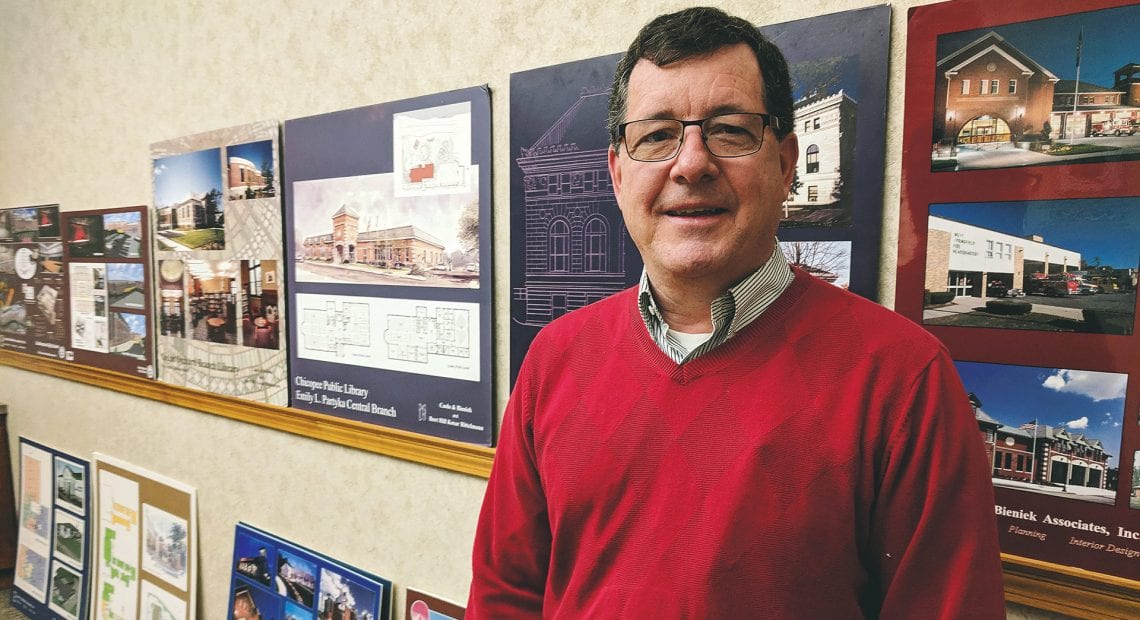
Meetings & Conventions

Making a Match

Mary Kay Wydra (left) and Alicia Szenda say the region’s recent momentum and new attractions have made it a stronger sell to event and convention planners.

Conventions are good business for a city like Springfield. But they don’t exist in a vacuum.

“We’ll ask if they have time for things outside their program,” said Mary Kay Wydra, president of the Greater Springfield Convention & Visitors Bureau (GSCVB). “Are they bringing spouses? Will they have time, either pre-event or post-event, to go to Yankee Candle, or Six Flags, or the Seuss museum?”

“That’s part of their convention experience as well,” added Alicia Szenda, the GSVCB’s director of Sales. “They might be at the MassMutual Center for three or four days, but they might do a couple off-site events, too. We can help them — ‘OK, do you want to do the Springfield Museums? The Hall of Fame? What is it that your group is interested in?’ Because we do want them to have a good experience and feel welcome.”

Both Wydra and Szenda share a philosophy that, while conventions and major sporting events positively impact the region during the weekend or week they’re around, they also pose an opportunity to draw convention-goers back in the future — either as a group for future events, or individually, as leisure travelers.

That’s why attracting convention business focuses not just on the venue, lodging, and amenities involved in the event itself, but on the entire region.

“Our goal is always to expose them to more of what we have to offer,” Wydra told BusinessWest. “Sometimes we whet their appetite, and they come back as a leisure visitor. That’s a goal. If we do our job right, they’ll come back again.”

And when they’re here, they’ll spend money, from hotels and restaurants to gas stations and recreation destinations, Szenda added. “We’re really lucky we have great attractions, and that’s enough to keep people entertained while they’re here and get them to come back.”

The convention and event mix in 2020 is a diverse agenda, one featuring newcomers and repeat business alike. The city recently hosted the New England Fence Assoc., which the GSCVB had been trying to bring in for years, as well as the New England Region Volleyball Assoc. (NERVA). In its sixth straight year here, the latter event filled 2,000 hotel-room nights over the course of a weekend.

The city will also host the Amateur Athletic Union volleyball super-regional in March — partly because someone who took part in the NERVA event liked what he saw from the city. “We’re hoping that becomes annual as well,” Szenda said.

Other upcoming events include the largest collegiate fencing competition in the country and a First Robotics event at the Eastern States Exposition, both in April; a gathering of the National Assoc. of Basketball Coaches in May; and Hooplandia in June. And that’s just the tip of the iceberg.

In all cases, Szenda said, the goal is to match what an organization needs with what a venue — and the city and region — have to offer. Take the International Jugglers’ Assoc., which convened in Springfield last year.

“This group was looking to go anywhere in the country, so we looked at their parameters and put together a proposal. They needed a convention center, two full-service hotels within walking distance, a historic theater, and a fun kind of bar atmosphere with a stage. I read that and was like, ‘that fits perfectly here,’” she recalled, noting that Symphony Hall was an ideal theater, and Theodores’ fit the bill for the bar.

Our goal is always to expose them to more of what we have to offer. Sometimes we whet their appetite, and they come back as a leisure visitor. That’s a goal. If we do our job right, they’ll come back again.”

The GSCVB will also suggest gathering options that planners might not know about — perhaps a cruise outing on the Lady Bea, or an outdoor reception at the Springfield Museums. “You can have a unique dinner event on Center Court at the Basketball Hall of Fame. Nowhere else in the world can you do that event. We try to be creative, and try to really hype the assets we have.”

Rising Interest

The GSCVB has seen an uptick in conventions in recent years, and Szenda is constantly talking with hotels, asking them to quote rates and block off a certain inventory of rooms, sometimes three years out. Then she gets to work finding the aforementioned local connections, setting up reasonably priced hotel options and assembling tourism information about the region.

The bureau also boasts a hospitality program that many similar-sized cities don’t offer, which includes everything from airport pickups and hotel greeters to downtown maps and goodie bags.

“At the end of the day, it’s about sales,” she said. “We go to trade shows, but we also get leads from locals who live around here who might be part of national associations or hobby groups or special-interest groups who want to bring the event they travel to every year here. Once we make that initial contact, the process becomes pretty streamlined. We want to get all the information we can from them — how many room nights do they need? What kind of venue do they need?”

Organizations based in New England already see Greater Springfield as a convenient location, with interstates 90 and 91 intersecting here, and they might be aware of its recreational and hospitality options. Those from far away, though, may need some convincing, and that’s what Szenda does when she attends those industry trade shows, where she may schedule appointments with up to 30 meeting planners or sporting-event organzers to talk about how this region suits their needs.

“We’re Western Mass. — we don’t have the cachet of a first-tier city, like Boston or Chicago,” Wydra said. “With national groups, a lot of times, that’s where a local person comes into play.”

For instance, the National Square Dance Convention, a national gathering of Daughters of the Nile, and a large insurance convention all landed in Springfield in recent years because a local member got the ball rolling. “I think the local tie to national groups is a really important and powerful one for us.”

One selling point is that national groups that hold conventions in the Pioneer Valley get plenty of local attention — everyone knows they’re here, and are often excited about it.

“We tell the event planner, ‘you’re going to be a big fish in a little pond,’” Wydra said, noting that Daughters of the Nile held its convention in Orlando the year before coming to Springfield. “I don’t know if the local people knew they were in Orlando. But when they came to Springfield, there was a story or photograph in our mainstream media, talking about this group, every day they were here. You kind of take over our city, our region.”

Another plus? Springfield is a different city than it was five years ago, with MGM Springfield, the Seuss museum, and ongoing Basketball Hall of Fame renovations among the recent major stories.

“I go to these trade shows, and all they want to know is what’s new,” Szenda said. “With some cities, they sit there and say, ‘we’ve got the same stuff,’ but we’ve been able to go every year and say ‘this is what’s new, this is what’s new.’”

Wydra agreed. “That makes our job so much easier and more exciting. The sell is easier when we can say we’ve added these things.”

Key Connections

‘It takes a village’ is a bit of a cliché, Wydra admitted, but in the GSCVB’s case, it really is true, especially when it comes to booking events and providing the kind of experience that will bring people back.

“It does take a village to host a group of people. Everyone’s got to work together,” she said, adding that the region is fortunate to have assets like Eastern States, a campus-like setting with plenty of parking and room for large equipment, not to mention a modern convention center in the heart of Springfield and a couple of anchor hotels downtown complemented by a growing roster of lodging options around the region.

“Anyone who lives here and belongs to a group or goes to an event they want to host, they should contact me,” Szenda said, putting that sales hat back on for a moment. “If we get the site visit, we have a better shot of landing that event.”

“We do the work for them,” Wydra added. “We try to make it as easy as possible, but those local leads are so important.”

Joseph Bednar can be reached at [email protected]
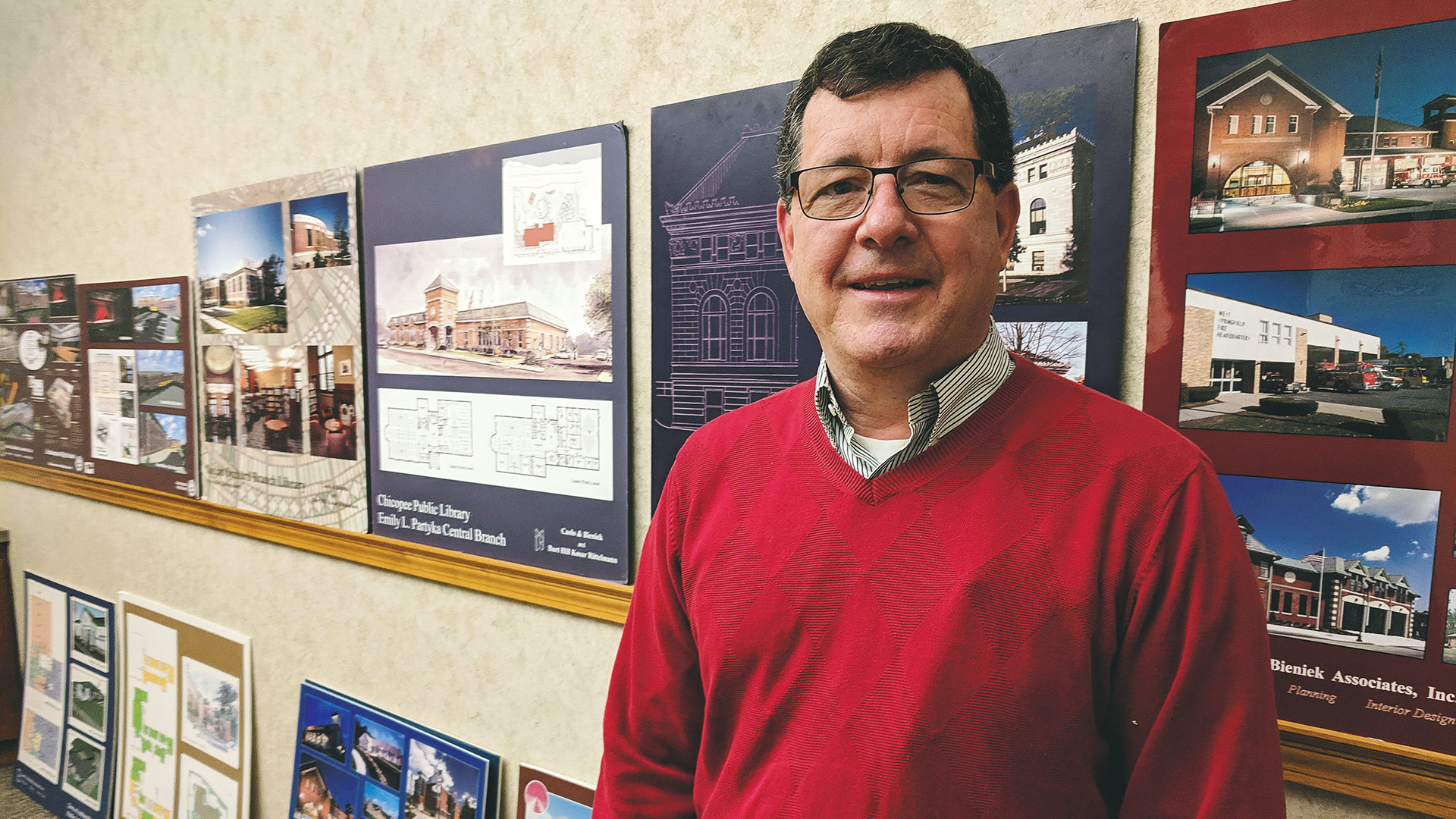
Business of Aging

Care Connections

Kathy Burns says Mercy LIFE’s team approach to care has helped seniors maintain and even improve their health.

Celina Conway tells the story of a man who arrived at Mercy LIFE after five years in a nursing home, and was so weak, he couldn’t even hold a cup with both hands. After five years receiving services there, though, he felt stronger than he had in a decade — since before his nursing-home stay, in fact.

“They’re getting stronger,” said Conway, the facility’s director of Enrollment and Marketing. “There are people who came here in wheelchairs and now walk — quite a number, actually. Those are not uncommon stories.”

Mercy LIFE is a PACE (Program of All-inclusive Care for the Elderly) program run by Trinity Health PACE that will celebrate its sixth anniversary on March 1. PACE programs are on the rise in the U.S. because the role they play — providing a range of health programs aimed at keeping seniors out of nursing homes — is becoming more prominent.

“We’re serving people who could be in nursing homes. The model was designed as a place for folks who need some care and need some eyes on them on a more regular basis than an elder living independently,” said Kathy Burns, the center’s executive director. “In fact, everybody who joins us has to be, in the eyes of the state of Massachusetts, clinically nursing-home eligible. And they tend to thrive here because of the intensive care management we do with this big, multi-disciplinary team.”

Indeed, that team includes primary-care doctors, home-care nurses, physical and occupational therapists, dietitians, social workers, among others, all working as a team on each enrollee’s individualized care plan. And it’s not just healthcare; it’s also a place for seniors to socialize, participate in activities, and be generally engaged in life.

“Everything is under one roof, kind of like a nursing home, but nobody lives here; they go home at the end of the day,” Conway said. “When people enroll in the PACE program, they agree to have all their services provided by the staff here, including primary care.”

It’s a managed-care model not far removed from accountable care, the model that has crept into hospitals nationwide, which involves teams of providers being paid by insurers to keep patients well over a period of time, rather than being paid for each treatment, test, and hospital stay.

“It’s actually the precursor to accountable care,” Burns said, noting that, about 40 years ago in San Francisco’s Chinatown neighborhood, families wanted a place for their elders to go instead of a nursing home — a central location where they could bring in health services. Medicare funded a trial run, and the model worked. A second PACE site followed in Boston, and today, 131 PACE programs provide services at 263 centers nationwide, serving about 51,000 participants.

Why? Because the model works, Burns said, giving one example of how such programs keep people healthier while saving money.

“We get a good idea how this person functions, what’s important to them, what their goals are, how we think we can meet their needs. They have the ability to say, ‘I don’t want to do this,’ but typically, once they walk in the door, they’re sold and they do want to enroll.”

“Everybody on the team is equally important in their observations of what’s going on with the elder. Let’s say a driver who’s driven Mrs. Smith here every week for a long time notices, ‘boy she’s really out of sorts today.’ He’s supposed to come in and tell his boss, who will come to the morning meeting and say, ‘Mrs. Smith isn’t right today.’

“So Mrs. Smith is sent right down to the clinic, and we’re going to look at her,” she continued. “And if she’s got, say, a UTI brewing, we’re going to get her on some antibiotics and take care of her right here instead of her going home, where the infection gets worse, and she ends up in the ER with delirium because the infection makes her delirious, and all of a sudden she’s in a psych ward spending Medicare or Medicaid’s money unnecessarily because what she needed was antibiotics, which we can take care of right here.”

Safe Haven

Mercy LIFE currently enrolls more than 300 seniors, about 100 of whom are on site on a typical day.

“We explain to people this is a different way to have your healthcare delivered, and we have conversations to make sure they want care delivered this way,” Conway said. “We want to help them live safely at home.”

If, after being assessed by a nurse, they meet the criteria of needing nursing-home-level care, team members speak further with them and their family members, she went on.

“We get a good idea how this person functions, what’s important to them, what their goals are, how we think we can meet their needs. They have the ability to say, ‘I don’t want to do this,’ but typically, once they walk in the door, they’re sold and they do want to enroll.”

Conway said Mercy LIFE enrollees are assessed and placed into one of four different activity levels, from totally independent to needing more help to memory care, and it’s not uncommon for people to move from one level to another over time. “If people are concerned they won’t find people like them, they will.”

The rehab gym is a popular spot where participants can get stronger, she added. Some sign up for time with a personal trainer, while others might work in small groups or one on one to deal with specific issues, such as balance.

“They always think they’ll get weaker and less mobile as they age, but we’re lifers; we’re planning to be with them for life. So we’re trying to do preventive care, which is less expensive than dealing with a crisis after an episode where somebody falls.”

Occupational therapists on the team also spend time in the home, and are always scoping out issues that could be dangerous, Conway noted.

“We are responsible for everything. So if someone needs a grab bar, or someone needs a toilet set, we are going to order it and deliver it ourselves, which is better than getting a script and going to the medical equipment store. It’s very personalized service. When we work as a team, we prevent so many hospitalizations, emergency-room trips, that sort of thing.”

Burns added that the attention and engagement seniors get at Mercy LIFE brings a richness and measure of security they might not find on their own. “It’s an intensive model of oversight that really keeps them safe at home, happy at home. A lot of folks who come here had spent years at a time just sitting at home watching television. Now they’re doing all kinds of interesting things in our day room, while they’re seen by doctors and therapists.”

And the care plan is different for everybody, Conway said as she walked with BusinessWest past a conference room where an interdisciplinary team was meeting, as they do multiple times each day, to discuss whatever issues may have arisen with some of the people in their charge.

“We’ve helped 550 people over the past six years,” she added. “We don’t discharge people to hospice. We serve people until the end of their life. It’s a beautiful model. To see people when they enrolled and then see the progress and the support they get is very rewarding.”

Burns agreed. “A lot of families have been incredibly grateful for that gift.”

Effective Model

Burns and Conway both came back repeatedly to the financial benefits of preventive care and the value of preventing incidents before they arise. “If you don’t have an ambulance ride, an ER visit, a hospitalization, and a rehab visit, you’re saving a ton of money right there,” Conway said. “I know our interdisciplinary team members work hard to prevent those four key things. Everybody’s happy as a result of that.”

There is no cost to the vast majority of the seniors or their families (there is a private-pay option for a small percentage of participants). Medicare grants the program a flat monthly premium, while MassHealth provides funding as well. However, this year, MassHealth reduced its rate by 2.1%.

“We’re advocating for some of that to be brought back,” Burns said. “The problem for small but effective programs like ours is they’re easy targets for things like that. And we’re really hoping MassHealth will consider pulling back that decrease.”

Those who work at the West Springfield site see that effectiveness every day, Conway said. “This is mission work. I don’t think you’ll find anyone working at Mercy LIFE for the money. They stay here because they enjoy it so much.”

She told BusinessWest she appreciates the chance to tell the Mercy LIFE story because many people still have misconceptions.

“People think it’s home care, they think it’s adult day health, they think it’s a doctor’s office … but it’s all of those things,” she said.

“It sounds too good to be true,” Burns added. “But it just works.”

Joseph Bednar can be reached at [email protected]
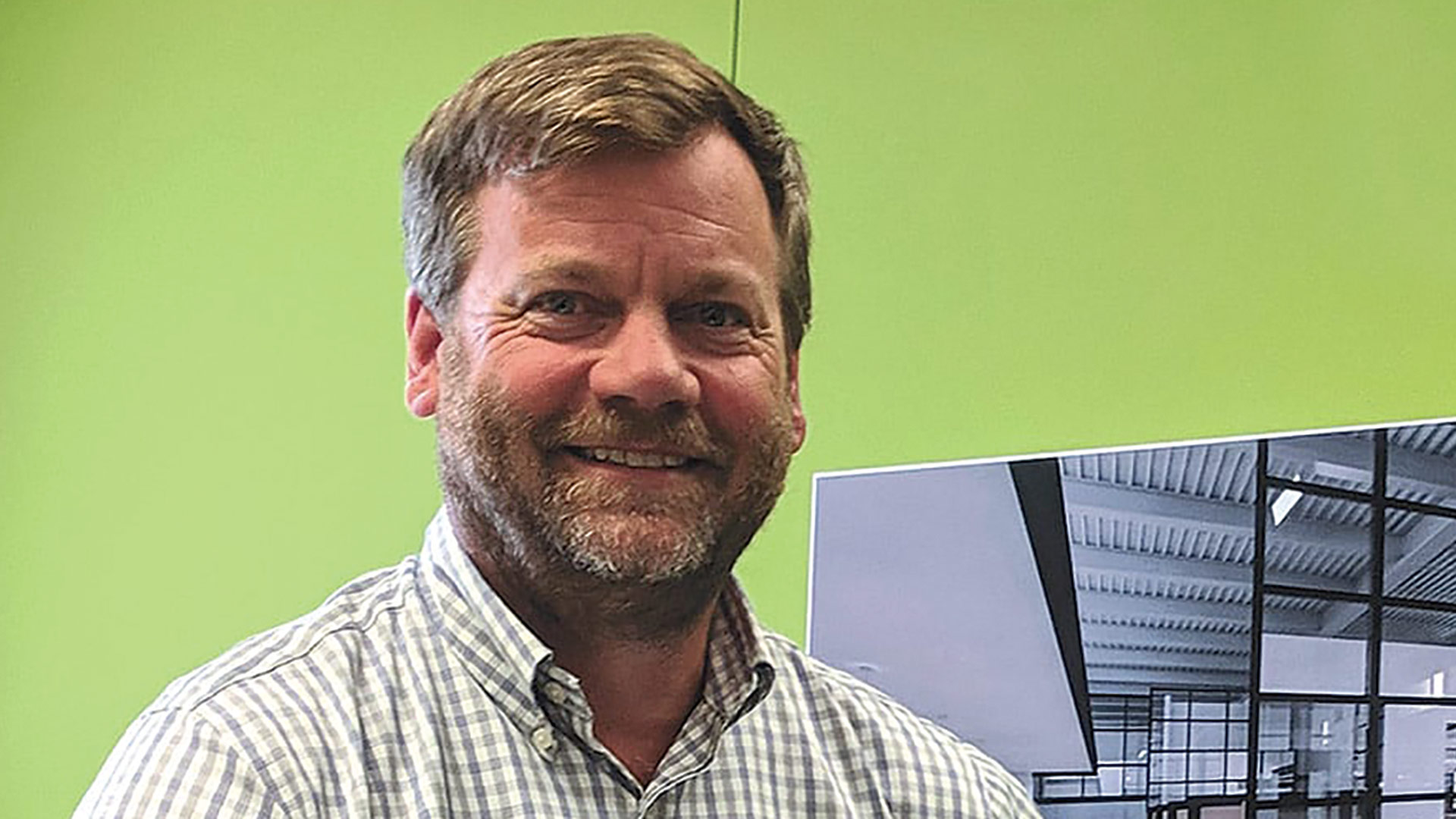
Insurance

Deepening Its Roots

Timm Marini, president of Personal Lines

When FieldEddy Insurance entered the HUB International family a little over five years ago, it traded a name with a rich regional history for one backed by the resources of a large corporation. The result has been the best of both worlds — HUB’s clout improves the office’s ability to grow specific niches through talent development, while the company is still able to focus on local needs with an emphasis on building deeper relationships with customers.

The insurance company known as FieldEddy had more than 160 years of history and a still-growing geographic footprint in Western Mass. when it became part of the HUB International family in 2014.

It’s a move that simply made sense at the time, Timm Marini said, and he feels even more strongly about that five years later.

“It’s such a natural fit for us,” said Marini, president of Personal Lines at HUB International New England in East Longmeadow. “There’s a cultural mesh in that our focus and HUB’s focus has always been in delighting the customer.”

Several years ago, FieldEddy employees were tasked with coming up with tools and resources they needed to better ‘delight’ those customers, Marini recalled. “We got to about seven of them and looked at each other and said, ‘we’re going to go bankrupt trying to buy all this and do all this on our own.’ So we plugged into HUB, and that’s when we really became the market leader.”

While FieldEddy had grown dramatically through acquisition over the previous two decades, under the HUB name, the company took a more organic approach, Marini told BusinessWest, adding talent in specific growth areas, from cybersecurity to healthcare (in the wake of health-insurance reform in the Bay State, followed by the Affordable Care Act nationally).

But last year, it was back on the acquisition trail, purchasing the Insurance Center of New England in Agawam — a move, Marini said, that represented the same sort of ‘cultural mesh’ that FieldEddy and HUB did five years ago.

“They had some great talent on their team and a couple of niche markets that made sense for us,” he said. “We’re not just buying to get big. We’re buying to get better. If we can buy an organization or invest in an organization that helps us get better, that’s what HUB’s acquisition strategy country-wide is.”

“When there’s a catastropic event — a hurricane, a tornado — HUB is ready, and we’re communicating to our customers, we’re communicating to the marketplace, and we’re giving them better data than what you’d receive in the news. We’re getting ready for the event.”

The company undergoes a due-diligence process before making an offer, he explained, one that involves three questions. “Number one, is it a good fit? Number two, are they bringing something to the party to make us better? And number three, can we make it grow?

“This was a great cultural fit, with really educated people — just good, solid folks. That first piece of it was a home run,” Marini went on. “Then, they have talent that we didn’t have, and we’re getting that talent. HUB wants to bring levels of expertise and be able to delight our customers differently. We want different people on our teams, different resources available to us, that will help our customers.”

For this issue’s focus on insurance, Marini talked about how HUB continues to expand both its reach and its knowledge base in numerous ways.

Hub of Activity

HUB itself has been around only since 1998, with its first operations in Canada and Chicago. Its first acquisition after that was CJ McCarthy Insurance Agency in Wilmington, Mass. in 2000. It picked up FieldEddy 14 years later.

Today, Marini said, HUB is the largest independently owned agency in New England, the largest personal-lines agency in the country, and the fifth-largest agency in the U.S. overall. So, while the firm operates autonomously with local decision making, it does so with plenty of clout behind it.

“A lot of our talent investments, we could never do on our own,” he said, citing growth in areas like risk services and loss control, claims advocacy, and underwriters who specialize in specific niches.

Legalization of marijuana is one example. “We’ve made pretty significant investments in educating our brokers across the country and making sure we can handle the unique needs of that industry.”

As another example, “on the health side, we’re asking, ‘what do we need to do better for the customer?’ We’ve invested in health and wellness folks, people who can help mitigate exposures and help us all be healthier … we’ve invested in actuaries, underwriters, data-analytics experts, just to help carve out the information and make sure the pricing we receive from insurance carriers is the right one for our customers.”

“I believe we’ve tried to move away from just the transactional side of things. Price is important, coverage is more important, but most important is being that advocate — not just when the negative or adverse thing happens, but being there through the process, through the life of the product that you’re talking about. It’s not just the transaction.”

And in times of emergency, HUB brings more to the table than insurance, he added.

“When there’s a catastropic event — a hurricane, a tornado — HUB is ready, and we’re communicating to our customers, we’re communicating to the marketplace, and we’re giving them better data than what you’d receive in the news. We’re getting ready for the event.”

When a hurricane devastated Bermuda last year, he noted, “we had $10 million homeowner customers on the island. And when that happened, we had barges filled with emergency-care stuff out there. HUB coordinated it — paid for by us, by our carrier partners — and it had nothing to do with insurance, just to do with taking care of people.

“Again, as a small independent, we didn’t have the resources to do that,” he went on. “That’s really cool. To be able to communicate that and see it in action, it puts me to bed thinking we made the right decision five years ago.”

In general, Marini said, being part of a large national company is a healthy balance between local autonomy and broader resources.

“The budget is more regional and filters across, but my team is plugged into the process. We have growth initiatives and retention initiatives — again, focused on delighting the customer,” he told BusinessWest. “We say, ‘grow well, grow big, but don’t just be big — be great at what you do.’ And the greatness comes from our customer feedback.”

Knowledge Is Power

HUB International New England has also bolstered its educational outreach in recent years. For example, it recently sponsored a seminar with about 350 business customers about the new employee leave laws in Massachusetts, featuring Bill Alpine, director of the Commonwealth’s Department of Family and Medical Leave, and two attorneys.

“That whole educational process takes a real investment in your people, in your talent. And that’s one of the benefits of HUB,” he said, adding that the company offers a ‘HUB University’ program in Chicago, where employees are trained in specific industries and niches to be better able to serve certain types of customers.

“It could be as simple as one individual or one family that owns one home, or a high-net-worth individual with millions of dollars of assets, all the way to the largest corporations in the world,” he said. “We educate each one of those folks and determine their needs through an assessment, a conversation. It’s not just selling them a product, it’s really finding a solution — and having them understand up front what they’re buying.”

All insurance, after all, is assessing risk and deciding how to mitigate and cover it, he went on. Someone in a flood zone might decide, based on not having a flood in the past 100 years, that they’re OK with not covering that, but at least they’ve had the conversation.

“It’s an educated buying decision based on some expertise we bring to the table. It’s not just trying to sell a policy,” Marini said. “And how do you get there? We have to educate our employees, and they educate our customers. It’s a shared conversation, not a unilateral conversation.”

HUB takes part in national summits with industry experts as well, talking about hot trends and digging into coverage details, such as how to protect, say, someone’s vast wine collection from California wildfires. That’s a first-world problem to be sure, he noted, but if it’s something of value to the customer, then it’s important to HUB.

“Each person has specific things that are special to them,” he told BusinessWest. “Our responsibility is to find the right levels of protection for them.”

That involves forging relationships, he added.

“I think about some of the partnerships I have personally. The same guy has made my suits for 28 years. The same guy cut my hair for 34 years. Those are personal relationships — yes, they provide a service, and insurance is a service — but they’re real, personal relationships that bring different conversations than you have with your friends and your other acquaintances.

“I believe we’ve tried to move away from just the transactional side of things,” he continued. “Price is important, coverage is more important, but most important is being that advocate — not just when the negative or adverse thing happens, but being there through the process, through the life of the product that you’re talking about. It’s not just the transaction.”

Community Ties

Marini says HUB International New England has long maintained relationships of another kind as well — with the nonprofits and community organizations it supports with money, time, energy, and expertise.

“I still sit on six nonprofit organizations. It’s all about giving back to the community,” he said, adding that employees are encouraged to get involved as well, even if it overlaps with work time. “We encourage that; we don’t count it against their time. It’s good for our organization. We want to be in the community, frankly. It’s what we are. And HUB is the exact same way. It’s an expected part of the culture.

“We encourage everyone in the organization to be involved. It’s rewarded, not penalized,” he went on. “After all, this is a people business. We earn a lot of money, and we invest a lot of money. That’s something I’m proud of.”


Joseph Bednar can be reached at [email protected]
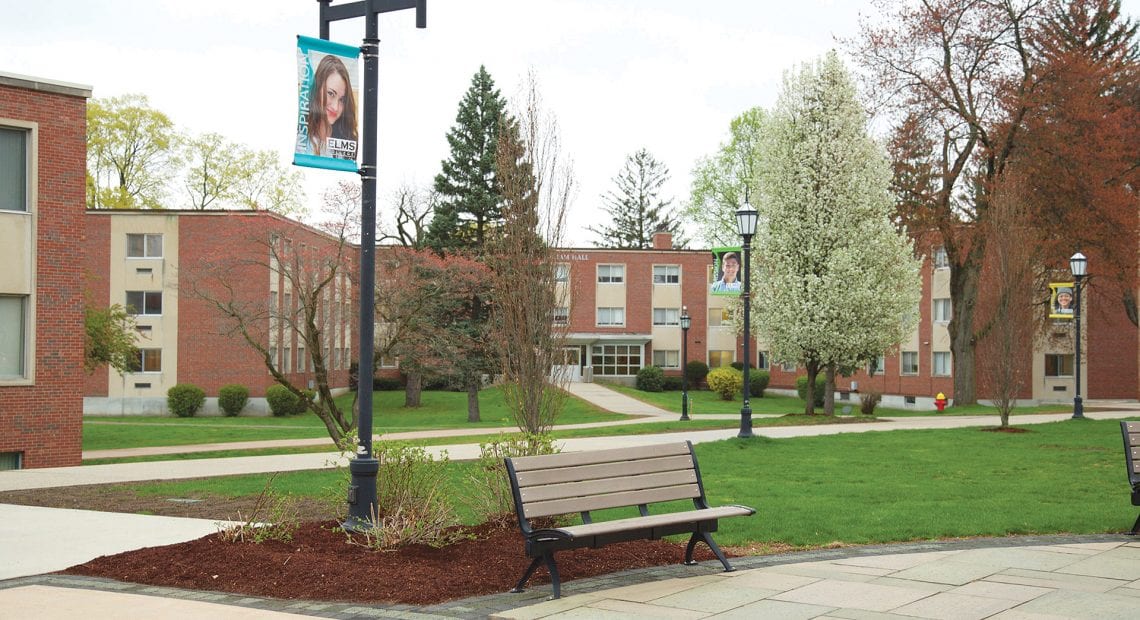
Autos

Shifting Lanes

For years, people have been aware — at least vaguely — of the benefits of electric cars, especially energy conservation and savings on gasoline. But according to at least one survey, a general lack of awareness still surrounds these vehicles, especially when it comes to their often-surprising road performance. Yet, electrics and hybrids are gaining momentum, as evidenced by the number and variety of models being introduced to the marketplace — a group that might soon include larger SUVs and trucks.

Brian Ortega sees the connection between electric cars and energy conservation in general.

“They’re popular for a multitude of reasons,” said the product specialist at Balise Hyundai in Springfield. “One, a lot of people are making the transition to having solar panels in their home or making other changes to be a little more eco friendly. People are becoming more aware of climate change, and they want to switch to electric cars.”

But here’s what many drivers of gas-powered vehicles don’t know — people drive electric cars for the performance, too.

“With full electric, there’s a lot more torque,” Ortega said. “When you hit the pedal, there’s no gears, nothing but electricity hitting the car, so your takeoff and speed on the vehicle and ability to get out of snow is a lot better on an electric car.”

Since the days when the Toyota Prius was the only option on the electric market, he told BusinessWest, manufacturers have gradually improved the performance and pickup of electric vehicles, as well as hybrids, which tap into both electricity and gasoline (more on that later). And with Hyundai, Nissan, and a host of other names starting to roll a wider variety of electric and hybrid cars out of factories, they’ve been gradually improving ride quality as well.

“A lot of people have the stigma that it’ll only perform so well, but when they come from a traditional sedan and see that it performs at the same level or better, they are always caught off guard by that,” said Ortega.

Carla Cosenzi, president of TommyCar Auto Group, which sells a number of electric and hybrid vehicles, agreed.

“I think people are shocked when they get in the car and realize the pickup they have,” she said. “When consumers look at electric vehicles, they usually don’t expect them to be as responsive as they are or have the torque they have.”

Whatever the reason, she went on, “we see electrification becoming more popular among manufacturers. It seems everyone’s research and design are focused on electrification now, and they’re definitely becoming more popular with consumers, for a number of reasons. For one thing, I think consumers are now more environmentally conscious than in the past, so if vehicles offer zero emissions, that’s better for the environment and more efficient than internal-combustion engines. The other piece is that these cars are more affordable than in the past.”

Ford has taken note of shifting attitudes on electrics and hybrids and pivoted accordingly, said Jeff Sarat, president of Sarat Ford Lincoln in Agawam.

Brian Ortega says charging stations for electric cars are more ubiquitous than they think — and Hyundai has an app to help locate them while driving.

“It’s interesting — for a while, Ford and Lincoln dropped all of their hybrid vehicles, but recently they brought back numerous versions of hybrids, both plug-in and traditional hybrids. Lincoln has a plug-in version of the Aviator coming out called the Grand Touring model. That’s something like a high-end luxury vehicle, and with the plug-in version, believe it or not, it gets more horsepower and torque than a regular twin-turbo V6 that comes standard in that vehicle.”

In addition, Ford will soon launch the all-electric Mustang Mach-E, which Sarat said is a whole new entry point into electric vehicles — perhaps a hipper one.

“I think this vehicle — and I’ve seen it, I’ve sat in it — is really going to take the electric world by storm, and going to battle the likes of Tesla because it looks better than the Tesla, has better range, and it’s also probably a fraction of the cost, which is nice.

“I think, forever, the common thought about electrics and hybrids was that these aren’t exciting cars,” he added. “The Mustang Mach-E and Aviator Grand Touring, those are exciting vehicles with plenty of range. That’s what we’re seeing in the newer vehicles.”

Engines of Change

To explain the difference between electric and hybrid vehicles, Ortega pointed out two that Hyundai sells: the Ioniq, a sedan, and the Kona EV, a small SUV.

The EV is strictly electric, while Ioniq has a plug-in hybrid and an electric hybrid,” he said. “With full electric vehicles, there’s only the charge, no gas. Hybrid is a mixture of an electric battery, electric drivetrain, and an actual gasoline engine. With the typical hybrid, you fill it up with gas, and it uses regenerative braking, so that, every time you step on the brake, it actually charges the hybrid battery, and gives you a little extra range in driveability.

Carla Cosenzi

“I think people are shocked when they get in the car and realize the pickup they have. When consumers look at electric vehicles, they usually don’t expect them to be as responsive as they are or have the torque they have.”

The plug-in hybrid allows you to go a farther distance between the charge that’s on the car and the gasoline you put into it. So, with a plug-in hybrid, if you get 52 miles to the gallon on gasoline, you get 30 additional miles of range from electricity.”

Ford has long been a player in this market with its Escape hybrid, a small SUV. “We sold thousands of those,” Sarat said. “And we still have the Fusion Energi with the plug-in hybrid; we sell a lot of those.”

The tipping point for many people, he believes, will be the emergence of electric and hybrid trucks and larger SUVs. He said the hybrid Escape was discontinued for a time when the difference between its gas mileage and that of a gas-powered model was small — say, 33 miles per gallon versus 28. Now that hybrid SUVs get well over 40 miles per gallon, though, the difference is more likely to attract buyers, and Ford hopes that’s the case as it develops a hybrid Explorer.

“That will fit seven people and get 40 miles per gallon,” he said. “Everyone wants that.”

Cosenzi said some electric cars in her stores have sold well for years.

“The Nissan Leaf won a number of awards and was one of the top-selling electric vehicles for the past couple of years — and was one of the first electric vehicles on the market,” she told BusinessWest. “I think people are really excited about the range. They get over 200 miles per charge, so that’s really appealing. Other things put a customer at ease, too — you can save money on maintenance and gas, and the manufacturer supports the battery life of the vehicle; Leaf has an eight-year, 100,000-mile battery warranty.”

She also cited Hyundai’s Ioniq and Kona as popular sellers, as well as the Sonata hybrid. Volkswagen offers an electric Golf and is developing other electric models. And Volvo has the T8 hybrid and announced an electric XE40 SUV that will go on sale this year. And TommyCar just acquired a Genesis franchise, which will introduce an electric car this year.

In short, Consenzi said, electric and hybrid models are starting to proliferate, and that speaks to manufacturers’ confidence in their sales potential.

“I think, even when we talk about the next two or three years, you’ll see huge growth. From everything we hear from manufacturers, all the research and design is going into electrification.”

Forward Progress

Long-term forecasts of electric and hybrid vehicles have fluctuated by year, but the national growth rate since 2013 still averages about 25% per year.

Several factors explain why growth isn’t even higher, according to a recent survey by research firm Altman Vilandrie & Co. of 2,500 American drivers. When asked what’s stopping them from buying such vehicles, 85% of respondents pointed to a perceived lack of charging stations, followed by cost (83%), and concerns over the range (74%). And 60% said they were simply unaware of electric cars.

Worries about range and charging-station location seem to go hand in hand, and manufacturers have noticed. Ortega said Hyundai has an app that connects with a car’s data screen — even if navigation isn’t installed — and points out all the charging stations in the area.

“Typically, you’ll always have one within two miles of where you are,” he noted. “Of course, on the highway, that’s where it becomes more spread out, but they tend to be readily available.”

Cosenzi added that today’s charging stations are much more efficient than they used to be. “People waited a long time for their car to be charged, but now it’s as quick as under 45 minutes for a full charge.”

As for cost, she noted that government rebates for electric vehicles are often aggressive, such as a $7,500 federal rebate and state rebates that vary by manufacturer, but tend to average around $2,500. “That’s quite an advantage for going electric, plus savings on gas mileage.”

Ortega agreed, noting that, after about $9,000 in rebates, drivers can lease an Ioniq for under $200 a month, no money down.

“It makes all the sense. It’s the cheapest lease you can get,” he said, adding that, “in the future, that’s going to be the route people go. You’ll have that performance as well as the savings. They’ll become more popular.”

The fuel savings, after all, remains a huge factor, Sarat said.

“My truck has a 35-gallon gas tank in it. I hate filling that up; it costs 75, 80 bucks. Nobody likes doing that,” he told BusinessWest. “Pretty soon we’ll have hybrid pickup trucks. To me, that’s exciting because I hate filling this gas tank. I like to be home at night, plug it in, and be done with it, and be able to go to work the next day or go skiing on the weekend.”

And maybe go a little easier on the environment, too.

Joseph Bednar can be reached at [email protected]
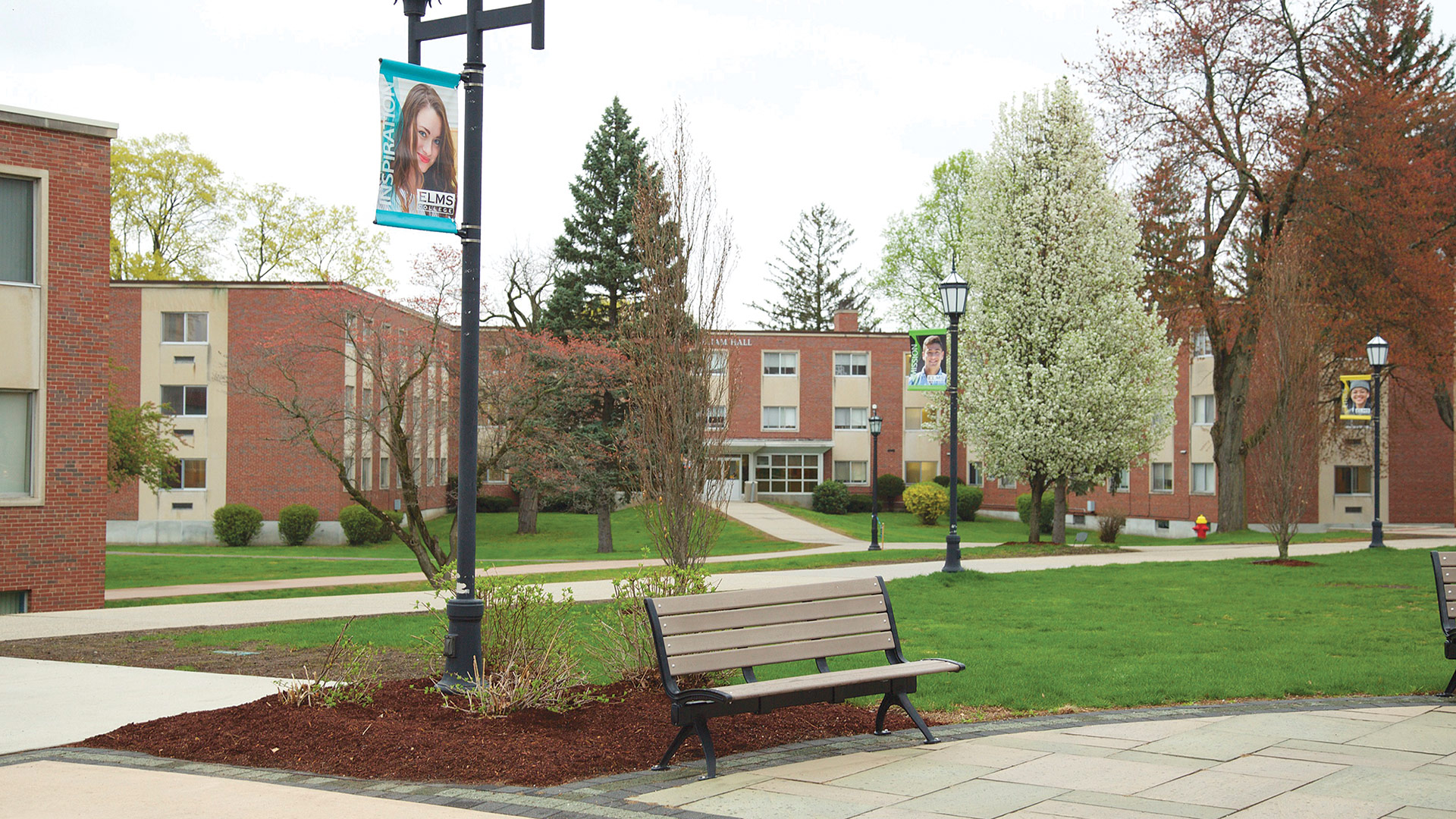
Community Spotlight

Community Spotlight

A $50 million renovation will transform Elm Court, on the Stockbridge line, into a new resort.

Historic properties are getting a second act in Lenox these days.

Take the $60 million expansion and renovation at the former Cranwell Spa & Golf Resort. The Miraval Group, a subsidiary of Hyatt Hotels, purchased the property in 2016 for $22 million and has transformed it into a high-end wellness resort, called Miraval Berkshires Resort & Spa, featuring 102 guest rooms and suites, and a luxury, 46-room hotel, Wyndhurst Manor & Club.

Set to open in May, the complex known as Miraval Berkshires is the third Miraval property nationwide, following its flagship in Tucson, Ariz. — named among the top 20 destination spas in the world last year by Condé Nast Traveler readers — and a second location in Austin, Texas, which opened last year. Hyatt acquired Miraval in 2017, and Wyndhurst Manor & Club is part of Hyatt’s Destination Hotels brand.

The 29,000-square-foot spa in Lenox “was conceived to excite all five senses and encourage mindfulness and introspection,” according to the company, and will include 28 treatment rooms, an indoor/outdoor lounge pool, separate relaxation rooms for women and men, a salon, a sauna, a steam room, a retail boutique, and a courtyard that evokes “a sense of harmony with nature.”

The neighboring Wyndhurst Manor & Club, a renovated Tudor-style mansion built in 1894, will offer a more traditional hotel experience, but guests there can purchase day packages for Miraval.

“We are excited to continue the Miraval brand’s expansion with the upcoming opening of Miraval Berkshires, as well as to welcome Wyndhurst Manor & Club to the Hyatt family,” said Susan Santiago, senior vice president of Miraval Resorts, in a release. “These two properties will offer distinct and memorable travel experiences, and we look forward to inspiring once-in-a-lifetime, transformative experiences for all guests who visit our Miraval and Wyndhurst resorts in the heart of the Berkshires.”

Then there’s the Elm Court estate on the Stockbridge-Lenox line, constructed in 1886 as a summer cottage for William Douglas Stone and Emily Vanderbilt. It completed a series of renovations in 1919 and evolved into an inn in the ’40s and ’50s, hosting dinners, events, and overnight accommodations. It was eventually placed on the National Register of Historic Places.

These days, Travaasa Berkshire County is working on a $50 million renovation of the property to develop a new resort there, featuring 112 rooms, including 16 existing suites in the Gilded Age mansion. After a series of starts and stops, including a holdup in land court in Lenox and a pause for infrastructure improvements to the roadway and water and sewer lines, the project is now moving forward.

“Travaasa Berkshire County’s plan preserves and protects a beloved historic property, respects community character, conserves open space, and contributes to the hospitality culture of the region,” the project website notes. “A tasteful, responsible commercial use of this property by a financially healthy organization will revive a dormant estate, create living-wage hospitality jobs at all skill levels, and maintain the property on town tax rolls.”

Even the Mount, Edith Wharton’s English manor-style home during the early part of the 20th century, is making news these days. Her classic novel The Age of Innocence is celebrating its 100th anniversary this year, and to mark the occasion, the Manor is displaying Wharton’s personal copy of the book.

“We have many, many of her works that either have bookplates or her signature — or both, as with this copy — and so, to finally have her own copy of The Age Of Innocence join this collection of her work, it’s amazing. It’s incredible,” Nynke Dorhout, the Mount’s librarian, told Northeast Public Radio recently.

Looking Ahead

Lenox is much more than its historical properties, of course. It’s also long been renowned for its cultural and recreational attractions, from Tanglewood, the summer home of the Boston Symphony Orchestra, to Shakespeare & Co., to the town’s collection of rustic inns and bed and breakfasts.

But the business community has seen new energy in recent years as well, with projects like a Courtyard by Marriott that opened in 2017 and features 92 rooms with panoramic views, an indoor pool, a large patio with firepits, a restaurant, and a 12,000-square-foot event space; the relocation of Morrison’s Home Improvement Specialists Inc. from Pittsfield and its adaptive reuse of a blighted building that had been vacant for 10 years; an apartment conversion at the Walker Street Residences by the Allegrone Companies; and the construction of Allegrone’s headquarters and co-working office space using green design and technology in a building on Route 7.

Lenox at a glance

Year Incorporated: 1767
Population: 5,205
Area: 21.7 square miles
County: Berkshire
Residential Tax Rate: $12.10
Commercial Tax Rate: $14.78
Median Household Income: $85,581
Median Family Income: $111,413
Type of Government: Board of Selectmen, Open Town Meeting
Largest Employers: Canyon Ranch, Boston Symphony Orchestra, Kimball Farms
* Latest information available

To address an aging population, town officials created a first-time-homebuyers program in 2016 in partnership with four banks that offers up to $10,000 in down payments to qualified applicants. They also changed zoning requirements to make it easier to build new apartments and condominiums or convert older housing stock into appealing residences, as well as adopting a Complete Streets policy that will make the town eligible for state funds to improve connectivity for pedestrians and bicyclists.

Meanwhile, to encourage companies to move to Lenox or expand, town officials have been focused on a five-year open-space plan that was adopted several years ago. In addition, the Berkshire Natural Resources Council, the regional land trust, has been working to develop a regional trail network with a long section passing through Lenox.

Add it all up, and this town of just over 5,000 is looking decidely to the future, while continuing to celebrate and restore its rich past.

Joseph Bednar can be reached at [email protected]
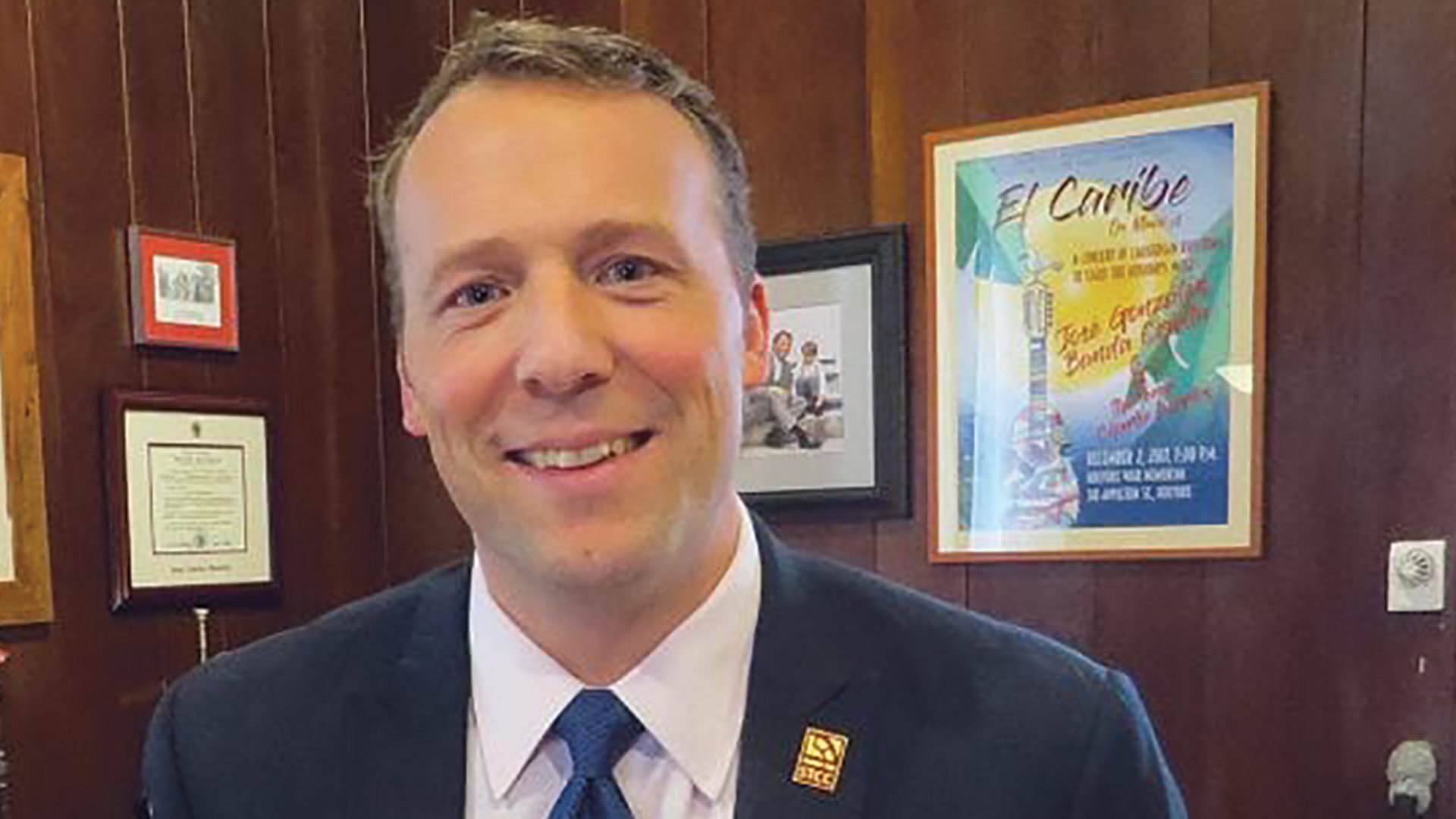
Insurance

Beyond the Bottom Line

If a customer wants insufficient coverage, Mark Lussier says, he or she should at least have a conversation about it and understand the risk.

Mark Lussier tells the story of a newly licensed driver backing out of her driveway in South Hadley who didn’t see the 85-year-old walking along the sidewalk. They met, and he fractured his hip and was in rehab for six months.

“Fortunately, the lawyers weren’t bloodthirsty, and they settled for the policy limit for bodily injury,” said the co-owner of Lussier Insurance in West Springfield, noting that, too often, lawyers aim for the maximum award, putting the defendant’s house and savings at risk.

Yet, “in its infinite wisdom, the Commonwealth of Massachusetts has determined that $20,000 of bodily-injury coverage is all you need to be legal,” he told BusinessWest.

Then there’s property-damage coverage on auto-insurance policies, which has a minimum requirement of $5,000. “I had a case not too long ago where someone hit a hydrant and a parked car, and then a porch. I’m guessing $5,000 wasn’t enough to pay for all that stuff. But it’s interesting to see how many people have only $5,000 for property damage.”

Many bare-bones policies come from the direct writers like Geico and Progressive that saturate the airwaves with ads focused only on premium price. But, in reality, insurance customers can get policies for not much more than the bare-bones pricing of the online marketers, but with much better coverage, explained in detail, simply because of the flexibility Massachusetts insurers have enjoyed over the past 12 years — flexibility that, for the most part, didn’t exist before.

Indeed, for much of the past century, auto-insurance rates in Massachusetts were set by the state Division of Insurance. Anyone who requested a premium quote for a certain level of coverage would receive the same price from any number of companies, unless they were eligible for a group discount.

Managed competition, which began in 2008, allows insurance companies to offer their own rates. Although these rates may vary, they must still be approved by the Division of Insurance — hence the term ‘managed.’ The result is that Massachusetts drivers are able to compare the different rates, benefits, and services offered by the insurance companies competing for their business.

“So many people are gathering information online without talking to the agent to explain the coverage, so they don’t understand at all what they’re purchasing. It’s the same old story,” said Trish Vassallo, director of Operations at Encharter Insurance in Amherst.

And, while $5,000 won’t cover the cost of a telephone pole or guardrail, injuring a person with one’s car and being undercovered is usually far worse, she explained. But that doesn’t have to be the case, as the premium difference between $100,000 and $250,000 in coverage can be as low as $10 per year — well worth the peace of mind.

Trish Vassallo

“I don’t think there’s an agent in Massachusetts who doesn’t welcome clients calling and talking to them. We like getting away from billing questions and talking about the nuts and bolts of insurance. It’s what we live for — sharing knowledge. It’s so important to make sure you understand everything you’re getting. You don’t want to learn about it after a loss.”

“That’s what we explain to them. Accidents happen, and if a building is hit, $250,000 might not be enough, but it certainly gets you closer,” she said, adding that, if a pedestrian is hit and successfully sues, $100,000 isn’t going to cover the costs.

Auto insurance, like all personal lines, is all about understanding risks and making an educated decision on what one’s comfort level is, she said — and not just settling for the lowest bottom-line price.

Bundle of Options

Under managed competition, carriers have been able to offer individualized add-ons and rider endorsements, from accident forgiveness to gap coverages to good-student discounts, and local agents say it’s important to have a conversation to get the best price for the coverage that’s actually sufficient.

“Today’s market is all about packaging and bundling insurance, and when you shop just one product, you sell yourself short in the money game,” Vassallo said.

To that end, she said, picking up the phone and talking to an agent is far superior to pressing a few buttons online.

“It’s about educating yourself, and I don’t think there’s an agent in Massachusetts who doesn’t welcome clients calling and talking to them. We like getting away from billing questions and talking about the nuts and bolts of insurance. It’s what we live for — sharing knowledge. It’s so important to make sure you understand everything you’re getting. You don’t want to learn about it after a loss.”

Part of that education, Lussier added, is understanding what’s most important to insure.

“Why buy auto insurance? In the consumer’s mind, it’s to protect the car; that’s the thing they care about,” he said. “I was the same way when I was a brand-new driver. ‘Give me what I need, whatever’ — until you have a claim. One thing I hear is, ‘I thought I had coverage for that.’”

Under the prior, regulated system, insurance providers were required to apply specific surcharges for certain accidents and traffic violations. Now, insurance companies are permitted to develop their own rules, subject to state approval, for imposing surcharges for at-fault accidents and traffic violations.

They can also include a raft of incentives, such as bundling auto and home insurance when both policies are bought from the same carrier, offering multi-car discounts or AAA membership credits, or using disappearing deductibles to reward drivers for not having accidents over a long period of time.

Then there are away-from-home discounts for college students who are on their parents’ policies, yet spend much of the year away from home without access to the family car.

“A newly licensed driver can add $800 to $3,000 to a premium, depending on whether they have their own car or not,” Lussier said. “A good-student discount can take some bite off that, and then you can get a discount while they’re away at school. Some companies require you to be at least 100 miles away to give you the discount, some only 25.”

What parents should not do in that situation, Vassallo said, is take their child off the policy completely to save some money.

“You don’t want to do that — God forbid he gets in his roommate’s car and gets into an accident, and the roommate has minimal [coverage] limits, and now the family is looking at potential harm to their assets. Companies can give discounts for students who go off to college, but you should keep them on the policy. Even though they’re not a regular driver anymore, it still provides protection.”

Limited Thinking

One rule of thumb when it comes to liability and coverage, Lussier said, is to ask, ‘how much am I worth?’

“If I’ve got a house, a savings account, a 401(k), I have to protect that with bodily-injury [coverage], then $20,000 isn’t going to be good enough,” he told BusinessWest, noting that, often, the difference between coverage levels doesn’t translate to all that much in the annual premium. For instance, he asked, what if the difference between $100,000 and $300,000 is just $80 per year?

“Do you want to take a risk for 80 bucks a year? When an accident happens, we want to know that we had the discussion and that you’re OK with understanding the risk after considering your driving habits and where you drive and what you have to protect,” he explained. “You’re saving 80 bucks to have crappy limits. We can keep your crappy limits, but we want you to tell us that’s what you want.”

Joseph Bednar can be reached at [email protected]
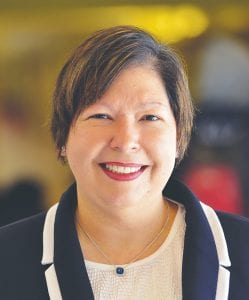
Class of 2020

This Community Leader Has Tackled Many Roles With a Sense of Purpose

Photo by Leah Martin Photography

Back in the mid-’70s, Ronn Johnson recalls, he’d walk past a nondescript house on Wilbraham Road in Springfield, a few blocks down the road from both his home and his school. Sometimes he’d sit in the front room of that house, waiting for a dental appointment. In the neighboring Presbyterian church, a young, dynamic pastor, the Rev. Ronald Peters, had recently taken over a decidedly dwindling flock.

“I never thought this was a place I’d ever have a connection to,” Johnson told BusinessWest. “But I do believe that God has a plan for every one of us. I’m a very faith-driven person. I’ve been blessed to be in places where people see my interests and read my heart, and where I’m able to make some things happen.”

Today, he makes them happen in that same house. The dental office long gone, it now serves as the administrative center of Martin Luther King Jr. Family Services Inc., where he’s been president and CEO for the past seven-plus years.

The neighborhood has changed much over the past half-century. Peters, who rebuilt that church by attracting kids and teenagers and then their parents, restored the church to vibrancy and oversaw the construction of the community center that became MLK Family Services.

Meanwhile, Johnson has spent much of the past four decades making a real difference for children and families in the community.

He’s done that through a variety of roles, all of which blended business acumen with a heart for service. He’s also done it through the Brianna Fund, a charity named after his daughter that has, over the past 22 years, helped children with disabilities access the tools and resources they need to achieve a better life (more on that later).

“I do what I do because I have a passion for making a difference for people,” Johnson said. “It’s that simple. And I’ve been fortunate enough where I’ve been able to make a career around doing that. So I feel I’m doubly blessed to have made a good life for myself, but in the context of being a professional helper.

“I do what I do because I have a passion for making a difference for people. It’s that simple.”

“It’s made my life more complete, more purposeful — not just crunching numbers for folks to get rich, but working on the side of creating opportunities that help corporations make good decisions about how to invest in our community and invest in people,” he went on. “And meeting the most basic needs people can have — food, sustenance, shelter, education — that’s very much what we’re about here.”

It’s a winding story with many stops, each of them worth visiting to understand why Ronn Johnson is a true Difference Maker — one whose influence will continue to resonate in the decades to come.

‘A Springfield Person’

Johnson’s family moved from Georgia to New England during the 1950s, part of the great African-American migration from the South in search of better economic opportunities, and he grew up along that stretch of Wilbraham Road.

“I’m a Springfield person. My formative years were right here,” he recalled. “I was part of a very caring community, as were most neighborhoods during that time. It wasn’t until later that we became so disparate and not as connected to our neighbors as we used to be. That laid the foundation for me to become very relationship-oriented. That has served me well.”

Indeed, each stop in his long career has been marked by building relationships between various entities — businesses, schools, social-service agencies, government — in the service of helping individuals and improving communities. “It’s not what I’ve done that’s so great, but other folks have sown seeds and shared a vision, and collectively we’ve come together to make it happen.”

He might have never made a career in Springfield had he followed through with an acceptance to Morehouse College in Atlanta. But when his father was diagnosed with terminal cancer, he decided to stay home with his mother and sisters, and attended Western New England College instead. “And I have no regrets,” he noted.

That’s due to the remarkable journey of service that followed. After graduating from WNEC, he was recruited to the W.W. Johnson Life Center, an organization that dealt in mental-health issues, and earned a master’s degree in counseling psychology from Cambridge College.

His next stop was the Dunbar Community Center, where he was involved in grant writing in an effort to meet the needs of an “underfunded community,” as he called it. “Poverty was at the core of what so many people were living with on a daily basis.”

His next role was vice president of Child and Family Services at the Center for Human Development (CHD), where he worked for 13 years — giving him a larger platform, a much broader range of financial supports, and a specific mandate.

Ronn Johnson has spent a lifetime improving the neighborhood of his youth — and impacting lives far beyond it.
(Photo by Leah Martin Photography)

“Leadership at the time wanted to make a stronger connection to community,” he recalled. “Yes, was important to do closed-referral programs, but we were getting referrals because of the dysfunction that existed in the communities, the poverty that was happening.”

Gang violence was also on the rise during the early part of the 1990s, and it was creeping into local schools, so he created a CHD program called the Citywide Violence Prevention Task Force.

“We had no contract for violence-prevention work, but we committed some resources to make some changes,” he said, adding that police, faith-based organizations, youth-serving agencies, concerned citizens, and businesses all wanted to be a part, as did college students who helped with marketing strategies and research projects.

“I got really tuned in to how to address violence from a public-health perspective because people don’t think about kids being shot in the street as a public-health issue — but, my goodness, for urban youth, it’s the number-one killer. Cancer is big, diabetes is big, but if you’re a young person in a certain urban environment, you’re more likely to be killed by violence.”

Part of that initiative was a street-outreach program that drew young people to environments where they could feel better about their lives, draw on community resources, and develop aspirations for a healthier future. That plan, dating back two decades, was recently used to write a proposal to fund a similar street-worker program, and the Department of Public Health issued grants to several organizations to launch it this year — including MLK Family Services.

“That made me feel old,” Johnson said with a laugh. “This thing has come full circle. I couldn’t have designed it that way.”

Measurable Results

Before his current role, however, Johnson had one more notable stop, as director of Community Responsibility at MassMutual.

“I moved from the micro side and case work to being a social worker in the macro context, setting policy and strategy around a corporation’s giving of millions of dollars to the community. It was a cultural difference, but I was happy. I got to spread my wings and be a positive contributor and see that these things we were funding were making a difference with people, and that they were measurable.”

He worked there for almost six years, until the economic downturn in 2009 forced cutbacks at many companies, and he was laid off. But he had no regrets, and he took advantage of relationships he had built in the worlds of higher education, healthcare, and other sectors and launched a consulting firm, RDJ Associates.

One of his clients was MLK Family Services, which approached him, during the summer of 2012, with an offer to take over leadership of the venerable but financially struggling agency. When he came on board, the first goal was simply to make payroll, but eventually he righted the ship — with the help of a business community that saw the organization’s value and quietly helped raise a half-million dollars.

“It was stressful, but I was committed. And I had a committed board of directors who hung in there and facilitated the change that needed to happen,” he said. “We regained credibility with funders. That was big.”

“It’s made my life more complete, more purposeful — not just crunching numbers for folks to get rich, but working on the side of creating opportunities that help corporations make good decisions about how to invest in our community and invest in people.”

Importantly, at MassMutual, he had learned the value of measurable results, and he’s been able to demonstrate that the agency’s programs — from helping people access healthier food to a College Readiness Academy that gives students tutorial help while bringing them to college campuses to raise their educational aspirations — do make a difference.

But no effort has been more personal to Johnson than the Brianna Fund, named for his daughter, who was born into the world with multiple broken bones from the brittle-bone condition known as osteogenesis imperfecta. Over the years, she would fracture dozens more. The family decided they needed an accessible van to keep Brianna in her wheelchair while moving from place to place, so they started a fundraiser.

“The community got behind us so significantly that we over-fundraised by about $30,000,” he recalled. “That was a message from God. I said all along that I didn’t want to do this if we’re not in it for the long haul. This needed to be ongoing, in perpetuity, for children in our community.”

Twenty-two years later, the Brianna Fund has raised more than $750,000 and helped 50 children. “Sometimes it’s advocacy, but in 90% of the situations, it’s to purchase a vehicle, renovate a home, widen hallways, install ramps,” he noted. The 50th recipient, Omer DeJesus, will use the funds to bring home a service dog.

The Brianna Fund also honors the memory of Martin Luther King Jr. each January with a benefit gospel concert, drawing thousands of attendees to the MassMutual Center.

“This is a ministry for me and my wife, something we do together that has a lot of benefit for folks,” Johnson said. “For us, it’s a gratifying experience to give something to folks that we know is going to move their life forward.”

Legacy of Service

These days, Johnson’s son, Ron, works as an attorney at Yale New Haven Hospital, while Brianna is living in a city she loves, Washington, D.C., working for an agency focused on issues that affect poor people, especially women. Often, someone will tell Johnson he saw Brianna wheeling around the capital, enjoying a life of service no doubt partly inspired by her difference-making dad.

He comes back repeatedly to the fact that he can’t do any of it alone. To serve 750 different people each week with after-school programs, college courses, family support, public-health outreach, sports programs, cultural activities, and more — with only about $1.6 million in annual funding — he relies not only on his team, but 114 active volunteers. “We could never do that kind of volume without the important role volunteers play.”

Still, he added, “small not-for-profits are under siege in this state and across the country,” because large funders want to give bigger contracts to fewer agencies, those with a broader infrastructure than MLK Family Services has. “In the meantime, those agencies who have the best relationships with the consumers on the ground, we get squeezed out of the game. So we need the support of our home communities and the business owners.”

In short, the challenge never ends. And Ronn Johnson, a man with a heart for the City of Homes, who works within shouting distance of his own childhood home, will keep working to meet his community’s needs.

After all, he’s a Springfield person. 

Joseph Bednar can be reached at [email protected]
Hampshire County

Getting Down to Business

Vince Jackson

Taking over leadership of a chamber of commerce is always fraught with challenges, especially in a community as rich in diverse businesses and nonprofits as Northampton, and also stepping into the large shoes of the previous executive director, who served for 27 years. But Vince Jackson, with his deep background in entrepreneurship, business development, and marketing, is proving to be an ideal fit, and has already begun to shift and deepen perceptions about what a chamber can be.

Vince Jackson has been preparing for his new role for more than 30 years.

“What attracted me to this job is, well, it’s a bit of a sweet spot,” said Jackson, who took the reins as executive director of the Greater Northampton Chamber of Commerce last June.

He was referring to an intriguing mix of careers leading up to that point, including a decade and a half in corporate America; he worked for 10 years as a senior product manager at PepsiCo, two years as an assistant product manager at Kraft Foods, and three years as a senior systems analyst at Procter & Gamble.

“When it comes to engaging and interacting with our corporate community here,” he told BusinessWest, “I understand large organizations like Cooley Dickinson Health Care, I understand Coca-Cola’s Northampton’s operation and the challenges they face, I understand L3Harris.”

Equally important — or perhaps moreso, considering the makeup of the region’s economy — was his two-decade experience with Marketing Moves, the company he founded in 2000, which provided client companies with strategic marketing support.

“For the last 19 years before I took this job, I was a marketing consultant,” he explained. “I targeted Fortune 50 corporations, but I also partnered and did subcontracting work with a lot of small businesses. And I was running a small business myself, so when it comes to understanding the joys and pain points and opportunities of the small-business owner, I can relate — regardless of the industry — and also bring some of my marketing experience that may benefit them in unique ways.”

In the meantime, he was also amassing a great deal of nonprofit board leadership experience, and Northampton and its environs have a rich base of such organizations, he added. In fact, among some 525 chamber members, close to 50 are nonprofits. “So understanding the nonprofit arena is important.”

“When it comes to engaging and interacting with our corporate community here. I understand large organizations like Cooley Dickinson Health Care, I understand Coca-Cola’s Northampton’s operation and the challenges they face, I understand L3Harris.”

In short, Jackson’s background made him an easy choice to replace Suzanne Beck, who had led the chamber for 27 years before her retirement last year.

He took the reins at an interesting time, as the chamber was beginning to activate a new strategic plan. Through that process, preparing a marketing plan of his own, and communicating with members, he quickly learned an important lesson: “The things that got us here won’t get us there. So we’ve got to do things differently.

“Our vision for this community is that we really want to make it a place for everybody,” he went on. “Northampton is a very welcoming community, and we want to make sure this is also a prosperous community and that all the things that make it special really cascade through Northampton and across the community.”

Part of that vision is recognizing and promoting the city’s calling cards, such as its array of eclectic, mostly locally owned businesses. “Most of the retail shops offer things you might not find at the mall, or on Amazon. That’s the kind of thing that makes this place special and unique.”

It’s also a welcoming and inclusive community, he added, and one with a heart for advocacy, as evidenced by the number of nonprofits in the area. “They provide a lot of services that are so needed in a community like this, and you see the impact of that kind of support when you are out in the neighborhoods.”

With those strengths in mind, the chamber’s new strategic vision emphasizes two key points: that the health of the economy and the health of the community are one, and the chamber must include and reflect that community.

“The mission of the chamber, in layman’s terms, is to be a matchmaker,” Jackson told BusinessWest. “We want to be that catalyst for bringing people together, bringing organizations together, doing innovations, collaborations, and anything that moves our economy and community forward. You’ll hear us say, over and over again, that when the economy thrives, our community thrives, and when our community thrives, the economy thrives. That’s our core belief, and that’s really what the mission of the chamber is all about — driving the economic impact and the community influence to make that happen.”

On Message

The plan seeks to boost Northampton’s economic profile — both internally, growing the business base, and externally, drawing more tourism — by targeting five specific audiences.

The first is arts and culture, an area Northampton and its surrounding towns has been long known for, with its raft of museums, music venues, historic-heritage sites, and host of resident writers, artists, and craftspeople. The second is outdoor recreation, which encompasses everything from bike paths, fishing, and boating during the warm seasons to skiing and other winter sports.

Both those realms draw heavily from New York, Boston, and other urban centers, which are home to both people with an interest in the arts and weekenders looking to get away and be outdoors. And on the outdoor front especially, economic-development leaders from Hampshire and Franklin counties have often joined forces to promote a wider swath of the Pioneer Valley.

This stretch of Main Street in Northampton is typical of the city: the odd chain amid a series of unique, eclectic, locally owned businesses.

The third audience is people with connections to the Five Colleges, which collectively serve some 50,000 students each year, roughly 10% of those international, which feeds into the chamber’s fourth targeted audience, the international market. The fifth audience is the LGBTQ community, which has long identified Greater Northampton as a welcoming place.

“We at the chamber want to be the local experts on the economy, and one of the ways we do that is through our tourism efforts,” Jackson went on, noting that the chamber gets an annual grant from the Massachusetts Office of Travel and Tourism for marketing and promotional activities and programs that drive tourism to the area.

“And we see enormous impacts on our economy when we do that, when we give people reasons to come to Hampshire County and Northampton,” he went on, adding that Northampton itself sees about 50% of the regional tax dollars from tourism.

“The other way we drive the economy to offer opportunities for entrepreneurs to get established and find ways to make this a business-friendly place by working with all of our business owners and the city to make this a good place to start a business and be successful,” he explained.

One example can be found in the burgeoning cannabis industry, as NETA, the first retail dispensary in Massachusetts to sell for adult use, has been a notable success story since opening 15 months ago, and the city has about a dozen licenses pending for businesses in all areas of the cannabis trade, from cultivation to production to sales.

“When the economy thrives, our community thrives, and when our community thrives, the economy thrives. That’s our core belief, and that’s really what the mission of the chamber is all about — driving the economic impact and the community influence to make that happen.”

To better connect and assist businesses and entrepreneurs of all kinds, the chamber recently presented more than a dozen free business workshops, or “knowledge sessions,” Jackson called them, in which business leaders volunteered their time to share information and ideas. These included a look at digital marketing, a session dealing with different generations in the workplace, and another that brought beauty, health, and wellness businesses together.

Crafting a new strategic plan is daunting when a chamber has had one director for more than a quarter-century, especially when a new director is coming in, he said, which is why the chamber treated 2019 as a transition year. But there were some notable success stories.

“For example, I found it a joy to partner with [state Sen.] Jo Comerford, who was working hard for earmarks for the nonprofit community in Western Massachusetts,” he said, noting that, right before Christmas, she was able to secure $150,000 for a handful of nonprofits, three of which are chamber members. “The chamber will be the fiscal agent when those funds come through. This was the kind of matchmaking we’re proud to do.”

The Right Fit

Ruth Griggs, a member of the chamber’s board of directors who was on the search committee that brought Jackson on board, told the Daily Hampshire Gazette last spring that he was a deeply experienced entrepreneur with a balance of skills and characteristics chamber members appreciate.

Jackson, in turn, said one of his goals was to move past being just a membership organization to more of a “partnership organization” — getting people to move from being just dues-paying members to becoming more engaged with the chamber and the community.

Today, he says that has, indeed, been a priority, citing the recent opening — a couple storefronts away from the chamber offices on Pleasant Street — of Wurst Haus, the most recent new eatery from the restaurant group led by Peter Picknelly and Andy Yee, and the chamber’s outreach to them.

“When new businesses come into the community, we want to make the sure the chamber is partnering with them, and that they’re also excited about partnering with the chamber,” Jackson said. “It’s a two-way exchange that will benefit all of Northampton. We make sure we invite them and introduce them to all the work the chamber does.”

Part of that is encouraging members to participate in committees that shape much of the chamber’s direction, including a finance committee, an ambassador committee that welcomes new businesses, and an economic-development committee of about three dozen members that meets monthly to talk about projects big and small.

Members of that latter committee include “seasoned business owners and young ones, nonprofits, local politicians, bank presidents — it’s a good, diverse mix of folks who add a point of view that’s unique, and when we come together, we’re all better collectively,” he said.

In a thriving, 21st-century chamber, he told BusinessWest, members aren’t just dues-paying entities, but true investors — of time and talent, not just money — in the chamber and in the community.

“The chamber is run by volunteers,” he said, noting that his team includes four full-time staff and three part-timers (the latter mainly managing the visitor center), so members who want to be deeply involved are critical. “There are a lot of connections to be made, and our role is really to be that catalyst and bring people together to make it all happen.”

If members are willing to work toward that goal, Jackson said, then the Greater Northampton Chamber of Commerce — and chambers in general — still have a key role to play in their communities.

“People expect the chamber to be the centerpoint, and historically we have been. But it wasn’t as open an organization as it is now,” he said, noting, again, that the endgame is a thriving economy and a thriving community. “They’re inextricably linked; they go hand in hand.”

Joseph Bednar can be reached at [email protected]
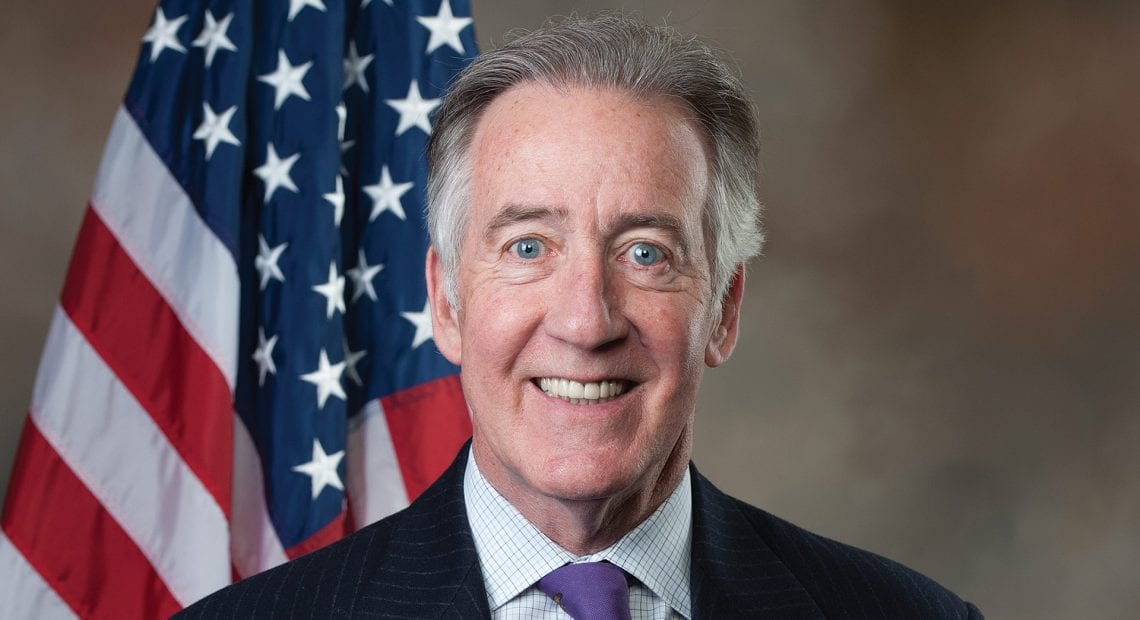
Community Spotlight

Community Spotlight

Claudia Pazmany says the Amherst Area Chamber of Commerce and the Amherst Downtown BID have found many ways to partner to raise the town’s profile.

The Amherst Area Chamber of Commerce shares a downtown storefront with the Amherst Downtown Business Improvement District (BID). More important, the two organizations share a common vision.

“In general, BIDs and chambers aren’t always symbiotic, but we have found a way to really bridge that,” said Claudia Pazmany, the chamber’s executive director.

Gabrielle Gould, executive director of the BID, agreed. “We’ve been working very closely with the chamber; it’s been great bouncing a lot of ideas off each other,” she said. “I think both the BID and the chamber have this approach that a rising tide lifts all shops. We want the Amherst area to thrive and succeed.”

Gould, who came on board the BID five months ago, said part of her focus has been heavily marketing a buy-local, shop-local, eat-local philosophy, and it’s bearing results. For example, a ‘red-ticket’ month held during the holidays, in which shoppers got a red ticket for each $25 spent downtown, which went into a drawing for cash prizes, generated about $500,000. “That’s money that stays local instead of going to the big-box stores.”

The BID is also conducting conversations with residents and businesses about zoning and development — particularly targeting those who generally oppose any change.

“We’re getting some developers together with some community members who are anti-development, where developers are saying, ‘look, I’m fourth-generation Amherst. I’m not the boogeyman. I’m not looking to build a high-rise,’” she explained. “Let’s stop talking about what we hate, let’s stop talking about what’s already been built, and let’s start working together to make a vibrant and dynamic downtown. And without some redevelopment, that’s not going to happen. We need retail stores. We need restaurants.”

Beyond that, the BID has formed a new Foundation for Downtown Amherst, looking to create a 501(c)(3) with a mission to boost the downtown through arts and culture development and promotion. Goals include building a parking garage and working with architects and engineers to create a permanent performing-arts shell on the common.

“Amherst has slipped a bit — we’ve become a drive-through town, and we’ve lost some retail — and to drive traffic back to our downtown, we need density, but we also need things that people will travel to town for.”

Gould hopes to raise sufficient funds to endow the latter project, maintain it, and program it for two years with free performances, ranging from local high-school plays and concerts to touring musicians and theater and dance companies. Another idea is to commission a piece of sculpture that would become a recognized landmark in Amherst and beyond.

“My take on downtown is, if you bring in more art and culture, the retail and restaurants will follow, because we’re going to drive people to Amherst,” she told BusinessWest.

“This should be a destination. In all four seasons of the year, we have a lot to offer. Amherst has slipped a bit — we’ve become a drive-through town, and we’ve lost some retail — and to drive traffic back to our downtown, we need density, but we also need things that people will travel to town for. Our job is to support the businesses that are here and help in bring new businesses and more visitors.”

Broad Vision

Meanwhile on Jan. 22, the Amherst Area Chamber of Commerce released its 2020 Vision report, which seeks to activate:

• Fiscal resiliency, by establishing processes and benchmarks to keep the town resilient through challenging times, while creating pricing structures to benefit chamber members and drive further membership;

• Community impact, by developing new and deeper opportunities to create partnerships and increase exposure for the chamber’s 65 nonprofit members;

• Transformative tourism outreach, by creating opportunities to highlight the creative economy and redefine the Amherst area as a destination;

• The entrepreneurial pipeline, by creating a toolkit for startups that offers information and support on startup space, marketing visioning, pitch support, loan support, mentoring connections, and microfinancing;

• Workforce development, by bolstering educational and training programs, supporting other regional educational offerings, and connecting job seekers to jobs and transportation; and, conversely, working to address barriers to employment for chamber members;

• Advocacy, through the creation of a government affairs and policy advocacy committee to create programs and forums vital to members and bring forward key issues that support economic development through direct communication with lawmakers and key stakeholders; and

• Professional development for chamber staff, partly by establishing goals around membership, the entrepreneurial pipeline, tourism, advocacy, professional development, and community impact.

“Everything is driven by conversations with people who walk through the door — maybe an alum from one of the colleges, maybe someone who’s retiring here,” Pazmany said. “They’re here because it’s a destination with huge, untapped potential, and we have to get that word out.”

Take the town’s position as a dining destination, she noted. “Downtown Amherst has everything — you can explore the world through dining downtown, and because it’s a college town, the prices are right.”

The plan to take advantage of that is twofold, both she and Gould said — better marketing of what’s already downtown, especially to those outside the region, and bringing in more of it.

Economic efforts involve regional thinking as well, Pazmany added, noting that Amherst businesses have often felt that Route 9 development in Hadley was a deterrent to their success, while, in fact, an improving regional profile benefits everyone. Amherst, she said, can take advantage of that regional attention while honing its own strengths.

“People really love the community feel here. It’s a walkable downtown, with pretty much everything at your fingertips,” she told BusinessWest, adding that people want to feel like they’re part of something bigger, and that’s something a thriving downtown district can provide.

Amherst at a glance

Year Incorporated: 1759
Population: 39,482
Area: 27.7 square miles
County: Hampshire
Residential Tax Rate: $21.32
Commercial Tax Rate: $21.32
Median Household Income: $48,059
Median Family Income: $96,005
Type of Government: Town Council, Town Manager
Largest Employers: UMass Amherst; Amherst College; Hampshire College; Delivery Express
* Latest information available

“We have arts and culture and a lot of venues that offer music,” she went on, adding that museums like the Mead, the Carle, and the Yiddish Book Center offer an additional cultural backdrop in town, while the Amherst Cinema drives plenty of programming downtown. That’s why it’s important to take that strength and grow it further, she noted, as a way to both keep residents living here and cultivate a tourism economy.

“More than 30,000 come down Route 9 every day. I have the best of both worlds — I get to focus on the downtown, and I also get to focus on the broader community and bring that to the table when I partner with the BID.”

Creative Thinking

One other advantage for the chamber, Pazmany said, is its connection to UMass Amherst, which has deepened by reaching out to Gregory Thomas, executive director of the Berthiaume Center for Entrepreneurship to discuss strategies for harnessing the significant entrepreneurial energy being generated on campus and keeping it local.

That takes physical development, and some creativity, she noted, as the town isn’t home to swaths of large, unused buildings like in Holyoke and Easthampton — and, as Gould noted, not everyone in town is high on new development.

But she would like to see an influx of new businesses that cater equally to residents and the 35,000 college students who live in town most of the year, from grocery stores to a men’s clothing shop to a place to buy bedding and furniture.

“We’re looking out there and saying, ‘what is going to benefit all of us?’ In terms of bringing in retailers, we need buildings to put them in. A lot of pieces need to fall into place, but we’re heading in the right direction.”

In her few months on the job, Gould has been asking businesses, ‘what do you need?’

“They all say, ‘we need more businesses,’” she went on, and that’s not always an easy sell to residents, especially long-established ones. “There’s excitement here, but also a lot of fear when you mention development, when you mention building, when you mention ‘new.’ When you start talking to them, it’s very fear-based.

“So how do we take the big, bad boogeyman out of the closet and decide what Amherst really needs?” she asked. “If we don’t, we’re not going to see growth and positive change. We might lose more retail and restaurants. And we don’t want that — we want more people to come in.”

Joseph Bednar can be reached at [email protected]
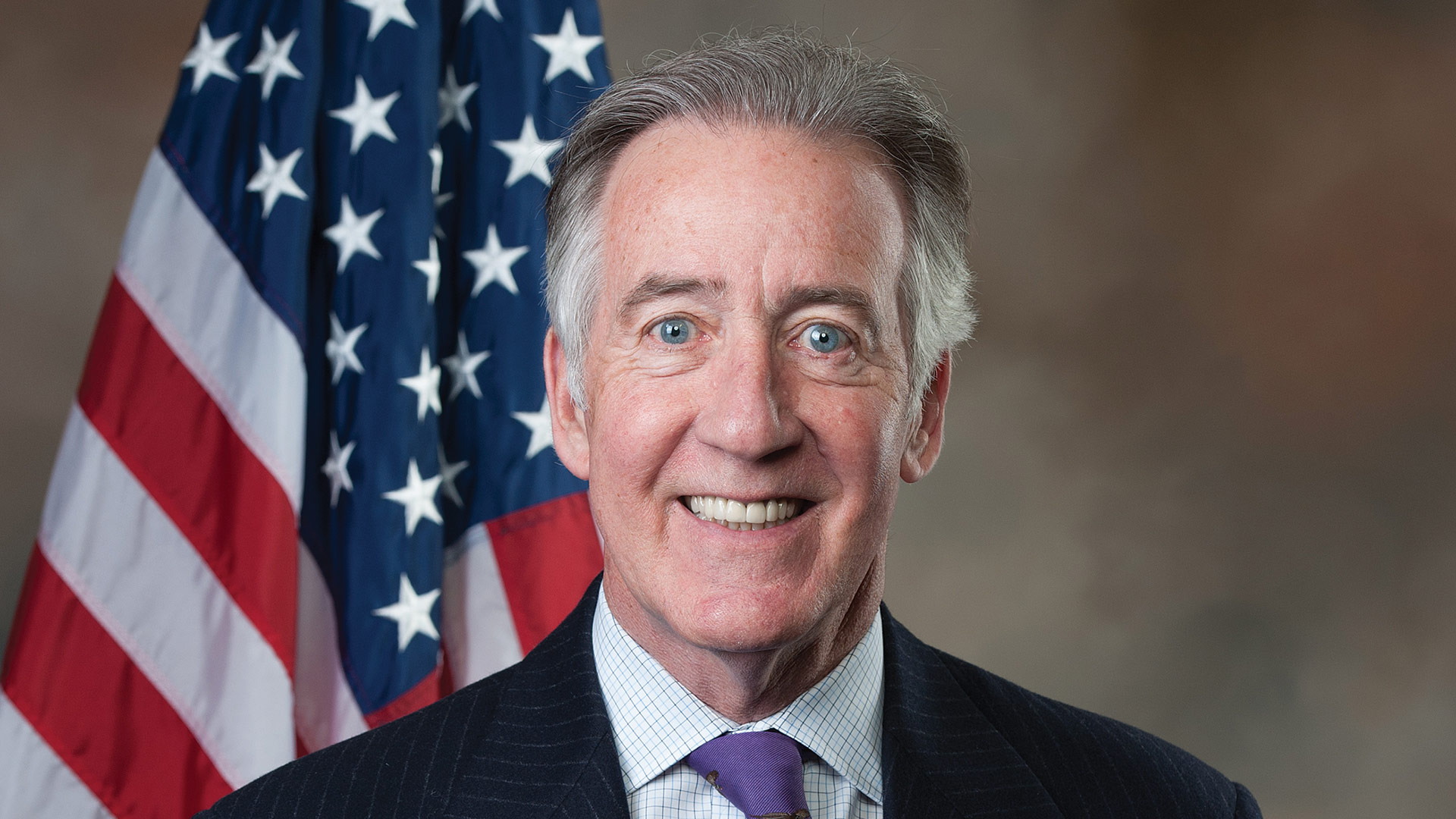
Cover Story

Cinda Jones Is Building a Community — and More — in North Amherst

As the largest private landowner in Massachusetts, with properties in 30 towns, the Cowls family is especially synonymous with North Amherst, where it has made its headquarters — and an enduring legacy in lumber and conservation — for 279 years. These days, Cinda Jones, the ninth-generation president of W.D. Cowls Inc., and her team are doing nothing short of creating a new town center in North Amherst. Why? Because the family has always transformed the land into what was most beneficial and needed. Today, she says, that’s a sense of community.

The area of North Amherst known as the Mill District has served many purposes over the nearly 300 years the Cowls family has made its name there.

Early on, for example, the farm produced and distributed onions, tobacco, and dairy products. In the 1800s, in a burst of diversified interests, the Cowls family managed a rock quarry, constructed a street railway system, ran two sawmills, built and operated a building supply store, and managed myriad residential and commercial properties, along with thousands of acres of timberland.

In short, each generation of Cowls descendants discontinued enterprises that had become outdated and reinvented the family business to be more relevant for their time — and more personally inspiring to them.

Cinda Jones, along with her brother, Evan, represents the ninth such generation to take on that challenge — and the mixed-use development now emerging in the Mill District, known as North Square, might represent its most dramatic change yet.

It’s that project, but also a rich, two-decade stewardship of the Cowls legacy, that has earned Cinda Jones, president of W.D. Cowls Inc., recognition as BusinessWest’s Top Entrepreneur for 2019.

“We knew, if we’re creating a new uptown in Amherst, it has to be an experiential place,” Jones told BusinessWest during a lengthy tour of the property earlier this month. “We want retail, and retail doesn’t work unless it’s better than online, and it offers something different. We have 22,000 square feet of retail space around a town square in an already-thriving area, where 45,000 people commute through every day. And that’s going to increase. So we’re really excited about what this can become.”

“We knew, if we’re creating a new uptown in Amherst, it has to be an experiential place. We want retail, and retail doesn’t work unless it’s better than online, and it offers something different.”

In simple terms, Jones envisioned a modern residential community of one-, two-, and three-bedroom units overlooking a commercial center comprised of roughly one-third food establishments (a restaurant and café, Jakes at the Mill, is already thriving there), one-third retail, and one-third “experiential services, like yoga, making your own pottery, things you enjoy doing — not dentists and accountants, because those aren’t so fun,” she explained.

“Everyone wants that,” she went on. “Malls stole our downtowns. Now malls are dying, but the one thing they’re doing to stay alive is to have experiences. That’s the correct thing to do. In addition to making a downtown with a mix of retail, we want to create a place where you want to spend the day.”

At left, the converted barn currently occupied by Atkins Farms. At right, one of the newer buildings housing both commercial and residential space.

Spend a day with Cinda Jones, and the main takeaway is a passion for the many ways land can — and should — be used. And she’s got a lot of land to put to use, and plenty of ideas about what comes next.

Nine Generations

Founded in 1741, W.D. Cowls Inc. is, in fact, Massachusetts’ largest private landowner. In 1741, Jonathan Cowls bought a farm in North Amherst and started the Cowls timber company. His son David built the company’s corporate headquarters in 1768 — in a large house that still serves that purpose today. The land Jonathan began acquiring 279 years ago now includes more than 100 parcels in 30 towns in Hampshire and Franklin counties.

According to the company’s written history, “for the first 100 years, everything the family had was always passed down to the oldest son, who was usually named Jonathan, and the Jonathans didn’t muck it up irreversibly. After that, with a David and a couple Walters in the mix, every generation of the family built what his generation of community needed on the home farm, while continuing to grow Cowls’ timberland base and conduct sustainable forestry operations.”

Jones got her start in the family business at age 10, cutting yellow triangles out of sheets of plastic for foresters to use as boundary markers. She worked her way up by scraping and painting fences and barns, sorting nails, stacking lumber, and helping the company’s administrative assistant.

Hannah Rechtschaffen says young people, in particular, desire the face-to-face culture that mixed-use developments promote.

After graduating from Colby College in 1990 and earning a graduate certificate in business administration from Georgetown University in 1995, she remained in Washington, D.C. for several more years, holding conservation and timber industry-related leadership positions, including marketing director for the Cato Institute, Wood Marketing director for the American Forest & Paper Assoc., vice president of the National Forest Foundation, and Northeast regional director of the National Fish & Wildlife Foundation.

In July 2001, her father joked that she was “so good at managing nonprofit organizations” that she should come home and manage the unprofitable sawmill, timberland, and real-estate divisions of Cowls. She did, and brought a bit of bad fortune with her.

“Within a year, the sawmill burned to the ground when lightning hit it,” she told BusinessWest, adding that she initially balked at plans to rebuild it. “I said, ‘Dad, it loses money. Why are we rebuilding a sawmill? Let’s do something different.’ He said, ‘it’s what we do. People depend on these jobs. It feeds our store. We will rebuild. You don’t know enough to close it down yet. But if it doesn’t work in five years, you can try something different.’”

So it went back up, as a timber-frame specialty mill. “We tried really hard, but it still didn’t work,” Jones said. “So we closed it in 2010.”

“I wanted it to be the Dirty Hands District, but I was told no one would come eat sandwiches in the Dirty Hands District. So I couldn’t name it that.”

She was already starting to envision the next step: developing a new downtown area — actually, uptown — in North Amherst. With her brother, she renovated their great-grandmother’s cow barn, which would house the second site Atkins Market site, and built the Trolley Barn mixed-use building, also on Cowls Road, and partnered with Beacon Communities on the residential components of North Square.

“At first, we tried to market the place — ‘locate here!’ But it was just hard-packed gravel and a closed sawmill,” she recalled. “People were like, ‘there’s no here here. Why would we come to a gravel lot in the middle of North Amherst?’”

Coming up with and marketing the Mill District name helped, although Jones first considered a moniker that had been used in the past for this neighborhood of farms and timberland. “I wanted it to be the Dirty Hands District, but I was told no one would come eat sandwiches in the Dirty Hands District. So I couldn’t name it that. So the Mill District it was.”

The Mill District actually encompasses more than North Square. Riverside Park Stores and Apartments — a former trolley destination that now houses a strip mall and 48 apartments behind it — is part of it, as are Cowls Building Supply and Mill District Depot.

Evan and Cinda Jones represent the ninth generation of leadership in the broad array of Cowls operations.

“We’re building a new uptown in Amherst which is called the Mill District, that incorporates Riverside Park and comes all the way up here,” she explained. “We’re trying to connect the two properties and tell the story of the whole neighborhood. North Square is what we’re doing today, but it’s so much bigger than that.”

Face to Face

Hannah Rechtschaffen grew up in Western Mass. but left more than 17 years ago, most recently attending graduate school and working in the field of urban innovation in Philadelphia. In large cities like that, she said, mixed-use developments are par for the course.

Even outside urban environments, though, after a decade of social media curtailing face-to-face contact, “the pendulum has swung back to wanting to be in person, wanting to live above a coffee shop where you go down in the morning and they know your name,” she told BusinessWest. “At one point, that’s how the world used to be, and now I’m hearing from Millennials that’s what they want. And they don’t just want it, they expect it — to go into a place and not be faceless.”

As director of Placemaking for Cowls, a job she took less than a year ago, part of her job is to create events, art installations, and community programs that bring back personal connections and elevate individual experiences in the neighborhood. To that end, she often reaches out to the community about what they want at North Square.

“Malls stole our downtowns. Now malls are dying, but the one thing they’re doing to stay alive is to have experiences. That’s the correct thing to do. In addition to making a downtown with a mix of retail, we want to create a place where you want to spend the day.”

“We have a clipboard over at Jakes where we say, ‘what do you want to see here? What’s important to you?’ And then we go out and try to find those businesses, ideally locally rooted, so they can come and provide some amenities — because there aren’t a lot of amenities along this corridor to Greenfield. We get a lot of feedback from the community about what they’d like to see, and our hope is that what happens here is in line with their vision and our vision.”

Part of that vision is a focus on the arts and opportunities for artists to connect with the community. One example is an art gallery, which will be connected to a general store and a café, featuring artists who hail from the many communities in which Cowls operates.

Some ideas are cheekier than others; Jones said the general store will feature two “experiential public bathrooms,” one with a jungle theme and the other featuring mirror glass — people can see out, but not in — meaning “you can do your business while you’re watching everyone out here do their business.”

Other tenants of the commercial space might include a distillery and tasting room, a flower and gift shop, and a tea house. Meanwhile, Atkins is moving out in July, but Jones has had interest from other food establishments.

Then there are 130 residential units, 20% of which are classified as affordable housing; residents began moving in back in August. Among the amenities — including a community room, gym, and outdoor play areas — are pet-friendly perks like an outdoor dog park and a mud room where dogs can be hosed off after a muddy time outdoors.

And, of course, a raft of shops, eateries, and experiences a few feet beyond one’s front door, and access to PVTA buses to move about the region without having to drive.

“The Mill District is more than just this one place; it’s touching the entire Valley. We’re trying to set an example of how to live in a community,” Rechtschaffen said. “We have to get creative with the experiential aspect of it. Every potential tenant we are talking to right now, they all have some aspect of their business that’s about teaching workshops, teaching classes, sharing what they do and why they do it with community members. That aspect is just crucial, and it’s fun.”

It’s also critical from an environmental perspective, she added, considering how young people aren’t as keen as previous generations were on long drives to get what they need to go. “There’s a lot more around the climate-change conversation — how we live, how we set our lives up to be able to let go of some of those things that have contributed to climate change, and this is one example.”

Land of Opportunity

As president, Jones oversees the real-estate and timberland and natural-resource management divisions of W.D. Cowls Inc., while her brother, Evan, oversees Cowls Building Supply, the retail store founded by their father, Paul. The Mill District has been a joint effort between the two — and it’s far from the only significant land-use project the company has recently undertaken.

For example, Cinda put an agricultural-preservation restriction on 45 acres of Amherst farmland, and in 2012 dedicated the largest contiguous private conservation project in Massachusetts history, the 3,486-acre Paul C. Jones Working Forest in the towns of Leverett and Shutesbury, which stands, she says, as a legacy to Cowls’ eighth-generation leader and the family’s commitment to sustainable forestry.

The Trolley Barn building hosts a range of businesses, including a restaurant, Jakes at the Mill.

In 2019, Cowls added an adjacent 2,000-acre conservation project in Leverett, Shutesbury, and Pelham, this one named for her grandfather, Walter Cowls Jones. A series of solar farms in the region have provided other opportunities for environment-friendly development.

She had already achieved some success at Cowls when BusinessWest named her to its inaugural 40 Under Forty class in 2007, and the evolution of her work since then was reflected in her Continuing Excellence Award last year, and now the Top Entrepreneur honor; she is one of only two individuals to have won three of the magazine’s six major awards.

Previous Top Entrepreneurs

• 2018: Antonacci Family, owners of USA Hauling, GreatHorse, and Sonny’s Place
• 2017: Owners and managers of the Springfield Thunderbirds
• 2016: Paul Kozub, founder and president of V-One Vodka
• 2015: The D’Amour Family, founders of Big Y
• 2014: Delcie Bean, president of Paragus Strategic IT
• 2013: Tim Van Epps, president and CEO of Sandri LLC
• 2012: Rick Crews and Jim Brennan, franchisees of Doctors Express
• 2011: Heriberto Flores, director of the New England Farm Workers’ Council and Partners for Community
• 2010: Bob Bolduc, founder and CEO of Pride
• 2009: Holyoke Gas & Electric
• 2008: Arlene Kelly and Kim Sanborn, founders of Human Resource Solutions and Convergent Solutions Inc.
• 2007: John Maybury, president of Maybury Material Handling
• 2006: Rocco, Jim, and Jayson Falcone, principals of Rocky’s Hardware Stores and Falcone Retail Properties
• 2005: James (Jeb) Balise, president of Balise Motor Sales
• 2004: Craig Melin, then-president and CEO of Cooley Dickinson Hospital
• 2003: Tony Dolphin, president of Springboard Technologies
• 2002: Timm Tobin, then-president of Tobin Systems Inc.
• 2001: Dan Kelley, then-president of Equal Access Partners
• 2000: Jim Ross, Doug Brown, and Richard DiGeronimo, then-principals of Concourse Communications
• 1999: Andrew Scibelli, then-president of Springfield Technical Community College
• 1998: Eric Suher, president of E.S. Sports
• 1997: Peter Rosskothen and Larry Perreault, then-co-owners of the Log Cabin Banquet and Meeting House
• 1996: David Epstein, president and co-founder of JavaNet and the JavaNet Café

“Congratulations to Cinda Jones on this recognition as Top Entrepreneur in our region by BusinessWest,” said Claudia Pazmany, president of the Amherst Area Chamber of Commerce. “Cinda tires of status quo and consistently asks what more can be done. Each idea generated is followed by yet another. She then uses her allies and matches them to local resources to make change happen.

“The transformation of North Amherst through her creation of the Mill District over the last 10 years has not only preserved some of her rich family history in agriculture and lumber, but tied it to the future of our great town, creating economic mobility tying old generations to new,” she went on. “I am proud to call Cinda a friend and colleague and cannot wait to support her in her next project — because there will always be a ‘next’ with Cinda.”

North Square at the Mill District has been that big ‘next’ lately, and it’s the product of not only her team’s vision, but inspiration from unexpected places.

For example, next to Atkins is a recreational area of sorts, complete with a covered sandbox containing books and construction-themed toys. It’s called Wonderland — for good reason.

At the start of construction on North Square, some of the property’s historic millstones and large pieces of granite were converted to benches, tables, and art structures, meant to be a gathering place for people who bought ice cream and a signal that Atkins welcomed them during construction.

A woman named Kate posted on Facebook that her son, Sam, thought this humble play area was the most magical place on earth, referring to it as a ‘wonderland.’ When Jones offered to dedicate the space to Sam, his mom said her daughter Abbie also enjoys playing there, and so did her other daughter, Mabel — during the seven short months of her life.

Jones said that story broke her heart, but Mabel also became an inspiration to create more experiential spaces and programs that make the Mill District a special and important place for more families to connect. Today, Wonderland is adorned with a plaque dedicating it to Sam, Abbie, and Mabel.

Most people are familiar with the saying, ‘it takes a village to raise a child,’ Jones told BusinessWest, but in this case, it took a child to lend a large dose of inspiration to the creation of an entire village.

Permanent Reminder

That’s not the first time Jones honored one of her inspirations with an indelible mark. She also tells the story of how Cowls transitioned to its ninth generation of leadership. When Jones, then 34, came home from D.C. in 2001, her dad thought the sawmill workers might go around her new authority to speak with him if he were on site, so he tossed her the keys to the office and left, saying, “I’ll see you for coffee every morning, but they need to know you’re in charge, so I’m going to make myself scarce.”

Ten years — and plenty of leadership experience — later, as her father was dying, the family sat with a lawyer at the same kitchen table the kids grew up around, with the company represented by piles of paper being passed down to the ninth generation. As her father was signing documents, she stuck her arm in the way, and he jokingly signed it.

She didn’t wash it off. Instead, she had the signature permanently tattooed there.

A few months later, as she was about to sign off on the Paul C. Jones Working Forest in honor of her father, she rolled up her sleeves, looked down, and saw the signature, and felt like he was still across the table from her in the same house the family has operated from since 1741.

And with the same philosophy, too — one that constantly asks what’s the best use for the land, and the people who live, work, and play there.

“It’s smart growth when you build near jobs and gas stations and schools and population centers, and when you don’t build where there are critical natural resources,” she said. “And Cowls is in the unique position to be able to decide and build in an intelligent way. We have this existing industrial site in North Amherst that we’ve redeveloped for the ninth time, and it’s a new town center, so people who live here can get everything they need. And we do hope they’ll come live here.”

Joseph Bednar can be reached at [email protected]
Features

Training Ground

In all of the region’s key economic sectors, such as healthcare, education, and manufacturing, organizations say, almost with one voice, that the number-one barrier to growth is finding and keeping talented workers — a task made even more difficult at a time of historically low unemployment. BusinessWest sat down with one of the Pioneer Valley’s leading workforce-development voices to discuss an evolving, long-term blueprint to meet those needs — and grow the economy even further.

Healthcare. Education. Advanced manufacturing.

In any conversation about the economic character of the Pioneer Valley — both its rich past and promising future — those three sectors would be high on the list of key factors.

Indeed, a late-2018 report produced by the MassHire Hampden County Workforce Board and the MassHire Franklin Hampshire Workforce Board calls them ‘priority industries,’ meaning the most important to the region’s economic success, and they form the basis of a comprehensive ‘labor-market blueprint’ which aims to narrow workforce talent gaps and help companies — and the overall economy — grow.

A new report, issued just a few weeks ago, follows up on that blueprint, outlining the many ways employers, economic-development agencies, vocational and technical schools, area colleges, and other entities have partnered to do just that.

Needless to say, it’s a daunting challenge, said David Cruise, president and CEO of MassHire Hampden County.

“What we’re doing at the moment is actually going in and implementing the goals and strategies we laid out in the blueprint,” he explained. “One of the priority works we did was to identify, through looking at both supply and demand data, the three priority industries in Pioneer Valley region.”

Beyond healthcare, education, and manufacturing, however, the blueprint also identifies four other critical industries: business and finance; professional, scientific, and technical, including information technology (IT); food services and accommodation, which takes into account the impact of MGM Springfield; and sustainable food systems, a growing sector particularly in Franklin and Hampshire counties.

“We have been working pretty carefully within those seven industries, trying to collect data, trying to make certain the programs we run are consistent with that data,” Cruise said.

The priority industries have two things in common, he noted: long-term growth opportunities for individual companies and the sectors as a whole, and clear career pathways, where people cannot just land entry-level jobs, but steadily progress in their career from there.

“That’s why we’re spending a significant amount of time — and we’re very excited about the work we’re doing — with our regional education partners to make certain they’re developing programs and courses that align with those occupations, within those priority industries, that will allow someone to take courses and get into programs where there’s a pathway that will allow them to, yes, get a job, earn more money, and take care of their families, but also be able to see some pathway forward. That’s what we’re really focused on.”

It’s another way of looking at the value of retention, he added, which allows companies to avoid the time and cost of losing employees and training replacements, but also helps individuals gain career stability and establish deeper roots in the region.

“How do we put in place opportunities that will allow workers, both new and incumbent, to be able to move forward in these companies and in their occupation?” he asked. “That’s how you drive economic growth.”

Getting Resourceful

In the Pioneer Valley, Cruise noted, job growth isn’t generated by a few massive companies.

“We certainly have some publicly traded companies, some large companies, but the growth in the region is really being driven by small and medium-sized enterprises. And we want to support those companies because they don’t necessarily have all the resources they need. They struggle when they can’t retain folks; it becomes a tremendous cost factor for them, spending all that time recruiting and not being able to retain their recently hired folks. We have a significant commitment to try to work with those small to medium-sized companies throughout the Pioneer Valley.”

One way the MassHires do so is through partnerships with numerous vocational and technical high schools offering a wide variety of programs, most of them aligned with the priority initiatives outlined in the blueprint, he noted — not to mention the three community colleges in the Pioneer Valley.

The more recent report on blueprint progress examines programs at the voke-tech schools and community colleges — and Westfield State University — and how their programs connect with priority industries.

David Cruise says today’s successful small to medium-sized business understands the importance of community partners like colleges and economic-development entities.

“We did an analysis of the educational programs and pathways and courses that are really aligned with these occupations within these priority industries,” Cruise said. “We’re asking, ‘where are the gaps?’”

The blueprint creators took particular interest in specific ‘priority occupations’ currently in demand. In healthcare and social assistance, these include social- and human-service assistants; direct-care workers such as registered nurses, nursing and medical assistants, and personal-care aides; and clinical workers such as dental hygienists, pharmacy technicians, medical records and health IT; physician assistants; and physical and occupational therapists.

In education, priority occupations center on educators at all levels, including vocational-technical, STEM, and trades, as well as teachers’ assistants. In manufacturing, the key jobs include supervisors, production workers such as CNC operators and machinists, and inspectors, testers, and quality-control workers.

The report — which provides plenty of detailed evidence that training and degree programs are available in all these fields — will be updated every two years, with the hope that such programs will continue to expand and adapt to evolving workforce needs.

“We’re trying to fashion a regional workforce response as opposed to trying to fashion a workforce response in Hampden County or in Hampshire-Franklin. We want to look at a regional response,” Cruise said. “We think it makes more sense, and we have a better chance at mitigating the supply gap if we combat it that way.”

One important evolution concerns apprenticeships, he added. “We’ve been very aggressively involved in developing registered apprenticeships in healthcare and advanced manufacturing. We have about 74 apprentices involved in programming in the area right now, which is significant. A year and a half ago, we had 16. We’re being very careful about making certain the funding that we have and how we deploy the money is clearly aligned with where the employers are telling us the demand is.”

The two Pioneer Valley MassHires also connected with the MassHire Berkshire Workforce Board to produce yet another study, this one taking a five-year outlook on workforce needs in manufacturing — again, focusing in on key careers, including machinist, CNC operator, quality control, supervisor, and CNC programmer.

“We did an analysis of the educational programs and pathways and courses that are really aligned with these occupations within these priority industries. We’re asking, ‘where are the gaps?”

“We’re focusing our work — at least in this industry — around two things,” he explained. “One is trying to be certain the incumbent employees in our regional companies have the skills they need to be technologically relevant and be able to work in these spaces. But the ongoing concern is, where do we find entry-level CNC operators? In most of these companies, they’re resourceful enough and do enough internal training and continuous improvement where they can deal with some of these areas, like machinists and CNC programming. Where they really struggle is getting entry-level people, particularly operators, to come in.”

To address that need, MassHire is launching three training programs in February that should yield an additional 45 workers to join local companies.

“Even though we’re excited about it, that, in itself, is certainly not going to solve all the problems of supply and demand,” Cruise went on, noting, again, that manufacturing faces the same supply challenges as healthcare and education. “In all these industries, the demand is there. We’re trying to figure out ways we can increase the supply chain so we can minimize this supply gap in all three of these areas.”

Making Connections

One intriguing development involves making connections with comprehensive high schools in the region, Cruise told BusinessWest, recognizing that the state has been innovative in making career-development opportunities available to non-vocational high schools.

“We’re doing a lot of work with these school districts. They’ve made a decision that they want their students to have career-awareness and career-focus opportunities that will allow their students to look at different career pathways. Whether they’re going on to a two- or four-year college or directly to work, they want them to be more knowledgable about what those requirements are, what the pathways look like.”

To that end, the regional workforce boards have sent information to area superintendents about hiring needs and opportunities in the priority sectors and what students need to do to access them.

“In the next few weeks, we’ll send more information to the schools that will be very helpful to superintendents, counselors, and teachers, to help them provide guidance to their students — and also the parents — around career pathway opportunities. We’re really excited about that, and I’m convinced that, over time, students and parents will be making better career decisions.”

At the end of the day — any day — the main workforce challenge for businesses is simply finding the right talent and hanging onto it.

“The people who are able to work and want to work, in a lot of cases, have found employment, yet that supply gap is still there at our two career centers and the one in Greenfield as well,” Cruise said. “We continue to get customers coming in, but the customers that are approaching us need some additional supports and services before we feel they’re able to secure employment and particularly retain employment.”

Meanwhile, he noted, employers find they’re spending more resources than they’d like onboarding individuals they don’t retain over the long term.

“So we’re trying to find ways at our two one-stop centers to talk with our customers, look at the barriers that are the reasons they are not in the labor force, and try to use our community organizations and resources to do the best we can to mitigate some of those barriers.”

Sometimes it’s a simple lack of soft skills, or employability skills, that cause matches to fail — people not reporting to work, or people not having the ability to work in a team concept, he explained. “We can at least put the job seekers that approach us in a better position for companies to retain them. It’s hard work because many folks who are not in the labor market have more than one barrier that has to be mitigated, and that requires significant allocation of resources and time and staff to be able to do that. But we have to do that; that’s our job.”

Many employers say they can train for aptitude, but not attitude. “The employers we work with are saying to us, ‘send me someone who has the aptitude and willingness to learn, who’s going to be here every day, on time, and is going to be willing to accept the instruction we give them, be able to accept constructive criticism when it’s given,’” Cruise said. “Again, it’s something we’re pretty laser-focused on.”

MassHire is fortunate, he added, to work in a region full of companies, mostly small, that understand the value of partnerships and are willing invest time and resources in working with the workforce boards and colleges.

“The whole concept of going alone isn’t going to work anymore,” he said. “You have to figure out a way to be in some collaborative partnerships where you can leverage resources, look at your assets, identify your gaps, and put in place opportunities and programs that will respond to that. We do that well out here. I’m not suggesting it’s not done well in other places, but we think we have a little bit of a copyright on that.”

Joseph Bednar can be reached at [email protected]
Health Care

Vision 2020

Few industries change as rapidly — and as dramatically — as the broad, multifaceted realm of healthcare. From oncologists’ use of cancer fingerprinting and gene therapy to facial transplants for accident victims; from cutting-edge protocols to save the lives of stroke and heart-surgery patients to a dizzying array of new treatments to improve vision … the list is seemingly endless, making it impossible to paint a full picture of where healthcare has come in the past decade.

But we at BusinessWest wanted to try anyway — and, at the same time, look ahead at what the next decade might bring. So, appropriately, here at the dawn of 2020, we invited a wide range of healthcare professionals to tell us what has been the most notable evolution in their field of practice in the past 10 years, and what they expect — or hope — will be the most significant development to come in the next decade.

The answers were candid, thoughtful, sometimes surprising, but mostly hopeful. Despite the many challenges healthcare faces in these times of advancing technology, growing cost concerns, and demographic shifts, the main thread is still innovation — smart people working on solutions that help more people access better care. After all, healthcare is, at its core, about improving people’s lives, even when they seek it out during their direst moments.

Innovation and promise. That’s what we believe a new decade will bring to all corners of the healthcare world — that is, if these leaders, and countless others like them, have anything to say about it.

Administration

Joanne Marqusee

President and CEO, Cooley Dickinson Health Care

Joanne Marqusee

The most significant recent development in healthcare administration has been a recognition of the role patients play in their own healthcare. “Crossing the Quality Chasm: A New Health System for the 21st Century,” published in 2001 by the Institute for Healthcare Improvement, called for a massive redesign of the American healthcare system. Specifically, it provided “Six Aims for Improvement,” five of which focused on safety, effectiveness, timeliness, efficiency, and equity. Not talked about as much, the sixth aim was to make healthcare ‘patient-centered.’

While we still have a ways to go to truly be patient-centered, we have witnessed a sea change in the past decade in this regard. Patients are increasingly active participants in their care, questioning their doctors and other providers to ensure that they understand their options, using electronic medical records to engage in their care, and speaking out about what they want from treatment or forgoing treatment at the end of life. The best healthcare providers — both organizations and individuals — embrace these changes, welcoming patients as more than recipients of care, but rather active partners in their own care and decision making.

My hope for the most significant development over the next decade has to do with providing universal healthcare coverage while controlling healthcare costs. While we almost have universal coverage in Massachusetts, too much of the nation does not. A hotly debated topic, universal healthcare has many benefits, including increasing access to preventive and routine medical care, improving health outcomes, and decreasing health inequalities.

Surgical Technology

Dr. Nicholas Jabbour

Chairman, Department of Surgery, Baystate Medical Center

Dr. Nicholas Jabbour

The most significant development in surgery over the past decade has been the move toward less invasive surgical approaches made possible through advanced technology. These approaches include robotic and minimally invasive surgery, including intraluminal surgery in areas such as gastroenterology, cardiology, and neurosurgery — for exemple, the passage of an inflatable catheter along the channel inside of a blood vessel to enable the insertion of a heart valve instead of making a large opening in the chest. As a result, we have seen a big shift from inpatient to outpatient surgery with shorter hospital stays and improved post-op recovery.

In the next decade, we foresee these innovations in less invasive surgery will be enhanced by better computing and software integration. This interaction will include the merging of radiological and potentially pathological information — which is currently available in a digital format — with real-time visualization of anatomical structure during surgery. This will offer surgeons the opportunity to improve the accuracy and speed of a surgical procedure while minimizing the risks.

The next decade will also see major innovation in the area of transplantation with the development of tissues or whole organs through bio-engineering manipulation of animal or a patient’s own cells. The integration of this bio-engineering manipulation with currently available technology, such as 3D printing and 3D imaging, will provide patients with the needed tissue or organ — including valves, bone grafts, hernia mesh, skin, livers, and kidneys — in a timely manner. This development will revolutionize the field of transplantation and surgery in general.

Behavioral Health

Karin Jeffers

President & CEO, Clinical & Support Options Inc.

Karin Jeffers

Over the past 10 years, we’ve seen a growing adoption within the behavioral-health and medical fields of holistic treatment models. While the two disciplines were once treated as different animals, the entire health field is now moving to treat both the body and the mind — together. The next 10 years are likely to bring these two fields even closer.

Today, you’re seeing behavioral-health clinicians being hired into physical health practices. Likewise, physical health providers are cross-training to better understand behavioral issues. Whereas, a decade ago, a behavioral-health client might be assigned a therapist or a psychiatrist, they are now gaining access to more robust set of supports, including nursing, case management, recovery coaching, and peer support from those with lived experience. Government mandates and payment model changes are forcing outcomes-based integration, too. Pediatricians, for example, must now do behavioral-health screenings of all youth under 21. In the mental-health space, you’re seeing clinicians ask about weight, exercise, and other physical factors.

We’re seeing significant movement on both the state and federal levels to value outcomes over volume. It’s reflected in the criteria set by the Excellence in Mental Health Act for certified community behavioral-health clinics, a designation CSO has earned, and in the work we have done with the Substance Abuse and Mental Health Services Administration. Our ability to tailor programs, like our grant-funded work at the Friends of the Homeless shelter in Springfield, has literally saved lives among those experiencing homelessness and co-occurring conditions, like substance-use disorders.

In the coming years, we hope to see integrated care models become even more mainstream. Things appear headed in the right direction, but government action establishing payment reform within the behavioral-health field needs to be taken — and the integrated models need to be appropriately funded. Such changes would affirm overall health and wellness to include both physical and behavioral health.

Weight Management

Dr. Yannis Raftopoulos

Director, Holyoke Medical Center Weight Management Program

Dr. Yannis Raftopoulos

Weight management is a rapidly evolving field, and I am fortunate to be part of it. One of the most significant innovations this field has experienced in the last 10 years was the development of a new gastric balloon. Packaged in a small capsule and swallowed with water, the Elipse balloon provides satiety while requiring no procedure or anesthesia for its placement and removal. Together with its excellent safety profile, the Elipse balloon is the least invasive and yet effective weight-loss modality available today. Elipse is manufactured in Massachusetts by Allurion Technologies.

I had the opportunity to be an investigator in the European trial which led to the Elipse market approval in the European Union in 2016. Recently, Holyoke Medical Center was among 10 U.S. sites in which an FDA-regulated trial was conducted. The trial was completed successfully, and Allurion has submitted data requesting FDA approval to market Elipse in the U.S. The balloon’s use in Europe shows that patients can lose more than one-fifth of their initial weight.

A New England Journal of Medicine study reported that 107.7 million children and 603.7 million adults, among 195 countries, were obese in 2015. High body-mass index accounted for 4 million deaths and contributed to 120 million disability-adjusted life-years. Obesity is a chronic disease, and its management requires long-term guidance and close patient-physician communication. Successful collaborations between existing best practices with technology innovations that will allow delivery of effective weight-management care on a massive and global scale could be the most significant evolution in the field in the next 10 years.

Cancer Care

Dr. Hong-Yiou Lin

Radiation Oncologist, Mercy Medical Center

Dr. Hong-Yiou Lin

The advent of new medical oncology drugs has improved control of microscopic and, to a lesser extent, macroscopic disease, allowing local treatments, such as surgery or radiotherapy, to increase survival. To cure cancer, we need to eliminate cancer cells where they started, as well as any microscopic cells traveling through the body. The idea of using immunotherapy to fight cancer has been around for decades, but bringing this idea to the clinic has been hampered by the cleverness of cancer cells knowing how to evade detection by our immune system. Recently FDA-approved immunotherapy either takes away that ‘invisibility cloak’ or wakes up our dormant immune cells to start fighting cancer.

The biggest development in oncology in the next 10 years will be personalized precision medicine, which allows the oncology team to tailor treatment to each patient’s unique cancer biology and life circumstances. Meanwhile, improvements in cancer diagnosis will come from novel PET radiotracers and new MRI sequences that allow for more accurate staging and identification of the best site to biopsy. Pathologists will use novel tools such as genome sequencing to supplement traditional microscopy to subclassify the specific type of cancer within a certain diagnosis instead of grouping into broad categories.

Surgical, medical, and radiation oncologists can then use the above information to decide on the best sequencing between surgery, systemic therapy, and radiotherapy to minimize side effects and maximize cure. Medical oncologists will be able to offer more drugs that target new mutations, overcome drug resistance, increase specificity to a mutation, or better fine-tune immunotherapy, targeting only cancer cells by enlisting gene modification as well as natural killer cells. Radiation oncologists will have new radiomic and genomic tools to personalize the radiation dose and volume, and when to offer radiotherapy.

In short, over the next 10 years, cancer care will continue to move away from the traditional one-size-fits-all model toward a more personalized approach.

Allergy and Immunology

Dr. Jonathan Bayuk

Medical Director, Allergy & Immunology Associates of New England

Dr. Jonathan Bayuk

There have been incredible and exciting advances in allergy and immunology in the last two years. However, the unmet needs of allergic and autoimmune-disease-afflicted patients has grown dramatically in the last 20 years. In response to the increasing prevalence and acuity of allergic diseases and autoimmune diseases, the world has launched products to help address these very severe patients. These medications are indicated for many conditions and work very well. They are generally safe, but are very expensive. These medicines are different than traditional pharmaceutical drugs as they are not chemicals, but biologically derived medicines designed to augment or modify the immune response. As such, they are call biologic medications.

In the field of allergy and immunology, we can now dramatically treat and potentially cure many diseases that in the past were very challenging to manage. The biologic medicines that we have now treat asthma, eczema, allergic disease, and hives. The patient selection is based on severity of their condition, and these medicines are only for moderately to severely affected people. If, as a medical profession, we were to place as many people as possible on these therapies, the cost would be astronomical and not sustainable.

However, is it fair to deny any of these patients access to these treatments who truly need them? I would argue that choice is a very difficult one to make, and as physicians, our primary goal is healing at whatever cost. As a nation, we have a dilemma. Can we afford the medicines we have or not? It is unclear that any serious legislative body is willing to tackle that question. For now, the use of these medicines is changing lives dramatically, and it is an exciting time to be able to use these newer tools to help our patients live better lives.

Eye Care

Dr. David Momnie

Owner, Chicopee Eye Care

Dr. David Momnie

What are the most significant advancements in eye care in the last decade? It depends on whom you ask. Retinal ophthalmologists would probably say it’s the treatment of wet macular degeneration, a leading cause of blindness, with anti-VEGF injections. Cataract surgeons would most likely cite small-incision surgery and new lens implants that often leave patients with 20/20 vision. Glaucoma specialists might tell you it’s the development of MIGS, or minimally invasive glaucoma surgery. These operations to lower the pressure in the eye use miniature devices and significantly reduce the complication rate.

Primary-care optometrists and ophthalmologists would no doubt talk about the advances in optical coherence tomography, a remarkable instrument using light waves that gives cross-sectional pictures of the retina. The technique is painless and non-invasive and is becoming the gold standard in eye care because it has revolutionized the diagnosis and treatment of glaucoma and macular degeneration. For optometrists specializing in contact lenses, using newly designed scleral lenses to restore vision in people with a corneal disease called keratoconus has been a major development. There are many other specialists in eye care, including LASIK surgeons, that have seen remarkable changes in technology.

What will the next decade bring? Artificial intelligence (AI) is becoming more accurate for screening, diagnosing, and treating eye conditions. AI systems can increasingly distinguish normal from abnormal pictures of the retina. Where there is a shortage of ophthalmologists and optometrists, AI screenings combined with telemedicine, providing remote care using communications technology, may be able to find and treat more people who are falling between the cracks of our healthcare system. The term 20/20 is the most common designation in eye care, and the year 2020 will probably usher in another decade of remarkable developments in our field.

Information Technology

Teresa Grogan

Chief Information Officer, VertitechIT

Teresa Grogan

From the perspective of technology that enables healthcare, the biggest game changer of the last decade has been the iPhone — and now, essentially any smartphone.

Steve Jobs introduced the first iPhone in 2007 (a little over a decade ago), and physicians embraced it quickly. It started as a simple tool for doctors (applications like the PDR, or Physicians’ Desk Reference) for looking up drug interactions. Today, it’s a portable EMR, a virtual visit facilitator, and a remote-monitoring device for many healthcare providers, as many patients have embraced — and insisted on — this technology to improve access to care. As the cost decreases and cellular bandwidth improves, the rapid growth of the IoMT (Internet of Medical Things) will place smartphones at the center of the next wave of healthcare technology breakthroughs.

Looking forward, I’d like to see complete elimination of passwords to access electronic information. While there has been some movement toward this with ‘tap and go’ badges and fingerprint readers, a single standard is needed that would work regardless of the software program used. I hope there are greater strides in the creation, deployment, and adoption of other biometric technologies, like iris, face, or voice recognition, so that a healthcare professional could walk into a patient room — or into a hospital — and the computer systems would know his or her identity in immediate and secure fashion. If access to the data needed by a healthcare provider were as easy as turning on a light switch, the improvements in quality of life and efficiency in work for that provider would translate to improved patient outcomes.

Cardiovascular Care

Dr. Aaron Kugelmass

Vice President and Medical Director, Heart and Vascular Program, Baystate Health

Dr. Aaron Kugelmass

We have seen many improvements in cardiovascular care over the last 10 years, but the development, approval for clinical use, and dissemination of transcutaneous aortic valve replacement (TAVR) stands out as the most dramatic. This new technique allows cardiologists and cardiac surgeons, working together, to replace the aortic valve without opening a patient’s chest or utilizing heart-lung bypass, which has been the standard for decades. This less invasive approach is typically performed under X-ray guidance and involves accessing a blood vessel in the leg and guiding a catheter to the heart.

The TAVR procedure was first approved for clinical use in November 2011. It was initially limited to very sick patients, who were not candidates for traditional surgery because of the risk it posed to them. TAVR allowed patients who otherwise could not receive life-saving valve surgery to have their valves replaced with improvement in longevity. With time and experience, the procedure was approved for lower-risk patients as well, and more recently has been approved for the majority of patients, including those with low operative risk. TAVR has been shown to be equivalent or safer than traditional aortic valve-replacement surgery, and is quickly becoming the procedure of choice for most patients who require an aortic valve replacement. Since the procedure typically does not require open-heart surgery, recovery time is much shorter, with some patients going home within a day or two.

In the next 10 years, we expect that similar less-invasive procedures with shorter recovery time will be developed for other heart-valve conditions in patients who otherwise could not receive therapy.

Memory Care

Beth Cardillo

Certified Dementia Practitioner and Executive Director, Armbrook Village

Beth Cardillo

During the last 10 years, neuroscientists have been researching the causes of Alzheimer’s disease. There has been much discussion about which comes first — the amyloid plaque or the fibrillary tangles that develop in the brain, which are roadblocks to cognition, thus causing the difficulties with Alzheimer’s and other related dementia. That question has not been answered yet. Researchers were able to isolate the APOE gene, which is a mutant gene that is found in familial Alzheimer’s disease, helping us to better diagnose it. We have also better understood how diet, exercising both body and brain, and lifestyle contribute to the disease. Currently there are 101 types of dementia, with Alzheimer’s accounting for 75% of cases.

The next 10 years will result in more preventive actions. One major action will be to help people avoid developing type 2 diabetes, which may be labeled the next cause of Alzheimer’s (this type of Alzheimer’s is already being called type 3 diabetes). There has been a major link between sugar in the hippocampus and Alzheimer’s disease. Though there is no cure yet for Alzheimer’s, we are finding more information based on genetics, diet, and PET scans, which can show shrinkage in the brain.

Every year, researchers are more hopeful that a new drug will be developed to eradicate the disease. The last new drug from Biogen was looking hopeful in clinical trials, but that turned out to be not the case. Prevention continues to be at the forefront, as well as participating in clinical trials. More people who do not have dementia or mild cognitive impairment are desperately needed for clinical trials so comparisons of the brain can be made.

Nursing Education

Ellen Furman

Director of Nursing, American International College

Ellen Furman

As in all healthcare, the one thing that can be ascertained is constant change. The same can be said in nursing education today. No longer is the instructor-led lecture method of teaching considered best practice in education, but rather the shift to using class time to apply learned concepts. One way this is done is through the ‘flipped classroom.’ Using this educational modality, students study the concepts being taught preceding the class, followed by class time where students apply these concepts in an interactive activity, thereby developing students’ abilities to think critically, reason, and make healthcare judgements based upon the application of knowledge.

Another change in nursing education is an expanded focus away from pure inpatient (hospital-based) clinical education to outpatient (community-based) clinical education. While hospital-based education remains essential, the realization that most healthcare provided is in outpatient settings has broadened the clinical experiences required to prepare the graduate registered nurse for care provision.

Additionally, with healthcare as complex as it is, nursing students are being taught to be prepared for entry into practice. Education regarding the use of evidence-based practice, how to apply for the licensure examination, preparation to be successful on the National Certification Licensure Exam, nurse residency opportunities, interviewing techniques, transitioning from student nurse to registered nurse, etc. are all taught using a variety of educational modalities based upon the current best available evidence in nursing education.

As we forge ahead in healthcare, nurse educators will continue to evolve to meet healthcare needs through the education of nursing students so as to prepare them to provide care to meet the needs of those we serve well into the future.

Orthotics and Prosthetics

James Haas

Co-owner, Orthotics & Prosthetics Labs Inc.

James Haas

Advances in prosthetic technology have clearly been the most significant development in my field over the past decade. From knees and feet that adapt to different walking speeds and terrains to hands that send sensations of touch to the brain, every aspect of patient care has changed and continues to change at a rapid pace.

Prosthetic feet, knees, and sockets have been greatly impacted. Once made from multi-durometer foams and wood, the prosthetic feet of today are made from carbon, fiberglass, and kevlar laminated with modified epoxy resins. They store energy and adjust to uneven terrain and hills. Microprocessor knees have on-board sensors that detect movement and timing and then adjust a fluid/air control cylinder accordingly. These knees not only make it safer for a person to walk, they also lower the amount of effort amputees must use, resulting in a more natural gait. Sockets once made from stiff materials are now incorporated with soothing gels and flexible adjustable systems that allow a patient to make their own adjustments to improve their comfort.

As for the next decade, I hope to see national insurance fairness. Devices typically last about three to five years. Some people make them last longer, but others, especially growing children, need replacements more often. Many private insurance plans have annual caps and lifetime limits on coverage for orthotics and prosthetics. The Amputee Coalition of America authored insurance-fairness legislation and has lobbied for its implementation for over a decade. This legislation has been ratified in 20 states, including Massachusetts. The Fairness Act requires all insurance policies within the state to provide coverage for prosthetics and orthotics equal to or better than the federal Medicare program and have no coverage caps and lifetime restrictions.

Dental Care

Dr. Lisa Emirzian

Co-owner, EMA Dental

Dr. Lisa Emirzian

The most significant development in the field of dentistry over the past decade has been the integration of digital technology into our daily practices. There are three components of digital dentistry: data acquisition, digital planning, and, finally, the manufacturing of the restoration to be created. Data acquisition today is accomplished with digital radiographs, paperless charting, intra-oral scanners, cone-beam 3D scanners, and video imaging. For the planning process, we now have the ability to merge the data with software that enables computer-aided design and digital smile design, allowing dentists to perform complex procedures, including guided surgical treatments and smile designs, with optimum results. Fabrication and execution of the final restorations can be done in the office or, more often, in laboratories with highly sophisticated digital milling machines, stereolithography, and 3D printing.

In the next decade, we will see data fusion to ultimately create the virtual patient. The next-generation digital workflow will merge intra-oral 3D data with 3D dynamic facial scans, allowing dentists to create 3D smile designs and engineer the dentofacial rehabilitation. The integration of scanners and software will expedite the delivery of ‘teeth in a day.’ In addition, multi-functional intra-oral scanners will allow for early detection of carious lesions and determine risk levels for different patients.

Above and beyond this foreseeable future, artificial intelligence (AI) will be the next paradigm shift. Companies are already looking for big-data collection and deep machine learning to help the practitioner in their everyday chores of diagnosis and treatment. AI cloud-based design platforms will input data, and AI engines in the background will aid in all parts of dental treatment, including diagnosis, design, and fabrication of final restoration.

Let us not forget one thing: the future is all about us — people utilizing technology to enhance the human connection between doctor and patient.

Rehabilitation

John Hunt

CEO, Encompass Health Rehabilitation Hospital of Western Massachusetts

John Hunt

A significant rehabilitation development from the past includes one that may surprise you. Time. A luxury we once knew, time meant patients could recover in a hospital longer after a surgery, an accident, or an illness. Nurses had more time to assess patients to know exactly what they needed. Insurance companies approved longer patient stays through lengthy consideration. Ten years ago, a stroke survivor could recover for two weeks in a hospital and then join us for a rehabilitation stay that would last several weeks.

Today, a three- to five-day stay in the referring hospital, followed by a two-week stay in rehabilitation, is the norm. We are seeing significant decreases in the age of stroke survivors as well as an increase in the number patients who survive with cognitive and physical disabilities. Yet, we also see medical breakthroughs, including the discovery of tissue plasminogen activator (TPA) — nothing short of a miracle. TPA actually reverses the effects of an evolving stroke in patients when used early on, making recoveries easier.

With new advanced technologies being introduced every year, rehabilitation continues to progress at a rapid speed. Looking into the future, evidence-based research will continue to grow to help us make knowledgeable decisions that ultimately impact patient outcomes. Increased clinical expertise will lead to higher functional gains in shorter amounts of time. As a result, acute inpatient rehabilitation will impact the lives of patients like we’ve never seen before.

Hearing Care

Dr. Susan Bankoski Chunyk

Doctor of Audiology, Hampden Hearing Center

Dr. Susan Bankoski Chunyk

The most common treatment for hearing loss is hearing aids. Although digital processing has been available in hearing aids since 1996, the past 10 years have offered great leaps in technology for people with hearing loss. Each generation of computer chip provides faster and ‘smarter’ processing of sound. Artificial intelligence allows the hearing-aid chip to adjust automatically as the listening environment changes, control acoustic feedback, and provide the best speech signal possible. People enjoy the convenience of current hearing aids’ Bluetooth streaming, smartphone apps, and rechargeable batteries.

These features are ‘the icing on the cake,’ but the real ‘cake’ is preservation of the speech signal, even in challenging listening situations. Since the primary complaint of people with hearing loss is understanding in noise, new hearing-aid technology works toward improving speech understanding while reducing listening effort in all environments. This significantly improves the individual’s quality of life.

The negative effects of untreated hearing loss on quality of life are well-documented. Recent research has also confirmed a connection between many chronic health conditions — including diabetes, cardiovascular disease, kidney disease, balance disorders, depression, and early-onset dementia — and hearing loss. This research shows that hearing loss is not just an inevitable consequence of aging, but a health concern that should be treated as early as possible. My hope for the future is that all healthcare providers will recognize the value of optimal hearing in their patients’ overall health and well-being and, just as they monitor and treat other chronic health conditions, they will recommend early diagnosis and treatment of hearing loss.

Economic Outlook

Higher Ground

Scott Foster says small cannabis businesses are being assailed with offers from large, out-of-state players.

The cannabis industry is in full swing in Massachusetts, with about three dozen dispensaries currently selling products for recreational and medicinal use — about a third of them in Western Mass. — not to mention cultivators, product developers, and a host of other related enterprises.

With 17% of cannabis sales going back to the state as taxes, and communities collecting at least 3% more — usually higher — it’s easy to recognize the financial impact.

But Scott Foster says said it’s important to remember the jobs being generated.

“You can get good employment in this field. A shop might have 20-plus employees working there,” said Foster, a partner at Bulkley Richardson, the Springfield-based law firm that launched a specialty cannabis practice last year to provide guidance for individuals, companies, and municipalities entering this very young industry. “These aren’t small businesses in the sense of 200 or 300 employees, but it’s not just four or five people working, either. It’s a pretty steady base of employment.”

And it adds up, said Jeff Hayden, vice president of Business and Community Services at Holyoke Community College (HCC), which recently launched a Cannabis Education Center to provide needed training and resources for people who want to enter this burgeoning industry.

“In Holyoke, 13 companies have applied for 21 different licenses,” Hayden told BusinessWest. “At present, 50 to 75 people are employed in cannabis-related businesses in Holyoke, but the anticipation is, within a year or two, that will be in the range of 400 to 500 people. It’s potentially a significant occupational opportunity for people. And if Holyoke is looking at 400 to 500, what is Springfield looking at? What about Northampton, Easthampton, Chicopee?”

This career potential is what inspired HCC to partner with the Worcester-based Cannabis Community Care and Research Network (C3RN) on the Cannabis Education Center.

“In Holyoke, 13 companies have applied for 21 different licenses. At present, 50 to 75 people are employed in cannabis-related businesses in Holyoke, but the anticipation is, within a year or two, that will be in the range of 400 to 500 people.”

“At HCC, we focus on what kinds of job skills people need in order to get jobs, whether entry-level or skills to do their job better. The fact that there is so much potential in this new industry in Massachusetts piqued my interest.”

No economic outlook is complete without touching on the early expansion of the cannabis industry in Massachusetts — and its immense promise for further growth, especially as dozens more shops plan to open their doors in 2020. Whether they’ll be able to maintain the sector’s early momentum remains to be seen — but most analysts agree the potential is certainly there.

On Fire

Foster recently came across an article that listed cannabis among the top four new legal practice areas, among heavyweights like cybersecurity.

“It’s interesting that cannabis has become a front-and-center legal issue across all the U.S., not just Massachusetts,” he said. “It’s becoming more recognized as a legitimate industry. Even though federal law hasn’t changed, it seems to be moving in that direction.”

Indeed, with Illinois joining the list this month, 11 states have now legalized recreational marijuana, and 19 others allow medicinal marijuana. With others set to follow this year, it’s not hard to imagine an eventual shift at the federal level, even if that doesn’t appear imminent.

As one step in that direction, the U.S. House of Representatives passed a bill in 2019 allowing banks to handle marijuana accounts; currently, most cannabis businesses are all-cash enterprises since they can’t use banks.

“Will banks ever start lending to the industry?” Foster asked. “I think yes, but most people in the industry think it probably won’t be in 2020. Maybe, but probably not. They’re expecting it to stall in the Senate, and Washington is occupied at the moment with lots of other stuff.”

For now, communities that have embraced this new world — like Holyoke, which is starting to fill its former mills along the canals with a mix of cannabis-related businesses — appreciate the additional tax revenue and retail traffic in town, but also, as Hayden notes, those jobs.

“Will cannabis provide thousands of jobs, like the state has predicted? Who knows, but 300, 400, 500 new jobs is significant,” he said. “More than 90% of the businesses in the Valley are small businesses — not by the definition of the Small Business Association, with 500 employees or fewer, but with 50 or fewer.”

Collectively, that’s a lot of positions to fill, especially as more of those small businesses come online.

“This is like any other business in the sense that they need people ready to work and have some skills to do the jobs they want to hire for,” Hayden said. “The more we can work as a community college on skills training that gets people ready for work, the better.”

In many cases, shops are hiring people who may face skill barriers to other types of employment; it’s a relatively even playing field in that, because the industry is so new, almost everyone needs training. HCC’s Cannabis Education Center is doing its part, both through courses and one-day programs like an upcoming workshop series on planning and starting a cannabis business, as well as getting into medical marijuana.

“Our goal is to get people into jobs, but in the context of a career,” Hayden said. “A job is a great thing, but if it’s just a 15- or 20-hour job, that’s not going to support you or your family for long. We want to get people on a career pathway through skills training.”

For example, he went on, “in cultivation, someone might come in trimming plants, working with growers, learning what the process is, and might become a cultivation technician, an assistant grower, even a master grower. There are definitely steps along the way to get not just a job, but a career in cannabis.”

Maturing Industry

Foster said he doesn’t have a crystal ball when it comes to the cannabis industry, but he does have his eye on some intriguing trends.

“We’re already seeing consolidation. Many of our clients are receiving unsolicited offers to buy them out. They’re not actively soliciting offers; people are contacting them. It’s mostly out-of-state money — and it’s not small money. That will be interesting to see, if the industry changes from being completely locally owned to being owned by out-of-state players, creating national cannabis businesses.”

Another murky area right now is the effectiveness of the state’s social-equity piece, which aims to provide priority access, training, and technical assistance to individuals and communities negatively affected by the drug war — a key target audience for HCC’s training efforts. “That’s another big unknown which may get some clarity in 2020,” Foster said.

What is clear is that the market, as it stands now, is humming along — and creating those jobs.

“All the folks I’m seeing are still trying to keep up with customer demand. At least from what I’m hearing, competition hasn’t slowed business. Will that change if New York and Connecticut were to legalize? Possibly,” he noted, citing casinos as a case study; there’s no doubt Foxwoods and Mohegan Sun have lost some business to their northern neighbor since the Bay State got into that business. “But for the moment, Massachusetts is the only game in town when it comes to cannabis.”

It’s a game with lofty goals and an uncertain — but undoubtedly promising — future.

“It’s a maturing industry,” Foster said. “So it’s going to have maturing-industry challenges.”

Joseph Bednar can be reached at [email protected]
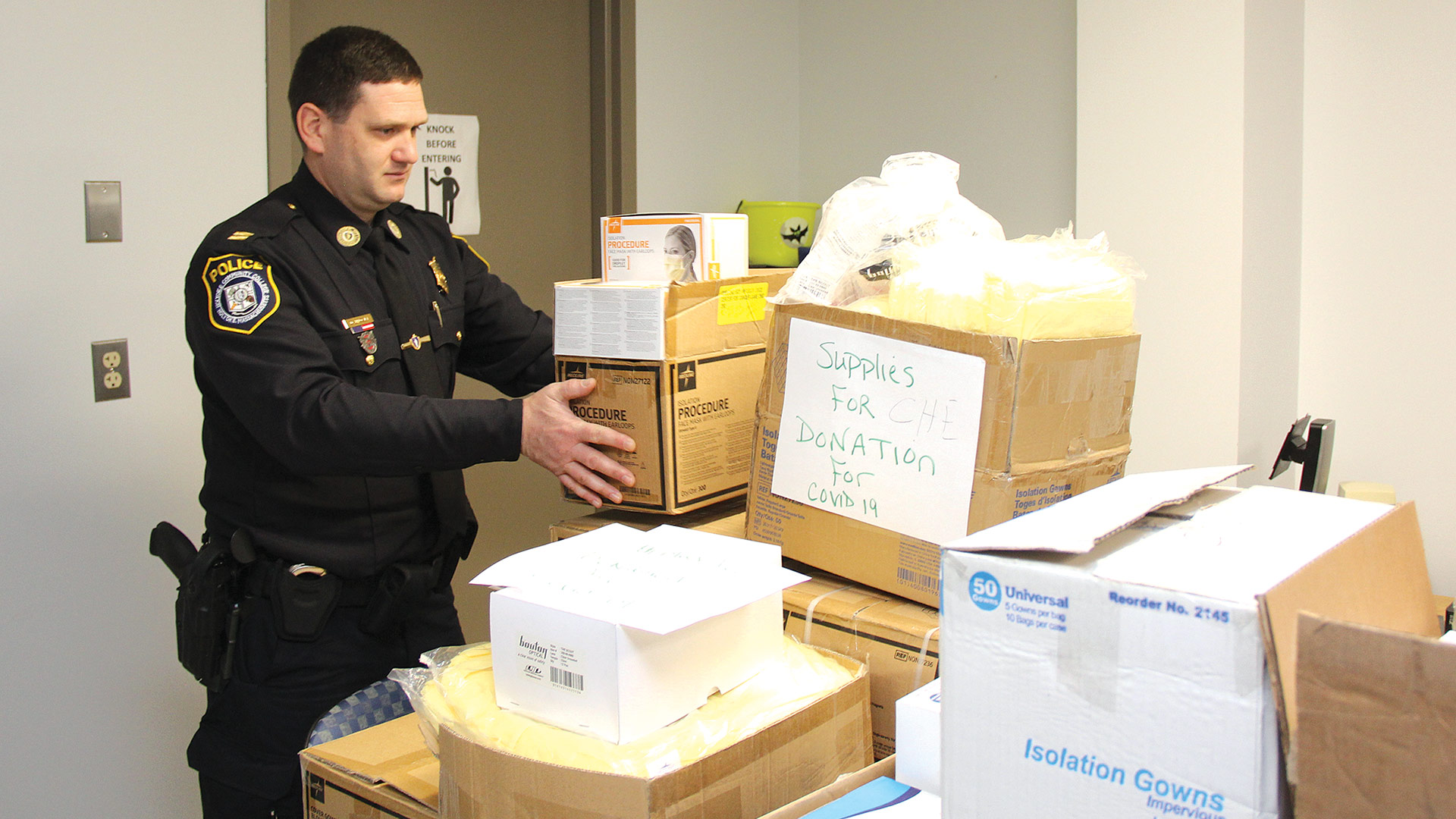
Construction

Beneath the Surface

Jeff Weinman stands on the former York Street Jail site, where a new, state-of-the-art pump station is being built.

The wastewater pump station at Springfield’s riverfront has done its job for more than 80 years, but it’s nearing the end of its useful life and lacks the capacity to keep up with the region’s growth — which threatens the cleanliness of the Connecticut River itself. That’s why the Springfield Water & Commission has launched a $115 million project to build a new station and three new pipelines across the river — a project that comes with some intriguing challenges and equally innovative solutions, including something called microtunneling.

When the wastewater pump station on York Street in Springfield was built 81 years ago, the city’s infrastructure was much different — and so were its sewage-treatment needs.

“The existing pump station is pretty old, though it’s still functional,” said Jeff Weinman, senior project manager Daniel O’Connell’s Sons (DOC), the contractor overseeing the construction of a new, much larger pump station at the site. “The capacity is the issue. As the city has expanded over the years, it’s kind of at its capacity right now, so they need to create additional pumping capacity there. In order to that, they needed to build a bigger pump station with bigger pumps, bigger piping, bigger everything.”

The $115 million project will serve 70% of the region’s population by conveying wastewater from Springfield, Ludlow, Wilbraham, and East Longmeadow across the Connecticut River to the Springfield Regional Wastewater Treatment Facility on Bondi’s Island. A new, higher-capacity wastewater pump station will be constructed, as well as three new wastewater-conveyance pipes across the Connecticut River.

The project is a cornerstone of the Springfield Water & Sewer Commission’s efforts to comprehensively plan projects that will meet multiple pressing needs such as combined sewer overflow reduction, climate resiliency, system redundancy, and infrastructure renewal. Construction is expected to last well into 2022.

“It’s part of a capital investment on the part of the commission to both increase their infrastructure and enhance water quality in the Connecticut River,” Weinman told BusinessWest. “It can reduce the potential for severe storms to impact water quality in the Connecticut River by having storm runoff or having the city’s sewer system overflow.”

A rendering shows the future pump station’s footprint both above and well below the ground.

The innovative project, expected to create about 150 construction jobs over the next three years, is designed to address four key issues, including:

• Infrastructure renewal (the new, modern station will replace an aging station nearing the end of its useful life and accommodating future growth in the region);

• Environmental protection (increased pumping capacity will prevent an additional 100 million gallons of combined sewer overflows from entering the Connecticut River in a typical year);

• System redundancy (three new pipes under the Connecticut River will add redundancy and improve service reliability for customers in Springfield, Ludlow, East Longmeadow, and Wilbraham); and

• Climate resiliency (flood-control protection will be increased by repurposing the old pump station).

The project is a culmination of years of planning — specifically through the commission’s Integrated Wastewater Plan (IWP). Adopted in 2014, the IWP was one of the first such plans in the country to integrate project planning for regulatory compliance — specifically, projects that fulfill an unfunded federal mandate to eliminate combined sewer overflows — and for renewal of aging infrastructure.

A Question of Capacity

The new station is being built on the former site of the York Street Jail and will connect to the Springfield Regional Wastewater Treatment Facility on Bondi’s Island through three new, 1,200-foot river crossing pipes. The additional pipes will supplement the two 80- and 50-year-old pipes under the river now, allowing for more regular maintenance and alternatives during emergencies.

“It can reduce the potential for severe storms to impact water quality in the Connecticut River by having storm runoff or having the city’s sewer system overflow.”

A $100 million low-interest loan from the Massachusetts Clean Water Trust State Revolving Fund (SRF) is the source of funding for the majority of the project. The SRF is administered by the Massachusetts Department of Environmental Protection with funding from the federal Environmental Protection Agency and from repayment of past loans.

The project also utilizes an innovative form of construction called ‘construction manager at risk’ (CMAR). Rather than designing a project and then sending it to bid for construction, CMAR incorporates the construction manager earlier in the process to help identify risks that may arise in the construction phase due to design. This garners more price certainty and minimizes project delays due to unforeseen circumstances.

“The delivery method is a little different,” Weinman said. “We did a technical proposal for the job, and based on that we were awarded the contract, then we worked with the design team during the final stages of development of construction documents, providing budgeting support and working with design team as they finalized documents and tailored them to the approach to the work that we thought best.”

The current, 81-year-old pump station is much smaller — and can thus handle much less wastewater — than the one coming online in 2022.

One of the interesting challenges of the project is where it’s sited, shoehorned between West Columbus Avenue and the flood-control wall and the infrastructure on York Street, including the main interceptor pipe for the city of Springfield.

“The pump station needs to be deep enough to work with the existing elevations of the infrastructure and also be able to have the capacity to handle the flow that it needs to handle,” Weinman said. “The bottom elevation of the pump station is 50 feet below existing grade. The site is so small, you have to go pretty much straight down with excavation to build the pump station.”

So, in a move uncommon in Western Mass., DOC will use a slurry wall for supportive excavation. “It’s a type of system usually used in downtown Boston and urban settings where you don’t have a lot of real estate. A concrete wall is built in the ground without using formwork,” he explained. “It’s kind of a unique process — the first time I’ve been involved with a project that employs that system.”

Another challenge involves running the new pipelines under the Amtrak tracks, Weinman noted. “So they’re going to be microtunneling under the tracks. We did a smaller supportive excavation for the launch pit for the microtunneling. That’ll be going on hopefully next summer — boring a hole beneath the flood wall and the railroad tracks out to the other side of the tracks down toward the river.”

Next summer will also see the start of the underwater pipe installation. That phase of the project should take about 12 months, as will DOC’s infrastructure upgrades at Bondi’s Island to expand the capacity of the sewage intake there. The construction of the pump station itself is the most involved part of the project; a groundbreaking took place in the spring, and it should be complete in May 2022.

Water Works

The river-spanning pipe installation — which DOC will subcontract to a firm that specializes in such work — is a relatively straightforward job, but the process of completing the work has become more difficult in terms of the regulatory aspects, Weinman told BusinessWest.

“There’s a lot more awareness now of the potential environmental impacts, so the planning of it becomes a lot more intensive. You work with regulators, MassDEP, the Army Corps of Engineers, and other regulatory agencies involved, making sure you’re tailoring your work in a way that complies with all the regulations and minimizes the impact,” he explained. “It’s an arduous process, and I understand why it’s there.”

Still, the entire project itself will have a major environmental benefit, and that’s keeping the Connecticut River cleaner while better meeting the region’s growing wastewater needs.

“The York Street Pump Station and Connecticut River Crossing Project is a sign of the commission’s smart and future-oriented approach to stewarding the region’s water and wastewater infrastructure,” Commission Executive Director Josh Schimmel said at the spring groundbreaking. “These types of projects may not always be the most glamourous, but they are critical to maintaining public health, service reliability, and environmental protection in the region for the 21st century. We are proud to initiate this project that will maximize ratepayer dollars by meeting multiple needs.”

To Weinman and his team at DOC, it’s another rewarding challenge, particularly in terms of innovative methods like the slurry wall and the trenchless tunneling under the railroad tracks, that promises to lead to a positive outcome.

“That’s the nature of construction,” he said. “There are so many different systems out there, and every job has different challenges and different solutions.”

Joseph Bednar can be reached at [email protected]

Banking and Financial Services

Local Approach

Jeff Sullivan says customers use branches in different ways than they used to, but that physical presence is still important.

Every morning, Jeff Sullivan signs new-account letters for the most recent depositors at New Valley Bank. “We like to send a thank-you note to people for opening an account,” he told BusinessWest.

But that task also allows Sullivan, the bank’s president and CEO, to gauge how New Valley is doing, at least by that one metric. “Week by week, the volume goes up. Every morning when I come in, there’s a stack of letters that kind of tells me how the day went yesterday. Sometimes it’s just a couple, sometimes eight or 10.”

The story those piles tell is of a bank — the first new Springfield-based bank to open in 11 years — that is indeed growing, and not just in deposits, but in commercial lending, the niche on which its founders want to focus considerable energy.

“In general, things are going well,” Sullivan said, noting that, at the end of the second quarter, just a month after opening, New Valley reported $34 million in assets. That number rose to $45 million at the end of September, is over $55 million now, and is expected to top $60 million by the end of the year. “So we’re starting to grow.”

While the last bank launched in Springfield, NUVO Bank (since acquired by Community Bank), focused on a mostly digital banking model, New Valley will have slightly more of a brick-and-mortar foundation, Sullivan explained. It currently has two branches — its headquarters on the ninth floor of Monarch Place in downtown Springfield, and a stand-alone branch on Wilbraham Road in Sixteen Acres. A third branch will follow in the second half of 2020, although the location hasn’t been determined.

“We’re a hybrid model, and people use branches in different ways now,” he said. “One of our customers, who opened his accounts here and doesn’t have a lot of need to go to a branch, went into a branch to have them help him figure out the online stuff. He wanted to download the mobile app and get everything enrolled and get bill pay set up, so our staff spent an hour with this gentleman, helping him set it up so he doesn’t have to come to the branch. But he was glad to know it was there so he could go and get some assistance when he needed it.”

On the commercial side, the bank will focus on smaller loans and quick turnaround times, said Sullivan, adding that the merger culture in recent years has created opportunities to serve small to medium-sized businesses in a high-touch way they don’t necessarily experience at large institutions.

“There’s definitely a big learning curve, of trying to educate the broader public about who we are and what we’re trying to do,” he noted. “We do have kind of a captive audience in the 300 shareholders who have invested in us. They know our story. As we convert those shareholders into customers, we want them to have a good experience because they’re very important to us. Then, if we provide good first impressions, they’ll become a sales force for the bank; they’ll tell their friends and business networking groups that we’re doing a good job.”

That’s the challenge for any new bank — to answer the question, ‘why this bank?’ when so many other institutions dot what many have called an overbanked landscape in Western Mass. But Sullivan hopes New Valley’s combination of local, quick-response lending and a retail model built on strong personal service will resonate with people looking for a change.

“We’ve looked at our shareholders and some people we’ve done business with before as our first wave of customers. And they’ve been patient with us because, as a new bank, not everything goes completely smoothly,” he added. “Our branch took a little bit longer than we thought to get open — it opened in September, and it’s doing great.”

New Valley is also in the final stages of testing and rolling out online account opening and other technology by the end of the year, as well as an online lending platform where people can apply for commercial loans up to $250,000 and get an answer quickly. “That’ll be up by the end of the first quarter of next year. We’re working hard on all those things while we’re trying to grow the balance sheet at the same time.”

Successful Connections

The founders of the bank — including Sullivan; Chairman Frank Fitzgerald; Jim Garvey, president of St. James Check Cashing; and Dennis Murphy of Ventry Associates — set several goals early on, first being a high level of engagement with customers, which Sullivan said has been missing at many banks. Second, they hope the bank will build off the recent successes in Springfield and connect the small-business community to that success.

Sullivan, who has spent more than 30 years working in and around the region’s banking community, most recently as chief operating officer for United Bank, told BusinessWest he’s come to understand that, just because there are branches on almost every corner in some cities and towns, that doesn’t mean the region’s population — and especially certain segments of it — are adequately served.

“We’ve got to make sure we make good first impressions with people. Our calling card’s going to be that we’re small, we’re nimble, we’re local, we can turn stuff around quickly. So we just have to live up to that, do a good job of it, and then the word will spread.”

In fact, research continues to show that the volume of business at check-cashing establishments has remained fairly stable — and comparatively high — in this region, despite considerable improvement in the economy over the past decade. Sullivan estimates there are some 20,000 households in Hampden County alone that use a bank sparingly, if at all.

“A lot of people are not well-served on the retail side. They need financial education, low-fee and no-fee accounts, and also a lot of financial-literacy tools,” he said.

“Several companies we’ve talked to say, ‘that profile is my employee base. I’ve got a lot of hourly employees, high-school kids getting their first job with us, people who are coming out of the military, or out of jail,’” he went on. “The employer is saying, ‘if I can cut down on the turnover, if I can make these people more stable, they’re going to be better employees, and that’s better for my business.’ They’re interested in working through their HR departments to make these kinds of accounts and tools available to people. It’s a win-win — lower turnover making for better employees, but they also recognize the challenges people are going through.”

But he also came back repeatedly to the commercial-lending focus New Valley wants to become known for during a time when many banks have been involved in mergers and acquisitions, and longtime community banks have grown significantly and put more emphasis on very large loans.

“As we come to the end of this long expansion cycle we’ve been in for 10 years and we’re seeing a lot of consolidation in the marketplace, banks and credit unions are readjusting their portfolios a little bit. We’re coming to the marketplace and saying, ‘hey, we’re turning stuff around quickly, and it doesn’t take us as long as it takes some of the other banks to go through the process.’ So I think delivering on quick decision making, local decision making, and just rapid service is what defines us at this point.”

One unexpected development has been strong demand for residential mortgages, which was not a big part of the initial business plan, Sullivan said. It’s just one way a new bank has to adjust to market demands — one of many challenges during that first year.

“By making sure all of our systems are in place, working with our regulators to make sure that we’re growing the right way, that our procedures and policies are right for the size of our bank, we’re building a good foundation for the future,” he told BusinessWest. “I’m champing at the bit to scale up and unveil some of these new products and new technologies we’re thinking about.”

To serve the public, he added, “you have to meet them where they want to meet you. Increasingly today, that’s having a good app, having some good social media, being able to reach people through online marketing.”

Spreading the Word

New Valley’s business plan calls opening one more branch in the second half of 2020. Sullivan knows it will be one of many local stories in an industry constantly defined by change.

“A lot of branches are available right now in Greater Springfield and Northern Connecticut. By this time next year, new banks will be coming into the marketplace, and we’ll see some expansion; I think some of the Hampshire County banks will push down, and some banks out of New York are making a lot of noise that they’re coming into Connecticut. So the landscape will continue to change.”

It’s been an exciting first six months, he added, and he and his team intend to keep up the momentum.

“We’ve got to make sure we make good first impressions with people. Our calling card’s going to be that we’re small, we’re nimble, we’re local, we can turn stuff around quickly. So we just have to live up to that, do a good job of it, and then the word will spread.”

Joseph Bednar can be reached at [email protected]