Home Articles posted by Joseph Bednar (Page 16)
Construction

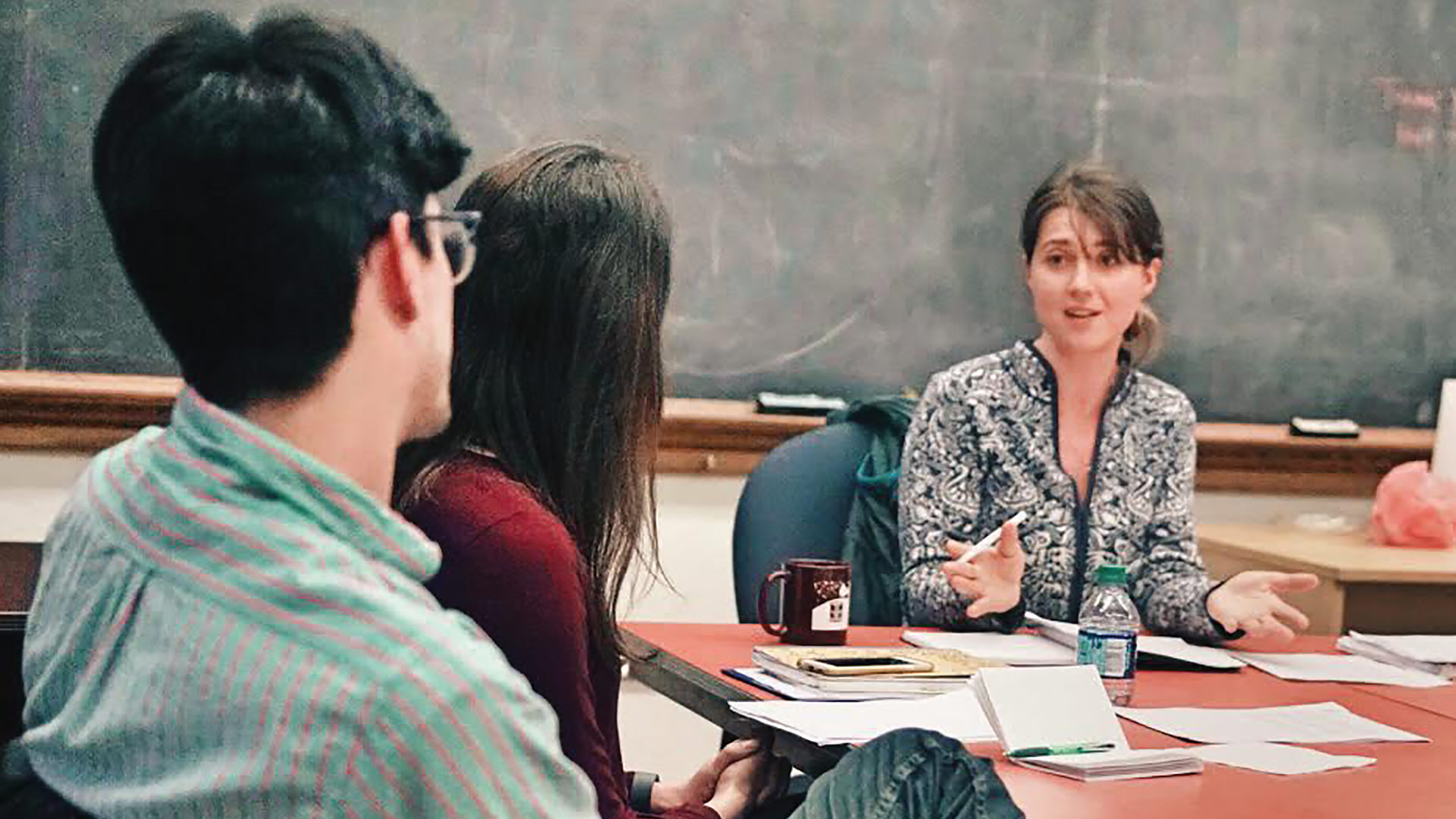
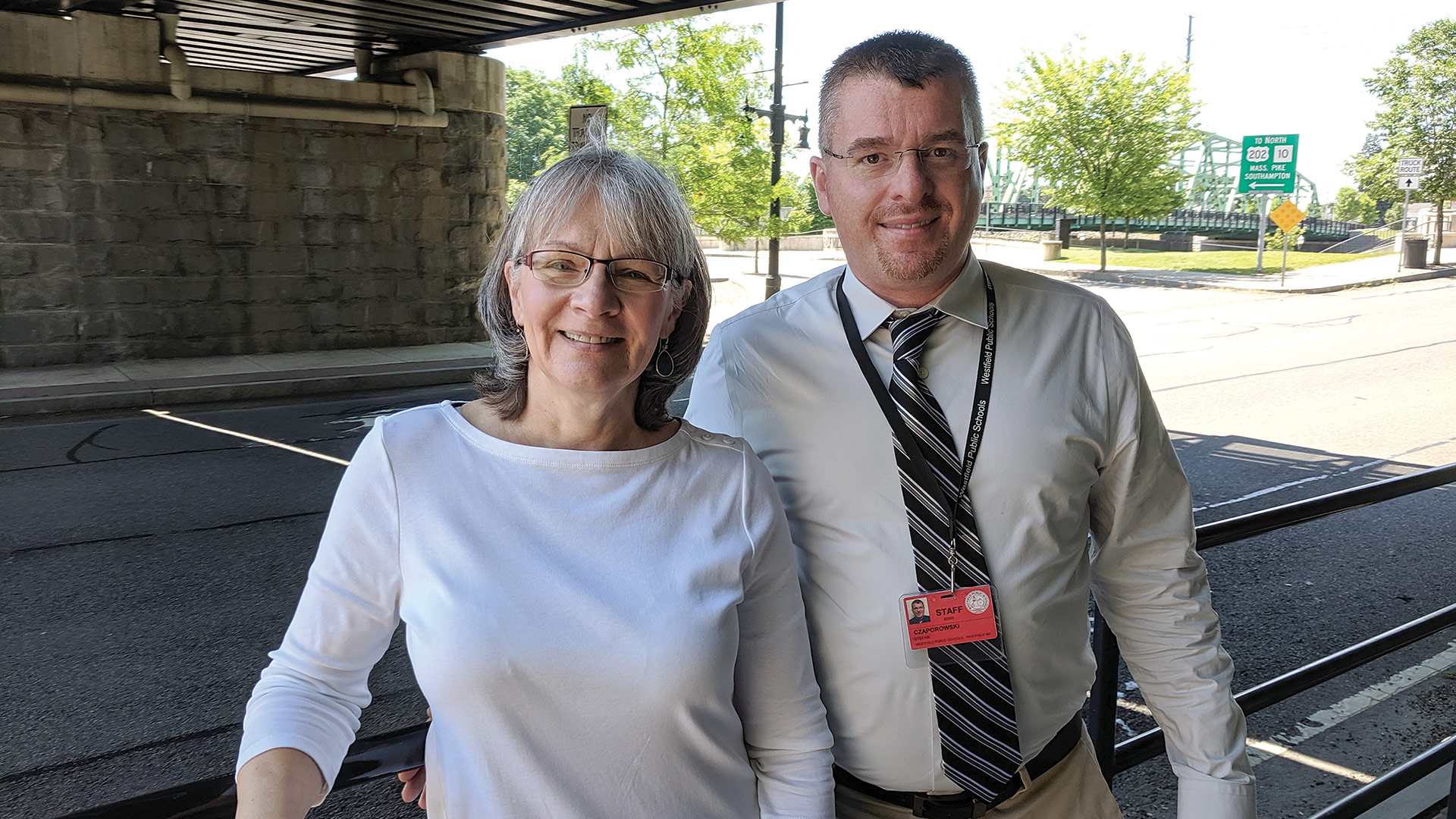
Training Ground

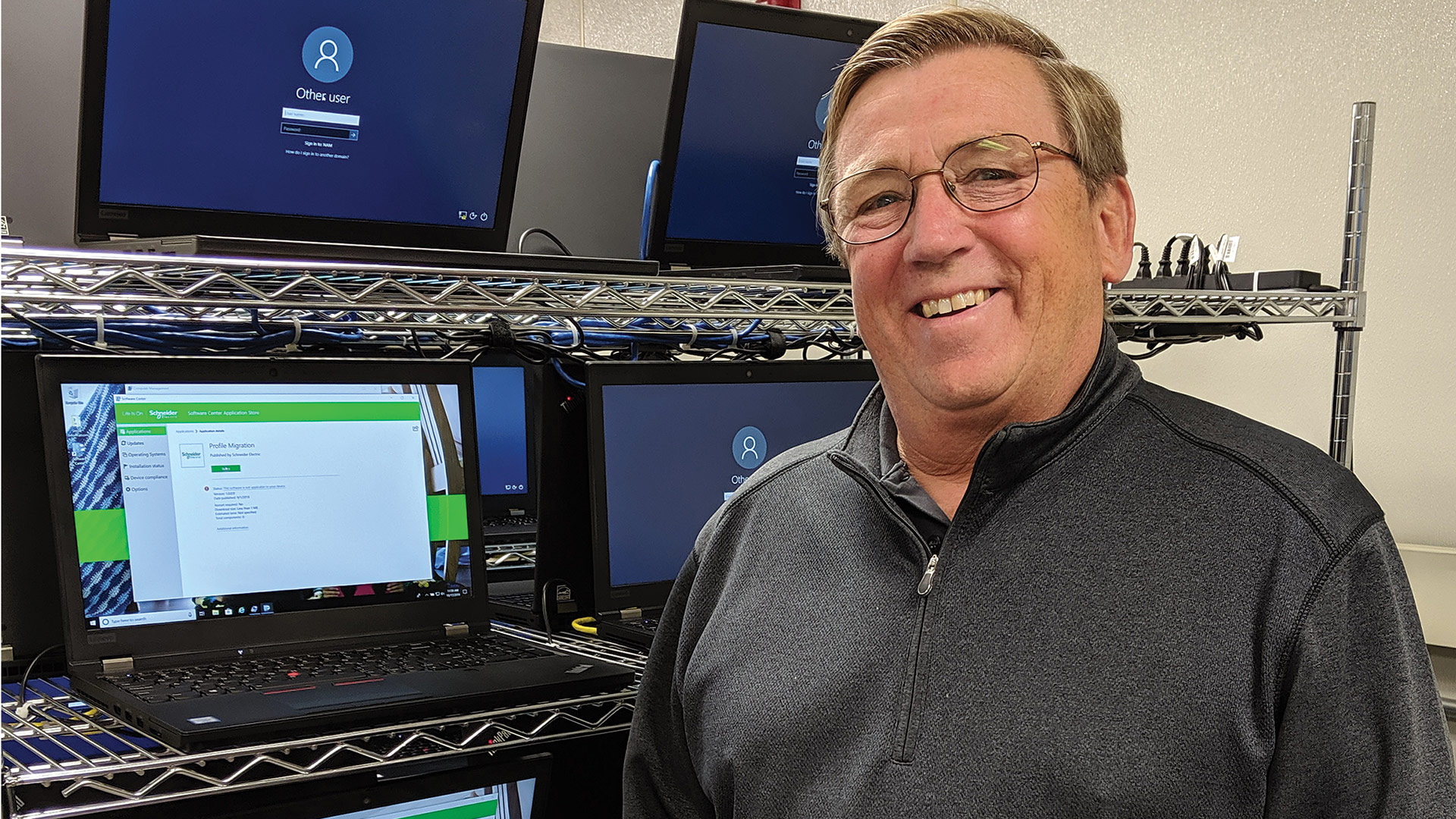
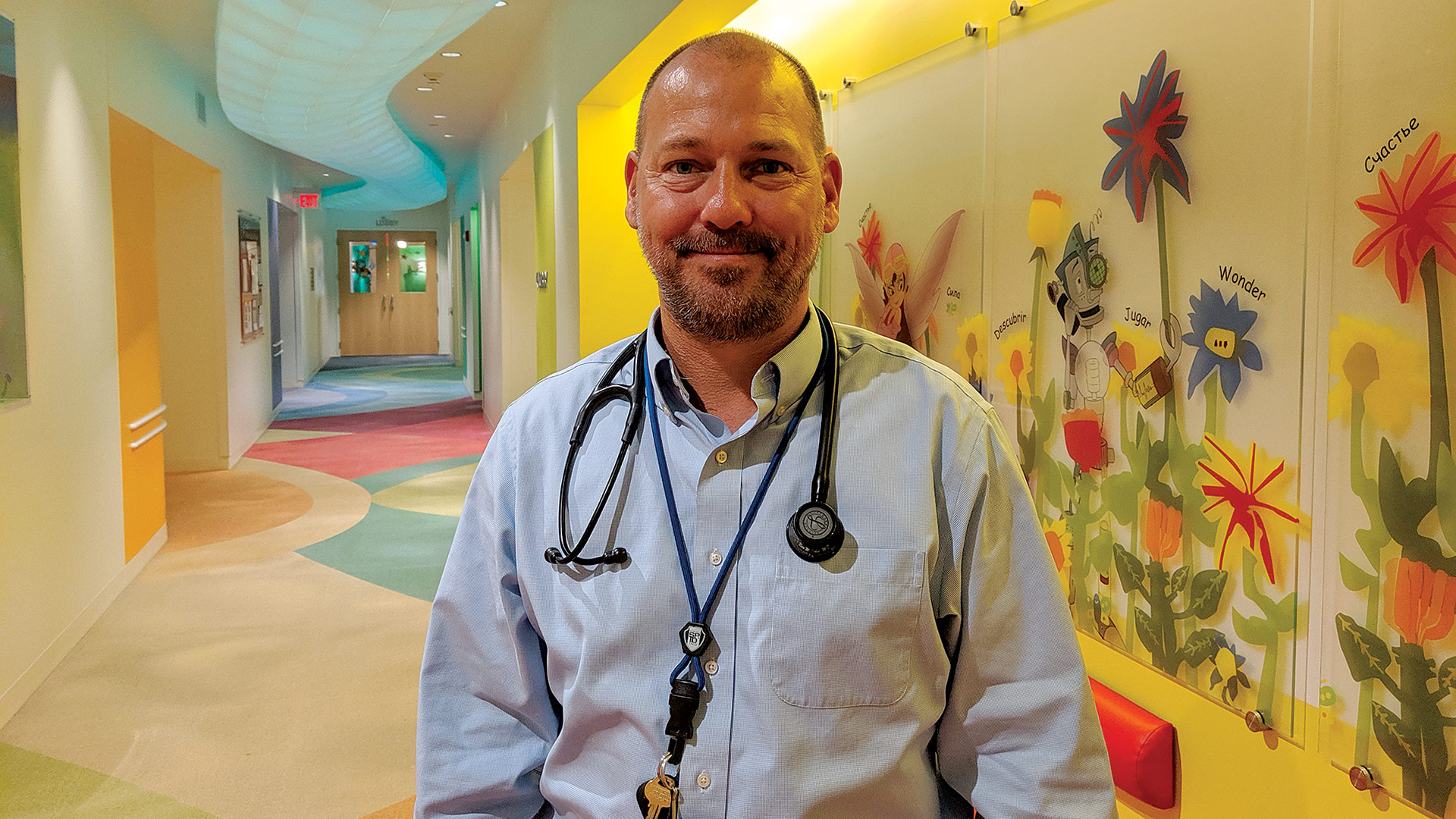
Jeff Napolitano says he hears from contractors weekly that they need more skilled workers to grow.

Every week, Jeff Napolitano hears from contractors, and the message is always the same: We need more help.

“Contractors are always looking for skilled labor,” said Napolitano, project director of Community Works, an innovative arm of the Worker Education Program at UMass Amherst funded by the Massachusetts Department of Transportation.

“With the building trades, you have an older, whiter, maler workforce that has been retiring because, really, the biggest push for the trades ended in the ’70s,” he explained. “Back then, the mantra was, ‘after you graduate high school, you go to college.’ Going into the trades has been less and less common. But we’re finding now that, whether it’s electricians to wire things or laborers to work on job sites or carpenters to construct things, there’s a need for skilled trades. That’s where our programs come in.”

Community Works is an adult pre-apprenticeship program for the construction trades and the transportation and highway industry, with a specific focus on women, people of color, and veterans, although people of all demographics may participate.

A six‐week course offered in Springfield and Holyoke to prepare qualified applicants for an apprenticeship in the building and transportation industry, Community Works uses classroom and hands‐on learning experiences to equip participants with the skills needed to be accepted into a state‐registered apprenticeship program or transportation-industry employment, from which they can build a career. Participants also receive case-management and placement services to help achieve their career goals.

Even though he works on a university campus, Napolitano admitted the program is, from a financial perspective, much different than the college pathway.

“There’s almost no debt that you really have to rack up,” he told BusinessWest from his office at UMass Amherst. “We call it the inverse four-year degree because apprenticeship programs generally take three to five years on average. And unlike going to college, where you need to take out a bundle of money in order to go, you get paid while you train, while you’re working, while you’re waiting to become a full plumber or full electrician or whatever. So people don’t have to take any debt; in fact, they get paid, with benefits, to train to become a journey-level tradesperson. That’s a lot better deal than college.”

The training — delivered by instructors experienced in the trades as well as guest presenters who have expertise in their field — replicates an actual work experience to increase the likelihood of successful placement into apprenticeship. Classes run Monday through Friday, from 7 a.m. to 3:30 p.m., to mirror a typical construction workday.

“We’re a workforce-development program on steroids, Napolitano said. “A lot of programs have a very narrow niche — afternoon training for a week to do one particular technique in one part of the industry. Our program is six weeks, five days a week, eight hours a day.

“We call it the inverse four-year degree because apprenticeship programs generally take three to five years on average. And unlike going to college, where you need to take out a bundle of money in order to go, you get paid while you train, while you’re working, while you’re waiting to become a full plumber or full electrician or whatever.”

“So our program is way more intensive, and people graduate with OSHA 10 certification, first-aid/CPR certification, highway flagger certification, and other certifications that are, by themselves, extremely valuable,” he went on. “Over those six weeks, it isn’t just classroom training, things like blueprint reading and construction math, but also a lot of hands-on training.”

For instance, last year, 14 participants spent a day at a Habitat for Humanity site in Holyoke and insulated the whole house, he noted. “Folks also spend a whole week at the official carpenters’ apprenticeship training facility in Millbury, learning, as other carpenter apprentices learn, how to hang drywall and do flooring and that sort of thing. So they get exposed to a wide range of tools and equipment and techniques.”

And not just in carpentry, as they also visit electricians, sheet-metal workers, and others who can provide hands-on training experience.

“Instead of this being a program that just narrowly focuses on ‘you need to manufacture these widgets, and this is how you do it,’ we actually train folks in a wide variety of things. We bring in the folks from the ironworkers, the plumbers, the glaziers, the operating engineers, the elevator constructors, to basically explain these specific trades and what’s involved in getting into them. We have a very broad focus, and despite having that larger focus, it’s still a very intensive program in terms of amount of time and detail and exposure to the work.”

Immediate Success

Community Works began in 2009 as Springfield Works, a 20-member employer/union partnership to address a gap in the regional workforce-development system: too many Springfield residents were in need of additional skills training for entry into apprenticeship programs. Within a year, the program had the highest job-placement rate in the state among pre-apprenticeship graduates.

The program was rebranded in 2013 with an expansion into Holyoke, and continues to target underserved populations in the construction and transportation trades, including women, people of color, and veterans.

“Our focus is on closing the demographic gaps. These industries are heavily male, heavily white,” Napolitano said, noting that some public-works projects mandate 5% or higher percentages of women on the job.

Beyond that, Community Works applicants must be at least 18 years old; have a high-school degree or equivalent; be authorized to work in the U.S.; pass a drug test; pass a physical test, consisting of a ladder climb and other tasks; be a proficient (if not perfect) English speaker; and have a valid driver’s license and a registered, working vehicle.

“You don’t need to have any experience,” he said. “It can definitely be a plus, but you don’t need any. I’ve had people who weren’t even familiar with a measuring tape go on to construction careers. We presume that folks don’t have that experience. At the end of the class, everyone’s in roughly the same place, ready to go.”

After the six-week course (the next one runs from Feb. 24 to April 3) comes the apprenticeship placement phase, and that’s where Napolitano comes in.

“When they graduate, I help them figure out where they want to apply, what jobs they want to do,” he said. “Our partners commit to taking a look at people. After MGM was finalized, there was a dip in the labor market, but it’s coming back now. Contractors are calling me in a weekly basis looking for graduates to be put to work.”

The goal is to place graduates into apprenticeships in the building trades or into careers in the transportation industry, and sometimes both, he explained. The skills required for most trades take years to learn and are usually developed through apprenticeships, which combine classroom instruction and paid on-the-job training under the supervision of an experienced tradesperson. The sponsoring apprenticeship program pays the costs of apprenticeship training, and, upon successful completion of the apprenticeship, the participant is credentialed as a journey-level tradesperson.

In fact, all the training is free, starting with the six-week Community Works course, Napolitano added, and people receiving unemployment benefits are not required to search for a job during the program to maintain those benefits. Furthermore, all participants — there are between 20 and 25 slots in each annual class — also receive a basic set of tools and equipment.

It’s the kind of opportunity that has some college graduates rethinking that degree.

“Apprentice program directors are seeing more and more people with college degrees, who have a lot of debt and can’t get a good enough job with just a college degree,” he noted. “I had a couple of people with master’s degrees in my program last year. So it’s pretty remarkable.”

Do Your Job

After listing the requirements to apply for Community Works — things like English proficiency and the ability to drive — Napolitano remembered the most important one.

“The thing that’s required the most is the enthusiasm and initiative to want to get into the construction industry,” he told BusinessWest. “It’s a physical job, and it requires some hustle. That’s really what we’re looking for in people.”

That’s why participants are bounced from the program for multiple absences and tardies. “We’ve been told that 95% of the industry is showing up on time. The other 5% is having a good attitude and being willing to learn something.”

After all, the construction and transportation industries, in dire need of new blood to replace an aging workforce, are certainly willing to teach a few things.

“It’s definitely an issue, particularly for the larger companies that are trying to expand their base of work,” he said. “They need an expanding group of workers who can do the job.”

Joseph Bednar can be reached at [email protected]

Travel and Tourism

Taking Flight

When the Connecticut Airport Authority (CAA) launched nonstop flights on Frontier Airlines from Bradley International Airport to Miami on Nov. 14, it marked yet another success in the airport’s goal of expanding destinations for customers, particularly budget, non-stop flights.

“We are excited to launch Frontier Airlines’ non-stop to Miami from Bradley International Airport,” said Kevin Dillon, executive director of the CAA.  “Frontier Airlines’ low-cost model is a key addition to our route structure. We are pleased to offer our passengers this additional travel option along with the high level of customer service that Frontier offers to its customers.”

The non-stop service will operate seasonally starting through April 2020 on Tuesdays, Thursdays, and Sundays, aboard an A320 Neo aircraft. The outbound flight departs from Bradley at 8 p.m. and arrives at Miami International Airport at 11:23 p.m. The inbound flight leaves Miami at 3:55 p.m. and arrives at Bradley at 7:04 p.m. 

Frontier Airlines also operates non-stop flights from Bradley to Denver, Orlando, and Raleigh-Durham. Non-stop flights to Orlando operate year-round, and the non-stop flights to Denver and Raleigh-Durham operate seasonally.

“We’re happy to expand our service at Bradley International Airport with non-stop flights to Miami,” said Daniel Shurz, senior vice president of Commercial for Frontier Airlines. “These new flights are an affordable and convenient option for travel to South Florida to explore the unique dining, sunny beaches, and endless activities. We appreciate the support of the community and look forward to continuing our outstanding partnership with the airport where we now offer four non-stop destinations.”

When the CAA took over operations at Bradley in 2013, it was handling roughly 5.5 million passengers a year. Now, that figure is more than 6.6 million.

Recent years have seen Bradley launch low-cost, non-stop service to Pittsburgh on Via Airlines, and to St. Louis on Southwest Airlines. Meanwhile, internationally, the daily Aer Lingus flight to Dublin introduced in 2016 has becoming increasingly popular with business and leisure flyers, and last year the airline committed to another four years at Bradley.

Passenger Experience

These developments, among others, have contributed to six straight years of passenger growth since the CAA began managing the airport in Windsor Locks in 2013. When the CAA took over operations at Bradley in 2013, it was handling roughly 5.5 million passengers a year. Now, that figure is more than 6.6 million.

And it’s not just flight expansion, but improvement in amenities as well. Bradley has added new eateries in recent years, such as Phillips Seafood and Two Roads Brewery. It also saw the opening earlier this month of Natalie’s Candy Jar, a self-serve candy store with more than 400 different sweet treats, beverages, and candy-related gift items.

“Natalie’s Candy Jar is a popular brand with a national footprint, making it a key addition to Bradley’s customer experience,” Dillon said. “The store’s unique and fun atmosphere, coupled with the high quality of candy, sugar-free treats, and gifts, will be well-received by travelers of all ages.”

Meanwhile, Travelers Aid International has begun serving Bradley’s passengers with a guest-service volunteer program. Travelers Aid currently operates similar guest-service volunteer programs at four other airports: New York JFK, Newark Liberty, Washington Dulles, and Washington Reagan.

These service-focused improvements have all helped Bradley International Airport earn a spot in the prestigious ranking of five best airports in the U.S. by Condé Nast Traveler three years in a row.

Dillon hopes readers keep the accolades coming for Bradley’s planned, $210 million ground transportation center, which recently broke ground for construction. When it’s open, passengers will be able to fly into Bradley and connect to the transportation center via a walkway from the terminal. All the rental-car companies serving Bradley will be located there, as well as 830 spaces of public parking.

The transportation facility will also serve as a transit hub for the various bus services into and out of Bradley, as a connecting point to the rail line that now connects New Haven with Springfield.

—Joseph Bednar

Workforce Development

Life’s Work

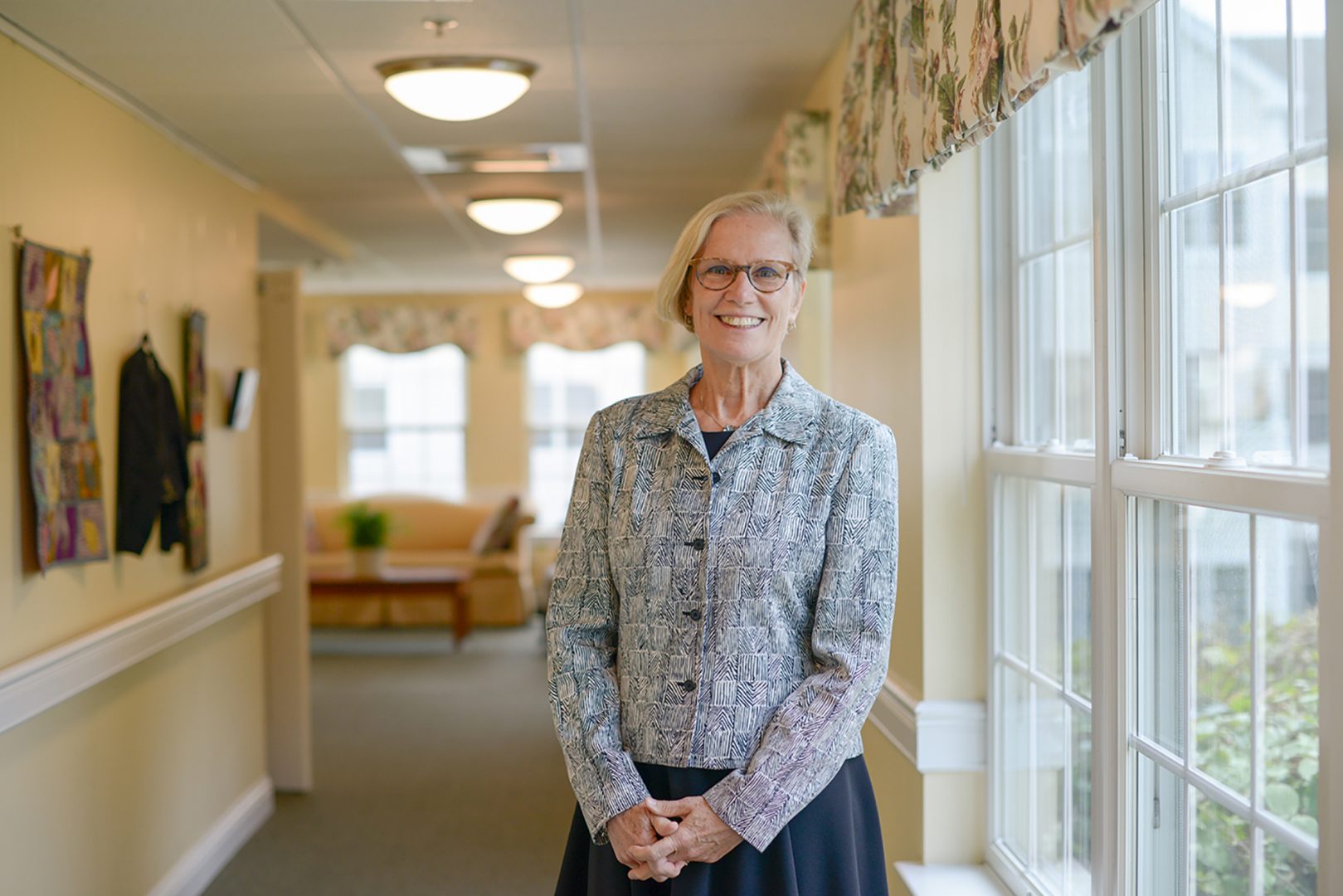
Fern Selesnick says ageism does exist in the work world, but sometimes people also fall prey to harmful self-stereotypes.

Fern Selesnick says older job seekers have clear advantages over younger applicants — most notably, a lifetime of experience.

“You can say, ‘I have experience in this field, and I pretty much know what’s coming around the bend and can solve problems, and nothing can throw me,’” she told attendees of a recent workshop for mature workers at the MassHire Springfield Career Center.

“The people out there who are younger than you cannot say that,” she went on. “And the only reason you can say you know the problems that come up and you know how to solve them and you are unflappable is your age. That translates to an employer saying, ‘this person is going to save me time, money, and headaches. I won’t have to work so hard.’”

It’s a message she’s shared many times with clients of Fern Selesnick Consulting in Hatfield, which specializes in career decisions and job-search skills like interviewing and résumé writing for clients ranging from students to, yes, mature workers and career changers.

But she’s also realistic about the attitudes older job seekers will face during their search, and noted that ‘old’ means different things in different fields. For example, professional athletes are considered old by their 30s, airline pilots by their 50s, and Supreme Court justices not until their 80s. But anyone, in any field, can encounter ageism.

“The interesting thing about ageism is that it’s the only form of discrimination that people can practice on others when they’re young and become a victim of when they’re old. It’s a very weird ‘ism’ in that way.”

“It can also vary by industry,” she said. “In the United States today, there is ageism, and there is age discrimination — not across the board, but it is a strong enough force to be aware of.

“The interesting thing about ageism is that it’s the only form of discrimination that people can practice on others when they’re young and become a victim of when they’re old. It’s a very weird ‘ism’ in that way,” she added. “But there are laws that protect mature workers.”

Among these is the 1967 Age Discrimination in Employment Act, which protects workers and job applicants above age 40 from discrimination based on age. States have incorporated their own laws — but none of these guarantees that older job seekers won’t run into outdated attitudes, whether blatant or subtle, Selesnick said.

“But there are also opportunities,” she went on, noting that it’s important for mature workers to understand their worth, while doing what they can to boost their skills and readiness for a new job or career change. “It’s critically important to not believe the myths about ageism. Those myths impact finances and health, as well as quality of life.”

Why Not Retire?

There are many reasons why someone chooses to remain in the job market past traditional retirement age. Finances are a major factor: 40% of Americans, including a large swath of older workers, have amassed retirement savings of less than $10,000.

But older workers bring plenty of adaptability to the table, Selesnick added, as they seek to extend their working years. Many are self-employed; in fact, according to the AARP, more than half of all new businesses are started by people over age 50. Meanwhile, people over age 75 have the highest rate of self-employment of any age group.

Being one’s own boss, of course, means not losing a job to age discrimination. But it can also mean long hours, and it’s risky — half of small businesses fail in the first five years. She recommended accessing resources like the Senior Corps of Retired Executives and the UMass Small Business Development Center for free advising on self-employment matters.

For those seeking to work well into retirement, whether for themselves or a boss, she listed a number of essential tasks, including learning how Social Security works, updating one’s résumé, researching occupational requirements, and even taking care of one’s health and managing chronic conditions. She was quick to add, however, that even people dealing with chronic illness can bring much to a job, from intelligence and wisdom to interpersonal skills and a keen sense of humor.

“Remember, a person is not their illness, even though it can be traumatic when a person is diagnosed with a chronic illness,” she added. “It’s important to remember that’s not all of who a person is, and a person can still have tremendous functioning with a chronic illness.”

Selesnick encouraged workshop attendees to avoid ‘internalized ageism,’ which are self-stereotypes often developed at a young age, and instead focus on positive qualities of aging, such as good judgment and impulse control developed over a lifetime.

“It’s important to consider what’s been gained rather than what’s been lost,” she said. “A lot of things my friends would do in their 20s, they would never do now. Which is not to say something negative about youth, because I don’t want to reverse age discriminate. But the judgment and ability to evaluate situations is something that develops with age. And that’s just the tip of the iceberg.”

And it’s something employers value, she added. But more important is the ability to do the job, and it when it comes to changing careers, people need to consider what kind of retraining that might entail — a certificate that can be earned in a few months, perhaps online, or a full degree program they may not have the time or money to pursue.

“So, if you’re going to need to be retrained, is it a retraining you can take on? Or do you have transferrable skills, so you can just switch gears?”

Sometimes all it takes is an upgrade in technology skills, and MassHire Springfield is one of many agencies offering classes in computer use and specific programs. She said one positive stereotype of Baby Boomers is their work ethic, and that often manifests as a willingness to learn new technology if it’s needed for work.

But it’s equally important, she added, to be enthusiastic and confident with that technology, because those who seem hesitant or reluctant may be screened out by recruiters without a second thought.

Selesnick also went over the basics of résumé preparation with workshop attendees, noting that applicant-tracking software will filter out applications without certain keywords before they ever make it to an HR manager’s desk. In effect, applicants are writing a résumé for two audiences — the software and an actual human being.

OK, Boomer (No, Really, It’s OK)

From there, hopefully, it’s on to the interview, which allows applicants to showcase their skills, confidence, and, yes, wisdom and good judgment collected through the years.

But it also helps to know someone, which is why Selesnick encouraged her audience to network as much as possible. “Research has shown that, if an employer receives a tip from someone they trust about a potential candidate, they’re going to trust that more than the résumé.”

Still, if the playing field is even — and it sometimes isn’t, because ageism is still a fact of life — an interview should provide an opportunity to connect on a personal level and to prove that age is no liability.

“Remember, when you’re walking into that interview, that’s your ace in the hole,” she concluded. “Your age is not your downfall — it’s your plus.”

Joseph Bednar can be reached at [email protected]

Workforce Development

Meeting the Need

Dawn Creighton says she’s excited about finding solutions to area employers’ needs.

During her decade-long tenure as regional director for Associated Industries of Massachusetts (AIM), Dawn Creighton’s role was basically to support member businesses in the 413.

“I went out and met with member companies, with their executive directors, and they would tell me what their biggest business challenges are, and I would try to find them a solution,” she told BusinessWest. “Sure enough, every single one of them said, ‘Dawn, if you could get me the bodies, I could double my workforce.’ No matter what the industry was, I’d meet with the HR person, and she’d say, ‘oh my God, Dawn, help me find somebody.’”

In those years, she formed connections between companies and resources like the region’s colleges and universities, but she wanted to be more than a connector.

And now she is. In her new position, as chief Workforce Development officer for Greenfield Community College (GCC), she can actually help build the programs that create that worker pipeline — and she’s excited about the possibilities.

“This opportunity became available, and I was like, ‘wait — I actually get to do something about this.’ It’s really exciting.”

Creighton, who works at GCC’s Downtown Center at 270 Main St. in Greenfield, had been on the job only three weeks when she sat down with BusinessWest to share that excitement, although she described her job in vague terms for a reason: at the moment, she’s mostly listening — and learning.

“What’s the purpose of higher education if we’re not building the student for the workforce they’re entering? We get it, and want to be able to do that.”

“My first 30 days have been really meeting with the employees at GCC and what they’re doing in the community. Then I’m spending the next 30 days meeting with the employers in the community, finding out what their needs are to make sure we’re building the programs they need. Then the next 30 days will be spent with our community partners, finding out how we can build programs together,” she explained.

“Once all that comes together, we’ll be figuring out what we’re already doing and doing well, and building new programs,” she went on. “What does that look like? Do we need to add more technology training? What are the needs of the community?”

Creighton is no stranger to GCC — she’s a 2005 graduate of the college who began her career as an employment specialist at MassLive before becoming AIM’s regional director for Western Mass. in 2009. During her tenure at AIM, she served thousands of employer members, uniting them around issues ranging from healthcare and employment law to sustainability, budgeting, and hiring.

In doing so, she developed an understanding of the diverse needs of employers across the region, including manufacturing, but she is also invested in furthering innovation and bolstering the creative economy. Thus, she’s in a good position to help GCC integrate the liberal arts and technical education it offers, said college President Yves Salomon-Fernandez.

“As an alumna, we are especially proud of Dawn’s professional achievements and are delighted that she wants to serve her alma mater and community this way,” Salomon-Fernandez said. “She rose to the top in the search process. There is much anticipation for her to lead us to new heights.”

Growth Potential

Among her responsibilities, Creighton oversees the college’s non-credit programs, from manufacturing to personal enrichment — “you’d be amazed how many people are interested in taking ukulele lessons and salsa dancing and tango.”

But when it comes to crafting programs that better train students for fertile career opportunities — thus helping companies grow — “there’s always more potential, and that’s why I’m here,” she said.

“Many, many moons ago, the impression [of community colleges] from the business world was, ‘here’s our student, take it.’ Now the business community has a chance to be the model for the student,” she went on. “What’s the purpose of higher education if we’re not building the student for the workforce they’re entering? We get it, and want to be able to do that.”

The college is currently crafting a strategic plan, seeking input from the community and companies of all types and sizes, to better hone and respond to those workforce needs, she explained. “It’s an exciting time, and the vision for what people want to see from the community college is huge. We’re reaching out to people and asking for their time to help us build the product they need — the student.

“They’re so excited to have their voice heard,” she added. “They’re calling me and telling me what they need, and they want to be a part of it — ‘how can I help?’ It’s this contagious vibe of getting involved. I’ve had people say, ‘if you build this program or do this training, I’ll even send some of my people in to talk about it in a real-world context. I’ll even do apprenticeships; I’ll do internships.’ They’re not interested in a handoff; they want to be hands-on.”

The goal, Creighton noted, is to get those ‘bodies’ in positions of need — actually, not just any bodies, but well-trained individuals — and help companies grow, at the same time establishing Western Mass. as a strong job market, attracting still more talent, which helps companies grow more, and it becomes a snowball effect.

“Every industry has a shortage of people,” she said, but specifically people with essential life skills — what some call soft skills, though she doesn’t like that term. “It sounds fluffy — but it’s real.”

For example, many employees and job seekers simply don’t understand the need to be punctual, or to stay off their smartphone during work hours, or that a 9-to-5 job means actually working 9 to 5. “To some people, it’s common sense; to others, it’s not. It’s just not an environment they’ve been in.”

And while Millennials have gotten a bad rap, this soft-skills gap spans the generations, Creighton said. In fact, in many ways, Millennials are a positive force, forcing companies to rethink old ways of doing business.

“With all this new leadership in the community, it’s just a fun, exciting buzz and vibe in Franklin County.”

She recalled participating on a panel with a banker who told her about a job he had early in his career. He was so savvy with technology, he’d get a day’s work done in five hours, but his boss wouldn’t give him additional duties, as not to show up his co-workers, so once his day’s work was complete, he’d sit at his desk, buried in his phone.

“Everyone looks at him like he’s this slacker,” she said. “He ended up leaving — no surprise there. And how many other people are leaving because they’re underutilized?”

The bottom line is that companies and their employees can learn from each other to help each other succeed, she explained — and that’s another way organizations can grow.

New Blood

As the former board president of Dress for Success, Creighton also built Foot in the Door, a workforce-readiness program dedicated to helping women develop critical skills for entering and re-entering the workforce. So she’s no stranger to these issues.

And she’s energized by all the new blood in regional leadership. For example, Salomon-Fernandez has been on the job just a year, and so has Diana Szynal, executive director of the Franklin County Chamber of Commerce.

“With all this new leadership in the community, it’s just a fun, exciting buzz and vibe in Franklin County,” Creighton said. “Everyone’s saying, ‘let’s try it this way,’ and nobody’s saying, ‘no, we did that before.’ And we’re working collaboratively together.”

While touring manufacturers and other businesses to determine what they need to grow, she added, it’s important to understand that many tools and programs are already in place. “We just need to package them differently. I’m excited when I hear the things people want and realize we’re already doing it and we could just do it in a more robust way.”

Finally, Creighton wants to celebrate the region’s economic successes while striving to add to them — and make sure GCC has a key role in doing so.

“So many people talk about how many people leave the region. OK, people leave — we get that,” she said. “But let’s focus on how many people stay, and what their economic impact is on our community. That’s where our focus should be.”

Joseph Bednar can be reached at [email protected]

Architecture

Living with the Land

Environmentally friendly ideas are nothing new in the architecture and design world, but advances have come at a rapid pace — not just in how green a project can be, but how effectively the long-term cost savings justify the upfront expense. Clients want to do the right thing, design professionals say, but they’re much more willing if they can see an economic justification. Increasingly, they’re able to achieve both goals.

Sometimes design decisions bring unexpected benefits, Rachel Loeffler says.

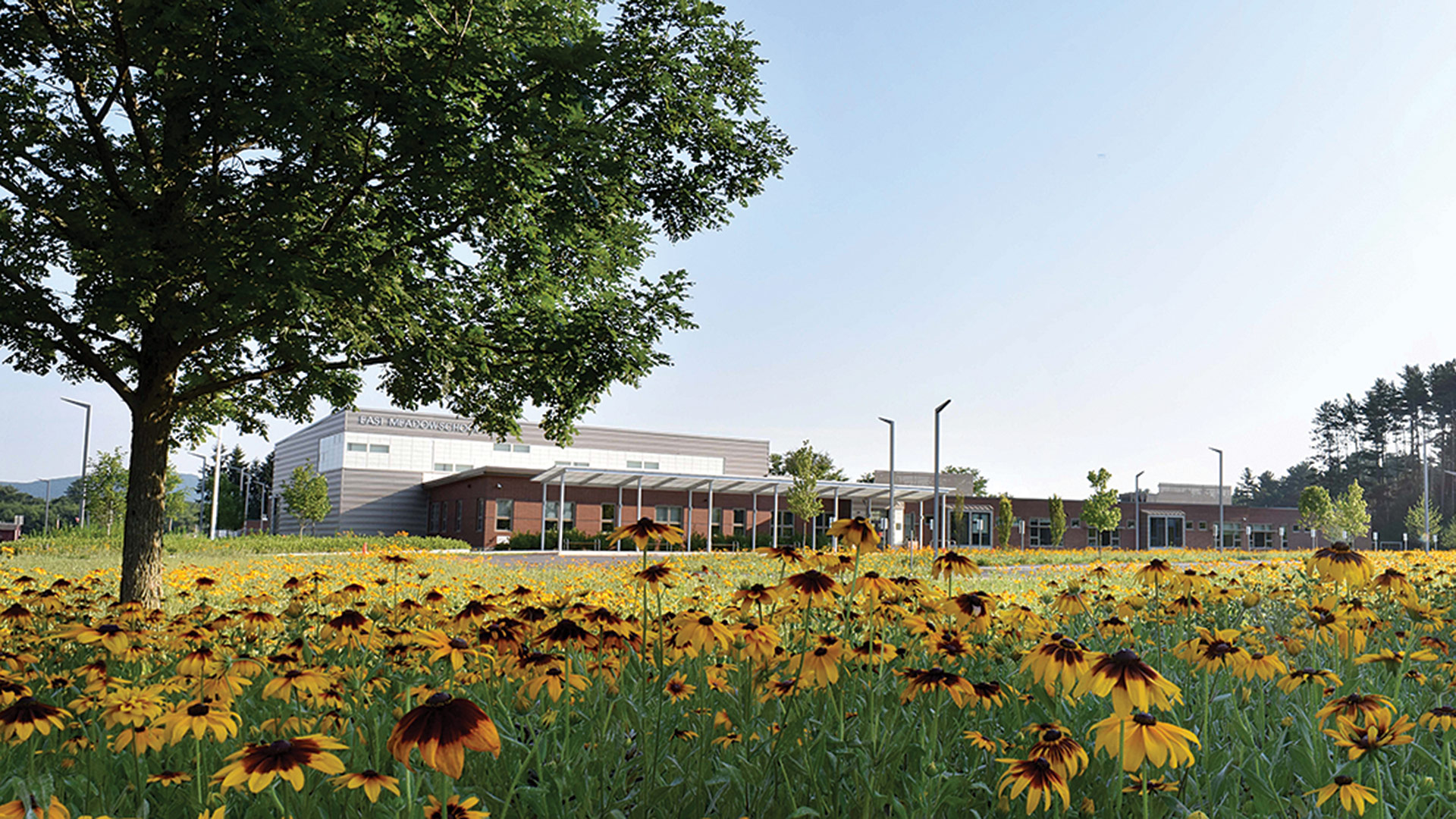
Take a project her firm, Berkshire Design Group, designed for East Meadow School in Granby.

“Cost was a big factor, so we looked at using a meadow feed mix instead of traditional bluegrass, which saves the school 100 gallons of gasoline in mowing, as well as the labor,” said Loeffler, a principal and landscape architect with the firm.

“But then, what happened was, some birds moved in almost instantly, including some orioles.”

Orioles, by the way, are among the hundreds of bird species most at risk from climate change and destruction of meadow lands due to development, so creating a healthy habitat for them is significant, she said. “Sometimes, delightful surprises happen.”

When Northampton-based Berkshire Design Group, one of the region’s leading firms in the realm of sustainable design, opened its doors in 1984, its founders might have been equally surprised to see how common green ideas would become a few decades later.

“Back then, we were experimenting with stormwater standards, alternatives that then became state standards,” Loeffler said. “That creative approach is something that was part of us from the beginning.”

C&H Architects, headquartered in Amherst, can track a similar trajectory, emphasizing green and sustainable architecture since its launch in 1989.

“Nobody was trying to do that 30 years ago — it wasn’t even part of the lexicon,” said Thomas Hartman, partner and principal architect. “Over the years, it’s really been interesting to see how what might have been an odd-duck type of client become the norm.”

In those early years, he said, forward-thinking clients would seek out C&H specifically for this expertise, while today, green design isn’t surprising at all. “It’s gone from the occasional project to where, if this isn’t part of the conversation, you’re not really practicing in the mainstream anymore.”

In fact, he noted, the American Institute of Architects (AIA) has basically shifted its organizational philosophy to suggest that, if a project isn’t environmentally conscious, if it’s not sustainable, then it’s just not good design.

“Climate change requires a holistic approach, addressing the interdependencies among people, buildings, infrastructure, and the environment,” AIA President William Bates said recently. “Our training allows us to look for solutions and ways to mitigate climate change comprehensively and creatively, which we do every day.”

At their most basic level, Hartman explained, buildings protect individuals from the elements and provide texture to people’s lives. Buildings, however, are also one of the largest contributors to global warming, accounting for nearly 40% of all greenhouse-gas emissions worldwide — a statistic expected to double by 2050. In an effort to mitigate these impacts, there has been a steady increase in sustainable architecture — the design of buildings that work in harmony with the environment.

Installing a meadow instead of grass at East Meadow School in Granby reduces gasoline use and provides a habitat for endangered birds.

C&H Architects has been at the forefront of this effort for three decades. For example, it designed the fifth-ever certified Living Building Challenge project in the world (and the first in New England) for Smith College’s MacLeish Field Station, the most rigorous performance standard for buildings available.

“It’s the most difficult standard — net-zero water, net-zero energy, avoiding certain materials and chemicals,” he said, noting that net zero means producing as much of that resource as one takes from the environment.

The firm has followed similar standards with other commercial and academic projects, and has designed more than 10 homes that boast net-zero energy, the most recent of which won the top honor at AIA Rhode Island in 2018, and includes a solar array that powers both the house and the car of its occupants.

That’s an especially cutting-edge standard, Hartman said, but it may become mainstream as well in the coming years, just as many sustainable practices in building and landscape design have become the norm, not the exception.

Holistic Approach

Loeffler said there are two ways to craft a sustainable philosophy for a project. One is to simply create a checklist of energy-saving or environmentally conscious features.

The other way of thinking actually takes cues from ecological thinking and the way all organisms are interrelated. On the simplest level, she cited the example of humans and trees — plants give off oxygen, while we breathe it in and give off carbon dioxide.

“There’s an understanding that each entity has a need for resources to consume, and has a waste product,” she said. “What sustainable thinking allows us to do is look at a project and look at ways to tie resources and waste together in a project or adjacent use somewhere else.”

Tom Hartman takes meter readings at a mill renovation in Lawrence — part of his goal to make sure energy-saving projects are performing as they are designed to.

One example is a dog park she recently worked on, during which time she approached a company that specializes in taking dog waste and turning it into energy. “Farms are taking waste from grocery stores, and any sort of organic waste products, and generating electricity. These are waste products that are being taken out of the waste stream instead of being shifted to a landfill somewhere.”

Hartman said architects, including those at his firm, are also starting to think about reductions in embodied carbon, which are the emissions associated with building construction, including extracting, transporting, and manufacturing materials.

“What that means is that we’ll be making low-carbon buildings, so we’re not adding to the carbon issue,” he said, adding quickly that this, like all new initiatives, comes with a learning curve. “In the evolution of our practice over 30 years, as soon as we get competent in one thing, we’re going to the next thing.”

Clients in the education sector have been particularly receptive to innovative ideas around sustainability, he noted, but those projects often come with time barriers.

“When you’re doing academic work, doing renovations on an existing building, they’re occupied, so you may have just a couple of weeks to do your job and have a limited budget, so how do you address environmental design and sustainable design on these types of projects?” he asked. “It comes down to the materials you’re choosing and what opportunities are available. For example, if you’re renovating a dormitory, you may only have 12 weeks, so you probably won’t renovate the exterior envelope of the building.”

“Nobody was trying to do that 30 years ago — it wasn’t even part of the lexicon. Over the years, it’s really been interesting to see how what might have been an odd-duck type of client become the norm.”

But all projects must consider their long-term impact on users, said Leon Drachmann, a principal at Payette Associates in Boston, who recently talked about sustainability on the U.S. Green Building Council website.

“The green-building initiative will have a deeper impact by expanding its scope — by shifting its focus to areas outside of building design, such as real-estate economics, zoning regulations and land use, while concentrating on the human experience and societal well-being,” he noted, adding that “sustainability should be considered not as an independent, separate process, but as an integral part of design itself.”

Dollars and Sense

One impact that can never be overlooked is the financial one, Hartman said. After all, while clients want to do the right thing, they’re still focused on the bottom line.

“I’ve never met a client where, if we could provide the economic case for doing good in sustainable design, they wouldn’t do it,” he told BusinessWest. “It’s rarer to find a client who will do the feel-good of sustainable design if it doesn’t pass the economic test.”

So part of his service to clients is actually visiting the site after completion, monitoring elements like energy use, waste production, and the overall costs to make sure the promised efficiencies have come to fruition.

“It has been really important for us to do that,” he said. “Most of the time, we want to maintain a relationship with the client in the future anyway. We will ask for energy bills. We’ve never met a client who doesn’t want us to follow up. That’s probably the most important thing for the profession — to make sure it all works, and if it doesn’t work, figure out why. Otherwise, you’re just waving your arms.”

Loeffler noted that clients that have a long-term vision are much easier to convince of the benefits of green design.

“If an organization’s economic-benefit analysis focuses on a one-year plan, they’re going to make a decision based on that — and there’s certainly nothing wrong with that,” she said. “But if their vision centers around a 20- or 50-year plan, they might be inclined to make different decisions.

“In a homeowner’s situation, with solar panels, there are upfront costs in that initial year. Over a certain amount of time, you’ll recoup those costs, but if you’re only looking at one year, you’re not going to budget for solar panels. If you’re looking at the long term, the cost makes more sense.”

The tipping point for much sustainable design and technology will come when those costs approach those of traditional methods across the board — and many in the industry say those days are getting closer. “When green materials become cheaper to acquire than previous materials, we project there will be a huge increase in the desire for this type of technology,” Loeffler said.

Until then, “we try not to push the issue too hard. We engage every client in the discussion, but they have different comfort levels. At the end of the day, we’re there to meet their needs and goals, and we work with them.”

Hartman is happy he works in a state which saw the value of renewable-energy credits and green standards well before most other states did.

“Massachusetts has been progressive, and they did those things so we wouldn’t be so reliant on fossil fuels from other countries,” he said. “It’s really exciting nowadays.”

Joseph Bednar can be reached at [email protected]

Manufacturing

Tight Squeeze

President Trump has made no secret of his hope that a series of tariffs on goods from China and other countries will eventually force a more favorable balance of trade for the U.S. But in the meantime, the escalating trade war has posed very real, often negative impacts for manufacturers, particularly in the form of higher costs and a general sense of uncertainty that makes it difficult to pursue growth. And no one seems to have any idea when the situation will ease up.
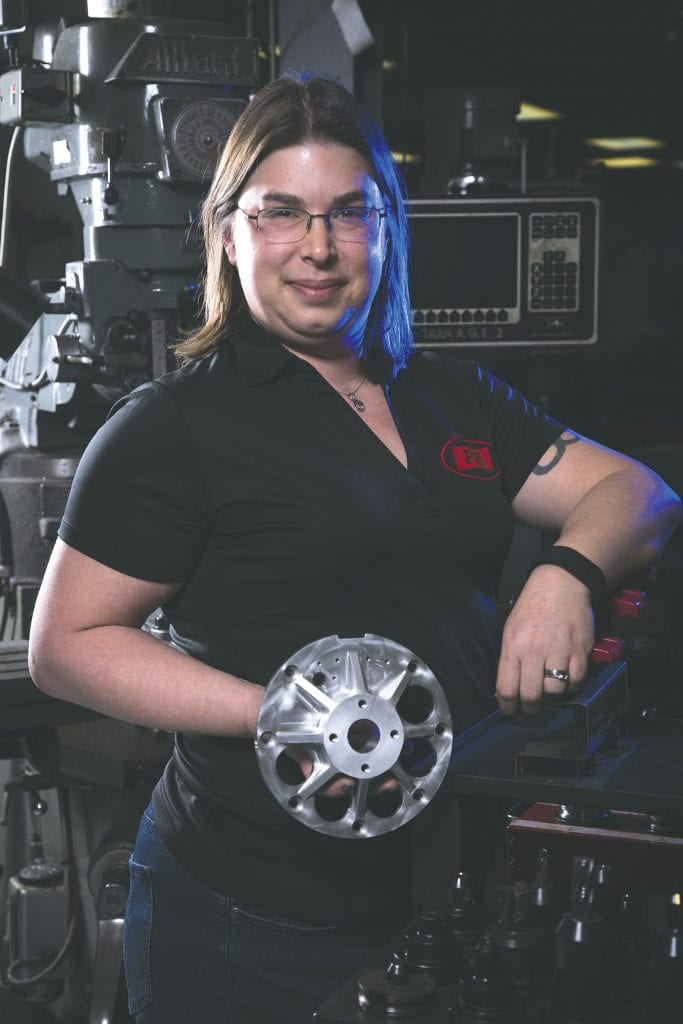
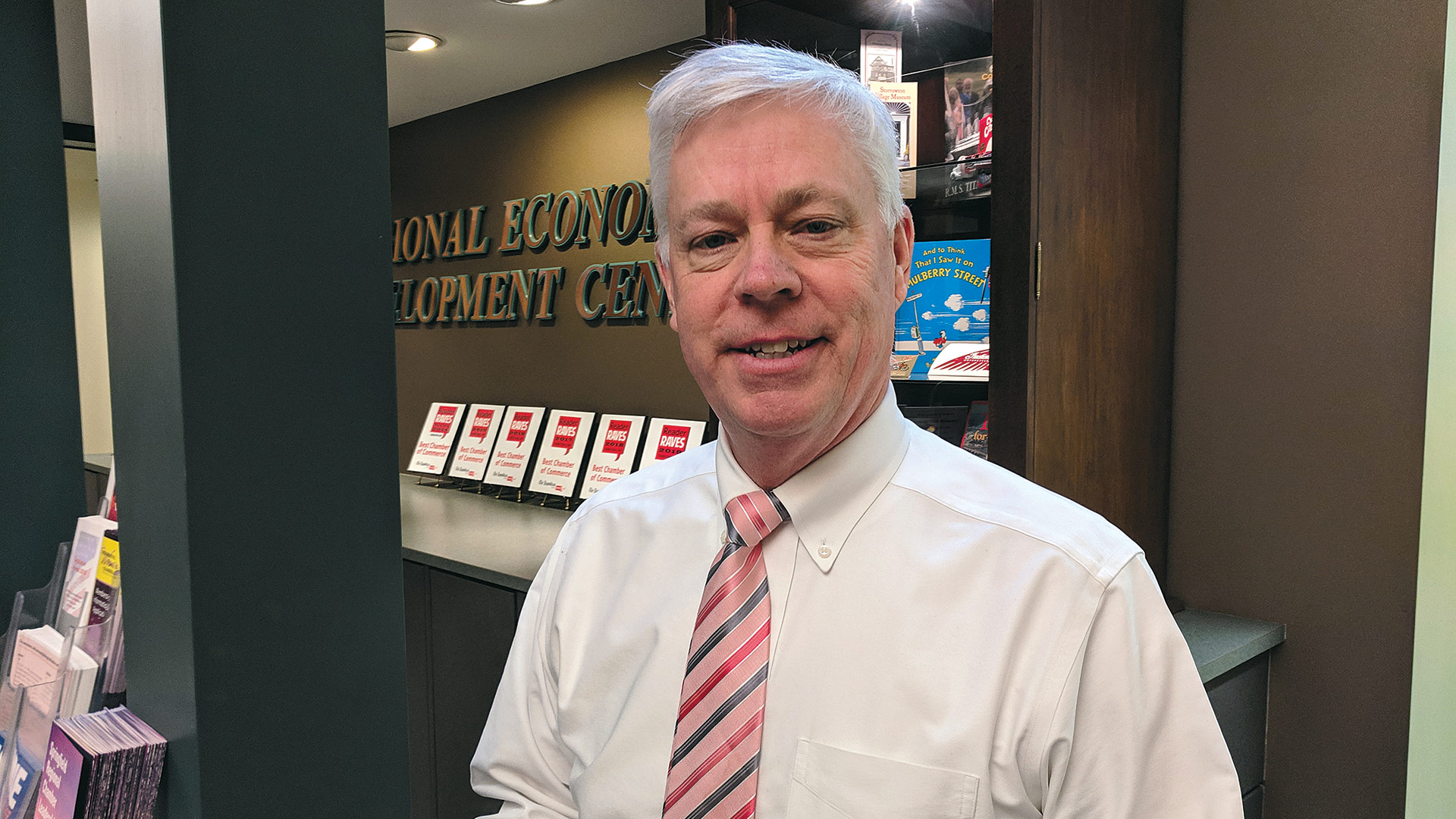

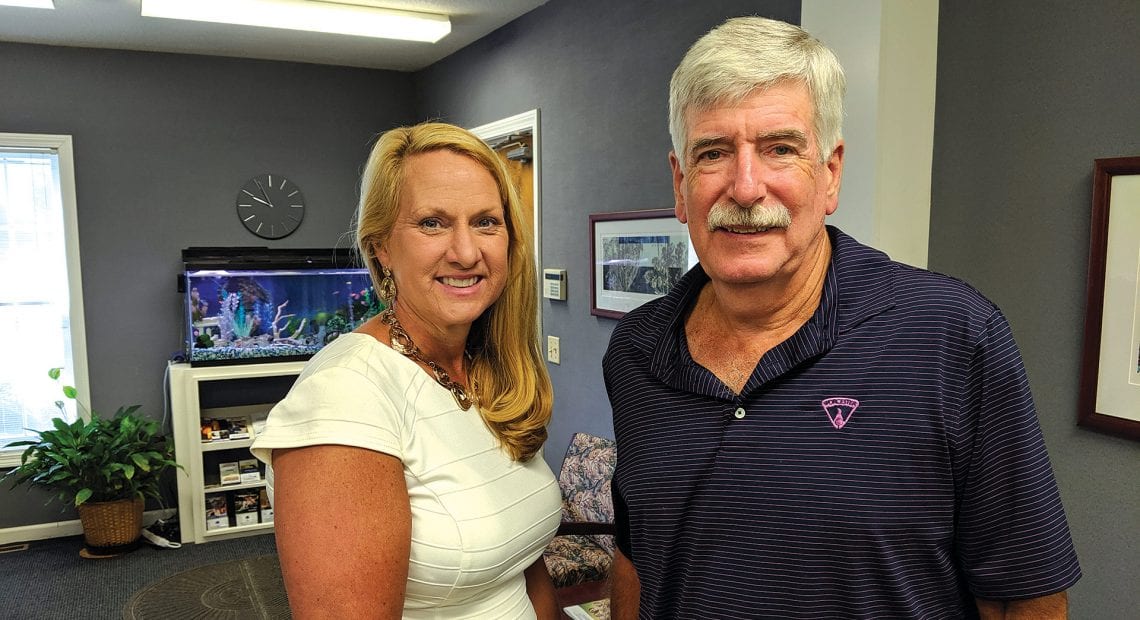
A trade war can hurt business in more ways than one, Kristin Carlson says.

For example, as a contractor for the U.S. Department of Defense, her manufacturing company, Westfield-based Peerless Precision, doesn’t buy a lot of foreign materials, like steel and aluminum — in fact, she buys about 95% domestic — so she hasn’t been subject to the direct cost increases on imported goods resulting from the volley of back-and-forth tariffs posed by President Trump and Chinese President Xi Jinping.

“As a result of tariffs and increased pressure on domestic supply, we’ve had supply and demand issues. We’ve been seeing pricing going up 25% to 40% from what we have historically paid.”

But those increased costs of Chinese products have pressured the domestic supply chain, so she is, indeed, paying more.

“As a result of tariffs and increased pressure on domestic supply, we’ve had supply and demand issues. We’ve been seeing pricing going up 25% to 40% from what we have historically paid,” she said. “Costs are a big issue.”

Peerless Precision, which makes parts for the aerospace and defense industries, employs 32 people and has generated strong revenue in recent years, but profits are being squeezed by the trade war.

Kristin Carlson says manufacturers are dealing with price increases and supply-chain disruptions due to the recent tariffs.

Lead times are also affected, she added. “Because of this supply and demand issue on the domestic supply chain, companies are stocking up to make sure they’re getting the prices they need. When times are normal, we’ll get material in one to three business days, and that’s turned into one to four weeks.”

Trump’s trade war, now about 18 months old, has had a ripple effect on the global supply chain of many products, driving up the price of imported raw materials and finished goods. It’s not just manufacturers feeling the heat — for example, farmers have lost lucrative markets as well.

NPR recently reported that cranberry growers worked for years to develop a market in China, and sales of dried cranberries to China increased by more than 1,000% between 2013 and 2018. But after the White House approved tariffs on $50 billion worth of Chinese goods in July, China immediately retaliated with tariffs on dozens of U.S. goods, including dried cranberries, and now growers — many of them in Massachusetts — are faced with a serious glut of product.

That’s just one example of the impact of tariffs, but for manufacturers, the equation can have even more moving parts (pun intended). Many shop owners say the uncertainty of the situation is causing them to hold off on hiring and expansion because they’re not sure how or when a deal will take shape.

“The imposition of 15% tariffs on $112 billion worth of Chinese goods on Sept. 1 underscores the uncertainty facing employers, particularly manufacturers, who do business in overseas markets,” Raymond Torto, chair of the Associated Industries of Massachusetts (AIM) Board of Economic Advisors, wrote last month. “At the same time, employers are beginning to see evidence from both customers and suppliers of a slowdown in the U.S. economy.”

Stirring the Pot

Robert Lawrence, professor of International Trade and Investment at the Harvard Kennedy School and a former member of President Clinton’s Council of Economic Advisers, recently told the Boston Globe that, while U.S. strategy over the past century has been to use protectionist measures like tariffs sparingly, Trump has a more aggressive outlook.

“This is at odds with the entire thrust of our policies over the post-war period,” he said. “We’re acting unilaterally. We’re bullying the Chinese by putting these tariffs on them.”

The Trump administration has taken aim at China for a variety of economic reasons, from the nations’ trade imbalance to accusations that Chinese companies steal intellectual property from American companies. But, as Carlson noted, China isn’t the only affected supplier.

“When we submit a quote for a customer purchase, we’re locked into the price we quote them. If our cost changes, we have to suck it up. We can’t go back to the customer and say, ‘oops, materials went up 50%, so we have to raise the price.’ We don’t do that.”

“Tariffs weren’t just slapped onto China, but onto Canada, Mexico … maybe three to five countries in the entire world don’t have tariffs on them.”

Not all manufacturers see the impact the same way. Eric Hagopian, who owns Pilot Precision Products in South Deerfield, told the Globe that, while the price of domestic steel he buys has gone up 43% this year, the tariffs are boosting American industry as many companies are moving to American products as a result of tariffs on products from Pilot Precision’s Chinese competitors. “It actually helps our business,” he said.

Rick Sullivan, president and CEO of the Economic Development Council of Western Mass., said he has heard from members with differing perspectives on the impact of the trade war.

“Some people, I think, are really impacted; they feel there are some pretty serious impacts on cost and competitiveness,” he told BusinessWest. “Then, if you go to someone like Eric Hagopian, he’s a little less adamant that it’s a big issue.”

MassBenchmarks, an initiative of the UMass Donahue Institute and the Federal Reserve Bank of Boston, reported on economic trends in Massachusetts this week, pointing out that the economy is doing well overall, with low unemployment, but employment and output growth are decelerating.

“Growth in the global economy is slowing, and labor-supply constraints, softening demand, and rising international geopolitical uncertainty all signal concerns for the economy going forward,” the report notes.

Rick Sullivan says manufacturers — and other businesses — have differing takes on the pros and cons of a trade war, but no one likes the uncertainty it generates.

Board members focused on a number of broad sources of uncertainty in the economic and geopolitical environment and what they could mean for the Massachusetts economy. One board member said the current environment is characterized by “considerable internal and external disharmony,” which includes ongoing trade conflicts, as well as continued tension around Brexit, the apparent impacts of climate change, particularly as it relates to agricultural production in various places around the world, and increasing instability in global markets among advanced economies. Against that backdrop, Trump’s ongoing impeachment inquiry is yet another wild card.

But there’s a reason MassBenchmarks placed trade conflicts at the top of that list.

“I think they create an uncertainty, and they increase costs,” Sullivan said. “Certainly, costs are a concern, and competitiveness is a concern.”

Cost and Effect

Those costs aren’t easily passed on to customers, Carlson said, and manufacturers, by and large, would rather not do that.

“When we submit a quote for a customer purchase, we’re locked into the price we quote them,” she explained. “If our cost changes, we have to suck it up. We can’t go back to the customer and say, ‘oops, materials went up 50%, so we have to raise the price.’ We don’t do that.”

AIM releases its Business Confidence Index every month, gauging exactly that — how member businesses are feeling about the economic outlook of the state and their own businesses. The overall Index, which is scored on a 100-point scale, has lost 3.7 points since a year ago but remains within optimistic territory.

“For a long time, a lot of us have been eating the material cost increases. Everything I hear is there’s not really an end date. We’ll see what happens.”

However, September’s reading was weighed down by weakening sentiment among Bay State manufacturers. The Index’s manufacturing component dropped 2.4 points in September and has lost 7.9 points for the year. Non-manufacturers were more confident than manufacturers by a 6.5-point margin.

The results mirrored the national Institute for Supply Management’s manufacturing index, which fell to its lowest level since 2009 last month. A separate report by IHS Markit showed that the manufacturing sector suffered its worst quarter since 2009, though activity increased during September.

“Manufacturers are bearing the brunt of both actual and threatened tariffs against goods imported from China,” Torto wrote. “Many Massachusetts companies have also become caught in retaliatory tariffs and are seeing significant weakening of their overseas business.”

Michael Tyler, chief investment officer at Eastern Bank Wealth Management and a BEA member, noted that the gaps in confidence between manufacturing companies and other businesses appear to be growing.

“Manufacturing has been hit by the steady increase in tariffs imposed by the United States, China, and other nations since 2018,” he noted. “The World Trade Organization estimates that the flow of goods across borders will increase by just 1.2% this year, and manufacturing companies are feeling that downdraft.”

Carlson is feeling it, for sure, and as president of the Western Mass. chapter of the National Tooling and Machining Assoc., she knows others are, too.

“For a long time, a lot of us have been eating the material cost increases,” she told BusinessWest, conceding that the uncertainty around the trade war has been equally vexing. “Everything I hear is there’s not really an end date. We’ll see what happens.”

Joseph Bednar can be reached at [email protected]

Technology

High-tech Harvest

Vice President Paul Whalley

From its humble beginnings in a Southwick basement 40 years ago, Whalley Computer Associates has become a technology company with remarkable reach, providing a host of services to more than 3,000 business clients, ranking WCA in the top one-tenth of 1% of all computer resellers by sales volume. That growth has come through constant evolution in response to industry needs and trends, but also simply by making life easier for clients, who increasingly demand no-fuss solutions to their network needs.

Paul Whalley knows his company might have a larger brand presence in a larger city.

“Our biggest challenge, marketing-wise, is being in Western Mass. — because you know what they think of us in Eastern Mass.,” he said. “And then we’re in a town called Southwick, and if you look up Southwick, you see a farming community, and the name of the company is a family name. So I think people have an image of my brother and me with pitchforks, milking the cows in the morning and feeding the chickens when we get home, and maybe selling one or two computers.

“But that perception isn’t what people get when they walk through here,” he quickly added, and for good reason.

Out of its 62,500-square-foot headquarters in Southwick — it also maintains facilities in Westfield, Milford, and Providence, R.I. — Whalley Computer Associates (WCA) has grown to be the 175th-largest computer solution provider in North America. That’s among more than 200,000 such companies, placing Whalley squarely in the top one-tenth of 1%.

What started as a software-consulting firm is now an original equipment manufacturer (OEM), building computers and other devices for 25 brands, a few of them major national names. In so doing, WCA is the largest reseller of Lenovo products in the U.S. and has been the top reseller for Dell in the Northeast many years.

“I think people have an image of my brother and me with pitchforks, milking the cows in the morning and feeding the chickens when we get home, and maybe selling one or two computers. But that perception isn’t what people get when they walk through here.”

Initially, the firm served customers mostly based in Massachusetts and Connecticut. However, in the past decade, it has expanded its range, providing technology products and services across all of New England and Upstate New York.

It’s not easy to pin down what WCA does in a few words. Early in its history, it focused on imaging and configuration, delivery and deployment, and maintenance and repair. But today, services include pre-sales consultation, system design and implementation, infrastructure, data storage and management, client and server virtualization, disaster recovery and business continuance, VoIP, wireless cloud computing and cloud infrastructure services, server, storage, and network health checks — and more.

The company provides services to more than 250 school systems, 50 colleges, and 3,000 businesses, while continually expanding its range of offerings as the technology world continually evolves.

“It’s the full life cycle,” said Whalley, WCA’s vice president. “We’re consulting on what they should buy, selling them what they should buy, preparing what they bought, delivering what they bought, taking care of what they bought, managing what they bought — perhaps even remotely — and then, at the end of its life, gathering it back and disposing of it or returning it to the leasing company or giving it to a school, whatever the customer wants.”

Up from the Basement

Like many high-tech success stories, WCA grew from humble beginnings. As a part-time programming consultant in the Agawam school system in the 1970’s, math teacher John Whalley — Paul’s brother — purchased a small software-consulting firm. Working after school and during the summer from his Southwick basement, he built a small customer base.

Then, in 1979, incorporating his experience teaching his students programming on the school’s new computer, he started Whalley Computer Associates. He moved to new quarters in Southwick twice, all the while trying to convince his brother to come on board.

Paul started helping out part-time, and in 1985, they both dove in full-time, with John (still the company’s president) leaving his teaching job and Paul resigning from his position as a programmer at MassMutual, in the process becoming WCA’s fourth employee. The acquisition of customers such as Northeast Utilities, United Technologies, General Electric, and Cigna helped drive the company’s rapid growth.

Dean LeClerc says WCA’s engineering training lab helps keep the team on top of current technology.

That growth necessitated several moves in Southwick, from John Whalley’s cellar to a former hair salon, to a 1,500-square-foot office, to an 18,000-square-foot building on Route 202, to the current headquarters on Whalley Way, in the industrial-park section of town, built in 1999.

Through all that growth, Whalley said, the idea has always been to make life easier for customers. For example, the Southwick facility has hundreds of linear feet of ‘bench space’ where computers and other devices are not only built, but tested by connecting directly with the client’s network.

“The benefit for the customer is they can just walk to the desk, unplug the old one, plug in the new one, and walk away. Otherwise, they’d have to go the desk and spend 15 minutes with the product and get it fully configured on their network. It’s much more efficient and cost-effective, and allows them to work on more strategic things. Their IT staff doesn’t really want to be doing this. They’re certified at a pretty high level and want to be doing more challenging things.”

Dean LeClerc, director of Engineering, pointed out one bench that was being used to test Chromebooks headed to a Holyoke school.

“They leave here as if it had already been brought to Holyoke and connected with their network and tested,” he explained. “So they’re opening a box they already know works on their network.”

LeClerc added that Whalley can even set up each device for the individual student who will be using it, and a WCA representative will often visit sites to hand them out to specific users.

Early in BusinessWest’s recent visit, LeClerc showed off one of the facility’s newer features, an engineering training lab outfitted with WCA’s most commonly sold storage devices, switches, and servers — a half-million-dollar investment in making sure the engineering team stays on top of technology.

“Our engineers are doing it for the second, third, or fourth time before they’re getting to a customer’s environment,” he explained. “They’re not doing it for the first time at a customer’s live environment.”

In addition, if a customer is in a bind with equipment going down that could affect the flow of business, the lab might loan a piece of equipment for a day or a week to get the customer up and running again immediately instead of having to wait for shipment of a new product.

“If you listen to anybody in technology, they’ll tell you the majority of problems come when people aren’t being vigilant and open e-mails they shouldn’t be opening.”

“So we try to balance it,” he said. “This is our lab for our engineers, but if we have a couple extra pieces of equipment that we know we can bring out to get a customer back up and running, we can do that.”

Safe and Secure

WCA has evolved in other ways as well, Whalley said, mostly in response to changing industry needs and trends. Take security, for example, in the form of building security, surveillance cameras, access-control cards, and other products and services.

“We weren’t even thinking about that stuff 10 years ago, but it’s becoming a bigger piece of our business now,” he said, adding that WCA has a contract with the Commonwealth of Massachusetts as an ITC71 vendor for security systems.

Cybersecurity is another growing niche, he noted. “We’ll do assessments, look at the network, and help them prevent someone from attacking them. Even the biggest companies get attacked. We’ll build up a robust system with a lot of redundancy so if something does happen, whether it’s ransomware or malware or a virus, they experience no — or very little — downtime.”

He recalled two incidents, one involving a customer of WCA’s managed services, who had invested in a needs analysis and network cybersecurity protection and monitoring. “Within seconds of a ransom attack, we shut everything down, isolating the problem to one desktop, and brought the whole network back up, so they were down for only minutes, and then worked on clearing out that one bad desktop where the ransomware came in.”

Meanwhile, another local company, not a customer of those managed services, got attacked, and it took three weeks and 100 hours of engineering time to get it back up and running, Whalley noted.

“One computer down for an hour, versus the entire network down for three weeks. One did the preparation and the engineering ahead of time to have a robust defense of their system, and because it was monitored at the point, we immediately knew there was a problem and could quarantine it and get the rest of the company working again. That’s the power of having the combination of the managed-service group and Dean’s engineers.”

WCA also sends a trainer to conduct security-awareness trainings for clients, because so many breaches result from human mistakes, he noted.

“If you listen to anybody in technology, they’ll tell you the majority of problems come when people aren’t being vigilant and open e-mails they shouldn’t be opening. So we offer a very affordable service, coming into a company and going through a two-hour presentation on how to stay out of trouble and how not to make those mistakes that put your company in jeopardy.”

Staying atop such trends and others is critical, which is why WCA presents the annual Foxwoods Technology Show, the biggest technology event in the region solely for IT professionals. Every year, it attracts more than 1,000 attendees, including 300 representatives from 60 different manufacturers.

“We’re in an industry where you either change or you die,” Whalley told BusinessWest. “Everything’s moving so fast now. You either change and embrace the change — and try to lead the change — or you go out of business.”

Growth Pattern

In a business market where 80% of computer companies fail in less than five years, WCA employs more than 150 computer professionals and continues to grow its client base. It’s not exactly a small company, but tries to maintain a small-firm spirit, through events like monthly breakfasts, lunches, and birthday parties, as well as kickoffs of baseball and football season, where employees wear their favorite teams’ jerseys. Just this month, employees gathered to celebrate WCA’s best September ever.

“We pride ourselves on being a family business,” Whalley said, with the concept of family extending beyond the company’s founders, reflecting a general spirit of camaraderie in Southwick as well as the other sites.

At the same time, its work is serious business — and a long way from milking cows and feeding chickens.

“Our challenge is to stay as ahead of the curve as we can, but provide the stability and assurance to our customers that we’re not just jumping onto the new shiny penny and abandoning our core business,” LeClerc said. “We’re large enough that we can afford to do that. We have enough resources to stay ahead of the curve but still deliver traditional services to our customers until they’re ready for a change.”

Whalley agreed. “We try not to jump around from one thing to the other; we just try to add additional capabilities and continue to be exceptional at the legacy of services and products that we provide.”

Joseph Bednar can be reached at [email protected]

Community Spotlight

Community Spotlight

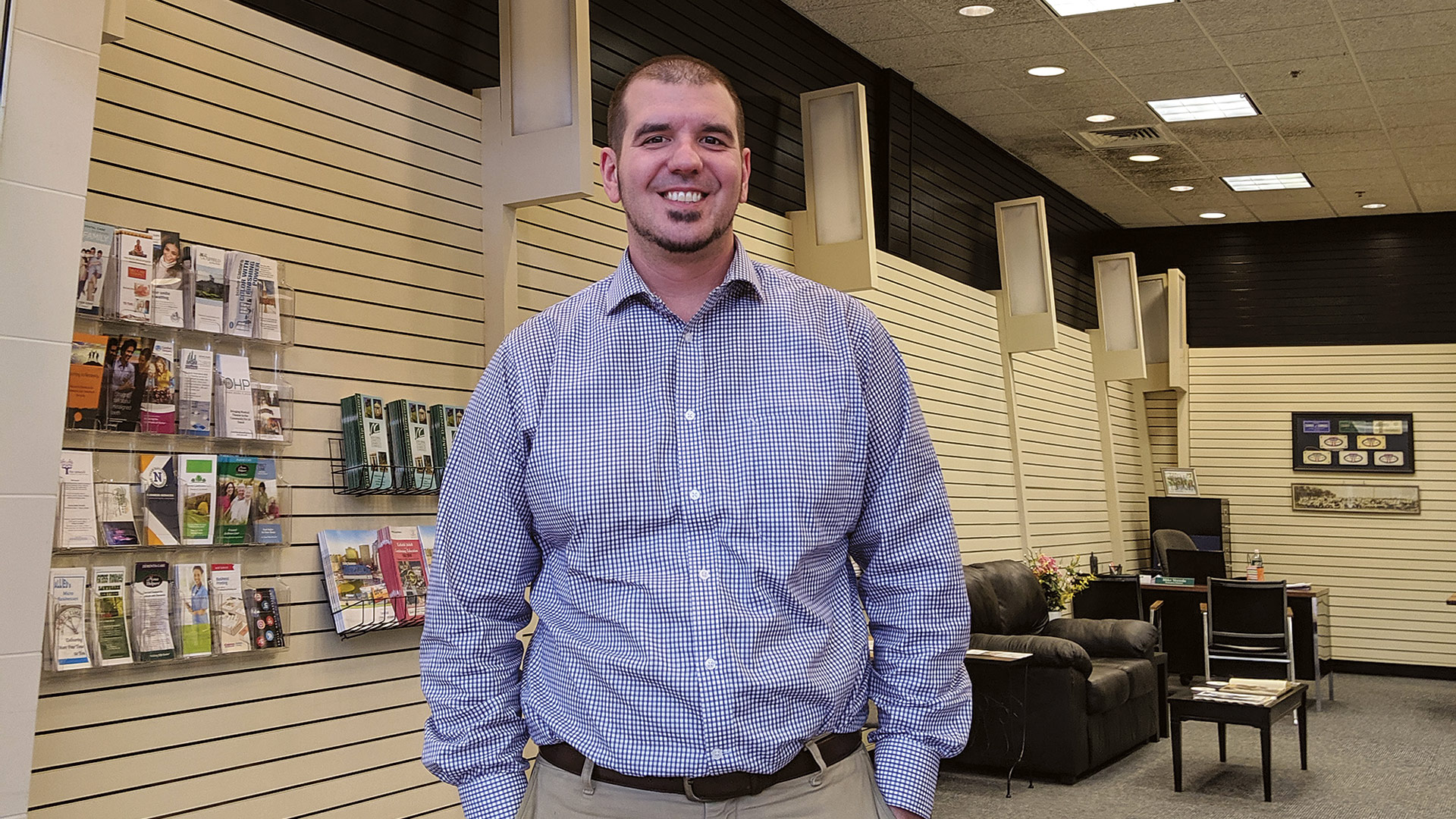
Mike Vezzola says the North Central Connecticut Chamber of Commerce’s new headquarters at Enfield Square has given the organization greater visibility.

If a long-discussed tribal casino takes shape in East Windsor, Conn., the town of Enfield would find itself in an intriguing geographic spot between two destination casinos — which could bring benefits in a number of ways, Mike Vezzola says.

“It’s still going through a large permitting process, but if the casino does wind up coming to East Windsor, we’re right smack dab in the middle of MGM Springfield and that proposed East Windsor site, so the hope here is that Enfield can become a little bit more of a destination,” said the executive director of the North Central Connecticut Chamber of Commerce during a recent conversation at the chamber’s office in the mall known as Enfield Square.

“It’ll certainly create a lot of runoff for hotels and restaurants,” he went on. “We have a plethora of great restaurants, stores, and activities right at our fingertips. We need to build on those things and make sure the right pieces are set in place, and certainly the town is doing its part to try and see that through. We’re excited for what’s on the horizon over the next five to 10 years.”

As a border town that may eventually be flanked by two casinos, Enfield is, in many ways, at a crossroads — one that town officials hope will be bolstered by a new train platform in the Thompsonville neighborhood.

Earlier this month, the Town Council unanimously voted to transfer $670,000 from the general fund into a separate fund for the development of a train platform in Thompsonville, a project that has been 15 years in the making and is expected to attract traffic to town and give residents and businesses more reason to relocate or stay there.

Other financial hurdles need to be cleared, as the total cost of a platform would be around $2.5 million. A full train station could follow down the road, at a cost of tens of millions; Enfield is just one of several train-stop communities in the Nutmeg State waiting for DOT action on such projects. In Enfield, town officials say any upgrade will bring a number of economic benefits, particularly for Thompsonville itself, which has been the focus of a planned revitalization project for some time.

The town implemented a tax increment financing (TIF) plan in Thompsonville and the Enfield Square area earlier this year. TIF is an economic-development tool that allows municipalities to use tax revenues generated from new capital investment to assist in a project’s financing.

“We have a plethora of great restaurants, stores, and activities right at our fingertips. We need to build on those things and make sure the right pieces are set in place, and certainly the town is doing its part to try and see that through.”

Patrick McMahon, CEO of the nonprofit Connecticut Main Street Center, who was hired by the town as a consultant in January to help revitalize Thompsonville, told legislative and business leaders at a recent economic-development breakfast that Enfield leaders envision significant private investment in new business ventures, redevelopment of historic properties, and new public infrastructure.

“Hopefully, the new TIF project will bring some revitalization to that specific area, especially with the commuter rail between New Haven and Springfield,” Vezzola told BusinessWest. “We’re one of the primary stops on that rail, and they’re hoping to get the platform built in the next couple of years.”

Pipeline to Progress

At the same time, Enfield has seen growth in recent years in its manufacturing, distribution, and warehousing sectors, while Asnuntuck Community College (ACC) — which hosted the recent breakfast — has built a reputation as a manufacturing-education leader through its Advanced Manufacturing Technology Center (AMTC).

Connecticut Gov. Ned Lamont and other guests toured the space, speaking to students and taking in the 11,000-square-foot machining lab with its 90 CNC and manual machines, the state-of-the-art additive manufacturing lab, and other high-tech training areas.

Enfield at a Glance

Year Incorporated: 1683
Population: 44,654
Area: 34.2 square miles
County: Hartford
Residential Tax Rate: $34.23
Commercial Tax Rate: $34.23
Median Household Income: $67,402
Median Family Income: $77,554
Type of Government: Town Council, Town Manager
Largest Employers: Lego Systems Inc., MassMutual, Retail Brand Alliance, Enfield Distribution Center
* Latest information available

With programs that get students working at good-paying manufacturing jobs in two years or even one in many cases, ACC — and, by extension, its town — has become a promising answer to workforce needs at area plants, which have long lamented persistent skills gaps.

Asnuntuck has forged partnerships and talent pipelines with area manufacturers and businesses including Pratt & Whitney, Sikorsky, Eppendorf, and Stanley Black & Decker, among others, contributing to a 98% job-placement rate for AMCT graduates.

“With more than 25,000 skilled workers needed in the next two decades, the advanced manufacturing technology centers at Connecticut community colleges offer the opportunity for people of all ages and backgrounds to find a rewarding career in our state,” said Connecticut State Colleges and Universities President Mark Ojakian, who participated in the tour.

The rise in Enfield’s manufacturing reputation coincides with retail struggles, particularly in Enfield Square, where the only remaining anchor is Target. However, numerous small stores still call the property home, and Party City made a major investment there two years ago.

“The mall is very open to interpretive ways of using their retail space,” Vezzola said, the chamber’s presence there being just one example. “We get a lot of foot traffic in here, community members looking for referrals to some of our members or just information about who we are and what we do and how that benefits the community. Certainly, we’re here and excited to help facilitate any potential new clientele the mall might see in the future.”

While Enfield hasn’t attracted many new large retail establishments over the past year, the community continues to be a haven for sole proprietors, he noted.

“With more than 25,000 skilled workers needed in the next two decades, the advanced manufacturing technology centers at Connecticut community colleges offer the opportunity for people of all ages and backgrounds to find a rewarding career in our state.”

“These are folks who have their own businesses and work from home, whether it’s social-media development or graphic design, things of that nature,” he said. “A lot of young people are starting these businesses — and we’re excited that they want to put their talents and work skills to use right here.”

So excited, in fact, that the chamber is hoping to launch a young professional networking group next year as a subsidiary of the chamber.

“We want to encourage other younger folks who might not necessarily know how to navigate creating their own business or are looking for a new opportunity to learn and develop, so it’ll be a bit of an educational piece as well as a networking piece,” Vezzola explained. “That’s a big focus of what we do; we’re continuing to encourage our businesses to help each other, utilize each other, and benefit each other the best way they can.

“We peg ourselves on changing with the times, and certainly the scope of what a chamber does is completely different now than it was 20 years ago,” he added. “We’re just trying to stay relevant and active and evolve with the times.”

Life on the Border

Vezzola understands, too, the potential for his chamber and its members to make connections across the state line as well.

“Being a border town, I think it helps us get some exposure over the border in Massachusetts for our businesses and vice versa, and we’re considering some partnerships with chambers in Western Massachusetts to maybe do some cross-border development with each other, with networking groups,” he said. “Again, it’s about always evolving and just trying to do the best we can with what we’ve got here.”

Joseph Bednar can be reached at [email protected]

Women of Impact 2019

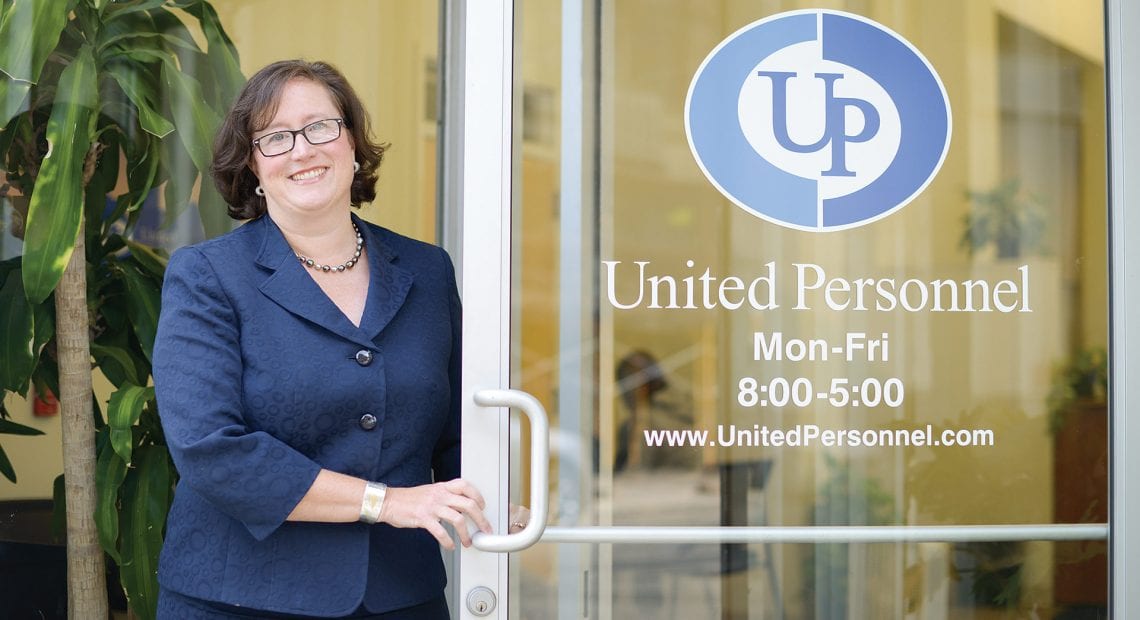
President, United Personnel

By Connecting People with Opportunities, She Impacts the Economy — and Many Lives

Tricia Canavan spent much of her early career as an educator. Today, in a much different role, education is never far from her mind.
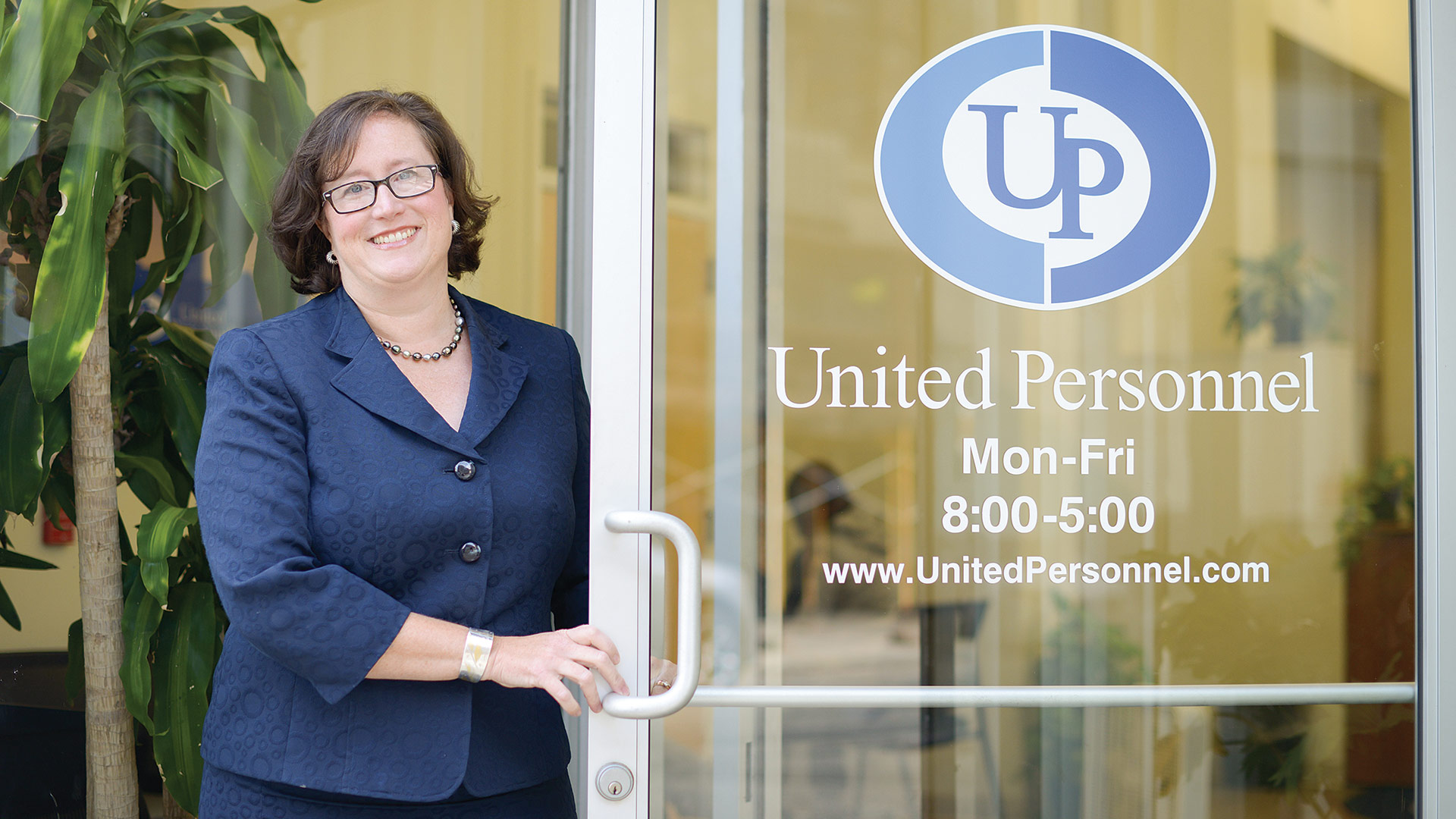
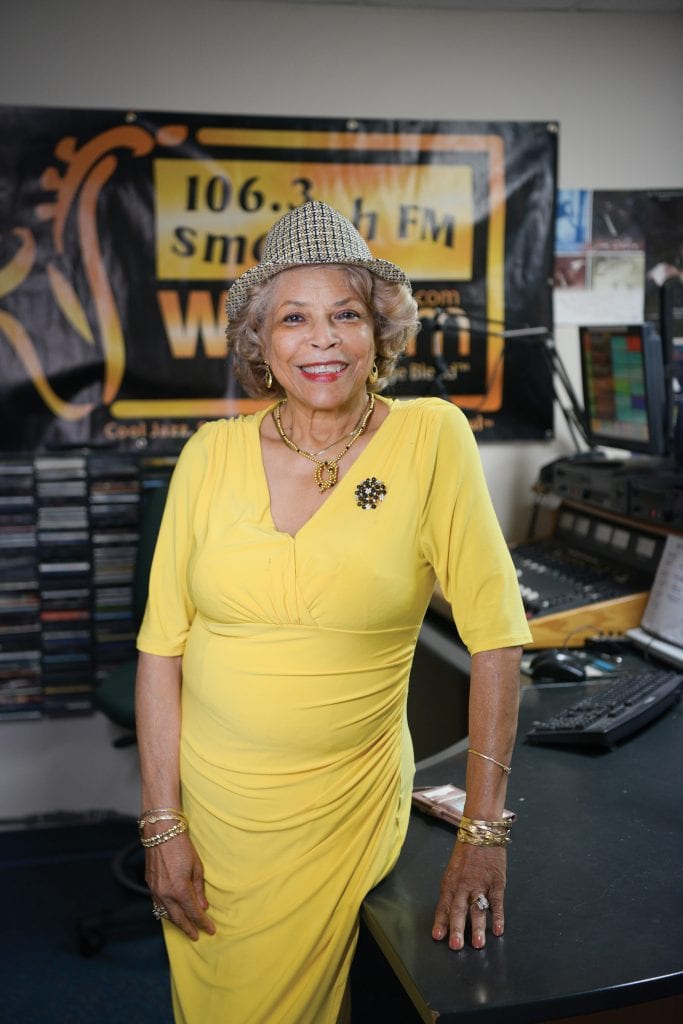
“As I’ve done this job for the last eight years, I’ve learned how education is tied to workforce development and people being successful. It’s not just about being able to write well or have the fundamentals of math — can you support yourself?”

She’s been helping people support themselves for much of the last decade as president of United Personnel Services, but also as a voice for the importance of education and workforce development in giving people the skills they need to access job opportunities. At the same time, by helping connect employers with talent, she’s helping companies grow, which boosts the region’s economy.

“When we have good jobs and we have thriving businesses, that’s good for everybody,” she told BusinessWest. “The health of the economy in Western Mass. is absolutely critical to every single person who works here and lives here.”

That’s real impact — which is why it’s no surprise Canavan is being honored with this award. But she’s not one to seek out accolades, said Jennifer Brown, United’s vice president of Business Development, who nominated Canavan as a Woman of Impact.

“Tricia is incredibly humble,” Brown said. “In spite of her success, she never considers any task to be beneath her. On any given day in the office, you can find her sitting beside her staff, fielding phone calls, or greeting clients and candidates. When understaffed, she jumps in to help and consistently proves that she is not just a leader, but also a partner to her team.”

Canavan similarly deflects praise to her team. “I’ve been really fortunate to have the opportunity to run this company and be able to combine my interests with an amazing team of colleagues,” she said. “I’m so lucky in that regard. I would not be able to do everything I’m able to do without them behind me. No, not behind me — with me.”

Knowledge Is Power

Back to that role as an educator, though. “I’ve always been very driven to give back, and I really thought my career was going to be in education or nonprofit management of some sort, and that’s a lot of where my career has taken me,” she explained.

As a freshman at Trinity College in Hartford, Canavan volunteered teaching English as a second language, and later worked as a tutor-counselor with Upward Bound, a federally funded program that helps high-school students become first-generation college students.

“It’s not just about being able to write well or have the fundamentals of math — can you support yourself?”

“I really fell in love with these kids and their families. It became very clear to me that education is the key to so much,” she said. “I could see the impact that we can have working in partnership with them, helping them achieve their goals. I loved that opportunity.”

Prior to taking over her family’s business — her parents, Jay Canavan and Mary Ellen Scott, launched United Personnel in 1984 — Tricia ran the venerable lecture series known as the Springfield Public Forum. Prior to that, she worked in myriad teaching roles, including a stint at Berkshire Community College.

So her original career path wasn’t focused on following her parents’ path. Still, “when you’re part of a family business, it’s always part of you. I’ve worked here at various times as a younger person and have always been involved. My sister, my mother, and I are the board of directors. United has never been too far from my mind or my heart.”

After her father passed away about 20 years ago, Scott continued to run the company, and when she was getting ready to retire eight years ago, she was unsure what the best pathway forward was, Canavan said.

“So we hired some consultants to work with us and talk to me and my sister and the members of the senior management team at that time. At the end, they came to me and said, ‘we think you’re best suited to run this organization.’”

At the time, she was happy running the Springfield Public Forum, an organization she loved and remains involved with today.

However, “I had a mentor who knew I was considering this great opportunity — and how lucky am I to have had this opportunity? — anyway, she said to me, ‘you know, I think you want to make a difference in the world. And I think you will be able to make more of a difference running United Personnel than you will running the Public Forum. As great an organization as that is, you’ll have a different voice than you have now. And you’ll be able to make a difference and perhaps a bigger impact in your community than you currently can.’”

United Personnel moved its downtown Springfield headquarters to a larger space a few years ago.

That turned out to be a critical conversation as she considered how to move forward, she said. “I sometimes say I have a nonprofit heart, and I’ve tried to bring that sense of responsibility to the community and to my employees and my clients in this job.”

Clearing a Path

Many well-paying careers, Canavan noted, are in reach without a college education for those who are willing to access training, start small, and work their way up. Part of United Personnel’s mission is to dismantle as many roadblocks to employment as it can.

For example, employers typically prefer to hire someone with at least six months of recent, steady work without gaps. But, realizing there are reasons those gaps exist, United offers myriad short-term jobs to help people build a portfolio and references and prove they can handle something more permanent. Meanwhile, it helps connect job seekers with the myriad workforce-training resources available in the community.

There are institutional barriers as well, such as the so-called ‘cliff effect,’ which throws up financial disincentives to people on public benefits who want to work. She said a bill currently making its way through the state Legislature would address that scenario through a pilot program that would help low-income Springfield residents access jobs while reducing the need for public benefits.

Her advocacy for people seeking work starts where she believes it needs to start — in the schools, by making sure students are learning at an age-appropriate rate. Only 7% of Springfield children are considered kindergarten-ready when they enter school, and if they don’t hit reading proficiency by third grade, it sets them on a never-ending pattern of playing catchup.

“That’s my nonprofit heart, asking what does social justice look like for our kids and our families, and what role does education play in that, and then how does that feed into workforce development and a strong economy? It’s all tied together, for sure,” she told BusinessWest.

“How do we help our students and our families get to the point where they are at a living wage and they can support themselves and thrive?” she went on. “One of the social determinants of health, when we look at population health, is economic stability. So it even drives health outcomes. It’s critical.”

For that reason, making sure kids have the same educational opportunities no matter their address or family circumstance is nothing less than a social-justice issue, she said.

“I sometimes say I have a nonprofit heart, and I’ve tried to bring that sense of responsibility to the community and to my employees and my clients in this job.”

“I believe everyone is aware of these inequities, and we’re all working on them, but the reality is, if you live on the Springfield side of Forest Park as opposed to the Longmeadow side of Forest Park, you’re likely having a very different education experience.”

At the end of the day, helping people — from childhood through life — access the education and skills they need to live the life they want is a critical element of Canavan’s impact, and one she takes seriously.

“I feel like it’s a little bit glib to say the best way out of poverty is a job. But we need to help everybody achieve the educational background they need — and that can mean different things for different people,” she said, whether that’s a certificate or degree from college or vocational training in a trade. “What is the pathway to a living wage?”

Growth Pattern

And that brings her to the second pillar of United’s business, helping companies access the talent they need to grow.

“It’s all tied to economic development,” she said. “I see so clearly the importance of education to a strong economy. If our employers don’t have the qualified candidates they need, they’re not going to stay, and if they do stay, they’re going to struggle.”

United has grown significantly since Canavan’s parents opened their first office in Hartford, specializing in professional, administrative, and finance services. A few years later, they opened a second office in Springfield, focusing on support to the light industrial sector. Today, the firm also boasts offices in Northampton, Pittsfield, Chelmsford, and New Haven.

Meanwhile, its roster of specialties has grown to include manufacturing, hospitality, information technology, nonprofits, medical offices, and even a dental-services division, which has proven to be a significant growth area.

Cavanan said she enjoys working in partnership with clients because it allows United to become a part of their business and operational strategy and provide real value. Whether it’s helping clients with continuous improvement, staff-retention strategies, joint recruiting events, or simply serving as subject-matter experts in matters like HR compliance, she said United does its best work when it’s able to take on that level of partnership.

That said, she noted that legislative mandates from Boston, such as increased minimum wage and broadened leave laws, continue to burden employers and make it more difficult than ever to do business in Massachusetts.

“I’m interested in educational policy, but also regulatory policy as it affects businesses,” she said. “As a younger person, I would’ve said, ‘she’s sold out, she’s gone to the dark side, she’s become conservative.’ But being in this role has given me a much more nuanced picture of all the different elements that make up a thriving region. Businesses can look at competing, surrounding states and see a more favorable regulatory environment. So I think we in Massachusetts really need to make sure we’re balancing the needs of our residents with the burden on businesses. I don’t think we, as a state, have figured that out yet.”

After providing staffing and HR support to its clients, and career opportunities to its candidates, United’s third pillar has long been giving back to the communities it serves, Canavan said, and she encourages her staff to volunteer and serve on boards — both on work and personal time — while the company supports area nonprofits financially.

“I’m really fortunate to work in an organization I love where we’re doing work to help our candidates and help our clients, but also gives us a platform to do things in the community, whether it’s policy or volunteerism or being able to endow a scholarship. I feel very, very lucky to be able to do that,” she said.

Several years ago, Brown noted, United launched an annual Academic Merit Award. This program identifies one contract employee, or the child of a contract employee, currently enrolled in college or a recent graduate, as the winner of a $1,000 award to recognize hard work both inside and outside the classroom.

“It is opportunities like this that show her employees that she’s invested in their futures,” Brown said. “Tricia stands behind everything that her employees stand for — drive, determination, heart, and community involvement.”

Bottom Line

Again, that’s real impact on real lives — something Canavan wondered whether she’d have when she left a career she loved eight years ago.

“As my mentor said, ‘you can have a voice. You can have impact,’” she recalled, quickly noting that scores of other women in the region are just as worthy of being called Women of Impact, and she hopes more of them are publicly recognized as such. “I’m always struck by how lucky I am that a handful of people brought me to the table. It’s a privilege to be able do all this.”

Joseph Bednar can be reached at [email protected]

Women of Impact 2019

President, CEO, and General Manager, Cutting Edge Broadcasting

This Radio Pioneer Has Overcome Obstacles to Better Her Community


“Success,” Booker T. Washington once said, “is to be measured not so much by the position that one has reached in life as by the obstacles which he has overcome.”

By both standards, Carol Moore Cutting is certainly a woman of impact.

It’s a quote she has long loved, not only because she admires Washington — who established Tuskegee University in Alabama, where she earned a degree and met her husband — but because of the truth it reflects about her own life, and the lives of others with a passion or dream that encounters stress, hardship, and opposition.

“Booker was very much an entrepreneurial person who built Tuskegee from nothing,” said Cutting, who grew up in a rural, segregated area of Alabama and came to Massachusetts with some entrepreneurial dreams of her own.

It was her husband’s first job that led them to settle in Longmeadow; Dr. Gerald Cutting, now retired, is a Boston native who eventually opened his own veterinary practice in Chicopee. Carol was initially struck by how difficult it was to connect with places where communities of color gathered — in particular, how little community information was available on the radio at the dawn of the ’70s.

“I grew up believing, when you come into a situation, you ask, ‘what can I do to improve it?’ As naïve as I was — I was very young — I began to do research at the library.” That research, on what was required to launch a career in broadcasting, led to a license from the Federal Communications Commission in 1971.

But that’s just the start of the story that saw the birth, 28 years later, of WEIB 106.3 FM in 1999 — currently the only locally owned commercial FM radio station in the Greater Springfield market, the only female-owned FM radio station in Massachusetts, and the only station — AM or FM — in New England owned by a person of color, and now celebrating its 20th anniversary of eclectic programming, community awareness, and, yes, impact.

“As an innovative thinker who believes that, more often or not, ‘no’ is a possible ‘maybe,’ Carol Moore Cutting has not allowed obstacles stand in her way of progress,” said Irene Thornton, who is both an on-air host and a member of the administrative, operations, and sales team at WEIB, in nominating Cutting for this award.

“In a world dominated by men, she has made bold decisions to command an on-air staff that is overwhelming female,” Thornton added. “She has broken the well-established industry stereotype that women are to be relegated as a second voice, a two-dimensional entity on the radio, and has placed women in her prime-time programing schedule. These women, most without formal training in radio communication, were mentored by Mrs. Cutting to become recognized and award-winning on-air hosts. These voices, with her support, are setting a standard for the next generation of female broadcasters who want to pursue the airways as themselves.”

“I grew up believing, when you come into a situation, you ask, ‘what can I do to improve it?”

That sort of pass-it-on influence is gratifying to Cutting, who has drawn inspiration from a strong role model in her mother and a series of pioneers who came before her.

“We had no resources, no money, and we were young,” she said of her idea to create the radio station. “Looking back, you might say, ‘the nerve of you, how did you think you could do that?’ Well, Booker T. Washington built Tuskegee University from nothing, so why not?”

Heading North

Cutting traces much of her ambition, in broadcasting and in life, to high expectations placed on her by her educational mentors, but more importantly her mother.

“I was told I didn’t have to let where I came from dictate where I was going in life — because where I came from, as I said, was this very segregated, southern environment,” she recalled. “But I also came from a family where my mom was an excellent role model in terms of pushing yourself and striving toward your goal.”

Her mother, a teacher, was a role model in several ways, she explained — as a kind, giving person who embraced people, but also a determined, hard-working woman who would teach all day, then drive from Livingston to Montgomery for night school — a 120-mile trek each way — then go back to school the next day to teach.

“That was the kind of environment I grew up in,” Cutting said. So, when she caught the itch to build a radio station, she drew on the same sort of determination her mother had displayed. “We just believed, ‘why not? It’s a long shot, but why not?’ Fortunately, I had a supportive husband.”

Others were less supportive. Cutting applied for a construction license to build the station in 1984, but she had a long fight ahead, particularly with a competitor who fought her in various courts for a decade and a half.

“It wasn’t easy. It was a tough 15 years. To be honest, it was a lot of prayer and being patient because it did not happen as quickly as one would think,” she recalled. “But even if you’re discouraged and people challenge you, that doesn’t mean you should just stop because you’re afraid of them. Knowing he had more resources and he was already in broadcasting made it even more difficult. But I prevailed at every level, all the way to the D.C. Court of Appeals.”

Carol Moore Cutting with T.J. Williams, who has been able to combine his twin passions for music and marketing at the station.

At least the long fight gave her time to hone her vision of what the station should offer. By the time the WEIB started broadcasting in 1999, she had been part of civic life in Greater Springfield for almost three decades, developing an understanding of what would draw in listeners and, crucially, advertisers.

“Because of my learned experiences and growing up the way I did, I’m more focused on the community, so I wanted to incorporate community things as well as broaden the scope of listening opportunities with programming that didn’t exist in this area,” she explained, adding that music that stirred her spiritually was one consideration.

“As much as I like gospel music, this is a commercial radio station, and even though it was a deep part of my faith and upbringing, I wanted something that brought everyone into the mix,” she went on. “So I decided on smooth, contemporary jazz, but I didn’t want to say ‘smooth jazz.’”

In the end, the mix that emerged is what WEIB calls “cool jazz, smooth sounds, and a touch of soul, with a cutting-edge blend.”

“But it took me a while to commit to that,” she added, with the process entailing copious research, attending broadcasting conferences, and plenty of soul searching. “I wanted something anyone can listen to.”

That mix has drawn a loyal core of advertisers who appreciate the station’s blend of a rich musical experience with community-focused information. Cutting’s mission, Thornton said, “is about getting a message out to her dedicated and loyal listeners, who she sees as family. In her eyes, it is vital that they are aware that there is someone right here in their own backyard who can support their needs. By tying this together, she effectively affirms the concept that we are one community, which promotes businesses and individuals growing together.”

And because she’s so rooted and invested in the Greater Springfield community, it’s important to stay here — and stay independent — at a time when most stations are owned by large conglomerates, Cutting said.

“It’s been difficult at times. It’s challenging because of the consolidation in the industry. Other stations have told advertisers, ‘well, we can cover everything, the entire market. You don’t have to deal with this little, independent radio station.’ But that isn’t true because our listeners are loyal, and [larger entities] don’t reach the audience we reach.”

That reach isn’t just local, she noted, but regional and even global through WEIB’s website, from which anyone can listen live.

“We get people writing us from all over the world saying, ‘we wish your terrestrial radio station could reach us,’” she told BusinessWest. “ So, we have listeners, but it’s something we’ve had to build. It hasn’t come easy.”

Voices Raised

Cutting’s commitment to the community includes the arts, as she has sponsored myriad cultural organizations and jazz festivals in the Pioneer Valley and beyond. Meanwhile, the station’s “WEIB After Work Cool Down” program has offered a platform for up-and-coming musicians to showcase their talent.

The station has also supported non-arts-related nonprofits over the years through announcements and coverage, some with media sponsorships, but some of it under the radar. For example, Cutting was personally moved by TommyCar Auto Group’s annual Tom Cosenzi Driving for the Cure Golf Tournament, which raises money for brain-cancer research, because she had a friend with the same condition.

“We didn’t approach them as a sponsor, but we promoted the event because of its impact. We ran commercials about how people could get involved and put in on the website because it was creating awareness of something important,” she explained. “You don’t always have to get a pat on the back to do what’s right and use the resources you have.”

“As an innovative thinker who believes that, more often or not, ‘no’ is a possible ‘maybe,’ Carol Moore Cutting has not allowed obstacles stand in her way of progress.”

Of course, “we also do things in conjunction with organizations,” she was quick to add. “You can’t give away everything. I have to be careful because I have a soft heart and I empathize and I’m touched by so many needs in the community. If I was rich and had the resources, I’d be a force to be reckoned with. But we do have the radio station to get messages out.”

While striking that balance between lending community support and paying the bills, it helps that the station, unlike so many in America today, is locally owned.

“Because it’s local, we don’t have to go to corporate to decide what can we support. If we want to do something for breast-cancer awareness and there’s an event going on, or something for prostate cancer, we can do it. That’s what we strive for.”

Paying those bills is still a challenge, she said, because some potential advertisers will never see the value in partnering with a station with roots that are deeper than they are geographically broad. “They don’t get what we have to offer them, which is unique, and something they’re not going to find anywhere else in this market.”

The mother of two and grandmother of eight, Cutting has also taken on a caregiver role these days to her ailing husband — but says it’s a role she appreciates, cherishing the whole of their life together.

“My faith has seen me through some very challenging times, and I would say it continues. My strength doesn’t come from me,” she noted. “I tell people, ‘have faith and maintain and hang in there,’ and that’s what I’m doing with this radio station. It hasn’t always been the easiest time, to be honest with you, because of the fear of those who would minimize the impact we have the community.”

Twenty years of listeners, and organizations that have heard their voices amplified on the airwaves, would agree. So would the young African-American women who see Cutting as a role model and trailblazer.

They want to be inspired, she said — “and not just women of color, but any woman — and, I would venture to say, any person, because there’s no gender line, no racial line. People need to be encouraged.”

After all, you don’t need to be a national media giant to have an outsized influence.

“Don’t judge us by our size, but by the impact we have on this community,” she said. “We’re not corporately run — we are community-focused, yet with a broader regional and international flavor because we can be heard throughout the world.”

Joseph Bednar can be reached at [email protected]

Banking and Financial Services

Going for the Green

One of the more challenging aspects of running a cannabis business is the inability to access banking services because banks are federally regulated, and cannabis is illegal on the federal level. However, change could be coming after the U.S. House of Representatives voted to pass legislation that would legalize cannabis banking. If the Senate agrees, proponents of the effort say, cannabis operations will become easier, less costly, more transparent, and accessible to a wider range of investors.



Want to start a cannabis business? You’d better have a lot of cash on hand.

However, that equation could be changing after the U.S. House of Representatives voted to pass legislation that would allow the cannabis industry to access banking and financial services, even as the substance remains illegal under federal law.

The Secure and Fair Enforcement (SAFE) Banking Act passed the House by a vote of 321 to 103, with nearly half of Republicans joining all Democrats but one in voting in favor of the bill.

Now the bill will move to the U.S. Senate and, eventually, to the president’s desk. Proponents are confident in their chances of passage.

“It would be great for the cannabis industry and great for the banking industry,” said Peter Gallagher, chief financial officer at INSA, a cannabis dispensary in Easthampton. “A lot of banks we’ve talked to are very interested in getting into it, but don’t want the risks associated with it, so they’ve steered clear of it.”

Banks providing services to state-approved cannabis businesses could, in theory, face criminal and civil liability under federal statutes. In fact, only two financial institutions in Massachusetts have taken on the risk, both of them located in the eastern part of the state. So most cannabis companies operate as cash-only businesses.

“The implications of having to handle a lot of cash are pretty profound,” Gallagher told BusinessWest. “A lot of effort goes into counting and transporting it. To the extent that we can move some of this to credit, it would make our operations a lot easier.”

Momentum to legalize cannabis has made the banking issue impossible to ignore at the federal level. Currently, 33 states, the District of Columbia, Guam, and Puerto Rico have all legalized the use of marijuana to some degree. Yet the possession, distribution, or sale of marijuana remains illegal under federal law, which means any contact with money that can be traced back to state marijuana operations could be considered money laundering and expose a bank to significant legal, operational, and regulatory risk, notes the American Banking Assoc. (ABA).

“The rift between federal and state law has left banks trapped between their mission to serve the financial needs of their local communities and the threat of federal enforcement action,” the association wrote recently. “ABA believes the time has come for Congress and the regulatory agencies to provide greater legal clarity to banks operating in states where marijuana has been legalized for medical or adult use. Those banks, including institutions that have no interest in directly banking marijuana-related businesses, face rising legal and regulatory risks as the marijuana industry grows.”

Gallagher said legalizing cannabis banking across the board makes sense on many levels.

“From a business perspective, it would make banking more accessible and less costly, and it would eliminate the risk of enforcement and regulatory action that banks are worried about, which is what’s leading them to abandon the market.”

Most think they would gladly jump in — making the cannabis industry more accessible to a wider range of entrepreneurs, while bringing down costs — if the SAFE Banking Act becomes law. And that’s what the Senate will have to consider as it begins its review.

Dollars and Sense

Scott Foster, a partner with the law firm Bulkley Richardson who helped establish its cannabis practice, said the law, if passed, would open up the ability of cannabis businesses to use local branches of local banks essentially overnight — if the banks decide to get involved, which seems likely, given the ABA’s advocacy on the issue.

“This is driven not by the cannabis industry, but by the banking industry,” Foster said. “We need clarity in this issue, considering all the non-cannabis businesses affected by this.”

“A lot of banks we’ve talked to are very interested in getting into it, but don’t want the risks associated with it, so they’ve steered clear of it.”

Indeed, in addition to growers and retailers, there are plenty of vendors and suppliers, landlords, and employees indirectly tied to the cannabis industry, thus posing legal risks for banks serving those individuals.

Rob Nichols, ABA president, recently wrote about two such examples: a bank in Ohio was forced to turn down a loan to a fencing company hired to build a fence around a marijuana growing facility, and a bank in Washington had to close an account when a law firm took on a marijuana business as a client.

“If either of these banks looked the other way, they risked violating federal law and facing criminal prosecution,” Nichols said, noting that these examples are far from isolated. An ABA survey found that 75% of banks have had to close an account, terminate a client relationship, or turn away a customer because there was some connection to cannabis.

“What we’re seeing is employees of cannabis companies being turned down for mortgages, and checking accounts closed down because they’re being paid by cannabis companies. That’s the biggest impact that’s actually driving the law,” Foster told BusinessWest. “Senators in states where it’s legal are saying, ‘time out.’ This isn’t about cannabis companies, it’s about the people selling stuff to them, landlords, even W.B. Mason delivering supplies. They’re getting caught up because they’re being paid by cannabis companies, and banks are saying they can’t accept the money. It’s an unintended ripple effect that’s causing a shift in thinking in Congress.”

Furthermore, reconciling the legal divide between state and federal laws would bring benefits to the communities banks serve, Nichols argues.

“The estimated $24 billion in cannabis sales by 2025 in states where marijuana has been legalized could be deposited safely with federally regulated financial institutions, enhancing transparency, public safety, and tax revenue,” he said.

And it’s not just banks asking for lawmakers to take action, he noted. A bipartisan group of 19 state attorneys general last year wrote a letter to lawmakers, arguing that bringing cannabis businesses into the banking system would improve accountability and increase public safety.

“This isn’t about cannabis companies, it’s about the people selling stuff to them, landlords, even W.B. Mason delivering supplies. They’re getting caught up because they’re being paid by cannabis companies, and banks are saying they can’t accept the money. It’s an unintended ripple effect that’s causing a shift in thinking in Congress.”

“Without relief from Congress, even banks that have decided not to serve cannabis businesses will find themselves caught in the financial web created by this booming industry,” Nichols said. “The money from cannabis businesses often goes to vendors, landlords, and employees, while the federal criminal association follows that cash.”

Gallagher agreed, and said it shouldn’t be difficult to build consensus around the need to bring clarity to cannabis finances through the well-regulated banking system.

“If, at the end of the day, what we’re worried about is diversion, or being able to track all that money, it’s easier to do that with electronic payments rather than having people carry large cash balances,” he said. “It’s easier for regulators and everyone else to make sure the industry is healthy and operating compliantly.”

Indeed, that very argument became part of the House debate. Colorado state Rep. Ed Perlmutter argued that keeping cannabis banking illegal is “an invitation to theft, it’s an invitation to money-laundering, it’s an invitation to tax evasion, and it stifles the opportunities of this business.”

Joint Resolutions

Foster said the immediate impact of the SAFE Banking Act would be significant on current cannabis businesses, which would now be able to access local branches of local banks, instead of running a ponderous all-cash operation — and requiring the security that entails — or seeking services from an institution across the state.

“We can’t apply for loans — working capital, construction loans, any lending right now,” Gallagher noted, adding that the handful of banks nationwide that are currently risking the cannabis business are passing on exorbitant costs to customers to do so.

“You’ve had some companies that have been willing to shoulder the risk associated with servicing an operation that’s federally illegal,” he told BusinessWest. “They’ve been able to charge excessive rates for that. As [legalization] happens in this industry, the fees will come down and start to normalize.”

Nichols expects that competition to emerge quickly, saying banks typically respect the decisions made by voters in the states where they operate. “Those voters had weighed the societal and cultural issues that come with legalization, and they made their decision. Instead, the industry is focused on the impact of the gap between state and federal laws on banks and their ability to serve those in their communities.”

The other major impact of a change in the law, Foster said, has to do with the concept of social equity. Massachusetts’ Cannabis Control Commission launched what it calls its Social Equity Program to expedite business applications and provide technical assistance, mentoring, and other resources for individuals from communities that have been disproportionately harmed by marijuana prohibition — typically poverty-stricken areas.

“Even though Massachusetts law has a social-equity component to it, giving expedited processing to social-equity candidates, the practical reality is, most of the investors are still wealthy, white gentlemen who have disposable income invested in cannabis,” he noted.

By allowing entrepreneurs to finance these operations instead of needing all the money up front, Foster explained, “you’ll have more players at the table, and be able to leverage smaller sums into larger companies. I haven’t heard a lot of talk about the social-equity piece, but to me, that’s a big piece, to help more people be able to engage in this business and apply for a loan if they qualify. That, to me, is a potential game changer.”

A companion bill in the U.S. Senate has yet to be voted on by the Senate Banking Committee, which held a hearing in late July on the issue. While that debate is coming, some lawmakers believe it’s only the start. For instance, House Majority Leader Steny Hoyer said he doesn’t believe the SAFE Banking Act goes far enough.

“This must be a first step toward the decriminalization of marijuana, which has led to the prosecution and incarceration of far too many of our fellow Americans for possession,” he argued.

For now, people like Gallagher are happy the banking issue may finally be resolved.

“We’ve been following this, so it’s not a surprise,” he said. “It’s something that makes a lot of sense from an operations and compliance perspective. We weren’t sure of the timing of it in terms of the evolution of the industry, but it’s something we expected to happen.”

Joseph Bednar can be reached at [email protected]

Health Care

Beyond the Ban

Call it a decisive response to a much less clear-cut problem.

While shop owners may seethe, Gov. Charlie Baker says the state’s four-month ban on selling vaping products is a necessary step while the medical community tries to figure out what’s causing a rash of pulmonary illness among e-cigarette users across the U.S.

“We do not know what is causing these illnesses, but the only thing in common in each one of these cases is the use of e-cigarettes and vaping products,” Massachusetts Public Health Commissioner Monica Bharel said. “So we want to act now to protect our children.”

On Oct. 1, the Massachusetts Department of Public Health (DPH) reported five additional cases of vaping-associated pulmonary injury — two confirmed, three probable — to the U.S. Centers for Disease Control and Prevention (CDC), bringing the statewide total of reported cases to 10. (Five of the cases are confirmed, and five are considered probable for meeting the CDC’s definition of vaping-associated lung injury.) At press time, 83 suspected vaping-related pulmonary cases have been reported to the DPH since Sept. 11.

“While no one has pinpointed the exact cause of this outbreak of illness, we do know that vaping and e-cigarettes are the common thread and are making people sick,” Bharel said. “The information we’re gathering about cases in Massachusetts will further our understanding of vaping-associated lung injury, as well as assist our federal partners.”

Some clarity may be emerging, however, particularly concerning the role of tetrahydrocannabinol (THC), an ingredient found in marijuana. According to the CDC, 77% of the people involved in the recent outbreak reported using products containing THC. In Massachusetts, five of the 10 cases involved THC, while another four vaped both THC and nicotine; just one of the 10 reported vaping nicotine only.

Based on this recent data, CDC recommends people consider refraining from e-cigarette or vaping products, particularly those containing THC.

“CDC is committed to finding out what is causing this outbreak of lung injury and death among individuals using vaping products,” said CDC Director Dr. Robert Redfield. “We continue to work with FDA and state partners to protect the nation from this serious health threat.”

More information is needed to know whether a single product, substance, or brand is responsible for the lung injuries, the CDC noted, adding that the investigation is particularly challenging because it involves hundreds of cases across the country, and patients report use of a wide variety of products and substances.

According to the CDC’s most recent national report, of the patients who reported what products they used, about 77% used THC-containing products, with or without nicotine-containing products; 36% reported exclusive use of THC-containing products; and 16% reported exclusive use of nicotine-containing products.

In addition, the report from Illinois and Wisconsin showed that nearly all THC-containing products reported were packaged, prefilled cartridges that were primarily acquired from informal sources such as friends, family members, illicit dealers, or off the street. THC use is legal and regulated in Massachusetts.

“The main theme seems to be illegal THC products. It’s a mix of chemicals in products to sell on the street that just don’t react that well with the lungs,” Dr. Nico Vehse, chief of Pediatric Pulmonology at Baystate Children’s Hospital, told BusinessWest.

He noted that vaping has posed lung issues since it first emerged in the early 2000s. “Back then, we had a recurrence of what they call popcorn lung. If you get fatty lipids into your lungs, your lung tries to fight it like pneumonia, and that causes a lot of lung damage.”

While much of the vaping news surrounds a lung illness, Dr. Nico Vehse says, nicotine addiction remains a persistent danger, particularly for young people.

Whether the current outbreak is a similar phenomenon or something altogether different is the subject of intense study, at the national level but also in Massachusetts. In mid-September, Bharel mandated that Massachusetts clinicians immediately report any unexplained, vaping-associated lung injury to the DPH. Of the 83 suspect cases reported at press time, 51 are still being investigated, with DPH officials collecting medical records and conducting patient interviews. Twenty-two cases did not meet the official CDC definitions, while the other 10, as noted, were reported to the CDC.

Off the Shelf

Baker went a big step further when, on Sept. 24, he declared a public-health emergency and a four-month statewide ban on sales of all vaping products in Massachusetts. The ban applies to all vaping devices and products, including those containing nicotine or cannabis.

The decision generated some pushback, and not just by retailers. Shaleen Title, commissioner of the state Cannabis Control Commission, assailed the ban in a tweet, posting that it is “purposely pushing people into the illicit market — precisely where the dangerous products are — and goes against every principle of public health and harm reduction. It is dangerous, short-sighted, and undermines the benefits of legal regulation.”

As someone who works with young people, however, Vehse understands the DPH’s concern. Of the 10 reported cases in Massachusetts, five are under age 20. Even absent concern over the current lung illnesses, many vaping products have a much higher nicotine concentration than traditional cigarettes, and some public-health officials are concerned an entirely new generation of young people may be falling prey to nicotine addiction. He noted that some products use salts instead of oils, which may not cause the same kind of lung damage as the oils, but deliver more nicotine.

“They improved on the perfect delivery system for addiction — cigarettes — and made it even more potent for nicotine addiction,” Vehse told BusinessWest. “Nicotine addiction is probably one of the hardest things to quit. I’ve always said you’ll have an easier time quitting heroin than quitting nicotine. It’s the most highly addictive substance we have, legally or illegally.”

As part of its public-health emergency declaration, Massachusetts implemented a statewide standing order for nicotine-replacement products that will allow people to access over-the-counter-products like gum and patches as a covered benefit through their insurance without requiring an individual prescription, similar to what the Baker administration did to increase access to naloxone, the opioid-reversal medication.

Other health organizations praised Baker’s decision, for a variety of reasons.

“In the absence of strong federal action, especially by the FDA, states are being forced to make decisions to protect the health of children and adults from a vaping-related public-health emergency,” said Harold Wimmer, president and CEO of the American Lung Assoc.

“While no one has pinpointed the exact cause of this outbreak of illness, we do know that vaping and e-cigarettes are the common thread and are making people sick.”

“Governor Baker’s announcement reinforces the need for the FDA to clear the market of all flavored e-cigarettes in order to address the youth e-cigarette epidemic,” he went on. “While the Centers for Disease Control and Prevention and state and local departments of health continue to investigate the hundreds of cases of lung injury from e-cigarettes, the American Lung Association once again urges all Americans to stop using e-cigarettes.”

Meanwhile, the Massachusetts Dental Society (MDS) also swung its support behind the ban.

“While vaping is believed to pose fewer health risks than smoking regular tobacco cigarettes — the leading cause of preventable death in the United States — it is by no means harmless,” said MDS President Dr. Janis Moriarty. “E-cigarettes still contain nicotine … which increases the risk of high blood pressure and diabetes. E-cigarettes also can have a significant impact on oral health.”

She cited a study supported by the American Dental Assoc. Foundation that determined that vaping sweetened e-cigarettes can increase the risk of cavities. “Additionally, the nicotine in e-cigarettes reduces blood flow, restricting the supply of nutrients and oxygen to the soft tissues of the mouth. This can cause the gums to recede and exacerbate periodontal diseases. Reduced blood circulation also inhibits the mouth’s natural ability to fight bacteria that can accelerate infection, decay, and other problems.”

Time to Act

The main story, however, remains the recent spate of lung illness. At press time, 805 confirmed and probable cases of lung injury associated with e-cigarette product use or vaping had been reported the CDC by 46 states and the U.S. Virgin Islands. Those cases included 12 deaths, but none in Massachusetts.

Bharel hopes her department’s reporting mandate will bear fruit in getting to the bottom of what has become a national concern.

“We are beginning to hear from clinicians about what they are seeing in their practice as a result of the health alert,” she said, adding that the mandate “establishes the legal framework for healthcare providers to report cases and suspected cases so that we can get a better sense of the overall burden of disease in Massachusetts. It also will allow us to provide case counts to the U.S. Centers for Disease Control and Prevention as they continue to try to understand the nationwide impact of vaping-related disease.”

In 2018, Baker signed a law that incorporates e-cigarettes into the definition of tobacco, making it illegal to vape where it is illegal to smoke and raising the minimum age to buy tobacco products, including e-cigarettes, to 21.

Still, the latest statewide data shows 41% of Massachusetts high-school students have tried e-cigarettes at least once. About 20% of them reported using e-cigarettes in the past 30 days — a rate six times higher than adults. Nearly 10% of middle-school students say they have tried e-cigarettes.

In the past year, DPH has conducted two public-information campaigns to raise awareness among middle- and high-school-aged youth and their parents about the dangers of vaping and e-cigarettes. The department promises to reprise both campaigns in the coming weeks and include resources for young people to assist them with quitting.

Vehse said it’s easier for teenagers to sneak a vape at school than to smoke cigarettes, which may contribute to their use. “It doesn’t smell; it doesn’t stay in the air. It’s completely covert. Now high schools have started to install some vaping sensors in bathrooms. As young as middle school, kids are vaping.”

He had no answer to why the usage numbers are so high among a population that shouldn’t even be able to purchase e-cigarettes, but deferred to the simple psychology of being young.

“Maybe it’s just because you’re a teenager and want to do something you’re not allowed to do. It’s all part of the teenager feeling indestrictible,” he said. “But whether you’re cigarette smoking or vaping, both are addictive, and you’re inhaling stuff you’re not supposed to.”

In many cases, they’re inhaling products flavored and packaged in such a way to appeal to kids, he added. “They pretty much make them look like candy bars on the shelves.”

Following a report from the CDC that 27.5% of kids are using e-cigarettes and that many are initiated with flavored products, the AMA’s Wimmer said, “we also call on the Massachusetts Legislature to pass a law prohibiting the sale of all flavored tobacco products.”

For now, Baker, Bharel, and other state officials will continue to assess their most recent moves as the national effort continues to learn more about — and prevent — vaping-related lung disease.

“One of the experts said that, ‘we don’t have time to wait. People are getting sick, and the time to act is now,’” Baker said when announcing the sales ban. “I couldn’t agree more.”

Joseph Bednar can be reached at [email protected]

Health Care

Cultural Shift

Michael Taylor and Teresa Weybrew say Christopher Heights of Northampton is striving to be ‘the place’ for LGBTQ seniors.

The average age of a Christopher Heights resident is somewhere in the 80s, says Teresa Weybrew, director of Marketing & Admissions at the assisted-living community in Northampton.

That’s an age group that grew up in a less-open time when it came to gender identity and sexual orientation — and members of that generation often still feel anxiety around their peers. But what’s more surprising, Weybrew said, is that, for many, that fear of being openly themselves is heightened when they move into senior-living communities.

“There’s a statistic that, of people who have come out and lived an authentic life in their sexual orientation, when they come into assisted living or skilled nursing, 86% go back in the closet out of fear,” she told BusinessWest. “They’re in an environment where they don’t know how safe they are because they have some memory loss or physical ailments — they’re already vulnerable because they’re not quite physically themselves — and then they have this added layer of anxiety. We want to help them understand that we get it, and they’re going to be OK here.”

Christopher Heights recently hosted a workshop for staff, residents, and public on LGBTQ (lesbian, gay, bisexual, transgender, queer) cultural competency in the senior-living setting. Presented by Rainbow Elders, an arm of LifePath in Greenfield, the event was also part of the process of being credentialed by SAGE, the nation’s largest advocacy organization for LGBTQ elders.

“I want our community to be accepting of other residents,” said Michael Taylor, the facility’s executive director, “but we also want employees to feel comfortable and respected. I see this as making it a welcoming place for both.”

Not all communities are. Angela Houghton of AARP Research writes that three out of four adults age 45 and older who are lesbian, gay, bisexual, or transgender say they are concerned about having enough support from family and friends as they age. Many are also worried about how they will be treated in long-term-care facilities and want specific LGBTQ services for older adults.

“I’ve been working with SAGE in a conversation for a couple months,” Weybrew added. “But as I got into it, I realized this isn’t just about having a plaque on the wall. We want to live and breathe and walk the talk and really be the facility that does the work and where people can come in and say, ‘yeah, they really do know what they’re doing, and I feel welcome,’ whether it be an employee or someone who comes to live here.”

Subtle Spectrum

For the recent workshop, Rainbow Elders brought in four people — representing gay, lesbian, bisexual, and transgender perspectives — to talk about gender, identity, orientation, and how none of those categories are black and white, but rather a spectrum.

“It was good educational background. Each talked about their personal story,” Taylor said, noting that Christopher Heights already employs a handful of LGBTQ individuals and aims to create a more welcoming environment for staff and residents alike — which is why hearing these perspectives shared aloud is important.

The demographics speak to the importance of this issue. By 2030, the population of American adults ages 65 or older is expected to surpass 70 million, according the U.S. Census Bureau. The National Gay and Lesbian Task Force puts the number of LGBTQ seniors in the U.S. at 3 million and notes that this figure is expected to double by 2030.

However, LGBTQ seniors frequently report concern over the possibility of encountering discrimination from senior-housing staff or other residents. According to SAGE, 48% of lesbian, gay, or bisexual couples experience “adverse treatment when seeking senior housing,” and transgender elders face such treatment at even higher rates.

Meanwhile, a 2016 report from Justice in Aging notes that 78% of LGBTQ residents in nursing homes, assisted-living facilities, and long-term-care facilities responded ‘no’ or ‘not sure’ when asked if they felt comfortable being open about their sexual orientation or gender identity to facility staff.

Then there are cases like Mary Walsh and Bev Nance, a Missouri couple whose housing application at a local senior-living facility was denied because of a cohabitation policy that defined marriage as between one man and one woman. They sued the facility, but their lawsuit was dismissed by a U.S. district judge in January.

Yes, that’s January 2019, not 1959. Clearly, the work of SAGE and like-minded organizations isn’t done. Cases like this certainly help explain why only 20% of LGBTQ seniors in long-term-care facilities are open about their sexual orientation, according to Justice in Aging.

Yet, attitudes have been shifting — and prejudices hopefully diminishing — over the decades when it comes to this population, and facilities should be welcoming them as an untapped market, notes a report by Sodexo titled “Why ‘LGBTQ-welcoming’ Will Soon Be a Hallmark of the Most Successful Senior-living Communities.”

“Developing a marketing strategy that attracts LGBTQ older adults is the right thing to do,” the report notes. “And it’s good business. Given the opportunity for senior-living operators to advance their growth agenda, developing a strategic plan that attracts and retains LGBTQ older adults and allies is a vital lever to business growth and to improve quality of life.”

To help facilities move in that direction, SAGE launched its credentialing program for retirement communities around the country aiming to create more understanding and resources for these marginalized groups. Its program addresses the specific difficulties LGBTQ older adults face, including abuse, neglect and hurtful comments.

“Most people work with older adults because they have a caring orientation,” said Tim Johnston, director of national projects at SAGE. “We are giving them the tools they need to help older adults feel more comfortable.”

Watch Your Language

In developing a culturally competent and welcoming environment, it is important to address a number of factors, including language, inclusive visuals in company materials, programming, and outreach efforts, according to the Sodexo report.

At Christopher Heights of Northampton, it begins with the application, which used to give only two options for gender — male or female. It may seem like a small thing, but it’s a detail that sets transgender and non-binary individuals on edge right from the start.

“If you’re trans, what do you put?” Weybrew said. “That’s your first exposure to us — and you’re already thinking, ‘all right, they expect me to be a man or a woman,’ when you don’t identify as that.”

She recently asked a resident from the LGBTQ community what might have improved her experience, and she did mention the application form, but she also stressed the importance of respectful communication.

“She said, ‘just ask.’ And we are afraid. We don’t want to offend anyone, and yet, in our fear, we are offending people by not asking them the questions. We want to connect, we need to connect, and that’s what I think this training will offer us — ways to have the conversation. Many people have lived their whole lives feeling either offended or accepted or some awkward in-between. It’s not like we’re going to do something that’s going to shock them.”

Sodexo’s report affirms that idea, noting that “one of the simplest ways to cultivate both understanding and respectful relationships with LGBTQ older adults is through appropriate use of language. Keep in mind, however, that some terms still used by older LGBTQ people may be seen as outdated by younger LGBTQ people. Become familiar with key terminology and pay close attention to how residents use terms and how they refer to themselves and others.”

Indeed, the report continues, “the LGBTQ community is not a monolith. This must be kept in mind when addressing the needs of LGBTQ older adults as well, who have a totally different set of life experiences than younger LGBTQ people. The former grew up in a time that was far less welcoming, when LGBTQ people guarded their sexual orientation and gender identity as a dangerous secret that could cause them to lose their homes, jobs, families, and freedom. They risked being labeled anything from criminal to mentally ill. That generation still carries a lot of this baggage today as they attempt to navigate issues related to housing and healthcare.”

That may be an understatement. SAGE notes that, just a few decades ago, homosexuality was still classifed as a mental illness by the American Psychiatric Assoc., not to mention a crime in some parts of the U.S. Housing, employment, and healthcare discrimination were common. As a result, many LGBTQ seniors remain fearful or distrustful of medical and social-service providers.

Weybrew has assembled an advisory board that will continue to meet regularly going forward and bring in educational opportunities for residents, staff, and the larger community.

“It won’t end. It can’t end,” she told BusinessWest. “We have to keep learning, and we have to say, ‘yes, we see you.’”

She knows she’s already dealing with a vulnerable population. “You’re talking about a potential resident who’s scared because they’re leaving their home of 40 years. Their spouse died, they’re losing their health, and they’re coming to a place where they don’t know us. I know what’s like because I did it with both my parents. Now you add that layer of sexual orientation. We want them to know, ‘yeah, it’s cool to be here because we’re going to treat you right.’

“We’re going to have our issues,” she went on. “We might get some pushback from an 88-year-old who says, ‘God says that’s a sin.’ It’s going to happen. And we’re going to learn how to manage that.”

Not Just Seniors

Senior-living facilities aren’t the only ones recognizing opportunities to boost cultural competency among their staffs. For example, Cooley Dickinson Hospital has been recognized as a 2019 Leader in LGBTQ Healthcare Equality by the Human Rights Commission (HRC), the country’s largest LGBTQ civil-rights organization. CDH is the only hospital in Western Mass. and one of only seven hospitals in the Commonwealth to earn this designation.

Among its efforts, Cooley Dickinson has recruited and trained clinicians who specialize in the care of LGBTQ people; implemented changes to electronic medical records that facilitate the use of the patient’s preferred gender, name, and pronouns; and collaborated with local gender-diverse community members, the Fenway Institute, and researchers from Harvard Medical School on the PATH (Plan and Act for Transgender Health) Project, a study that will inform the expansion of gender-affirming health services in Western Mass.

“This designation affirms Cooley Dickinson’s commitment to providing equitable, inclusive, and affirming care for LGBTQQ patients and their families,” said Cooley Dickinson Health Care President and CEO Joanne Marqusee. “We are proud to receive — for the third consecutive year — this honor and to continue our efforts to ensure that our local LGBTQ community has access to respectful, appropriate care.”

Sure, it’s easier for Northampton-based facilities like Cooley Dickinson and Christopher Heights to make these efforts, which are likely to meet with resistance in less progressive areas of the country. But it’s a start.

“We realize it’s going to be an ongoing process, but we as a company are committed to it,” Taylor said.

Weybrew said Christopher Heights is a corporate sponsor of the Out! for Reel film festival, which focuses on LGBTQ-themed films and recently kicked off its season. “I had a chance to get up and speak. The word is getting out that this is going to be a welcoming place, and it starts with us internally asking, how do we make it that place every day? How do we make people feel comfortable?”

The answer is an evolving one — and begins with asking the right questions of those who have felt marginalized for too long.

Joseph Bednar can be reached at [email protected]

Sports & Leisure

Raising Their Game

Team President Nathan Costa

When the Springfield Thunderbirds hit the ice for the first time three years ago, its management team heard plenty of skepticism about whether hockey could truly thrive and grow beyond a certain ceiling in the city. While there’s still plenty of room for growth in ticket sales, attendance surged last season to a two-decade high, with Saturday nights in particular routinely selling out. In short, there’s a lot of optimism inside the Thunderbirds offices — and a refusal to get complacent.

If Springfield is in the midst of a renaissance, Nathan Costa says, the Springfield Thunderbirds are a large part of the reason — even if not everyone thought they could be.

“I told the staff recently, ‘I think we’ve been able to do this because we came in with a chip on our shoulder.’ We wanted to prove we could do it here and that, if we did it the right way, it could work,” said Costa, the team’s president. “When we first came in, a lot of people said, ‘teams haven’t always had success here — what’s different about you guys?’”

At the start of their fourth season in Springfield, the Thunderbirds — the American Hockey League (AHL) affiliate of the Florida Panthers — have slowly raised what was, in some eyes, a low bar when Costa and a team of local investors brought hockey back to Springfield in 2016 following the departure of the Falcons.

Perhaps most strikingly, the team averaged more than 5,000 fans per night last season — a number no Springfield hockey team had achieved in more than two decades.

“At first, there were low expectations for the marketplace, and it was easier to meet those expectations,” Costa told BusinessWest two weeks before the team begins its 2019-20 home campaign on Oct. 5. “Now we’ve set a high bar. We need to work with the same urgency we’ve always had to keep this moving forward.”

This year’s squad hits the ice for a practice session last week.

Above Costa’s office door is painted the number 6,793. That’s the sellout number at the MassMutual Center, and it’s a number the team reached on about a dozen occasions last season, mostly Saturday nights. With a friendlier home schedule this year (more on that in a bit), the goal is to record even more sellouts and get that average attendance closer to 6,000 than 5,000 — and Costa thinks it’s reachable.

“In the past, you could always walk up and buy a ticket here. Now, if you don’t get a package, or you don’t get a ticket early on, especially for those Saturday nights in the second half of the season, you can’t find a ticket. And that’s what we wanted to create,” he said. “But it’s not easy to do.”

Last year, preparations to host the AHL All-Star Classic (a significant feather in the franchise’s cap) knocked out home games the weekend before, traditionally one of the league’s busier weekends, cutting down the total number of weekend dates. But for the 2019-20 season, the Thunderbirds will host 15 Saturday-night and 14 Friday-night tilts, as well as four Sunday-afternoon games, in all accounting for 33 of the schedule’s 38 home games.

“At first, there were low expectations for the marketplace, and it was easier to meet those expectations. Now we’ve set a high bar. We need to work with the same urgency we’ve always had to keep this moving forward.”

Still, “we’re continuing to put an emphasis on getting to the point where we’re filling the building every single night,” Costa said, adding that season-ticket sales have increased every year. So have the team’s fortunes on the ice, as it posted a winning record last year, although it has missed the playoffs all three years.

“The Panthers had quite a few injuries, so they called up a number of our players around the all-star break, which was challenging on the hockey side,” he explained. “But on the business side, we continue to do what we’ve talked about from the very beginning, which is focus on the family-fun, entertainment aspects of coming to games.

“People want to see a winning product, obviously — especially in this market, where people are spoiled with winning teams,” he went on. “So we’re hoping that comes with time. But we’re also trying to lay a foundation where we’re providing a professional, awesome experience here in the arena, and I think we’re doing that and creating events and promotions people are connecting with.”

From the start, Costa and his team tackled some common gripes from the Falcons’ tenure, including lowering concession prices, negotiating a deal for free parking in the neighboring garage, building a richer schedule of promotions — even ramping up video production to make sure season-ticket holders are watching fresh videos on the big screens as the season moves along.

Being granted last year’s all-star events was a signal, he said, that the AHL recognized what was happening and how fans were responding. So were a series of league awards last year, from Costa being named outstanding executive to honors for the team’s digital-media presence and marketing efforts.

“The All-Star Classic was an absolute home run — it raised our profile locally and within the AHL,” Costa said. “Springfield wasn’t necessarily viewed as a place where you could see best practices or have a full building, but now, we’ve changed the perception of Western Mass. among the AHL board and really rejuvenated the city from their perspective.”

And the perspective of others as well — about 5,000 a night.

Lacing ’em Up

When the Portland Pirates left Maine for Springfield three years ago, the City of Homes was no doubt on the rise, but pieces were still falling into place downtown, and the MGM Springfield casino was still more than two years from opening.

“That was a challenge, when there wasn’t as much life and things going on,” Costa said. “We really wanted to face a lot of the hurdles that we heard about head-on, much of which was parking, safety, or that it costs too much to come to a game. We were trying to bring people downtown.”

Some of those concerns were more reputation than reality, he added. “I’ve worked downtown more than 10 years, and I’ve never not felt safe. And I think that perception is gone now. We don’t hear it at all anymore. It is a testament to the city.”

Part of that change is the simple fact of more feet on the street, especially at night.

“There’s a lot more going on. Restaurants are buzzing. People are walking around. There’s life, there’s energy. The city was primed for that,” he said, crediting entities like MGM and the Springfield Business Improvement District and efforts in the realms of public safety and downtown beautification.

Still, selling a new team to the public after the Falcons took flight was a challenge initially. “But we were confident in our business plan and stuck to what worked in other AHL cities; we stuck to providing value to ticket holders and in the arena. The league started feeling good about us, and it’s steadily grown over three years.”

The franchise is always feeling out new promotions, although a few have become regular events, including 3-2-1 Fridays ($3 beers, $2 hot dogs, and $1 sodas) and a Friday-night concert series; March’s Pink in the Rink event to celebrate breast-cancer survivors and raise funds for treatment and research; and December’s Teddy Bear Toss, where fans bring stuffed animals and throw them on the ice after the home team’s first goal, to be collected and donated to underprivileged children.

Visits from David Ortiz and Pedro Martinez have proven hugely popular as well, and while the team doesn’t have someone of quite that stature stopping by this year, it has planned four guest appearances, including former Florida Panther goalie Roberto Luongo in November; Mike Eruzione from the 1980 U.S. Olympic hockey team in February, marking the 40th anniversary of the Miracle on Ice; and Brian Scalabrine from the Celtics’ 2008 NBA championship team in March.

The fourth guest is a little more outside the box: actor Leslie David Baker, who played Stanley Hudson in the hit TV show The Office, will visit in December for what the team is labeling its Office Holiday Party, inviting local businesses to basically celebrate the season at the MassMutual Center, watch a game, and meet Baker.

“We’re trying to provide more value to ticket holders, and letting them know we continue to invest in the game experience,” Costa said.

Another returning promotion is a Blast from the Past night in January, when the team reverts to 1990-era Springfield Indians jerseys, celebrating the 30th anniversary of that team’s Calder Cup win.

“We’re trying to tap into that old nostalgia; that’s a fun part of what we do,” Costa said, noting that the team still owns the Springfield Indians trademark. “We made the decision not to rebrand to that when we purchased the franchise. But using it here once in a while is fun, and we can create an event around it that people look forward to.

“I think we’ve done a good job of recognizing the past but also creating our own brand,” he went on. “We obviously still hear about the Indians quite a bit — there’s a lot of romanticizing around the Indians, and obviously they had some really good, successful years — but it wasn’t all roses during that time. They had their ups and downs.”

The goal with the Thunderbirds, obviously, is to have far more of the former than the latter.

“There’s been a tendency in the past to have a negative viewpoint about downtown Springfield,” he told BusinessWest. “We want create a positive experience. It’s a perfect size city for AHL franchise. Now we have to keep that trajectory moving forward and continue to sell tickets and show value. The minute we take our foot off the gas, our business is going to suffer.”

Community Goals

The Thunderbirds have been equally aggressive about community involvement, Costa said, with Boomer, the team’s mascot, making more than 200 appearances a year at businesses, schools, and organizations, and each player making at least three appearances as well, in addition to team events. The franchise has also developed a charitable foundation and youth-oriented outreaches like a reading program, a kids club, and a partnership that creates positive connections between area youth and the Springfield Police.

“Being here in this marketplace, there’s a duty for us to give back and truly be a part of the community,” Costa said. “So a lot of this stuff is focused on giving back and doing the right thing by our community in general.”

He’s gratified by the growth of the brand and the deepening of its civic roots, but admits he’s driven somewhat by anxiety and fear of failure, and still carries that chip on his shoulder from the early days. He also credits a hardworking staff willing to roll up their sleeves, hit the phones and the streets, and do the often-tedious work it takes to increase ticket sales and awareness of what’s happening on the ice.

“It’s awesome to see how the community has surrounded us and supported what we’re trying to do,” he said. “But we’ve never said, ‘hey, let’s just open the arena and see who comes out.’ We’ve always been proactive about getting out and telling our story. Now, we’re so well-positioned that, if the team has some success on the ice, it’s ready to take off. It’s palpable. If you come on a Saturday night, you can feel the energy.”

With so many entertainment options available — and a deep mesh of TV programming that makes it easier for families to just stay home — Costa and his team certainly aren’t letting up on the gas. In short, that number 6,793 continues to drive them.

“There’s nowhere else to go but up,” he said. “If we keep doing the things we’re doing, it will happen, and I think we’re seeing that now — that doing the right thing and working hard will lead to success.”

Joseph Bednar can be reached at [email protected]

Community Spotlight

Community Spotlight

Russell Fox (left, with Karl Stinehart) says Southwick’s slate of 250th-birthday events will be family-friendly and honor the town’s past while looking to a promising future.

Nov. 7 will be a big day in Southwick — and the start of a big year.

Starting that day, a year-long series of events — including holiday festivals, history tours, parades, concerts, and more — will culminate in the Taste of Southwick Gala on Nov. 7, 2020, the 250th anniversary of the town’s incorporation.

Southwick officials and volunteers have been meeting to plan this broad slate of birthday events for some time, much of the planning guided by the nonprofit Southwick Civic Fund.

“It’s an ambitious plan for a smaller community,” said Russell Fox, who chairs the town’s Select Board. “We’re actively raising money, not just from businesses but residents also. And we have some very generous residents — one resident gave us $1,000. So it’s coming along. We’d like these events to be kid-oriented. We want young people to feel like they’re part of the community and learn something about the history of the community and have a good time.”

And there’s a lot to celebrate, as Southwick continues to grow its business base, housing options, and especially its reputation as a recreation destination, Fox said. That Taste event alone speaks to what he calls a recent “restaurant renaissance” in town, with recent additions like Crepes Tea House and Wok on Water, the conversion of Chuck’s Steak House to Westfield River Brewing (which hosts concerts during the summer), and new Crabby Joe’s Bar and Grill owner Mark O’Neill’s plans to tear down that establishment and rebrand it as a state-of-the-art restaurant and brewery that may use wind turbines for electricity.

A 250th-anniversary celebration is an opportunity for a town like Southwick to show how far it has come in the realms of history, population growth, economic development, and cultural and recreational draws, said Karl Stinehart, the town’s chief administrative officer.

On the latter front, Southwick has become a mecca for recreational offerings, like boating on the Congamond Lakes, motocross events at the Wick 338, town events at the 66-acre Whalley Park, and a well-traveled rail trail frequented by bicyclists, hikers, and dog walkers.

As for its population, Southwick still boasts around 10,000 residents, and work continues at two significant new neighborhoods, a 26-home subdivision off Vining Hill Road called Noble Steed, and Fiore Realty’s project to develop about 65 homes at the former Southwick Country Club site. Meanwhile, the town made zoning changes near that site to expand commercial developments along College Highway, including a possible medical facility.

On the infrastructure front, the town is planning to improve sidewalks on Depot Street to provide easier access to downtown, and is currently improving the roadway and drainage on Congamond Road — a key entry into town from Connecticut — aided by more than $4 million in state funds.

“When that’s done, it’ll have a bike lane and sidewalk, and connect the neighborhood both to Gillette’s Corner and to the rail trail,” Stinehart said. “There are businesses that abut the rail trail, and if you go there on certain days, on the weekend, you’ll see people on the trail using those businesses.”

Stinehart noted that the town’s single tax rate of $17.48 continues to be a draw for new businesses, which is good considering the potential development opportunities along College Highway and at the Southwick Industrial Park on Hudson Drive.

“We try to balance residential growth and the business sector, which is an important thing because it keeps our tax rate competitive,” he said. “When you’re a businessman looking to site in a community and you see you’re going to be treated equally as every other taxpayer, you take notice of that.”

Fox agreed. “We try to keep that balance. We’ve got a graying population, with more people on fixed incomes. So the tax rate is a big deal to us. We don’t want to tax people out of the community they grew up in or want to retire in.”

He recalled a business owner looking to move into town from a neighboring community a couple decades ago. He was offered some tax incentives but was angling for more, but instead Fox reminded him of the town’s quality schools, low traffic, reasonable tax rate, and recreational opportunities, and that sold him. “He’s been in Southwick 20-plus years, doing very well.”

Those selling points have only expanded since then, Fox said, and that’s reason enough to celebrate 250 years.

Fun in the Sun

There’s plenty for outdoor enthusiasts to enjoy in Southwick, including three golf courses (Edgewood, the Ranch, and a par-3 track at Longhi’s) and the aforementioned 6.5-mile-long rail trail that runs through town from the Westfield border to the Suffield border.

“People in town love the bike trail — it’s just a beautiful area,” Fox told BusinessWest. “When that first started, there were some naysayers, but I think most of those people have gone away.”

“Or they’re on the trail using it,” Stinehart quickly added.

Meanwhile, the lakes on the south side of town — featuring two boat ramps, a fishing pier, and a town beach — provide plenty of activity for residents. A $275,000 project renovated the south boat ramp on Berkshire Avenue last year, making it more modern and handicap-accessible, and the beachfront was recently renovated as well.

Southwick at a glance

Year Incorporated: 1770
Population: 9,502
Area: 31.7 square miles
County: Hampden
Residential Tax Rate: $17.47
Commercial Tax Rate: $17.47
Median Household Income: $52,296
Family Household Income: $64,456
Type of Government: Open Town Meeting; Board of Selectmen
Largest Employers: Big Y; Whalley Computer Associates; Southwick Regional School District
*Latest information available

Stinehart said the lakes and their environs are an important aspect of Southwick’s outdoor culture and worthy of investment, being, among other things, a major destination for freshwater fishing tournaments.

Then there’s the Wick 338, the motocross track behind the American Legion, which abuts the Southwick Recreation Center and Whalley Park. The complex hosts the annual Lucas Oil Pro Motocross Championship — which is broadcast live on NBC and draws some 15,000 to 18,000 people to town — as well about 25 other races throughout the year and a host of other events, including Rugged Maniac New England, a challenging, mud-splattered 5K obstacle course. That continual flow of visitors to town benefits a host of other businesses, from gas stations to restaurants, Stinehart noted.

As for Whalley Park itself — which was donated to the town by the prominent Whalley family and developed using municipal and Community Preservation Act funds — it includes a full-size soccer field, baseball field, and softball field, lighting for the fields, a huge kids’ play area, and a pavilion.

The town also recently acquired a 144-acre parcel on North Pond at Congamond Lakes. The Mass. Department of Fisheries and Wildlife awarded Southwick money to help purchase it, and the Franklin Land Trust conducted a fund-raising effort to make up the difference in price. The parcel is abutted by two areas owned by the Commonwealth of Massachusetts and the state of Connecticut.

Even before that, Stinehart said, Southwick had preserved more than 1,000 acres of open space, not including the lakes themselves, and has been active in buying up development rights to farmland, ensuring that they can’t be developed, but must remain agricultural land.

“We’re proud of our agricultural roots, and we still have a lot of farms,” Fox said. “Now we have farms protected in perpetuity.”

Also in the realm of preservation, the town’s Cemetery Commission continues its work to restore the Old Cemetery, which dates to 1770, and the town recently sold its old library, built in 1891, to an investor who intends to partner with the Southwick Historical Commission to preserve it while putting it back on the tax rolls.

Change Is Good

The town’s modern schools — the complex on Feeding Hills Road that houses Woodland Elementary School, Powder Mill Middle School, and Southwick Regional School underwent significant additions and renovations in recent years — have also been a draw for new residents, and they have the capacity to house a growing student population, Fox said.

All this has contributed to Southwick being honored this year by the Republican’s Reader Raves program as the best area town to live in.

“It’s taken a lot of hard work to get to that point,” Fox said of the award. “Some people don’t like change at all, but not all change is bad. This is a community we can be proud of. I think we doing a good job of keeping things in balance — commercial, industry, and residential.

“We’re not sitting back; we’re growing,” he went on. “We know people want to move here, and we’re proud of that. We’re going to make sure Southwick remains the town it always has been.” u

Joseph Bednar can be reached at [email protected]

Business Innovation

Best of Times, Worst of Times

From left, Amy Roberts, Sarah McCarthy, and Carol Fitzgerald discuss why and how recruiting is more difficult in the current economy.

As one of the region’s largest employers, the Center for Human Development is constantly hiring; in fact, it has about 100 job openings right now, said Carol Fitzgerald, vice president of Human Resources.

At a time of low unemployment, CHD isn’t the only company that has to be focused and creative when it comes to filling those open positions.

“I think it’s a candidate’s dream right now,” Fitzgerald said. “We’re finding that people are coming to us with multiple offers. They’re playing the field, trying to figure out who’s going to get them not just the best compensation, but the best schedule, all these extra benefits. And they often don’t decide until the very, very end. Who’s going to win that race?”

Amy Roberts, chief Human Resources officer for PeoplesBank, tells a similar story.

“I’ve never experienced a market where you almost have to aggressively make sure someone shows up for an interview,” she said. “We’re finding, when people are looking, they’re looking in multiple places, so you’re not the only game in town. So we’ve seen an increase in people not showing up to a scheduled meeting.”

Fitzgerald and Roberts detailed the challenges of the current recruiting landscape at a morning-long workshop, titled “Attracting the Best Candidates in Possibly the Worst of Times,” presented on Sept. 20 by Garvey Communication Associates and BusinessWest. Specifically, they took part in a panel of human-resources professionals who explained how the market has shifted and why recruiters have to do things differently than they may be used to in order to land the best talent.

“I think it’s a candidate’s dream right now. We’re finding that people are coming to us with multiple offers. They’re playing the field, trying to figure out who’s going to get them not just the best compensation, but the best schedule, all these extra benefits. And they often don’t decide until the very, very end. Who’s going to win that race?”

“You need to know your market — and we’re in a tough market — and know what your company offers and provides as well as being very focused on the type of individual you want to have work for you,” said Sarah McCarthy, senior Human Resources business partner for Commonwealth Care Alliance, the third member of that panel. “It’s not an environment where people are coming to you; you have to do some mining and find these individuals and encourage them to come work for you, and in doing that, you need to provide context for them — why should they want to come work for you?”

In short, companies need to sell themselves — and their company culture — to job seekers more aggressively than ever before, said John Garvey, president of GCAi, adding that this doesn’t mean catering to stereotypes about young professionals.

“For a while, we heard, ‘Millennials need nap rooms, they have to play foosball, have dance parties,’ all this crazy stuff. I don’t think any of that is true,” he said. “I think people want to be a part of something they’re passionate about. That’s important. And that requires us to talk to them in different ways and develop talent in different ways — and also to reach out in different ways.”

Baiting the Hook

It also means thinking differently about who the perfect candidate is, said McCarthy, adding that flexibility is key — not only in which skills the job requires up front and which can be trained, but what schedule and work-life balance a talented candidate is looking for.

“How can the work be done?” she went on, noting that not every job needs to be 8 to 5, and many employees have needs when it comes to dropping off or picking up kids or caring for a parent. “As an employer, you’re investing in your employees and looking what their needs are, but also what the organization’s needs are. At the end of the week, is the work getting done?”

Darcy Fortune and James Garvey say websites, video, and social media are more effective recruiting tools when they clearly showcase a company’s culture.

There was a time when employers had most of the leverage in these situations, but when unemployment is at all-time lows in Massachusetts, that’s no longer the case, which forces companies to think outside the box more than they’re accustomed to.

“You can train for technical skills, but it’s harder to train for what we would call soft skills — somebody who shows up on time and gets along with everybody and their team,” Fitzgerald said. “Those are the things that are harder to find. If you can find that and train up, you broaden the number of candidates you’re able to consider.”

That said, Roberts added, “it really is about getting the right person in the right job, and not getting hung up on the fact that you have so many openings and it’s so difficult to find people that we’re just going to put anyone in the role.”

The goal, then, should be attracting as many qualified candidates to apply as possible. That starts with the posting itself, said Tiffany Appleton, recruiter and director of the Accounting & Finance Division at Johnson & Hill Staffing Services, who gave a separate presentation on the mistakes companies make in their hiring process.

How to Ensure Your Hiring Process Stinks

Tiffany Appleton, recruiter and director of the Accounting & Finance Division at Johnson & Hill Staffing Services, took a tongue-in-cheek approach to effective hiring practices with a list of 10 surefire ways a company can turn its hiring process into a crushing disappointment.

• Write a boring job description. “Just give them the specifics of what they need to have before they walk in the door, and say, ‘if you don’t have these, don’t bother sending your résumé because I’m never going to look at it.’ Just list the facts, and don’t make it sound fun.”

• Take your time reviewing résumés. “Say, ‘some of those look pretty good, but I should wait a few more days because I might get another one that’s even better.’ Candidates love writing off a job, and then you call them a month later and say, ‘we’d like to have you in for an interview.’ That surprise factor is amazing.”

• Save time when you’re scheduling interviews. “Be efficient. E-mail the people you like — ‘I’d like to have you in for an interview; here are the dates and times that are available.’ Let them get back to you and tell you which ones they want. And to make sure you’re saving time, use a form-letter e-mail template.”

• Interviewers should talk only about the job specifics. “They should not talk about anything about the culture of the company, about it being a fun place to work, about any of the growth opportunities that might be available. They should definitely not talk about any fun projects you might get to work on. Just the facts.”

• Take your time after the interview. “You need that time to make sure you’ve arrived at a consensus, that you know who the right people are, and everyone on your team agrees. Candidates really like it when they hear from you weeks after your interview, saying, ‘yeah, we’d like to have you back.’”

• Reach out only to those who made the cut to schedule a second interview. “Don’t worry about those who didn’t make the cut. They’ll figure it out eventually. Don’t waste your time talking to those people. You’d never want them in the future anyway.”

• Make sure the second interview is long and tedious. “Make sure the candidate meets every person they may ever work with in the office in that second interview. Take your time. You need to have that group consensus, remember? Time is on your side.”

• Even if by now you’re feeling confident about whom to hire, be sure to schedule a third interview — or a fourth, or a fifth. “If you want to be sure, you have to ask them every question you’d ever want to know the answer to before you make an offer.”

• When it comes time to make an offer, figure out the lowest possible salary you think will be accepted. “There is no need to waste any money. What is that lowest number they’ll say yes to? What if you start high and they say yes? Why would you do that? They could have said yes to less money.”

• After that offer is accepted, consider your job done. “You don’t need to congratulate them. Don’t say you’re happy they’re joining the team. Don’t give them any guidance. You don’t need to tell them anything. Just assume they’re going to show up. And look at all that time you have to fill that next position!” u

“A job description is that thing you use internally to use as metrics … while a job advertisement is the thing you share with the public that makes them go, ‘wow, that looks amazing; I want it,” she said. “You’re trying to get somebody to read something and go, ‘ooh, that interests me.’”

Later in the morning, GCAi’s James Garvey, digital marketing analyst, and Darcy Fortune, digital public relations analyst, talked about the communication tools companies need to be using when recruiting, including social media, video, and websites that are optimized for mobile devices, because that’s where they’ll reach the most top talent these days. Those channels are also an opportunity to showcase some of that all-important company culture before a candidate ever walks in the door.

“It’s all about the candidate experience now,” Garvey said. “Folks are comparing you to your competition, and they’re going to think about how the process of applying for this position makes them feel. If you can use that as a competitive advantage, that’s a significant opportunity.”

Companies can express a concern for culture in many ways, some as simple as providing employees with breakfast, something Commonwealth Care Alliance does, McCarthy said. “I can’t tell you what a difference that’s made in our organization, especially for young professionals entering the market who don’t have a lot of money.”

Or, it can be expressed in the way a new hire is treated, Roberts said, noting that PeoplesBank sends its new hires a package from Edible Arrangements — a simple gesture that can resonate right off the bat.

“It’s amazing how many people will come in their first day and say, ‘oh my gosh, I got the gift, thank you.’ They just appreciate it — and the other side of it is, their family sees that,” she said. “We’re setting that standard right out of the gate that now they’re part of an organization that cares about them and wants to make them feel welcome.”

Reeling Them In

That’s especially crucial when the job market is so tight for employers that there’s no guarantee someone even shows up after accepting a position, if they find something they like better in the interim.

“I hope they show up,” Roberts said. “Most times they do, but it’s definitely a unique thing I haven’t experienced in my career in HR and recruiting.”

Fitzgerald said it’s no longer enough to post a job and watch the résumés pour in; now companies have to actively court the candidates they prefer.

“The biggest challenge for us is to get the managers to realize it’s not about them anymore,” she said. “We’re trying to tell them, ‘you have to respond within 24 hours to something, or else you’re absolutely going to lose people.’”

It’s a speed game these days, she added, one in which candidates are in effect interviewing companies, seeking the best fit for them of perhaps multiple offers.

Recruiters have to keep in contact and keep top candidates engaged even after coming to an agreement, McCarthy added. “You can’t just make a job offer and walk away now. It’s about the engagement after they’ve accepted.”

That engagement doesn’t end after the first day on the job, she added. “Now the burden is on the organization — now that they’re an employee, how are you going to retain them? Which is very different than a few years ago, when there was a surplus of candidates, and we were hiring and just waiting a month or two, before they came to orientation, to engage them.

Employers that take these steps stand the best chance of landing their top choice to fill a position, rather than just securing warm bodies, Roberts added. “It’s about focusing your attention instead of posting and praying and then deciding 30 days later you have to have that dialogue because it just didn’t work the way you hoped it would.”

And if a top candidate turns a job down? It’s OK to ask why — and learn from the rejection, Fitzgerald said.

“What we’re trying to find out is, what’s the differentiation between us and anywhere else? Sometimes it’s about salary, but mostly it’s about their experience, and it’s really about culture. So we’re really trying to look at total rewards in a way that speaks to individual employees.”

In addition, parting on good terms may lead to a change of heart down the road.

“We want them to have a good experience with us so we can make that next connection. It’s about long-term connections with people,” she went on. “Our managers may be mad they didn’t take our offer, but it’s OK. Maybe it’s not the time now for CHD, but there will be a time when this will work out, or we might have a different opportunity. So let’s stay in touch.”

In a morning filled with stark reality checks and myriad good ideas for facing that new reality, Fitzgerald acknowledged that her own job has become more critical than ever — and her fellow panelists agreed.

“Certainly,” she said, “it’s job security for all of us.”

Joseph Bednar can be reached at [email protected]

Cover Story

Her Happy Place

Ashley Kohl, perhaps best known in the region as the former host of Mass Appeal, has carved out a new success story over the past three years as owner of Ohana School of Performing Arts. But the road to this point hasn’t always been easy, marked by personal upheaval, financial challenges, and a sudden uprooting to a new location. Through it all, her business has grown, but her values — a commitment to inclusion, positive vibes, and providing a safe space to cultivate a passion for dance — have never changed.
A woman reached out to Ashley Kohl recently on Facebook, saying she wanted to dance, but was feeling uncertain.

“She said, ‘I haven’t danced since I was a kid, I’m really out of shape, I have no confidence, I’m really intimidated. But I want to try something new that’s for me, to help me build my confidence, and I want to feel accepted — and I feel like your studio is a perfect place.”

So she gave Ohana School of Performing Arts a try.

“I saw her in my adult hip-hop class last night, smiling the whole time,” Kohl told BusinessWest. “She was super nervous when she came in, but when she left, she said, ‘I can’t wait to come back.’”

In many ways, that woman personifies Kohl’s vision of what she wants Ohana — which recently hosted a grand opening at its new location in Chicopee — to be.

“A dance studio can be intimidating — but this is not that place. What I envision is people of all shapes, all sizes, all backgrounds, all beliefs, all genders, all identities, everyone. No matter what age you are, you can come here, and I love seeing everyone dance. Everyone. When I dance, I’m happy. So I know dance will bring them joy. And that’s the ultimate goal.”

After a stressful spring during which she was given only a few weeks to find a new location for the studio she has owned since 2016 (more on that later), Kohl takes her own measure of joy from the space on Sheridan Street in Chicopee, which is more than double the size of her former studio in South Hadley.

Classes include ballet, tap, hip-hop, musical theater, contemporary, parent/child combo classes, adult-level classes, fitness and more. But education is only part of the equation at Ohana (a Hawaiian word meaning ‘family’). The other part is a focus on kindness, compassion, and inclusivity.

“Ohana has become more than a dance studio — it’s a movement,” Kohl said. “So many people sign up not just because they want to dance, but because they want to be a part of this positive energy. It’s a place of love.”

That energy is shared these days by more than 300 students. “I overcame a ton of adversity because we were kicked out and given a month to find a new place. And now I’m living my dream, doing what I love. This is my happy place. These people are my family. It’s so much more than a job. I even have ‘Ohana’ tattooed on me, because this is what I live, sleep, eat, breathe.”

Winding Road

The journey to this point, however, has been a winding one, marked by both disappointments and unexpected successes — all of it subtly directing Kohl to that happy place she now occupies.

The relevant part of the story begins with an audition in New York City for So You Think You Can Dance in January 2010. Kohl waited in line overnight, in the rain, for that chance, and when she had her few seconds to impress the producers, her wet sneaker caught on the rubber floor during a pirouette, and she fell.

One of several reminders on the walls that Ohana is intended to be a place of acceptance and inclusion.

“I cried all the way home, thinking, ‘my dreams are over, my life is over,’” she recalled. But in March, another opportunity arose — an open casting call for Mass Appeal, a lifestyle program on WWLP-TV. Kohl’s mother encouraged her to audition, and she did, even though she had no journalism or television background. She didn’t feel nearly the pressure she did in New York two months earlier because she figured her chances weren’t great. But she kept getting callbacks, and eventually the hosting job.

“I loved it. It was amazing, the things I learned, the people I met,” Kohl said, noting that she had attended college, but never graduated. “I look back on my time at Mass Appeal, and that was the best education I could have received. I learned about every industry, met people from every walk of life, and learned how to adapt and overcome. It was a great learning experience.”

And also, with one fateful interview in 2015, a great inspiration. “I did a story on a dance class for kids of all ages and all abilities. Afterward, I got in my car, and I was so inspired. I thought, ‘this is what’s missing in my life — dance for people of all abilities.’ It moved me.”

At the same time, two other things were happening. Her marriage was falling apart, and she didn’t want to go through a divorce while in the public eye, so she was looking to step away from a hosting job she had come to love. And her mother, who had owned Technique Studio of Dance since 1997, first in Chicopee and then on Newton Street in South Hadley, was looking to slow down and offered her daughter the opportunity to take over the business.

“That’s when I thought, you know what? I’ll leave TV — I think it’s my time — and I’ll open a dance studio for people of all abilities,” she said.

The sudden inspiration surprised her. Though she’d been dancing all her life, she never once — not as a kid, as a teenager, even in college — had a desire to follow in her mom’s footsteps and own a dance studio. Yet, here she was, struck by a new passion and able to see how the events of the past several years had led her to that point.

“If I got So You Think You Can Dance, if I didn’t fall and made it through and my dream came true, Mass Appeal never would have happened — and that led me here.”

Kohl took over Technique in 2016 and changed the name to Ohana to stress not only her own family, but the one she hoped to create among her students. “My mother said, ‘you bring your own energy and vision. Rebrand it and make it your own.’”

And there, on Newton Street, the business grew for three years — until she had to move.

She actually first heard rumors that the building owner wanted to sell during the summer of 2015, and not long after, she stumbled upon the Sheridan Street building in Chicopee, which had been vacant for two years and needed copious amounts of work. “I wasn’t in the place financially to jump into something new,” she recalled. “I figured, if it’s still there when I need it, it was meant to be. And when I got the eviction letter, this place was still available.”

That letter came on March 1 of this year, telling her she needed to be out by April 1. “I’m a single mom with two kids, and I was in the midst of my dance season, so it was really hard. And I had grown up dancing in that building, so there were emotions, too.”

She pushed the owner for six weeks instead of four — actually, “I begged,” she said — and was granted the extension. Through those six weeks, Kohl had the first floor of the new location renovated, and after classes began there at the end of May, she went to work on the top floor.

Ashley Kohl says the move to Chicopee was stressful at times, but serendipitous in the way it came together with no program cancellations.

“It definitely wasn’t move-in ready,” she said — but no classes or programs were ever interrupted. “We had our last class in South Hadley the Thursday before Memorial Day, and our first class here the Tuesday after Memorial Day. It was very stressful, but this community had my back. They all came out on moving day. I never was alone, and that’s a testament to what this community is and who the people are.”

Safe Space

The new, 6,000-square-foot Ohana — more than doubling the 2,600 square feet available in South Hadley — includes three large studios, one of them handicapped-accessible; a ramped entrance and restrooms are also ADA-compliant.

“I want to make sure this is a place where everyone feels welcome,” Kohl said, but that sentiment extends beyond disabilities. “We have kids as young as 18 months, and adults as old as … well, anyone who wants to come and be a part of it. I think the biggest thing is that everyone feels accepted, and they feel comfortable and not intimidated, and everyone gets to perform.”

Why take up dance? Kohl says people have different reasons — but everyone dances anyway, in some form or another. “Maybe we don’t admit it or go to dance class, but we all feel music in our body, no matter who we are.”

Popular TV shows like So You Think You Can Dance, Dancing with the Stars, and America’s Got Talent have made dancing even more mainstream, but a little intimidating at the same time, she added. “People think, ‘I can’t do that. I can’t dance like that.’”

At the same time, though, she believes dancing makes people happy — and she wants to provide an outlet where they can do that in a non-intimidating way.

“You can be part of something where you feel like you’re accepted, where you’re loved and supported, where you can exercise and release the tension of the day in a positive place. There aren’t many places you can go and just feel free and feel like you can let go and find a happy place.

“It’s not for everyone,” she admitted. “But the main thing is, whether you say you dance or not, you do in some capacity. And to be able to come to a place that’s safe and happy and positive and loving is really cool.”

Kohl is protective of those positive vibes, too — and won’t tolerate negative or disrespectful behavior.

“If you come in here and bring your dark stormcloud — granted, we all have bad days, and we’re here to lift you up,” she told BusinessWest. “But if you are going to talk about people or treat people unkindly, I will ask you to leave. This is a very safe, happy place, and I am serious about keeping it that way.”

Kohl said she was bullied growing up, but finally felt like she belonged when she attended high school at Pioneer Valley Performing Arts, a place where people finally ‘got’ her passion for dance. It was, in short, the safe space that public school was not.

“Not every kid has that,” she said. “Maybe home isn’t safe. Maybe school isn’t safe. But I know — I guarantee — when you come here, you’re safe. Whether you’re an adult in a really bad marriage and home isn’t safe, whatever it may be, I hear from people that they come here, and they feel happy.”

That’s especially notable in a dance world that can admittedly be catty, cutthroat, and competitive, she added. “And there’s a time and place for that if you want to be on Broadway, but that’s not what this is. We don’t compete in dance competitions. We do it for the love.”

It starts with the love of family — her mother still runs a dance store in the studio, and it’s her handwriting that forms the Ohana logo on the walls — but now extends to 300 students, 11 teachers, seven assistants, and one full-time employee, all of which have the potential to increase in this much larger space than Newton Street allowed.

Still, the transition was scary at times. “The whole time I was terrified, but my faith was stronger,” Kohl said. “I knew if it was meant to happen, it would. What’s the worst thing that could happen? It fails? Then I move on.”

As it turns out, she just had to move a few miles away. “It’s fulfilling, and it’s more than a dance studio — it’s people’s second home,” she went on. “I feel humble and grateful, but I’m proud of it because I don’t feel there’s enough of this energy in the world.”

Living the Dream

It’s safe to say Kohl has plenty to do in the new studio, but one goal down the road is to expand community outreach programs. Already, Sunshine Village residents take classes on Fridays, a Westfield program for adults with disabilities will be starting up on Thursdays, and instructors teach dance at the senior center in South Hadley as well. She’d like to do more of the latter — “bringing those vibes and energy and dance to people where they are. That’s the next step.”

Meanwhile, she promotes the spirit of the studio through programs like Wingman for Dance, which teaches students about kindness, self-acceptance, diversity and inclusion, giving back, and community service. Speaking of giving back, students also present annual charity performances to support local nonprofits, and Kohl founded One Ohana Inc. a registered 501(c)(3) organization that awards scholarships to dancers of all ages and abilities throughout the Pioneer Valley.

She’s passionate about all of it, because, well, life’s too short not to be.

“I was born with something inside me that I have to pursue, and if I don’t, then it’s going to be buried in a cemetery somewhere, and no one will ever know what would have come of it,” she told BusinessWest. “And look at this now. I found my passion — to bring not just dance, but joy to people’s lives.

“I’m not going to die with my passion inside me,” she went on. “I’m going to make a difference and inspire people. I have a humble house, and I’ll probably never be rich, but in my heart, I’m so full.”

Joseph Bednar can be reached at [email protected]

Home Improvement

Help Wanted

With home-improvement demand surging in 2019, contractors say they can pick and choose from available jobs, which isn’t always ideal for consumers, who often have trouble finding a professional who can fit them in. In realty, most contractors would love to take on more jobs — but can’t because it’s not easy to find talent, especially young talent with the potential to grow with a company over the long term.

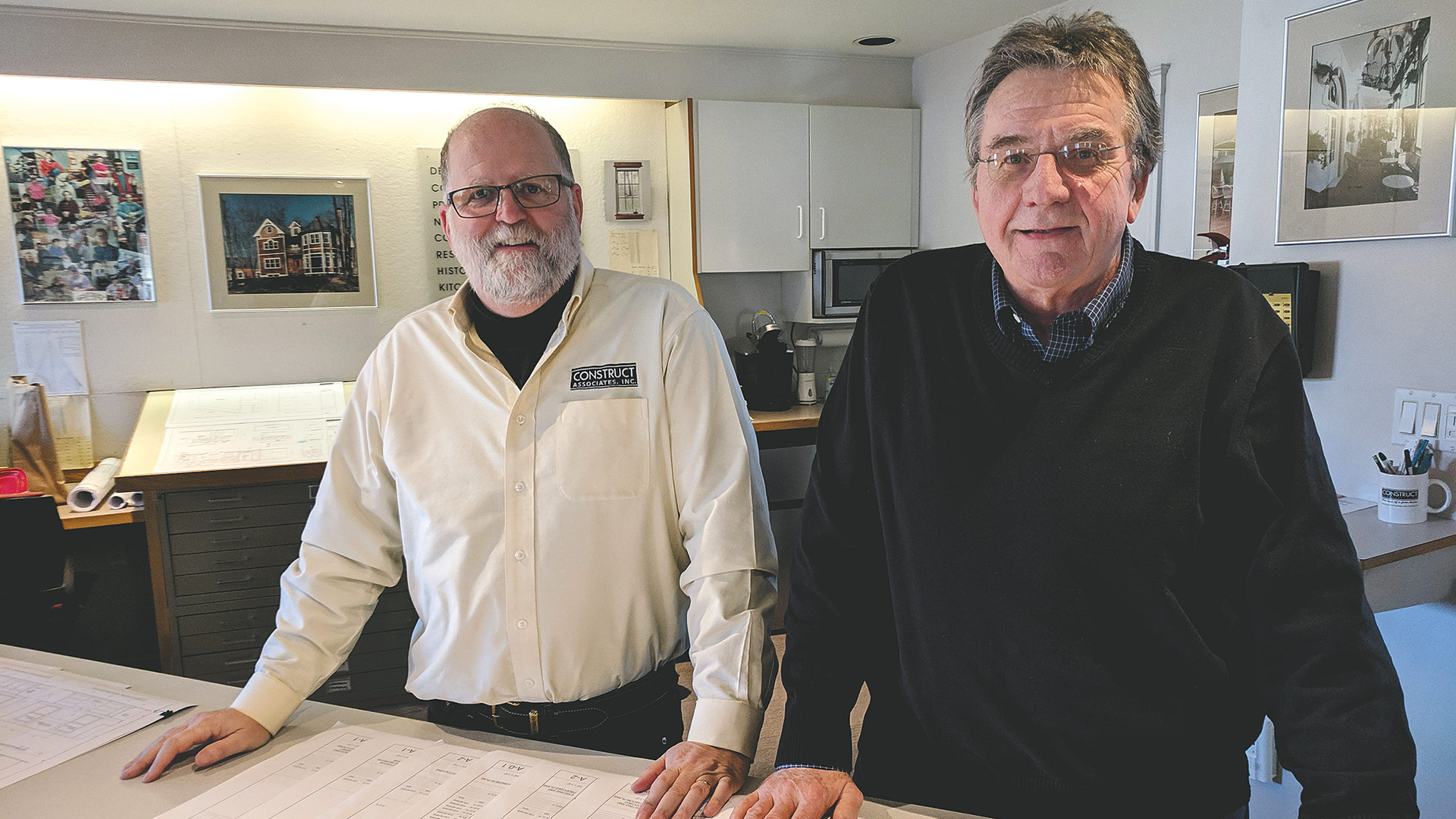

In one sense, it’s a good problem to have, Andy Crane said — but it’s still a problem.

He’s talking about an ongoing shortage of skilled labor in the construction field, making it difficult for companies to keep up with what continues to be high consumer demand for home-improvement projects.

The good part of the problem is that they can be more selective about the projects they want to tackle, but that’s not always great for the consumer, and it stifles growth, said Crane, executive director of the Home Builders and Remodelers Assoc. of Western Mass.

“There’s a lot of work to be done, but the workforce is very tight, and it’s difficult for companies to respond to everyone. They’re just booked out for a long period of time,” he went on. “Skilled labor — especially young skilled labor — is few and far between.”

Crane gets calls from homeowners looking for a contractor for a project but struggling to nail one down who can fit them in, and that labor shortage has a lot to do with it, he told BusinessWest. “A lot of contractors are in the same boat. I guess it’s a good problem on our side, but it’s bad PR.”

Stephen Ross, partner at Construct Associates in Northampton, understands the problem well. “We just hired two new guys, which is a nice thing to be able to do these days. We just snapped them up. It’s hard — the majority of people applying for jobs have been in their late 50s, even early 60s. But we try to hire for the long haul.”

Still, business has been positive for a long stretch now at Construct, which boasts plenty of residential construction in its mix of projects.

“Kitchens and bathrooms are still big sellers around here — lots and lots of them,” Ross said, noting that the prevailing design trends of the past couple of years continue to dominate, among them open floor plans, tile in bathrooms, hardwood floors, and granite and quartz surfaces in kitchens.

The Home Improvement Research Institute (HIRI), which issues quarterly state-of-the-industry reports, is bullish on the rest of 2019. According to HIRI’s quarterly Project Sentiment Tracking Survey of 3,000 homeowners, several trends stand out:

• About 75% of homeowners are planning one or more projects in the next three months — the highest project-planning incidence since tracking began in 2012, according to the organization.

• The top motivators for projects include repair, replacement, and routine maintenance.

• The average homeowner plans to complete 4.3 projects in the next three months.

• The top projects include kitchens, windows, driveways, exterior paint, and roofs.

• The Northeast is home to the nation’s highest percentage of project planners in the second quarter — not surprising, as the region’s housing stock tends to be older than in many other areas of the country, so there’s plenty of work to be done.

Other Trends

Energy efficiency remains a trend at the forefront of home improvement as well. Each year, Fixr, an online home-improvement community, polls experts in the home-design industry to discover what the upcoming trends in home design and building will be. This year, the site polled industry experts on what they believe are the top ways that homeowners will utilize design trends and new innovations to help lower their energy bills in the coming years.

According to the poll, a majority of homeowners are personally motivated to save energy in order to save money, yet they also have a significant environmental awareness, which is driving some decisions.

The poll revealed that ducts and windows are the two most effective places to save through air sealing, heat pumps are the most popular method to heat an energy-efficient house, tankless heaters are the most efficient way to heat water, solar power remains the most common way to utilize renewable energy in the home, and cellulose and fiberglass are tied as the most popular ways to insulate an attic.

Another trend analysts have been keeping an eye on for years has been the rise of DIY (do-it-yourself) projects, spurred partly by a greater variety of resources available to homeowners and the abundance of inspiration available on home-improvement television programs and websites.

According to HIRI, roughly two-thirds of completed home-improvement projects are done completely DIY, and three-quarters have at lease some DIY involvement. The level of professional work is dependent on the project. Painting and landscaping are overwhelmingly DIY, while roof and siding replacement are heavily dependent on professional work. Interestingly, HIRI’s poll suggests that, while most who finish their projects are satisfied, those who complete them totally DIY report a higher satisfaction rate.

Not surprisingly, projects done with professionals cost significantly more than those undertaken DIY, and survey respondents who used professional contractors showed a higher likelihood of having the total cost of their project be higher than expected.

As homeowners age, they tend to move away from doing the work by themselves, shifting to professional contractors more frequently. Baby Boomers are twice as likely to hire a pro than a Millennial. The use of professionals is also largely dependent on household income. As family income goes up, so does the likelihood that a contractor is hired to complete a remodeling project.

Whether professional or DIY, annual gains in improvement and repair spending, while still healthy, are projected to continue decelerating through early 2020, according to the Leading Indicator of Remodeling Activity (LIRA) released by the Remodeling Futures Program at the Joint Center for Housing Studies of Harvard University. LIRA forecasts that year-over-year growth in homeowner remodeling expenditure will slow from about 7% this summer to 2.6% by the first quarter of 2020.

“Cooling house price gains, home-sales activity, and remodeling permitting are lowering our expectations for home-improvement and repair spending this year and next,” said Chris Herbert, managing director of the Joint Center for Housing Studies. “Yet, more favorable mortgage rates could still give a boost to home sales and refinancing … which could help buoy remodeling activity.”

Abbe Will, associate project director in the Remodeling Futures Program, added that “home-improvement and repair spending has been in an extended period of above-trend growth for several years, due to weak homebuilding, aging homes, and other factors. However, growth in remodeling is expected to fall below the market’s historical average of 5% for the first time since 2013.”

Aging in Place

One strong home-improvement trend in the Northeast involves Baby Boomers, who continue to pour into their retirement years at the rate of about 10,000 a day — and want to spend those years in their own homes if possible. As a result, many projects today involve making those homes safer and more accessible, with improvements ranging from night and security lights to wider interior walkways to curbless showers.

But older homeowners are also going for modern and attractive features, Ross said. “People are wrapping things up, things they’ve let go for decades. People are moving toward fixed incomes and are planning that last hurrah — maybe a garage addition. Or decks need replacing, or siding needs replacing — and nothing gets cheaper the longer you wait.”

In fact, building costs are more expensive than ever, Crane said, for reasons ranging from heavy regulation in Massachusetts to new tariffs at the federal level to inevitable economic trends. But the landscape remains a healthy one for builders and remodelers — if they can find the help they need.

“Construction companies can pick and choose their jobs,” he said. “It’s a great sellers’ market.”

Joseph Bednar can be reached at [email protected]

Green Business

Bans and Beyond

Coryanne Mansell says CET understands how to balance conservation issues (like food-waste reduction)with business needs.

Ask a random person what percentage of food goes to waste. Maybe they’ll say 10% or 20% — some might guess a little more. But few would surmise the actual figure.

“Food waste is a nationally and even globally pervasive issue,” said Lorenzo Macaluso, director of Client Services at the Center for EcoTechnology (CET) in Northampton. “There have been a number of studies on this, all of which find that somewhere in the ballpark of 40% of all food produced is never actually consumed. There is loss at every step of the way along the chain. From a cost perspective, from an environmental perspective, from a resources perspective — basically, by every measure — it’s very significant.”

Massachusetts is one of only six states — five of them clustered in the Northeast, the other being California — and seven metro areas that have implemented organic waste bans on some level. And CET has helped area businesses develop strategies to reduce food waste, so a recent partnership with the Harvard Law School Food Law and Policy Clinic (FLPC) — specifically, a ‘toolkit’ on organic waste bans and their potential to reduce food waste and strengthen local economies — made sense.

“Somewhere in the ballpark of 40% of all food produced is never actually consumed. There is loss at every step of the way along the chain.”

“Massachusetts in general has been a national leader on addressing this issue head-on, through a number of strategies to help keep food from the trash,” Macaluso told BusinessWest. “We’re focused on helping businesses implement those strategies because we have a long, rich history of doing that work. Harvard Law is great at analyzing policies with a legal lens, and we have the practical side, how those policies are actually playing out in real life.”

Food waste in the U.S. amounts to some $218 billion each year spent on food that is never eaten, according to the toolkit, which is basically a lengthy report (titled “Bans and Beyond”) that examines the issue, what those six states and seven cities have implemented, the challenges they’ve faced, and the economic impact of those policies.

As for the core issue, most wasted food ends up in landfills, where it produces greenhouse gases and contributes to states and localities running out of landfill capacity. State and local bans limit the amount of organic waste, including food waste, that businesses and individuals can dispose of in landfills — thus driving more sustainable practices, such as food-waste prevention, food donation, and sending food scraps to animal-feed operations or composting or anaerobic-digestion (AD) facilities.

“Food waste takes up space in landfills, contributes to climate change, and is a drain on the economy,” said Emily Broad Leib, director of FLPC. “Organic waste bans are one of the best tools we have seen that states and localities can use to transform business practices and drive the development of food-waste recycling infrastructure.”

While much work remains, Lorenzo Macaluso says the Bay State has been a national leader on the food-waste issue.

The toolkit walks readers through factors to consider in pursuing similar policies in their own state or locality. It also explores nine other categories of policies and programs — such as permitting and zoning regulations for organics-recycling facilities, grants to support food-waste reduction projects, and policies to create markets for biogas and compost — that can enhance the impact of an organic waste ban or advance food waste reduction and diversion independently.

“Over the years, we’ve seen firsthand how waste bans and the other policies and programs discussed in the toolkit can drive innovation and significantly reduce wasted food,” said John Majercak, president of CET. “The resulting impact is a big win for communities, regional economies, and the environment.”

The environmental impact is significant. According to the report, 21% of the U.S. freshwater supply and 300 million barrels of oil are used to produce food that goes to waste. And in 2012, more than 20% of municipal solid waste disposed of was food waste — especially noteworthy at a time when cities and states are running out of space to pile trash. Furthermore, organic materials in landfills decompose and release methane, a greenhouse gas that contributes to climate change. Food waste is responsible for at least 11% of methane emissions generated from landfills, an amount equivalent to the emissions of about 3.4 million vehicles.

“We’ve seen firsthand how waste bans and the other policies and programs discussed in the toolkit can drive innovation and significantly reduce wasted food.”

“We partnered with the Harvard Food Law and Policy Clinic to develop this toolkit because we have boots-on-the-ground experience with businesses to implement food-waste diversion programs, as well as understanding market needs,” said Coryanne Mansell, Strategic Services representative at CET, adding that individual businesses, at least locally, increasingly understand the problem, especially after hearing the 40% statistic. “That’s a huge impact on the environment.”

“When I mention that number,” Macaluso added, “100% of the people are really surprised when they first hear it.”

The Massachusetts Model

Unlike other states with organic waste bans, Massachusetts established its disposal ban through regulation rather than legislation. In 2014, the Commonwealth’s Department of Environmental Protection (DEP) amended regulations on solid-waste disposal by adding ‘commercial organic material’ to a list of several materials already barred from entering solid-waste disposal streams.

The ban applies only to commercial and institutional food-waste generators (not households) that dispose of at least one ton of those materials in waste per week, and and only for weeks during which they surpass that one-ton threshold. Temporary exemptions from the ban may be issued if the waste is contaminated or unacceptable for composting or other use, and the entity takes steps to prevent the contamination from recurring, or if a waste generator’s usual composting or other processing service declines the waste and the generator cannot find an alternative within a reasonable time.

Food-scrap generators may comply by reducing their waste production below the one-ton-per-week threshold, donating surplus food, processing food scraps on site, or sending food scraps to an animal-feed, composting, or AD facility.

To aid in compliance, Massachusetts offers several options for funding organics-processing operations. The DEP also partners with BDC Capital to administer the Massachusetts Recycling Loan Fund, which provides loans to eligible businesses, including recycling and composting companies. The fund offers preferred terms for composting, AD, and other food-waste processing facilities. Another funding source for renewable-energy projects is the Massachusetts Clean Energy Center, a quasi-public agency that provides grants and technical assistance for clean-energy innovators.

Due to the efforts of organizations like RecyclingWorks, food-rescue organizations, and state and local agencies, the amount of food donated or rescued in Massachusetts has increased at least 22% since the organic-waste ban went into effect, from 21,300 tons in 2014 to 25,900 tons in 2017.

“We’ve had great results,” Macaluso said. “An economic-impact study was conducted, showing increased investment and job creation and large diversion of food-waste tonnage … it’s been quite effective.”

That economic impact has been an underreported part of the story. The Massachusetts DEP contracted with ICF, a management-consulting company, in 2016 to conduct an analysis of the impacts of Massachusetts’ commercial food-waste ban and broader trends in the state’s organic waste industry. To accomplish this, they developed a survey targeting three primary sectors: organic waste haulers, processors and composters, and food-rescue and recovery organizations.

The study found that the three sectors together supported more than 900 total jobs in 2016, and that all three sectors reported significant growth in employment in recent years, with more than 500 jobs added between 2010 and 2016. In 2016, the jobs supported by all three sectors combined generated more than $46 million in labor income, and the industries contributed nearly $77 million to the gross state product and produced almost $175 million in industry activity. Finally, the organic-waste industry contributed more than $5 million in state and local tax revenue in 2016. The analysis projected that growth would continue in 2017 in beyond.

“When we evaluate the impact of these waste bans,” Mansell told BusinessWest, “we see they can create job growth, help feed more hungry people, and, of course, increase capacity at existing landfills.”

All Aboard?

The toolkit lays out this data in detail not just for Massachusetts, but for New York, Vermont, Connecticut, Rhode Island, California, and the seven metro areas (New York City; Seattle; San Francisco; Portland, Ore.; Austin, Texas; Boulder, Colo.; and Hennepin County, Minn.). The hope now, among those who prepared the toolkit, is that other states will consider these case studies and be part of a national effort to lower that daunting 40% statistic.

CET has been promoting waste-reduction efforts on the local level for a long time, Mansell said. “We help people understand what the regulatory requirements are, but we also come at it from a company perspective, helping them implement a program that’s best suited for their needs, really meeting those businesses where they are. And we’ve seen some pretty positive experiences because companies are seeing the financial savings and seeing the social and environmental opportunities from these programs as well.”

For states wondering if a food-waste ban would work, she added, “we do hope this toolkit provides a roadmap.”

The report makes clear that it’s not an easy decision. A state or locality must determine whether it has, or plans to develop, the necessary infrastructure to process the organic waste that a ban would divert from landfills, from composting and AD facilities that accept food scraps to collection services and food-rescue organizations.

A state or city must also determine whether implementing an organic waste ban would be politically and financially feasible, the report notes. “In the absence of a plan to develop sufficient infrastructure, or without political support or financial resources, a state or locality may wish to focus on a non-binding strategy such as a zero-waste plan or waste-management strategy, or on more targeted policies to support infrastructure development, before pursuing an enforceable organic waste ban or mandate.”

So change doesn’t necessarily happen overnight. But Macaluso says these kinds of changes are worth pursuing.

“We understand business. We understand things have to make business sense,” he said. “But we do feel like this is a win all around.”

Joseph Bednar can be reached at [email protected]

Banking and Financial Services

Uniting Forces

People’s United Bank is no longer the small, Springfield-based institution, then known as the Bank of Western Massachusetts, that made its name three decades ago through a strong emphasis on local commercial lending. And the now-Connecticut-based institution is growing again, with a planned acquisition of United Bank that will push its assets well above $50 billion. But local connections are still key to the People’s United ethos, its Massachusetts president says — and he hopes United Bank customers feel the same way.

Patrick Sullivan thinks People’s United Bank has built a strong reputation in Western Mass. — and hopes customers of United Bank feel the same way following a recently announced acquisition.

“We trust that customers kind of know us already in Western Mass., and that they’re confident this isn’t a big change in the sense of somebody they don’t know. They’ve known us for a long time,” said Sullivan, Massachusetts president of People’s United, the Bridgeport, Conn.-based bank that began life in downtown Springfield 32 years ago as the Bank of Western Massachusetts.

“We have people that have worked for either the Bank of Western Mass. or People’s United for a long time,” he added. “Long-term relationships are valued here, and long-time principles and dynamics don’t change. Local is local.”

The two institutions announced in July that People’s United Financial Inc., the holding company for Peoples’s United Bank, would acquire United Financial Bancorp Inc., the holding company for United Bank, in a 100% stock transaction valued at approximately $759 million. Then banks’ leaders characterized it as a strong cultural fit that would benefit customers.

“We are excited to welcome United Bank to People’s United,” said Jack Barnes, chairman and CEO of People’s United Financial. “With the fourth-largest deposit market share in the combined Hartford and Springfield market, a complementary array of commercial and retail capabilities, and a shared legacy of community giving, United will solidify our presence in the Central Connecticut market and strengthen our franchise in Western Massachusetts.”

William Crawford, president and CEO of United Financial Bancorp, added that “People’s United Bank has long been a premier brand in Connecticut that is committed to building meaningful relationships with its customers and communities. We are confident their broad array of products and services, in-market knowledge, and the size and strength of their balance sheet will deliver enhanced value to our stakeholders.”

Patrick Sullivan says the acquisition of United Bank makes sense on a number of levels, both financially and culturally.

Indeed, the move is, in one sense, the story of two Connecticut-based banks —United is based in Hartford — but both banks have a long history and a strong presence in Western Mass.

Sullivan — who joined People’s United six years ago as Massachusetts president and also oversees the bank’s commercial, industrial, and business banking, noted that the institution was already the eighth-largest bank in Massachusetts, and will obviously be slightly larger, growing from 56 branches in its multi-state footprint to around double that, though some are expected to close (more on that later).

“Because of the economy in Massachuetts and the size of the market, we’ve invested a lot in people from other institutions that have joined us with specific expertise in lending, commercial markets, retail, wealth, insurance, whatever,” he went on, citing its government-banking niche as one strength.

“We had a good government business in Western Mass. before I came on six years ago. Today, we’ve got 90 clients in Western Mass. with $162 million in deposits. It’s a big business for us. Likewise, it’s a big business for us throughout the whole company. The city of Springfield is a major customer,” he explained, as are Worcester, Pittsfield, Easthampton, and many others.

For this issue’s focus on banking and finance, BusinessWest spoke with Sullivan about the broadened services and technology People’s Bank will bring to United Bank customers, and why he feels this growing institution will continue to maintain a local focus in the communities where it operates.

Growth Pattern

Immediately after the merger, People’s United will go from five branches in Hampden County to 20, from five to 10 in Worcester County, and from three to four in Hampshire County; its roster of three branches in Franklin County won’t change.

Still, not every branch will remain open; in some communities, both banks now operate within a block or so of each other, which means consolidation is inevitable, Sullivan said. “We’ll make a decision in the best interests of our customers, according to where they bank. But all the retail employees have been told they will have positions with us.”

Just as it has during its growth over the years — People’s United boasts assets around $47.9 billion, and is acquiring a bank with about $7.3 billion — Sullivan said the institution stresses local decision making when it comes to lending, philanthropy, and other matters.

“We still operate just like we did when we had $30 billion. We want to keep it local,” he told BusinessWest. “Our biggest client has its headquarters in Western Mass. Our challenge has been small businesses, those $100,000 loans, the startups. We try to take care of the small-business segment. Let’s face it, those are the heart of a lot of the communities we’re in, and we’re always trying to be more responsive to them.”

In recent years, People’s United has made significant investments in its commercial specialties, including hiring teams of specialized industry experts to better serve customers. Among these niches are technology companies, restaurant franchises, and a healthcare finance team. While those divisions are based out of Boston, they serve the bank’s entire New England and New York footprint and beyond.

The bank has also invested heavily in technology, said Steven Bodakowski, vice president of Corporate Communications.

This United Bank branch in downtown Springfield is just a couple blocks from the People’s United branch — one of many examples of overlapping branches the organization must examine post-merger.

“We’re constantly focused on on how, when, and where we interface with customers in this changing age of banking,” he noted. “Technology and digital enhancements continue to be a major focus for the bank as we aim to stay one step ahead of customer needs and deliver a truly integrated service model that blends the best in customer service with technology.”

To that end, People’s United has developed a strategic initiative to provide customers with online and digital solutions for a suite of its most popular offerings.

“This digital banking experience is designed to mirror and be an extension of the branch experience — serve as another path to interact with and receive guidance from bankers, based on individual customer preferences,” Bodakowski said. “Our bankers are being trained to become digital advocates.”

Offerings include a technology-based home-lending platform designed to simplify and transform the way customers apply for a home-equity loan or home mortgage, providing the ability to virtually interact with mortgage account officers in real time to complete the online application.

Other features include a refreshed online and mobile solution for opening checking and savings accounts, a digital small-business loan application for loans $250,000 or less, a direct-to-client robo-advisory offering, and a new, digitally driven financial-literacy platform that allows customers and the community to access financial-literacy classes and modules.

The latter is an especially important tool to help young people, the elderly, and anyone, really, become more financially savvy, make better decisions, plan for the future, and avoid scams.

“We also launched a new website in May with a fully optimized user experience,” Bodakowski said, one that delivers a fully optimized user experience for mobile devices, an enhanced ‘storefront’ feature to highlight key product areas, and a robust support and security center and new content areas designed to engage and educate customers.

The bank has also enhanced its marketing capabilities to more accurately target its customers and understand their lifestyles, through the use of integrated third-party digital e-mail and marketing platforms such as Marketo and Salesforce.

“We look forward to welcoming [United Bank’s] well-established customer base and delivering to them our enhanced technology and digital capabilities, combined with our network of expert bankers,” Barnes said when the acquisition was first announced.

Living Local

That’s a lot of growth since the institution opened its doors in 1987 as the Bank of Western Massachusetts with $9.3 million in assets. By way of contrast, People’s United awarded almost half that total — about $4 million — to nonprofits last year, about $2.3 million of that in Massachusetts. Of that latter figure, more than $854,000 was contributed by the bank in donations and sponsorships, while more than $1.4 million was awarded in grants by People’s United Community Foundation and People’s United Community Foundation of Eastern Massachusetts.

Those giving decisions remain, as they always been, local, Sullivan said, because the local bankers know the market and its needs. He knows that’s part of the community-bank ethos in Western Mass., and even banks that have grown far beyond community-bank size still have to operate like one.

“Our philanthropy is very local. We take very seriously how things get allocated to these organizations,” he added. “Our principles are always to stay local, whether it’s the specialty expertise in the market or our volunteerism and philanthropy. That’s in our DNA.”

Joseph Bednar can be reached at [email protected]

Healthcare Heroes

‘There’s a Magic Here,’ Built on Dedication, Innovation, and Culture

H. Lee Kirk Jr. was speaking at a public event recently, when a woman stood up to tell him about her 3-year-old grandson’s experience at Shriners Hospitals for Children – Springfield.
“She said, ‘when we take him to the doctor’s office or another healthcare provider, he cries going in, and he’s sprinting out the door to get back home. When he comes to Shriners, he’s sprinting on the way in and happy to be coming, and he’s kicking and screaming when he has to leave,’” he related. “There’s a magic here that’s really hard to get your arms around.”

But Kirk, administrator of the 94-year-old facility on Carew Street in Springfield, tried to explain it the best he could over the course of a conversation with BusinessWest after the hospital was chosen as a Healthcare Hero for 2019 in the Patient/Resident/Client Care Provider category.

“This is a special healthcare organization because of the mission,” he said. “The culture is unlike any other I’ve been involved in. We want to be the best at transforming the lives of kids. And we get the privilege of seeing that every day here.”

It’s a culture that employees find attractive, said George Gorton, the hospital’s director of Research, Planning, and Business Development, adding that consulting physicians from other hospitals say, after visiting, that it’s the happiest place they’ve ever worked.

“It’s a palpable difference,” he went on. “As employees, we love that caring, family feeling of being employed by an organization that aligns with our own personal mission. That’s just not seen anywhere else.”

Last year, the hospital produced some short videos with employees to celebrate the opening of its inpatient pediatric rehab unit. In one of them, a nurse hired specifically for that unit talked about how she’s wanted to be a nurse at Shriners since being treated there for a rheumatology issue when she was a child.

“She was in tears, expressing the joy and positivity she had, to be able to take that experience of receiving care and become the person who provides that care to other people,” Gorton said. “It was a really touching moment to hear her express that.”

Then there’s the boy Gorton — who’s been with Shriners for more than a quarter-century — examined decades ago in the motion-analysis center; he’s now a physician assistant at the hospital.

Gorton said it’s impossible to single out any individual person responsible for creating the generational success stories and culture that makes Shriners what it is. The judges for this year’s Healthcare Heroes program agreed, making a perhaps outside-the-box choice in a category that has previously honored individuals, not entire organizations.

Yet, the choice makes sense, said Jennifer Tross, who came on board two years ago as Marketing and Communications manager, because of that unique culture that draws people back to provide care decades after receiving it, and that has kids shedding tears when they have to leave, not when they show up.

“The day I arrived,” Tross said, “I went home and said, ‘I knew this place would change my life, and it has.’”

Countless families agree, which is why Shriners is deserving of the title Healthcare Hero.

Step by Step

When a boy named Bertram, from Augusta, Maine, made the trek with his family to Springfield in February 1925, he probably wasn’t thinking about making history. But he did just that, as the hospital’s very first patient. The Shriners organization opened its first hospitals primarily to take care of kids with polio, but Bertram had club feet — a condition that became one of the facility’s core services.

After the first Shriners Hospitals for Children site opened in 1922 in Shreveport, La., 10 other facilities followed in 1925 (there are now 22 facilities, all in the U.S. except for Mexico City and Montreal). Four of those hospitals, including one in Boston, focus on acute burn care, while the rest focus primarily on a mix of orthopedics and other types of pediatric care.

As an orthopedic specialty hospital, the Springfield facility has long focused on conditions ranging from scoliosis, cerebral palsy, and spina bifida to club foot, chest-wall deformities, cleft lip and palate, and a host of other conditions afflicting the limbs, joints, bones, and extremities — and much more.

While many of the hospitals overlap in services, each has tended to adapt to the needs of its own community. In Springfield’s case that includes pediatric specialties like rheumatology, urology, and fracture care, as well as a sports health and medicine program that includes three athletic trainers and a pediatric orthopedic surgeon with training in sports medicine.

H. Lee Kirk (left, with Jennifer Tross and George Gorton) says Shriners is a special healthcare organization because of its mission.

The latter, Kirk said, includes services to kids without medical problems, as the hospital works with schools, clubs, and leagues help provide more preventive and conditioning services and follow up when injuries occur.

Meanwhile, the BFit exercise program targets kids with neuromuscular problems who normally don’t participate in physical activity, sports, or even gym class. The program aims to improve the physical activity of this group, and does it by involving students from area colleges who are studying fields like physical and occupational therapy, exercise science, sports medicine, and kinesiology.

“They volunteer as personal coaches,” Gorton said. “The child learns to adapt their environment and become physically active, and those students learn what it’s like to care for children. Many have gone into pediatric healthcare to do that kind of training because of their experience here. They see it here, and it spreads like a good virus through the population.”

Then there was the 2013 community assessment determining that an inpatient pediatric rehabilitation clinic would fill a persistent need. That 20-bed clinic opened last year following a $1.25 million capital campaign that wound up raising slightly more — reflective of the community support the hospital has always received, allowing it to provide free care to families without the ability to pay (more on that later).

Still, more than 90% of the care provided in Springfield is outpatient — in fact, the facility saw 12,173 visits last year, a more than 40% expansion over the past several years.

The care itself, the clinical component, is only one of three prongs in the Shriners mission, Kirk said. The second part is education; over the past 30 years, thousands of physicians have undertaken residency education or postgraduate fellowships at the various children’s hospitals. In Springfield, residents in a variety of healthcare disciplines — from orthopedics to nursing, PT, and OT — have arrived for 10- to 12-week rotations.

The third component of the mission is research, specifically clinical research in terms of how to improve the processes of delivering care to children. That often takes the shape of new technology, from computerized 3D modeling for cleft-palate surgery to the hospital’s motion-analysis laboratory, where an array of infrared cameras examine how a child walks and converts that data to a 3D model that gives doctors all they need to know about a child’s progress.

More recently, a capital campaign raised just under $1 million to install the EOS Imaging System, Nobel Prize-winning X-ray technology that exists nowhere else in Western Mass. or the Hartford area, which enhances imaging while reducing the patient’s exposure to radiation. That’s important, Kirk said, particularly for children who have had scoliosis or other orthopedic conditions, and start having X-rays early on their lives and continue them throughout adolescence.

Averting Disaster

It’s an impressive array of services and technology, and collectively, it meets a clear need — and not just locally. While about 60% of patients hail from a 20-mile radius, the hospital sees young people from across New England, New York, more than 20 other states, and more than 20 countries as well.

Yet, only a decade ago, the hospital was in danger of closing. At the height of the Great Recession, the national Shriners organization announced it was considering shuttering six of its 22 children’s hospitals across the country — including the one on Carew Street.

In the end, after a deluge of very vocal outrage and support by families of patients and community leaders, the Shriners board decided against closing any of its specialty children’s hospitals, even though the organization had been struggling, during those tough economic times, to provide its traditionally free care given rising costs and a shrinking endowment.

To make it possible to keep the facilities open, in 2011, Shriners — for the first time in its nearly century-long history — started accepting third-party payments from private insurance and government payers such as Medicaid when possible, although free care is still provided to all patients without the means to pay, and the hospital continues to accommodate families who can’t afford the co-pays and deductibles that are now required by many insurance plans.

“It was a wise decision to accept insurance — but it was a controversial decision,” Kirk said. Yet, it makes sense, too. A very small percentage of patients in Massachusetts don’t have some kind of coverage, yet 63% of care at Shriners is paid for by donors — a disconnect explained by the fact that Medicaid doesn’t pay for care there, and gaps exist in other insurance as well.

So, if a family can’t pay, the hospital does not chase the money, relying on an assistance resource funded by Shriners and their families nationwide.

“Donor support allows us to provide free care,” Kirk said. “We don’t send families to collections and contribute to the number-one cause of personal bankruptcy in America, which is medical care. It’s a very unique model, and a unique healthcare-delivery system.”

And one that, as Kirk noted, treats a patient population that can be underserved otherwise. For instance, the cleft lip and palate program — a multi-disciplinary program integrated with providers from other hospitals in the region and serving about 30 partients at any given time — begins assessing some patients prenatally, and most need care throughout adolescence and even into young adulthood.

Those consulting relationships are critical to the success of Shriners, which doesn’t seek to compete with other providers in the region, but supplement them while striving to be, in many cases, the best place for young people to receive specialized treatment, whether for orthopedic conditions or a host of other issues.

When Kirk arrived in 2015, the hospital underwent a comprehensive self-assessment process that made two things clear, he said: that there’s a real need for what it does, and that it needs to reinvest in its core.

“And that’s what we did. And that’s about people, not bricks and mortar,” he went on, noting that the facility has added about 70 positions since that time.

“We’re a completely different place today than we were in 2009,” Gorton added, noting that the hospital is stronger in leadership, internal communication, and external connections. Among the 22 Shriners specialty hospitals, Springfield ranks second in the proportion of the budget offset by donations. “Why? Because we have a great relationship with the community. We’ve become more outward-facing, and we’re integrated everywhere in the community.”

The Next Century

Getting back to that 3-year-old who doesn’t want to leave when he visits Shriners, surely the hospital’s child-friendly playscapes and colorful, kid-oriented sculptures and artwork help create a welcoming environment, but those wouldn’t make much difference if the people providing care didn’t put him at ease.

That environment begins with employees who love what they do, Kirk said, and this Healthcare Hero award in the Provider category is definitely shared by all of them. Other families feel the same way, as the facility regularly ranks in the 99th percentile on surveys that gauge the patient and family experience.

“We have happy employees who love being here, who love working with kids, who love delivering the mission — and the patients and families sense that and respond to that,” Gorton said.

That’s why the hospital’s leaders continue to examine the evolving needs of the pediatric community and how they can continue to deepen its clinical relationships and expanding services most in demand — always with the philosophy of “mission over model,” Kirk said.

“We are always thinking about the future,” he added, “so we can sustain this healthcare system for the next 100 years.”

Joseph Bednar can be reached at [email protected]

Healthcare Heroes

She’s Forging Pathways to Help People Overcome OCD and Hoarding Disorder

Tara Ferrante

To illustrate one of the many ways obsessive-compulsive disorder, or OCD, can manifest itself, Tara Ferrante said everyone has stood at a rail atop a high building, looked down, and thought, what if I jumped? It’s a little scary, and basically harmless.

“But with OCD,” she continued, “you actually evaluate that thought and think it could happen, and then, ‘I must be a terrible person to have that thought.’ Or it creates anxiety because that thought means something, and you have to do something to feel better.”

OCD often begins as an intrusive thought, she explained, and everyone has intrusive thoughts. What sets OCD sufferers apart, though, is their response to those thoughts. “Sometimes it’s a compulsion, sometimes avoidance — ‘I can’t be in tall places,’ or ‘I can’t be around knives, because I imagined myself stabbing someone once, so I must be a dangerous person. What person must think something like that? I must be a horrible person. People shouldn’t be around me.’”

But while avoidance — or whatever compulsive, repetitive action helps to mitigate that intrusive thought — might bring temporary relief, it also reinforces the initial evaluation of that thought, she went on, “so the next time that thought comes up, you’re stuck in that same cycle where you have to do something to feel better.”

Then there’s the behavior known as hoarding, which buries people, both psychologically and literally, in their own possessions because they’re unable to get rid of anything — presenting a wide variety of dangers.

“It can be a fire risk, or it can be a fall risk, especially as people get older, or someone may have other health issues and the path’s not wide enough for a gurney to get into their house for emergency support,” Ferrante said.

“It also causes people to isolate more — they’re afraid to have people in the home, or to reach out to people,” she went on. “There’s a thing called clutter blindness, where they might not see all the clutter, but when another person is there, it’s striking. There’s the shame and the guilt and everything else that comes up around that, so a lot of people do isolate more because of the clutter.”

Ferrante is program director of the Holyoke Outpatient Clinic at ServiceNet, one of the region’s largest behavioral-health agencies, and treats patients with a wide range of behavioral-health conditions. But it’s her work leading ServiceNet’s OCD and Hoarding Disorder Program that earned her recognition as a Healthcare Hero in the category of Emerging Leader.

To be sure, Ferrante doesn’t see herself as a hero — just someone passionate about helping people overcome behaviors that range, depending on the patient, from mildly annoying to completely debilitating.

“It feels so good to see people thriving in their lives who wanted to die at points,” she told BusinessWest. “While their lives may not be perfect by any means, they’re able to live their lives the way they want to, with much more ease.”

Starting the Journey

Ferrante’s journey in this specialized field began while working with a client who was experiencing extreme distress from OCD symptoms. She had read about emerging OCD treatments, learning that the most effective approach seemed to include a mix of structured clinical treatment and home-based and peer support.

So, two years ago, when ServiceNet’s senior leadership proposed the launch of an OCD program in Western Mass., she jumped at the opportunity to lead the program.

“They saw this area as a kind of desert in terms of people who can really specialize and are able to provide good care to people with OCD and hoarding disorder,” she explained. “I was super interested, and I expressed interest in overseeing it.”

“It feels so good to see people thriving in their lives who wanted to die at points. While their lives may not be perfect by any means, they’re able to live their lives the way they want to, with much more ease.”

Before launching the program, Ferrante and fellow clinicians first completed four days of training in OCD and hoarding disorder, then conducted a series of consultations with two nationally recognized experts on these conditions: Dr. Randy Frost, a professor of Psychology at Smith College, and Denise Egan Stack, a behavioral therapist who launched the OCD Institute at McLean Hospital in Belmont, a Boston suburb.

“We’ve been so lucky,” Ferrante said. “People have invested so much time and energy in our program to get it off the ground and get it going and helping me as a leader. It’s been really great.”

Currently, six ServiceNet clinicians provide specialized OCD and hoarding-disorder treatment at the agency’s Holyoke, Greenfield, and Northampton clinics. The program’s model continues to evolve, but several facets have crystalized, including the use of Smith College students as interns in the program. Frost trains the students for adjunct work in the community, such as conducting ‘exposures’ with clients battling OCD, Ferrante explained.

“They’ll give emotional support to people [with hoarding disorder] as they are sorting and discarding, or as they go out and practice non-acquiring — going to a store where they like buying things, and then not getting anything, sort of building up the tolerance of resisting that urge.”

Tara Ferrante says people with OCD and hoarding disorder span all ages and demographics.

The student collaboration has been valuable and productive, she noted. “We’re limited in how much we can get out into the community or into the home between sessions. The introduction of the interns has helped create steady progress.”

The term ‘hoarder’ is actually out of fashion, she noted, having taken on a stigma in recent years, thanks partly to TV shows that often vilify those who struggle with the condition. Frost has written extensively about the reasons people hoard; some call themselves ‘collectors’ or ‘finders-keepers’ because they see value in every item in their cluttered homes.

“That’s a strength, to be able to see value where other people don’t, or to see beauty where other people don’t,” Ferrante said. “But it’s a strength that’s gone too far, and that can make a hindrance in being able to get rid of things. Also, people don’t want to be wasteful, they don’t want things to go into landfills, and again, that’s really a wonderful quality — but it then impedes their quality of life.”

Hoarding is also a form of perfectionism, at least in the eyes of collectors, she went on. “You want to use something to its full ability, or it needs to go to the just right place. Or, if it’s going to be given away, it needs to be given to just the right person who’s going to love it fully, and if you can’t find that person, then you’re just going to keep it, and that can stall progress sometimes.”

As for OCD, like many mental-health conditions, it can differ in severity from one person to another, Ferrante said.

“Sometimes people can function pretty well, but even for those people who aren’t seeking treatment, it can affect their ability to have relationships, to get to work on time, even to leave their house,” she explained. “There are so many ways it can make people’s lives difficult. And even if they can function sometimes, they’re living in this constant state of anxiety and panic, which is really unpleasant.”

Then there are the more severe cases — stories of people unable to touch their children or their partners for years, or unable to leave their home, hold a job, or participate in life in any way.

The standard treatment in Ferrante’s program is known as exposure and response prevention, a form of cognitive behavior therapy.

“We form a relationship and create situations where they get exposed to the anxiety, the intrusive thought, and we don’t do the compulsion,” she explained. “We do it in a supported way at first, in session, and then we have the interns who can do that out in the community, and eventually we want people to do it on their own. We make exposure part of life — this idea of, ‘let’s turn toward anxiety rather than away from anxiety.’ It takes the power out of it, and they’re able to really start living their lives the way they want to be living.”

Many patients are treated with a combination of therapy and medications, often anti-depressants. “But not everyone needs meds,” she said. “I see a lot of positive outcomes with just exposure and response prevention on its own.”

Breaking Through

The ServiceNet program runs a series of support groups called Buried in Treasures, named after a book Frost co-authored. Ferrante also sits on the board of the Western Massachusetts Hoarding Disorder Resource Network, which puts on conferences that focus on what resources are available in the community for those who struggle with the condition. ServiceNet also brings in experts for lectures where mental-health professionals can earn CEUs for learning more about hoarding and OCD.

All this training is aimed at broadening resources for a patient population that cuts across all socioeconomic barriers and cultures around the world. Hoarding, in particular, is often seen as an older person’s condition, but that may be because they’ve had more time to accumulate, so the signs are more readily apparent.

Progress in overcoming a compulsion to hoard can be slow, Ferrante added. “That stuff didn’t get in the home overnight, and it’s not going to get out overnight. I mean, it can get out of the house overnight, but that generally is going to make things worse — it creates a trauma, it makes the person treatment-resistant, and doesn’t actually address how it all happened.

“It’s almost a guarantee, if someone has a forced cleanup, they’re going to fill their space up again,” she went on. “So we take a slower approach that looks at what got someone there and creates the skills they need to declutter on their own, and not have it return.”

While people who hoard often struggle with stigma, OCD sufferers are plagued with the opposite: the many Americans who think they have OCD because they have certain routines, and proclaim it with an odd sense of pride.

“They say, ‘oh, I’m so OCD,’ and it really minimizes it for people who are suffering,” Ferrante explained. “It’s not just being really clean or wanting things in a certain order. If those things are torturing you and you can’t function, sure, but people can have certain obsessions or compulsions and not have OCD. The ‘D’ part of OCD is that it’s impairing your ability to function, and most people who say, ‘I’m a little OCD’ … well, they’re not.”

On the other hand, it’s also frustrating for someone with OCD to be misdiagnosed, she added.

“I get calls from people saying, ‘I’ve been looking for help forever; no one knows what I’m talking about.’ Sometimes, when people think they’re dangerous because of an intrusive thought, then a therapist buys into that because they’re not sure what this is, and it reinforces that belief. But even suicidal thoughts can be OCD. People can get hospitalized when that’s not the right intervention. You want an expert making sure you’re making the right call there.”

Outside of her OCD and hoarding work, Ferrante continues to manage all the clinicians at the Holyoke clinic, and handles a caseload of about 15 patients at a time, dealing with a wide range of mental-health concerns, from substance-use disorders to trauma, anxiety, and depression. In that sense, she and her team were already doing heroic work before launching the OCD and Hoarding Disorder Program.

But since that launch, she’s been able to help a patient population that often finds it difficult to access resources — and wind up suffering in silence, and often falling prey to other conditions; in fact people who hoard are 80% more likely than the general population to develop depression.

“It’s amazing to see people get better,” she told BusinessWest, whether progress occurs quickly or not. “It’s not always simple — sometimes there’s more than just OCD going on, and it’s more complicated. But if people are coming in, they’re already motivated to do the work, and progress can be pretty quick.”

She thinks of the client who inspired her interest in OCD research, and said “it blows my mind” how far he’s come.

“It’s so, so great when people graduate and don’t need therapy anymore. To see even small progress — people being able to do things they couldn’t do before — makes my job totally worth it.”

Joseph Bednar can be reached at [email protected]

Healthcare Heroes

She’s One of Many Improving Quality of Life for People with Dementia

Carol Constant

As director of Community Engagement at the Loomis Communities, Carol Constant has developed a number of ways residents of the three sites — Loomis Village in South Hadley, Loomis Lakeside at Reed’s Landing in Springfield, and Applewood at Amherst — can be, well, engaged with the world outside their walls.

“It’s not a silo — we’re out supporting the community, and the community is invited to be a part of what we do,” she said, citing examples like supporting awareness walks, food drives, and other events relevant to area seniors.

But it was a resident of Loomis Village, named Rachel Tierney, who got her thinking about the concept of engagement in a new, broader way.

“She had been a long-time caregiver for her husband, and she’s a retired psychiatric nurse,” Constant said. “She had heard about the dementia-friendly movement, and when she saw my title, she approached me and said, ‘hey, do you want to think about this?’”

Constant did. In fact, the idea of dementia-friendly communities — a movement that aims to teach first responders, municipal workers, and business owners how to interact with people with dementia — appealed to her, so she was pleased when her first meeting in South Hadley, in March 2015, drew a wide range of stakeholders: fire and police chiefs, the town administrator, a librarian, the senior-center director, and Chamber of Commerce members, to name a few.

“They’re going to the bank, they’re going to the grocery store, they’re out in the community. So how can we, as a broader community, recognize it and be helpful to them?”

“We sat them down in a room and said, ‘we have this idea about educating and raising awareness about dementia. How have you experienced dementia in your daily lives?’” she recalled. “These are busy people, and we promised to take only an hour of their time, but just going around the room hearing the stories took an hour. Everyone had a story.”

That’s because, of the approximately 5.3 million Americans currently living with Alzheimer’s disease or some form of dementia, 70% are living in the community, rather than assisted living or nursing care — and 30% of that group are living alone. Going by these estimates, approximately 8,460 individuals with dementia in the Pioneer Valley are living in their homes, and 2,538 are living alone.

“They’re going to the bank, they’re going to the grocery store, they’re out in the community,” Constant said. “So how can we, as a broader community, recognize it and be helpful to them?”

More than four years after that first meeting, the loose coalition known as Dementia Friendly Western Massachusetts (DFWM) has drawn the support of dozens of area organizations, sponsored myriad awareness and education events, and, most importantly, made area communities better places to live for people with dementia.

It’s an effort that will only become more important as Baby Boomers continue to march into their senior years, living longer, on average, than previous generations. The number of Americans with Alzheimer’s is projected to rise by 55% by 2030, and by 2050, the Alzheimer’s Assoc. estimates the total number could explode to nearly 14 million.

Proponents of the dementia-friendly movement say greater public awareness and support programs will reduce the stigma of dementia and improve the quality of life for these individuals and their families. In addition, greater public awareness may lead to earlier detection and earlier treatment.

“There’s a huge stigma around dementia,” Constant said. “How can we make people recognize that there’s no shame in it, that nobody who has dementia did something bad? One of the goals is to destigmatize it because people get worried they’re going to embarrass themselves.”

It starts with small steps, she added. “Just check yourself. You may be in a hurry at the store, there’s a long line at the register, and this person is having a hard time counting their money. So slow down and recognize what’s happening and how to be helpful.”

For taking those steps along with a raft of like-minded individuals and organizations, Constant is positively impacting an often-forgotten population, and teaching entire communities that there’s plenty of work left to do.

Knowledge Is Power

The work of Dementia Friendly Western Massachusetts includes several basic activities, including:

• Education and training for those who might encounter an individual with dementia, including fire and EMT first responders, faith communities, and frontline workers in banks, retail stores, and restaurants;

• Development of support groups, memory cafés, and other programs that support individuals and their families; and

• Development of a website and materials that provide a calendar of events and resources available to families the region.

These supports are critical, Constant said, as research shows that supportive care helps people living with dementia and their caregivers experience less physical and emotional stress, better health, fewer hospitalizations, and less time in long-term-care facilities. Additionally, caregivers need support, as caring for someone with dementia puts a strain on their physical and mental health as well as relationships with other family members. Finally, educational programs that build awareness of the challenges faced by these individuals and their families will help assure that, when they are in the community, they are treated with respect and dignity.

To Constant, much of this work comes down to one question. “How can we be supportive of people in the community and destigmatize dementia? When they get embarrassed and shamed, they isolate and become depressed, and that does not help — that further exacerbates the problem for them. This is a movement to raise awareness and destigmatize dementia, in addition to providing education and support for people in the community about dementia.”

Carol Constant says many people with dementia are out in the community, and the community needs to know how to interact with them.

Take memory cafés, for example — places where people with dementia and their loved ones and caregivers can hang out and relax, free from the stress that often accompanies other community outings, because everyone knows everyone else in the room understands their experience.

“So often, we get caught up with caregiving, and we forget to have fun with the person we’re caring for,” she explained. “So it’s an hour, hour and a half where people can meet someone in a similar situation, hang out together, relax, and have fun.”

Memory Cafés have been established at Armbrook Village in Westfield and councils on aging and senior centers in Holyoke, South Hadley, Belchertown, Hampden, Greenfield, and Shelburne Falls. Heritage Hall East in Agawam is in the process of starting one.

Meanwhile, dementia support groups have been established at Armbrook Village, Heritage Hall East, Loomis House, the Holyoke Soldiers Home, and the Belchertown, Holyoke, and South Hadley councils on aging and senior centers.

Constant is gratified to be recognized as a Healthcare Hero, especially considering the category — Collaboration in Health/Wellness. On several occasions during her interview with BusinessWest, she emphasized that she can’t take credit for all this work; it’s about creating partnerships with area agencies that serve older adults. “We got the right people together in the room, and we started programming.”

Those partners in Dementia Friendly Western Massachusetts include the Alzheimer’s Assoc.; the communities of South Hadley, Holyoke, and Springfield; the Department of Elder Affairs; Holyoke Medical Center; WestMass ElderCare; Greater Springfield Senior Services; Holyoke Community College; Chapin Center; A Better Life HomeCare; Springfield Partners for Community Action; Grupo de Apoyo de Demencia at Baystate Medical Center; the Public Health Institute; PeoplesBank; O’Connell Care at Home; Massachusetts Councils on Aging; Silverlife Care at Home; River Valley Counseling Center; Safe Harbor Adult Day Services; UMass College of Nursing; Springfield College; and the Holyoke VNA.

The purpose of their collective efforts, simply put, is to build broader community awareness of the issues around dementia, not only through the website and materials promoting support resources and programs, but by encouraging and training organizations, agencies, and towns in the region to become involved in the dementia-friendly movement.

First Response

To date, DFWM organizations have established and led hundreds of educational programs across the region, including educational programs to a wide array of audiences, including first responders, city and town employees, nursing homes, rehabilitation centers, councils on aging, schools and colleges, hospitals, nursing homes, home healthcare agencies, chambers of commerce, businesses, Rotary clubs, faith communities, retirement communities, civic organizations, elder-law programs, and local and national conferences.

Each target audience has different needs and different ways to connect. For example, first responders often feel frustration when encountering people with dementia, because their role is often to stabilize a situation and then move on. When they encounter a situation where it’s obvious that someone in a home is struggling with dementia and may not have the supports they need, they often feel there’s not much they can do, Constant said.

With that in mind, Dementia Friendly Western Massachusetts developed a visual resource, the size of a business card, that’s printed, in both English and Spanish, with the contact information of organizations that can provide dementia-related resources to families. First responders can leave this card with a family when they feel it’s warranted.

“First responders rush in and rush out — assess the situation and get everyone safe. Then they leave,” Constant said. “There’s a sense of frustration when they know the situation is bigger than ‘we got the fire out.’ This is something they can hand to the family member.”

Or, when police arrive at a home, they might encounter someone who’s agitated and on edge, but not dangerous or mentally ill — they simply have dementia and are trying to navigate a stressful situation.

“Maybe we need to slow it down a little bit, make eye contact, get at their level,” she said. “When I talk to first responders, I see and hear that they do this naturally, but a little layer of education around it is also really helpful. And I’ve heard that from police chiefs in all the communities we’ve been working in.”

It’s just one way she and the other coalition members are changing the conversation around dementia — right down to the very words people employ.

“So much of the language we use around dementia is ‘afflicted,’ ‘stricken,’ ‘the tsunami’ — all this negative language,” she noted. “No wonder it’s stigmatized. So, how do we make people feel not ashamed, not embarrassed about it, and not isolated?”

The community education goes beyond words, as well, and gets to the heart of how people with dementia are treated. For instance, people will sometimes stop talking to an individual with dementia altogether — instead always addressing their companion — even though there’s often many years between diagnosis and the time when someone becomes so debilitated they can’t go out anymore.

“The essence of that person is still there,” Constant said, citing a Maya Angelou quote — not first uttered in reference to dementia, but nonetheless applicable: “people will forget what you said, people will forget what you did, but people will never forget how you made them feel.”

“They can still experience joy; they can still experience humor,” she went on. “So what are we doing when we say, ‘you are no longer able to cognitively keep up with this fast-paced conversation, so sit in the corner by yourself.’ One of the goals of all this work is to improve quality of life.”

That goes for everyone — individuals with dementia, their care partners, and the community as a whole.

Filling the Room

Constant is grateful the Loomis Communities gives her a “long leash” when it comes to her work with Dementia Friendly Western Massachusetts, but not surprised, as it’s really in Loomis’ best interest.

And she’s also thankful for the individual moments that demonstrate the value of engaging people with dementia fully in society.

“Having someone who’s living with dementia come up and talk to you and start a conversation and share their experience and that of their care partner, it’s wonderful to see,” she said. “If we can do one thing to make the quality of life for someone better, why wouldn’t we?”

When her mother-in-law was diagnosed with dementia 30 years ago, she added, she didn’t have the resources available today; no dementia-friendly initiatives existed back then. But she wishes they had. “I learned all my lessons the hard way. I wish I had known as much about it as I do now.”

Still, there’s a lot to learn, she added, and a lot of passionate people — again, this is certainly a collaborative award — working on improving quality of life, one person and one community at a time.

“It’s been great making these connections, and that’s really powerful,” Constant concluded. “If it was up to just one person to do this, it wouldn’t happen. It’s all about getting all the right people in the room.”

Joseph Bednar can be reached at [email protected]

Insurance

Co-owners Anna Holhut and Glenn Allan.

That’s What the Nathan Agencies Have Been in Since 1969

The various names can be confusing at first, but make no mistake, the two divisions that make up the Nathan Agences — Amherst Insurance Agency and Amherst Financial Services — are all about making things clear, whether it’s choosing the right property coverage, exploring the various life-insurance options, or figuring out a strategy to carve out a secure retirement. The three principals say they’re just continuing Ron Nathan’s legacy of creating a one-stop shop to bring peace of mind to all stages of life.

Anna Holhut recalls a family with an insurance claim — no, actually, a family with a life-changing crisis.

“They had a fire, and they had nothing, and I had a check for $25,000 the next morning on my desk so they could go buy shoes and socks — and coats, because it was in the winter. They lost everything. Even if you could put a huge amount on a credit card or have reserves, it’s still huge.”

Or the man who, several years ago, had just lost his mother, so he was already in poor spirits when he came home around 9:30 p.m. to a flooded house due to burst pipes. “That night, we had people out there helping him,” Holhut, president of Amherst Insurance Agency, told BusinessWest. “He was overwhelmed, and he was saying, ‘thank you so much.’ But we want to be there, to try to put things in place to help our clients.”

Part of that process, she noted, is teaming with quality companies, from the insurers themselves to home-restoration firms, attorneys, and anyone else who needs to be part of the insurance process, both when the policy is written and when — often sadly — that coverage comes into play.

“We’ve obviously been here a long time and have the networking to get in touch with people in order to help people, and I love to do that,” she said. “That’s what I strive for.”

Glenn Allan, who co-owns the company with Holhut and serves as its vice president, agreed. “Everybody’s going to say, ‘we provide great service,’ but saying it and doing it are two different things. It’s easy to say, harder to do.”

The Nathan Agencies have been striving to meet that standard since Ron Nathan launched the firm — then known as the Nathan Agency and focusing on life insurance and investment products — in 1969. Now celebrating its 50th anniversary, the enterprise actually encompasses two distinct businesses under one roof: Amherst Insurance Agency and Amherst Financial Services, the latter owned by financial advisor Christian Sulmasy.

Christian Sulmasy says he brings a “comprehensive approach” to his work in financial services.

Sulmasy’s clients run the gamut from young people seeking a basic life-insurance policy or a 401(k), just getting used to saving and financial planning, to people in their 50s deciding where to focus their investment energies and discussing long-term-care insurance, to people in retirement protecting their assets.

“What I’m trying to bring to the table is a more comprehensive approach,” Sulmasy said. “When Ron set this all up, he wanted it to be a one-stop shop, so when a client comes in, it’s ‘let us help you with your retirement, your life insurance, insuring your house.’ It’s more than just, ‘let’s roll over your IRA, and let me manage your IRA.’ Now, we’re doing things like retirement projections. Are you on track? Are you not on track? And what strategies do we employ? That’s what I bring to the table, that comprehensive approach.”

In short, these two businesses under the Nathan Agencies umbrella comprise a lifetime of services for clients of all ages who are looking to the future and wondering how to make it a secure and successful one.

Continuum of Care

When Nathan opened his doors in 1969, Sulmasy said, “he created quite a practice. At one time, he sold a lot of life insurance. He did financial services. He also had property and casualty insurance, all under the Nathan Agencies umbrella. And he even had a real-estate arm at one point, which doesn’t exist anymore.”

In 1979, Nathan purchased the Amherst Insurance and Real Estate Agencies and changed his company’s name to the Nathan Agencies. These days, Amherst Insurance Agency offers property and casualty products, and the Amherst Financial Services Agency provides life insurance, health insurance, and financial-services products through Lincoln Investment.

As Nathan approached retirement, he forged a succession plan to allow the business to continue. In 2012, he sold Amherst Insurance Agency to Holhut and Allan, who had joined the firm in 1987 and 1991, respectively. Sulmasy came on board in 2014 and struck a deal to purchase Amherst Financial Services in 2017.

Holhut and Allan mainly serve individual clients, though a growing commercial-lines practice serves a range of companies, with niches including the home daycare market. “Those are people a lot of companies have difficulty insuring or don’t want to insure,” Allan said. “We’re more of a personal-lines agency than a commercial-lines agency, although we’re trying to grow the commercial aspect of the business.”

No matter the client, Holhut said, customer service is a particular point of emphasis. “I would say we run our business like a family business even though we’re not related. It’s the customer service to our clients; we really strive to go the extra mile for our clients. We have receptionists answering the phone when you call. It’s a very friendly, upbeat staff.”

Allan agreed. “We try to ensure that, when people are left messages, they respond in a timely manner. That’s the biggest complaint we hear from people coming from other agencies — ‘oh, they never got back to me.’ We never want to hear that about our staff.”

Technology has driven plenty of change in the insurance world; Holhut and Allen have both been around to witness the total changeover from paper files to electronic ones, and how that has affected speed of communication and response times between agents and customers — not to mention the ability to respond to a need from anywhere.

“Heaven forbid we had a tornado or hurricane and we couldn’t be here. I always want to be able to set up somewhere we can help our clients. And we can put things into play to do that,” Holhut said. “Because that’s when you need somebody — when something bad happens.”

Again, it’s that message of relationships and personal service, which she said customers can’t get from direct insurance writers on the internet.

“We look at people’s policies, and we’re astonished at the limits. When something happens, they find out they have only $5,000 worth of property-damage coverage and they did $25,000 in damage. There aren’t many cars out there worth only $5,000. So it’s a matter of educating them,” she said. “When people are purchasing something online, they’re just pushing buttons, and they’re just going for the lowest price, and the lowest price isn’t always the best. Maybe you get it cheaper, but you don’t have the coverage you need when something happens.”

Or, as Allan put it, “are you buying a price, or are you buying the coverage you need?”

Education is a big part of Sulmasy’s job, too, whether it’s helping small businesses navigate health-insurance offerings or explaining to individual clients what goes into hybrid life-insurance policies, which offer both a health benefit and help paying for long-term care. Or, of course, teaching people why it’s never too early to plan for retirement.

“People are becoming more wise to it, but for every client that wants to move forward, there are two or three who need a push,” he told BusinessWest. “It doesn’t have to be a full estate plan — it could be basic things like a will, healthcare proxy, or power of attorney. At the very least, getting those in place is important.

“Everybody’s different,” he went on. “Some people kick the can down the road: ‘I’ll deal with it next year.’ With them, my role would be to motivate them or push them in the direction to do what’s in their best interest. I can’t make them do it. I’m not an attorney — I can’t draft up a will for them. But we have some relations with estate planners in the area, and where appropriate, I try to at least let them know these are people I’ve done business in the past and have a comfort level with, and if they want to pursue it, I can certainly help them with that.”

Cradle to Grave

Holhut said her division of the Nathan Agencies also has strong rapport with the attorneys and realtors it works with. “We have the reputation of getting the paperwork to them correct and on time. They don’t want headaches. They don’t want to hold up a closing. It’s important. And we stand behind our reputation.”

Meanwhile, an active blog on the agency’s website educates the public on how to mitigate risk with seasonally placed articles on topics ranging from ice dams to kids going away to college.

The two sides of the Nathan Agencies often refer customers to one another, recognizing that, together, they can help people through numerous stages of life, which is something Ron Nathan always prioritized. “A lot of people say they do it,” Allan said, “but we can actually do it.”

Sulmasy, for one, enjoys the aspect of his job that helps people find security and peace of mind.

“I used to be in the corporate world, struggling to find my social footprint on this earth,” he said, adding that he wanted to make a greater impact on society. But it was a failing economy that gave him the kick he needed.

“I was laid off from my last corporate gig in 2008, when the market was plummeting,” he said. “But I was able to figure out what I want to do for the rest of my life. I made the jump into financial planning, where I could still rely on my financial skill set I’d accumulated, but, at the same time, help people in a more meaningful way than I was in the corporate world. And that’s been totally gratifying for me.

“That’s why I got into the industry — I wanted to help people,” he added. “I believe this is a relationship business. I feel like the relationship is equally important as the financial advice and guidance I and my team provide. Knowing it’s about relationships and knowing I’m trying to help people, it’s been a great fit, and I haven’t looked back.”

Holhut looks back, in some ways — like when she finds she has served multiple generations of a family.

“We watch the kids grow up, then they have kids, then the kids are driving … it’s crazy,” she said. “I enjoy that. I’ve always said I love what I do, because I love the people.” u

Joseph Bednar can be reached at [email protected]

Community Spotlight

Four years ago, a $7,500 grant from MassDevelopment helped to fund the first annual Downtown GetDown block party in Chicopee. Mayor Richard Kos understands why that was a good investment.

“They like the idea of people coming downtown, because when they do, it gives other people impetus to want to develop the downtown,” he told BusinessWest.

In that first year, he went on, “the block party really removed a lot of question marks. People say there’s no parking downtown. Well, we had 15,000 people over a weekend, and no one complained about parking. It was not an issue. We had people come down and say, ‘this is a nice place to walk around.’ It’s safe, secure, well-lit at night, and they had a lot of fun.”

Now in its fifth year, Downtown GetDown is again expected to draw around 15,000 people the weekend of Aug. 23-24, offering a steady diet of music, entertainment, food, and more than 60 vendor booths.

And what visitors will see is a downtown on the rise, the mayor noted. Take, for example, two residential projects in the pipeline, both of them conversions of former mills: the SilverBrick Group’s $29 million project that will offer 280 units at the Cabotville Mill, and Mount Holyoke Development’s $14 million project that will bring another 105 to the Lyman Mills building.

Across the street is Ames Privilege, a 270-unit development that opened several years ago and now has a two- to three-year waiting list. “We look at that as a model,” Kos said. “If anyone wonders about the need, we point out what a success Ames Privilege is.”

Mills have a particular attraction for young professionals who seek urban living surrounded by public transportation options and walkable amenities. The latter will get a boost with the expected opening of a C-Town supermarket downtown.

“That eliminates a food desert downtown,” Kos said. “To some degree, they’re anticipating what’s happening when you add several hundred apartments. People need groceries — it’s convenient to just walk out your door to a market that provides a lot of food options.”

Chicopee has also signed on to the regional ValleyBike program, with the downtown joining two other locations — in Chicopee Falls and Willimansett — with bike-share stations. “We think those will be positive, and will give people another way to get to work and do things they enjoy doing,” the mayor added.

But perhaps the most intriguing development downtown is the two-year MassDevelopment grant that will pay for a Transformative Development Initiative fellow who will focus on economic-development initiatives in the city center, said Lee Pouliot, the city’s director of Planning and Development.

“Our objectives are things like reactivating the old library that’s been vacant for a really long time, getting vacant storefronts filled, and using the GetDown as a catalyst for finding entities that might be interested in growing their business to a permanent location,” he said. “It’s taking energy from those activities and, through the fellow who’s working on our behalf, getting those things to the next step.”

To Kos, it’s all about continuing the momentum that has been picking up steam in recent years. “That’s how you get a downtown where people want to come,” he said, adding, “I grew up in an era of urban renewal where you tore everything down, and unfortunately sometimes there was no plan to replace it, so you wound up with nothing. And then people would scramble to find stuff.”

But he sees value in preserving a downtown’s character — for example, the old mills — while looking to the future. “The old brick-and-mortar buildings were so much more impressive than the new stuff.”


For this edition of Community Spotlight, we shine the light on what’s happening not only in Chicopee’s downtown, but across a city that developers have found increasingly attractive in recent years.

Mayor Richard Kos says Chicopee’s downtown is enjoying more visitation and vibrancy.

Long Overdue

One of the city’s more visible signs of improvement is the work going on at the 148-year-old City Hall itself, which is undergoing a $12 million improvement and renovation project addressing everything from handicap accessibility to roof and foundation repair; from a new elevator to a full auditorium renovation.

“This building needed a little attention,” Kos said. “The last time I was mayor, we built schools and a library. This time, we’re fixing things.”

The city also bought a house near City Hall from the Valley Opportunity Council, and will demolish it; coupled with other city-acquired properties nearby, the endgame will be 125 to 150 additional free parking spots next to City Hall and walking paths to connect them with downtown destinations.

That comes on the heels of a $10 million renovation of Chicopee’s public-safety complex a couple miles away on Court Street. “As one proponent of that, we’re putting a civilian dispatch facility there and making it robust enough to make it regional,” Kos said, an effort that currently includes Longmeadow but could eventually expand to other towns.

“A number of communities have been looking to do this, but nothing was being done, and we made our improvements sufficient, so it just made sense,” the mayor continued. “In some parts of the country, there’s a regional dispatch for 20 to 30 cities and towns. Here in Massachusetts, nearly every community has own dispatch, and for some, it just doesn’t make sense, with one or two calls a night, if that.”

The city is also training civilians to work the system, which will keep more uniformed officers on the street, he added.

Meanwhile, the 10-year (so far) quest to develop the former Uniroyal site continues, as the city needs to abate three more buildings, demolishing one and securing two for future development, including office and residential uses, Pouliot said.

The city also continues to invest in its two high schools, such as an upcoming replacement of the turf field at Chicopee Comprehensive High School and new LED lights for the Chicopee High School field. It’s also starting an $8 million reconstruction of Fuller Road that will include permitting work to create access to Chicopee River for kayakers.

On the city-services side, Kos continues to tout Chicopee’s low residential tax rate, a municipal electric-light utility with similarly attractive rates, and a plan, also through Chicopee Electric Light, to install high-speed fiber throughout the city, joining the growing ranks of ‘gig cities’ across the U.S.

“That will benefit both residents and businesses,” he said. “The internet is really what drives so much now.”

Meanwhile, in preparation to close its dump on New Lombard Road, which it did in June, Chicopee has promoted less waste over the past few years by limiting trash pickup to one 35-gallon barrel per household, with residents able to buy bags for additional trash.

“For the vast majority of people, it’s worked well,” Kos said. “We also gave everyone a barrel three times that size for recycling, which sends the message that you should recycle more than you throw away, and it’s been working. Our trash has gone down by over 25%.”

Give and Take

In other words, it takes cooperation between the city and its residents and businesses to create an environment where people want to live and set up shop. On the latter front, the booming commercial center at Mass Pike exit 5 picked up another pair of businesses with Five Guys and Mattress Firm in recent months, while Dinesh Patel’s planned $45 development at exit 6 is set to begin soon, and will include a hotel, a gas station, a sit-down restaurant, a coffee shop, and two fast-food eateries.

In Willimansett, major employers like Callaway and J. Polep are thriving on Meadow Street, while Chicopee Street recently saw the opening of Leadfoot Brewing. Meanwhile, the new marijuana economy has arrived in Chicopee as well, with Mass Alternative Care already operational on East Main Street, Theory Wellness set to open a shop on Fuller Road, and a couple of other businesses moving forward with the permitting process.

In short, there’s a lot going on, said Kos, who is getting ready to step down from his second stint as mayor, not seeking re-election this fall. To help harness that energy, the city is getting ready to launch a comprehensive planning project, a resident-driven project being conducted by Horsely Witten Group under a two-year, $150,000 contract.

“It will simply answer the question, ‘what does Chicopee want to be in 20 years?’” Pouliot said, “so we can start developing policy and update zoning to support what we want to build now, versus what we wanted to build back in the ’40s or the ’70s.”

Added Kos, “we’re not only dealing with the present, but preparing for the future” — and there are plenty of reasons to be excited about both.

“We’re trying, as a city,” he went on, “to move on multiple fronts to draw more businesses and more residents — to make this a place where you want to live, not where you have to live.” u

Joseph Bednar can be reached at [email protected]

Architecture

History Lessons

At right: from left, project partners Chris Orszulak, Henry Clement, and Andrew Lam.

In its heyday, the Brewer-Young mansion was the center of Longmeadow’s social scene. Those who don’t remember those days know it more as an eyesore alongside the town green, after a string of owners over the past 30 years were unable to maintain the decaying structure. Enter a trio of investors with a commercial vision for the property, one that would pump economic vitality into the building while restoring its original architecture — and historic importance.

Andrew Lam says he’s “very invested in Longmeadow’s history,” and not just because he lives next door to it.

Specifically, his home abuts the Brewer-Young mansion, a sprawling, Colonial Revival estate built in 1885 that has, to put it charitably, seen better days.

Restoration work aims to return the mansion to its former glory (top photo, courtesy of the Longmeadow Historical Society).

“I’m very interested in making sure we preserve this property and turn it into a positive on our green — not to have it torn down or turned into something negative,” said Lam, an eye surgeon, author of three history books, and co-owner, along with financial-services professional Chris Orszulak and contractor Henry Clement of Innovative Building and Design, of the mansion that will soon begin the next phase of its intriguing story — as a professional office complex for small businesses.

The 10,900-square-foot house, at 734 Longmeadow St., has undergone a slow decline since it left the Young family — of Absorbine fame — in 1989, and has fallen into significant disrepair over the past decade, especially after its last owner, Shahkar Fatemni, was foreclosed on in 2013 and evicted in 2015.

The problem is that — as a string of owners since 1989 have learned — with its massive size and the restoration work it requires, it’s just not viable as a residence anymore; when the front columns collapsed several years ago, it cost Chase Bank $120,000 just to repair the porch. Even if the town got lucky and a wealthy investor stepped in to buy it, Lam noted, what would happen when he moved out? Longmeadow would be in the same situation all over again.

Orszulak also lives in town — in fact, with kids at Center Elementary School, right across the street, and a commute to work that takes him right past the mansion, he’s had a good view of it for a long time. He discussed some sort of commercial development at the site with Lam several years ago, when Lam still believed a residential use was possible.

Jason Pananos in 734 Workspace, the co-working center he’s developing on the third floor.

“I basically said to him, ‘listen, if it ever gets to a point where it comes on the market and you agree it’s not a viable single-family residence, why don’t we talk about partnering on repurposing it and putting it back on the path to sustainability?” Orszulak told BusinessWest. “I’ve always felt like the property was a key part of the town center, and there was a way to sustain and repurpose it.”

Fast-forward a few years — and a massive restoration effort — and the three owners will welcome a nearly full house of commercial tenants in September. The Youngs’ ballroom is now the home of financial advisers Shawn Torres and Alecka Kress of Vitae Wealth Management. The minister’s parlor is occupied by event planner Lindsay Maloni. Setting up shop in the formal dining room are Melissa Buscemi and Maria Arsenieva, program director and financial advisor, respectively, for Reboot, a national nonprofit organization dedicated to promoting Jewish heritage. Psychologist Bonnie Connell will practice in the mansion’s former kitchen.

Meanwhile, Dr. Melissa Johnson, a surgeon at Baystate Medical Center, will operate a practice on the entire second floor, and the third floor is given over to a large co-working space.

The public will have an opportunity to tour the restored mansion as part of the Friends of Storrs Library Tour of Homes fundraiser on Oct. 5. What they’ll find is a lot of history — and, for the first time in many years, hope that a new, vibrant chapter is being written within what was, very recently, only an eyesore alongside the town green.

Singing the Praises

The mansion’s first resident was Rev. Samuel Wolcott, known for writing more than 200 Christian hymns. It was built for him by his two sons, who made their fortune in silver mining in Colorado. Ownership passed to State Sen. Edward Brewer in 1901, but the mansion’s third owner, Mary Ida Young, truly put it on the map.

The matriarch of a family that had made its fortune from Absorbine, a horse liniment popular in the days before automobiles, Young lived there from 1921 to 1960, and during this time it was truly a Gilded Age mansion, with extensive grounds and many servants and gardeners, serving as the site of important social gatherings.

A worker from Blackburn Building Conservation engages in the painstaking work of repairing the original wallpaper.

The Young family retained it until the 1980s, over the years selling off parts of the estate toward the Connecticut River — some was given up for I-91, more to enable development of the Ely Road neighborhood in the rear. A series of residential owners owned the home it in the 1990s and 2000s, each with plans to restore it and put it to use (among the plans were an event space and a bed and breakfast) — but each kept running into the high cost of repair and maintenance.

As it decayed further, Fatemni, five years before his eviction, sought a residential buyer, but found none. And once the property was abandoned, it went downhill quickly.

“Over these eight years, it really started decaying rapidly,” Lam said. “The front portico columns collapsed. The porches were rotting and threatened to fall. The inside had water damage from roof leaks. It was a terrible eyesore for the town because it is located prominently at the center of the historic green.”

Lam, who served for years on the Longmeadow Historical Commission, wanted to preserve it, but every historical preservation society or benefactor he approached realized it was too expensive to maintain — “it was a true money pit” — and declined to help. One society said taking the project on would have bankrupted it.

Finally, he came around to the idea that a commercial use would make sense, and teamed with Orszulak and Clement to purchase the property for $470,200. But not just any commercial use, like a bank or chain store that would be out of character for the town center. Instead, they envisioned a professional office complex that would require renovating and restoring, not tearing down, this piece of history.

“It is probably the best example of Colonial Revival architecture in the Pioneer Valley,” Lam told BusinessWest. “All three of us cared deeply about preserving the mansion in the best possible way.”

That use, however, required a zone change — and a two-thirds vote at a special town meeting. “We had a strong case it was in such terrible condition that it was quite obvious something needed to be done, but any time there’s a change, there are always going to be people for and against it.”

Their effort was buoyed by an informational campaign — and the support of Todd and Tyler Young, the last of the Young family to reside in the mansion.

The striking conservatory at the mansion was restored with new tempered, shatter-proof glass.

“When considering the various use cases (bed and breakfast, condominiums, etc.) and related market and financial analysis the current owners have undertaken, our family honestly believes that the proposal of re-zoning this property for professional office space is the most realistic and best use of this uncommon structure,” they wrote to Longmeadow Buzz, an online forum, in January 2018. “Outside of a viable repurposing and renovation, we sincerely believe demolition of this prominent building is a certainty once it is officially deemed uninhabitable or a catastrophic event such as a partial structural collapse or fire occurs — whichever comes next.”

The vote that month was close, as 69% approved the zone change from a residence to professional offices. “That’s different from commercial zoning,” Lam said. “We didn’t want it to be a McDonald’s or a gas station or any building that didn’t look historic.”

Since then, he, Orszulak, and Clement have poured $1.3 million into renovations, with more to come — the original budget was $2 million, and Lam thinks it will wind up in that ballpark.

Melding Old and New

It has been a delicate dance. On one hand, Lam said, “everything needed to be modernized — HVAC, plumbing, electrical. There was no central air, and the roof was collapsing. Every day brought a new challenge. ‘Oh, we need handrails.’ ‘Oh, we need an elevator.’ ‘Oh, we need a fire escape.’ But we didn’t want to take away from the historic look.”

Original features include marble floors and a grand staircase, lined by stained-glass windows, in the front foyer; a glassed-in conservatory based on the Crystal Palace from London’s Great Exhibition of 1851; and embossed leather wallpaper on the first floor designed by Zuber & Cie, an 18th-century French manufacturer that also designed wallpaper for the Diplomatic Reception Room in the White House.

“The wallpaper was literally falling apart, full of cracks and peeling,” Lam said, noting that the team commissioned Middleborough-based Blackburn Building Conservation return it to its original glory, a painstaking process involving tiny scalpels and other equipment — and plenty of patience.

“The whole staircase is priceless,” Lam said. “The goal when you walk into the building is for it to appear as it did in 1885 when it was first built — exactly the same. The staircase and stained glass are all the same.”

But today’s Brewer-Young mansion reflects the 21st century in many ways, too, such as 734 Workspace, the co-working complex Jason Pananos has developed on the third floor, featuring 10 small offices — already mostly rented — a large shared workspace, and amenities including a kitchen and office equipment.

The mansion’s grand staircase is highlighted by large panels of stained glass.

“It’s very exciting. It’s going to be a vibrant place — a place where entrepreneurs and professionals come together and cross-pollinate ideas,” Lam said. “It’ll be a wonderful environment to work in. All our tenants are local; they all believe in our goal to save this mansion, and they’re willing to join us in doing just that.”

Saving the 134-year-old house means modernizing it in other ways, too, many of which require significant funds.

“Frankly, it was not clear how much it would truly cost,” Lam said. “Asbestos was discovered that would have to be removed. We needed to install a giant sprinkler system that includes the exterior porches to comply with codes. The conservatory serves no purpose from a profit standpoint, but it’s beautiful, so we replaced the old glass with tempered, shatter-proof glass.”

Even more beautiful, the partners said, was the speed at which the building was rented.

“It was a stronger response than I anticipated,” Orszulak said, noting that the tenants on board are virtually all from Longmeadow — impressive in a town that has a lower density of commercial properties than any other in the region, by far. “For us to be almost occupied before completion was really reassuring to me personally. This level of support, I think, speaks to the broad community interest in repurposing this property.”

Lam never assumed that kind success, although he was hopeful.

“That was one of the major risks we were taking — that no one would want to be there,” he told BusinessWest. “But the town strongly believes in our goals to preserve it in an aesthetically beautiful way, and that’s reflected in the people who want to be there. They’ve trusted us and agreed to rent before the building was beautiful. That’s telling, and very fulfilling to us.”

Joseph Bednar can be reached at [email protected]

Education

Learning to See

Joy Baglio

When she arrived in the Pioneer Valley from New York City four years ago, Joy Baglio knew she wanted to write, and to connect with other writers. What she didn’t expect was to stumble upon a passion to teach the craft of writing, and to assemble a team to help her do that. Since its opening in 2016, the Pioneer Valley Writers’ Workshop has grown steadily, into a place both supportive and rigorous. And that’s an intriguing story in itself.

Joy Baglio likes sharing a quote by Flannery O’Connor, who wrote, “learning to see is the basis for learning all the arts.”

And there are many ways to see, Baglio said, including breaking apart written texts to examine the ‘how’ of writing — the craft, to employ a term Baglio uses often to describe what takes place at Pioneer Valley Writers’ Workshop (PVWW).

“I guess I have an inner engineer, someone who wants to understand how things work — but with stories,” she said during a candid conversation with BusinessWest, a few weeks after she was honored by the magazine as one of this year’s 40 Under Forty.

The problem is that the process of learning how to improve one’s writing requires vulnerability — and not every writer relishes that.

“People want to be recognized, they think they want to improve, but they don’t know how to take feedback,” she said. “We all have sense that what we produce is precious and sacred. That’s an earlier writer impulse — ‘this came out this way, this needs to be in this format, I’m protective of the way it is.’”

However, “there’s a moment when you emerge from that, when you really want to grow,” she went on, before hearkening back to the O’Connor quote. “Learning to see is also learning to see where your own work can grow. What can you learn from others? How can you learn those things? Taking feedback is one of the big challenges. It’s hard — it challenges our sense of self.”

But those who attend classes and workshops at PVWW quickly learn the value of feedback, of diving honestly into their work, and of honing their craft — just as Baglio does with the trusted writers to whom she sends her own manuscripts.

Joy Baglio (right) with PVWW Assistant Director Kate Senecal at the Easthampton Book Fest.

“If there’s anything not working, I want to know all of it. I want this thing to be as good as it can be,” she said of perhaps the greatest reason to take a class. “It requires deep self-honesty. What do you really want from your writing? Are you writing for yourself, in which case feedback is very threatening? Is it all about the ego, or is there something about the process of writing that you love? Do you want to be recognized and that’s all, or do you want to be the best writer you can be? If so, it requires a kind of surrendering.”

Writers — both seasoned and just starting out — have been happily surrendering, and growing, at PVWW since Baglio launched the school in 2016 as an informal Meetup.com group. It has since expanded to 13 instructors and a comprehensive curriculum that draws fiction writers, memoir writers, poets, even songwriters. One-day classes offer participants the opportunity to focus on specific elements such as dialogue, setting, and suspense, while multi-week series delve deeper into fiction fundamentals, story arc, revision, and more.

The organization also provides one-on-one consultations and writing-coach services, as well as hosting free writer gatherings and readings designed to cultivate and support the writing community at large.

It’s a collaborative environment where the instructors — who receive most of the proceeds the class fees generate — have plenty of say in what they’d like to bring to the table.

“We just slowly built it so we had more and more people teaching, and in order to sustain it, we started charging for classes, as low as we could, and it just kind of grew from sheer demand of people being interested and telling us how valuable they found it.”

“I might say, ‘it would be great if we had a class on sentence structure, creating flow on sentence level,’ and someone might fill that gap. But I want them to be passionate about what they’re teaching. We send out calls for class proposals, and I try to offer as many as we can,” Baglio said. “We offered 20 classes last spring — so it’s really kind of grown. I had no idea that it would grow like this.”

Settling Down

Baglio’s own story begins in Buffalo, N.Y. — “I grew up in blizzards and lake-effect snow” — after which she earned her undergraduate degree in English and creative writing from Bard College in New York, followed by an MFA in fiction from the New School in Manhattan.

She remained in the city for several years after that, but she and her partner were looking for a lifestyle change when they moved to the Pioneer Valley in 2015.

“My own writing started taking off when I moved here,” she recalled. “There must be something about leaving a place like New York City and coming to a place like this, a new place.”

Some early successes with published work and awards — her short stories have appeared in Tin House, Iowa Review, New Ohio Review, TriQuarterly, PANK, SmokeLong Quarterly, and many others — gave her a sense of momentum and possibility in her new home. In particular, a short story in Tin House called “Ron” — about a young woman who encounters a long series of lovers by that name — led to a film and TV option, and a film agent. Meanwhile, she’s working on a novel based loosely on her short story “How to Survive on Land,” the story of three half-mermaid siblings.

Much of Baglio’s work falls into the genre known as speculative fiction, a broad umbrella that includes sci-fi, fantasy, dystopian or futuristic fiction, and other imaginative themes. She started writing fantasy in high school, but as an undergrad, she was encouraged to write in a more realistic bent, although it wasn’t interesting to her. Inspired by the stories of Karen Russell and others, she felt she could uncover more meaning through more interesting, fantastic angles — and have fun doing it.

“It feels more playful, and I’m an advocate that writing is not drudgery,” she said. “My impulse was always that kind of story, but I got steered away from it — and then I refound it.”

A lot of her ideas lend themselves to “short exploration,” she said, which explains why she has about 20 pieces of flash fiction — very short stories — on her desktop. “I jump around and try to inch them all forward simultaneously, like an advancing army of stories. I like to work from start to finish through a piece and get that practice of what it means to begin and end something and develop it.”

That said, she’s making progress on her novel — writing much of it in a notebook instead of on a computer, which forces her to move the story forward, rather than get bogged down tweaking one section. She was awarded fellowships from the Elizabeth George Foundation and the Speculative Literature Foundation for work and research on the novel, for which she has already received early interest from agents and publishers.

She also teaches at the Boston-based creative writing center GrubStreet, and is associate fiction editor of Bucknell University’s literary magazine, West Branch.

The school’s instructors bring a deep pool of writing and editing experience to their classes.

All that would seem to take a good deal of Baglio’s time, and it does. In fact, she never planned to start a writing school — just to move to an arts-friendly region with a writing community she could tap into. When she did, through the Meetup groups gathering at Commons Coworking in Williamsburg, she saw an opportunity for more.

“There are a lot of small writing groups around here, and I loved some of them. I just felt a need for something else — I felt people wanting and needing instruction and tools,” she said. “I refer to ‘the writer’s toolbox’ — all the techniques and tools and concrete stuff that can actually help people. Like point of view — it’s a very technical craft element, and when you understand point of view and narrative distance and how to move farther and closer to your characters, it can really improve your writing a lot.”

She was particularly inspired by writing conferences she attended after earning her MFA, especially Tin House’s summer workshop in Portland, Oregon, which was very craft-based in instruction.

“We learned about technical stuff that I feel wasn’t even taught in many of my MFA classes. It really approached writing from the point of view of how to technically learn different skills,” she said. So, once her Meetup sessions became well-attended, Baglio began to put the pieces together in an entrepreneurial way.

“Even at the beginning, I approached it as a class, so I had a whole lesson. I think the first-ever one I did was on creating and developing characters,” she said. “I was leading it; it wasn’t just a free-for-all meeting where we’d sit and write together. I was giving out a lot of craft instruction I had accumulated over years — a lot of stuff I thought was helpful. And people kept coming back.”

Preserving the Spark

The roster of classes and workshops gradually expanded as Baglio met more writers drawn to the experience — and more instructors as well.

“We just slowly built it so we had more and more people teaching, and in order to sustain it, we started charging for classes, as low as we could, and it just kind of grew from sheer demand of people being interested and telling us how valuable they found it,” she explained. “A lot of people told us this was the first of this kind of writing instruction in the Valley. There are a lot of literary offerings and writers, but there isn’t one cohesive craft school for writing. So I felt there was a need — and we kept expanding.”

Becoming an entrepreneur was an education in itself, she added, and in many ways, running the school has taken time away from actual writing, but, on balance, she feels energized by the interactions.

“With writing, it’s always a balance of preserving your own creative spark and your own initial drive that led you to write in the first place with the practical side of how to teach others,” she told BusinessWest. “I really love teaching. I feel like I learn so much from the students and from other writers. I feel like I have this community of writers in the Valley.

Joy Baglio is seen here teaching the first-ever multi-week workshop (Intro to Fiction) at Pioneer Valley Writers’ Workshop — the first, as it turns out, of many more.

“It’s become this weird marriage of my own passion and the practical aspects of the business,” she went on. “Administrative work takes a lot of time. But it does give me creative energy. I just see what the other instructors are teaching, and I’m inspired by their topics, what they propose.”

The school — which draws writers of all ages and skill levels, from young people just starting out to retirees contemplating their memoirs — remains based at Common Coworking, which has been a positive symbiotic relationship; a number of current members at the space discovered it through a writing class.

Baglio also hosts free monthly community writing sessions and organizes free public literary readings and author panels at venues such as UMass Amherst, local libraries and bookstores, and other central locations in the Pioneer Valley. The school’s curriculum also includes workshops specifically geared to young creative writers, from middle through high school. On a related note, Baglio is currently teaching speculative fiction writing to high-school girls at Smith College’s summer writing program.

While her next goal is to get her novel into the world — which she feels would raise the profile of the PVWW as well as her own — she’s also looking at ways to expand the school, including online options and perhaps a residency program.

“I want to find really innovative ways to help people feel empowered creatively,” she said. “I feel like Pioneer Valley Writers’ Workshop can go in many different directions, but craft is always at the center of it. I want it to feel both rigorous and kind.”

She’s found plenty of both rigor and kindness through her development of a school she never planned to open when she left the urban environs of New York City.

“I remember moving here and reading some article saying this is the most densely populated area of writers in the country. So it isn’t surprising that this would emerge here,” she said. “I wasn’t dreaming of starting a writing school in New York, but I needed to get out of the city to do this. I feel like the Valley itself inspired this.”

Joseph Bednar can be reached at [email protected]

Manufacturing

Taking Flight

Since the announcement last month that defense and aerospace giants Raytheon and United Technologies will merge into one firm based in Eastern Mass., few other details have emerged, and questions remain about the impact on the companies’ workforce, particularly those currently based at UTC’s Connecticut plant. But some see potential growth in the merger, which may bode well for the many Western Mass. machine shops — and their 5,000 employees — that make components for those companies.

Rick Sullivan calls it the “invisible backbone of the economy” in Western Mass.

He refers to precision manufacturing, and he chooses each of those words for a reason. Machine shops — virtually all of them in the small (make that very small) to medium-sized range — exist in almost every community in the four counties of Western Mass.

“Those companies, if we could put them together under one room, it would be a giant company that gets everyone’s attention all the time — national attention. It’s that significant,” said Sullivan, president and CEO of the Western Mass. Economic Development Council.

As for invisible? “These shops each have a real niche and do high-quality work, and you don’t see that impact every single day,” he went on. “But it’s a true center of excellence. It’s important.”

Among the work many of these shops do is supplying components for major companies — like Raytheon and United Technologies Corp. (UTC). And when two companies of that size announce plans to merge, as they did last month, it sends ripples of concern through that often-invisible but critical industry, simply because of the uncertainty it produces.

“Obviously, when anything changes out there, we have to evaluate that change in terms of what it’s going to mean locally,” Sullivan told BusinessWest. “No question, the relationship of Massachusetts manufacturers with both companies is significant.”

The merger — which will create one of the world’s largest defense companies, with combined sales of $74 billion — will close in the first half of 2020 after United Technologies completes the previously planned separation of its Otis and Carrier businesses.

The combined company, to be named Raytheon Technologies Corp., will be a major player in defense research and technology — not that the two companies weren’t already. In announcing the merger, the two giants said they will be able to develop new technologies more quickly, with combined research and development spending of $8 billion annually and more than 60,000 engineers.

In many ways, that’s good news, but there are workforce-related questions, state Sen. Eric Lesser noted the day the merger was announced.

Rick Sullivan says the economic impact of the region’s precision manufacturers is significant, even as it often flies under the public radar.

“The UTC-Raytheon deal means another major corporate HQ is relocating to Massachusetts, which overall for Massachusetts is positive news and will be celebrated in Boston,” he said, while quickly noting that a sizable portion of UTC’s current workforce lives in Greater Springfield.

“A quick drive past the huge parking at UTC’s facility across from Bradley Airport, for example, shows a lot of Massachusetts license plates,” he went on. “I personally know many constituents that work at the UTC facilities in both Windsor Locks and Farmington — engineers, electricians, accountants, salespeople, etc. — almost all very good and well-paying careers with great career paths at a variety of education levels.

“Long term, what will happen to those Western Mass. UTC jobs as a result of this merger?” Lesser asked. “If facilities are relocated to Metro Boston, what will losing those jobs mean for Western Mass.? It won’t be positive. We need good jobs at both ends of Massachusetts, and everywhere in between.”

The fact that Raytheon Technologies will be based near Boston drew a complaint from U.S. Sen. Richard Blumenthal of Connecticut, who said he is concerned about the potential workforce impact on his state. A member of the Senate Armed Services Committee, Blumenthal also urged the Defense Department, the Justice Department, and other agencies to examine the potential impact on costs and competition in the defense industry.

Maintaining the Flow

Then there’s the matter of protecting the flow of work to the region’s small machine shops and their 5,000-plus employees. It’s an area of concern for Kristin Carlson in both her roles — as president of Peerless Precision in Westfield and also of the Western Mass. chapter of the National Tooling and Machining Assoc.

She recently told BusinessWest that business is booming for Peerless and most other local precision manufacturers, and that the region has a reputation across the country and around the world as a precision-machining hub. The industries the sector serves — aerospace, defense, oil and gas, and some commercial sectors — are surging, and a report issued last year by the Precision Manufacturing Regional Alliance Projects suggests that the manufacturing sector statewide will need to fill up to 1,500 jobs this year, due to growth and retirement.

“Obviously, when anything changes out there, we have to evaluate that change in terms of what it’s going to mean locally. No question, the relationship of Massachusetts manufacturers with both companies is significant.”

So there’s a lot at stake when a move of this scale happens — and Carlson hopes the impact is a net positive.

“A lot of the machine shops are already suppliers to Raytheon or UTC,” she said. “From what I can see, this merger presents the opportunity for existing suppliers to those two separate companies to become suppliers to the new company, which can increase opportunities for local machine shops and other manufacturers — which means growth and more jobs.”

As for the move of UTC to Eastern Mass., where Raytheon is already based, Carlson doesn’t expect the company to move its entire workforce, although it hasn’t made those plans clear yet.

“I don’t know what the grand plan is,” she said. “My perspective is, I don’t think they’re going to be moving everyone to Eastern Mass. I anticipate some jobs might get transferred over to the new location, but I don’t think they’ll be shutting down or moving everyone over.”

Kristin Carlson says the Raytheon-UTC merger may present opportunities to increase an already-robust pipeline of work.

Raytheon Technologies intends to focus on hypersonics — vehicles and weapons that can fly faster than the speed of sound — as well as intelligence and surveillance systems, artificial intelligence for commercial aviation, and cybersecurity for connected planes.

Raytheon was founded in 1922 and makes missiles, including the Patriot system, and cybersecurity tools. United Technologies was founded in 1934 and makes products for the aerospace and building sectors, including airplane engines and spacesuits.

“Our two companies have iconic brands that share a long history of innovation, customer focus, and proven execution,” United Technologies Chairman and CEO Greg Hayes noted in a statement last month.

Hayes will become the CEO of Raytheon Technologies. Two years after the merger closes, he will add the title of chairman. Raytheon Chairman and CEO Tom Kennedy will be appointed executive chairman. The company’s board will include eight directors from UTC and seven from Raytheon.

Defense mergers are nothing new in recently years. In 2018 alone, there were eight mergers exceeding $1 billion in value, including an all-stock deal between L3 Technologies and Harris and General Dynamics’ acquisition of CSRA Inc., according to PricewaterhouseCoopers.

Building on Relationships

Still, in Western Mass., much of the focus has come down to jobs, and preserving the working relationships that exist between small machine shops and large players like Raytheon and UTC.

“Those relationships as subcontractors are vital to us,” Sullivan told BusinessWest. “I do think, moving forward, those connections can even be strengthened. In Western Mass., we recognize that we have an economy that goes east-west, but as importantly, and maybe even more importantly, it goes north-south also. We obviously will be watching closely.

“Raytheon is obviously a big player regionally in Western Mass.,” he added. “We need to grow those relationships, and I do think there are opportunities for growth.”

Joseph Bednar can be reached at [email protected]


Community Spotlight

Community Spotlight

The Baystate Health & Wellness Center, which opened last year, lies alongside significant improvements to the Dwight Road corridor at the East Longmeadow line.

When people think of economic development, they might think of a flood of new businesses into a community. Longmeadow will never have that, Town Manager Stephen Crane said, but it certainly has economic development — centered instead around residential property values and the quality of life that maintains them.

“What sustains property values are investments like middle schools, senior centers, things that make the community more desirable to live. That’s the number-one goal of Longmeadow,” he said of a town in which 95% of all property is residential.

“As I always say, our number-one economic activity is the sale of single-family homes,” he went on. “So keeping those homes a desirable place for people to live is job one, and new senior centers, new schools, new amenities — those are the things we can do as a municipal government to sustain that quality of life.”

While a new middle school has been talked about for years, a new senior center will soon become reality, after a groundbreaking ceremony was held on July 11. The Longmeadow Adult Center will move from its current location, a former elementary school at Greenwood Park, to a $14 million facility on Maple Road next year.

“It’s a fantastic project. It’s a very big deal,” Crane said, noting that the demographic trend commonly called ‘the aging of America’ is certainly underway in Western Mass.; in fact, 29% percent of Longmeadow’s population is age 60 or older, and that number grows every year. Because of that, he said, communities need to provide services that help seniors age in place.

“The senior center will fill a lot of gaps we have in terms of aging in place,” he told BusinessWest, noting amenities like its state-of-the-art gymnasium with a suspended walking track. “The programming space will be substantially better than what we have now. The current programs are great, but the new space will reflect the quality of those programs.”

Crane, who has been Longmeadow town manager for the past six years, will be departing his seat next month after inking a three-year contract as town manager in Concord. He’s witnessed plenty of changes in town during that time, but one of the intriguing ones has been Longmeadow’s shifting demographic reputation, spurred by growing amenities for seniors and a significant stock of ranch homes for single-floor living. In short, a town once known as a place where young parents raised their kids and moved out is becoming an all-ages destination.

Taxing Concerns

To maintain those amenities — and the quality of life so critical to keeping residential property values high — town officials support legislation on the state level that would allow it, and other towns, to override a key element of Proposition 2½, which went into effect in 1982.

That legislation sets a 2.5% ceiling on total property taxes — or $25 per $1,000 of assessed value — and a 2.5% annual limit on property-tax increases. (The ceiling does not include excludable debt for capital projects like the senior center.) Proponents of a change, at least in Longmeadow, would like towns to be able to override the first part of the law by moving the ceiling higher, first by a two-thirds vote at town meeting, then at the ballot box.

“It’s really quintessential self-determination, which is the essence of town-meeting government.”

“We are approaching that ceiling. And costs are going to continue to go up, unless property values stay the same or go up. If we have a 1% dip in our real-estate market, our tax rate jumps up even if we don’t spend another dime,” Crane said. “We are not proposing to touch the 2.5% increase, but we propose that the community can set the ceiling where it wants, and decide for themselves how much they want to invest in themselves. It’s really a local-control thing.”

While Longmeadow has the highest residential tax rate in the Commonwealth, it also has a high bond rating. “So our tax rate is not the result of profligate spending. We are an extremely well-managed town from a financial standpoint. We have to be very careful and make great decisions and pursue value in earnest, which we do.”

One way it does that is by pursuing regionalization when possible, as with the two-town (and perhaps others in the future) regional emergency communications center, or RCC, that Longmeadow is establishing with Chicopee, housed in that city’s Police Department and operated by an independent district called WESTCOMM. That system is expected to go live in October, and dispatchers have already been hired.

“The Baker administration is pushing municipalities to work together,” Crane said. “We certainly embrace that, whether it’s working with East Longmeadow on shared health services for public health, the regional dispatch with Chicopee, we are always reaching across town lines, trying to find ways to work more efficiently and relieve burdens on taxpayers.”

He understands how legislation to change Prop 2½ could be cast as merely an effort to raise taxes, and he understands how that goes over with some.

“Would it lead to increased taxes? Not any more than the current two-and-a-half-percent cap allows year after year. Would it lead to higher tax bills in the future? Potentially. But is it essential to maintain property values and maintain the community’s quality of life? Yes.

“To hit that ceiling,” he continued, “means reductions in services that may not be impactful right away, but would lead to a downhill momentum where services are reduced, quality of life goes down, property values then go down as well — and that’s even if the economy and real-estate market stay stable.”

Important, though, is the fact that, under the proposed change, each community would have a say in moving its tax ceiling — and Crane said Longmeadow residents have long been aware of its unique tax base and the need for community investment to keep property values high.

“It’s really quintessential self-determination, which is the essence of town-meeting government,” he added. “The state doesn’t really give a lot of local-control options to communities for generating revenue.”

Moving Right Along

Meanwhile, the town continues to pursue improvements and development on both the public and private fronts. Along the busy Dwight Road corridor that intersects Converse and Williams streets — where the Baystate Health & Wellness Center opened last year — a major infrastructure project included street and sewer upgrades, new sidewalks and bike lanes, and improved traffic-light coordination across the East Longmeadow town line.

“The corridor improvements on Dwight Road are complete, which is a regionally significant improvement,” Crane said. “Traffic is flowing exponentially better than it ever did. Those improvements were clearly needed.”

Longmeadow at a glance

Year Incorporated: 1783
Population: 15,784
Area: 9.7 square miles
County: Hampden
Residential Tax Rate: $24.09
Commercial Tax Rate: $24.09
Median Household Income: $109,586
Median Family Income: $115,578
Type of Government: Open Town Meeting; Town Manager; Board of Selectmen
Largest Employers: Bay Path University; JGS Lifecare; Glenmeadow
* Latest information available

On the private-investment front, in addition to the Baystate project and a 21,000-square-foot expansion of the Longmeadow Shops in 2017, a memory-care facility is planned on the site of a former synagogue on Williams Street, and the former Brewer-Young Mansion on Longmeadow Street has been converted to professional offices, with developers eying a mix of uses, including shared workspaces. On the municipal side, the development of a new Department of Public Works facility on the site of a former tennis club on Dwight Road continues despite unexpected costs from asbestos removal from the soil.

Overall, Crane said, “town meeting been generous with appropriations. To me, it’s a sign that they have faith in their local government and know that, if it wasn’t really needed, we wouldn’t be asking for it. The success we’ve had with approval of things shows we are able to articulate the community’s needs in a way that town meeting agrees with.”

For instance, voters recently authorized a $1.54 million debt exclusion to continue improvements to the Wolf Swamp Road athletic fields, which Crane called the town’s biggest and busiest recreational asset.

“The fields have fallen into disrepair for a variety of reasons — lack of irrigation, overprogramming, and just some disinvestment,” he told BusinessWest. “The DPW does the best it can to maintain those fields, but without irrigation and with the overprogramming, there’s a limit to how effective you can be with maintenance.”

The plan includes a new, central parking lot, converting current parking at one end of the complex to field space, and achieving a net gain in field space.

“The fields will be stripped, graded, planted, and irrigated,” he went on. “It’ll be a couple years out of service, but when it comes back online, it’ll be the envy of the region, I think. That’s not a great economic driver, but when we have tournaments, those do generate revenue for the town, but it also sustains quality of life, which does have economic value.”

‘A Good Place’

Crane said the various departments in Town Hall want to support its local bricks-and-mortar businesses with good infrastructure and cooperative permitting. “You can help people with what they need or you can make them climb through the regulatory systems on their own, and I know we really try to do what we can for our local businesses.”

But he also understands that housing — and the higher revenues that come from raising quality of life and keeping home values high — will always dictate much of what Longmeadow is able to achieve.

“I’m proud of the work I’ve had a small part in accomplishing,” he said as he prepared for his newest challenge in Concord. “We have a great team, great departments, and outstanding volunteers. I’m proud to have been a part of many positive changes that have happened in the community — things that have been quality-of-life improvements, but have not changed the character of the community. The next town manager will have challenges, but I think the town is in a good place.”

Joseph Bednar can be reached at [email protected]

Business of Aging

Man UP

Joy Brock

Joy Brock says organizations like the CONCERN Employee Assistance Program can bring mental-health resources to men — if they’re willing to ask.

Behavioral health is not a male issue or a female issue — it’s a human issue. Yet, the imbalance between the problems facing men and their willingness to seek help has raised alarm bells in the field over the years.

Suicide rates provide one of the starker contrasts, with men making up more than 75% of all suicide victims in the U.S., with one man killing himself every 20 minutes on average. Substance abuse — sometimes referred to as ‘slow-motion suicide’ — follows a similar track, ensnaring three men for every woman.

And, yet, men don’t want to bring up these issues, said Sara Kendall, vice president of Clinical Operations at MHA in Springfield.
“In our society, we have expressions like ‘man up.’ So many things in our culture are geared toward men being strong, and therefore, seeking any help — especially anything behavioral-health-related — been viewed as weakness,” she told BusinessWest. “It’s often difficult for men to feel comfortable talking to someone, so there’s a disconnect with how to help. We encounter that a lot.”

Joy Brock, director of the CONCERN Employee Assistance Program, which is affiliated with River Valley Counseling Center, has battled the same tendencies in her counseling and referral work.

“Oftentimes, men have this tendency to pull back and not discuss any mental-health stuff that’s going on with them,” she said. “They might be struggling with anxiety or depression or even social anxiety, but they’ll hide it.”

“Not all families sit down and say, ‘all right, as a guy, here’s how you handle this.’ They just tell you, ‘stop crying’ or ‘you’re being weak right now’ or ‘be a man.’”

Many times, the reluctance of men to seek help begins in their youth, with stereotypes that eventually harden into personality traits.

“We’re not all taught how to deal with situations growing up,” she noted. “We all come from different families, and not all families sit down and say, ‘all right, as a guy, here’s how you handle this.’ They just tell you, ‘stop crying’ or ‘you’re being weak right now’ or ‘be a man’ — all these social norms and stereotypes, which make it even harder when something’s happening to you.”

It’s a situation that’s exacerbated when one’s peers hold the same stereotypes, Brock added.

“Where do you go for help when you can’t go to your family and friends because they’re like, ‘oh, it’s not that big of a deal’? So some guys don’t talk about it, which is tough because it’s isolating. And if we hide it or pretend it doesn’t exist, it just keeps growing and gets to a place where you’re having breakdowns or meltdowns, or you’re getting suspended from work, and part of you doesn’t understand what’s going on.”

While difficult emotions — and clinical depression and anxiety — don’t always have a specific cause, there are some common stressors, she said, noting that divorce and unemployment can strike at the identity of men by altering their traditional roles and leaving them adrift, without pride or purpose.

It’s notable that men in small towns and rural areas have particularly high rates of suicide, and flyover states such as Wyoming, Montana, New Mexico, and Utah, as well as Alaska, have the highest rates of suicide in the country — a trend that has been linked to the decline in traditional male industries such as manufacturing, forestry, and fisheries, leaving large swaths of men in certain regions jobless or underemployed.

High rates have also been observed in veterans, young Native Americans, and gay men, with one possible common thread being perceived rejection by mainstream society, leading to strong feelings of alienation and isolation.

If there is an obvious trigger to feelings of depression or anxiety, Kendall said, it’s often easier to get men in the door to talk about it.

“The referral may come from a spouse. Oftentimes, a gentleman will come in and say, ‘I have to do this or lose my marriage, or lose my family, or lose my job.’ It’s tied to the fear of losing something. But once they’re here, they’re just as inclined to stay in treatment as females. There’s so much potential to help, if we can make it more comfortable for men to talk.”

Breaking Barriers

Besides cultural factors, Mental Health America notes three elements that may feed into the reluctance of men to seek help for mental-health issues.

The first is that awareness strategies are not targeted effectively to men. Research indicates that men respond more strongly to humor (especially dark humor) and, at least initially, to softer mental-health language. But, as Kendall noted, once men are engaged enough to learn more, there is often much less resistance to continuing the conversation.

The second factor is that men ask for help differently. Men are much more likely to accept help when there is a chance for reciprocity — that is, when they perceive an opportunity to help the other person in return, which wards off the feeling of weakness that is often associated with asking for help. Men also prefer to either fix or at least try to fix issues themselves when possible, before reaching out for help.

Sara Kendall says men tend to stay with needed mental-health programs once they begin, but getting the conversation started can be difficult.

Sara Kendall says men tend to stay with needed mental-health programs once they begin, but getting the conversation started can be difficult.

For this reason, Brock suggested that acceptance and commitment therapy (ACT) is an effective option for many men. Instead of putting the emphasis on talking about feelings, ACT stresses accepting the reality of one’s situation, choosing a direction, and taking specific action toward those goals.

“What is it you’re fighting for? What gives you meaning in your life? Let’s focus on that, while also acknowledging you don’t feel great about the situation you’re in,” she said. “It’s a different, more action-oriented approach, and works especially well for veterans.”

The third factor is the fact that men often express mental-health problems differently than women, leading to misdiagnosis.

Although both genders experience similar symptoms of some mental-health concerns, how they manifest and present those symptoms can vary. For example, women often respond to symptoms of depression by appearing disheartened, sad, or talking about feelings of worthlessness. Men, however, often respond with anger, frustration, impulsive behavior, or other manifestations that are often dismissed as normal male, acting-out behaviors.

“It’ll end up presenting like anger or sometimes irritability,” Brock said. “Sometimes they just get tired, they don’t want to do anything, they’re not motivated, or they’re pulling away from work or the things that normally interest them. Sometimes it’s physical — stomachaches or chest tightening, that kind of thing. Or they do a lot of risk taking or avoiding or trying to escape a situation. And they might use substances, like alcohol or drugs, to try to hide things.

“If you’re no longer enjoying activities, if it creates disruption in your life, let’s talk about that. It’s no different than a pulled back keeping you from baseball games.”

“Sometimes we don’t recognize what depression is,” she went on, “because when you think depression, you think sadness, and for guys it looks way different. If you’re finding you’re more angry or irritable, that may be depression. And if you’re pulling away and isolating from other people, that’s depression as well.”

Because depression, anxiety, and related issues can wreak as much havoc on daily life as physical problems, if not more, it makes sense to seek help, Kendall said.

“If you’re no longer enjoying activities, if it creates disruption in your life, let’s talk about that. It’s no different than a pulled back keeping you from baseball games,” she explained. “We’re all in the same boat, and it’s OK to talk about it. Asking for help is not a sign of weakness.”

Dispelling the Myths

Joshua Beharry, a survivor of suicide, has become a mental-health advocate and the project coordinator of HeadsUpGuys, which provides men with advice and resources to identify, manage, and prevent depression.

“Fighting depression is difficult. Not only do you have to fight the illness, but you also fight the stigma attached to it,” he recently wrote for the National Alliance on Mental Illness website. “For men, the fear of looking weak or unmanly adds to this strain. Anger, shame, and other defenses can kick in as a means of self-protection, but may ultimately prevent men from seeking treatment.”

He outlined several common myths that stand between men and recovery from depression, including ‘depression equals weakness,’ ‘a man should be able to control his feelings,’ ‘real men don’t ask for help,’ ‘talking about depression won’t help,’ and ‘depression will make you a burden to others.” Understanding the falsehood behind all of these is the first step toward a healthier life, he added.

“Being unhealthy and refusing to seek treatment can put pressure and stress on those that care about you, but asking for help does not make you a burden. It makes people feel good to help a loved one, so don’t try to hide what you’re going through from them. What’s most frustrating is when someone needs help, but they refuse to ask for it.”

An employee-assistance program like CONCERN, which contracts with numerous area employers, is a good place to start, Brock said. It’s intended to be a non-confrontational environment where someone can admit they’re struggling and learn about resources — such as outpatient therapy, anger-management and substance-use support groups, and perhaps more intensive treatments — that can help.

“Sometimes it’s easy to hide things under drugs and alcohol, so that men don’t even know they have a problem,” she added. “Sometimes men have trouble being assertive and communicating their needs. But when they drink, out come the feelings.”

Primary-care physicians are also a good place to bring up issues of concern, Kendall noted.

“Most of us have one — it’s someone we know and feel comfortable with, who doesn’t feel as foreign or off-putting to call,” she said. “I feel like that’s the safest place to start. They know you physically, and mental health is just as important as your physical health.”

The doctor might provide a number of options, she added, such as an outpatient behavioral-health clinic like the BestLife Emotional Health & Wellness Center that MHA recently opened in Springfield. The important thing is to get the conversation started.
“How can we make it OK for men to talk openly about this part of themselves, which is just as important as their physical health?” Kendall said. “Men need to hear that it’s OK to talk about feeling anxious or depressed, just as they’d be concerned about having a back problem or a knee injury.”

Taking the First Step

The bottom line is that mental health is a critical part of life, both Kendall and Brock said. Not only do men attempt suicide far more often than women, they tend to use more lethal means, and are successful — if that’s the right word — about two-thirds of the time.

“I think it’s just hard to talk about what’s going on with us,” Brock told BusinessWest. “We’ve been trained that we have a life to live, we have to get on with it, and we’re supposed to be productive members of society. The reality is, life is not perfect, and it’s not smooth.

“With mental health, in order to get through it, you actually have to go straight through it,” she went on, “and it takes an extraordinary amount of courage and willingness to face something that is terrifying and extremely painful. Most of us would prefer to go out the back door and say, ‘yeah, I’m not dealing with that today.’”

Those who choose to take action — to man up, if you will — are typically glad they did. But the first step, facing the truth, is often the hardest.

Joseph Bednar can be reached at [email protected]

Community Spotlight Features

Community Spotlight

Kate Phelon and Stefan Czaporowski

Kate Phelon and Stefan Czaporowski say the Westfield Education to Business Alliance benefits both current employers in the city and some of their future workforce.

Kate Phelon has long appreciated the spirit of collaboration between Westfield’s municipal, business, and educational leaders — and points to the Westfield Education to Business Alliance, which just wrapped up its third year, as a good example.

The alliance, WE2BA for short, connects the city’s schools, where students are beginning to contemplate their career paths, with companies that are eager to mine local talent. Last year, it launched an adopt-a-classroom program — Mestek, Forum House, and PeoplesBank were the initial adopters, and more are expected to come on board next year — while Westfield High School’s annual career fair drew a record 61 vendors.

“We want to get more people involved — more businesses adopting more classrooms,” said Phelon, executive director of the Greater Westfield Chamber of Commerce. “The principals are engaged in this.”

Stefan Czaporowski, the city’s Superintendent of Schools, said those efforts can have long-term economic-development impacts.

“Whether our students go on to college or work, we realize they might not be in Westfield as soon as they graduate,” he told BusinessWest. “But we want them to come back here, live here, work here, and help grow Westfield. I think the best way to do that is to show them what Westfield has to offer — and it offers a ton.”

It’s not just WE2BA (much more on that later) that’s showcasing the city’s strengths. Take, for example, Go Westfield, a collaboration among municipal officials, Westfield Gas + Electric, Whip City Fiber, the Greater Westfield Chamber of Commerce, and corporate sponsor Westfield Bank to encapsulate what makes this city a desirable landing spot, and, more importantly, tell people about it.

“The city had never really taken on the task of marketing itself until just recently,” Mayor Brian Sullivan said. “It’s a work in progress, but we’ve gotten much better at touting what we have. We’ve got a lot of things here. We have an airport, a college, a hospital. We’ve got an exit off the Mass Pike. We’ve got transportation potential, between I-91 and the Pike. We’re literally two hours away from six different state capitals; geographically, we’re situated nicely. And we have more developable land than most.”

But Go Westfield is about more than marketing; it’s also a means to continual self-improvement. Phelon cited three recent focus groups — targeting the retail, manufacturing, and nonprofit sectors — as a notable example.

“Whether our students go on to college or work, we realize they might not be in Westfield as soon as they graduate. But we want them to come back here, live here, work here, and help grow Westfield. I think the best way to do that is to show them what Westfield has to offer — and it offers a ton.”

“These are the businesses that are here, and we wanted to find out from them what’s working really well, and what keeps them up at night,” she told BusinessWest. “That helps us better market ourselves as we address concerns and find out if other businesses have the same concerns. We want to make our existing businesses happy and address their issues — and if we don’t know what those issues are, we can’t help them.”

Sullivan agreed. “We’ve gotten much better at listening to stakeholders. It used to be that the city would have an idea, and we would go after that idea. Now, it’s more reaching out to the companies in town and saying, ‘what’s working? What’s not working? What do you need?’ We’re making the companies already here a little better, and by listening to their needs, it’s helping out other companies who are saying, ‘yeah, we needed that too.’”

Sullivan hears those needs at the Mayor’s Coffee Hour, sponsored by the chamber and hosted by a different business each month.

“Those companies get to show off what they do, and we get to talk about things like construction projects, road projects, what’s coming down the pike for the City Council,” Sullivan said, adding that he often brings along other city department heads to enrich the discussions. “I don’t want to just stand in front of the room and talk; it’s got to be a two-way conversation. And an hour can fly by.”

That’s partly because there’s a lot to talk about these days in the Whip City — and the collaborations driving that progress are becoming more robust.

Welcoming Party

When someone contacts one of the Go Westfield member organizations, Sullivan explained, other members are quickly roped in, whether that’s a municipal department, Westfield Gas + Electric, or the chamber. “If some company is interested in coming here and calls the chamber, Kate’s been really good at giving me a heads-up that, ‘hey, these people are looking to come.’”

Companies like Wright-Pierce, a 72-year-old environmental/civil infrastructure engineering firm, which recently announced it will open an office in Westfield.

Or Myers Information Systems, which is relocating downtown from its previous location in Northampton, bringing 20 software-development professionals and renovating 110 Elm St., which used to be a restaurant with industrial space above it. The firm expects to hold a ribbon-cutting ceremony in the coming months.

Westfield at a glance

Year Incorporated: 1669
Population: 41,552
Area: 47.4 square miles
County: Hampden
Residential Tax Rate: $19.70
Commercial Tax Rate: $38.00
Median Household Income: $45,240
Median Family Income: $55,327
Type of Government: Mayor, City Council
Largest Employers: Westfield State University, Baystate Noble Hospital, Mestek Inc., Savage Arms Inc., Advance Manufacturing Co.
* Latest information available

“Some of the reasons Myers chose here were the chamber, a bike trail, access to downtown, and fiber coming from the Gas + Electric,” the mayor said. “We reached out, wooing them to come to us. They were pretty impressed with how solidified we were as a group.”

He was referring specifically to Whip City Fiber, a division of Westfield Gas + Electric that continues to expand gigabyte-speed internet to residences and businesses across the city.

“Having access to that is huge for an awful lot of companies that are looking for bandwidth and a central location for their employees,” he explained. “Companies aren’t 9 to 5 anymore, where people come in and do their work and leave. It’s all hours of the day, it’s weekends, and if you can have access to high-speed internet, you can thrive as a company.”

The Elm Street Urban Renewal Plan, approved in 2013, continues to focus on revitalizing a two-block area in the heart of downtown Westfield running along both sides of Elm Street, the city’s main commercial thoroughfare. One recent success story is the $6.6 million Olver Transit Pavilion, which opened in April 2017.

The same year, the Westfield Redevelopment Authority demolished a former bowling alley near the transit center, with plans to create a multi-story, mixed-use building with retail, restaurants, office space, and market-rate apartments. The WRA plans to issue a request for proposals for the site — much of which used to house J.J. Newberry’s five-and-dime store — within the next month.

The mixed-use concept, Sullivan said, is an important one for a wide swath of Millennial professionals who crave city living with walkable amenities.

“They want to live downtown and don’t want cars; they want to walk or bike anywhere they want to go — a total urban lifestyle,” he told BusinessWest. “With Millennials, it’s not ‘build your house somewhere and have your two cars and go to your job.’ They want to be downtown, walk to the coffee shop, bring their laptop, do some of their work there, and go for a bike ride.

“The trend is all about internet access, getting to and from places without using a car, and downtown visibility,” he went on. “That’s what drove Myers to Elm Street, access to all these things.”

Another economic trend in Massachusetts involves the cannabis industry, and Westfield has embraced such businesses, with four available licenses for retail, cultivation, or other uses; two are currently going through the permitting process. With Southwick and West Springfield currently not in the marijuana game, Sullivan noted that Westfield is in a good spot when it comes to cornering market share, particularly from across the Connecticut border.

Brian Sullivan says city officials have become more adept

Brian Sullivan says city officials have become more adept at “opening up our ears” and being responsive to the needs of the business community.

“The City Council is figuring out whether we want one in downtown core district or keep them on the outskirts,” Sullivan said. “It’s such a new industry that nobody really knows what’s going to shake down. Everything is on the table right now.”

Meanwhile, initiatives like Go Westfield continue to dig into what the business community wants and how to bring new companies into the fold, with the goal of boosting economic development not only downtown, but across this sprawling city of more than 47 square miles.

“You have to adapt, and we’re getting better at adapting and opening up our ears,” he added. “And that’s what these focus groups are doing. We’re sitting there and listening to what’s lacking or what’s not working, or maybe what is working, and doing more of that.”

Back to School

Phelon and Czaporowski are excited about the potential of expanding the reach of the Westfield Education to Business Alliance, enlisting graduate students from Westfield State University to help out with programs moving forward. At a focus group in the spring, about 20 professors from various degree programs expressed an interest in working with different organizations in town, getting students into the weeds of local businesses.

“We hope they go away to college — that’s great — but come back. We have a great community. It’s pretty cool what’s happening here.”

The existing connections work on multiple levels. For instance, the students who worked with Mestek in the adopt-a-classroom program improved their presentation skills and performed, on average, markedly better than their peers in the school’s science fair. Meanwhile, Westfield teachers went to Mestek to help employees with limited English proficiency boost those skills.

“We want to expand adopt-a-classroom because getting the business community in front of the kids and sharing their expertise and their work experiences is huge,” Czaporowski said. “And we want to keep promoting what some call soft skills and we call essential skills — speaking with eye contact, how to interview, résumés, but also how to be a productive employee — things like punctuality and attendance. We call them essential skills because these are skills you’re going to need throughout life.”

Meanwhile, businesses visited elementary schools for career-day events toward the end of the school year, getting kids thinking early about career pathways and even what high school to attend to best serve those interests.

“We’re exposing kids to relevant life learning,” the superintendent said. “And it’s beneficial to the businesses too. The experience is eye-opening for them.”

That’s partly because students learn differently today — in a more interactive, collaborative style, with different tools — than they used to, Sullivan said, and it’s helpful for employers to understand that.

“It’s all about workforce development,” he said. “A lot of these companies will need their talents someday. They need those kids to walk into their business and start working. That training is now happening in the schools. And it’s a two-way street. A lot of the best companies in town are sending a representative to some of these meetings with the students because they want the students to know their product when they get out.”

Whether it’s through the career fair, adopt-a-classroom, or other efforts, Phelon noted, there are many ways to engage with students and show them what career and lifestyle opportunities exist in their own backyard — just as Go Westfield broadcasts that message to a much wider audience.

“We hope they go away to college — that’s great — but come back,” she said. “We have a great community. It’s pretty cool what’s happening here.”

Joseph Bednar can be reached at [email protected]

Business of Aging

Education Anywhere

Marjorie Bessette says online nursing programs are opening doors to higher degrees at a time when the industry is demanding them.

Marjorie Bessette says online nursing programs are opening doors to higher degrees at a time when the industry is demanding them.

Back in 2010, the Institute of Medicine put out a call for 80% of all registered nurses to have a bachelor’s degree in nursing (BSN) by 2020. National nurse organizations picked up the goal as well — 85% is the current goal — while hospitals with ‘magnet’ status, such as Baystate Medical Center, maintain even stricter staffing goals.

One problem, though: RNs work full-time jobs, and many go home to a full slate of family and parenting obligations. And that leaves little opportunity to go back to school to take classes toward a BSN.

Enter the online model.

“The reason for the increase in online RN-to-BSN programs is the need to increase the number of BSN-prepared nurses in the workplace,” said Marjorie Bessette, academic director of Health and Nursing at Bay Path University.

“There’s a national initiative to have 85% of RNs be minimally at the BSN level by 2020, which is right around the corner,” she went on. “Nurses have full-time jobs and full-time lives. With area hospitals and work sites demanding BSNs, we’re trying to help that workforce shortage by creating accelerated programs online that nurses can take on their own schedule. They don’t have to be in class at a certain time.”

Bay Path, through its American Women’s College, launched its online RN-to-BSN program in 2015 and graduated its first class in 2017. It also offers online tracks toward master of science in nursing (MSN) and doctor of nursing practice degrees.

“Many students come in with an RN already, and they’re usually able to transfer most of their associate-degree credits toward a bachelor’s degree,” Bessette noted.

American International College (AIC) offers online programs for an RN-to-BSN degree, as well as its MSN track, which offers three concentrations: nurse educator, nurse administrator, and family nurse practitioner.

“Ultimately, both RNs and graduate-program students are already working nurses, and it can be challenging to go back to school while working on their chosen career, but the online format gives them the opportunity to do that,” said Ellen Furman, interim director for Graduate Nursing and assistant professor of Nursing at AIC.

“The reason for the increase in online RN-to-BSN programs is the need to increase the number of BSN-prepared nurses in the workplace.”

“They have to be online weekly, but when, exactly, to be online is up to them,” she went on. “So, a nurse might be working nights, or might be on days, and this gives them the flexibility to arrange their schedule to get their work done at a time that’s convenient for them.”

And convenience is paramount for young medical professionals who don’t need much more added stress on their plates.

“Many have families, and trying to balance that can be really difficult,” Furman said. “With the online forum, they can work when they want to work, or when they have time to work, rather than being at a specific place at a specific time on a weekly basis.”

And that, industry leaders believe, will lead to many more nurses seeking the higher degrees so in demand.

“There is currently an RN shortage, which seems to be cyclical. Some years, graduates are looking for jobs, and some years, there are multiple jobs per graduate,” Furman said. “Right now, there seems to be a real shortage. If you look at any healthcare institution in the region, they’re all looking to recruit nurses, and at higher levels of education, especially if they’re a magnet institution like Baystate, which is looking to increase their number of nurses with higher degrees.”

Setting the Pace

Cindy Dakin, professor and director of Graduate Nursing Studies at Elms College School of Nursing, said Elms offers all three tracks of its MSN program — one in nursing education, one in nursing and health services management, and the third in school nursing — online.

“You don’t have to be sitting in front of the computer at a specific time. Classes are not live. You can access the materials through the system,” she noted. “The faculty will load the syllabus and load all the assignments for the entire semester, so students know when each deadline is. That allows them to plan ahead if they want to get ahead. If somebody moves quicker, or if a vacation is coming up, you can get it done ahead of time if you want to. It allows flexibility when you can access the whole course and know what the requirements and deadlines are.”

Elms launched its first MSN program — a totally in-person classroom model — in 2008, then moved to a hybrid format, recogizing that nurses have busy lives, and the requirements of the job — with often-unexpected overtime shifts arising — made it difficult to come to class at times.

School nurses in particular were having a tough time making it to class for 3 or 3:30 p.m., Dakin noted. “They always had to be late, and we always made allowances for them, but they were still missing something in the first half-hour of class.”

The best option, department leaders decided, was a totally online program.

“It has helped to broaden our market,” she said. “Normally, students — even in hybrid programs — have lived within close proximity to Elms, and come on campus for classes. Being online, I have students from the North Shore, on Nantucket, and these people definitely would not have enrolled in our program if we still required face-to-face classes. Our base is much wider now.”

Bessette added that students face the same academic rigors as they would in a physical classroom, but they can complete the program on an accelerated basis to meet the requirements.

“It’s more convenient because, whatever shift you’re working as a nurse, you’re able to fit that in. When I went back for my bachelor’s degree, I did it the traditional way; we didn’t have an online program at the time. I went in the evening after work, one course, three nights a week, for 15 weeks. But I did my master’s online, and that made a huge difference.”

Most online nursing courses do require a clinical component, depending on the track. Also, “we have a few on-campus days, but those are minimal,” Furman said. “In the RN-to-BSN program, there’s no on-campus requirement.”

Breaking Through

Dakin was quick to note that, if students need to talk to faculty, the professor will schedule a session, or perhaps arrange to meet several students at once through a videoconferencing session.

In fact, technology has made the online model feel less isolating in recent years, she added. “When they load the course information, they may use PowerPoint, or they might tape themselves lecturing. Most of us, at the very least, do voiceovers, which lends a more personal aspect to it.

“Some students aren’t sure if they’ll like it,” she added. “They like the extra time, not having to travel to a specific place. But they’re also afraid of losing contact. But that doesn’t happen, and at the same time, it really broadens our base to recruit students.”

Furman agreed.

“There will be people who say, ‘I don’t think I can learn online.’ I’ve been that student who has been both online and in the classroom, and I’ll say that online education is not like it used to be,” she told BusinessWest. “Today, with technology as it is, there are so many more options to deliver content and more effectively teach students in that online room. I believe if a student says they can’t learn online, they just haven’t been engaged in the right program in the right way.”

Joseph Bednar can be reached at [email protected]

Hampshire County

A Shopping Evolution

General Manager Lynn Gray

General Manager Lynn Gray

Hampshire Mall has seen its share of changes over the decades, particularly in recent years with the onslaught of online retail that has severely challenged brick-and-mortar shopping centers across the country. But this complex on busy Route 9, in a largely affluent, college-dominated region, has recrafted itself as an entertainment destination, where people can do some shopping, yes, but also enjoy go-karts, bowling, laser tag, a movie, and more. The takeaway? Malls may be challenged, but they’re not obsolete yet.

When Bill Hoefler purchased Interskate 91 at the Hampshire Mall 19 years ago, the rollerskating destination had been open for several years, and the mall itself had been thriving, more or less, for two decades.

He wondered how that could be. “Hadley’s population was only about 3,800.”

But the commercial corridor on Russell Street had been growing for some time, he went on, serving as a bridge between Amherst and Northampton, two communities with eclectic, college-centric populations where it could sometimes be difficult to build.

“Walmart had just been built in ’98,” he noted, “and we knew the mall had plans to demolish the theaters and build new ones. Then you had Chili’s and Applebees just a half-mile away. Those companies usually will not build where there’s not a 100,000 population density within a five-mile radius. So why are they in Hadley?”

Fast-forward almost 20 years, and Route 9 is even more built out than before. Interskate continues to draw a loyal clientele, and Hoefler has expanded his adjoining laser-tag operation from 2,100 square feet to 4,500. And Hampshire Mall — at a time when malls, especially those not bordering major highways, have been rocked by the online retail revolution — is not just surviving in tiny Hadley, but bringing in new tenants, many of them entertainment-oriented.

“It’s a hotbed,” Hoefler said. “People in Western Massachusetts will drive 45 minutes to do what they want, but why not just go to Holyoke? Well, a lot of people north of Holyoke just won’t go that far; they stop here. Or they come in from the west. We even have people from Westfield who would rather come here than mess with the perception of the ‘city mall’ in Holyoke.”

Lynn Gray has a lot of experience at Hampshire Mall as well, starting her career in marketing there about two decades ago, when Kmart was still a thriving anchor, and Cinemark was turning the old six-screen movie theater into a 12-screen megaplex. After leaving to work at another Pyramid Management Group property a decade ago, she returned around the start of 2016 and now serves as the mall’s general manager.

“So I got to see where the center was 20 years ago and where it is today, and the changes in between have been really exciting,” she said, rejecting the idea that brick-and-mortar retail is in permanent decline.

“The word I like to use is evolution, because shopping behavior changes constantly,” she told BusinessWest. “What consumers want, how they want it, when they want it, how they want it delivered to them, or how they want to see, touch, and feel it has constantly changed.”

Many still desire that hands-on, instant-gratification shopping experience, she added, which explains why Hampshire has brought in new retail tenants in recent years, from chains like PetSmart to service-oriented shops like T-Mobile and Nail Pro & Spa to local favorites like Faces, which previously spent decades in downtown Northampton.

But it has also morphed into an entertainment destination, complementing long-time tenants Interskate and Cinemark with newer arrivals like Autobahn Indoor Speedway and PiNZ.

“Twenty years ago, there was a theater here, which is entertainment. We had rollerskating and laser tag, which is entertainment,” Gray said. “Over the last several years, as a lot of developers and shopping centers have moved away from big boxes and wondered what to do with some of the changes in retail, they’ve been introducing more and more entertainment. We’ve followed suit, but Pyramid has always been at the forefront of that anyway. Having a rollerskating rink at a shopping mall is not traditional.”

Not much has been traditional about successful malls in recent years, Hoefler agreed, but the business model is working in Hadley.

“When we got here, we saw it was the beginning of an upswing, and we made it our home,” he said. “We’ve been big cheerleaders for the property, and we love being here.”

Gaining Speed

Jake Savageau, general manager of Autobahn, feels the same way. The karting chain boasts 12 locations across the country and attracts a broad clientele, from parents bringing young children during the day to a college and adult crowd at night, racing electric karts that can reach 50 mph. The center’s oldest racer to date was a 95-year-old.

“So much entertainment is coming into malls,” he said, “so when people come in expecting to buy clothing and other items, they see us making a lot of noise, and it attracts their attention — ‘what’s going on here?’ It makes them stay in the mall longer and spend more money and have a good time at the end of the day.”

PiNZ, a small, Massachusetts-based chain, is another recent addition, bringing bowling, arcade games, and a full restaurant and bar to the mall — plus the most recent attraction, axe throwing. General Manager Jessica Ruiz said PiNZ attracts the same kind of crowd flow Autobahn does — younger kids during the day, college students and adults at night.

Jake Savageau says shoppers sometimes discover the entertainment options, like Autobahn Indoor Speedway, when they arrive — and then return to spend more time and money in the mall.

Jake Savageau says shoppers sometimes discover the entertainment options, like Autobahn Indoor Speedway, when they arrive — and then return to spend more time and money in the mall.

“They love it,” she said of the axe-throwing room. “For the most part, people are surprised they like it as much as they do. Everyone’s looking for an experience now. And that’s what we give them, with all the activities we offer here.”

The mall has begun installing ‘patios’ outside the PiNZ eatery and nearby Arizona Pizza, offering a sort of sidewalk-café experience that connects diners to the mall as a whole. Speaking of connecting to the mall, neither PiNZ nor Autobahn has an exterior entrance — the idea is to bring people into the mall to see what else catches their interest.

The Cinemark theaters still do well, Gray said, and continue to invest in the space, including new seating last year and updates to the HVAC system to become more energy-efficient. “They’re making a lot of changes and reinvesting because this is a great, desirable location for them, too.”

Pyramid has made capital investments as well, she added, not only in space improvements to attract new dining, shopping, and entertainment options, but efforts over the past decade to install new lighting, new flooring, restroom updates, and seating modifications to make the center more attractive to both customers and retailers.

“The food court was redone, we have new digital display directories … it’s been really nice to see,” she said. “Fifteen or 20 years ago when I came here, it was the cobblestone and a sort of ’80s-’90s vibe, and today, it’s fresh, it’s exciting, it’s bright.”

With new retail and entertainment tenants in the fold, she would like to see more dining options come on board — perhaps some locally owned eateries, or even a brewery. The idea is to constantly evolve the mix to transform what was once retail-dominant into a center where people can have a diverse experience and spend plenty of time — and money.

“Twenty years ago, people wouldn’t have thought they’d see a Target in a shopping center, and the next evolution is that people wouldn’t have thought a gym would be in a mall,” she said, noting the presence of Planet Fitness. “But that’s here, and go-kart racing is here. So it constantly changes.”

Blurring Lines

Malls aren’t done evolving, Gray said, noting that even online retailers, like Warby Parker, are showing up in malls.

“Even Amazon is doing pop-ups inside shopping centers. The online world and the e-commerce world does still look to brick and mortar to enhance their brands as well. While you can buy things on Target.com, people still want that experience and that instant gratification, while other people can wait for their product. A lot of people still want to come into a mall, into a setting where there’s more than one option, to see, touch, and feel their products before they make their purchase.”

That said, no one managing malls today is downplaying the impact of online retail.

“Your online presence is always going to be there — that’s the wave of the future,” Gray told BusinessWest. “But by introducing an entertainment component, it’s about the experience — and we’ve taken that experience to a new level. With the collection of all these experiences all under one roof, the goal for us is to make sure we’re all things to all people and we provide the customer with what they want, when they want it.”

Faces built its name for 33 years in downtown Northampton, but now it’s one of the newest retail options a few miles to the east at Hampshire Mall.

Faces built its name for 33 years in downtown Northampton, but now it’s one of the newest retail options a few miles to the east at Hampshire Mall.

Hampshire Mall is well-positioned to roll with changes in shopping habits, Gray added, because of its community demographics and the economic vitality of Route 9 in general.

“Retailers are looking for population density, but they’re also looking for household income thresholds, and this area offers so much. It’s a very affluent community, the crossroads between Northampton and Amherst,” she explained. “But we’re also in great proximity to a wealth of the college student population, which definitely is a driver for this area.

“Twenty years ago, this section of Route 9 was completely different than what it looks like today,” she went on. “There wasn’t a Lowe’s, a Home Depot, a Starbucks. Now all these things exist here, and this becomes a very desirable area for a lot of different uses. LL Bean is moving across the street; Autobahn is open here. A lot of people see this as valuable real estate because of its access to the affluent community and the college students.”

Bill Hoefler

Bill Hoefler says he enjoys being part of the “funky and eclectic” mix of tenants at Hampshire Mall.

Faces is a good example, she said. “It’s traditional retail, if you will, but with a non-traditional flair,” she said of the quirky store that opened in downtown Amherst in 1971 but recently ended a 33-year run as a downtown Northampton mainstay.

“They relocated to Hampshire Mall because they saw the collection of entertainment and dining and all the uses they wanted to be around to support their business for the long term,” Gray noted. “I think that’s a testament to how, when you put the right people under the same roof, people are more drawn to come in, and businesses are more drawn to open new locations.”

Rolling Along

Hoefler has certainly seen his share of mall evolution, but continues to draw families to the uniquely shaped skating rink above the food court and his new, cutting-edge laser-tag center downstairs. “We didn’t just want to move; we wanted to do it bigger, better, with the latest technology.”

The skating business ebbs and flows, he added, but in perhaps unexpected ways; when the economy is good, he sees new faces, but he typically does best when the economy is flat, because he has a loyal clientele, largely middle to lower-middle class, that appreciates an affordable entertainment option. “Even when times are tough, they still come skating.”

Now that those entertainment options have expanded, Hampshire Mall’s target audience — a mix of college students, factory workers, agricultural families, and more — have additional reasons to make their way to the mall.

“We’re proud of our history,” Hoefler said. “We’re proud to be in the mall. We’re glad to be part of the mix that keeps this funky and eclectic. It’s a good time.”

Joseph Bednar can be reached at [email protected]

Insurance

Protect and Serve

Phillips Insurance team members, from left, Christopher McMaster,  Chrystal Greenleaf, Joe Phillips, and Christopher Rivers.

Phillips Insurance team members, from left, Christopher McMaster, Chrystal Greenleaf, Joe Phillips, and Christopher Rivers.

In the 66 years since Joe Phillips’ father opened the business that bears the family’s name, the insurance industry has undergone plenty of change, both in the range of risks faced by individual and business clients and in the products available to lower those risks and protect key assets. But the way the agency does business has changed as well, reflecting a modern approach to technology, mobility, and employee flexibility. The result has been high retention of both team members and clients — and consistent growth.

The insurance world has changed significantly in the 22 years since Joseph Phillips took the reins at Phillips Insurance Inc. — not to mention the 66 years since his father hung out a shingle in Chicopee.

But some changes at his agency don’t have as much to with insurance itself as they do with the way today’s employees — especially younger ones — want to work.

“We try to be as flexible as possible in this changing work environment,” Phillips said, noting that four employees work from home — actually, they kind of have to, living in Montana, Florida, Delaware, and right around the corner, relatively speaking, in Boston. “And we try to be as flexible as possible. Our office is open from 6 to 5 every day, so everybody picks eight hours within that timeframe to work. Some people come in at 6 and leave at 2. It works out, especially for some of the new parents whose spouses work.”

It adds up to a high employee-retention rate; four of Phillips’ 28 staffers have been there for more than 20 years, and 10 have been around more than a decade.

“You need to think about employee retention,” he said. “The average person has seven to nine jobs in their lifetime. If our average employee had seven to nine jobs in their lifetime, our retention would kill us. And our customers want to come in and see the same face, talk to the same person on the phone.”

“Everyone has become so fast-paced right now — people want something sent over, and you’re e-mailing and texting clients 24/7. And you have to, because it’s just as fast on their side as well.”

That’s why insurance agencies, like businesses of all kinds, need to compete for talent, he said — not just up front, but once they’re on board.

“Interviews used to be pretty one-way, and now — and I think it’s healthy — it’s a two-way interview, so when I bring in a new prospect for employment, they’re interviewing me as well. We sell them on the benefits we’re providing — retirement plan, health insurance, flexible work hours.”

It’s an office that’s set up for flexibility, he said — not just for flex time and maternity leave, but when a snowstorm strikes, or a major accident clogs up the Mass Pike, workers are set up through agency-automation technology to work from anywhere. That means no slowdowns at a time when clients demand speed and efficiency like never before.

“Everyone has become so fast-paced right now — people want something sent over, and you’re e-mailing and texting clients 24/7. And you have to, because it’s just as fast on their side as well,” Phillips said. “There are no more days off, which is good and bad, I guess. Companies don’t start their workday at 9 o’clock anymore. If they are, they’re far behind the curve.”

The agency’s headquarters in downtown Chicopee will soon expand for the fourth time in the past 20 years, a testament to its consistent growth.

The agency’s headquarters in downtown Chicopee will soon expand for the fourth time in the past 20 years, a testament to its consistent growth.

All this modernization and flexibility makes a difference, Phillips said, noting that clients appreciate stability — the agency boasts a 98% client-retention rate — and the staff has increased from 17 employees in 2014 to 28 today. Some of that growth has been internal, with three people who started as receptionists moving up to broader duties.

In short, Phillips Insurance is keeping up with the times, its president said, and growing all the more for it.

Family Business

Phillips’ father entered the insurance business in 1953, purchasing the William J. Fuller Agency, which was founded in 1892, and changing the name. The younger Phillips came on board in 1996 and took over the business when his father died unexpectedly a year later. At the time, the staff totaled three people, and two of them — Joe Phillips and Jeanne Jones — are still there.

Growth has necessitated some physical changes. This fall, the agency will undergo a 2,500-square-foot addition on the back of the building — its fourth addition in 20 years — and it also bought the former Masonic temple next door and will be tearing it down to build a 30-car parking garage.

The growing clientele is dominated by commercial lines, which account for 80% of total premiums. Much of that business is surety bonds for construction-related risk, mostly in Western Mass., but a good percentage east of Worcester, where the construction market is particularly active, and some out of state.

“MGM has really helped — we had 10 clients working down there, from a $20 million site package to the $6 million masonry package,” Phillips explained, adding that the Five Colleges have been doing a lot of building in recent years as well, providing further growth opportunities.

Another change has been the rise of captive insurance, he said. “That’s a little different. Our clients actually get together with a group of other like-industry-group businesses, and they form their own insurance company. They become the profit center. Instead of spending $500,000 a year to a major national carrier and that carrier making hundreds of thousands of dollars off you, you can make money off yourself. It’s becoming more and more common; it’s a growing section of the market.”

Phillips has also grown its employee-benefits department quite a bit over the past five years, while its personal lines — including home, auto, boat, ATV, and personal umbrella — are growing well, with the agency licensed with 20 insurance carriers, including some of the largest players, like Safeco (a member of Liberty Mutual), Arbella, Safety, and Preferred Mutual.

Still, “we specialize in complex risk — a lot of construction solar, recycling … a lot of tougher industries,” Phillips stressed. “It’s a diverse group of businesses, from Northern Tree Service, one of the largest tree-cutting companies in the country, to the Student Prince restaurant in Springfield.
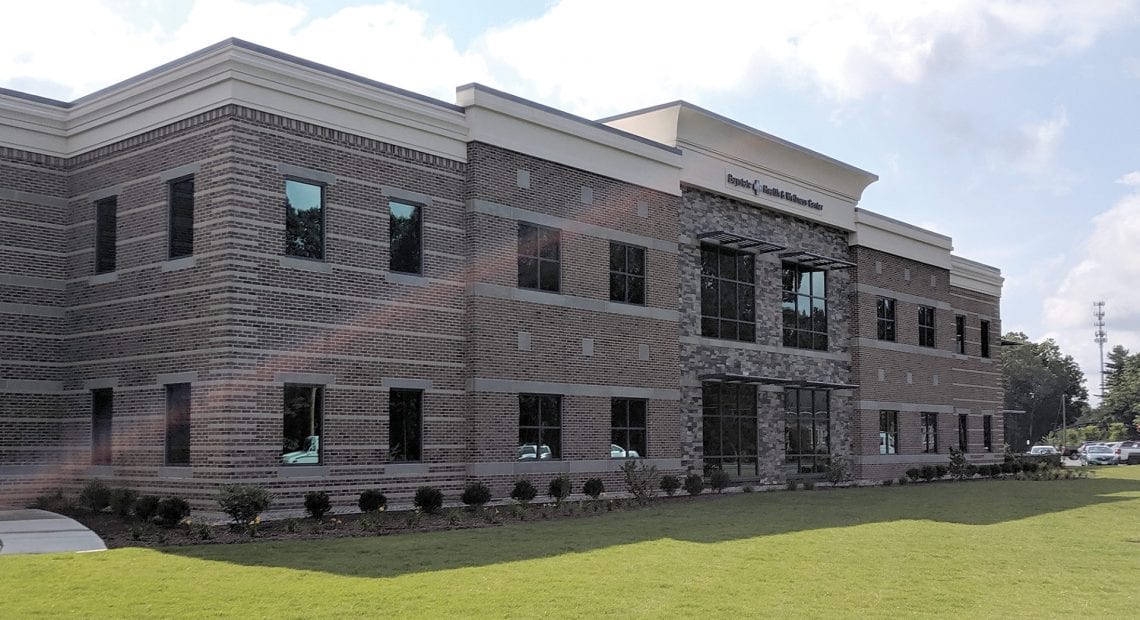
“We’re an industry-specialization agency — construction, hospitality, manufacturing — so we align ourselves with the insurance carriers that want to ensure those types of businesses,” he added. “We have very good relationships with our insurance carriers. We’re one of the largest writers for Liberty Mutual in New England, and other household names have been great partners.”

Current Events

The modern approach to doing business spills over into Phillips’ online presence, which includes Instagram, LinkedIn, and a revamped website with an active blog that aims to educate clients — and hopefully future clients — on various aspects of insurance and risk; recent articles cover boating safety, lowering one’s carbon footprint, and home-security technology. Meanwhile, the agency has won awards from the Republican’s Reader Raves program four years running.

Meanwhile, the agency’s charitable efforts include sending about 15 employees annually to prepare Thanksgiving meals at the Knights of Columbus, as well as donating to efforts like the Joseph D. Freedman Bowl-a-thon to benefit Camphill Village, Berkshire Hills Music Academy in South Hadley, and Link to Libraries.

The latter is an example of civic involvement that goes beyond donations, Phillips said. “We’ve got about six people now going to elementary schools in Chicopee. We donate a few hundred books a year, and a different person goes over and reads every month. It’s great for morale. Everybody loves to do it. And it’s an opportunity to get out of the office.

In fact, he said, there’s a bit of a reading backlog because the volunteer readers don’t want to stop doing it. “We gently nudge them aside to give everyone an opportunity.”

Another hands-on activity is the bowl-a-thon, which Phillips has been involved in for eight years, sending 15 to 20 bowlers to participate and raising $85,000 last year alone.

“We want people to feel good about where they work and what we do for the community, and there are certainly plenty of worthwhile causes out there,” Phillips said. “It’s tough to pick — there are only so many hours in the day and so much money to go around. You have to pick a few and really make a commitment to it. Something like Link to Libraries is really hands-on and gets everyone involved, rather than just writing a check.”

In a way, those community-engagement efforts aren’t much different than the insurance business itself. In both cases, the goal is to solve problems and make people’s lives a little more secure.

Joe Phillips says the agency has built a strong reputation for taking on complex risk, much of it surety bonds for construction projects.

Joe Phillips says the agency has built a strong reputation for taking on complex risk, much of it surety bonds for construction projects.

“With the personal lines, we’re protecting someone’s most valuable assets,” he said, adding that they also help families deal with the cost and stress of milestones like, say, adding youthful operators to an auto policy.

“On the commercial side, we’re also solving problems,” he went on. “We’re coming in and working as a trusted advisor, much like they’d work with their CPA or their attorney. We identify risk exposures that maybe they hadn’t really reflected on in the past that they should have — assets that are at risk. We try to work with them to develop the most comprehensive package for their insurance, whether it’s a utilizing captive insurance or using higher deductibles to save on premiums and maybe absorb some of the risk on smaller losses.”

It’s gratifying, Phillips added, to come to work every day knowing this work — and what the agency does outside the office — makes a difference in the region.

“We try to be out there in the community through business networking, charitable networking, and, of course, just trying to do the best job for our clients,” he said. “That’s the best referral — our existing clients.”

Joseph Bednar can be reached at [email protected]

Commercial Real Estate

A New Anchor

Drew DiGiorgio discusses Wellfleet’s move

Drew DiGiorgio discusses Wellfleet’s move, backed by, from left, Demetrios Panteleakis, Dinesh Patel, Springfield Mayor Domenic Sarno, Vid Mitta, and state Rep. Carlos Gonzalez.

Tower Square has seen its ups and downs over the years, but its new owners have been aggressive about selling potential clients on the renovated space, convenient parking, downtown amenities, and simply being part of an economic renaissance in Springfield. Wellfleet took that pitch to heart, which is why it agreed to become the tower’s anchor tenant.

Vid Mitta, managing partner of Tower Square, called Wellfleet’s relocation to the downtown Springfield office tower “a big thing.”

It’s even bigger when one considers how far the company has come, said Drew DiGiorgio, Wellfleet’s president and CEO.

“When we started, it was five employees,” DiGiorgio said. “My office was not an office — it was a desk and a chair located at the bottom of the stairs at a barbershop in Wilbraham. We would open up envelopes, and I would lick them because didn’t even have the little spongy thing. We answered the phones when they rang; we did everything. To go from that to this is pretty humbling, and I appreciate everyone’s support to get us here.”

“If this was five years ago, the issue might have been safety in the downtown. But the dynamic has changed. The downtown is attractive, there are all kinds of venues and attractions nearby, and security doesn’t appear to be an issue any longer.”

Wellfleet, a Berkshire Hathaway company providing accident and health-insurance products, recently staged a press conference to announce the relocation of its national corporate headquarters — and 150 of its employees — to the 10th, 11th, and 12th floors of Tower Square in August.

Wellfleet — which has built a national niche insuring college students, handling more than 100,000 students at more than 200 colleges and universities — has outgrown its current office space on Roosevelt Avenue in Springfield. The new offices at Tower Square will give employees up to 80,000 square feet of class-A office space and provide ample room for Wellfleet’s new and growing Workplace Benefits division.
“To me, Wellfleet is a home-grown, small, Springfield-based company which has grown to this size today, and we should applaud their success,” said Mitta, who announced that Wellfleet’s name will be placed on the tower as its anchor tenant.

Rethinking the City

Demetrios Panteleakis, principal of Macmillan Group, the real-estate firm that represents Tower Square, said his team was in discussions with Wellfleet for about a year as Wellfleet searched the suburban market for a home.

“We were the alternative. They were kind of weighing it against what the suburbs had to offer,” he said, adding that he was able to pitch a downtown headquarters as much more than a fallback. In fact, the more Wellfleet’s leaders considered Tower Square, the more it made sense.

“If this was five years ago, the issue might have been safety in the downtown,” Panteleakis told BusinessWest. “But the dynamic has changed. The downtown is attractive, there are all kinds of venues and attractions nearby, and security doesn’t appear to be an issue any longer.”

In short, a thriving urban center is simply more attractive than the suburbs to many companies. But that shift in perception didn’t happen overnight.

“I think it’s a culmination of everything the folks at City Hall, the Business Improvement District, and all the economic-development folks have been working on, rowing in the same direction, for the last four or five years,” he said. “The result is not only attracting new tenants, but bringing tenants from Westfield, West Springfield, Northampton, Agawam … these are folks saying, ‘Springfield is the heart of the economic engine in Western Mass., and that’s where we need to be; that’s where our employees need to be.’”

DiGiorgio said Wellfleet employees, when asked what’s appealing about Tower Square, cited the modern, renovated space itself, with its natural light, city views, and covered parking, as well as the food options downtown and the fact that the district has been emerging economically in recent years.

“In New England, it’s not a lot of fun when the snow and rain come, so having a secure garage, and having the ease of a building that kind of provides you everything you need over the course of the day, that’s highly attractive,” Panteleakis added.

Drew DiGiorgio called Wellfleet’s new home in Tower Square “inspirational” space.

Drew DiGiorgio called Wellfleet’s new home in Tower Square “inspirational” space.

Formerly known as Consolidated Health Plans, Wellfleet branded under its current name in January, uniting its insurance carriers and claims-administration organizations under one marketing name. It boasts approximately 175 employees, 150 of whom work in Springfield; others work remotely or from satellite offices in Florence, S.C. and San Rafael, Calif.

“We believe being part of Springfield is important,” DiGiorgio said, noting that the company has long been involved in efforts like the Memorial Spring Cleanup, Link to Libraries, Friends of the Homeless, Rays of Hope, and Open Pantry. “We are active in the community. Our name is not well-known, but we think that will change in the future.”

Springfield Mayor Domenic Sarno noted that Tower Square’s owners have been aggressive and creative in bringing an eclectic mix of businesses to the facility, from Wellfleet to the YMCA of Greater Springfield to White Lion Brewing Co.

“A lot of people, years ago, said, ‘what can you expect? It’s Springfield.’ More and more people are saying now, ‘why not Springfield?’” the mayor said. “I won’t say the downtown is re-emerging as much as it is reinventing itself. Springfield is getting on the map. And my administration continues to be business-friendly because it brings jobs.”

Towering Presence

At the end of the day, Panteleakis said, Tower Square is becoming an easier sell.

“When you walk people through the space and they consider the economics of it — for a few dollars more, they can have parking at their leisure, then the level of security and the amenities a class-A building has to offer — it sells itself.”

That’s why he enjoys those tours of the building with prospective tenants, and hopes more companies and organizations request them.

“What they need to understand is what Wellfleet understands — the level of the buildouts of the existing spaces in Tower Square rival anything you’d see in Boston or New York City,” he told BusinessWest. “These are class-A, high-tech buildouts, and there’s a difference between being in a class-B or suburban market and being in a state-of-the-art, class-A office space with spectacular views of the Pioneer Valley.”

At the press conference, Panteleakis said welcoming Wellfleet was “a special day” for the city and the office tower.

“It’s quite remarkable to have another insurance company that’s growing at the rate this company is growing, and it’s only fitting it makes its home in the marquee building in the center of the city, bringing its people, its energy, and its vitality to the downtown,” he noted. “It’s just a great day to see it happen to our city. I think it’s going to be one of many great announcements Tower Square has for you over the coming months.”

Joseph Bednar can be reached at [email protected]

Hampshire County

World Changers

Phil Weilerstein

Phil Weilerstein wants to help innovators move their ideas into practice — and perhaps change the world.

Katya Cherukumilli has a big idea with potentially bigger impact.

Her nonprofit startup, Seattle-based Global Water Labs, is developing a scalable and affordable fluoride-removal technology that aims to reduce the incidence of irreversible diseases as a result of consuming excess naturally occurring fluoride in groundwater — a risk common to some 200 million people worldwide.

She credits Hadley-based VentureWell with helping her move her big idea beyond the headspace into something tangible and, hopefully, impactful.

“One of the things VentureWell helped me realize was that the business model has to be really different for the R&D pilot phase and the scale-up and commercialization and expansion phase,” she said. “In a sense, I pivoted from how I was thinking about the fundraising for the initial pilot phase to thinking about who the different donors and funding agencies would be for the scale-up phase.”

VentureWell, which has been promoting technology entrepreneurship — especially in the sciences, medicine, and the environment — for almost a quarter-century, was a key reason Cherukumilli was able to even reach the pilot stage, thanks to $25,000 grant, but also connections to additional opportunities and networks she otherwise wouldn’t have access to.

“One of the things VentureWell helped me realize was that the business model has to be really different for the R&D pilot phase and the scale-up and commercialization and expansion phase.”

Myriam Sbeiti tells a similar story. While at New York University, she co-founded Sunthetics, which has developed a solar-powered device to use during the chemical-input phase of nylon production, helping eliminate greenhouse-gas emissions from the manufacturing process. But she quickly learned that conceiving a way to solve a worldwide problem and actually solving it are two different things.

“I’ve learned that entrepreneurship is finding solutions to completely new problems every day. I’ve been able to develop many new competencies from scratch — from negotiating contracts to navigating regulatory hurdles,” she said. “VentureWell has been a catalyst for our development. They provide a healthy balance of business mentoring and support while also keeping in mind the feasibility and viability of a venture’s technology.”

It’s that gap — between good ideas and viable businesses — that VentureWell has been trying to bridge since its founding in 1995, largely working with teams of college students and faculty. Its success to date, and its future promise, have both turned heads and drawn significant funding support, from the likes of the Lemelson Foundation, USAID, the European Investment Fund, the National Institutes of Health, the Autodesk Foundation, the Ewing Marion Kauffman Foundation, the National Science Foundation, to name a few.

“Our objective broadly is to impact entrepreneurship and innovation at colleges and universities,” VentureWell President Phil Weilerstein told BusinessWest, noting that its programs encompass grant making, faculty development, conferences, and curriculum — all with the goal of “making the idea of entrepreneurship more available to students.”

Laura Sampath says VentureWell is looking to adapt its model to enterprises that aren’t college-based.

Laura Sampath says VentureWell is looking to adapt its model to enterprises that aren’t college-based.

More specifically, the idea is to foster programs that help people move ideas into practice — and then scalability.

“As someone who’d started a business in the Valley before this, I wish I’d have had someone share these things with me so that the startup process was more effective, efficient, and less painful,” he went on. “It’s very rewarding, knowing the value it has for the people we work with, and being able to do it in a way that not only supports that particular venture but creates, through that venture, other pathways.”

Such a program is needed, if a recent report by the National Chamber Foundation and the Millennial Generation Research Review is to be believed. While more than 2,100 U.S. colleges and universities have added an entrepreneurship curriculum, the report notes, a large percentage of former students claim that the coursework did not adequately prepare them to start a business. Which raises the question, how can student innovators gain the necessary tools and knowledge to take their idea to market?

Enter VentureWell, and its team of 56 individuals trying to change the world from their quiet corner of Hadley. “We provide people with a healthy start,” Weilerstein said, “and get them on a pathway they might not otherwise have found.”

How they do that can’t be explained in a few words — and the potential worldwide impact is broader still.

What’s the Big Idea?

VentureWell was established in 1995 with support from the Lemelson Foundation, founded by prolific independent U.S. inventor Jerome Lemelson, who believed invention was essential to American economic success and vitality and envisioned a program that would foster the next generation of collegiate inventors and help them bring their ideas to impact.

In 1995, Lemelson convened a group of higher education faculty and administrators at Hampshire College to discuss how to make his vision a reality. In the meeting, Lemelson described an organization that would support educators in implementing a hands-on, experiential approach to learning while at the same time helping students develop new products and boost them toward commercialization.

VentureWell — originally called the National Collegiate Inventors and Innovators Alliance — was created out of this meeting. It began offering grants to faculty to start programs in technology entrepreneurship, particularly ones that focused on the development of ‘E-teams’ — groups of students, faculty, and advisors working to commercialize a novel idea. VentureWell then funded the best E-teams coming out of those courses and programs, helping them bring their inventions to market.

Christina Tamer (left), senior program officer, and Lauren Gase

Christina Tamer (left), senior program officer, and Lauren Gase, senior evaluation analyst, at VentureWell’s annual OPEN conference, which promotes connections among innovators and entrepreneurs.

The organization has since grown to a membership of 200 colleges and universities from across the U.S., engaging — and funding — thousands of undergraduate and graduate student entrepreneurs each year.

“Our approach from the outset has been to develop pathways for people with good ideas to figure out how to make an impact in the world through an innovation process that leads to scaled entrepreneurial outcomes,” Weilerstein said. “We’ve been successful at doing that both in the individual E-team ventures as well as working with institutions — with faculty and folks who are the enablers of this work — to improve the productivity of their environments.”

The end goal, he added, is to create pathways and support resources that enable ventures not only to emerge, but emerge with the ability to scale up and sustain that growth.

This is accomplished in three ways: programs to assist early-stage innovators, faculty initiatives, and cultivating broad-based innovation and entrepreneurship networks.

E-teams — VentureWell’s most common approach to early-stage innovation — are formed through competitive grants accessed through universities, Weilerstein explained. “Students are driving the projects — they’re the entrepreneurs, and they’re expected to be the startup founders, typically after they graduate. They learn by doing early-stage development in school, so they’re in good position to raise money and launch the company after graduation. Our training programs are designed to support that process.”

VentureWell’s second means to achieve its goals is by supporting faculty initiatives at colleges and universities — basically, challenging innovation and entrepreneurship (I&E) faculty to pioneer new and better ways of engaging their students in the entrepreneurial process. To these ends, the organization issues grants up to $30,000 to support science- and technology-based I&E in higher education.

Finally, VentureWell wants to cultivate networks of inventors and entrepreneurs to build an ecosystem of innovation.

“VentureWell has awarded over $11 million to 450-plus faculty at more than 230 different institutions,” Victoria Matthew, VentureWell senior program officer, said during a recent conference session on a project called Mission 2025, which was designed to elicit a vision for the future of I&E education. “Over that time, I&E education ecosystems have flourished and advanced such that competitions, entrepreneurship centers, and maker spaces are now standard on many campuses. While the progress is impressive, many in our community are now asking: ‘where do we go from here?’”

Indeed, Laura Sampath, vice president of Programs, told BusinessWest that, more than five years ago, VentureWell started being recognized nationally for the work it was doing with early-stage innovators, and funders were asking how to translate the model to support innovators who were not necessarily university-based. So the organization started working with USAID and the Bill & Melinda Gates Foundation on programs that supported scientific community.

“It’s the same at its core with a slightly different participant base, and those programs have continued to grow,” Sampath said, adding that VentureWell also works with the U.S. State Department to promote enterprises in Africa, Eastern Europe, and other areas. “With this model we developed over our first 20-plus years in existence, there are a great deal of transferrable ideas within that.”

Getting Down to Business

Again, the idea is to effect broad change in some area of technology, healthcare, or environment — and change lives, perhaps worldwide.

“We want to have an impact on educational and institutional systems, infrastructure, and ecosystems that provide the breeding ground and opportunity space where people with ideas can begin to think about the applications of their ideas,” Weilerstein said. “We work with the innovators to move that forward to support opportunity and investment and jobs — but also societal benefits through health and environment impacts.”

Sometimes the innovator doesn’t even understand what the eventual value of his or her invention will be.

“Like, I might know how to put a coating on a piece of glass so that nothing will stick to it. Well, who cares about that?” Weilerstein said, suggesting that, perhaps, people who make solar panels and want them to shed dust may value that idea most. “The initial thinking was, ‘I can make windows that never need to be washed.’ Well, it turns out that’s not actually worth much to people. So the innovators are finding out where the value is and what will actually lead to a viable, scalable business.”

In short, the E-teams and other programs are teaching students and faculty how to go from thinking like a scientist to thinking like an entrepreneur. “How can we support the scaling of your brilliant research idea and help it move more quickly or successfully into use by other people? That’s the critical jump between nothing ever coming of a really interesting research result and something actually world-changing happening.”

At VentureWell’s inception, Sampath added, the field of innovation and entrepreneurship was very different, and the types of institutions it works with must continue to evolve along with societal needs. “Part of what we now need to do is create that engine in a way that keeps us up with the times, that ensures we’re meeting the need of the [innovation] field as it stands today, which is constantly changing. And there’s no shortage of opportunity.”

Part of Mission 2025, Weilerstein said, is building tech-innovation networks in geographic pockets — like in the Midwest — that don’t have the advantages of, say, Boston, where resources, funding, and talent to build a billion-dollar company are close at hand.

“This is very rewarding work,” he added. “I feel lucky every day to come to work. It is meaningful work, both for the outcomes that happen and the way the work we do changes people.”

Even if an idea never turns into a viable business, the E-team experience often changes the mindset of the students, who then bring that heightened entrepreneurial approach to whatever career they attempt.

And if an idea does take root? Well, the world is full of massive problems in need of solving.

“The solutions to the problems facing society are often found at scale in an entrepreneurial way, and I think that’s true of things like climate change, pollution issues, and healthcare,” he went on. “People often are reluctant to associate problem solving with entrepreneurship, but that’s the way we approach it. Our work starts with invention. That’s really at the core of what we’re looking for — people who have figured out how to take a good idea and reduce it to practice. And the good idea is usually a solution to somebody’s problem.”

To an entrepreneur, the end goal of a good idea might be a business, independence, and financial security. That’s all fine, but Weilerstein wants people to think bigger.

“You have the satisfaction of a career, but it’s also an important way for society to solve problems,” he said. “All the things we think of as a crisis, we also see as an opportunity.”

Joseph Bednar can be reached at [email protected]

Restaurants

Meals on Wheels

John Grossman and Dawn Cordeiro of Holyoke Hummus

John Grossman and Dawn Cordeiro of Holyoke Hummus

As the operator of one of the region’s more popular food trucks points out, food-truck culture in the Pioneer Valley is different than it is in metro areas like Manhattan, where the trucks are a constant street-corner sight. Here, they’re more common at fairs, music festivals, and community gatherings, in addition to city streets. And a few have morphed into brick-and-mortar locations as well, which operate in synergy with the mobile kitchens, giving patrons even more opportunities to experience new tastes.

John Grossman has told the story often about the year — it was 2013 — he attended the Holyoke Brick Race, an annual stock-car event in the Paper City. Organizers arranged for food vendors, but none showed up.

“I had been traveling to New York for work, and I was used to seeing falafel trucks on every other corner, and I really wanted to see food like that here,” he recalled. “I told the mayor, ‘next year, I’m going to be here with a falafel cart.’ He said, ‘go ahead, John, you do that.’ That’s all the inspiration and shoving I needed. Our first gig was the race a year later.”

Grossman calls his food truck the Great Garbanzo, and has since added a smaller trailer called the Little Chickpea. He and his wife, Dawn Cordeiro, have turned their enterprise, Holyoke Hummus, into a staple at events like Food Truck Fridays at MGM Springfield and Abandoned Building Brewery, as well as community events, music festivals, and other gatherings across the region, like last weekend’s Run the Runway 5K at Westover Air Reserve Base.

Festivals and other public gatherings have been key to the success of most regional food trucks, he said, as opposed to places like Manhattan, where they’re a constant sight on city streets.

“There isn’t the urban density to support food trucks” lined up along streets, he noted, adding, however, that MGM and others have done well to create buzz around weekly food-truck events.

“It’s not the people in the casino coming out to that; it’s the people who work downtown who say, ‘hey, there’s a bunch of food trucks,’” he told BusinessWest. Making food trucks a regular sight along city streets outside of festivals and events, he added, requires permitting and parking tangles that can be difficult to navigate, although many have done so in Western Mass.

Like Sun Kim, who launched her food truck, Sun Kim Bop, in Amherst in 2014, but eventually decided downtown Springfield would bring more traffic, so she set up shop in front of Tower Square in downtown Springfield.
Bop is cooked rice molded into a bun and grilled; it’s the foundation for her Bop Burger, a seasoned rice bun with dry seaweed sprinkles, sauteed kimchi, and pork, beef, or chicken in between.

“It’s a tough business, but exciting. It’s a good way to get to know people,” she said. “During the warm season, people want to go outside to eat, or have an outing with their employees, and the food truck can go anywhere — in a field, in a park.”

At events, she added, “so many restaurants come with a tent to set up, and they take quite a while, but with the truck, we can set up within 10 minutes and start to feed people.”

Her authentic Korean street food soon developed a following, but there was a problem: what to do during the cold months?

“We had a long break during the winter, from November through April, when we closed. Food-truck season is quite short — maybe two-thirds of the year — and I felt like people might forget about us during the winter. I felt like we were starting our business over every spring,” she said. “But with a restaurant, we could stay connected to people. They could keep coming back to the same place and remember us.”

So, two years ago, she opened a Sun Kim Bop restaurant on Main Street. And she’s not the only one who turned mobile success into a storefront; Holyoke Hummus opened its restaurant on High Street, across from Holyoke City Hall, two years ago, starting with lunch service and adding breakfast this past January.

Sun Kim says her restaurant patrons will often seek out the food truck

Sun Kim says her restaurant patrons will often seek out the food truck, and vice versa, bringing synergy to her two-pronged business.

For our annual Restaurant Guide, BusinessWest checks in with a few local food trucks, and learns how that model has evolved for them, or will, into brick and mortar sites that coexist along with those kitchens on wheels.

Local Flavor

Jake Mazar and Will Van Heuvelen both come from a farming background, and both worked at Brookfield Farm in Amherst when they got an idea.

“Will’s background is in cooking and baking, and mine is in business management,” Mazar said. “But we both came to the Valley to pursue agriculture and had a passion for local food.”

Brookfield Farm had no commercial kitchen, though, and the pair wanted to take their food passions further. So they launched a food truck called Wheelhouse.

Jake Mazar (left) says he and Will Van Heuvelen

Jake Mazar (left) says he and Will Van Heuvelen want to take concepts that resonate with the agricultural movement and make them more accessible to the public.

“We wanted to take a lot of the same concepts that resonate so strongly with the local agricultural movement and make them more accessible to the public,” Mazar explained.

Wheelhouse got rolling in 2015, bringing the wheeled kitchen to food-truck events, farmers markets, festivals, and fairs over the first couple of years. It still takes part in some 75 events per year, but mixed in with music festivals, like the Green River Festival, and other public gatherings is an increasing number of private, catered events.

“For some of those, we don’t actually use the food truck,” he said. “Or, sometimes we bring the food truck to a wedding and do a family-style dinner, followed by late-night tacos from the truck. We do a lot of private events, and generally, we don’t do as many public events as we used to.”

That evolution has brought them to the next step, and they’re in the process of purchasing a property in Amherst to — much like Holyoke Hummus and Sun Kim Bop — open up a brick-and-mortar version of Wheelhouse.

“Will and I both think the Valley is such a unique place, in large part because of the agricultural heritage here, and the amazing small farms and growers — and large farms and growers. We can get grain here, dairy, fruit, vegetables, meat, mushrooms, fish — you name it, there’s a different place for it,” he said. “And it’s sort of our mission to highlight the amazing work these growers are doing. The farms contribute in a big way to the culture of our communities, and we want to shine a spotlight on them.”

It’s a shifting spotlight, to be sure, as the menus at Wheelhouse are constantly in flux, based on what’s coming out of the ground locally that month — from spring vegetables to summer fruits to root vegetables when the weather cools down.

“We change the menus basically every week based on what’s fresh, what’s going to be in season,” he said, noting that will be a feature at the brick-and-mortar restaurant, too. “That’s a big challenge, to accommodate what’s available in a given week.”

Dawn Cordeiro are among a handful of food-truck operators

John Grossman and Dawn Cordeiro are among a handful of food-truck operators who have translated their success into a brick-and-mortar restaurant — or are planning to do so.

What helps is that the Pioneer Valley is home to a progressive, multi-cultural, and culinary adventurous population that’s open to new tastes, and that means opportunity for truck owners who can carve out a niche, as Grossman has with his creative takes on falafel and hummus.

“People in Holyoke are interested in a wide variety of foods,” he said.

As for the restaurant, “it has a fun vibe,” he added. “We always knew lunch and dinner would be the bread and butter. But we started breakfast at the beginning of the year, and we also went to seven days a week. We were able to grow the restaurant in ways we weren’t even thinking about.”

He wasn’t sure High Street was ready for a seven-day operation, he noted, because it’s a largely commercial district that clears out after business hours.

But we heard people telling us, ‘I live in Holyoke but work in Springfield, and I can’t get back from work in time to eat at your place. Weekends would be great.’ And weekends are going nicely; people are happy we have food available every day.”

Rolling On

Still, food trucks are still about getting into plenty of outdoor events and raising their profile — usually for one type of food, as Grossman has done, and as Kim has done with Korean street food.

She told BusinessWest she’s relieved to have the Main Street shop, as a food-truck-only business was problematic in some ways. Simply put, it’s not easy to prepare everything without a commercial kitchen, with limited space and always having to supply electricity, gas, and water to the vehicle.

“It was tough; we were working without a real kitchen, like a restaurant has. That’s why we started thinking, ‘if I opened up a restaurant, we could prep all those things in the restaurant’s kitchen.’”

In fact, the truck and restaurant have boosted each other, Kim noted. “Sometimes people who find us at the truck come to the restaurant, and the restaurant people come to the truck. They both have the same logo and colors, and they can make a connection. Rather than having only a restaurant or truck, that really gives us synergy.”

Cordeiro has been out front with marketing Holyoke Hummus — both the food truck and the restaurant — especially online. “We’re mobile, and people are mobile, too, and that’s how you reach them,” Grossman said. “She’s been a great voice for us, explaining who we are and reaching people who’ll want to follow us around and be a part of this.”

As for Mazar, “I like to joke that we started this business just so we get to eat more of Will’s food,” he said. “At the end of the day, we just love food. We’re not trying to be pretentious about it; we just want to make it accessible.”

When asked what he enjoys about the mobile food lifestyle, he was quick to respond.

“It’s the people — well, the combination of people and food. Food trucks are a great interaction between the natural world and the human world. That’s a great inspiration for Will and me. We work with amazing farms — it all starts with them — and we get to see people experience the natural world in an incredibly delicious and satisfying way.”

Joseph Bednar can be reached at [email protected]

Travel and Tourism

Fun in the Sun

Summertime is a great time to get away, but in Western Mass., it’s also a great time to stick around and enjoy the many events on the calendar. Whether you’re craving live music or arts and crafts, historical experiences or small-town pride, the region boasts plenty of ways to celebrate the summer months. Here are a few dozen ideas to get you started.

June

Granby Charter Days
Dufresne Park, Route 202, Granby, MA
www.granbycharterdays.com
Admission: Free
• June 14-16: This annual town fair celebrates the adoption of Granby’s charter in 1768. This year’s event promises an array of local vendors and artisand, arts and crafts, contests, tractor pulls and an antique tractor show, an oxen draw, helicopter rides, a petting zoo, live music headlined by Trailer Trash, midway rides, a pancake breakfast, fireworks, and more.

Worthy Craft Brew Fest
201 Worthington St., Springfield, MA
www.theworthybrewfest.com
Admission: $35-$45
• June 15: Smith’s Billiards and Theodores’ Booze, Blues & BBQ, both in the city’s entertainment district, will host two dozen breweries, live music, and food served up by Theodores’, Thai Chili Food Truck, and Nora Cupcake Co. The event will also feature a home-brew contest; Amherst Brewing will make the winner’s beer and serve it at next year’s Brew Fest.

Jacob’s Pillow Dance Festival
358 George Carter Road, Becket
www.jacobspillow.org
Admission: Prices vary
• June 19 to Aug. 25: Now in its 86th season, Jacob’s Pillow has become one of the country’s premier showcases for dance, featuring more than 50 dance companies from the U.S. and around the world. Participants can take in scores of free performances, talks, and events; train at one of the nation’s most prestigious dance-training centers; and take part in programs designed to educate and engage audiences of all ages.

Out! for Reel LGBT Films
274 Main St., Northampton, MA
www.outforreel.net
Admission: $7-$12
• June 22: Out! For Reel LGBTQ Films celebrates National Pride Month with a mini film fest at the Academy of Music Theatre in Northampton. This year’s theme is “This American Lesbian Life: Uplifting (and Fun) Stories in Short Films.” Out! For Reel invites everyone in the community to enjoy these entertaining, inspiring, and award-winning films.

New England Food Truck Festival
1305 Memorial Ave., West Springfield, MA
www.nefoodtruckfest.com
Admission: $6-$35
• June 22-23: The New England Food Truck Festival, on the grounds of the Eastern States Exposition, is the largest event of its kind in New England, featuring close to 50 of New England’s premier food trucks, live music, and family fun. An array of entertainment is slated throughout the weekend, from local bands to face painting, to enjoy along with a taco, grilled cheese, or hundreds of other tasty options.​

The Capitol Steps
55 Lee Road, Lenox, MA
www.capsteps.com
Admission: $49
• June 28 to Aug. 30: Since they formed in 1981, political satirists the Capitol Steps have recorded more than 30 albums and can be heard four times a year on NPR during their “Politics Take a Holiday” specials. They will release their new CD, The Lyin’ Kings, in time for their annual summer residency at Cranwell Spa and Golf Resort. Cranwell performances are nightly excluding Tuesdays throughout the summer.

July

Old Sturbridge Village Independence Weekend Celebration
1 Old Sturbridge Village Road, Sturbridge
www.osv.org
Admission: $14-$28; free for children under 4
• July 3-4: At this celebration of America, visitors can take part in a citizens’ parade, play 19th-century-style ‘base ball,’ march with the militia, make a tri-cornered hat, and sign a giant copy of the Declaration of Independence. Children and families will enjoy some friendly competition with games, and a reproduction cannon will be fired. On July 4, a citizen naturalization ceremony will take place on the Village Common.

Monson Summerfest
Main Street, Monson
www.monsonsummerfestinc.com
Admission: Free
• July 4: In 1979, a group of parishioners from the town’s Methodist church wanted to start an Independence Day celebration focused on family and community. The first Summerfest featured food, games, and fun activities. With the addition of a parade, booths, bands, rides, and activities, the event — now celebrating its 40th anniversary — has evolved into an attraction drawing more than 10,000 people every year.

Berkshires Arts Festival
380 State Road, Great Barrington
www.berkshiresartsfestival.com
Admission: $7-$14; free for children under 10
• July 5-7: Ski Butternut may be best-known for … well, skiing, of course. But the property also plays host to the Berkshires Arts Festival, a regional tradition now in its 18th year. Thousands of art lovers and collectors are expected to stop by to check out and purchase the creations of more than 175 artists and designers, and take in a performance by ‘chamber-folk’ trio Harpeth Rising on July 6.

Brimfield Outdoor Antiques Show
Route 20, Brimfield
www.brimfieldshow.com
Admission: Free
• July 9-14, Sept. 3-8: After expanding steadily through the decades, the Brimfield Antique Show now encompasses six miles of Route 20 and has become a nationally known destination for people to value antiques, collectibles, and flea-market finds. Some 6,000 dealers and close to 1 million total visitors show up at the three annual, week-long events; the first was in May.

Yidstock
1021 West St., Amherst
www.yiddishbookcenter.org/yidstock
Admission: Festival pass, $236; tickets may be purchased for individual events
• July 11-14: Boasting an array of concerts, lectures, and workshops, Yidstock 2019: the Festival of New Yiddish Music brings the best in klezmer and new Yiddish music to the stage at the Yiddish Book Center on the campus of Hampshire College. The eighth annual event always offers an intriguing glimpse into Jewish roots, music, and culture.

Green River Festival
One College Dr., Greenfield
www.greenriverfestival.com
Admission: Weekend, $139.99; Friday, $44.99; Saturday, $69.99; Sunday, $64.99
• July 12-14: For one weekend every July, Greenfield Community College hosts a high-energy celebration of music; local food, beer, and wine; handmade crafts; and games and activities for families and children — all topped off with hot-air-balloon launches and Friday- and Saturday-evening ‘balloon glows.’ The music is continuous on three stages, with more than 35 bands slated to perform.

Northeast Balloon Festival
41 Fair St., Northampton, MA
www.northeastballoonfestival.com
Admission: $7.50-$15; free for children under 13
• July 12-14: This annual event, held at the Three County Fairgrounds, features balloon rides, walk-in balloons, nighttime balloon glows, and pilot meet-and-greets, as well as a vendor expo, craft beer, live music, and more. More than 30 of New England’s top food trucks will offer an array of tastes, while amusement rides and a petting zoo have been added for the first time.

Glasgow Lands Scottish Festival
300 North Main St., Florence
www.glasgowlands.org
Admission: $5-$18, free for children under 6
• July 20: Celebrating its 26th anniversary this year, the largest Scottish festival in Massachusetts, held at Look Park, features Highland dancers, pipe bands, a pipe and drum competition, animals, spinners, weavers, harpists, Celtic music, athletic contests, activities for children, and the authentically dressed Historic Highlanders recreating everyday life in that society from the 14th through 18th centuries.

Celebrate Ludlow
Ludlow Fish & Game Club
200 Sportsmans Road, Ludlow, MA
Admission: Free
• July 27: Celebrate Ludlow began in 2000 as an extension of a parade and picnic in 1999 to celebrate the town’s 225th anniversary, and has continued annually ever since. The event, held at Ludlow Fish & Game Club and put on with the help of numerous local nonprofit organizations, typically features live bands, food, games, activities for children, and fireworks to cap off the evening.

Hampden County 4-H Fair
1305 Memorial Ave., West Springfield
www.easternstatesexposition.com
Admission: Free
• July 28: More than 200 youth from Hampden County, and 4-H members from Berkshire, Franklin, Hampshire, and Worcester counties, will showcase projects they have made, grown, or raised during the past year. Events include a horse show and other animal exhibitions, a fun run, a talent show, a scavenger hunt, raffle drawings, arts and crafts, and more.

August

High Hopes Music and Arts Festival
One MGM Way, Springfield, MA
www.mgmspringfield.com
Admission: $25-$35
• Aug. 3: Paddle Out Productions is partnering with MGM Springfield to bring a day of music, food, and arts to the Plaza at MGM Springfield. Renowned Queen tribute band Almost Queen will headline the bill and will be joined by Roots of Creation’s Grateful Dub, a reggae-infused tribute to the Grateful Dead; the Eagles Experience; and local acts Atlas Grey and Joon.
Kids Safety Expo
1000 Hall of Fame Ave., Springfield, MA
www.kidssafetyexpo.com
Admission: Free
• Aug. 3: Children and parents can combine fun activities with critical safety education during the 11th annual Kids Safety Expo at the Basketball Hall of Fame. Attendees will have meet-and-greets with area law-enforcement officers, popular characters, and local mascots, and the first 500 children who attend will receive complimentary bicycle helmets.

Springfield Jazz & Roots Festival
Court Square, Springfield
www.springfieldjazzfest.com
Admission: Free
• Aug. 10: The sixth annual event will offer a festive atmosphere featuring dozens of locally and internationally acclaimed musical artists. More than 10,000 people are expected to attend. This internationally heralded festival has become a powerful expression of civic pride, uniting the region’s diverse cultural communities through music, arts, education, and revelry.

Downtown Get Down
Exchange Street, Chicopee
www.chicopeegetdown.com
Admission: Free
• Aug. 23-24: Downtown Chicopee will once again be transformed into a massive block party. Now in its fifth year, the event — which typically draws some 15,000 people to the streets around City Hall — will feature live music from nine bands, as well as attractions for children, local food vendors, live art demonstrations, and a 5K race on Aug. 24.

Celebrate Holyoke
Downtown Holyoke
www.celebrateholyokemass.com
Admission: Free
• Aug. 23-25: Celebrate Holyoke is a three-day festival that made its return in 2015 after a 10-year hiatus. This year’s festival, expected to draw more than 10,000 people downtown, will include plenty of live musical performances, food and beverages from local restaurants, activities for children and families, and goods from local artists, crafters, and creators of all kinds.

Red Fire Farm Tomato Festival
7 Carver St., Granby, MA
www.redfirefarm.com
Admission: $5; free for children under 8
• Aug. 24: When the tomatoes are ripe and delicious in the August fields, Red Fire Farm hosts its annual Tomato Festival. Attendees can taste (and buy) a rainbow of tomato varieties grown on the farm and vote for their favorites. Bands play out back while visitors snack on food from local vendors, go on a wild edibles walk, pick cherry tomatoes, listen in on a cooking workshop, and more.

September

Glendi
22 St. George Road, Springfield
www.stgeorgecath.org/glendi
Admission: Free
• Sept. 6-8: Every year, St. George Cathedral offers thousands of visitors the best in traditional Greek foods, pastries, music, dancing, and old-fashioned Greek hospitality. In addition, the festival offers activities for children, tours of the historic St. George Cathedral and Byzantine Chapel, vendors from across the East Coast, icon workshops, movies in the Glendi Theatre, cooking demonstrations, and more.

Mattoon Street Arts Festival
Mattoon Street, Springfield
www.mattoonfestival.org
Admission: Free
• Sept. 7-8: Now in its 47th year, the Mattoon Street Arts Festival is the longest-running arts festival in the Pioneer Valley, featuring about 100 exhibitors, including artists that work in ceramics, fibers, glass, jewelry, painting and printmaking, photography, wood, metal, and mixed media. Food vendors and strolling musicians help to make the event a true late-summer destination.

FreshGrass Festival
1040 MASS MoCA Way, North Adams
www.freshgrass.com
Admission: $48-$135 for three-day pass; free for children under 6
• Sept. 20-22: The Massachusetts Museum of Contemporary Art is known for its musical events, and the Fresh Grass festival is among the highlights, showcasing more than 50 bluegrass artists and bands over three days. This year, the lineup includes Greensky Bluegrass, Calexico and Iron & Wine, Andrew Bird, Mavis Staples, Kronos Quartet, Tinariwen, Steep Canyon Rangers, and many more.

All Summer Long

Valley Blue Sox
MacKenzie Stadium, 500 Beech St., Holyoke
www.valleybluesox.com
Admission: $5-$7; flex packs $59-$99
• Through. Aug. 1: Western Mass. residents don’t have to trek to Boston to catch quality baseball. The Valley Blue Sox, two-time defending champions of the New England Collegiate Baseball League, play close to home at MacKenzie Stadium in Holyoke. Frequent promotional events like postgame fireworks and giveaways help make every game a fun, affordable event for the whole family.

Westfield Starfires
Bullens Field, Westfield, MA
www.westfieldstarfires.com
Admission: $7-$10
• Through. Aug. 4: The newest baseball team to land in Western Mass., the Starfires, a member of the Futures Collegiate Baseball League, is playing its inaugural season at Bullens Field in a city with plenty of baseball history. The league itself has been expanding and growing its attendance in recent years, and 30 of its players were drafted last June by major-league organizations.

Berkshire Botanical Garden
5 West Stockbridge Road, Stockbridge, MA
www.berkshirebotanical.org
Admission: $12-$15; free for children under 12
• Through. Oct. 11: With 15 acres of public gardens, Berkshire Botanical Garden’s mission is to fulfill the community’s need for information, education, and inspiration concerning the art and science of gardening and the preservation of the environment. In addition to the garden’s collections, visitors can enjoy workshops, special events, and guided tours.

Crab Apple Whitewater Rafting
2056 Mohawk Trail, Charlemont
www.crabapplewhitewater.com
Admission: Varies by activity
• Through. Oct. 14: Wanna get wet? Crab Apple is a third-generation, multi-state family business that operates locally on the Deerfield River in the northern Berkshire Mountains of Western Mass. Its rafting excursions range from mild to wild, full- or half-day runs, in rafts and inflatable kayaks. In short, Crab Apple offers something for everyone, from beginners to more experienced rafters.

The Zoo in Forest Park
293 Sumner Ave., Springfield, MA
www.forestparkzoo.org
Admission: $5-$10; free for children under 1
• Through. Oct. 14: The Zoo in Forest Park, located inside Springfield’s Forest Park, is home to more than 175 native and exotic animals representing a large variety of species found throughout the world and North America. Meanwhile, the zoo maintains a focus on conservation, wildlife education, and rehabilitation, while offering special events like Zoo on the Go, guided tours, and discovery programs.

Six Flags New England
1623 Main St., Agawam, MA
www.sixflags.com/newengland
Admission: $46.99; season passes $75.99
• Through. Oct. 27: Continuing an annual tradition of adding a new major attraction each spring, Six Flags New England recently unveiled Cyborg Hyper Drive, a spinning thrill ride in the dark. Other recent additions include Harley Quinn Spinsanity, the Joker 4D Free Fly Coaster, the looping Fireball, and the 420-foot-tall New England Sky Screamer swings. And the Hurricane Harbor water park is free with admission.

Historic Deerfield
84B Old Main St., Deerfield, MA
www.historic-deerfield.org
Admission: $5-$18;
free for children under 6
• Year-round: This outdoor museum interprets the history and culture of early New England and the Connecticut River Valley. Visitors can tour 12 carefully preserved antique houses dating from 1730 to 1850, and explore world-class collections of regional furniture, silver, textiles, and other decorative arts. Summer activities include educational lectures, cooking demonstrations, and exhibitions of period items and art.


Construction

Shining Example

Sean Callahan and James Jaron didn’t expect the level of competition — make that outright opposition — they faced when they decided to enter the field of lighting distribution, which is dominated by a handful of huge, national players. But through patience, persistence, and adherence to a customer-first philosophy, they broke through, and gradually expanded their locally owned firm into a major regional player. And they’re not done lighting the way to further growth.

Opening a business — and keeping it going — isn’t an easy proposition. Still, Sean Callahan and James Jaron had no idea what obstacles lay before them when they decided to open Ion Lighting Distribution Inc. in 2016.

Jaron owned Zap Electric in Chicopee, and Callahan worked for Needham Electric Supply. “One day, we decided we needed to perfect one area of the distribution business, and that was the lighting,” Jaron said, noting that, in the large, corporate-owned stores, “the guy across the counter knows nothing about lighting, so he has to call somebody to call somebody to get some rep to talk to you” — and that adds layers of cost.

“So we established a distribution company from scratch, against all odds,” he said.

Those odds included a full-court press by those aforementioned large companies, he recalled. “They made a big effort to make sure we failed by cutting off our supply houses and manufacturers, telling them, ‘we’re multi-million-dollar companies; don’t sell to these guys, or we’re going to cut you off.”

Callahan remembers it well. “The day we started the company, I reached out to people I’d known for 15 or 18 years. All the manufacturers’ reps, literally 100%, across the board, all of them said ‘no.’ I was leaving a perfectly good job, I had customers ready to buy, and when I started reaching out to our manufacturers, it was ‘no,’ across the board — because our competition was trying to squeeze us out.”

He went so far as to e-mail the CEOs of those companies, saying, “‘I’ve been selling your products for 15 years.’ And they would look into it and say, ‘we’re not taking on new distribution at this time.’ It was very difficult to get started, but it’s nice to have people coming to us now saying, ‘hey, we screwed up. We didn’t think it was possible you guys would last. We want to do business.’”

Today, the Chicopee-based firm covers the state of Connecticut and Western and Central Mass., and extends into Rhode Island and New York City as well — and is looking to move into its fifth different facility in four years, all to accommodate Ion’s growth. How Callahan, the company’s president and CEO, and Jaron, principal and treasurer, managed that feat is a lesson in persistence.

Early on, Callahan said, “we flew to Hong Kong and China and met with manufacturers. Through that process, we found most major companies were buying overseas. So we got set up with container companies there and here and opened our business. As we got traction, more vendors started jumping on board because they saw we weren’t giving up. But it took a little while.”

Today, Ion purchases only in the U.S., he noted. “But it was tough getting started, and that was our only option at that point. It took a little more capital getting started than we would have liked, but eventually, we got our first vendor here — a small company we never would have thought about.”

Sean Callahan (left) and James Jaron

Sean Callahan (left) and James Jaron are looking for a larger headquarters — it would be their fifth in four years — to consolidate their warehouses and accommodate more growth.

Electricians are busy this summer installing 14,000 LED lights in the Du Bois Library building at UMass Amherst, one example of a large project for which Ion distributed products. But it deals with small businesses, too.

“Little by little,” Callahan said, we started picking up more and more work, and now we can sell top-of-the-line lighting on a big UMass project or commercial job, but we also have affordable lights for someone with a machine shop or small business who doesn’t want to pay top dollar when they can buy a fixture for $50.”

Green from Green

Ion is not an installer, Jaron emphasized; rather, it sells lighting to businesses, municipalities, and schools, as well as contractors, which is the ideal client.

Today, the company is a top-five distributor for Mass Save, a rebate program for using energy-efficient products; all the states Ion distributes in have similar initiatives. But the pitch isn’t just about cost savings.

“Think about the impact we have on the environment — it’s mind-boggling,” he told BusinessWest. “When we think about LEDs, we think about rebates and electric bills, but really, it’s an environmentally conscious thing to do.”

At the same time, the goal is to give customers the best solutions for the best price. “Our products are tested. If it doesn’t pass my scrutiny as an electrician, we don’t put it out,” he said, noting that Energy Star-rated products automatically imply that the fixture has a five-year warranty and has been through a rigorous quality-assessment process.

Jaron also noted that some of the large distributors won’t always explain the Mass Save rebate to customers and pocket the savings themselves.

“We put that savings in your pocket. We’re not doing anything hocus-pocus; we’re just being fair and giving customers what they need. We take care of our customers and talk to them like human beings,” he said. “Companies out there don’t want people to know. They’re gouging the end users. We said, ‘no. Make your margins, make money, but play fair, be a human being.’ You’ve got to do the right thing, and that’s what we’re doing, and that’s why our competition hates us. We’ve disrupted their little game. And our customers are very happy.”

A lot of people don’t understand the Mass Save incentives, Callahan said, so Ion makes a point of helping people maximize them. Jaron added that Ion has no commitment to any manufacturer’s rep, which makes it fairly unique in the upper tier of the industry — and allows for more cost savings.

“When the big supply houses have a commitment, they have to use their product. So when you come in buy a fixture, they’re obligated to use these certain brands for $120 or $130, where we have the same fixture, with the same manufacturer — apples to apples — and we can sell it to you for $80. Then add the Mass Save rebate, and it goes down to $40. Think about that for a second. No wonder they were terrified — because we’re not handcuffed to use certain brands.”

In many cases at corporate-owned distributors, Callahan said, the end user saw the inflated price and often decided not to buy because they didn’t have all the facts and options, and that was frustrating.

“But we found all these little offshoot manufacturers’ reps, all these other companies that we can work with, and can offer good, solid products that I would put up against any mainline manufacturers, and we were able to have stuff people could afford.”

Ion has a presence throughout Southern New England and New York City

Ion has a presence throughout Southern New England and New York City, and a forthcoming e-commerce website aims to expand sales nationally.

Take auto garages, for instance, which use big, 400-watt fixtures that stay on for long hours. Many shop owners have seen the long-term savings of LED lighting — typically knocking off two-thirds to three-quarters of the old cost — and were willing to make the shift. But Mass Save also, in many cases, brought the initial cost of the new fixtures down to nearly nothing.

“And the maintenance is almost none; you can go 10 to 15 years without changing a bulb,” Jaron said. “With the price, the maintenance, and the environment, it’s just a win-win-win.”

Seeing the Light

When Callahan and Jaron went into electrical distribution, they decided early on it would be in everyone’s benefit — theirs and customers’ — to focus on lighting. “That was our niche, that’s what I had a passion for, and it’s what I gravitated toward throughout my career,” Callahan said. “We decided we could do lighting better than anyone else. So that’s all we do.”

It’s a model that has worked. Counting outside salespeople, Ion’s team numbers about 15, and sales have grown significantly every year. After opening in an office above Main Street in Northampton, the firm has relocated three times in the mill district of downtown Chicopee, and is looking to expand again, in order to consolidate all its operations, including its additional warehouses currently located in Palmer and Springfield.
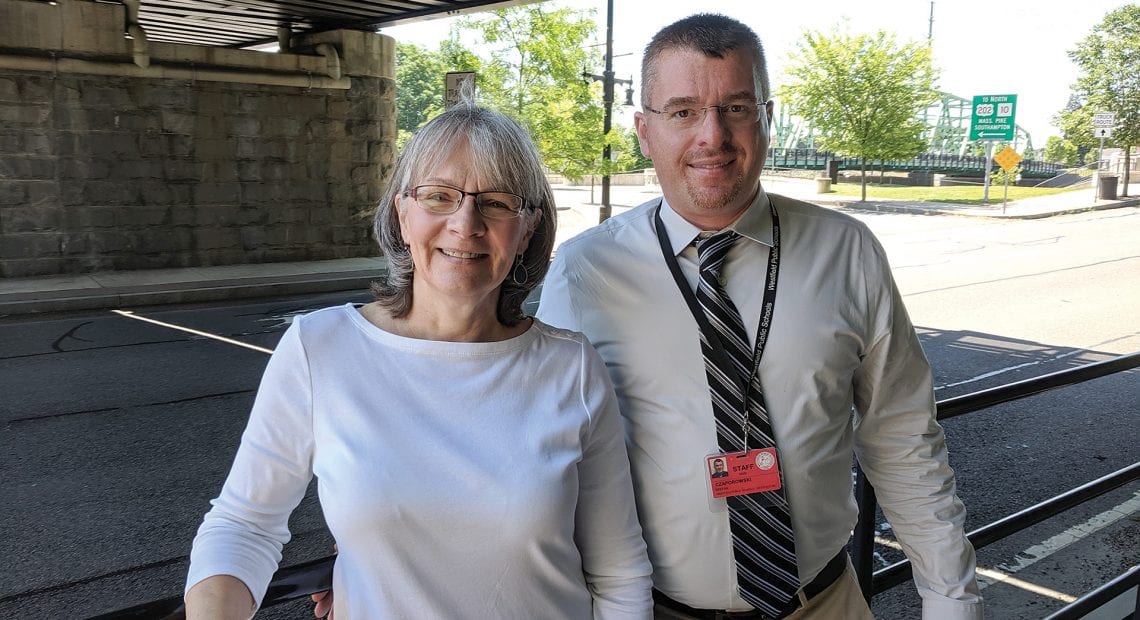
Callahan isn’t worried demand for LED lighting will dry up anytime soon, with so many businesses and municipalities still in need of a changeover. “You can drive down any street anywhere, and you’ll find opportunities.”

Meanwhile, he noted, Ion is getting ready to launch an e-commerce website. “We’re excited to bring it to a national level and start selling to everyone in that way as well.”

He and Jaron are gratified by stories like a big job they supplied lights for in Worcester. They later received letters from the thankful customer, noting that electricity costs had dropped from almost $120,000 a month to around $68,000 — with the savings essentially paying for the project cost in year one.

“Three years ago, it was tough. We’re one of the only privately owned companies like this, because every other supply company is owned by a multi-million-dollar corporation somewhere,” Jaron said. “Now, these reps that didn’t want to talk to us, they’re coming through the doors, apologizing.”
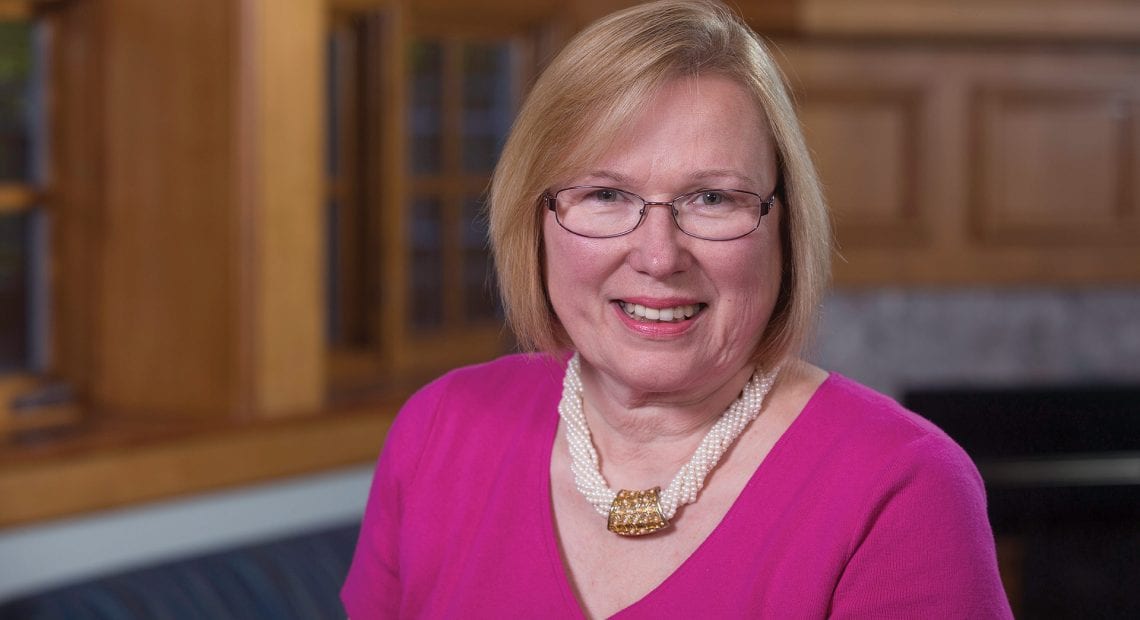
Joseph Bednar can be reached at bednar@businesswest.
Health Care

Implanted Thoughts

Dr. David Hirsh

Dr. David Hirsh says mini dental implants can hold a bridge or crowns in place without requiring surgery and months of recovery.

Early in his career, Dr. David Hirsh used to perform dental work for the then-Springfield Indians, and even back then, there was a clear generational divide among hockey players — one measured by how many teeth they had.

“Everybody used to talk about hockey players having no teeth,” he told BusinessWest. “But the young players grew up with helmets, facemasks, and mouthguards, and they came to the office here, and they had beautiful teeth. Their older counterparts would smile, and there would be nothing there.

“It was a matter of education,” he went on, comparing it to how today’s athletes have a better understanding of concussions for the same reason.

But that focus on education holds true among all dental patients, Hirsh added, not just athletes. Simply put, dentists are seeing people make it past their childhood and young adulthood with healthier teeth than in decades past. “We see a tremendous difference in the younger population, which is very satisfying.”

Since launching his practice in downtown Springfield in 1981 — he has expanded the Bridge Street office four times since then — Hirsh has seen plenty of change in the way care is delivered, particularly in the realm of implants, especially the mini implants he has become known for regionally (more on that later). But some of that change has to do with improving habits.

“We’re here to restore teeth and fix teeth and help patients smile and look good. But we would much rather get these people when they’re younger — meaning children or young adults — and guide them and help them to maintain their teeth,” he explained.

“There’s no fun in making someone a denture,” he went on. “There’s no fun in having to restore a full arch with implants. We do it because there’s a need. But that’s not the goal of dentistry. The goal of dentistry is clearly prevention. My goal has always been having a strong hygiene program, a strong prevention program, and helping guide people — and helping parents guide their children — to better oral health so they won’t have to be in a situation where they need a root canal, bridges, partials, dentures. Those things aren’t the goal. That’s not what we want.”

“There’s nothing more satisfying to me than to have a patient come in missing teeth, and they leave here with a beautiful smile, and they have tears in their eyes.”

But because there will always be a need for restorative dentistry, Hirsh — who practices with Dr. Kelly Soares under the umbrella of PeoplesDental — has taken advantage of plenty of innovations in the world of implants, with the goal of restoring not only teeth, but quality of life to patients with less recovery time than ever before.

Tooth of the Matter

When implants first came on the scene a half-century ago, Hirsh said, they were designed differently, and didn’t exclusively use titanium as they do today, so a membrane would form between the metal and the bone, causing the implants to loosen up.

“Today, every implant system is based on titanium technology — all of them,” he explained. “Titanium is the only metal that fuses directly to bone without forming a membrane around it.”

Implants are typically a surgical procedure, placed into exposed bone after the gums are opened up. “A hole is drilled, the implant is tapped in or screwed in very gently, and then the gums are sutured closed, and you have to wait anywhere from six to eight months in the lower jaw — four to six months in the upper — for that titanium implant to fuse with the bone.”

While traditional implants do a good job of anchoring crowns, bridges, and other structures over the long term, mini dental implants, or MDIs, have been a game changer for Hirsh’s practice.

MDIs are solid, one-piece, titanium-coated screws that take the place of a tooth root. They are much thinner than traditional dental implants and were originally designed to hold dentures in place. However, they have other benefits, including the fact that they stimulate and maintain the jawbone, which prevents bone loss and helps to maintain facial features. In addition, they are stronger and more durable than crowns and bridges that have been cemented into place.

They were first used in the ’90s and have been approved by the U.S. Food and Drug Administration for long-term use for fixed crowns and bridges and removable upper and lower dentures.

PeoplesDental in Springfield is now certified among a group known as Mini Dental Implants Centers of America — the only one, in fact, in a region that stretches from the Berkshires to Worcester, and from Vermont to Hartford. The organization is associated with the Shatkin Institute, the largest training center in America for MDIs.

“For reasons I don’t understand, mini implants in this area in New England are not widely utilized,” Hirsh told BusinessWest. “I think we’re a little slower than other areas of the country to experiment and do new things. When we have something that works, we don’t like to change. When traditional implants began in the late 1960s, early ’70s, the biggest negative voices were from dentists themselves — ‘you can’t put metal in somebody’s bone.’ Then, all of a sudden, by seeing what could be done, they came around.”

The same may soon happen with MDIs, he went on. “More people around the country are learning that minis are a very, very good alternative to traditional implants. The mini implants are not shorter, they’re just narrower; the largest minis today are equivalent to the thinnest traditional implants. The difference is basically the placement of them and what’s involved from a patient perspective.”

Most notably, no surgery is involved. Rather, the dentist makes a small hole through the gum tissue and into the bone, and screws the implant in.

“It gets its retention from the screwing effect, so you don’t have to wait six to eight months,” Hirsh explained. “That very day, you take an impression and make your final crown or bridge or whatever you’ll use it for.”

He likened the procedure to drilling a thin screw into a piece of wood. “You drill a pilot hole first, then put a screw in that’s a little bigger than the hole, so it bites into the wood. The same thing happens here, except it bites into the bone. It’s about half the cost, it’s less invasive, and there’s less chance of infection and the many types of sensitivity and soreness afterward because that usually comes from the cutting and the stitching.”

Quality of Life

More important, however, is the impact of mini implants on patients’ quality of life, Hirsh said, particularly for those wearing lower dentures.

“Lower dentures float all over the place. Nobody’s ever happy with their lower denture. It sits on a ridge like a horseshoe, and their tongue hits it and lifts it up, and they use pastes and powders that are uncomfortable and taste bad. And at restaurants, they can only eat what their teeth permit them to eat.”

With mini implants, however, a dentist can place four implants into the arch and corresponding attachments into their denture, and the denture can snap into place that same day. When they are used to stabilize upper dentures, the palate portion of the denture can be cut away, which makes it more comfortable and improves the taste of food.

“They can take it out to clean it, but it’s not going to move around,” he said. “There’s no paste or powder, it’s cost-effective, and it changes their life. I’ve done commercials with patients who bite into apples or corn with dentures, and they feel it’s rock solid.”

That’s gratifying for someone who has spent nearly 40 years helping people find solutions to dental issues that stem from genetics, accidents, environmental factors, and plain old bad habits.

In his earlier days, he explained, before dental insurance became more widely accessible, it was more common than today for families to avoid the dentist because of cost — or, if a tooth went bad, just opt for an extraction over a root canal.

“They were in a bad financial situation, or they weren’t educated to take care of their teeth, or a combination of both,” he told BusinessWest. “One tooth goes bad, and they need a root canal to save it, but they don’t want to spend the money, or don’t see the value in it. So they have that tooth extracted, and a year later, another one hurts, and it’s the same thing. All of a sudden, you’re looking at half a mouth of teeth, and half a mouth can’t do the work of a full mouth.”

Sometimes it’s a long process — decades, perhaps — to get to that point, or perhaps something happened suddenly, like a car accident or being struck in the teeth, but without insurance, it can be a challenge for families to get the work they need, at a time when procedures have become less invasive, in many cases, and more cutting-edge.

That’s changing, he said, not just on the insurance front, but as the result of decades of education and advertising the benefits of healthy oral habits. “When I see today’s young people, I don’t think, in the future, we’re going to see the amount of restorative need we see today.”

Until then, Hirsh aims to continue fixing what he can and helping young people forge a path to a future without implants. He’s scaled back to three days a week as he approaches retirement, but says the leisure activities of those coming years may not make him as happy as his current work does.

“There’s nothing more satisfying to me than to have a patient come in missing teeth, and they leave here with a beautiful smile, and they have tears in their eyes,” he said. “I’m not a golfer, but I fully understand hitting a great golf shot is very satisfying — but no one can convince me it’s as satisfying as doing something like that for a patient.”

Joseph Bednar can be reached at [email protected]