Home Archive by category Sections (Page 73)

Sections

Luxury Living Sections
Demand for High-end, Custom Homes Grows as Economy Improves

From left, Jason Pecoy, Kent Pecoy, and Suzanne Clarke

From left, Jason Pecoy, Kent Pecoy, and Suzanne Clarke say outdoor living space has become a key component of luxury homes.

Think about a beautiful marble or tiled shower with multiple showerheads that pulse and even give off steam in a state-of-the-art bathroom that glows with warmth from a gas-burning fireplace.

Imagine a pool cabana that resembles a small but stately home and is fronted by fluted columns and floor-to-ceiling windows with a kitchen and bar inside. Or a four-season room with glass walls that open onto a gorgeous patio that extends the home’s living space into the outdoors.

These areas exist locally in luxury homes where every feature is designed to please the most discriminating buyer. The demand for them is growing, and local builders who specialize in this niche market report that they have a substantial number of projects underway or planned for the near future.

“The market is doing well, and the luxury-building market is in full recovery mode,” said Richard McCullough, president of Richard A. McCullough Inc. in Longmeadow, who finished his term as president of the Homebuilders and Remodelers Assoc. of Western Mass. “It took a while for things to improve after the recession, but it’s a different feeling today when I pick up the phone; it’s no longer surprising when someone says they have a lot and want to build a luxury home on it.”

Laplante Construction Inc. in East Longmeadow, which is known for custom-designed homes, has been busy for the past four or five years. It diversified into the remodeling industry long before the economy went into a downward spiral and has steadily built that business, said Raymond Laplante, who founded the company and does most of the design work. “We’ve been doing whole-house teardowns and rebuilds, and are putting up large contract homes today.”

But styles, as well as the size of custom-built homes, have changed dramatically in recent years, and today’s wish lists reflect a desire to save energy and utilize every square foot of space.

“Luxury doesn’t mean large,” said Kent Pecoy, president and founder of Pecoy Signature Homes and the Pecoy Companies in West Springfield. “In the past, luxury homes were usually about 7,000 square feet. Today, they are much smaller — 4,000 to 5,000 square feet — but still have the same appointments: beautiful kitchens, spacious family rooms, built-ins, custom finishes, and swimming pools.

“We’re putting a lot of emphasis on outdoor living, with covered porches, outdoor kitchens, built-in grills, and fireplaces, and are making much better use of basements,” he went on. “Some even have kitchenettes that lead outside to the pool.”

McCullough agrees. “In the ’80s, luxury homes were all about size. Bigger was better, and it was taken to the extreme. Most homes had massive, two-story foyers,” he told BusinessWest.

But that hearkens to a bygone era. Formal living rooms have become passé, and formal dining rooms are not important to most buyers.

“Space that would have been used for a living room in the past is being turned into studies or casual conversation areas,” Pecoy said. “People tell us they want space they can use every day or for more than one purpose, such as a sunroom that doubles as an eating area. As a result, what we’re building is very different than what we built five years ago, and completely different than 10 years ago.”

Lots are also much smaller and closer to workplaces. “In the past, people wanted a lot of land, but now they are happy with an acre or even a half-acre,” Pecoy said. “They don’t want to be way out in the country, so the lots they choose are closer to the center of town. They want convenient commutes; they want to be able to enjoy area restaurants and shopping without having to drive long distances to get there.”

Entertaining has become an important part of many peoples’ lifestyles, and to accommodate that, luxury homes typically have open-concept floor plans that contain a spacious, state-of-the-art kitchen, adjoining family room, and an area that opens into the backyard.

“People don’t want to waste space, so layouts are efficient,” Laplante said, adding that outdoor living plays a key role in design, and his company is building a large number of spacious cabanas, outdoor fireplaces, and kitchens.

Return to Health

The size of luxury homes has gone up and down as quickly as the economy over the past decade or two, and Pecoy said the upward spiral began after 9/11.

“People didn’t want to travel, and since they decided not to buy vacation homes and were going to stay home, they wanted bigger houses. We had built good-sized homes prior to that event, but not nearly as large as the ones that were built for a few years after.”

Richard McCullough

Richard McCullough says foam insulation and geothermal heating and cooling are popular options in newer luxury homes.

The belief that bigger was better continued until the economy tanked and homebuilding almost came to a halt. Some builders, including Pecoy, had branched out years before, so they still had plenty of work, but although that wasn’t true for everyone, McCullough said, companies with long histories didn’t despair. “Everyone in the industry who has been through this once or twice had a measured amount of optimism,” he explained. “And things are good right now, although that could change because we don’t know what could occur in this geopolitical environment.”

Still, local luxury homebuilders are busy again. McCullough is about to start his fourth home in a development he created in Somers, Conn. called Bridal Path Ridge, and is working on a large addition to a custom-built home there.

“The owners are putting on a new wing with a second family room, office, screened-in porch, pool, hot tub, and outside kitchen area,” he said, noting that he believes many people who could afford to remodel held back while the economy was in a state of flux. “A lot of money sat on the sidelines, but now it is being reintroduced into the market. The fear has faded, and builders are benefiting.”

Jason Pecoy said the demand for screened-in porches, four-season rooms, and covered patios is on the rise. “We just put a roof over a patio in Longmeadow with stone seating walls around it,” said the vice president of the Pecoy Companies and son of Kent.

Efficient use of space even extends into the bathroom, and whirlpool tubs that were rarely used have lost their appeal, while free-standing and claw-footed tubs have made a comeback. In addition, demand for oversized tile or marble showers has heated up.

McCullough said most of the luxury homes he builds today are under 4,000 square feet, and the majority of the space, or about 2,800 square feet, is on the first floor, especially if the home is being built for professionals approaching retirement age who want their master bedroom downstairs, but need bedrooms for visiting children and grandchildren upstairs.

In addition, a growing number of older adults are adding luxurious in-law apartments to their homes, then selling the homes to their children. “There is a big push for these apartments. But people want all the amenities available, and that includes an open floor plan,” Laplante said, adding that he has built in-law apartments that range in size from 1,200 to 1,600 square feet.

The second-home market is also beginning to gain strength.

“We just acquired four acre-plus lots in West Dennis across from the beach and are about to start building a 4,200-square-foot spec home there,” said Suzanne Clarke, director of sales and marketing for the Pecoy Companies. “And we just finished a 3,000-square-foot luxury home in West Dennis that has a beachy feel, with beautiful trimwork, built-in bunk beds for the children with carved seahorses, coffered ceilings, a gorgeous outdoor screened-in porch with a fireplace and TV, and a large patio.”

Attention to Detail

Although today’s luxury homes are smaller, interest in interior detail has grown.

“There is a focus on unique finishes,” McCullough said, citing a custom casing over a doorway with a crown and cap as an example, and adding that, during the course of many remodeling jobs, owners of luxury homes make the decision to change all of the trim on the first floor.

He builds many homes for professionals approaching retirement age, while Laplante has many clients with young children, who prefer a young, transitional style, which translates to elegant, custom-built moldings with simple lines, quartz countertops, and porcelain plank floors in the kitchen that look like hardwood. “They want a clean, modern look, and many choose character wood for the floors, which shows the knots and irregular grain,” he explained.

Keeping rooms off the kitchen have also become popular. “They usually have a fireplace, a small desk, and some seating. They’re small but comfortable nooks that give kids a place to study,” Laplante went on.

Richard Gale, project manager for Laplante Construction, said these rooms allow parents to converse with their children while they cook. “Sometimes we build a center island in them with desks around the perimeter. The room can be used as a place to eat or do homework.”

Raymond Laplante, left, and Richard Gale

Raymond Laplante, left, and Richard Gale say attention to detail is a critical component in the design of a new luxury home.

Advances in technology are also making their way into design, and Laplante said mudrooms often contain charging stations where children and adults can plug in all of their devices, and these areas typically have benches that double as storage areas with cubicles and shelves above them to hold books and outdoor clothing.

The playroom is another area where space is maximized. “Parents want things organized, so the rooms may have open shelves or cabinets with pullout drawers,” Gale noted.

The desire to utilize space to the fullest has even washed up in the laundry room, he added. “They’ve become a lot more complicated; they’re bigger and have more cabinetry and space to store things.”

Basements are another area used as part of the living space, and they are becoming recreation centers in new, luxury homes. Some buyers still request formal movie theaters, although builders say that trend is giving way to informal areas that contain a fireplace with a big-screen TV stationed over it.

“Game rooms are popular, and some people want spas, steam rooms, saunas, or lap pools in their basement,” Laplante told BusinessWest.

Incorporating ‘green’ building measures — particularly energy-efficient touches — is also an item on wish lists. “But for many people, it’s more about saving money than about saving the environment,” McCullough noted.

Laplante agrees, but says many of his clients want to make a contribution to the environment, and their desire is boosted by government subsidies that provide cash rebates and incentives for energy-efficient construction.

Pecoy says operating costs have become part of the conversation when people discuss the design of a luxury home.

“In 2004, even if I brought it up, no one wanted to talk about it,” he said. “But today, we’re setting up homes for solar and making sure the main body of the roof faces as much toward the south as we can.”

Foam insulation is slowly replacing fiberglass, and geothermal heating and cooling systems have become popular. “The heating systems cost two to three times more than a traditional system, but pay for themselves over a period of six to eight years,” Laplante said.

Pecoy added that people are also concerned about sustainability and where their building materials come from.

“We used to use a lot of exotic woods, such as ribbon stripe mahogany that came from rainforests,” he said. “But today, people prefer local hardwoods such as oak, ash, and maple.”

Fireplaces are still hot, but the demand for wood-burning models has gone up in smoke, being replaced with gas units that are easy to operate and don’t waste heat. “Saving energy has become ingrained in people’s minds, because no one knows where energy prices will go a year from now,” McCullough said.

Still, the warmth of a fireplace remains attractive, and Laplante’s clients are putting them in bathrooms and bedrooms and using zero-clearance models in hallways that allow them to be mounted on walls.

“They’re not all at ground level, and many look like artwork,” Gale said.

And because entertaining friends and family at home has become so popular, many luxury homes are designed with a guest bedroom and adjoining bathroom large enough to almost be called a second master suite.

Moving Forward

Although designs have changed in recent years, McCullough said, the biggest difference in the market today is people’s willingness to spend money.

“My view is that we’re on a precipitous rise. This year is much better than last,” he told BusinessWest, adding that it means work for builders, subcontractors, suppliers, and companies that make products for construction.

Laplante is building in East Longmeadow, Hatfield, South Hadley, and Southampton, as well as Connecticut. “Some of the homes are on individual lots, while others are in subdivisions. We’re also doing a lot of major renovations,” he noted. “For us, business is great.”

Pecoy said the majority of his firm’s business used to come from building luxury homes. “It has slowly picked up, and right now, it is about 40%,” he noted, adding that many existing luxury homeowners are remodeling and expanding their outdoor space.

Indeed, the list of projects his company is doing is staggering. “We have expanded our footprint, playing in a much bigger sandbox and traveling farther than we used to,” he said.

But for Pecoy and other custom homebuilders, it’s a joyous ride in a season that holds great promise.


Features
BBBS Thrives Through the Power of Partnerships

Big Brothers Big Sisters of Hampden County, like the agency’s 370-odd other affiliates, specializes in creating matches that ultimately provide learning experiences for mentors and mentees alike. To do that, the organization relies on partnerships with a host of constituencies, but especially the business community.

Sergio Dias, seen here with Angel

Sergio Dias, seen here with Angel, says the ‘littles’ he’s mentored through BBBS have inspired him and motivated him to think differently about the problems he’s confronted.

Sergio Dias was asked about what he does with and for the young people he mentors through his participation with Big Brothers Big Sisters of Hampden County (BBBSHC).

He said much depends on the individual in question — he’s served as a ‘big’ to many of them over the years — and the issues they’re dealing with at the time. But many times, he noted, he’s advising the young men on college, everything from why it’s important to the nuances of an application form.

“Some of them just need support based on the issues they’re facing at home, while for others, it’s more about getting them ready for college, including all the paperwork that’s related to getting accepted to a school,” said Dias, an analyst in the Marketing Department at MassMutual. “For others, it’s helping them figure out what they want to do, what their skills are; I’m helping them find themselves.”

He started to elaborate, but quickly changed the tenor of the conversation, focusing on what his interaction with these ‘littles,’ as they’re called, has meant to him. And he stressed that this is an equally important part of the equation.

“Initially, I thought I was giving back — sharing my knowledge and experiences,” said Dias, who is currently mentoring Angel, who will start his freshman year at Springfield College in a few weeks. “But I was really surprised by how much I was learning from them, even though I have three kids of my own. Many times, I’ve been inspired by what these kids have going on in their lives and their outlook and perspective on things. I think I have issues and problems, and I see the issues they’re dealing with and how they’re confronting them, and it really motivates me to think differently.”

Heather Bushey, assistant director of Continuing Education at Bay Path University, can certainly relate.

She’s been a ‘big’ to Springfield resident Destiny for eight years now, and has watched her grow from a young girl in the second grade to a young woman soon to enter her junior year of high school.

Destiny has grown in a number of ways, obviously, but so, too, has Bushey.

“I’ve learned a lot about myself, that’s for sure — about my limits and abilities and what drives me as far as motivating factors and seeing her grow and benefit from the program,” Bushey told BusinessWest. “It’s a very rewarding experience, and it has certainly helped me grow as a person.”

Heather Bushey

Heather Bushey, right, has been a mentor for Destiny for eight years now.

In many ways, these stories are typical of those who become involved with Big Brothers Big Sisters of America, or BBBS, the working acronym for the nearly 100-year-old organization. And more of them are being written each year for the Hampden County affiliate, which could also be described with that adjective typical.

Indeed, it is like other BBBS chapters in that it:

• Serves an area that includes urban centers populated by large numbers of young people who are living in single-parent households or with grandparents or other relatives, and are very much in need of a positive role model and mentor;

• Struggles mightily to meet the demand for individuals — professionals and retirees alike — who are willing and able to serve in those roles. David Beturne, executive director of BBBSHC, said the chapter now serves roughly 225 young people at any given time, but could, if it had the needed resources and demand, serve twice that number; and

• Is very much dependent on partnerships with the community, especially the business community, to carry out its vital work. Indeed, BBBSHC has forged relationships with corporations and institutions ranging from MassMutual to Bay Path; from St. Germain Investment Management to Veritas Preparatory Charter School in Springfield, to effectively serve area young people.

The obvious goal moving forward, said Beturne, is to close that large gap between the number of young people who need mentoring and those who currently can be served. And to do that, the organization must generate more resources — each match between a ‘big’ and ‘little’ costs about $1,000 — and therefore create more of those critical partnerships.

For this issue, BusinessWest takes an in-depth look at the Hampden County chapter of BBBS to gain an appreciation not only for this organization’s broad mission, but how the business community plays a huge role in carrying it out.

Striking a Match

On the day that BusinessWest caught up with Bushey and Destiny for a few photos, they were on their way to dinner, although the specific destination was still to be determined.

They dine out together regularly, said Bushey, adding that they also frequent area malls — “Destiny loves to shop” — venture out for frozen yogurt, and take in various cultural events. They’ve been to downtown Boston, the beach, and a host of other destinations.

That list includes the Bay Path campus in Longmeadow. Bushey said she’s taken Destiny there several times with the goal of familiarizing her with that lifestyle and cementing a college education as a goal worth committing to.

“Right now, school is a tough experience for her,” said Bushey. “I try to get her to focus on setting goals for herself; we talk a lot about future goals and plans, with the hope that college will be part of that. I want to expose her to it now so she can start thinking about it.”

Relationships like the one between Bushey and Destiny are somewhat rare, at least in terms of this one’s duration, but, as stated earlier, typical in the way in which both the mentor and mentee learn from one another and grow personally.

Writing such scripts is the singular purpose behind BBBS, said Beturne, adding that it’s a reality, and a sad one at that, that there will always be a need for this organization, and that there are more young people who need help than there are individuals receiving it.

Addressing this reality is the core mission of the 370-odd BBBS affiliates, said Beturne, noting that the Hampden County chapter was launched nearly 50 years ago (1967) and has evolved greatly over the ensuing decades.

BBBSHC is one of several affiliates in Western Mass., but easily the most urban of those organizations, he explained, adding that Hampden County includes the area’s three largest cities — Springfield, Chicopee, and Holyoke — and some of the state’s poorest communities.

But the need for the agency’s services extends to each city and town in the county, Beturne went on, adding that this need is met through several initiatives, but primarily both community-based matching programs and site-based initiatives, which, as the name suggests, involves mentors visiting mentees at a specific site, such as a school, YMCA, or college campus.
In Hampden County, the specific programs are:

• The community-based model, used nationwide, whereby matches (such as Bushey and Destiny) spend at least eight hours a month together for at least a year and participate in all types of activities in the community;
• ‘Lunch Buddies’: During the school year, matches meet for lunch weekly at the child’s school for about 30 minutes;
• ‘Mentor Springfield’: During the school year, matches meet weekly for one hour at three Springfield middle schools. Activities ranges from writing in journals to working on homework; and
• The ‘Pathways Program’: Also during the school year, eligible students from Springfield’s Putnam and Sci Tech high schools meet with mentors from MassMutual (such as Dias) once a week for 50 minutes (more on this initiative later).

David Beturne, left, seen here with BBBSHC Director of Development Jesse Vanek

David Beturne, left, seen here with BBBSHC Director of Development Jesse Vanek, says the need for ‘bigs’ far exceeds the supply.

“We’re taking students from Sci Tech and Putnam and going to MassMutual’s main campus,” said Bertune, referring to that last program, obviously unique to this affiliate. “They’re seeing their big brother or big sister there. It’s a career-pathways program with a curriculum to it; we’re looking to immerse these students into the culture of MassMutual, where they learn what the company is and what it does, and how they might be able to make a career out of insurance.”

Results obviously vary with each individual, but a recent study conducted by the national research firm Public/Private Ventures in Philadelphia revealed that participants in BBBS programs are 46% less likely to begin use of illegal drugs, 27% less likely to begin using alcohol, 52% less likely to skip school, 37% less likely to skip a class, 37% less likely to hit someone, and, overall, more confident of their performance in school and better able to get along with their families.

Unfortunately, demand for mentors far exceeds supply, said Beturne, adding that, while BBBSHC serves about 400 young people a year, there are maybe 225 to 250 matches at a given time; some matches close out because the child reaches a certain age or moves out of the area.

“Demand is huge — I would like to serve at least 500 children in Hampden County, doubling our capacity,” he said. “If we could do that, I would be happy with that — I wouldn’t be satisfied totally, but I’d be happy.”

Escalating demand — there is currently a waiting list for mentors with upwards of 80 names on it (and that’s typical) — and a desire to meet it were the primary motivations behind creation of the site-based initiatives, said Beturne, adding that they allow more young people to receive mentoring services and more busy professionals to get involved in some capacity.

“As we were out doing recruitment, trying to get people to volunteer for the [community-based] program, the one thing we always heard was, ‘I’d love to, but I’m busy — I work, I have a family, I’m doing this or that,’” he explained. “So we started doing the school-based program, where a volunteer can see a child in school during the day. People are able to go out on their lunch break and spend 40 to 45 minutes with a child, maybe more.”

The Power of Relationships

Returning to his comments about how his participation with BBBS has helped him grow as an individual, Dias said he’s worked with six young people over the years, and each one has taught him something about life and how to deal with all that it can throw at you.

Dan Morrill

Dan Morrill says Wolf & Co. has supported BBBS in many ways, including the large team that took part in the annual bowl-a-thon.

He singled out ‘John,’ a 17-year-old he mentored a few years ago, who displayed an attitude, maturity, and sense of determination that belied his years.
“It felt like I was having a conversation with a 40-year-old,” Dias recalled, noting that the Springfield resident told him at their first meeting that he was determined to overcome a host of problems at home and not only graduate from Sci Tech High School and go to college, but graduate as a junior — and be valedictorian.

“At first I was like, ‘OK, yeah, sounds great … I’ll support you in any way I can,’” Dias said. “By the second month, I remember thinking, ‘he’s going to do it.’ He faced all kinds of challenges — the school didn’t want to let him do it at first, there were a lot of issues at home — but he did it. He got all kinds of scholarships I helped him with, and now he’s thriving at UMass. He was such an inspiration to me.”

Certainly not all stories involving BBBS participants involve such happy or unlikely endings — or beginnings, depending on one’s outlook. But everyone who takes part in this program benefits in some way, said Beturne, adding that the simple goal, again, is to enable more people — big and little — to take part.

And this brings him back to partnerships, all of which in some way enable BBBSHC to meet its mission and broaden its impact.

One such partnership has been forged with Bay Path, and it’s taken on many forms in recent years — from escalating participation in the annual BBBS bowl-a-thon, its largest annual fund-raiser, to the agency being named the school’s designated charity for the 2014 holiday party — but especially with Bay Path students going into Veritas Charter School as ‘bigs,’ creating 20 more of those all-important matches.

“Veritas is very much a college-preparatory school — their mission is to get students to move on, to graduate from high school and attend college,” said Beturne. “Being able to have Bay Path students go into the school and share their experiences — many of the school’s students are first-generation college attendees — is a win for Big Brothers Big Sisters, Veritas, and Bay Path. Their students are able to gain exposure and give back, and students at Veritas are able to see this real world, too.”

Rachel Romano, founder and executive director of Veritas, agreed, noting that students at the school participate with BBBS through the Bay Path initiative and others.

She said only 17 of the school’s roughly 240 students take part (again, demand is greater than supply), but those who do participate benefit from the relationship and the reinforced message concerning the importance of a college education and how it can become a reality.

“Our mission is to prepare our students for college,” she explained. “And what we love is the idea that these ‘bigs’ would stay with these guys and be a support person in their lives who would help them stay on the path to college once they leave Veritas.”

Carol Leary, long-time president of Bay Path, said the school is active with a number of area nonprofits, like BBBS, that reflect the its core values, enable its students to become active in the community, and support young people and education.

Several employers, including Bushey, have served as ‘bigs,’ while students have been doing site-based work at schools such as Veritas for three years, said Leary, adding that BBBSHC was this year’s designated nonprofit at Bay Path, and thus the focus of a well-orchestrated campaign of support.

“We go out to the community and ask if there is a nonprofit that they would like us to highlight and spotlight for Bay Path’s generosity at the holiday party,” she explained. “This year, Big Brothers Big Sisters had the most support of any nonprofit, so we chose them. They gave us a list of things of they need — everything from games for the children to books to gift cards so that the big brothers and big sisters can take a child to Friendly’s — and we send that list to the people at Bay Path, who make donations.”

Case in Point

Another key relationship has been forged with MassMutual, which had a desire to add a case-management component to an existing but evolving mentorship program, and found a willing partner in BBBSHC.

“We wanted to look at mentoring somewhat differently, and look at how we could use mentoring as a method to help focus students on college- and career-readiness issues,” said Pam Mathison, a community-responsibility consultant for the company who specifically focuses on education programs within the city of Springfield, as she talked about the corporation’s larger Career Pathways initiative.

“Initially, we started working with Mass Mentoring Partnership, and they helped build the model along with Springfield School Volunteers and the Springfield School Department,” she went on. “As we got into the experience, we determined that we needed a mentoring partner whose job is the management of a mentoring program, and for that, we approached Big Brothers Big Sisters.”

The motivation for the partnership was to improve the overall experience for both the students and the mentors, she went on, adding that this has certainly happened since the relationship began more than three years ago.

Roughly 40 employees across virtually all departments and all levels within the corporation have made a three-year commitment to serve as ‘bigs,’ said Mathison, adding that students, like Angel, are recruited during their freshman year and essentially begin work with their mentor during their sophomore year.

As with Bay Path’s initiative, there are multiple winners in this scenario, including the company, which is always mindful of creating a pipeline of future employees, the students themselves, and BBBSHC, said Beturne.

He noted that the organization benefits from partnerships with companies large and small, whose employees make donations ranging from stints as ‘bigs’ to service on the board of directors, to raising money through the annual bowl-a-thon.

St. Germain is one of those companies, and its president, Michael Matty, said the support stems from need, but also from the results generated by the agency.

“I have a high level of involvement with a lot of organizations, but rarely do I see people more passionate than those at BBBS,” Matty said. “I love passion; their passion is one of the reasons we are involved. But as a businessperson, I also recognize that passion is perhaps pointless if there are no results.

Mike Matty

Mike Matty says BBBS might fly under the radar, but its impact on the lives of underprivileged youth will reap long-term benefits across the region.

“BBBS is an organization that produces results,” he went on. “They perhaps don’t get the recognition that I feel they deserve because their results are impacting youth, and underprivileged youth at that. Their mission is to help the kids who will be an integral part of our local community, where we all work and run businesses. We can’t lament the local situation without working at doing something to change it, which is what they do every day.”

Another prominent local partner is Wolf & Co., the Boston-based accounting firm with a large Springfield presence.

Dan Morrill, CPA, a principal responsible for the company’s Professional Practice Group — and a one-time ‘big’ — said the company’s support comes in many forms, from his service on the board of directors to a large, company-wide turnout for the bowl-a-thon.

“The first year we had a bowling team, I think we had three people — this year, we had about 70,” he explained. “That speaks to how the company values the important work Big Brothers Big Sisters does within the community. Giving back is a big part of the culture at Wolf, and this organization has always been one of those we choose to support because it is really making a difference within the community.”

Work in Progress

Bushey told BusinessWest that young people “age out” of BBBS when they reach 19. By that, she meant that the formal relationship between the ‘big’ and ‘little’ ends.

Often, however, a new one begins, she said, adding that the young people sometimes remain active with the organization in several ways as alums, while staying in touch with their mentor.

“I definitely anticipate remaining involved with Destiny,” she said, adding that she doesn’t know what the future holds for her, but intends to keep providing whatever support she can.

In a nutshell, that’s what this organization is all about — people stepping up, getting involved, and positively influencing young lives.

It takes individuals with time, energy, and commitment to make such a difference, but overall, it takes a community to enable this agency to meet its all-important mission.

George O’Brien can be reached at [email protected]

Luxury Living Sections
Recipe for Spectacular Kitchen Calls for Spice, Convenience

Hunter Marosits

Hunter Marosits says luxury kitchens may have two dishwashers, six or eight stovetop burners, and custom features such as bread warmers and microwaves built into a drawer.

The kitchen has long been known as the heart of a home, and many people are remodeling to add style, function, flair, and a dose of luxury to the most important room in their living area.

“Our sales are up 20% to 25% over last summer, and this year has been super busy; our normal lead time is six weeks, and for a while we were backlogged three months,” said Steve Wenninger, president of Ideal Kitchens Home Improvement Inc. in Chicopee, who owns the company with his wife, Marie Wenninger.

Hunter Marosits is also doing well, and says people are expanding the space to suit today’s lifestyles. “But every kitchen we create is unique. We never do the same thing twice,” said the president of H&R Homes Remodeling Inc. in Springfield.

The recipe for success contains many ingredients, but local remodelers say it begins with and centers around the design.

“The kitchen is a critical part of the home, and designing the room is a work of art that depends on the skill of the designer, the flexibility of the client, and the size of the space. Cost must always be balanced with aesthetics,” said Curio Nataloni, who co-owns Kitchens by Curio in Springfield with his brother, Francis Nataloni, a certified kitchen and bath designer.

“A client can buy the best cabinets and appliances, but that doesn’t mean they will end up with a good kitchen,” he went on. “Form follows function, and a good designer may be able to create the same environment by using less-expensive elements that provide the same aesthetic value.”

Those we spoke with said demand for luxury kitchens has heated up, fueled in part by TV remodeling shows and Internet sites with thousands of before-and-after photos.

Today, people want an open-concept room area that often involves knocking down walls and opening up space to suit relaxed lifestyles.

“In the ’60s, kitchens were created with a way in and a way out. But today, people are entertaining more in their kitchens than in their living rooms or dining rooms, so they want a lot of open space,” Marosits said.

Francis Nataloni agrees. “Prior to the ’90s, kitchens, dining rooms, and family rooms were completely separate. But lifestyles have become more informal, and people want a gathering space that encompasses a sit-down area such as an island, where they can talk to their guests while they cook, as well as an eat-in area,” he said.

For this issue and its focus on luxury living, BusinessWest talks with designers about what goes into the ideal kitchen — and what homeowners can get out of one.

Food for Thought

Most kitchen remodelers draw up a design based on the homeowner’s preferences and the size of the space, but thanks to 3-D renderings, large screens, and state-of-the-art computer tools, it’s easy to make modifications and change details.

“Our job is to take what people have seen and want, then give them a realistic idea of what it will look like in their home,” Francis Nataloni said.

However, major kitchen remodels take time, and many homeowners are surprised that weeks or months may go by before the job is complete. That doesn’t mean they are without working space, however, as temporary countertops can be placed on new cabinets, and every effort is made to get the kitchen sink working as soon as possible.

Overall, remodeling a kitchen involves a lot of small but important decisions, said Curio Nataloni as he flipped through a book with hundreds of specifics that include who will be responsible for floors, windows, carpentry, plumbing, electric work, hooking up the appliances, and more.

In fact, the process can be so complex that Marosits refers to it as a “journey,” on requiring myriad choices. “But a lot of customers get as much enjoyment picking things out as they do when everything is finished,” he told BusinessWest.

Trends come and go, and today, people want a streamlined, simple look. And when it comes to cabinets, “oak is out, cherry is really hot, and maple that is painted is popular,” said Wenninger, adding that white, antique white, or glazed finishes, which give a two-tone effect, are top choices, and in high-end kitchens, cabinets often are given a painted, distressed look, which adds depth.

Francis Nataloni said dark espresso is also a growing color trend, particularly in contemporary kitchens. “But new finishes are coming down the pike,” he noted. “Gray and weathered gray is growing in popularity, as it gives a kitchen an urban, barn-style look.”

In addition to color, style comes into the mix, and shaker-style cabinetry is the number-one seller. “It’s become a staple because it has a more contemporary look and lends itself well to an informal atmosphere,” Francis Nataloni said, adding that people get ideas from magazines and websites, which is why his company has a presence on Houzz.com, where it was feted with the 2015 Customer Service Award based on reviews.

But design still comes into play, and a lot can be done to make a kitchen unique.

“Cabinets can be positioned at different heights,” Marosits said, adding that glass doors provide another way to customize cabinetry, with choices ranging from clear to seeded or frosted. In addition, a small touch like positioning the kitchen sink a few inches out from the wall provides more room behind it, but also makes it a focal point.

Since people are seeking a streamlined look, they want to hide small appliances and other items typically found on countertops. And that’s easy to do: there are microwaves built into drawers, corner cabinets that slide open and eliminate the need for turntables, and tall cabinets or pantries that house equipment and gadgets.

In high-end kitchens, refrigerators and dishwashers can also be disguised when they are covered with the same wood or finish as the cabinets, resulting in a seamless look.

Major appliances are important, and quiet dishwashers make a difference, especially in open floor plans. But packages can be pricey, costing up to $25,000, although most people choose models well below that figure.

Although many people still want double ovens, Francis Nataloni said six or eight burners and an oven combo, which includes a traditional oven topped by a smaller ‘speed oven’ that doubles as a convection oven and microwave, often suits the bill.

Countertops and backsplashes are other elements that require critical decision making.

“Granite is the most popular choice, but marble is moving in,” Marosits said, adding that he takes his clients to distributors where there are thousands of patterns at different price points, and they decide what part of a slab will become the focal point.

However, quartz is also becoming desirable. Wenninger said it is stronger than granite and is maintenance-free. “Standard granite needs to be sprayed every year to prevent staining, and although it’s not hard to do, some people prefer to completely eliminate the task.”

People with a large amount of space usually want an island, but in smaller kitchens, peninsulas attached to the wall serve as workspaces and separate one section of the room from another. “An island is like a piece of furniture and doesn’t have to match the rest of the kitchen,” Wenninger said. “High-end kitchens are often mixing stainless and cherry.”

Satisfying Finish

Although everyone wants a luxury kitchen, people who remodel usually fall into two categories: those who want to improve the resale value of their house, and those who love their homes and have no plans to move.

The latter group usually gets everything it wants, although Curio Natalino said the cost can often be reduced by the designer, who can advise them how to achieve the look they want within their budget.

To that end, Ideal Kitchens has its own cabinet refacing shop, and Wenninger has clients in luxury homes who choose to reface existing cabinets with solid interiors to get the look they are seeking.

“We take off the old doors, make brand-new ones, add new moldings, and put a quarter-inch skin frame behind cabinets and on the edges of the shelves. It can save up to half the cost, and glass and large drawers for pots and pans can be added. We can also create dovetail drawers and add soft-door closures,” he said.

Marosits told BusinessWest that moldings can be mixed and matched with an almost endless number of choices, and they can change the entire look of a kitchen.

But no matter what people choose, remodelers agree that, if a kitchen is well-designed, in most cases people should be able to recoup the money they spend when and if they do sell their home.

“Kitchens have a lifespan of 20 to 30 years, and after that they are considered worn or outdated. But most people only redo their kitchens once in their lifetime, and since statistics show they usually get 100% of their money back, there is no reason not to do it,” Marosits said, adding that some luxury homeowners don’t want an entirely new kitchen, but want a new look, which can be achieved with exotic granite countertops, an upscale backsplash, and a change in hardware on the cabinets.

Which means that dreams can come true at a range of budgets, and the heart of the home can truly become its hub.

Community Spotlight Features
East Longmeadow Touts Residential, Business Gains

By GERRY FITZGERALD

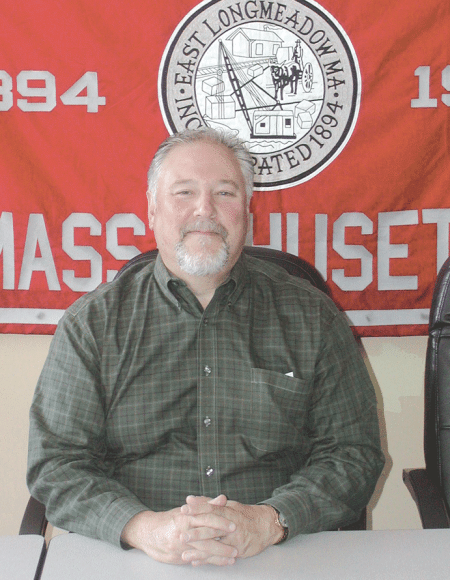
Paul Federici

Paul Federici says East Longmeadow’s strong balance, in the form of both residential and commercial growth, has made it an attractive location for businesses.

When asked to list the most pressing problems in his community, Paul Federici, chairman of the East Longmeadow Board of Selectmen, paused, then grimaced slightly as he tried to think of matters that might fit that description.

Finally, he shrugged and almost apologetically offered, “well, we’ve got two issues on the horizon that we’re going to have to deal with, but I’m not sure I’d say either one is a problem.”

And if they are problems, they could well be placed in that category of ‘good problem to have,’ he told BusinessWest, referring to a recognized need to build a new high school and an ongoing study to determine if this town of 16,000 people should change its form of government, from the present three-member Board of Selectmen to a mayor, town manager, or other format.

“As much as I enjoy being a selectman, we’ve got a $50 million corporation here, and it may be time for full-time professional management in town,” said Federici, adding that the two issues he mentioned are tied directly to the town’s strong recent pattern of growth, both commercial and residential.

And there are many reasons for both — everything from available, buildable land to an attractive location near several affluent communities; from an alluring commercial tax rate to a host of quality-of-life amenities (everything from the attractive parks to the region’s largest Fourth of July parade) — that collectively make this an attractive place to live, work, and launch a business.

“The town continues to grow,” said Federici. “Homes are selling in all price ranges, from the smaller starter homes on up to the high-end luxury homes in the developments off Prospect Street, which is a very positive sign, and the business climate here has probably never been better.”

East Longmeadow businessman John Maybury, president of Maybury Material Handling, located in the Denslow Road Industrial Park since 1981, echoes Federici’s comments about East Longmeadow’s commercial economy.

“The industrial park is just about completely filled,” said Maybury, “although there still may be a couple of buildable parcels left. The Deer Park industrial area just south of Denslow is also growing nicely, and all of these companies are doing very well. And, of course, we still have the big ones, Hasbro and Lenox, which has invested $60 million in the plant since its purchase by Newell Rubbermaid in 2003.”

Federici pointed to recent newcomers to town as great examples of the positive business climate of East Longmeadow. He listed the Arbors Day Care, WhiteStone Marketing Group and Go Graphix, a new self-storage facility, Toner Plastics, All Hose Inc., and the recently opened, $15 million Philip H. Ryan Health Science Center of Bay Path University on Denslow Road.

Bay Path’s first physician-assistant class to use the new building graduated in May. “It’s great to have Bay Path University in town,” said Federici. “The new building is fabulous, inside and out, and we’re proud to have it in East Longmeadow.”

That facility is one of many recent success stories recorded in town, and, for this latest installment of its Community Spotlight series, BusinessWest chronicles many others while speculating on what might come next.

In Good Company

Asked to pinpoint the core reason why East Longmeadow is thriving financially — the town’s bond rating is at its highest point ever — and has become an attractive landing spot for families and businesses alike, both Federici and Maybury repeatedly used the word ‘balance.’

“It’s the great balance we have between the commercial, retail, and residential sectors that makes East Longmeadow unique,” noted Maybury. “We’ve got some huge industrial companies, and big employers, in Hasbro and Lenox, along with a great mix of large and small commercial firms in the industrial parks, several thriving retail areas, and a growing residential market. That’s a great mix.”

Federici concurred. “That balance is why we have a strong tax base and reasonable taxes, good infrastructure, and good schools,” he told BusinessWest. “It’s why East Longmeadow is a great town for families.”

And for businesses as well, he added, noting that growth has come in virtually all sectors of the economy, from manufacturing to education.

That extends to the retail sector as well, said restaurateur Bill Collins, who, with his business partner, Michael Sakey, opened the Center Square Grill in May 2014.

According to Collins, the restaurant has far exceeded its first-year projections. “Knock on wood, of course,” he said with a grin, “but business has been great, better than we’d hoped for.”

He is quick to attribute much of the restaurant’s success to the centralized location of the town between Wilbraham, Hampden, Springfield, Longmeadow, and Somers, Conn.

“We draw our customers from a five- to 10-mile radius that cuts through five surrounding towns plus all of East Longmeadow,” he explained. “If you look at a map, the center of East Longmeadow is just a fabulous location for retail businesses, and all of the stores, restaurants, and services in the area are doing very well.”

He also credits the town government for creating a positive business environment. “When were first looking to open at Center Square, the Planning Department, selectmen, and the licensing people could not have been more helpful or more welcoming,” said Collins. “They bent over backward to help us get up and running as soon as possible, and that means a lot to a new business.”

Bring up the 100-pound gorilla that every Western Mass. restaurant is at least wary of, the MGM Springfield casino coming to downtown Springfield in a few years, and Collins says he is aware but not overly concerned. “We’re quickly creating many, many loyal, return customers,” says Collins. “We don’t see these people suddenly heading into downtown Springfield to eat at a casino.”

Federici has a similar reaction to the impact of MGM Springfield. “We’ll see,” he said with a shrug. “I don’t think the casino will have a huge impact on us. Two different impact studies, one by the Pioneer Valley Planning Commission and the other by the casino people, both predicted an increase in traffic in the town of about 6%. For a few hours on certain days, we may feel that, but I don’t think it’s going to be anything dramatic.”

Returning to those aforementioned ‘good problems to have,’ Federici said the School Department has concluded that the nearly 60-year-old high school, built when the town was roughly half its current size, is clearly in need of replacement.

“The selectmen gave the approval to the School Committee to go to the state for funding,” he said. “Last year, the project didn’t make the list of 100 or so building projects approved for partial state reimbursement, but it will be submitted again this year.”

Even if approved for partial state reimbursement, the new high school will be a costly burden for the town. “The estimated cost for a new high school is $80 million,” said Federici, “and some significant part of that is going to have to be picked up by the town. But that will be a problem we’ll overcome, and then, we’ll have a beautiful new high school for our children.”

The Bottom Line

As for a possible change in the town’s governmental structure, Federici chose to discuss it with humor, in the form of a story the town clerk once told some visitors to Town Hall.

“He told them, ‘East Longmeadow has a three-member Board of Selectmen and an open town meeting … the pilgrims had a three-member Board of Selectmen and an open town meeting.’ So maybe it is time to make a change.”

If one does come, it will be a clear sign — yet another one in a series of signs, actually — that this community is in a growth mode, and that the trend will only continue and accelerate.

East Longmeadow at a glance

Year Incorporated: 1894
Population: 15,720 (2010)
Area: 13.0 square miles
County: Hampden
Residential Tax Rate: $20.72
Commercial Tax Rate: $20.72
Median Household Income: $62,680
Family Household Income: $70,571
Type of Government: Open Town Meeting, Board of Selectmen
Largest Employers: Hasbro, Lenox Tools, East Longmeadow Skilled Nursing, Redstone, Plastipak
* Latest information available

Banking and Financial Services Sections
130 Years Later, PeoplesBank Still Reflects the Character of Its First President

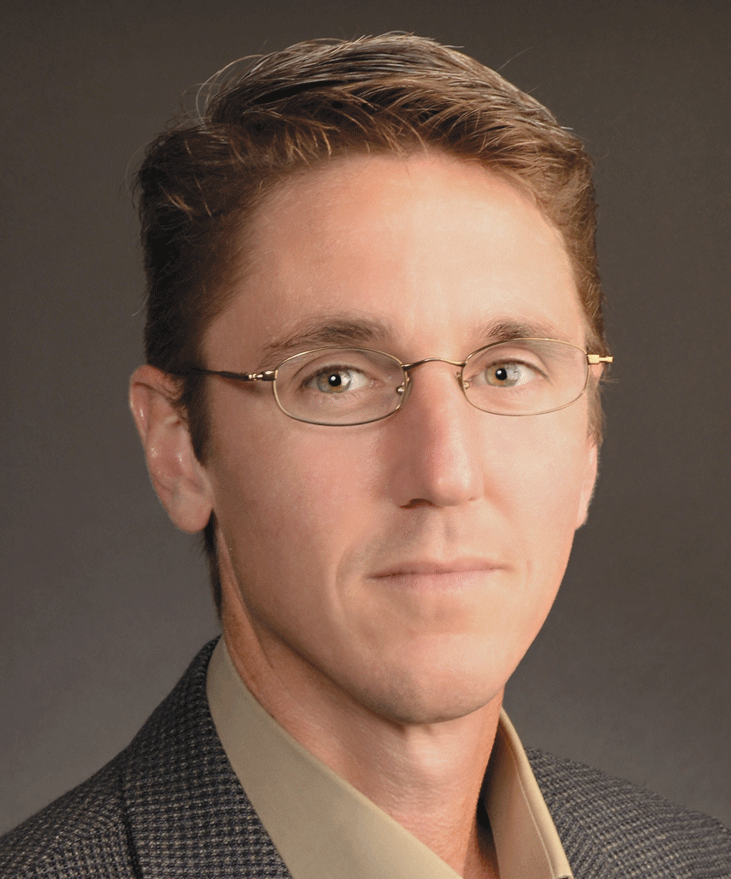
Doug Bowen

Doug Bowen says PeoplesBank shares many of its values with its first president, William Skinner.

William Skinner, Holyoke’s most noted industrialist and philanthropist, was known as an innovator, someone who cared about his employees, and a business owner who was deeply involved in his community. Roughly 130 years after he became the first president of what was then Peoples Savings Bank, the institution still reflects Skinner’s values.

Sarah Skinner Kilborne says that, as a child, she heard little about her great-great-grandfather, William Skinner, founder of the Skinner & Sons Silk Manufacturing Co. and Holyoke’s most noted industrialist and philanthropist.

Actually, she heard far more about the company, which had been sold before she was born, than she did about the man, which created first her curiosity and later a fascination concerning his life and times.

Indeed, she never knew about Skinner’s youth in London, where he grew up in abject poverty and vowed to escape from that life. (Actually, no one knew about those years, because Skinner rarely, if ever, talked about them to anyone). And she also heard very little about perhaps the most important chapter in his life — how he rebounded remarkably from a catastrophic flood in 1874 that destroyed his mill in Skinnerville (near Williamsburg) and built anew in Holyoke.

Intrigued by what she came to know about that latter episode, Kilborne became determined to find out more. Years of intense research resulted in her book American Phoenix, published in 2012, which chronicles how Skinner turned that disaster into destiny.

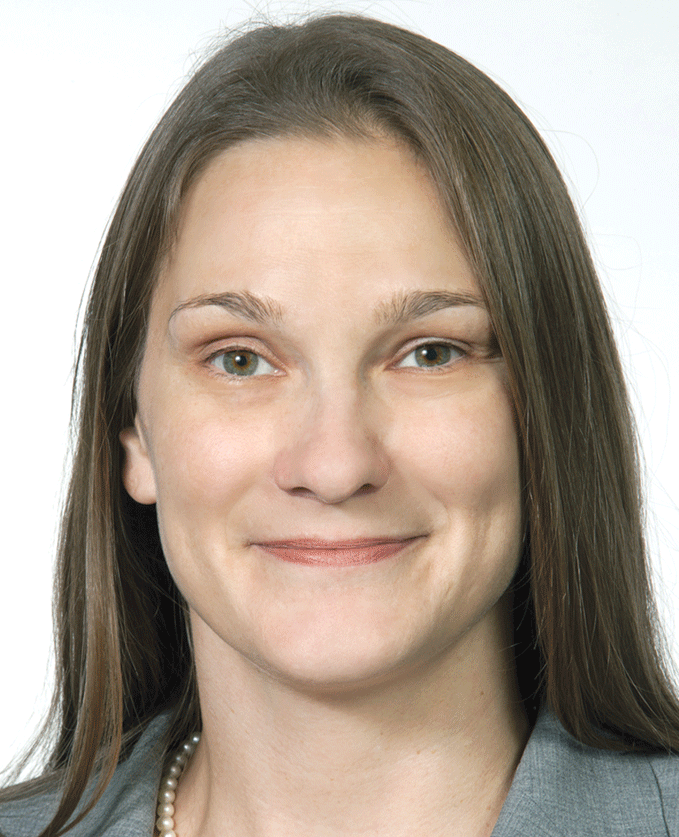
Sarah Skinner Kilborne

Sarah Skinner Kilborne says she was at first curious about her great-great-grandfather, and then fascinated by his life and times.

“I never heard much about William Skinner the man,” she told BusinessWest. “I knew who he was, I knew he was the founder of the family company, I knew he was my great-great-grandfather. But I knew little about him.”

In the course of researching and writing her book, Kilborne said she learned a great deal, about not just what he did, but how and why. Among other things, she said, he was:

• An innovator. “He took advantage of the most modern machinery, kept an eye on the market, looked for opportunities, saw the big picture, and always looked ahead,” she said;
• A philanthropist who was involved with, among other things, the creation of Holyoke Hospital, the Holyoke Public Library, and the city’s YMCA;
• A business owner who cared deeply about his employees. “If he saw a hard-working employee really struggling and just not able to get ahead, he might step in and pay off all of that man’s debts to help him get a fresh start”; and
• As implied earlier, someone who didn’t glance back. “He was an immigrant who had suffered a terrible childhood, and he’d done everything he could to escape it,” Kilborne said. “He didn’t look back to the past; he cared about the future.”

And those are the very same qualities that still define PeoplesBank, which Skinner served as its first president when it was known as Peoples Savings Bank, said Doug Bowen, who now has that same title and has been with the institution for 40 of its 130 years.

As the bank celebrates its milestone anniversary this year, it is not marking that number or another figure ($2 billion in assets, which the institution just passed), as much as it is highlighting those traits it still has in common with Skinner, he explained.

“If William Skinner were to look at the bank today, he would see that, in some ways, nothing has changed, and in another way, everything has changed,” said Bowen, now in his 10th year at the helm of the Holyoke-based institution.

Certainly, the figures on the ledger sheet have changed. The bank, which opened on St. Patrick’s Day in 1885 and tallied two accounts totaling $65 that day, had $74,000 in deposits its first year of operation, and now has more than $1.5 billion. The number of branches has grown as well; there are now 17.

But the bank is still known for those qualities Skinner instilled in it, including philanthropy — it’s owned a spot on the Boston Business Journal’s list of the state’s largest corporate charitable donors for several years now; innovation, which comes in many forms, from the considerably ‘green’ quality of its recently opened branches to the so-called ‘customer innovation lab’ now taking shape on the fifth floor of the bank’s headquarters building; and as a thoughtful employer — the bank has earned status on the Boston Globe’s list of the best places to work in the Commonwealth the past two years.

“We’re still a mutual bank — our charter is basically the same as it was in 1885,” said Bowen. “And our pillars, our values of innovation, community support, the environment, and employee engagement … there are a lot of parallels and lot of crossovers between where we are today and where we were 130 years ago.”

For this issue and its focus on banking and financial services, BusinessWest details how PeoplesBank can draw some straight lines between the values of its industrious first president and the way the institution conducts business today.


Fabric of the Community

Kilborne said the flood of 1874, caused by the breach of a poorly designed and hastily constructed reservoir dam, was one of the worst industrial disasters of the 19th century and in the history of this region — 139 people were killed by the wall of water crashing down the Pioneer Valley, and the disaster ultimately led to the passage of landmark dam-safety laws.

Still, few in this region know much, if anything, about the catastrophe.

“That was a story that seemed to be lost,” she said, adding that some of her research for American Phoenix benefited greatly from In the Shadow of the Dam, a book about the disaster written by Elizabeth Sharpe and published in 2007.

Lost also were many of the details of how Skinner, whose mill was completed destroyed by the flood — “there was nothing of it left to photograph,” said Kilborne — would go on to build one of the largest silk-manufacturing companies in the world in a then-evolving Holyoke, a unique city specifically designed for industry.

“William Skinner’s story takes the flood’s story to another level,” she said. “This is a personal story in the midst of the flood, and it really addresses this issue of how you rebuild your life after you lose everything.

“I was so taken with his story, and I personally wanted to know how he did it,” she went on. “I was gripped by this sense of loss that he sustained and that everyone else in the Valley sustained at the time of the flood, and how it was that William Skinner’s saga turned into a legendary success story; what set him apart?”

To make a compelling story short, what set him apart were those aforementioned attributes, she said, listing perseverance, innovation, philanthropy, and a burning desire to forge a far better life for his family than the one he endured in the Spitalfields section of East London.

Kilborne mentions the creation of Peoples Savings Bank and Skinner’s appointment as its first president in her book, but doesn’t go into any great detail about the institution or his tour of duty with it.

But she speculated that the values that dominated other aspects of his life and career were undoubtedly evident there as well.

“As the president of the bank, he would have been very community-oriented and conscious of the burden of debt; when he helped found Holyoke Hospital, he was proud of the fact that the hospital was delivered free of debt to the community,” she explained. “When he moved to Holyoke, his reputation was that of being a great financier and manager; within two years, the city wanted him to run for mayor.

“As a banker and as a businessman, he was known to be a man of wise conservatism,” she went on. “But he was also willing to take risks, because he knew the value of investing, he knew the value of innovation, he knew the value of looking to the future. He knew you couldn’t stay stuck in the past and do the same thing over and over again, because if you do, you’re going to be left behind.”

Roughly 114 years after Skinner relinquished the helm at the bank, those same attitudes, if you will, permeate the bank’s operating philosophy, said Bowen, referring specifically to Skinner’s focus on innovation and looking toward to the future and the opportunities and challenges it will bring.

This is reflected in some of the accolades the bank — and Bowen himself — have received in recent years. That list includes everything from placement on the ‘largest corporate charitable donors’ and ‘top places to work’ compilations to recognition for Bowen as one of the Boston Globe’s Top 100 Innovators in 2011, and as one of BusinessWest’s first Difference Makers for essentially creating the environment in which all of the above could happen.

Material Evidence

Before elaborating on how PeoplesBank operates now as it did 130 years ago, Bowen noted that it does so in a banking environment that has changed dramatically since 1885 and is, in many ways, more challenging.

Now, as then, the playing field is crowded with competitors, although the composition of the field is different, with many national and regional players. Meanwhile, due to plummeting interest rates, margins are now razor-thin, making it difficult for banks of all sizes to be profitable.

The customer innovation center now under construction at PeoplesBank

The customer innovation center now under construction at PeoplesBank is one of the many ways in which the bank reflects William Skinner’s innovative character.

In this environment, institutions are looking for any edge they can get and are united in their quest to increase volume and attain greater market share to compensate for those slimmer margins. Locally, most have banks have done this through acquisition and territorial expansion, and PeoplesBank is no exception (at least with the latter), having executed an aggressive pattern of expansion, including the opening of three branches in Springfield and others in Westfield, West Springfield, and Northampton.

This widening of the footprint (along with inflation, of course) helps explain why it took the bank 120 years to reach $1 billion in assets and only a decade to double that total.

But there’s more to the growth equation than physical expansion, said Bowen, adding that today’s institutions, especially community banks like PeoplesBank, can gain an edge with more personalized service than that delivered by the regional and super-regional players. They can also do so by using technology to improve that service.

And this brings Bowen back, once again, to William Skinner, who embraced those ideals.

“When he built in Holyoke, he bought the latest and most innovative machinery that there was for silk making,” Bowen explained. “Skinner silk became the standard for the American silk and satin industry, and a lot of it was because of his investment in those innovative machines.”

In many ways, PeoplesBank is following that example, he went on, citing everything from design of the bank’s LEED-certified branches to the development of apps for smart phones.

“One of the things that was interesting about the buildings Skinner built was that they had monitor roofs, which had a row of ventilating windows above it that could be opened, which pulled all the hot air up and through the building, something that was unique at that time,” Bowen explained. “Also, the skylights let good light into the manufacturing area, and according to the book, his factories were considered the healthiest in the Northeast, and this mirrors some of the things we’re doing.”

As an example, he mentioned branches like the one recently constructed in Northampton, which focuses on providing natural light and fresh air to make the work environment more conducive to productivity and employee satisfaction.

As another example, Bowen cited the customer innovation lab taking shape at the bank’s headquarters building, a step taken to address the incredible pace of technological advances and the ways in which they can be harnessed to better serve customers.

The bank recorded more than 2 million online banking sessions in 2014, more than double the number only three years ago, said Bowen, adding that this pace of growth will only accelerate in the years to come as customers demand even greater convenience. The lab was formed, by and large, to create such convenience.

“The lab is all about tomorrow and addressing those customer demands for convenience in the future,” he said. “We’re using technology to accelerate innovation and enhance the customer experience.

“The lab won’t have any beakers or Bunsen burners, but it will have space where people can brainstorm about that customer experience and places where we can have focus groups and more broadly speak to the different delivery channels,” he went on. “We want to focus on all the different ways you can deliver products, services, and information to our customers.”

The bank already has what are known as ‘tech titans,’ he said, individuals who will analyze new technology, such as the Apple watch, for example, and evaluate what that technology could potentially mean for customers. The new innovation lab will take such efforts to a higher level, with the focus squarely on the customer.

“We’re constantly, constantly, constantly trying to look at things through the customers’ eyes,” he explained. “We’re trying to create as good an experience, and as seamless an experience, as we can.”

Meanwhile, the bank is also working to apply that phrase ‘good experience’ to employees as well. And placement on the ‘best places to work’ list three years in a row — the only firm in this region to make that compilation — is evidence that it is succeeding in that mission.

“This is based an anonymous survey of employees and gauges what they think of you — we’re not sending in all the nice things we do; it’s strictly the employees,” he said of the process of determining who makes the list. “And when you consider all the businesses in Boston that we’re up against, it’s quite an honor.

“We’re a bank — we don’t have beer on tap or a ping-pong table,” he continued, referring to some of the amenities offered by IT companies. “We can make it fun to work here, but there are constraints we are under.”

Back to the Future

Bowen told BusinessWest that the bank has little, if anything, planned to mark its 130th anniversary.

“We’re more focused on the future and on the things that will make a difference for the community and our employees right now,” he said, adding that, in this respect, the bank is once again emulating its first president and his values.

Skinner’s outlook and his manner of doing business are perhaps best captured by these comments from his great-great-granddaughter.

“He was very broad-minded; he was capable of seeing the large relations of things,” she said. “He had a very expansive way of looking at the world, probably because he grew up in England and moved to America. He saw things globally, and he saw things in a very large frame. He looked at the whole picture, while doing everything he could to build on the present.”

Bowen didn’t say as much, but he strongly implied that continuing to conduct business as Skinner would is certainly the best way the bank can celebrate its milestone.


George O’Brien can be reached at [email protected]

Banking and Financial Services Sections
David Hobert Brings Local Focus to People’s United Bank
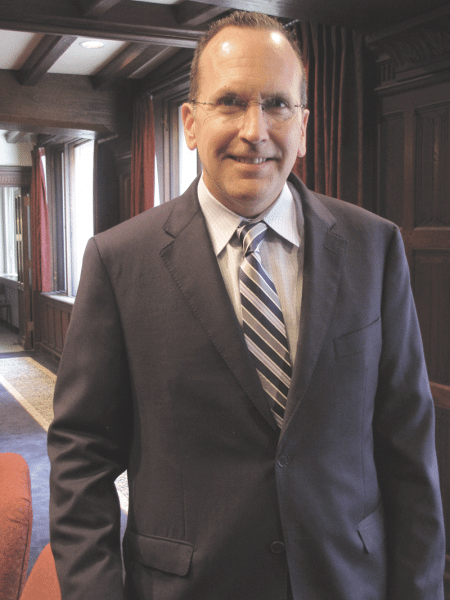
David Hobert

David Hobert says the bank can’t be all things to all people, but adds value in insurance, wealth management, and other products.

David Hobert has deep roots in Western Mass. and a broad palette of banking experience. His new role allows him to put both to good use.

“I started as a teller for Westbank on Main Street in Holyoke in 1983,” he said, recounting the start of a career that took him to some of the region’s largest institutions over the past 30 years — currently as regional president of People’s United Bank, a position he accepted in February.

“I wanted to come back to my roots a little bit,” the long-time Longmeadow resident told BusinessWest, noting that his previous role was as executive director for Santander Bank’s global-banking business. “I missed the connection to the community, and the travel was quite extensive, and I felt I was ready to get off the airplane and get back in the car for the short drive to Springfield.”

In fact, from 2009 through last year, Hobert focused on Fortune 100 telecommunications, media, and technology companies for Santander. “I spent more than five years building that business, but one of the things I really missed was my roots and working in the community. But I stayed in touch with some of the local leaders in banking, seeking an opportunity to eventually manage a regional bank. Then this opportunity came up in January, and here I am.”

In that role, Hobert replaces the recently retired Tim Crimmins, who launched the Bank of Western Massachusetts in 1987 — just before the onset of a crippling recession — and grew it into a regional commercial-lending power, one that was acquired by Chittenden Bank in 1995 and then again by People’s United Bank in 2008. Today, it’s part of a $36 billion institution with more than 400 branches in Massachusetts, Connecticut, New York, Vermont, New Hampshire, and Maine.

That’s regional clout the old Bank of Western Massachusetts couldn’t match, but Hobert’s challenge is marrying that lending power with a strong community focus.

“I’m managing the commercial-banking business, working closely with our retail business to grow our market share, and working with the community through our foundation and sponsorships,” he said by way of explaining his day-to-day job. “The main thing, really, is just making sure that our clients, many of whom we’ve had for a long time, continue to get the best service and are offered the best product variety possible.”

For this issue’s focus on banking and financial services, BusinessWest sat down with Hobert in his downtown Springfield office to talk about how he plans to do that, and why he’s bullish on the future of the region he has long called home.

The Road Home

After five years in a number of roles at Westbank in the 1980s, Hobert moved to Citytrust Bank in Bridgeport, Conn., managing its workout business for Hartford, New Haven, Norwalk, and Stamford for three years. Then, in 1991, the graduate of Western New England College had the opportunity to move back to this region when he was hired by BayBank in a similar role.

He eventually started handling new loan business for BayBank and Bank of Boston; when those institutions merged, he was appointed team leader in Springfield and, when Sovereign Bank later bought the vested assets of Bank of Boston and Fleet Bank, Hobert became head of corporate banking for the Western Mass. region, before moving on to Santander in 2009 and, eventually, to his new role at People’s United.

He assumes regional leadership with a bank that reported a 12% earnings increase in its first quarter of 2015 compared to a year ago. “We’ve reported five consecutive years of operating-earnings growth — and in a very difficult time, when we’re coming out of a recession,” he said. “So that, in and of itself, is evidence that the business model continues to work, and work well.”

The bank’s client base is business banking and middle-market companies, most of which borrow anywhere from $100,000 to $10 million, although a few clients are larger. But Hobert stressed that the bank has always kept the lending window open to small businesses, a philosophy shared by Crimmins when he launched his enterprise in 1987 with partner Frank Fitzgerald, and by Chittenden Bank, which later purchased it.

“If you look back through the history of Chittenden, when the bank started in Bridgeport, they served middle-class people, while other banks were serving middle-market commercial customers,” Hobert explained. “So, from day one, right through the Chittenden acquisition and to date, our main business has been small business, middle-market business, and the consumer.”

To that end, customer service has always been paramount, he said. “Obviously, it’s a competitive market from a pricing standpoint; that’s no secret — and I believe the market is overbanked. So the way you maintain and grow your client base is by having consistent, excellent service and offering added-value products.”

Those include treasury management and the People’s United Insurance Co., which offers property, casualty, and workers’ compensation products.

“And then we have a strong wealth-management division with a long, proven track record, that focuses on both individual and institutional investment management. That’s an area where we’ve had some recent success and growth. Our wealth management, I think, is as good an offering as any bank in our footprint.

“Again,” Hobert said, “it all comes back to the people and the product. We don’t want to be all things to all people, but where we can add value, that’s where we want to focus our time, playing an advisory role for our clients.”

Street Level

It would be easy for a large bank to lose its focus on individual communities, but Hobert said People’s United’s CEO, Jack Barnes, emphasizes a street-level focus from the top down.

“The values we want to bring are, we want to offer empathy and expertise to our customers, we want to be a good corporate citizen in the community, and we want to understand the knowhow and growth potential of our employees,” Hobert said. “If we do those three things right, we can continue what was started 170-plus years ago in Bridgeport. Those are principles the bank has operated by for some time, and I believe they’re simple to follow, and, if you do them well, clients will stay with you.”

That community focus extends to the bank’s commitment to philanthropy, he went on. “Community development, youth development, and affordable housing are the three areas we focus on through our community foundation; then, separate from that are all the sponsorships we support. We provided more than $700,000 in support last year through a combination of the community foundation and sponsorships in Western Massachusetts, and we’ll continue to do that.”

In fact, the bank strives to support nonprofits in its business dealings as well. “I’d say that, in Massachusetts, we’re definitely one of the leaders in terms of nonprofit lending, which includes all the colleges and healthcare,” Hobert said. “They’re a large part of the community — important assets in the community — and they have the same needs as a for-profit business when it comes to capital.”

The fact that business borrowing is on the upswing among both for-profit and nonprofit companies is encouraging to Hobert, who credits factors like the flat organizational structure favored by Barnes and the bank’s geographically focused regional lending teams with growing and retaining business. And while People’s United has expanded through acquisition in the past, Hobert sees plenty of opportunities to grow within the bank’s current footprint — however overbanked it may be.

“Right now, we’re focused on organic growth,” he said, “but if the right acquisition surfaces in our targeted markets, we would consider that.”

For now, he’s happy to be the regional face of People’s United, especially at a time when the region is showing signs of economic life.

“Locally, I’m positive about what’s going on in our region,” Hobert said, noting developments such as Changchun Railway Vehicles’ investment in the city and vacancy rates in the downtown towers as low as they’ve been in years. “I think the biggest impediments companies face right now if the workforce. The demand is there for our local customers, but we need to work through our workforce-development programs to develop the skill sets in the region to fill these positions. But overall, I am upbeat on where things are going.”

As Tim Crimmins used to say, the lending window is open.

Joseph Bednar can be reached at [email protected]

Business of Aging Sections
Linda Manor Assisted Living Provides a Continuum of Care

Linda Manor Assisted Living was designed to be aesthetically pleasing — but this is an era when senior-living facilities must be much more than that. That explains the center’s focus on a continuum of care, its efforts to engage residents in activities inside and outside its doors, and its insistence on families being involved in decisions about the details of care — making what can often be a difficult life transition a little more like, well, home.
Linda Manor LobbyThe architecture and interior design of the newly opened Linda Manor Assisted Living facility in Leeds is breathtaking — and unusual for a facility of its kind.

The front doors open into a brightly lit foyer with high, coffered ceilings and comfortable sitting areas. A few feet away, a gracious twisted staircase climbs to an enormous, circular balcony on the second floor that surrounds the living area, and is punctuated by a large number of nooks with game tables and inviting couches and chairs, as well as a country kitchen.

The facility, which opened last October, has 85 units for residents, who can choose to live in a studio apartment or a one- or two-bedroom unit with their own kitchenette and private bath.

The 76,750-square-foot building features plenty for people to do, with activities that run the gamut from book clubs to art classes and exercise sessions; from volunteering at Kate’s Kitchen in Holyoke, which provides free meals to needy people, to day trips, such as a recent visit to the Sterling and Francine Clark Institute in Williamstown.

The lineup is dictated in large part by residents, who make decisions about what they want to do via committee, which they share with the activity director and write about in their newsletter.

“Our residents are civic-minded and want to be active; they may need some help, but they want to lead full lives,” said Kathy Herman, registered nurse and executive director of Linda Manor Assisted Living, or LMAL. “A few weeks ago, some residents wanted to spend the day going to tag sales, so we let them pick out locations and took them there. Having choices about what they do is important and makes them happy.”

But it is the continuum of care and philosophy that was established long before Linda Manor opened that sets it aside from similar senior living centers, she said.

Kathy Herman

Kathy Herman says Linda Manor’s small greenhouse was built for residents to enjoy.

It was built by Berkshire Healthcare, the largest not-for-profit company in Massachusetts, with 15 affiliates across the state and two hospices and a pharmacy serving clients. “We also have our own temporary staffing agency called Integra Nurse for our nursing homes,” said Albert Ingegni II, vice president of Housing Services. “This is more than bricks and mortar; we care about our residents, and, because we are a not for-profit corporation, we are driven by our values. Our residents always come first, and we try to make a connection with every one of them.”

Herman agrees. “It’s not just the resident who moves in. It’s the family that comes with them, and we stay in close touch with family members,” she said, adding that it’s important for children to know their parents are happy and that they can call whenever they have a concern. LMAL also boasts a van that is used to transport residents to doctor’s appointments, church, and other places they need or want to visit, which relieves stress on families.

The campus includes Linda Manor Rehabilitation and Nursing Center, so seniors who make their home in the new assisted-living facility have access to the above-mentioned continuum of care. Herman said it comes into play if a resident is hospitalized and needs short-term rehabilitation; staff from both buildings hold joint meetings about the resident’s health and well-being, and they can be easily moved back to their home when they are ready.

“Having both facilities on the same grounds allows us to integrate services and provide people with the most appropriate care,” she told BusinessWest. “We’ve established relationships between people in both buildings, which is wonderfully helpful to families, as they don’t have to coordinate care for their loved ones.”

Resident Berta Gauger enjoys living at LMAL. “It’s nice to have people around, and we travel and go places,” she said, adding that she looks forward to volunteering at Kate’s Kitchen.

Ingegni said a service plan is created for every resident that is assessed every six months or whenever the staff observes a change in behavior.

“We work to accommodate each person’s needs, and if they need more help than we can provide in the assisted-living section of the building, they can move into our Life Enrichment Program,” he added, referring to LMAL’s specially designed memory unit (more on that later).

Schooled by Experience

Before Linda Manor Assisted Living was built, Ingegni said, Berkshire Healthcare had decided to expand its housing component, and the Leeds campus, which already housed Linda Manor Rehabilitation and Nursing Center, was quickly identified as the ideal place to grow.

Many areas at Linda Manor

Many areas at Linda Manor are set aside for conversation.

“We wanted to provide post-acute-care services to this community and supplement the services Linda Manor was already providing,” he explained, adding that it is one of only a few senior-housing communities in the country designated by Medicare as a five-star facility, and was feted with the Gold American Healthcare Assoc. Award two years ago, which Kimball Farms in Lenox has also received.

Kimball Farms is a retirement community operated by Berkshire Healthcare, and offers housing that covers the spectrum of possibilities: independent living, assisted living, a memory unit for people with Alzheimer’s and dementia, and a skilled-nursing-care center.

Herman said it allows people to age in place, but, more importantly, the philosophy is one of “habilitation,” which means doing everything possible to help people maintain the level they are at when move in.

“It was developed by Joanne Koenig Coste, who wrote Learning to Speak Alzheimer’s, she noted. “We try to maximize success and minimize failure.”

Herman had retired from Kimball Farms before LMAL was built, but Ingegni talked her into returning to work so she could bring the successful program at Kimball Farms to LMAL and make sure it was well-established.

The Life Enrichment Program is an important component, and was created to take advantage of principles gleaned and perfected through years of experience at Kimball Farms.

“People with dementia often develop low self-esteem when they realize they can no longer do things they used to do. They get frustrated and bored, and, if they are dependent on others for all of their care, they feel like they have failed,” Herman said. “But if you provide them with an environment where they can be successful, they are happy, and it limits adverse behaviors.”

She explained that the Life Enrichment unit has a large kitchen that is central to the floor, a living room, and a sunporch that leads to an enclosed walking path bordered by gardens. “The residents can go in and out whenever they choose.”

Before new residents arrive, the staff obtains a detailed history of their habits, which includes the time they usually get up, if and when they eat breakfast, their daily routine, what they did during their lifetime, and activities they enjoy.

“We establish a plan of care around their schedule,” Herman noted. “They don’t have to do anything based on the clock, and if they want to eat lunch at 2 p.m. instead of noon, they can do it. If you have established a pattern in life, it’s hard to change when you’re 85.”

Special Measures

The staff undergoes continual training and holds frequent meetings to assess how each resident is doing.

“Our residents may have lost some of their cognition, but they don’t lose their emotions, so that’s where we meet them,” Herman noted. “We make them feel good about themselves, and if they don’t understand our words, they do understand body language, so if we are smiling and happy, it is reflected back.”

Resident Berta Gauger

Resident Berta Gauger enjoys volunteering at Kate’s Kitchen, among other activities at Linda Manor.

She added that staff members are carefully chosen, as not everyone has the temperament to work in a dementia unit, which requires thinking outside the box and coming up with solutions.

When Ingegni spoke with BusinessWest, 15 of 20 available spots in the unit were filled, and although it could have been built to house more people, he said it was designed to be small for a reason. “We found that, if there are more than 25 or 30 people, you lose your effectiveness.”

Although people with dementia are sometimes put on anti-psychotic medications while they at home, Herman said, when they are moved into an environment with people trained to meet their needs, in some cases, they can stop taking them.

“Alzheimer’s and dementia are a disease of the family, and the drugs are often given to make people sleepy, which allows the caretaker to sleep at night,” she said. “We look at the medications each person is taking and work closely with their physicians.”

Ingegni added that the way residents are treated starts with the behavior and attitude of management and filters down to each employee. “They set the example.”

For example, on a recent day Herman found a resident in the memory unit sitting inside while everyone else was outdoors. “I went to her room, got her sunglasses and hat, put them on her, and made a big deal about the way she looked. Then, I asked if she wanted to go for a walk,” she recalled. The technique worked, and Herman explained what she had done to the staff so they could emulate it if needed in the future.

“All of my managers are hands-on,” she said, citing another example that occurred when the dietitian was told a woman wouldn’t sit down to eat dinner. “The dietician responded by telling me she would prepare special finger foods so the resident could walk and eat at the same time, and she got creative with things like a salmon sandwich.”

In another instance, a woman who had been required to have a private aide at another facility because she was deemed a fall risk no longer needs one.

“She could still walk, but wasn’t participating in activities before she came here; she used to stay in her room. But now she is out all the time and hasn’t fallen yet,” Herman said.

Ingegni said the improvements registered by residents go back to the facility’s philosophy of habilitation.

“We want to keep everyone at their highest level,” he reiterated, citing examples like providing a typewriter for a woman in the memory unit who used to be a secretary and giving her paperwork so she felt she was needed.

Herman said the dedication of the staff is exemplified by the facilty’s bus driver.

“When he found he shared a love of poetry with one of the men in the memory program, he began coming back at night to read with him,” she said, adding that the driver also leads a support group for families of residents on the memory unit.

Moving Forward

LMAL has space available for additional residents, and Herman said the process of filling the complex is still ongoing.

But she and Ingegni are obviously proud of the new facility and believe it is off to a very solid start.

“It’s safe, it’s secure, and we are innovative and open to suggestions, so families can play an active role in what happens here,” Ingegni said. “And the fact that we offer different levels of care helps them and helps our residents.”

Which is exactly what everyone wants for aging parents who can no longer live in their homes: a place that caters to their needs and does everything possible to keep them healthy and engaged.

Business of Aging Sections
Mini Dental Implants Provide a Permanent Solution to Lost Teeth

Dr. David Hirsh

Dr. David Hirsh calls mini implants a fast, affordable way to replace missing teeth and stabilize dentures without surgery, pain, or bleeding.

More than 40 million Americans have missing teeth, and studies show the main reason is the cost: they simply can’t afford to replace them.

But thanks to advances in medicine, today people can replace their pearly whites with mini dental implants, which offer a permanent solution to the problem.

“They’re a fast, affordable, and permanent way to replace missing teeth and stabilize dentures — they don’t require surgery, there is no pain or bleeding, and they are half the cost of traditional implants,” said Dr. David Hirsh of Hirsh and Associates in Springfield.

This development is important because, in addition to detracting from a person’s cosmetic appearance, failing to replace missing teeth leads to other problems. Hirsh said the remaining teeth tend to migrate to fill in the space, which puts so much pressure on them, they can also be lost. “Filling in the spaces not only corrects how someone looks when they smile, it protects the remaining teeth and prevents the bone loss that occurs when they are not replaced.”

Mini dental implants, or MDIs, offer people with dentures a lasting solution to the problem of slippage because they provide an anchor to hold dentures or partials in place and gives them the strength and stability they need to eat foods such as corn on the cob or apples, which they would otherwise have to forego as they are too difficult to chew.

“When a person can only eat soft food because their dentures don’t fit well, being able to eat whatever they want in a restaurant is a tremendous change. If mini implants are holding the denture in place, they don’t have to use paste or powder, which they end up tasting more than the food, and there are no sore spots as the dentures don’t rub against the gums,” Hirsh said, adding that, when they are used to stabilize upper dentures, the palate portion of the denture can be cut away, which makes it much more comfortable and improves the taste of food.

MDIs are solid, one-piece, titanium-coated screws that take the place of a tooth root. They are much thinner than traditional dental implants and were originally designed to hold dentures in place. However, they have other benefits, including the fact that they stimulate and maintain the jawbone, which prevents bone loss and helps to maintain facial features. In addition, they are stronger and more durable than crowns and bridges that have been cemented into place.

They were first used in the ’90s and have been approved by the Food and Drug Administration for long-term use for fixed crowns and bridges and removable partial and full upper and lower dentures.

When Hirsh first heard about MDIs, he was skeptical. But after conducting research and learning more, he became convinced they could change people’s lives, so he attended classes in the Shatkin Fabricated Implant Restoration and Surgical Technique in Bufffalo, N.Y. and received his certification.

Six months ago, after rave reviews from patients, he said, he opened one of 27 Mini Dental Implants Centers of America. He told BusinessWest it is associated with the Shatkin Institute, which is the largest training center in America and has the largest lab and dental office in the country.

Dr. Todd Shatkin, who founded the institute, is president emeritus of the International Academy of Mini Dental Implants, and Hirsh is a member of that organization as well as the American Dental Assoc., the Massachusetts Dental Society, the Valley District Dental Society, and the prestigious Crown Council.

Hirsh said that, although traditional implants, which require surgery and months of healing time, were the standard of care for many years, a study by Shatkin that involved placing 10,000 mini implants in patients and following them for 10 years showed they had a 95% success rate, which is exactly the same rate as traditional implants.

The total cost of a single MDI in his center is $2,500, which includes the temporary and permanent crowns, while the cost of the four MDIs needed to hold a partial or denture in place is $4,000.

Something to Chew On

The process in Hirsh’s implant center begins with a panoramic X-ray, which allows the dentist to check the bone density and make sure there is enough room to place the MDI. Next, an impression is taken of the area that will be restored, which is sent to the Shatkin Institute.

“They fabricate a surgical stent that will be used to determine the exact spot where the MDI will be placed,” Hirsh said, noting that the institute also determines the size of the drill bit that needs to be used and the length and width of the implant.

When the patient returns to the office, the area is numbed, and Hirsh places the surgical stent, which is made of plastic, over the surrounding teeth. Next, he drills a hole through the gum into the bone and screws the implant into it, then secures a temporary crown onto it. “The color of the temporary is matched to the surrounding teeth,” he said, adding that, if any modifications need to be made, the information is sent to the lab before the permanent crown is created.

If the MDIs are being used to hold a denture or partial in place, it can be snapped onto the MDIs immediately after tiny holes about the size of a pen tip are drilled into the bone through the gum where the implant will be placed.

“Although a denture can contain about 12 teeth, you only need four implants to secure it,” Hirsh said, adding that, in cases where the denture doesn’t fit well, it may need to be modified before it can be used with the implants.

Losing a lot of weight can cause dentures to stop fitting properly, and if that occurs, people often find it difficult to keep them in their mouths. However, if the denture is secured by mini implants, it is not a problem. It will stay in place, and although people may want to get it realigned, Hirsh said the MDIs will never have to be adjusted.

MDIs have also helped many people with partials because they snap onto the mini implants, eliminating the need for metal clasps on adjoining teeth that hold them in place.

In addition, if people who are replacing a tooth have gum loss, crowns attached to the MDI can eliminate the cosmetic problem. “We put pink porcelain at the bottom or top of the crown so the tooth doesn’t look like it’s too long; it can be matched exactly to the color of a person’s gums and looks very natural,” Hirsh said.

He told BusinessWest the only instance in which a traditional dental implant works better than a mini is if someone has a very low maxillary sinus. “There may not be enough bone to put in the two implants that are needed, and in that case, we refer the patient to a local specialist. But it’s very, very rare.”

Evolving Science

Hirsh said misinformation has been circulated about MDIs in the general community, including the belief that MDIs can’t be used to replace molars or used for a full-mouth restoration, and only last about five years.

“They can last 20 years or a lifetime, just like traditional implants,” he noted, adding that they can be placed in people aged 17 and older once their jaw has stopped growing.

“I believe in 10 years, more dentists will use mini implants than traditional ones,” he said. “It’s a wonderful procedure that results in a wonderful cosmetic appearance. It’s just a matter of education; they’re life-changing.”

Sections Technology
IT Industry Confronts a Perplexing Shortage of Workers

Dave DelVecchio

Dave DelVecchio says technical skill is important in a prospective employee, but so is a willingness and desire to learn new things.


Around the turn of the millennium, when dot-com startups were riding high, computer science was an attractive career option for college students choosing majors. Ironically, however, although technology has become even more pervasive in daily life over the past 15 years, the number of people entering the IT field has plummeted, slowing growth at high-tech companies that would be expanding faster if they could only find the talent. The key, industry leaders say, is working together to reignite interest in what remains a well-paying, in-demand, often exciting field.

As a mechanical-engineering major in college, Joel Mollison didn’t expect to one day own a successful computer-services business. But then he taught himself computer repair, which — along with his growing distaste for his chosen major — led him to change direction, and eventually launch what’s now known as Northeast IT in West Springfield.

That means he’s always looking for people like him, who at some point discover a love for computers and information technology and are skilled at it. But finding those people has not been easy.

“Technology encompasses such a vast range of jobs,” he told BusinessWest. “Programmers and coders are a completely separate thing from people who do what we do, providing managed services, managing people’s networks … and that’s totally different from, say, web design.”

By all accounts, opportunities in those fields and many others in the IT realm are only growing. Yet, at the same time, the number of young people graduating from college with the necessary skills to succeed in IT is falling.

Indeed, according to Code.org, a national nonprofit dedicated to expanding participation in computer science, by 2020, the U.S. will have 1.4 million computing jobs available, but only 400,000 computer-science graduates available to fill them.

That’s a reflection of two colliding trends, the organization notes. As computers increasingly run virtually every facet of our lives, fewer college students are choosing to major in computer science. Specifically, 60% of all jobs in the broad realm of math and science have a computing element, but only 2.4% of all college students majoring in a math or science field are choosing computer science.

“We’ve absolutely been dealing with this for the last five years, and the problem will only get worse before it gets better. In general, we need a lot more folks than there are out there,” Mollison said. “There are a lot of different facets to IT, and each requires its own unique skill set, although there is some overlap. To be a professional in any of these sectors, you need to possess a vast range of knowledge.”

Dave DelVecchio, president of Innovative Business Systems in Easthampton, has experienced the same struggle.

“The pool of qualified talent is not deep enough to provide the exact mix of talent we need,” he said. “Typically, we somebody to come to the table and demonstrate they have the ability to learn — someone with good, broad-based knowledge to draw from, but also a desire and willingness to learn new things.”

Delcie Bean IV, president of Paragus Strategic IT in Hadley, understands the scope of the national problem, but also how it affects his firm, one of the country’s fastest-growing IT companies, on a daily basis.

“Being a top-paying career and the second-fastest-growing career, it’s absolutely the right career to be in, but fewer people are graduating today than 10 years ago; interest is actually shrinking,” he said. “And when we talk about where women and people of color fit in, it’s abysmal.”

He cited statistics from Code.org noting that women, who claim 57% of all bachelor’s degrees, earn just 12% of all computer-science degrees. Meanwhile, at the high-school level, 3.6 million students take the advanced-placement computer-science exam, but only 3,000 of those seats are occupied by African-American and Hispanic students.

Combined, all these numbers tell Bean there’s plenty of untapped potential to draw students of all demographics into an IT field that desperately needs them.

“Paragus, at any given time, has four to eight open positions,” he noted. “Every open position represents an opportunity lost, because every employee has ROI and generates profit. If a position isn’t filled, that’s profit we’re not capturing.”

The net effect is that a company that has been growing at 25% to 30% per year could be growing at 45% to 50% if the talent gap wasn’t an issue and Paragus could hire whenever it wanted to.

For this issue and its focus on technology, BusinessWest examines some of the reasons behind a drought of IT workers that could become critical in the next decade — and what both public- and private-sector entities are doing about it.

Digital World

It’s ironic, Mollison said, that the more people rely on high-tech devices to run their lives, fewer young people are interested in computer science as a career.

“Everything runs on computers now,” he noted. “Because of that, there’s a wide array of services, a wide array of products out there. Career opportunities are growing exponentially, and there are not enough people out there with the experience to fill those gaps.”

Thinking back to his college days 15 years ago, Mollison recalled there were a lot of people entering the IT field drawn by the promise of making a lot of money in an exciting, fast-growing field. It’s a different time, though, and Millennials are known for following their passions, not necessarily just a paycheck.

“If you don’t have a true passion for IT, if you’re not exposed to it at a young age, and if the desire isn’t there to begin with, I think a lot of people may be overwhelmed by the time they reach high school and college, and are figuring out what they want to do with the rest of their lives,” he said. “The tech field can be a bit overwhelming if you’re not absolutely sure that’s where you want to be.”

With the goal of increasing exposure to computer science at an early age, Bean serves on the advisory board of the Massachusetts Computing Attainment Network, or MassCAN, which has developed a set of standards, now being considered by the state Board of Elementary and Secondary Education, for making computer science part of the K-12 curriculum.

Joel Mollison

Joel Mollison says young people often don’t grasp the sheer breadth of career opportunities available in IT.

“We really thought about what kindergartners should learn, what eighth-graders should know, what high-school graduates in the Commonwealth should be able to do in computer science,” he explained. “It’s as much a way of thinking as anything else. We’re not just talking about specific technology skills; what’s needed is critical thinking, troubleshooting, problem resolution, abstraction — traits that are of value in whatever industry you go into. If someone is an amazing critical thinker, I can teach them IT.”

The standards would likely be recommendations to start, Bean said, “but if they were to make it mandatory, it would put Massachusetts ahead of the curve in graduating some of the best talent from the K-12 system. And we’re already known for our higher-education system.”

Training young people in computer science is something Bean takes seriously, which is why he launched Tech Foundry last year. The Springfield-based nonprofit, which trains promising students to enter well-paying IT jobs right out of high school, recently graduated its first class of 24 participants.

DelVecchio sees, in the promise of Tech Foundry, echoes of Javanet back in the mid-’90s. A locally based Internet service provider, that company was later acquired by RCN, a large, regional player, which created large numbers of entry-level positions in its call center and support services, providing opportunities to work in the IT field when interest in such careers was peaking.

Then, “when RCN decided to move its call center to Pennsylvania, all those folks scattered to the wind — but many of them ended up pursuing a career in IT,” DelVecchio said. “We’ve got four people who have RCN on their résumé.”

In fact, he went on, many local IT companies were seeded with those former RCN workers, who have moved up to management-level positions. A decade or so down the road, DelVecchio hopes a vibrant IT industry in the Valley will be similarly peppered with Tech Foundry graduates. “You might not see the impact this year, but it will benefit the region 15 years from now.”

Bean certainly hopes his brainchild has such an impact, because it’s not just small computer firms that crave IT talent, but some of the region’s largest employers.

“It’s a huge problem with a national impact. Look at MassMutual. Look at Baystate. If they don’t have good tech employees, that’s a problem for them — and a problem for everyone.” Many companies, he added, have experimented with outsourced or even offshore IT services, but find that in-house talent is more efficient and produces better return on investment.

But the talent lag has everyone struggling to meet those needs.

“All we’re doing is shifting people from one company to the next,” Bean said. “There’s a lot of poaching going on — giving someone a raise to be your employee. We all have to do a little bit of that to survive, because the talent pool isn’t wide enough. But it’s not good for the region.”

High-tech, High-touch

When Bean and others talk about IT skills, however, they’re not thinking only about the inner workings of computer hardware and software, but also about ‘soft skills’ — in particular, communication skills — so critical to today’s IT world.

“That’s one of the really big challenges facing a lot of companies like ours,” Mollison said. “We have a lot of people who have to face the public, and you can have great technical people, but if they’re unable to communicate, if they don’t have those soft skills, they’re not as great an employee as they could be; it’s difficult to send them out into the world.”

Some of this reflects one particular type of person who embraces technology early in life, he added.

“A lot of folks are introverted and love computers — it’s a way for people to escape into another world; that’s how they get into it,” he explained. “But as they grow in that facet, and become technically mature, they can lose those soft skills, not being a part of day-to-day life.

“Personally,” he added, “I’ve seen some people who have been sheltered, not been outgoing, who have been turned around. But they need to be exposed to a group of tech people who are more outgoing, who can help break them out of their shell and be more personable, so they can work in a job where they deal with people on a regular basis.”

It doesn’t help, DelVecchio said, that too many IT graduates of the region’s highly regarded colleges and universities take their skills to the Boston area or out of state completely. This talent drain is one of the top-priority issues of the Hampshire County Regional Chamber, of which he’s a founding member.

“This region has vast assets we bring to the table,” he told BusinessWest. “We hear stories of people who moved away for job opportunities, then moved back because this is a place they want to raise a family. We need to be louder about the fact that they don’t have to move away; they can start a career, they can thrive here, and raise a family in the Pioneer Valley. That’s true not just for IT careers, but for many industries.”

Bean hopes the network of entities actively working on the IT talent problem — from state departments to regional workforce-development agencies; from community colleges to initiatives like Tech Foundry — will start to make a dent by not only cultivating young people’s interest in IT, but helping them attain both computer expertise and the soft skills necessary to work with a public that, again, is becoming ever-more reliant on technology.

“I think it’s about exposure,” he concluded. “Typically, people choose their career path based on what they’re exposed to in school — and computer science has really dropped off the radar.”

He noted that CSI: Cyber, the latest iteration of CBS’ popular criminal-forensics TV franchise, is one media entity showing an attractive and exciting side to IT work.

“I’m interested to see its impact; I think that will do more for computer science than anything else. Four years ago, there was a huge increase in students wanting to be physicists, and they traced it back to The Big Bang Theory. I think we underestimate how much exposure pop culture has to do with career paths.”

Meanwhile, his work — and that of others — to promote the computer-science industry locally continues.

“If we can get people more exposure to IT jobs, how exciting this field is, how much it pays, how fast it’s growing,” Bean said, “we can really start to move the needle.”


Joseph Bednar can be reached at [email protected]

Sections Technology
Effective Planning Can Turn an Obstacle into an Opportunity

By GREG PELLERIN

Greg Pellerin

Greg Pellerin

“The budget evolved from a management tool into an obstacle to management.”

Former U.S. Secretary of Defense Frank Carlucci was talking about government spending when he made this comment, but he may as well have been referring to those days leading up to the start of a new business budget year. It’s that time when executives go scrambling to either spend what’s going to be lost or, more than likely, find more money to fund an important project.

There is no shortage of priorities for most IT departments. Strategic initiatives, the need for infrastructure upgrades, and software-licensing mandates are a constant challenge. Yet, hiring freezes and the redirection of funding within an organization often make implementation difficult. In my opinion, the answer to those once-a-year budget woes can often be found in four areas: prioritization, funding, implementation, and monetization.


Prioritization

It seems simple, but you’d be surprised by how many times the cart is put before the horse.

Virtualizing desktops and networks is a major investment with a cost-saving upside, but unless a company has clearly defined its ‘bring-your-own-device’ policy, a VDI plan shouldn’t even be considered.

Moving the data center to accommodate growth? Carefully and objectively reviewing hyper-convergence and public cloud potential is critical, because the best time to implement any or part of this solution is during a data-center migration/upgrade.

Perhaps it’s time to get rid of that old PBX phone system and institute a truly unified communications approach. By their very nature, VoIP solutions are software-based and are meant to evolve as business priorities change. A new, unified communications platform with the latest videoconferencing, instant messaging, and speech-enablement capabilities may be overkill and a real budget buster (you can always add capabilities later on).

Prioritizing actual versus perceived needs is the better course of action.


Funding

Critical IT investments can often be made by simply finding creative ways to reduce or redeploy existing budgets. A telecom-expense-management audit (often funded by the savings it incurs) takes a look at existing wireline and wireless contracts and often reveals thousands of dollars, if not tens of thousands, in unnecessary broadband spending. One of our clients was being charged $10,000 a month for a high-speed connection to an office they had closed years before!

Sometimes you can save big time by simply getting your suppliers to pay. Companies like Microsoft set aside millions of dollars each year to supplement new technology assessments and investments. All you have to do is ask.

Implementation

Oftentimes, the high cost of implementing IT solutions can be borne by outsourcing or staff augmentation.

Can’t handle incremental project workload with existing staff? New technology requiring specific expertise, and spikes in workload as a result of short-term projects, can be handled less expensively — and, in many cases, more efficiently — by temporary personnel.

You don’t need to outsource the entire project, but management may be the most logical place to start. A project manager can attend and lead facilities and departmental meetings, coordinate and manage critical milestones, and, most importantly, train your staff to take over the role once he or she is gone.

By focusing internal resources on core business functions, training time is reduced without adding permanent overhead.


Monetization

Everyone want to make money off of their investments, yet IT departments often find this difficult to accomplish.

Do you have an internal engineering-services department that handles maintenance and repairs to critical technologies? Does your data center have excess capacity?  These are just two areas where organizations can find monetization opportunities, but unfortunately, they are two areas that often fail miserably.

Before launching any effort to monetize internal resources, be sure that senior management establishes priority protocols that allow those resources to respond to external client needs with the same level of urgency as internal requests. This will ensure the success of most monetization efforts and a way to fund other IT initiatives without breaking the budget.

The budget process has become a necessary evil in today’s competitive business  climate. Creative planning approaches can turn it from an obstacle into an opportunity.


Greg Pellerin is a 15-year veteran of the telecommunications and IT industries and a co-founder of VertitechIT, one of the fastest-growing business and healthcare IT networking and consulting firms in the country; (413) 268-1605; [email protected].

Columns Sections
EEOC Targets Gender Discrimination Against Transgender Individuals


By KARINA L. SCHRENGOHST, Esq.

Karina L. Schrengohst

Karina L. Schrengohst


Discrimination based on transgender status or gender identity is a developing area of employment law.

Some states, including Massachusetts, have recognized gender identity as a protected class under state anti-discrimination laws. Federal courts are increasingly finding that laws prohibiting gender discrimination apply to transgender individuals. In the past year, the Equal Employment Opportunity Commission (EEOC), the federal administrative agency responsible for enforcing Title VII of the Civil Rights Act of 1964, the federal law prohibiting, among other things, sex (gender) discrimination in the workplace, has filed the first three lawsuits ever filed by the EEOC alleging sex discrimination against a transgender individual.

The EEOC has identified sex discrimination against lesbian, gay, bisexual, and transgender individuals as an enforcement priority. Citing a 2011 UCLA study, Mary Jo O’Neill, regional attorney for the EEOC Phoenix District Office, stated that “78% of transgender employees nationwide reported harassment or mistreatment at work because of their gender identity.”

On Sept. 25, 2014, the EEOC filed the first lawsuit alleging that a transgender employee of a Detroit funeral home was fired two weeks after telling her employer that she was transitioning from male to female. (See EEOC v. R.G. & G.R. Harris Funeral Homes, Inc., Civ. No. 2:14-cv-13710.) That same day, the EEOC filed a second lawsuit alleging that a transgender employee of a Florida eye clinic was fired after she began to present at work as a woman and informed her employer she was transitioning from male to female; in April 2015, this case was settled for $150,000. (See EEOC v. Lakeland Eye Clinic, P.A., Civ. No. 8:14-cv-2421.)

Most recently, early last month, the EEOC filed a third lawsuit alleging that Britney Austin, a long-term and satisfactorily performing transgender employee, was subjected to sex discrimination by her employer, Deluxe Financial Services Corp., a check-printing and financial-services corporation. (See EEOC v. Deluxe Financial Services Inc., Civ. No. 0:15-cv-02646.)

Specifically, the EEOC alleges that, after Austin began to present at work as a woman and told her supervisors that she was transgender, her employer refused to let her use the women’s restroom. In addition, it is alleged that Austin’s supervisors and co-workers subjected her to a hostile work environment, including making derogatory statements and intentionally referring to her by the wrong gender pronoun.

Commenting on this case, Rayford Irvin, district director for the EEOC’s Phoenix District Office, noted that “a long-term, well-respected employee should not be rewarded for her years of dedicated service by being forced to face the indignity and danger of using a restroom inconsistent with her gender identity, simply because a company’s management subscribes to sex stereotypes and believes co-workers may feel uncomfortable.”

This case is similar to the most recent EEOC decision involving sex discrimination against a transgender individual. On April 1, 2015, the EEOC ruled that denying employees use of a restroom consistent with their gender identity and subjecting them to intentional use of the wrong gender pronouns constitutes sex discrimination in violation of Title VII. (See Lusardi v. McHugh, Appeal No. 0120133395.)

This litigation follows the landmark case of Macy v. Bureau of Alcohol, Tobacco, Firearms and Explosives. Mia Macy, a transgender woman, filed a complaint against ATF alleging employment discrimination in violation of Title VII.

Macy applied for a job as a ballistics technician with ATF. After a telephone interview, Macy was informed that she would be hired if she passed the background check. However, after learning that Macy was transitioning from male to female, ATF informed her that the position was no longer available due to budget cuts. Macy later learned that ATF hired someone else for the position.

On April 20, 2012, the EEOC, for the first time, concluded that discrimination against a transgender individual because that person is transgender is gender discrimination prohibited by Title VII. The EEOC stated that gender discrimination occurs when “an employer discriminates against an employee because the individual has expressed his or her gender in a non-stereotypical fashion, because the employer is uncomfortable with the fact that the person has transitioned or is in the process of transitioning from one gender to another, or because the employer simply does not like that the person is identifying as a transgender person.” (See Macy v. Department of Justice, Appeal No. 012012082.)

Following the EEOC’s decision, the Department of Justice investigated and, on July 8, 2013, found that ATF discriminated against Macy based on her transgender status.

The year before Macy filed her complaint with the EEOC, Massachusetts became the 16th state to prohibit discrimination on the basis of gender identity. An Act Relative to Gender Identity (also known as the transgender equal-rights law), which was effective July 1, 2012, prohibits private employers with six or more employees from discriminating against applicants and employees on the basis of gender identity. Under Massachusetts law, gender identity is defined as “a person’s gender-related identity, appearance, or behavior, whether or not that gender-related identity, appearance, or behavior is different from that traditionally associated with the person’s physiology or assigned sex at birth.”

Massachusetts state and federal law prohibit discrimination based on gender, transgender status, and gender identity. This means that employers may not make decisions regarding hiring, promotion, termination, and other terms and conditions of employment based on an applicant’s or an employee’s transgender status, gender identity, or perceived non-conformity with gender stereotypes.

To reduce the risk of litigation, employers should ensure that their policies and practices are compliant with state and federal law. Also, employers should educate employees that discrimination and harassment based on transgender status and gender identity is unlawful and will not be tolerated in the workplace.

In addition to ensuring that policies related to discrimination and harassment are compliant with state and federal law, as a proactive measure, employers should consider implementing written policies and guidelines for managing gender transition, which address use of gender-specific facilities such as bathrooms and locker rooms, dress code and appearance standards, confidentiality and privacy rights, and updating personnel records. Employers should also consider working with transgender employees to develop individual plans for workplace transitions.

Finally, employers should train their managers and supervisors on how to respond when employees approach them regarding gender transition and how to address questions and reactions from co-workers. Because this is a developing area of the law, employers would be wise to consult with their employment-law counsel when issues arise in the workplace concerning transgender employees.


Karina L. Schrengohst, Esq. is an attorney at Royal LLP, a woman-owned, boutique, management-side labor and employment law firm. Royal LLP is a certified women’s business enterprise with the Massachusetts Supplier Diversity Office, the National Assoc. of Minority and Women Owned Law Firms, and the Women’s Business Enterprise National Council; (413) 586-2288; [email protected]

Columns Sections
The Tax Rules of the Road Are Different for Each Category

By TERRI JUDYCKI

Terri Judycki, CPA, MST

Terri Judycki, CPA, MST

The decision to purchase a second home can be based on many factors — an investment opportunity, a favorite vacation spot, or a desirable residence for future retirement, to name just a few.

Many decide to rent the home in order to offset some of the ownership and maintenance costs. It is important to understand the tax consequences that result from mixed personal/rental use of the property. 

Depending on usage, a property with mixed use can be categorized as one of the following:

• Personal residence, if rented out for fewer than 15 days during the year;
• Vacation home, if rented out for more than 14 days and if personal use exceeds the greater of 14 days or 10% of the days rented; or
• Rental property, if personal use does not exceed the greater of 14 days or 10% of the days rented. 

It is important to note that a property can be categorized differently from one year to the next. 

A personal residence that is used for personal purposes for more than 14 days but rented for fewer than 15 days is treated as solely a personal residence. The income is not taxable, and expenses are not deductible, other than the taxes and qualified residence interest that may be deductible on Schedule A.

If the property is rented for more than 14 days and personal use exceeds the greater of 14 days or 10% of the rental days, rental income and allocable expenses are reported on Schedule E. Deductions (other than taxes and qualified residence interest) are limited to rental income, and ordering rules apply to determine which expenses are allowable.

Gross rental receipts are reduced by costs to obtain tenants, such as commissions and advertising. Expenses are then allocated between personal and rental days. For example, if the property is rented for 75 days and used personally for 25 days, then one-quarter of the expenses are personal and three-quarters are deductible as rental expenses. The expenses allocated to rental use are considered in the following order: (1) expenses that are deductible whether or not the property is rented, such as taxes and qualified residence interest; (2) operating expenses, other than depreciation; and (3) depreciation.

Expenses in the second and third categories may not create a loss. Any such expenses disallowed due to the income limitation may be carried forward to future years until there is sufficient rental income. The taxes and qualified residence interest allocated to personal use are deductible on Schedule A, subject to limits. Note that there is a conflict between the IRS and the Tax Court concerning the proper allocation of taxes and interest. Because taxes and interest are incurred regardless of use, the Tax Court has allowed taxpayers to pro-rate those expenses over the entire year.

Property that is rented and has personal use that does not exceed the greater of 14 days or 10% of the days rented is not considered a residence under tax rules; it is considered rental property. While expenses must still be allocated between personal and rental days, there are no ordering rules for expenses, and expenses are not limited to income. Passive-activity-loss rules may limit the use of any loss for a particular tax year.

The taxes attributed to personal use may still be deducted on Schedule A, but the portion of mortgage interest allocated to personal use may not be deducted on Schedule A, because the property is not considered a residence. This may be a tax trap, depending on the size of the mortgage. If the interest allocated to personal use is significant, it may be beneficial to use the property personally for more than the greater of 14 days or 10% of the rental days. 

Because tax treatment depends on the mix of personal and rental use, it is important to understand how tax law defines ‘personal use.’ In determining personal use, in addition to the days of use by the owner, days used or rented by anyone at less than fair rental must be included. Rental to a family member, even at fair rental, is considered personal use unless the property was used as the family member’s principal residence. Days the taxpayer spends repairing and maintaining the property on a full-time basis are not counted as days of personal use. 

Timeshare units have additional complications. Personal use by other owners, such as other timeshare owners, is included in determining the extent of personal use. This rule makes it almost certain that timeshares will never be considered rental property.

Personal usage by all the unit owners will almost always be sufficient to cause all the owners to be subject to vacation home rules and limitations. Also, in order to qualify for as a residence with fewer than 15 days rent, the rental days for all the unit owners must be fewer than 15 days, again making it almost impossible to qualify for that exception.

However, in determining whether the mortgage interest can be deducted as qualified residence interest, the taxpayer need only determine whether his or her personal use exceeds the greater of 14 days or 10% of the individual owner’s rental days. Due to a special rule governing mortgage-interest deductions, if the unit is not rented at all, the mortgage interest may be deductible on Schedule A, provided all the other requirements are met. 

While an owner’s use of property is normally driven by non-tax considerations, it is important to understand how choices will affect tax consequences. Because each taxpayer’s situation is different, determining how changes in use will affect taxes requires individual analysis.

If you have questions regarding the status of your second home or are planning to purchase a second home that may see mixed use, be sure to speak with your tax professional.


Terri Judycki, CPA is a tax senior manager with the Holyoke-based public accounting firm Meyers Brothers Kalicka, P.C.; (413) 322-3510; [email protected]

Sections Sports & Leisure
Sonny’s Place Sets Standard for Family Entertainment Centers

Chris Shaw

Chris Shaw says the goal at Sonny’s Place is to provide a wide range of activities for people of all ages.

Chris Shaw says the phrase ‘family entertainment center’ has been around for decades and is certainly not a new business concept.

But it has definitely come a long way since the days when such venues consisted of a driving range and miniature golf course with a soft-serve ice-cream stand near the entrance, he went on, adding quickly that Sonny’s Place, the Somers, Conn. venture he serves as general manager, is probably the best example in this region of how such facilities have evolved.

Indeed, the site on Main Street, formerly home to a driving range carved out of a former fruit and vegetable farm, is now home to everything from go-karts, a zipline, and a rock wall to batting cages, an arcade, and a performance stage for live acts — the country group Trailer Trash performed there last weekend. There is also a bar and a barbecue restaurant.

And while Sonny’s does, indeed, offer a miniature golf course, there is no windmill or clown’s mouth to navigate. Instead, there are fountains, a rock formation, and a number of other landscaping features.

“This is not the type of mom-and-pop operation we saw years ago,” said Shaw, who has owned such a facility himself. “The family entertainment center has come a long way.”

And Sonny’s Place is, in many respects, setting the new standard, he told BusinessWest, adding that the facility has added a new attraction almost every year since the Antonacci family, also owners of USA Hauling and the recently christened Greathorse (formerly Hampden Country Club), acquired the property nearly a decade ago.

Together, these attractions draw roughly 600 to 1,000 people a day, depending on the weather, said Shaw, adding that, while most visitors are from Connecticut and Massachusetts, license plates from other states can be seen in the parking lot.

And there is plenty of room for further expansion — both literally and figuratively, he said, adding that the facility closed its driving range a few years ago, leaving that vast acreage for new activities and revenue streams. The zipline now occupies some of that space, said Shaw, adding that a host of possibilities, from a ropes course to another arcade; from laser tag to bumper boats, are all potential expansion options.

“There are a lot of things we can do to further enhance the experience and provide people with even more to do,” he added. “We’re looking at a number of attractive options.”

For this issue and its focus on sports and leisure, BusinessWest paid a visit to Sonny’s Place, a tour that yielded ample evidence of how the family entertainment complex has changed and what it takes to succeed in this new environment.

Setting the Stage

Shaw had Monday, June 22 off from work. He remembers looking forward to it, because he knew there wouldn’t be many other off days for a while.

Indeed, that Monday marked the start of summer vacation for most young people in the region, and by the end of that afternoon, most all other schools had shut things down until late August or early September.

Thus, the very busy season is now underway at Sonny’s Place. This is a year-round facility, certainly, but most of its visitors — and revenue — come in the summer months.

And on that Tuesday, roughly an hour before the facility opened, Shaw had one eye on the weather — thunderstorms and even hail were predicted for that afternoon, and clouds were already gathering by 10 a.m. — and the other on the four months to come.

Sonny’s place has been enjoying steady growth over the past several years, and Shaw certainly expects that trend to continue in 2015 due to continued expansion of the facility and strict adherence to the basic formula for success in this specific business sector.

Elaborating on that formula, he said it involves, well, living up to that timeworn anthem in this business, the one about having something for everyone, meaning, in this case, every age group.

Sonny’s Place has maintained a pace of adding a new attraction roughly every year

Chris Shaw says Sonny’s Place has maintained a pace of adding a new attraction roughly every year — and there is still considerable room for expansion.

Actually, the goal is to have many things for everyone, and Sonny’s Place is accomplishing that — with everything from bounce houses for the very young to a bar with a full liquor license for those who were very young decades ago — as well as activities for everyone in between. For example, 80 students from the class of 2015 at Somers High School were on the grounds just hours after receiving their diplomas for late-night and then early-morning activities that could be placed in the category of ‘safe alternative’ to whatever else the graduates might have been doing that night.

“It’s called a safe grad party, or a safe after-party,” he explained, adding that Sonny’s Place has hosted it the past two years. “They had a buffet served at 11, they also had a hypnotist, and full run of the facility until 5 in the morning.

“We tried to build a well-rounded facility that covers all ages,” he went on. “Mini-golf is good for all ages, the go-karts are good for the teenage crowd — but also for adults, because they like to do it, too — and we have the bar back here so parents can come back and relax, and we have live entertainment for the adults.”

Another part of the success formula, though, involves continually adding new attractions to build on the experience and drive repeat business. This has been the basic mission since the Antonacci family acquired the facility formerly known as Somers Golf Center.

Back then, it had a driving range and a miniature golf course, no doubt with a windmill, said Shaw, adding that, over the years, the venture has added significantly to the footprint while upgrading facilities like the golf course.

The goal was to create an entertainment center that people could spend a half-day or more at, not just a few hours, said Shaw, adding that Sonny’s Place has become a destination in every sense of that word, for families, groups such as summer camps (like the one based in New York State that makes a pilgrimage every summer), and even area businesses.

Indeed, Windsor, Conn.-based Alstom Power, a global leader in power generation, power transmission, and rail infrastructure, will stage three outings for employees and their families at Sonny’s Place this year.

Those visitors, like other others, will have a host of options available when it comes to recreation and possible competition, from miniature golf to mini-bowling; from the zipline to the so-called ‘monkey motion’ jumper, which, said Shaw, blends bungee jumping with a trampoline.

Visitors purchase what is known as a ‘Sonny Moni Card,’ which can be loaded based on dollar amounts or increments of time, said Shaw, adding that they represent another vast improvement over the facilities of years ago — no more feeding quarters into arcade games or buying tickets for individual attractions — and can be used over several days, depending on the amount purchased.

Most visitors will spend several hours at Sonny’s Place, said Shaw, adding that the basic goal in the business plan is to not only extend the day, but bring people back repeatedly over the course of a season that stretches from April to October.

And this goal was the primary motivation for expanding the options in the broad category of hospitality, he noted, adding that a barbecue pit is now open to the public. And then, there’s the live entertainment.

Trailer Trash also made an appearance last year, said Shaw, who couldn’t quantify the turnout — he didn’t have an exact number — but could qualify it.

“There was an overflow crowd,” he explained. “We had to park cars on the old driving range, and we never had to do that before.”

He was expecting a similar turnout this year, and also predicting good crowds for a host of other scheduled acts, including Southern Rain, Jeff Pitchell, Frank Serafino, Lobsterz from Mars, Brass Attack, and many others.

Coming Attractions

Shaw admitted that he didn’t get to see Trailer Trash when it played Sonny’s Place in 2014. He was far too busy dealing with that overflow crowd he described and making sure the night ran smoothly.

He was hoping to get a look for this year’s show, but was hedging his bets in anticipation of another huge turnout.

As for time off? As he said, there won’t be much of that between this summer and the end of the season.

Such is life in the modern family entertainment center, a realm where the bar is being set consistently higher — and Sonny’s Place continues to clear it.

George O’Brien can be reached at [email protected]

Features
Dakin Humane Society Strives to Save, Improve Animals’ Lives

Leslie Harris says Dakin strives to rehome animals

Leslie Harris says Dakin strives to rehome animals, and also keep them healthy and happy as they wait.

If a typical cage is like a small hotel room for cats, Biscuit lives in a suite.

That’s not to say it’s luxurious living; he’d really rather be free to wander a house, tended to by a loving family. But while living at Dakin Humane Society, at least he’s got a double cage, with his eating area separated from his litterbox by a small passageway.

It’s a small amenity, sure, said Leslie Harris, Dakin’s executive director. But would you want to eat in your bathroom?

“Do we just put poor Biscuit in a tiny cage and hope for the best, or do we think about how to keep Biscuit healthy? The goal is to get Biscuit home, but while he’s here, we want to keep him healthy and happy.

“Healthy is important,” she went on, “but happy is also important, because Biscuit has been through some trauma. Twelve years old, and one day he showed up here. He probably lived with the same person, a creature of habit. So, in order to keep Biscuit happy, we make sure he has space, that he’s not stressed because his toilet is right next to his food bowl — to preserve his sense of dignity and cleanliness.”

Those little touches make a difference in the animals’ quality of life while living at Dakin, Harris said, which is considered as important as finding them a better life outside the facility’s doors. “We always try to do things to make the animals’ experience here successful — and with, ultimately, a lifesaving outcome.”

After all, saving the lives of homeless, abandoned, and unwanted cats, dogs, and other creatures is the main mission at Dakin, which has increasingly accomplished that goal with a series of ambitious programs, from a spay-and-neuter clinic that brings in more than 10,000 animals annually to a safety-net program that helps economically stressed pet owners keep their furry loved ones.

“One of the things that makes Dakin interesting — from a business perspective, from an animal perspective, and from a nonprofit perspective — is that we really value innovation,” Harris said. “We’re not interested in the status quo; we don’t think that saves lives. The mission in this community is to save the lives of homeless animals and improve the lives of animals living with people.”

Paws for Effect

Since its inception more than 45 years ago, Dakin has become one of the region’s most recognized names in animal welfare, treating, sheltering, and fostering more than 20,000 animals each year — not just cats and dogs, but smaller animals as well.

“Last year, we took in about 50% more smaller animals than the year before — a record number of rats, rabbits, guinea pigs, gerbils, hamsters, mice, and birds,” Harris said. “We do not rehome large parrots or reptiles; we send those to a more capable rescue because they have such specialized needs.”

Many animals that arrive at Dakin are homeless or lost, with many dogs transferred from animal control when their owners can’t be located. But others are surrendered by their owners, for a number of reasons.

“The biggest reason why people surrender their own pets to us relates to poverty; that is true whether it’s the city of Springfield or the Upper Pioneer Valley, which we also serve,” Harris said; Dakin operates its headquarters in the former and an adoption center in Leverett.

Veterinarian Dr. Sherri Therrien

Veterinarian Dr. Sherri Therrien performs one of the more than 10,000 spay/neuter procedures conducted at Dakin every year.

“Poverty impacts a person’s housing choices,” she continued, noting that someone who has to move from a house to an apartment may not be allowed to keep a dog. In other cases, a beloved pet may be old and sick, and an owner facing economic stresses may not be able to properly treat them.

Many of these animals are rehomed, Harris said, but Dakin strives to keep them with their owners whenever possible through a safety-net program that might pay for an animal’s immediate medical care before sending him home, or setting a family up with free cat or dog food donated by pet-food stores and volunteers.

“If someone says to us, ‘look, I can’t feed my dog,’ we might say, ‘what if we were able to help you with your food?’” she explained. In another scenario, if an elderly pet owner breaks a hip and has to go to rehab, Dakin might foster their pet and send it home after the owner recovers. Harris said some 50 to 75 animals each year benefit from these options.

While it strives to rehome local animals, Dakin also participates in what’s known as the Dixie Dogs program, receiving dogs from overcrowded shelters in southern states who might otherwise be euthanized.

“There’s a misconception that the majority of the dogs we get come from other parts of the country, but that’s not true,” Harris said. “Most come in locally and are rehomed locally. We still probably take in around 300 dogs through the Dixie Dog program; we have regular transport partners in Texas, Kentucky, and New Mexico, and every couple weeks, they send a shipment of dogs to us.”

These dogs are pre-screened for temperament, and part of each adoption fee is sent back south to improve the lives of dogs in the source community. And the added volume at Dakin is actually a good thing, Harris said, as having more dogs in the building that are considered more ‘adoptable’ creates a buzz that attracts more visitors, giving even the less adoptable dogs — older dogs, for instance, or breeds with less-than-rosy reputations — a fighting chance at a new home.

Still, she told BusinessWest, finding new homes for displaced pets is only one way to stem the tide of unwanted animals. Another way is to reduce the number of animal births. That’s where Dakin’s spay-neuter clinic comes in.

“We provide a high volume of low-cost spay-neuter surgeries for cats and dogs within a 90-mile radius of Springfield,” Harris said. “We spay and neuter between 10,000 and 12,000 cats and dogs a year, and we just completed our 57,000th surgery since opening in 2008.”

That’s critical, she said, because for a shelter to operate as an open-admission facility with a minimum of euthanizations, it must reduce the volume of animals flooding in. The clinic has done just that.

“Not only do we need an effective adoption program, to get animals out the door, we have to stop them from coming in, and what’s the best way? Stop them from being born. That’s why we launched our spay and neuter clinic,” she explained. “A couple hundred surgeries a year will not make much impact.”

Several thousand, however, is a different story — and the admission statistics tell that story well. Kitten admissions have dropped 40% since 2009, and Harris believes that constantly promoting the spay and neuter clinic is bringing down the number of homeless cats in Greater Springfield. “What’s the smartest use of our resources? We’re spending them wisely; it’s cheaper to spay a cat than to shelter one.”

Community Effort

As a nonprofit, Dakin’s operating budget is covered in part by adoption and treatment fees, but mainly by donations from individuals and businesses who support its mission to care for and rehome animals.

The adoption fees run anywhere from $139 for an older cat to $350 for a kitten, and Harris said that money is used to provide needed care for other pets. “It costs us more than $500 per animal to put them through the adoption center. So the fees pay for some of the cost of care, and it’s made up with contributions from people.”

Then there are unique events like February’s PAWSCARS, a major fund-raiser that melded local filmmaking about animals with a red-carpet fashion show featuring notable area residents and their dogs — just another way Dakin is thinking outside the crate.

Still, the organization wouldn’t stay afloat without more than 1,000 volunteers who support the staff of 56 full- and part-time employees.

“Volunteers do nursing care for kittens, feed dogs, help with administrative tasks, sort the surgical equipment, do laundry, distribute pet food as part of the pet-food bank, and do data entry,” just to name a few opportunities to lend a hand, she told BusinessWest. Other volunteers assist with dog-training programs, many of them placed through an internship program at UMass.

“We get a new class of college students every semester, and the curriculum lays out what the intern does in the adoption center. Many of them expect to go into veterinary school, and it’s interesting to see one of the interns come back as a veterinarian.”

The work isn’t always fun — it can be messy and smelly and labor-intensive — but that doesn’t keep animal lovers from pitching in, Harris said. “So many people know about it and want to help. They tend to be the type of person who enjoys focusing on a mission and really wants to see it through.”

They also recognize the importance of innovation, of striving to save and improve more animal lives each year.

“I’ve been at Dakin since we served 300 animals a year, and our headquarters was a house,” she said. “We’ve grown because we’re innovative and open to change. I’ve worked with other animal organizations that said, ‘there’s nothing we can do to solve this cat problem.’ I call BS on that; it’s not true. It just means you’re not thinking hard enough or trying hard enough; you’re stuck in old ways of thinking. It is possible to solve the problem, and I think what we’ve achieved is complete evidence of that.”

After all, Harris said, Dakin is not just helping animals; it’s helping families.

“If you want to help animals, you have to help people,” she told BusinessWest. “The animals don’t come here of their own accord. People knock on the door and say, “I lost my house,’ and if you don’t have an open heart for these people and what their challenges are, you can’t help their animal. But if you’re resourceful and ask, ‘if I were in their shoes, how would I want to solve this problem?’ you can be that problem solver. And we have a staff that’s amazing at that.”

That’s good news for Biscuit — and thousands of other critters looking for a home.

Joseph Bednar can be reached at [email protected]

Community Spotlight Features
In Westfield, Redevelopment Plan Becoming Reality

Mayor Daniel Knapik says Westfield is rife with activity that is leading to dramatic changes in the landscape, as projects that were years in the making come to fruition.

New buildings are under construction, while older ones that sat empty for as long as a decade are being transformed and repurposed. Phase I of the Columbia Greenway Rail Trail is underway, work is being done in the so-called Gaslight District, and other initiatives are becoming a reality.

“Fourteen years ago, Mayor [Richard] Sullivan showed me his plan for the city, and I saw what the future could be,” said Knapik, adding that this action plan and its prospects for becoming reality led him to seek election to the City Council, where he held a seat from 2001 to 2009 before being elected to the corner office. “It’s astonishing what has happened since then. I supported the mayor’s vision that he created with City Engineer Mark Cressotti, and all of the projects have finally come over the finish line.”

Much of the work has taken place in the last year or two, and projects are in varying stages of development. Change is occurring downtown as well as on Route 20, where a new 99 Restaurant will be built on property that has stood vacant since a Pontiac/Oldsmobile dealership closed down more than 15 years ago.

“We have been talking with officials from 99 for six years to help them find the right spot; they were very selective and looked at other parcels, but finally settled on this one,” Knapik said, adding that ground was broken two weeks ago for the eatery, which is expected to open before Thanksgiving.

In addition, the end units of the former Kmart plaza will finally have tenants. Habitat for Humanity’s ReStore opened in late April in the former Grossman’s Bargain Outlet building on East Main Street, and the space at the other end will soon be occupied by a business that will provide medical-related services. “The site they will move into had been vacant for six years,” Knapik noted.

Daniel Knapik, pictured with Kate Phelon

Daniel Knapik, pictured with Kate Phelon, says the Great River Bridge project, finally completed in 2012 after 30 years in the planning stage, benefits residents and businesses alike.

Another parcel, located at the gateway to Westfield on Route 20, is also flourishing. Nabil Hannoush, serial entrepreneur and vice president of the Hannoush Jewelers chain, purchased the former Balise Ford dealership on 99 Springfield St. and turned the 11-acre property into a center that houses Expert Fitness and other health-related businesses, along with the new Short Stop Bar and Grill and Batter’s Box. He and his wife want to build three additional standalone structures on the side of the building that would likely house a bank as well as retail and commercial office space.

“We are working with them and the Mass. Department of Transportation to enhance the traffic entrance,” said Knapik. “The hope is that the city can secure a grant to widen the road and add a traffic light and dedicated turn lane; we would like to begin work next fall.”

In addition, funding for the entire rail trail has been secured (more about that later), and nearby parks and other venues are planned or under construction.

Progress has also been made on a medical office built on 57 Union St. by Noble Hospital during the recession. Although New England Dermatology rented 20% of the space after it was completed, finding occupants for the remainder became problematic due to the economy. “But that changed in the past year. Noble brought in physicians who have offices there, and it has been nicely filled,” Knapik said.

Overall, the completed and in-progress projects have created a great deal of momentum in the city, said Kate Phelon, executive director of the Greater Westfield Chamber of Commerce, adding that the positive vibes will undoubtedly spur additional growth.

“Since I’ve been in my position, it is very exciting to see these various projects completed, new businesses opening or expanding, and continued growth in our city,” she said. “This has a direct impact on jobs and population growth.”

Complex Components

The vision Knapik embraced and has worked toward with Cressotti’s help included a number of components: the Great River Bridge project, which was on the drawing board when the mayor took office; the rail trail; badly needed infrastructure improvements on Main and Broad streets; and development of the Gaslight District and an area of underutilized property on Elm Street that fronts it.

The $100 million Great River Bridge project was completed in 2012 after 30 years in the planning stage. The original bridge that crosses the Westfield River was rehabilitated, and a twin span was built directly opposite it. The construction required relocating three parks as well as overcoming other obstacles, but today the old bridge serves southbound traffic while the new one accommodates northbound vehicles.

Major improvements have also taken place at Westfield Barnes Regional Airport, including a $13.5 million runway reconstruction and two new hangars to be built in the future. In addition, a $2 million redesign and reconstruction of Airport Industrial Road is complete, providing better access to companies operating just outside Barnes as well as those who want to locate in the city’s new, 80-acre Air Industrial Park.

Knapik said there has been a tremendous amount of interest in industrial parcels on the north side of the city over the past six to eight months.

“It’s a sign that the economy is turning around, and we are anticipating an announcement of a big warehouse and distribution facility this month on more than 500,000 square feet of vacant land by the airport,” said the mayor. “Plus, a manufacturer is looking at a smaller parcel owned by the city. If we capture both of these, it will lead to about 400 new jobs.”

City officials also secured the $18.5 million needed to complete the rail trail. They are working on Phase I, which covers two miles from the Southwick line to the Stop & Shop in the city’s downtown. During Phase II next summer, the old railroad bridge that crosses the Westfield River will receive new decking and a new surface; work on the last leg of the project will take place in 2017 when the middle section will be completed. It’s no easy feat because the elevated, 3.5-mile trail crosses nine bridges.

“But the economic impact will be significant,” said Phelon, noting that it will connect with a larger rail trail that covers 65 miles. “We expect tens of thousands of travelers to use it, including cyclists on multi-day trips and organizations that plan bicycling vacations. Retail stores and eateries will benefit, and the area will become a perfect spot for bed-and-breakfast operations.” She added that the chamber and Friends of the Columbia Green Railway hope to partner with local businesses to help them become more bicycle-friendly and draw rail-trail users into their stores.

Travelers and locals will also be able to enjoy amenities on the Westfield River Esplanade, which runs along the levee between the Columbia Greenway Rail Trail and Great River Bridge.

“We plan to construct overlooks with natural-gas fireplaces on it and bocce courts where families can gather; we broke ground six weeks ago and expect to be done by midsummer. The most livable cities encourage people to get out of their automobiles,” said the mayor, who was recently feted with the 2015 Bicycle Advocate of the Year Award by the Alliance for Biking and Walking.

Another major capital project is underway in the Gaslight District. The streetscapes are being rebuilt, and utilities are being modernized and moved underground.

“The design was completed last year,” Knapik said, adding that the $6.5 million cost is being paid for with local money. “The city engineer wants to make this a neighborhood of distinction, and the six streets in the district will be outfitted with gaslights to create an old-fashioned, colonial-style feeling. It’s appropriate because the gas and electric companies got their start there in the 1870s.”

There will also be a new park in the district that will feature a fountain from the Thayer House that was demolished decades ago. “It was saved and unearthed by the Parks Department and hasn’t been used for about 80 years,” Knapik said.

Once improvements are complete in the Gaslight District, the city will finally be able to redevelop Elm Street. “The infrastructure was 100 years old and failing, so we couldn’t put anything there, but three buildings have been knocked down, and two more will be demolished,” Knapik said. “We have remediated the brownfield sites, and when the project is finished in the fall of 2016, the city will have four acres of unpolluted land ready for redevelopment.”

Efforts to modernize Westfield include green initiatives that were finished last year. “Sustainability is important, and adopting single-stream recycling has reduced the amount of tonnage that leaves the city by 30%. We also spent $30 million to make city buildings energy-efficient, which included new rooftops, boilers, and windows,” Knapik said, noting that the heating systems in 14 structures were converted from steam to hot water, which lowered the consumption of gas.

Another green project proposed six years ago came to fruition in January when a ribbon-cutting ceremony was held for a 2-megawatt solar farm on the former Twiss Street landfill, which closed about 20 years ago and was a topic of discussion for many years.

“Citizens Energy is leasing the property from the city and will care for the 10 acres in lieu of a tax payment,” the mayor explained, adding it guaranteed the city’s price for electricity for the next 20 years, and cost savings of about $100,000 a year are expected.

Lengthy Process

When Knapik first learned about Sullivan’s vision for the city, he had no idea how long it would take to accomplish. The work on Main and Broad streets has been completed thanks to stimulus funds, which reaped the city $14 million for shovel-ready projects.

“We’ve spent $130 million on utilities, bridges, roads, and street lamps in the last decade, and all of the projects we envisioned have come to a collision point,” Knapik said. “We have had a lot of support from the governor, and good things have come to Westfield.”

Phelon agreed. “With all that has happened and will continue to happen in our great city,” she said, “the chamber is even more excited about connecting its business members and leaders to further promote economic development and entrepreneurism, and to keep the momentum moving forward that makes Westfield a great place to work, live, and play.”

Westfield at a glance

Year Incorporated: 1669
(town); 1920 (city)
Population: 41,094 (2010)

Area: 47.3 square miles

County: Hampden

Residential Tax Rate: $18.54

Commercial Tax Rate: $34.69
Median Household Income: $55,327 (2010)

Family Household Income: $57,018 (2010)

Type of government: Mayor, City Council
Largest Employers: Noble Hospital; Westfield State University; Airtherm; Berkshire Industries Inc.
* Latest information available

Employment Sections
Carpet-cleaning Venture Advances HRU’s Mission

Zerorez’s Luis Cerrano (center) demonstrates the company’s equipment

Zerorez’s Luis Cerrano (center) demonstrates the company’s equipment for Sue Mastroianni, board member of the Gray House in Springfield, and HRU president Don Kozera.

When Human Resources Unlimited (HRU) decided that its core mission — training and placing people with disabilities in meaningful jobs — would benefit from partnering with a national franchise, carpet cleaning didn’t seem like the most exciting option.

“We looked around the country and found there were few not-for-profits owning franchises, and then we set up specific criteria around what we hope to achieve, how much revenue we need, how much risk we’re willing to accept, and what the tradeoff is between profits and mission,” said Don Kozera, HRU’s long-time president.

The agency wound up looking at 600 chains, then took a harder look at 60 of them, before narrowing its search to three that fit the organization’s criteria. One of those was Zerorez, a carpet-surface cleaning company based in Salt Lake City with a national presence — except in New England.

“What attracted us was its patented ‘green’ approach to cleaning,” he said of Zerorez’s innovative use of what it calls “empowered water” (more on that later). “And if you can innovate in carpet cleaning, you can probably innovate the world. It’s also a technology-based company. With this phone in my hand, I know where all the vehicles are, if their machines are on, how much we booked today, where those leads came from … I know exactly what’s going on.”

But there was some hesitancy based on the perceived lack of a ‘wow’ factor. “People said, ‘really? Carpet cleaning? Don’t we want to do something more exciting?’ But the more we investigated it, the more we talked to franchises across the country and sat down with the owners and looked at their technology, looked at the environmentally friendly detergents being used, that there was a social cause, it made sense.”

So HRU opened its first Zerorez franchise in Holyoke in March, with more likely to follow. “We have a bigger strategy,” Kozera said. “We have the rights to the Hartford and Boston markets. We didn’t do this to own one franchise; we did it as a strategy of revenue generation and job development. It’s solely owned by HRU, but it might not be solely owned in the future; it depends on how much capital we need for expansion plans.”

None of this, of course, answers the question of why Human Resources Unlimited, which trains and places clients in some 120 area businesses and has started and closed myriad businesses of its own to achieve the same goals, embraced the franchise model. Simply put, Kozera said, it’s because HRU eventually wants to do some franchising of its own.

Active Intent

It starts with a program HRU created called Move to Work.

“It’s a platform designed to help people who have been out of the workforce — chronically unemployed people, not just people with disabilities. It’s a unique approach that uses physical health, emotional health, and financial health to create a healthy, productive worker.”

The concept is explained by the program’s original title, the admittedly clunkier Changing Habits and Transforming Lives. It takes principles not typically applied to job training, including exercise and physical fitness, and meshes them with conventional job training and the ‘soft skills’ — communication skills, personal work habits, etc. — so in demand by companies.

“With most people who are chronically unemployed, the data will show they’re physically not healthy, emotionally not healthy,” Kozera said. “Of course, being unemployed for a long time can lead to bad habits and losing self-esteem.”

Move to Work, he went on, “was originally to better our services. If people exercise for 20 to 40 minutes at 60% to 80% of their maximum heart rate, their ability to learn and retain information is greatly increased for up to four hours. That’s a scientific fact. So every one of our sessions starts with that.

“But, really, the foundation is our soft-skills training program,” Kozera explained. “Employers in this area are saying, ‘we cannot find qualified workers — at any level.’ The Federal Reserve did a report on Springfield five years ago that really outlined those issues. Companies said, ‘what do we need? People who come to work on time, with a good social skill set. We’ll train them on what we do technically. But we need those types of people.’”

So Move to Work was developed as an eight- or 16-week course to build those skills while incorporating the benefits of exercise for greater mental focus. Recently, HRU applied the program at Tech Foundry, a nonprofit that trains high-school students for information-technology jobs.

Having demonstrated its value, Human Resources Unlimited would like to turn Move to Work into a national model. And that’s something the agency has never before attempted.

“Our goal is to bring this new model into the marketplace as both an innovative program and something that can earn money,” Kozera told BusinessWest. “But it’s not easy to do. How can we raise enough revenue to support the expansion of that model?”

The answer was another question. “It’s taking a self-replicating model to the marketplace, and who does that? Franchises. They take a brand and replicate the brand. Through this confluence of activities, we said, ‘well, if we’re going to learn more about the replication and expansion of a brand into a national model, where else to learn from than franchises?’ So we started looking around, saying, ‘maybe we can start a franchise and look at owning franchises as a way to support ourselves and learn how to be a franchisor of Move to Work.’”

Workplace Legacy

A company like Zerorez is certainly new terrain for HRU. But doing things a little differently has long been the agency’s bread and butter.

Realizing that many employers didn’t believe people with developmental disabilities could work in complicated job environments, Human Resources Unlimited — then knwn as the Carval Workshop — was created in 1970 to be the vocational training center for Belchertown State School residents and provide employment opportunities for residents of the facility.

Zerorez

Zerorez recently donated its services to clean high-traffic areas of the Gray House to demonstrate its work and help another mission-driven organization.

It has expanded and evolved over the years, now offering a broad range of services, from assistance for individuals moving from public assistance to the workplace to a ‘day habilitation’ program called Pyramid for people with developmental disabilities; from commercial endeavors, of which Zerorez is the latest, to a series of so-called ‘clubhouses’ that provide members with a supportive environment where they can get specialized assistance with vocational skills and transition into good jobs at area companies, as well as increasing their participation in the community.

Kozera, who joined the organization in 1980 as fiscal director before moving into the president’s chair, said Zerorez is a good match for HRU because of it’s mission-driven approach to cleaning.

“Zerorez uses technology that was borrowed from the oil-cleanup industry,” he explained. What the national company calls ‘empowered water’ is actually electrolyzed and oxidized to create an environmentally friendly cleaning solution.

Traditional steam cleaning, the company notes, uses heated water mixed with soaps, detergents, and toxic chemicals that are injected into the carpet under pressure, which soak the carpets, pads and backing. Even though some of the soap, dirt, and water are removed, a considerable portion of this mixture remains embedded in the carpet. As the carpet dries, the detergent attaches to the carpet fibers and acts as a magnet for dirt and other substances. Empowered water, on the other hand, is applied to carpet fibers by a patented high-pressure spray system that loosens embedded dirt and removes it.

Zerorez cleans rugs, tiles, wood floors, furniture, counters … basically anything that people walk on, sit on, or work on, Kozera said. The primary market is residential, although it has commercial clients as well.

“We haven’t burst on the market,” he added, noting that the Holyoke franchise, which boasts three trucks and four employees to start, had 37 clients in May and is on track for 50 in June. But in the long run, Zerorez’s established structure and recognized name will help the local office succeed and, importantly, grow its roster of employees and fleet of trucks.

“What has a higher rate of success in business, Joe’s Burger Shop or McDonald’s? With a franchise, there’s a system, a proven model, there’s support. Other franchisees are amazing about sharing everything they know. They help each other. I don’t know how many networks are like that. They tell us what’s successful, what’s not successful. It’s a nice family created by the franchisors.”

Kozera said franchisors wanted HRU to commit to more than one market, adding that, overall, franchised businesses are more often sold to corporations than individuals these days. “You can’t buy just one; you have to buy three, so you have to have $2 million just to enter the market.”

At the same time, national networks have become more willing to sell franchises to nonprofits, while nonprofit boards, which tend to be conservative in their risk taking, like the security of partnering with a known commodity.

Furthermore, “Zerorez has a 90% retention rate in an industry that probably has a 10% retention rate,” Kozera said. “The other appealing part of this is that every customer has to rate us … and if they don’t rate us at least 9 out of 10, we fail.” The idea, he added, is to leverage great customer service into customers for life, one floor at a time.

Destination Unknown

Kozera knows that nothing is a given in any industry. “Any time you open a business,” he said, “the reality is, you don’t know what’s going to happen.”

But if it succeeds, the Holyoke Zerorez office — the first of what might be several across the region — will benefit HRU in three ways, by generating revenue, providing an education in franchising the agency can apply to Move to Work, and, of course, providing jobs for clients.

“It has a call center, and we place a lot of people in call centers at multiple locations; that’s a skill base many of our members have, and they’ve been very successful at that job,” he said, adding quickly, “we’re not creating jobs that don’t exist. We have one technician for one van; we’re not going to put two people there just to create a job.”

As for Human Resources Unlimited in general — which recently moved to a larger headquarters in Springfield — a (slowly) strengthening economy is ramping up demand for qualified workers at all kinds of companies, which can only benefit clients.

“We want to use these franchise concepts throughout the whole business, not just Zerorez,” Kozera said, referring mainly to the key factors of consistency and trust that drive consumers to known brands.

“We want to apply that to everything we do. We don’t have a whole lot of experience in business to business. But the sales process and the marketing process are things that will help us organizationally because human services — in particular placement organizations — don’t invest a lot in marketing and sales. We invest a lot in human capital; we just don’t measure it well.”

HRU’s first franchise business could help change that, while creating cross-learning opportunities across the organization that, hopefully, help more individuals find work.

And that, more than anything, is what makes carpet cleaning exciting.

Joseph Bednar can be reached at [email protected]

Employment Sections
Supreme Court to Weigh Claims of ‘Class-action Abuse’

By PETER VICKERY

Peter Vickery

Peter Vickery

The U.S. Supreme Court has agreed to take a case concerning the scope of two kinds of mass employee lawsuits against employers — class actions and a similar procedure created by the federal Fair Labor Standards Act (FLSA) called collective actions. If the justices tighten the standards for certifying class actions and collective actions, it would come as a relief to companies with large numbers of workers — and a major setback for the law firms that target them.

So the plaintiffs’ bar and employers alike are watching and waiting for the outcome in Tyson Foods Inc. v. Bouaphaeko, one among a host of overtime cases that two class-action law firms, Smith & McElwain and Kenney McCafferty, have brought against the food company.

Mass lawsuits are costly to defend, which means employers often settle them prior to trial rather than take the risk of going to a jury. When the other side is receiving help from state and federal agencies, the incentive to settle is even greater. But before one of these lawsuits can move forward, a judge has to certify it as a class/collective action.

Certifying an action has a dramatic impact on the lawsuit’s value and, consequently, on a company’s competitiveness and productivity. So the standard for determining whether to grant or deny certification is something that matters a great deal to companies that might find themselves in the crosshairs of mass employee lawsuits.

At issue in the Tyson cases is the amount of compensation that the company should pay its employees for the time they spend donning and doffing protective gear and walking between the locker room and the production line. Tyson pays its clerical workers ‘punch to punch,’ i.e. from the time they punch the clock in to the time they punch out. But it pays production-line workers according to ‘gang time,’ i.e. the time they are actually at their work stations while the line is moving. It does not keep track of how much time each employee spends donning, doffing, and walking, but generally pays an additional four to seven minutes per shift to cover these activities. In the last few years, it has been paying more.

Tyson started paying donning-and-doffing time after a Supreme Court case involving its corporate predecessor, IBP, made clear that this was legally necessary.

Tyson compensates its workers for donning and-doffing at the regular rate of pay. But according to the plaintiffs, under FLSA and state wage-and-hour laws, the company should be paying them overtime (time and a half). In some cases, the plaintiffs enjoy the support of the U.S. Department of Labor, which files amicus briefs to bolster the employees’ argument in favor of overtime. Given the large numbers of current and former employees, the difference is enormous. So far, the donning-and-doffing lawsuits have cost the company millions of dollars in jury awards and settlements.

Sometimes Tyson wins, and sometimes it loses. For example, in two separate cases, Acosta and Gomez, juries awarded combined damages of $24 million. In contrast, in another pair of cases, Guyton and Lopez, which concerned the very same issues — whether donning, doffing, and walking required overtime — juries found in favor of Tyson, and sent away the plaintiffs and their lawyers empty-handed.

With such unpredictable jury results, it is no surprise that Tyson sometimes opts to settle, as it did in a Tennessee case for $7.75 million and another in Georgia for $32 million. But in Bouaphakeo, the jury’s reliance on a controversial formula has prompted Tyson to go all the way to the Supreme Court.

The plaintiffs in Bouaphakeo are hourly workers at Tyson’s Storm Lake, Iowa pork-processing facility, which employs approximately 1,600 people. The class-action lawyers wanted to include all hourly workers at the facility in the class, but the court limited membership to workers in the kill, cut, and re-trim departments. Employees in these three departments have to wear various kinds of protective gear depending on the nature of their work, e.g. hard hats, steel-toed boots, hair/beard nets, ear protectors, gloves, aprons, belly guards, and scabbards. Those who use knives have to dip them in sanitizer at the start and end of each shift. How long an individual takes to don and doff (and dip) depends on the gear.

In the Gomez case, the plaintiff’s expert witness, Kenneth Mericle, a labor economist and professor emeritus at the University of Wisconsin, Madison, School for Workers, testified that, by his calculations, based on analysis of video footage, the workers spent 25 to 29 minutes donning and doffing. Even though Tyson presented no expert testimony of its own to counter Mericle, after listening to his answers on cross-examination, the jury found that the donning-doffing time was closer to six minutes.

This is a significant divergence in view of the number of workers involved and the amount of money at stake. Nevertheless, in Bouaphakeo, the plaintiff’s expert witness used Mericle’s time-studies as the basis for calculating damages. Again, the jury found that the donning-doffing time was just a fraction of what Mericle’s statistics claimed, awarding damages of less than half the amount the plaintiffs claimed they were entitled to receive.

When the Court of Appeals denied Tyson’s request for rehearing, Justice Beam dissented, noting that “giving the best gloss available to the plaintiffs under the evidence they themselves adduced, well more than one-half of the certified class of 3,344 persons have no damages whatever, and the balance have markedly lower individual damages that are now virtually impossible to accurately calculate.” And this constitutes the nub of Tyson’s argument to the Supreme Court: for class/collective actions, there needs to be a way to determine individual damages so as to avoid the practice of ‘trial by formula,’ which the Supreme Court disapproved of in the 2011 case of Wal-Mart Stores Inc. v. Duke.

Tyson argues that the use of Mericle’s statistics amounted to trial by formula. Because of the range of differences between class members, plus the fact that some class members sustained no damages at all, the district court should not have granted class/collective action certification in the first place, said Tyson. The question, as the company presents it, is whether a trial court should be allowed to certify a class/collective action (1) if the court determines liability and damages with statistical techniques that presume all class members are identical to the average observed in a sample, ignoring the differences among individual class members, and (2) when the class contains hundreds of members who were not injured and have no legal right to any damages.

Tyson and allies such as the U.S. Chamber of Commerce would like the Supreme Court to answer ‘no,’ so as to make it harder for cases to qualify as class/collective actions. They characterize the slew of actions against Tyson as class-action abuse, and probably interpret the fact that the court has taken the case as an encouraging sign. Arguments are scheduled for the fall term.


Peter Vickery is an employment-law attorney in Amherst; (413) 549-9933.

Employment Sections
Failure to Hire Muslim Woman Was Religious Discrimination

By KIMBERLY KLIMCZUK

Kimberly Klimczuk, ESQ.

Kimberly Klimczuk, ESQ.

It is well-settled that employers may not discriminate against employees or applicants on the basis of religion. On June 1, the Supreme Court ruled that Abercrombie & Fitch unlawfully discriminated against applicant Samantha Elauf when it failed to hire her because she wore a headscarf.
Abercrombie & Fitch maintains a so-called ‘look policy’ for all employees in order to project a particular image across all of its stores. The policy specifically prohibits employees from wearing “caps,” because, according to the company, they are too informal for Abercrombie & Fitch’s image.

Elauf, a practicing Muslim, wore a headscarf in observance of her religion. She applied for a position in an Abercrombie & Fitch store and wore a headscarf to her interview. Heather Cooke, the assistant manager who interviewed Elauf, rated her according to Abercrombie & Fitch’s applicant-evaluation system and determined that she was qualified to be hired. However, Cooke was concerned that wearing a headscarf would violate the company’s prohibition against caps.

The look policy does not include a definition of the term ‘cap,’ so Cooke asked her district manager, Randall Johnson, whether Elauf’s headscarf would violate the look policy. She also told Johnson that she believed Elauf wore the headscarf because of her religion. Johnson told Cooke that all headwear, including Elauf’s headscarf, would violate the look policy, and he told Cooke not to hire Elauf.

Elauf filed a complaint with the Equal Employment Opportunity Commission, which sued Abercrmbie & Fitch on her behalf, alleging that Abercrombie had violated Title VII of the Civil Rights Act of 1964 when it refused to hire Elauf. The district court for the Northern District of Ohio found in favor of Elauf, but the Tenth Circuit Court of Appeals reversed the ruling, holding that an employer cannot be liable for failing to provide a religious accommodation until the applicant or employee provides the employer with actual knowledge of her need for a religious accommodation.

Abercrombie had argued that, because it hadn’t known for sure that Elauf wore the headscarf for religious reasons, and therefore didn’t know whether she would need an accommodation, it couldn’t be liable for religious discrimination.

The Supreme Court disagreed, pointing out that Title VII makes it unlawful for employers to fail to hire an applicant “because of” her religion, which includes religious practice. The court noted that, unlike other anti-discrimination laws, such as the Americans with Disabilities Act, Title VII does not include any knowledge requirement. Rather, Title VII prohibits discriminatory motives, such as, in this case, the desire to avoid potentially having to accommodate a religious practice.

The court also clarified that an applicant only has to show that her need for accommodation was a “motivating factor” in the decision not to hire her. The court found that was the case here, stating that “the employer at least suspected that the practice was a religious one. Its refusal to hire was motivated by the desire to avoid accommodating that practice, and this is enough.”

Abercombie argued that Elauf could not demonstrate a discriminatory motive because its look policy is neutral — it prohibits all headwear, religious or otherwise. However, the court pointed out that Title VII does more than require that religious practices be treated no worse than other practices; it gives religious practices favored status, requiring employers to accommodate religious practices unless doing so would create an undue hardship.

Because the Tenth Circuit dismissed the case on other grounds, the Supreme Court did not discuss whether allowing Elauf to wear a headscarf would be an undue hardship for Abercrombie, but the court ordered that the case be sent back to the Tenth Circuit for a ruling on that issue.

So what can employers learn from Abercrombie & Fitch’s mistakes? First, employers should not jump to conclusions about applicants’ need for religious accommodation, and, if they do, they cannot simply decide not to hire an applicant based on that conclusion. Rather, employers have an obligation to explore whether a religious practice can be accommodated.

Here, for example, Abercrombie could have hired Elauf and then, if she asked to be allowed to wear her headscarf at work, decided whether it could accommodate that practice in light of its look policy. Another option would have been to inform Elauf during the interview of Abercrombie’s look policy and to determine at that point whether allowing Elauf to wear a headscarf would create an undue hardship for the company.

Although the Abercrombie decision does not signify any change in religious-discrimination law, it serves as an important reminder to employers of their obligations under the law.


Kimberly Klimczuk is a partner at the management-side labor and employment firm Skoler, Abbott & Presser, P.C.; (413) 737-4753; [email protected]

Sections Sports & Leisure
Wilderness Experiences Unlimited Is in the Confidence Business

Wilderness Experiences  Unlimited

Wilderness Experiences
Unlimited

Imagine your child donning a full-body harness and helmet, climbing to the top of a 35-foot wall and rappelling down it; trekking into the woods and learning to track animals; or sitting around a campfire and listening to Native American stories.

These and other adventures, such as kayaking, which take place during the summer camp run by Wilderness Experiences Unlimited in Southwick, are structured to help young people build confidence, self-esteem, and pride in achievement, all while enabling them to gain an appreciation for the outdoors.

“Our youth group adventures are designed to be safe, exciting, educational, and most of all, fun. It is never too early or too late to instill a sense of respect and wonder for the natural environment in children,” said T. Scott Cook, who founded the business 34 years ago. “We use adventure sports as a carrot to get kids outdoors.”

However, the offerings at Wilderness Experiences also extend to adults who want to embark on adventurous vacations.

They can learn to scuba dive in Southwick, then use their newfound skill on a trip to the Cayman Islands or Florida. Or they can choose an exotic destination such as Africa, where they can interact with orphaned animals in the wild that are being rehabilitated, and enjoy other excursions as they make memories that will last a lifetime.

Cook, who says outdoor play requires skills and knowledge, has written a book titled Outdoor Leadership: the Noble Gift.

“Play is a value-added necessity in life; it’s fun to have fun, but you have to know how,” he said, quoting Dr. Seuss and adding that he believes people often forget that play is critical to living a balanced life.

It’s something he keeps front and center in his own life. The morning of his interview with BusinessWest, he climbed off his bicycle after a relatively short — at least for him — 30-mile ride.

“I would have gone farther if I didn’t have this meeting,” he said, parking his bike in front a poster that shows his daughter Aubrey carrying a kayak. She shares his love of the outdoors and is a professional tri-athlete who will serve as assistant director of the camp this summer.

An impressive ropes course stands behind the poster — there are huge nets, sky-high poles with a network of lines, an enormous spiderweb configuration of ropes, and features such as the ‘rickety bridge’ and ‘multi-vine’ that were created to help summer campers challenge themselves individually and in groups as they master the course with the help and support of team members.

Meanwhile, an almost-Olympic-size swimming pool in the building on 526 College Highway provides a perfect setting for children and adults to learn to swim. Scuba-diving lessons are also conducted there, and seniors enjoy staying fit in special water-aerobics classes.

T. Scott Cook

T. Scott Cook believes people forget that play is critical to living a balanced life — and he’s trying to change that.

Over the years, Wilderness Experiences Unlimited has been a tremendous success; the summer camps are so popular, they are filled by January, and the majority of the counselors are former campers who return year after year to share their love of the outdoors.

However, Cook keeps the camp small and accepts only about 50 young people in each session, which runs from Monday to Friday, with overnight programs and field trips for older campers. Although he could easily have grown due to demand, he chooses to remain small so he has the time to get to know each child and be sure everyone has a meaningful experience.

“When I started this, I had been running large camps with 300 kids and 70 staff members, so I really never got to know the campers, or even all of the staff. I prefer to keep it manageable,” he told BusinessWest.

Still, the scope of offerings at Wilderness Experiences has expanded since Cook opened his first camp. At that time, his primary goal was to teach children about the outdoors, help them build confidence by mastering physical challenges, and give them opportunities to learn sports they could continue for a lifetime.

That’s still the goal, but there are now many more ways to embrace and meet it.

Early Exposure

Cook’s parents ran outdoor camps when he was young, and he was involved in scouting for many years.

“Playing in the outdoors has always been a big piece of my life,” he said, adding that, in his early college years, he majored in photojournalism but found the career didn’t offer much potential, so he sought out an outdoor-recreation leadership program and eventually earned a doctorate in the field. “I had always worked in summer camps, and when I finished my schooling, I founded Wilderness Experiences Unlimited.”

During the school year, he served as a consultant and worked with children in local school systems who had emotional and behavioral challenges.

“I provided their physical education via an incentive-based program; if their behavior faltered, they were not allowed to participate,” he said, noting that he took them on field trips that included rock climbing and kayaking as well as other outdoor activities they enjoyed. “It was a positive experience.”

After 15 years in that role, he was offered a job running the Wilderness Leadership Program at Westfield State University. He retired from the position last spring, but hosts a special Outdoor Wilderness Leaders program in Southwick for campers ages 12 to 18 who have been recommended by three counselors. It runs year-round, and participants advance through the ranks, volunteer at different organizations, and host their own trips and social events.

Cook has led people on excursions as far away as Africa

In addition to his offerings in Southwick, Cook has led people on excursions as far away as Africa.

“The goal is for them to learn more about their personal values and core beliefs as well as the way they communicate,” he said. “As they gain confidence, they take younger children under their wing, so it ends up being a very positive place.”

Although not everyone qualifies, every camper gains self-knowledge. “When campers navigate the ropes course, they build their confidence and self-esteem. They have to dig deep inside and share their feelings and emotions because it can seem daunting,” Cook said.

He cited the example of climbing to the top of a telephone pole, then jumping off. It’s a group exercise, and although each camper is carefully outfitted with a full body harness, helmet, and other protective gear, it’s a virtual leap of faith that requires trust in other team members.

“The perceived risk is big, but the actual risk is small due to all of the safety measures in place,” he explained.

Every camp session contains an aquatics segment. “The campers do some type of swimming, whether it’s in our pool or in a mountain stream where they get to know the natural world better. We also take them to state parks to explore the outdoors and go on hikes and play outdoor games,” Cook noted.

His joy in introducing campers to the outdoors has never diminished.

“If a child goes for a walk in the woods and understands nature and learns how to track animal behavior, the woods don’t seem as overwhelming; we present it as a story, a habitat with living things,” he explaned. “When you understand something, it’s easy to respect it, and when you respect it, it’s easy to love and value it. And if you introduce kids to things they have fun doing when they are young, they are likely to continue to play as adults and enjoy their lives. People who recreate have goals and reasons to stay fit.”

Each camp session also contains a spiritual element, which is focused on the way young people view nature. “When they’re outdoors, they are part of a circle of life, and we have campfires where we tell Native American stories of days gone by and how these people perceived the world around them,” Cook said.

Change in Venue

Wilderness Experiences Unlimited teaches participants how to scuba dive

One program of Wilderness Experiences Unlimited teaches participants how to scuba dive, then arranges trips to Florida and the Cayman Islands to help them enjoy that new skill.

Wilderness Experiences began selling sporting goods years ago, and the Cooks eventually purchased Westfield Water Sports in Southwick and combined it with their own small retail operation.

The acquisition allowed them to bring scuba diving into the mix because the store sold scuba gear, and it was then that Cook built a pool where he could conduct diving and swim classes, and later added the ropes course.

Prior to the acquisition, Wilderness Experiences Unlimited had operated out of a number of sites, including Huntington and a variety of spots in Westfield. But location has never been a critical ingredient in the camp’s success.

“It doesn’t take an amazing property to make an amazing camp — it takes amazing people,” Cook told BusinessWest. “All I needed was a place where I could launch adventures from.”

He closed the retail end of his business in January, and New England Bike moved into the space and took over the scuba operation. “My wife Laura and I both had careers, and we were running two businesses,” he noted, adding that she was a nurse at Shriners Hospital. “So we left the retail side and can focus now on what we love best — the pool, our summer camps, and our travel business, which Laura launched about 20 years ago.

“We’ve always traveled, so we take people to our favorite locations around the world,” he went on. “We’ve hosted trips on every continent except Antarctica, and we’re going there in 2017.”

The focus is on visiting historical and cultural sites, but participants are also taken off the beaten track so they can see what life is like in small towns. “We may spend as much time in someone’s personal wine cellar having a six-hour meal as we do at a tourist attraction.”

There is an adventure component included in every trip, and excursions have included whitewater rafting on the Zabezzi River in Africa and diving to see great white sharks.

“On one side trip, we met orphaned juvenile lions under age 2 and went for a walk with them. Once they are grown, they stop having contact with people and their offspring are released into the wild,” Cook noted, adding that they have done the same thing with young elephants and giraffes at responsible rehabilitation facilities.

Cook firmly believes that play is a necessary component in a balanced life. “But many adults get distracted. They’re busy working, being a good parent, and watching their children play sports, so they don’t take the time to have fun themselves,” he said.

He and his daughter have been traveling around the world for years to compete in national and world-championship triathlons, and he made sure she became acclimated to the outdoors at an early age. “She spent three nights living in a tepee with me during her first year of life,” he said.

Although he realizes that’s far more than most people want to do, his mission at Wilderness Experiences Unlimited remains unchanged.

“It’s a place where people of all ages can face their fears and accomplish things they didn’t ever think they could do,” he explained. “We hope to continue to open up new worlds for young people and adults.” n

Community Spotlight Features
South Hadley Falls Rebound Gathers Momentum

Michael Sullivan says the newly opened Texon Mill Park in

Michael Sullivan says the newly opened Texon Mill Park in South Hadley Falls features a walking trail with beautiful views.

The village known as South Hadley Falls was the center of life and commerce in the town of South Hadley for more than a century. But over the past 60 years, major employers downsized or moved, and as buildings and lots were left vacant and underutilized, the village slowly lost its vitality.

But ‘the Falls’ is undergoing a revitalization, one that is a central feature of the community’s master plan. And efforts by town officials to realize a vision outlined in a report titled “The Rise of the Falls” are coming to fruition.

“When we first started down this path, we wanted to draw attention to South Hadley and the Falls,” said Town Administrator Michael Sullivan. “We are at the point where we are seeing some results, but talks with developers have pointed out other needs and opportunities, so the plan is evolving and changing.”

Indeed, officials are taking a holistic approach that includes a variety of measures. For example, several weeks ago, the South Hadley Redevelopment Authority, established last year, unveiled concepts aimed at changing the traffic pattern at the intersection of Main and Bridge streets and Main and Lamb streets. The SHRA would like to see roundabouts created, which Sullivan says are often referred to as “traffic-calming devices,” because they slow down traffic and improve pedestrian safety, while allowing vehicles to flow in an orderly manner.

In addition, the Redevelopment Authority is evaluating the use of several properties that are highly visible to drivers who enter South Hadley Falls from Holyoke via the Vietnam Veterans Memorial Bridge.

“Two are vacant, and two are occupied by businesses, but that may not be their highest and best use; there might be suitable and available space for them to move into elsewhere in South Hadley,” Sullivan said, adding that this would have to be negotiated, but one site contains an auto-repair shop that is an eyesore due to distressed vehicles sitting outside.

“We want to use these properties to make a statement. First impressions count, and they are on adjoining lots that encompass 7.3 acres,” the town administrator told BusinessWest, as he talked about the importance of how people view the Falls.

Another part of the redevelopment plan that plays into the way the area is viewed is abating vacant and blighted buildings, and combined efforts by the Planning Board, selectmen, and Redevelopment Authority to eliminate the problem have yielded some success.

Sullivan said the town was successful in its bid to get Mohawk Paper to open a new, 120,000-square-foot envelope manufacturing and distribution facility in the Falls in the former James River Graphics building, which had been vacant for more than 10 years. South Hadley competed against Chicopee for the business, but Mohawk chose the Falls and invested $2.5 million to retrofit the building. “They opened May 15, added 35 jobs, and told us they plan to add another 35 next year,” he said.

In addition, Presstek consolidated the manufacturing side of its New York and New Hampshire plants and expanded its business in South Hadley via a $2 million upgrade of machinery and improvements. “They also added 25 employees,” Sullivan said.

Expanding Horizons

These investments, coupled with the growth of other businesses, led town officials to realize they need more housing and transportation options if they expect to attract new residents to South Hadley Falls.

“We need to redouble our efforts to provide workforce housing,” Sullivan said, explaining that the hope is that new hires in South Hadley or the environs will want to move to the village.

Progress in that arena is already taking place. Via the tax-title process, the town took ownership of a home on 8 Graves St. that was in deplorable condition, and is hoping to auction it off at the end of the month.

South Hadley officials also worked with the Attorney General’s office to get the owner of an abandoned home on 10 Canal St. to sell it. They were successful, and it was purchased, renovated, then resold to a family that is now living there.

“We’re using a variety of tools to try to improve housing and are really positioning South Hadley for the new millennium,” Sullivan said.

The town’s efforts have been aided by developer Nicholay Dipon, who plans to construct three new buildings that will contain 12 condominiums on an empty lot owned by the town situated across the street from the new, $7.7 million South Hadley Public library on 2 Canal St., which opened in August.

The selectmen have also approved Dipon’s plans to convert the decommissioned library building on 27 Bardwell St. into six market-rate apartments, and Sullivan said all of these units will be steps away from the newly opened, $12 million Texon Mill Park, which features a 3.4-mile looped walking trail with breathtaking views of the Connecticut River and the Holyoke Electric Dam.

In addition, South Hadley applied for a 40R designation from the state, which would allow the town to substantially increase its supply of housing and decrease its cost by expanding zoning for dense housing. Sullivan said officials expect to find out if their bid was successful in the next few months, adding that, if South Hadley receives the designation, it will give the town access to grants and low-interest loans to meet the goal.

“But we’re trying to give thoughtful consideration as to where we would put any new housing,” he told BusinessWest, explaining that the town recently received a $15,000 Planning Assistance Toward Housing Grant, which will be matched by $21,000 from town coffers to determine how to improve the available housing stock and increase density while keeping the Falls safe from crime.

Access to recreation is important to young professionals, and the town appropriated $30,000 to have the Pioneer Valley Planning Commission determine the best way to establish a pedestrian/bicycle path that would connect the Village Commons to the Falls.

Sullivan said the path is necessary because the housing market has changed dramatically over the last decade, and graduate students and young professionals are looking to rent apartments of 900 square feet or less in walkable neighborhoods where they can recreate as well as live and work.

“They can climb the Mount Holyoke Range at one end of town and canoe or kayak on the river at the other end,” he said. “But young people today don’t want to put a bike rack on their car. They are very active and will want a bike path, so we’re trying to find a way to tie in the amenities we have and offer diverse recreational opportunities, which include things such as golf.”

Public transportation is another critical component that appeals to young professionals, and the new Holyoke rail platform slated to open in September is within a mile of the Falls.

Although residents will be able to bike or walk to the train when service begins, South Hadley officials realized they needed to offer alternate ways to get there. To that end, they worked closely with Pioneer Valley Transportation Authority and created a ‘Tiger Trolley,’ which will allow residents to use the bus to get to the high-speed train when service begins without having to use a vehicle, and travel to Big Y, the Village Commons, restaurants, and other attractions in town.

The trolley began operating in February and runs from the Mueller Bridge in Holyoke into the Falls, before looping through South Hadley to the Village Commons. In addition to regularly scheduled stops, there is a transit-access-point, or TAP, program, which allows people to get picked up at any one of eight additional stops if they call a half-hour in advance or use a smartphone app to schedule a stop. Five of the pickup points are in South Hadley, and three are in the Falls, and Sullivan noted that, once the high-speed rail service starts, it could eliminate the need for residents of the Falls to own a vehicle.

“The Tiger Trolley transportation system is the first of its kind in the state, and we plan to increase the number of stops as demand increases,” he said, explaining that people who are on the bus can ask the driver to drop them off at any of the access points.

Work in Progress

Town officials are doing all they can to make South Hadley Falls into a walkable, vibrant neighborhood, and will continue to expand their plan to realize that goal.

“We want to build on our strengths as we head into the future,” Sullivan said, “and although we are positioned well as a cradle-to-grave community, there is still room for improvement.”

South Hadley at a glance

Year Incorporated: 1775
Population: 17,961

Area: 18.4 square miles

County: Hampden

Residential Tax Rate: $19.38 to $20.26

Commercial Tax Rate: $19.38 to $20.26

Median Household Income: $46,678 (2010)

Family Household Income: $58,693 (2010)

Type of government: Town Meeting; Board of Selectmen
Largest Employers: Mount Holyoke College; Exopack Advanced Coatings; Big Y World Class Markets; Pioneer Valley Performing Arts School
* Latest information available

Accounting and Tax Planning Sections
Stay on the Right Side of the IRS and Minimize Your Tax Liability

By JAMES BARRETT

TaxAccountingDPartTax planning for 2015 is a venture in uncertainty.

Last December, Congress passed legislation extending a number of expired tax provisions. Unfortunately, they were extended only until Dec. 31, 2014. At this point, we don’t know their status for 2015 and beyond.

There has been a great deal of talk about tax simplification, but currently, it appears to be all talk with no substance and little momentum for achieving true reform.

On April 16, the U.S. House of Representatives voted to repeal the estate tax, but this was seen as a largely symbolic gesture because the U.S. Senate does not appear to have enough votes to pass the legislation. Even if the bill were to survive the Senate, President Obama is likely to veto it. The House is apparently attempting to keep the issue in the forefront with an eye to repeal in 2017.

Rules regarding IRA rollovers have changed. As of 2015, taxpayers may make only one IRA-to-IRA rollover per year. This does not limit direct rollovers from trustee to trustee.

James Barrett

James Barrett

It should also be pointed out that the penalty for failure to maintain qualifying health insurance takes a big leap in 2015. The penalty is the greater of $325 for each adult and $162.50 for each child (but no more than $975) or 2% of household income minus the amount of the taxpayer’s tax-filing threshold.

Dealing with the IRS has become more difficult as a result of budget cuts that make it difficult to reach IRS personnel by phone or in person at most offices. On the flip side, the chances of being audited by the IRS are at the lowest they have been for years. However, the IRS remains quite proficient at sending out computer-generated notices, usually from document-matching processes.

Inflation Adjustments

As usual, there are some adjustments to a number of tax-related amounts for 2015.

The personal and dependency exemptions were increased by $50 per individual. The standard deduction for all filing statuses increased between $100 and $200, while the additional standard deduction for taxpayers who are age 65 and over or blind increased $50 for both married statuses but did not increase for head-of-household or single filers.

Tax brackets, along with phase-out ranges for itemized deductions, personal exemptions, the AMT exemption, IRAs, and several credits, were increased slightly for inflation.

The personal exemption and itemized deduction phase-out threshold for married filing jointly is now an adjusted gross income of $309,900. For single filers, it is $258,250.

The itemized-deduction phase-out reduces otherwise-allowable itemized deductions by 3% of the itemized deductions exceeding the threshold amount. The reduction cannot reduce itemized deductions below 80% of the otherwise deductible amount.

Certain itemized deductions are not subject to the phase-out — medical expenses, investment-interest expense, casualty and theft losses, and gambling losses.

Business mileage increased Jan. 14 to 57.5 cents a mile, while the deduction for medical or moving mileage dropped by a half-cent to 23 cents. The deduction for charitable mileage remains unchanged at 14 cents.

The new limits for some of the major items are outlined in the accompanying table.InflationAdjusted2015TaxProvisions

Timing of Deductions

As the standard deduction continues to increase each year, fewer and fewer taxpayers are finding that they can itemize deductions.

Statistically, only about one-third of all taxpayers use Schedule A, Itemized Deductions. In addition to the inflation factor, some other influences make itemizing a less attractive option.

First is the increase in the threshold for deducting medical expenses. This threshold had remained at 7.5% of adjusted gross income for a number of years. However, for most taxpayers, the threshold has increased to 10% under the Affordable Care Act.

Another factor affecting itemizing is the decrease in interest rates. As interest rates have declined, so has the amount of interest taxpayers are paying. As a result, the mortgage-interest deduction has declined. Many taxpayers are now finding they no longer have enough deductions to itemize.

When taxpayers find themselves in a situation where they are close to the itemization threshold, they can often decrease their tax liability through the timing of their deductions. This strategy simply involves speeding up or delaying certain deductions, bunching them as much as possible in a particular year.

For example, in a year in which the taxpayer has enough medical expenses to deduct, a good strategy is to pay as many of these bills as possible in that year to take advantage of greater medical deductions.

Another area open to the timing of the deduction is charitable contributions. By delaying or speeding up such contributions, taxpayers can bunch them into one year for maximum benefit. While regarding charitable giving, do not overlook the tax benefit to be derived from non-cash charitable contributions.

Depending on the local property tax laws, it may be possible to pay two years of property tax bills in one calendar year to get maximum benefit from the deduction. However, be aware of early-payment discounts and late-payment penalties that would wipe out the benefits from taking the itemized deduction.

Another related strategy is to consider if you are in the itemized-deduction phase-out area for the current year. If you have an unusually large amount of income in the current year, it may be beneficial to maximize itemized deductions in the following year, when you are not subject to the phase-out.

Keep in mind that the items in question can be deducted only in the year in which they are considered paid. You cannot choose which year to deduct the item if it has been paid.

Bills paid with a credit card can be deducted in the year in which the credit card is charged, not when the amount is paid to the credit-card company. If the provider of the goods or services has been paid, you may take the amount as an itemized deduction.

Non-cash Contributions Can Be Money in Your Pocket

We live in a throwaway society. We buy something, use it, and then discard it when it no longer suits our needs.

Frequently, these items are in good condition and can be useful to others. Making a contribution of these items to a qualified tax-exempt charitable organization is a win-win-win situation. The organization benefits from the revenues generated by the contribution, the donor gets a tax deduction, and someone gets a usable item at a good price.

The accompanying table illustrates the process of deducting the contribution on Form 1040. It is a fairly simple reporting model, with increasing requirements as the dollar value of the contribution increases.NonCashCharitableContributions

If the contribution exceeds $5,000 in value, an appraisal must be obtained. The cost of this appraisal is deductible as a miscellaneous itemized deduction subject to the 2% limitation. The appraisal requirement does not apply to registered securities.

If the donated item is a vehicle, boat, or airplane, the recipient organization is required to issue the donor a Form 1098-C, and the deduction amount will be the proceeds the organization received from the sale of the vehicle or the Blue Book value if it was retained for use in the organization.

Securities and certain other capital assets that have been held for more than 12 months can be donated, and the donor can take a deduction for the fair market value of the asset instead of the donor’s basis. This can yield a large deduction at little cost for assets that have significantly increased in value.

When donating household items, many people have a tendency to stuff their goods into a large garbage bag and tell the tax preparer that they donated “three bags of clothing and household goods, and here’s my receipt from the organization.” This haphazard approach will not stand up to an IRS audit. The taxpayer is required to have an itemized list of the items donated.

Valuing the items that are donated can be a problem and somewhat time-consuming. But a little time can pay significant rewards. Both the Salvation Army and Goodwill publish a valuation guide for donated items, which may be downloaded for free from their respective websites.

Another approach is to use computer programs. Intuit offers It’s Deductible, which is free online at www.itsdeductible.com.

There is also a mobile app for Apple. You simply input information about the charity, proceed to list your donated items, and let the program value them for you. The IRS generally accepts the values assigned by these guides or programs.

Using one of the above methods, a simple spreadsheet or some other system will help keep your donation records up to date and simplify your document gathering at tax time. An organized list may mean a larger deduction for you.

Capital-gain Rates and Net Investment Income Tax

If someone were to ask, “what is the capital-gain tax rate?” the best answer would have to be: “it depends.”

First, you should determine whether the sale is subject to taxation at the ordinary income rate or at the preferred capital-gain rate. A capital asset must be held for more than 12 months to qualify for capital-gain treatment. Otherwise, it is taxed at ordinary income rates, which vary from 10% to 39.6%.

Even if the sale of the asset meets the criteria for capital-gain treatment, the rate can be zero, 15%, 20%, 25%, or 28%. Then there may be an additional 3.8% net investment income tax levied on top of those rates.

It should be noted that the capital-gain rate is a rate that substitutes for the ordinary income rate. The sale is not subject to both regular income tax and the capital-gain tax.

Generally, a capital gain arises from the sale of investment property or real estate. In addition to gains from the sale of capital assets being subject to the capital-gain rate, qualified dividends are taxed at that rate but are not capital gains. The highest capital-gain rate is 28%, levied on gains from the sale of collectibles or qualified small-business stock. Next would be the tax on unrecaptured Section 1250 gains at 25%.

This brings us to the more common capital-gain rates, which are applied to most capital asset sales. This rate varies.

Taxpayers in the 39.6% (highest) bracket will be subject to a 20% capital-gain rate. Those not in the highest bracket but in the 25% or higher bracket must pay at the 15% rate. Taxpayers in the 10% or 15% brackets have a zero capital-gain rate applied.

These rates can be somewhat misleading since some taxpayers will be subject to the 3.8% net investment income tax. This is a surtax on taxpayers whose modified adjusted gross income exceeds $250,000 for married couples filing jointly ($125,000 for married filing single and $200,000 for everyone else).

Estates and trusts are subject to this tax, which can be significant. They will be subject to this tax on the lesser of:

• Undistributed net investment income; or
• Adjusted gross income over the amount at which the highest tax bracket for a trust or an estate begins (currently $12,300).

This tax makes the effective capital gain rate as high as 23.8%.

However, estates and trusts can avoid the tax by making income distributions to the beneficiaries. Since the threshold subject to the tax is significantly higher for individuals, this option could eliminate the tax altogether.

The net investment income tax is levied on income in addition to capital gains. Net investment income includes most dividends, interest, annuities, royalties, rents, and the taxable portion of gains from the sale of property. The regulations defining net investment income take 159 pages to define the term, so consult with your CPA regarding your liability for this tax.

A separate tax was enacted as a part of the Affordable Care Act that also applies to individuals with high incomes. The 0.9% additional Medicare tax is levied on earned income in excess of certain threshold amounts. The thresholds are the same as the ones for the net investment income tax.

However, collecting the tax is somewhat complex. If an individual has wages in excess of $200,000, the employer is required to withhold the tax on earnings in excess of that amount. If neither spouse exceeds the $200,000 threshold but they have a combined earned income in excess of $250,000, they must pay the tax when they file their Form 1040.

As with the additional Medicare tax, taxpayers are advised to consult with their CPA to take steps to mitigate this tax — or at least to be prepared for it.

Home-office Safe Harbor

If your business operates out of your home, the IRS will allow you to take a tax deduction for your home office.

To qualify for the deduction, you are required to:

• Have an area in your home that is exclusively and regularly used as a home office; and
• Use the home as your principal place of business.

If you are an employee, you are subject to these same two criteria. In addition, your home office must be for the convenience of the employer. An employee cannot rent a portion of the home to the employer, use the rented portion to perform services as an employee for that employer, and take a home-office deduction.

The home-office deduction is based on the portion of the home that is used for business. A percentage of many home expenditures can be allocated to the cost of the office. In addition, a depreciation deduction may be included in the cost.

The IRS now offers a simplified safe-harbor option for deducting home-office expenses. Rather than determining the actual expenses incurred in the home, taxpayers may simply deduct $5 per square foot used as an office for the deduction. Keep in mind that using the safe-harbor method means there will be no depreciation recapture when the home is sold.

A taxpayer may choose either deduction method each year. The election is made by filing the return using the method of choice for that year.

Home-office Deduction for a Corporation

The home-office deduction is designed for a sole proprietorship filing a Schedule C. Business owners who choose to incorporate their businesses will lose the advantage of deducting the expenses of a home office because the corporation and the taxpayer become two separate, distinct entities at the time of incorporation.

Three alternatives can be chosen that would allow a home-office deduction in these situations. First, assuming that corporation owners are also employees of their corporations, they could take the employee home-office deduction on their Schedule A as a miscellaneous itemized deduction.

However, this approach has two disadvantages. First, the deduction is subject to the 2% limitation on miscellaneous itemized deductions, potentially eliminating some or all of the deduction. Secondly, taxpayers who do not itemize cannot obtain a home-office deduction.

The second choice is for corporations to pay rent to their owners for use of a home office. This rent is deductible by the corporations, and the owners must report the rent on their Form 1040, Schedule E.

However, an owner can set the amount of rent equal to the expenses associated with the home office and show no gain or loss on the rental activity on the Form 1040. Using this method, the owner can create some personal cash flow since deducting depreciation on the office is an allowable expense.

The third alternative is to have the corporation pay the owner for any out-of-pocket costs of a home office under an accountable plan. Reimbursed expenses must be actual job-related expenses that the owner must substantiate by providing the corporation with receipts or other documentation.

These expenses can include a portion of mortgage interest, property taxes, utilities, insurance, security service, and repairs. They would be reimbursed based on the percentage of the home that is represented by the office area.

These last two methods require some rigorous record keeping. But the bottom line is that either of these approaches can yield benefits to the taxpayer and the corporation.

Tangible Property Regulations

New tangible property regulations went into effect on Jan. 1, 2014. These regulations are far-reaching and designed to guide taxpayers in determining whether an expenditure can be classified as an expense or must be capitalized and depreciated.

In many cases, the answer is clear. Routine ‘ordinary and necessary’ business expenses are normally expensed. These include supplies, payroll, purchased inventory (when sold), small tools, insurance, licenses and fees, and routine maintenance.

At the other extreme are items that are clearly long-lived assets and must be capitalized and depreciated — vehicles, machinery and equipment, buildings, etc. Companies may use a de minimis safe-harbor election to simplify accounting records. This amount is $5,000 if the company has an applicable financial statement (AFS), and $500 otherwise. Expenditures below these amounts may be expensed. An AFS is generally an audited statement filed with the SEC or with a government agency.

Where the major issues come into play is in considering whether a repair can be classified as an improvement to the asset. Under IRS regulations, property is improved if it undergoes a betterment, an adaptation, or a restoration. If it is an improvement, it should be depreciated.

Betterment:
• Fixes a ‘material condition or defect’ in the property that existed before acquisition of the asset;
• Results in a material addition to the property; or
• Results in a material increase in the property’s capacity.

Restoration:
• Returns a property to its normal, efficient operating condition after falling into disrepair;
• Rebuilds the property to like-new condition after the end of its economic life;
• Replaces a major component or substantial structural part of the property;
• Replaces a component of the property for which the owner has taken a loss; or
• Repairs damage to the property for which the owner has taken a basis adjustment for a casualty loss.

Adaptation:
• Fits a unit of property to a new or different use.

The definition of the unit of property (UOP) is critical. It helps determine whether an expenditure should be capitalized or expensed.

For example, a building may be defined as a UOP, or each of the enumerated building systems may be defined as a UOP. For non-buildings, the UOP is defined by the IRS as all components that are functionally interdependent, unless the taxpayer used a different depreciation method or recovery period for a component at the time it was placed into service.

There are two additional safe harbors — an election for small taxpayers and a routine-maintenance safe harbor.

Conclusion

Tax laws change at an amazing pace. It is estimated that more than 5,000 changes to federal tax laws have been made since 2001. That’s an average of more than one change per day. The Internal Revenue Code was 73,954 pages in 2013, which makes War and Peace look like a short story.

The information contained in this article was current at the time it was published. However, it is by no means certain that it will remain current for the rest of 2015.

Why bring this up? Simply to emphasize how incredibly complex our tax laws have become. Tax planning is necessary in today’s complex world so that you can stay on the right side of the IRS and minimize your tax liability.


James Barrett is managing partner of Meyers Brothers Kalicka in Holyoke; (413) 536-8510; [email protected]

Accounting and Tax Planning Sections
FASB Proposes Major Accounting Changes for Nonprofits

By KATRINA OLSON

Katrina Olsen

Katrina Olsen

The Financial Accounting Standards Board (FASB) announced in April several proposed changes to reporting for nonprofit organizations nationwide that will impact the approximately 24,000 nonprofits currently registered with the Massachusetts Attorney General’s Office.

The proposal represents the first major overhaul of nonprofit reporting requirements in more than two decades.

FASB, formed in 1973, serves as the standard-setting body that establishes accounting rules governing the preparation of financial reports by non-governmental entities, including nonprofit organizations.

Changes are expected to be widespread, affecting all areas of the financial statements. Here are a few of the significant changes.

Net Assets

With multiple proposed changes on the table, the greatest impact calls for elimination of the three classes of net assets, the reserves of a nonprofit organization — unrestricted, temporarily restricted, and permanently restricted. If passed, nonprofits would have to report two classes of net assets, ‘net assets with donor restrictions’ and ‘net assets without donor restrictions.’

The current distinction between permanent restrictions and temporary restrictions has become blurred in recent years due to changes in state laws. Many states allow nonprofits to spend from permanently restricted endowment funds under certain circumstances.

FASB hopes simplifying the number of classes of net assets will improve understandability and reduce complexity.

Income Statements

Another significant change would impact the statement of activities, which presents a nonprofit’s income and expenses. The proposed rule would require all nonprofits to report net income or loss from operating activities separate from non-operating activities. This would more clearly show the income and costs directly related to accomplishing the mission of the organization.

Non-operating activities, such as investment earnings or losses, can distort the operating bottom line. This makes it difficult for an interested party to distinguish the financial performance directly related to the nonprofit’s mission.

Cash Flows

A change likely to stir the most controversy among nonprofit accountants is the proposed overhaul of the statement of cash flows, which identifies the organization’s sources and uses of cash. The cash-flow statement is often cited as the most misunderstood statement.

Key stakeholders frequently gloss over the statement of cash flows, considering it unreadable. The FASB’s proposed change would present the statement using the direct method, requiring the reporting of cash receipts from key revenue sources as well as disbursements to suppliers versus employees for wages. It’s anticipated that this change would provide a clearer presentation of cash in and out related to operations.

Proponents argue that the change to the cash-flow statement would provide more useful information to key stakeholders, although some nonprofit advocates take issue with any change that would cause even greater disparity between reporting requirements of nonprofit organizations versus for-profit businesses.

Bottom Line

What’s the bottom line? Truth be told, these reporting changes will require an investment of time for nonprofits and their accountants to implement. Whenever there is any change to accounting rules, there are both benefits and costs.

FASB’s proposal comes at a time when stakeholders have increasingly complained that improvements are needed to the financial-statement presentation for nonprofits to provide better information for decision makers regarding a nonprofit’s financial performance, service efforts, need for external financing, and stewardship of donor funds.

The proposal has been years in the making, dating back to late 2009 with the formation of the Not-for-profit Advisory Committee (NAC) — a group formed to work with FASB to focus on financial-reporting issues affecting the nonprofit sector.

A handful of nonprofit-accounting rule changes have passed in the years since the formation of the NAC; the current proposal represents the most sweeping modification to nonprofit reporting requirements thus far.

Nonprofits and accountants may view these changes as extra work in the short term; however, we can only hope nonprofits will reap the anticipated benefits of providing better information to decision makers.

The FASB-proposed changes are expected to be effective for 2017. In the meantime, FASB invites individuals and organizations to weigh in on them before Aug. 20. To comment, visit the FASB website at www.fasb.org and click on ‘Exposure Documents Open for Comment,’ or email [email protected].

You might notice a comment from me as well.


Katrina Olson is an audit manager with Whittlesey & Hadley, P.C., with offices in Hartford and Holyoke. She specializes in audits of nonprofit organizations.

Sections Women in Businesss
Jo-Ann Davis Becomes First General Counsel for Baystate System

Jo-Ann Davis

Jo-Ann Davis says her office will handle matters ranging from bond financing to mergers and acquisitions to labor negotiations — and much more.

When Baystate Health administrators decided last fall to move ahead with plans to hire the system’s first chief general legal counsel, they asked Jo-Ann Davis, serving then as Baystate’s vice president of Human Resources Consulting and Employee Relations, if she would serve on the search committee that would evaluate candidates for that important post.

She agreed to take on that assignment, but not long afterward came to the conclusion that she was at least as qualified for this position, if not more so, than the applicants she would be screening.

“I started to scratch my head and say, ‘I think that I could actually do this … I’d like to throw my hat into the ring,” she told BusinessWest, adding that, by sharing this observation with those same Baystate administrators, she went from being an assessor of candidates to a candidate being assessed.

Fast-forward a few months, and Davis now has what she considers to be the best job within what would be considered the region’s legal community.

Her new business card identifies her as senior vice president and chief general counsel, which means she’s responsible for overseeing the handling of all legal matters involving a system that now includes four hospitals (Baystate Medical Center, Baystate Franklin Medical Center, Baystate Mary Lane Hospital, and Baystate Wing Hospital — with negotiations underway for a fifth, Noble Hospital in Westfield), more than 11,700 employees, and nearly $2 billion in net revenues.

This is a multi-faceted position, she said, one that involves everything from labor contracts to real-estate matters; from regulatory compliance to litigation management. She will also serve as primary legal advisor to the chief executive and the president’s cabinet, and chief legal officer to the board of trustees.

“This involves planning, overseeing, and managing all legal services for the system,” she said, reading directly from the lengthy job description that came with that business card, adding this is a professional challenge she fully embraces.

“I’m very excited about this for a lot of reasons,” she explained. “One, we need this role and function here. Two, there’s an excitement for me when it comes to building a department and starting from scratch, and as a professional woman, I’m very proud of the fact that Baystate, when it had the opportunity to hire its first senior leader and general counsel, they chose a woman for the position.”

Jo-Ann Davis says her office will handle matters ranging from bond financing to mergers and acquisitions to labor negotiations — and much more.
[/caption]Davis said one of the first items on her to-do list is to assemble a staff — one that she believes will eventually consist of several lawyers (perhaps five to eight) and several support staff, including paralegals. And before deciding the size and makeup of that staff, she said she must first itemize, if you will, the system’s legal needs and then decide how best to meet them.

Historically, the system has contracted with several area firms to handle matters ranging from bond financing (for the massive, $353 million Hospital of the Future project, for example) to mergers and acquisitions to labor negotiations. And it will continue to do so with the new general-counsel structure, although more matters will now be handled in house.

Davis said the Baystate system has long considered adopting the general-counsel model — one used by most major corporations and health systems — and new President and CEO Mark Keroack, who took the helm 11 months ago, made it one of the priorities of his administration.

“As the system grows and expands, and as healthcare and health law become increasingly complex, you need to have in-house counsel so you have that expertise at your fingertips,” she explained, adding that, while the system is expecting to lower its overall legal bills through this model, the primary motivation is to more effectively manage (that’s a word she would use often) the myriad legal services required by a system of Baystate’s size.

For this issue, BusinessWest talked at length with Davis about her new role and all that entails.

Offering Testimony

Davis began her law career in 1982 as a human-resources consultant for the Springfield-based law firm Sullivan & Hayes, where she landed after earning first a bachelor’s degree in political science at Wheaton and then a master’s in education at Harvard.

She would add a juris doctor to her educational résumé in 1988, graduating from Western New England University, and became an associate with Sullivan & Hayes that year. She made partner in 1994 and remained with the firm until 1998, when she joined Springfield-based Skoler Abbott & Presser, becoming a partner in 1999.

At Skoler Abbott, she worked with a wide range of clients, developing strategies with regard to the many aspects of employment and labor-law matters, and representing them in federal and Massachusetts courts and before such bodies as the Equal Employment Opportunity Counsel (EEOC), the Mass. Commission Againt Discrimination (MCAD), and the National Labor Relations Board. Baystate wasn’t one of her clients (although the firm did some work for it); however, the system became the next line on her résumé.

She came on board as director of Employee Relations in 2003, and became director of Human Resources Consulting and Employee relations in 2009, and vice president overseeing that department in 2012.

In those latter roles, she built, developed, and managed the department, supervising six HR directors system-wide and leading a staff of 25. She also handled the full gamut of employment and labor-related matters, including employment litigation in state and federal courts, before the EEOC, MCAD, and other bodies.

It was the breadth and depth of her experience with the system, and also in private practice, that convinced her she was capable of handling the general counsel’s role — and not merely coordinating the search for that individual — and those who did conduct that search eventually came to the same conclusion.

Indeed, Davis, who prevailed over a host of candidates from across the country, took on her new role in late March. And she’s spent the past two months undertaking that aforementioned analysis of the system’s legal needs.

“A big part of my role is to build the department,” she explained, adding that this means analyzing how much is spent (she said she was still getting her arms around the budget), where it’s spent — in business transactions or employment and labor matters, for example — and then determining what types of lawyers should be hired (meaning which aspects of the law they specialize in) as well as which work will be handled in-house and which assignments will be contracted out.

“This analysis is typical of what any general counsel’s office would do,” she went on. “You have to decide what your bread and butter is — what you can handle internally — and what is too complex and sophisticated, where you really need specialists.”

This will be an involved analysis, she continued, adding that she expects it will take several months to determine the size and character of her staff and fill those positions.

When it’s staffed and operating, she expects that the general counsel’s office will bring more efficiency to the task of managing the system’s legal matters, simply because those individuals are in house and employed by Baystate.

“I sit on the president’s cabinet, and when we meet weekly, there isn’t an issue or strategy or business imperative, or any discussion around patient care, that doesn’t involve or have legal implications,” she explained. “To have that expertise sitting at the table, in the moment, is invaluable.”

Using the Hospital of the Future as an example, she said that huge project involved everything from bond financing to regulatory compliance matters to construction issues. Outside counsel was used for each aspect of that initiative, but with the general-counsel model, many, though certainly not all, of these matters can be handled in house.

“Areas that are very sophisticated, that are not done on a day-to-day basis … you still want to contract those out,” she explained. “But things internally that we’ll be doing include general contract review, employment and labor relations, physician contracting, professional-services agreements, and much more.”

Summary Judgment

As she talked about why she left private practice and a partnership with one of the region’s leading employment-law firms to join Baystate a dozen years ago, Davis said there were many motivating factors, but primarily a desire to represent one client, not a portfolio of them.

“When you work for a private firm, a lot of it becomes marketing your own services instead of practicing law,” she explained. “I got to the point where I wanted to represent one client; you form deep relationships with that one client, and you have a vested interest in the success and opportunities of that one client.”

Today, she’s not only representing that client, but representing it as general counsel. That role represents a host of responsibilities, but a tremendous opportunity as well. “As a lawyer in this community, I have the best job,” she said.

Not bad for someone who was originally asked to weigh the candidates for that job.

Sections Women in Businesss
Fast-growing, Women-led Company Aims to Clarify Health Information

Stacy Robison, left, and Xanthi Scrimgeour

Stacy Robison, left, and Xanthi Scrimgeour saw a need for clearer health information, and turned that need into a fast-growing, multi-faceted business.

There’s a gap, Stacy Robison says, between the ability of the public to understand the copious amounts of health data they encounter, and how effectively that information is communicated.

But six years after she and Xanthi Scrimgeour launched CommunicateHealth in Northampton, that gap is narrowing — as quickly as their company is growing.

“We both come out of traditional public-health backgrounds,” Robison said of Scrimgeour, her partner in both life and business. “Xanthi was doing some health-education work for one of the bureaus for the state Department of Public Health. I did a lot of work at the federal level. I was doing some policy work around health literacy, looking at how people understand health information.”

On both levels, she said, “public health is historically underfunded. They don’t traditionally get cool design, creativity, technology.”

At the same time, data showed that people were increasingly struggling with health information at a time when society in general is shifting the burden, more than ever before, onto individuals to manage their health and seek relevant information.

“The other part of the equation is how poorly designed and poorly written information in public healthcare can be — it was a huge gap,” she told BusinessWest. “So that was really the vision for the company: let’s fill this gap. There was clearly a business case for this.”

So, in 2009, the two left their jobs and launched a startup business from their attic, with the goal of developing and rewriting health-information documents in a way that would be clear and engaging for all readers. By 2011, CommunicateHealth, as they called it, was approaching $1 million in revenue annually; it ended 2014 with just over $6 million. Meanwhile, a three-person operation six years ago now boasts a staff of 36 in Northampton and a second office in Rockville, Md. The Women Presidents’ Organization recently ranked the enterprise 44th on its list of fastest-growing women-owned companies.

That rapid success might surprise Robison and Scrimgeour, but only to a point. After all, they knew the vast health-information industry had a need for professionals who could clean up and redesign often-confusing communications.

“We consider ourselves a mission-based company,” Robison said. “We asked ourselves, ‘can we do this? Can we bring some creativity and new technology to a field that hasn’t had a chance to benefit from it? That’s really the mission — what can we do to make people’s lives better by simplifying the complexity of the public-health system? And, obviously, it was a good business model. We’ve done really well.”

Plain Speaking

Robison has been rewriting poorly presented health information since her previous career working with federal public-health agencies, and that was initially the bread and butter of CommunicateHealth. But as the startup has grown, it has also expanded its scope of services, moving from a subcontracting role to that of a prime contractor.

“We started doing content — focusing on how we can write this information more clearly. Since then, ‘plain language’ has become a buzzword in the federal arena. So we would do that and hand it off to a designer, and it was out of our our hands. But then we’d see it and say, ‘this is horrible.’ You can simplify the language, but if you put it in a 10-point Times New Roman font crammed onto a page with no pictures, you haven’t succeeded.”

So she and Scrimgeour introduced a design element into the firm, starting with one graphic designer and boasting four today, and will typically handle both content and design. Meanwhile, web-based health information was becoming more prominent — moving “beyond the brochure,” as Robison put it.

“It became more apparent that, if we’re going to do this well, we need to know how to make this interactive and work with technology, so we brought web developers onto the team,” she went on. “As we brought more and more resources in house, the business model expanded and became more full-service.”

With any project, Robison said, the team starts with determining who the audience is and how best to deliver the material, whether it’s pandemic information from the Centers for Disease Control and Prevention or childhood-obesity messages from the American Academy of Pediatrics, to name two past clients. And the process of determining the direction of a project is one that sets CommunicateHealth apart.

“One thing that makes us really different is our testing process. We involve the end users of our materials in the development process,” she said, using the example of a health-information app to explain. “Before we design a new app, we’ll go out and interview focus groups, ask what features people like, how they feel about this type of information. Once we get a prototype, we put it back in front of people. ‘Are we right on track? Would you use an app like this?’ Then we test it again, and ask, ‘did we accomplish what we wanted to accomplish?’ That process creates better products, but it also really connects us with people who will use them.”

Government agencies comprise about 70% of CommunicateHealth’s client base, with private entities, from large health plans to small health-information startups, making up the rest.

“We run a huge gamut,” Robison said. “One project right now is for parents of young children who may be worried their kids have some kind of motor delay or developmental delay. We’re looking to create information for parents that’s supportive but not overwhelming, and also really accurate.”

Part of that project involves creating web-based GIF animations to demonstrate what it means when a toddler has a wobbly gait or some other movement impairment. “Parents reading this online can see this is what it looks like. We’re testing it with parents, all in hope of delivering a tool that’s supportive and easy and clear — nothing that’s too complex.”

The company will also be handling some communications around upcoming dietary guidelines for Americans, which are updated every five years. “We’ll be supporting that work, so we’re doing a lot of work right now with surveys, focus groups, and background work,” Robison said of the federal-level project.

The ‘Show Me’ app developed by Communi-cateHealth

The ‘Show Me’ app developed by Communi-cateHealth helps people with hearing or language barriers ‘talk’ to first responders.

Meanwhile, on the state level, she and Scrimgeour took on a project for the Mass. Department of Public Health, developing an app for individuals with communication challenges, from deafness to language barriers, to use to ‘talk’ to first responders in emergencies.

“That’s our favorite kind of project, because it was a blank slate — there was nothing like it,” Robison said. “So it allowed us to do our process, talk to people, figure out what’s going to work. We ended up with a simple app, all icon-based. That was a fun project.”

Give and Take

Robison, in fact, kept coming back to that back-and-forth dialogue with end users and its importance to every project, whether it’s taking an agency’s jargon-filled content and simplifying it for public consumption or creating something brand new, as in the case of the emergency app.

She also gets plenty of input from editorial boards and educational review boards, who help ensure accuracy and consistent messaging, but even then, research gathered from the public can sway content. “They’ll inevitably push back on everything, but we can show them the user testing — that we put [the original material] in front of people, and they didn’t understand it. We say, ‘you have a choice — and if you’re going to communicate, this is how you do it.’”

To private companies like health plans, clear communication can affect the bottom line as well, she added.

“Large health plans sometimes bring us on to improve communication with their members. We’ll take a look at a handful of their communications — transactional letters about co-payments, welcome guides, enrollment materials — and work with them to create a voice that’s more appropriate for consumers. We’ll test it to find out what’s working and what’s not.”

Overall, Robison said, it’s rewarding to be a business owner with such a wide array of projects, so no one gets stuck in a rut. “We’re a mission-based company. The people who come to work here, come to work because of the mission. They ultimately care about the end product; they want to deliver high-quality products.”

At the same time, she and Scrimgeour have also experimented with work-life arrangements inspired by Silicon Valley that fosters employee growth, autonomy, and satisfaction, including an unlimited time-off policy. Also, Friday afternoons are mandatory “creative time,” where everyone gathers to brainstorm ideas and sometimes help fellow employees stuck at a critical point in a project.

“It has been interesting for us to find those models,” Robison said. “How can we engage people and do things differently, treat our employees differently? There are a lot of traditional business models, but not a lot of people shaking it up.”

CommunicateHealth has risen to prominence at a time when healthcare in general is being shaken up by shifts in how care is delivered and paid for — and when consumers are increasingly anxious about the issues they’re dealing with, and just want some clear answers.

At the same time, Robison and Scrimgeour have become active supporters of the National Women’s Chamber of Commerce in its efforts to increase the share of federal contracts awarded to women-owned businesses. The goal? Five percent of the tens of billions of dollars available. “So, yeah,” Robison said, “we haven’t evened out that playing field yet.”

Still, the continued growth of CommunicateHealth serves as an inspiring example of two women who turned a passion into a business plan, which then became a local success story with a national reach.

“If you’d asked me years ago if I’d be a business owner, I’d have said never in a million years,” Robison said. “But it’s really nice for us to be this mission-based company and do well, which ultimately means we can do well for our employees and be a provider of jobs and training and good things like that. There are not a lot of models for this in public health, so to be able to do this is really gratifying.”

Joseph Bednar can be reached at [email protected]

Autos Sections
Truck Sales Accelerate Due to Several Driving Forces

Jeff Sarat

Jeff Sarat says businesses that held onto their trucks during the recession are now upgrading their fleets.

Jeff Sarat predicts Sarat Ford Lincoln in Agawam will sell more trucks in 2015 than in any year since it opened in 1929.

That’s a bold statement, but he’s more than prepared to make it.

“Normally our busiest time of the year is October to December because companies make year-end purchases. It drops off to nothing from January to March, but this year there was no lull; we slowed a little, but sales are so high, we have doubled our inventory of super-duty trucks,” said the general sales manager, noting that a high percentage of buyers are businesses that put money into maintenance during the recession rather than replacing their fleets. But the combination of reduced gas prices and an upswing in the economy has changed that trend, and business owners and managers are finally trading in vehicles and buying new ones.

But they’re not the only ones creating this historic run on trucks.

Bill Peffer says most people want to own the largest and most expensive vehicle they can afford, and in today’s world, that translates to a truck.

“I can’t think of a better time in the past 10 years to buy one,” said the president and COO of Balise Motor Sales, as he listed interest rates, incentives, and lease options. “The industry has certainly returned to the level of pre-recession sales, the market is robust because the economy is getting healthier, interest rates are low, there is easy access to credit, and the option of leasing at an affordable cost have combined to drive truck sales.

“Passenger cars have limitations,” he added. “And part of the fabric of America is to utilize a vehicle in a way that fits your lifestyle.”

National reports show truck sales began climbing about two years ago and quickly gained traction. Manufacturers have introduced new models that are fuel-efficient, quiet, comfortable, and have room for a family, yet offer the versatility and utility that a truck with a towing package can provide.

“Trucks have come a long way, and the new ones ride like a Rolls-Royce — some models will even parallel-park themselves with a push of a button,” Sarat said, adding that industry forecasts predict more than 16 million new vehicles will be sold this year, and a significant percentage will be trucks.

Brett Starbard, sales manager for Metro Chrysler Dodge Jeep Ram in Chicopee, said the new, redesigned Ram 1500 was named Motor Trend’s Truck of the Year in 2014, and better technology and design have fueled demand.

Bill Peffer

Bill Peffer says the rise in truck sales has led to a highly competitive market, which translates into good deals for buyers.

“Our truck sales have gone up by 50% since we started carrying Chrysler Rams a few years ago,” he noted. “We’re seeing an increase in people who want a truck, but don’t necessarily need one. Gas prices are down, and people live on a budget; if they are spending $50 less a month on fuel, they can afford $50 more on a new car payment.”

Ed O’Grady, sales manager for Central Chevrolet in West Springfield, said 60% of the dealership’s new truck business can be attributed to the fact that they are a bargain. Used trucks are retaining their value, and the manufacturer is offering $3,600 discounts that, in the past, were available only to employees who worked for suppliers, such as US Tsubaki in Holyoke, which sells timing chains. “Another $6,250 in incentives and rebates brings the savings on new trucks to $10,000,” he noted.

In addition, the cost of leasing has come down. “We have 2015 Silverado double cabs with four-wheel drive that are leasing for as low as $259 a month,” O’Grady said. “Leasing protects the consumer from depreciation; if the value goes down in three years, they can drop the vehicle off without taking a loss. But if a person does choose to purchase a truck, they can get a better price on a new one than on a two-year-old model due to all of the incentives.”

Starbard says Metro leases the majority of its new trucks. “Our average MSRP is $40,000 to $45,000, so the payments on a five-year loan would be $600 to $700 monthly. A lease is about half of that because the residual [remaining value] when the lease ends is as high as 60 to 70%, which means the person who leases only has to pay 30% over the term. Plus, there is no cost for maintenance,” he explained, noting that trucks have retained their value as sales were slow throughout the recession, so there are fewer used trucks on dealer’s lots, which leads to higher demand.

Body of Evidence

Although most businesses kept their trucks when gas prices reached $4 in the summer of 2008, Sarat said, many of his customers who didn’t need them took them off the road and purchased vehicles that get good gas mileage, such as a Ford Focus, which averages 40 miles per gallon.

However, other dealers report that many people took real losses by trading in their trucks for fuel-efficient cars. “People were very concerned with operating costs and some made irrational decisions as they traded in trucks for something that was far more fuel-efficient,” Peffer said.

Ed O’Grady

Ed O’Grady says it often costs less to lease a new truck than to purchase a used one.

Starbard recalls contractors who begged him to take their truck on a trade-in. “It wasn’t a smart thing to do, and they took huge losses, but if they had a job 100 miles away and were getting 10 miles a gallon, they were spending more on gas than they were making,” he told BusinessWest. “Gas prices are cyclical, like stocks, and I advised people not to sell when prices got high, but many of my customers didn’t feel they had an alternative when gas went over $4 a gallon.”

O’Grady said the government’s Cash for Clunkers program helped fuel trade-ins, and the prospect of getting an additional $4,500 for a vehicle that got poor gas mileage motivated many people to get rid of their trucks between 2008 and 2010.

“But now that fuel prices have dropped, they want their trucks back, and they are buying models that are more fuel-efficient than ever before,” he said, adding that the new Silverado with a V-8 engine gets 18 miles per gallon around town and 21 to 22 miles on the highway.

Sarat concurred. “There is definitely a pent-up demand, and as the economy continues to get better and businesses expand, we expect them to add more trucks,” he said, citing the example of a man who bought a van last year and added another this year as his business is flourishing.

Manufacturers such as Ford are also doing whatever they can to motivate prospective buyers, which includes offering 0% financing or rebates of up to $4,000 for certain vehicles. And although leasing is popular at some dealerships, Sarat said the majority of his customers purchase new trucks.

“They tend to retain their value so well that sometimes people find they can get a new truck for about the same price as a used one,” he noted. “People hold onto their trucks, so it becomes an issue of supply versus demand. Since vehicles get more expensive every year, it makes it easier to sell a new truck when you can offer really good money for a trade-in.”

Trucks have become all-around vehicles, and people today want trucks with four doors and ample interior cabin space to accommodate a family.

“Ten or 15 years ago, most trucks had regular cabs, but you don’t see many of those today; they make up less than 5% of my inventory,” Starbard said. “Today, a gentleman who owned an SUV can replace it with a pickup with full-size doors; plus, the RAM can be purchased now with a six-cylinder diesel engine that is much better in terms of fuel economy.”

Another factor that attracts people to trucks is the fact that they can customized with accessories that range from running boards to side steps, different types of wheels, exhaust systems, bed covers, and cover liners. “The average truck buyer spends $1,000 to $2,000 in accessories after the purchase,” Starbard said.

New Models

Although there are five main competitors in the truck market, which Peffer lists as Ford, Chevy, Ram, Toyota, and Nissan, new products are coming on the market because manufacturers seek to attract new buyers and retain customers looking to upgrade.

“They don’t want to lose market share, so they have become very competitive, which is good for the consumer,” Peffer said. “For some buyers, a truck is a tool of their trade, but for a growing segment, it’s a want more than a need, and luxury features such as leather seats and navigation systems appeal to a wider audience.”

Ford recently introduced a new Econoline cargo van with a choice of three engine options. “You could never stand up in them before, but now they come in two lengths and three heights, and you can stand in the medium and large models,” Sarat said. “They are a phenomenal addition and have been very popular. We have been selling several every week, and demand is starting to pick up, so we are taking in as much inventory as we can get.”

Ford also introduced an all-aluminum F-150 this year that is fuel-efficient, Chevy brought a new Silverado model to market last year, and Nissan will introduce a new Titan in the next few months.

Chevrolet stopped producing small trucks in 2012, but demand is skyrocketing for its new 2015 Colorado, which gets 27 miles per gallon on the highway and was named Motor Trend’s 2015 Truck of the Year.

“It comes with a four- or six-cylinder engine, but can tow 7,000 pounds, and every dealership across the country is taking orders,” said O’Grady. “They sell the day they arrive.”

He noted that the trend is moving from trucks with clamshell doors to four doors, and Chevrolet’s offerings convince buyers to purchase new trucks. They include a five-year, 100,000-mile power-train warranty with two years of free maintenance; wi-fi Internet connectivity that comes in every 2015 Silverado; and Remote Link, a smartphone app that allows people to lock and unlock doors remotely, view tire pressures, and send directions to their truck with their phone, which are announced via OnStar navigation.

“Sales have been on the rise for the last few years, and we believe the numbers are sustainable,” O’Grady went on, explaining that GM used to stockpile vehicles to keep people working, but have stopped that practice and now fill orders.

Still, many dealers say leasing is the best deal available, due to the fact that trucks hold their value. “More vehicles are leased in New England than in any other part of the country,” Peffer said. “There are a lot of advantages, and manufacturers recognize it as an opportunity to grow or maintain market share.”


Revving Up

Sarat Ford’s truck sales continue to grow, and several years ago it expanded its service department to help its commercial truck customers.

“We added six new bays, and as we continue to sell more big trucks, we continue to need more room,” Sarat said. “This year our sales are up by 10% over last year, and the truck business is pushing the increases.”

O’Grady has been in the auto industry for 23 years and says this is “an exciting time for truck sales.” He pointed to a study conducted by Chevy last year with focus groups representing all ages and income brackets. Participants were shown two photos taken in the same location; the only difference was one had a man in front of a truck, and the other had him standing in front of a car. The groups rated the guy in front of the truck as more handsome, rugged, dependable, resourceful, and someone they would want to date their daughter.

Whether that image plays into the increase in sales is unknown, but Peffer says stiff competition makes it a great time to buy a truck.

“We are seeing an acceleration of people trading in all types of vehicles,” he noted. “There is a propensity to shift to a truck, and there have never been more product offerings and choices in the market.”

Autos Sections
Market Factors Create a Surge in Used-car Sales Volume

As the economy gains strength, Rob Pion says, many people are trading in older cars and trucks for new and pre-owned vehicles.

“The car market as a whole is strong right now, but it’s especially true for used vehicles,” said the general manager of Bob Pion Buick GMC in Chicopee, noting that sales have changed significantly in recent years due to Internet advertising, which gives shoppers endless choices and the ability to locate and purchase a pre-owned, certified car or truck with an excellent warranty.

“We’ve had buyers fly here from Indianapolis and Las Vegas to pick up a vehicle,” he noted. “We shipped a used car to a buyer in Louisiana, and last year, a couple drove a 50th-anniversary Corvette here from Minnesota, traded it in for a 60th-anniversary model, then drove it back home.”

Other auto dealers note the same trend, and Carla Cosenzi says a variety of factors play into the popularity of pre-owned vehicles.

Robert Pion

Robert Pion says certified vehicles offer warranties that equal or exceed those of a new car or truck.

“The used-car market has changed dramatically over the past few years,” said the president of TommyCar Auto Group, which includes Country Nissan in Hadley, Country Hyundai in Northampton, Patriot Buick GMC in Charlton, and Northampton Volkswagen. “Vehicles are made better, and their overall quality and durability has increased. They are built to last, so people don’t have to sacrifice reliability and condition to get a great deal, which makes purchasing a pre-owned vehicle more attractive.”

She agreed that the Internet broadens customers’ options because it allows them to peruse and compare vehicles within a 100-mile radius or more, via websites such as Autotrader.com or Cars.com. “It gives people a reliable, easy way to shop, and allows them to feel confident that they’re getting a good price,” Cosenzi said.

But Pion said price doesn’t matter if a person is not happy with their purchase, and although customers have bought vehicles from his dealership based solely on Internet pricing and photos, it’s important to look a car or truck over carefully, sit in it, and take it for a test drive before making a final decision.

“Two vehicles of the same make and model with the same mileage can drive very differently,” he told BusinessWest. “The vehicle with the best price may not be in pristine condition, so you really have to look at what you are buying. I remind people that it’s a huge purchase, and they need to be sure they are happy, or the price won’t matter.”

Brian Yarrows, general manager of Bertera Chevrolet in Palmer, says there are pros and cons to buying used vehicles.

“The perception is that they are more affordable, but that’s because people budget a certain amount for a payment,” he noted. “However, they fail to factor in the cost of maintenance, and since a vehicle that has between 60,000 and 70,000 miles typically costs $1,000 or more a year to maintain, people need to budget another $100 each month for repairs.”

It’s one reason why leasing is such a good option, he continued, explaining that the monthly payments can be less for a new, leased car than for a used one with 50,000 to 60,000 miles when it is paid for over a period of 75 months, which has become standard for auto loans. “In the 1700s, Ben Franklin said, ‘Lease what depreciates, and buy what appreciates,’” he continued, adding that Franklin was speaking about machines, farm equipment, and horses and buggies used for travel. “If you pay off a loan over 75 months and spend $4,000 in maintenance along the way, a lease may make more sense, as there is no maintenance cost.”

However, people who purchase a pre-owned vehicle should buy it in Massachusetts, Yarrows added. “In Connecticut, New Hampshire, Vermont, and Rhode Island, dealers can sell a used car ‘as is’ — all it has to do is pass inspection. But the Commonwealth has the strictest warranty policy for pre-owned vehicles in the nation, which can extend up to 90 days depending on the year and age of the model. It’s one of the reasons people come here from all over New England to purchase pre-owned vehicles, and as a result, it’s not uncommon for us to spend more than $1,000 before the customer takes a car or truck home.”

Check Point

Auto dealers say there are many advantages to buying a pre-owned, certified vehicle instead of a new one. They cost less; have warranties that sometimes exceed that of a new car, SUV, van, or truck; and often come with low interest rates.

Cosenzi said certification guidelines are stringent and include testing everything from the brakes, transmission, heating and air conditioning, tire tread, steering alignment, horn, seatbelts, radiator, exhaust system, lug nuts, upholstery, and body, to a myriad of other factors.

“If there is a small tear in the fabric, the vehicle doesn’t qualify,” she explained. “Certified cars can be a little more costly, but the benefits far outweigh the difference, and they provide people with the same peace of mind they would get if they purchased a new vehicle.”

Pion said his dealership strives to certify every used vehicle on its lot, using General Motors standards set by the factory. “The vehicles must be less than five years old and have under 70,000 miles,” he said, noting that, if trade-ins don’t meet these standards, they are disposed of at an auto auction or sold to another dealer.

However, those that qualify undergo GM’s 172-point inspection, which includes any needed reconditioning. Buyers receive a vehicle history report and Sirius XM Satellite Radio4 and OnStar5 trial offers, along with a three-day, 150-mile customer-satisfaction guarantee, as well as a 12,000-mile or 12-month warranty.

Pion, who includes two years of factory maintenance, oil changes, and tire rotation, has a lot of demo models right now and is expecting more because GM began leasing vehicles about three years ago, and the terms are expiring. “Most of them have between 30,000 and 45,000 miles,” he said.

Other reasons to purchase pre-owned vehicles include the fact that the excise tax is lower than a new vehicle, and they have already depreciated.

“Typically, the first owner takes the biggest loss, so if you can buy a used vehicle for $10,000 less than a new one, it’s a substantial savings,” Pion said.

Brian Yarrows

Brian Yarrows says it’s important for people to check the Carfax history and test drive a pre-owned car or truck before purchasing it.

Yarrows agrees. “Pre-owned certified vehicles are amazing buys,” he said. “General Motors offers lower interest rates on them, along with 24-7 roadside assistance that includes fixing flat tires and towing, and they come with a full year warranty on top of any warranty that remains. A car that is certified is worth $2,135 more than the same non-certified vehicle, but we don’t add that to the price.”

Still, people want options, so most dealers try to stock a range of different pre-owned vehicles.

“We like to have a wide selection for people so they can shop multiple lines and drive cars that are similar, such as a Buick Regal and a BMW3 series,” Pion said.

He explained that, although 90% of shoppers know what they want when they arrive, they often see something attractive and decide to take it for a test drive. “It can start discussions and lead to trials of different vehicles.”

Although Yarrows manages a Chevrolet dealership, it sells makes and models that range from Acuras to Volvos. “Most dealerships try to stay within their line, but we have seven acres here and run the gamut of every make and model,” he told BusinessWest, pointing to a row of cars that included a Volkswagen Beetle, two Cadillacs, a Chevrolet, a Chrysler, a Nissan, a Kia, a Hyundai, and other selections.

In fact, Bertera keeps 300 pre-owned vehicles on its lot, but has access to more than 11,000 through its 10 dealerships. “People may come here with a predetermined idea of what they want, but are actually looking for something that will meet their needs, which is why we call our salespeople ‘solution specialists,’” Yarrows said, adding that customers often get behind the wheel of far more vehicles than they initially planned to drive.

But Cosenzi said it is becoming more difficult to keep a large number of certified vehicles in stock, because owners are keeping them longer. The industry average is 10 years, and Yarrows said he’s seeing an unprecedented number of trade-ins with 100,000 miles or more. However, even vehicles with much lower mileage need to be compared carefully, which includes looking at the Carfax report in detail and noting maintenance that has been undertaken.

“Owners can be classified into three categories: those who do preventive maintenance, those who change their oil on a regular basis, and those who do nothing but drive the car and put gas into it,” Yarrows said, explaining there is a grading system at auto auctions which ranges from 1 to 5, which dealers can pay for.

“It’s based on a number of factors, including previous paintwork and repairs, the tire depth, whether there are gouges in the wheel, how clean the interior is, and a number of other things,” he explained. “It’s a very intricate system which runs in increments of 0.1, and some dealers focus on purchasing below-average vehicles so they can meet a price point.”

Ideal Conditions

Bob Pion’s sales are up from what they were at this time last year, and the expectation is that the numbers will continue to climb.

“The roads are clear, the cars are clean, and it’s not too hot or too cold outside,” Rob said. “We’re definitely expecting another good year.”

TommyCar Auto Group is also on an upward trajectory. “The winter was tough, but we had a great March, an even better April, and an unbelievable May, and on the fourth day of June we are off to a good start at all of our stores,” Cosenzi said. “Interest rates are still really low, but people know they may not stay that way, so they are taking advantage of them. It’s a great time to purchase a new or pre-owned vehicle, as dealers are more aggressive than ever with their Internet pricing.”

Bertera Chevrolet is up a whopping 48% in their overall sales from last year, despite the fact that the winter was terrible.

“I’m very excited about this year,” Yarrows said. “The economy is getting, better, businesses are hiring, people have more money in their pockets and are more comfortable spending than they were a few years ago. They are finally coming out to trade in their used cars, and there are incredible deals available on all types of vehicles.”

Especially those with some miles on them.

Features
AIM Action Plan Strives to Make the Commonwealth More Competitive

AIM coverChris Geehern says he didn’t contrive the phrase (or this particular application of it) — attribution belongs to a Baystate business owner requesting anonymity — but he certainly puts it to work liberally as he talks about the Commonwealth’s innumerable business regulations and the manner in which they are enforced.

“He called it the ‘bad-waiter syndrome,’” Geehern, executive vice president for the Associated Industries of Massachusetts (AIM), said of the individual in question. “He said doing business in Massachusetts is like going to a restaurant where you really like the food, the atmosphere is terrific, and the dessert and drinks are just what you wanted. But the whole experience gets ruined because the waiter is rude and doesn’t really care about whether you like the place or not.

“What we’ve heard repeatedly from employers is that it’s less about the regulations themselves,” he continued, “and much more about the way they are interpreted and enforced — which drives companies crazy.”

Bringing attention to this bad-waiter syndrome and actually doing something about it are two of the many stated goals in a document titled “Blueprint for the Next Century,” the drafting of which is one of several ways — and perhaps the most meaningful — AIM has chosen to mark its 100th anniversary this year.

Composed following extensive polling of the organization’s 4,500-odd members, the blueprint identifies four major public-policy issues, or areas of concern, that members say must be addressed if the state is to remain competitive in an increasingly global economy.

In addition to the need to establish what the report’s authors call a “world-class state regulatory system … that meets the highest standards of efficiency, predictability, transparency, and responsiveness,” these are:

• “Workforce,” meaning a system for educating and training workers and providing them with the skills necessary for companies to succeed;
• “A uniformly strong business climate.” Roughly translated, this involves taking the stunning success enjoyed by the Greater Boston region and expanding it to the rest of the Commonwealth, while also providing opportunity to all business sectors; and
• “Health insurance and energy costs” and the need to lower them to make the state more competitive.

AIM President and CEO Rick Lord, seen here with Gov. Charlie Baker

AIM President and CEO Rick Lord, seen here with Gov. Charlie Baker, says workforce issues are by far the number-one concern among the state’s employers.

None of these areas of concern would in any way be considered news, especially to anyone doing business in Western Mass., said AIM President Rick Lord, and collectively they will defy quick or easy resolution.

“None of these have easy solutions,” he noted. “But we hope to have a second release of this blueprint at the end of this year that will include recommendations that will hopefully move us forward.”

To illustrate these concerns, or challenges, and the threats they pose to the future of the state’s economy, AIM presents the example of a Western Mass. company, Northampton-based MachineMetrics.

Led by Eric Fogg, Bill Bither, and Jacob Lauzier, the venture has created a cloud software solution that improves the productivity of manufacturing facilities by collecting, analyzing, and visualizing data from machines, parts, and people. In many ways, its future is dependent on the health of the state’s manufacturing sector, its ability to attract and retain qualified help, and its proficiency with navigating the state’s costly and highly regulated business environment.

“MachineMetrics is the kind of company that may ultimately determine the ability of Masachusetts to build upon an economy that in many ways remains a paradox — an international center of technology, innovation, medical research, financial services, and higher learning near Greater Boston, but a more traditional, amorphous economy just outside of Route 128,” write the report’s authors. “Fogg, Bither, Lauzier, and innovators like them hold the unique promise of joining the ‘eds and meds’ economy of the 617 area code with existing industries struggling to create jobs for residents in the rest of the state.

“It is a promise that will be played out against a vibrant and unforgiving global economy in which investment, resources, jobs, people, and capital flow at blinding speed to the most competitive environments,” they go on. “States, regions, and nations no longer have the luxury of taking their job bases for granted — failure to nurture the business climate not only impedes the growth of existing companies, but also leads to a silent and corrosive flow of job expansions to other locations that provide employers with the best opportunities for success.”

For this issue, BusinessWest takes an indepth look at “Blueprint for the Next Century” and the challenges and opportunities it identifies for the Bay State moving forward.

History Lessons

Lord said AIM traces its roots to 1915, perhaps the apex of the state’s manufacturing sector, when 27 manufacturers came together in the belief that their interests would be better served by a statewide organization charged with advocating on their behalf.

“They felt they needed an organization that would be their voice in the State House,” said Lord, adding that several of those original 27 members were from the western part of the state, and four — Crane Paper in Dalton, Package Machinery in Holyoke, Hampden Papers in Holyoke, and GE, which had several locations, including a huge complex in Pittsfield — are still paying dues a century later.

AIM remained an association of manufacturers until 1989, when membership was opened to all business sectors and the entity became an employers’ association. Today, there are more than 4,500 members, with roughly 30% of them in the manufacturing sector.

AIM will mark its first 100 years of service in a number of ways. The celebration began, unofficially, with the organization’s annual meeting in May, and will climax with a huge gala slated for Nov. 16 (close to the actual anniversary date) at the Boston Convention Center.

Between now and then, there were will be ceremonies in different regions of the state, staged to mark the centennial but also to honor companies and individuals that have made major contributions to the state’s business community and the cities and towns in which they are based.

One such ceremony will take place in Springfield, in the Lyman & Merrie Wood Museum of Springfield History, on June 15. The honorees will be MassMutual, Yankee Candle founder and Kringle Candle co-founder Michael Kittredge, and the Hampden County Sheriff’s Department’s vocational training program.

Meanwhile, in Dalton, on June 11, AIM honored Onyx Specialty Papers, Berkshire Health Systems, and SABIC Innovative Plastics.

But the most significant aspect of the centennial celebration is “Blueprint for the Next Century,” which attempts to not only identify the challenges facing business owners of all sizes, but also take on the much more difficult task of pinpointing potential solutions.

And this brings Lord and Geehern back to MachineMetrics, which, as they said, embodies both the promise of the future and the considerable obstacles to achieving that promise.

To put things in perspective, the report’s authors presented MachineMetrics’ case and asked a number of poignant questions that apply to most ventures doing business in the Bay State or looking to do so:

• Will the advanced-manufacturing companies to which they want to sell their idea survive in the relentlessly high-cost, high-regulation environment in Massachusetts?
• Will MachineMetrics find the skilled, educated, and motivated people it needs to grow and to develop new iterations of the company’s software?
• Will young companies located in Western Mass. and other areas outside the Cambridge/Boston innovation beltway develop the critical mass needed to extend opportunity throughout the state?
• Will the MachineMetrics platform make manufacturers so efficient that they will be able to increase business without creating new jobs?
• Will government regulators encourage the growth of companies like MachineMetrics, or will they set up bureaucratic impediments like the one that recently convinced a neighboring software company in Amherst to move to Texas?
• Finally, will the government research money that built Massachusetts into a world-class center of higher education, medical science, biotechnology, and defense technology continue to flow or slow to a trickle?

How the state — meaning its business leaders and especially its elected leaders — answer these and other questions will go a long way to determining how the next century, or at least the next few decades, will unfold, Lord said.

Help Wanted

There is probably no issue where the answers are more important than the broad issue of workforce, he went on, adding that virtually every business sector, and every individual business, will be challenged in the years to come with the task of attracting and retaining individuals with the skills needed for that business to succeed.

“This was by far the number-one concern among Massachusetts employers,” said Lord. “We heard it in all geographic areas of the state, from Boston to Western Mass., and we heard it in all industries — particularly, and quite loudly, in manufacturing.

“That’s because the age of the workforce is high — 50% of the sector’s workforce will retire in the next 10 years,” he went on. “So they’re facing a crisis in filling jobs that will become available.”

But the reality is that the word ‘crisis’ is not restricted to that industry, he told BusinessWest, adding that solutions to it lie mostly in the ability of the business community and the state’s education system — meaning preschool to college — to work together to ensure that businesses will have qualified workers.

Specific recommendations include, among other things, taking better advantage of the opportunities provided by the Workforce Innovation and Opportunity Act of 2014; elevating the role of vocational education; renewed emphasis on the fundamentals, such as math, science, and communications skills; and expanding performance-based funding for the state’s community colleges and public four-year institutions.

Beyond workforce issues, though, there are other issues challenging business sectors and individual ventures, said Lord and Geehern, adding that one of the most critical is the matter of creating a uniformly competitive structure across all industries, geographic regions, and populations.

Elaborating, Lord said that what the state has done in recent years amounts to picking winners and losers. And this phrase applies to both geography and business sectors.

“We’ve heard from a lot of companies that they believe we need to promote economic opportunity uniformly across the state,” he explained. “The Greater Boston area survived the recent economic downturn pretty well, but other areas of the state suffered more significantly, so economic opportunity is unevenly spread throughout Massachusetts. In addition, over time, the state has adopted policies or incentives that favor certain industries over others. The sense is that economic opportunity ought to be more evenly distributed.”

Geehern agreed, noting that state government, in general, has a tendency to chase whatever the ‘sexy’ industry might be at the moment. In the ’80s, it was personal computers, and at the start of this century, it was Internet-based ventures, he went on, adding that, in recent years, it’s been biotech, a focus punctuated by former Gov. Deval Patrick’s commitment of $1 billion to that sector, an expenditure that primarily benefits the eastern part of the state.

“What we’re trying to say with this [blueprint] is that you can’t just chase after the cool industry, whatever that might be at the moment,” he continued. “You have to think about what industries match up with the skills that are available in Massachusetts and do your best to encourage business growth throughout — meaning throughout all industries and throughout all regions.”

As with the workforce initiative, however, stating the problem and finding solutions to it are two completely different things, they acknowledged.

The blueprint recommends a number of steps, but especially increased focus on the state’s so-called gateway cities, older manufacturing centers, including several in Western Mass., such as Springfield, Holyoke, Pittsfield, and Westfield.

“A lot of this inequity exists in our older, urban areas,” said Lord. “There has been some focus on the gateway cities, but I think there’s more that can be done there; I think the Baker administration will try to do some creative things.”

By Any Measure

Another major issue for the state moving forward is both the number of regulations on the books and the manner in which they are enforced, said Geehern, who drew upon the example of that aforementioned software company in Amherst — the one compelled to relocate to Texas — to get his point across.

“During their first few years in operation, companies usually lose money, and this one was no exception,” he explained. “And the Department of Revenue required them to file their return electronically. That’s fine, but the DOR would not let this company use any of the typical, commercially available online platforms to submit those returns.

“Instead, they had to go out and buy this specialized piece of software that I believe cost about $2,500,” he went on. “Things like this prompted this company — which was a medical software company run by an M.D., so it’s exactly the kind of company that’s in the wheelhouse of Western Mass. — to move to Texas. And when the founder sells in five or 10 years for lots and lots of money, all those capital gains are going to Texas, rather than Massachusetts, not to mention all those jobs.”

Such stories are hardly isolated incidents, said Geehern and Lord, adding that they are a key element in the prevalence of that bad-waiter syndrome described earlier.

“There’s a sense that Massachusetts is just a tough place to do business because of the multitude of government regulations that impact companies in all sorts of ways,” said Lord, adding that, by AIM’s count, there are roughly 2,200 of these regulations, and they are often not reviewed in anything approaching a systematic fashion.

Which is why business leaders were encouraged by the Baker administration’s imposition of a 90-day moratorium on new regulations (since extended) as well as a comprehensive review of all existing regulations announced in April.

“All agencies are in the process of looking at the regulations that their agency has promulgated, and they have to justify whether they should be kept, amended, or repealed,” said Lord. “And we’re soliciting input from our members to help in this process.”

The desired result, he said, are regulations and enforcement policies that protect society, but don’t punish businesses.

But while companies must cope with a highly regulated environment, they must also deal with high costs, especially when it comes to energy and health insurance, said Lord, adding that, as with the other public-policy initiatives, these do not constitute a recent phenomenon.

But they are becoming more of a factor, he said, adding that the Commonwealth now boasts (if that’s the right term) the second-highest per-capita healthcare costs in the nation (15% higher than the national average) and the third-highest electric rates.

“And these put us at a competitive disadvantage to lower-cost places, both in the United States and around the world,” said Lord, adding that relief from these costs will not come easily.

Steps toward progress outlined in the report include, for healthcare, everything from maintaining the current definition of ‘full-time employee’ — the state’s benchmark is 35 hours, while federal reforms put the number at 30 — to repealing the medical-device tax under federal health reform.

As for energy costs, the report recommends steps such as new pipelines to transport natural gas into the Commonwealth and reorganization of the Mass. Department of Public Utilities.

Getting a Tip

Ridding Massachusetts of the ‘bad-waiter syndrome’ is not an assignment for the faint of heart. Such perceptions about the Commonwealth and its general attitude toward business have existed for most all of the time AIM has been in existence.

Real progress is the goal, and AIM is striving to achieve some by not only stating the problems, but eventually providing a road map for finding improvement.

And if that destination can be reached, then this century-old organization will really have something to celebrate.

George O’Brien can be reached at [email protected]

Features
Continued Excellence Award Finalists Are Announced

40under40continuousExcellenceAwardOnlineThe judges have cast their ballots, and their scores have determined the five finalists for BusinessWest’s first Continued Excellence Award, or CEA.

And, as with the 40 Under Forty competition that inspired this new recognition program, the defining element for the list of finalists is diversity.

Indeed, those with the highest scores among nearly 40 nominees for the CEA include a serial entrepreneur, an attorney, one of the forces behind the region’s hugely successful Valley Gives program, the current president of one of the state’s oldest family-run businesses, and an administrator in the region’s large and prestigious higher-education sector.

“We created the Continued Excellence Award to recognize 40 Under Forty honorees who have done anything but rest on their laurels,” said BusinessWest Associate Publisher Kate Campiti. “We wanted to single out for recognition those who have built upon their strong records of service in business, within the community, and as regional leaders. And these five finalists have certainly done that.”

The winner of the inaugural CEA will be announced at this year’s 40 Under Forty Gala, slated for June 18 at the Log Cabin Banquet & Meeting House.

The finalists, as determined by scores submitted by three judges — Carol Campbell, president of Chicopee Industrial Contractors; Eric Gouvin, dean of the Western New England School of Law; and Kirk Smith, former director of the YMCA of Greater Springfield — are:


Delcie Bean IV

Delcie Bean IV

Delcie Bean IV

A member of the 40 Under Forty Class of 2008 at age 21, Bean is the founder of Valley Computer Works, now known as Paragus Strategic IT. Since that time, he’s gone on to be named BusinessWest’s Top Entrepreneur for 2014, seen Paragus grow 450% and earn status as one of Inc. magazine’s fastest-growing companies on several occasions, and recently have his company earn the Top Employer of Choice Award from the Employers Assoc. of the NorthEast. He’s also started a second business venture, Waterdog Technologies, a technology-distribution company.

Meanwhile, within the community, Bean started the nonprofit Tech Foundry, an organization that provides training and workplace skills to high-school students. He’s also been active with Valley Venture Mentors, River Valley Investors, and DevelopSpringfield; is a board member for Up Academy Springfield; and serves as a board member for the Mass. Department of Elementary & Secondary Education’s Digital Literacy and Computer Science Standards Panel.

Kamari Collins

Kamari Collins

Kamari Collins

When nominated for the 40 Under Forty Class of 2009, Collins was an academic counselor at Springfield Technical Community College and an individual devoted to helping young people get on the right path — and stay on it. Over the ensuing years, he’s built upon his professional résumé and become involved in many different programs aimed at providing guidance and mentorship.

Collins was promoted to director of Academic Advising at STCC in 2012, and in 2014, he was named dean of Academic Advising and Student Success, and currently leads a staff of more than 25 professionals.

Within the community, he lends his time, energy, and imagination to several organizations, including the Children’s Study Home, the Urban League of Springfield Inc., the Community Foundation Education Committee, the Pioneer Valley AHEC/Reach Advisory Board, and the Lower Pioneer Valley Career and Technical Education Center’s Building and Property Maintenance Advisory Board.


Jeff Fialky

 Jeff Fialky


Jeff Fialky

Another member of the 40 Under Forty Class of 2008, Fialky has added a number of lines to the résumé that helped him earn that distinction.

For starters, in 2012, he was named a partner at the Springfield-based law firm Bacon Wilson, which he joined as an associate, and is active in leadership capacities with the firm. But he has also become a leader within the Greater Springfield business community.

Former president of the Young Professional Society of Greater Spring-field, Fialky currently serves as chair of the Springfield Chamber of Commerce, and is also on the board of trustees of the Springfield Museums. In his capacity with the chamber, he has spent the past several years working with city officials and groups such as Valley Venture Mentors to foster economic development in the city and advance a 10-year economic strategic plan for Springfield.

Cinda Jones

Cinda Jones

Cinda Jones

When she placed among the highest scorers in BusinessWest’s inaugural 40 Under Forty competition in 2007, Cinda Jones was noted mostly as the ninth-generation president of Cowls Lumber Co. (one of the oldest family-owned businesses in the nation) and as president of the Amherst Area Chamber of Commerce. Over the past eight years, she has built upon that résumé in many ways.

Indeed, she has expanded the Cowls business in several directions, but primarily through an initiative to convert the company’s sawmill into a multi-purpose arts and entertainment facility called the Mill District. One multi-use building, the Trolley Barn, hosts the Lift Salon and Bread & Butter Café, along with several residential units, and additional development is planned on the sprawling site.

While entrepreneurial, Jones is also a staunch protector of the environment. In 2011, for example, she brokered and closed the state’s largest-ever private conservation project, the Paul C. Jones Working Forest, a 3,486-acre conservation restriction in Leverett and Shutesbury named for her recently deceased father.

Kristin Leutz

Kristin Leutz

Kristin Leutz

A member of the 40 Under Forty Class of 2010, Leutz has added to an impressive list of business accomplishments and initiatives within the community over the past five years.

As vice president of Philanthropic Services for the Community Foundation, she played a leading role in efforts to bring Valley Gives from a concept on a drawing board to a hugely successful three-year pilot program that raised more than $5 million for hundreds of nonprofits across Western Mass.

Within the community, meanwhile, Leutz, who has started several businesses, has become a mentor to other entrepreneurs, donating time and energy to Valley Venture Mentors and contributing to the launch of its Accelerator program.

She has also been involved with a number of nonprofit groups, including the Women’s Fund of Western Mass., and often meets with nonprofit leaders, volunteers, and staff to coach them, especially with regard to fund-raising and organizational development.

Business Management Sections
Local Consultants Stress the Need for Succession Planning

George Miller was explaining how he came to be the owner and operator of the Magic Wings Butterfly Conservatory & Gardens in South Deerfield.

He said he would try to make a long story short, but acknowledged that this was probably not possible, and then proved his point.

Kevin, left, and Michael Vann

Kevin, left, and Michael Vann say too many business owners make the mistake of putting off key decisions on succession.

Indeed, it took some time to explain how Miller went from being the construction-company owner originally hired by a team of nine principals to build the unique facility in Deerfield, to eventually becoming one of two partners to create and open the tourist attraction in 1999, and then become sole owner a few years later.

In short, there was obviously a good deal of attrition concerning that original ownership team, Miller told BusinessWest, adding that some of them developed cold feet when they learned the actual price tag for this facility — “I gave them some numbers and then had to perform CPR on a few of them.” Others dropped out during what became a protracted battle with the town for the permits needed to make the concept reality.

“They thought the butterflies were going to eat Deerfield,” said Miller with a chuckle, adding that he was asked to come on as a partner, and eventually, he and the lone remaining original investor prevailed and opened the doors to the facility. But this was to be a short-lived partnership.

“We had different philosophies — I liked making money, and he liked spending it,” Miller said. So he bought him out and continued to operate Magic Wings as a family operation, with daughter Kathy Fiore and son George Jr. eventually taking leadership positions.

Fast-forward to early this year, and Miller decided it was time to move on from the enterprise. Actually, his wife provided much of the motivation.

“She said, ‘when is it going to be my turn?’” he told BusinessWest, a reference to how the venture had come to consume most of his time and attention and how she would like some of both.

So Magic Wings is now for sale, thus becoming one of myriad businesses across this region and around the country now dealing with the complex, often thorny issue of succession.

In many ways, Magic Wings is atypical, said Michael Vann, who, with his father, Kevin, manages the Vann Group, a Springfield-based consulting company now handling the sale, and a company that specializes in such transactions and the larger issue of succession.

Magic Wings is certainly unique — a butterfly conservatory is an unsual business and one that commands a distinct brand of passion from its owner, said Mike Vann, adding that, in this case, there were few, if any, options concerning succession; the next generation has no interest in taking over the venture, and a sale to other employees is not a possibility, leaving Miller to sell.

But in many ways, Magic Wings is typical in that it presents lessons in how succession is something owners must be thinking about and planning for; otherwise, the process can become more tedious and difficult.

It also demonstrates how there are many moving parts to succession planning and the many other issues — from estate planning to retirement savings — that older business owners face as they come to grips with deciding the fate of what many describe simply as “my baby.”

Kevin Vann likened the process to putting together a jigsaw puzzle with many pieces.

“I tell new clients to picture it this way: you take a puzzle box that has 500 pieces in it, and you dump them out on the table,” he explained. “And you try to fit all those pieces to the puzzle — their personal life, their business life, and all those offshoots like the retirement plan — together. And when we get started, we don’t know what it’s going to look like.”

These days, the Vanns are helping many business owners with their figurative jigsaw puzzles — Mike estimates that maybe 40% of the company’s revenues are succession-plan-related — and the numbers will only move higher as the Baby Boomer generation ages and business owners confront something they probably don’t want to confront — succession.

They have forged an alliance with the consulting firm ROCG, a multi-national corporation that specializes in business consulting and especially succession issues, and are thus adjusting their own business plans to acknowledge succession planning as a major growth opportunity.

For this issue and its focus on business management, BusinessWest looks at that opportunity and the many issues involved with succession planning.

Getting the Bugs Out

Mike Vann says the numbers tell the story when it comes to the issue of succession planning, why it’s important for business owners to start thinking and doing something about it, and also why it represents a strong growth opportunity for his company.

“Statistics from a study that MassMutual conducted show that 26% of businesses have done some kind of succession planing, and 74% haven’t done anything,” he explained, adding quickly that many, if not most, of the companies in the former category would be considered larger, more sophisticated enterprises, with dozens or hundreds of employees.

Thus, the number of small and mid-size businesses — the kind of ventures that dominate the Western Mass. economy — with a plan of any kind is much smaller, perhaps as low as 10%.

There are a number of factors contributing to those statistics, said the Vanns, including a reluctance to face the issue of succession (there are several reasons why), preoccupation with other matters, especially the day-to-day operations of the business in question, and the general attitude that there will be time to do succession planning ‘later.’

Magic Wings Butterfly Conservatory

Magic Wings Butterfly Conservatory in Deerfield is a unique business, but shares many of the common issues involved with succession.

While that’s true, later can sometimes be too late, said the consultants, adding that, ideally, business owners should be thinking about succession from the day they start their venture, but more realistically, they should give it strong consideration starting no later than 10 years before their projected exit from the stage.

Put another way, said Kevin Vann, business owners should put as much energy into how they’re going to exit their business as they do with how they’re going to start it.

Helping clients with these issues has become a steadily larger potion of the business portfolio for the Vanns, who also assist clients with sales of businesses (work that is often related to succession planning), mergers and acquisitions, organic growth opportunities, and strategic planning.

“We carry an inventory of six to a dozen succession-planning cases in different stages at any given time,” said Kevin. “It’s a part of our business that’s growing rapidly.”

When asked about those stages, he said there are several, starting with creation of an actual plan itself. This is followed by diligent updating of this document as time moves on and circumstances change. And then, there’s execution of the plan.

In many cases, companies will have a plan, but it will sit on a shelf neglected, said Mike, adding that this is a common mistake business owners make.

He cited the example of a local manufacturing company operated by two brothers who put a buy-sell agreement together.

“One of them’s 68, the other’s 63, and they have a buy-sell agreement in place,” he explained. “At that age, [the younger partner] doesn’t want to have to deal with buying out his brother, and there are no family members to take over. So it’s great that you have a buy-sell agreement, but it’s bad news if you’re the one who doesn’t die.”

Kevin agreed. “Succession and the many issues involved with it are a big problem today,” he told BusinessWest. “Over the past 20 years, the population has been conditioned to think, ‘let’s get our retirement planning done; let’s get our elder-care planning and our estate planning done.’ If you’re in business, succession planning has often been pushed off, and it’s catching a lot of people off guard. And we’re all living longer, so it’s easier to put it off.”

Flight Plans

Returning to the example of Magic Wings, Mike Vann said George Miller was not exactly caught off guard — he’s known for some time that neither of his children had an interest in taking over the business when he decided it was time.

But that time came up sooner than he might have anticipated several years ago, and he is now tasked with selling — with assistance from the Vanns — a business that requires a certain kind of owner, one with the requisite passion for its unique purpose, the ability to thrive in what is definitely a ‘people business,’ and one that can see past the many challenges to what Miller believes are solid opportunities.

And it may take some time to find such an investor.

For other business owners, there are different issues to be dealt with. And the list is even longer for those in family businesses, where succession-planning issues and estate-planning issues often collide at high speeds. In those cases, matters include which children will take over the business, on what terms, and with consideration to those children who are not involved in the business.

This crowded intersection of planning issues brings Kevin Vann back to that notion of a jigsaw puzzle. And what business owners need to keep in mind is that a succession is like a will in that it can’t sit on a shelf or in a safe as years and decades go by.

“Succession plans are constantly evolving because people are constantly evolving,” he said. “Someone gets sick, they suffer a health crisis, there’s a domestic problem, an issue with children, divorce … all these kinds of things.

“It’s not just about ‘gee, I’m getting old, I might die,’” he went on, referring to the thought pattern that often spurs one to action on a succession plan. “It’s about all those other things that are going on in your life all day long.”

And succession planning is not just about money — although that is a big part of it, he continued, adding that lifestyle issues often come into play.

“Many people want to stay active, stay productive — they don’t want to let go of their business,” said Kevin. “They have nowhere else to go, have no other vocations, no other hobbies. This is their baby, and they don’t want to let go. And they don’t want to be home with their spouse. These issues are all part of the planning process.”

Overall, succession plans are like snowflakes in that no two are alike, said Mike Vann. Therefore, each situation — meaning each business and the people involved with it — is unique. And there are many moving parts to each plan.

“There’s a big evaluation component to the business,” he noted while referencing where and how the process starts. “There’s a lot of analysis with the company and the people involved with it. We spend a lot of time coming to understand not only the business, but the personalities and the expectations of those individuals. You’re dealing with some very interesting nuances with business owners’ spouses; there’s a lot of discussion as to what’s next.

“There’s a recommendation component that addresses various options,” he went on. “You look at the estate plan that’s in place and what the individuals are doing from a financial-services component. It’s a holistic piece, and it needs to be, because, for many business owners, the company is the largest and most valuable asset they own.”

As for the execution phase, well, that comes complete with its own set of issues, said the Vanns, adding that it’s one thing to have a plan, but another thing altogether to carry it out — and the latter is often more difficult than the former.

“It’s not uncommon for us to get to a situation where we’ve completed a plan, there’s agreement on the plan, and no one wants to execute,” said Mike. “That’s because there are some hard conversations that have to come, probably some decisions on a family member that an individual doesn’t want to make, and many other things. It can get difficult.”

The Vann Group’s affiliation with ROCG will help in the process of helping clients navigate all that whitewater, said Kevin, adding that company has several offices in North America and provides access to resources and knowledge.

“If we want someone to look at an employee stock-ownership program, they have people who are experts on those,” he said. “The same with valuations and the many types of situations we encounter. There’s a wealth of knowledge and experience that we can tap into.”

Happy Landings

Looking ahead and at their own venture, the Vanns acknowledge that succession planning will soon become a huge source of business for a wide range of companies and individuals involved in consulting.

They believe they will have a leg up (or six legs up, in the case of Magic Wings) on all that competition thanks to their experience, affiliation with ROCG, and work putting together hundreds of those proverbial jigsaw puzzles.

Indeed, succession planning, like running a butterfly conservatory, involves hard work and, well, making sure things take off and land properly.

And they believe they have the perfect flight plan.


George O’Brien can be reached at [email protected]

Business Management Sections
How This Program Can Help You Effectively Manage Your Company

By CHRISTOPHER MARINI

Christopher Marini

Christopher Marini

Oftentimes, we rely on Excel to help us achieve a specific function or task, but do not look beyond our immediate needs, because the program can seem difficult or outright impossible to master.

While the depth of Excel’s capabilities is vast, there are a number of different tools that, with just a little education, can make an immediate and substantial impact on our day-to-day business activities. Here are five examples that may help you improve and optimize the operation of your company and better monitor your business to gain an inside edge. 


Track and Analyze Historical Data

One useful feature of Excel is its ability to track historical data and use this information to calculate changes and trends. Some functions in Excel that are helpful for this purpose are averages, dollar and percentage differences, and maximum and minimum values.

If a company is already using accounting software, many of these programs have the ability to export reports, such as income statements and balance sheets, directly to Excel. These reports can be generated for the current year and any prior periods for which data is available. Once the desired reports are in Excel, users can add columns and create formulas to calculate changes and trends. 


Budget-to-actual Comparisons

Another great business application of Excel is a budget-to-actual comparison.

This is a great way to track how well a business is able to control its costs relative to expectations that management has set. By exporting the actual results from an accounting program and creating a column of related budget figures, the user can calculate differences on an annual or monthly basis. Excel also has icon-conditional formatting that can automatically distinguish and visually present how close individual revenues or expenses are to their budgeted figures.


Make Future Predictions

Excel is also excellent at enabling the user to make predictions for future periods. By using the historical data and related trends as described above, business owners can apply an appropriate dollar or percentage increase to project future values.

For example, if expenses have risen by 3% in past years, management can assume that expenses will most likely increase by a similar amount this year.  Of course, some expenses are fixed, so Excel can be utilized to maintain the same fixed cost rates while applying the appropriate rate increase on any variable costs. By calculating projected expenses, business owners can make an educated estimate on how much revenue they will need to earn in order to be profitable. 


Perform a Scenario Analysis

One function in Excel that many users are not aware of is the ability to use the ‘goal seek’ option to explore hypothetical situations.

This is a great tool to use in conjunction with the setting of future expectations. For instance, if a sales-oriented organization needs to earn a certain dollar amount of revenue and is trying to determine what percentage revenues should increase by to reach that desired level, this function eliminates the guesswork and quickly computes the value needed. This function is especially useful in spreadsheets where there is substantial data and linking, and can help users save time by quickly arriving at a conclusion. 


Create Professional Graphs and Charts

Excel is an excellent program for creating insightful visual diagrams that business owners can use both for their own review as well as for presentations to staff or outside organizations.

While there are several other programs that enable users to create these graphs and charts, Excel is a clear frontrunner due to its ability to quickly interpret figures and adjust for any changes made. Some of the other programs rely on manual entries, which can be time-consuming and result in a higher margin of error.

The ‘pivot table’ feature in Excel can be refreshed to always effectively and efficiently present the most recent data. These tables can be customized in various visual ways to ensure that users can present their data exactly how they want. Additionally, Excel graphs and charts can be copied into other programs, and Microsoft Word even allows users to insert blank and editable Excel worksheets within the document.

Bottom Line

If you are already familiar with Excel, challenge yourself to adopt some of these methods to enhance the way you think about your business. If you are not yet comfortable with the operation of the Excel software, there are several learning opportunities available. Many free websites, such as excelexposure.com and gcflearnfree.org, offer step-by-step instructions on standard tasks. For a monthly fee, lynda.com has quality Excel video tutorials. In addition, many libraries or other local organizations will often offer live group learning experiences. If your task is more complex, some accounting firms offer advanced business Excel services as part of their management advisory and consulting services.

In the business world, knowledge is power, and the additional knowledge that can be obtained from custom-designed Excel spreadsheets can help business owners become more informed and aware of company performance. This increased awareness and financial insight can help give business owners the edge they need to stay ahead of their competitors and plan for the future.


Christopher Marini, MOS is an associate with the Holyoke-based public accounting firm Meyers Brothers Kalicka, P.C.; (413) 322-3549; [email protected]

Business Management Sections
Does Running Your Business Out of Your Home Actually Work?

By STEVE WHITE

Working out of your house seems like the perfect scenario for anyone who wants to start their own business, unless you want to repair cars and find the prospect of having a Chevy Malibu parked in your living room problematic.

But for a one-person show — especially if the job is driven mostly by sitting in front of a computer to ply your trade — the idea of not paying rent for an office, avoiding bumper-to-bumper traffic, and staying in your warm and fuzzy pajamas is most compelling.

When Baby Boomers started getting laid off from their jobs during the recent economic downturn, many of those 55-plus folks suddenly realized they had a big house because the kids had moved on to greener pastures. There now existed wide-open spaces to set up a home-based business. All they needed was an upgrade in their computer software, a shopping cart full of supplies from OfficeMax, and new business cards.

But they also soon found some items they didn’t need, like a well-stocked refrigerator in close proximity, a 55-inch HDTV and comfy couch in the next room, and a dog that must surely have some kind of bladder problem since it always needs to go for a walk.

These entrepreneurs also discovered something was missing in their business lives — people. We’re talking about the need for real-life, face-to-face interaction and the ability to bounce ideas off someone to get opinions, feedback, and even constructive criticism. Creativity doesn’t happen in a vacuum, and it certainly doesn’t happen via e-mails, texting, Facebook, and Skyping. (OK, Skyping is close, but the camera never seems to be positioned correctly, and the people you are talking to always seem to be looking at something over your left shoulder.)

But all that being said, maybe a home-based business is just the way it has to be for budgetary reasons, and you are content to brainstorm with others face-to-face over a turkey sandwich at Panera’s. If so, here are some tips to help make working at home work:

Get out of bed. It’s great that you now don’t have to leave your house in the early-morning darkness to avoid being stuck in traffic for an hour on Route 3, but that doesn’t mean you can sleep until 10 a.m. on a workday. Try to make sure you’re on your computer no later than 9 a.m.
Dress for success. Sure, no one is going to see your footie pajamas, but working in your PJs isn’t a good mindset. Dress like you are at work, and you will feel like you are actually at work, not at a sleepover.
The couch is your enemy. Designate a room in your house as your office so that you’re free from distractions. Do not sit on the couch watching TV while juggling a computer on your lap. Unless Ellen DeGeneres and the Kardashians are your clients, you don’t need to be hanging out with them while you are at work.
Eliminate distractions. Every day shouldn’t be ‘bring your kids and pets to work day.’ If your children are school age, use that window of solitude wisely. If they are preschoolers, find a reliable day-care service … and one also for Fido.
• Communicate with your team. Keep in touch with colleagues, clients, and prospects via the usual channels, like e-mail and phone. That is, when you can’t make it to Panera’s.


Steve White is the owner of Steve White Public Relations in Norwell, Mass; www.swhitepr.com.

Law Sections
Job Prospects Are Getting (Slightly) Better for Law-school Grads

Karen Adamski, a 2014 graduate of WNEU School of Law

Karen Adamski, a 2014 graduate of WNEU School of Law, in her office in downtown Easthampton.

Eric Gouvin was asked to qualify the state of the job market for recent law-school graduates, and especially those at Western New England University School of Law, which he serves as dean.

He thought about it for a moment, and then, when asked to find a word or two or three to sum things up, he paused again before saying, “well … it’s not terrible.”

He would go on to elaborate, using more numbers than words, to convey the general opinion that what seems like a simple question doesn’t have a simple answer. That’s because these are intriguing and certainly challenging times for those looking to enter the legal profession, and the scene is changing, in some ways quickly and profoundly, and in others slowly and — at least for some of those looking to land work — frustratingly.

What’s changing, said Gouvin, is the landscape in terms of the number and types of services for which lawyers are required. In short, there are fewer of them, with more matters handled by paralegals and those without a law degree.

What’s not changing, meanwhile, are both the overall appetite for bringing on new lawyers (many firms are still hesitant to do so even through the economy is certainly better than it was a few years ago) and the rate of retirement for the Baby Boomers who came into the profession when it was, well, booming 40-plus years ago.

In short, those legions of attorneys who entered the profession in the early and mid-’70s aren’t retiring — or at least at anything approaching the rates one might expect. There are many reasons for this, said Gouvin, including the Great Recession and its impact on everything from real-estate values to retirement savings, and the fact that many lawyers are more inclined to stay active and scale back their workload rather than fully retire.

Add all this up, and it translates into “not terrible,” which is, by and large, a slight enhancement over a few years ago, a vast improvement over 2010 and 2011 (the two worst years for finding work in this profession in quite some time), and roughly the same as last year.

“I’m cautiously optimistic that things are getting better,” said Gouvin. “But it will be pretty much like last year; as the economy improves, the prospects for law hiring improve.”

Gouvin and other law-school administrators won’t really know how the class of 2015 fares for several months — 10 months out from commencement is actually the benchmark used by those tracking placement and related issues — because many job offers are predicated on one’s passing the bar exam, and that grueling exercise won’t happen until July, and the results won’t be known until fall.

But Jeffrey Stitt Jr. won’t have to wait that long. He’s one of the members of this year’s class at WNEU who already has a job — in this case, with the firm of O’Connell & Aronowitz, which is based in Albany, N.Y. and also has offices in Saratoga and Plattsburg, N.Y., his hometown.

“It was always a hope of mine to begin my legal career here,” he said from home just two days after commencement ceremonies on the WNEU campus. “So I was very fortunate to have something work out.”

Jeffrey Stitt

Jeffrey Stitt, seen just after WNEU Law’s commencement exercise on May 17, is one of the fortunate graduates who already have a job with a firm.

Meanwhile, Karen Adamski, a member of WNEU’s class of 2014, is settling in nicely at her solo practice in downtown Easthampton. The name over the door, also printed in smaller type on her business card, is O’Brien & Adamski Law Office, a name she kept (she believes it’s a sound business decision, not a sentimental one) to recognize her father, Karl Adamski, and Edward O’Brien, who practiced together for many years.

Karen told BusinessWest she entered law school with the intention of joining her father (O’Brien passed away several years ago), and that plan was jelling nicely until the elder Adamski became ill not long after she passed the bar and died a few months later.

She carries on by herself, handling everything from real-estate closings to estate-planning work, and said business is solid.

“Things have gone very well, surprisingly well,” she said, giving much of the credit for that to what she called a “support system” of other lawyers in that area who have provided help and mentoring.

As the examples of Stitt and Adamski clearly show, there are still ample opportunities to join this profession and have a law degree fulfill a long-held dream. Still, circumstances are making it more difficult to script such an outcome, and for some, the dream is being delayed or altered due to the challenging conditions.

Firm Resolve

After graduating from Westfield State University in 1989, Adamski eventually went to work for Hasbro, in R&D, where, among other things, she helped write content and rules for a number of games and supervised those who contrived the questions for Trivial Pursuit.

This was fun work and rewarding in several ways, but by 2010, she had made up her mind to plot a significant course change career-wise, join the legal profession, and essentially fulfill a childhood ambition that had been put on ice for more than two decades.

“Growing up and being around my father, I always had an interest in the law,” she explained. “But life got in the way, and it kept getting pushed off. At the time, Hasbro was changing its structure, and I was reassessing what I wanted to do with the next phase of my life. I decided that, if I was ever going to this, this was the time to do it.”

The timing of her decision is significant because 2010 was when the bottom started falling out in terms of both the legal job market and the numbers of individuals who were opting to pursue a law degree.

Gouvin noted that, for the fall semester in 2010, Adamski was one of 52,488 first-year law students enrolled in schools across the country. By the fall of 2014, that number had declined to 37,924, a startling 28% contraction, as schools reacted to a sharp decline in applications by shrinking the size of the classes.

Meanwhile, the worsening conditions also made it more challenging for graduates to find jobs — or at least the kind of jobs they were hoping for when they entered law school, usually taking on large amounts of debt to do so.

“Between 2008 and 2011, big law firms were just shedding jobs left and right — I think the number was something like 60,000 law jobs were eliminated during that period,” Gouvin noted. “There were a lot of layoffs, and the market took a huge hit; that big class that enrolled in the fall of 2010 graduated into a market that was pretty moribund in terms of hiring.”

Adamski was well aware of these developments as she filled out the paperwork to pursue her juris doctor at WNEU on a part-time basis. But she decided this was a risk worth taking.

“I knew it was a difficult time,” she recalled. “Firms were cutting back, certainly, but those times also put a strain on the solo practitioner, which is what my father was. It’s a lot of work to keep an office up and running in a market that had an excess of attorneys in it and not as many jobs available; everyone’s in competition.

“The tough conditions were something I was aware of,” she went on, “but the desire to do it was enough for me to decide that I would take a chance, hope that the market would square up a little bit, and make a go of it.”

She was fairly confident that she would find a suitable opportunity working beside her father and eventually succeeding him. The second part of that equation happened much sooner than she expected, and she regrets that, but overall, she’s happy with her career change.

However, the sharp downward spiral in the legal job market has deterred many over the past several years, said Gouvin, noting that enrollment at WNEU, as at most other law schools across the country, is down significantly from the years just prior to the economic collapse of 2008, and there is no indication that they will start to swing back up any time soon.


Offering Testimony

That’s because of all those market forces he described earlier, a combination of change and stagnancy that has many thinking at least twice about pursuing a law career.

Stitt, however, was not in that category.

Like Adamski, he said he was well aware of how the landscape had changed in the legal profession during and after the Great Recession when he was mulling whether to go to law school and where.

But he was also not deterred by what he had heard and seen.

“I’ve always wanted to be a lawyer, and I wasn’t going to let the job market deter me,” he told BusinessWest. “Everything is pretty cyclical, and I think the job market is going to come back around over the next few years.”

Perhaps, but some things will have to go right for conditions to improve substantially, said Gouvin. One of them is the economy, which certainly appears to be heading in the right direction.

Eric Gouvin

Eric Gouvin expects the job market for law grads to improve as the economy strengthens and Baby Boom-generation lawyers eventually retire.

Another is the eventual exodus of the Baby Boom lawyers and even some who came before them. While their departure from the stage will certainly generate a loss of valuable talent and expertise — as the expected mass retirements over the next decade will in all sectors of the economy — it will generate opportunities for a new generation of law graduates.

“One of the things we keep waiting for is the retirement of Baby Boom lawyers — but they keep holding on,” Gouvin noted with a telling laugh, adding that this is a rather large constituency.

Indeed, in 1969, the total number of JDs graduating was 15,000, he said, citing statistics he’s repeated many times. In 1975, that number was 32,000, swollen by a large number of law schools that had recently attained accreditation, including WNEU, then known as Western New England College.

Meanwhile, the basic laws of supply and demand will generate improvement as well, said Gouvin.

“The good news moving forward is that, for the group that just entered in the fall, their job prospects should be good, assuming the economy continues to recover,” he explained. “The delta between the number of available jobs and the number of new lawyers seeking those jobs will be smaller, simply because there will be a lot fewer lawyers graduated.”

Stitt acknowledged that he is more fortunate than many of his classmates — not only finding a job but one in his hometown — but noted that there are certainly opportunities to be found for those who are diligent and make full use of the resources that WNEU makes available to its law-school students.

“Like anything, there has to be a lot of initiative on your part,” he explained. “And they [WNEU administrators] give us the tools, and they also bring a lot of law firms from the Hartford-Springfield area onto the campus as well.

“Going back to when I was a 1L [the first year of law school] … they always preach to use the school’s externship programs and clinic programs to really shorten that learning curve when you get out of school and into practice,” he went on, adding that these programs can also help make a candidate more attractive to potential employers.

Summary Judgment

As for Adamski, she said keeping the name O’Brien & Adamski Law Office has been one of many factors that have contributed to what she considers a solid start to her career in the law.

“I kept that name because it has equity — it’s been around since 1972,” she explained, adding that many of her father’s clients have stayed with the firm, and she has brought in a number of new ones, including friends, colleagues from previous jobs, and people she knew through law school.

Hers was a plan that didn’t go entirely according to script, but in many ways has unfolded as she envisioned — just on a different timetable.

Many recent and current law-school graduates may well wind up using similar language but in different contexts as they strive to put their degrees to work.

Such is life in this changing environment, one where ‘not terrible’ actually constitutes improvement.

George O’Brien can be reached at [email protected]

Law Sections
As Effective Date Approaches, Many Questions Remain

By KARINA L. SCHRENGOHST, Esq. and OLGA SERAFIMOVA, Esq.

Many employers are struggling to roll out new policies and payroll practices that are compliant with the new Massachusetts Earned Sick Leave law by the July 1, 2015 effective date, which is fast approaching.

Karina Schrengohst

Karina Schrengohst

Olga Serafimova

Olga Serafimova

Last fall, Massachusetts voters passed a law mandating that employers provide up to 40 hours of sick leave per calendar year to their employees. Since then, employers have eagerly anticipated guidance from the Massachusetts Attorney General’s Office, which recently issued proposed regulations. Although the regulations clarify some aspects of this complex new law, ambiguities remain, and the regulations raise new questions and are subject to change after public comment. As public comment is open until June 10, the final regulations will not be issued until very close in time to the law’s effective date.

In light of this, as a compromise, Attorney General Maura Healey recently announced that employers who have a paid-time-off policy in existence as of May 1, 2015 that provides employees with at least 30 hours of paid time off during the calendar year 2015 will have until Jan. 1, 2016 to fully comply with the new law’s requirements.

In order to take advantage of this safe-harbor provision, employers must extend at least 30 hours of paid time off to all employees, and leave taken between July 1, 2015 and Dec. 31, 2015 must be job-protected and subject to the law’s non-retaliation and non-interference provisions. This means that, under the safe-harbor provision, employers would likely have to provide at least some part-time, temporary, and seasonal employees with more sick leave than they would otherwise accrue under the new law.

Consequently, practically speaking, this safe-harbor provision could potentially prove to be more costly for those employers with a significant portion of their workforce employed on a part-time, temporary, or seasonable basis.

In a nutshell, under the new sick-leave law, employers with 11 or more employees must provide paid sick leave, while employers with less than 11 employees must provide unpaid sick leave. The law broadly applies to full-time, part-time, temporary, and seasonal employees, without regard to exempt or non-exempt status, and interns.

The purposes for which employees may use sick leave are similarly broad. An employee may use sick time to care for his or her own physical or mental illness, injury, or medical condition, or to attend routine medical appointments. An employee may also take sick time to care for or attend medical appointments with his or her child, spouse, parent, or parent of a spouse. In addition, sick time may be used to address the psychological, physical, or legal effects of domestic violence committed against the employee or his or her dependent child.

When the need to take leave is foreseeable, employers may require up to seven days’ advance notice; for unforeseeable leave, employees must give notice as soon as practicable. Medical documentation supporting the need for sick leave may be required only after an employee has been absent for at least 24 consecutive work hours (for example, three eight-hour days).

The accrual rate of sick time under this new law is proving to be administratively challenging, baffling employers and payroll companies alike. Specifically, an employee accrues one hour of sick time for every 30 hours worked. For purposes of accrual, exempt employees are assumed to work 40 hours per week, unless their job specifies fewer. Although new employees begin to accrue sick time on their date of hire, they cannot use it until they have been employed for at least 90 days. Current employees begin to earn sick leave on the day the law goes into effect and are likewise not able to use it until they have been employed for 90 days. An employee may carry over up to 40 hours of accrued but unused sick leave from one year to the next. Unlike accrued vacation time, accrued sick time does not have to be paid to an employee upon separation.

Some of the provisions of the proposed regulations brought welcome news. For instance, during the transition year, employers are not required to provide more than 40 hours of paid sick leave, and any paid time off taken prior to July 1, 2015 will be credited. In addition, employers may substitute their vacation or other paid time off (PTO) policies if certain requirements are met. Also, as an administrative relief for some employers, for purposes of tracking sick-leave use and accrual, employers may select any consecutive 12-month period (i.e. calendar year, fiscal year, the year running from an employee’s anniversary date of employment).

Additionally, an employee may be required to verify in writing that he or she has used sick leave for an allowable purpose under the law after any absence. Further, where an employee’s absence from work requires his or her employer to hire a replacement, the employer may require the employee to use up to a full shift of earned sick time. In all other cases, sick-leave use must be tracked by no greater than one-hour increments.

Notably, under the proposed regulations, employees committing fraud or abusing sick leave or exhibiting a clear pattern of taking leave on days when the employee is scheduled to perform duties perceived as undesirable may be disciplined. Because there are explicit prohibitions on retaliating against employees for taking sick leave, employers would be wise to consult with employment counsel before disciplining employees based on abuse of sick leave.

In the same vein, per the proposed regulations, attendance policies that reward employees for good attendance are permissible so long as employees who exercise their rights under this law are not subject to any adverse action. Further, employers may choose to offer a payout of up to 40 hours of unused sick leave at the end of the calendar year, as long as the employee is provided at least 16 hours of sick leave at the beginning of the new calendar year.   

In light of this new law, employers will need to revise their current vacation or paid-time-off policies or create a separate sick-time policy to ensure compliance with the law.

Karina L. Schrengohst, Esq. and Olga Serafimova, Esq. are attorneys at Royal LLP, a woman-owned, boutique, management-side labor and employment law firm. Royal LLP is a certified Women’s Business Enterprise with the Massachusetts Supplier Diversity Office, the National Assoc. of Minority and Women Owned Law Firms, and the Women’s Business Enterprise National Council; (413) 586-2288; [email protected]; [email protected]

Law Sections
Sending a Personal Message from the Deceased to Those Left Behind

By ANN I. WEBER, Esq.

Do you remember old movies where, after the death of an important person, there is a formal reading of the will? The family, trusted retainers, and ancient lawyer gather while the lawyer reads the will, which imparts not just a distribution of assets, but also advice and wisdom — and sometimes also spite and vitriol — from the recently deceased.

Ann Weber

Ann Weber

Of course, the latter two emotions are certainly not recommended in current estate-planning practice, but, upon the premise that we are all important persons with or without family retainers, ethical wills have been reintroduced as a way to send a personal message from the deceased to those left behind.

The concept of an ethical will is not new. It seems to have originated as an ancient Judeo-Christian tradition, which was carried on by rabbis and laypersons as a means of passing ethical values from one generation to the next. In current practice, ethical wills have been touted by websites, books, and how-to manuals as of means of leaving your loved ones a statement of your values and your hopes for their future.

An ethical will is not legally binding as is the memorandum that a testator can attach to his or her will. A legal memorandum sets forth the disposition of specified articles of personal property, i.e., “my jewelry to my daughter, my tools to my granddaughter, my old Ford Taurus to my son,” etc. When properly drafted and executed by the testator, a memorandum is legally binding and will be judicially enforced.

An ethical will, on the other hand, passes on the testator’s final wishes for the family, which can range from desired funeral arrangements to heartfelt lessons, insight and advice for the next generation, or even reminders of events which will bring a smile to the faces of those left behind. It is not a binding legal document, but an expression of memories, values, and hopes for the future.

It can provide an opportunity to say what has not been said in life — though all writers on the subject caution against saying anything negative or painful. Ethical wills can often serve as an offset to dry legal documents and may also balance the sometimes sterile and impersonal care that can attend dying in the modern age.

The most effective ethical will leave the survivors with a stronger sense of the departed loved one, what she wants them to understand about her life. An ethical will may also help the family cope with unresolved issues, explain the reasons behind certain dispositions, and help to avoid conflicts that can arise from the bare bones of the testamentary provisions in a will or trust.

Ethical wills need not be confined to a written document. For example, a father may include remembrances of his parents in saved pictures, letters, or a collection of favorite memories and stories handed down in the family. A businesswoman who wants to instill the values that allowed her to create a successful business and how she hopes her values and ethics will be carried on by the next generation may include stories of how she came to create the business, her successes, her failures, what she learned from them, and how she hopes these lessons will be carried on in the future.

Another person might create a video so that he can have a last conversation with his loved ones, tell a favorite joke or story, and share a last laugh with his family. Scrapbooks and online collections of important family memories may also be part of the ethical will.

If you would like to include such a document with your will, trust, or other testamentary documents, talk to your lawyer about how to go about this. There are a number of books and online guides to assist you, or your lawyer may have a format to help you get started. Many families have found comfort in the legacy of an ethical will that allows their loved one to stay with them in spirit after death, so if this is something appeals to you, start the process now and let it evolve as the years go by. Your family will thank you.

Attorney Ann I. Weber is a partner at Shatz, Schwartz and Fentin, P.C., and concentrates her practice in the areas of estate planning, estate administration, probate, and elder law. She is a fellow of the American College of Trust and Estate Council and past president of the Hampden County Estate Planning Council, and has been recognized by Super Lawyers (2004-2014), Top 50 Women Attorneys in Massachusetts (2007, 2012, 2013, 2014) and Best Lawyers in America (2004-2015); (413) 737-1131; [email protected]