Home Archive by category Sections (Page 79)

Sections

Community Spotlight Features
Stockbridge Broadens Its Palette of Offerings
Chuck Gillett and Jorja Ann Marsden

Chuck Gillett and Jorja Ann Marsden say town officials and residents alike are adamant about maintaining the historic character of Stockbridge.

In 1967, artist Norman Rockwell told the editors of McCall’s magazine that they could not showcase his work titled “Main Street” unless they let readers know the scene depicted Christmas Eve in Stockbridge, where he lived and had his studio.

Today, the painting is of one of Rockwell’s masterpieces that reflect life in small-town America, and Stockbridge has become a destination for tourists who appreciate its history and character.

“Some people view Stockbridge as the quintessential New England village and come here just to see that,” said Selectman Chuck Gillett.

Jorja Ann Marsden agrees. “A woman from Virginia recently stopped in my office just to tell me how nice it is that we don’t have a single stoplight,” said the town administrator. “She said we should keep things that way.”

Town officials are well aware of the importance of maintaining the town’s charm, and it’s something the Board of Selectmen keeps in mind when making decisions.

“We see ourselves partly as a travel destination,” Gillett said, as he named a list of things to see and do, and spoke about them in detail. They include the Norman Rockwell Museum; Tanglewood (its entrance is in Lenox, but 90% of the grounds are in Stockbridge); the Berkshire Theater Festival; the Kripalu Center for Yoga & Wellness; Chesterwood, the 144-acre summer estate and studio owned by renowned American sculptor Daniel Chester French, who is best known for his statue of Abraham Lincoln in the Lincoln Memorial in Washington, D.C.; Naumkeag House & Gardens, a 44-room Gilded Age estate built by 19th-century attorney Joseph Choate; and the National Shrine of Divine Mercy.

“Many people drive here purposefully just to go to our museums, see a play, or visit an historic site,” Gillett said, adding that, in addition to attracting tourists, 64% of the town’s residents are second homeowners from New York, Connecticut, and New Jersey.

Although they all enjoy the town’s ambience and cultural attractions, tourists are often dismayed to discover there is no cell-phone service downtown.

However, the problem is being addressed by the selectmen, and Gillett said it’s important to resolve this dilemma, because, in addition to being an inconvenience, the lack of service poses a significant safety issue. “Our downtown is only one block, but it’s a big problem for people who stay at the Red Lion Inn because they expect to be able to use their phones. But more importantly, we have had situations where police, firefighters, and emergency medical technicians needed to communicate via cell phones and were unable to do so.”

Historic Preservation

Gillett and Marsden agree that town officials and residents are adamant about maintaining the historic character of Stockbridge.

That principle was one of the major reasons why the selectmen voted unanimously in September to issue a special permit to allow Denver-based Travassa Experiental Resorts & Spas to add a four-story wing to Elm Court on 310 Old Stockbridge Road.

Gillett explained that Travassa plans to preserve the historic integrity of the palatial, Gilded Age mansion, which it purchased for $9.8 million in 2012, with plans to transform it into an elaborate, high-end resort/spa with a restaurant. The estate, which sits on close to 90 acres and is situated in the northeast corner of town, hearkens to a time when wealthy families built cottages in the Berkshires and used them as summer homes.

“Andrew Carnegie and George Westinghouse lived here, and there are about 15 similar homes in Stockbridge and Lenox,” Gillett said, noting that Elm Court was built in 1885 by William Douglas Sloane and Emily Thorn Vanderbilt.

The estate remained in the family until 2012, but Gillett said it was unoccupied from the early ’70s until 2002, when Vanderbilt descendants Robert and Sonja Berle began restoring it. “They ran a bed and breakfast there,” he noted.

But when the couple put the estate on the market, many townspeople feared it would be torn down, which has been the fate of several similar cottages. Although Gillett said the Berle family was committed to finding a buyer who would use it for an appropriate purpose, the property was on the market for about five years before it was sold.

Still, the proposal to turn it into a hotel evoked some controversy. “About 200 people attended a meeting held by the selectmen to discuss the proposal. They didn’t think we should grant the permit because they believed the hotel would be too big and would create too much traffic,” Gillett said.

After much consideration and three separate hearings over a four-month period, however, the selectmen agreed to issue Travassa the permit it was seeking.

“The majority of residents felt it was a positive project. They wanted to see the cottage saved and hoped to prevent it from being turned into multi-housing units. But we had to create a special, cottage-era estate bylaw so they can build the annex,” Gillett said, noting that 16 of the resort’s rooms will be inside Elms Court and 80 will be in the new building.

The project is expected to cost $50 million, and Travassa still needs to seek approval from Lenox officials, because the driveway and about 50 feet of the road in front of Elms Court are located in that town.

“We see it as another business in Stockbridge that will be significant,” Gillett noted. “The hotel and spa will bring new tax revenue to the town and will also generate economic activity for Stockbridge and Lenox because it will create jobs and bring tourists here who will frequent our shops and restaurants and visit our cultural attractions.”

Other efforts to improve Stockbridge include $500,000 of infrastructure work to enhance the downtown area.

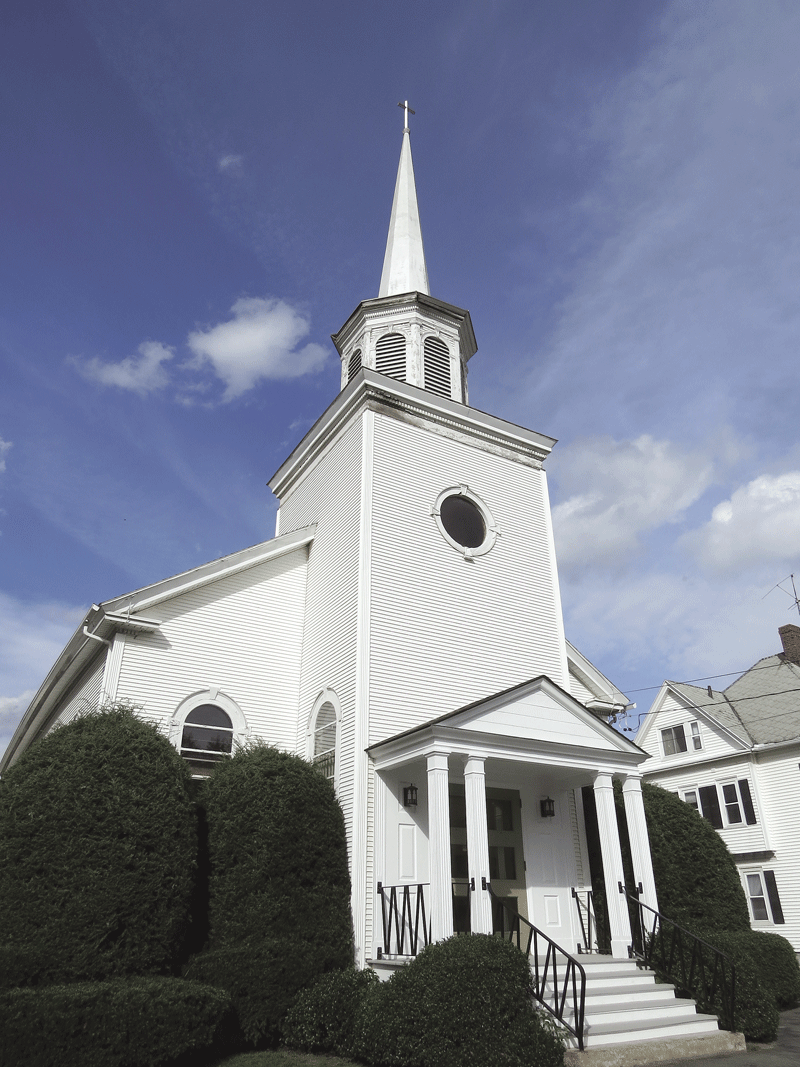
“Last year, Main Street was repaved and a bike lane was added along two blocks that run from Route 7 and Route 102 to the Red Lion Inn,” said Marsden. “This year the other end of the street is being repaved. The area extends from the Red Lion Inn to the First Congregational Church of Stockbridge.

“The town also invested $150,000 of taxpayers’ money in new sidewalks because the ones downtown were dangerous,” she went on. “They had been undermined by frost heaves and tree roots, and we felt it was an important safety issue.”

And then, there are the ongoing efforts to bring cell-phone service downtown. Lack of it has become a safety issue in the community, said Marsden, who cited two recent examples.

“In one instance, a man fell off a roof and hit his head on a rock; his co-workers had to run a block to get to the police station because they couldn’t use their cell phones to call for help,” she said, adding that a similar scenario occurred when a driver hit a bicyclist near the fire station.

“We have also had power outages which had the potential to create problems for our elderly citizens who rely on their cell phones to get help if they have an emergency,” she went on.

In the past two years, Gillett said, town officials have contacted cell-phone service providers and encouraged them to install a tower that would provide service to the downtown district. They also hired an engineer to examine a portion of the town landfill to determine if it would be a suitable location. Since there is no electricity on the property, National Grid was brought to the site, and a representative told town officials it will cost $400,000 to install underground electric lines, which are needed for the tower to operate.

But the site has been deemed appropriate, and on Oct. 8, the selectmen passed an article that will allow a tower to be built on the property.

“We’ve put out a request for proposals; they’re due Nov. 19, and we hope to have service downtown by the end of next summer,” Gillett said. “The tower won’t be visible and will have a positive effect on the health and safety of our residents, as well as the tourists who shop downtown.”

Marsden added that expanded cell-phone service will also benefit home-business owners who need to stay in touch with their clients during a power outage.

However, this is not the only step the town has taken to promote safety. Last year, officials purchased a $470,000 rescue vehicle that is fully equipped with the Jaws of Life, as well as medical and stabilization equipment, including foam to extinguish fires.

“We put aside money for four years until we could afford to purchase the vehicle,” Gillett said, adding the selectmen believe it is important to be proactive in matters that affect the health and safety of residents. “We owned some rescue equipment before we made the purchase, but it was kept at a number of different sites,” he explained. “Now it’s all in one place, and the rescue vehicle has already been put to use.”

Continued Progress

Marsden said town officials are determined to preserve the historic charm of Stockbridge, while taking steps to keep up with the times.

“We are a very small community and want to maintain our small-town feel as well as the historic integrity that exists here. But we are looking toward the future,” she said.

Gillett agreed. “It’s important to us to maintain our reputation as the quintessential New England village in a typical New England setting. But we will continue to do all we can to maintain the safety of our residents, as well as the visitors who come to our town.”

Stockbridge at a glance

Year Incorporated: 1739
Population: 1,947 (2010)

Area: 23.7 square miles

County: Berkshire

Residential Tax Rate: $11.12

Commercial Tax Rate: $11.12
Median Household Income: $48,571 (2010)

Family Household Income: $59,556 (2010)

Type of government: Open Town Meeting
Largest Employers: Kripalu Center for Yoga & Health, National Shrine of Divine Mercy, Red Lion Inn

* Latest information available

Insurance Sections
At AXiA Insurance, Creating Value Is the Rule — Literally

President Michael Long

AXiA Insurance Services President Michael Long

Everyone who works for Michael Long follows what he refers to as his “Always Rules.”

They are part of a vision he created long before he opened AXiA Insurance Services Inc. and are the cause and reason behind the laughter that peals frequently from meeting rooms and cubicles in his Springfield headquarters, the smiles on the faces of employees, and the myriad perks, rewards, and awards they receive that range from engraved crystal wineglasses and decanters to unusual birthday gifts they are given at employee-appreciation events.

Their happiness translates into superb customer service, which falls precisely in line with Long’s belief system. “You can’t create value for your customers if you don’t create it for your employees first,” he said, explaining the reasons behind the eight rules he originally created and two he added later.

“I had been in the insurance business for 30 years before I launched this company, and during that time, I saw many valuable employees leave,” he said. “So I realized, if I wanted to be the best agency — not necessarily the biggest — I had to train my employees well and create an environment where they felt valued.

“I consult with my employees about where the agency is going and what is coming next. I also allow them to map their own careers and chart their own destination,” Long went on, adding that he posts the courses and/or certifications needed to move from one position to another and gives employees paid time off to get the education they need to move up in the company.

“What difference does it make to my employees if I am doing well, but they are not moving up with me?” he asked rhetorically. “People want to know what will happen to them.”

The majority of employees work four days a week on a rotating schedule, although they can work five instead if they prefer to do so. But longer workdays result in benefits to clients because it allows AXiA to be open from 7:30 a.m. to 6 p.m.

There are also three ‘snow teams,’ and if there is a blizzard, two of the teams can work from home. In addition, every employee is given two paid days off to volunteer for any charitable organization they choose.

Long’s belief that employees who feel appreciated provide better customer service has led to measurable success, and he has achieved every goal he outlined in the 10-year plan he created before he opened his full-service insurance agency in October 2001. “We’ve averaged more than 15% growth every year,” he said.

AXiA began as a one-man operation in a rented room in Market Place in Springfield. Today the business has 32 employees in six locations that include Springfield, Easthampton, Natick, North Kingston, R.I., and two offices inside MassMutual.

Long makes it a point to understand his employees’ strengths and weaknesses and avoids delegating any duty to an employee that he or she doesn’t truly enjoy or excel at.

“I’ve seen agencies that failed and others that were very successful,” said Long. “But I also saw many skilled and talented people fail because they were told to do things they were not good at. They should be allowed to become great in the areas they enjoy.”

He learned this lesson as a child and said it remained with him as he matured. Long said his mother and teachers did so many things to try to improve his poor spelling that it robbed him of time that would have been better spent focusing on subjects he enjoyed.

“So, what I bring to the table is a different view. I believe everyone has unique abilities, so I try to structure job duties so people are using those abilities,” he said. “The things they don’t do well are passed off to someone else who is great at those tasks and enjoys them.”

Natural Consequences

Long said the rules he created and the happiness of his employees has a direct relationship on the way customers are treated. A positive attitude must start at the top, he said, as he listed his rules, which are:

• Always create value for employees, customers, and vendors;
• Always plan toward the future with reasonable deadlines and objectives;
• Always support the people you work with;
• Always treat everyone with great respect;
• Always seek out education and growth;
• Always keep a positive attitude and outlook;
• Always work with the strengths of others;
• Always look for lessons from mistakes, not blame;
• Always look for and take advantage of opportunities; and
• Always work within your strengths and unique abilities.

“These principles allow us to provide the best service possible at the best price,” Long said, noting that, whenever the cost of someone’s insurance policy goes up by 10% or $100, they are contacted and given alternative options, which is possible because AXiA represents 20 insurance carriers.

Agents also analyze each client’s policies on a regular basis. “Customers are not insurance experts, and sometimes people are paying for things they don’t need, but lack coverage in other areas they should have,” Long said.

He told BusinessWest that the company began conducting annual team reviews for commercial clients two years ago to make sure their policies do not have any gaps or overlaps. They also do a full review of each personal insurance policy every two years, and clients receive a letter about any areas of concern, which are typically sent via e-mail.

“We have 80% of our clients’ e-mail addresses; the average in the industry is only 20%, and we also text information,” Long added. “It’s very important to our clients to communicate with them this way because they are busy.

“But everything we do comes back to my theory and the name of the company,” Long said, explaining that AXiA is a Greek word which translates to “value, capability, merit, worth, and worthiness” in English.

Director of Operations Alana Sambor said the approach makes a difference. “We have already reviewed the policies of more than 2,500 of our clients this year,” she said. “We want to make sure they have the right coverage at the right price, and we publish information we think they need to know.”

Alana Sambor

Alana Sambor says AXiA goes out of its way to regularly review clients’ coverage to make sure it reflects their needs.

One thing Long believes sets AXiA apart from other insurance agencies is its approach to new clients. “We don’t just ask to see a copy of their current policy and provide them with a quote,” he said. “We analyze it and ask them a series of questions, such as whether they own more than one piece of property, then come back with a report or recommendation about how their policy should look. It’s not an apples-to-apples quote; it’s based on what the person really needs.”

For example, a person may have a $250 deductible on their homeowner’s insurance policy. “But since it’s unlikely they will turn in a small claim, we may advise them to take out a larger deductible and purchase other coverage for things such as backed-up sewers or drains with the money they save,” Long said.

The company also continuously works to improve communications with clients. Two years ago, AXiA put an emergency phone number in place so customers can contact a representative 24 hours a day, seven days a week. “And we are looking at creating a mobile app as well as an interactive website, which we hope to launch next year,” Long said, explaining that it will give clients instant access to their claim history and premiums, so they can see what they paid for a policy years ago.

The new website will also allow commercial clients to issue certificates of insurance for themselves around the clock by logging into the system. “Many contractors, who range from painters to landscapers to truck drivers, need a certificate when they arrive at a new job site, and they often start work at 6 a.m., before we are in the office,” said Sambor. “We have had truck drivers who found they couldn’t leave California without a new certificate, which can be problematic due to the time difference. This will allow them to print whatever they need, any time of day or night.”

Caring Atmosphere

Long promotes his company by having the name AXiA emblazoned on special vanity license plates that are issued to all of his employees. He also purchases shirts, sweaters, and other articles of clothing that display the company name and logo.

But he believes it is his positive attitude and the gratitude passed on to clients by satisfied employees that most accounts for his growth and success.

Sambor noted the company is growing so fast that it interviews at least one new job applicant every month, but added they are very choosy about who works for them.

In fact, before Long hires someone, he spends a great deal of time making sure he or she will fit in well and comply with the company’s rules. “We always want to do what is right for the customer, so our employees must show up on time, finish what they start, and say ‘please’ and ‘thank you’ to every client,” he said.

“When I began my company, I laid out everything that I wanted to do for clients and told prospective employees about my value plan, and the majority of them are still with me today,” he went on. “But it’s a fast-paced environment, so we screen candidates carefully.”

That extends to making sure their unique abilities fit the role they will play in the business. “For example, our receptionist is not only very pleasant, she has real empathy for people. It’s important because she is the first person people talk to, which sets the stage for further transactions,” Long said.

Sambor agrees. “The atmosphere at AXiA makes it a place that is fun to work at, and even the small perks, such as a hot cookie machine and cappuccino/espresso machine, make a difference to employees. We spend more time together every day than most people do with their families, so we need to enjoy our jobs,” she said. “We have a team-oriented environment, and if one person is struggling or engrossed in a project, another person will cover for them while they complete what they need to do.”

Long also publishes jobs on the company website that don’t yet exist, but will be available in the future, as well as pay grades and levels so people know how much money they can expect to make as they advance through the ranks.

He feels that’s important because it helps him retain employees. “I sit down with each of my employees once a year and go over their individual goals,” he said.

The company is dedicated to going green, which has provided employees with additional perks and also resulted in benefits to clients.

“Eight years ago, we began going paperless, so we don’t have rows and banks of file cabinets. We e-mail policies to customers, unless they ask for a hard copy, and we plan to install solar panels in the building,” Long said. He added that allowing employees to work four days a week provides additional fuel savings and reduces emissions.

The company also recently began giving employees partial subsidies for gas if they drive vehicles that get high mileage. “And next year, we plan to do something smaller for the balance of our employees,” he added. “We don’t do things halfway.”

Bottom Line

Long identifies himself as a problem solver, and said it’s the approach he used when he began formulating the principles that would become the cornerstone of his insurance agency.

“I spend time identifying things that could hold us back, and look at situations and find resolutions other people wouldn’t think of,” he said. “I often tease my employees, but I believe people are supposed to laugh at work. If they are having a good time, they are more effective and efficient, and if they like their jobs, they do better at them, which leads to happier clients.”

Features
Nominations Sought for BusinessWest’s Recognition Program

BizDiffMakrsLOGO2011When BusinessWest launched its Difference Makers program in 2009, it did so with the sentiment that there are many different ways in which an individual or a group can make a difference in the region.

Since then, the various groups of winners have proven that such thoughts are merely an understatement, and the class of 2014 did that perhaps better than any other.

The honorees were Paula Moore, a school teacher who started the Youth Social Educational Training (YSET) Academy to help keep young people off the streets and out of trouble; the Gray House, a nonprofit that provides a host of programs and services ranging from a food pantry to adult education to its Kids Club; Michael Moriarty, an attorney and director of Olde Holyoke Development Corp., who has been passionate about childhood literacy; Colleen Loveless, who has expanded the reach and the impact of Rebuilding Together Springfield in dramatic ways; and the Melha Shriners, a fraternal organization that changes lives in many ways, but especially through its efforts to help fund the many Shriners Hospitals for Children.

“The class of 2014 showed that difference makers come in many forms and take on a wide range of missions,” said Kate Campiti, associate publisher of BusinessWest. “In each case, though, the overriding goal is to improve life for the people who live in this region.”

And there are many more stories still to be told, she went on, adding that BusinessWest is now accepting nominations for the Difference Makers class of 2015.

The nomination form on page 13 explains essentially how this process works, said BusinessWest Editor George O’Brien, who noted that the phrase ‘Difference Maker,’ as the class of 2014 proved, is a truly subjective phrase with a number of meanings.

“Since Difference Makers was launched, we’ve recognized business executives, nonprofit managers, college presidents, a crusading police chief, and a woman who founded a program to fill the shelves of school libraries,” he explained. “All these stories are different, but the common thread is people — and organizations — stepping up to improve quality of life here in Western Mass.”

“Since the beginning, the readers of BusinessWest have helped its staff with the difficult task of selecting honorees by relating these remarkable stories of how individuals and groups are making a difference,” he went on. “And we’re seeking your assistance again.”

As with another BusinessWest recognition, 40 Under Forty, Difference Makers is a nomination-driven process, Campiti said, urging those who propose an individual or group for consideration to be thorough with their nomination and, in simple terms, effectively answer the question ‘why is this nominee a Difference Maker?’

Nominations, which can also be completed online here, are due at the end of the business day (5 p.m.) on Dec. 15. The winners, as chosen by a review panel comprised of BusinessWest writers and editors, will be profiled in the magazine’s Feb. 9 edition and saluted at the annual Difference Makers gala, to take place in late March.

Questions about the program and the nomination process can be forwarded to [email protected], or call (413) 781-8600, ext. 102.

Previous Difference Makers

2009
• Doug Bowen, president and CEO of PeoplesBank
• Kate Kane, managing director of the Springfield office of Northwestern Mutual Financial/the Zuzolo Group
• Susan Jaye-Kaplan, founder of GoFIT and co-founder of Link to Libraries
• William Ward, executive director of the Regional Employment Board of Hampden County
• The Young Professional Society of Greater Springfield

2010
• The Irene E. and George A. Davis Foundation
• Ellen Freyman, attorney and shareholder at Shatz Schwartz and Fentin, P.C.
• James Goodwin, president and CEO of the Center for Human Development
• Carol Katz, CEO of the Loomis Communities
• UMass Amherst and its chancellor, Robert Holub

2011
• Tim Brennan, executive director of the Pioneer Valley Planning Commission
• Lucia Giuggio Carlvalho, founder of Rays of Hope
• Don Kozera, president of Human Resources Unlimited
• Robert Perry, retired partner/consultant at Meyers Brothers Kalicka
• Anthony Scott, Holyoke police chief

2012
• Charlie and Donald D’Amour, president/COO and chairman/CEO of Big Y Foods
• William Messner, president of Holyoke Community College
• Majors Tom and Linda-Jo Perks, officers of the Springfield Corps of the Salvation Army
• Bob Schwarz, executive vice president of Peter Pan Bus Lines
• The Women’s Fund of Western Massachusetts

2013
• Michael Cutone, John Barbieri, and Thomas Sarrouf, organizers of Springfield’s C3 Policing program
• John Downing, president of Soldier On
• Bruce Landon, president and general manager of the Springfield Falcons
• The Sisters of Providence
• Jim Vinick, senior vice president of Investments at Moors & Cabot Inc.

2014
• The Gray House
• Colleen Loveless, executive director of the Springfield chapter of Rebuilding Together
• The Melha Shriners
• Paula Moore, founder of YSET Academy and a teacher at Roger L. Putnam Vocational Training Academy
• Michael Moriarty, attorney, director of Olde Holyoke Development Corp., and supporter of childhood-literacy programs

Insurance Sections
Homeowners’ Liability Often Extends Beyond the Home

By JOHN E. DOWD Jr.

John E. Dowd Jr.

John E. Dowd Jr.

One misconception about homeowners’ liability insurance coverage is that it covers only incidents in the home. In actuality, the comprehensive personal liability (CPL) coverage under a homeowners’ insurance policy is really not associated with any location, other than the limitations and exclusions on the policy.

Here are some examples of what probably would be covered by CPL:

• Sports incidents: for example, you are playing golf and you drive a ball that hits someone in the head and disables them. If you are found liable, as long as you were not doing it professionally, your policy will likely provide coverage.

• After shopping at your local market, you accidentally drop a bottle of olive oil in the parking lot, and it shatters and bleeds the oil onto the pavement. Another shopper comes along, slips, and seriously injures herself on the pavement. While the assumption is that the injured party will take action against the market, the typical practice of attorneys is to go after everyone associated with the incident.

• You are on vacation at a hotel, and you are so excited to leave the room to enjoy a sightseeing tour that you forget to turn off the faucet. The running water causes significant damage to the hotel structure. The hotel decides to go after you for damages. Your CPL will defend you and may pay out damages if you are deemed liable.

• Your kid lends his skateboard to a friend, and the friend, who may not be experienced with the skateboard, gets seriously injured trying to make a maneuver. Parents can be held liable for this injury, and there is a very good chance this will be covered by the CPL coverage.

• If your dog bites a stranger at the park, your CPL will cover you as the owner and responsible party for the dog, as long as the policy does not exclude coverage for your dog breed. Some homeowners policies exclude coverage for breeds deemed dangerous, such as pit bulls.

Additionally, the CPL coverage will usually extend coverage for the following items, even if an incident happens away from the insured premise:

• Trailers that are not attached to a motor vehicle;

• Motorized golf carts;

• Watercraft that does not have a motor or is not more than a specified amount of horsepower;

• Sailboats below a certain length;

• A vacation residence (however, certain conditions may apply, so you also may need to schedule it); and

• Non-motorized bikes.

Here are examples where coverage does not exist and is excluded by nearly every homeowners’ insurance policy:

• Your cars, which are clearly excluded if registered for road use. This is exactly why you need to get a separate auto insurance policy;

• Motorized recreational vehicles, especially if they are off the premises;

• Any incident related to business; and

• Intentional acts.

Policies vary, so it is important to review your policy to see what may be covered and what may not be covered. Additionally, some policies allow you to endorse a coverage that may not be on the policy. This is why it is so important to sit down with your agent to address additional risks you may have and make sure coverage for those risks is addressed.

Liability coverage is perhaps the most important coverage you should have, simply because most of these cases involve attorneys, and if coverage exists, the insurance companies provide for your defense, as well as any settlement up to the limits of your policy. Again, an annual review of your personal risk exposure with your agent is essential. It could be a very short conversation with your agent from year to year if nothing has changed in your life, but more often than not, changes do occur that could expose you unnecessarily to a potentially uninsured loss exposure. Ignorance is never a good defense.

One thing that you should carefully note is that, if you are involved with any activity where you charge a fee of some kind, there is a good chance that the insurance company will deem this to be a commercial exposure and will therefore not cover the activity under your CPL. Your agent or broker is always available to answer these questions, and you should never hesitate to put him or her on the spot.


John E. Dowd Jr. is the fourth-generation president and CEO of the Dowd Insurance Agencies. The Dowd Agencies is a full-service agency, founded by his grandfather in 1898, which provides personal, commercial, and financial-planning needs. The Dowd Agencies has six offices in Western Mass.; (413) 538-7444; [email protected]

Features
Professional Service Providers Must Hone Networking Skills

Networking is a key business-development tool and is often the best method of building new connections and expanding your influence in the business community.

Kristi Reale, CPA, CVA

Kristi Reale

But as professional service providers, our education and training is often focused on technical skills, leaving little or no room for soft-skills training on subjects like networking or business development. Further, networking can put many of us outside of our natural comfort zone. In the end, however, the gain is worth the pain, and by building a plan and following the tips below, your next networking experience might just be a little more enjoyable and productive.

In reality, networking should be exciting, fun, and a path toward advancement. Remember that people, not companies, make decisions; therefore, it is imperative that, as professionals, we expand our referral sources. People do business with and refer business to people they know, like, and trust. Networking allows us to expand our circle of influence and develop and cultivate new relationships. Our professional network can open doors for us that would have otherwise remained closed.

If you are new to the networking process or looking to improve your networking capabilities, the following tips may help you achieve your goals.

Plan ahead. Time is very valuable, so you want to make sure the events you attend are of good quality, with the type of people you want to do business with. You want to meet and establish relationships with other referral sources and decision makers. There are various organizations that specialize in business networking as well as industry-specific organizations. The more relevant your target audience is, the more relevant your meetings and referrals will be.

Set goals. Before you attend a networking event, do your best to set concise and attainable goals. For example, ‘I am going to speak with three people in the manufacturing industry.’ Having clear goals allows you to focus your efforts and determine success based on a measurable outcome.

Observe. If you are just getting started with business development, try to watch others closely. See how the experts are working the room. Determine if there is an experienced team member in your organization whom you can ask to take you under their wing and show you how they make connections. Not only can this be helpful in the learning process, it will also help you build a reputation within your own organization as someone focused on and committed to networking.

Be prepared. Networking opportunities can happen anywhere, often when you least expect it. You should always have your business cards readily available and be prepared to make an effective introduction of yourself and your company. Sometimes this is referred to as an elevator pitch. In less than two minutes, you should be able to introduce yourself and your company and provide a very brief explanation of what sets you apart from the competition. Get to the point quickly; you can always delve into detail later at a follow-up meeting.

Listen. When you are meeting a referral source, let them speak. People are passionate about their businesses and are usually willing to tell you about them. They will also appreciate when you take a genuine interest in what they are saying. Do not hesitate to ask open-ended questions, such as, ‘what separates you from your competition?’ This expands the conversation, shows you are engaged and sincere about learning more about their business.

Be a giver. As you are listening, you should be asking yourself, ‘how can I help this person?’ and ‘What can I do for them?’ Listen for their pains and see what relief you can offer. If their concern is outside of your expertise, whom can you recommend? By having a giving mentality and not expecting anything in return, you establish trust, while at the same time strengthening the relationship with the connection you have now recommended. This can turn into a win-win for everyone involved.

Take notes. Before leaving a networking event, take notes on the back of the business cards you received. List your topics of conversation with those individuals and any notable facts or other interesting items. This will help tremendously with follow-up. Additionally, when you take the time to remember small details about people, they appreciate it. Just as when you were in school, retention comes from taking good notes.

Be patient. When networking, you need to think long-term; networking is much more than an exchange of business cards or connecting on social media. Just as with a personal relationship, it takes time to establish trust. The point is to make long-lasting valuable relationships that are mutually beneficial to both parties. Having connections can open doors, but relationships can close deals.

Follow up. Hold yourself accountable; having a pile of business cards is not going to make relationships. Follow up with either a personalized e-mail or telephone call, and make sure you mention something you discussed at the event. Invite this person to lunch or for coffee. If you are reading a publication and see an article that would interest them, forward it. This shows you are sincerely interested in their business and in building a relationship.

Be prepared for rejection. Not every connection made when networking will turn into a relationship. You will have e-mails and telephone calls ignored, meetings cancelled and, inevitably, people who forgot they even met you. Keep this in mind: it is better to strike out then never get up to bat, and if you keep trying, you will eventually knock it out of the park.

By preparing for a networking event, having a plan, executing the plan, and following up, you will inevitably find more success in your professional networking efforts. Remember that people, not companies, make decisions, and people do business with and refer business to people they know, like, and trust.

Kristi Reale, CPA, CVA is a senior manager with Meyers Brothers Kalicka, P.C. in Holyoke. In addition to the tax, accounting, and consulting services she provides clients, she is also a certified valuation analyst; (413) 536-8510.

Insurance Sections
The Line Is Blurry, but Employers Must Be Careful Not to Cross it

By BILL GRINNELL

Bill Grinnell

Bill Grinnell

As business owners, our quest for increased efficiency and cost-effective solutions has led many of us to hire subcontractors. It often makes sense to subcontract for work outside of your expertise or for extra work during abnormally busy times of the year.

From an insurance standpoint, subcontracting work has advantages. A sole proprietor with no employees is not required to have workers’ compensation insurance in Massachusetts. Thus, this cost is eliminated by subcontracting work within the law.

But subcontracting work within Massachusetts law is much easier said than done.

Massachusetts Is Tougher Than the IRS

The laws governing subcontracting are much more complicated and stringent in Massachusetts than they are on a federal level. The IRS is the government agency that determines whether a worker is an employee or an independent contractor, due to the tax implications of the determination.

The IRS has a list of 20 factors it uses to determine a worker’s status. The factors pertain to how, when, and where the work is performed. Some of these factors include:

• Whether a worker must comply with the employer’s instructions for the work;
• Whether the employer provides specific training;
• Whether the worker must comply with hours set by the employer; and
• Whether the worker is on the job full-time.

In Massachusetts, the law presumes that everyone you hire is an employee until proven otherwise. You’ve heard of innocent until proven guilty? Well, in Massachusetts, every freelancer you hire is an employee until proven an independent contractor.

Misclassification Is Costly

Misinterpreting the laws can have unexpected and costly consequences. Employers found to have misclassified an employee as an independent contractor may be subject to income-tax liability for withholding that should have occurred with wages that should have been paid, FICA and FUTA contributions, state unemployment-contribution payments, potential overtime and other wages owed, workers’ compensation insurance premiums, and civil and criminal liability.

Non-willful violations of the law can incur fines of up to $10,000 and imprisonment for up to six months for a first offense. For violations found to be willful, the fine can rise to $25,000, and imprisonment can last up to one year for a first offence.

To steer clear of these landmines, ensure that your subcontractors qualify as independent contractors.

Three Critical Tests for Independent Contractors

In Massachusetts, there are three critical tests workers must pass to be deemed independent contractors: They must be free from the employer’s control, they must work outside the employer’s usual course of business, and they must do the same work regularly for other companies.

Freedom from Control
A worker must be free from the presumed employer’s control and direction in performing the service, both under a contract and in fact. To be free from an employer’s direction and control, a worker’s activities must be carried out with independence and autonomy. For example, workers should provide their own tools, set their own hours, and take their own approach to completing a job.

In the old days, paper-delivery boys and girls were deemed independent contractors. Today they are considered employees, and we no longer see young kids delivering papers door-to-door.

Work Must Be Outside the Usual Course of Business
To qualify as an independent contractor, the worker’s job or service also must be performed outside the usual course of business of whothat performs work that is part of the normal service delivered by the employer may not be treated as an independent contractor.

Here’s where the lines get sketchy. I have seen nightmares created by insurance-company auditors. If a home builder hires a plumber, is that outside of his usual course of business? Some insurance auditors interpret this law very strictly and take the position that any construction activity performed for a general contractor is in the same course of business. Thus, the auditor makes a charge for any uninsured subcontractors.

Work Must Be Done Regularly for Others
Third, an independent contractor must represent himself or herself to the public as being in business to perform the same or similar services. Furthermore, an independent contractor often has a financial investment in a business that is related to the service he or she is currently performing for the employer.

For example, if a restaurant were to hire the same driver to pick up meats and fresh produce every day and that driver only drove for that one restaurant, an employee relationship would exist.

Make sure your subcontractors pass all three tests to ensure that you will not be hit with penalties and saddled with a higher head count than you wish.

If you have questions about your subcontractor relationships, contact an insurance professional.

Bill Grinnell is president of Northampton-based Webber and Grinnell Insurance Agency; [email protected].

Sections Technology
High-tech Gadgets Battle for Market Supremacy

TechDPartAs religious wars go, this one’s fairly bloodless.

“Cellphones are deeply personal,” David Pogue writes at Yahoo Tech. “When you buy a phone, you’re making an expensive bet. You can’t easily switch between the Google and Apple worlds; you’ve invested a lot in accessories, you’ve bought apps, you’ve learned that company’s software conventions. And you never want to think your phone is inferior, because then you might feel inferior. So you wind up taking a side in this phone duopoly. You join a very silly — and unwinnable — religious war.”

That may rank among the more intriguing analogies to the decision Americans make between iPhone and Android culture, but it may not be too much of a stretch; smartphones have become an omnipresent part of our lives, and the war between the industry leaders is increasingly heated with each new release. So that’s where we’ll begin this year’s overview of what’s new, hot, and well-reviewed in the world of technology and gadgets.

The iPhone 6 ($199 with a two-year contract) has received mostly rave notices from the tech press, and made waves because of a jump in size from the iPhone 5. (The iPhone 6+, released around the same time, is even larger.)

1iPhone6“There is explosive demand for bigger smartphones. A 4-inch smartphone feels small now; somewhere around 5 inches is the new normal,” notes David Pierce at The Verge. “Yet, too many large-screen phones are cumbersome, awkward, and often just plain bad. And Apple has a long history of taking good ideas with obviously huge markets and being the first manufacturer to really nail the execution.”

The result is impressive, the site notes, but not revolutionary. “There’s nothing truly ambitious here, no grand vision of the future or of a new way of living in the present. Apple doesn’t have better ideas about how to make use of more display real estate, or how to help users navigate a bigger device.”

Still, “for a variety of reasons, from the camera to the app ecosystem to the hardware itself, the iPhone 6 is one of the best smartphones on the market. Maybe even the best. But it’s still an iPhone. The same thing Apple’s been making for seven years. A fantastically good iPhone, but an iPhone through and through.”

Ewan Spence at Forbes is slightly more critical, noting that the phone gets the job done, but it feels more like a necessary step to keep Apple’s marketing machine moving than a purposeful step forward.

“The iPhone 6 does not feel ‘magical’ to me. It does not feel like ‘something only Apple could do.’ It feels like Apple has done the bare minimum to update the handset for late 2014, but has not committed to any major changes,” he writes. “That said, the iPhone 6 is still one of the easiest smartphones to use.”

Meanwhile, Samsung’s Galaxy S5 ($199), its 2014 upgrade for the Android crowd, features a bright, striking display, a very fast processor, and an excellent camera experience, writes Jessica Dolcourt at CNET.

2SamsungGalaxys5“Here’s why the Samsung Galaxy S5 should grab your attention: it looks good, it performs very well, and it has everything you need to become a fixture in nearly every aspect of your life. But, like a candidate running for re-election, the GS5 gets where it is today based on experience and wisdom, not on flashy features or massive innovation,” she notes. “The S5 is more of a Galaxy S4 Plus than it is a slam-the-brakes, next-generation device; it makes everything just a little smoother and faster.”

So, in all, there were no truly game-changing advances among the top two names in smartphones. But adherents of both don’t seem to mind.

“Celebrate the iPhone’s excellence, even if you’re not in the Apple fold. And celebrate the best work of Samsung, HTC, and LG, even if you’re not part of the Android family,” Pogue writes. “Because, in the end, competition is what will make your phone better this time next year, or the year after that. The perpetual refinement of ideas, and the necessity to think up new ones, will benefit you — no matter which army you march with.”

Tablets, Laptops, and Printers

3KindleFireHDX8.9Smartphones are far from the only tech battlefield, however. Tablets are becoming more sophisticated and hotly contested as well. Engadget considers Amazon’s Kindle Fire HDX 8.9 ($379) the current best choice, buoyed by a crisp screen, considerably bumped-up processing power, a rear-facing camera, slimmer hardware, and strong tech support. “It’s a pretty big splurge for a holiday gift,” reviewer Brian Heater notes, “but it’s a reasonable sum to ask for a tablet that hardly cuts any corners.”

Apple is deeply invested in the tablet game as well, of course, and the iPad Air 2 ($499) gets an improved processor, better rear and front-facing cameras, an even thinner and lighter design, an anti-reflective screen, a Touch ID fingerprint sensor, and more built-in storage at higher configurations than last year’s model, according to CNET’s Scott Stein.

4AppleiPadAir2The Bad The Air 2 isn’t a big change from last year’s iPad in terms of overall function; battery life remains the same, although its battery life is already pretty good. Audio playback via speakers makes the thin metal body resonate more than before

“The iPad Air 2 is a nice refinement and finesse of last year’s model, with a bevy of tweaks, enhancements, a much faster processor, and the welcome addition of Touch ID. Simply put, it’s still the gold standard for tablets.”

5ToshibaChromebook2Today’s laptop computers — sleek, lightweight, and powerful — are constantly advancing as well. Laptop Magazine give its highest marks this year to the Toshiba Chromebook 2 ($329), praising its “stunning” display, “boisterous” sound, and compact design, while conceding that its graphics could be better.

“If you want a lightweight, stylish laptop that’s easy to use and tote around, this is a solid choice,” reviewer Valentina Palladino notes. “The Toshiba Chromebook 2 refreshes the original with a slimmer design, a gorgeous 1080p IPS display, and powerful speaker.”

6DellXPS13UltrabookTouchIn the windows category, PC World has plenty of praise for the Dell XPS 13. “It’s a bit pricey at $1,299 as configured, but that buys a sharp, nimble, and durable laptop with a fourth-generation Intel Core i5 processor, 8GB of memory, an SSD, and a 13.3-inch touchscreen display,” Bryan Hastings notes, while offering a demerit for its dearth of slots and ports, and battery life that leaves him looking for a wall outlet more often than he’d like. “But on the whole, it’s a terrific little machine.”

If laptops are available in a wide range of prices, the same is true of printers. PC Magazine gives top honors this year to the Dell B3465dnf Multifunction Laser Printer (now there’s a mouthful), which, at $970, is meant for a small to medium-size offices or workgroups.

7DellLaserPrinter“That said, if you have any doubts about its suitability for heavy-duty use, the rated maximum monthly duty cycle for printing, at 150,000 pages with a recommended maximum of up to 15,000 pages, should tell you everything you need to know,” writes reviewer David Stone. “Add in the fast speed on our tests, the reasonably high quality output, the 7-inch color touch-screen control panel, and the low cost per page, and it’s a compelling pick.”

For something less pricey, CNET is sticking with the HP Officejet 8600 Plus ($179), which has been around for two years but still tops the site’s ratings. “It prints professional-quality photos and documents quickly with versatile connectivity options and robust features like an auto-duplexer, cloud printing, and a legal-size scanning bay,” Justin Yu notes. “If you can find a desk to accommodate its large size, the … printer serves up top-shelf output quality at rapid print speeds, suitable for offices, home users, and photo enthusiasts hunting for an upgrade.”

Sights and Sounds

Whether for work or play, most Americans own a digital camera of some sort, but which to choose from the myriad options on the market?

8OlympusToughTG3PC Magazine especially praises the Olympus Tough TG-3 ($349), a mid-priced model it calls the best recreational camera it has tested, praising its wide-aperture lens, microscope macro mode, quick focus, burst shooting, waterproof capability, and more. Despite demerits for battery charging and audible zoom and focus on the soundtrack of videos, Jim Fisher writes, “the TG-3 is a worthy successor to its predecessor, and follows it as our editors’ choice for rugged compact cameras.”

9SonyCyberShotFor those with a significantly higher budget, the Sony Cyber-shot DSC-RX100 III ($799) is hard to beat, Fisher says, praising its high-ISO performance, a large image sensor, sharp wide-aperture lens, burst shooting, customizable controls, and large, tilting LCD.

“Sony’s RX series of compact cameras have wowed us with their small size and excellent image quality since the introduction of the original RX100. But that type of quality doesn’t come cheap, especially in a pocketable form,” he notes. “If you’re not quite willing to pay $800 for a pocket camera, the RX100 and RX100 II remain in the lineup and deliver similar image quality at a lower price.”

Finally, how about a personal soundrack for that photo shoot? News has been fairly quiet on the MP3-player front in 2014, although Apple is getting ready to unveil the sixth-generation iPod Touch in the coming months. Until then, the fifth-generation Touch remains a solid option, writes Tim Stevens at Engadget.
10iPodTouch
“The iPod touch is a comprehensively better package than the previous-gen unit, but at $299 to start, it certainly doesn’t come cheap,” he notes. “If you’re reasonably content with your fourth-gen, this is probably not worth the upgrade, but if you have an older iPod that’s ready for retirement, or are indeed just jumping on the iOS bandwagon for the first time and are happy with your current phone, this is a great place to start.”

For more reviews, just look them up on your smartphone. And give peace a chance.

Joseph Bednar can be reached at [email protected]

Sections Technology
Negotiating a Telecom Contract Is a High-stakes Poker Game

By GREG PELLERIN

Greg Pellerin

Greg Pellerin

The IT department at Company A signs a new three-year contract renewal for local, long-distance, and data-network services, providing for a 25% discount off published rates. The contract is expected to save hundreds of thousands of dollars over the current agreement, and the chief technology officer is commended for his hard-nosed, take-no-prisoners approach to negotiations.

Fast-forward six months. Company A’s CFO is having dinner with his counterpart at Company B. The subject of rising technology costs comes up in discussion, and Company A’s CFO is shocked to learn that Company B has just contracted to pay thousands of dollars less on its monthly telecom bill for essentially the same services, with the same provider.  

A call is placed to the telecom company, and the conversation goes something like this.  

“You told us if we signed this contract, we’d save 25%, but you didn’t tell us other companies were getting even bigger discounts, even though they spend less than we do.”

(Long pause)

“Uh…. yeah.  Well, you have two and a half years left on your contract, and we’ll see what we can do at that point.”

Company A will end up paying hundreds of thousands of dollars more than Company B for the same services even though they are a larger client.

Scenarios like this are playing out for businesses of all sizes across the country as skilled, in-house salespeople for the nation’s major telecommunications companies are front-loading renegotiated offers in an effort to lock businesses into new, long-term deals.  

“The carriers do this for a living, day in and day out,” says technology expert Darren DeMartino. “It’s a high-stakes poker game, and they’re dealing the cards. IT executives negotiate new telecom agreements only once every two or three years. It’s unrealistic to expect they’ll be as effective as someone who does it day in and day out. Carrier representatives are trained to maintain as much margin as possible and directed by a compensation plan that penalizes them for lowering prices.”  

The typical telecom contract covers three years, and much can change over the course of that term. If the past few years are any indication, pricing will continue to go down as new technology, features, and functionality become mainstream. DeMartino offers the following tips for approaching any telecom renegotiation process.

• Insist on eliminating auto-renewal language. Most telecom contracts (as well as some other agreements) have an auto-renewal clause that will lock you into another term period unless you notify the carrier within a predetermined window of time. Push for a month-to-month extension (guaranteed at the same rate), or accept removal of this language altogether.

• Look for agreements that provide significant revenue-commitment flexibility. If guaranteeing more than 70% of your current spend, you could be locking yourself into a situation that the carriers will take advantage of down the road.

• Shop around. The big boys (Verizon, Comcast, ATT) are not the only games in town, and, in fact, there are literally hundreds of telecom providers in the U.S. Universally, telecom costs have been decreasing more than 20% a year. The compounding effect over the course of a three-year agreement is significant, yet many businesses re-up at the first offer they get from their incumbent provider, leaving significant savings on the table.

• Negotiate co-terminous agreements wherever possible. It’s always to a company’s advantage to have the various types of service agreements terminate at the same time. Be leery of subcommitments (i.e. an overall commitment, and then a smaller commitment for each different service type). Failure to fulfill a small commitment in one category could result in significant penalties overall.

• When in doubt, hire an expert to handle negotiations. Bring them in from the start of negotiations or after you’ve done the heavy lifting. In most instances, they can evaluate an offer within 48 to 72 hours and ensure the absolute best deal is on the table.

You don’t have to wait until your contract is up in order to renegotiate better terms. The telecom world is more competitive than ever, and it may be easier to strike a deal well before a contract expires. It’s always easier for a provider to keep a current customer than find a new one. Use that knowledge to your advantage.

On the old Let’s Make a Deal show, contestants were always hesitant to take Monty Hall’s first offer for fear of getting ‘zonked.’ In today’s complex telecom environment, that fear is well-founded indeed.

Greg Pellerin is a 15-year veteran of the telecommunications and IT industries and a co-founder of VertitechIT, a Holyoke-based business and healthcare IT networking and consulting firm; (413) 268-1605; [email protected]

Holiday Party Planner Sections
Restaurants, Banquet Facilities Anticipate Busy Holiday Season

Ruby Meng

Ruby Meng says many companies pulled back on holiday parties during the recession, but they’re coming back now.

It was clear to Erin Corriveau that the corporate holiday party was back when a past client called to book a December get-together — in April.

“The days fly off — there are only so many Thursday, Friday, and Saturday nights” between Thanksgiving and the New Year, considered prime holiday-party season, said Corriveau, catering and events manager at Lattitude in West Springfield. “We had a few people book very early — but you can never actually book a date too early. They do run out quickly.”

In fact, Corriveau said, Lattitude’s new banquet room — which opened last November and allowed the restaurant to handle much larger parties than before — was completely booked two months ago for every Thursday, Friday, and Saturday evening in December.

“A lot of companies have been with us for many years — well over 10 years — and they tend to book year after year,” added Ruby Meng, director of sales at the Hotel Northampton, which has also experienced robust holiday-season reservations this year.

“We’re booked pretty solid on weekends, and weekdays are starting to get close. People are looking to do gatherings and holiday parties, and they’ve also inquired about holiday brunches, a little earlier in the daytime. It’s a creative way to capture more of their employees, who may be busy in the evening or on weekends.

“We’re doing pretty well,” she added, noting that many businesses pulled back on entertainment budgets during the Great Recession, but most are returning. “Companies are bouncing back. A few years back was tough, but we are seeing more companies opening up and being more generous, doing giveaways, raffles, things like that for their employees.”

Robin Ann Brown, director of sales at the Lord Jeffery Inn in Amherst, said holiday gatherings are popular, but not always under that moniker. “A lot of companies are calling them ‘annual events’ or ‘awards banquets,’ versus an actual holiday party.”

She said the industry hasn’t completely recovered from the drop in sales during the recession, simply because many companies that cut parties from the budget haven’t put them back in, even though times are better.

Still, according to Jennifer Marion, assistant director of events for the Willits-Hallowell Center at Mount Holyoke College, business has picked up this year, and companies are starting to spend more money.

“One party with a menu already confirmed for December is doing clams on the half shell, baked stuffed lobster … they’re definitely choosing more elaborate menus that, in the past, their budgets wouldn’t have allowed them to do.”

What’s also changing is what style of party companies are seeking out. For this issue’s focus on holiday party planning, BusinessWest looks into the current trends, and why this season has so many restaurants and banquet facilities feeling merry indeed.

Stand or Sit?

Most area facilities are reporting a definite shift away from sit-down dinners in favor of cocktail parties, food stations, and passed hors d’ouevres, which encourage people to mingle and interact.

“One of the trends we’ve been seeing is stations instead of a true-sit down — chef carvings, high-end hors d’ouevres, passed wine, passed hot cocoa with peppermint Schnapps,” Brown said. “And a lot of people are doing more chamber music or jazz bands than dancing music.”

“We’re getting both,” Meng said. “More people are starting to inquire about station packages, moving toward a cocktail style. People are getting a little more creative, too, maybe bringing in a comedian or activities to keep people entertained. And, of course, bands and dancing, those are a given.”

Added Marion, “we can do either a long cocktail party with a lot of hand-passed hors d’ouevres or stations, or do a bigger, full sit-down meal. Buffets are most popular right now; they give people more choices. But, if it’s a more formal group, they tend to go more with a served meal.”

Corriveau said it’s important to be flexible because of all the different party preferences in the business world — and at Lattitude, that flexibility extends to the site of the party.

“A lot of business parties are held on site, but we also do off-site deliveries and catering,” she noted, adding that the day and location of business parties often depends on the size of the company. “Monday through Wednesday, the crowd tends to be smaller businesses, versus the larger companies that tend to take up the weekend dates. Or, if businesses want a typical potluck lunch but don’t feel like getting dressed up and going somewhere, we can bring a holiday party to them on company premises.”

Like others we spoke with, Corriveau has seen a shift away from formal, seated dinners. “We used to do more sit-down affairs, and businesses can certainly do that, but more companies that are booking parties want their employees to enjoy themselves, to mix and mingle and socialize. We do a lot more of the social, passed-appetizer type of party. When you’re home having a Christmas party, everyone is moving around, and that’s the feel they’re going for. We’re still doing sit-down parties, but people seem to be moving away from that.”

Companies are also increasingly moving away from Saturday nights and asking for Thursday and Friday reservations, Brown said. “Family time is limited, so a lot of companies choose not to do it on weekend nights, so people can spend time with their families at home.”

Creating Traditions

With many of these trends consistent across the industry, how do the area’s many banquet facilities set themselves apart among fierce competition? In the Lord Jeff’s case, it’s emphasizing the facility’s embrace of the holiday season and its traditions.

“People gravitate toward the Lord Jeffery Inn because we’re an historic inn, and holidays have that historic tradition about it. The Lord Jeff speaks tradition,” Brown said, citing, as examples, a Sunday brunch with Santa, high tea on Saturdays, and carolers on Friday nights.

“Those are the traditions the inn has put in place since we renovated, and people have been very receptive. During the holidays, we’re extremely busy.”

The inn can accommodate both large and small gatherings, she added. “A lot of companies don’t have large holiday parties, so for parties of, say, six to 12, we’ll do smaller events in our beautiful greenhouse room, where you can see it snowing right on the roof, and fireplaces all around. When companies don’t want to spend money on large events, the greenhouse room holds up to 18.”

She said the nostalgic holiday appeal of the facility is reflected even in its twinkling seasonal lights, which are visible from the Commons in downtown Amherst, making the Lord Jeffery Inn an attractive option for parties of all sizes.

“Even if companies are not going to do a full dinner, they might take out the board of directors or top employees for a dinner for 20,” she explained. “They like the carolers on Friday, and the high tea. People drive over an hour to come to high tea; again, it’s a holiday tradition.”

Lattitude believes its new banquet facility is fast becoming a regional tradition.

“Prior to the banquet room, we had a smaller room, and we’d certainly get smaller holiday-party requests,” Corriveau said. “But since adding the banquet room last year, we’ve had our share of larger parties. We were full every Thursday, Friday, and Saturday in December two months ago. People were calling early. We even had somebody book a holiday party this past April.”

The new space boasts a private bar, sandblasted brick walls, and steel beams, and is “very much a reflection of the restaurant,” she said, adding that it holds about 120 seated and up top 150 standing.

“A lot of people are just learning about it. It’s literally where Memo’s used to be in this building,” Corriveau said. “Unless they’re walking in it, they don’t realize it’s there. All of a sudden, they walk in and ask, ‘what is this?’ We do a lot of business parties, weddings, bridal showers, rehearsal dinners, bereavements, a lot of events. It’s warm and inviting. That’s the number-one thing people say when they walk into that room.”

Easy Pickings

Jen Marion

Jen Marion says the Willits-Hallowell Center can provide any type of party setup, but buffets are most popular right now.

Inviting is certainly a trait banquet facilities are aiming for, but so is convenience.

“We’ve done parties for a church group, insurance companies … parties ranging in size from 30 people to as many as 100,” Marion said of her facility on the scenic Mount Holyoke campus. “We have holiday packages, including hors d’ouevres, dinner, dessert, and coffee, and we’re happy to customize that for people with select menus and décor. You pick a menu and let the guests know, and we do the rest. It makes it easy in terms of planning. Usually one consultation appointment with me, and it’s over.”

Well, except for the actual party, that is. The season for celebrating is only beginning.

Joseph Bednar can be reached at [email protected]

Holiday Party Planner Sections
‘The Castle’ Focuses on Details That Make a Difference

David Sarrasin

David Sarrasin says he aims to meet the dietary needs of vegans, vegetarians, gluten-free diners, and guests with food allergies.


People who aren’t familiar with Chicopee might be surprised to learn the city, and specifically Memorial Drive, is home to a large castle, complete with two towers and parapets that line the edge of its roof.

Large lanterns on the building cast light into a parking lot with enough space for 400 vehicles, and massive doors open into a 10,000-square-foot Grand Ballroom illuminated by sparkling chandeliers and an enormous stone fireplace that burns brightly throughout every season of the year.

This building, owned by the Fairview Knights of Columbus Council No. 4044, has an interesting history, said the group’s treasurer, Ronald Belair. He noted that what is now known as the Castle of Knights Meeting & Banquet House, which hosts hundreds of functions each year, was once a strip mall that was home to a number of small, but well-known businesses.

But over the past three decades, it has been completely transformed, and today events staged there include chamber of commerce functions, banquets, weddings, bridal showers, baby showers, 16th-birthday parties, quinceañeras, anniversaries, and church functions.

Businesses also use it for meetings that run from a few hours to three or four days. “Our facility has wi-fi connectivity and state-of-the-art audio-visual equipment,” said Belair. “The entire building is on one level and is handicapped-accessible.”

It has become a tradition for many groups to hold their holiday parties there, and they are often booked a year in advance by companies and social-service agencies alike.

“People come back year after year, and we also have five companies that wait until January to hold their Christmas parties,” said Sales Manager Sandi LaFleche, citing a growing trend. She added that Chicopee Savings, the Arbors, Shriners Hospital for Children, and Hulmes Transportation number among the firms that choose the Castle for their annual holiday gatherings.

The Fairview Knights of Columbus established the Castle as a separate corporation 25 years ago, said Belair, and went about creating something that would be unique.

“When it was formed, we wanted it to stand out, so we changed the entire façade of the building — we put turrets at each end of the banquet hall to give it the look of a real castle, and had the roof designed to look like a moat,” he said. “It is a very unique, elegant facility that is lavishly decorated, and we do our best to treat our guests like kings and queens.”

In addition to this unusual setting, he stressed that the castle emphasizes attention to detail and a willingness to go the extra mile to meet client requests.

For example, it’s not unusual for Executive Chef David Sarrasin to prepare gluten-free meals, along with dishes for vegans, vegetarians, and people with celiac disease at a function in which the other guests are all eating the same food.

“Over the past five years, a growing number of people have been diagnosed with food allergies or put on strict diets,” he said. “We are very conscious of taking care of the needs of our guests, and we want people to be able to come to the Castle, enjoy a meal, and not worry about getting sick, so our menu has evolved considerably over the years.”

Moat Point

What visitors to the Castle see today is the result of a long and slow process of evolution, said Belair.

It began when the Fairview K of C purchased the strip mall at 1599 Memorial Dr. 35 years ago. At that time, a large storefront, which had housed a Big Y, was vacant, but the mall contained many other tenants who had leases that had to be honored. They included Giovanni’s Pizza, Dress Barn, Ray’s Hardware, Lewis & Clark Drugstore, Ray’s Barber Shop, and Rip’s Lounge, which was a popular watering hole frequented by those stationed at nearby Westover Air Force Base.

“The K of C purchased the mall to be its home — we moved from a very small facility on Montcalm Street into the space that had been occupied by Big Y, and over time we slowly renovated it to accommodate our own functions,” Belair said, noting that it was the organization’s third move, and after the former supermarket was gutted, two halls and a large kitchen were created in the space.

As the leases expired for neighboring tenants, the K of C slowly took over the empty storefronts, and Lewis & Clark and Rip’s Lounge were converted into a members’ lounge and meeting facility. As more space continued to open, again due to expired leases, the K of C allowed charitable organizations, ranging from its own youth association to Boy Scout and Girl Scout troops, to use it free of charge.

“But as time went on, a growing number of organizations began to contact us because they wanted to host functions in our hall,” he went on. “So the K of C formed a for-profit corporation that we called the Castle. It allowed us to provide services to the general public.”

At that point, the K of C hall was typical of what people would expect to find at a similar organization. “It had been used for our functions, and featured a wagon-wheel chandelier and red carpeting, which were popular at the time. Although it was attractive, we needed to bring it to another level,” said Belair, adding that the Knights wanted to provide an atmosphere that could compete with other banquet facilities.

Ronald Belair, with Sandi LaFleche

Ronald Belair, with Sandi LaFleche, says the building’s castle design was intended to make it stand out.

So, in addition to changing the façade of the building, an elegant interior with a more formal ambience was designed, which included large, crystal-style chandeliers. Space was also designated and used for offices, bathrooms, and storage and stock areas.

Eight years ago, a second major renovation was completed, which included new carpeting, dance floors, soundproof walls, drapes, and tastefully decorated restrooms that can accommodate up to a dozen people.

The Castle, which leases the space from the K of C, can accommodate groups of 40 to 700 people, and two functions can be held at the same time, thanks to soundproof room dividers.

“We have some of the largest dance floors in Western Mass., and each hall has its own bridal suite, which can also be rented separately for small, corporate meetings,” Belair told BusinessWest. “The rooms are large enough to accommodate live bands, and each hall also has its own stage for entertainers. We also have three large, full-service bars, and groups can choose a cash bar or from a variety of open-bar options.”

Belair said the Castle also boasts its own in-house florist, Flowers by Rebecca. “She is always available to create special items or honor special requests for weddings or wedding parties,” he said. “But our hall is decorated for every season, and we have floral displays on the walls as well as the mantel of the fireplace, which allows clients to save money if they don’t want something custom-tailored for their event.

“We also have a vast array of linen colors and chair covers,” he continued, adding that a full-time sales team, banquet manager, executive chef, and four additional cooks, as well as kitchen staff, make it possible to please every guest.

Focus on Food

Sarrasin is known for his artistic creations, which include ice sculptures of swans, enormous baskets, and even a Waterford crystal egg. They take hours to complete, but an equal amount of time is spent preparing unusual international cheese platters and fruit and vegetable crudités, as well as antipastos that are up to 4 ½ feet long.

“We also create rustic displays with different types of bread, cheese, and antipastos in baskets and on platters,” he said. “The presentation of food is very important to us, and people often tell us they have never seen anything like our food displays anywhere except on cruise ships. It’s what I wanted to do — create something to set us apart from everyone else. I wanted to create a ‘wow’ factor because it’s needed in this industry.”

The menu features a vast array of choices, although the main fare is French nouveau cuisine. “We offer buffets with carving and pasta stations as well as sit-down dinners and luncheons, with entrees that range from chicken dishes to beef Wellington, prime rib, and filet mignon, as well as our popular Castle cordon bleu and scrod,” Sarrasin said.

There is also a vegetarian menu, and it is not unusual for the kitchen staff to accommodate special requests, whether it is an ethnic food or a dish normally not on the menu. Ethnic dishes that have been requested and prepared include paella, kapasta, pierogies, and galumpkis.

Generations of people have worked at the Castle, and many started in the kitchen in their teens. Sarrasin said he creates a learning environment that allows his entire staff to work in any aspect of food preparation. “I try to share everything I know, and many employees have taken their experience and the knowledge they have gained here and gone on to become chefs or managers at other facilities.”

Events held there range from joyous to somber, but it is a popular setting for weddings, and LaFleche said about half of the brides who hold their wedding receptions there get married on the premises. “They often set up arches with flowers and have their guests seated in aisles or at tables,” she noted. Other affairs include beer and wine tastings as well as a variety of fund-raisers.

“The South Hadley Police Assoc. holds an annual comedy night here, and the Chicopee Chamber of Commerce and Holyoke Catholic High School host a lot of functions at the Castle,” said Belair. “The FBI recently held an awards banquet here, and J. Polep Distribution stages frequent seminars in the meeting hall.

“Because we’re not owned by an individual, we can offer the community a lot at a reasonable cost,” he went on. “We keep our prices modest while providing a superior product, and all of our profits are channeled back into the facility.”

Successful Venture

Although the Castle offers many amenities, one thing that makes it different from many other area banquet facilities is that it is governed by a board of directors who are all members of Fairview Knights of Columbus Council #4044.

They generously donate their time to serve on committees connected with the Castle, and the K of C uses it to host its own events, such a Valentine’s Day party and New Year’s Eve celebration, which are open to the public, along with monthly spaghetti suppers. The facility also hosts a free, annual Thanksgiving dinner that provides meals to more than 3,800 needy or lonely people, which earned it the International Family Service Award from the Supreme K of C in San Antonio, Texas last year.

Overall, the venture created more than two decades ago has been heralded as a success, earning recognition and praise from businesses, social groups, and families who return time and time again.

“The combination of a diversity of options, our location, and the consistent, high quality of our food are keys to the Castle,” Belair said.

Commercial Real Estate Sections
New Headquarters Facility Promotes Fun, Professionalism

Paragus Strategic IT founder Delcie Bean

Paragus Strategic IT founder Delcie Bean in ‘Beantown.’

Sherwin Williams calls it “outrageous green.”

That’s the exceedingly bright, neon-like shade that has come to define the company now known as Paragus Strategic IT since it changed its name from Valley ComputerWorks and embarked on an aggressive branding initiative several years ago.

And there’s a lot of it at this technology-solutions company’s new headquarters facility on Route 9 in Hadley, which was unveiled at an elaborate launch last week. There’s also a somewhat softer, muted version seen on some interior walls, carpeting, and other places, as well as a host of other exotic colors, including shades of orange, blue, and purple.

But the colors only begin to explain why this 8,200-square-foot facility is now among the most unique — and destined to be emulated — workspaces in the region.

There are also the small meeting rooms (there are no private offices at Paragus, so employees need spaces in which to gather and talk privately), including one with an image of founder Delcie Bean called Beantown, another called the Bat Cave (yes, there are images of bats on the wall), and still another called the Bullpen, with a Fenway Park backdrop.

Then there’s the game room, now outfitted with a ping-pong table, with a pinball machine on the way; a huge kitchen (called the Hatch) complete with a pub with several beers and wines on tap; an outdoor patio equipped with grills; a locker room complete with a shower for those who want to work out during the day; a large classroom for training dubbed Paragus University, and inspirational quotes from noted entrepreneurs and business consultants — such as Peter Drucker’s “the way to predict the future is to invent it” — hanging on the walls.

And don’t forget the weathervane on the roof. It’s a large representation of the company’s logo — an infant lifting a barbell, complete with a stainless-steel diaper — and it’s equipped with a large spotlight so it can be seen day or night.

Paragus University

Paragus University, like all areas in the new headquarters facility, reflects the company’s vibe — and prominently features the color green.

All these components and many more reflect what Bean, one of the region’s most celebrated entrepreneurs, called the “Paragus vibe,” which he described as a mix of fun and professionalism.

“That’s what our brand has become — these externally facing, very professional individuals who behind the scenes are a ton of fun and very relaxed,” he explained. “So we tried to create a space in a building that emulated that vibe.”

And he put very strong emphasis on that word ‘we.’ Indeed, this new workspace came about through a team effort, one involving a number of players, including employees at all levels.

Usually, things don’t go well when they are handled by committee, especially one with a number of subcommittees, but in this case, they did, said Bean, who told BusinessWest that several small groups of employees were given assignments ranging from the furniture to the pub to the décor in the conference room, or the war room, as it’s called. An interior designer was also hired, and there were many design contributions (including the weathervane) from the marketing firm Darby O’Brien Advertising, which orchestrated the Paragus branding efforts.

Roughly two years after they started, and with ideas inspired by companies ranging from Microsoft to the online shoe retailer Zappos, the new Paragus workspace is ready for prime time, and Bean believes it will succeed in its primary missions — to create a workplace that’s comfortable, inspires innovation, and helps the company with the critical assignment of attracting and retaining talent.

“Having a really cool space helps us recruit the really best employees, and that’s something that’s very important to us,” he said. “And it will help us retain them once we’ve got them.”

Gainer O’Brien, creative director at Darby O’Brien Advertising, also used that word ‘vibe,’ mixing it in with ‘culture,’ ‘brand,’ and ‘mentality’ to describe what the new facility was designed to capture — and amplify.

“We were trying to customize every inch of the place with the company culture and brand,” he said. “And we’ve done that, right down to the weathervane.”

For this issue and its focus on commercial real estate, BusinessWest toured the new Paragus space and talked with some of those who shaped it to gain some perspective on the many ways it reflects what this company has become — and where it might go.

Space Exploration

On a shelf in the front lobby of Paragus’s new facility sits the many plaques the company has earned by making Inc. magazine’s recent lists of the country’s fastest-growing companies.

They effectively, and succinctly explain why this expansion was necessary, but Bean offered some details. He told BusinessWest that the company, which he started as a one-person operation when he was 13, eventually settled in an old Colonial on Route 9 in Hadley. As it grew, it expanded into the Colonial next door, he explained, adding that his venture soon outgrew that combined space as well.

An employee hangs license plates

An employee hangs license plates identifying cubicle occupants by their first names — one of several design features borrowed from Zappos.

As the search for a site on which to create a larger facility commenced, the company moved into temporary quarters in Harrison Place in downtown Springfield, making the black-and-green-painted Paragus Mini Coopers common sites on the streets of the City of Homes.

Bean said the company considered a number of locations in and around Hadley for its new headquarters, and nearly closed on a site in Northampton before eventually opting for a site behind the county courthouse on Route 9. The existing structure there, which most recently had served as a school, was in poor condition and needed to be razed, he noted.

While that search was taking place, Bean and company employees began to visit other workplaces to gain perspective, insight, and ideas. Among the facilities toured were Microsoft’s NERD (New England Research and Development) Center in Cambridge; the Harvard Innovation Lab, or iLab, as it’s called; the Cambridge Innovation Center; and Zappos’ headquarters in what was once City Hall in Las Vegas.

From those visits, and especially the Zappos tour, participants absorbed ideas such as the inspirational quotes on the walls and the use of license plates to identify the occupants of cubicles (the registration sticker in the corner indicates what year he or she started with the company), said Bean.

But the broad goal was to create something unique, he added, something that “said Paragus” and reflected the company’s culture.

“We wanted something of our own that’s kind of a combination of what we saw at other companies,” he explained. “We definitely love our brand and our culture and the vibe that we’ve created, and we’ve never had a building that emulated that vibe because we’ve always been fitting into something that already existed. We had the opportunity to build it the way we wanted from scratch.”

From the beginning, there has been plenty of input from employees, because that is a big part of the company’s culture, said its founder.

“I’m a huge believer in getting staff buy-in at every level, so we formed what we called the New Building Committee and picked out the different assignments and created subcommitees,” he explained. “Every other week, we’d get together, and the subcommittees would report. It sounds very bureaucratic, but it was quite effective because the subcommittees were very focused on specific topics, and it was things that were going to affect them and things they were very interested in.”

Building Excitement

What all those subcommittees and others involved in this undertaking produced is space that, as Bean suggested, effectively mixes fun with professionalism, form with function.

Indeed, just around the corner from the game room is a wall that will soon host a huge screen that will enable the staff to monitor the servers at its dozens of clients and instantly spot trouble.

“If any glitch happens, immediately you’ll see the whole screen change and highlight what network is down,” he explained. “And we can drill down and see exactly what the problem is; we monitor about 126 clients and about 270 servers, and this will let us monitor them on one big screen.”

The weathervane

The weathervane with the company’s logo was perhaps the only opportunity for Paragus to fully express itself with the building’s exterior.

As for that game room/kitchen complex, O’Brien said it will soon be outfitted with a sign that reads, “once you enter this space, you can’t even think about work,” or words to that effect, a message that, like all other components in the facility, reflects the company’s culture, or the “Paragus mentality.”

Matt Dubard, art director for Darby O’Brien Advertising, agreed, and said the facility’s design captures and perpetuates a spirit of innovation and entrepreneurship.

“This company has a startup feel,” he said. “It’s not a startup — it’s been around in various forms since Delcie was 13, and a lot of the people have been working with each other for a long time. But it definitely feels like a startup; it has that excitement about it, and we wanted to capture all that in how it was designed.”

O’Brien used the word “youthful” to describe the company, its culture, and what needed to be conveyed in the various elements of the new facility.

“There’s a lot of youth, a lot of energy,” he explained. “And that energy definitely comes across in the design.”

As for the weathervane, well, it was perhaps the best, and only, chance for the company to express itself through the property’s exterior, said O’Brien, noting that it lies in an historic-overlay district that is heavily regulated when it comes to design. But there are no regulations that anyone knows about regarding weathervanes.

“There might be some soon after people see that one,” he said with a laugh. “I’d be curious to see what the town of Hadley feels about it. It’s not a weathervane; it’s a piece of art.”

The same might be said of the new facility as a whole, and Bean acknowledged that the company will likely be fielding some requests for visits to see the space. And while he expects to be leading some tours himself, he will let others at the company share that responsibility — and privilege.

“I’ll certainly do a fair share of them myself, but I believe there’s huge value in having the staff leading those tours,” he said. “This really is their building, built for them and, in many cases, by them.”

Workplace in Progress

One framed picture not up on the wall when BusinessWest visited Paragus (Bean’s not sure what he’ll do with it) depicts the downtown Springfield skyline maybe seven to 10 years from now, when the company is expected to have outgrown the new space on Route 9.

It shows a gleaming steel skyscraper, perhaps 40 stories high, with the Paragus name on the side — in huge ‘outrageous green’ lettering, of course.

This imagery was a gift from the O’Brien agency to indicate one possible future for Paragus and other small businesses that may be started by some of its employees in the years to come, said Bean, who’s not sure whether it represents anything approaching what might be reality.

What he does know is that the current home represents a big step forward for his venture — and a true reflection of its vibe.

George O’Brien can be reached at [email protected]

Commercial Real Estate Sections
Eclectic Community of Businesses Populates Monkey Wrench Building

The Monkey Wrench Building

The Monkey Wrench Building was famously the longtime home of toolmaker Bemis & Call, then fine-funiture retailer Bottaro & Skolnick.

No one knows for sure how the monkey wrench got its name. Some say its original name was actually ‘Moncky wrench,’ after Charles Moncky, whom some believe invented the tool. Another legend says a worker was fooling around with a wrench when a supervisor told him to “stop monkeying with that wrench!”

What all accounts agree on, however, is where that wrench was invented — at what is now 143 Main St. in Springfield.

“I’m the proud second owner of this building,” said David Rothenberg, who bought the sprawling property — now called the Monkey Wrench Building — in the late 1990s. “It has an interesting history.”

That it does. In its early days, Rothenberg explained, a mile-long corridor along the Mill River was dotted with factories, including 143 Main, which were powered by water, which flowed beneath the building and activated a turbine. “You see that in Holyoke, but in Springfield, the Mill River was the source of the power. And this building was reportedly the first industrial site in Springfield.”

From the late 19th century, it was the home of Bemis & Call, a toolmaking plant that traced its origins to 1844. “It was one of Massachusetts’ 50 oldest companies until it went out of business in the ’90s. They owned this part of Main Street,” said Rothenberg, who discovered the building while working for his father-in-law, Si Skolnick, at Bottaro & Skolnick, a fine-furniture store.

“They were housed in this building for years and years. Eventually, Bemis & Call died out, and we took over the whole building,” said Rothenberg, who purchased the property from its original owner about 15 years ago.

But time was running out for Bottaro & Skolnick, as the public’s taste for $6,500 sofas dried up when cheaper, Chinese-made furniture started to dominate the market. So the business, which had been around since 1939, made it a few years past the turn of the 21st century before Si Skolnick called it a day.

“The market crashed, and the [pricing] disparity became too great,” Rothenberg said, adding that, decades ago, “your home reflected your grace and good taste. Nowadays, people say, ‘meet you at Applebee’s,’ or Chili’s or wherever. Back then, people visited each other’s houses.”

As a result, he said, “values have changed. You can say to young people, ‘see this piece of furniture? You can have it forever; your kids will have it forever.’ And it’s true; our furniture was heirloom quality. But people don’t want heirloom quality anymore; they want disposable furniture for their disposable lifestyle. We had to make a tough decision, and we killed Bottaro & Skolnick.”

The furniture store lives on, sort of, in an interior-design business that Rothenberg runs out of the first floor of the Monkey Wrench Building. But what to do with the rest of the architecturally striking, three-story edifice at the southern tip of Main Street?

“We decided to subdivide it,” Rothenberg said, adding that South Hadley-based marketing professional Darby O’Brien came up with the idea of naming the building after its signature invention. “I kind of kicked that around for three or four years. I wanted to develop the building, and I wanted it to be multi-tenant — but not just mixed-tenant; I wanted a clientele that reflects the urban setting. And some cool stuff has happened since then.”

Indeed, Rothenberg now manages an assortment of 37 tenants, and is busy fixing up and marketing the little space that remains vacant. He recently led BusinessWest on a tour of the building, which gives off the distinctly eclectic vibe of many disparate small-business owners coming together to form a sort of community.

“My goal was to fill the building, not with fancy-schmancy people, but the regular people of Springfield. It’s not a high-end clientele by any means; it’s an urban clientele,” he said. “But it’s been a frickin’ blast. I was in the furniture business all those years, but now I get to interact with all these different personalities. It’s so cool.”

More Than a Landlord

Those personalities run the gamut — artists, a music producer, a dance studio, training centers for boxing and wrestling, a screen-printing outfit, an upholstery company, a high-end antique store, a lawyer … the list goes on.

David Rothenberg’s display

David Rothenberg’s display of old wrenches tells part of the story of the 143 Main St. building.

“We’re just about full now. It’s a really eclectic mix of people, and they’re very nice,” he said, noting that he signed his first tenant only six years ago, making the Monkey Wrench Building a notable real-estate success story in Springfield. But he has also formed a personal bond with most of these businesses, many of them sole proprietors.

“I’m a mensch … a good guy. I don’t want to hurt anybody; I want to give people an opportunity for success,” he said. “A lot of these people don’t have any business experience. So I offer my services to them, mentor them. I’ve been a businessman my whole life, and I’ve seen it all.

“Incubator isn’t the right term for what we want to do,” Rothenberg added, while stressing that he truly wants his tenant businesses to grow, so if he can offer advice on, say, crafting a business plan, he will.

“I don’t just want their money; I want to see what they’re going to do,” he went on. “I hate the term ‘landlord’ — the status thing. I’m David, I happen to own this building, and I don’t have any other building; I’m not necessarily in it for the profit motive. If someone doesn’t have their rent, I’ll work with them. I’ve never evicted anybody. I want to see people succeed, and I want to facilitate that. I want to help.”

Fred Steinman, president of the Western Mass. franchise of Valpak Media Solutions — you might recognize the name from the blue envelope of coupons that regularly arrives in the mail — has found solid value from setting up shop at 143 Main about five years ago.

“We started out in the Scibelli Enterprise Center, in the incubator,” said Steinman, who had carved out a more than 30-year career in broadcasting, then radio sales and management, before buying one of 200 national Valpak franchises about eight years ago. But the Enterprise Center was never meant to be a permanent home. “It’s meant to help businesses start out, and then kind of grow out of it into the world, get a bigger place. That’s what we did.”

With a business that covers Hampden and Hampshire counties, Steinman said, the building’s location just off I-91 is convenient — a factor also cited by Lois Warren, who works for cheaptees.org, an Internet-based screen-printing company.

Steinman also takes pride in the fact that his office is reportedly the very room where the monkey wrench was invented. “Every time I bring somebody up here, they can’t get over the architecture and woodwork. We have mahogany wood, a fireplace in the office … it’s a very impressive building.

“Most people who come here are unfamiliar with the inside of the building, and they’re awed by it,” he went on. “When I was given a tour of the available space, this office was perfect — I loved it. And David has been very supportive — a great landlord. If there are any issues, he responds to them right away.”

Big Picture

Whether or not Springfield eventually gets a casino a half-mile from Rothenberg’s front door — an issue about which he has mixed feelings, because he’s not a casino fan, yet he thinks the development would generate some needed energy — he’s a firm believer in the city’s economic-development potential, and proud to play a small role.

“I was born here — 150 yards from here, in a four-story walk-up. I came back here as a kid to play,” he said, pointing out a window at the wooded rear of the building. “The city has been good to me, and I’m not going to abandon it.”

However, he added, “the perceptions of people can be horrible, and it can be self-perpetuating. Yes, of course the city has problems, but I’m happy to be here. I consider myself an anchor down here, and I want to keep the building beautiful.”

His son is a believer, too, investing in a storage facility across the street from the Monkey Wrench Building. He, too, has run into the same question his father has heard for many years — “why downtown Springfield?”

“Time will tell whether it comes back,” Rothenberg told BusinessWest. “But everything is a matter of perception. I perceived this building was an opportunity for me, and I stuck with it. I never thought I’d be a property guy — I was a furniture guy. But opportunities arose, and now I’m having a blast. I love the people. I even like dealing with their troubles. It’s all good.”

Joseph Bednar can be reached at [email protected]

Commercial Real Estate Sections
Vodka Maker Has a New Home in an Old Hadley Church

Paul Kozub

Paul Kozub, the proud new owner of the former St. John’s Church in Hadley, wants to be in this location for the next 50 years.

Paul Kozub says he can draw a number of parallels between his experiences with creating his own brand of vodka and his recent work to pull up the tens of thousands of nails from the oak floor of the former St. John’s Church in Hadley, his new “world headquarters.”

“It’s a lot of hard work, and there are no shortcuts,” he said in reference to both vodka making and the small, stubborn nails, left behind when carpeting and laminate flooring were removed. “I asked a contractor whether there was some kind of machine or if you could sand over them, and he said, ‘Paul, you just have to put your head down and pull them out one nail at a time.’ And that’s how I’ve grown the brand — convincing one person at a time.”

He then proceeded to dive into a toolbox to the side of what used to be the altar, pull out a large pair of pliers — the only one of many tools he’s tried to handle for this project that has proven effective — and demonstrate.

As he did so, one could see that, as with his vodka label, V-One, rehabbing St. John’s into the new home for his venture is a labor of love — on many levels.

Indeed, for this devout Catholic, setting up shop in a former place of worship is something special, a privilege he explained using both humor and candor.

“My 39 years of going to church every Sunday finally paid off,” he said with a laugh, adding that he had to clear a number of hurdles for this dream to become reality and at times thought there might be too many to overcome. “I really feel blessed to be in here.

“As a practicing Catholic, I wanted to see this building in the hands of someone who would appreciate it,” he went on. “I’ve been here for a month and a half, and every time I come in, I remember that it was a holy place where there were Masses and baptisms and funerals.”

St. John’s, opened in 1902 and known to many in the community as the “Irish church,” was closed by the Diocese of Springfield more than 20 years ago after the town’s other Catholic Church (the “Polish church”) was closed, razed, and replaced with a larger structure, known as Most Holy Redeemer. It had served the diocese as what’s known as patronage space, said Kozub, and for years was crammed with statues, stained-glass windows, and other items from across the diocese that needed to be stored somewhere.

He said the church had been on his radar screen for years as a potential home for his business, now almost a decade old and expanding well beyond its Western Mass. roots, and that there were talks with the diocese off and on for most of this decade, after it became clear that a small office in his home was no longer suitable.

“I guess they got tired of me pestering them,” said Kozub, adding that he was finally able to negotiate a sale for $75,000. He then cleared some of those aforementioned hurdles, including everything from zoning (which needed to be changed) to parking, which was required for that zoning. (A survey revealed that there were seven spaces at the back of the property.)

Since moving into the church in August, Kozub has made steady progress with what he called phase one of his plans for the property. This includes a broad cleanup of the structure, fixing the front steps, painting several areas, repairing damage to the ceiling, and converting a small room off the altar, where the priest would prepare for Mass, into his office.

the church

Paul Kozub says the church, which has been closed since the early ’90s, has long been on his radar screen.

That space also had a hardwood floor, which has been restored to its former luster in a manner similar to that planned for the nave, or the central portion of the church, after all those nails are pulled out.

Phase two involves converting the 2,000-square-foot, 20-foot-high nave into a space for private meetings and seminars. Kozub said this facility would be ideal for meetings with area retailers who sell V-One and the bartenders who serve it, and also for introducing new products, such as his growing roster of flavored vodkas, the ongoing wave within the industry.

Over the past 18 months, Kozub has introduced vanilla-flavored vodka, then lime, and, just a few months ago, triple berry. And there are two more nearly ready for the marketplace, although those flavors remain top secret.

Meanwhile, the property, located on Route 9 in the center of Hadley, provides some great visibility for the company, he went on. “That was one of the biggest pluses for me,” he said. “Now I have exposure to about 45,000 cars a day that drive by here.”

Kozub said the church would inevitably be the site of Valley Vodka’s 10-year anniversary celebration coming up sometime in 2015. That milestone will provide an opportunity to assess where this company is and where it wants and needs to go, he noted, adding that he is mulling opportunities to take his vodka products, now sold only in Massachusetts and Connecticut, into other markets.

“Right now, we’re focused on growing the brand locally, and by the 10-year mark, I really want to start thinking about how we can duplicate the success we’ve had here in this area.”

Phase three of this project may eventually involve creating some type of vodka-making museum in the old church, said Kozub, adding quickly that such plans are in their infancy, and there will be many more hurdles to clear if they are to advance.

In the meantime, he’s focused on the next stage in the progression of his company and making the old church into a comfortable home — even though he’s already very comfortable there.

He plans to keep many of the features of the church, from the confessionals (although he has no idea what he’ll do with them) to the sink in his office used by the priest preparing for Mass, to the sign at the front entrance posting the times for the services.

They are part of the church’s glorious past, and Kozub wants to make sure they’re also part of its future — and his.

“I really would like to be here for 50 years,” he told BusinessWest. “There’s room for me to grow Valley Vodka, and this space will enable me to do that.”

Features
Hadley Fire Victims Maintain an Entrepreneurial Spirit

VietnameseOwner

Jorge Sosa and his wife, Dora Saravia

Chuong Son, left, and Jorge Sosa and his wife, Dora Saravia, are among those who have overcome myriad challenges and gotten back in business.

A year later, Chuong Son remembers each of the many emotions he experienced that fateful night when he learned that the Norwottuck Shoppes, the Hadley strip mall that housed his Vietnamese restaurant, was ablaze — and also those that characterized the weeks and months to follow.

The first was an intense fear that he might have been the one responsible for this conflagration that lit up the night sky and displaced a dozen small businesses.

“I remember it like it was yesterday. A friend of mine called me … he was driving down the road and said, ‘there’s smoke coming from where your store is at the back of the building; did you leave something on?’” said Son, who emigrated to this country in 1989 from Vietnam. “We got scared and nervous and made the drive right down there.”

Later, he would learn, from one of the firefighters who responded to the blaze, that the prevailing theory was that it started in the laundromat located within the mall, news that brought a sense of relief, to be replaced later by a feeling of relative calm rooted in the belief that his business was insured for $1 million.

This was followed by disappointment and anxiety, however, when he was informed that his insurance involved two fewer zeros. And over the next 10 months, there would be gratitude, frustration, resolve, and finally pride and controlled euphoria as he reopened Banh Mi Saigon, a Vietnamese sandwich shop he operates with his wife, Mung Pham, on Main Street in Northampton.

The emotions Son felt during his long climb back were common among the other business owners victimized by the blaze — especially the frustration and resolve.

The fast-moving fire

The fast-moving fire quickly raced through the strip mall, displacing 12 small-business owners.

The former resulted from fights with insurance companies over coverage and, especially, large amounts of confusion and misinformation that characterized attempts to secure support and loans from agencies such as the Small Business Administration. And the latter defined the efforts to overcome all that and get back in business.

Not all of them have made a full recovery, but as the anniversary of the Oct. 27 blaze approaches, one of the many themes of this multi-tiered story has been the ability of several business owners to overcome various forms of adversity and continue to demonstrate a strong entrepreneurial spirit.

Consider the case of Jorge Sosa and his wife, Dora Saravia, owners of Mi Tierra, a popular Mexican restaurant leveled by the blaze. After struggling through a period when simply paying his mortgage and the loan on a box truck he had recently purchased for his business became a stern challenge, Sosa secured a loan from the Samuel Adams Brewing the American Dream program, in conjunction with Common Capital. He used that money to acquire a $54,000 tortilla-making machine and become a partner in a Springfield-based venture called Estelita’s Taqueria, which supplies tortillas to a number of local clients.

Meanwhile, thanks in large part to the cash flow created by that venture, he is ready to reopen Mi Tierra on the site of a former Japanese restaurant further west on Route 9. As he talked with BusinessWest about the past 12 months — as well as what lies ahead — he was putting some finishing touches on the new eatery with the goal of making a statement by opening one year after the tragedy.

“It’s been a long nightmare,” he said, using that word for the first of many times. “It’s been very difficult for many of us to make it back. But here we are.”

Three other businesses destroyed in the fire — a bakery, a dry cleaner, and a karate studio — have reopened almost across the street in the former Registry of Motor Vehicles plaza, while for others, the recovery is still a work in progress.

Overall, it’s been a trying ordeal and a learning experience, not only for the business owners, but for the agencies that have provided various forms of assistance.

Len Gendron, chairman of the Western Mass. chapter of SCORE (the Service Corps of Retired Executives), said that agency, which eventually provided assistance to several of the displaced business owners, will likely be more proactive the next time such a crisis occurs.

“Ordinarily, we don’t go straight to the victims in such cases — we do solicit, but we don’t go out and touch them,” he explained, adding that things changed when a news accounts indicated that, nine months after the fire, many business owners were having problems getting any real assistance.

“We reacted to that, approached the victims, and said, ‘how can we help?’” he went on, adding that SCORE set up meetings with the SBA and local banks and later assigned mentors to those who attended the meeting. “This was a good experience, and it opened our eyes to what these disaster victims go through, and we’ve decided, as a chapter, that, should we get another business disaster like this, we’re going to step up very early and offer our assistance.”

From the Ground Up

Like Son, Sosa is able to recall many moments, and emotions, both during that fateful night and then over the next several months.

He remembers being at work that evening when one of the bartenders on duty alerted him to “some kind of fire on the roof.”

He recalls going outside to investigate and seeing nothing emanating from his kitchen. He went back inside, saw growing amounts of smoke, and directed patrons to leave. He stayed, with the goal of finding out what had happened — but for too long.

“I started to get scared — the smoke was starting to get really, really thick,” he noted. “I was trying to see where the fire was coming from and if there was any way to stop it; the police started screaming, ‘get out,’ and that’s when I realized I couldn’t breathe anymore and just got out.”

He also recalled a question from his 8-year-old daughter a few days later. “She said, ‘are we going to lose our house because we don’t have a job?’” he told BusinessWest, adding that while he gave a resounding ‘no,’ deep down, he wasn’t entirely sure.

Such sentiments help explain that, while the fire was a fast-moving conflagration that started near the middle of the strip mall and worked its way to both ends, devouring everything in its path, this was in many ways a slow-moving ordeal that tested the patience, and the will, of those involved.

Son remembers help coming from many directions — from monetary donations collected and distributed by the Amherst Area Chamber of Commerce soon after the fire, to assistance from representatives of U.S. Rep. Jim McGovern’s office, to direct support from Common Capital and SCORE more recently. And he was grateful for all of it.

“We come from a place where people are very reserved; culturally and traditionally, people keep to themselves and don’t open up in terms of receiving help from the public,” he explained. “Going through this situation, we found out that there were people who didn’t even know us but took the time to send encouraging e-mails and donate their hard-earned money to help us rebuild.

“People came out of nowhere and said, ‘how can we help you?’” he went on. “Coming from where we’re from, it’s difficult to open up to receive that help, so just the initiative from all these people saying ‘we can help you’ helped us in terms of being more open. We did all that we could to reopen just because of strangers who helped us out.”

But while there was support from the community and many agencies, there were also large amounts of confusion, miscommunication, and, as it would turn out, misinformation, that would frustrate and delay comeback efforts.

Gendron told BusinessWest that many problems were related to SBA loans, who was eligible for them, and what they could be used for.

“The real problem wasn’t a lack of information, because there was a lot of it being provided, but it was conflicting information,” he explained. “These folks were reaching out to everybody, and everybody told them something different.”

Elaborating, he said the governor had declared the area an economic disaster, but his administration didn’t fully explain that this designation, and the support it creates in the form of loans, is not related to rebuilding, as most fire victims assumed, but for paying bills that were due at the time of the disaster and for carrying forward.

“The victims started calling around and even reached an SBA representative down south, who basically told them they weren’t qualified, which was true — they weren’t qualified for rebuild loans. They started reaching out to absolutely everybody, and everybody had a different answer. It got totally confused, and they didn’t get the information they needed.”

Len Gendron

Len Gendron says the fire and its aftermath have provided a learning experience on many levels — for the victims, but also for the agencies that worked to help them.

Meanwhile, victims faced another challenge. While the Norwottuck Shoppes sat on heavily traveled Route 9, considered a prime location for commercial real estate, business owners there were generally charged rents far below what others in that area were paying — and far below what they were being quoted for possible new sites they could call home.

“They had more affordable rents for a prime location like that than you would find in downtown Northampton or downtown Amherst,” said Dan Crowley, who covers Hadley and some other towns for the Daily Hampshire Gazette. “To recreate that tenant/property-owner relationship from scratch somewhere else was going to be difficult — it was going to be more expensive for them.

“And a lot of them really liked being where they were, in the center of Hadley,” he went on. “In listening to them, I got the impression that this was working for them and appealing to them. And some of them had been there a long time — they had established clienteles and relationships with customers that develop over 10, 15, or 20 years.”

It was one of Crowley’s stories recounting the challenges and frustrations of the victims that caught the attention of those at SCORE, which later scheduled meetings, assigned mentors, and helped link victims with needed support from banks and agencies such as Common Capital.

Recovery Mission

Sosa told BusinessWest that the fire occurred at a time when things were really coming together for Mi Tierra.

The couple had recently purchased tortilla-making equipment and was supplying them to a steadily growing list of clients. Meanwhile, the restaurant and its recently opened bar were drawing a steam of regular and new customers.

Things all changed in a matter of those few chaotic minutes when he realized the building was on fire.

And if there was chaos that night, there would be more in the months to come, as the couple would wrangle with insurance providers and struggle to get their various business operations back up and running.

“It’s been a long, very difficult year,” said Sosa, adding that the financial support from Common Capital and the Samuel Adams Brewing the American Dream program have been instrumental in creating needed cash flow, momentum, and resolve to reopen Mi Tierra.

He acknowledged that there is a good amount of risk with this new venture — the footprint is much larger and the rent considerably higher than what they were paying — but he believes it is worth taking on.

“People have supported us over the years, and we believe they will continue to support us here,” he said. “We can offer a lot to our clients. It’s going to be difficult, but we can make this work.”

Son used similar language to describe his comeback. He told BusinessWest that, while the fight to get back on his feet has been long and difficult, he drew needed inspiration from the many forms of support he has received, and has been driven by his desire to be in business for himself.

He arrived in Amherst after a long, twisting journey that took him from Vietnam to Thailand and then Camden, N.J. He worked for many years in the food-services operation at UMass Amherst, but long desired to start his own venture. Realizing that there were no Vietnamese restaurants in the region at the time, and sensing there was a need for one, he opened Banh Mi Saigon, complete with just 20 seats, in the Norwottuck shops in 2012.

It took some time to build a clientele, primarily because few were familiar with Vietnamese food and the company had little, if any, money for advertising. Slowly but surely, however, the venture established a firm footing.

As he watched the fire quickly consume the wood-framed strip mall, Son knew he would soon have to start over. But little did he know how difficult that would be.

“We thought we were covered for $1 million, so we went to sleep saying to ourselves, ‘I think we’ll be all right; we can rebuild easily with $1 million,’” he told BusinessWest. “But then we called the insurance company and found out we were only covered for $10,000, and it took all our savings, $100,000, to build the place.

“We didn’t know what to do or who to ask for help, and we didn’t think we could do it again because we didn’t have the capital,” he went on, adding that, through the help of SCORE and his mentor, Dan Healy, he was able to secure a $50,000 loan from Common Capital, the Holyoke-based nonprofit loan fund, to relaunch Banh Mi Saigon.

After the fire, Son originally desired to stay in Hadley, but he eventually set his sights on the Northampton location — the former home, ironically enough, to a failed Vietnamese restaurant — because he thought that made more sense and offered more potential to help him grow the venture.

He said business was slow at the start (he ropened in late August), but it has picked up via word of mouth and repeat business. (He is closed Mondays, the day BusinessWest visited, but several people came to the door in the belief that he might be open).

He is optimistic, but also realistic, and understands that he must drive more volume to his venture if he is going to pay rent that is roughly five times higher than what it was in the Norwottuck Shoppes.

The Bottom Line

Summing things up for his family — and no doubt all the others impacted by the fire — Sosa again reached for the word ‘nightmare,’ but quickly added that it’s been one with countless instances of people, often perfect strangers, reaching out to help the victims of this tragedy realize new dreams.

“We’ve gone through every emotion,” he said. “Many times we cried because of our situation, and many times we cried out of happiness for what friends had done for us.”

And a full year later, with their business once again open, they will likely cry again.


George O’Brien can be reached at [email protected]

Community Spotlight Features
Hampden Strives to Increase Revenue, Cut Costs

John Flynn

John Flynn says Hampden is a town rich in community spirit, where many municipal officials are following in the footsteps of family members who served before them.

John Flynn says many people want to make improvements to their homes but are curtailed by their budgets and increases in the cost of living. “Municipalities are no different, and it’s always a balancing act between what we want to do and what we can afford,” said the chair of the Select Board in Hampden, adding that budgetary decisions are determined by residents at town meetings.

He noted that one way to raise additional revenue is to attract new businesses, but Hampden’s ability to do so is limited by its lack of town water and sewer facilities. However, town officials and employees are working diligently to find ways to increase services and make infrastructure improvements without burdening the taxpayers.

Flynn said this is important because Hampden is a small town with a number of significant financial obligations, which include payments on a $2 million bond taken out to improve its roads over a five-year period, and approximately $8 million owed as the town’s share of the new $67.4 million Minnechaug Regional High School that opened two years ago and serves students from Hampden and Wilbraham.

“The payments for the school will be spread out over 30 years, but it’s a pretty big bill to pay,” Flynn said. “However, we are continually looking to reduce costs through grants and programs, including those offered by the state and federal government and the Pioneer Valley Planning Commission. As a result, we are able to continue to improve the town while lightening the burden of the cost to the taxpayers, who are our friends and neighbors.”

Jane Budynkiewicz agrees. “The school department has a grant writer, but the town does not, so we take time out from our normal schedules to fit this in,” said the Board of Health coordinator. “I try my hardest to get anything that will help the people in this town. They put their faith in me, so I constantly work to find something, bigger, better, and more helpful.”

Over the past year, proactive measures by the Select Board have led to a number of initiatives, which include two solar-energy projects on town-owed property that have the potential to generate income while reducing Hampden’s electric bill.

Flynn said the selectmen and the energy company Soltage are currently in negotiations, with the shared goal of building solar-collection systems on the town’s capped landfill and the roof of Thornton Burgess Middle School.

Seeds for the projects were sown last year when several companies expressed interest in building solar facilities in Hampden. The proposals led the selectmen to schedule meetings with officials from other communities that have small-scale solar-electricity systems on publicly owned land, and it soon became clear that there were economic benefits with few drawbacks.

Flynn said Hampden’s landfill is an ideal location for a solar-collecting station, which fits in perfectly with the vision selectmen had for the property years ago when it was capped. “It was repurposed to allow the land to generate income; a piece of the property is being leased for a cell-phone tower, but we wanted to find a way to use the large, grassy area on the site to bring in revenue while keeping our overhead to a minimum and limiting the impact on our residents,” he noted, adding that, in addition to generating income, the Select Board hopes the cost of running the town’s streetlights might be mitigated because the line item constitutes Hampden’s largest electric expense.

In addition to these public projects, requests to install solar stations on private property are on the rise. Several weeks ago, construction began on a 3.2-megawatt, photovoltaic electricity-generating facility at the privately owned Kibbe Farm gravel pit on 229 Somers Road. The property is being leased by Minnechaug Solar, LLC (formerly known as Soltas Holdings, LLC).

And earlier this month, a special permit was granted to Stephen Andwood that will allow him to use a portion of a lot he owns for a solar-energy facility that will be built by solar-solutions provider Heliovaas.

“A proposal for a fifth solar project, which would also be built on private property, was presented to the board at our Oct. 6 meeting,” Flynn said. “The number of solar projects taking place in Hampden over the past year has exploded.”

An increase in tax revenue is also expected when a major renovation of Hampden Country Club is complete. The club was sold at auction in 2012 for $1.4 million, and since that time, the golf course and pro shop have been redesigned, and a $9 million banquet facility is under construction that will hold more than 200 people.

Flynn cited yet another project that will add to the tax coffers. “Last year, National Grid started work on a new substation off of Allen Street which is almost finished. We anticipate that all of these projects will increase our tax revenue by $300,000, which is a significant amount for Hampden.”

Exemplary Dedication

Flynn said community spirit is a cornerstone of life in Hampden. He told BusinessWest that it can be seen and felt in places such as Village Food Mart, where friends and neighbors inadvertently meet and enjoy conversations while they tend to the daily tasks of living.

“People who live here fall in love with the town,” he said as he extolled Hampden’s attributes and noted that some families have made it their home for more than a century.

“Many of the people who serve in our town government have family members who held similar positions, and saw how rewarding these roles can be,” Flynn noted, adding that his father and great-grandfather were long-term selectmen, and the Town Hall, which is getting a facelift thanks to Community Preservation Act funds, was donated to the town by a Hampden family.

Senior Center Director Becky Moriarty agrees that community spirit flourishes in all segments of the population. “Hampden is an amazing town, and I have been very fortunate to work here for 12 years. The Senior Center community is like one big family, and our building is like a home away from home,” she said.

However, she concurs that efforts to procure funding for services and amenities to improve the lives of residents has to be aggressive and ongoing in order for the town to continue to offer the lifestyle residents enjoy today.

“The budget we receive from the town is not always enough, so supplementing it with grant funds is how we fill in the financial gaps,” Moriarty explained, as she listed grants the senior center received within the past year.

They include an annual Formula Grant from the Executive Office of Elder Affairs that pays for a part-time activities coordinator; Title IIIB grant funding from Greater Springfield Senior Services, which pays for a portion of the outreach coordinator’s salary; a grant from the Hampden Cultural Council that was used to provide entertainment at a celebratory event; and a grant from the Mass. Assoc. of Councils on Aging that allowed the center to offer an Aging Mastery Program, which is a health and wellness initiative.

Budynkiewicz cited other examples of how the town benefits from grants and outside funding.

“Two years ago, the Hampden Health Coalition purchased a trailer for the Board of Health that costs $5,234, and we were able to fill it with emergency-preparedness equipment, which includes cots, blankets, pillows, medical supplies, and personal-care kits, with state funding,” she noted. “As a result, if we have a major power outage, I can call the fire or police department and have them tow the trailer to a designated site and have a shelter equipped in less than an hour.”

She also just received news that an application for a $1,400 grant for the transfer station was approved by the Mass. Dept. of Environmental Protection. “We want to use it to put up new signage and look into recycling bins,” she said.

Cost-saving measures are also adopted by every town department whenever there is opportunity to do so. “We take advantage of discount pricing for natural gas and gasoline by participating in a county-wide contract,” Flynn said, while the Select Board belongs to a regional group that includes representatives from Wilbraham, East Longmeadow, Longmeadow, and Ludlow, who share ideas to promote growth, increase revenue, and reduce the price tag associated with running their towns.

Graybar Electric recently contacted town officials and offered to help obtain energy-efficient lightbulbs through a Department of Energy Resources grant program. “We were approved for 565 free, energy-efficient lamps for the Town Hall and anticipate they will save us $525 a year,” said Select Board Administrative Assistant Pamela Courtney.

She agrees that town employees are very dedicated, and cited a few examples of their laudatory commitment.

“Eva Wiseman, who is the town clerk and tax collector, is always looking for ways to reduce costs in her office, which she achieves by doing much of the work herself, rather than contracting it out. And the Board of Health coordinator [Budynkiewicz] employs every tactic she can to get the best prices on anything that needs to be purchased for the town and continually goes above and beyond to work for the 5,000-plus bosses who employ all of us on a daily basis,” Courtney said, referring to the residents.

“In fact, the employees of the town of Hampden always do more than is expected from them, particularly when it comes to providing good service and saving money,” she went on. “We live in the town, so it behooves us to work hard to manage our budgets well.”

Gaining Ground

Flynn said residential growth is beginning again after being stalled by the economy for years, and two homes in a 20-lot subdivision were sold last year. A new church is also planned, and the wide range of benefits the community offers is expected to continue.

“We don’t just give lip service to the idea of doing more,” he said. “We believe we have the best roads in the area and great schools, which all adds up to a source of tremendous community pride.”

Hampden at a glance

Year Incorporated: 1878
Population: 5,139 (2010)

Area: 19.7 square miles

County: Hampden

Residential Tax Rate: $18
.00
Commercial Tax Rate: $18.00
Median Household Income: $65,662
Family Household Income: $75,407
Type of government: Select Board
Largest Employers: Hampden-Wilbraham Regional School District, Rediker Software Inc., Hampden Police Department

* Latest information available

Sections Supplements

In September, BusinessWest presented its 2014-15 Resource Guide. What follows are needed additions and corrections to the charts that appeared in that issue:

• Changes to Accounting Firms
:
Meyers Brothers Kalicka, P.C.
Services: Management-advisory services; audit and accounting services; multi-state and international taxation; tax planning and return preparation; employee benefit-plan audits; family and independent business services; business valuations; financial planning and wealth management; cost-segregation studies; certified fraud examiners; construction; healthcare; education; not-for-profit; real estate; manufacturing, wholesale, and distribution
Bova, Harrington & Associates, P.C.
Number of CPAs: 7
Number of Partners: 2

• Addition to Audio-Visual/Multi-Media Companies:
Kirby Productions
1 Doane Ave., Agawam, MA 01001
(413) 388-5714; www.kirbyproductions.com
Employees: 1
Services: Full-service HD video production company specializing in writing, videography, and motion design; TV commercials; promotional videos; viral videos; event videos; video blogs; production studio with green screen available
Contact: Al Liptak

• Changes to Auto Dealers:
Balise Chevrolet Buick GMC
General Manager: John Perez
Balise Ford of Wilbraham
General Manager: Charles Dansby

• Addition to Banks in Western Mass.:
Farmington Bank
www.farmingtonbankct.com
Assets: $2,110,028,000
Deposits: $1,513,501,000
Net Income: $3,704,000
Total Equity Capital: $232,209,000
Total Loans and Leases: $1,822,487,000
Commercial Loan Volume: $253,406,000
Secured by Real Estate: $546,350,000
(Figures are year-end 2013. Farmington Bank, based in Connecticut, entered the Massachusetts market in 2014.)

• Change to Colleges with MBA Programs:
Elms College
Contact: Donna Graziano

• Addition to Computer Network/IT Services:
Network Advantage Associates
2098 Roaring Brook Road, Conway, MA 01341
(413) 223-9007; www.net-vantage.com
Contact: Roy Cohen
Service Area: Pioneer Valley
Services: Integrates advanced strategic technologies in small businesses, professional practices, and nonprofits; business continuity/disaster recovery; on- and off-site backup and recovery; information-technology management; systems and network administration; virtualization solutions; custom VoIP solutions; server upgrades and migrations; Enterprise wireless; Google/Oracle solutions

• Addition to Day Spas:
Elements Hot Tub Spa
373 Main St., Amherst, MA 01002
(413) 256-8827; www.elementshottubspa.com
Owners: Jeff and Diana Krauth
Services: State-of-the-art private hot tubs; infrared saunas; aromatherapy steam room; individual and couples massage; advanced therapeutic bodywork modalities; natural facials; spa services
Preferred Product Line: France Laure Natural Care

• Change to Dental Services:
Florence Dental Care
Head of Practice: Benjamin Falk, DDS
Specialties: General and cosmetic dentistry for all ages including  tooth-colored fillings, porcelain veneers, and crowns; smile makeovers and ZOOM whitening; preventive care including all phases of gum (periodontal) treatment; comprehensive dental care including root-canal therapy, oral surgery and extractions, dental implants, and bone grafting; digital X-rays and photographs; emergency care

• Addition to Financial Services/Brokerage Firms:
Gage-Wiley & Co. Inc.
120 King St., Northampton, MA 01060
(413) 584-9121; www.gagewiley.com
Licensed Brokers in Western Mass.: 8
Total Licensed Brokers Nationally: 9
Branch Manager: Christopher Milne
Services: Comprehensive wealth management; independent brokerage and investment-advisory services; retirement, estate, and financial planning; life and long-term-care insurance.
 
• Additions to Home Care Options:
Porchlight VNA/Home Care
32 Park St., Lee, MA 01238
2024 Westover Road, Chicopee, MA 01022
(413) 243-1212; www.porchlighthomecare.org
Director: Holly Chaffee
RN/LPN Care: Yes
Services: Skilled nursing; wound care; infusion therapy; telemonitoring; physical, occupational, and speech therapies; mother/baby care; nutritional counseling; mental-health services; psychiatric nursing; home health aide services; CHF disease management; community health programs
Porchlight Home Care
21 High St., Lee, MA 01238
2024 Westover Road, Chicopee, MA 01022
(413) 243-1122; www.porchlighthomecare.org
Director: Dawn Dewkett 
RN/LPN Care: Yes
Services: Care management; personal care attendants; home health aides; certified nursing assistants; homemakers; companionship; live-in services; transportation/door-to-door program; medication reminders; 24-hour care; complimentary assessments; long-term-care planning; 24-hour nurse oversight; home visiting nurse practitioner

• Addition to Insurance Agencies:
John M. Glover Agency
4 Open Square Way, Suite 213, Holyoke, MA 01040
(413) 534-1500; www.johnmglover.com
Full-time Agents: 2
Full-time Employees: 2
Local Offices: 1
Type of Insurance: Property/casualty, auto, home, business, life, health, workers’ comp
Top Local Officials: Kyle Sullivan, John Sullivan
 
• Change to Insurance Agencies:
The Dowd Insurance Agencies
Type of Insurance: Commercial, personal, life, employee benefits, surety

• Change to Law Firms:
Gove Law Office
Second address: 358 Sewall St., Ludlow, MA 01056
(413) 583-5196; www.govelawoffice.com
Lawyers: 2
Areas of Practice: Business representation; commercial and banking matters; residential and commercial real estate; estate planning and probate administration; landlord/tenant; bankruptcy; personal injury

• Addition to Physical Therapy Outpatient Facilities:
Active Physical Therapy & Wellness, LLC
2301 Boston Road, Wilbraham, MA 01095
(413) 596-5362; www.activeptw.com
Administrator: Patricia O’Brien
Services: Outpatient clinic offering individualized manual therapy treatment for neck and back pain, sports injuries, post-surgery, arthritis, shoulder and knee problems; private treatment rooms; fitness center

• Change to Physical Therapy Outpatient Facilities:
HealthSouth Hospital of Western Massachusetts
Administrator: Victoria Healy

• Addition to Skilled Nursing/PT Facilities:
Life Care Center of Wilbraham
2399 Boston Road, Wilbraham, MA 01095
(413) 596-3111; www.lcca.com/182
Administrator: Dennis Lopata
Services: Subacute and rehabilitation programs provide a bridge between hospital and home; physical, occupational, and speech therapy; orthopedic recovery program; VitalStim therapy for swallowing or dysphagia difficulty; CPI wound care; aquatic-therapy program; long-term and respite care

• Addition to Telecom/Voice/Data Providers:
Network Advantage Associates
2098 Roaring Brook Road, Conway, MA 01341
(413) 223-9007; www.net-vantage.com
Contact: Roy Cohen
Service Area: Pioneer Valley
Services: Integrates advanced strategic technologies in small businesses, professional practices, and nonprofits; business continuity/disaster recovery; on- and off-site backup and recovery; information-technology management; systems and network administration; virtualization solutions; custom VoIP solutions; server upgrades and migrations; Enterprise wireless; Google/Oracle solutions

• Change to Web Development Companies:
Last Call Media
136 West St., Suite 01, Northampton, MA 01060

• Addition to Western Mass. Area Computer Retailers:
Northeast IT Systems Inc.
777B Riverdale St., West Springfield, MA 01089
(413) 527-8090; www.northeastit.net
Employees: 8
Owner/Manager: Joel Mollison
Products/Services: Computer and network equipment sales and service; hardware and software; computer network and IT consulting services for small to midsized businesses and municipalities; firewalls; network security; remote access/VPN; servers; virtualization; VoIP phone systems; backup and disaster recovery; spam filtering

Sections Sports & Leisure
Hot-air Balloon Pilot Rises to the Occasion

chief pilot Lisa Fusco

Pioneer Valley Balloons owner and chief pilot Lisa Fusco gets ‘Teddy Bear’ ready for takeoff.


As Lisa Fusco’s pickup truck approaches an elevated, wide-open space in Hadley called Sylvia Heights, this writer has the music from that scene near the end of ‘The Wizard of Oz’ — the one where the wizard and Dorothy are getting ready to take off in a hot-air balloon — playing in his head. And he can’t get it out. This is regrettable, but there is simply nothing else to regret on this Sunday afternoon during Columbus Day weekend. It is sunny and warm, and the winds are calm, almost negligible. Fusco, owner and chief pilot of Northampton-based Pioneer Valley Balloons, would spend the next few hours wearing out the phrase ‘perfect conditions for a ride,’ as she not only talked with BusinessWest about her venture, but showed what it’s all about.

Lisa Fusco is colorful, witty, and direct. She doesn’t mince words.

“People who do this … they don’t give up their day jobs,” she said of what would have to be called the hot-air-balloon business. And with that quick assessment, she spoke volumes about her 16-year-old entrepreneurial venture, for which things are looking up — literally, but certainly not figuratively.

Indeed, these are not the best of times for this industry, if one could call it that. The economy is still somewhat sluggish, and riding in a hot-air balloon (Fusco usually charges $250 per person for an hour-long ride) is an activity that epitomizes the phrase ‘discretionary spending.’ Also, there have been a few high-profile accidents in recent months, including a mishap in Virginia that cost three people their lives.

But even when times are better, this business is extremely fickle. Balloons can only take off in certain conditions, and this is New England, where the weather isn’t great to begin with can change in a matter of minutes, easily wiping out a day’s or weekend’s worth of revenue. And, in general, this is an activity most people do only once.

But Fusco, who also owns a bar in Easthampton called Casey’s Big Dog Saloon as well as some rental properties, and was at one time part-owner of Northampton Airport, isn’t in this for the money — not just the money, anyway.
“I absolutely love being part of so many people’s memories,” she said when asked what she likes about this business and why she got into it.

balloon rides

Lisa Fusco says balloon rides provide memories for those in the air and on the ground.

And she provides such memories to a wide range of individuals — from people who have had this activity on their bucket list since long before that movie came out, to couples who get engaged 1,000 feet in the air; from young people (and many who are not so young) on the ground who look up in wonder at the 75-foot-high balloon and follow it until it lands, to the property owner who looks out the window to see that balloon in his back yard — and gets a bottle of champagne as a gesture of thanks.

She even provides rides to people who know they are nearing the end of their lives and covet a chance to do something they’ve always dreamed of doing.

“We’ll get people who are going in for surgery, and it might be pretty serious, so they’ll say, ‘well, I at least want to do this before the unknown happens,’” she said. “We also get people who just survived cancer and people who are terminally ill; we had one woman who was given a month to live, and this was one of the things she wanted to do before she died. She was absolutely delighted and had a fantastic time.”

Soon after arriving at Sylvia Heights, Fusco and several assistants begin getting things ready for takeoff. The blue and black balloon, once sponsored by Teddy Bear Pools & Spas and named, appropriately enough, Teddy Bear, is unpacked and stretched out on the ground. Fusco then directs cold air through a large gas-powered fan into the open end, and the balloon very quickly takes shape as it is attached to the 450-pound wicker basket. With a long blast of heated propane, the balloon reaches its full dimensions and the air temperature needed to lift off, and, along with the basket, it is eased into an upright position. As Fusco yells instructions, the three ‘passengers’ jump in and prepare to leave terra firma behind.

While transporting her balloon, basket, passengers, and support staff to the liftoff spot in Hadley, Fusco revealed that she has a fairly serious fear of heights.

“I would never climb onto a second-story roof,” she told BusinessWest, adding quickly that she is completely at peace piloting a balloon several hundred feet in the air. “You get used to what they call the sight picture up there; you get used to being off the ground and what it looks like.”

How Fusco attained this comfort level, and grew a business while doing so, is an interesting story.

It begins with an episode when she was an Environmental Police officer. She was investigating a report of someone doing some shooting near Northampton Airport in 1996 when she met the facility’s owner, Dick Giusto. As they talked, eventually the subject of ballooning came up (Giusto was and still is a balloon pilot), and Fusco, an entrepreneurial sort looking to start some kind of business, became intrigued.

Despite that fear of heights and the fact that she’d never been in a balloon, she aggressively pursued what she saw as a real opportunity.

“It took about a year of really not doing anything else,” she explained. “When he [Giusto] was flying, I was either ground crew or I was getting a lesson. One time, we waited six weeks to get a flyable day.”

She eventually attained her balloon pilot’s license — one has to have a certain number of hours in the air and meet several other requirements to get one — and started Pioneer Valley Balloons in 1998.

When the economy was better, Fusco could book close to 100 flights a year; this year, she’s logged a fraction of that number.

She flies year-round, but early fall, when the foliage is at its peak, is the most popular time. Conditions are actually at their best in October and November, she went on, because the air is clear, there is less humidity, and it takes less fuel to gain altitude (balloons rise when the air inside them is warmer than the air around them).

“Balloons like cold weather,” said Fusco, adding quickly that passengers generally do not, so she books few flights during the winter. But there will be some, most involving couples getting engaged or celebrating an anniversary.

The UMass Amherst campus

The UMass Amherst campus — and the balloon’s shadow — provide some of the many forms of scenery for passengers on this ride.

While they like cold weather, balloons don’t like many other forms of weather, including high humidity, rain, or winds gusting about at more than 8 knots (roughly 12 mph), said Fusco, meaning that there are many days when she can’t go up.

It’s not unusual to have a flight rescheduled several times because of uncooperative weather, she said. “And that’s when you have to build a rapport with passengers, because you want them to hang in there and not give up on this.”

Few do give up, because a hot air balloon trip is a common wish-list item, and the Pioneer Valley, especially the pocket in and around the Amherst-Hadley area, is one of the best places for a ride because of the scenery and an abundance of wide-open spaces that are ideal for taking off and landing.

As the balloon begins to lift, one gets the sensation of being in a glass elevator. It rises quickly, and if one looks to the side, he or she could see its large shadow on the field below. Once airborne, the balloon is completely controlled by the wind. Only, on this day, there isn’t much — if any. A full 15 minutes after lifting off, the balloon has moved only a few dozen yards to the west. It almost feels stationary 500 feet in the air, providing breathtaking views of the UMass campus to one side, the Holyoke Range to another, and Mount Sugarloaf to yet another. Four other balloons can be seen to the south. Recognizable to Fusco by their colors and patterns (Giusto is piloting one of them), they are nearly stationary as well. Fusco tries to find some wind by taking the balloon higher and then lower by alternately heating and cooling it via the amount of propane burned (longer and more frequent blasts take the balloon higher; shorter, less frequent bursts take it lower; and a steady amount will keep it level). In between the very loud and extremely hot blasts of propane, she talks some more about the business of making memories for her customers.


Fusco said there’s been one wedding in her balloon. It was a cozy ceremony, obviously, for which she used a larger basket that can hold six people.

“The justice of the peace was a riot — we had a really good time,” she recalled, adding that engagements are far more common and equally memorable. She said she generally knows when someone is going to pop the question, and will give a signal when the conditions are just right. She can’t recall anyone ever saying ‘no,’ which is good when the parties are 500 feet in the air.

Also common are flights to mark round-number wedding anniversaries, said Fusco, adding that she’s handled many 30th and 40th celebrations, and even a few 50th anniversaries. She’s had a 93-year-old woman up for a ride, and gets a number of people in their 70s and 80s who have waited years, or decades, to draw a line through this item on their to-do list, but eventually got around to it.

“This and skydiving — those are still big ones for a lot of people,” she said, adding that, in addition to the flight, there is usually a get-together for passengers and crew after the balloon lands, complete with champagne and appetizers.

But the memories are not reserved only for those in the basket, she went on, adding that they’re created for those on the ground who are seeing a balloon up close for the first time, and especially for the individual whose property becomes a landing spot.

Tradition holds that the balloonist awards that person with a bottle of champagne, said Fusco, and most of the time, the property owner is well aware of this.

“Sometimes people will come running out of the house saying, ‘where’s my bottle of champagne?’ she noted, adding that she’s put down in a backyard on numerous occasions and has never had anything approaching a problem. “Usually it’s a big thrill for them to have a balloon come down in their yard; they take pictures and come out and talk with us, and they learn something about ballooning.”

Overall, landowner relations are very important, said Fusco, adding that, if the balloon has to put down in a field and crops in that field are damaged, every effort is made to find the landowner and make appropriate compensation. Doing so is only common courtesy, but it’s also good for business.

“It doesn’t happen often, but when it happens, word will get out,” she said. “And you don’t want to be that person who never had the consideration to go talk to the landowner, because if we don’t have cooperation from them, we don’t have anything.”

The relative calm in the basket is interrupted as Fusco yells (even though she doesn’t have to in such close quarters), “look … a hawk!” And there, just to the northeast, roughly halfway between the balloon and ground, is a large red-tailed hawk circling and looking for dinner. Humans don’t get to see birds fly from above like this (except on NOVA), and it is quite an experience. So, too, is watching the people below. Hot-air balloons are a common sight in this picturesque part of the state, but Fusco says they never fail to draw a crowd. As the balloon hovers above, families come out of their homes, stand in their yards, and wave. And cars pull over to the side of the road, and their passengers jump out to catch a look.

As she talked about the science of flying a balloon, Fusco reiterated that pilots can only take them higher or lower; the wind determines where they go, how quickly they travel, and, in many respects, where they will land. “Sometimes, you can travel eight miles; other times, just a few hundred yards,” she explained.

But there is a high degree of skill involved with the many nuances of this activity, from takeoff and landing to avoiding power lines to providing an enjoyable experience for passengers.

BusinessWest Editor George O’Brien

BusinessWest Editor George O’Brien is back on the ground safely with chief pilot Lisa Fusco and some of her support team.

“I’ve seen the weather change quickly over the course of an hour, and I’ve had some tricky landings when the wind has picked up,” she said. “Safety is always your first priority.”

She noted that a fellow balloonist recently set down in the breakdown lane of I-91 in Whately due to some type of malfunction. There were no injuries and minimal inconvenience to motorists, she noted, but the incident still resulted in some bad press that is certainly not needed at this time.

Indeed, there’s been plenty of that over the past year or so. A balloon drifted into power lines at a Virginia festival in May, resulting in a fire that killed three people. And in February 2013, 19 people were killed when a balloon crashed near Luxor, Egypt, in the deadliest ballooning disaster in history.

Fusco said she doesn’t know the cause of either mishap, but speculated that in one or both, the culprit may have been complacency, something she doesn’t allow to happen when she’s flying.

“You can’t say, ‘I’ve done this a million times before’ — you have to be methodical,” she explained. “You have to follow that mental checklist and go over everything and double-check it. I never taken any flight for granted and say, ‘we’ve taken off from here before, we’ll probably land over here, we’ve landed there before.’ You can’t take that attitude; you have to accept that every flight is going to be different and has its own set of challenges.”

With about an hour of daylight left, Fusco decides it’s time to land. After making sure she is well past some power lines, she sets the balloon down in a field maybe 100 yards behind a home on Mount Warner Street. Soon, several people who have been watching the balloon come over to greet its occupants. A couple from Texas, in town to visit their daughter at Hampshire College, say they’ve been carefully following the balloon in their car for the past half-hour. A mother and her young daughter arrive, and Fusco invites them to get a look in the basket and then help pack up the balloon. Fusco makes her way over to meet the home’s owner and ask if she can drive her pickup onto his field.

Walter Sadlowski has had a few balloons land on his property — enough to know that there’s a bottle of champagne coming his way.

After accepting it and listening to advice from Fusco to serve it very cold, he had a few words for BusinessWest.

“This is just a great thing — they can land here anytime,” he said. “It’s fun to see the look in people’s eyes and hear the excitement in their voices. To have a balloon come down in your backyard … that’s something pretty special.”

Such sentiments help explain why Fusco got into this business, and why she’s stayed in it despite its many challenges and the vagaries of the economy and weather.

While she can’t count on either one, she can rely on her balloons to provide views that people have never experienced — and moments they’ll never forget.

George O’Brien can be reached at [email protected]

Sections Sports & Leisure
Ski Resorts Aim for New Heights, No Matter the Weather

Matt Sawyer

Matt Sawyer not only works for Ski Butternut, he also enjoys gliding down the slopes there.

Tyler Fairbank has long understood the relationship between weather and a ski resort’s success, but last winter hammered home the message.

“The thing we learned — well, we’ve known it for years, but it was exacerbated last year — is that people hate to ski in rain or super, super cold,” said Fairbank, president of Jiminy Peak Mountain Resort in Hancock. “So we had an OK season — not a bad season, but OK.”

That’s because last winter, in case you’ve forgotten, was super, super cold, at least until a comparatively temperate March.

“March helped make up a little for what might have been a subpar season, and it turned out to be an OK season overall — again, not bad, but not great from a business standpoint,” he said. “We were really consistent with the rest of the country in that we dealt with some extreme cold for sure. And the timing of some early-season rain events didn’t help much. Followed by a midseason of really super-cold events, that had us behind the eight-ball.”

Fairbank explained further what he meant by timing. “Obviously, this is a weather-dependent industry, but when people talk about a cold winter or a rainy winter, that’s the macro picture. The micro picture is the timing of events. A rain event on Friday or Saturday can work against you, but if it rains on Monday, Tuesday, or Wednesday, we have an opportunity to recover later in the week. We can have a good season if the micro events cooperate.”

At Ski Butternut in Great Barrington, about 45 minutes south of Jiminy Peak, the weather, though bitterly cold, cooperated a little better, said Matthew Sawyer, director of marketing and sales, and the resort was able to maintain a consistent trail quality throughout the season.

“But that was due mostly to the fact that we have enhanced snow-making systems and can guarantee good-quality snow, despite what Mother Nature throws at us, good or bad,” he explained.

“Last year was actually a very good year for keeping snow on the mountain,” Sawyer continued. “We didn’t get a lot of new snow — 67 inches, when it’s usually 110 to 120 inches — but it was cold, so the snow we did get stayed around; it didn’t go through a lot of freeze-and-thaw cycles.”

In a typical season, he explained, a mountain deals with about five freeze-thaw events, which can wreak havoc on trail quality in the short term. But with so many days last winter topping out in the low 20s, or even the teens — perfect snow-making conditions — it didn’t matter that it didn’t snow very much, because the snow that did fall, or was shot through Ski Butternut’s state-of-the-art snow-making system, tended to stick around.

“Last year, by the second week of December, we were able to open every single trail,” Sawyer said. “Very few mountains on the East Coast did that, and we did it by snow-making alone. There was no natural snow during that time, but also no freeze-thaw cycle. When you get a rain or warm event, 55 degrees and sunshine, that obviously changes the conditions.

“People were raving last year about our good snow, despite not getting as much natural snow as we usually see,” he went on. “We put a lot of money into the snow-making guns and, more importantly, the pumphouse.”

He explained that temperatures below 26 degrees are ideal for making snow, because the water that emerges from the nozzles in tiny droplets are almost instantly supercooled to create the best-quality snow. “It used to be, everyone wanted to ski after a natural snowstorm, and you can still do that. It is the best snow going; Mother Nature has a lock on that market. But we can make some pretty good snow with just cold weather.”

Recognizing the importance of snow making, Jiminy Peak has also made significant enhancements to its equipment, Fairbank said.

“Here in Southern New England, you have to have a super-powerful snow-making plant, and we are constantly tweaking it year after year,” he told BusinessWest. “We’re a pretty major player in the region, and we’ve grown our market share, and we’re anticipating a very, very busy season. But we have to continue to invest in the resort.

“It’s a capital-intensive business,” he continued. “Twenty-five years ago, there were twice as many resorts. But people didn’t do the capital investments that are needed, and now they’re gone. It’s an important part of our approach — we invest about $1 million each year into all this stuff, and we hope it continues to add up to success.”

For this issue’s focus on sports and recreation, we check out the conditions at two Berkshires ski resorts — and the industry in general, one that faces some challenges in keeping people returning over and over for their downhill rush.

Growth Pattern

“As a general rule, skiing is growing,” Sawyer told BusinessWest. “We’re not seeing the growth we saw back in the ’60s, ’70s, and ’80s, but every sport is challenged right now; there are so many options, and kids are involved in so many sports.”

One thing keeping people coming back is an industry-wide emphasis on reducing prices. “It’s much more affordable. A season pass here is $300 for an adult. Sixteen years ago, it was $499. A midweek lift ticket is only $25.”

Sawyer said Ski Butternut has been at the forefront when it comes to making skiing more affordable, which has encouraged more families to give the activity a try. “Before, you had to ski 17 [weekend] days to justify a pass. We brought it down to five. We realize so many things are competing for people’s time, and this has made the commitment easier. We’re trying to reinvigorate people through a quality product and affordable pricing.”

Fairbank agreed. “I’m on the board of the National Ski Areas Assoc., and I spend a lot of time on this topic,” he said. “When you look at national trends and regional trends, from a long-term perspective, when you adjust for weather, we’re seeing slow and steady growth, if not enormous growth.

Jiminy Peak

Skiers and snowboarders take in the view as they glide down a hill at Jiminy Peak.

“That being said, however, there are some other dynamics happening within the industry,” he went on. “The number of people trying it for the first time, over the last few years, is starting to drop — not big numbers, but big enough to say, ‘hmmm … that’s not something we want to see.’”

The question that raises, of course, is where the growth is coming from if the number of first-time skiers is declining. The answer lies with the regulars.

“The core of people who love to ski, they really love to ski,” Fairbank said, and that includes the retirement-age crowd. But the older Baby Boomers are leaving the activity in large numbers — “there’s not enough Advil left on the planet to make some of those people want to ski anymore” — and the younger Boomers won’t be far behind.

The key, then, is to replace those who leave the sport with new blood — and both Gen-Xers and Millennials are skiing at healthy rates, Fairbank said. The worry, he said, is what’s known as the conversion rate, or the percentage of first-timers who embrace the slopes and return for more. That figure, nationally, currently stands at around 15%, and the industry needs to find ways to boost it, he said, to truly ensure its long-term growth.

“The conversion of first-time skiers to lifelong skiers is a big challenge for the industry, and that 15% conversion rate is a somewhat alarming statistic,” he went on, adding that Jiminy Peak and its sister resorts, Cranwell Resort in Lenox and Bromley Mountain Resort in Vermont, have set a goal of doubling that rate — with some very specific strategies.

It starts, he said, with creating realistic expectations for first-timers, which includes everything from maintaining a strong FAQ page on the website to moving newcomers through the lines efficiently and answering all their questions. “We want to educate people before they even get here, so their expectations are well-developed.”

The second step is to create educational programming that will encourage first-timers, not make the experience of putting on skis or a board for the first time a stressful one. To that end, Jiminy Peak uses an innovative training method called ‘terrain-based learning’ that uses shaped snow to teach elements of skiing before the rookie ever hits a hill.

“They’re able to relax and feel the sensations while learning, but do it in a controlled environment where they’re not fearful,” Fairbank said. “This seems to have really taken hold. People love it, and we’re seeing them get better quickly. That’s a big part of it. Skiing is not easy, and our emphasis on making it easier eliminates the barrier of frustration and replaces it with fun. In fact, ‘make it easy, make it fun’ is our whole approach to the business, and terrain-based learning is a big piece of it.”

Getting Board?

One trend that has caught the ski industry by surprise is a sudden decline in the popularity of snowboarding, according to a report published in the National Ski Areas Association Journal.

In its first decade of popularity, snowboarding grew from a 7.7% share of the skier market in 1991 to 32.6% in 2000, a surge that coincided with a slight decline in the popularity of skiing.

“Snowboarding lost some of its mojo around 2005 and 2006, and we’ve been running on fumes since then,” Nate Fristoe director of operations for RRC Associates, which tracks industry trends, wrote in the journal recently. “It’s like any kind of trend — full of all sorts of energy until it isn’t.”

On the other hand, Ski Butternut’s tubing park has grown in popularity every year, Sawyer said, noting that the area expanded from seven lanes to eight last year.

“What’s nice about tubing is, it’s usually a different clientele than skiers. Sure, we’re kid-friendly here, and often mom, dad, and a kid still have energy after a day of skiing, so to burn off more energy before dinner, they walk over to the tubing area,” he said. “But we have different customers there, too, who want to enjoy an outdoor, mountain experience but don’t want to learn to ski. Tubing takes no skill, and families can enjoy it all together. It’s not a competition; it’s a chance to have some fun and giggles. It’s a great social activity.”

Fairbank, whose resort also features an aerial park, mountain biking, and other activities during the warmer months, certainly understands that.

“As an industry, we don’t pay as much attention to the fun factor as we should,” he said. “What can we do to make it easier and more fun? It sounds so basic and so simple, but this is an industry that’s done it a certain way for a long time, and we need to take it to the next level.”

And hope the weather cooperates.

Joseph Bednar can be reached at [email protected]

Education Sections
The World Is Our Classroom Makes Learning Meaningful

Sue Towers, left, and Nora Patton

Sue Towers, left, and Nora Patton say The World Is Our Classroom helps expose students to a wide variety of careers.

Sarah Topey never used to think twice about the water that came from the faucets in her home.

But after spending a recent day touring West Parish Water Filtration Plant and Cobble Mountain Reservoir in Westfield with her class, the 12-year-old not only had fun and learned important lessons about water filtration, she returned home with a dream.

“I hope I can do an internship there when I’m in college,” said the seventh-grader from STEM Middle School in Springfield. “I like science, and think I might like to work in a water plant. This helped me see how things happen in real life, and it’s good for the environment.”

The field trip was part of a program called The World Is Our Classroom Inc. (WIOC), and Executive Director Nora Burke Patton says it was founded on the principle that students learn best when they see classroom lessons reinforced in the real world.

“It runs from fifth grade through high school, and by partnering with urban school systems, institutions of higher education, and businesses, WIOC not only reinforces classroom lessons, but also opens young minds to employment opportunities,” she said, adding that the program was launched in 2002 through a collaboration of area businesses and school systems, and has exposed more than 20,000 schoolchildren from Springfield, Holyoke, and Westfield to memorable experiences that can lead to careers.

In fact, Katherine Pederson, executive director of the Springfield Water and Sewer Commission, says Topey’s dream of a college internship is realistic, and she hopes to interview and hire a job candidate in the future who took part in the program and was intrigued enough to pursue a career in the field.

“We hope some of the students who come here will choose to study water or wastewater management and become stewards of our natural resources,” said Pederson, explaining that jobs range from business managers to accountants; from laborers to engineers, with entry-level salaries for candidates without a college education starting between $30,000 and $34,000 and topping out at about $120,000 for engineers.

Jobs in water- and wastewater-treatment plants are going unfilled due to a lack of qualified applicants, and demand is only expected to rise. “The Baby Boomers working in these professions are nearing retirement, and young people are not choosing these careers,” said Pederson. “So it’s becoming more and more difficult to find operators.

“Every town and city in the country has a water and sewer department or a combined department, and these jobs will be there forever,” she went on. “So we feel very fortunate to have a program that starts the dialogue about them, and about water, in fifth grade. We hope that, by the time the students are in seventh grade, they will start thinking about careers.”

Pederson added that the tours are educational. “It’s important for students to learn that, when they turn on a faucet and water comes out, it’s not just magic, and it’s also good for them to understand what we do here to make sure the community has safe drinking water and enough water for fire protection,” she said. “We also think of the students as future ratepayers. They will become the decision makers in the community, so it’s good for them to know why wastewater costs more than water.

“This program is a first step,” she continued, “but it’s an important one, and we are happy to have this partnership. It’s been a positive experience for everyone involved.”

Learning Curves

The idea for the WIOC was born more than a decade ago after United Water signed a 20-year contract with the Springfield Water and Sewer Department to operate and maintain its wastewater-treatment plant and flood-control system.

“We wanted to make a long-term commitment to the community, and because we’re an environmental company, the idea of doing something involving stewardship and education resonated strongly with us,” said Don Goodroe, area manager for United Water.

So the company teamed up with Patton, Springfield Water and Sewer, and Springfield Public Schools. It also hired Springfield College Professor Robert Barkman to create a curriculum for fifth-grade students based on the state science framework that would teach them about the importance of water, the complexity of managing it, and the critical role wastewater-treatment plants play in keeping it clean.

A group of seventh-grade Springfield students

A group of seventh-grade Springfield students recently toured the West Parish Water Filtration Plant and Cobble Mountain Reservoir in Westfield.

The pilot project, which kicked off 12 years ago, was called “A Day at Bondi’s Island Springfield Regional Wastewater Treatment Facility,” and included a tour of the facility, where students learned physical, earth, and life sciences as well as technology and design engineering.

“The program was a perfect nexus of all our needs,” said Goodroe. “We were providing education focused on environmental stewardship, and although fifth-graders are not usually thinking about jobs, the program exposed them to people working in occupations they might not have known about.”

The outcome was so successful that the WIOC was incorporated as a nonprofit organization, which allowed it to grow and expand.

As a result, today all Springfield fifth-graders visit Bondi’s Island, while all seventh-graders spend a day at Cobble Mountain in Westfield. There are preparatory and follow-up lessons in the classroom, and teachers whose students visit the site early in the year refer to their experiences throughout the course of study, while those who visit near the time of the MCAS exam say it makes the material students need to know easier to remember and understand.

“Everything the students are taught during the field trips reinforces what they learn in the classroom,” said Patton, as she spoke about the program while STEM Middle School students ate lunch on picnic tables at Cobble Mountain Reservoir. “This morning, they learned about where drinking water comes from and also learned about ecosystems, microorganisms, plant habitats, and animal life when they went into streams in the watershed and used nets to catch crayfish, salamanders, frogs, and toads.”

Ron St. Amand says the program is a great way to help students understand the relationship between book learning and the outside world.

“It blends inquiry, problem solving, and collaboration,” said the director of science for Springfield Public Schools, adding that his staff worked closely with the program directors to design the curriculum for The World Is Our Classroom.

St. Amand pointed to an engineering design challenge that gives students the opportunity to attempt to clean mock wastewater at Bondi’s Island as an example of an activity that provides a hands-on, memorable learning experience. “There is also a water-cycle game in which kids pretend to be water molecules and move between rivers, glaciers, the atmosphere, and groundwater to simulate what the water cycle is like, before pollution is introduced into the game,” he said.

“Another activity called Molecules in Motion gives kids the opportunity to look under a microscope, see microbes in wastewater, and learn they are food for microorganisms, which addresses many areas of science,” he went on.

St. Amand believes the program is stimulating and inspirational. “It supports the curriculum and also opens students’ eyes to potential job opportunities, which will help motivate them to study,” he said, noting that the majority of students in Springfield are minorities who are often underrepresented in STEM careers.

Down to a Science

The program expanded into the Holyoke Public School system in 2004, and through a partnership that includes Holyoke Community College, fifth-grade students began spending a day at Hazen Paper Co.

“The trip there exposes students to earth and space science, life science, and physical science, in addition to technology and engineering, and also introduces them to the paper-making process and related manufacturing careers,” Patton said.

The morning session consists of a tour of the facility, including the opportunity to observe a large gravure printer in operation, interactive lessons called “Molecules in Motion” and “The Water Cycle and Life Cycle of the Oak Tree,” and a reflection period during which students are asked to write or draw something that showcases their experience. After lunch, they take part in a challenging design activity and are given the opportunity to make their own paper.

CEO and President John Hazen said that, when Patton asked him to get involved, he was happy to do so.

“The idea of engaging with kids in Holyoke intrigued me, and I thought it sounded like an interesting way to connect with the community; I also thought my employees would be energized by it,” he said, noting that, earlier that year, a group of retirees had toured the company, and his staff found it satisfying to have them see what they do at work.

Hazen has been involved with the WIOC for 10 years and believes it is important because many of the students would not get another opportunity to see how a Holyoke manufacturing firm operates.

“When we teach them how to make paper, it opens up their world. Our employees talk with them about their jobs because we want to create a fantastic experience and plant seeds at a young age about career opportunities,” he told BusinessWest.  “It has gone very well, and we have never had a bad experience. The kids are so stimulated that they become very engaged in the activities.”

His only challenge was to find a space large enough to house the students, but Hazen refurbished an attic area for the purpose and has since used it for other meetings. “The program is very energizing, and my employees love to see the school bus arrive. It brings meaning to the workplace and ultimately is about providing jobs for families and the community,” he said.

In another fifth-grade program, Mestek Inc. partners with Westfield Public Schools, STCC, and the Westfield Manufacturing Education Initiative to increase interest in heating and cooling systems, water cycles, weather, and the environment.

Mestek Marketing Manager Matt Kleszczynski says the company enjoys supporting the program.

“Kids don’t learn a lot about manufacturing in the classroom, so we open our facility to them and give them tours through the plant, as well as insight into what we do, how we do it, and how their houses get heat and hot water, which is something kids don’t usually think about,” he noted.

The students walk through the entire assembly line, which allows them to see how components to baseboard heating are manufactured. “The tours are conducted by volunteers who provide them with tutelage on each of the specific jobs,” Kleszczynski said. “We like to give back to the community, and this exposes students to alternative professional avenues in the field of manufacturing, which is valuable, as a lot of kids like to work with their hands.”

He added that Mestek has had a long-standing relationship with the WIOC program. “We are busy, but we make sure we schedule time for this.”

Class Act

Patton said The World Is Our Classroom continues to grow, and next October, students from Chicopee Public Schools will visit the Chicopee Water Pollution Control Facility.

In addition, a One Day Medical Encounter program for high-school students that took place in the past is expected to resume next fall. It is focused on the 10th-grade biology curriculum and exposes students to alternative careers in medicine by bringing them into patient-simulation labs at local community colleges.

“These mini-hospital settings provide a real-world environment in which students work directly with healthcare educators while learning about anatomy and physiology, laboratory diagnosis, cell structure, and function and genetics,” Patton said.

Goodroe is proud that the program evolved from United Water’s desire to be a good corporate citizen. “I look forward to the day when I can hire a student who came through the program,” he said, adding that the company operates throughout New England and created a similar program in Killingly, Conn. that allows students to visit a wastewater-treatment plant there.

Patton noted that The World Is Our Classroom is funded by grants, with cooperation from area businesses.

“Our goal is for each program to be self-sustaining,” she said. “But the experiences students have can be life-changing, and it helps businesses to start recruiting tomorrow’s workforce by exposing kids to careers that have great promise.”

Education Sections
Greenfield Community College Emphasizes Collaboration

Robert Pura

Robert Pura touts a number of GCC’s notable academic departments, from art to nursing to a unique program in renewable energy.

They’re called ‘studios.’

While they vary slightly in design across the Greenfield Community College campus, they all have some features in common, most importantly tables and couches at which students work and talk, in a space surrounded by that department’s faculty offices.

“About 13 or 14 years ago, the math department convinced us they wanted to have a space near the faculty offices for students to come, to ensure there wasn’t a long wait to see a faculty member,” said GCC President Robert Pura. Since then, virtually every department has followed suit in creating a common study area surrounded by those office doors.

“It’s a space with tables and chairs, where students can learn from each other and support each other, and the faculty are right there,” he explained, recalling a time when a maintenance worker questioned a mass of students sharing pizza and studying in one of the studios late at night.

“They didn’t want to leave. I laughed and said, ‘that isn’t a problem.’ That’s the spirit we want to see — a community where people are encouraged to work together and learn independently, but also from each other. That’s the kind of attribute that will serve them well, whether they transfer to another school or head into a career right away.”

The studios are one of the more notable examples of a culture of connectivity fostered at GCC, Pura told BusinessWest — one further enhanced by an extensive renovation of the campus’s core building three years ago, which better connected each department and brought in much more natural light to boot.

“You can see our commitment to community in the design of the building, our commitment to interconnectivity,” he said. “You’re always feeling like you’re connected to people as you’re walking around — you feel those relationships and sense of community among students and faculty and staff.

“I’ve talked to a lot of alumni over time,” Pura added. “It’s not a lecture they remember; it’s not a formula or that one piece of poetry. It’s the relationships they had with people that makes a long-term impact. As a smaller college, we have an opportunity to make that the strength of the institution.”

Hand in Hand

The main role of an institution like GCC, of course, is to prepare people — both young learners and older career transitioners — for jobs in a still-difficult economy.

To that end, and perhaps more than ever before, the state’s community colleges are working closely with area economic-development bodies and local businesses to bridge the gap between education and career opportunities, to ensure that their graduates have the skills and training required to meet companies’ needs.

That’s especially important for GCC, Pura said, because of its position as the only community college in Franklin County — or neighboring Hampshire County, for that matter.

Robert Pura

Robert Pura says GCC’s recently remodeled core building is designed with both access and connectivity in mind.

“It is essential, especially up here in Franklin County, that we collaborate with regional employee boards, the Literacy Project, the Center for New Americans, Franklin County Technical School, Smith Vocational School … the more we’re able to collaborate, the more we’re able to do collectively.”

One notable collaboration involves Steve Capshaw, the owner of Greenfield-based Valley Steel Stamp, who raised $250,000 from private industry for new manufacturing tools for Franklin Technical School, then got legislators to match it. The result was an effort involving both Franklin Technical School and GCC to boost opportunity in the manufacturing sector.

“With Steve’s commitment, we developed a state-of-the-art lab. The technical school developed a curriculum for their students, and we developed curriculum to reach the worker in transition,” Pura said. “Steve Capshaw is really the reason that happened; he’s certainly a local hero.”

Noting that the Franklin Hampshire Regional Employment Board was involved as well, Pura said he is “proud of the way folks in Franklin County and Hampshire County understand collaboration. We really do more with less.

“Collaboration happens to the be the way of life up here,” he added. “I don’t know if it’s because we have an agricultural base, and farmers collaborate as a way of life. But the same is true of the industrial base here, the banks and healthcare, the education folks up here — we really know how to collaborate well.”

Having those ties, he went on, helps the college in terms of program and curriculum development. “We listen to business leaders, healthcare leaders, agricultural leaders of the community. They want people who can communicate effectively, think critically, and work well with others — and these are the outcomes of a GCC education.”

Those are skills, of course, that translate to a multitude of fields, which is important at a time when many graduates wind up shifting gears into fields they didn’t major in, or return to school later in life to learn a new career.

“Coming here gives folks the opportunity to change direction without significant cost to their family or themselves,” Pura said. “Changing careers is a hard decision because of the investment they’ve already made. It shouldn’t cost another $200,000 to figure out what they want to do.”

Signature Programs

Like most colleges, Greenfield has differentiated itself in several academic areas, including its programs in renewable energy and energy efficiency. Those caught the eye of Congress, which invited Pura and associate professor Teresa Jones to speak at a subcommittee hearing last spring titled “American Energy Jobs: Opportunities for Education.” Lawmakers in Washington were interested in hearing how to link education with the growing need for a solar-energy workforce.

“There is a great deal of opportunity for economic growth, job creation, and job attainment in the sustainable-energy field,” Jones said at the time. “There is a huge potential for domestic jobs in the area of energy-efficiency upgrades, but people need knowledge and advanced skills to do those jobs.”

The field, she added, is already much different than it was only five years ago, “so businesses and workers need to be able to adapt. The key piece for us is figuring out where the best job opportunities are and what people need to know to succeed in getting those jobs or starting businesses. We look to our business and other community partners to help guide that process.”

On a related note, Pura also touted the college’s farm-to-food program. “What it’s really about is how to get local farming into the restaurants and refrigerators of the community and make that a more mutually beneficial system,” he said. Meanwhile, the American Assoc. of Community Colleges recently gave GCC an award for its sustainable systems on campus, including an energy-neutral greenhouse built two years ago, which supplies produce to both the school’s dining service and local food pantries.

“That comes from our commitment to not wanting to see the work being done in the classroom and the work we’re doing on campus being too far apart,” Pura said. “We learn from students, and we all learn from each other. These are powerful programs.”

As is the college’s well-regarded graphic arts program, which decorates campus buildings with paintings, sculptures, and other installations, and attracts some of the top art schools in the country to an annual ‘portfolio day,’ Pura said. “The combination of our students’ life stories with the strength of their fundamentals makes them highly sought-after artists.”

He also talked up GCC’s nursing program, noting that its graduates are typically among the top scorers in their licensure exams and snatch up jobs quickly in a market that’s starting to ramp up demand for quality nurses again.

But other programs that don’t get as much press are just as key to the college’s success, Pura added.

“At the core of our institution, two departments that are not as recognized as many are English and math. But these two departments teach the communication skills and critical-thinking skills that are so sought after. For all the wonderful acknowledgement of some of our signature programs, it is really the English and math departments that are fundamental to our school’s success.”

Room to Grow

GCC is helping its students succeed in other ways as well, including a new child-care center currently being built, which will be staffed by Community Action’s Head Start program.

“It’s hard to focus fully on academics with a child in your hands,” Pura said with a laugh. “So having child care on campus will help our students succeed, and it is a great start for kids; the data about the number of children who start in college-based child care and go on to college is pretty strong.”

It’s just one more way Greenfield Community College is forging connections and giving students the foundation to succeed, no matter their stage of life.

“There’s no distance here between students, and the teaching space embraces that philosophy,” Pura said, referring not only to those studios but to the classrooms, where students typically sit together in groups, not at separate desks.

“Those students come in with dreams of what they want to do with their lives,” he added. “We give them an opportunity, and if they work hard, they can be successful in their career aspirations.”

Joseph Bednar can be reached at [email protected]

Community Spotlight Features
Williamstown Officials Look to Drive Development

From left, Select Board Chair Ron Turbin and Selectmen Hugh Daley

From left, Select Board Chair Ron Turbin and Selectmen Hugh Daley and Andy Hogeland enjoy the weekly Williamstown Farmer’s Market.

Hugh Daley doesn’t mince words or spare any hyperbole when he talks about all that Williamstown has to offer visitors and residents alike.

“It is so beautiful that, once people move here, they never want to leave,” said Daley, one of three selectmen serving this picturesque community in the northwest corner of the Bay State. “You can hike in the morning, spend the afternoon in a world-class art museum, and have a nice dinner without ever having to get in your car.”

Andy Hogeland, another selectman, was equally descriptive. “People can go to the farmer’s market for fresh produce and community conversation, then walk to see the Magna Carta exhibit at the Clark Art Institute, or attend the Bluegrass Festival in North Adams,” he said during an interview late last month.

And board Chair Ron Turbin isn’t shy about extolling the town’s virtues either, noting that its elementary school is a state-of-the-art green building, and the Massachusetts School Building Authority recently approved a feasibility study to renovate or rebuild Mount Greylock Regional High School, which serves Williamstown and Lanesborough.

But all three elected leaders are quick to note that this community is lacking something — an economic-development plan.  “About 10 years ago, an ad hoc committee was formed to focus on economic development, but nothing much happened,” Turbin said.

That is about to change, though, because Daley and Hogeland have spent the past four months working on a plan to foster growth. They were elected to the board in May after two longstanding members retired, and are adamant about pursuing options that will revitalize the town by encouraging business expansion and increasing the number of young families who live there.

“We want to encourage new investments and get more businesses to move here,” Daley said. “The area offers great appeal, and we are formulating a plan to identify the type of businesses we hope to attract; we need to figure out who our audience is so we can pitch Williamstown to them.”

Such action is particularly important now because the town’s population is shrinking, and many residents are growing older, which is occurring in many neighboring communities in the Berkshires as well.

However, it became more evident earlier this year when the Berkshire Regional Commission released demographic data showing that, although Williamstown is a college town (it is home to prestigious Williams College), its overall population is graying, and with some potential economic consequences.

“If we don’t start working on economic development and regenerate our population, we will become even smaller, and 20 years from now the town may not offer the same opportunities we have today,” Daley said, adding that jobs are needed so young people will feel confident they can move to the area and thrive.

Hogeland recently met with the economic-development director from North Adams, where a “Vision 2030” master plan has been adopted, and says he plans to stage additional meetings with other town economic directors to share and compare ideas.

“We can learn from each other,” he said. “The towns in Berkshire County need to be less competitive between themselves and more complementary so they can team up and market themselves to the broader community, which includes promoting tourism on a regional basis.”

He pointed to examples where it is already happening, such as a partnership between the Clark Art Institute and the Massachusetts Museum of Contemporary Art in North Adams. Bus service was instituted between the museums a few months ago, Hogeland said.

He told BusinessWest that Williamstown’s new plan will have several themes, and efforts to increase tourism will be high on the list. “Town officials will strive to promote the town’s attractions so guests will stay in the area longer,” he noted, adding that a group of volunteers has already developed a new website, www.destinationwilliamstown.org, which lists myriad cultural events in Berkshire County.

Hogeland and Daley also want to pursue greater access to broadband connectivity so families and individuals who want to live in Williamstown and work remotely will have the power they need. “It will give them the best of all worlds,” Hogeland said.

New Initiatives

The selectmen noted that several new housing projects are underway, which will increase options available to prospective residents and those who already live there.

The first is Cable Mills on Water Street, which will be a community of 82 new and renovated mixed-income homes. Units will range from lofts and flats to townhouses and single-family-style duplexes created through an adaptive reuse of three historic mill buildings and a number of carefully designed new homes, all set on a nine-acre site.

“It’s a very interesting project and a great regenerative use of an old industrial site that is within walking distance to downtown,” Daley said.

When the project is complete, Hogeland added, it will benefit existing businesses on Spring Street, and may also promote additional development on Water Street, which is already home to three restaurants, two art galleries, and a new retail store.

Earlier this year, he went on, the downtown area, which includes the dramatically expanded Clark Art Institute, was designated as a Massachusetts Cultural District. It includes Spring Street and the upper part of Water Street, and town officials hope it will help their efforts to draw more people downtown and promote events in Williamstown.

“We would also like to create an attractive walkway between Water Street and Spring Street, which are connected now by Latham Street,” Turbin said, adding that the Mass. Dept. of Highways is also scheduled to repave Water Street and some  sidewalks.

Hogeland believes the relatively inexpensive cost of living in Williamstown helps make it an ideal setting for businesses whose clients are elsewhere, such as Integrated Eco Strategy on Water Street, which does LEED-certified work.

Turbin agreed. “The only thing we don’t have here is traffic,” he said.

The second initiative, which is a new housing complex for seniors, will replace affordable housing that was lost when Tropical Storm Irene flooded Spruces Mobile Home Park.

“The park had about 300 residents, many of whom were elderly,” said Turbin. “There are still about 40 mobile homes there, but most of the residents were displaced. We are committed to providing replacement housing for them, which is important, as the park is in the flood plain and will be closed in another year.”

A grassroots organization called Higher Ground, which began in the churches to collect money for displaced residents of the park, came up with the concept for the new complex, called Highland Woods, and construction has begun on land donated by Williams College.

“Highland Woods will contain 40 units,” Turbin told BusinessWest. “It has come about as a result of a true partnership between three nonprofit organizations, which include Higher Ground, Berkshire Housing Development Corp., and Boston’s Women’s Institute for Housing and Economic Development, who are working on it with support from the town.”

Daley agreed. “It’s a reuse and redevelopment of existing space, which we want to focus on in order to protect and preserve the natural beauty of our town,” he said.

In addition, Berkshire Housing Development Corp. and Boston Women’s Institute for Housing and Economic Development are also studying the best way to convert the former PhoTech mill property on Cole Avenue into housing. The property has been a vacant eyesore for at least 15 years.

“They are the lead developers and will figure out how many units could fit here and how much it would cost to bring the project to market,” Daley said. “There were proposals for the site in the past, but they never came to fruition.”

Preservation efforts were also furthered two years ago when the town created a new agricultural commission. “We want to preserve opportunities for farmers to prosper and promote the sustainable agriculture that already exists in Williamstown,” Turbin said.

Work in Progress

The new economic-development plan will include proposals to promote business growth as well as welcome new companies to town, and officials say there is space for start-ups along with larger firms.

Williams College owns much of the property on Spring Street and leases second-story office space to commercial enterprises. There are also three sites available on Route 2, which include a plot of land and two empty buildings.

One of those properties is the former Williamstown Financial Center, a 16,000-square-foot, state-of-the-art building in an attractive location, with parking, that has been vacant for about a year and is for sale, Daley said.

The second site is a 3,500-square-foot office condo, and Daley said space is also available in a building on Spring Street whose landlord rents to small businesses that share amenities, such as a conference room. “We feel we can help companies grow from home-based businesses into firms with offices,” he noted.

An additional 1.2-acre site at 59 Water St., which housed a town garage in the past, is also available and is zoned commercial.

Hogeland said town officials will refine the economic-development plan they are developing with feedback from the public, which they hope to receive at several community forums that are in the planning stages. “We need to find out what people here want and need, and we hope the new plan will encourage residents to get involved in the community,” he said.

However, the first draft will be presented to the selectmen this month.

“We want to protect the current economy, enhance and entice new investments from existing businesses, and augment what we have by getting new people and businesses to move here,” Hogeland told BusinessWest.

The selectmen said Williamstown benefits from a very active chamber of commerce and generous support provided by Williams College. In addition to donating land for Highland Woods, the college donated $1.5 million to help pay for the elementary school, helped fund a new youth center, and held a business-plan competition last winter for its students that gave winners seed money to start new businesses in Williamstown.

“The town and the college work together whenever our interests align, and it supports our community projects at all levels,” Hogeland said. “We have a lot of professors on our boards, and the college has work-study programs in our schools,” including one called Reading Buddies.

Bright Future

Hogeland owns a manufacturing company in North Adams and believes other business owners may want to settle in Williamstown and enjoy its many offerings, even if their business is located elsewhere in Berkshire County.

“We have everything — good quality of life, access to a high-quality educational system, culture, and hiking trails,” he reiterated. “The pursuit of an economic-development plan is a great step forward for the town.”

Williamstown at a glance

Year Incorporated: 1765
Population: 7,754 (2010)

Area: 46.87 square miles

County: Berkshire

Residential Tax Rate: $15.28

Commercial Tax Rate: $15.28
Median Household Income: $40,223 (2010)

Family Household Income: $70,000 (2010)

Type of government: Town Manager, Board of Selectmen
Largest Employers: Williams College, Steinerfilm, Town of Williamstown

* Latest information available

Law Sections
Law Firms Raise Their Profile Through Blogs, Social Media

Jeff Fialky

Jeff Fialky says consumers of all types of goods and services look for them on the Internet, and savvy law firms are taking advantage of that.

Kevin Maltby says few people buy anything without checking it out online first.

For example, millions check out Yelp reviews before making dinner reservations, or head to Amazon to read product reviews before making a purchase — even if they plan on buying the item elsewhere.

The legal world even has its own review site, Avvo, said Maltby, an associate with Bacon Wilson, P.C. in Springfield. “I would liken that to the comment section on any retail site, where people rate the lawyer and talk about the lawyer. To some degree, in the day and age we live in, no one buys anything without going online and looking at reviews.”

That’s why it’s more important than ever for attorneys to control their own image and messaging, and increasingly, firms are doing so through blogs and social media.

“I think it’s valuable,” said Jeff Fialky, a partner with Bacon Wilson. “First, it has value for marketing purposes. I think most consumers, when they’re looking for a professional service provider — like a law firm or any other good or service — is using the Internet, furthering that global marketplace.

“We get a fair amount of business from outside the area,” he continued, “from people looking for established law firms — from a business in another state, for instance, that needs a local transactional lawyer in this area — who go to the Internet to find an established attorney with relevant experience.”

What they often find is a post on one of Bacon Wilson’s four blogs — which deal with employment law, estate planning, bankruptcy, and family law — that piques their interest. That might lead to a phone call — and a new client for the firm.

Skoler, Abbott & Presser, P.C., an employment-law firm based in Springfield, also hosts a robust blog at its website called “The Law @ Work.” Recent topics include the Employee Retirement Income Security Act, protections for employees who ‘like’ Facebook comments critical of their employer, and Massachusetts’ new law granting domestic-violence leave (see related story, page 27).

“A lot of articles are geared toward providing some sort of information or guidance to employers, whether it’s HR professionals or other people in business,” said Kimberly Klimczuk, a partner with the firm. “Sometimes, we’re reporting on interesting cases.”

But if the blog is a marketing tool, she said, it’s not one intended to generate more phone calls, but rather one that raises the firm’s profile as an expert resource in the ever-changing world of workplace law, which is just as important.

“Although everyone likes to think we reach more clients through the blog, that’s not the primary purpose,” she said. “It’s a publication, primarily. You want to generate content for the blog that is of general interest. Of course, if more HR professionals and employers read it, that’s awesome.”

Peter Vickery understands the value of a regularly updated blog in boosting his professional profile — a particularly important consideration for a sole practitioner in Amherst.

“It does boost your Google ranking,” said Vickery, who focuses his practice — and his blog — in the areas of employment and discrimination, copyright and trademark, voting and elections, and public policy, among others. “That’s not the reason I started blogging, but it’s one reason I kept doing it. Every time I update the blog, Google’s algorithms boost my ranking.”

For instance, the blog can catch the eye of “people who are looking for anything in my practice areas, employers and landlords and people who have an interest in constitutional law. That third group is more amorphous — an audience of people who have an interest in First Amendment issues, separation-of-power issues. If someone is Googling, say, ‘Article 30, separation of powers, Massachusetts,’ one of my blogs should pop up. It’s a hard market to reach otherwise.”

For this issue’s focus on law, BusinessWest talked with some area law firms that are heavily invested in reaching the masses online through blogs and other forms of social media, like Twitter, LinkedIn, and Facebook, and examine why these channels, when managed correctly, help lawyers control their own reputation and generate business.

Information, Please

Various areas of Bacon Wilson’s sprawling practice lend themselves to social media, said Maltby who listed estate planning among others. Hyman Darling,  a partner with the firm, has recently taken to the “Estate Planning Bits” blog with posts on changes in estate- and inheritance-tax law, a change in how inherited IRAs are protected in bankruptcy, and whether religious marriages are valid for estate-planning purposes when no civil marriage license was issued.

“A lot of people read the estate-planning blog or the employment-law blog for their own information, and if they have questions, they might call,” said Maltby, who added that certain practices, like his own work in criminal defense, don’t lend themselves as well to blogs.

Klimczuk said arming clients and others with information from employment-law experts is the foremost reason her firm maintains a blog.

“If people read your blog, hopefully, if an issue comes up, they’ll remember the blog, think, ‘they seem to know what they’re talking about,’ and give you a call,” she told BusinessWest. But even if that never happens, “we think it’s a good way to share information with the public about our area of expertise.”

Fialky said Bacon Wilson’s public profile has certainly been raised through its blogging and other social-media presence, including Facebook pages for many of its lawyers,

“On the other hand, it’s valuable for individuals to educate themselves with respect to legal concepts,” he noted. “While legal concepts vary from jurisdiction to jurisdiction, others remain constant. For instance, issues facing a startup business are fairly universal across the country. Creating blogs provides us with accessibility to markets that word of mouth and geography would otherwise not provide.

“Just the other day,” he added, “one of my colleagues received a query from a company, very distant, from one of the western states, entirely on the basis of an article he had written and posted on one of the blogs. They had a specific need, and they called.”

If clients and the public are learning from reading legal blogs, Vickery said, he benefits in a similar way from writing them.

“I’m motivated partly by fear,” he said, only partly joking. “I have this fear of not knowing what the most up-to-date law is. A lot of attorneys have a recurring nightmare of being in court, and the opposing counsel drops this unfamiliar case on you.

“Keeping my blog up to date is almost self-discipline,” he continued. “If I have to read cases in a certain area of practice in order to maintain my blog, I can sleep easier and not get those nightmares so much.”

Other forms of social media can be effective either on their own or in conjunction with blogs, Klimczuk said. “We use Twitter more casually, sometimes to promote things, like a blog post. We find that, when we post something on the blog, then tweet about it, it directs more traffic to the blog. It’s our way of illuminating areas of the law that would be of interest to people.”

Twitter is also valuable for promoting events the firm is involved in, she said, while LinkedIn is used more for business contacts, “as a way for clients to keep in touch with what we’re doing.”

At Bacon Wilson, “certain lawyers have found success on Facebook,” Maltby said, offering the example of someone reaching out to an estate-planning attorney with his own issue or that of a friend, because of a relevant post they read.

“I’m a commercial transactional lawyer,” Fialky added, “so, for me, it’s unlikely that business owners outside the area, or even in this area, would be looking for a service provider by way of Facebook. But they may connect through a LinkedIn relationship or a blog. I’ve received inquiries over the years on articles I’ve written in blogs.”

Maltby noted that Bacon Wilson’s website, which hosts its blogs, is mobile-friendly, to make it easier for people who access the Internet on the go to find the information they need — and easily find a phone number if they want to call.

Open Book

Fialky understands he’s practicing law in a new world of consumer research, which is as true of law firms as it is of car shoppers and restaurant patrons.

“Very frequently, by the time I talk to a new client, they’ve already read my bio online,” he said. “Clients are good consumers and want to understand with whom they’re doing business.”

That’s why it’s critical to actively build that profile, rather than sit back and let sites like Avvo do it. Any additional business that arises from those efforts is just a bonus.

“It certainly helps me with the pipeline; I’ve gotten some business by way of the blog,” said Vickery, who has posted recently on campaign-finance law, Facebook defamation, and recent decisions by the Mass. Commission Against Discrimination. “I can draw a direct line from a couple of blog pieces to revenue, which is always encouraging. With advertising and marketing, it’s often difficult to see what works and what doesn’t work. Every now and again, things clearly work, and these were instances when it did.”

Most law firms don’t blog, and many have no social-media presence, but that could change, Klimczuk said.

“As more people get into social media, it’s kind of expected that firms are going to participate, which creates a scenario where firms that are not doing it are kind of at a disadvantage,” she said, adding that it’s not enough just to create a blog.

“If you’re doing a blog, you have to make sure it’s updated. If you post every two months, that’s super lame, and it makes you look bad. You have to update on a regular basis with relevant content, things people are interested in. It definitely adds a new dimension to the practice of law.”

Fortunately, Maltby said, it’s not difficult to find new topics to write about.

“Information is always changing, and the law is always evolving, so if you don’t keep your blog up, it gets stale,” he told BusinessWest. “There’s always new information, new cases. In the employment-law world, that could mean a new wage-and-hour case reinterpreting lunch breaks … stuff like that.

“It’s an excellent tool and another way to keep clients informed,” Maltby said of social media in general. “But I think it’s very important to make sure, whatever you’re posting, however you’re using those online tools, that it’s done in a professional manner. If you do, it will resonate with a large cross-section of clients.”


Joseph Bednar can be reached at [email protected]

Features
From the Governor to an Update on NASA, the Expo Will Have It All

The final countdown is underway for the fourth annual Western Mass. Business Expo, a day-long event that will feature everything from one of Gov. Deval Patrick’s last appearances in the region to an update on NASA’s next-generation space telescope.

The Expo, organized by BusinessWest and again presented by Comcast Business, will take place Oct. 29 at the MassMutual Center in downtown Springfield. As has been the case the past three years, this will be the place for business owners and managers to be.

WMBExpoComcastDateThat’s because there will be something for everyone, from lively breakfast and lunch programs to nearly a dozen informative seminars; from intriguing special presentations on the Show Floor Theater to the day-capping Expo Social, one of the region’s best networking events, this year sponsored by MGM Springfield and Northwestern Mutual.

“Since BusinessWest became involved with the Expo in 2011, the goal has been to create an environment where this region’s business community could be informed, entertained, and inspired, while at the same time gaining invaluable exposure before an audience of decision makers,” said Kate Campiti, the publication’s associate publisher. “This year, we’ve once again accomplished that goal.”

Indeed, in addition to more than 150 exhibitors, the Expo will feature a host of intriguing and informative programs, starting with the breakfast hosted by the Affiliated Chambers of Commerce of Greater Springfield.

It will feature outgoing two-term Gov. Patrick, who is expected to talk about his administration’s many accomplishments over the past eight years, while also providing an outlook on this region’s future.

The Expo’s luncheon, presented by the Professional Women’s Chamber of Commerce, will feature keynoter Patricia Diaz Dennis, a member of MassMutual’s board of directors, a former senior vice president for AT&T, and former presidential appointee.

The Expo will also feature a number of special presentations on its Show Floor Theater. These include a morning talk by Peter Rosskothen, owner of the Log Cabin and Delaney House and a serial entrepreneur, called “The Entrepreneurial Process.” This will be a highly interactive program centered around the process of turning a dream into reality.

Speaking of dreams, one of the afternoon programs on the Show Floor Theater is titled “NASA Is Alive: Testing the Next-generation Space Telescope.” It will feature Brian Comber, an engineer with NASA who will discuss his work in the ongoing development of the James Webb Space Telescope and its potential to unlock the secrets of the universe.

Expo organizers are also planning a forum featuring candidates for governor of the Commonwealth, although they are still awaiting commitments for those hopefuls.

In addition, there will be more than a dozen informational seminars. These will cover three broad areas: Professional Development, Entrepreneurship, and Sales and Marketing, and feature titles ranging from “The Path to Building Name Net Worth” to “Unleashing Peak Sales Performance” to “What Does Your Billboard Say?”

Expo Social sponsor MGM Springfield, which plans to build an $800 million resort casino in the city’s South End, will also present two seminars, titled “Doing Business with MGM Springfield” and “MGM Resorts International: Dedicated to Community and Diversity.”

The Expo will wrap up with the encore to last year’s well-received and highly inspirational Pitch Contest — featuring area startup ventures and organized by Valley Venture Mentors — as well as the Expo Social.

Other sponsors include silver sponsors DIF Design, Health New England, Johnson & Hill Staffing, and MassMutual Financial, and education sponsor the Isenberg School of Management at UMass Amherst.

BusinessWest will present its comprehensive guide to the Expo in its Oct. 20 issue. For more information, to register, or to purchase a booth, call (413) 781-8600 or visit www.wmbexpo.com.

Law Sections
How Individuals Can Avoid Conflicts Over a Parent’s Estate

By MIKE SIMOLO, Esq. and KATHERINE McCARTHY, Esq.

What will happen when my parents pass away?

It is a question most of us who have not yet faced the situation would rather avoid.

Unfortunately, avoiding the topic until the inevitable happens can be costly in many ways.

Mike Simolo

Mike Simolo

Kate McCarthy

Kate McCarthy

The death of a loved one is an incredibly emotional time. Such an event, of course, triggers sadness, but it can also cause frustration and anger to develop among family members. All too often, when the last living parent dies, adult children find themselves in conflict with their siblings and other family members over that parent’s estate.

This article will focus on the trials and tribulations faced by many well-meaning adult children attempting to navigate the often complicated and frustrating world of probate, and what individuals can do during their lifetime to help avoid a conflict over their estate.

The Sibling Divorce

We have found that the death of the last living parent can serve as something of a ‘sibling divorce.’ In a minority of cases, long-held animosities and distrust among siblings, or even simple misunderstandings about a parent’s estate plan, can lead to expensive, and often protracted, litigation. At that point, the divorce analogy becomes apt.

Such litigation can be emotionally charged, difficult for other family members, and chock full of recrimination, resulting in deep, long-lasting family faultlines. Even under the most clear-cut of circumstances, where one sibling has genuinely harmed the others, righting the wrong can be a difficult, expensive, and even traumatizing experience.

Joint Bank Accounts Raise Potential Problems

One of the more common scenarios that we have encountered involves the ‘end-of-life joint account.’ Assume mom’s will provides that all of her property is to be distributed to her three children equally. Six months before mom’s death, however, and perhaps during a time when mom’s mental competency is questionable, child 1 convinces mom to add his or her name to mom’s account as joint owner, or to have mom execute a ‘transfer on death’ designation naming child 1 as the beneficiary of the account.

At mom’s death, mom’s will is meaningless with regard to those assets, because they will pass directly to child 1 as surviving joint owner or as beneficiary. Child 1 claims that mom intended to give him the property, and that it is rightfully his. The remaining children could argue that, at best, mom put child 1’s name on the account for convenience only, without the requisite intent to make a gift, or, at worst, child 1 unduly (or fraudulently) induced mom to sign the document.

But to recover the funds absent child 1’s agreement, the remaining siblings would need to initiate costly litigation, the success of which cannot be guaranteed.

If this scenario is at all foreseeable, one possible solution is to place mom’s assets in a trust, with at least one neutral, independent trustee, who could monitor distributions in and out of the trust. However, even that solution is not foolproof. If that trust is ‘revocable,’ meaning that it can be changed or revoked entirely by mom, child 1 could bring mom to a lawyer, who could change the terms of the trust or assist mom in revoking it if he or she deems mom to be competent to do so.

This would leave the other siblings in the position of having to prove child 1’s undue influence (if, indeed, there was any) over mom.  

Issues with Powers of Attorney

Another issue involves the use — or, sometimes, the misuse — of powers of attorney. Estate-planning attorneys routinely, and rightly, encourage clients to execute a power of attorney, which gives the appointed agent broad (often very broad) power to act for the individual’s financial affairs. In general, executing a power of attorney is far preferable to undertaking a court proceeding to establish a conservatorship.

Agents appointed under a power of attorney have a fiduciary duty to follow the principal’s wishes to the extent known; however, unlike a conservatorship, the attorney-in-fact’s actions will not be subject to court oversight. In short, the document can, and sometimes is, abused by the agent, who is often a child of the principal. These abuses usually do not come to light until after the parent’s death, and rectifying them can involve the same drawn-out court process mentioned above.

We have also seen the opposite occur — that is, instances where an appointed child/agent, with no malicious intent and without benefit to the child, inadvertently exceeds his or her powers in the document. In the hands of a sibling looking to cause trouble, such a technical breach of the child/agent’s duty can give rise to a possible court surcharge against that child.

Again, risks associated with these issues can be lessened at the drafting stage. Choice of agent when considering executing a power of attorney is crucial. Similarly, the document should be carefully tailored to the principal’s needs so as to lessen the tendency for abuse. Finally, what an agent can or cannot do should be explained to the agent at the outset.

Other Potential Issues

Not every sibling divorce is quite as stark or clear on wrongdoing as those mentioned above. Often, there are genuine factual questions at issue. It is a common situation for one child to become the caretaker for his or her parent, with the other siblings being remote, either geographically, emotionally, or both. Sometimes, the parent will make extra provision for the caretaker child in his or her estate plan, or make gifts to the child during the parent’s life.

This can result in accusations and possible challenge from other siblings, particularly if the parent’s planning had previously called for an equal distribution.

Then there’s the very common undocumented-loan situation, where the last living parent provides, or has in the past provided, funds to one child but not to the others. The question can, and often does, arise: was that a loan, with repayment expected, or a gift? Usually, there is no evidence for either, other than one child’s recollection that the parent indicated it was a loan, and another child’s recollection that the parent indicated it was a gift. Both of those recollections may well be true: in order to appease the children, the parent told each child what he or she wanted to hear.

Reality Check

Unfortunately, while telling your children what they want to hear is perfectly understandable behavior from a family-harmony perspective while the last living parent is alive, it can lead to disastrous consequences after death. And that, really, is at the heart of minimizing the risk of a sibling divorce.

While one or both parents are alive and competent, an estate-planning attorney should encourage them to think openly and honestly about their family dynamic, and how that dynamic might change when they are gone. Such a reality check will greatly assist in properly structuring the parents’ estate plans, as well as in the organization of their assets and any additional steps that need to be taken.

No parent would relish the idea of their children publicly feuding in probate court after their death. An honest evaluation of potential issues, together with an estate plan addressing them, is the best defense against such a sibling divorce.


Mike Simolo and Katherine McCarthy are attorneys with Springfield-based Robinson Donovan, P.C. Simolo concentrates his practice in estate planning, probate matters, and business work. McCarthy focuses her practice on family law and probate matters; [email protected]; [email protected]

Law Sections
New Law Requires Employers to Provide Domestic-violence Leave

By KARINA L. SCHRENGOHST, Esq.

Massachusetts recently enacted new legislation related to domestic violence.

The new law, which was effective immediately when signed by Gov. Deval Patrick on Aug. 8, impacts some employers in the Commonwealth. Under this law, employers with 50 or more employees must provide up to 15 days of leave during any 12-month period if the employee, or a family member of the employee, is a victim of “abusive behavior.” This includes domestic violence, stalking, sexual assault, and kidnapping, and the employee is using the leave to: (1) seek or obtain medical attention, counseling, victim services, or legal assistance; (2) secure housing; (3) obtain a protective order from a court; (4) appear in court or before a grand jury; (5) meet with a district attorney or other law-enforcement official; (6) attend child-custody proceedings; or (7) address other issues directly related to the abusive behavior.

An “employee” is broadly defined as an individual who “performs services for and under the control and direction of an employer for wages or other remuneration.” This means that the law applies to any employee whether he or she is full-time or part-time and regardless of how many hours he or she works. There is also no requirement that an employee work for a particular period of time before becoming eligible to take leave.

Karina L. Schrengohst

Karina L. Schrengohst

This means that an employee is eligible for domestic-violence leave from the day he or she is hired. An employee’s family member includes a spouse, a partner the employee resides with, an individual the employee has a child with, a parent or stepparent, a child or stepchild, a sibling, a grandparent, or a grandchild. An employee, however, is not entitled to leave if he or she is the perpetrator of the abusive behavior.

As with other leaves of absence, employees must provide advance notice of the leave. However, when there is a threat of imminent danger to the health or safety of the employee or the employee’s family member, advance notice is not necessary, and the employee must notify his or her employer within three workdays that leave is being taken due to abusive behavior. Notably, a request for leave may come from an individual other than the employee, including a family member of the employee or the employee’s counselor, social worker, healthcare worker, member of the clergy, shelter worker, legal advocate, or other professional who has assisted the employee.
Employers may require that employees provide documentation supporting the need for domestic-violence leave. Documentation that will support leave under this law includes:

• A sworn statement by the employee or a counselor, social worker, healthcare worker, member of the clergy, shelter worker, legal advocate, or other professional;
• A court-issued protective order;
• A document on court, provider, or public-agency letterhead showing that the employee or family member sought assistance relating to abusive behavior;
• A police report or statement of a victim or witness provided to police;
• Documentation that the perpetrator has admitted to sufficient facts to support a finding of guilt, was convicted, or has been adjudicated a juvenile delinquent by reason of abusive behavior; or
• Medical documentation of treatment as a result of the abusive behavior. This documentation must be kept confidential and may be maintained only as long as is needed for the employer to determine whether the employee is eligible for leave.

Upon an employee’s return from leave, the employee must be restored to his or her original job or an equivalent position without loss of any employment benefit accrued before taking leave. Employers are prohibited from discharging or discriminating against an employee for exercising his or her rights under this law. Complicating matters, an employer cannot take any adverse action against an employee for an unscheduled absence if the employee provides documentation supporting the need for domestic violence leave within 30 days from the unauthorized absence (or within 30 days from the last unauthorized absence in the instance of consecutive days of unauthorized absences).

The good news for employers is that leave under this new law does not have to be paid. It is entirely an employer’s discretion whether the leave is paid or unpaid. Also, an employee must exhaust all of his or her vacation time, sick time, and personal days before they are eligible for domestic violence leave.

Employers must provide employees with notice of their rights and responsibilities under this new law. One step employers can take toward complying with this law is creating and implementing a domestic violence leave policy. Distributing this new policy will satisfy the requirement of notifying employees of their rights and responsibilities under this law. In addition, employees should review existing leave and attendance policies to ensure they are in compliance with the law and the new policy. Finally, employers should ensure supervisors and managers are trained to understand their obligations under this new law and how to handle requests for domestic violence leave. 

As always, with new legislation comes new challenges. One of the challenges employers will face is the intersection this new law will have with other employment laws. For instance, this measure does not address whether domestic violence leave may run concurrently with other leave such as leave under the Family and Medical Leave Act. In addition, there may be times when an employee who is a victim of domestic violence needs a reasonable accommodation under the Americans with Disabilities Act. Consequently, employers would be wise to consult with employment counsel to ensure compliance with this new law and when confronted with questions related to domestic violence leave.


Karina L. Schrengohst, Esq. is an attorney at Royal LLP, a woman-owned, SOMWBA-certified, boutique, management-side labor and employment law firm; (413) 586-2288; [email protected]

Law Sections
Check Your Homestead Protection Now to Prevent Problems Later

By DAVID K. WEBBER, Esq.

David Webber

David Webber

If you own a small business, you should carefully choose a business entity and buy good insurance. But a properly prepared homestead declaration can be the single most important tool in protecting your personal assets against the claims of creditors.

The rules have changed, so if you haven’t checked yours lately, now is a good time. The Massachusetts homestead statute, M.G.L. c. 188, became much more complex in 2011.  In fact, a bankruptcy judge recently called it a “statute of teeth-cracking complexity.”  This complexity means new opportunities for asset protection. But it also sets many traps for the unwary. Now, more than ever, the document must perfectly describe your home, its ownership, and its occupants.


What Is It?

A homestead declaration is simply a sworn, written statement that an equitable owner resides, or intends to reside, in a particular home. The document must be signed by the legal owner, notarized, and recorded in the registry of deeds where the property is located. Once recorded, it serves as legal notice to potential creditors that the equity in your home is off limits.

Why Do I Need It?

If, for example, you file for personal bankruptcy, default on a debt, or a court judgment enters against you, a properly recorded homestead declaration will protect your home equity against subsequent claims by unsecured creditors. The law limits this protection depending on who occupies the property. The general rule is that the exemption is limited to the first $500,000 in equity.

However, the individual exemptions for disabled individuals and owners age 62 or older can ‘stack’ to provide a $1 million exemption for a married couple, or $750,000 for joint owners where only one owner is over 62 or disabled. If you do not record a homestead declaration, an ‘automatic’ homestead protects only the first $125,000 of your equity, regardless of the number, age, or ability of the occupants.

Note that a homestead declaration will not protect against foreclosure under a mortgage or home-equity line of credit. In that case, the lender has priority over the homestead exemption. And if you recorded a homestead declaration years ago, consult a real-estate attorney before you decide to record a new one, just to be sure.

Many old homestead declarations are still effective, and recording a new declaration can unwittingly expose you to claims filed in the interim. A title search can usually detect any such problems.

What Property Is Eligible?

You can protect almost any kind of home, but at least one residential unit of the home must be your primary residence. It can be a single-family or multi-family home (up to four units), manufactured home, condominium, or cooperative housing unit. A vacation home can be protected as long either you or your spouse can establish it as your primary residence, but unless one or both spouses are over 62 or disabled, you will divide the exemption ($250,000 for each home). Note that an accurate property description and deed reference are critical, especially if your residence includes more than one building or one lot.

Under most circumstances, a homestead declaration also protects proceeds from the sale of, or damage to, your home. In the event that your home is sold or taken, the proceeds will be protected for up to one year or until you buy new home, whichever comes first. And if your home is damaged or destroyed by fire or other casualty, the insurance proceeds will be protected for up to two years, until it is repaired, or until you buy a new home, whichever comes first.


Which Owners Are Eligible?

No matter how you own your primary residence, you are likely to qualify for homestead protection. Section 1 of the statute defines an owner as being “a natural person who is a sole owner, joint tenant, tenant-by-the-entirety, tenant-in-common, life-estate holder, or holder of a beneficial interest in a trust.” In most cases, your deed will state which type of ownership applies to you.

The new definition of owner allows many homes held in trust to qualify for homestead protection. This opens up new estate-planning opportunities, both for devising the family home to your children without giving up control during your lifetime, and for avoiding probate. However, we are finding that many homes conveyed into trust before 2011 are not yet protected by a homestead declaration.

The rules are very specific. Section 5 of the statute requires the trustee of the trust to sign the declaration. The resident beneficiaries must each be named in the document, and will share the exemption in proportion to their shares of the trust.  Note that the exemption applies only to the primary, lifetime trust beneficiaries, not to remainder or contingent beneficiaries.

Unfortunately, homestead protection is not available when the residence is owned by a corporate entity, like a limited-liability company. If a corporate entity is the owner, and the home’s equity is at risk, it may make sense to retitle the property and record a homestead declaration. Leased property is also generally ineligible, unless you have an equity interest associated with it, such as a cooperative housing share linked to a particular residential unit and long-term lease.

How Do I Do It?

With so many ownership variations, there is no one-size-fits-all homestead declaration form. While the Mass. Real Estate Bar Assoc. and some registries of deeds provide sample homestead forms, they will not work in every situation. The attorney preparing the homestead declaration should begin with a careful inspection of your deed. The names on the homestead declaration must match the deed exactly, including any ‘also-known-as’ names. It should cross-reference the book and page of the deed or other ownership document. If only one spouse owns the home, the declaration should identify the other spouse as a benefitted party.

If the home is held in trust, be sure to record a declaration of trust, trustee’s certificate, or nominee trust, and include a registry cross-reference. If one owner is under 62 and the other is over 62, you each need a separate homestead declaration. Again, the purpose is to give legal notice to creditors that you are claiming the homestead exemption on your property.


Conclusion

When things go wrong, a homestead declaration can suddenly become very important. It is wise to confirm that ours is valid now, so that it is already in place in the unlikely event you need it. Because courts are reluctant to allow seizure of the family home, the law is construed liberally in favor of the homeowner. However, even the Supreme Judicial Courts will not “stretch that principle in a manner that fundamentally ignores the words of the statute,” according to Weiss v. Boyle, 461 Mass. 519 (2012).

Following the letter of the law gives the best chance of protecting the family home. Given the complexity of the law, this article is intended to be informative but should not be relied upon as legal advice. Consult your attorney if you have any doubts. n


David K. Webber is an attorney at Shatz, Schwartz and Fentin P.C. in Springfield, Massachusetts. He practices in the areas of real estate, business transactions, business planning, estate planning, probate, and bankruptcy; (413) 737-1131; [email protected]

Employment Sections
It Appears That These Contracts May Be Here to Stay

By PETER VICKERY, Esq.

Peter Vickery

Peter Vickery

There have been no TV specials, live re-enactments, or commemorative stamps, but the fact is, this year marks the 600th anniversary of Dyer’s Case, the first recorded legal decision about a non-compete agreement.

It did not go well for the employer, John Dyer. He was asking the court to enforce the agreement against his former apprentice, a young man who (in exchange for Dyer forgiving a loan) had promised to refrain from setting up his own shop for six months after the end of the apprenticeship. Not only did the judge rule for the young apprentice, he added that Dyer himself ought to go to prison for trying to stifle competition.

While Massachusetts Gov. Deval Patrick has no plans to jail employers who draft them, he would nevertheless like to make non-competes a thing of the past.

Six centuries after Dyer’s Case, the goal of non-competes remains the same: to help employers protect their businesses by temporarily preventing ex-employees from aiding, or becoming, the local competition. As in 47 other states, these contracts are legal in Massachusetts (with a few exceptions for particular professions, discussed below) so long as they are reasonable in terms of time and territory. Patrick wants to change that, but so far the Legislature has refused to go along. At the end of the last session — after legislators passed his economic-growth bill, minus the section that would have banned non-competes and rewritten the trade-secrets law — the governor said he would try again. What is at stake, and how would victory for the governor affect businesses in Massachusetts? Read on.

What Are Non-compete Agreements?

Non-competes have survived because creating intellectual property is like training an apprentice: it takes time and money. In business, our motive for investing such resources is profit, and most of us would not invest if other people could simply walk off with our profits.

Patent, copyright, and trademark law harness the profit motive by protecting most — but not all — forms of intellectual property. Trade-secrets law helps plug the gaps. Even after revealing a trade secret to an employee, an employer can retain some of the secret’s value via contracts, such as agreements not to disclose and not to compete.

If an employee with access to your trade secrets (e.g. customer data, expansion plans, and marketing strategy) quits and walks straight into a job with your nearest rival, you have reason to worry. Mindful of this possibility, some employers use non-disclosure agreements to prevent their trade secrets from falling into the hands of the competition. By signing non-disclosure agreements, your employees promise not to divulge confidential information to their new employer.

But how can you, the former employer, looking across the street at your ex-employees happily chatting away with your nemesis, be absolutely sure that they are abiding by this commitment and not using your information against you? As a practical matter, you cannot, at least not without resorting to electronic surveillance, which would likely generate many more difficulties — big ones, involving lawyers and judges — than it would solve. This is why non-competes are helpful.

Compliance with a non-compete agreement is easier to verify than compliance with a non-disclosure agreement. Although you may not be able to find out what your ex-employees are saying, you will find it comparatively easy to find out where they are working. So, to borrow a theological term, the purpose of the non-compete is to ensure that your employees avoid the occasion of sin, i.e. circumstances that entice or incite wrongdoing on their part.

Waiting for the harm to occur and then suing for damages would make little sense. After all, the most effective way to protect commercially valuable confidential information is to stop the harm from happening in the first place. Therefore, the typical non-compete allows the employer to ask a judge for an injunction prohibiting ex-employees from going to work for the local competitors or setting up a rival enterprise of their own.

But non-competes cannot go as far as some employers might wish. To imagine an extreme example, if the law allowed permanent, worldwide non-competes, ex-employees would be unable to pursue their livelihoods or start new businesses, commerce would stagnate, and the consumer would suffer. So to balance the employer’s interests against those of both the employee and society as a whole, the Massachusetts courts have gradually narrowed the purpose, geographic reach, and duration of non-competes.

This is how the Supreme Judicial Court has summed up the law: “a covenant not to compete is enforceable only if it is necessary to protect a legitimate business interest, reasonably limited in time and space, and consonant with the public interest.” In addition, the court will not enforce an agreement if, after signing it, the employee’s job undergoes substantial changes.

Each case is different, and the reasonableness of time and territory will depend on the particular facts, as will what sort of job changes are substantial, but one universal principle applies: if the agreement’s purpose is merely to prevent ordinary competition, the court will not enforce it.

There are at least five hurdles an employer has to jump over before a court will enforce a non-compete:

• The agreement must protect a legitimate business interest, e.g. trade secrets and good will;
• It must be reasonable in duration, e.g. up to two years;
• It must be reasonable in geographic scope, which depends on the extent of the employer’s business. The court might uphold a worldwide ban for a genuinely worldwide enterprise, but not for a business whose market extends only 50 miles from its store;
• The competition must be direct, i.e. for the same customers; and
• If the employee’s compensation or responsibilities change, the employee must sign a new agreement.

There is one more hurdle regarding current employees. If an employee is already working for the employer at the time she signs the agreement, the employer will have to provide her with separate consideration, meaning a benefit that is something more than the job itself, such as extra money. Otherwise, the non-compete is unenforceable.

As well as these significant hurdles, Massachusetts law prohibits non-competes for certain professions, namely physicians, nurses, broadcasters, licensed social workers, and attorneys. And the courts are inclined to relax the terms of non-competes that try to restrict the employment of financial advisors and brokers.

Even with all those caveats and provisos, non-competes make obvious sense for established companies. And therein lies the tradeoff dilemma for policymakers. A rule that protects existing businesses is also a barrier to entry, standing in the way of newcomers. If policymakers want to protect current jobs-makers, the environment will be less welcoming to insurgents. Conversely, if they want to create an ideal climate for startups, they will almost certainly hurt existing businesses and the people they employ.

The Case for Banning Non-competes

Patrick would like Massachusetts to follow California, where non-competes are illegal. Much of the lobbying has come from groups that believe the switch would encourage more innovation, making Massachusetts more like Silicon Valley.

Non-competes came into the crosshairs in the 1990s when academics started to blame them for discouraging startups. In 1994, AnnaLee Saxenian, a graduate of Williams College, Harvard, and MIT, credited Silicon Valley’s “culture of mobility” with enabling the rapid transfer of knowledge, and compared it unfavorably with the “buttoned-down” culture of Route 128 in the Boston area. Five years later, Ronald Gilson, a law professor at Stanford Law School, published an article that pointed to non-competes as the explanation for the success of Silicon Valley compared with Route 128. Gilson said that it was the presence of non-competes in Massachusetts and their absence in California that lay at the root of the different cultures.

Several scholars have buttressed this idea, claiming that non-competes impede entrepreneurship and job growth. For example, Matt Marx and Lee Fleming, the authors of Non-compete Agreements: Barriers to Entry… and Exit? (2012), found evidence of a “brain drain,” with talent moving from states that enforce non-competes to states that do not.

Patrick’s proposal is based on this notion. Specifically, he wants the Legislature to repeal Sections 42 and 42A of General Laws Chapter 93 (which allow damages and injunctions for the unlawful taking of trade secrets) and create a new Chapter 93K, a Massachusetts version of the Uniform Trade Secrets Act (UTSA). In a nutshell, the thinking behind the governor’s proposal is that ditching non-competes and adopting UTSA will help make Massachusetts more like California, increasing our allure for new, innovative, hi-tech enterprises.

Who Wants to Keep Non-competes?

Established, larger businesses tend to oppose the governor’s plan. Some report that confidential-information theft is common, not rare, and that abolishing non-competes would make it harder to deter the practice. More fundamentally, these employers sense that the bill threatens existing jobs without guaranteeing new ones. The promised gains are merely possible and general, whereas the losses are highly likely and specific.

Even some people who believe that non-competes impede startups recommend caution. For example, Marx and Fleming agree that non-competes “are responsible for a general exodus of talent [and] are driving away some of the best and brightest.” But they also point out the absence of some important data, and warn that there is still no “definitive answer regarding whether non-compete enforcement is a net positive or negative.” Clearly, when weighing the merits of a far-reaching policy proposal such as banning non-competes and signing up to UTSA, legislators need to bear in mind what we do not know.

But they should also look at what we do know, starting with two simple facts. First, 46 states have adopted UTSA in some form. The exceptions are Massachusetts, New Jersey, New York, and Texas. Second, 47 states enforce non-competes, and those that do not are California, Montana, and North Dakota.

So we know that (1) most states have a version of UTSA on their statute books and (2) most states enforce non-competes. This makes it difficult to determine how big a factor non-competes and UTSA are in encouraging innovative startups. Complicating matters further, in recent years several states have modified their non-compete rules. Idaho and Louisiana made it easier to enforce them, Oregon and New York made it harder, and Georgia moved closer to the Massachusetts approach. But, keeping these analytical challenges in mind, we can learn something valuable by looking at recent economic indicators and league tables of innovation and competitiveness.

One useful indicator is the unemployment rate. Looking at the states where non-competes are illegal, North Dakota’s rate is 2.8%, Montana’s is 4.7%, and California’s is 7.4%. Our unemployment rate in Massachusetts is 5.6%, higher than North Dakota’s and Montana’s but lower than California’s. The most likely explanation for the lower unemployment rates in Montana and North Dakota is not the absence of non-competes but the presence of a booming energy sector. And the fact that the unemployment rate is higher in California than in Massachusetts suggests that banning non-competes would not, in and of itself, boost our overall job growth.

Most of the states with UTSA — which are most of the states in the U.S. — have higher unemployment than Massachusetts. Of course, so do New Jersey and New York (non-UTSA states), which indicates that UTSA is not a determinative factor either way.

League tables of competitiveness and innovation tell a similar story. The Beacon Hill Institute’s 2013 State Competitiveness Index ranked Massachusetts top of the league, with Texas in ninth place and New York 26th.  California came in 29th and New Jersey 41st. As for the two states (other than California) where non-competes are illegal, the index gave second place to North Dakota and 36th place to Montana. Non-competes do not seem to be outcom-determinative, at least according to the way the Beacon Hill Institute measures competitiveness.

The University of Nebraska-Lincoln’s 2013 State Entrepreneurship Index ranks North Dakota first and California second, which would seem to support the contention that states without non-competes are more entrepreneurial than those with them, until you notice that, only two years before, California placed 11th, which was the ranking Massachusetts received in 2012, while New York held third place throughout. Between 2011 and 2013, the legal status of non-competes remained stable in California, Massachusetts, and New York, so any claim that this index proves non-competes stifle entrepreneurship falls flat.

Another index reinforces the lack of a connection, namely the 2014 State New Economy Index from the Information Technology and Innovation Foundation, which factors innovation capacity into its calculation of economic dynamism. On the one hand, California (where non-competes are illegal) ranks third, ahead of New York and New Jersey (where they are allowed). But, as for the two states other than California where non-competes are illegal, the index ranks North Dakota 36th and Montana 39th. The state winning first place? Massachusetts. Again, the presence or absence of non-competes fails to predict a state’s standing in the innovation rankings.

In summary, the UTSA states include many with high unemployment and low innovation, which suggests that UTSA is not a key ingredient to prosperity. Similarly, the states that enforce non-competes include some that lead the nation in terms of innovation, and some that bring up the rear. What we do know is that, so far, no one has been able to offer clear and convincing proof that banning non-competes and enacting a version of UTSA would lead to greater innovation and more jobs.

The Future of Non-competes

If Patrick or his successor should decide to rejoin the battle, legislators would have to consider the costs to present employers as well as the putative benefits to employers yet to come.

They might also consider some innovations of their own, such as expanding the motley list of vocations where non-competes are forbidden — currently physicians, nurses, broadcasters, social workers, and lawyers. Even though those professions cannot be subject to non-competes, they seem to thrive regardless. For example, nobody is complaining about a lack of lawyers in Massachusetts (or anywhere else).

On the other hand, the amorphous nature of the tech sector makes it difficult to draw lines around. The Legislature learned this lesson last year when it imposed, and then repealed, a tax on “computer-system design services.” Trying to define the kinds of high-tech jobs that would qualify for new exemptions from non-competes could become a legislative drafter’s nightmare.

Unless and until proponents can offer persuasive evidence that banning non-competes would create more jobs than it would destroy, this particular species of contract looks set to celebrate its 601st birthday — and maybe many more.

Peter Vickery practices law in Amherst; (413) 549-9933; www.petervickery.com

Employment Sections
Tax Rules Make This Practice More Complicated Than Many Think

By CATHERINE CURRY, CPA

There are many reasons why an employer might buy life insurance for their employees: employee benefits, succession planning, buy/sell agreements, and debt protection, to name a few.

There are just as many ways to arrange the life-insurance contract, regarding the policy owner, beneficiary, and payment of premiums. As an employer, purchasing a life-insurance policy for an employee may seem pretty straightforward at first glance.

However, there are a number of tax rules that should be considered when purchasing these policies, as tax laws vary depending on the specifics of the life-insurance policy.

One of the most common types of employer-purchased life insurance is a group-term life-insurance policy that covers all employees. This is often used as part of the employee benefits package. Generally, the employer pays the entire premium for the group, but the employee gets to specify their own beneficiary on the policy. The life-insurance benefit is usually a multiple of the employee’s salary (i.e. one, two, or three times their annual salary).

The company and the employee need to keep in mind that, based on IRS uniform premium cost tables, the employee must include in gross income the cost of any insurance benefit in excess of $50,000 provided by the employer. This income inclusion is usually achieved by an adjustment to the W-2s at year end or when an employee terminates employment.

Companies might also purchase a life insurance policy on a specific employee or group of employees. These specific policies may have the company as the owner and beneficiary.

There are several reasons why a company would choose to insure the life of an employee. The person may be a key individual within the organization, and the insurance proceeds could be used for recruiting and/or the salary of a replacement, if necessary.

Life-insurance policies may also be used to provide supplemental funding in a buy/sell agreement or business-succession plan. Life-insurance policies are even sometimes used as supplemental funding for outstanding debt guaranteed by an officer/employee.

Over the past several years, there has been a lot of buzz about employer-owned life-insurance policies because there have been some recent tax-law changes. The general tax rule is that premiums for life insurance, where the company is the beneficiary, are not deductible. Premiums on policies where the employee names a family member as beneficiary are a taxable fringe benefit.

This benefit is includable in their W-2 and deducted as an employee benefit on the company’s tax return. Generally, life-insurance proceeds are not considered taxable income if collected upon death. However, if the policy is surrendered early, then the proceeds are taxable to the extent they exceed the premiums paid. Corporations must also consider any AMT preferences regarding life insurance in their ACE calculation.

The IRS has instituted new rules on documentation and reporting of employer-owned life insurance policies issued after Aug. 17, 2006. Here are some of the specifics:


Documentation

• Notice and consent requirements must be completed before the contract is issued.
• The employee must be notified in writing that the employer intends to insure the employee’s life. The notification must state the maximum face amount of the life-insurance contract to be issued.
• The employee must provide written consent to being insured and acknowledge that such coverage may continue if the employee were to terminate employment.
• The employee must be made aware that the employer will be a beneficiary of any proceeds paid under the terms of the contract. Usually this consent is prepared by the insurance agent, but it is important that a company retain a copy in its files.

Reporting

The IRS has issued Form 8925, Report of Employer-owned Life Insurance Contracts, which is now required to be filed with the employer’s business tax return. Information required for Form 8925 (on policies issued after Aug. 17, 2007) includes:

• Total employees;
• The number of employees with employer-owned life insurance contracts (with ‘employees’ including common-law employees, officers, directors, and highly compensated employees);
• The total value of all employer-owned life insurance contracts; and
• The number of contracts that do not have employee consent.

It is imperative that companies make their tax preparer aware of the existence of any of these policies. Proper completion of the documentation and reporting process is required to ensure that any death proceeds of an employer-owned life-insurance contract are received income-tax free.

Failure to comply with the mandated documentation and reporting requirements could result in the proceeds from these contracts, in excess of premiums, being considered taxable income, and the increase in taxes could be severely detrimental to the company, negating the original intent of supplemental funding.

Your tax advisor should be able to help you ensure that you have adhered to all of the necessary requirements, and also assist with any prior filings which may be required if information had been inadvertently omitted from prior-year tax returns.

Companies may also enter into life-insurance contracts called split-dollar life-insurance arrangements. These contracts are usually for specific employees, particularly higher-level employees, where this arrangement becomes part of the overall compensation package. The employee is generally the policy owner, and the company will generally pay the premiums for such policies.

In this instance, the employee chooses their beneficiary. The tax rules around recognizing the expense and benefits of these policies changed for policies issued after Sept. 17, 2003.

There are two different calculations required for taxing split-dollar life-insurance arrangements: an economic-benefit approach and a loan approach. If the employer pays the premiums, the premium payments are treated as a loan, with interest accruing until repaid at death or surrender.

The economic benefit arises from the employee’s interest in the current life-insurance protection. The nuances of these approaches can get complex, but a trusted tax advisor or insurance agent can assist with the details of these arrangements.

If a company is considering the purchase of life insurance for its employees, for any of the varied reasons, they should take the time to consult with their insurance agent and tax preparer to ensure the contracts are structured for maximum tax effectiveness.

Catherine Curry, CPA is a tax manager with the Holyoke based public accounting firm, Meyers Brothers Kalicka; (413) 322-3544; [email protected].

Business of Aging Sections
Cardiac Rehabilitation Helps Patients Get Their Lives Back

Patrick Schilling

Patrick Schilling, right, says Cooley Dickinson’s cardiac rehab program has helped Dennis Vandal recover from heart surgery.

After Cindy Mahoney suffered a heart attack early in 2013 — an event attributed to a rare condition called spontaneous coronary artery dissection — she was treated at Cooley Dickinson Hospital and, several weeks later, was taking the right medications and otherwise felt fine.

But she’s a runner at heart (no pun indended), and had run about 30 minutes a day for the past 35 years, and worried about how much exertion she could handle — and whether another heart attack would occur if she pushed herself too hard or soon.

However, after entering a cardiac rehabilitation program at CDH and exercising, twice a week for two months, under the supervision of cardiac exercise physiologist Patrick Schilling and two cardiac nurses, Mahoney set aside her anxiety, convinced she could get back to what she loved doing.

“The entire rehab experience was hugely reassuring to me and my family,” said Mahoney, who finished two 5K races in the months after completing the program. “The cardiac-rehab program helped me realize I could do what I love again — safely.”

That confidence boost, Schilling said, is one of the major benefits of cardiac rehabilitation, a customized program of exercise, education, and support designed to help individuals recover from a heart attack, cardiac disease, or heart surgery.

“There’s a lot of anxiety. They’re wondering, is this going to happen again? It’s so fresh in their minds, how they felt when they were getting treatment a few weeks ago,” he said. “We can help rebuild their confidence, not only about how well they’re going to do, but their ability to take control of their lifestyle.”

According to the Mayo Clinic, cardiac rehabilitation is typically recommended for patients who have experienced a heart attack, coronary artery disease, heart failure, peripheral arterial disease, angina, cardiomyopathy, certain congenital heart diseases, coronary artery bypass surgery, angioplasty and stents, heart transplants, and heart valve replacements.

“The benefits of a cardiac-rehab program have been nationally proven,” not just in its initial benefits, but in patients’ long-term compliance with taking recommended medications, changing an unhealthy diet, and controlling issues like diabetes and high cholesterol, said Elaine McCaffrey, a nurse clinician in Baystate Medical Center’s Cardiac Rehabilitation and Wellness Program.

That’s not surprising, she added, considering how much of a wake-up call a heart attack or heart surgery can be.

“There’s so much folklore around the heart, a lot of religion centers on the heart — people have a lot of different feelings when it comes to the heart,” she noted. “So a major surgery or major event like this does lead to some anxiety — ‘how can I get back to what I really want to do in life?’ That’s where cardiac rehab comes in.”

Four-pronged Approach

Cardiac rehabilitation — which is covered by virtually all health insurance when a patient is referred by a primary-care doctor or cardiologist — is comprised of four main components:

Medical evaluation. The rehab team — which might include a cardiologist, nurse educator, dietitian, exercise rehabilitation specialist, physical or occupational therapist, and psychologist — will assess a patient’s physical abilities, medical limitations, and risk factors for heart disease, stroke, high blood pressure, and other conditions. They will also continue to track the patient’s progress over time, along the way tailoring a safe, individualized rehabilitation program.

Elaine McCaffrey

Elaine McCaffrey says the exercise, education, and support components of cardiac rehab are all important in helping patients reclaim their lives.

“The program is designed in such a way that it helps the patient reduce fatigue and improve energy levels,” Schilling said.

Physical activity. Cardiac rehabilitation improves a patient’s cardiovascular fitness through walking, cycling, rowing, jogging, strength training, and other activities.

“Many activities we do in the gym are cardiovascular in nature, but it also includes strength training. We use treadmills, walking bicycles, a rowing machine, upper-body exercises,” Schilling said, noting that this component of cardiac rehab is a relatively recent development. “Heart recovery is fairly slow, and 30 years ago, patients were put on bed rest.”

The Mayo Clinic recommends supervised exercise three to five times a week, adding that it’s important to teach proper techniques, including warming up, stretching, and cooling down.

Lifestyle education. This may include guidance on everything from managing pain and fatigue to making healthier food choices aimed at reducing fat, sodium, and cholesterol; from understanding medications to getting back to sexual activity.

“There’s definitely an educational component to it,” McCaffrey said. “They don’t leave cardiac rehab without knowing what they need to do to stay heart-healthy. When we talk about the risk factors for diabetes, high blood pressure, hypertension, these are things that can be controlled. We talk about a healthy diet, monitoring blood glucose to keep diabetes under control, exercise, and getting to a heart-healthy weight.”

Of course, the number-one risk factor for coronary disease is smoking, so when a patient is a smoker, programs educate them about the dangers and develop strategies for quitting. “They need to make that big social change — for themselves and the rest of their family,” she said.

Support. Depression and anxiety are natural reactions to a major heart event, which is why cardiac-rehab programs stress the emotional and social components of recovery as well as the physical and educational aspects. These might include anything from counseling to occupational therapy to help patients return to work.

“We get you to understand what you need to do to take control of your life, and make it a very beneficial, productive life,” McCaffrey said. “And the whole time, you have companionship; you’re meeting people who are going through it with you.”

Schilling agreed. “Rehabilitation rebuilds confidence, so they realize it’s not a sentence, but something they can live with,” he said. “You really see their improvement, and see their confidence go up.”

Full Speed Ahead

Schilling was quick to add that recovery from a cardiac event — particularly in the case of a heart attack or stroke — begins with the emergency response as it’s happening.

“The gold standard from onset of symptoms to the cardiac catheterization lab is 60 minutes,” he noted. “Time is definitely the enemy in this case; the quicker a person gets treatment, the more heart function gets preserved.”

But once the initial crisis has passed, a team springs into action to help patients fully recover for the long term. McCaffrey and Schilling both came back repeatedly to the phrase ‘activities of daily living,’ emphasizing that the goal isn’t for patients to return to a life that’s a shell of what it was before their sickness or surgery, but, rather, resume the same lifestyle they enjoyed before.

“We have patients ranging in age from 24 to 90,” McCaffrey said. “So we need to know, what are your activities of daily living? Is it returning to a job? Is it being a mother to your young children? Or, if you’re a little bit older, is it just living as healthy as you can?”

Of course, some patients want to return to a high-stress career, and others want to get back to playing sports or, like Mahoney, running every day. No matter what the goal, McCaffrey said, it’s the rehab staff’s responsibility to tailor the program to the goals and needs of each individual patient.

“Cardiac rehab is for anybody and everybody,” she said. “It really does help with recovery, and that’s the key; that’s the whole purpose — that feeling of confidence that they can get on with their life.”

Schilling agreed. “It’s gratifying to work in cardiac rehab. We definitely do it with the onus of wanting to help people. It’s a real passion for me and my co-workers,” he said, adding that he’s amazed at how different patients look at the start and end of rehab — not just the condition of the bodies, but the level of confidence on their faces.

He’s grateful, in short, to be doing life-changing work. “I’ve been here eight years, and I’ve never had a boring day.”


Joseph Bednar can be reached at [email protected]

Business of Aging Sections
Things to Know When Your Child Is Also Your Caregiver

By GINA M. BARRY, Esq.

It is very common for a child to provide care to an aging parent in order to allow the parent to continue to live at home. A child is most commonly the caregiver because the parent will not agree to hire professionals to assist with the activities of daily life. Typically, the parent has concerns regarding privacy, and their child is the only caregiver they will trust.

Gina Barry

By Gina M. Barry, Esq.

When a child provides care to a parent, it is best to establish a care agreement. A care agreement is a contract that outlines the care to be provided, as well as any payment to be made for that care. The care is typically provided until the parent passes away or is in need of care that cannot be provided at home. Tasks performed by the child usually include personal-care assistance, grocery shopping, meal preparation, accounting services, transportation to and from appointments, housecleaning, and laundry services. It is recommended that the care be paid for on an ongoing basis as the care is actually provided.

The care agreement should set forth the exact services that the child will provide, as well as the location where the services will be provided. The parent’s ‘space,’ as well as any ‘common areas,’ should be detailed. Additionally, the agreement should set forth whether the parent or the child is responsible for paying monthly utility charges, as well as yearly expenses, such as property taxes and homeowner’s insurance. The agreement should also address responsibility for property maintenance, such as needed repairs, mowing the lawn, additional landscaping, and snow removal.

It is crucial to value the services to be provided in the care agreement. Services may be valued as a package or individually. The package rate is useful when the care provided is substantially similar to that of a facility, such as an assisted-living facility or nursing home.

When using the individual pricing method, the child must keep a record of the services performed and receive payment based on the actual amount of service provided. All payments to the child are taxable income to the child and should be reported on the child’s personal income-tax return. In this regard, it is also important to realize that most caregiving children will find their availability to work outside the home greatly reduced or eliminated.

The parent and child should also set forth the circumstances under which the child is willing to provide care for the parent and the terms upon which the agreement may be cancelled. In order to avoid the appearance of an illusory promise on the child’s behalf, the agreement should provide that cancellation will occur only upon the occurrence of specified conditions — for example, if it becomes unsafe to continue to provide care in the home. The agreement should also allow for written amendments, so that the agreement can be changed if the situation changes.

The impact of a care agreement with respect to the parent’s options for financing nursing-home care is substantial. Currently, nursing-home care costs approximately $13,000 per month and is most commonly paid for by accessing long-term-care insurance, privately paying, or obtaining MassHealth benefits.

When applying for MassHealth benefits, MassHealth will ask whether the applicant has made any gifts in the last five years. If gifts are found, MassHealth will assess a penalty that prevents the applicant from obtaining benefits for a certain time period based on the amount of the gift. When assets are transferred to a child as payment for care provided, it may be possible to avoid this penalty, as the money was transferred to pay for the services provided and was not a gift.

It should be noted that caregiver agreements are subject to intense scrutiny by MassHealth. If a MassHealth application is anticipated in the future, the care agreement must be carefully drafted and must take into account MassHealth’s current position as to these agreements.

Although there are many issues to address when establishing a care agreement, outlining the responsibilities of both the child and the parent will prevent most disagreements, as the agreement will lay the framework for success. A successful care agreement will allow the parent to remain at home much longer. In addition, a properly drafted care agreement can be financially beneficial to both the parent and the child. As such, the benefit of having such an agreement in place far outweighs the effort involved in establishing the agreement.

Gina M. Barry is a partner with the law firm Bacon Wilson, P.C. She is a member of the National Assoc. of Elder Law Attorneys, the Estate Planning Council, and the Western Mass. Elder Care Professionals Assoc. She concentrates her practice in estate and asset-protection planning, probate administration and litigation, guardianships, conservatorships, and residential real estate; (413) 781-0560; [email protected]

Business of Aging Sections
Why You Need to Plan for the End

By ERIC REINES, M.D. and BETH WARNER, D.O.

Physicians undergo years of education and training to promote wellness, cure and heal, and protect life. Yet, we also know that death is inevitable, and we are increasingly recognizing the importance of advance care planning. We urge patients to do the same.

Advance care planning is the term for the planning we do as our healthcare becomes complicated and we need to make challenging decisions about our care, often toward the end of life. Planning becomes an integral part of most people’s lives at an early age, and most of us are always planning ahead. We plan for education and careers; we create wills, buy life insurance, and establish retirement accounts.

Advance care planning can be thought of in the same way, as a medical part of the future, because one day, despite how intense our will to live may be, the end will arrive. Planning makes your wishes known ahead of time and ensures that they are fulfilled.

The planning begins with the simple act of talking with your healthcare provider and family members to let them know what your wishes are about end-of-life issues. Once those decisions are reached — and it can be appropriate over time to revisit the discussion to change or refine previous decisions — patients then complete certain forms to specify their wishes.

Two of the most important forms are the healthcare proxy and a MOLST form. A healthcare proxy indicates which person you choose to make healthcare decisions on your behalf should you become unable to do so. The MOLST form — an acronym for medical orders for life-sustaining treatment — outlines your preferences for such areas as whether or not you wish to be resuscitated in certain situations. Copies of completed forms should be distributed to family members and all your healthcare providers.

Advance care planning isn’t recommended just for elderly patients or those with terminal illnesses. Physicians recommend that the conversation and planning for everyone start earlier rather than later because of the uncertainty of when that final moment might arrive.

End-of-life care may also include palliative care and hospice care, and patients are urged to learn about these areas of medical care as well. Palliative care refers to the type of care that is delivered when someone is diagnosed with a life-limiting illness. Hospice care is care for those entering the last few months of life, usually with a prognosis of six months or fewer to live.

Getting the conversation started is the first step, and getting it started early is important. Not only will that make your wishes known, but it has benefits for family members as well. Letting your family know what you want in these serious circumstances can prevent your loved ones from carrying the burden of deciding your course of care. It may also avoid family turmoil, as each family member knows exactly what your wishes are and how they are to be carried out.

Healthcare can get more complicated as we age. We may accumulate more illnesses, get frailer, and become more susceptible to injury. Advance care planning makes us think about what we want, what’s most important, and then communicate that with family members and the healthcare team.

Physicians certainly recognize the persistent hope patients can have, even in the most dire of circumstances. But in addition to being a healthcare advocate throughout life, physicians are now able to play an important role in end-of-life care as well.

Many patients who face terminal illness tell us that they are praying for a miracle. We believe in miracles, too: the miracles of dignity, comfort, love, and peace. If patients work together with their healthcare team, physicians can help to make those miracles happen.

If you or a family member wants to talk, and your healthcare provider doesn’t open the conversation, we urge you to take the first step and ask. The topic is too important to ignore.

More information, including a free brochure, Planning Ahead: What Are Your Choices? which lists a number of resources, is available free from the Mass. Medical Society at www.massmed.org/advancecareplanning. For a video discussion, visit www.physicianfocus.org/advancecareplanning.


Dr. Eric Reines is a geriatrician with Element Care in Lynn, and Dr. Beth Warner is a geriatrician with Cooley Dickinson Health Care in Northampton. Reines is chair, and Warner is a member, of the Mass. Medical Society’s Committee on Geriatric Medicine. This article is a service of the Mass. Medical Society.

Community Spotlight Features
South Hadley Leaders Seek Rebirth of the Falls

Michael Sullivan

Michael Sullivan says the Falls offers opportunities for investors, business owners, and developers.

Two years ago, South Hadley won a Communities by Design award from the American Institute of Architects, or AIA. In addition to the accolades, it earned town leaders a visit from a sustainable-design assessment team, which created a revitalization plan for the Falls section of town.

The committee that crafted the winning proposal is called the Rise of the Falls Facilitation Group, and part of its work involves implementing recommendations put forth in the report.

It has been updated with new ideas and adjustments, but the vision of a rebirth of the industrial neighborhood, which had fallen into a state of disinvestment, has become a focus for town officials.

“The Falls was once the center of life and commerce in South Hadley, and we want to restore that vibrancy today,” said John Hine, chair of the Board of Selectmen.

Frank DeToma agreed. “The Falls has enormous potential, and a lot of people are working to move the area toward that goal,” said the board’s vice chair.

The South Hadley Falls Neighborhood Assoc., which was formed two years ago in response to a recommendation by the AIA, has taken a proactive approach to improvement. It publishes a monthly newsletter, continuously lobbies the Select Board to take action that will help that section of town, and has created events that have brought thousands of people to the area.

Its efforts have been supplemented by the Rise of the Falls group, which is working to create a historic district in the neighborhood. Other initiatives are being undertaken by the four-month-old South Hadley Redevelopment Authority, which has been tasked with improving economic conditions in the Falls. The group has chosen a consultant to write a redevelopment plan, which it needs to move forward, and was in negotiations with the firm when BusinessWest went to press.

However, over the past year, these endeavors received a major boost from a number of noteworthy projects. A new library has been built at the corner of Main and Canal streets on a formerly vacant lot, and is slated to open this fall. Its brick façade is reminiscent of the industrial history of the Falls, and the public spaces inside have beautiful views of the Connecticut River.

The library is situated above a new, $12 million park slated to open this month. It is set on the banks of the river and overlooks the Holyoke Dam.

John Hine, left, and Frank DeToma

John Hine, left, and Frank DeToma hope the vibrant neighborhood that once existed in the Falls can be revived to meet 21st-century standards.

Work on the park began in April when the Texon factory building, which was an eyesore that had been vacant for 20 years, was torn down. “It was a very complicated demolition,” DeToma said.

But it is complete, and the park, which features a lookout platform, will be handicap-accessible and enhanced by attractive landscaping and plantings that will be installed in October.

Town officials don’t plan to hold a grand opening ceremony until next May, because the park must remain closed from Nov. 1 to April 1 due to a mandate by the Army Corps of Engineers. “But we will have limited access for special viewings if the conditions are right,” said Town Administrator Mike Sullivan. He explained that the park is being built by Holyoke Gas & Electric as remuneration to the town for using its half of the river, which came about through an agreement with the Federal Energy Regulatory Commission.

In addition to the breathtaking lookout platform, the park will feature walking areas and a quarter-mile pathway that will begin at the Vietnam Memorial Bridge.

“It is very much in keeping with the master plan of trying to link the village common with the Falls through a series of bike paths and walkways, and we are hoping that, in the future, this path can be linked to the beachgrounds below,” said Sullivan, adding that the town is working with the Pioneer Valley Planning Commission to create a comprehensive plan for a bicycle and pedestrian pathway.

“It’s all part of our efforts to redevelop the Falls,” DeToma said.

Innovative Measures

Work by the South Hadley Falls Neighborhood Assoc. is ongoing because it wants people to see what the Falls has to offer. The association has organized many activities, including a block party, a fall cleanup day, a tag sale, a winter luminary, and other social events.

The Falls Fest music festival, held at Beachgrounds Park in July, attracted more than 6,000 visitors, and Sullivan says the area has the potential to become a center for the arts.

“Many people don’t realize what a beautiful piece of earth it is,” he said. “It’s important for visitors to come here because there’s a rule of thumb that, if people visit a place eight times in a year who have not visited before, they are five times more likely to consider it as a place to live and establish a business.”

Other efforts to bring people to the Falls are being undertaken by the Rise of the Falls group. A few months ago, it met with representatives from the Bike/Walk Group, the Tree Committee, the Falls Neighborhood Assoc., and the Board of Health to discuss how to create a map that would showcase the walkability of the neighborhood. The meeting was fruitful, and maps will soon be published that will outline four self-guided walking loops.

Housing plays a vital role in revitalization, and officials are looking at opportunities to create a variety of new units. A property at 1 Canal St. owned by the town is large enough to house 14 units. “We think it would be an ideal place for commuter housing,” Sullivan said.

He explained that this type of housing, typically made up of apartments that contain 400 to 600 square feet, appeals to young people who are living at home but want to live independently while paying off student loans. “It’s an interesting new phenomenon and would be a way of putting more wallets in the Falls,” he said.

A developer wants to build three duplex homes very close together on Ludlow Street, and the former Carew Street School building, owned by Lake Star Development, could also be turned into housing. In addition, the town is working with the Pioneer Valley Planning Commission and the Department of Housing to create a 40R district that would increase the amount of land zoned for dense housing.

Currently, the Falls contains many two- and three-family homes. However, a number of owners had stopped renting their apartments, so last year the town held a symposium to educate them on best practices to attract good tenants.

“It was well-attended, and I think it made a difference,” Sullivan said. “If we can increase the number of people in the Falls, there will be a tipping point that makes it worthwhile for people to invest in small businesses, such as barbershops, dry cleaners, and the traditional services needed in a small village.”

Zoning changes may be needed, but the infrastructure is in place, and several initiatives are in the works, including an application for a grant that would make housing-rehabilitation funds available to qualified Falls homeowners.

The vision of recreating a walkable village will also be boosted, Sullivan said, when Amtrak’s Vermonter passenger train begins running from Springfield to St. Albans, Vt., because people from the Falls will be able to walk to the Holyoke station and go to New York or Montreal.

Another bonus is the fact that the Falls has a number of very successful restaurants, which officials say are an important part of creating a walkable, vibrant neighborhood.

“There is El Guanaco, the Vietnamese restaurant Sok’s, and Ebenezer’s, which has typical pub fare,” said DeToma. “Plus, The Egg & I and the Ruse are South Hadley institutions.”

Hine agreed. “The village has good bones. We just need to add meat and muscles to the skeleton that is there,” he said.

That will happen when new businesses make their home in the area. However, interest in the neighborhood is already beginning to rise. The new Patriot Care Corp. medical-marijuana cultivation center will create 30 jobs, and town officials have been working with other companies considering the location, Sullivan said.

Seemingly unlimited opportunity exists in a five-building complex on Gaylord Street that was once a bustling mill. “It has 270,000 square feet of unoccupied space, and some of it is in move-in condition; it would be ideal for a small manufacturer who needed 20,000 to 30,000 square feet,” Sullivan said, adding that Lake Star Development, which owns the property, is willing to subdivide it.

“We believe the complex is also an ideal area for startups or venture capitalists. One section contains 159,000 square feet that is wide-open space and could be converted to a research facility,” Sullivan said, adding that E Ink moved into a 45,000-square-foot space in a building there three years ago.

Potential also exists in the former library on 27 Bardwell St., and DeToma said residents have suggested ideas for the structure that range from a bed and breakfast to an art gallery.

Efforts are also being made to address neglected properties, and although Sullivan said some owners are less than cooperative, town officials believe their efforts will yield positive results.

“In the short term, it’s very painful as people shake their fists and call us names, but the reality is that, long term, it will result in a better appearance and draw more people who are willing to make investments,” he told BusinessWest.

Far-reaching Vision

Sullivan said South Hadley is using many tools to encourage investors, residents, and visitors to view the Falls as a great place to live and work.

“Everything we’re trying to do is inherently contained within the name of the committee, the Rise of the Falls,” he said. “And the area has so much to offer — riverfront property, a very affordable tax rate, and the influence of colleges and urban centers like Chicopee and Holyoke.”

DeToma agreed. “The Falls is getting lots of attention, and it’s going to pay off soon.”

South Hadley at a glance

Year Incorporated: 1775
Population: 17,514 (2010)
Area: 18.4 square miles
County: Hampden
Residential Tax Rate: $18.65 or $19.21
Commercial Tax Rate: $18.65 or $19.21
Median Household Income: $46,678 (2010)
Family Household Income: $58,693 (2010)
Type of government: Town Meeting; Board of Selectmen
Largest Employers: Mount Holyoke College, Loomis Communities, E Ink

Latest information available

Banking and Financial Services Sections
Greenfield Savings Bank Emphasizes Community Ties

Rebecca Caplice

Greenfield Savings Bank President Rebecca Caplice

Rebecca Caplice laughed when asked whether Greenfield Savings Bank had seen growth of its online and mobile services among younger customers.

“You’d be surprised at the acceptance across the board,” said Caplice, the bank’s president. “My father is 87 years old, and he’s on Facebook and Twitter every day. It’s really not just young people asking for these things; we are all attached to those mobile devices. I can hardly remember what it was like when someone in a group of people had a question, and no one knew the answer. Now we just look it up.”

In other words, Caplice said, banks had better offer robust options in electronic banking if they want to attract new customers — of all generations, not just Millennials. It’s one of many ways the banking world has evolved, and continues to do so.

“We have all kinds of ways to access your banking services. And we’re seeing growth in those electronic channels,” she told BusinessWest — but that growth has not come at the expense of branch traffic. “You read the industry press and see all these articles — ‘the branch bank is dead.’ But in our experience, our branch traffic hasn’t declined, even as other types of traffic have increased. We’re seeing people use several channels interchangeably, depending on what they’re doing.

“Sometimes a single transaction might use more than one channel; they might start someplace and end up somewhere else. That has been a real change,” she added. “Take mortgage applications, for example. More than half of our mortgage applications use an online channel to do part of the process electronically; then they’ll come in. I guess that speaks to people wanting to do things on their time, not the bank’s time.”

If there’s any difference between older and younger customers when it comes to technology, it’s not comfort with the tools, but with security fears.

“That’s where the separation occurs,” Caplice said. “It’s not the technology that’s frightening, but the younger people have less of a concern about security and privacy. I guess being brought up in a world where technology is all around you gives you a certain comfort level with that. I think those of us who have been on the planet a little longer don’t have that ease of comfort.”

Making Change

Caplice has seen plenty of change in the banking industry since arriving at GSB in 1991, and even since taking the reins as president in 2007. But her 23-year arc at the bank has also given her some deep roots in Franklin County, where the bank enjoys a 50% market share in savings deposits and is also the county’s number-one lender.

But GSB — which, along with Greenfield Cooperative Bank, is one of only two institutions located in Greenfield 20 years ago that are still around today — has expanded gradually over the years. It merged in 1967 with the Crocker Institution for Savings in Turners Falls, making that office its first branch outside of Greenfield, and added another branch in South Deerfield in 1972.

Additions during Caplice’s time at the bank include branches in Shelburne Falls and Conway; the opening of the Amherst Financial Center in 2002, marking the bank’s first physical presence in Hampshire County; and the recent opening of its first Hampshire County branch, in Northampton.

Greenfield Savings Bank

Greenfield Savings Bank has been a fixture in its namesake town for 145 years.

“When we made that next step into Hampshire County, it was almost like we were following a growing customer base there — Franklin County customers work there and said, ‘boy, I wish I had a branch in Northampton.’ So we saw an opportunity there, even though we’re still the dominant player here. You can’t take your eyes off that; you have to look outside your boundaries.”

As the region gains more distance from the Great Recession — although the economy can hardly be described as booming — commercial loan volume is up at GSB as well. “We’ve seen a lot of growth in commercial loans in the last four or five years. Ask any banker, and they’ll tell you the same thing.”

Rising demand for commercial loans runs the gamut, she said, including a manufacturing base in Franklin County that has suffered in recent years but is slowly gaining steam. “This region has a history and legacy of skilled blue-collar workers, and as those workers have transitioned into more precision machining, those industries have been doing very well.”

Meanwhile, the bank has differentiated itself in the market with unique products, like its trust business, which GSB started to cultivate during the 1990s when other banks with strong trust divisions, particularly Bank of New England and Shawmut Bank, left the Franklin County landscape. It now offers the region’s only in-house trust and investment department — a business most small banks don’t normally delve into.

“These are really high-touch banking services; we can manage people’s money, pay their bills, take care of their property, or take care of their estate. Sometimes a trust is set up for a child with special needs. It’s all kinds of high-touch financial management,” Caplice said. “And there is no bank in the Valley that has a locally controlled trust department. We’re at about $200 million under management, which gets us to a size that is respectable in the industry.”
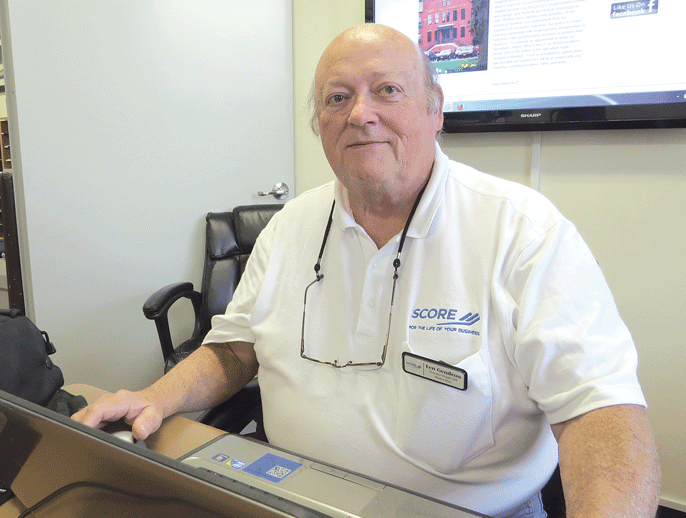
It’s an interesting time for investment services in general, she added, especially with the massive wealth transfer from the GI Generation to their Boomer children. “The Baby Boomers’ parents are dying, so we’re seeing this transfer.

“There’s also a shift in what people’s goals are financially,” she continued, particularly at the other end of the generational spectrum, with the Millennials, and their relationship with banking institutions.

“In community banks, we’ve always emphasized our role in the community — that’s important,” Caplice said. “And we’ve got this generation that’s eventually going to be in charge, and they care deeply about causes. Yes, they want to earn money on their investments, but they also ask, ‘what are your values, and are those values the same as my values?’ I think that was not so much the case in other generations. It will be interesting to see how that impacts our business.”

Local Flavor

With a 145-year history in Greenfield, GSB has certainly cultivated strong bonds with the towns it calls home.

For example, about five years ago, the bank partnered with institutions ranging from the Economic Development Council of Western Mass. to Greenfield Community College in spearheading a project to revitalize a series of downtown buildings. The development model brought together several property owners, representing more than a dozen buildings, who used tax-credit financing, facilitated by GSB, to fund renovations of the vacant sites.

“Taking on those projects individually wouldn’t have been cost-effective, but the project resulted in the renovation of those buildings in the core of the downtown,” Caplice said.

Before that, almost a decade ago, the bank launched an initiative called ‘civic action accounts,’ by which GSB donates money to school districts and other organizations based on how often customers use their debit cards.

Meanwhile, bank employees regularly set out to perform random acts of kindness. “I think that’s one thing that makes this place special,” Caplice said. “Each branch office plans its own events, and for the most part, they have nothing to do with banking. Maybe they’ll go up and down the street putting money in everyone’s meters, or wash every car that comes through the lot, to handing out free ice cream in Dixie cups. If you go to work proud of what’s going on in the organization and you’re having a good time, I think that resonates with customers, even though the activity itself has nothing to do with the business.”

Caplice was quick to add that Greenfield Savings Bank employees sit on many nonprofit boards, and the bank offers resources to various causes, but the smaller acts of kindness are often what customers, and prospective customers, notice. It’s part of a culture at the bank that the Massachusetts Chamber of Commerce honored several years ago with its Employer of Choice Award.

“If we create an atmosphere where the people who work here want to come to work, because they have fun and are permitted to do things they know change people’s lives, that attitude is infectious. You can feel it when you walk into a place,” she said. “We pay a lot of attention to culture; we think that’s really critical.”

After all, even in today’s fast-paced, high-tech banking landscape, there’s still room for kindness — and maybe a little ice cream.

Joseph Bednar can be reached at [email protected]

Banking and Financial Services Sections
There’s Still Time for Homeowners to Take Advantage of HARP

Mel Watt has been on a campaign.

Watt, director of the Federal Housing Finance Agency, has been reaching out to the public all summer to let people know about the Home Affordable Refinance Program, or HARP, a five-year-old program to help homeowners who are underwater on their mortgages refinance to a lower interest rate.
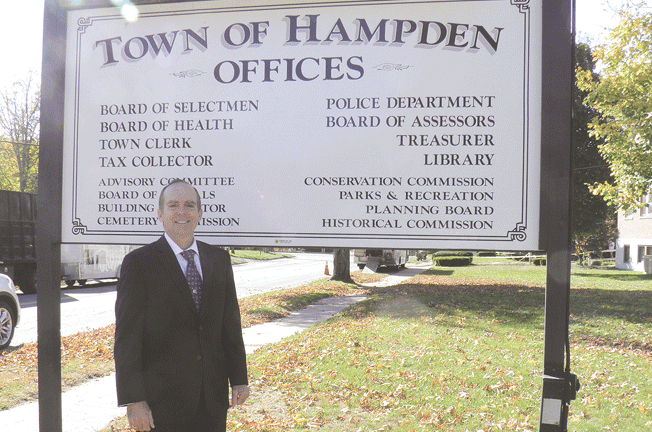
“We know that there are hundreds of thousands of borrowers who can still benefit from HARP and are essentially leaving money on the table by not taking advantage of the program,” Watt said. “By engaging directly with local community leaders, faith-based organizations, local elected officials, and lenders, our goal is to leverage these trusted sources to reach as many borrowers as we can.”

Watt may be understating the potential untapped market for HARP loans, said Bob Michel, senior vice president at Hampden Bank. Well over 3 million Americans have taken advantage of HARP since it was created in the wake of the housing-market crash of 2008 and 2009, but some banking analysts say there could be just as many homeowners still eligible to apply.

“Basically, the HARP program was designed for borrowers who had kept their mortgage current, yet they were underwater or didn’t have sufficient equity to finance at today’s low interest rates,” Michel told BusinessWest. “The government tried a number of different modification programs, but most of those were designed for people who had become delinquent. They finally recognized that people who had done the right thing, who had maintained their payment schedule as well as they possibly could, would benefit from taking advantage of low interest rates. We’ve seen people lower their interest rates by 2%, 3%, or more with this program.”

Yet, Watt told HousingWire magazine that a combination of factors, including fear, is keeping others away.

“HARP is designed to reward those borrowers who are the most committed in this country. This is not a scam,” he said. However, “as it stands now, people don’t trust their lenders, and it’s creating uncertainty.

“Today,” he added, “there’s just a lot of people — and no one pays enough attention to it — who got burned.”

HARP is a means to relieve some of that sting, Michel said, as long as people take advantage of the program before it expires at the end of 2015.

Underwater Rescue

The bursting of the housing bubble in 2008 put millions of American homeowners in a serious predicament. Inventories soared nationwide, and home prices plummeted, and many recent homebuyers saw the value of their homes drop below the balance of their mortgages.

Interest rates declined soon after, but these underwater homeowners were prevented from taking advantage of lower rates through refinancing, since banks traditionally require a loan-to-value ratio of 80% or less to qualify for refinancing without private mortgage insurance.

FHFA and the U.S. Treasury Department introduced HARP in early 2009 as part of the Making Home Affordable program. HARP is one of the only refinance programs that allows borrowers with little or no equity to take advantage of low interest rates and other refinancing benefits. To be eligible, homeowners must meet the following criteria:

• Their loan must be owned or guaranteed by Fannie Mae or Freddie Mac;
• Their mortgage must have been originated on or before May 31, 2009;
• Their current loan-to-value ratio must be greater than 80%; and
• They must be current on their mortgage payments, with no late payments in the last six months and no more than one late payment in the last 12 months.

“The basic HARP program will easily go up to 125% of the market value of the home, so you can be underwater — and there are provisions that go beyond that on a case-by-case basis,” Michel said. “You still have to have an adequate credit rating and the ability to pay. But these are people who have been paying all along, so they’ve already demonstrated an ability to pay. The vast majority of HARP borrowers who applied with us have been able to be approved.”

The savings, nationally, have been dramatic. Tracy Hagen Mooney, senior vice president at Freddie Mac, said homeowners who refinanced through HARP during the first quarter of 2013 saved an average of $4,300 in interest payments over the first 12 months.

Interest rates have risen since then to between 4% and 5%, and Mooney, like most analysts, doesn’t expect them to return to 2012 and 2013 levels. “However, mortgage interest rates are still comparatively low. Looking back to the mid-2000s, the average 30-year fixed interest rate was around 6%,” she writes. “Given that nearly half of the 30-year fixed-rate mortgages owned or guaranteed by Freddie Mac or Fannie Mae have rates of 5% or greater, lots of homeowners stand to benefit from acting now.”

That’s the word Watt is trying to spread. “We know that there are hundreds of thousands of borrowers who can still benefit from Home Affordable Refinance Program and are essentially leaving money on the table by not taking advantage of the program,” he said.

Bottom Line

That’s Michel’s concern, too.

“I know there are a number of people out there that could still benefit from this program but are not taking advantage of it,” he told BusinessWest, adding that the bank has tried to reach out to them through direct mail and advertising campaigns. “We’re still in a time of historically low interest rates, but I think the growing consensus is that these rates are not going to last a whole lot longer. I think we’re on the verge, sometime in the next six to 12 months, of seeing interest rates rise.”

In other words, there’s still time for underwater borrowers to swim to shore — the sooner, the better.

Joseph Bednar can be reached at [email protected]