A chart of banks in Western Mass.
Click here to download the PDF



 Several months ago, Jos. Chapdelaine & Sons broke ground on the first new subdivision the company has built since 1998. The site has 10 lots, but, in keeping with a changing trend, the homes that will be built on Pondview Drive in East Longmeadow are expected to be much smaller than the McMansion-style structures people clamored for a decade ago.
“Initially, we were apprehensive about the project, as we were not sure what the economy was doing,” R.J. Chapdelaine, the company’s president. “But we have already sold two houses and have a list of seven additional people who are interested. In the last two years, we have definitely seen an increase in business, which is refreshing.”
Todd Cellura agrees. “Things are definitely getting better. Every year, it seems like there is more activity, and there is a lot more interest in new homes than there was in the past,” said the president of Sovereign Builders in Westhampton.
Still, most local companies have put up only one or two houses in the last two years, so although the market is showing signs of improvement, the majority of local builders no longer depend on new-home sales as their primary source of income.
More specifically, when the economy crashed in 2008 and the housing market collapsed, they were forced to diversify into different aspects of their business. Since that time, many have come to rely on additions, renovations, and commercial and institutional work as their primary source of income. And although work has been steady for the past few years, margins are tighter, and bidding is more competitive than ever.

R.J. Chapdelaine stands outside the entrance of a new subdivision his company is building in East Longmeadow.
Jerry Bolduc’s business also underwent significant change. Prior to the economic downturn, he built several custom homes in the $700,000 to $1 million range each year, along with a few spec houses, which are homes built prior to finding a buyer.
“The years between 1995 and 2005 were really great,” said the owner and president of Bolduc Construction in Ludlow. “But when the bubble started twisting, I began doing a lot more remodeling and additions and more commercial work. A lot of other homebuilders did the same thing, although some specialized in one market.”
Today, one of Bolduc’s specialties is power washing and removing black algae from homes, which is something he never dreamed of doing when the economy was flush. In 2010, he started a second business called Pro Aqua Clean, which has snowballed into a significant source of income (more about that later), although he is still in the construction industry. “I went from building million-dollar custom homes to cleaning them. But I am also saving them,” he said, as he spoke about homes where algae had eaten through the roof and gotten into the attic.
Tomlinson Builders in Greenfield, a third-generation family business, also switched its focus from the custom and spec homes that had been its signature offering to additions and renovations. In fact, when the banking crisis hit, Tomlinson had to call a complete halt to a project. The company had purchased a parcel of land in 2007 in Hadley and planned to develop it, but by 2008, it became clear that it was too risky to build. So the build was tabled, and although Tomlinson held onto the lots, it finally put them up for sale last year.
“We have really had to change. Prior to the crash, we did some large-scale renovations and built 2,800- to 6,500-square-foot homes, and now we are doing 700-square-foot additions. But it has been a little easier for us to weather the storm, as we are a small company,” said owner Tyler Tomlinson, adding he has done a lot of work for local banks, along with a variety of commercial jobs throughout the state. But the majority of the company’s income is dependent on home remodeling.
Although Chapdelaine is putting up a new subdivision, its work has been split between home building and home renovations since the ’60s, when the company was forced to diversify due to an economic downturn.
However, builders agree that past recessions were short-lived occurrences. “But this has been a very long and involved process, and as times became more lean, we had to work smarter and get more in tune with the economy and what people want,” Chapdelaine said. “But the outlook seems to have gotten more positive in the past few years, and we are hoping the calls and influx of work we are getting is something that has some legs, some momentum, and will keep things moving along.”
Paradigm Shift
Mark Ludwell, executive vice president of Wright Builders in Northampton, said the company hasn’t seen a dramatic change in its volume of work, but it has more of a backlog than it enjoyed over the past four or five years.
“People are planning ahead in terms of projects and life decisions, and there has been an upswing in the last year or two,” Ludwell said. “But everyone took a big hit when the economy soured, and we were no exception, even though our business has been based on multiple disciplines for 20 years.

Jerry Bolduc says many people are remodeling their kitchens and baths or putting on additions, which has helped builders stay busy.
Local construction companies say they have continued building new homes, although most have averaged only one or two a year since the recession began.
However, the majority are smaller than they were in the past, and energy efficiency has become a top priority in every arena. “People don’t want to maintain large homes and are learning to live with less space. But they want their homes be much more energy-efficient,” Cellura said, adding that he recently built a new house in Williamsburg that costs only $1,000 a year to heat.
Tomlinson agreed. “The cost of heating and cooling a home is driving the trend toward smaller homes. People are thinking more long-term than they did before and feel their money is better spent on insulation and air sealing as opposed to crown molding and fancy refrigerators,” he said, adding that his company built one new home last year, which was under 2,000 square feet.
Baby Boomers have had a role in the downsizing trend, as approximately 35% of new homes built today are purchased by empty nesters. “They are building ‘forever homes’ that are their final destination,” Cellura said. “The last two I have built and a new home I am about to start are for empty nesters, and each one was a downsize.”
Chapdelaine said he expects the majority of homes in the new subdivision to be about 2,300 square feet, but the company will build 1,800-square-foot structures if people want them. “Baby Boomers seem to want to downsize, and we are seeing clients move from homes that ranged between 3,500 to 4,000 square feet to homes in the 2,000- to 2,200-square-foot range. They want first-floor master bedrooms with an overall reduction in size.”
The company has also heard from people who have purchased small houses, but want to upgrade them with new windows, front entryways, kitchens, and baths, which Chapdelaine says can be cost-effective if they are on streets with larger, more updated homes. “We are starting to get a lot of phone calls for remodeling that range from the whole house to kitchens and bathrooms. The economy slowed the process, but the trend has been fairly steady for the last two years.”
Bolduc expects the demand for renovations to continue. “Business has been steady for the last four or five years, even during the winter, due to remodeling and additions,” he said. “And as long as interest rates stay low, people will continue to refinance their homes and spend money on them.”
Builders agree that the economy will continue to play a significant role in the amount and type of business they do, but they say return on investment impacts homeowners’ decisions. “Clients are staying away from trends, as they don’t want to date their house,” Chapdelaine said. “During the boom, homeowners did whatever they wanted. But today, budgets are tighter than they used to be. People want to increase the resale value of their homes, but also want to enjoy what the remodeling or addition will add to their lives.”
Different Tacks
Wright Builders was one of the few companies that continued to build homes when the market dried up. However, the majority were at Village Hill in Northampton, which is an ongoing project. “It made quite a difference, but it hasn’t been an easy road,” Ludwell said, adding that the property is controlled by the state, so the parcels were subject to publication of requests for proposals from builders. “While we have always been competitive, things got even more competitive.”
Bolduc’s new venture began after tornadoes struck Western Mass. in June 2011, and he started getting requests to power-wash people’s homes and remove windswept debris. The jobs were a far cry from the custom home building that had been his mainstay since 1980, and he was less than enthusiastic about the work, but he soon discovered a type of black stain on the northern side of homes that was difficult to remove.
Although many people thought the stains were from trees, Bolduc discovered it was a type of black algae that arrives as spores or clumps of cells. If they land on the north side of a roof, where there isn’t much sun and moisture is plentiful, the algae begins to multiply. It also feeds on the powdered limestone filler often added to the liquid asphalt in shingles during the production process.
After experimenting, Bolduc found an environmentally friendly chemical that would remove the algae, which he applied before power-washing and allowed him to remove stains that people had never been able to get rid of.
As word spread about his service, he got so many referrals, he put a truck on the road and opened a business called Pro Aqua Wash.
The enterprise has surpassed anything he could have imagined, and this summer business was so brisk that he employed five people. However, Bolduc has not lost his love for building and told BusinessWest that he still does his share of home renovations. “We often get requests to expand kitchens as well as create open floor plans in homes, which can mean knocking down walls and even additions. And I also do some light commercial work.”
Cellura performs all types of work, but takes real pride in doing modern European design renovations, a minimalist trend becoming popular in metropolitan areas. “It’s almost stark in design, but it’s stunning how striking it is,” he said.
Overall, local builders are glad to see the economy improving. But diversification has become the new norm, and there are no signs of that changing.
Although Chapdelaine is building a new subdivision, other builders don’t feel the time is right. “There are some towns where building lots still sell, but it’s a much greater gamble today,” Cellura said. “So we will remain conservative until there is more activity.”
Tomlinson has similar feelings. The company had a profitable year and is building an estate with a two-bedroom guesthouse, which will be done in phases. “But the housing market hasn’t completely turned around, and buying land and developing it has become very costly, due to changes in regulations and the fact that towns and cities are trying to preserve it, so we are a lot more conservative than we used to be when it comes to doing anything of size, like a subdivision,” he said. “We don’t feel things will ever go back to the way they were before the housing crash.”
But business is steady for those nimble enough to find it, and builders have learned to compensate and sniff out new ways to make money, even though profit margins are tighter.
“When the economy soured, we learned to work harder and smarter, and we made adjustments,” Ludwell said. “We keep reaching out, moving forward, and refocusing. And it’s worked out.”
By KEVIN FLANDERS

Brian Gibbons is gratified that his growing construction company does plenty of work that benefits fellow veterans.
Gibbons, president of Springfield-based Brican Inc., opened his construction business in 2007 after a 24-year career as a Seabee engineer in the U.S. Navy Reserve. Utilizing the Service-disabled Veteran-owned Business Program of the U.S. Small Business Administration (SBA), he was able to get his business off the ground at a time when the economic climate was about to become much more challenging. Looking back now, he knows he couldn’t have done it without assistance from the program instituted by the SBA in 2003 to help veteran-owned businesses succeed.
“In my case, it [the SBA program] did exactly what it is intended to do,” said Gibbons, who joined the Navy Reserve following his freshman year in college. “I never would have been a business owner without that program.”
Seven years later, Brican is thriving at the corner of State and Dwight streets, specializing in commercial, industrial, and institutional building systems. Its staff of just over 20 is expected to grow, and its project list continues to expand each year. Well-versed in federal contracts, the majority of the company’s projects have been completed for the U.S. Department of Veterans Affairs (VA), with the average job coming in between $2 million and $5 million.
“We have had projects throughout the East, from Ohio up to Maine,” Gibbons said. “We are always checking on different opportunities and bidding them.”
Veterans Helping Veterans
Gibbons, who took an early interest in construction as a teenager cleaning up job sites for his neighbor during high-school summer vacations, never imagined what doors the Navy Reserve would open for him. The experiences accrued during his nearly quarter-century tenure have helped him long after his transition back to civilian life, and he is always eager to take on projects that assist others who served their nation.
As a veteran-owned business, Gibbons isn’t surprised that the VA is Brican’s best client, as the agency routinely sets aside projects to be bid exclusively by small firms led by vets. But for Gibbons, construction for the VA is about far more than erecting structures — it’s about making a difference in the lives of those who served. As such, Gibbons says his most rewarding project to date was the construction of a building for the Northampton VA Medical Center’s acute psychiatric ward. Completed in 2013, the prototype project set new standards for the construction of such facilities, specifically those designed to prevent suicide and injury, with specialists from throughout the nation traveling to Northampton to offer input.
“In the past, they often used many of the techniques you see in prisons, but lately they have realized that the people in these facilities are sick, not prisoners,” Gibbons said. “We approached the job very empathetically. The goal was to help the VA come up with ideas to minimize the dangers to patients and staff. As a veteran, it’s always rewarding to work on projects that help other veterans.”
Brican has also immersed itself in the energy side of construction over the last few years, recently taking on several boiler-plant safety projects. Ground was broken on one such job last month, a combined heat and power plant at a VA-owned facility in Newington, Conn, which Gibbons expects to be finished by the end of next year.
New Growth
While statistics are always valuable, a quick glimpse at the whiteboard in Brican’s conference room sufficiently indicates the direction of the business. Filled from end to end with project information, the board keeps Gibbons’s bustling staff constantly updated on what needs to be done. And they certainly prefer to be busy, especially in an industry that has seen its share of challenges statewide in recent years.
But no matter how one looks at it — project totals, staff size, buildings acquired — Brican is a rapidly expanding company, its reputation building along with its structures. Whenever a project is erased from the whiteboard upon completion, another one quickly replaces it.
Gibbons hopes that his staff, which currently includes about 20 people, will grow to nearly 30 as more work comes in from the private end of the construction spectrum. “Our largest job so far was just under $16 million, and we are definitely looking to increase our work on the private side,” he added.
General contractors go only as far as their staffs take them, though, which is yet another reason for Brican’s success. Gibbons said each of his project managers handles up to three projects at a time — including Gibbons himself, who has focused on everything from management to estimating. He wears many hats as the owner of a small business, but he has also been impressed by his employees’ ability to multitask and split time between multiple projects.
In particular, Gibbons praised engineer Mike Belanger, who brings more than 20 years of experience to Brican, as well as project manager Todd Spooner and his 30-year career in the industry.
But along with more projects comes a need for more employees who can handle an array of assignments, a need Gibbons recognizes. “As we continue to grow, we will probably hire another project manager who can assist with estimating.”
Of course, as a military veteran who takes pride in his years of service and how they helped prepare him for life as a small-business owner, Gibbons is always on the lookout for veterans searching for work. His staff already includes a few vets, and he enjoys providing them with opportunities following their service. As veterans conclude their service in the Middle East, SBA officials have attempted to open as many avenues as possible for job creation and entrepreneurship. One such avenue is the Service-disabled Veteran-owned Business Program that Gibbons qualified for, and now he’s completing the cycle by hiring veterans.
“I try to give as much preference as possible to veterans,” he told BusinessWest. “I am always looking for good people to work here.”
Next-door Options
Brican is also expanding from an acquisition perspective. In March, Gibbons purchased the building adjacent to his State Street office at a tax title auction. He is keeping his options open for the purpose of the 1890s-era building, but he mentioned several possibilities, including using it for additional office space.
“We have done a lot of work to clean it up; it was a real mess before,” he said. “I think it would make a great office for a contractor, and I would love to see it rehabbed. There are a lot of opportunities we are considering right now for the building.”
Gibbons said he likely won’t make a final decision on the building until he learns whether or not the nearby MGM casino project will proceed, a development that would create jobs and drive up demand for rental spaces throughout Springfield and neighboring towns. If the right opportunity were to present itself, a rental or lease situation might prove to be the most beneficial purpose for the building, but no decisions have been made yet.
In addition to the State Street acquisition, Gibbons has a full plate, with 18 active projects and expected staff increases. It’s all part of leading a small business on the rise, a business built by a veteran whose employees and clients are also veterans. But while Brican specializes in federal contracts and institutional construction, what sets it apart from other businesses, he said, is its ability to handle private construction as well.
“We have a great staff,” he said. “Everyone comes from a different background in terms of experiences and education levels, and we work well together as a team.”
 Growing up in the 1960s, a victim of abuse at home and an inability to fit in socially at school, John Robison had every reason to worry that he wouldn’t find success in life.
Yet, he did. Diagnosed as an adult with Asperger’s syndrome, which finally began to explain why he was different, Robison is the author of three bestselling books, a former electrical engineer who pioneered several innovations in the world of rock music, and currently the owner of J.E. Robison Service, a sprawling auto-repair and restoration complex on Page Boulevard in Springfield.
And now, by partnering with a special-education high school on the TCS Automotive Program — a vocational training center based at his workplace — he’s helping teenagers with the same challenges he faced gain the skills and confidence they need to succeed in the auto-repair field.
It’s a unique endeavor, but Robison has never been one to do things in the traditional way.
“I was always into cars and electronics,” he said of a set of interests that bordered on obsession in his younger years — a common trait among people with Asperger’s. “When I dropped out of high school, I taught myself about electrical engineering and found success as the American engineer for Pink Floyd. Then, a lot of big bands in the ’70s used our sound equipment. I’m best known for the work we did for KISS, engineering all their special-effects instruments” — such as custom guitars equipped with fiery smoke bombs.
After that, he got a job as an engineering manager in the corporate world, but disliked the experience. “I really didn’t understand the dynamics of the company. I decided, rather than be somewhere I didn’t really know what was going on and didn’t feel I fit in, I’d start a business of my own,” he said.
“The other skill I felt I had was fixing cars,” Robison continued. “But I wanted to fix cars that people cared about, thinking that somebody who’s a real car enthusiast would be interested in dealing with someone like me who had a real love of machinery, and that proved to be correct.”
His business — which specializes in repairs of luxury European models such as Rolls-Royces, Porsches, and Land Rovers — began as a part-time activity in South Hadley 30 years ago, and has since evolved into an extensive restoration and repair complex boasting 30 service bays, making it the largest independent garage complex west of Boston. And, unlike the service facilities of large area auto dealers, he said, he’s eschewed the sales side, which would only distract him from his mission of “fixing things.”
Some things don’t need fixing, of course, and today, thankfully, people tend to be much more aware of children on the autism spectrum, unlike Robison’s parents, who toted him to several mental-health professionals who labeled him lazy, angry, or even socially deviant, and said he might have to be institutionalized if his inappropriate behavior continued.
Just because the medical community and parents understand autism and Asperger’s much better today, however, doesn’t mean their challenges aren’t daunting. But Robison knows they can make their way in the world — after all, he’s exhibit A — and his new training school is demonstrating how.
Doing Things Differently
Robison has gained a much higher profile through his three books: Look Me in the Eye, which chronicles his life growing up; Be Different, which is filled with practical advice for “Aspergians, Misfits, Families and Teachers”; and Raising Cubby, a memoir of his unconventional relationship with his son, who also was born with Asperger’s.
And with that higher profile has come a greater sense of responsibility.

John Robison’s sprawling car-restoration complex in Springfield boasts 30 service bays across a number of buildings, along with space for the training school.
Learning that autism was the root of his social challenges was a breakthrough, and he’s since considered how he could blend his career with a mission to help kids in similar circumstances. The answer came through a partnership with the Northeast Center for Youth and Families, which maintains a high school in Easthampton for teenagers with developmental challenges.
Specifically, the school, which serves students from all over Western Mass., opened the first high-school program licensed by the Massachusetts Department of Special Education that teaches young people the auto-repair trade in a location where the work actually happens. Students alternate spending a week at the high school, then a week at J.E. Robison, throughout the year.
“As revolutionary as that seems, that’s really how humanity learned all throughout history; they learned trades at the side of a master,” Robison said. “Whether that meant assisting a priest in his duties, clerking for a lawyer, or helping a blacksmith, they learned the trade at the side of a person who did it. We’ve lost sight of that and now teach in a vacuum, in this artificial high-school culture of bullying and things don’t happen in real life. One of our goals is to fundamentally change that.”
Of course, the students still must complete their regular course of high-school study, Robison said as he walked BusinessWest through a small building set aside for the TCS Automotive Program, where students use cutting-edge equipment — much of it donated by Bosch Auto Parts — to work on cars, also mostly donated. In a small classroom, an instructor uses a white board to teach the business side of the auto-repair industry. A full-time special-ed assistant, a school psychologist, and school nurse also staff the program.
“This is the vocational part of the campus. These students will be in academic classes back at the main campus next week, and another shift will be here next week,” Robison explained. “Our students have to meet all the regular Massachusetts requirements for graduation from high school; this is not a program where they learn skills instead of high school — they’re learning a trade in addition to meeting high-school requirements. So it’s a harder program. Interestingly, students in this program are progressing faster than similar students in conventional vocational programs.”
It’s also a more intensive education than a traditional high school, with student-teacher ratios as low as 3-to-1 or even 2-to-1 at times. Robison often takes the students on “rounds” through the facility, much like medical students make the rounds in hospitals. But more often, they’re learning by doing.
It’s not a program for any teenager interested in cars, however. “We are a licensed special-education high school, so you have to have an IEP [individual education plan] in Massachusetts, which qualifies you for special-education services. Parents talk to the school district, talk to our admissions staff, and make sure the students are a fit for our program. We take the people we feel will be successful,” he explained, adding that the program is funded 80% by the state and 20% by each student’s local school district.
“We’re closely overseen by the state,” he added. “In fact, we’re probably more closely supervised than the public schools, which are mostly funded by local tax revenue.”
Available to All
Robison stressed that he wanted to create a program that operates in the public special-ed realm, not a private school.
“It was very important for me to work with public-school students. I didn’t want to create an elite program for wealthy kids; I wanted a program where any kid who needs services, who qualifies, could attend,” he said. “It’s entirely funded by the state Department of Special Education and local school districts. That’s really important. I want to deliver an educational model the public can benefit from, not just those who can afford private-school tuition.”
The school isn’t only for teens on the autism spectrum, however. Massachusetts offers special-education services to children on the basis of problems they have in school, as opposed to a medical diagnosis, he explained. “If you can’t organize yourself to do assignments in class, it might be due to a cognitive challenge, it might be autism, it might be ADHD, they might come from an environment that’s traumatic. Any of these underlying causes might add up to not being able to do tasks in school. We take kids who cannot succeed in a regular school and who are not violent.”
It’s actually discriminatory, he said, to position a school as one that specifically teaches students with autism how to act. “What we can say is, ‘you had a problem in school with completing your assignments; you’ve been sent to the office 10 times for what the teacher described as defiant behavior. You’ve got a problem. We help young people organize their thoughts and help them succeed better. We think we can help you.’ We’re not telling you that you’re marginal, defective, or broken. Whatever the issue, you have these challenges in school, and we have a program we believe can help you.”
Despite the way society has become aware of autism over the past decades, Robison told BusinessWest, stereotypes remain. “But we have a complex where we show our students, and show everyone who supports them, that people who are different can be the stars.
“We are one of the largest service complexes in Massachusetts, and we embrace diversity, and I think many people come to us for that reason,” he continued. “Sure, some people come to us to get their car serviced and know nothing except that we provide service and they want to get their oil changed or their brakes done. But we also have people come in here who want to be associated with people who have a social mission in addition to a commercial mission.”
He’d like to see these students’ interest in cars become not just a mission, but a career opportunity.
“People often have a vision of children who are different and wonder if they can ever grow up and support themselves,” he said. “Our commercial operations here are not subsidized by taxpayers in any way. We are very successful competing in the free market. We have cars here from Montana, Ontario, Virginia, Pennsylvania. Those cars are here because of our reputation, and it started with my fixation on cars and machines, which was characterized as a disability when I was a little boy. We’re kind of the embodiment of the idea that the traits that make a child seem disabled can make a technologist a star.”
If other teenagers in the program find similarly satisfying careers — whether as technicians or working on the retail side of auto repair — then the effort to open TCS will have been well worth it.
“We tell them, ‘this is the stuff you’re going to need to get hired,’” Robison said. “Nobody’s forced to be in this program; they’re here because they want to learn how to do this.
“We have to have teaching strategies to work with autistic people, work with victims of child abuse. But these are also people who just love cars,” he added. “So I see myself in many of these young people, and I’m very proud we’ve been able to make the school come true here.”
Joseph Bednar can be reached at [email protected]

Sara Holmes says leasing vehicles comprises half the new-car business at Lia Toyota Scion of Wilbraham.
“Ten years ago, when people came into a showroom, the starting place for negotiations was the window sticker, and the whole process could take several hours. Today, an entire negotiation can be completed in about 20 minutes because people know what they want and how they want to pay for it,” said Holmes, general manager of Lia Toyota Scion of Wilbraham, adding that 80% of sales there are Internet-driven.
Howard Sackaroff agrees. “Years ago, most new-car sales were almost impulse buys. But today, people plan for a purchase and do a lot of research before they even visit a dealer,” said the general manager of Curry Honda and Curry Nissan in Chicopee. “They check safety, fuel economy, and reliability, and sites such as Edmunds or Kelley Blue Book not only provide them with invoices and suggest the amount they should expect to pay, they also give them the value of their trade-in. So by the time consumers show up, they have already made a decision, which makes the process much smoother.”
The trend is reflected at other local dealerships, including Bertera Subaru in West Springfield, where General Sales Manager Mark Noel said the majority of people who visit are ready to make a purchase. “They come to the showroom prepared to buy, as opposed to beginning a search,” he said.
Although customers who have never driven a Subaru may return more than once, he added, “they have already shopped at home, decided what best suits their needs, and gotten the pricing out of the way so the process is a lot shorter and less contentious than it used to be.”
Since price ultimately attracts business, aggressive online marketing programs have become a necessity for dealers. There are many different approaches, such as one used by Curry, where people can choose a specific car, then hit a button on a website to reserve it.
“When that happens, they receive a return e-mail with the lowest possible price,” Sackaroff said. “It lists the features and benefits of the vehicle they have chosen, but they also receive five alternative choices that are similar to the vehicle with their lowest price. It takes negotiation out of the equation.”
He noted that he sets prices weekly or bimonthly based on supply and demand, but admits a small bit of “wiggle room” can remain, and on occasion the price is reduced in the showroom by $50 or $100 — “but that’s it.”
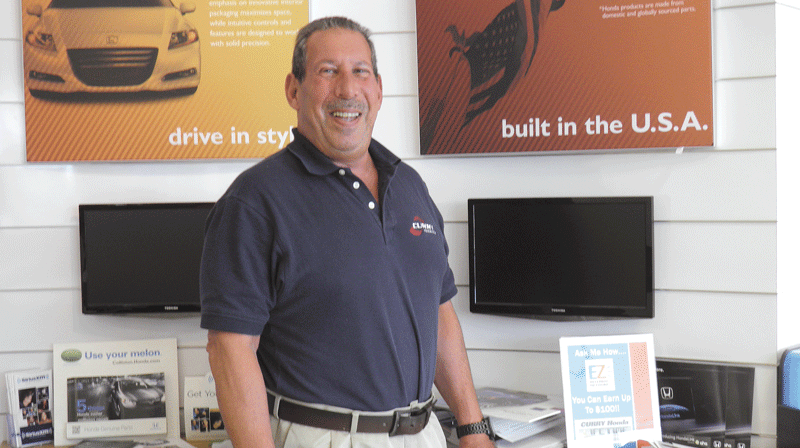
Howard Sackaroff says style changes in new cars typically take place every four to six years.
In fact, Joe Soucy calls the Internet “the equalizer.”
“Manufacturers have bridged the pricing gap between brands, and the days of negotiating a price that is thousands of dollars less than the starting point are gone,” said Soucy, general sales manager for Bob Pion Buick GMC in Chicopee. “Today, people search to find who has the vehicle with the equipment they want at the price they want to pay, and any negotiations that do take place are usually in hundreds of dollars.”
But price isn’t the only consideration. Service also plays into the equation, so local dealers do everything possible to cater to their clients.
“Several weeks ago, a customer was dissatisfied with a new car that developed a transmission problem two weeks after he bought it. In the old days, it would have been repaired under the warranty, but I gave him a new car,” Sackaroff said, adding, “we maintain an advantage based on our reputation and on referrals, so we always try to do the right thing.”
Sales managers concur that excellent customer service is more important than ever before, especially since people who have a bad experience can document it on sites such as Angie’s List and Google, where it can be read by millions of viewers.
“For us,” Holmes said, “it’s about keeping people happy at the end of the day.”
Unrealistic Expectations
Although dealers typically make less than $1,000 on a new car, people still enter showrooms who haven’t done any research, don’t believe how small the profit margin is, and become skeptical when they are told there is no room to negotiate.
“We showed a customer a factory invoice yesterday, but he thought it was phony,” Sackaroff said. “So the salesman had to go online and show him the price of cars on Edmunds.”
Noel has had similar experiences. “People don’t always believe the dealer. But showing them a trusted third-party source makes it so much easier,” he agreed.
According to Soucy, one of the things some customers fail to take into account is that destination prices and preparation work are not included in the invoice. “For example, truck steps are installed upon arrival, and the price of a vehicle can differ according to trim levels. But in some instances, people need to shop at other dealers to find they have reached the end of the negotiating road. “

Joe Soucy said customers have a tendency to overstate the value of their trade-in vehicles.
Holmes agrees. “There are tools online that allow people to play appraiser, and when they get here, they have decided what their car is worth,” she said, adding that emotional attachments can play into the equation. “I have had customers who have named their car. They think, because they love it, it has to be worth more than we tell them.”
Soucy said people also often overestimate their vehicle’s condition. “Everyone thinks their car is in great condition, and that’s what they check off when they visit an Internet pricing site.”
Value also depends on the amount of work a car, SUV, or truck will need before it can be resold. In order for a vehicle to be certified, it must meet stringent requirements, which can include new tires and brakes, in addition to things such as an oil change. “We spend $1,500 on average to certify a car, even if it is very clean when we get it,” Sackaroff said.
Soucy said every discount possible is included in an online price, and the margin of profit is lower on entry-level vehicles than on high-end models. He explained that discounts are what the dealer is allowed to chop off of the manufacturer’s suggested retail price — a figure that is generally lower on cars than on trucks — while rebates are determined by the manufacturer.
“If a model is being closed out, the rebates are usually higher,” he explained. “However, many factors play into discounts and manufacturers’ rebates. And although deals in auto sales are a preconceived notion, people have the belief that a holiday or the end of the year is when they will get the best deal. But that may or may not be true.”
Sackaroff agrees, noting that there is often only $50 to $100 difference in the price, and there may not be much difference in the vehicle other than the model year. “When I was a kid, new cars were always styled differently. But today, styling changes only take place every four to six years.”
In other words, Noel said, “no one has any idea what a manufacturer will offer in six months, so now is always the best time to buy a car.”
Special Conditions
People can save several thousand dollars by purchasing dealer demos, which typically have been driven only 5,000 to 6,000 miles and are registered as new cars with full warranties. “They are generally good buys, as we depreciate their price. Plus, we see many people with Hondas and Nissans that have more than 150,000 miles on them, so an extra 6,000 miles doesn’t make much of a difference when they turn them in,” Sackaroff explained.
Holmes agrees. “Demos are discounted below invoice by $500 to $2,000, depending on how popular the car is,” she said, adding that special pricing is also often available to new college graduates and people serving in the military. “Manufacturers are helping young people get started, so college graduates don’t usually need a co-signer.”
Leasing is another option — one that’s becoming more popular, said Holmes, noting that about half of Lia Toyota Scion’s new cars are leased. “Today, most people are budget-conscious, and leasing helps keep payments low,” she added, explaining that new cars offer the latest safety features along with free maintenance, which typically includes oil changes and tire rotations. In addition, a variety of mileage plans can be factored into the price. “But if you drive 30,000 miles a year, a lease may not be the best option.”
However, Soucy thinks leasing is the best way for most people to acquire a new vehicle. “You are only accountable for payments during the lease period, and the bank takes all of the risk,” he said, recalling that, when gas prices skyrocketed, people who leased could walk away from vehicles that got low mileage. “And if the manufacturer stops making the model, the person who leases it is not responsible for the fact that it is worth less when the lease ends. We sign zero-down leases every day.”
All that said, the Internet remains the most significant reason why the car-buying experience has changed, and local dealers told BusinessWest it has been been a boon to business. “It has expanded our market and allowed us to see more people. We have sold cars to people in Florida, Washington, and California,” Noel said, explaining that most people who travel great distances do so because they want a specific used vehicle, as opposed to a new one.
But showroom managers agree that a dealer’s customer-service reputation can be the deciding factor in where people purchase a vehicle. “People want to buy from salespeople who are knowledgeable and who they feel they can trust,” Holmes said. “It’s all about trust, and when the process is easy, buyers are happier, and we are happier too.”
Sackaroff concurs. “The changes in negotiation have made life easier for me and for my salespeople,” he said. “But you still have to earn your business, and we have earned the trust of the community and the families in it.”

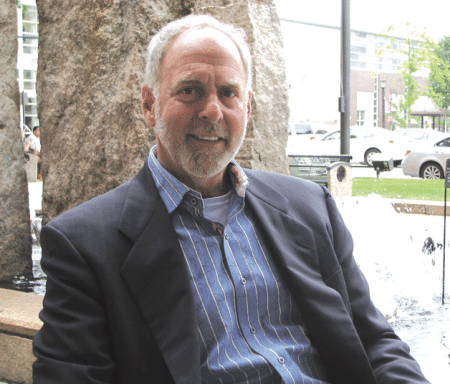
Evan Plotkin says 1350 Main Street, with its robust leasing activity and artsy “vibe,” is a microcosm of what could happen across downtown Springfield.
Take 1350 Main Street, or One Financial Plaza, in downtown Springfield, which was recently branded the MassLive Building after its newest tenant, which is leasing 11,000 square feet of space and paying for the right to emblazon the tower with its logo. MassLive is among several companies and colleges that have recently forged deals at 1350 Main, drawn by its location, its noteworthy art galleries (more on that later), and what Evan Plotkin describes as a palpable “vibe” at the site.
“One of the fascinating things about this building is that it represents, in my mind, a microcosm of an economic-development concept that is arts-driven,” said Plotkin, president of NAI Plotkin, which co-owns the property. “When we acquired this property in 2007, the storefronts [on the first floor] were empty. We made major improvements in the plaza, including bringing the fountain back, putting in benches, and creating an environment conducive to gathering.”
That’s quite a contrast to seven years ago. When NAI Plotkin invested in 1350 Main, occupancy was 34%, the café now in the lobby was just a dark space, and there wasn’t much reason anyone would want to be on the property if they didn’t work in the tower, he said. “Most companies we approached said there was not enough foot traffic, and they would not be willing to make an investment.”
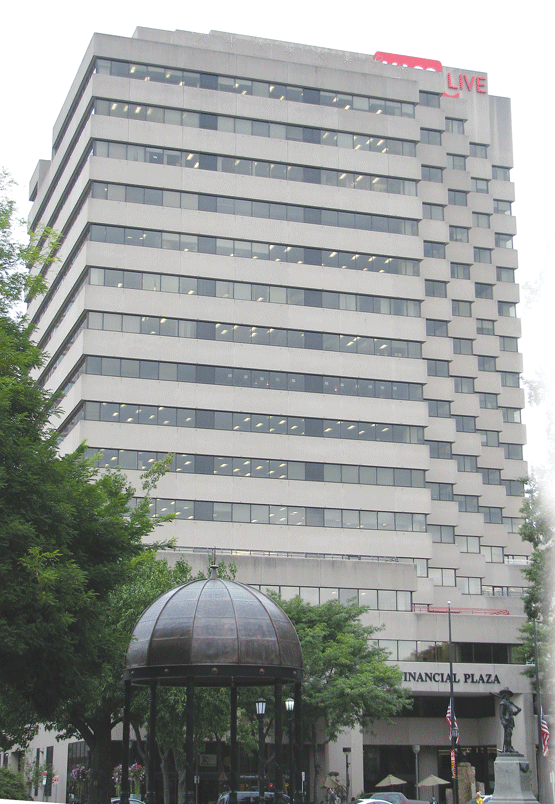 But some of the more recent tenants — like the Baystate Innovation Center, which will move in around Nov. 1; Bay Path University, which leased space last year; 180 Fitness, which opened its doors on Jan. 1; and MassLive — say that’s changed dramatically.
“What I’m hearing over and over again is that what we’ve done here is build a community in this building,” Plotkin said. “That happens because we’re getting people out of their offices, and they’re able to interact with each other, and that’s how innovation happens. That’s why the Innovation Center, of all the places they could have gone, wanted to be here, because they felt it was right for innovators because of the vibe this place gives off.”
That vibe includes a unique collection of paintings, sculptures, and other works of art assembled by John Simpson, manager of the Hampden Gallery at UMass Amherst and an art professor in the Commonwealth Honors College at the university. He has been working with Plotkin over the past few years to bring art to 1350 Main, from the impressive ninth-floor art gallery to the myriad paintings decorating the lobby.
Plotkin has also revitalized the outdoor pavilion, not only with those aforementioned tables and fountain, but with regular music events. The Palazzo Café, opened in 2007, remains busy, and 180 Fitness has not only thrived in its new space, but is attracting people who have no other connection to the tower.
“We’re talking about marketing their membership to the new market-rate housing developments coming to downtown,” Plotkin said. “I’ve offered these types of opportunities so we can start connecting the dots downtown. We need to stop building silos and start looking beyond the walls where we live and work and realize we have this incredible, walkable city.”
And that, he told BusinessWest, is the real story of the newly christened MassLive Building — not the success of the tower itself, which has more than doubled occupancy in the past seven years, to 79%, but how it models the kind of vibrancy he envisions for the entire downtown area.
Framing the Issue
Plotkin placed 1350 Main in the context of a recently released report detailing a potential innovation district centered around Worthington Street and Stearns Square. “There are major improvements being proposed in that study that will ultimately attract restaurants and other retail to that dining district. That’s what we did here by improving the outdoor community space and creating vibrancy here.”

John Simpson, who curates the art at 1350 Main Street, has also painted a series of murals, like this one of B.B. King, on the walls of nearby 31 Elm St., bordering Court Square.
It’s clearly working. “We’re getting companies — large, established companies — renewing their leases now, even when they have term left. They’re seeing the demand for the building and understanding that, as vacancy goes down and demand increases, rates usually go up.”
As for MassLive, “we’re happy to be identified with them. It’s a very positive organization, and it says a lot that the company wants to grow in Springfield. They can go anywhere they want, but their commitment to Springfield is important.”
Although it’s significant for the building’s branding, the MassLive lease is just one more in a string of deals, including Thing5’s occupancy of the entire sixth floor in 2012. “In the last three years, in a declining market, we’ve leased 90,000 square feet of space,” Plotkin said. “So I look at this as a microcosm of what is possible.”
He looks specifically to Stearns Square, a gathering place that the city is looking at as a linchpin of its innovation district. “The fountain hasn’t worked in 15 years, and the turf has been worn away by concerts, with no restoration to it. You have vacant properties all around.”
It will take investment — both from the city and private developers — to change the aesthetics and provide incentives to attract retailers and restaurants, and hopefully housing will follow, he explained. “There has to be that initial investment by the property owners and the city to make the infrastructure improvement.”

Simpson will continue his mural project and liven up this alleyway connecting Elm Street and State Street.
“It helps to have the other dynamics going on,” he continued, “with Union Station up there, the possibility of MGM coming in, and the sale of Morgan Square to a company that’s investing in market-rate housing. We have UMass downtown, Bay Path College, Cambridge College, NPR — all these companies and schools down here. Now you need to create an urban theme park — an urban campus, in the colleges’ case — where students and faculty leave their buildings. That’s a huge customer base, and they feel trapped in their buildings. We need to get them out.”
In other words, create foot traffic.
“To create an urban theme park, where you can access your cultural assets, you have to deal with people’s fear,” he continued. “But the more you engage people in walking, the more foot traffic you have, the less people are concerned about crime. You have fear when you have no people around, when you have vacant storefronts. People don’t want to walk on a block where they don’t see anyone.”
Art of the Deal
Plotkin and Simpson believe that art installations can go a long way toward creating an atmosphere where people want to be outside.
“John and I have been collaborating on public art for almost as long as I’ve been here, and it’s been a wonderful thing,” Plotkin said. “Even people who are not art aficionados can’t help but be taken by the beauty of our lobby and the paintings there. Then, when we take them up to the ninth floor, the incredible gallery up there, and they see the different conference rooms and a fitness center on the other side of the hall, people talk about mind, body, and spirit all here on one floor.”
The floor has become a popular spot for business meetings and school tours, but in 2007, it was considered a liability.
“That was a dark floor with a former call center and a cafeteria,” Plotkin said. “I was told by the appraiser, when I bought the building, that they deducted value from the ninth floor because of the cafeteria; the way it was laid out, it would cost so much to restore it to office use.”
Instead, he continued, “we have turned that space in to this beautiful asset which, if nothing else, has brought people here who would otherwise never see the building. We’ve created this vibe and this word of mouth about the building being such a cool place. Nobody has anything like this downtown. But I remind people that we’re trying to do this all over the downtown.”
Take neighboring Court Square, for example. During the Jazz & Roots Festival held there last month — an event that drew several thousand music lovers — Simpson painted a series of murals of musical icons on the black panels covering the darkened storefronts of 31 Elm St., a project that’s far from complete.
“Not a day goes by that people don’t thank us for doing it,” Simpson said of the public art displays he’s helped bring to 1350 Main and downtown in general. “A woman just told me it makes her day.”
It’s just one way the downtown can distinguish itself as a place people want to live, work, and shop, Plotkin said, noting that Springfield’s location at the center of the Knowledge Corridor, at the crossroads of Interstates 90 and 91, already make it an intriguing location for site selectors.
“But if we don’t have a city that people want to work in, if they say, ‘look, I don’t want to move to Springfield because I’m afraid there’s nothing to do,’ or any number of other reasons, that needs to change.
“The walkability of the city is what we have going for us, but we have blockages,” he added. “I use the analogy of a heart that’s pumping; if you have blocked arteries, you have extremities that aren’t getting oxygen. I would say that’s an example of what’s happening in many pockets of the city. It takes four and a half minutes to walk from here to the riverfront, but nobody talks about that; no one thinks of going there. We need to bring back these linkages and create walkability. If you don’t have walkability, people feel isolated.”
On the Horizon
Plotkin continues to work to fill that remaining 21% of the MassLive Building. For instance, he’s been talking to a video-game company interested in space. “They’re impressed with 1350 Main Street and the murals and sculptures all over.”
And he’s confident that the city and its developers will continue to work together in a holistic way to create the environment — the vibe — needed to keep drawing businesses and jobs downtown.
As one example, he cited MassMutual’s recent $5 million investment in the Springfield Venture Fund — an attempt to cultivate high-potential startups in the City of Homes — as an example of a proactive effort to keep talent local and stimulate the economy. “But that alone won’t do the trick. We need to create an environment downtown where people want to go. I’m seeing a huge uptick in rents. It’s working at 1350 Main, and it will work in other places. It’s not that complex — in fact, it’s very simple.
“At the end of the day,” he added, “we’re trying to get students who are graduating from the colleges up and down the Knowledge Corridor to say, ‘why not Springfield?’ By attracting retail, restaurants, coffee shops, we will generate the foot traffic to support other businesses. And it just builds on itself.”
Plotkin said he’s consulted with other property owners on how to bring art into their buildings, yet some people have wondered why he’d help rival real-estate owners accomplish something that already distinguishes his own tower.
“But it’s not about having exclusivity in having good taste in art; it’s about putting a mirror up and saying, ‘look, you can do this too,’” he said. “I hope other businesses downtown do this; imitation is the best form of flattery. Let’s talk about it so we’re not just an island here all by ourselves. We’re connected.”
Joseph Bednar can be reached at [email protected]
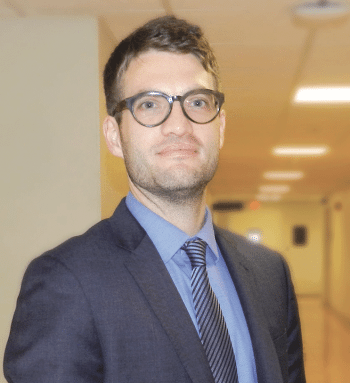
Dr. Robert Roose says Massachusetts residents struggling with opiate addiction are also, in many cases, struggling with long waiting times for treatment.
Responding to a troubling rise in drug addiction in the Commonwealth over the past decade, Gov. Deval Patrick’s administration convened a task force earlier this year to come up with solutions. The recommendations are plentiful, and time will tell how effective implementation will be.
“I think it’s very appropriate to characterize this as an opiate addiction crisis,” said Dr. Robert Roose, chief medical officer, Addiction Services, for the Sisters of Providence Health System. “Government and media and other parties who have described opiate addiction as an epidemic are making an honest assessment of what this region and others have been dealing with for a number of years. And we have not seen potentially the worst of the consequences of this crisis.”
One problem the task force sought to address was a shortage of treatment options in the Bay State, where an estimated 120,000 people are addicted to opiates, and roughly two deaths every day are attributed to overdoses — while perhaps 100,000 of those people either cannot access limited treatment resources, or are not trying.
“Everyone is trying to keep up with the current demand for treatment,” Roose noted. “I would say, at this point, patients struggling with opiate misuse are also struggling with longer waiting times to get into treatment programs, and that puts people’s lives at risk.”
The task force’s recommendations (more on those later) encompass strategies for expanding treatment access and boosting educational efforts, but also altering how the insurance industry and correctional system handle addiction, among other goals.
The coalition of more than 35 stakeholders — representing municipalities, hospitals, insurers, social services, and other entities — worked with families, the Department of Mental Health, and a host of organizations to develop a set of recommendations designed to improve the Commonwealth’s opiate-abuse prevention and treatment systems, prevent further misuse and addiction, increase the number of people seeking treatment, and support individuals recovering from addiction.
“These actions will help enhance our network of treatment and recovery services to help communities and families struggling with addiction,” Patrick said. “I hope this work results in more families talking openly about issues of addiction in order to spark the process of healing and recovery.”
Roots of a Strategy
What would become known as the state’s Opioid Task Force stemmed from Patrick’s declaration in March of a public-health emergency in regard to opiate addition. The task force, chaired by Cheryl Bartlett, commissioner of the state Department of Public Health (DPH), was charged with developing policy recommendations to strengthen the Commonwealth’s response to this crisis. The task force eventually made recommendations in several categories, including:
• Expanding and streamlining access to services. In order to meet the escalating demand for treatment, ensure a comprehensive continuum of care, and facilitate access to coordinated care, the DPH intends to expand community-based and residential treatment programs for underserved populations, including adolescents, young adults, and families with children.
• Enhancing opiate education. The DPH will launch a statewide awareness campaign for youth and parents to promote more openness and public dialogue about issues of addiction and recovery. The Commonwealth will also work on strategies to enhance education for medical professionals on best practices in identifying and treating individuals struggling with opiate addiction.
• Addressing insurance practices. The DPH and the Division of Insurance, in consultation with the Health Policy Commission, will conduct a comprehensive review of insurance coverage for opiate addiction treatment. The agencies will consult with clinical experts to develop minimum criteria for opiate abuse and addiction treatment services that will be considered medically necessary for all patients. The task force found that gaps in coverage were impacting services for individuals in need.
• Expanding correctional-system treatment. The Commonwealth will work to provide individuals with enhanced support and treatment for drug addiction when they leave correctional facilities and integrate back into society.
• Expanding peer-support networks. The Patrick administration will work with communities to expand peer support networks comprised of individuals in recovery who provide guidance to those navigating pathways out of addiction.
Patrick also met in June with other New England governors at Brandeis University to discuss a regional response to the opiate epidemic.
Roose noted that he worked in addiction treatment in New York City for a couple of years, and he sees parallels with Western Mass. in how addiction isn’t just entrenched in urban areas, like Springfield and Holyoke, but has spread into other communities, which don’t always have the infrastructure to deal with it.
“It was a bold move by the Legislature to create a task force, and they put forth some strong, bold recommendations, which will hopefully make an immediate — but lasting — impact,” he told BusinessWest. “Recovery is a lifelong process, and treating addiction is something done over time. I expect we’ll be dealing with this for many years to come.”
John McGahan, a task-force member and president of the Gavin Foundation in Boston, said the task force’s approach “addresses a public-health crisis without compromising public safety and … supports communities, families, and the people seeking recovery.”
From Drugstore to Street
The education component of the task force’s recommendations is especially important, considering how subtlely many individuals become addicted, as Roose noted.
“There have been different studies that looked into this, and they reinforce what had become a common understanding, which was that a general overprescribing of prescription painkillers, starting in the ’90s, led to a dramatic increase in access to painkillers and opiates. And many people developed physical dependence because of this increased availability. These include young people and teenagers who began experimenting with prescription painkillers.”
John Morello says the roots of the problem run deeper than young people discovering their parents’ painkillers in the medicine cabinet. A Worcester-based actor and writer who performs Dirt, a one-man show about substance abuse and choices, in schools and colleges across the U.S., Morello said a culture that has become more welcoming to the idea of pills as a solution to problems has helped grease the skids toward higher rates of addiction among young people.
“I think one of the biggest things I’ve noticed is how medicated most students are these days, and how it is a direct reflection of the medicating of their parents,” he said. “We have a generation that has been overmedicated by painkillers and anti-depressants, having children and then being told that their kids have ADHD and need to be medicated.
“No matter what school I go to — maybe more, though, in wealthy areas or private schools — I see kids being medicated for academic performance,” he went on. “I don’t know if it’s because parents and communities are buying into this whole idea that ‘our children are falling behind, and we as a nation need to keep up with China and India,’ or maybe it’s just plain fear, or maybe they truly do want what’s best for their kid and are not getting any other answers besides some anecdotal reports on afternoon talk shows and a prescription from the pediatrician.”
The numbers at some schools are startling, said Morello, recalling a relaxed chat he had with about 25 or 30 students after one of his shows. When the subject of prescription drugs came up, more than half the students said they were on some sort of behavioral prescription, and the ones on Ritalin or ADHD medications had bought into the idea that the pills were helping them be successful students.
“So, there is this overarching message that to fix things, we take a pill,” he continued. “Of course, I question the whole premise most of the time because I don’t even think that what they’re ‘fixing’ is even broken half the time.”
Whatever the reasons for increasing numbers of addicts, it’s not hard to understand how a significant number of those people have moved from the medicine cabinet to the street, where a hit of heroin is typically $10, compared to $30 for one dose of Oxycontin, Morello noted.
“We are seeing the effects of young people who tried painkillers, became addicted to them, and transitioned to heroin,” Roose said. “There’s very clear evidence that, as the number of opiate prescriptions increased over the last two decades, so did the number of treatment admissions and the number of opiate-overdose deaths. As the medical community and others recognized this was a problem, the subsequent decrease in prescribing them led many already addicted to switch to heroin, which has always been readily available.”
Added Morello, “what happens when the patient cannot afford the FDA-approved and legalized habit that was created and nurtured in him by prescriptions since childhood? He or she will either break the habit or find a way to feed it that they can afford.”
Bottom Line
The task force’s recommendations are aimed, at least in part, at breaking those habits, but no one is saying it will be easy.
In fact, Roose said some addicts simply aren’t willing to seek help, and perhaps the best way to reach them is through programs that educate people about safer injection practices and overdose prevention.
“Heroin dependence brings additional risks, including complications that arise from injection use, which sometimes lead to more dramatic social and economic consequences for individuals, families, and the community,” he said. “The good news is that we have treatment — treatment that works — for addiction, but we’re behind the 8-ball, coping with the increased demand.”
Bartlett said the task force wants to expand on a strong, if overextended, treatment system in Massachusetts, and to create a national model for recovery. Roose, who works for a health system with a broad range of inpatient and outpatient addiction-treatment services, knows the battle is only beginning.
“Despite increasing capacity over the past year,” he said, “we’re still coping with the same demand the state is experiencing. It’s a problem.”
Joseph Bednar can be reached at [email protected]


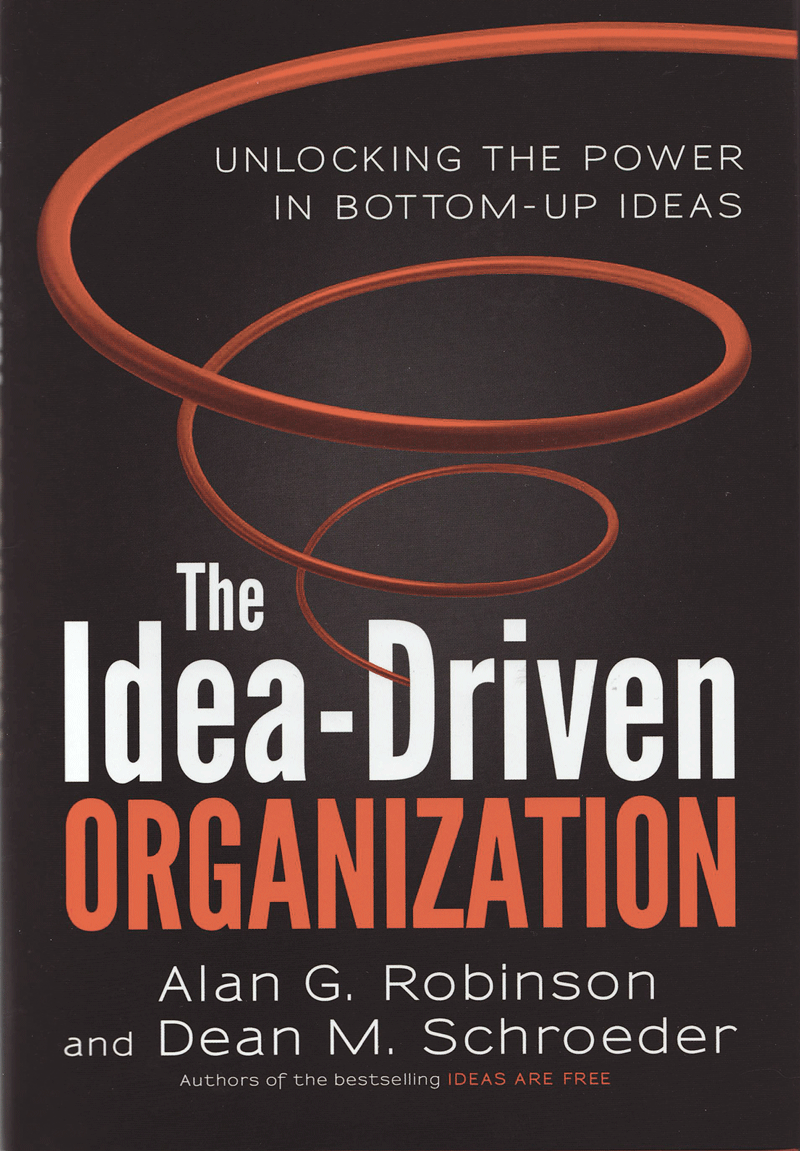
Alan Robinson says “The Idea-Driven Organization” is designed to be a road map for companies looking to glean ideas from frontline employees.
Only, it wasn’t obvious to Robinson and co-author Dean Schroeder at the time.
“When we wrote Ideas Are Free, we made the same mistake a lot of writers make,” said Robinson, a professor at the Isenberg School of Management at UMass Amherst. “We went out and we looked at organizations — companies, nonprofits, and government agencies — that were doing the best in the world at this; wherever we found these systems, we went and studied them, and we said, ‘this is how they work; here’s what they look like.’
“Then the book came out, and it went all over the world, and soon we were starting to get inquiries,” he went on, noting that it became a bestseller on Amazon. “People were saying, ‘this is great … but how do we do it?’ It took us maybe a couple of years to realize that it is an entirely different problem to show what it’s like to live in this environment and then to show how to get there from being an average company.”
So, The Idea-Driven Organization: Unlocking the Power in Bottom-Up Ideas was conceived to show how.
Released a few months ago, it provides what Robinson called a road map that companies can follow in their efforts to replicate some of the organizations on the leading edge of what some would call a movement.
Elaborating, he said Ideas Are Free was a comprehensive look at best practices. The sequel, if one can call it that, is all about the journeys that bring companies to that point.
And in the course of chronicling dozens of such journeys, Robinson and Schroeder included lessons that could be taken from three local organizations — Big Y Foods, Health New England, and Springfield Technical Community College, which is, in Robinson’s estimation, one of the few institutions of higher education, if not the only one, that has enjoyed any real success in this realm (more on that later).
Those organizations, like the others cited in the book, have fully grasped what too many companies and their managers still haven’t, said Robinson, and that would be the simple math he calls the ‘80-20 rule,’ meaning that 80% of the overall improvement comes from frontline ideas, and only 20% comes from management-driven initiatives.
“This is the big gorilla in the room, and most organizations just leave it on the table,” he said. “Globalization means that companies have a lot more competition, whether they know it or not, and the Internet means people can find those competitors much more easily and compare. So the pressure on you to perform and to innovate and to get better is higher than it ever was — and, yet, most organizations have very weak cycles of continuous improvement, if they have any at all.”
For this issue and its focus on business management, BusinessWest talked with Robinson about his new book and what it offers to readers, but also about the contributions made by the three area organizations to this so-called road map, and why the author considers them some of the clear leaders in what would have to be called the ideas movement.
The Write Stuff
As he talked about Ideas Are Free, which was released roughly a decade ago, Robinson described it as a labor of love, a work, years in the making, that chronicled what leading-edge companies around the world were doing to generate ideas, review them, and, when appropriate, implement them.
But, as he said, this was a look at best practices.
“There are barriers that organizations have to remove to make their systems work — you don’t just collect ideas; you also fix the policies and the systems, the resource issues, and all the stuff that blocks ideas,” he told BusinessWest. “The process is only 20% of this issue; these obstacles to ideas are something you have to address. But when we were going in and looking at the best in the world, you don’t see those barriers, because they’d already been removed.”
Thus, The Idea-Driven Organization takes the reader back to the barrier-removal process, he went on, and to specific cases, such as one at Big Y that has been oft-cited by Robinson in his many talks on this subject, and has become known simply as the ‘eco bag idea.’
Elaborating, he said a checkout clerk at one of the chain’s stores noted that, often, after he recited the question ‘paper or plastic?’ an embarrassed customer would say that he or she left their eco bags in the car. Therefore, he suggested that signs be put in the parking lot reminding people to remember their eco-bags — a common-sense recommendation that has since been copied by many competitors.
But this sound idea didn’t get put in place for a while, because of some miscommunication and a lack of clarity concerning who was responsible for escalating ideas.
“The store manager was new, and he thought, ‘I don’t have the authority to do this,’” said Robinson, paraphrasing a section from the book called “How Effective Idea Processes Work.” “The idea goes up to the regional manager, who says, ‘it’s the store manager’s authority,’ and doesn’t take any action because he assumes he’s just being informed.”
Fortunately, the company had a policy in place whereby ideas such as this one were red flagged if they were not implemented within a certain period, Robinson went on, adding that, in the course of investigating what went wrong, company executives, including CEO Donald D’Amour, realized that store managers and other executives weren’t being trained properly in what their responsibilities were in such cases.
There are hundreds of other examples of effective obstacle removal in the book, said Robinson, adding that it was designed to help others possibly avoid such barriers to progress.
Overall, the book was undertaken to stress the importance of encouraging, gathering, weighing, and implementing frontline ideas — those that originate with individuals who work in the trenches rather than the corner office — and then provide that road map for putting a system in place.
As for the first part of that equation, the authors sum up neatly why many managers are often blind to frontline ideas — and why, if they want to take their companies forward, they can’t be.
 “Consider the constant reminders of their superiority that managers are bombarded with in the course of their daily work,” they write. “They wear the suits, they have the private offices, they are the ones chosen for promotion, they are more highly educated and paid significantly more than their subordinates, and everyone defers to them. They are the ones in charge. With all of these signals continually reminding them that they are superior to their employees, it is easy for managers to come to believe that they actually are.”
Robinson told BusinessWest that, among other things, leadership at the three local organizations he cites in The Idea-Driven Organization don’t have that problem, and that’s a big reason why they’ve been so successful.
“One of the messages of our book is that you need to be humble enough to realize that the people who work for you know a lot more than you do, and your job as manager is not to tell them what to do and be the smartest person in the room,” he explained. “Your job is to tap that know-how, and these three companies have done that very well.”
Chapter and Verse
Overall, more than 100 businesses and organizations were cited for their success in The Idea-Driven Organization, and HNE, Big Y, and STCC, all of which have worked extensively with Robinson on their systems, receive prominent mention.
While each was highlighted for different types of obstacle-clearing and pace-setting work, Robinson summed up their contributions to the book — and the ideas movement in general — by telling BusinessWest that each organization highlights the importance of getting a high level of involvement from top management in the creation of an ideas system, implementation, and problem solving.
He started with high praise for STCC and especially its president, Ira Rubenzahl.
“I have my thumb pretty much on what’s going on in this business, and this is the only institution of higher education in the United States that’s doing this,” he said of the 47-year-old college. “They’re the only ones who are actually going out to their frontline people — the registrars, the librarians, and others — and soliciting ideas.
“President Rubenzahl is in higher education, he’s the only one doing this, and higher ed could really benefit from this,” he went on. “Of all the leaders I’ve worked with over the years, he’s put more of his personal self into this than anyone I’ve seen. We did lots of training sessions at STCC, we had lots of meetings, and he sat through every one of them. He really sent a message with that; if you ask him any details about the system, he knows them cold because he’s really engaged in it, and there’s a lesson there for other organizations.”
At Big Y, D’Amour has also taken a leadership role in the ideas process, said Robinson, adding that perhaps his most notable contribution to the process was getting senior management involved early on — especially during a pilot phase involving five of the company’s stores.
“He determined that the executive team would meet every two weeks and review every idea that came up,” Robinson recalled. “The senior team at this 5,000-person company was going to look at every single idea; what that showed them was what kind of things to expect, and the senior management team said, ‘wow, this is really cool. This can really help; we need more of this.’
“The other thing they saw was how these ideas were getting hung up,” he went on, returning to the eco bag. “They said, ‘we have this idea, and it’s a great idea; why isn’t it being implemented?’”
In HNE’s case, Robinson praised now-retired President and CEO Peter Straley for having the foresight to understand years ago that the healthcare industry was heading into uncharted waters, and that his company would have to be imaginative — and nimble — to handle whatever was coming down the road.
“He said, ‘we’re facing Obamacare, we’re also looking at big changes in Medicaid, and no one knows how this is all going to shake out, and the best way to prepare my company is to make it great at improving, great at adapting, and very flexible,’” noted Robinson. “[Straley] knew his company was facing massive change and needed to get better at handling change. That was his rationale, and it was a brilliant piece of leadership.”
The authors praised Straley for his ability to put together a seven-member team to design and oversee an ideas system — one that included the IT director, general counsel, a member of the executive leadership team, several middle managers, and a frontline employee known for proposing improvement ideas — and then provide it with the proper training and the time needed to do its job properly.
“Once the design team is assembled, it must be provided with a thorough education in idea management. Its members will need to have a strong understanding of what high-performing idea processes look like, how they work, and how to address the challenges they will face in creating one,” the authors write. “The initial training can involve classes taught by experts, reading relevant books, and perhaps visits to idea-driven organizations. For the HNE team, the process began with a day of training in idea systems, and then reading and studying two books on managing ideas.
“Once the team began to apply its new knowledge, it began to learn by doing, starting with the assessment of HNE from an ideas perspective,” the authors continue. “As the team members interviewed frontline employees, supervisors, and middle and upper managers, they discovered impediments to the flow of ideas that needed to be addressed. This action learning continued as the team designed their system and rolled it out through their company. In the end, the members of the design team developed considerable expertise in the management of ideas, and HNE went on to successfully implement a high-performing idea system.”
Not the End
Robinson told BusinessWest that he’s already hard at work gathering material for the next book on ideas.
He didn’t say what the specific subject matter would be or when it would be ready to write, but he did note that the ideas movement is still in its relative infancy, and that the process of learning — and teaching others how to do this — is, like the process of soliciting ideas itself, ongoing.
And it seems likely that these Western Mass. companies, and perhaps others, can and will be part of that teaching process.
George O’Brien can be reached at [email protected]
By GREG PELLERIN
An airplane pilot wants to bring his own propeller to work. A fireman insists on bringing his hose from home. A student says, “to heck with the textbook the teacher wants me to read; I’ll find one I like better.”
These scenarios might appear to be somewhat preposterous, but what if the pilot, fireman, and student insist that their ‘stuff’ will allow them to work better, faster, and more effectively? What’s an airline executive, fire chief, or teacher to say in response?
Greg Pellerin
BYOD even has its own Wikipedia page. “BYOD is making significant inroads in the business world, with about 75% of employees in high-growth markets such as Brazil and Russia and 44% in developed markets already using their own technology at work,” it reads. “In most cases, businesses simply can’t block the trend. Companies like Workspot believe that BYOD may help employees be more productive. Others say it increases employee morale and convenience by using their own devices and makes the company look like a flexible and attractive employer. Many feel that BYOD can even be a means to attract new hires, pointing to a survey that indicates 44% of job seekers view an organization more positively if it supports their device.”
One of the biggest challenges for BYOD is in the healthcare industry. The electronic health record (EHR) mandate set by the federal government has doctors and nurses expecting instant access to information. Oftentimes, that means using their own cell phones, laptops, or tablets, which comes with the risk of exposing sensitive data, in violation of HIPAA regulations.
According to Anders Lofgren, writing for Health Management Technology, “banning devices outright isn’t an option, as about 70% of IT specialists and physicians already use mobile devices to access electronic health records.” Lofgren suggests implementing a comprehensive BYOD policy as soon as possible. Here are some suggestions on what to include.
• Start by Defining BYOD. Mobile phones may be permitted, but iPhones, Android devices, and, heaven forbid, Blackberrys require different security protocols.
• Implement MDM. That stands for mobile device management, and basically means registering each and every device with your IT department. It’ll be up to IT to set security policies and determine how data will be accessed, stored, and used. They’ll also decide what apps will be allowed or banned, a potential major hurdle for any BYOD policy. MDM will also mean new, complex passwords, something employees generally dislike with a passion.
• Acceptable Use. Most companies have rules about corporate-issued mobile devices governing what an employee can and cannot do. That policy needs to be reassessed with BYOD, since personal devices can be used to access potentially offensive material using the company’s network connection. Do I hear First Amendment lawsuit?
• Termination. What happens when an employee leaves the company? You can’t take back his or her phone, but you must be able to remove e-mail access and other proprietary applications. When will this process occur, and how will it be enforced?
Embracing BYOD may be a necessity in keeping a 21st-century employee happy and productive, but, like BYOB, liability questions can arise if an accident occurs on the way home. n
Greg Pellerin is a 15-year veteran of the telecommunications and IT industries and a co-founder of VertitechIT, one of the fastest-growing business and healthcare IT networking and consulting firms in the U.S.; (413) 268-1605; [email protected]
By JOHN S. GANNON
This November promises to be an exciting — and important — time for the Commonwealth. The state will elect a new governor, a Massachusetts seat in the U.S. Senate is up for grabs, and a ballot question will ask voters whether they want to vote down a 2011 law allowing resort casinos to operate in the state. Given these hot ticket items, it’s easy to overlook other voting initiatives.
However, employers should pay particular attention to Question 4, the Massachusetts Paid Sick Days Initiative.
John Gannon
History of Paid Sick Leave
Connecticut made history in 2011 when it became the first state in the country to require employers to provide paid sick leave. However, the law did not reach all employers or employees.
Employers with fewer than 50 employees were exempt from the law. In addition, paid leave was required to be provided only to non-exempt service workers. The law was predominantly focused on protecting low-wage workers in the service and retail industries. Since then, many cities have adopted similar measures. There are currently sick-leave laws on the books in San Francisco, Seattle, Washington, D.C., and New York City.
In Massachusetts, similar versions of paid-sick-leave laws were proposed in the Legislature, but none reached a final vote. This year, sick-leave supporters abandoned the legislative route in favor of a ballot strategy. They delivered enough signatures to the State House to get a question about paid sick leave on the 2014 ballot.
The Ballot Question
The law proposed on the statewide ballot would entitle employees in Massachusetts to earn and use up to 40 hours of sick time. The amount of time off, and whether it needs to be paid, varies depending on the size of the employer. Individuals working for smaller businesses with fewer than 11 employees would be able to earn and use up to 40 hours of unpaid sick time. Employers with 11 or more employees would have to provide these 40 hours of sick time as paid leave. Unlike Connecticut, the law generally applies to all employees regardless of job duties.
The law provides three scenarios where an employee could use earned sick time. Leave could be used (1) to care for a physical or mental illness, injury, or medical condition affecting the employee or the employee’s child, spouse, parent, or parent of a spouse; (2) to attend routine medical appointments of the employee or the employee’s child, spouse, parent, or parent of a spouse; or (3) to address the effects of domestic violence on the employee or the employee’s dependent child. Employees would earn one hour of sick time for every 30 hours worked, and would begin accruing those hours on the date of hire or on July 1, 2015, whichever is later. Employees could begin to use earned sick time after working 90 days.
Carryover of unused sick time to the next calendar year would be permitted, but the employee could not use more than 40 hours in a calendar year. Unlike unused vacation, employers would not have to pay employees for unused sick time at the end of their employment.
Do They Have to Prove It?
One issue that concerns employers is whether employees have to back up their need for time off. The new law states that employers can require certification of the need for sick time if an employee uses more than 24 consecutive hours of sick leave.
Any “reasonable documentation” signed by a healthcare provider must be accepted as sufficient certification of the need for leave, and employers are prohibited from demanding that the documentation explain the nature of the illness. However, it is unclear whether employers can require medical documentation for shorter absences pursuant to company policy.
Finally, when employees are aware in advance of the need for earned sick time, they must make a good-faith effort to notify the employer beforehand. The law does not suggest how much advance notice should be provided.
Bottom Line
Many employers, particularly small businesses, oppose the sick-time mandate. Some are already operating on thin margins, and paid-leave requirements would undoubtedly add to growing labor expenses. Those in favor of the law contend that employees should not have to choose between coming to work sick and getting paid.
Recently, the debate has transcended employer groups. Last week Democrat Martha Coakley criticized gubernatorial rival Republican Charlie Baker for his opposition to the ballot question.
If you need assistance revising or adopting your employee-leave policies, contact experienced labor and employment counsel.
John S. Gannon is an associate with Skoler, Abbott & Presser, P.C., and practices in the firm’s Springfield office. Since joining the firm in 2011, he has defended employers against claims of discrimination, retaliation, harassment, wrongful-termination claims, as well as actions arising under the Family Medical Leave Act and wage-and-hour laws. He also has experience with lawsuits seeking to enforce restrictive covenants and protect trade secrets; (413) 737-4753; [email protected]
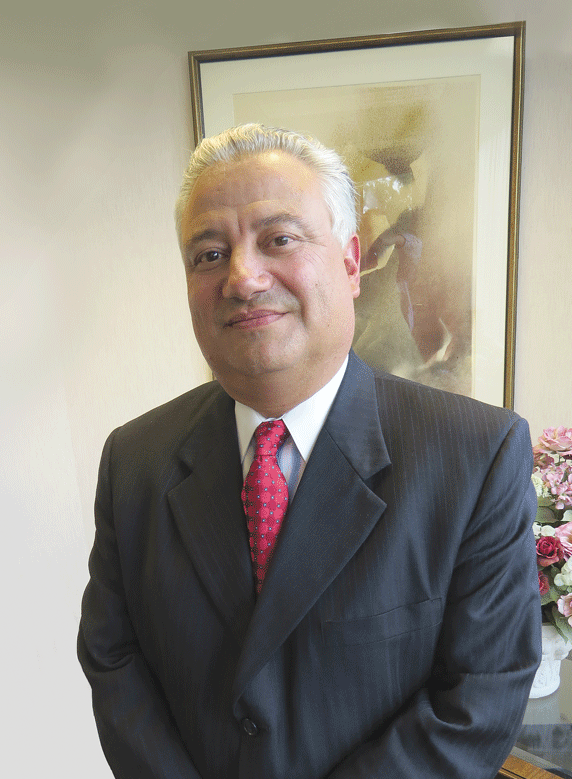
Andrew (Drew) Andrews, managing partner of Whittlesey & Hadley
And for as long as he can remember, there have been at least a few bowls filled with various types of candy at the reception desk to tempt visitors as they arrive, depart, or, quite often, both.
“Our clients love the candy, and our employees love it as well,” he told BusinessWest, adding that, when the Hartford-based firm Whittlesey & Hadley initiated discussions to acquire Lester Halpern more than a year ago, he and others at the company — not to mention some customers — made it clear that this was one tradition they wanted to see survive a change in the name over the door.
They needn’t have worried.
Indeed, Andrew (Drew) Andrews, managing partner at Whittlesey & Hadley (or W&H, as it’s sometimes called) has long kept candy at his desk and understands its importance to the broad mission of keeping clients happy.
“I just have to stay away from it myself,” he said with a laugh, adding quickly that continuation of the candy tradition is merely one of many ways the merger with Lester Halpern — the vehicle by which W&H has made its long-planned entry into the Western Mass. market — has been smooth and essentially seamless.
Andrews said there were many things about the Lester Halpern firm that appealed to W&H as it explored various merger opportunities in this market, including its size (nearly 20 accountants and roughly $4 million in annual revenues), location in Holyoke, and the mix and size of clients in the portfolio, which includes a number of tax-exempt entities and closely held businesses.
But it was Lester Halpern’s culture that was perhaps most important to this exercise, because it closely resembles the one at Whittlesey & Hadley, said Andrews, who described it in a number of ways, starting with the word ‘collaborative.’
“At some firms, people are very protective, taking the attitude, ‘that’s my client,’” he explained. “The better answer is, ‘that’s the firm’s client,’ and what’s best for the firm’s client is what we’re going to do. That’s our philosophy, and it’s the philosophy that existed here [at Lester Halpern], and that’s one of the reasons why this transition has gone so well.”
The similarity in corporate cultures extends to the way the two firms treat staff members, he went on, adding that, at the new/old company, the preferred term is ‘team members,’ not ‘employees,’ and the phraseology speaks volumes.
“We’re very concerned about everyone’s welfare, and we have very low turnover in our shop in Hartford,” he explained. “And they [Lester Halpern]seem to have the same culture of being very concerned for their team members’ needs.”
There have been a few minor challenges to overcome since the acquisition became official on Aug. 1 — the receptionist sitting just behind the candy dish has to get in the habit of saying the company’s new name when people call, and it’s taken some practice to pronounce and spell Whittlesey properly, said Terry, adding that, overall, there have been few, if any, problems.
“You read in articles that there are always going to be some bumps and there are always going to be some issues,” he said of the transition process. “But this has gone as smoothly as a transition possibly can.”
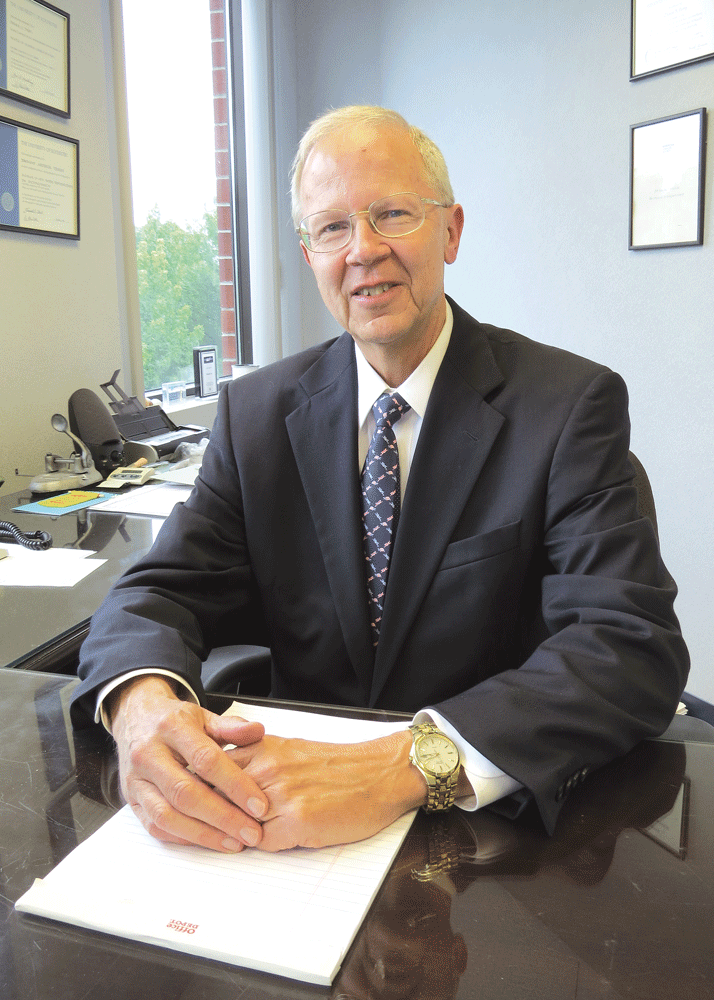
Tom Terry says the merger of Lester Halpern and Whittlesey & Hadley has been essentially seamless.
He says to key to meeting this goal is to stress the additional resources that this ‘new’ firm can bring to the table through its operation in Hartford, and then deliver a broader array of services.
“We’re just a new player in town with added resources,” he explained. “We can provide more depth and other things that a 100-person firm can provide that a 20-person firm just can’t provide. So there’s more potential to the existing clients and the potential clients.”
For this issue and its focus on accounting and tax planning, BusinessWest talked with Andrews and Terry about this merger and what the future could hold. They both said that, while there is, indeed, a new name in this market, this is essentially the same old firm, only one that can now better serve clients.
By All Accounts
Tracing the history of the firm he joined as a staff accountant in 1984, Andrews said it was started by Bill Whittlesey in Hartford as a solo practice in 1961. He later expanded with the hiring of Bob Hadley as a staff accountant; he would become a partner in 1965.
The firm has achieved steady growth over the past 55 years or so, reaching $16 million in annual revenues and more than 100 employees at the start of this year.
Andrews, who became a partner in 1996 and managing partner in 2008, noted that, while the vast majority of clients’ firms are based in Connecticut, W&H has done some business in Western Mass. over the years, and recently made it a strategic initiative to do considerably more in the 413 area code.
Indeed, the question eventually became how, not if, the company would expand into this market, he told BusinessWest, adding that, while there were a few options, only one of them made real sense.
“We thought this was an area we really wanted to expand into, because we see a lot of similarities in culture to Hartford in this area,” he noted. “But, as in Hartford, if you’re not in the marketplace — even though it only took me 25 minutes to drive here from my office in Hartford — you’re a foreigner; you really need to live and breathe in the marketplace. I was invited once to an event that one of the banks held at the Basketball of Hall of Fame; I went with one of my partners. Everyone seemed to know each other, but no one knew us, and we felt like outsiders.
“We explored the possibility of simply opening an office, hanging out a shingle here — putting someone there and seeing what happens,” he went on. “But we didn’t think that would make a lot of headway, so we started exploring whether there was a local firm that had similarities to us in terms of how we deliver client service, how we treat employees, and wanted to get in with a larger firm so they could offer more services to their existing client base.”
W&H did some research, relying heavily on team members who lived in this area for insight, and eventually started talking with Terry and others at Lester Halpern.
“And, of course, with accounting firms, it takes a lot longer than with regular businesses to pull something like this off,” Andrews told BusinessWest, adding that talks began in January 2013, were then set aside for tax season, picked up again later in the year, and completed several months ago. “That’s because accountants, in general, are conservative, and accountants, in general, are very individualistic and like to do things their way, even though we all tend to do things in a similar fashion; it’s all about getting to know each other.”
Both Andrews and Terry said a good amount of due diligence went into making sure the fit was right between the two firms, and this research ultimately concluded that it would be an effective match.
“They [Whittlesey & Hadley] did their homework, but we did ours, too, as far as finding a partner to team up with,” he explained. “We were pretty confident that we picked the right partner, and that’s turned out to be the case. Our cultures match perfectly, our philosophy in terms of how we work with our clients — they’re very similar.
“And our clients are very similar as well,” he went on. “We both have a similar focus, with a strong not-for-profit sector in our work, but also an equally strong for-profit sector as well.”
Numbers Game
As he talked with BusinessWest about his firm’s prospects in this market, Andrews acknowledged that Western Mass. is generally considered a low- or no-growth area.
Which means that, if W&H is going to reach that goal of 7% to 8% growth for the Holyoke office, it will have to take market share from existing firms. And he believes it has the assets and attributes needed to do that.
For starters, it has the base that Lester Halpern has built over the years, he said, as well as accountants who are well-known in the Western Mass. market and understand the needs of clients here.
“We’ve tried to figure out a way to get into different markets without merging with a firm already in a market, and we haven’t been able to figure that out real well,” Andrews explained. “So that’s why we’ve gone this merger route. And one of the keys to it is to listen to the people that are already here, because they’re successful here.
“Even through we’re not that far away from each other, this is a different marketplace,” he went on. “And what succeeds in Hartford may not succeed in Western Mass. So we’re learning from our partners here, and we’re trying to do what they’ve been successful at doing since 1959 and leverage that.”
But Whittlesey & Hadley also has the resources of a much larger firm thanks to the staff, and it’s expertise, in Hartford, he went on, adding that these resources could become a strong selling point.
“As we’ve grown, pretty much organically, and become a larger firm, we’ve found that we’re better able to attract different types of talent and have in-house resources that traditionally aren’t available in smaller firms because there aren’t as many people,” he explained. “For instance, I have experts in different areas, and if my client has a complicated tax issue that’s very unique, I might have someone who’s dealt with it and is an expert on it. When you have a larger firm, you have different talents and skill sets, and you can provide a more-in-depth package of services to your existing client base.”
Terry agreed, and told BusinessWest that, in just the first 20 days of operating under the W&H umbrella, there were instances where he called on that expertise Andrews mentioned, and to the benefit of clients.
“There have been three instances already where clients have had questions that I would not have been able to answer,” he explained. “But because of the very strong tax department that’s located down in Hartford, I’ve been able to use those resources — and we’re only three weeks into it.
“We’re really just getting started,” he went on, “and to have that resource is extremely helpful.”
One of the challenges ahead for W&H is to make the region more familiar with the company’s name, acronym, and operating culture, said Andrews, adding that the firm intends to be visible, with some aggressive marketing as well as involvement with many area business organizations and their events and programs.
Ultimately, though, word of mouth will carry the most weight, he said, adding that, if the company can provide the depth and quality of service that he believes it will, that will be the best way to get the word out and build market share.
The Bottom Line
On the day BusinessWest visited the W&H facility on Bobala Road, the company’s new signage was not yet in place — it will be arriving later this month.
And outwardly, there were few, if any, signs (literally or figuratively) that anything had changed. Indeed, there were three bowls at the reception desk containing everything from chocolate to jellied candy.
But some change has come to the business beyond a new name, said Andrews and Terry, adding that, mostly, there is new opportunity to make this operation a stronger force in the local accounting market. n
George O’Brien can be reached at [email protected]
By CHRIS MARINI
Tax season can often be a stressful time of year for just about everyone. The key to reducing this stress is keeping records organized and accessible.

Christopher Marini
By following the eight tips below, your next tax return will be quicker and more accurate than ever before.
1. Keep All Documents Together
By ensuring that all tax-related documents are kept in the same spot, you can eliminate questions such as ‘where did I put that?’ or ‘did I ever receive that?’ This could potentially save hours spent searching a home or, even worse, weeks spent waiting for an additional copy to be mailed to you. Documents received throughout the year may include real-estate and excise-tax bills, medical bills, co-pays, and prescriptions. In addition to those documents, and your own records maintained throughout the year, here is a brief list of the most common forms people receive after year end:
• W2 (wages)
• 1099-MISC (independent contracting)
• 1099-DIV (dividend income)
• 1099-SSA (Social Security proceeds)
• 1098 (home mortgage taxes/interest)
• K1 (partnership income)
• 1099-INT (interest income)
• 1099-B (capital gains)
• 1099-R (retirement distributions)
• 1098-T (higher-education tuition)
2. Stay on Top of Withholdings
If you had a large amount of taxes due in past years, you may find yourself in a similar situation this year. There are several methods available to ensure you withhold enough taxes throughout the year to avoid the burden of having to make a single large payment and incurring any related penalties.
One potential way is to change how much you are withholding from your W2. Your company’s HR department can help you change this on your Form W4. Lower numbers mean more tax is withheld, so if you are claiming a 2 and owe taxes, consider changing to a 1 or 0. Another possible method to help withhold enough is by using estimated tax payments. Estimates are quarterly prepayments of taxes, which are often used by business owners or individuals with a high level of income. Also, remember to inform your tax preparer of any life changes, such as marriage, divorce, birth of a child, or death of a spouse, which can affect how much withholdings are needed.
3. Regularly Update Mileage Logs (Form 4562/2106)
If you own a small business or have unreimbursed mileage expenses from a job, you are able to claim this as a deduction on your return. You can claim this deduction using the standard mileage rate or actual expenses. The key to either method is having supporting documentation to help keep your audit trail accurate.
In order to calculate your deduction properly, it is important to keep detailed records of your mileage. One quick and easy strategy you might try is purchasing a small pocket notebook and keeping it in your center console. Whenever you use your vehicle for a business trip, simply set your odometer and jot down the miles (excluding commuting mileage).
If you forget to set the odometer, Google Maps is always a useful tool. At the end of the year, add up all the trips in the notebook to arrive at your total business mileage. Additionally, remember to keep your receipts for parking and tolls, and add them up at year end as well.
4. Summarize Higher-education Costs (Form 8863)
Each higher-education institution you or your child attends is required to issue a 1099-T; however, there is often additional information to consider that is not included on a 1099-T. This includes amounts paid for books, a well as scholarships and grants received that were not paid directly to the school.
Because it is important to capture all activity, consider making a summary sheet of all education costs and assistance received. Costs should include all amounts from the college bill in addition to textbooks. Remember to keep copies of all book receipts as backup documentation.
5. Keep Track of Fair Rental Days (Schedule E)
If you rent out a vacation home, it is necessary to know how many days it was rented at fair rental value. Your tax preparer will also need to know how many days the home was used by either yourself or any family member.
To do this, try keeping a miniature monthly calendar at home, exclusively for the purpose of keeping track of usage. For any day that it is used personally or by a family member, put a ‘P’on the day for ‘personal.’ For any day that it is rented to someone at fair rental value, put an ‘R’ on that day for ‘rented.’ At the end of the year, go through your calendar and determine the amount of days used personally and rented out.
6. Substantiate Business Revenue and Expenses
For small business owners who file a Schedule C, E, or F, it is important to keep detailed and supported records. Purchasing a computer program, such as QuickBooks, will help you keep better track of business data. To maintain a proper audit trail for your business, be sure to maintain supporting documentation for each transaction you enter into your software.
For the very small businesses, it may not be cost-effective to purchase financial software. If you fall into this category, try keeping a bin at your desk to store copies of each check for revenue and receipts for expenses. Then, on a monthly basis, use a blank spreadsheet or notebook to record all data from the bin. This will be much easier than trying to summarize all 12 months at once. Keep in mind that charge-card statements cannot be used to substantiate deductions; rather, detailed receipts are needed.
7. Keep a Log of Childcare Expenses (Form 2441)
Parents who both have earnings can deduct expenses paid to a childcare provider, which includes day cares, independent sitters, and summer camps. For each expense, keep records of which child the expense relates to. Additionally, you will need to request the EIN or SSN for each provider.
Keep a log of these expenses at home, and update it each time you write a childcare check. To create an even more effective audit trail, include copies of checks paid to each childcare provider or ask them to provide you with a statement of annual amounts paid. At year end, use the log to create a summary sheet, totaling by child and then provider.
8. Maintain Records of Charitable Contributions (Schedule A)
Make your donations with checks or online. The IRS will not allow a deduction for unsupported cash donations. Additionally, remember to take copies of each check or online payment as proof of each payee and amount. At the end of the year, create your summary sheet, breaking down the amounts paid to each organization, with the supporting copies attached behind as additional backup documentation. There are more stringent rules for larger donations, so be sure to consult your tax preparer.
Also, if any benefit is received as a direct result of the contribution, it must be subtracted from the contribution amount. For example, if you donated $1,000 to the Jimmy Fund and received two Red Sox tickets valued at $50 each, you could deduct only $900.
By following whichever of these eight tips apply to you, you will make your next tax return quicker and easier to prepare, and more accurate. Additionally, in the event you are ever audited, you can feel confident in the ability of your backup documentation to uphold the figures presented on your return.
So, this year, challenge yourself to get organized, and make your tax return a year-round commitment.
Chris Marini is an audit and accounting associate with the Holyoke-based public accounting firm Meyers Brothers Kalicka, P.C.; (413) 322-3549; [email protected]
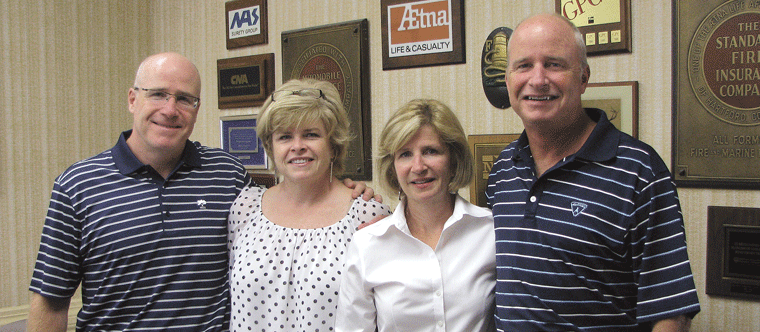
From left, Tom, Kathy, Anne, and Jim Daley, second-generation principals at T.P. Daley Insurance Agency.
“Our father made sure we all worked somewhere else first,” said Anne Daley, one of four principals at T.P. Daley Insurance Agency, along with her siblings, Jim, Kathy, and Tom Daley.
In fact, all four of them were interested in joining the company their father, Thomas P. Daley, started, but he wouldn’t allow them to make the firm their first job. So they cut their teeth at large companies like Aetna, Travelers, and John Hancock.
“He wanted to make sure we liked the business and learned the business; he didn’t want us to come in as the boss’s kid,” Anne added. “That was the message: ‘get a little background prior to coming here. If you hate it, hate it with someone else; don’t hate it with me.’”
None of them, it turned out, hated the insurance field, and between 1985 and 1990, all four came on board, and run the second-generation family business in West Springfield to this day.
“It’s scary that we all ended up in insurance after graduating,” Kathy said, “but we all wound up here.”
They have fond memories of growing up around Thomas Daley’s workplace.
“When we were young kids, Dad used to call on all his customers, and he’d take us with him,” Jim recalled. As it happened, most of those clients were in construction, as Daley focused his business on performance bonds in the construction field. “So we would climb on all the equipment. I don’t remember how many times he’d be talking to the owner, and we’d be climbing on loaders and excavators. I remember coming home filthy, and Mom saying she’d never get the grease out of my coat.”
“We really did grow up with it,” Anne added.
With the help of the GI Bill, their father graduated from the University of Rhode Island, which at the time boasted the only insurance school in the Northeast, Kathy said.
He was a bond manager for Aetna in Springfield during the 1950s when he decided to start an independent insurance agency and become a bond producer rather than work for someone else as a bond representative, Jim explained. So, at the dawn of the ’60s, he and partner Bill Tuttle opened Daley & Tuttle Insurance on State Street in Springfield.
“Then Bill wanted to go to Eastern Mass. and focus his sales pursuits there,” Jim said. “My dad really liked the more parochial nature of Western Mass., so they decided to split up. T.P. Daley started in 1963, just him and one employee.” They moved the business across the river to Park Avenue in West Springfield, then relocated to their current location on Westfield Street around 1981 — the former site of Sweenor’s Candy.
“People come in and say, ‘I can still smell those bon bons,’” Jim said, standing beside a long counter where the Daleys still set out bowls of candy. “This is where the glass was, where they sold candy.”
But it’s not candy running through he family’s veins, Jim said, but insurance; in fact, he met his wife at a four-day-long ‘bond school’ in Texas. Simply put, this is a clan that truly enjoys the business their father started, and for this issue’s focus on insurance, they sat down with BusinessWest to explain why.
Bonding Agents
While the company has diversified considerably since its early days, T.P. Daley still specializes in bonds for contractors. “It’s not really an insurance product,” said Jim. “It’s a financial guarantee that the contractor is going to bid the job according to plan and then complete the job according to plan.
“The key focus for us is still contractors,” he added. “We do an awful lot of construction risk, both in insurance and bonds.”
The industry has changed quite a bit since the 1960s, however, a time when the surety world wasn’t set up to handle very large contracts. “So he had to go out and buy reinsurance for different layers of the contract size.”
Also, Tom noted, “he didn’t go through agents; he went directly to the customer. Now a lot of that is handled through agents.”
Despite the changes, Anne said — and there’s a tremendous variety today of what bond companies will accept — T.P. Daley still succeeds by fostering relationships, even though insurance products are viewed more and more like commodities, with clients in search of the cheapest price. “Although the field has grown and evolved tremendously, it’s still a relationship business here.”
She noted that there weren’t a lot of bond agencies when her father started out, and very few locally. “That has changed over the past 10 years — there are more agents in the area, and more agents in general working in the bond field.”

The agency’s location for the past 30-plus years is the former site of Sweenor’s Candy, which many customers remember well.
“Construction kind of lagged, so the industry was still rolling in ’08, ’09, even into ’10,” he said. “Those were good years for most contractors.”
But once backlogs were depleted, times got tough, and remain so today. Contractors have had to “sharpen their pencils” and cut their margins, he explained, and insurance companies heavily invested in construction have felt the pressure. “If there was more work, we’d see the margins come up, but there’s so much competition for the amount of work available out there that the margins have not recovered to their prior levels.”
The situation has been exacerbated, Jim added, by the fact that the government has been reluctant to access funds from the Chapter 90 Program, which pays for infrastructure-improvement projects in Massachusetts, and cities and towns have been loath to dip into their own budgets, “so you’re seeing deteriorating infrastructure; that’s exactly what’s going on.”
Rest of the Story
Fortunately, T.P. Daley’s array of products has widened considerably since the agency’s early days, encompassing a range of both business and personal lines, including home, auto, and life.
That side of the business has undergone changes as well in recent years, particularly with Massachusetts moving from set auto-insurance rates to a managed-competition system in 2008.
But while the Geicos of the world attract consumers with that last $10 off their premium, Anne said, “people buying online have to be astute.”
“They need to know what they’re getting for their dollar,” Kathy added. “A lot of times, people come in here, and we have to explain to them what they’re getting, what they’re protecting. We find that a lot of younger people buying online don’t know what they’re really getting — they just know it costs $400. You have to be educated, and that’s where we come into play.”
Or, as Jim put it, “we don’t want them to find out the hard way that the deductible was $1,000, when they thought it was $500.” Or that they didn’t include collision among their coverages.
“That’s the importance of an independent agent,” Anne said, “to explain what the coverages are, and then you decide what your needs are.”
Added Jim, “it’s more than just buying coverage. All those coverages mean something. It’s not just about the dollars. At the point of sale, that extra money in your pocket sounds like a good idea, but the financial consequences for saving a few dollars could be dramatic.”
That’s just one example of how customer service remains a valuable commodity at T.P Daley Insurance, Anne told BusinessWest. “That’s probably one of the key elements of this agency, our customer service. When you call, you deal with a family member.
“We’re literally 24/7,” she continued. “We give out our cell-phone and home numbers. Especially in the bond business, sometimes you need something tomorrow. I think that sets us apart from other agencies — our love of the service.”
Tom said it all goes back to Thomas Daley never turning anyone away. “Even if it was a tough situation, he always tried to help. He said, ‘give me your papers, and let me see what I can do.’”
Anne said she advised a client on insurance products for six years before writing a policy. “They’d call with questions, and I’d help out any way I could. I knew them from high school. Ultimately, when they needed to make a change, they came to us.”
The Daley siblings hope customers keep coming, and they sense some interest among their own children in turning the business into a third-generation affair someday, but they also know it’s a challenging field, and, like their own father, they want their kids to be sure.
“This is a changing industry, and I think there’s a lot more pressure on people now than there was 20 years ago,” Anne said. “It’s not an easy business, but it’s rewarding.”
Jim agrees. “There have been some dynamic changes from the old-school days to now,” he said. “That’s not to say it’s lost all its luster; it’s still got some positives that make you want to come to work. And I think people here enjoy coming to work.”
Even if they don’t get to climb on heavy machinery anymore.
Joseph Bednar can be reached at [email protected]
 Dr. Doug Salvador says the push toward more efficiency in healthcare is working.
According to recent information from the Centers for Medicare & Medicaid Services (CMS), “healthcare spending trends have flattened, and some of the forecasts of spending from three, four, and five years ago have proven to be incorrect; we’re actually spending fewer dollars than we were,” said Salvador, vice president of Medical Affairs at Baystate Medical Center.
But the shift has been a challenging one, and no one expects it to get any easier.
For example, each year, the American College of Healthcare Executives (ACHE) surveys more than 1,000 hospital CEOs about their top concerns, including governmental mandates, patient safety and satisfaction, personnel shortages, care for the uninsured, physician-hospital relationships, implementing new technology, and other issues. For 10 years running, the broad category of ‘financial challenges’ has topped that list. In fact, it ranked far ahead of the number-two challenge — the tangentially related matter of healthcare-reform implementation — in the last three polls.
“It is not surprising that financial challenges and health-reform implementation are on the minds of hospital CEOs,” said Deborah Bowen, president and CEO of ACHE. “In addition, both government mandates and patient safety remain top priorities as CEOs and leadership teams work hard to improve patient care and redesign care delivery as they face a challenging reimbursement climate.”
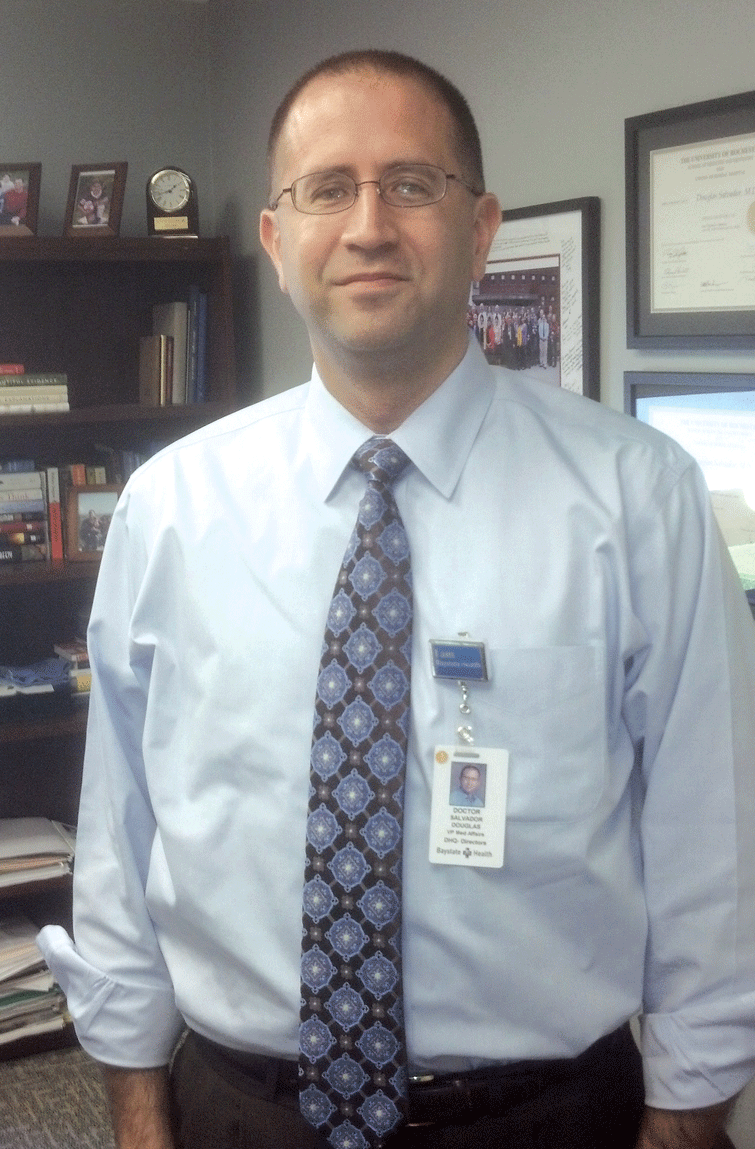
Dr. Doug Salvador says healthcare reform is not simply about insurance — it’s also about controlling, and bringing down, the cost of delivering care.
“The ACA is designed to move us in that direction,” he told BusinessWest. “We are in a time of transition in healthcare, where to meet the goals of population health, we have to invest in taking care of patients outside the hospital. So we’re making some of these investments and, at the same time, have to preserve and improve the care we deliver in the traditional sense. That’s the transformation, and that’s what’s causing the results of these surveys.”
But keeping hospitals in the black while meeting patient needs and expanding services is not a new issue; hospitals have long lamented that their expenses constantly overshoot the reimbursements from public and private payers. But a decade-long shift to new, efficiency-based models of care seems to be having an impact on the industry that hospital leaders hope will make a positive difference in the long term.
Delivery Reform
Salvador noted that, when most people think about the ACA, they think of health insurance, which is only natural.
“There are two parts to ACA — one is insurance reform, and the other is healthcare-delivery reform. Insurance reform, insuring more of the uninsured, is what 95% of the press is about,” he explained. “But healthcare-delivery reform is really a set of experiments, of which Baystate was an early adapter.”
One is the move toward accountable care, which replaces the standard fee-for-service reimbursement model — under which hospitals are paid a fee for each procedure, plus additional fees for any complications that would require a readmission — with a system by which a group of different providers are paid a flat fee for keeping a patient healthy, which provides incentives to eliminate unnecessary costs, but also to make sure patients get the care they do need, because a major goal is to prevent rehospitalization.
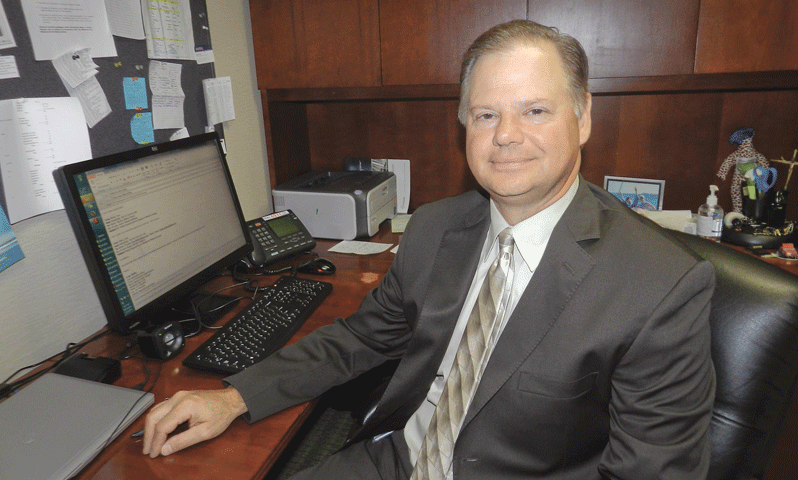
Thomas Robert says Mercy Medical Center has implemented several protocols to achieve a balance between quality care and efficiency.
As outlined by the Institute for Healthcare Improvement, a Massachusetts-based organization that promotes innovation and safety in medicine, accountable care has three interlocking goals: improving the experience of care, improving the health of populations, and reducing per-capita costs of healthcare.
Those goals lay out in stark terms, Salvador said, why efficiency in healthcare doesn’t mean lower-quality care. “As care for individuals gets better, population health improves, and cost of care for the whole population decreases.”
The Sisters of Providence Health System (SPHS), which includes Mercy Medical Center, has been talking about accountable care for the better part of a decade and has realigned the way it structures care and payments.
“Through the ACO we have and other contracts we’re involved with, we feel that the future of healthcare is very much focused on population health,” said Thomas Robert, chief financial officer and senior vice president of Finance at SPHS. “Our readmission rates are among the lowest in the Commonwealth, and we are working to build a clinically integrated network with physicians in the community to be able to utilize these efficiencies for the benefit of the community.”
Mercy has implemented several protocols for achieving this balance between quality care and efficiency, from its high-tech Care Connect system — a sort of centralized air-traffic control for the whole hospital, ensuring that patients move through the system without delay — to an increased emphasis on arranging follow-up care, whether it’s home care, skilled nursing, rehab, or simply a primary-care visit.
“That has translated into a better patient experience but also reduced the length of stay, as we get them into a more proper setting, a more cost-effective setting,” Robert said. “And we follow up with the patient to make sure they follow up with these schedules. Again, that all leads to population health. So many times, patients get discharged without proper follow-up, and that’s where readmissions come from. We assist patients after they leave the hospital and make sure their care continues.”
The heart of accountable care, however, is how it’s paid for, and both Mercy and Baystate are participating in the model, backed by the Centers for Medicare & Medicaid Services, of bundled payments to multiple care providers for individual patients.
“We’re early adopters,” Salvador said. “For certain types of patient services we deliver, we agree with CMS to get paid for them on a 90-day bundle, which aligns the doctors, hospitals, and post-acute care providers. We’re all being interested in the same thing: making care the best and most efficient it can be.”
Big Plans
This new era of efficiency certainly doesn’t mean hospitals aren’t moving forward with expanded services and new technology; in fact, Western Mass. hospitals have been in a growth mode for some time. Baystate recently completed a $250 million expansion, Cooley Dickinson Hospital and Berkshire Medical Center are building cancer centers, and even smaller institutions like Noble Hospital have invested heavily over the past few years in equipment, services, and facility renovations (see related story, page 42).
“The financial pressures and challenges will not get easier,” Noble President and CEO Ronald Bryant told BusinessWest, “and it will continue to be a balancing act between costs we can support and our needs.”
Robert said SPHS has adopted a philosophy of “incremental investment” to make sure that Mercy and other elements of the health system grow as needed, but budgets remain under control.
“When we go through the capital planning process each year, we take all the wishes that are out there and really prioritize them according to quality and outcome for patients, patient experience, and increasing efficiency,” he explained. “We work closely with physician providers to help us prioritize those capital needs, and we target when we absolutely need to make the expense.”
A good example is Mercy’s recent conversion of its inpatient floors to private rooms. “We knew we couldn’t do the private rooms all at once; funds were not available for us all at once, and we’d also disrupt patient care,” Robert said. “So we started that process in 2011, in four phases, which we just completed. Now 80% of our rooms are private — a project that basically took three-plus years to complete.”
The system tries to be creative in other ways with its capital dollars, he noted, like its joint venture with Hampden County Physician Associates and Carew Chestnut Partners to build a $20 million outpatient medical office center at the corner of Carew and Chestnut streets in Springfield.
Because of the partnership, he said, “Mercy did not have to put up any capital dollars. We now have this very important access point on our campus without expending additional capital dollars. It’s really about trying to be creative.”
But efficiency also means tightening belts when it comes to care, Salvador said, and that’s something all hospitals have to deal with — as well as patients, who have become accustomed over the years to being offered any number of treatments and tests when admitted to the hospital.
“One of the interesting things for me is the link between the quality of care we deliver and how much the care costs,” Salvador said. “The challenge for hospitals with the ACA is to prove the value of all the care we deliver.”
From that challenge has sprung a national campaign called Choosing Wisely, led by the American Board of Internal Medicine Foundation with the support of close to 100 specialty medical organizations.
“They have identified a number of common practices that physicians have said we should question the value of — is the money worth the benefit of those practices? We’re seeing hospitals across the country — and Western Mass. is no different — really looking at some of those practices,” Salvador explained, and either justifying their widespread use or determining whether they may be of less patient-care value than they’re worth financially.
“One example is blood transfusions,” he continued. “They’re very common, and in fact they save lives, but evidence has come out recently to question whether using blood in some cases, particularly in certain patient groups, actually doesn’t save lives, doesn’t add value. So we’re seeing a national trend toward using less blood.”
In the same way, participating emergency physicians have questioned the use of high-end imaging for headaches, pathologists have questioned vitamin D testing, and so on.
“Cardiologists have a list, orthopedic surgeons have a list … it goes on and on,” Salvador said. “It also engages patients about their care, and I think that’s always been important. I think we’re getting better at it, and things like this help us do that.”
Beyond the Bottom Line
Salvador said he came to Baystate six months ago to grapple with these very questions, because transforming healthcare is part of the organization’s culture.
“From my perspective, a lot of hospitals across the country are discovering that the answer lies, more than ever before, in our continuing effort to improve the quality of care by delivering the best care with the fewest complications,” he said, emphasizing again the philosophy behind accountable care and the new national push to keep costs down. After all, he said, it’s not quality care that raises costs, but unnecessary care.
“Most of us are working very hard to reduce readmissions to the hospital and deliver excellent care both inside and outside the hospital,” he went on. “When we don’t have patients returning to the hospital, the overall cost goes down.”
It’s easier said than done, but hospital leaders say they’re making real progress toward this more efficient model of care. And that’s got more than just patients feeling better.
Joseph Bednar can be reached at [email protected]

Ronald Bryant says his primary accomplishment has been to create an environment where people want to succeed and are put in a position to do so.
Over the past three years, the president and chief operating officer has instituted impressive change that has brought new life to the independent medical facility and reinstated its standing as a top-notch center for healthcare in the Greater Westfield area.
Improvements include new physicians; a renovated patient wing; a new, comprehensive primary-care office building; a new, $450,000 Noble Walk-In Express Care service next door; a urology practice; new orthopedic offices; comprehensive breast-cancer services with a full-time breast surgeon; and a lot more, which have been realized through dedicated teamwork and outreach efforts, led by Bryant’s tireless effort.
“I have not done this alone. It has been accomplished with physicians, nurses, trustees, and administrative staff, which extends to dieticians who make sure patients have the right nutrition,” said Bryant. “My job is to create an environment where people want to succeed and are put in a position to be able to do so. And healthcare is moving so fast that you cannot stop. You have to get up every day and continually try to improve your organization.”
The hospital has 97 beds in a 257,000-square-foot building, which includes a telemetry unit, an intensive-care unit, a 20-bed psychiatric unit, a 15-bed inpatient rehabilitation unit, physician office space, and a medical/surgical unit which has been completely renovated with upgraded floors, walls, bathrooms, and nursing station, made possible due to money raised at the annual Noble Ball.
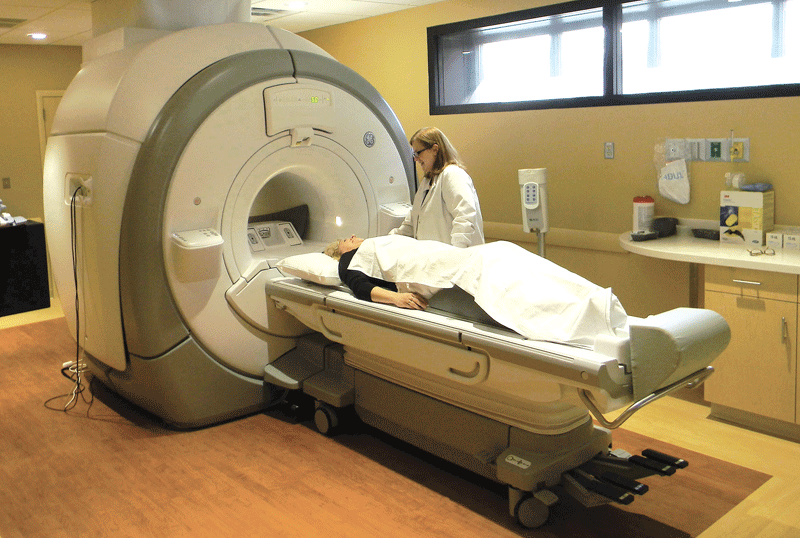
Noble’s new diagnostic imaging and X-ray service offers cutting-edge technology that helps physicians make definitive diagnoses.
“We were very prudent in making sure the investments we made promoted healthcare within the community,” he said. “Noble has always been consistent and conscientious about providing quality care, but in the past, we didn’t have enough physician services to keep patients in the community.”
That was caused in part by the critical shortage of primary-care physicians in Massachusetts as well as a national shortage, which made it difficult to attract these specialists to Noble.
But the hospital has been successful in recent recruitment efforts, and a primary-care office opened in July in a new building on 67 Union St. with seven primary-care doctors.
Noble’s efforts to attract physicians has also resulted in a partnership with the Urology Group of Western New England, P.C., which now has state-of-the-art exam rooms and office space within the hospital.
“This came about as part of our effort to build new relationships with physicians,” Bryant said. “They have their own waiting room and testing lab here now.”
There is also a new obstetrician-gynecological program, created through an affiliation with Baystate Medical Center. “Patients see their doctors here and deliver their babies at Baystate,” Bryant said, adding it is too costly for a hospital of Noble’s size to be able to do everything alone.
To that end, the third floor is now home to new cardiopulmonary offices and services, which also involves a liaison. “We partnered with the Baystate Regional Heart Attack Program and can get people out our door to their cardiology department faster than anyone else in the Valley and all of our competitors,” the CEO told BusinessWest.
Other improvements include a new, state-of-the-art, $2.6 million MRI center, which opened at the same time as the urology offices, along with a new van to transport patients. The service is free to senior citizens or anyone who needs it in the hospital’s primary service area.
“We’ve invested more than $6 million in the hospital over the last few years in equipment, services, and facility renovations,” Bryant said, adding that these investments have made a difference, and the hospital’s patient satisfaction scores for 2012-13, as measured by the Centers for Medicare and Medicaid Services, are the highest in Pioneer Valley.
“This is especially significant because not only are we the smallest independent hospital in the state, we are also the lowest-cost hospital in Massachusetts,” he said.
Strong Commitment
Noble’s CEO worked as a public accountant for a government agency before he entered the healthcare field, where he has put his talents to work for the past 15 years.
He was born and raised in Worcester, graduated from Assumption College, and is currently working on a master’s degree in health administration. He serves on the board of the Mass. Hospital Assoc. and Noble’s Visiting Nurse Assoc., and chairs the Greater Westfield Chamber of Commerce.
The licensed, certified public accountant began his healthcare career at MetroWest Medical Center in Framingham and Natick, where he served as account manager for the developmental disabilities and home health department. That stint led him to join Health Management Associates, a nonprofit organization that represents 70 community hospitals in the South and Southwest.
Time spent with that group inspired Bryant’s passion for community hospitals. “I went through their management program and realized early on that community hospitals were a good fit for my personality,” he said.
After working in South Carolina and Oklahoma, his family wanted to move closer to home, so when he was offered the position of chief financial officer at Martha’s Vineyard Hospital, he accepted.
Five years later, he moved to Goodall Hospital in Maine, where he held the same position, and three years later, he landed at Noble.
Bryant served for nine months as Noble’s CFO before moving to the position of president and CEO in August 2011.
“Noble Hospital offered challenges which were a good fit for my skill set,” he noted. “I had the financial background needed to compete in today’s healthcare environment and knew there was a good chance that the hospital had a bright future.”
However, he conceded that, in spite of this belief, Noble was in difficult financial straits when he arrived.
“I knew that, without proper fiscal management, physician recruitment, and rebuilding service lines, the future was in jeopardy,” he said. “The organization was in a good geographic location and had strong demographics, but had poor fiscal management.”
However, his past experience soon came into play. “Both Martha’s Vineyard and Goodall were financially challenged, but I was very fortunate to have mentors at both hospitals who taught me a great deal,” he said.
His first step was to rebuild the hospital’s four-person revenue team.
“I brought in new talent and reorganized and revamped a new, talented team of 20 people,” Bryant said, noting that the top two factors that lead to the success or downfall of any community hospital are its physicians and management of its revenue.
“So, after we solidified our financial position, we turned our attention to growth,” he explained.
This was critical because a community survey of the hospital’s service lines revealed a shortage of physicians in the area. “It also showed that more than half of the population was not aware of the services Noble provided, so our task was clear.”
The hospital took steps to recruit doctors to work there full-time, and cultivated relationships with others willing to become affiliated with Noble.
The effort was very successful.
“Twenty-four months ago, we had one physician on staff, and now we have seven, and to complement this, we also rebuilt specialist services,” Bryant noted, adding that the hospital re-established relationships that had existed in the past and formed new ones with specialists on the other side of the river.
That included its partnership with the urology group as well as the creation of a comprehensive breast-cancer program.
“We also hired a gastroenterologist to partner with the existing one on staff, and revamped our radiology, anesthesiology, and pathology services, which helped build confidence among the physicians in our community. If a hospital doesn’t offer strong services, physicians won’t send their patients there,” Bryant explained.
The demand for general surgeons was also met, and Noble now has two surgeons who also work for another hospital. “It fills two needs — ours and their need for more volume,” the CEO said. “And a good percentage of our doctors are also affiliated with Baystate Medical Center.”
For example, Noble’s breast-cancer surgeon brings in plastic surgeons from Baystate Medical Center to do reconstructive surgery on their patients. “Our doctors and affiliated physicians work together, and these types of relationships help make us successful,” Bryant said.
Once the hospital had attracted enough physicians, the next step was to create a comprehensive marketing program that was specifically designed to reintroduce Noble to the community. It began two and a half years ago with a “Yes Noble” website, on which Noble employees wrote about how much they enjoyed working there. “We just won an award for it,” Bryant said.
From there, efforts were aimed at informing residents in the hospital’s geographic area of the services Noble offered, as well as introducing doctors in the Noble Health Network. It was accomplished via speaking engagements, radio and TV advertising, publications, and a healthcare symposium in Westfield that attracted 100 people who learned about what Noble was doing in the area of healthcare reform.
“We speak at all major community events and are very, very visible in the community,” Bryant said.
In addition, the hospital hosts a series of ongoing employee luncheons where physicians talk about what they do.
“There will always be competition, but from the time I came here, I believed that, if we did our job in a high-quality fashion, patients would not want to cross the river,” Bryant said. “I told myself from the beginning that I wanted each individual in our community to think of Noble first for their healthcare needs. I want our healthcare network to be the best place to give and receive safe, quality, compassionate care.”
Ongoing Mission
The vision that Bryant brought to the position continues to broaden. “Everything we’ve done has been geared toward keeping patients here, and the confidence we’ve built has allowed us to maintain our market,” he said. “But I’m always thinking about what’s next. It’s really important to adapt to change and be able to capitalize when opportunities arise.”
To facilitate that goal, he has surrounded himself with people who are talented and have great imagination.
“The financial pressures and challenges will not get easier, and it will continue to be a balancing act between costs we can support and our needs. But I want to go further and continue to grow our market,” he said. “Our work hasn’t stopped, and we will continue to develop our network so we will become the provider of choice in our area.”

Mayor Edward Sullivan says the quality of life in West Springfield helps attract new businesses to the town.
“In the past, we moved like an aircraft carrier,” he said, meaning more deliberately. “But we are no longer sitting back on our heels. Instead, we have taken a proactive approach and are moving from a passive role to an active role. We’re doing a better job of marketing through our website and collaborations with regional agencies and commercial brokers. Nothing happens overnight, but we’ve laid the groundwork and put a strategic plan in place.”
To that end, Tara Gehring has been hired as the town’s first economic-development coordinator and assistant planner. She grew up in West Springfield, completed an internship in town, has a master’s degree in regional planning, and is part of a new team Sullivan created that meets with him weekly to brainstorm ideas to promote economic development. Members include Mark Noonan, the town’s conservation officer and assistant planner, and Douglas Mattoon, director of planning and development.
“We call ourselves the ‘crossroads of New England,’” said Sullivan. “And we have a lot to offer, including access to Interstate 91, Route 90, and Route 5, which meet in West Springfield, along with the CSX rail yard, which is the largest rail yard in Southern New England. And we believe that new investments by business owners will add to the quality of life.”
However, the mayor told BusinessWest the town is also investing in itself. He pointed to its new, $107 million high school, which opened in February; a $16.1 million library reconstruction and renovation project that is underway; and recent infrastructure improvements. He said they are all important because when communities are rated, these things, along with public safety, recreation, and access to highways, are taken into account.
Sullivan’s team meetings have resulted in marketing initiatives that include a redesign of the town’s website, which now contains links to commercial banks and business opportunities. “If someone is looking for commercial property, they can visit the website instead of having to look on their own. In the past, the town did not have a listing of available commercial sites,” Gehring said.
New guidebooks have also been created that are available online or at Town Hall. The first is titled “Business and Residents’ Guide to Permits and Licensing,” and lists the town’s departments and the permits they handle. There is also a more comprehensive version called the “West Springfield Permitting Guidebook.” It is more detailed and includes the names and contact information of the employees in each town department, as well as office hours and other pertinent information.
In addition, monthly open houses will begin Sept. 9. They will be held on the second Tuesday of each month from 10:30 to 11:30 a.m. for people hoping to open a new business or expand an existing one. The sessions will be attended by the heads of every department involved in the permitting process and will give people the opportunity to discuss their projects in a group setting.
“We wanted to remove any hoops or hurdles that businesses face, so we’re trying to streamline the process,” said the mayor. “It’s all part of our new, proactive approach.”
Mattoon noted that people who attend the meetings will have instant access to critical information, such as zoning laws and parking regulations. “In the past, there was no way to get representatives from every department to discuss a project. People had to go to each individual department, and in some cases, they were not aware of what was going on in other departments.”
Noonan added that these sessions will allow town officials to work more cohesively. “We want to change the way we operate as a municipality, and these meetings will provide us with business owners’ concerns so we can address them in a faster and more efficient manner.”
Sullivan concurred. “Time is money, and people would rather get a quick ‘no’ than a six-month ‘yes,’” he said.
Dedicated Measures
This summer, a team of experts began the preliminary work needed to create a new use for the former Southwick Paper Co. mill site at 150 Front St.
“We hope to revitalize the property and have it serve as an economic-development catalyst; it’s situated on the Westfield River and has an old canal on it,” Sullivan said, noting that Fibermark’s world headquarters are located in a separate building on the property.
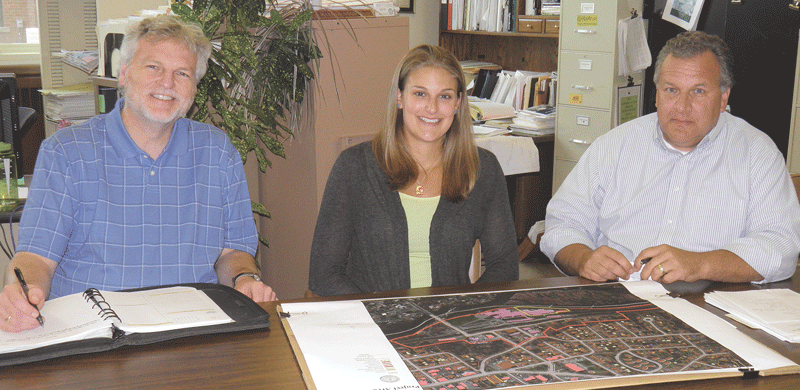
From left, Mark Noonan, Tara Gehring, and Douglas Mattoon meet with Mayor Edward Sullivan every week to brainstorm ideas to promote economic development.
A public forum was held on Aug. 14 by the UMass researchers to gain input from neighbors and interested parties on what they would like to see built on the multi-level site, which includes several buildings.
“The district has vast potential because access to the river has not been taken advantage of, and there was discussion about using the site for small light manufacturing, condominiums, retail shops, and even a micro-brewery,” said Mattoon, adding that rezoning may be required to bring the plan to fruition. “All of the ideas had merit, and once we get the final report, the next step will be to implement the goals and objectives.”
In addition, improvements to other areas of the town are changing the landscape. They include an initial plan unveiled in June for a $650,000 Mittineague Park Gateway Project. The work is expected to be finished next year and will include a new pedestrian bridge along the nature trail and improvements to the park’s entranceway, the community garden, a horseshoes tournament pit, and parking facilities. In addition, accessibility to areas around the park, such as the Ezekiel Day House, commonly known as Santa’s House, will be improved.
Traffic flow to the UNICO building located within the park will also be modified, and a $1.4 million renovation of that structure, which began a year ago, has just been completed.
“Now it can be used year-round as a recreational facility,” said Mattoon, noting that the building, which was as constructed by volunteers from the nonprofit service club in the 1970s, was outdated and had never been insulated, so heating costs prohibited using it during the winter.
Improvements include a new kitchen, outdoor playscape, pool, picnic area, and parking lot as well as handicap accessibility.
“It can hold 100 to 150 people, and our plan is to have it become a meeting space for groups such as the Garden Club; the Senior Center will also use it as an ancillary building,” Mattoon said.
Sullivan added that “these things are important because people who do site reviews look at a town’s amenities. We’re investing in West Springfield in hopes that businesses will, too.”
The lack of parking in the Merrick Memorial District and downtown area is another obstacle officials are working to remove, as it has been a roadblock for business owners who have expressed interest in these sections of town but felt the problem was significant enough to settle elsewhere.
“Our zoning is not consistent with the needs of small businesses, especially in the Merrick section,” Noonan said, adding that the district now includes several empty storefronts.
He noted that the regulations were adequate when they were created in the ’50s because, at that time, people who lived there were able to walk to work at nearby companies such as Gibarco, and do the majority of their shopping in the neighborhood. “So many families didn’t own a car,” he told BusinessWest.
Sullivan said efforts are being made to expand the restrictive regulations, and measures may include shared parking space. For example, a business that is open during the day might share space with a restaurant that opens in the evening.
“Things that functioned for the 20th century are being re-examined or built anew for the 21st century,” Noonan added.
To that end, Gehring is exploring areas of town that haven’t been examined for a while to determine if business owners in these locations need help. For example, she recently visited the large industrial section behind Century Plaza on Memorial Avenue, but was happy to report that the business owners didn’t need any assistance from the town.
In addition, Gehring is working closely with the West of the River Chamber’s economic-development team to open lines of communication. “And in June, West Springfield had a table at the Western Mass. Developers Conference in Springfield — it was the first time the town was represented,” Gehring said, adding that she narrated a bus tour through the town in which she highlighted several neighborhoods.
“I want to help move our community forward for the next generation by assisting businesses and improving investment in West Springfield,” she added.
Infrastructure improvement is also ongoing, and West Springfield has undertaken more road repairs this year than it has in the last three or four years. In addition, the town put in a new water main from the Southwick Well Fields to the tanks and feeder system, and purchased additional land to protect the water supply.
The town also enacted a zone change in July in the Memorial Corridor Overlay District. “It was adapted to achieve economic stimulus as well as a means of protection from adverse uses that may or may not be associated with a casino built 800 yards from the West Springfield border,” Mattoon said. “It prohibits businesses such as pawn shops, but opens up opportunities for small businesses operating in 900 square feet or less that were previously not allowed, as it had industrial zoning.”
Multiple Offerings
Sullivan says the improvements West Springfield has made and continues to make, coupled with its focus on helping business owners succeed, should result in growth.
“Why wouldn’t a business want to come here?” he asked rhetorically. “We have everything they could want, and we plan to continue to invest money to enhance the quality of life in town. There is a lot going on here, and it all adds up to what government can do to help promote economic development.”
Year Incorporated: 1774
Population: 28,391 (2010)
Area: 17.5 square miles
County: Hampden
Residential Tax Rate: $16.41
Commercial Tax Rate: $31.99
Median Household Income: $40,266 (2010)
Family Household Income: $50,282 (2010)
Type of Government: Mayor, City Council
Largest Employers: Northeast Utilities; Brightside for Families and Children; Home Depot; Itt Exelis; UPS
* Latest information available
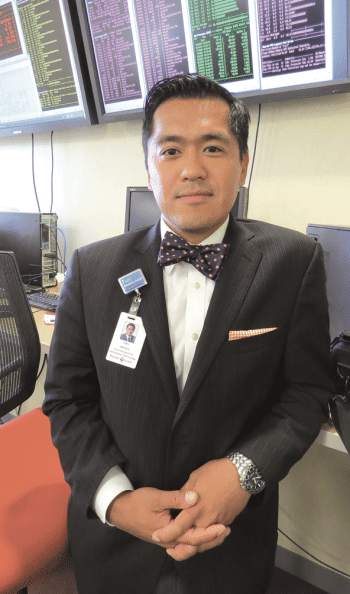
Joel Vengco says healthcare IT now involves much more than technology. Increasingly, the focus is on taking data and transforming it into information — and then knowledge.
And he started with some subtle humor.
“There’s a lot more meetings to go to,” he said with a laugh, choosing that starting point to explain how and especially why this administrative position is now much more about information and operational strategy than it is about hardware and software.
“CIOs today are more strategic in nature; today, there’s so much reliance on technology and on information inside those technologies that the CIO has to be part of the strategic discussion and the envisionment of business as a whole,” he told BusinessWest. “And that’s a different skill set altogether. You really have to understand strategic development, you have to understand the business that you’re in, and you have to understand finance.
“And you have to be more of a people person than I think CIOs were in the past,” he went on, adding quickly that he certainly wasn’t disparaging those who came before him, just referencing how times have changed. “Many of them would sort of hide out in the data center and focus on putting up a server. We’re now forced to be out there, talking to our partners and our users and really helping to lead the use of technology and information for competitive advantage or progression of the business.”
Elaborating, Vengco said the CIO must now wear a number of hats in addition to those that have been traditionally worn. Indeed, while the CIO is still tasked with keeping a health system running from a technology standpoint — what Vengco called “keeping the lights on,” a reference to everything from PCs to operating-room equipment — there is now much more to this job.
“In many ways, I wear an operating hat, a strategic hat, a finance hat, and sometimes I even wear a clinical hat, even though I’m not a clinician,” he said. “And then, you have to wear the innovation hat, because you can’t be stagnant and just look at the technology in front of you; you need to understand and begin to distill all the new technologies that are coming down the pike and correlate them with the current problems and the future state.”
With that mentality, Vengco was one of the key architects of the Baystate Innovation Center, what he described as a cross between an incubator and an accelerator that is taking shape at 1350 Main St. in downtown Springfield (more on that later).
But perhaps the most important line of the job description for today’s healthcare CIO, he said, may be enabling both a specific health system and the community it serves to make more and much better use of the vast amounts of data that modern technology allows people to collect.
Vengco, who came to Baystate in 2012 after work with GE Healthcare, has spent much of his career focusing on information and analytics, or what he called “liberating data,” and transforming it first into information and then knowledge.
“Data is the raw content of systems; it’s the diamond in the rough,” he explained. “You really have to transform it, or massage it, in layman’s terms, to really come up with information from that data. and then, from that information, you can develop knowledge through the delivery of an architecture that really takes that information and makes it actionable for people.
“If you put most of the raw data we have into a computer or an algorithm, it wouldn’t be able to compute anything out of it. In isolation, it may not necessarily make much sense; it’s just data, not information,” he went on. “But once you put it into context, like if you took a lab value and put it in the context of a disease state, or, better yet, you aggregated all of those labs and correlated it with a specific chronic disease state for a cohort of patients, then you have information about diabetes or information about congestive heart failure.”
For this issue, BusinessWest talked at length with Vengco about the evolving and expanding role of the CIO — and about all those hats he and others who take that title are now wearing.
Technically Speaking
Vengco told BusinessWest that, since childhood, he’s been drawn to the healthcare field, and that he attended medical school to essentially appease his parents and become a doctor. But his career path took an abrupt turn during his second year there.
“I was transitioning into my Ph.D. years, and one of my thesis advisors had suggested that I look at doing some work with a health information technology firm, which back then [2001] was pretty novel,” he explained, noting that the firm in question was Boston-based Eclipsys. “The idea was to develop a national data warehouse where I could develop algorithms for disease progression, outcome measurement, develop new clinical decision-support rules in analytics — a lot of the things we’re talking about now in terms of big data, but perhaps it could be done in this corporation.”
He took on that challenge, and in the course of doing so discovered that there was a considerable challenge behind utilizing the data collected by health systems because it was largely unusable, and not “liberated,” a term he would use early and often to describe this phenomenon.
In short order, finding ways to make such data more usable became his career passion.
He left medical school and entered the field of informatics and analytics. He interned at Partners Health Care and later taught at Harvard before landing at Boston Medical Center for his first IT operations job.
“It was at that time that I started to see the value of understanding technology in the context of a journey toward really understanding information,” he noted. “Because, ultimately, my real interest here was to try to figure out how to utilize this information so we could develop new knowledge and new insights. Technology changes so rapidly, but what is a mainstay and the most important element for me is information that we can gather from these systems. It’s like DNA for the human body; this information is the DNA for coordinating and developing quality care for the future.”
From Boston Medical Center, he went to GE Healthcare, where he became vice president of a global business called eHealth, a job he took to better understand what people in other countries were doing in the emerging field of population health.
He took part in projects in the U.K., France, Australia, Canada, and other countries — many of them involving health-information exchanges, care-management systems, collaboration systems, mobile health platforms, and population-health analytics — and took some valuable lessons back to the U.S.
Vengco said he wasn’t looking to leave GE, but always harbored a desire to return to the setting of the health system CIO, preferably in Boston, and in early 2012, Baystate was advertising for one.
“I hadn’t really thought about Springfield or Baystate — I knew of it, but didn’t really know the culture and the footprint of the community,” he said. “When I was recruited to take the interview, I came out here to see what it was about, not really looking to make an adjustment or a move. But I was really surprised with the vision Baystate had and the leadership it had.”
What’s more, he toured the region and came away with the impression that it would be an ideal setting for the innovation center that is now becoming reality.
“I enjoyed my discussions with Baystate, and was deeply moved by the mission they had for the community and healthcare in general,” he said. “It really matches my vision and my hopes — that healthcare needs to be more patient-centered.”
Making IT Happen
Vengco said the work of the IT Department at Baystate has four main pillars:
• Optimization, or making the most of the technology systems that exist today;
• Community engagement, or community collaboration, a realm that includes an initiative known as the Pioneer Valley Information Exchange (PVIX), which essentially creates a single patient record that optimizes the care delivery of all transitions of care across the continuum;
• Analytics, or the liberation of data; and
• An innovation platform, perhaps best represented by the innovation center.
Focusing on all four, plus that aforementioned work to keep the lights on, has become a considerable challenge, said Vengco, noting that he and his staff of roughly 230 are inspired by the breadth and depth of that challenge.
“You really are thinking well beyond the technology that you have to install,” he noted. “It’s an exciting time, but it’s also very daunting; I feel the enormity of the task, and so does my staff.”
And with that, he returned to his thoughts about how IT now extends into the realm of information — both gathering it and liberating it.
“The historic design of the EHRs (electronic health record systems) in the past and somewhat current state is that they take in data, but they don’t necessarily spit it out easily,” he explained. “And data loses its value if you don’t have the ability to liberate it and use it for the delivery of care. And that has been my mission since I started this journey back in 2001.
“There’s so much to be gleaned and to be achieved through the data we have locked in our systems,” he went on. “That’s why liberating that data is the first mission we should all have, because once we have that information in hand, it becomes knowledge and actionable delivery of care.”
Many of the Baystate IT Department’s initiatives have come together in the creation and operation of the PVIX, said Vengco, adding that the broad aim is to create a single patient record that can be used by a host of area care providers.
“Patients are very mobile; they’ll see a specialist, see a primary-care provider, visit the hospital … and those care organizations may not be affiliated with each other and so may not be on the same electronic medical record system,” he explained. “So when a patient goes in for his next visit and the provider wants to see all the meds they’re on and all the allergies they may have, they may not see all that comprehensive data because it may be in other systems dispersed across the community.
“So, today, we have to hope that a patient knows all the meds they take and all the allergies they have, or that the medical group down the street that they just visited will fax that information,” he went on. “But that doesn’t happen consistently, so you wind up treating patients with the information you have, and it might not be enough.”
The PVIX was created to solve that problem, he went on, by creating a comprehensive record that essentially follows the patient.
Founding members of the exchange include Baystate, Mercy Medical Center, Health New England, Riverbend Medical Group, Berkshire Health Systems, Holyoke Medical Center, and many others, said Vengco, adding that some of the challenges moving forward are convincing patients that their information is secure and also convincing providers that sharing such information is the right thing to do at this critical juncture for the healthcare industry.
“There’s still an uncertainty among organizations that care for patients about whether they should be sharing that data with other collaborating providers,” he explained. “And some of that stems from the notion that this data is competitively advantageous — that, if I share this data, you might know enough about me and my market to steal my patients.
“That’s just not where we need to be to care for our patients in the appropriate way,” he continued. “We have to be able to say, ‘for the betterment of patient care, quality of care, and efficient care delivery, we need to be able to exchange this information.’”
Center of Attention
Putting on that aforementioned innovation hat, Vengco stressed the importance of not simply understanding and maintaining the technology of today, but also anticipating the technology of tomorrow and being at the forefront of its development.
This was the impetus for the Baystate Innovation Center, which is still under construction but is in many ways already operating at One Financial Plaza in downtown Springfield.
“We need to make a mind road map, if you will, of what technology needs to look like in the future for your business,” he explained, noting that the innovation center was created, with the help of a $5.5 million state grant, to focus on solving the problems of healthcare today through technology and informatics.
The center’s creation — not to mention its location — brings another layer to a growing regional emphasis on entreprenurship, technology, and economic development, said Vengco, noting that, within a few blocks of each other, the innovation center, Valley Venture Mentors, and Tech Foundry, a facility dedicated to training individuals for careers in IT, are creating enormous momentum for new technology startups and getting established companies to the next stage.
“For those of us in healthcare, the rapid change that has come as a result of reform and the need to change healthcare delivery requires us to continue to innovate,” he said. “And for Baystate, this is an extension of our mission because it enables us to continue to look forward to doing the best that we possibly can to deliver the best possible care to the community through these innovations, while still maintaining our current operations.”
Elaborating, Vengco said innovation center administrators are looking for ventures that are in what he called the “last mile of development.”
“They come in with a solution already in hand, but it really needs a few more tweaks here and there, and that’s where we really come into play,” he noted. “We provide that innovator with the necessary adjustments and development advisement to get them to a usable product or solution.”
And these products and solutions are carefully chosen to meet the objectives of the health system, he noted, adding that organizers are not necessarily looking for the next Google.
“The intention here is to make sure we’re bringing in solutions that will address system objectives,” he told BusinessWest, adding that these include improving quality of care, patient progress, high-value care, and bending the cost curve. “We’re looking for technology that’s relevant to the problems we’re trying to solve. It’s not about making money; it’s about delivering an innovation that’s going to help us achieve our mission in an optimal way.”
He went on to say that he considers Baystate to be a model health system in a model state — Massachusetts is generally considered to be on or well ahead of the curve when it comes to innovations in healthcare — and that the Baystate system, by implementing products and concepts developed at the innovation center, could become an important proving ground moving forward.
“As you look at all of these other organizations, these integrated delivery systems that are being built or are already in place, they’re aspiring to be what I believe Baystate is already beginning to become,” he explained. “And we’re in a state that in many ways is one and a half to two years advanced in terms of policy and reform, and that becomes very attractive for developing solutions when you’re looking at ways to impact care delivery across the country. If you can do it here, it’s likely that it’s going to be impactful elsewhere; it’s a really great environment to do that kind of innovation.”
For the Record
Summing up his thoughts on health IT and where it’s headed, Vengco said it is going to play an increasingly vital role in the delivery of patient care and overall population health.
And carrying out the many and diverse aspects of his department’s mission will become ever more challenging as it extends well beyond technology and optimizing all that it brings to the table.
“My responsibility is to try to engage our leadership and our strategy so we can focus the use of technology and information,” he explained. “That’s the challenge; everyone wants the next technology, but we have to make sure we’re selecting it strategically and that it continues to support our mission.”
George O’Brien can be reached at [email protected]
It Takes the Right Tactics to Improve Sales Performance
By JOHN GRAHAM
In Lee Child’s Without Fail, a Secret Service official simplifies a disturbing problem. “If the Yankees come to town saying they’re going to beat the Orioles, does that mean it’s true?” And then he adds, “Boasting about it is not the same thing as actually doing it.”
It’s the same with sales, where there’s often too much boasting and not enough doing. Here are seven tactics to improve sales performance.
1. Use stories that make a difference to customers. While facts help support a sales presentation, they can also be confusing, create doubt, and turn people off. Yet, many salespeople fill their presentations with facts and figures and so-called ‘hard information’ to build a solid, compelling case with customers.
A simple, quick story that grabs interest may be far more effective in moving a customer to action, however. While salespeople love to tell stories, too often they shoot themselves in the foot with stories about themselves or whatever comes to mind at the moment, failing to sense the effect on the customer.
Sales stories should be strategic, as marketer Jen Agustin suggests when she says, “if you think back to your favorite stories, the great ones are those that inform, educate, and drive people to act.”
2. Forget about ‘the latest and the greatest.’ “I’ve made a conscious choice to not spend all my time … looking down at a device,” said legendary motion-picture director James Cameron, of Avatar and Titanic fame, in a recent USA Today interview. “I’m a Luddite — but a high-tech Luddite.” Referring to Twitter, “I hate it,” he said. “I hate everyone else’s tweets, too. They’re boring. What can you say in 140 characters? I can’t even clear my throat in 140 characters. Same goes for Facebook.”
As the most techie director of all time, Cameron’s outburst sends a message to salespeople. It wasn’t so long ago that ‘cutting edge’ gave salespeople an advantage with customers, as they longed for the next great thing. But not now. The times have changed. It’s clear what moves them to action now: they want what works, what solves a problem, what gives them an edge.
3. Don’t talk about what you do. It may sound crazy to suggest that salespeople should avoid talking about what they do. Even so, it’s good advice. It’s tempting to talk about what we know best — what we do. We’re excited about we do and want to share ‘the good news.’ But, no matter what anyone says, to talk about what we do is a huge turnoff for customers.
If you ask Sally what she does and she tells you she sells insurance, that’s all it takes — you shut down. However, when Sally recognizes that you’re 50-ish, you might feel different if she said, “I help people make sure they have enough money for a great retirement.” If you’re someone with a young family, Sally might say, “I help make the dream of going to college a reality.” It’s an approach that gives new meaning to ‘the customer comes first.’
4. Be careful when you make promises. There’s always a temptation to tell customers what they want to hear, and it leads to trouble. “It will be here in about three weeks,” said the contractor, referring to the bathroom accessory selected by the customer. Well after the due date, the customer was upset because it still was unavailable, and was then told the expected delivery would be several months later.
It’s a familiar story, and it points how out salespeople disappoint customers by making promises they can’t keep. It’s a deadly scenario. Once disappointment sets in, satisfaction begins unraveling.
To maintain customer confidence if a problem may occur, tell them about it upfront, keep them informed, and have options ready if they’re needed.
5. Don’t overstate. In other words, don’t exaggerate. It’s the curse that many salespeople fall prey to time and again, so that it becomes second nature — and it always causes trouble. They can’t have a conversation or make a presentation without ‘gilding the lily,’ as they say. Salespeople want to look good to their customers, so they stretch the truth, embellish the facts, and are even misleading.
It’s a dangerous practice. For today’s customers, it’s one strike and we’re out. No one understands this better than Amazon. And few companies do a better job communicating with customers, particularly when it comes to on-time deliveries, accurate product descriptions, and reliable customer comments.
Unlike other retailers who try to lure customers with exaggerated claims, Amazon’s goal is to build trust so customers come back again and again, even when a competitor may have a lower price. It starts with a no-exaggeration policy. Salespeople can learn from companies like Amazon.
6. Explore vulnerabilities. Salespeople can perform a significant service to customers by showing them where they may be losing business, how they might improve a procedure, if they have a product or service weakness, or any other exposure.
Because business owners and managers can be so caught up in daily operations that they fail to see potential threats, salespeople can be the extra set of eyes to provide valuable feedback. The owner of a retail chain was ready to buy another store when a salesperson pointed out that significant changes in the area could have a negative impact on the business. The owner heeded the salesperson’s advice and avoided making a costly mistake.
7. Reinforce the customer’s buying decision. It’s just after the sale — when salespeople revel in their success — that the customer relationship is most vulnerable. This is when post-sale doubts set in and questions arise. Perhaps they are getting more familiar with a purchase, encounter an unexpected issue, or discover that what they bought isn’t what they expected. Whether it’s a beer or Lexus, customers want to feel good when they make a purchase.
The savvy salesperson, knowing what can occur, takes the initiative and contacts customers to gauge how they are feeling about their purchase and to reinforce why their buying decision was prudent. The person who made the sale should make the contact, otherwise the value of the call is diminished in the customer’s mind. The customer wants to know that the salesperson cares.
The bottom line is, when salespeople use the right tactics, they boast less, do more, and improve their sales performance.
John Graham is a marketing and sales strategist, consultant, and business writer with GrahamComm. He publishes a free monthly e-bulletin titled “No Nonsense Marketing & Sales”; (617) 774-9759;
[email protected]; johnrgraham.com

The Big E Continues to Be an Economic Engine
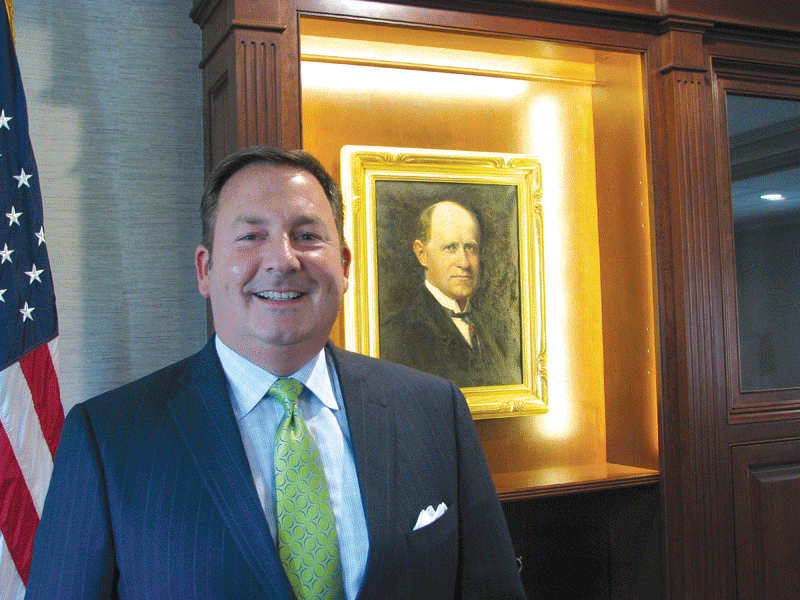
Eastern States Exposition CEO Gene Cassidy and the man who inspires his work, fair founder Joshua Brooks.
“Mr. Brooks was concerned about agriculture,” Cassidy told BusinessWest. “He was an industrialist, but he saw that agriculture was losing ground in New England at the turn of the last century, with so much agriculture being produced out of the Midwest and South Central estates. So he established the Eastern States Agricultural and Industrial Exposition.”
Specifically, he got the National Dairy Show to move its annual event from Chicago to West Springfield in 1916, but only after he transformed a bare plot of land into a property where the expo could be staged.
“There’s a great story of how he capitalized the fairgrounds and got people to donate incredible sums of money,” said Cassidy, citing, as an example, the night of Feb. 1, 1914, when a major blizzard hit the Pioneer Valley. A fund-raiser was scheduled for that night, and Noyes Fisk, owner of Fisk Tire Co. in Chicopee — which later became Uniroyal — was given the responsibility of raising $750,000. “Even in that blizzard, with limited attendance, he was able to raise $450,000. That was the initial capital providing resources to build these facilities, including A Barn, B Barn, and C Barn.”
All three of those barns, including several other structures built in the early years of the fair, still stand today, while the fairgrounds has added many others over the years. More importantly, however, the fair — its name eventually shortened to the Eastern States Exposition and known colloquially as the Big E — has built a nearly century-old legacy that’s measured by more than its impressive regional economic impact (more on that later).
“The impact of Eastern States is dramatic, and it’s important to the region,” said Cassidy, who joined the Big E 20 years ago as chief financial officer and took the reins from longtime CEO Wayne McCary. Cassidy’s first two fairs as CEO set records for attendance, but he has been equally successful with another mission: bringing the expo’s history to life, partly by decorating the expo’s offices with dozens of posters, documents, and artifacts from the past 98 years, including more than one celebrating the work of the man he respectfully calls Mr. Brooks.
“Since I became CEO, my goal has been to reconnect and resurrect, if you will, the spirit of our founder, Mr. Brooks,” Cassidy said. “This building was pretty sterile before, but I think the history is important, and it’s important for all of us who work here to be reacquainted with why we’re here — and what, really, is the purpose of the Eastern States Exposition.”
As the 99th edition of the Big E gets set to roll out in two weeks, Cassidy sat down with BusinessWest to answer that question in a number of ways.
Animal Attraction
Although the words ‘agricultural’ and ‘industrial’ are no longer in the fair’s name, Cassidy said, it would be a mistake to underestimate their importance to what the Big E is all about.
“Yes, entertainment drives people’s interest, and we make a big deal about food; that drives people’s interest as well. And certainly the midway is an attraction, so making sure we have a good, clean, safe, attractive midway is key,” he explained. “Behind the scenes, though, we’re engaged in producing an event that serves the agricultural industry and the commodities industry for all of New England. Those are less exciting things for some people, but we get very excited about them.”
He said the fair has become known over the decades as a prime showcase for what he called the “bovine, equine, and swine” categories of livestock shows, as well as for produce and other food products. “If you win a blue ribbon at the Eastern States Exposition, whether it’s for cheese or cattle or goats, whatever it is, that gives you national cachet, national attention. Most fairgoers aren’t cognizant of that, but it’s very important for both the agriculture and industry that drives a large part of the New England economy.”
The fair has always educated people about livestock and agriculture, and Cassidy feels that mission is more important than ever, with so many Americans, particularly of the younger generations, unaware of what goes into putting their food on the table.
“So much time has passed from 1916 to today, and people are so distant from production agriculture. In many cases, animals [at the show] are viewed as if they’re domestic pets and not domestic food products. Youth today have no connection, no understanding of where their food actually comes from,” he said, adding that this disconnect isn’t limited to the agricultural side, and he’d like to see more fair offerings that teach people about food processing as well.
In addition, “it’s a continuing battle with animal-rights organizations,” Cassidy noted. “We get blowback from rogue groups that raise money on the Internet, anonymously, and they influence our programs in a way that’s detrimental to the general public.”
For example, “my office is two miles from the house where I was born and raised,” he continued. “When I was a kid, the Eastern States Exposition had a carcass exhibit, and a butcher butchering beef cattle and explaining the different cuts of beef. People would be mesmerized, and would learn where the loin comes from, the shoulder, and so on. In this day and age in New England, you could never have an exhibition like that, and it’s sad.”
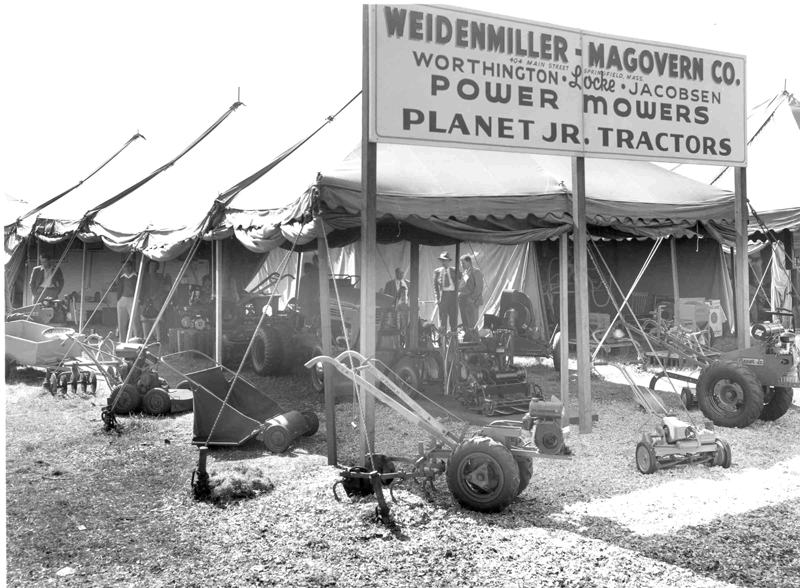
Just like today, fairgoers have long been able to peruse and buy the latest products at the Big E.
“Companies used to use fairs as a means of promoting their new products,” he noted. “With the advent of television, fairs became less attractive for, say, Westinghouse or General Electric to launch their latest washing machine or other product. But we’re working very hard here to create opportunities for companies to re-engage people on the one-to-one level.”
This year’s fair will showcase the Ford Mustang, which made its debut at the New York World’s Fair 50 years ago. The Big E will display one of the Mustangs that was actually on display in New York in 1964, and Sarat Ford has produred a few rare special-edition Mustangs to display as well. “In many ways, we’re celebrating the World’s Fair,” Cassidy said. “It’s a throwback feature, which I’m really excited about.”
Eat, Listen, Love
Cassidy told BusinessWest that he fully understands the fair’s appeal to tradition and nostalgia that repeat visitors enjoy — everything from the livestock shows to the parades and circuses to the state buildings, where the six New England states promote their most popular foods, crafts, and other products. The challenge, of course, is maintaining those traditions while keeping the fair fresh.
Entertainment is a large part of that, and the Big E has long offered free concerts to visitors — this year’s extensive lineup features up-and-comers like The Voice winner Cassadee Pope and veterans like Eddie Money — while mixing in a few bigger-name shows that require an extra admission fee, including Darius Rucker, Little Big Town, and ZZ Top.
“I’ve been trying to get ZZ Top for 10, maybe 15 years, and I finally got them, so I’m very excited,” Cassidy said, adding that financial changes in the entertainment-booking world have made charging for some acts necessary.
“You’ve got to have good entertainment — that’s the thing that puts the buzz in the air. But that’s extremely difficult to do, and every year, it’s harder and harder. When I started here in 1994, we could book the biggest acts in Las Vegas for $40,000 or $50,000, and they would do two shows a day. Now, in the current age, we can’t afford these acts,” he said, noting that booking Reba McEntire in 2011 cost $335,000. “So we’ve been forced to charge now for the biggest acts, and we do our best to find solid acts we can give away.”
He credited John Juliano, the long-time special-events director for the Big E, with always being able to book talent on the rise, from Beyoncé before Destiny’s Child was popular to Hunter Hayes last year to Pope next month.
Still, for many fairgoers, music isn’t the number-one attraction; they’re more interested in finding out how many foods can be successfully deep-fried.
“Talent is such an important way of keeping people interested, but the other way is gastronomically,” Cassidy said of the Big E’s extensive selection of fair food. “I love cheese curds, and this is the only place in the world I get cheese curds. But we also have to continually discover new products and find means by which to bring new products to the fairgoing public.”
After all, the vitality and continuing popularity of the Big E has a direct economic impact on the region. According to a report the Eastern States Exposition produced this year, the 17-day Big E, plus all the other events that take place on the fairgrounds each year — which feature exhibitions for animal lovers, car enthusiasts, gun owners, campers, and dozens of other groups — benefit the region with an annual economic impact of $479 million.
The tax revenues alone include $3 million in income tax, $1.4 million in sales tax, $427,000 in hotel tax, and $3.3 million in food and beverage tax. More significantly, events generate $299 million in gross regional product and account for 3,000 jobs in Hampden County that generate $91.9 million in personal income. The exposition’s impact on the rest of New England and New York include 2,000 jobs generating $134 million in personal income. In all, 2.5 million visitors stop by the fairgrounds each year, well over 1 million for the Big E alone.
“We need all the stakeholders — which include the fair patrons, business leaders from throughout the region, and our own board of trustees — to be able to draw a direct link toward the Eastern States as a mechanism to drive the economy and jobs,” Cassidy said. “The fair has a broad impact on agriculture worldwide, but has its most important role in this region. It plays a very important role in generating business on a grand scale, and that ripples throughout the economy at many different levels.”
Into the Next Century
At one point, Cassidy pulled out an old, worn book filled with stock certificates that Brooks sold to some of Greater Springfield’s most notable citizens in the fair’s early days — then later bought back so that no individual or group could set the event’s agenda.
To continue Brooks’ legacy for the next 100 years, Cassidy knows that the fairgrounds need some attention, starting with those century-old buildings. Renovating the large B Barn, otherwise known as the Coliseum, is a $60 million endeavor, and that’s just one structure. Last year, the fair generated about $5 million in profit — a success, of course, but not the kind of revenue flow needed to sustain multiple improvement projects.
“We need to continue to grow, not just because we’re a 100-year-old facility with a great deal of deferred maintenance, but to re-educate the fair-going public,” he said. “I think we’re the most successful fair in the country; we’re recognized nationally as a best-practices organization. We’re one of the largest fairs, and the largest fair that’s not state-subsidized, which is really remarkable. But we need to put a lot of attention into this 100-year-old plant.”
To do that, Cassidy says it’s crucial to generate regional philanthropy, like Brooks did when he reached out to his wealthy friends to launch the exposition in 1916. “We’re a 501(c)(3) public charity, and financially, we’re a very stable organization, but we need to reinvigorate our stakeholders — not just to sustain ourselves, but we owe it to the region to grow, so the region grows.”
As board treasurer of the Regional Employment Board of Western Mass., Cassidy is keenly aware of the region’s need to retain talent to grow a number of its industries, and he feels like the Big E and its myriad activities can play a role in that, if only by improving quality of life in the Pioneer Valley.
“We have access to the best education in the world, and we’re exporting our graduates. Any company executive who scoffs at that is not being responsible in their duty to grow the economy and make their mark on the general citizenry,” he told BusinessWest. “It’s all about quality of life. My hope is that the Eastern States Exposition adds to quality of life for people in West Springfield and all of Greater Springfield.”
It’s an easy thing to get excited about, Cassidy added. “People pay to get in, and they’re predisposed to happiness. There are very few jobs in the world where the person coming through the gate is coming in to have a good time. You go to the grocery store because you have to, or go to the tire store because you need tires. You don’t have to come to the Big E.
“Our job,” he concluded, “is to deliver a product that makes you want to be here. If we can take our presence here and use it as a multiplier to drive industry in the local economy, we’ve succeeded.”
Joseph Bednar can be reached at [email protected]
New Programs Prepare People for Careers in Manufacturing
Several weeks ago, Bob LePage met with a fourth-generation manufacturer who is having problems finding new employees with the right skills to fuel his company’s growth.
“He told me his competitors were also having a difficult time and he gained new customers when another fourth-generation manufacturing company went out of business because they could not find enough talent,” said Springfield Technical Community College’s vice president of Foundation & Workforce Training.
In response to the growing need for skilled workers in the manufacturing sector, STCC launched several new programs this summer and expanded existing programs that provide training and retraining for careers in the field.
Specifically, STCC’s associate-degree program in precision machining doubled in size last September from 40 to 80 students, thanks to a $2 million upgrade of the school’s Smith & Wesson Technology Applications Center. “We have all new CNC machines, computers, high-end computer workstations, and software. We also hired two new faculty members as well as technicians,” said STCC President Ira Rubenzahl, adding that there will be a total of about 250 students in non-credit and for-credit manufacturing-related programs this fall.

From left, West Springfield High School students Lexi Pastore, Jared Schelb, and Chris Brown prepare to make key fobs under the direction of STCC Professor John LaFrancis.
The accelerated program includes a combination of classroom and hands-on training in machining, and will continue this fall, with a class at STCC’s Smith & Wesson Center and another sponsored by HCC. The latter will consist of evening sessions held at Dean Vocational Technical High School, with hands-on training there and in the Smith & Wesson Center.
“The program provides students with production, foundational machining, and fabrication skills,” said LePage. It includes classes on machinery, instrumentation, LEAN production, blueprint reading, teamwork, and manufacturing math. Students are also given exposure to the industry via speakers and field trips.
When the first class graduates later this month, members will receive certificates of completion, OSHA 10-hour cards, and mechanical-aptitude certificates. Companies have already interviewed them in anticipation of the upcoming commencement, and LePage said starting salaries should between average between $35,000 and $40,000.
The program was funded by the Massachusetts Competitive Partnership, MassMutual, Suffolk Construction, and Smith & Wesson.
LePage said the college has weekly meetings with administrators at Smith & Wesson, who invested more than $200,000 in the center five years ago and continue to support it.
“Our plan is to expand the program; we want to offer it at UMass Amherst and in two other communities in addition to Holyoke,” he explained. “We need to grow capacity so we can meet the volume needs for the region.”
Other measures to fill the gap include an increase in the number of training sessions for employees of manufacturing companies, accomplished through a partnership with the Regional Employment Board of Hampden County (REB). It allows individuals and small groups working in the field to update their skills at the Smith & Wesson Center. Larger manufacturers with six or more employees have the option of sending them to the center or having instructors from the college conduct on-site trainings in their locations.
Credit and certificate programs are also part of the mix, and STCC offers a CNC certificate in design, a CAD-CAM certificate, and an associate’s degree in mechanical engineering technology. Classes are held four nights a week to meet the needs of people already employed who want to step up their careers, as well as those in traditional degree programs.
Early Exposure
STCC and its partners are also looking to the future, and this summer, the REB paid for a group of 10 students from West Springfield High School to attend a new, two-week summer session called “Pathways to Prosperity” at the Smith & Wesson Center.
The teens, who will be entering their sophomore year this fall, were selected by the school and were among a group of 60 students who toured the center in the spring. “The program gave us the opportunity to expose students from a non-vocational high school to manufacturing,” said John LaFrancis, professor of Mechanical Engineering.
The students learned how to design parts using computer software programs, then took the design for a small bottle-style container with four sides to a rapid prototyping machine.
LaFrancis said they worked as a group to decide what to emblazon on two sides of the container, and chose their high-school Terrier logo for one side and put their names and/or a quotation on the other.
“This was an additive process which required them to add material to manufacture their bottles,” said LaFrancis. “Each student got to keep their container, and they will make good holders for pens and pencils.”
The students also chose a design for a brass key fob, and emblazoned ‘STCC’ on one side and their name or something else on the flip side. “The key fob was a subtractive process in which they removed material to reveal their individual designs,” LaFrancis explained. “The program has been a real success, and we would like to hold it again. But we want to expand it to two campuses so we can expose more students to manufacturing.”
STCC and its partners are doing all they can to meet that goal and interest young people in manufacturing. “The program was part of a strategy to build awareness about career opportunities,” LePage said.
Rubenzahl added that exposure to opportunities in manufacturing should start in middle school. “Students can have careers as engineers, run CNC machines, do design work, programming, quality control, or go into sales and marketing,” he noted. “Manufacturing is a hot field for employment in the Pioneer Valley, and, given the economy, it’s important for people to understand this and take advantage of it, because if there are not enough new employees, companies won’t survive.”
One reason for the shortage of skilled workers is the number of Baby Boomers who are retiring. “We believe the region will need 300 to 400 workers in the next few years,” said LePage. “One company that recently partnered with us told me they expect to lose two-thirds of their staff to retirement.”
The need has echoed throughout the Valley, and the new programs have been created through proactive collaborations with the REB, Holyoke Community College, and high schools with vocational technical programs, as well as information elicited from local manufacturers.
“We’ve been working to improve our ability to educate students for the manufacturing sector for 10 years, and people are wowed by what we are doing,” said Rubenzahl. “Manufacturing is the most important sector for revitalization in the Pioneer Valley; the area was a center for manufacturing during the 19th century, and there are many legacy companies, new companies, and a lot of skill in terms of business acumen to build on. An expansion of manufacturing will be the basis for building a robust economy here. Plus, these jobs pay well, and the college wants to provide the education students need to get good-paying positions.”
He added that STCC’s partnerships with manufacturers are growing in number, which heightens the school’s ability to link graduates to jobs while raising awareness about career opportunities through tours and informational sessions.
Solid Foundation
LePage said many people are unaware of the number of small manufacturers in the region who provide specialized products for the medical, auto, and aerospace industries. Pay for entry-level positions averages from $12 to $17 an hour; people with a one-year certificate earn between $40,000 and $50,000, and those with an associate degree gross about $50,000, or $70,000 with overtime.
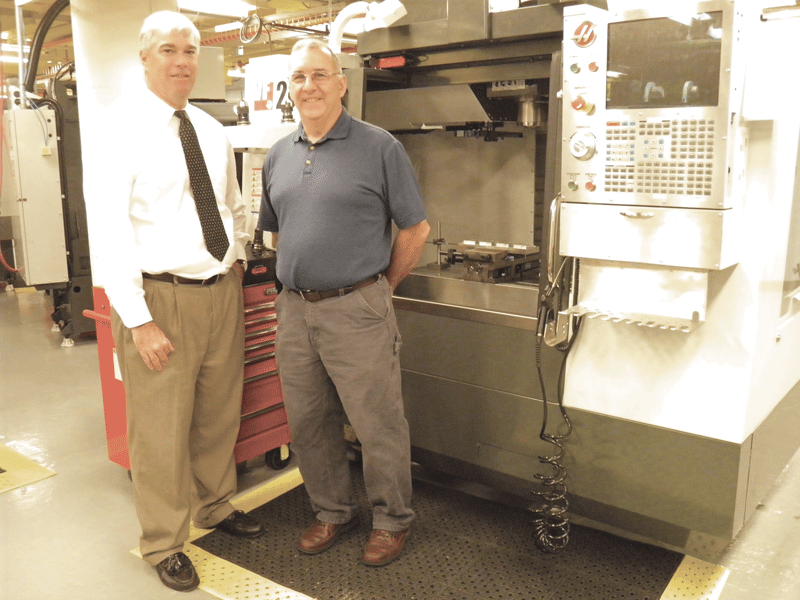
Bob LePage, left, and John LaFrancis show off one of the new machines in the Smith & Wesson Technology Application Center at STCC.
Although STCC and HCC have created new programs, Rubenzahl said economic-development agencies and department heads need to place more emphasis on manufacturing. “I believe they need to make it an important priority because there is a huge potential future in terms of jobs and industry growth if we can all get on the same page,” he told BusinessWest.
He cited, as one example, the $1.5 billion appropriated by the Legislature to replace rail cars on the Mass. Bay Transit Authority Orange and Red lines, since it has been mandated that they must be manufactured in the state.
“We would like Western Mass. to become so prominent in the manufacturing sector that it would be the logical and most cost-effective place to do this work,” LePage said. “But we need to raise our game to be able to attract that type of business.”
This requires an educated workforce, especially since the manufacturing sector is very dynamic and large capital investments are required for companies to be successful. “We can’t compete with Mexico and India in terms of labor, but we can compete by making high-end devices, which are some of the key products which companies in this region specialize in,” Rubenzahl said, adding that he spoke to a manufacturer who showed him a $1 million machine and said he would be happy to pay someone $50,000 to $60,000 a year to run it.
“Companies have made huge investments in order to be successful, but they need highly educated people,” he went on. “And there are a lot of small, local companies here doing tremendously sophisticated work.”
Future Outlook
LePage argues that long-term planning has been critical in developing the new programs. “No one institution can solve the problem — it takes a collaborative regional approach,” he said. “But we plan to continue to add new components to our program at STCC meet the region’s needs.”
Gary Masciadrelli, chair of the Mechanical Engineering Technology Department, agreed.
“STCC is fully supportive of supplying the manufacturing industry with current and future workers today, evidenced by our programs in the high schools and for adult learners,” he said. “We look forward to continuing them in the future to meet demand.”

Springfield Unveils Blueprint for Downtown Innovation District
From the wreckage of a natural-gas explosion in Springfield almost two years ago has emerged a revitalization plan — one that encompasses far more than the immediate blast zone.
The “Worthington Street District Plan,” as the plan’s creators title it, contains an overarching vision of transforming much of downtown Springfield into an ‘innovation district,’ characterized by entrepreneurial businesses, expanded market-rate housing, new dining and entertainment options, and a raft of infrastructure and traffic-flow improvements.
It is, in a word, ambitious, said Kevin Hively of Ninigret Partners of Rhode Island, which produced the study in conjunction with Utile Inc. of Boston. The firms were hired by DevelopSpringfield, using part of an $850,000 settlement between the city and Columbia Gas stemming from the natural-gas explosion that rocked the Worthington Street-Chestnut Street area the day after Thanksgiving in 2012.
 “We want to create an innovation district with a lot of energy and momentum taking place, but the fact of the matter is, innovation districts are driven by talent, and talent is driven by job opportunities and quality of life,” Hively told an assembly of municipal and economic-development officials and other neighborhood stakeholders.
“If you’re going to have an innovation district, you have to create a strong, robust, urban lifestyle environment,” he added. “The reality is, they are related.”
A key example is Kendall Square in Cambridge, which boasts, by far, the nation’s highest density of biotech and IT firms — 163 per square mile, to be precise. (Palo Alto, Calif. comes in a distant second, with 36.) Yet, Kendall Square developers have also been focused on quality of life, as evidenced by the emergence of outdoor cafés, charging stations for electronic devices, and lively kayak and canoe activity along the Charles River.
To develop such an environment in Springfield, the report notes, Worthington Street and its environs is the best place to start.
The key is the neighborhood’s pre-existing assets, including the architectural character of the building stock, public ownership of a number of parking lots and other empty parcels, existing housing stock that can be upgraded, proximity to Union Station, and pre-existing places — like Stearns Square, Apremont Triangle, and Matoon Street — that can serve as anchors for activity.
Once demand for an urban lifestyle — and development in response to that demand — lift the profile of this neighborhood, businesses will hopefully become interested in the neighborhoods northeast of Chestnut Street, producing a cascade effect of development, public improvement, and general buzz across the entire district.
Mayor Domenic Sarno noted that the plan isn’t unlike the city’s efforts over the past three years to bring large-scale improvements to Springfield in the wake of the June 2011 tornado. “From a potentially devastating tragedy, an opportunity has come forth,” he said. “As we did with the tornado, we have an opportunity to define this area as an innovation district.”
Jay Minkarah, president and CEO of DevelopSpringfield, said his organization commissioned the study to establish a vision for how the downtown area should be developed. “We have a tremendous opportunity to create a truly vibrant, urban district, one that is walkable, with an innovation-based economy and market-rate housing — those are exactly the things we’d like to do.”
After all, Sarno added, “if we want to move the city forward, we have to be bold and innovative.”
Food for Thought
As one example, Sarno emphasized repositioning the city’s entertainment district as a restaurant district, because a neighborhood known for catering solely to large clubs and their patrons detracts from its universal appeal.
The Utile/Ninigret report highlighted several ways this can be accomplished, including placing size limits on venues to discourage large clubs; requiring all venues to have full kitchens; and using façade-improvement program funds to improve the aesthetic appearance of the district.
Another key is drawing an eclectic mix of retail businesses to the district, a goal, Hively noted, that Springfield officials can’t just wish into reality.
“It’s very hard to create a successful retail business,” he noted. “It’s out of the hands of the city. It cannot create a successful retail business, but it can create an environment that allows people to come in; then it’s up to the retailers to get people to come in and convert those people from shoppers to buyers.”
But downtown revitalization is about more than making it a destination for diners and shoppers; attracting people to live there is equally important, which is why the city is also looking at ways to develop more market-rate housing downtown. Officials believe a growing network of young entrepreneurs and residents want to see downtown become more livable, and that future rail service to the area will bring new opportunities, both to attract residents and encourage further development around Union Station.
It may sound a dizzying exercise in chickens and eggs, but the report highlights several improvements Springfield can undertake to make the district more attractive for both walkers and motorists. These include upgrading Stearns Square; redesigning Apremont Triangle’s open space and streetscape; converting Dwight and Chestnut streets to two-way streets; restriping travel lanes on cross streets; retrofitting Worthington and Bridge streets; improving Lyman Street, especially at the entrance to Union Station; and incorporating public art and lighting into underpasses.

This stretch of Worthington Street, which includes the site of the natural-gas blast, is among the areas the city hopes to revitalize as part of a broad innovation district.
“Everyone in the world wants an innovation district, but not everyone can have one,” Hively said, adding that the key questions are, does it have to be created from scratch, and are there people willing to make it happen? Clearly, he added, the answers in Springfield are no and yes, respectively. “You don’t have to create this from whole cloth.”
Added Sarno, “we are thinking big, thinking bold, thinking innovative. But the bones are already here, where other cities are sinking millions of dollars into that.”
Still, while those foundational elements exist, the study notes, they are still nascent and the lack critical mass necessary to have a major impact — yet. Other efforts are necessary, among them the potential conversion of the Willys-Overland Building on Worthington Street, which was damaged in the explosion, into a catalytic project featuring a mix of business uses, small-scale manufacturing, and housing.
Sarno said he envisions a neighborhood of revitalized properties featuring retail, dining, and business on ground level, parking on the second floor, and market-rate housing on the third. “It is extremely important that we continue to make downtown Springfield vibrant.”
Safety First
Kevin Kennedy, Springfield’s chief development officer, said the study is valuable in the way it outlines development concepts and encourages residents and businesses to generate more. “For some ideas, the city would have to help with some infrastructure, and that’s what we would do.”
The city has also been focused on public safety and raising people’s confidence in walking downtown — efforts that include everything from a lighting-improvement project along some of the city’s main thoroughfares, including the downtown club district, to police strategies to more effectively patrol the area. Public perception of crime and safety, after all, are “the 900-pound gorilla in the room,” said the mayor.
However, Evan Plotkin, president of NAI Plotkin, told Sarno and others gathered at the study presentation that the best way to make the innovation district safe is to make it vibrant. “Bringing foot traffic to these neighborhoods will do more to create a sense of safety than anything else you can do,” he said. “Having a police plan will augment that, but there’s nothing better for public safety than foot traffic.”
As for the Utile/Ninigret report, Plotkin said he hopes the city moves forward with some of the ambitious plans, and that the study doesn’t just sit on a shelf. “I think we can get it done.”
He’s not alone, judging by the sentiment of Herbie Flores, executive director of the New England Farmworkers’ Council and, like Plotkin, someone invested in the future of Springfield’s downtown.
“There are always going to be negative people in Springfield,” Flores told Sarno at the end of the presentation. “The hell with them. We’re behind you.”
Joseph Bednar can be reached at [email protected]
Clark Art Institute Reopens After Major Renovation
The Sterling and Francine Clark Art Institute in Williamstown celebrated the grand reopening of its 140-acre campus on July 4. It has been transformed by a $145 million renovation designed to give visitors a more coherent and expanded view of art and nature.
“It’s a whole new Clark; we have recast the public profile of the institution,” said Thomas Loughman, associate director for programs and planning. “We have maintained the beautiful, intimate experience we are known for, but created a better way to experience it so visitors can connect with the great pinnacle of human creation, which is art.”

Reflecting pools greet visitors to the Clark.
“Ando is truly dedicated to the idea that great architecture needs to be in harmony with the landscape, and the reason the Clark Center has so much glass is because it was meant to bring the outside in,” Loughman said.
“The glass was installed to create a connection, historically and visually, with views to the left and right,” he continued, as he sat in a room backed by glass that looked out onto another pool of water. “The materials used in this building frame one’s view of the landscape, whether it is man-made and orderly or partially wild, with gradations in between.”
New ways to circulate between the buildings have also been created, which include a bridge outside and a hallway between the Clark Center and the museum. It has glass on one side, which changes as people travel along it, redirecting their view from a lily pond on the left to the reflecting pools on the right. Exhibit space has also been increased within the museum building itself, which had been closed for three years before the grand reopening last month.
Sally Majewski, manager of public relations and marketing, said reaction to the transformation has been overwhelmingly positive. “We’ve had an incredible response to what has been done, which has been very gratifying.”
She added that, when the museum building closed for the renovation, 75 French paintings from the Clark’s collection were sent on a three-year international tour in 11 cities. “They returned just in time to be reinstalled before we reopened,” Majewski told BusinessWest, noting that the international tour drew more than 2.6 million visitors.
In addition to the Clark Center and renovated museum building, other changes have been made, and the entire campus has become so inviting that locals can be seen walking their dogs along miles of pathways in the verdant landscape and pausing to sit beside the reflecting pools, while people from all over the world view art, study, and conduct research inside the buildings.
Ambitious Plan
Loughman said the expansion plans were first conceived in the late ’90s, when it became clear that the facilities at the Clark were too limited for their program, but they had ample room to grow.

Thomas Loughman says the design of the Clark and its surroundings help visitors make the connection between the beauty of nature and art.
In 2002, an architectural competition was launched, and Ando was chosen to design two new buildings. The first — the 42,600-square-foot Clark Center — includes more than 11,000 square feet of gallery space for special exhibitions, a multi-purpose pavilion for events, a dining area, a museum store, family spaces, and an all-glass museum pavilion that creates a new entrance to the original museum building.
The second new structure is the Lunder Center at Stone Hill, which houses smaller exhibits and contains a new art classroom, a seasonal café on a terrace that offers a sweeping view of the landscape, and the Williamstown Art Conservation Center’s facilities.
Phase 1 was completed in 2008 and included the Lunder Center, a new bridge, and a free shuttle service provided between that building and the main campus. Phase 2 involved the construction of the Clark Center with its reflecting pools, site work to the parking lot, and renovations to the museum building and Manton Research Center.
Consideration was also given to the environment, and the terraced reflecting pools that cover an acre were part of Ando’s master plan. They unite the museum’s campus by providing a peaceful view from inside and outside of Stone Hill Meadow, Christmas Brook, and its wetlands.
But they are functional as well and have helped position the Clark at the forefront of the museum world as a leader in sustainability and energy conservation.
Loughman said all the rainwater from the roofs and terraces is channeled into the pools and used to flush the toilets. “It’s a huge advance to have our stormwater-management system and gray-water system tied together in a sustainable fashion,” he told BusinessWest, as he gazed at the sheet of water, which is about 12 inches deep and has a bottom composed of Berkshire river rock and fieldstone.
Funding for the project came entirely from donations, with the exception of $1 million from the Massachusetts Cultural Facilities Fund, and financial vehicles were created to keep it moving forward. “People care deeply about our mission, which is to bridge the distance that separates the general public from what is happening in art history,” Loughman said. “We try to connect our guests with ideas and objects, and our new facilities let us do this better.”
Unification Efforts
Each of the four buildings on the campus has a distinct character. “The museum, which was built in the ’50s, is clad in white marble and looks like a Greek temple or mausoleum, while the Manton Research Center, designed in the ’60s, is clad in purple granite and built in New Brutalist style,” said Loughman, pointing out some of the differences.
But today, thanks to Tadeo Ando Architect and Associates, Selldorf Architects, and Reed Hilderbrand and Gensler, materials used in the Clark Center mirror those used in the museum and Manton Center.
The museum’s interior has also undergone change. The building gained 15% more exhibit space, which equates to about 2,200 square feet. That was made possible by moving the loading docks, mailroom, and other service spaces. “It allows us to put a substantially greater number of works on view, many of which were held in storage,” Loughman said.
New lighting and environmental controls were also installed, and three small galleries were created to showcase silver and porcelain as guests move west to east throughout the building. “In the past, we had very primitive displays, but the new cases give us so much more space,” he continued. “There is also a purpose-built gallery for American paintings in the former mailroom that allows us to show off our great collection of Winslow Homer and George Inness. We originally had two of Inness’ works in our collection, but two years ago, we were given eight more of them. Now, we have a place to display them.”
Other changes made to the museum building included raising and reconfiguring the height of the academic gallery to mirror the Impressionist artwork on display there. In addition, new walls were erected to create small showcases within the larger gallery, and the color in some areas was changed to create a more spacious feel.
A new small room with special lighting allows the museum to showcase pastels, and is one of three areas carved out to spotlight select pieces of art. “Ando and the curators tried to create moments of surprise by creating them so they could highlight a small number of works,” Majewski said.
There has also been a change, which began seven years ago, in the type of work put on display. “We wanted to challenge ourselves to show things beyond what people expect to see at the Clark,” Loughman said.
In the past, that was a collection of great 19th-century French and American paintings. But today, the Clark has exhibitions of 20th- and 21st-century art as well as non-Western art and antiquity.
“What we’ve done on these fronts seems very provocative, but we have created immersive experiences that include contemporary art,” Loughman noted, referring to a number of exhibitions, including “Circles of Influence,” which showcases the work of the abstract expressionist Georgia O’Keefe and the modernist Arthur Dove.
Today, a show called “Unearthed: Recent Archaeological Discoveries from Northern China” is on display in the new Clark Center, while an exhibit titled “Raw Color: The Circles of David Smith” can be seen in the Lunden Center.
The multi-million-dollar, multi-phase project that began 15 years ago is almost complete, and a video presentation near the new entrance to the museum building documents the undertaking. Although it has taken time, the end result is a seamless experience, due to the work of four internationally renowned architects who added more than 13,000 square feet of gallery space, demolished the former physical plant building to make way for the new Clark Center and its three reflecting pools, upgraded major utilities, added a series of new geothermal wells, planted 1,000 new trees, and created new ways to circulate among the four buildings on the campus.
Unified Atmosphere
Other changes include upgrades and expansion of the walking trails, a new entry drive, and parking areas with water-permeable surfaces that lead to the rainwater-collection system.
A renovation of the Manton Research Center will complete the project. “The lobby will be turned into a public reading room. It’s one of the greatest art-history libraries in the world, but it has been behind doors, so it is critical to bring it out,” Loughman said.
Although this is important, he added, what has been already accomplished is extraordinary.
“The transformation allowed us to leap over something very old and non-functional and become something that is a generation ahead of our peers in terms of design and sustainability,” he said. “It was difficult to do everything at once, but our project was driven by unity and the historic connection to the earth, which is really art.”
Community Spirit Fuels Growth in Southwick
Russell Fox grew up in Southwick and remembers when it was primarily a farming town. Although that has changed, farming still plays a significant role in the town’s economy, and the close-knit community that developed generations ago continues to be a cornerstone of life there today.
“There’s a community spirit in Southwick that people want to be part of,” said Fox, chairman of the Board of Selectmen. “It is alive and well and is enhanced by the generosity of our residents. We’re also very fortunate to have an extremely active business community that invests time and money in the town, along with many boards and commissions manned by volunteers.”
Karl Stinehart concurred. “People willingly step forward to volunteer to improve the community and help move it forward,” said the town’s chief administrative officer.
A prime example is the town’s new Whalley Park, which exists thanks to the generosity of John Whalley III and Kathy Whalley, who donated a 70-acre parcel to Southwick in honor of their son John Whalley IV, then paid to outfit it.

Russell Fox says residents’ willingness to help the town makes Southwick an attractive place to live and work.
It is located on 42 Powder Mill Road, adjacent to the Southwick Recreation Center, which stands as an example of the long history of private investment for public good. The center was formed in the ’60s by a group of farmers and residents, and is still run entirely by volunteers. “The people who created this nonprofit took out mortgages on their homes to raise the money they needed to acquire 24 acres for the center,” Stinehart said.
Today, it hosts sports teams that include soccer, baseball, softball, basketball, and floor hockey, serving hundreds of children and teens each year and boasting one of the best fields for travel soccer in Western Mass. “People love to come to Southwick and play on the field here,” Fox said.
A new, $500,000 animal shelter, called the Polverari/Southwick Animal Control Facility, is also being built, thanks to the generosity of residents Robert and Barbara Polverari, who approached town officials with the idea.
Stinehart said their proposal was timely, because the town had outgrown its old shelter, which was an outdated cinderblock building with electric heat. “It was so small, there was no way to separate different types of animals other than provide them with their own cages. It got to the point where we had to bring in temporary structures to house the kittens and cats,” he said.
The new facility not only fills a need, but also pays tribute to some town residents. For example, the adoption room was named after 22-year-old Haley Tierney, who was killed last year in a motor-vehicle accident, while the outdoor cat field is named for logger Tyler Granfield, who died in 2012 at age 28 while working at a job in East Longmeadow.
Southwick officials said there are many other examples of residents pitching in to address gaps the town cannot afford. For example, last year, when the police department needed bulletproof vests, residents and businesses came forward to pay for them. “And in the past few years, they also paid for two police dogs,” Stinehart said.
The town’s residents also support local businesses, who, in turn, do their share to contribute to the quality of life. “We were the first local community to have flags that welcome people to the town along our business corridor,” Stinehart said, noting that the business community paid for them. “There are also U.S. flags along College Highway that were donated and demonstrate the patriotism of the townspeople.”
Proactive Stance
Signs that greet drivers entering Southwick read, “Recreational Community,” and its attractions include the Congamond Lakes, the 6.3 mile Southwick Rail Trail, three golf courses, and a miniature golf course. “Southwick is also the home of motocross, plus we have two campgrounds and a very active Parks and Recreation Committee,” Fox said. “The town has also invested millions in cleaning up its lakes, and we have rehabilitated our boat ramp.”
The regional school system has expanded in the last two years and now includes Granville, in addition to Southwick and Tolland. The addition of the third town made the school system eligible for state funding not previously available, which prompted major renovations to Woodland Elementary School, Powder Mill Middle School, and the Southwick-Tolland-Granville Regional High School, which are all on one campus on Feeding Hills Road.
Fox said the three-year, $69 million project is nearing completion and includes additions as well as upgrades. “A new science wing and a wing that will become a junior high for seventh- and eighth-graders is being added to the high school,” he said, adding that the middle school currently houses grades 5 through 8.
Other improvements to the schools include new roofs, windows, heating, air conditioning and ventilation systems, and upgrades to make the buildings handicapped-accessible. “What’s unusual about this project is that the state typically only approves renovations to one school at a time, but they approved renovations for all of our three schools simultaneously,” Fox said. “This is a major step for the region, and everything is on schedule, so we are very happy.”
The state will pay for 40% of the work, and the three towns will share the remaining cost. “The voters of Southwick, Tolland, and Granville all approved debt exclusions to make this a reality,” Steinhart said. “They understand it’s important to keep our schools up-to-date so we can equip students with the skill sets they will need to enter the job market.”
A new, rubberized track at the high school is also under construction, thanks to a combination of Community Preservation Act funding and a $500,000 donation from alumnus Steven Nielsen via the Steven and Elizabeth Nielsen Gift Fund.
Nielsen graduated in 1981 and resides in Florida, but continues to support his alma mater. “He funds the Atkinson Scholarship, which is one of the largest scholarships given to a student at the high school each year. Plus, he has anonymously donated computers and school supplies,” Fox said, adding that Nielsen’s philanthropy is an example of the generosity of Southwick’s former and current residents and their dedication to the town.
Moving Forward
Economic growth has also occurred in the business arena. A new funeral home has been approved, Rite Aid expanded, and a CVS was built. “There is also a new Pride gas station, a new dollar store, and several new businesses in our industrial park,” Fox said.
In addition, in an effort to promote local businesses, the town partnered with Agawam to complete an expansion of Route 57, which will also benefit residents who use it to travel back and forth to work.
Other projects include $17 million of sewer infrastructure improvements downtown and around the lakes. Phase 1 was completed a few years ago, and the town is set to embark on Phase 2.
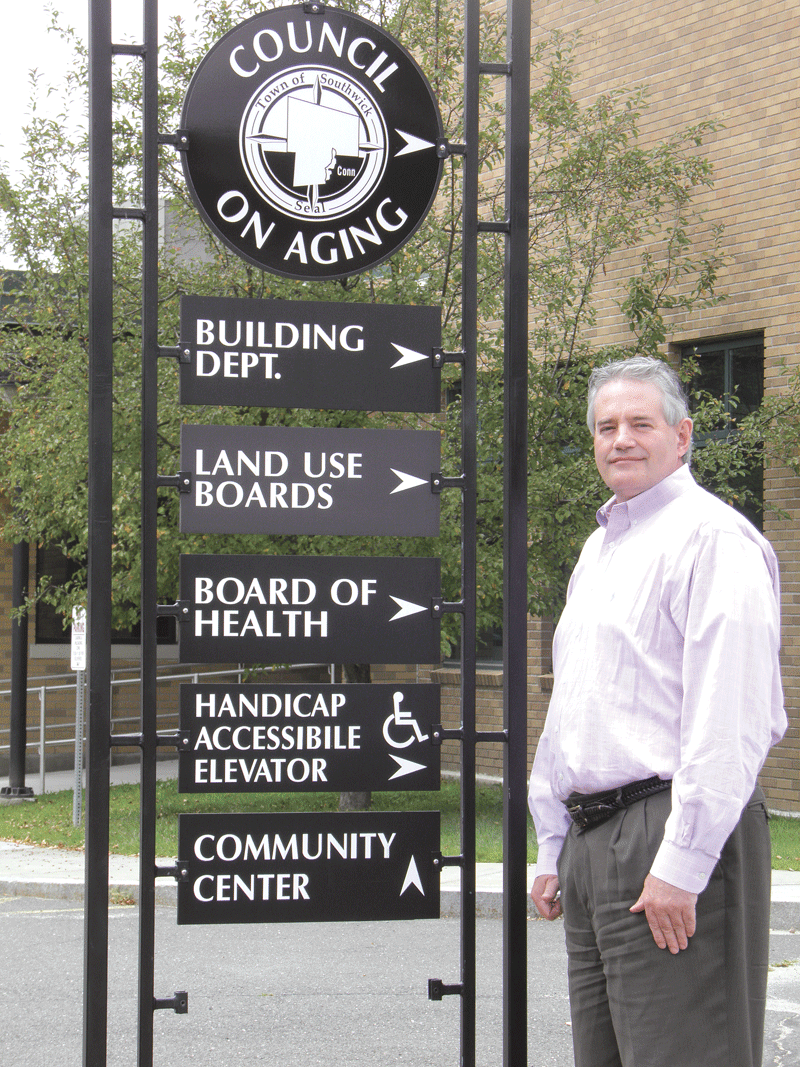
Karl Stinehart says Southwick takes a proactive stance to applying for state and federal money to improve quality of life.
But the small-town community spirit remains strong and is boosted by a number of active civic organizations in town, which include the Rotary and Lions clubs. “The Rotary hosts an Interact Club in the high school and offers internships and job shadowing through their Business Education Alliance program. This things connect people and keep them integrated,” Stinehart said.
Fox agreed. “The Rotary took up a collection this year to pay for the annual fireworks display. They received donations as small as $1 from children and as large as thousands from adults, which says a lot about our community; there is a reason why Southwick is growing, and it’s that people want to live here,” he said, adding the town has seven churches for 9,500 people, which illustrates the diversity of the population.
Seniors are choosing to live in Southwick, too, and several new 55-and-over communities have proved popular. “The American Inn, which offers independent and assisted living, has more than 200 residents who came from towns that include Westfield and Agawam as well as states as far away as New York because they wanted to make Southwick their home,” Fox said.
He has given updates on town government at the inn and said the Board of Selectmen has held meetings there. “Many people who live there are active in the community and we want to reach out and welcome new residents and urge them to become involved. We are a whole community, from young to old.”
To that end, a new, 1,500-square-foot addition was added to the Council on Aging building to accommodate the increase in demand for services and activities for seniors.
There are also two solar projects under development. “They are being done very tastefully; we appreciate alternative energy, but want to keep our rural views and vistas,” Fox said, adding that the farms in existence are very active and profitable.
Bright Future
Many new developments are taking place throughout the town. “We’re very busy and have a lot of positive things going on. We’ve been proactive with our infrastructure as well as improvements to our schools, and our fire station, police station, library, and Town Hall have all been renovated or moved to new buildings,” Fox said. “So I’m optimistic that new businesses will continue to come to Southwick, which will help with our tax rate and make the town an even more desirable place to raise a family.”
However, he reiterated that the strong sense of community will continue to play a major role in Southwick’s development. “The spirit that began when the town was first settled carries down to this day.”
At a Time of Change in Retail, Holyoke Mall Marks 35 Years
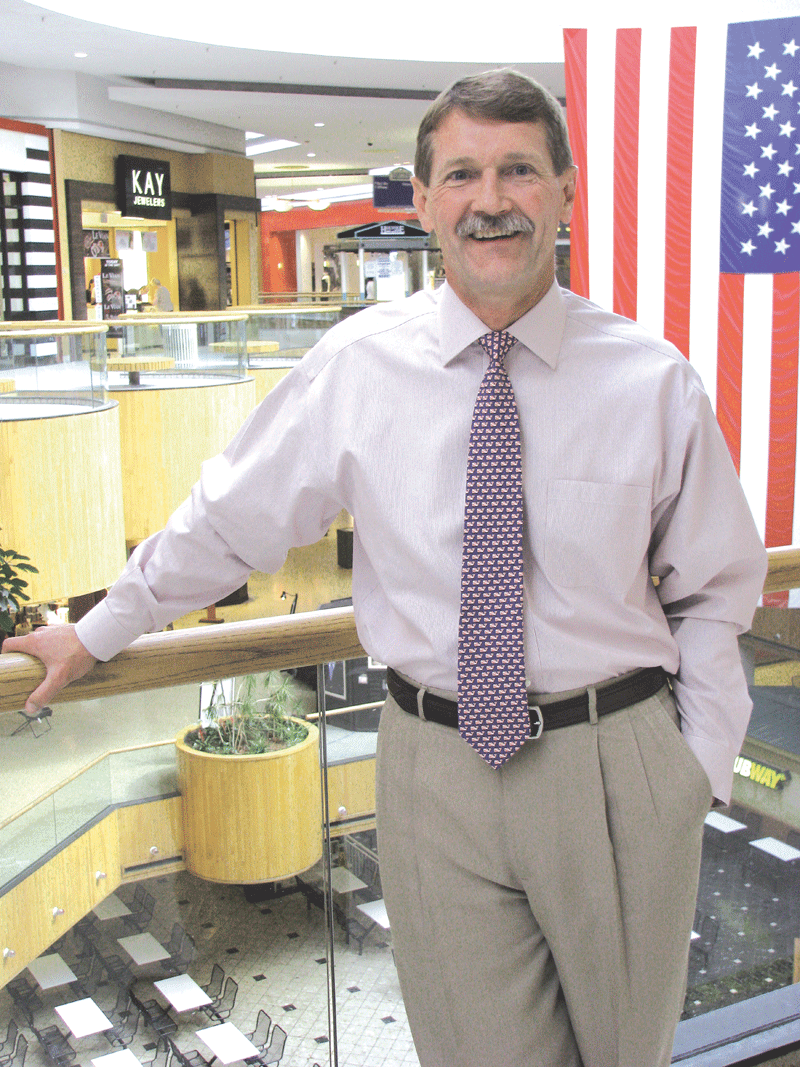
Holyoke Mall General Manager William Rogalski
These days, as the center celebrates its 35th anniversary, they’re anything but, losing ground to online retail options and smaller shopping centers. But Holyoke Mall remains a draw, said General Manager William Rogalski.
“Certainly, our traffic is good. In recent years, sales have fluctuated with the economy, but we’re still a significant part of people’s shopping experience,” he told BusinessWest. “Online shopping does affect us, but I’m still of the belief that people still like to see it, touch it, feel it, and try it on before they buy.”
To get shoppers inside the mall, though, variety and a fresh experience are key — part of the mall’s mission to get visitors to “stay longer and shop more,” to quote an oft-repeated mantra at Ingleside.
“We’ve always tried to be a shopping center where everyone can go, from the high end — like Apple, Sonoma, Pottery Barn, and a new store opening up, Michael Kors — to traditional retail tenants, to value tenants like Burlington Coat Factory and everything in between,” said Rogalski. “That’s what makes the difference for people here — there’s something for everyone.”
The fact is, despite the surge in online retail, consumers still visit brick-and-mortar stores for the vast majority of their shopping, according to a 2013 Nielsen report titled “Brick by Brick: The State of the Shopping Center.”
“Shopping centers aren’t just places to buy things,” the report notes. “They’re social centers, places for entertainment, and employment hubs. They’re also transforming what consumers can expect from a shopping experience.”
With the increasing diversification and aging of the U.S. population, the report continues, the line between shopping, entertainment, and community building has blurred, and this blending of experiences has created an opportunity for retail centers to strengthen social ties within communities that are looking for communal experiences.
“It’s a gathering point, even for people who don’t even shop, like mall walkers; for them, it’s a social experience,” Rogalski said. “And it’s nice to have them. Frankly, they’re a good source of information. They’re here every day, as we are, but we don’t see everything. In some cases, they become our eyes and ears. We’ve made some relationships, made some good friends.”
The goal of any mall, of course, is to ring up sales, and to that end, Rogalski — and Pyramid Management Group, which owns Holyoke Mall and 19 other properties in Massachusetts and New York — are not sitting on past laurels, instead moving forward with a series of renovations and possible future additions to keep the crowds coming back and spending money.
For this issue, Rogalski — a West Springfield native who actually worked at the just-opened Holyoke Mall in 1979, at Blake’s department store — sits down with BusinessWest to discuss some of those changes, and why he believes malls are far from irrelevant in the 21st century.
The Mall’s Changing Face
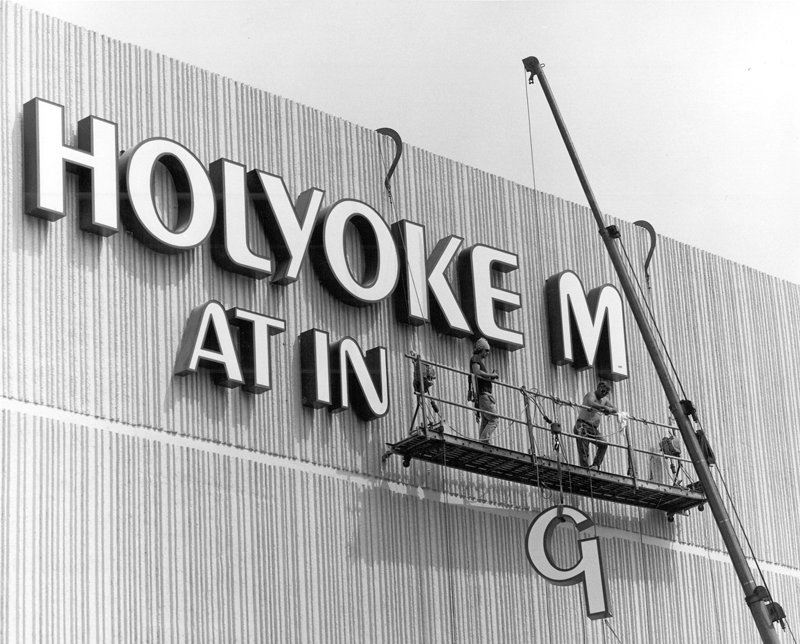
Signage goes up at Holyoke Mall in 1979.
But the mall still needed some work, said Rogalski, who has managed the facility for a dozen years. “We’re working on a major renovation now, retiling the whole center. We’re redoing the wood trim, replacing the wooden handrails with metal handrails, upgrading restrooms, and putting in a new guest-services area.”
Other changes will include refacing the mall’s signature glass elevator, new directional signage in the hallways, a continuation of energy-efficient lighting upgrades, new interior landscaping, and what’s known in the industry as ‘soft seating areas’ to help guests relax and extend their stay.
“It’s a pretty significant renovation. People will notice,” Rogalski said, adding that the work is largely taking place overnight so as not to disrupt shoppers. During BusinessWest’s visit, much of the the top floor had been torn out, awaiting new white tile, and fire alarms were being tested in the future location of Michael Kors.
He added that customer feedback has guided some of the changes, and mall management is also listening when it comes to future additions — including, perhaps, a movie theater. The Ingleside Eight Screen Cinema, which opened in 1979 and was located downstairs, beside the current food court, was shuttered in 1998.
“Of [Pyramid’s] 14 enclosed centers, we are one of two that does not have a movie theater. That’s definitely in the cards somewhere down the road for us,” he said, noting, however, that the mall is currently about 95% leased. “In one regard, that’s a good thing. But in another, it’s not so good, because we need to create space to include a movie theater. We’d be fine from a parking aspect; it’s a matter of getting contiguous space to do a theater.”
Pyramid is exploring other entertainment options as well, Rogalski added. “There’s always a buzz that gets created when we bring in new stores, restaurants, or entertainment. A lot of the changes happen gradually, but it’s always good to add new blood.”
Holyoke Mall, which attracts between 18 million and 19 million visitors a year, saw a downturn when the economy went south six years ago, but the hit wasn’t as severe as it was for retail centers in other regions.
“That’s probably more a reflection of Western Mass. as a whole as related to the general economy. Maybe because it’s our Yankee roots’ we’re a bit more conservative,” he noted. “When the nation is on a high, we don’t hit the high peaks; we roll a little bit below that. And when the nation hits lows, we roll a little bit above that; we skew more along the center line and don’t waver too far. That’s not to say we don’t have ups and downs, but they’re not as dramatic.”
Rather, the dramatic shifts come with the seasons, especially the holiday rush, from Thanksgiving through New Year’s Day, when many retailers find out whether they will turn a profit for the year.
“We’re in our second-best season now, back-to-school time,” Rogalski said. “Then we’ll have a little dip, accentuated by having the Big E for three weeks, drawing everyone’s attention. We certainly don’t shut down, but we feel the impact. Then we ramp up for the holidays. It’s a critical time, and it has been extended with the advent of gift cards — now it really flows into the end of December and the beginning of January.”
He added that malls tend to be slaves to the weather, citing a downturn in sales due to this year’s harsh, extended winter. “That impacted spring sales because people just weren’t in the mood. That’s one thing we can’t control.”
Gauging the Future
There’s plenty that malls can control, however, and it’s critical that they keep an eye on trends that have battered some shopping centers and helped others.
On the plus side for Holyoke Mall is its enviable location at the crossroads of two major interstates. While malls located away from highways have struggled in recent decades, Ingleside’s location draws shoppers from as far away as New York to the west, Hartford to the south, Worcester to the east, and Vermont and New Hampshire to the north. “We are at the intersection of 90 and 91,” Rogalski said. “Pyramid definitely paid attention to Marketing 101: location, location, location.”
America’s first enclosed mall, Southdale Center in Edina, Minn., was a true innovation in the way it invited people to browse, eat, hang out with friends, or just wander about. Early malls encouraged walking by placing anchor stores as far apart as possible, forcing visitors to pass dozens of small shops.
The model caught on big time, and the number of regional malls more than doubled from 1973 to 2006, topping 1,500 nationally, according to CoStar Realty Information. But since 2006, only one traditional enclosed mall has been built, in Salt Lake City. Analysts point to a number of factors hurting enclosed malls, from the growing popularity of smaller outdoor shopping centers to the rise in e-commerce.
But Pyramid has been proactive with freshening up a number of its properties, Rogalski said, including Walden Galleria near Buffalo, N.Y., Destiny USA in Syracuse, N.Y., Palisades Center in West Nyack, N.Y., and, of course, Ingleside.
Of course, no property that’s been around as long as Holyoke Mall will look much like it did 35 years ago, if only because the retail world is constantly in flux. Of the original 125 stores at Ingleside, only a few remain, including anchors JCPenney and Sears, as well as American Eagle Outfitters, Deb, Foot Locker, General Nutrition, Kay Jewelers, Motherhood Maternity, and Radio Shack.
Enclosed malls have been hurt by the decline of traditional anchors; Holyoke’s other two original anchors, G. Fox and Steiger’s, are long gone. But at the same time, the definition of an anchor has broadened significantly, and Holyoke Mall now boasts 12 anchors after launching with only four.
“We were probably the first developer out there that saw value in bringing in big-box retail,” Rogalski said. “Some said it can’t be done, that they want to be in strip locations, pad locations. But now you see the Targets, the Best Buys, you see Babies R Us, Hobby Lobby, AC Moore, those type of retailers. We thought they would be successful in a closed shopping center, and they’ve been wildly successful.
“Sometimes it takes retailers a while to think out of the box and get them out of their comfort zone,” he said. “But, at the end of the day, this is the Northeast; we aren’t sunny and 70 degrees 12 months of the year. It’s a nice convenience for shoppers to have all this under one roof.”
That kind of convenience, he said, will continue to make the Holyoke Mall a destination, especially given its prime location at the crossroads of the Pioneer Valley.
“It’s easy to get to, easy to park, easy to walk,” Rogalski said. “It definitely is an attraction.”
Joseph Bednar can be reached at [email protected]
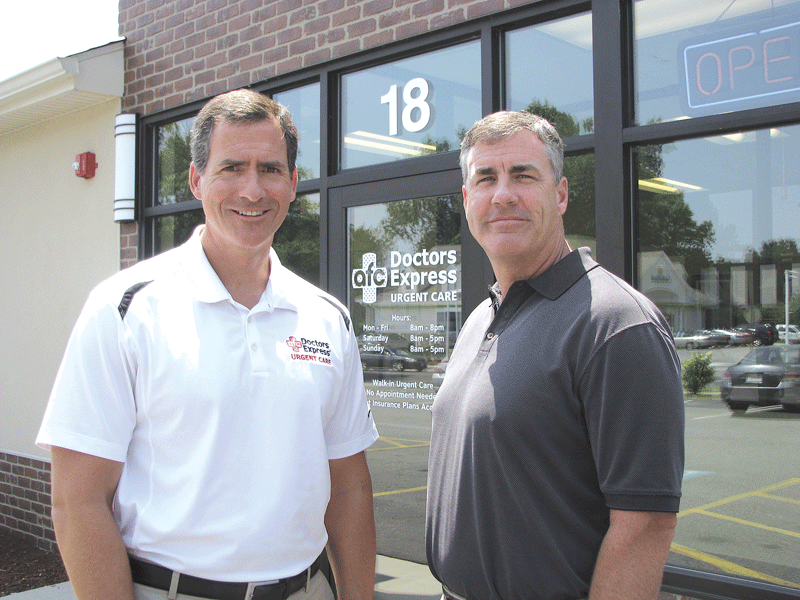
Rick Crews, left, with partner Jim Brennan, says there are many reasons — from affordability to its ability to save individuals time and aggravation — why urgent care has become so popular.
“We’re treating many people who traditionally used to go to the ER — but a lot of that was not appropriate,” he said of patients whose illness or injury didn’t rise to the level of an emergency, yet had no access to primary care.
“This is an alternative — a place you can go with really high-quality care that’s much more affordable, and get that care in a more timely fashion. That’s why urgent care is so successful right now.
“Hospitals need to concentrate on doing what they do best — the sicker patients, the more labor-intensive patients,” he continued, adding that patients who crowd the ER with less pressing matters cause a backlog, which elevates waiting times and frustration levels for everyone. Several area hospitals have recently renovated and expanded their emergency departments, but Crews said that’s not always the answer.
“I think we’ve provided relief for the hospital so they don’t have to build a new facility, and we’ve provided an outlet for patients, who can be seen for something in a much quicker fashion.”
If it sounds like hospitals consider afc Doctors Express and other urgent-care facilities a competitive threat, think again. In fact, hospitals are increasingly opening urgent-care clinics of their own to provide a level of care between the doctor’s office and the ER, with hours that often extend well into evenings and weekends, unlike the typical primary-care practice.
In some cases, hospitals are even teaming up with urgent-care practices, as evidenced by the recently announced affiliation between Boston-area afc Doctors Express franchises and Steward Health Care, a network of 11 hospitals and other facilities.
“The way our affiliation is set up is really cool,” Crews told BusinessWest. “When a patient walks in the door, we ask them, ‘do you have a primary-care provider?’ If they say ‘no’, we will refer them to primary-care physicians with the Steward group. And their family-practice physicians will refer their patients to afc Doctors Express after hours and weekends for urgent-care needs.”
Through the affiliation, 45 family-practice, emergency-medicine, and internal-medicine physicians employed by afc Doctors Express will join the Steward Health Care Network, and afc Doctors Express physicians will have access to Steward’s patient portal to evaluate a patient’s clinical history prior to commencing treatment. Clinical notes from an urgent-care visit will be communicated back to a patient’s primary-care physician or specialist for necessary follow-up.
“The hospitals are embracing urgent care; they see it as a great thing,” said Dr. Richard Freniere, co-owner, Urgent Care of Wilbraham, which opened last year. “We really have some good relationships with both Baystate and Mercy, open communications with doctors and emergency rooms in both hospitals.”
The pair know something about hospital ERs, since they’re both employees in the Wing Memorial Hospital Emergeny Department in Palmer, although Freniere devotes the bulk of his time these days to the Wilbraham facility.
“Baystate opened up an urgent care; they see the value of it,” Freniere said, citing just one of the area’s hospital-affiliated practices. “But we’re starting to see other competition coming in — little mom-and-pops, with one doctor, taking a shot at urgent care.”
Growing Model
According to the New York Times, the proliferation of those tiny practices makes it difficult to determine the exact number of urgent-care facilities in operation, but the Urgent Care Assoc. of America pegs the figure at around 9,000 — and growing.
Dr. Ateev Mehotra, associate professor of Health Care Policy at Harvard Medical School, told the newspaper that greater patient awareness of urgent care is causing a cultural shift.
“We expect to do our banking 24 hours a day, seven days a week, and to shop 24/7,” he said. “So now we want our healthcare to be 24/7.”
The cost of urgent care, with its much lower co-pays than emergency care, also appeals to patients — not to mention commercial insurers. By any measure, Freniere said, Wilbraham Urgent Care has been a success.
“We definitely way exceeded our one-year expectation. We are basically at our max volume right now. For the size of the facility we have, I really don’t want to burden the system any more than we do. If we go much more than this, we’ll have what happened in hospitals, getting too many people, and we won’t be able to provide what we set out to do in the first place.”
And seeing patients quickly is a hallmark of urgent-care clinics, with wait times typically averaging a half-hour or less, compared with several hours at some hospital ERs. So is time flexibility; according to the American Academy of Urgent Care Medicine (AAUCM), only 29% of primary-care doctors offer after-hours coverage, but urgent-care practices are generally open evenings and weekends, with some offering around-the-clock care.
Dr. Richard Freniere says hospitals are embracing urgent care, rather than viewing it as a threat, because it enables them to focus on what they do best.
Today, emergency departments handle 110 visits annually, and many are clearly not emergencies. A 2009 RAND Corp. study reported that up to 27% of ER visits could be easily handled by urgent-care centers or retail clinics, saving up to $4.4 billion per year in health costs.
“We’ve all experienced the five-hour wait at the ER — it’s not good,” Crews said. “We’ve all experienced those long waits and frustration in crowded ERs, so we are providing an alternative.” In fact, across the four practices he and Brennan own and six others for which they are master franchisees, patients’ average door-to-door time last year was 49 minutes.
“That’s a huge differentiator,” Crews said. “Then there’s the cost — in the emergency room, the average deductible is $100 to $200.”
Freniere agreed. “Being ER doctors for the past 20 years, we’ve seen all the people coming in and getting frustrated at times. And many of them really don’t need to be coming into the emergency department and incurring a high cost of care.”
The fact that a successful urgent-care practice can be very profitable isn’t lost on private-equity funds, which have purchased many urgent-care networks over the past few years. Insurance companies have also gotten into the ownership game. “Clearly there’s more competition now,” Freniere said.
Still, the Wilbraham practice has been such a success that the partners are preparing to open a second location in Worcester County. “And I’m not sure that’ll be the last place we do.”
Catching On
Massachusetts is especially fertile ground for urgent care, said Freniere, because the Bay State lagged considerably behind much of the country in adopting the urgent-care model, although that’s clearly changing.
“I think Massachusetts is a little late to the game,” he told BusinessWest. “We’re advanced in high-end care, but we really took the slow approach to urgent care. Everything was done in the hospital; everything was done in the big medical center. It never felt as if we had to cater to the patient. I think that’s a big change.”
That change includes the attitude of hospitals, which increasingly see the value in this relatively recent model. “They’re saying, ‘hey, guys, we want to get you to work with us. You’re complementary to what we’re doing.
“Doctors are coming around too,” Freniere added. “Initially they saw us as competition, but now they see us as supplemental. We’re not out to take anyone’s patients from them. We’re helping to unburden the system, basically.”
Crews has seen that shift as well. “There’s been a lot of change over the past four or five years since Jim and I opened up our first one,” he said. On the national level, afc Doctors Express — which was recently purchased by American Family Care — will boast more than 160 sites by year end, and Crews and Brennan expect to increase their total from 10 to 18 by the end of 2015.
“We continue to grow every year as patient volumes increase,” Crews said. “It’s because we focus on providing an exceptional patient experience, great quality medical care, convenient hours, and low prices — all those things together.”
Since affiliating with Steward, he said the partners have been busy meeting with the system’s hospital presidents and talking strategy. “These hospitals out there are embracing us.”
As for Freniere, he said he has been contacted by a large urgent-care company, but has no plans to sell — in large part because he finds delivering healthcare in this way a gratifying experience.
“The way the model is set up, the way it’s working right now … it’s attracting attention,” he said. “I think it’s the future.”
Joseph Bednar can be reached at [email protected]
Jeff Roberts, managing partner with Robinson Donovan, P.C.
“I always think it’s illustrative, when we talk about Robinson Donovan, to acknowledge our historical connections,” he said of the Springfield-based law firm that will mark its 150th anniversary in 2016. “We trace our roots back to Gov. George Robinson, and we’re the longest continuing law firm in the Pioneer Valley — perhaps in the state.”
Martin, a partner at the firm, said the late Milton Donovan — one of the founders of the practice long known as Robinson Donovan Madden & Barry — always stressed client service, and that’s what the six current partners and nine associates continue to emphasize today. “We feel we’re able to deliver high-quality legal services in an effective manner.”
According to Jeffrey Roberts, the longest-tenured partner at Robinson Donovan, building that reputation has been a multi-generational effort.
“When I started here, there were six or seven lawyers,” he told BusinessWest. “But even at that size, I never had the impression that the firm was being run by a few owners doing it for themselves, who didn’t care to leave anything behind. And today, I think all the partners want this firm to keep going after they’re gone.
“That’s why we keep hiring, why we made the decision to remodel the place,” he said of the firm’s offices high in Tower Square. “We’re looking for people to come here in the early stage of their career and stay here, stay in the community. And it’s working. It’s enjoyable to see everyone working as a team here and growing. Even through the recent recession, we’ve been in the game the whole time and expanding again.”
A general-practice firm, Robinson Donovan specializes in a number of legal niches, including corporate and business law, commercial real estate, estate planning and administration, divorce and family law, employment law, and litigation. After a period of rapid contraction last decade — more than 30 lawyers worked there as recently as 15 years ago — business is growing in virtually all those specialties, Roberts said, and the practice is on the rise again, hiring five attorneys over the past five years.
“With employment-law work, we’re talking about all types of employment-law issues — harassment, wrongful termination, age discrimination, all kinds of discrimination claims, and counseling employers,” Roberts explained. “Another area that’s been really active for us has been family-law work — divorce and domestic relations.
“We continue to have a lot of demand,” he said, “so we’ll likely keep hiring. But we try to be careful in how we grow, so we don’t grow just for the sake of growing. We want to keep our level of service up, keep our expertise up, while bringing in more people. We’re pretty confident, notwithstanding swings in the economy, that we’ll keep growing.”
For this issue’s focus on law, BusinessWest sits down with several attorneys with Robinson Donovan to talk about why this firm with an extensive history is anticipating a bright future.
Raising the Bar
Roberts was quick to note that the firm’s recent hires have spanned most of its specialties.
“It’s interesting to note, when you look at the people we’ve hired, they work in general litigation, trusts and estates, corporate transaction law, labor and employment, domestic relations. In each one of those areas, the partners and lawyers say there’s more work coming in, and we need to hire more people. That’s a good indication where the key practice areas are in Western Mass.”
He and Martin said Robinson Donovan has been quick to assimilate fast-growing subspecialties into its roster of services. Take, for example, the growth of solar projects and other installations involving ‘green’ forms of energy production — projects that require legal services to navigate a host of real-estate, zoning, and regulatory issues.
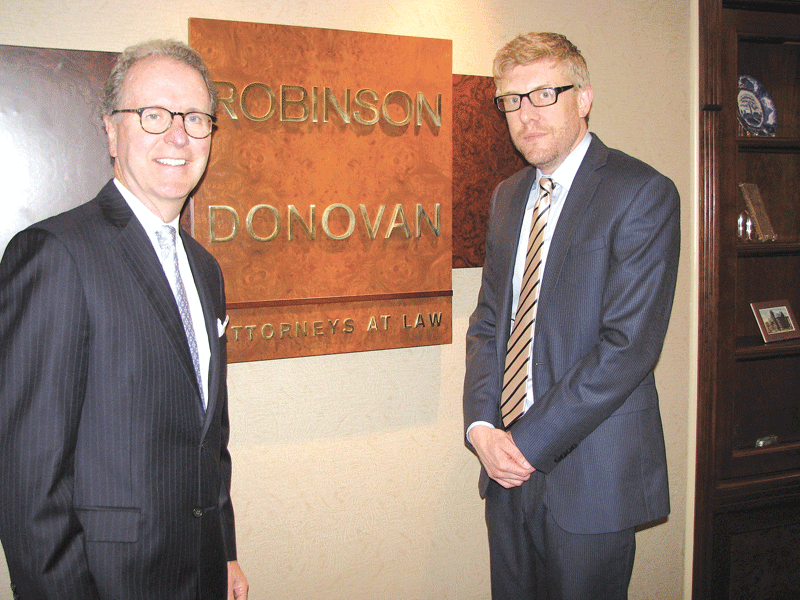
Associate Mike Simolo, right, says younger attorneys at Robinson Donovan benefit from a culture of mentorship promoted by Jim Martin, left, and the other partners.
“We now have a considerable amount of expertise in solar work,” he continued. “There aren’t too many wind farms around, but Jim started representing a company putting up windmills. As you do these projects, you learn a lot, acquire a lot of expertise. We’re excited about that.”
Martin, an expert in transactions who is also a leading automotive franchise attorney, said the transfer of closely held businesses is another fast-growing field. “People would be very surprised how difficult it is to effectuate a smooth transition of a family business from one generation to the next. It’s fraught with variables and rarely as smooth as the owners or their successors would like it to be.”
Nancy Frankel Pelletier, a partner who specializes in litigation, also has plenty on her plate these days, including municipal issues ranging from zoning to civil rights. “It’s a substantial amount of work. The law is very broad, but the aspect of litigation is somewhat specialized. You need someone experienced in the courtroom, and we are.”
One growth area in litigation involves dissolving business partnerships in which only one partner wants to walk away. “In these cases, no one really thought about what would happen if they didn’t want to stay together anymore; they didn’t create an agreement that didn’t allow for someone to walk away. I’ve seen a spike in people trying to get out of those arrangements.”
Jeff Trapani, another associate who works in litigation, noted that cost factors tend to drive trends, which is why alternative dispute resolution and arbitration continue to rise in popularity.
Meanwhile, Roberts noted that estate planning has taken on new importance at a time when Baby Boomers are aging and estate-tax rules have drastically changed, with exemptions rising from $1 million in 2000 to $5.5 million today.
All these factors, he said, contribute to a fertile environment in which a law firm can thrive and expand its reach — and he expects Robinson Donovan to continue to do just that.
The Next Generation
Martin said this growth is possible because the firm has long emphasized a culture of mentoring, with senior partners, influenced by those who came before, constantly training the younger generation, including tax-law specialist Lata, estate-planning specialist Michael Simolo, and family-law specialist Katherine McCarthy. “We continue to build a foundation of new talent, which we’re proud of.”
Simolo, for one, appreciates that culture. “It’s comforting to me to know I’ve got help available to me from both the partners and associates and the paralegals, if I need to turn to someone with an issue.”
Gesturing to Roberts and Martin, he noted, “there’s probably 65 years worth of legal experience sitting at this table, and it’s nice to be able to draw on that both in terms of not only getting the work done in a professional manner, but also client development. The culture here is to be applauded. Frankly, I feel totally comfortable going to any one of the partners with a question — ‘want to grab lunch? I’ve got an issue I want to talk over.’ That kind of thing happens here all the time. It’s very collegial, very team-oriented. For me, that’s one of the real pluses.”
It’s also a practical matter, Roberts said, to make sure all attorneys are up to speed.
“We’re big enough that we can take on big projects. On the other hand, we’re not too big. Clients want effiency, they want service, and when things go awry, they want someone to talk to,” he explained. “We’re well-positioned to do that. When we get young lawyers in, we get them involved right away in things that the other lawyers are doing. We don’t hide them for five years; we get them directly involved with clients. It gives a lot of depth to the practice. I’m on vacation, they know who to call. If somebody’s in a meeting or out of the office for two days, there’s always somebody they can call.”
Martin also praised the firm’s paralegal staff, many of whom have been at Robinson Donovan for many years. “We work as a team here, and we draw on their areas of training and deliver services in an efficient way, which is important to us.”

Attorneys Jeff Trapani and Nancy Frankel Pelletier say their litigation work has become more complex in recent years.
“It’s hard to do because everyone is so busy at work,” Roberts said, before emphasizing that such efforts are more than worth the time and energy. “I don’t think we’re any different than any other law firm. It’s hard to have a family, do all your work, and stay involved in the community. When somebody is able to do that, it really reflects some strong character. And we really like to see it.”
Looking Up
Robinson Donovan has come a long way since its early days, when it was best known for George Robinson’s successful defense of Lizzie Borden on double murder charges in 1892. These days, Martin noted, the firm is being recognized in a host of ways, such as the citations many of its attorneys have received from organizations like Best Lawyers, Super Lawyers, and Martindale-Hubbell. Simolo expects more of the same in the future.
“I think they’ve made some great hires since I’ve been here,” he said. “It’s encouraging to me to see the partners investing in the future of the firm.
“They’re very pragmatic and results-oriented in helping people solve issues,” Simolo continued. “They do that very well, as a result of having decades of experience. And it works out very well for the client.”
“We’re very results-oriented,” Frankel Pelletier agreed. “People don’t always perceive it this way, but we’re problem solvers. That’s what we do.”
Joseph Bednar can be reached at [email protected]

Eric Gouvin says WNEU Law, like any business weathering a storm, is focused on both increasing revenues and reducing expenses.
But there is no debating that this decline is real and quite dramatic — some observers are even speculating that some institutions may not survive it — and that there is little to suggest that things are going to improve significantly any time soon, said Gouvin, dean of the Western New England University School of Law.
“It’s all across the country, a national trend, and while people have different perspectives on what’s happening and why it’s happening, no one can deny that it is happening,” he told BusinessWest. “There are fewer people going to law school — it’s as simple as that.”
Nationally, first-year enrollment for the fall of 2013 fell 11% from the previous year, and 24% over the past three years, according the American Bar Assoc., and, overall, law-school enrollment is at its lowest level (39,675 for 2013-14) since the late ’70s. At WNEU, first-year enrollment in the day (full-time) program has fallen from 133 in 2009 to a projected 95 for this fall, a 28% decline.
But that fall number actually represents an increase from a year ago, when only 85 people entered the program.
“We exceeded our expectations for this fall — we budgeted for fewer than 85,” said Gouvin, crediting “talented admissions people” and apparently attractive pricing and programs (more on those variables later) for the slight surge in the numbers for this fall. But sharp enrollment declines from the days before the Great Recession are real, and most analysts expect them to continue, he went on, adding that WNEU, like most other schools, is adjusting to what some are calling a new reality.
Overall, the law school is doing what businesses do when they face fiscal adversity, said Gouvin, and that is creating ways to both enhance revenues and cut expenses without impacting quality. The school is trimming staff through attrition — several faculty members have retired, and more are expected to do so over the next few years — while also adding new programs, some of them to attract students who aren’t necessarily looking to pursue a career practicing law. Such initiatives include a master of laws and letters (LLM) degree in estate planning and elder law, introduced in 2004, and other programs.
“That’s a supplemental source of income for us,” he said of the LLM offering, adding that the school will roll out a similar program for non-lawyers in 2015.
“This is for accountants, financial planners, and insurance professionals who need to deal with a lot of heavy-duty legal issues around planning for clients, but don’t want to spend three or four years getting a JD, and don’t need to,” he explained. “They just need some working knowledge of those technical provisions that will allow them to work better with counsel, and that’s why we think this will be an attractive offering.”
What’s more, the school is taking steps to make itself more competitive when it comes to attracting those who are willing to go to law school. These include freezing tuition for the next three years and becoming more aggressive and imaginative with scholarships and other forms of aid.
“We need more revenue, obviously, but increasing tuition for the JD (juris doctor) program is a non-starter — there’s a lot of price sensitivity right now,” Gouvin explained. “One of the things applicants focus on is affordability and a cost-benefit analysis. So we have frozen tuition for the next few years and are using that as a tool so students can look at us and say, ‘I know what I’m getting into here — I’m not going to be surprised by a tuition jump in the second or third year.’”
For this issue and its focus on law, BusinessWest talked with Gouvin about the decline in law-school enrollment, — and how WNEU is responding to what has become a considerable challenge for institutions across the country.
Making a Case
Gouvin said that, overall, many people in academia are uncomfortable with the notion of talking about higher education as a business and discussing matters within the framework of the law of supply and demand.
But for administrators at the nation’s law schools, there is no real choice in the matter. The decline in enrollment is that severe, and the outlook for the immediate future calls for little change in the forecast.
As Gouvin mentioned, there is some debate about why this happening, with theories including the recent troubles law-school graduates have had finding work amid an economic recovery that has been less than robust in many parts of the country, as well as an unwillingness among larger numbers of young people to take on the massive amounts of debt that most law-school students incur, given the uneasiness in the job market.
While the talk and speculation continue about why law schools are facing what many are now describing as a crisis, much of the discussion has shifted to what schools are doing in response.
Indeed, steps taken by various institutions have included everything from freezing tuition to offering buyouts to faculty and staff to creating more programs to people who won’t ever practice law, but may well need some of the skill sets lawyers possess. At New England Law School in Boston, the dean took a voluntary 25% pay cut to help balance the books.
At WNEU, said Gouvin, the broad goals are to trim expenses without impacting the overall quality of the program, become a more efficient operation, and make the school as competitive as possible in what has become a more intense battle for top students.
The school already has some competitive edges, said the dean, adding that the task at hand is to take full advantage of them.
One such advantage is price.
“Our tuition is $39,400, and while that sounds like a lot of money, when you compare it to other law schools, it’s a bargain,” he said. “Among private institutions, we’re very low.”
Another edge, says Gouvin, is simple geography. Western New England is the only accredited law school in the Commonwealth west of Greater Boston, he noted, adding that this uniqueness provides opportunities in the form of internships and clerkships in area courts and with judges assigned to courts in this region. Meanwhile, the rural location is attractive to those who don’t want to go to school in a big city and have no intention of working in one.
“We have a monopoly on really great placement with judges and agencies,” he said. “In addition, we have some great clinical programs that provide hands-on experience.
“A lot of the people who come here don’t want to be in a big city,” he went on. “Many of our students are from small and medium-sized cities, and they intend to go back to those communities to practice law.”
Still another advantage for the school is its programming, which Gouvin believes is more experiential in nature than what many competitors are offering.
“Addressing what lawyers do in real life is high on our list,” he told BusinessWest, “and we’re hoping that program offerings, together with an attractive price, make a good case for us.”
While working to increase revenues, the school is also focused on the other side of the equation — expenses, said Gouvin, adding that WNEU has become more efficient out of both desire and necessity.
“No one loves to see a downturn, but they often make you focus on things that maybe you took for granted,” he explained. “You look at things and ask yourself, ‘can we do that differently and better?’ And there have been several instances where we could.”
As examples, he listed merging some operations, such as the library and alumni services, with the university, and other steps that help avoid duplication of efforts.
“We have people in the law who are now what I would call utility players,” he noted. “They don’t say, ‘I do this, and this is all I do’; now it’s ‘I do whatever needs to be done to move the ball ahead.’”
Final Arguments
Gouvin said much of the conjecture regarding the decline in law-school enrollment concerns whether this all temporary, and if so, how temporary.
“That’s the million-dollar question,” he said, adding quickly that no one really knows the answer. Variables include everything from how much more the economy will rebound to when the Baby Boom-age (and older) attorneys will retire en masse (many have put retirement on hold because of the economy), and much more work traditionally handled by attorneys will instead be undertaken by paralegals and others without law degrees — an ongoing trend that has many in the industry concerned about job security.
While watching all these factors play out, law-school administrators have little choice but to adjust to a changing landscape and not merely hope that conditions will improve.
As Gouvin said, they have to make their case — and make it a compelling one.
George O’Brien can be reached at [email protected]
By CHANNEZ M. ROGERS, Esq.
Employers, beware of the questions you ask your employees during their annual fitness-for-duty examinations. All-too-familiar questions regarding family medical history and past trips to the hospital may run afoul of the Americans with Disabilities Act (ADA) and the Genetic Information Nondiscrimination Act of 2008 (GINA) when posed by employers on questionnaires meant to determine whether employees can do their jobs.

Channez M. Rogers
The Equal Employment Opportunity Commission (EEOC) has found seemingly routine questions requesting family medical history, as part of an employer’s fitness-for-duty exam, violate the ADA and GINA.
GINA prohibits employers with 15 or more employees from using genetic information to make employment decisions, in order to protect an employee from adverse employment action because an employer thinks the employee is at an increased risk for developing a disease. Therefore, inquiries regarding family history used for the purpose of discovering an employee’s likelihood of having a certain disease or disorder violate GINA.
Likewise, the ADA prohibits employers with 15 or more employees from discriminating against employees based on a disability. Typically, the ADA does not allow for disability-related inquiries or medical examinations for current employees unless the employee has made the employer aware of a disability and requests an accommodation, or if the employer has noticed a change in the employee’s performance that makes him question the employee’s ability to do his job.
So, when may an employer ask health-related questions without violating the ADA or GINA?
Like GINA, the ADA carves out an exception for fitness-for-duty exams for employees in fields affecting public safety. Employers may require employees to submit to an annual fitness-for-duty exam in order to assess whether they are able to perform the essential functions of their jobs as long as there is a legitimate business reason for the inquiry. The purpose of the exam must be to gauge whether an employee is physically able to do his or her job or if the employee will pose a direct threat to safety due to a medical condition. The types of questions and the scope of the medical exam must be job-related and consistent with business necessity.
Appropriate Question Content
The EEOC found that the question regarding family history did not align with the ADA’s requirement that disability-related inquiries be narrowly tailored to address specific, job-related concerns. After all, the employee’s health matters, not her family’s. The question above was too broadly stated and required employees to reveal much more information than is necessary to address their ability to do their job.
Another question the EEOC cautioned employers against asking was whether an employee had been hospitalized overnight for any reason in the past five years. Such a question requires an employee to list any number of ailments or injuries that would require hospitalization, but may have nothing to do with the employee’s ability to do the job now. Additionally, requiring a five-year medical history across the board for employees asks them to reveal information about conditions that may not even affect their ability to work anymore.
A question regarding whether an employee has seen a doctor in the last year for anything other than a routine checkup also violates the ADA in that it is too general and does not address a specific, job-related concern. Instead, such an inquiry requires an employee to reveal private information about a medical condition that may be completely unrelated to the employee’s work, which should not be used to assess the employee’s ability to perform.
Even if no adverse action is taken against an employee, employers should beware of information they receive from a fitness-for-duty examination that might open the door to an obligation to engage in a conversation with the employee to determine whether or not he or she is entitled to a reasonable accommodation to aid in job performance (the interactive process). Absent a showing of undue hardship, which is very rare, an employer is required to provide a reasonable accommodation to an employee with an impairment who has requested and needs one.
Finally, employers should be aware that, if an employee is terminated based on information disclosed in response to a question on the fitness-for-duty form, the employee would likely fall under the protection of the ADA. As a result, the employer would be required to show that the employee could not perform the job’s essential functions or, where the concern is safety, that the employee would pose a “direct threat.”
In light of the EEOC’s explicit warnings regarding medical history and disability-related inquiries, employers would do well to tread lightly when asking questions that may be deemed too broad during their fitness-for-duty exams. When drafting questionnaires for fitness-for-duty exams, employers should carefully consider the employees’ job descriptions, pose only questions specifically related to the abilities required to successfully complete the work, and consult employment counsel with any questions.
Employers should specify on the forms for medical examination that they are only looking for certain information and request medical professionals do not provide anything beyond what is asked. This may ensure employers do not inadvertently receive too much information from third-party medical providers.
Finally, employers should make sure their managers and supervisors are up-to-date with their training to ensure that the interactive process is followed when necessary, and that no medical information is being used inappropriately.
Channez M. Rogers, Esq. is an attorney at Royal LLP, a woman-owned, SOMWBA-certified, boutique, management-side labor and employment law firm; (413) 586-2288; [email protected]
By ANN I. WEBER, Esq. and MICHAEL A. FENTON, Esq.

Ann I. Weber

Michael A. Fenton
In particular, coverage may be unjustly denied when 1) a patient is admitted to a hospital under ‘observation status’ rather than as an inpatient, 2) a skilled-nursing-care facility declares that a patient has plateaued, or 3) a hospital stay exceeds 90 days for the same illness. If you or a loved one run into this type of problem, here is what you need to know.
Observation Status
Medicare Part A covers hospital inpatient stays for 60 days and skilled-nursing-home care for the first 20 days, but only if you are discharged from a hospital after admission as an inpatient for three days. If you are admitted under observation status, you are billed as an outpatient under Medicare Part B. Although Part B may cover most of your expenses in the hospital, patients who are discharged to a nursing home without the requisite three days as an inpatient will not be covered for their nursing-home stay.
Many hospitals have increasingly admitted patients under observation status for longer stays, even though the Medicare policy manual specifies 24 hours as a benchmark. Observation status has been extended to cover multi-day stays at the hospital with tests and procedures. If this happens to you, when you are discharged to a skilled-nursing home, you will be responsible for the cost of such care, frequently running at more than $400 per day.
Here’s what you can do:
• Be sure you have a healthcare proxy granting a trusted person access to your medical records and the authority to make medical decisions if you cannot do so;
• Find out your status;
• If you are classified as admitted under observation status and you believe that is incorrect, try to get your status changed by asking for a review or, if possible, a consultation with your community physician;
• If you are unsuccessful and able to safely return home, ask your hospital or community physician to order home care for you. This care will be covered by Medicare; and
• If you need skilled-nursing-home care, you will be responsible for paying privately, but, provided you have been hospitalized for at least three nights, you should initiate Medicare appeals relative to both the hospital and nursing-home stays. These appeals have been successful for people in this circumstance. Note that there is currently a federal case on appeal regarding notice and review procedures for patients placed on observation status to help prevent abuse.
Plateaued Patients
Medicare has long had a practice of denying coverage to patients in skilled-nursing homes who are not improving and have been deemed ‘plateaued.’ This is in spite of the fact that this ‘improvement standard’ does not appear anywhere in Medicare regulations or policies and is expressly contradicted, in the federal regulations, at 42 CFR 409.32(c), which states that “a patient may need skilled services to prevent further deterioration or to preserve current capabilities.” The improvement-standard policy has resulted in the denial of coverage for numerous patients with chronic conditions such as Parkinson’s, multiple sclerosis, arthritis, diabetes, and more.
Now, under the settlement agreement in a Vermont district-court class-action case, Jimmo v. Sebelius, the Center for Medicare and Medicaid Services has agreed to revise all publications and guidelines to explain that coverage will be provided to individuals who need skilled care to prevent or slow further deterioration. Nevertheless, some facilities are still using this criteria to move a patient to custodial nursing-home services, which are not covered at all by Medicare or Medigap policies.
Lifetime Days
For a hospital stay, Medicare will cover only the first 90 days for the same spell of illness under Medicare Part A. For days 1-60, you are billed a deductible, and for days 61-90, you are billed an additional co-pay. For the 91st day and beyond, you will be covered only if you have lifetime reserve days available (you get 60 lifetime reserve days that can be used at any time you go beyond the 90-day threshold).
Medicare is no help to patients who have exhausted their days during a hospital stay. This is why many people invest in a Medigap policy. These policies cover the deductibles and co-insurance payments. Also, under Section 8.B(3) of the NAIC Model Standards for Regulation of Medicare Supplemental Insurance, Medigap policies are required to provide patients with an additional 365 lifetime reserve days for hospital care.
Medigap policies cover only Medicare-approved expenses, and Medicare will deny your claim if lifetime reserved days are available but remain unused. Providers have been known to have faulty data when it comes to knowing the exact number of lifetime reserve days that remain for a particular patient. In this environment, lifetime reserve days are not always utilized properly, resulting in unjustly denied claims.
Conclusion
Should you or a loved one get a large or unexpected summary notice due to issues with any of the matters addressed in this article, a written notice containing the reasons for termination of Medicare coverage should be requested.
An appeal might be necessary. You may want to contact a knowledgeable attorney for assistance in the appeal.
Attorney Ann I. Weber is a partner with the Springfield-based law firm Shatz, Schwartz and Fentin, P.C., and concentrates her practice in the areas of estate-tax planning, estate administration, probate, and elder law. She has a particular interest in creative estate planning for authors, artists, farmers, and landowners. She has recently been named one of the “Top Fifty Women Lawyers in New England” by Super Lawyer magazine and is a frequent author and speaker on issues regarding estate planning; (413) 737-1131; www.ssfpc.com. Attorney Michael A. Fenton is an associate with Shatz, Schwartz and Fentin, P.C. He concentrates his practice in the areas of business law, real-estate development, and estate planning. He has served on the Springfield City Council since 2010; (413) 737-1131; www.ssfpc.com
By SUSAN G. FENTIN, Esq.
Employers’ obligations under the Pregnancy Discrimination Act made news in July when the U.S. Equal Employment Opportunity Commission (EEOC) issued new enforcement guidance on the Pregnancy Discrimination Act (PDA). This announcement from the EEOC follows the U.S. Supreme Court’s July 1 decision agreeing to hear Young v. UPS, a case that arises out of an employer’s decisions regarding a pregnant employee who was unable to perform the essential functions of her position.
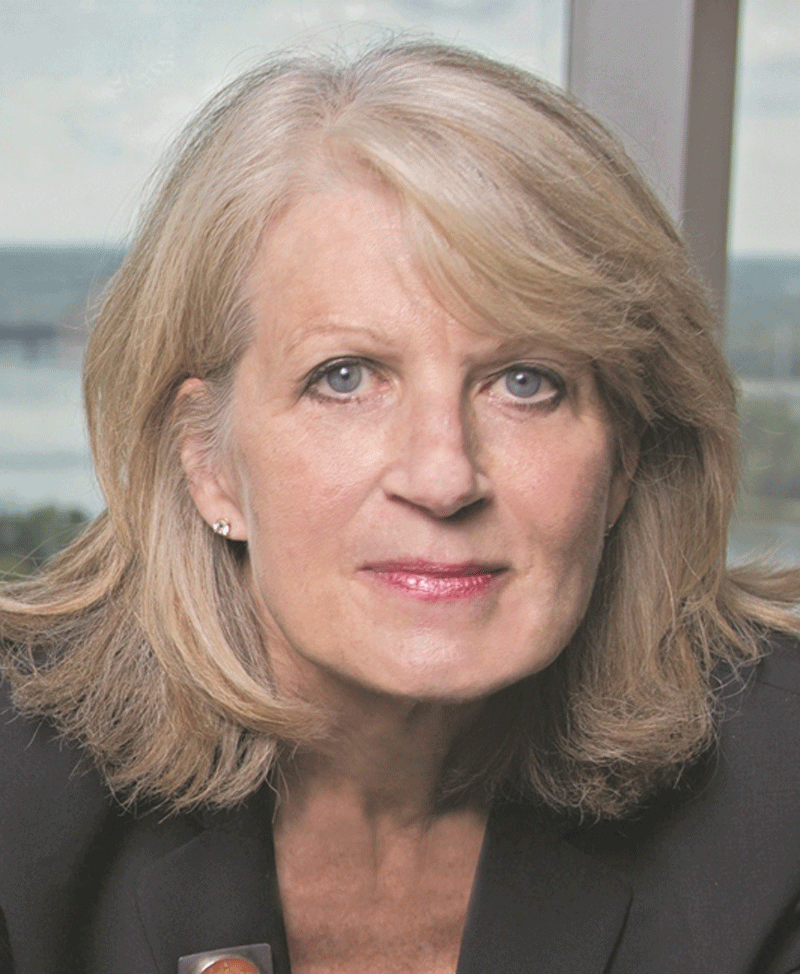
Susan G. Fentin
Her suit against UPS was dismissed on the grounds that a pregnant worker with a temporary lifting restriction isn’t “similar in her ability or inability to work” to the other types of employees for whom UPS willingly provided light duty. UPS successfully argued that its policy is “pregnancy blind” and therefore not discriminatory. The Appeals Court decision dismissing the case was appealed to the Supreme Court, which has accepted the case for its 2014-15 term.
Significantly, the new enforcement guidance specifically covers the issue pending before the court: whether a pregnant employee is entitled to light duty if her employer would grant a light-duty assignment to other workers who are subject to the same work restrictions.
The EEOC Guidance
Although the EEOC’s PDA enforcement guidance does not have the force of law, it’s generally considered persuasive by the federal courts. So the provisions of this new guidance are significant for employers who are considering their obligations to their pregnant workers. Much of the guidance restates an employer’s existing obligations to its pregnant employees:
• The PDA and Title VII protect women who are currently or have been pregnant, could potentially or are trying to become pregnant, and medical conditions that result from pregnancy;
• Employers may not make decisions about pregnant employees based on stereotypes, assumptions, or fears that a pregnant worker could harm herself or her baby by continuing to work;
• Employees who are breastfeeding are also considered protected under Title VII;
• Employers may not discriminate against employees who have had or are contemplating an abortion; and
• Employers are cautioned against making employment decisions based on a woman’s potential caregiving responsibilities.
Potentially Problematic Provisions
However, some of the provisions of the new guidance could be potentially problematic for employers. The guidance states that even a seemingly neutral policy, such as a weight-lifting requirement, could have a disproportionate impact on pregnant women.
Although such cases generally require statistically significant data, the guidance suggests that such evidence might not be required if all or substantially all pregnant women would be negatively affected by the policy. To defend such a claim, an employer must be able to show that the requirement is “necessary to safe and efficient job performance,” and even then, an employer can still be held liable if there is a less discriminatory alternative, but the employer refuses to implement it.
Similarly, a company policy, such as the UPS policy in Young, can be considered a violation of the PDA if it denies light duty or other accommodations to pregnant women while granting those benefits to other employees with similar restrictions. The guidance specifically states that that a pregnant worker with a work restriction who is denied light duty can establish a case of discrimination by identifying any other employee, including employees injured on the job and/or covered by the ADA, who is similar in his or her ability or inability to work and who was accommodated or granted light-duty work. In this section of the guidance, the EEOC specifically rejected the idea that an employer does not have to provide light duty for a pregnant worker if it has a policy that limits light duty to workers injured on the job and/or to employees with disabilities under the ADA.
In addition, the new guidance states that a policy that restricts sick leave might also have a disparate impact on pregnant women, citing examples where a 10-day ceiling on sick leave and a policy denying sick leave during the first year of employment have been found to disparately impact pregnant women. The guidance also underscores the impact of the 2008 amendments to the ADA, noting that, while pregnancy itself is not a disability, pregnancy-related impairments may be disabilities under the new version of that statute.
Of course, this is not news to Massachusetts employers, who have long been required to consider pregnancy-related conditions as disabilities under state law. And the guidance specifically states that an employer’s health-insurance plan must cover “prescription contraceptives on the same basis as prescription drugs, devices, and services that are used to prevent the occurrence of medical conditions other than pregnancy,” although the EEOC concedes that it does not address whether an employer may maintain a religious exemption from this requirement, as dictated in the Supreme Court’s recent Hobby Lobby decision.
The new enforcement guidance is available at www.eeoc.gov/laws/guidance/pregnancy_guidance.cfm. The EEOC has also published a fact sheet for small employers at www.eeoc.gov/eeoc/publications/pregnancy_factsheet.cfm.
Bottom Line
Employers should exercise caution when making decisions about the ability of pregnant employees to perform the essential functions of their positions. If an employer cannot accommodate any worker with a lifting restriction, regardless of whether or not that employee is female and pregnant, then a claim for failure to accommodate or pregnancy discrimination will not likely be successful.
But employers who limit their light-duty policies to those with work-related injuries should be careful about denying a light-duty position to a pregnant worker with work restrictions. And Massachusetts employers should continue to engage in the interactive process with their pregnant workers to determine whether there are any accommodations that would allow a pregnant worker with a restriction to perform the essential functions of her job.
Attorney Susan G. Fentin is a partner at Springfield-based Skoler, Abbott & Presser. Her practice concentrates on labor and employment counseling, advising large and small employers on their responsibilities and obligations under state and federal employment laws, and representing employers before state and federal agencies and in court. She speaks frequently to employer groups, conducts training on avoiding problems in employment law, and teaches master classes on both the FMLA and ADA; (413) 737-4753; [email protected]

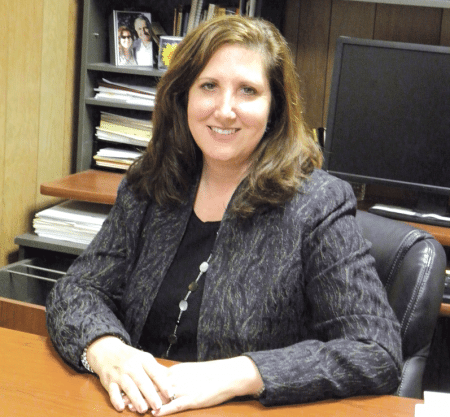
Gina Golash Kos says Sunshine Village has made a significant difference in the lives of individuals with disabilities.
“People’s lives are better today because of a dream conceived by a small group of parents in 1967 who wanted to create a warm, welcoming organization to help their children and other people with disabilities,” said Kos, the agency’s executive director. “That dream was and is Sunshine Village, and today the organization helps people find employment, make friends, and do things they never thought they could.”
The agency serves 400 adults age 22 and older, and has formed close ties with many local businesses that augment their employee base with trained workers who are available on a temporary, seasonal, or permanent basis.
“It’s a win-win situation because people with disabilities get the opportunity to work and businesses get great employees who show up on time and do the job correctly,” Kos told BusinessWest.
She added that using Sunshine Village as a subcontractor is cost-effective because it pays for traditional employee-related benefits and its employees are prescreened, trained, and overseen by a supervisor who accompanies them to the worksite each day.
“We typically meet with the employer, tour their operation, talk to them about the work they need done, and help them determine how we can help them save time and money through group or individual placements, before we assign people to a job,” Kos said.
Last November, Callaway Golf Balls Operations Inc. in Chicopee hired a six-person team from Sunshine Village to help fulfill a number of orders. “We put them on the assembly line and also had them label and unpack golf balls,” said Georgia London, Callaway’s maintenance, repair, and operating buyer and parts-crib supervisor. “They were here for six months, and we grew to love them. They showed up every day smiling, ready for the next challenge, and their smiles never diminished, no matter what we asked them to do. I was impressed and amazed by how conscientious they were and by their focus on quality. It was an excellent situation, and as soon as business picks up, we will hire them again.”
Kos said people who work for Sunshine Village are happy to be given the opportunity to earn a paycheck. Although some might not be able to meet the demands of a workplace on their own, the supervision they receive allows them to be successful.
“The workers we place are proud to do jobs that others might find repetitive or boring,” Kos said. “So many people with disabilities want to work and have the chance to prove themselves, and with our support, they are able to meet employers’ expectations and often exceed them.”
For this issue and its focus on employment, BusinessWest takes an in-depth look at Sunshine Village and its strong track record of providing opportunities for its clients and solutions for area employers.
Work in Progress
The village became a reality 47 years ago, thanks to the efforts of a group of parents whose children had disabilities. Under the direction of P. Joseph Casey of Chicopee, they procured 13 acres of donated land and built their program.
“They started with a nursery school and playground,” Kos said, adding that Sunshine Village soon grew to include three large buildings and a ballfield. “Over time, it went from a grassroots organization led by parents to a well-respected, sophisticated organization led by a board of directors.”

Sunshine employees (from left) Colleen Brosnan, Jonathan Gelula, and Richard Klisiewicz say their training center prepares people to work in industrial and commercial settings.
Services provided by clients range from packaging to document preparation, catalog assembly, custom display assembly, box folding, labeling, collating, shrink-wrapping, clamshell and blister packaging, liquid pouring, and more.
Many begin their careers by working in the Employment Services Division’s integrated training center on the Chicopee campus, which prepares individuals to work in industrial and commercial settings.
“It’s a hub where we help people find jobs,” Kos said, adding that individuals with and without disabilities are trained alongside each other and fulfill orders that companies outsource to the facility.
The jobs can range from redoing work that was done incorrectly, such as removing inappropriate stickers and replacing them with the right ones, or removing products from boxes that were packed incorrectly, then repacking them. “We support a lot of manufacturers,” she added.
Sunshine Village also has a federal contract, and its employees maintain and clean all of the buildings and hangars at Westover Air Reserve Base. In addition, some perform other janitorial work, such as dusting, vacuuming, and emptying wastebaskets at local companies.
In addition, Sunshine Village opened a Community Based Day Service last month to allow individuals to find their own jobs while enhancing their professional skills through internships and volunteer opportunities, while enjoying an array of social and recreational activities.
Kos says the unpaid internships give people the opportunity to experience different types of jobs and work environments. “It’s important because some individuals are not sure what they would like to do,” she explained. “They may enjoy sitting and working quietly or prefer a fast-paced environment with a lot of other people around them.”
The volunteer work is also helpful. “Our clients have helped local churches with cleaning and spent time in local food pantries, at the Chicopee Public Library, and in the Thomas J. O’Connor Animal Control and Adoption Center,” Kos said. “Volunteering is a great way for people to get ready for their first job and give back to the community.” She added that groups planning nonprofit events are invited to call Sunshine Village if they need volunteers.
Expanded Horizons
In addition to its Employment Services Division, Sunshine Village offers a Day Habilitation Services Program, which runs year-round and helps people acquire the skills they need to become productive members of their communities. It is a medically based model with offerings tailored to meet each individual’s strengths and needs.
“Physical, speech, and occupational therapies are incorporated into music, culinary, art, and sport therapy programs,” Kos said. “People might work on gross motor skills in music therapy or fine motor skills in art therapy. Music therapy helps them communicate and express themselves while they have fun and socialize with others. They also learn to prepare food in our culinary program and participate in yoga and tae kwon do classes in our sports program. We focus on developing functional life skills, improving coping strategies, and increasing independence.” Adaptive devices and equipment are also used to maximize each person’s potential.

Jonathan Scytkowksi and Samuel Whittle fill out job applications with help from Miguel Colon.
The golf tournament, for example, allows the agency to pay for improvements to its buildings, new technology, and holiday parties, as well as adaptive equipment and extra supplies, she noted.
Meanwhile, the Chicopee Elder Council 69 of the Knights of Columbus and Fairview Council #4044 have made generous donations to the agency, and many businesses provide ongoing support. “We are very fortunate to have so many people helping us,” Kos said.
As a result, Sunshine Village’s programs continue to grow. “We’re developing a day program specifically designed to meet the needs of people with autism-spectrum disorders,” she noted. “We want to help them live independent lives by promoting social and daily living skills and improving communication.”
The program is still in the planning stages, but the demand for it is clear. “Autism is a growing problem, and during the last year we have talked with our funding sources, local sources, and parents to determine the types of services that are needed,” Kos said.
People employed by Sunshine Village are proud that, since 1968, all of the organization’s programs have received the highest level of accreditation by the Commission on Accreditation of Rehabilitation Facilities. “And the most recent accreditation, which was highly complimentary, was completed in April,” Kos told BusinessWest.
Bright Prospects
Sunshine Village has made a significant difference in the lives of individuals with disabilities.
“Everything we do, which includes the people participating in services, our experienced and caring employees, our innovative programs, and our effective outcomes, is a realization of our founders’ dream,” Kos said.
“We serve so many people who are truly happy, and we are proud of our history and what we achieve day by day,” she went on. “Our partnerships are growing and will continue to expand, which allows us to help people find jobs while providing employers with good employees. So we are confident about the future of our organization, because our success is sustained by compassion and enthusiasm and realized through strategic planning and effective leadership.”
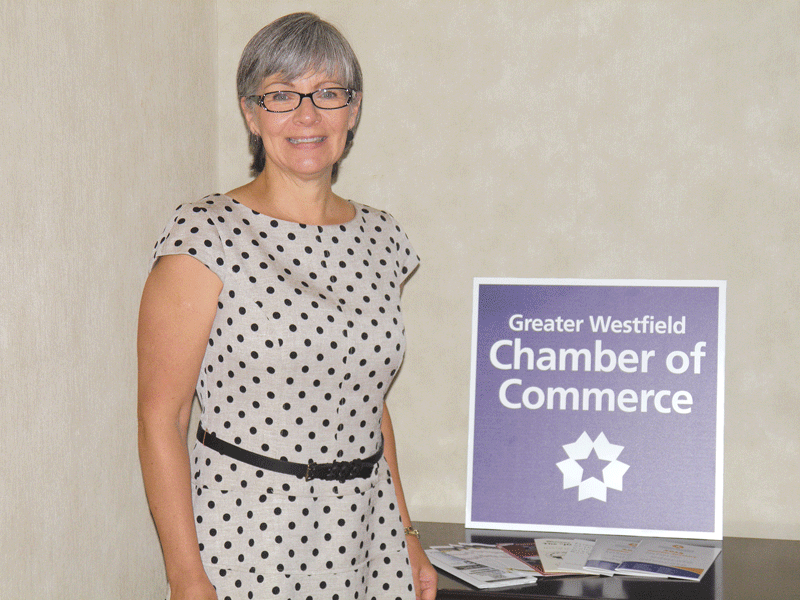
Kate Phelon says a host of new restaurants and other new businesses are bringing a renewed sense of vibrancy to Westfield’s downtown area.
“It’s an exciting time for us due to new developments at the airport and the continued growth and revitalization of our downtown,” said Peter Miller, the city’s director of Community Development, who noted everything from a number of new restaurants in the central business district to a growth spurt at the municipal airport in the city’s north end.
The $80 million Great River Bridge project is finally complete, and Miller said it is significant because people avoided coming to the city for years because of the traffic congestion.
“Westfield had developed a reputation for being a traffic nightmare,” he said. “But we finally have a pattern that flows and is aesthetically pleasing. We’ve restriped and fully reconstructed our roads, we have new plantings and new sidewalks, and have renovated four parks. We also made a commitment to use the Park Square Green as a gathering space. It is the focal point of the city, and we are working to develop programs and community-based activities that will be held there throughout the year.”
Westfield-Barnes Regional Airport is also experiencing growth, and Miller said a $21 million resurfacing project of the 9,000-foot runway is complete. It was paid for by a partnership between the city, the state Aeronautics Commission, and the federal government.
In addition, Gulfstream Aerospace Corp., a unit of Virginia-based General Dynamics, has completed a $23 million expansion, which led to the creation of more than 100 new jobs. The Westfield location has also been chosen to service the new Gulfstream G650 aircraft, a twin-engine, $100 million corporate jet.
“When the company decided to expand, Westfield was one of four airports across the nation they looked at. It’s impressive that Barnes was chosen, and it put Westfield on the map for people who use corporate aircraft,” said Kate Phelon, executive director of the Greater Westfield Chamber of Commerce, as she explained that the area’s skilled workforce was a critical factor in the decision.
However, Miller said there are a number of other things that made the airport attractive. He cited its modern terminal, which was constructed in 2006, as well as the availability of 24/7 runway access and fire service, made possible through a partnership with the 104th Fighter Wing of the Massachusetts Air National Guard at Barnes.
“We’ve learned through this expansion that we can really position ourselves as a hub for aircraft maintenance and specialized services,” said Miller. “We’ve been building toward this for the last decade, but in the past we didn’t have the facilities to accommodate it. The runway and new terminal were the game changers.”
The change has sparked growth, and several developers and fixed-base operators have been expanding to accommodate the increase in traffic. “Rectrix and Whip City Aviation are also in the process of evaluating and expanding their hangar space,” Miller said.
In addition, Papp’s Bar & Grill opened at the airport several months ago. “It’s very unique and has an observation deck bar. We think it will attract more people to the airport and make them aware of how much activity is generated there,” he noted.
The city is also developing a new program at Westfield Vocational Technical High School that will train students for careers in aviation.
Phelon said a representative from Gulfstream is on the high school’s advisory board and has been instrumental in the creation of the program, which is important, because there are not enough skilled workers to fill available positions at Gulfstream.
“We’re still trying to identify a facility to house the program at the airport, but hope to launch it in the fall of 2015,” she explained. “It will be the third of its kind in the Northeast and will give students another choice of careers in a growing industry where they can get a job that pays well after graduating from high school.”
Takeoff Mode
The city’s downtown also boasts a number of new attractions, and the Hangar Pub & Grill, which opened during the first week in June, is thriving. “It has a great atmosphere and is a place where families and students can come together and enjoy themselves,” Miller said, adding that Westfield is its second location; the first is on University Drive at UMass Amherst.
Phelon also believes the restaurant will result in an increase in foot traffic downtown. “The Hangar is a well-known name, and we see it as a magnet that will drive traffic to our downtown and help other new businesses. It is so popular that some nights there is a line of people waiting outside the door.”
Other new, popular eateries include Wings Over Westfield, which opened in the former School Street Bistro building; Two Rivers Burrito Co.; and Clemenza’s Brick Oven Pizza.
However, there is still room for growth, and Miller said the city is hoping to attract other restaurateurs to the city. “The Hangar has demonstrated that there is an audience for new eateries.”
In addition, city officials are focused on filling empty commercial space that includes a full block on Elm Street. “We’re focusing on attracting investors from the region because they understand our market and culture,” Miller said.
Another development, finally coming to fruition after more than a decade of work, is the extension of the Columbia Greenway rail trail. “Westfield is the northern terminus of the trail, and this summer it will be extended into our downtown,” Miller said. “We’re looking forward to it, as we believe it will introduce an entirely new population to our shops, businesses, and restaurants.”
Phelon agreed. “Rail trails have become so popular that we believe it will inspire entrepreneurs and further economic development,” she said.
Other news includes a groundbreaking ceremony this month for a new, $7 million, 22,000-square-foot senior center being built on Noble Street, which will serve thousands of residents. It is expected to be completed next summer.
The city’s marketing tagline is “Business Focused, Community Driven,” while the chamber’s is “The Power of Community,” and Miller said the concept of community is something city officials take very seriously.
“We’re very fortunate to have a diverse group of people working toward the goal of creating a place where community matters, neighbors engage with each other, and people know each other,” he said.
Phelon concurred and said the chamber is using all its resources to promote activities and events that bring people together.
“We’re the only chamber of commerce in the area that hosts free, monthly coffee hours with the mayor,” she said, “which is a great opportunity for people to learn about what is going on in the city.”
Although the Westfield Business Improvement District dissolved earlier this summer, Miller said, “our message to businesses and the public is that the city and chamber stand committed to continuing the progress made in the past seven years. We will continue to raise the bar, and the social, community aspect of our city is being fostered through festivals, new restaurants, Westfield State University, and the efforts of our chamber.”
Two MusicFest concerts staged this summer each attracted more than 1,000 people, and local restaurants took advantage of available vendor space during the concerts, which created a festive atmosphere in the city.
Upcoming events include a MusicFest featuring a Beatles tribute band on Aug. 21, a fall street festival called Megaplanetpalooza on Sept. 20, a Haunted Chocolate Walk on Oct. 25, and a Lantern Light Parade Nov. 29, as well as an expansive, city-wide event titled “The Universe According to Josh Simpson,” which is ongoing through October and includes exhibitions of the glass blower’s work in galleries, banks, and restaurants, as well as demonstrations, a film series, lectures, raffles, and children’s activities.
Phelon said these events and others, such as Small Business Saturday, are advertised on the chamber’s website, through mailings, and in its newsletter. “We want to do all we can to support businesses and entrepreneurs who have taken a chance on our downtown.”
A partnership between the city and community radio station WSKB 89.5, which is operated by Westfield State University, kicked off in June and also serves to publicize local events.
“A different personality hosts the show every weekday between 6 and 8 a.m.,” Miller said. Officials from the city’s nonprofit organizations take to the air on Mondays and Tuesdays, Mayor Daniel Knapik is the host on Wednesdays and Fridays, and Patrick Berry from Westfield News Group is the featured guest on Thursdays.
“It’s a great way to learn about what’s going on in the community and gives people another way to interact,” Miller said. “The university approached us with the idea, and we were more than pleased to use the station to promote local events.”
Plane Speaking
Officials say Westfield is accomplishing its goal of becoming a vibrant community.
“There’s a synergy happening among the people who live and work here,” said Phelon. “Plus, Westfield is the only community in Massachusetts whose population has grown in every census conducted over the past 60 years. We’re also the largest city before you get to the hilltowns, and it may inspire growth when people come here, eat in our restaurants, and attend our events. We’re very proud of how our city looks, and with the upgraded traffic flow, it’s a great place to visit.”
Miller agreed. “We have a lot more to offer now,” he said, “than we ever had before.”
Year Incorporated: 1669
Population: 41,094 (2010)
Area: 47.3 square miles
County: Hampden
Residential Tax Rate: $18.18
Commercial Tax Rate: $33.84
Median Household Income: $57,018 (2010)
Family Household Income: $55,327 (2010)
Type of government: Mayor, City Council
Largest Employers: Westfield State University, Noble Hospital, Savage Arms Inc., Mestek Inc., National Envelope
* Latest information available